Help me to pay the entrance fee to one of the houses on this website. This site is created purely out of love for the subject and I receive no payment so any donation is appreciated!
During Heritage Week in 2021, Stephen and I went to County Sligo. This was a Section 482 property but Markree Castle is no longer on the Revenue Section 482 list. We stayed in wonderful B&B accommodation in a historic house, Annaghmore, near Collooney, owned by the O’Haras, who have owned the estate in County Sligo for centuries.
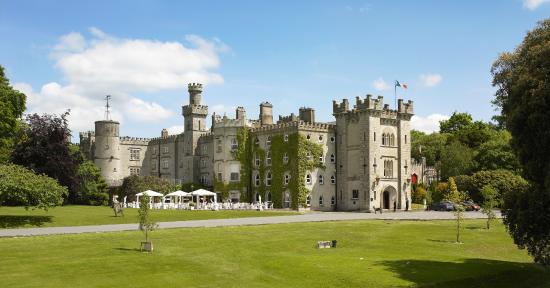
We learned that the O’Haras and the Coopers, who own Coopershill, another section 482 property which we visited during Heritage Week, are related, and Coopers also owned Markree Castle until very recently. In 1989, Charles Cooper, having worked in the hotel business all his life, came back to Markree to renovate the castle and run it as a hotel. In 2015, the Corscadden family purchased the castle and undertook further renovations. This is the same Corscadden family who own Cabra Castle in County Cavan, who so generously upgraded Stephen and me to the honeymoon suite when we stayed! The Corscaddens also own Ballyseede Castle hotel in Tralee, County Kerry (also section 482) and Bellingham Castle in County Louth, which is available as a venue for weddings and events, with accommodation. Unfortunately Markree Castle is too expensive for us to stay in, except perhaps as a very luxurious treat, but I contacted the hotel and we made a date for my visit. When we arrived, however, we were told that they were in the middle of an event and we were asked to return in an hour or two. We took the time to explore the outside, although we were unable to access the gardens, which seem to be only accessible through the castle.
We wandered across the Unsin River to the stable complex, which has also been renovated for rental accommodation. We learned later that this accommodation is not part of Markree Castle hotel. In Mark Bence-Jones’s entry in his A Guide to Irish Country Houses (published in 1988), he writes in the supplement that Edward Cooper and his wife moved into a new Georgian style house in the yard. The stables are now called Markree Homefarm Apartments and are available for rental accommodation. [2]
The castle replaced an earlier residence, which the Landed Estates website of National University of Ireland Galway tells us was called Mercury. [3] The first Cooper to own the property was Edward Cooper (died 1676), an officer in Lord Collooney Richard Coote’s regiment in Oliver Cromwell’s army. He was given the land at Markree, previously owned by the McDonaghs, as payment for his soldiering. He married the widow of an O’Brien killed by Cromwell’s army. She was called Mary “Rua” (Red Mary), and she probably married Cooper in order to protect her sons from the Cromwellians. According to the history board outside the castle, Red Mary and Edward Cooper lived first in Luimneach Castle (Luimneach is the Irish for Limerick), which one of her sons inherited, while the other inherited Markree. In his online blog, Patrick Comerford identifies Mary Rua’s husband as Conor O’Brien, and writes that it was Dromoland Castle that Mary Rua’s son inherited. [4] In the family tree on the information boards, Edward Cooper also married Margaret Mahon, from County Roscommon. This accords with The Peerage website, but according to that website, Arthur, Edward’s son who inherited Markree, was Margaret Mahon’s son and not the son of Red Mary. According to The Peerage, Edward’s son Richard lived in Knocklong, County Limerick. [5]
During the Williamite wars at the end of the 17th century, Markree Castle was occupied by the army of James II. The Coopers returned after William III’s victory at the Battle of the Boyne in 1690.
The Coopers intermarried with other prominent local families, including the Cootes, Wynnes and Synges, and by the 1720s, Joshua Cooper (1694-1757) was one of the largest landowners in Co Sligo, with over 40,000 acres.
Arthur Cooper, who inherited Markree from his father Edward who fought in Cromwell’s army, had a daughter named Anne who married John Perceval (1700-1743) of Temple House in County Sligo, another Section 482 property, which unfortunately we did not get to visit this year. I hope to be able to visit next year! In 1881 Alexander Perceval of Temple House married Charlotte Jane O’Hara of Annaghmore, so the owners of our accommodation are cousins of the owners of Temple House. Furthermore, we visited two other Section 482 properties in Sligo during Heritage Week: Coopershill and Newpark, both of which are also owned by cousins of the O’Haras of Annaghmore!
An information board outside the hotel gives a history of Markree Castle.According to this family tree on the information board outside Markree Castle, Edward Cooper married Maire Rua O’Brien and also Margaret Mahon.Markree Castle hotel, 2021.Máire Rua O’Brien née McMahon (1615/1616 – 1686) daughter of Turlough Roe McMahon Baronet, wearing Felemish bobbin lace with O’Brien coat of arms.She married first Colonel Neylan, then in 1639, Colonel Conor O’Brien of Lemeneagh, ancestor of Barons Inchiquin, but he was slain in battle in 1651. The Markree Castle information board says she married Edward Cooper then, but Irish Portraits 1660-1860 by Anne Crookshank and the Knight of Glin, published by the Paul Mellon Foundation for British Art 1969, say she then married, to keep the family property, Captain John Cooper of Ireton’s army, whom she is said to have murdered! It’s a rare example of a portrait almost certainly painted in Ireland in the first half of the seventeenth century – see Irish Portraits 1660-1860 by Anne Crookshank and the Knight of Glin, published by the Paul Mellon Foundation for British Art 1969.
It was Arthur’s great-great-grandson Joshua Edward Cooper (about 1759-1837) who built the castle in 1802 around an earlier structure. Arthur’s son Joshua (1694-1757) married Mary Bingham from Newbrook, County Mayo. His son, another Joshua (1730-1800), was MP for County Sligo and opposed the Act of Union, which abolished the Irish Parliament, so that Ireland was run by the Parliament in London. He married Alicia Synge, daughter and heiress of Edward Synge, Bishop of Elphin, and she brought him a large fortune. [6]
His son Joshua Edward Cooper (about 1759-1837) was also MP for County Sligo in the Irish House of Commons, and after the Act of Union he sat in the House of Commons in London until 1806. According to the Dictionary of Irish Biography, he replaced Catholic leaseholders with Protestants to acquire more voting power, which caused considerable resentment and which may have been the reason that his house was sacked in 1798 during the Rebellion. This may be why he commissioned Francis Johnston to enlarge Markree in 1802, to make it into a castle – it may have needed repair. We came across the work of Francis Johnston (1760-1829) when we visited Rokeby in County Louth. Johnston had been a pupil of the architect Thomas Cooley. At the time when he was commissioned by Joshua Edward Cooper, Johnston had been working on Townley Hall in County Louth, which I was lucky enough to visit recently during the annual Adams auction viewing that is held in the house. It has an amazing staircase and domed rotunda.
Johnston also Gothicized Tullynally Castle in County Westmeath, 1801-1806, and enlarged Killeen Castle in County Meath 1802-1813. He also designed Ballynegall House (1808-1816) in County Westmeath, sadly now just a ruin, and Ballycurry House, County Wicklow (1807), along with many ecclesiastical and civic buildings, including the General Post Office on O’Connell Street in Dublin, in 1814.
The castle is a stone twelve-bay, three-storey over raised basement mansion which contains parts of earlier houses. [7] The bays are easier to count at the back (i.e. the garden front) of the castle. According to Mark Bence-Jones, the original seventeenth century house was rebuilt in the eighteenth century as a three storey block, with a five bay front and a three bay breakfront, and a garden front of one bay on either side of a curved bow. The castle was enlarged in 1802 to a design by Francis Johnston, and then in 1866 enlarged again, to a design by James Maitland Wardrop of Edinburgh. I found it impossible to work out what part of the castle was built when, so I defer to Mark Bence-Jones:
In 1802, Joshua Cooper commissioned Francis Johnston toenlarge this house and transform it into a castle of the early, symmetrical kind. Johnston extended the front of the house to more than twice its original length to form a new garden front with a central curved and Irish battlemented tower; the end bay of the original front and the corresponding bay at the end of Johnston’s addition being raised to give the impression of square corner-towers. The entrance was in the adjoining front, where Johnston added a porch; the garden front, with its bow, was not altered as far as its plan went; but an office wing was built at one side of it, joined to it by a canted link. In 1866, the castle was further enlarged and remodelled by Lt-Col. E.H. Cooper, MP, to the design of Wardrop, of Edinburgh. The garden front bow was replaced by a massive battlemented and machiocolated square tower, increasing the side of the dining room; a new entrance was made at this side of the castle, under a porte-cochere at the end of a 2 storey wing with Gothic windows which was built jutting out from this front. Johnston’s porch was replaced by a 2 storey battlemented oriel, and mullioned windows to match were put in on this and the new entrance front. A Gothic chapel was built where Johnston’s office wing had been. [8]
One enters through the arched doorway in the battlemented vaulted stone portico. The doorway leads to a straight flight of stone stairs leading up to the main floor, under an impressive vaulted ceiling.
Joshua Edward Cooper (1761-1837) became unwell and his brother Edward Synge Cooper (1762-1830) took over the running of the estate in Sligo and became MP for County Sligo in 1806. Joshua Edward Cooper and his wife Elizabeth Lindsay, daughter of Robert Lindsay, MP, from County Tyrone, had no children, so Edward Synge Cooper’s son, Edward Joshua Cooper (1798-1863), inherited Markree when Joshua Edward Cooper died in 1837. As well as serving in the House of Commons in the UK, Edward Joshua Cooper was an astronomer, who created Markree Observatory. He was influenced by childhood visits to the Armagh Observatory.
Remnant of the Observatory at Markree. Photograph from the National Inventory of Architectural Heritage.
Edward Joshua Cooper (1798-1863) had no son, only daughters, so his nephew Edward Henry Cooper (1827-1902), son of his brother Richard Wordsworth Cooper (1801-1850), inherited Markree. When he inherited, he then put his stamp on the castle by having it further enlarged (the Wardrop enlargement).
Edward Henry Cooper (1827-1902) was an Irish officer in the British Army, and a Conservative politician in the House of Commons in the UK. He was defeated in the 1868 election by the Liberal candidate Denis Maurice O’Conor from Clonalis in County Roscommon (another section 482 property still owned by its original family). When he died, Markree was inherited by his grandson Bryan Ricco Cooper (1884-1930), who was born in Simla in India. He was an MP for South Country Dublin (1910) at Westminster, and was involved in the Gallipoli landings during World War I. During the Irish Civil War in the 1920s, Markree Castle was occupied briefly by the Irish Free State army. Bryan Ricco Cooper was elected to Dail Eireann after Independence. He sold much of the estate’s land but continued to live at Markree.
The Castle stood empty and derelict for several years after World War II, and featured on the front cover of The Vanishing Country Houses of Ireland in 1988, illustrating the decay of many great houses at the time. Charles Philip Cooper, a grandson of Bryan Ricco, who had worked in the hotel industry, converted Markree into a hotel in 1989.
The reception hall is surrounded by a carved wooden gallery and contains a Victorian double staircase of oak, lit by a heraldic stained glass window illustrating the family tree with portraits of ancestors and monarchs.
The large drawing room in Johnston’s round-faced tower in the middle of the garden front, and the ante-room adjoining it, which are now the dining room, were redecorated between 1837 and 1863 by Edward Joshua Cooper, MP, in an ornate Louis Quatorze style, with much gilding and “well-fed” putti in high relief supporting cartouches and trailing swags of flowers and fruits.
Unfortunately nobody could explain the fabric of the building and its stages of renovation and enlargement and the manager was unable to identify the portraits on the walls. However, we asked to see inside a bedroom, and were taken down to the basement to see the honeymoon suite. The basement is the oldest part of the castle.
[8] p. 201. Mark Bence-Jones. A Guide to Irish Country Houses. Originally published as Burke’s Guide to Country Houses volume 1 Ireland by Burke’s Peerage Ltd. 1978; Revised edition 1988 Constable and Company Ltd, London.
Help me to pay the entrance fee to one of the houses on this website. This site is created purely out of love for the subject and I receive no payment so any donation is appreciated!
Thomas Cosby kindly agreed to show us his home, Stradbally Hall, in June, despite ongoing Covid restrictions. This year (2021) Section 482 houses are not required to be open to the public due to the dangers of the Covid virus.
Many people have heard of Stradbally nowadays as it is the venue for Electric Picnic. Being the venue for a festival brings in much-needed finances for some of the big houses in Ireland. Stradbally is owned by the same family for whom it was built, and it is magnificent. I can only imagine how hard it is to maintain. Like many of the owners who inherit their big houses, Thomas farms his land.
Mark Bence-Jones tells us in his A Guide to Irish Country Houses that a house was built at Stradbally in 1699 for Lt-Col Dudley Cosby (1662-1729). [1] This house, however, was demolished by the grandson of Lt-Col. Dudley, another Dudley (Alexander Sydney) Cosby, 1stand last Lord Sydney of Leix and Baron of Stradbally, in 1768, and a new house was built in 1772, on what was regarded to be a healthier site. It is a nine bay, two storey over basement house. The stone walls of the original house gardens are now the walled garden.
The 1740s painting of Stradbally with the previous (1699) house in the centre. This hangs in the Billiard Room where Thomas brought us first, and used the painting to illustrate the history of his family.The Archers John Dyke Acland and Dudley Alexander Sydney Cosby Baron Sydney, by James Scott, after Sir Joshua Reynolds, mezzotint, late 19th century (1769). Photograph from the National Portrait Gallery, London.
The second (1772) house was enlarged in 1866-69, designed by Sir Charles Lanyon, of Lanyon, Lynn & Lanyon, to form the house which we see today. Lanyon, Lynn & Lanyon also designed Castle Leslie, which we visited – another Section 482 property which is now a hotel. [2]
Lt-Col. Dudley Cosby was not the first Cosby to live in Ireland. The Cosby, or Cosbie, family, came to Ireland around 1538, during the reign of Queen Mary (i.e. “Bloody Mary,” the eldest daughter of King Henry VIII, called “Bloody” as she used bloody means to defend the Catholic faith). General Francis Cosby (1510-1580) was an active defender of the Pale in Ireland, the area around Dublin controlled by the British crown, and in 1562 he was granted the site of the Abbey of Stradbally. [3] Francis Cosby married the daughter of the Lord Protector of England, Edward Seymour, the 1st Duke of Somerset. Lord Seymour was the brother of Jane Seymour, wife of Henry VIII. Due to the struggles for power within the court of Henry VIII, Lord Seymour was executed. Francis Cosby came to Ireland at this time. The Abbey, which had been disestablished in Henry VIII’s time (i.e. was taken from the Catholic church and no longer served as an Abbey) became Francis Cosby’s residence, and part of it still exist in the town of Stradbally in a building still called “the Abbey.”
General Francis Cosby died in battle, at the age of seventy, in the battle of Glenmalure in Wicklow, in 1580. He was succeeded by his son, Alexander. Alexander and his son, Francis, continued to fight, engaged in perpetual battle, Major E.A.S. Cosby tells us, with the O’Moores, who had originally controlled the land in the area. In 1596 Anthony O’Moore sent to demand a passage over Stradbally Bridge. Alexander understood this to be a challenge, so he refused passage, and prepared to fight once again, along with his son Francis. That day both Alexander and Francis Cosby were killed, leaving Francis’s nine week old son, William, to inherit. Parts of Stradbally Bridge still exist.
William died at a young age and so his uncle, Richard (d. 1631), inherited the Stradbally estate. Richard challenged the O’Moores to a further fight to avenge his father, and this time he won. Having won one battle each, the fighting seems to have subsided. Richard married Elizabeth Pigott, daughter of the neighbour Robert Pigott of Dysart.
It was Richard’s great-grandson, Lt-Col. Dudley Cosby (1662-1729) who built the house at Stradbally pictured in the 1740 painting. He married Sarah Pole, daughter of Periam Pole (1625-1704) of Ballyfin in County Laois, now a luxury hotel. Her dowry helped pay for the work on the Stradbally estate.
Ballyfin hotel, Photo by Tony Pleavin, 2018. [9]
Dudley Cosby created gardens and kept racehorses. His father-in-law did not like this extravagance and gave Dudley £100 not to keep them, which Lt-Col Dudley did not strictly observe!
Dudley and Sarah Cosby had a son whom they named Pole (1703-1766).
Pole Cosby wrote an autobiography. [8] His return from a Grand Tour of Europe is pictured in the 1740 painting in the Billiard Room.
As foreseen by his father-in-law, Dudley Cosby overstretched his finances and he purchased a Captain’s Commission in a military regiment. He leased out Stradbally, and his wife returned to Ballyfin while he was fighting abroad. Her father died but she continued to live with her brother in Ballyfin in the winter and in his house in Queens Street, Dublin, in the summer, for five years. The children were sent to board with a family for schooling and to learn French.
After five years, Dudley and his wife Sarah moved to London “for cheapness” (Pole writes in his autobiography) and then to York. They returned to Stradbally in 1714 in better financial circumstances and Dudley continued to do up the house and garden.
Pole Cosby’s autobiography is very detailed and he writes of the places in which he lived and of his father’s battles in the military, then of his own schooling, listing all of his schoolmates. He also discusses family finances in detail. He writes that his father financed himself at first by marrying Miss Ann Owens daughter of Sir Andrew Owens of the City of Dublin and “with her he got £1500,” then in 1699 he married Sarah Pole and “got with her £2000.” He paid £300 for his Captain Commission and had to pay £100 for his brother Alexander for not finishing his apprenticeship (this Alexander moved to the U.S. along with his brother William).
Pole Cosby went to university in Leyden in Holland, as did several of his Irish cousins. There he was studious and abstemious, he tells us. He travelled while in Europe and was introduced by Lord Townsend to King George I and his son Frederick Prince of Wales. He visited a monastery of Irish priests in Prague and argued with them about religion – they told him he was a heretic and would be damned, but when not talking of religion he says they got along very well!
Pole Cosby and his Daughter Sarah, by James Latham, portrait courtesy of Gallery of the Masters website. Sarah (b. 1730) married, first, Arthur Upton (1715-1768) of Castle Upton in County Antrim, after his first wife Sophia Ward had died, and secondly, Robert Maxwell (d. 1779) 1st and last Earl of Farnham. https://www.galleryofthemasters.com/l-folder/latham-james-pole-cosby.html
Pole Cosby married Mary Dodwell and they had a son named Dudley Alexander Sydney Cosby (1732-1774), who served as Ambassador to the Court of Denmark, and for his services, was created Lord Sydney of Leix and Baron of Stradbally, in 1768. When serving as Ambassador to Denmark he helped to arrange the marriage of King George III’s sister to the son of the King of Denmark. It was an unsuccessful marriage and she left her husband for the Prime Minister of Denmark! Despite the lack of success of the marriage he helped to arrange, Dudley Cosby was elevated to the peerage. He married Lady Isabella St Lawrence, daughter of Thomas St Lawrence, 1st Earl of Howth (who lived in Howth Castle – the castle only recently passed out of ownership of the St. Lawrence family).
Pole’s son Dudley, Lord Sydney, built the new (current) house, in 1772.
The overseer for the building of the new house was Arthur Roberts, which is stated on a plaque which reads: “Built by Dudley, Lord Sydney, 1772, Arthur Roberts, overseer.”
Dudley Lord Sydney died in 1774, soon after his marriage, and did not have any children. The estate passed to his nephew, son of his brother Alexander, Admiral Phillips Cosby (1729-1808).
The Historic Houses of Ireland website tells us that Dudley died before the house was finished, and his successor Admiral Phillips had to sell 5000 acres to finance the completion. [4]
Phillips’s father, Alexander (d. 1742), was Lieutenant Governor of Annapolis Royal in the United States, and Alexander’s brother William (c.1690-1736) was Governor of New York between 1732-1736.
General William Cosby (c.1690-1736), Date 1710 by Charles Jervas, Irish, c.1675-1739, photograph courtesy of National Gallery of Ireland.William Cosby became Governor of New York.
William’s daughter Elizabeth Cosby married Lord Augustus Fitzroy (1716-1741) and her son, Augustus Henry Fitzroy, 3rd Duke of Grafton, became Prime Minister of England in 1767. After her first husband died Elizabeth née Cosby married James St. John Jefferyes of Blarney Castle in County Cork.
Admiral Phillips Cosby (1729-1808) was born in the United States and was active in the Navy, in which he continued to serve after inheriting Stradbally Hall. He served on the British side in the American War of Independence. He collected many paintings.
Admiral Phillips had no children, so the estate passed to Thomas Cosby (d. 1798). Thomas was a descendant of Richard Cosby and Elizabeth Pigott. Their son Francis (b. 1612) married Ann Loftus (d. 1673). Francis and Ann née Loftus’s son Alexander (d. 1694) married Elizabeth L’Estrange and their son was Lt-Col. Dudley Cosby (1662-1729) who built the house at Stradbally.
When the Cosby line died out with Admiral Phillips Cosby (1729-1808), it was a descendant of Francis and Ann née Loftus’s Thomas (d. 1713) rather than their son Alexander, who inherited. Thomas Cosby (d. 1713) lived at Vicarstown, Stradbally, County Laois. He married Elizabeth Smith, and they had a son, Francis (d. 1783). Francis married Ann Pigott and they had several children. The Thomas who inherited was a son of their son Thomas (b. 1742), and Frances Bowker.
Thomas Cosby (1765-1798) married Grace Johnstone, daughter of George of Glaslough, County Monaghan.
Stradbally passed to his son Thomas (d. 1832). Thomas (d. 1832) was High Sheriff of Queen’s County in 1809 and also Governor of Queen’s County. He married Charlotte Elizabeth Kelly of Kellyville, County Laois. The property passed via their son Thomas Phillips, who died in 1851. He served as High Sheriff, Deputy Lieutenant and Justice of the Peace for Queen’s County.
The property passed on down to via Thomas Phillips Cosby’s brother Sydney Cosby (who had died in 1840) to Sydney’s son, Colonel Robert Cosby (1837-1920). Sydney Cosby had married Emily, the daughter and co-heir of Robert Ashworth of Shirley House, Twickenham (his brother Wellesley Pole Cosby had married the other daughter and co-heiress, Marie).
Emily Ashworth, Mrs. Sydney Cosby, by Camille Silvy, albumen print, 21 April 1861, photograph from the National Portrait Gallery, London.
Colonel Robert Cosby employed Charles Lanyon in 1866 to enlarge the house, remodelling it in an Italianate style. He inherited a fortune, and built houses in the nearby village of Stradbally, following in the footsteps of his forebears who had also sought to develop the village.
Stradbally passed to his son, also in the military, Captain Dudley Cosby (1862-1923), and to his son, Major Ashworth Cosby (1898-1984). Major Ashworth married Enid Elizabeth Hamilton from nearby Roundwood, County Laois.
Roundwood House, County Laois, photograph from the National Inventory of Architectural Heritage.
It was Major Ashworth’s grandson, Thomas, who showed us around the house. Thomas’s young son joined us in the Billiard room to look at the old painting of Stradbally, and asked a few intelligent questions, so he is learning the history of his home also!
Mark Bence-Jones tells us that Lanyon added a new entrance front, which was advanced from the old front wall so that the house became three rooms deep instead of two. This front has an impressive single-storey balustraded Doric portico leading up a flight of stone steps to the front door. On either side of the portico are a group of three round-headed windows, and beyond those on either side, a two-bay block projecting forward.
The upper storey windows are what Bence-Jones describes as “camber-headed” (he defines camber-headed windows as a window of which the head is in the form of a shallow convex curve). [5]
The house was given a high-pitched eaved roof on a bracket cornice.
After our tour of the house, we walked around to the back of the house as I wanted to see what Bence-Jones had described: “On the garden front, Lanyon left the two three sided bows, but filled in the recessed centre with a giant pedimented three arch loggia.” It is impressive! According to the National Inventory of Architectural Heritage, this was originally the front of the house, but when the three arches were added, so was the Doric portico on what is now the entrance front, so this impressive two storey over basement treble arch was never intended, it seems, as an entry to a front door! [6]
We went first to the billiard room on our right (the newer, Lanyon designed part of the house) to see the large painting of old Stradbally. From the billiard room you have a good view of the beautiful cut-stone farm buildings.
The three reception rooms on the garden front, the dining room, saloon and drawing room, remain much as they were before the Lanyon renovation, with late-Georgian plasterwork.
I admired the beautiful lamp shade over the dining table, and the plasterwork ceiling, which the National Inventory describes as “Adamesque” (ie. like the work of William Adams and his sons, most famous of whom are Robert and James). Andrew Tierney in his Buildings of Ireland describes the frieze of swags “framing calyxes and paterae”, and a “guttae cornice.” Patera is a round or oval ornament in shallow relief, and calyxes are the whorls of a plant that encloses the petals and forms a protective layer around a bud. A guttae is one part of a post-and-lintel structure.
The ceiling centrepiece is of acanthus, anthemion and circles of laurel interweaving around a ribbon-and-reed moulding.
In the dining room are several portraits. There is one of William Wellesley-Pole, 3rd Earl of Mornington. He inherited from William Pole of Ballyfin and added Pole to his surname. He was the elder brother of the Duke of Wellington. Their grandfather, the 1st Baron of Mornington, was born Richard Colley, and he inherited from his cousin and took the name Wesley, which was later changed to Wellesley. His sister Anne Colley married William Pole, of the Poles of Ballyfin. Another portrait is of Captain Thomas Cosby of the Royal Horse Guards; and another of Emily and Marie Ashworth by Sir Thomas Laurence. Elsewhere in the house, are portraits of Dudley Cosby Lord Sydney; the Prime Minister Augustus Henry Fitzroy, 3rd Duke of Grafton; and George Earl of Halifax (William Cosby who was the Governor of New York married Grace Montagu, sister of the 1st Earl of Halifax).
The next room had a ceiling that took my breath away. It has a delicate band of acanthus fronds and an outer band of husks. Andrew Tierney describes also the gilded rinceau freize, in his Buildings of Ireland: Central Leinster. This is a frieze of leafy scrolls branching alternately to left and right. The walls have a Victorian paper in a gilt diamond pattern.
The ballroom, as Bence-Jones calls it, now the library, one of the additional rooms formed 1866-69, extends into the bow at the end of the house. It has a ceiling decorated with panels of early C19 pictorial paper in grissaille, i.e. painting using a palette of greys, or “gris” in French. There is a pink egg and dart and dentil cornice around the ceiling, and patterning similarly painted in the ceiling rose.
Amazing as the house is so far, the best is yet to come: the front hall leads to the stairwell. The former entrance hall, which keeps its eighteenth century chimneypiece, was made by Lanyon into a central top-lit staircase hall. The staircase is of Victorian oak joinery and leads up to a long picture gallery. This occupies the centre of the house, and is sixty feet in length and twenty in breadth, and is surmounted by an elaborate coffered and ornamented barrel-vaulted ceiling with glass roof of panels set in steel frame.
The gallery is flanked by narrow passages from which open the bedrooms. At the western end is a small lobby separated from the main portion by two pink marble Corinthian pillars, above which is an architrave decorated with a bold design in stucco.
After seeing the house, we went outside to wander around the gardens. The garden front looks on to Italianate gardens, laid out in 1867 by Maurice Armour.
[1] p. 265. Mark Bence-Jones. A Guide to Irish Country Houses (originally published as Burke’s Guide to Country Houses volume 1 Ireland by Burke’s Peerage Ltd. 1978); Revised edition 1988 Constable and Company Ltd, London.
[7] p. 598. Tierney, Andrew. The Buildings of Ireland: Central Leinster. Kildare, Laois and Offaly. Yale University Press, New Haven and London, 2019.
[8] Autobiography of Pole-Cosby of Stradbally, Queen’s County (1703-1766) originally published in the Journal of the Co Kildare Archæological Society and Surrounding Districts, Vol V, 1906-1908. https://www.ornaverum.org/reference/pdf/183.pdf
[10] p. 600. Tierney, Andrew. The Buildings of Ireland: Central Leinster. Kildare, Laois and Offaly. Yale University Press, New Haven and London, 2019.
Open dates in 2026: May 1-2, 8-9, 15-16, 22-23, 29-30, June 5-6, 12-13, 19-20, 26-27, July 2-4, 8-11, 15-18, 22-25, 29-31, Aug 1, 5-8, 12-23, 26-29, Sept 4, 11, 18, 25, 2pm-6pm
Fee: adult/OAP/student €8, child 10 years and under €2
donation
Help me to pay the entrance fee to one of the houses on this website. This site is created purely out of love for the subject and I receive no payment so any donation is appreciated!
In July 2021, Stephen and I dropped in to Salthill Garden on our way up to visit his mum in Donegal. Salthill Garden is just outside Donegal town. The gardens are listed in the Revenue Section 482 list, but the house is not, although the house was built in approximately 1770 and might have been designed by Thomas Ivory (1732 – 1786), who built the beautiful Blackhall Place in Dublin, which now houses the Law Society.
Salthill House was the house for Agent to Conyngham family of The Hall, Mountcharles. The Conynghams of Slane Castle are descendants of the Conynghams of Mountcharles. [1]
The Conynghams lived in Donegal possibly as early as 1660, when Albert Conyngham purchased land there. [2] The first Conyngham to move to Ireland was Alexander (1610-1660), who joined the clergy and was appointed in 1611 to be the first Protestant minister of Enver and Killymard, County Donegal. [3] He was appointed to the deanery of Raphoe in Donegal in 1630. His son Albert lived at Mountcharles.
It was Albert’s son Henry (1664-1705), a military man who also served as MP for County Donegal, who moved to Slane Castle in County Meath. I thought the Mountcharles was named after a Charles Conyngham, but since there are no Charles’s in the early Conynghams of Mountcharles, I believe Mountcharles may have been named in honour of King Charles of England.
The gardens are a great achievement, recreating a flourishing walled garden. It is a good example of a walled garden that has been brought back to life to provide fruits and vegetables for the home owners, as well as flowers, and a place of beauty and tranquility for any visitor. There is an information centre but it and the toilet facilities were closed due to the Covid pandemic. There is a cafe nearby at the nearby Salthill Pier, the Salthill Cabin.
Slane Castle was originally owned by the Flemings, who became Lords of Slane. The Fleming estates were forfeited in 1641 (after a rebellious uprising), from William 14th Baron Slane and his son Charles, 15th Baron Slane, but restored to them in 1663 (after the Restoration of Charles II to the throne, who restored land to those who were loyal to the monarchy through the time of Cromwell and the Parliamentarians). The 15th Baron had left Ireland after his land was confiscated and fought in Louis XIVth’s French army, and died in 1661. It was his brother Randall Fleming the 16th Baron Slane who was restored to his estate under the Act of Settlement and Distribution. [5] However, the Flemings’ land was forfeited again, in 1688, with the coming to the throne of William III. It was in 1703 that Henry Conyngham purchased land in Slane.
Henry Conyngham’s son Henry (1705-1781) was created 1st Earl Conyngham of Mountcharles, County Donegal but he died without issue. His sister Mary married Francis Burton and their son William Burton took the name of Conyngham to inherit his uncle’s estates. William Burton Conyngham (1733-1796) was a member of the Irish parliament and did much to create employment in County Donegal.
Conyngham planned a settlement on the previously unpopulated island of Rutland, and installed, from 1784, a street of residences and business premises, post office, school house and a fish landing and processing facility. The island remained inhabited into the 1960s. The village which developed around the mainland pier which served Rutland, Burtonport, still bears his name.
William Burton Conyngham (1733–1796) by Anton Raphael Mengs c. 1754-58, courtesy of wikipedia.
The Conynghams were one of the largest landowners in Donegal: by 1876 the third Marquess Conyngham (George Henry, 1825-1882; the 3rd Baron became the 1st Marquess) and the wider family owned four separate estates in the county amounting to over 122,300 acres of land, as well as extensive landholdings in Clare (centred around Kilkee) and Meath (centred around Slane), and in Kent in the south-east of England.
The Conyngham’s agent’s house was called Salthill because the area was known in Irish as Tamhnach an tSalainn (‘the Field of Salt’). The anglicization of this is “Tawnyfallon,” as Salthill was also known. The fields along the coast flooded and when they dried, the salt could be collected. This provided an income for the locals and for the Conynghams.
Salthill House was the residence for Hugh Montgomery, Esq. according to the 1777 – 83 Taylor and Skinner map of the area [6]. There is a record of the renewal of a lease on ‘Tawnyfallon, otherwise Salthill’ from Henry Conyngham (1st Marquess) to a Francis Montgomery in 1824 (Conyngham Papers). The National Inventory adds that Salthill was the home of a Leonard Cornwall, Esq., in 1838 (marriage record) and 1846 (Slater’s Directory), and a Robert Russell in 1857 – c. 1881 (latter date in Slater’s Directory). The Hall, belonging to the Conynghams, was sold after World War II by the 6th Marquess.
The walled garden of Salthill House was built around 1800. [7] The National Inventory of Architectural Heritage tells us that the walls are constructed of coursed rubble and random rubble stone masonry, and that the South-east wall abuts main outbuilding to the rear of the house.
More recently, the house was the home of John and Nancy McCaffrey until the early 1980s, when it was purchased by Lynn Temple of Magees, the manufacturers and promoters of Donegal Tweed, and his wife Elizabeth. The Irish Historic Houses website describes the work that the current owner, Elizabeth Temple, has carried out in the garden:
“During the last thirty years Elizabeth has re-created the walled garden, which is sheltered by the house and yards, slowly and patiently. She complimented the original gravel paths with hedges and grass paths to provide additional structure, and concentrated on plants that thrive in this northernly environment. The result is an authentic country house walled garden, skilfully planted with a combination of perennials and shrubs, interspersed with vegetables, herbs and fruit trees…the gravel avenue, curved sweep and yards are skilfully raked into swirling curvilinear patterns that recall the abstract la Tène ornamentation that influenced Irish early Christian art.” [see 6]
We were greeted at the gate by Elizabeth Temple. I asked her about the curvilinear patterns mentioned in the Historic Houses of Ireland website, but instead she explained that she likes to plant in such a way that there are several layers to see, of graduated heights, in each direction you look. There were several visitors that day so we did not get to chat as much as I may have wished but the day was a little rainy also, so we did not linger for as long as the gardens deserve. We shall have to visit again!
Today an exhibition opened in the City Assemby House in South William Street in Dublin, the home of the Irish Georgian Society, of paintings of walled gardens of Ireland. The exhibition coincides with a television documentary about walled gardens airing this Sunday on RTE. There will also be a conference in May 2022 about the Irish country house garden, along with another exhibition, and a book edited by Finola O’Kane-Crimmins on the same subject.
Burtown Gardens, which I visited this summer with Stephen and our friend Gary – the house is listed in Section 482 so we’ll be visiting it again at some point. It is the home of the artist Lesley Fennell.
The exhibition features the work of four artists, all owners of big houses: Lesley Fennell of Burtown, County Kildare; Andrea Jameson of Tourin, County Waterford; Alison Rosse of Birr Castle, County Offaly; and Maria Levinge of Clohamon, County Wexford. All of the houses but the last are on the Section 482 listing this year.
Many walled gardens are pictured, and I was delighted to recognise some.
I will be invigilating the exhibition on Wednesday 29th September 10:00 – 1:30, along with some other dates, and was there today. The launch was last night, and I was delighted that some of the artists dropped in today while I was there.
Robert O’Byrne curated the exhibition and introduced the invigilators to the work. During the year the Georgian Society ran a programme of interviews with the artists, by Robert O’Byrne, and these are available to watch at the exhibition.
My photographs, taken on my phone rather than with my Canon camera, do not do justice to the paintings.
According to the small catalogue, which is available for purchase, there are about 8,000 walled gardens in Ireland! The exhibition features about thirty different walled gardens, some public and some private.
Many Section 482 houses featured in this blog have walled gardens. Most recently, I wrote about Killineer in County Louth, which is not in this exhibition. Barmeath, also in Louth, and Cappoquin in County Waterford, are included, as well as Lodge Park and Larchill in Kildare, both of which are listed in Section 482 and which I have yet to visit.
I didn’t realise that the splendid greenhouse at Woodstock, County Kilkenny, which we visited last month, is not the original Turner-built one, but a reproduction of it.
The painters paint their own gardens, and each others’. Gardens featured which are open to the public include Lismore Castle in Waterford, Altamont in Carlow, Kilmacurragh in County Wicklow, Heywood in County Laois (my father remembers seeing the fire which burnt down the house!), Doneraile in County Cork, and Russborough, which I didn’t know has a walled garden.
Some of the gardens are in Northern Ireland, such as at Glenarm and Crom Castle.
Stephen and I have been lucky enough to visit many walled gardens in our explorations of Section 482 properties, and have many more still to visit. We toured rather extensively around Ireland during Heritage Week this year and I have lots to write that I hope to publish soon!
Open dates in 2026: Feb 1-20, May 1-31, Aug 15-23, 9am-1pm
Fee: house and garden, adult/OAP/child/student, €12, house €5, garden €7
donation
Help me to pay the entrance fee to one of the houses on this website. This site is created purely out of love for the subject and I receive no payment so any donation is appreciated!
Stephen and I visited Killineer on Saturday June 9th, one of our first houses to visit once Covid restrictions eased. I like the drive up along the M1 motorway, over the Mary McAleese bridge. The house has entrance gates.
The house is a Regency house, that is, of the Classical style built shortly after the period in England when George IV was Prince Regent (1811-1820, when King George III was ill). Like many Regency houses, it has a stucco facade and columns framing the front door, with a Doric single-storey portico.
The house was built for a local businessman, George Harpur, who made his fortune in trade, dealing in salt and timber. He would have availed of the nearby port to bring in his salt, and timber from Canada. Salt was used to preserve meats and was a precious commodity. Harper married Louisa Ball in 1835, daughter of George Ball (1755-1842) of Ballsgrove, County Louth, and his wife Sarah Webber.
Killineer house was completed in 1836. The front, of two storeys, has six bays on top and a Doric single-storey portico flanked by two bays on either side. The corners have double-height pilasters. The house has a basement and the back is of three storeys. The sides are of three bays, with entablatures over the ground floor windows.
Harpur surrounded the house with seventeen acres of garden, creating terraces and a lake which on the site of an earlier rough pond. A house already stood on the property, the remains of which are in the walled garden behind the current house.
The earlier house, now located in the walled garden behind the house, may have been built by George Pentland (1770-1834), who owned the property before Harpur, before he moved to Blackhall in 1815, which was begun in approximately 1790 by a fellow solicitor, Philip Pendleton. [2] Before that, the land was owned by Thomas Taylour of Headfort House, County Meath.
Black Hall, County Louth. Picture from the National Inventory of Architectural Heritage. Casey and Rowan (1993) suggest that the house is in a ‘style greatly reminiscent of Francis Johnston.’ Headfort House, County Meath, photograph by A.E. Henson, from Country Life, volume LXXIX, published 21/03/1936. The house was built in the early 1770s by Irish architect George Semple with the interiors designed by Robert Adam. [3]
The Harpurs had no children and the house was sold, probably after George Harpur died in 1888. Unfortunately, any record of the plans for the house or garden have been lost, so neither the architect nor the creator of the garden has been identified.
The house passed through several owners until the present family, including Robert Ussher, and the Montgomery family of Beaulieu, County Louth. Richard Thomas Montgomery (1813-1890) of Beaulieu had a son, Richard Johnston Montgomery, who lived in Killineer house when he was High Sheriff of County Louth in 1910. Perhaps he lived at Killineer until he inherited Beaulieu. He married Maud Helena Collingwood Robinson of Rokeby Hall, another Section 482 property in Louth.
James Carroll, ancestor of the current owner, purchased the house in 1938. He was the grandson of Patrick James Carroll, a tobacco manufacturer from Dundalk. James’s daughter Grace lived in Killineer all of her life and never married. She died in 1999, and the house passed to her cousin, the current owner.
According to her obituary in the Irish Times, Grace became involved with the Order of Malta, of which her father had been president. She was the first woman in this country to be appointed Dame Grand Cross of Honour and Devotion, Sovereign Military Hospitaller, Order of Malta. This was in recognition of her work and fundraising for those with disabilities in Drogheda. She was instrumental in helping fund The Village, a training centre for those with special needs, built in the former Presentation Convent. [4]
She maintained the gardens laid out by George Harpur, and they were featured in Country Life in 1998. We enjoyed a wander in the lovely gardens after the owner Charles Carroll gave us a tour inside.
The house has an impressive octagonal entry hall, with niches and busts on plinths. It has four doors that look as if they lead off the hall, but two are only for symmetry and do not open. The house itself has a classical layout of four rooms plus the hall on the ground floor, a basement, and the bedrooms above. It has an “imperial” staircase – a staircase which bifurcates into two. A lovely stained glass window of browns, blues and yellows, made by Edward Lowe of Dublin who also did the windows in Collon’s Church of Ireland, has the Carroll coat of arms in the middle. [5] Below the stairs, in a door, is another stained glass window, with a knight with a lion, which might also have been installed by the Carrolls.
The Carrolls are an ancient Irish family that can be traced back to the Carrolls of Oriel. Oriel was an area of Ireland. Donogh O’Carroll, King of Oriel, died in 1168 AD and the Carrolls of Oriel are his descendants. Patrick Carroll of Culcredan, County Louth, was born in 1600. The Carrolls of Killineer branch off from the main line of “the O’Carroll Oriel” after this Patrick Carroll. [6] [7]
We entered the dining room first and sat down under a portrait of Grace to hear a little about the history of the house. The windows are French doors, and the room is panelled. It originally had a ceiling with a seascape of Neptune, but unfortunately the house was left empty for two years before the Carrolls purchased it and the ceiling was ruined. The ceiling now features a “very attractive bold circle of plasterwork in the centre of the ceiling,” as Mark Bence-Jones describes it. [8]
The plasterwork in the house is impressive. There are about five layers of cornice patterns around the ceiling in the study, such as ovals and egg-and-dart, and the rooms have wood-like plaster panelled walls. The rooms are decorated in a French empire style of gilt and a deep rose colour. Charles pointed out that some of the plasterwork over the doors may have been added later, as it is a little too ornate and does not quite fit with the rest of the plasterwork.
The fourth room on the ground floor has been divided in two, probably after the house was built. The pattern around the ceiling continues in both rooms, and features griffons and centaurs and is coloured wine red, pale blue and pink. An unusual sculpted ceiling depicts the figure of Justice, doves, and a figure with a lyre.
A summer-house in the garden is designed to mirror the architecture of the house, and was probably also built by George Harpur.
Stretching from the house, the garden is terraced. It leads down through a canopy to a laurel maze and lawn laid out in an astragal pattern, to the lake, where a swan was guarding a nest. The lakes, created by George Harpur, are lined with a special yellow clay, which is very fine and hard, so it holds in the water particularly well. Yellow clay is impermeable and can be used to prevent damp in houses.
Behind the house lies the walled garden from the original house at Killineer. It is still in active use today producing fruits and vegetables. It has a glasshouse in which apricot, peach and nectarine trees grow, and an apiary that houses bees who pollinate the plants.
The lush gardens were a treat after months of lockdown in Dublin. They were so peaceful, such an oasis from the everyday bustle. They remind us to stop, linger, and appreciate.
Robert O’Byrne notes that: A century earlier the land here had been granted by the local corporation on a 999-year lease to Sir Thomas Taylor, whose family lived atHeadfort, County Meath. It then passed to the Pentlands whose main residence was to the immediate east at Blackhall. At some date in the 18th century a house was built on the property: it appears on earlymapsbut little now remains other than one room which still retains sections of plaster panelling. Located to the rear of the walled garden, this space now serves as atoolshed.
It’s interesting that George Pentland’s son, George Henry Pentland (1800-1882), married Sophia Mabella Montgomery, of Beaulieu, since after George Harpur died, Killineer was owned by one of the Montgomery family from Beaulieu.
George Henry Pentland (1800-1882) married twice, once to Rebecca Brabazon and secondly to Sophia Mabella Montgomery, daughter of Rev. Alexander and Margaret Johnston. George Henry Pentland lived at Black Hall, Co Louth, as did his father George Pentland (1770-1834).
The church was erected thanks to the Foster family of Collon, County Louth and of Glyde Court, whom we came across in their association with Cabra Castle in County Cavan.
[8] Mark Bence-Jones. A Guide to Irish Country Houses (originally published as Burke’s Guide to Country Houses volume 1 Ireland by Burke’s Peerage Ltd. 1978); Revised edition 1988 Constable and Company Ltd, London.
I have four hats: my pharmacist/vaccinator “hat,” my blogger hat, my farmer hat (see the photo of my harvest from yesterday) and my landlady hat! I am so busy at the moment, as my tenants left the apartment so I have been doing that up before renting out again (see my first ever tiling work). I only manage a terraced house and a two bedroom flat, but it keeps me so busy, I can only imagine what it is like to have to maintain a Big House! So my blogger hat has taken a back seat for awhile, despite having managed to visit a few Section 482 properties since lockdown lifted. Here is a taster of what is to come, when I finally get the time to write my blogs…the beautiful gardens of Killineer House in County Louth, and the astounding upper gallery of Stradbally Hall in County Laois.
Open in 2026: all year, except Christmas Day and St. Stephen’s Day, Jan-Mar, Nov-Dec, 10am-5pm, Apr-Oct, 10am-5.30pm
Fee: adult €10, student/OAP €8, child over 4 years €5, under 4 years free
donation
Help me to pay the entrance fee to one of the houses on this website. This site is created purely out of love for the subject and I receive no payment so any donation is appreciated!
Facilities: Avoca Cafe, Food Hall, Shopping Courtyard, Toilets, Parking, Wheelchair access (limited). No dogs and no picnics.
Guided Tours: €60.00 (Advance booking required).
Before we were allowed to visit Section 482 houses, due to Covid 19 restrictions, we were allowed to visit gardens. Accompanied by our friends Owenroe, Deirdre, Dario and Niamh, Stephen and I headed to Wicklow one sunny Sunday in May. We had wonderful weather for the day, as you can see from my photographs. Before entering the gardens, there are some shops and a cafe.
Mount Usher is open all year to visitors. There is a house, but that is not part of the Section 482 listing, unfortunately! It looks idyllic, set in its lush gardens. Mark Bence-Jones calls it a “simple double bow-fronted house,” [1] and the National Inventory tells us it was built in 1922, and that there is a long two-storey house built in the 1990s to the rear of the house. [2] The gardens cover 23 acres, along the Vartry River.
One enters through the gift shop, a branch of Avoca. Inside, there is a small museum which tells the story of the gardens and its creators. Everything looked so beautiful that we could not resist picking up a hand cream for Stephen’s mother.
The area was named after the Ussher family. John Ussher (1646-1745) is mentioned in The Peerage website as living in Mount Ussher, County Wicklow. His father William Ussher is listed as living in Portrane, Dublin and “Castle of Grange, County Wicklow.” John’s son Christopher, born around 1690, was Secretary of the Linen Board – the later occupants of Mount Ussher, or Mount Usher, as it is now spelled, the Walpoles, were also in the Linen trade. Christopher Ussher inherited land in Galway which he passed to his heirs, and in Ussher Memoirs, compiled by Reverend William Ball Wright in 1889, there is no further mention of Mount Ussher. [3]
The museum tells us that Edward Walpole (1798-1878), a successful Dublin businessman, enjoyed walking in Wicklow, and he stayed in a hotel on weekends to indulge his passion. The Walpole family was involved in linen manufacturing. Thomas Simmons started a linen business in Bride Street in Dublin in 1766, and through mergers and a marriage it grew into Walpole Brothers Limited by 1866. Coincidentally, in 1816 the business moved to Suffolk Street in Dublin and occupied what is now Avoca Shop and Cafe on that street.
Mount Usher had originally been a “tuck mill” where local people brought their home spun and woven cloth to be finished. This may be how Edward Walpole came across this location. He took over the lease of Mount Usher in 1868 and began to develop his garden, with the help of his sons. Seven years later, in 1875, he transferred the land to his sons: Thomas, George, William White and Edward. William White and George also continued in the Linen business, and developed their shop into a Gentlemen’s Outfitters. Their younger brother Edward joined the business and expanded to London.
The Walpoles were Quakers. They came originally from the settlement in Mountrath, County Laois – the National Library of Ireland contains documents relating to the Walpoles and their business [4]. The Quakers in Ireland website tells us why Quakers were successful in business:
Why were Friends successful in this way? Modern business has become so competitive, and the profit motive so pervasive, that it is hard to imagine the strong influence their religious convictions exerted on them. They simply believed it was right to offer a good product for a fixed, and reasonable, price. They believed in honesty and integrity in all their dealings. A simple life-style, and not over-extending themselves financially, allowed them to build up their resources. Strict rules governing business methods for members meant that they were increasingly trusted with money, and some became bankers. Various laws, including those related to swearing oaths, prevented Friends from attending university and joining the professions for a couple of centuries, so they put their energies into business instead. Friends were good employers, and this led to a loyal workforce.
Also, and importantly, the structure of The Society of Friends from its earliest days, with a system of representatives from Meetings regularly visiting other Meetings, often in other parts of the country, created a network of relationships between like minded individuals and families. It was natural, therefore, that they would hear about, support, participate in and emulate each other’s ventures. [5]
The brothers acquired more land to add to their garden, and Thomas, an engineer, added weirs and bridges. Edward and George were influenced by William Robinson, who has been called “the father of English gardening.”
William Robinson (1838-1935) was born in Ireland. His first job was in Curraghmore, County Waterford. He progressed to become the foreman gardener in Ballykilcavan, County Laois, employed by Sir Hunt Johnson-Walsh. In 1862 Robinson found employment at the Royal Botanic Society’s garden at Regent’s Park in England. He resigned four years later in order to further his knowledge of gardening, and to write. He travelled in France and later more widely in Europe and the United States, and published books on horticulture. His most important work is The English Flower Garden (1883). [6] The Robinsonian style of gardening is to work with nature, as opposed to imposing order.
Walks and woods were added to the property as more land was acquired. The family also owned a house called Windsor Lodge in Monkstown in Dublin. Mount Usher passed to Edward Horace Walpole, the son of Edward Walpole (1837-1917) and Elizabeth Harvey Pim [perhaps his parents were fans of the writer, Horace, or Horatio, Walpole (1717-1797), who most famously wrote the Gothic novel The Castle of Otranto and who also embraced the Gothic style in his home, Strawberry Hill in southwest London – or perhaps they were related]. For over fifty years, Edward Horace enlarged and improved the garden, with the help of his head gardener, Charles Fox. Rare varieties of plants from China, Japan, the Himalayas, Chile, New Zealand and North America were added.
Edward Horace Walpole married Alice Dorothy Scanlan from Nottingham in 1912 in the Friends Meeting House (Quaker) in Nottingham. [7] His son Robert Basil Walpole sold Mount Usher.
In 1980 Madelaine Jay purchased the property, and she continued the garden following organic methods. The garden now covers twenty acres and has over 5000 plant species. It is now leased to Avoca.
What a great discovery it is to find this amazing garden! I can’t wait to return.
In the meantime, we have been able to begin to visit houses again listed for the Revenue 482. We visited another Quaker home, that of the Fennells of Burtown, County Kildare. More on that soon!
[1] Mark Bence-Jones. A Guide to Irish Country Houses (originally published as Burke’s Guide to Country Houses volume 1 Ireland by Burke’s Peerage Ltd. 1978); Revised edition 1988, Constable and Company Ltd, London.
www.cabracastle.com Open in 2026: all year, except Dec 24, 25, 26, 11am-4pm Fee: Free to visit
donation
Help me to pay the entrance fee to one of the houses on this website. This site is created purely out of love for the subject and I receive no payment so any donation is appreciated!
Stephen and I visited Cabra Castle in December 2020. I contacted the owner, Howard Corscadden, in advance, to request a tour of the castle. The Corscadden family own several beautiful Irish properties which provide unique castle accommodation. As well as Cabra Castle, they own Markree Castle in County Sligo and Ballyseede Castle in County Kerry, both of which are on the Section 482 list, as well as Bellingham Castle in County Louth. They are all hotels except the latter which is available as a four star venue for weddings and events, with accommodation. Howard’s parents and grandparents were also in the hotel business in Ireland, as are his siblings – Ballyseede is run by his sister Marnie, Castle Bellingham by his brother Patrick and Markree Castle by his sister Patricia. Howard worked in the Waldorf hotel in Switzerland and in Dromoland Castle in Ireland before purchasing Cabra Castle in 1991. [1] It had been converted to a hotel in 1964 by the local Brennan family. In 1986 it was sold to become a private house once more, but with a change in fortune the family sold to Howard Corscadden.
Cabra Castle, December 2020.
The early history of the castle is the history of two land-owning families, the Fosters and the Pratts. The building now known as Cabra Castle was originally known as Cormy Castle. At that time, an adjacent property was called “Cabra.” Cormy Castle was named after the townland of Cormy.
In 1795 the land, which contained an old round tower castle called Cormy Castle, belonged to John Thomas Foster (1747-1796), who had been MP for Dunleer, County Louth, and for Ennis, County Clare. The main building of Cormy Castle was in ruins, destroyed during the Cromwellian War, but its adjacent courtyard remained in good repair.
The Foster family owned large amounts of land in County Louth and their family seat was in Dunleer. The family produced many members of the Irish Parliament. John Thomas’s grandfather John Foster (1665-1747) had been MP for Dunleer. His father, Reverend Thomas Foster (1709-1784) was Rector at Dunleer. His uncle Anthony Foster (1705-1778) had also been MP for Dunleer and for County Louth, and was Chief Baron of the Exchequer, and lived at Collon, County Louth. [2] Anthony’s son John Foster (1740-1828) was Speaker of the Irish House of Commons, created 1st Baron Oriel of Ferrard, and also owned property which is now part of University College Dublin and the adjacent road Foster Avenue is named after him.
John Foster, 1st Baron Oriel, by Francesco Bartolozzi, after Unknown artist, stipple engraving, late 18th century. Photograph from National Portrait Gallery, London.
Turtle Bunbury tells us that John Thomas Foster’s father Reverend Thomas, the rector of Dunleer, acquired land in County Louth in the 1750s and 1760. He then acquired the 700 acre manor of Killany, County Louth, from 1763 on a series of long leases from the Provost and Fellows of Trinity College Dublin. He purchased Stonehouse, Dunleer, around 1787. [3]
Stone House, County Louth, built around 1760 and purchased by Reverend Thomas Foster in around 1787. Photograph from National Archive of Architectural Heritage.
In 1776 John Thomas Foster married Elizabeth Christina Hervey, daughter of the 4th Earl of Bristol. After the marriage they lived with her father in Suffolk. They had two sons: Frederick Thomas (1777-1853) and Augustus John (1780-1848). [4]
The marriage of John Thomas and Elizabeth Christina was not a success, and they separated after five years. Foster took the sons, and she did not see them for fourteen years. [5]
In 1783 John Thomas Foster inherited a property named Rosy Park in Louth from his uncle, John William Foster. In 1820 it was renamed Glyde Park by his son, Augustus. [6] It is unfortunately now a ruin.
The ruin of Glyde Court, County Louth, built around 1780. Photograph from National Inventory of Architectural Heritage.
John Thomas died in 1796, when his sons were still minors. They moved back to England to live with their mother, who by this time was living with William Cavendish, the 5th Duke of Devonshire, along with his wife, Georgiana, and had born him two children. A film starring Keira Knightly, “The Duchess,” is based on their story. [7] She married him in 1809 when his wife died.
Meanwhile, a cousin of John Thomas Foster, Henry Foster (c. 1747-1838), was appointed Trustee and Executor of the property of Cormy. He lived at Cormy Castle while acting as Trustee for his wards. According to Turtle Bunbury, he was a magistrate for Meath, Cavan and Louth. There is a record in the National Library of Ireland of a Grant of Arms to Henry Foster of Cormy Castle from March 13th 1806, when he was about to be created a baronet, but “the creation did not eventuate” (i.e. he was not made baronet). The National Library also has a map of the demesne of Cormy Castle from 1810, named as the seat of Henry Foster. In 1808 he began to rebuild and enlarge the castle. However, he exhausted the personal estate of his wards in doing so, and incurred debts, and the castle and land had to be sold. In about 1813 his wards sold the estate to Colonel Joseph Pratt, who lived on the adjacent property. [8]
John Thomas Foster’s son Frederick Thomas Foster may have remained in England, as he served as MP for Bury St. Edwards between 1812 and 1818. His brother Augustus John Foster became a politician and diplomat. Between roughly 1802 and 1804 he was Secretary to the British Legion in Naples. He held the office of Envoy Extraordinary and Minister Plenipotentiary to the U.S.A. in 1812. He wrote about his American experiences in Notes on the United States of America.
From 1814-1824 he held the office of Minister Plenipotentiary to Denmark. He was created 1st Baronet Foster of Glyde Court in 1831, and was appointed Privy Counsellor. His final posting was to Turin, in the Kingdom of Sardinia.
Colonel Joseph Pratt, who owned the adjacent Cabra estate, continued the enlargement of Cormy Castle, and the work was completed in 1837. In 1820 he renamed it Cabra Castle. [9]
Before we examine the development of Cabra Castle, let’s look at the history of the property of Cabra across the road from the current Cabra Castle.
According to the Cabra Castle website, this area belonged to the O’Reilly family. In 1607 Gerald Fleming, who had been granted territory by King James I, built a castle on the property. He lost his lands, however, when he supported James II against William III, and Colonel Thomas Cooch (1632-1699) acquired the property. [10]
Colonel Thomas Cooch married Elizabeth Mervyn, (sister of Audley Mervyn, Speaker of the Irish House of Commons), and they had an only daughter and heiress, Elizabeth.
Elizabeth’s first husband (Nathaniel Pole, who lived in County Meath) died in 1685, before they had any children, and Elizabeth then married Joseph Pratt, who lived not far off at Garadice, Co. Meath, a property which his father received for his support of Oliver Cromwell. [11] This marriage (which was also Joseph Pratt’s second) took place in 1686 and a son, Mervyn Pratt, was born in 1687. Joseph Pratt held the office of High Sheriff of County Meath in 1698. He and Elizabeth had several other children.
Colonel Thomas Cooch left his Cabra property to his grandson Mervyn.
Mervyn Pratt was only 12 years old when his grandfather died. He graduated from Trinity College, Dublin and married Elizabeth Coote, daughter of Sir Thomas Coote, Judge, of Bellamont, Coote Hill, County Cavan. Mervyn and Elizabeth lived at Cabra near the Wishing Well. He followed in his father’s footsteps and held the office of High Sheriff, but of County Cavan rather than Meath. He was also an MP for County Cavan.
The Fleming castle was modernised by Mervyn Pratt. The new villa may have been designed by Edward Lovett Pearce, who was a cousin of Elizabeth Coote. The Irish Aesthete quotes a visitor to Mervyn Pratt in Cabra:
“On August 25th 1732, the future Mrs Delany (then the merrily widowed Mrs Pendarves) embarked on a journey from Navan, County Meath to Cootehill, County Cavan. She wrote in her journal, ‘travelled through bad roads and a dull, uninhabited country, till we came to Cabaragh, Mr Prat’s house, an old castle modernized, and made very pretty: the master of it is a virtuoso, and discovers whim in all his improvements. The house stands on the side of a high hill; has some tall old trees about it; the gardens are small but neat; there are two little terrace walks, and down in a hollow is a little commodious lodge where Mr Prat lived whilst his house was repairing. But the thing that most pleased me, was a rivulet that tumbles down from rocks in a little glen, full of shrub-wood and trees; here a fine spring joins the river, of the sweetest water in the world.’” [12]
Cabra Castle by Robert French, Lawrence Photograph Collection NLI flickr constant commons.
Mervyn and Elizabeth Pratt had three daughters and one son. Their son Joseph joined the clergy. Reverend Joseph married Elizabeth Chetwood and had five children.
Of the five children of Reverend Joseph Pratt, a daughter Anne married her neighbour Henry Foster the trustee for Cormy Castle. [13] A son, James Butler Pratt, married a sibling of Henry Foster, Margaret. Another son entered the clergy, Reverend Joseph Pratt (1738-1831).
This second Reverend Joseph Pratt married Sarah Morres, daughter of the 1st Viscount Mountmorres, of Castle Morres, County Kilkenny (which has been demolished). Their son, Colonel Joseph Pratt (1775-1863), purchased Cormy Castle from Henry Foster. Their other son, Hervey Randall Saville Pratt inherited the property of Castle Morres through his mother.
The house at Cabra was destroyed by fire in the 1950s, and is now part of Dun na Ri Forest Park, a lovely place to explore, owned by Coillte. After Joseph Pratt moved to Cormy Castle and created a new seat for his family, his former property became known as Old Cabra. [14]
Now let us travel back across the road to the former Cormy Castle, now Cabra Castle. Cabra Castle is a mixture of Norman and Gothic styles.
The entrance is in a Norman-style “donjon” or square tower house, with corner turret. The door is in a deeply recessed pointed arch.
The building has two, three and four story sections over a basement. The building, including outbuildings, is castellated, and has several round and square towers.
A recent creation to one side of the tower is “Mitzi’s garden,” a formal garden with fountain, tribute to the mother of the current generation of Corscaddens, who is nicknamed Mitzi. This area used to be used for parking.
The oldest part of the castle can be pinpointed in the aerial view. According to the National Inventory of Architectural Heritage the “earlier house of c.1750 [is] embedded within northern section of south-east side concealed behind extension of c.1990, junction marked by square-plan rendered turret corresponding to north-west side in simplified form.” This square plan turret actually contains our bathroom!
Beyond Mitzi’s Garden a path leads to the car park and further self-catering accommodation, beyond the tennis court. A branch of this path and driveway curves around to the courtyard at the back of the castle. One can also enter this courtyard through the castle. The courtyard originally contained the stables, but these have been converted into more hotel accommodation. There are about sixty rooms in the courtyard.
“Colonel Joseph Pratt had married Jamima, daughter of Sir James Tynte [of Tynte Park, County Wicklow – the beautiful house that stands there today wasn’t built until around 1820; Jamima married in 1806], and had ten children. The eldest – Mervyn, born in 1807 – married Madeline Jackson, only daughter and heiress of Colonel Jackson of Enniscoe, Co. Mayo. They inherited this property when Colonel Pratt died.
“He succeeded his father, Col. Joseph Pratt, as owner of Cabra in 1863, but from this time onwards, the interests of the Pratt Family were divided between Cabra in Co. Cavan and Enniscoe in Co. Mayo. Mervyn Pratt died in 1890 and was succeeded on his death by his eldest son – Major Mervyn Pratt, in 1927.”
Enniscoe, by the way, is another Section 482 property which I look forward to visiting, which also provides accommodation. The house was completed in 1798. [15]
Mervyn Pratt (1807-1890) who married into Enniscoe had several brothers. Joseph Pratt took the name of Tynte in 1836 from his mother and lived in Tynte Park. Mervyn held the offices of High Sheriff of County Cavan in 1841 and High Sheriff of County Mayo in 1843. He was also Justice of the Peace for County Cavan and High Sheriff for County Meath in 1875. His son Joseph Pratt (1843-1929) inherited Enniscoe and Cabra Castle, and then Joseph’s son Mervyn (1873-1950) lived at Enniscoe and left Cabra Castle unoccupied. He served in the military, and was a Justice of the Peace, and never married. He bequeathed Cabra to his nearest male relative, Mervyn Sheppard (1905-1994), a Malayan Civil Servant. [16] According to the Cabra Castle website, death duties and taxes, rates, the cost of repairs, and farm losses, meant he could not afford to live there, and he had to sell it. It was sold in 1964 to the Brennans and turned into a 22 bedroom hotel.
The manager of the hotel, Johnny, took us on a tour. While we waited for him we sat by an open fire in a small sitting room off the reception hall.
Beyond the reception area is the staircase hall with a bifurcating staircase with metalwork balustrade ascending to the first floor. Two statues very similar to the ones that were recently removed from outside the Shelbourne Hotel in Dublin while the owners determined whether they represented slave girls or not (they do not) adorn the staircase. [17]
The ceiling has matching gilt decoration. Next to this room, facing the staircase, is the dining area – a suite of several rooms. The arches between the rooms reflect the entrance arch to the castle and the arched windows.
The manager then took us through to the most recent piece de resistance, the Ballroom. It has been sensitively built and decorated to reflect the style of the older parts of the castle, and I loved the ceiling, which is quite amazing and looks like heavy medieval carved wood but is actually manufactured using a modern technique. In the hallway leading to the ballroom, our guide pointed out that the original round stone tower of the castle has been incorporated.
In Josephine’s kitchen, guests can help themselves to tea and coffee. A painting of Cormy Bridge, near where Old Cabra was located, is by Josephine herself!
Cabra Castle, December 2020.
Our guide told us that Howard Corscadden likes to pick up antiques to add to the décor. I love these additions, making me feel like I was a visitor in the days of the Pratts when the castle must have boasted its full glory. After our tour, I explored the nooks and crannies, enjoying the irregularity of the stairways and corridors.
Our guide showed us to one of his favourite bedrooms, which has a ceiling recently adorned with plasterwork. He particularly loves the use of the round tower, renovated into a gorgeous bathroom.
There is another Bridal Suite, inside the castle. I have saved the best until last, because this was our room! It used to be three bedrooms, a hallway and an office, all now incorporated into a luxurious suite. It has a canopied four poster bed, a comfortable seating area with fireplace, and a beautiful clawfoot bath.
The bathroom has a door to a large private patio, with stunning views over Mitzi’s Garden and the landscape beyond. And best of all, we had our own private outdoor jacuzzi!
There are self-catering cottages where one can also stay. It is a beautiful part of the country. Before heading home, we availed of the opportunity to visit the impressive remnants nearby of Castle Saunderson.
It is interesting to note that his neighbour, Dr. Benjamin Pratt, son of Joseph Pratt and Elizabeth Cooch, was a Provost of Trinity College Dublin in 1710.
[14]Mark Bence-Jones. A Guide to Irish Country Houses. Originally published as Burke’s Guide to Country Houses volume 1 Ireland by Burke’s Peerage Ltd. 1978; Revised edition 1988 Constable and Company Ltd, London.
[16] Imagine inheriting a castle from a distant relative! Mervyn Pratt died in 1950 and his siblings had predeceased him and had no children. Louisa Catherine Hannah Pratt was his aunt. It was through her line that Mervyn Sheppard inherited.
Louisa Pratt was the sister of Joseph Pratt (1843-1929), who lived at Enniscoe, the father of Mervyn Pratt. Louisa Pratt married Thomas Rothwell. Thomas Rothwell served in County Meath militia, and was High Sheriff of County Meath in 1867, and also served as Justice of the Peace for County Meath. He lived at Rockfield, County Meath.
Louisa and Thomas had four daughters. Louisa Frances Rothwell must have been the oldest of the daughters, as it was through her son that Mervyn Sheppard inherited. Mervyn Sheppard was the son of Canon James William ffrank Sheppard and Louisa Frances Rothwell. Mervyn probably grew up in England where father was rector. He had a twin, Frank Baden ffrank Sheppard, who served in the military, and a younger brother.
[17] An Irish Times article by Ronan McGreevy from Thursday Sept 24th 2020 explains the origin of the Shelbourne hotel statues. They were designed and sculpted by Mathurin Moreau (1822-1912) and were cast in a foundry in Paris. The statues represent Egyptian and Nubian women.
I receive no funding nor aid to create and maintain this website, it is a labour of love. I travel all over Ireland to visit Section 482 properties and sometimes this entails an overnight stay. A donation would help to fund my accommodation.
Help me to pay the entrance fee to one of the houses on this website. This site is created purely out of love for the subject and I receive no payment so any donation is appreciated!
€15.00
Beaulieu House, near Drogheda in County Louth, is not on the Section 482 list in 2019 or 2020, for the first time in many years. I visited, however, during Heritage Week in 2019, and it’s definitely worth a write-up. The front hall is magnificent, and the history of the house is a lesson in the history of Ireland. The history of Beaulieu encompasses the history of Ireland from the 1640s and its owners played an active role.
It is pronounced “Bewley” and sometimes written on earlier maps as “Bewly.” Nobody is sure where the name came from, but the website suggests that it may come from “booley,” the practice of the Irish in which cattle are moved from place to place to graze. It could of course be after the French for lovely place.
The house overlooks the River Boyne – you can see it beyond the garden at the side of the house:
Beaulieu is a very important house architecturally as it is one of the few Dutch influenced houses still surviving, in a style deriving from works of Inigo Jones. It was built around 1715 and incorporates an older building. The Irish Aesthete tells us that the architect was probably John Curle. [1] The Dictionary of Irish Architects tells us that John Curle may have come originally from Scotland, and was active in Counties Fermanagh, Louth, Meath and Monaghan in the late 1690s and first quarter of the 1700s. As well as working on Beaulieu, he designed the original house at Castle Coole, Co. Fermanagh, built in 1709, and in about 1709 he designed Conyngham Hall (later Slane Castle), Co. Meath (another Section 482 property). It has also been suggested that Curle also designed Stackallan House, Co. Meath, in 1712.
Stackallan House, County Meath. Photograph from the National Inventory of Architectural Heritage.
Cement-rendered with redbrick trim, Beaulieu has two show facades, the west front and the south garden front. The entrance is of seven bays, with the two end bays brought forward. The windows are framed with flat brick surrounds, and the doorcase, of brick, consists of two Corinthian pilasters supporting a large pediment with carved swags.
Beaulieu, photograph from the National Inventory of Architectural Heritage.
There are three dormer windows over the centre three bays, and one above each two-bay projection, and this type of dormer window is a classical mid-seventeenth century practice of construction. [2] The high eaved roof is carried on a massive wooden modillion cornice. Modillions are small consoles at regular intervals along the underside of some types of classical cornice.
Photograph from the National Inventory of Architectural Heritage, showing the modillion cornice.
The two tall moulded chimneystacks are also of brick. [3] There is a single-storey projecting billiard room in the back and a canted bay which I did not see, on the east side. [4]
Photograph from the National Inventory of Architectural Heritage, showing the billiard room extension.
The garden front is a six-bay elevation with two doorcases, one in the centre of each principal room, both with Ionic pilasters and crowned with large triangular pediments. It looks as though the doors open by lifting upwards on a sash, like the door/window we saw at Corravahan in County Cavan.
Photograph from the National Inventory of Architectural Heritage.
This side of the building has three dormer windows.
Beaulieu is now owned by Cara Konig-Brock, who inherited it in from her mother Gabriel de Freitas, who was the tenth generation of descendants since King Charles II granted the lands to Henry Tichbourne in 1666. Gabriel inherited the house from mother, Sidney nee Montgomery, who was married to Nesbit Waddington. [5] The house is unusual in that it has often passed through the female rather than male line.
We arrived early for the tour, so wandered the gardens first. We were excited to see the ramshackle remnants of a festival in the wooded part of the back garden – Vantastival takes place at Beaulieu. I love the magic, creativity and craftsmanship of the pop-up structures in the woods.
But before I discuss the garden, I’ll tell you about the tour and the house, to give a bit of perspective.
We were greeted by a guide when it was time to enter the house. The front hall which we entered is impressive and rather worn with age. It is double height, and I found it difficult to take in everything at once; when overwhelmed, I focus on one thing – in this case it was the couch. I was delighted to be invited sit in front of the huge fireplace to start the tour, to be able to take in my surroundings. Our guide told us we could take photographs as long as we don’t take pictures of the paintings. It was hard to take photographs, however, without including the paintings, as they covered the walls! So I didn’t take many photos, unfortunately. The large two storey hall is a late seventeenth century copy of a medieval hall.
The double height front hall, courtesy of Beaulieu website.The double height front hall, courtesy of Beaulieu website.The double height front hall, courtesy of Beaulieu website.Unknown artist, portraits of Sir William Tichborne (d.1694) and his wife Judith Bysse (d.1682) courtesy of Beaulieu website.Photograph of the double height front hall of Beaulieu, from Georgian Mansions in Ireland by Thomas U. Sadleir and Page L. Dickinson, printed for the authors at the Dublin University Press, by Ponsonby and Gibbs, 1915.
Before Henry Tichbourne, who acquired it around 1666, the land was owned by the Plunketts. According to the Beaulieu website, the Plunkett family may have first inhabited a tower house at the location. I came across the Plunketts when we visited Dunsany Castle, another Section 482 property. Sir Hugh de Plunkett, an Anglo-Norman, came to Ireland during the reign of Henry II. From then on the family owned lands in Louth and Meath. In 1418 Walter Plunkett obtained royal confirmation of his rights in Bewley and other land. [6] Christopher and Oliver Plunkett, the 6th Baron of Louth (1607-1679) took part in the 1641 Rebellion, and were outlawed. [7] The wide walls of the original tower house can be found in the fabric of the building today. [8] Our guide described these walls: rather contrary to expectations, the walls get thicker higher up. This makes sense if you consider that cannonballs would hit the upper part of a structure.
According to Mark Bence-Jones, it is one of the first country houses built in Ireland without fortification, although until the 19th century it was surrounded by a tall protective hedge, or palisade. [9] Also, the front door is hung with massive carved oak and iron studded shutters, which Bence-Jones explains are probably a vestige of military protection. We did not see these shutters as the door was open for visitors. In the 17th century, troops were garrisoned in the house for a time. We learned more about these troops during the tour.
A History of Beaulieu is a History of Ireland in the 1600’s
To begin chronologically, it’s best to start in 1641 during Phelim O’Neill’s uprising against the British. Phelim O’Neill (1604-1653) rose up to try to prevent a second wave of Plantation in Ireland. During the plantations, first in Laois and Offaly and then in Ulster, lands were taken from the native Irish and given to Protestant settlers to farm, in order to firm up the English King’s control in Ireland. Richard Plunkett, who owned the land at Beaulieu at the time and was a colonel in Phelim O’Neill’s army, allowed Phelim to station his troops in his fortified dwelling at Beaulieu. In his fight, Phelim attacked the walled city of Drogheda.
‘Chief Traytor of all Ireland’ – Sir Phelim O’Neill, (?1604-1653), Leader of the 1641 Irish Rebellion Date/ 17th century; Engraving Date/ 17th century. Photograph courtesy of the National Gallery of Ireland.
Henry Tichbourne (or Tichborne – different reference sources spell the name differently) at this time was governor of Lifford, County Donegal. [10] He had come to Ireland from England where as a younger son of Benjamin the 1st Baronet Tichborne of Titchborne, Co. Southampton, he had joined the military. He became commissioner for the Plantation of County Londonderry. Tichborne was sent to Drogheda to protect the city from Phelim O’Neill and his followers. Henry saved the city of Drogheda. His victory is celebrated in the incredible intricately carved wooden “trophy” over the front door in Beaulieu, which includes the “Barbican gate” of Drogheda, underneath the armoured soldier:
According to our guide, after the battle with Phelim O’Neill, the house at Beaulieu was left empty, and Henry Tichbourne moved in. Later, he purchased the land from the Plunketts. The Plunketts had mortgaged their land in order to raise funds for the rebellion of 1641. Tichbourne was able to take over the mortgages and pay them, and thus acquire the estate, thus buying the land and tower that had been formerly occupied by his enemies. [11]
In 1642 King Charles I appointed Tichbourne Lord Justice of Ireland, and he held office until January 1644. In 1644 he went to England with the aim of negotiating peace between the King and the Irish Confederacy. James Butler, 1st Duke of Ormonde, came to the aid of Tichbourne in Drogheda in 1642. This could explain why Tichbourne was involved with trying to negotiate an agreement between King Charles and the Confederates, as Ormonde was a leading negotiator. [12] Complications arose because at the same time, the Puritans were gaining support in the Parliament in England. They judged Charles I to be betraying his religion and his people. Tichbourne sided with Charles I. He was captured by Parliamentary forces and spent some months as a prisoner in the Tower of London.
Upon his release, he returned to Drogheda. When Oliver Cromwell and his troops came to Ireland in 1649 they laid siege to Drogheda. Tichborne decided that the Royalists could not retain control of Ireland, and decided to join Cromwell’s side, the “Parliamentarians.” When Charles II was restored to the throne in 1661, he forgave Tichborne for his submission to the Parliament loyal to Oliver Cromwell. Charles II was very forgiving. (see Antonia Fraser’s excellent biography of Charles II. Fraser, incidentally, grew up in another house on the Section 482 list, Tullynally.) Charles II confirmed Henry Tichbourne’s ownership of Beaulieu in 1666, and made Tichbourne Marshall of the Irish Army. [13]
The painting in the chimneypiece in the Hall is of Drogheda after Cromwell’s siege. Henry Tichbourne, the grandson of the Tichbourne who fought at Drogheda, commissioned Willem Van Der Hagen to paint a port-scape of Drogheda in the early 1720s. Van Der Hagen began a painting career in Ireland around 1718. He began by painting sets at the Smock Alley Theatre in Dublin – a theatre which has been re-established today after years of alternative use – and went on to become a founding father of Irish landscape painting. The panel painting is built into the overmantel, a picture that refers to Henry’s grandfather the military commander. It is a landscape of Drogheda, with, as the website describes: “its Cromwell-bombarded, medieval walls, gabled houses, (Dutch billies), numerous towers, gates, church spires, monastery gardens and a famous double barbican.”
Henry’s son William Tichborne was knighted in 1661 and sat in the Irish Parliament for the borough of Swords, 1661-1666. He was attainted by the Irish Parliament of King James II but was not dispossessed of his estates. He was M.P. for County Louth from 1692 until he died in 1693. He was married to Judith, daughter and co-heiress of John Bysse, Chief Baron of the Exchequer in Ireland. [14]
John Bysse, Chief Baron of the Irish Exchequer (c 1602-1680) by Sir James Thornhill (1675-1734), Public Domain, https://commons.wikimedia.org
William’s son Henry (1663-1731) also sat in the Irish House of Parliament, representing Ardee and later, County Louth. He also served as Mayor of Drogheda. He was High Sheriff of County Louth and of County Armagh in 1708. He was raised to the Irish peerage as Baron Ferrard of Beaulieu soon after the accession of George I, for promoting the cause of William III in Ireland. He was also Governor of Drogheda. It was probably Henry Baron Ferrard who started work creating the house as we see it today. It was originally thought that the house was begun in William Tichbourne’s time, but due to a letter found by Dr. Edward McPartland in the Molesworth papers in the National Library of Ireland between the then Lord Molesworth and the 1st Lord Ferrard of Beaulieu, it suggests that the building work was carried out between 1710-1720. [15]
The front hall is described in Sean O’Reilly’s Irish Houses and Gardens. From the Archives of Country Life:
“In the entrance hall the magnificence impresses itself on the visitor through architectural effect – the grandeur of the way it rises through two storeys, with the upper levels glazed, most unusually, on inner and outer walls. The internal windows, like those outside with sashes postdating the original construction, allow light to pass between the corridor and hall… the hall is interesting especially for its suggestion of the mixture of traditional or medieval and new Renaissance lifestyles. It is backward looking in the conception of a hall as public living room, a function it continues to serve today as it takes up such a huge proportion of the building… Yet the hall also looks ahead to the Renaissance in its classical articulation and enforced symmetry, all symbolising the power of intellectual discipline.” [16]
The guide told us that the front hall was actually the courtyard originally, and the front door of the house was the middle door at the back of the hall. There are even windows on the upper level of the hall, which were originally the front windows of the house, and they are part of the corridors upstairs and overlook the hall – see pictures on the website. None of my reference sources however state that this is the case, and the front hall was certainly built in the time of Henry Tichborne, Lord Ferrard.
There are more wooden carvings over two other doors in the Hall. One shows the coat of arms of Ferrard of Beaulieu, who commissioned the three carvings, and the other features musical instruments. The hall was probably used as a place for musical recitals and performances. The lovely plasterwork and panelling is original.
Henry Tichbourne Lord Ferrard wrote in a letter about his relief at finishing the current work on his house. He is proud of the staircase, which was probably delivered by boat, and assembled in Beaulieu, in 1723. The staircase has three flights, with carved balusters and the newels in the form of fluted Corinthian columns. As well as the staircase, it is said that the bricks were brought up the Boyne as ballast in boats, perhaps from Holland.
The wainscoted drawing room contains another work by Willem Van der Hagen, a magnificent trompe-l’oeil painting on the ceiling in a large plaster compartmental panel frame, with garlands of foliage and flowers. It pictures goddess Aurora descending in a chariot to her garden bower from the heavens [17].
Photograph by Paul Highnam 2015, from Country Life picture library.The wood panelled Drawing Room has a compartmental plasterwork ceiling in which the central panel depicts a classical trompe l’oeil scene; photograph courtesy of Christopher Simon Sykes/The Interior Archive Byline/ John Curle PhotoShelter ID/ I0000T4F4X0ZyN6o.
Most of the other reception rooms also have wood panelling. A fine Italian marble fireplace adorns one of the reception rooms, with a classical carving of Neptune being drawn in a conch shell.
Van der Haagen also designed the gardens, including the terracing and the walled garden. [18] William Aston employed men to create two lakes on the property, in order to provide work in times of scarcity. There is a painting of him in the front hall, pointing toward the lakes.
Lord Ferrard’s sons predeceased him – the eldest was drowned when crossing to England in 1709. The estate therefore passed to Henry Tichbourne’s daughter, Salisbury Tichbourne, and her husband William Aston. [19]
I was fascinated to see the crest with the arm carrying a broken sword, on the chairs in the front hall. I thought it was the crest for the family in Clonalis. On further questioning, the guide told us that it refers to a joust undertaken by King Henry II of France. In 1559 King Henry II wanted to joust against the best jouster of his court. The courtier, Gabriel Montgomery, did not want to joust against King Henry for fear of winning, but Henry promised that no retribution would be taken. The jouster however killed Henry, breaking his jousting stick – which can be seen in the crest. The jouster fled, as despite the king’s assurances for his safety, the jouster could not trust that the king’s widow, Catherine de Medici, would not seek revenge! The broken lance forms part of the Montgomery crest.
Salisbury and William had a son, Tichborne Aston, who was an M.P. for Ardee. In 1746, he married Jane Rowan, daughter of William Rowan. They had a son and a daughter and the property passed down through the generations to its current owners. [20] After Tichborne died, Jane remarried, this time to Gawin Hamilton (1729-1805), of Killyleagh, County Down.
I loved that from upstairs you can look over the railing onto the front hall. We saw a bedroom which can be hired out for b&b, which sounds like a treat!
“Four acres of walled garden and grassy terraces surrounding Beaulieu have remained largely original to their early design. Lime trees form an avenue along the short, straight drive and picturesque lakes complete the vista at the front of the house. Family letters [those of Sir Henry, Baron Ferrard] describing the walled garden from this period, tell us that fruits such as figs and nectarines were being grown and also describe crops of flax, hops and bear.”
A chapel on the grounds is St. Brigid’s of Beaulieu. According to our guide, it was originally built in 1413 by William Plunkett, a pre-Reformation bishop, and his crypt is inside. Sadlier and Dickinson’s Georgian Mansions of Ireland in fact tells us that John Plunkett of “Bewly” and his wife Alicia founded a church within their manor as far back as the close of the thirteenth century, in the reign of Edward II! The latest version was built in 1807. It contains also a “cadaver stone” the guide told us, which was found in the mud flats of the river, which has a carved skeleton on it. According to Casey and Rowan, it is one of the earliest representations of cadaver figures in Irish medieval sculpture. It displays a female in an advanced state of decomposition, with a lurid range of reptilian life. Worms, toads, newts and lizards slide in and around the shroud. [21]
Photograph by Paul Highnam, 2015, from Country Life Picture Library.
But instead of with death I leave you with life, of growth in the wonderful polytunnel.
[2] p. 154-155. Casey, Christine and Alistair Rowan, The Buildings of Ireland: North Leinster. The Counties of Longford, Louth, Meath and Westmeath. Penguin Books, London, 1993.
[3] Mark Bence-Jones. A Guide to Irish Country Houses.(originally published as Burke’s Guide to Country Houses volume 1 Ireland by Burke’s Peerage Ltd. 1978); Revised edition 1988 Constable and Company Ltd, London.
[6] p. 17-20. Sadlier, Thomas U. and Page L. Dickinson, Georgian Mansions in Ireland. Printed for the authors at the Dublin University Press, by Ponsonby and Gibbs, 1915.
“Though the Plunketts were deeply involved in the upheavals of the 1640s and 1689- 91, they survived with their lands intact. During the rebellion of 1641, the 6th Baron Louth, Oliver Plunkett, together with several other Catholic Old English lords of the Pale, formed an alliance with Irish rebel leaders from Ulster. The Catholic gentry of Louth appointed Lord Louth as colonel-general of the royalist forces to be raised in the county, though he declined the position. He was taken prisoner in 1642 and outlawed for high treason. Under the Cromwellian land settlement, his lands were forfeited. When Charles II returned to the throne in 1660, most of these lands were restored to Lord Louth and to his son Matthew.”
Also this site tells us of the earlier Plunketts at Beaulieu:
“The Plunkett family of Tallanstown, county Louth was descended from Sir Hugh de Plunkett, an Anglo-Norman who came to Ireland during the reign of Henry II. From then on the family owned lands in Louth. From the fourteenth century they lived at Bewley (Beaulieu) near Drogheda, and a branch of the family was associated with Tallanstown by the late fifteenth century. Early in the fourteenth century, John Plunkett of Bewley, a direct descendent of Sir Hugh, had two sons. One of these, Richard Plunkett, was the ancestor of two titled landowning families; the Earls of Fingall and the Barons of Dunsany, of Dunsany Castle, county Meath – Christopher Plunkett was created Lord Dunsany in 1461. The other son, John Plunkett of Bewley, was the ancestor of the Lords Louth. Of John Plunkett’s direct descendants, his grandson, Walter Plunkett of Bewley, was Sheriff of county Louth in 1401, a position later held by Sir John Plunkett of Bewley, Kilsaran and Tallanstown, who died in 1508. “
[9] Mark Bence-Jones. A Guide to Irish Country Houses.(originally published as Burke’s Guide to Country Houses volume 1 Ireland by Burke’s Peerage Ltd. 1978); Revised edition 1988 Constable and Company Ltd, London.
[11] see Sadlier, Thomas U. and Page L. Dickinson, Georgian Mansions in Ireland. Printed for the authors at the Dublin University Press, by Ponsonby and Gibbs, 1915. See also Great Irish Houses, edited by Amanda Cochrane, published by Image Publications, London, 2008. The text of this book is by many authors, and individual entries are not credited. Text is by Desmond Fitzgerald, Desmond Guinness, Kevin Kelly, Amanda Cochrane, Ben Webb, William Laffan, Deirdre Conroy, Kate O’Dowd, Elizabeth Mayes and Richard Power.
[12] The best piece I have read about the Catholic Confederacy of the 1640s is by Micheál Siochrú, Confederate Ireland 1642–1649 A constitutional and political analysis. Four Courts Press, 1998.
[13] p. 81. Montgomery Massingberd, Hugh and Christopher Simon Sykes. Great Houses of Ireland. Laurence King Publishing, London, 1999.
[14] p. 17-20. Sadlier, Thomas U. and Page L. Dickinson, Georgian Mansions in Ireland. Printed for the authors at the Dublin University Press, by Ponsonby and Gibbs, 1915.
[15] p. 85. Montgomery Massingberd, Hugh and Christopher Simon Sykes. Great Houses of Ireland. Laurence King Publishing, London, 1999.
[16] p. 130. O’Reilly, Sean. Irish Houses and Gardens. From the Archives of Country Life. Aurum Press Ltd, London, 1998.
[18] p. 86. Great Irish Houses. Forewards by Desmond FitgGerald, Desmond Guinness. IMAGE Publications, 2008.
[19] p. 17-20. Sadlier, Thomas U. and Page L. Dickinson, Georgian Mansions in Ireland. Printed for the authors at the Dublin University Press, by Ponsonby and Gibbs, 1915. According to The Peerage website, Salisbury was the granddaughter of Henry Tichbourne: her father Robert Charles Tichbourne was the son of Lord Ferrard but he predeceased his father so the property passed to his son-in-law William Aston who had married Salisbury Tichbourne. This genealogy makes sense as it accounts for Salisbury’s unusual name, as Robert Charles Tichbourne married Hester Salisbury.
[20] Henry Tichborne, married Jane, daughter of Sir Robert Newcomen of Kenagh, County Longford. They had five sons and three daughters: Sir William Tichborne, the second but eldest surviving son, married Judith Bysse, daughter of John Bysse, Chief Baron of the Irish Exchequer, by whom he was the father of Henry, first and last Baron Ferrard. Henry Baron Ferrard married Arabella Cotton. She was the daughter of Sir Robert Cotton, 1st Baronet of Combermere, in Cheshire. They had four sons (William, Cotton, Robert & Henry), all of whom died before their father leaving no male issue, so that at his death in 1731 his titles became extinct.
The son Robert Charles married Hester Salisbury and their only surviving daughter, Salisbury Tichborne, married William Aston, MP for Dunleer. They had a son, Tichborne Aston (1716-1748), who was an M.P. for Ardee. In 1746, he married Jane Rowan, daughter of William Rowan. Tichborne and Jane Aston had a son, William (1747-1769), and a daughter, Sophia.
According to Great Mansions of Ireland, while William Aston owned Beaulieu, the house had Lord Chief Justice Singleton as a tenant. This Chief Justice was a friend of the Lord Lieutenant, the four Earl of Chesterfield, which may explain why it is sometimes said that Lord Chesterfield himself occupied Beaulieu. In D’Alton’s History of Drogheda, a poet and bricklayer, Henry Jones, is said to have been born in Beaulieu. He was also a friend of the Earl of Chesterfield, and of Aston.
Sophia Aston married Thomas Tipping of Bellurgan, County Louth, who was M.P. for the borough of Kilbeggan. Her brother William died and Beaulieu passed to her. Their daughter Sophia-Mabella Tipping, married Rev Robert Montgomery, Rector of Monaghan, and the house passed to them. Another daughter, Elizabeth Tipping (d. 1775), married Lt.-Gen. Cadwallader Blayney, 9th Lord Blayney, Baron of Monaghan.
Mrs Sophia Tipping and her Daughter Wilhelmina Salisbury by Philip Hussey.
Rev Robert Montgomery and Sophia-Mabella had sons Rev. Alexander and (Captain)Thomas Montgomery.
Reverend Alexander Montgomery married Margaret Johnson, and they had a son Richard Thomas Montgomery (1813-1890). According to his grave, Alexander Montgomery took on his wife’s name and became Alexander Johnson. The son, Richard Thomas, married Frances Barbara Smith.
Their son Richard Johnson Montgomery (1855-1939) Maud Helenda Collingwood Robinson of Rokeby Hall.
Richard Johnston Montgomery’s daughter Sidney married Nesbit Waddington. They were parents of Gabriel and Penderell.
Gabriel Waddington married, and was mother of Cara, the current owner.
Open dates in 2026: May 1-31, Aug 15-23, Oct 3-22, 11am-3pm
Fee: adult €12, OAP €10, student/child €8, child under 6 years free
e: info@drishane.com
2026 Diary of Irish Historic Houses (section 482 properties)
To purchase an A5 size 2026 Diary of Historic Houses (opening times and days are not listed so the calendar is for use for recording appointments and not as a reference for opening times) send your postal address to jennifer.baggot@gmail.com along with €20 via this payment button. The calendar of 84 pages includes space for writing your appointments as well as photographs of the historic houses. The price includes postage within Ireland. Postage to U.S. is a further €10 for the A5 size calendar, so I would appreciate a donation toward the postage – you can click on the donation link.
€20.00
donation
Help me to pay the entrance fee to one of the houses on this website. This site is created purely out of love for the subject and I receive no payment so any donation is appreciated!
Edith Somerville, of Somerville and Ross Some Experiences of an Irish RM fame (which has been made into a television series), said “If I am ever allowed to return to earth it will be to Drishane that I shall come,” and I can see why. The estate is situated with a magnificent view over the Atlantic ocean.
Edith’s ancestor Reverend William Somerville fled persecution in Scotland in the 1690s and moved to Ireland. [1] He was an Episcopalian Minister who feared for his life following the disestablishment of the Church of Scotland in 1690. The Drishane House website tells us that Reverend William rowed his family twenty miles across rough water to Ulster, where they found refuge with family connections.
The Reverend’s younger son, Thomas, attended Trinity College Dublin and was ordained in the Church of Ireland. He married Anne Neville, of Furnace, County Kildare, a prosperous and well-connected family. Thomas obtained the position of Rector of Castlehaven and the family moved to Cork. He set up house in the old O’Driscoll castle next to the church at Castlehaven Strand. Both are now ruins. His portrait, his stick and his 1685 edition of Bedel’s Irish Bible remain in the possession of his descendants.
Three of Reverend Thomas’s sons moved to America and prospered. The eldest son hoped to follow in his father’s footsteps as a clergyman but lost an eye in university, so instead became a successful shipping merchant. He’d send butter and salted provisions to the West Indies and bring back rum, sugar and timber. [2] He built his house at Drishane, on the edge of the village of Castletownshend, where he had a view of his ships in Castlehaven Bay. Among items he imported from the West Indies was the mahogany which was used to make the doors of the reception rooms in Drishane.
He married Mary Townsend, daughter of Captain Philip Townsend who lived in Derry, County Cork, great-granddaughter of Richard Townsend who was an officer in Cromwell’s army and who built the castle at nearby Castletownshend (it was only in 1860 that the family changed the spelling of their name from Townsend to Townshend [3]).
Drishane house is two storeys, six bays across, with a fanlighted doorway. This tripartite limestone doorcase, with Tuscan demi-columns, now serves as a garden entrance doorway. The newer entrance doorway, built in 1820, is on the more sheltered two bay end of the house, which is prolonged by a lower two storey wing. The house is covered with purple Benduff weather-slating.
Stephen and I visited the house during Heritage Week in 2020. The current owner, another Thomas Somerville, welcomed us, and introduced us to his two sons, who gave us the tour of the house and the museum in the outbuilding which used to be Edith Somerville’s painting and writing studio. As there was already someone on a house tour, we visited the museum first.
Edith Oenone Somerville (1858-1949) was given her unusual middle name because she was born in Corfu where her father was serving in the British military. She met her cousin Violet Martin (1862-1915) when they were both in their twenties, when Violet paid a visit to Drishane. They were both great-granddaughters of Lord Chief Justice Charles Kendal Bushe. Edith painted a portrait of Violet in 1886 during this visit, and the painting is now in the National Portrait Gallery in London. She painted the portrait in her studio, which at the time was inside the house – it was only later that she moved to the outbuilding. The chair in the painting is still in the studio. Violet’s first holiday at Drishane was a long one, as it was only after a month that Edith began her portrait. Violet brought the portrait with her back to Dublin when she left Drishane ten months later.
Violet’s family lived in County Galway in a three storey house called Ross House (now called Ross Castle). She was the youngest of eleven daughters. Her family had fallen into debt in the time of the Great Famine, due to the help they had given their tenants, and when her father died when she was just ten years old, her brother inherited the house and decided to let it out.
Ross House, or Castle, photograph care of National Inventory of Architectural Heritage.Photograph from Internet Archive Book Images. From the book Irish Memories by Edith Somerville, 1919. Publisher: New York, Longmans, Green & Co.It is interesting that the picture is signed a “Martin Ross,” rather than “Violet Martin.” A small silver case given as a gift to Edith from Violet is engraved “To Edith, Love Martin.”
She moved with her mother to Dublin and was educated at Alexandra College, where Edith also studied but as she was four years older than Violet, where they never met. Violet would have felt like a poor relation when she visited her cousins in Cork, but she was warmed by the generous welcome. Edith was surrounded by cousins: the Townshends and the Coghills lived nearby, and at first the quiet Violet must have been overwhelmed with the sociability of the house.
Violet had begun writing when she was in school and hoped to make a living by journalism. Edith studied art in London, Dusseldorf and Paris, and sold some paintings and drawings in order to finance her own art training and hoped to make a living in graphic art. When they first collaborated, Violet wrote the text which Edith illustrated, but soon they were writing the novels together. They did not want to publish under their own names, so chose “Somerville and Ross,” Violet taking the name of her home.
Image from page 164 of Irish Memories by Edith Somerville – I assume this is a photograph of Edith herself. Photograph care of Internet Archive Book Images.
Violet, a sister and her mother moved back to Ross House in 1888, and Violet set about trying to restore the house and gardens to their former glory. At the end of 1888, Violet and Edith received news that their first book, An Irish Cousin, was to be published. At first they had to correct proofs separately, until Edith visited Violet at Ross House. It is believed by the current owners of Ross Castle that the ladies worked on the book under the Venetian window on the first-floor landing, which now has a table and chair set up with some of their books. One can stay in the house: either whole house rental, or self-catering in cottages which are converted stables, carriage house and servants’ quarters. Drishane House is also available for whole house rental and also has holiday cottages). [6]
I imagine that Edith Somerville, when she illustrated their book, Through Connemara in a Governess Cart (published 1893), had herself and her cousin in mind when she drew this picture. Photograph care of the British Library.
The Museum contains copies of some of Edith’s paintings, as well as letters, drawings and photographs relating to her life. I was excited to see correspondence and music by the composer Ethel Smyth, who was a good friend of Edith and also of Virginia Woolf. Like Ethel and Virginia, Edith was also a feminist. Edith wrote: “It will be acknowledged that sport, Lawn Tennis, Bicycling, and Hunting played quite as large a part as education in the emancipation that has culminated in the Representation of the People Bill. The playing fields of Eton did not as surely win Waterloo as the hunting-fields and tennis grounds of the kingdom won the vote for women.” [quoted in the introduction by Gifford Lewis, 1999, of Somerville and Ross’s The Real Charlotte]. Edith was an enthusiast for hunting and became Master of her local hunt. She also became President of the Munster Women’s Franchise League. [7]
After Violet died, Edith wrote a further fourteen books, all published under their joint names. Edith felt that Violet continued to help to write the books after her death. Edith took to a sort of “automatic writing” to include Violet’s input. Examples of this are in the museum. Edith claimed that stormy weather made it more difficult for her to tune into Violet’s messages. [8]
There was another museum in Drishane before Edith’s studio, a collection of Indian items which Edith and her brother Jack called “Aunt Fanny’s Museum.” There is also another item which I forgot to ask about when visiting. Mark Bence-Jones tells the story of its origins:
Drishane’s most famous possession, the Fairy Shoe, was sent away to the bank for safe keeping and bad luck followed, it was wisely decided to bring the Shoe back and it has remained in the house ever since. The Shoe, which came to the Somervilles from the Coghills, was picked up on an Irish mountain early in the nineteenth century; it is exactly like the shoes worn by adults at that time and shows signs of wear, but it is only about two inches long. [9]
Thomas the merchant’s son, also named Thomas (born about 1765), inherited Drishane from his father. Unfortunately he “was foolish enough to back a bill,” according to Mark Bence-Jones in Life in an Irish Country House, meaning he must have acted as guarantor for someone who was not able to pay their debt, and subsequently when Thomas died in 1811, the bailiffs came and stripped the house of its contents. [10] Thomas’s wife, Elizabeth Henrietta Becher Townsend, was in bed giving birth to their tenth child. According to the story, the children brought everything they could carry to their mother’s bedroom to hide it, as there was a law forbidding bailiffs from entering the room of the lady of the house.
When we entered the house with young Hal, Tom Somerville’s son who was giving us the tour, he pointed out that there is no chandelier in the dining room, as it was taken by the bailiff, way back in 1811!
We entered through the garden door with the fanlight directly into what is now the library but was originally the entrance hall. It interlinks the staircase hall with its grand sweeping staircase and lovely striped wallpaper, dining room and drawing room. In the dining room we saw a portrait of Edith’s brother Cameron (1860-1942), along with other portraits. Hal also pointed out to us where Edith had scratched her initials into the glass of the dining room, “EOES.” Swags above the tall curtained windows date to the 1820s.
David Hicks tells us more about Drishane from Edith’s time in his book Irish Country Houses, Portraits and Painters:
Drishane in the 19th century could not be described as homely: it was said to be cold, damp and infested with rats, which is in total contrast to the condition of the house today. When poison was put down to fend off unwanted visitors, they usually died under the floorboards. The resulting decomposition meant sometimes the drawing room could not be used for an extended period, such as in 1878, due to the smell. The drawing room also contained a large white marble fireplace that was brought from Italy by Edith’s great-grandfather. However, over the years it became the final resting place for a number of rodents and was christened the “Mouse-oleum.” This fireplace often had to be taken out for the dead mice to be removed and it became damaged. Edith’s brother Cameron was stationed in China from 1885 to 1889 and when he returned to Drishane he brought back a black marble fireplace complete with carved dragons and Chinese symbols, together with the Somerville crest and motto. This exotic-looking fireplace was installed in the drawing room to replace its damaged predecessor. [11]
Having read Hicks’s description I was excited to see the Chinese fireplace. It is indeed very unusual.
The oldest of the children who had hidden things in their mother’s bedroom was another Thomas (1798-1882). Mark Bence-Jones tells a lovely story about him. He was very in love with his wife, Harriet Townsend, who was a cousin who had lived up the road in Castle Townshend. [12] Bence-Jones writes:
“after her death [he] would sit up for hours by his bedroom fire thinking of Harriet and grieving for her and looking for consolation in his Bible by the light of a candle in her own special candlestick. He would burn two candles every night which Mrs Kerr, the housekeeper, would leave out for him. Then he started to complain, night after night, that he could not find the second candle. Mrs Kerr told his granddaughter Edith what she believed had happened. “My dear child, the candle was there! For I always put it on the table myself! It was Herself that took it, the way your Grandpapa should go to his bed and not be sitting there all night, breaking his heart.” [13]
This Thomas inherited Drishane and died in 1882, when the estate passed to his son, another Thomas. This Thomas (1824-1898) married Adelaide Eliza Coghill, and was the father of Edith, along with six other children who survived to adulthood.
Mark Bence-Jones tells us another good story, this one taken from Somerville and Ross’s book Wheel Tracks, which was published in London in 1923:
Tom Somerville [Edith’s father] was a magistrate and when the police brought cases to be summarily dealt with by him, he would swear the deponents on the Bradshaw’s Railway Guide as though it were a bible, partly through laziness [it lay on a nearby table] and partly from ‘a certain impishness of character and a love of playing on ignorance.’ [14]
Edith had suitors, but her mother sent them packing. In any case, Edith seems to have cherished her freedom, taking full advantage of her time to paint, hunt, travel and socialise. When her mother died, she took over the management of the household for her father. When her father died, her brother Cameron inherited the estate, but he, like his brothers, served in the military, and he was mostly stationed abroad, so Edith continued to run the household.
Another brother, Aylmer, and his wife, lived with Edith for a time, and helped to manage the farm which was part of the estate, and her only sister Hildegarde married their cousin Egerton Coghill, 5th Baronet Coghill, and settled nearby at Glen Barrahane house in Castletownshend [this no longer exists]. Egerton was also an artist and when he died Edith and Hildegarde commissioned Harry Clarke to create a stained glass window in their local Church of Ireland, St. Barrahane’s. The window depicts St. Luke, the Patron Saint of Painters. To the left of St. Luke’s shoulder is a depiction of St. Cecelia playing the organ, which is a tribute to Edith, as she played the organ in the church for seventy years. [15]
Among her many cousins was Charlotte Townsend, the wife of George Bernard Shaw, which visited Drishane.
Violet moved to Drishane to live with Edith permanently in 1906. In the 1901 and 1911 censuses Edith signed herself as Head of Household, and in 1911 listed her occupation as “artist, author and dairy farmer” and Violet as “author.”
Edith struggled to have enough money for the upkeep of the house. She and Violet hoped to earn money from their publications but they sold the work before they became bestsellers. Desmond’s wife describes the shabbiness of the house, and yet traditions were upheld and up until the second world war, everyone “dressed for dinner.” [16] In the summer Edith would locate to a smaller house in the town and let out Drishane to earn some extra money.
Edith’s brother Boyle lived in a house nearby, called Point House. Boyle had been an admiral in the Navy, and if someone was interested in joining the Navy, they’d go to speak to Boyle. Unfortunately, the IRA saw this as recruitment for the British Army. Tom Somerville who now lives in Drishane tells the story in Jane O’Hea O’Keeffe’s book:
“Below the village at Point House,overlookingthe water, lived my great-great-uncle Boyle Somerville. He was a retired admiral, and local boys who were interested in joining the Royal Navy used to go to him to ask for a chit to say he knew them and that they were fit persons to join the navy. If that was what they wanted to do, he cheerfully signed the chit for them. This was interpreted by the IRA as recruiting, so on the night of 24 March 1936 they came to the front door of Point House. The admiral picked up the oil lamp from the table and went to answer their knock. They enquired, through the glass porch, if he was Mr Somerville. He answered, “I am Admiral Somerville,” whereupon they shot him through the glass, and killed him.”
Tom continues: “of all theSomervilles, Boyle was the most nationalist. He took a great interest in the Irish language and had always been very pro-Home Rule. He made a study of all the local archaeological sites and is written up by Jack Roberts in his bookExploring West Cork. He was a remarkable man and perhaps the most talented and interesting of all theSomervillesof thatgeneration, besides his sister Edith.” [17]
Violet Florence Martin (1862-1915) by Edith Anna Oenone Somerville, oil on panel, 1886, courtesy of National Portrait Gallery London ref. 4655.
Cameron never married and when he died in 1942 the property passed to his nephew Desmond, the son of his brother Aylmer who had predeceased him. Desmond also served in the British Army.
Desmond and his wife Moira Burke Roche invited Edith to remain at Drishane. A memoir by Moira [Moira Somerville’s Edith OE Somerville. An Intimate Recollection. Typescript in Edith Oenone Somerville Archive] describes her first visit to Drishane, as Desmond’s fiancée, and her memory of Edith: “presiding over the tea things in the hall, her little dogs on her lap, the light of the oil lamp on her thistledown hair, her china-blue eyes, so like a child’s, fixed on my face. From that moment I loved her.” [18]
Violet had died just two years before this visit, in 1915. She and Edith had gone on a holiday to Kerry. David Hicks describes Violet’s last days:
Violet began to feel unwell and when her conditionworsenedshe was transferred to the Glen Vera Hospital in Cork.Eachday Edith sat by her bedside and wrote to her brother, Cameron. In one letter she wrote, “No one but she and I know what we were to each other.” She sketched her friend as she lay in her hospital bed for the final time before Violet died in Dec 1915. Edith wrote only one sentence in her diary that day: “Only goodnight, Beloved, not farewell.” [19]
Edith lived in the house until she was finally unable to climb the stairs. She then moved to a small house nearby in the town, Tally-Ho, to live with her sister. She died three years later, in 1949.
When Desmond died in 1976, Drishane passed to his son Christopher (Dan) Somerville. In Jane O’Hea O’Keeffe’s book, Dan explains how he obtained the display cases for the museum:
We managed to get display cases which had become obsolete from the Bodleian Library in Oxford. We bought a trailer in England and loaded the cases on and brought them toDrishane. They are lovely cases, late Victorian or Edwardian. We couldn’t get them in the front door when we arrived, so we had to remove a window to install them.[20]
It is Dan’s son Thomas, and his wife and two sons, who now live in Drishane and who welcomed our visit. The house retains many of the original features and contents and paintings that date from Edith’s time. It also contains memorabilia from overseas and military engagements.
The house is set in eighteen acres of gardens and woodland.
[7] p. 105. Bence-Jones, Mark. Life in an Irish Country House. Constable, London. 1996.
[8] from Moira Somerville’s Edith OE Somerville. An Intimate Recollection. Typescript in Edith Oenone Somerville Archive, referred to by Mark Bence-Jones, Life in an Irish Country House. Constable, London. 1996.
[9] p. 107. Bence-Jones, Mark. Life in an Irish Country House. Constable, London. 1996.
[10] p. 100. Bence-Jones, Mark. Life in an Irish Country House. Constable, London. 1996.
[11] p. 122-3, Hicks, David. Irish Country Houses, Portraits and Painters. The Collins Press, Cork, 2014.
[12] Yes indeed, another Somerville-Townshend marriage. The genealogy goes as follows:
Rev William Somerville (1641-1694) m. Agnes Agnew
Drishane passed to his son, Rev Thomas Somerville (1689-1752), who married Anne Neville
Drishane passed to their son Thomas Somerville (1725-1793), who married Mary Townsend, daughter of Philip Townsend and Elizabeth Hungerford; grand-daughter of Commander Bryan Townsend (1648-1726).
Drishane passed to their son, Thomas Townsend Somerville (1725-1811). He married Elizabeth Henrietta Becher Townsend (1776-1832), daughter of John Townsend (1737-1810) [granddaughter of Richard Townsend and Elizabeth Becher, great-granddaughter of Commander Bryan Townsend (1648-1726)] and Mary Morris.
Drishane passed to the son, Col Thomas Somerville (1798-1882). He married Henrietta Augusta Townshend, daughter of Richard Boyle Townsend (1756-1826), who is great-grandson of Commander Bryan Towsend (1648-1726).
[ie. Richard Boyle Townsend (1756-1826) is son of Richard Townsend (1725-1783) and Elizabeth Fitzgerald, who is son of Richard Townsend (1684-1742) and Elizabeth Becher, who is son of Commander Bryan Townsend (1648-1726).]
Drishane passed to son Lieut Col. Thomas Somerville (1824-1898), who married Adelaide Eliza Coghill.
Drishane passed to their son, (Thomas) Cameron Somerville, the brother of Edith. He died, and Drishane passed via his younger brother Captain Aylmer Coghill Somerville to his son Desmond Somerville.
[13] p. 100-01. Bence-Jones, Mark. Life in an Irish Country House. Constable, London. 1996.
[14] p. 102. Bence-Jones, Mark. Life in an Irish Country House. Constable, London. 1996. Stephen and I are fans of Michael Portillo’s travel shows, where he takes trains and follows his Bradshaw’s guide, so I like this detail!


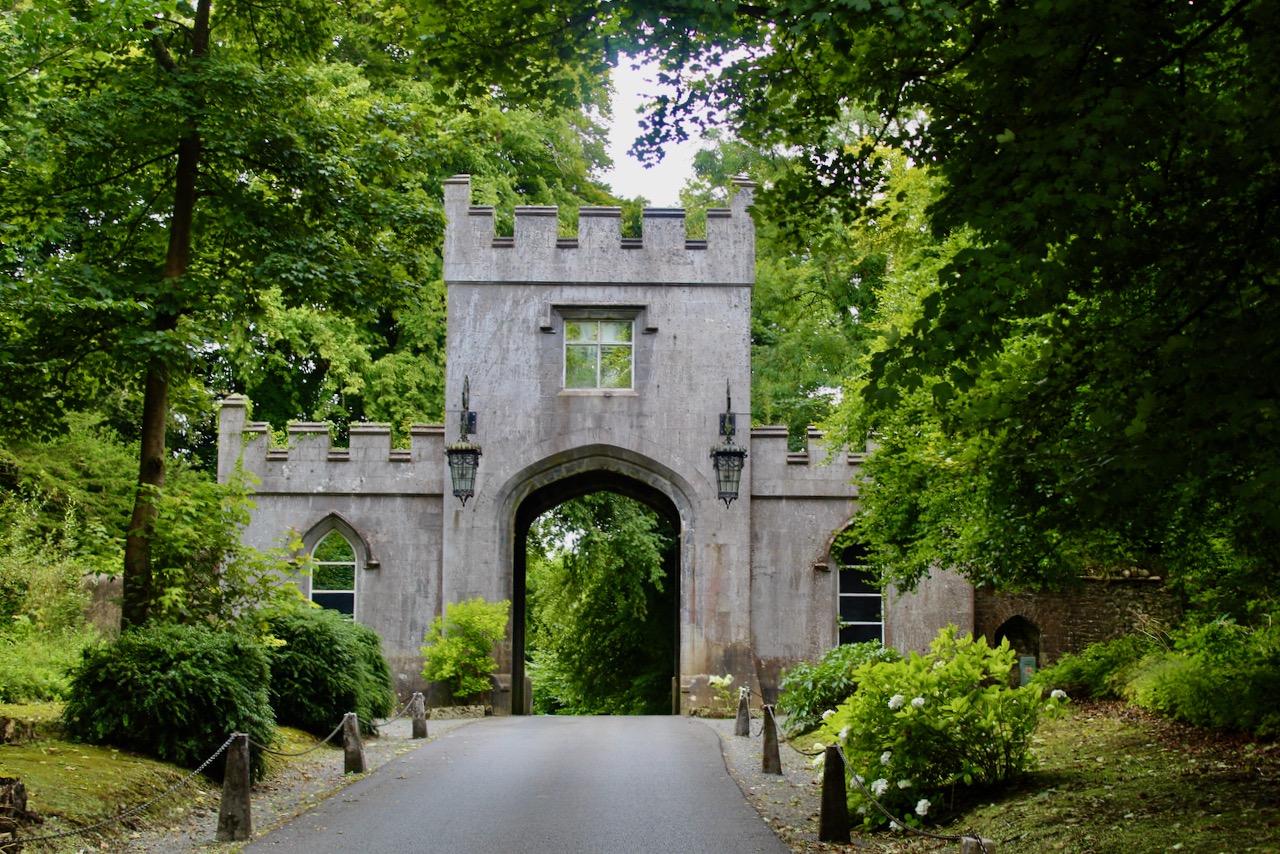


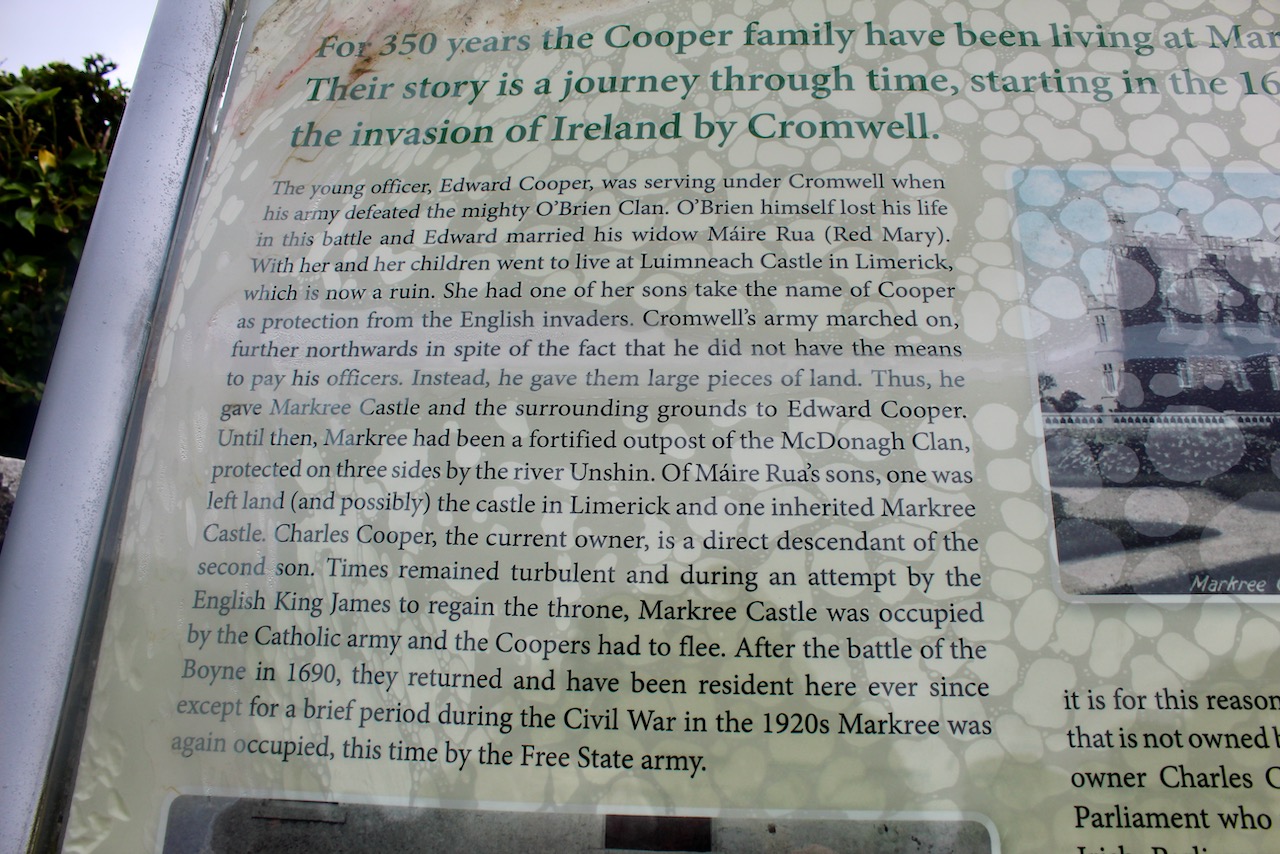
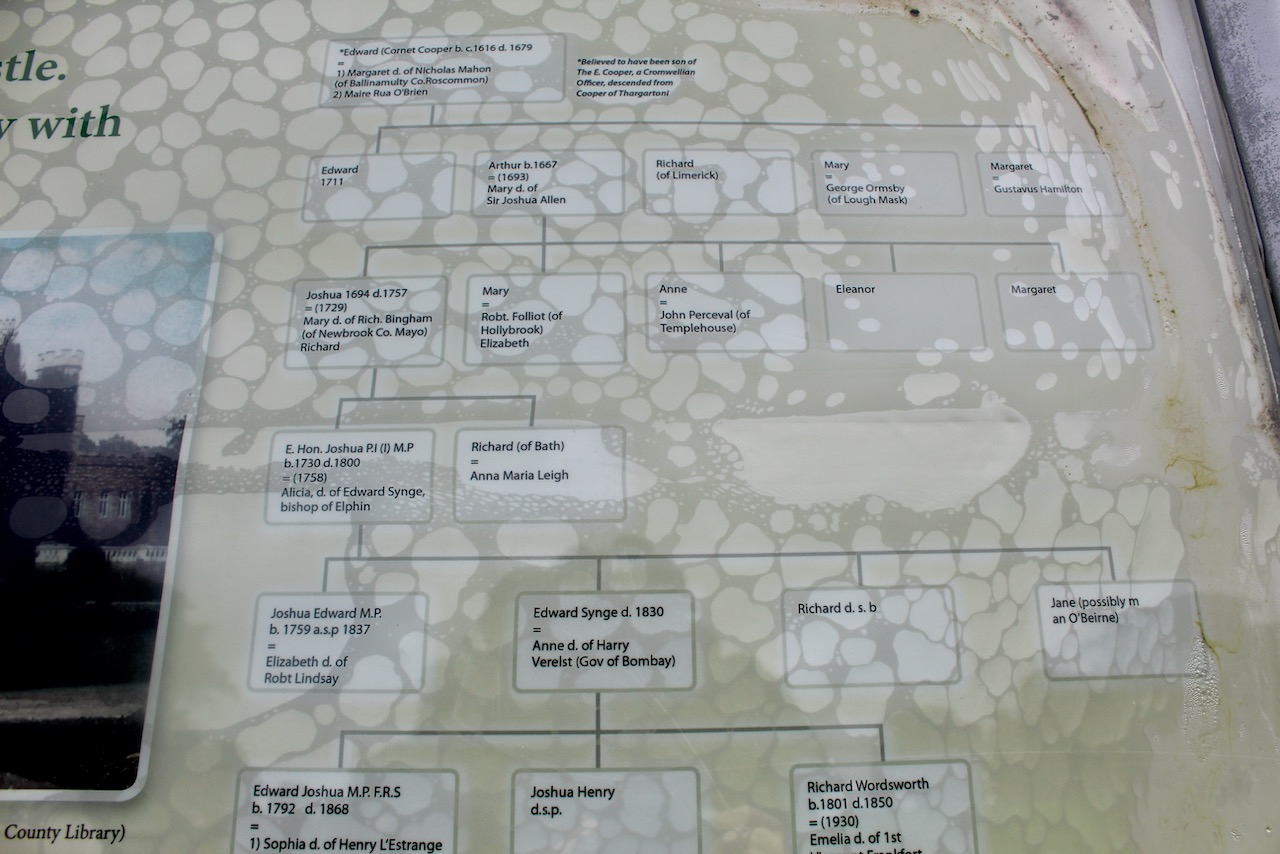
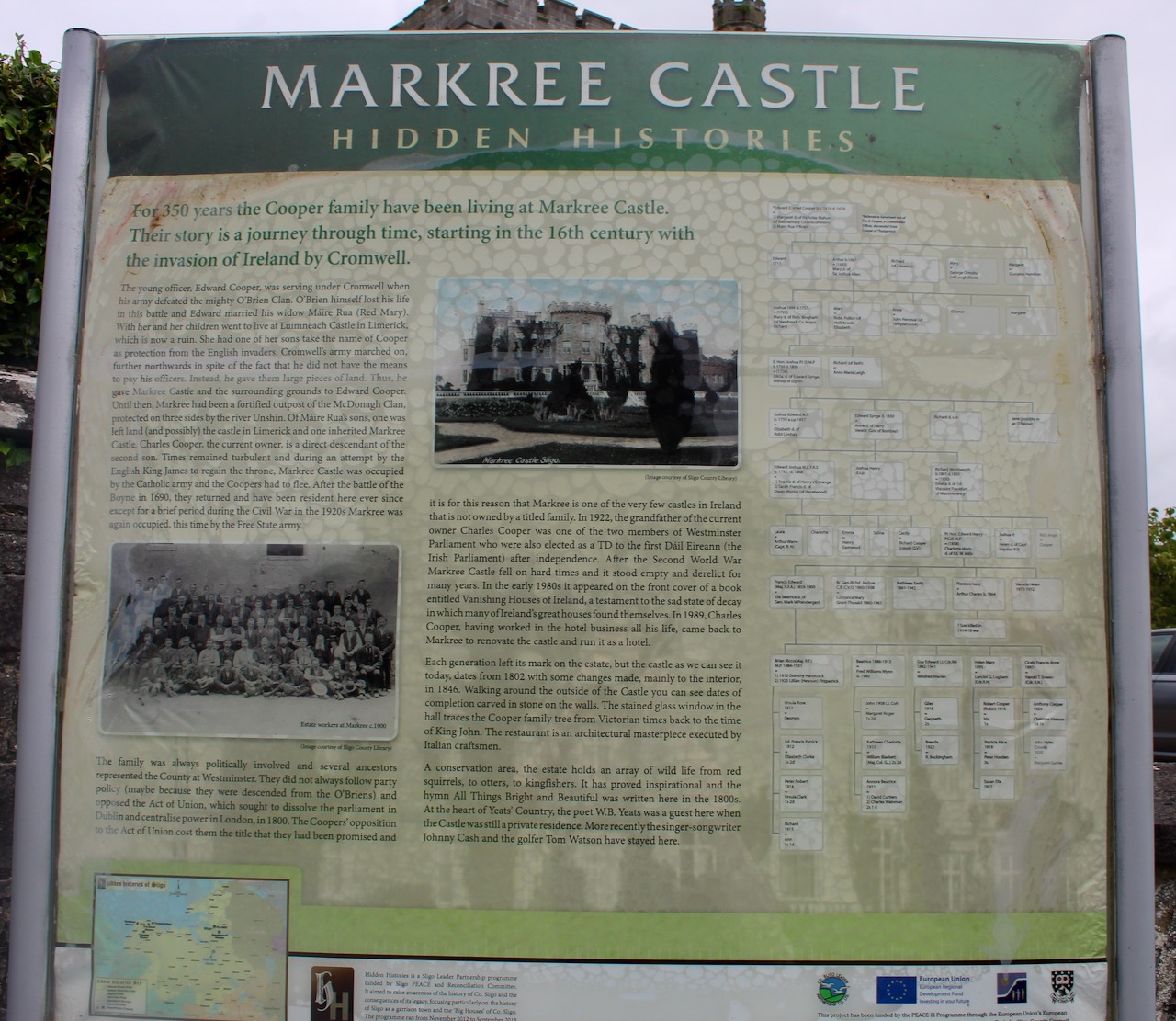
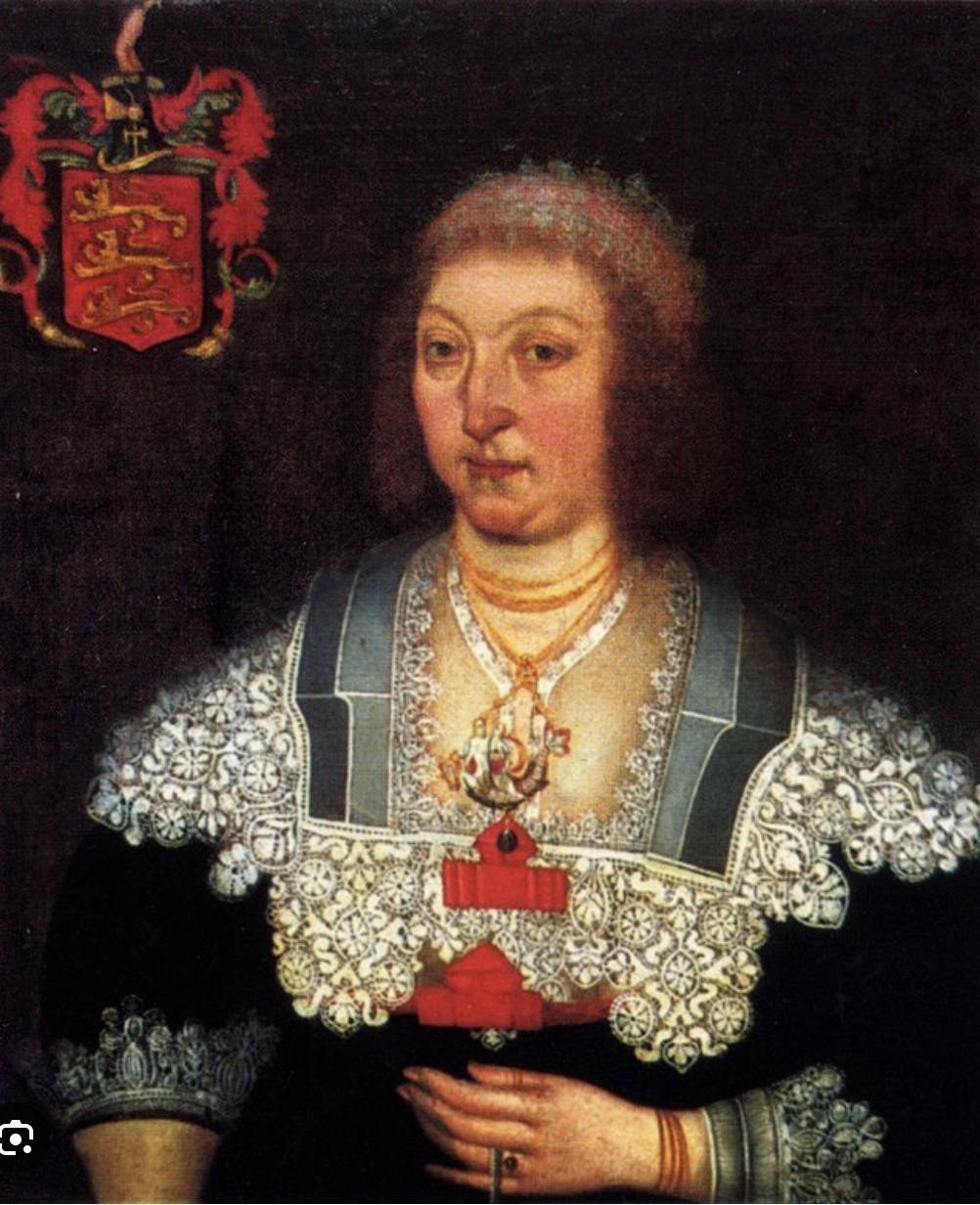
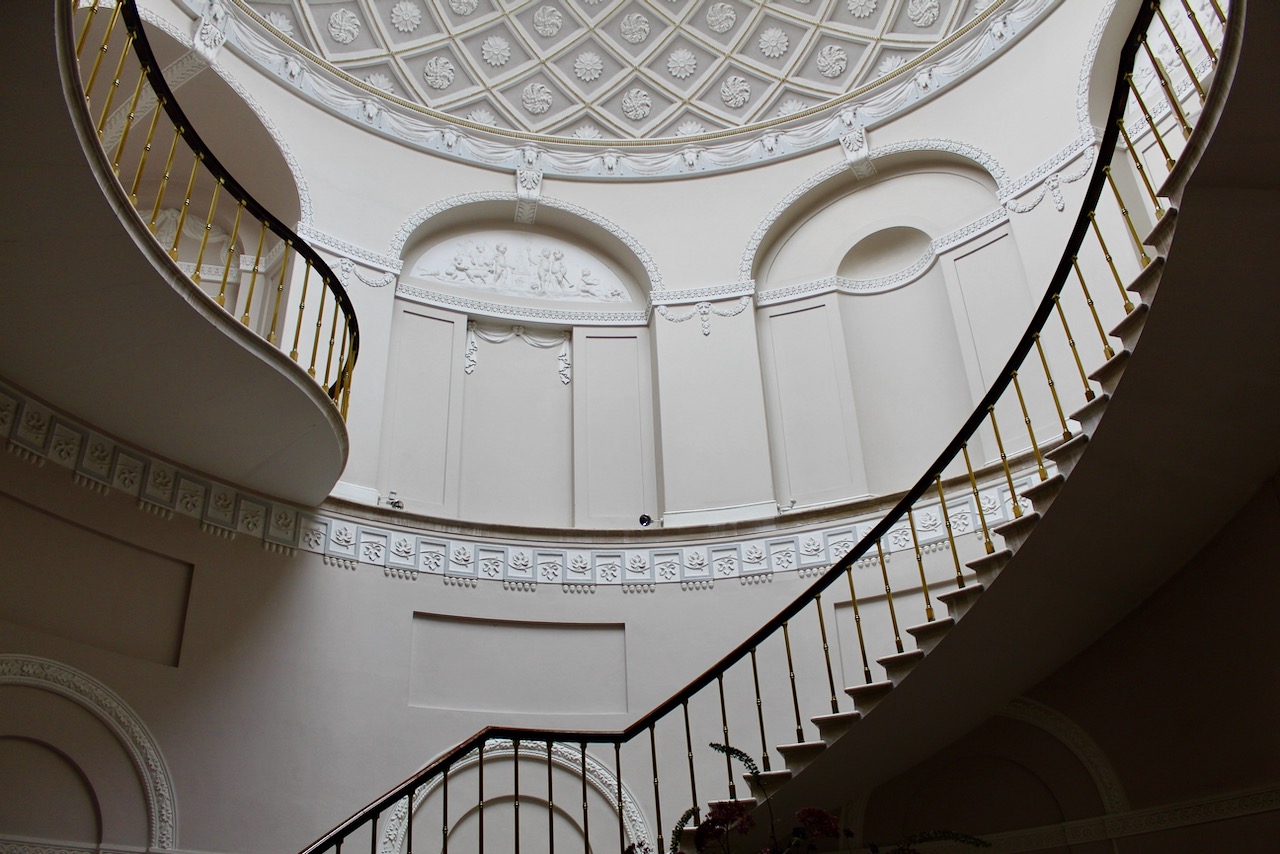
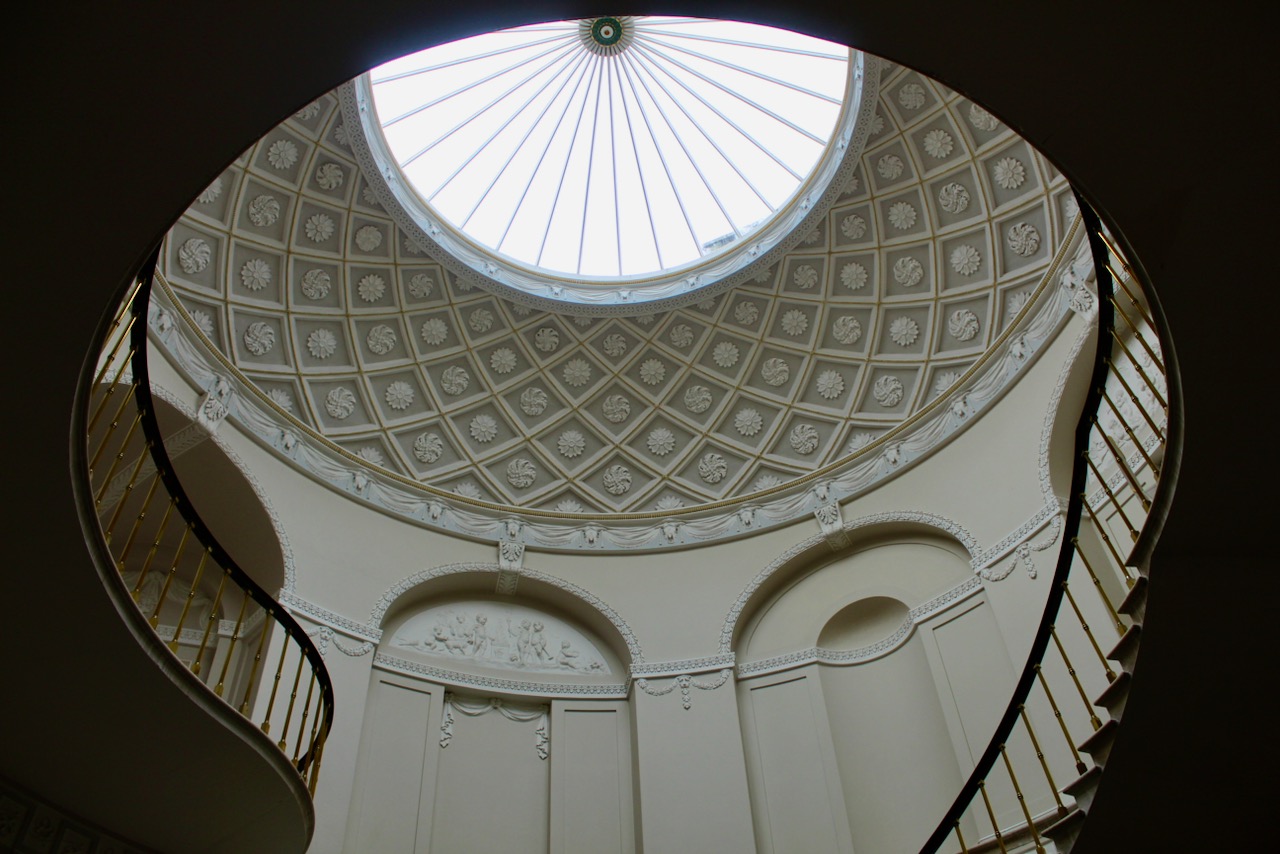

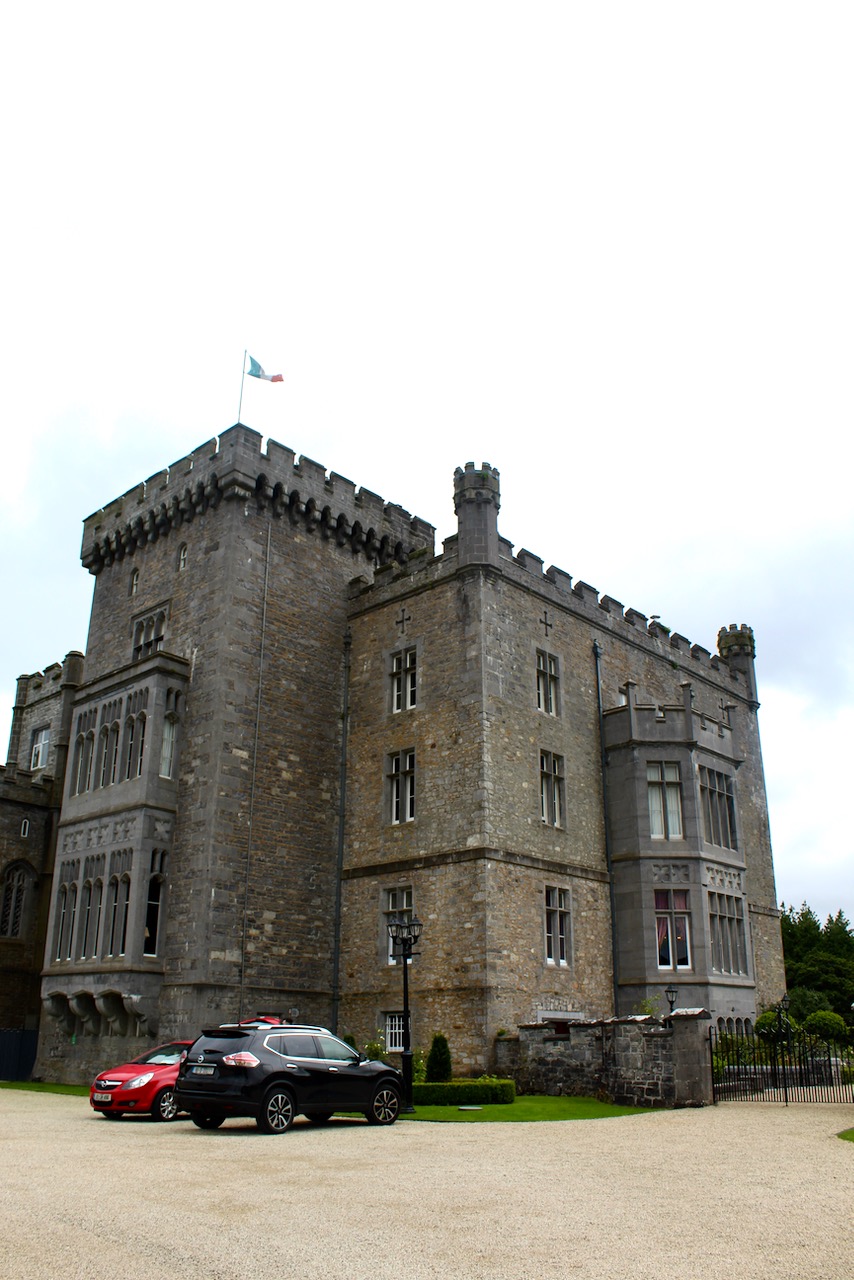
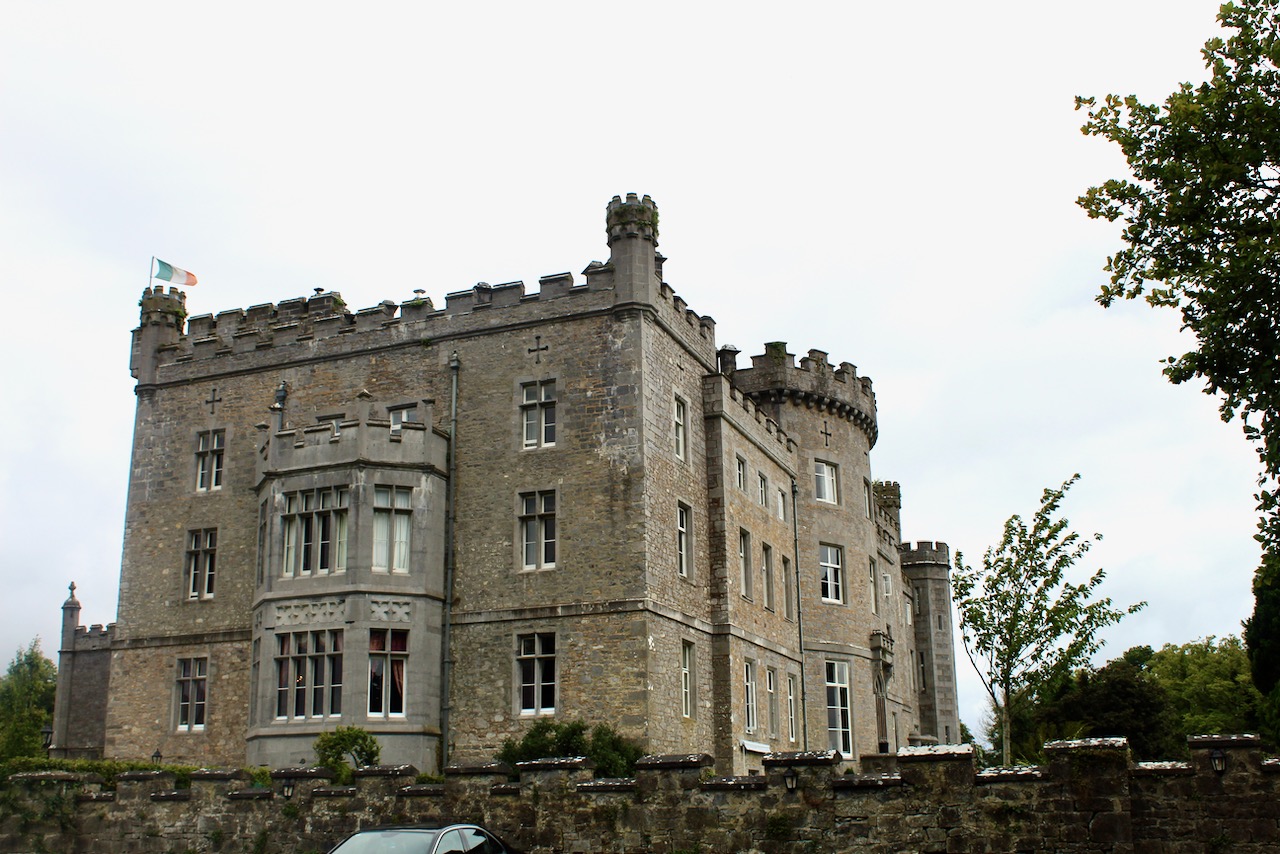

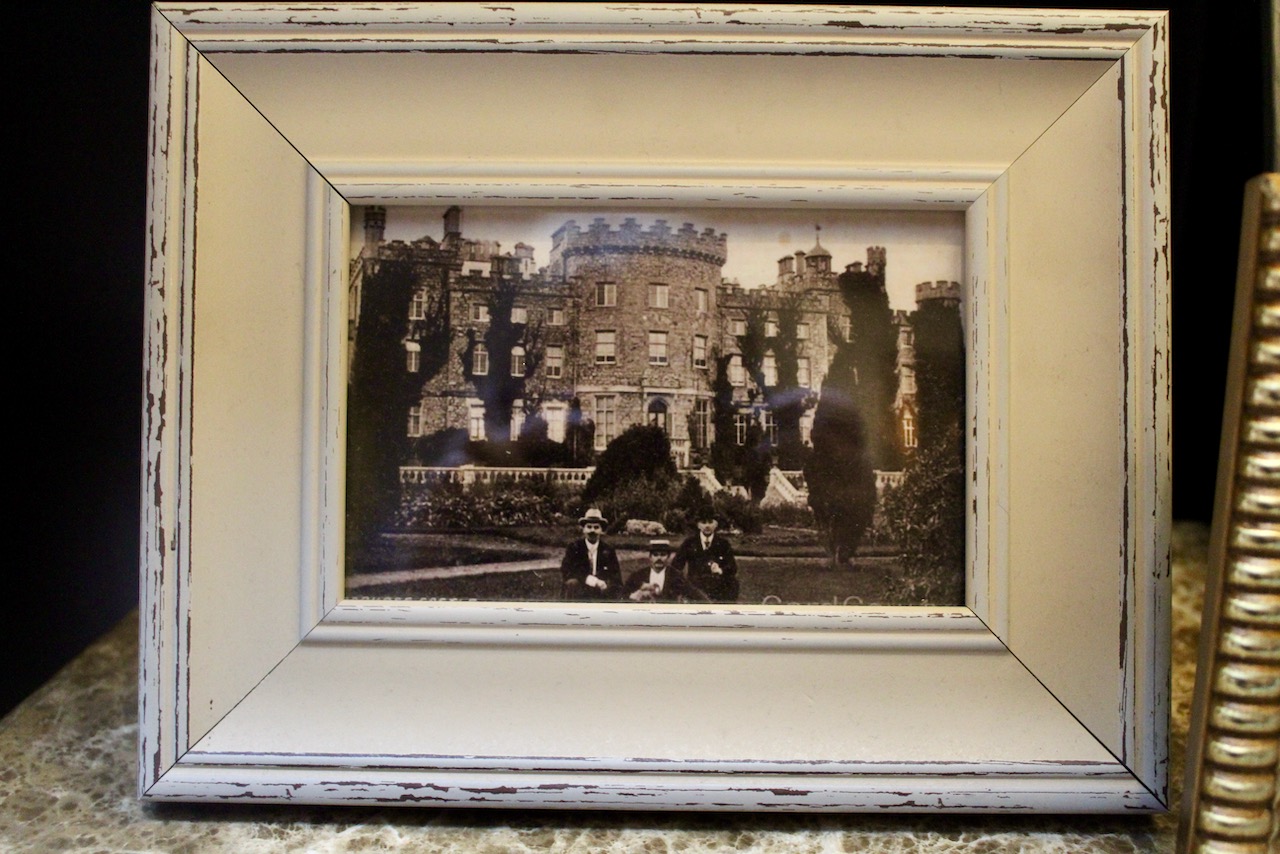
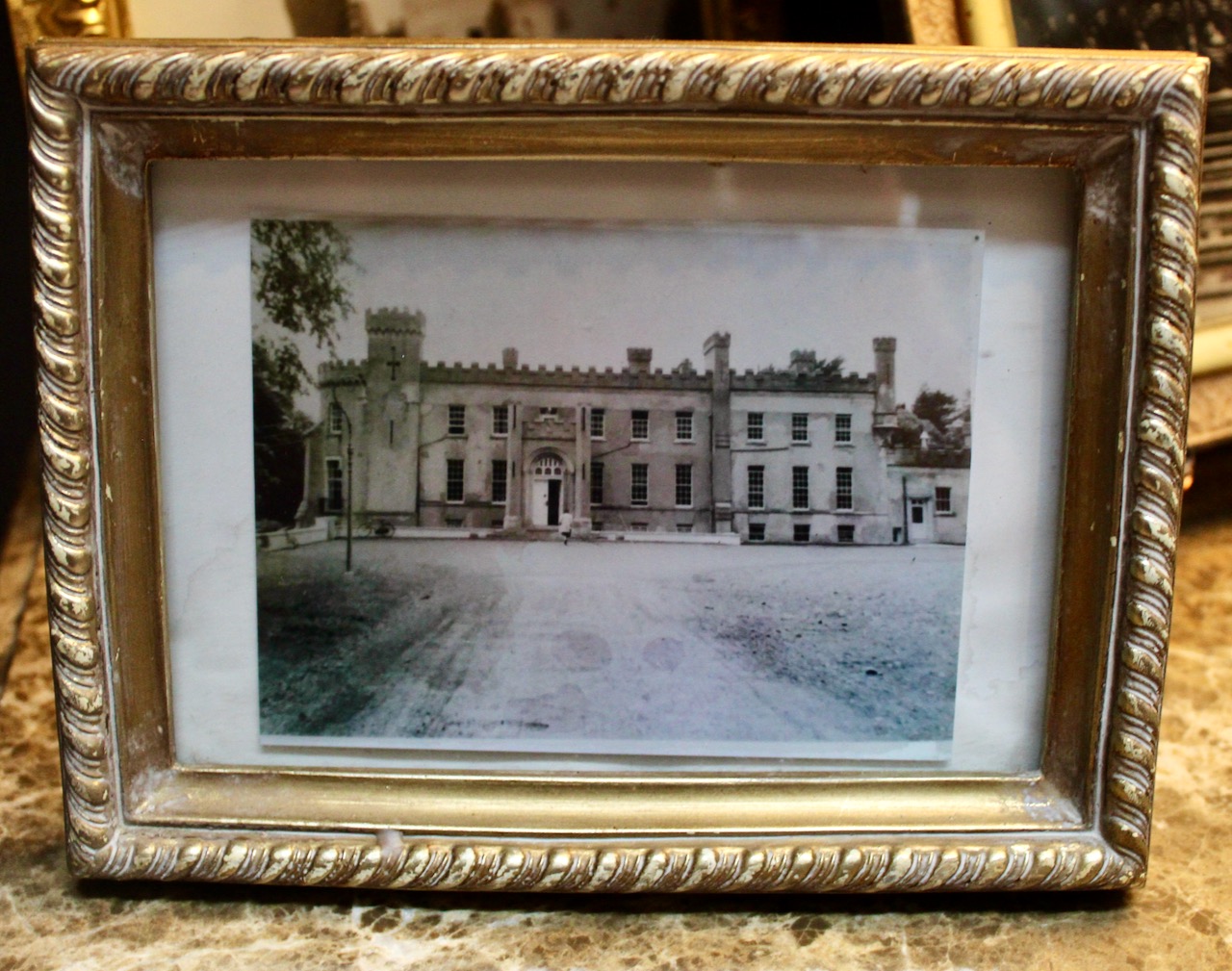
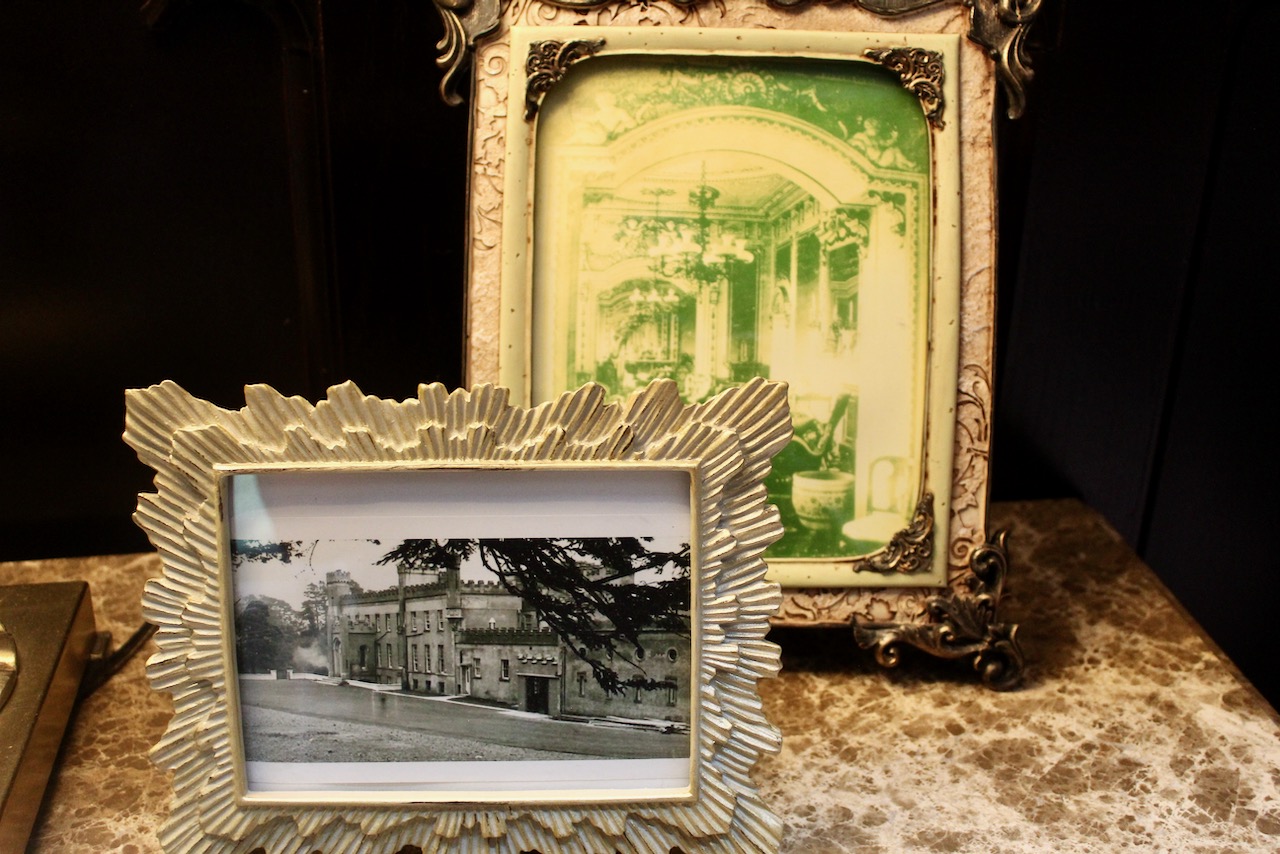
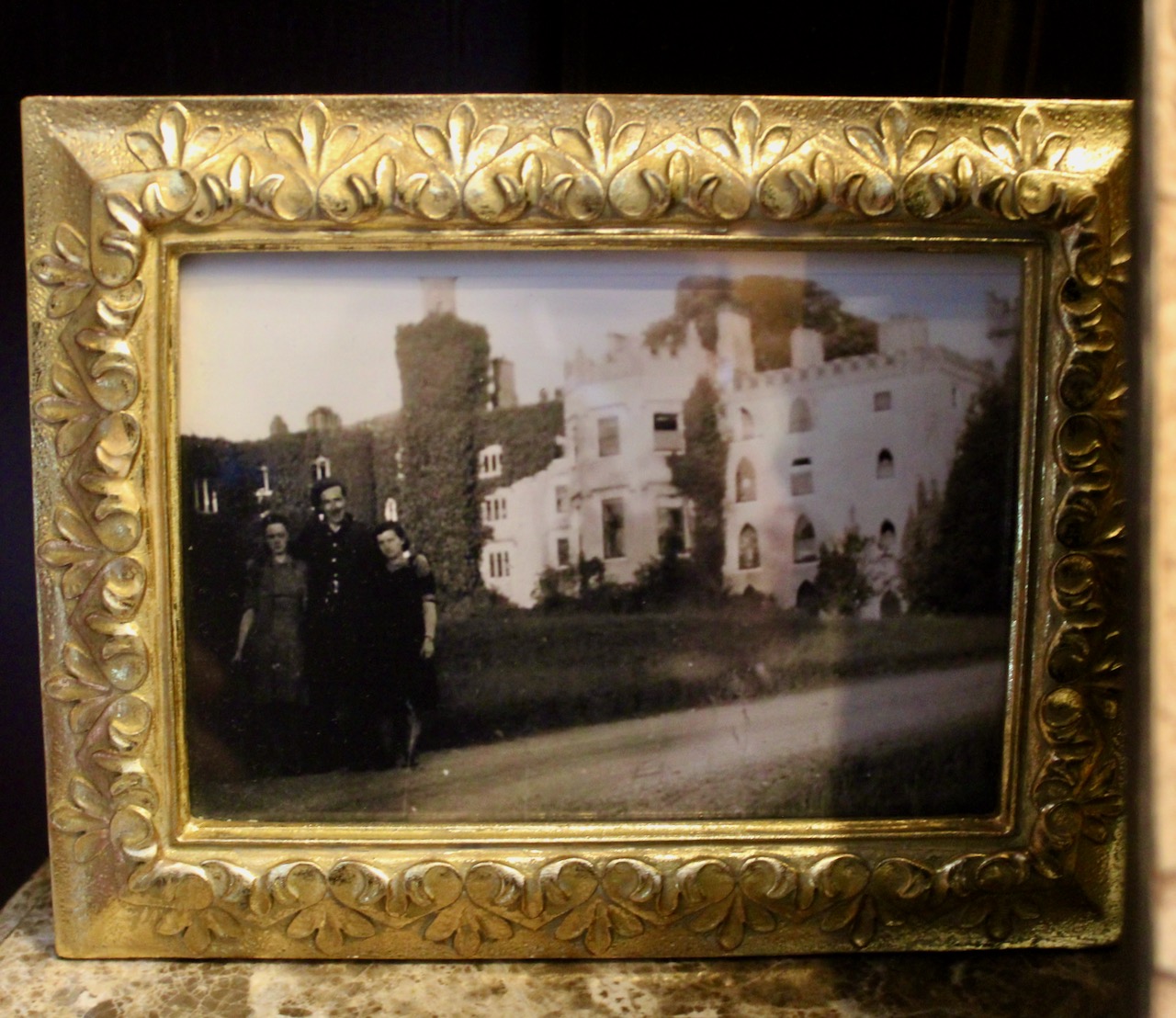
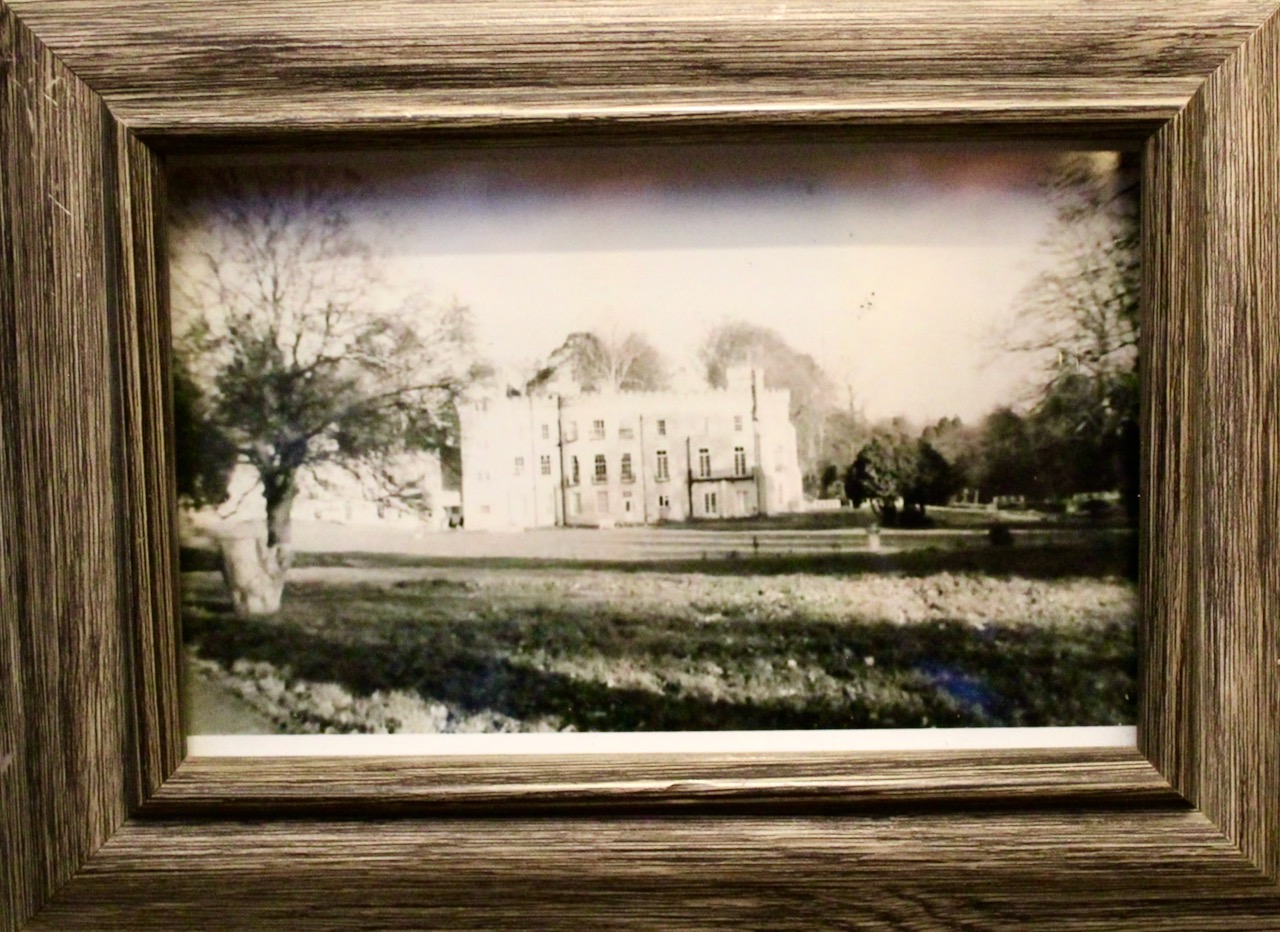
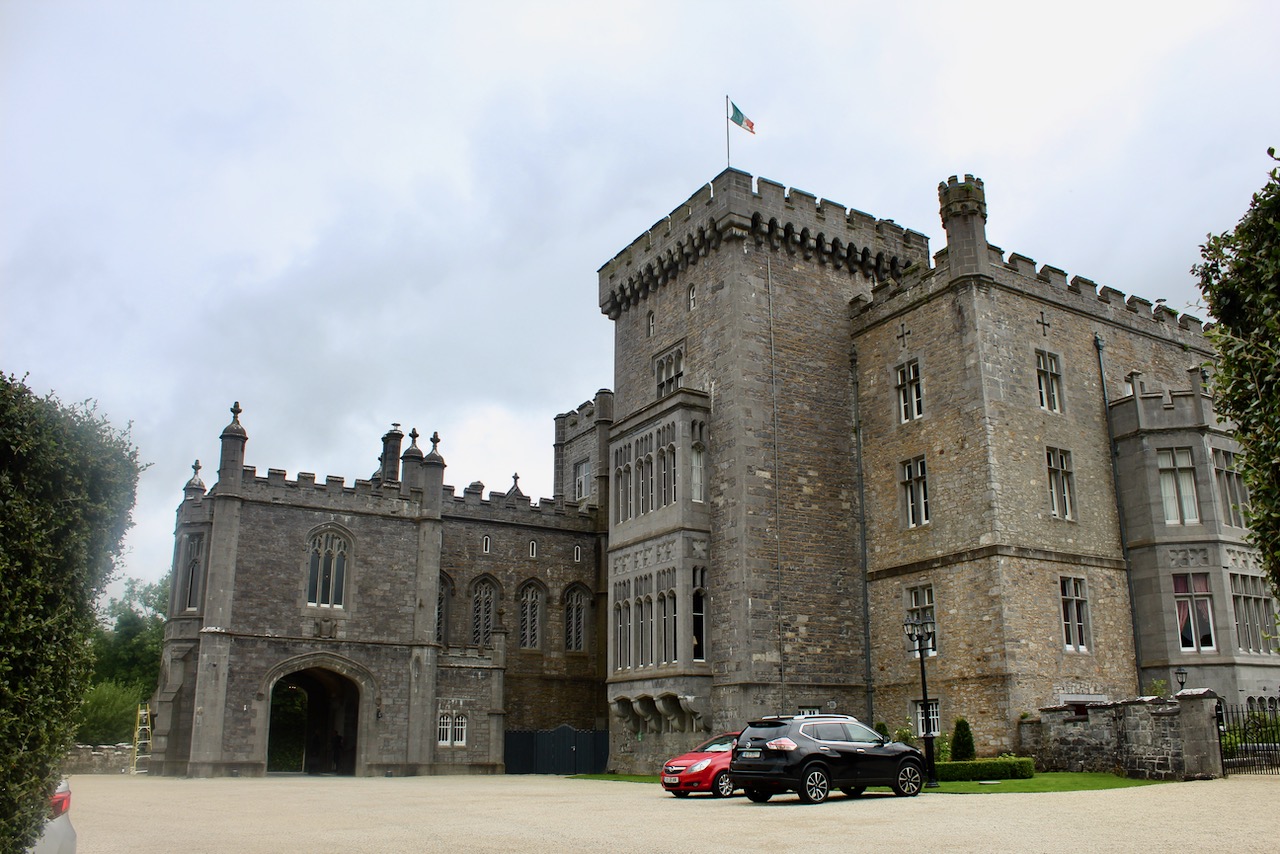
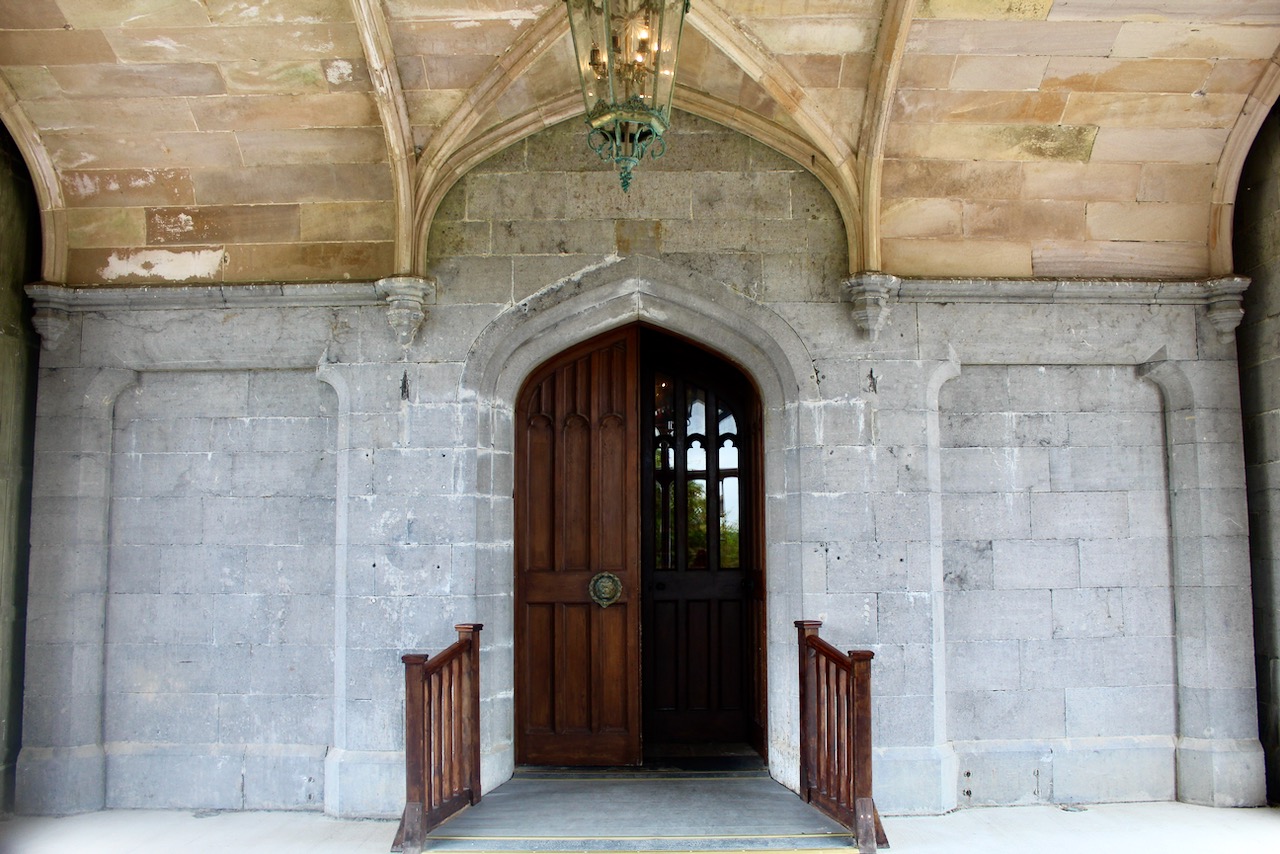
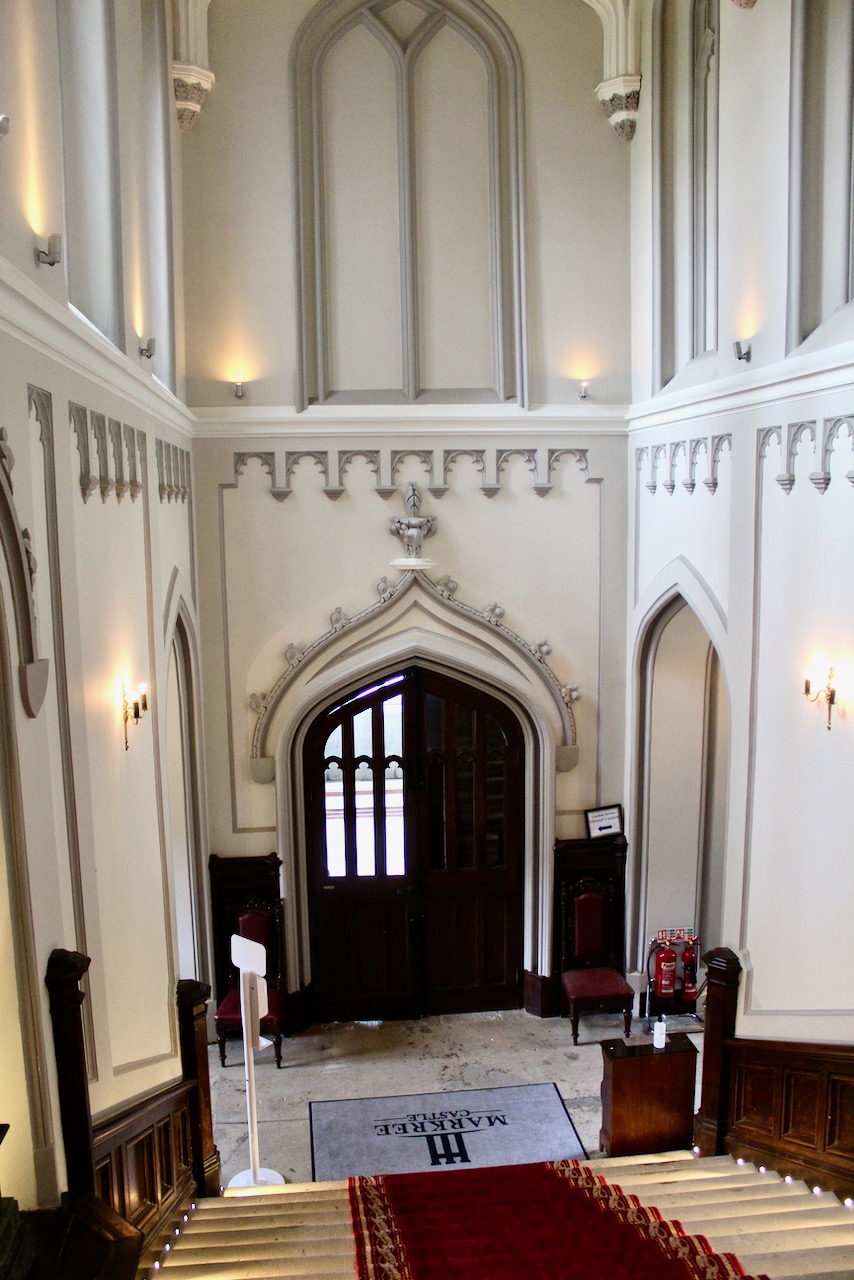
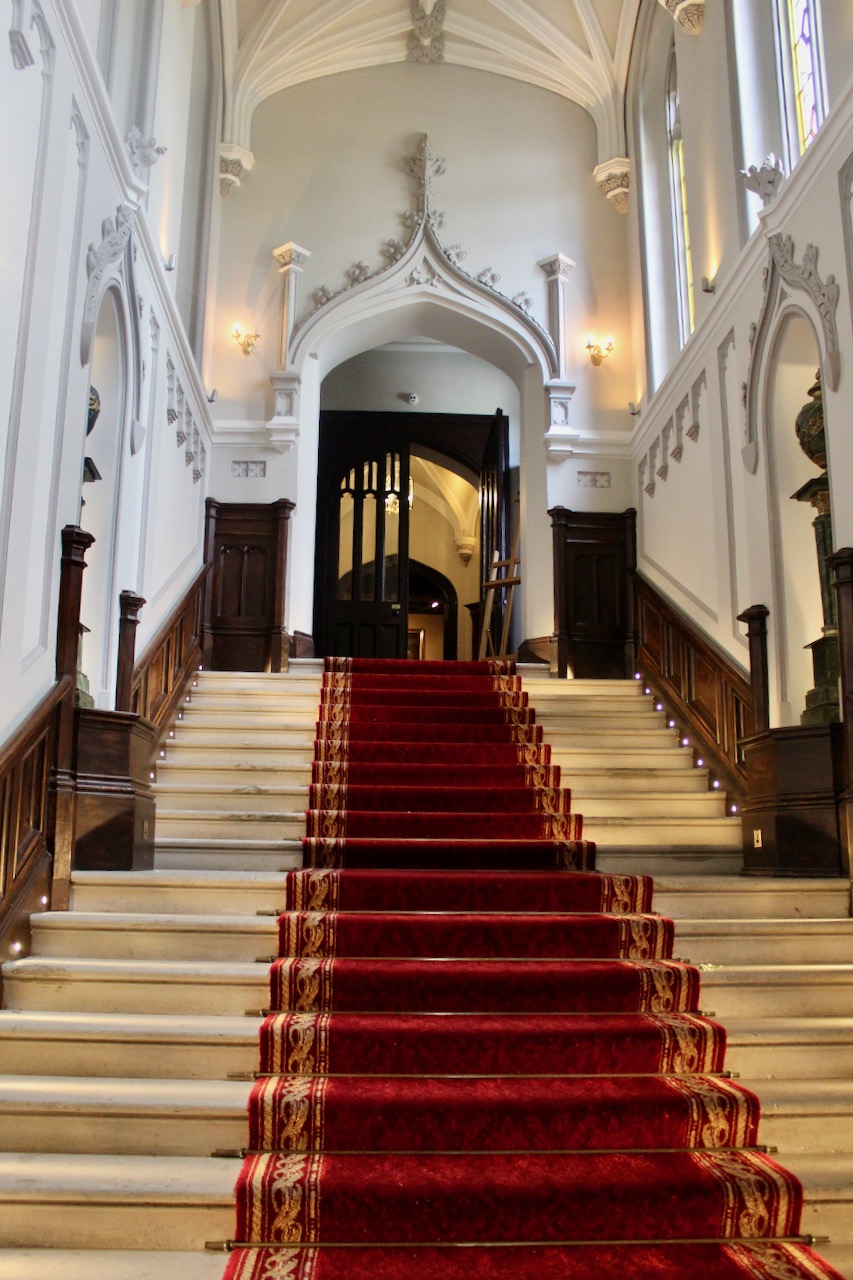
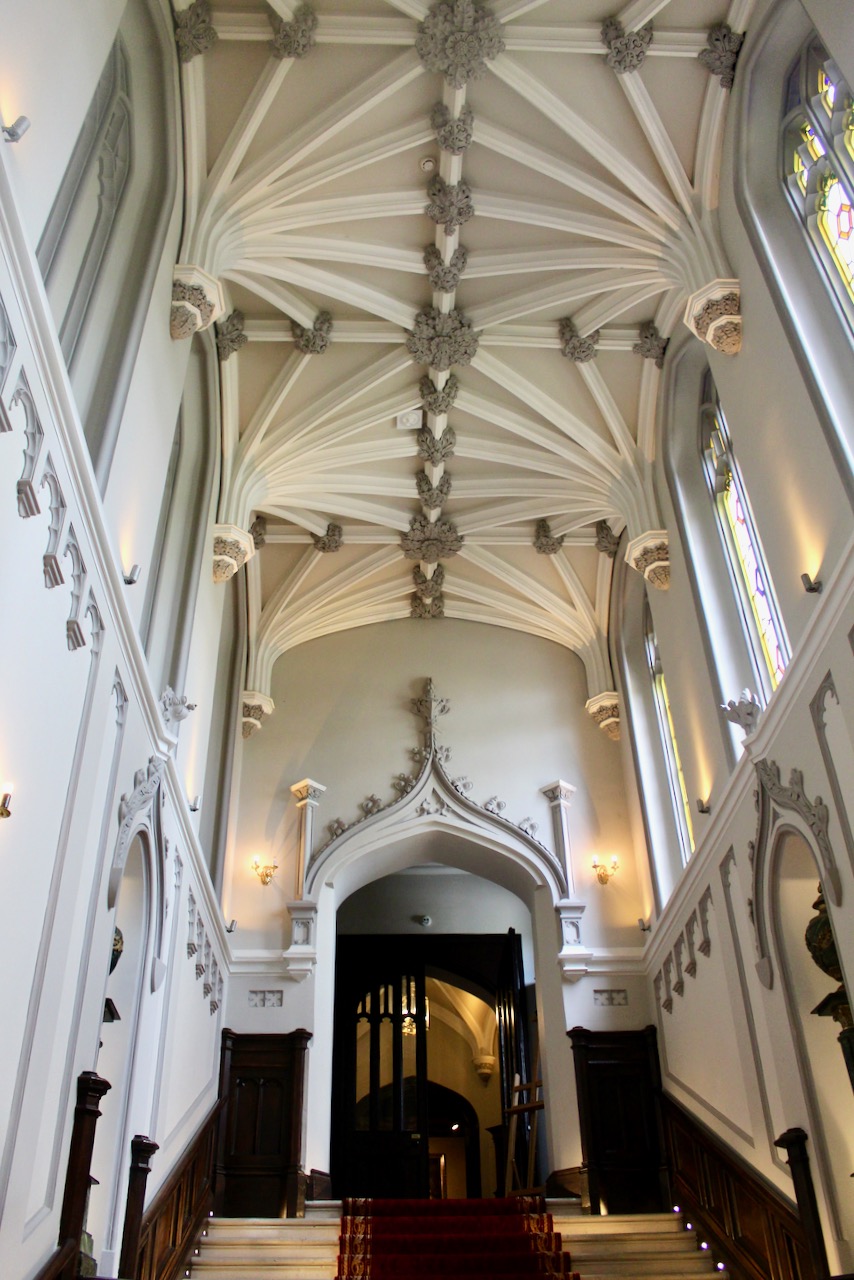
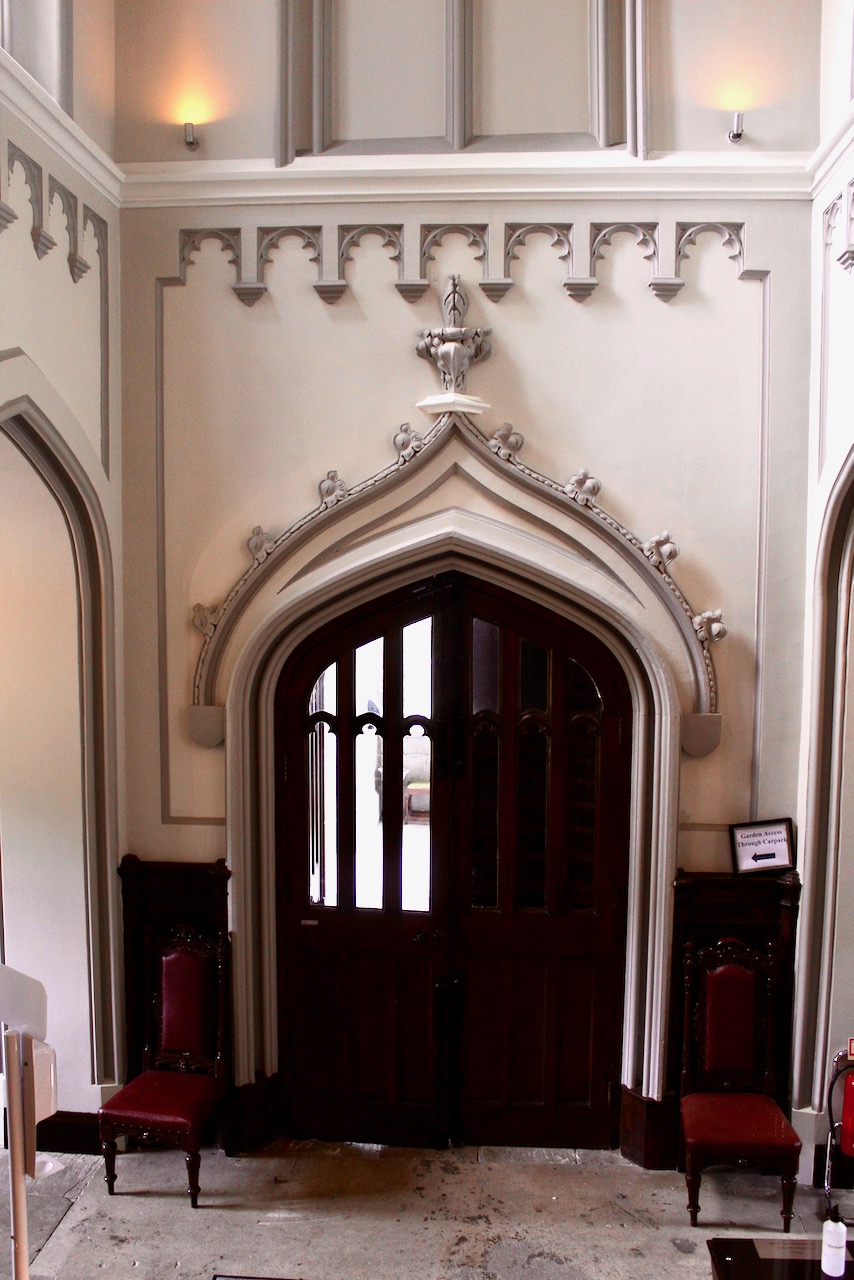
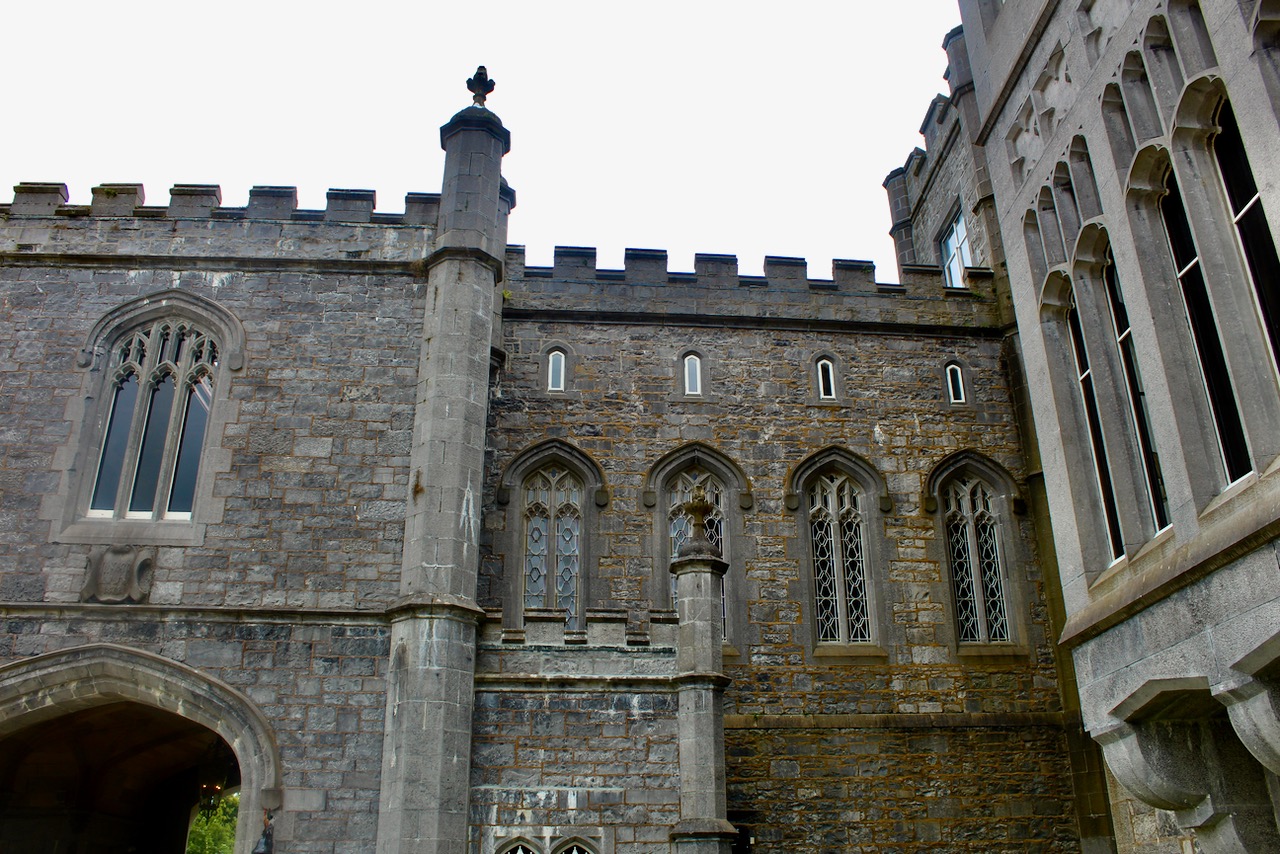
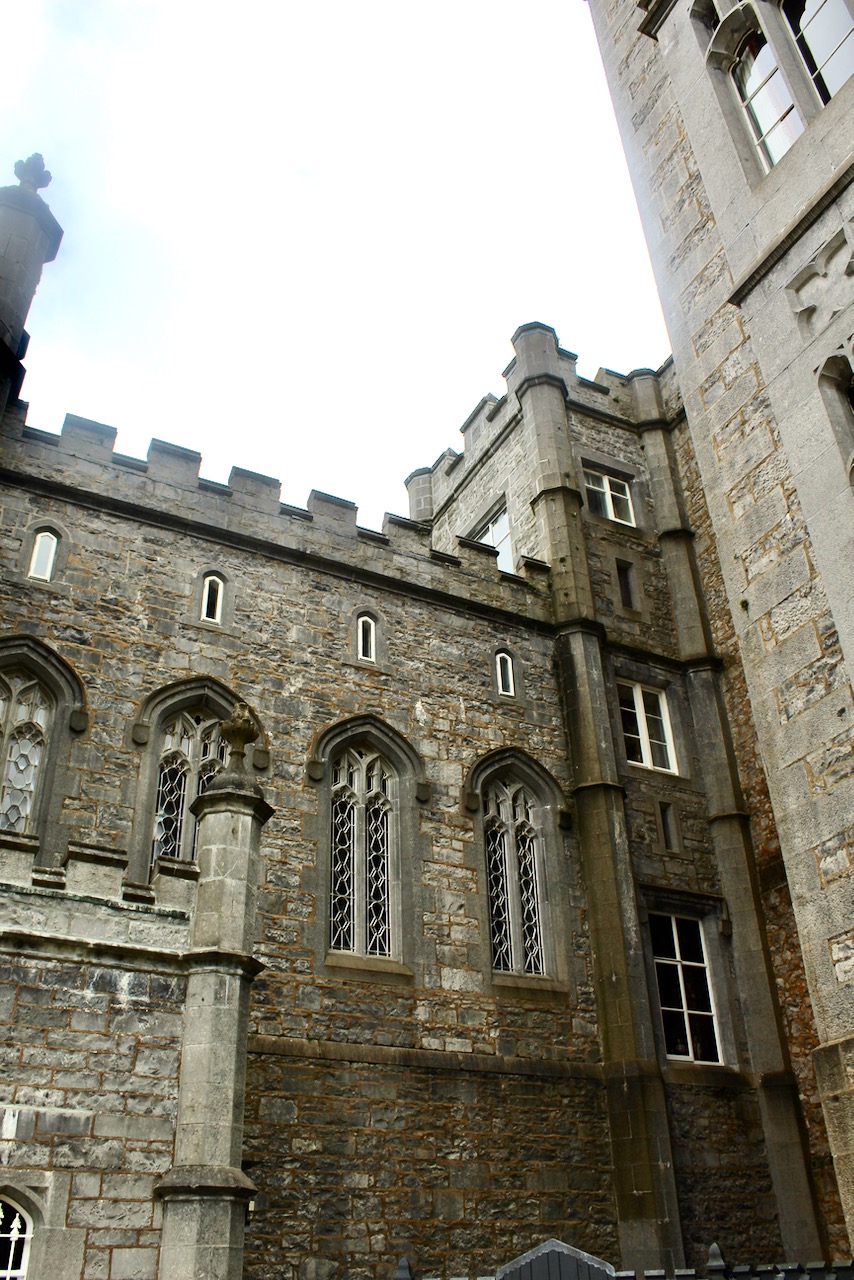
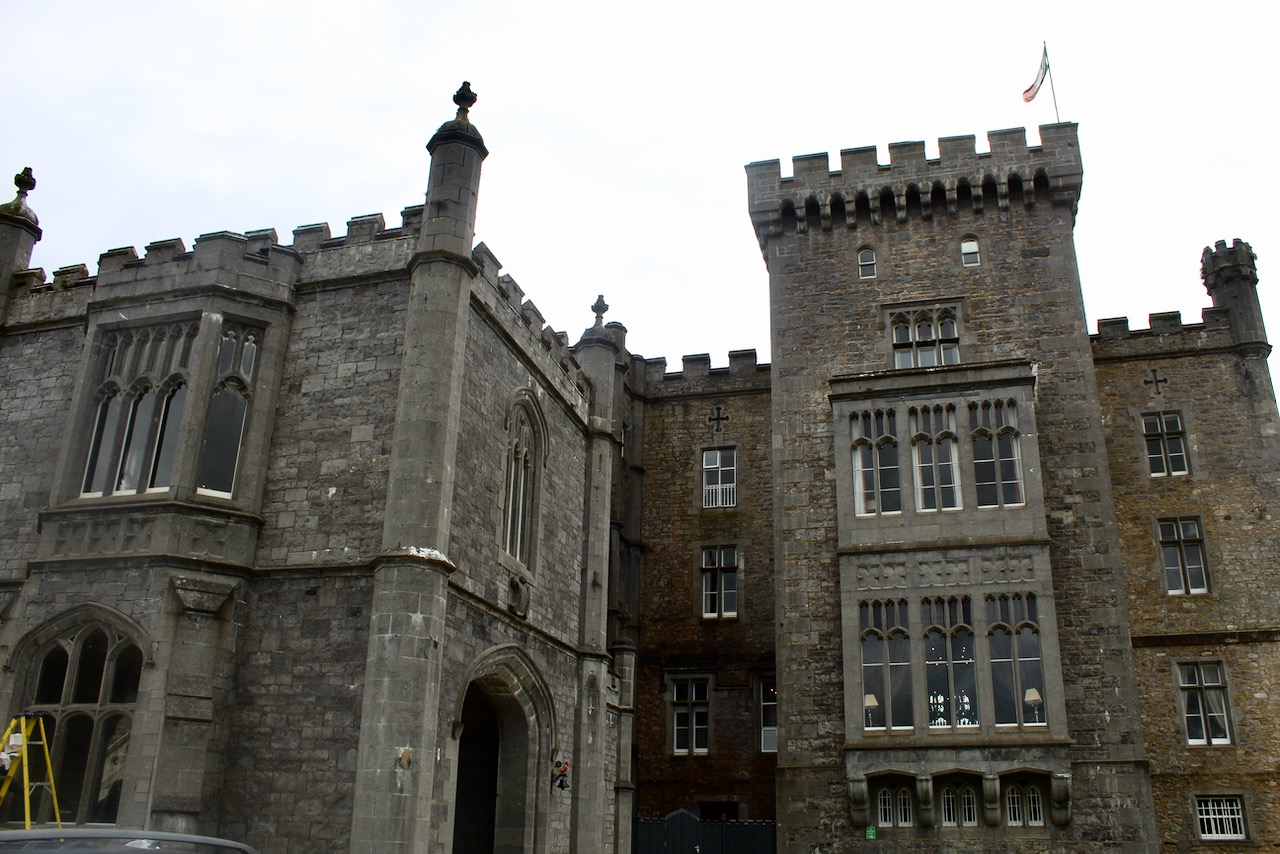
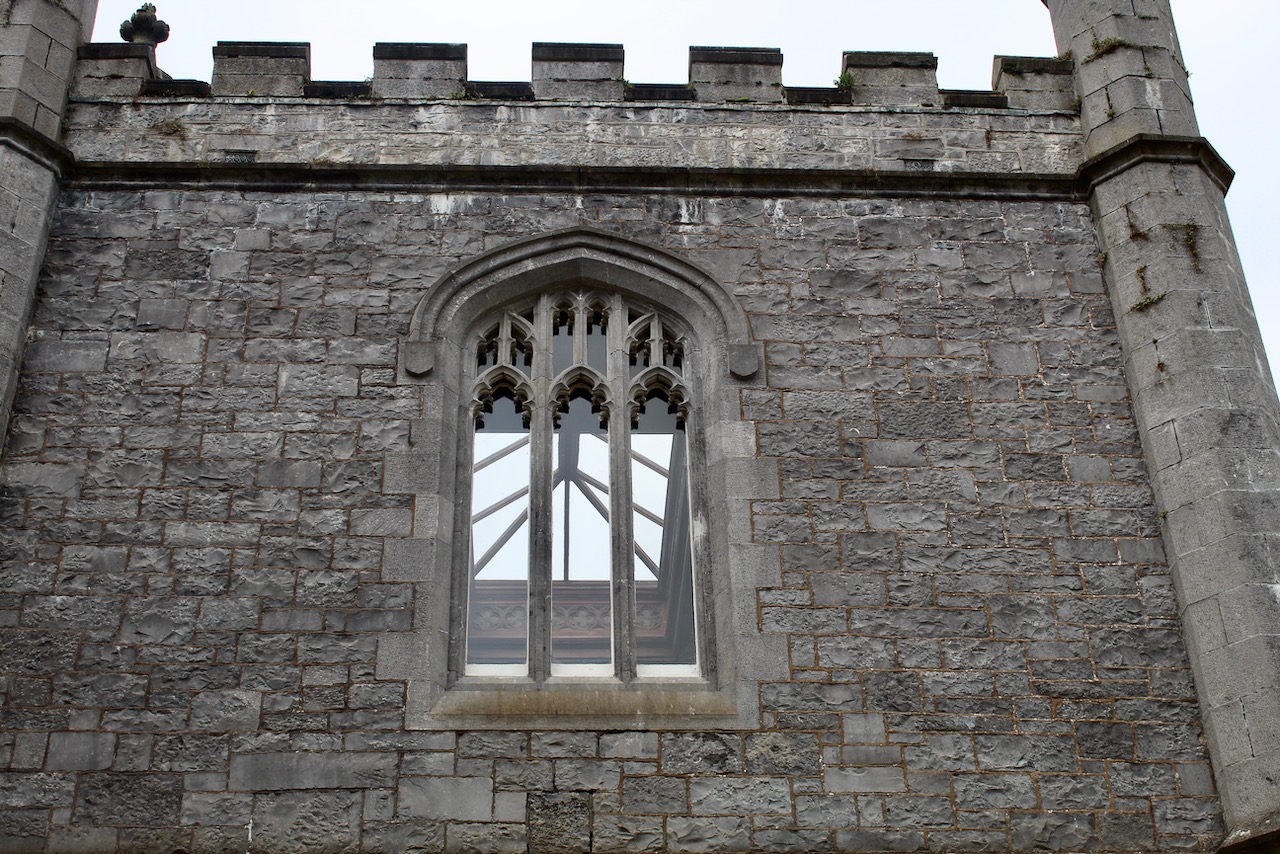

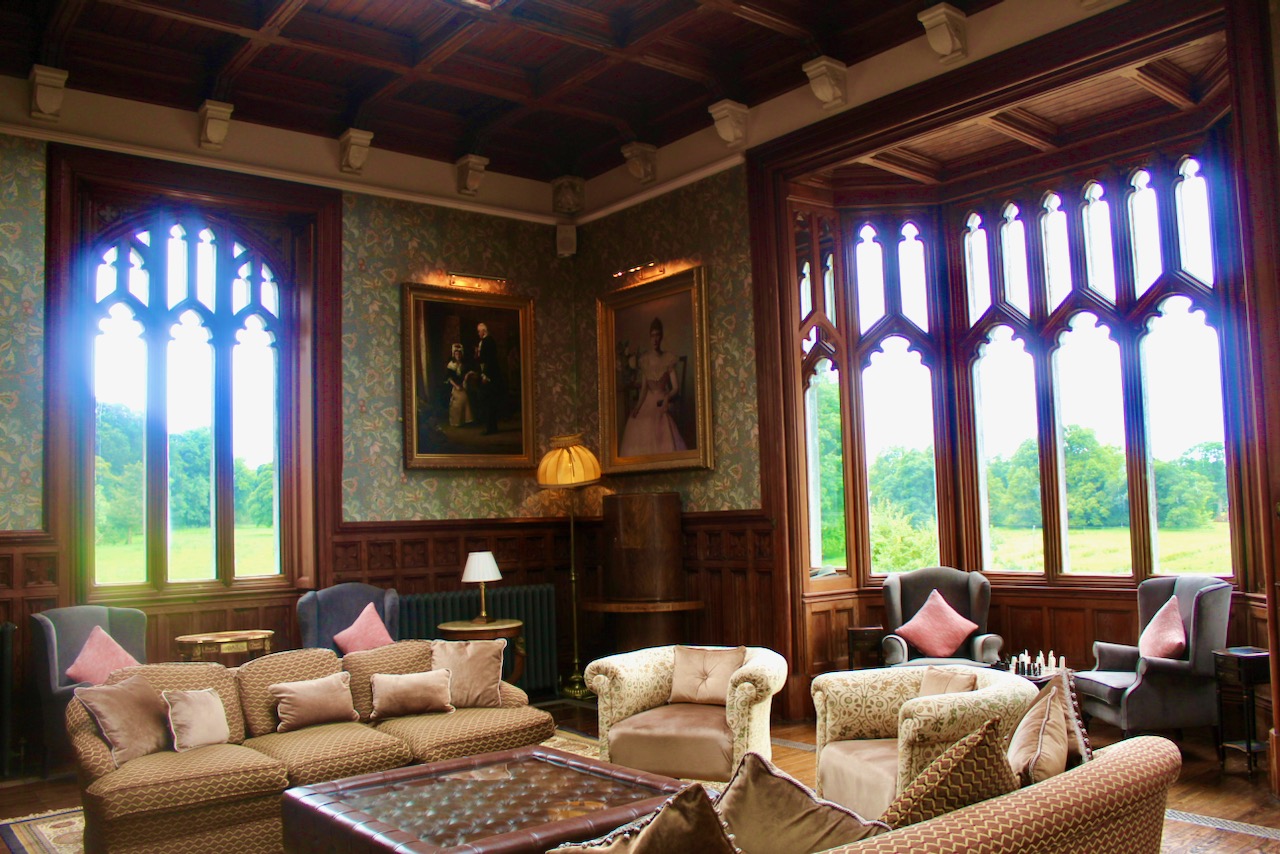
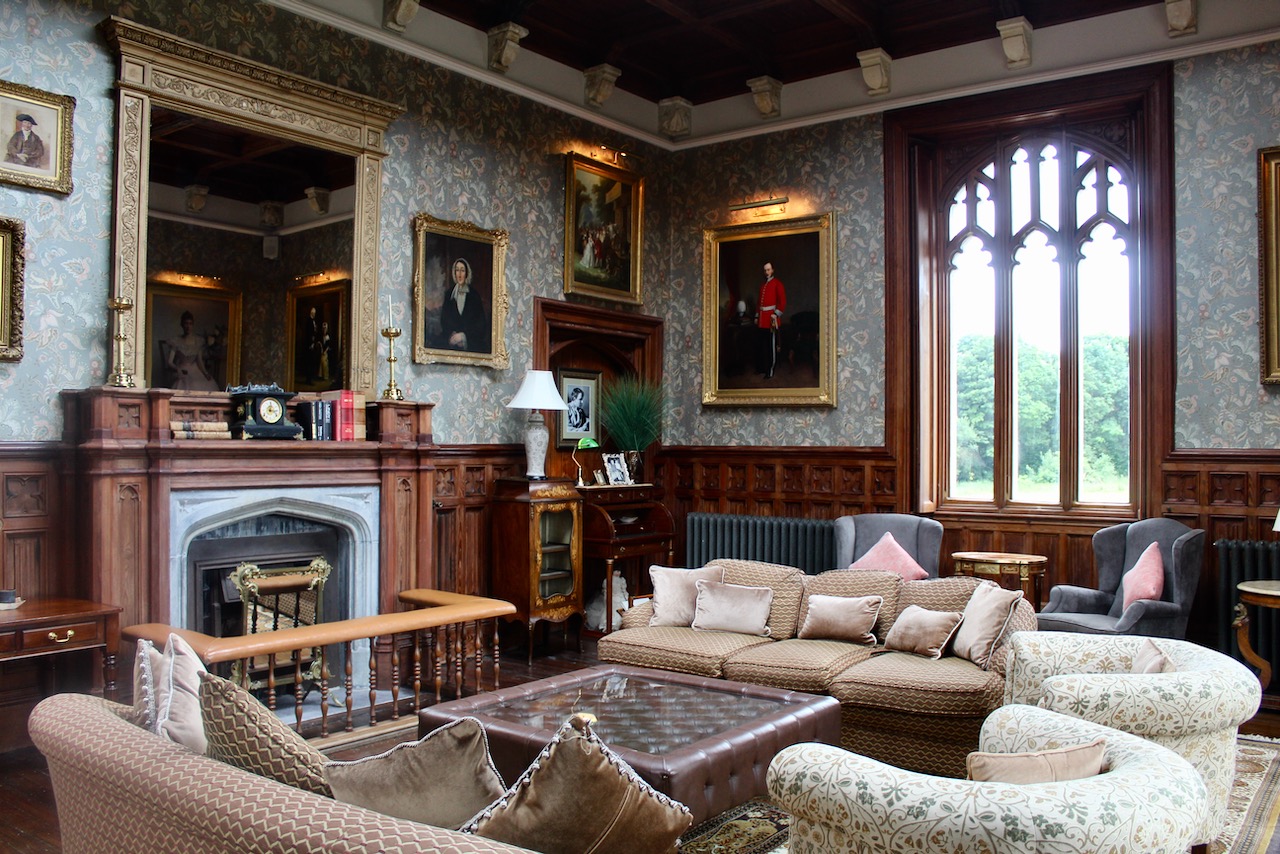


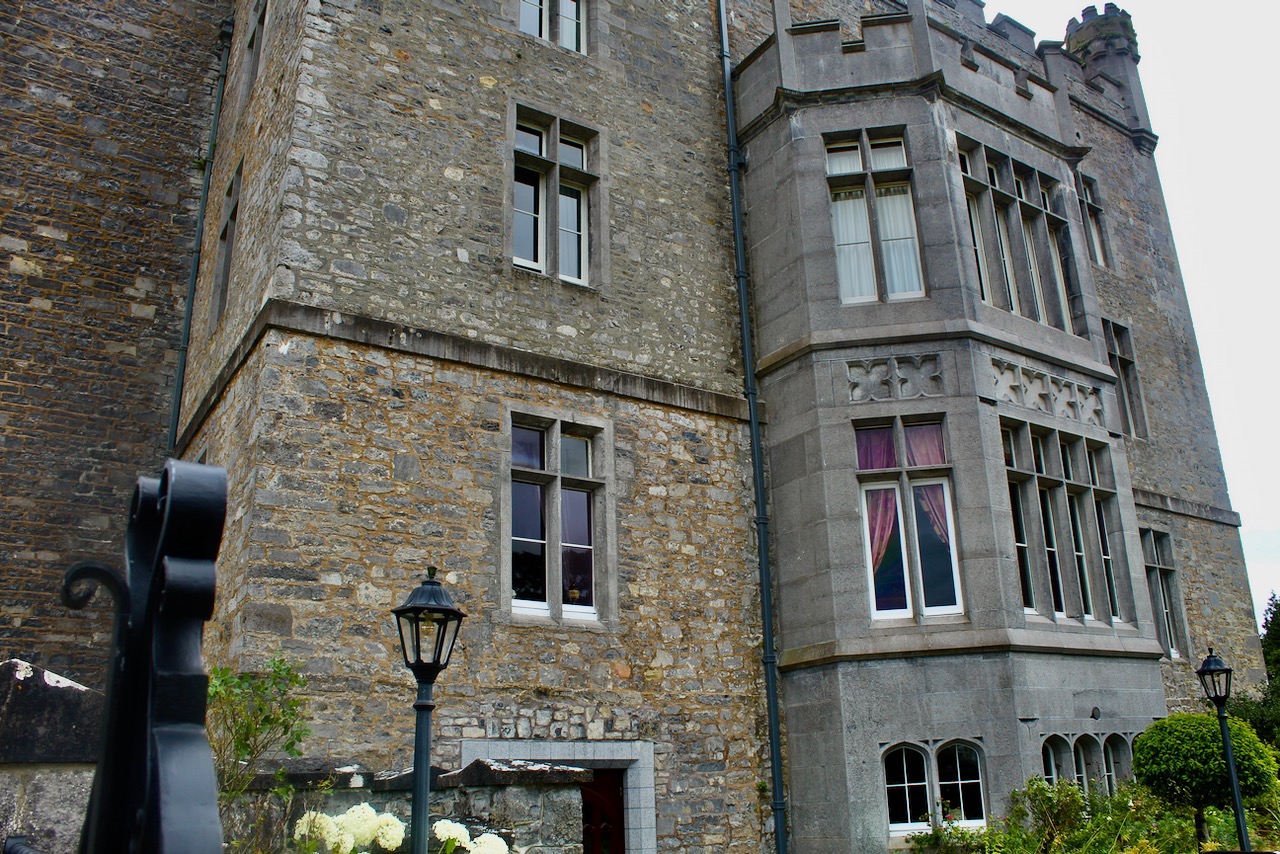
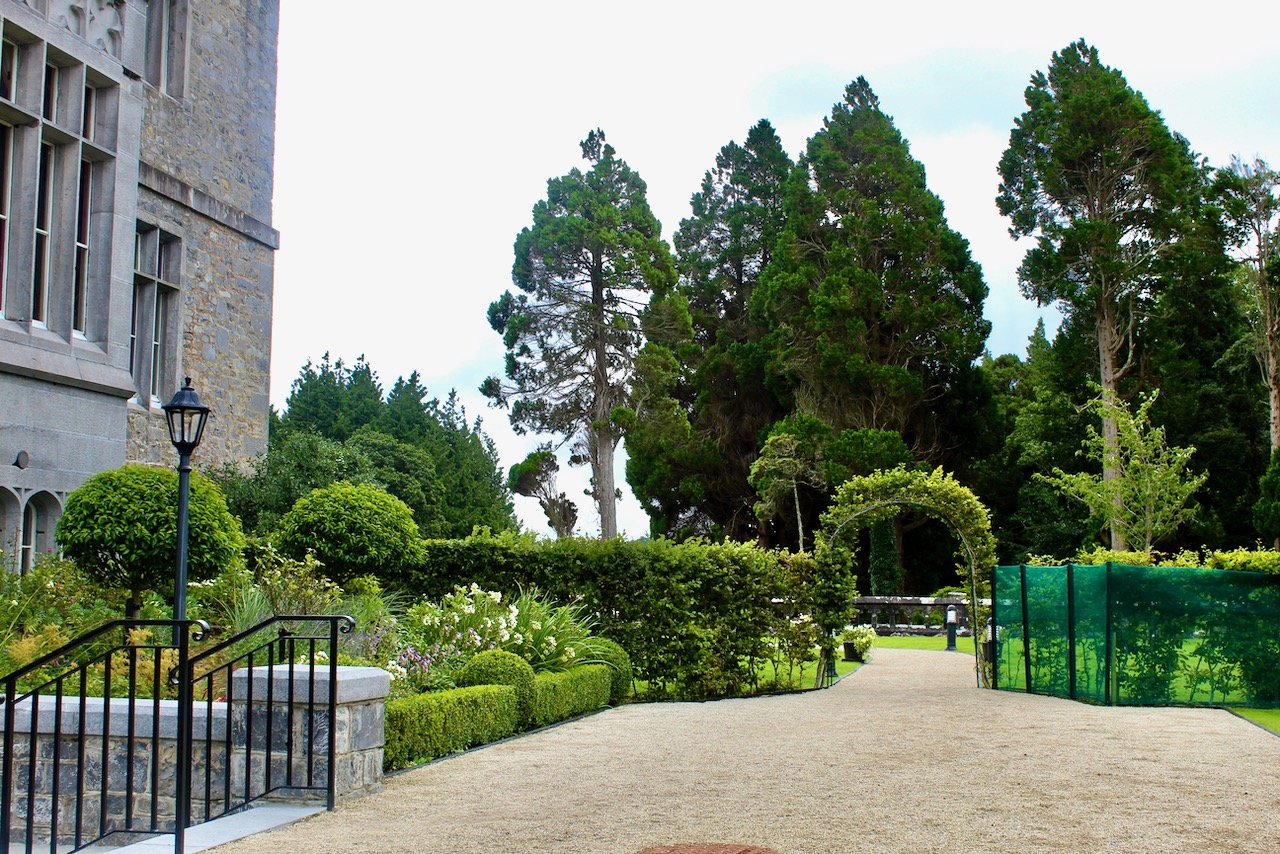
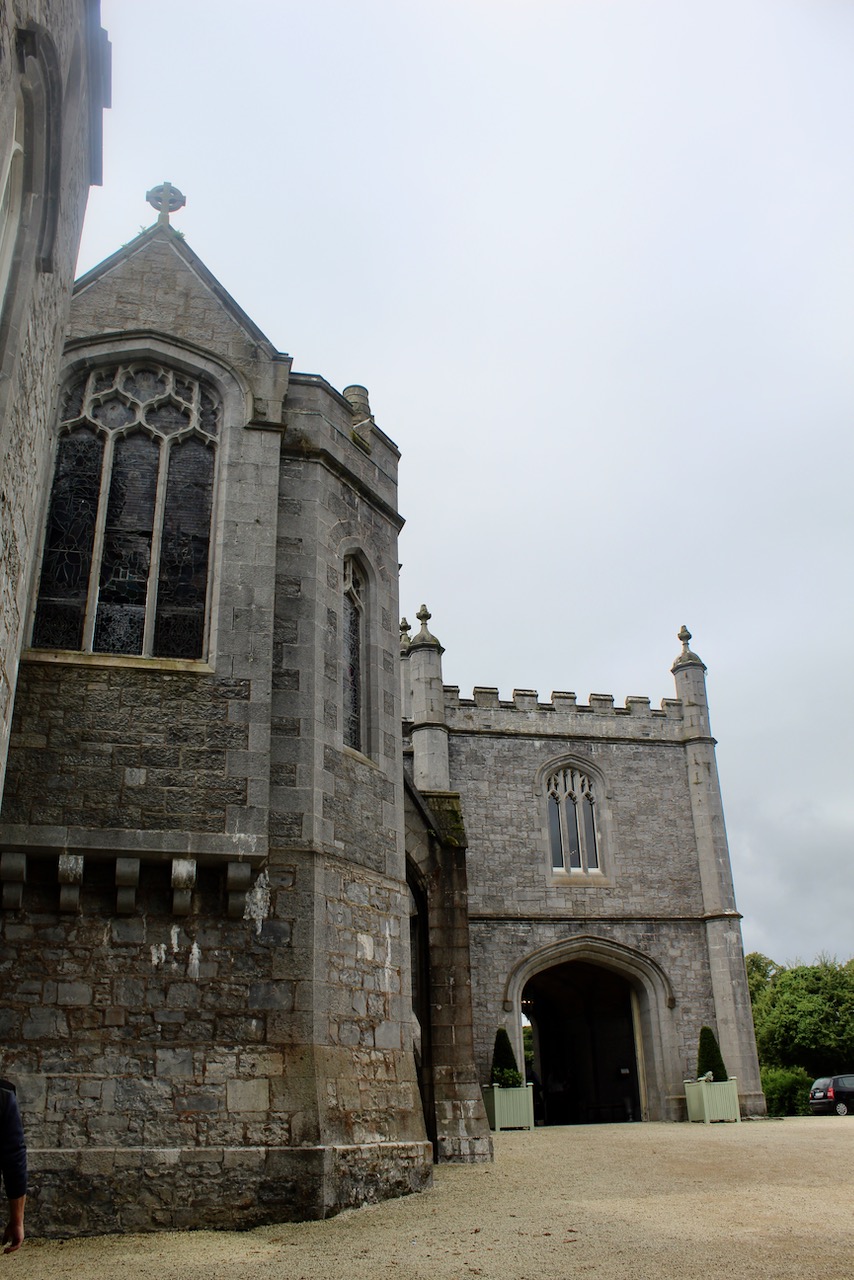
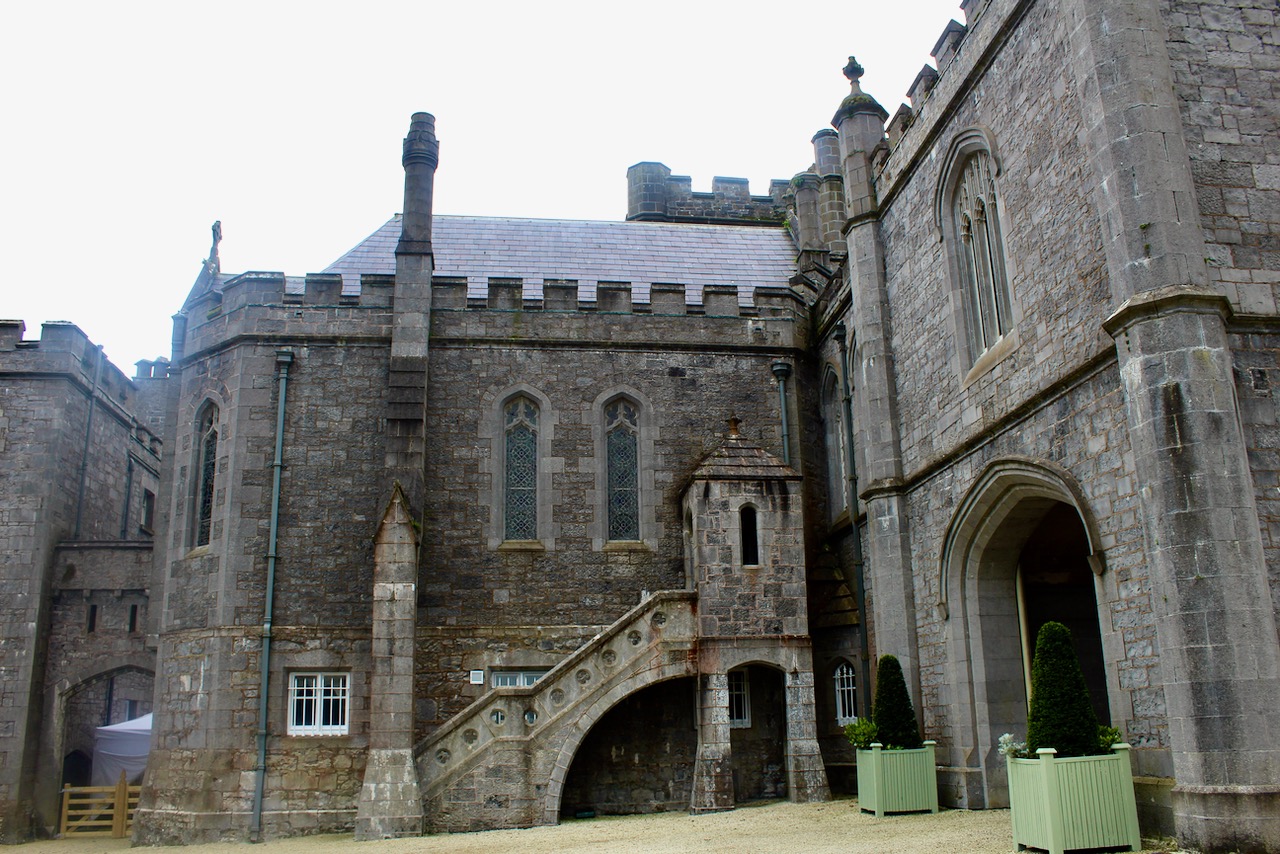
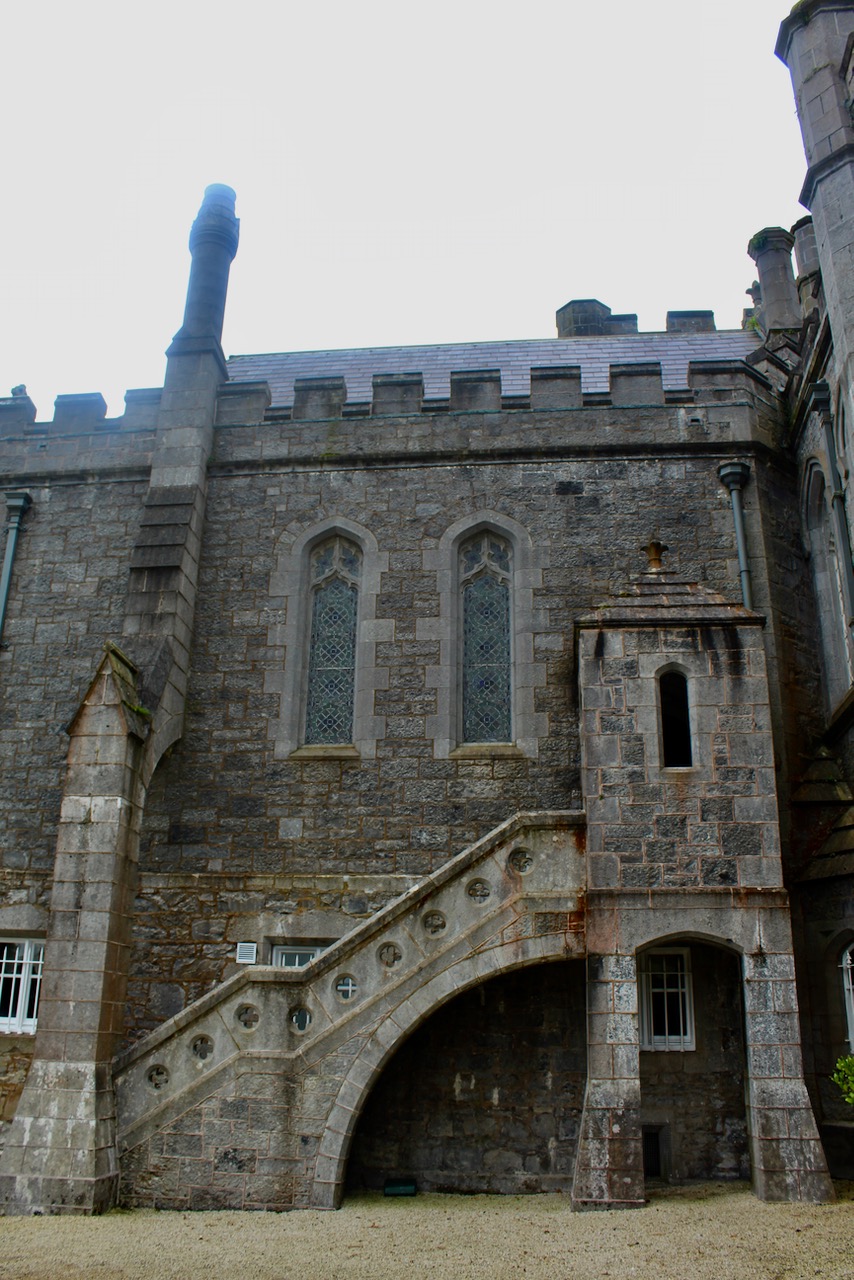


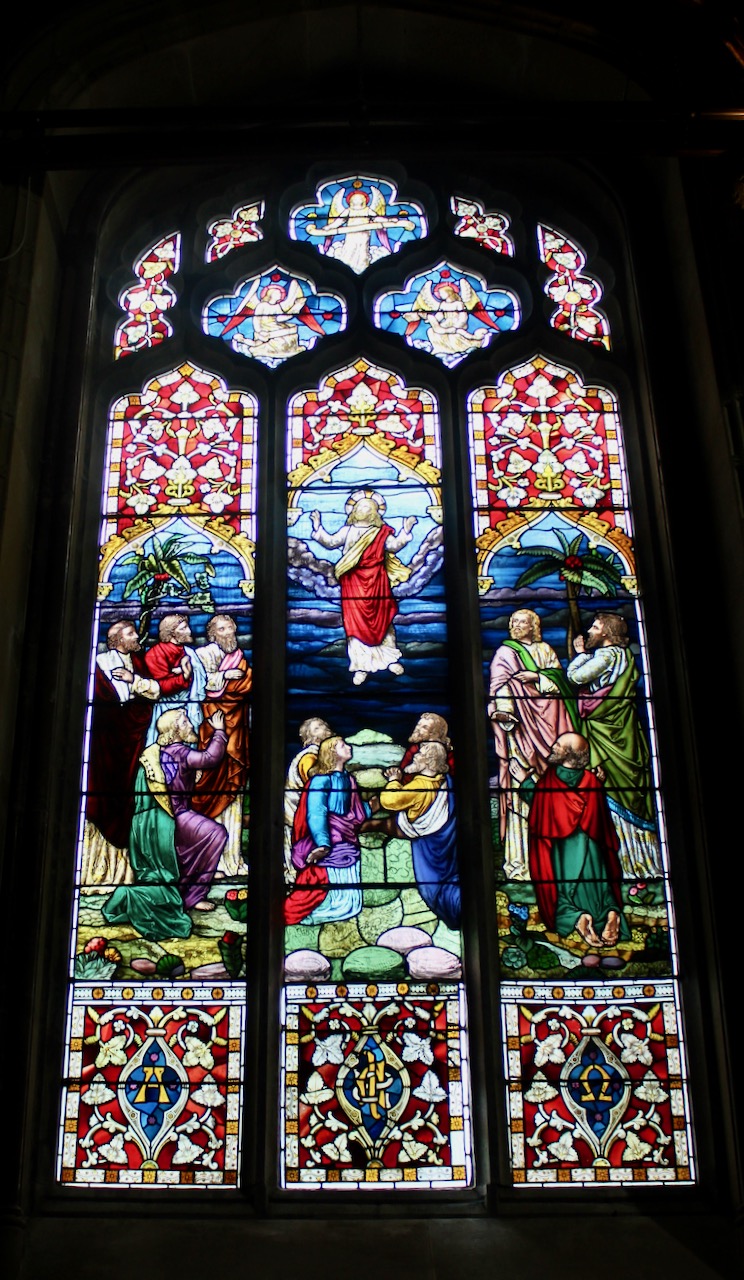
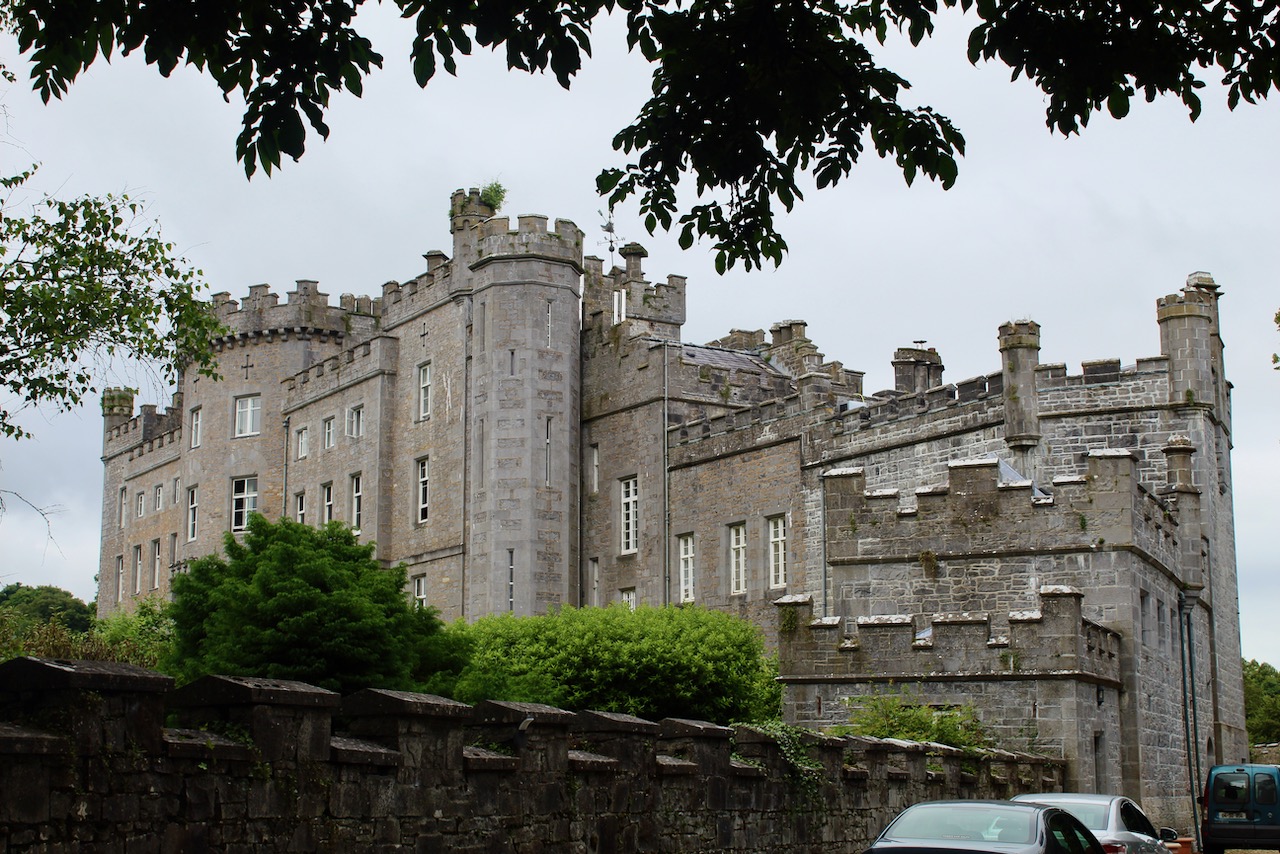
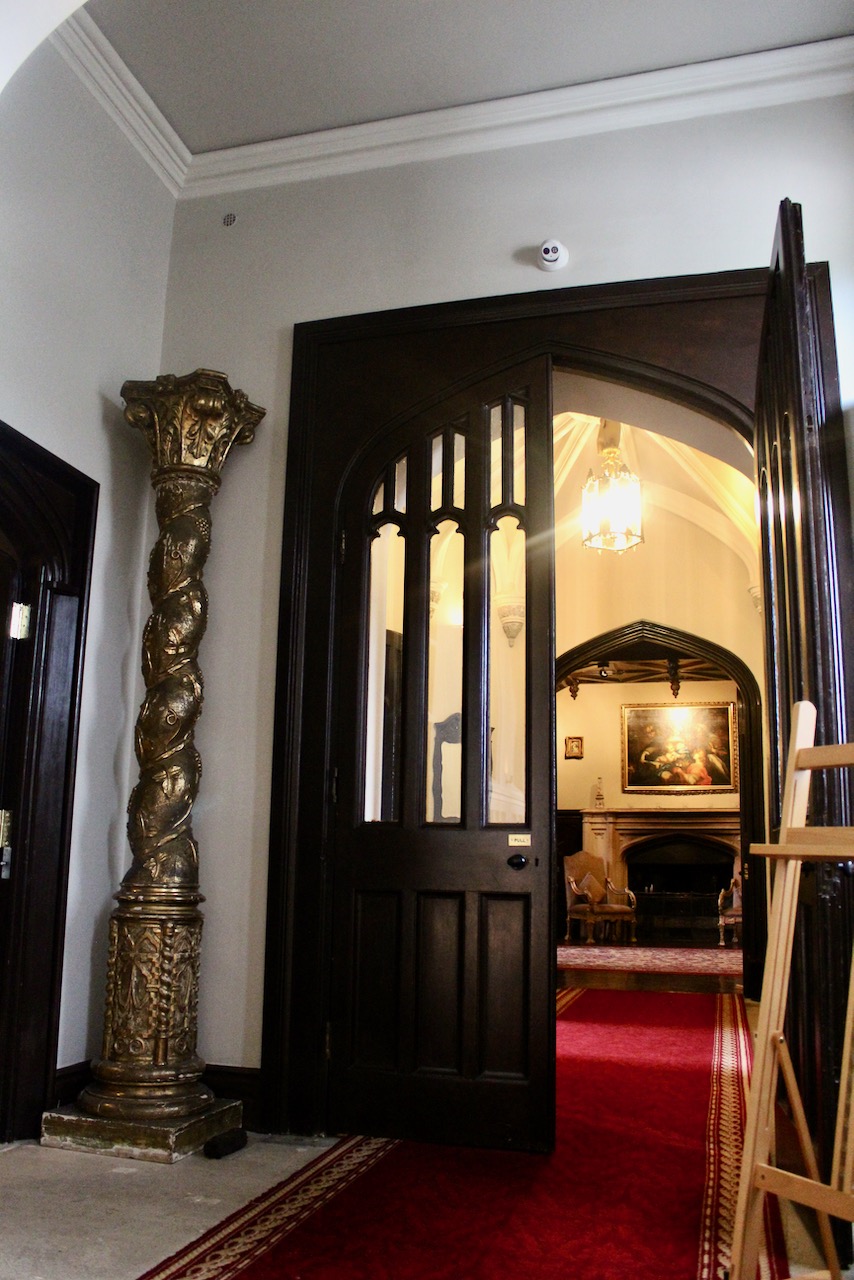
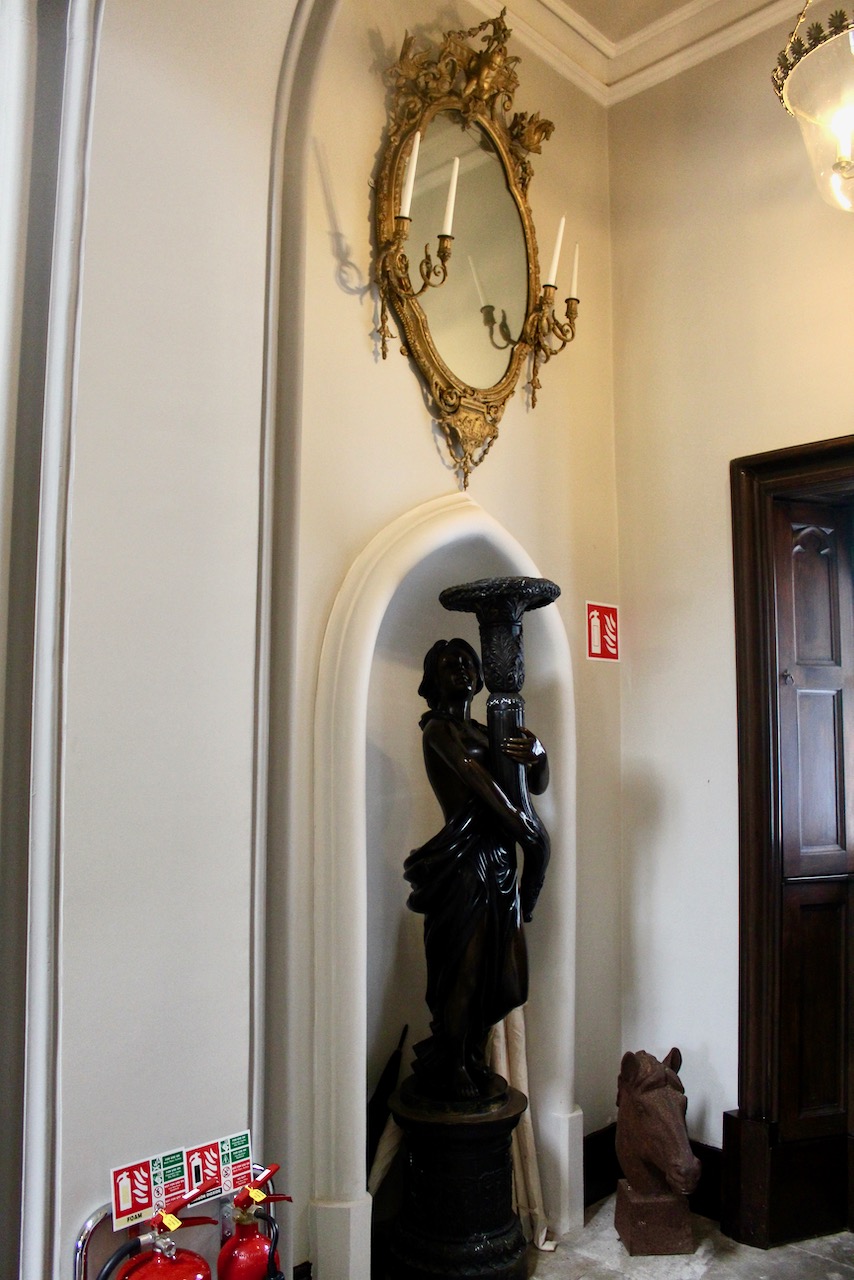

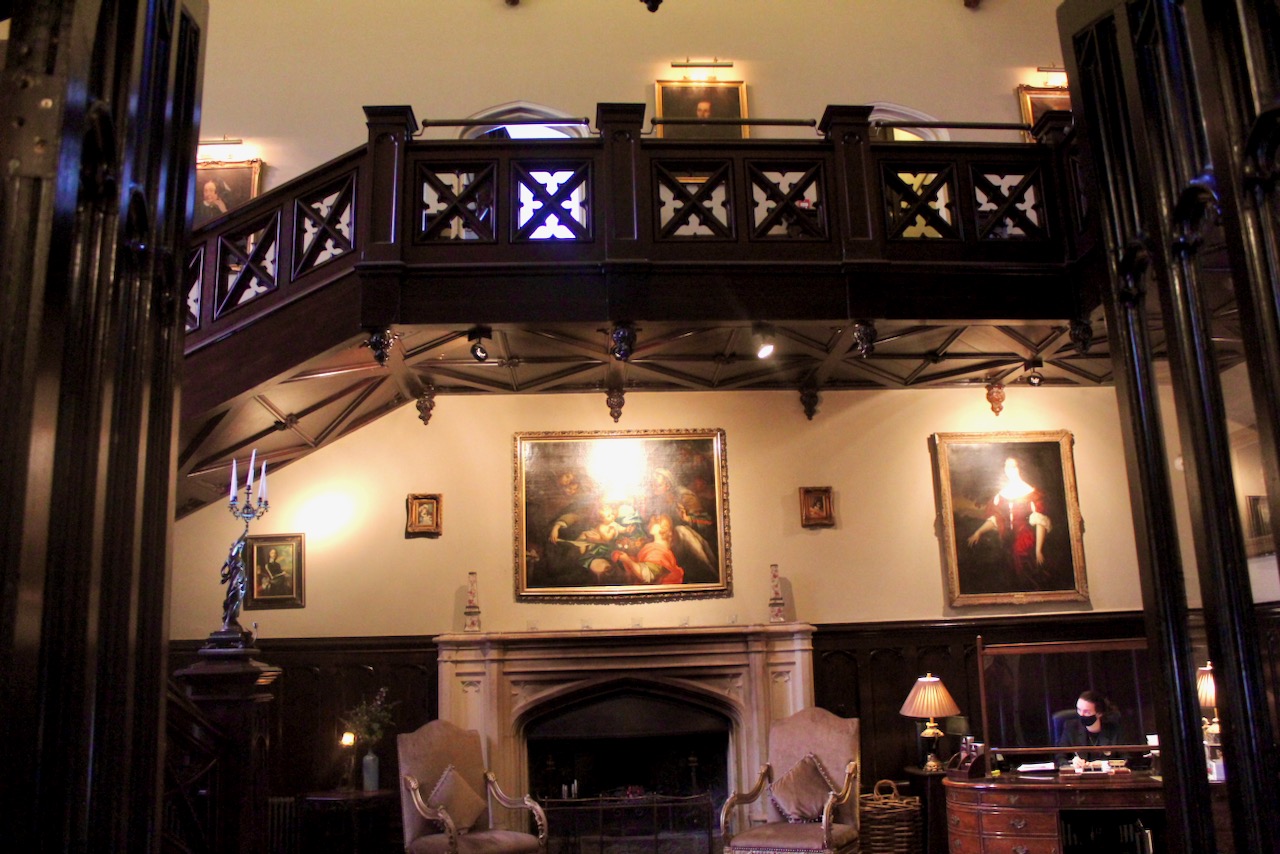
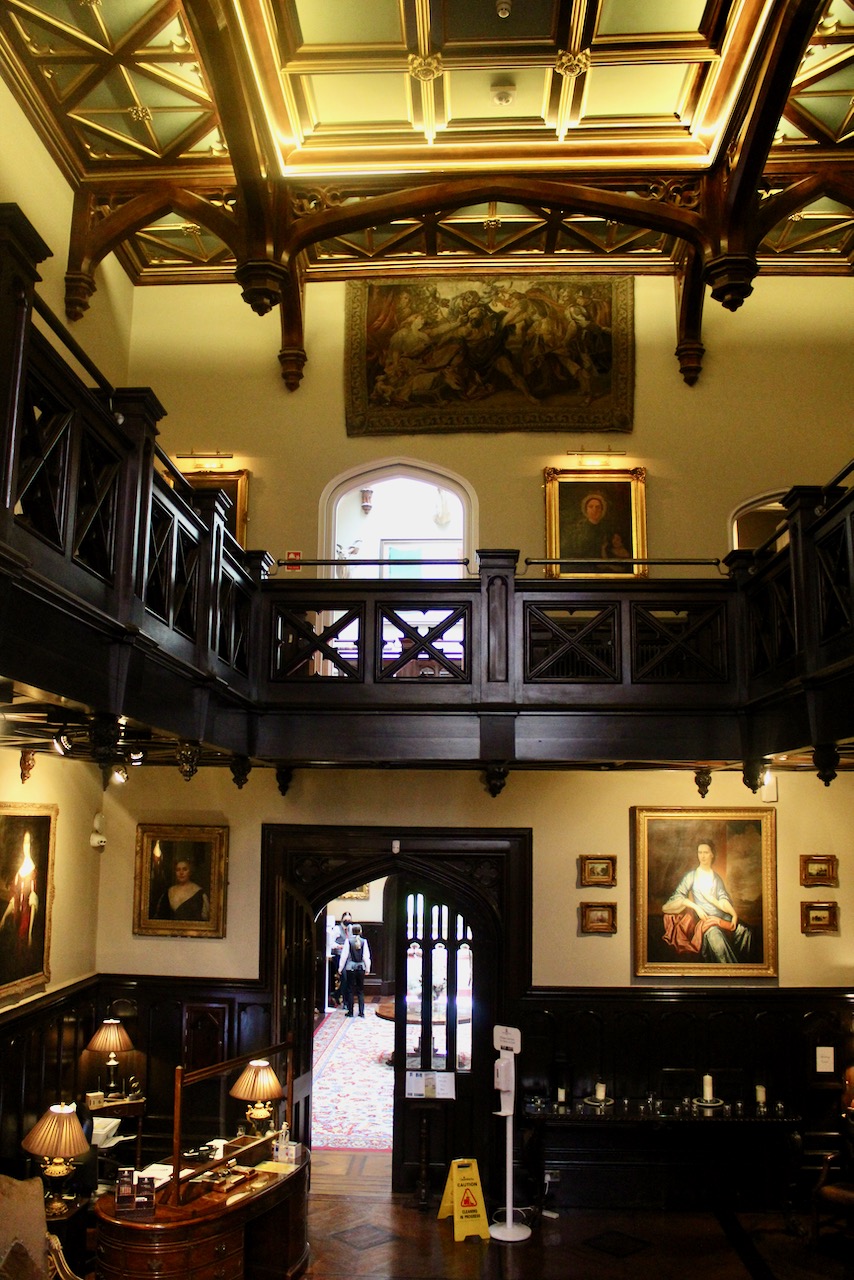

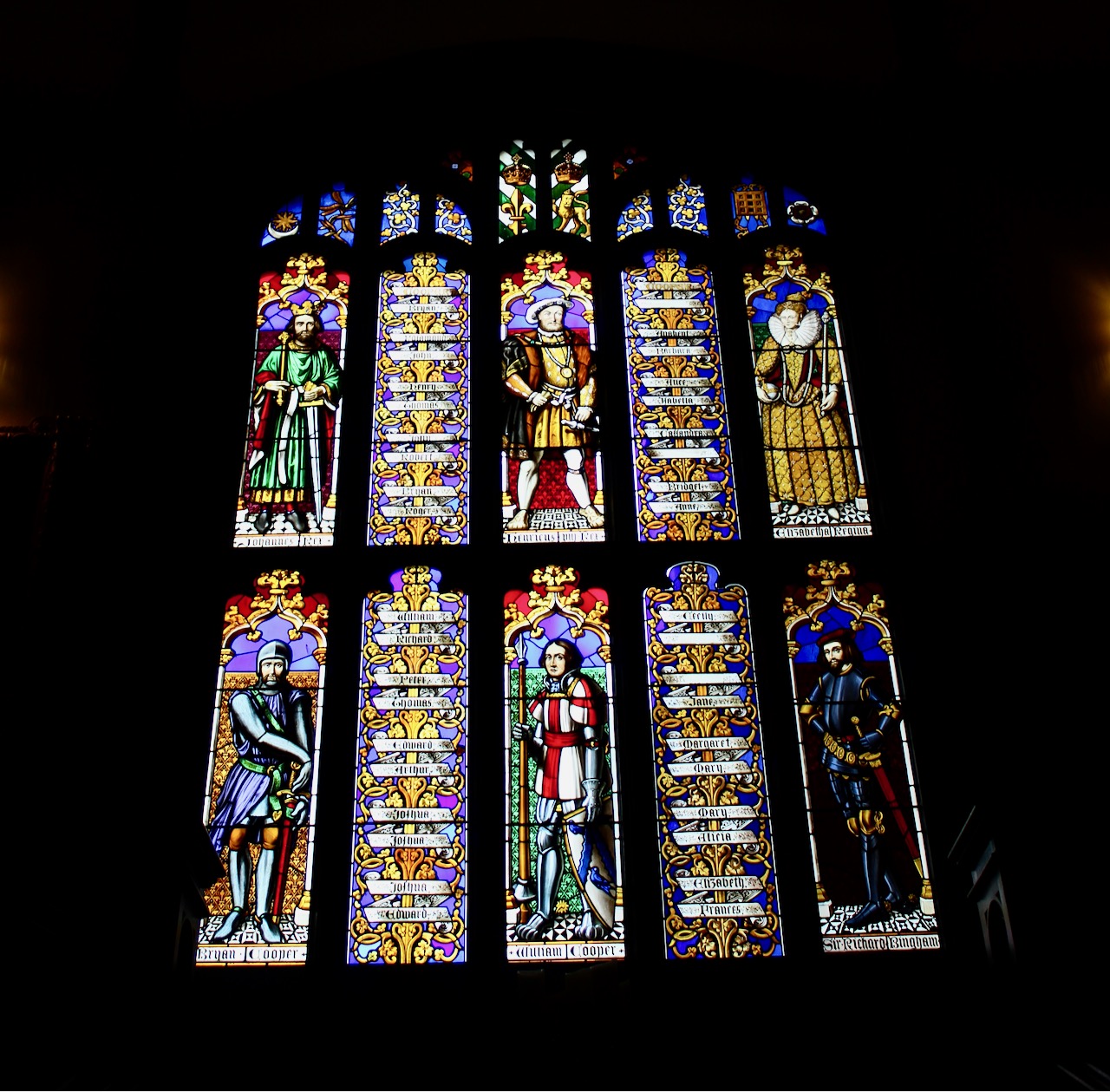

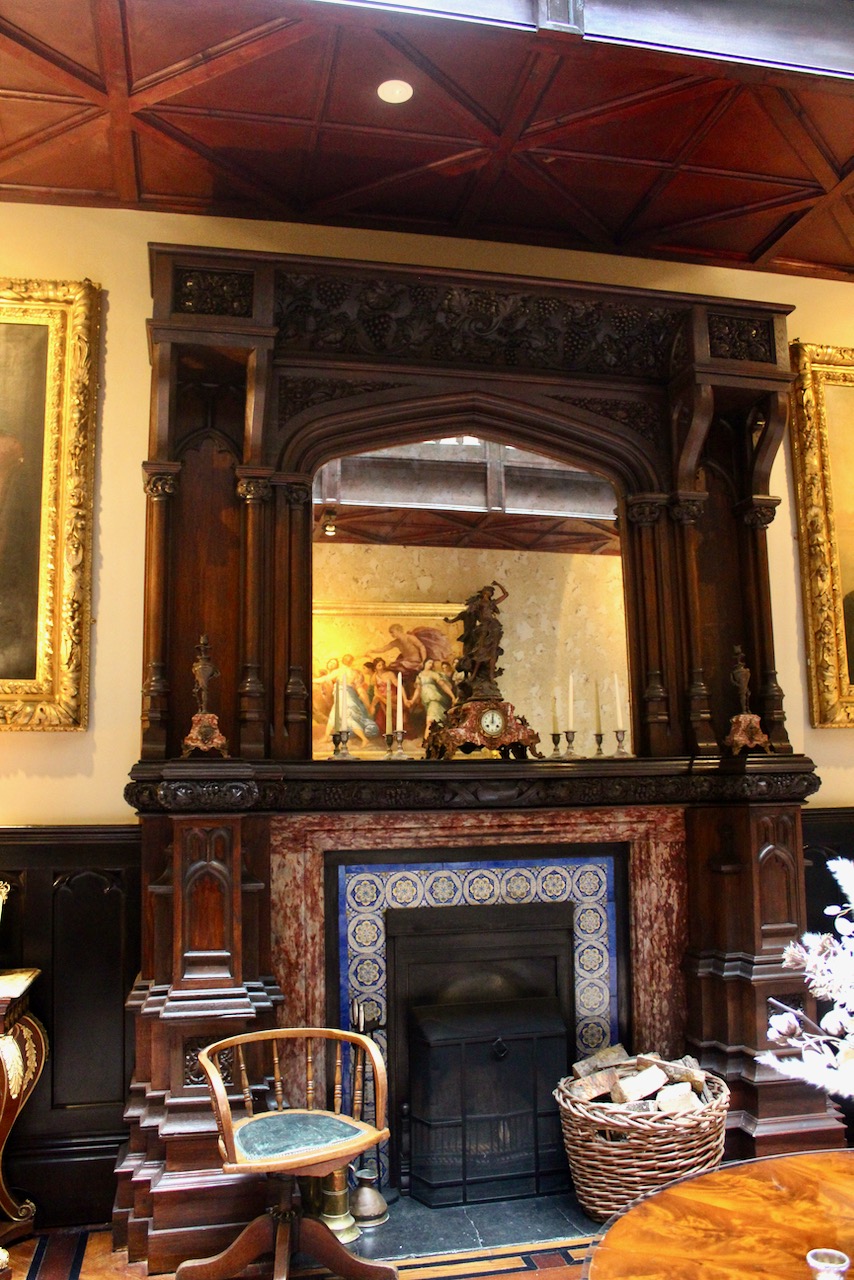


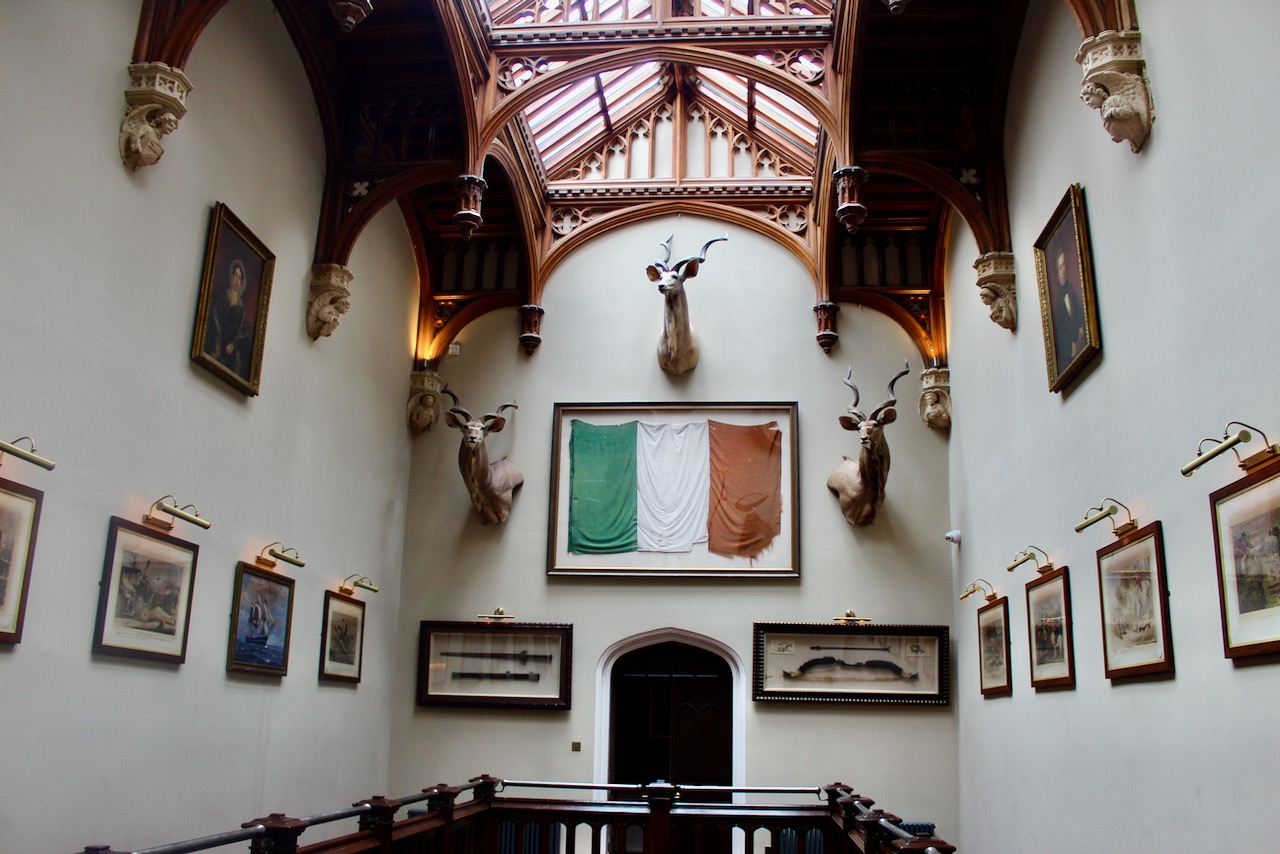
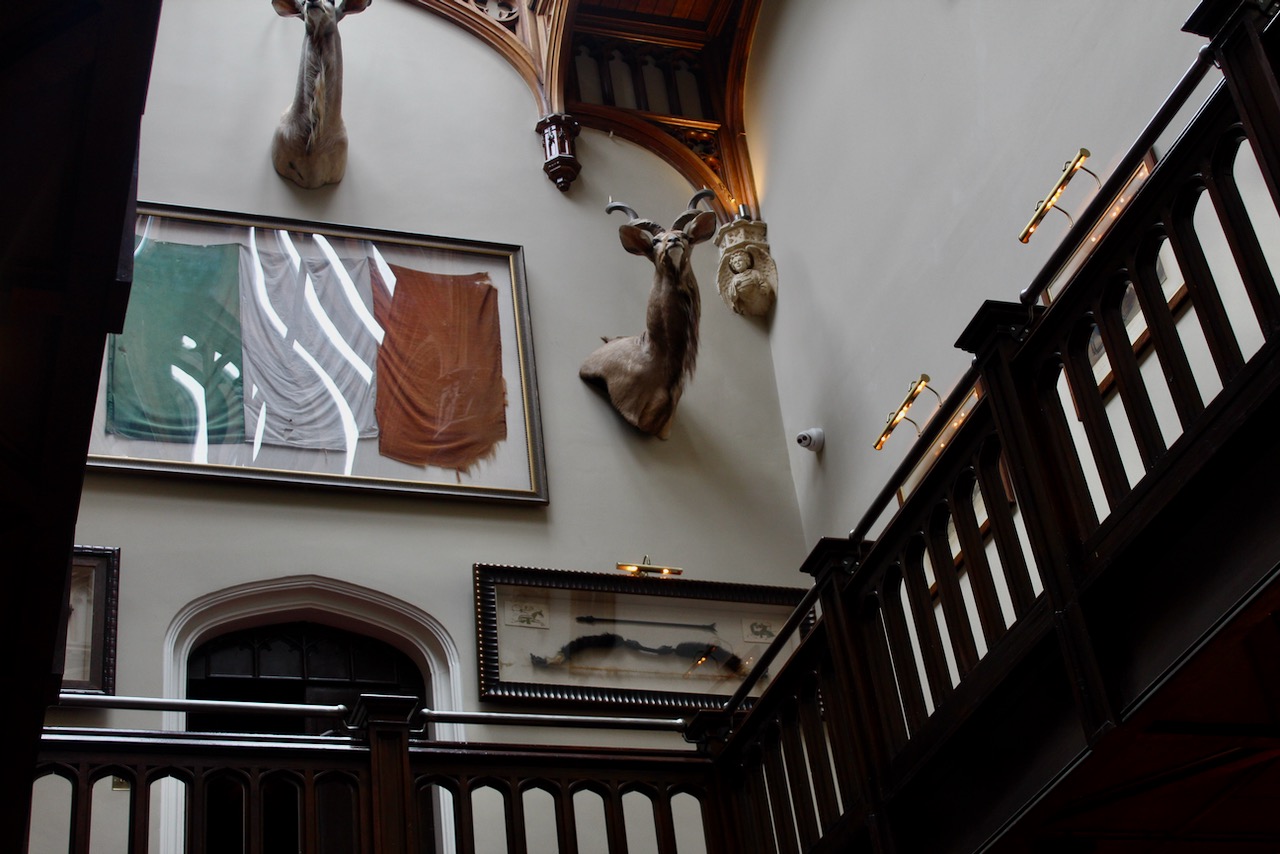
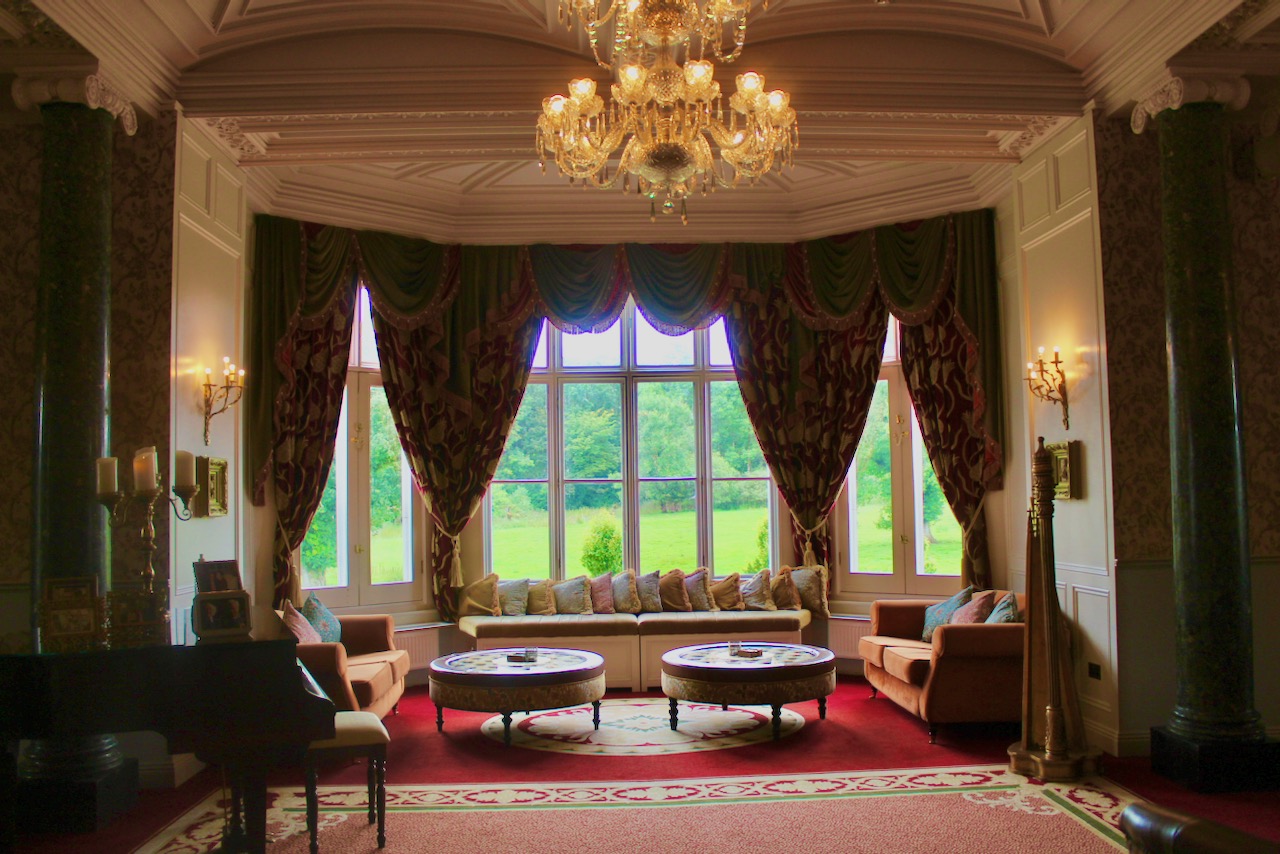
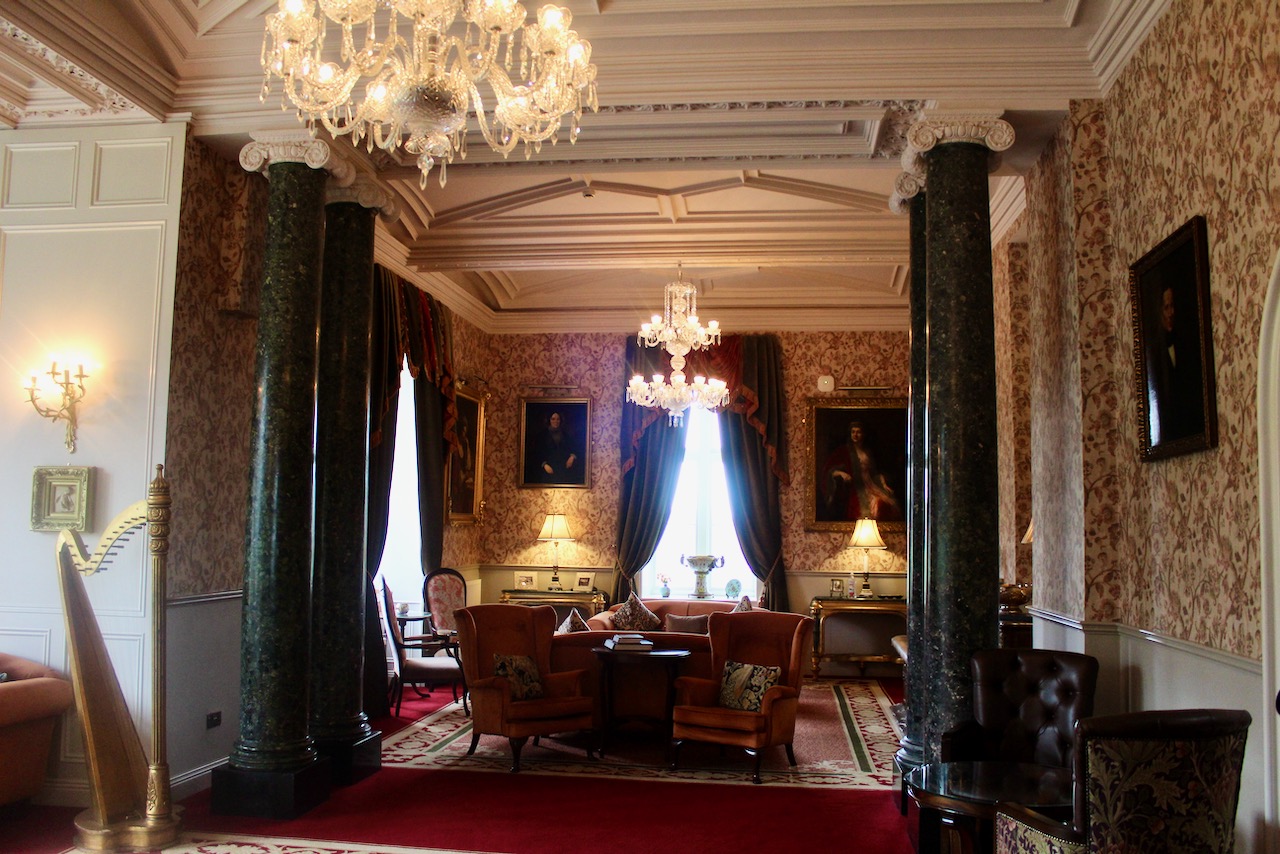
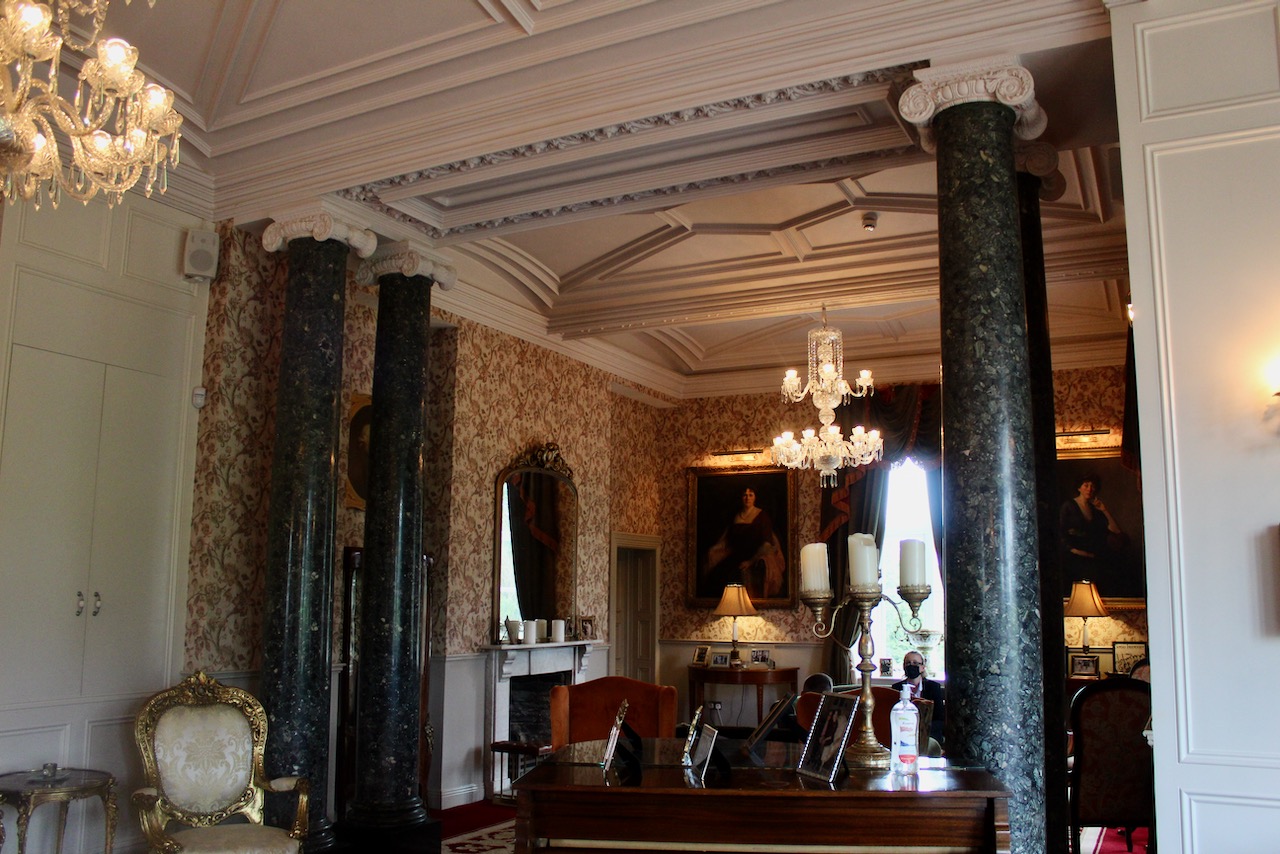
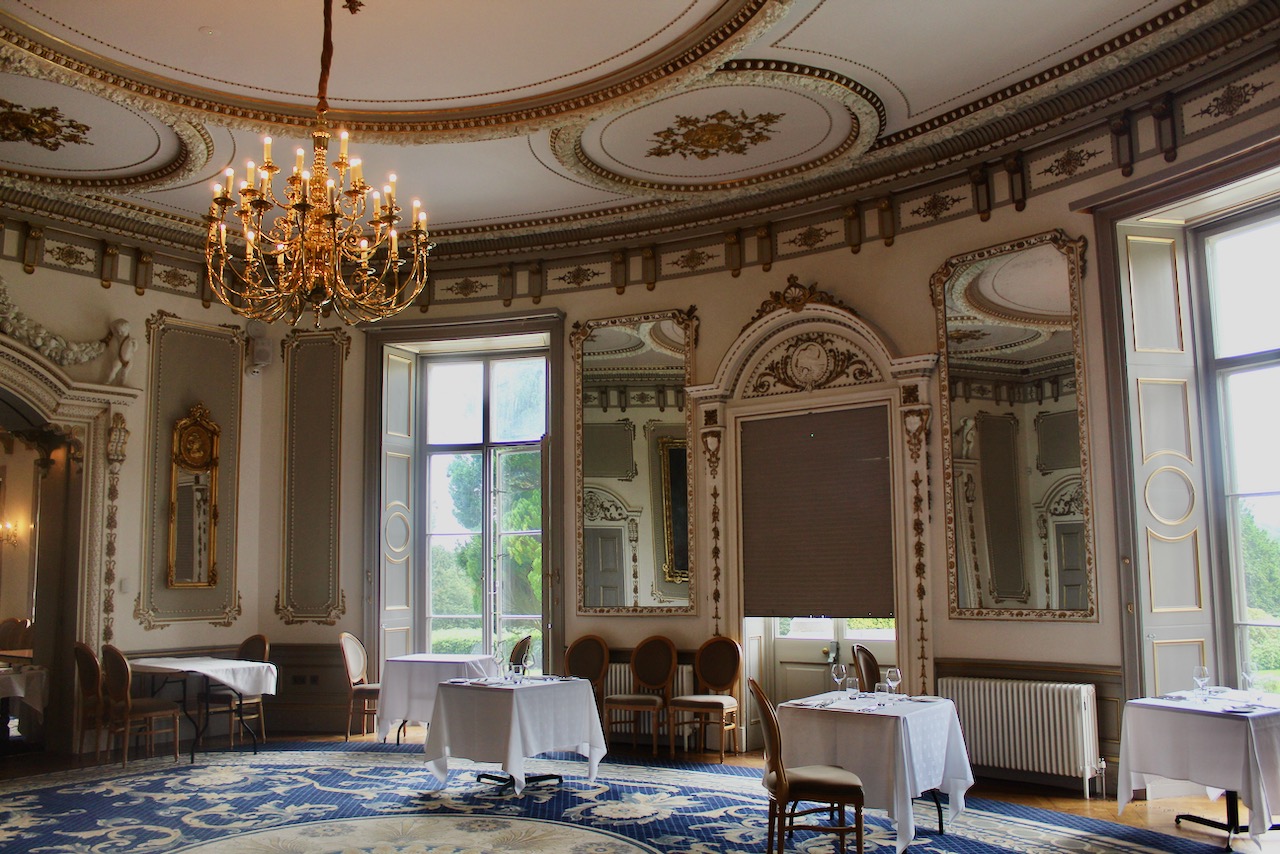
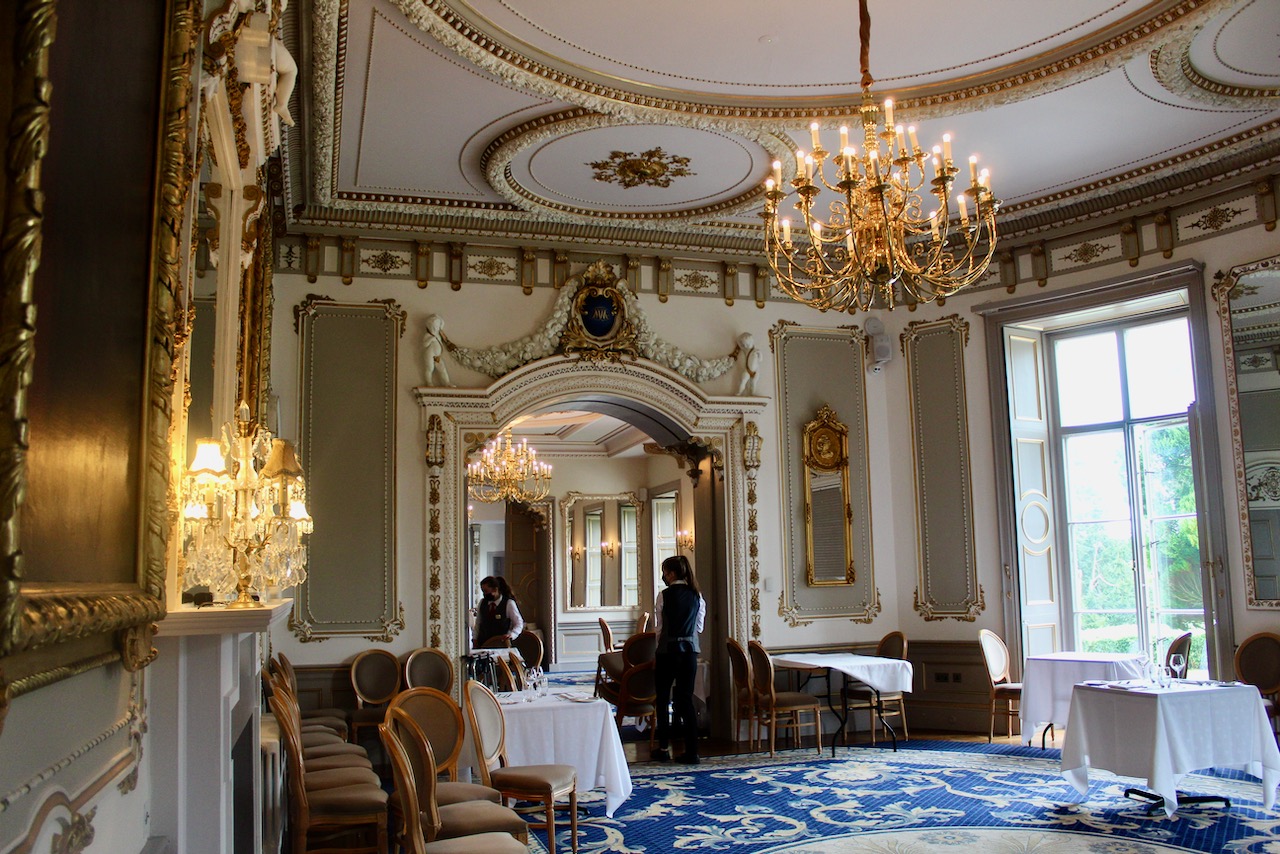
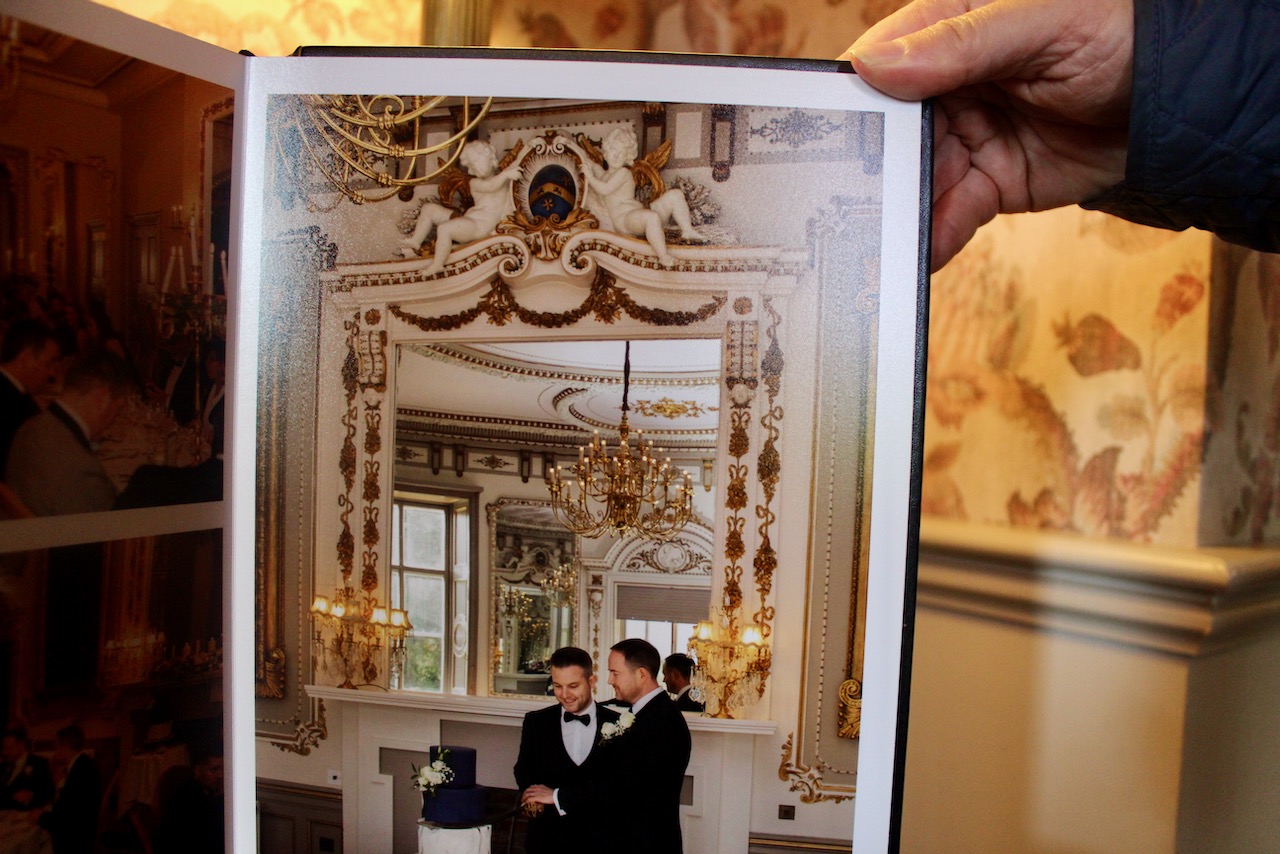


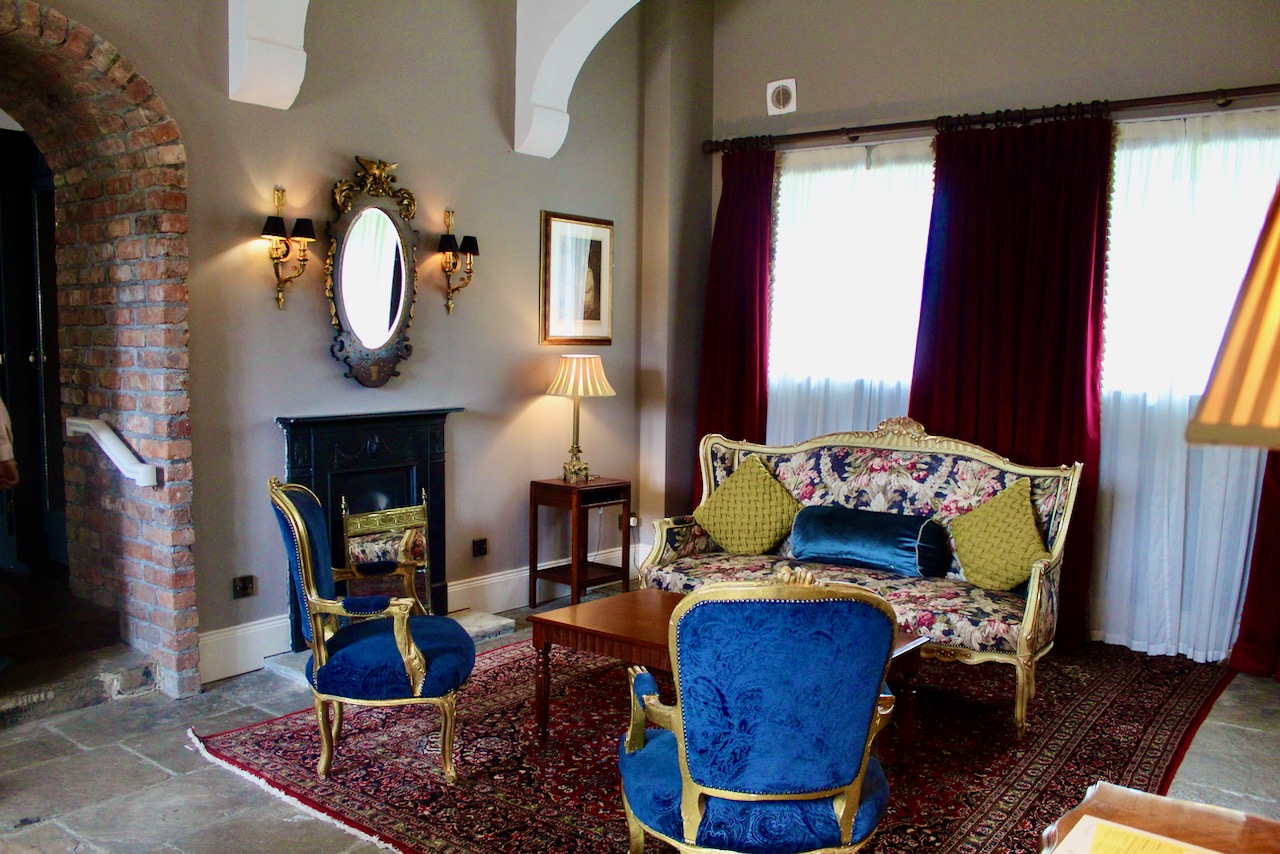

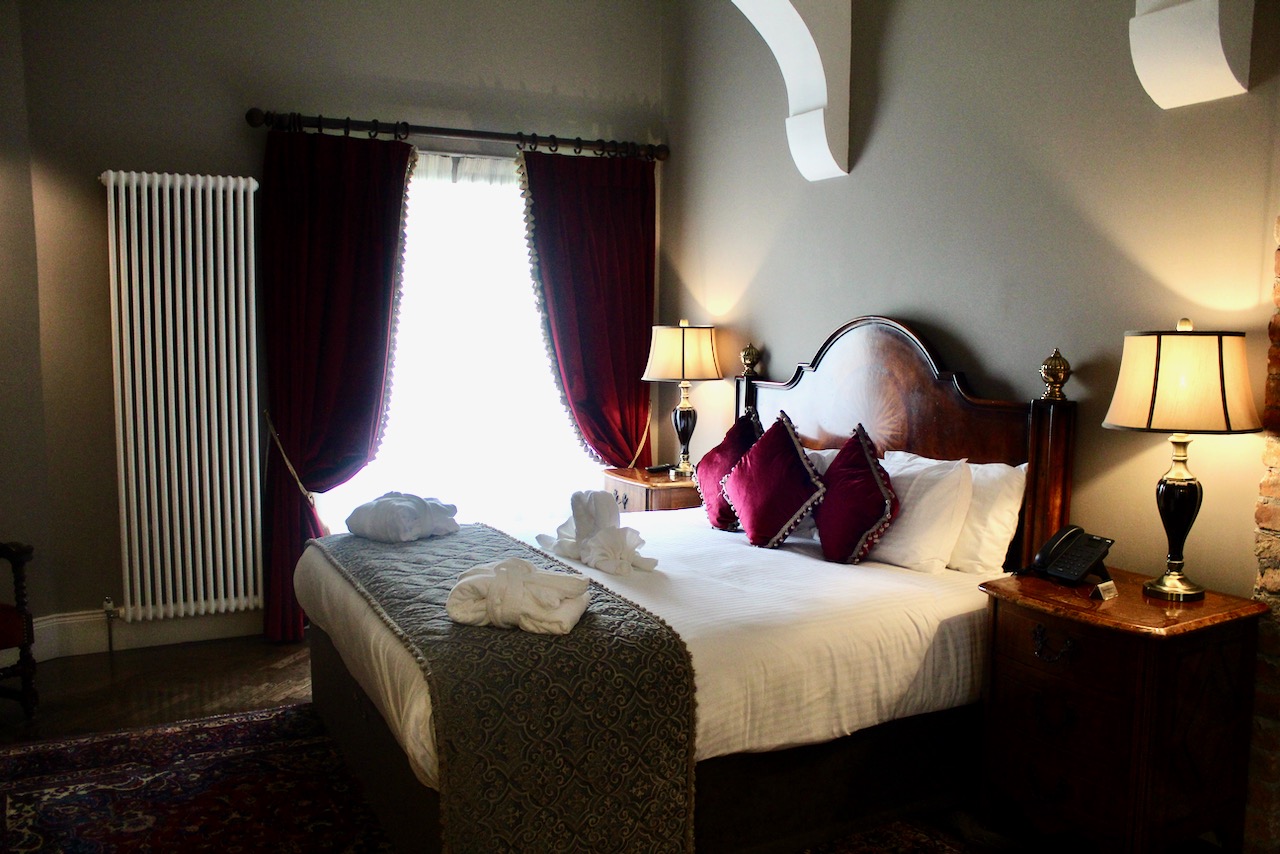
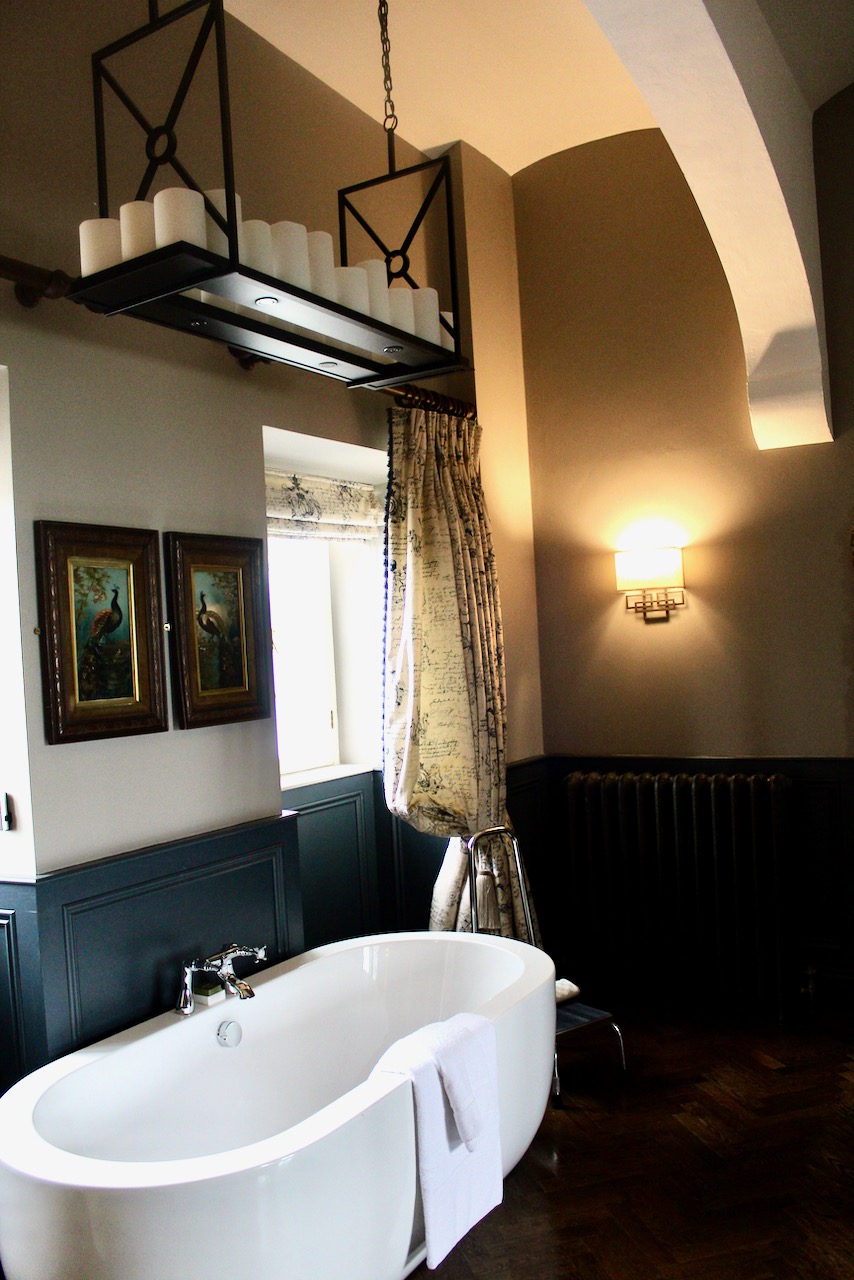


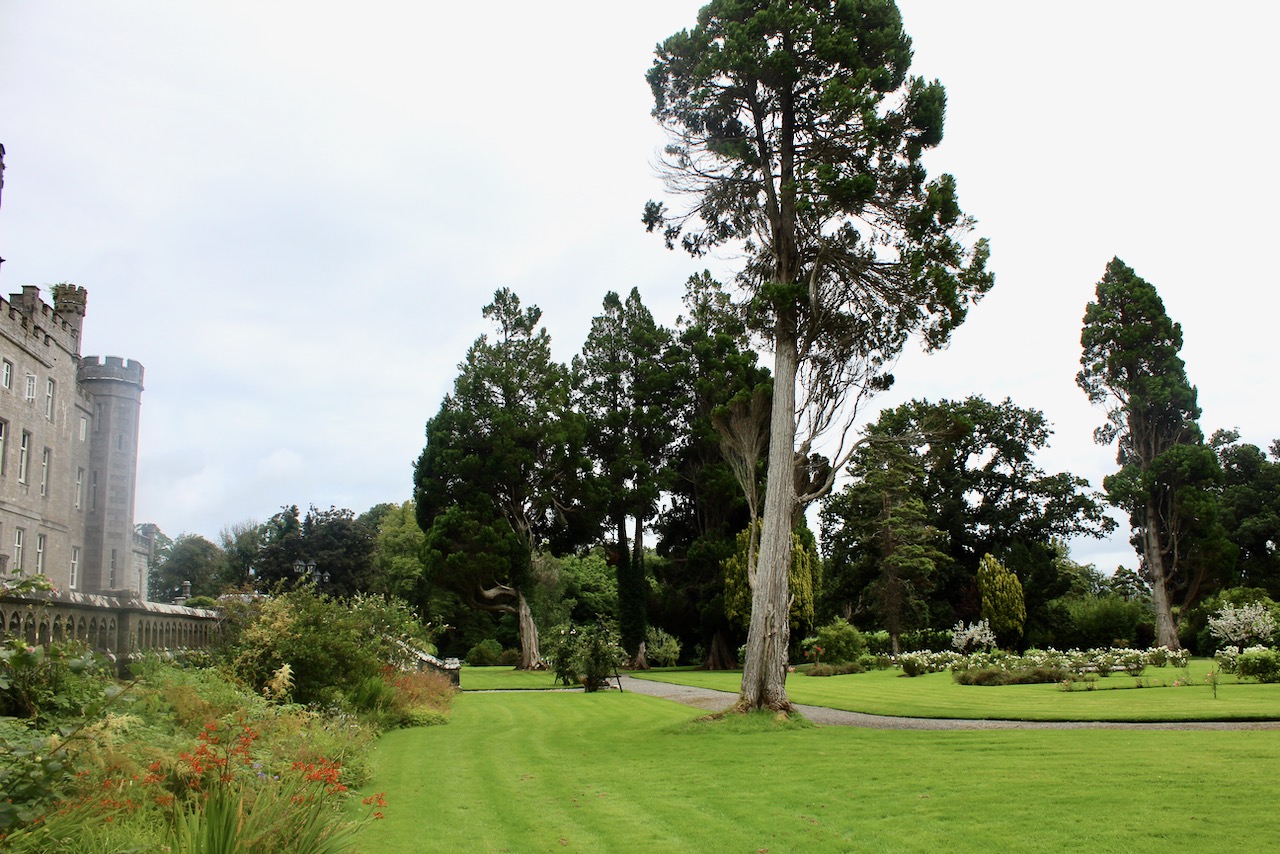
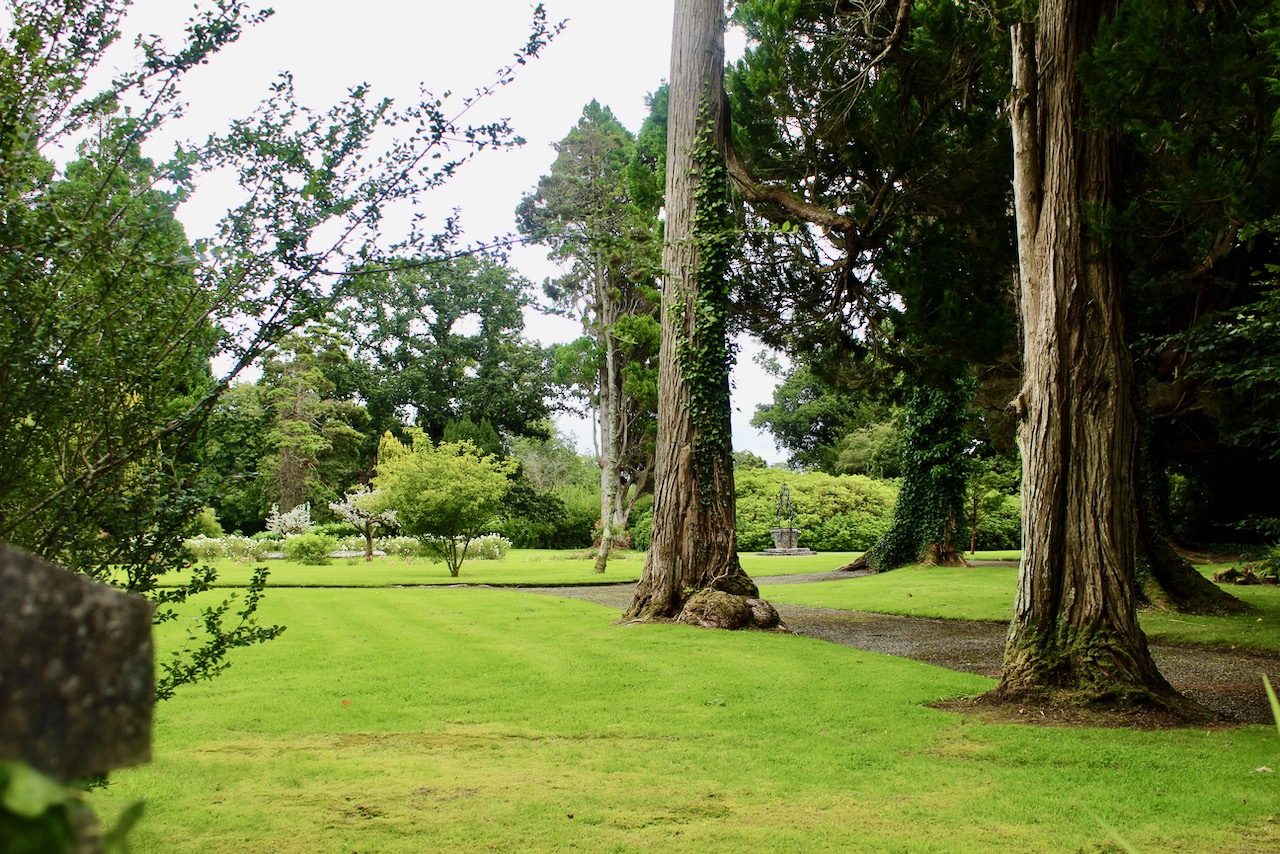
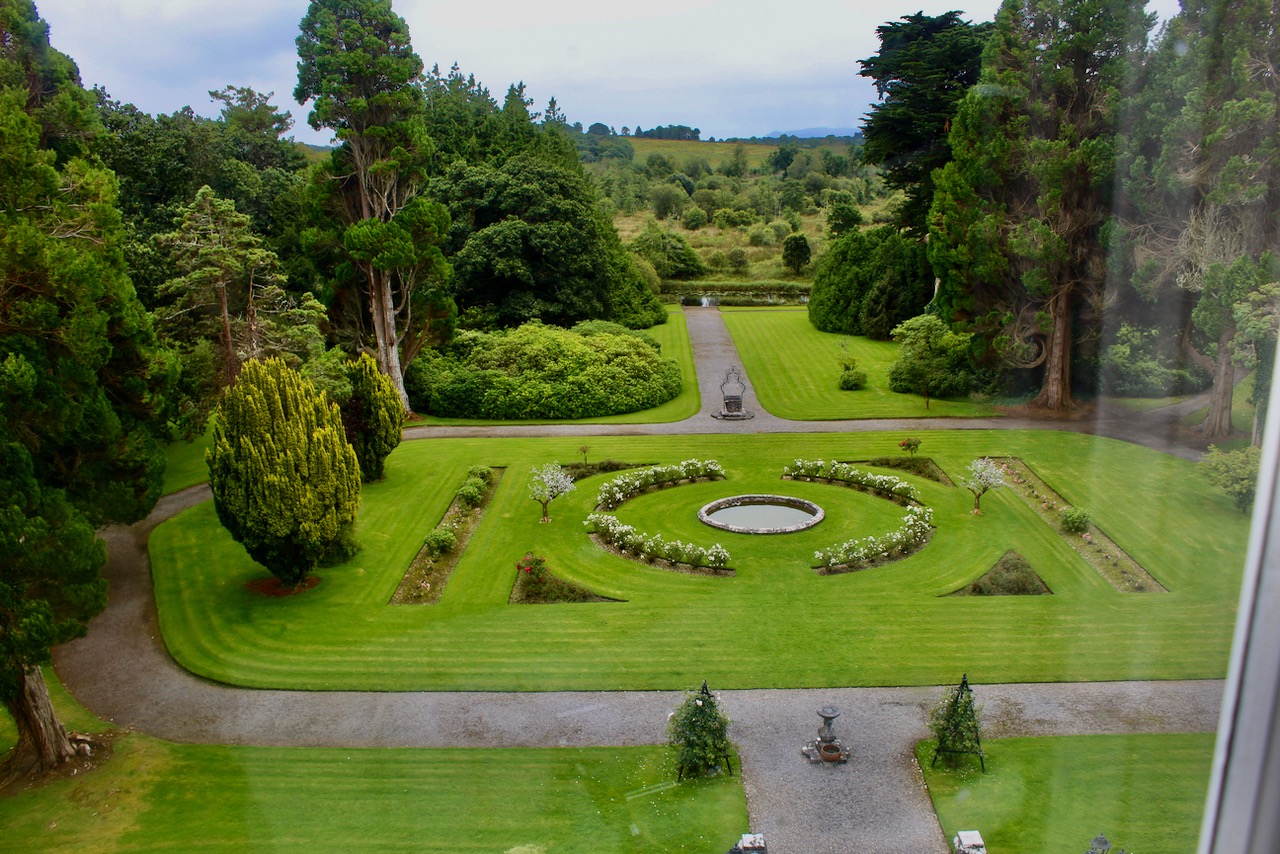
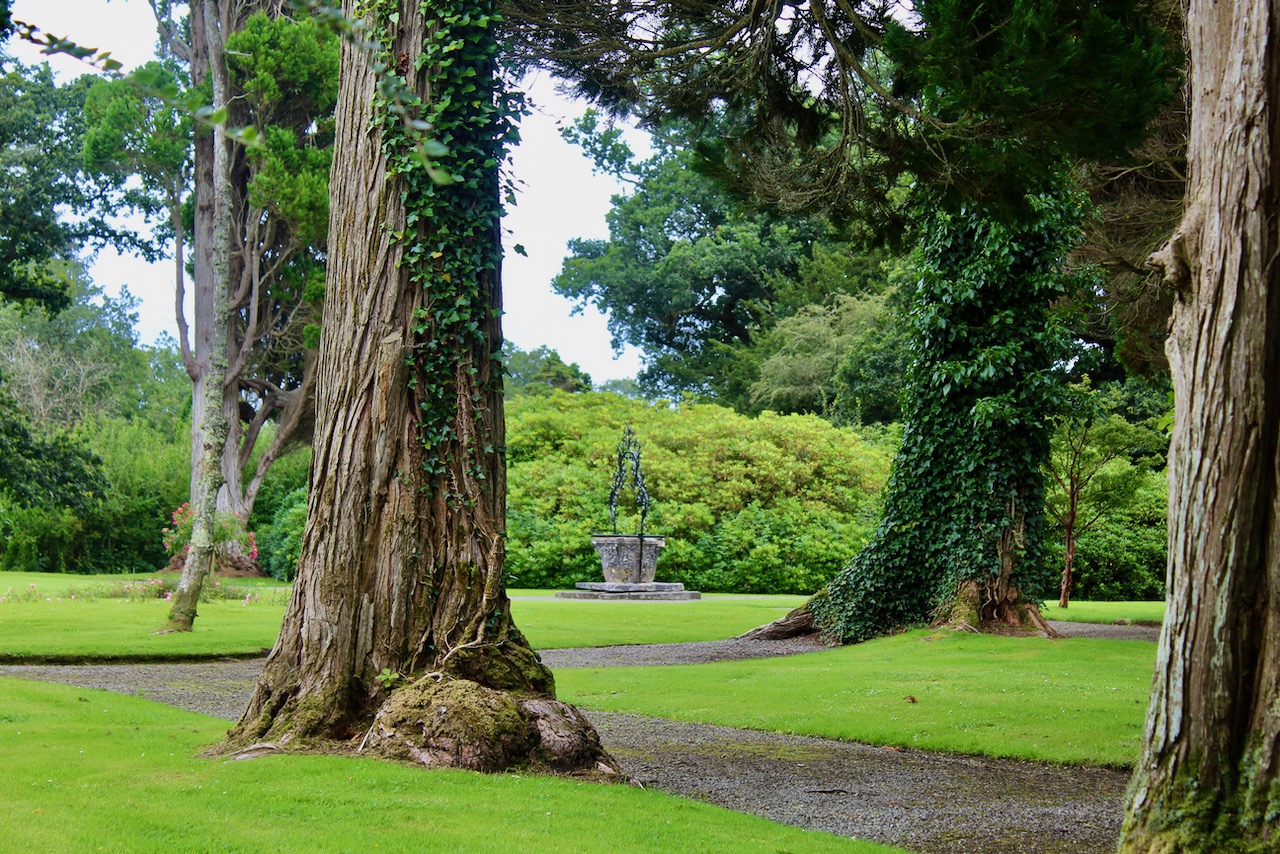
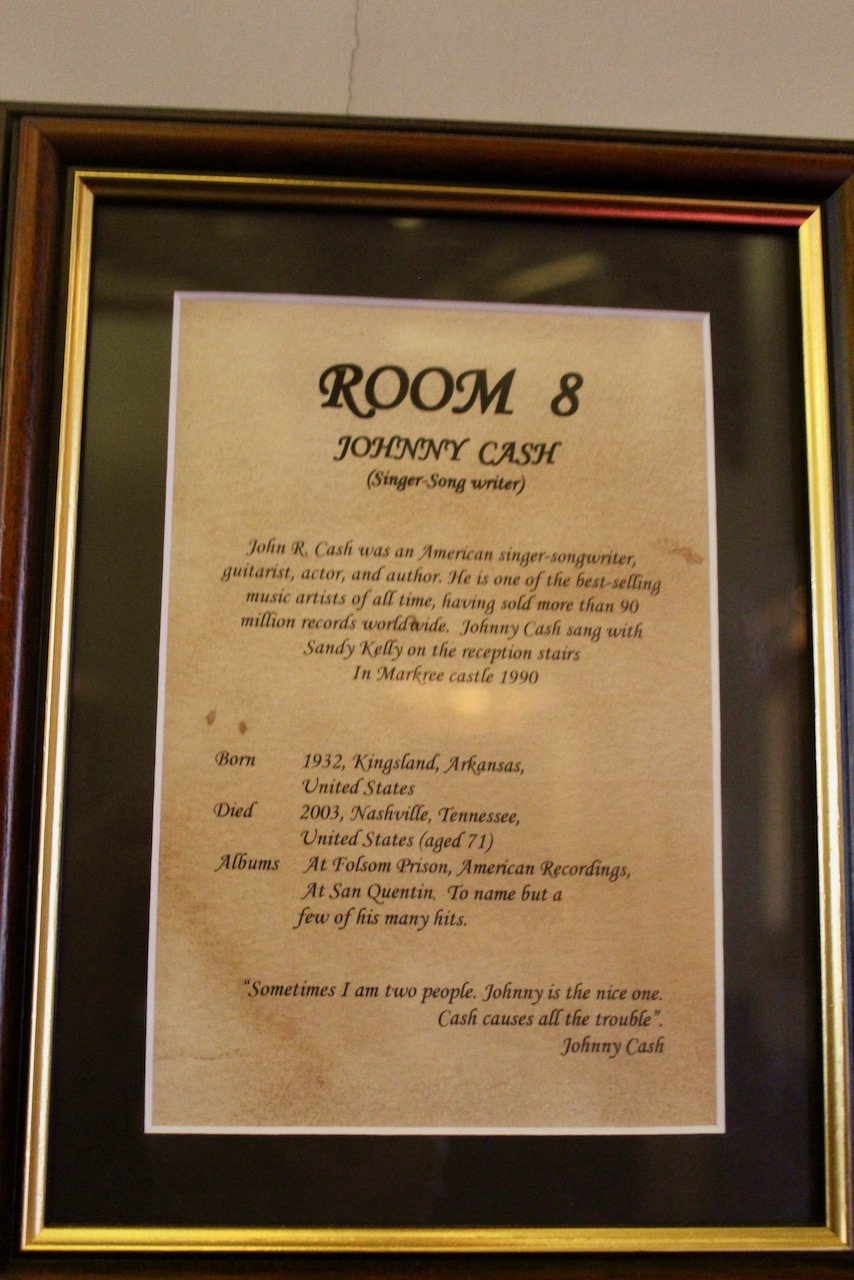

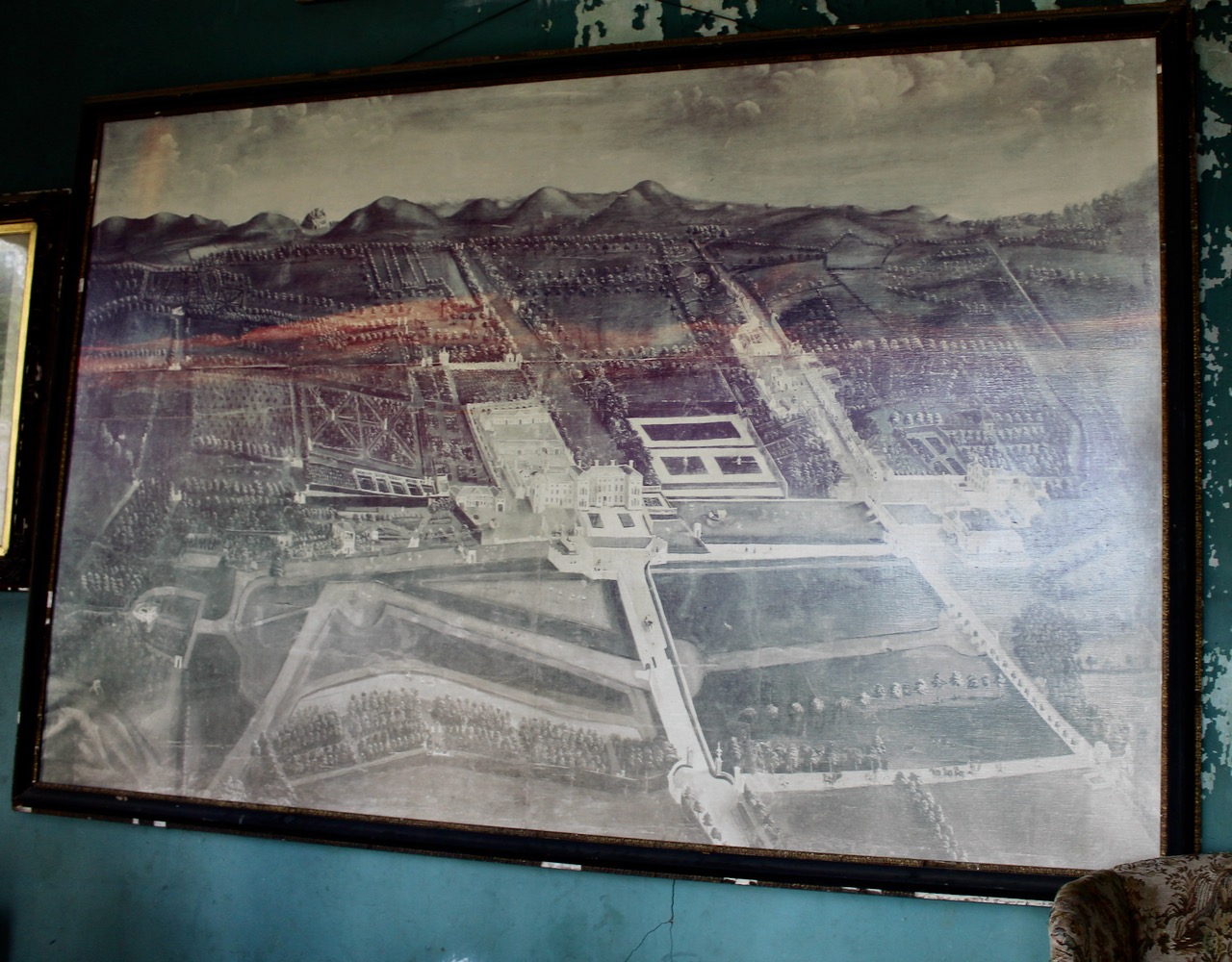

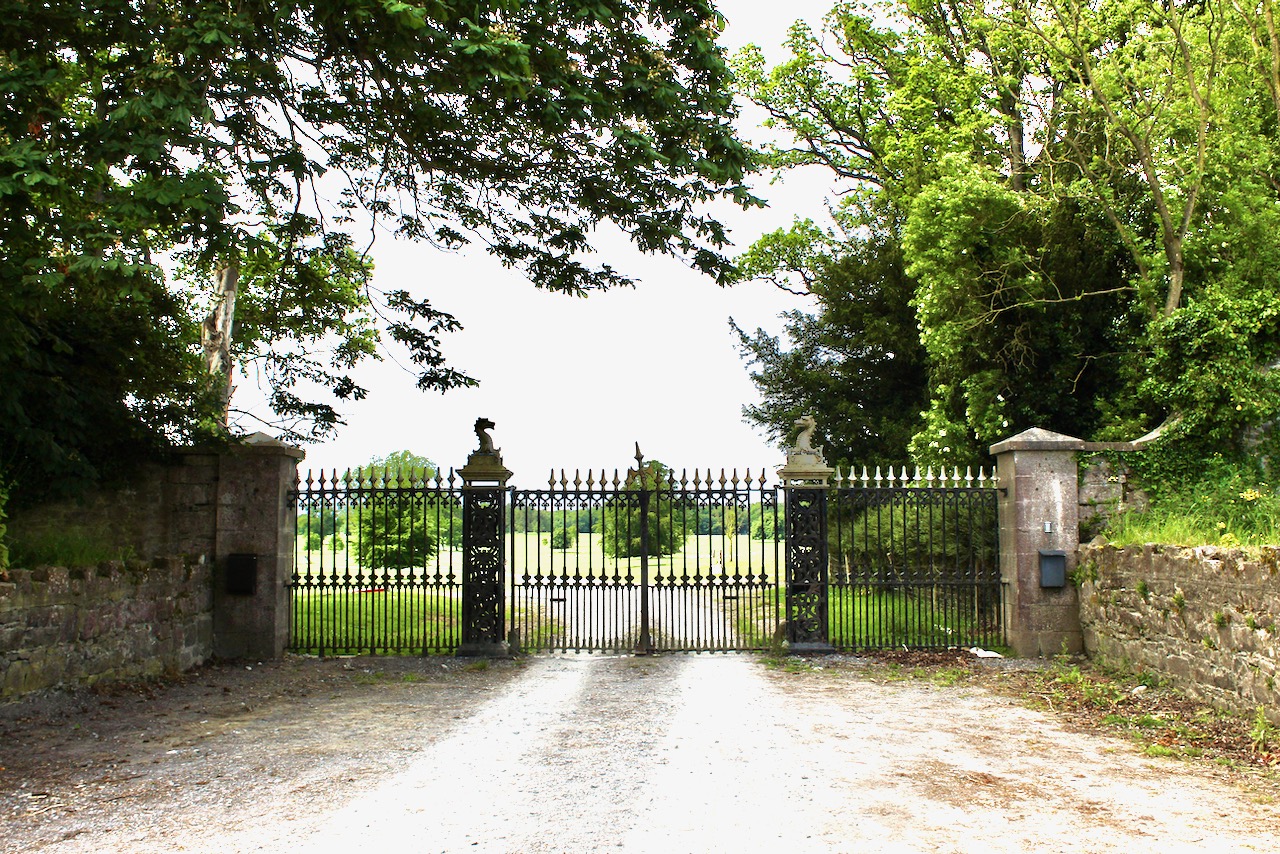
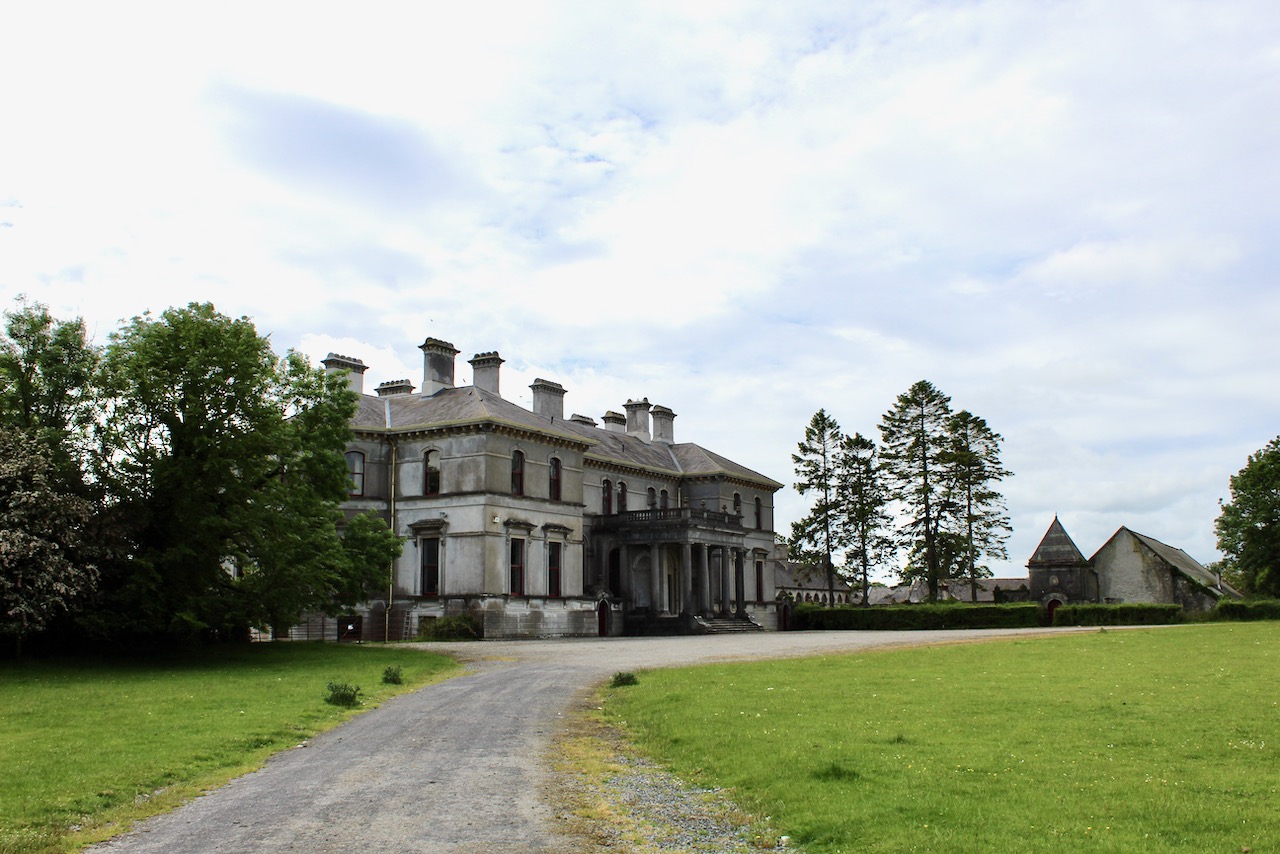
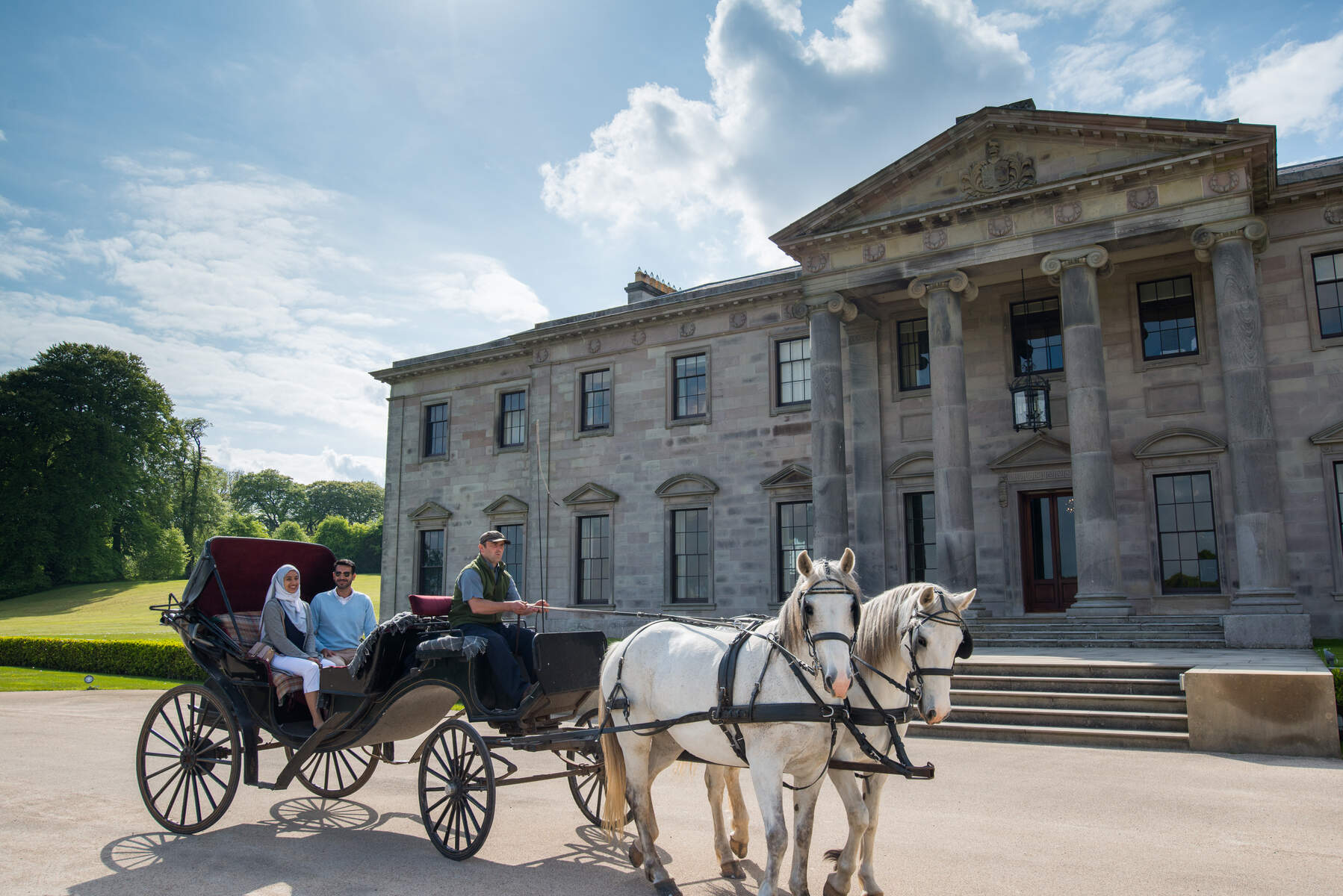
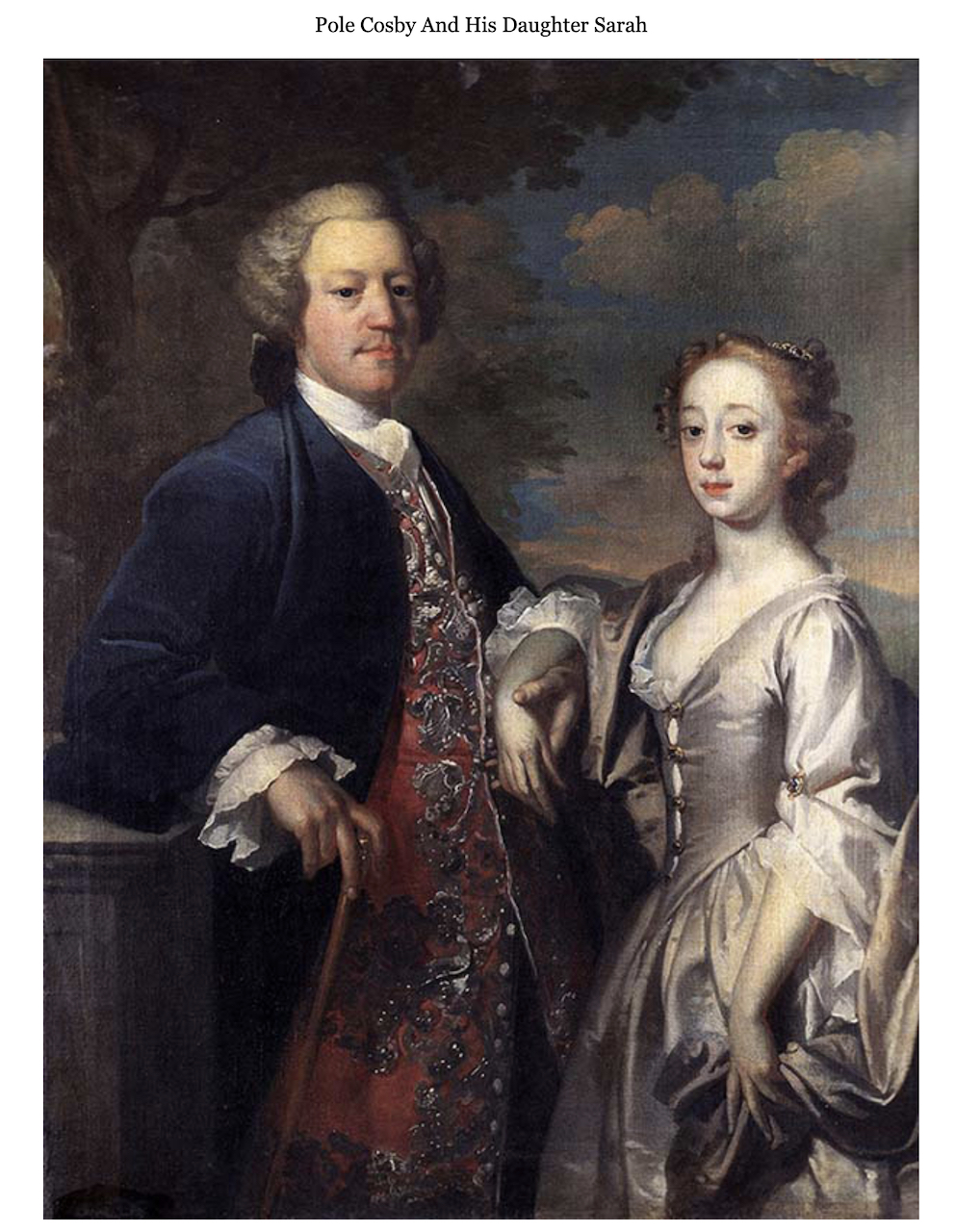

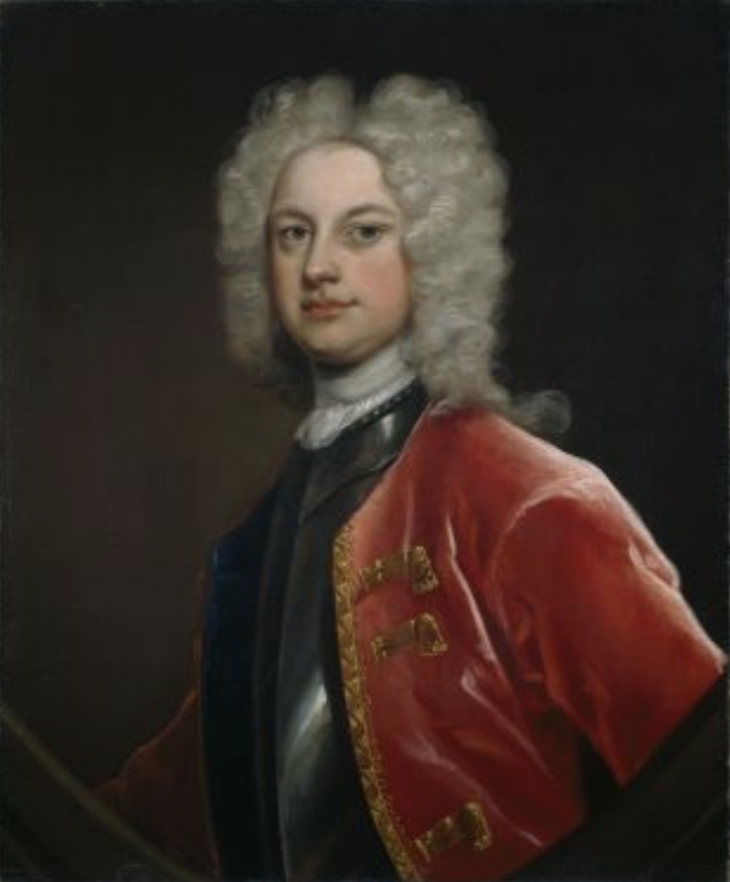
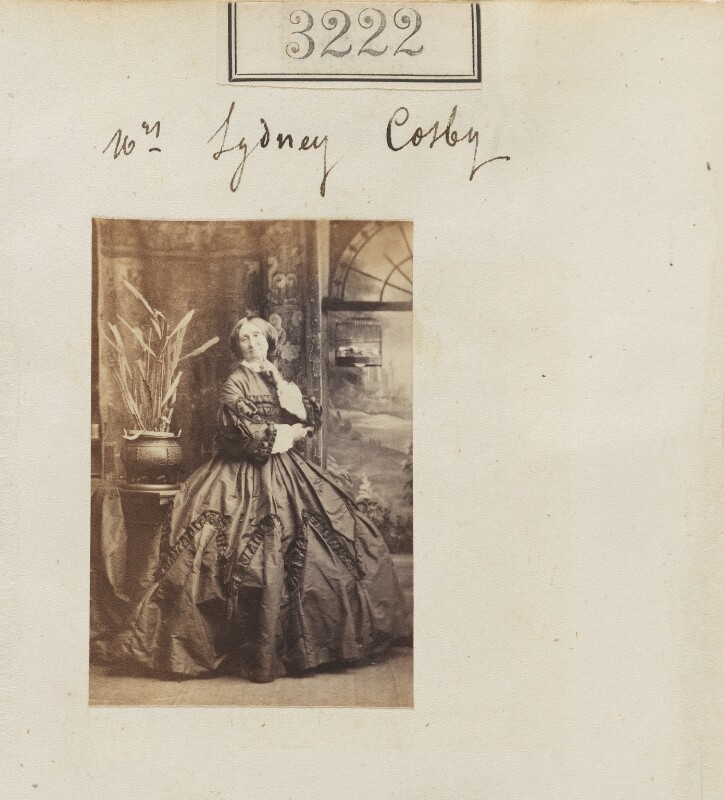
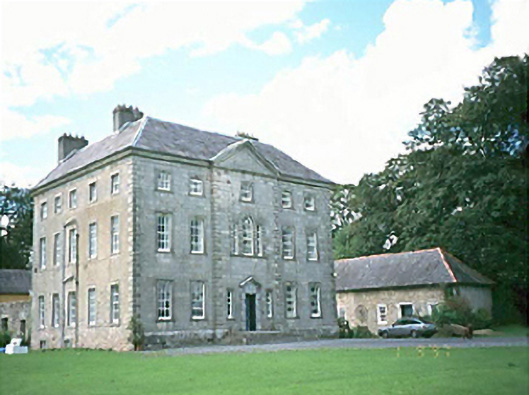

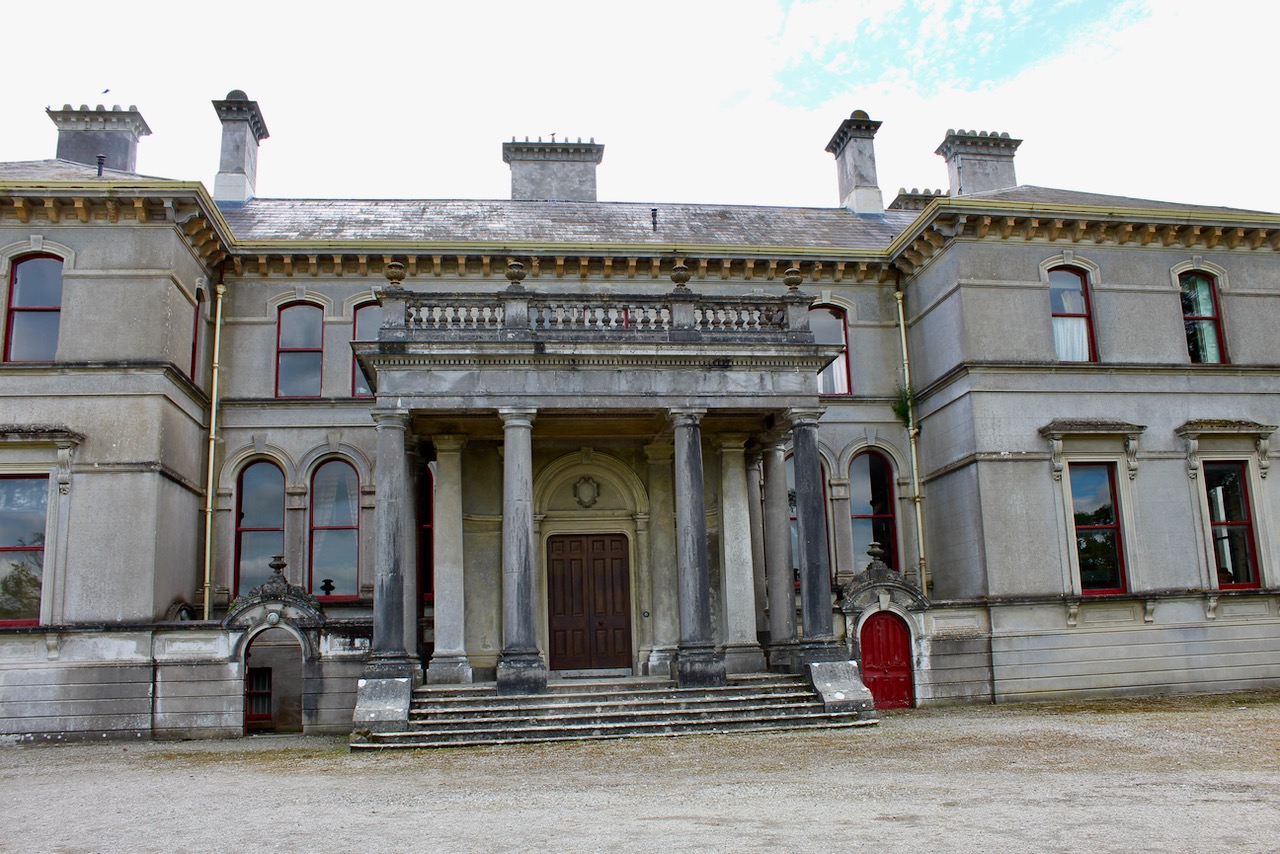
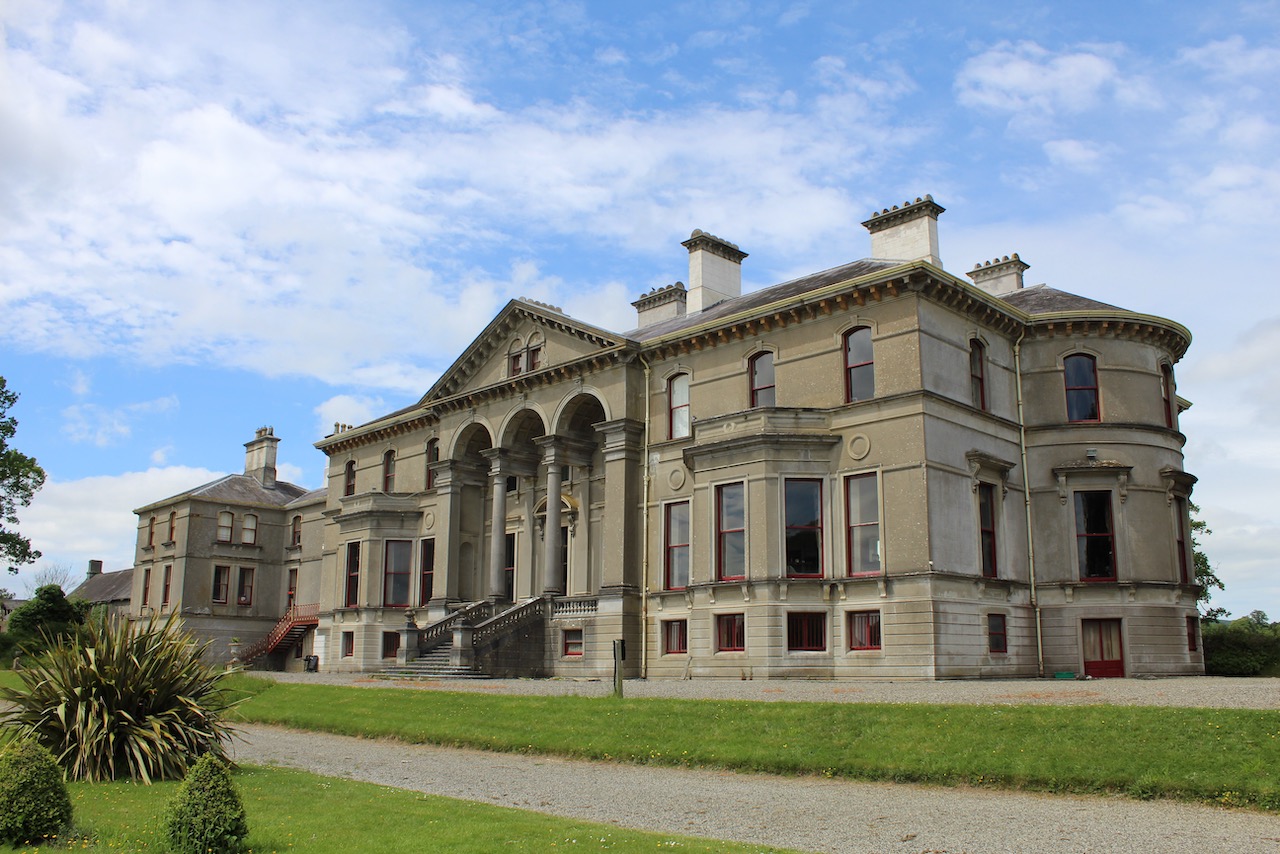
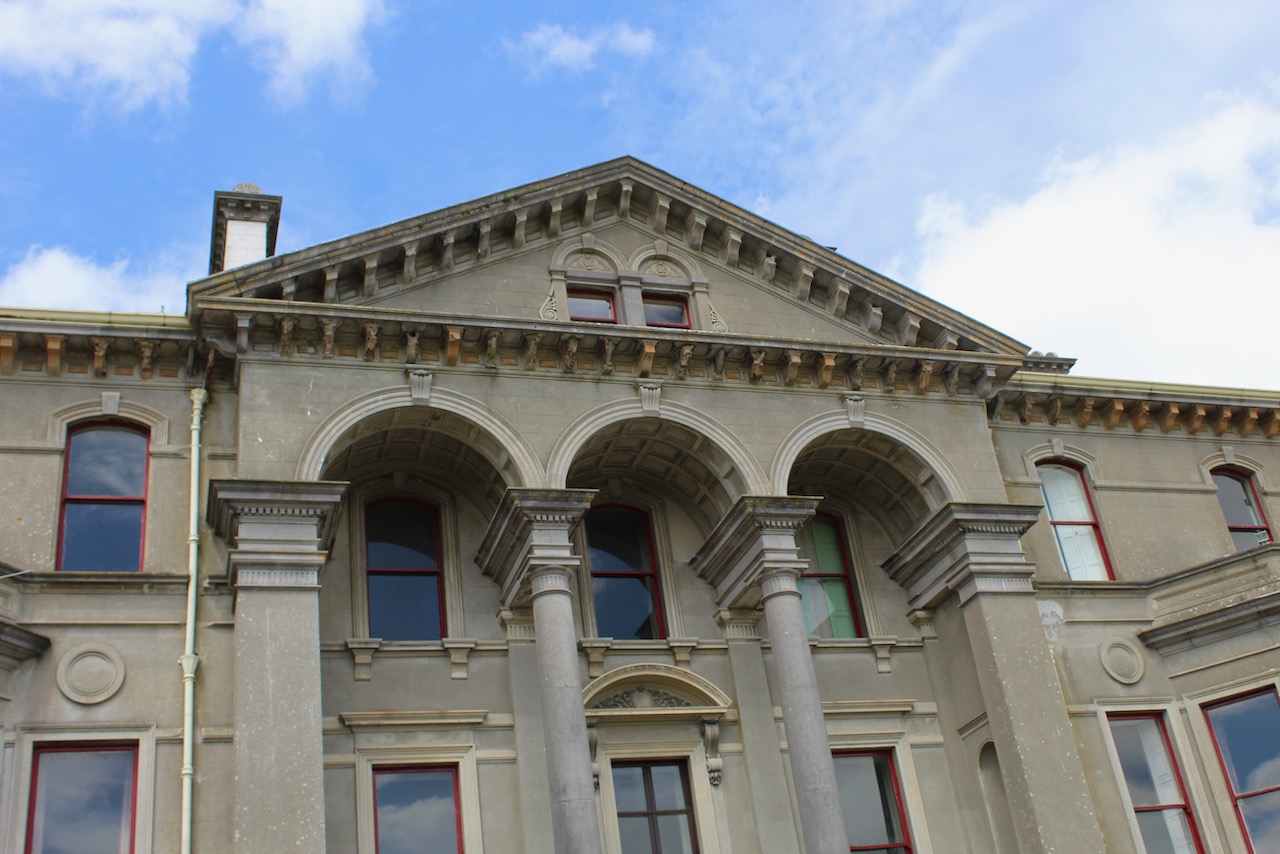


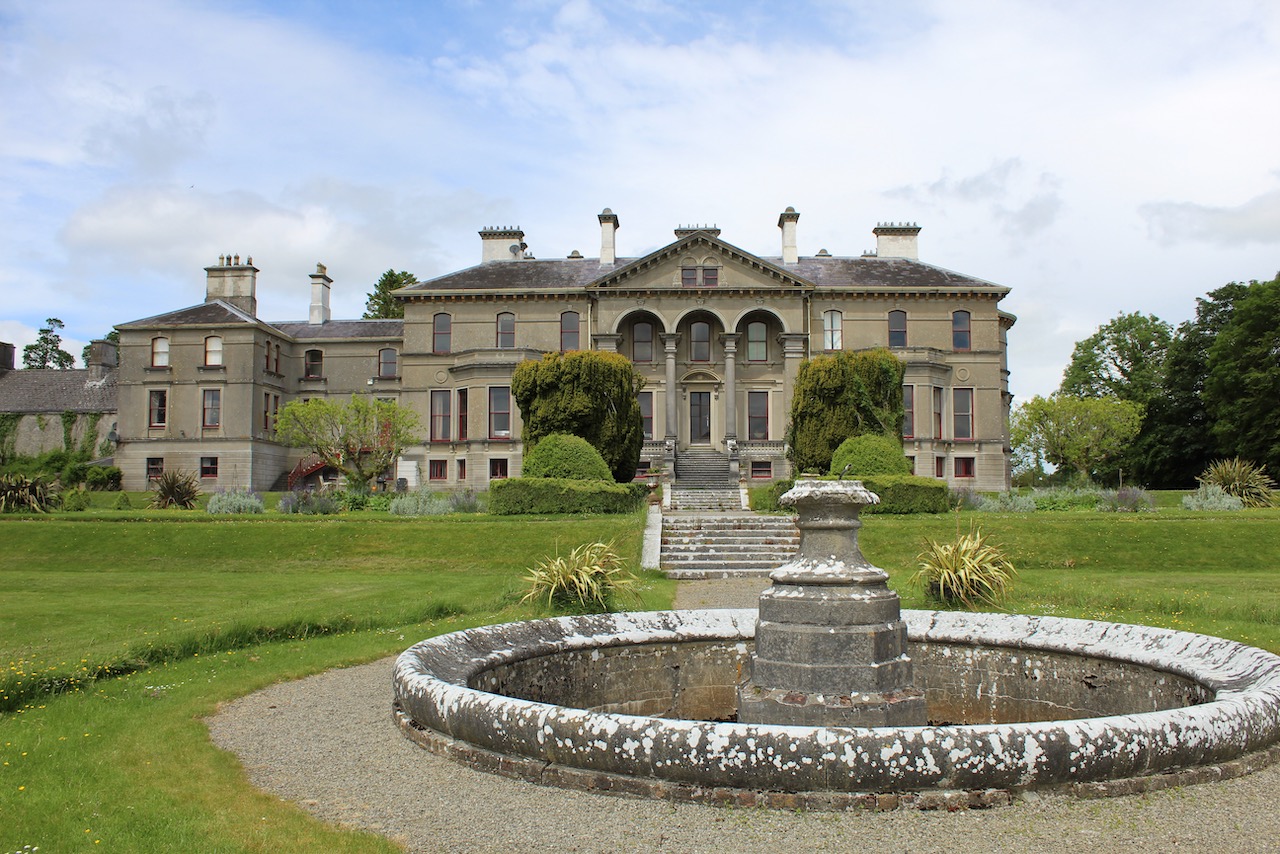
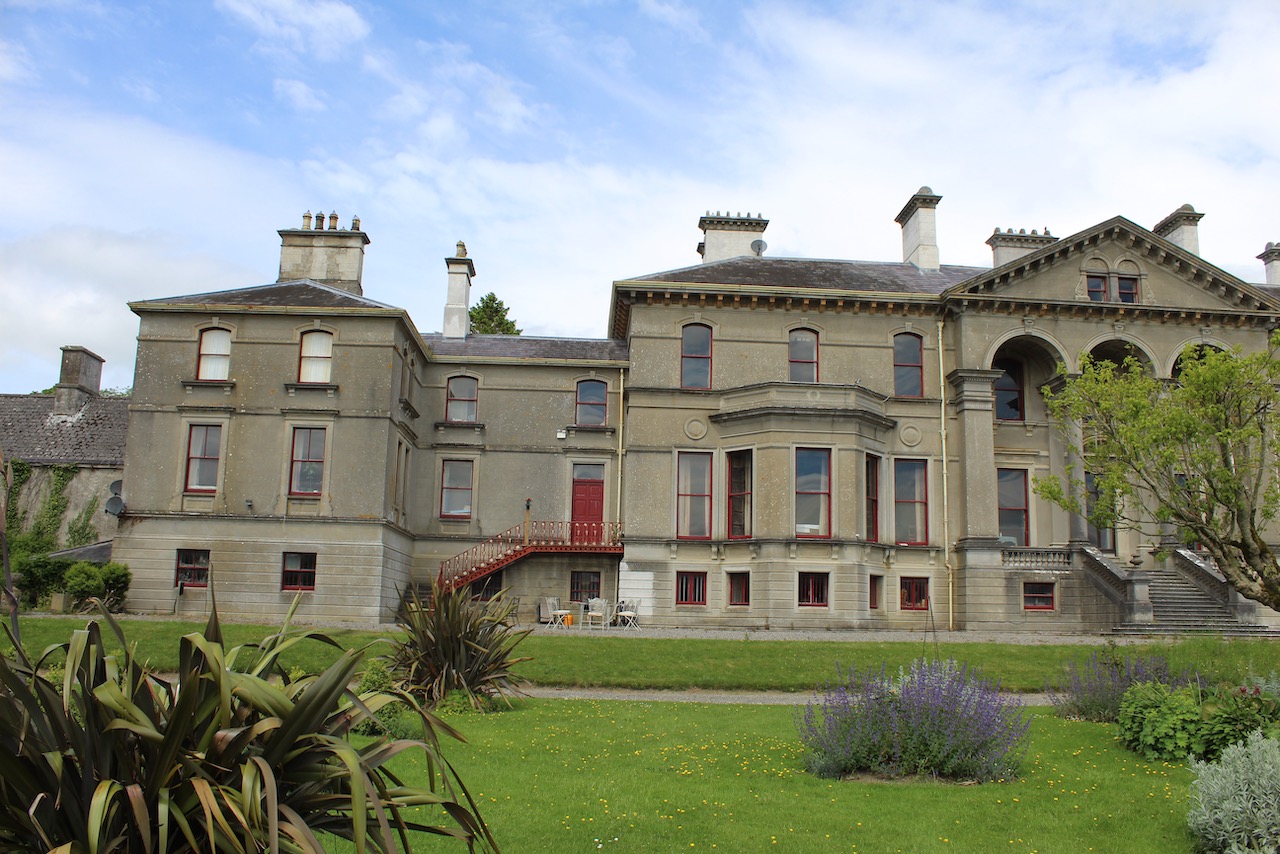

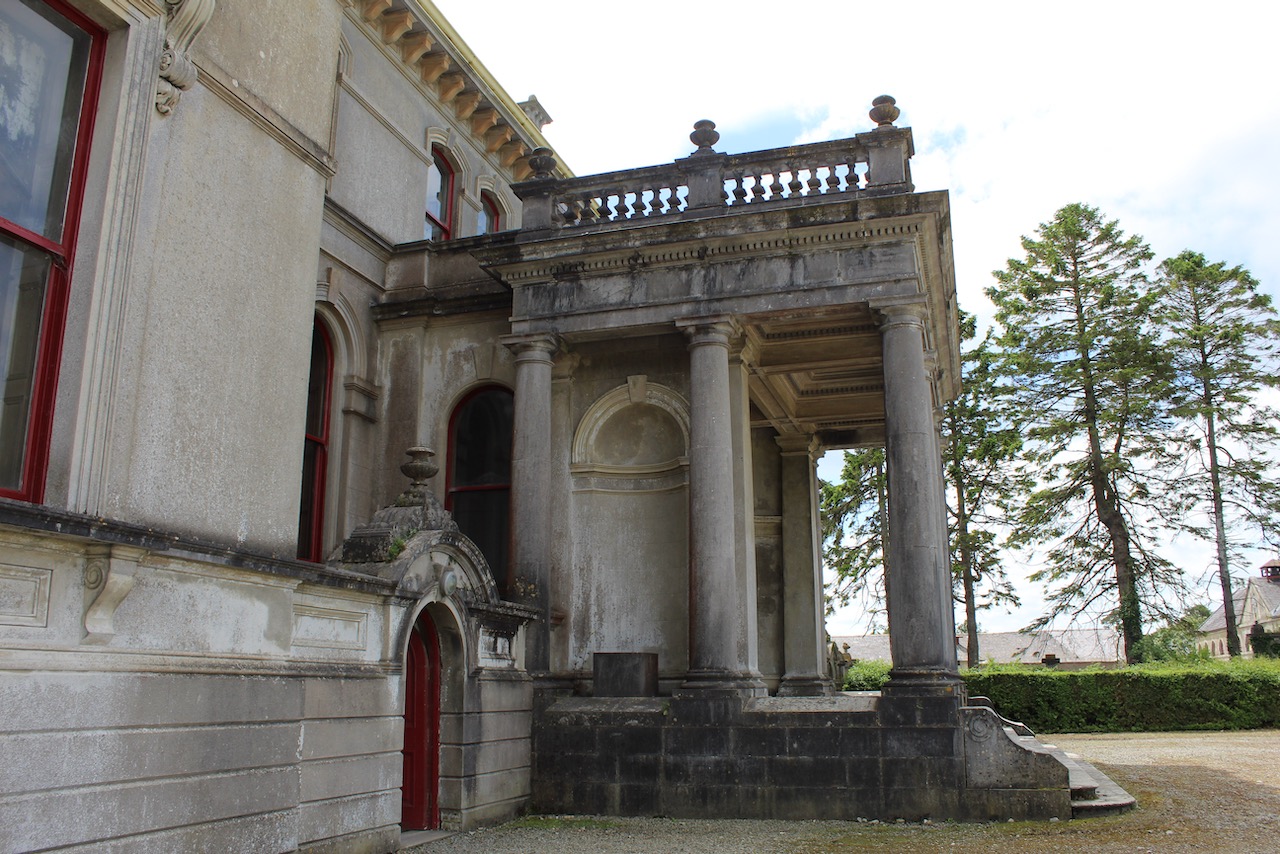


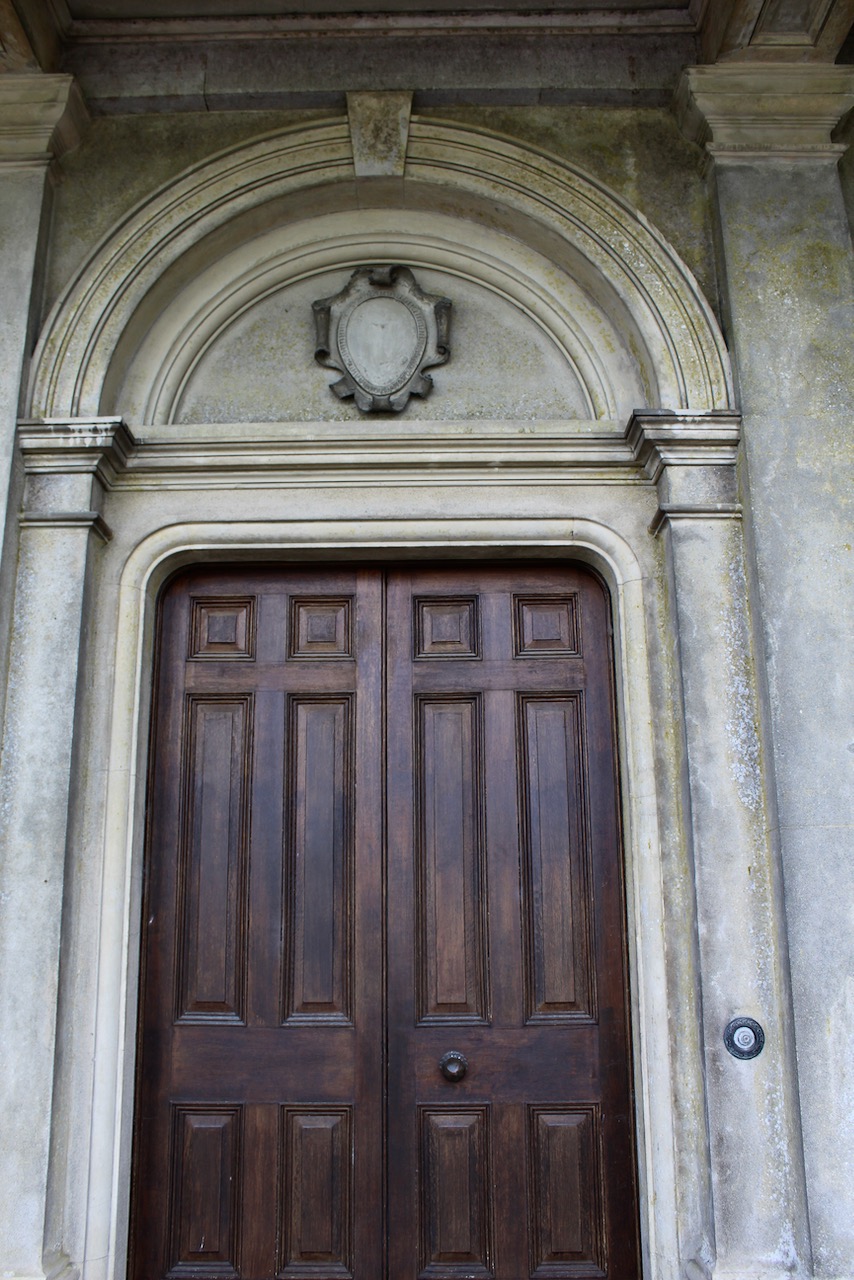
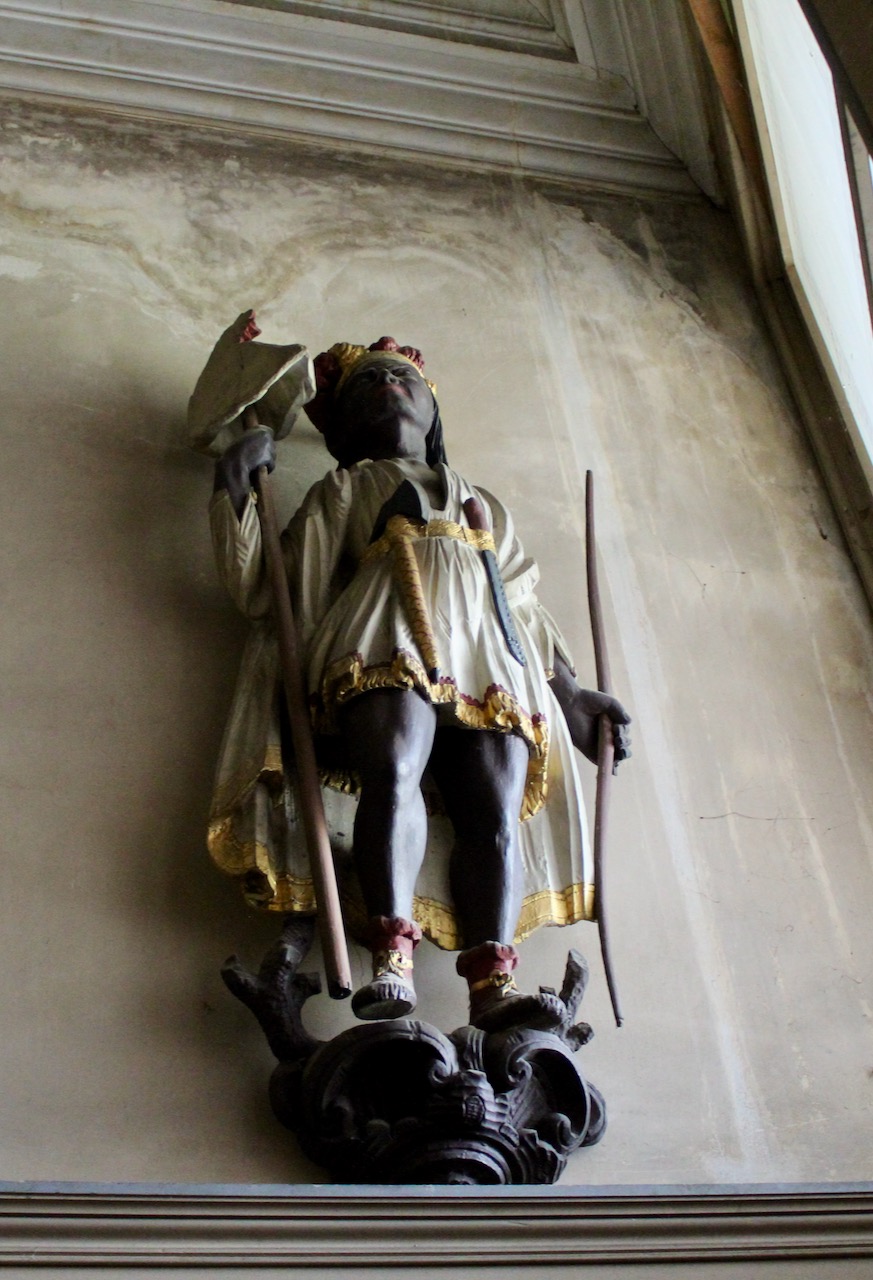


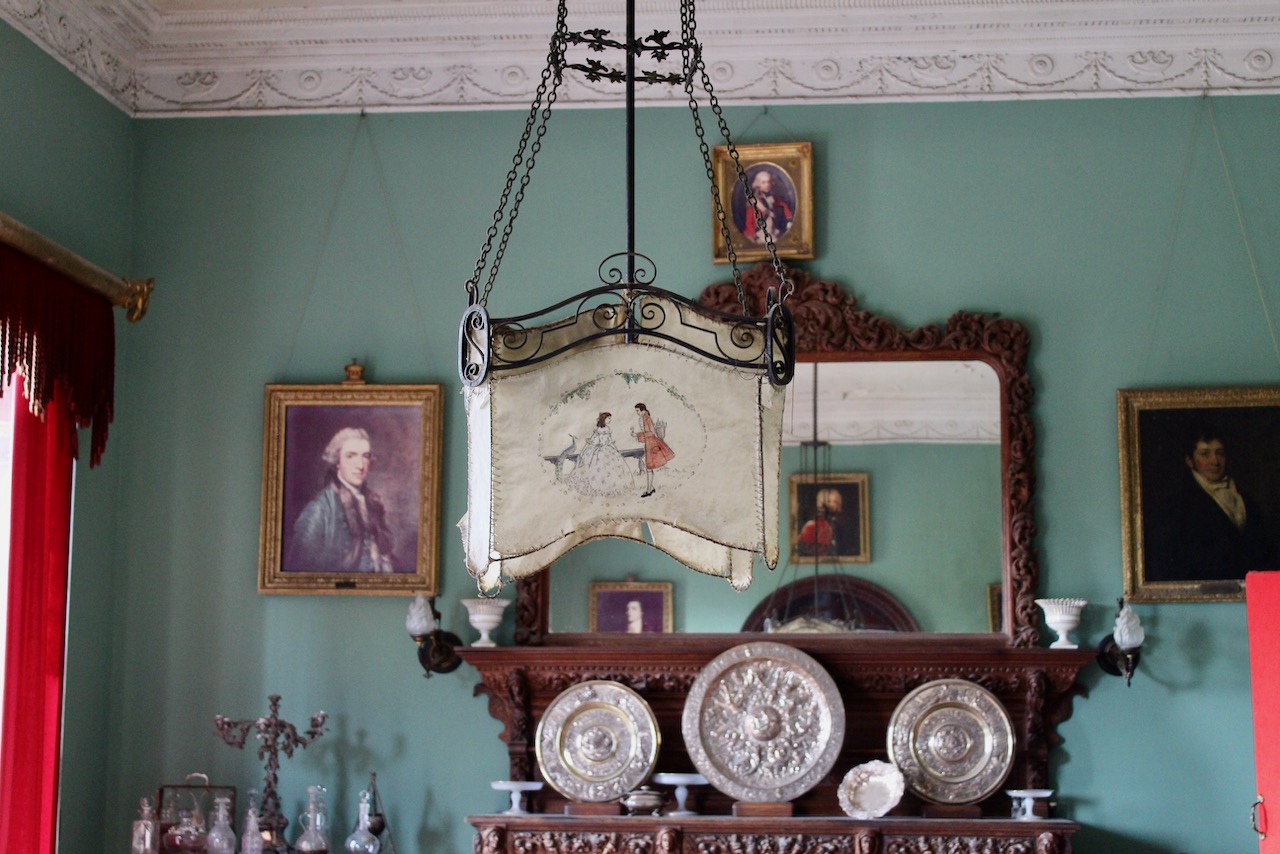
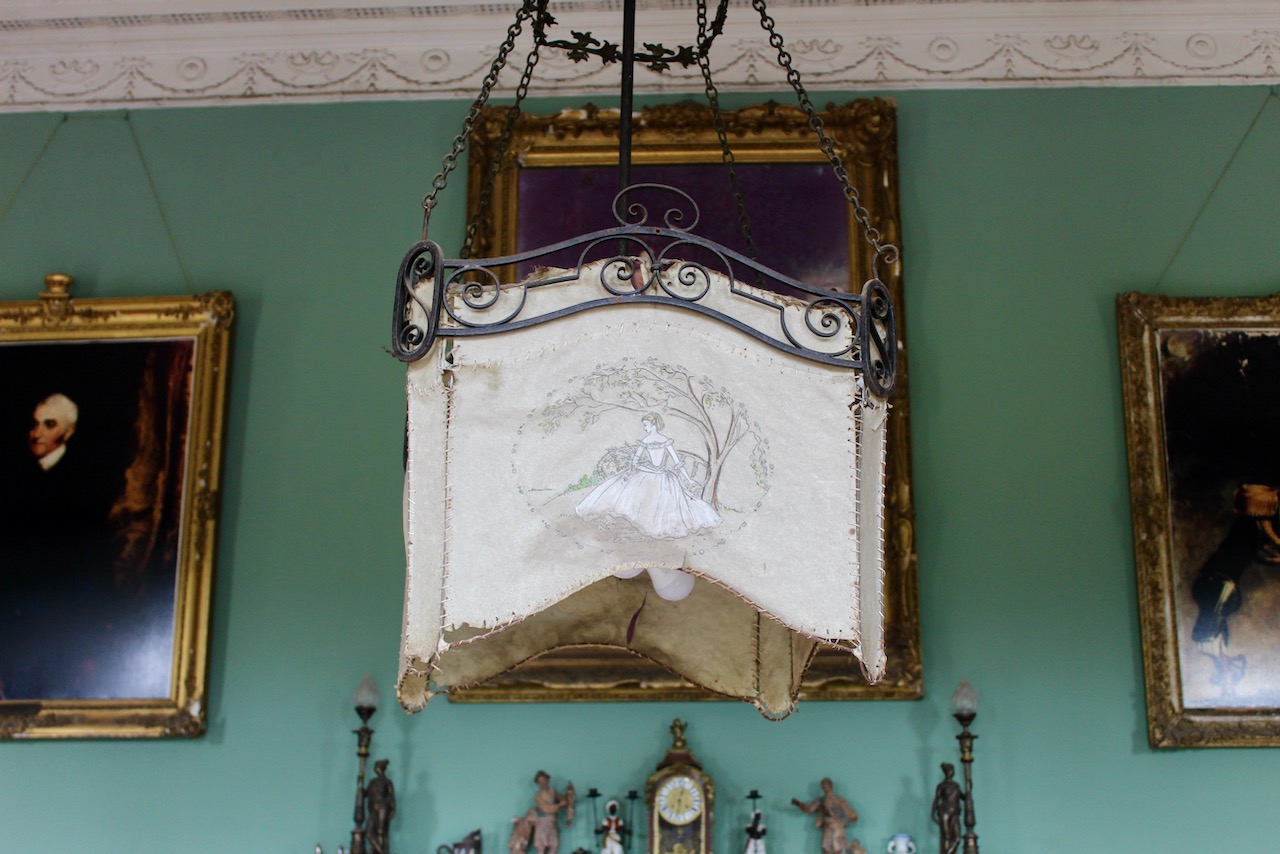
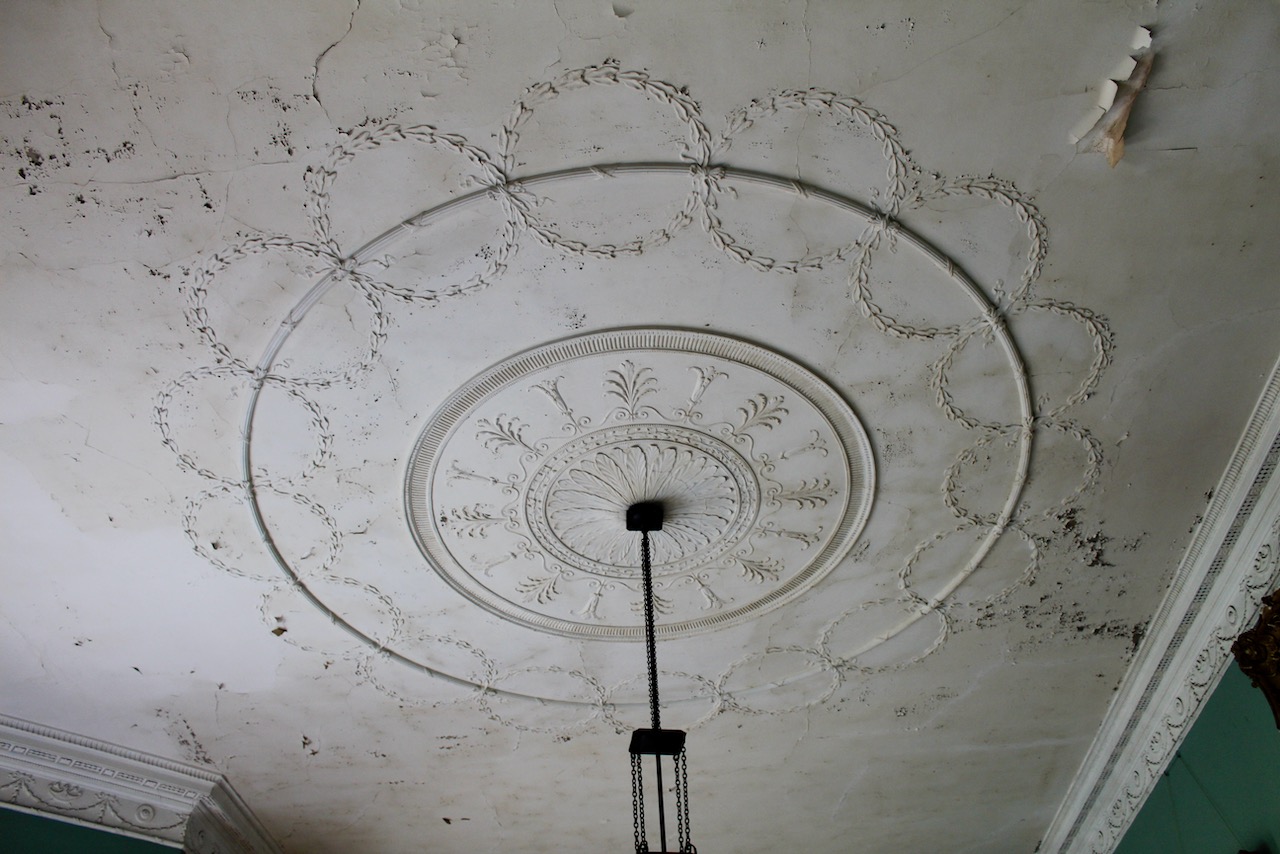
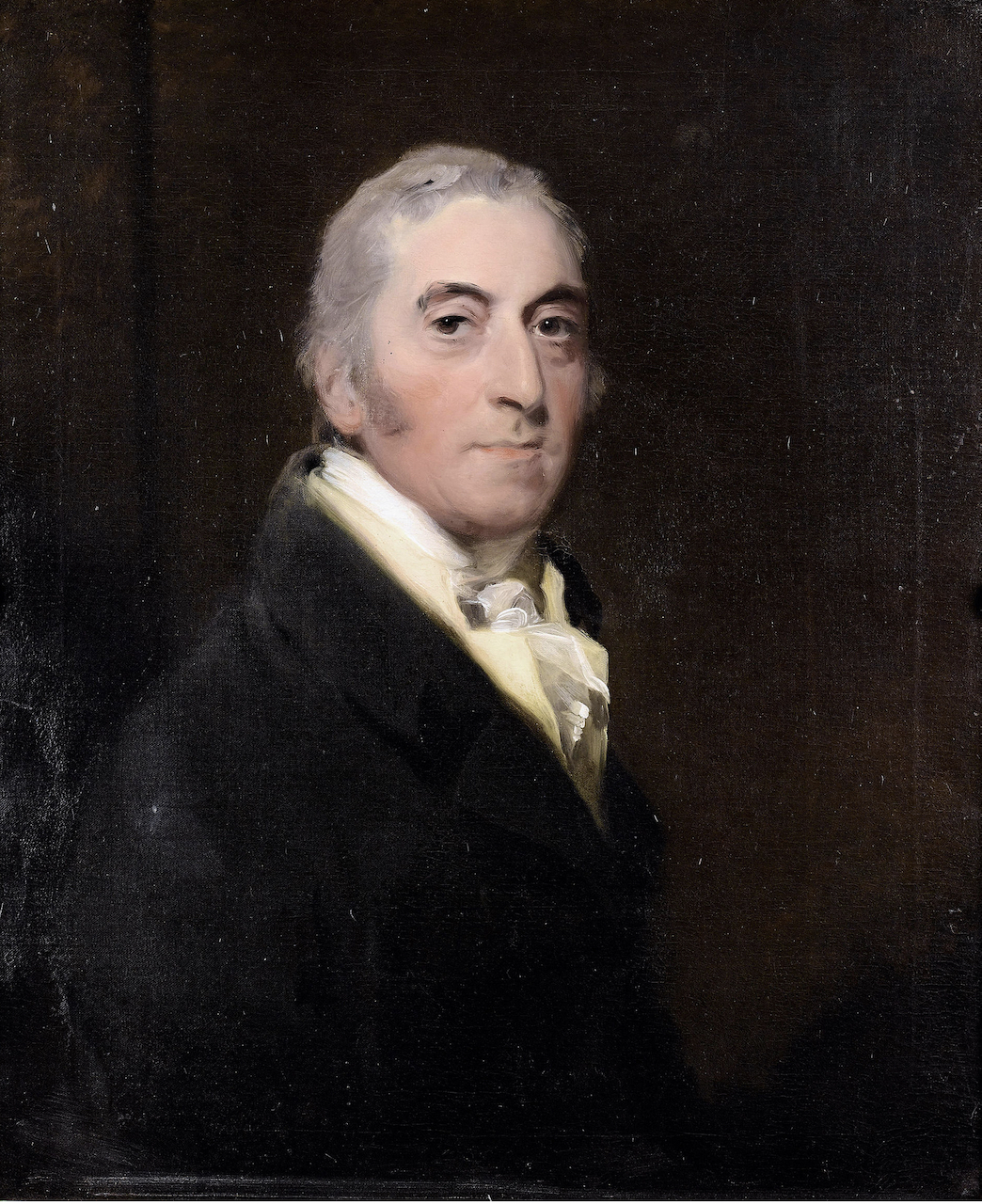
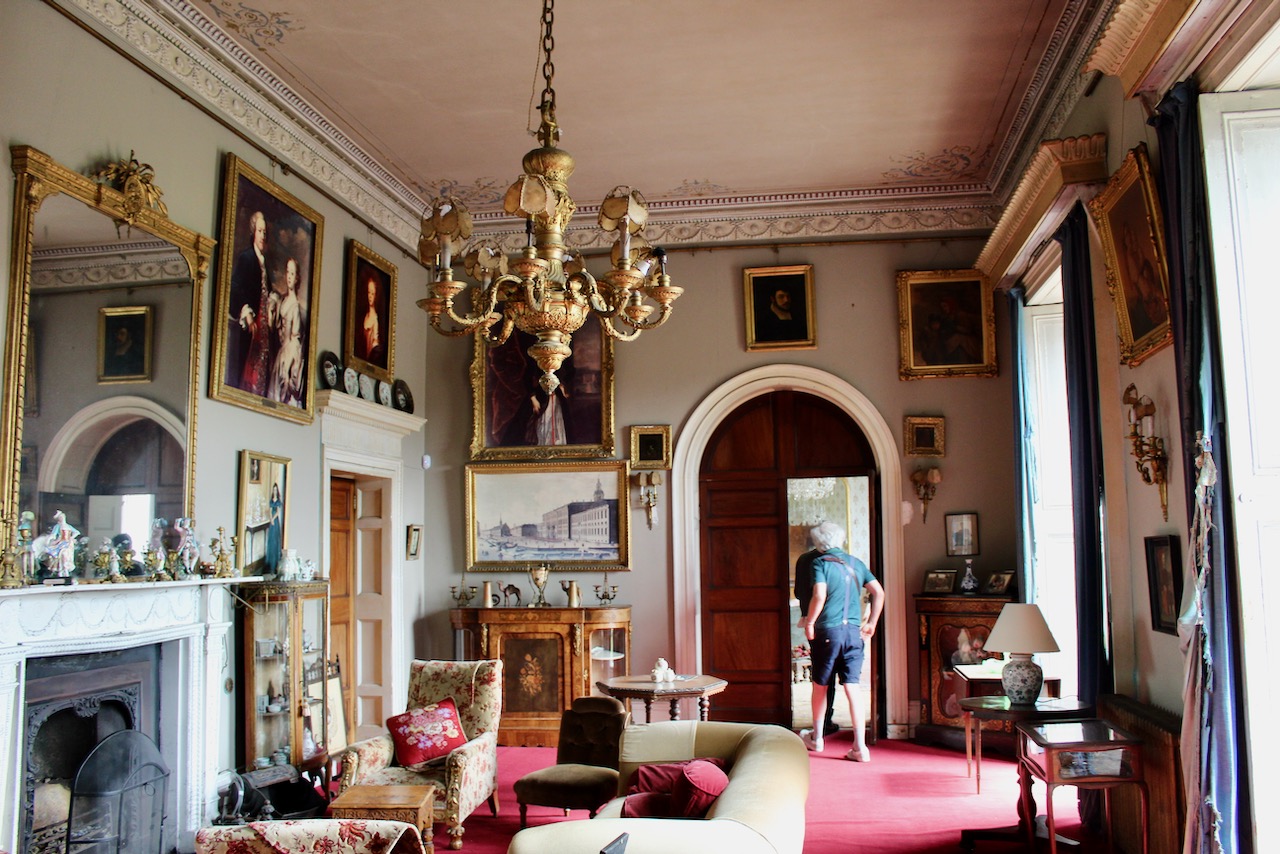

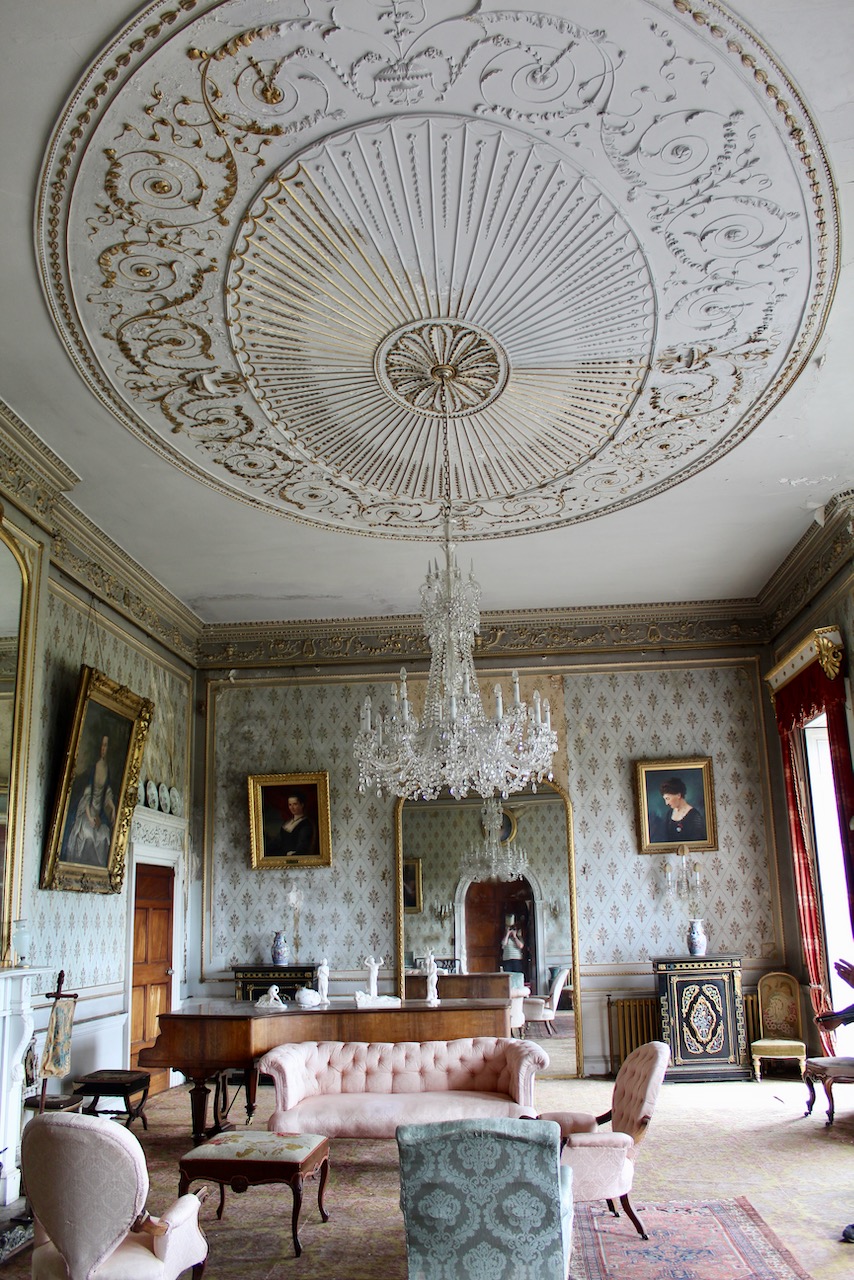


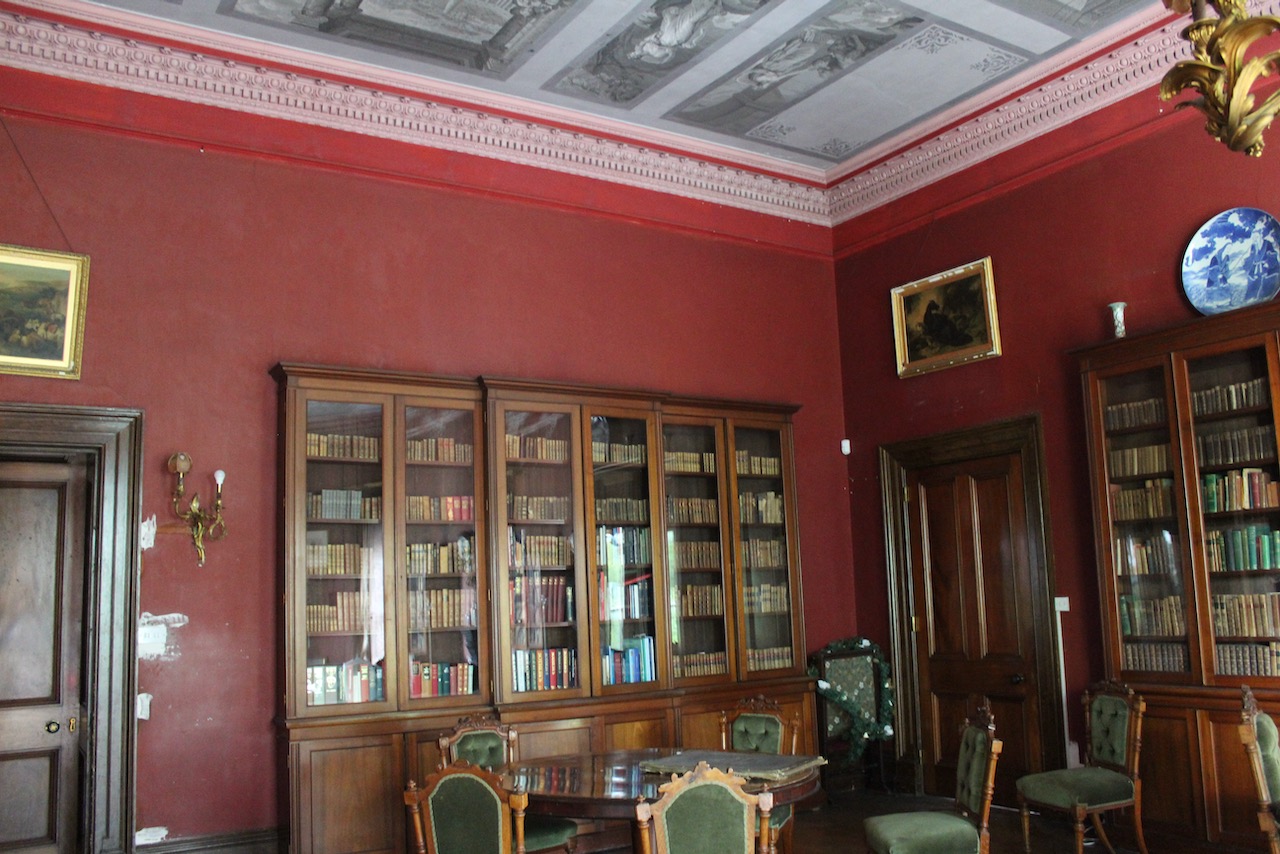

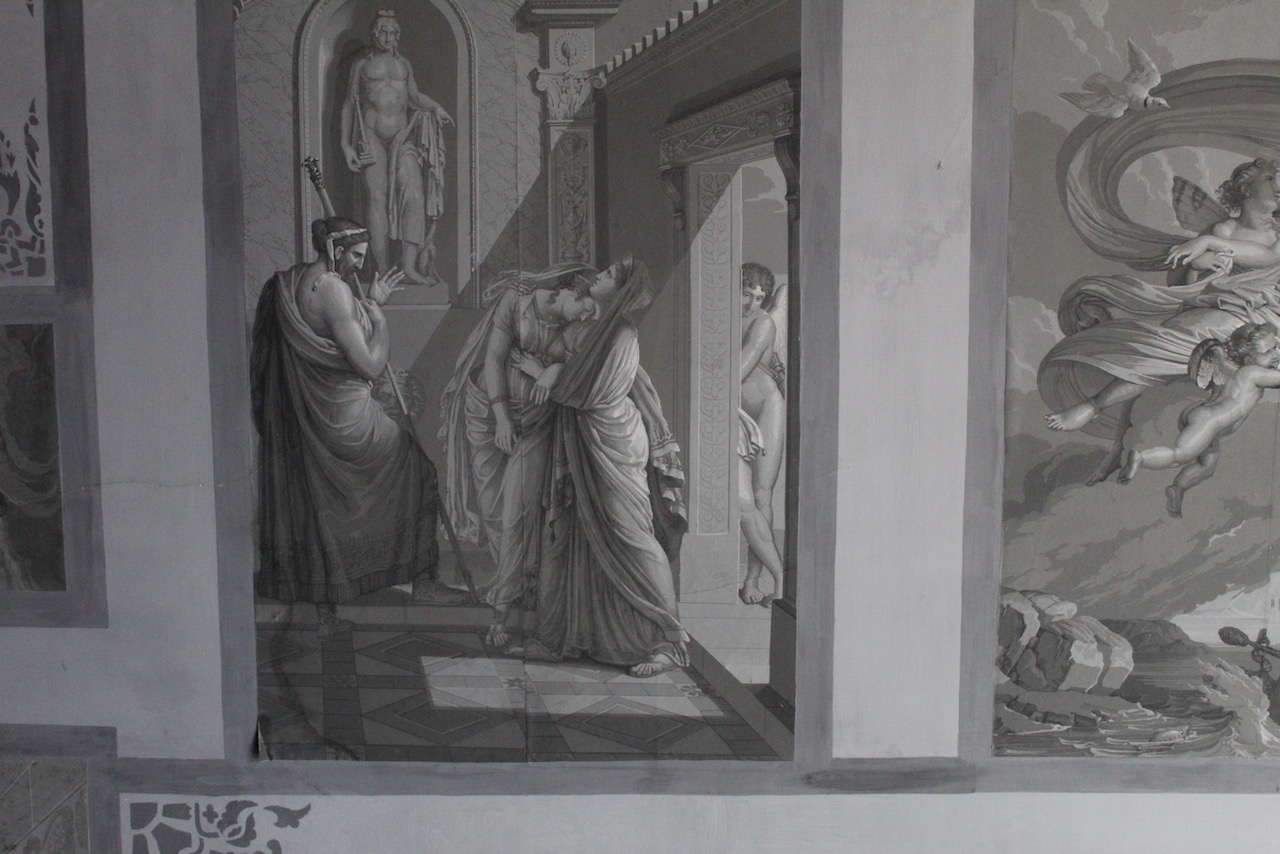
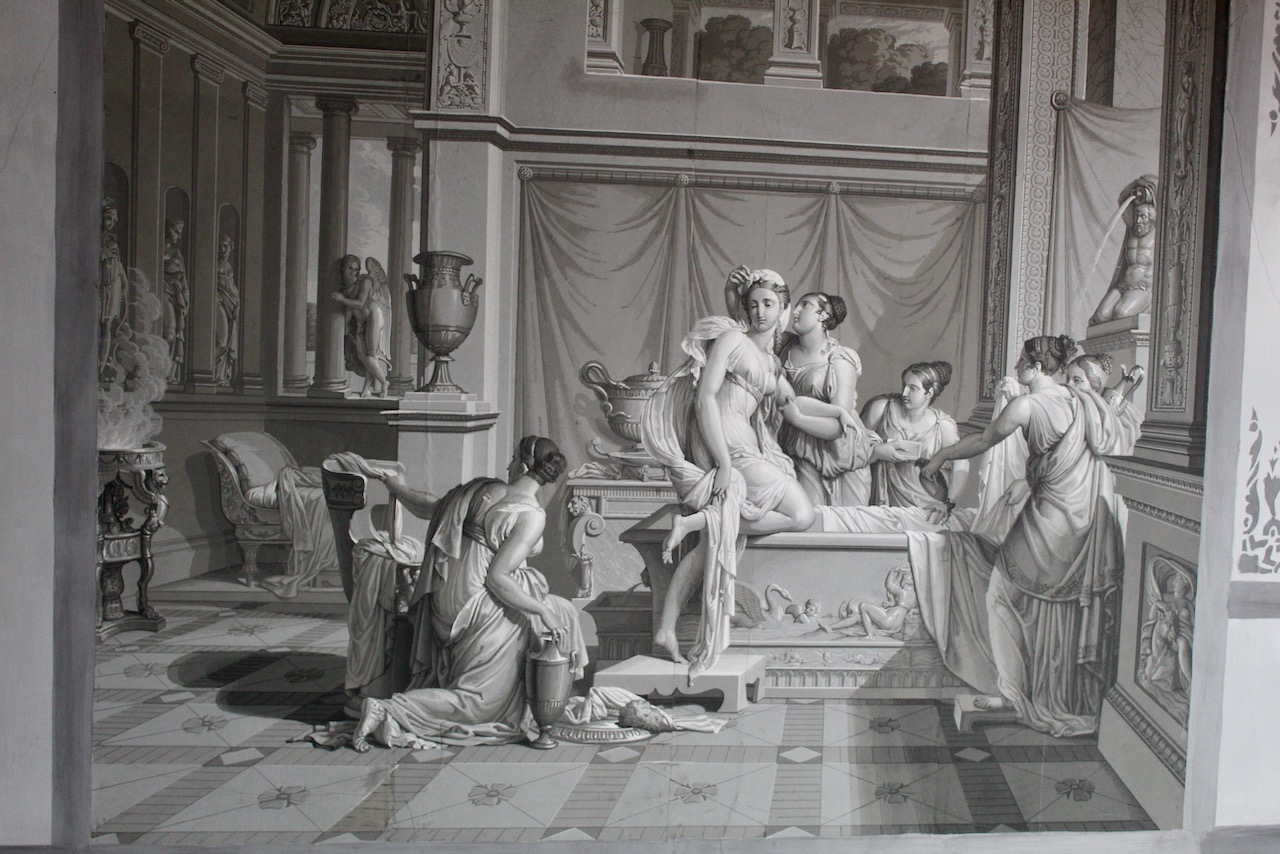
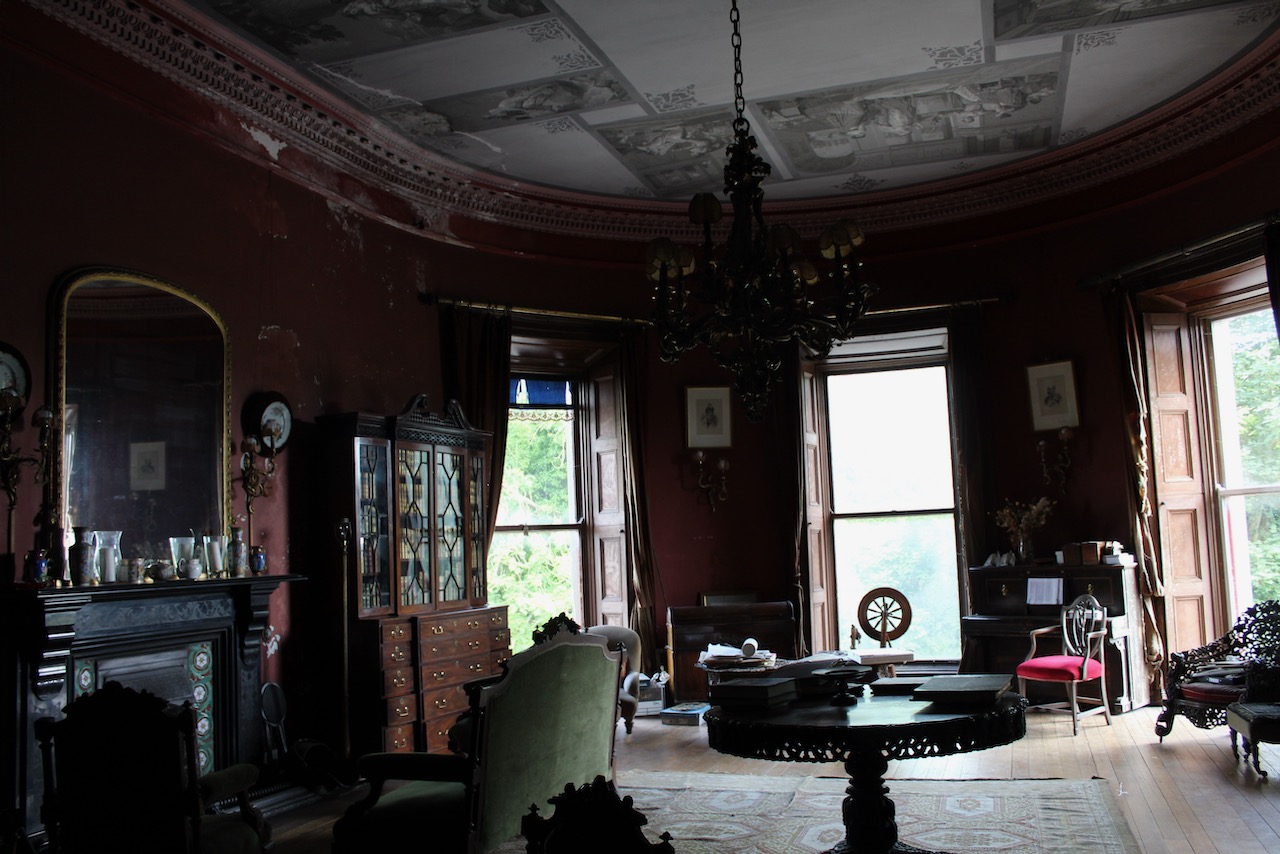
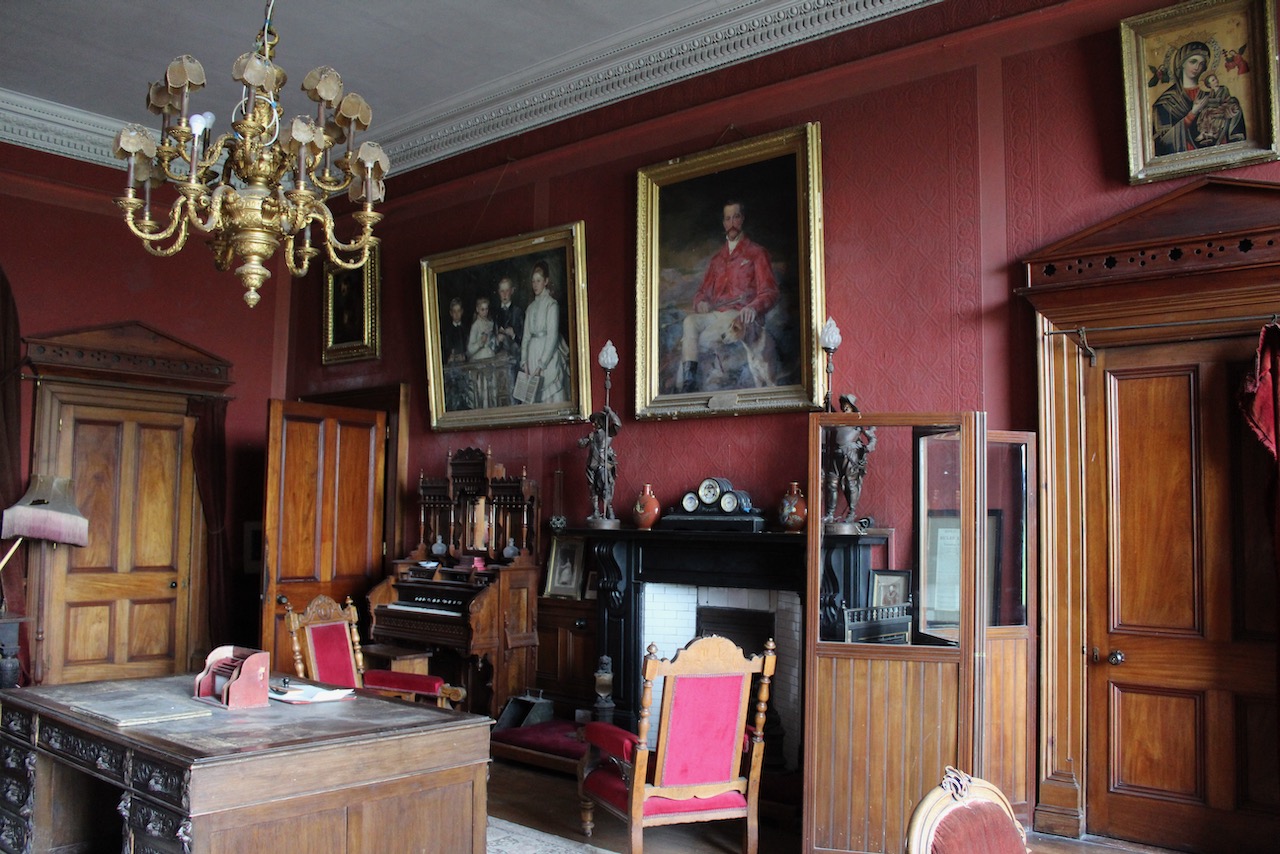

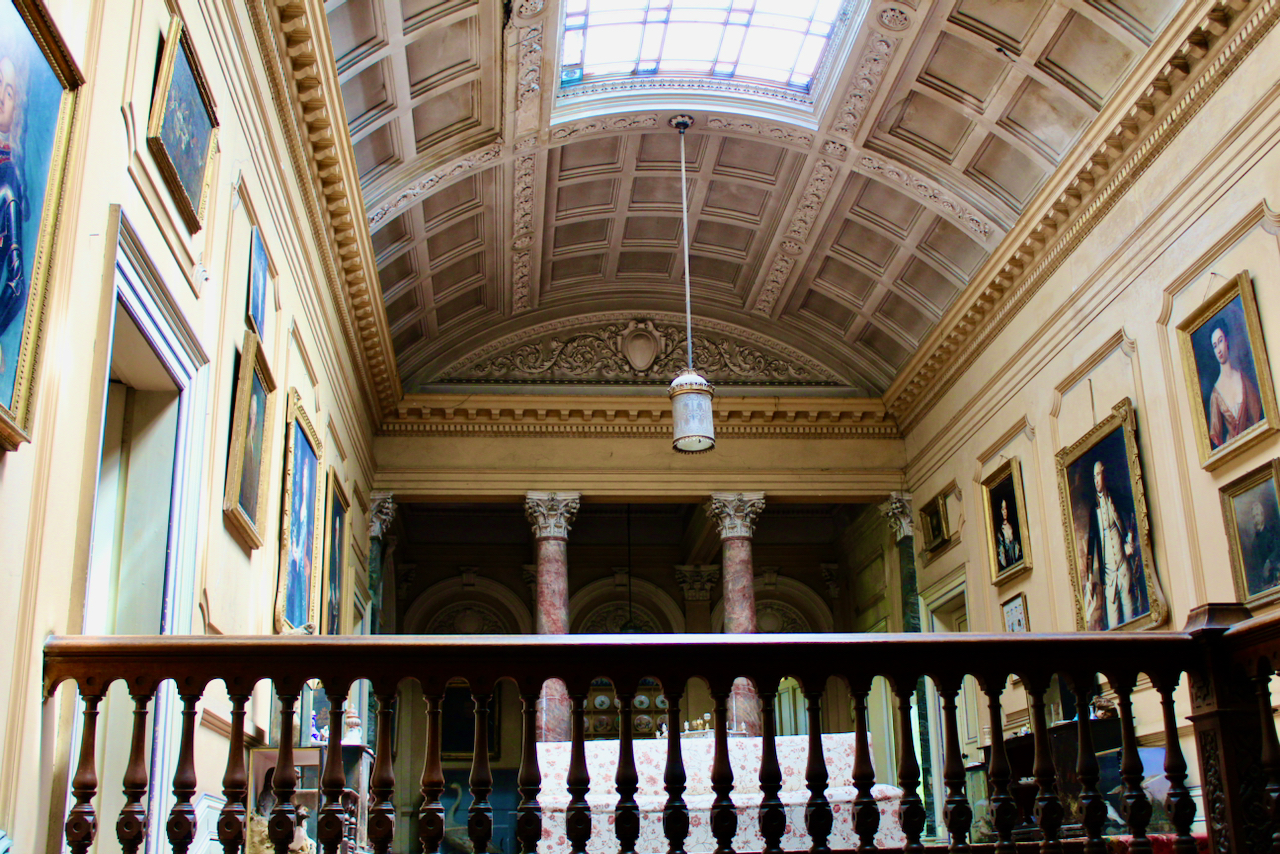
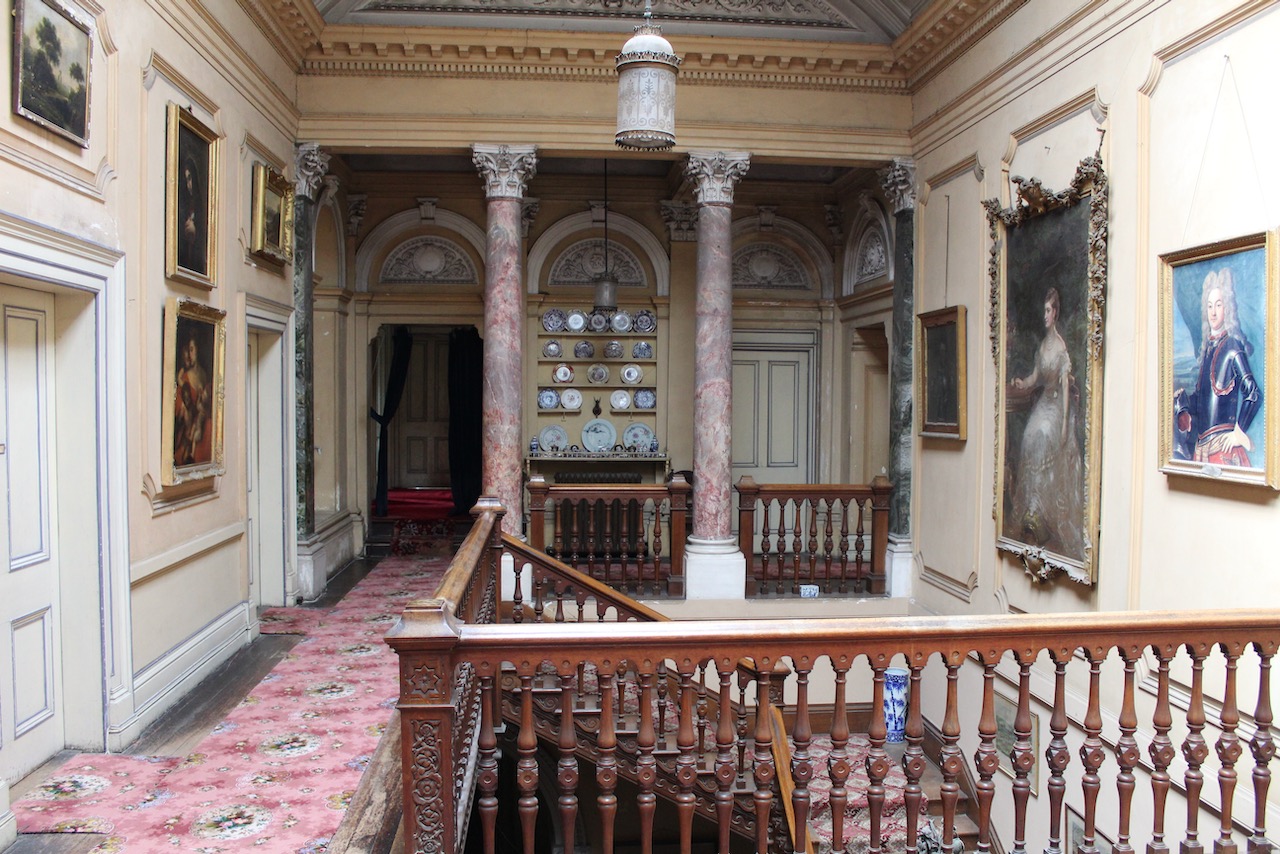
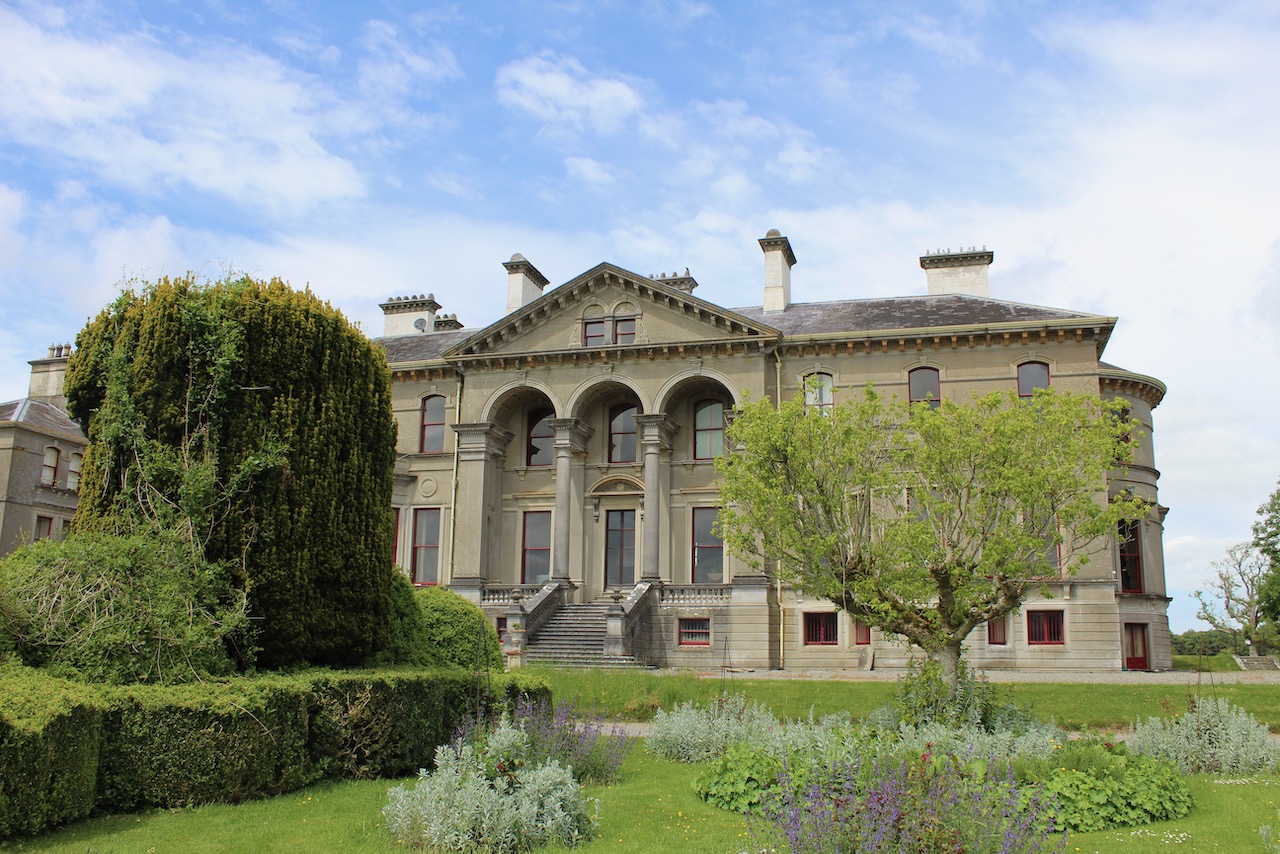
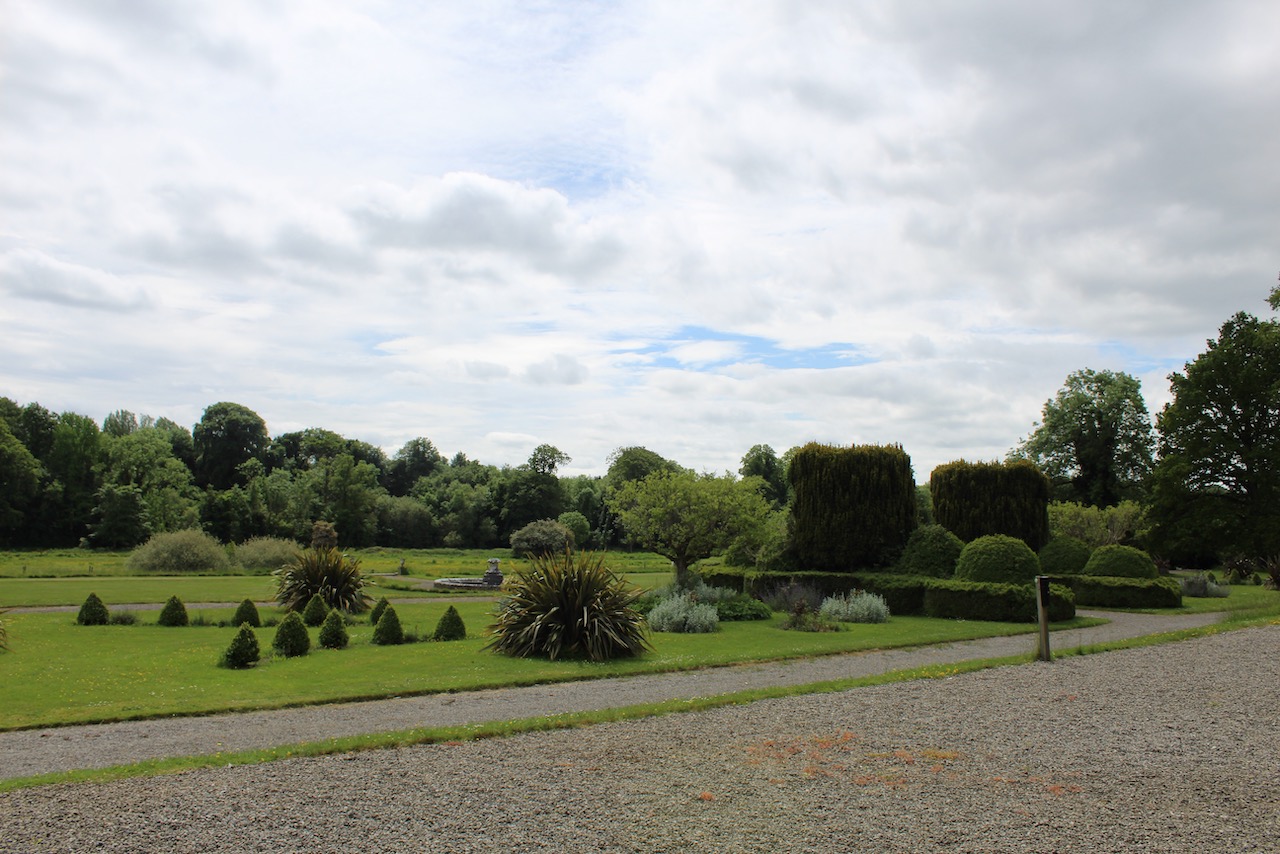

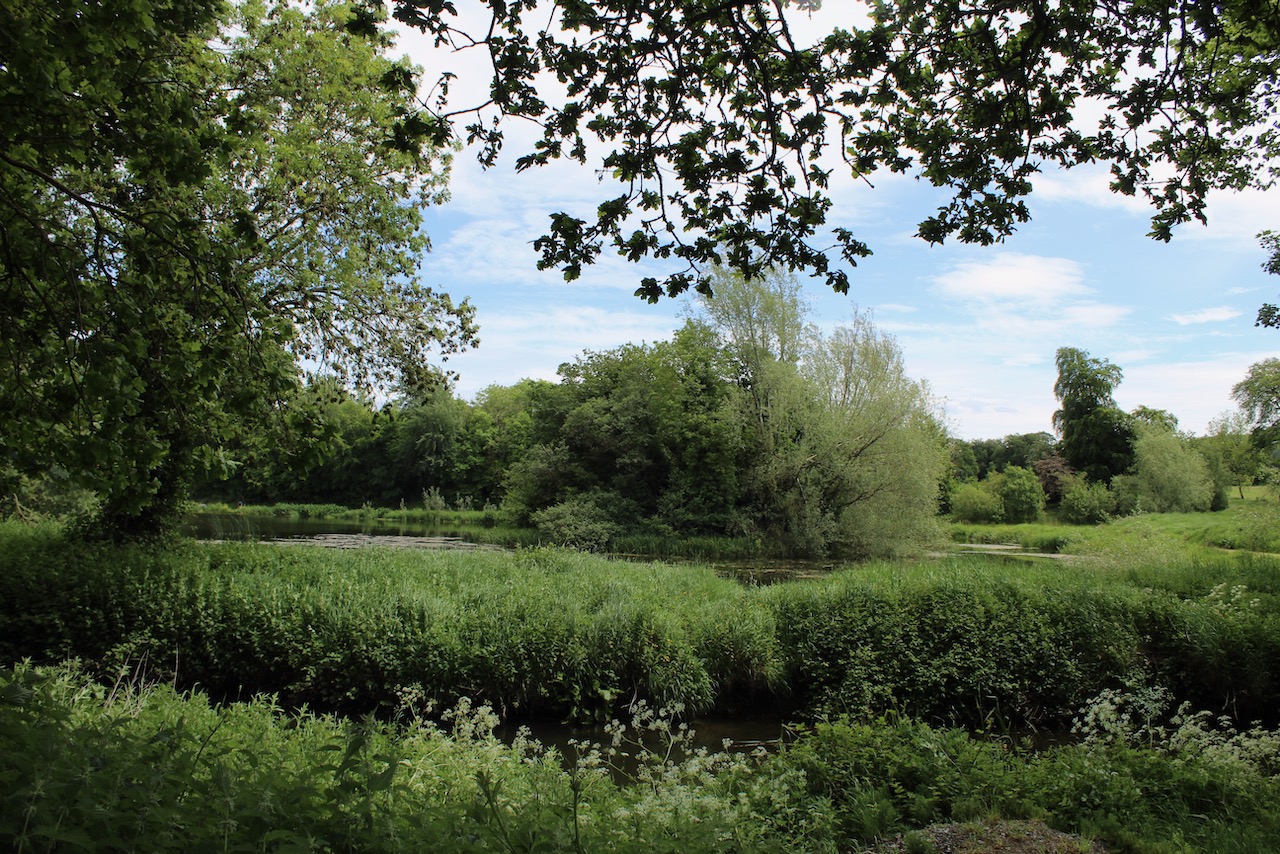
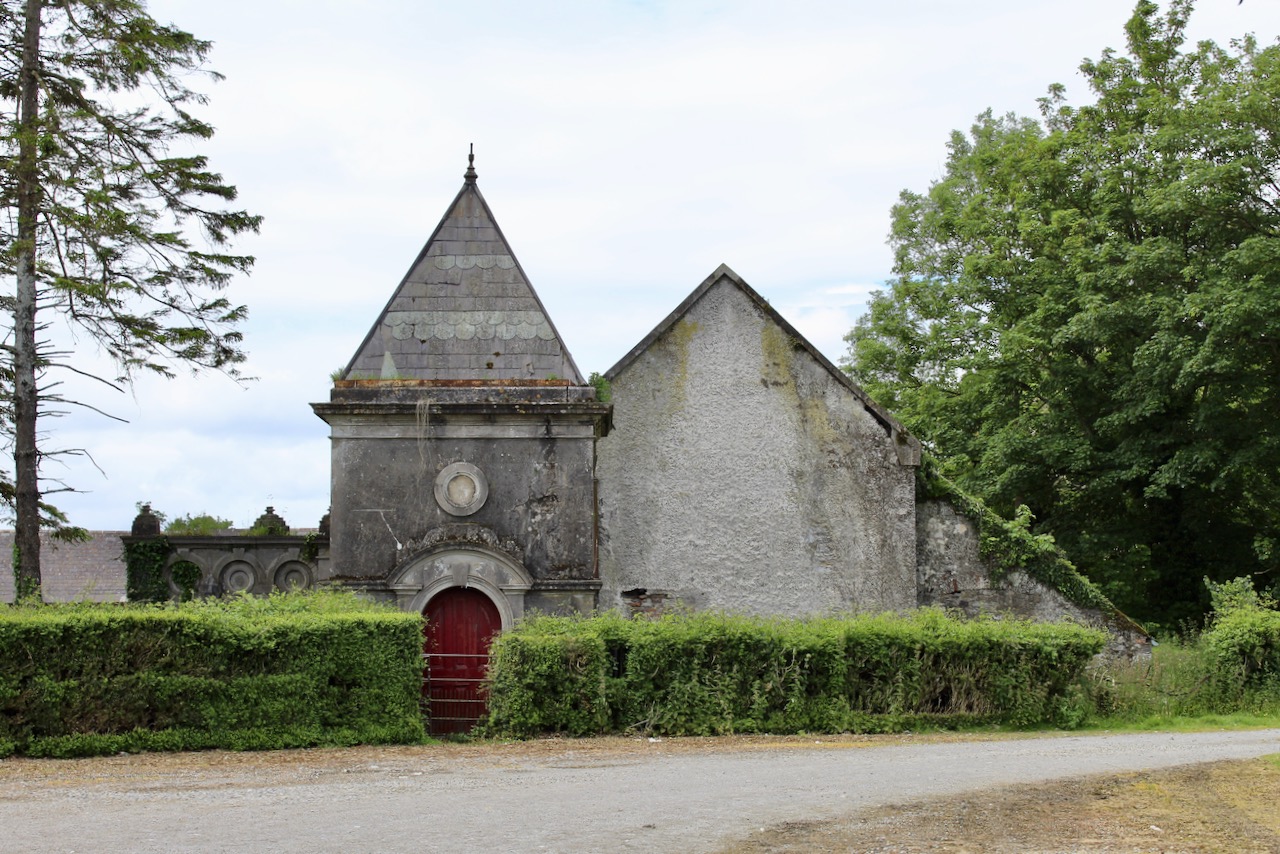

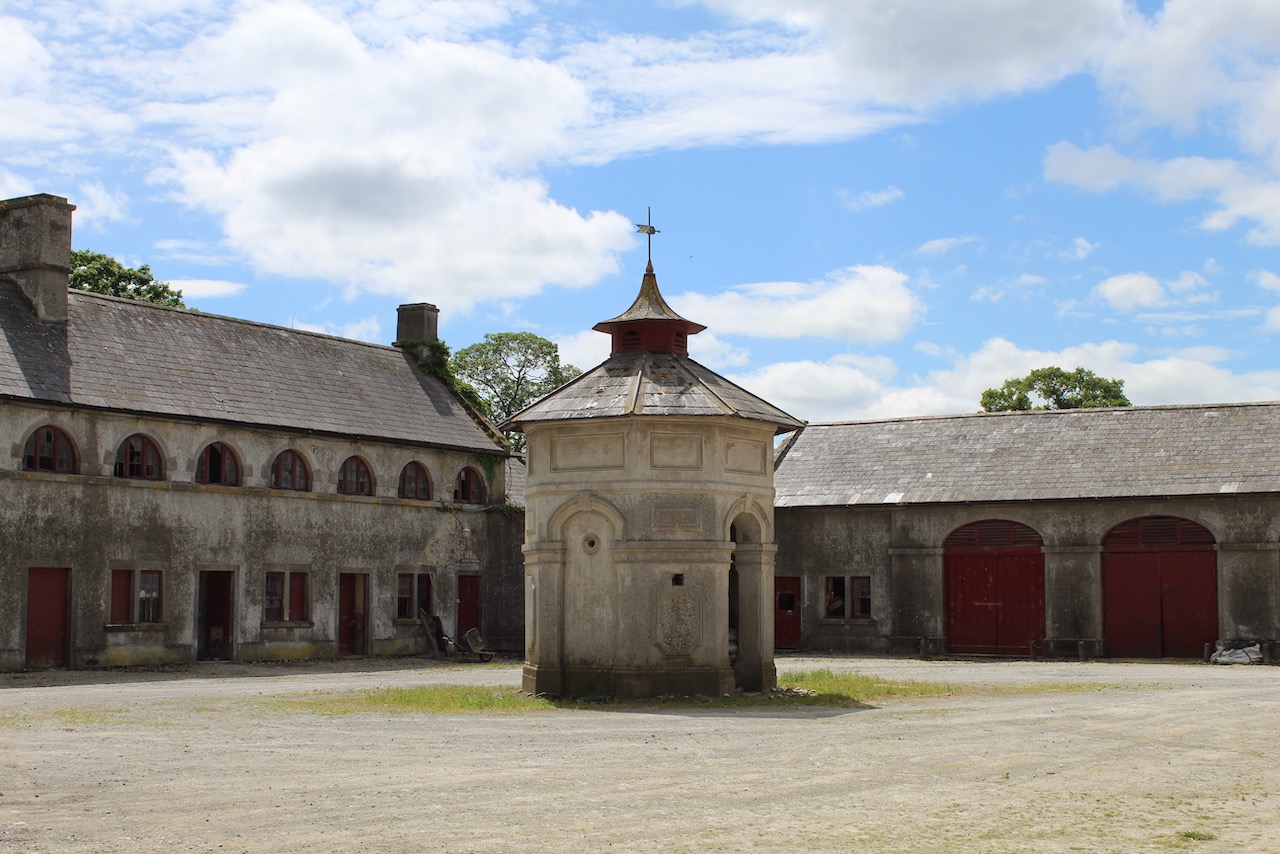


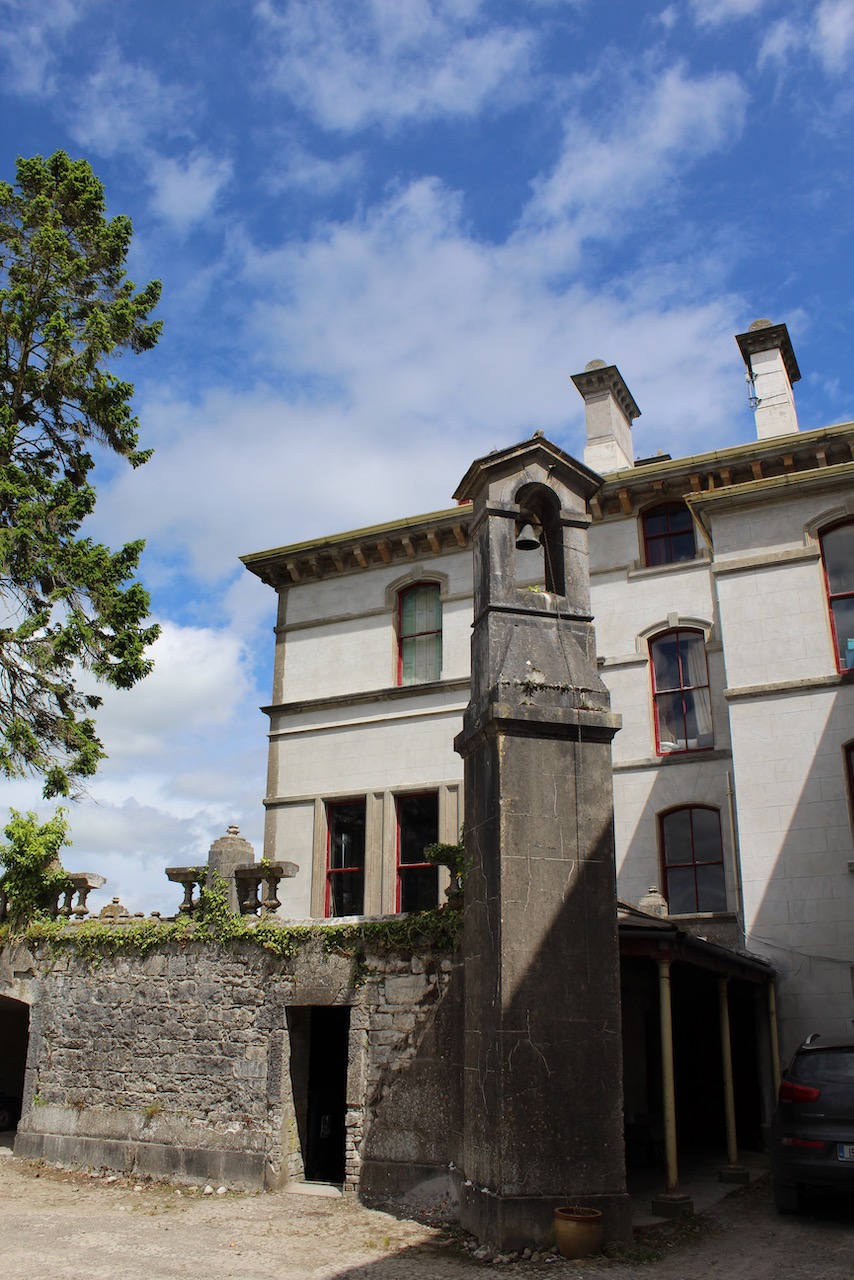

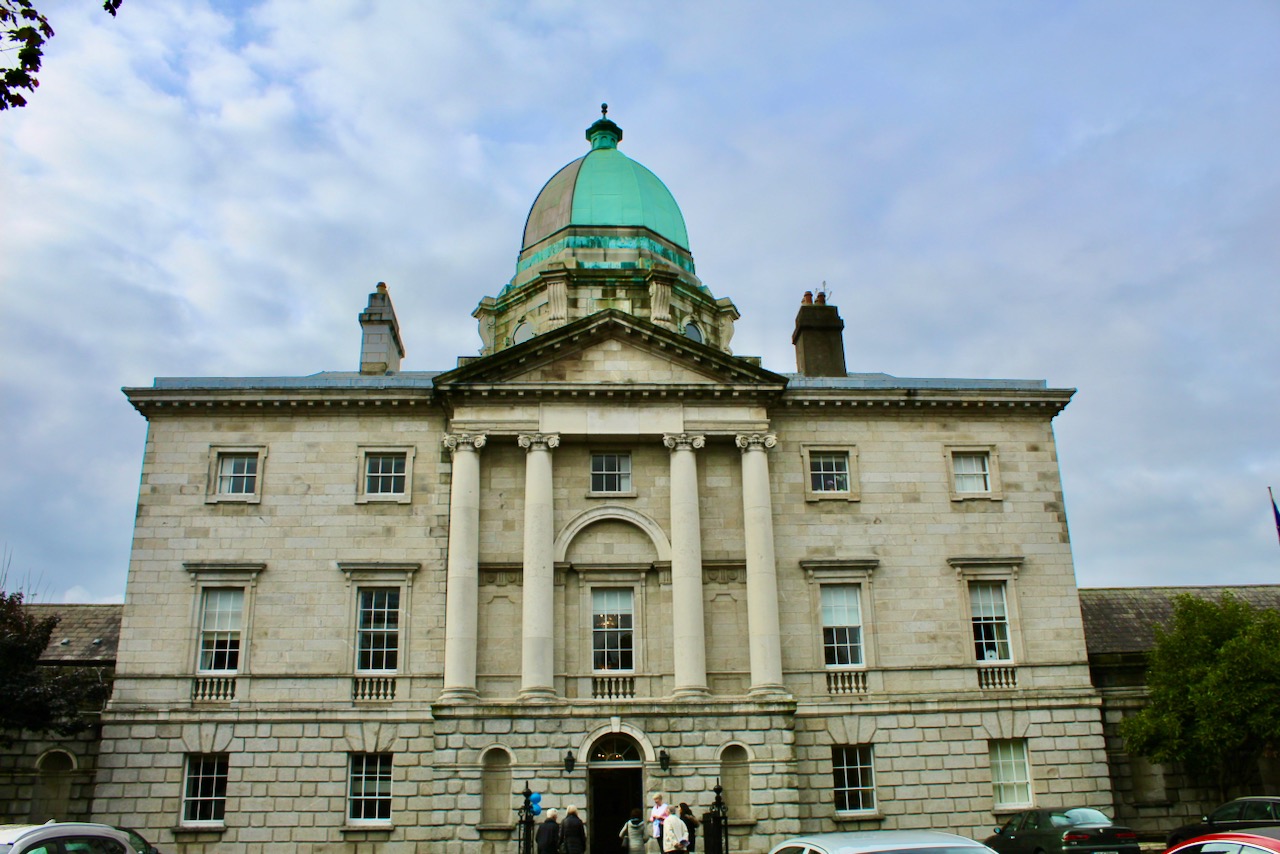

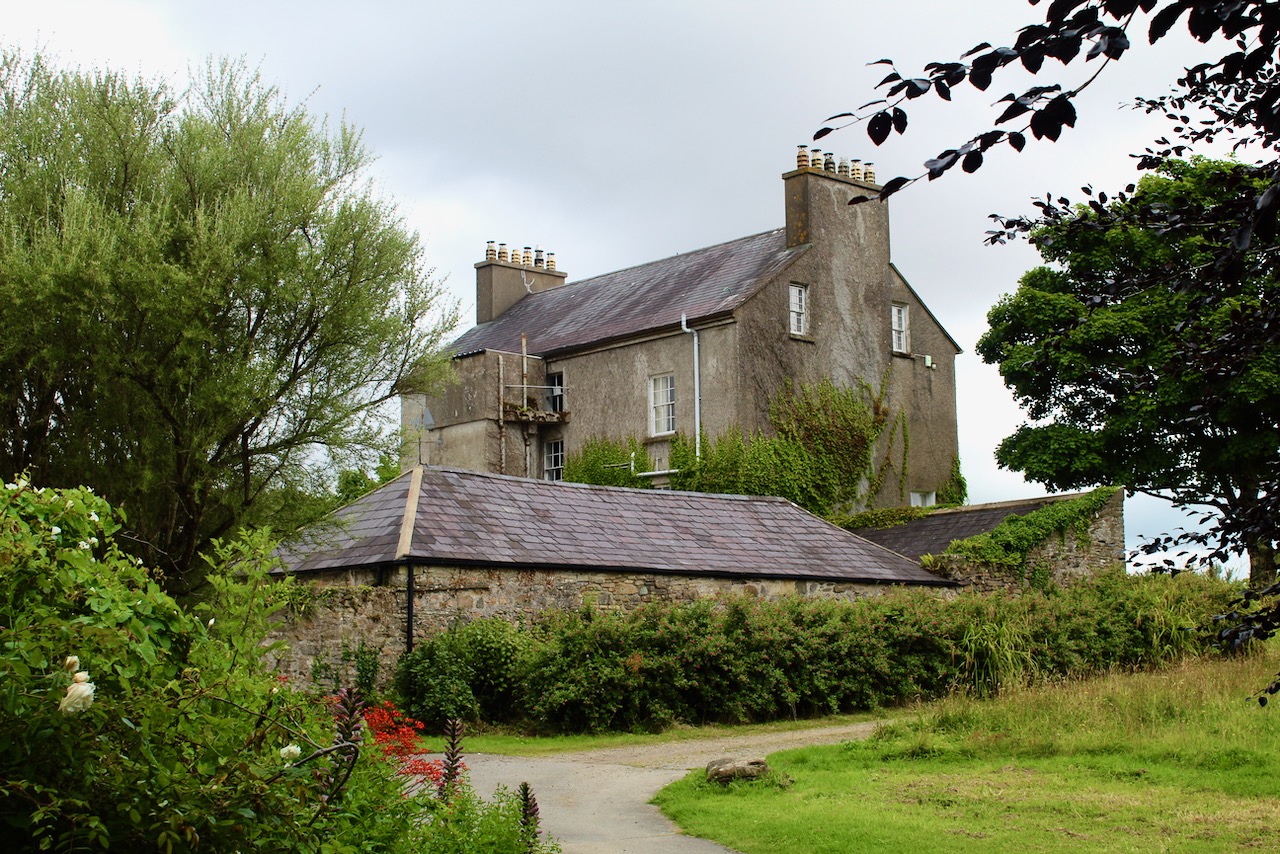

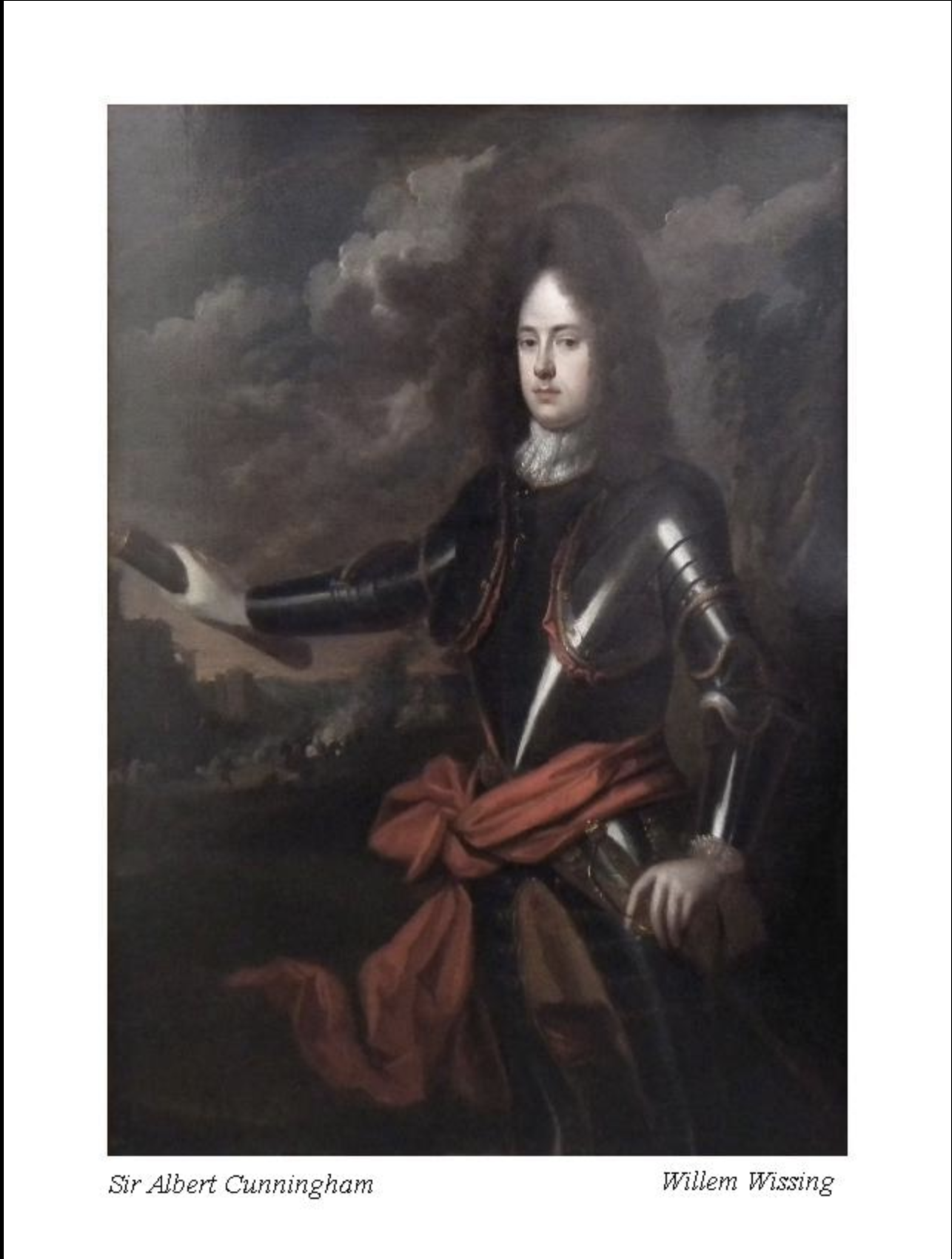

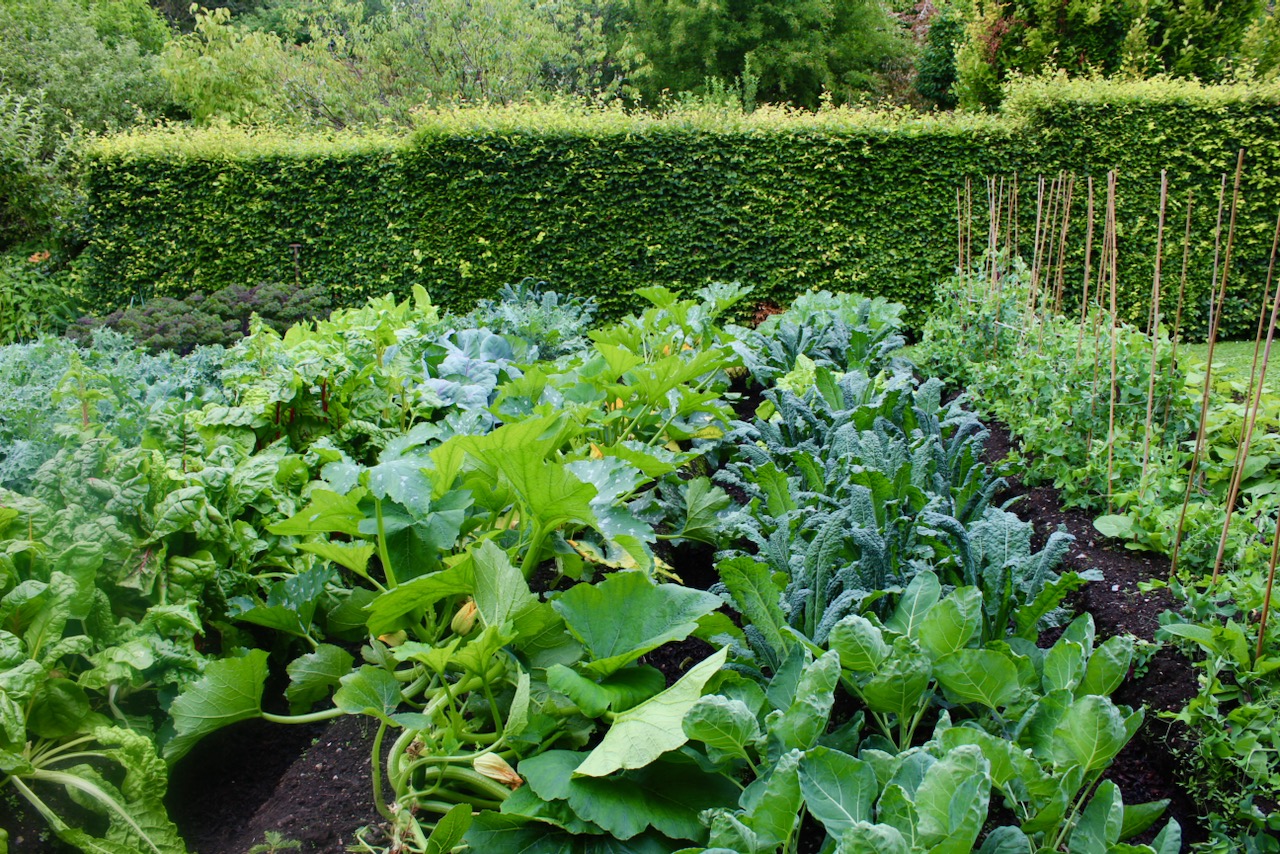

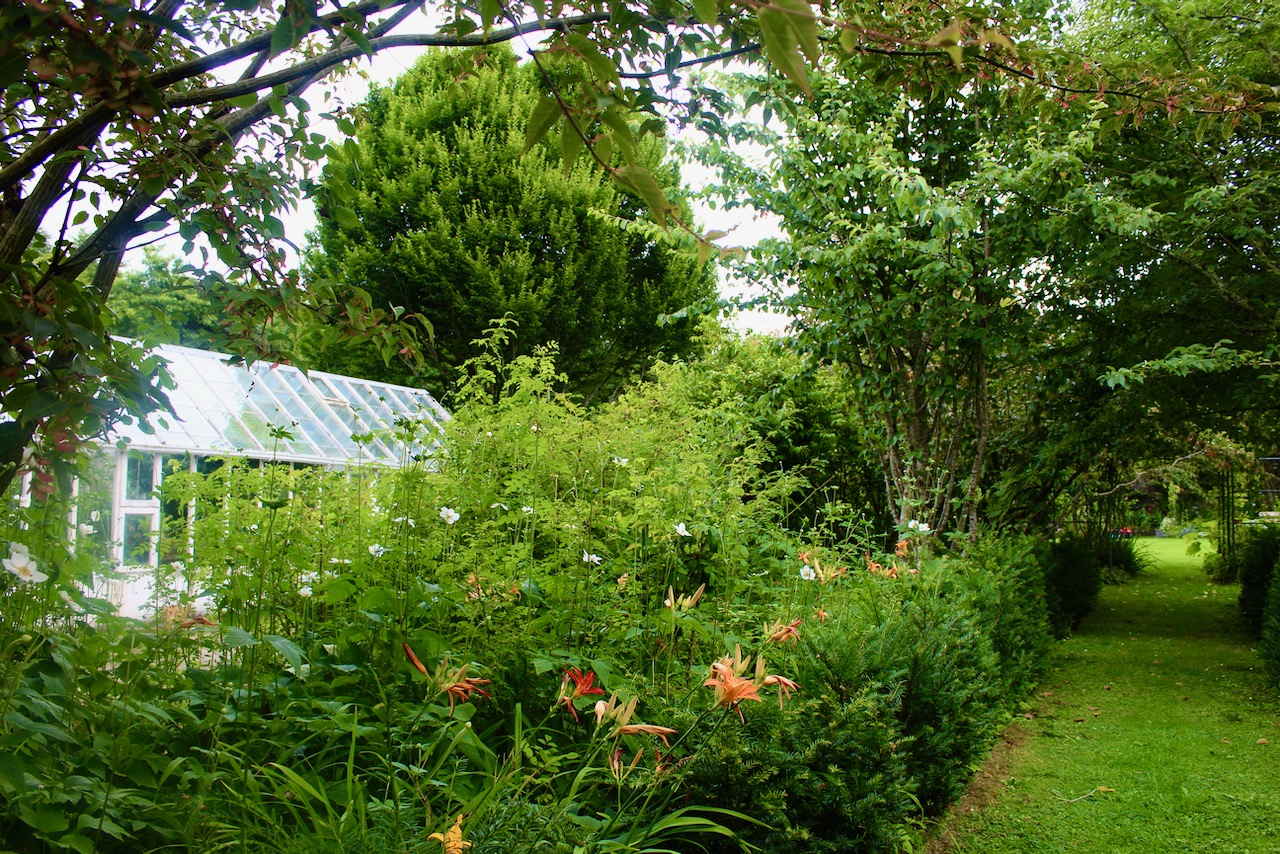
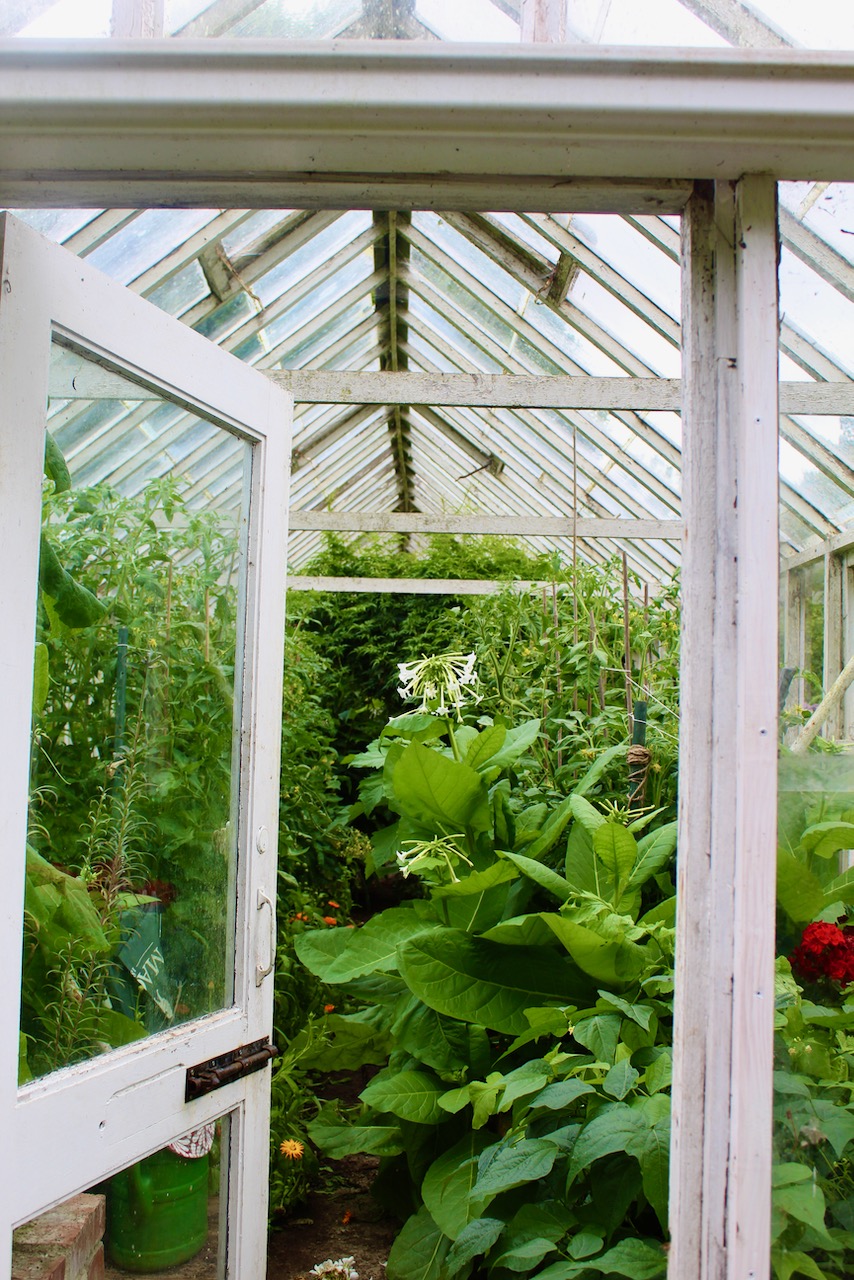
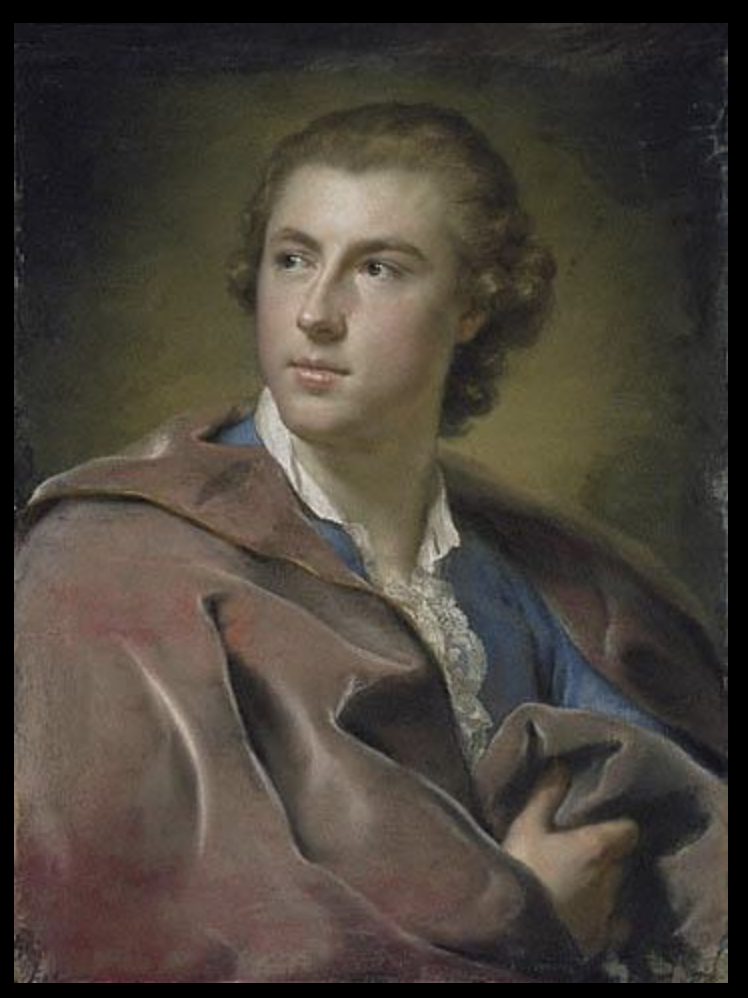

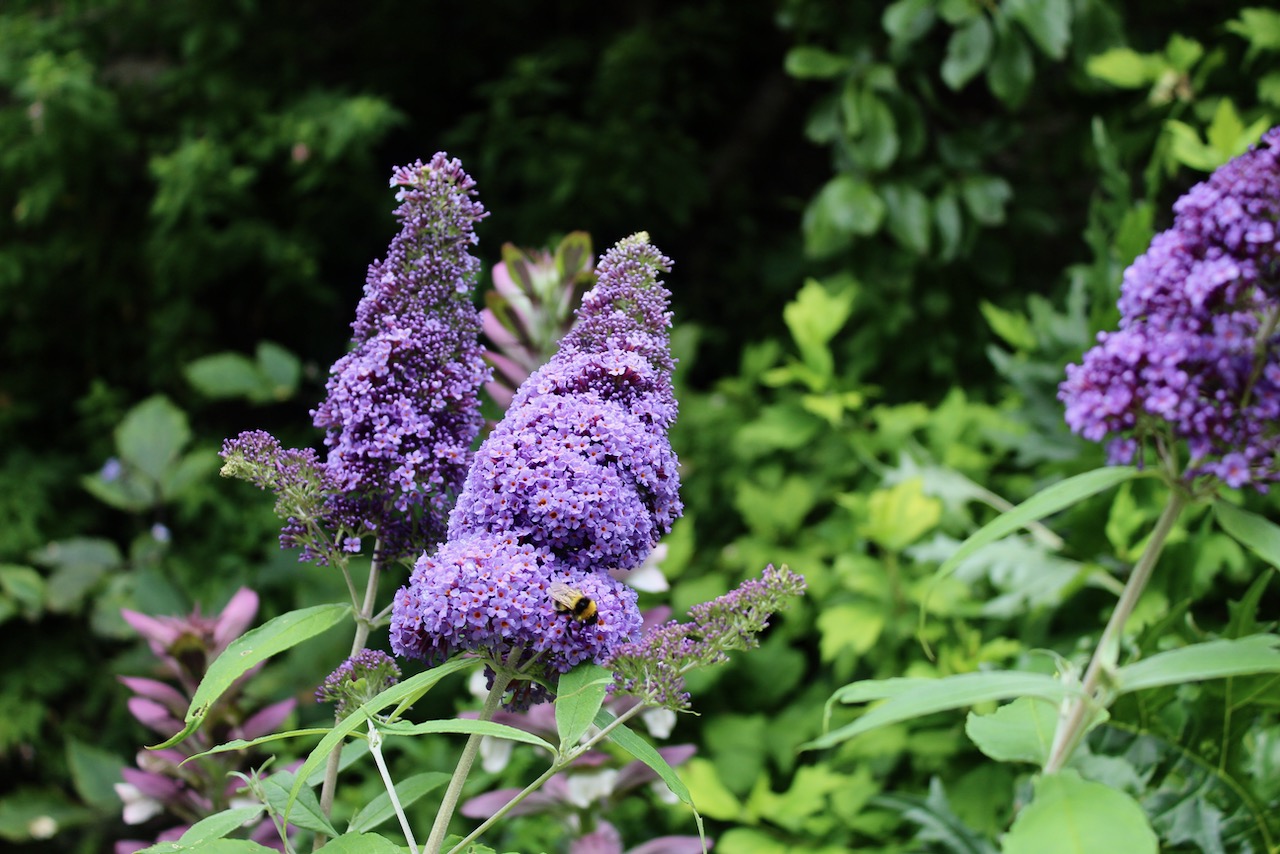
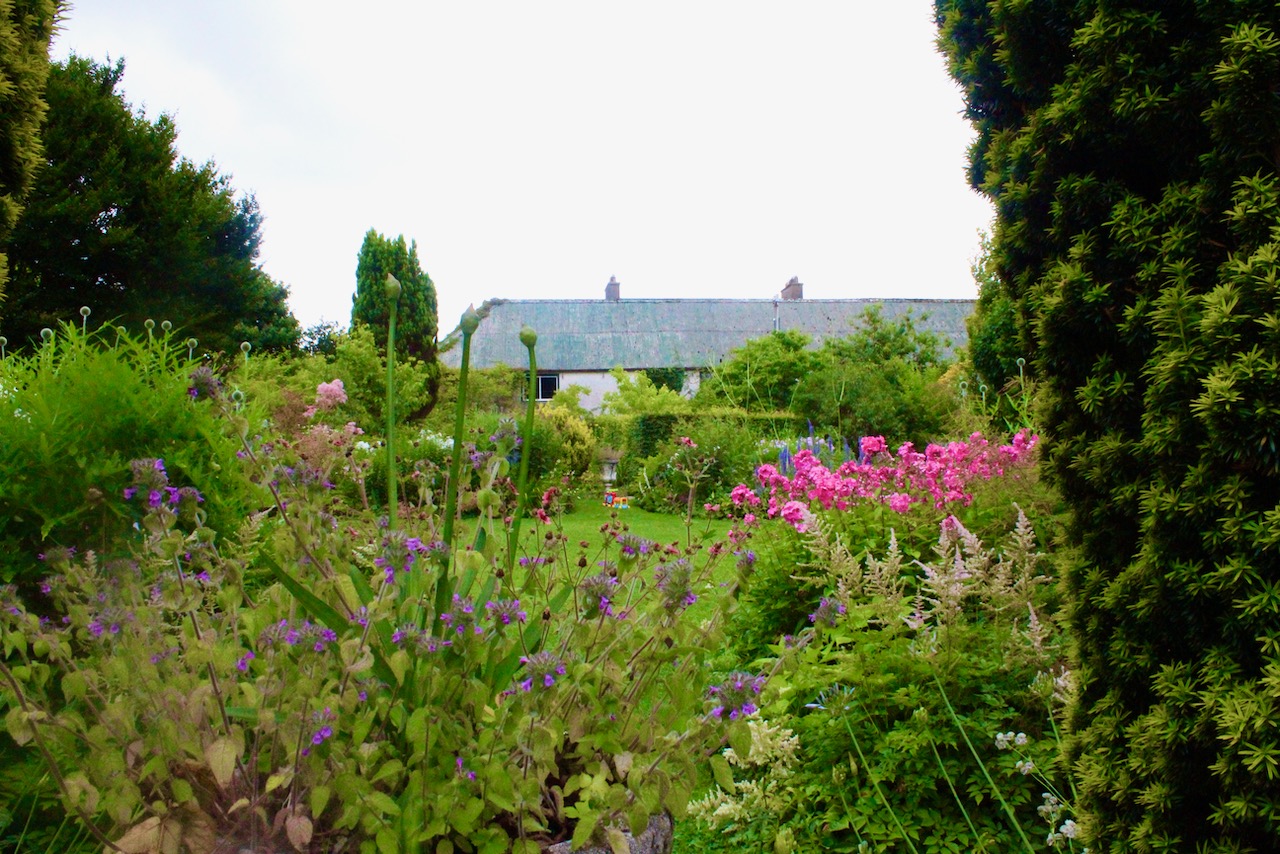
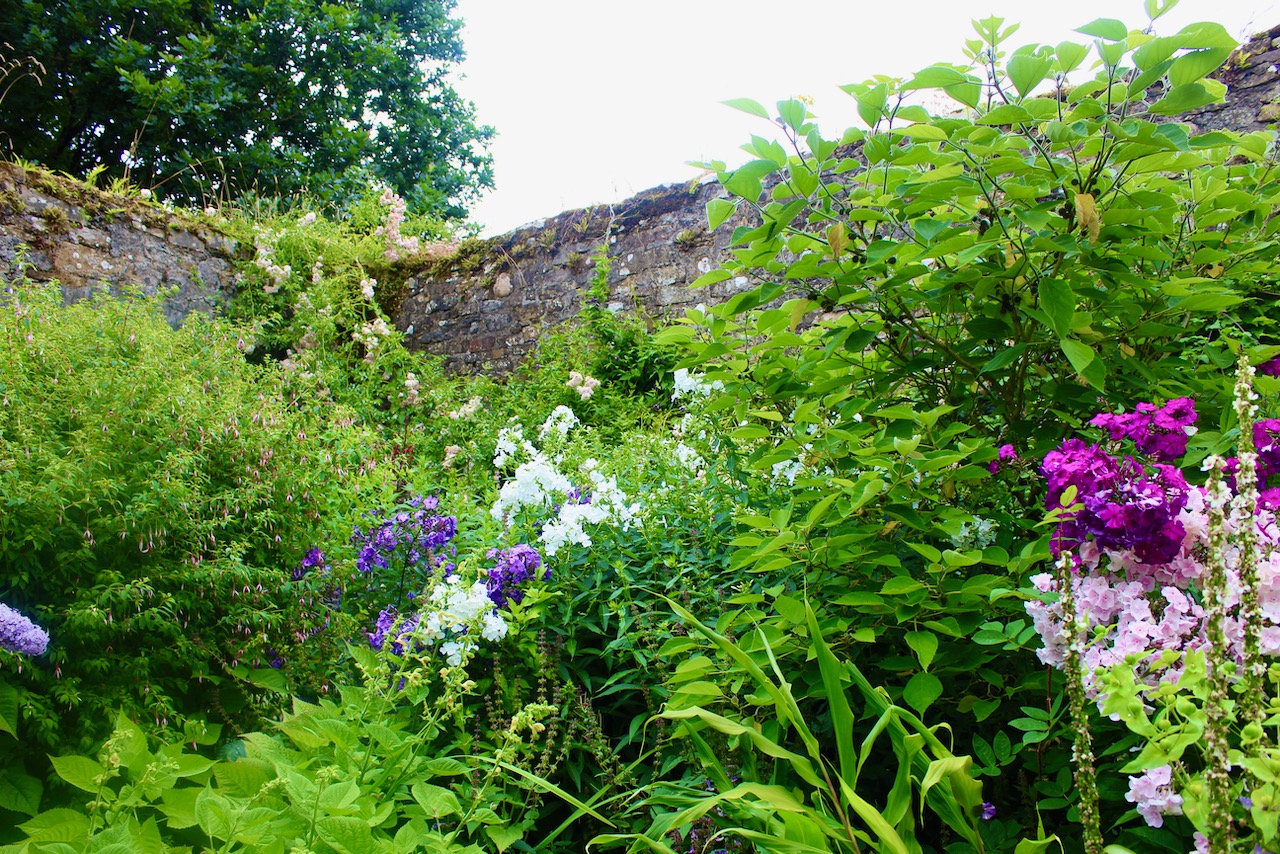
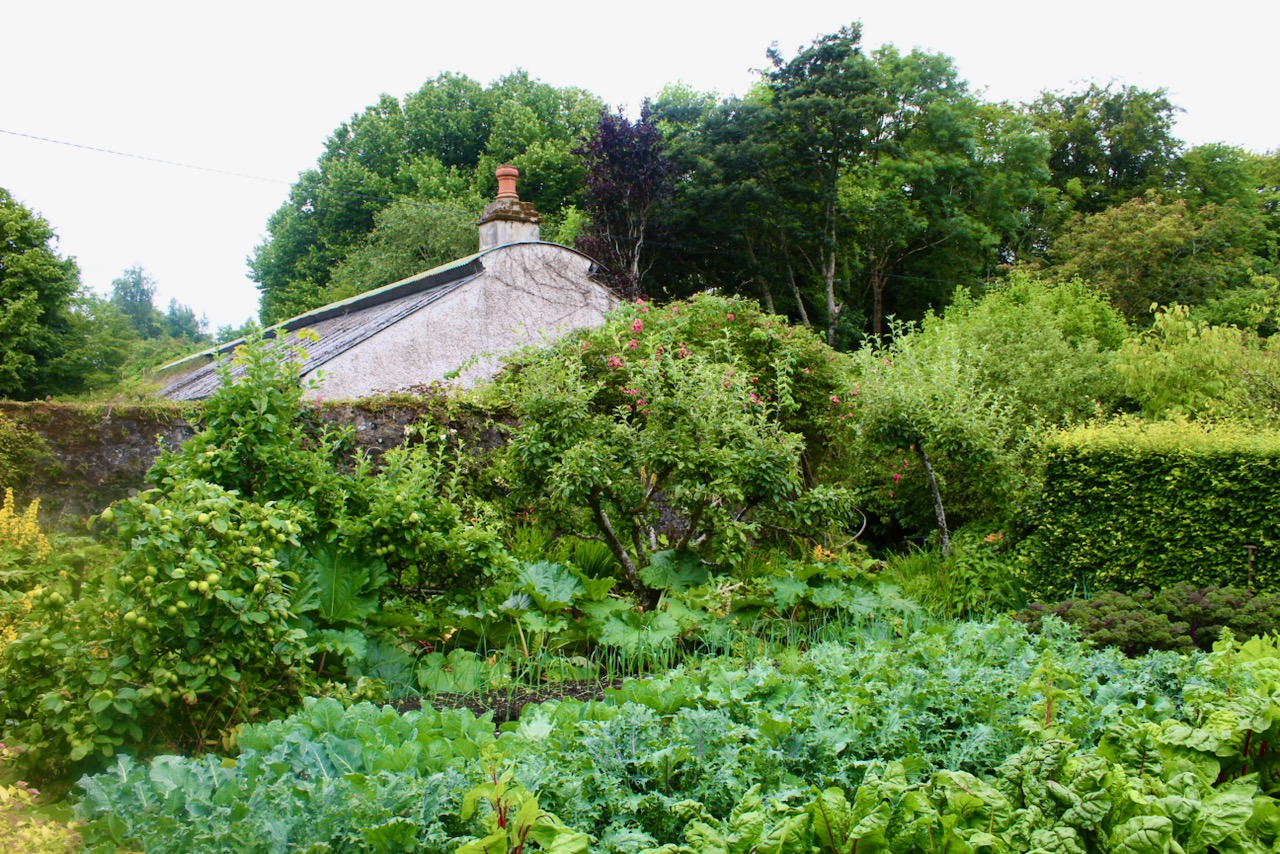

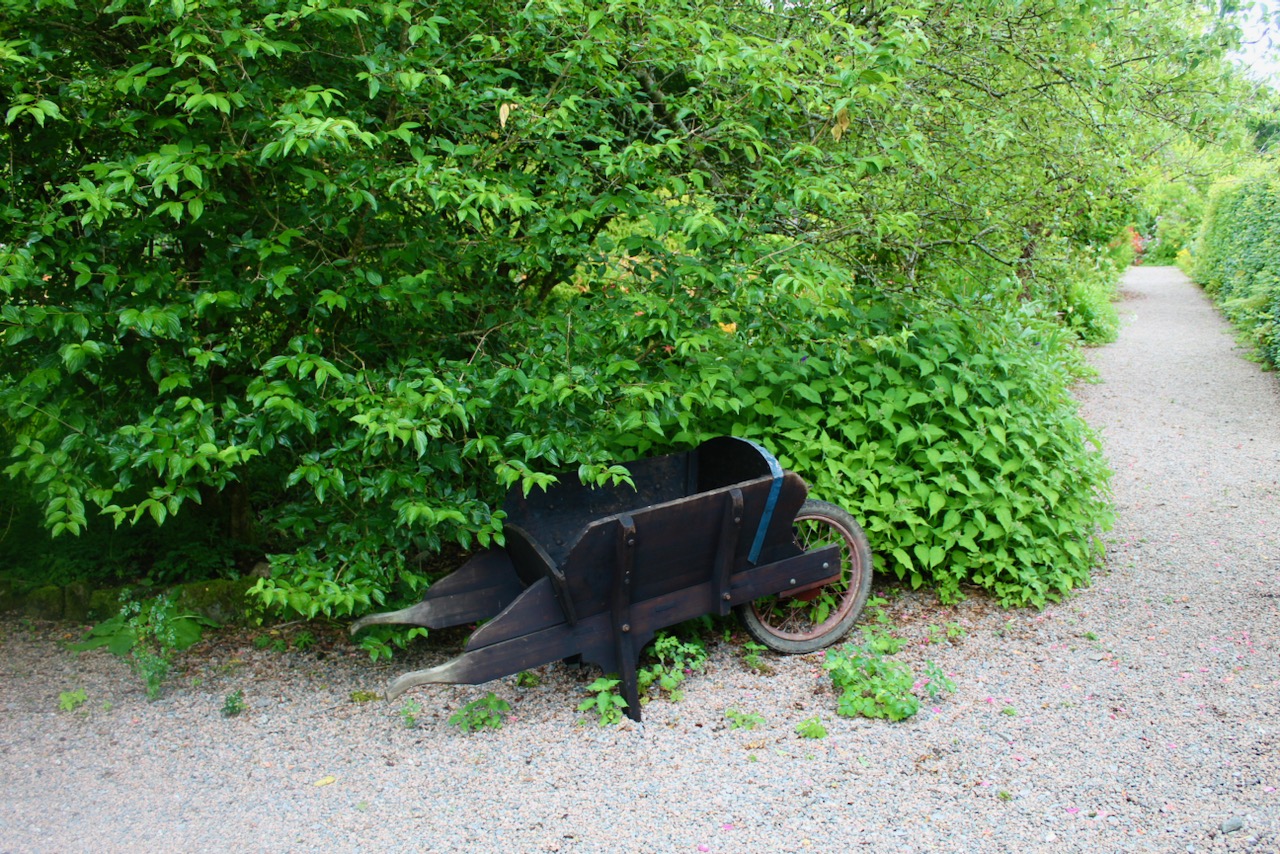
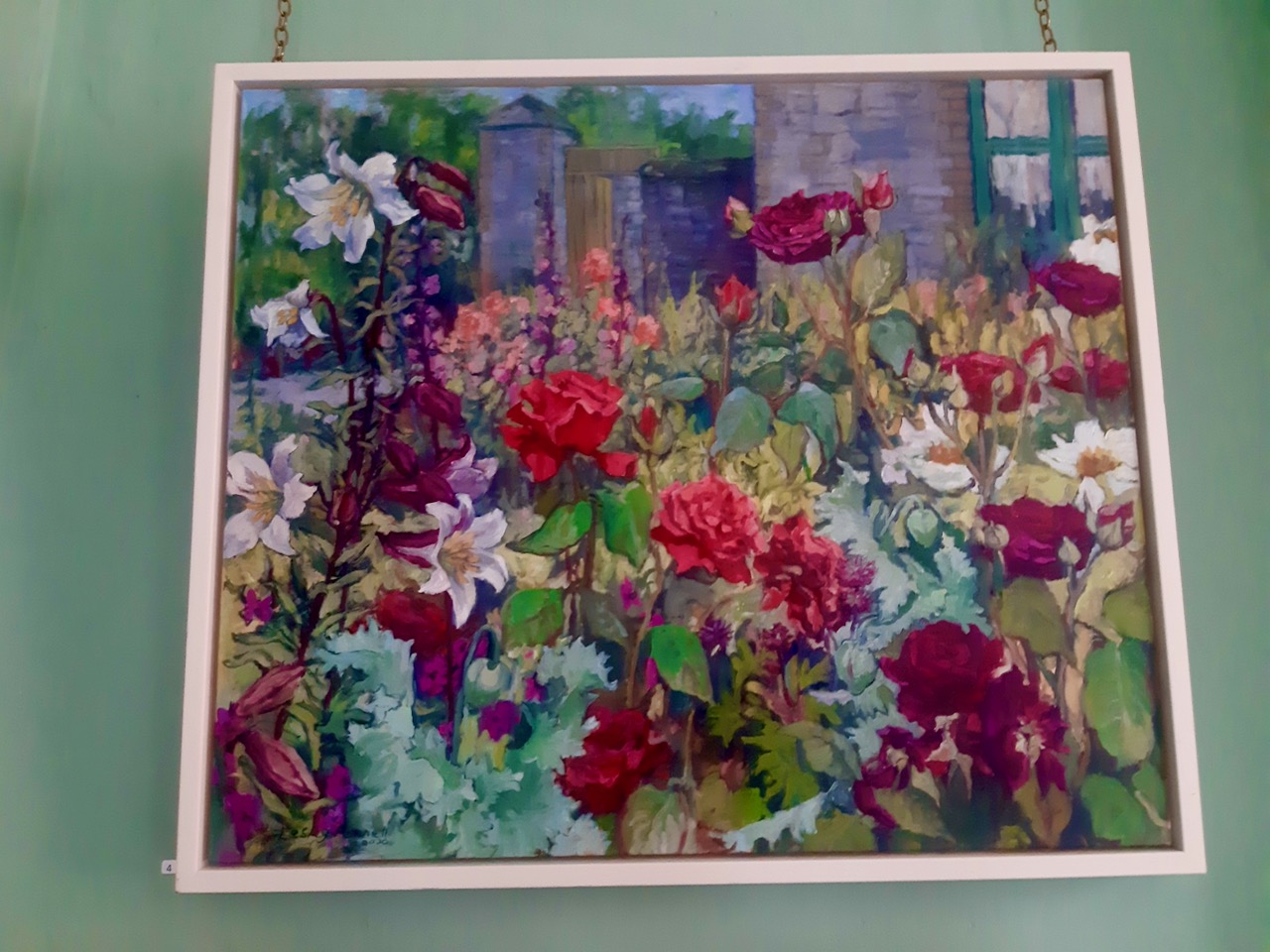


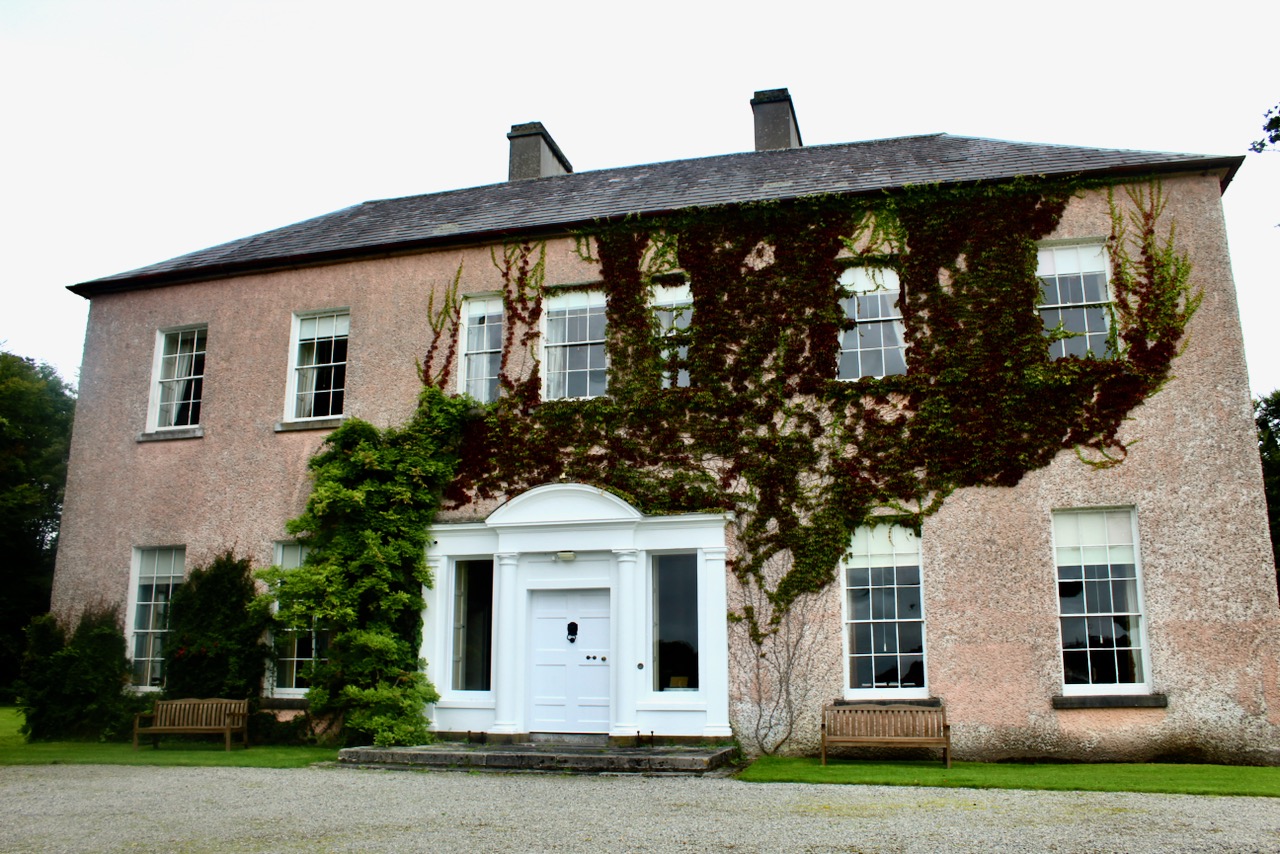
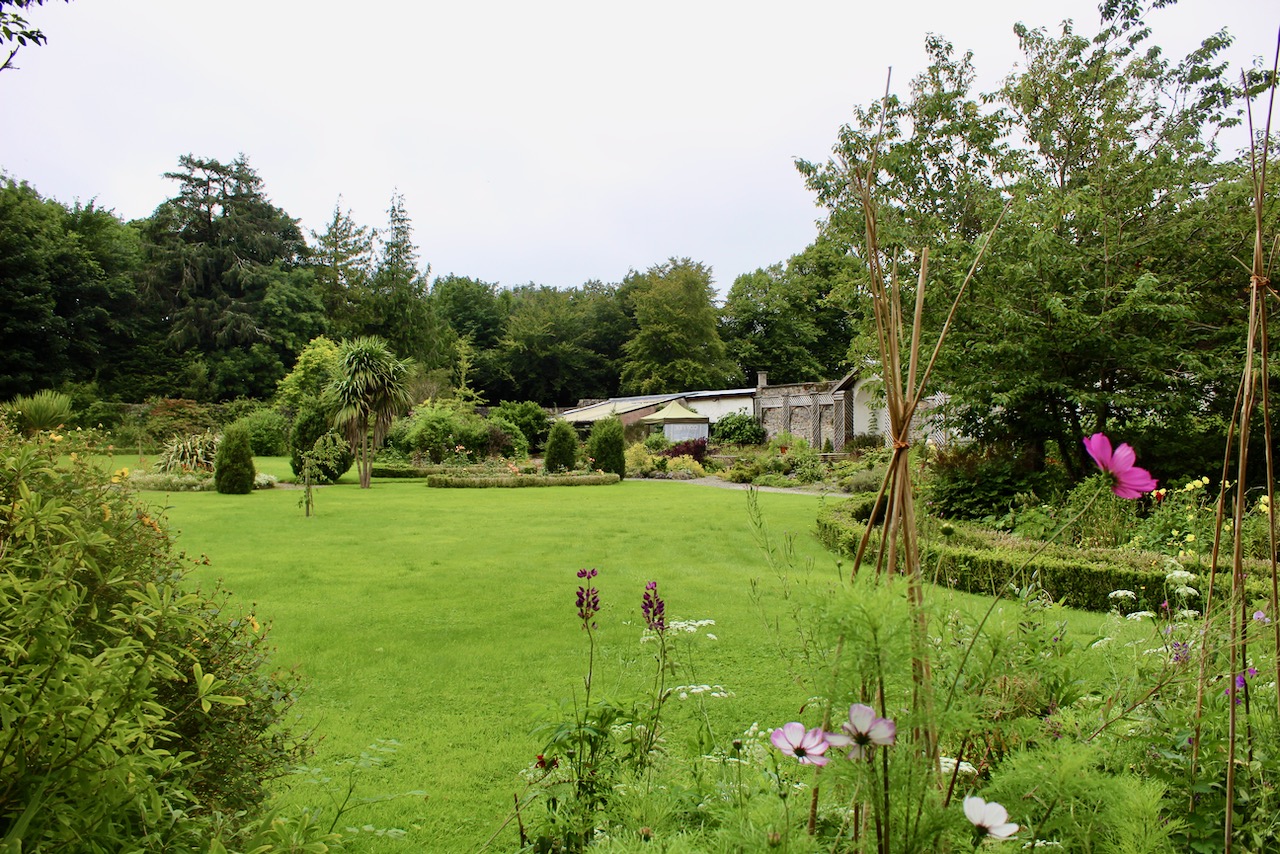
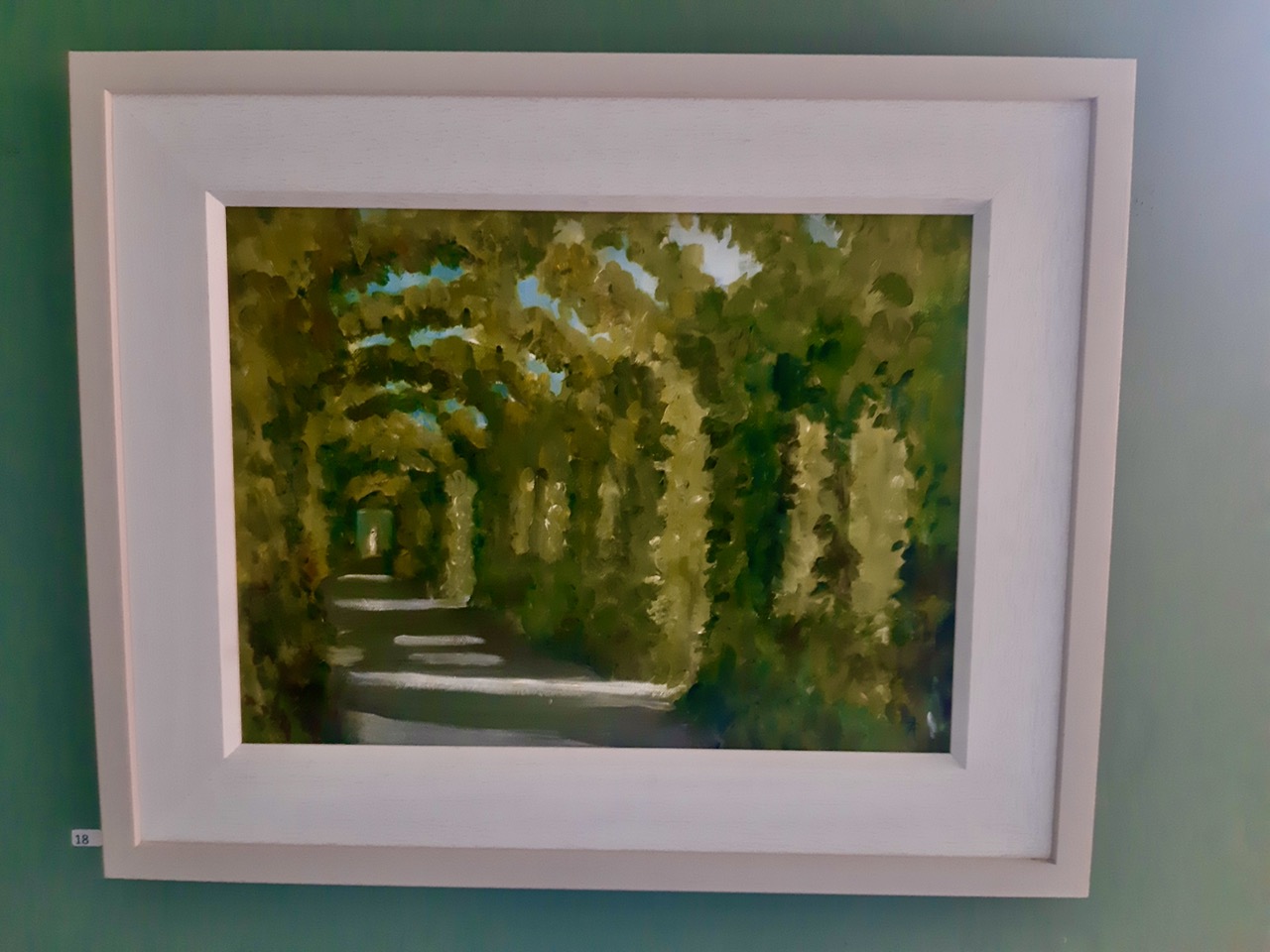
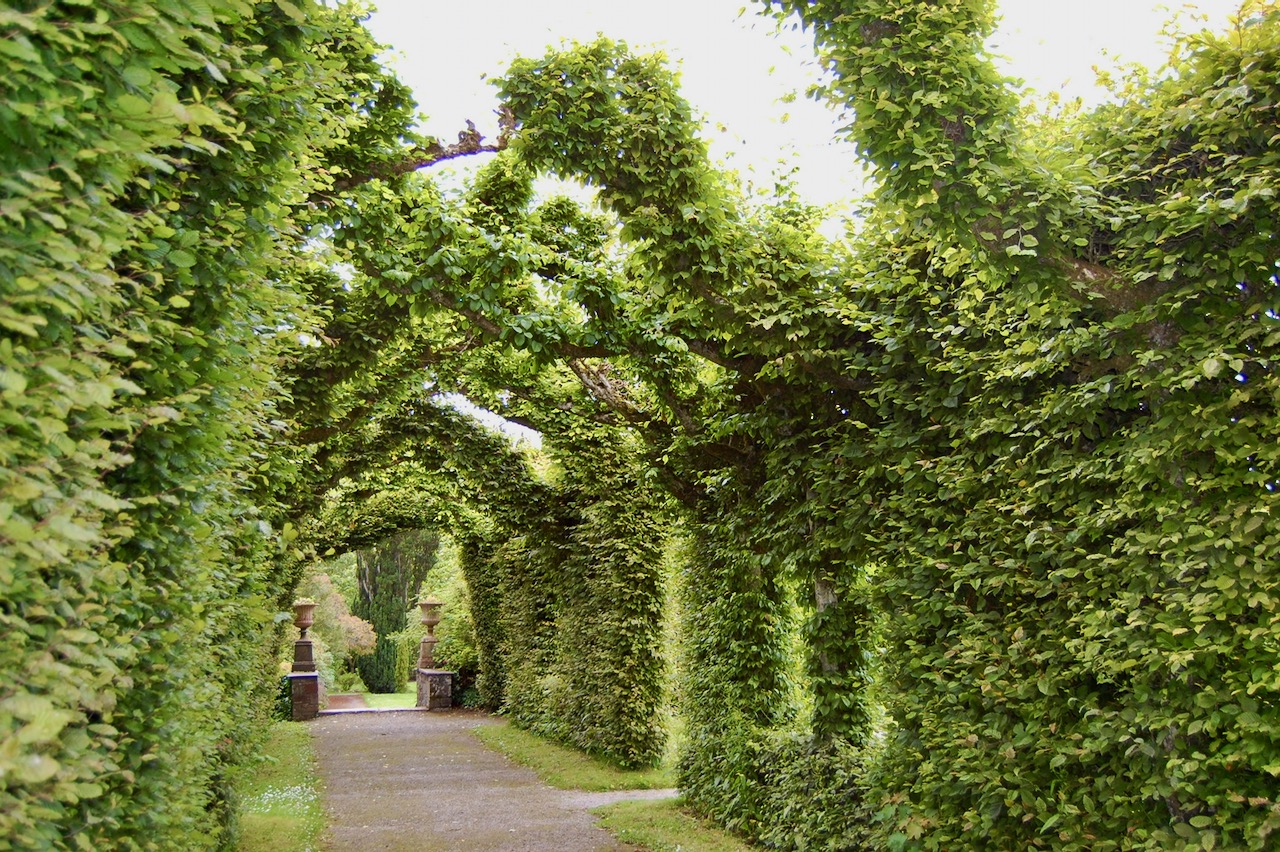
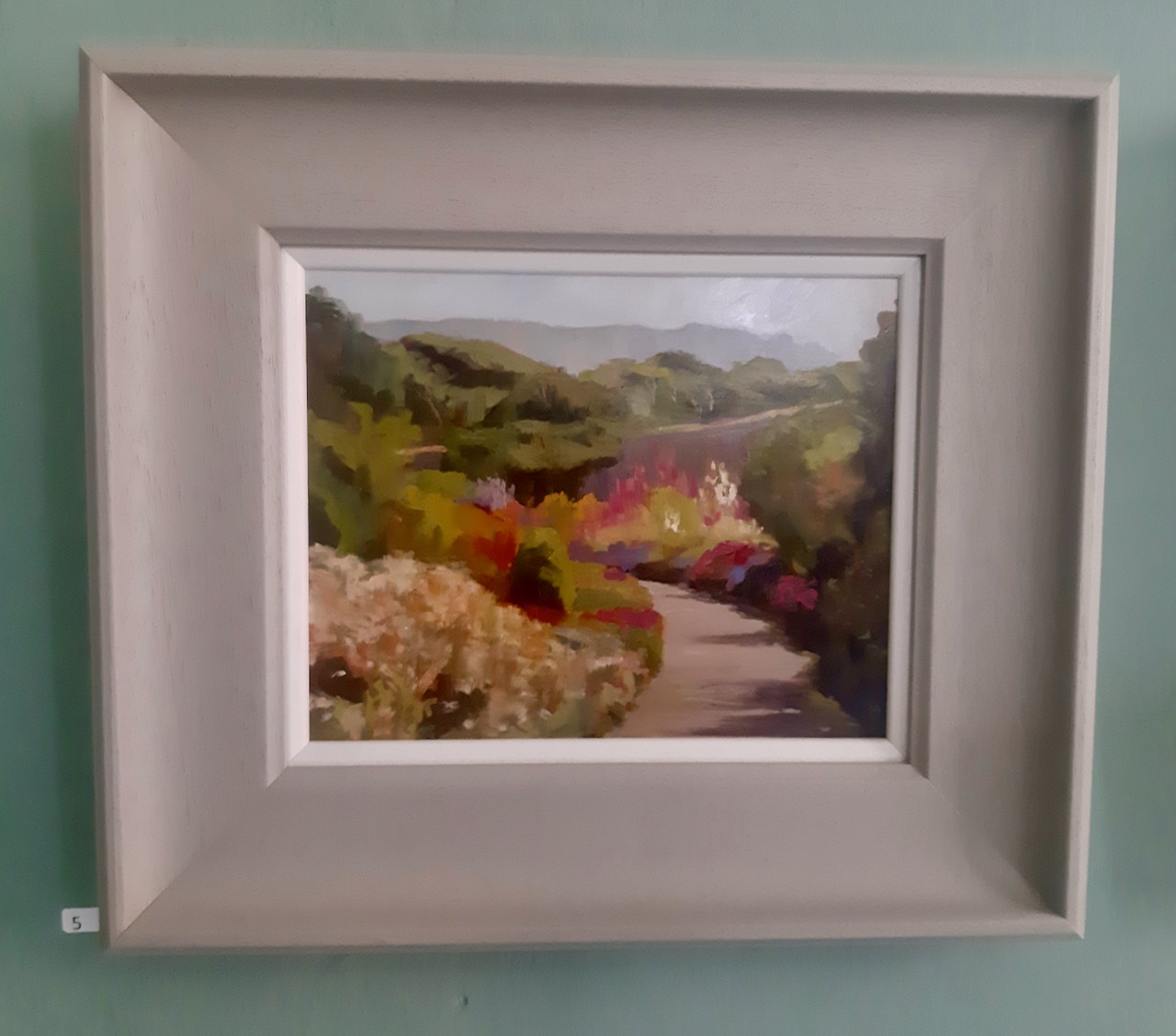

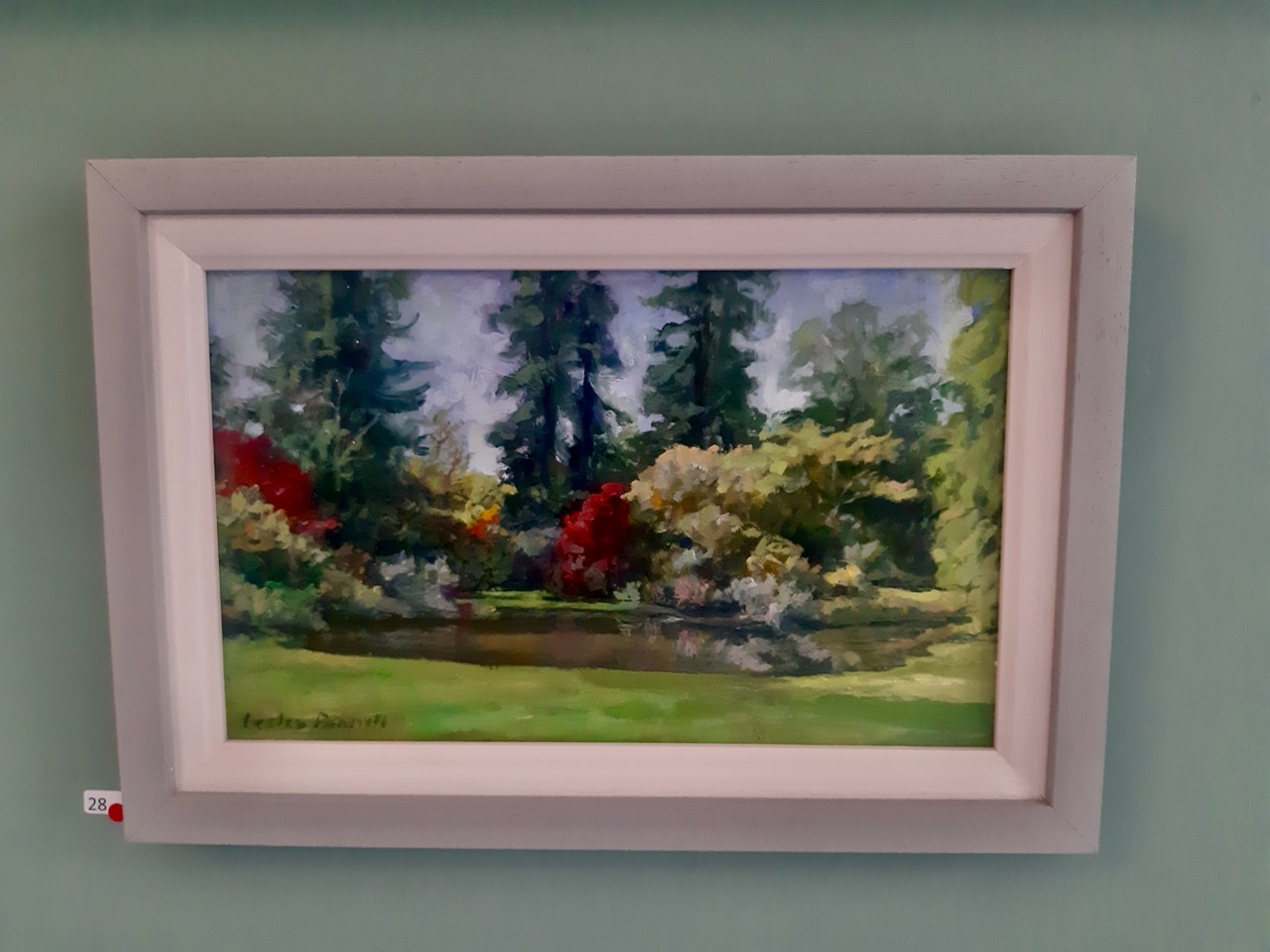
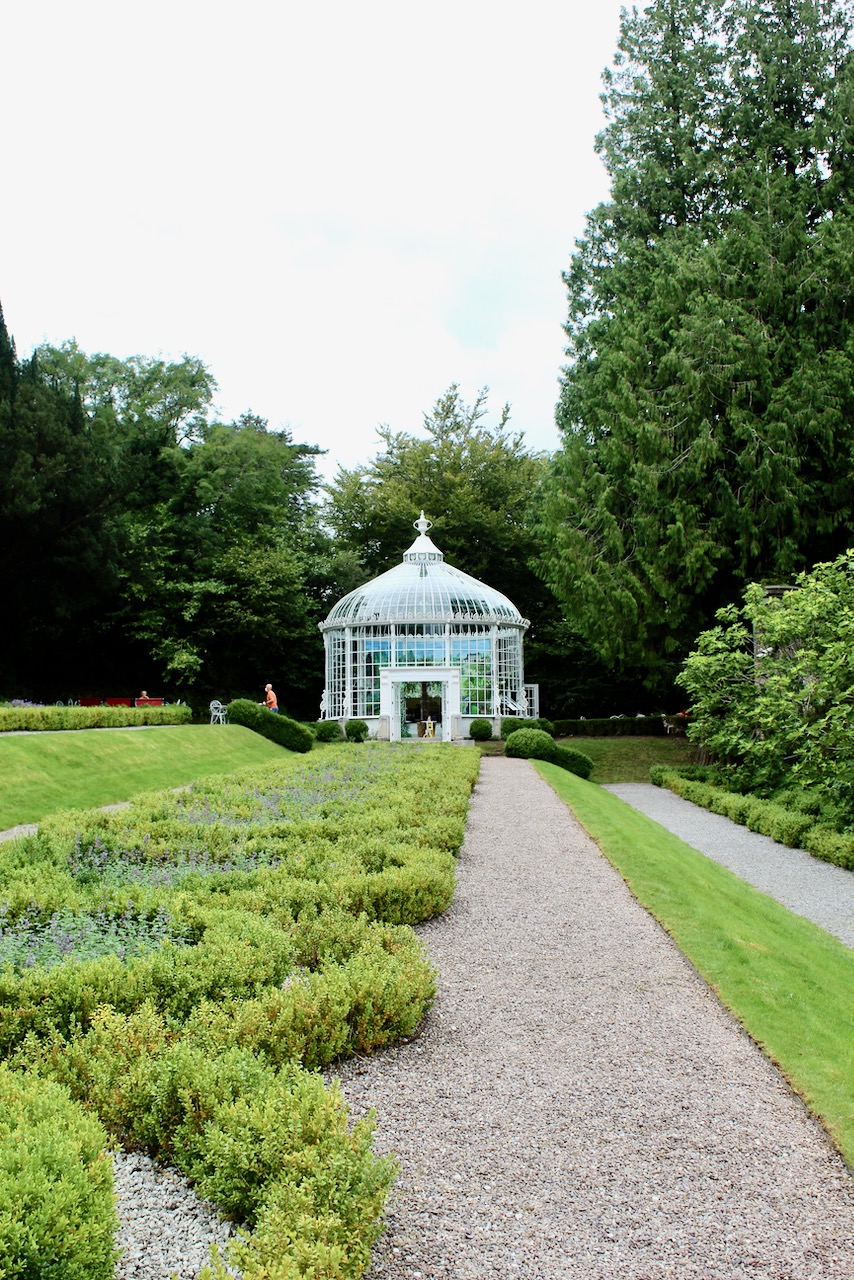
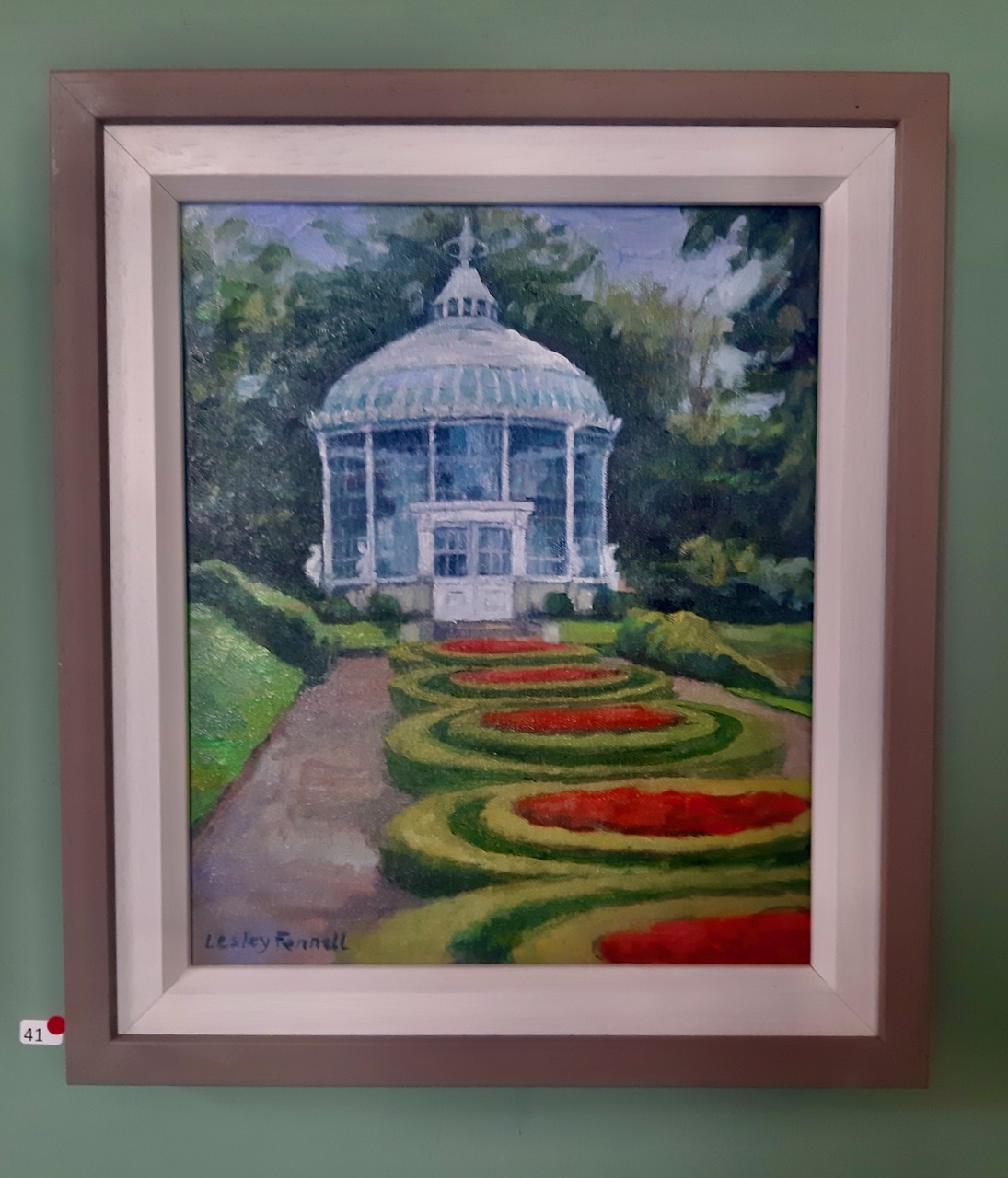
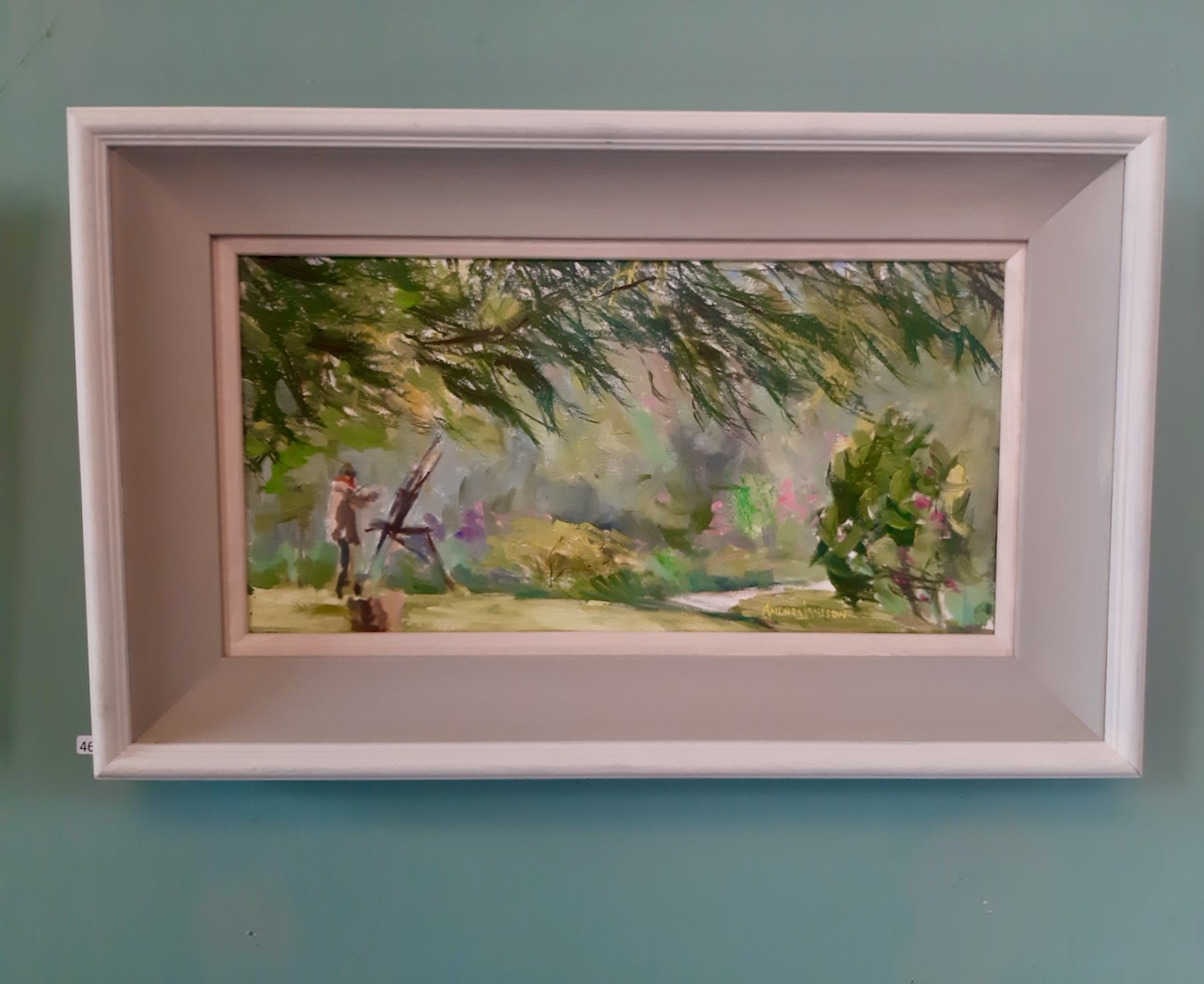
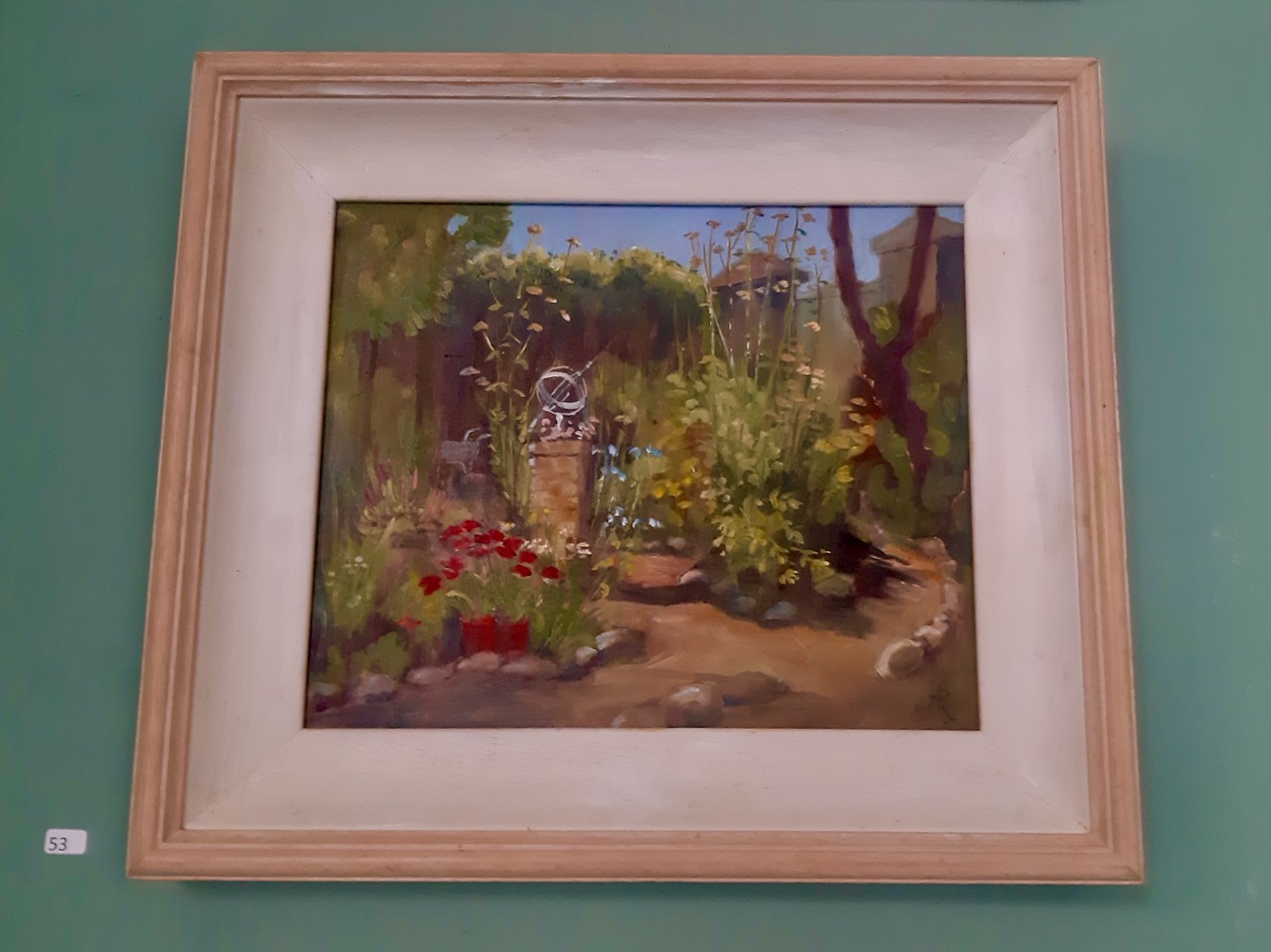
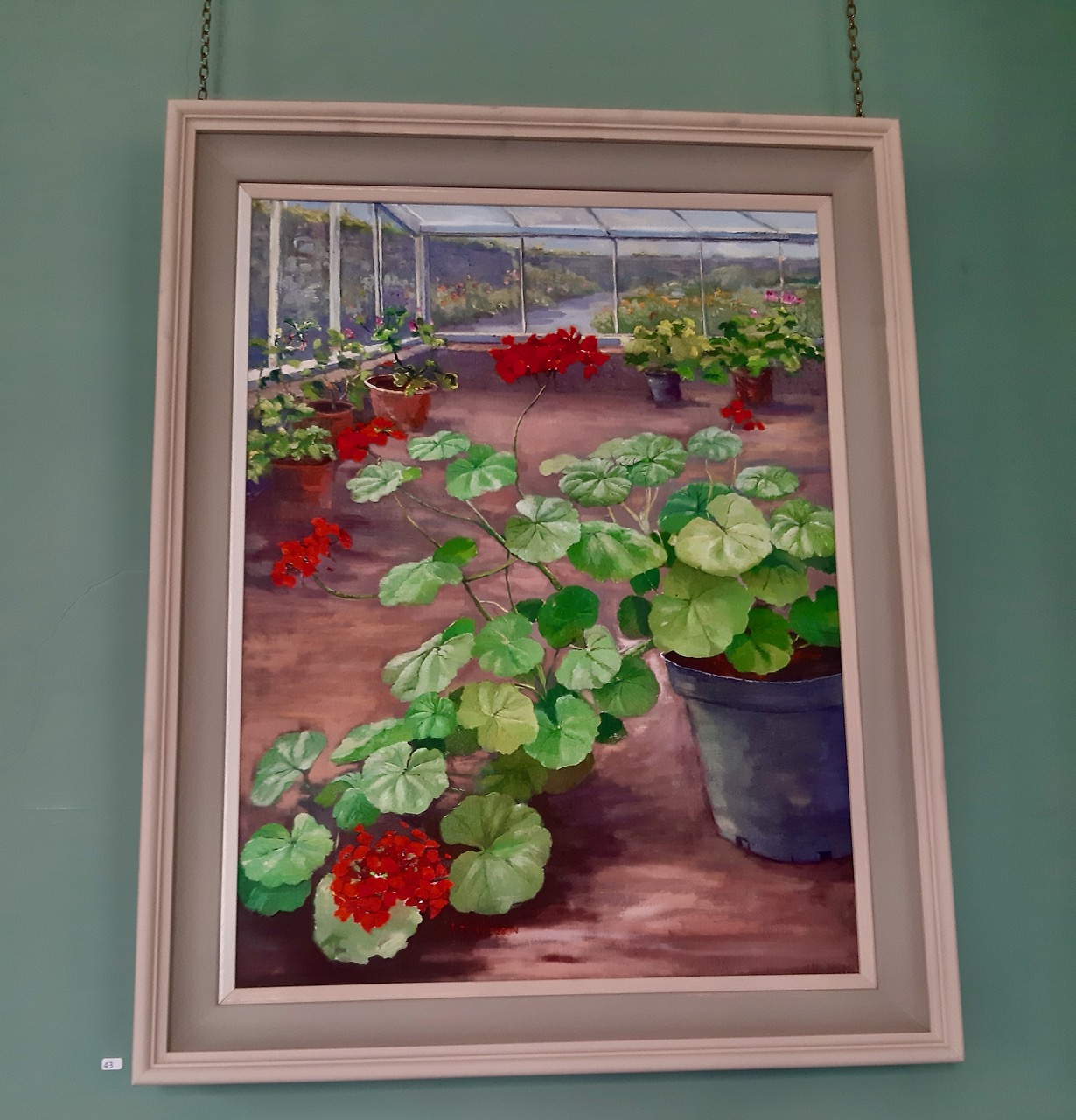
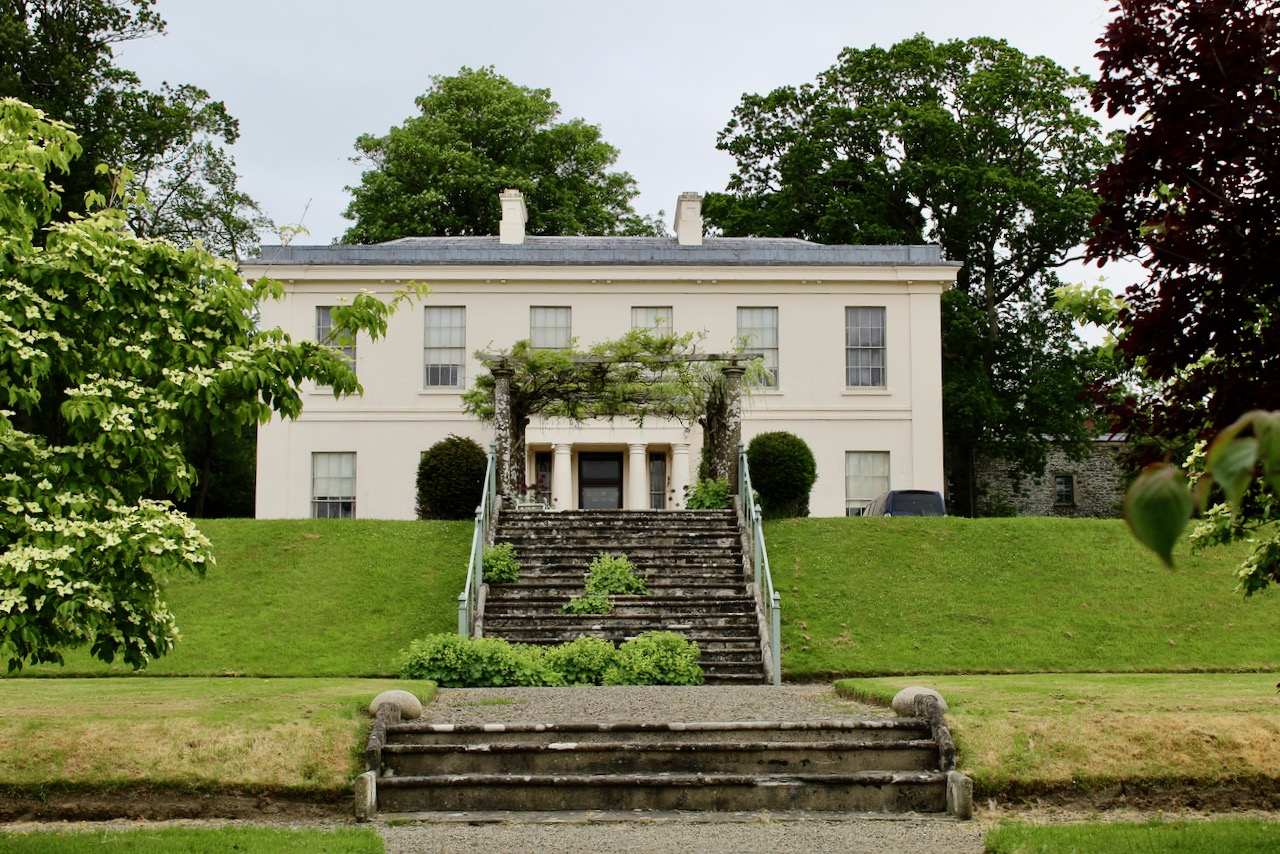
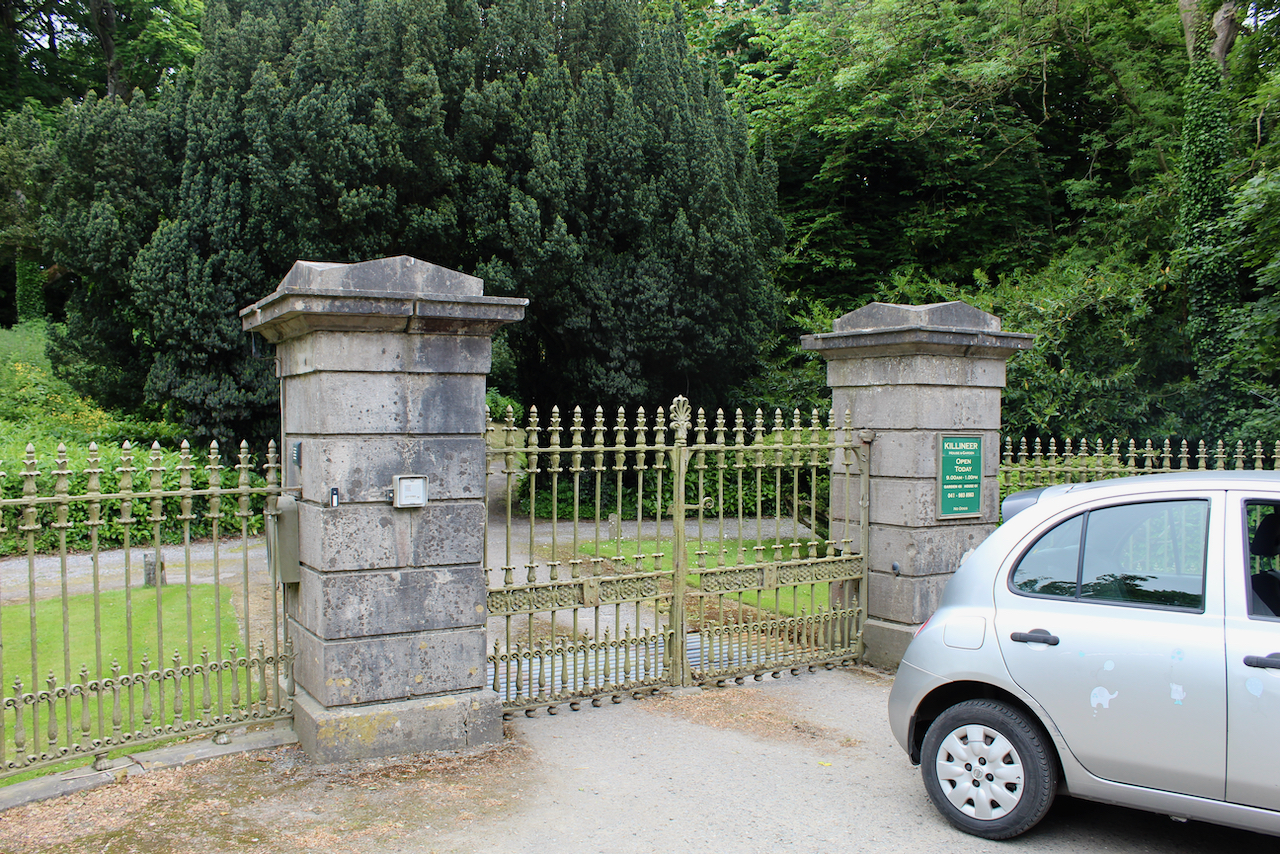
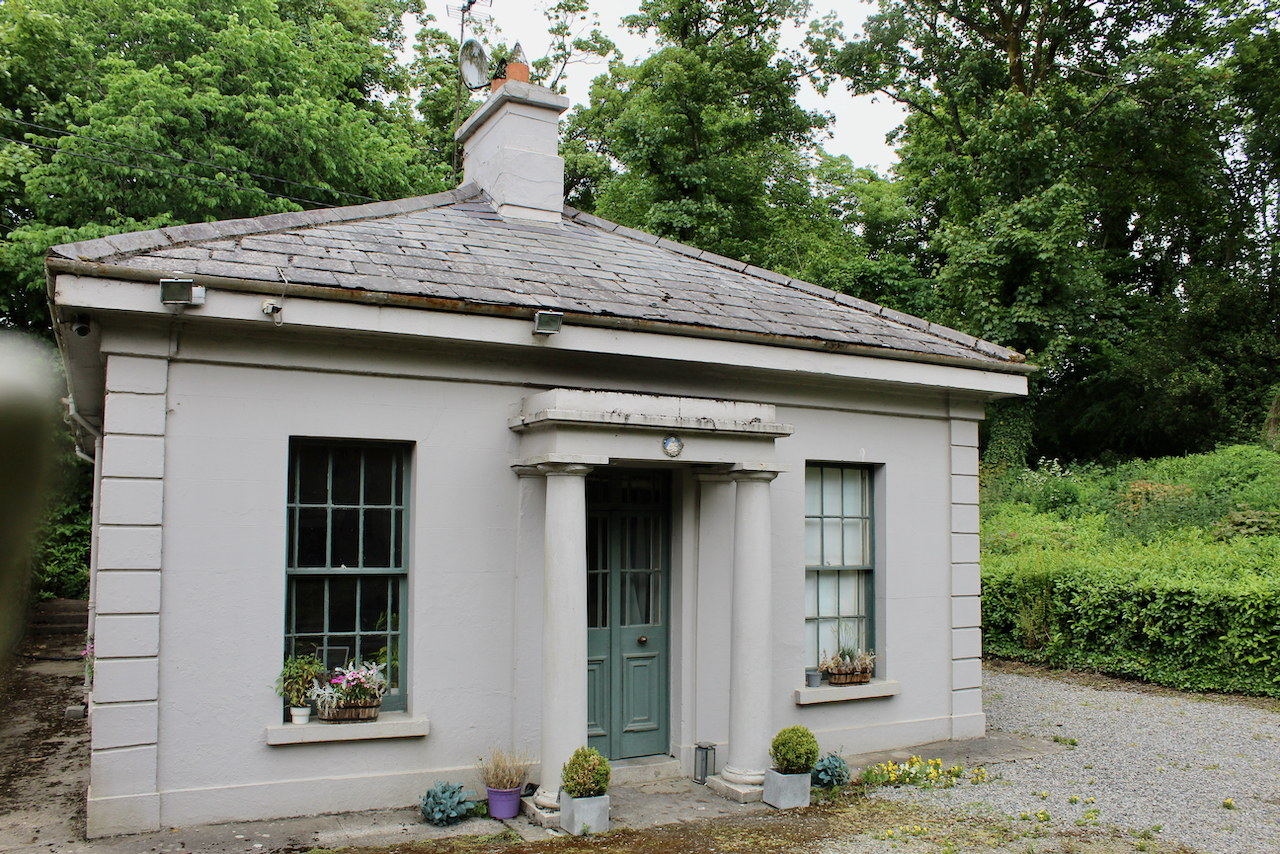
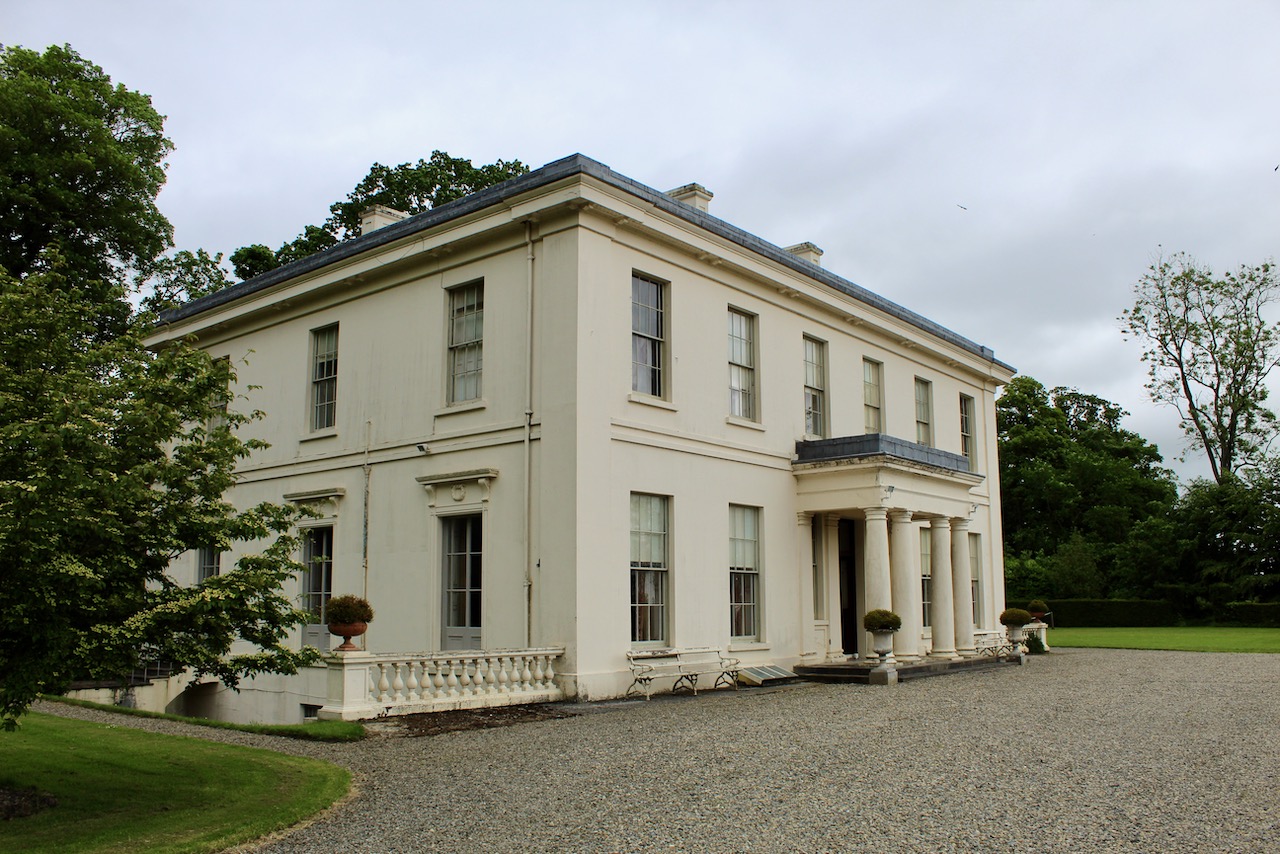
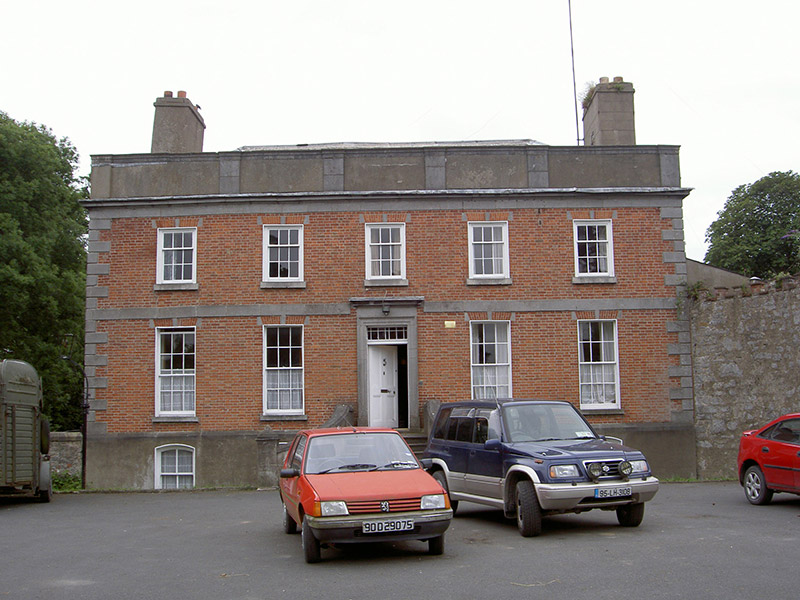
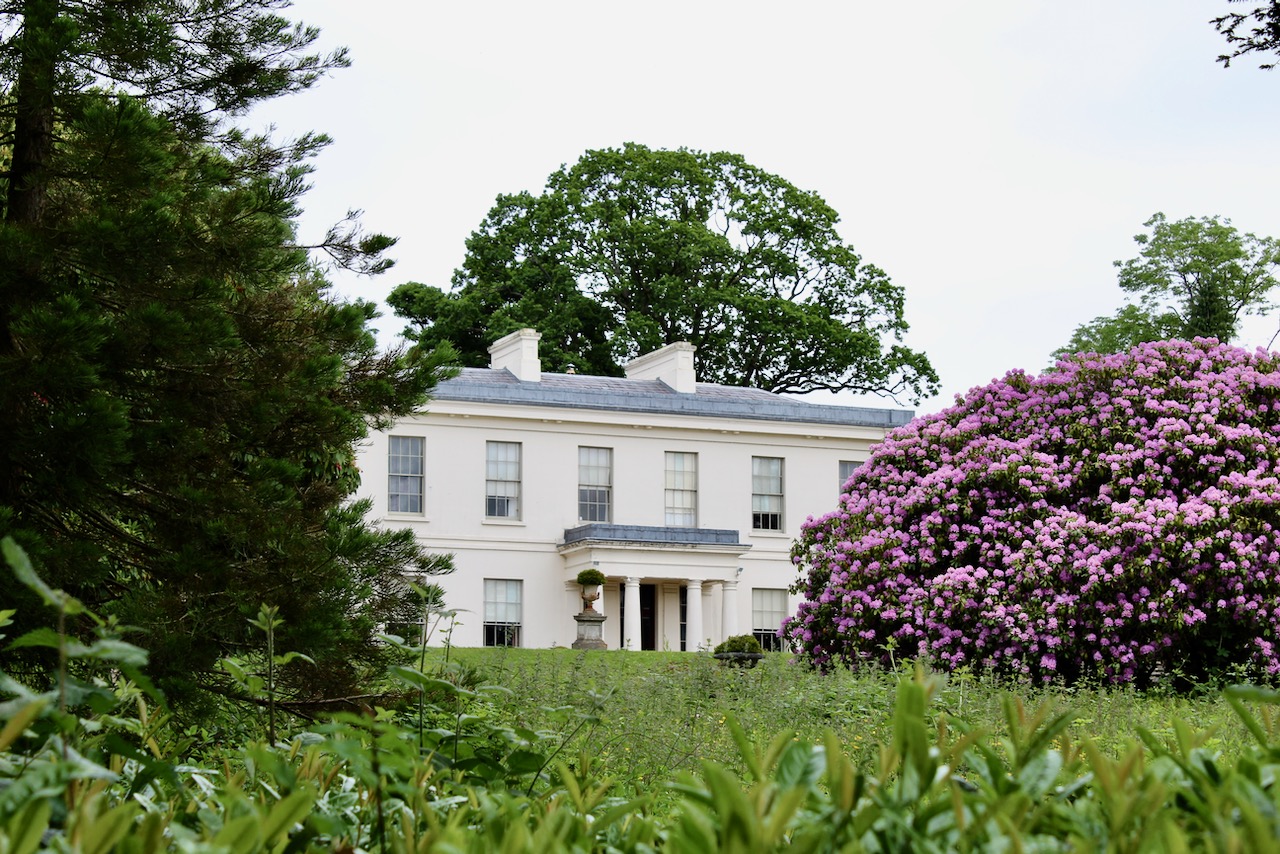
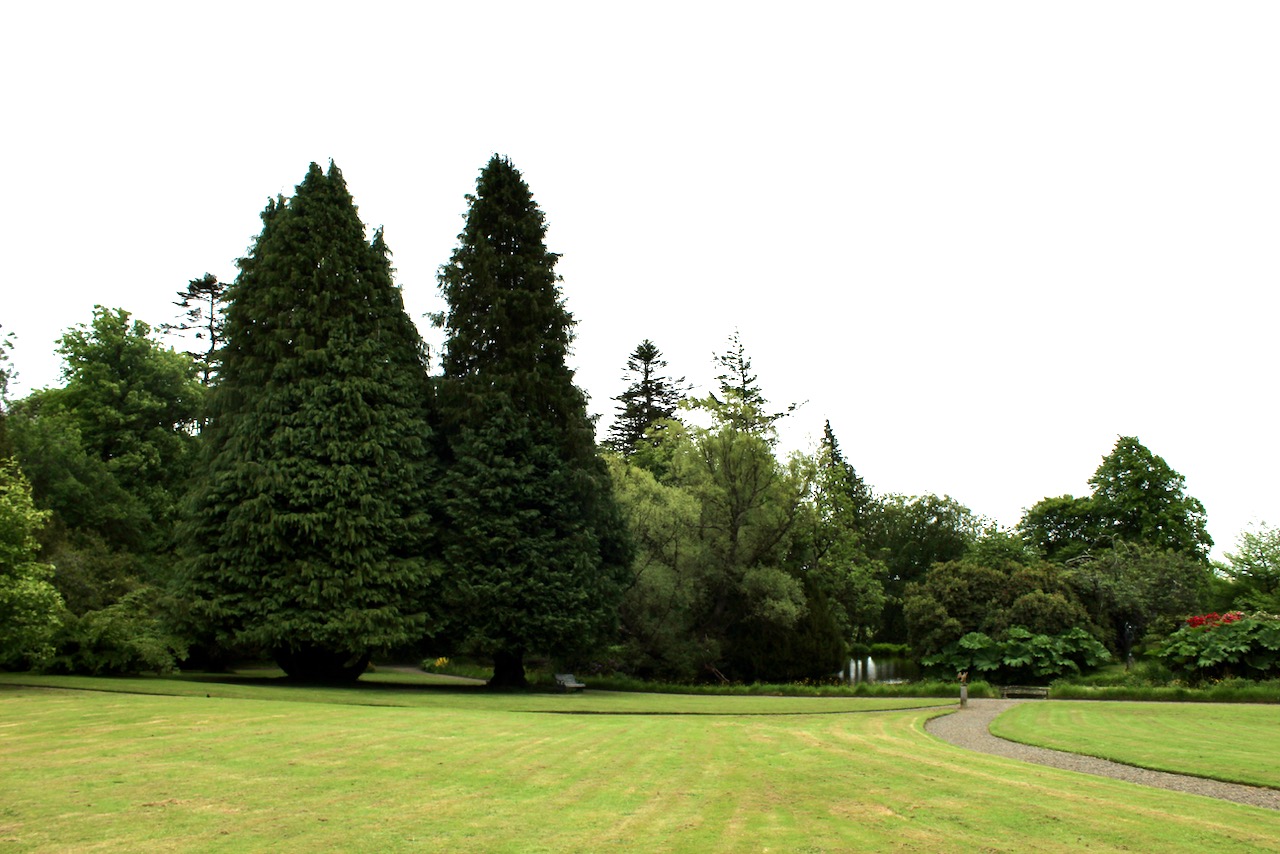
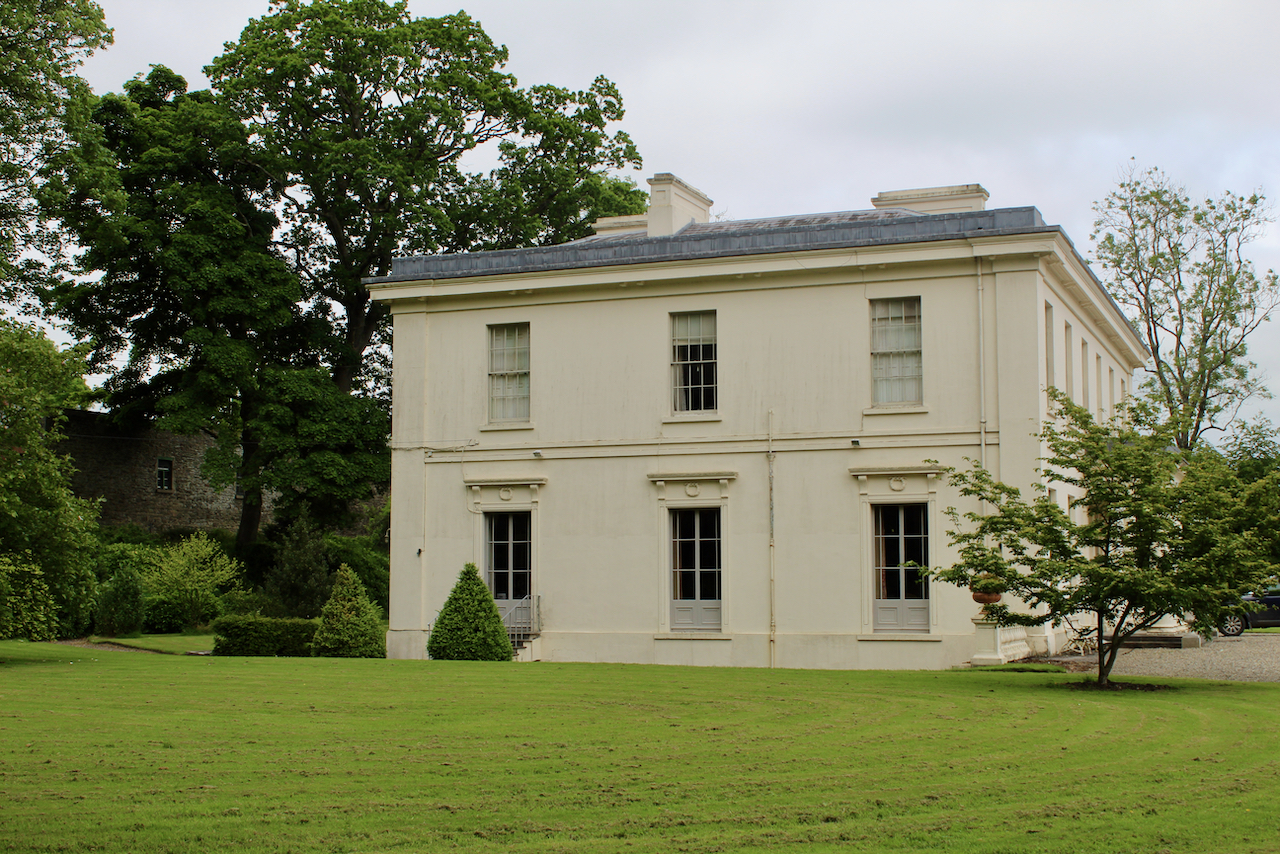
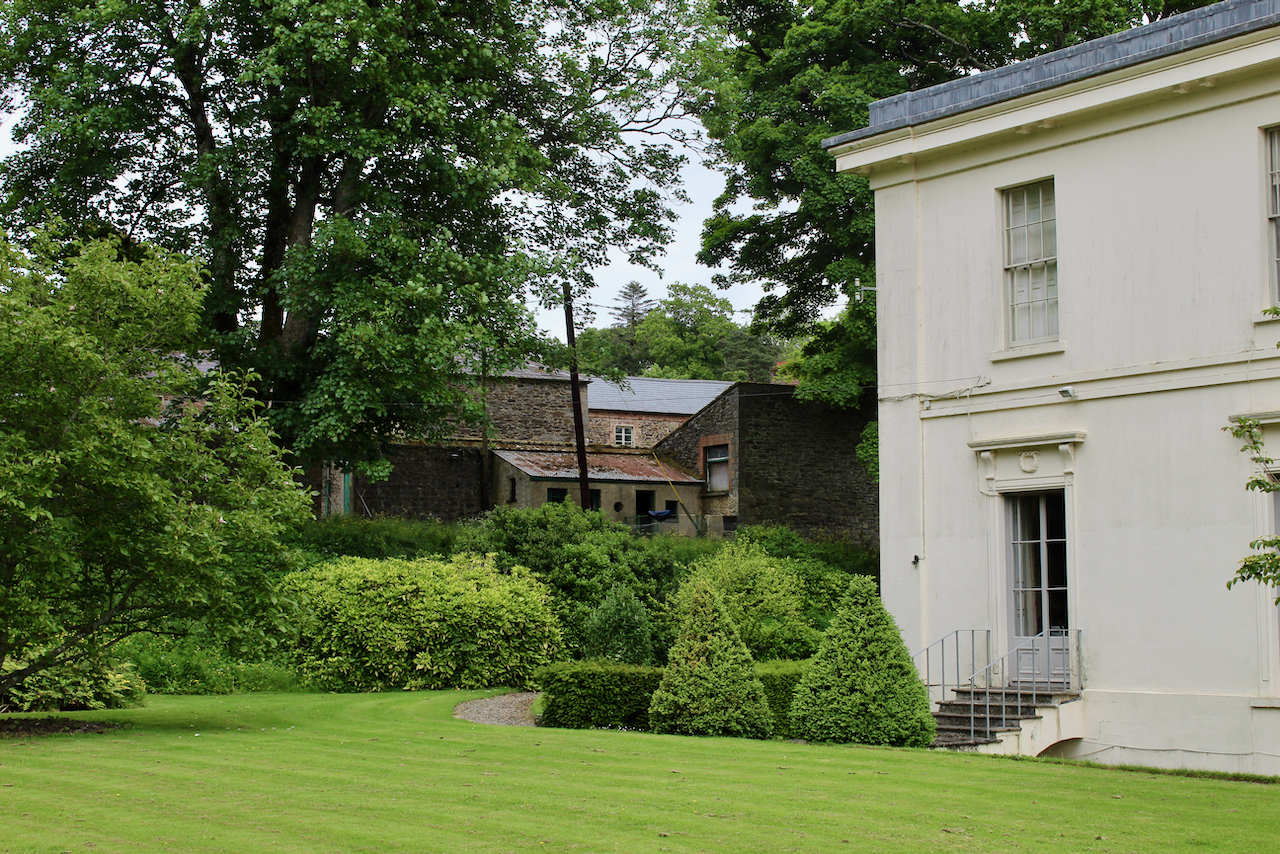
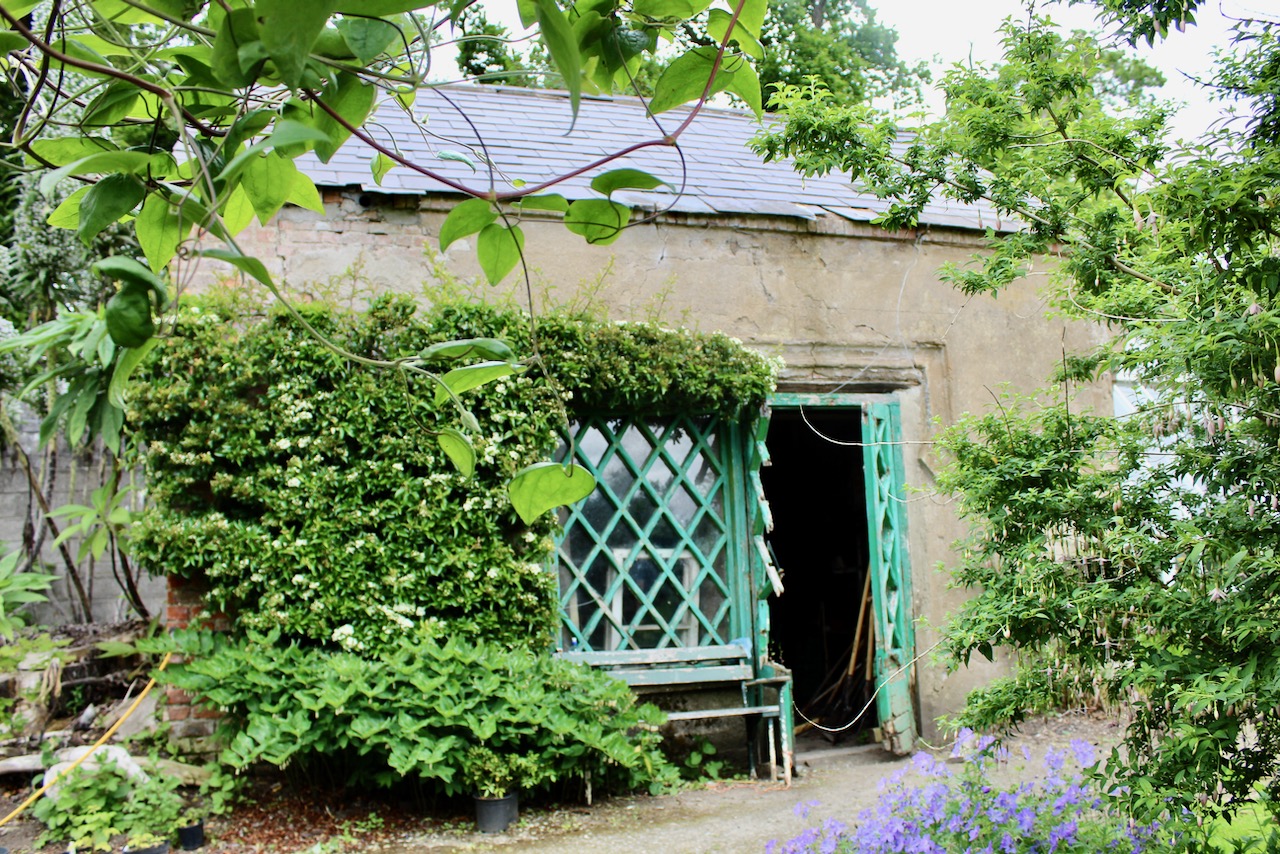
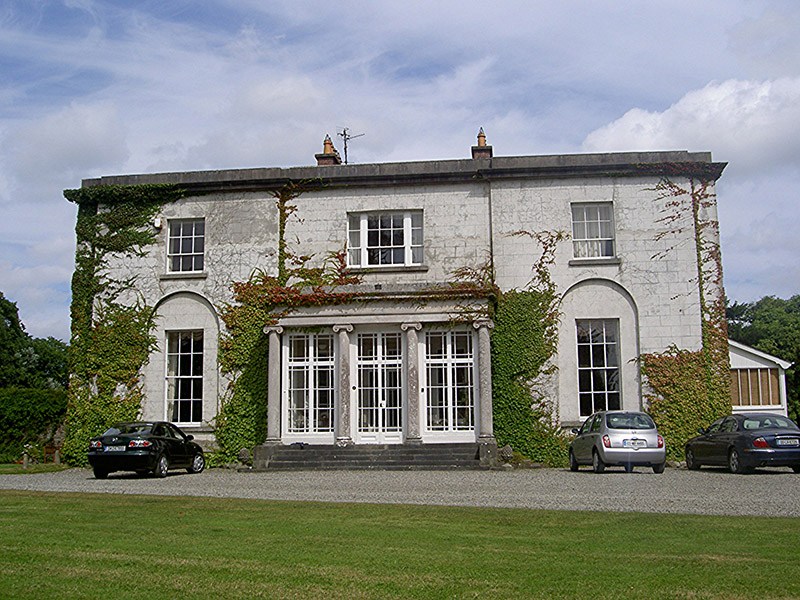
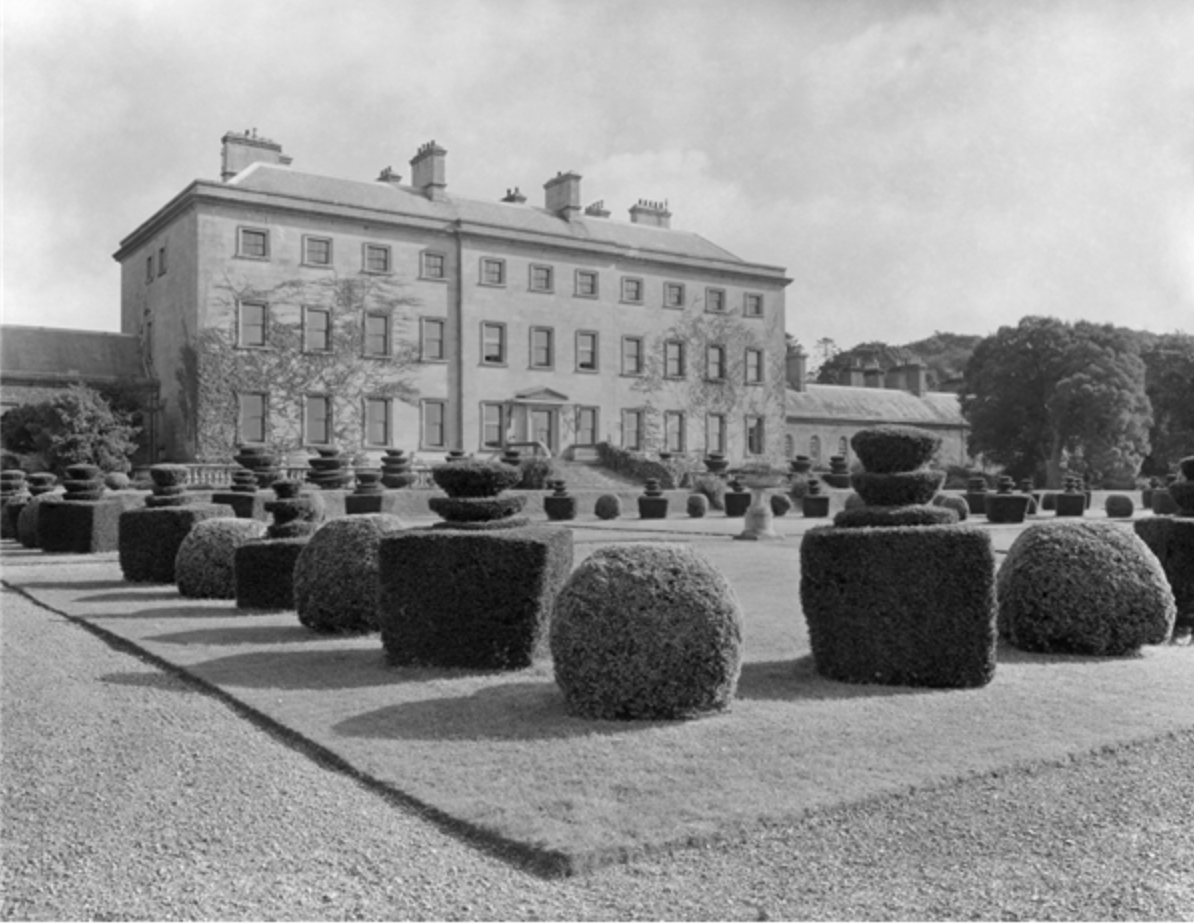
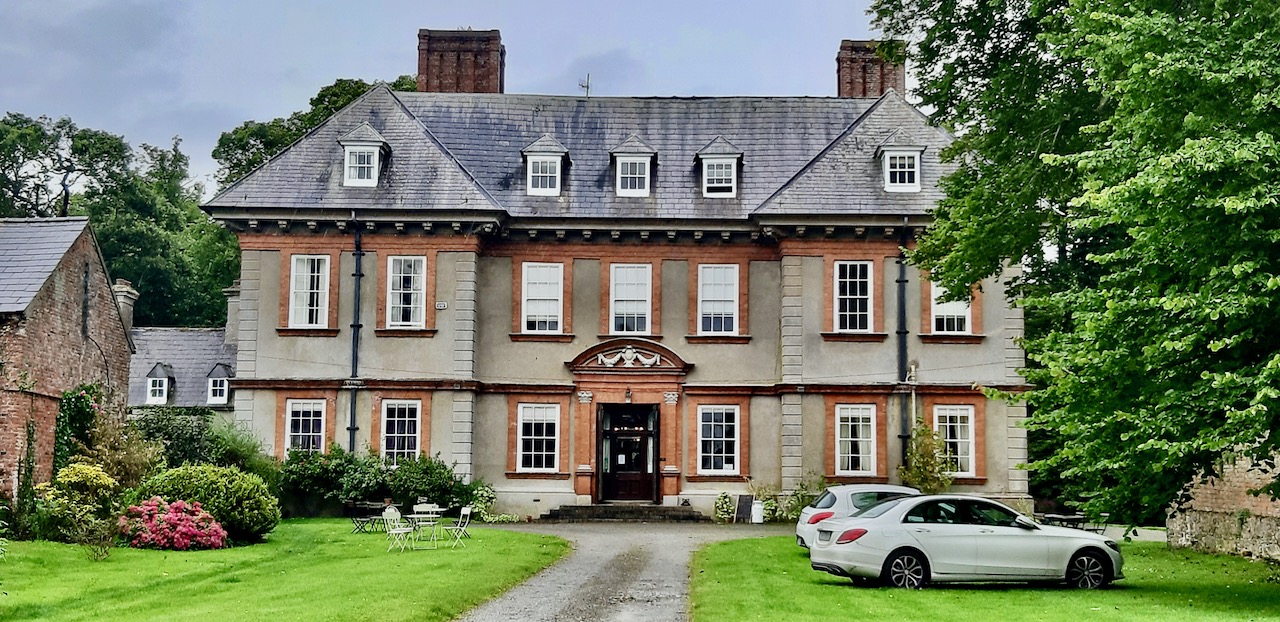

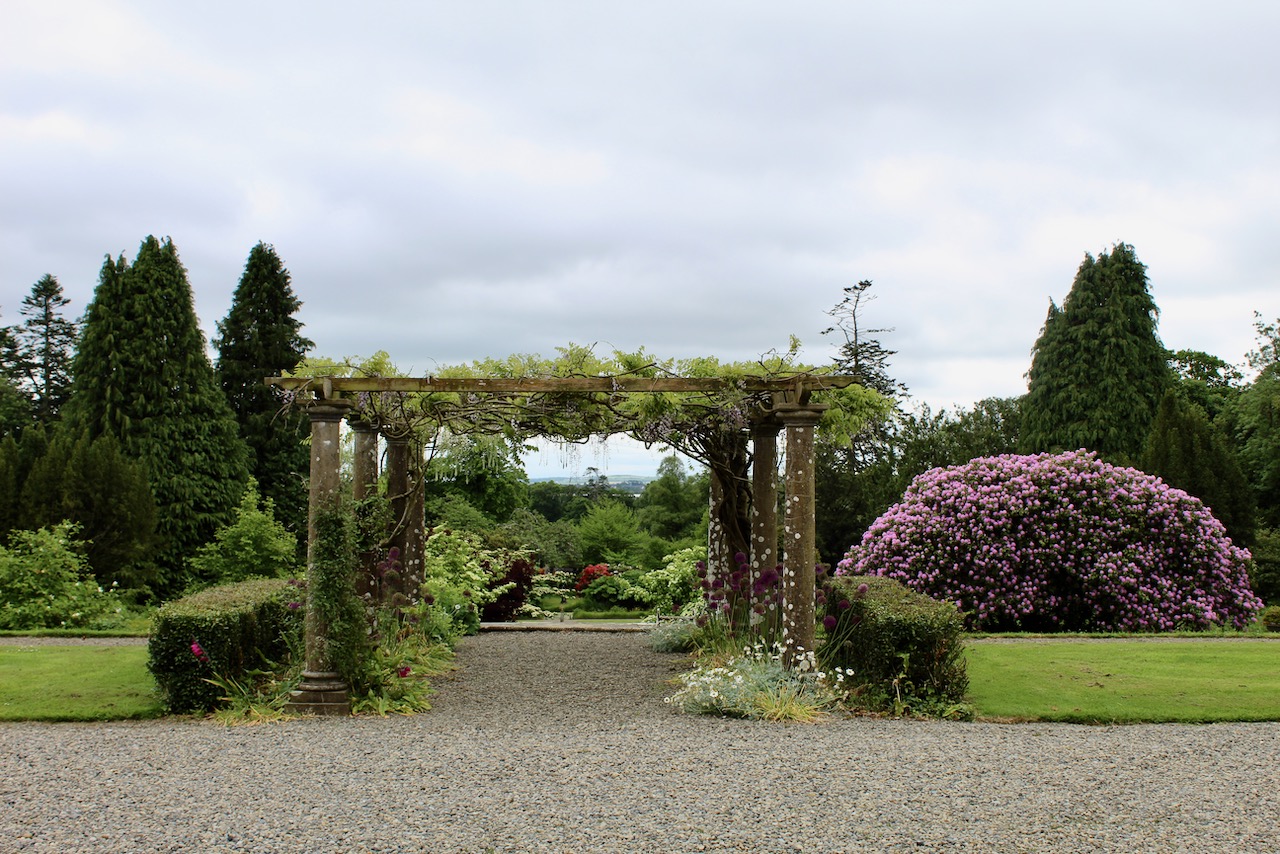

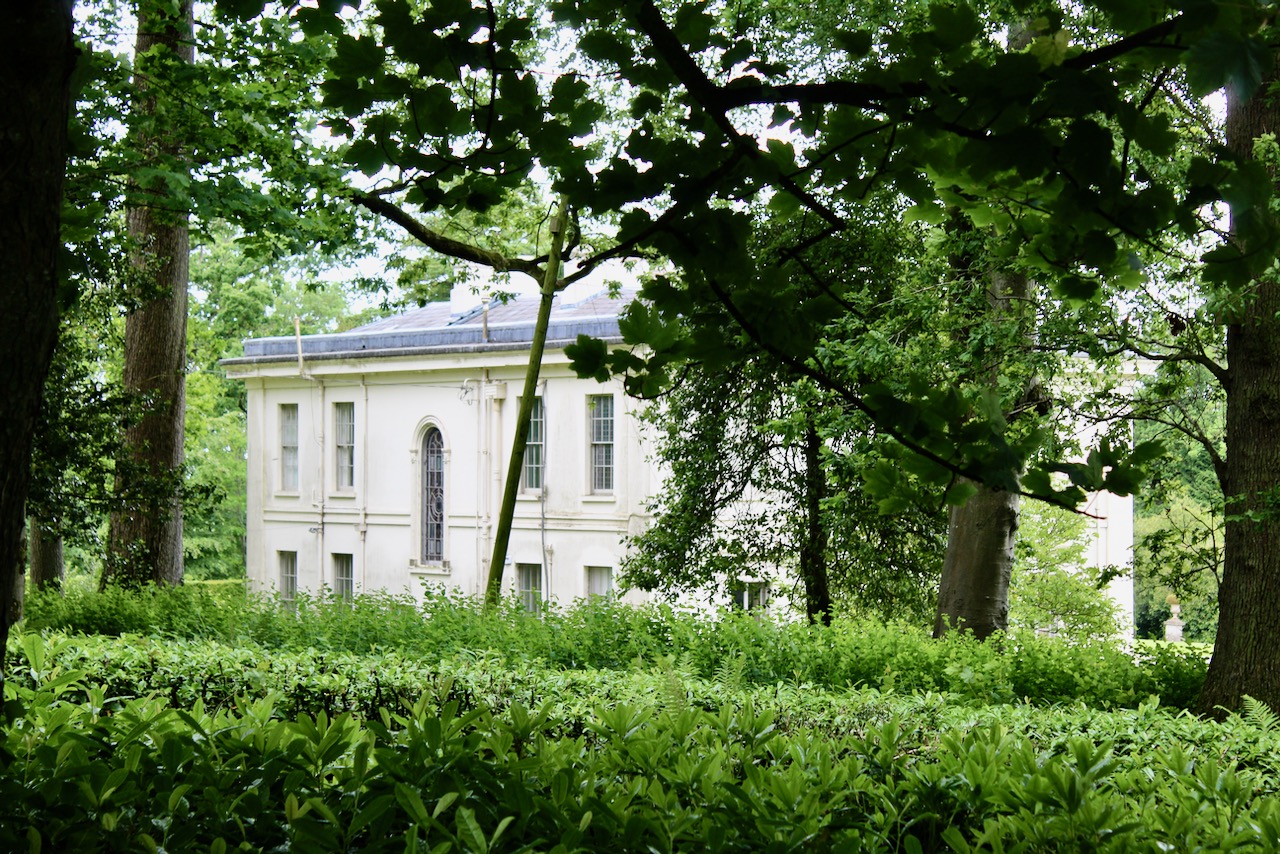
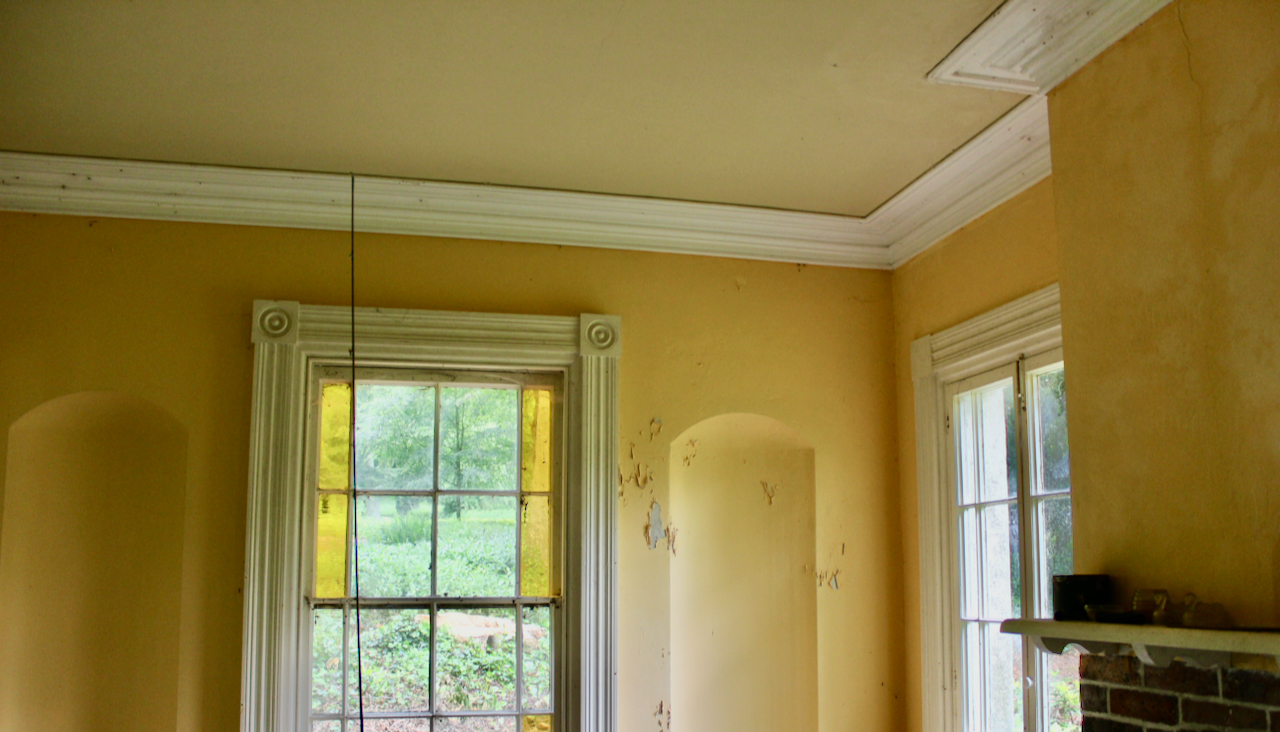
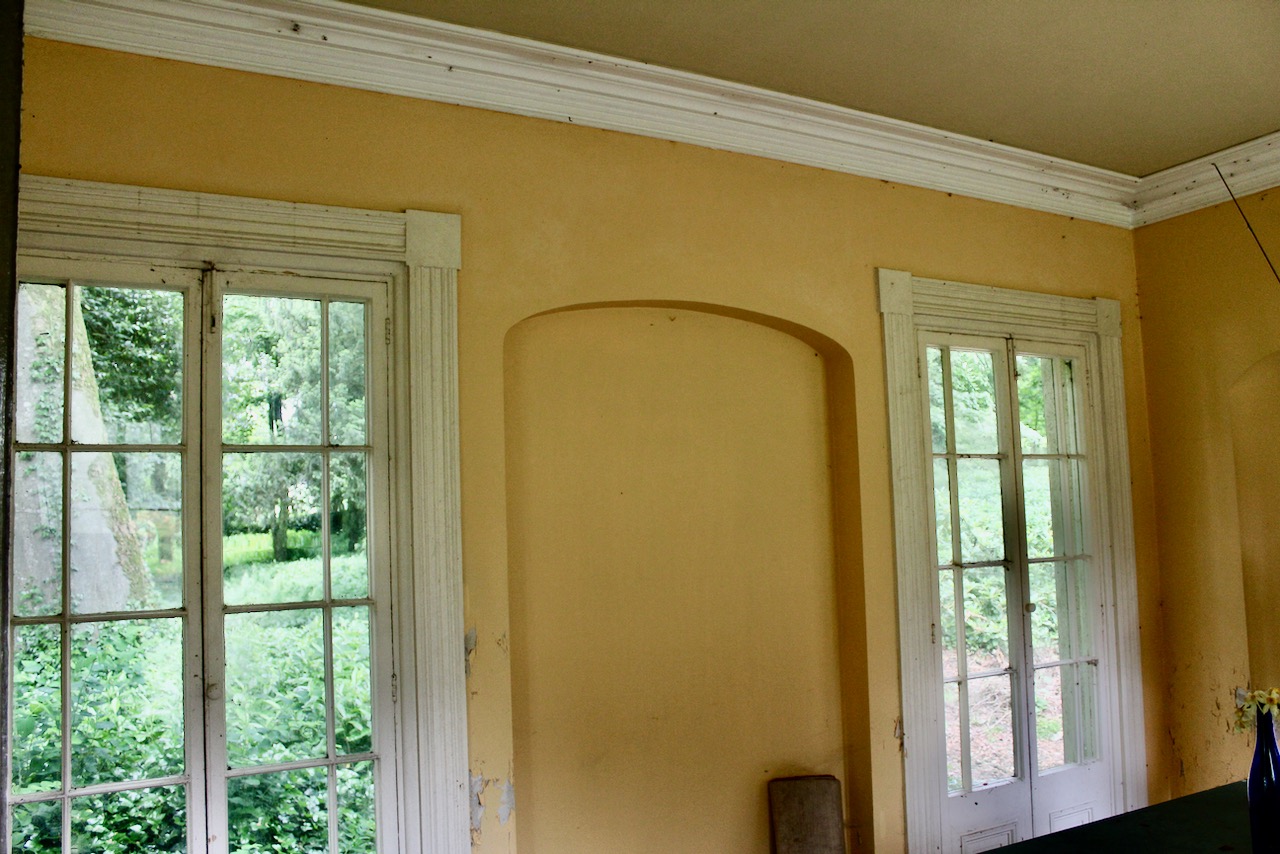
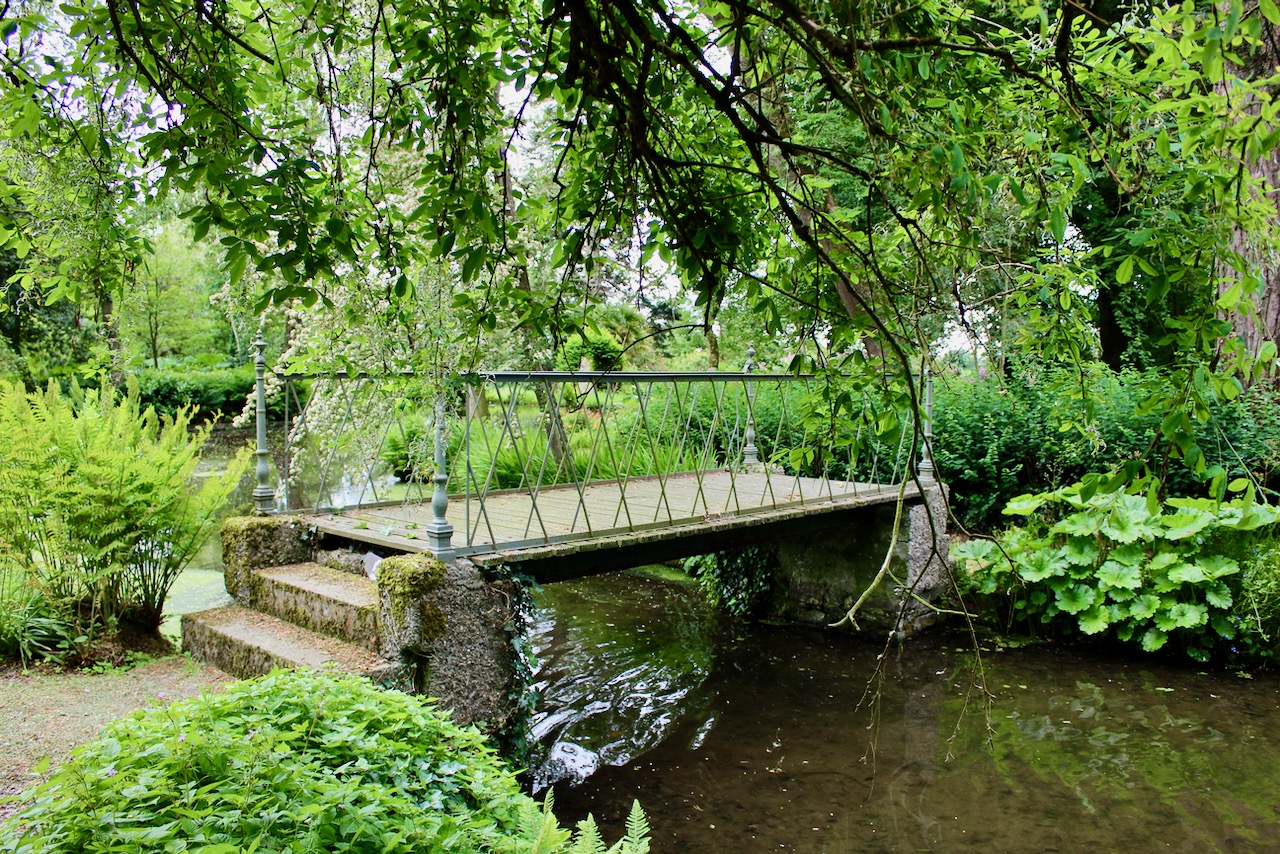
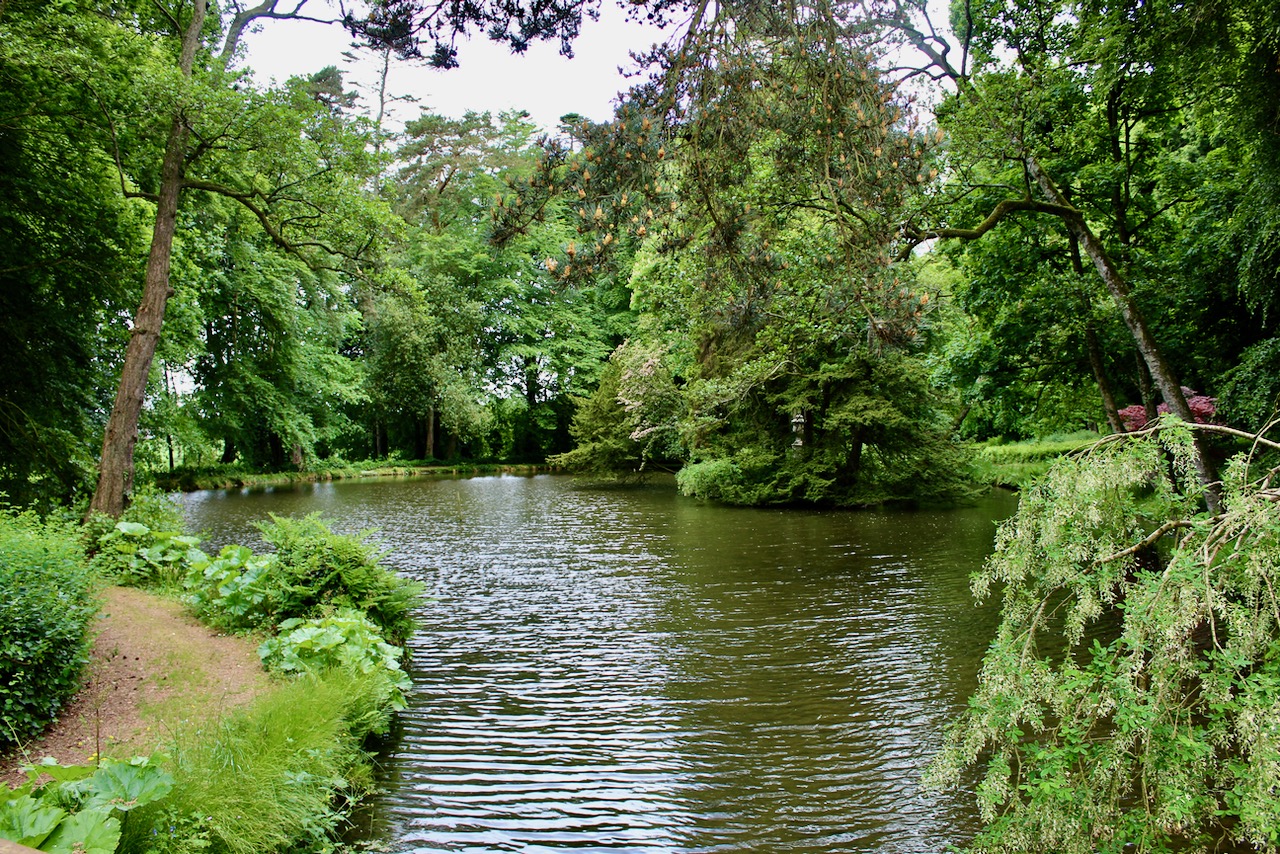
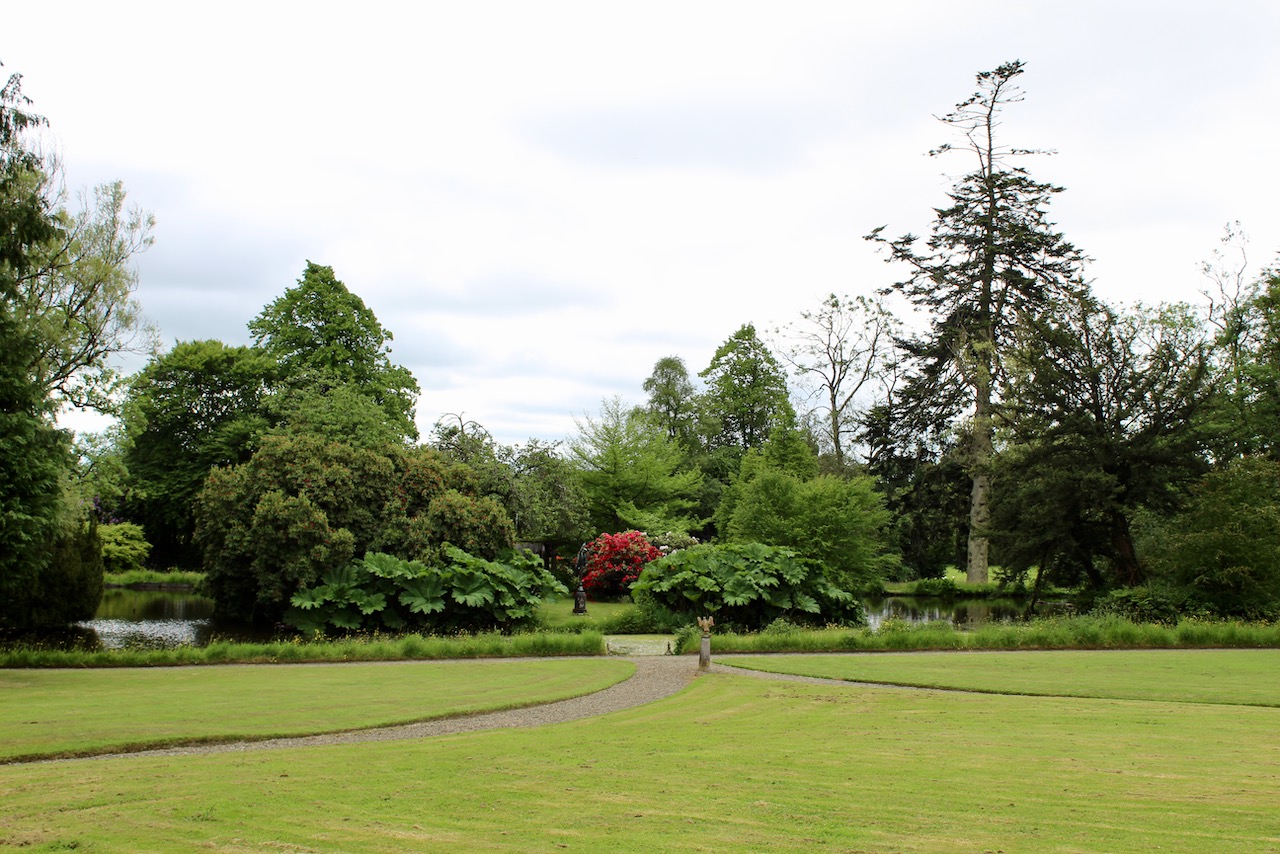
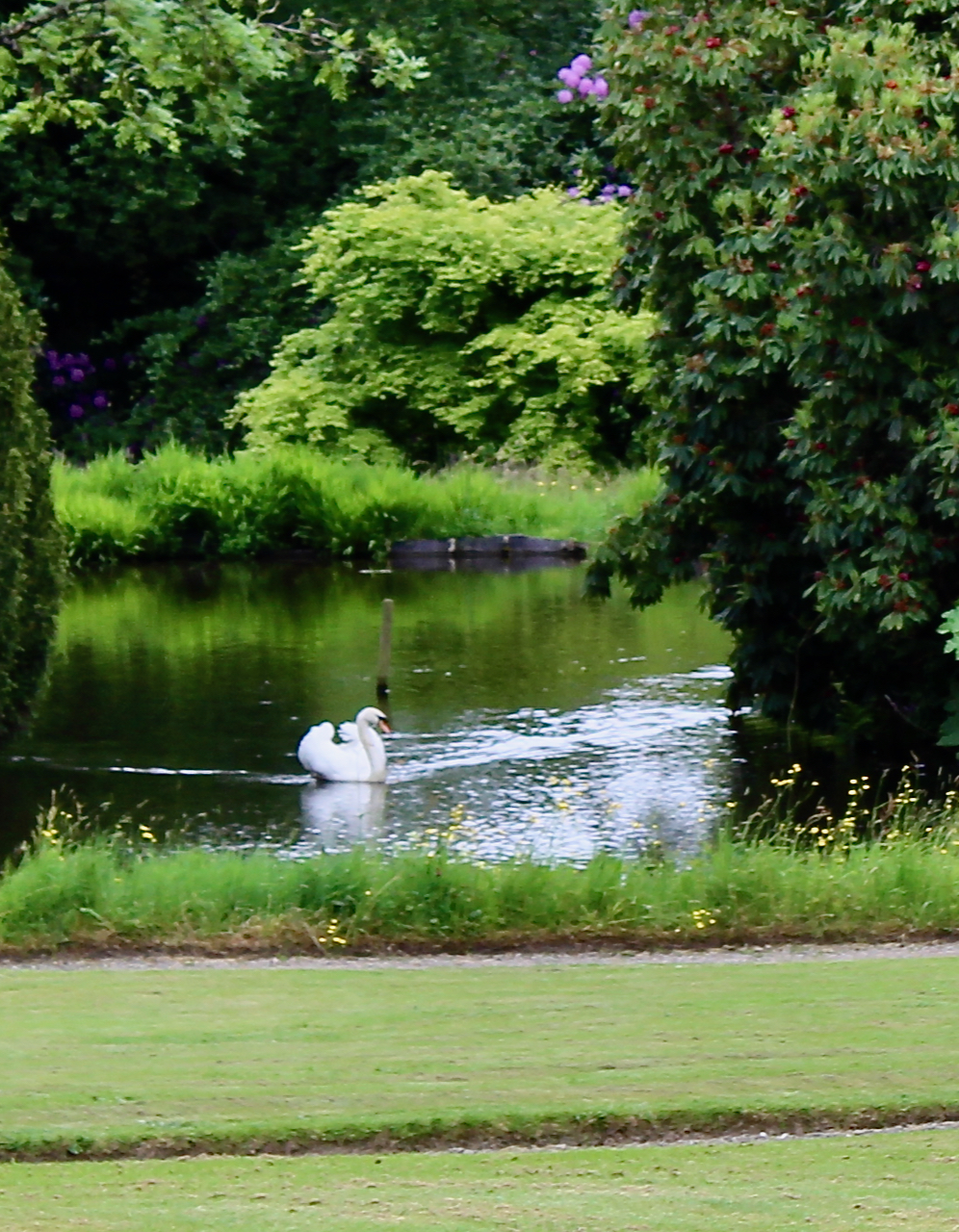
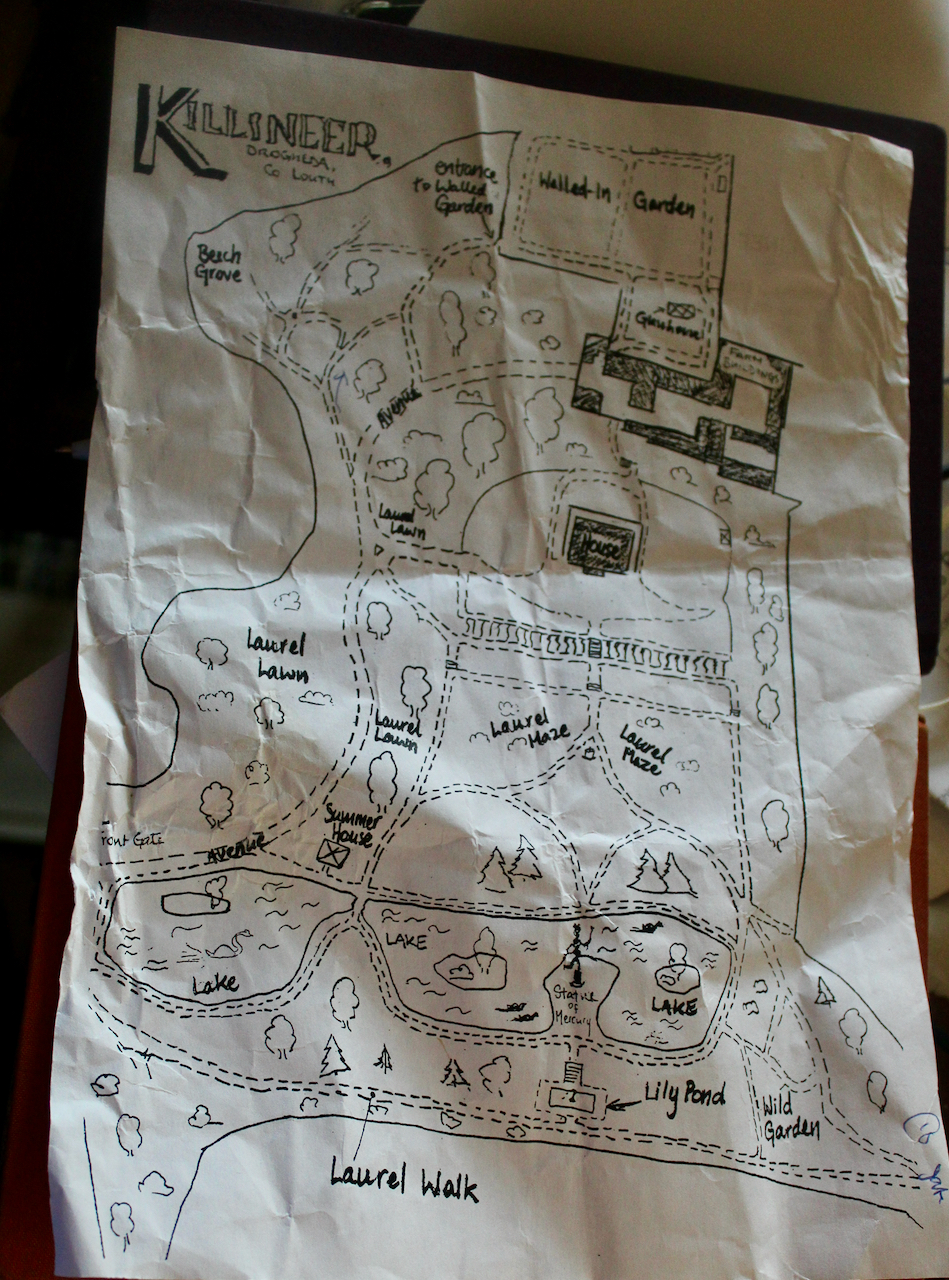
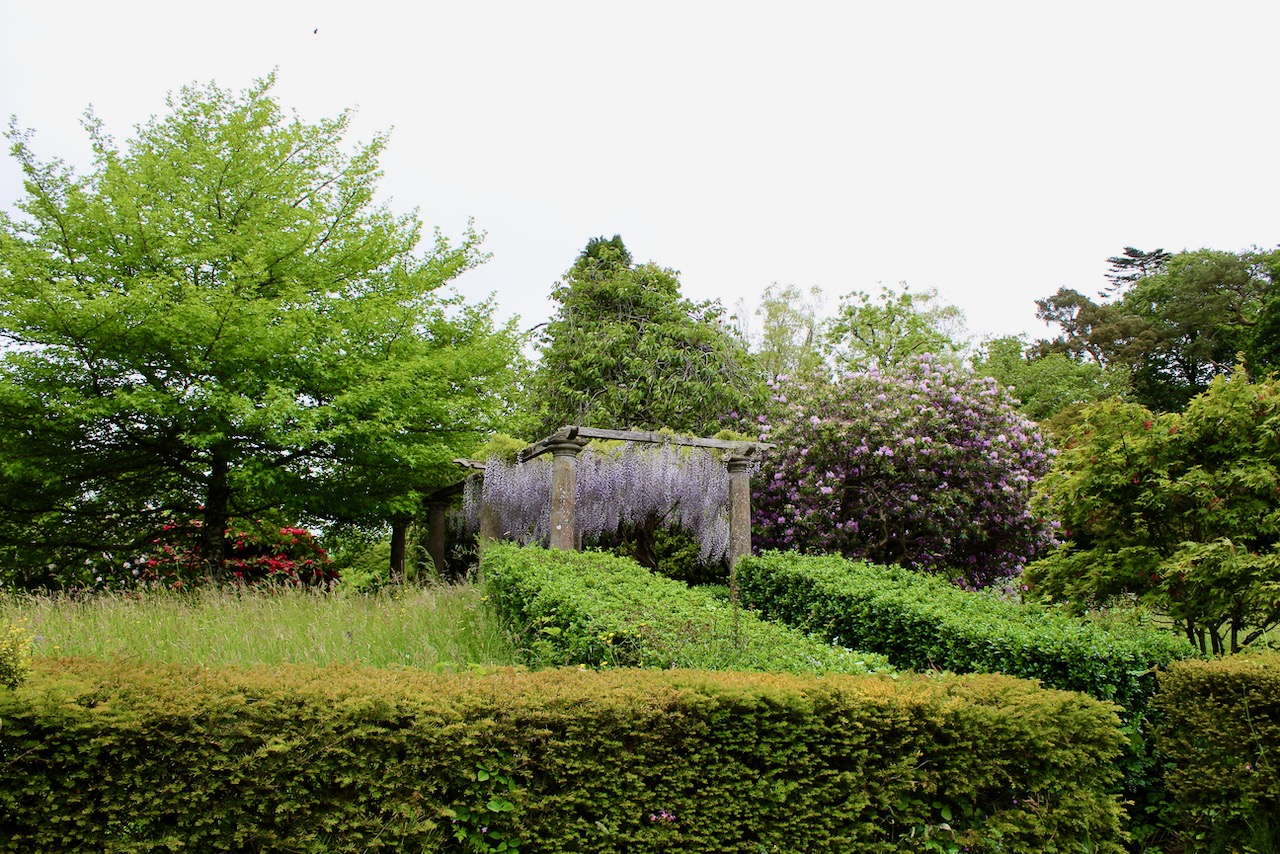
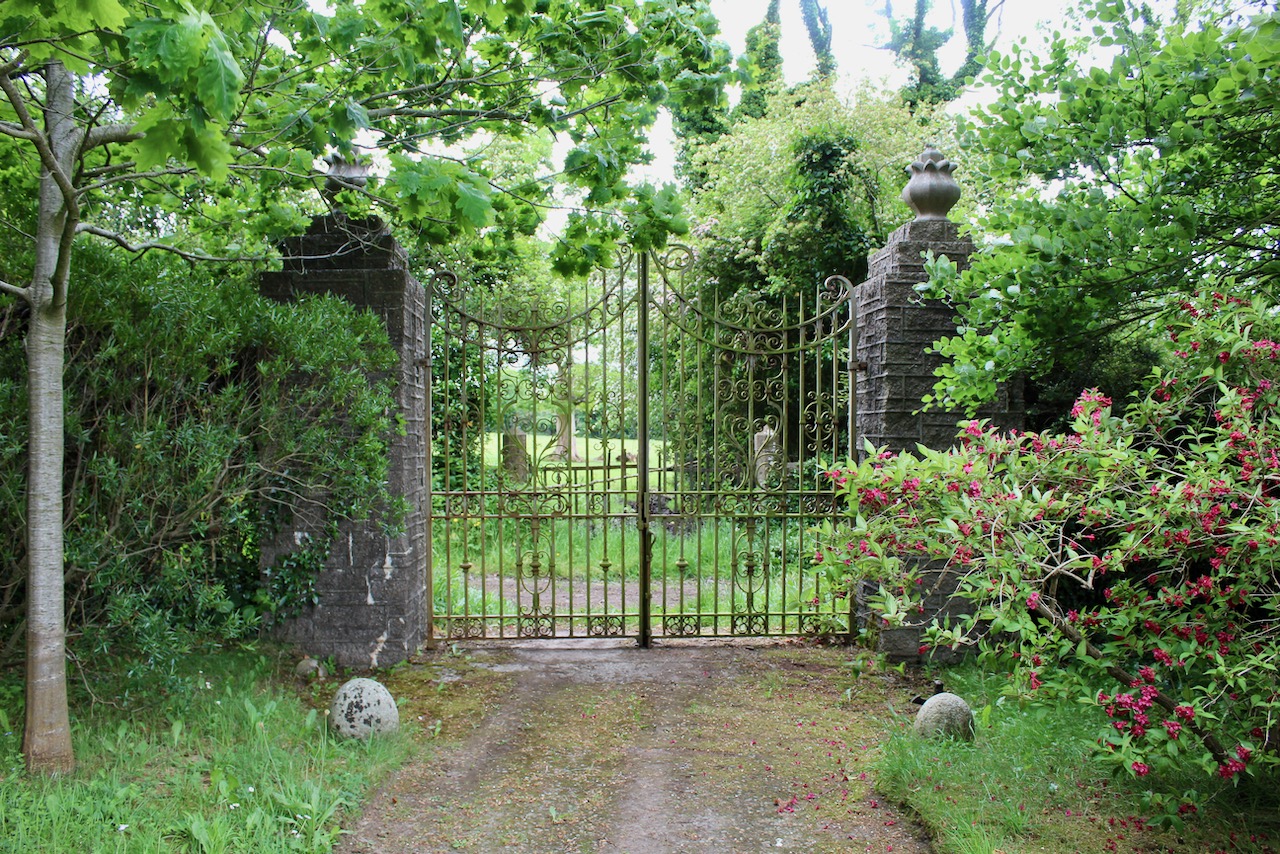
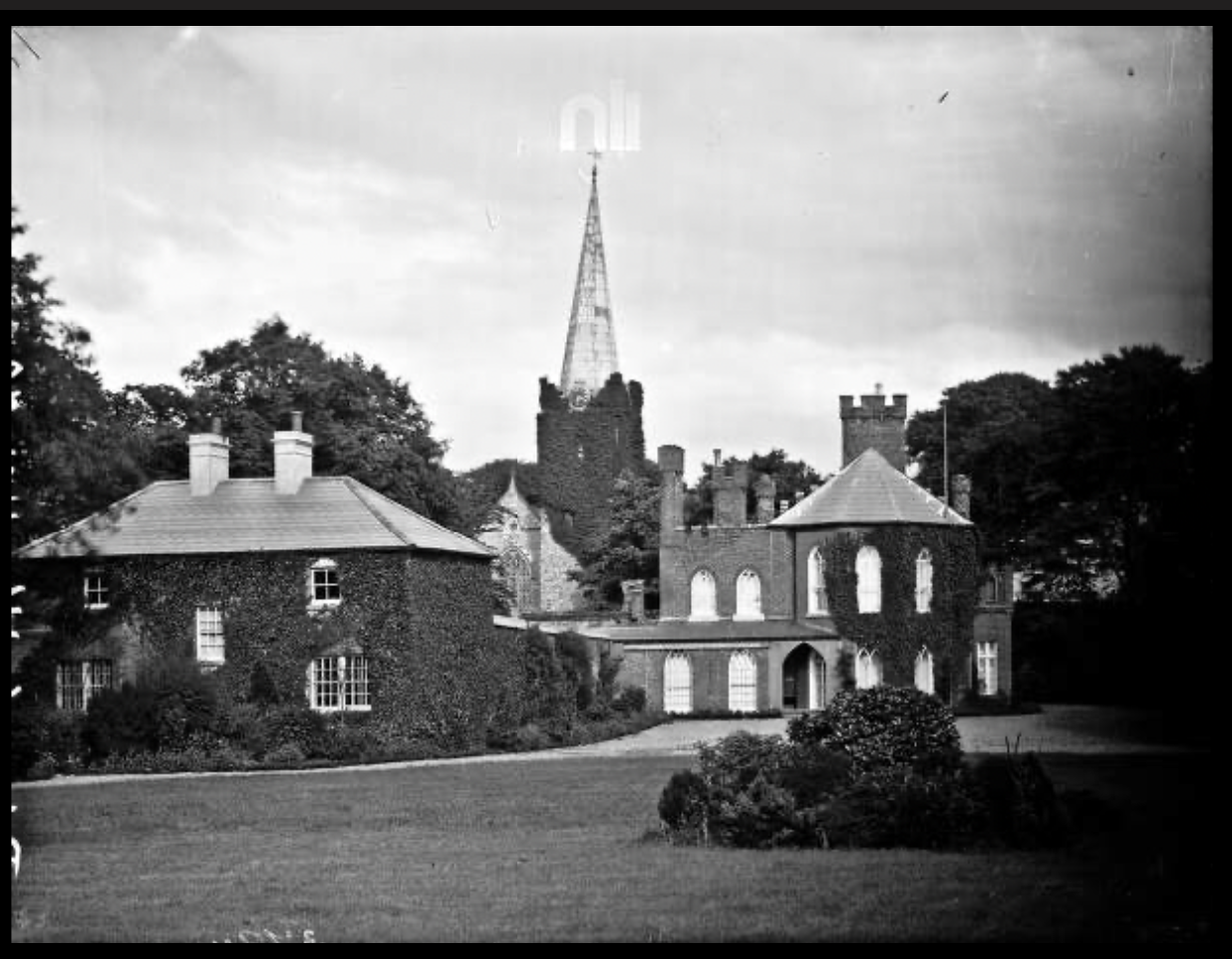
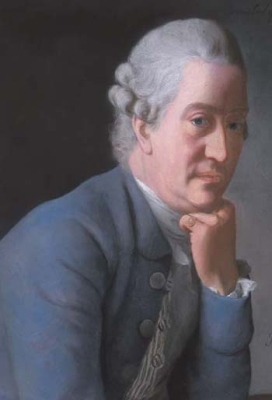
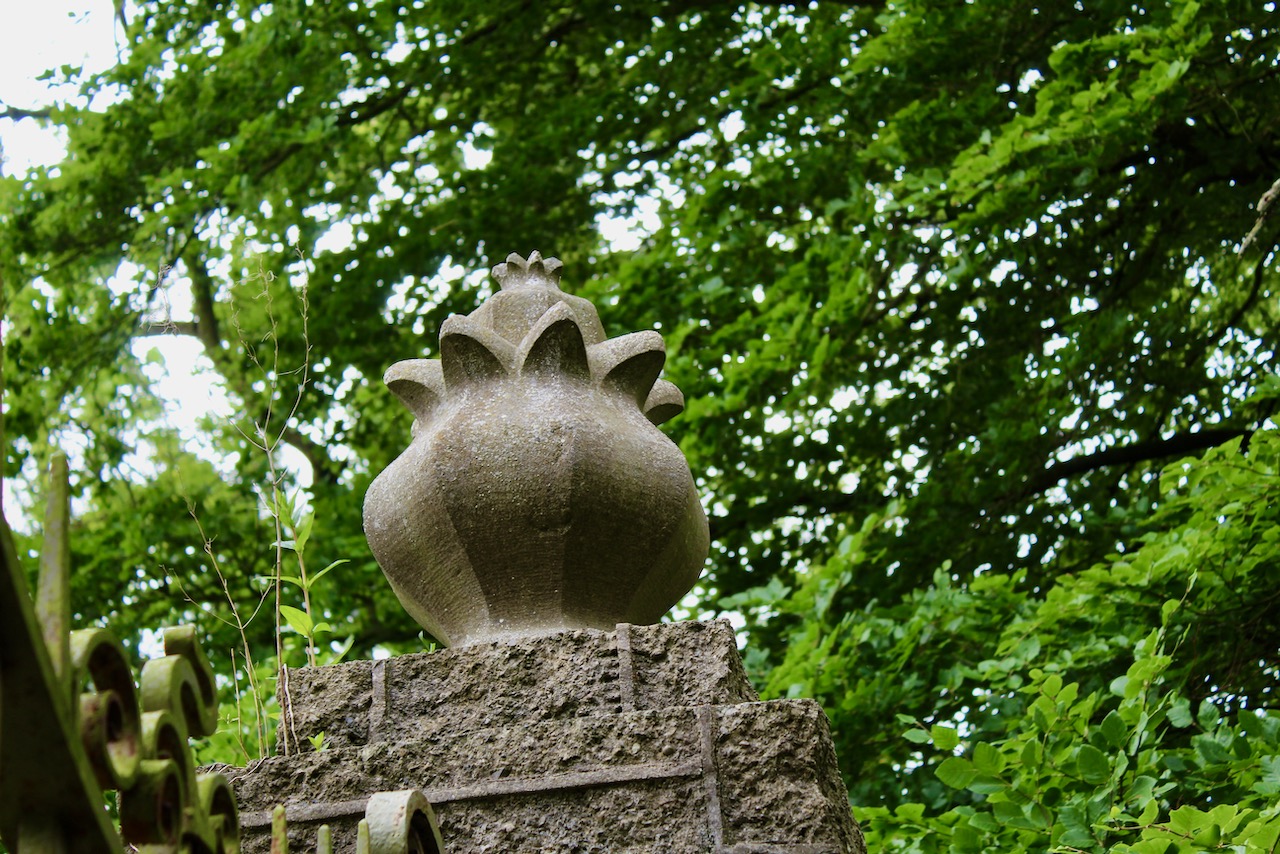
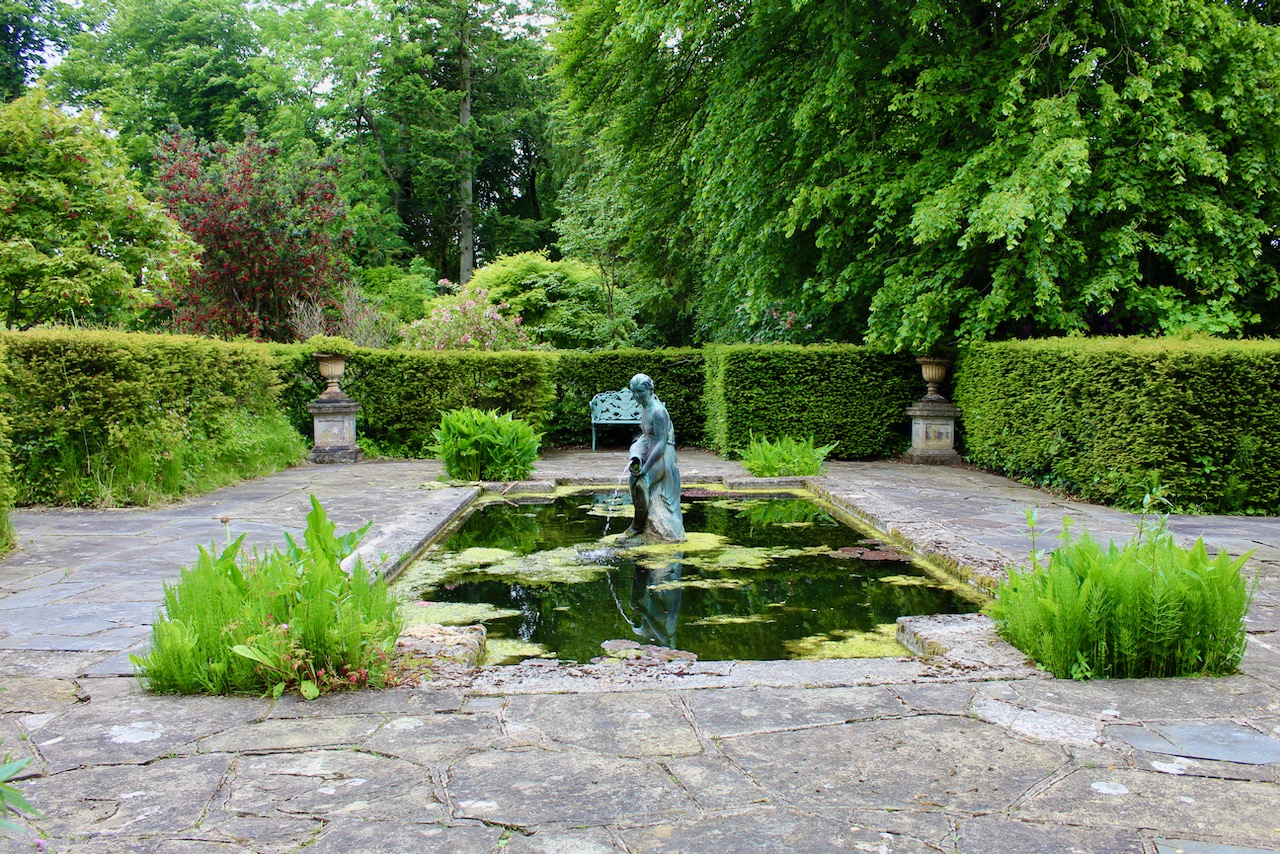
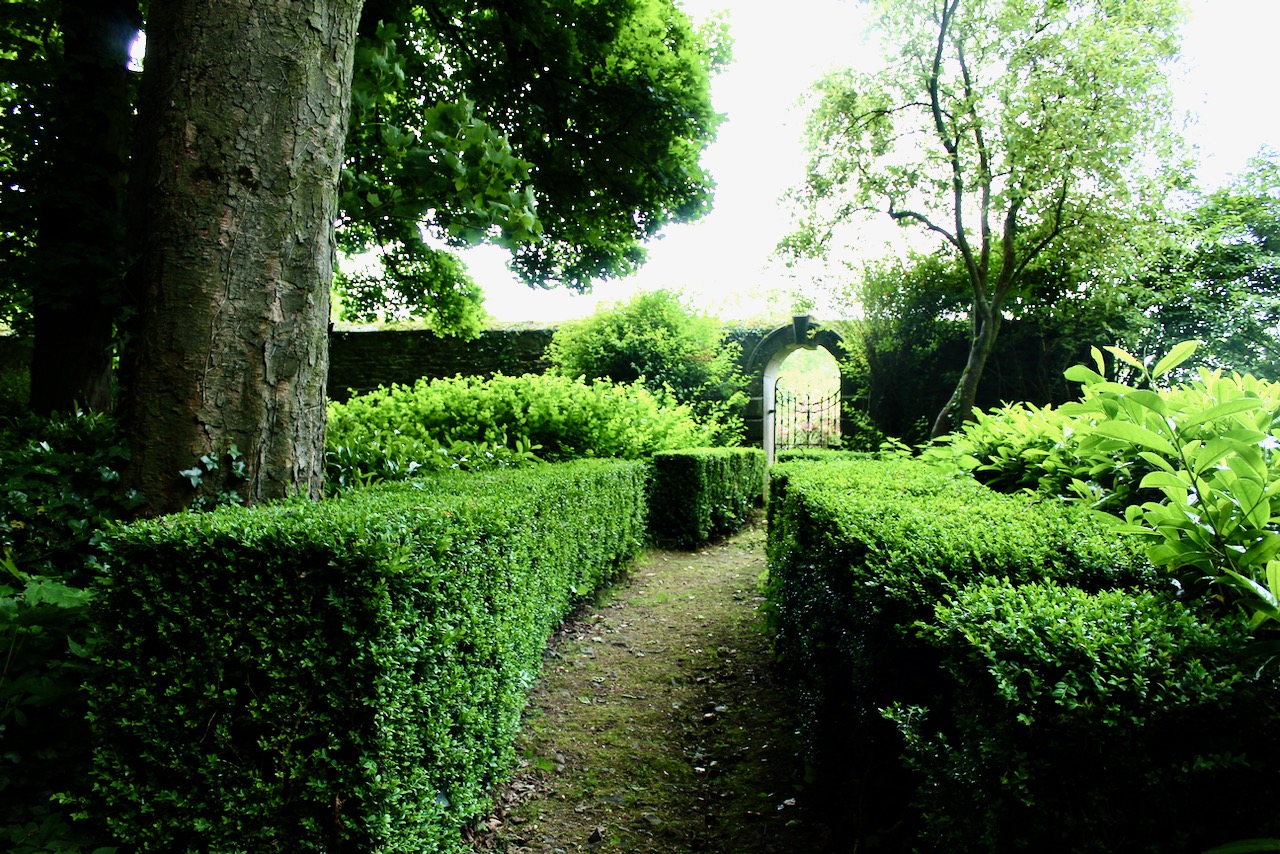
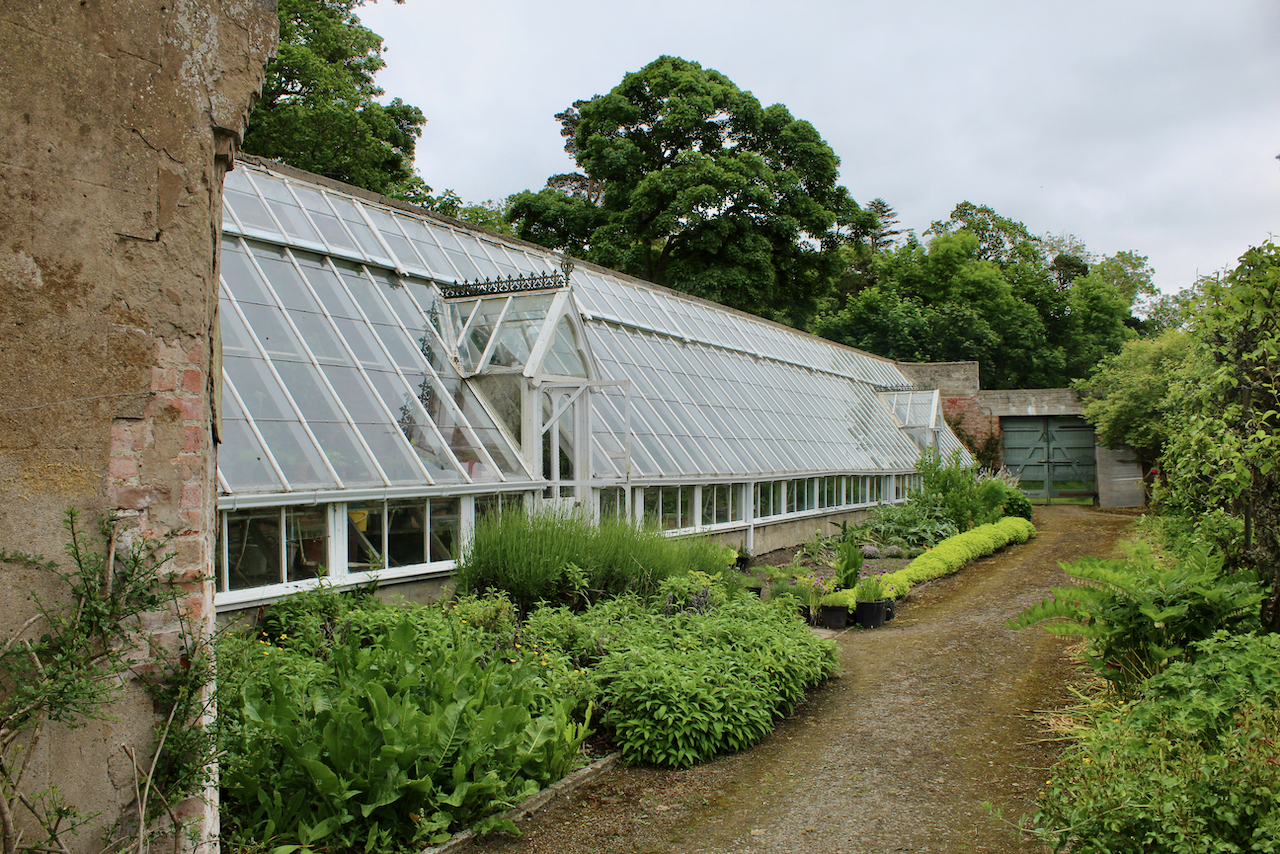
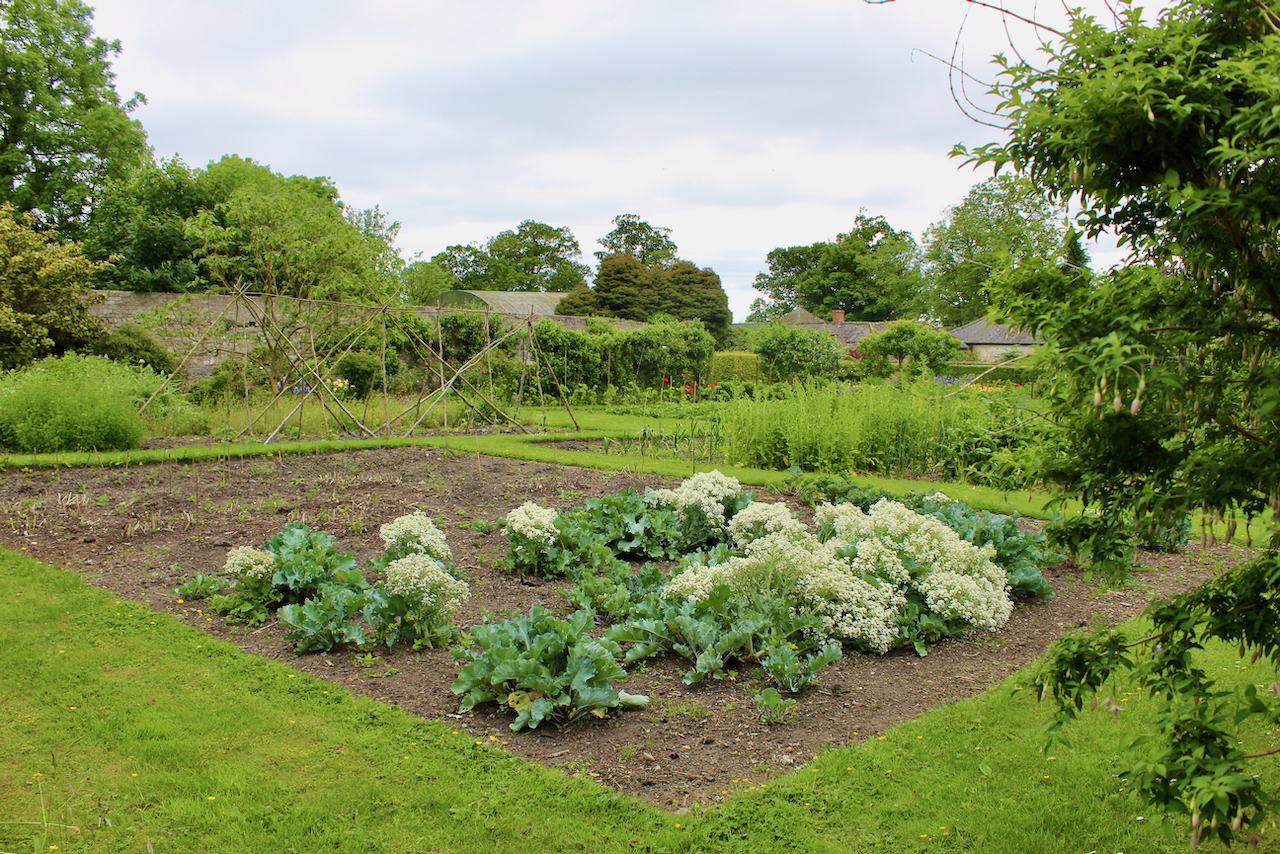
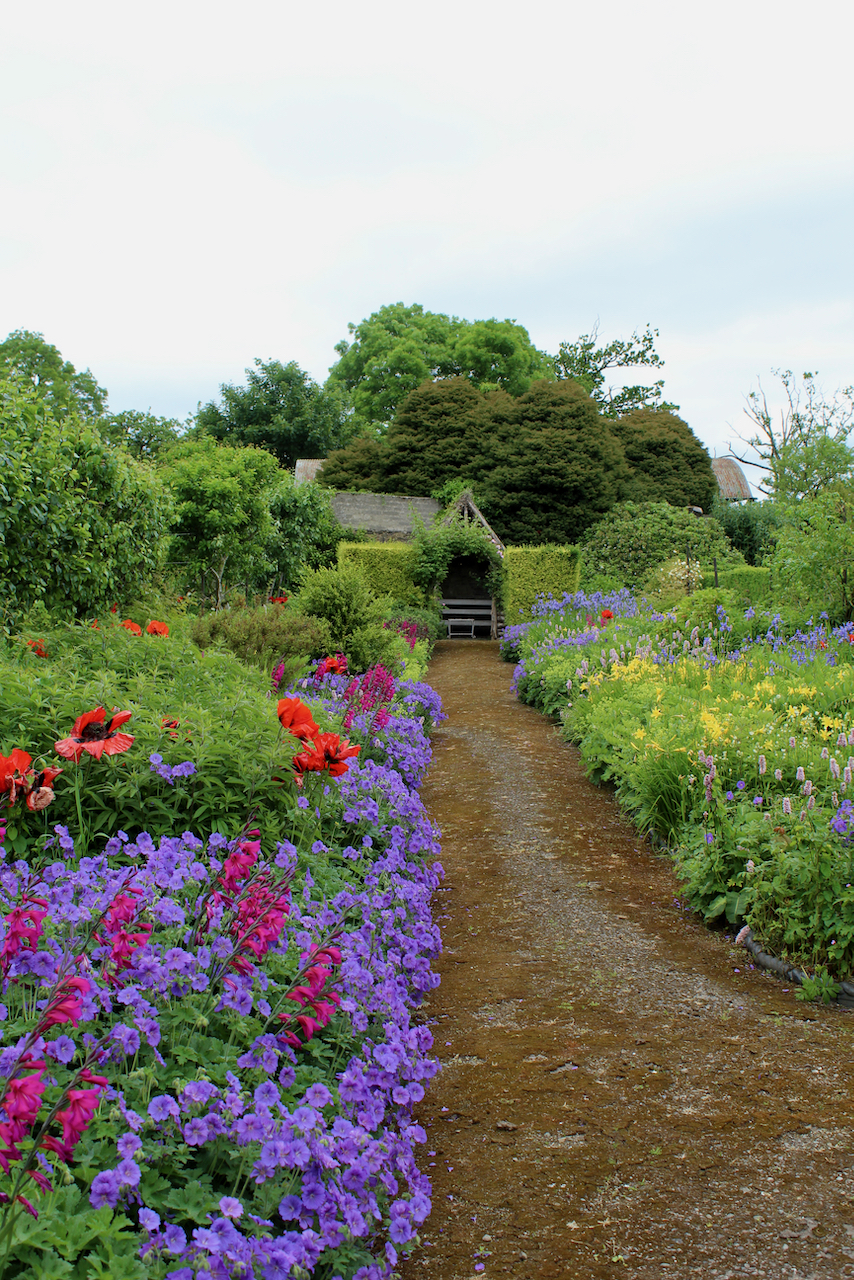
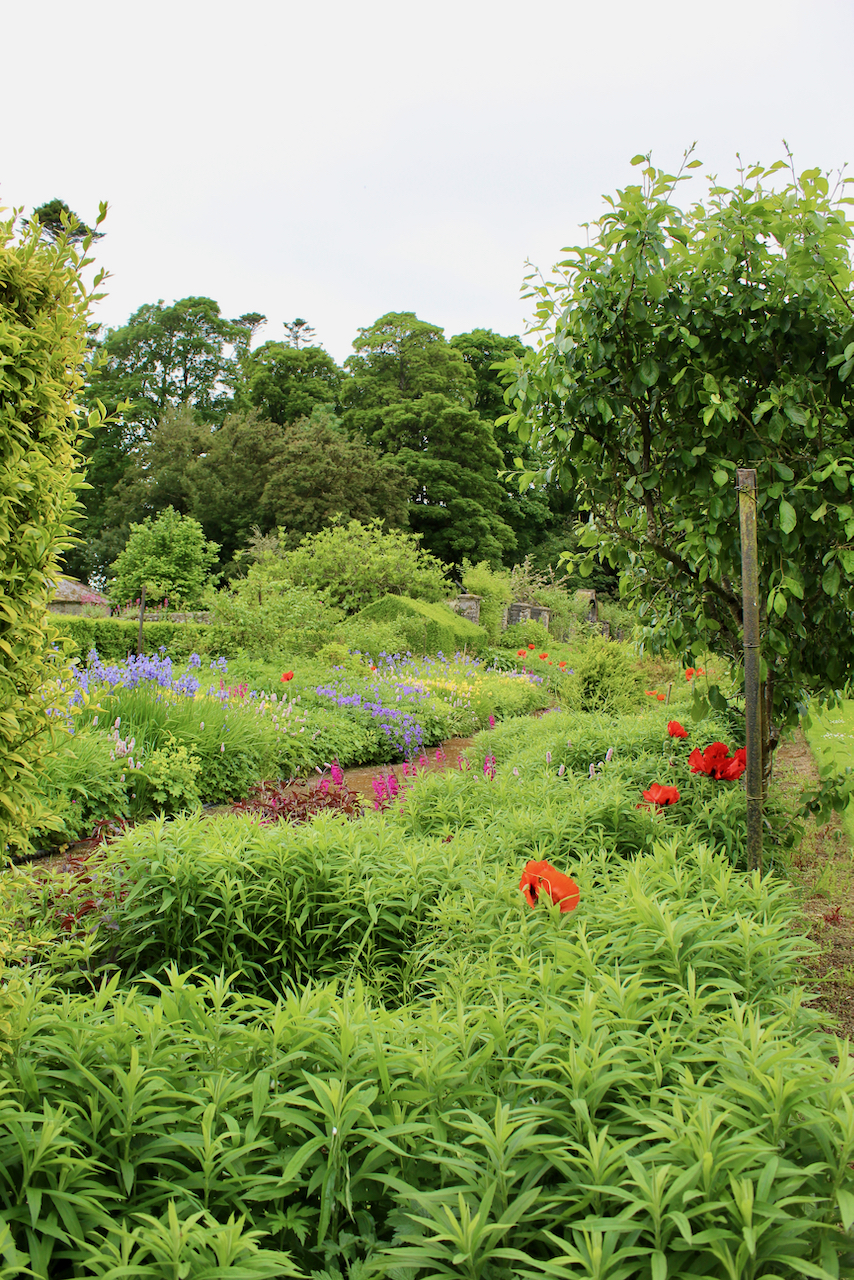
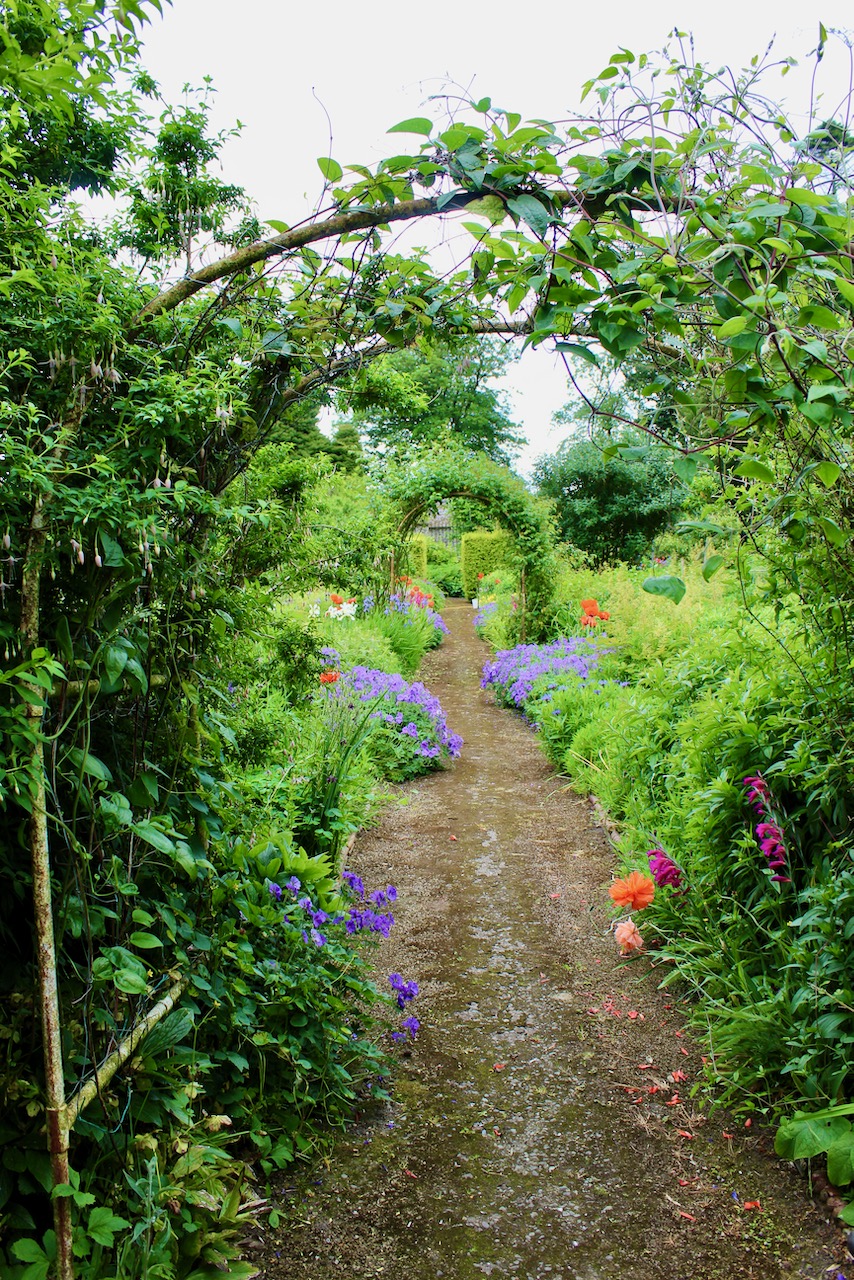
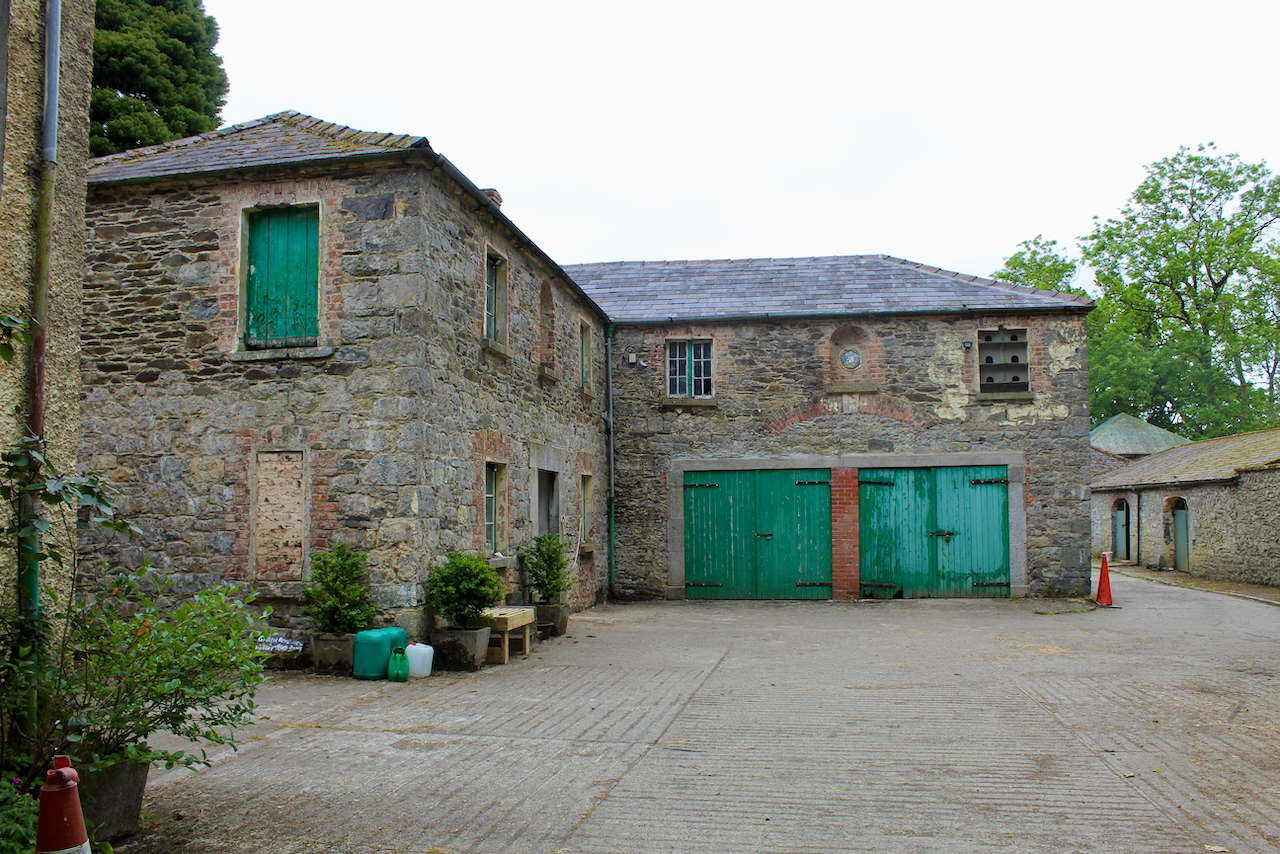
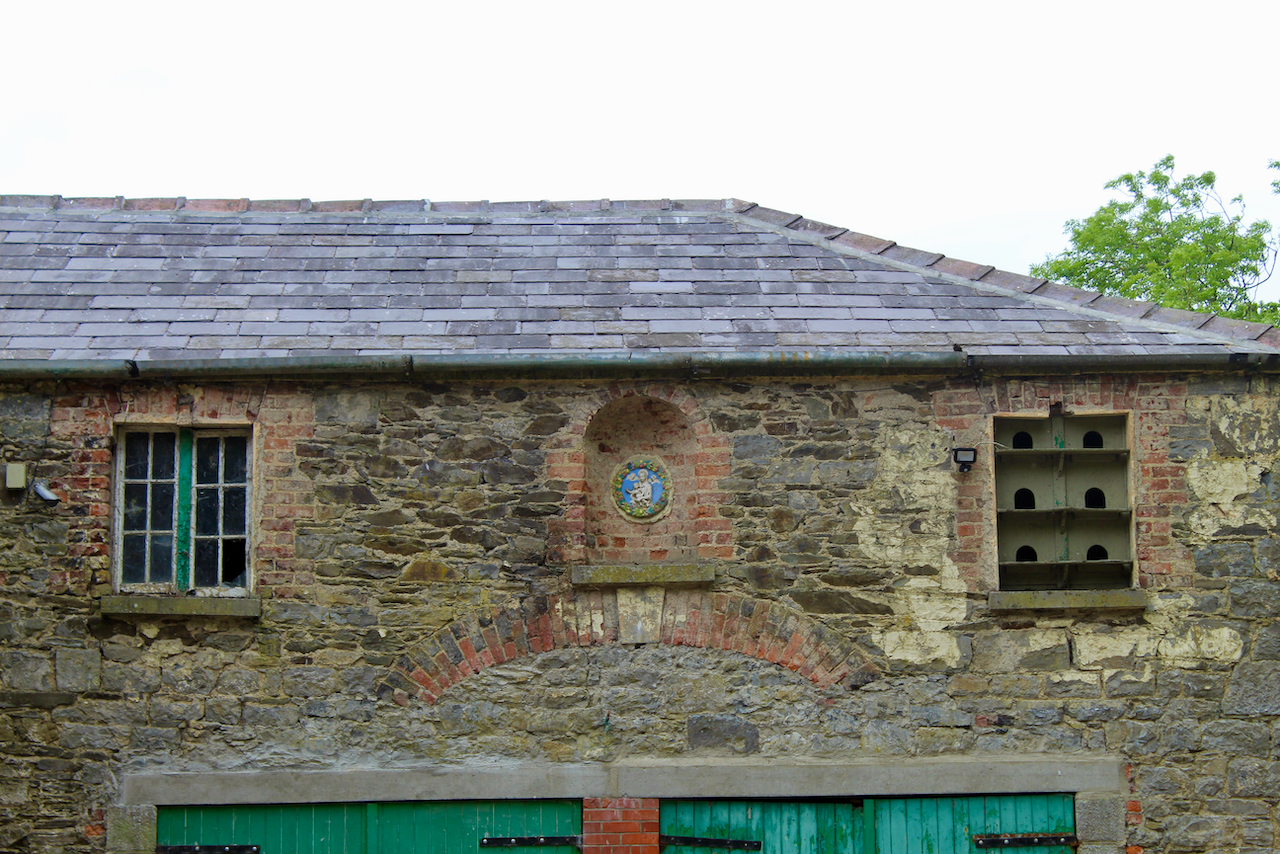
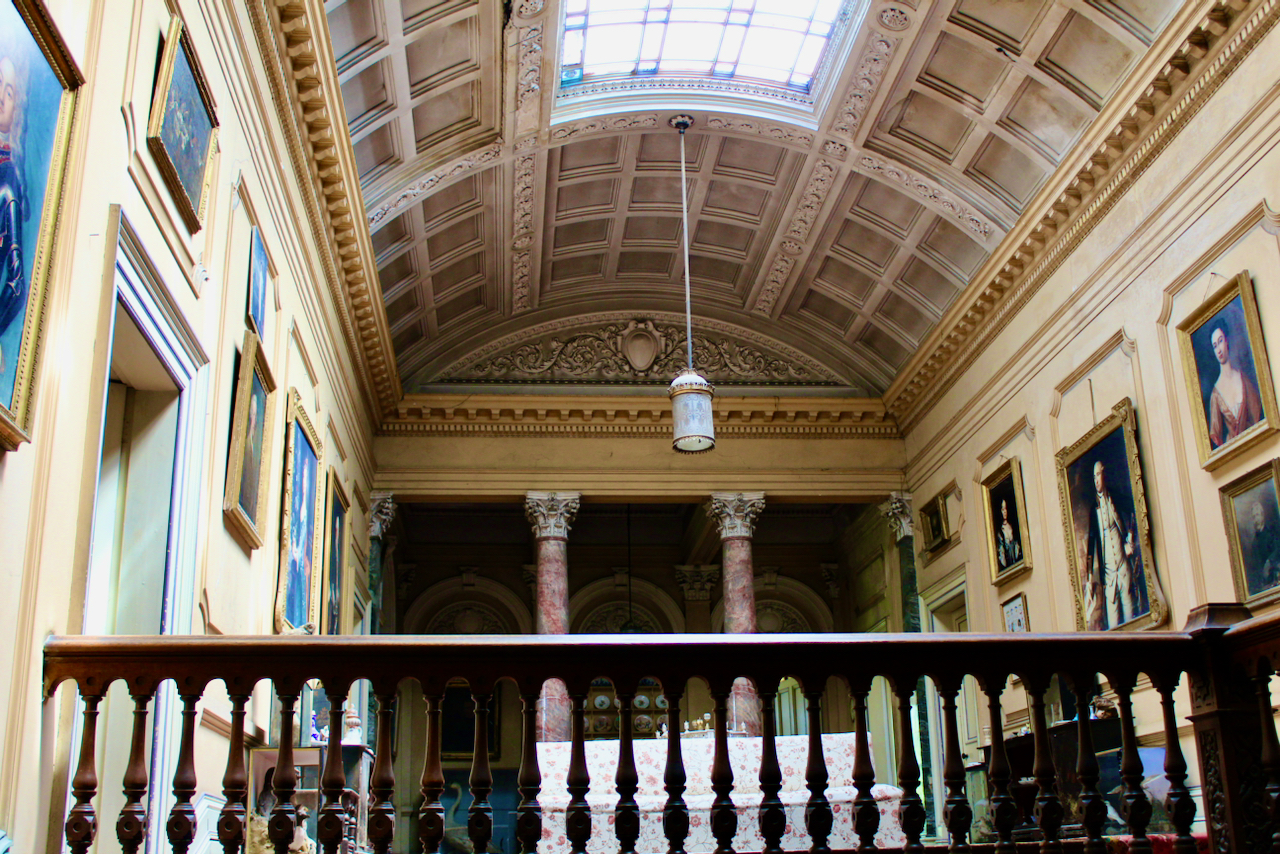
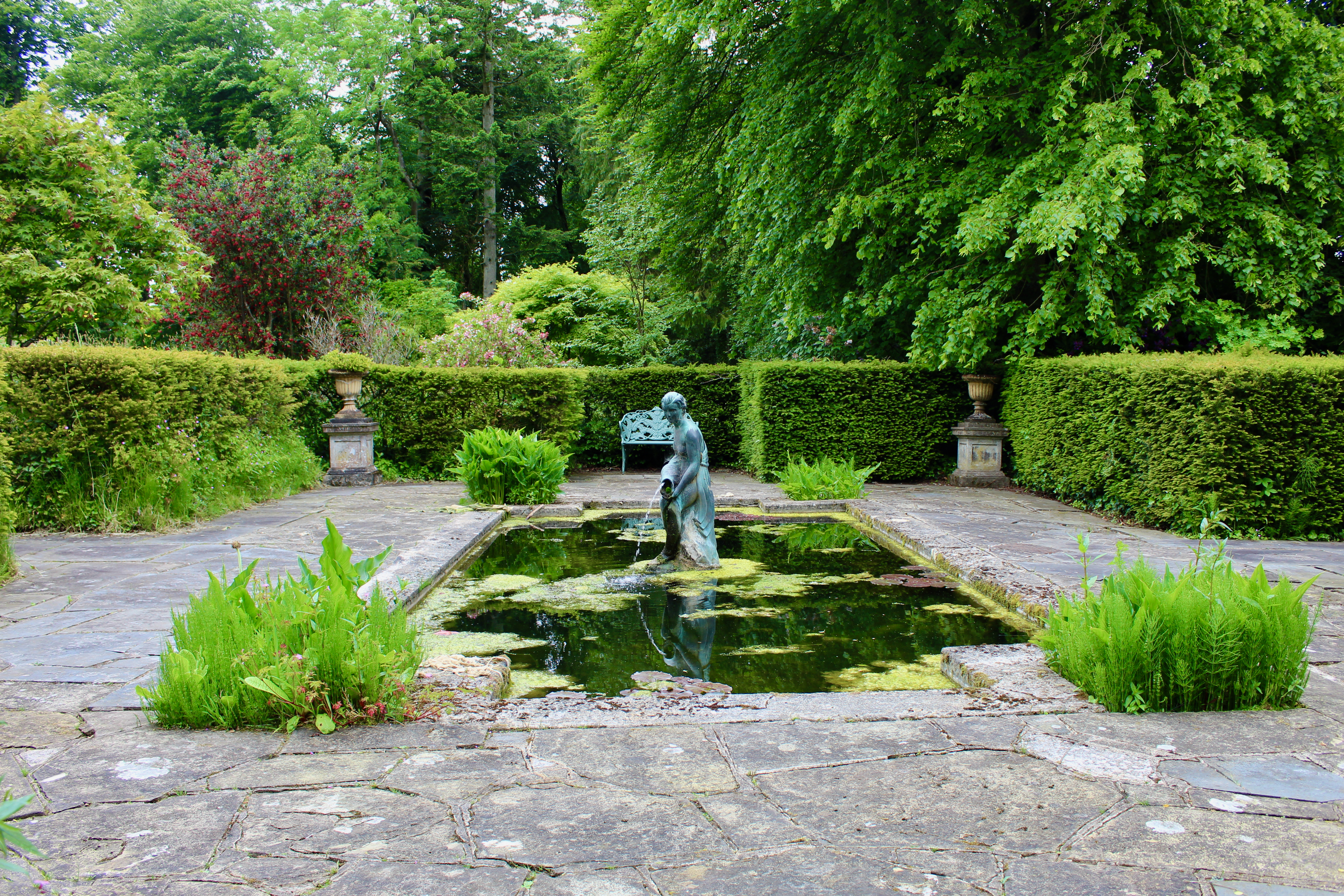


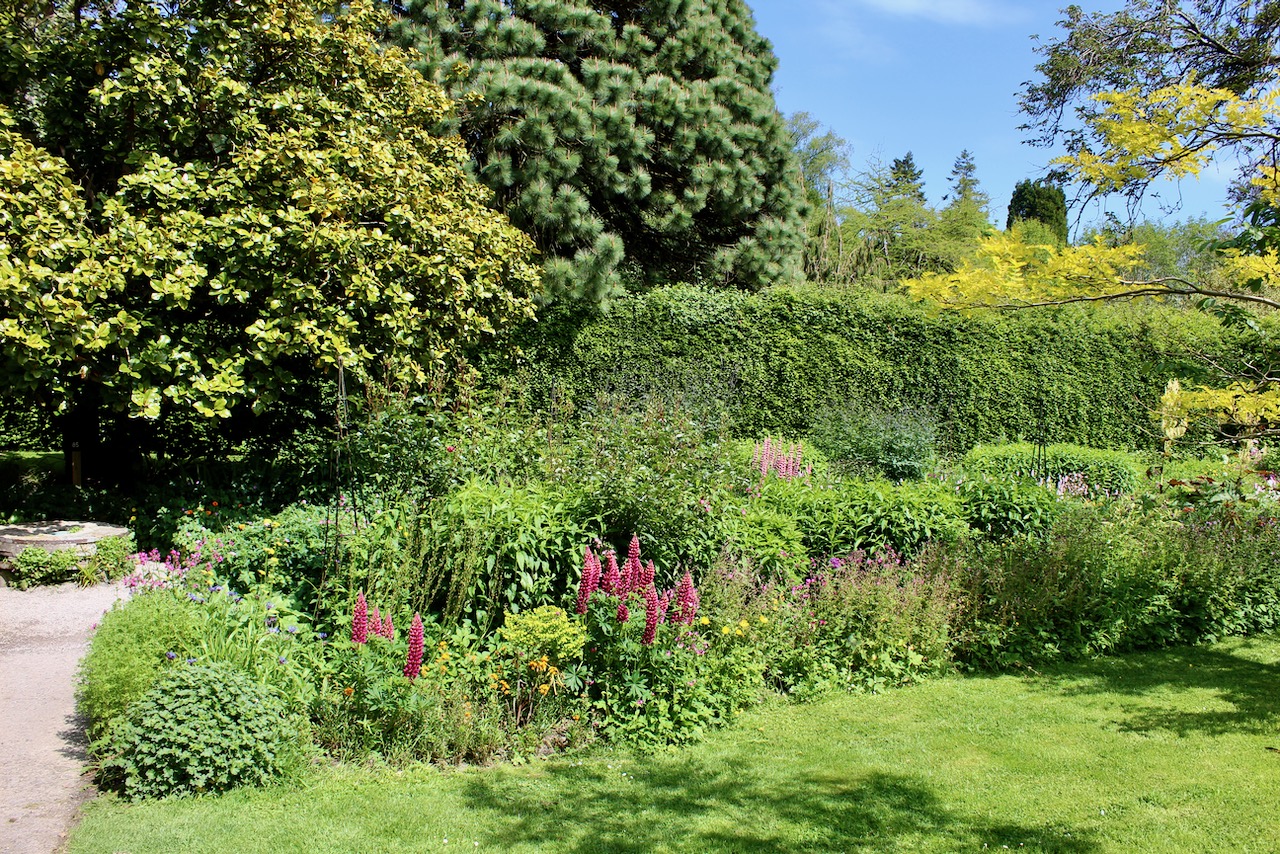
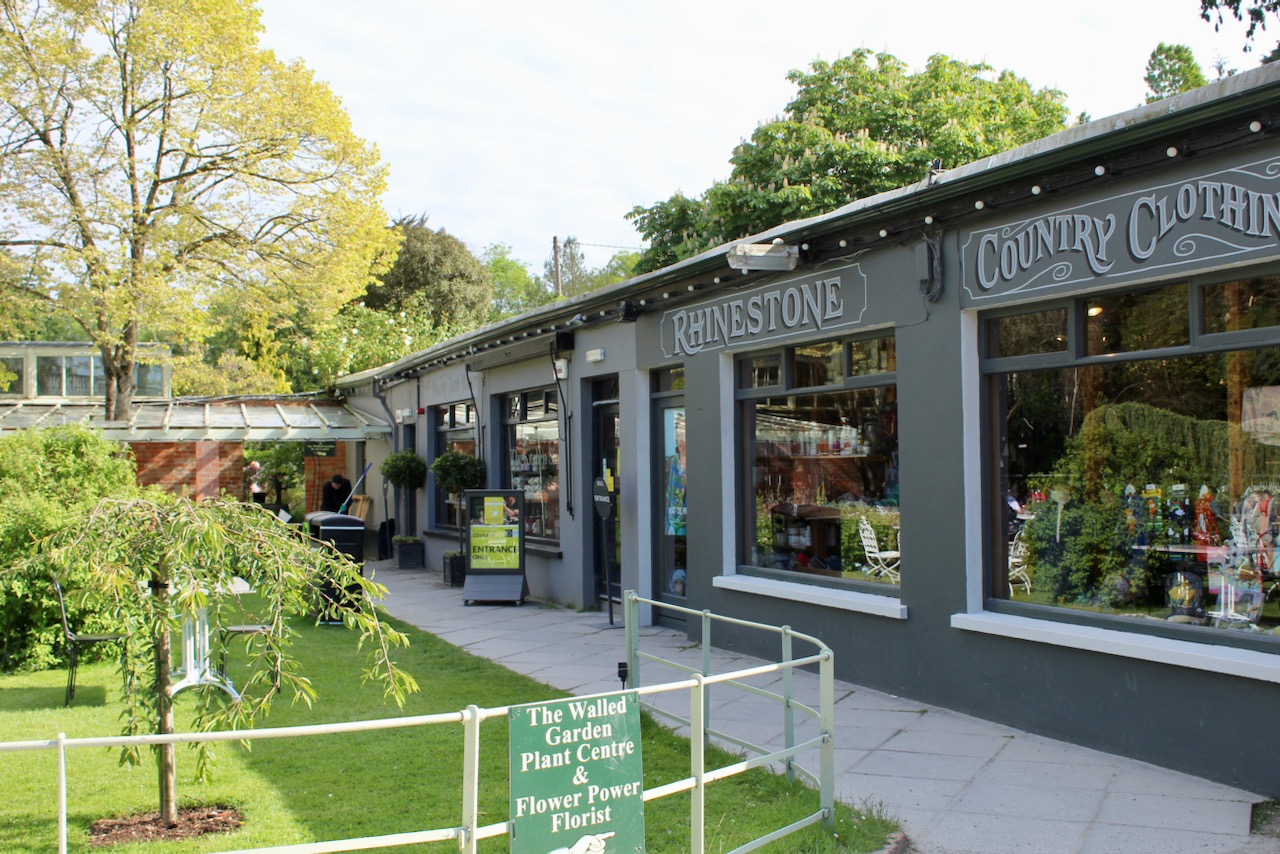
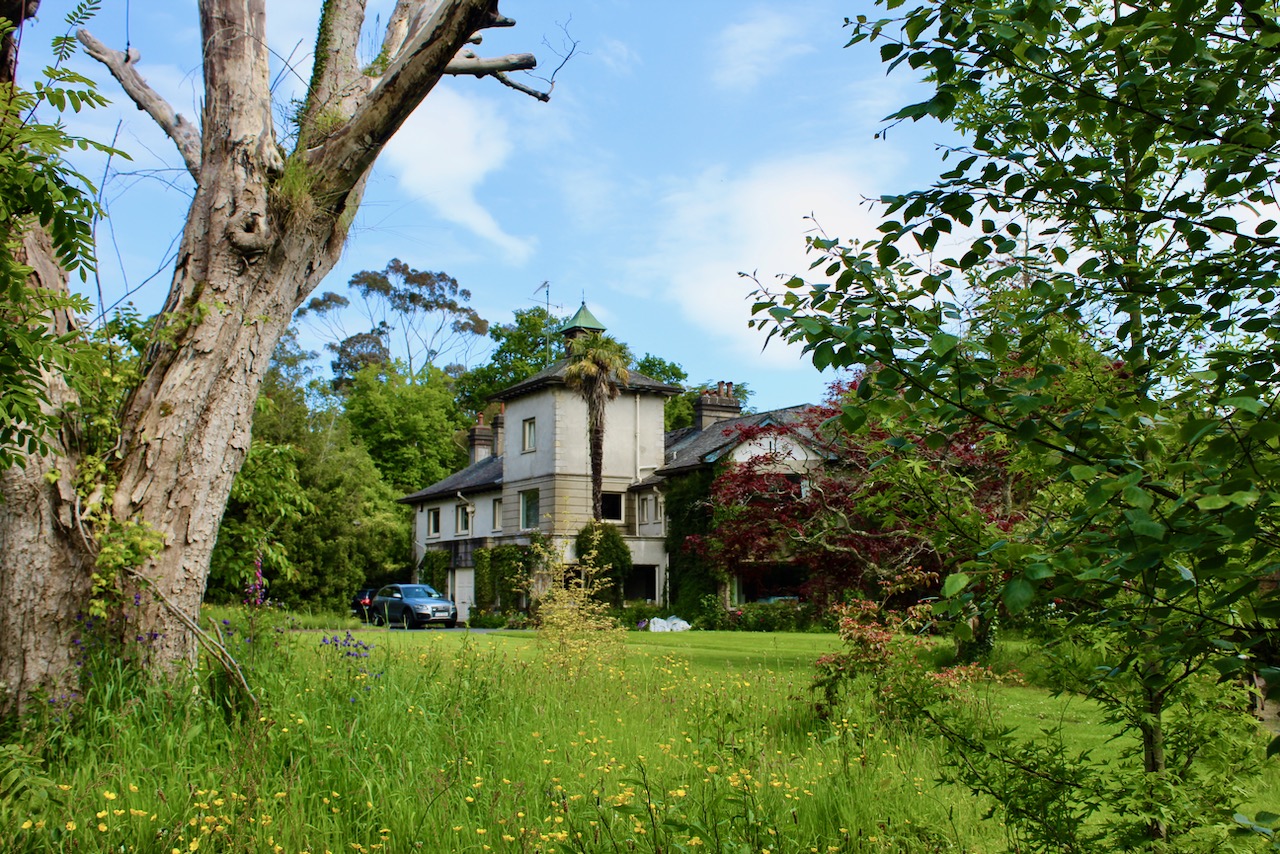
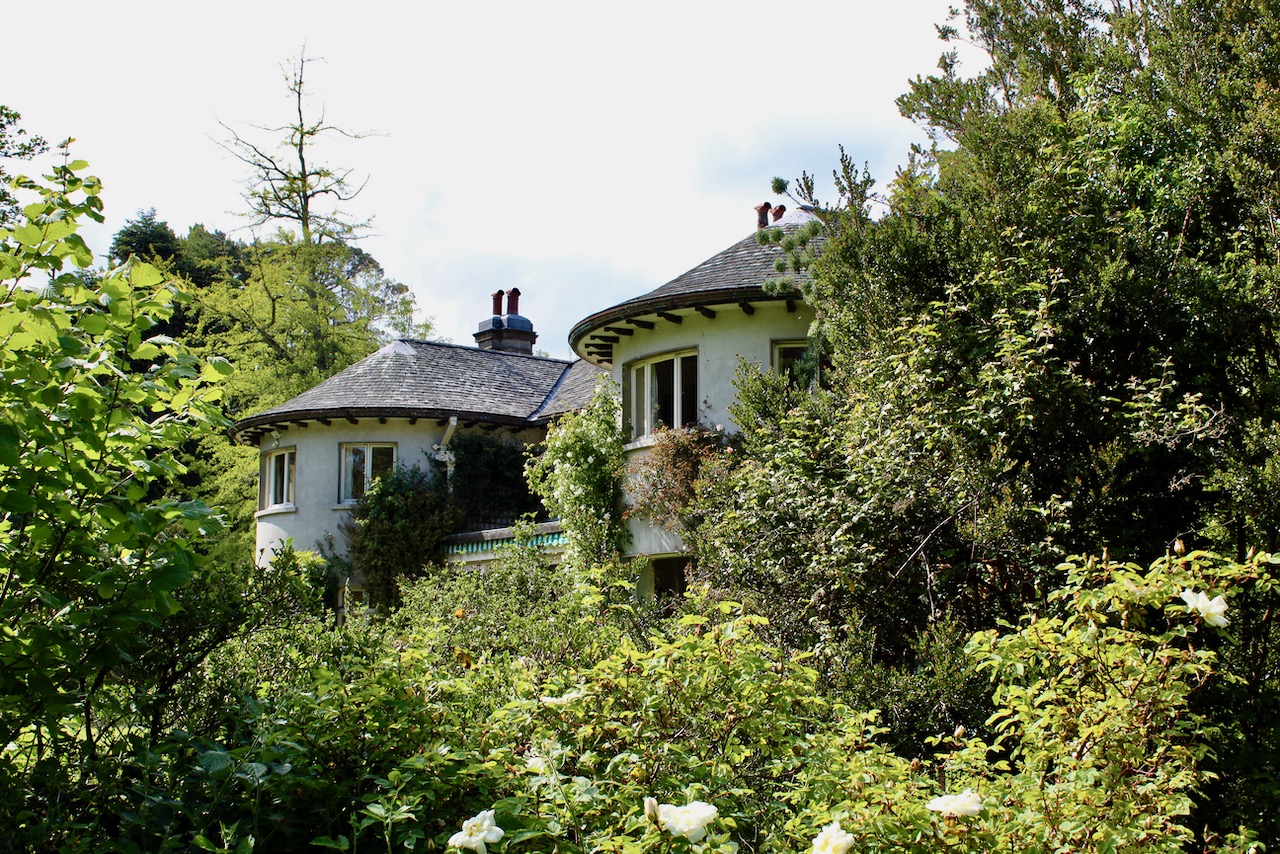
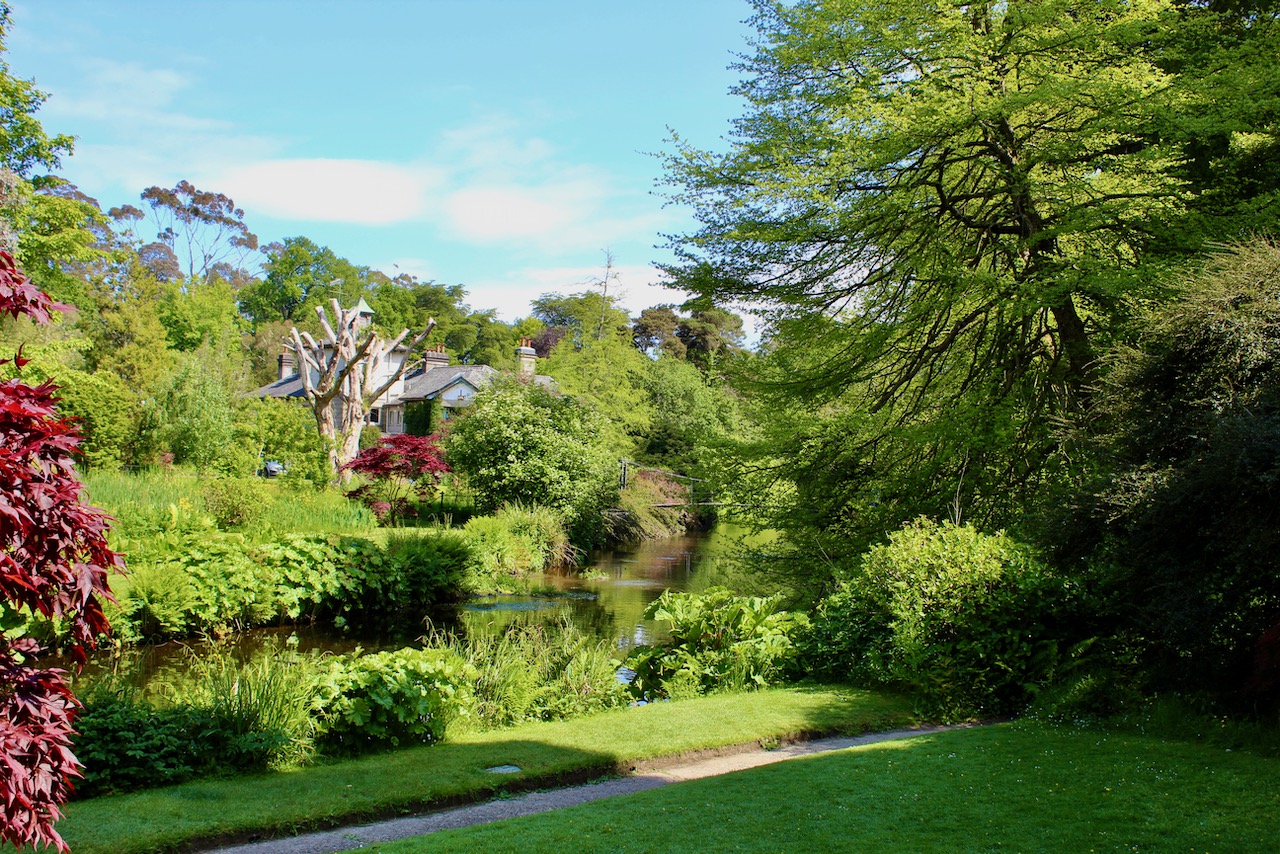
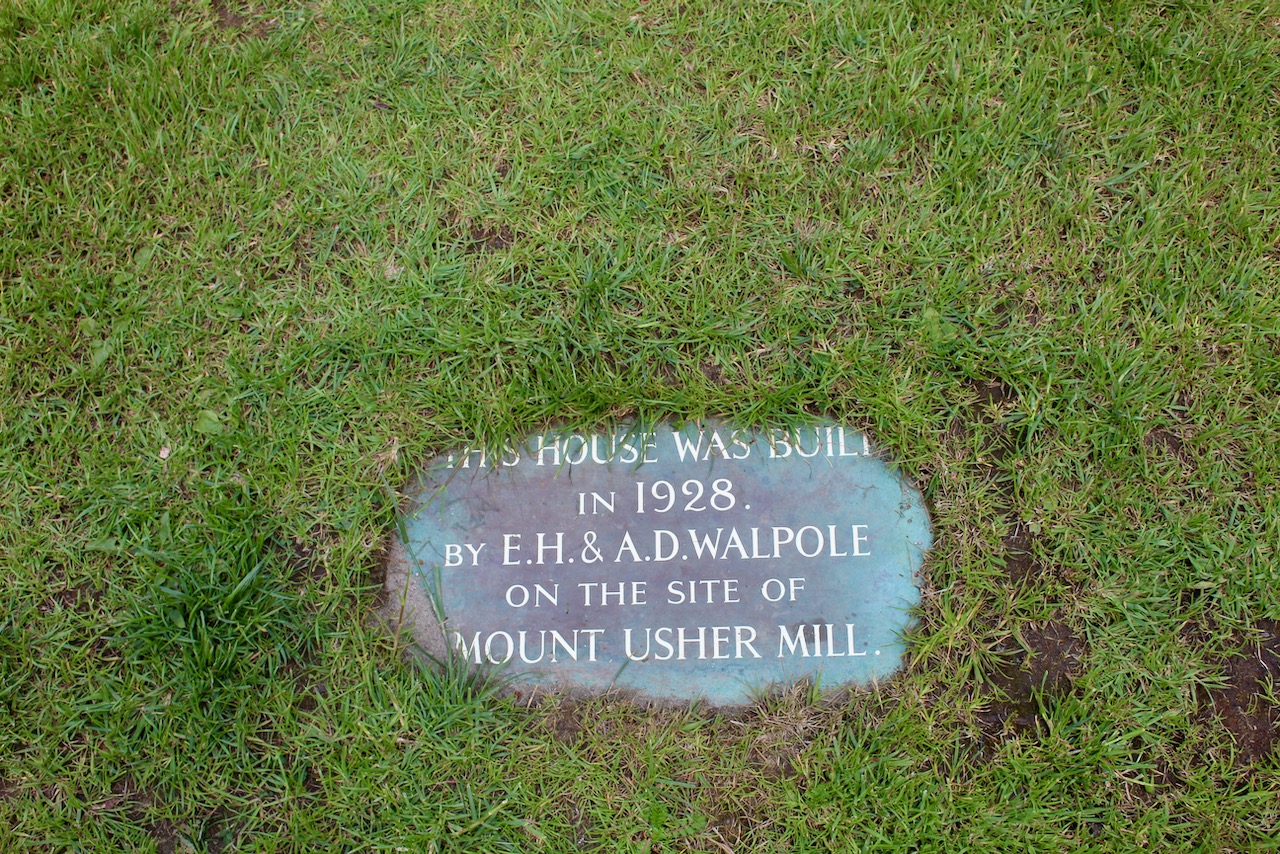
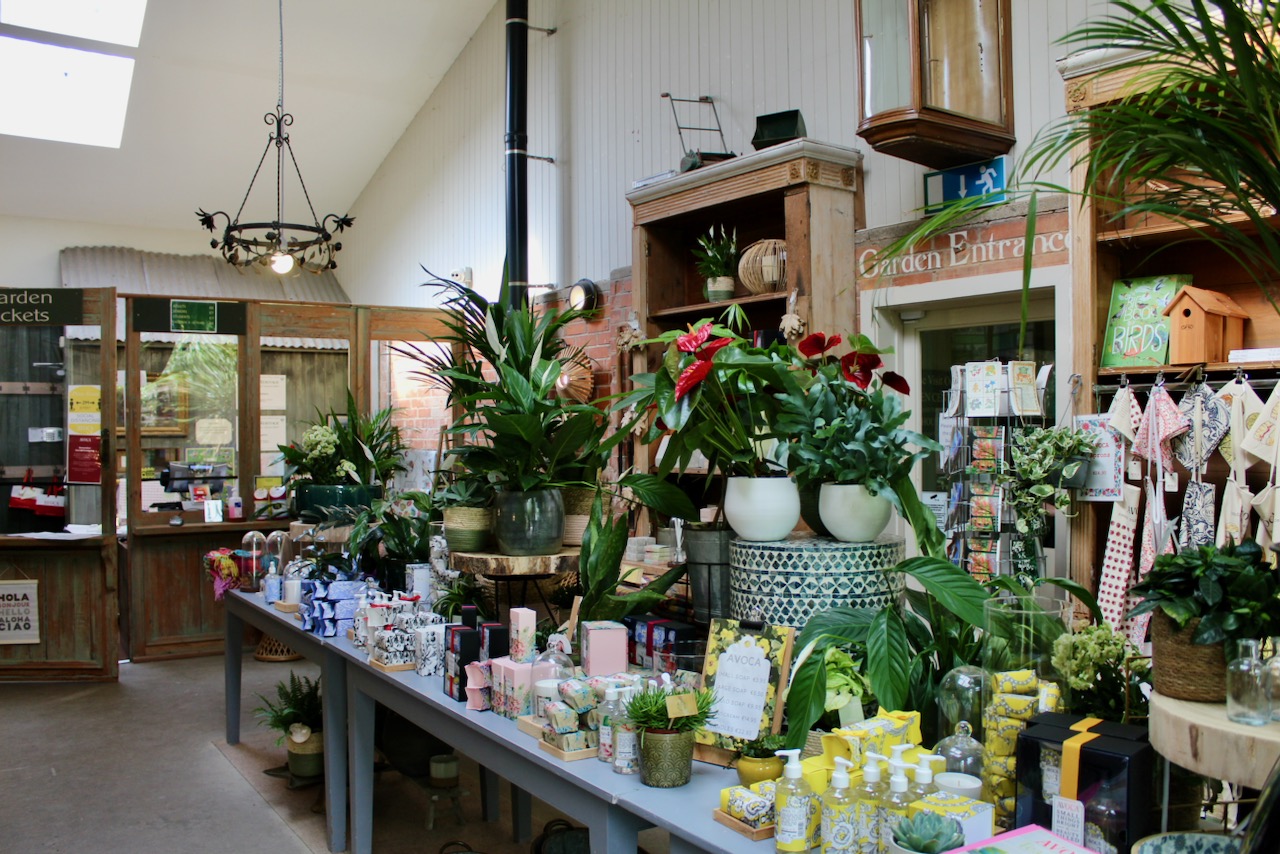
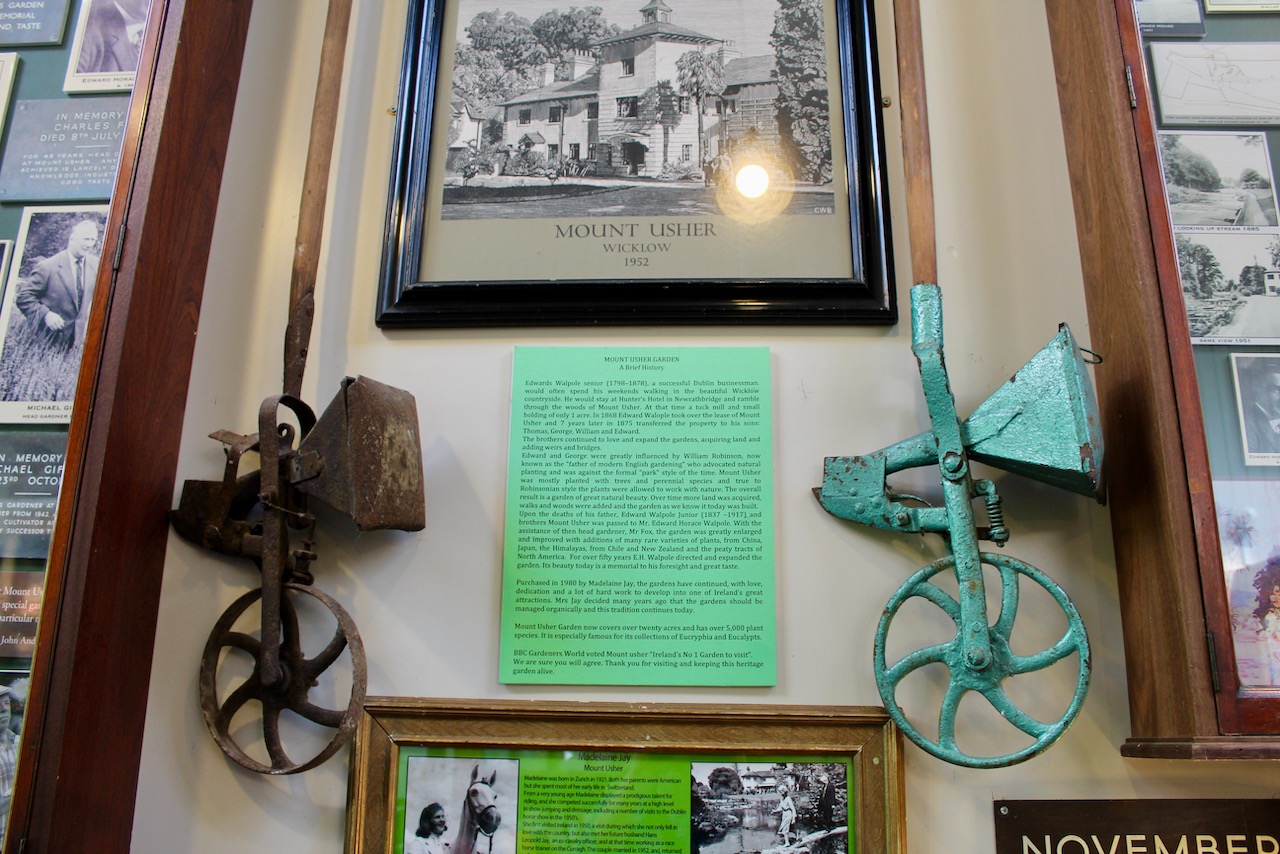
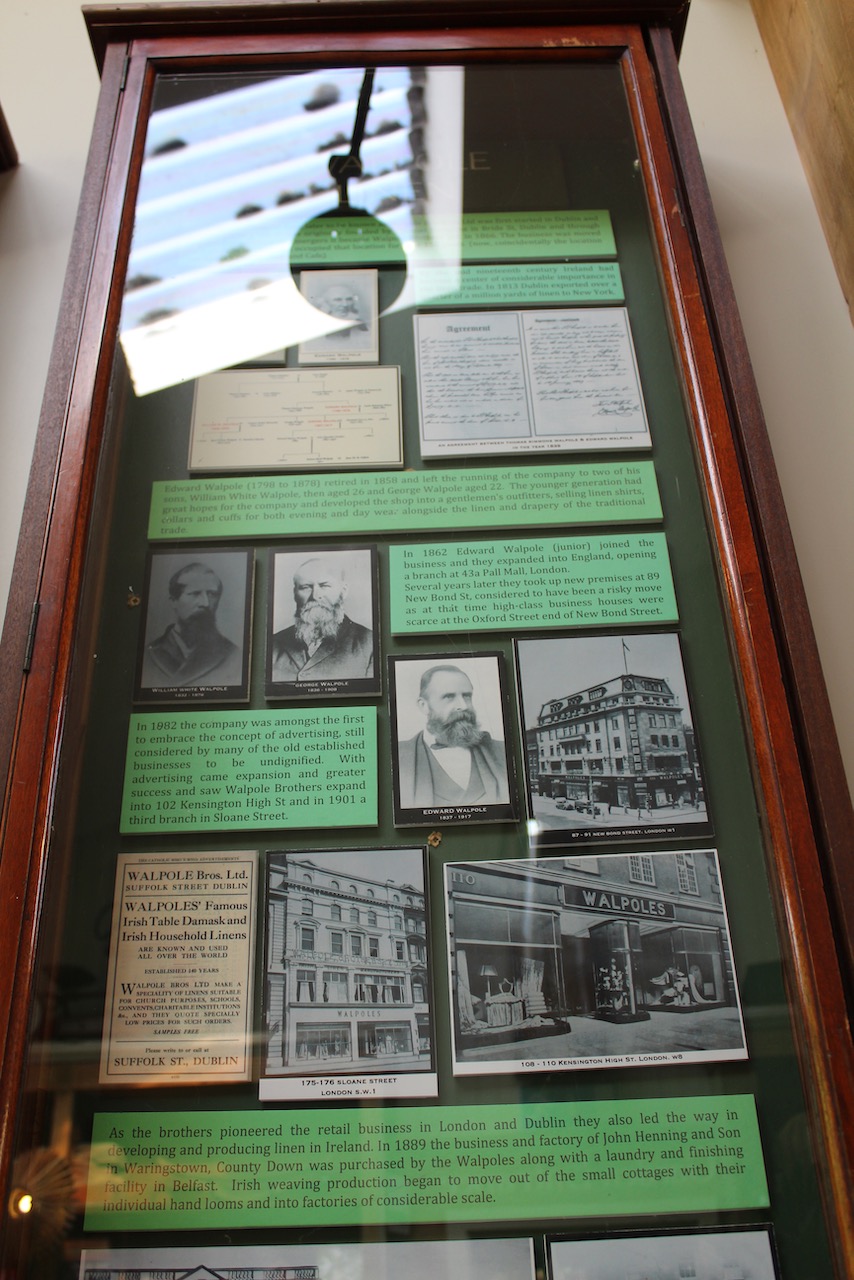
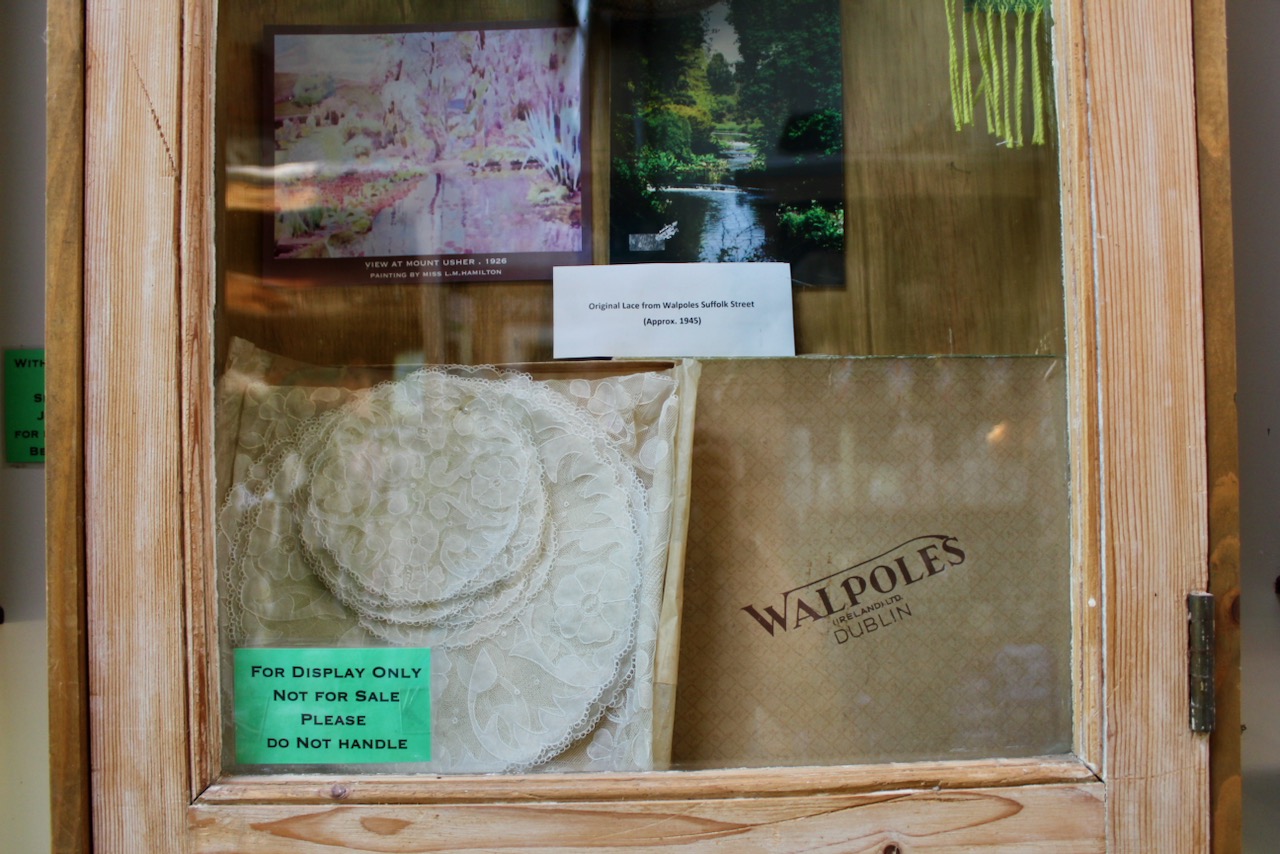
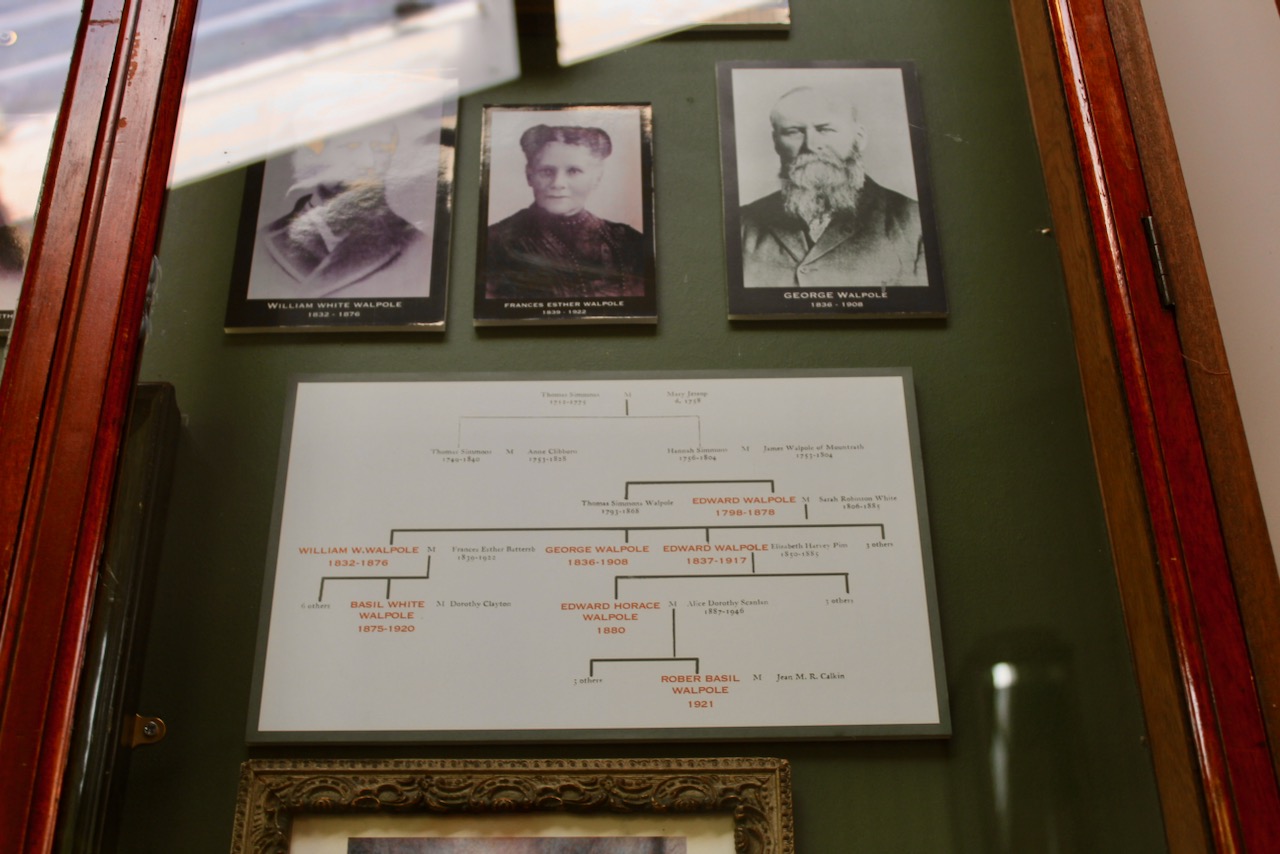
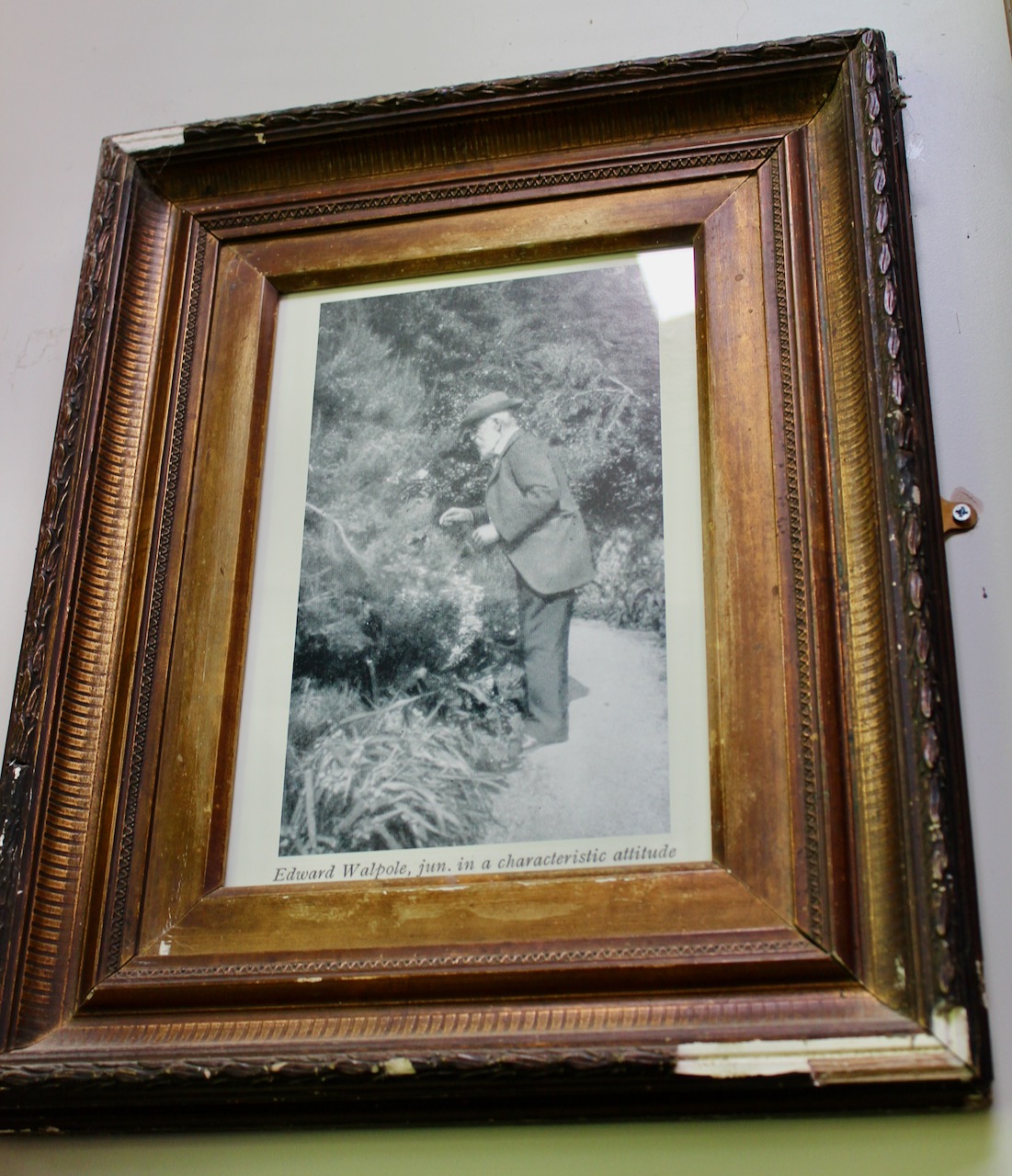
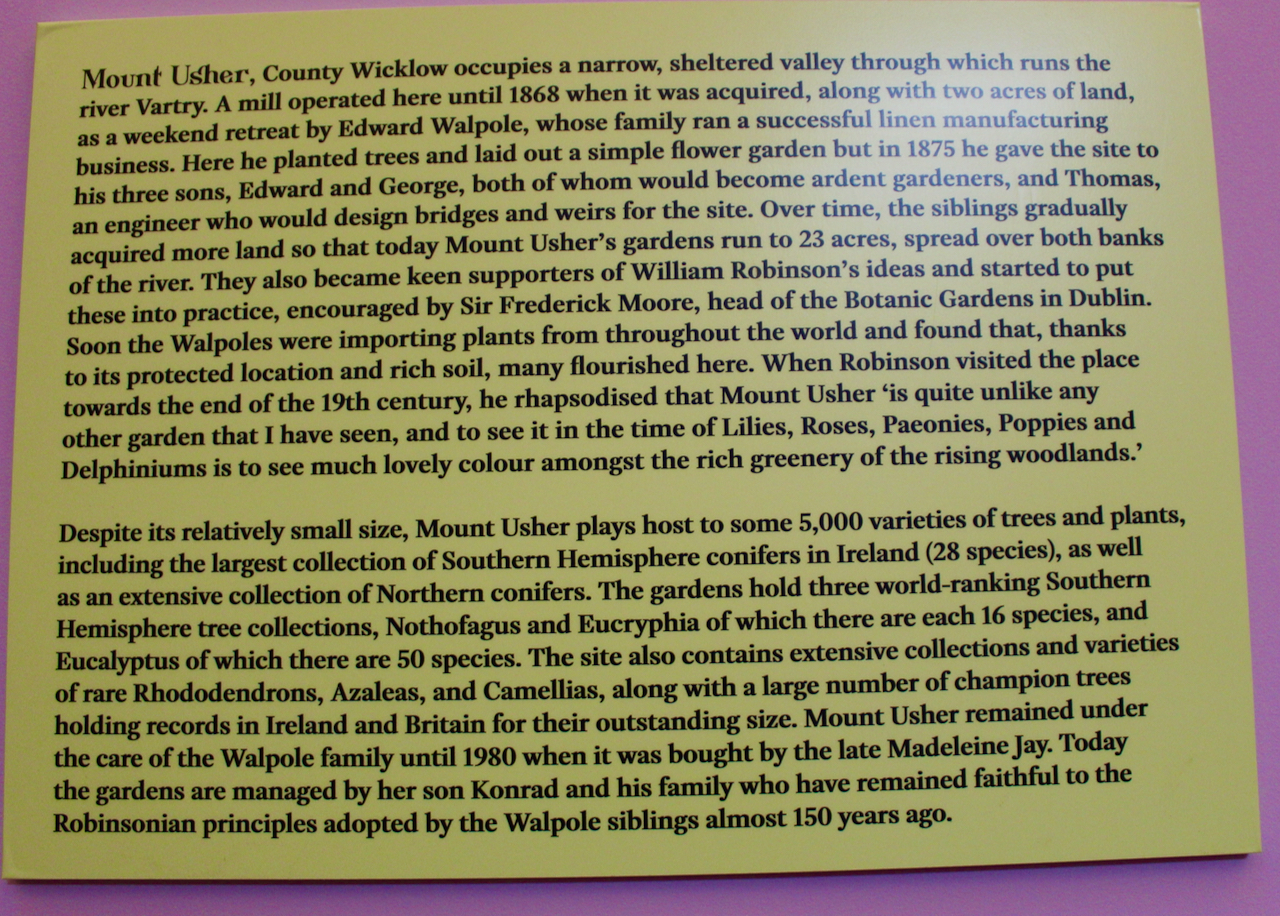
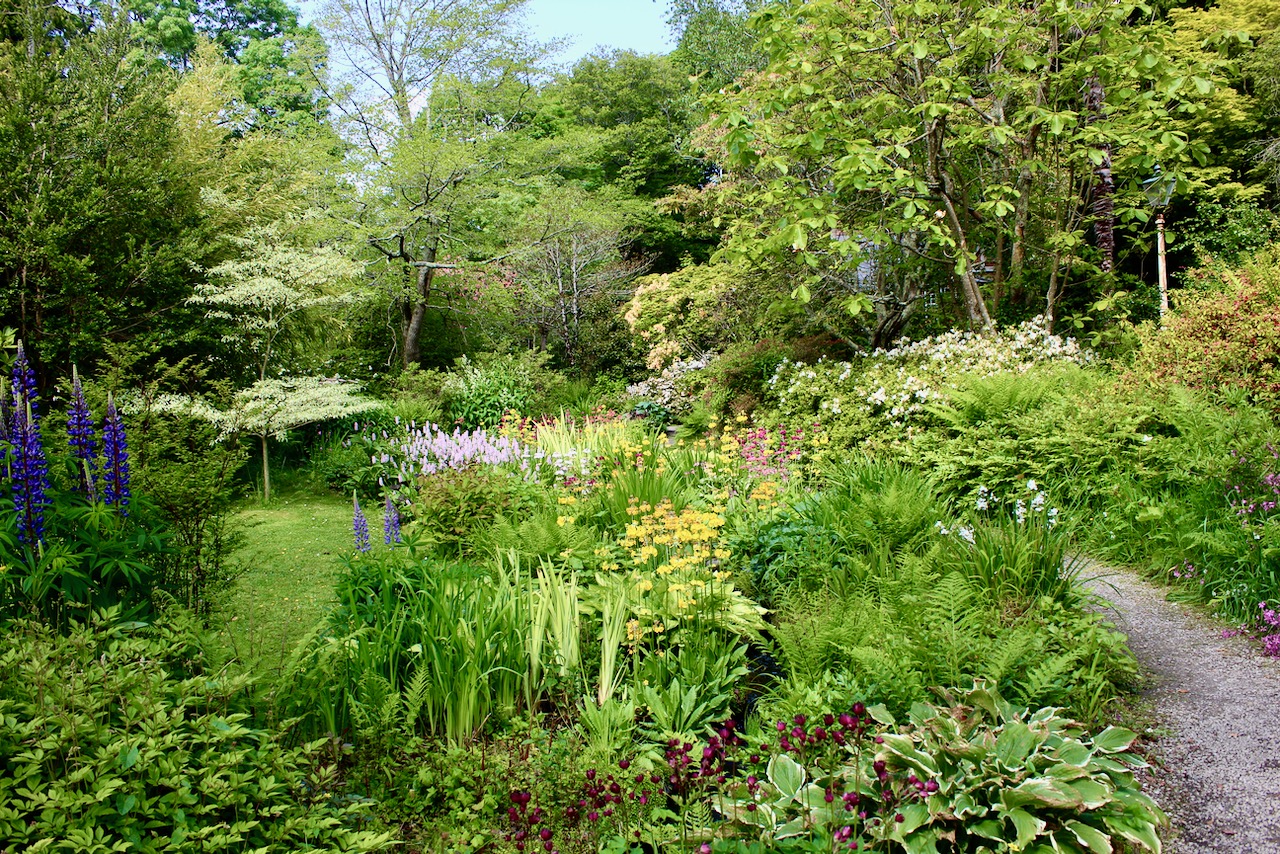
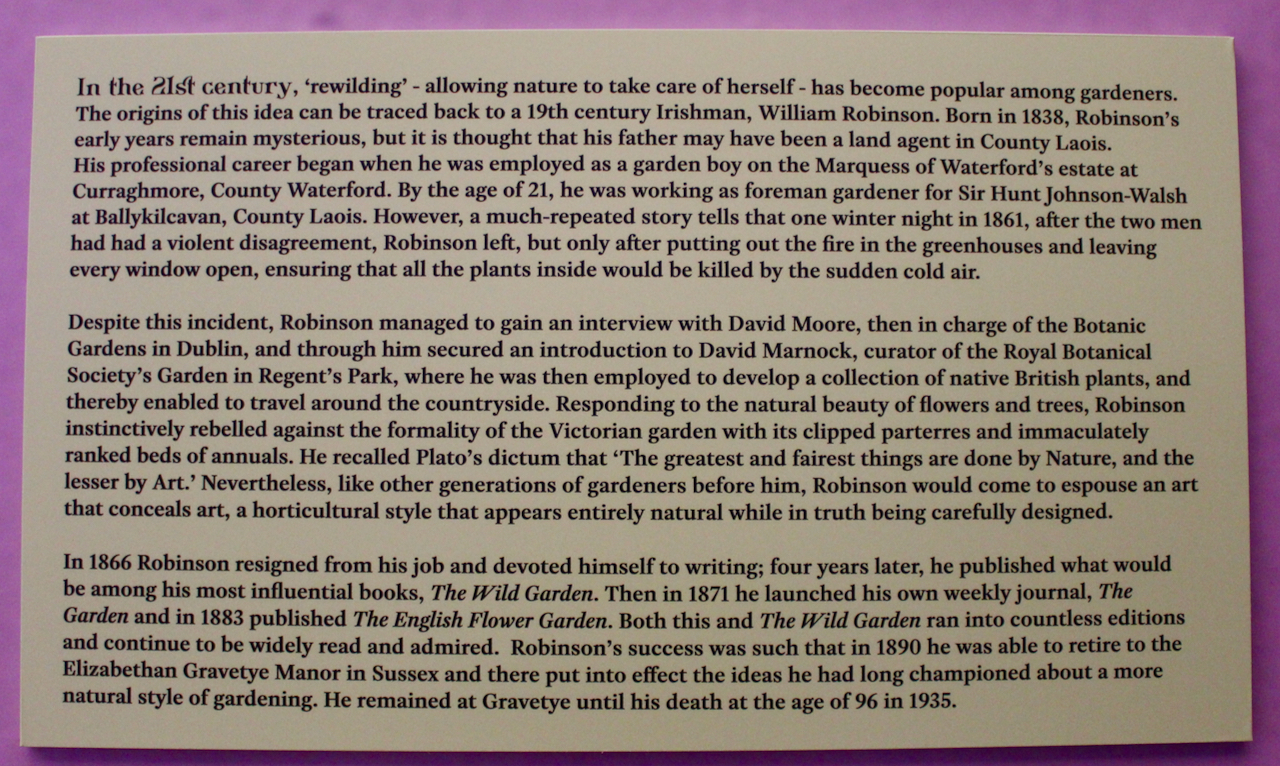
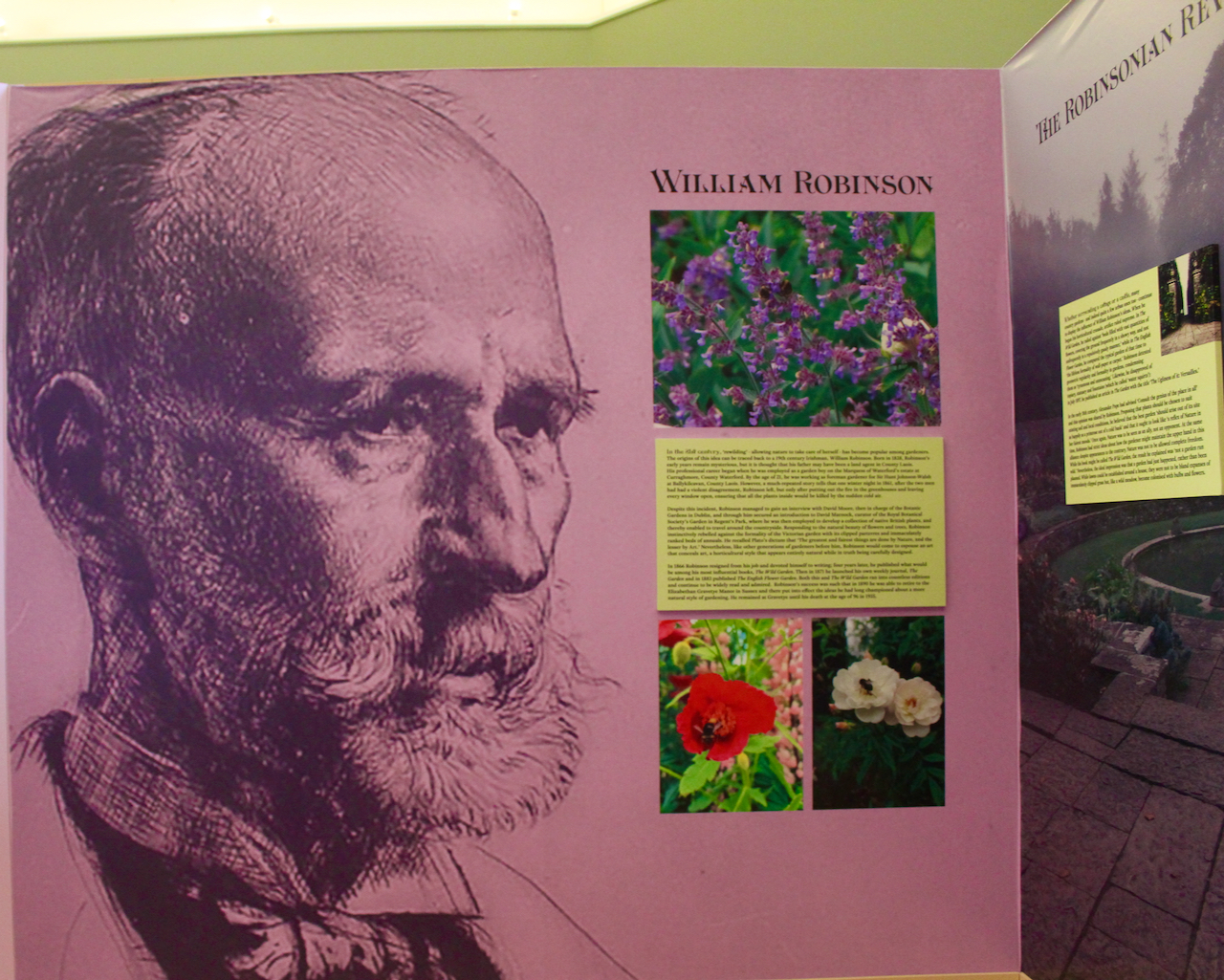
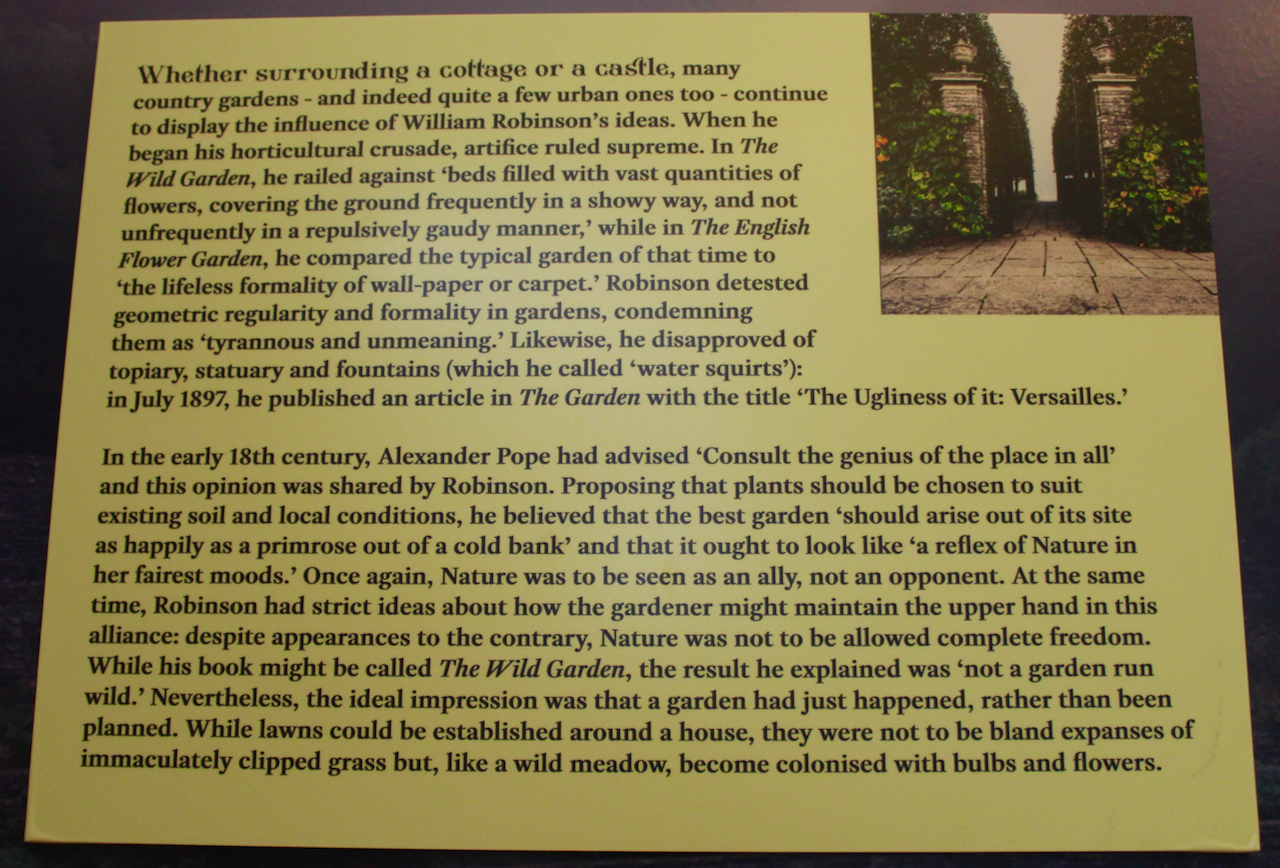
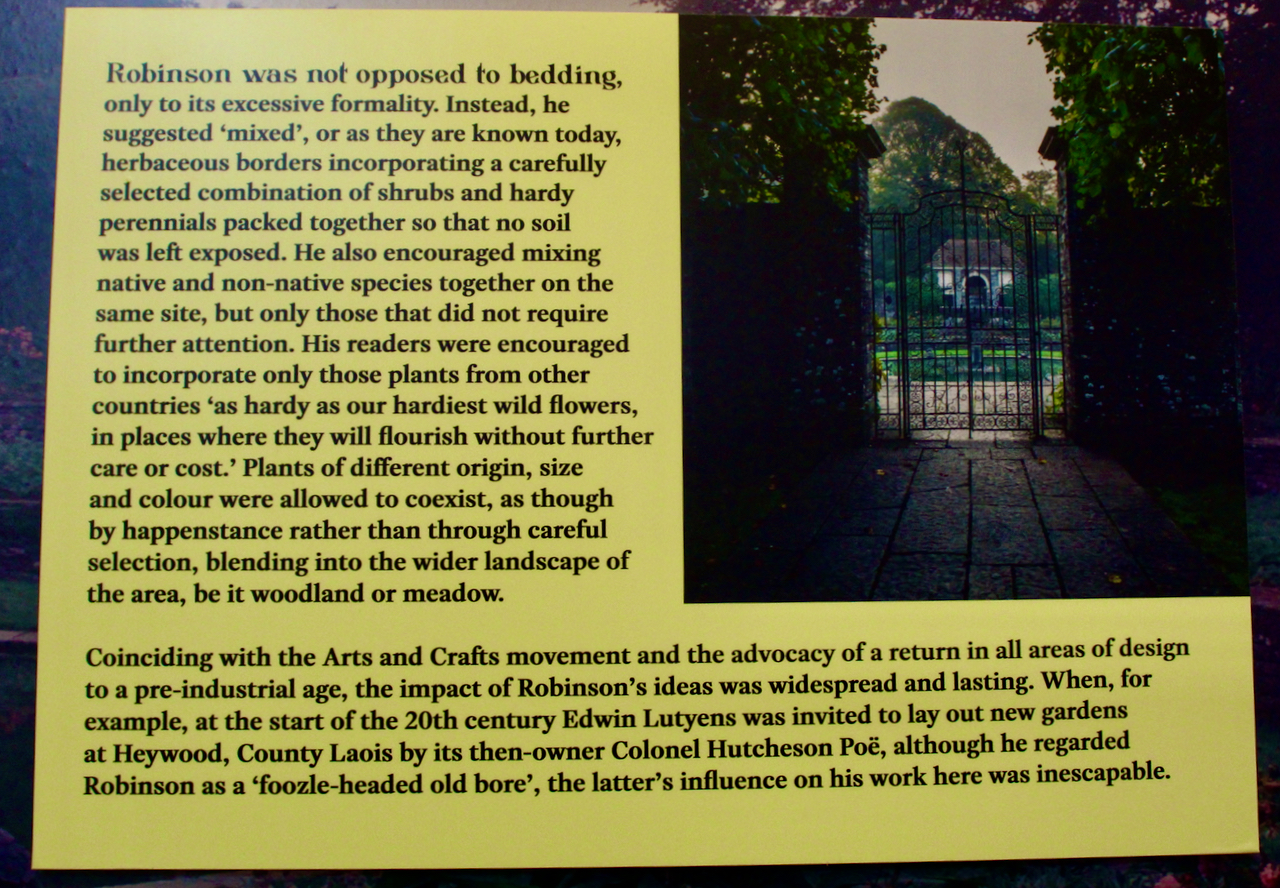
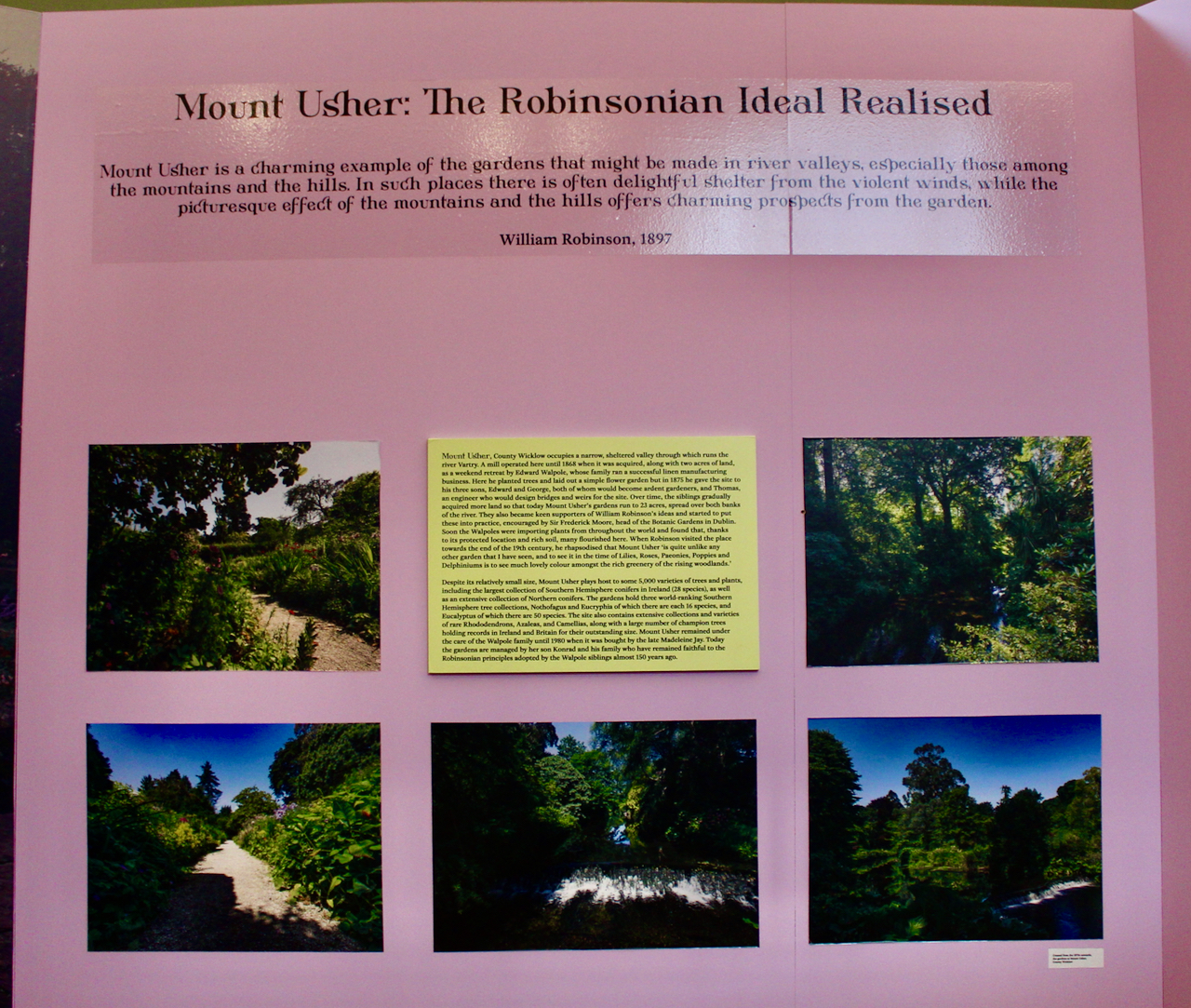
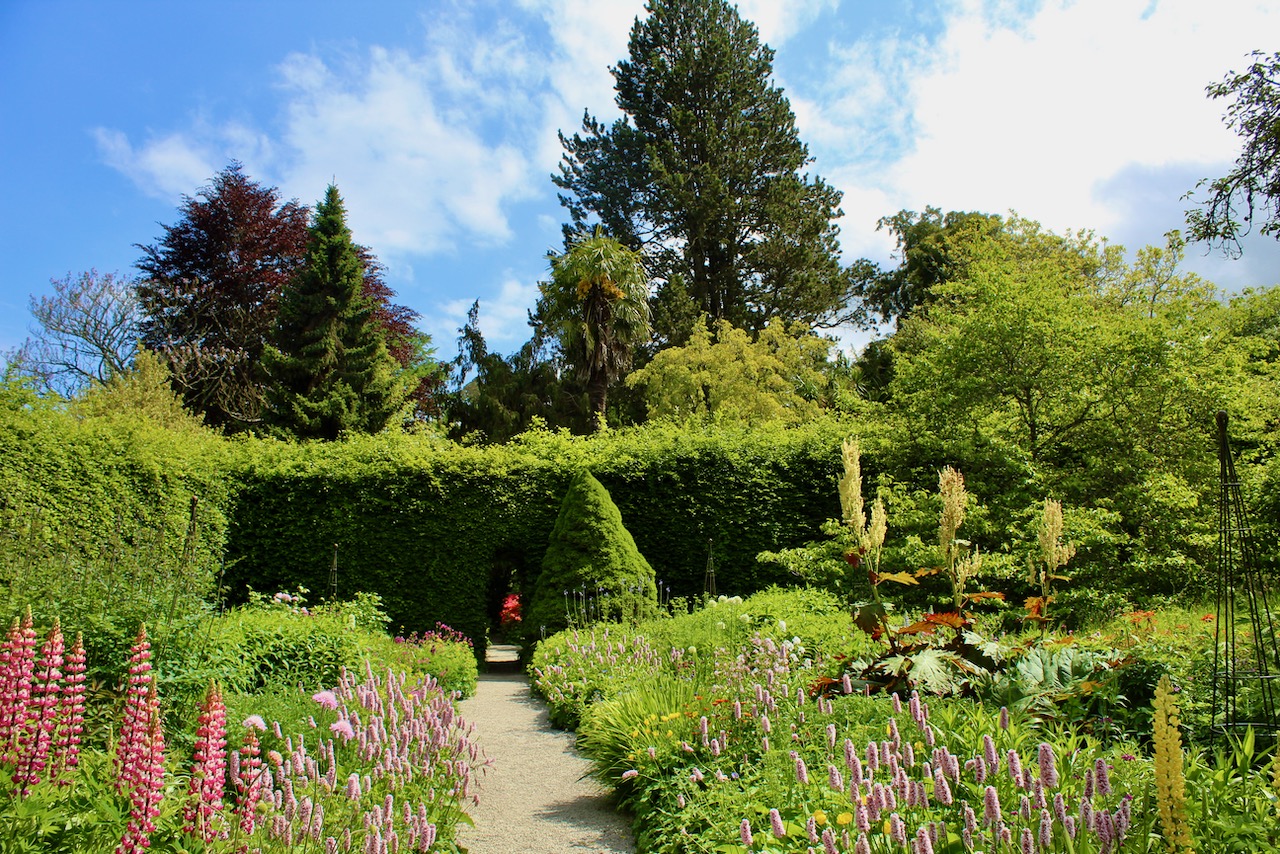
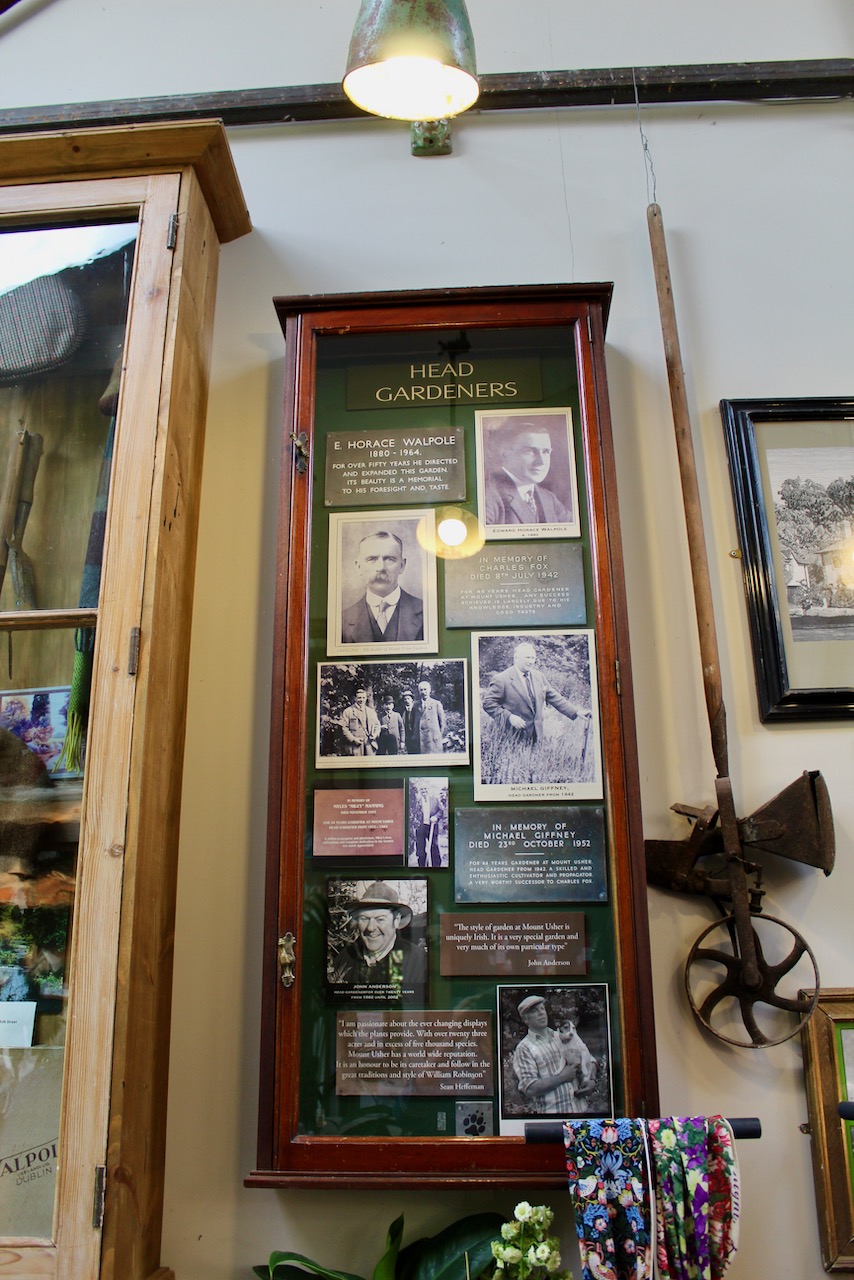
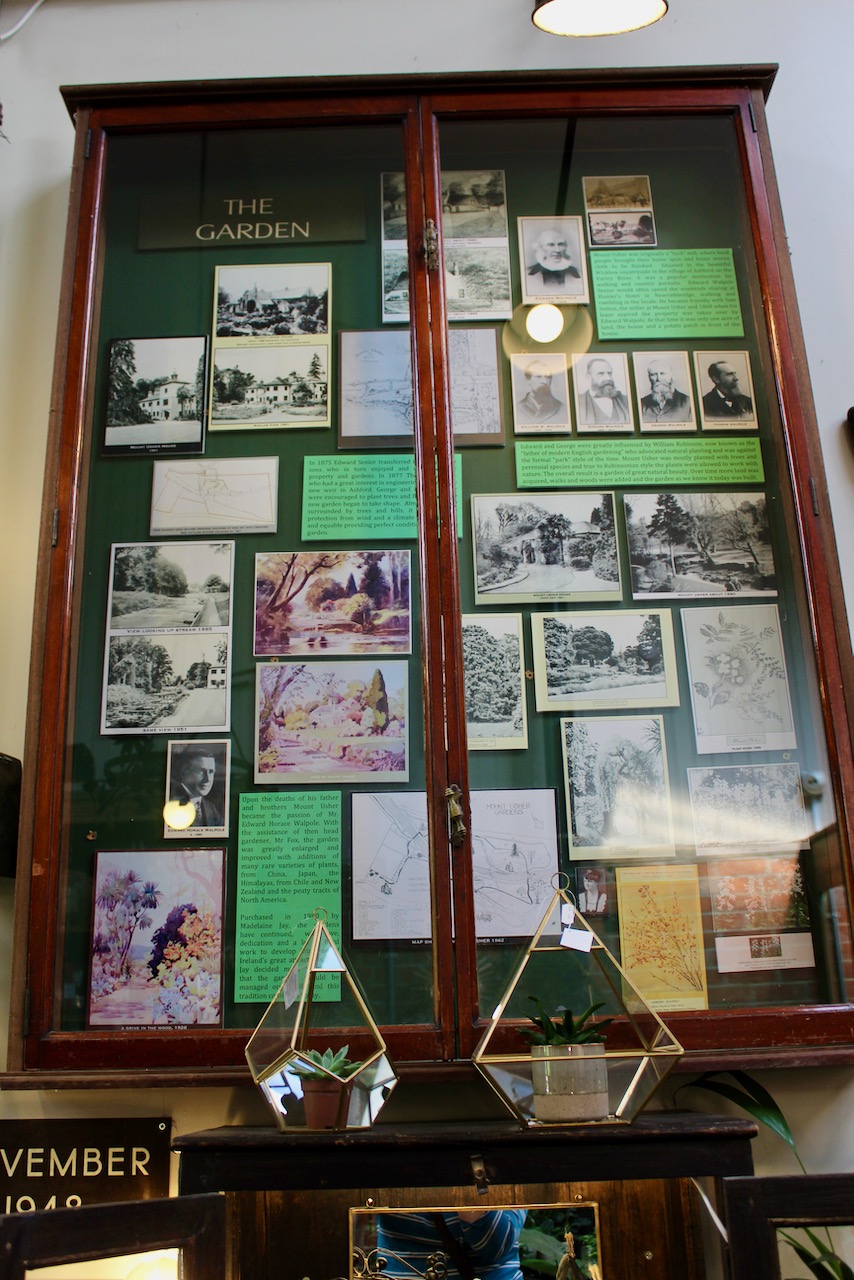
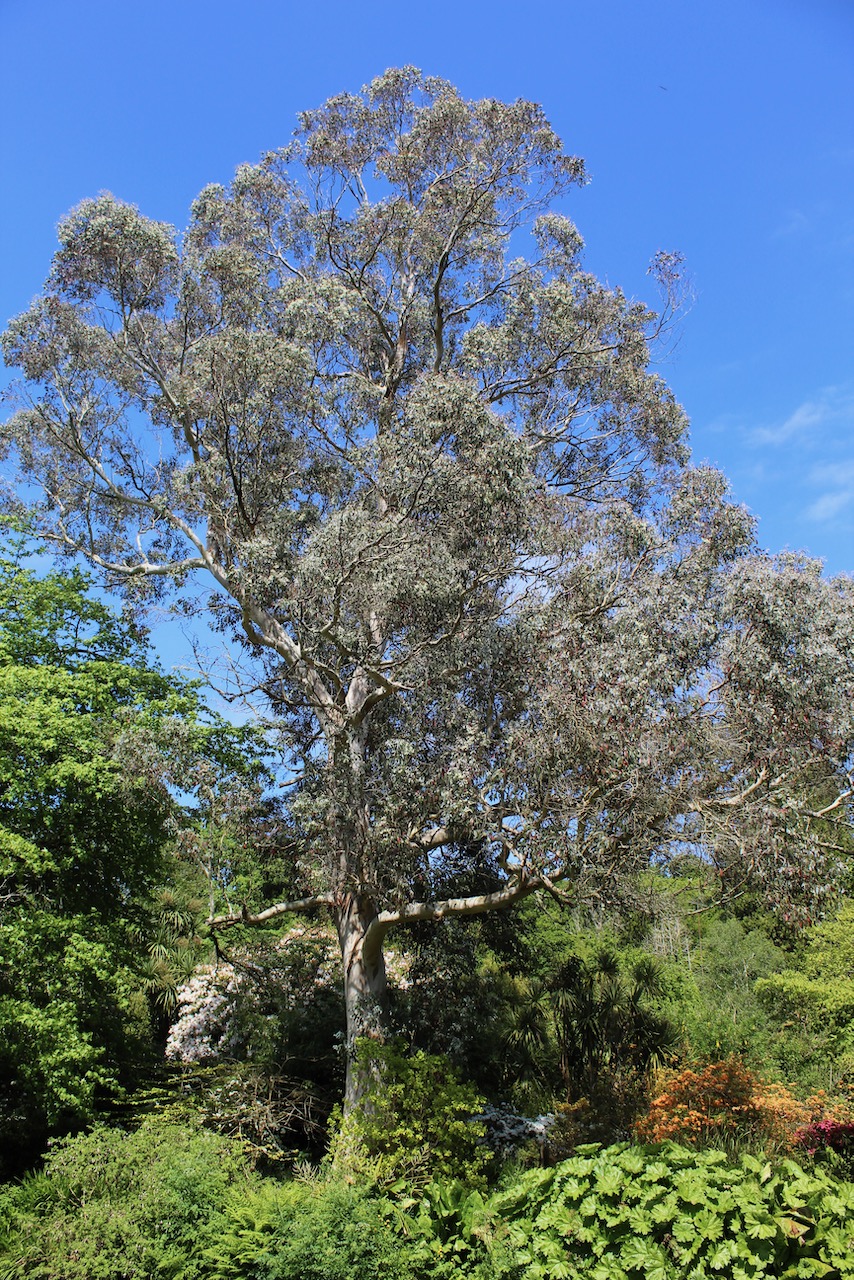
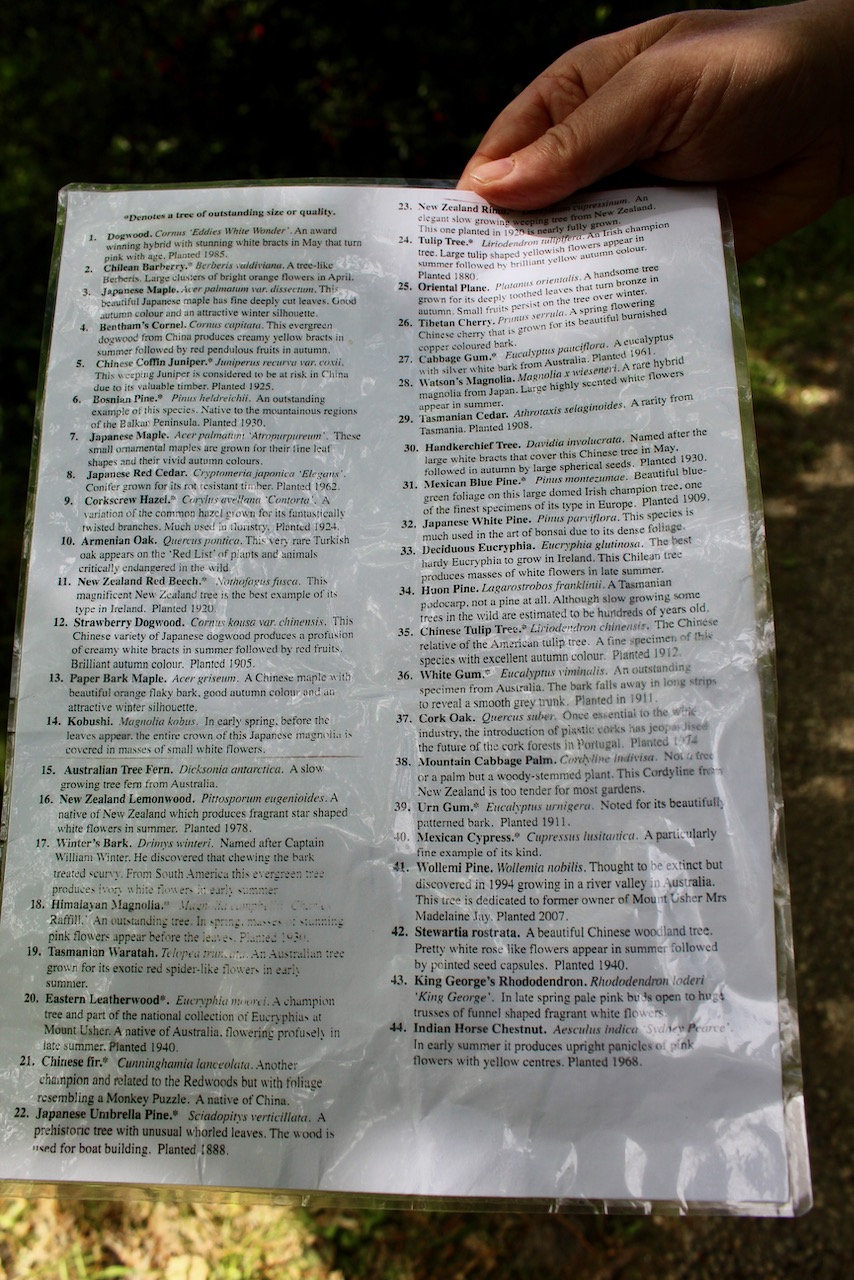
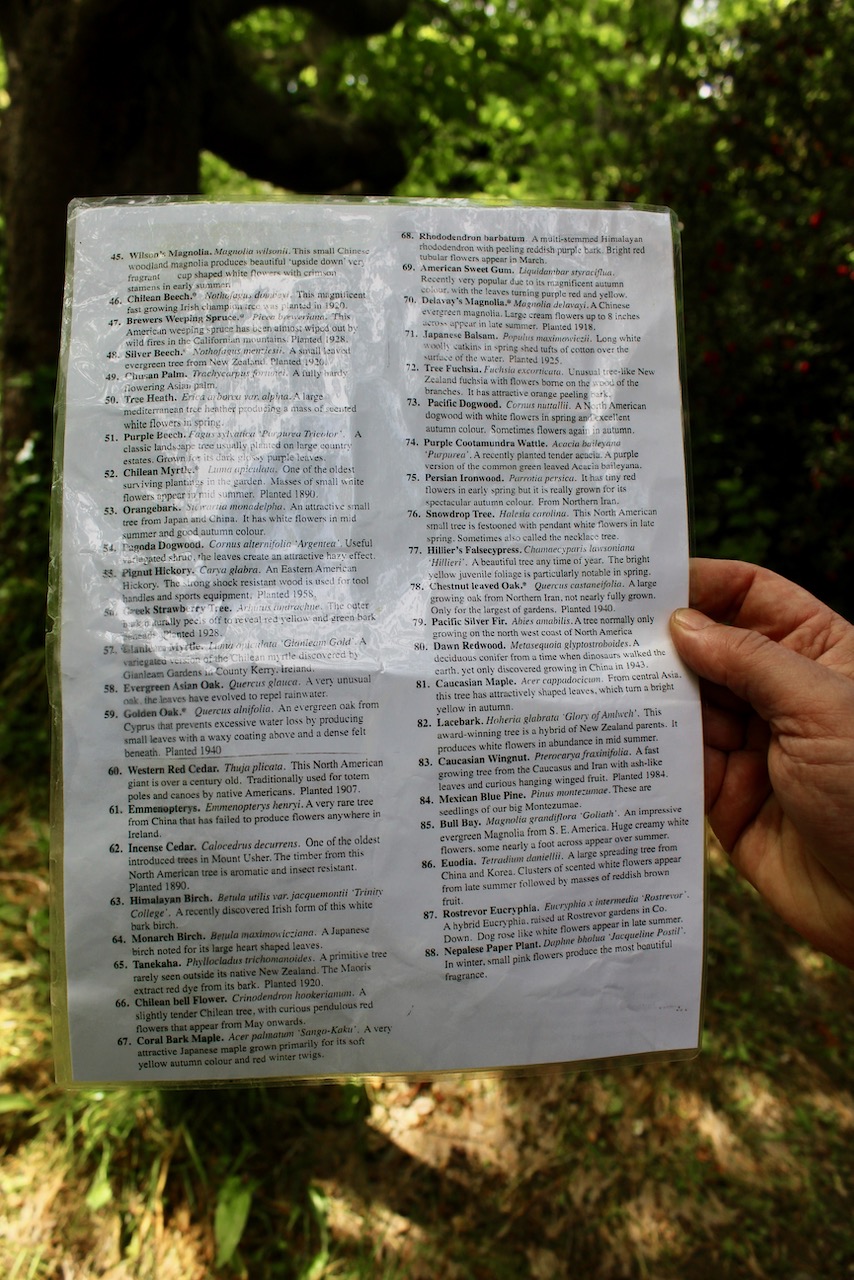
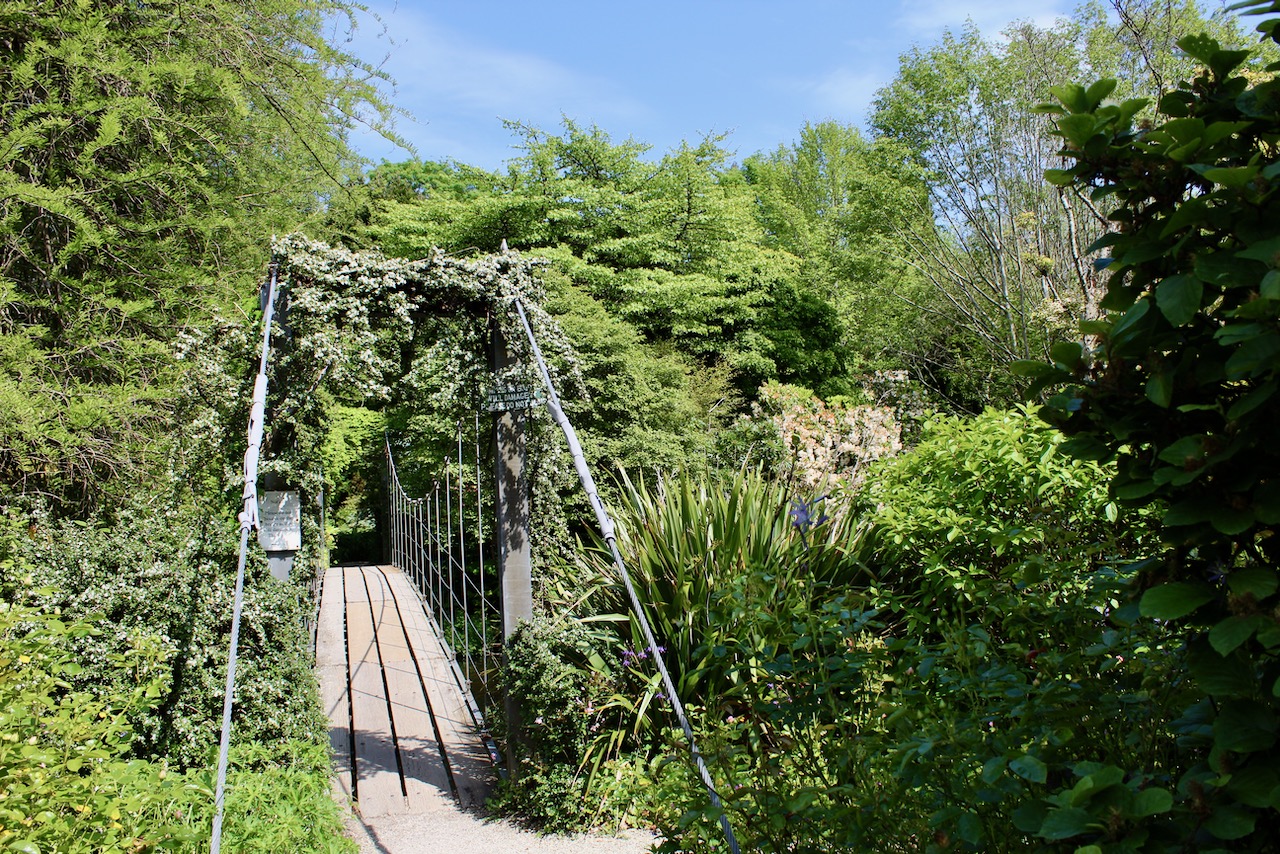
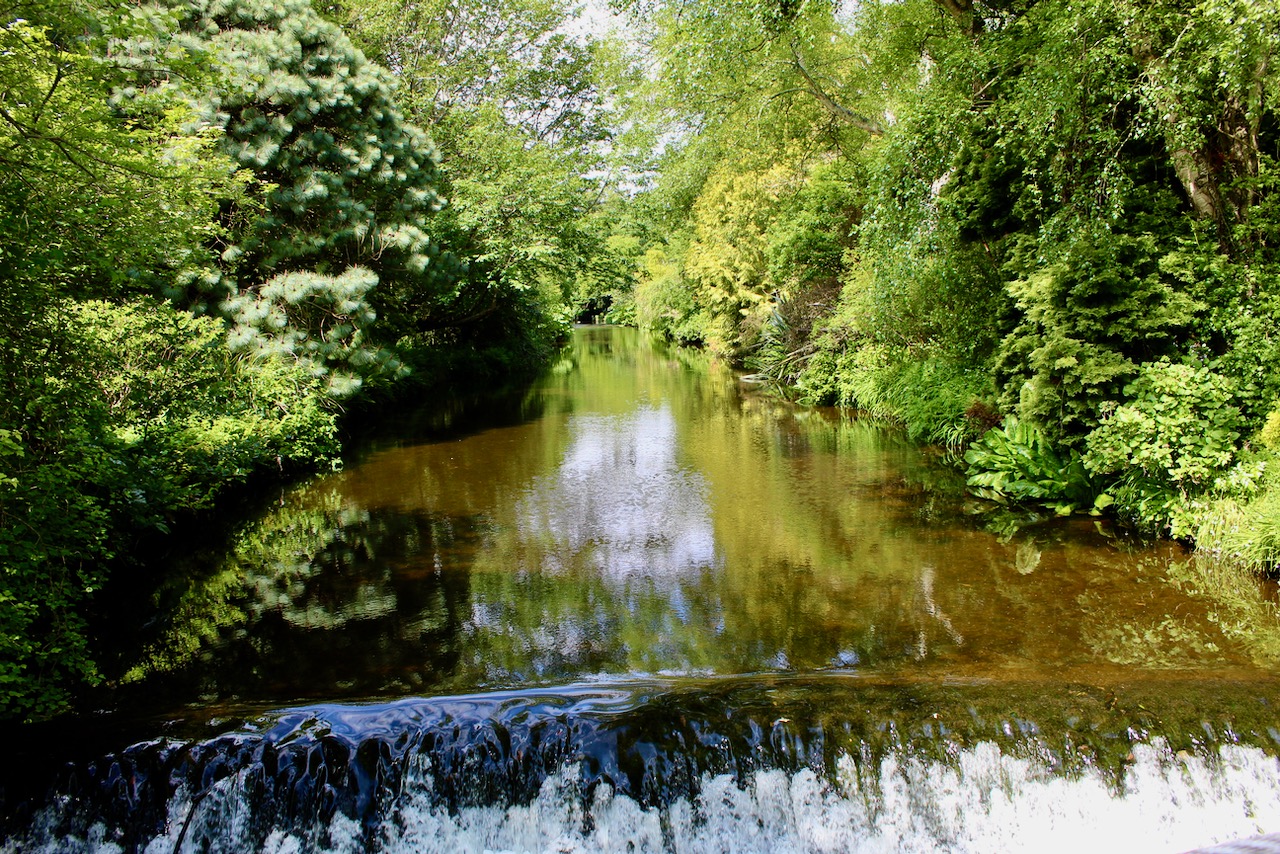
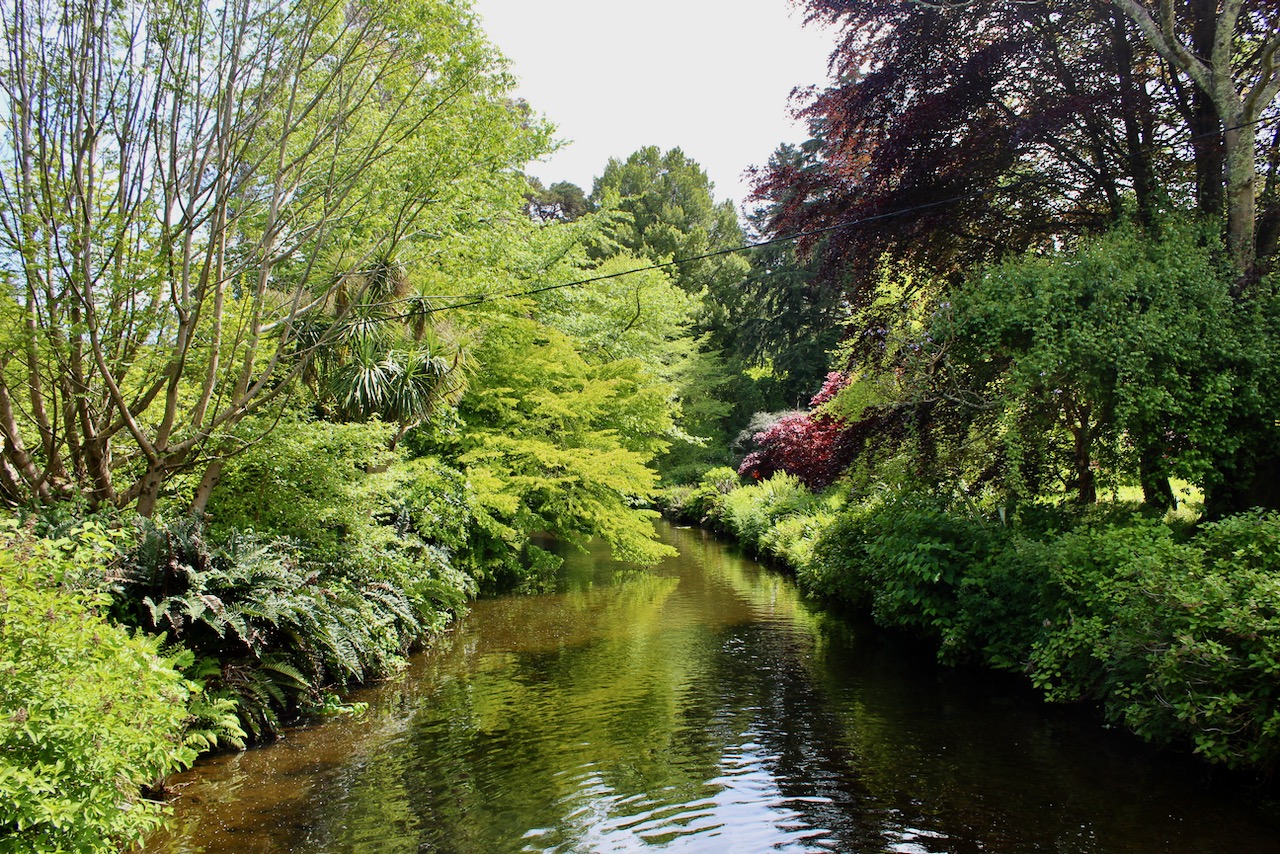
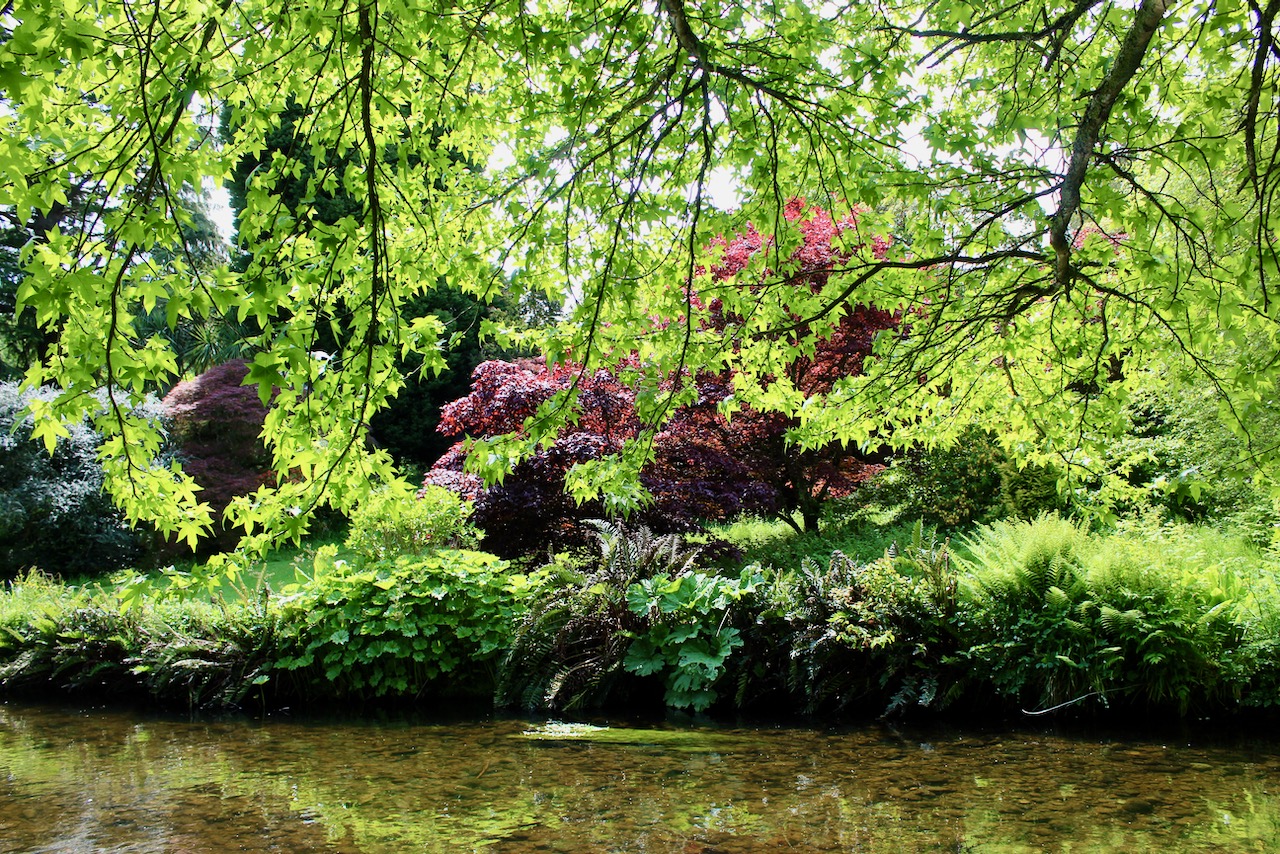
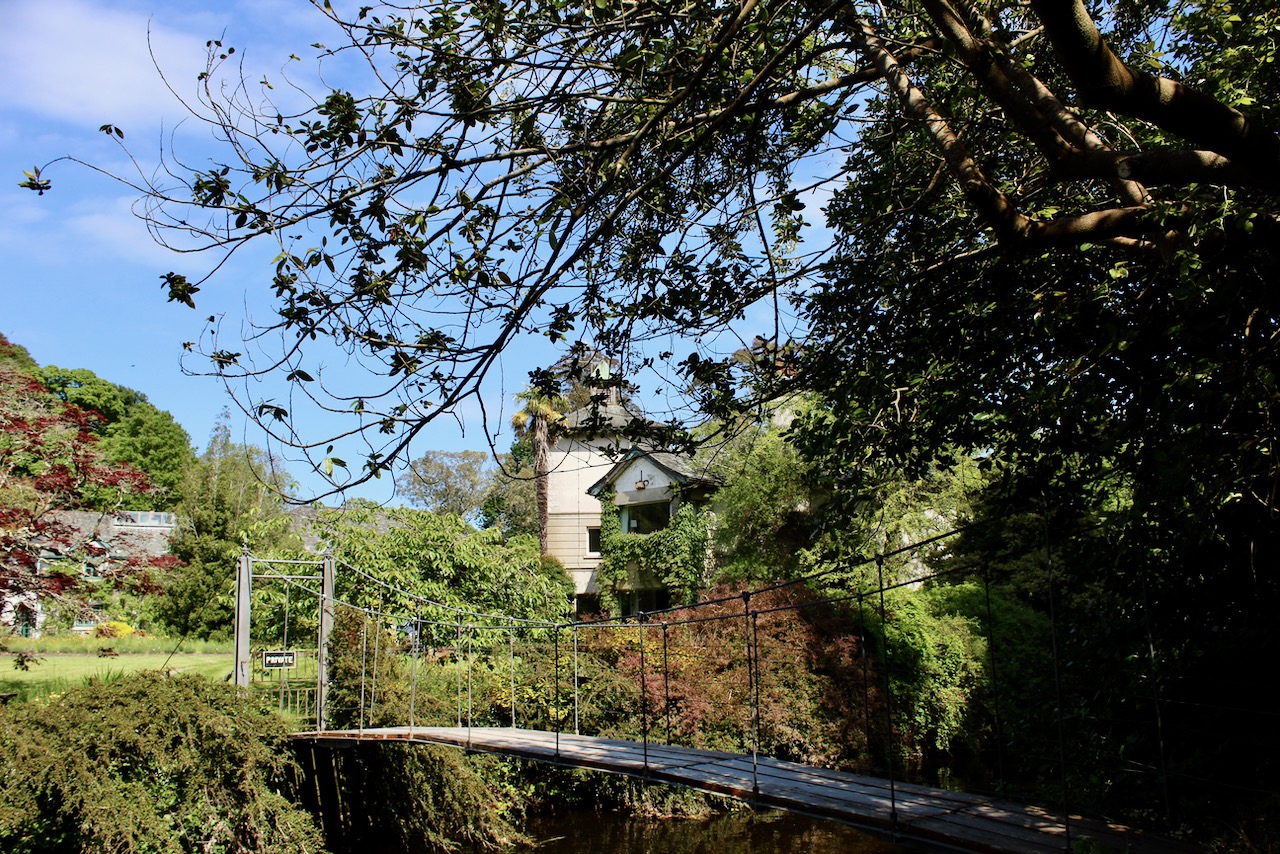
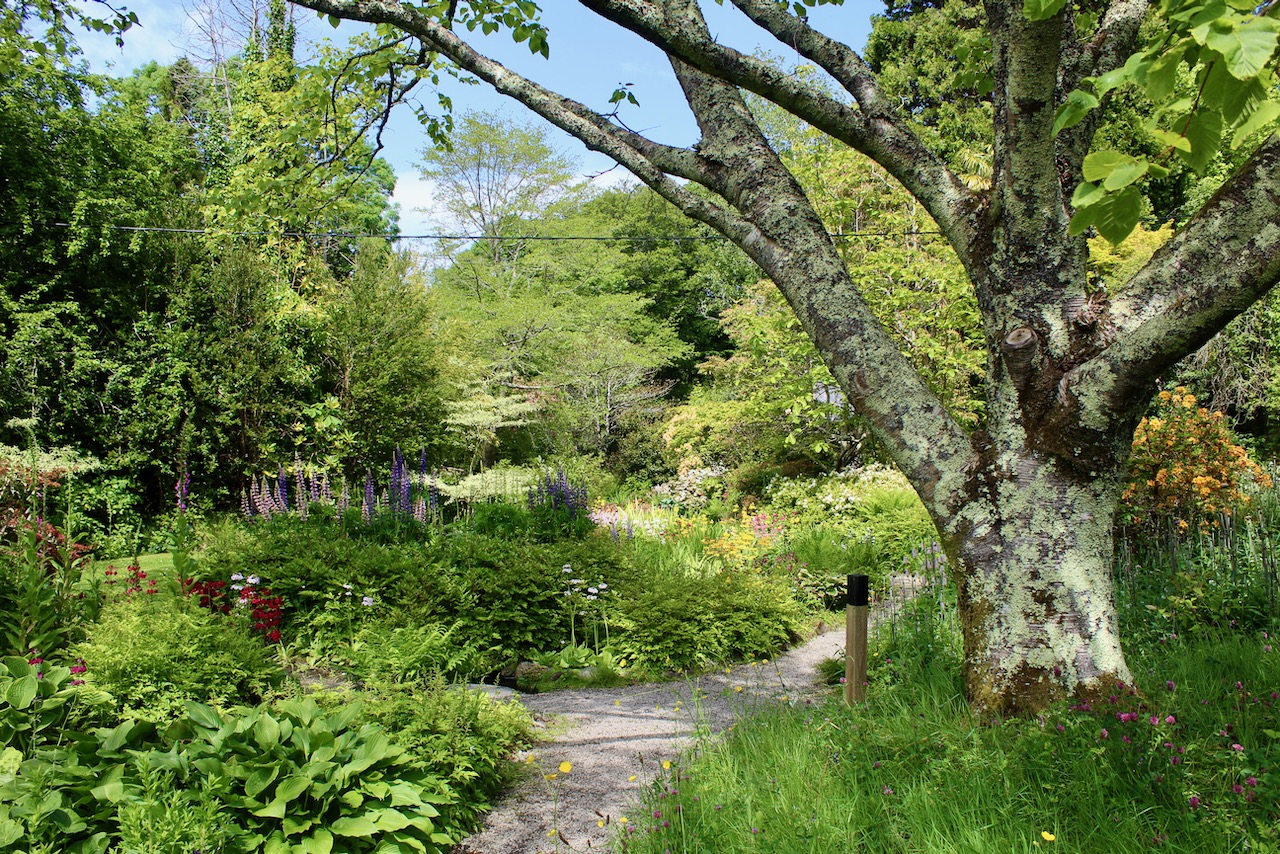
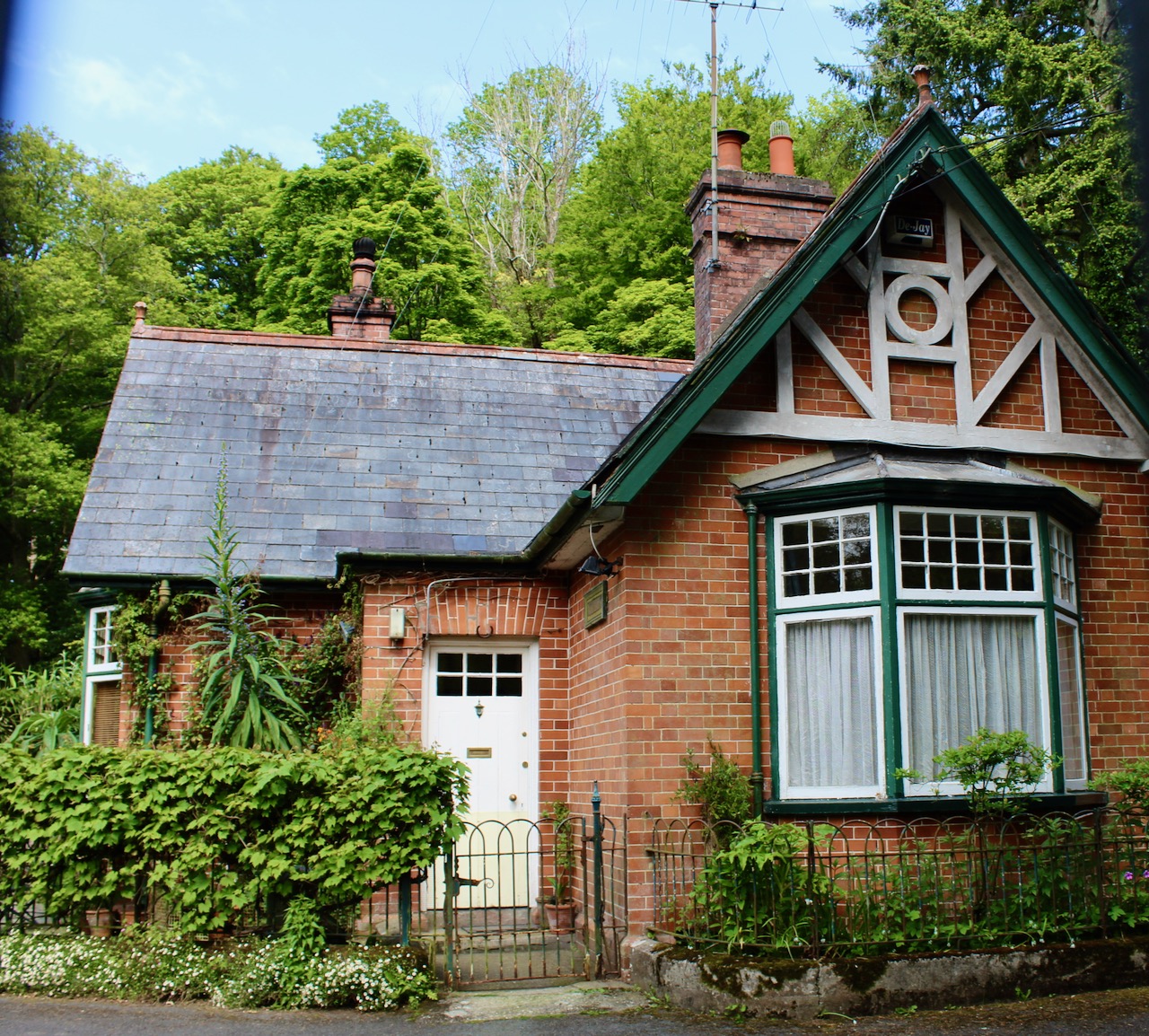
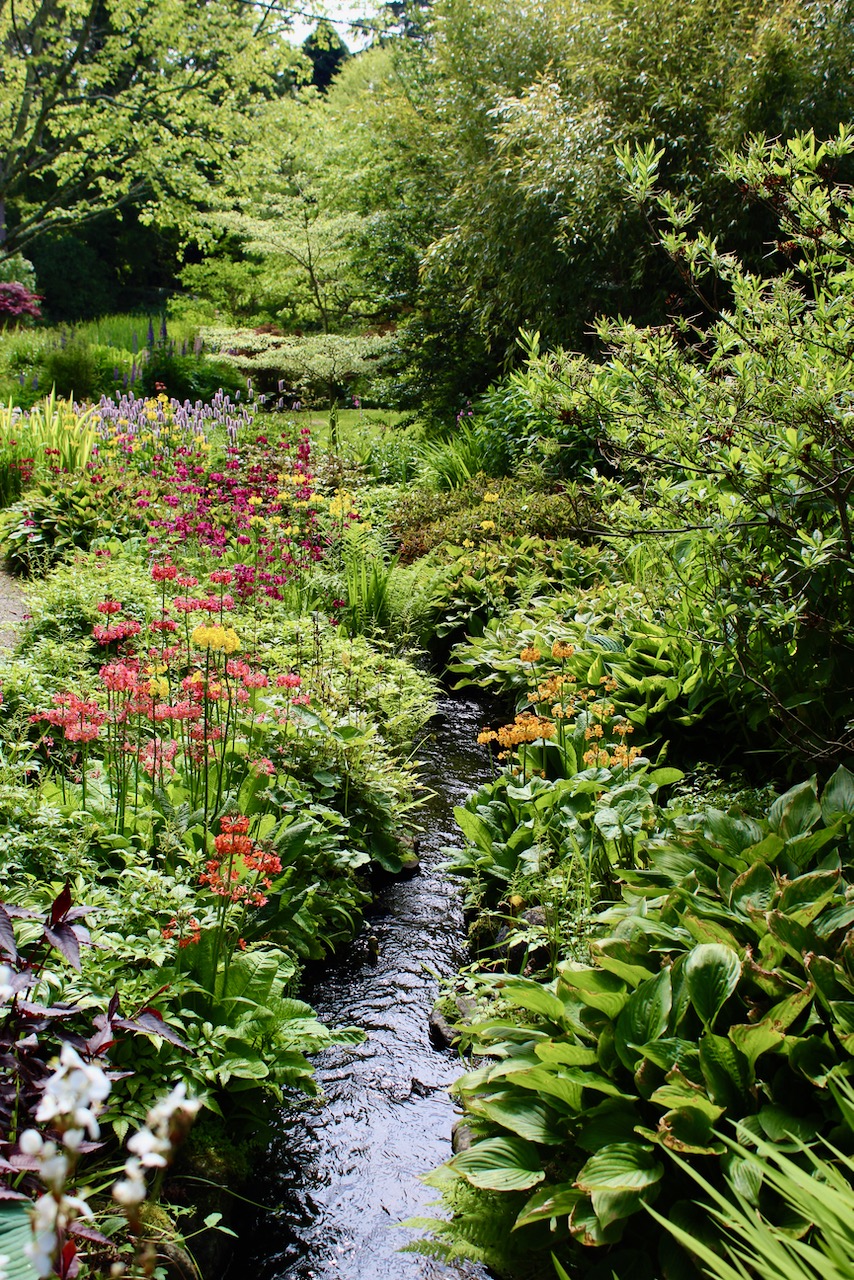
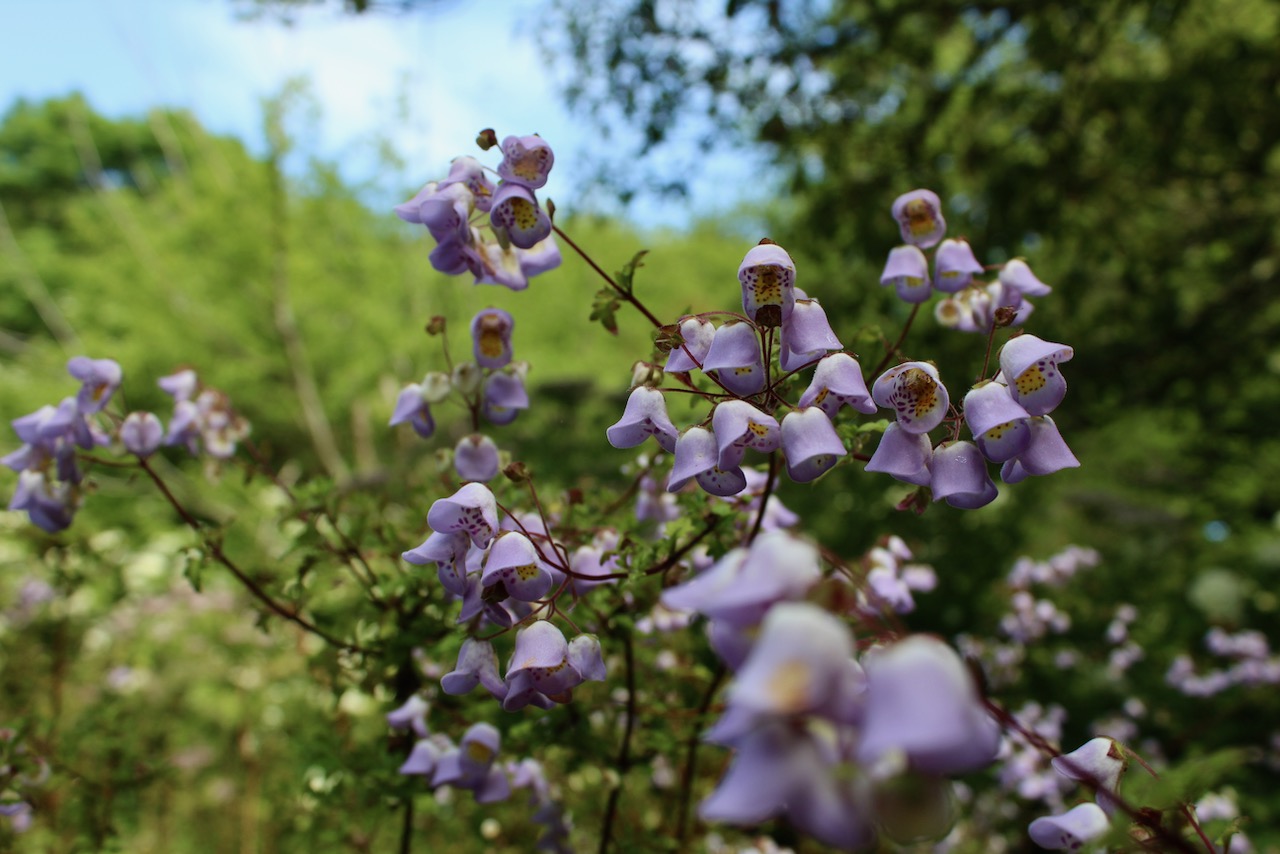
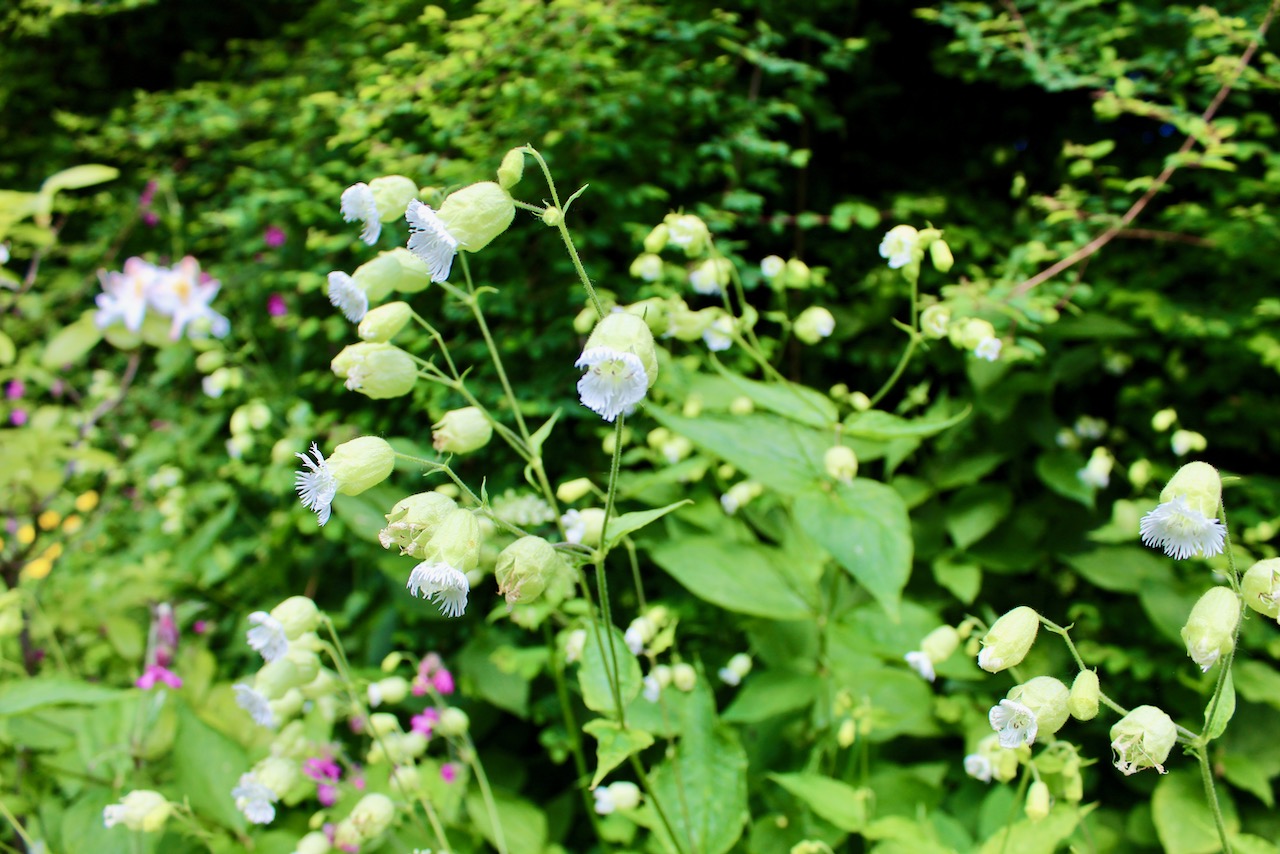
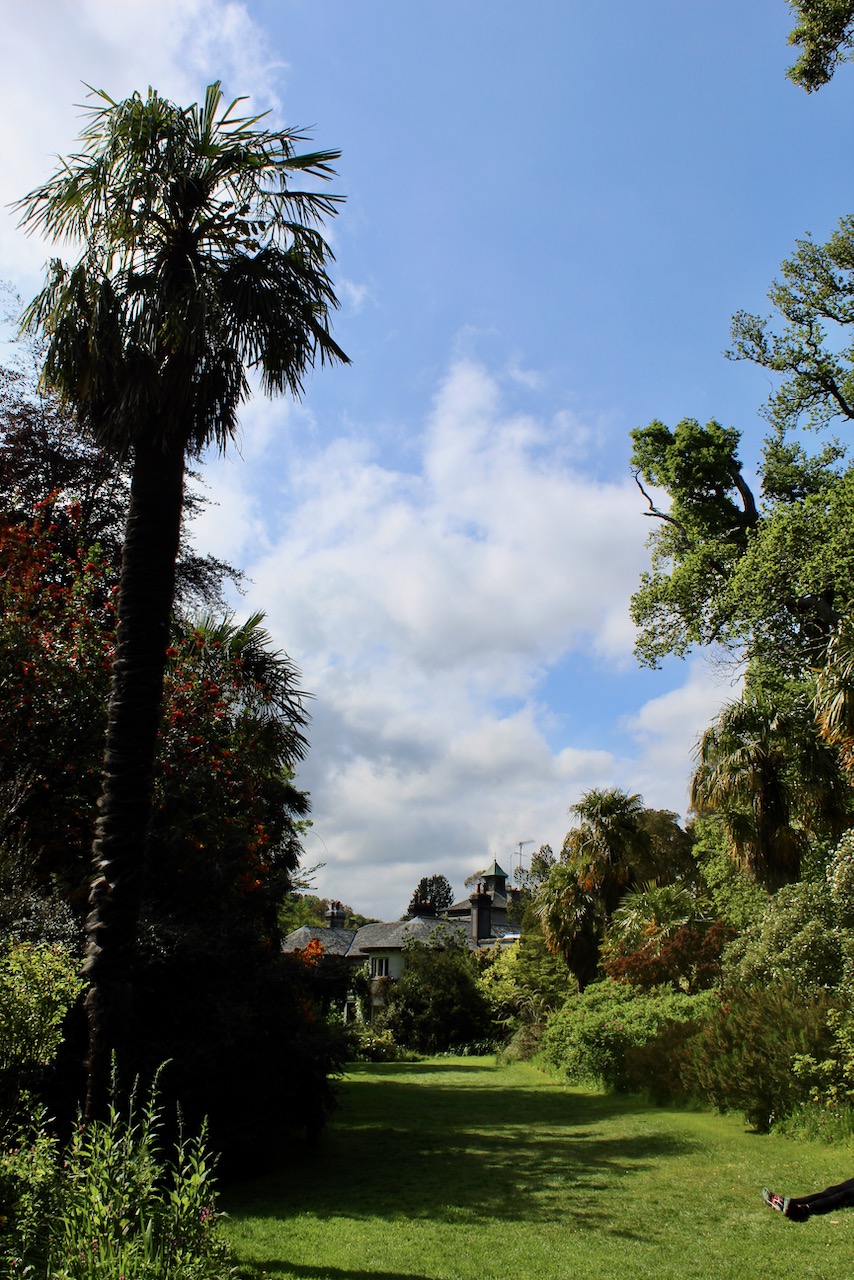
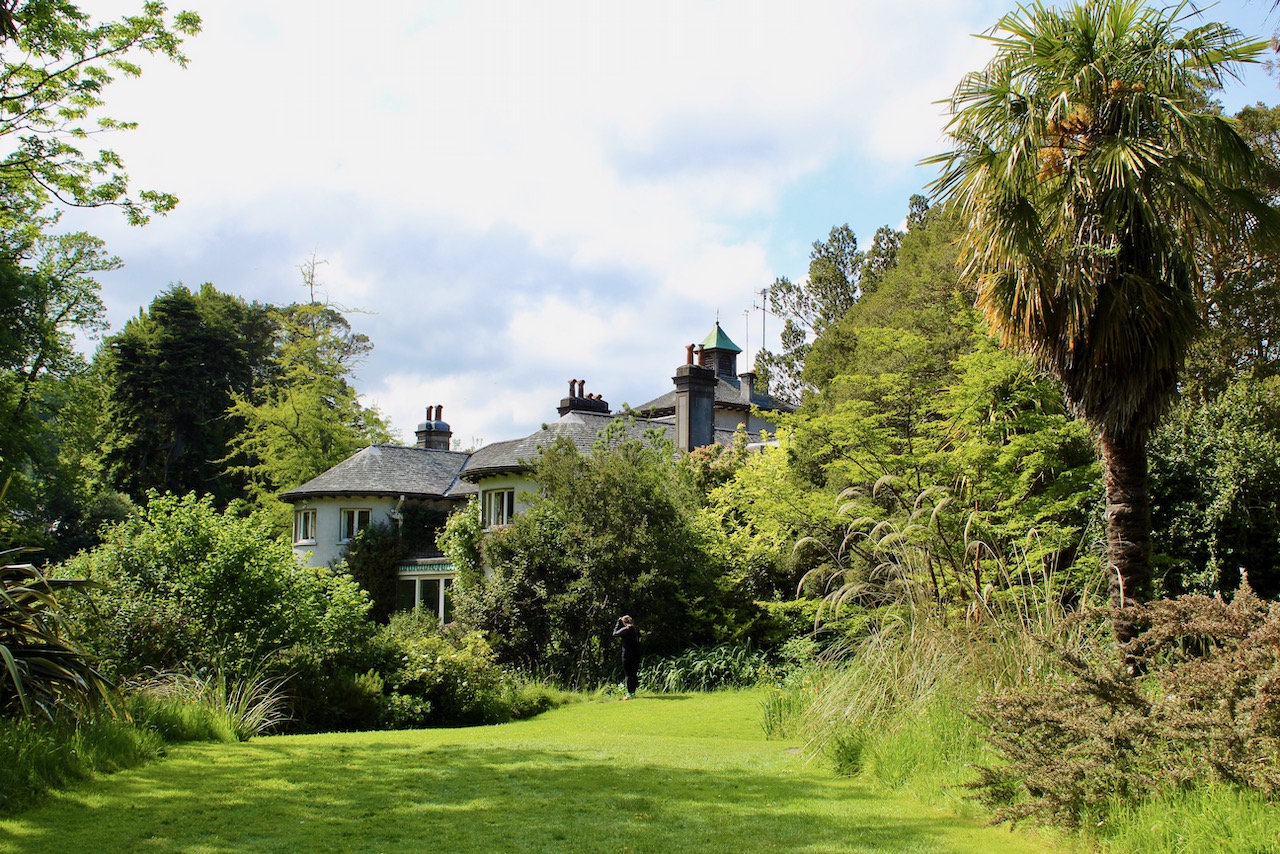
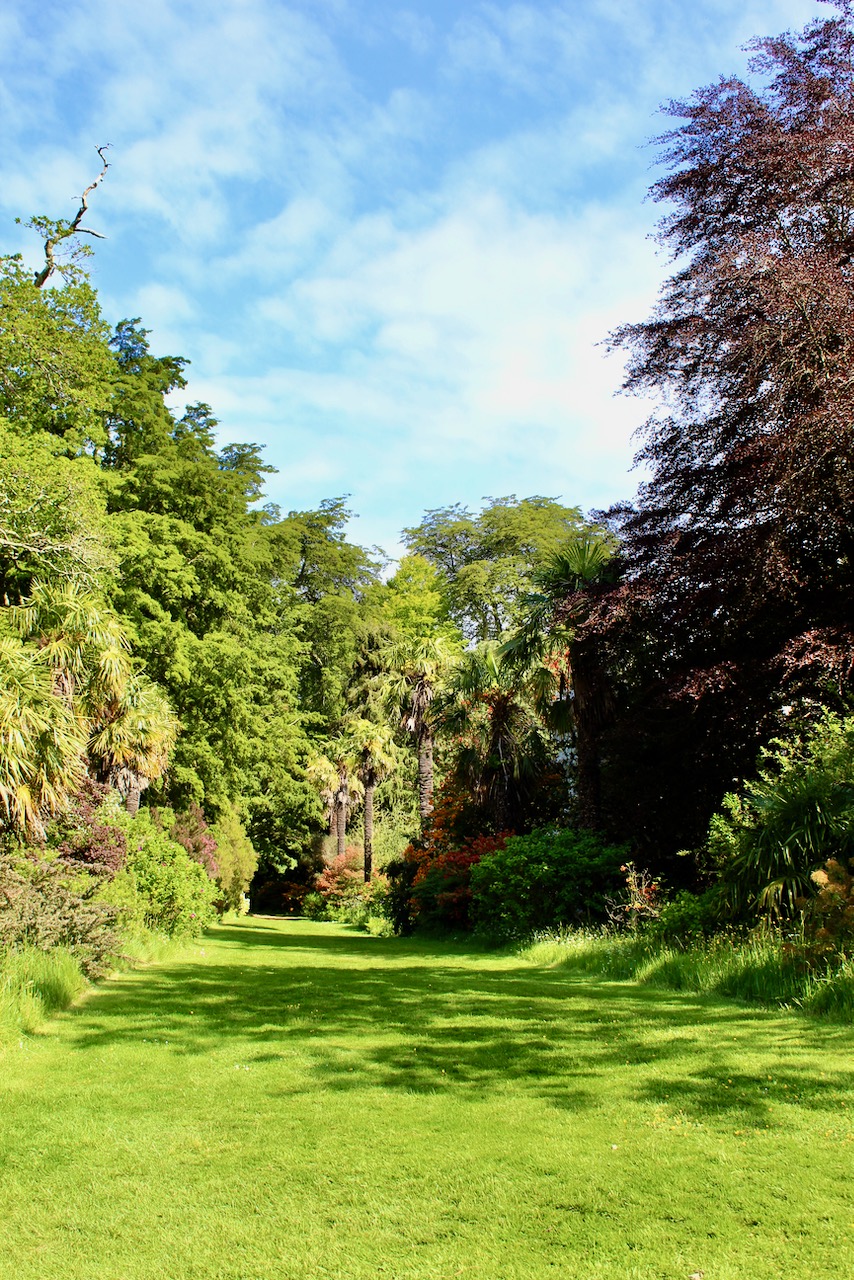
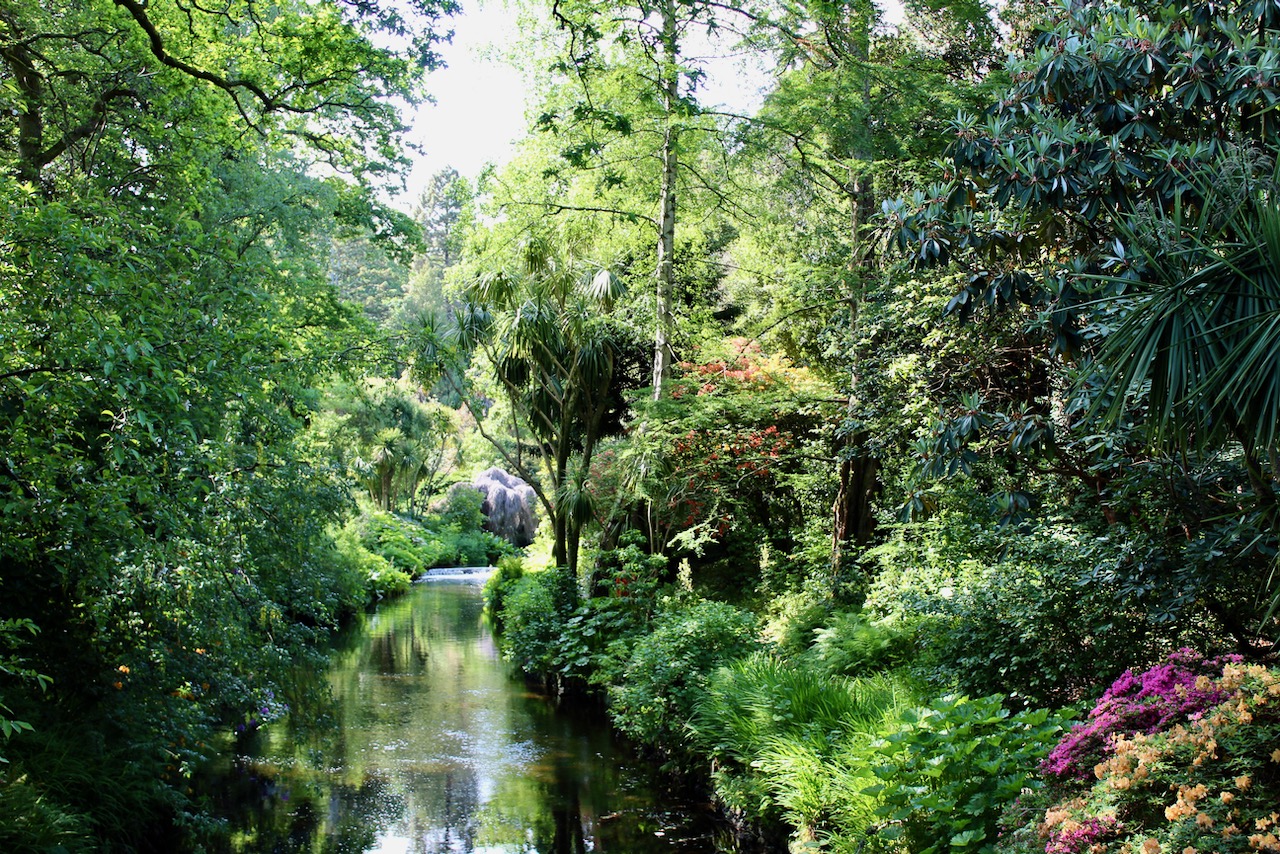
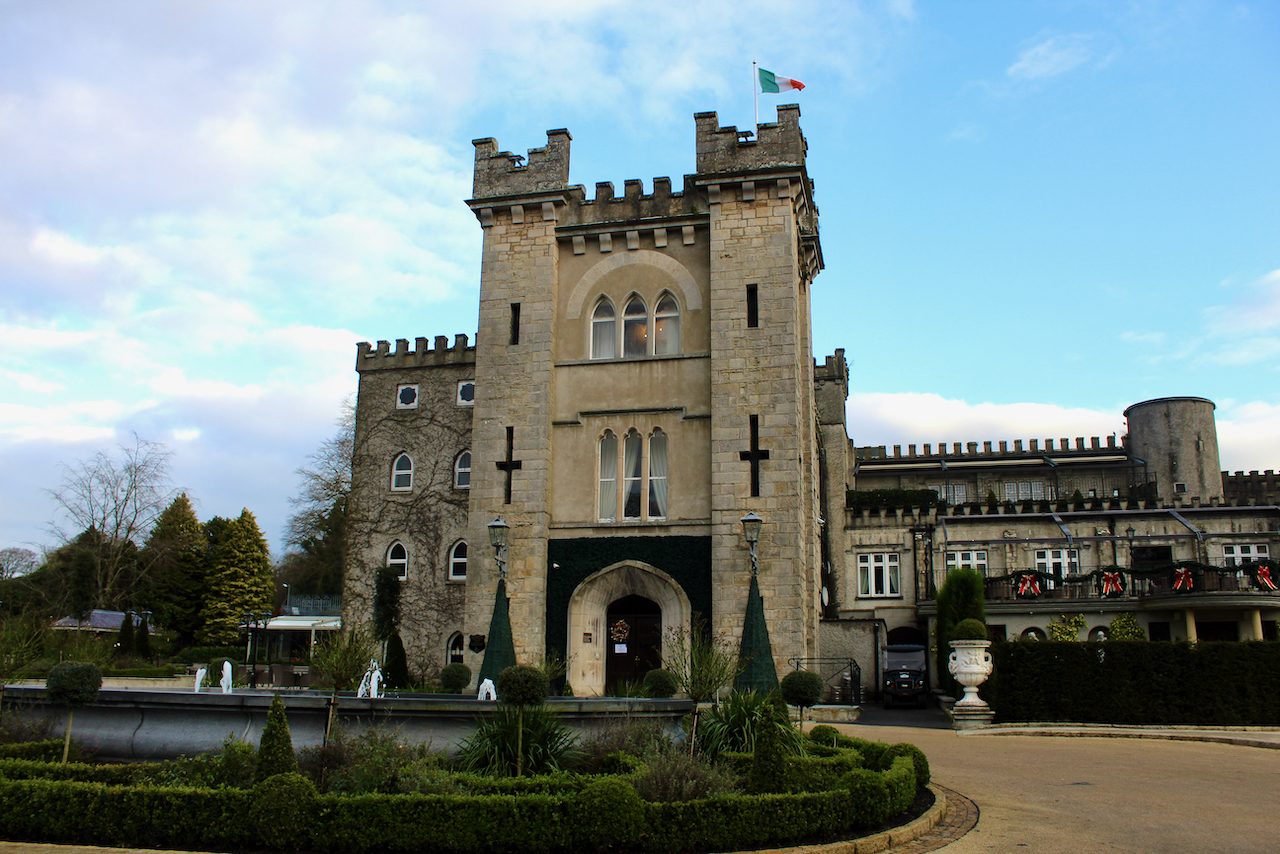
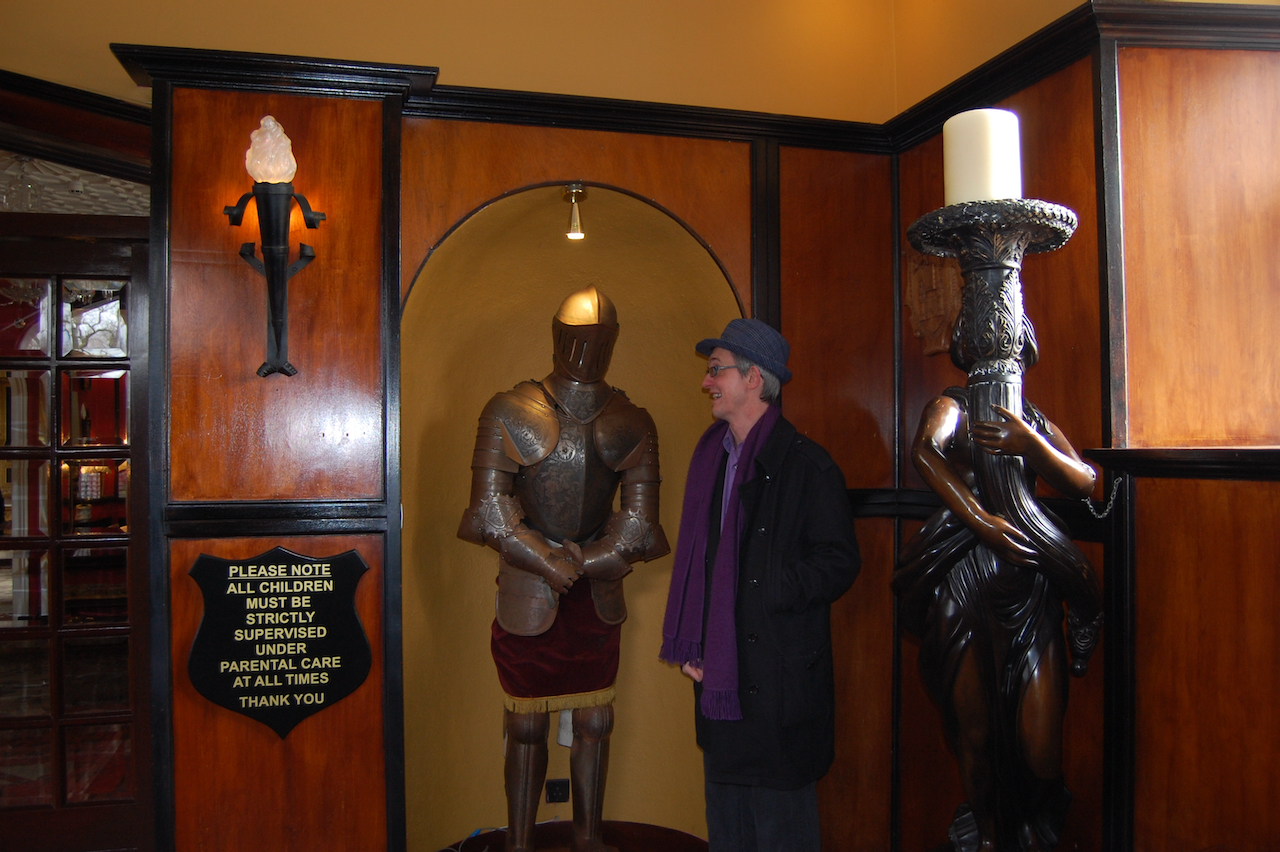
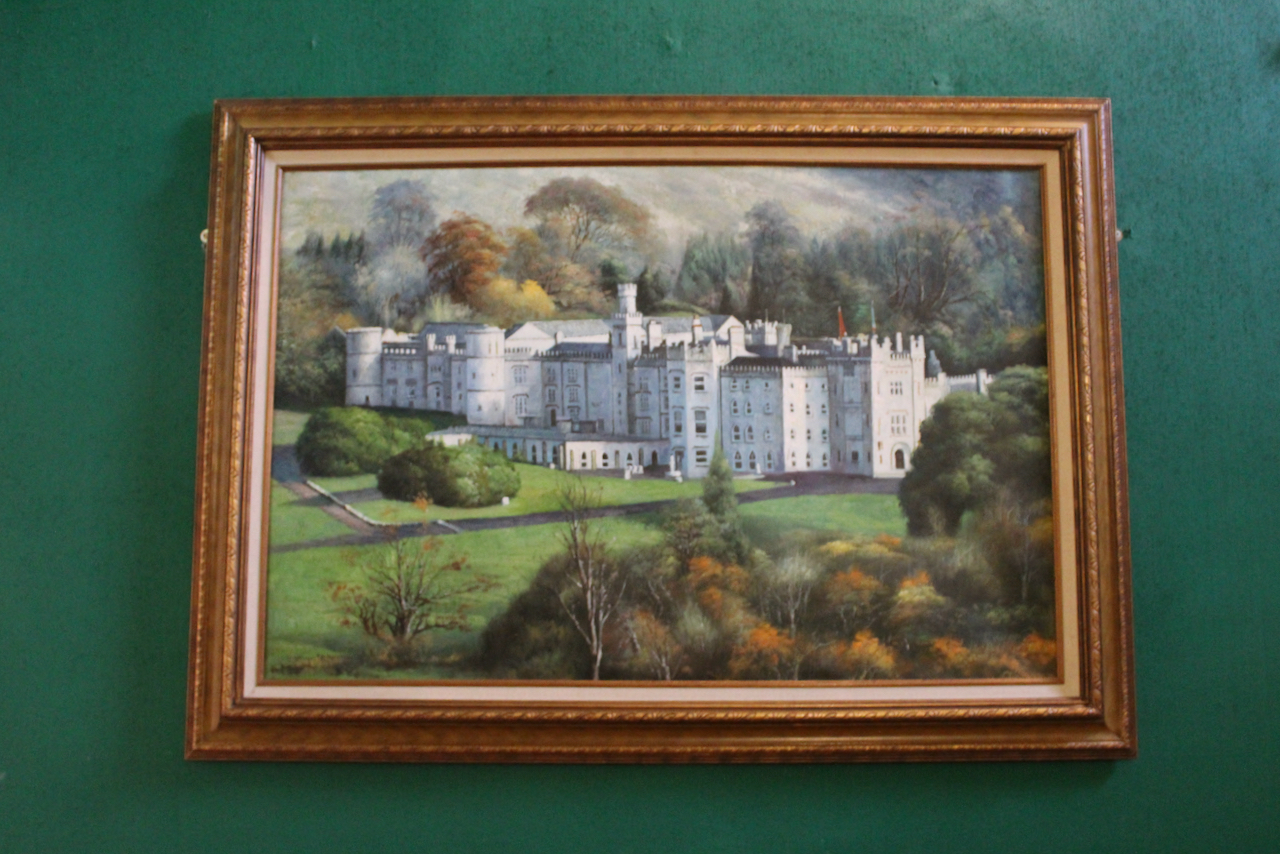
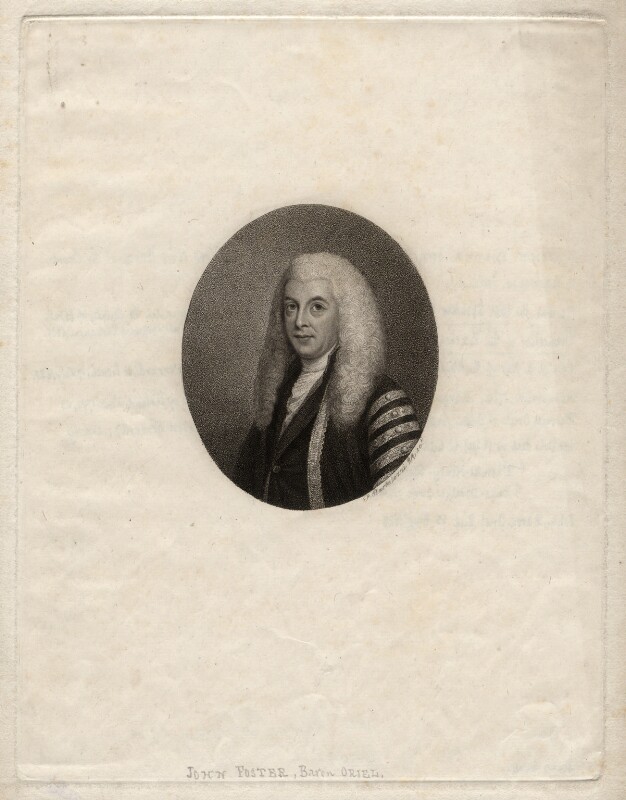
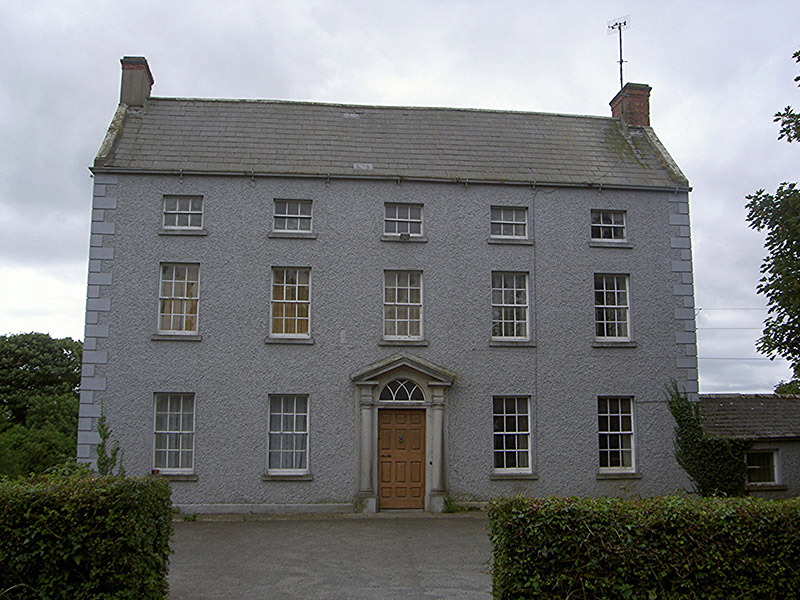
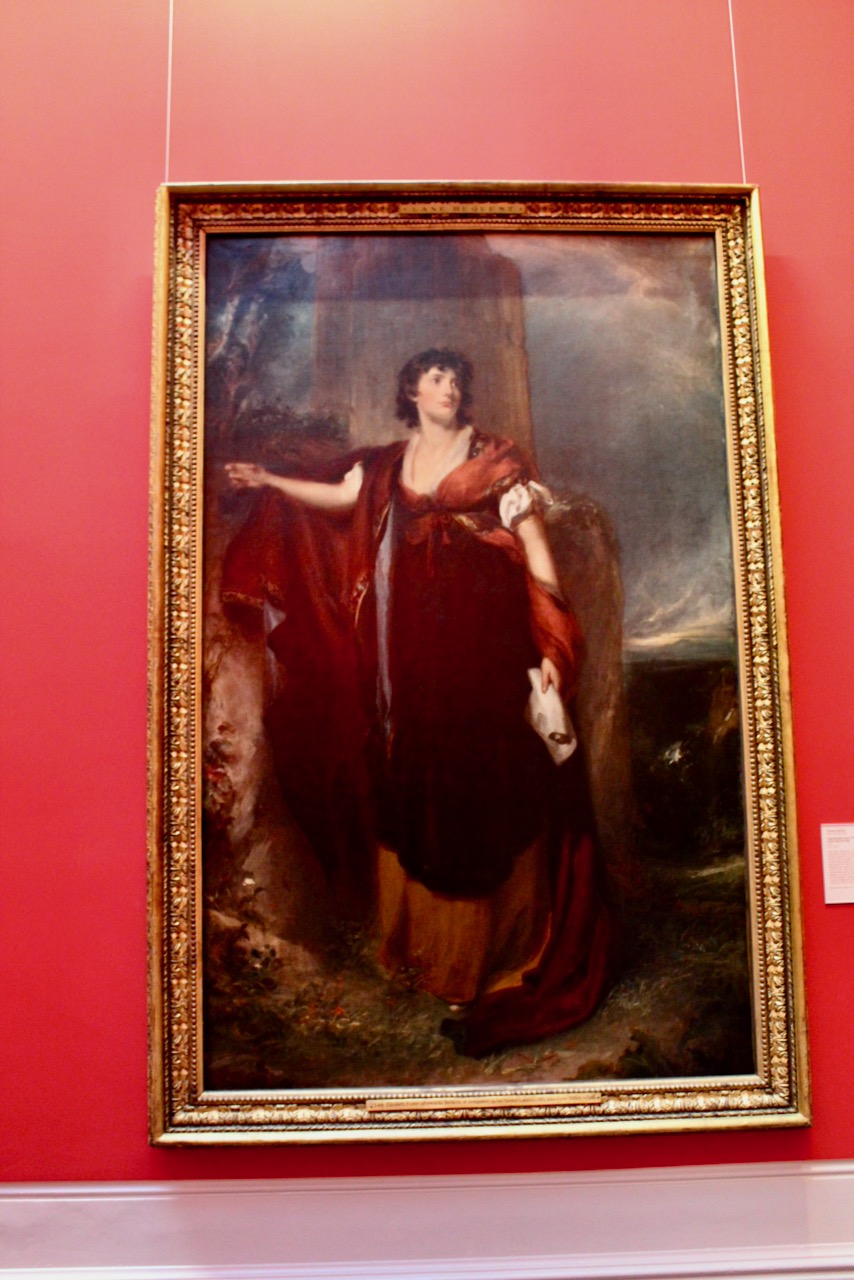
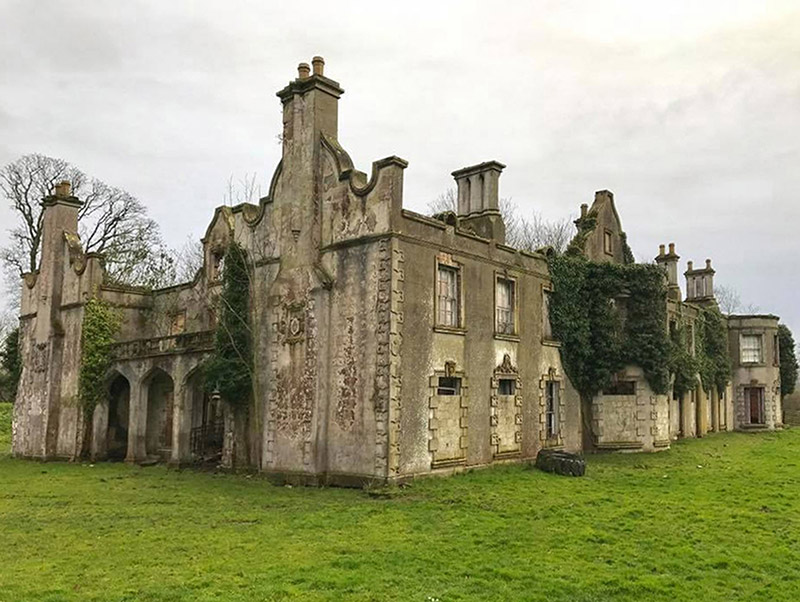
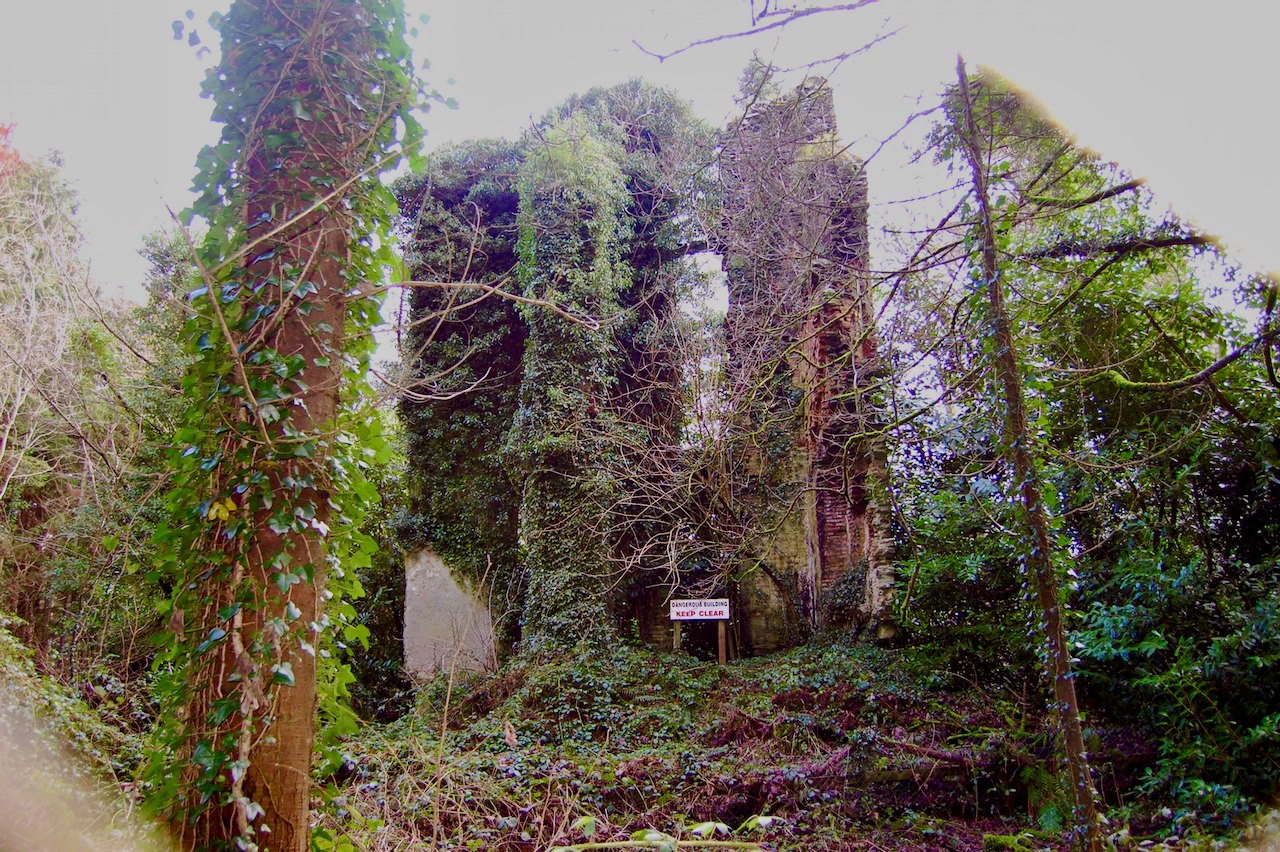
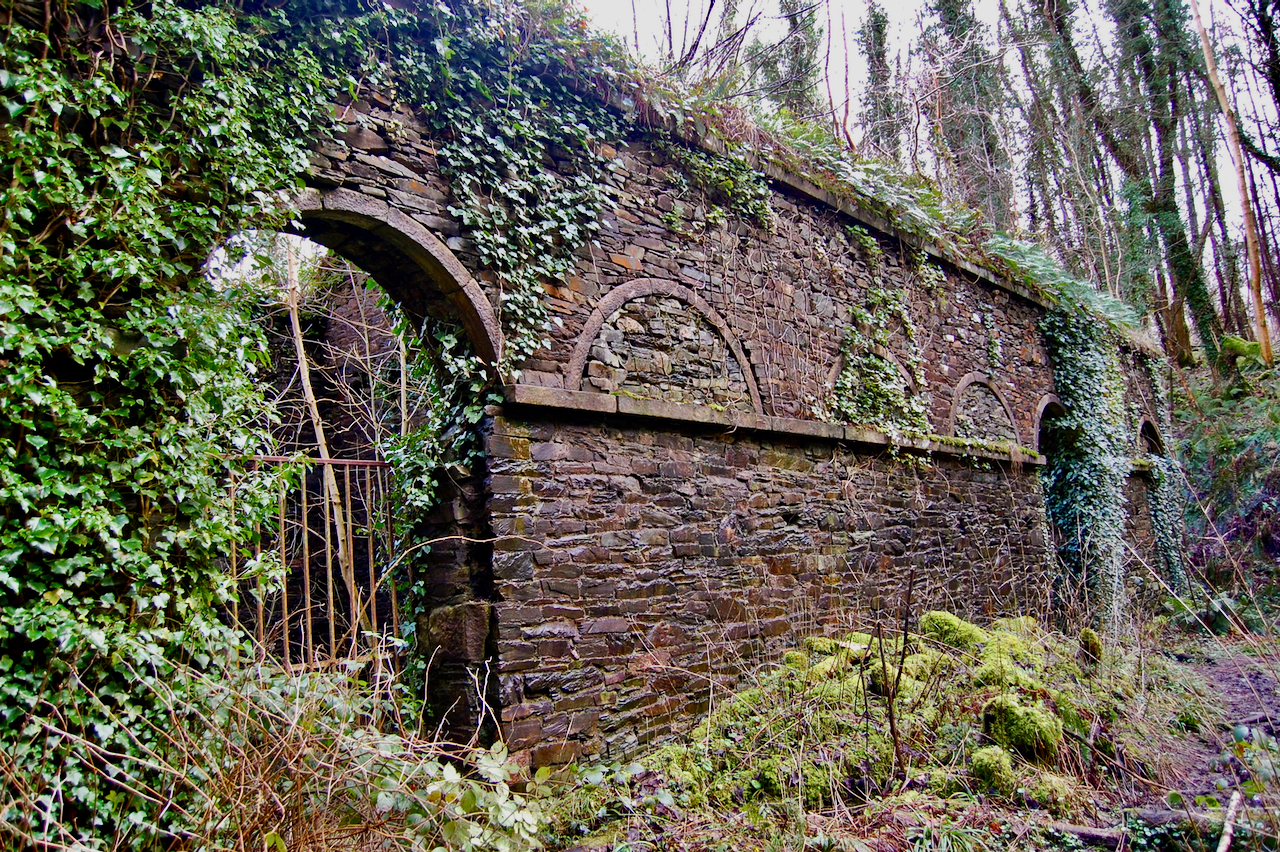
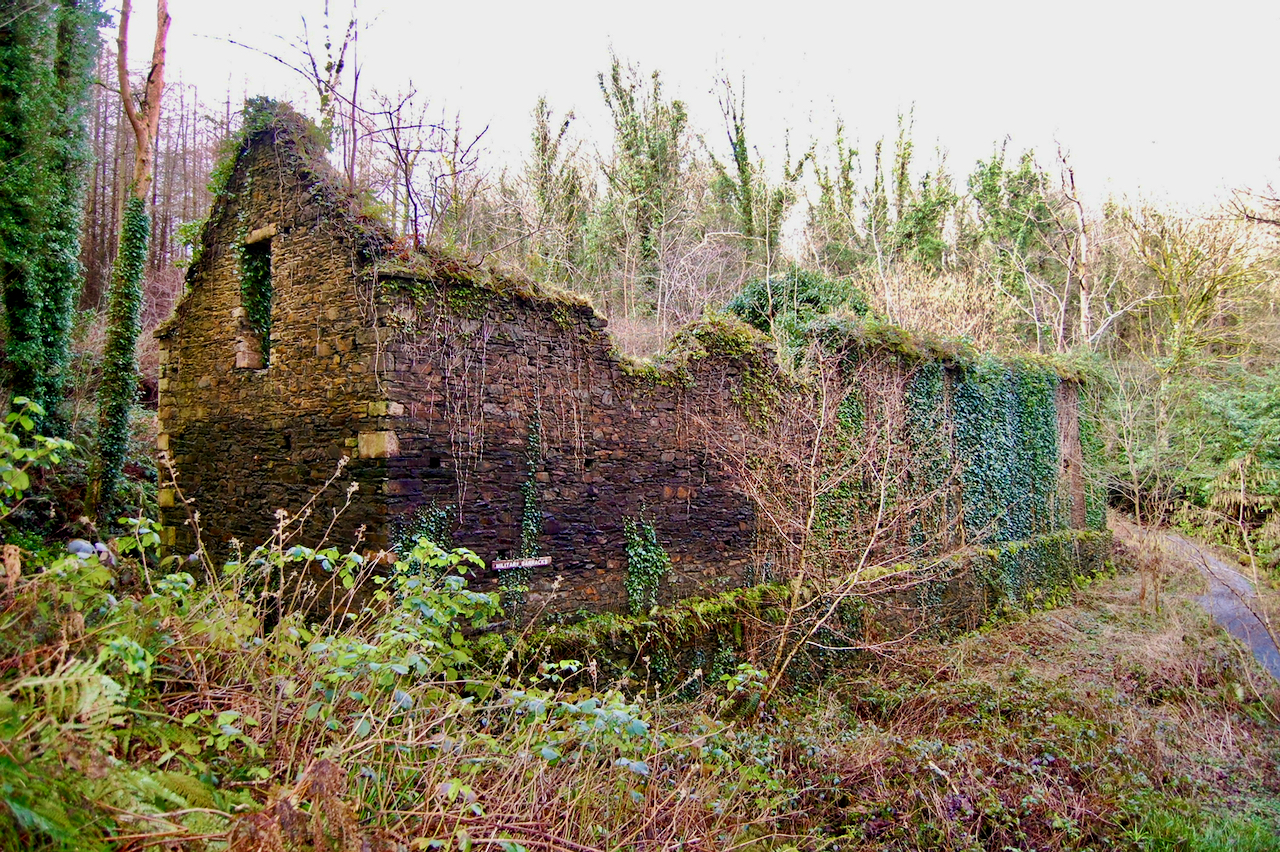
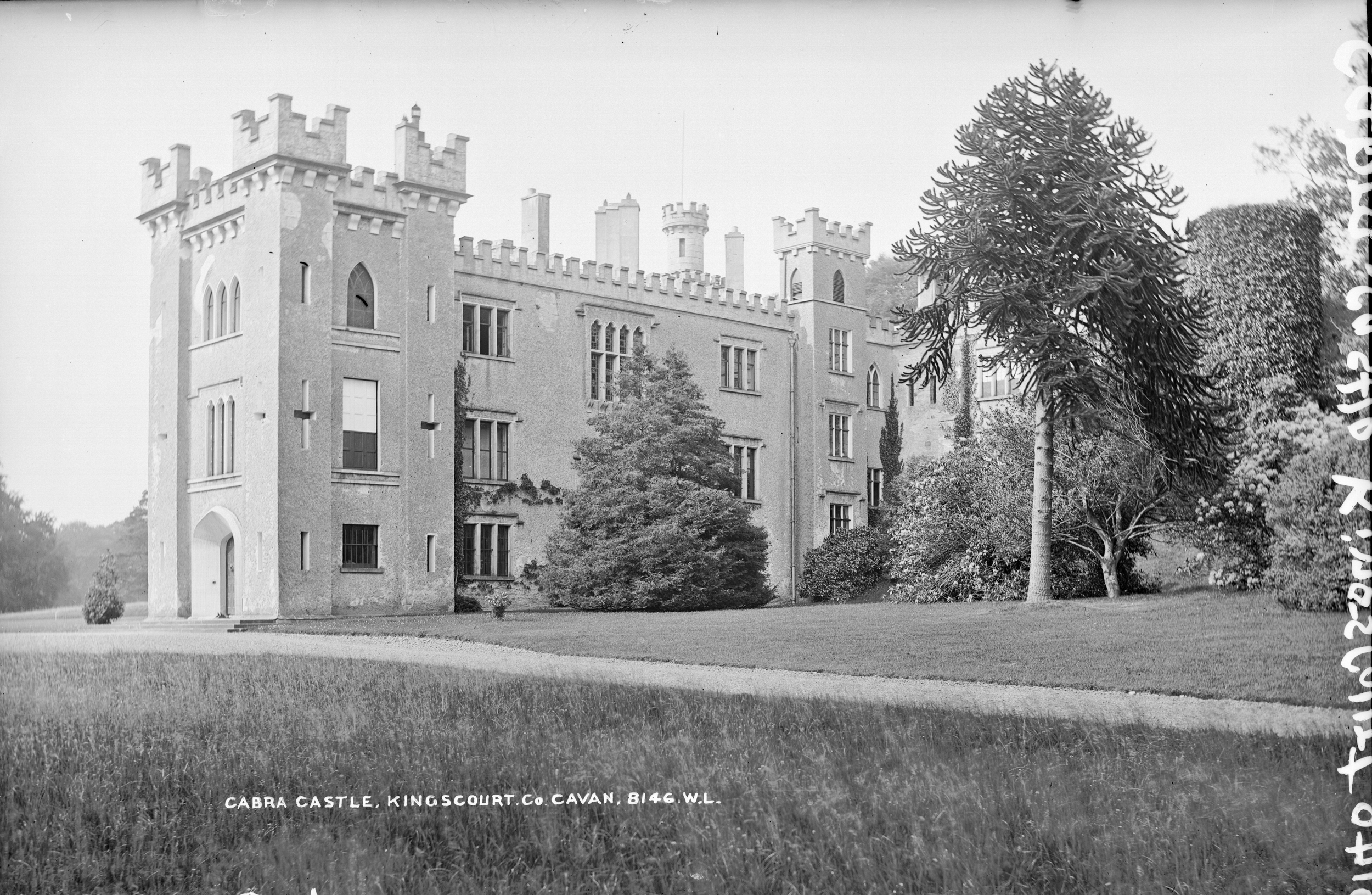


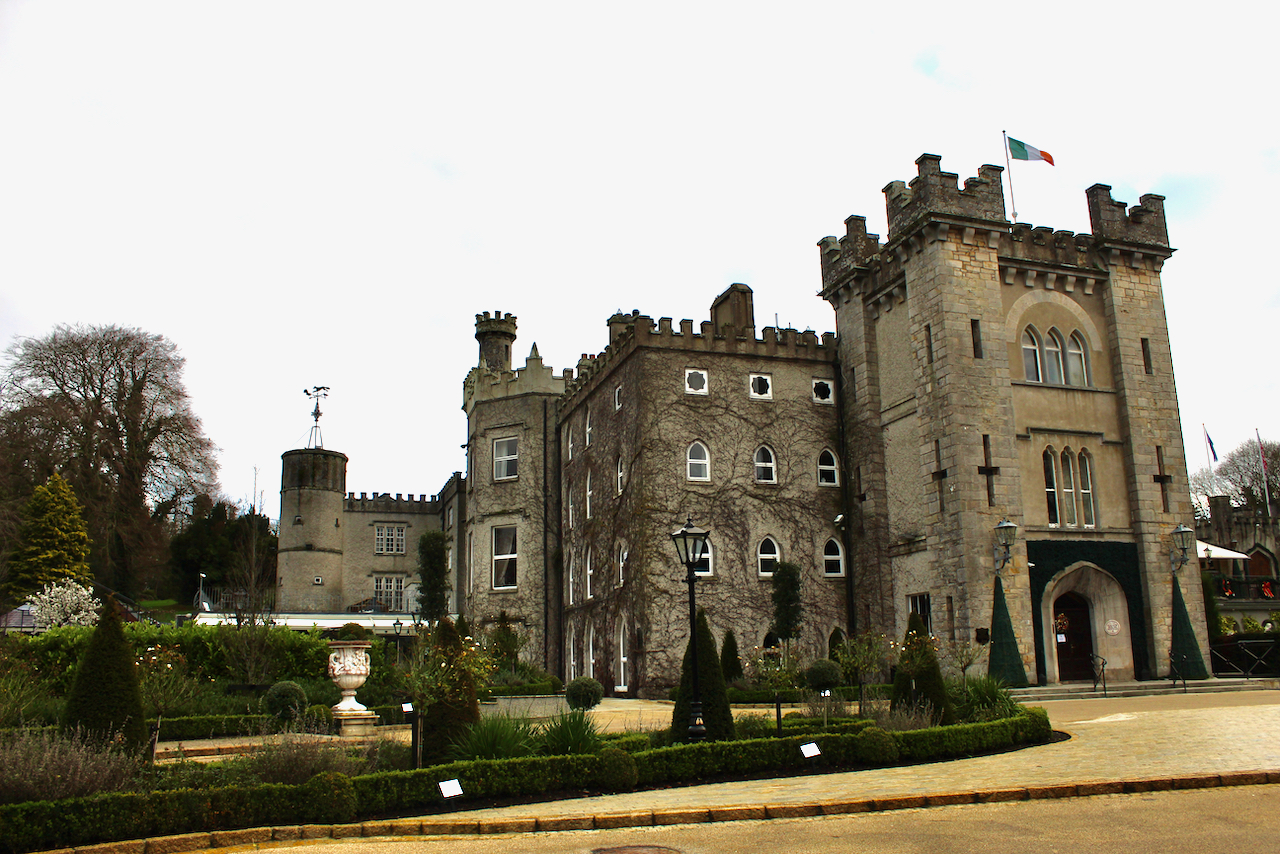
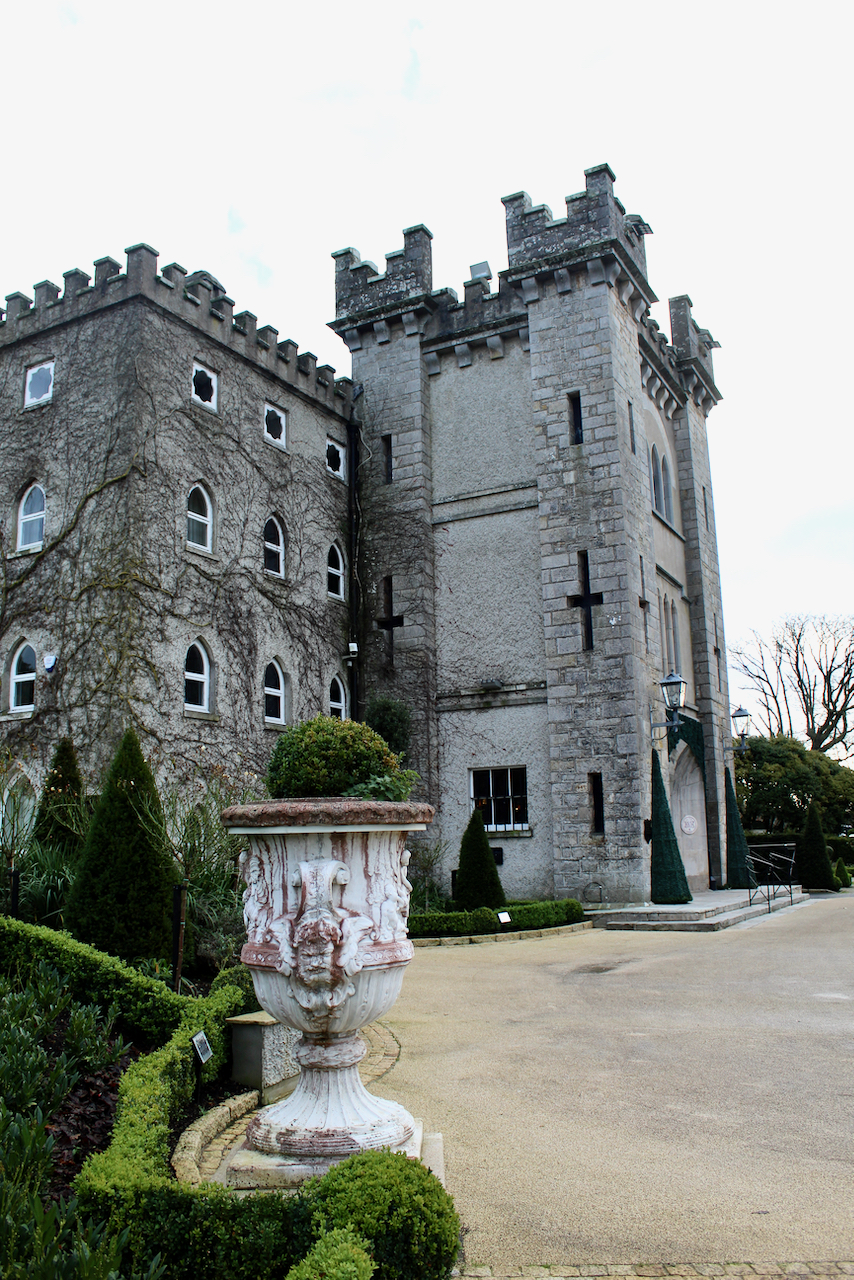
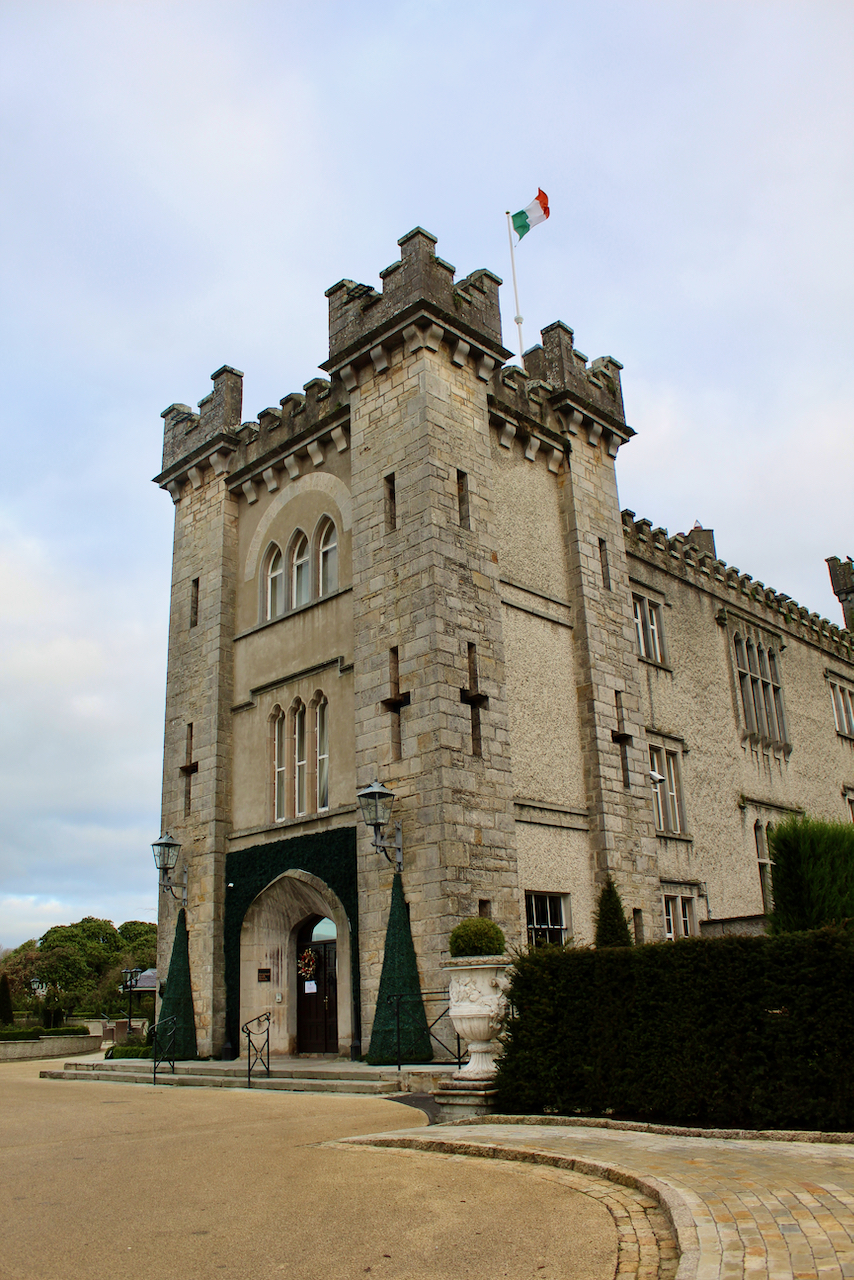
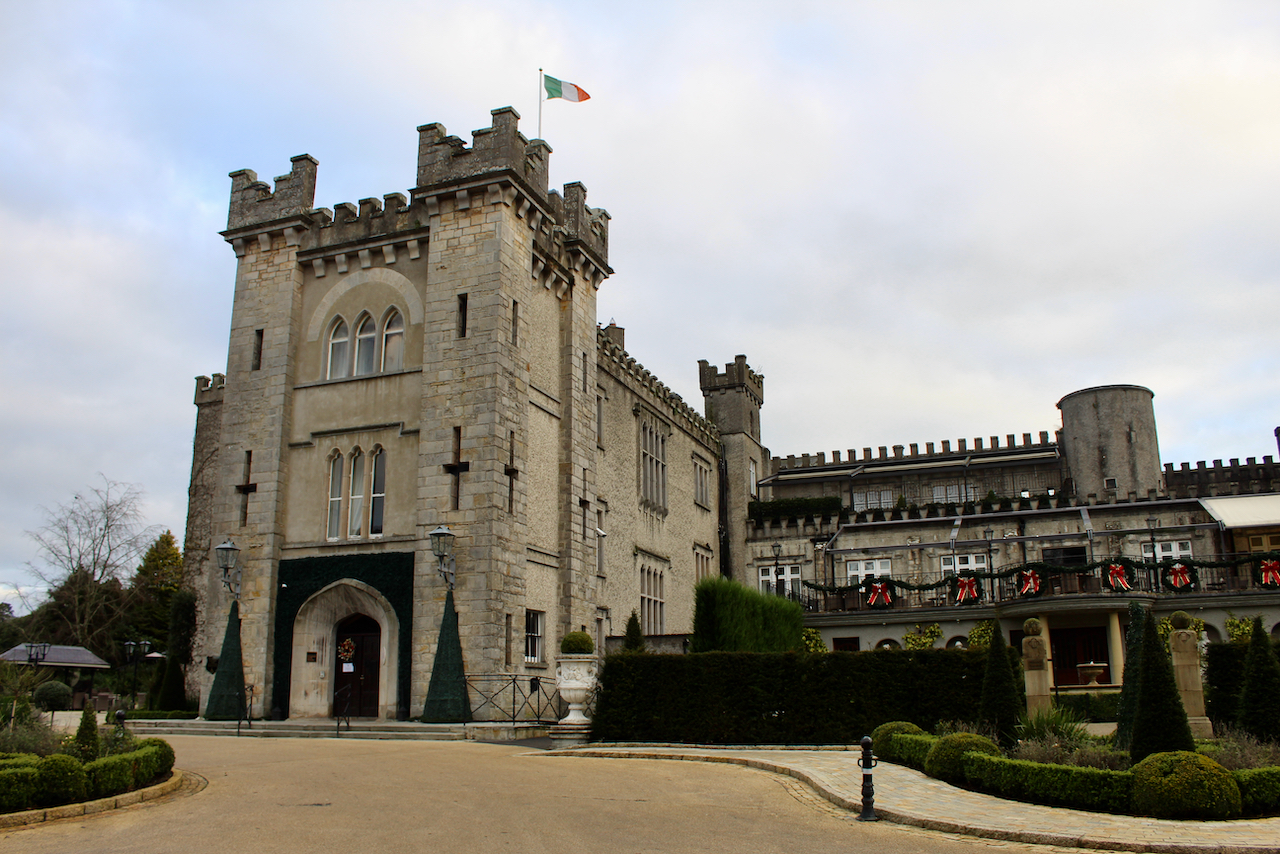

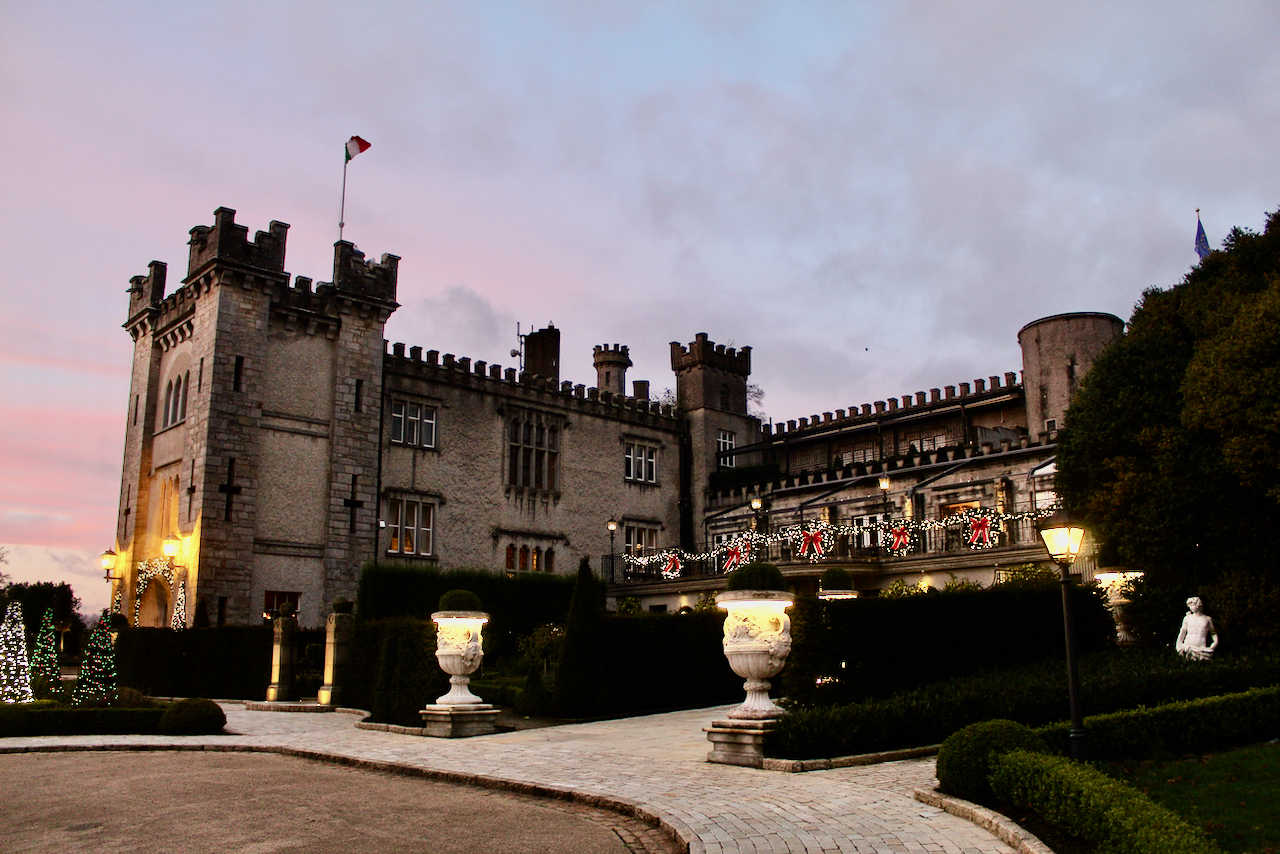
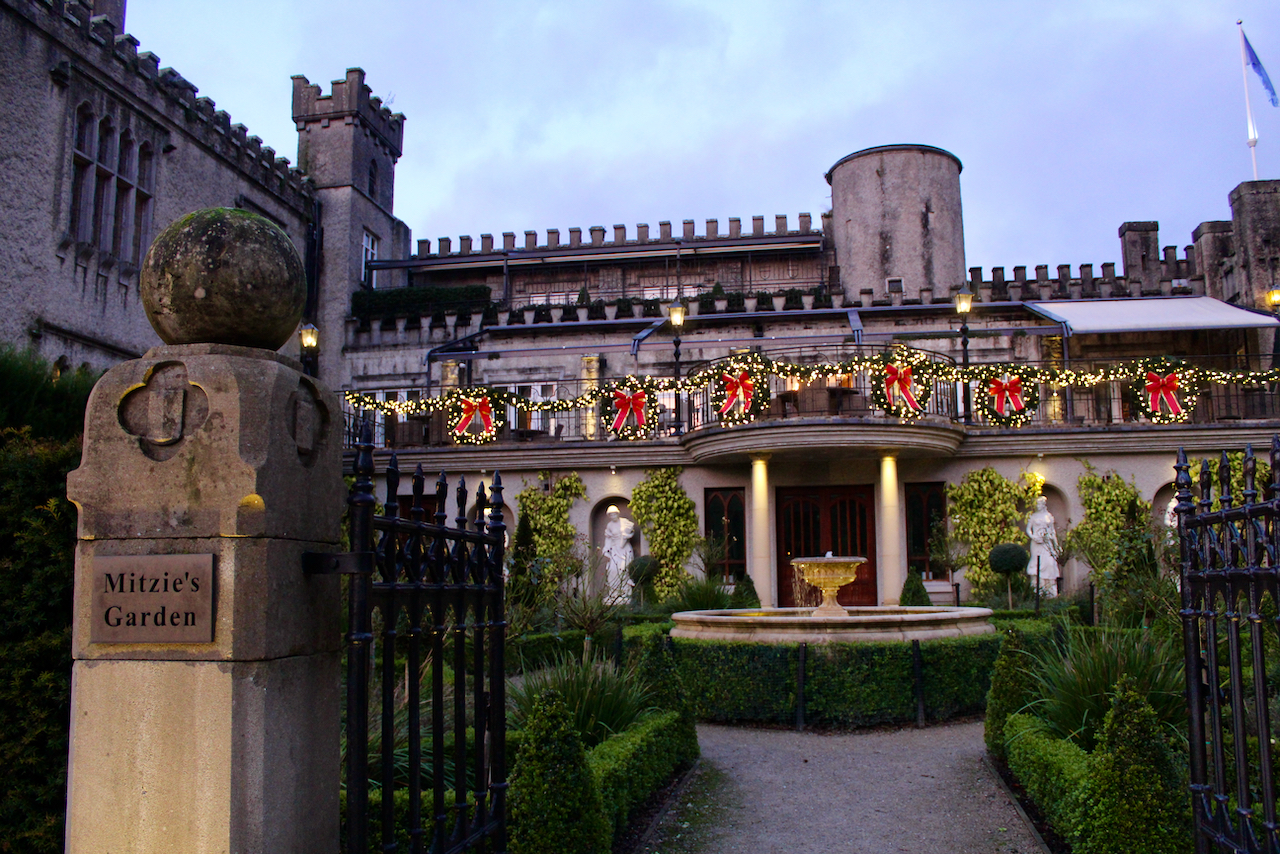

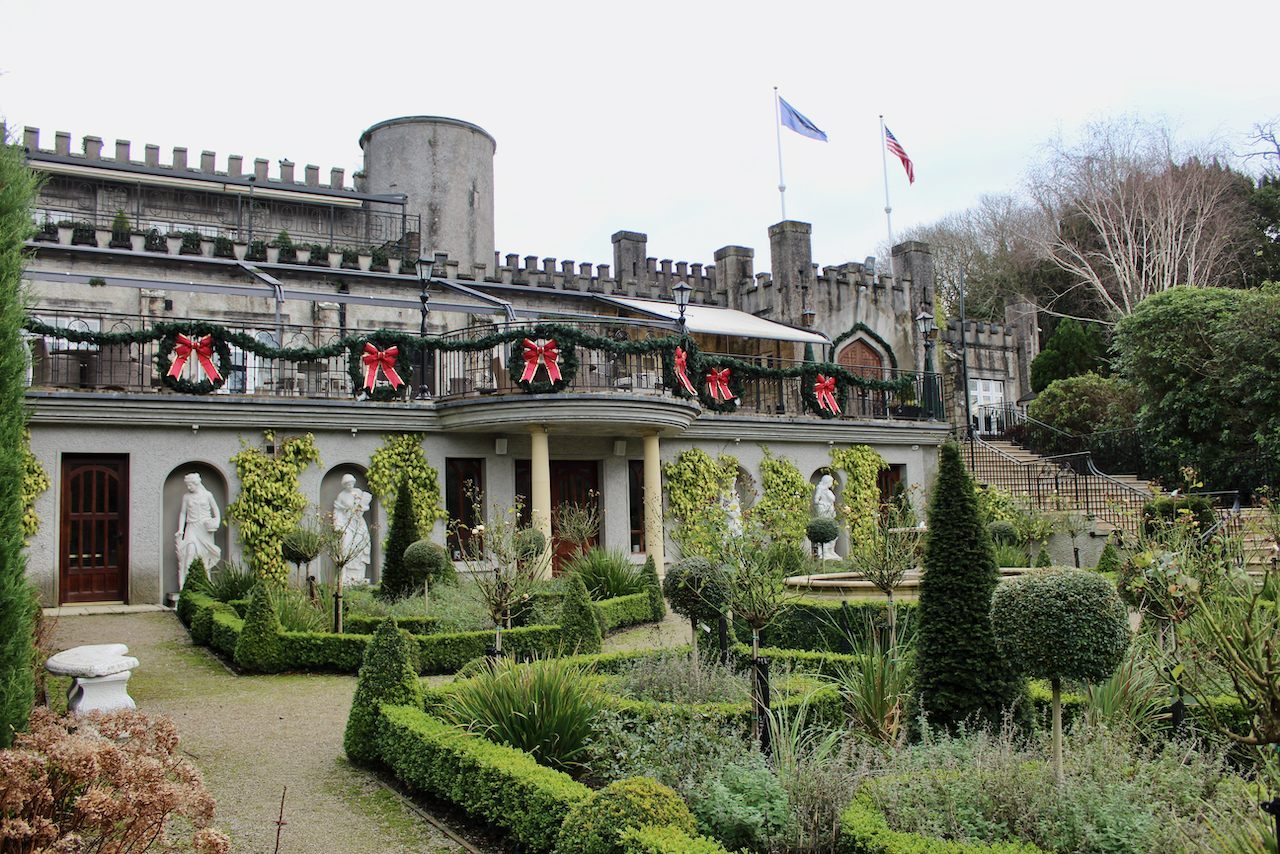


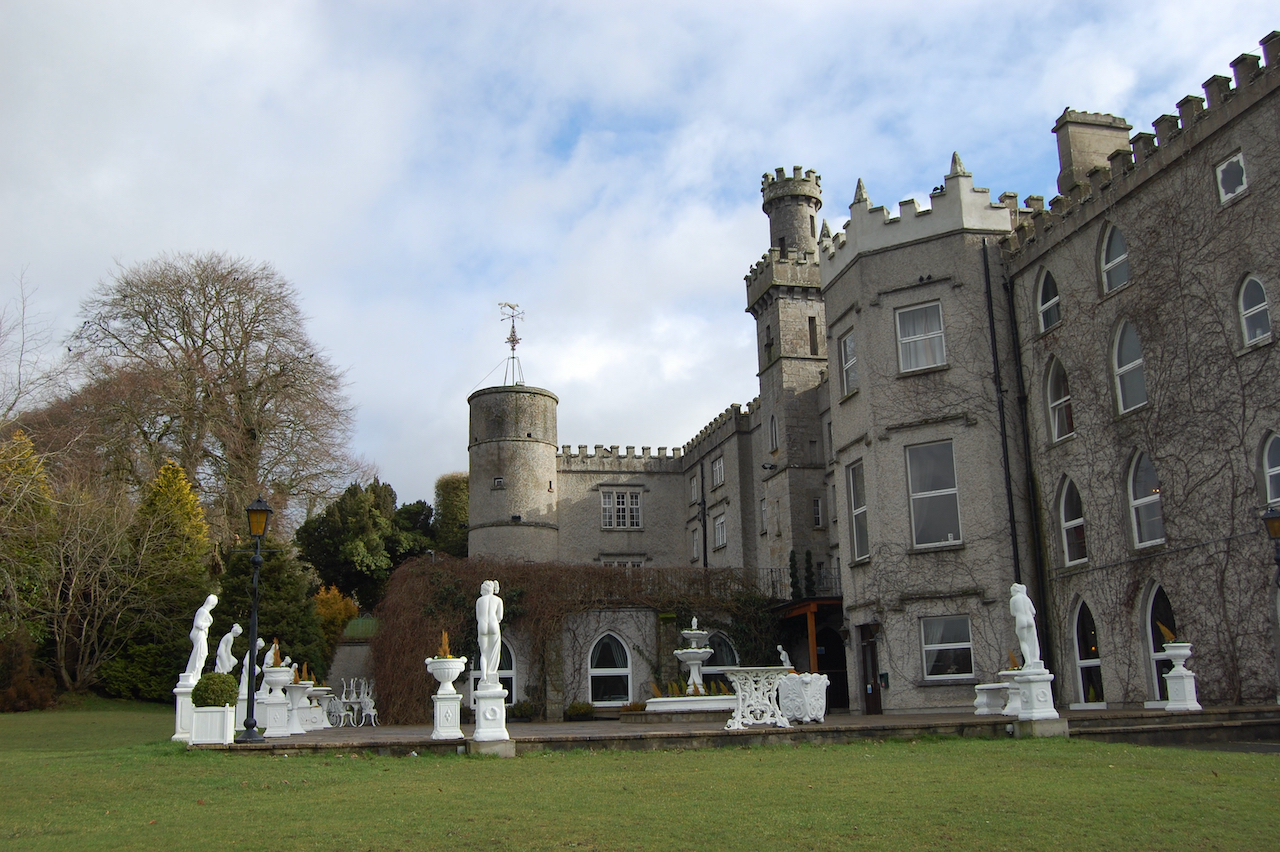
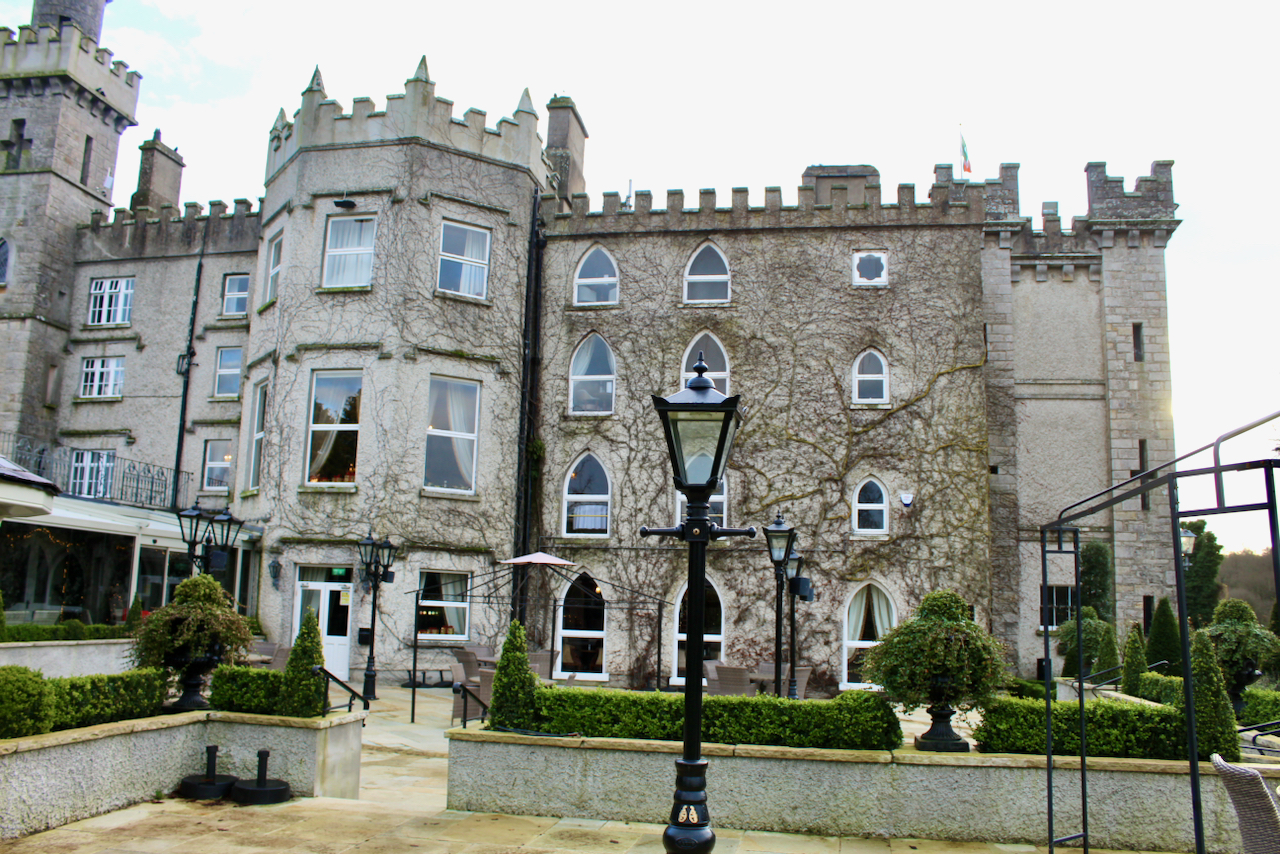
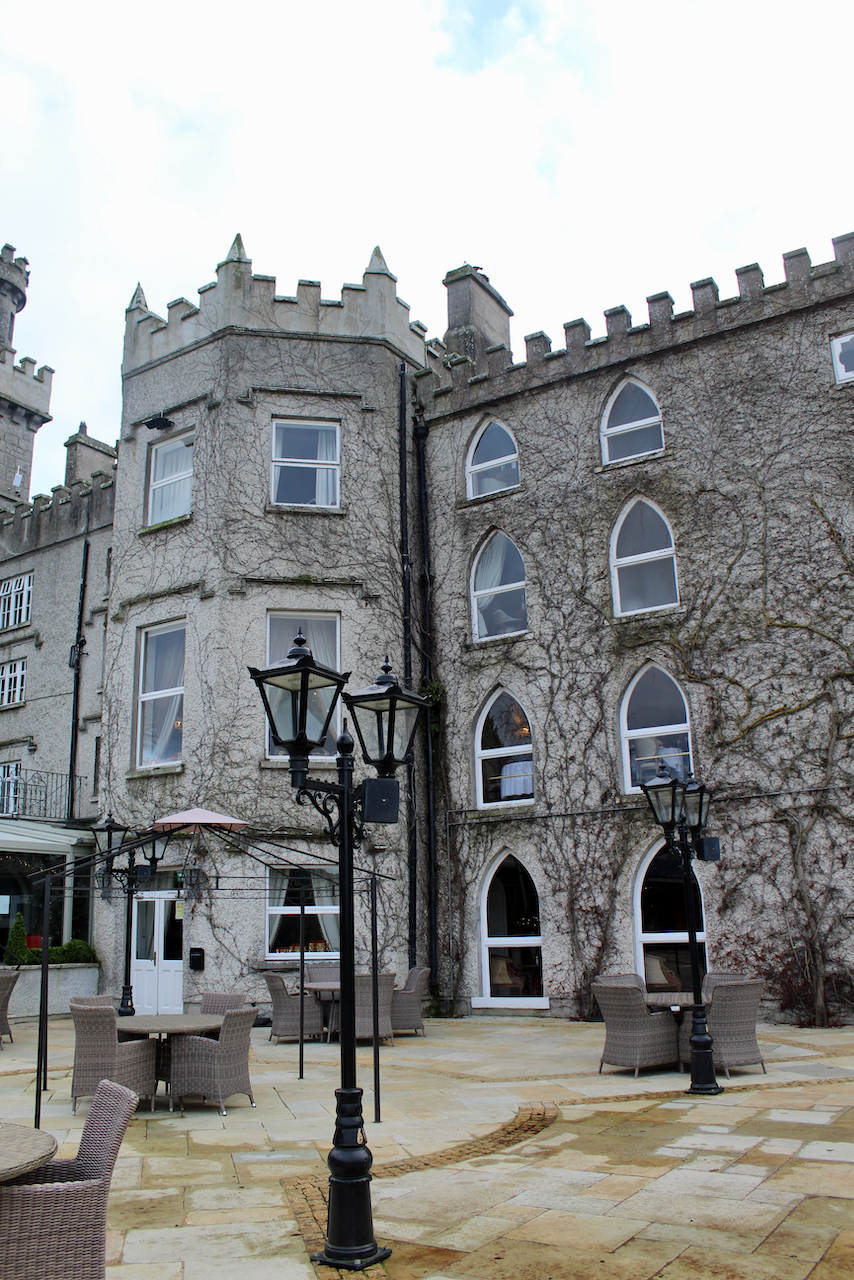
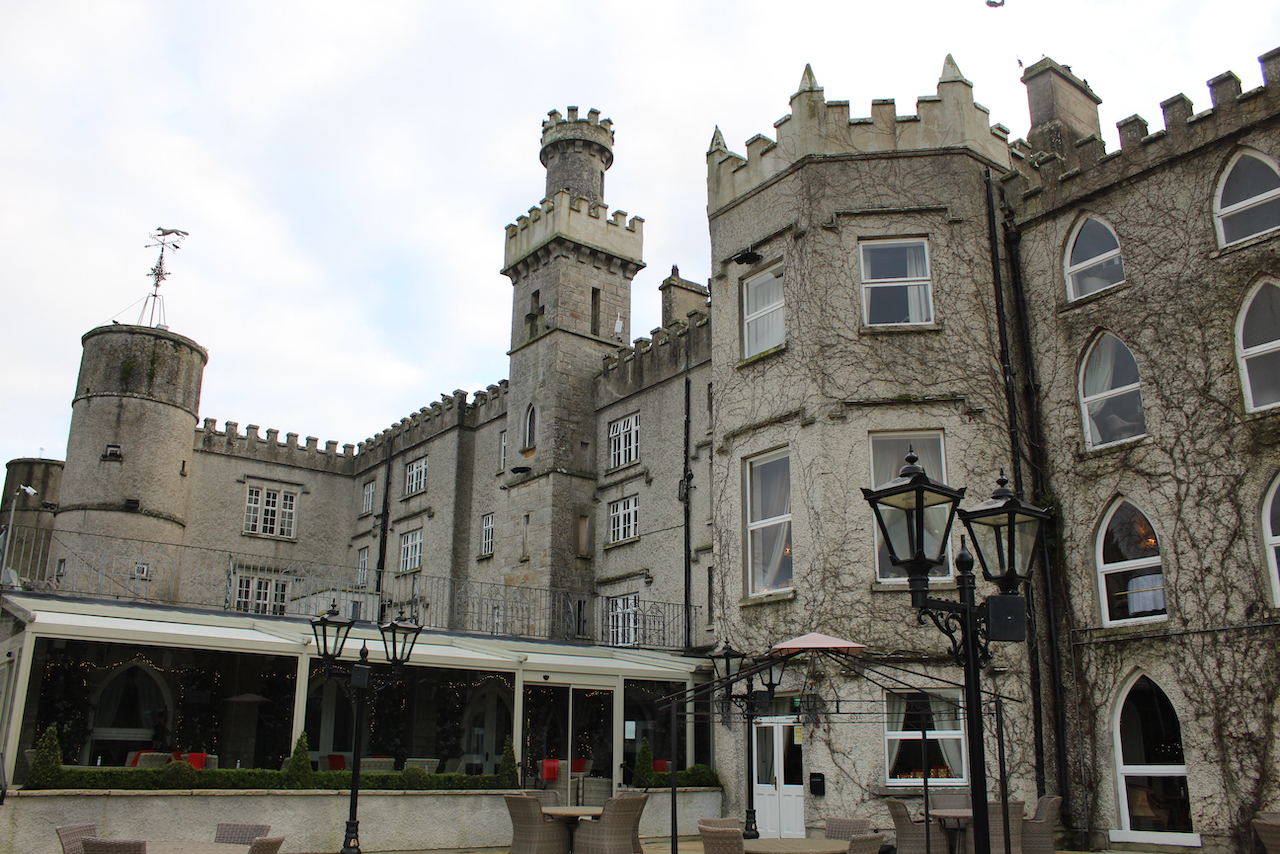

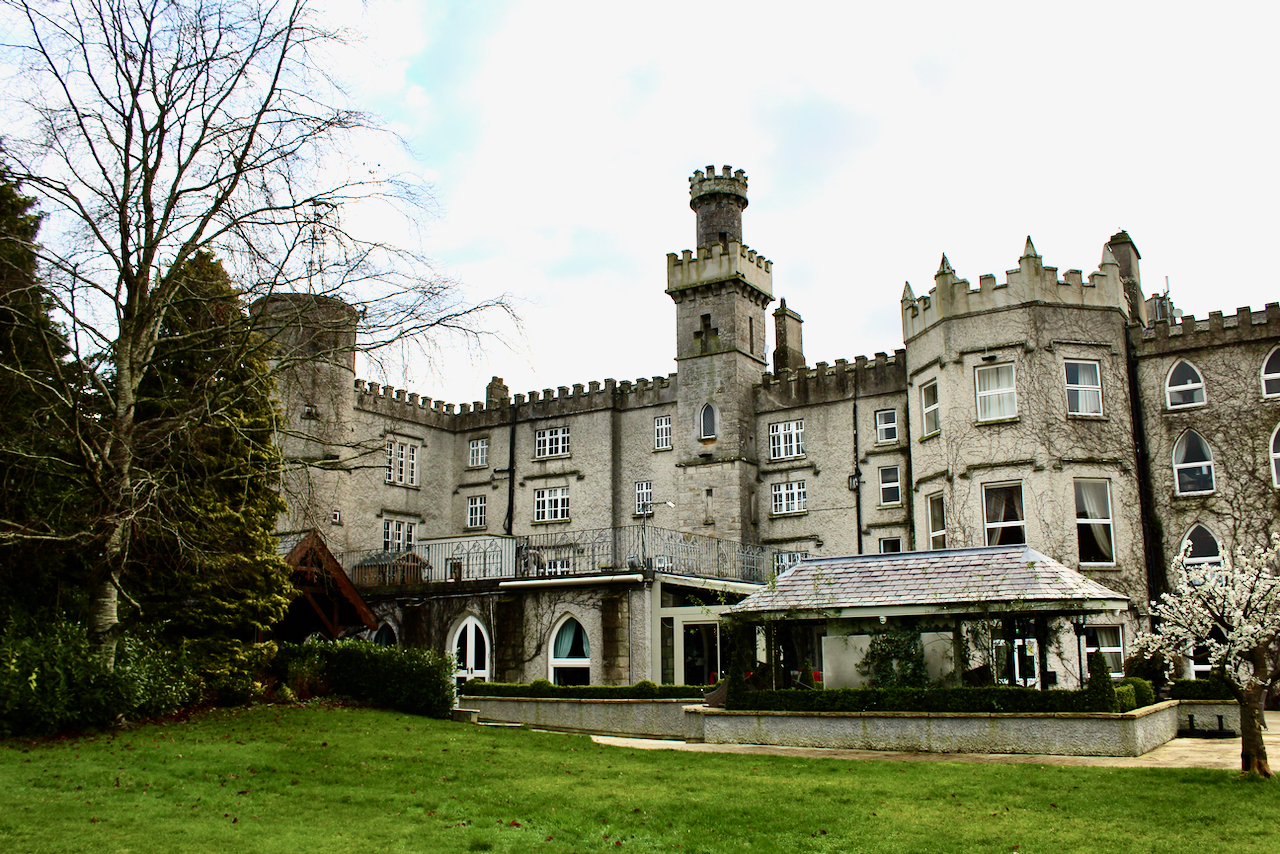
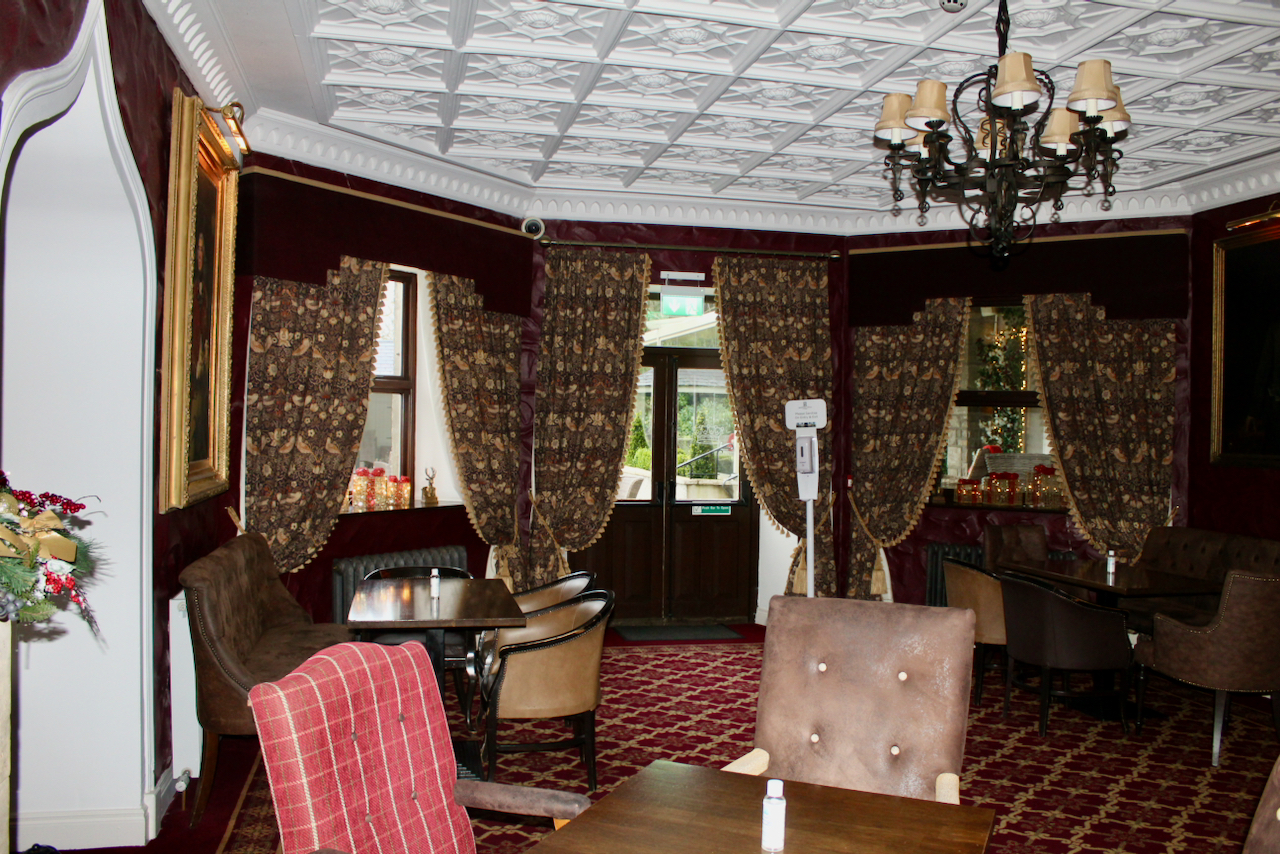
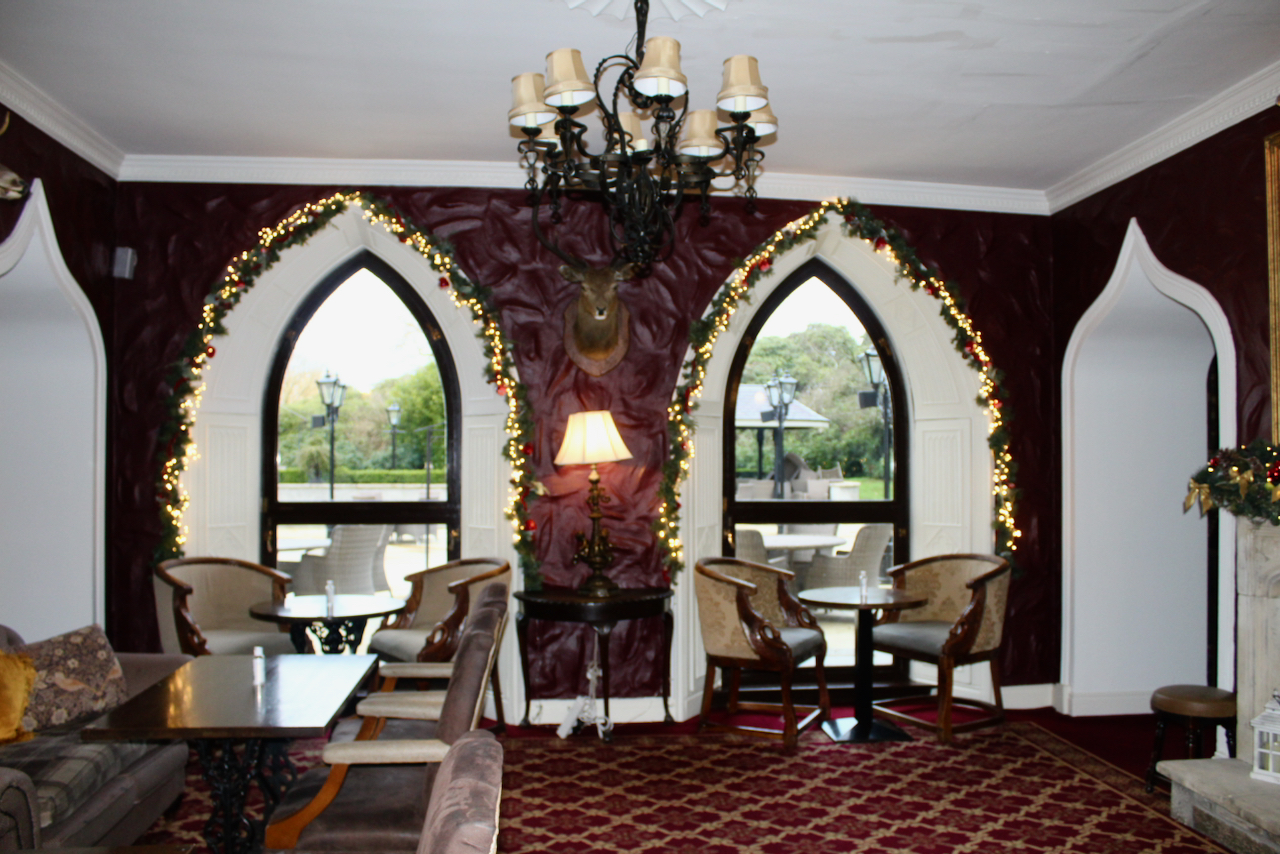
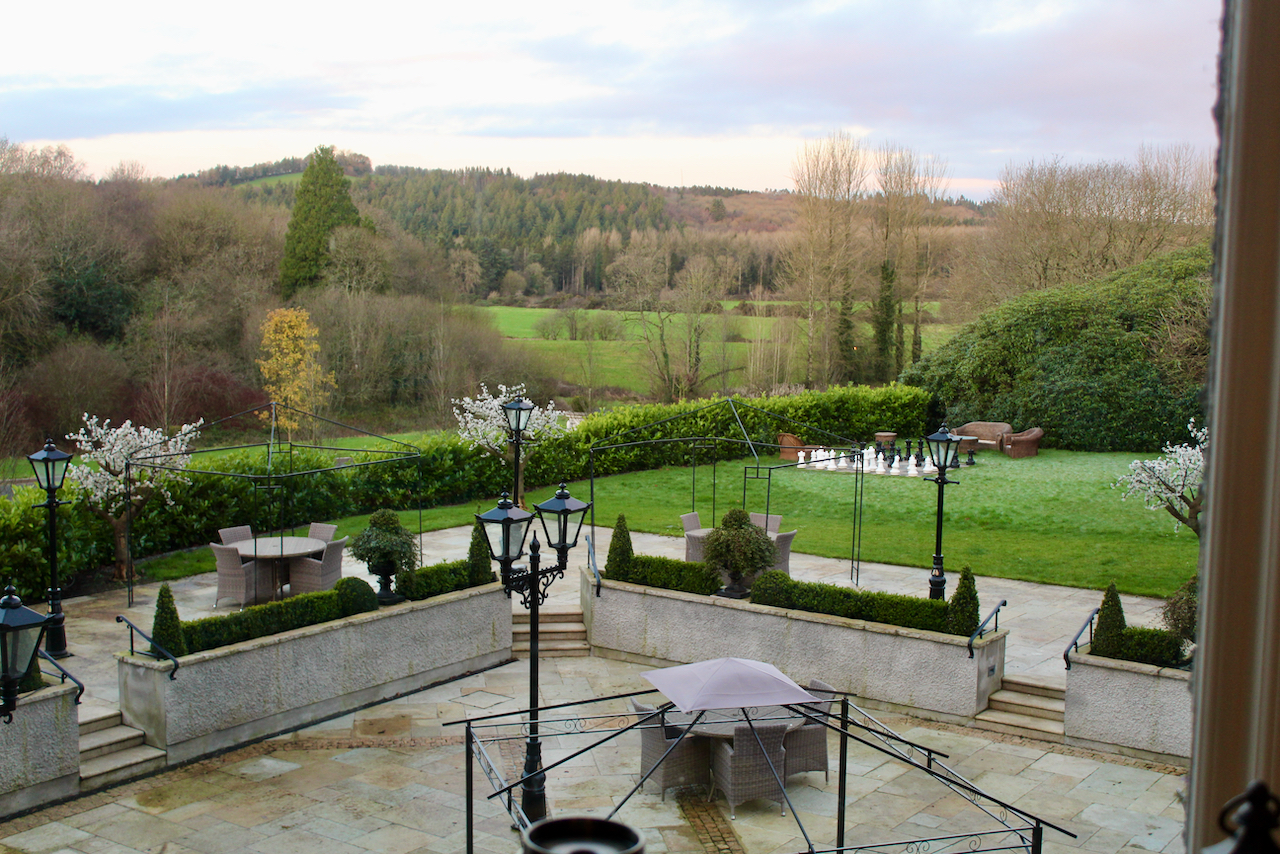
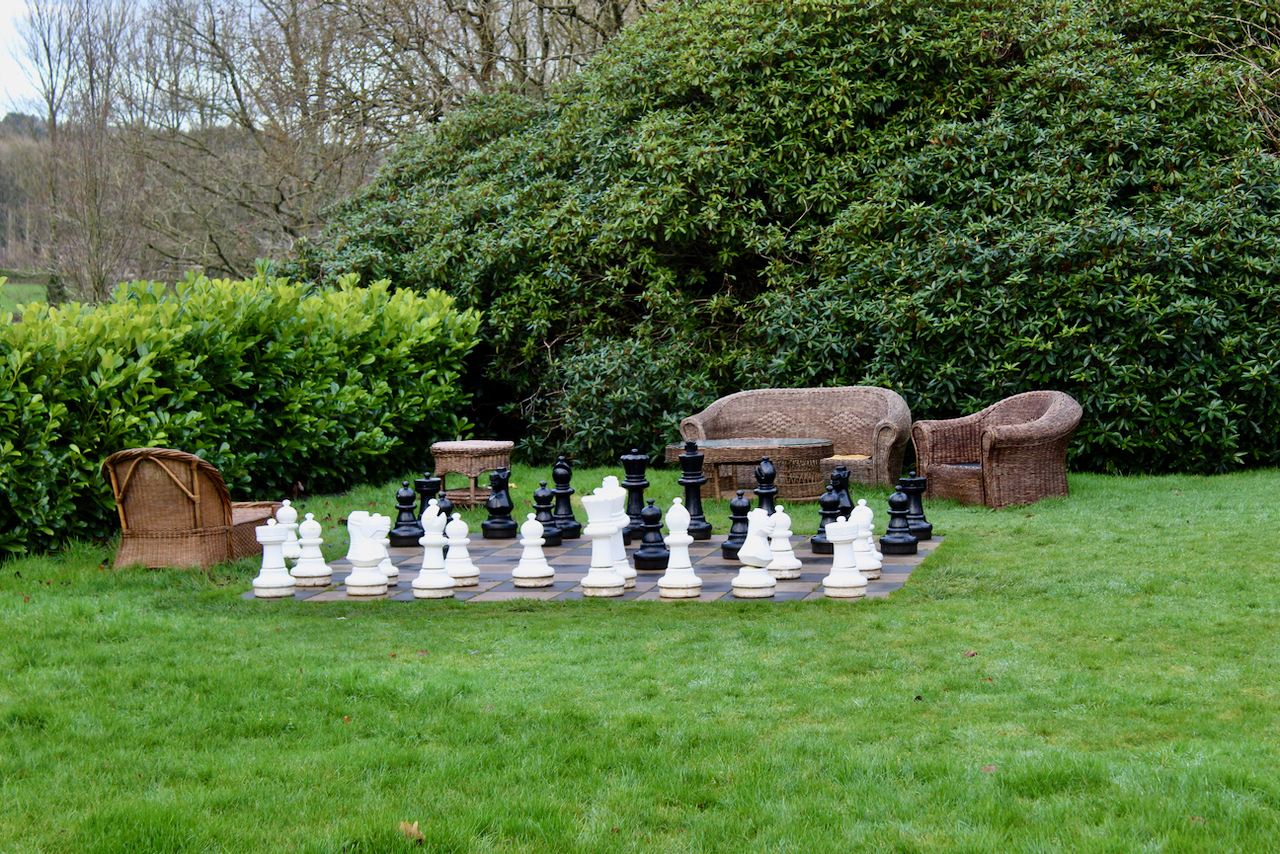
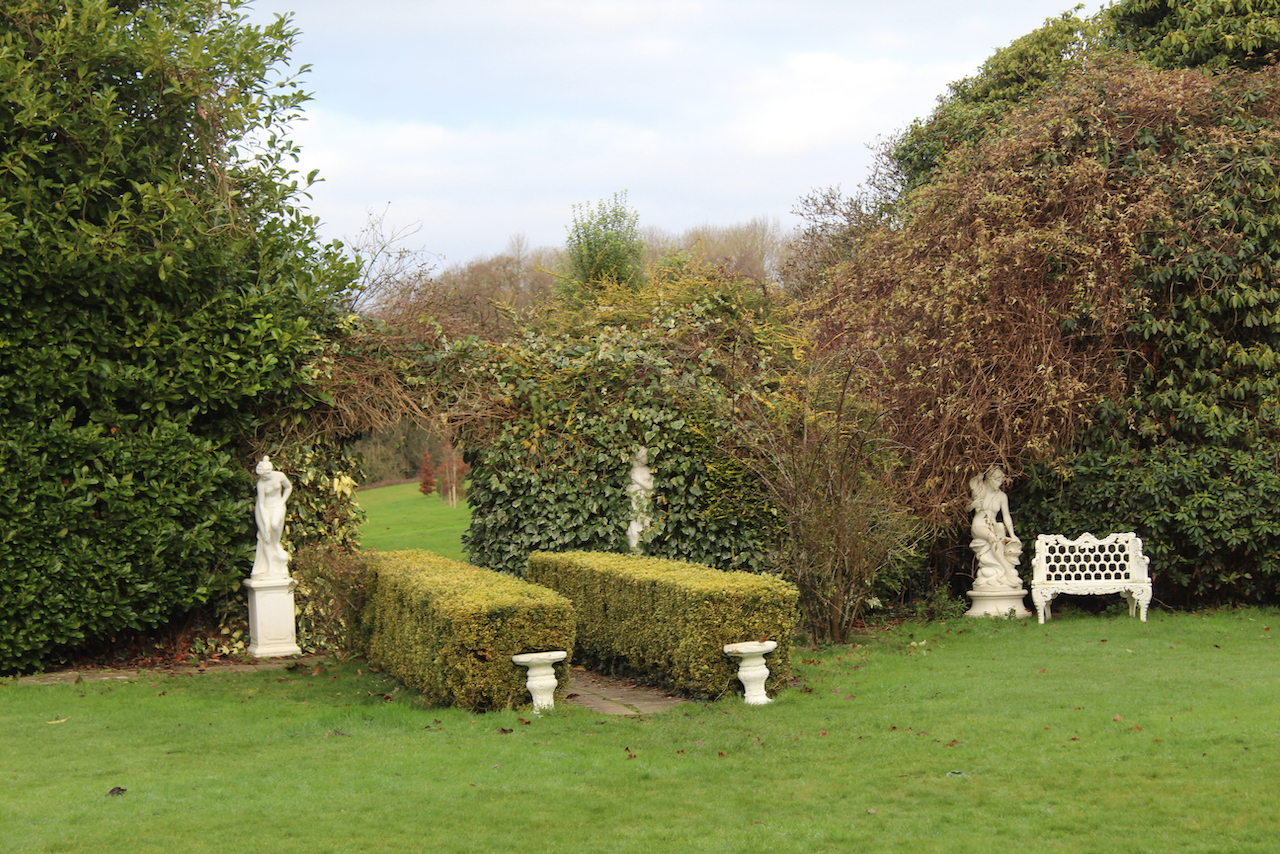


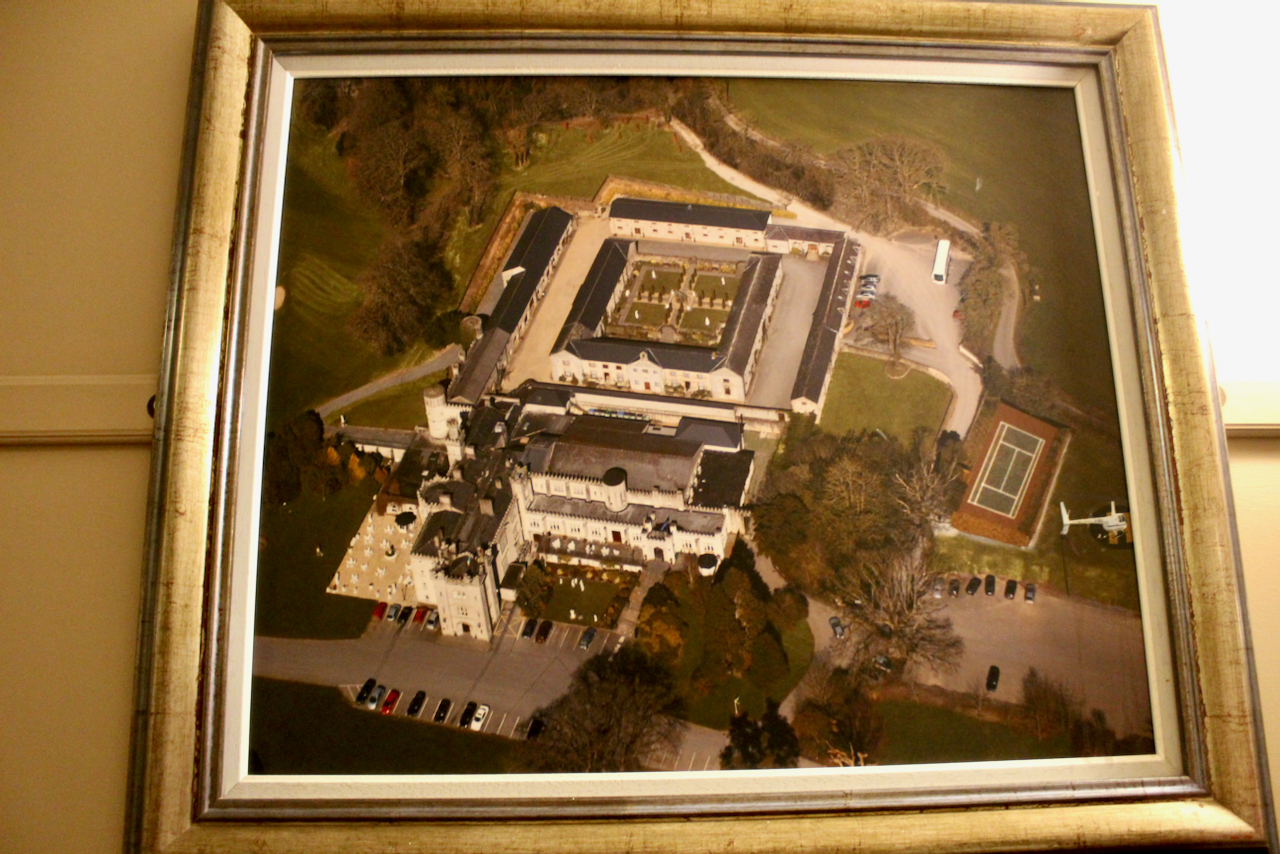


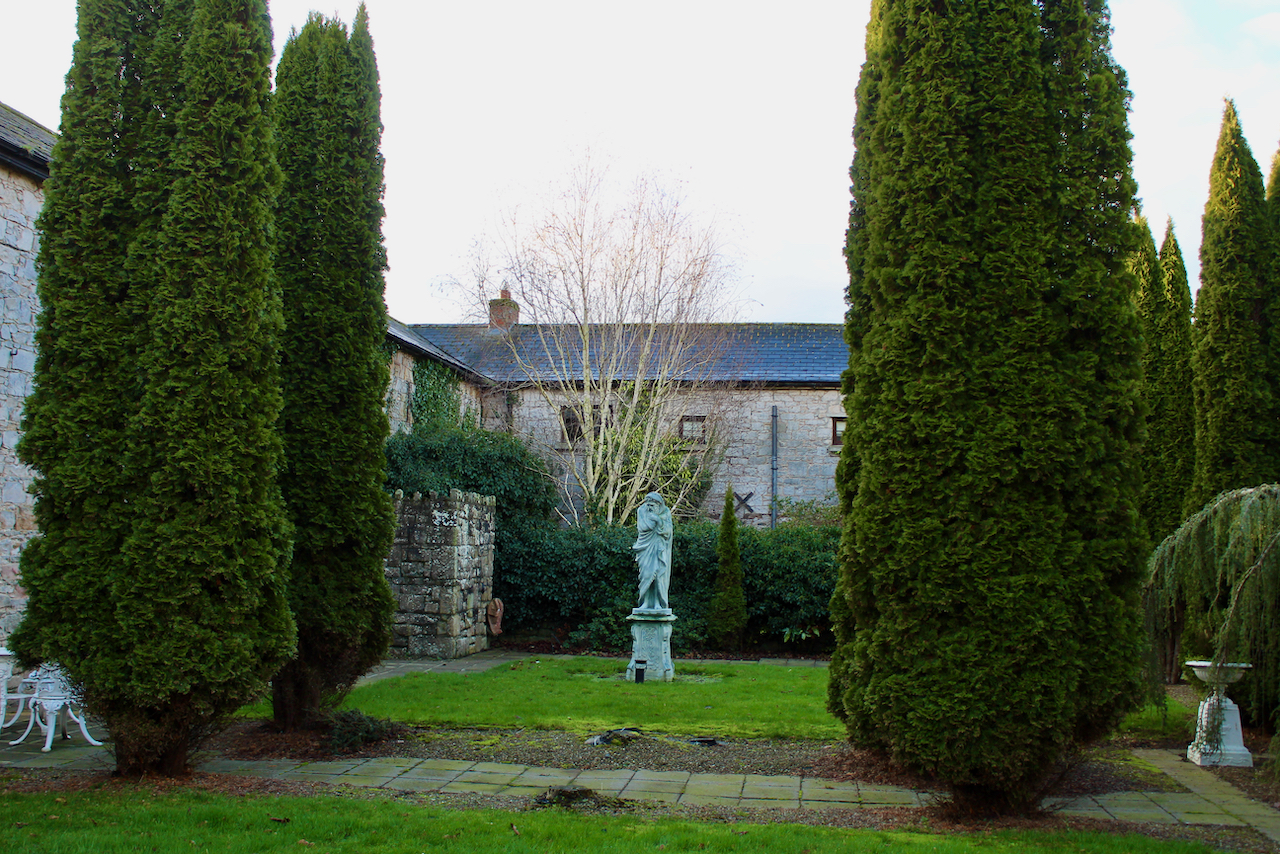
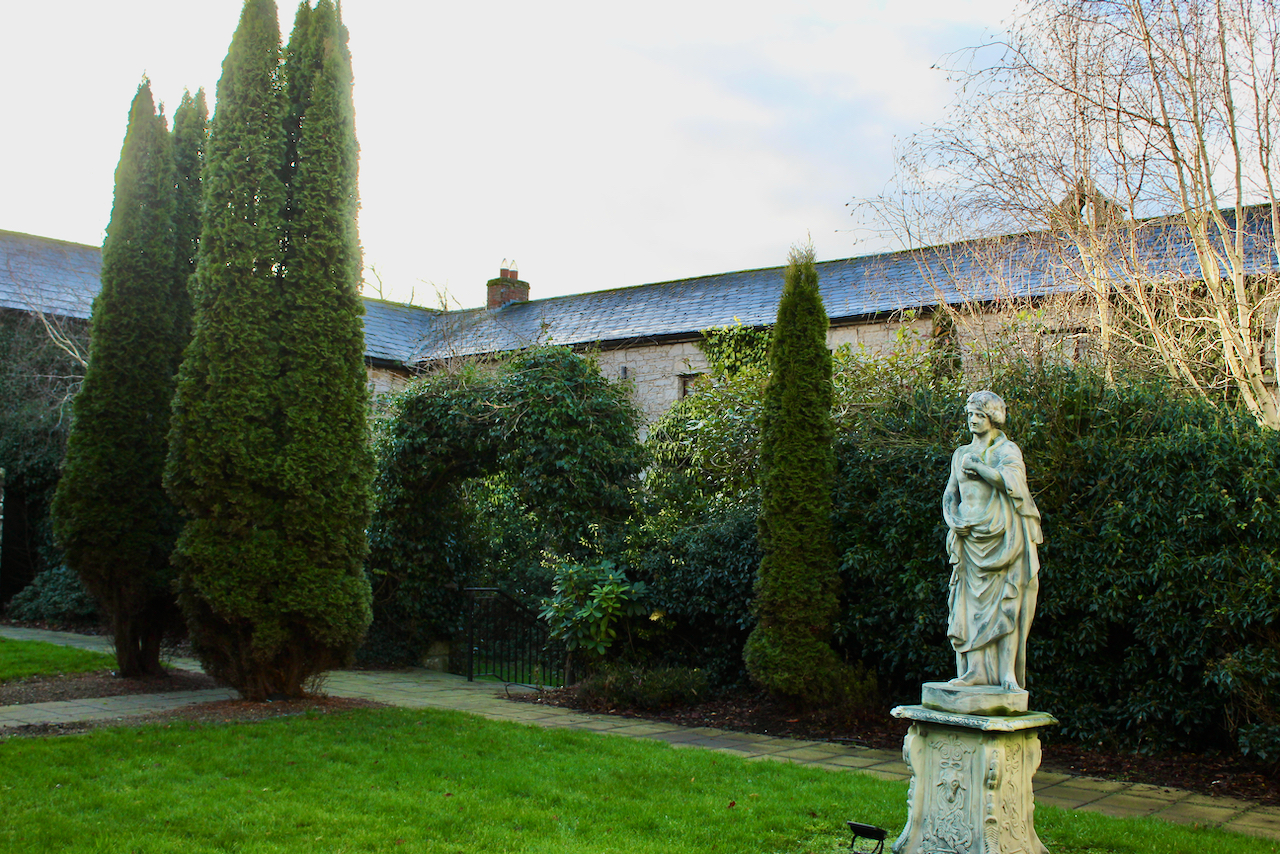
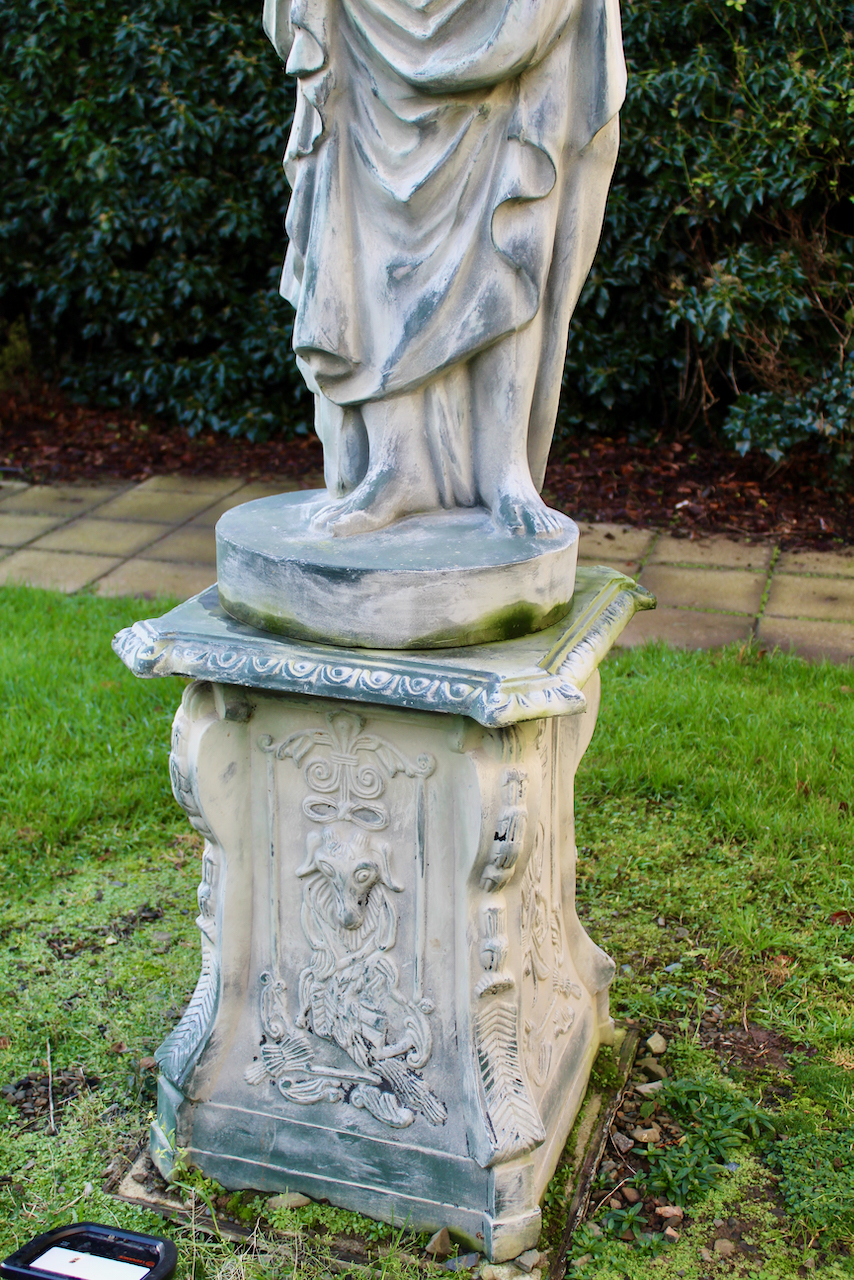
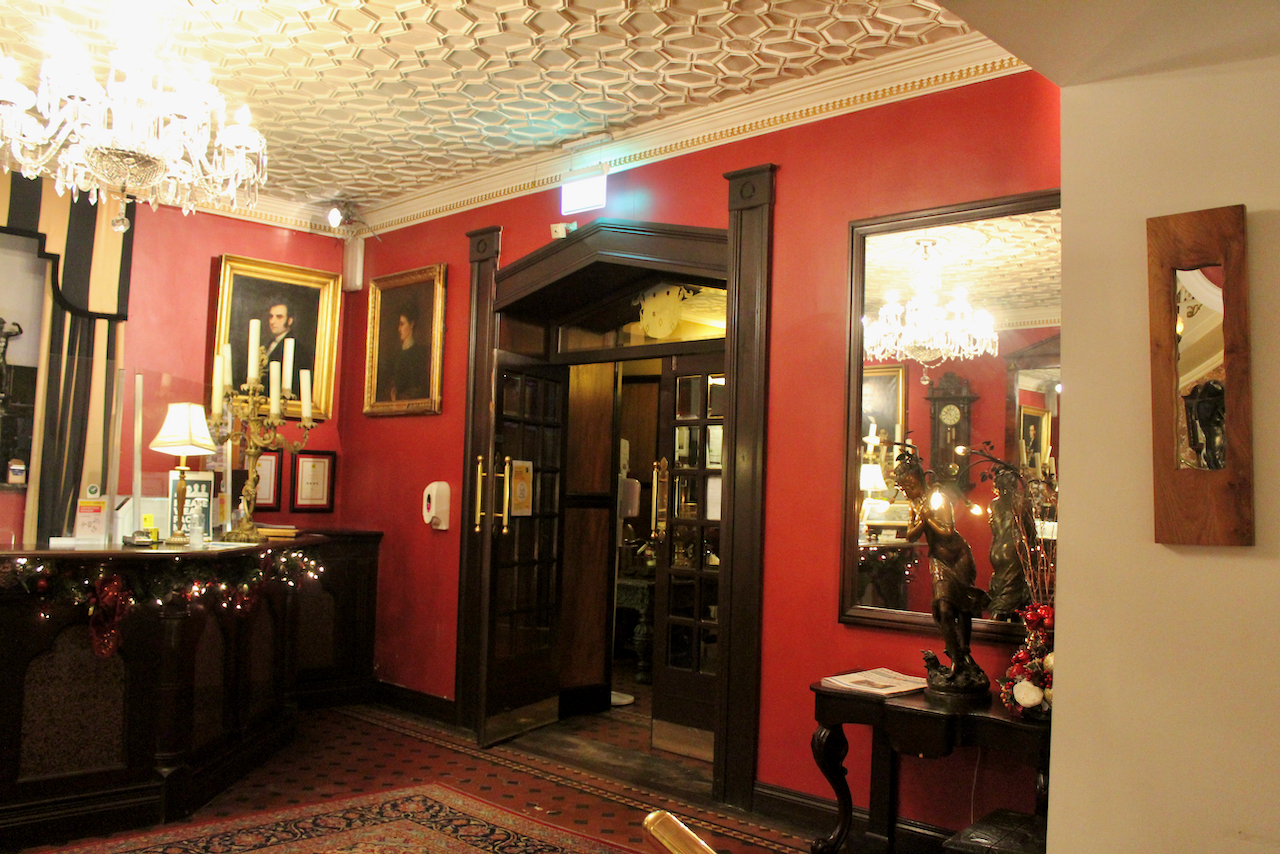
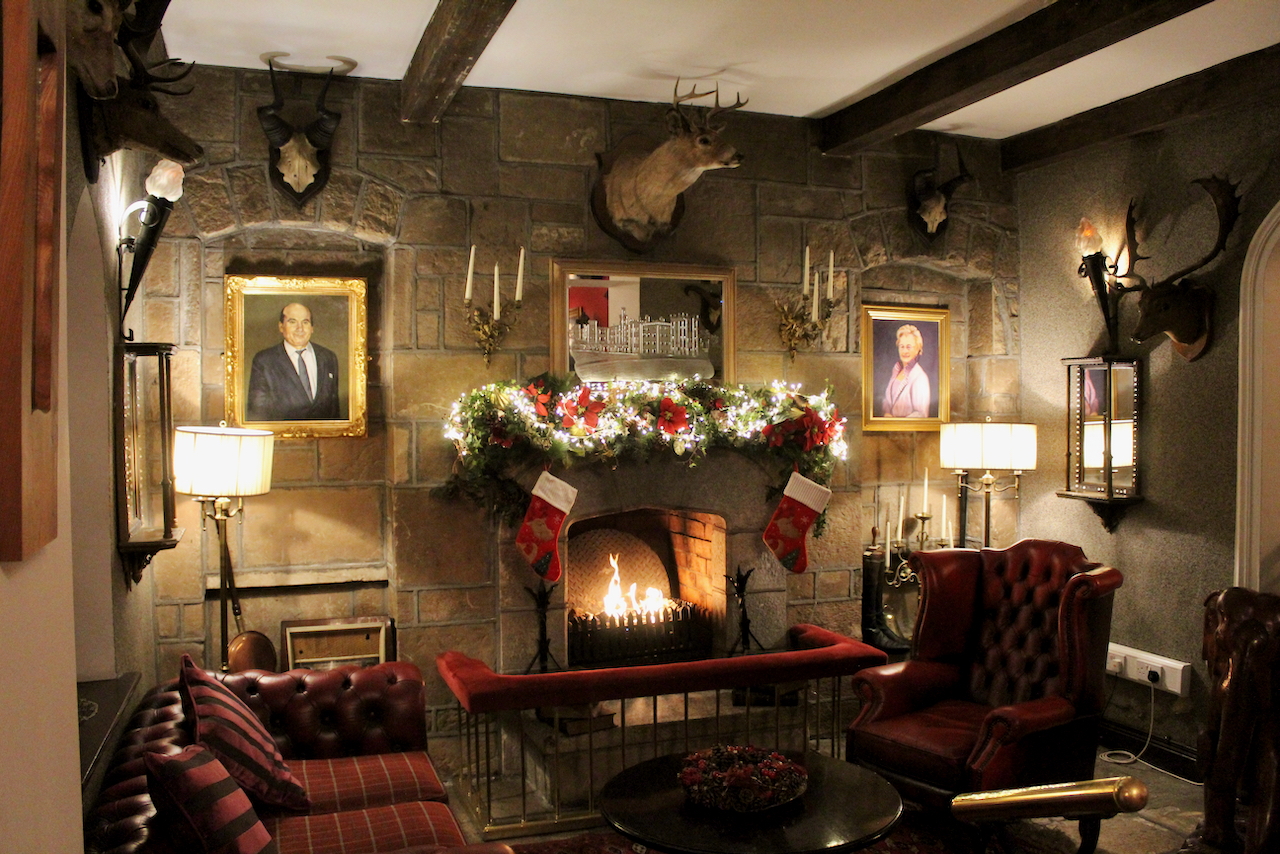
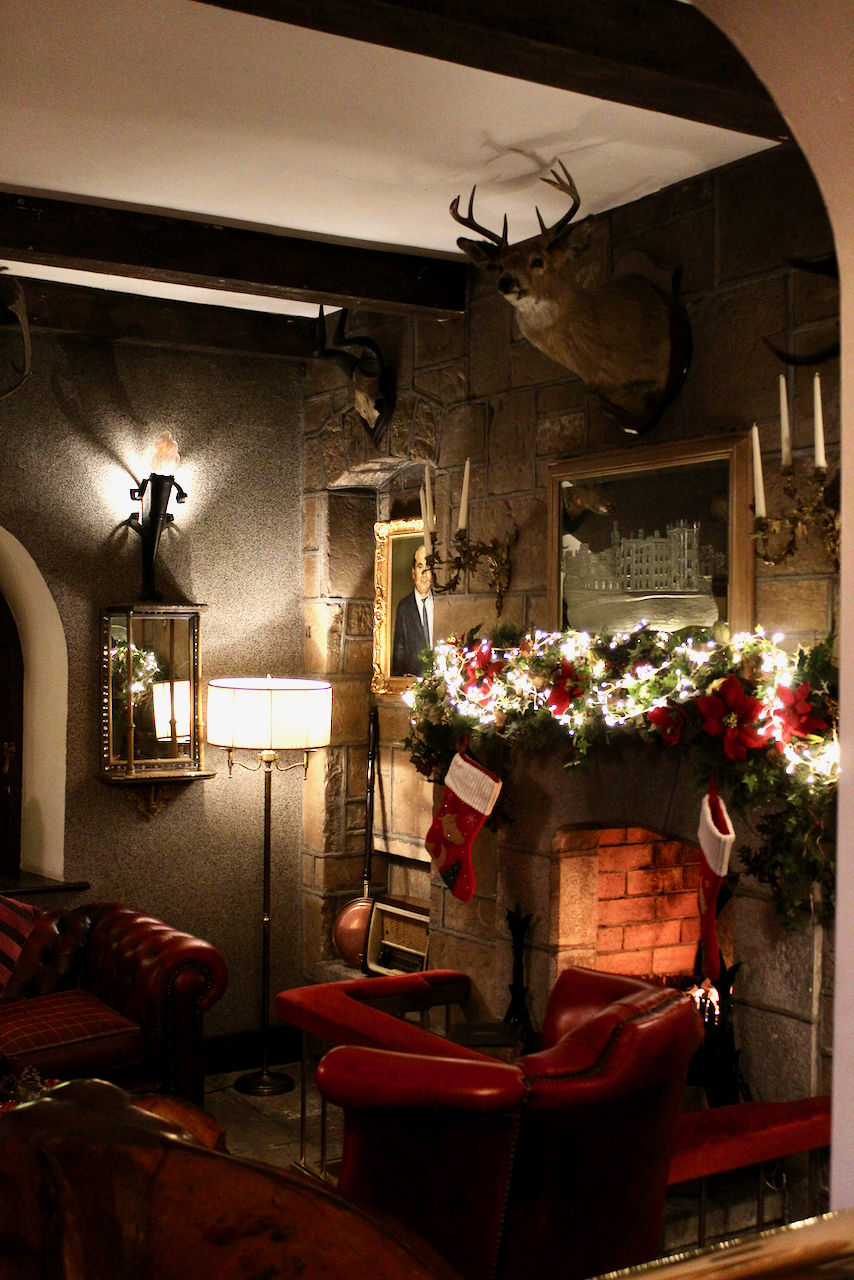
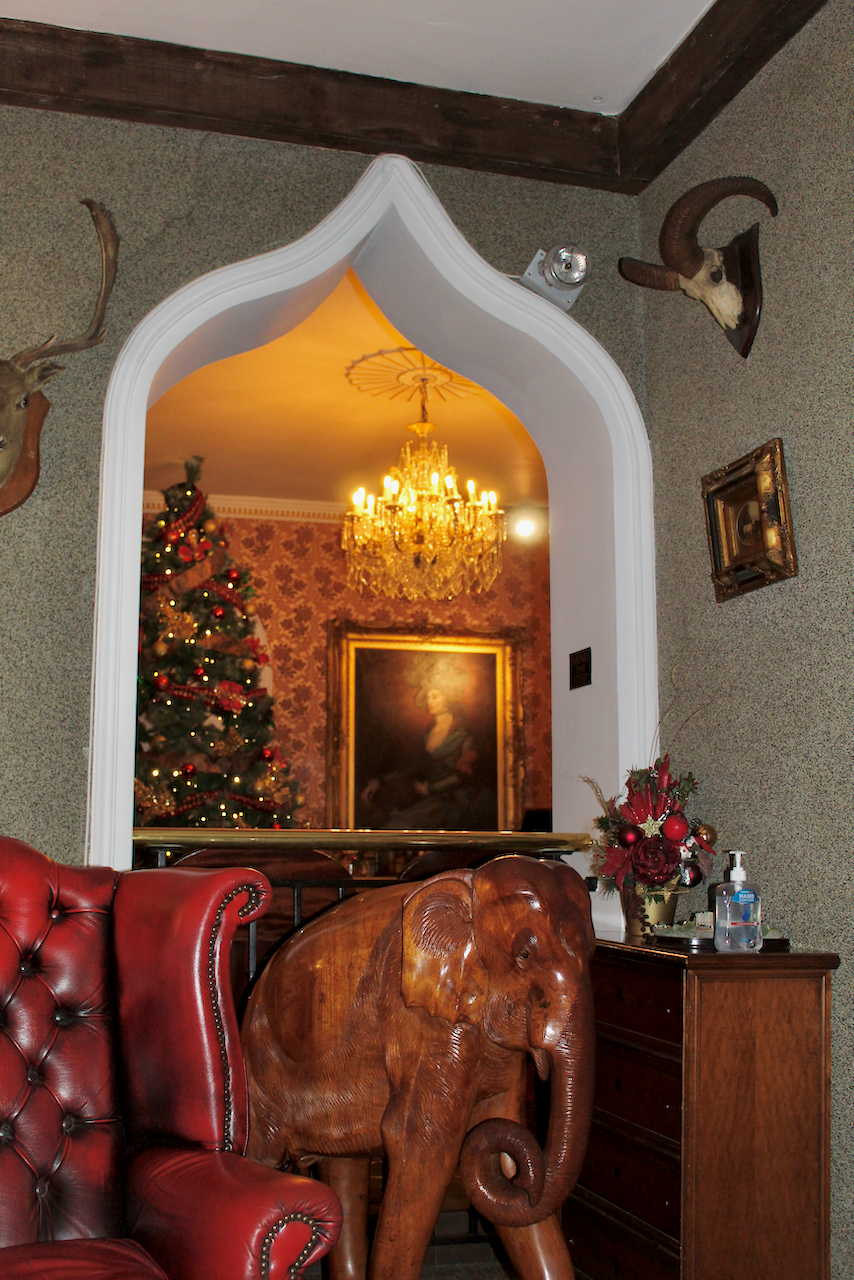

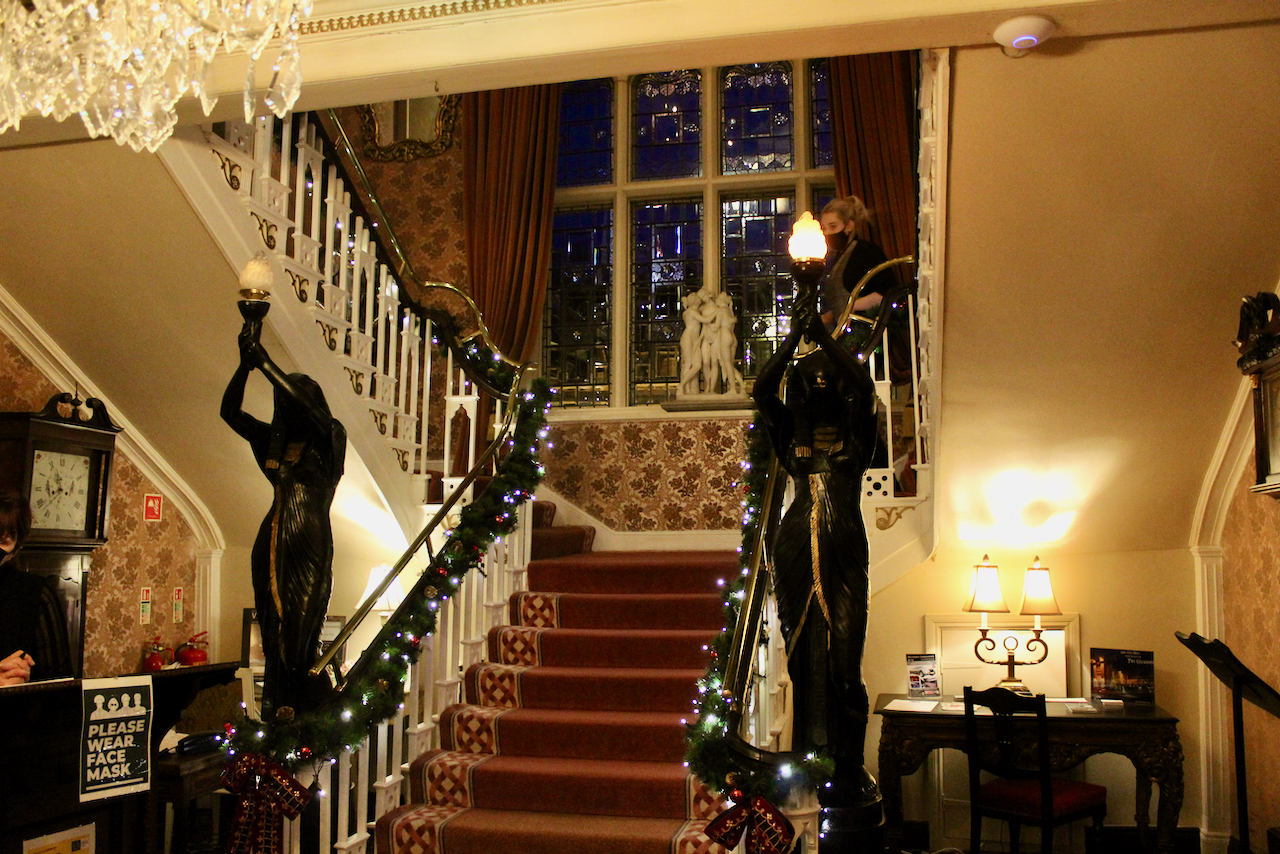
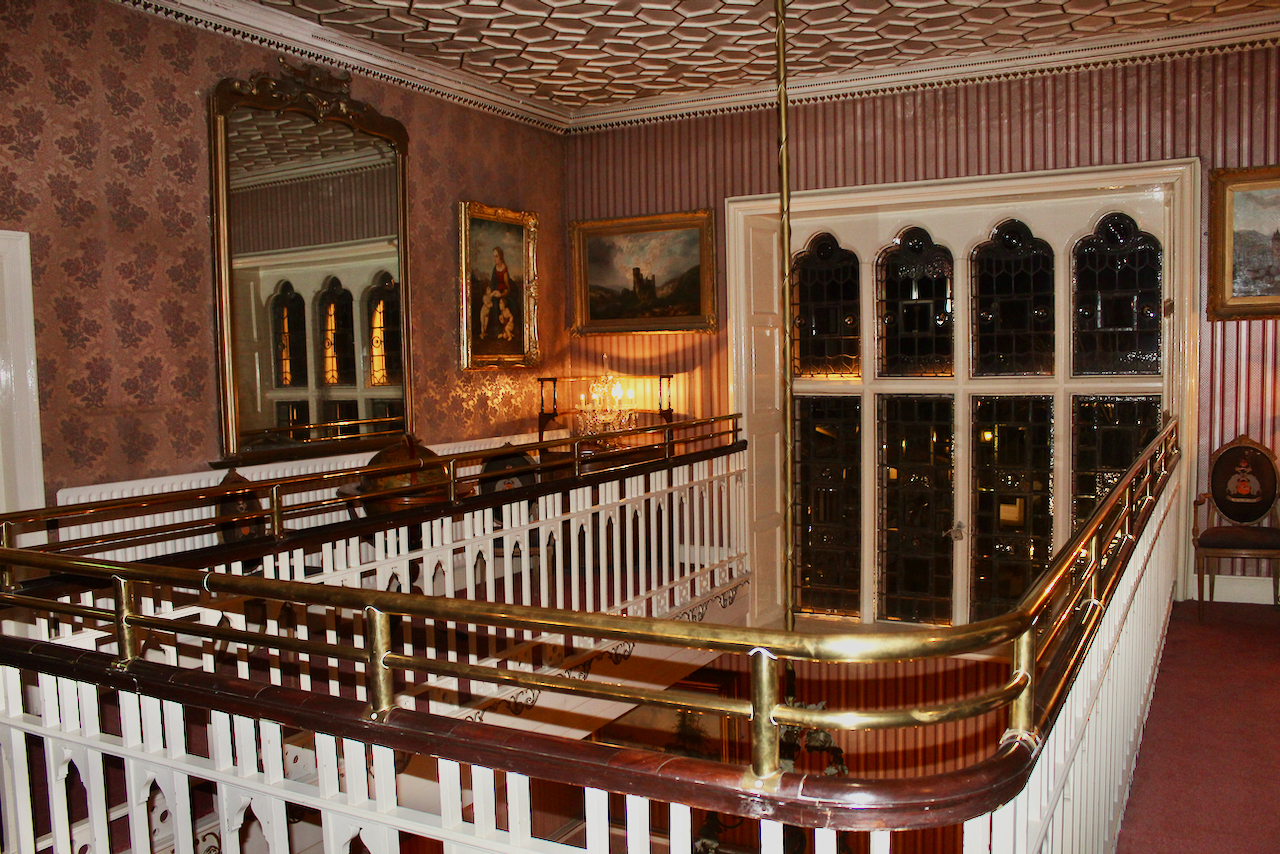

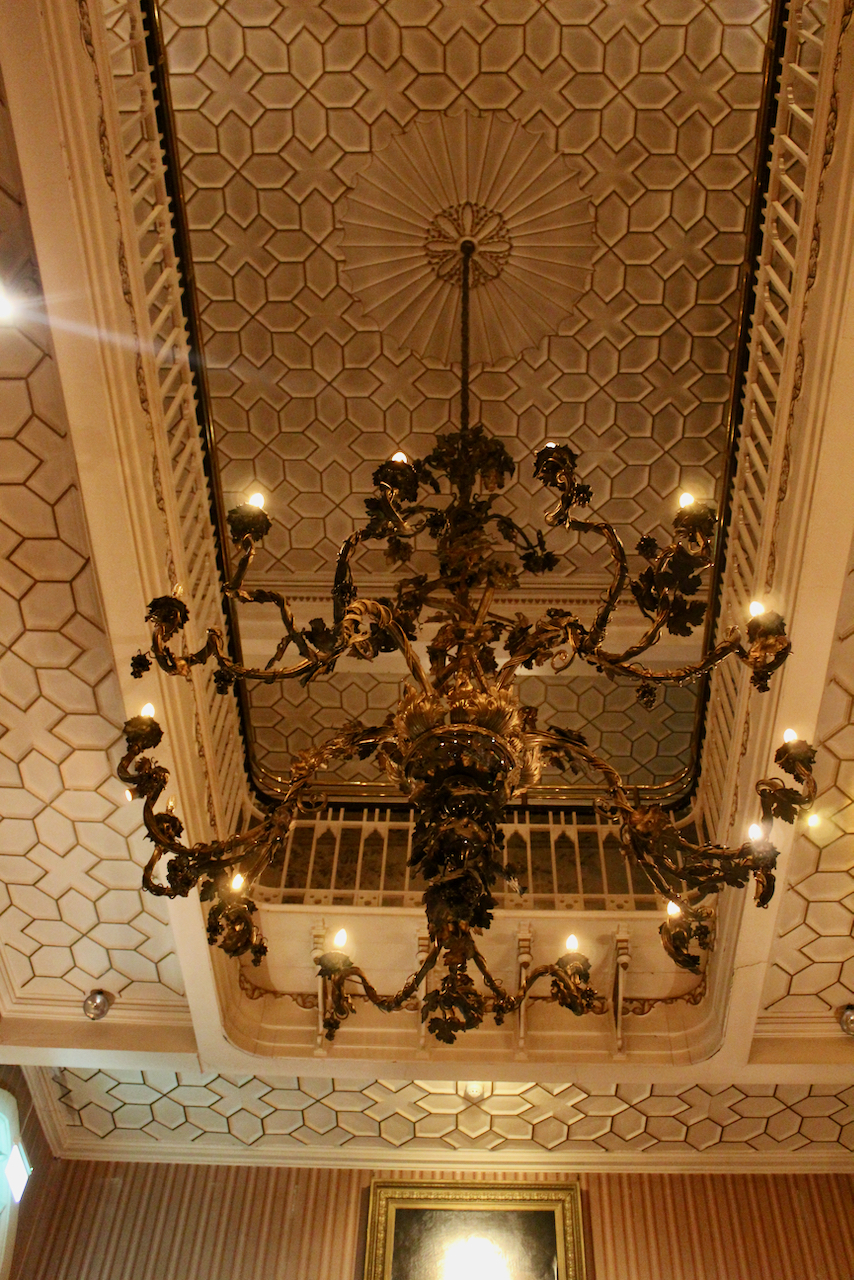

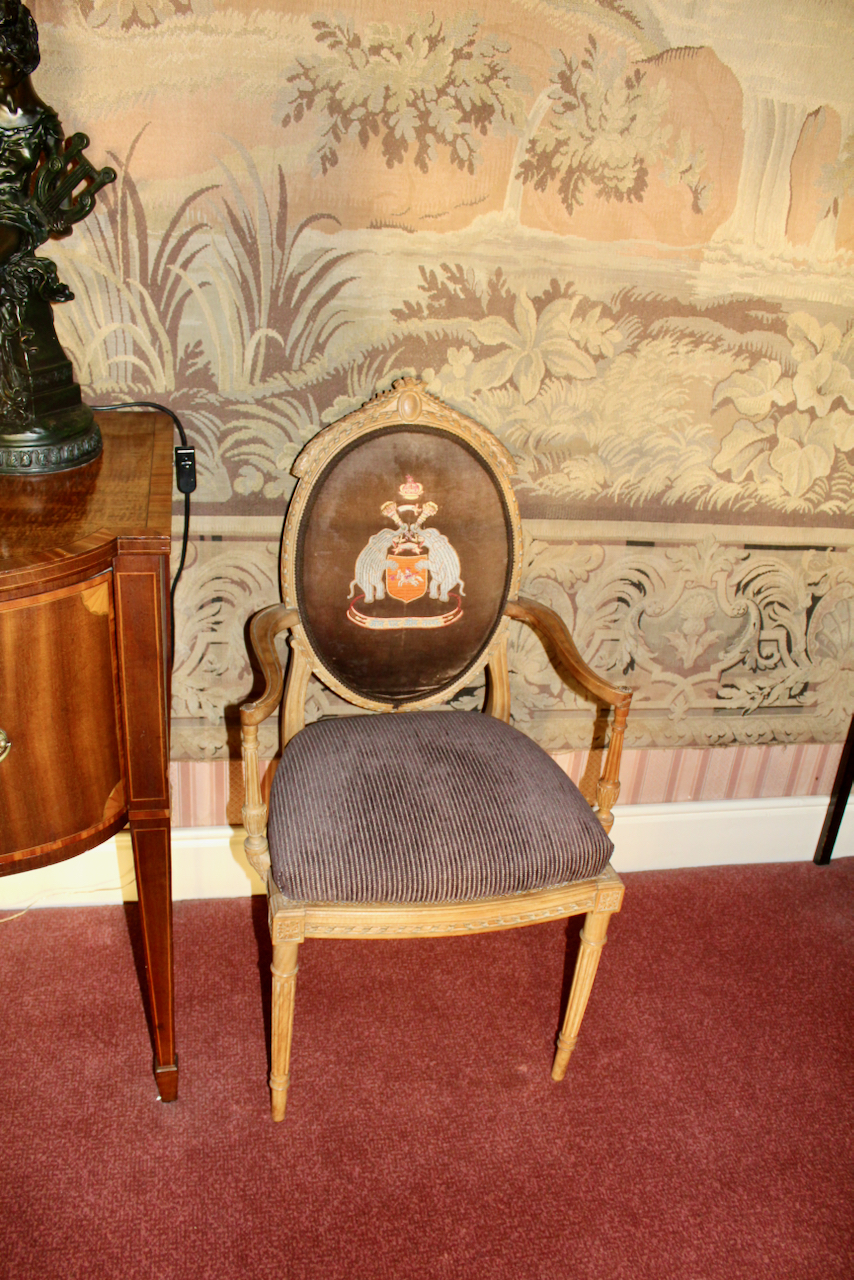


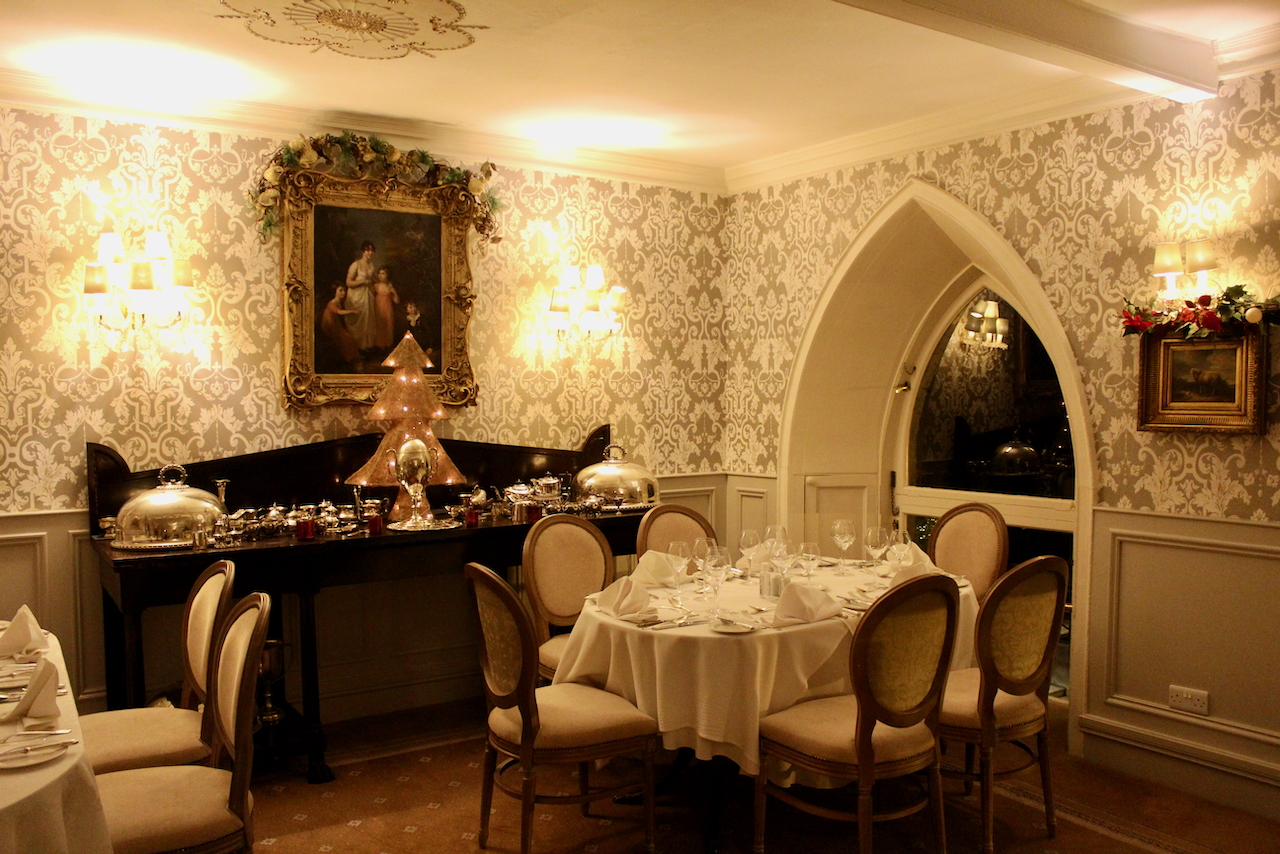
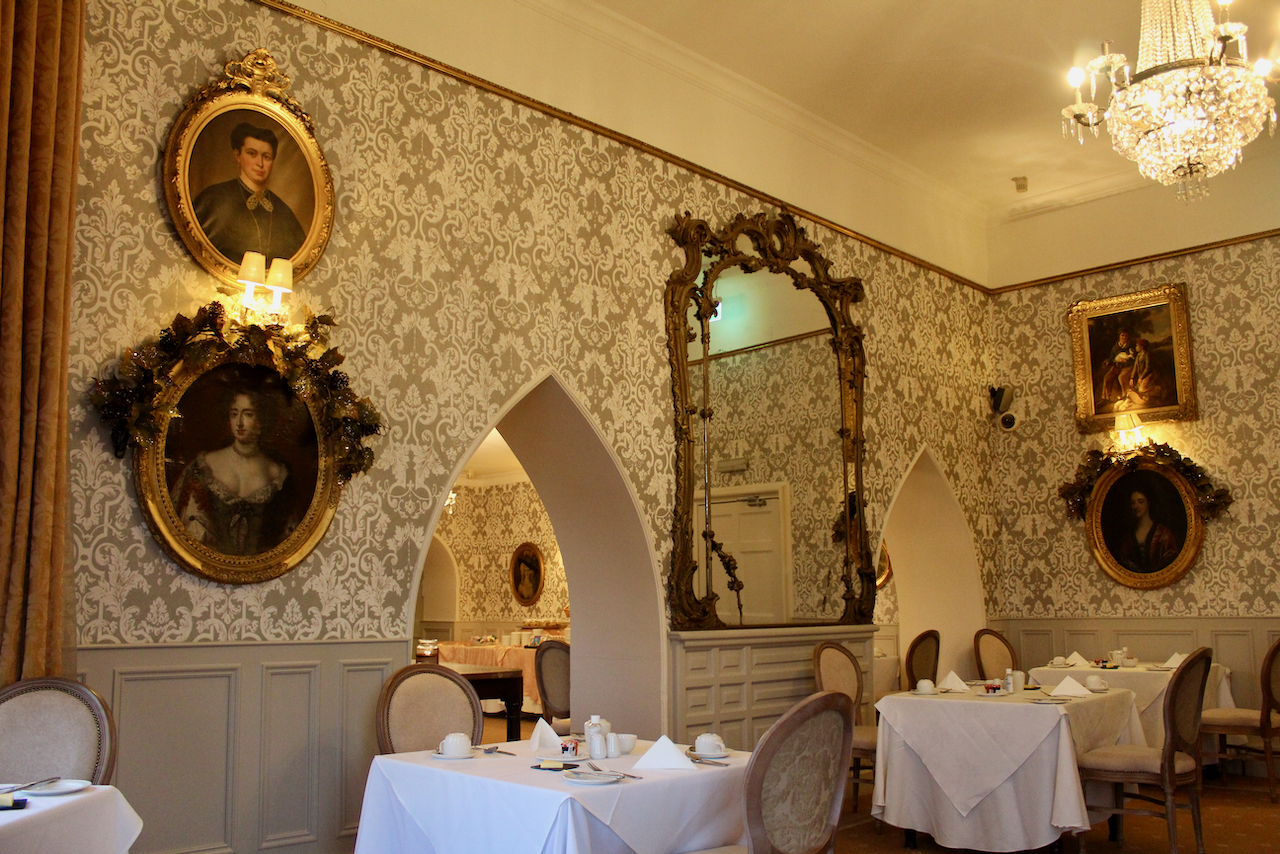
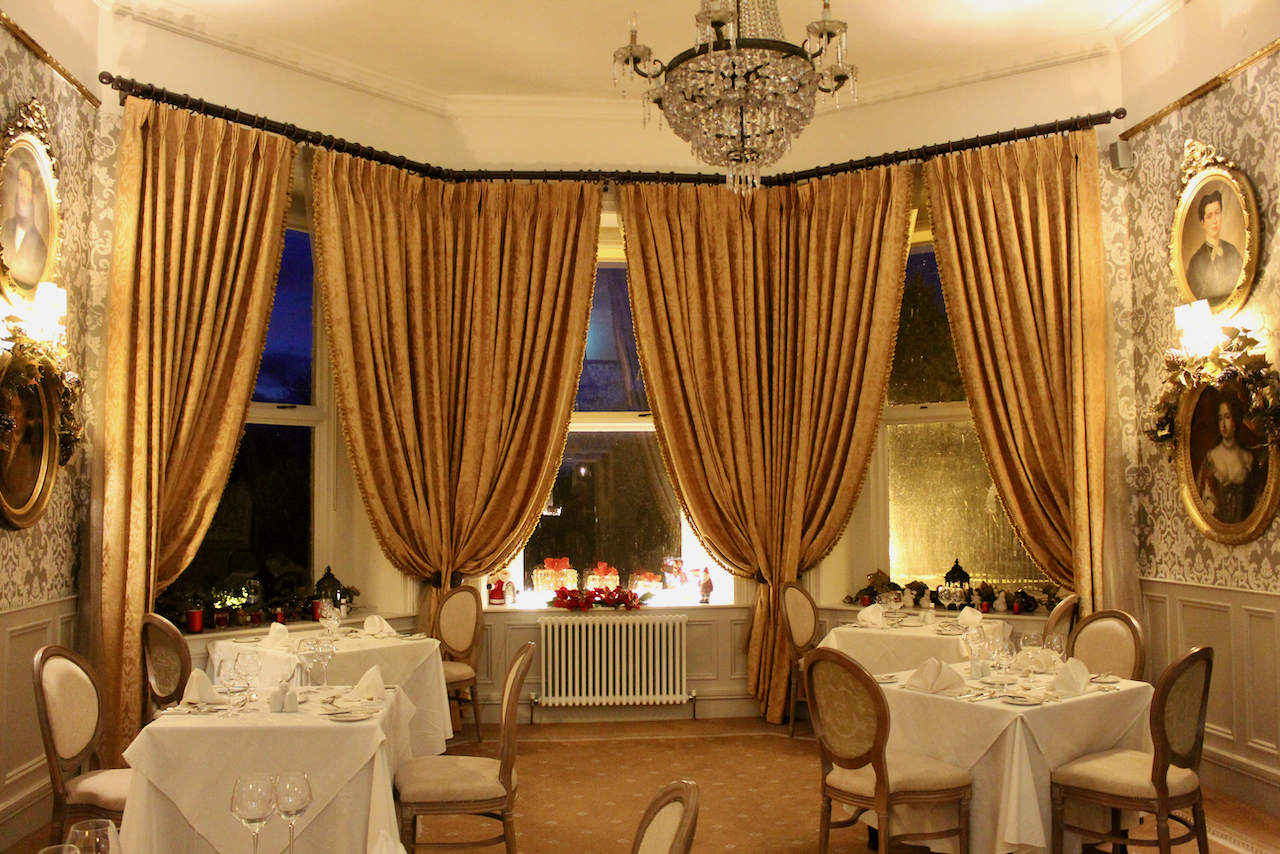


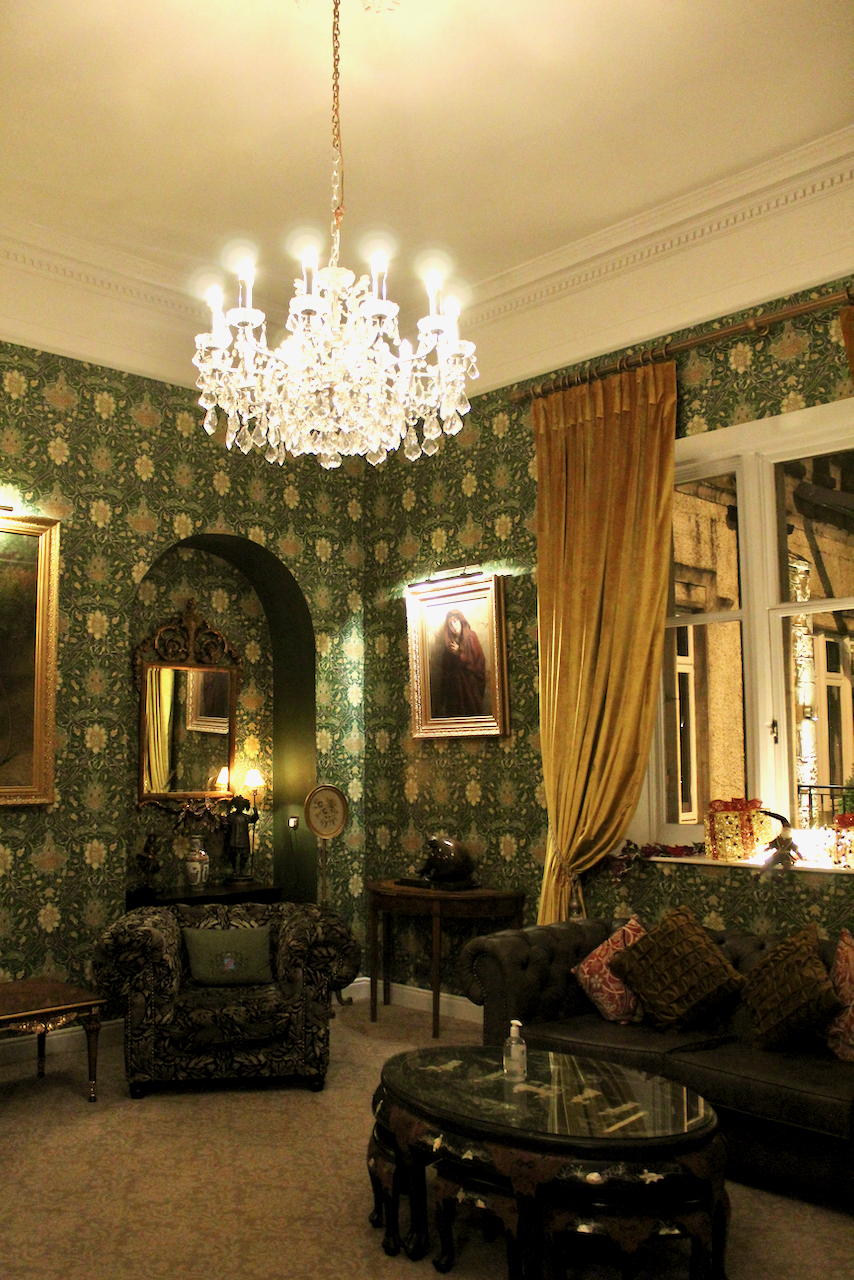
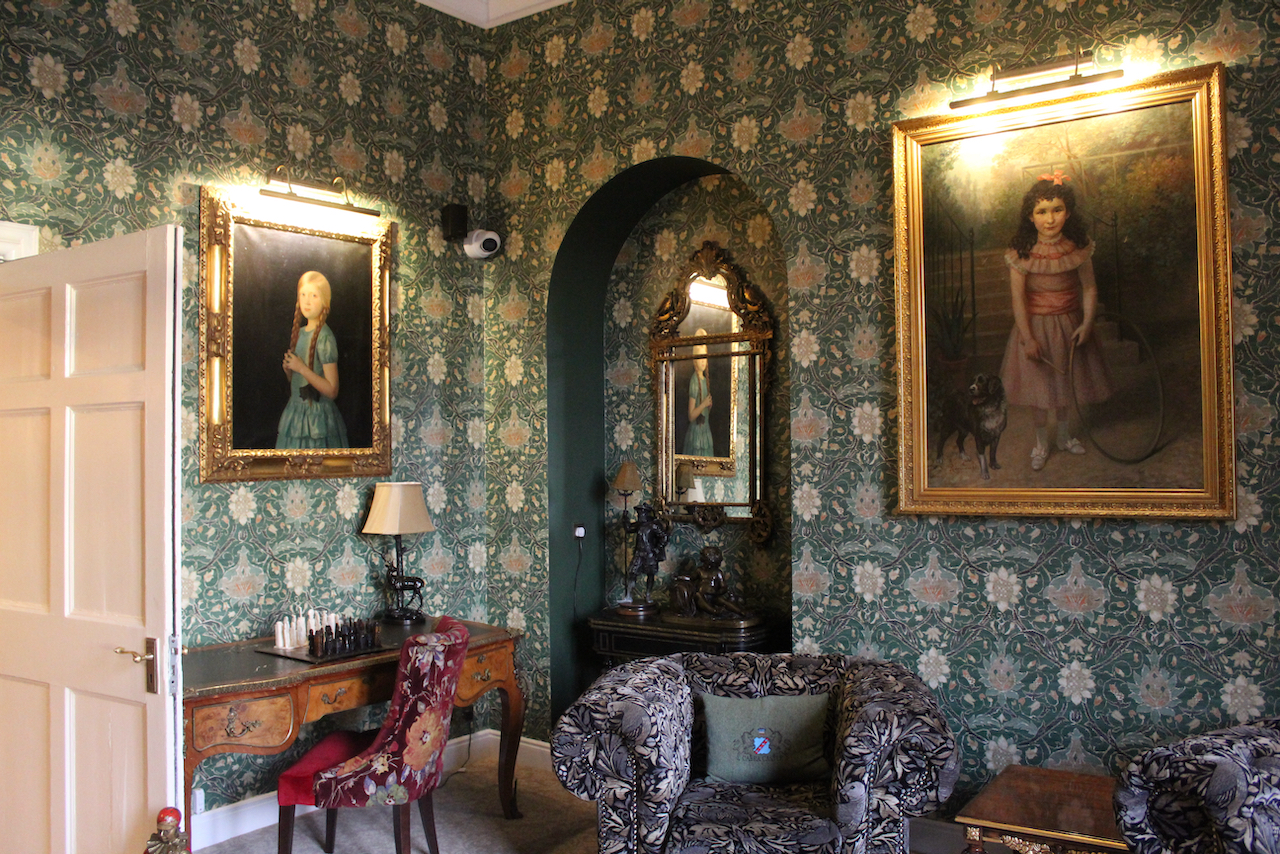


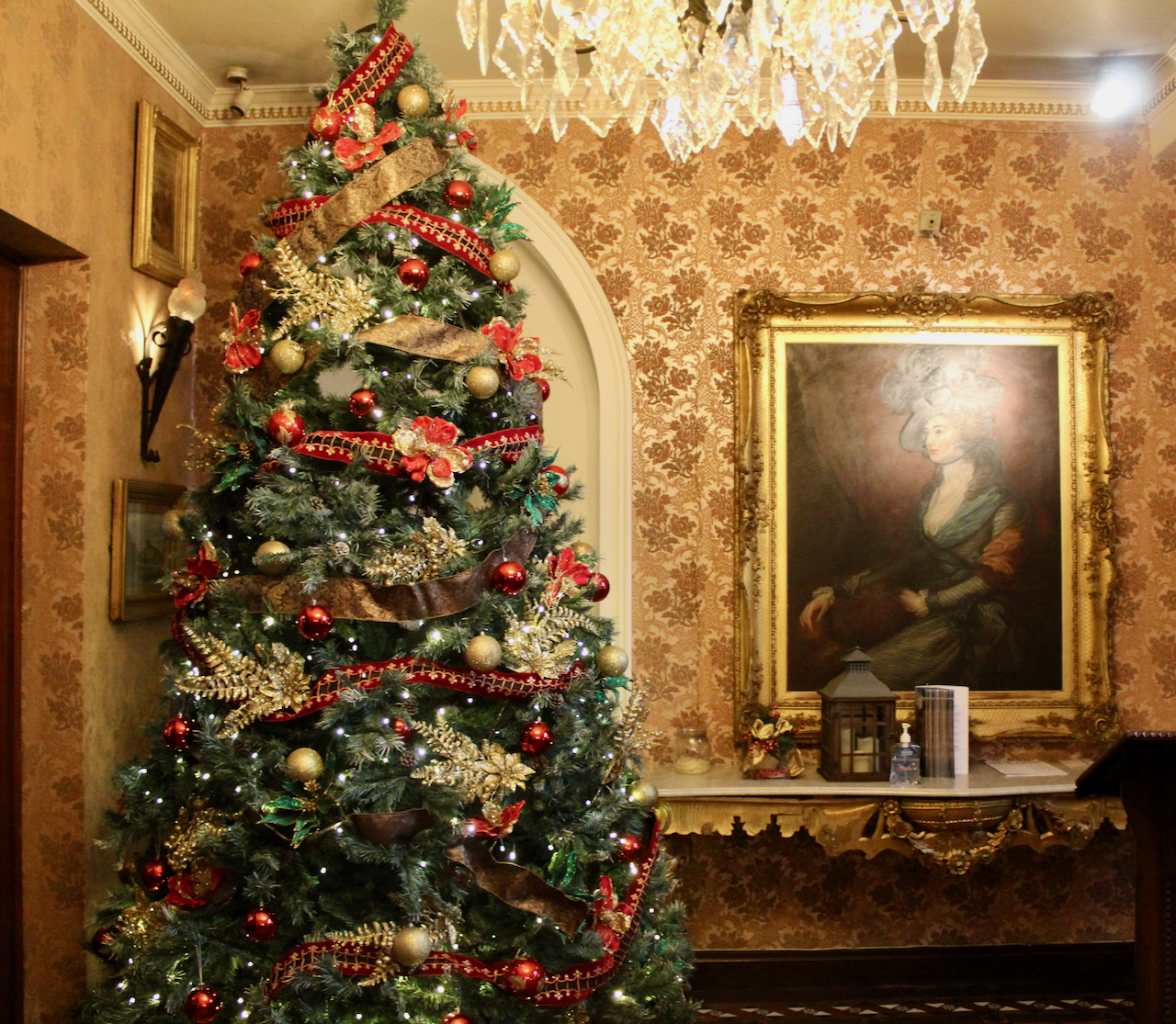
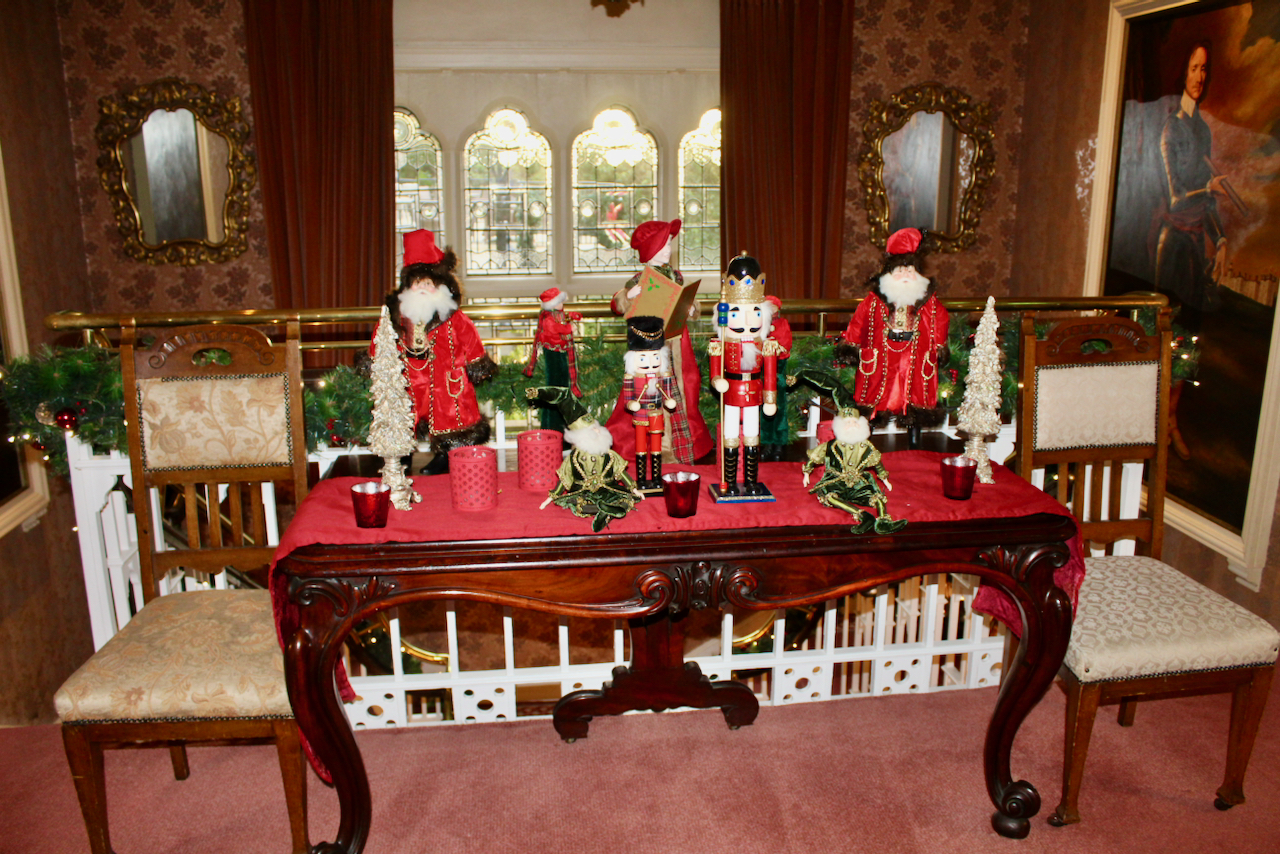
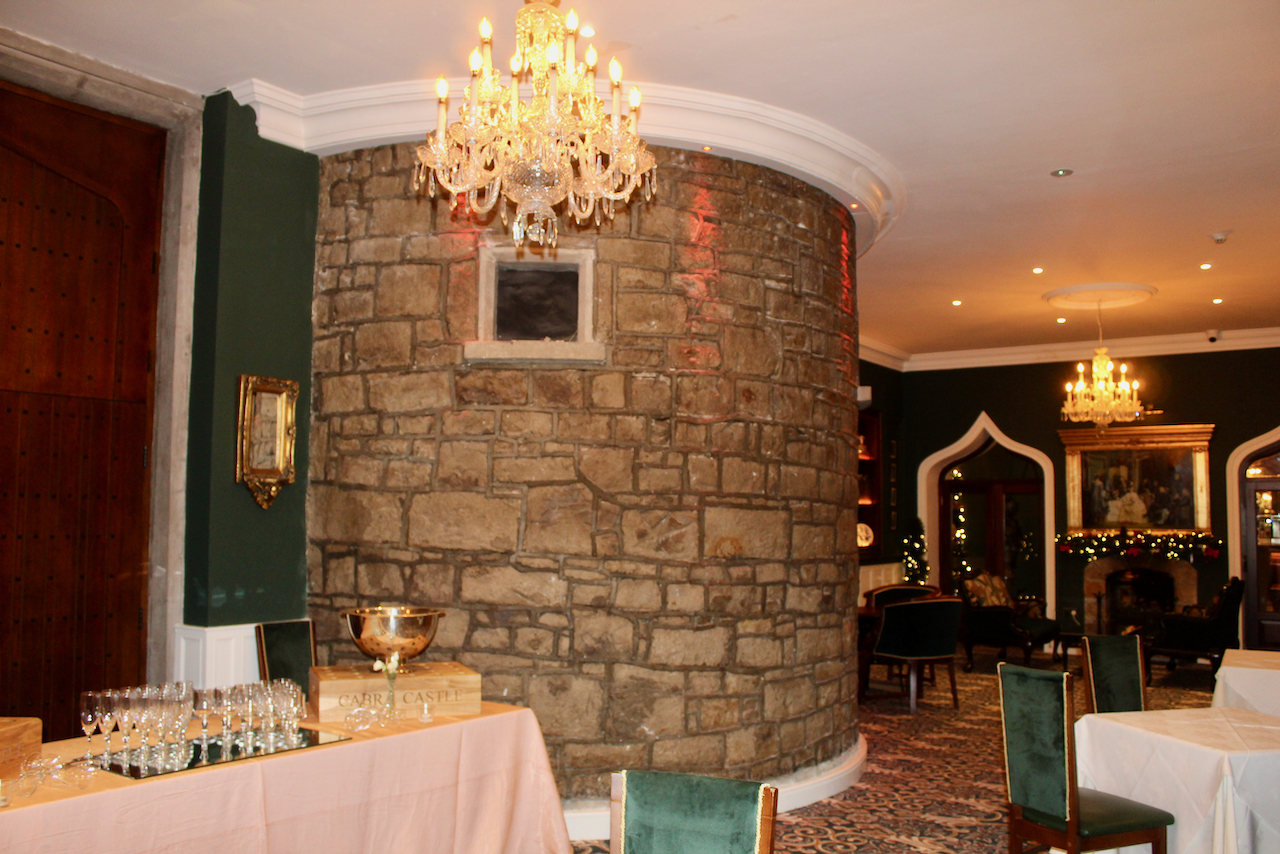
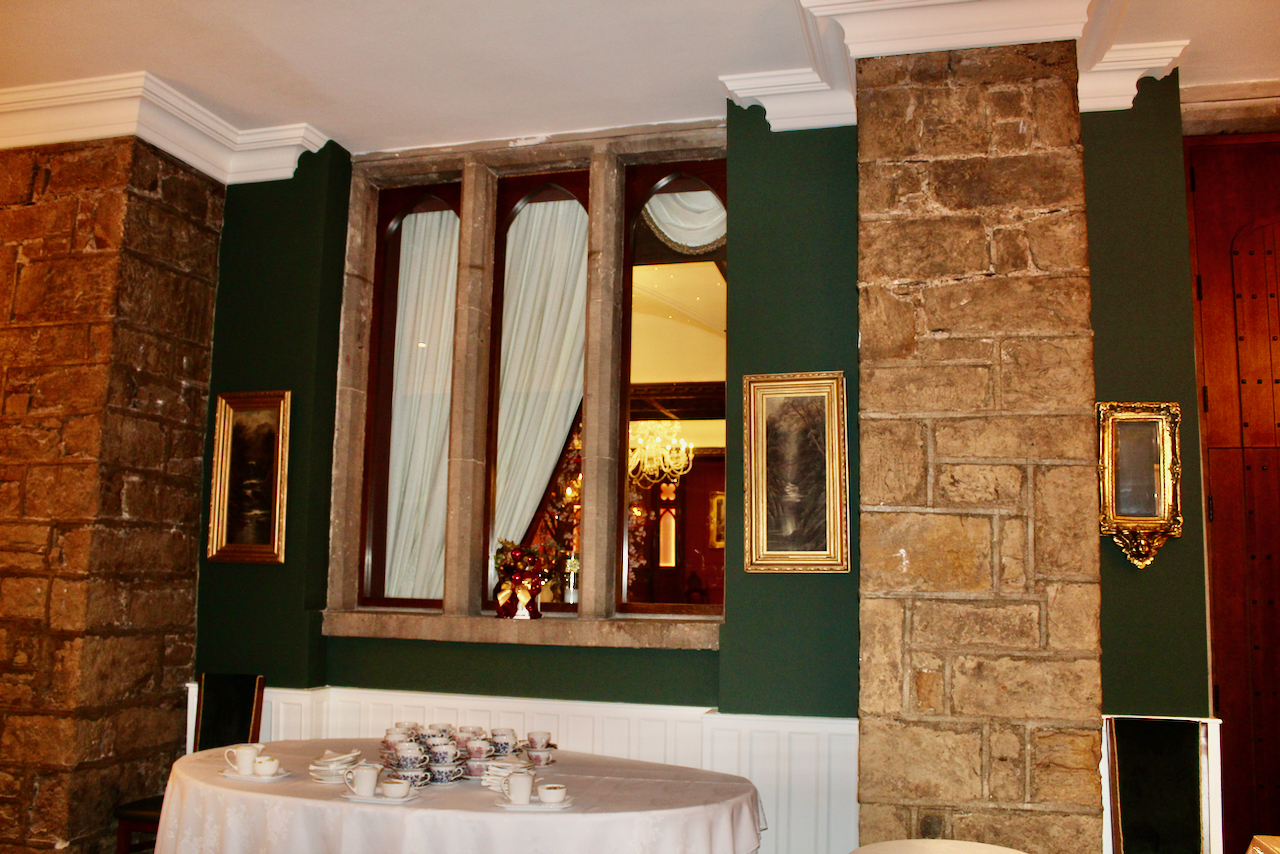
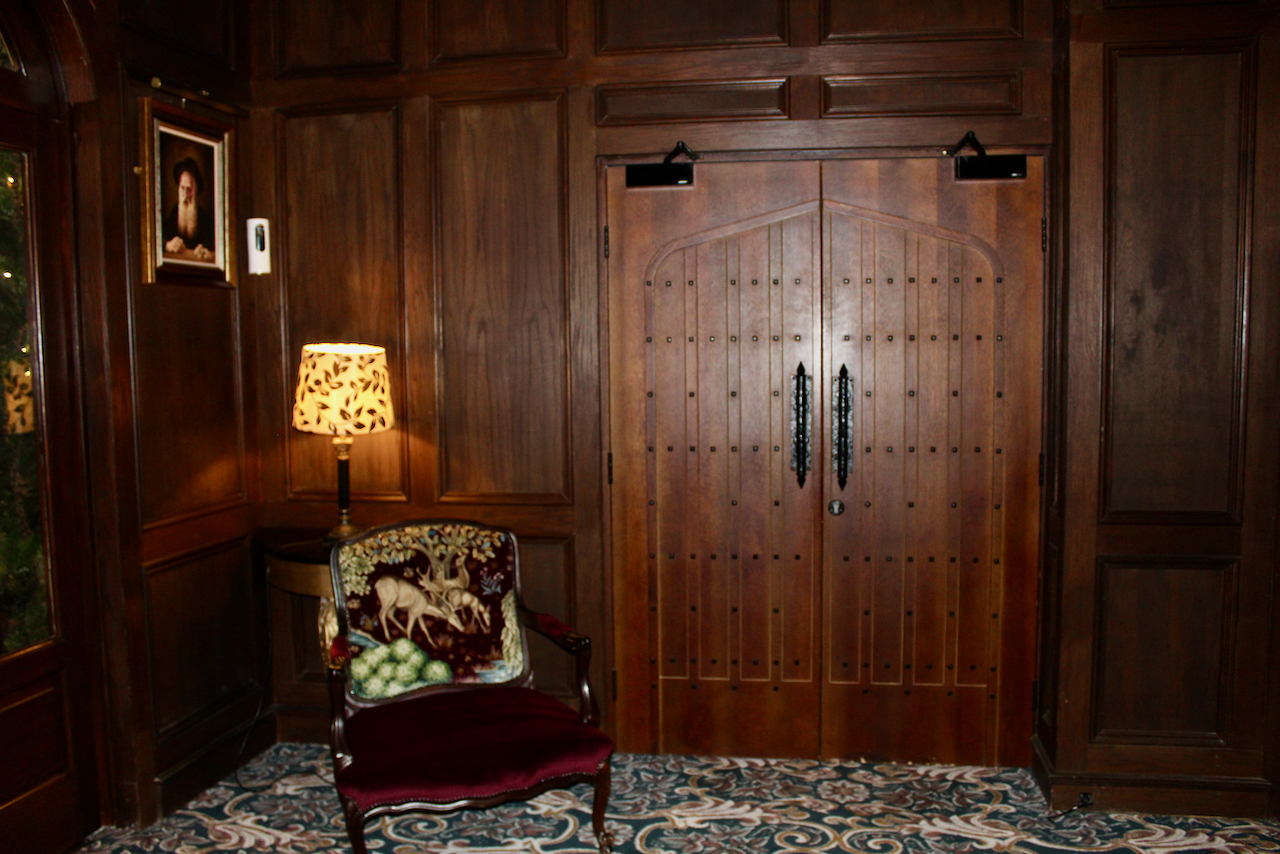
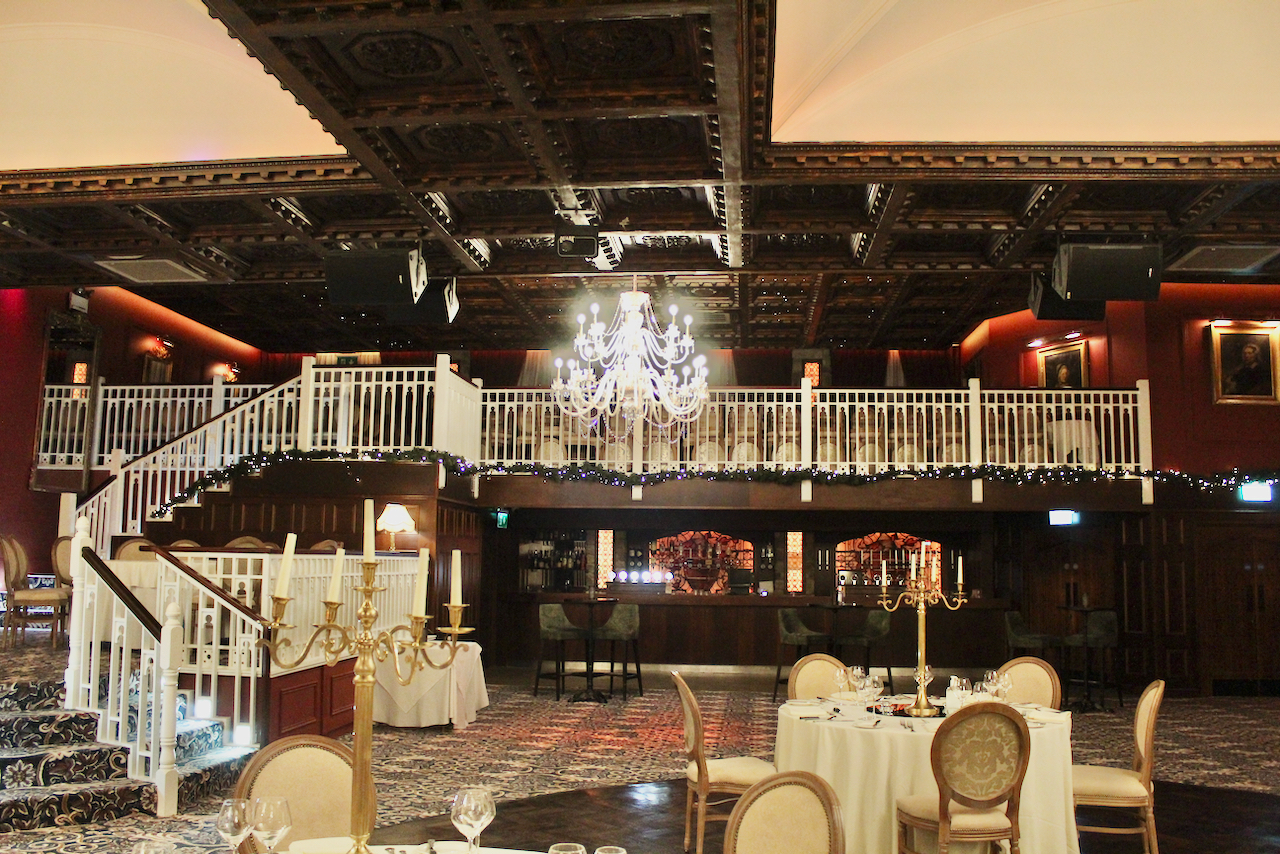
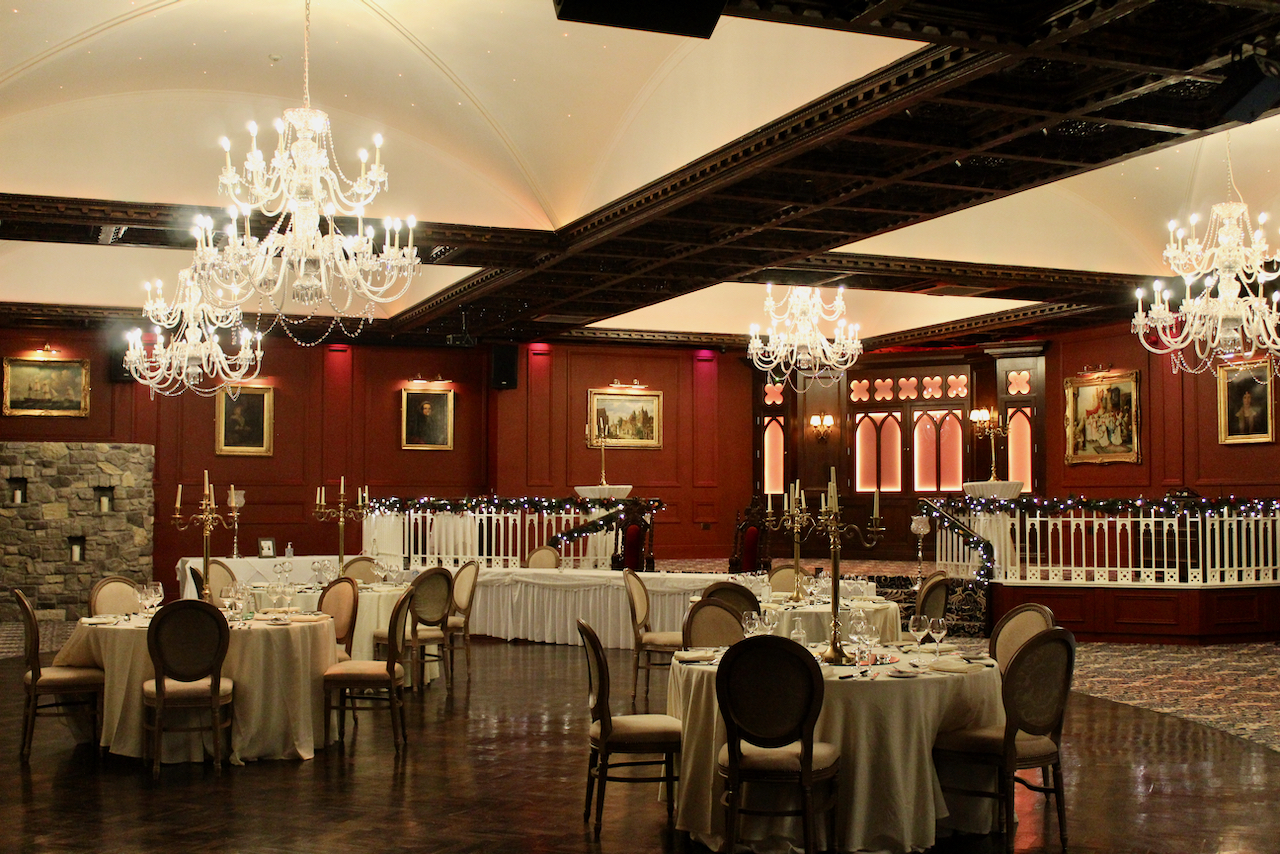
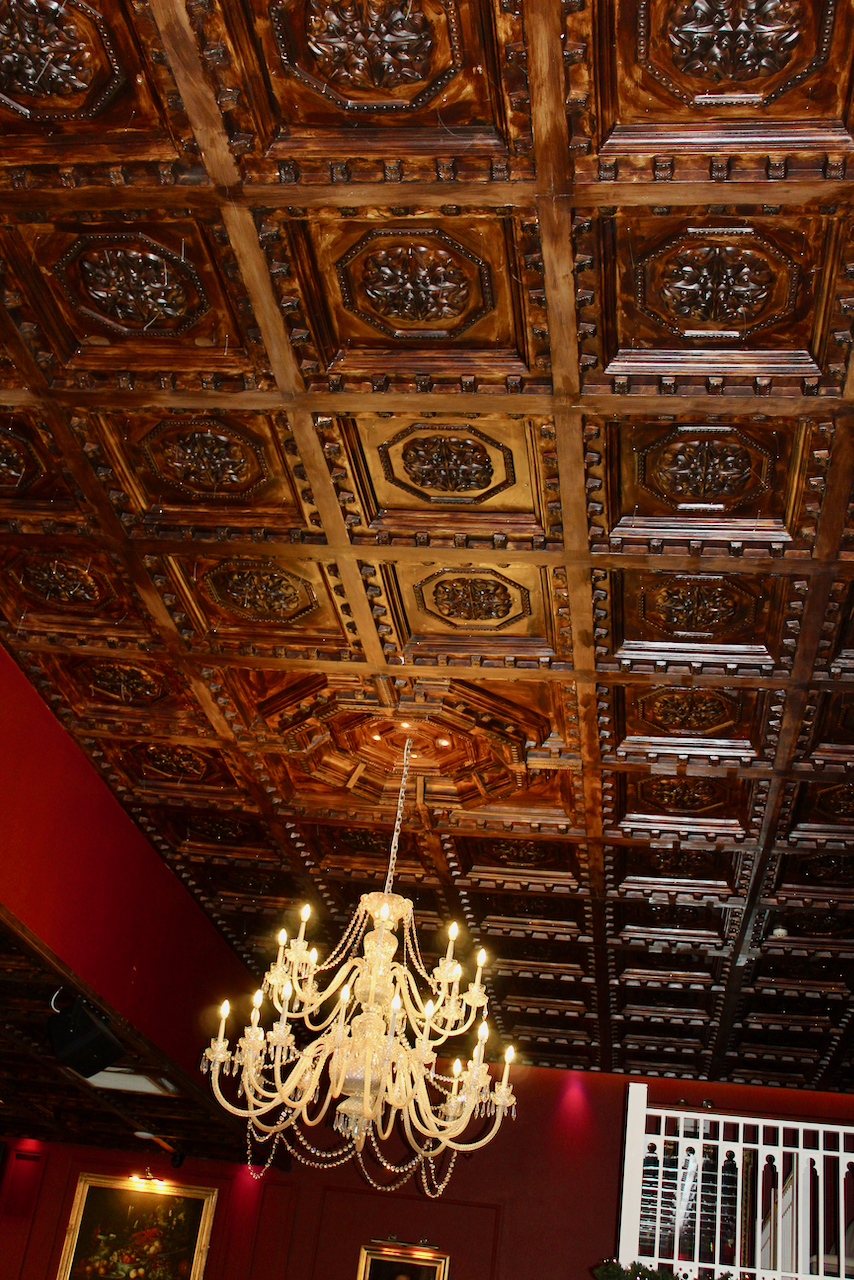


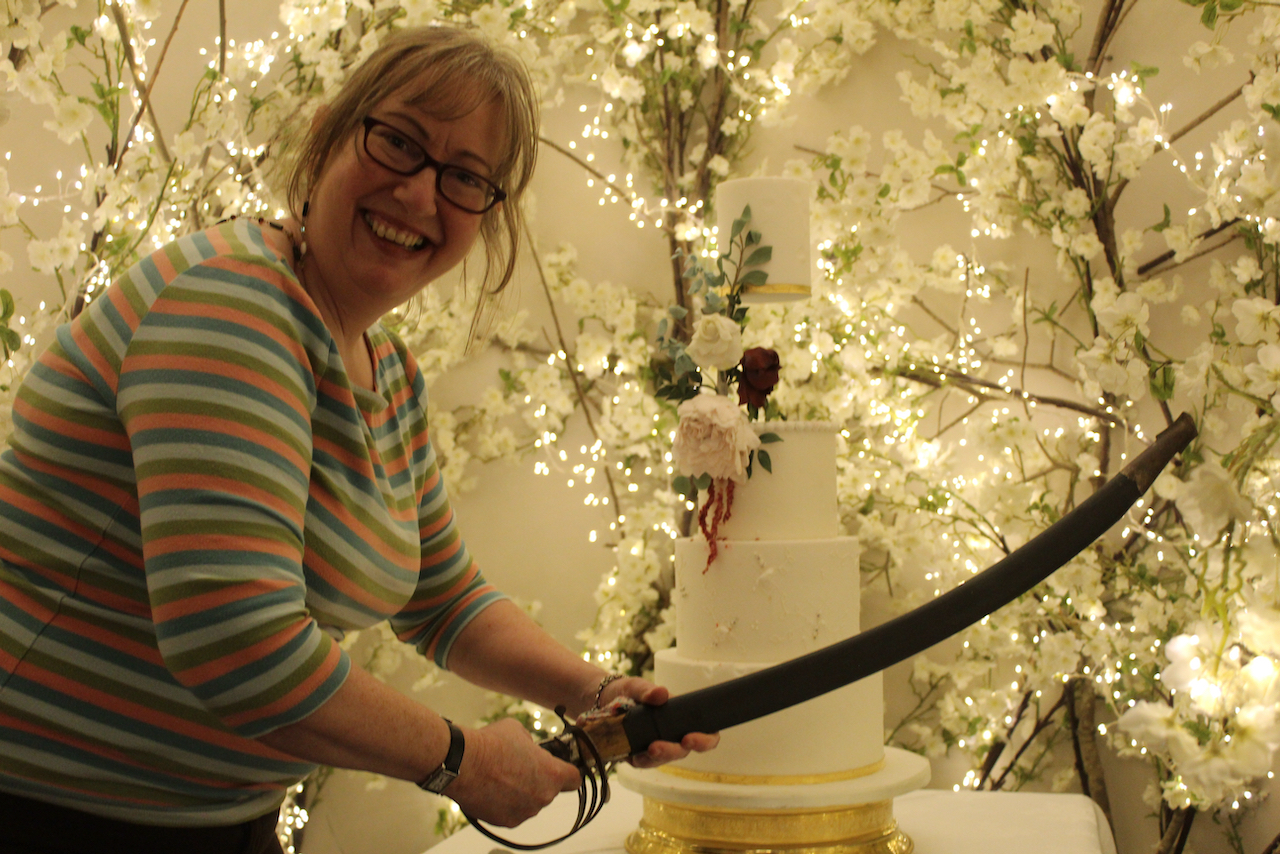
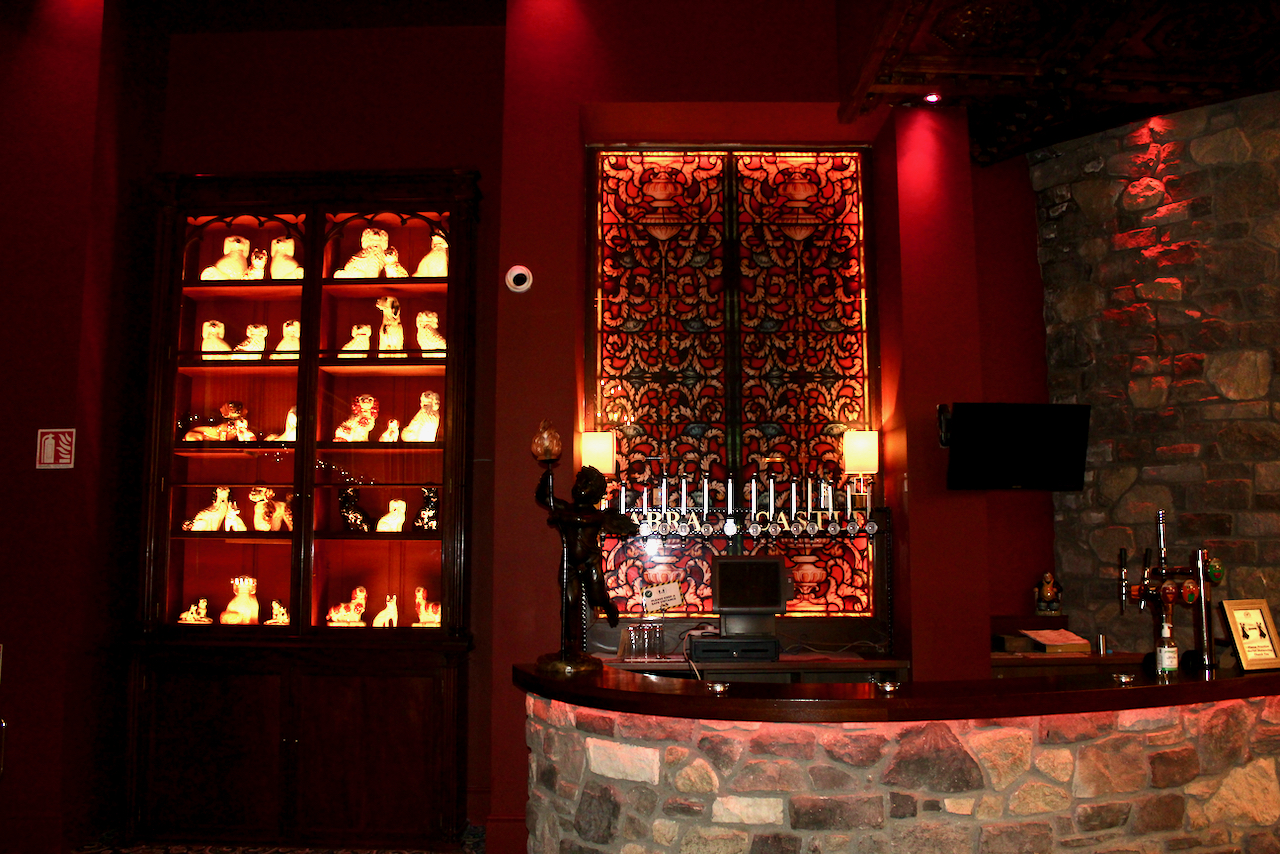

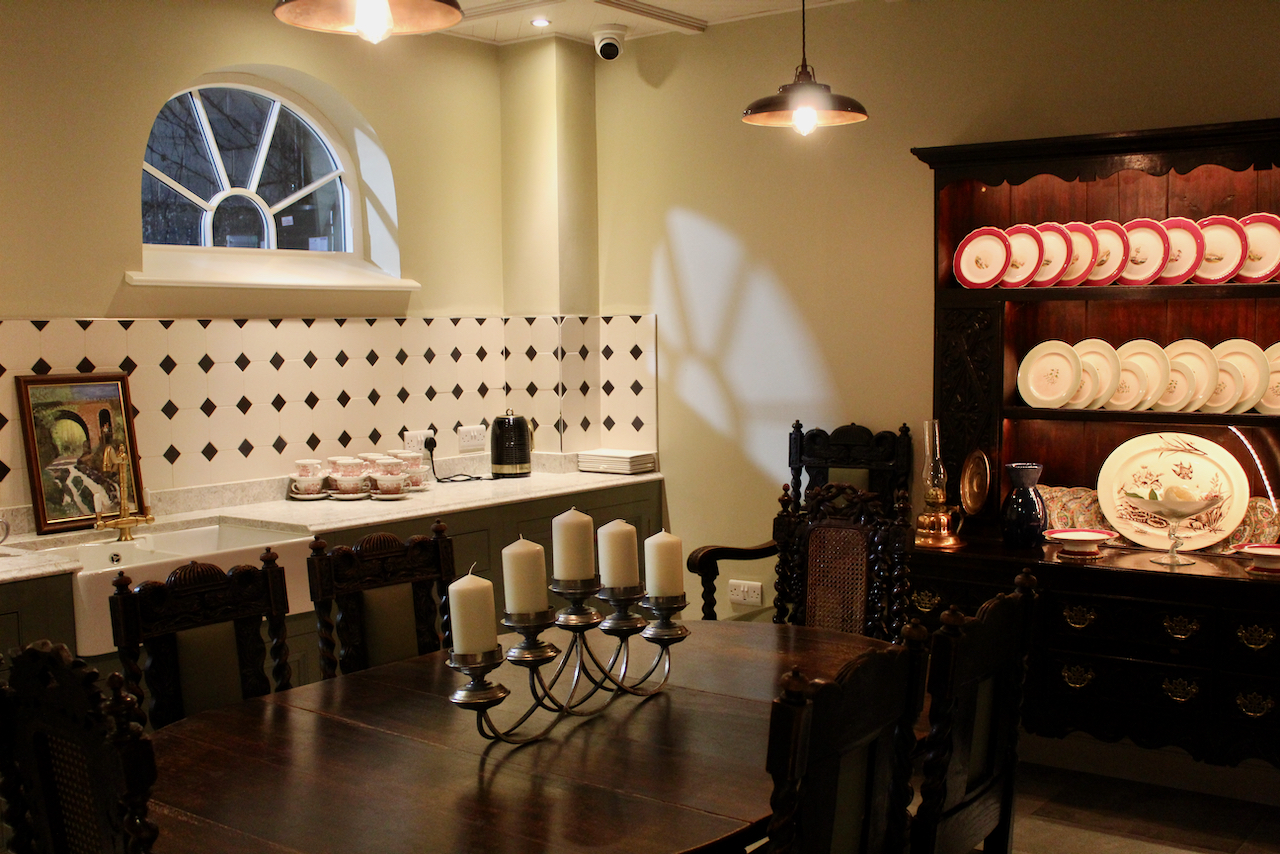
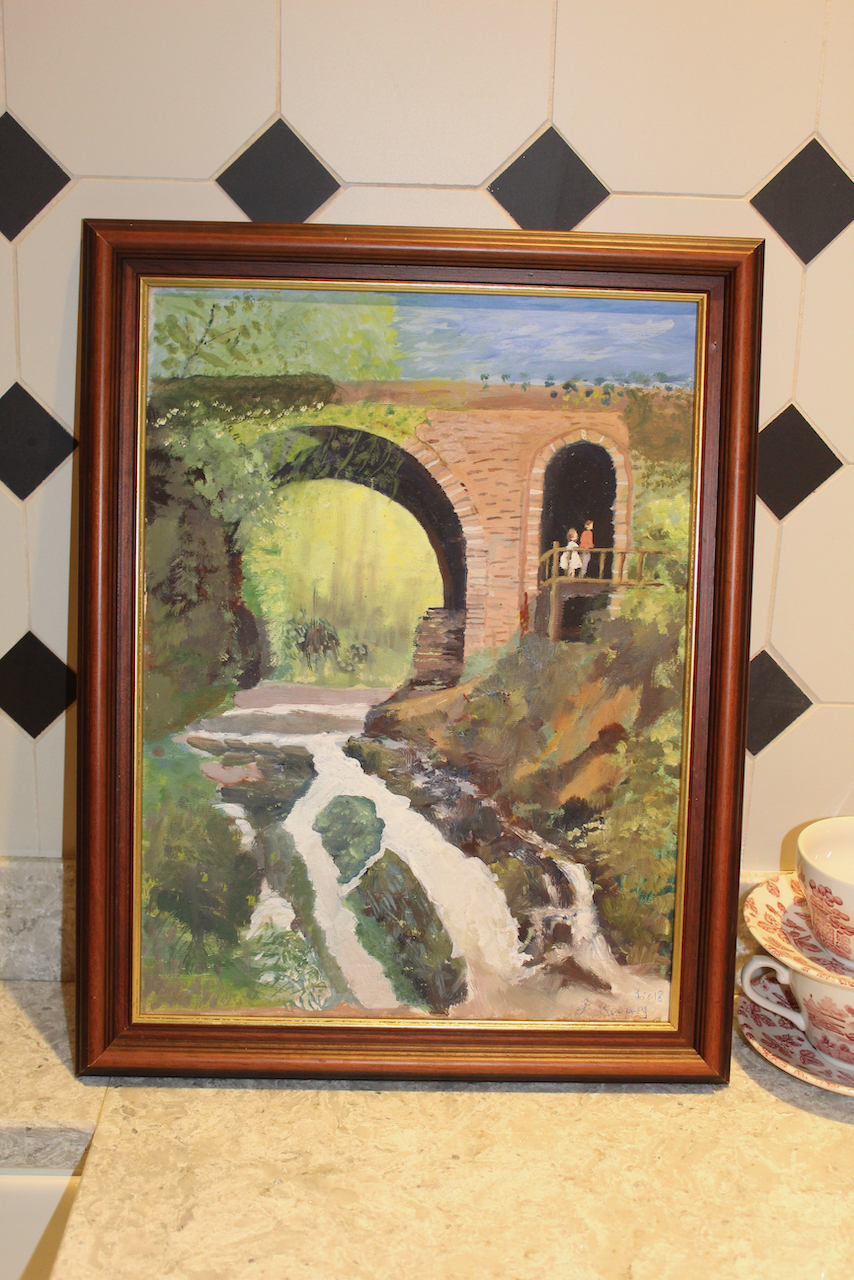
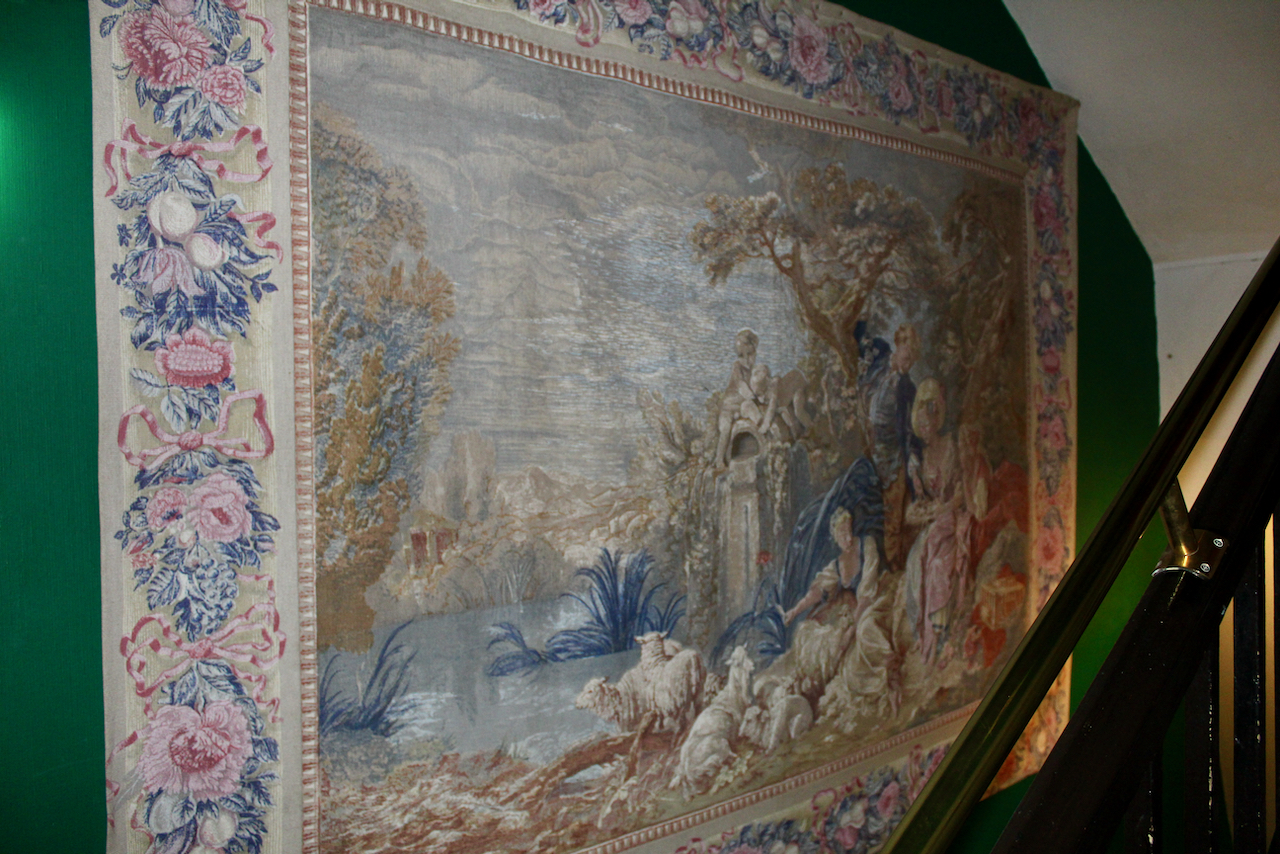

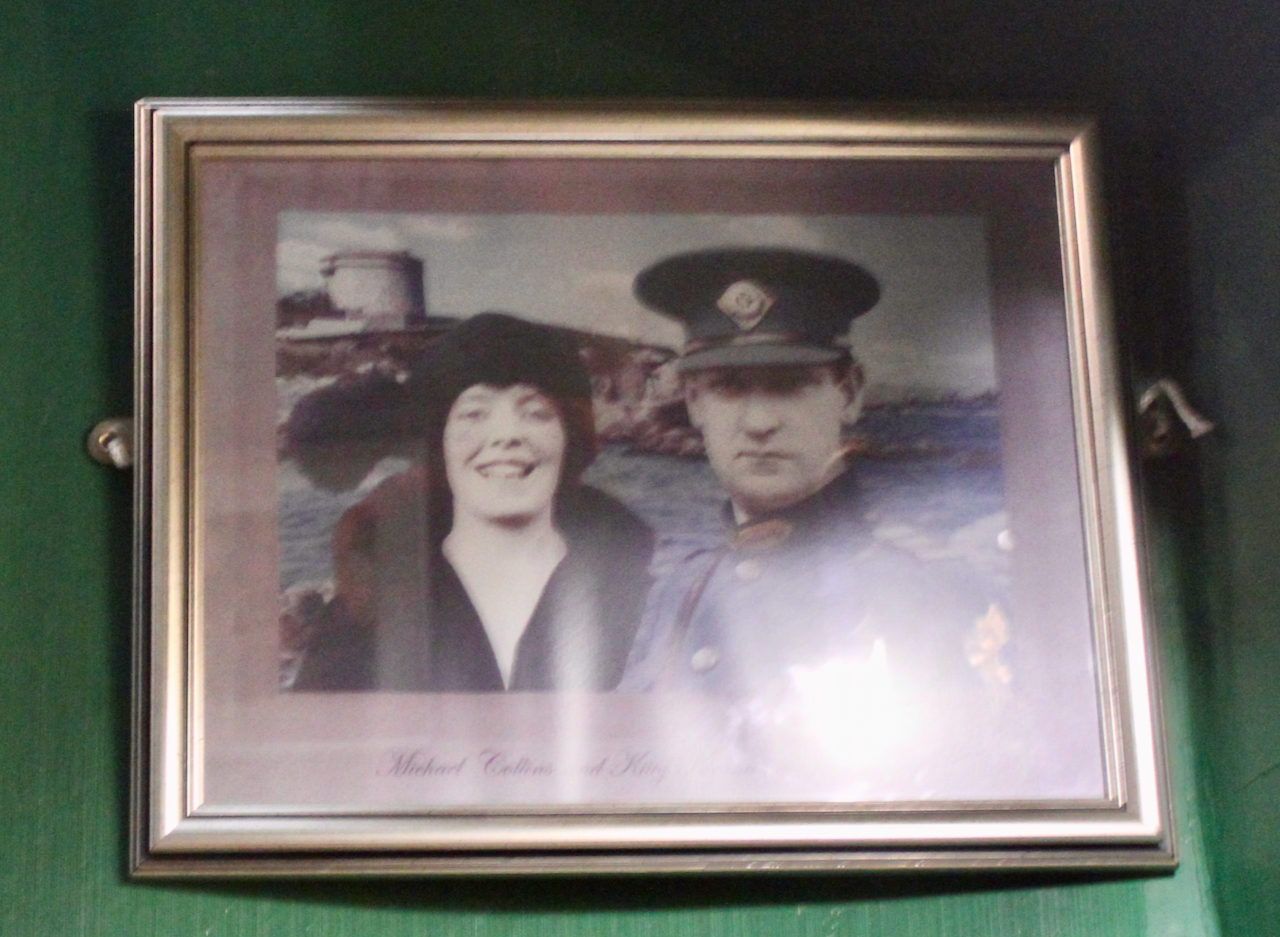
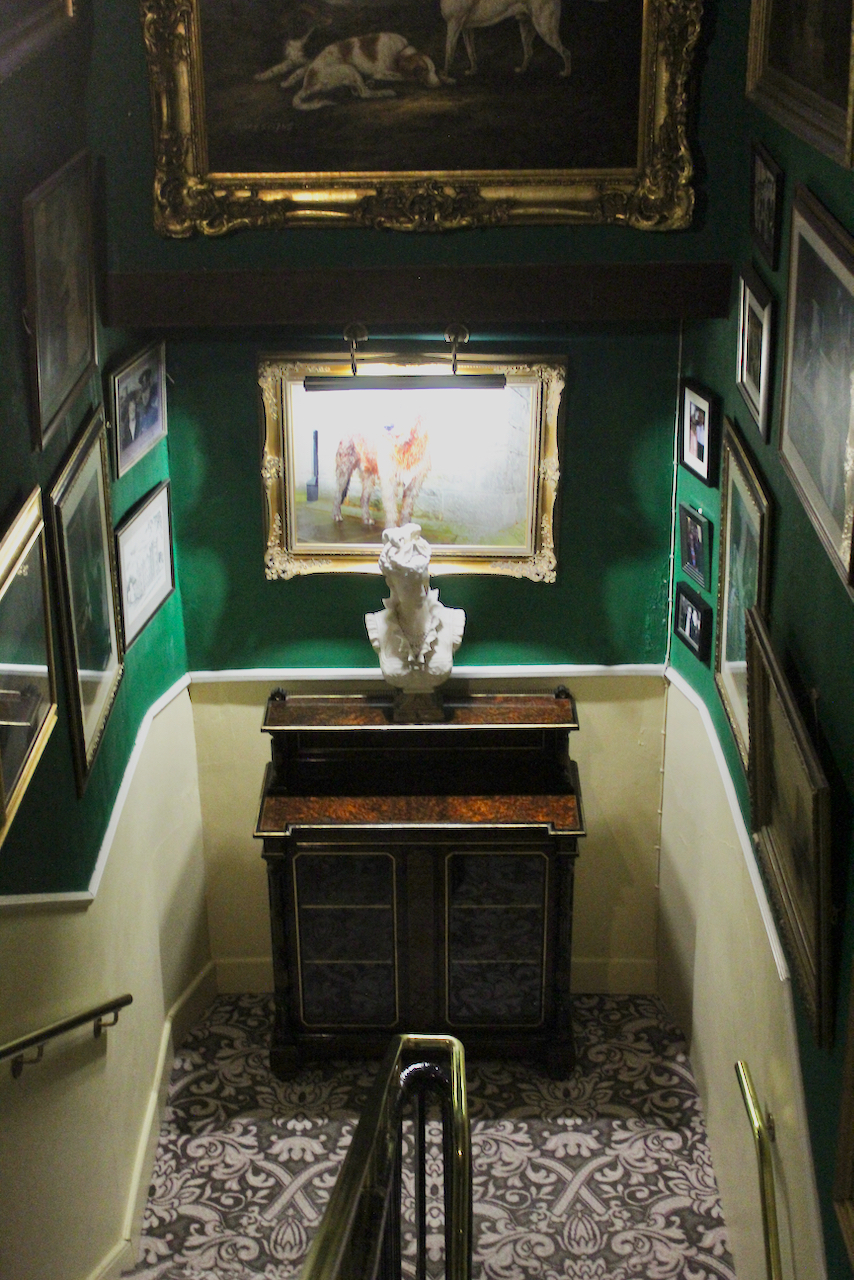
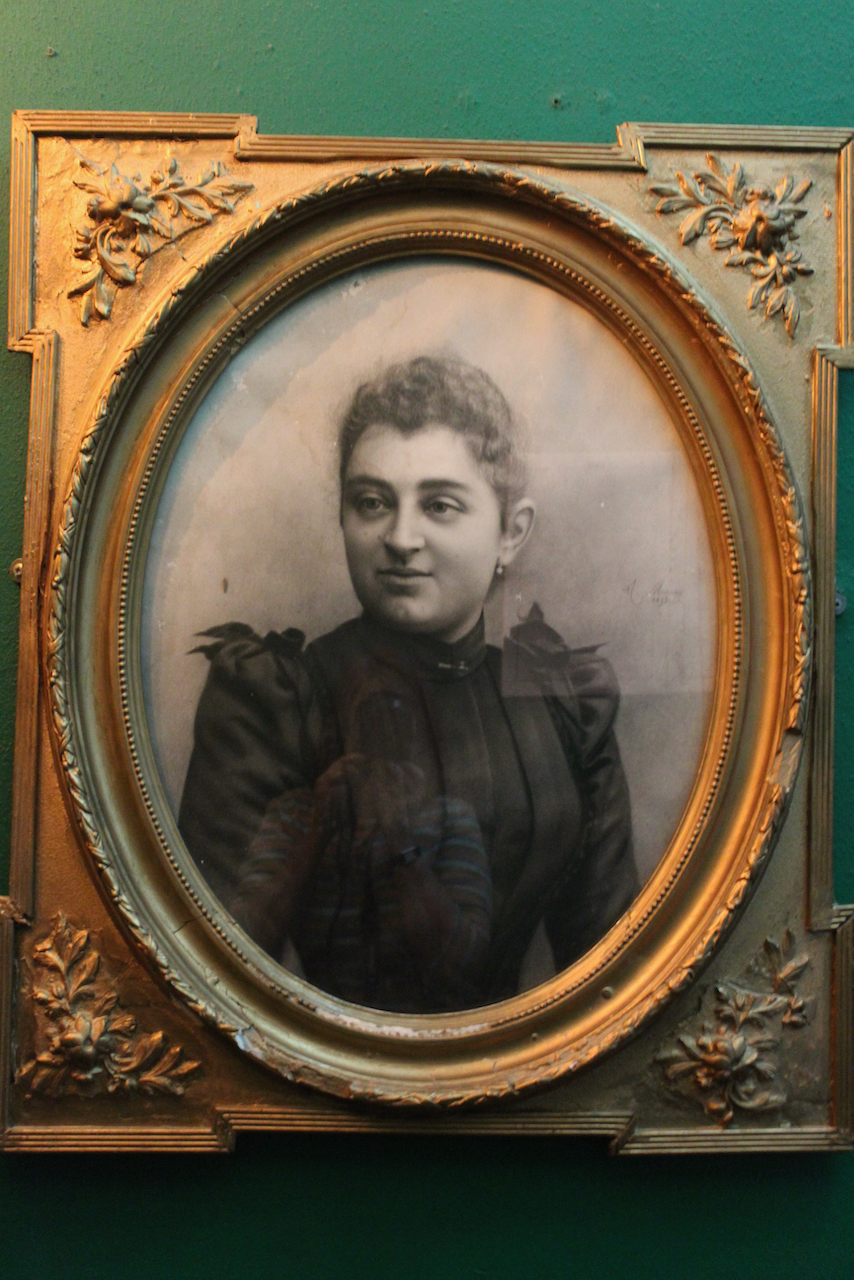

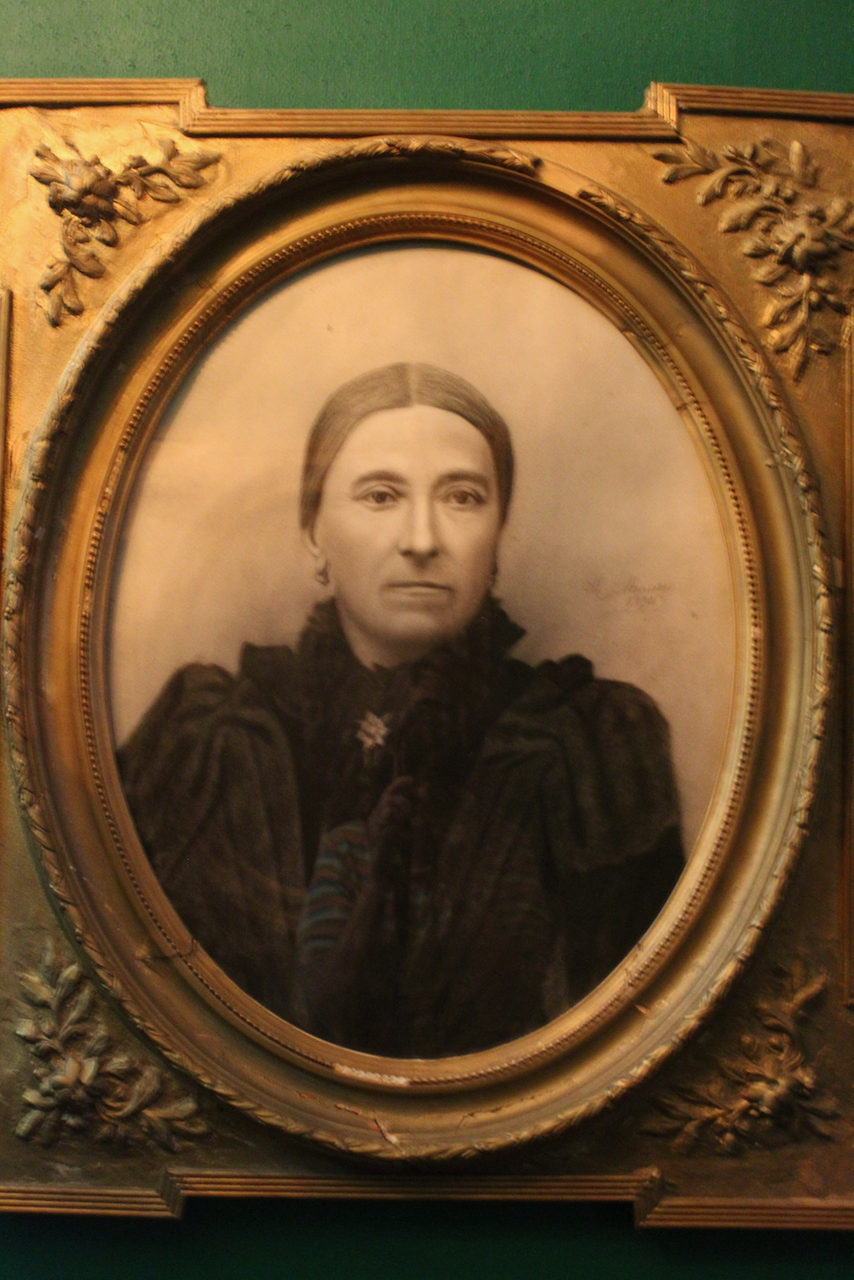
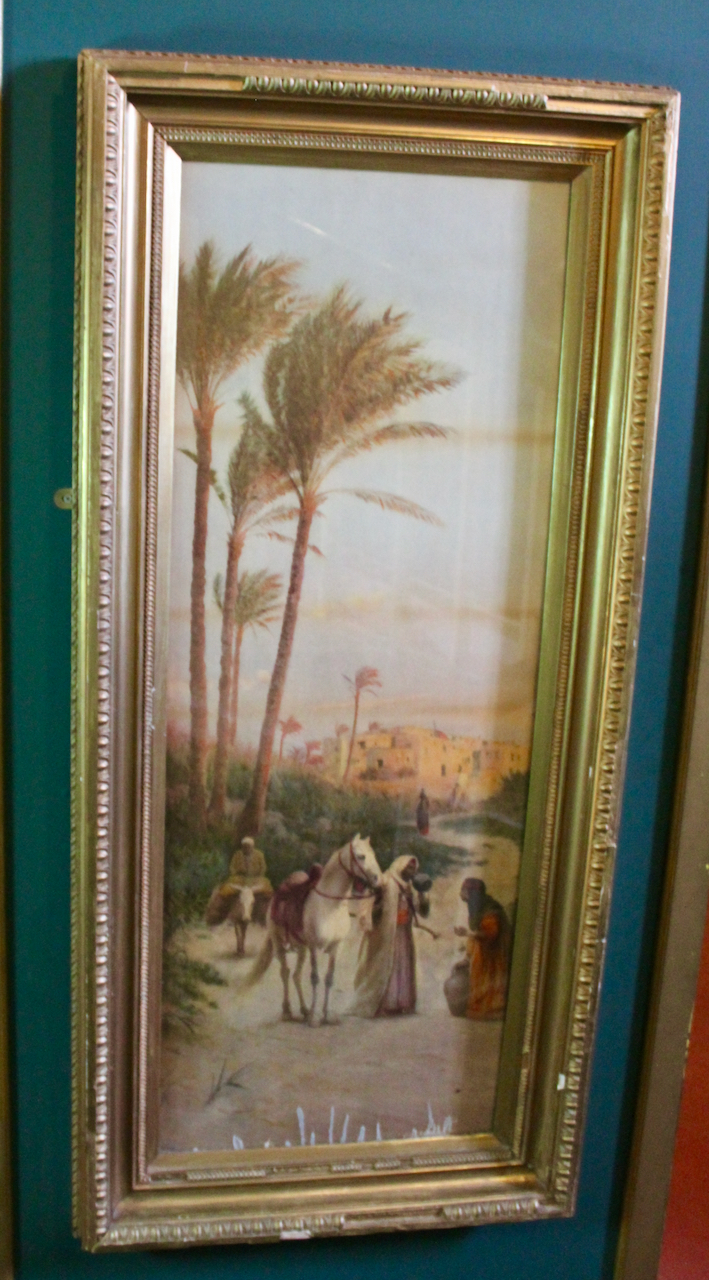
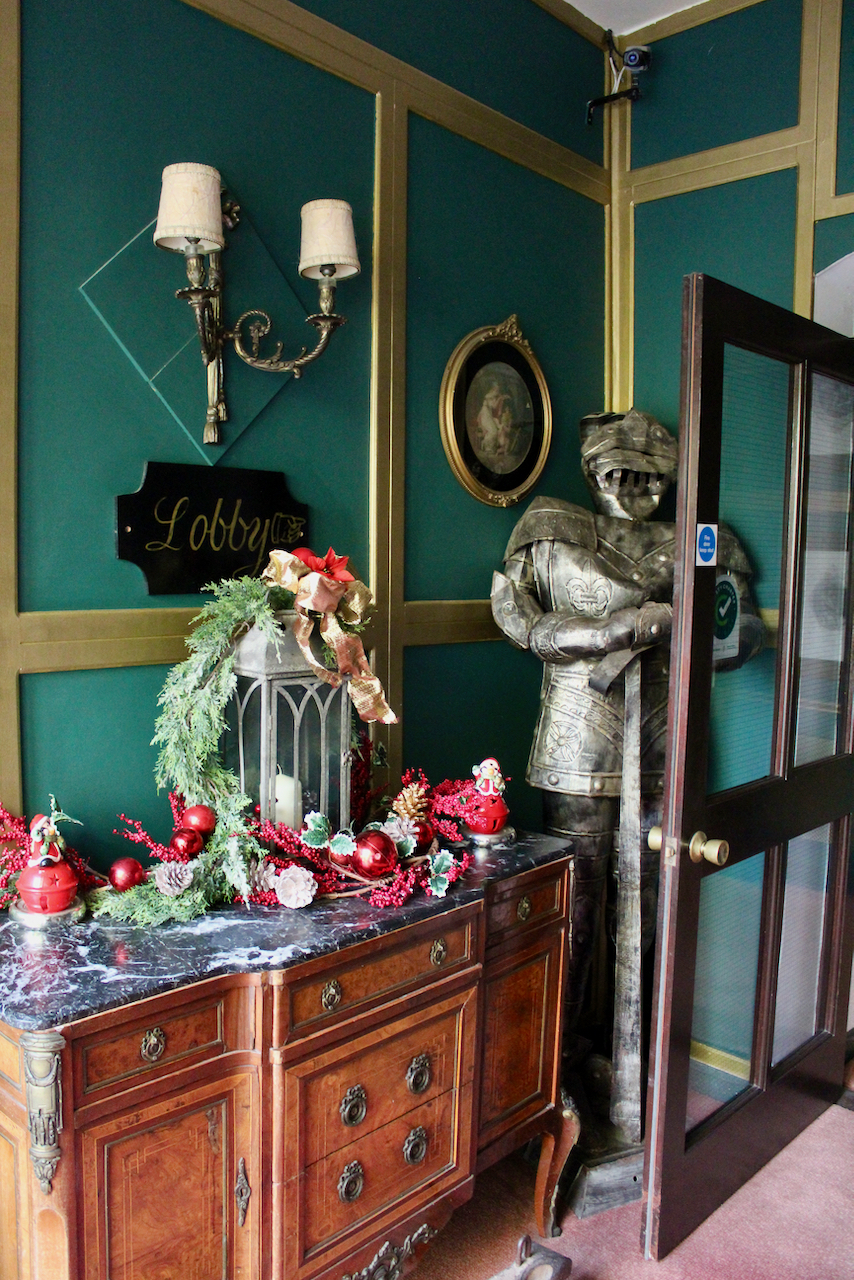
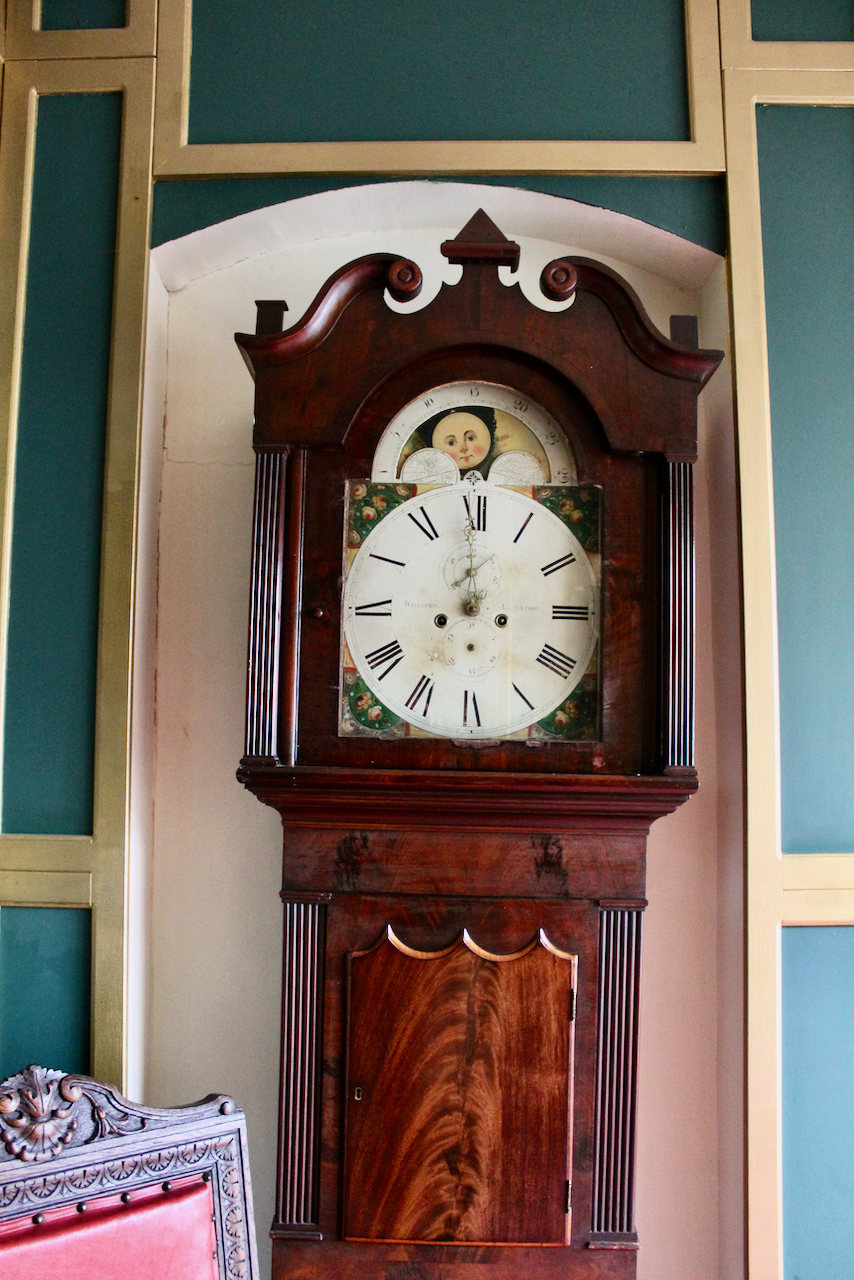

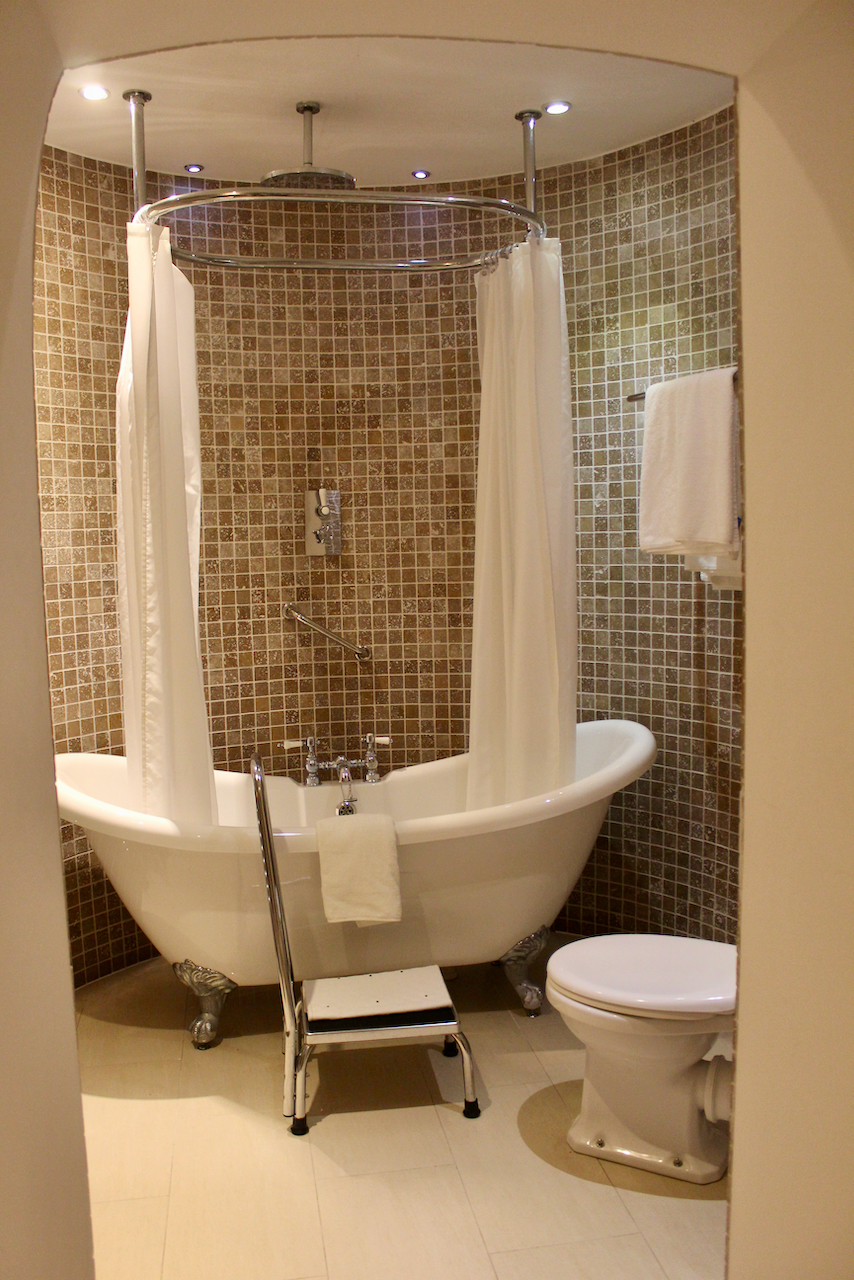
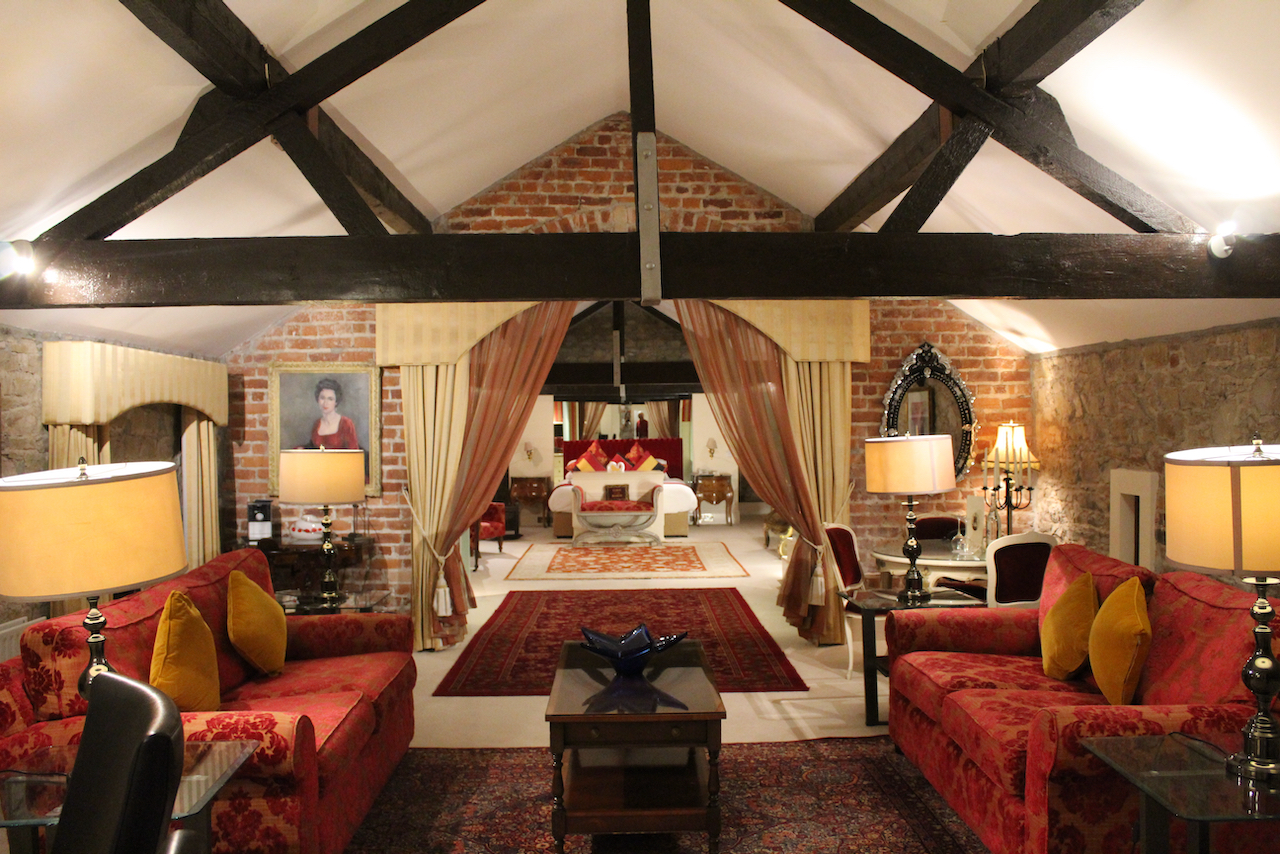
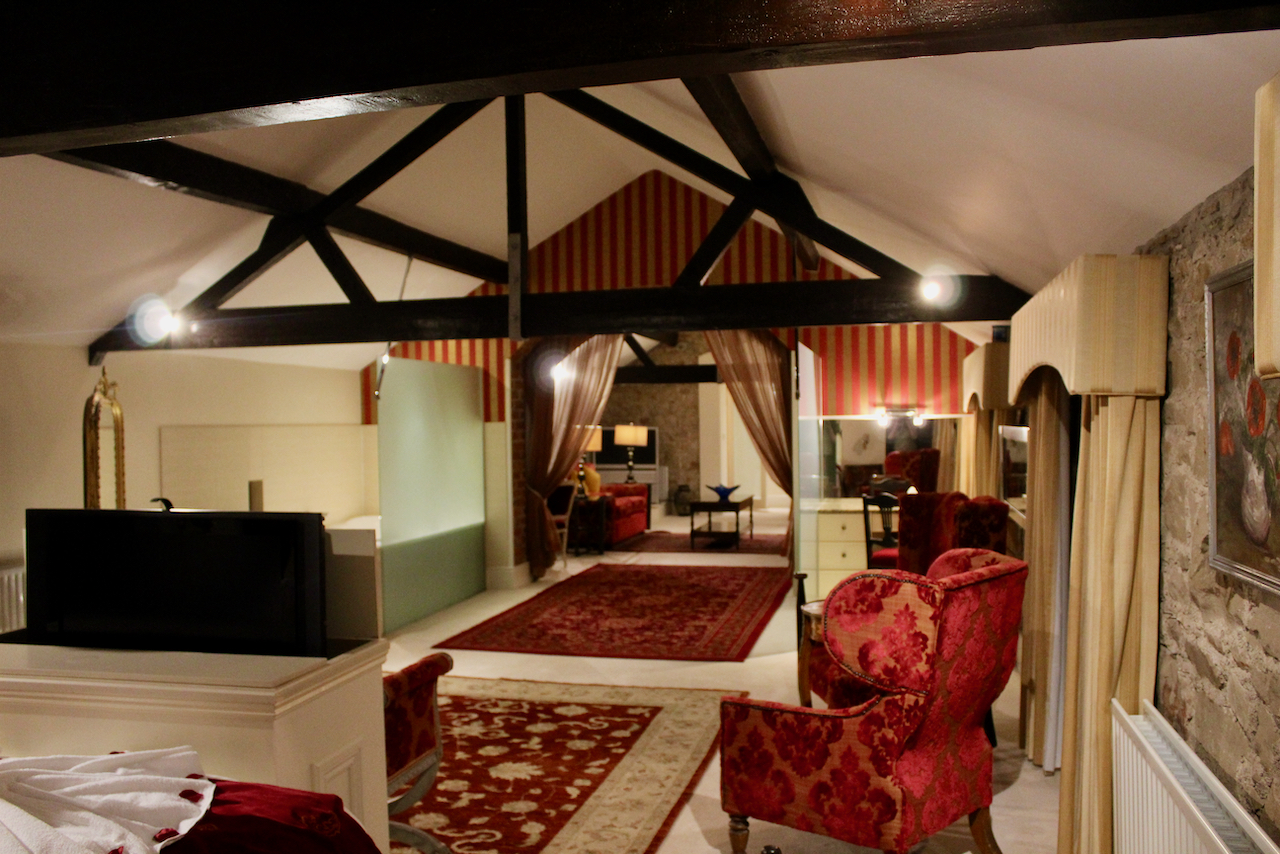

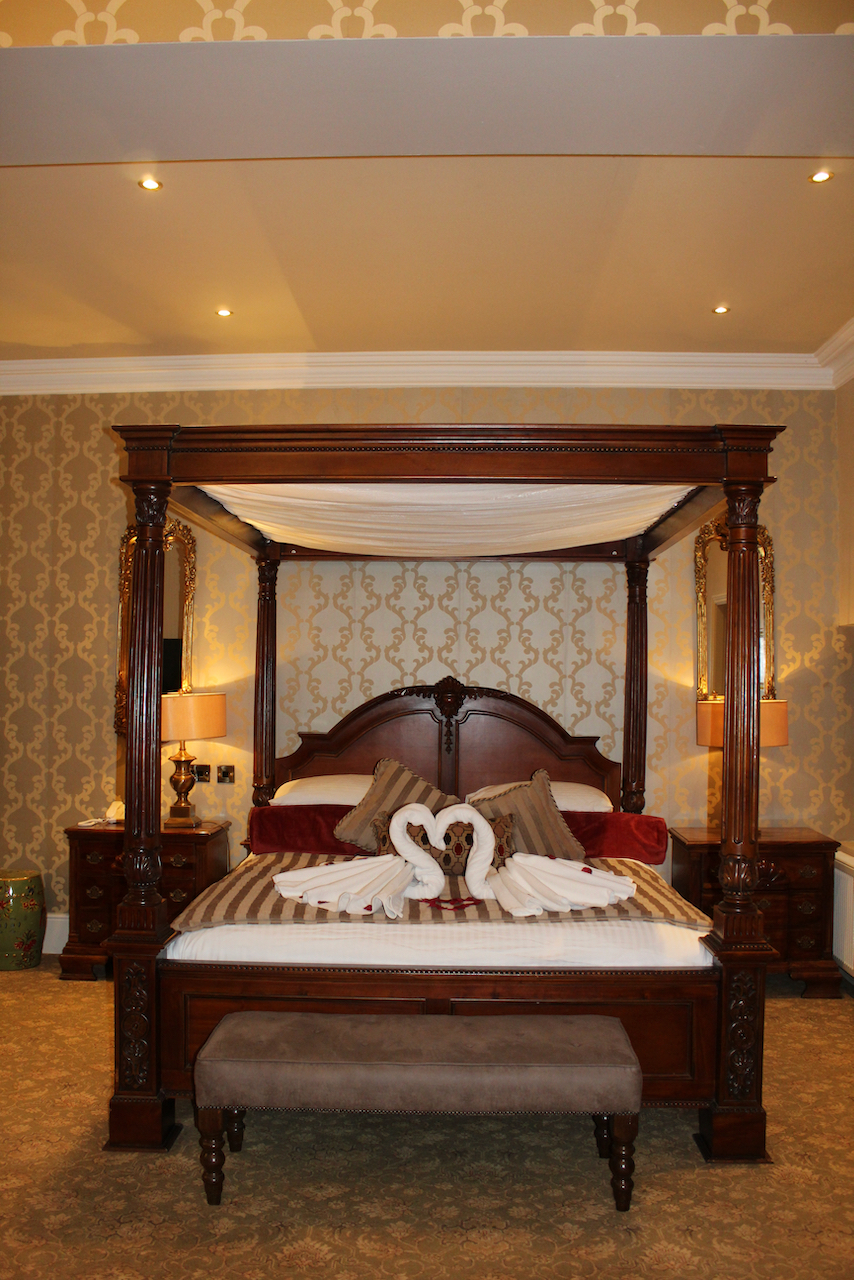
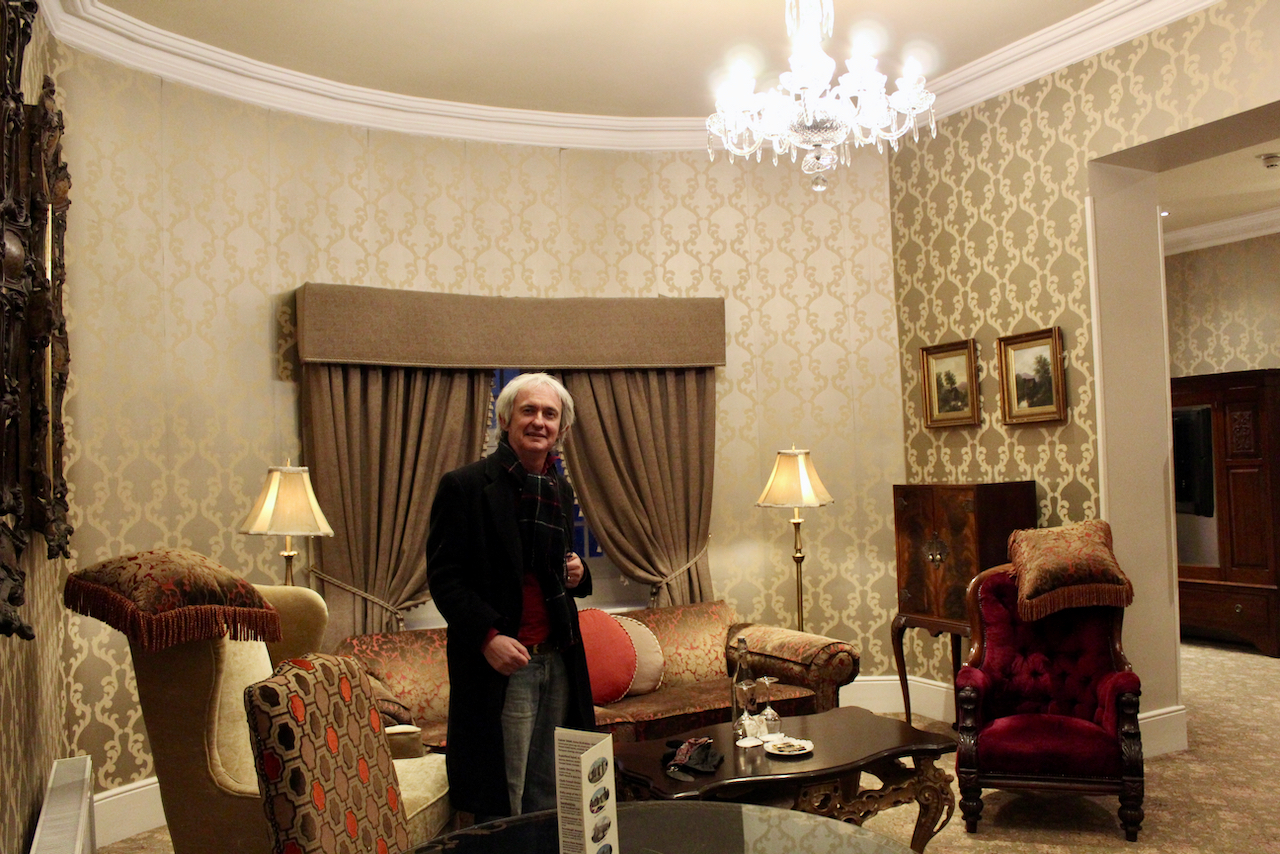

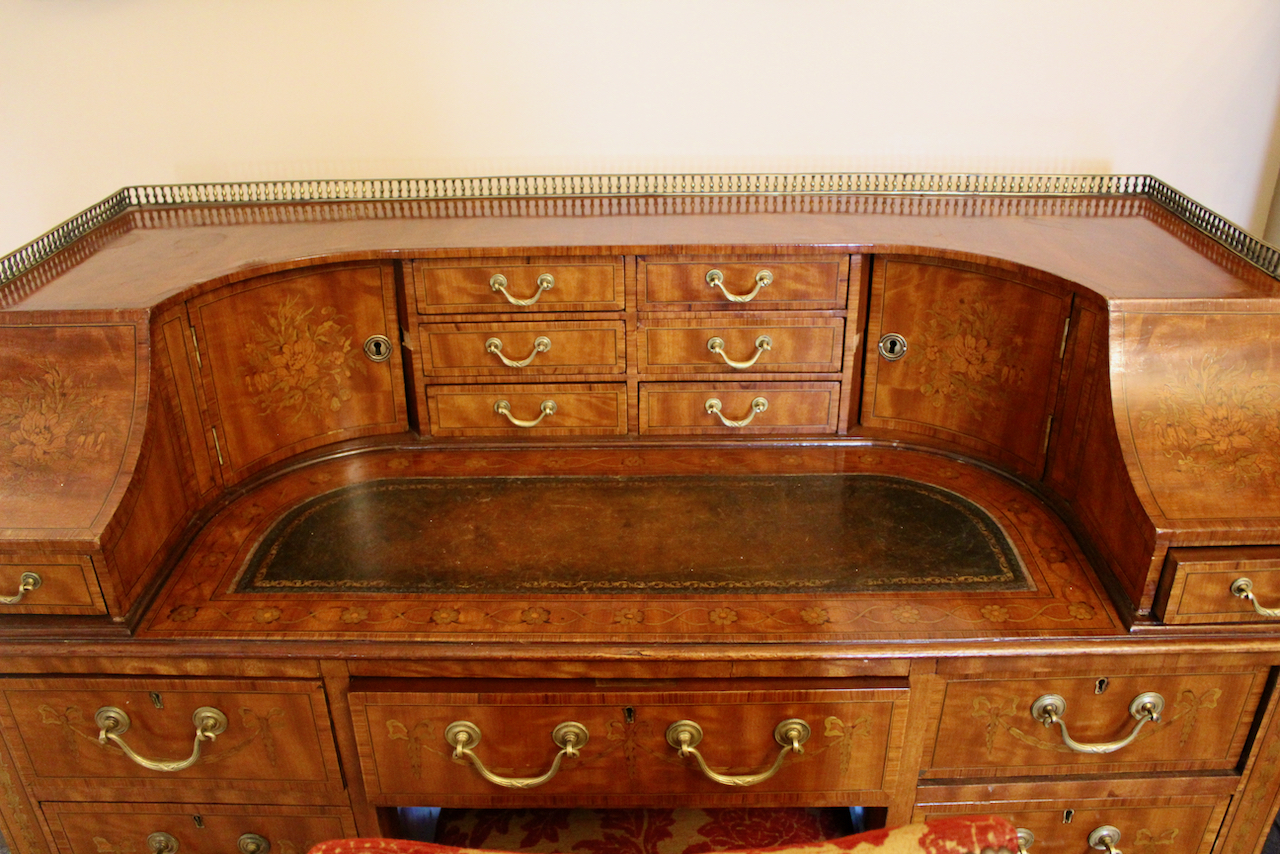

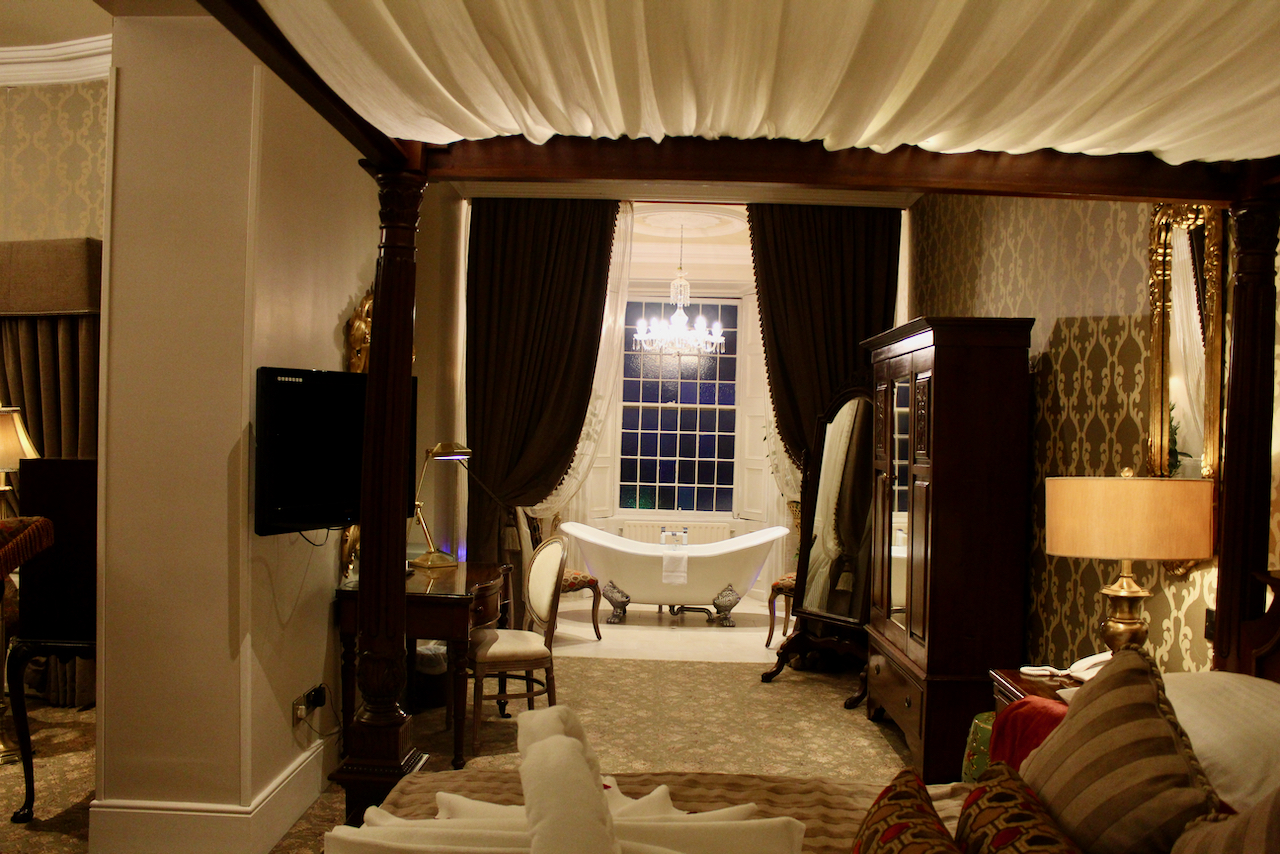
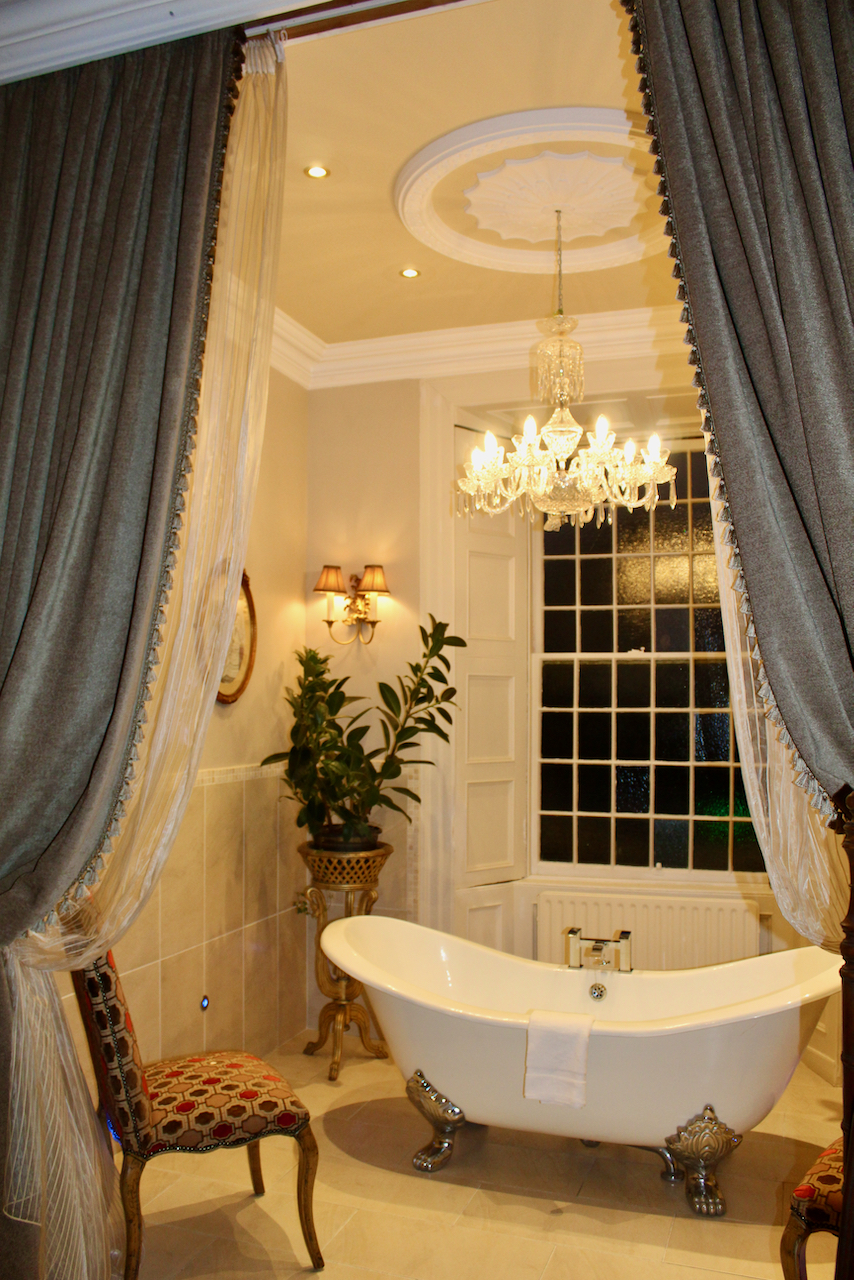
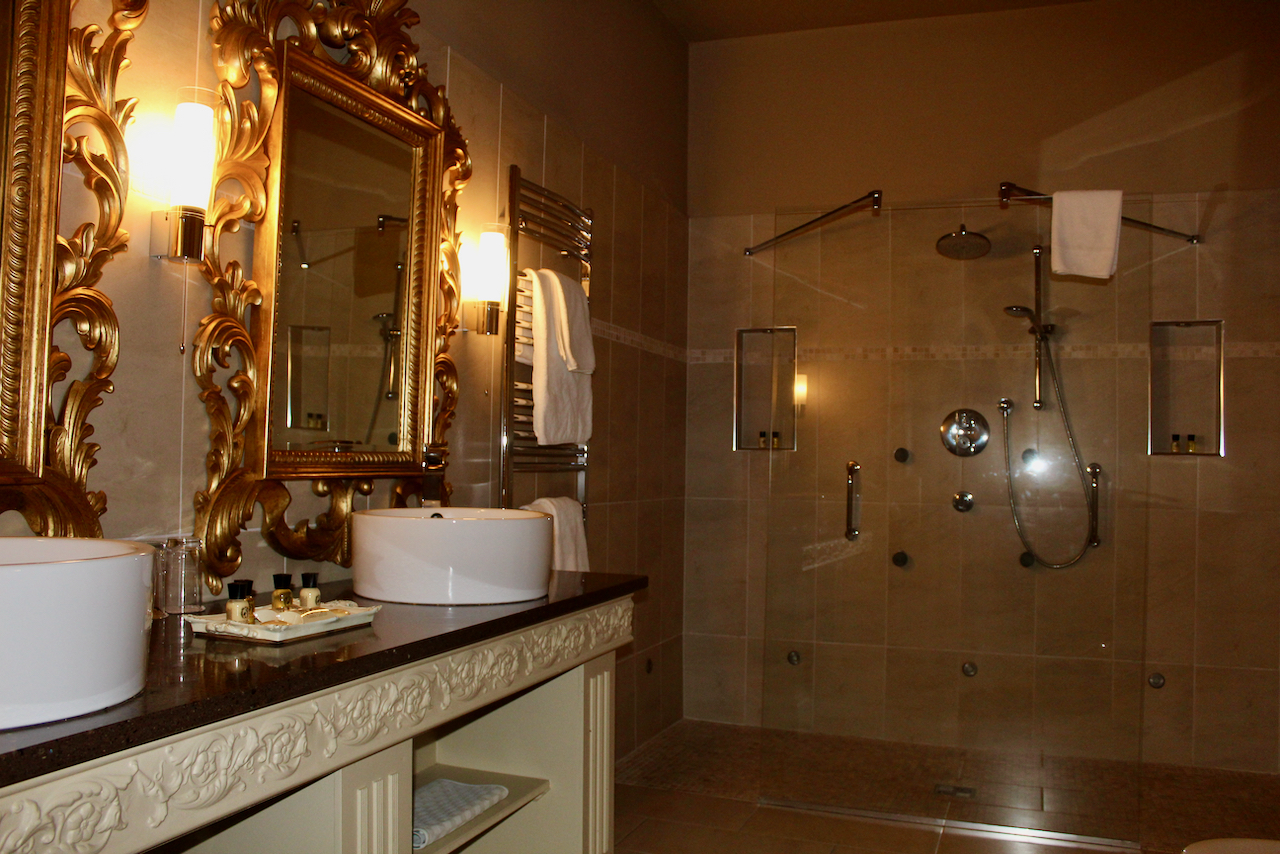
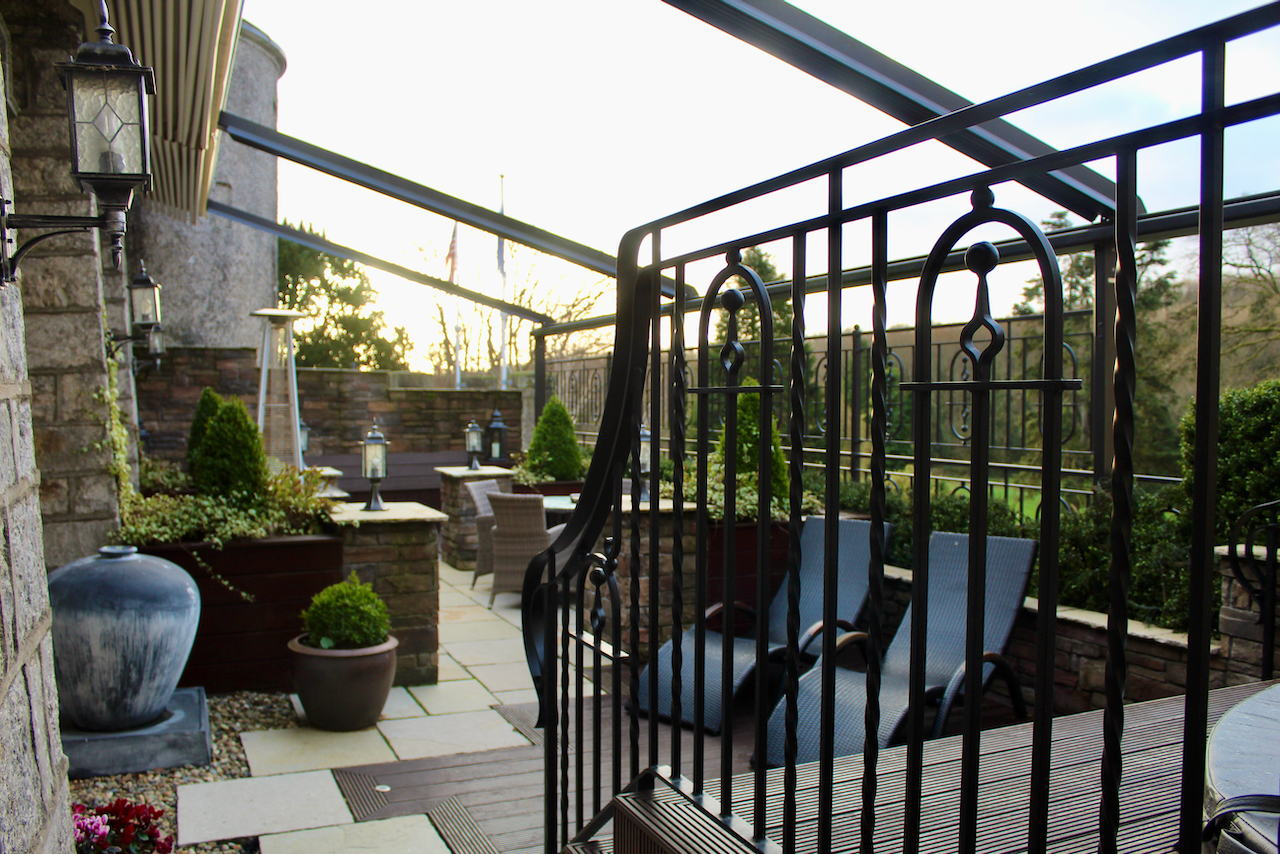
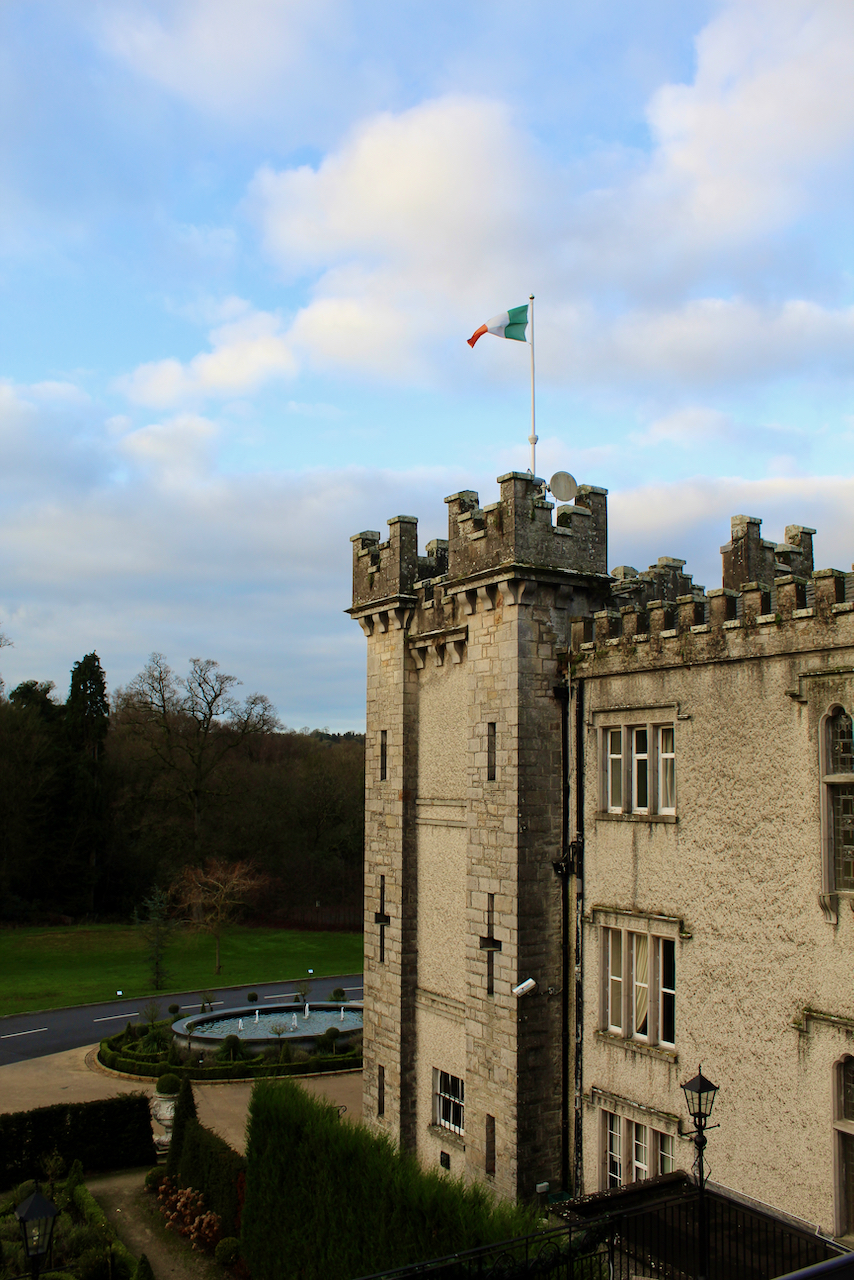
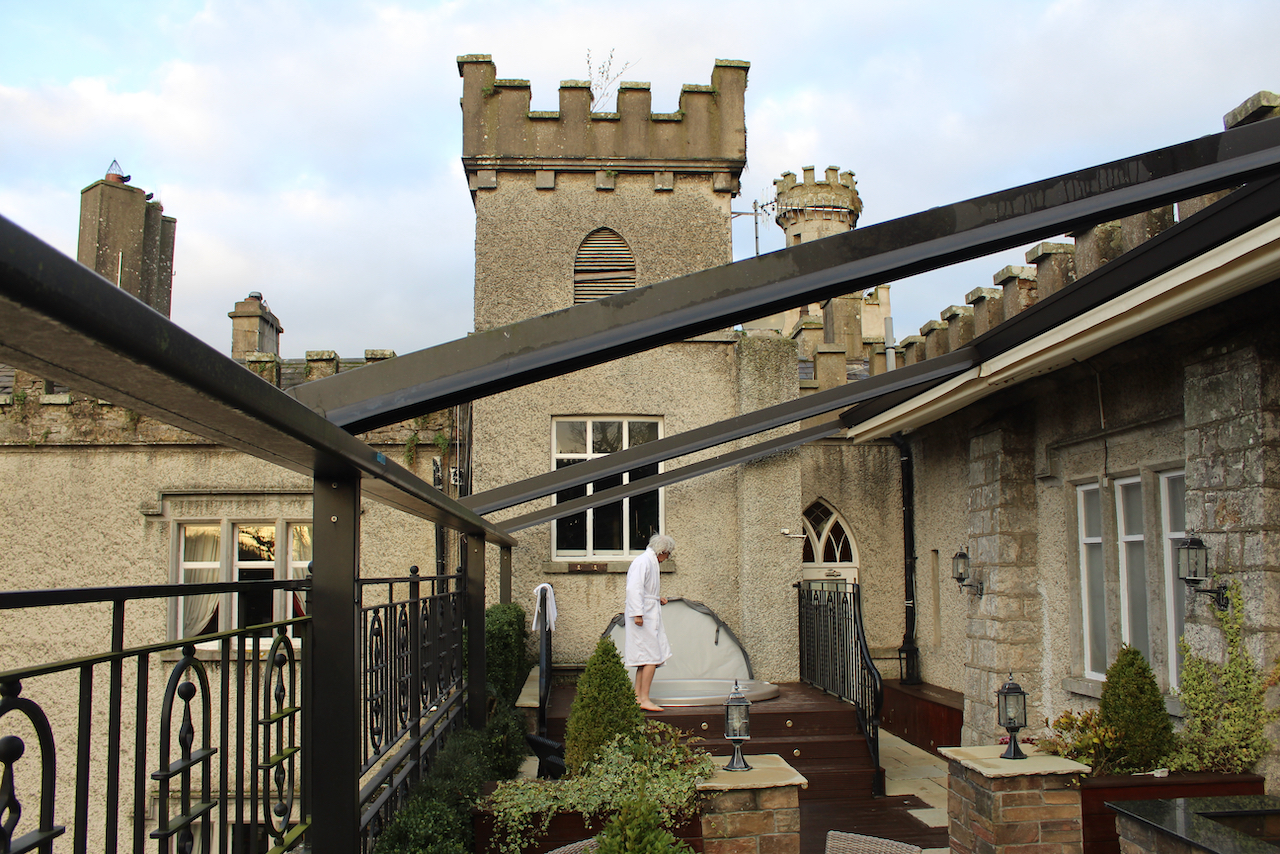
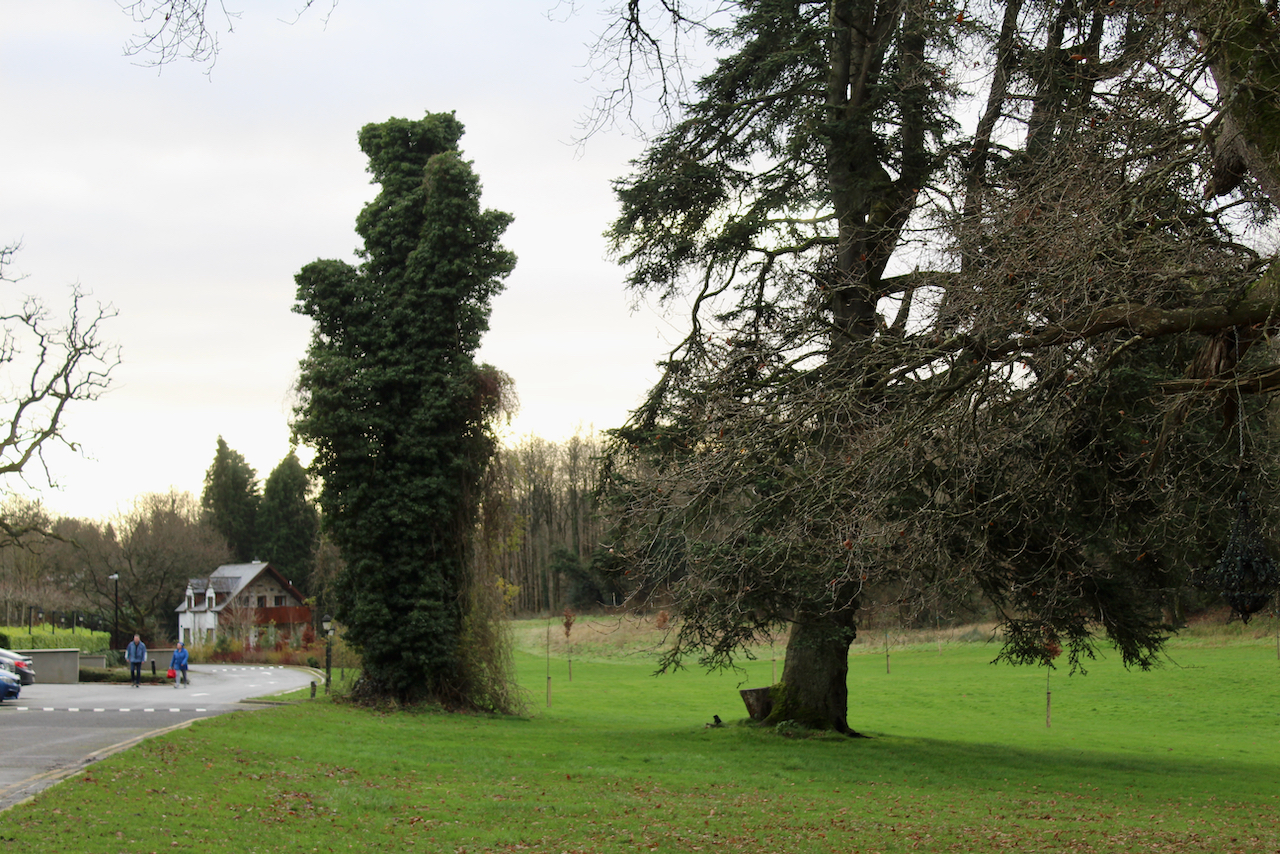
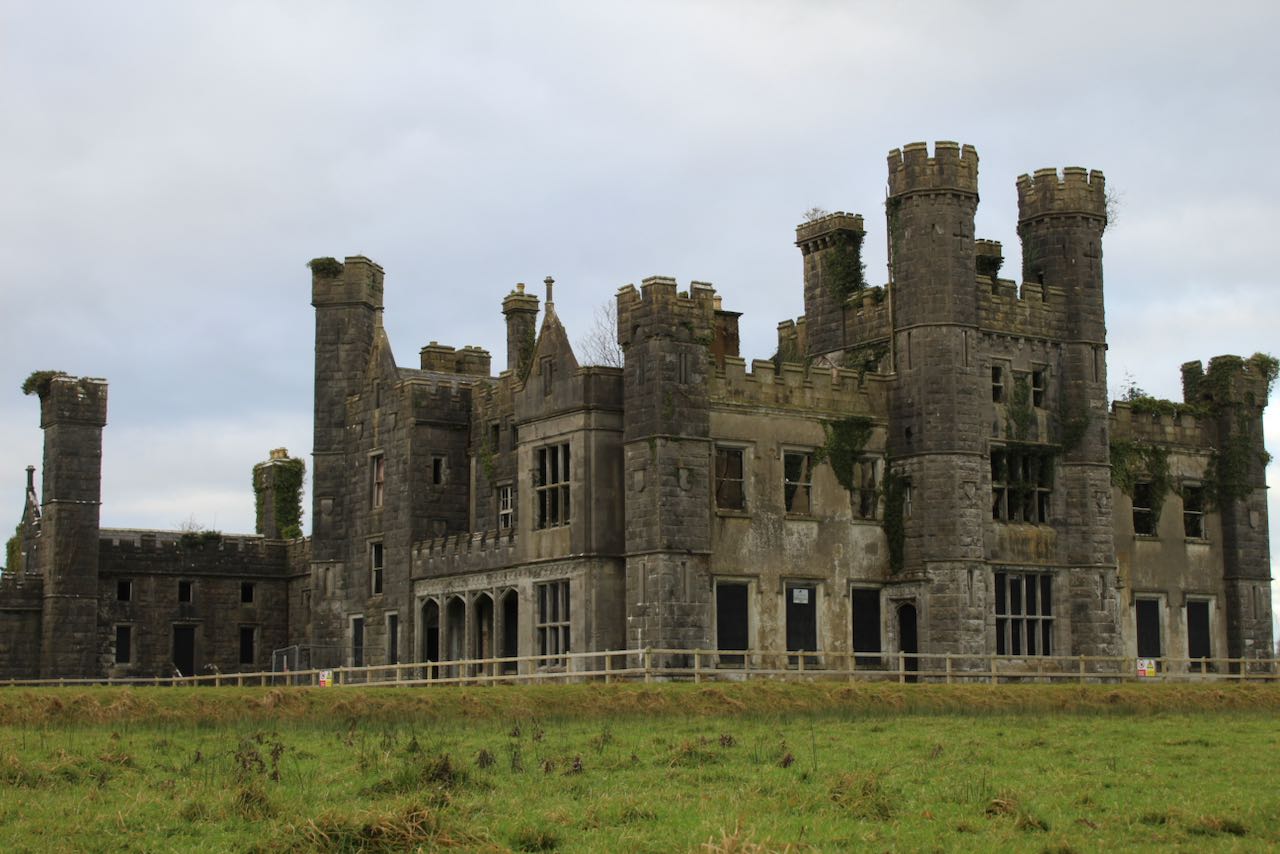
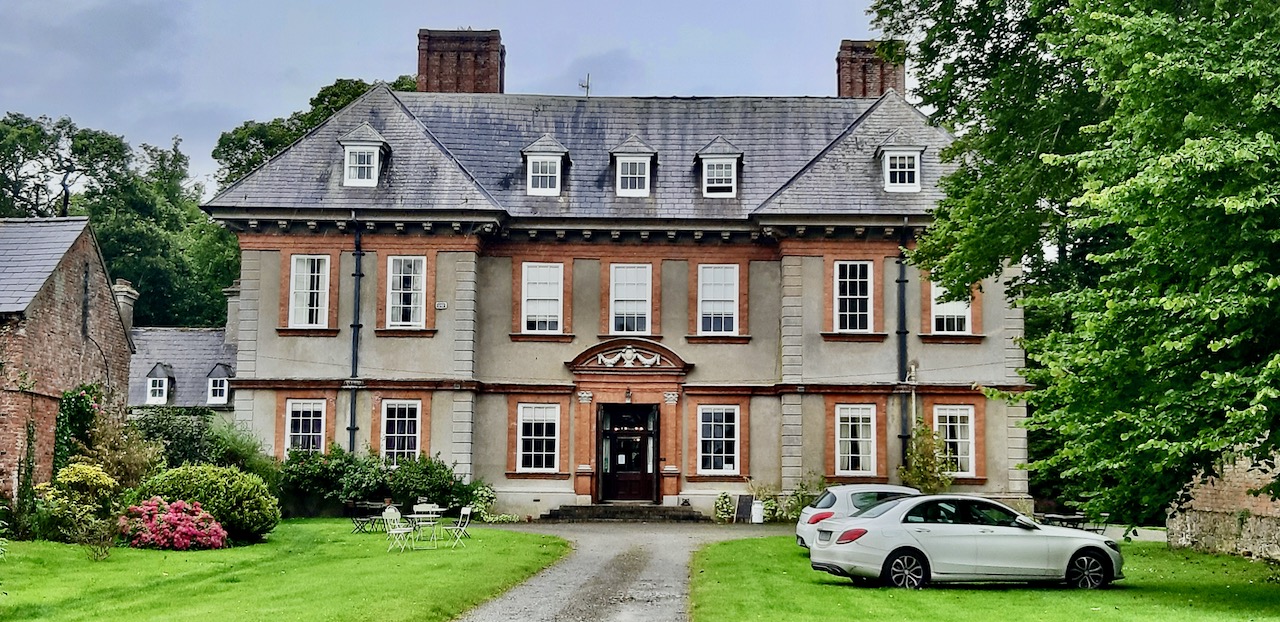
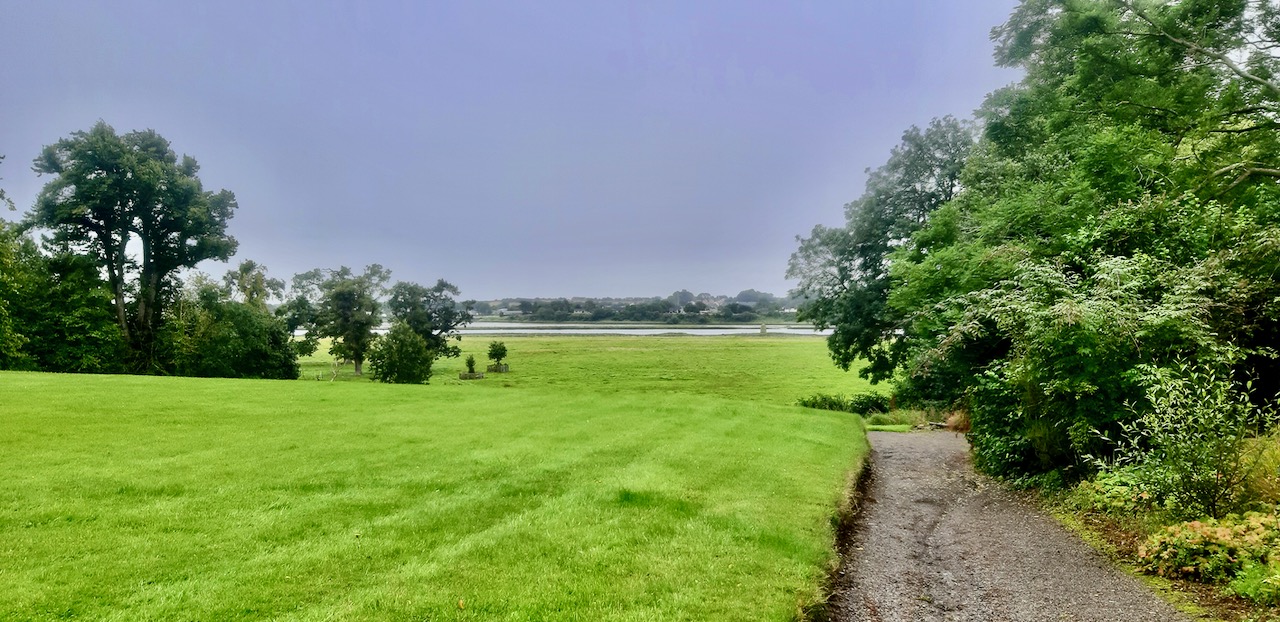
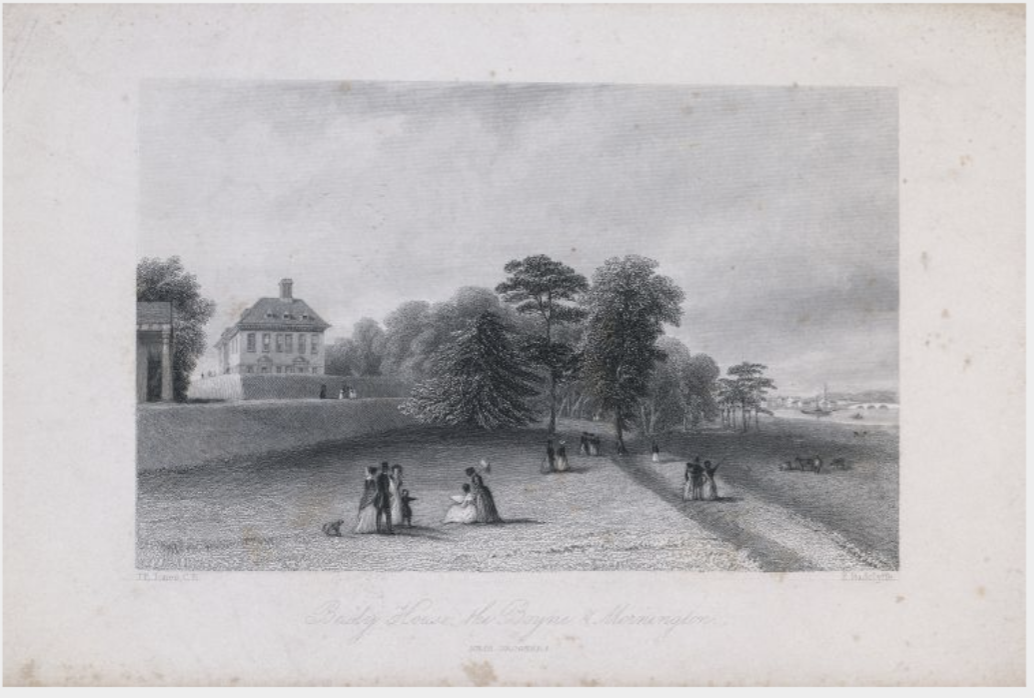
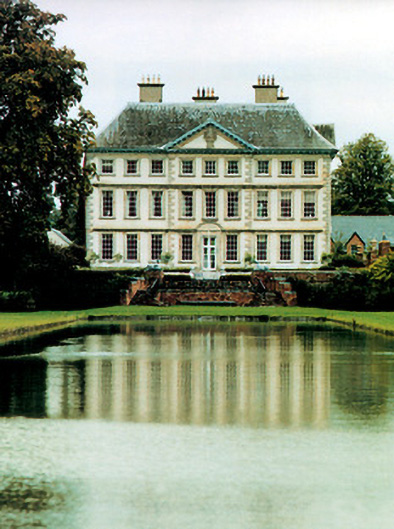
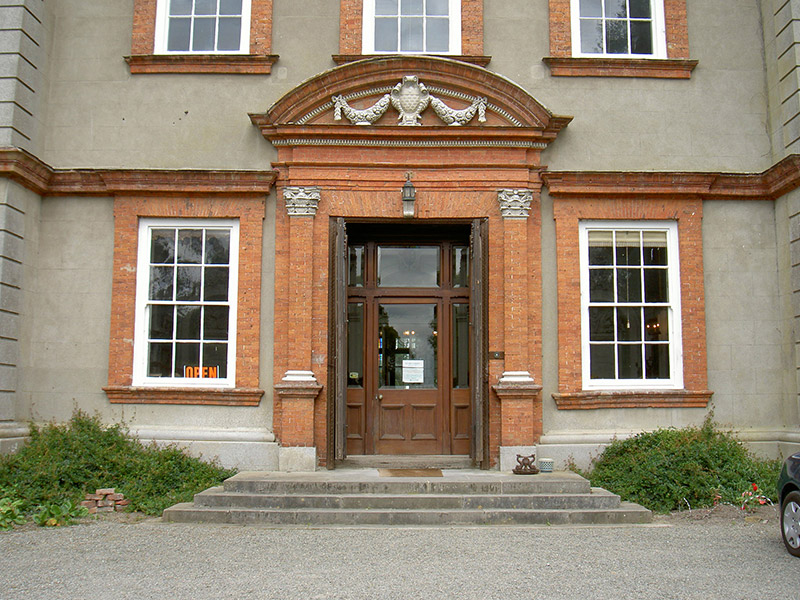
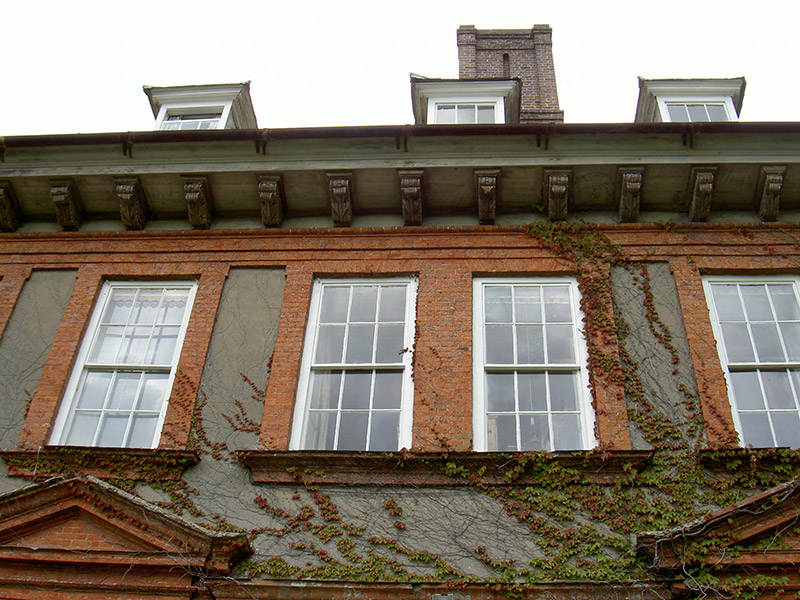
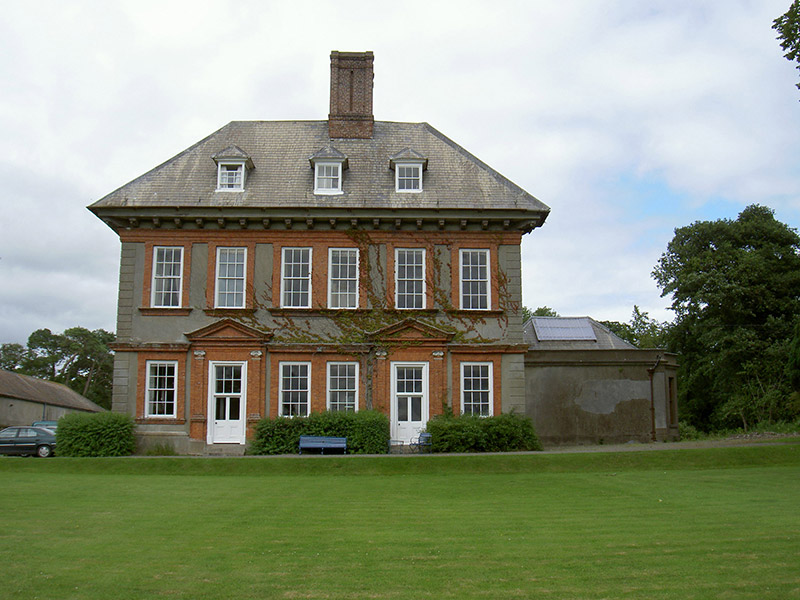
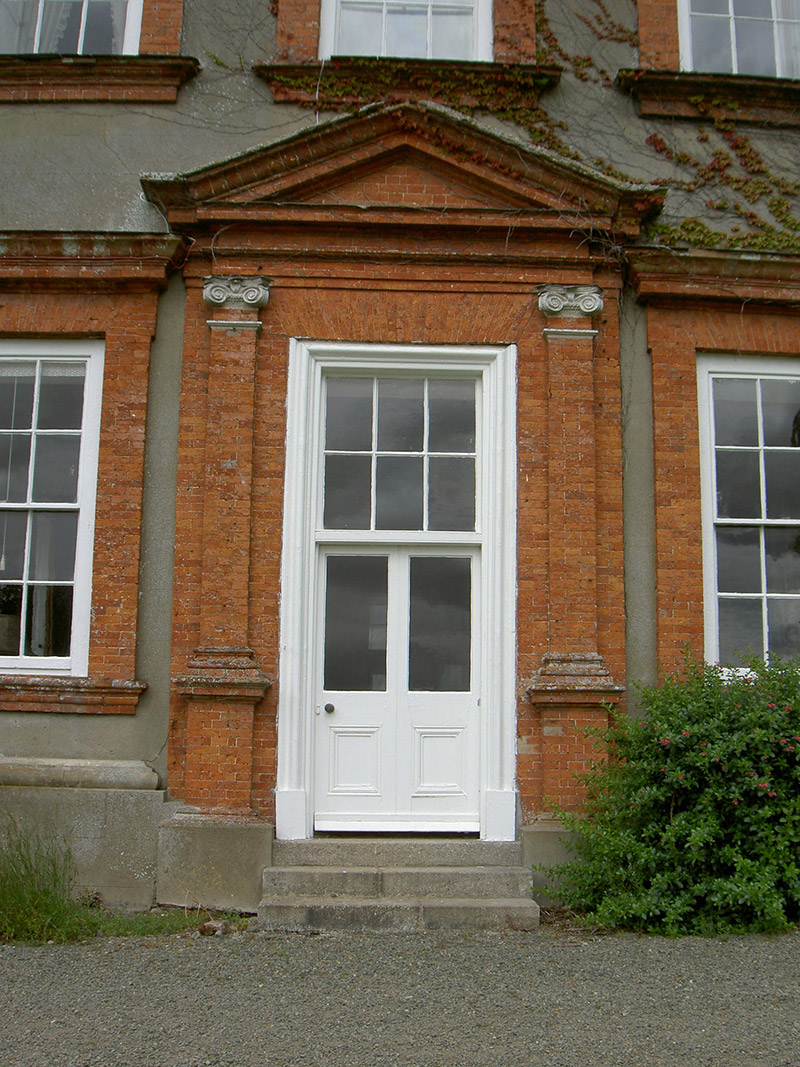

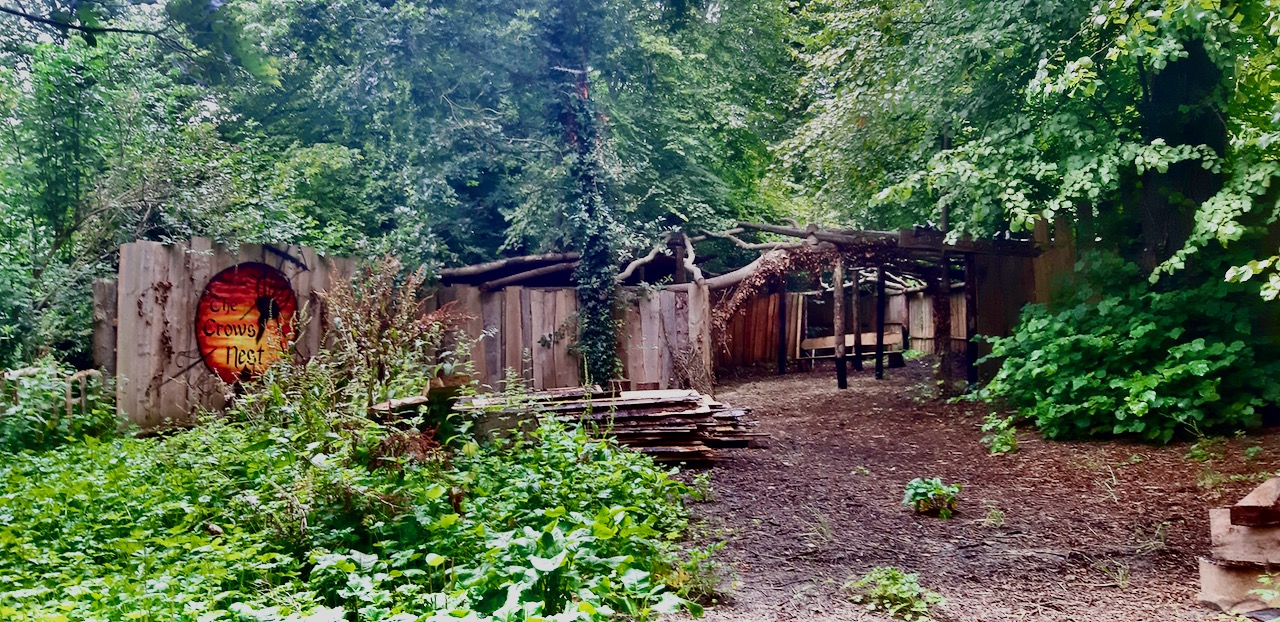
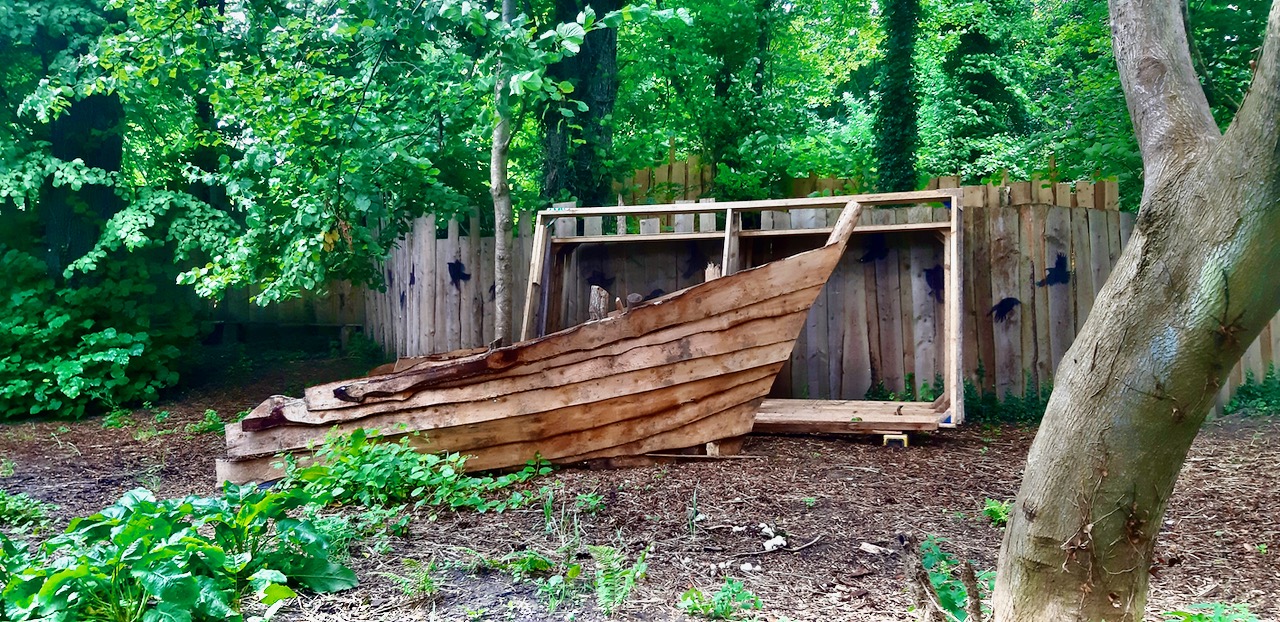
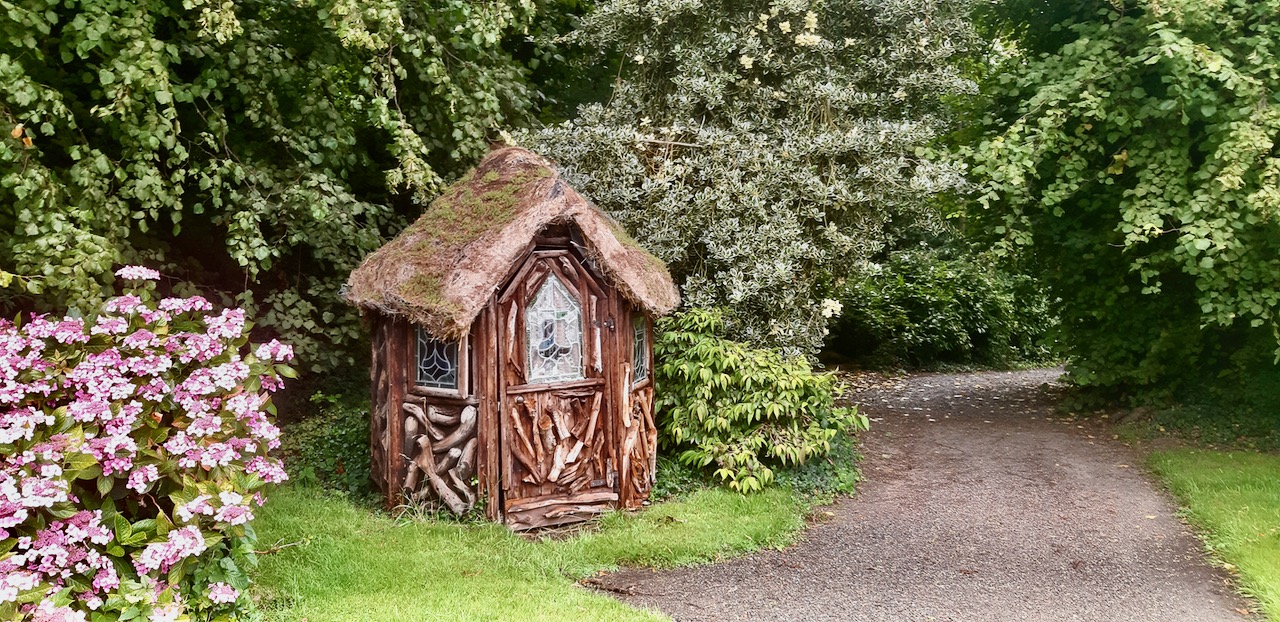
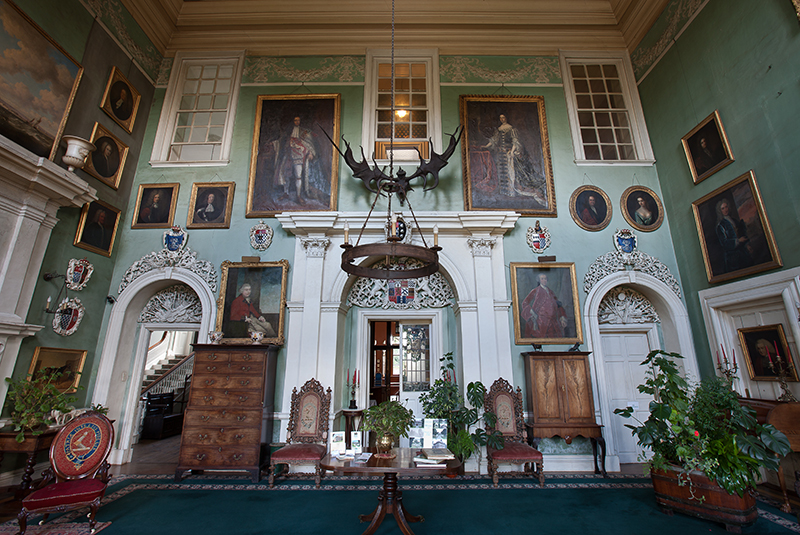
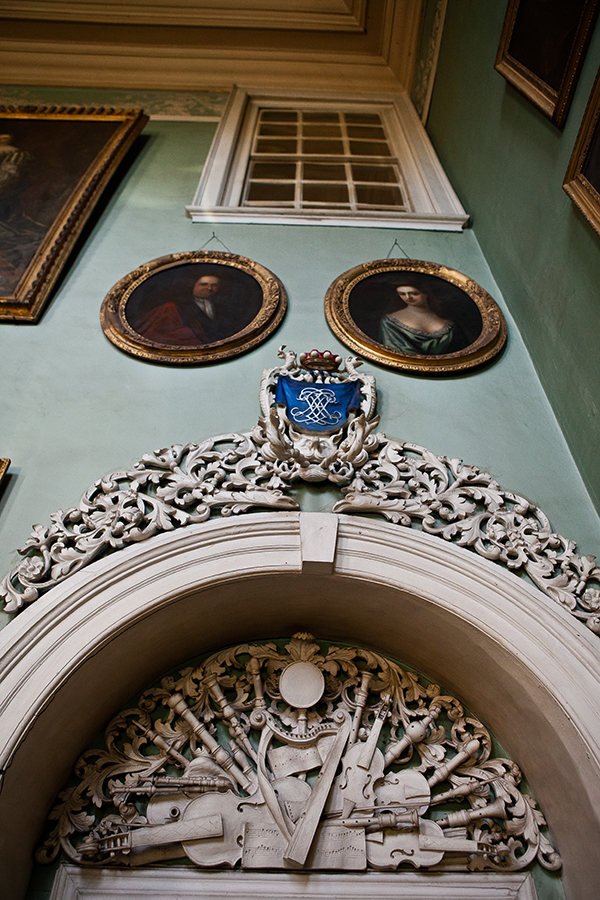

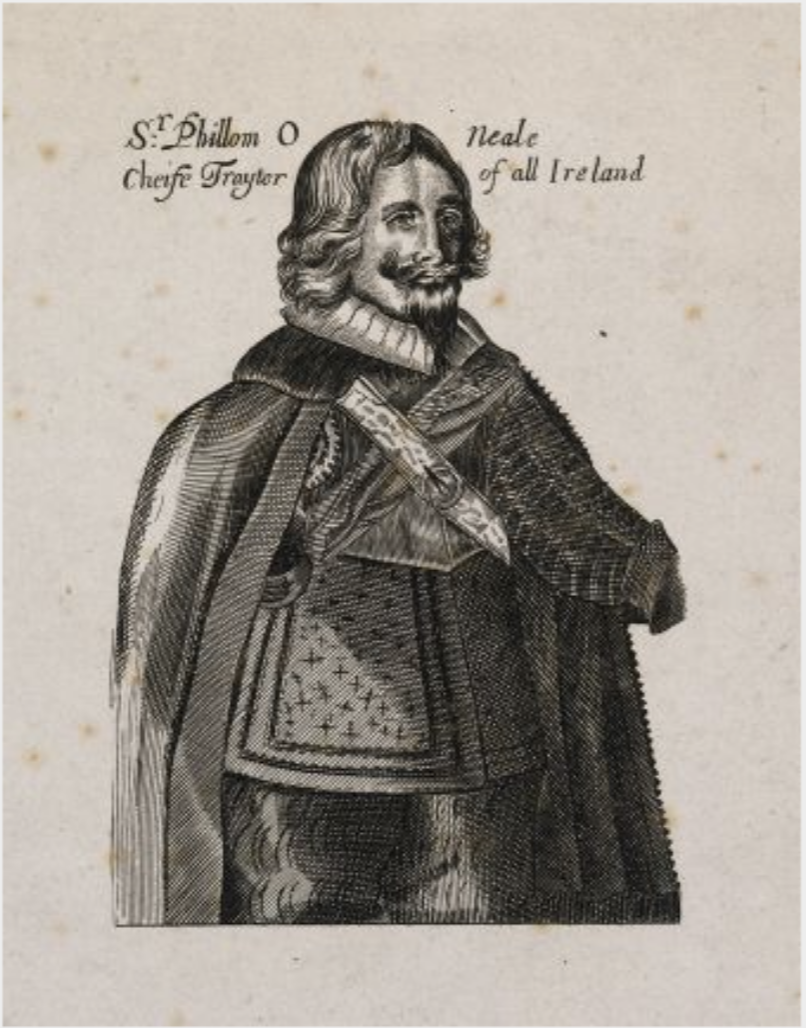

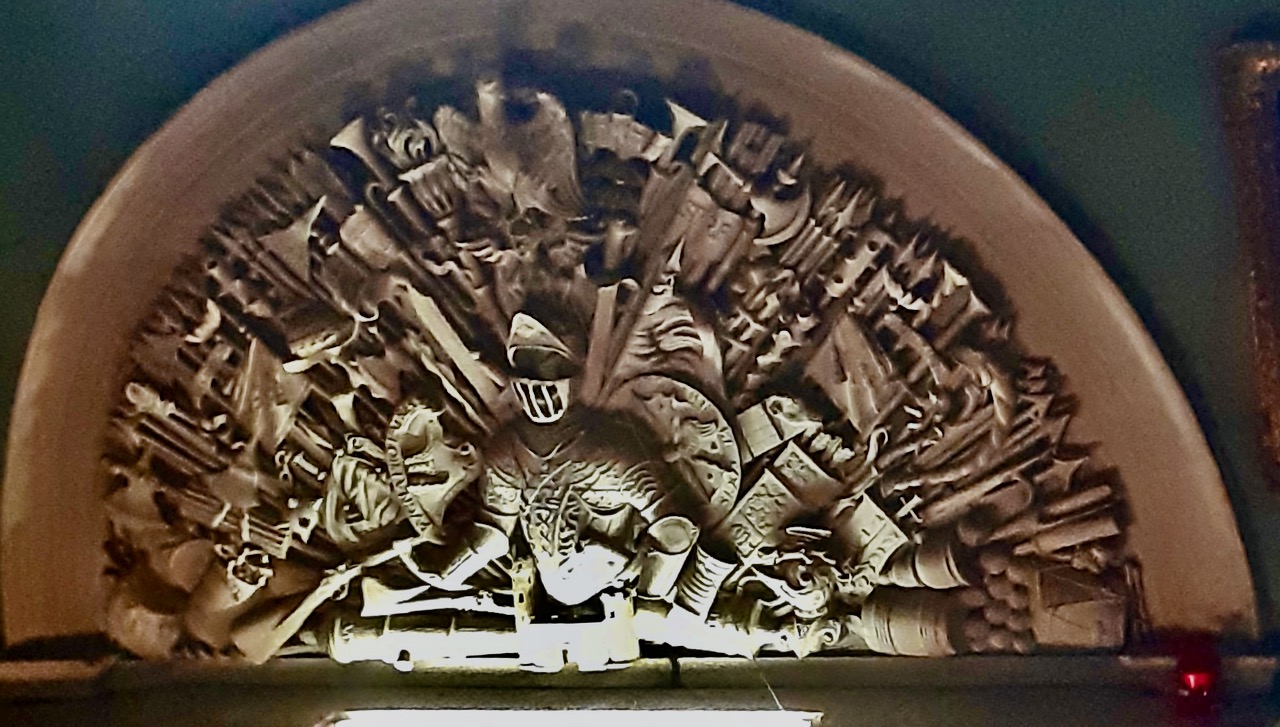

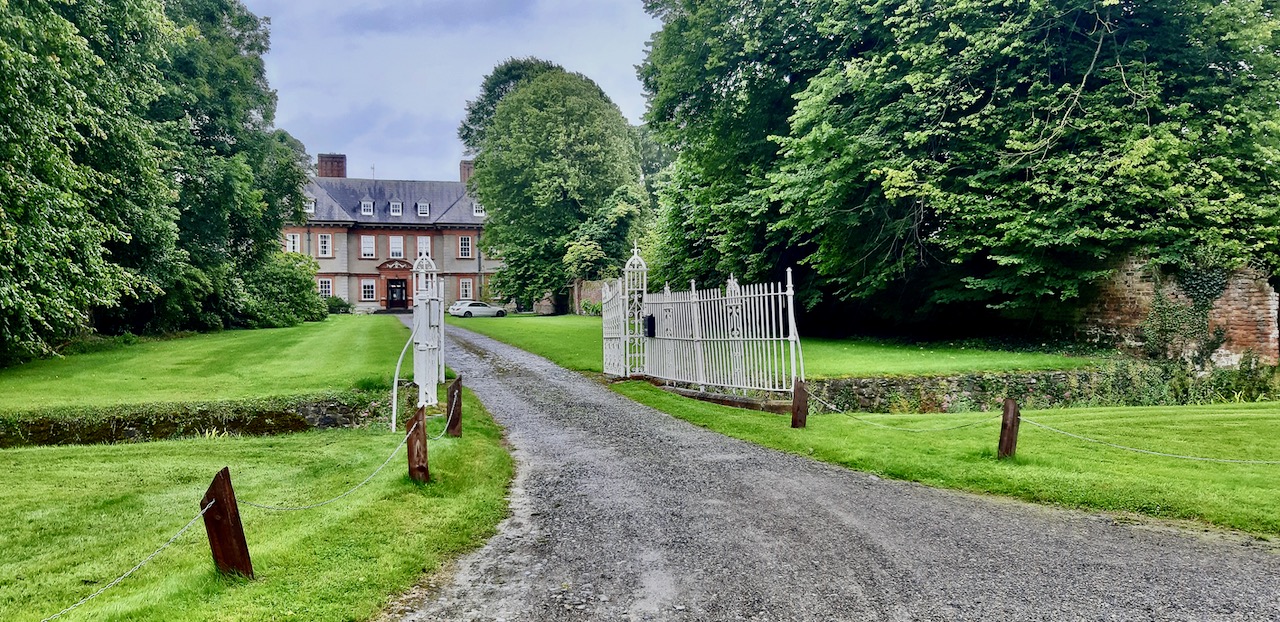

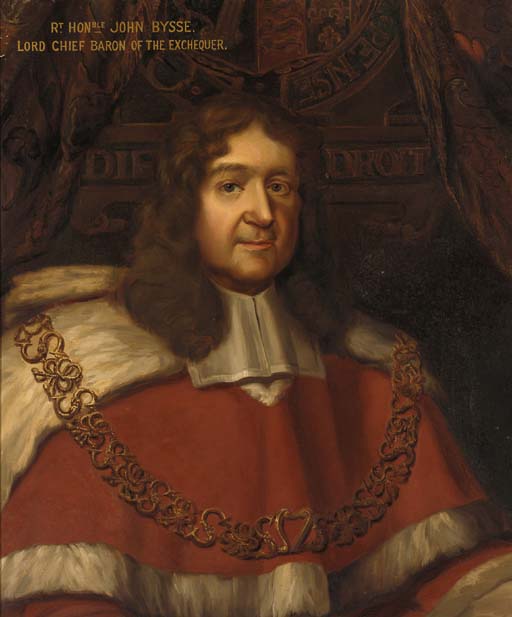

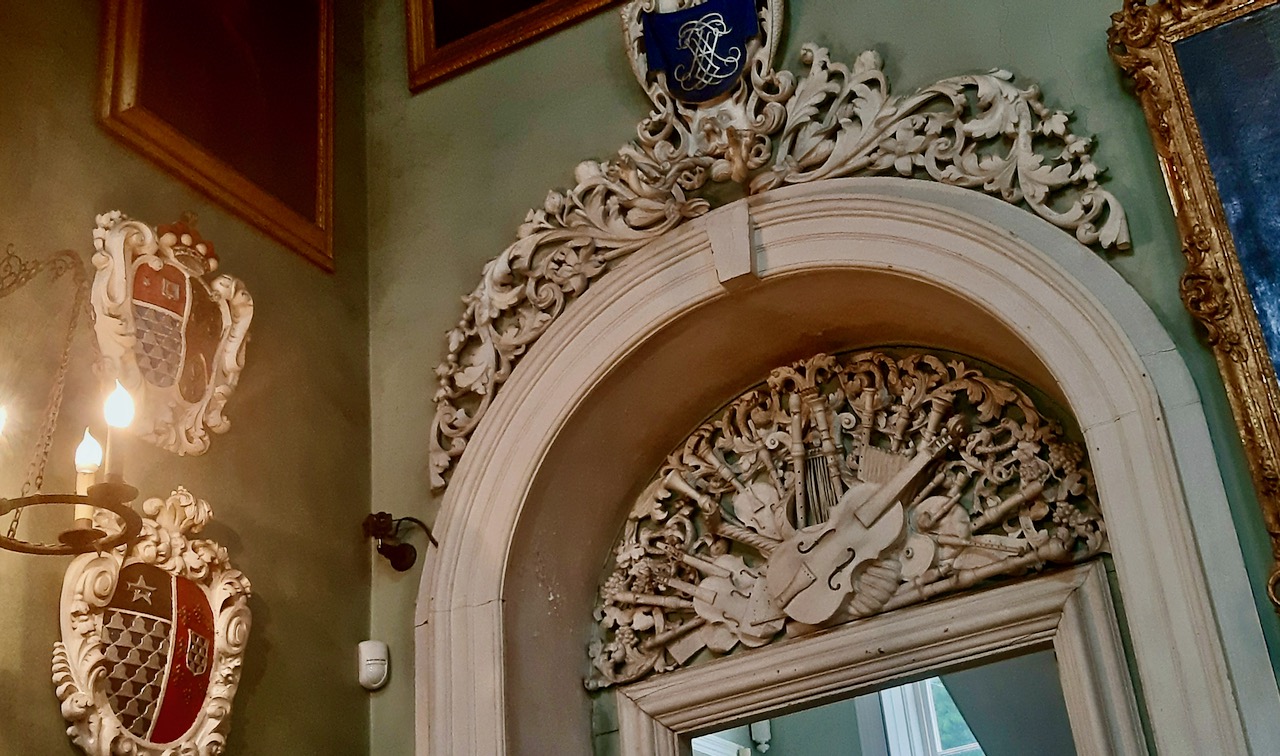



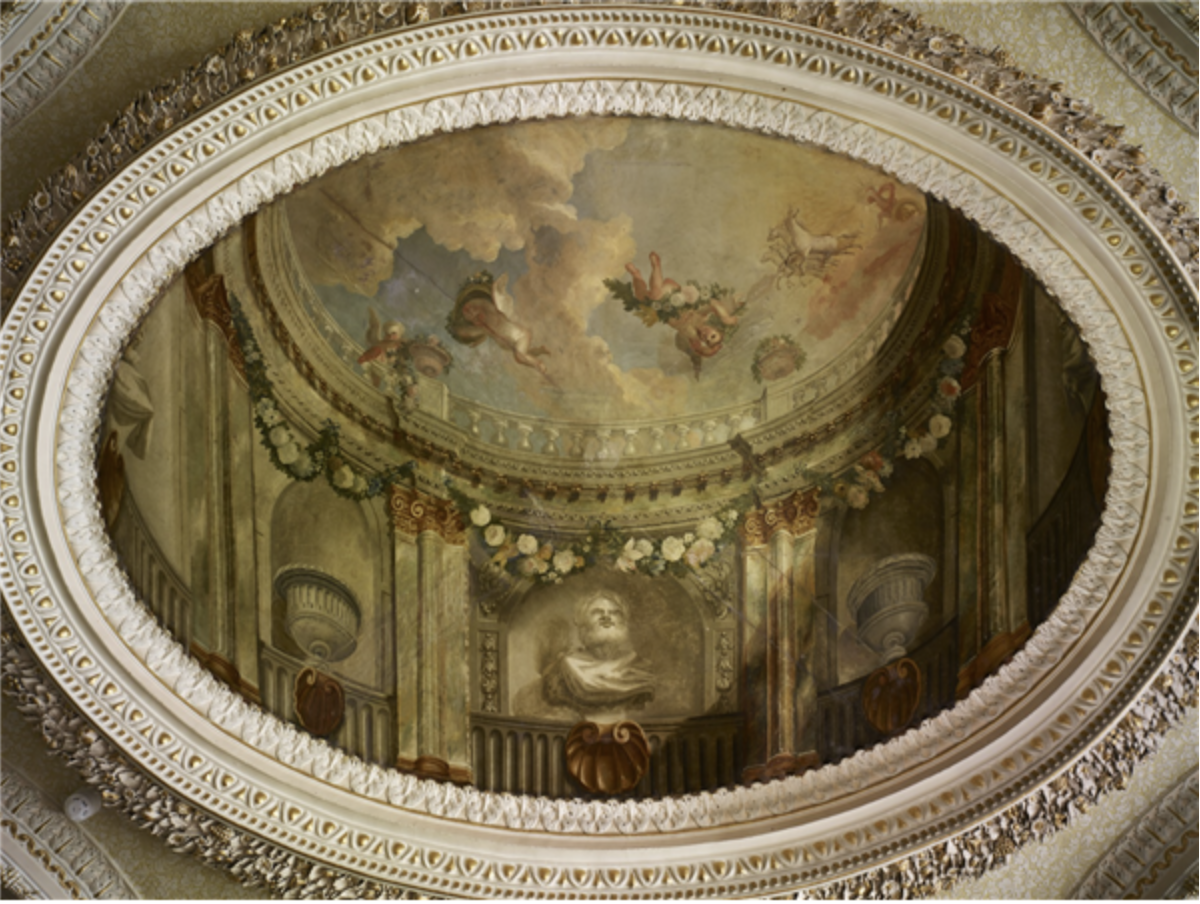
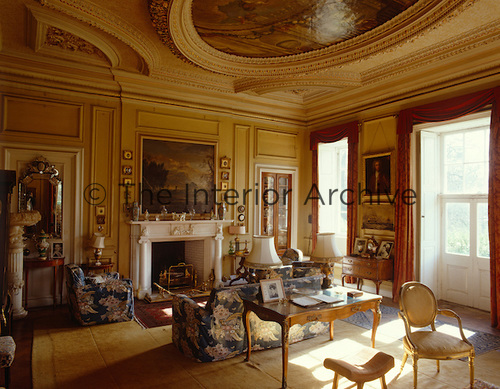

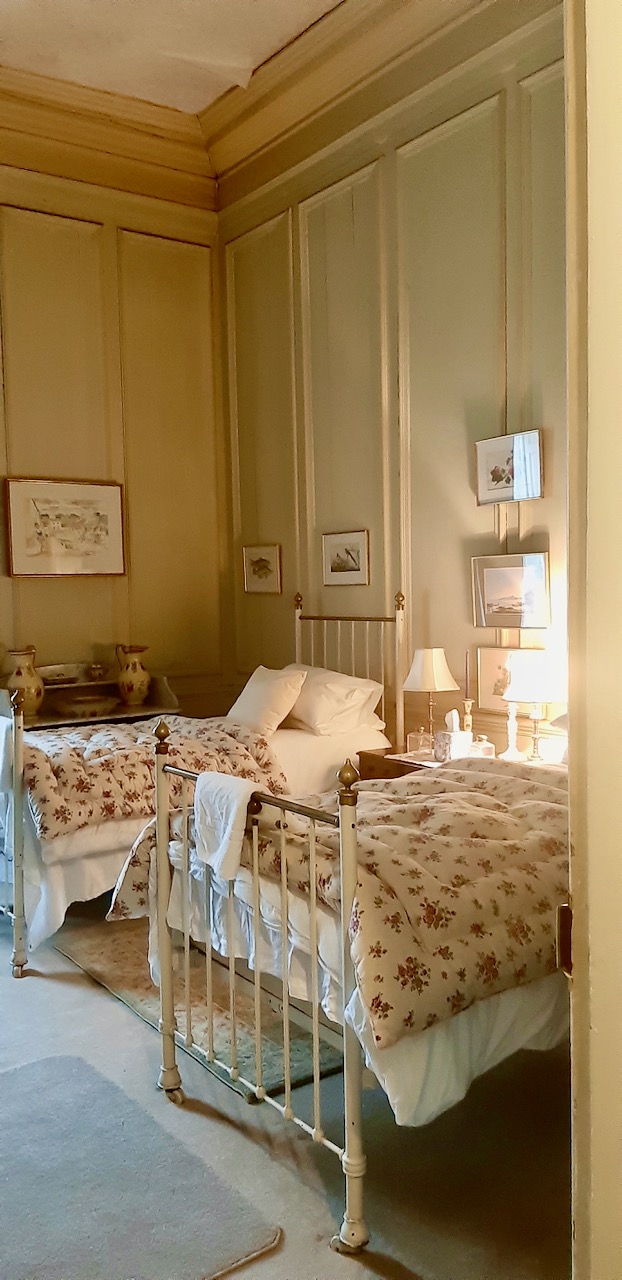
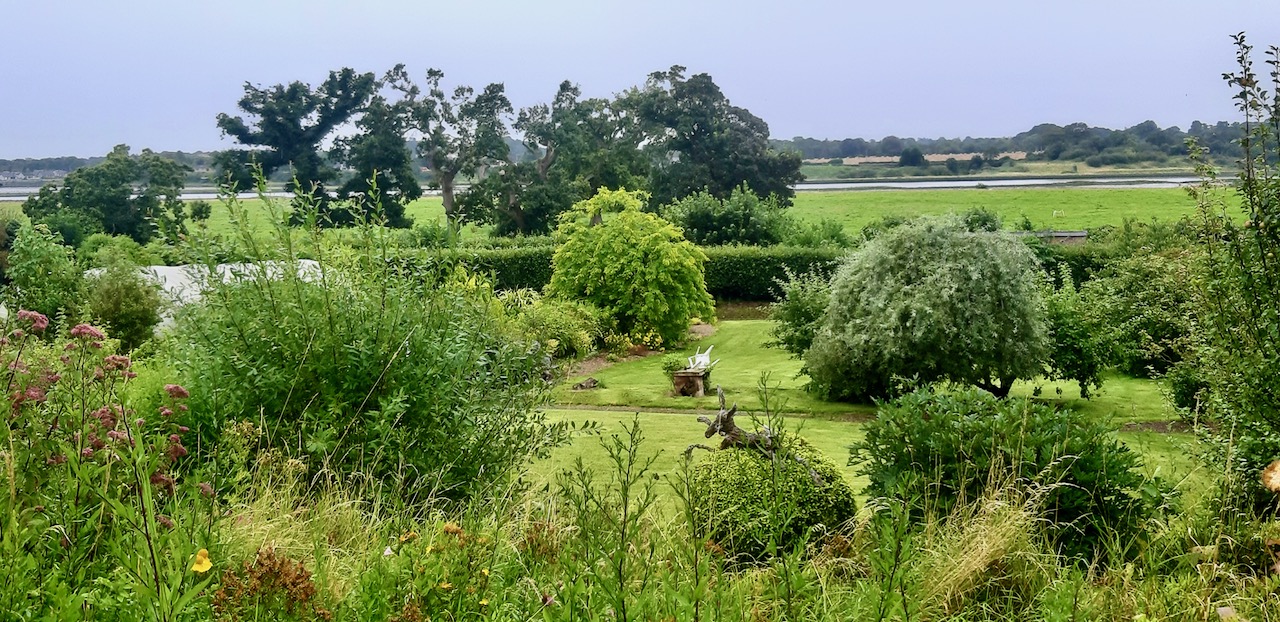
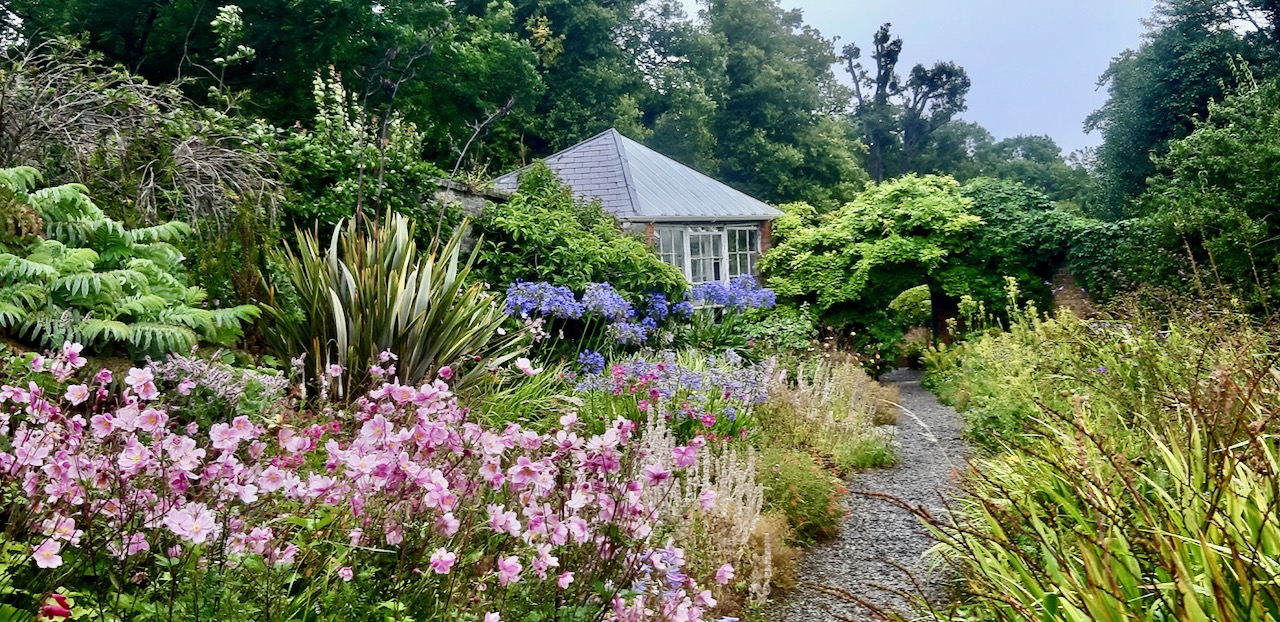
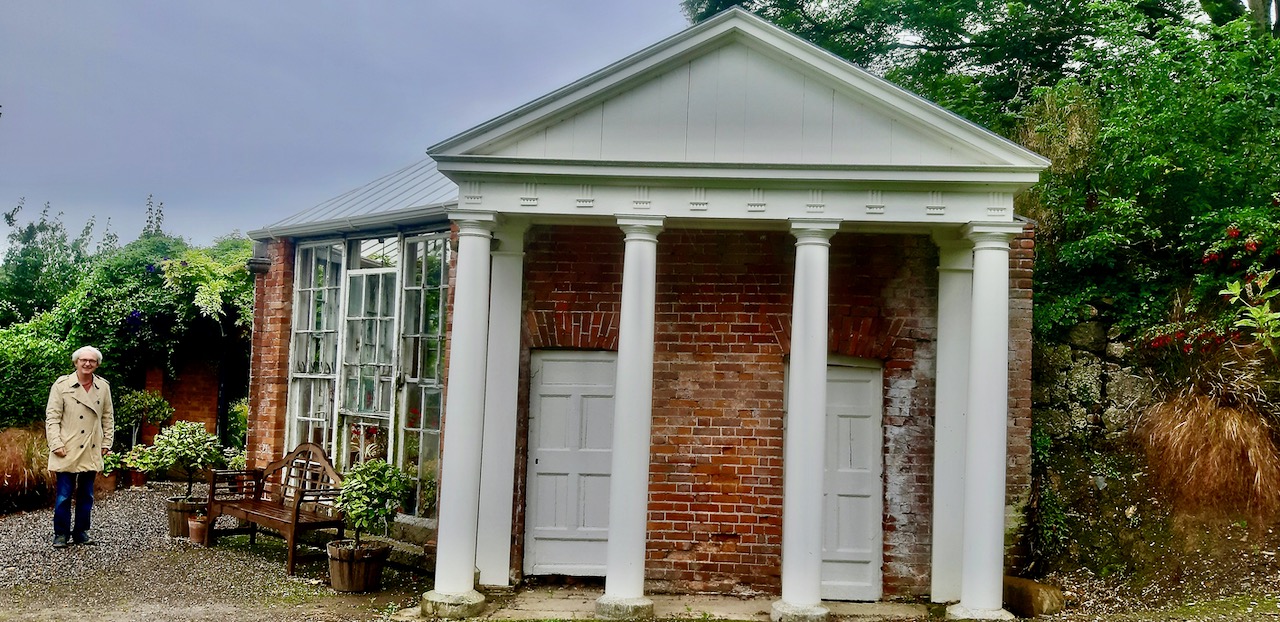
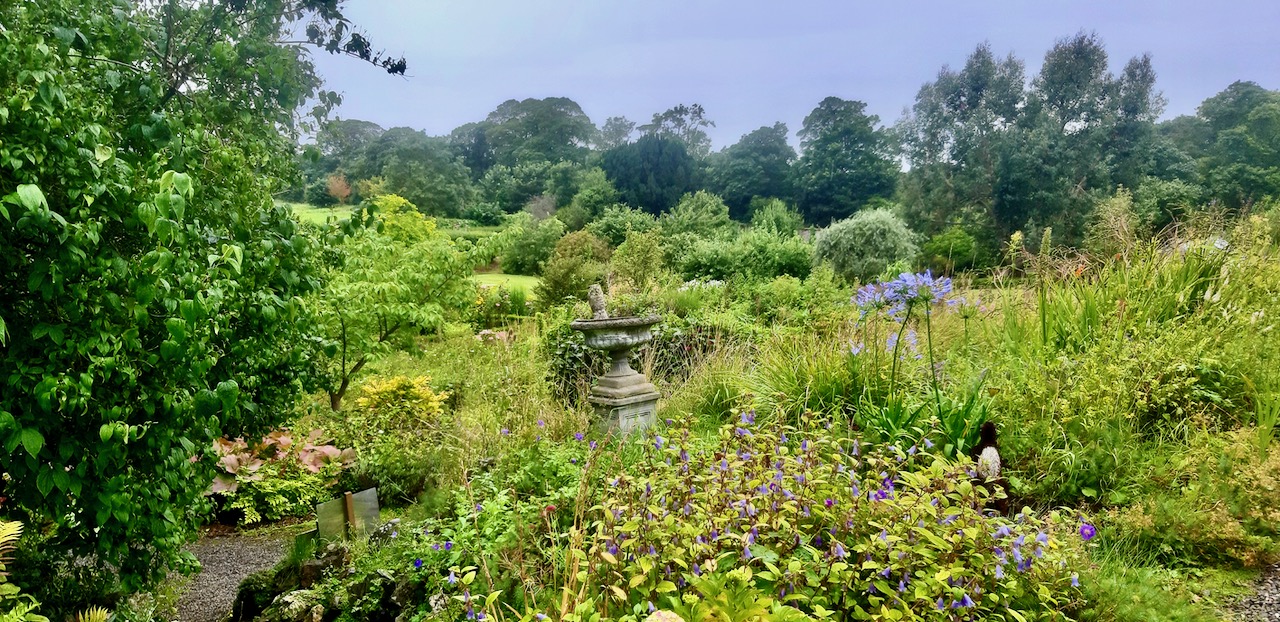
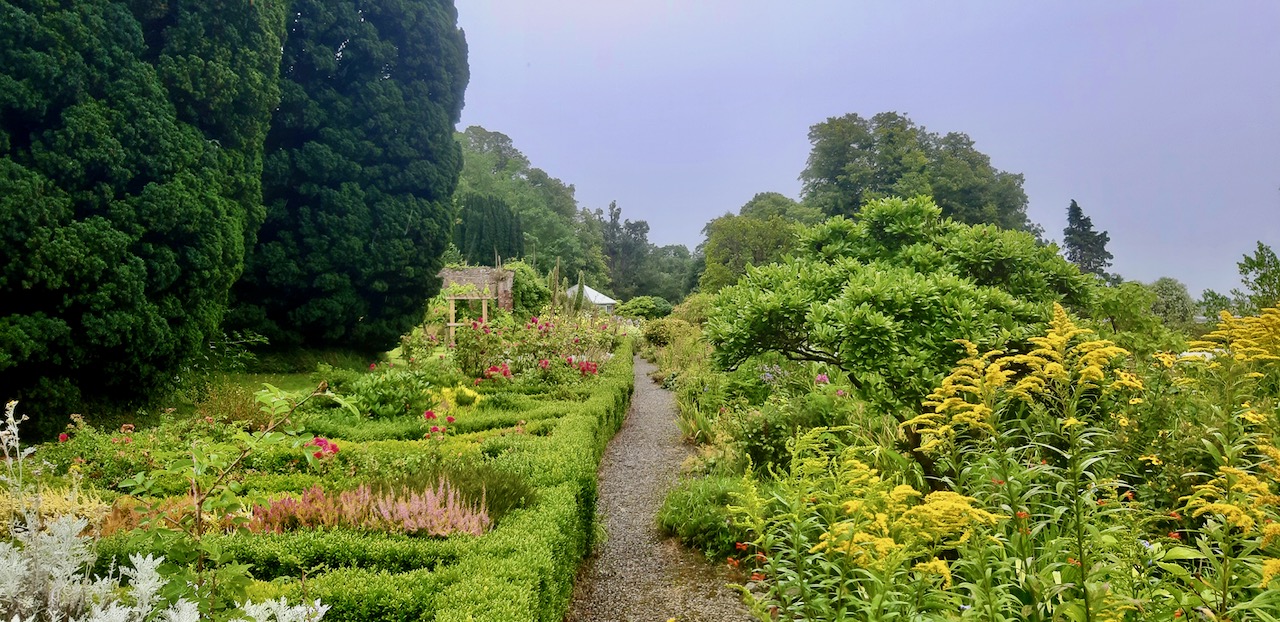

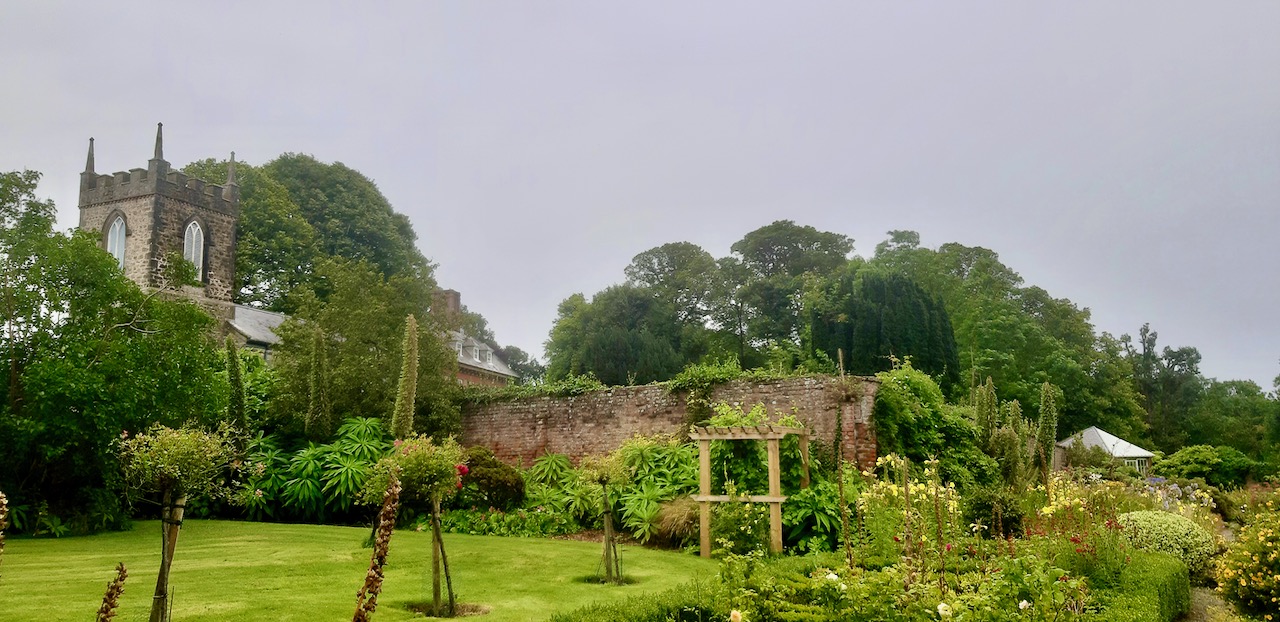
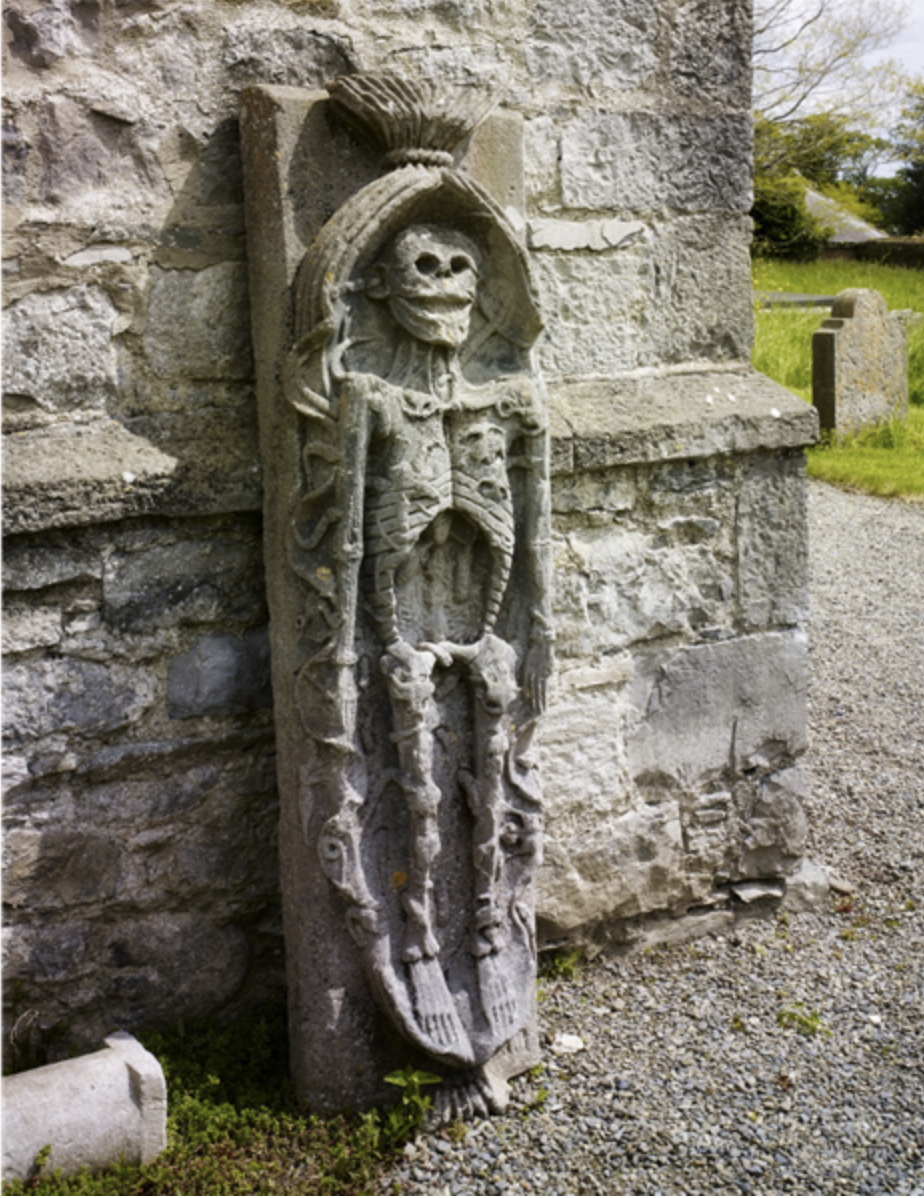
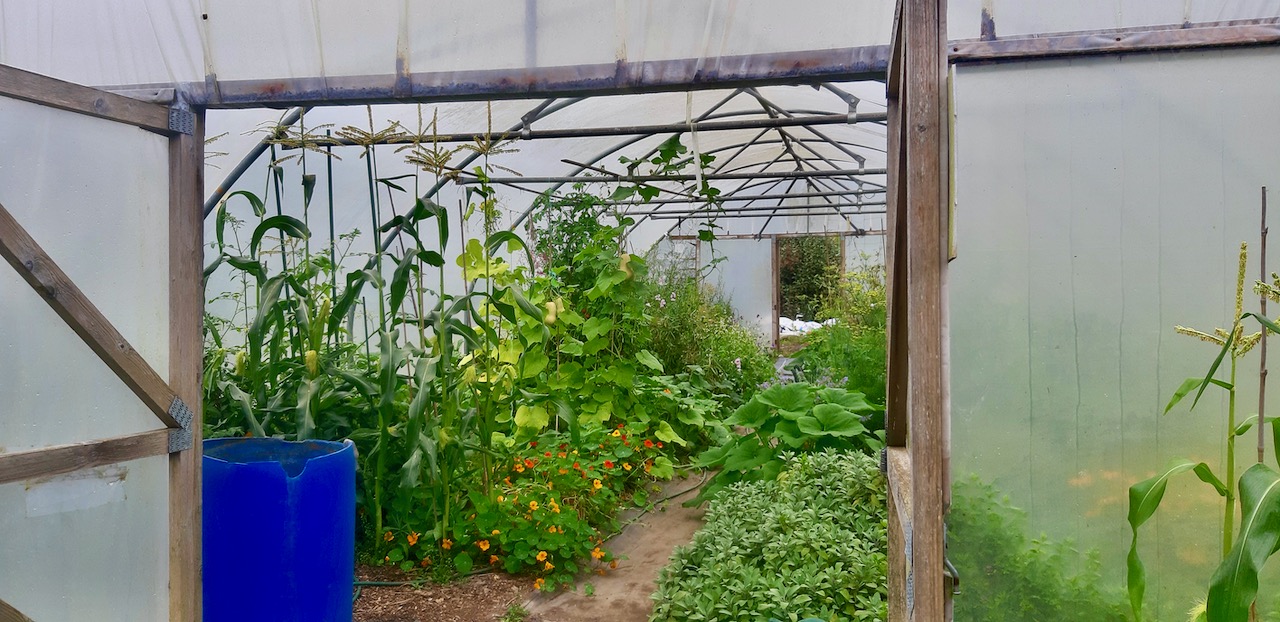
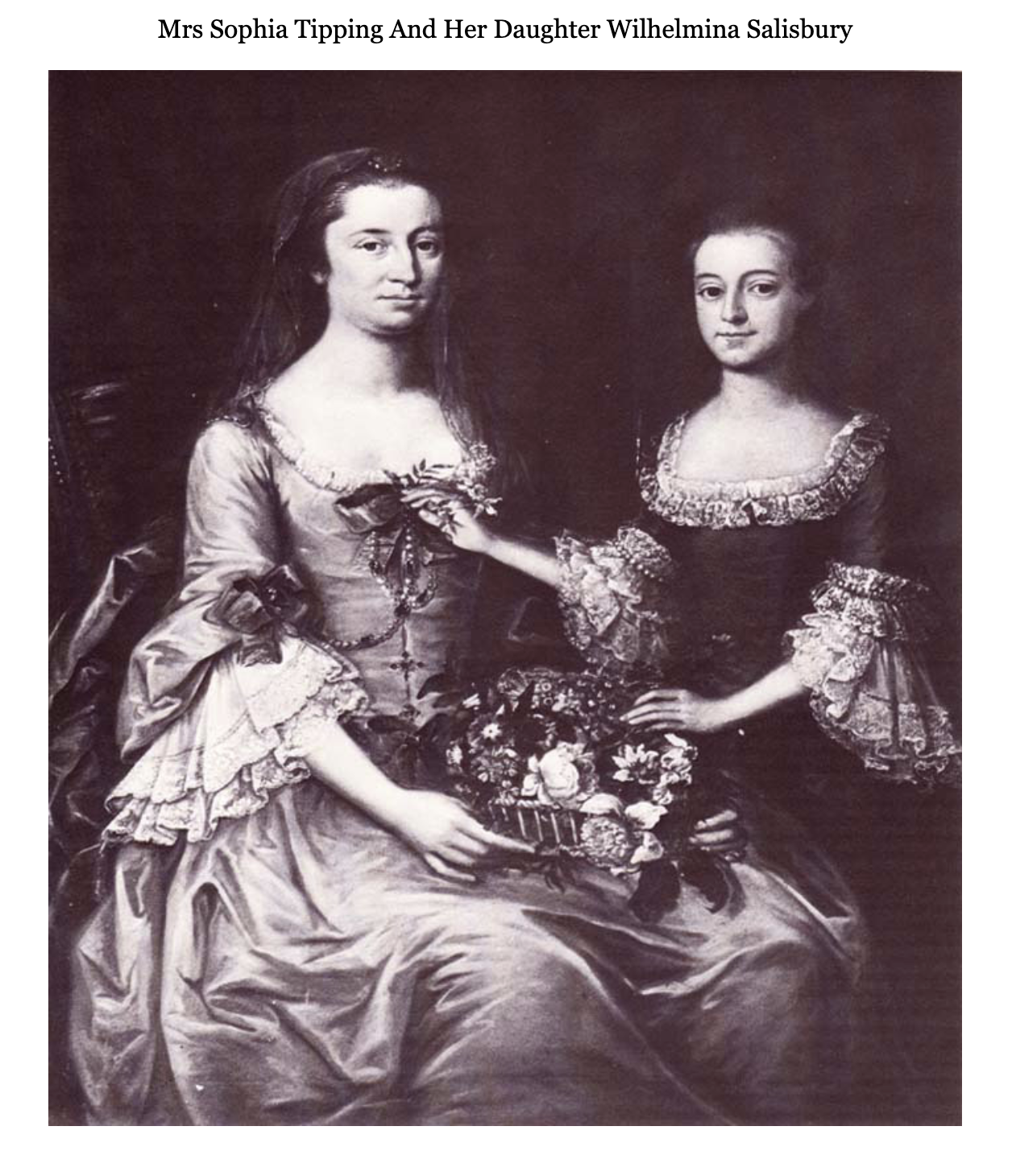

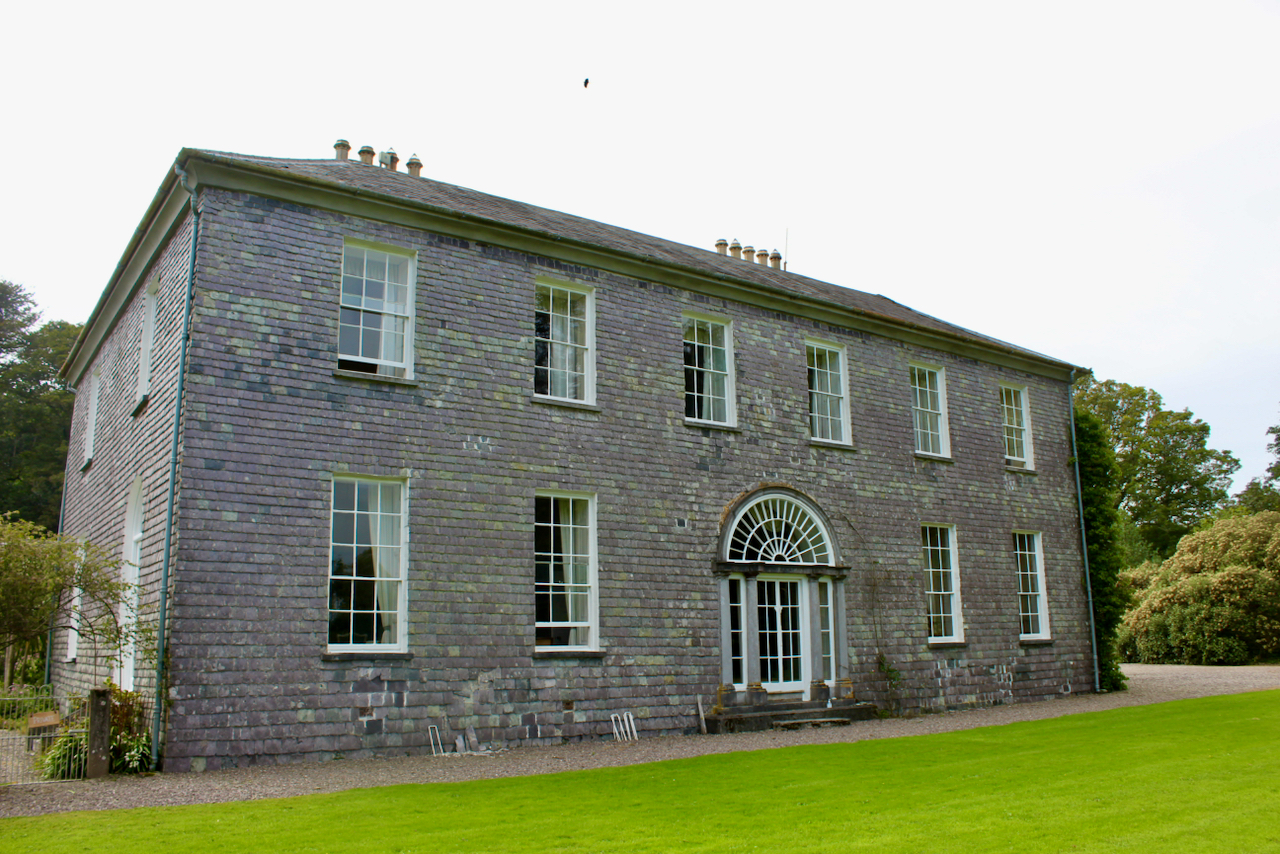
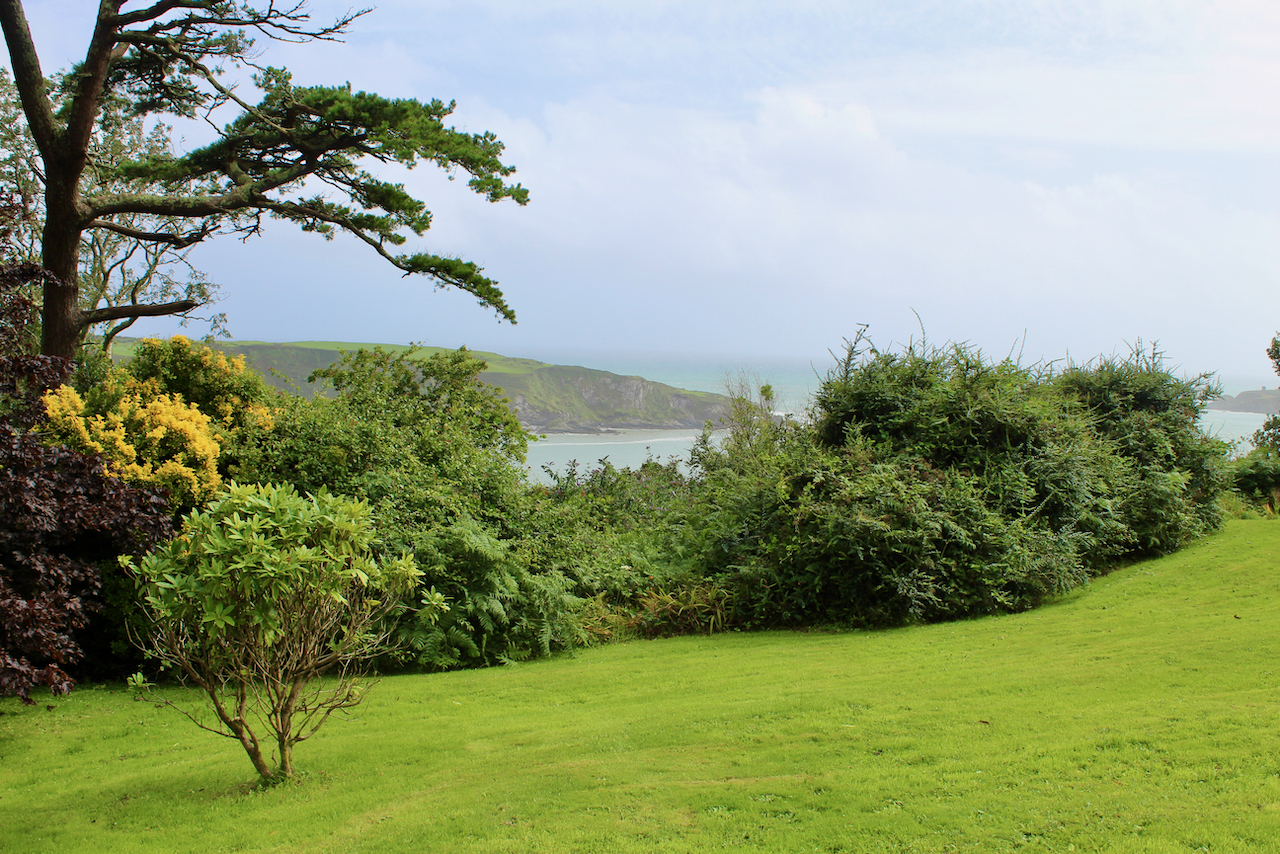
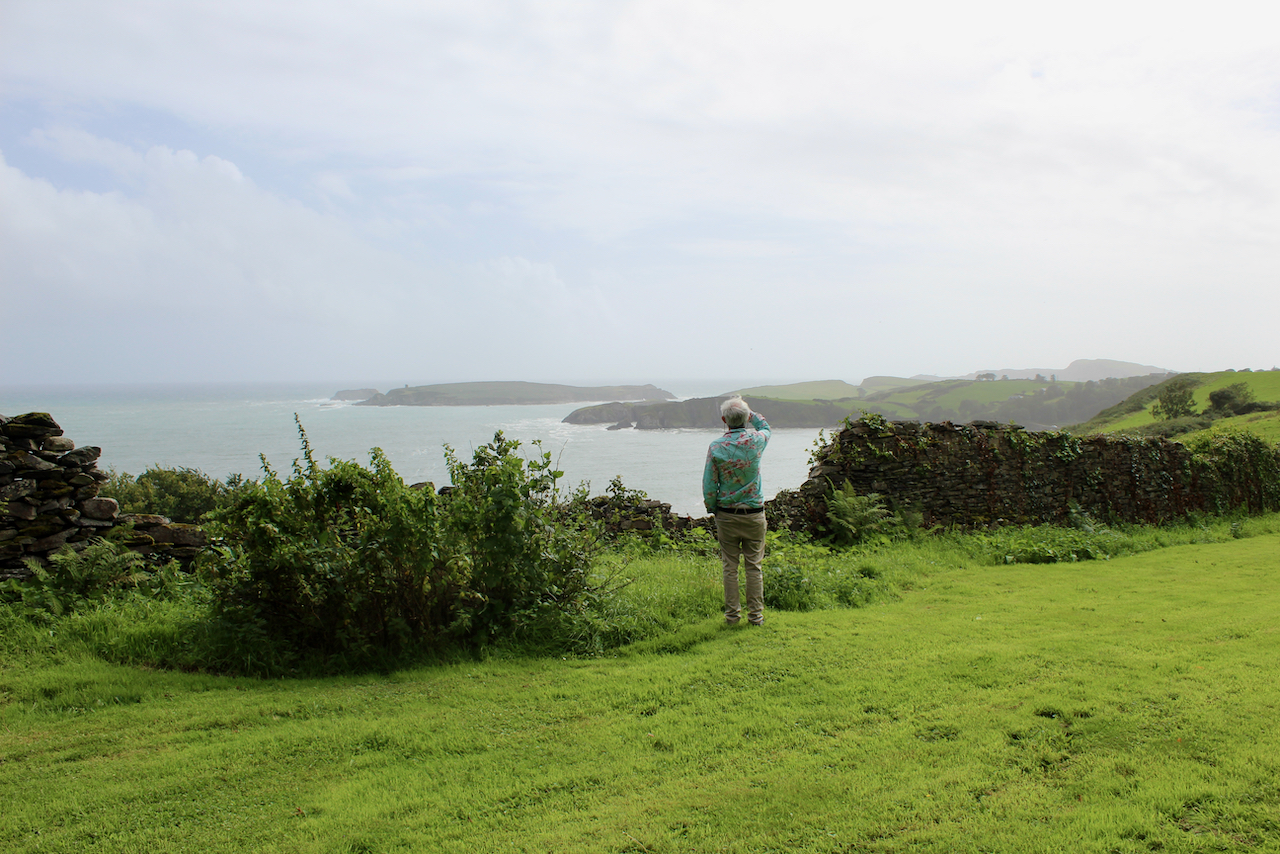
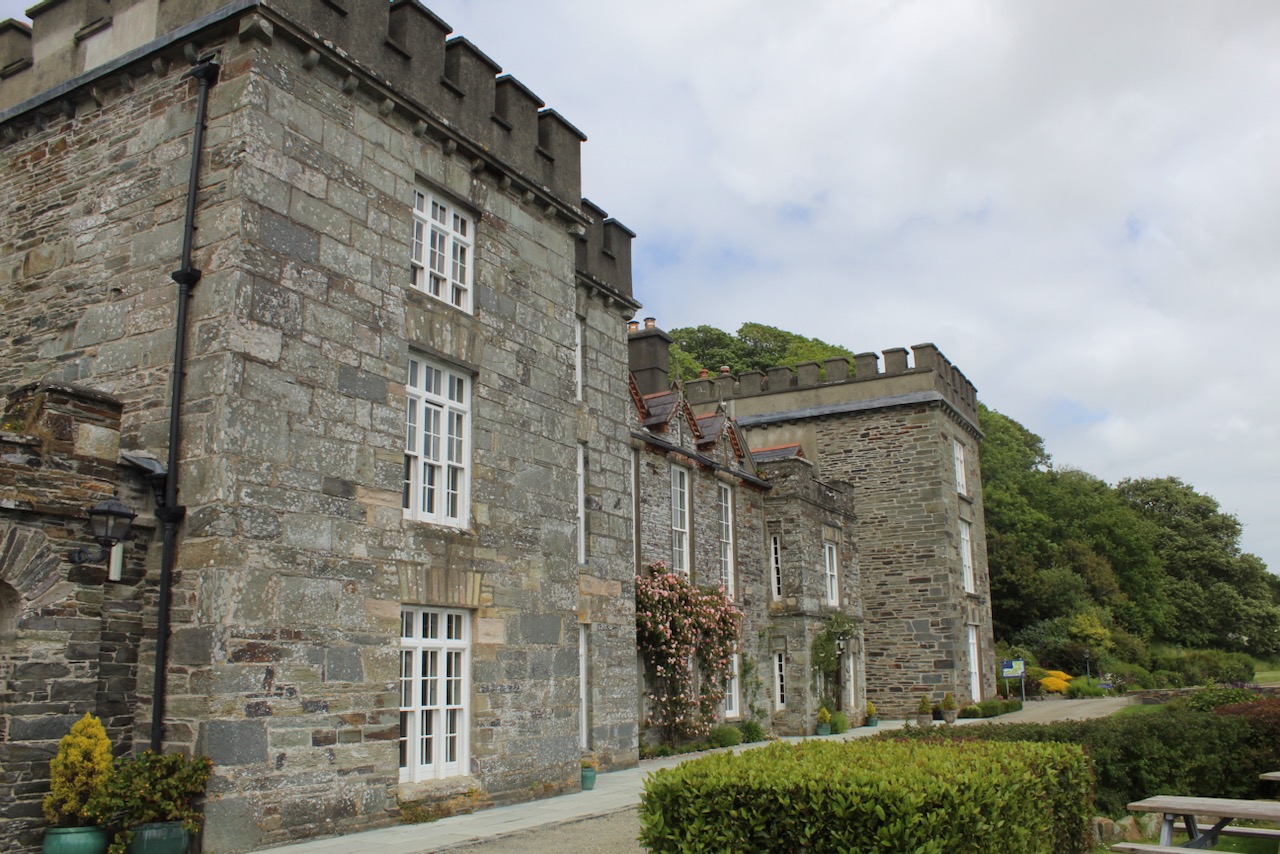
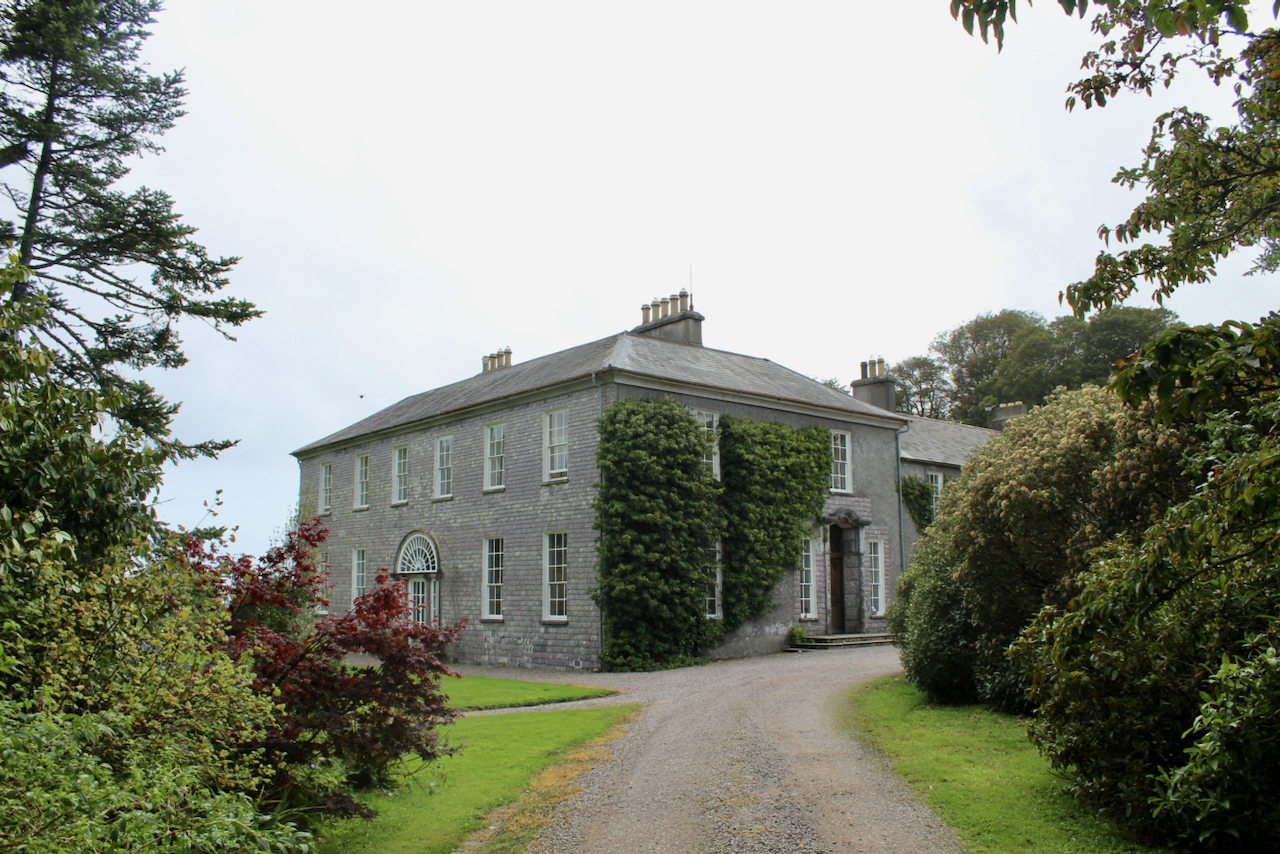
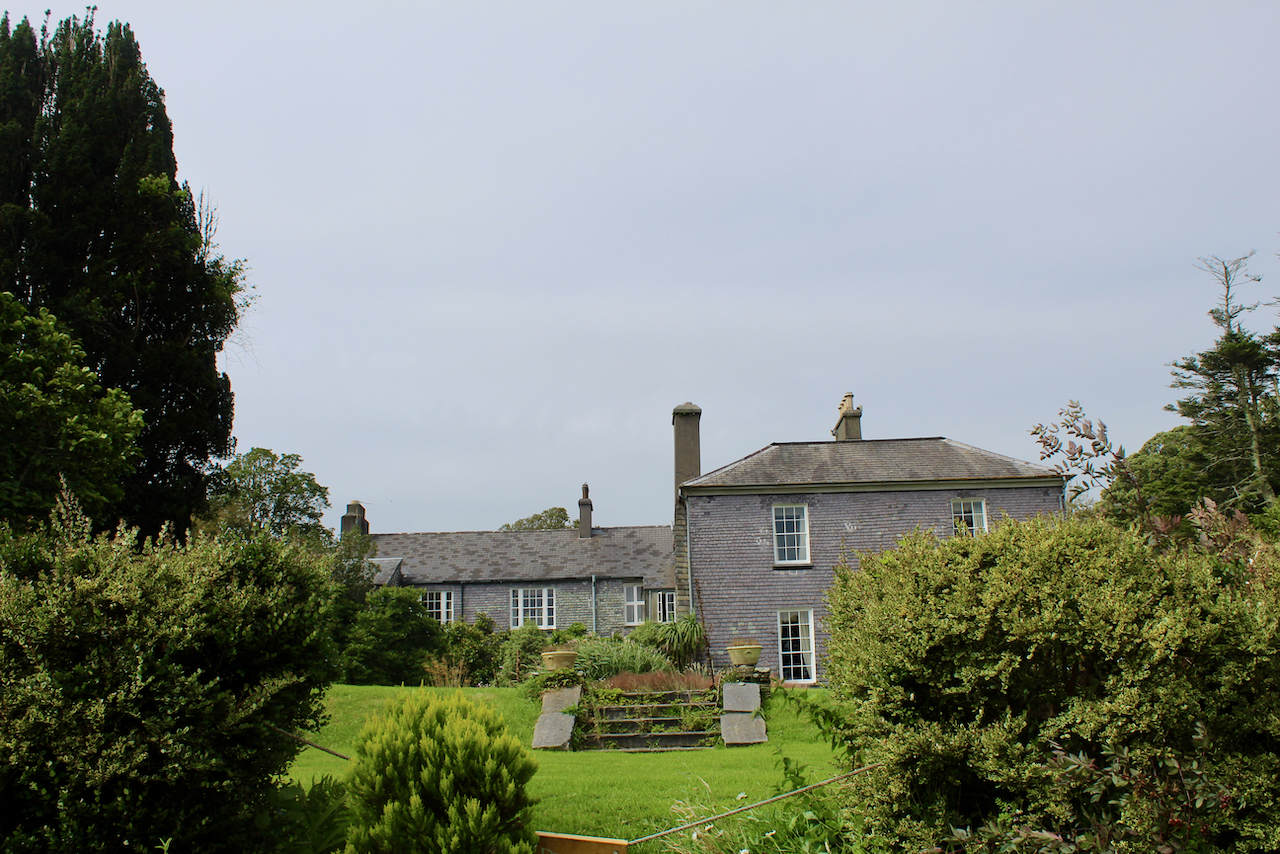
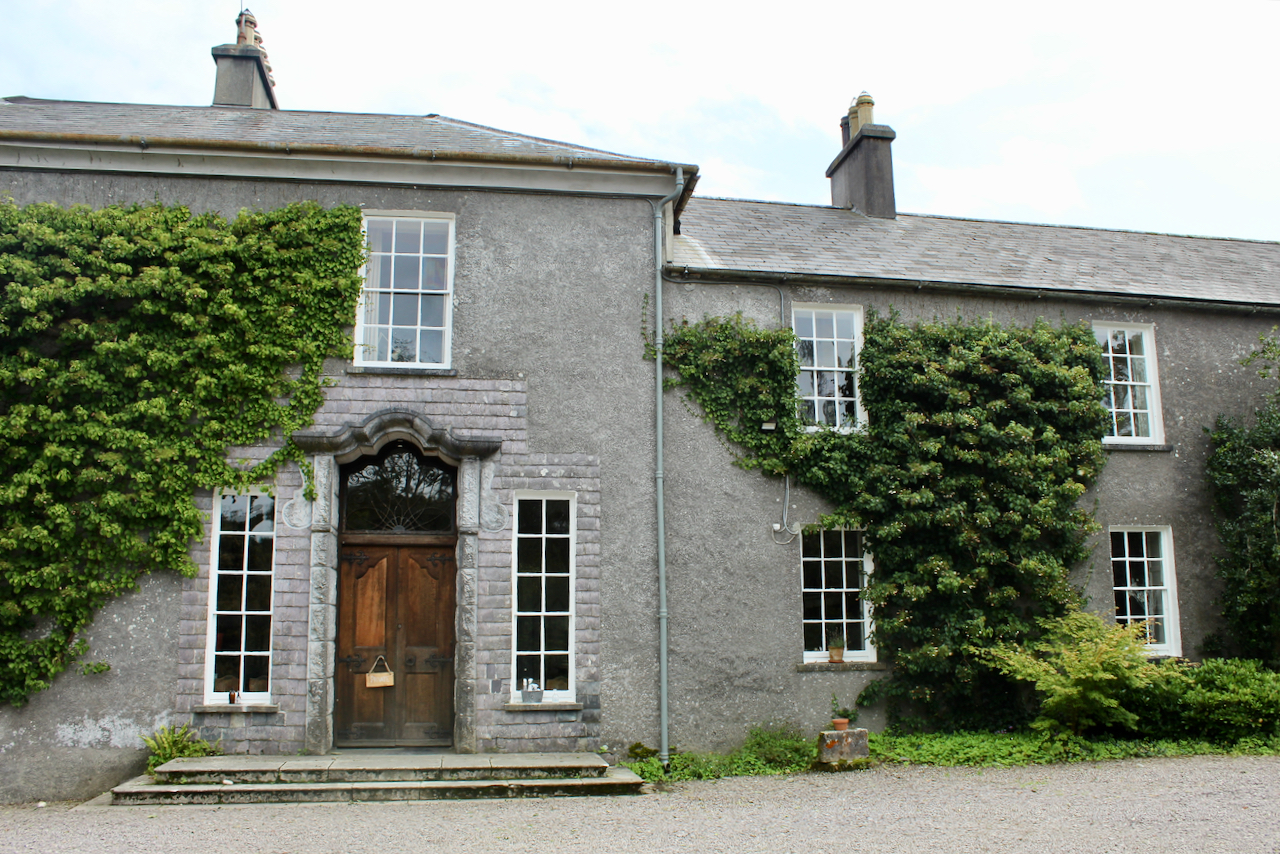
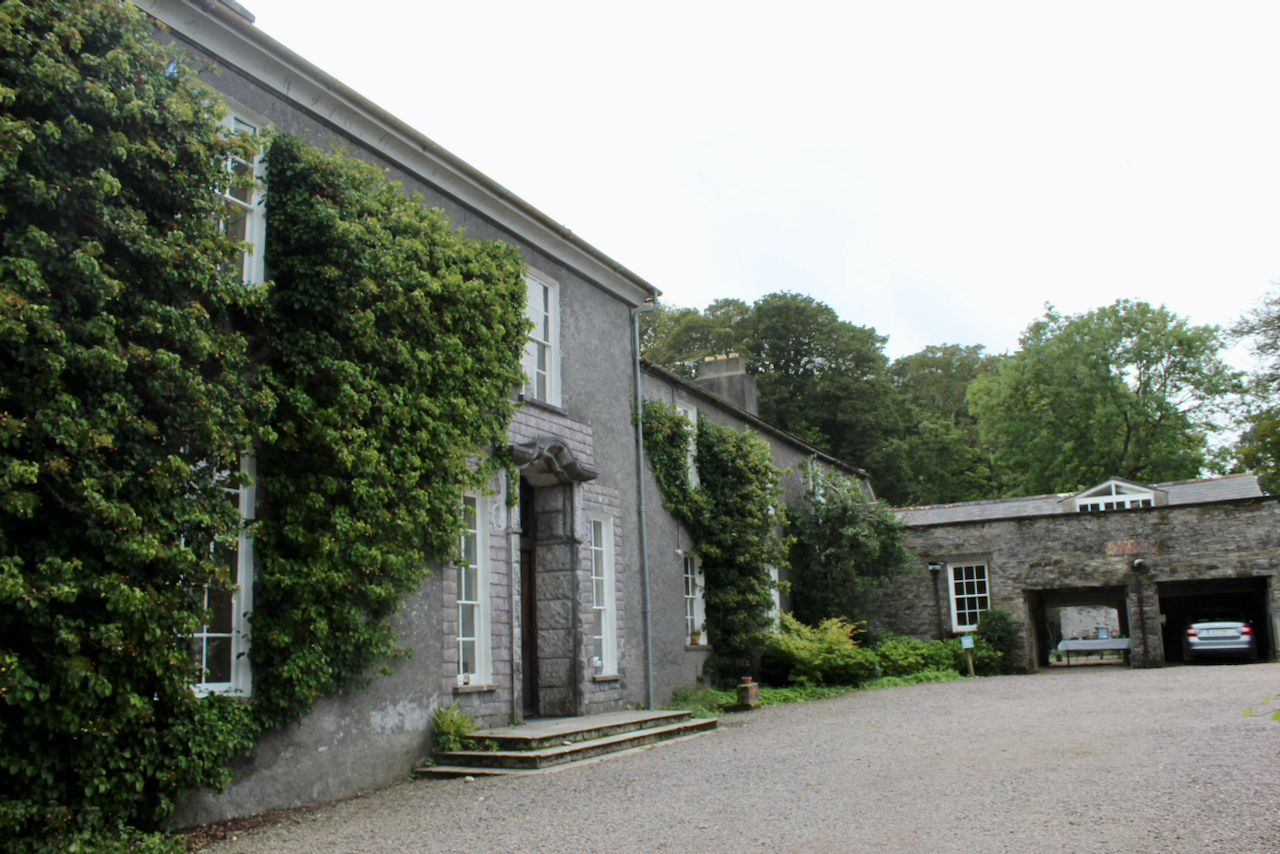
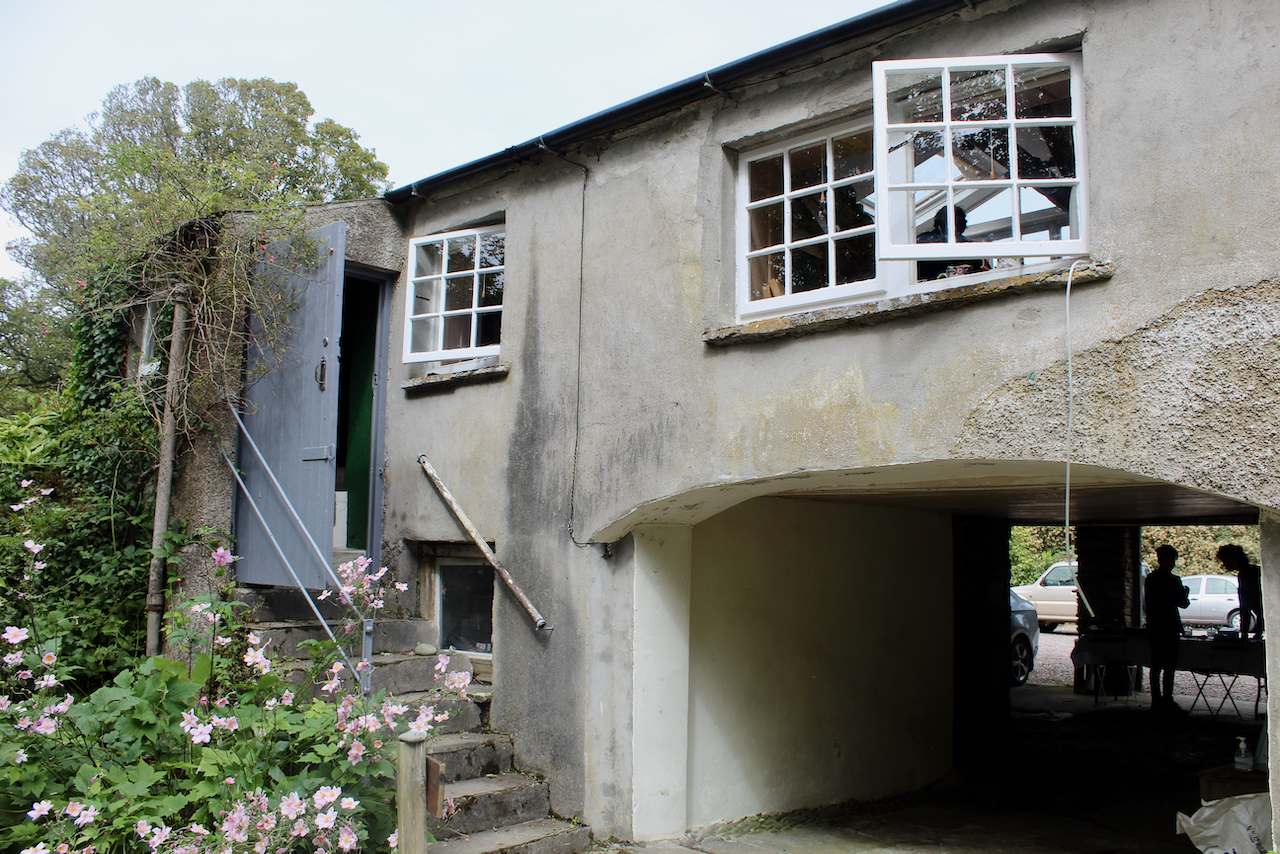
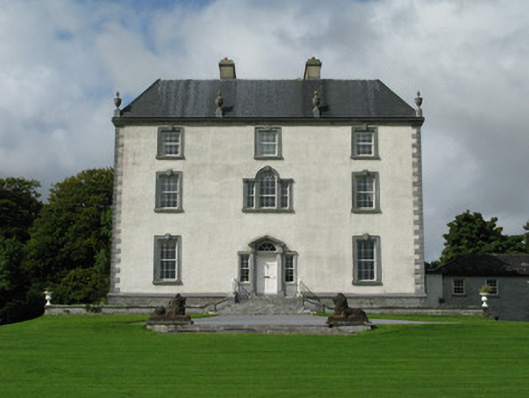
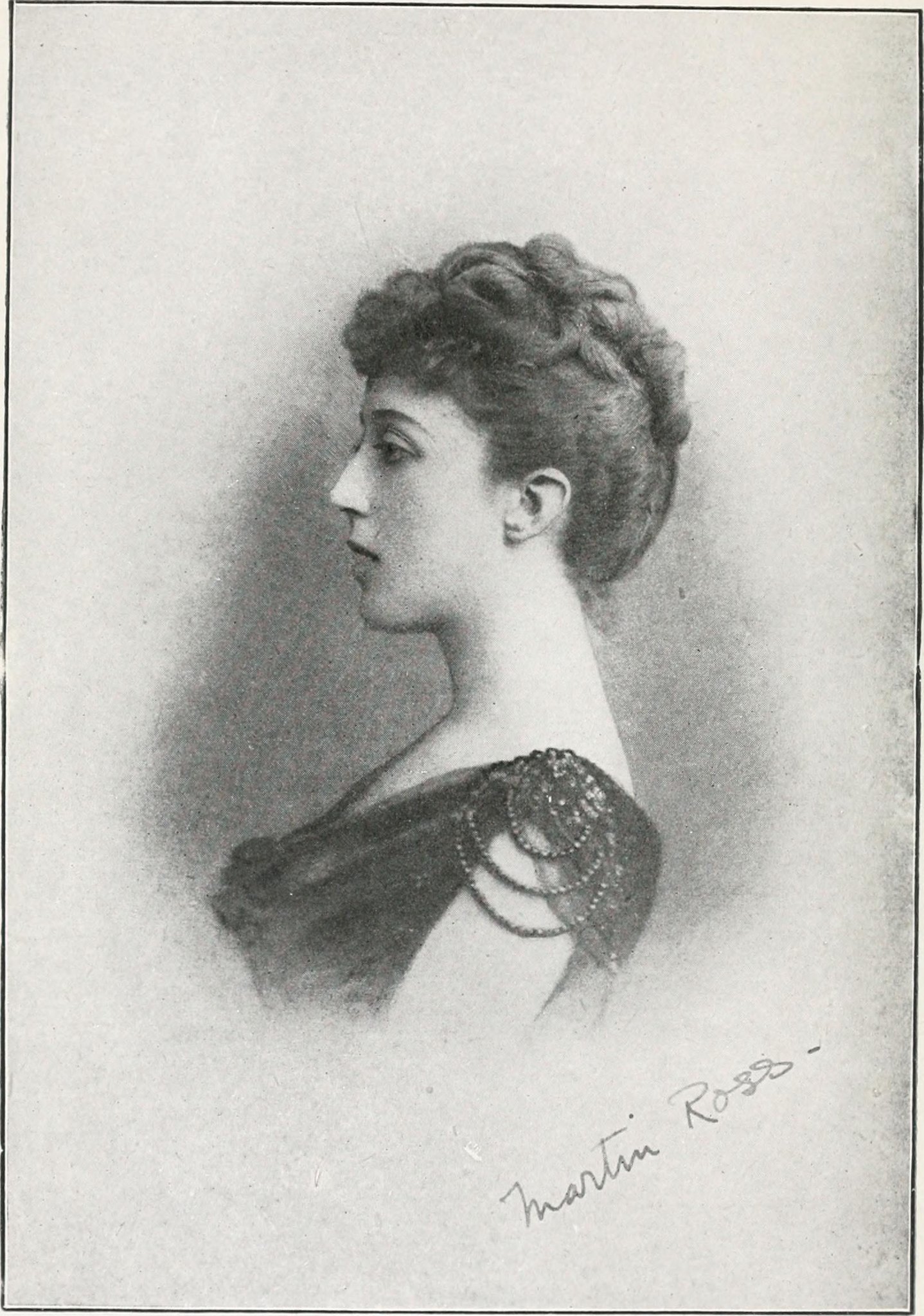
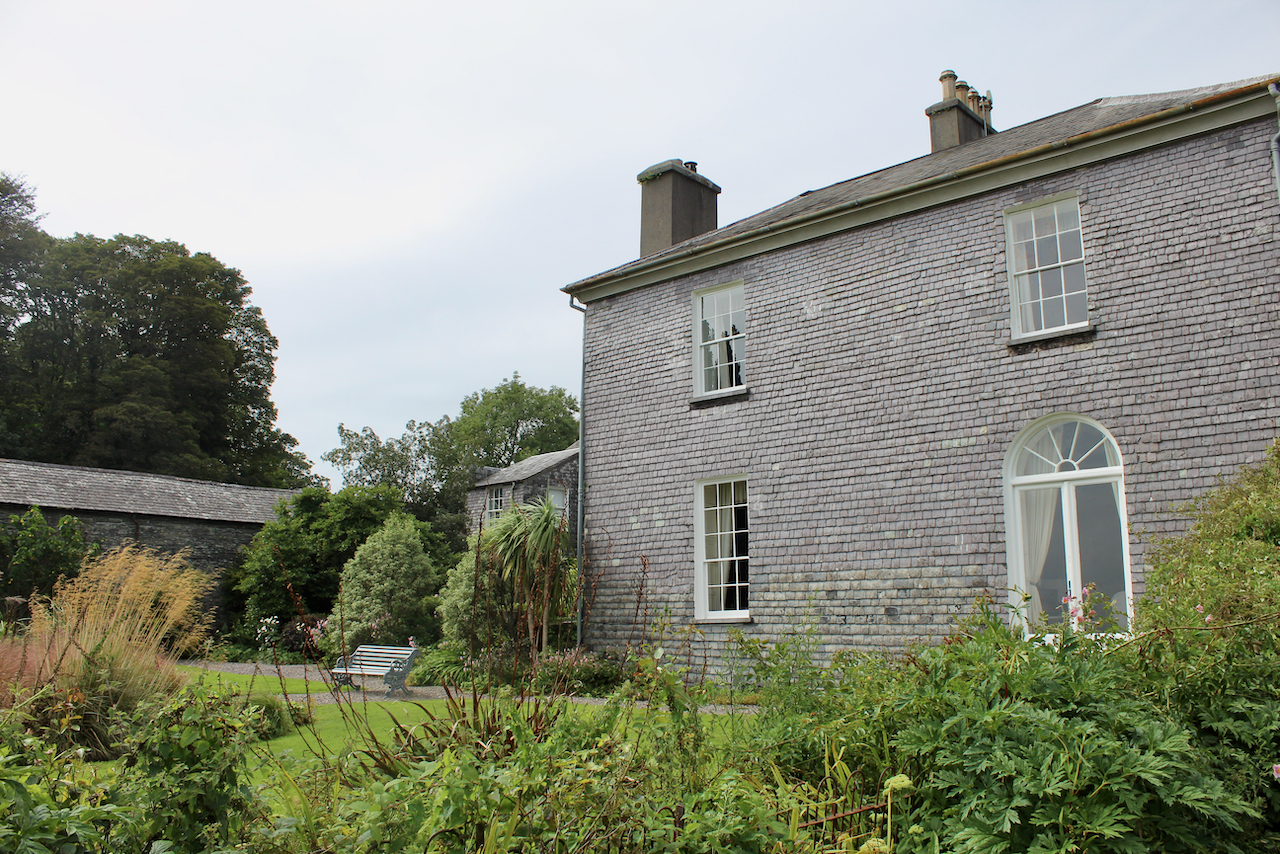
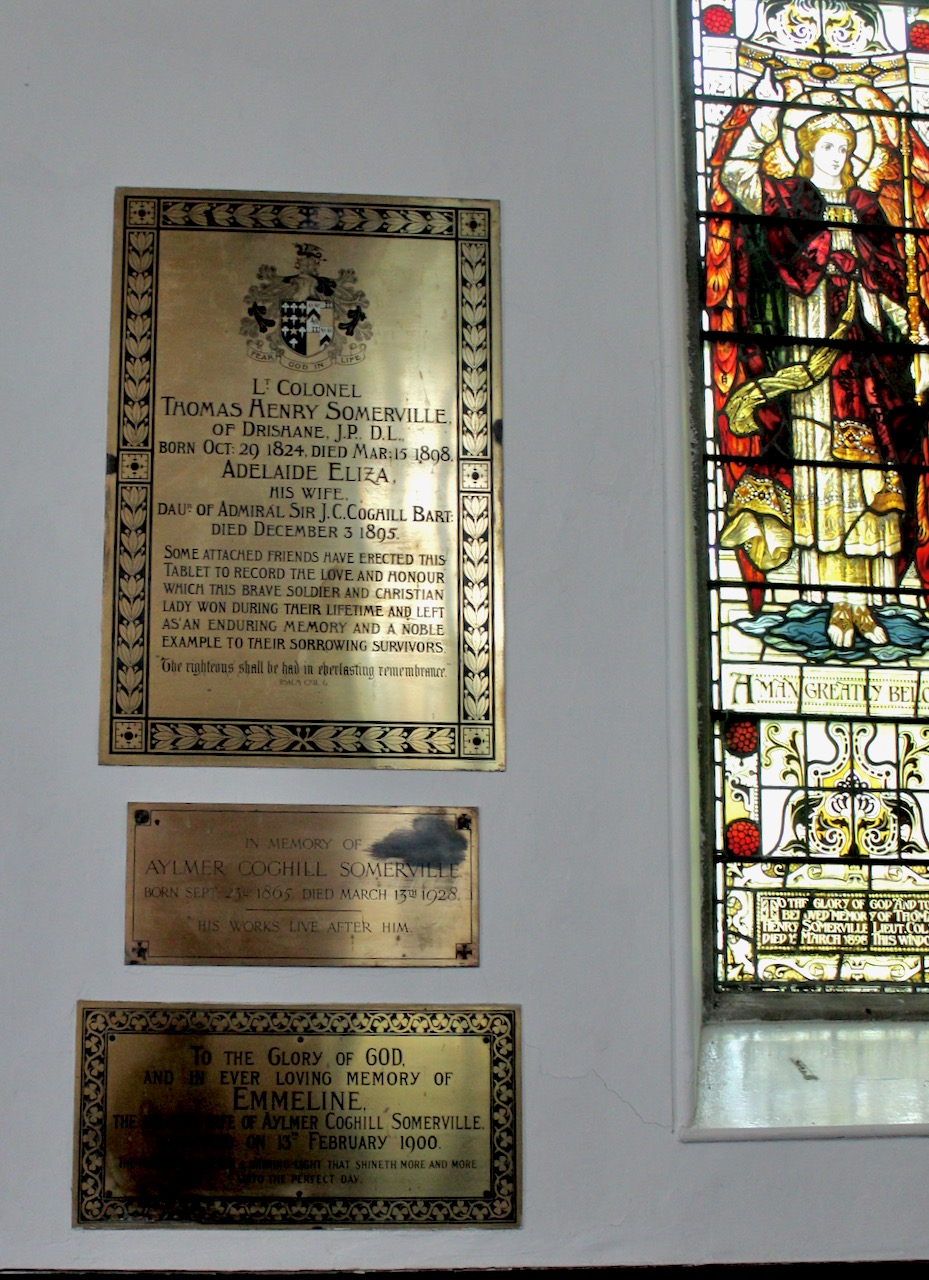
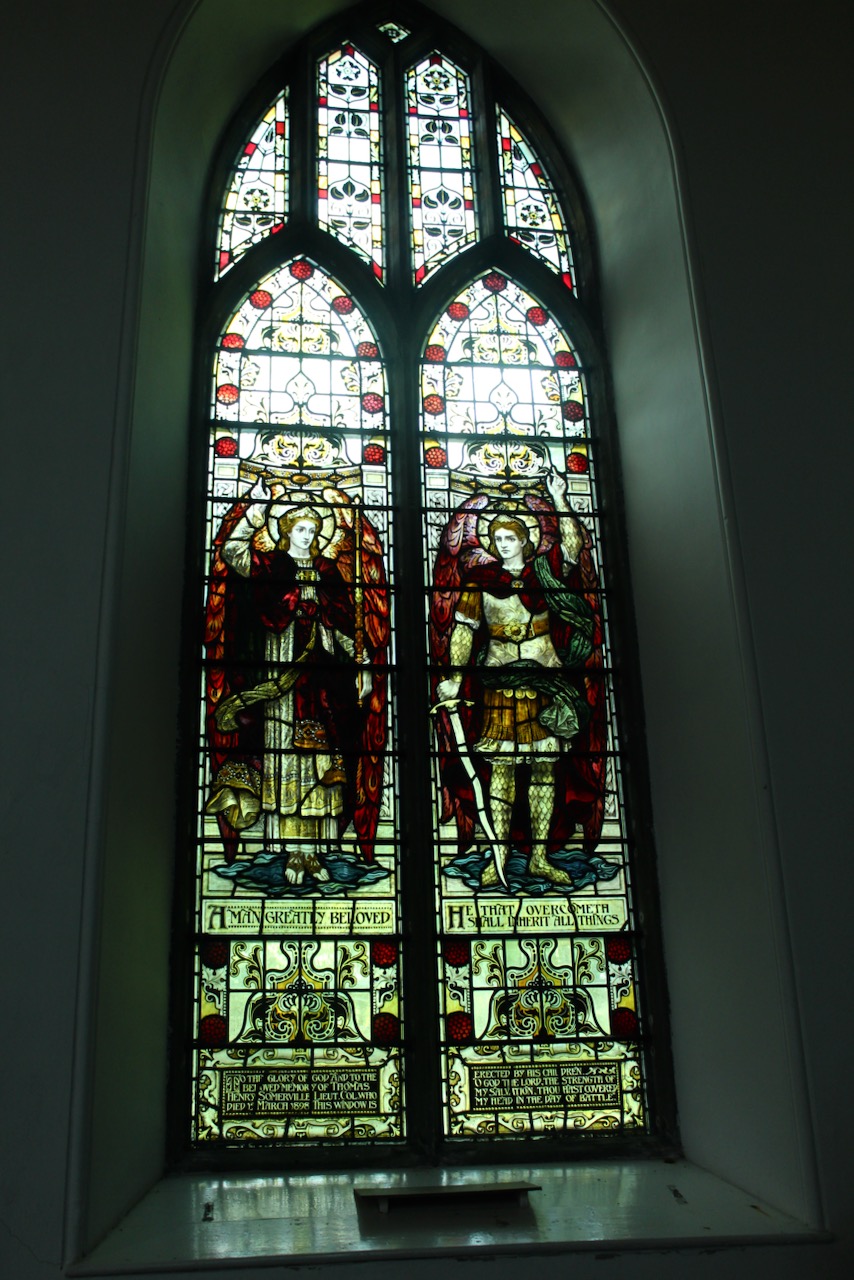
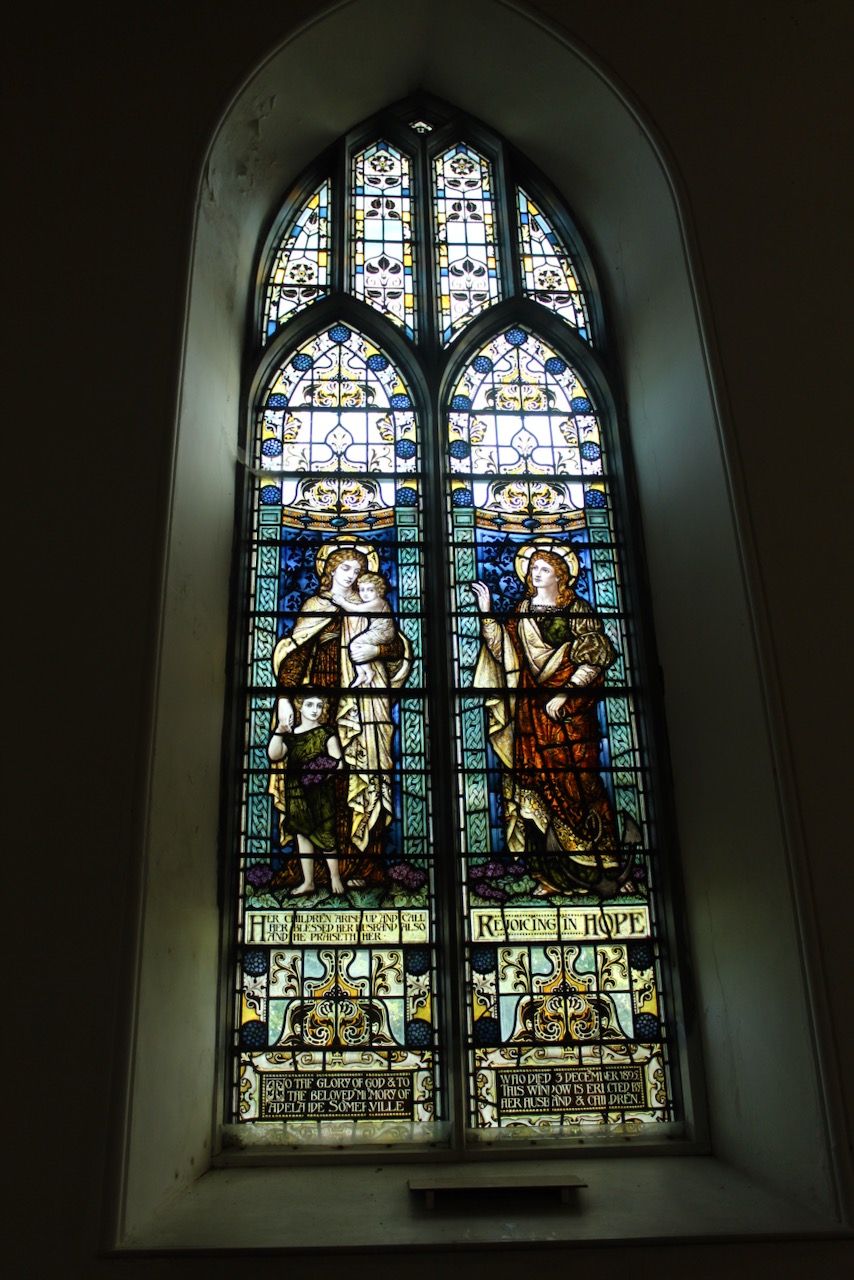
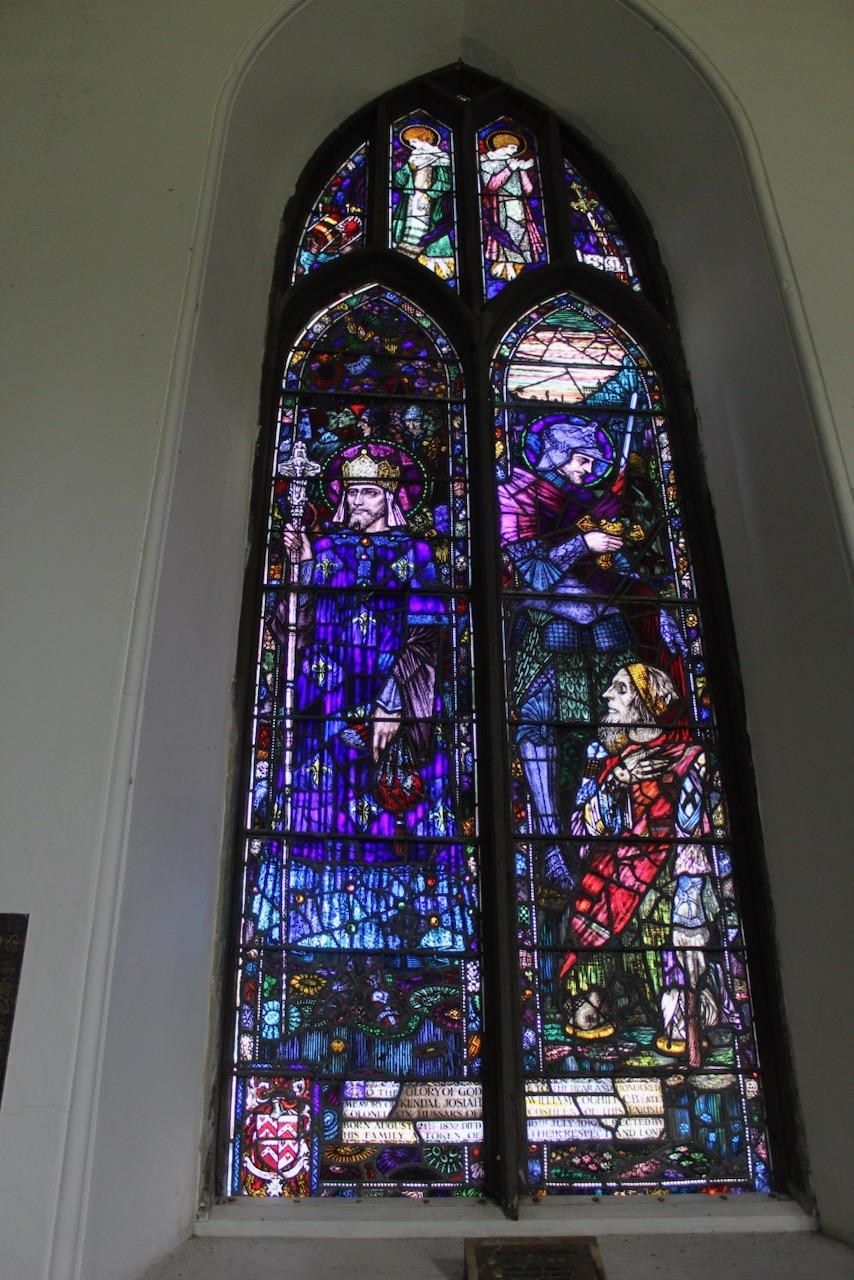
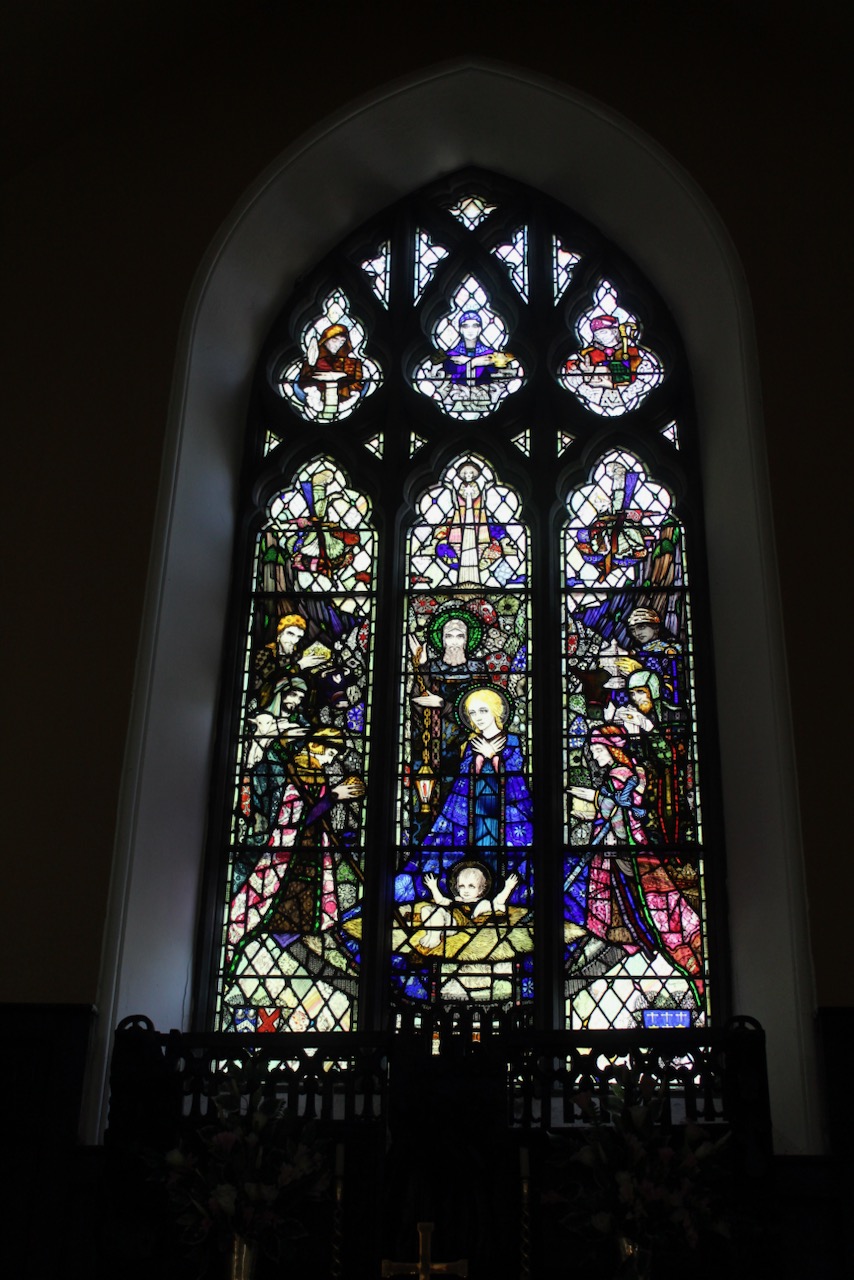
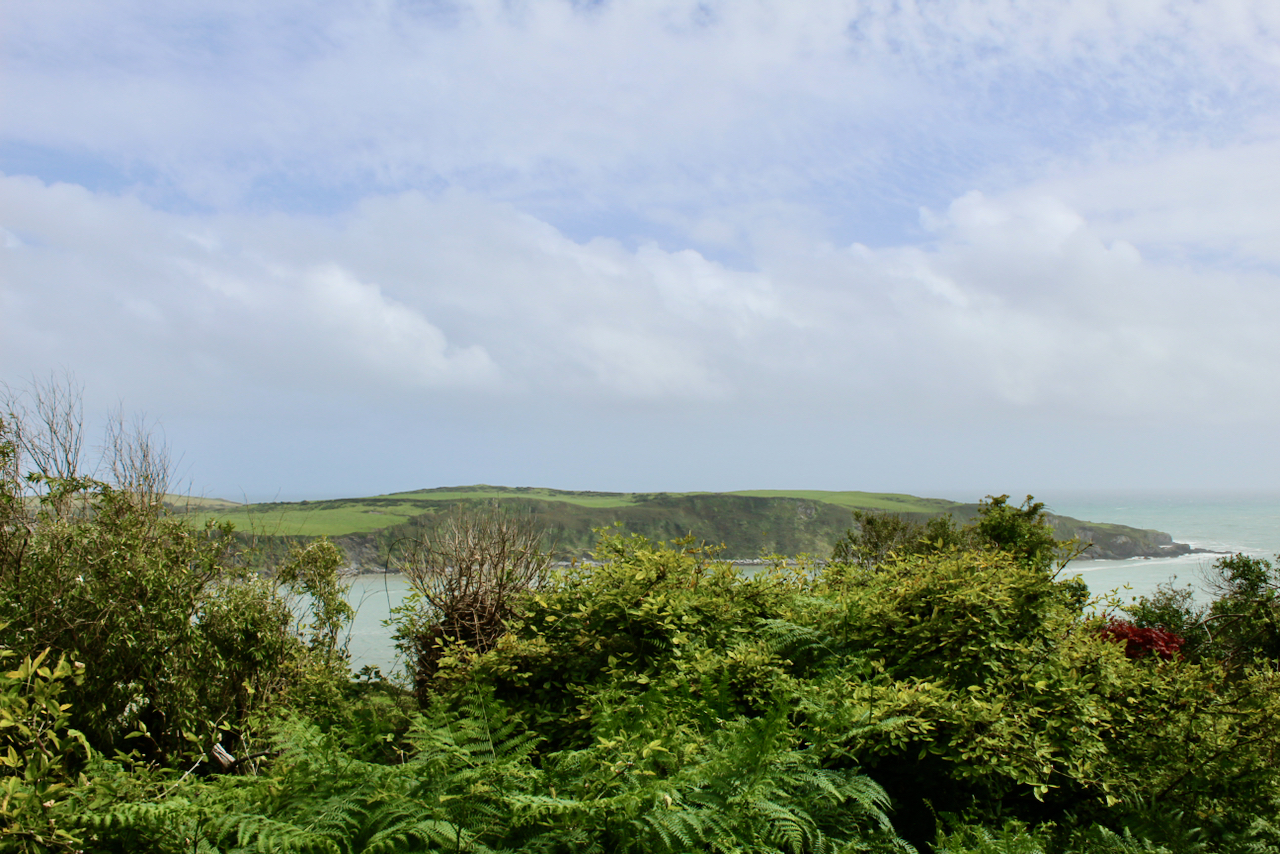
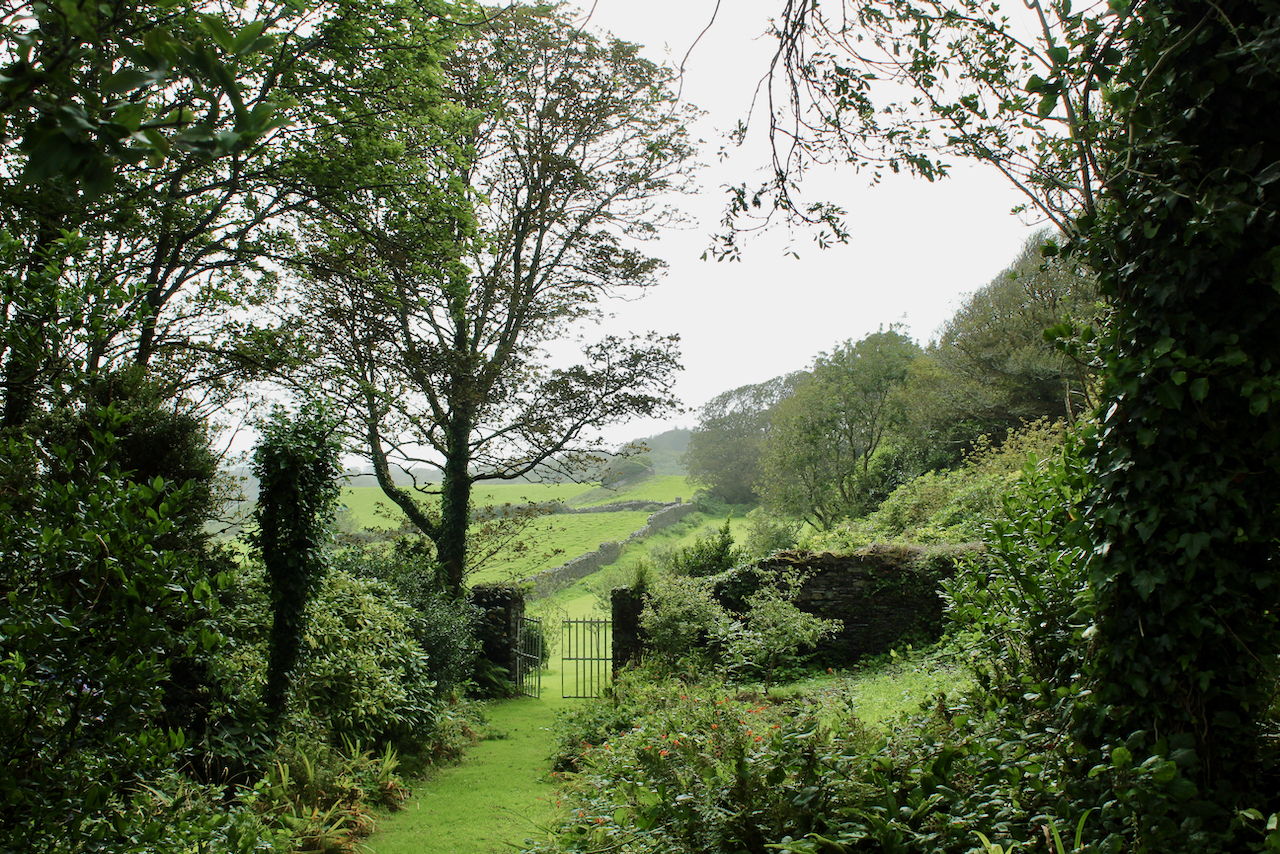
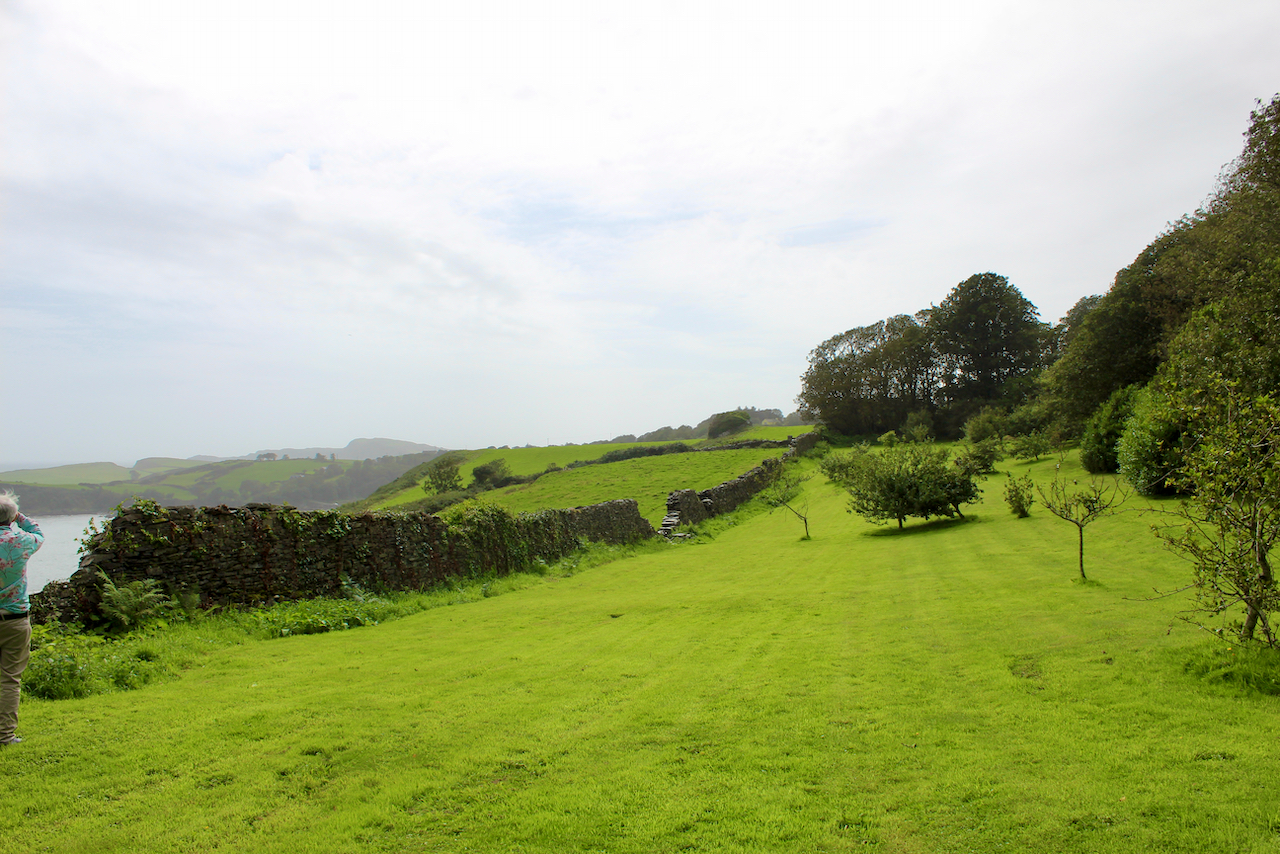
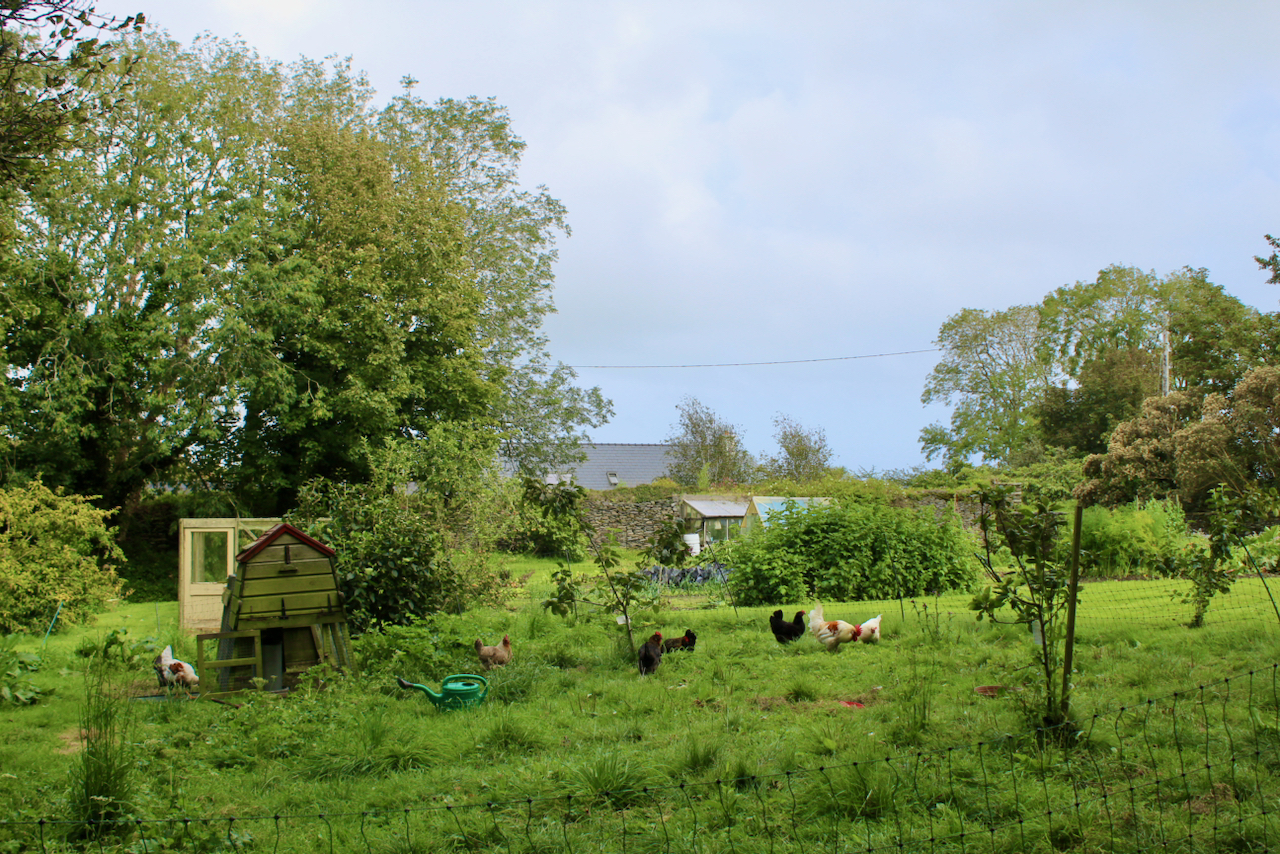
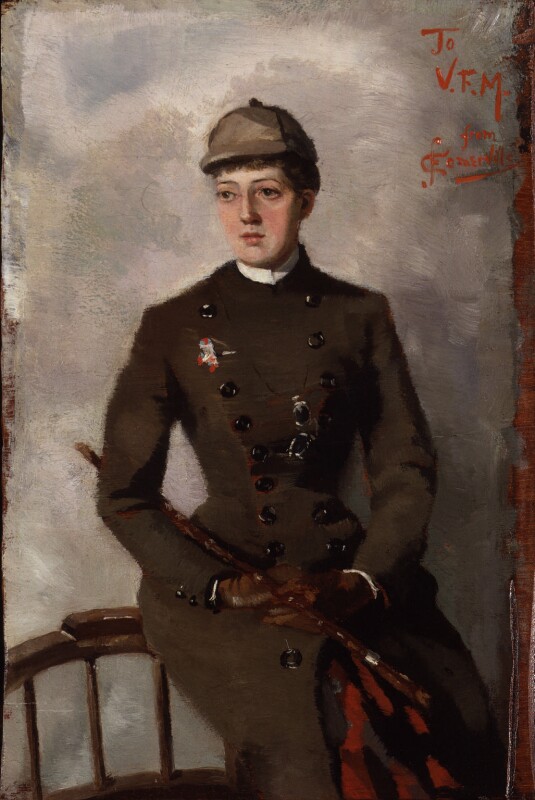
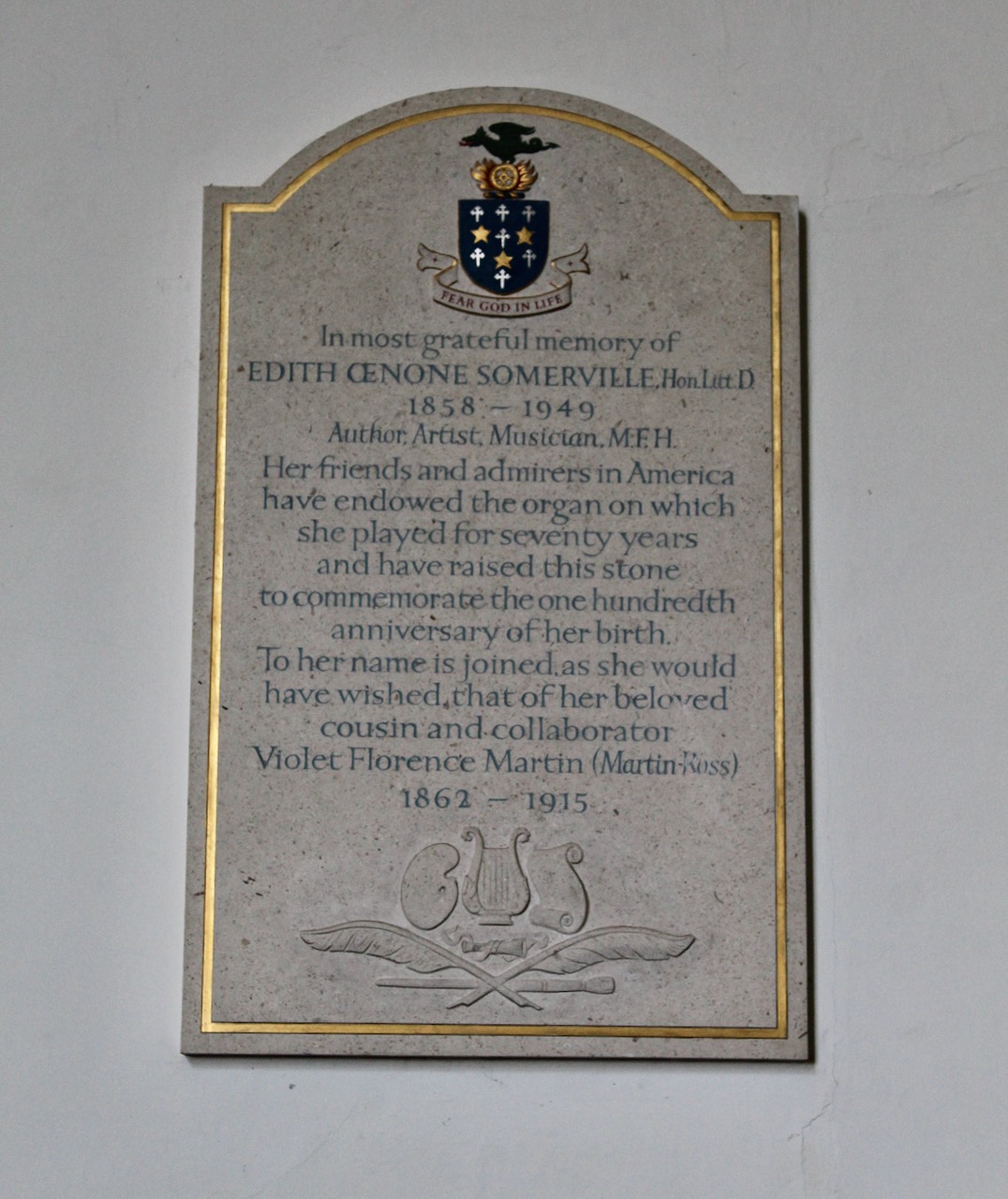
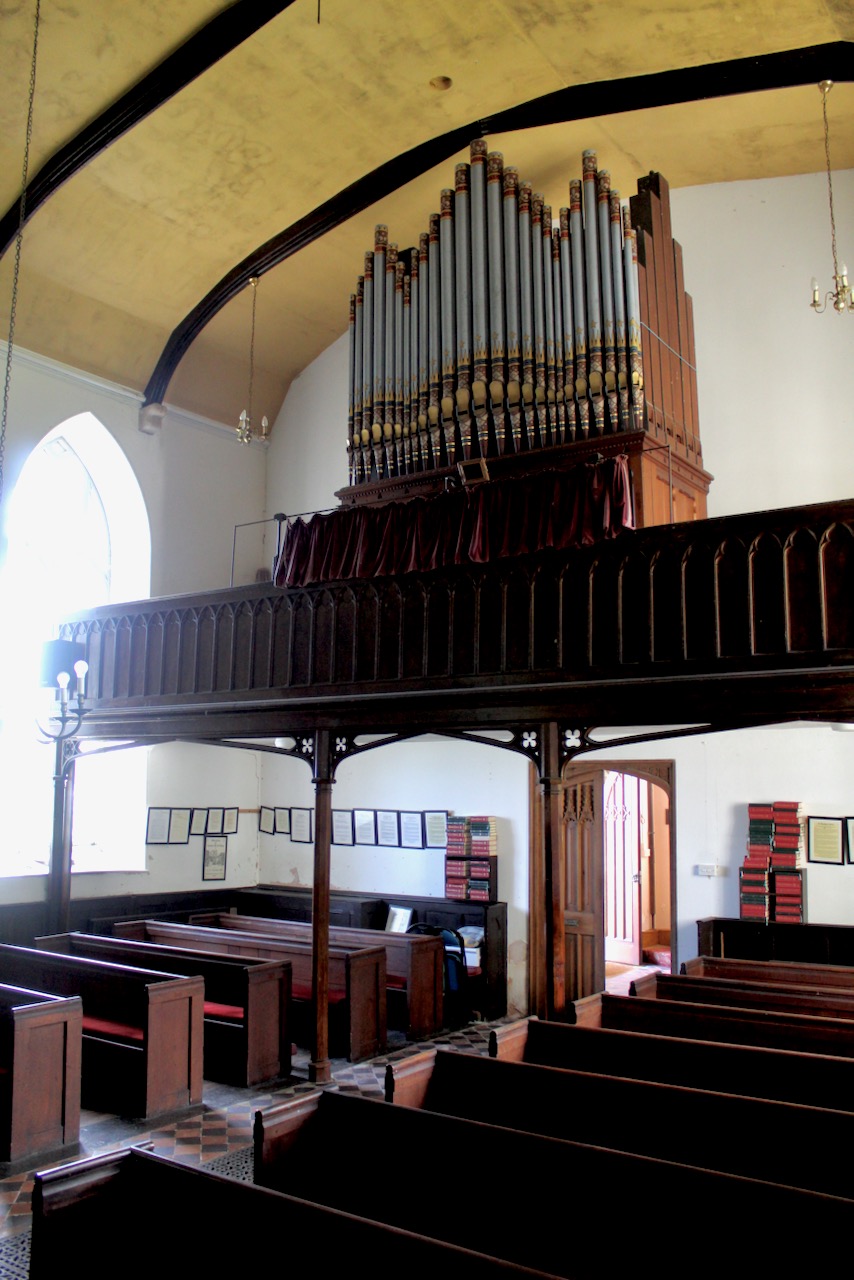
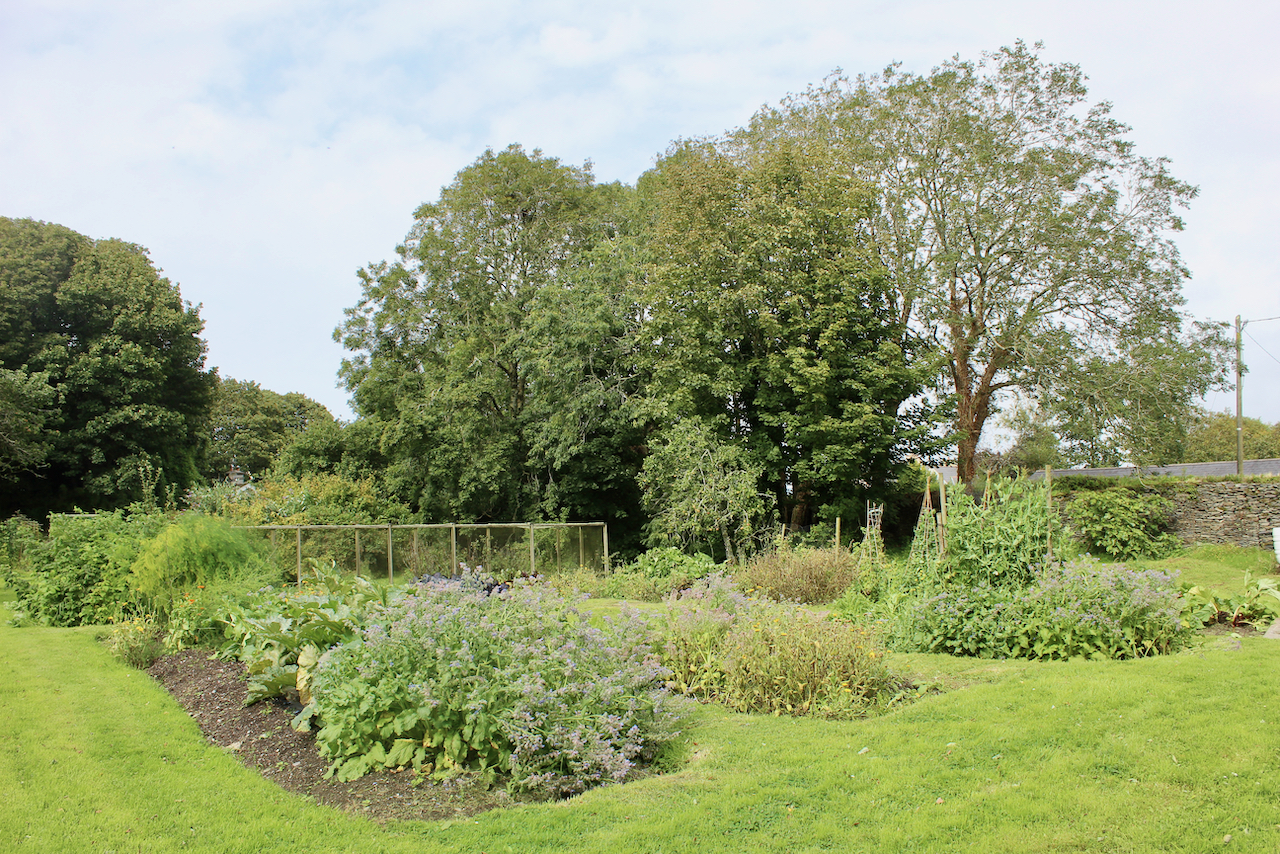
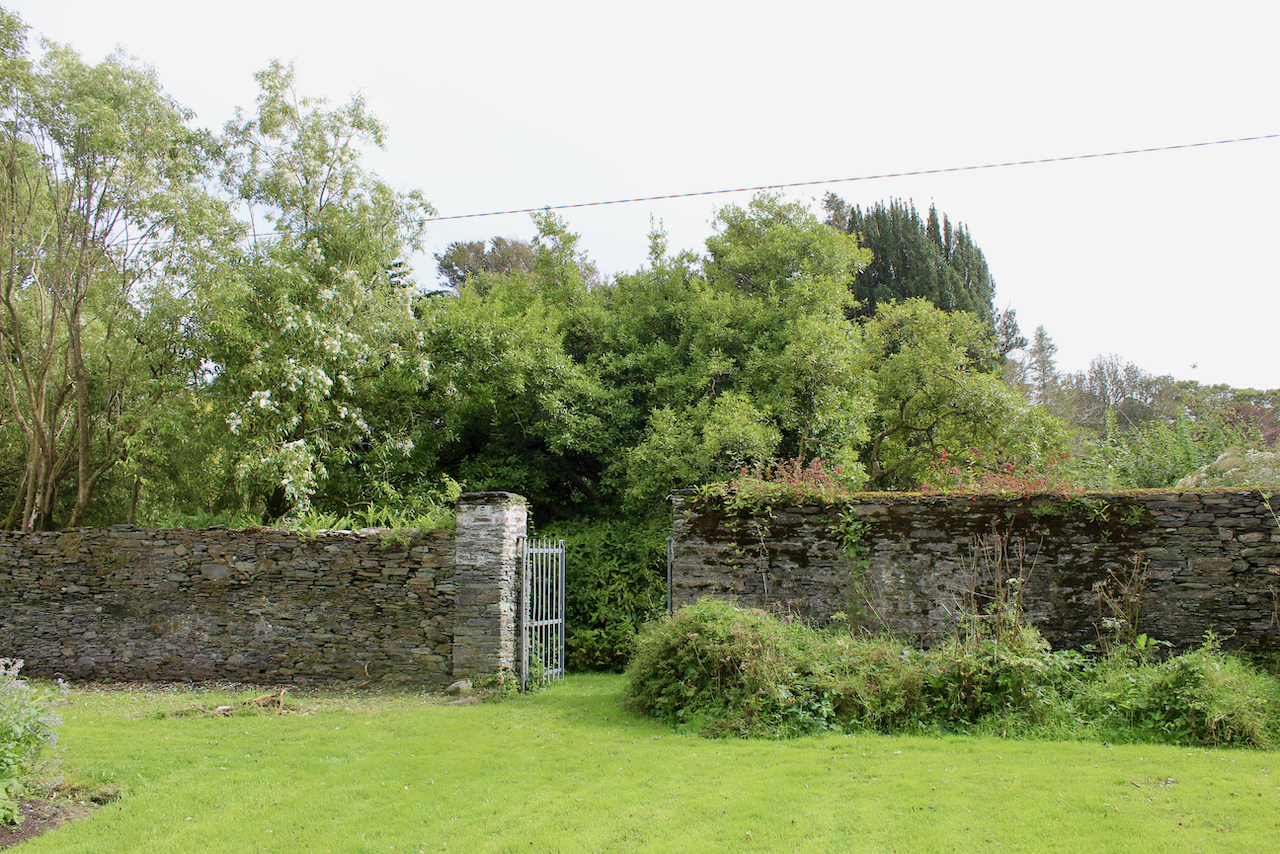
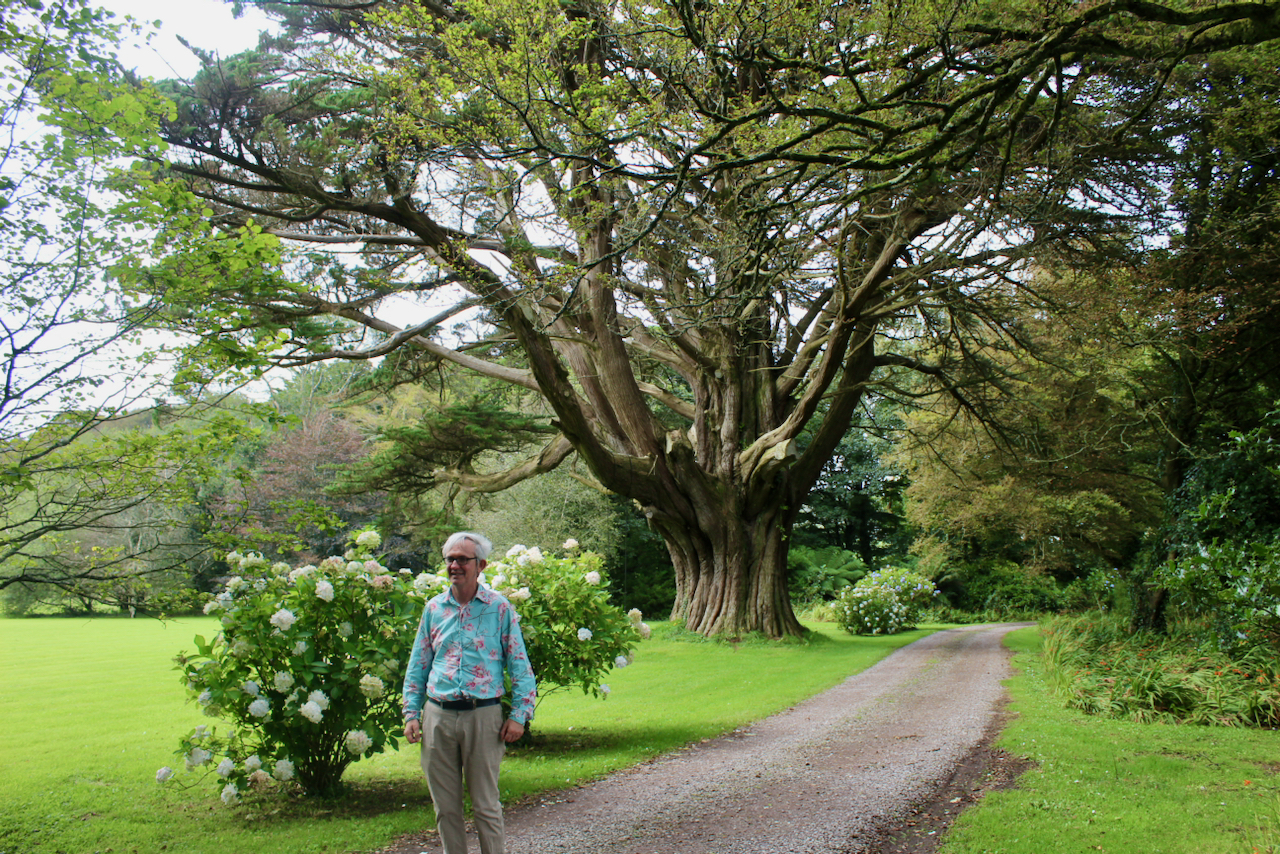
 Irish Historic Houses