Bence-Jones, Mark. A Guide to Irish Country Houses (originally published as Burke’s Guide to Country Houses volume 1 Ireland by Burke’s Peerage Ltd. 1978); Revised edition 1988 Constable and Company Ltd, London.
p. 82. “(Boyle, Cork and Orrery, E/PB) A fine house built 1661 to his own design by the 1st Earl of Orrery, who at the same time developed the nearby town which is named Charleville after Charles II. The house stood on one side of a fortified enclosure, it had extensive gardens and a park. It was burnt 1690 during the Williamite war by the troops of Berwick and not rebuilt.”
Mark Bence-Jones writes in 1988 of Castle Martyr in A Guide to Irish Country Houses:
p. 72. “(Boyle, Cork and Orrery, E/PB; Boyle, Shannon, E/PB; Arnott, Bt/PB) Originally an old castle of the FitzGeralds, Seneschals of Imokilly, to which an early C17 domestic range was added by Richard Boyle, the “Great” Earl of Cork, who bought it from Sir Walter Raleigh, to whom it had been granted, along with other confiscated Geraldine estates. Having been damaged during the Civil Wards, it was repaired and made “English like” by Lord Cork’s third son, 1st Earl of Orrery, to whom it had passed; only to suffer worse damage in the Williamiate War, after which it was left a ruin, and a new house built alongside it early in C18 by Henry Boyle, who became Speaker of the Irish House of Commons and eventually 1st Earl of Shannon.“
Richard Boyle, 1st Earl of Cork (1566-1643) Date c.1630, courtesy of National Gallery of Ireland.Castlemartyr, courtesy of Castlemartyr Resort facebook page.
Roger Boyle (1621-1679) 1st Earl of Orrery’s son Roger (1646-1682) succeeded as 2nd Earl of Orrery. Another son, Henry (1646-1693), gave rise to the Earls of Shannon. His son Henry (1682-1764) was created 1st Earl of Shannon.
The house was greatly enlarged by 2nd Earl between 1764/71, and further remodelled in late-Georgian period. While giving it an abnormally long facade, the subsequent additions did not take away from the house’s early C18 character, beign on the same scale and in the same style as the original building. Entrance front of two storeys and 17 bays, consisting of a five bay recessed centre with a giant pedimented portico between projecint wings, the forward-facing one bay ends of which are prolonged by a further five bays on either side. The ends of the projecting wings on either side of the centre are framed by rusticated pilasters, and formerly had Venetian windows in their lower storey, which have now been made into ordinary triple windows; there is also a rusticated pilaster at either end of the facade. The front is unusual in having three entrance doorways, of similar size, one under the portico and one in the centre of the five outer bays on either side; originally these doorways had plain architraves, but they were replaced by rusticated doorcases early this century. High-pitched, slightly sprocketed roofs. Irregular garden front; range of three bays on either side of a curved central bow, then a four bay range set slightly back with a balustraded colonnade of coupled Doric columns along its lower storey, then a range set further back again, of the same height as the rest of the facade but of one storey only, with three tall windows. Long, narrow and low-ceilinged hall with bifurcating wooden staircase at one end; late-Georgian frieze. A wide pilastered corridor runs from the staircase end of the hall, opening into a series of reception rooms along the garden front’ they are of modest size, low-ceilinged and simply decorated. In contrast to them is the magnificent double cube saloon or ballroom at the opposite end of the hall., which rises the full height of the house and is lit by the three tall windows in the single-storey part of the garden front. It has a coved ceiling with splendid rococo plasterwork in the manner of Robert West – birds, swags, flowers, foliage and cornucopiae in high relief – and a doorcase with fluted Ionic columns and a broken pediment. This room was one of 2nd Earl’s additions; it was finished by 1771, when it was seen by Arthur Young, who considered it to be the best room he had seen in Ireland. It certainly rates among the dozen or so finest Irish country house interiors; or anyhow whould have done when it had its chimneypiece and its original pictures and furnishings. The entrance front of the house overlooks a sheet of water which is part of the remarkable artificial river made ante 1750 by 1st Earl; it winds its way between wooded banks through the demesne and round the neighbouring town of Castlemartyr; broad and deep enough to be navigable by what was described in C18 as “an handsome boat.” The entrance gates from the town are flanked by tall battlemented walls shaped to look like Gothic towers; from the side they reveal themselves to be no more than stage scenery. Castle Martyr was sold early in the present century to the Arnott family; it was subsequently re-sold and is now a Carmelite College.”
Castlemartyr, courtesy of Castlemartyr Resort facebook page.Castlemartyr, courtesy of Castlemartyr Resort facebook page.Roger Boyle (1646-1682) 2nd Earl of Orrery, Attributed to Garret Morphey, courtesy Bonhams 2009.Mary Sackville (1637-1679), Countess of Orrery later Viscountess Shannon (d.1714) by Godfrey Kneller courtesy of National Trust Knole. She married Roger Boyle, 2nd Earl of Orrery.Lady Mary Boyle nursing her son Charles, by Godfrey Kneller (1646-1723) Adams auction 18 Oct 2022. I think this could be Mary née Sackville (1637-1679) who married Roger Boyle 2nd Earl of Orrery. Her son Charles Boyle (1674-1731) became the 4th Earl of Orrery.Henry Boyle 1st Earl of Shannon by Stephen Slaughter, in Ballyfin Demesne, courtesy of Parliamentary Art Collection.
Note that Henry Boyle (1682-1764), 1st Earl of Shannon, who owned Castlemartyr, also owned a townouse at 11 Henrietta Street in Dublin. See Melanie Hayes’s wonderful book The Best Address in Town: Henrietta Street, Dublin and its First Residents, 1720-80 published by Four Courts Press, Dublin 8, in 2020.
The Buildings of Ireland. Cork City and County. Frank Keohane. Yale University Press: New Haven and London. 2020.
The fortified houses of the late C16 and early C17 constitute a bridge between the medieval tower house and the modern mansion. They were built by old Norman families, at Castle Lyons and Ightermurragh (Ladysbridge); by city merchants, such as the Archdeacons at Monkstown; by English settlers, at Baltimore, Coppinger’s Court (Rosscarbery) and Mallow; and by Gaelic chiefs, at Coolnalong (Durrus), Mount Long (Oysterhaven), Kanturk, Dromaneen (Mallow) and Reendiseart (Ballylickey). Twenty-two such houses survive in Cork.
In comparison to tower houses, these houses are better lit, have thinner walls, lack vaults, and feature timber floors and staircases as well as integral fireplaces. They are also notably symmetrical in plan and elevation, and some, such as Kanturk, incorporate proto-classical features. They generally retain some defensive features, such as door yetts, gunloops, bartizans and crenellated parapets, [p. 18] although their wall-walks were not all continuous, and in cases such as Mount Long and Monkstown were barely accessible. The other notable feature is the use of towers or turrets, influenced no doubt by the Elizabethan fashion for a quasi-military appearance derived from an earlier chivalric age. The arrangement of the towers gives rise to distinctive plan-forms: U plan (Coolnalong), Y-plan (Mallow and Coppinger’s court), L-plan (Dromaneen (Mallow) and Mossgrove (Templemartin), cross-plan (Kilmaclenine, Ightermurragh), X-plan (Kanturk, Monkstown, Mount Long, Aghadown), Z-plan (Ballyannan (Midleton), and T-Plan (Reendiseart). Baltimore, Carrigrohane, Castle Lyons, Myrtle Grove (Youghal) and Castlemartyr aer simple rectangular blocks. A number of Jacobean bawns with circular corner towers also survive, at Ballinterry (Rathcormac), Dromiscane (Millstreet), Dromagh, Clonmeen (Banteer) and Mossgrove.”
The Buildings of Ireland. Cork City and County. Frank Keohane. Yale University Press: New Haven and London. 2020.
p. 27. Of mid-C18 Palladian interiors, good representative examples with panelled dados, lugged architraves, fielded panelling and chunky cornices are found at Coole Abbey House, Assolas, Cloghroe, Kilshannig, and Blackrock House. Curiously, the heavy Palladian lugged architrave remained in use in the county long after it fell out of fashion elsewhere. At Lisnabrin, Dunkathel, Burton, Rockforest and Muckridge, the form is encountered in late C18 Neoclassical interiors, suggesting an innate conservatism among local joiners. The finest joinery in most houses is reserved for the staircase, and in many cases these have survived. The best early C18 staircases, at the Red House and Annes Grove, have alternating barley-twist and columnar balusters, big Corinthian newel posts, ramped handrails and carved tread-end brackets. Mount Alvernia (Mallow), Carrigrohane and Cloghroe all have good mid-C18 staircases of a similar type; that at Lota is exceptional in its use of mahogany and for its imperial plan. Good Neoclassical staircases, geometrical in form with delicate ironwork balustrades, survive at Maryborough, Newmarket Court and Castle Hyde; the destruction of those at Vernon Mount is a particularly sad loss.
The best early plasterwork is that of the Swiss-Italian brothers Paolo and Filippo Lafranchini at Riverstown, where highly sculptural late Baroque figurative ornament is applied to the walls and ceilings of the Saloon… Filippo alone decorated two rooms at Kilshannig, blending late Baroque figures with lighter acanthus arabesques and putti. Rococo plasterwork featuring scrolling acanthus and birds comparable to the Dublin school of the 1760s is encountered in the Saloon at Castlemartyr, and at Maryborough. At Laurentium (Doneraile) and the Old College (Youghal), it is rather more hesitant. For the most part, stucco workers remain anonymous, so it is a happy circumstance that Patrick Osborne’s accomplished work at the former Mansion House at Cork is recorded. He also probably worked at Lota, as well as at Castle Hyde. Good Neoclassical plasterwork in low relief and employing small-scale classical motifs of the type made fashionable by Robert Adam and James Wyatt is found at Maryborough, at Old Court House (Rochestown), and at the Old College and Loreto College at Youghal.
The castle from which Castlemartyr takes its name was likely built in the middle of the 15th century when the lands in this part of the country passed into the control of the FitzGeralds of Imokilly. For more than 100 years from 1580 it was subject to successive sieges and assaults; in 1581, for example, Thomas Butler, Earl of Ormond captured the building and hanged the ancient mother of John Fitzedmund FitzGerald from its walls. Castlemartyr became part of Sir Walter Raleigh’s estate which he then sold to Richard Boyle, first Earl of Cork in 1602. It is likely that the Boyles built the two-storey manor with tall gable-ended chimney stacks that runs behind the older castle. But the property had to withstand attack again during the Confederate Wars of the 1640s and once more in 1690, after which it was finally abandoned to become a picturesque ruin while a new residence went up on a site to the immediate west.
[note from Jane Ohlmeyer, appendix iv, Richard Boyle in 1660 was Earl of Cork, peer of townland Youghal.]
Seat of the Earls of Shannon in the 18th and 19th centuries, built in the early 18th century by the 1st Earl of Shannon and enlarged by his son the 2nd Earl in the 1760s. At the time of Griffith’s Valuation it was valued at £150. Sold to the Arnott family in the early 20th century, it later became a Carmelite college and now functions as a hotel.
Capella Castlemartyr House, CASTLEMARTYR, Castlemartyr, County Cork
Castlemartyr, County Cork, photograph courtesy of Natinal Inventory.
Detached twenty-five-bay two-storey former country house, built c. 1730, enlarged and remodelled, 1764-71, various subsequent alterations, later used as convent and school, now in use as hotel. Comprising five-bay recessed central block with integral pedimented portico to front (north) elevation having ashlar Doric columns and rendered pediment, flanked by six-bay block to west and seven-bay block to east, with projecting three-bay and four-bay terminating blocks. Full-height bow and balustrated colonnade comprising paired ashlar Doric columns with rendered entablature to rear. Sprocketed hipped slate roofs with dressed limestone chimneystacks, cast-iron rainwater goods and render frieze and cornice. Lined-and-ruled rendered walls with rusticated limestone pilasters. Square-headed openings with cut limestone sills and six-over-six pane timber sliding sash windows, those to ground floor of bays flanking central portico having tripartite six-over-six pane flanked by two-over-two pane windows. Square-headed openings to front elevation with carved limestone Gibbsian surrounds, cornices and timber panelled doors. Carved limestone balustrade to front of main entrance. Retains interior features.
Appraisal
House is unusual in plan and elevation owing to alterations running over three centuries. Exceptionally wide front façade having rarity of three entrances. Variation in roof line adds interest to the façade, as too do well-executed pilasters and pediments. Built by Henry Boyle, Speaker of the Irish House of Commons, Ist Earl of Shannon, it was enlarged and remodelled in 1764-71 by the second Earl. The Ballroom completed in 1771, was described as one of finest rooms in Ireland by Arthur Young. Intricate and well crafted Rococo plasterwork adds much decorative interest to interior and is attributed to the Franchini brothers. Continues to have strong influence on local village.
Castlemartyr, County Cork, photograph courtesy of Natinal Inventory.Castlemartyr, County Cork, photograph courtesy of Natinal Inventory.Castlemartyr, County Cork, photograph courtesy of Natinal Inventory.Castlemartyr, County Cork, photograph courtesy of Natinal Inventory.Castlemartyr, County Cork, photograph courtesy of Natinal Inventory.Castlemartyr, County Cork, photograph courtesy of Natinal Inventory.
THE EARLS OF SHANNON OWNED 11,232 ACRES OF LAND IN COUNTY CORK
This is a branch of the noble house of BOYLE, Earls of Cork and Orrery, springing from
THE HON HENRY BOYLE (1682-1764), second son of Roger, 1st Earl of Orrery, whose son, by the Lady Mary O’Brien, daughter of Murrough, 1st Earl of Inchiquin,
HENRY BOYLE, of Castle Martyr, being sworn of the Privy Council in Ireland, filled some of the highest political offices in that kingdom (Speaker of the house of commons, Chancellor of the Exchequer, Lord Justice etc).
He was elevated to the peerage, in 1756, as Baron Castle Martyr, Viscount Boyle, and EARL OF SHANNON.
His lordship married firstly, in 1715, Catherine, daughter of Chidley Coote, of Killester, by whom he had no issue; and secondly, in 1726, the Lady Henrietta Boyle, youngest daughter of Charles, 3rd Earl of Cork, and had issue,
RICHARD, his successor; Henry; William; Charles; Robert; Juliana.
His lordship was succeeded by his eldest son,
RICHARD, 2nd Earl (1728-1807), KP, PC, who, having filled some high political offices, and being sworn of the Privy Council, was enrolled amongst the peers of Great Britain, in 1786, as Baron Carleton, of Carleton, Yorkshire.
His lordship was a Knight Founder of the Most Illustrious Order of St Patrick, 1783.
He wedded, in 1763, Catherine, eldest daughter of Mr Speaker Ponsonby, of the Irish house of commons, and had issue,
HENRY, his successor; Catherine Henrietta.
His lordship was succeeded by his only son,
HENRY, 3rd Earl (1771-1842), KP, PC, who espoused, in 1798, Sarah, fourth daughter of John Hyde, of Castle Hyde, and had issue,
RICHARD, his successor; Henry Charles; Robert Francis; Catherine; Sarah; Louisa Grace; Jane; Elizabeth; Charlotte Anne.
More superlative rococo plasterwork by Robert West, this time in the double cube former ballroom of Castlemartyr, County Cork. The room was added to the existing house in the second half of the 1760s by Richard Boyle, second Earl of Shannon. The house remained in the family until the beginning of the last century and more recently has become a hotel. Anyone in the area should remember that at present this room contains many of the original Boyle portraits which formerly hung here and have now temporarily returned to their former home.
Castlemartyr Castle lies in the town of Castlemartyr, in County Cork in Ireland.
After James, Earl of Ormond, governor of Imokilly, appointed a local seneschal for the area in 1420, Castlemartyr was built to serve as the seneschals’ seat.
It was captured by Sir Henry Sidney in 1569, after the garrison abandoned it during the night following an exchange of cannonfire. It was later granted to Sir Walter Raleigh only to be recovered by the seneschal of the time, John FitzEdmund FitzGerald, only to be attacked again in 1579 by the Earl of Ormond, who hanged John’s mother outside the walls. John finally submitted in 1583 and died in Dublin Castle in 1589.
During the wars of the 1640s Castlemartyr Castle was captured by Lord Inchiquin but then fell to a raiding party led by Sir Percy Smith, who burnt the castle to prevent it being used as a base for the Irish Confederate forces. It was repaired in the 1650s and inhabited by Lord Broghill, later Earl of Orrery, until his death in 1679. During the civil war it was captured by the Irish, only to be retaken by the Williamites in 1690. This left the castle badly damaged and it was subsequently abandoned and fell into disrepair.
During the 18th century the castle became a farm- and coachyard for a newly build manor to the west. In 2007 this manor opened as the Castlemartyr Resort, a luxury spa and 5-star hotel.
Castlemartyr Castle was a roughly rectangular castle with a 5-storey square keep at its eastern corner. The large chimney stacks were part of a 17th century range built against the inner wall. There is a smaller tower at the northern corner of the enclosure.
A nice castle ruin. It can be visited as a guest of the resort, although the interior of the keep itself can not be visited.
Paddy Rossmore. Photographs. Edited by Robert O’Byrne. The Lilliput Press, Dublin 7, 2019.
“As its name indicates, Castlemartyr was originally a castle, built around 1420 on the site of an earlier fortification on the instructions of James FitzGerald, sixth Earl of Desmond. During the rebellions instigated against the English crown by this family from 1569 onwards, Castlemartyr was occupied by John FitzEdmund FitzGerald but following his capture and subsequent death in 1589, all the land in this part of the country passed into the possession first of Sir Walter Raleigh and then of Richard Boyle, the Great Earl of Cork. He added a domestic range to the old castle, and following damage during the Confederate Wars of the 1640s, this was repaired and made “English like” by Lord Cork’s third son, Roger Boyle, first Earl of Orrery. Further damage was inflicted on teh building at the time of the Williamite Wars, after which the castle was left a ruin and a new residence built for the Boyles on a site to the immediate west. This was gradually extended during the eighteenth century, not least by Henry Boyle who, after serving for twenty years as Speaker of the Irish House of Commons, was elevated to the peerage as teh first Earl of Shannon.
The facade of Castlemartyr is exceptionally long, of seventeen bays and two storeys, and centred on a five bay recessed entrace with a great pedimented portico. Inside, the house is rather plain except for a superb double-cube saloon added by the second earl soon after his succession to the title. It has a wonderful rococo ceiling in the manner of stuccodore Robert West.
Castlemartyr was sold by the Boyles at the start of the last century, and for many decades was, like so many other country houses, used as an educational establishment by the CAtholic church. More recently it has become an hotel, the saloon converted into a bar.
Castlemartyr, County Cork, photograph courtesy of Robert O’Byrne.
The Earls of Shannon are a branch of the Boyle family, descendants of Richard Boyle, the Great Earl of Cork. The title dates back to 1756 when Lord Cork’s great-grandson Henry Boyle, after a remarkably successful political career which saw him sit on the Irish privy council, serve as chancellor of the exchequer and Speaker of the Irish House of Commons for almost 23 years, was created the first Earl of Shannon. During that period and in the years prior to his death in 1764, he also found time to carry out many other duties, not least looking after the Irish estates of his cousin Richard Boyle, the architect Earl of Burlington, as well as his own property in Castlemartyr, County Cork.
For much of the Middle Ages, Castlemartyr was under the authority of the powerful FitzGerald family, who in 1420 were made governors, or seneschals, of Imokilly (a historic barony that covers a substantial area including Youghal, Cloyne and Midleton). Some twenty years later, Maurice FitzGerald chose to settle in Castlemartyr and erected a substantial tower here. Inevitably, such a prominent building was attacked on more than one occasion, being captured by Sir Henry Sidney in 1569 and again in 1581 by the 10th Earl of Ormond who is said to have hanged the mother of the castle’s owner,John FitzEdmund FitzGerald, from its walls. Although the building was restored and considered extended in the 17th century, further assaults occurred: it was burnt by Lord Inchiquin in 1645, plundered in 1688 and then stormed and burnt by Williamite forces two years later. Not surprisingly, the castle, or what remained of it, was thereafter abandoned and left to fall into a picturesque ruin. At some point in the early 18th century, the future first earl – whose family had been given the property in 1665 – embarked on construction of a new house to the immediate west of the old one, but little information exists about when this work started and what form it took. Further additions and alterations followed over the next two centuries, so that today Castlemartyr is long and low, the centre of the facade marked by a two-storey pedimented limestone portico with Tuscan columns, much the most satisfactory feature of the building. The entrance front likewise shows evidence of regular modifications being made, with a four-bay centre block, a nine-bay wing to the east centred on a bow, and a recessed four-bay block to the west; the loggia here replaced a conservatory in the early 1900s. The demesne was also extensively developed by the first earl and then his heir, the latter described by Arthur Young in 1776 as ‘one of the most distinguished improvers in Ireland.’ The grounds had been extensively planted with trees, some of which survive still, as does the ‘river’ which was created by diverting the Womanagh river to run through a channel cut west of its natural bed.
In 1907 Castlemartyr was sold to the Arnott family, but was then acquired by another owner just a decade later, and in 1929 was bought by members of a Roman Catholic religious order, which used the house as a boarding school. This closed in 2004 and since then, further substantial additions have been made to the site which now operates as an hotel.
Taken during the last decades of the 19th century, today’s photographs show the property as it looked when still owned by the Boyles. In the first group, the conservatory still occupies a site on the east side of the garden front, since it was only replaced by a balustraded loggia during the Arnotts’ short tenure. The pictures therefore provide an insight into the house’s appearance and character prior to the place changing hands and purpose several times over the past 115 years.
Castlemartyr, County Cork, photograph courtesy of Robert O’Byrne.
After Monday’s post about Castlemartyr, readers might be interested in seeing some old photographs of the house’s interior when it was still owned and occupied by the Boyles, Earls of Shannon. The pictures date from the late 19th/early 20th century, and were taken by Nellie Thompson, wife of the sixth earl. The two above show the saloon as it was then decorated, filled with a vast quantity of furniture including a grand piano and a billiard table. The two below reflect the family’s travels overseas and what they had collected: prior to inheriting his title and estate in 1890, for example, the sixth earl had been living in Canada where he served as a Mountie. What most immediately strikes any viewer of these images is how dark and cluttered were the rooms, how filled with furnishings and fabrics, all competing and contrasting with each other. An insight into a different aesthetic sensibility from that of our own age.
Bence-Jones, Mark. A Guide to Irish Country Houses (originally published as Burke’s Guide to Country Houses volume 1 Ireland by Burke’s Peerage Ltd. 1978); Revised edition 1988 Constable and Company Ltd, London.
p. 24. “[Boyle, Cork and Orrery, E/PB; Corker sub. Corcor/LGI1912] A castle built towards the end of C16 by the FitzGeralds of Imokilly, enlarged 1602 by Sir John FitzEdmund FitzGerald [b. 1555]; confiscated by Cromwell; occupied for a period after the Restoration by William Penn [1644-1718], of Pennsylvania, when he was managing his father’s estate at Shanagarry, nearby; subsequently occupied by 1st Earl of Orrery [Roger Boyle (1621-1679)], presumably while he was repairing and improving his nearby seat of Castle Martyr; acquired towards end of C17 by Lt-Col Edward Corker; sold by him ante his death 1734 to Hugh Lumley, who added some new buildings to the castle some time ante 1750. As a result of Lumley’s additions, Ballymaloe is now predominantly early C18 in character; consisting of a plain two storey six bay range with an old tower built into one end of it, and a three storey gable-ended range at right angles to the two storey range, and joined to it by a return; forming a house on a “L”- plan. Some of the windows have thick early C18 glazing-bars. A staircase with thin turned balusters rises from the inner end of the hall, which has a ceiling with simple Adamesque decoration. The large room to the right of the hall has simple Adamesque frieze. Ca 1800, Ballymaloe was the residence of the Penn Gaskell family, who were descended from William Penn. In 1814, it was the residence of William Abbott. In 1837, it was owned by a Mr Forster; in 1908, it was occupied by William Litchfield. Until ca 1947, it was the home of Mr and Mrs J.M. Simpson; since then, it has been the home of Mr and Mrs Ivan Allen.”
Ballymaloe House, 2017, photograph for Failte Ireland, Ireland’s Content Pool. [4]
The website tells us:
“Ballymaloe House is a family run Country House Hotel and restaurant on 300 acres of farmland located in beautiful East Cork countryside. Internationally recognised as the birthplace of Modern Irish Cuisine, Ballymaloe House offers you the very best of Irish hospitality and seasonal locally sourced or homegrown food. A unique Irish Country House experience.”
Ballymaloe House, photograph from National Inventory of Architectural Heritage. [5]
Mark Bence-Jones writes in A Guide to Irish Country Houses (1988):
Ballymaloe House, photograph from National Inventory of Architectural Heritage. (see [5])
The Ballymaloe website elaborates the history:
“Ballymaloe was a castle of the Imokilly Geraldines. Richard FitzMaurice FitzGerald was a son of the Knight of Kerry, who was appointed as Seneschal, or governor, of the area by the Earl of Desmond in 1440. The original castle was probably built by him shortly after that time. By the time of the Desmond rebellion, the occupant was John FitzEdmund FitzGerald who was known as ‘the Queen’s John FitzEdmond’ to distinguish him from the Seneschal of the same name who was a leader of the Insurrection and owned nearby Castlemartyr.“
“John FitzEdmund of Ballymaloe castle was an illegitimate son of Edmund by Honor Ni Donagh, ‘a woman of Muskerry’ and was well up in the list of efficient contrivers and gatherers of land of his time. John FitzEdmund appointed himself Sheriff of Cork in 1570 and during the Desmond rising he ‘dyd hang his (legitimate) brother James FitzEdmund’ in 1582. John refused to join O’Neill in 1599 and his lands were devastated, but he survived to be knighted by Mountjoy at Cloyne for his faithfulness in 1602.“
“Despite their differences, the close ties to the Geraldines were apparent when John FitzEdmund’s son, Edmund, was married to Honora, widow of his namesake, the late Seneschal. In 1611 this Edmund died and she was a widow again so old Sir John leased her the lands at a nominal rent before he died the following year aged 85.
“A daughter of her rebellious father, she housed the homeless friars at Ballymaloe. Her son John moved to Ballymaloe where he died in 1640.
“By the time of the Confederate War in 1641, the owner was her grandson, another Edmund and he lost the lands for taking the ‘rebel’ side. They passed to Broghill, (Roger Boyle, son of the Earl of Cork; newly-created Earl of Orrery, but living on a narrow edge of survival since he had escaped a charge of treason in London. Broghill lived at Ballymaloe after his enforced retirement as President of the court of Munster in 1672 before making his last home at Castlemartyr.“
Ballymaloe House, photograph from National Inventory of Architectural Heritage. (see [5])
“By the middle of the 18th Century, the occupier was Abraham Forster, and early in the 19th century, his grandson demolished parts of the old castle. It was he who largely build the house into its present form. Sometime later it passed to the Litchfield’s, and in 1924 Simpson, a nephew of the latter family came into possession. Mr. Simpson sold the house and farm to Myrtle and Ivan Allen in 1948 and it remains owned by the Allen family to this day.“
Ballymaloe House, photograph from National Inventory of Architectural Heritage. (see [5])
“Myrtle and Ivan Allen bought Ballymaloe in 1948 from the Simpson family. The Simpsons were known in the area for their parties and Myrtle and Ivan had, in fact, met at Ballycotton Lifeboat fundraising dinner at Ballymaloe a few years previously. Ivan had wide farming interests, growing tomatoes and cucumbers in glasshouses and mushrooms in dark wooden sheds at nearby Kinoith as well as managing the orchards there.
“However, Ivan longed for a mixed farm and when Ballymaloe came up for sale he decided to buy it. Myrtle and Ivan spent the next sixteen years farming and bringing up their children. The farm was a success producing milk, butter, cream, eggs, home raised pork and veal as well as fruit and vegetables. Myrtle became highly knowledgeable about cooking their produce and began writing a cookery column in the Irish Farmers Journal.“
“In 1964, Myrtle, encouraged by Ivan, decided to open Ballymaloe as a restaurant. The children were growing up and she could see a different future ahead of her:
“On a winter’s day I sat by the fire alone and wondered what I would do in this big house when they were all grown up – Then I thought about a restaurant.”
“Her aim was to emulate the best Irish Country House cookery. Myrtle and Ivan then placed an advert in the Cork Examiner: Dine in a Historic Country House. Open Tuesday to Saturday. Booking essential. Phone Cloyne 16.
“So Myrtle scrubbed down the kitchen table, and with the help of two local women she began. They cooked on an Aga at first and she was helped front of house by Ivan and their daughter Wendy. Their shepherd Joe Cronin ran the bar.
“The food was good and the restaurant flourished. They cooked using their own produce- unpasteurised milk and cream, veal, pork, homemade sausages and black puddings, herbs, fruit and vegetables. Ivan went to Ballycotton every day for the fresh catch. Local beef and lamb came from Mr.Cuddigan, the butcher in Cloyne. Myrtle also encouraged local farmers’ wives to bring in their surplus produce and blackberries, elderflowers and watercress were brought in by children for pocket money.
“Although times have changed at Ballymaloe, the essential spirit of the place is rooted in these improvised beginnings and in the relationship of the farm to the table which underlies the elegance of Irish Country House cooking.“
Ballymaloe House, photograph from National Inventory of Architectural Heritage. (see [5])
The National Inventory describes it: “Detached six-bay two-storey country house, built c. 1780, with four stories to rear (north) elevation, three bays to rear forming central projection and having single-storey additions to rear. Tower house, c.1450, incorporated into west elevation and taller L-plan three-storey house c. 1730 to east, five-bay two-storey hipped-roofed block with slightly projecting east bay to north-east corner…The fascinating multiphase construction is evident in the variety of styles and blocks which form the house. Formerly the seat of the FitzGeralds of Imokilly, it was enlarged by Sir John FitzEdmund FitzGerald. It was occupied at one time by William Penn of Pennsylvania and by First Earl of Ornery. Its impressive size is enhanced by fine proportions and by the retention of various timber sliding sash windows. The central doorcase and large petal fanlight form the main artistic focus and enhance the impressive and symmetrical façade. The other blocks add tremendous context. The tower house incorporated into the main house is a very notable archaeological feature. The house retains much early fabric and forms a group with related outbuildings and gate lodge.” (see [5])
Ballymaloe House, photograph from National Inventory of Architectural Heritage. (see [5])Ballymaloe House, photograph from National Inventory of Architectural Heritage. (see [5])Ballymaloe House, photograph from National Inventory of Architectural Heritage. (see [5])Ballymaloe House, photograph from National Inventory of Architectural Heritage. (see [5])Ballymaloe House, photograph from National Inventory of Architectural Heritage. (see [5])
Detached six-bay two-storey country house, built c. 1780, with four stories to rear (north) elevation, three bays to rear forming central projection and having single-storey additions to rear. Tower house, c.1450, incorporated into west elevation and taller L-plan three-storey house c. 1730 to east, five-bay two-storey hipped-roofed block with slightly projecting east bay to north-east corner. Main block comprising hipped slate roof with rendered and red brick chimneystacks, terracotta ridge tiles and render eaves course. Pitched slate roof with rendered chimneystacks and clay pots to L-plan section. Rendered walls. Square-headed openings with timber sliding sash windows, six-over-six pane to first floor and nine-over-nine pane to ground floor. Round-headed opening to west elevation with round-headed six-over-six pane timber sliding sash window. Camber-headed openings to rear with three-over-three and six-over-six pane timber sliding sash windows. Lunette windows to east elevation with spoked fanlights. Square-headed openings to east elevation with six-over-six pane timber sliding sash windows. Round-headed door opening to east elevation with spoked fanlight and timber door. Square-headed opening to ground floor, front (south) elevation with fixed pane glazed door. Round-headed opening to south elevation with square-headed timber panelled door with timber surround comprising pilasters and architrave, fixed pane glazed sidelights with petal fanlight above. North-east block comprising hipped slate roof with rendered chimneystacks and cast-iron rainwater goods. Rendered walls with render cornice dividing stories. Square-headed openings with six-over-nine pane timber sliding sash windows and square-headed openings with glazed timber doors. L-plan block comprising hipped and pitched slate roofs with rendered chimneystacks, render copings to gables, overhanging eaves, cast-iron rainwater goods and render and brick eaves course. Rendered walls with render and brick platbands. Square-headed and camber-headed openings, some infilled, some with timber sash windows, six-over-six pane, nine-over-nine pane and six-over-three pane. Rubble limestone walls with crenellations to tower house. Rubble limestone boundary walls with square-profile rubble stone piers to south-east with cut limestone caps and carved limestone ball finials.
Appraisal
The fascinating multiphase construction is evident in the variety of styles and blocks which form the house. Formerly the seat of the FitzGeralds of Imokilly, it was enlarged by Sir John FitzEdmund FitzGerald. It was occupied at one time by William Penn of Pennsylvania and by First Earl of Ornery. Its impressive size is enhanced by fine proportions and by the retention of various timber sliding sash windows. The central doorcase and large petal fanlight form the main artistic focus and enhance the impressive and symmetrical façade. The other blocks add tremendous context. The tower house incorporated into the main house is a very notable archaeological feature. The house retains much early fabric and forms a group with related outbuildings and gate lodge.
Complex of outbuildings, built c. 1790. Multiple-bay two-storey outbuilding to south with rubble stone bellcote to north gable and recent glazed conservatories to east. Pitched slate roof with render eaves course. Bellcote with cut stone coping and round-headed opening. Rubble stone walls to east and rendered walls to west. Square-headed openings with replacement windows. Six-bay single-storey block to east, adjoined by single-storey lean-to, with pitched artificial slate roof, rendered walls, rubble stone to gable. Square-headed openings with fixed timber windows. Camber-arched opening to north with red brick block-and-start surround and voussoirs and fixed window. Four-bay two-storey former outbuilding to south, now in use as shop, with projecting end bay to west and two-bay single-storey extension to east of front (south) elevation . Hipped slate roof, rubble stone walls. Square-headed openings with replacement windows and doors. Gable-fronted single-bay three-storey former gate house, with pitched slate roof, render copings and rendered chimneystack, rendered walls, square-headed openings with replacement windows and round-headed opening with replacement door. Pointed arch carriage-arch attached to south with rendered walls and carved limestone keystone, dated 1701, with inscribed lettering to soffit.
Appraisal
A fine group of outbuildings which form a group with Ballymaloe House to west and further outbuildings and walled garden to south-east. It retain much original form and fabric. The gable-fronted block is of unusual form and is a notable feature, especially in conjunction with attached arch, which retains notable keystone and inscription details including date of 1701, which add interest and context.
also in In an Irish House. edited by Sybil Connolly. Weidenfeld and Nicolson, London, 1988. Entry by Mrs. Ivan Allen.
William Abbot was resident at Ballymaloe in 1814. It was described by Lewis in 1837 as a “very curious old house, built by the Fitzgeralds and forfeited in the war of 1641, it is now the property of Mr Forster” . By the early 1850s John Litchfield [Lichfield] was resident holding the house valued at £48 from Mountifort Longfield. It was the seat of William Lichfield in 1894. It is now the home of the Allen family who run it as a guest house with adjacent shop. Their renowned cookery school is nearby.
Evening at Ballymaloe, County Cork. The oldest part of the building is a mid-fifteenth century tower house constructed by the FitzGeralds of Imokilly: this was enlarged in 1602 by Sir John FitzEdmund FitzGerald. The property was later briefly occupied by William Penn when he was sent to manage his father’s estates in the area, after which it was owned by the first Earl of Orrery. The house was much enlarged on two occasions in the 18th century to assume its present appearance. It also regularly changed hands over several hundred years until being bought by the Allen family who since 1964 have run the place as a restaurant and country house hotel.
The Buildings of Ireland. Cork City and County. Frank Keohane. Yale University Press: New Haven and London. 2020.
Open dates in 2026: Apr 1-Oct 10, Sat-Sun, National Heritage Week, Aug 15-23, 2pm-6pm
Fee: adult €9
2026 Diary of Irish Historic Houses (section 482 properties)
To purchase an A5 size 2026 Diary of Historic Houses (opening times and days are not listed so the calendar is for use for recording appointments and not as a reference for opening times) send your postal address to jennifer.baggot@gmail.com along with €20 via this payment button. The calendar of 84 pages includes space for writing your appointments as well as photographs of the historic houses. The price includes postage within Ireland. Postage to U.S. is a further €10 for the A5 size calendar, so I would appreciate a donation toward the postage – you can click on the donation link.
€20.00
donation
Help me to pay the entrance fee to one of the houses on this website. This site is created purely out of love for the subject and I receive no payment so any donation is appreciated!
A house was first built at Burton Park around 1665 for John Perceval (1629–1665), 1st Baronet. However, this was destroyed and a later house built on its footprint. The house, which was not completed until 1709, was three times the size of the present building, which was remodelled in the late 1800s.
John Perceval, 1st Baronet (1629–1665) engraved by J. Faber (1743).From Anderson, James (1742), Whiston, William, ed., A genealogical history of the house of Yvery, in its different branches of Yvery, Luvel, Perceval and GournayGournay volume 2, London: H. Woodfall.
The house has been in the ownership of only two families: the Percevals and the Purcells. It now houses Slí Eile, and the website tells us:
“In the Irish language, slí eile means ‘another way’ and Slí Eile was set up to provide an alternative recovery option for those who might otherwise have to spend time in psychiatric hospital…People who come to Slí Eile spend a period of 6-18 months in a residential community in which support is available from both professional staff and from peers. Participating in the Slí Eile community provides an opportunity for a fresh start in a safe, nurturing environment. It also serves to restore a structured pattern to life. It helps in the development of both interpersonal skills and the practical skills that are required for daily living.” [1]
You can read more about Slí Eile on their website.
The website tells us that the original dwelling was fortified with high walls around the house, with four turrets, one at each corner. There are a number of underground passages, recently discovered, which correspond with the sites of the turrets as they would have appeared in the original design.
Philip Perceval (1605-1647), father of John, came to Ireland where he served as registrar of the Irish court of wards, along with his brother Walter. When Walter died in 1624, Philip inherited the family estates in England and Ireland. The land at Burton Park was named after his estate in Somerset, Burton. He settled in Ireland, and by means of his interest at court he gradually obtained a large number of additional offices. In 1625 he was made keeper of the records in the Birmingham Tower at Dublin Castle.
Perceval was close to the Lord Deputy of Ireland, Thomas Wentworth, 1st Earl of Strafford. With the fall and execution of Wentworth in May 1641, Perceval lost his major patron and protector. In September 1641 Perceval narrowly avoided prosecution in England when his part in a shady land transaction was revealed. By that time, Perceval owned over 100,000 acres in Ireland, which he obtained partly through forfeited lands.
Philip Perceval married Catherine Ussher, daughter of Arthur Ussher and Judith Newcomen. She gave birth to their heir, John (1629–1665), who was created 1st Baronet in 1661. A younger son, George (1635-1675) lived at Temple House in County Sligo, another Section 482 property which we have yet to visit.
In 1665 the officer-architect Captain William Kenn, then engaged on Charleville Manor for Roger Boyle, 1st Earl of Orrery, proposed a design, and building work on Burton Park started for the 1st Baronet Perceval. [2]
John Perceval served in Oliver Cromwell’s Commonwealth. He was involved in sending the opponents of Cromwell from their sequestered lands to Connaught. However, he began to distance himself from the Parliament and declined Cromwell’s invitation to sit in Cromwell’s Parliament.
After the Restoration of King Charles II, John Perceval was pardoned for his part in Cromwell’s government, and was granted a Baronetcy (of Kanturk) and made a Privy Councillor to Charles II. He married Catherine Southwell of Kinsale, County Cork.
Catherine (1637 – 1679) the only daughter of Sir Robert Southwell of Kinsale, wife of Sir John Perceval, 1st Baronet. Engraved by J. Faber (1743).From Anderson, James (1742), Whiston, William, ed., A genealogical history of the house of Yvery, in its different branches of Yvery, Luvel, Perceval and GournayGournay volume 2, London: H. Woodfall, p. 360
Catherine and John’s son eldest son and heir died at the age of 24 and he was succeeded by his brother, John (c. 1660-1686), who became 3rd Baronet of Kanturk.
Sir Philip Perceval, 2nd Bt (1656-1680) by Thomas Pooley c. 1670-74, courtesy of National Gallery of Ireland NGI 4626.John Perceval, 3rd Bt (1660-1686) by Thomas Pooley, c. 1670-74, courtesy of National Gallery of Ireland NGI 4627.John Perceval 3rd Bt, by John Faber Jr, National Portrait Gallery of London D29835.
John the 3rd Baronet married Catherine Dering, daughter of Edward 2nd Baronet Dering, of Surrenden Dering, Co. Kent. Their son Edward became 4th Baronet at the age of just four years old but he died aged 9. The next son, John, succeeded as 5th Baronet in 1691 on the death of his brother, and in 1733 was created 1st Earl of Egmont.
John Perceval (1683-1748) 1st Earl of Egmont by and published by John Smith, after Sir Godfrey Kneller 1704, National Portrait Gallery of London, D11553.
In 1690 Burton Park house was burnt by Duke of Berwick’s Jacobite forces as they retreated south after the Battle of the Boyne. The Duke of Berwick, James Fitzjames, was the illegitimate son of King James II. The village of Churchtown and fifty other big houses were destroyed.
James Fitzjames, 1st Duke of Berwick (1670–1734), three-quarter-length, wearing a suit of armour, a white jabot and holding a baton, by the circle of Godfrey Kneller, courtesy of Sothebys auction Old Master Paintings 6 April 2022.
The 1st Earl of Egmont rebuilt the house. Frank Keohane writes:
“After being burnt, the house’s rebuilding was delayed by a second long minority until the first decade of C18. The stables were commenced first, and unknown Italian architect was recorded at work in 1707 by the steward. [fn. A proto-Palladian plan dated 1709 shows a colonnaded hall and a portico before the door. Its designer was perhaps James Gibbs, whom Perceval had befriended in Italy when Gibbs was a student of Carlo Fontana.] In 1710 Rudolph Corneille, a Huguenot military engineer, proposed to rebuild the house for £2000. William Kidwell was paid for a chimneypiece in 1712. The house does not appear to have been completed, however, and the demesne was leased in 1716. A drawing of 1737 records the house standing as a shell, while in 1750 Smith described the ruin as ‘a large elegant building, mostly of hewn stone.’ ” [3]
Burton Park, County Cork, August 17th 2023: an artist’s impression of how the original house may have looked.
Jane O’Hea O’Keeffe writes in Voices from the Great Houses: Cork and Kerry that Perceval is believed to have commissioned Italian architects to submit designs for a new house in 1703, incorporating many Palladian features, to be built on the foundations of the original house. She writes that the mansion was completed in 1709 and was remodelled in the late nineteenth century. [4]
The Percevals didn’t live in Ireland, however, as they served as politicians in the British government.
John Perceval the 1st Earl was elected for the British parliament to represent Harwich in England from 1728 to 1734. The Dictionary of Irish Biography tells us “He was a regular attender at court, and sat (1727–34) for Harwich in the British house of commons, where he had some success in promoting trade concessions for Ireland. Other interests included prison conditions and the Georgia colony [in the United States], of which he was a co-founder in 1732.“
John Perceval, 1st Earl of Egmont (1683-1748) by Hans Hysing.
It’s fascinating that he was a founder of Georgia in the United States! He supported James Oglethorpe’s scheme to establish a new colony. He was acquainted with Oglethorpe from their work on the Gaols Committee of the House of Commons, which was painted by William Hogarth. The National Portrait Gallery of London tells us he played a crucial role in securing the funding that was essential for the support and defence of Georgia.
The Gaols Committee of the House of Commons by William Hogarth circa 1729 courtesy of National Portrait Gallery of London NPG 926.
Oglethorpe gained a reputation as the champion of the oppressed. He pressed for the elimination of English prison abuses and, in 1732, defended the North American colonies’ right to trade freely with Britain and the other colonies. [5] The prison reforms Oglethorpe had championed inspired him to propose a charity colony in America. On June 9, 1732, the crown granted a charter to the Trustees for Establishing the Colony of Georgia. Oglethorpe himself led the first group of 114 colonists on the frigate Anne, landing at the site of today’s Savannah on February 1, 1733. The original charter banned slavery and granted religious freedom, leading to the foundation of a Jewish community in Savannah.
In 1742, Oglethorpe called upon his military experience and Georgia’s fledgling militia to defend the colony from a Spanish invasion on St. Simons Island. Oglethorpe and his militia defeated the invaders in the Battle of Bloody Marsh, which is credited as the turning point between England and Spain’s fight for control of southeastern North America. [5]
John Perceval was a friend of Bishop George Berkeley, Church of Ireland Bishop of Cloyne. The philosopher-bishop was chaplain to John Perceval and tutor to his son. Papers relating to Burton House tell us that during his stay at Burton, Berkeley enjoyed long walks through its wooded demesne and may have slept on a hammock strung in the barn!
George Berkeley (1685-1753), Philosopher and Bishop of Cloyne, by John Smibert 1730 courtesy of National Portrait Gallery NPG 653.
Extracts from the correspondence between Berkeley and Perceval (Ryan-Purcell papers) reveal the special affection the bishop reserved for Burton:
“Trinity College, 17th May 1712: … Burton I find pleases beyond expectation; and I imagine it myself at this time one of the finest places in the world …
“Trinity College, 5th June 1712: Dan Dering (Perceval’s cousin) and I deign to visit your Paradise, and are sure of finding angels there, notwithstanding what you say of their vanity. In plain English, we are agreed to go down to Burton together and rejoice with the good company there. I give you timely warning that you may hang up two hammocks in the barn against our coming. I never lie in a feather bed in the college and before now have made a very comfortable shift with a hammock.
“London, 27th August 1713: Last night I came hither from Oxford. I could not without some regret leave a place which I had found so entertaining, on account of the pleasant situation, healthy air, magnificent buildings, and goodcompany, all which I enjoyed the last fortnight of my being there with much better relish than I had done before, the weather having been during that time very fair, without which I find nothing can be agreeable to me. But the far greater affliction that I sustained about this time twelvemonth in leaving Burton made this seem a small misfortune …” [6]
John Perceval’s son John Perceval (1711–70), sat for Dingle in the Irish commons from 1731 to 1748, when he succeeded to his father’s peerage after his father’s death and became 2nd Earl of Egmont. He was a member of the British Commons, 1741–62, and was a close adviser to Frederick, Prince of Wales. [6]
John Perceval (1711-1770) 2nd Earl of Egmont by Thomas Hudson.John Percival, later 2nd Earl of Egmont (1711-1770) by Francis Hayman c. 1740, courtesy of National Gallery of Ireland NGI 4489.
John 2nd Earl’s sister Helena married John Rawdon, 1st Earl of Moira.
John 2nd Earl married Catherine, daughter of James Cecil 5th Earl of Salisbury. She gave birth to the next in line, John James Perceval (1738-1822) 3rd Earl of Egmont, along with several other children.
John Perceval, 2nd Earl of Egmont with Catherine Perceval (née Cecil), Countess of Egmont by Richard Josey, after Sir Joshua Reynolds mezzotint, 1876 (1756) National Portrait Gallery of London D1855.
When she died, John the 2nd Earl remarried, this time to Catherine Compton, granddaughter of the 4th Earl of Northampton in England. They had several more children.
Catherine Perceval (née Compton), Countess of Egmont; Charles George Perceval, 2nd Baron Arden by James Macardell, after Thomas Hudson mezzotint, published 1765, National Portrait Gallery of London D1829.
From 1751-1759 the 2nd Earl created a house in England, Enmore Castle. He served as First Lord of the Admiralty from 1763-1766 and a port in the Falkland Islands, Port Egmont, was named after him, as well as Mount Egmont in New Zealand.
The 2nd Earl of Egmont was created Baron Lovel and Holland of Enmore, Co. Somerset in 1762, which gave him an automatic seat in the House of Lords.
Following his death, his widow was created Baroness Arden of Lohort Castle, County Cork in the peerage of Ireland, with remainder to her heirs male. This gave the oldest son of his second wife a title.
His third son, Spencer Perceval (1762–1812), became Prime Minister of the United Kingdom and is the only British prime minister to have been assassinated, and the only solicitor-general or attorney-general to have become prime minister.
Spencer Perceval, by George Francis Joseph (died 1846), given to the National Portrait Gallery, London in 1857.
A son of the first marriage, John James Perceval (1737-1822) became 3rd Earl of Egmont when his father died in 1770, as well as 2nd Baron Lovel and Holland of Enmore, Co. Somerset. He also entered politics in England and served in the British House of Lords.
He did not live at Burton Park and in 1800 he rented it to John Purcell, a member of the family of the Barons of Loughmoe (see my entry on Ballysallagh, County Kilkenny, for more of this branch of the family). He rented the property for his newly married eldest son, Matthew (1773-1845), Rector of Churchtown (1795-1845) and of Dungourney (1808-45).
John James Perceval the 3rd Earl Egmont married Isabella Powlett, granddaughter of the 2nd Duke of Bolton, and they had a son, John (1767-1835) who became 3rd Baron Lovel and Holland, of Enmore, County Somerset and 4th Earl of Egmont. The 4th Earl of Egmont followed in his father’s footsteps and served in the House of Lords. He married Bridget Wynn, daughter of an MP for Caernarvon in Wales and they had a son, Henry Frederick John James Perceval (1796-1841) who became 5th Earl of Egmont after his father’s death, as well as 4th Baron Lovel and Holland of Enmore, Co. Somerset.
The 5th Earl of Egmont inherited large debts. The History of Parliament website tells us:
“Debts of some £300,000 had accumulated on the estate at Churchtown, county Cork, and the property at Enmore, Somerset, was also heavily encumbered. The barrister engaged to defend Perceval’s will claimed that he was ‘a man of education and refinement’ whose ‘feeling of disappointment … on account of the enormous embarrassments on his property, led him to drink, and at an early period of his life he acquired habits of dissipation’; the opposing counsel blamed this fall from grace on neglect by his mother, who was portrayed as a scheming courtesan.” [7]
The Parliament website continues the sorry tale:
“Having thus compounded his financial difficulties, Perceval was declared an outlaw at some point in 1828 and fled abroad. Later that year he married the daughter of a French count in Paris, but evidently not under the auspices of the British consulate. The son born to them about four months after the marriage was apparently living in 1835, but predeceased his father; the fate of the mother has not been discovered. On his father’s death in 1835 Perceval inherited all his property, but the will was not proved until 1857, when the personalty was sworn under £16,000. Enmore had been sold in 1834 for £134,000 to pay off creditors, but no takers had been found for the Cork estates, which comprised 11,250 acres, because of the burden of debt on them. Egmont took his seat in the Lords in February 1836, but afterwards lived under the alias of ‘Mr. Lovell’ at Burderop Park, Wiltshire. This property was purchased in the name of his companion, a Mrs. Cleese, with whom it seems he had previously resided at Hythe, Kent and whom he passed off as his sister.” [7]
The website tells us the nature of his regular pursuits can be inferred from a letter supposedly sent to him on 28 April 1826 by Edward Tierney, the family’s Dublin solicitor and land agent, entreating him to ‘abandon his evil courses and his associates’.
“He decamped to Portugal in 1840, but after Mrs. Cleese’s death he returned to England, where he died in December 1841. Tierney was made sole executor and residuary legatee of the estate, exciting some comment, but it was not until 1857 that the will was finally proved (under £20,000) by Tierney’s son-in-law and heir, the Rev. Sir William Lionel Darell. In 1863 the will was belatedly contested by George James Perceval (1794-1874), Egmont’s cousin and successor in the peerage. It was alleged that alcoholism had rendered Egmont completely dependent on Tierney, whose misleading valuation of the estates had induced him to draw up his will as he did. The evidence was inconclusive and an out of court settlement was reached, by which the Irish property was returned to the Egmont family on payment of £125,000 to Darell. It was estimated that Tierney and his heirs had realized at least £300,000 from their stewardship of the estates, which were eventually sold by the 7th earl in 1889. The 8th earl (1856-1910), a former sailor turned London fireman, upheld family tradition by being arrested for drunkenness in Piccadilly, 16 May 1902.“
In 1814 Rev. Matthew Purcell (1773-1845) was resident. He lived there with his wife Elizabeth Leader. His father John passed his Highfort home in County Cork to his youngest son, Dr. Richard Purcell, and spent his latter years with his eldest son Matthew at Burton House, where he died in 1830.
The Annals of Churchtown (see [6]) tell us:
“John Purcell earned the sobriquet ‘the Knight of the Knife’ (occasionally the ‘Blood-red Knight’) for the spirited manner in which he, at some 80 years of age and, armed only with a knife, had repulsed a number of armed intruders at his Highfort home in Liscarroll [County Cork] on the 18th March 1811, killing three of their number and wounding others before the attackers fled. The attack not only earned a knighthood for Purcell. It also heralded a change in English law: it was determined henceforth that an octogenarian could kill in self-defence.“
The Landed Estates database tells us that the invaders were “Whiteboys.” Whiteboys were members of a secret agrarian organisation who defended tenant farmer land rights. Their members were called “whiteboys” after the white smocks they wore on their night time raids. Their activity began around 1760 when land which had previously been commonage was enclosed by landlords to farm cattle. [9]
The house bears the Purcell coat of arms on the central gable. The crest represents the encounter between Sir John Purcell the Octagenarian and the intruders he fought off.
Reverend Matthew Purcell was succeeded by his son John Purcell in 1845, at a time when the house was valued at £34. Reverend Matthew also had eight daughters.
The Sli Eile website tells us:
“Proceeding up the avenue, we can see the very fine parkland. On the right hand side is the new forestry plantation, started in 1997, which now covers a large part of the estate, and contains a very fine forest walk with much to interest both the arboriculturist and the casual walker. Further up, also on the right-hand side, may be seen a group of five mature oak trees, (one of which is unfortunately dead). These trees, of which there were once eight, were planted in the 1800’s to commemorate the birth of eight daughters of the Rev. Matthew Purcell, owner of Burton Park, and Rector of Churchtown. These trees are known as the eight sisters.“
John married Anna More Dempsey and they had two children: Matthew John (1852-1904) and Elizabeth Mary (believed to have been a nun, died unmarried, 1867). Matthew John, who inherited the property as a juvenile, was made a Ward of Court until he came of age.
Matthew Purcell bought Burton Park from the 7th Earl of Egmont in 1889. The 6th Earl of Egmont (John, 1794-1874) was the grandson of the 2nd Earl of Egmont and his second wife, Catherine Compton. His father was Charles George Perceval, who became 2nd Baron Arden after his mother’s death. The 6th Earl did not have any children, and it was a son of his brother Reverend Charles George Perceval who became the 7th Earl of Egmont (Charles George Perceval 1845-1897) and sold Burton Park.
In 1889 the Purcells undertook major renovations and alterations. [see 4]. Mark Bence Jones tells us that the Purcells refaced it in Victorian cement and gave it a high roof with curvilinear dormer-gables. [8] Frank Keohane tells us:
“Today the façade is rather more ornate, owing to a remodelling by William H. Hill c. 1899. Hill faced the house in rough plaster with smooth banded quoins, string courses and a cornice topped with a balustrade. The style is loosely Renaissance, with curvilinear gables and grotesque panels to the pedimented ground floor windows.“
William Henry Hill (1837-1911) was an architect from Cork. He was architect for the Dioceses of Down, Connor & Dromore under the Ecclesiastical Commissioners in 1860 until the disestablishment of the Church of Ireland in 1870, when he set up in private practice in Cork. [10] The Dictionary of Irish Architects tells us that in addition to his privately commissioned work, he was diocesan architect for the Dioceses of Cork, Cloyne and Ross from 1872 until circa 1878.
On a website about Churchtown, Jim McCarthy writes about Burton Park and tells us more about the 1889 update:
“In the 1890s, through his agent Robert Sanders and in conjunction with the Board of Works, the Purcells embarked on imaginative (and expensive) alterations and improvements to the house and estate: bedroom floors were renewed, ceilings remoulded, chimney shafts rebuilt, a kitchen was added, pantries were provided, a porch built, slating and skylights were repaired and renewed, staircases removed or altered, and windows and shuttering replaced. Extensive work on the coach house, gate lodge, sheds and stables was also undertaken.” [11]
The website tells us that the roof was raised to accommodate the dormer windows, and the ornate architraves over the windows were also added at that time.
The gate lodge, built around 1890, was inhabited until fairly recently, and has one room on each side. It has a central section with Tudor arched carriageway straddling entrance road, and flanking lower single-bay screen walls.
There was nobody to greet us when we arrived to the house, despite my contacting the contact person listed for the property, the Manager for Slí Eile. However, the front door was open, so we entered and had a little wander around. We did not venture far, as we felt like intruders.
The porch has lovely tiling, and the front hall has good plasterwork ceiling and cornice.
The entrance leads into a large hall with beautiful plasterwork ceiling and sweeping staircase with thin balusters. Mark Bence-Jones tells us that the pedimented doorcases were added later.
The Slí Eile website tells us that about the Hall:
“The heavy oak carving of the fireplace and over mantel are of typical Edwardian style, as is the glass panelled door from the porch. In a glass-fronted bookcase at the back of the hall is an artefact with a very strange history. It is a carving knife carefully stored in a glass topped box. This knife has a curse on it, in that anyone who opens the box will die within the year. Needless to say, no-one has attempted this to date! The knife was the property of one John Purcell, of Highfort, Liscarroll, who received a knighthood in 1811 for defending himself, single-handedly, as a very old man against a number of burglars. He killed three of them with this knife, the rest fled. He is known as “The Knight of the Knife” as a result of this feat. At the time, it was made a rule in law that an octogenarian could kill in self defence.“
Matthew John Purcell married Anne Daly, daughter of Peter Paul Daly of Daly’s Grove, County Galway. He converted to Catholicism upon his marriage.
They had nine children. It was the son, John, of their daughter Anita, who in 1919 married John Ryan of Scarteen, Knocklong, County Limerick, who inherited Burton Park, and took the name Ryan-Purcell.
Scarteen House, County Limerick, courtesy of National Inventory of Architectural Heritage.
Jane O’Hea O’Keeffe interviewed Rosemary Ryan-Purcell, eldest daughter of John Ronan, The Grove, Rushbrooke, County Cork, who along with her husband John came to live at Burton Park with their two eldest children in the early 1960s. Rosemary explains the Ryan-Purcell connection to the old house. “This was the home of my husband John’s mother, whose name was Anita Purcell. He was the younger son, and his elder brother inherited the Ryan family home at Scarteen in Knocklong, County Limerick. When we were first married, we lived at Scarteen, which was John’s childhood home. Later, he inherited Rich Hill near Annacotty, County Limerick, from his godfather, Dicky Howley, and we lived there for a short while. When John’s aunt, Louisa Purcell, died in the early 1960s, she left Burton Park to John, so we then came to live here and have been here ever since.“
They now lease the property to Slí Eile. The Slí Eile website tells us of the drawing room:
“Decorated and furnished in the Louis Quinze style, in 1906, the furniture, carpet and wallpaper are all French. Note the very fine plasterwork on the ceiling and cornice. The architraves around the windows are all mid 18th century, as is most of the woodwork in this room. Over the small bureau by the far window is an artist’s impression of how the original house may have looked. It was originally thought that the house had never been built to this plan, but recent research shows that it is much more accurate than formerly imagined. This room also has a sprung floor, and in earlier days would have been used as a ballroom as well as a drawing room.“
“The three-bay drawing room has an Edwardian Louis XVI overlay of wallpaper framed in panels. The room and the hall have decent Neoclassical ceilings with especially wispy acanthus S-scrolls. The joinery in contrast is heavy and mid-Georgian in character, with cambered and lugged architraves, fielded panels and waterleaf carving, all no doubt the product of a provincial joiner not conversant with Neoclassical trends.”
John Ryan’s family also owned Edermine House in County Wexford.
Rosemary continues: “John’s Auntie Louise, “Lulu,” was the youngest of the Purcell daughters. She was unmarried and she lived here at Burton Park. She suffered from arthritis, and was confined to a wheelchair. She was a very brave woman indeed and she ran the place here on her own for years. When she died, John and I took over, we were asked to take on the Purcell name, and that’s why we are now the Ryan-Purcell family.”
O’Hea O’Keeffe tells us that before they moved to Burton Park, Rosemary was already quite familiar with the house from her many earlier visits there, as John had been farming there before their marriage. “He had to come here to Burton Park straight after school. They used to say in the family that before he opened his eyes as an infant, he had been told by his mother than he would be coming here. This was her home, which she had visited with John almost every week during his childhood. John had two Purcell uncles who were born at Burton Park, both of whom were to lose their lives as a result of the First World War. Raymond, the older brother, tragically took his own life after his return from the war. His brother died at the Battle of the Somme.”
The Oratory is dedicated to the memory of the two Purcell sons who lost their lives as a result of the First World War.
When the Raymond Purcell was a young man, his mother purchased Curraghmount, near Buttevant, for use as a Dower House. His sisters Maisie and Louise moved there with their mother and stayed there for the remainder of Raymond’s lifetime. Following his tragic death after WWI, they returned to live in Burton Park.
Curraghmount, County Cork, courtesy of National Inventory of Architectural Heritage.
While living at Burton Park, Raymond carried out large-scale improvements to the house, including the installation of a generator and electric light in 1912. Thus, the manor became one of the earliest properties in the parish to use electricity.
Residents of Burton House were quite self-sufficient: in addition to the game, meats, vegetables and fruits supplied by its farm, it had a cider press and two limekilns. They manufactured their own bricks, examples of which can be seen in the orchard walls. Thirty-five gardeners once laboured to maintain the bowling green, croquet lawn, tennis courts and parkland. [see 6]
John Ryan-Purcell was ‘a bit of a genius’ says his widow. He was able to keep the house in good repair, including electricity and plumbing, and he also milked his cattle. He had a Jersey herd at Burton Park.
Rosemary continues: “When John and I first came, there were thirty acres of woodland here, mostly scrub, and my husband cleared it and reclaimed the land. We also planted a great amount of woodland, to make ends meet really. Over four or five phases, we planted ninety acres. We also have fifty acres of pasture, and we are now involved in Rural Environmental Protection Scheme, and in organic farming.”
Jane O’Hea O’Keeffe writes: “The pleasure grounds at Burton Park were designed by Decimus Burton, who also designed Kew Gardens in London and Dublin’s Phoenix Park. Indigenous trees, such as beech and oak, grow very well here, and seed has been collected over the years.“
O’Hea O’Keeffe tells us that the copper beech tree on the front lawn was planted by John Ryan-Purcell’s grandmother. The original entrance consisted of a straight avenue down from the front door to the little church and graveyard where the Purcell family vault stands. Matthew Purcell, who bought Burton Park from the Earl of Egmont in 1889, was Church of Ireland rector here.
Unfortunately since there was nobody to show us around, we did not get to see the organic farm or the outbuildings, nor the swimming pool. We also didn’t see the stable range, of which Keohane writes: “The long stable range in the adjoining yard may contain the shell of the C18 stables, which were fitted up as a house for the rector by 1739.”
[8] Bence-Jones, Mark. A Guide to Irish Country Houses, originally published as Burke’s Guide to Country Houses volume 1 Ireland by Burke’s Peerage Ltd. 1978; Revised edition 1988 Constable and Company Ltd, London.
[12] https://www.purcellfamily.org/photographs Note that The castle at the Little Island, Co. Waterford was the seat of the Purcell-FitzGerald family (descendants of Lieutenant-Colonel John Purcell and his wife Mary FitzGerald) from circa 1818 to 1966. It is now the Waterford Castle Hotel. The Purcell-FitzGeralds were descendants of the Purcells of Ballyfoyle, Co. Kilkenny, an offshoot of the Purcells of Loughmoe.
Open dates in 2026: all year, Jan-Mar, Nov, Dec, 9am-5pm, Apr, Oct, 9am-5.30pm, May- Sept 9am-6pm
Fee: adult €24, OAP/student €19, child €12
donation
Help me to pay the entrance fee to one of the houses on this website. This site is created purely out of love for the subject and I receive no payment so any donation is appreciated!
We have all heard that kissing the Blarney stone gives us the “gift of the gab,” but where did the story come from? Randal MacDonnell, in his book, The Lost Houses of Ireland, tells us that Queen Elizabeth I said of Cormac mac Diarmada MacCarthy (1552-1616), Lord of Muskerry, ‘This is all Blarney; what he says he never means!’ so the term was used as far back as Elizabethan times. The Blarney Stone, set high in the castle under the battlements, was said to have been a gift to the MacCarthy family after sending 5,000 soldiers to help Robert the Bruce (who died in 1329) in battle. It was reputedly the stone that gushed water after Moses struck it, or else it is said to be part of the Stone of Scone, on which the Kings of Scotland were inaugurated. It is also said to be the pillow that Jacob slept upon when he dreamed of angels ascending a ladder to heaven, that was brought from the Holy Land after the Crusades. Frank Keohane tells us bluntly in his description of Blarney Castle in Buildings of Ireland, Cork City and County (published 2020) that it is in fact the lintel to the central machicolation on the south side!
William Orpen (1878-1931) Kissing the Blarney Stone, courtesy of Whyte’s Important Irish Art sale 4 Dec 2023.
An Irish person can be reluctant to visit Blarney castle, thinking it “stage Irish” with its tradition of kissing the Blarney stone but it is really well worth a visit, including queueing to get to the top of the castle (to kiss the stone, which you can of course skip!), because along the way you can see the interior five storeys of the castle with its many rooms and corridors. Each year around 550,000 tourists visit Blarney Castle.
It is also worth visiting just to wander the seventy acres of gardens, which are beautiful. There’s a coffee shop in the stable yard.
The castle we see today is the third structure that was erected on the site. In the tenth century there was a wooden hunting lodge. Around 1210 this was replaced by a stone structure, which was demolished for the foundations of the third, current, castle, built by Cormac Laidir (‘the strong’) MacCarthy in 1446. To put it into chronological perspective, this is around the same time that Richard III deposed King Edward V and nearly fifty years before Christopher Columbus “discovered” the “New world” in 1492 (see the terrific chronology outlined in James Lyttelton’s Blarney Castle, An Irish Towerhouse). He built a slender self-contained four storey tower house, which is now called the northwest tower.
The MacCarthy clan had vast estates, and were recognised as Kings of Munster by the lesser Irish chiefs, the sign boards at Blarney tell us. They trace their ancestry back to a chieftain who was converted to Christianity by St. Patrick. Cormac MacCarthy built Cormac’s Chapel on the Rock of Cashel, 1127-1134, before the Anglo-Norman invasion of Ireland in 1169.
The second, larger, five storey tower was built in the early to mid 16th century.
In 1628 King Charles I created Cormac (Charles) MacCarthy (1564-1640/41) Viscount Muskerry. His father was the 16th Lord of Muskerry – the family gained the title from the English crown in 1353 – and his mother was Mary Butler, daughter of the 1st Baron Caher (of second creation), Theobald, of Cahir Castle in County Tipperary. Viscount Muskerry inherited Blarney in 1616 and undertook alterations, perhaps adding the tall machicolated parapets, and enlarging windows, fitting them with hooded twin and triple light mullioned windows. He married Margaret O’Brien, a daughter of the 4th Earl of Thomond, and secondly, Ellen, widow of Donall MacCarthy Reagh, and daughter of David, seventh Viscount Fermoy. [1]
Viscount Muskerry died in 1640/41, passing the title 2nd Viscount to his son Donnchadh (or Donough). Donough MacCarthy based himself in Macroom, County Cork, and Dublin. Donough and his father were Members of Parliament and sat in the House of Lords in Dublin. He was loyal to the crown in 1641 during the rebellion but afterwards supported the Catholics who sought to be able to keep their lands. The Duke of Ormond sought negotiation between the Confederate Catholics and the crown, and 2nd Viscount Muskerry played an active role in these negotiations. [2] Negotiations were complicated because the lines of disagreement were unclear and as time progressed and more negotiators became involved, goals changed. For some, it was about Catholics being able to own land, for others, to be able to practice their religion freely. Factions fought amongst themselves.
Donough MacCarthy (1594-1665), 2nd Viscount Muskerry and 1st Earl Clancarty, Painted portrait (oil on canvas) at the Hunt Museum, Limerick, Accession number HCP 004. The portrait is part of the original collection donated by antiquarian John Durell Hunt and wife Gertrude Hunt.Other sources suggest it is Donough MacCarthy the 4th Earl Clancarty. I will have to check this!
Further complications arose as Parliament in England was unhappy with the reign of Charles I. Viscount Muskerry was firmly Royalist, along with his brother-in-law the Duke of Ormond. It was at this time that Donough MacCarthy the 2nd Viscount married Eleanor Butler, twin sister of the 1st Duke of Ormond. In 1649, Lord Broghill (Roger Boyle, later created 1st Earl of Orrery) persuaded the towns of Cork, Youghal, Bandon, and Kinsale to declare for Parliament. The division was no longer between Catholics and English rule, but between Royalists and Parliament supporters.
Blarney Castle was taken by Cromwell’s army under Lord Broghill in 1646 and again in 1649 by Oliver Cromwell. The inhabitants and defenders fled via the passageways below the castle and escaped.
The 2nd Viscount became the 1st Earl of Clancarty in 1658, raised to the title by the exiled son of King Charles I, who in 1660 became King Charles II. MacCarthy’s property was restored to him by the King.
Charles 3rd Viscount died in the same year as his father (1665), having joined first the French army when in exile from Ireland, and later, the regiment of the Duke of York (who later became King James II). It was therefore his son, Charles James MacCarthy, who became 2nd Earl of Clancarty. The 2nd Earl’s mother was Margaret de Burgh, or Bourke, daughter of the 1st Marquess Clanricarde. The 2nd Earl died in the following year, so the 1st Earl’s second son, Callaghan (1635-1676) became 3rd Earl of Clancarty in 1666. Callaghan converted to Protestantism. He married Elizabeth FitzGerald, daughter of the 16th Earl of Kildare. His younger brother, Justin, was given the title of Viscount Mountcashel.
Jane Ohlmeyer writes of the MacCarthys of Muskerry in her book Making Ireland English:
p. 108: “[the MacCarthys of Muskerry] The family thus enjoyed a formidable range of kinship ties that included the Butlers, of Ormond and Cahir, and the houses of Thomond, Fermoy, Buttevant, Courcy of Kinsale and Kerry. Like Viscount Roche, Muskerry enjoyed a close friendship with the earl of Cork and stood as godfather to one of his youngest children. …Blarney Castle..was the family’s principal residence…. They also resided at Macroom castle in mid-Cork…Though Muskerry retained the traditional customs associated with Gaelic lordship, he also acted as an anglicizing speculator, loaning money and securing lands through mortgages, and as an improving landlord who encouraged English settlers to his estates and especially his main town of Macroom, in mid-Cork.” [see 1]
We saw many means of defense illustrated on our tour of Cahir Castle recently during Heritage Week 2022, and many of these were utilised at Blarney. [see my entry on Cahir Castle in https://irishhistorichouses.com/2022/06/26/opw-sites-in-munster-clare-limerick-and-tipperary/ ] One can see the heavy machicolation, a series of openings in the floor of projecting parapets in castles and tower-houses through which offensive or injurious substances can be dropped on the enemy below.
A bawn surrounded the tower house: a defensive area of about eight acres surrounded by a wall. Maurice Craig tells us in his book The Architecture of Ireland from the Earliest Times to 1880 that the word bawn comes from the Irish name “bádhún” meaning an enclosure for cattle. Animals and people took shelter within the bawn in times of danger. The castle was self-sufficient and the bawn would have been a hive of activity with tanners, blacksmiths, masons, woodcutters, carpenters, livestock keepers, horses, cows, pigs, poultry, butchers, cooks, gardeners and attendants. Part of the bawn wall remains.
Blarney was a typical tower house with four or five storeys, with one or two main chambers and some smaller rooms on each floor. A vaulted stone ceiling served to keep the thin tower structurally sound by tying the walls together and also acted as a firebreak. Blarney was constructed as two towers, one built later (by about 100 years) than the other. At the bottom the walls are about 18 feet thick. When it was first built it would have been covered in plaster and whitewashed to protect it from rainy weather.
Blarney Castle, June 2022.
The MacCarthys retained Blarney Castle until forced to leave it in the years following the Battle of the Boyne in 1690. They were Jacobites, supporters of King James II, and not supporters of King William III, who was crowned King of England, along with his wife Mary, James II’s daughter, in 1689. Mark Bence-Jones tells us that the castle was fortified by Donogh MacCarthy (c. 1668-1734), 4th Earl of Clancarty, who fought for James II in the Williamite War. [3]
The Dictionary of Irish Biography tells us that Donogh MacCarthy the 4th Earl held the office of Lord of the Bedchamber to King James II in Ireland in 1689. MacCarthy fought in the Siege of Cork in 1690, where he was captured, and he was imprisoned in the Tower of London. He escaped and fled to France in May 1694. In 1698 he secretly returned to England but was betrayed by his brother-in-law, Charles Spencer, 3rd Earl of Sunderland, and was again imprisoned in the Tower. The Dictionary tells us that Lady Russell obtained a pardon for him, on condition he stayed permanently abroad. Lady Rachel Russell, nee Wriothesley, had previously petitioned unsuccessfully for the freedom of her husband, William Lord Russell, who had been arrested as part of the Rye House Plot to kill King Charles II and his brother James.
In exile in France in 1707, Donogh MacCarthy was Lord of the Bedchamber to the titular King James III (so called by the Jacobites who continued to support the Stuarts for the monarchy after William III and Mary had taken the throne). [4] This means he would have known John Baggot of County Cork and Baggotstown, County Limerick, whom I hope was an ancestor of mine (I haven’t been able to trace my family tree back that far). John Baggot married Eleanor Gould, daughter of Ignatius Gould, and fought at the Battle of Aughrim, where he lost an eye. The exiled monarchy recognised his sacrifice and in gratitude, made him groom of the bedchamber to the titular King James III in France also. Those that left Ireland at this time were called the Wild Geese. His son John Baggot subsequently fought in the French army and the other son, Ignatius, in the Spanish army.
There is a terrific summary in plaques in the ground in Limerick city around the Treaty of Limerick stone, on which the Treaty of Limerick was signed in 1691, that tells of the series of battles fought between the troops supporting King James II and the troops supporting King William. One plaque tells us:
“Sept 1690 King William returned to England leaving Baron de Ginkel in charge. Cork and Kinsale surrendered to William’s army. Sarsfield rejects Ginkel’s offer of peace. More French help arrives in Limerick as well as a new French leader, the Marquis St. Ruth. Avoiding Limerick, Ginkel attacked Athlone, which guarded the main route into Connaght. 30th June 1691, Athlone surrendered. St. Ruth withdrew to Aughrim. 12th July 1691 The Battle of Aughrim. The bloodiest battle ever fought on Irish soil. The Jacobites were heading for victory when St. Ruth was killed by a cannonball. Without leadership the resistance collapsed and by nightfall, the Williamites had won, with heavy losses on both sides. Most of the Jacobites withdrew to Limerick.“
After the MacCarthys were forced to leave Blarney Castle, it was occupied by the Hollow Sword Blade Company from London. The Historic Houses of Ireland website tells us that this company was a forerunner of the disastrously speculative South Sea Company that was attempting to break the Bank of England’s monopoly over Government loans. [5] The Landed Estates database tells us:
“The Hollow Sword Blades Company was set up in England in 1691 to make sword blades. In 1703 the company purchased some of the Irish estates forfeited under the Williamite settlement in counties Mayo, Sligo, Galway, and Roscommon. They also bought the forfeited estates of the Earl of Clancarty in counties Cork and Kerry and of Sir Patrick Trant in counties Kerry, Limerick, Kildare, Dublin, King and Queen’s counties (Offaly and Laois). Further lands in counties Limerick, Tipperary, Cork and other counties, formerly the estate of James II were also purchased, also part of the estate of Lord Cahir in county Tipperary. In June 1703 the company bought a large estate in county Cork, confiscated from a number of attainted persons and other lands in counties Waterford and Clare. However within about 10 years the company had sold most of its Irish estates. Francis Edwards, a London merchant, was one of the main purchasers.” [6]
In 1702 the castle was sold to Sir Richard Pyne, Lord Chief Justice of Ireland, who sold it the following year, in 1703, to the Governor of Cork, Sir James Jeffereyes (alternatively spelled “Jefferyes”). Richard Pyne also purchased land at Ballyvolane in County Cork, another section 482 property which we have yet to visit!
In 1739 James Jeffereyes built a four storey Gothic style mansion on to the side of the castle, which he called “The Court,” demolishing a former house the MacCarthys had added to the castle. Frank Keohane tells us that the architect may have been Christopher Myers, who had previously rebuilt Glenarm Castle in County Antrim. We can see glimpses of its appearance from the round towers and ruins to one side of the castle, which are the remnants of this grand mansion. The Jefferyes family also laid out a landscape garden at Blarney known as Rock Close, with great stones arranged to look as though they had been put there in prehistoric times. There is a stone over the “wishing steps” inscribed “G. Jefferyes 1759” which commemorates the date of birth of James Jefferyes’s heir. It was a popular tourist destination as early as the 1770s.
We joined the queue to go up the tower. The ground floor is a large vaulted space. We saw the same sort of vaulting in Oranmore Castle in County Galway, which we visited later that week during Heritage Week 2022.
This room would have been the cellar chamber when first built, and would have had a wooden floor above, supported by still-present stone supports in the walls. The room on the upper wooden floor was the Great Hall. Originally, an information board tells us, the lower storey probably housed servants or junior members of the household. By the eighteenth and nineteenth centuries it had become a wine cellar, as evidenced by some brick-lined shelves.
We can see the arched vaulted ceiling from the ground floor, with indentations left from wickerwork mats that were used, on which the bed of mortar for the roof was set. We saw similar indentations at Trim Castle and the nearby house of St. Mary’s Abbey in Trim, in the basement [see https://irishhistorichouses.com/2022/09/17/st-marys-abbey-high-street-trim-co-meath/ ]. The walls would have been covered in tapestries, which were put on the floor at some stage, becoming carpets. The arched ceiling tied the walls of the tower together.
We climbed a stone spiral staircase inside the tower to see the upper chambers. As usual in tower houses, the narrow spiral staircase was built partly for defense.
We next reached the “Young Ladies’ Bedroom.” The noticeboard tells us that three daughters of Cormac Teige MacCarthy (d. 1583), 14th Lord, grew up here.
The floors of the banqueting hall, above the family room, and the chapel which would have been on the floor above the banqueting hall, are gone, so when you reach the top of the castle, you can look down inside.
In the Chapel, mass would have been said in Latin, and the chaplain acted as tutor to the children also. The builder of Blarney Castle, Cormac Laidir MacCarthy, was a generous patron of the church and he built five churches, including Kilcrea Abbey where he was buried, which became the traditional burial place for the lords of Blarney.
The information boards tell us that feasting was part of the way of life at the time and a meal was combined with a night’s entertainment as part of the social life of the Castle. A series of courses would be served, with fish eggs, fowl and roast meat, all highly spiced to keep them fresh. Alcohol served included mead, beer, wine and whiskey. The high ranks sat near the Lord at the top of the table “above the salt” and others sat “below the salt.” As the meal progressed the Chieftain’s Bard would play his harp and sing songs celebrating the prowess of the MacCarthy clan.
The Historic Houses of Ireland website tells us that in former times visitors were lowered over the parapet to kiss ‘The Stone’ while gripped firmly by the ankles. The process has become easier and safer today though one still has to lean very far back to kiss the stone, head dangling downward. It has been a popular tourist destination since the days of Queen Victoria.The keep and Blarney stone remains, “despite the osculatory attrition of the eponymous stone by thousands of tourists every year” as Burke’s Peerage tells us with verve! (107th Edition (2003) page 865)
Photograph dated around 1897,National Library of Ireland Creative Commonson flickr.photo by Chris Hill, 2015, Tourism Ireland, Ireland’s Content Pool.Winston Churchill at Blarney Stone, 1912.Photograph from National Library of Ireland Creative Commons.
One can see from the window embrasures how thick the castle walls are. There are passageways within the walls.
James St. John Jeffereyes (1734-1780) inherited Blarney estate at the age of six. St. John Jeffereyes was an “improving” landlord who sought to aid the welfare of his tenants and maximise profits from his estates. He took an interest in the linen trade developing in County Cork, which processed locally grown flax into linen. St. John Jeffereyes created a village near Blarney Castle in 1765 with a linen mill, bleach mill, weavers’ cottages and a bleach green. The River Martin powered the mills. The rise of cotton, however, proved the downfall of the production of linen. In 1824, Martin Mahon moved his woollen manufacturing business to a former cotton mill in Blarney, to develop Blarney Woollen Mills. James St. John also, with three other landed gentlemen, established the Tonson Warren bank in Cork city (1768). It was a prominent institution in Cork until its failure in 1784, after Jeffereyes’s death.
James St. John Jeffereyes first married Elizabeth Cosby (1721-1788). We came across her when we visited Stradbally in County Laois, which is still owned by the Cosby family. Her father was William Cosby (1690-1736), who was Governor of New York. She had been previously married to Augustus Fitzroy, 2nd Duke of Grafton, who died in 1741. James St. John and Elizabeth’s daughter Lucia served as Maid of Honour to Queen Charlotte, wife of King George III.
James St. John Jeffereyes married secondly Arabella Fitzgibbon, sister of the 1st Earl of Clare, John Fitzgibbon (1748-1802) (who, by the way, married the daughter of Richard Chapell Whaley, who had the house on St. Stephen’s Green built which now houses the Museum of Literature Ireland (MOLI) – see my entry for MOLI on https://irishhistorichouses.com/2020/06/06/covid-19-lockdown-20km-limits-and-places-to-visit-in-dublin/. He was the Lord Chancellor of Ireland who forced the Act of Union through parliament). With Arabella, James had a son and heir, George Jeffereyes (1768-1841).
James’s son George Jeffereyes (1768-1841) married Anne, daughter of the Right Hon. David la Touche of Marlay, the richest man in Ireland and head of the banking dynasty. George’s sisters also married well: Marianne married George Frederick Nugent, 7th Earl of Westmeath; Albinia married Colonel Stephen Francis William Fremantle; and Emilia married Richard Butler, 1st Earl of Glengall.
Mary Ann Cavendish Bradshaw also known as the Countess of Westmeath. Portrait painted by Sir Thomas Lawrence in 1806. She was born Marianne Jeffreys, and married George Frederick Nugent, the 7th Earl of Westmeath and she became the Countess of Westmeath. In 1796 in a sensational court case she divorced Nugent and soon after married Augustus Cavendish Bradshaw.
The Court was destroyed by fire in 1820. Instead of rebuilding, George Jeffereyes and his family moved to Inishera House in West Cork. [7] George and Anne’s son St. John Jeffereyes (1798-1862) inherited Blarney. He had a son, also St. John, who lived in Paris and died in 1898. The estate passed to St. John’s sister Louisa, who married George Colthurst (1824-1878), 5th Baronet Colthurst, of Ardum, Co. Cork. He was a man of property, with another large estate at Ballyvourney near the border with County Kerry, along with Lucan House in County Dublin (currently the Italian ambassador’s residence in Ireland). Blarney remains in the hands of the Colthurst family. Blarney House was built for Louisa and George Colthurst, in 1874.
George Colthurst’s maternal grandmother was Emily La Touche, daughter of David La Touche and Elizabeth Marlay, and paternal grandmother was Emily La Touche’s sister Harriet. Their sister Anne had married George Charles Jeffereyes, Louisa’s grandmother, so Louisa and George were second cousins.
Randall MacDonald tells us in his book The Lost Houses of Ireland. A chronicle of great houses and the families who lived in them:
p. 29 “The Colthursts had arrived in Ireland from Yorkshire towards the end of Elizabeth I’s reign and settled in Cork. Christopher Colthurst was murdered by the rebels in 1641 near Macroom in County Cork. By the 1730s, they were High Sheriffs of County Cork, and in 1744 John Colthurst, who had married the daughter of the 1st Earl of Kerry, Lady Charlotte Fitzmaurice, was created a baronet. It would be uncharitable to suggest that it was his father-in-law’s influence that procured him this advancement. He was Member of Parliament for Doneraile from 1751 (and afterwards for Youghal and Castle Martyr). His son Sir John Colthurst, the 2nd Baronet, was killed in a duel with Dominick Trant in 1787 and the title passed to his brother (MP for Johnstown, Co Longford and then for Castle Martyr until 1795), who married Harriet, daughter of the Right Hon. David la Touche. Sir Nicholas Colthurst, the 4th Baronet, was the MP for the city of Cork from 1812-1829.
“It was his son, Sir George Colthurst, the 5th Baronet, who married Louisa Jefferyes of Blarney Castle in 1846.” [8]
We headed for the coffee shop after our perusal of the Castle. In the yard they have beautiful barrell vaulted wagons, and in the cafe, lovely old travel advertisements.
The seventy acres of gardens offer various landscapes. The bawn contains a Poison Garden, or medicinal garden, where various medicinal plants are grown, including poisons such as wolfsbane, ricin, mandrake, opium and cannabis.
The Rock Close is the garden that was developed by the Jefferyes in the 1750s and echoes Ireland’s ancient past with giant rock formations and hints of Druidic culture. Water running through adds to the beauty, with a lovely waterfall.
My favourite area is the Fern Garden, which feels prehistoric and is extremely picturesque, with raised wooden walkways. We headed to Blarney House, which will be my next entry!
[3] Bence-Jones, Mark. A Guide to Irish Country Houses (originally published as Burke’s Guide to Country Houses volume 1 Ireland by Burke’s Peerage Ltd. 1978); Revised edition 1988 Constable and Company Ltd, London.
[4] G.E. Cokayne; with Vicary Gibbs, H.A. Doubleday, Geoffrey H. White, Duncan Warrand and Lord Howard de Walden, editors, The Complete Peerage of England, Scotland, Ireland, Great Britain and the United Kingdom, Extant, Extinct or Dormant, new ed., 13 volumes in 14 (1910-1959; reprint in 6 volumes, Gloucester, U.K.: Alan Sutton Publishing, 2000), volume III, page 216. Quoted on the website The Peerage.com. See also https://www.dib.ie/biography/maccarthy-donogh-a5128
[7] see the timeline in James Lyttelton’s Blarney Castle, An Irish Towerhouse.
[8] MacDonnell, Randal. The Lost Houses of Ireland. A chronicle of great houses and the families who lived in them. Weidenfeld and Nicolson. London, 2002.


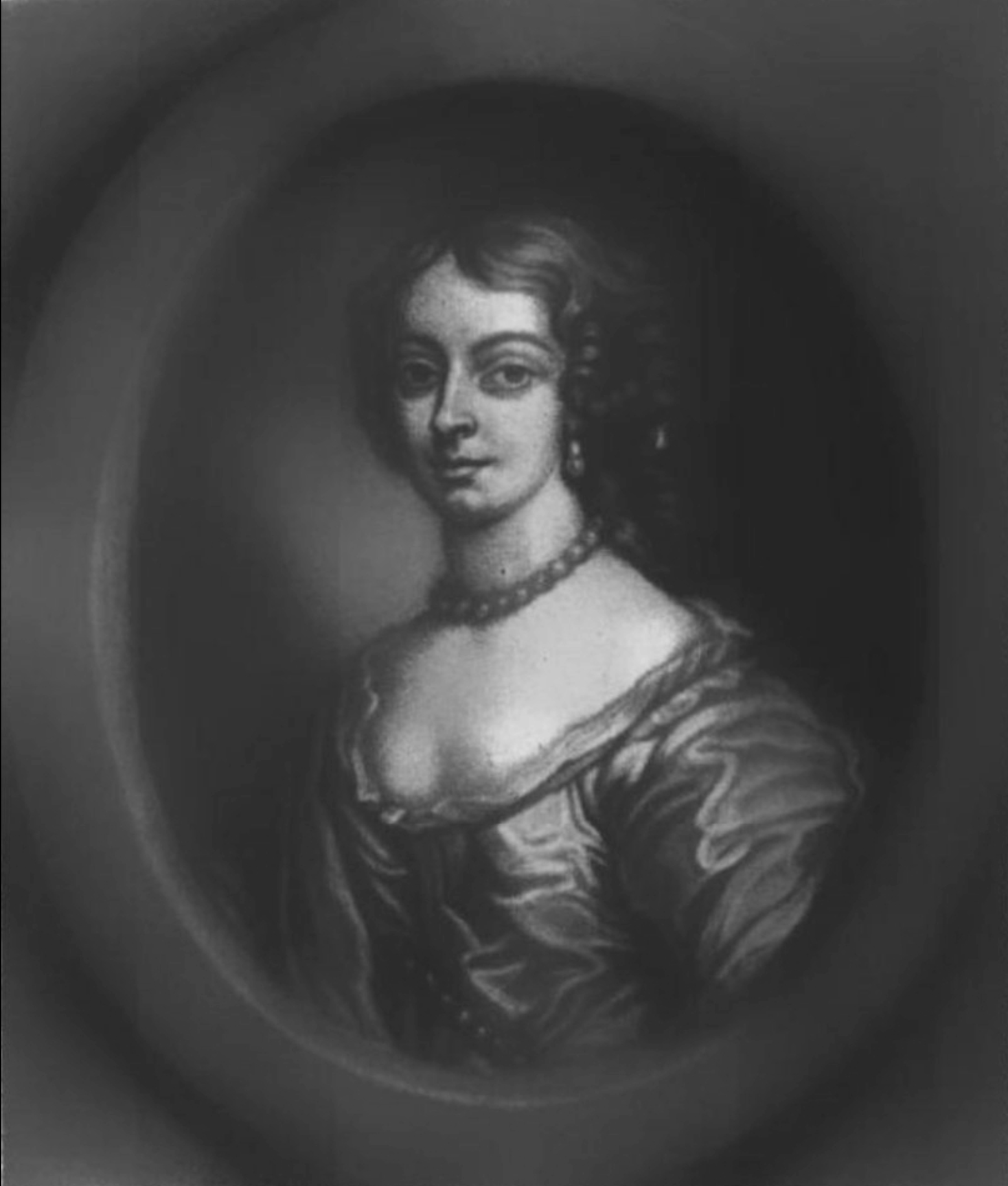
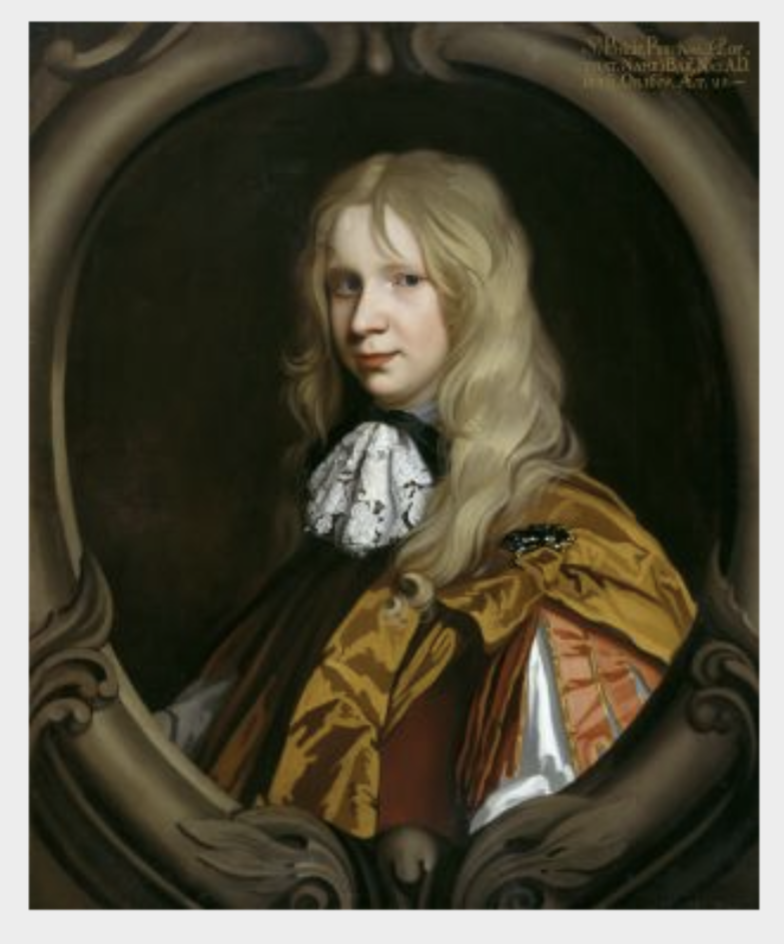
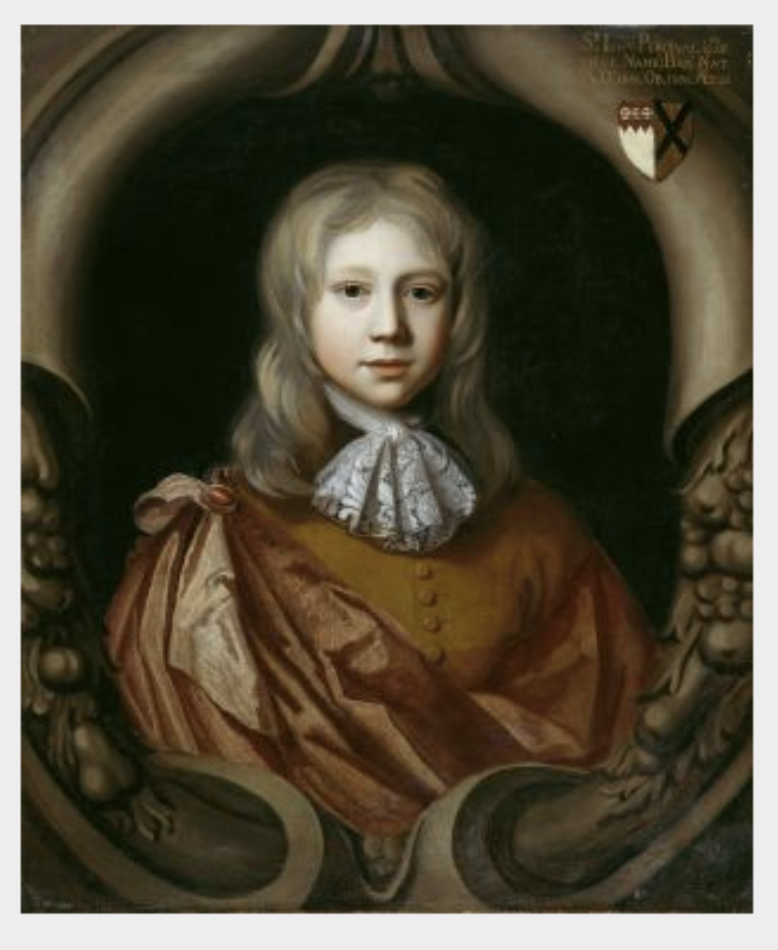

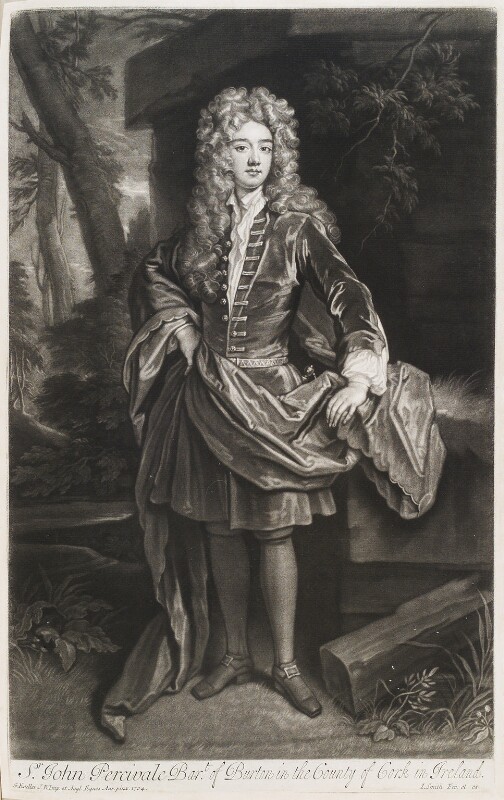


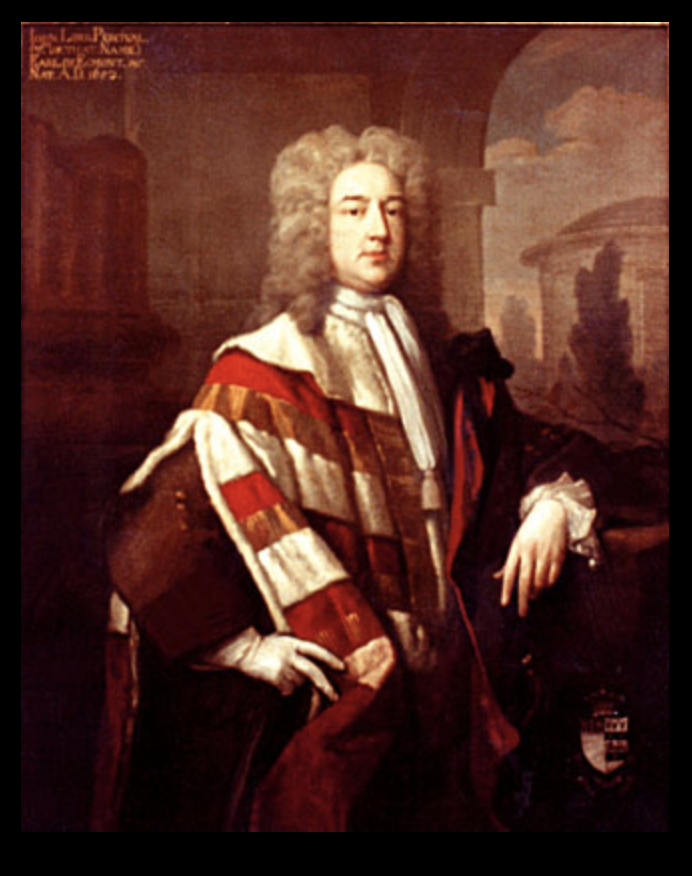

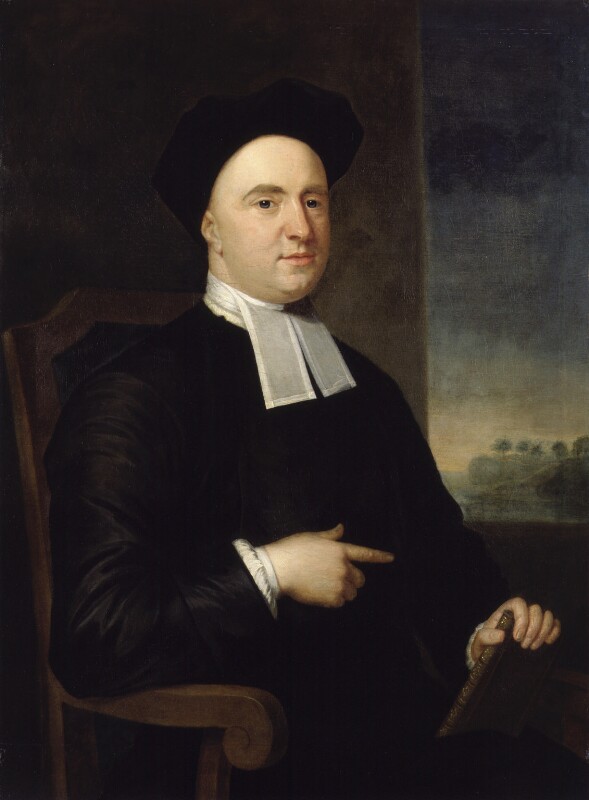
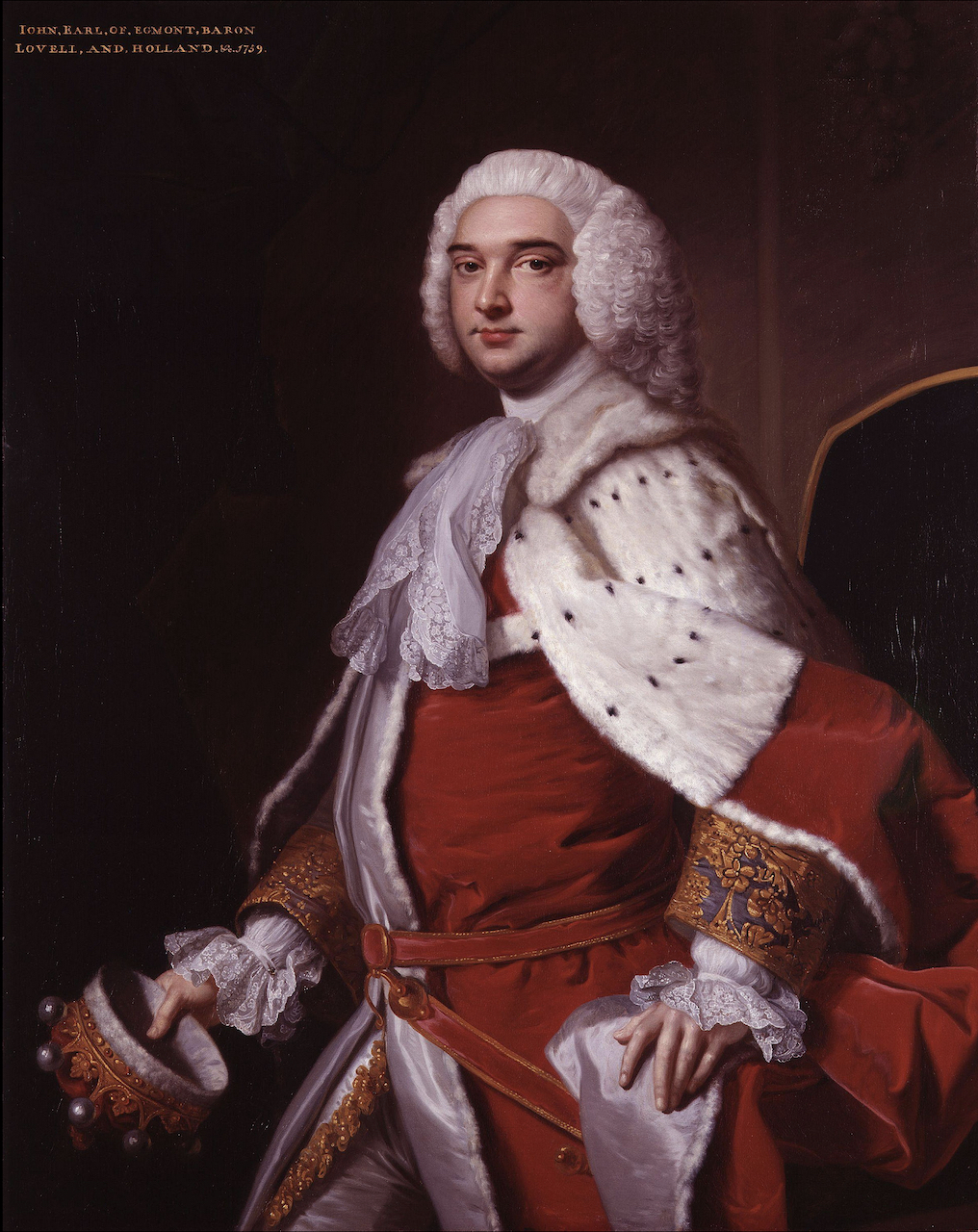
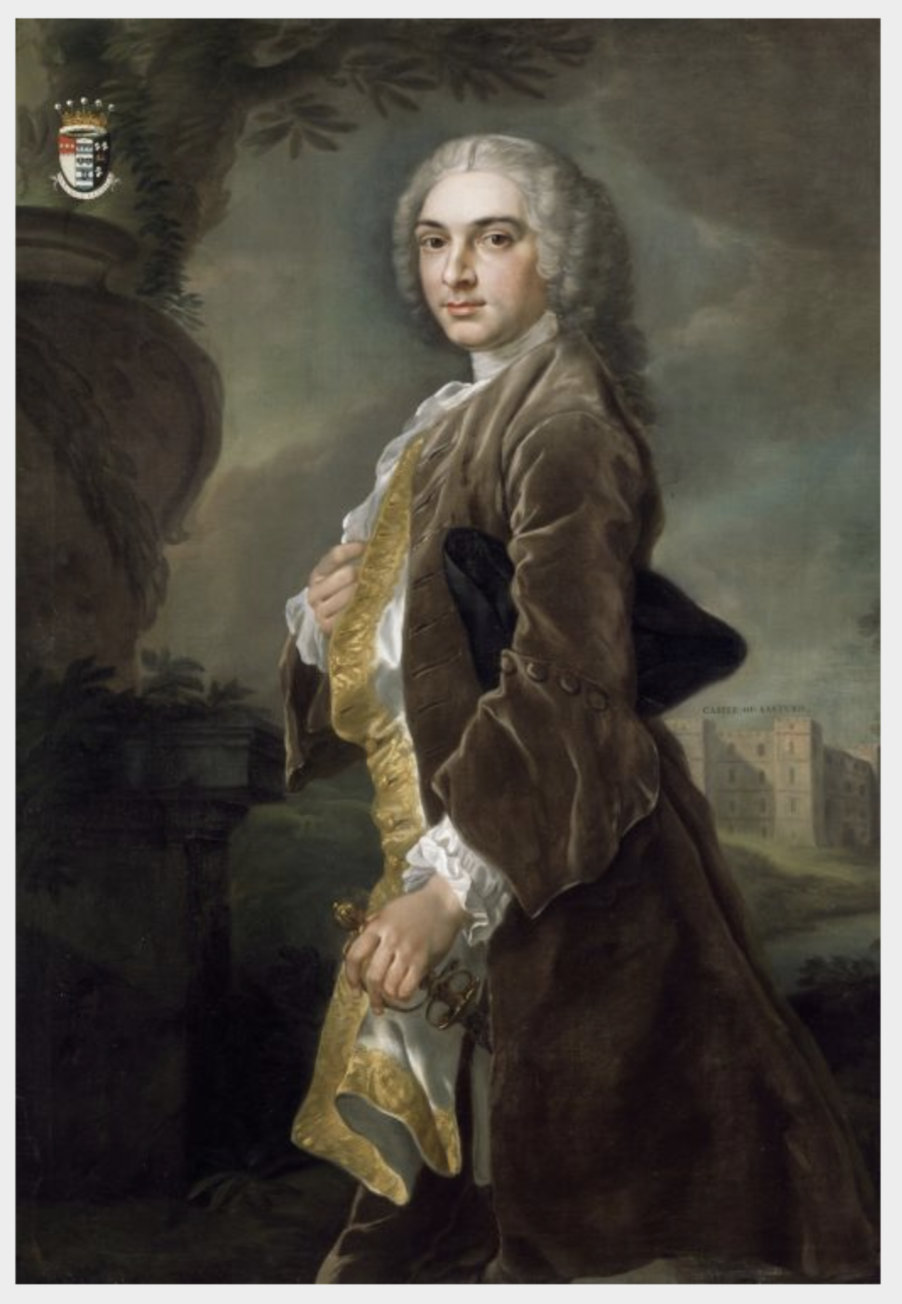
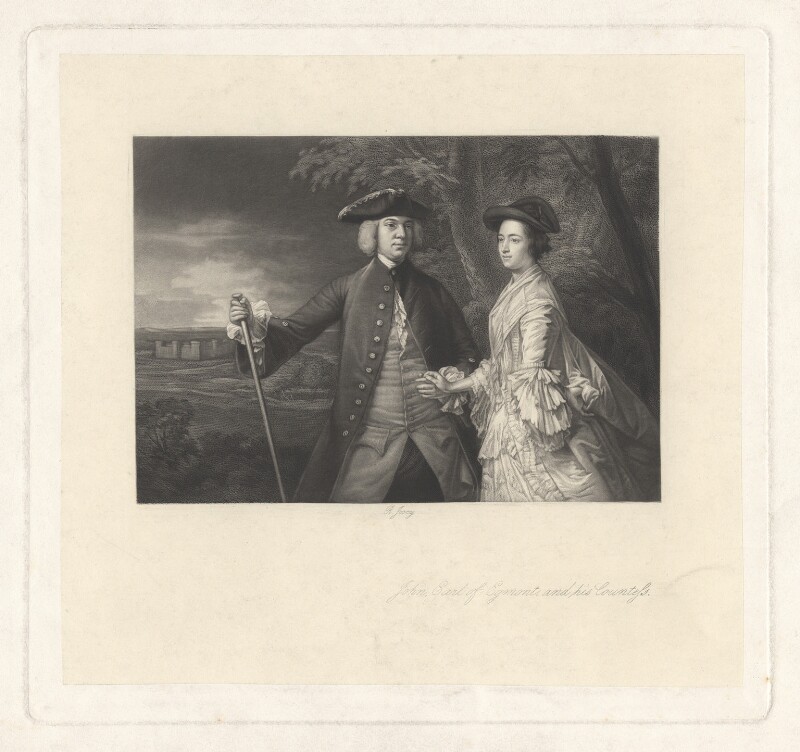

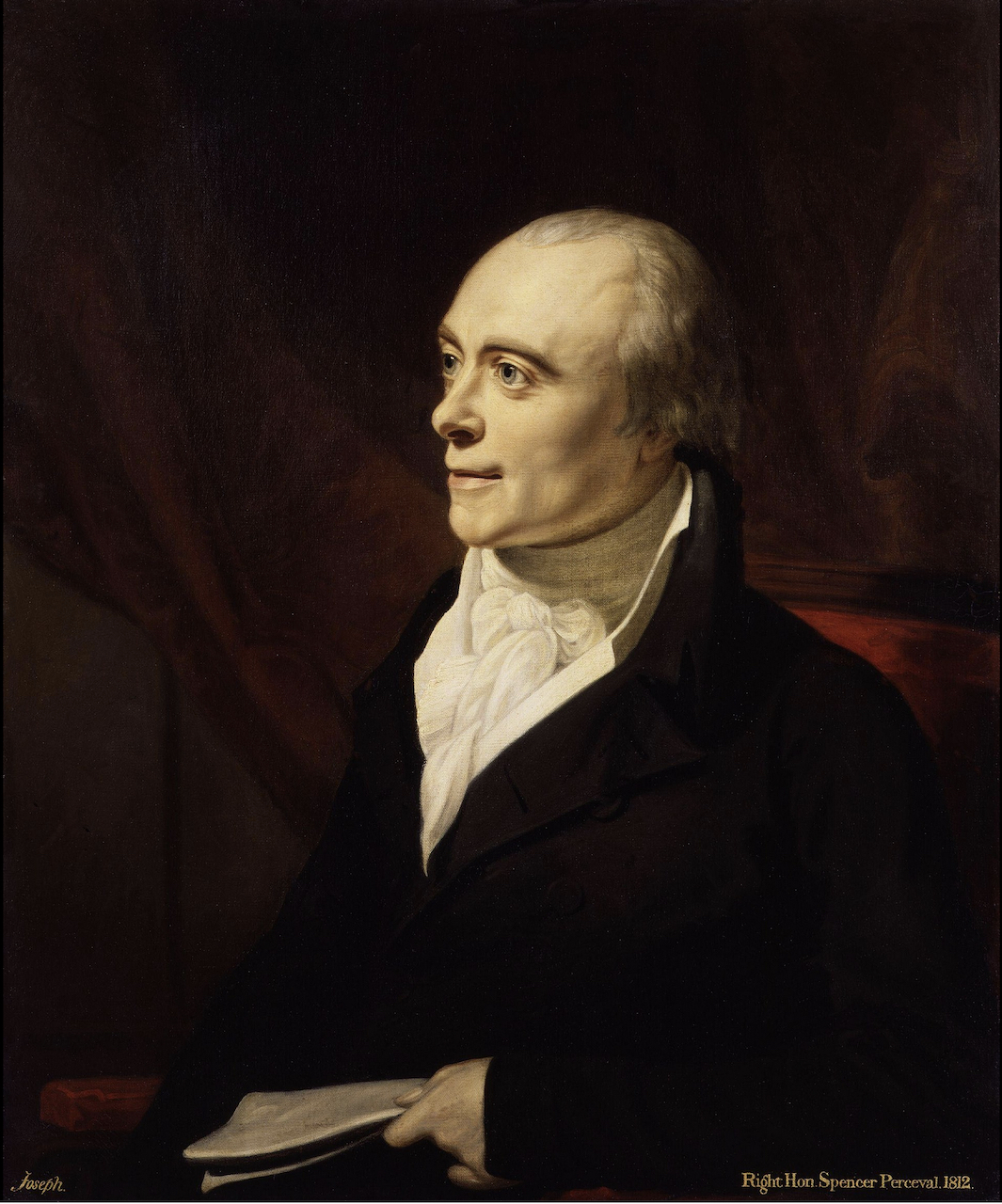

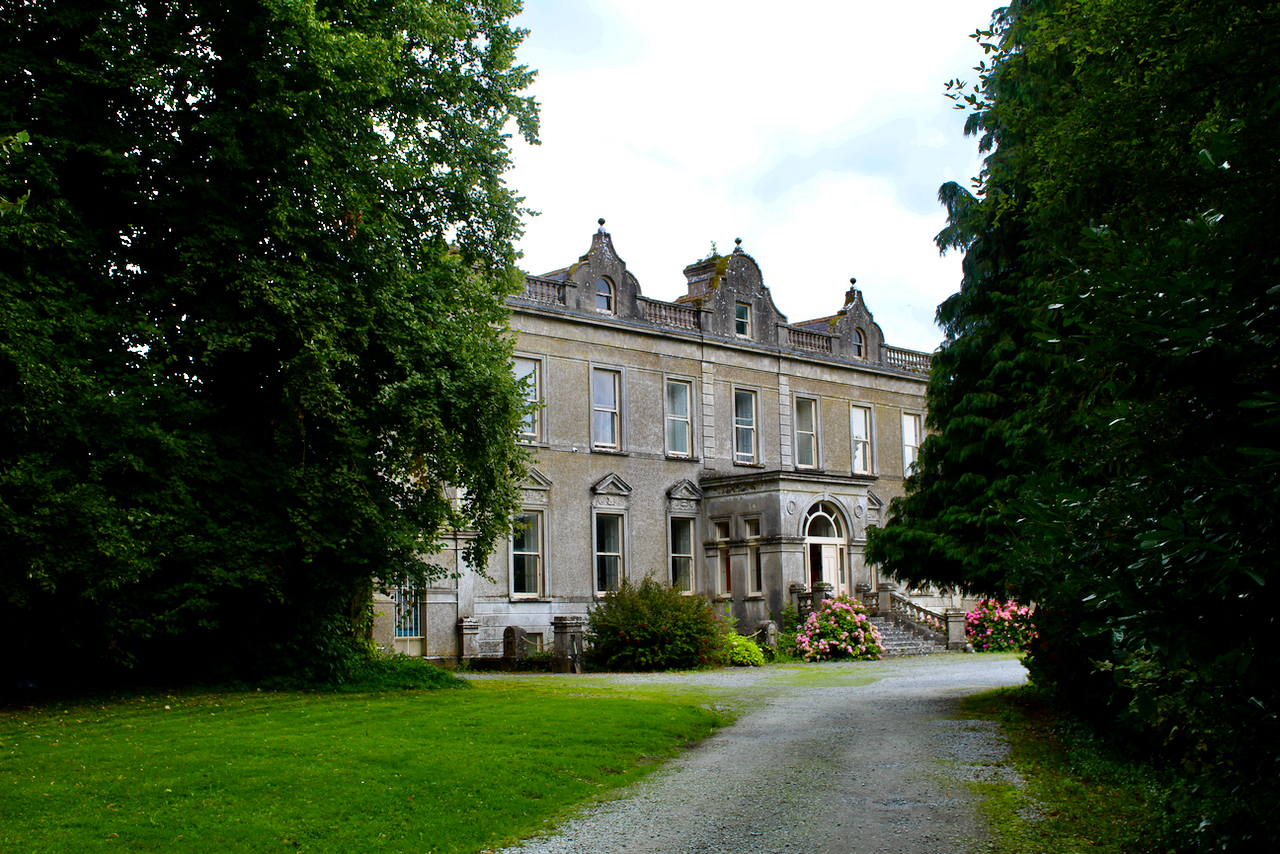

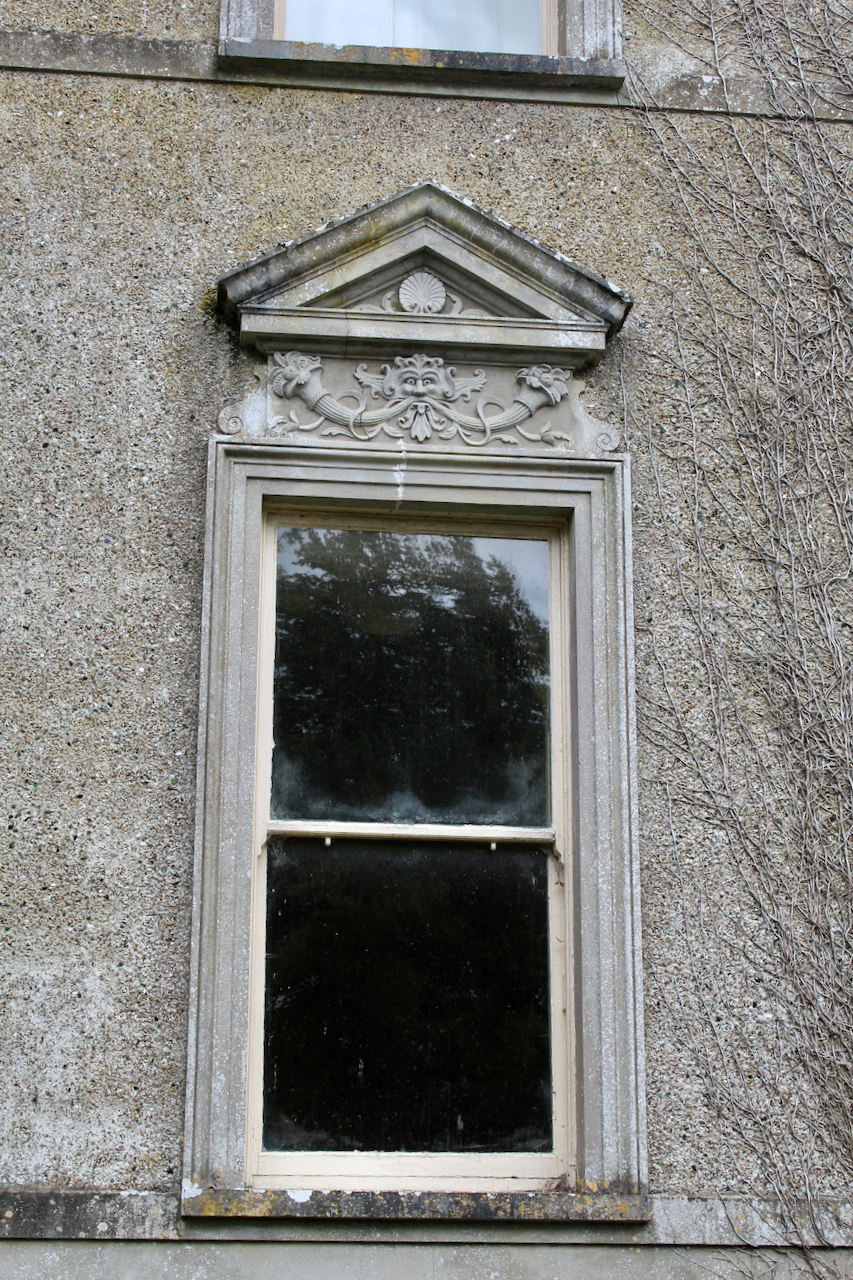
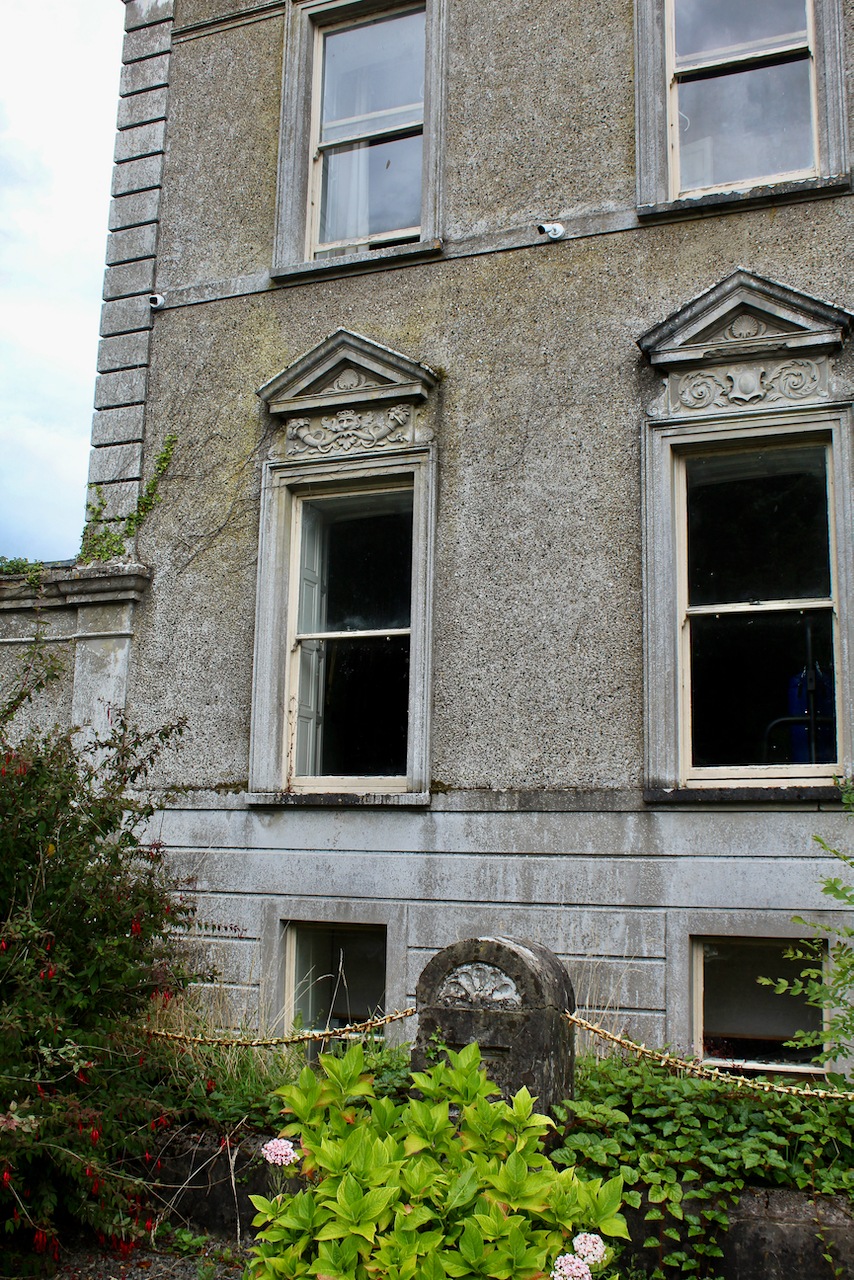


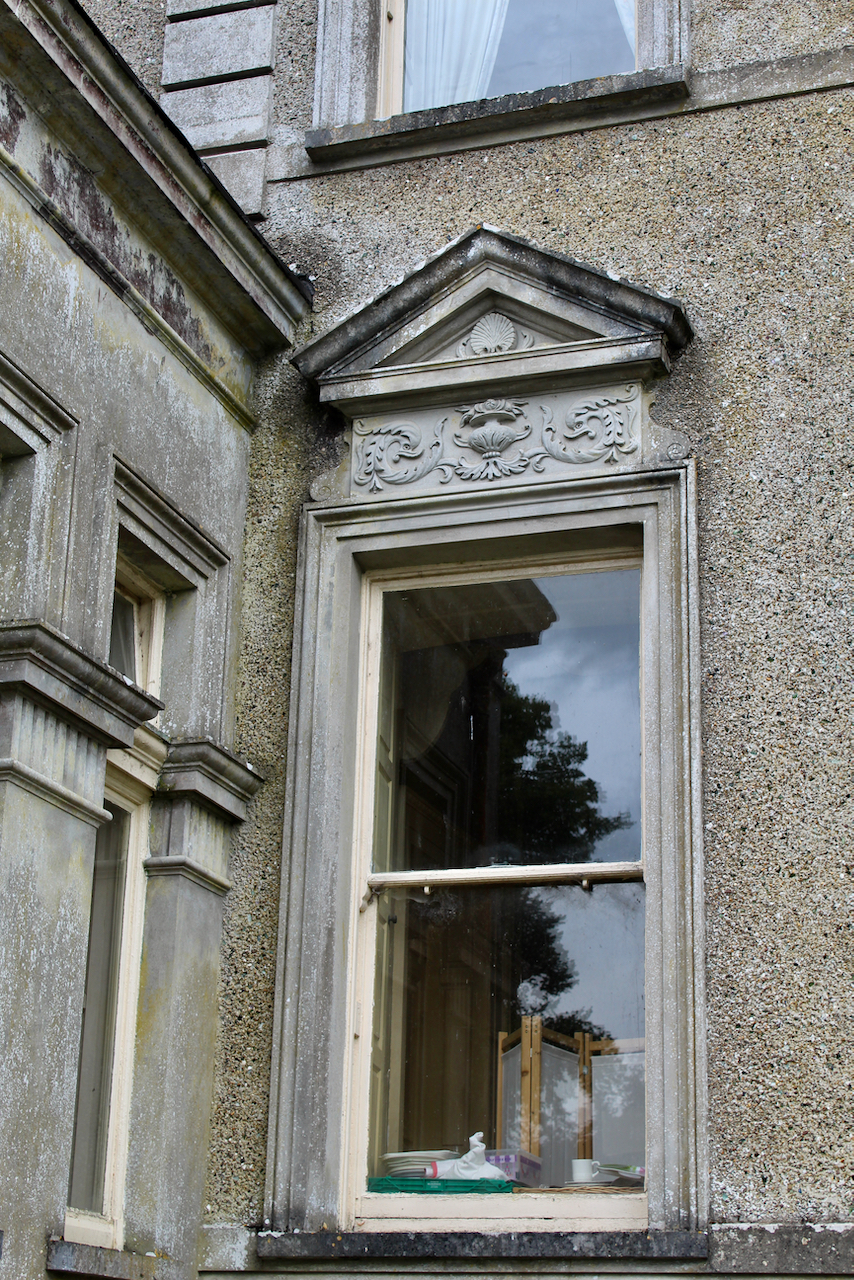
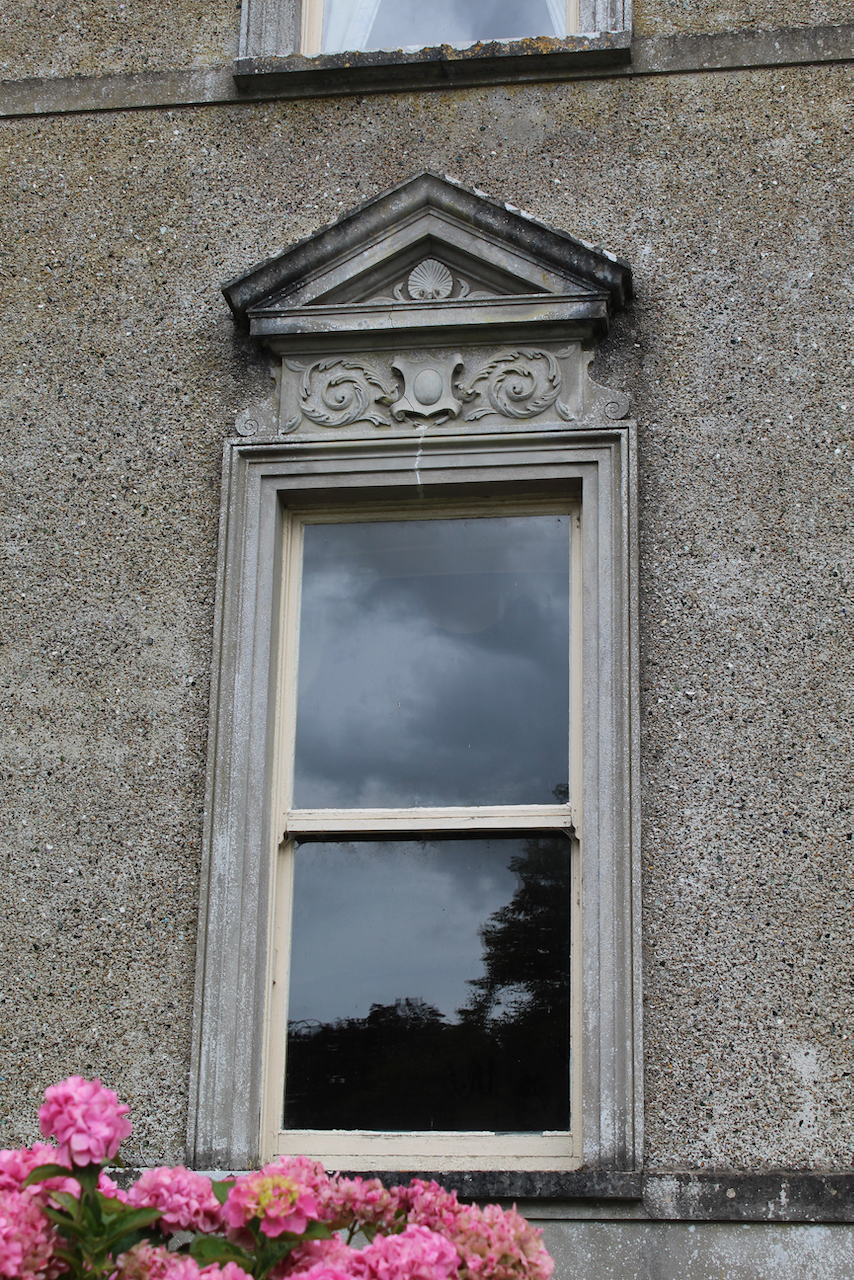
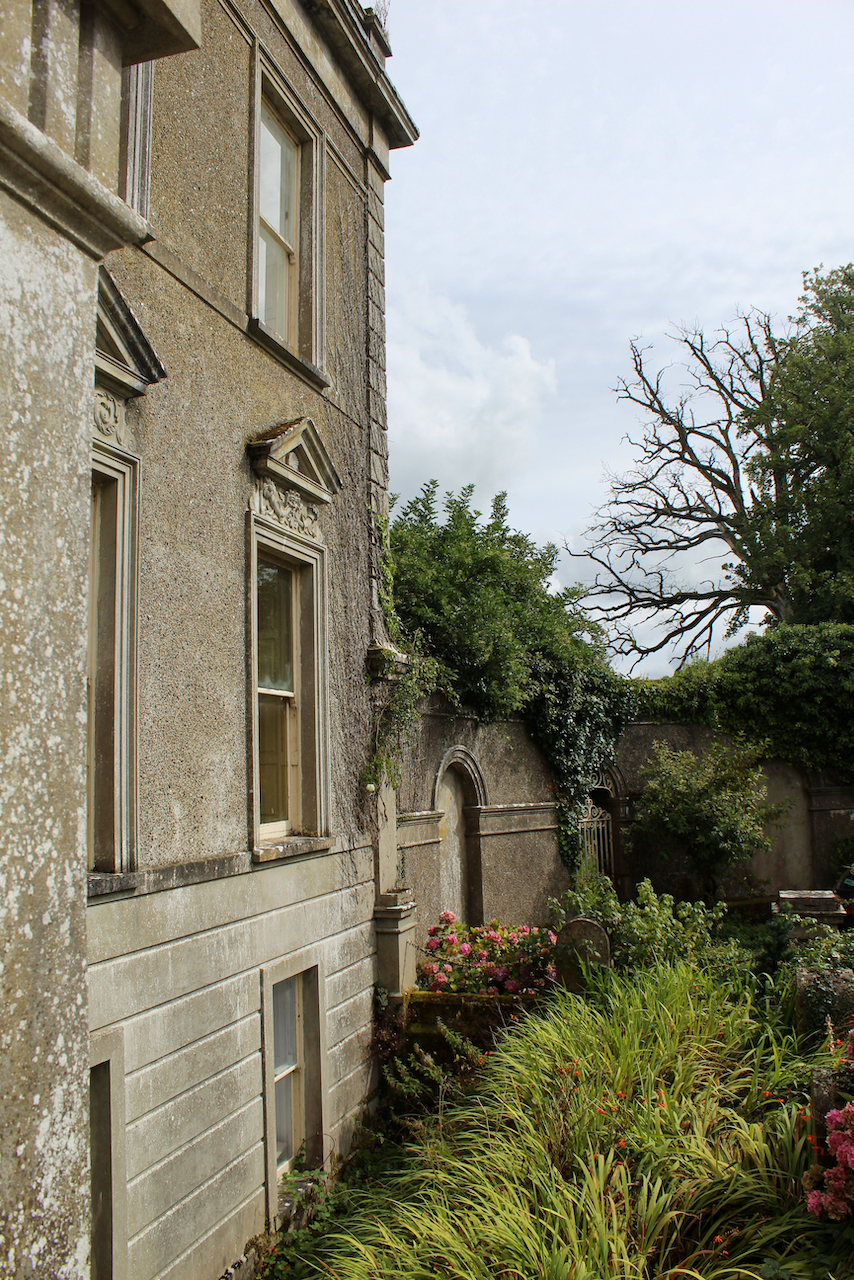

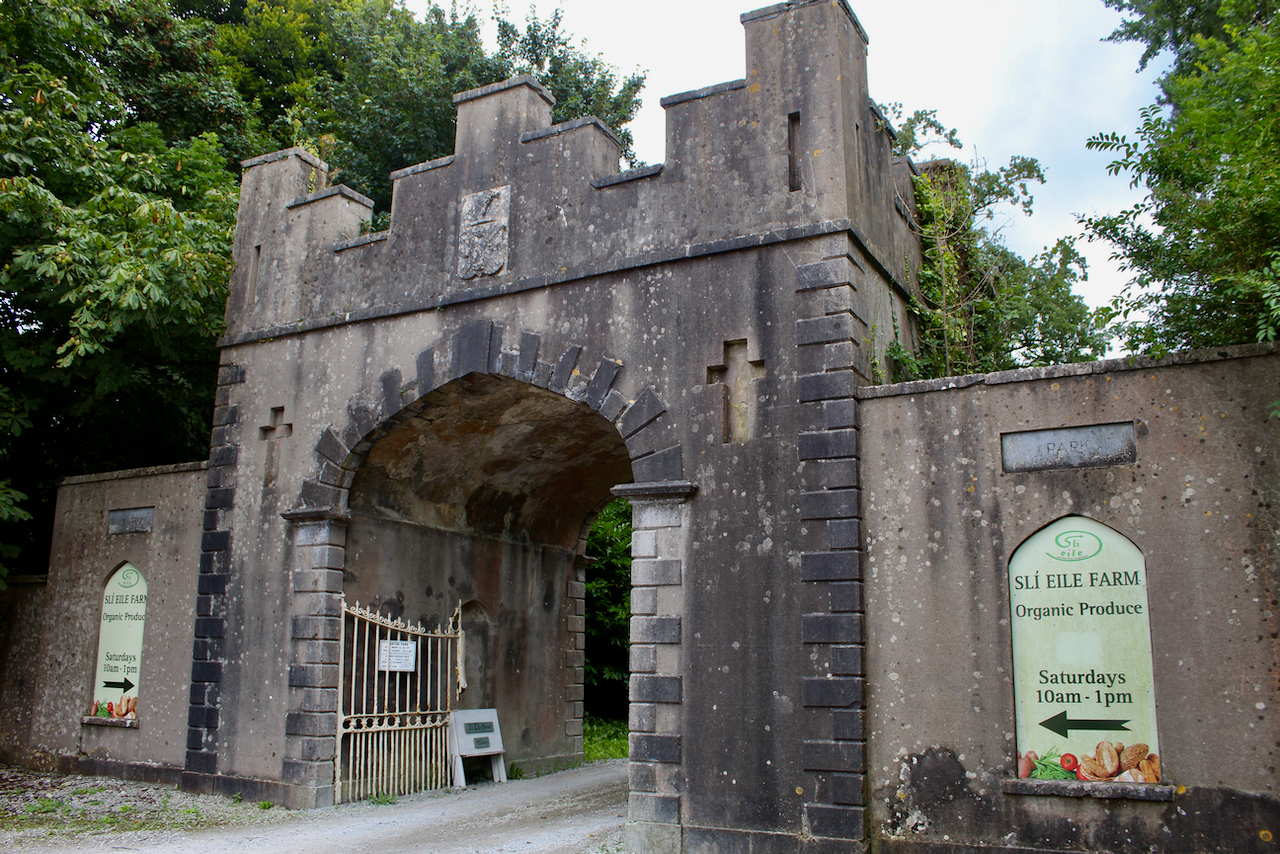
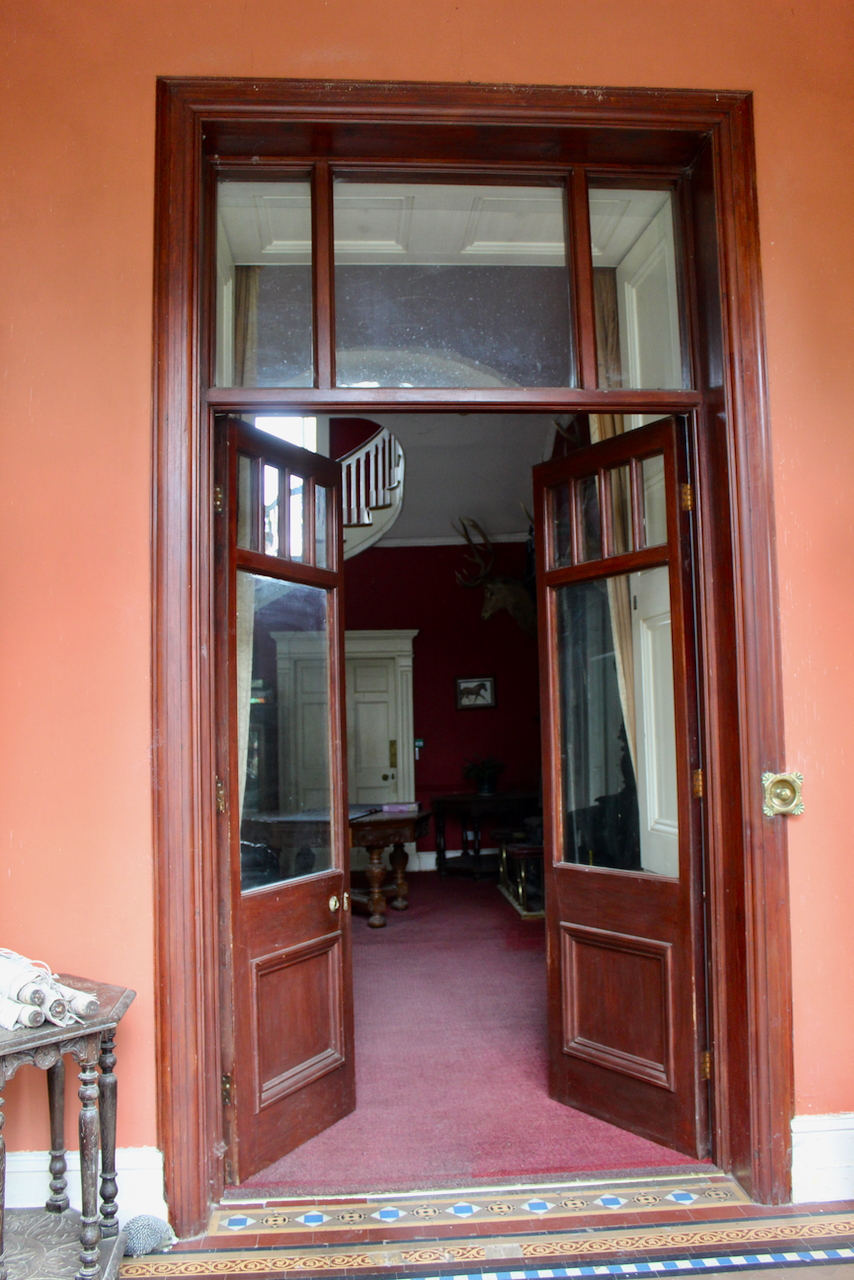


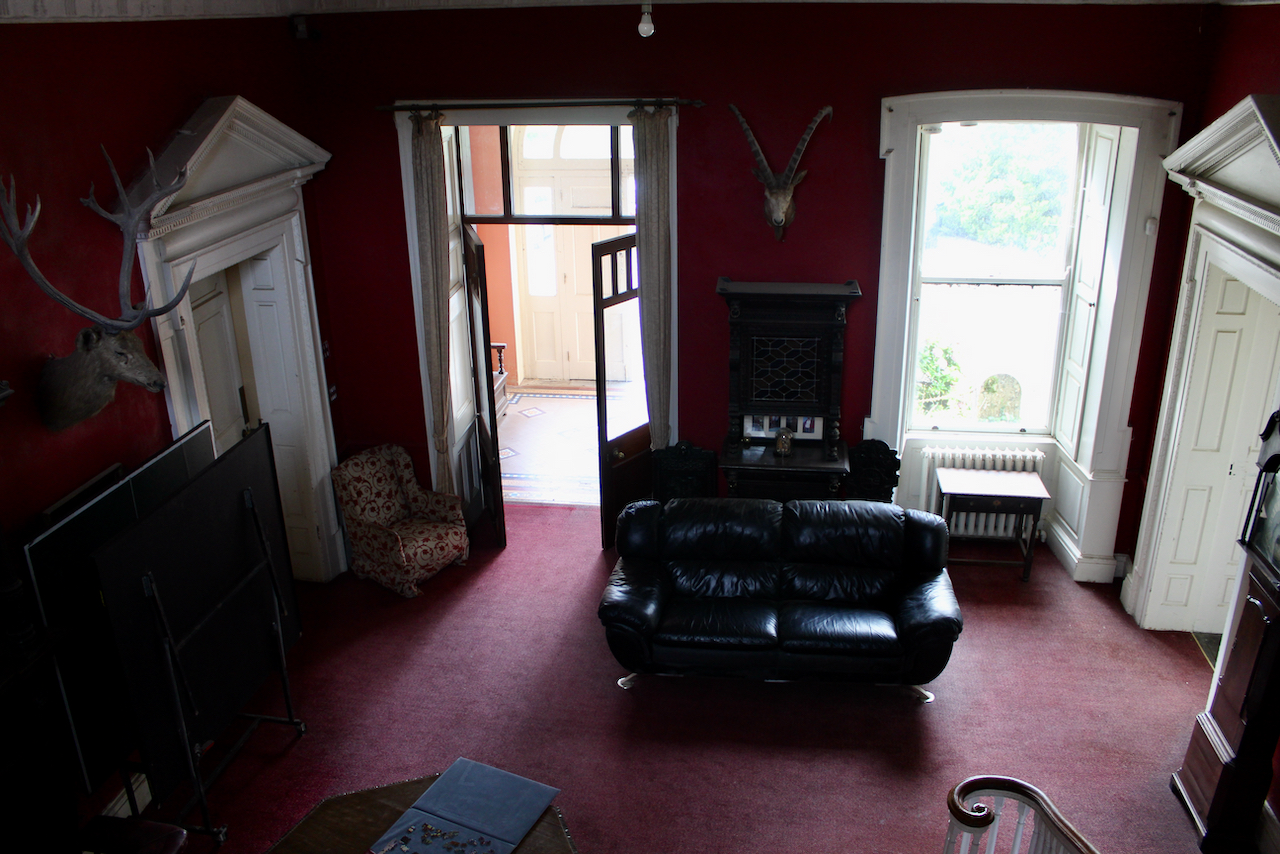
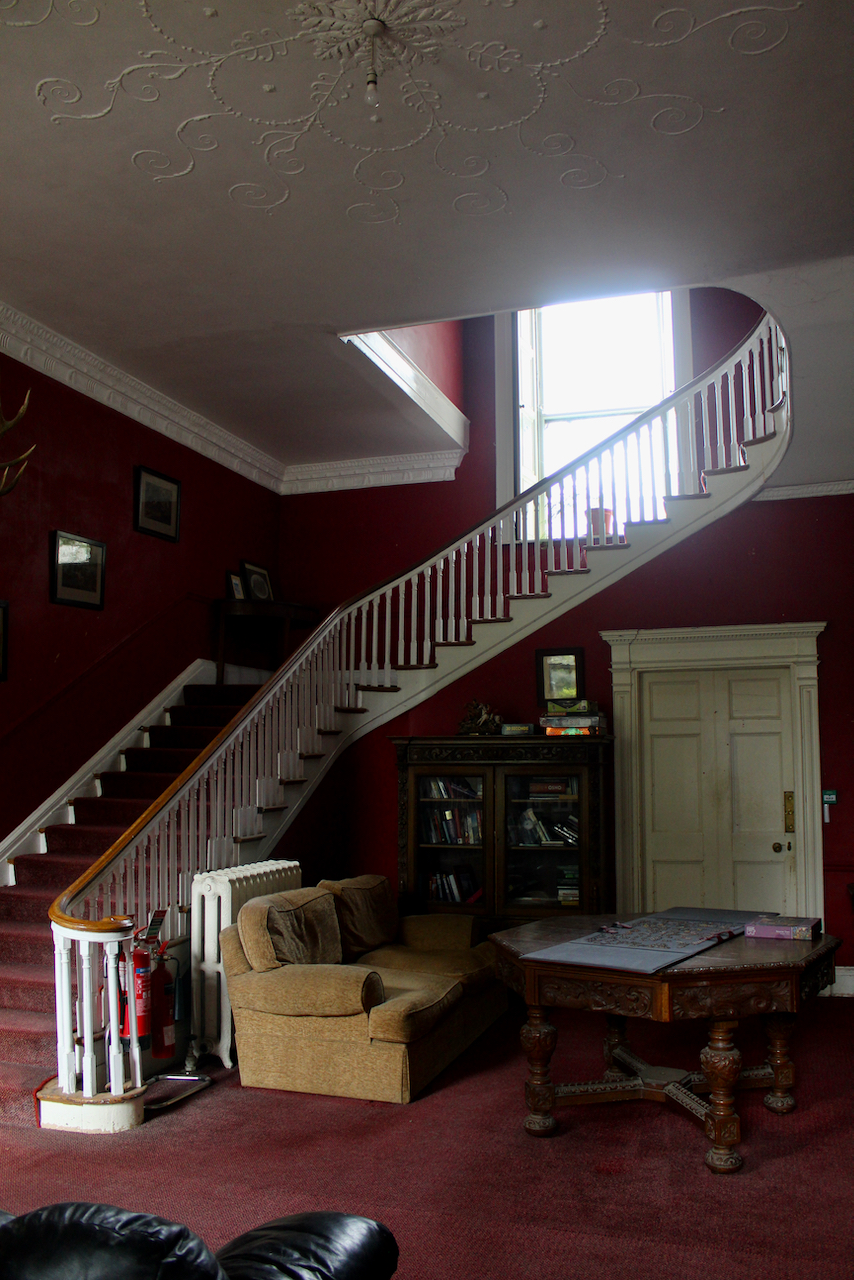
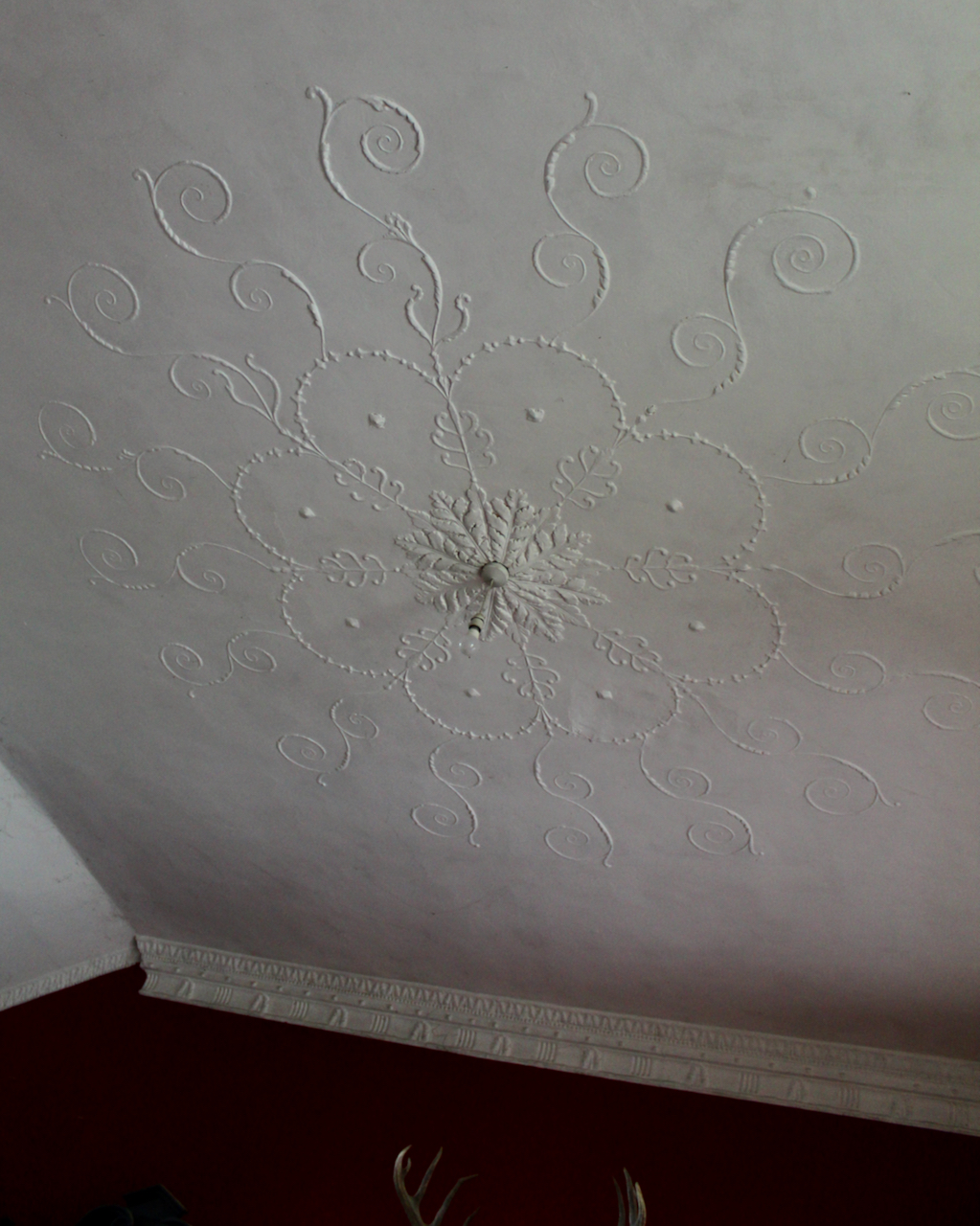
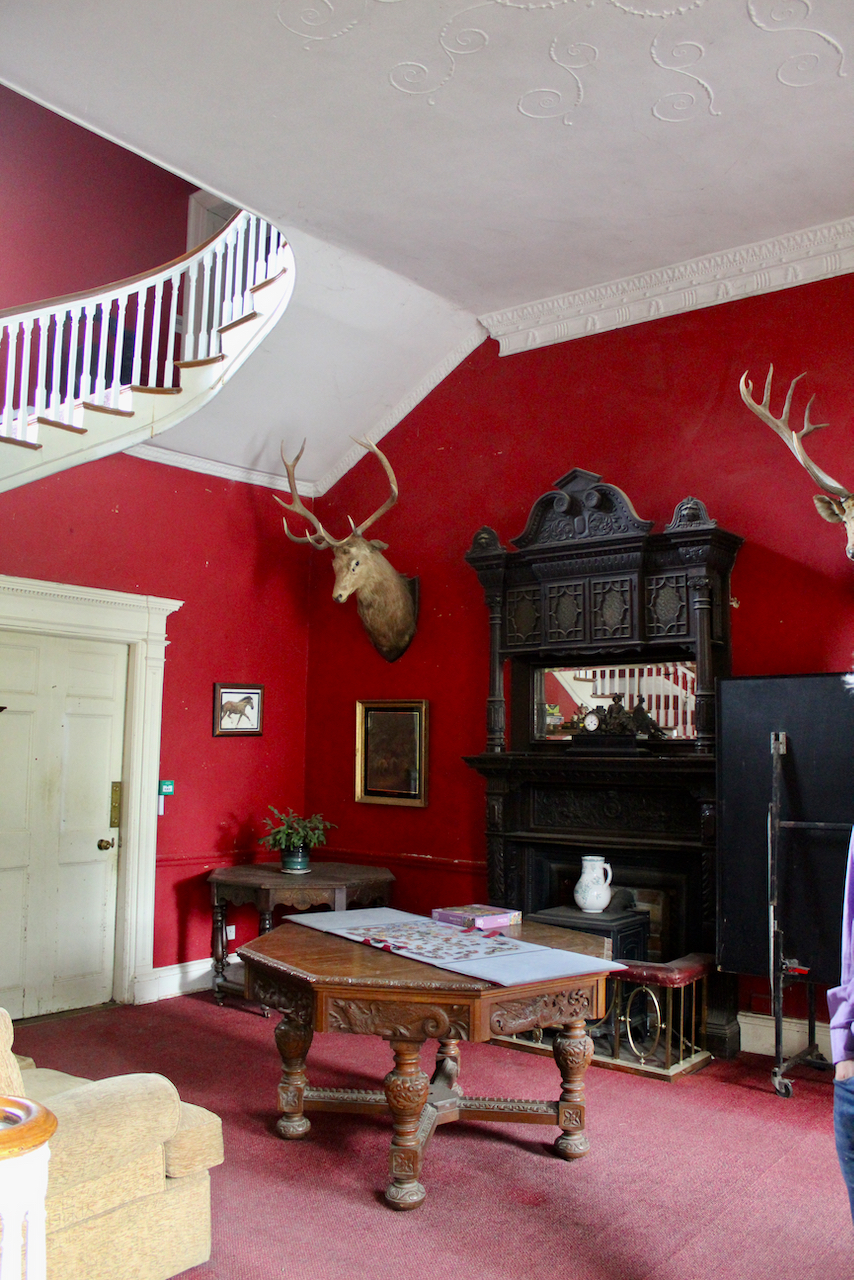

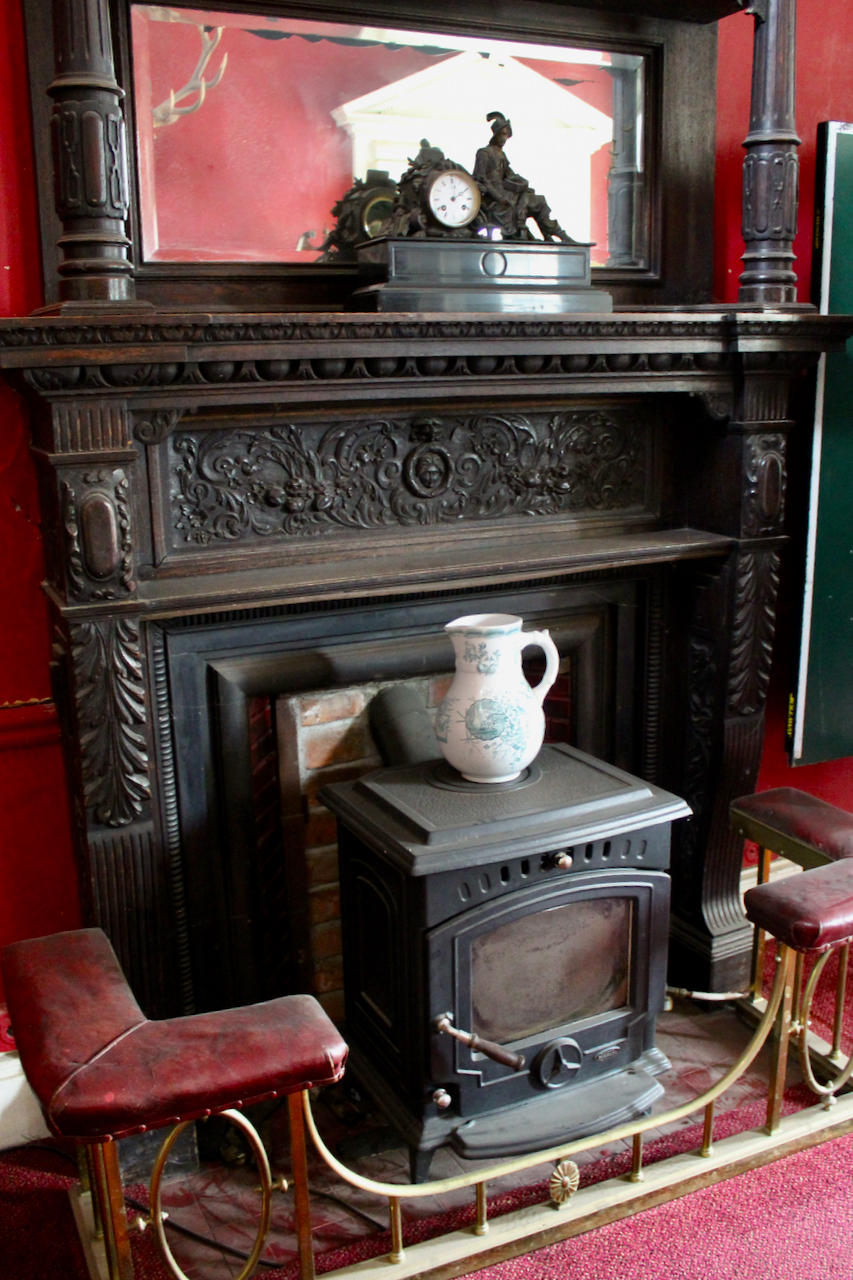
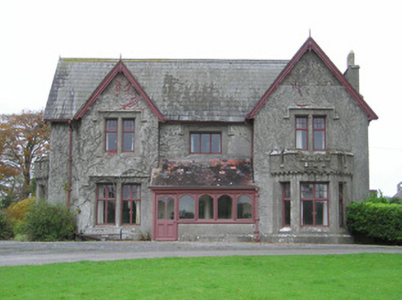

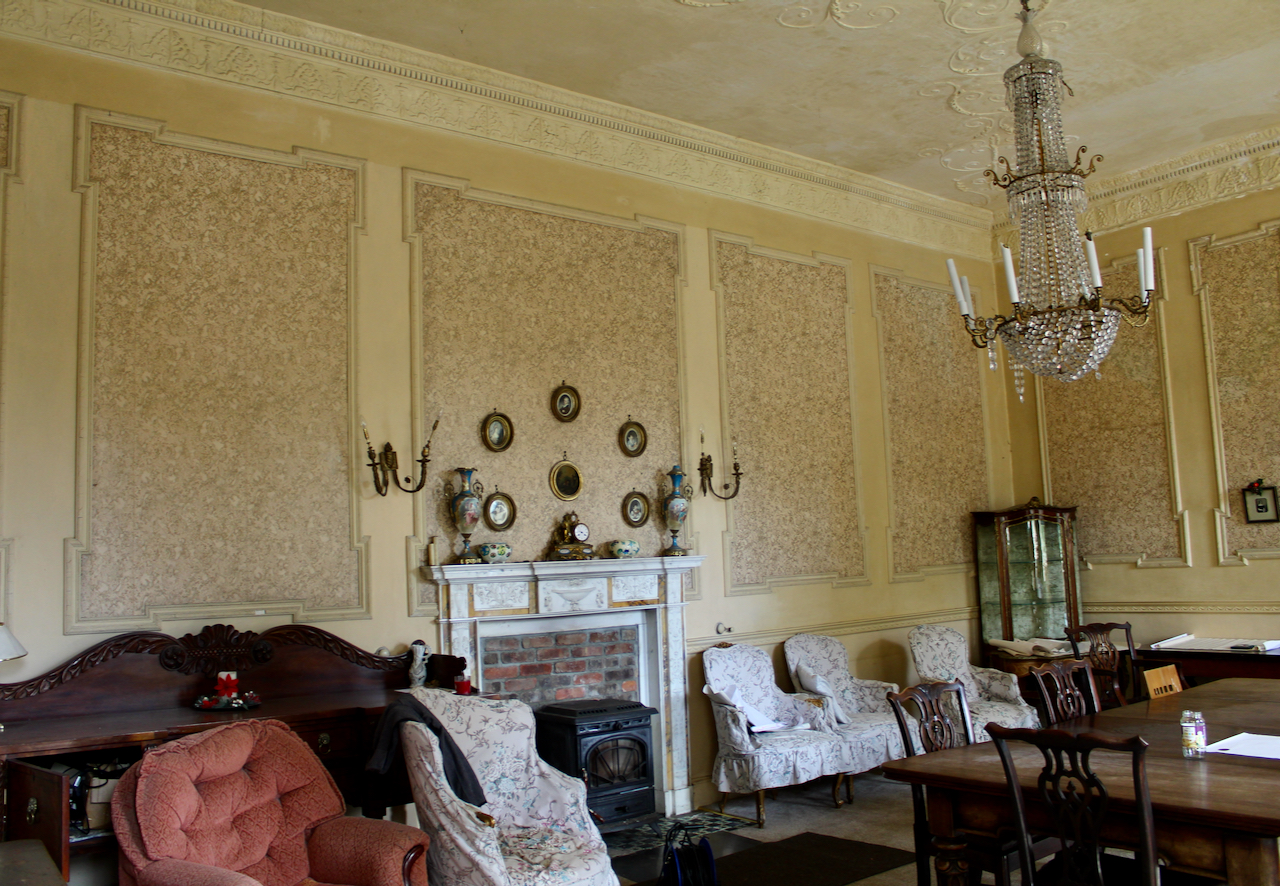
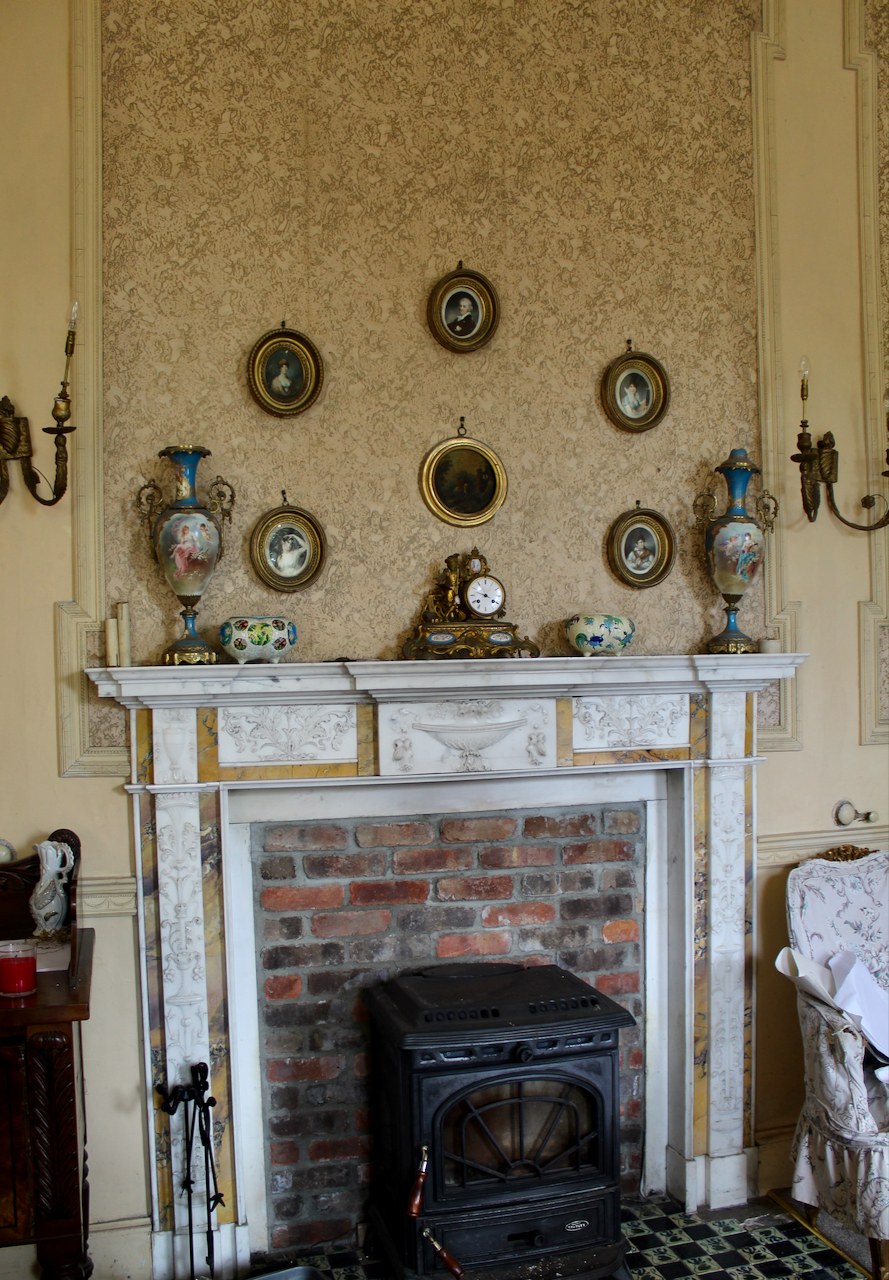
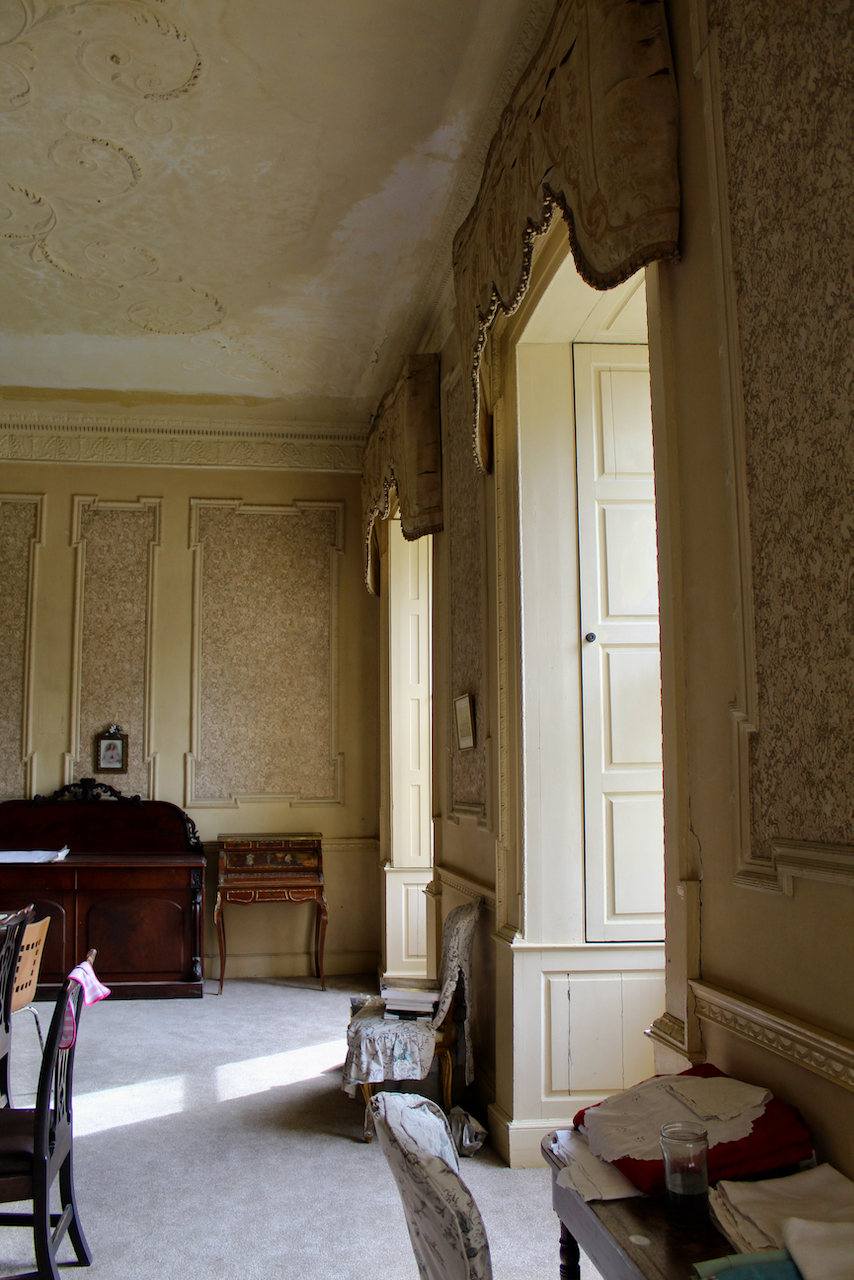
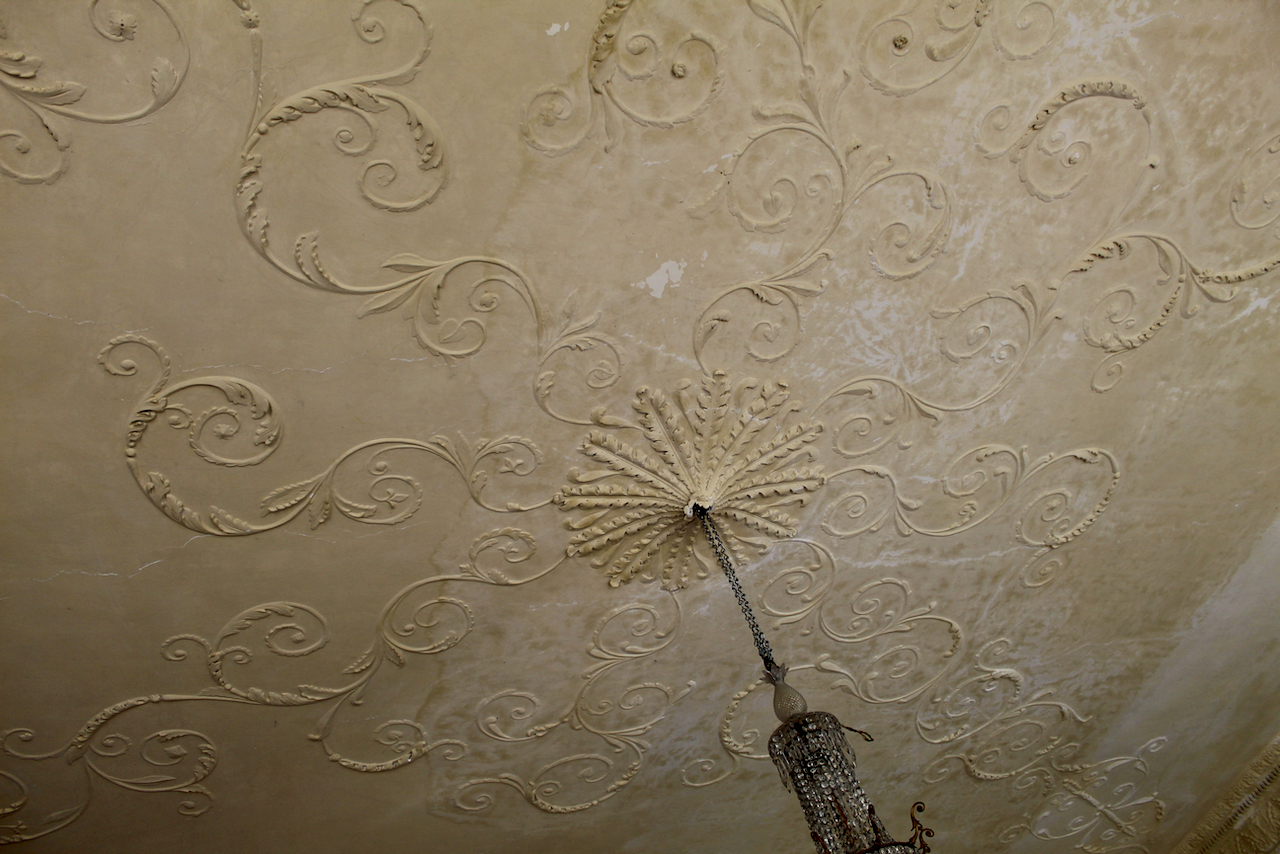
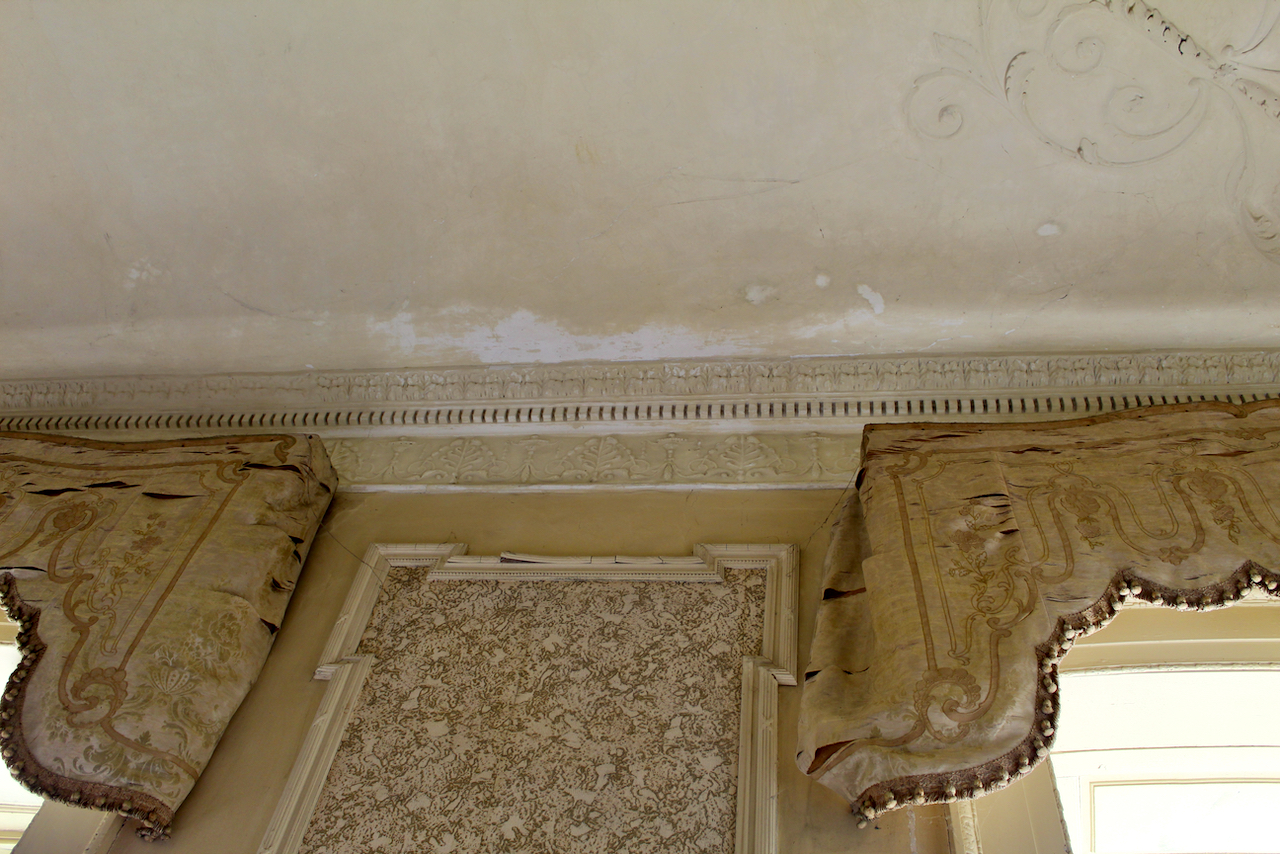
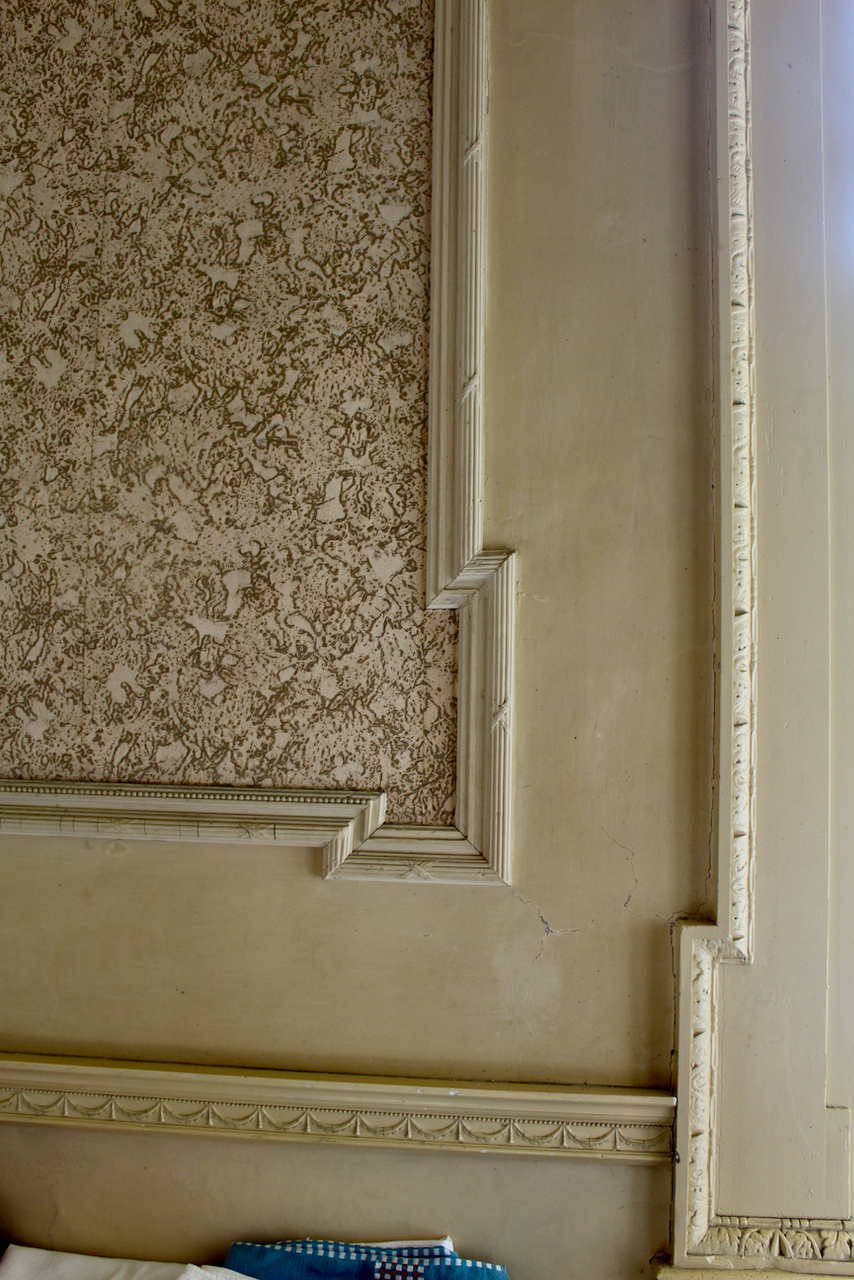
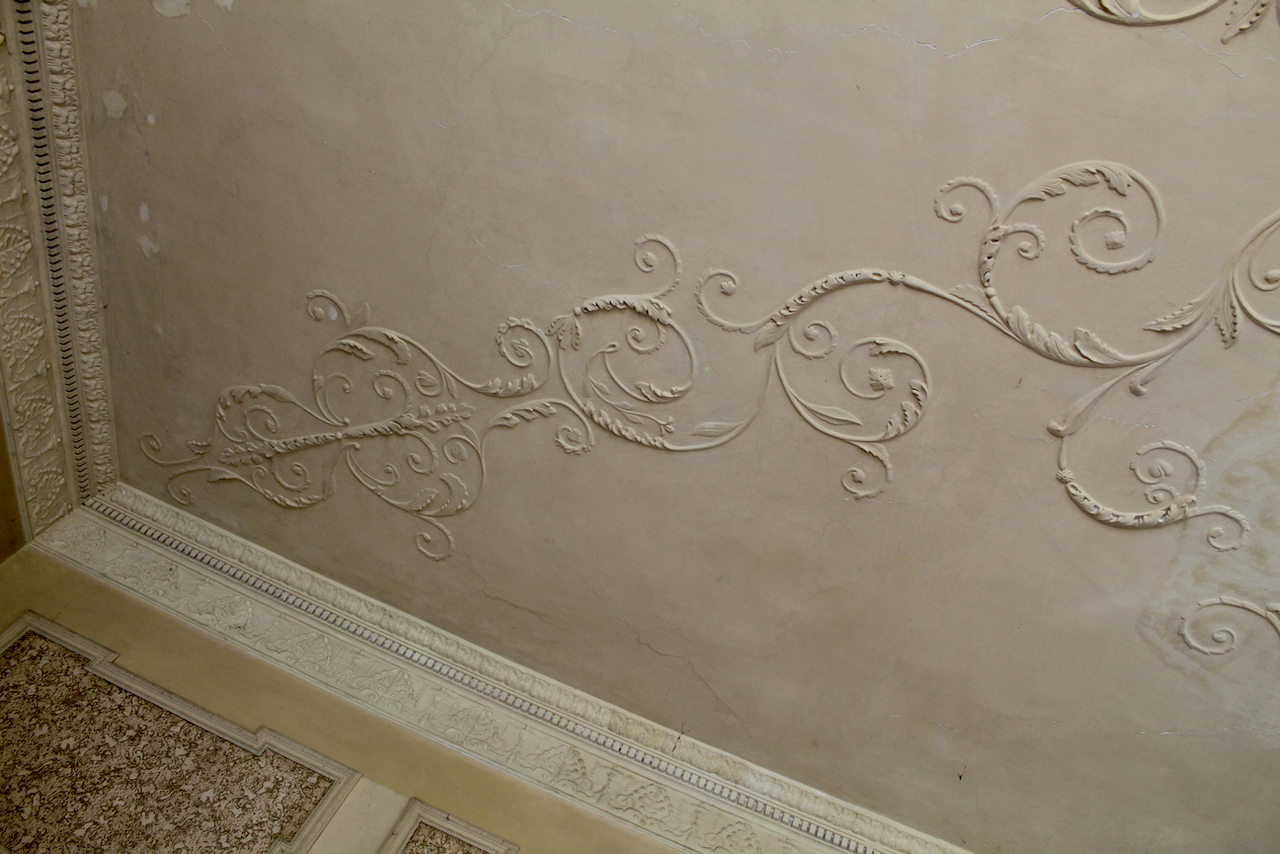
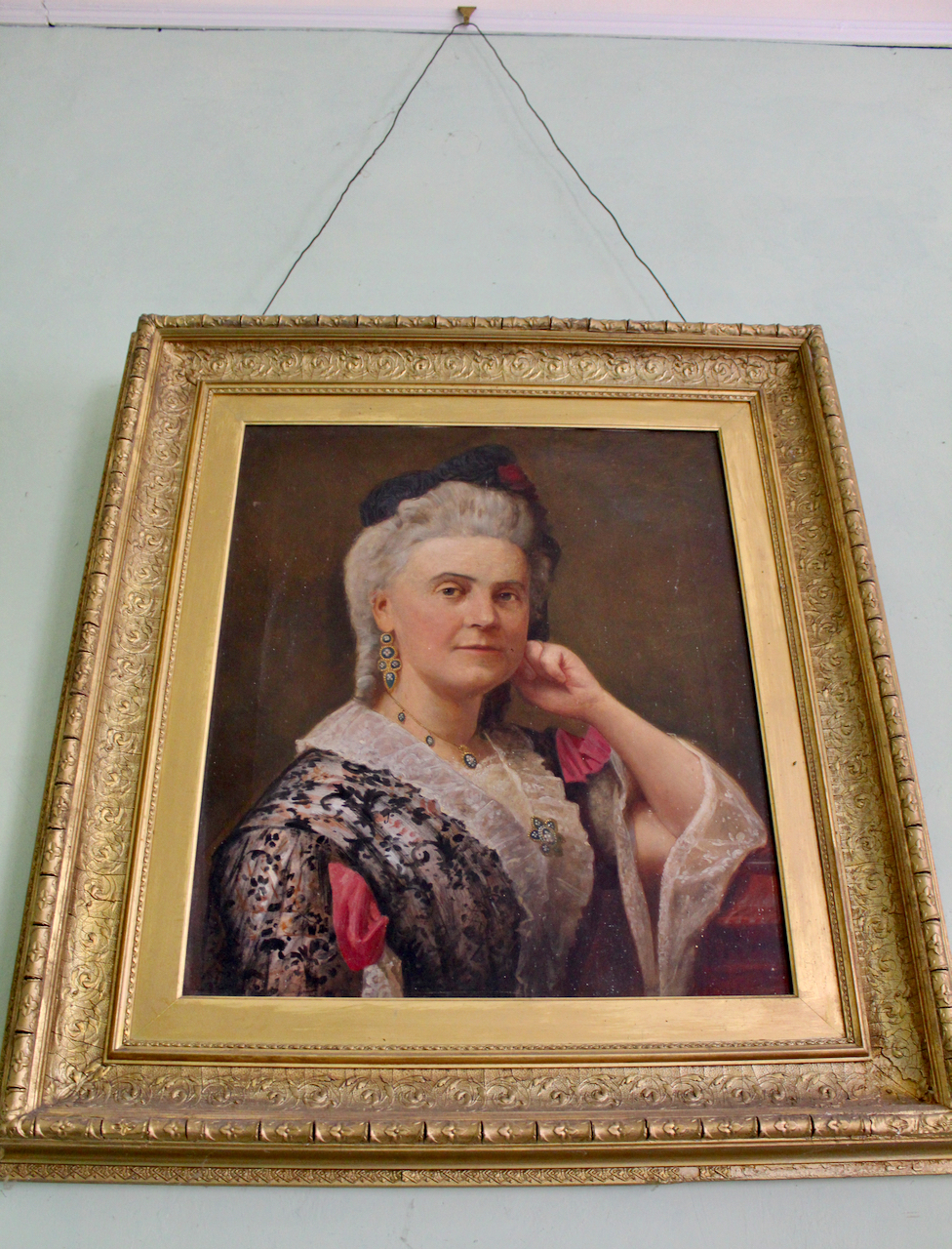
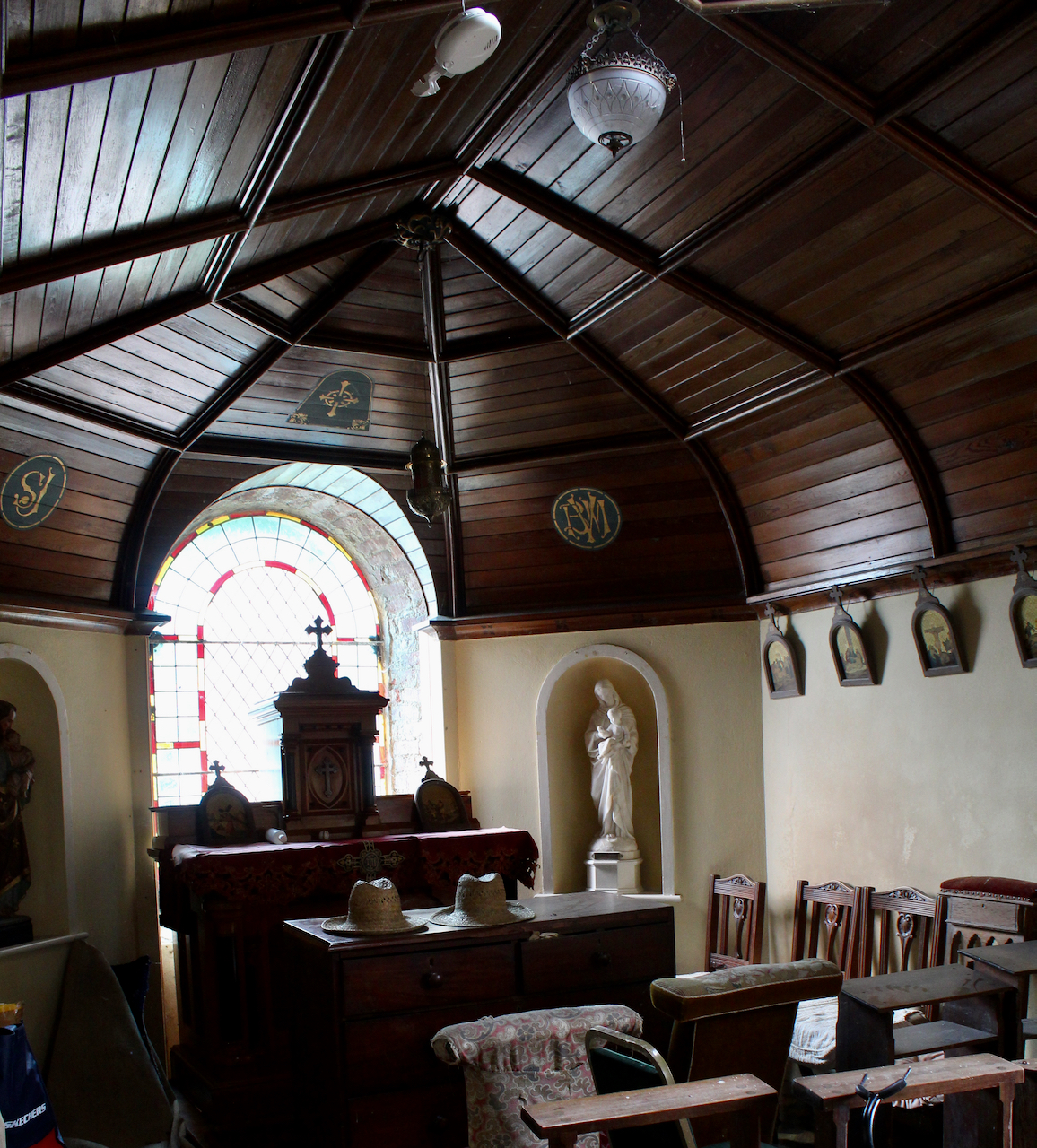


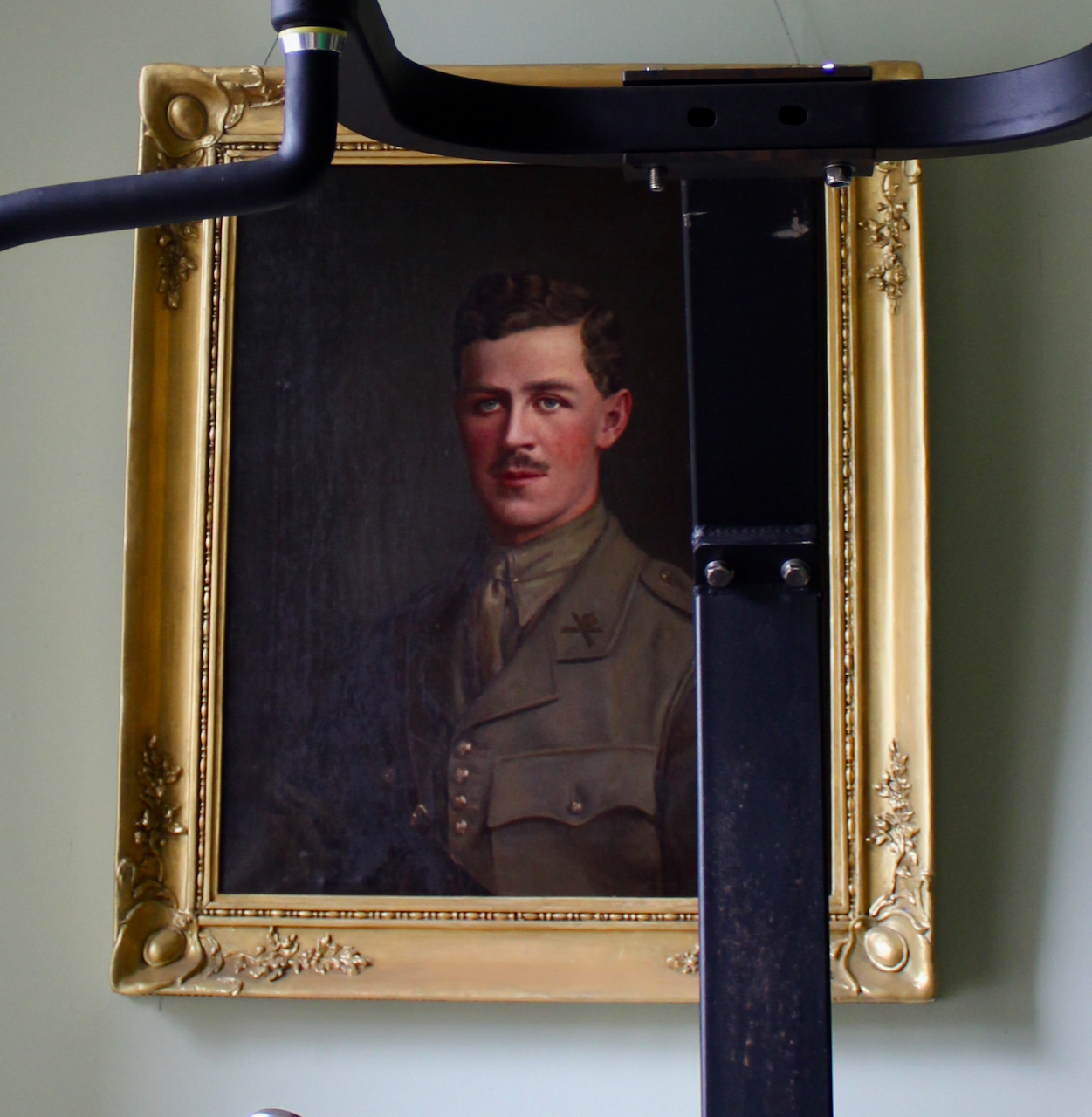

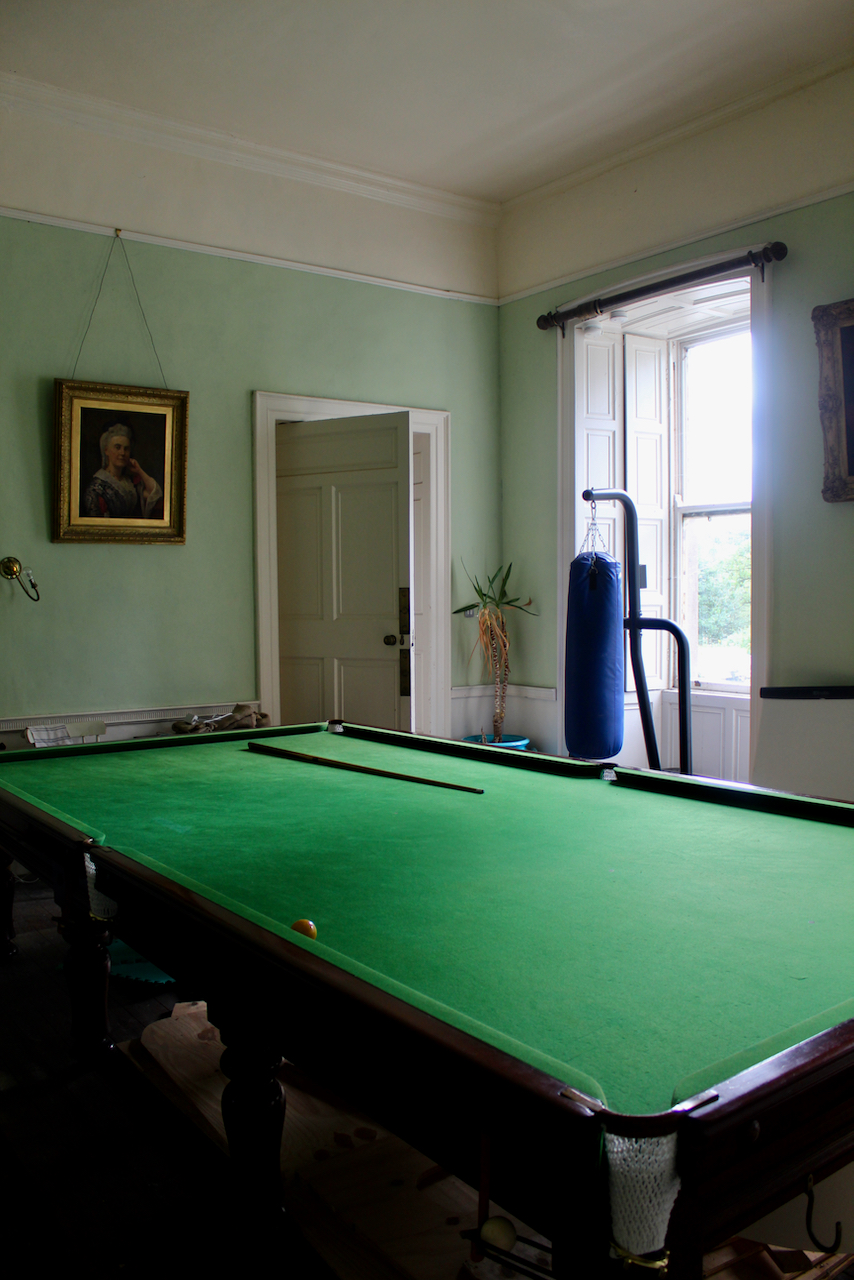


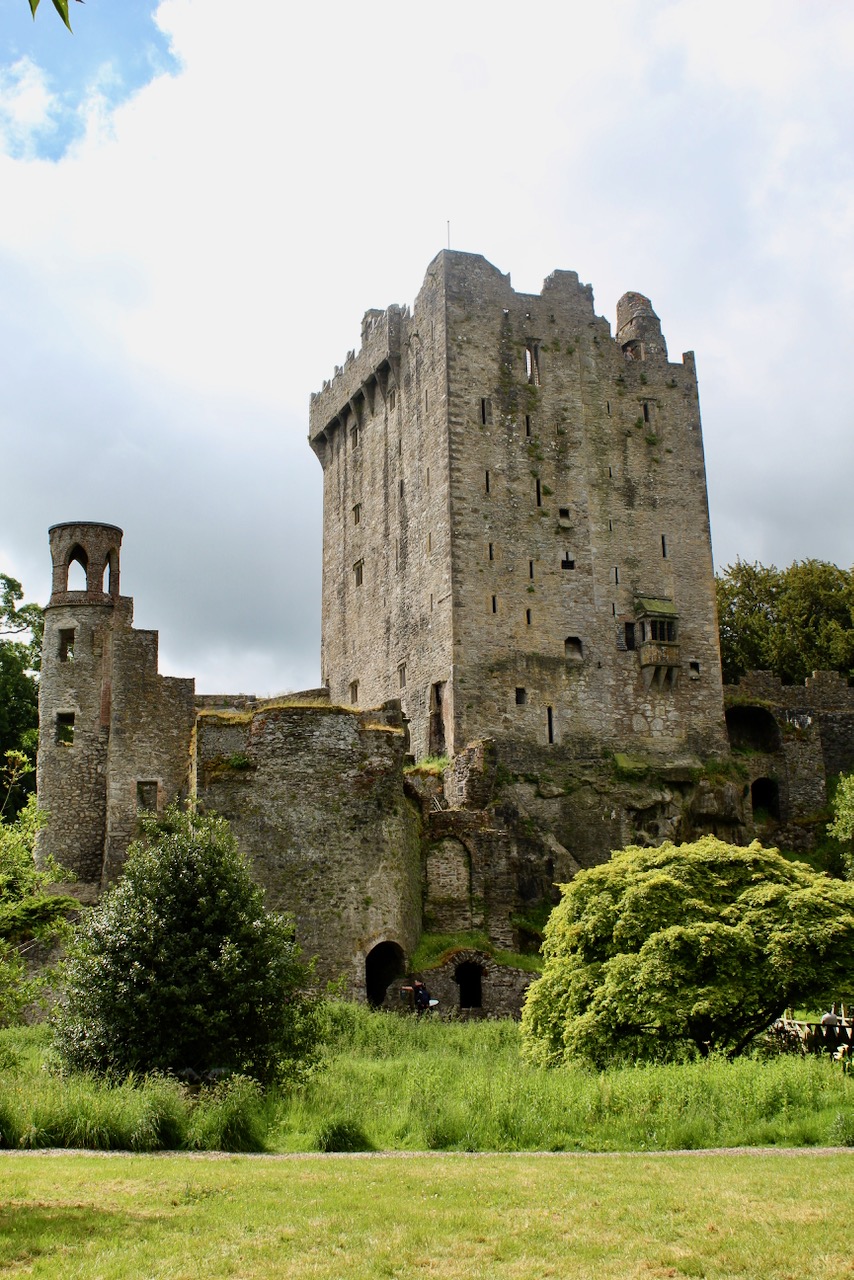
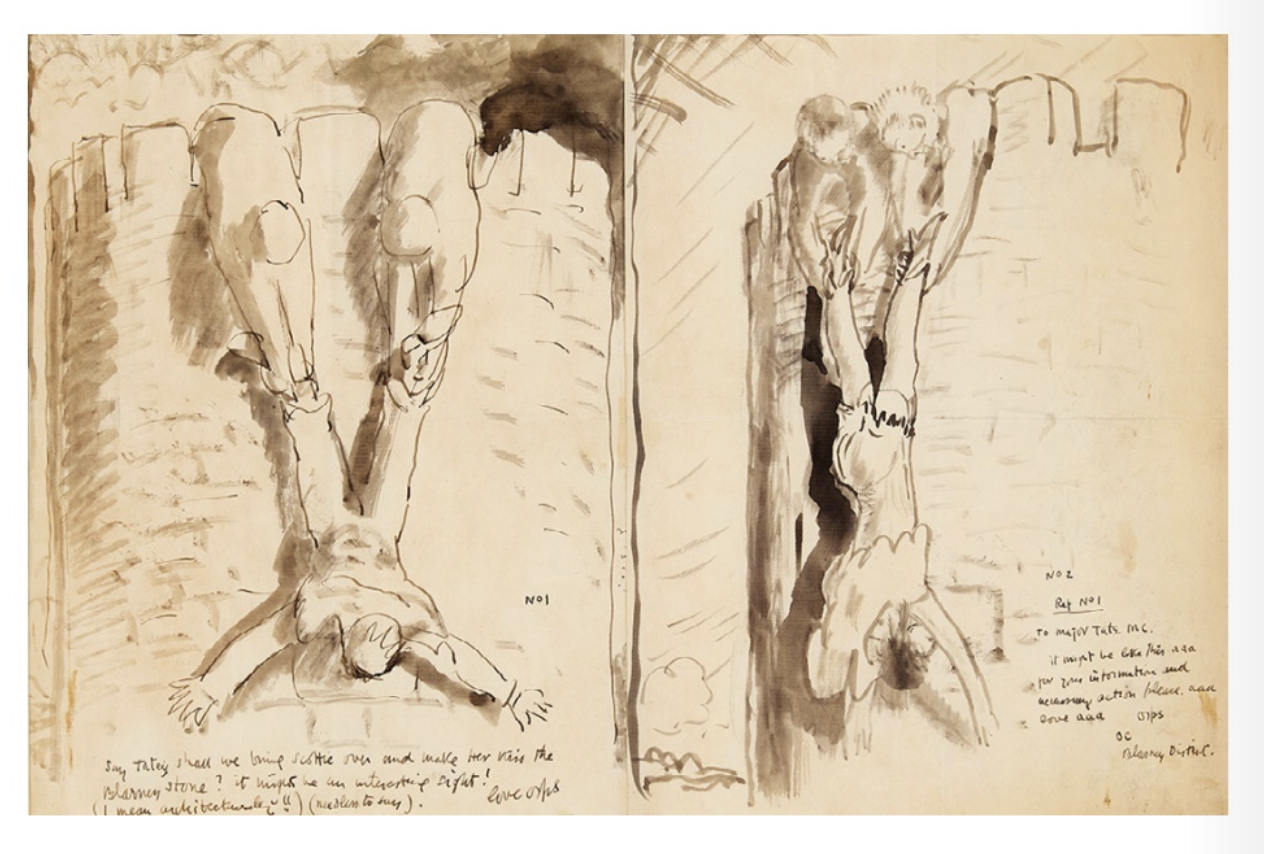
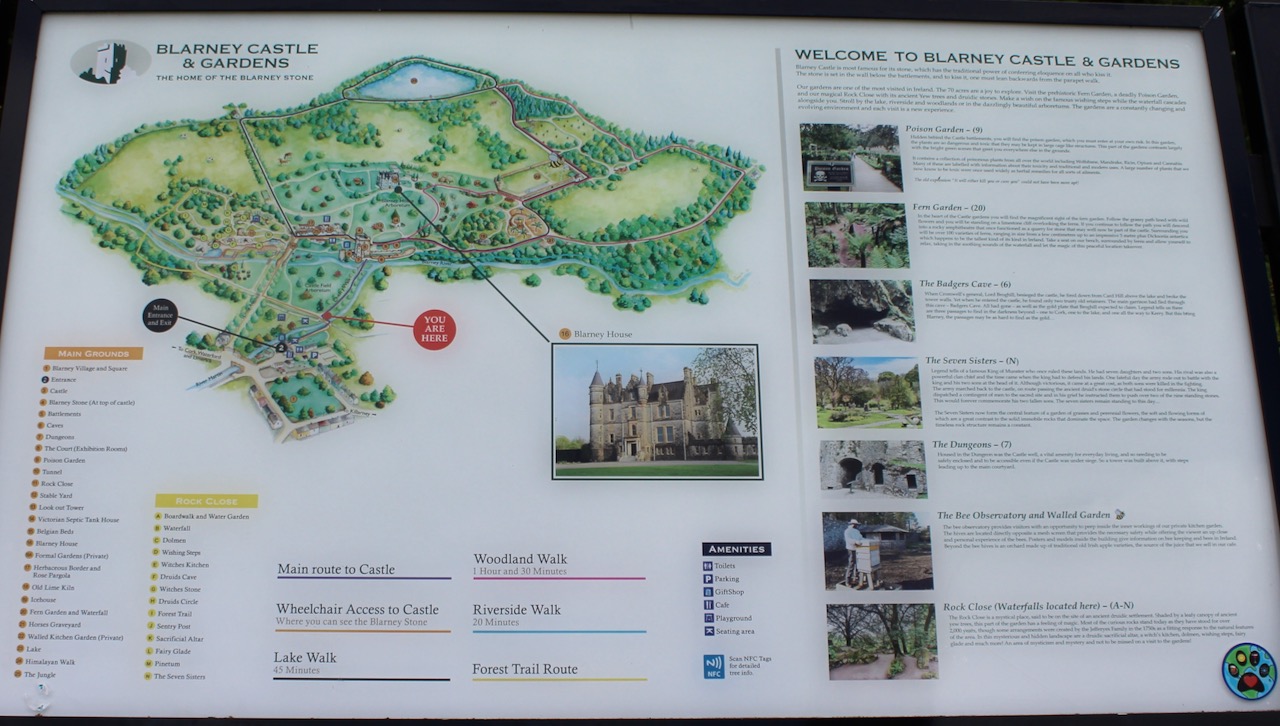
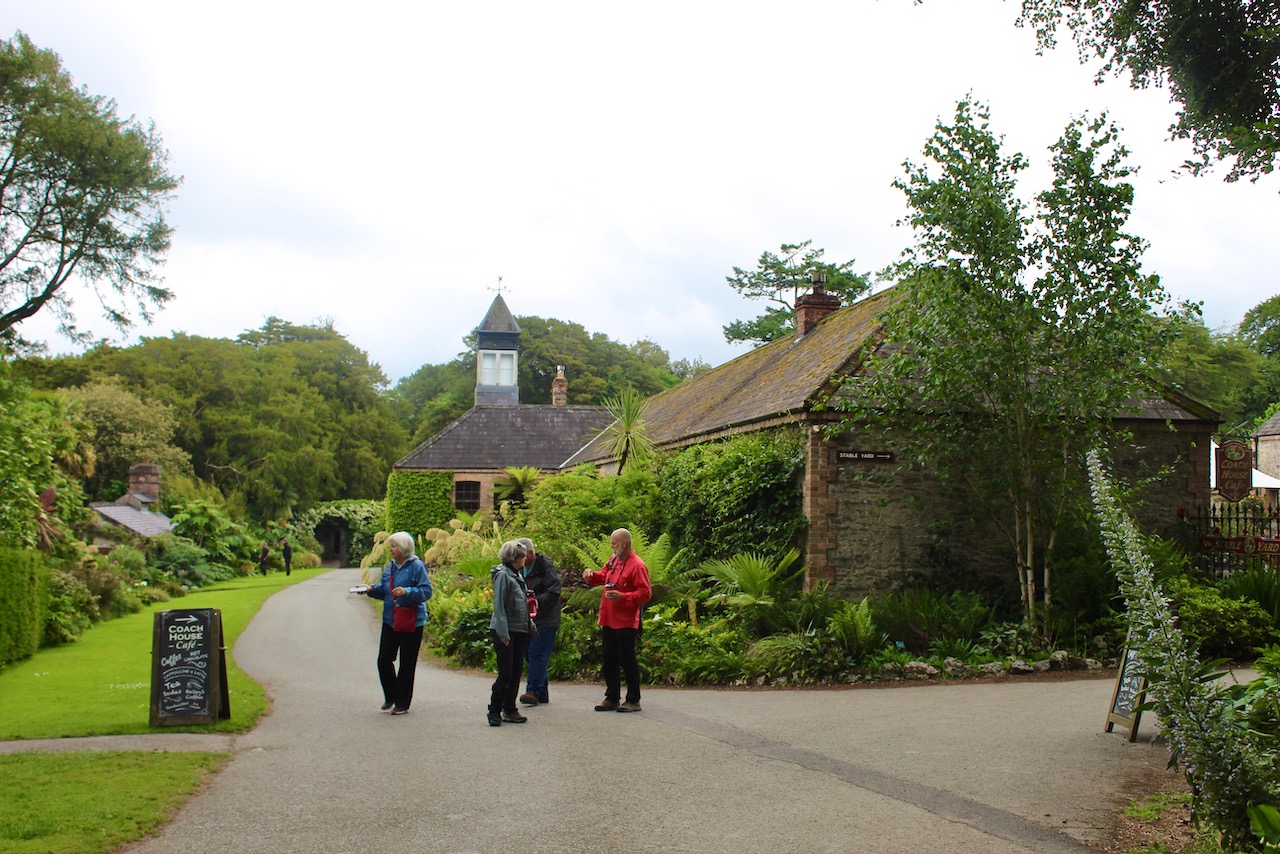
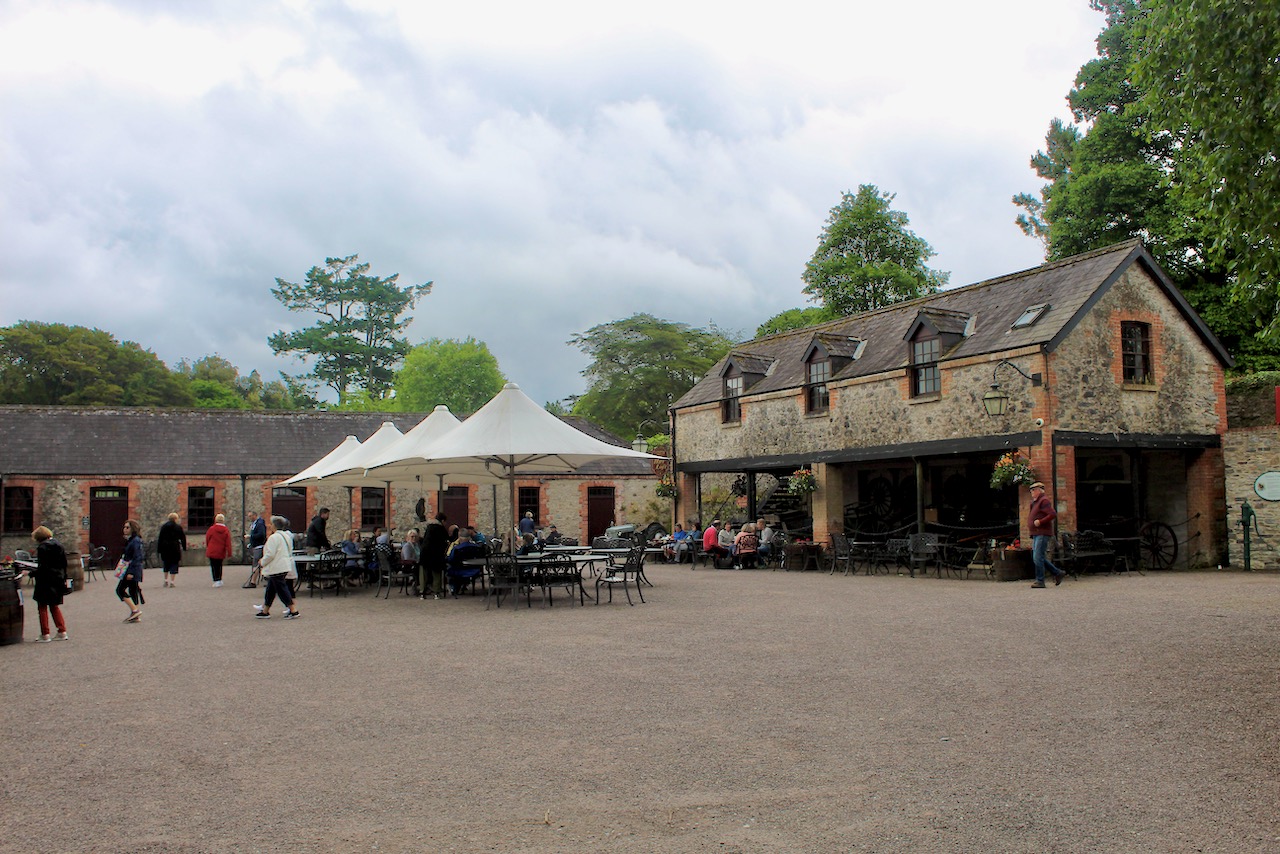
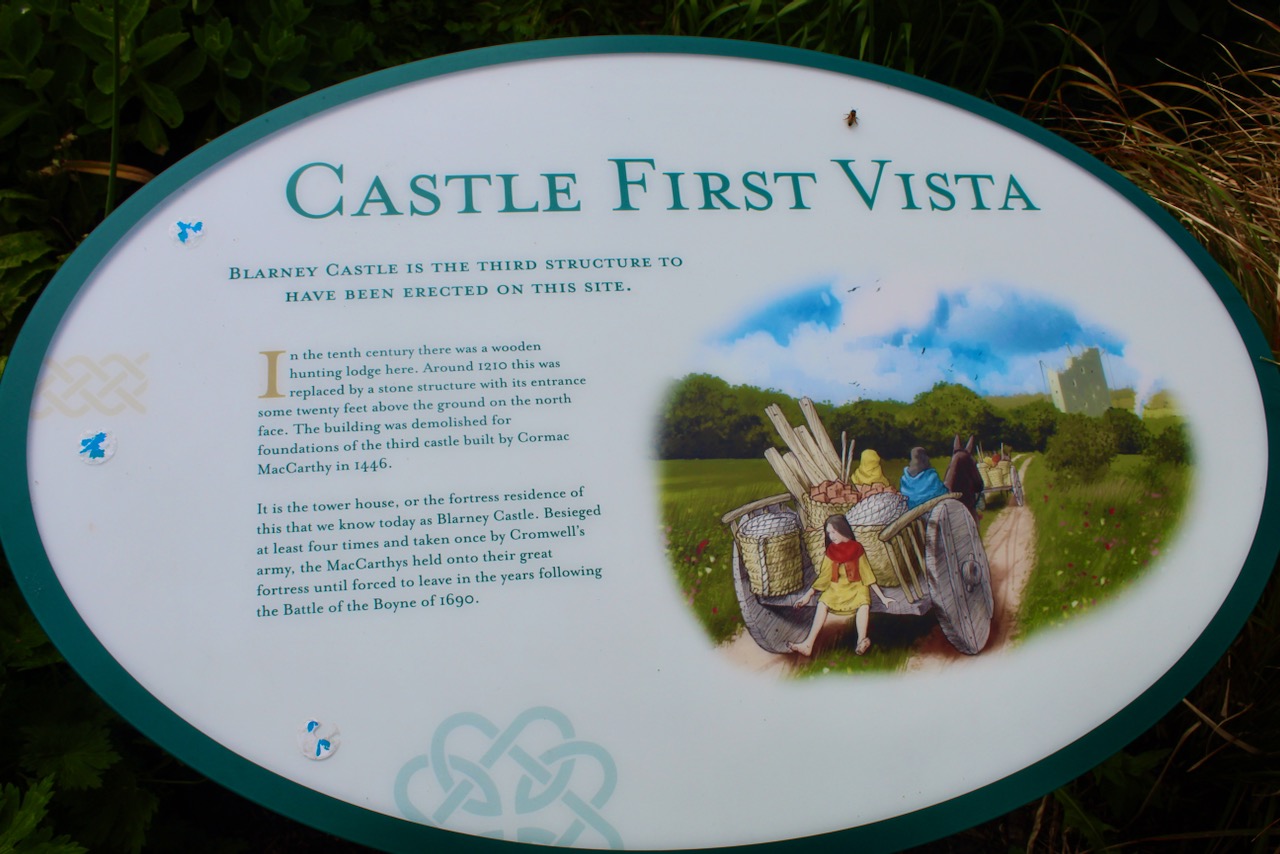
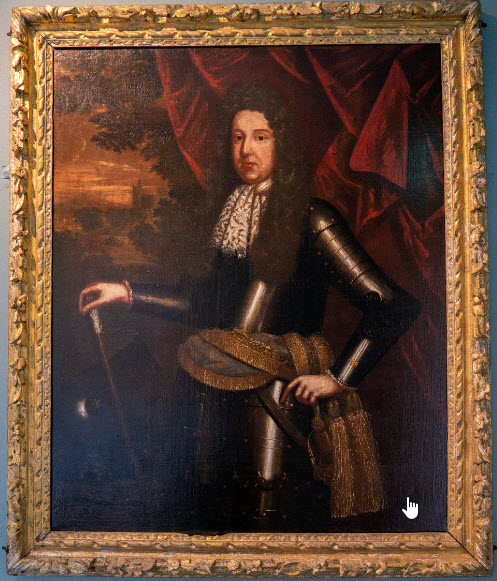
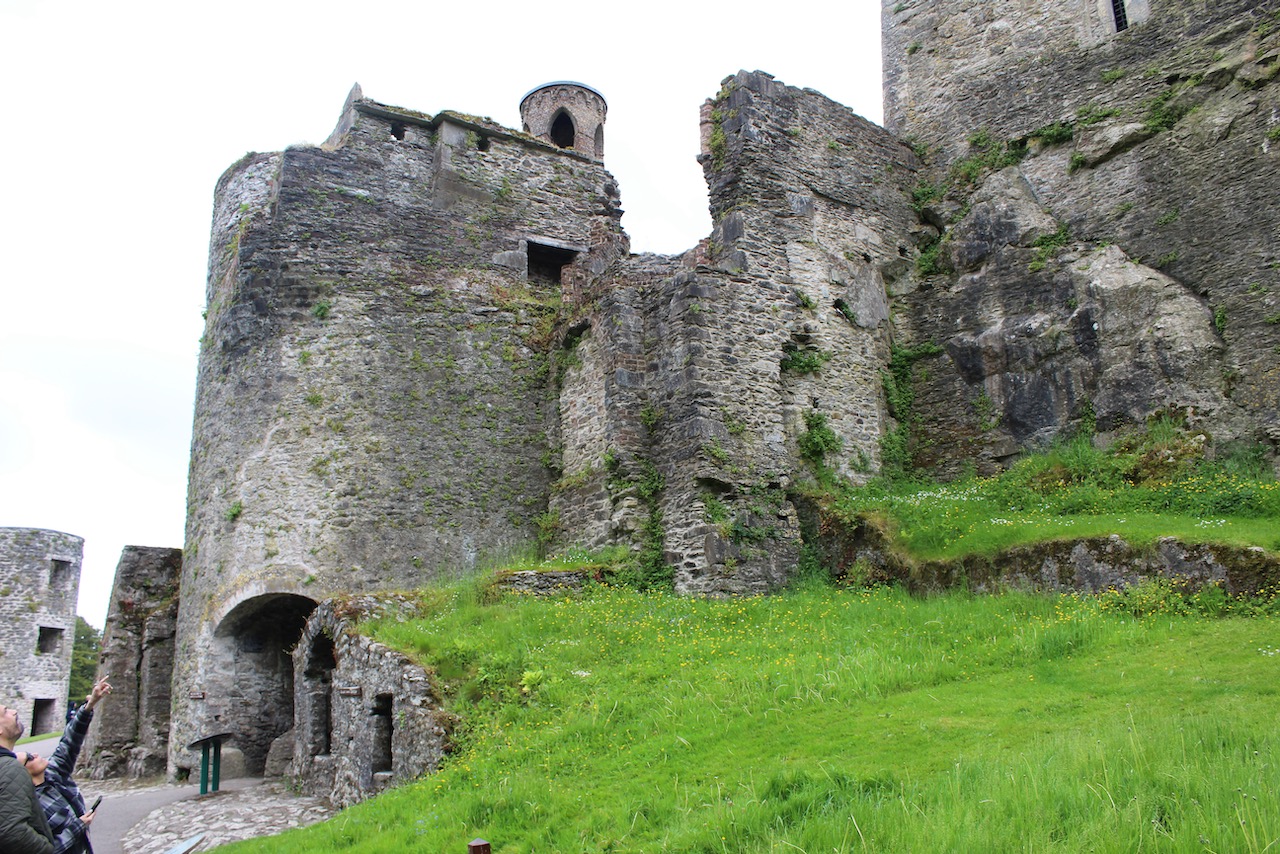

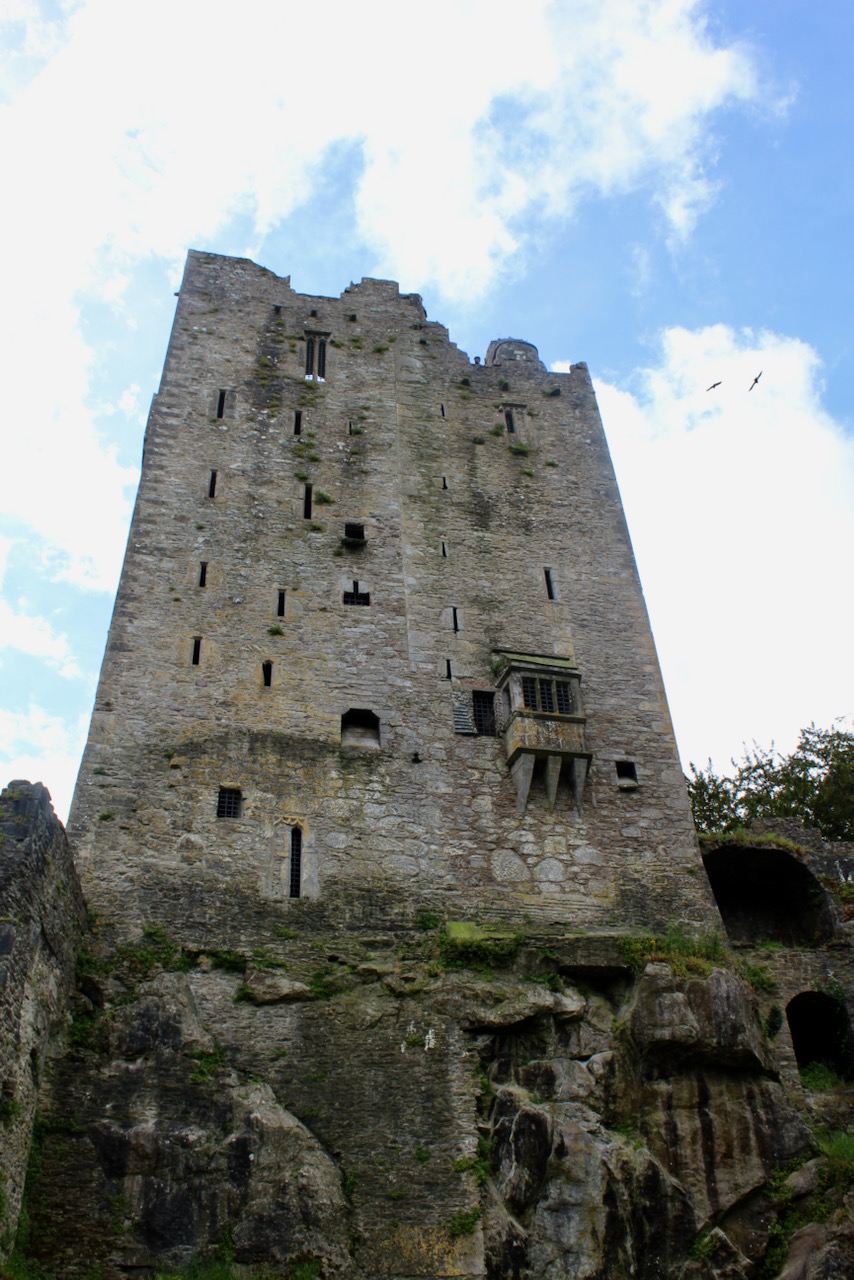
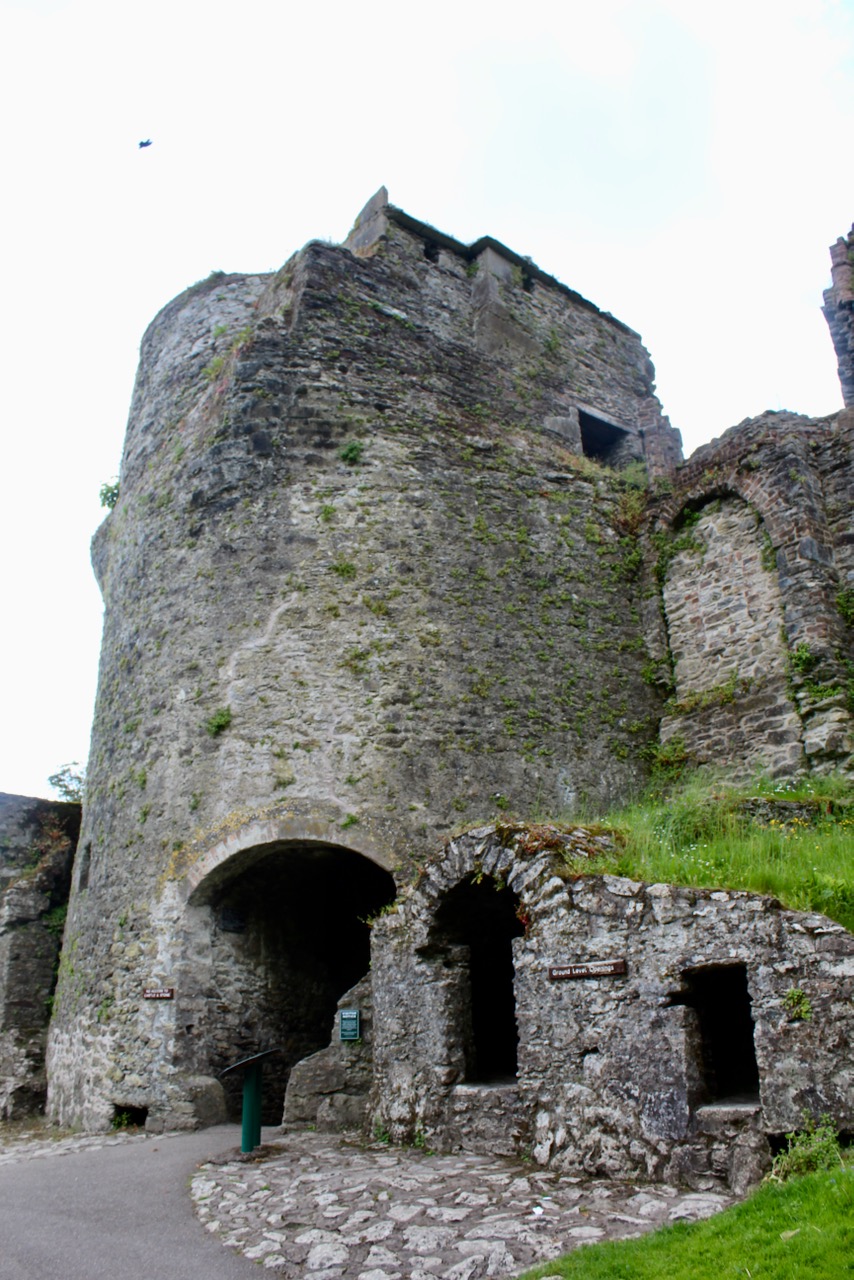
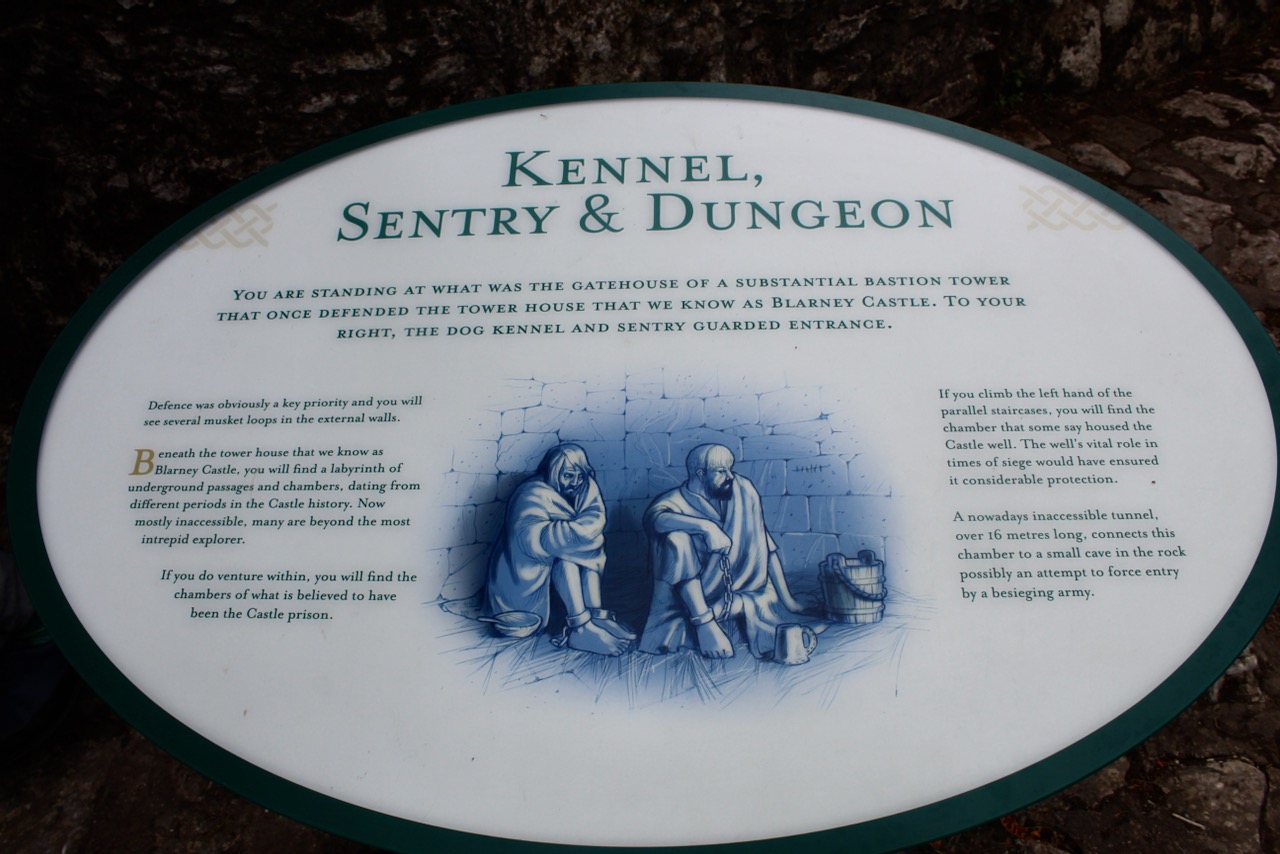
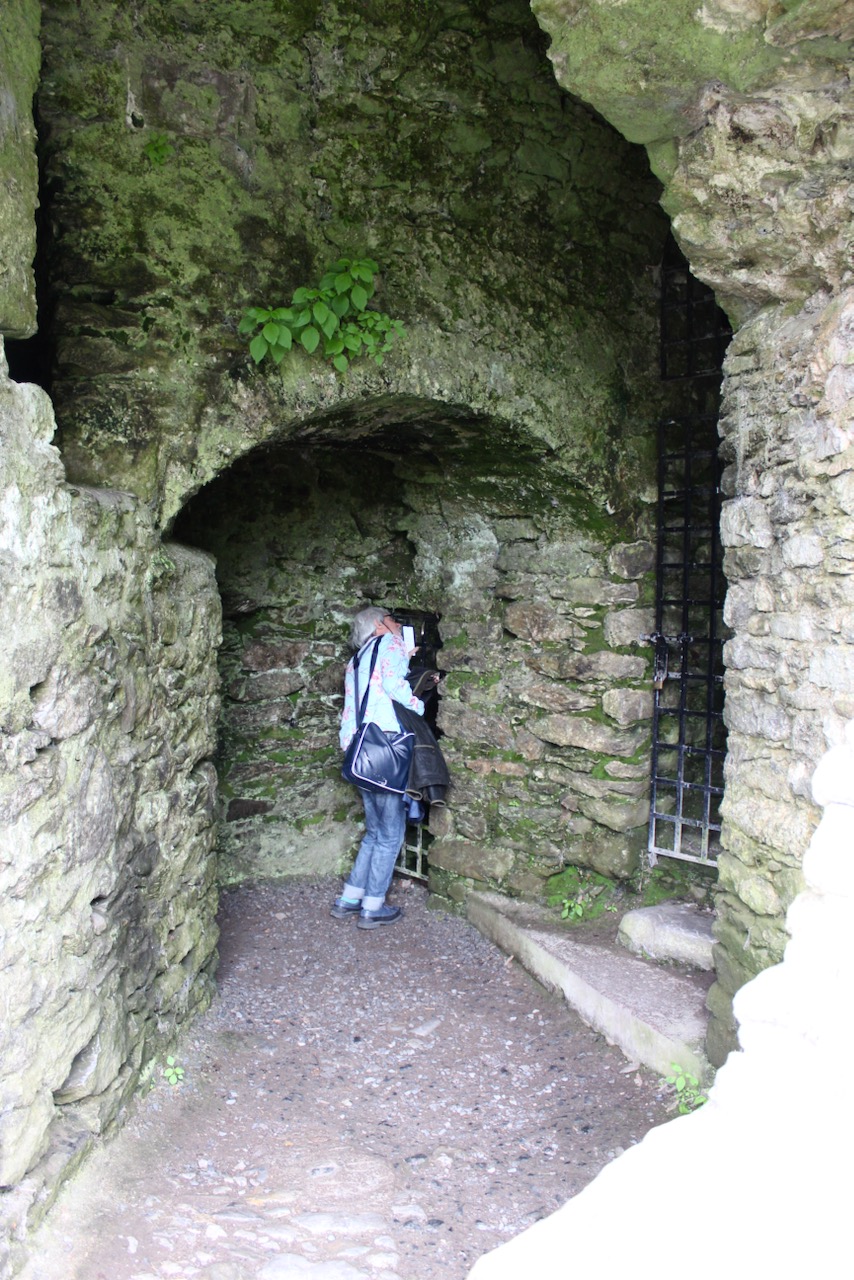
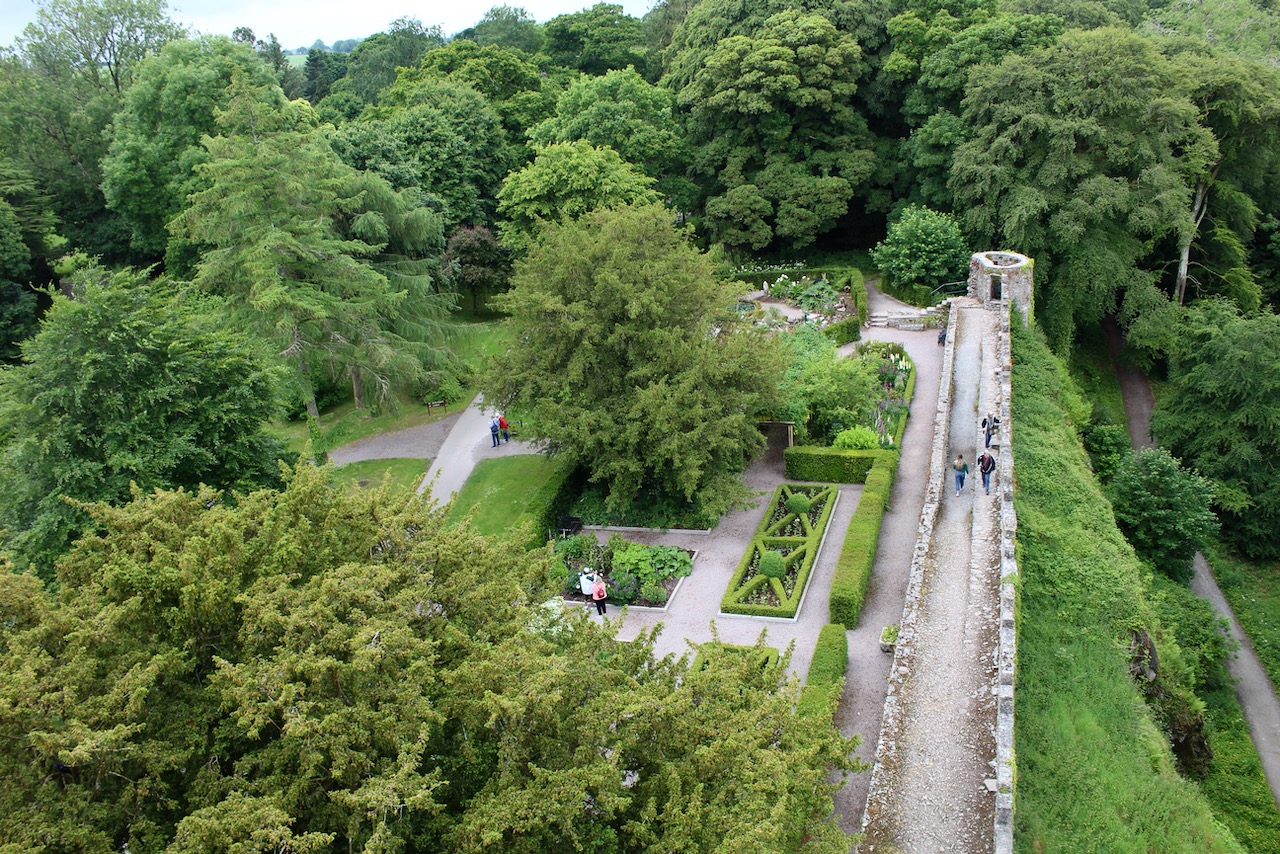
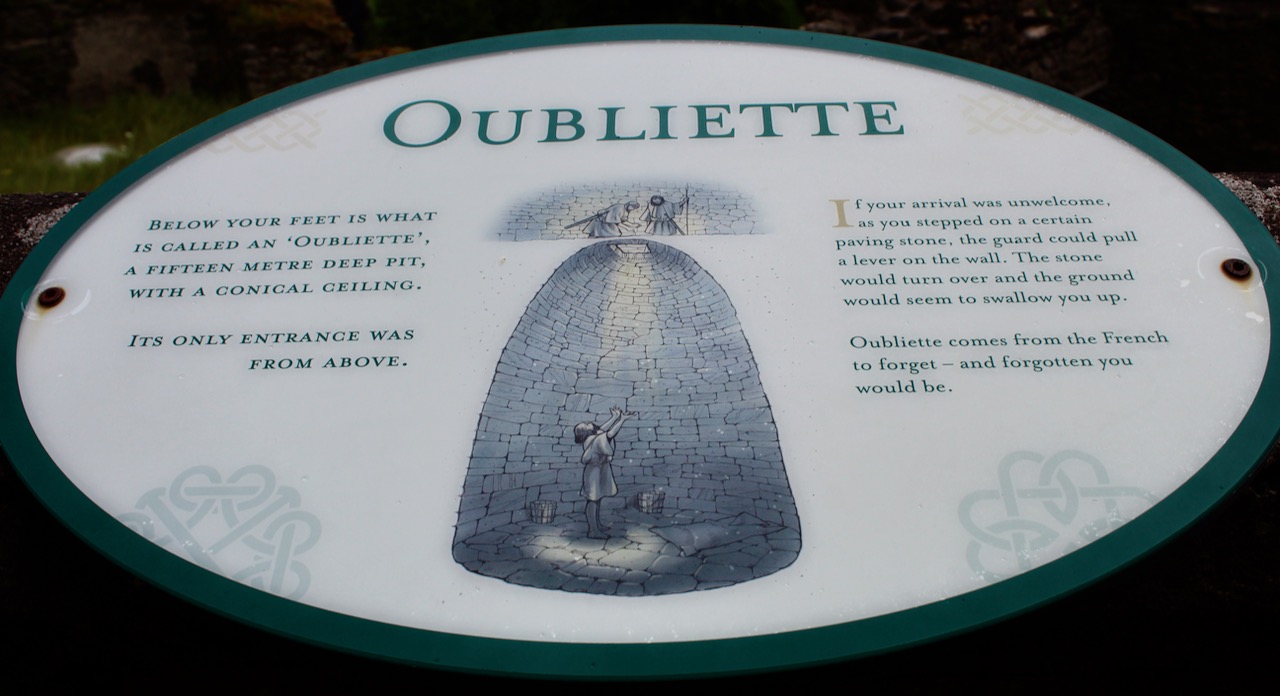
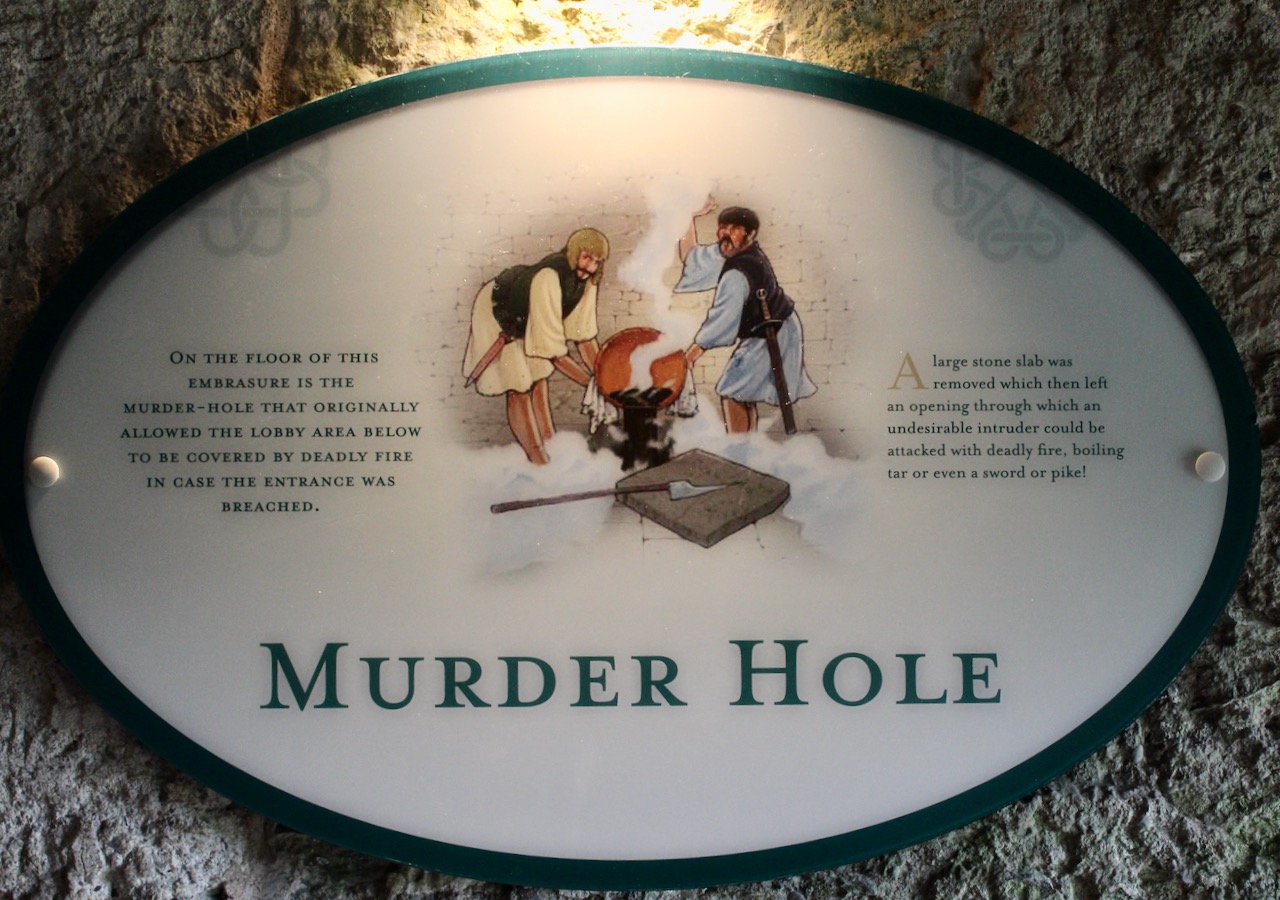
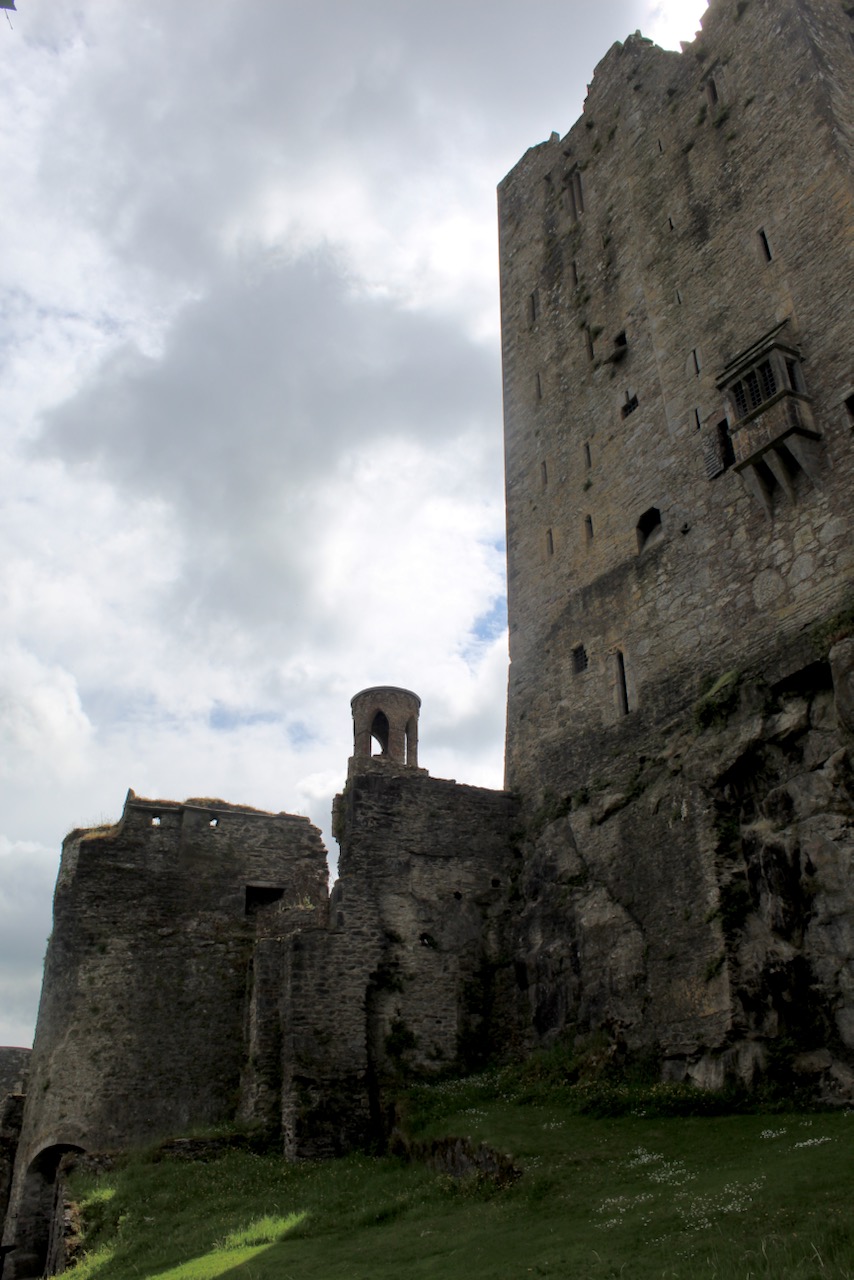
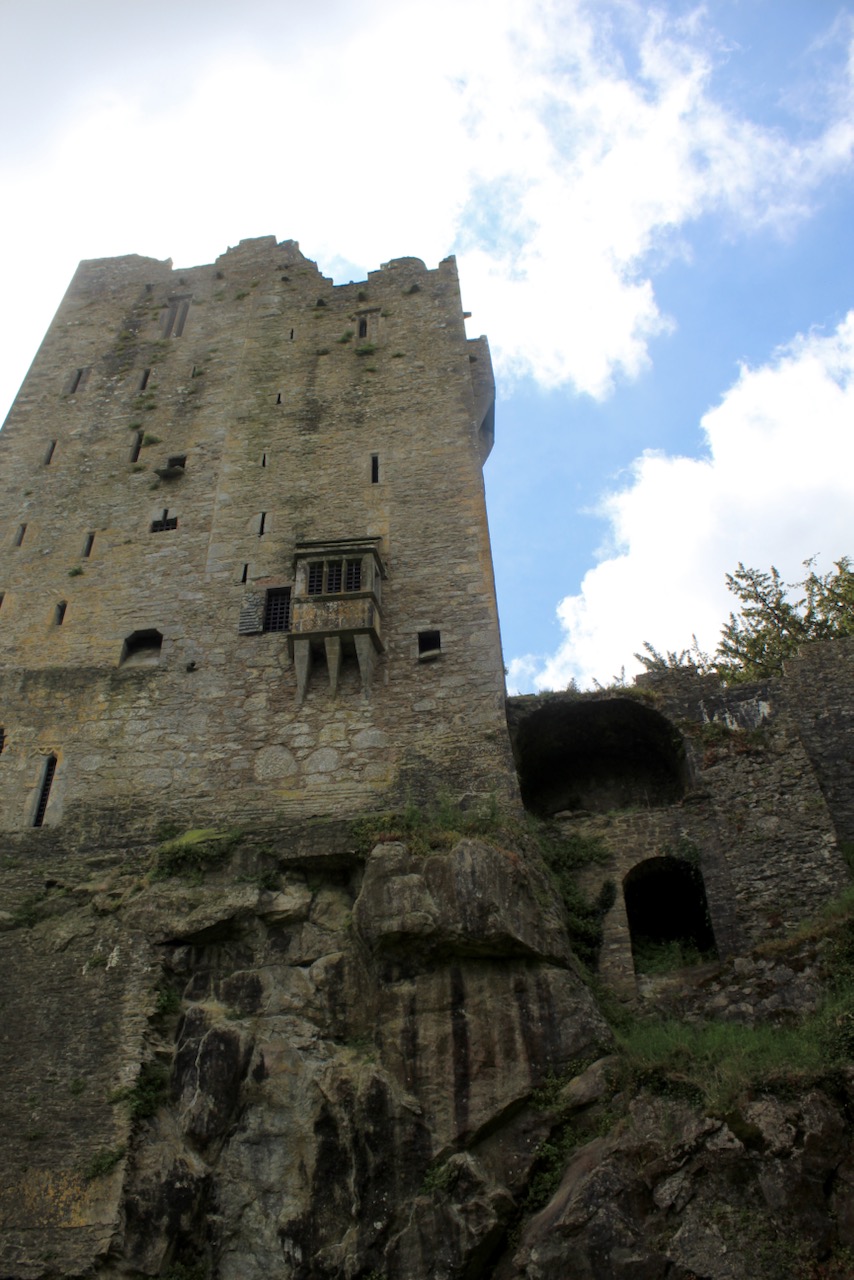
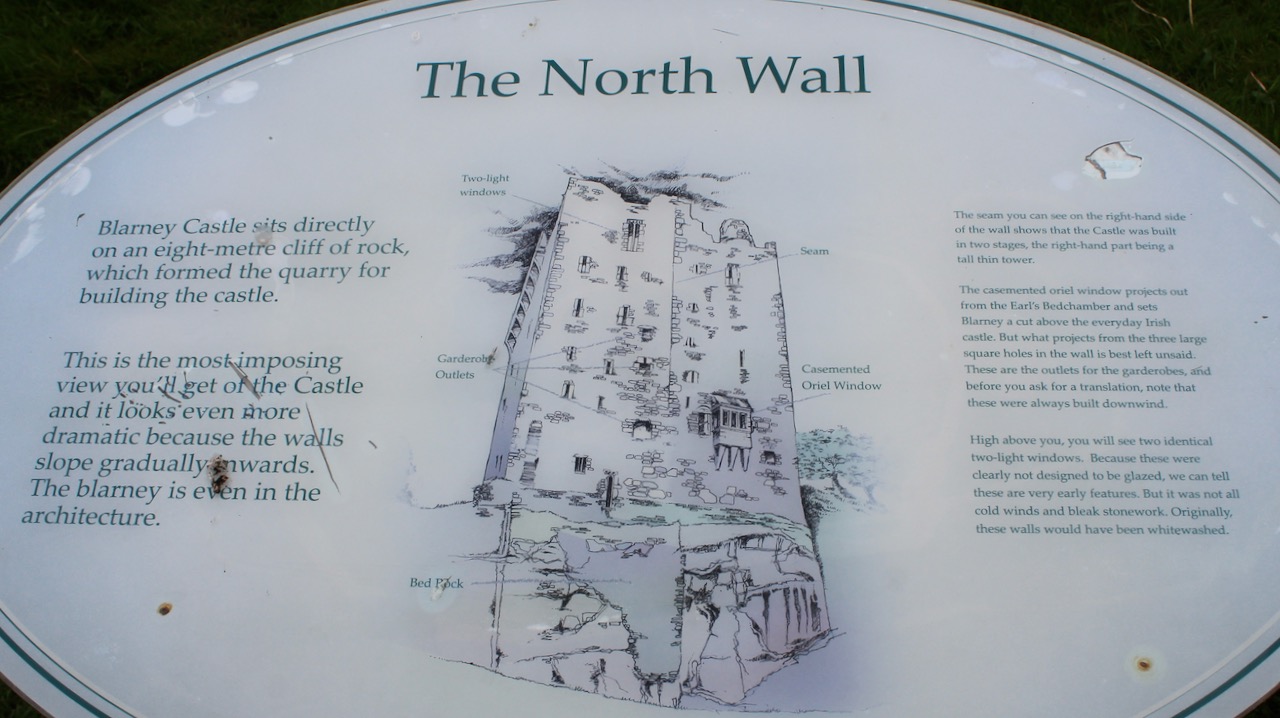
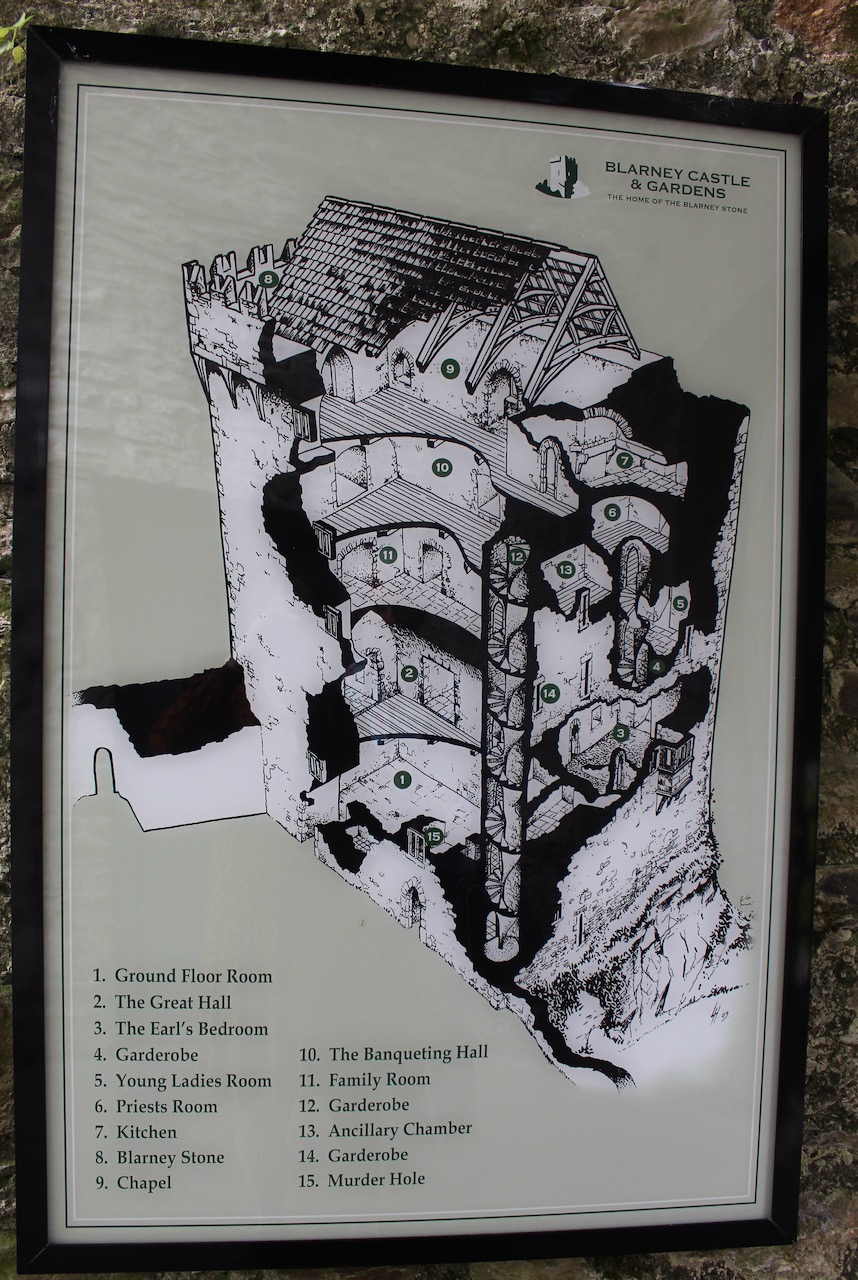
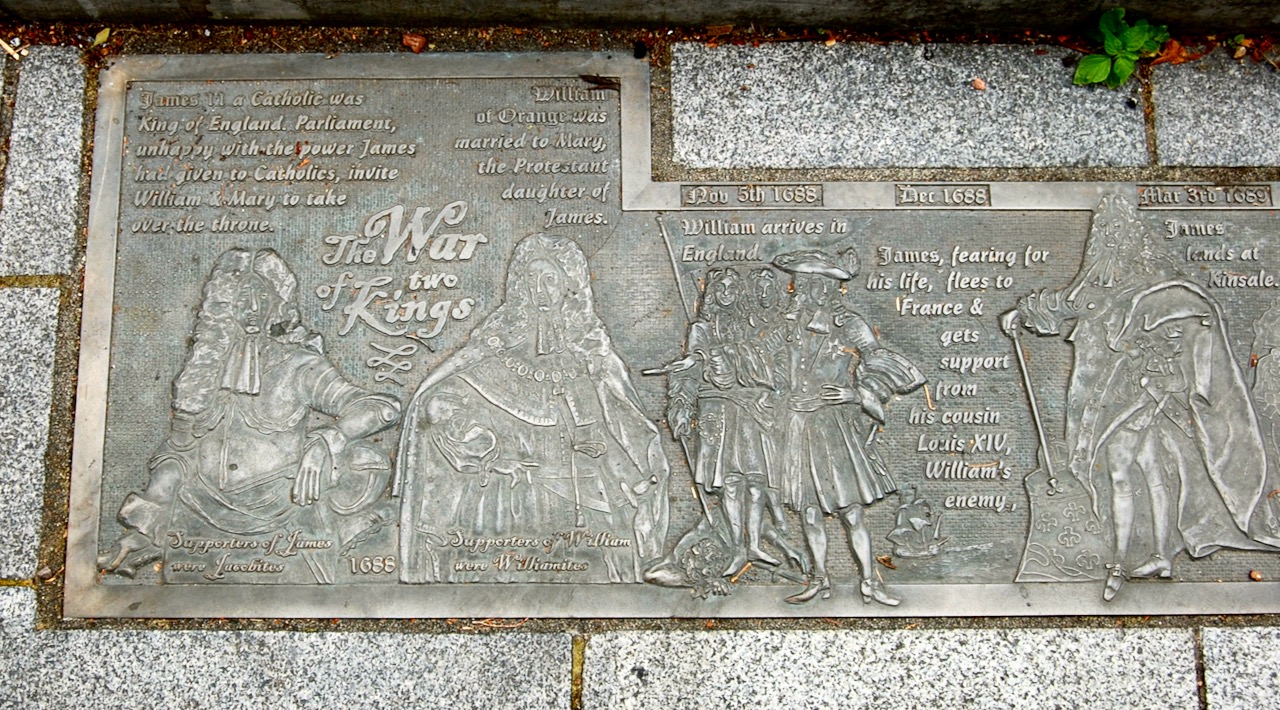
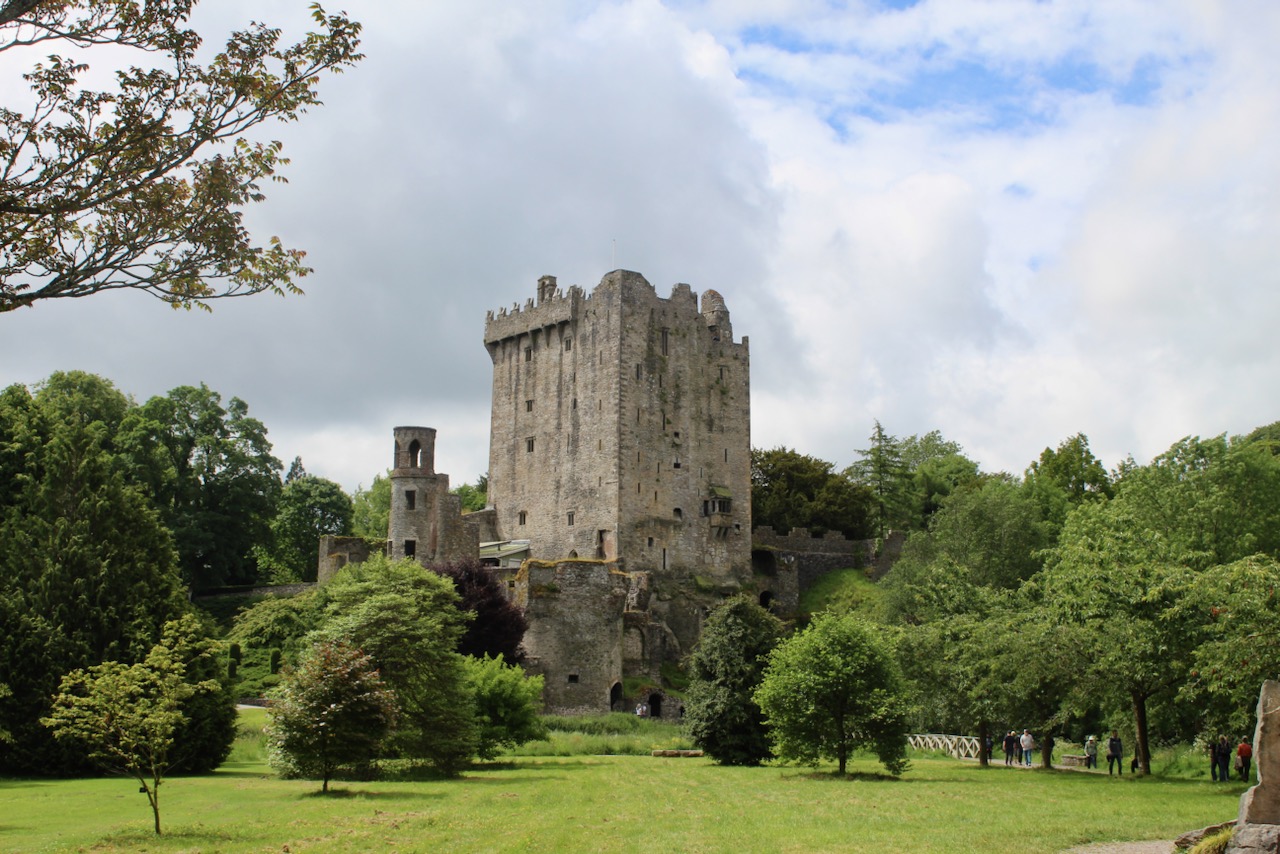

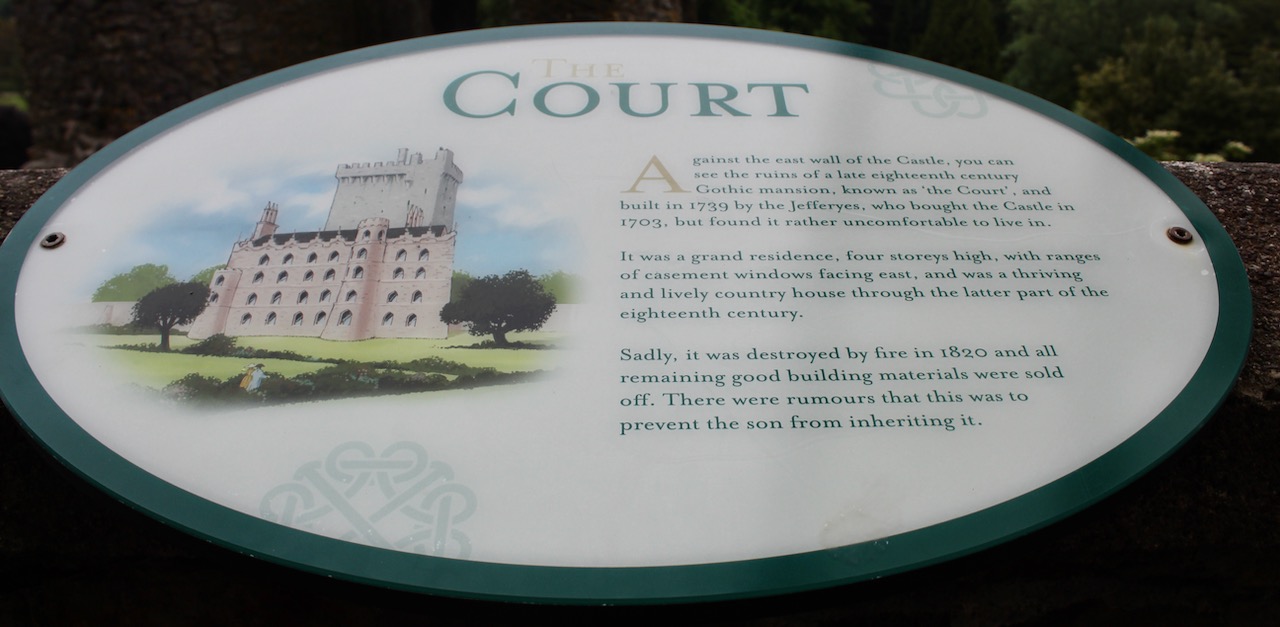
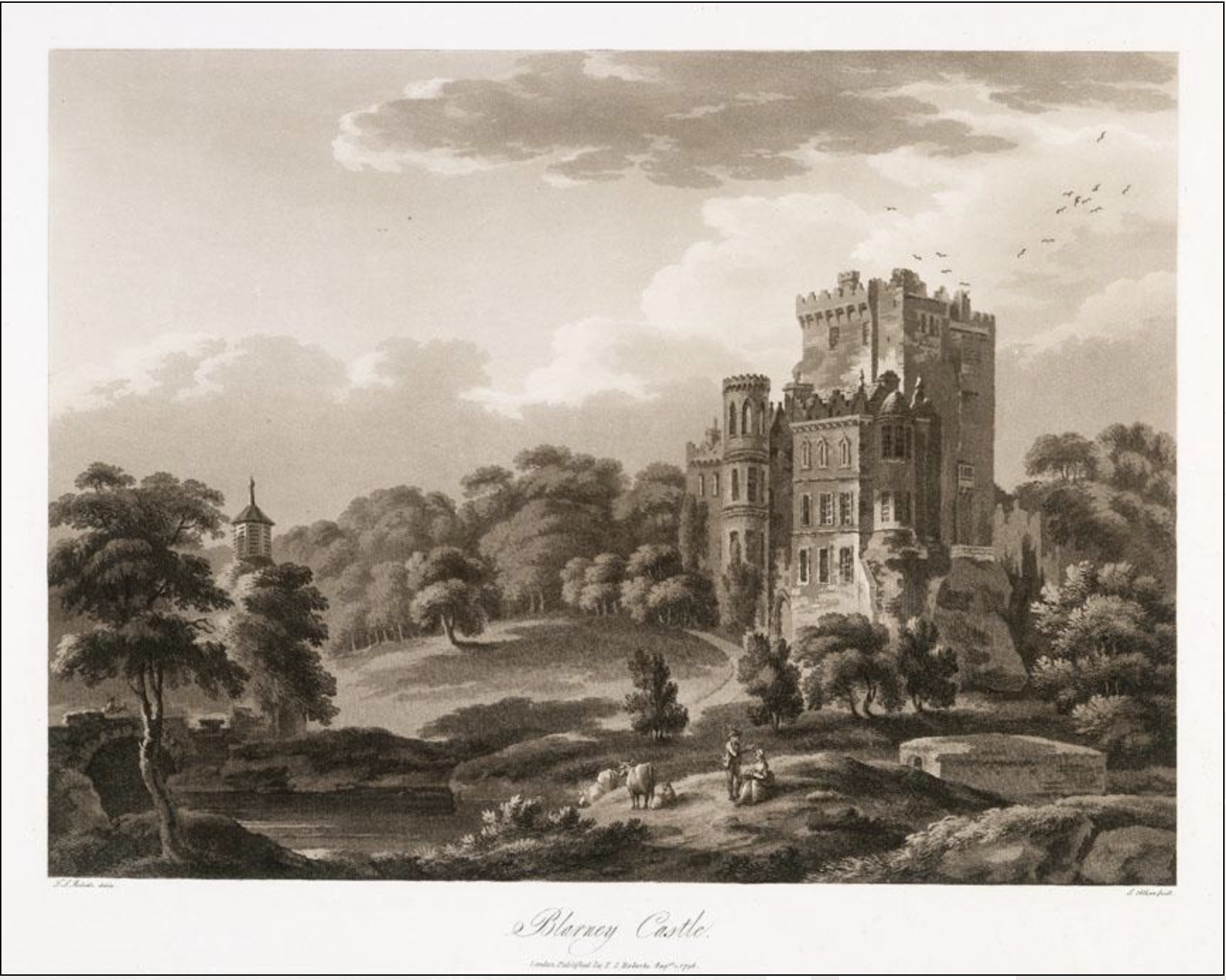
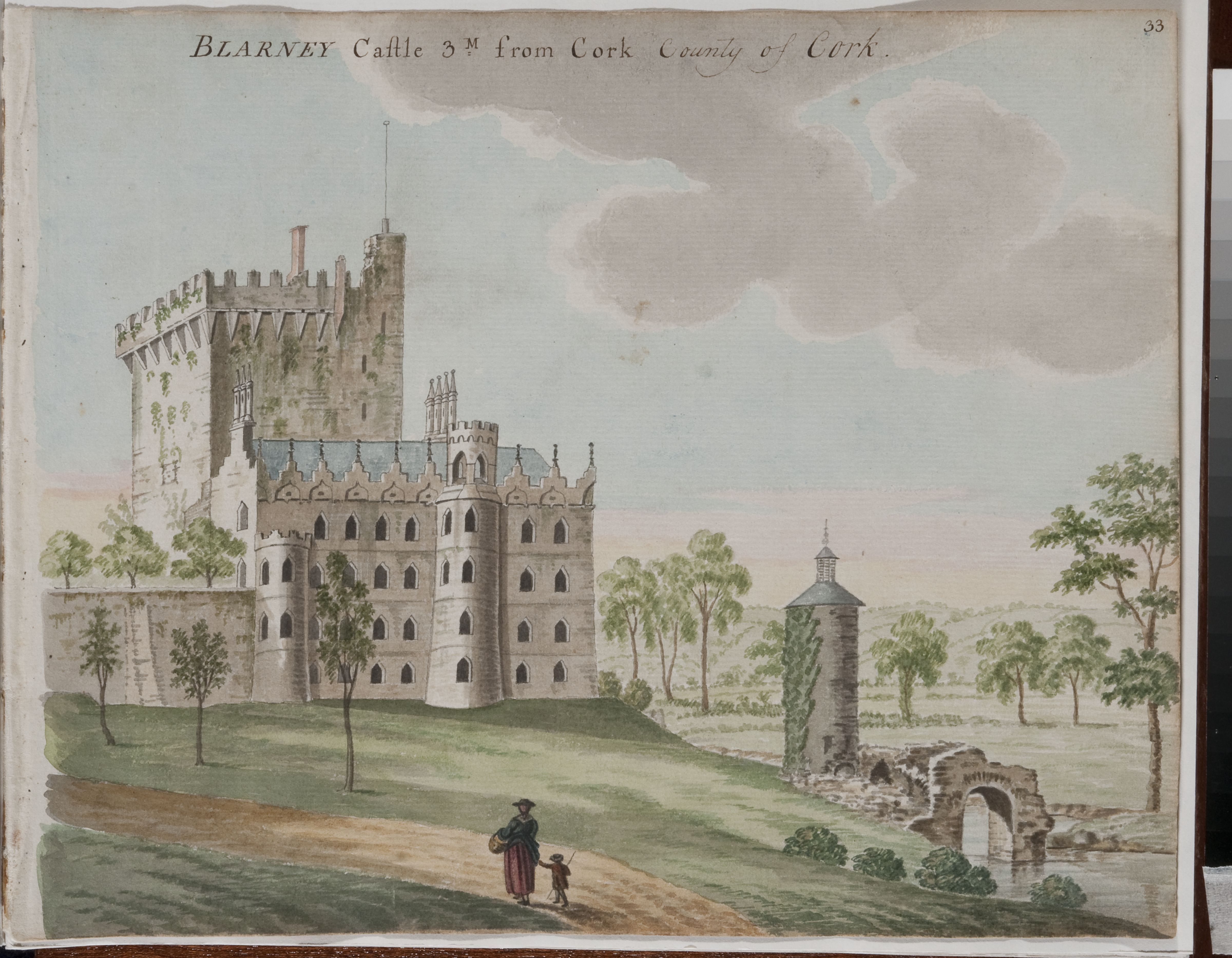
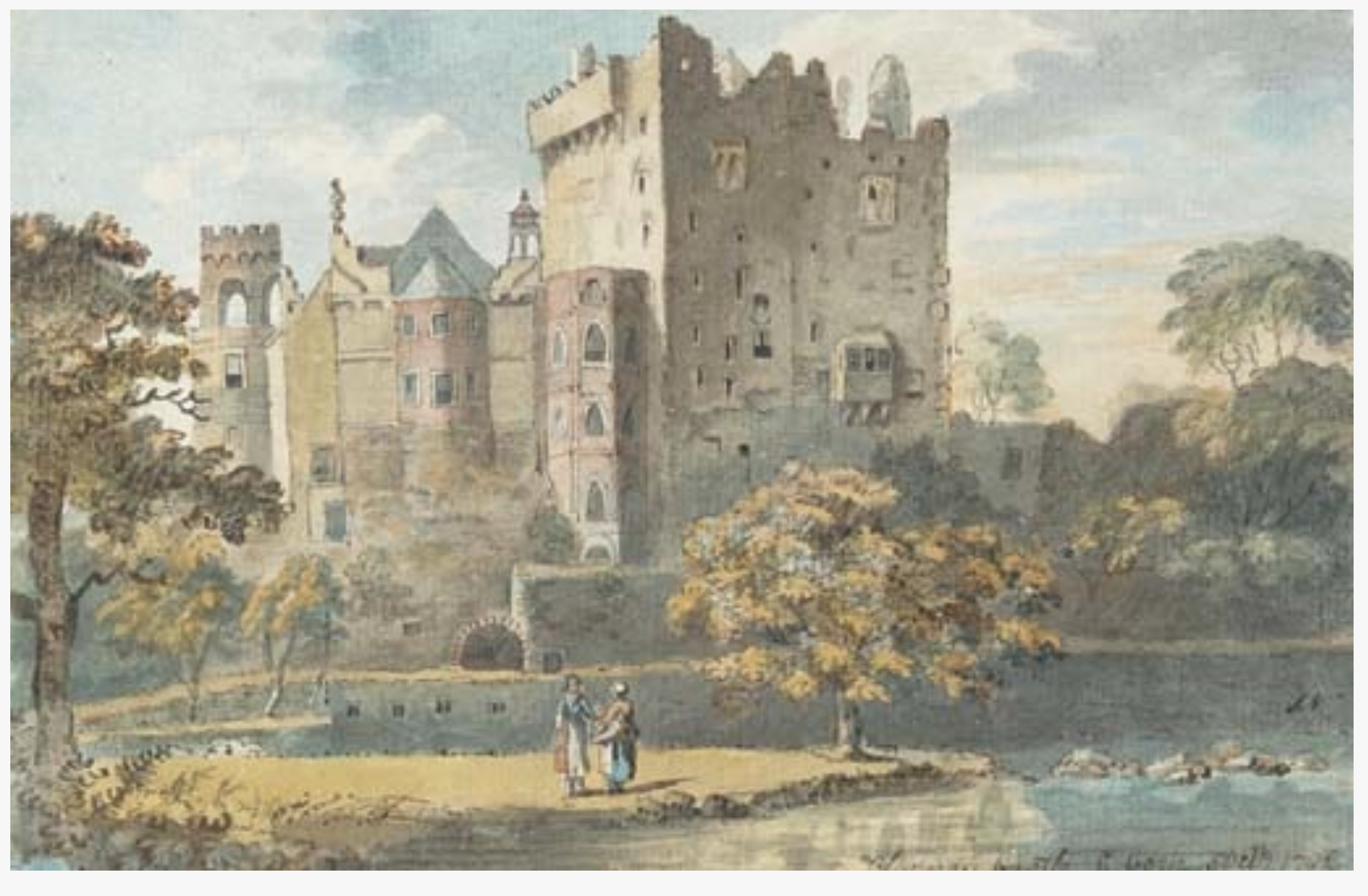
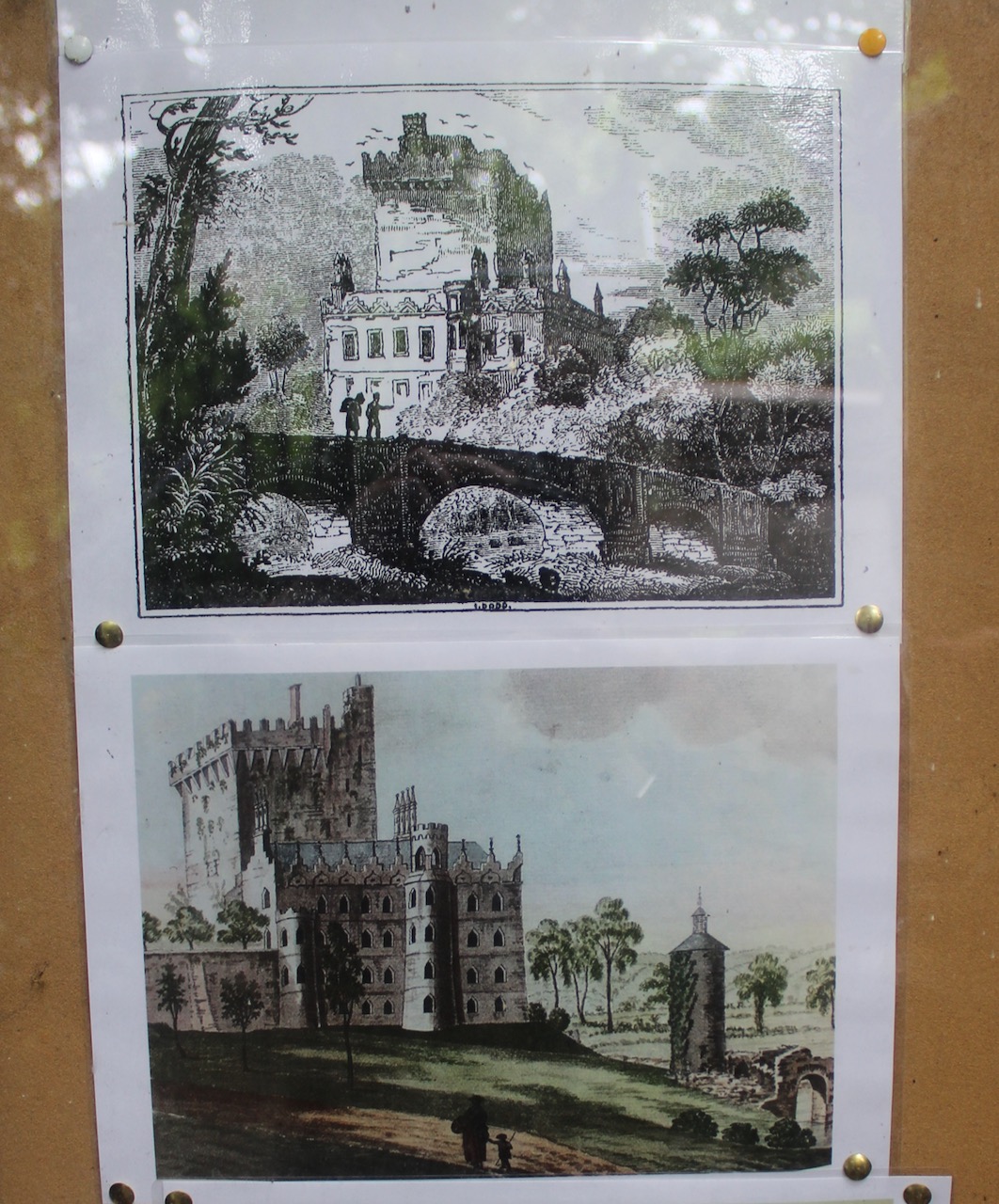
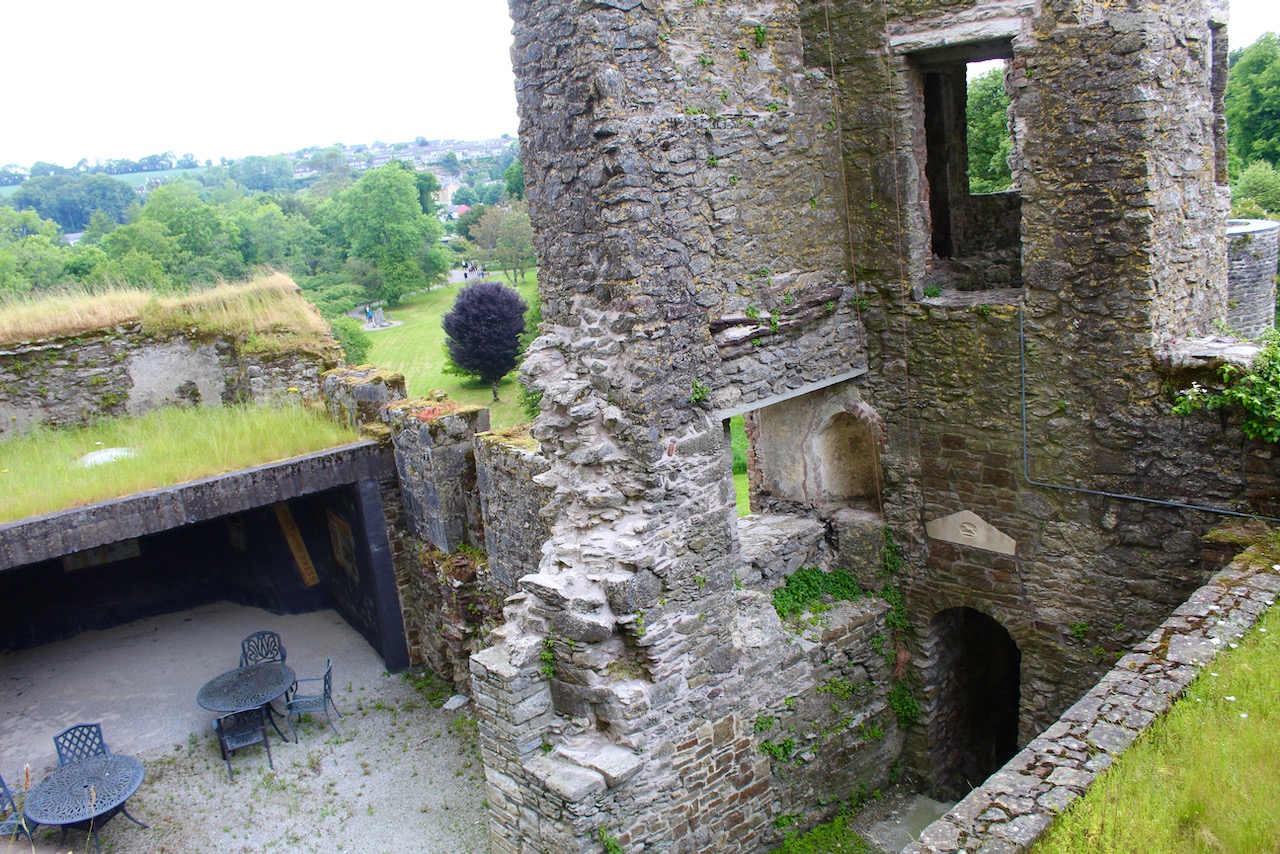
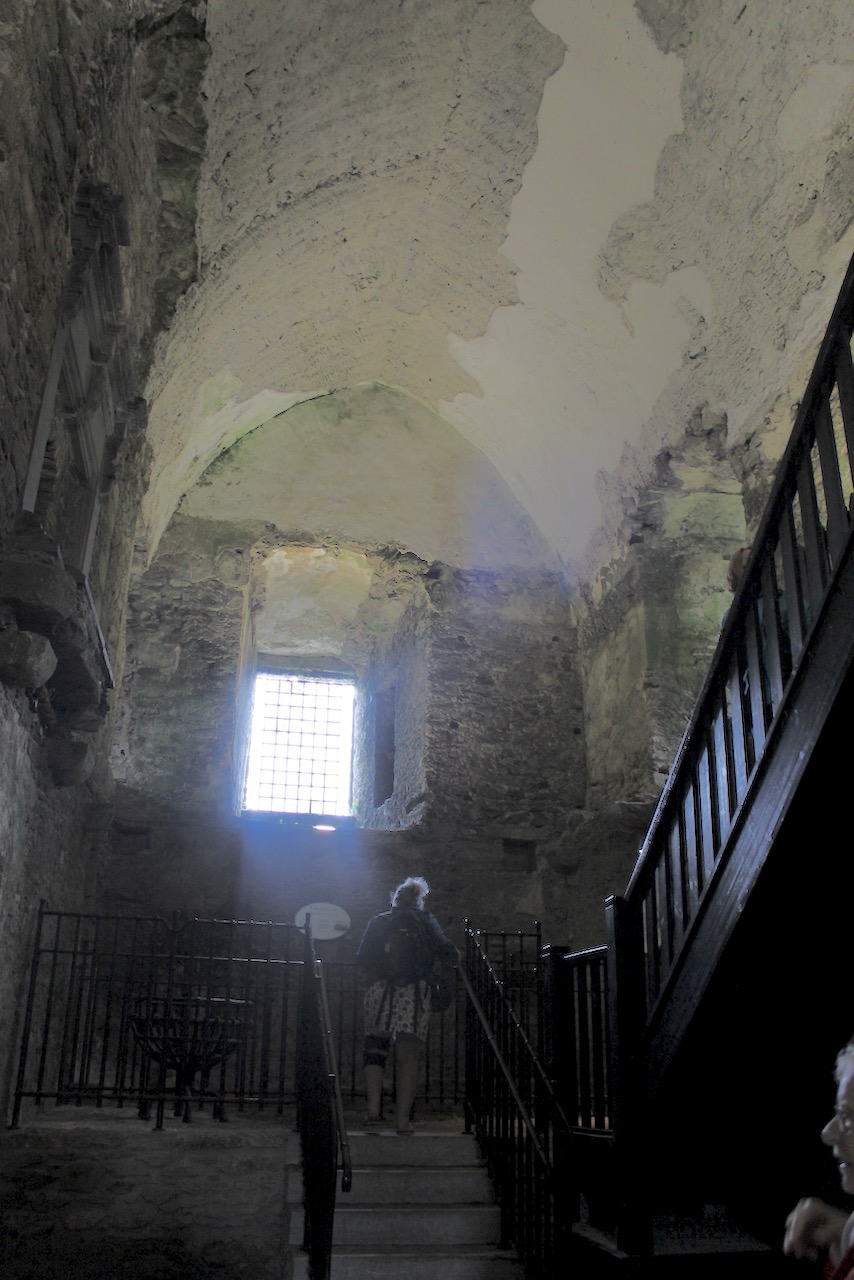
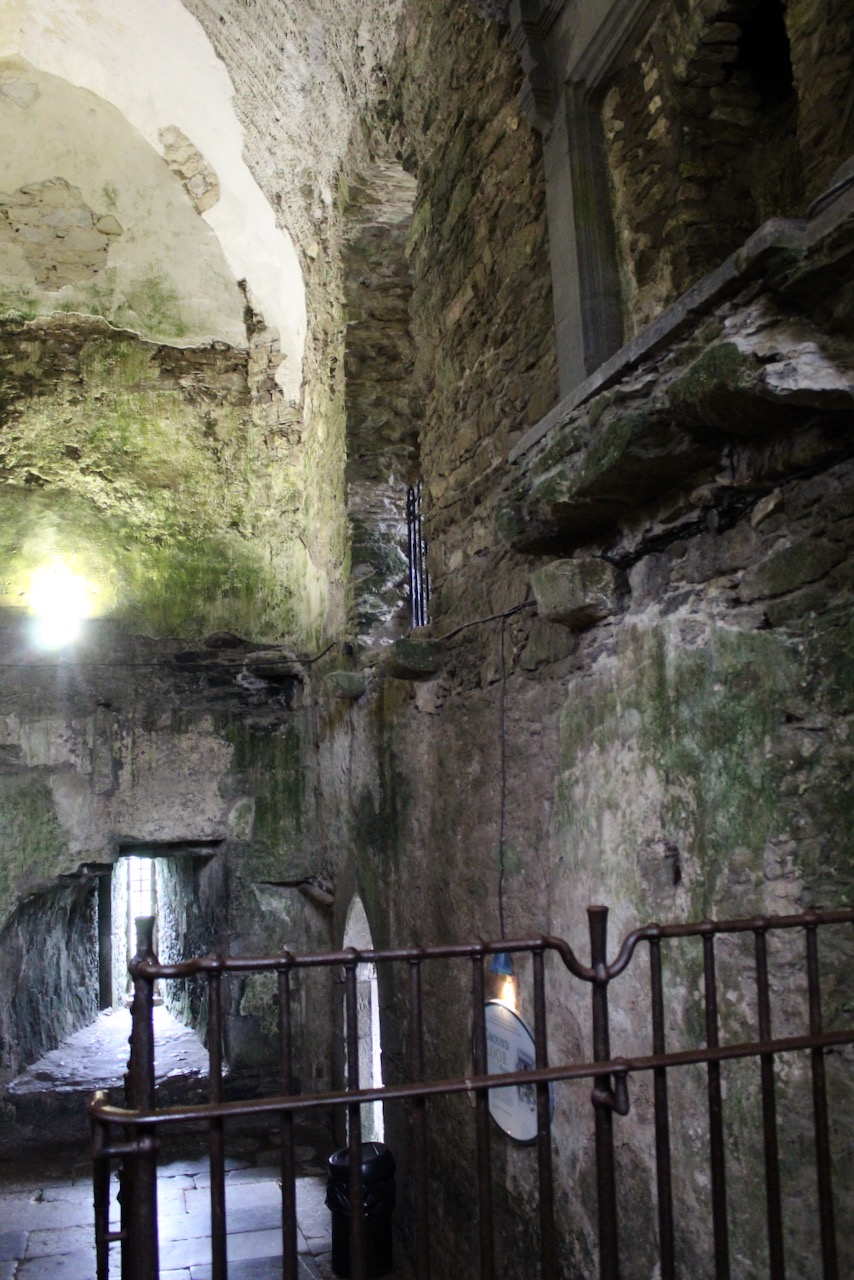
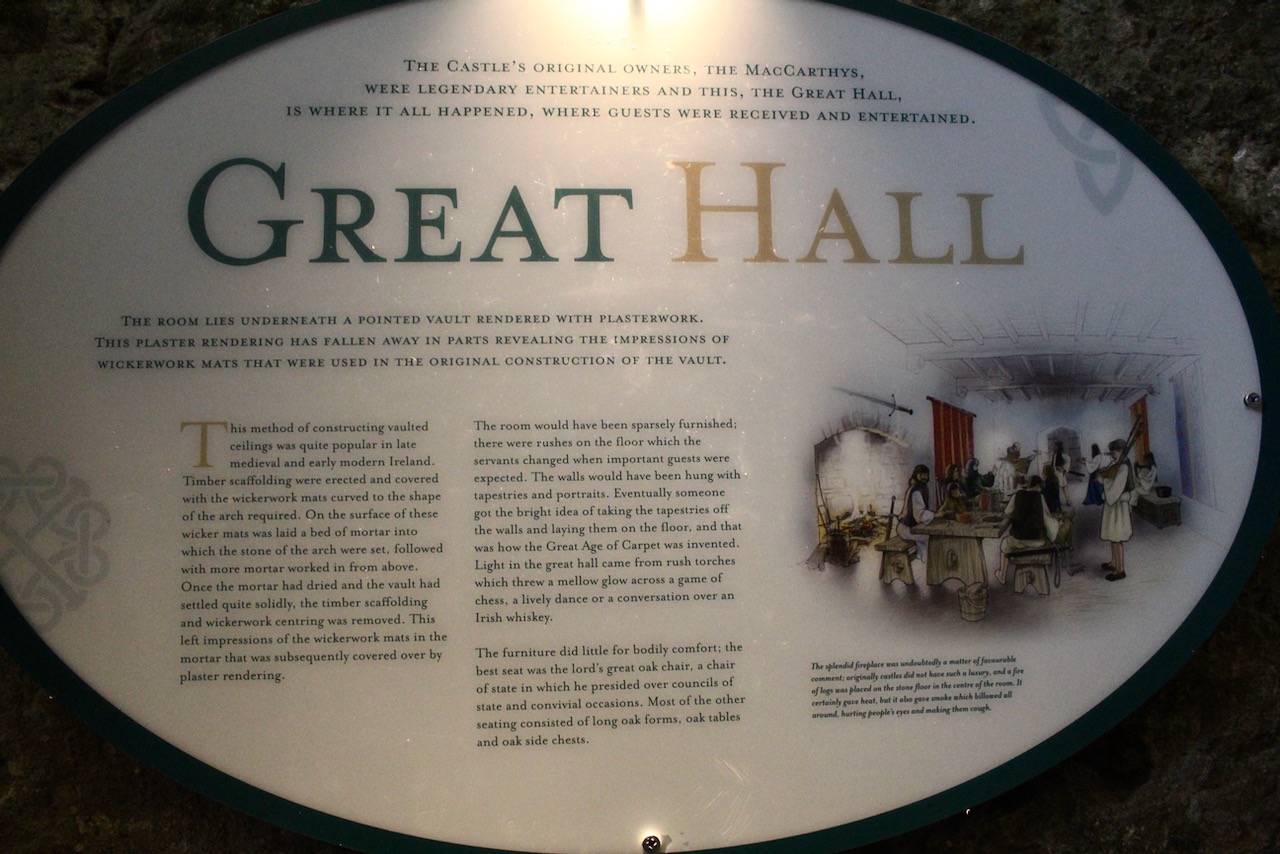
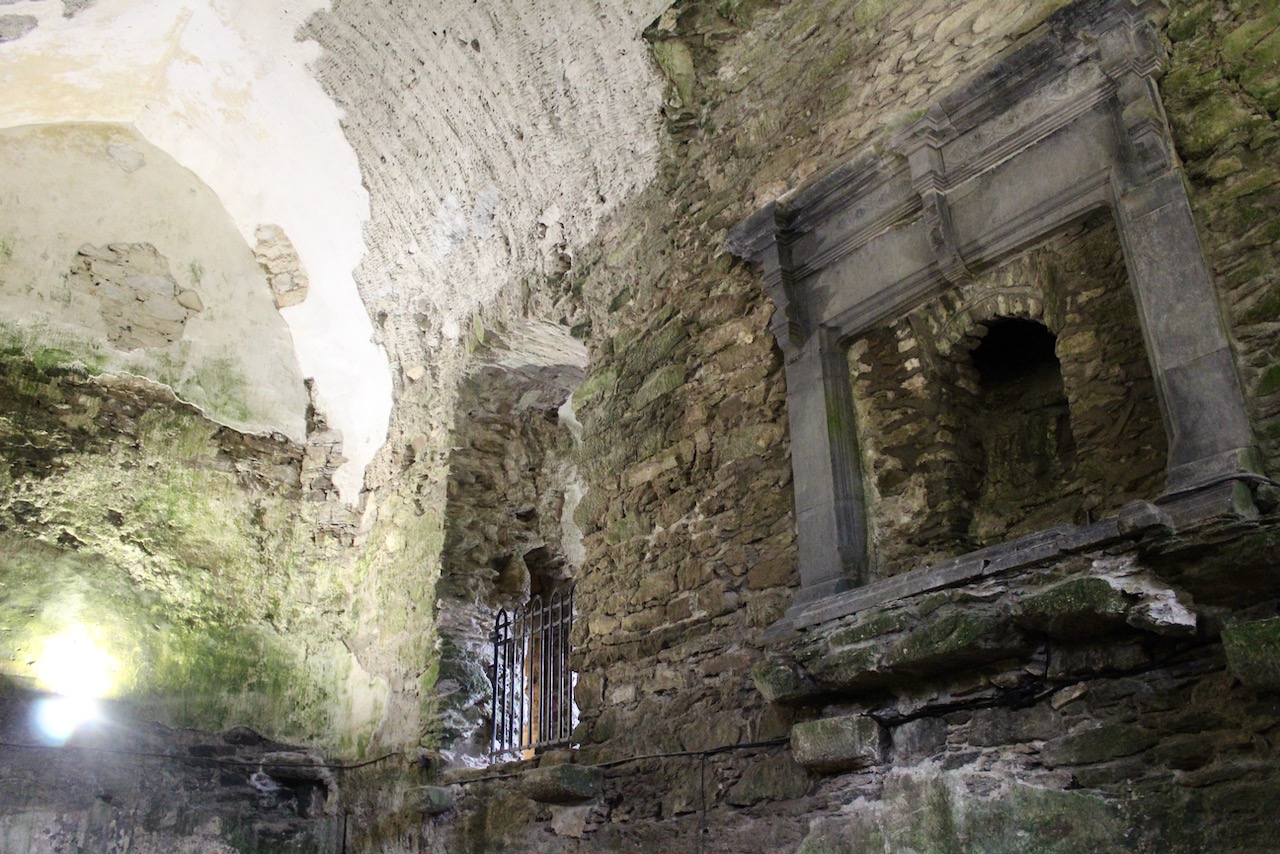
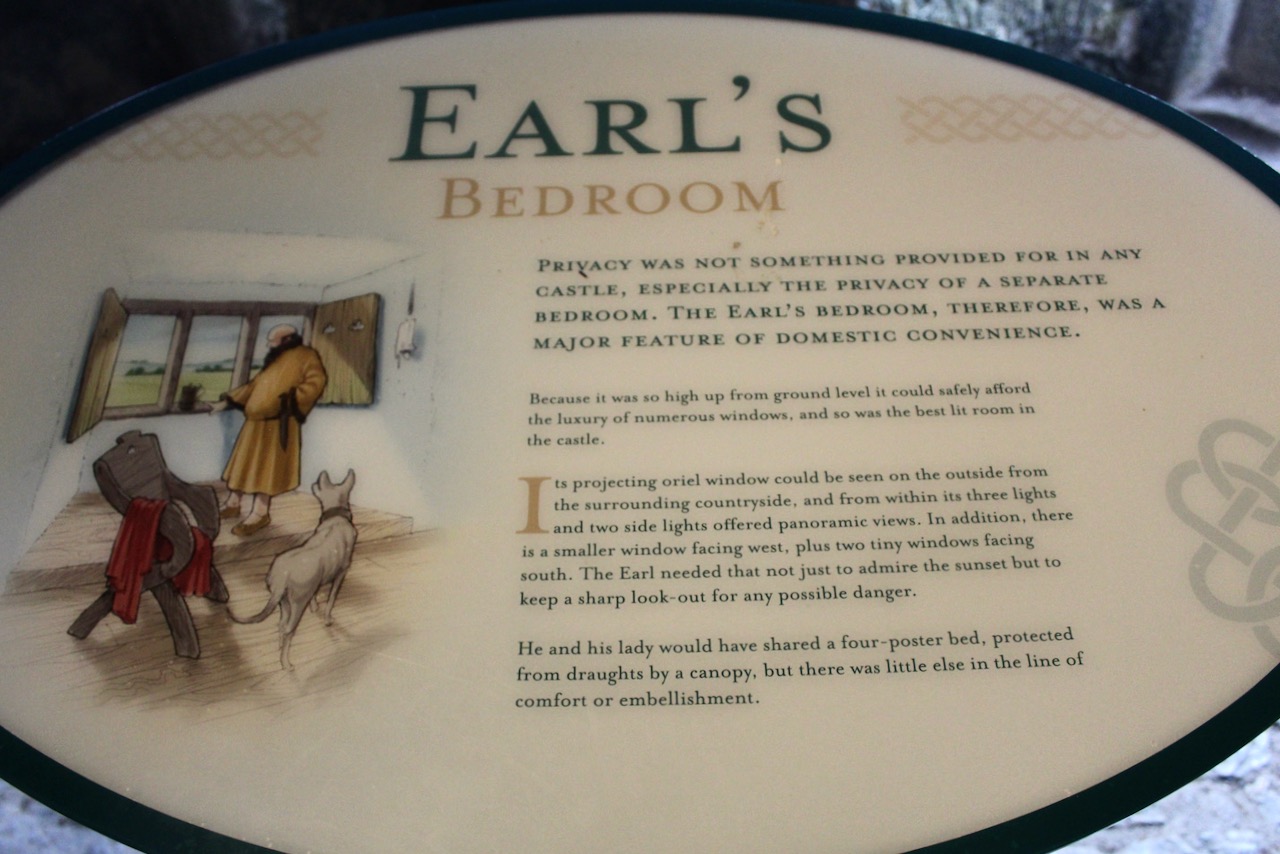
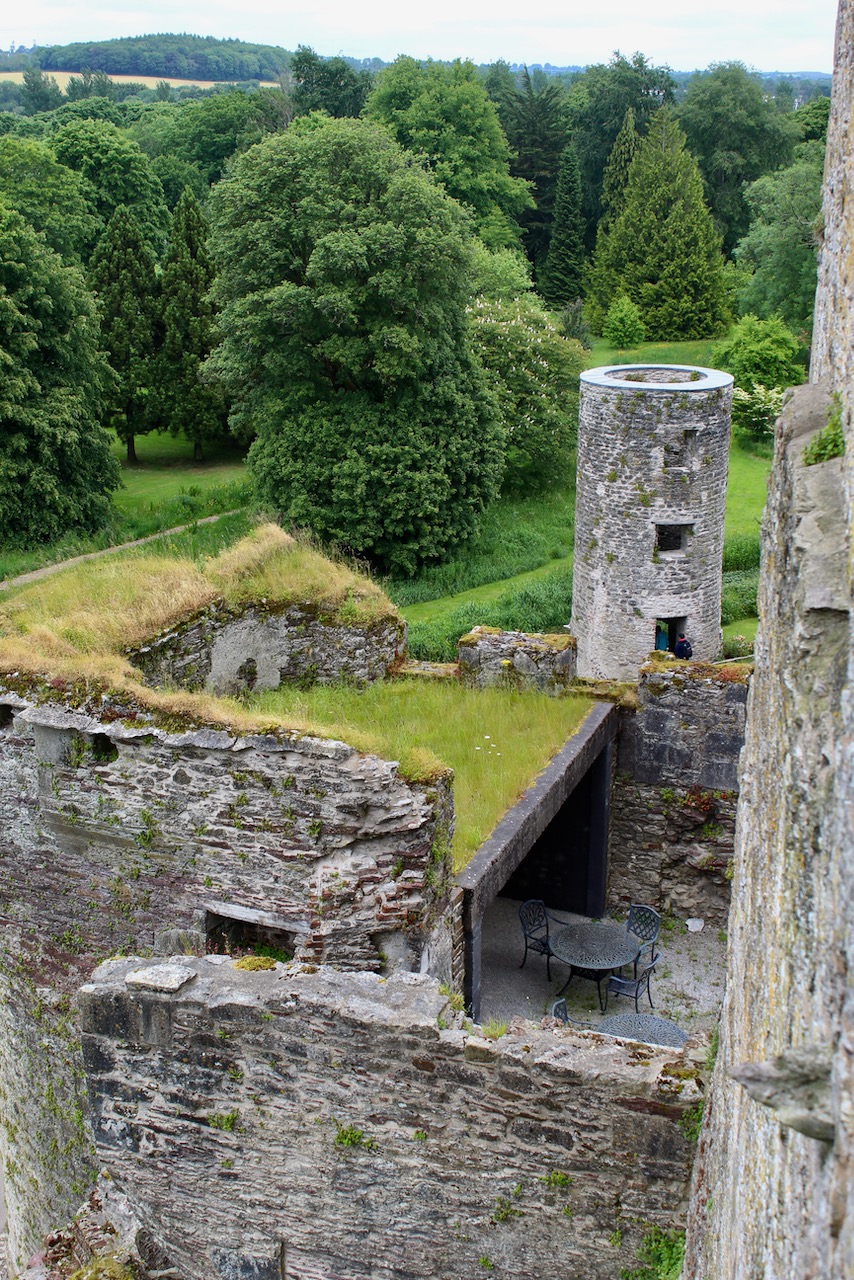
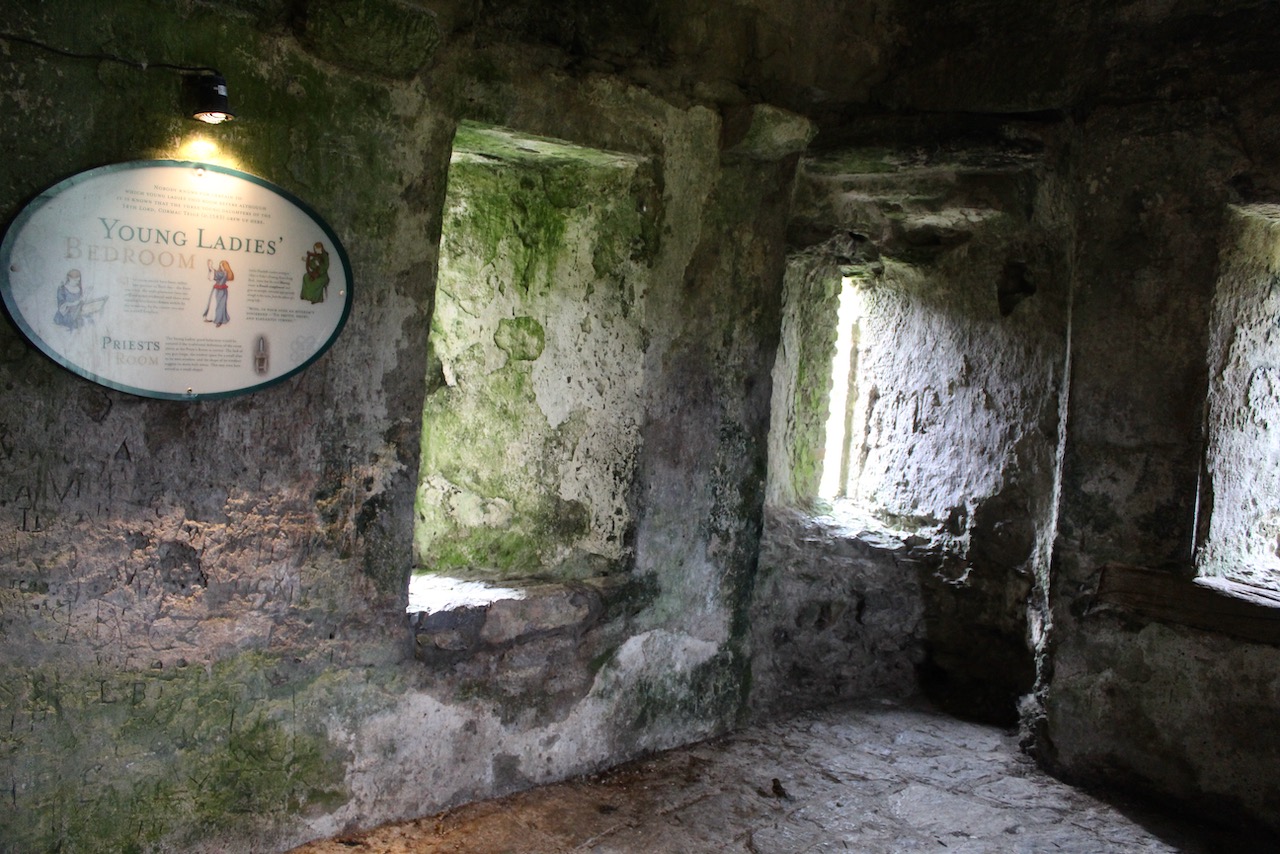
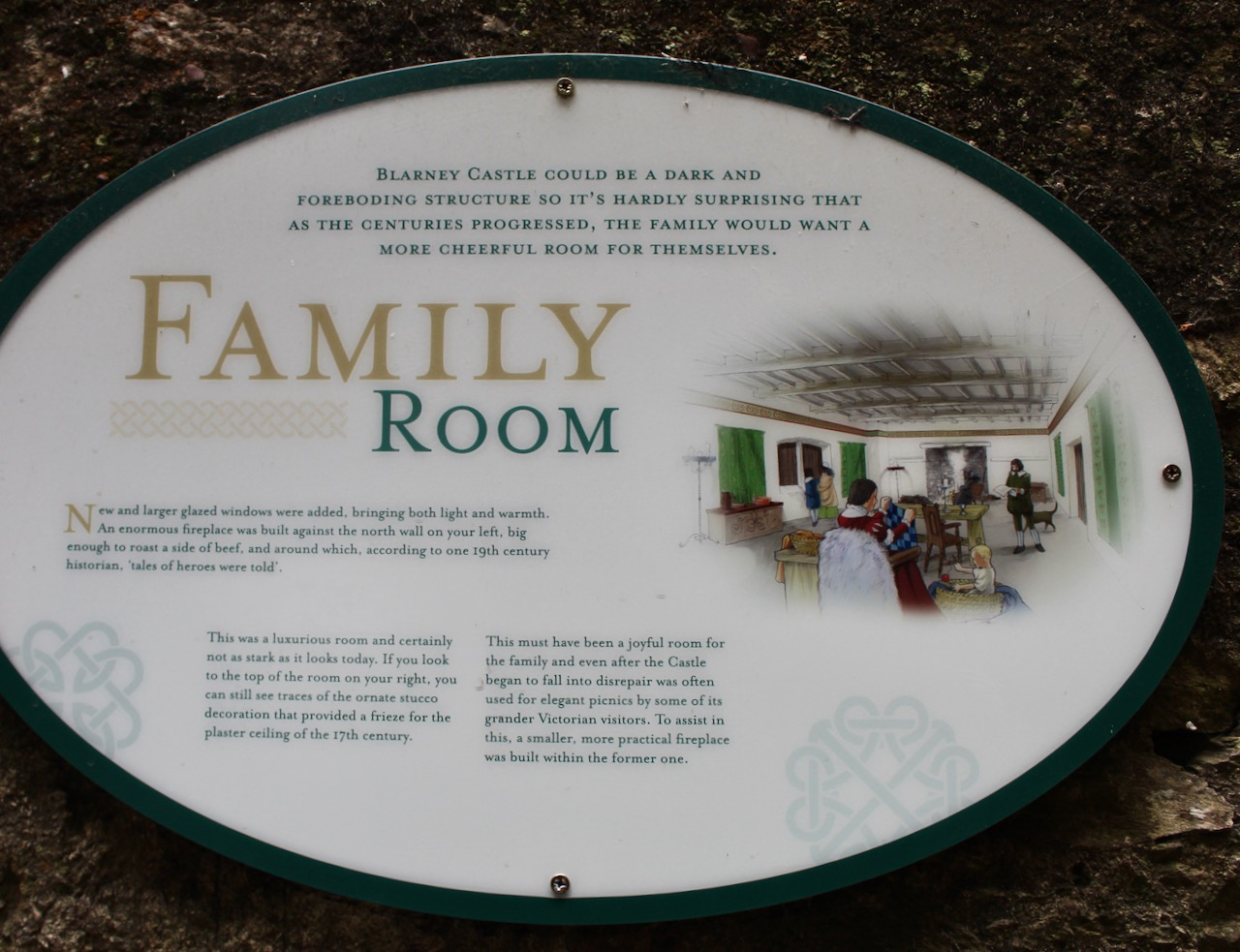
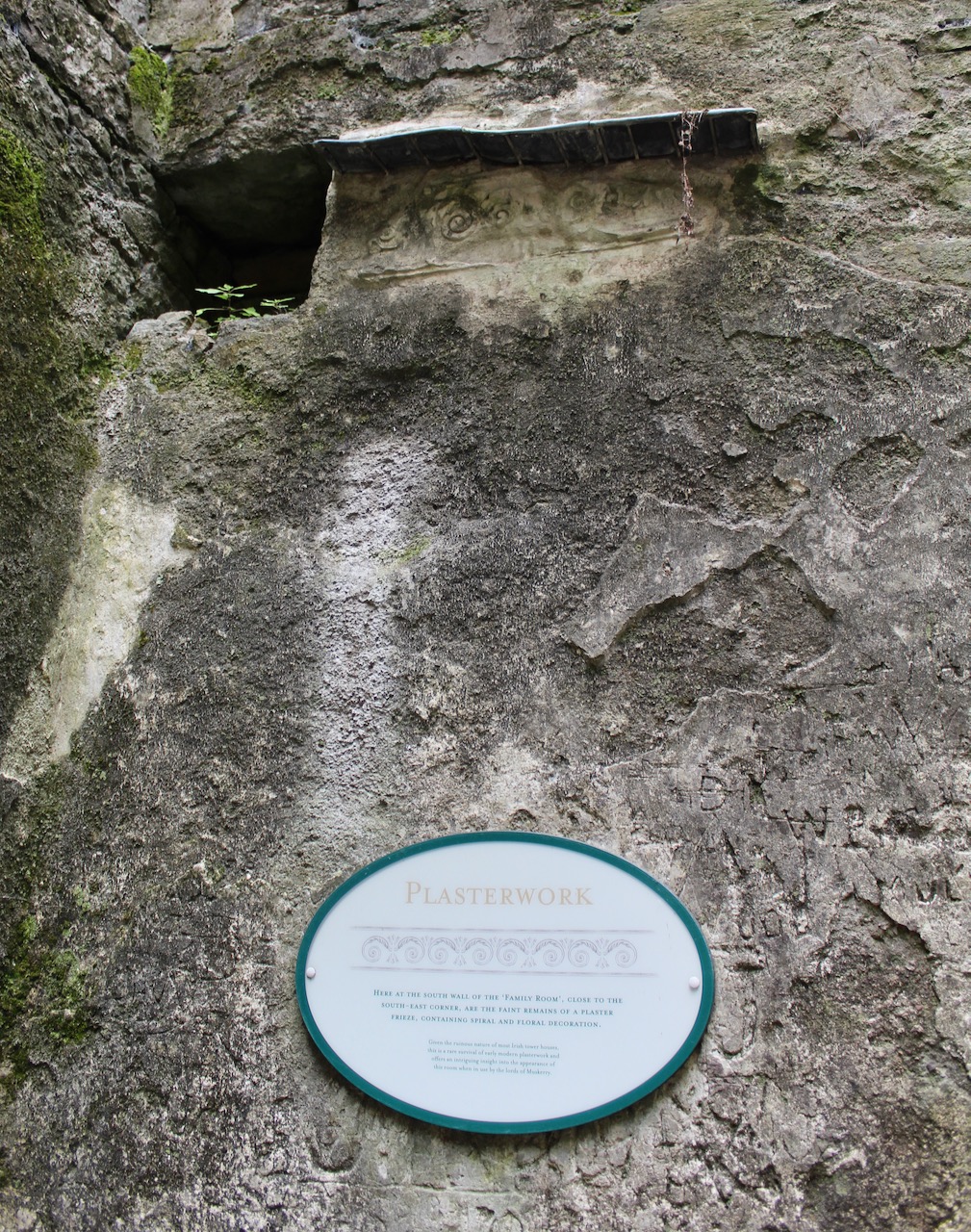
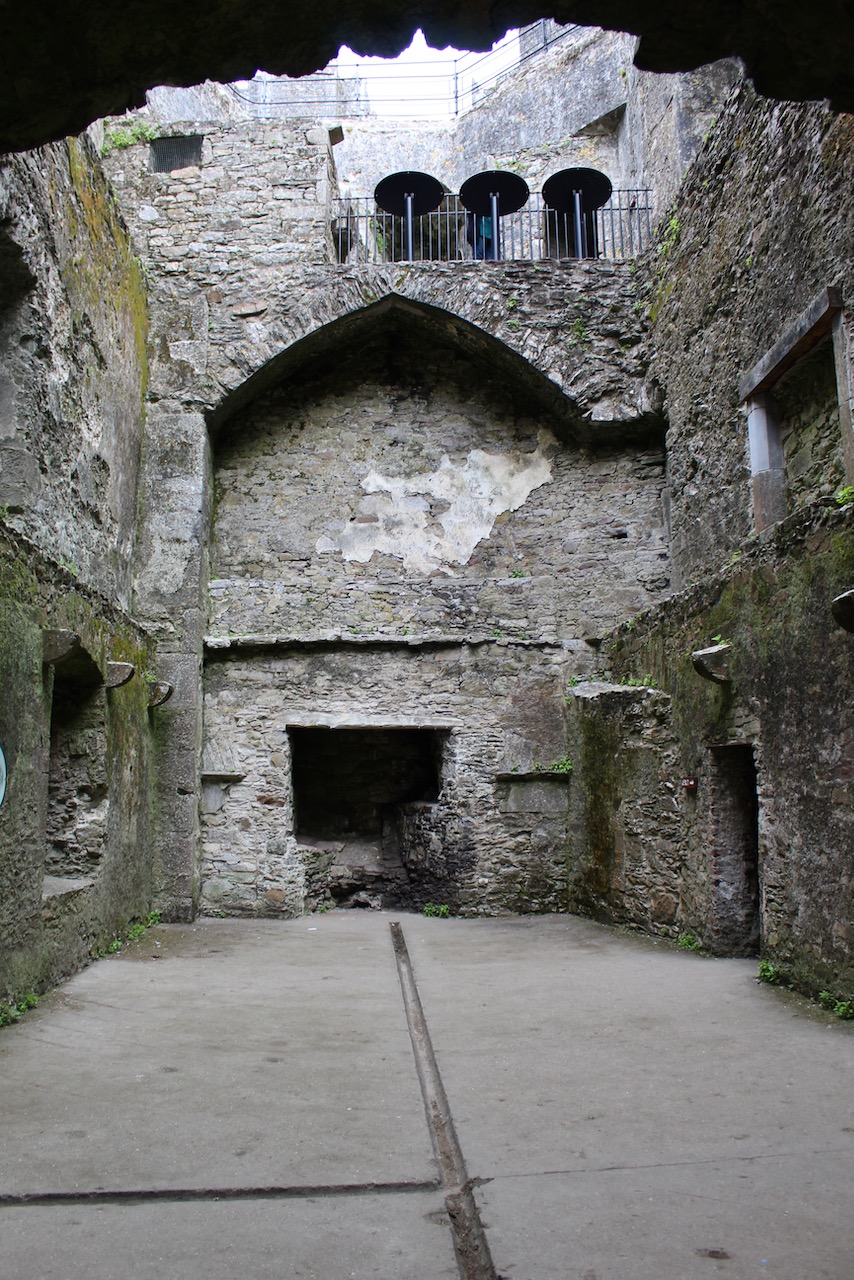
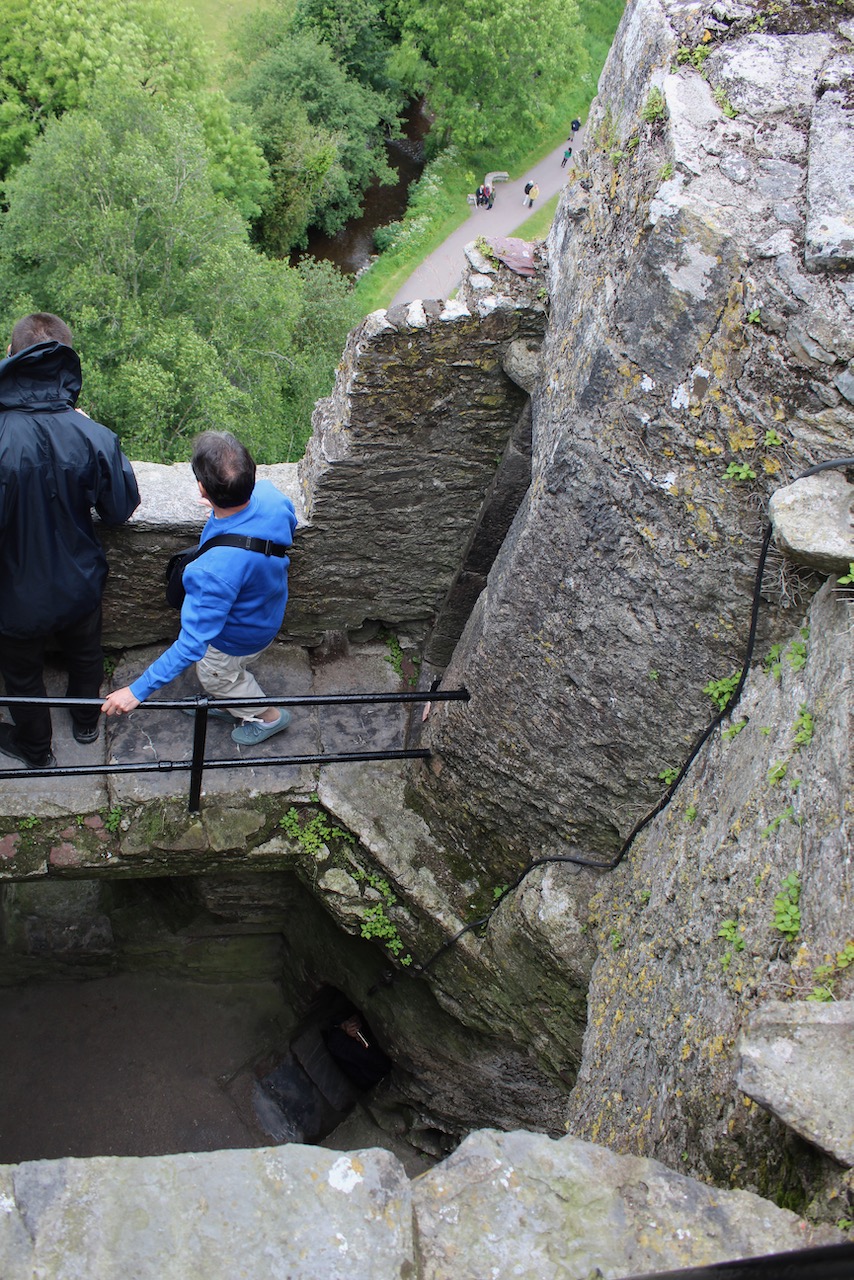
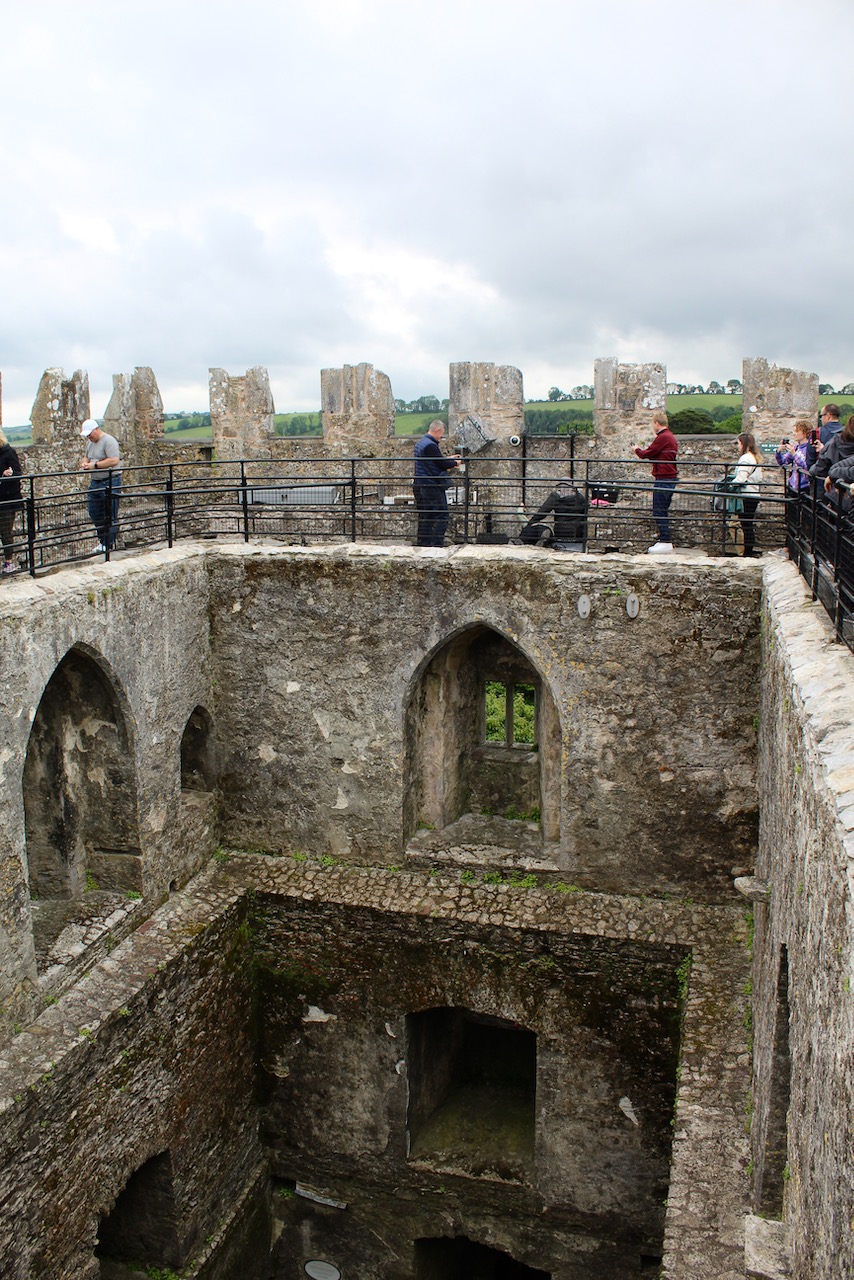
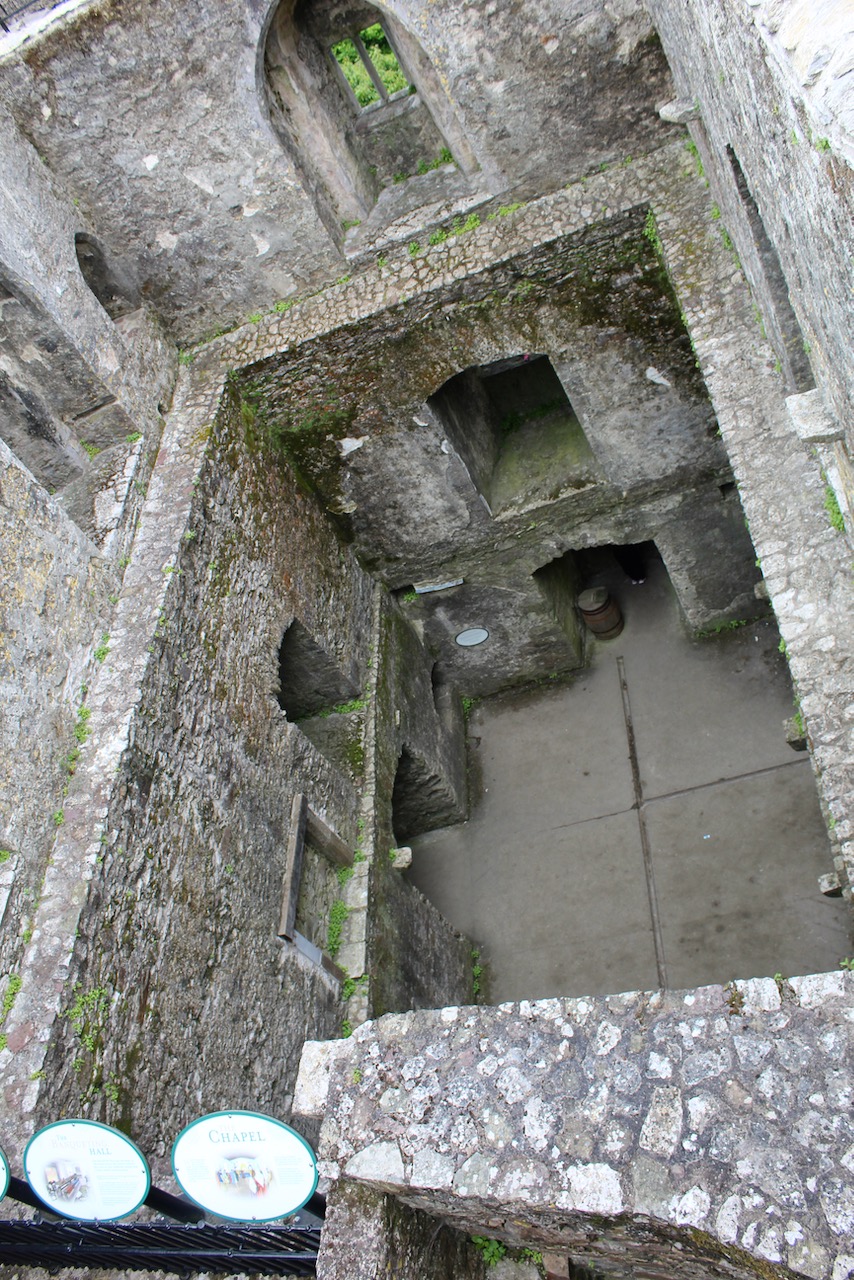
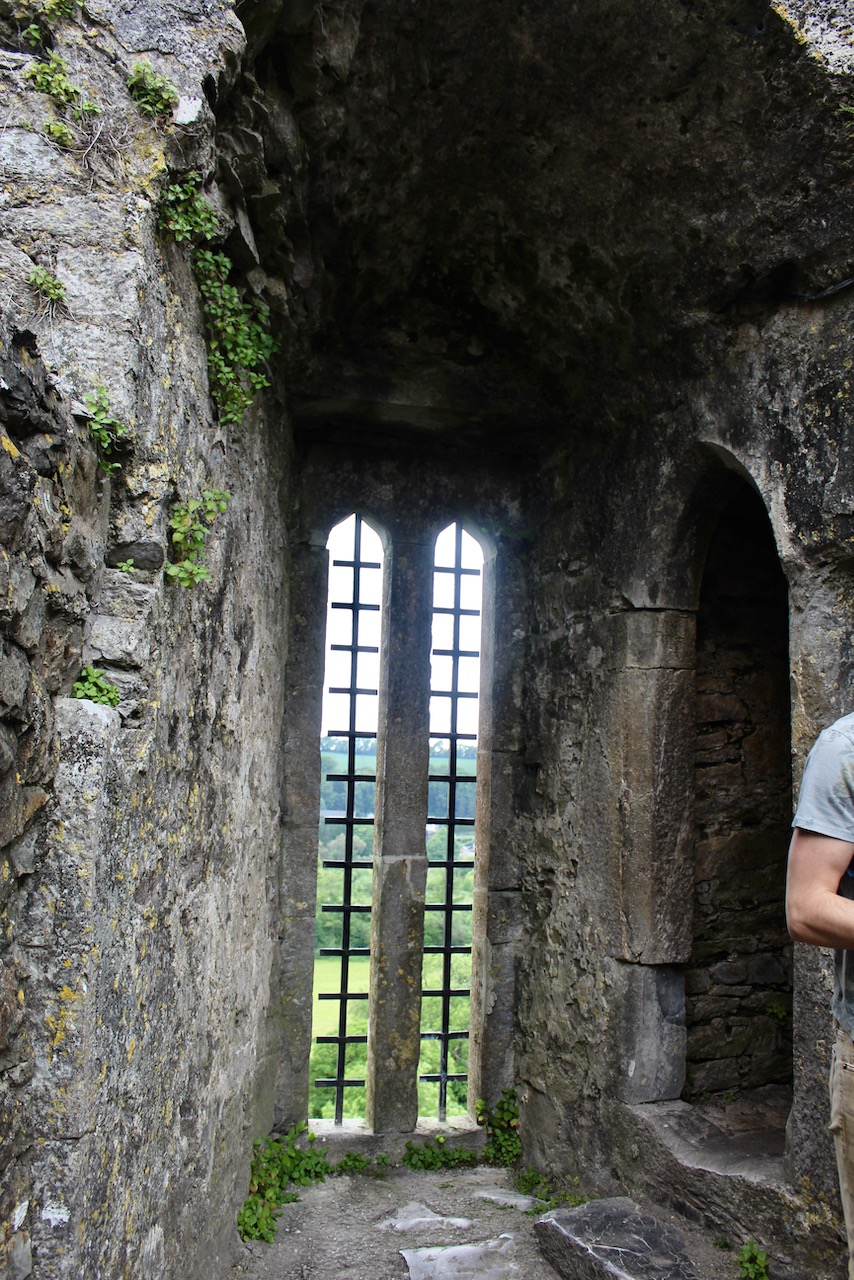
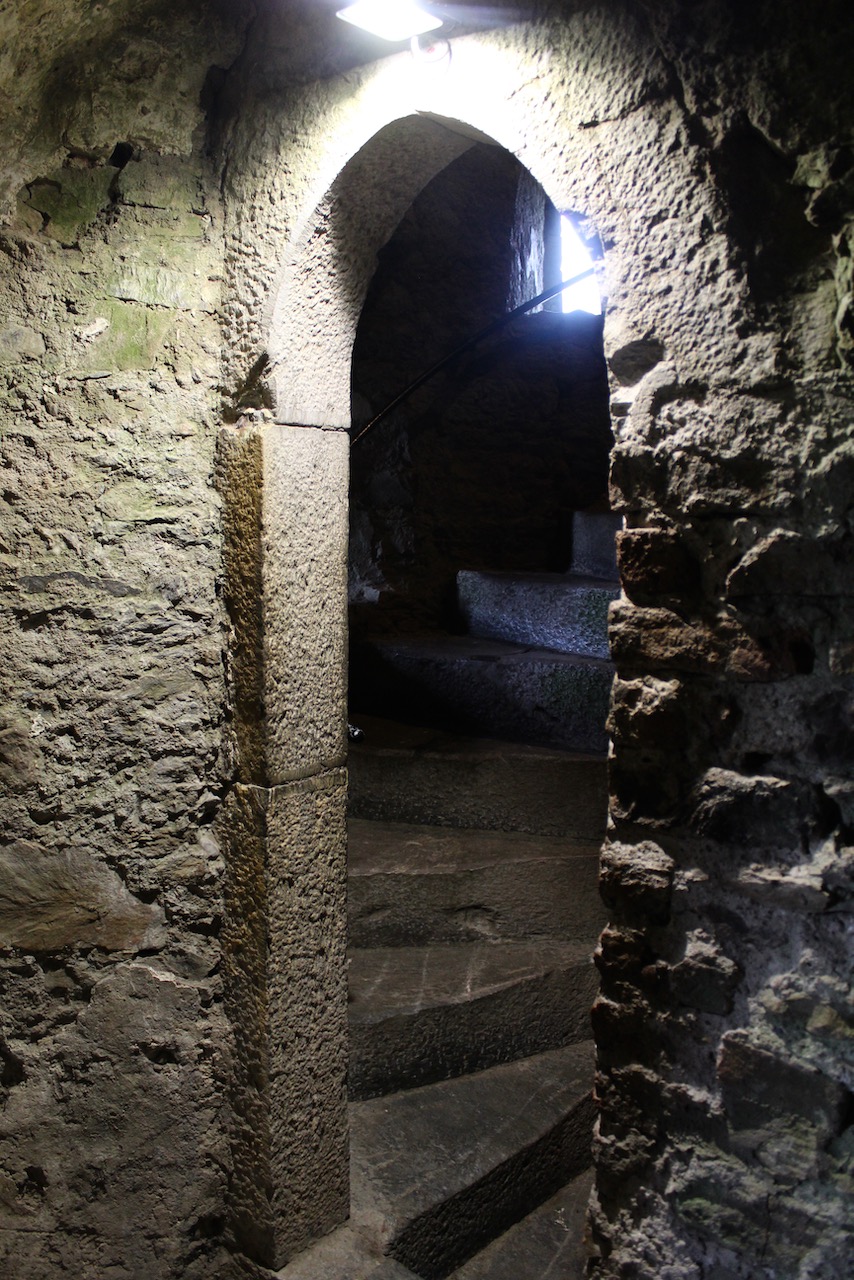
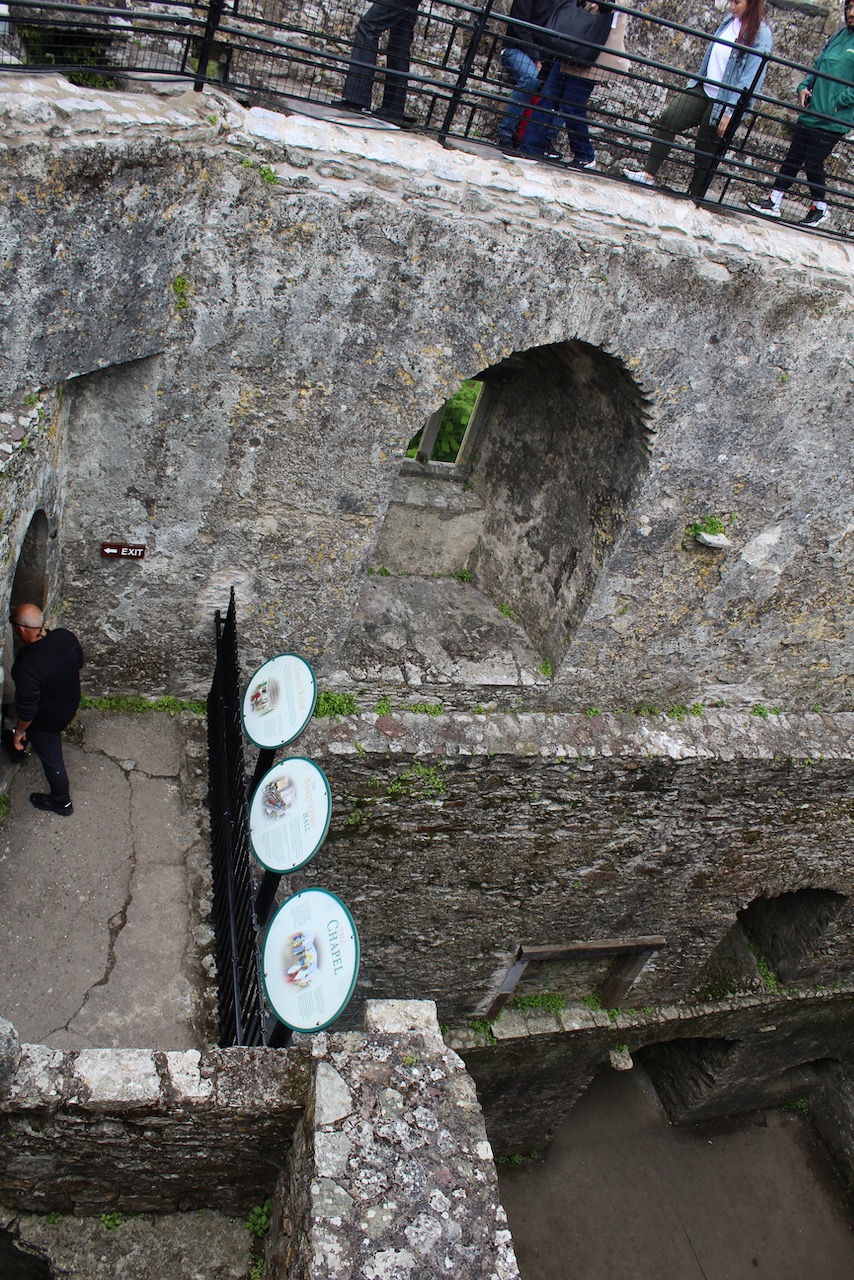
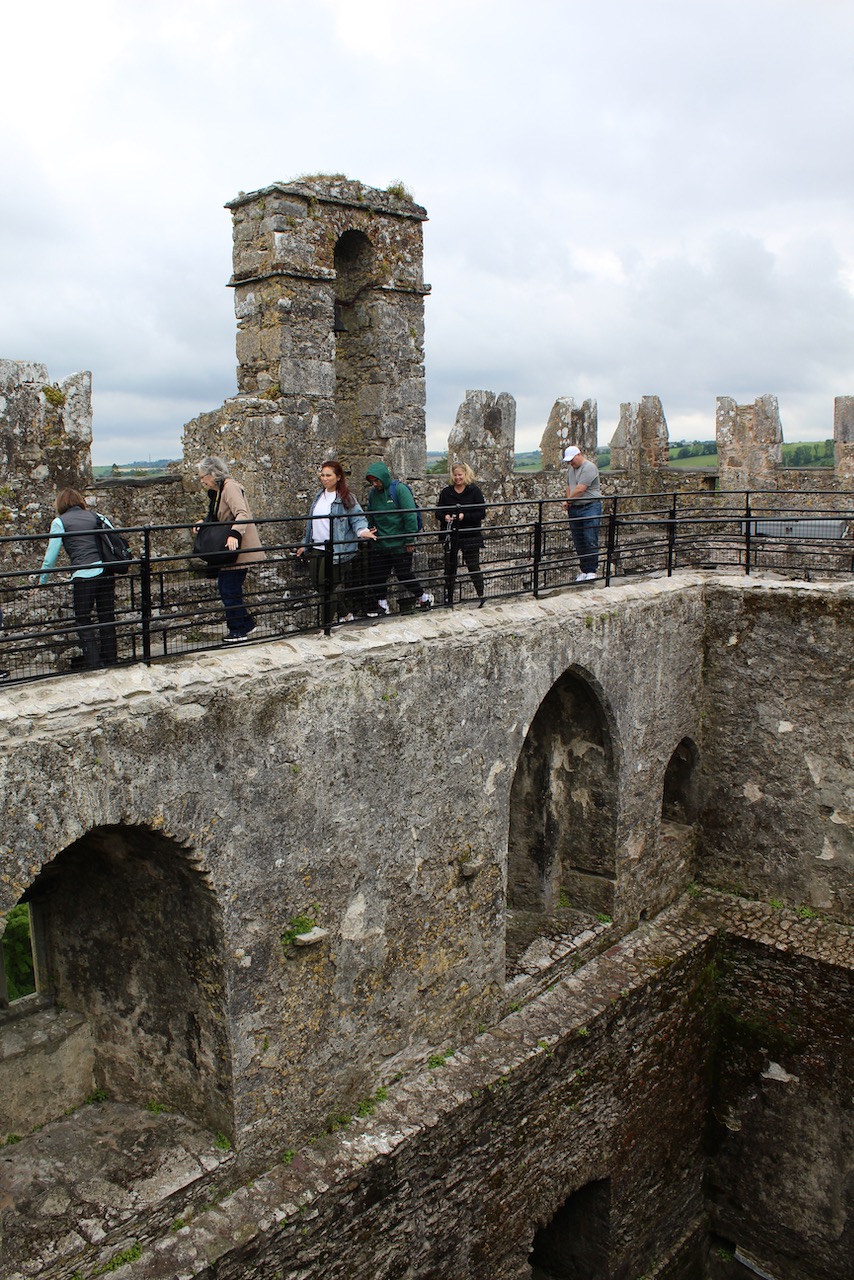
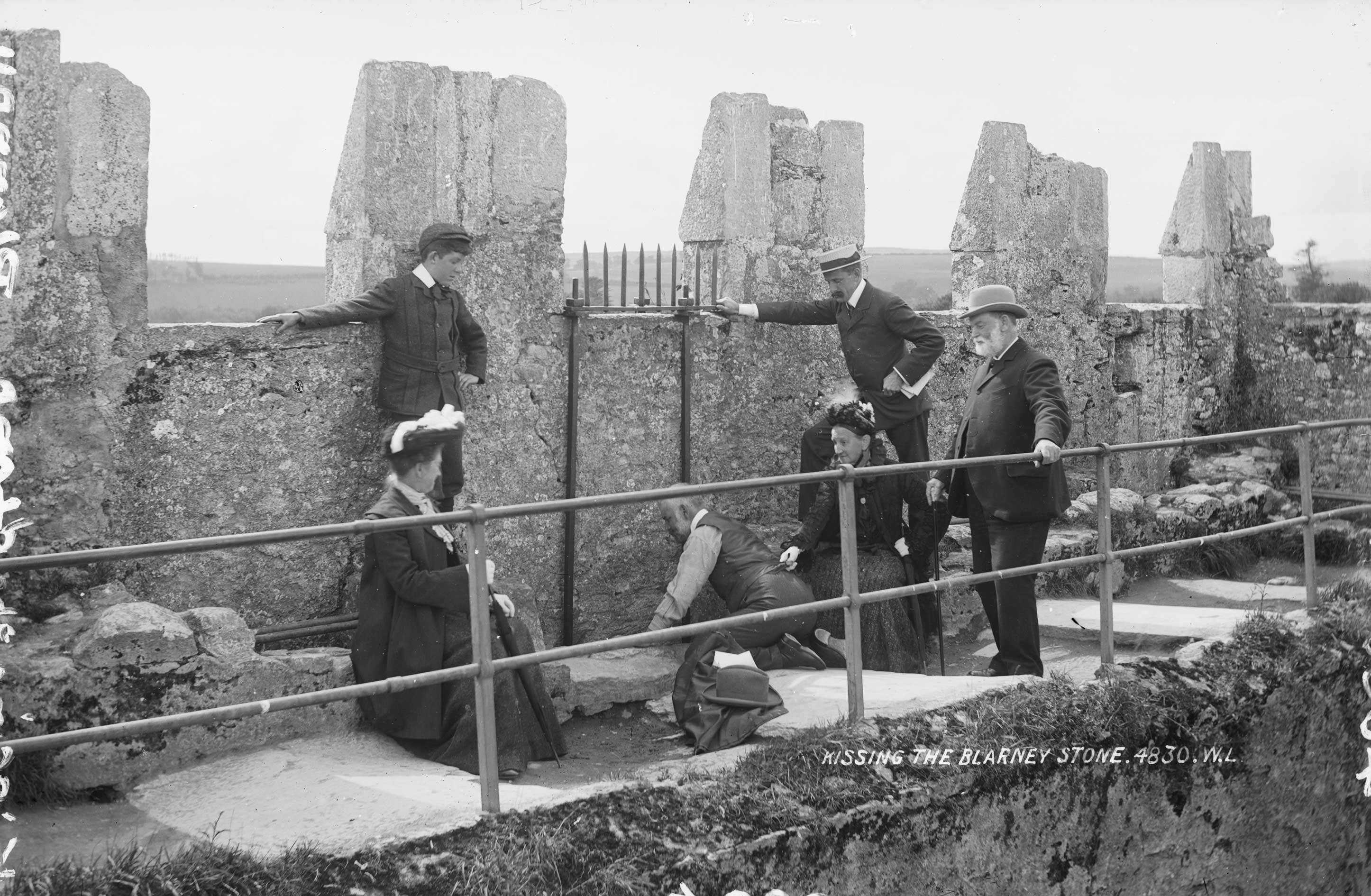
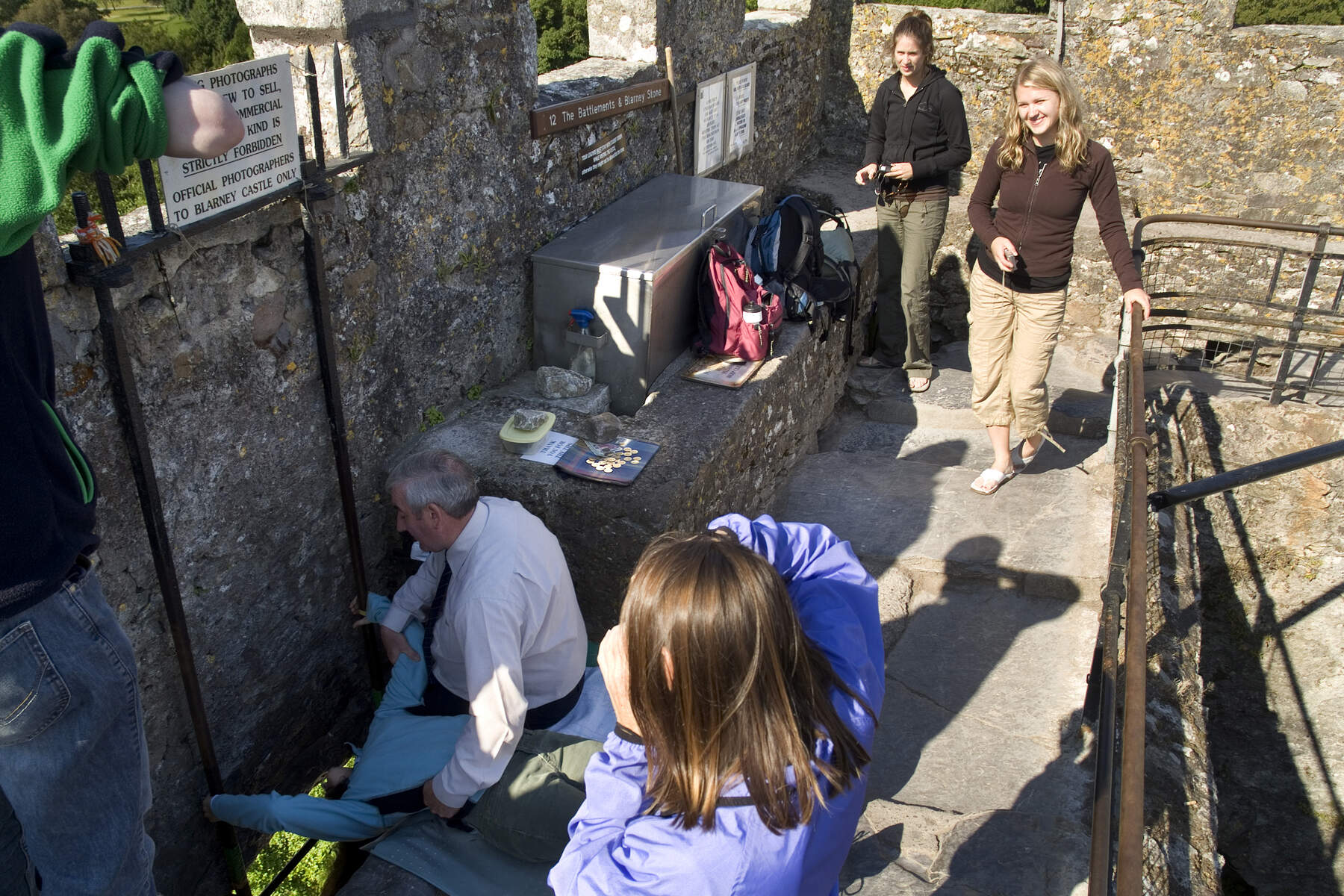
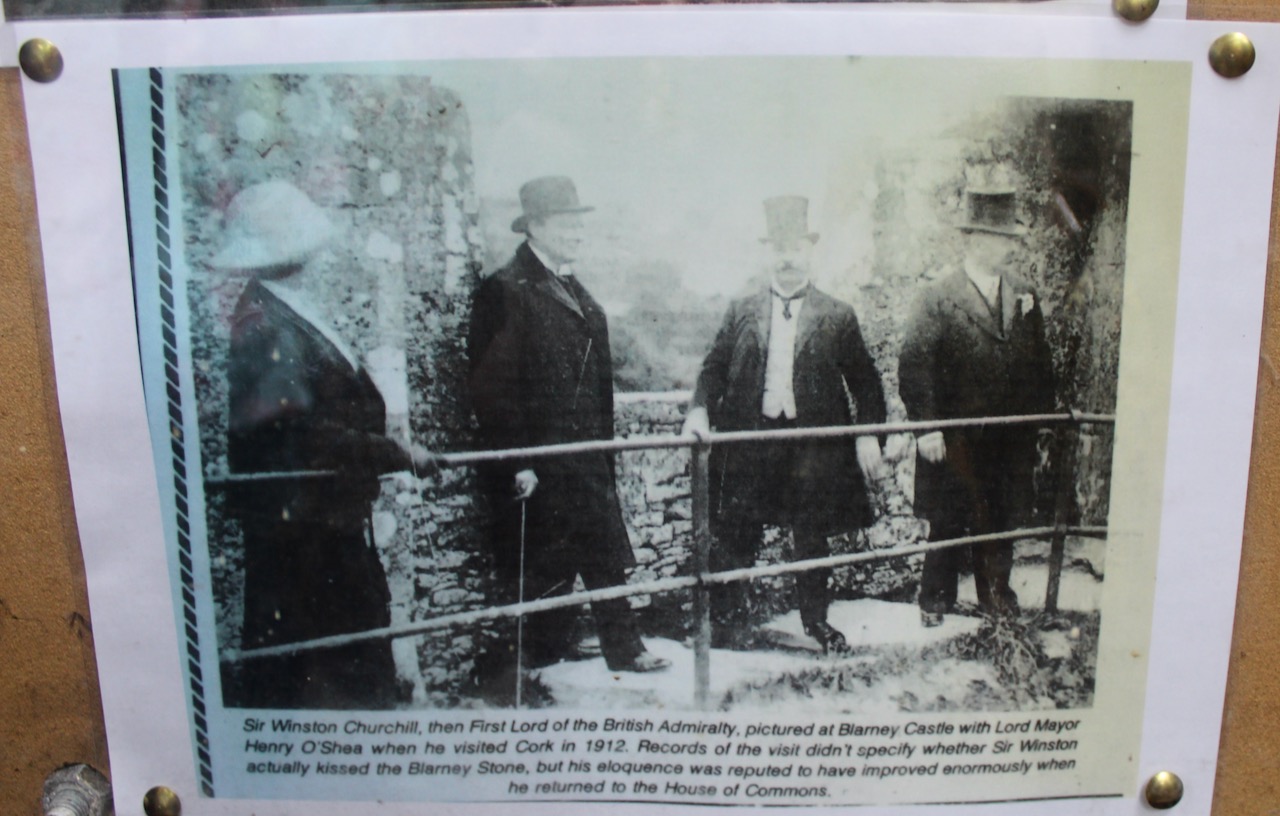
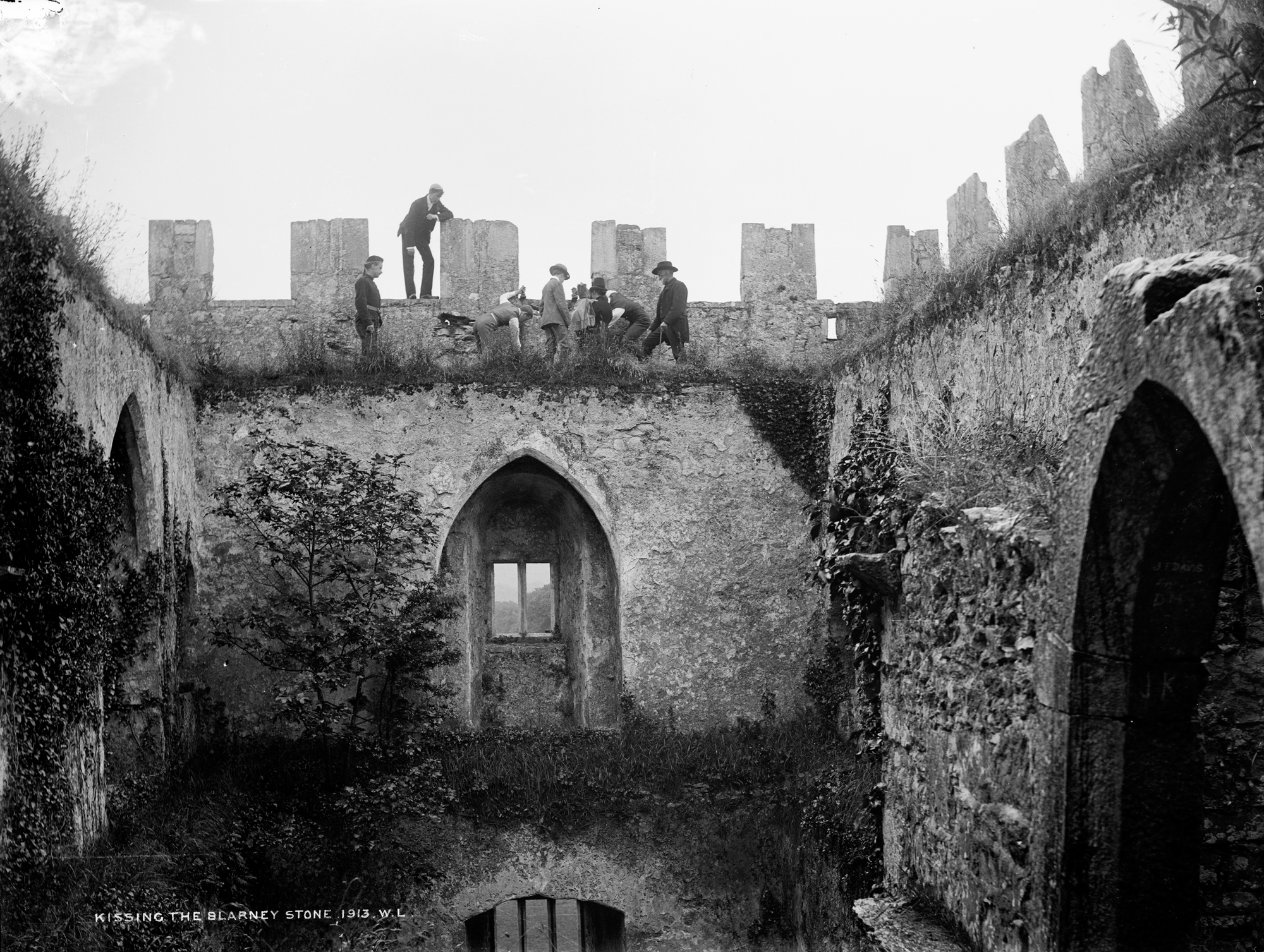
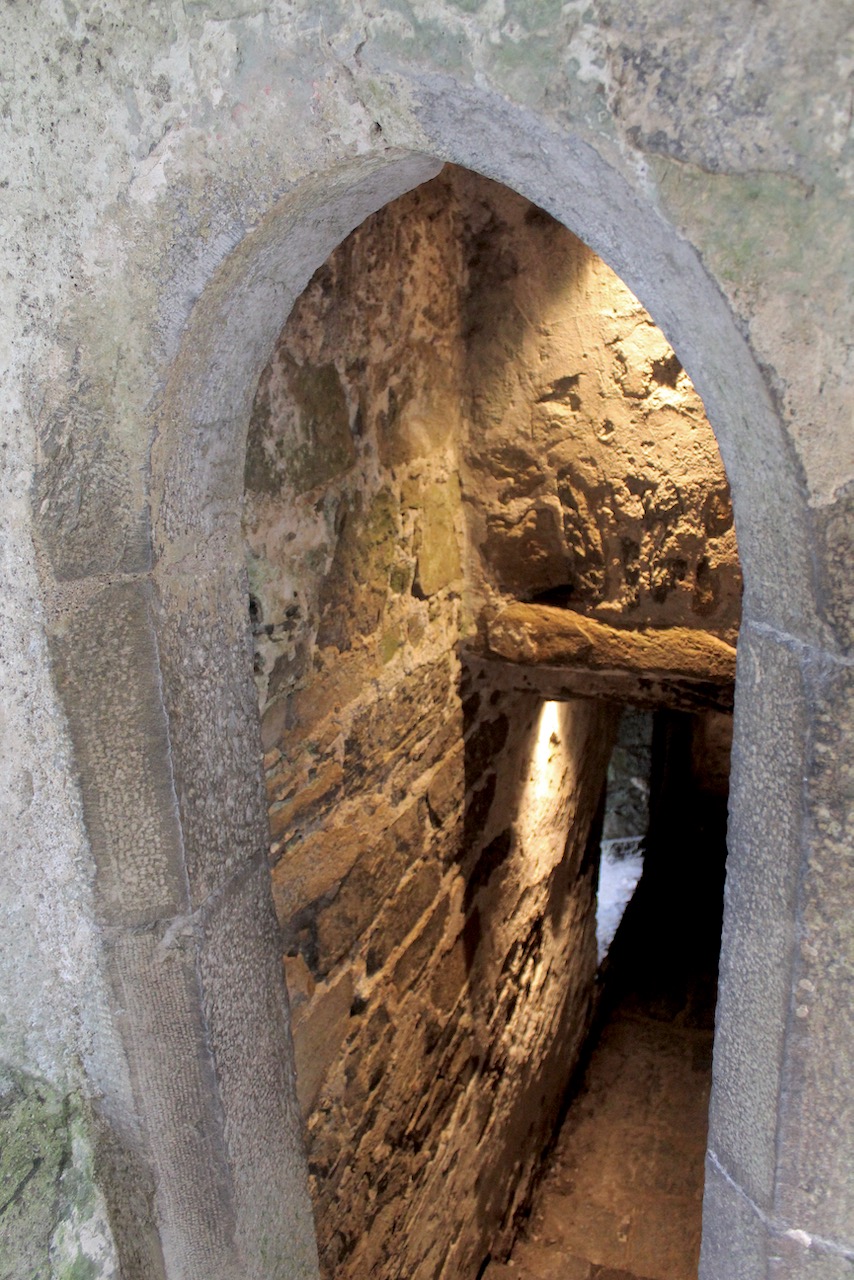
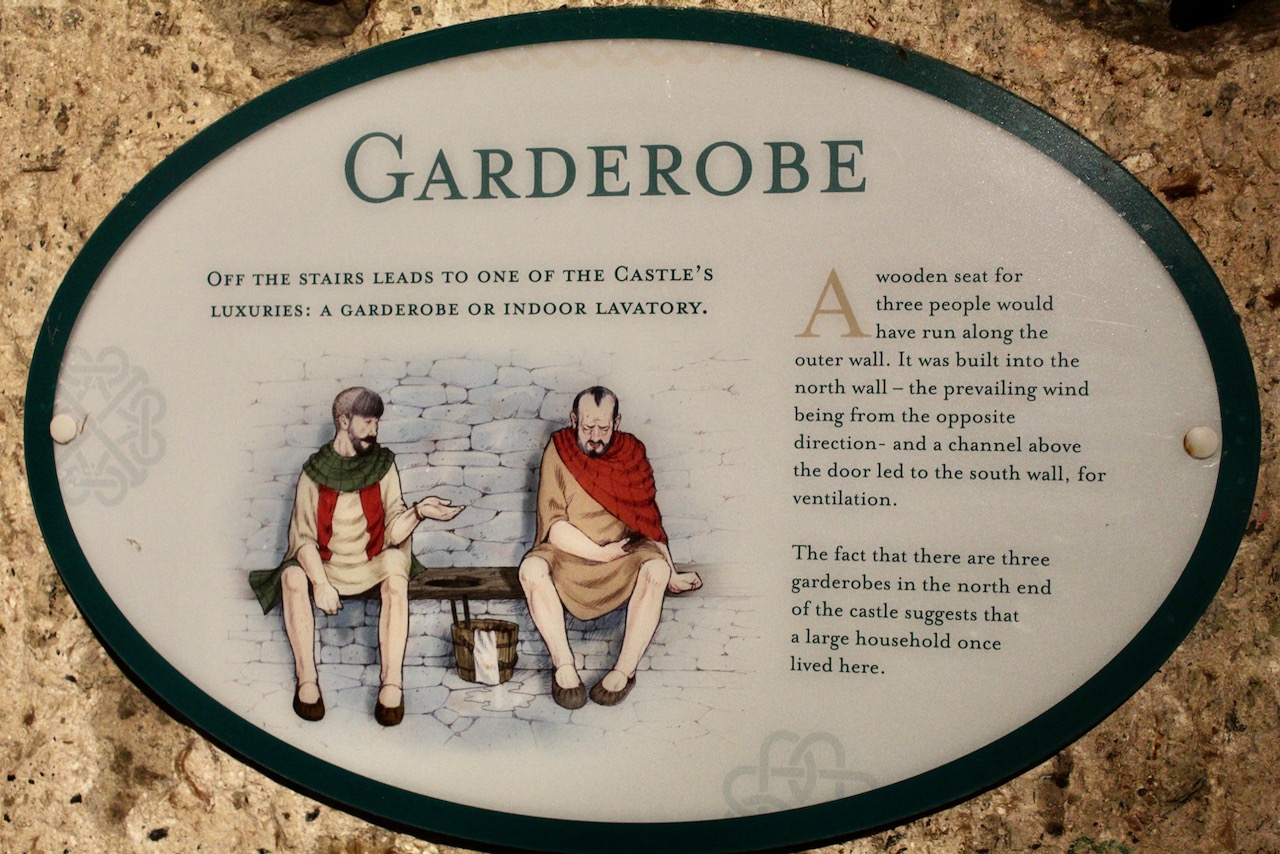
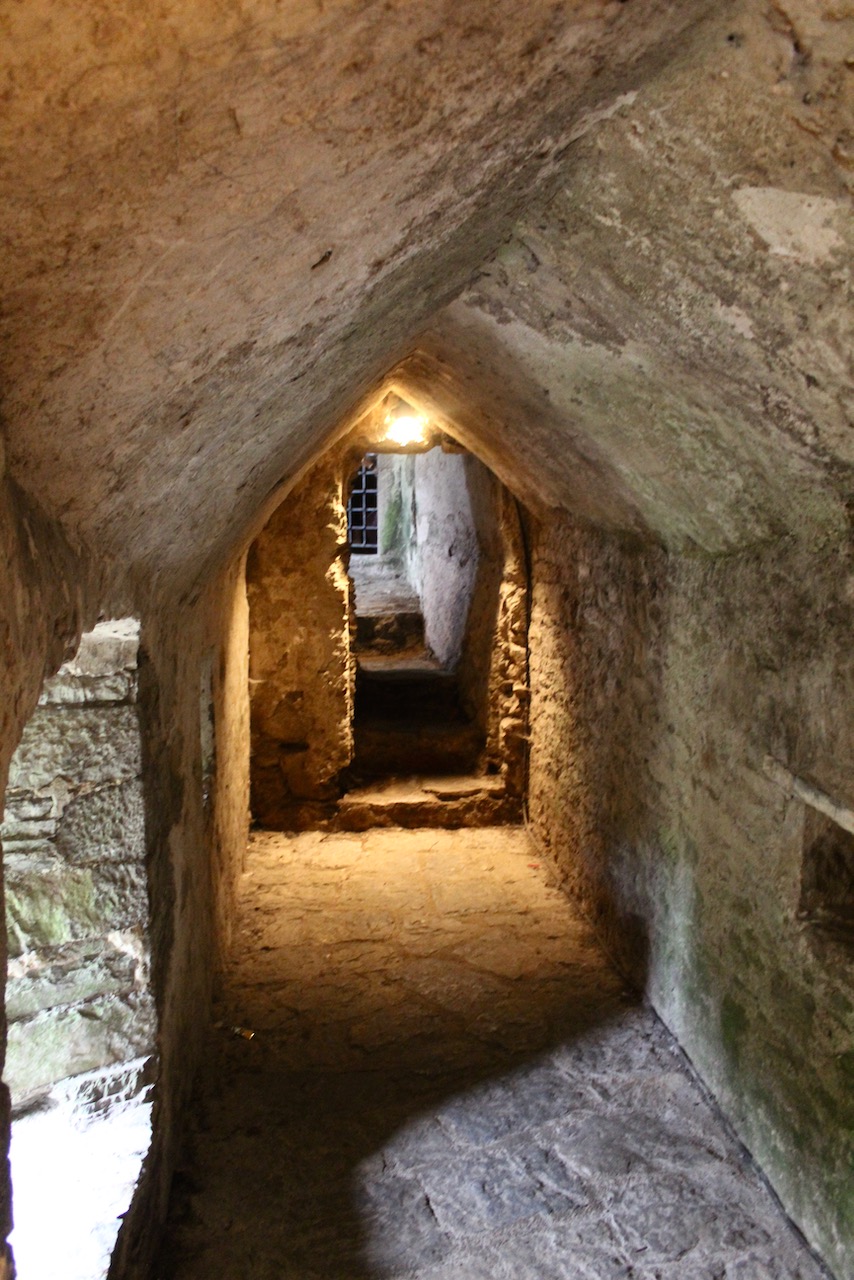
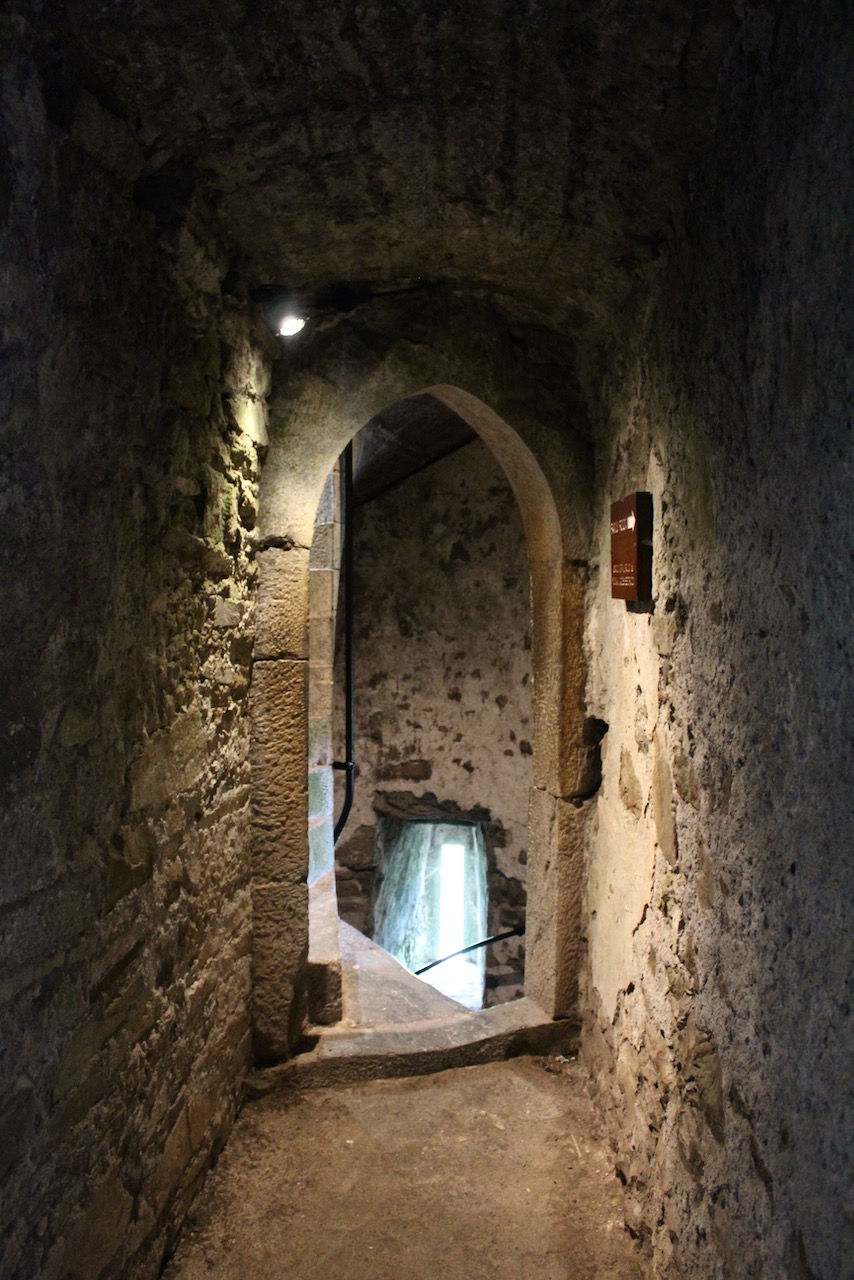
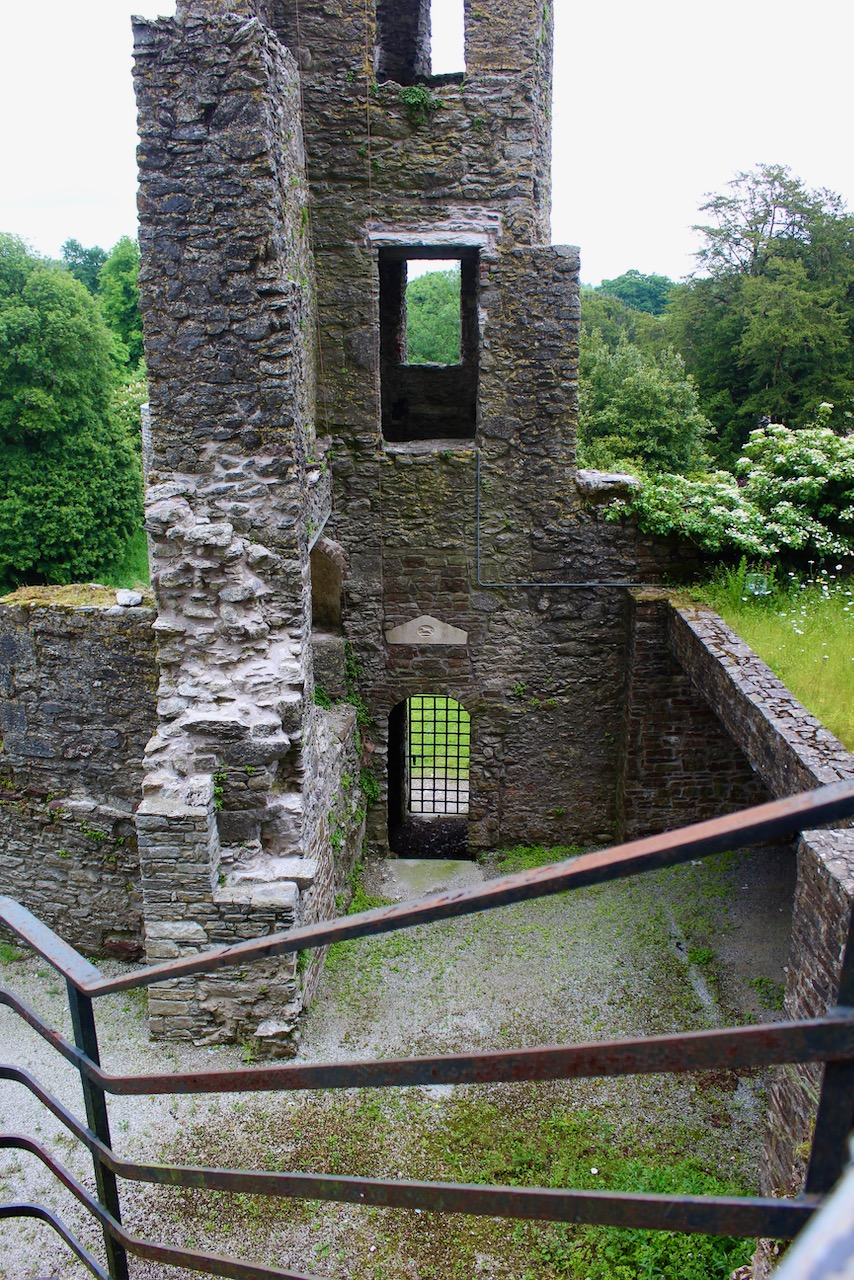
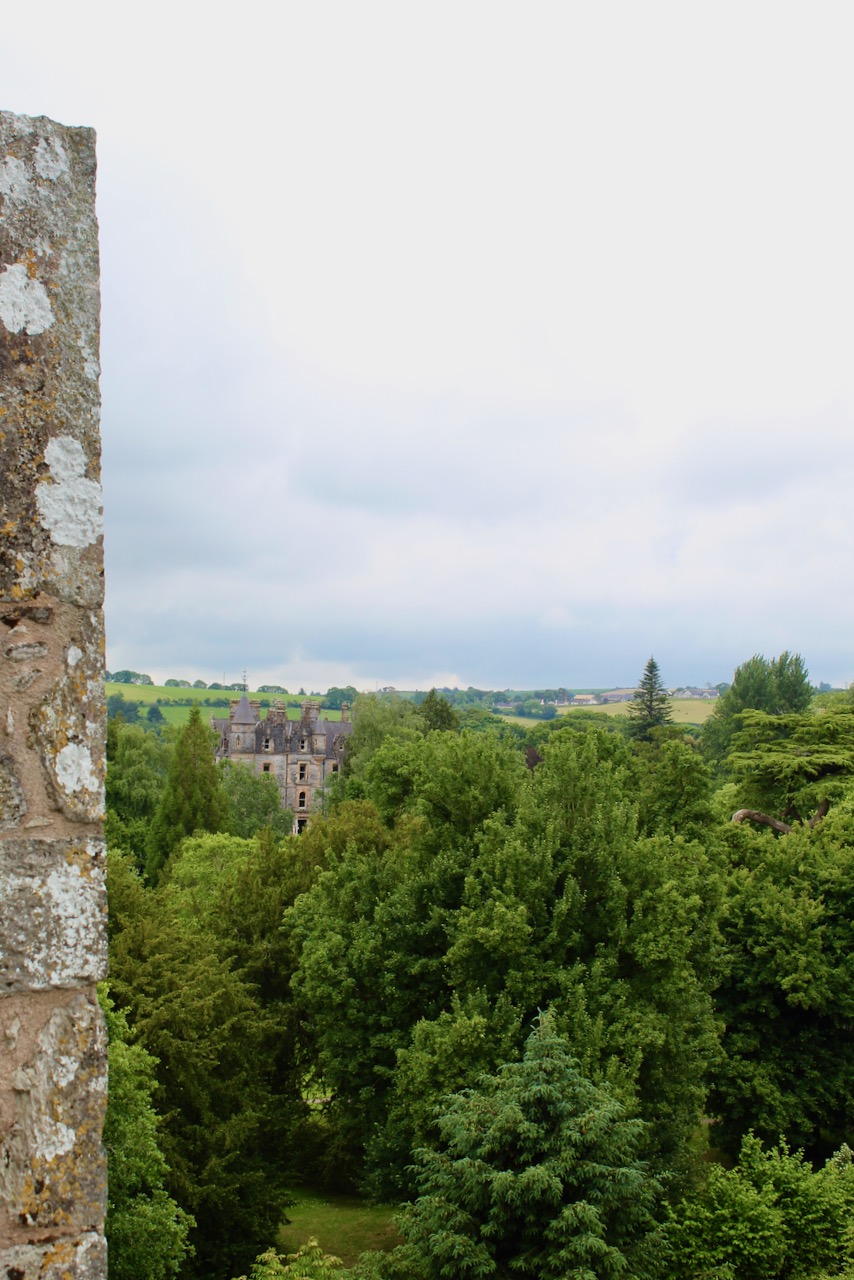
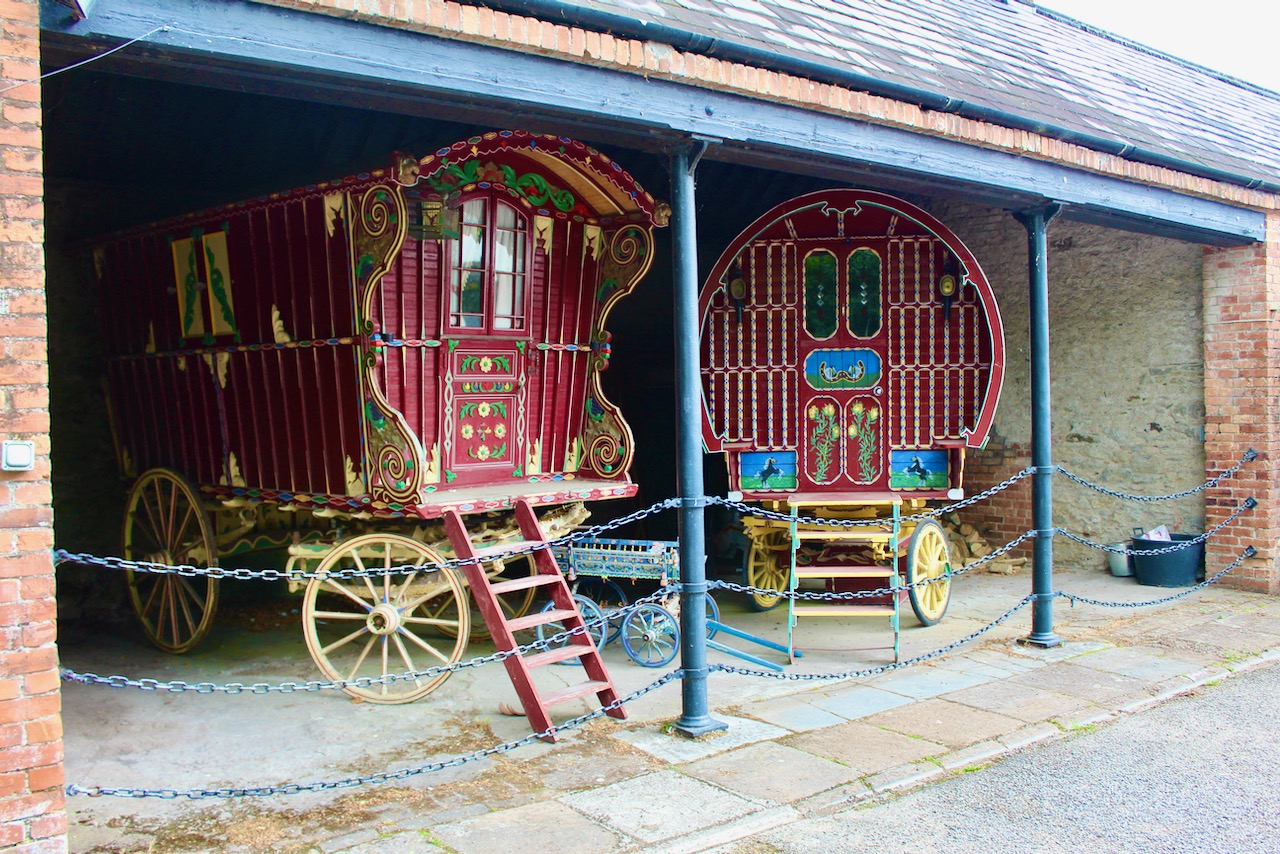
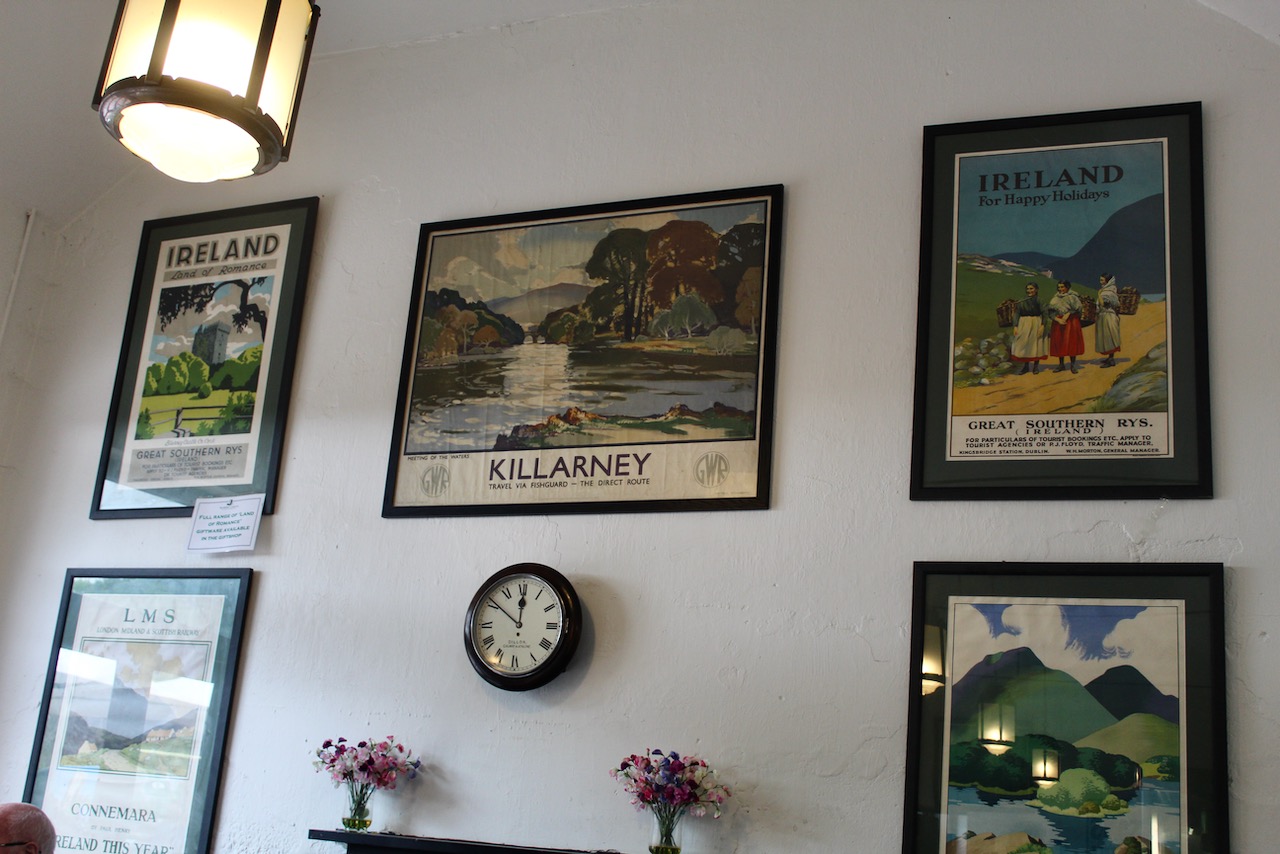

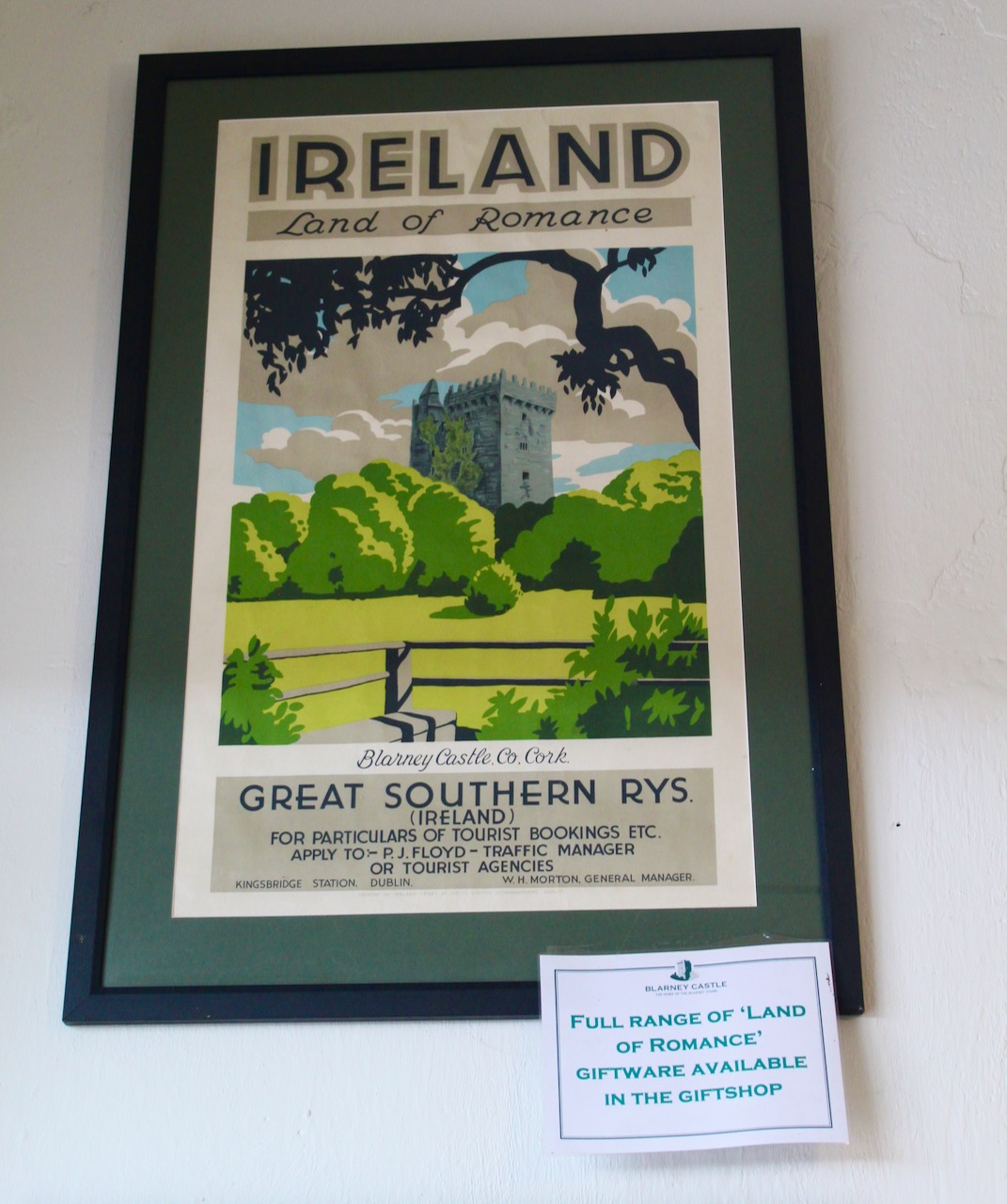
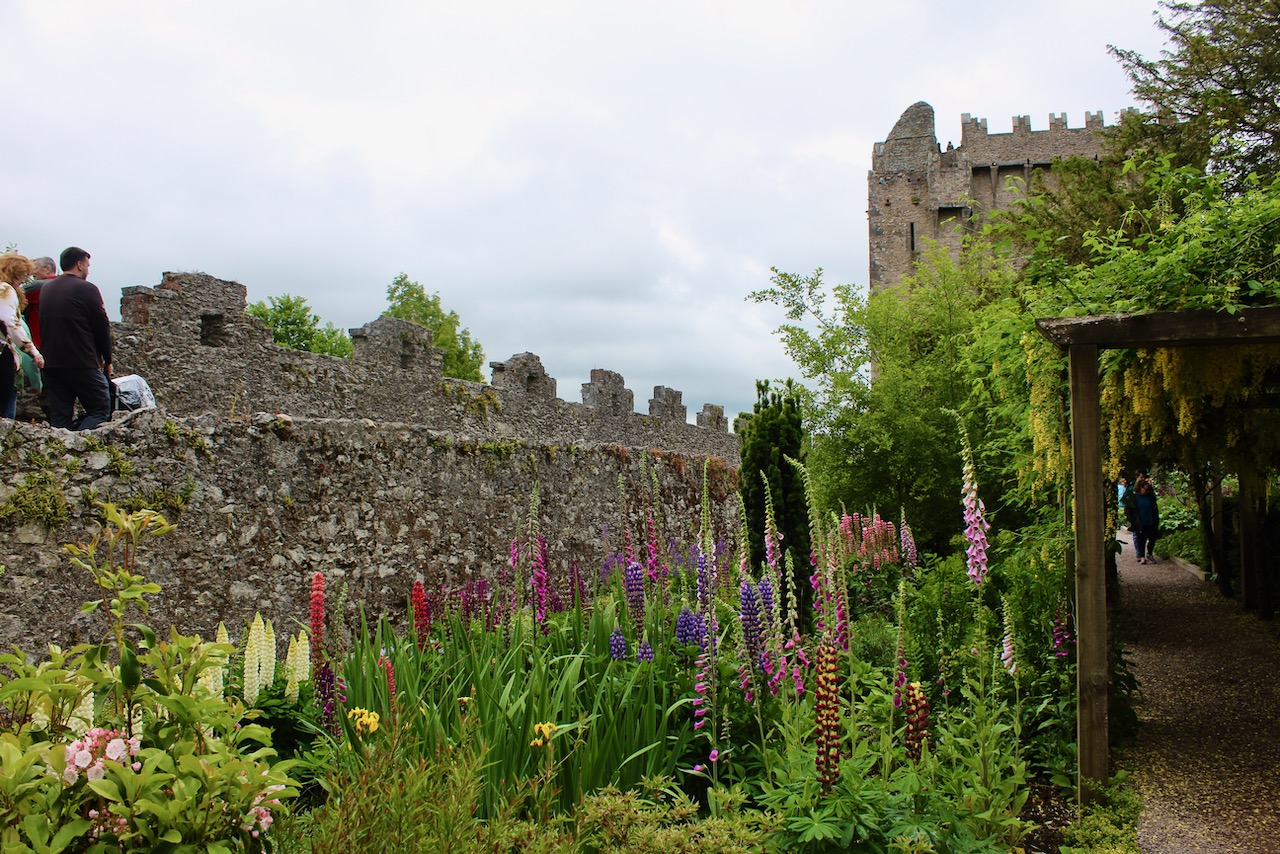
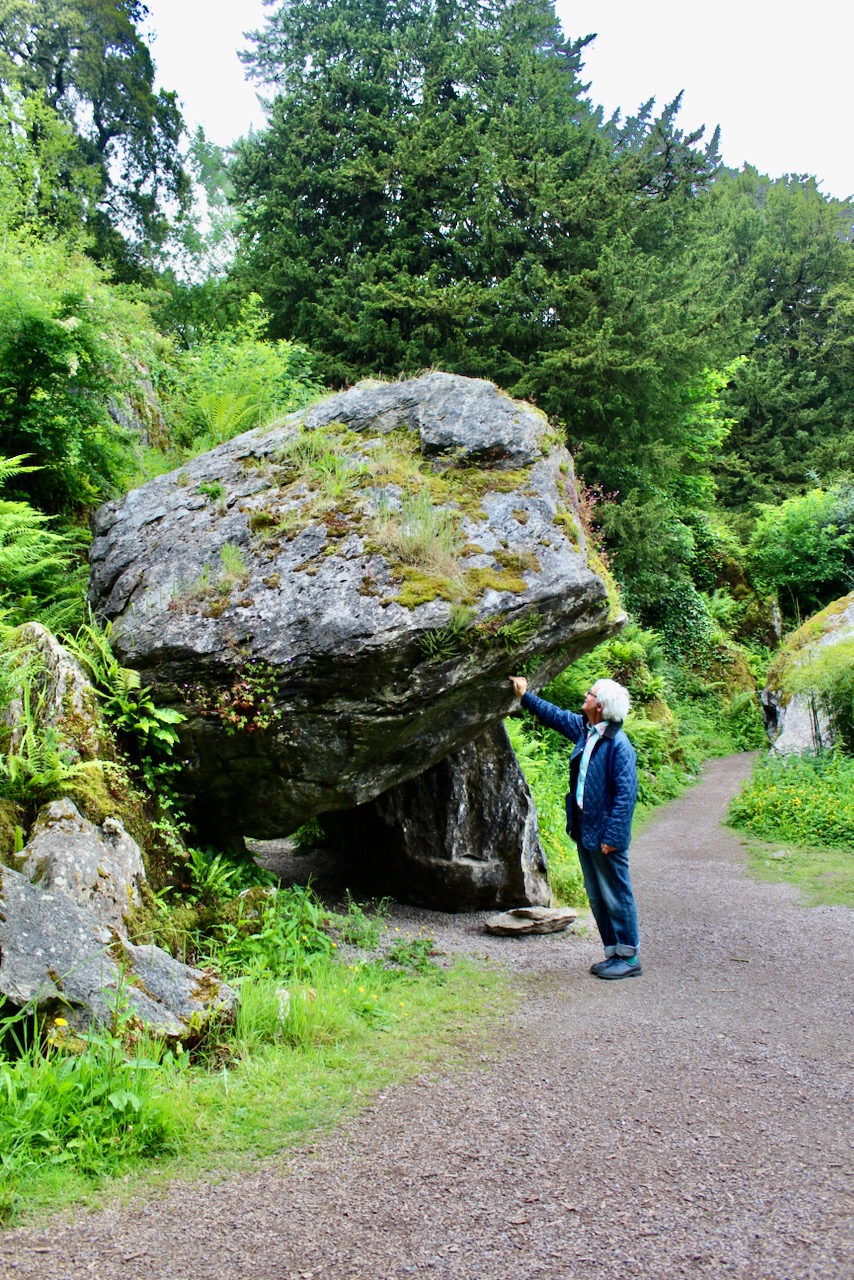
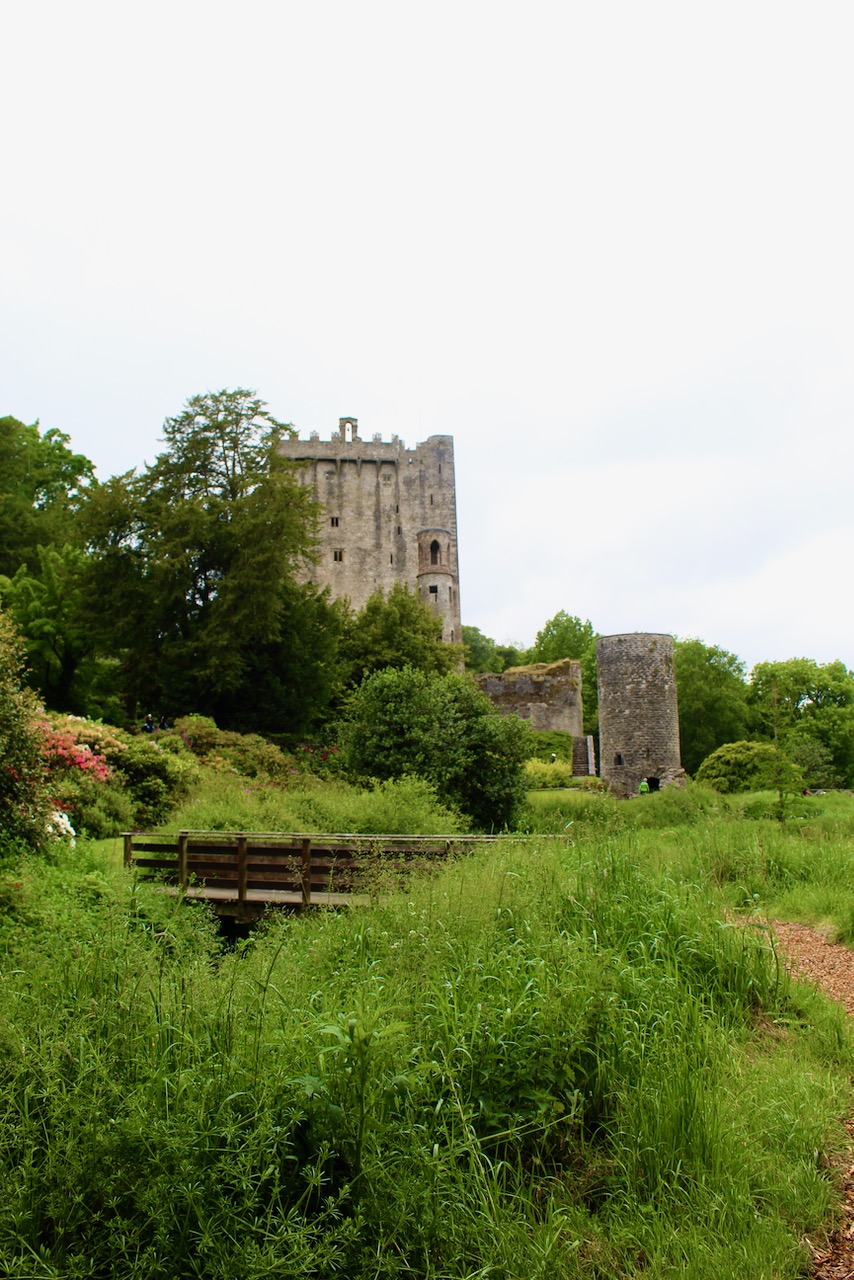
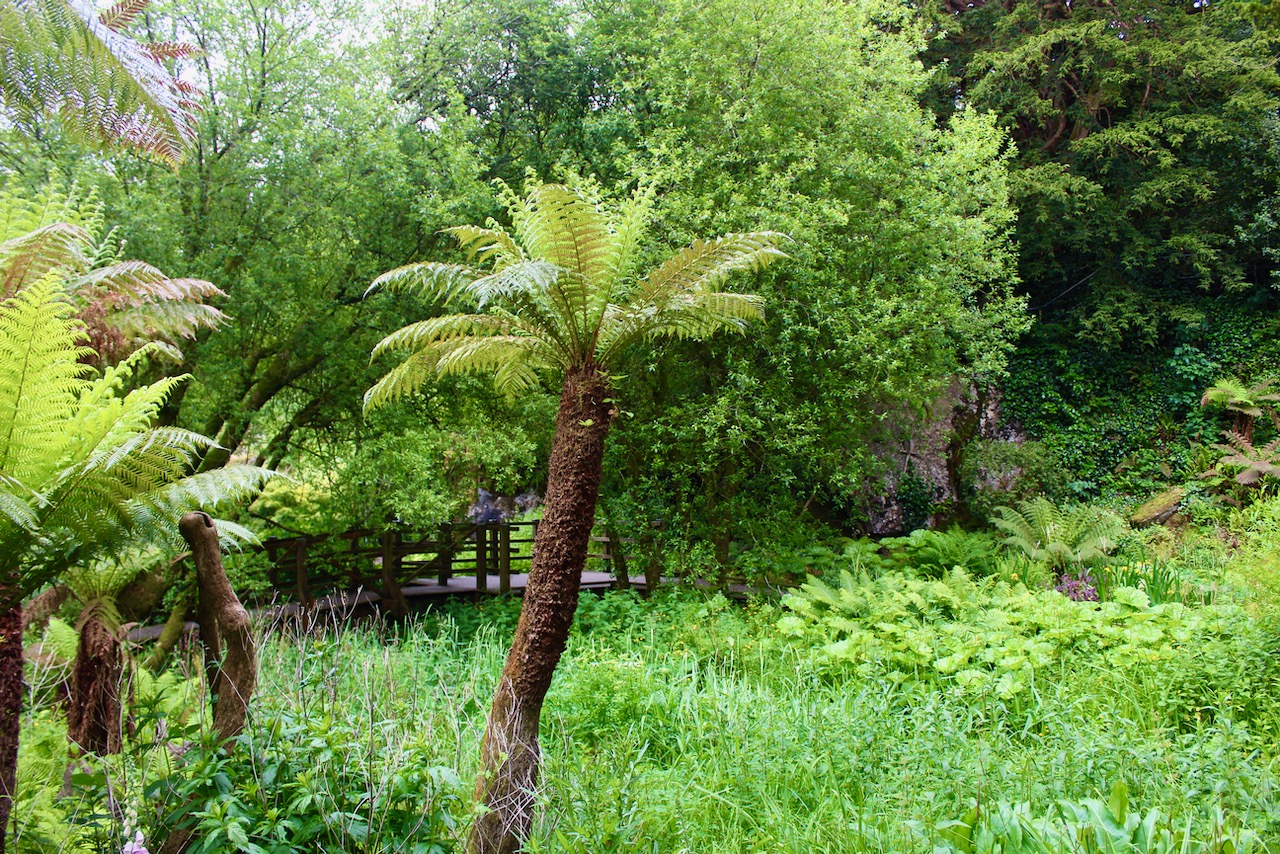
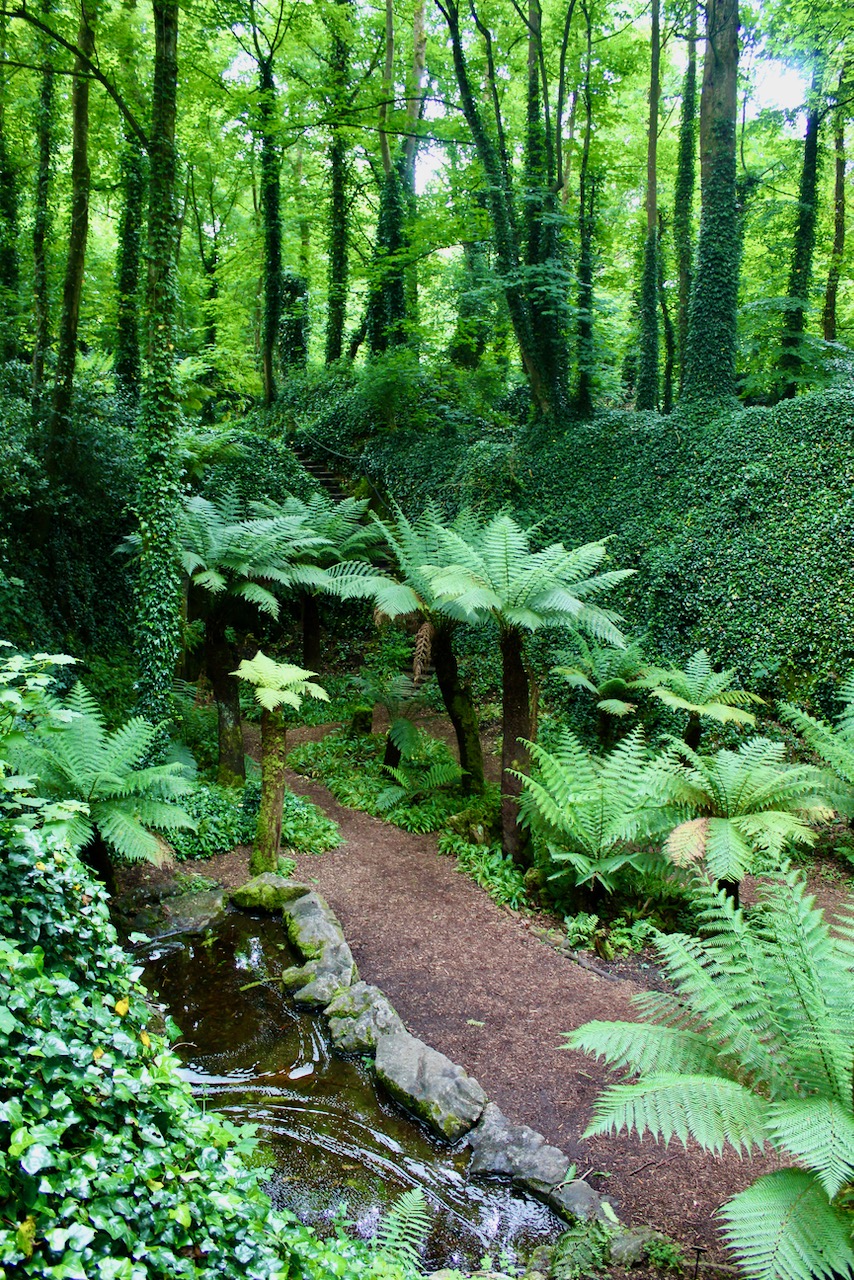
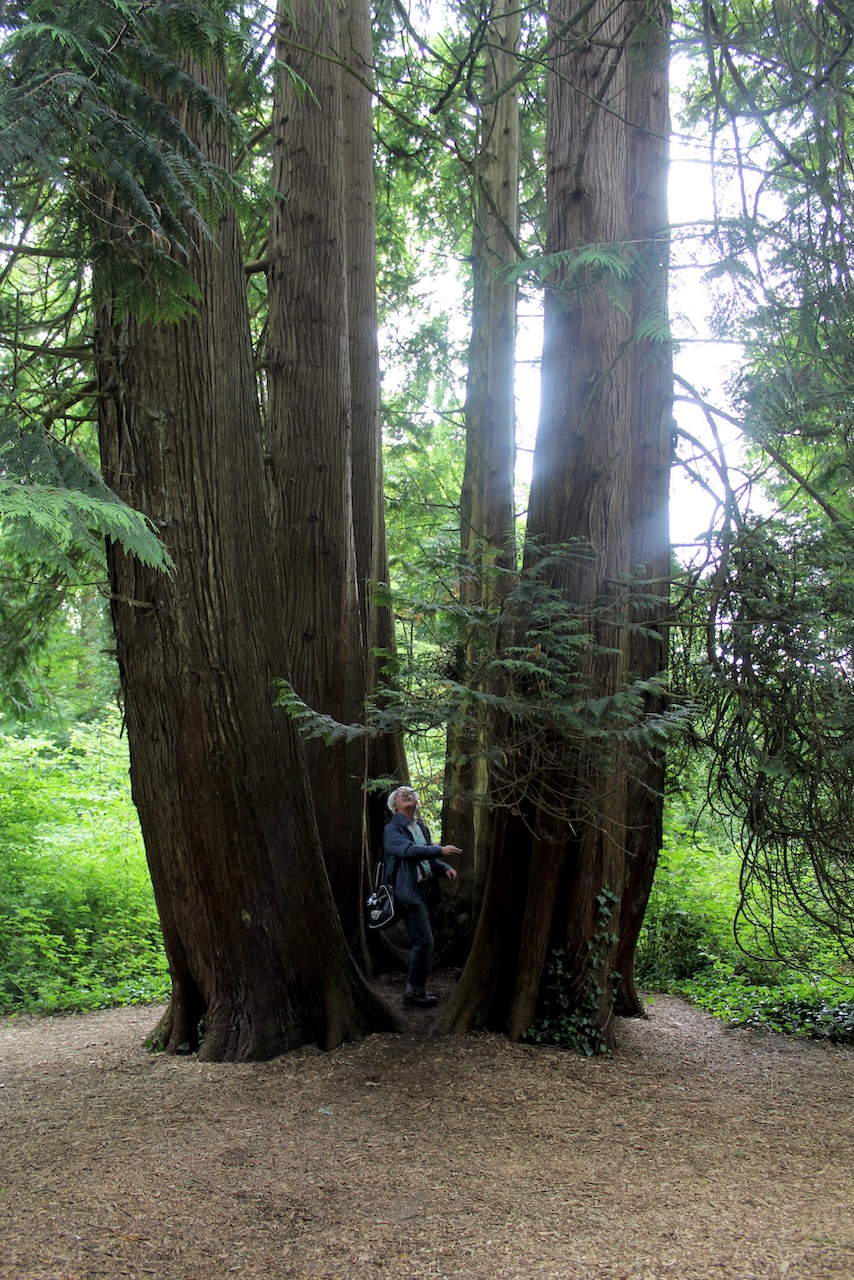
 Irish Historic Houses