Open dates in 2026: May 1-31 closed Sundays, Aug 15-23, Sept 1-30, closed Sundays, 2pm-6pm,
Tours: booking essential for National Heritage Week
Fee: adult €20, OAP €10, child €10 over 12 years and under 18 years
donation
Help me to pay the entrance fee to one of the houses on this website. This site is created purely out of love for the subject and I receive no payment so any donation is appreciated!
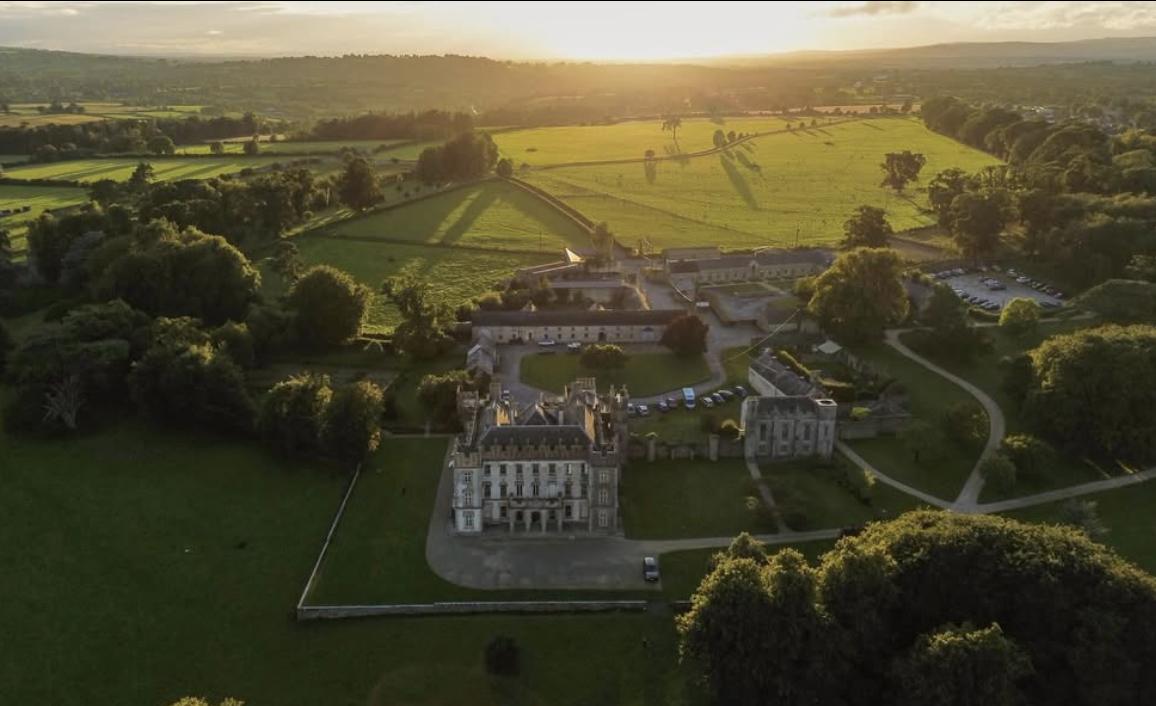
Historic Family Home Tours is a company which brings visitors to three historic houses: twelfth century Castlegarde in County Limerick with its 1820s extension by the Pain brothers, Grenane House, and Lismacue in County Tipperary, https://www.hfhtours.ie/
Unfortunately the tours are for groups, but I’d love to see the other two houses as well some time. However, you can visit Grenane house separately as it is listed on Revenue Section 482.
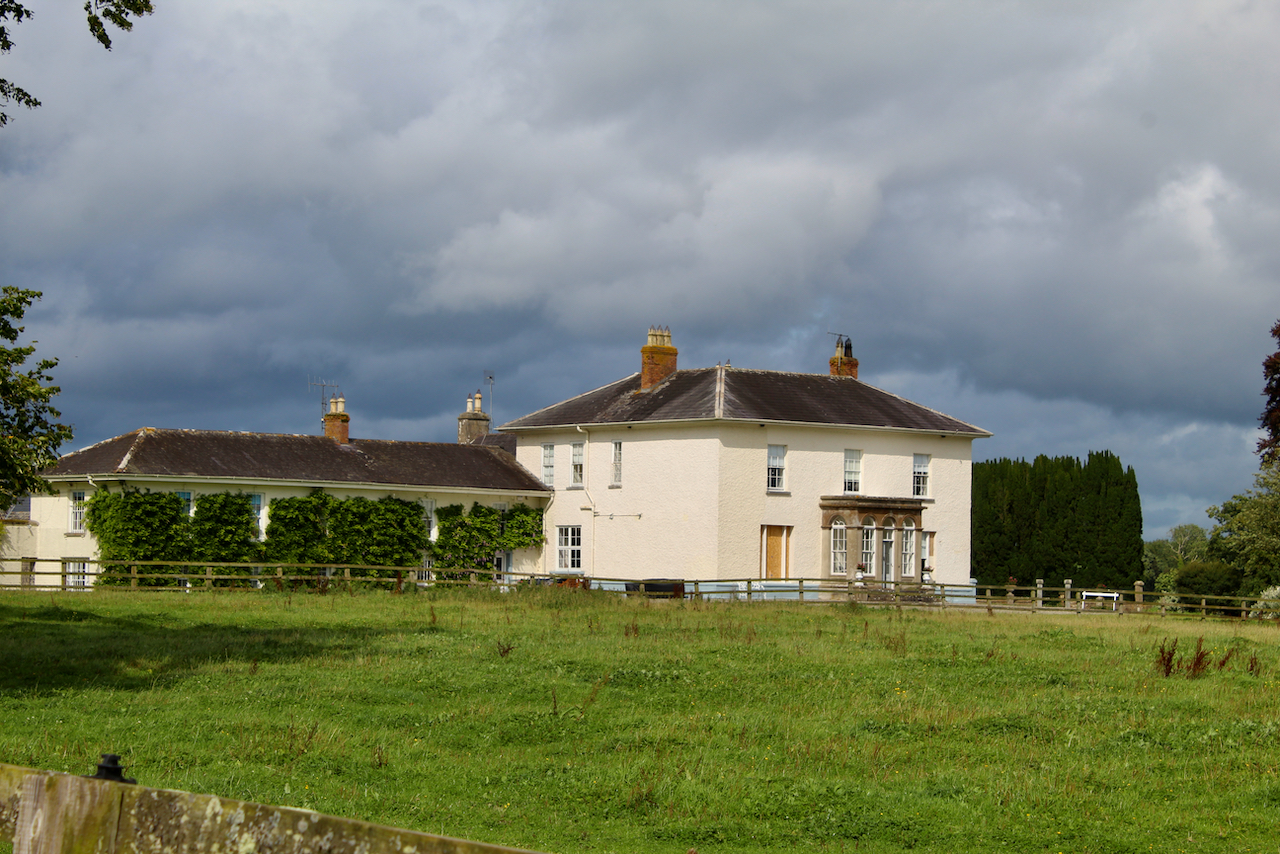
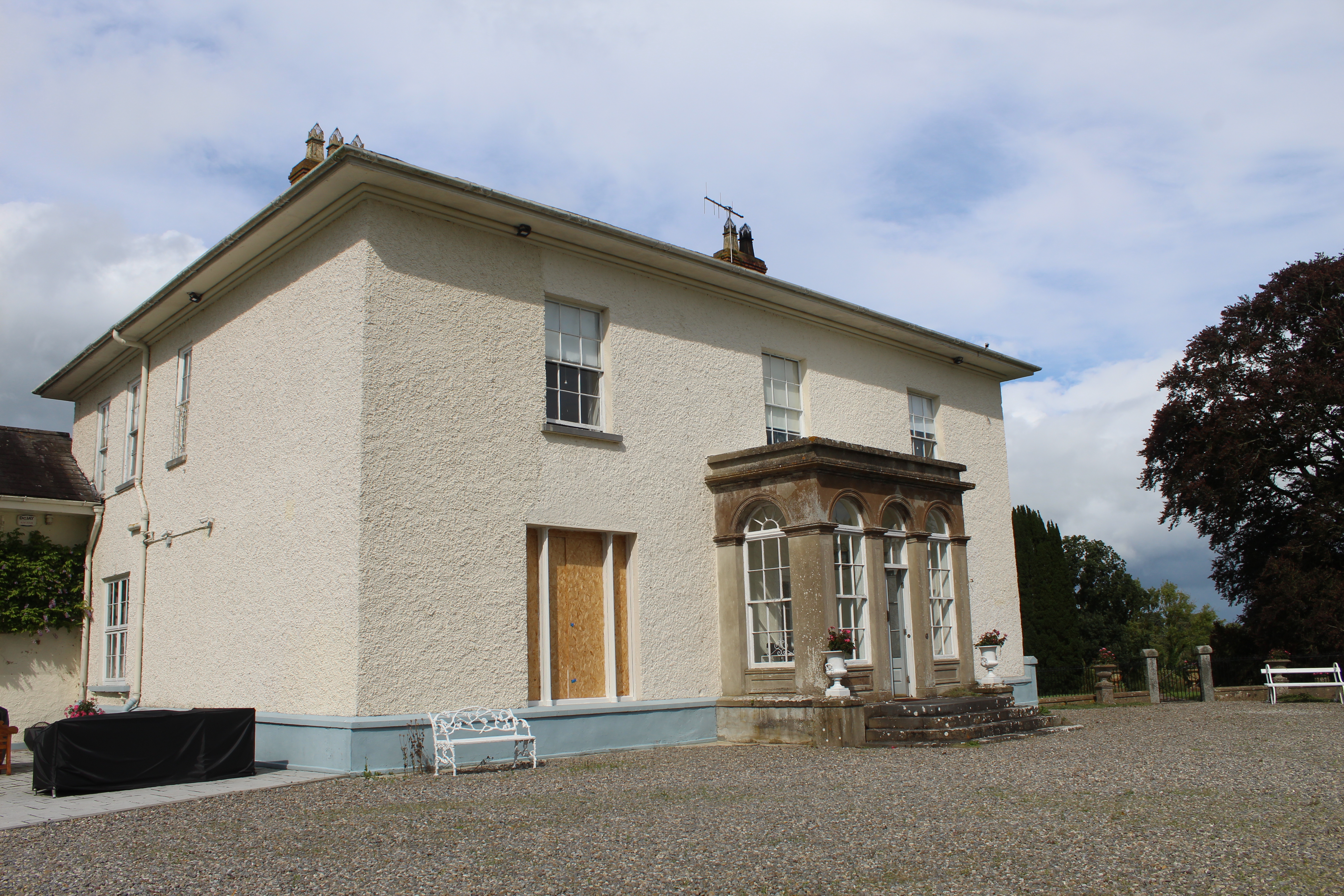
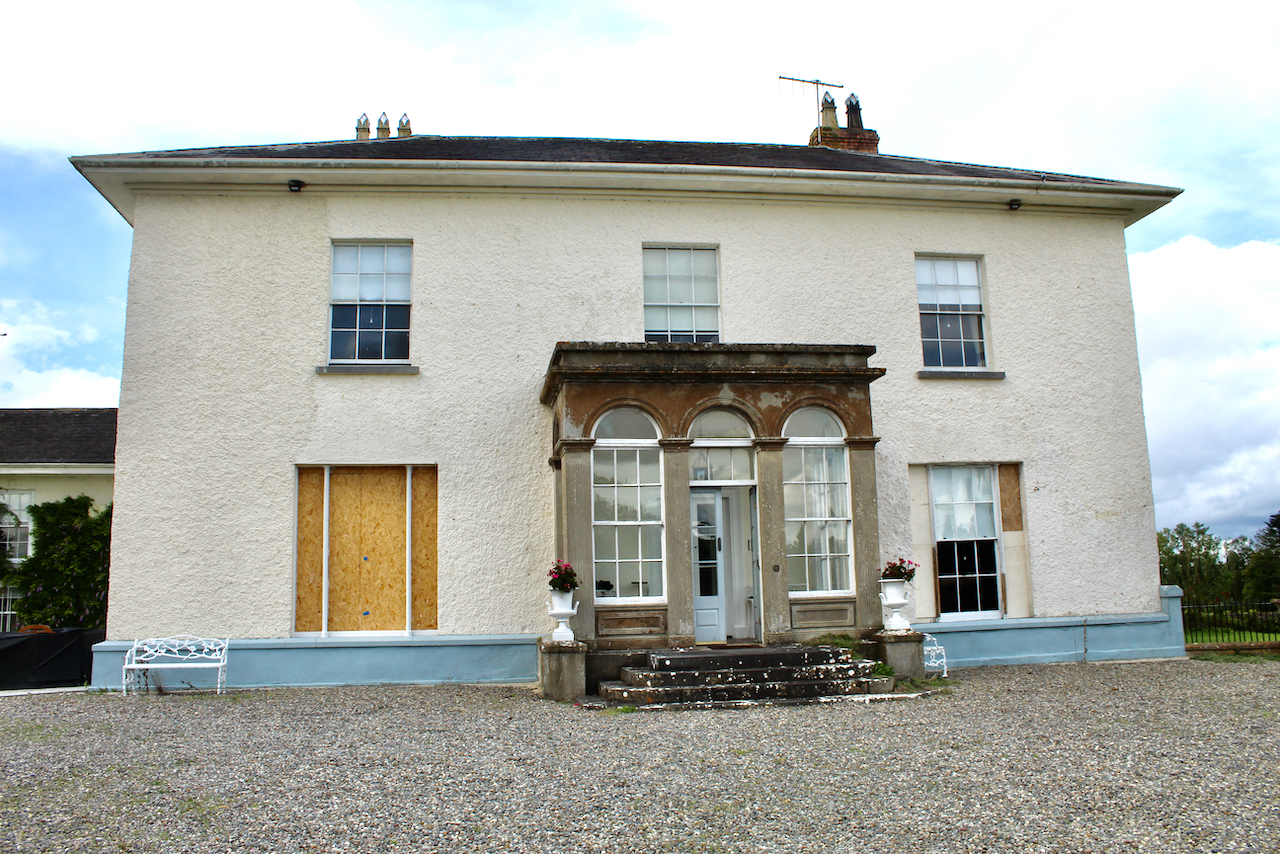
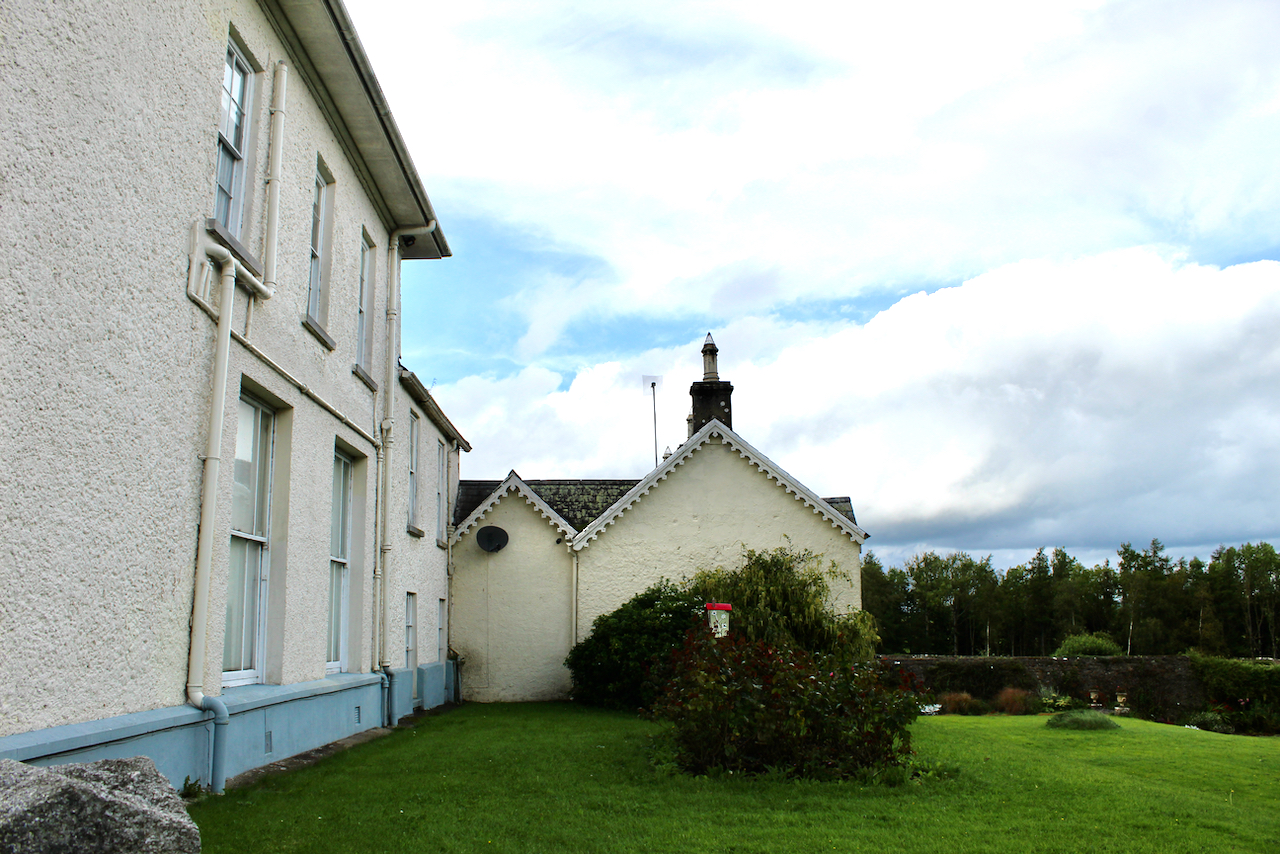
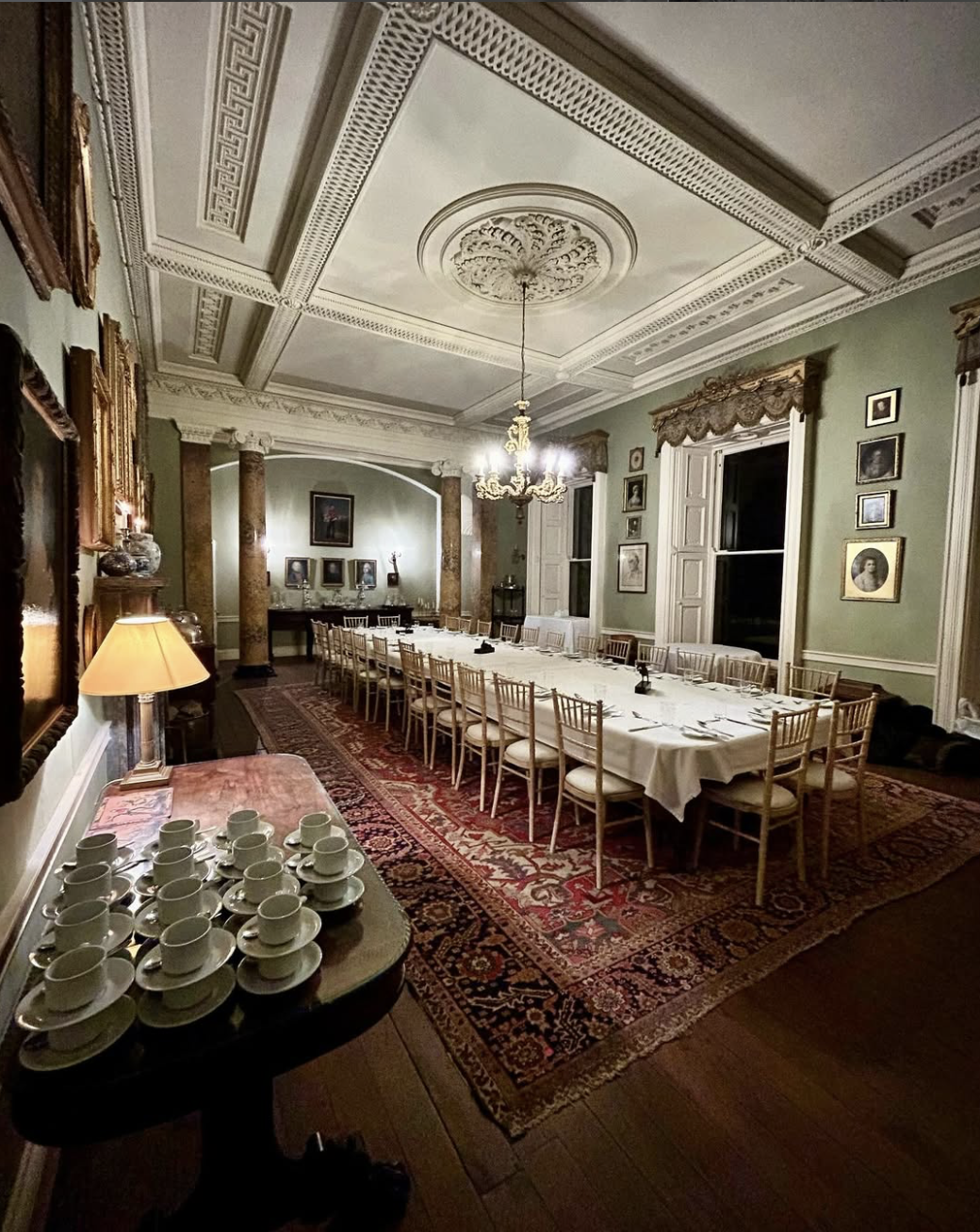
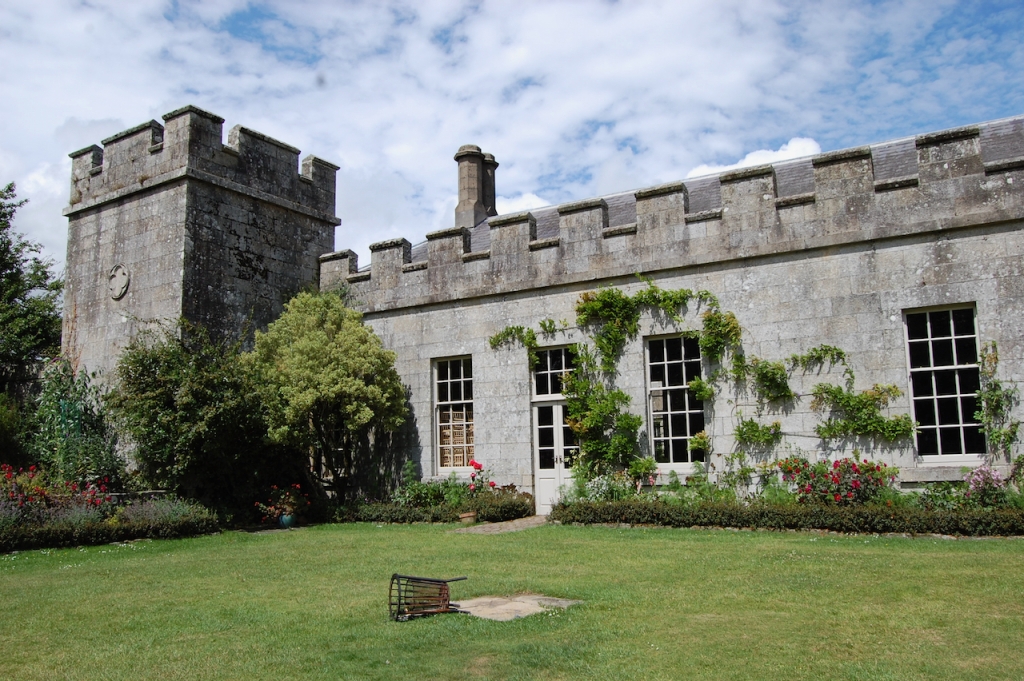
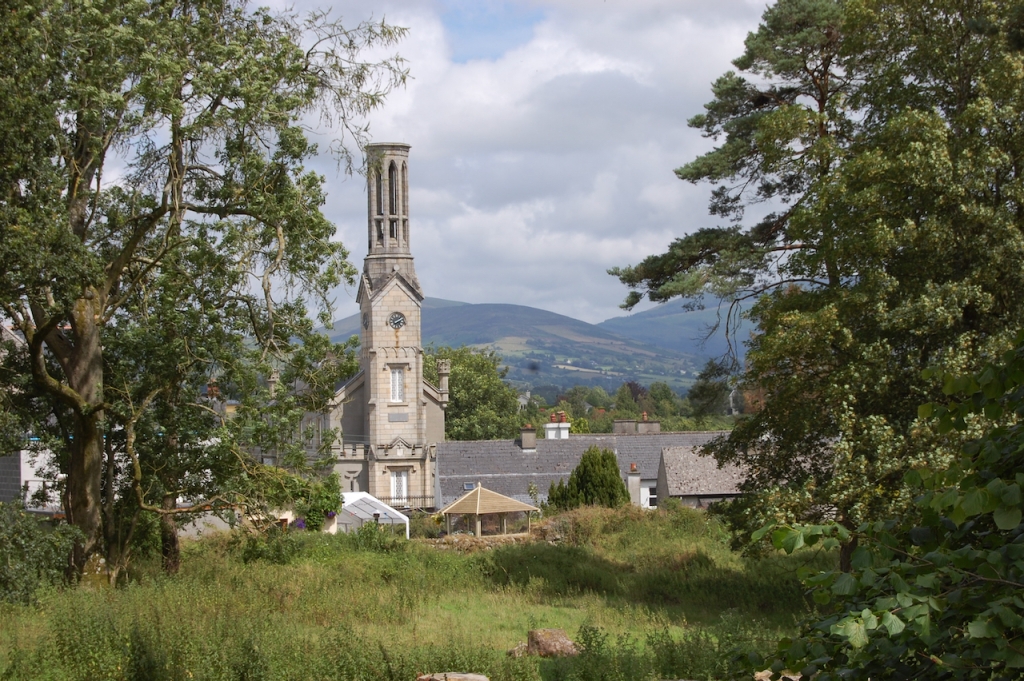
The house at Grenane in County Tipperary was built by and is still owned by members of the Mansergh family. It was lovely to meet the current owner, Philippa, who is very knowledgeable about the history of the house and her family.
Before the house was built there was a castle on the property. The Civil Survey of 1654 mentions the Grenane property in the parish of Templenoe, recorded as consisting of “the castle and town of Grenane and Ballyhosty” (Ballyhusty) and 660 plantation acres. The castle is described as a garrisoned castle, with thirty thatched cabins and houses nearby, forming the “town.” [1] There is a still a field which is called the “castle field” but the castle was pulled down to build the new house.
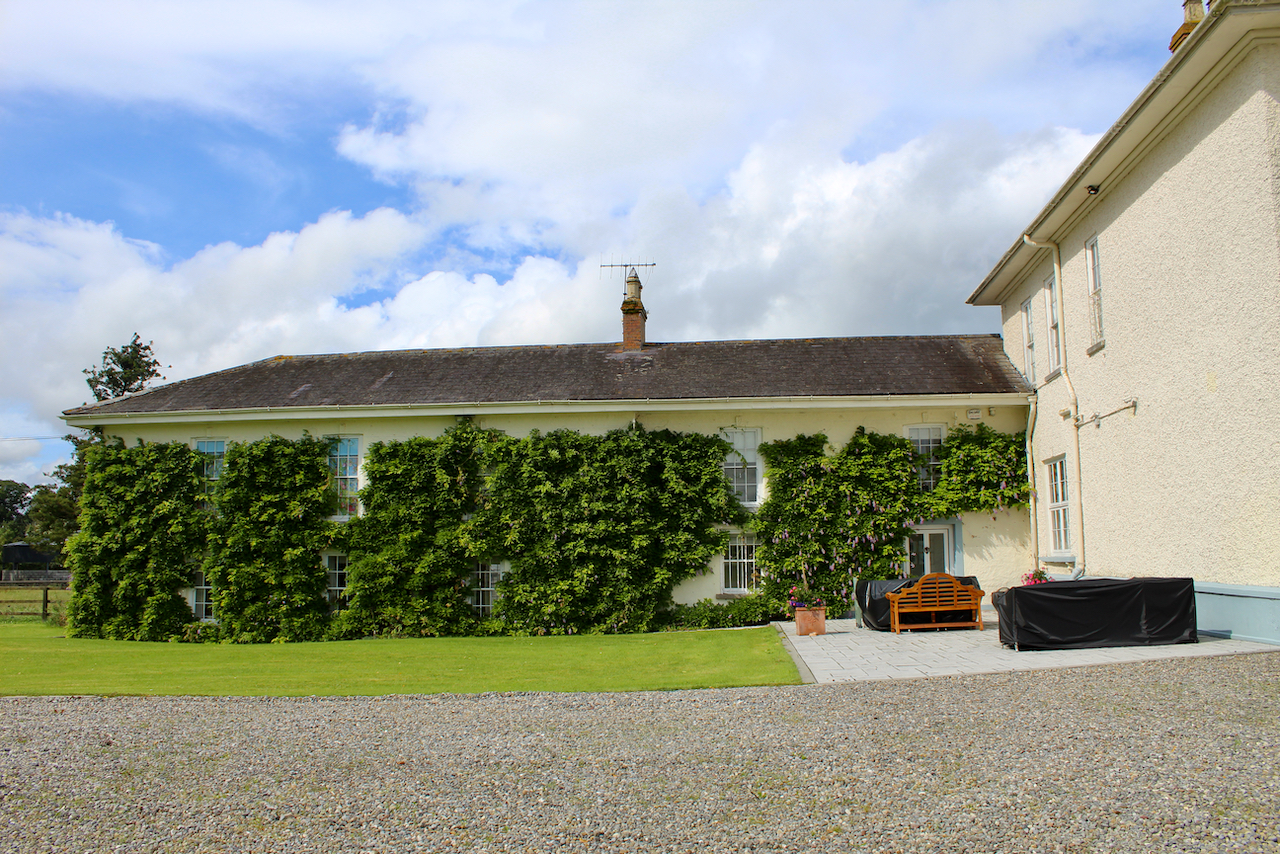
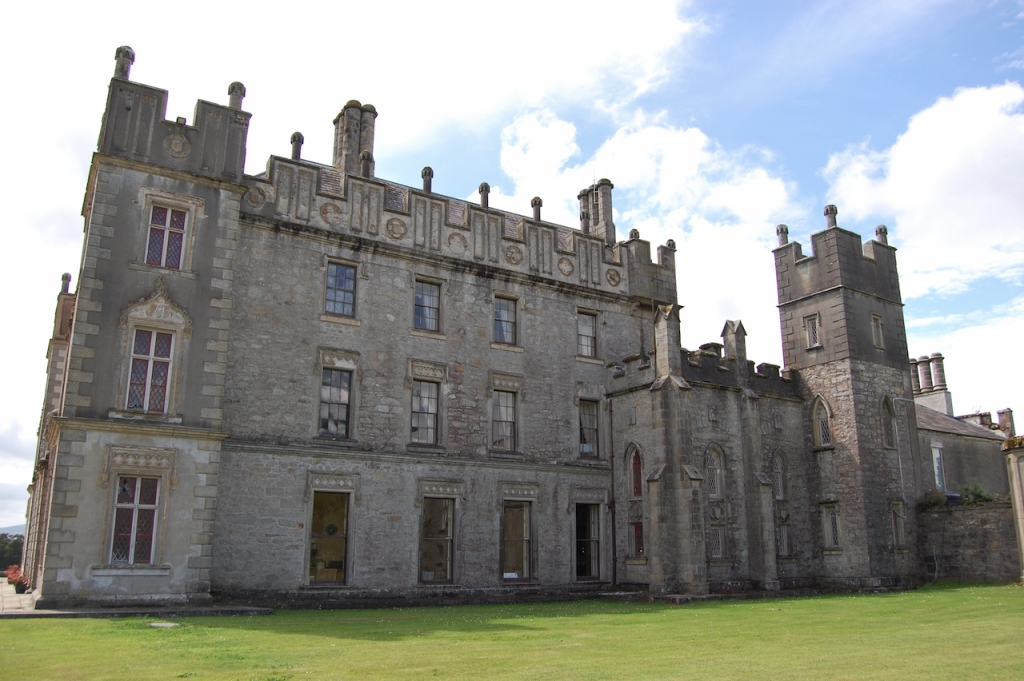
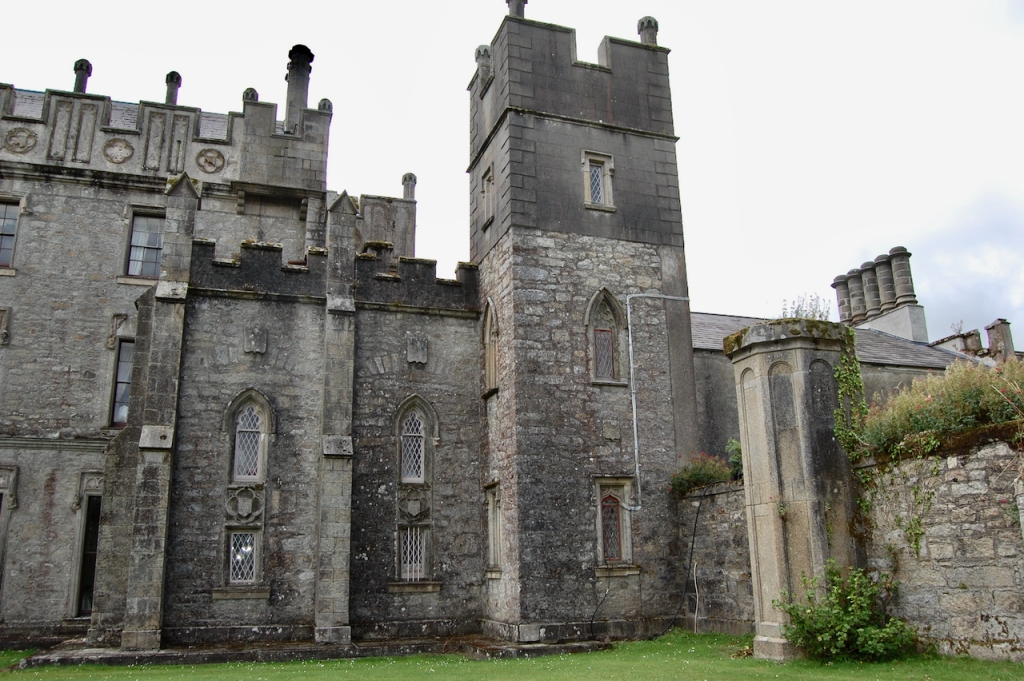
The house was probably built between 1700-1710, in time of Daniel and Mary Mansergh, from the stones of the castle. The main house, a three-bay Georgian house of middle size, dates from around 1730. [2] Philippa told us that the house had three storeys originally but the third was removed when the west wing was built, around 1740.
Art Kavanagh and William Hayes tell us that three brothers, Brian, James and Robert Mansergh, came to Ireland from Westmoreland in northwest England, with their uncle Daniel Redman, around 1650. [3]
They became involved in the Cromwellian campaign. However, in 1659, after Cromwell’s death, Daniel Redman entered into secret negotiations with the restored Charles II and was formally pardoned for his support of Cromwell. By 1688, Kavanagh and Hayes tell us, Redman was owner of nearly 13,000 acres in Kilkenny. In the land settlement of 1661, James Mansergh received a grant of Macrony Castle in County Cork. This is still occupied today. Brian and Robert Mansergh settled near their uncle in Kilkenny. Brian acquired Ballybur Castle in County Kilkenny, which is now also a Section 482 property, which we have yet to visit. Redman’s daughter Eleanor married James Butler, 3rd Viscount Ikerrin, and his daughter Elizabeth married John Meade, 1st Baronet of Ballintubber, County Cork. [4]
Brian served as High Sheriff and Justice of the Peace for County Kilkenny. He had a son, Daniel (1664-1735). It was through Daniel’s marriage that Grenane came into the ownership of the Mansergh family. Daniel also inherited Macrony Castle from his uncle Colonel James Mansergh, as James’s son George had no children.
Colonel James’s daughter Eleanor married into the Grenane lands in 1684 when she married Nicholas Southcote. Her daughter and heiress Mary Southcote married Daniel Mansergh and brought with her the Grenane property. It was probably in Daniel and Mary’s time that the current house at Grenane was built.
In The Tipperary Gentry, Kavanagh and Hayes tell us the interesting history of the area. Before coming into Mansergh ownership, the land at Grenane was leased to Hardress Waller (1604-1666). He was from a wealthy family from Kent in England, but moved to Ireland after he married an heiress to Irish property, Elizabeth, daughter and coheir of John Dowdall of Kilfinny, Co. Limerick. [5] He served as MP for Askeaton, County Limerick, in the Irish Parliament. At first he supported the Catholic “Old English” who did not want plantation of Protestant settlers in Munster.
However, with the outbreak of the Catholic rebellion in 1641, Waller turned against the “Confederates.” The Confederates were mostly Catholic and many were “Old English” who had settled in Ireland, who wanted to retain their lands despite retaining their Catholic faith. They asserted their loyalty to the King along with their right to keep their faith and their land. The Duke of Ormond James Butler tried to navigate a peaceful means for them to obtain their rights while maintaining loyalty to King Charles I.
The Catholic church became involved in the person of Cardinal Rinuccini, acting on behalf of Pope Innocent X. He came to Ireland in 1645 and brought with him arms and ammunition. The Confederate cause was split, with the emphasis upon the Catholic faith trumping the interest of the Old English who wanted to keep their land and maintain loyalty to the Crown and to King Charles I.
It was a complicated time politically. The Dictionary of Irish Biography tells us that during the summer of 1643 Waller became increasingly critical of the king.
In the spring of 1645 Hardress Waller was serving in the west of Ireland in the Parliamentarian army, possibly under his cousin, William Waller. By April he had taken the solemn league and covenant, and was then appointed as a colonel in the recently formed New Model Army. The Dictionary of Irish Biography continues, telling us that in January 1649 Waller was chosen as a commissioner for the high court of justice to try the king. He attended the trial proceedings as many times as Cromwell, and, on 29 January, signed the king’s death warrant – the only Irish Protestant to do so. After the reinstatement of the Stuart monarchy with King Charles II, Waller was sentenced to death, but the sentence was commuted to life imprisonment on the island of Jersey, where he died.
Waller’s daughter, Elizabeth, married William Petty, author of the Civil Survey of 1654. Another daughter married Nicholas Southcote, a Royalist from Devon.
Nicholas Southcote and Elizabeth had a son, also named Nicholas, who in 1684 married Eleanor Mansergh, daughter of Captain James Mansergh of Macrony Castle, County Cork. The name “Southcote” has been used as an added Christian name in later Mansergh generations.
It was Nicholas and Eleanor Southcote’s daughter and heiress Mary who married her cousin Daniel Mansergh (1664-1735) of Macrony Castle.
Philippa brought us inside and we were shown into the library and sitting room. The drawing room has a Wedgewood frieze around the room and a Bossi fireplace.
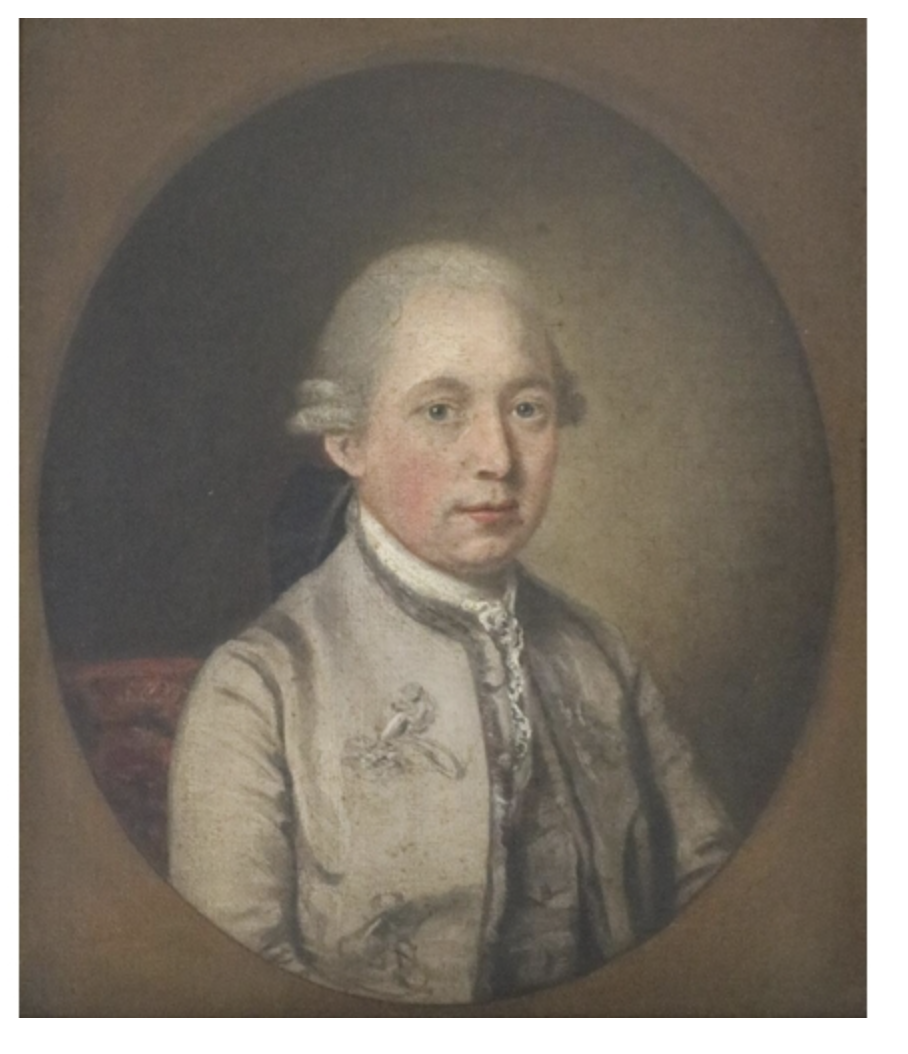
The second son of Daniel and Mary, Nicholas Southcote Mansergh (d. 1768), inherited Grenane in 1735, Kavanagh and Hayes tell us. His elder brother James (d. 1774) inherited Macrony Castle. James married Mary St. George and his son Richard inherited the St. George estates and added St. George to his surname.
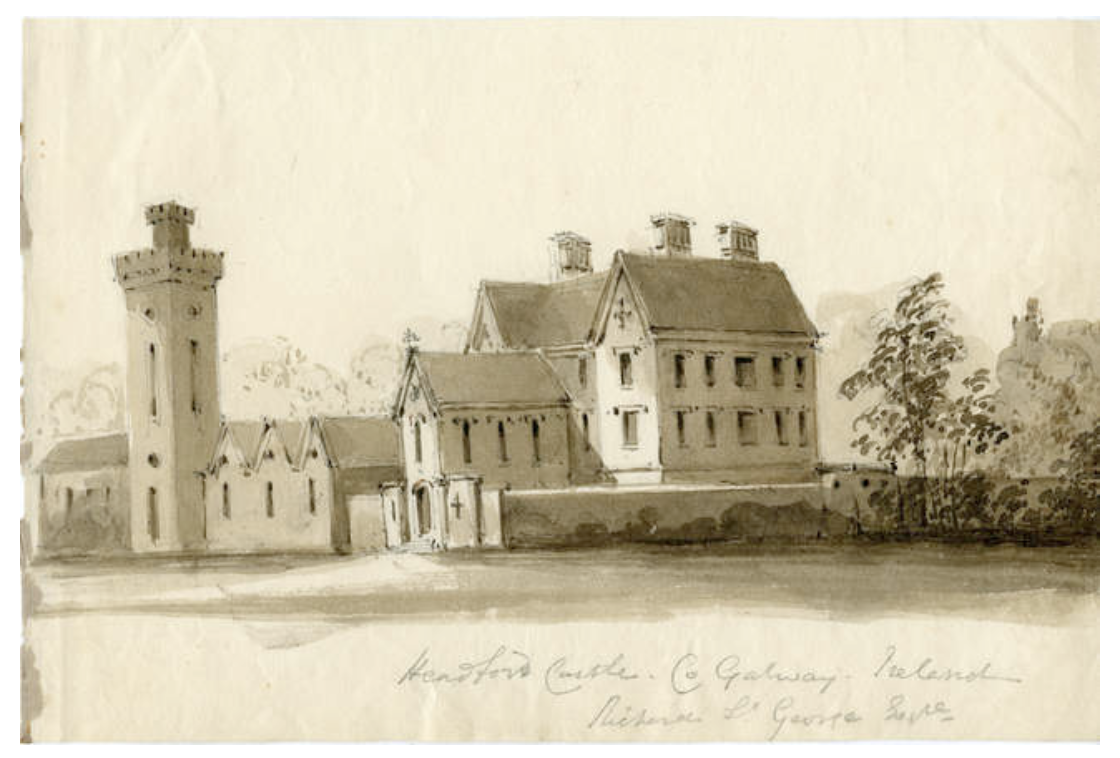
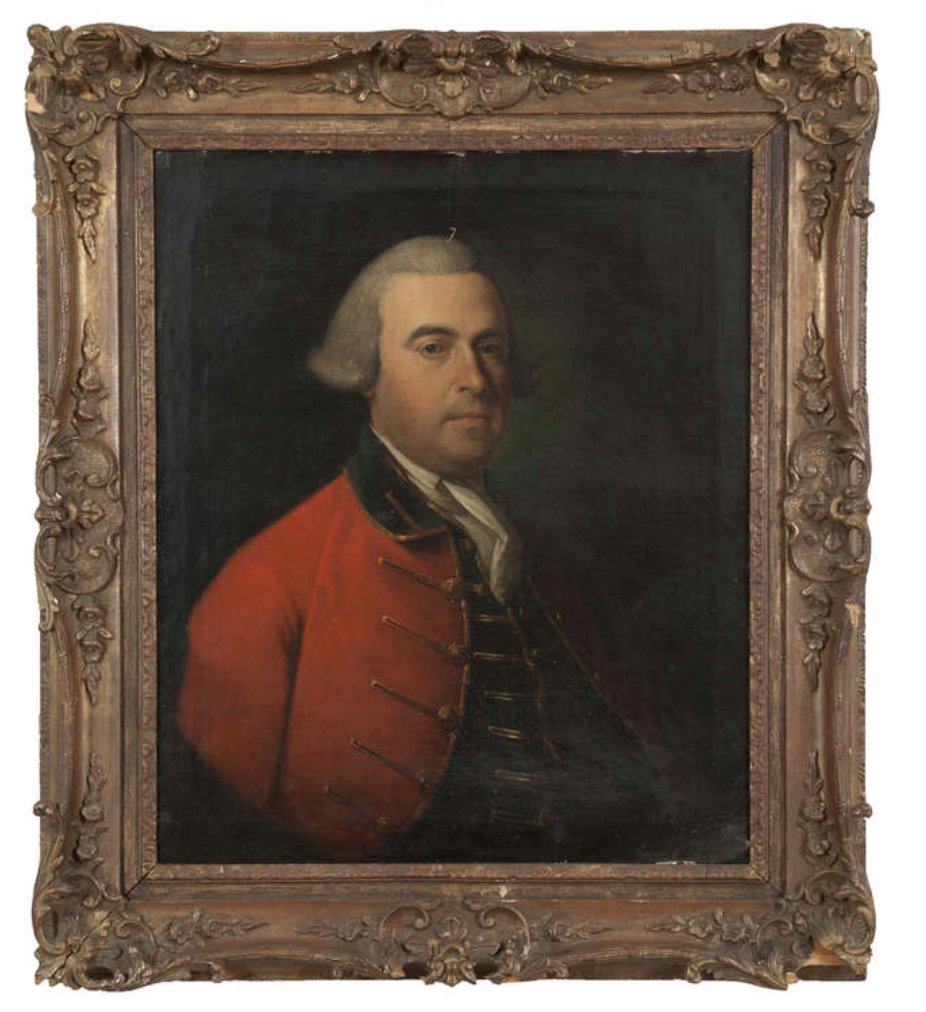
Richard Mansergh St. George (1756/9-1798) at his wife’s tomb by Hugh Douglas Hamilton courtesy of National Gallery of Ireland ID 8757.The portrait is misleading as it shows him with a full head of hair, whereas in reality he fought in the British army during the American War of Independence and was shot in the head. Miraculously he survived and part of his skull was replaced by a silver plate, and from then on, he wore a cap to cover his head.He is also interesting as he was a friend of artist Henry Fuseli, who was beloved of Mary Wollestonecraft.He inherited the Headfort estate in County Galway, and was murdered by rebels in 1798.Richard Mansergh St. George’s wife Anne St. George née Stepney of Durrow Abbey County Offaly, and Child, 1971, by George Romney courtesy of August Heckscher Collection 1959.147English School c.1828 Headford Castle, Co. Galway (now a ruin), Watercolour, inscribed in pencil, Headford Castle, Co. Galway, Ireland Richard St George Esq. courtesy of The History Sale Adams April 2018.
Nicholas Southcote Mansergh owned Grenane for 33 years. He married Elizabeth, daughter of Richard Lockwood of Castle Leake (Castlelake), Cashel, in 1750. His two eldest sons, Nicholas Southcote (d. 1818) and Daniel (d. 1823) continued the Tipperary branches of the family.
In 1770 Nicholas married Elizabeth, daughter of John Carden of Templemore, County Tipperary and sister of John Craven Carden, 1st Baronet of Templemore. It was during their time in Grenane House that the top storey was removed and the south wing, a long two-storey structure, was built.
John Craven Carden, 1st Baronet of Templemore, County Tipperary, by Robert Hunter courtesy of Country House Collections at Slane Castle 13th October 2015.
Nicholas Mansergh the second owned Grenane for around fifty years, outliving his eldest son John Southcote, JP, who died in 1817. John had married Mary, daughter of Richard Martin of Clifford, Co Cork. The Christian name Martin came to be used subsequently in the Mansergh family.
Grenane passed to their son, Richard Martin Southcote Mansergh (1800-1876). A younger son, Charles Carden Mansergh, married Elizabeth Bland, daughter of Captain Loftus Otway Bland. Charles Mansergh and Elizabeth Bland’s daughter Georgiana Constance Antoinette Mansergh married Robert St. John Cole Bowen, of Bowen’s Court in County Cork, and was the grandmother of the writer Elizabeth Bowen – whose short stories I am currently reading!
Richard Martin Southcote inherited Grenane at the age of 18. He married Jane Rosetta, daughter of Robert Bomford and Maria Massy-Dawson of Rahinston, County Meath. He owned Grenane House and estate for about 60 years. He served as a local magistrate.
Richard Mansergh was chairman of the jury in the trial of William Smith O’Brien (1803-1864), a Young Irelander, in 1848. William Smith O’Brien was a politician and served as a member of parliament. Young Irelanders sought Irish independence. O’Brien was arrested at Thurles railway station shortly after his abortive Young Ireland rising which fizzled out at the Widow McCormack’s farmhouse at Ballingarry in July 1848. At the subsequent trial before a jury, O’Brien was found guilty of high treason. Richard Mansergh as chairman of the jury had to announce the verdict. In association with the jury he made a plea for O’Brien’s life in the following terms: “We earnestly recommend the prisoner to the merciful consideration of the government, being unanimous of the opinion that, for many reasons, his life should be spared.”
William Smith O’Brien (1803-1864) by George Francis Mulvaney, courtesy of National Gallery of Ireland P1934.
The jury also included Southcote Mansergh of Grallagh Castle, County Tipperary, a former property of a junior branch of the Butlers. Smith O’Brien, whom Mansergh regarded as a good friend, was transported to Tasmania, and pardoned six years later.
In The Tipperary Gentry, we are told: “Richard Mansergh was a member of the Select Vestry of Tipperary Church of Ireland parish, which approved of the building of the new parish church in the town in 1829. He paid £300 for the family box pew. He always drove by himself to church, and according to family tradition, after going into his family pew he spread a handkerchief over his face and went to sleep. On other outings as magistrate he drove in a coach and four with two postillions dressed in the family livery of buff with scarlet edging.
“He did not employ a land agent. On the occasions on the Spring and Autumn gale days, the days on which the rents were due, it was his custom to sit at a table under a lime tree at the corner of the avenue, receiving the rent from his seventy or so tenants, listening to whatever complaints they were brave enough to voice, and “dispensing justice as he thought fit.” His eldest son and heir, John Southcote [1823-1899], popularly called Colonel Johnny, stood beside him, “and sometimes helped to soften the decision.”
Philippa told us that during the Famine, nobody at Grenane died nor emigrated. The walled garden was built and trees were planted, as ways of providing employment and pay. Kavanagh and Hayes tell us that:
“During the years of the Great Famine, Colonel Johnny was chairman of the Tipperary Town Relief Committee, the function of which was to submit orders for Indian meal, raise subscriptions, apply for matching government grants and supervise public works. The main works undertaken were whitewashing the poorer houses, putting in sewers and footpaths to try to reduce the risk of fever, and leveling and draining number of roads leading out of the town.”
Colonel Johnny also gave practical help by allowing a sewing project for women on the estate in the late 1840s.
He married Sissy Wyatt of Flintstone, but only about six months after his father’s death in 1876 he and Sissy moved to London where they continued to live until their death. It was at that stage that Grenane became heavily mortgaged and was let.
Johnny had a brother, Richard St. George Mansergh (1832-1897). The house passed eventually to his son, Philip St. George Mansergh (1863-1928).
Philip’s elder brother, Richard Southcote Mansergh who had succeeded to Grenane, went to live in Friarsfield House, built by the family as a dower house around 1860. [6] This is now occupied by former senator Martin Mansergh, a cousin of the current owner of Grenane, Philippa Mansergh-Wallace. They are both grandchildren of Philip St. George Mansergh.
Philip St. George Mansergh (1863-1928) had been sent to Australia at the age of 18 with only £40 in his pocket and his passage. He had trained as an engineer. Kavanagh and Hayes tell us that he was involved with construction of railway lines in Queensland, Australia, in New Zealand and in Africa on the “Cape to Cairo” railway. His descendant Philippa, current resident of Grenane, has wonderful photographs from this period. Philip married his cousin Ethel Marguerite Otway Louise Mansergh. They had two sons.
Philip returned from his railway engineering career in Africa in 1906, by which time the estate was reduced to its demesne lands. [7] Much land was dispersed in the Land Purchase Acts.
Martin Mansergh’s father (Philip) Nicholas Seton Mansergh (1910–91) was a historian who wrote many books about Ireland including The Irish Free State: its government and politics (1934), The government of Northern Ireland: a study in devolution (1936) and Ireland in the age of reform and revolution, published in 1940 (and in a revised edition as The Irish question, 1840–1921 in 1975). The unresolved question: the Anglo-Irish settlement and its undoing, 1912–72 (1991) was published after his death, as were two volumes of essays, edited by his widow, Diana: Nationalism and independence: selected Irish papers (1997), and Independence years: the selected Indian and commonwealth papers of Nicholas Mansergh (1999). [7]
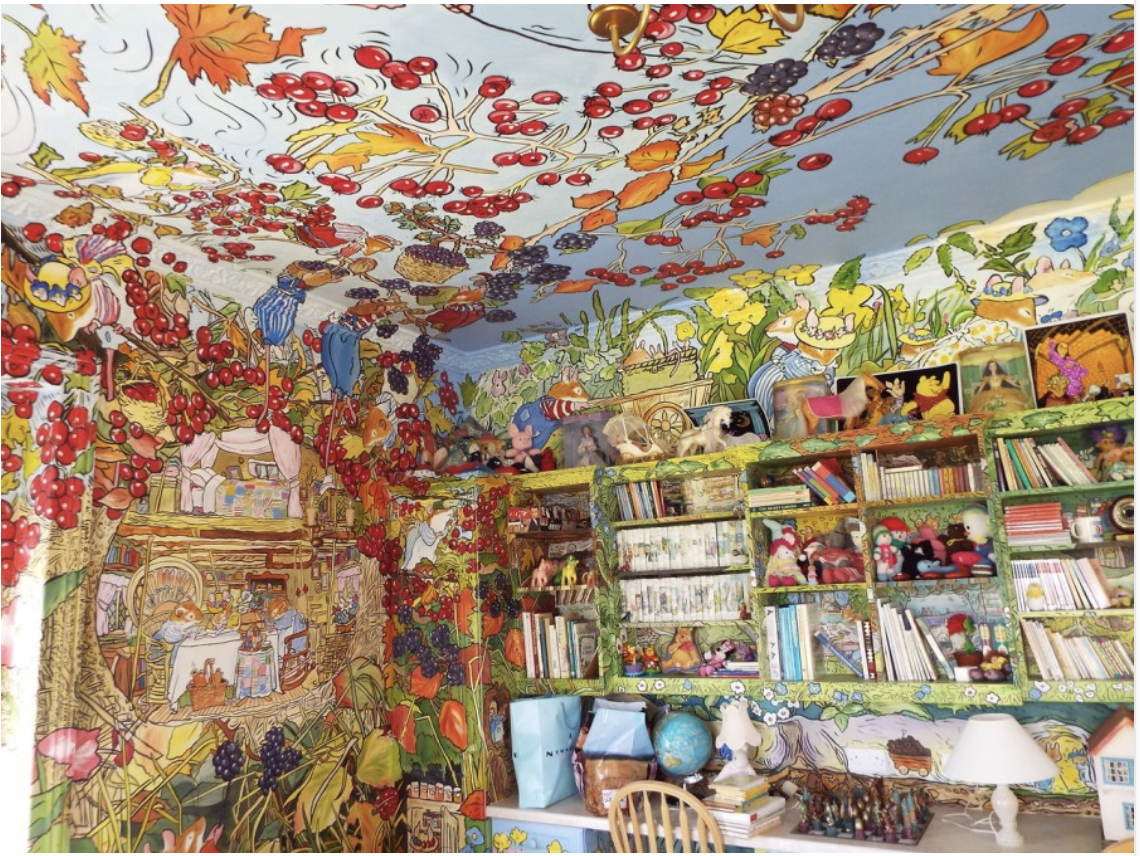
There is a charming playroom in Grenane house which has every surface covered by gorgeous painting by Marion McDonnell of Tipperary depicting “The Mice of Brambley Hedge.” This took two years to paint. I could have looked at it for hours, it is so detailed and wonderful.
The playroom completely hand painted by Marion McDonnell of Tipperary depicting “The Mice of Brambley Hedge,” courtesy of Grenane House website.
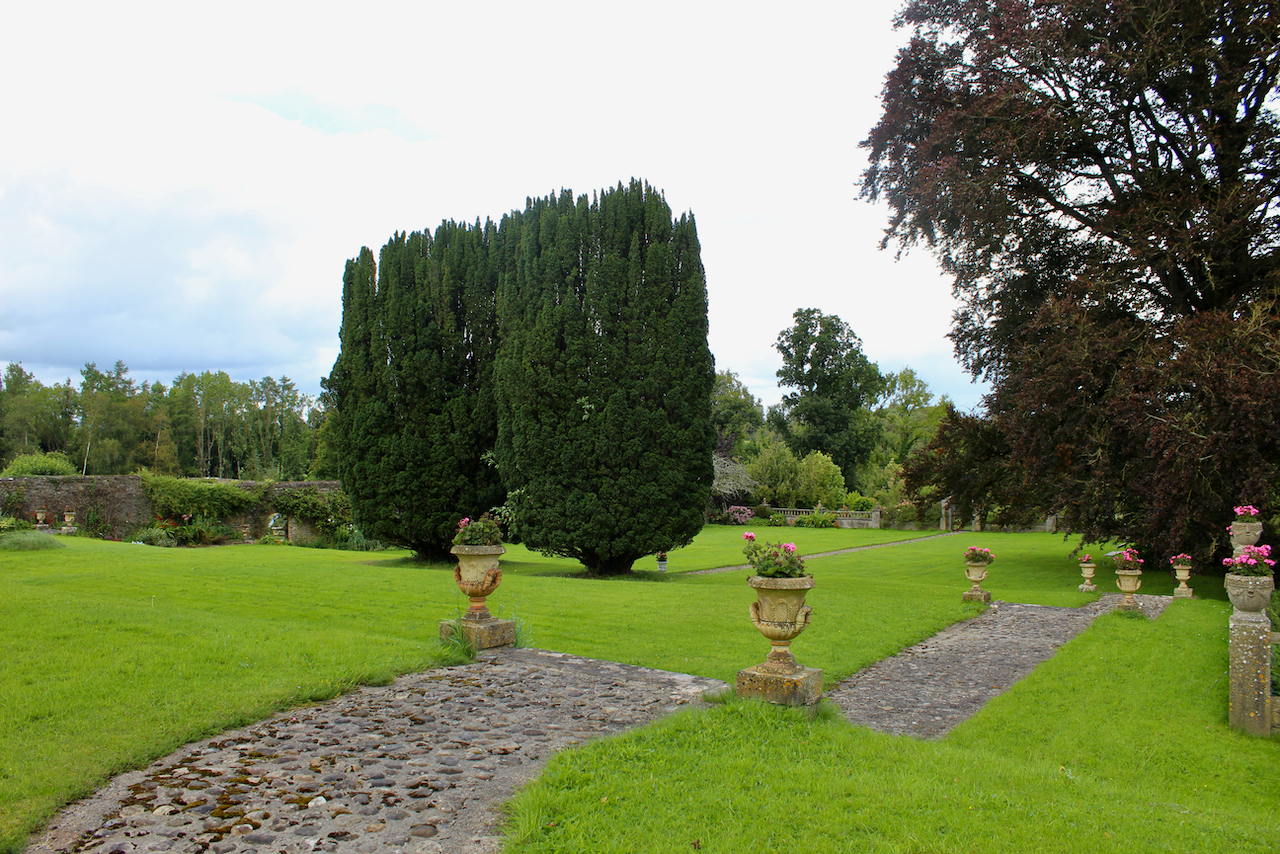
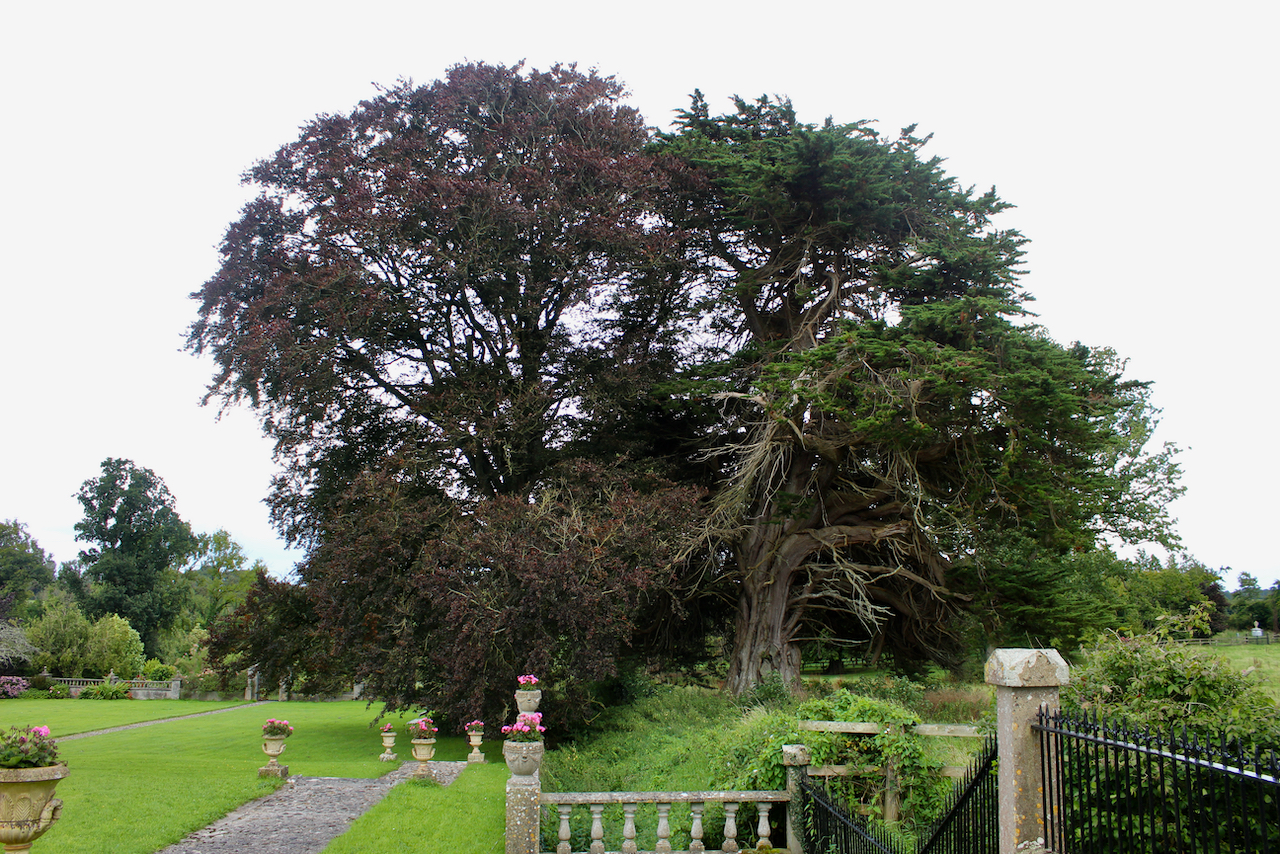
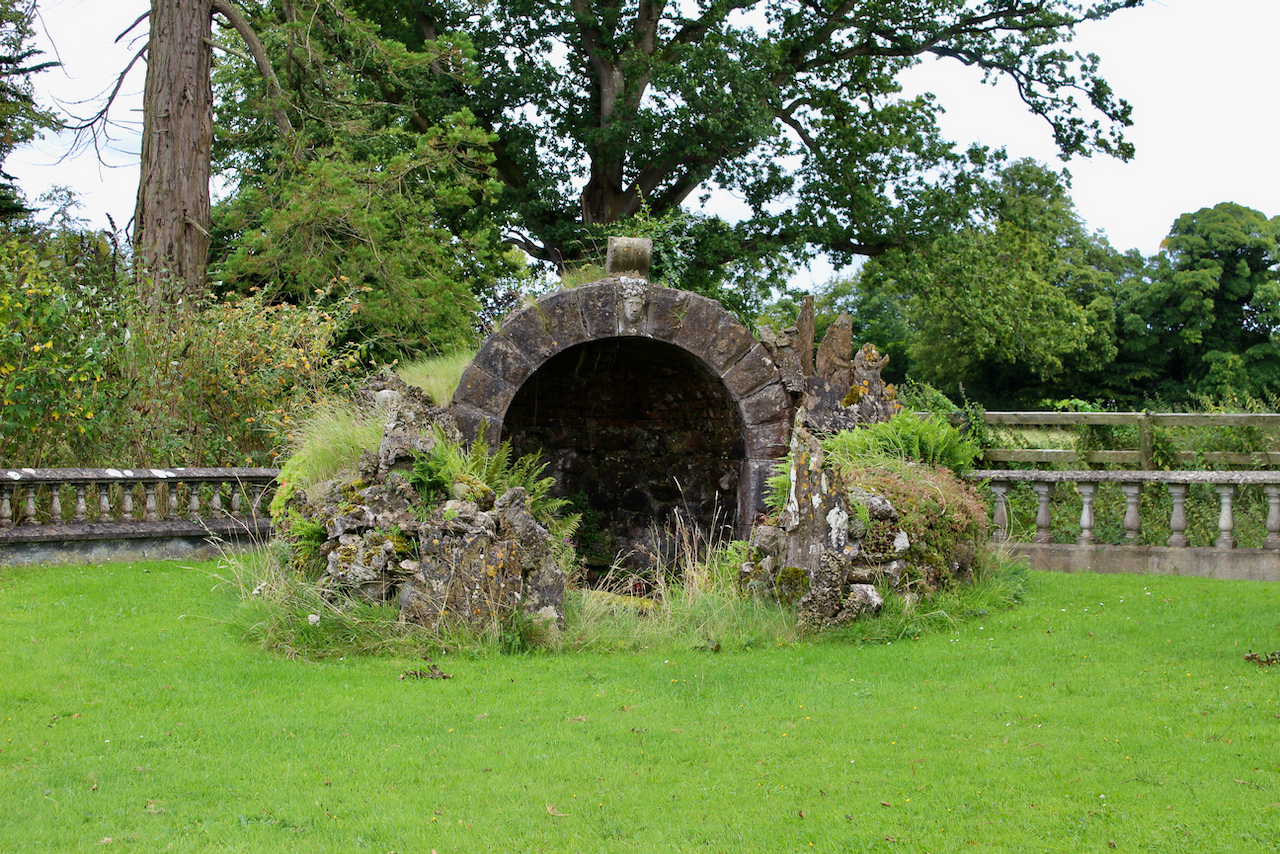
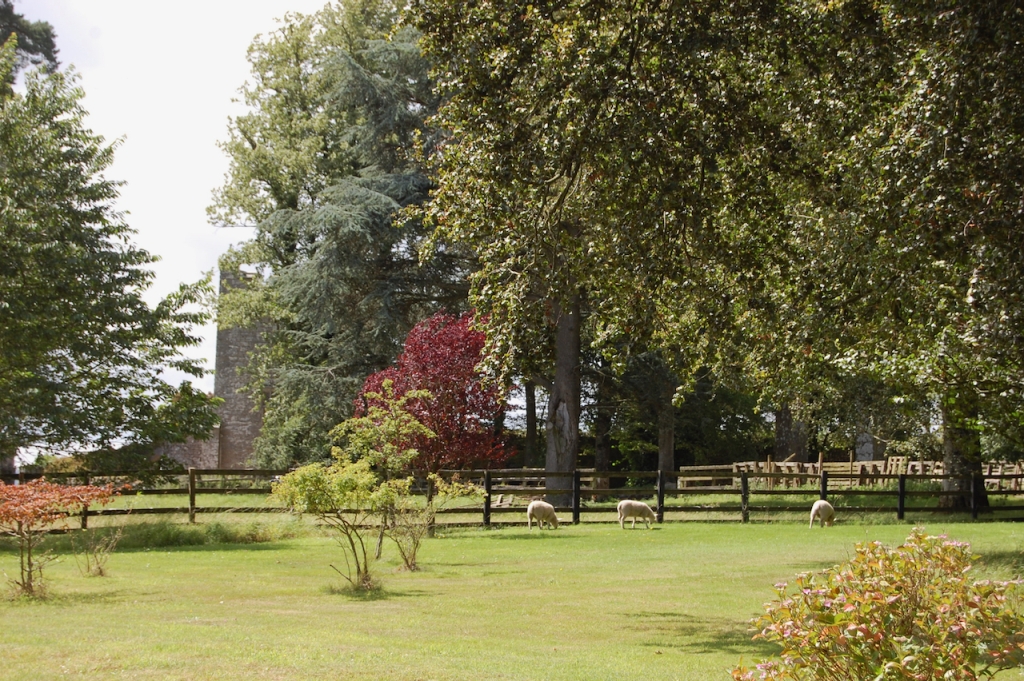
Philippa then brought us outside to see the garden. These feature a hazelnut walk, the only one in Ireland. There is a summerhouse in the shape of an old 50 pence. The terraces were laid out around 1860 by a great aunt, Charlotte Mansergh. Philippa has planted a forest of trees. Unfortunately it was starting to rain so we didn’t linger as long as we would have liked. It was a lovely visit.
[1] p. 127. Kavanagh, Art and William Hayes. The Tipperary Gentry. By William Hayes and Art Kavanagh. Published by Irish Family Names, c/o Eneclann, Unit 1, The Trinity Enterprise Centre, Pearse St, Dublin 2, 11 Emerald Cottages, Grand Canal St, Dublin 4 and Market Square, Bunclody, Co Wexford, Ireland. 2003.
p. 127 refers to R.S. Simington, ed. Civil Survey of Ireland, Co Tipperary, Vol. 2, p. 42, 1934.
Oranmore Castle is listed on Revenue Section 482 as tourist accommodation.
Open for accommodation: May 1-October 31 2026
donation
Help me to pay the entrance fee to one of the houses on this website. This site is created purely out of love for the subject and I receive no payment so any donation is appreciated!
€15.00
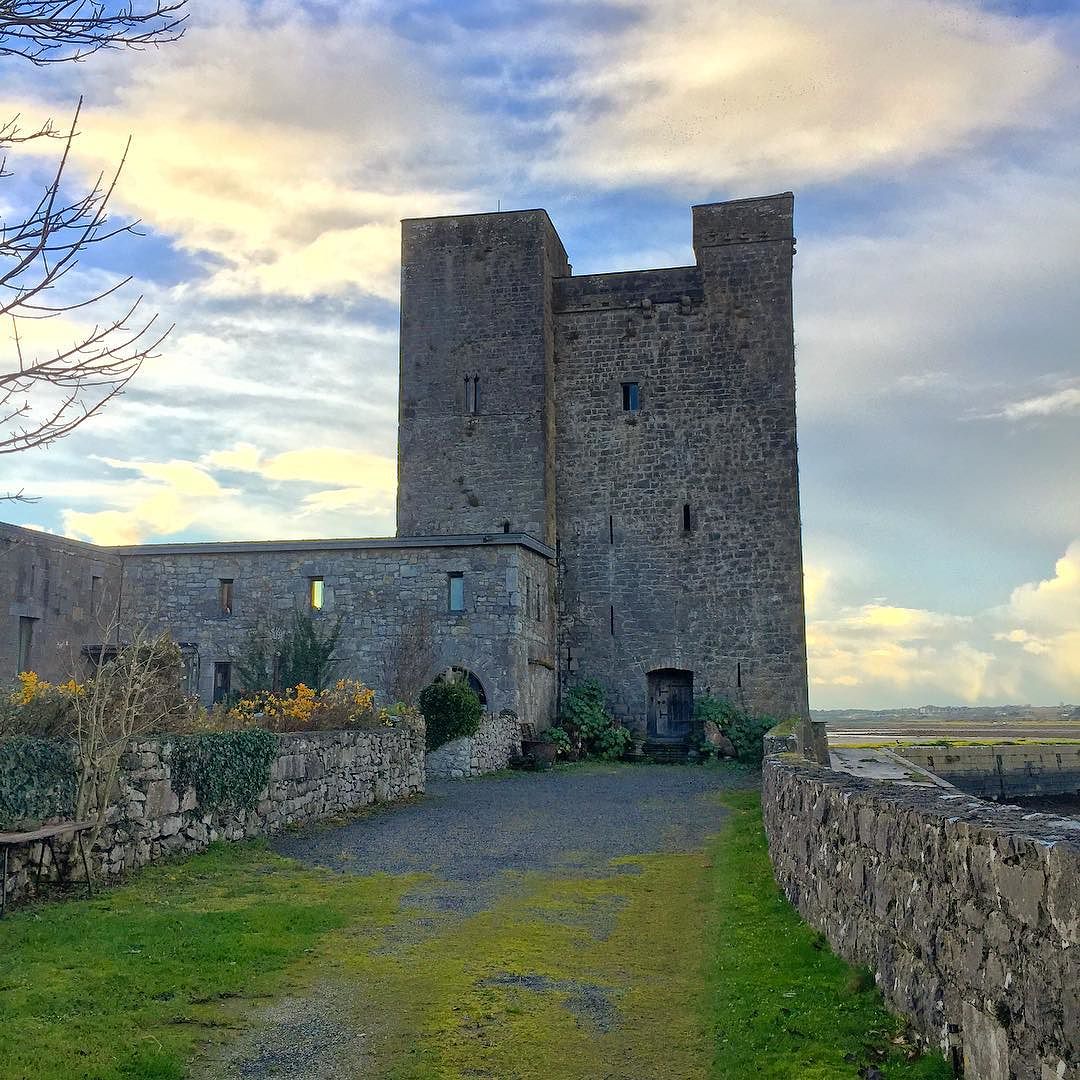
Oranmore Castle, photograph from flickr creative commons Johanna.
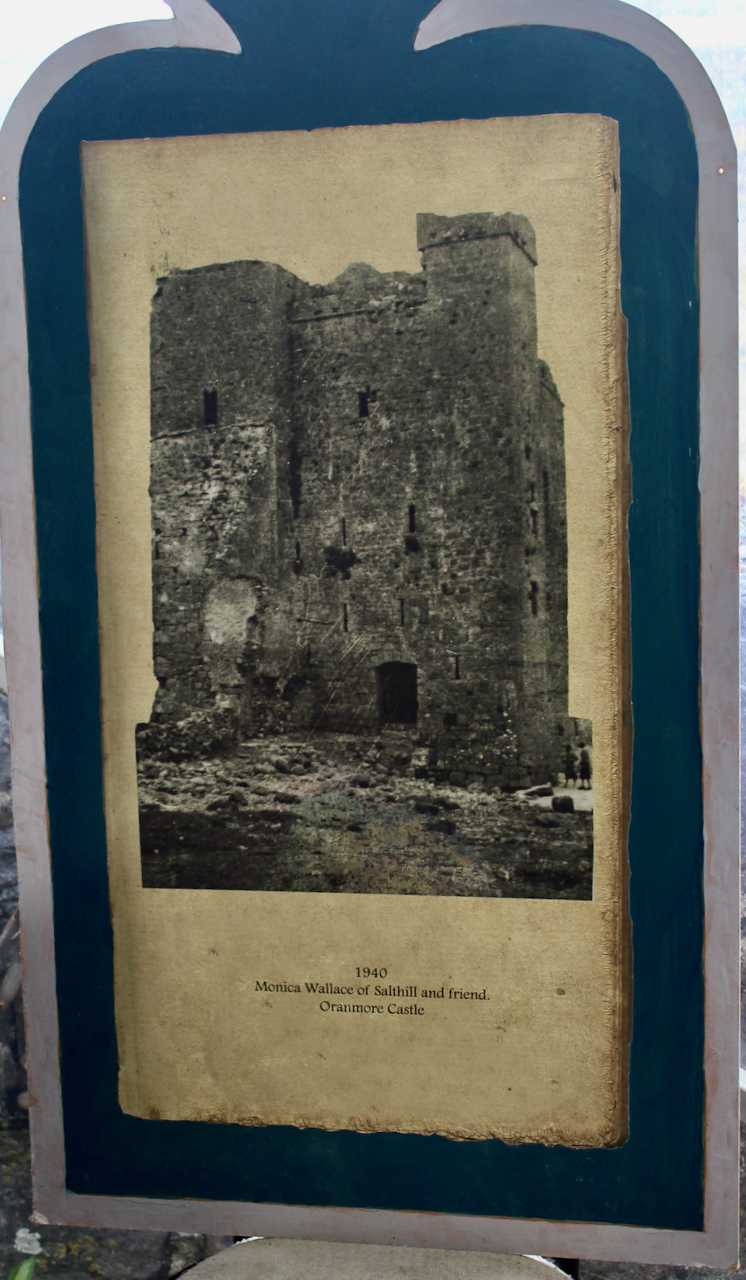
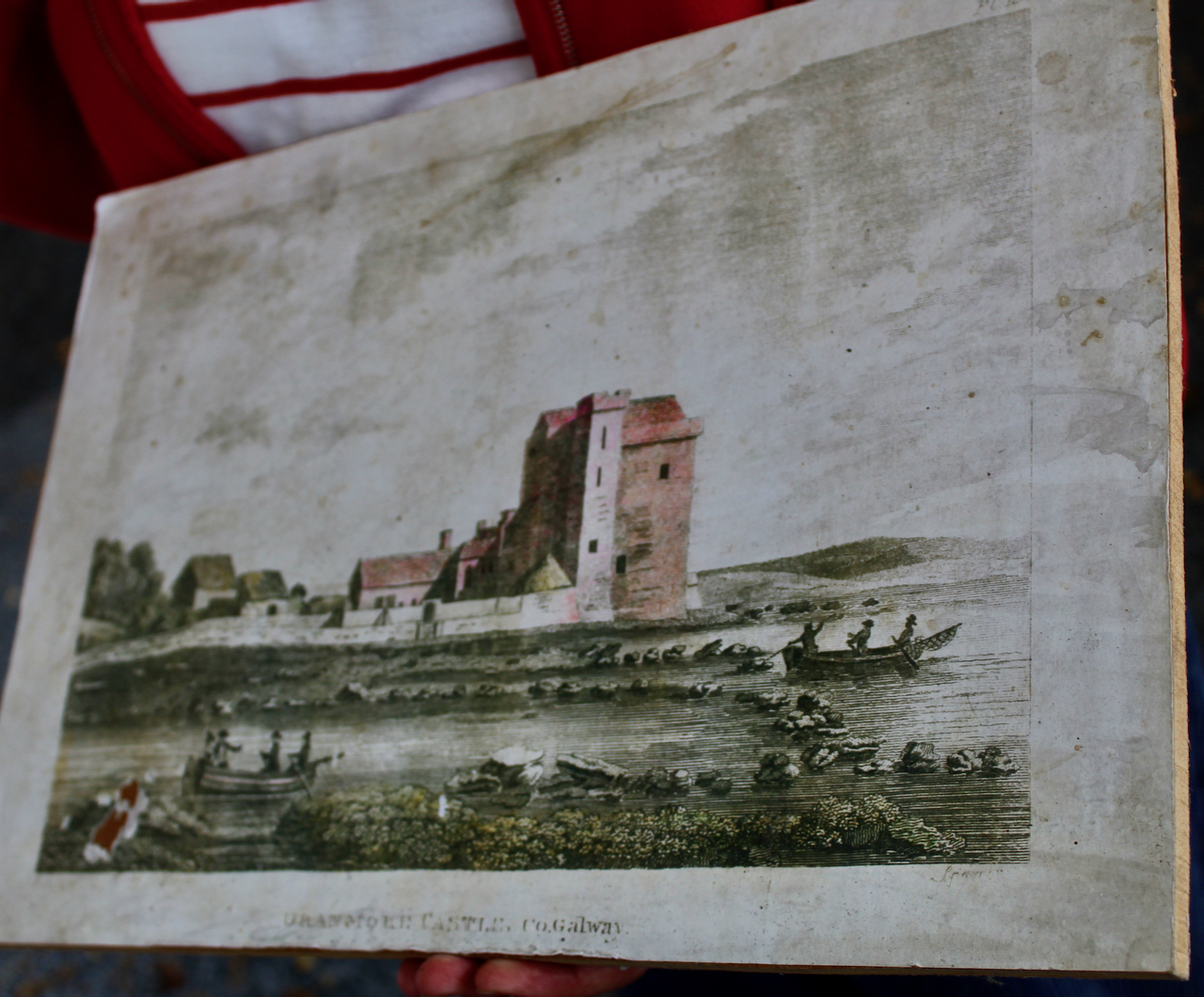
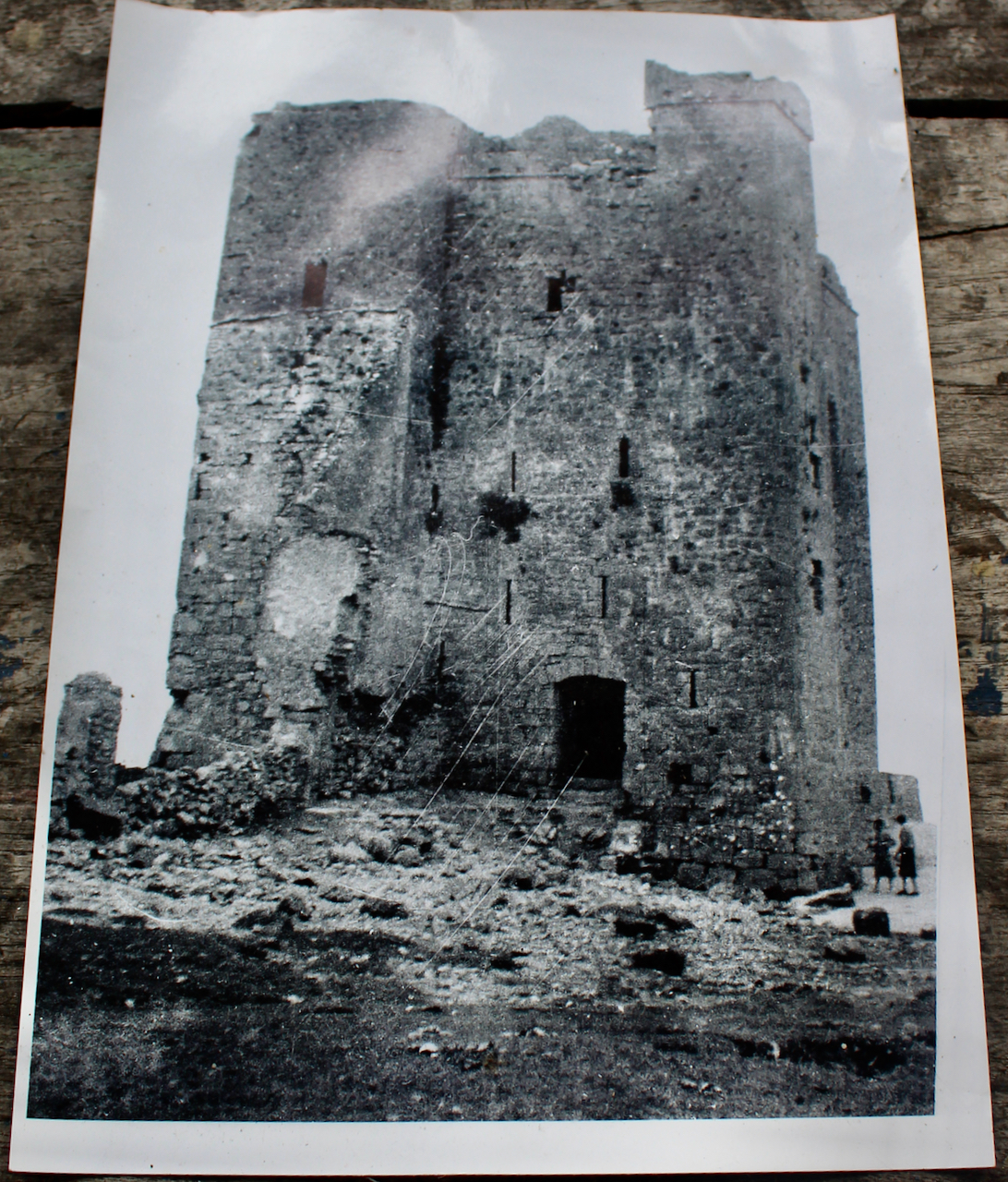
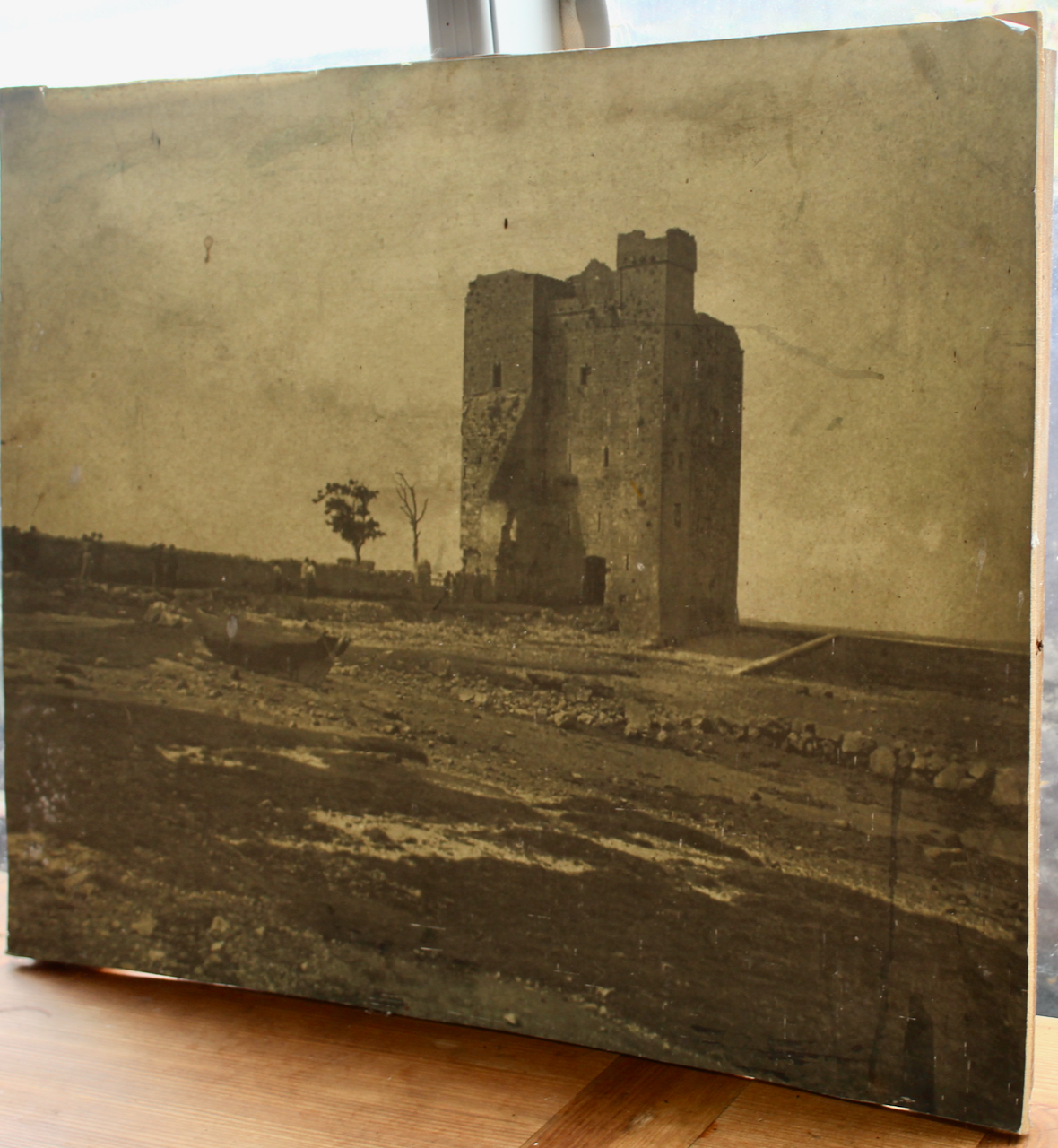
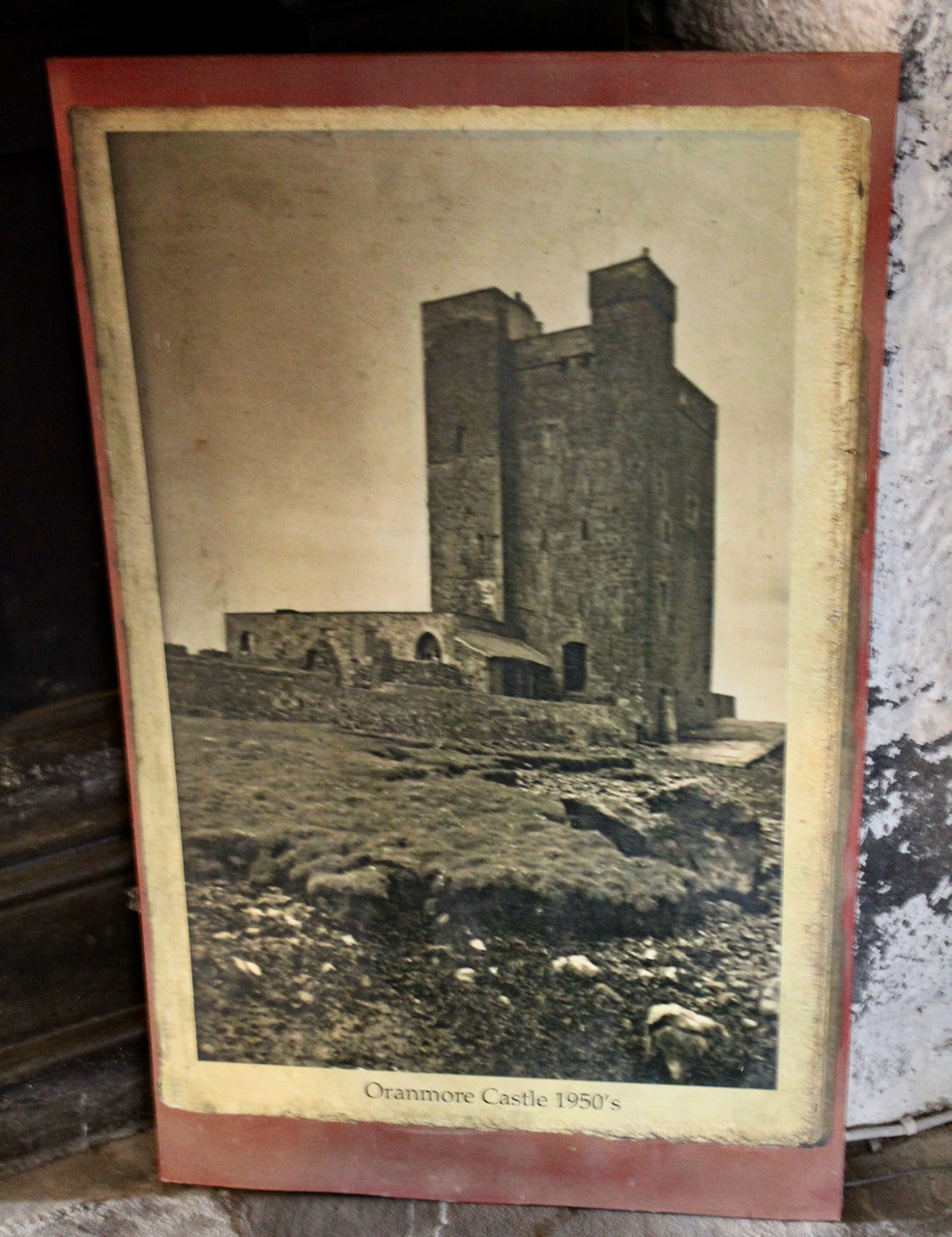
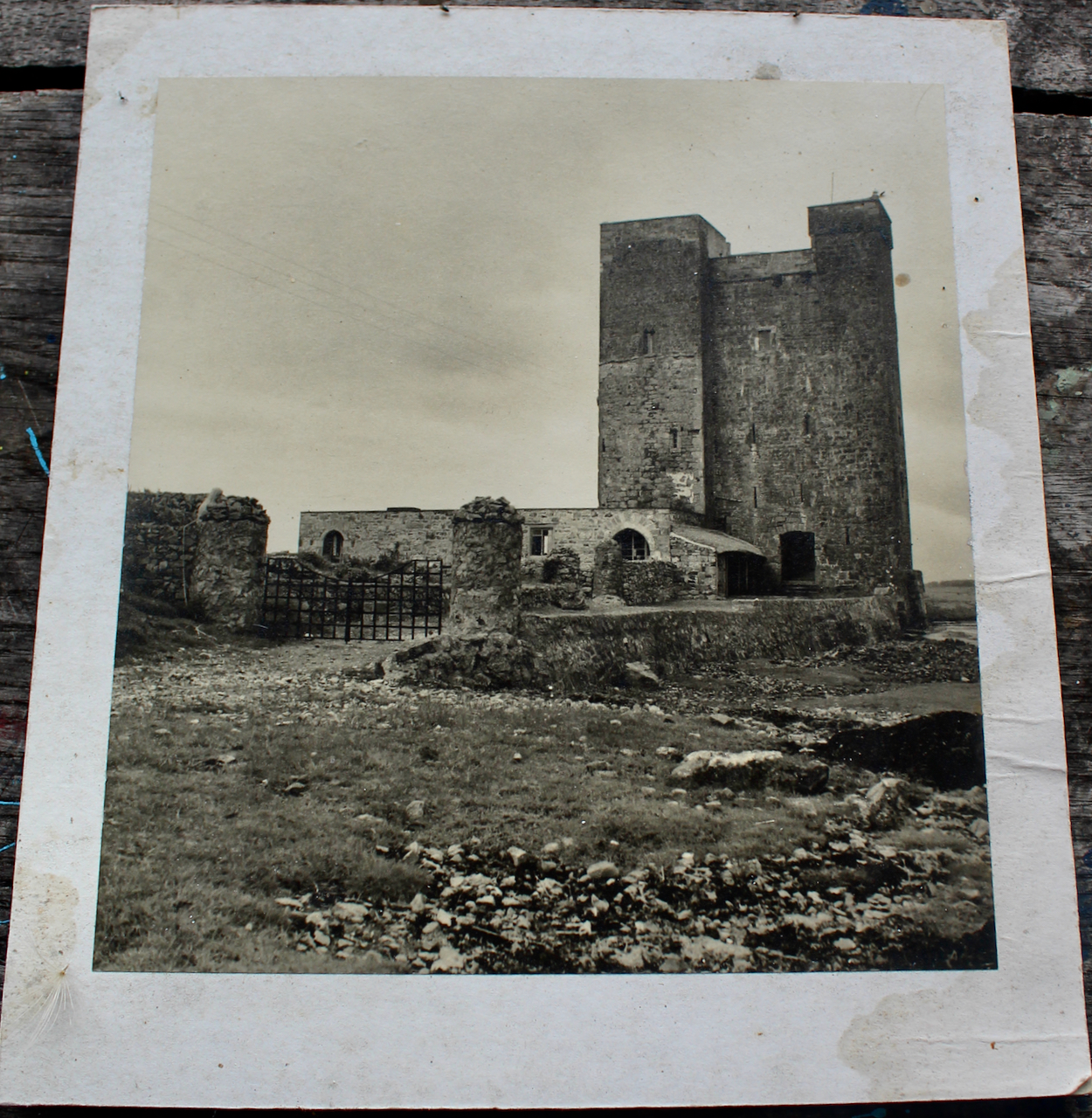
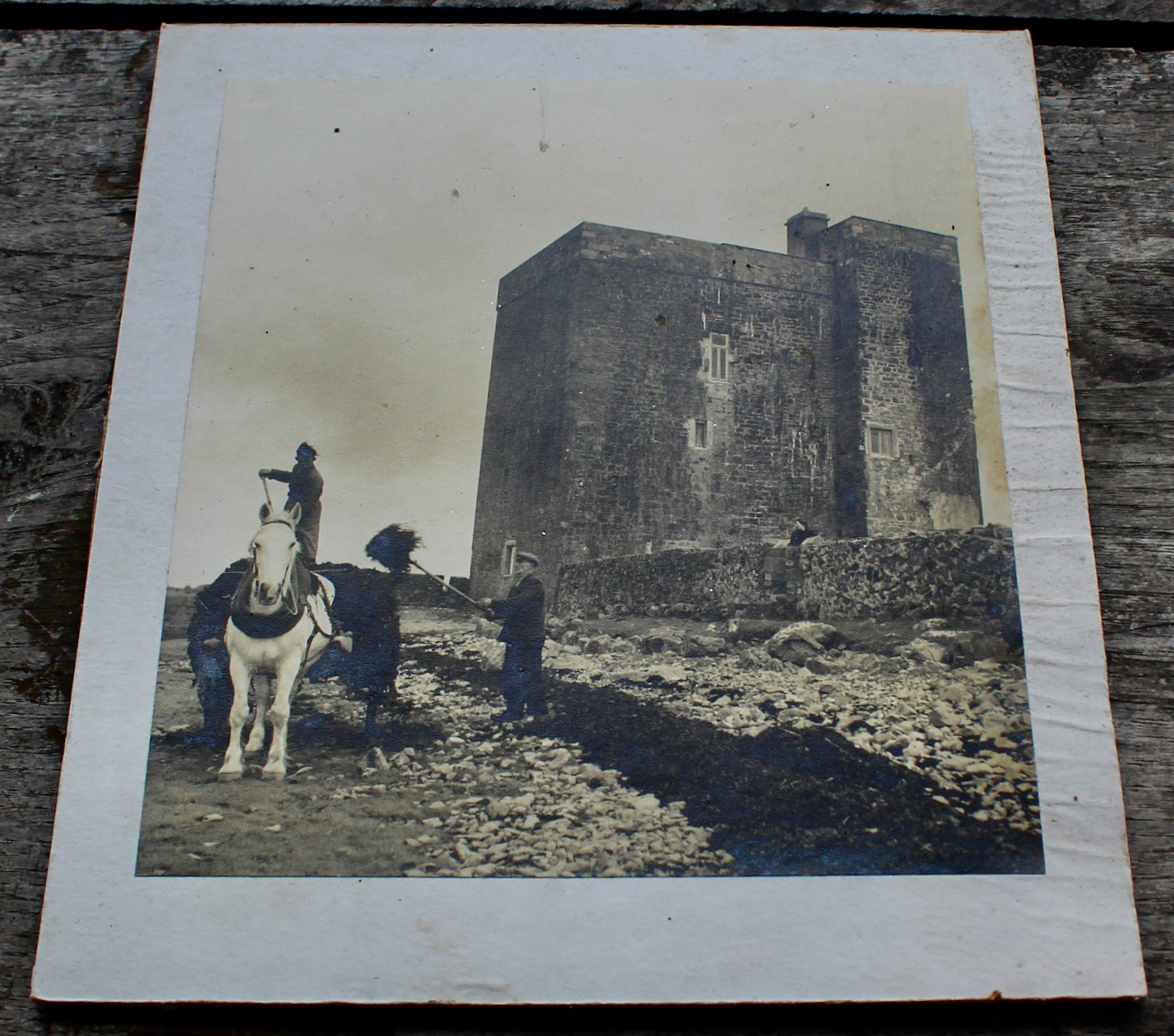
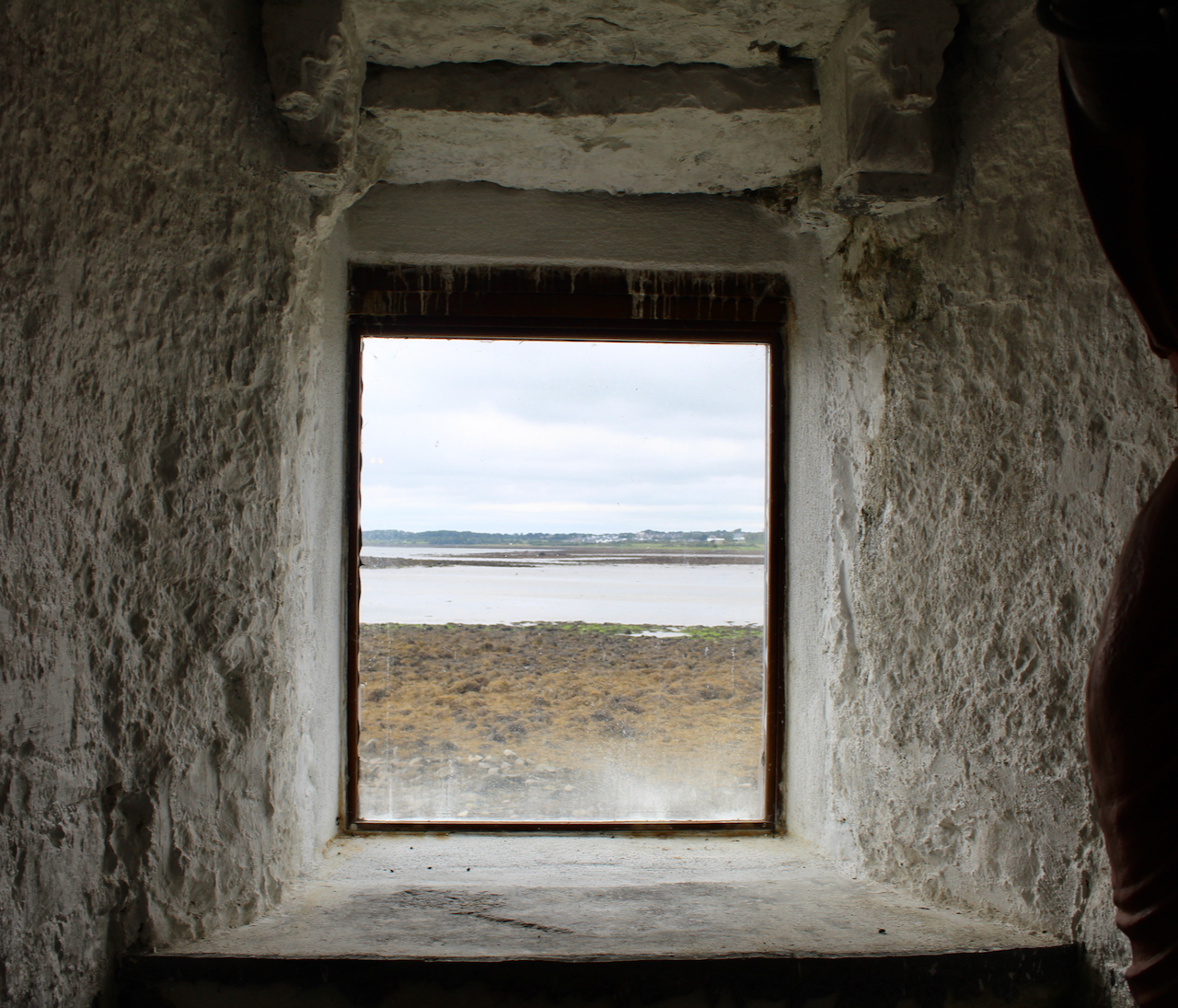
Oranmore Castle is a tall fourteenth or fifteenth century castle on the shore of Galway bay, lapped on two sides by the sea at high tide. The castle contains two very large vaulted halls, but we only saw one of them. It has four storeys, a rectangular tower house with a square staircase turret, and a great hall on the ground floor.
We visited Oranmore Castle during Heritage week in 2022. I was excited to visit it as it belongs to a daughter of Castle Leslie in County Monaghan, another section 482 property which we have visited. Anita Leslie’s mother purchased it for her. At the time of our visit it was inhabited by Anita’s daughter Leonie and her husband Alec, who has since died.
The website welcomes us: “Welcome to Oranmore Castle — an exciting experience, which brings the mystery of the old alive and an eccentricity into the new. Oranmore Castle is a wonderful experience for people of all ages. Whether you come just to take a guided tour or whether you would like to create your own special event in the castle this is certainly an experience not to be missed! This enchanting castle sparks the imagination and is perfect for artistic retreats and alternative events, wedding ceremonies, concerts and workshops.
“Just imagine getting married in the romantic and atmospheric setting of this charismatic space, certainly a day to be remembered! Run by dynamic husband and wife team Leonie (artist) and Alec Finn (noted musician of De Dannan) with a passion for the arts, the castle provides a unique, creative, welcoming and alternative space for people to reconnect with their artistic selves. Overlooking the magnificent Galway Bay, Oranmore Castle is a natural delight and will leave you feeling nourished, refreshed and inspired. Come and join in the fun and mystery or create your own history at Oranmore Castle, a place steeped in magic, tradition and eccentricity.“
The website continues: “Oranmore Castle was built sometime round the fifteenth century possibly on the site of an older castle.
“It was a stronghold of the Clanricardes who were a prominent Norman family of Galway. [The castle was recorded as being occupied by the Earl of Clanricarde in 1574]. In 1641 Galway was under the overlordship of the Marquess and fifth Earl Clanricarde. In March 1642 the town revolted and joined the Confederates with the Fort (St Augustin’s) still holding out.“
“Clanricarde placed a strong garrison in Oranmore castle, from which he provisioned the Fort of Galway from the sea until 1643 when Captain Willoughby Governor of Galway surrendered both fort and castle without the Marquess’s consent. In 1651 the castle surrendered to the Parliamentary forces.”
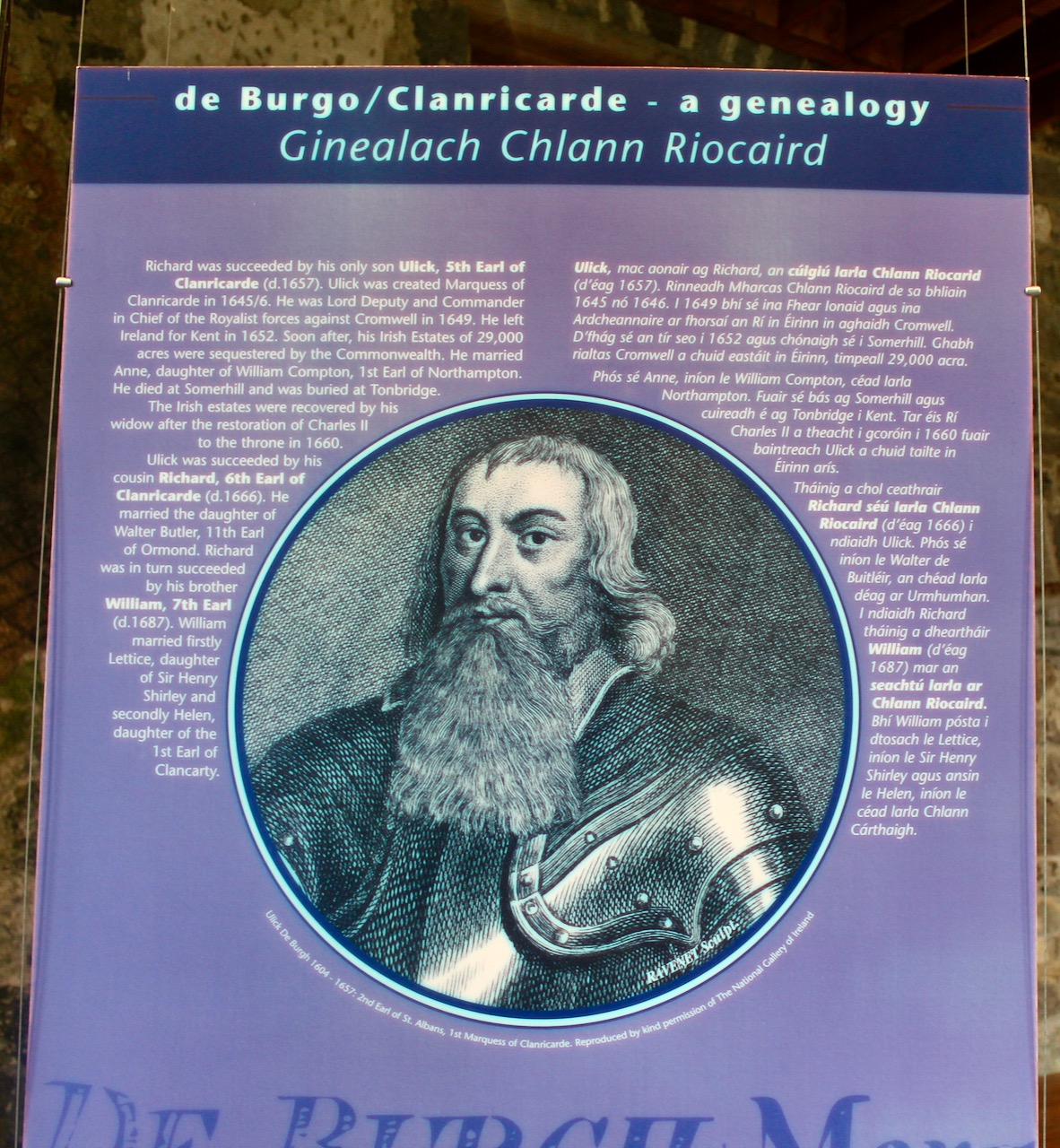
Portrait of Ulick, 5th Earl of Clanricarde (d. 1657). He was created Marquess of Clanricarde. He was Lord Deputy and Commander in Chief of Royalist forces against Cromwell in 1649. His Irish estates were lost but then recovered by his widow after the restoration of Charles II to the throne.
The 5th Earl of Clanricarde lived in Portumna Castle in County Galway. The town of Galway was held by the Confederates, who were mostly Catholic landowners. They wanted an end to anti-Catholic discrimination, and to have greater Irish self-governance. They were loyal to King Charles I, who was sympathetic to their cause. The Confederates formed their own parliament, in Kilkenny, and there was a period of Irish Catholic self-government between 1642 and 1649.
The Parliamentarians were supporters of Oliver Cromwell. Cromwell’s troops came to Ireland in 1649 to crush the alliance of the Confederates and the Royalists. Charles Coote, later 1st Earl of Mountrath, and his Parliamentarian troops fought the Confederates in Galway in 1651 and the town surrendered in 1652. The castles of both Oranmore and Claregalway were taken in 1651.
Charles Coote1st Earl of Mountrath (c.1610 –1661), 2nd Baronet, ca. 1642, before he was ennobled, Circle of William Dobson.
Hardiman’s History of Galway tells us: “The surrender [of Galway] was followed by a famine throughout the country, by which multitudes perished. This was again succeeded by a plague, which carried off thousands both in the town and the surrounding districts; so that the severest vengeance of heaven seemed now to have been poured down on the heads of this devoted community. Many, driven to despair by the severities inflicted upon them, instead of avoiding the pestilence, sought refuge in death from their merciless persecutors. This dreadful visitation continued for two years, during which upwards of one-third of the population of the province was swept away, and those who survived were doomed to undergo sufferings to which even death itself was preferable. Col. Stubbers, who was appointed military governor of the town upon its surrender, under pretence of taking up vagrants and idle persons, made frequent nightly excursions, with armed troops into the country, and seized upwards of a thousand people, often without discrimination of rank or condition, whom he transported to the West Indies, and there had sold as slaves.” [1]
The castle was restored to Richard Burke (c. 1610-1666), 6th Earl of Clanricarde in 1662 after King Charles II came to the throne. Many Catholics and Confederates were restored to their land after the restoration of the monarchy in 1661.
The website continues: “In 1666 he leased the castle to Walter Athy. Mary, Walter’s daughter married secondly [her first husband, a Mr. French, had died] Walter Blake [c. 1670-1740] of Drumacrina Co Mayo, and her descendants by that marriage held Oranmore until 1853, when the estates of Walter Blake were sold to the Encumbered Estates Court.“
Mary and Walter had a son, the exotically named Xaverius J. A. Blake. Their daughter Anne married Patrick D’Arcy of Kiltullagh, County Galway (now a ruin, unfortunately). The Blake family built a large house against the south side of the castle, but this was later demolished.
Oranmore Castle.
Xaverius (d. 1768) married a daughter of Charles Daly of Callow, County Galway, and had at least two sons, Walter (d. 1757) and Andrew (d. 1770). Walter married Bridget Daly, daughter of Denis Daly of Raford, County Galway (the house now at Raford, built by Francis Bindon, was built after they married but still stands, a beautiful three storey over basement house. It was advertised for sale in 2009). The other son, Andrew, died without any children. [2]
Walter Blake (d. 1757) and Bridget had a son, Xaverius (1752-1784). The Peerage website tell us that on his majority, Xaverius entered into possession of a rent-roll of £5,500 a year, together with £100,000 in ready money which had accumulated during his 16 year minority. With his wife he embarked on a career of such extravagance that by his death the greater part of the inheritance had been dissipated. He lived at Dunmacrina (or is it Drumacrina?), County Mayo, Ireland, and at Oranmore Castle. He married Isabella Knox, heiress to the Knox diamonds. Her father John Knox went by the nickname “Diamond” Knox, and he lived in Castlerea, County Roscommon. He was called “Diamond” Knox because of the large dowry which he gave his daughter Isabella, along with a large suite of diamonds, David Hicks tells us. [3] Diamond Knox marred Anne King, daughter of Henry King of Rockingham, County Roscommon. Upon Xaverius’s death there followed by lengthy litigation regarding the ownership of the Knox Diamonds, which was not settled until nearly a century later.
Isabella married again after Xaverius died, to Andrew Blake of Castlegrove, County Galway (the house is now a ruin).
Xaverius and Isabella had several children. Their son Walter Arthur Blake (d. 1836) lived at Drumacrina and Oranmore. He fought in the Irish Rebellion in 1798, for which he raised, equipped and maintained at his own expense a corps of Yeomen Cavalry in the King’s service. He held the office of Justice of the Peace. He married Mary Butler of County Clare, and they had a son, another Xaverius (d. 1838).
The Landed Estates database tells us that in 1786 Wilson mentions Oranmore as the seat of Denis Blake. He was a brother of Xaverius (1752-1784). In 1814 and again in 1837 Oranmore Castle is recorded as the seat of Walter Blake. At the time of Griffith’s Valuation he was leasing a property, valued at £10, in Oranmore townland, to Martin Grady. [4]
Xaverius (d. 1838) married Ellis Ussher, daughter of Christopher Ussher of Eastwell, County Galway. It was their son, Walter Augustus Blake (d. 1858) who sold Oranmore Castle to pay his debts in 1853.
The Landed Estates database tells us that Pádraig Lane writes that Walter Blake sold “Oran Castle” to James Dillon Meldon, a Dublin lawyer. [5] The Stillorgan History website tells us that James (1803-1883) was an agent to the Commission of Bankruptcy, with chambers at 16 Upper Ormond Quay and a solicitor of Casino, Milltown/Dundrum and Glencorrib, Mayo. He married Bedelia Louisa Ingram, daughter of John Ingham, Solicitor of Johnville, Cavan. He purchased land in Belmont near Tuam and restored it to the former tenants. He advanced them with money for farm implements, seed and horses with the help of his agent Thomas Jackson. He was a generous supporter of Dublin charities and he worked pro bono for the Sick and Indigent hotel and Inn keepers charity. Their town house was 16 Fitzwilliam street and by 1873 they were at 24 Merrion Square. [6] This website doesn’t mention his ownership of Oranmore.
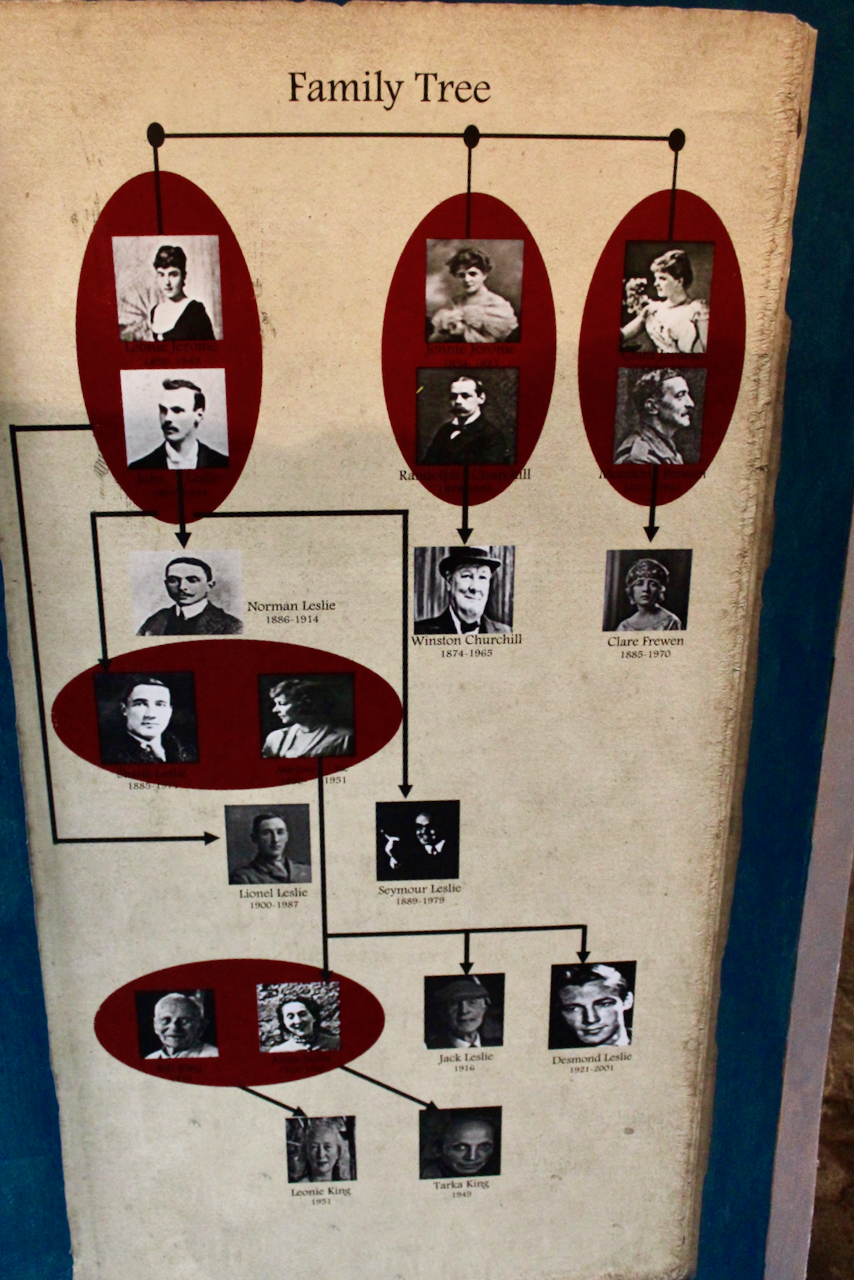
The website continues: “This house was left in ruins when the Blake family left Oranmore and the castle was un-roofed until 1947 when it was bought by LadyLeslie, a cousin of Churchill and wife of Sir Shane Leslie the writer.“
We came across Shane Leslie (1885-1971), 3rd Baronet of Glaslough, County Monaghan and his wife Marjorie Ide in Castle Leslie, see my entry. [7]
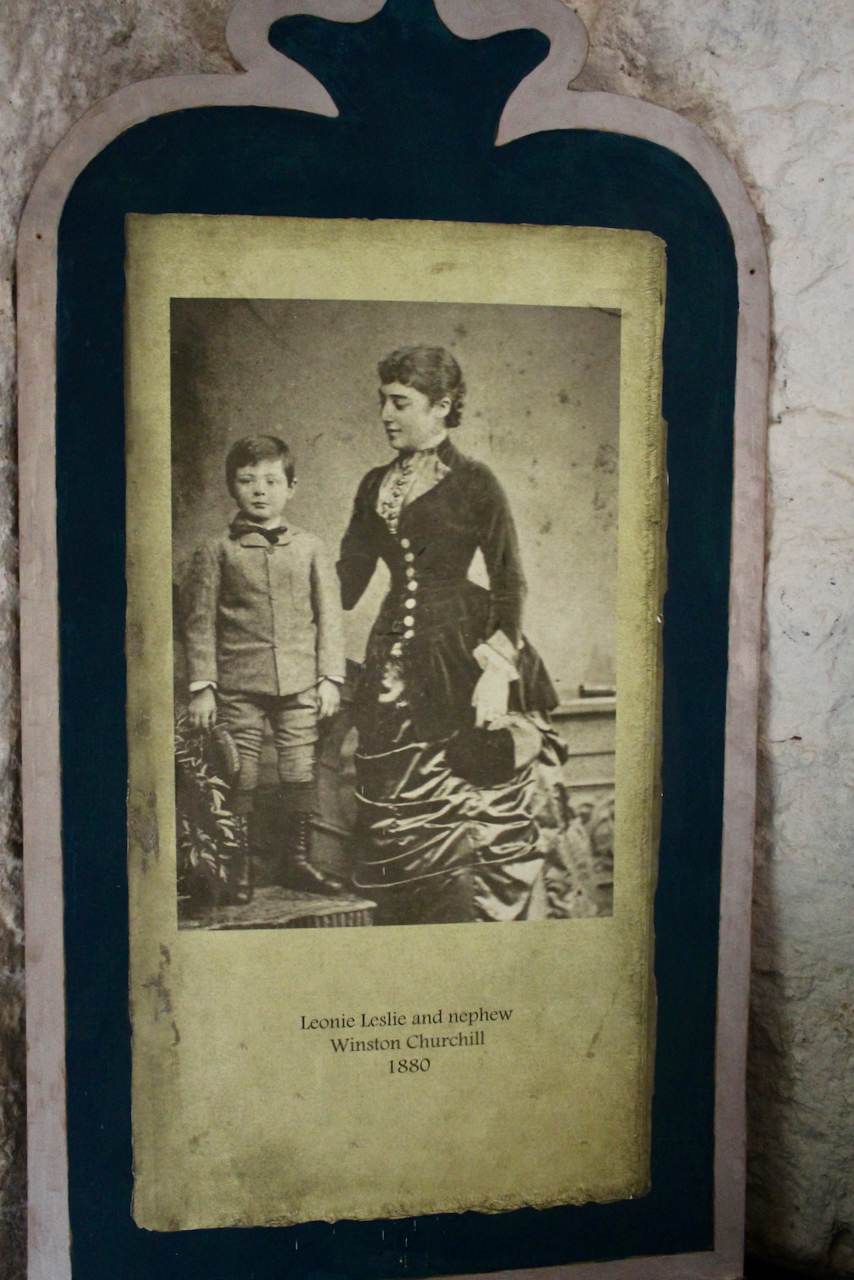
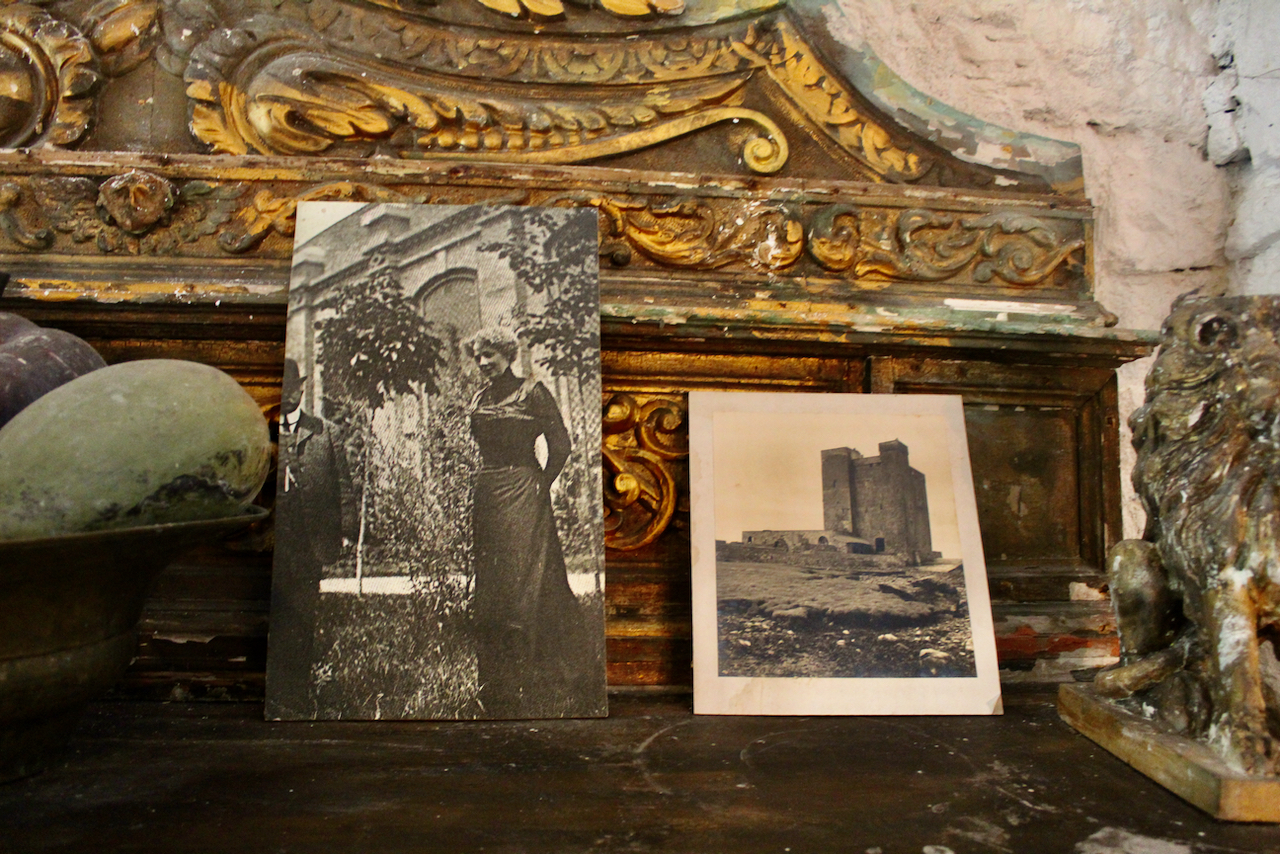
In Oranmore Castle, August 2022.Leonie Leslie, Shane Leslie’s mother.Originally Leonie Jerome, her sister Jennie was Winston Churchill’s mother.The Castle must have looked like this when Lady Leslie purchased it.The castle when the original Blake house had been demolished.
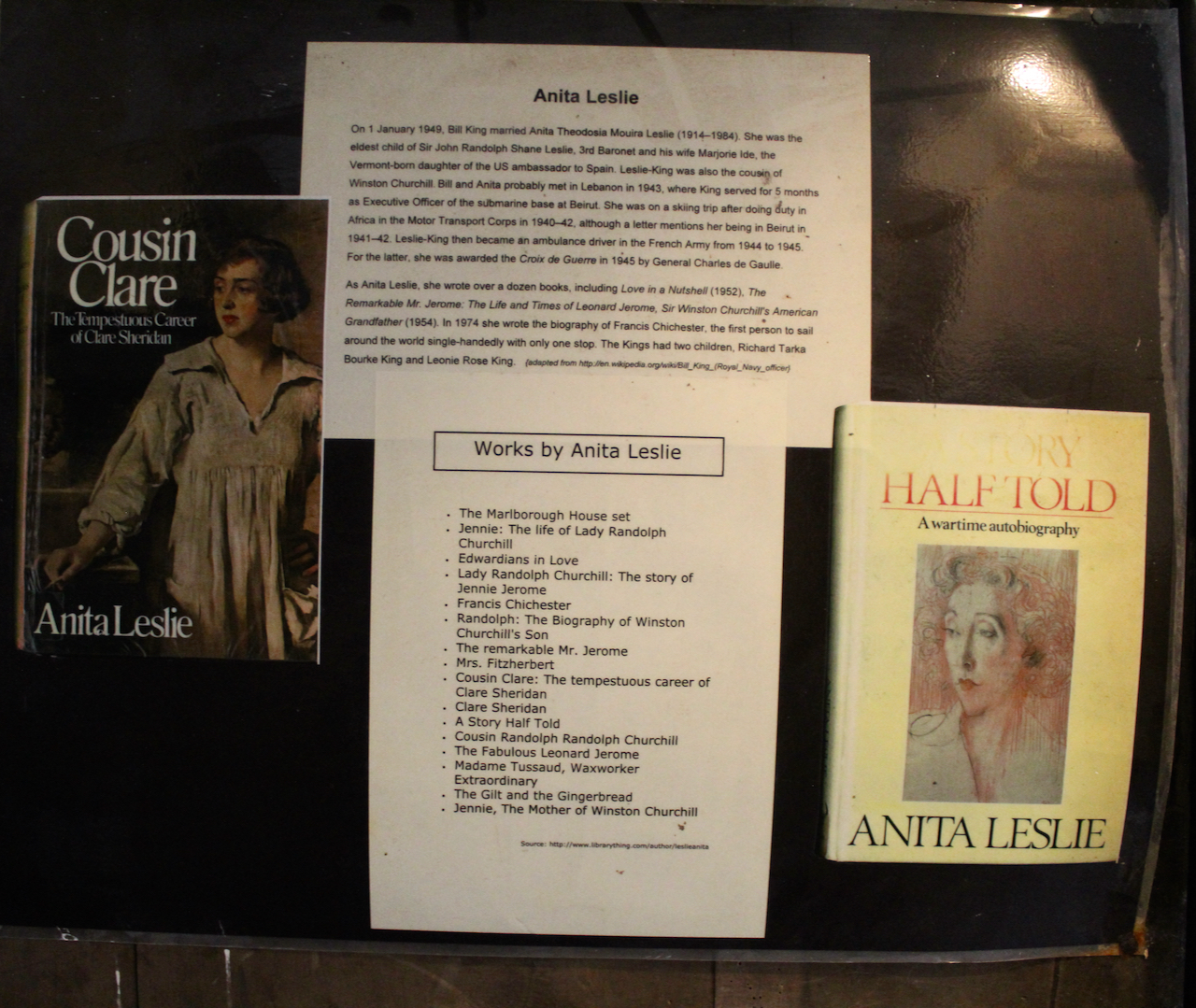
Lady Leslie purchased the property for her daughter, Anita – whom we also came across in Castle Leslie.
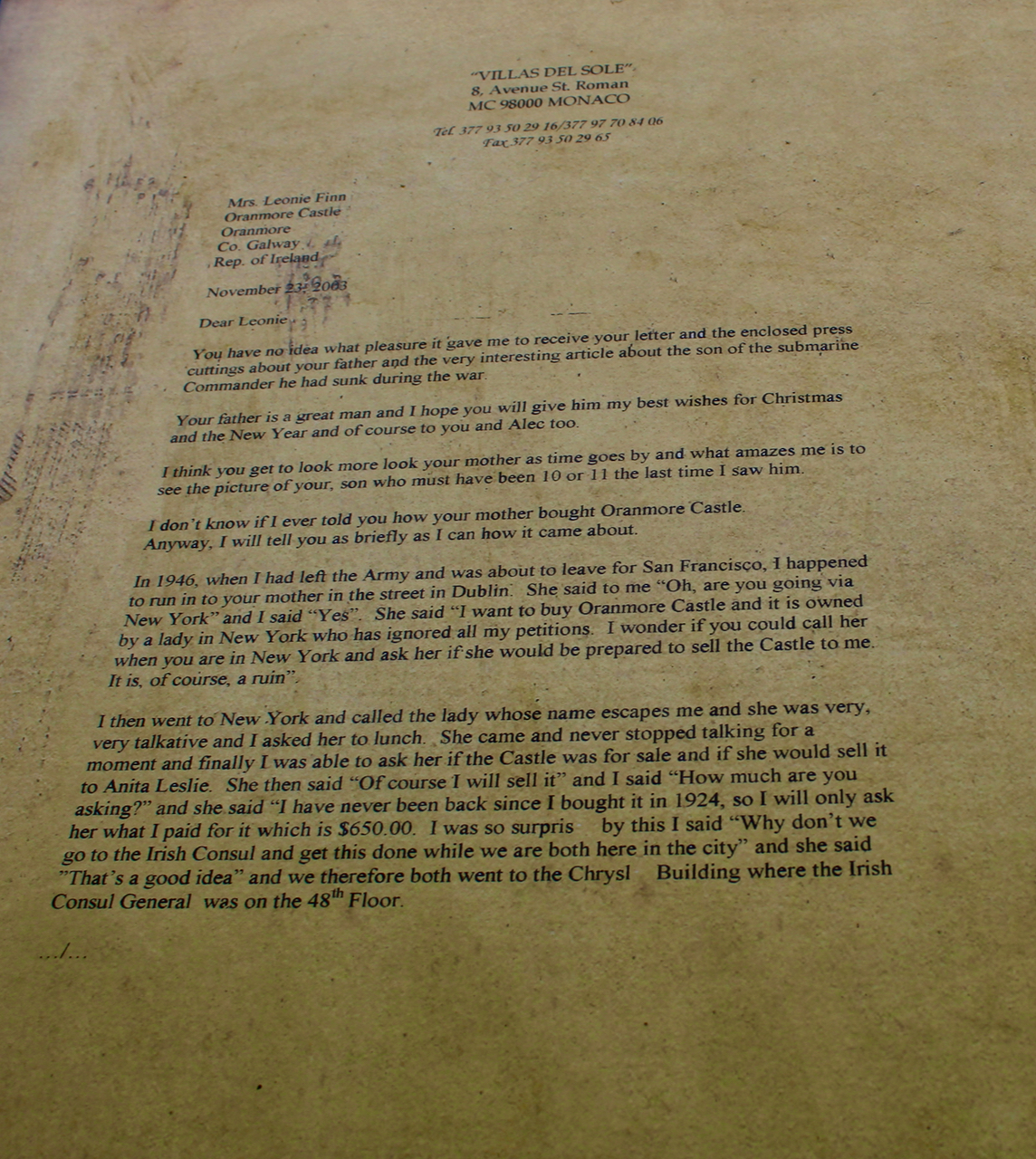
The tour guide showed us a copy of a letter which was sent to Leonie telling the story about how her mother purchased the castle. She must have been quite a character, the purchase seems quite impulsive! A leaflet from Oranmore tells us that Leonie Leslie was travelling around the west coast of Ireland with her friend Oliver St. John Gogarty. He had persuaded another American woman, Mrs Watson, to buy the castle from the Land Commission. Leonie Leslie then purchased it from Mrs Watson.
In Oranmore Castle, August 2022.Oranmore Castle.
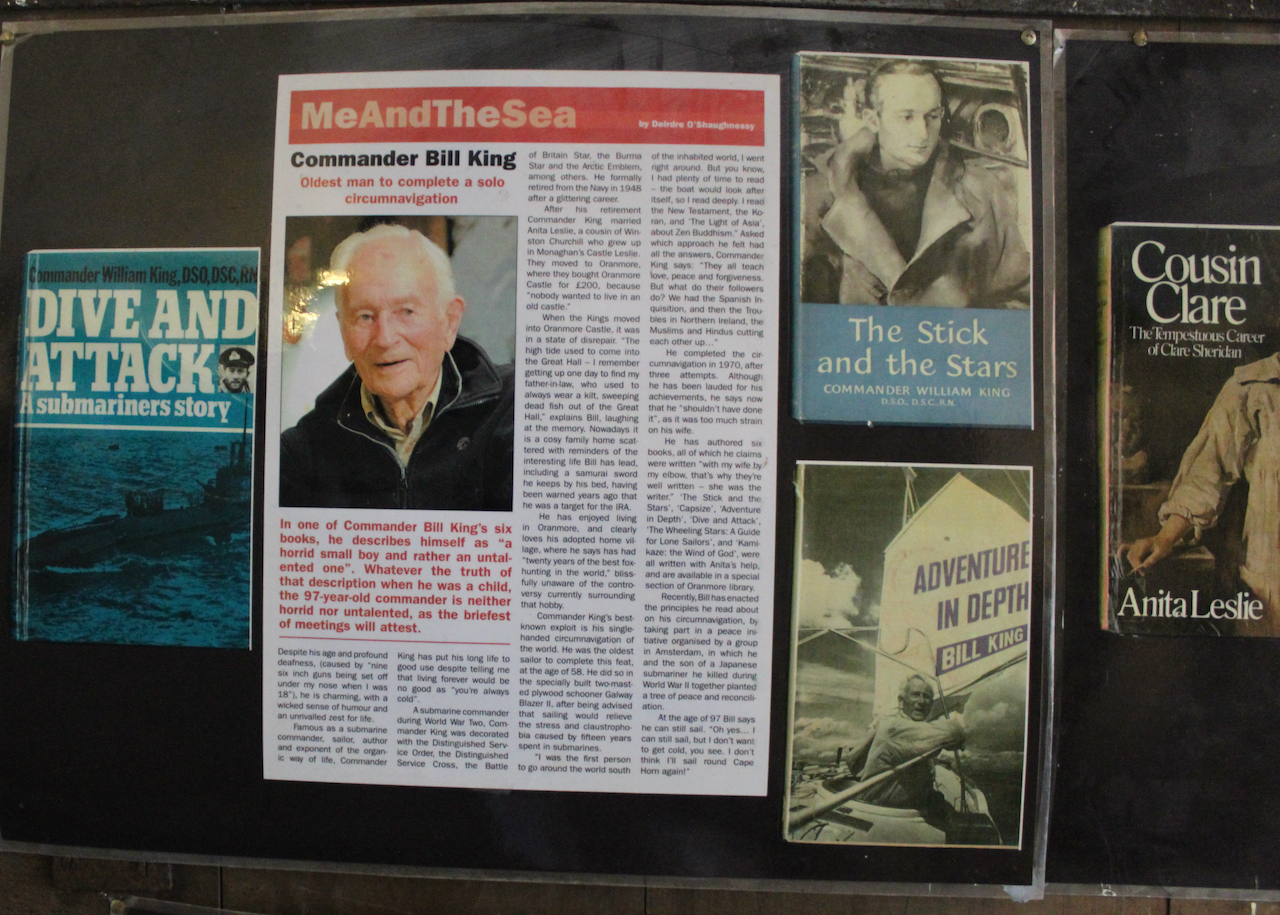
Anita Leslie had a very interesting life. She was an ambulance driver for five years in Egypt, Italy and France. She had been married first to a soldier from Russia, who had tried to save the Romanov family (see my entry for Castle Leslie). Secondly she married Bill King.
In Oranmore Castle, August 2022.Oranmore Castle.
The website tells us that Lady Leslie re-roofed the castle and gave it to her daughter. She was certainly brave to take on such a dilapidated tower house! A cousin of Shane Leslie, Clare Sheridan, purchased the Spanish Arch in Galway around the same time. Lady Leslie discussed designing a roof for the castle with the County Engineer. Eventually he drew up plans for a cement roof, to be covered in asphalt.
Commander Bill King.Bill King as a child, sent to Naval college at just twelve years old, our guide told us.In Oranmore Castle, August 2022.In Oranmore Castle, August 2022.Oranmore Castle.
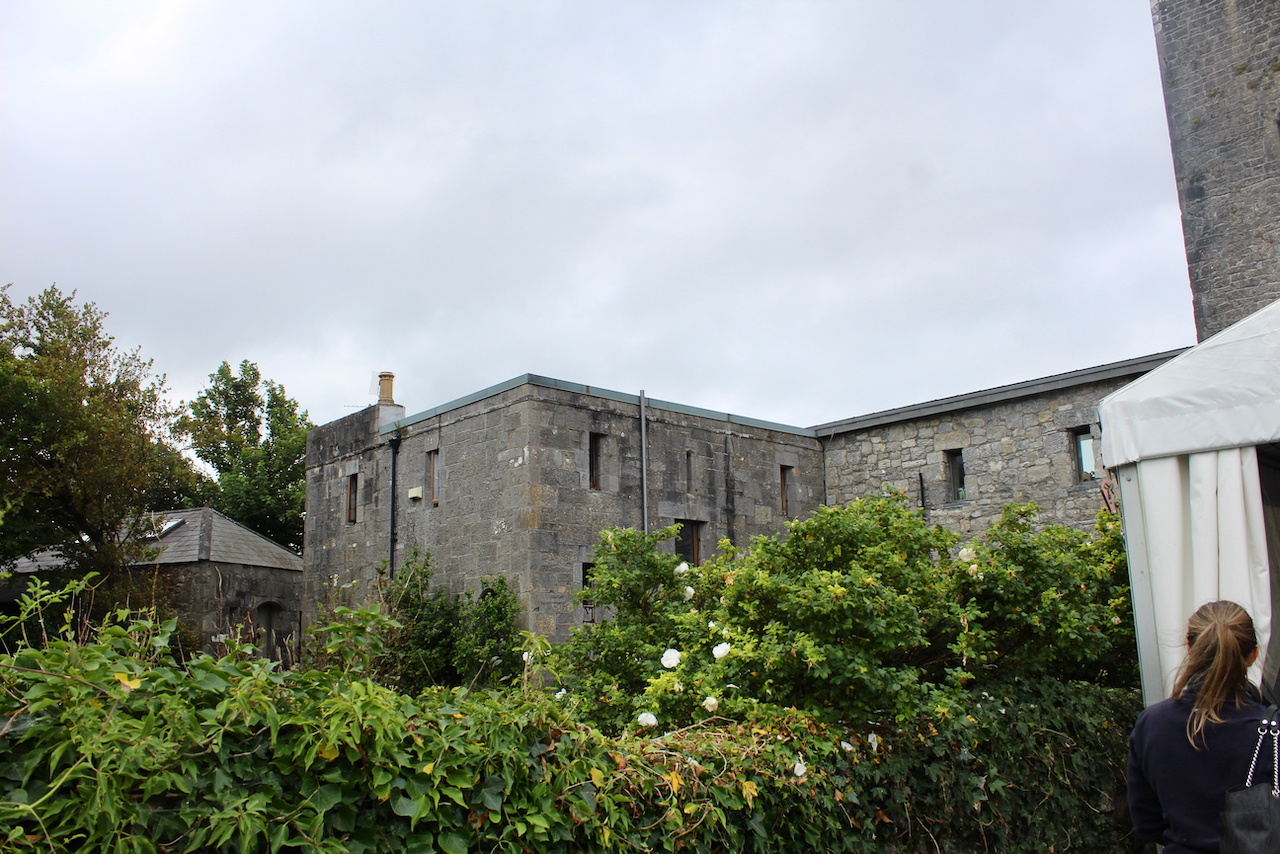
The website tells us that between 1950 and 1960, Anita and her husband, Cmdr Bill King (also a writer who sailed solo around the world in 1970) added a two storey wing joined to the castle by a single storey range. A nursery and bathroom was first added when a baby was born. Ten years later, stone from a small Protestant church which was being demolished was purchased and used to build the second small tower, with the help of Michael Richardson. At the time of our visit, the castle was occupied by artist Leonie King (daughter of Anita Leslie and Bill King) and her husband Alec Finn of the music band De Danaan.
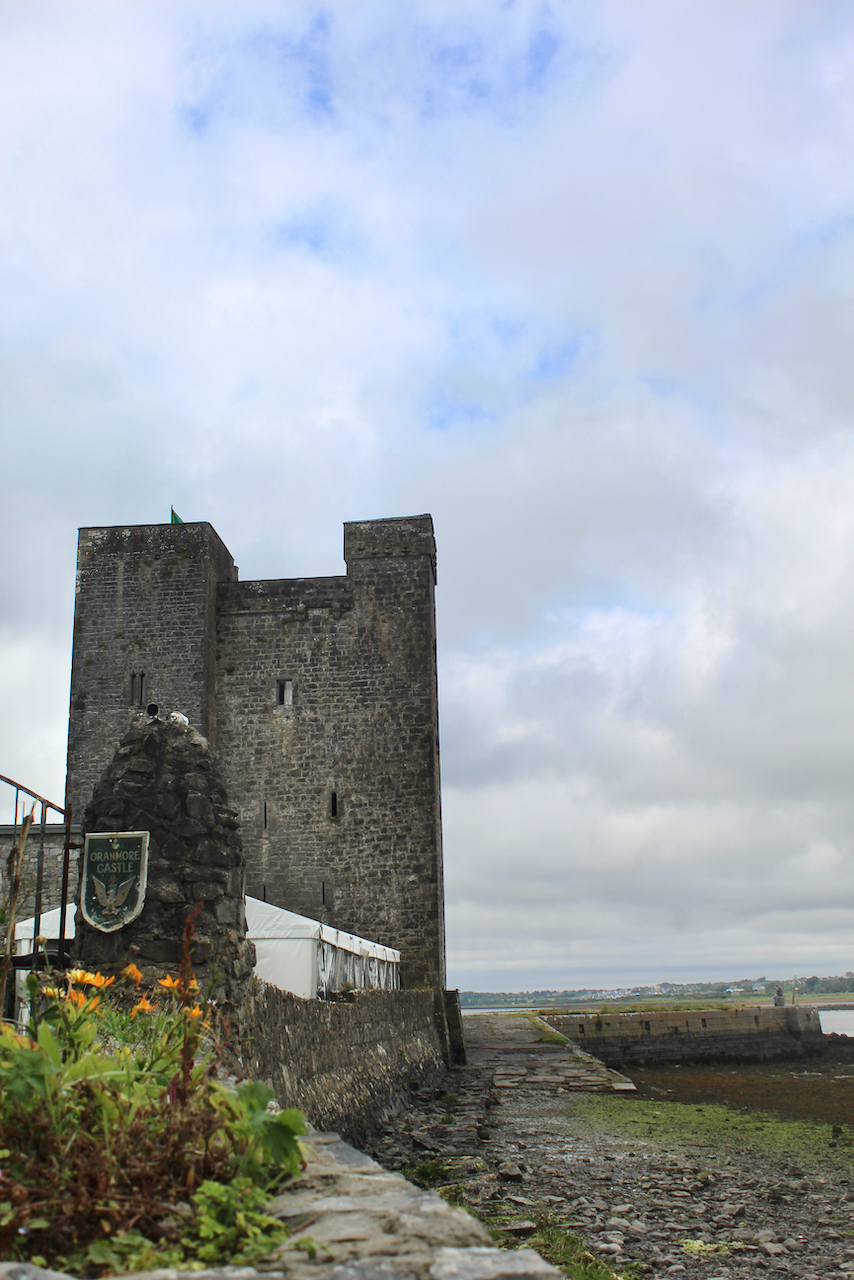
In Oranmore Castle, August 2022.In Oranmore Castle, August 2022.Oranmore Castle taken from the side facing the sea.
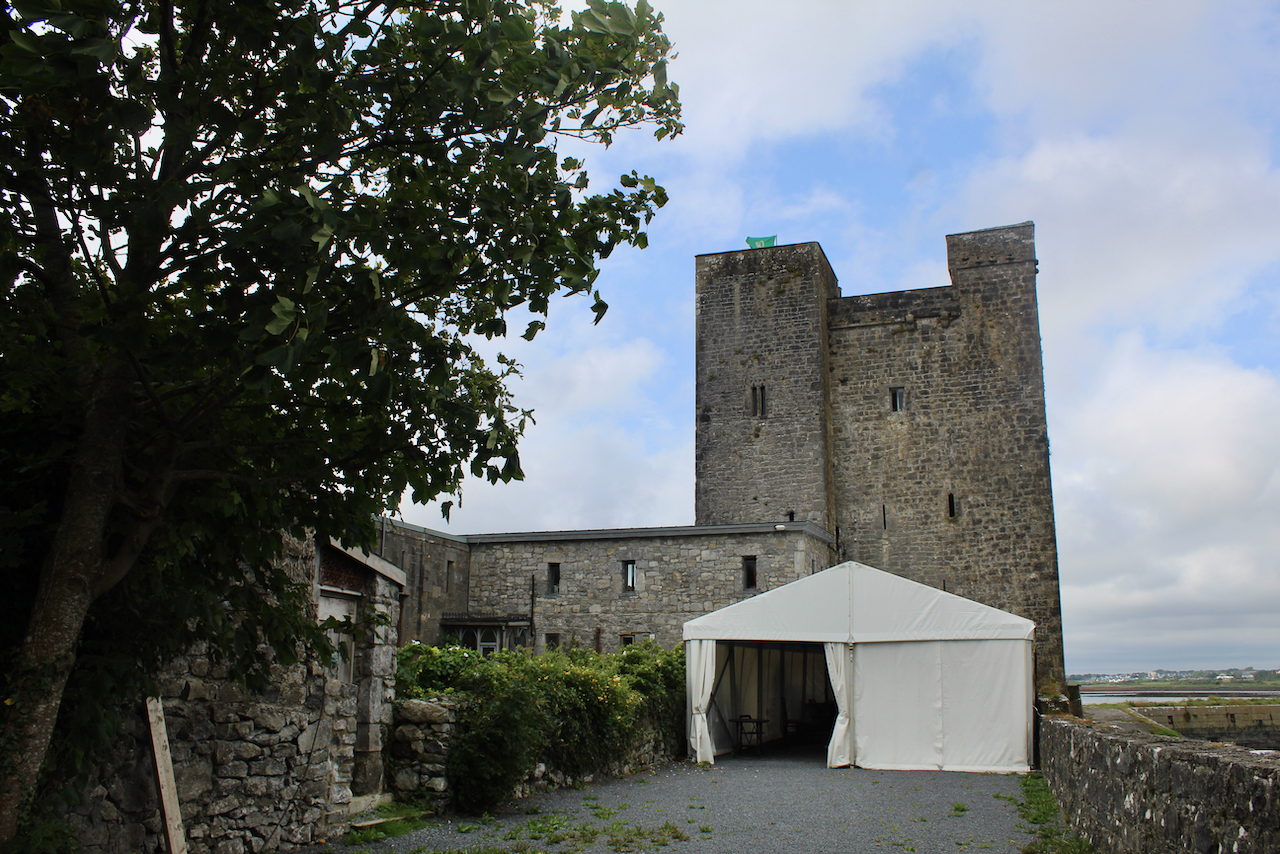
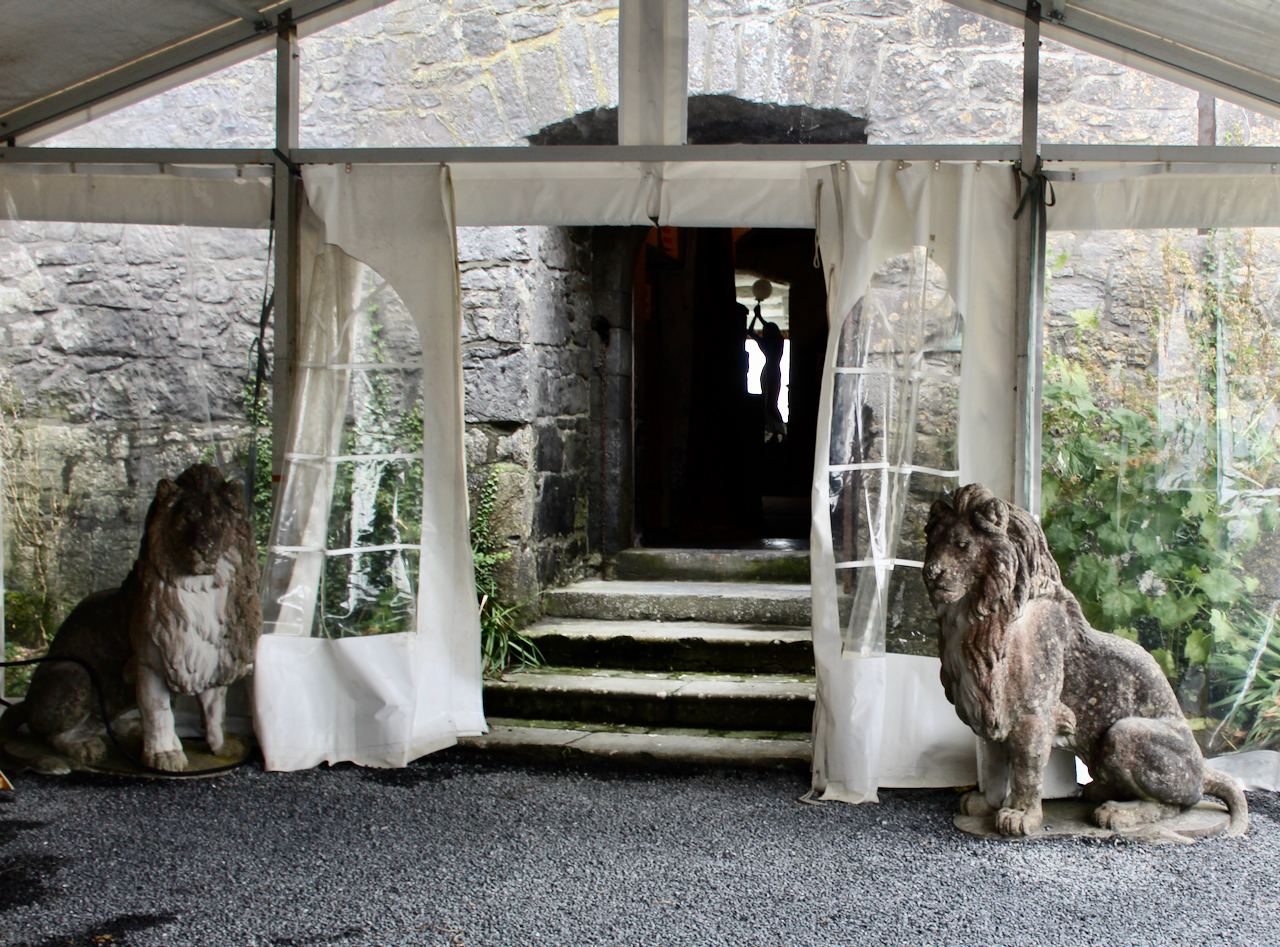
There was a marquis attached to the front of the castle for a Heritage Week event.
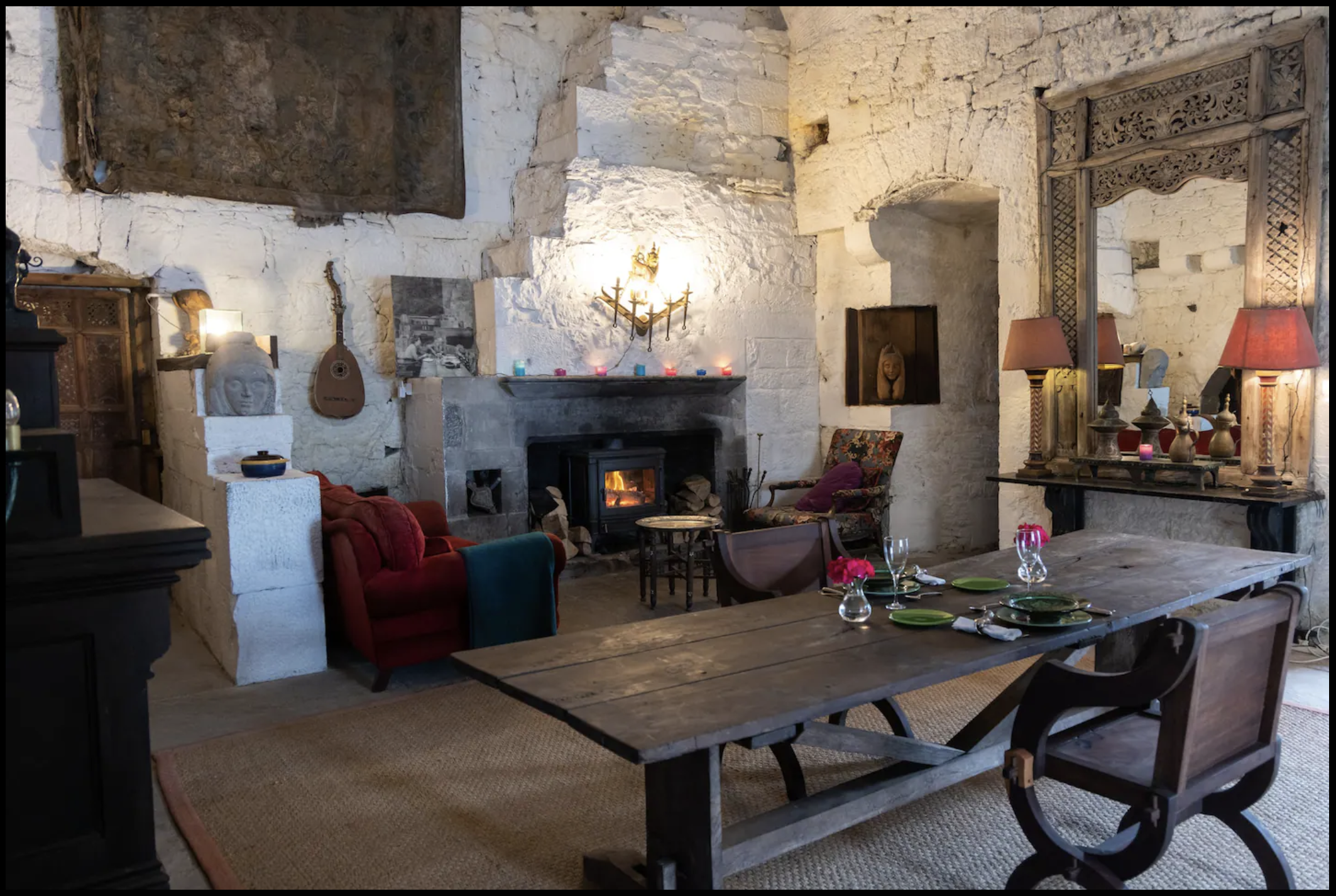
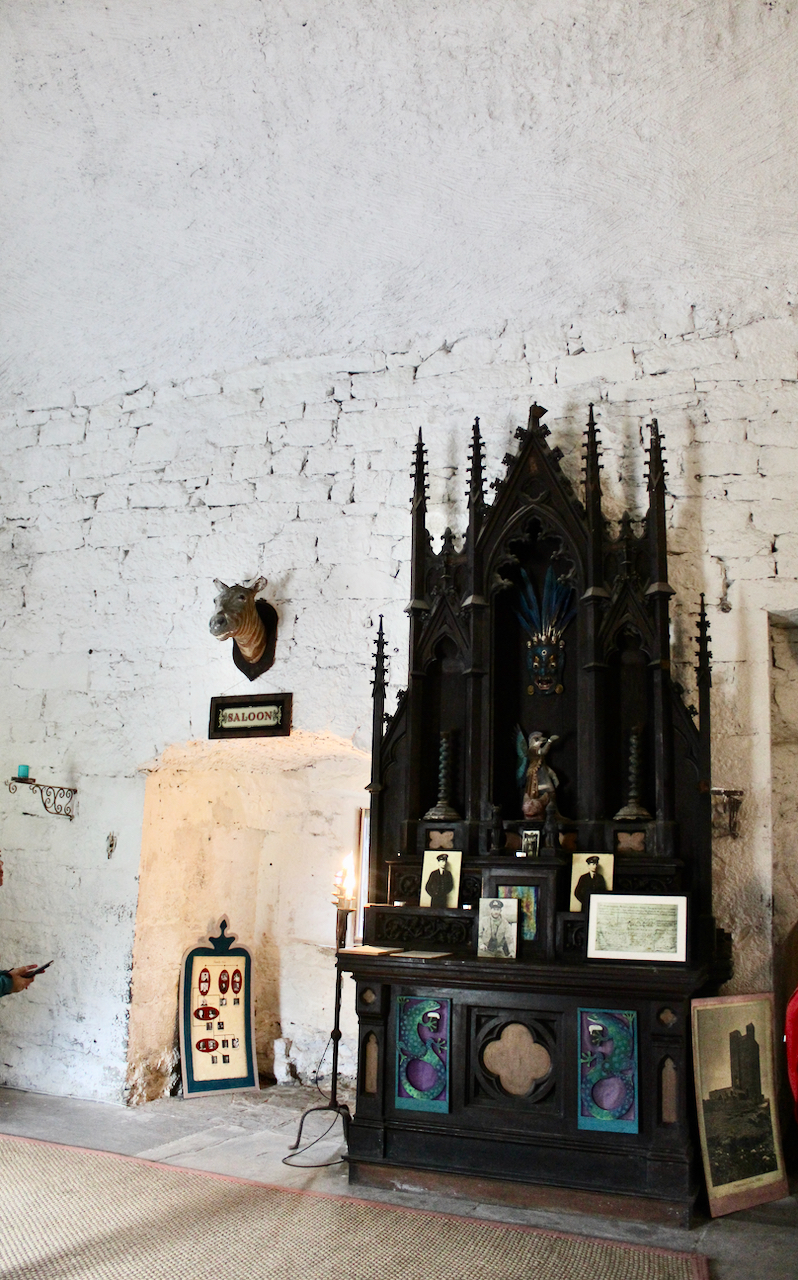
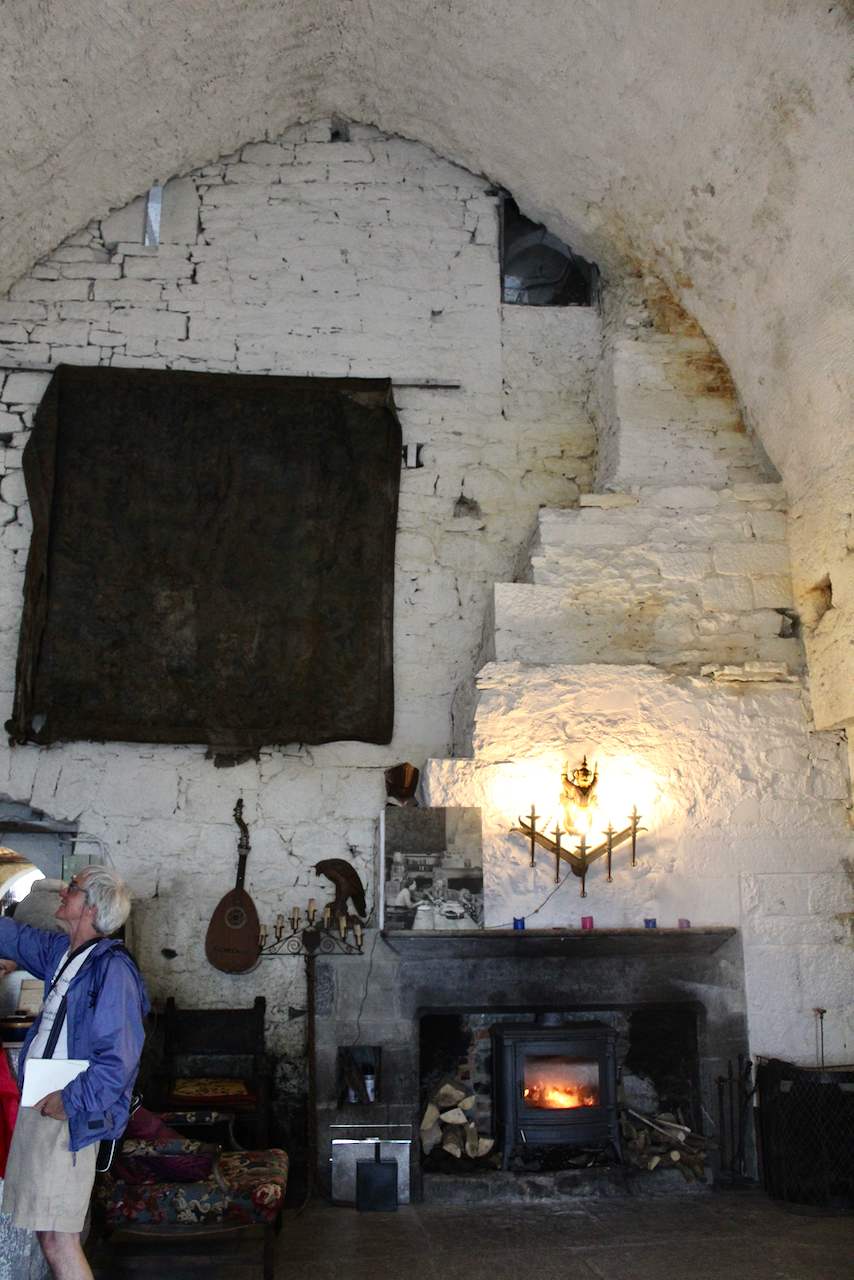
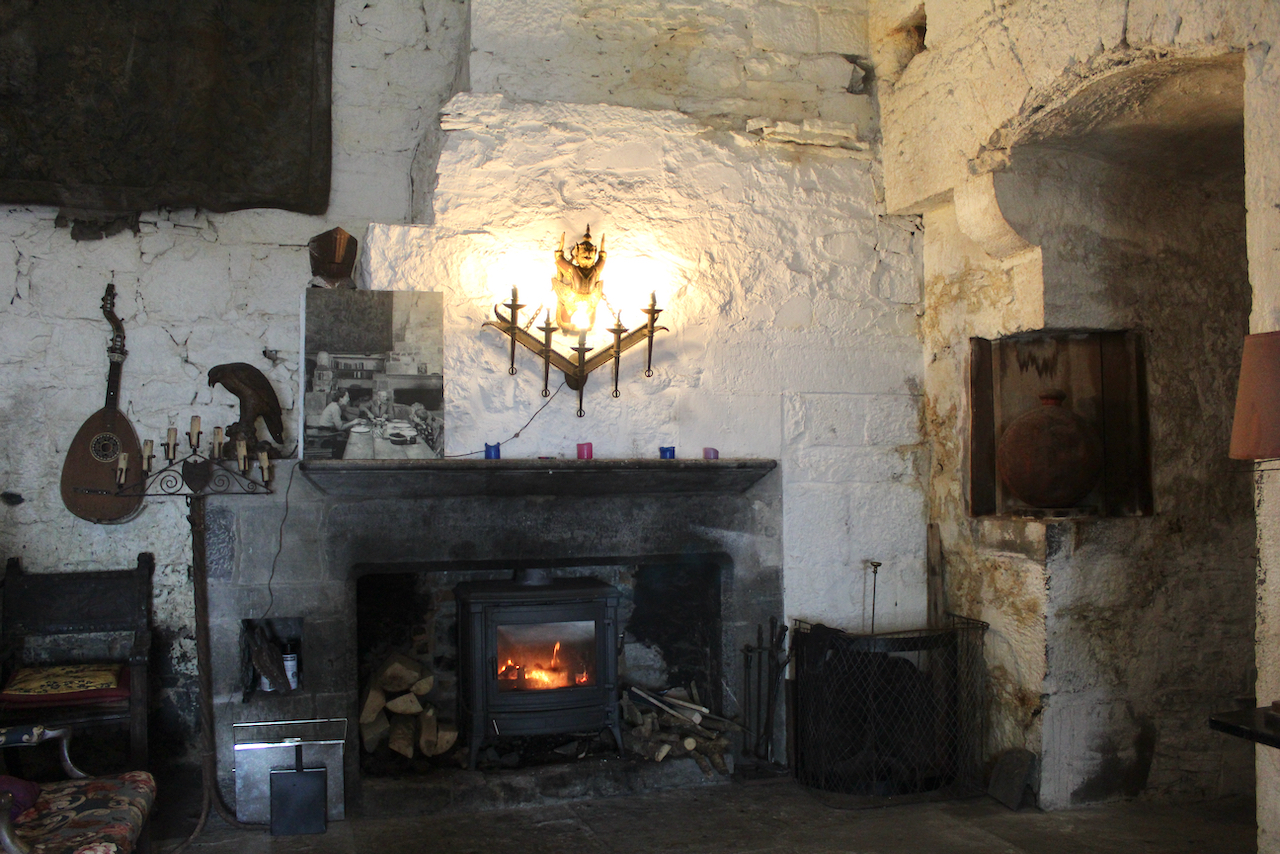
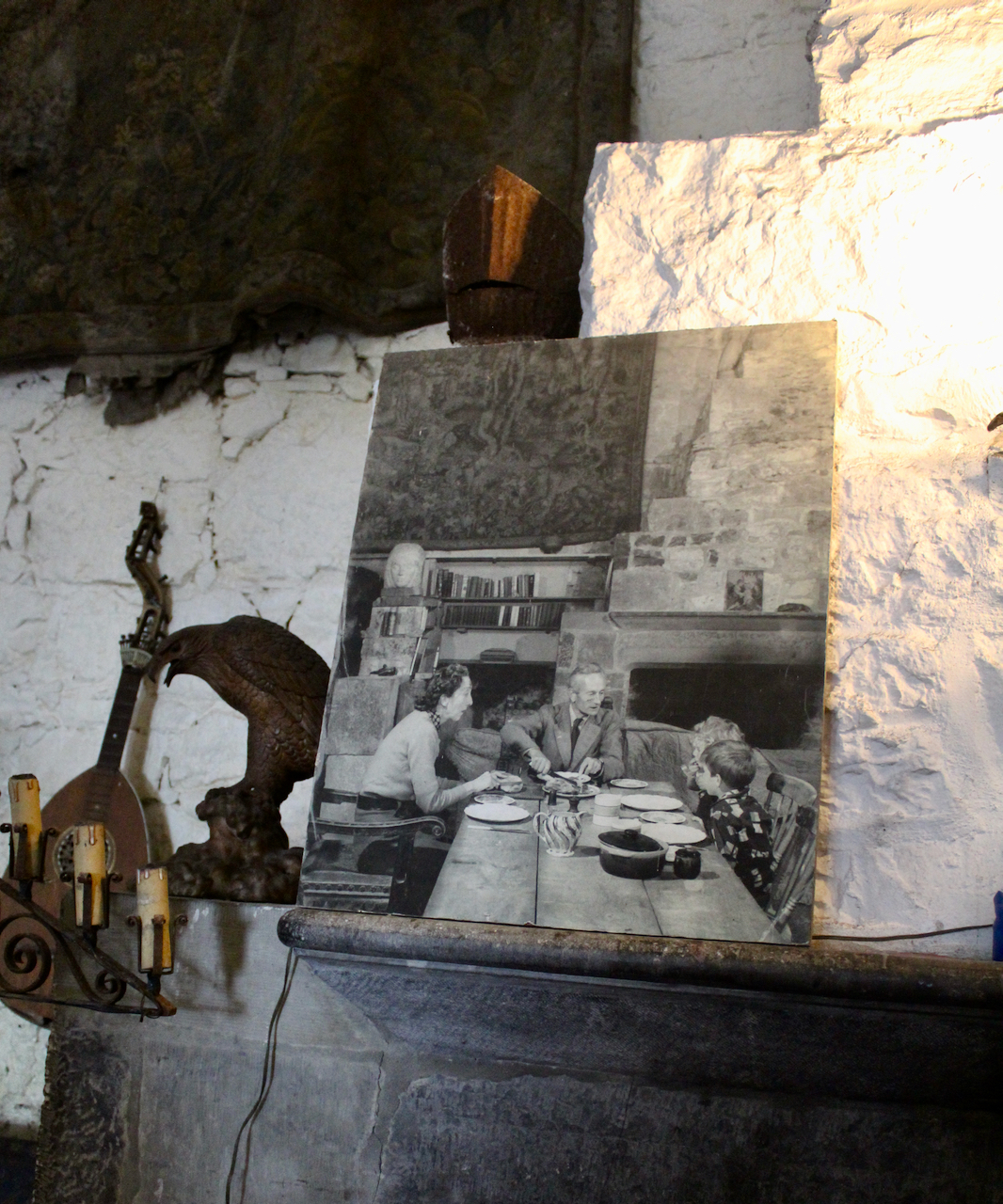
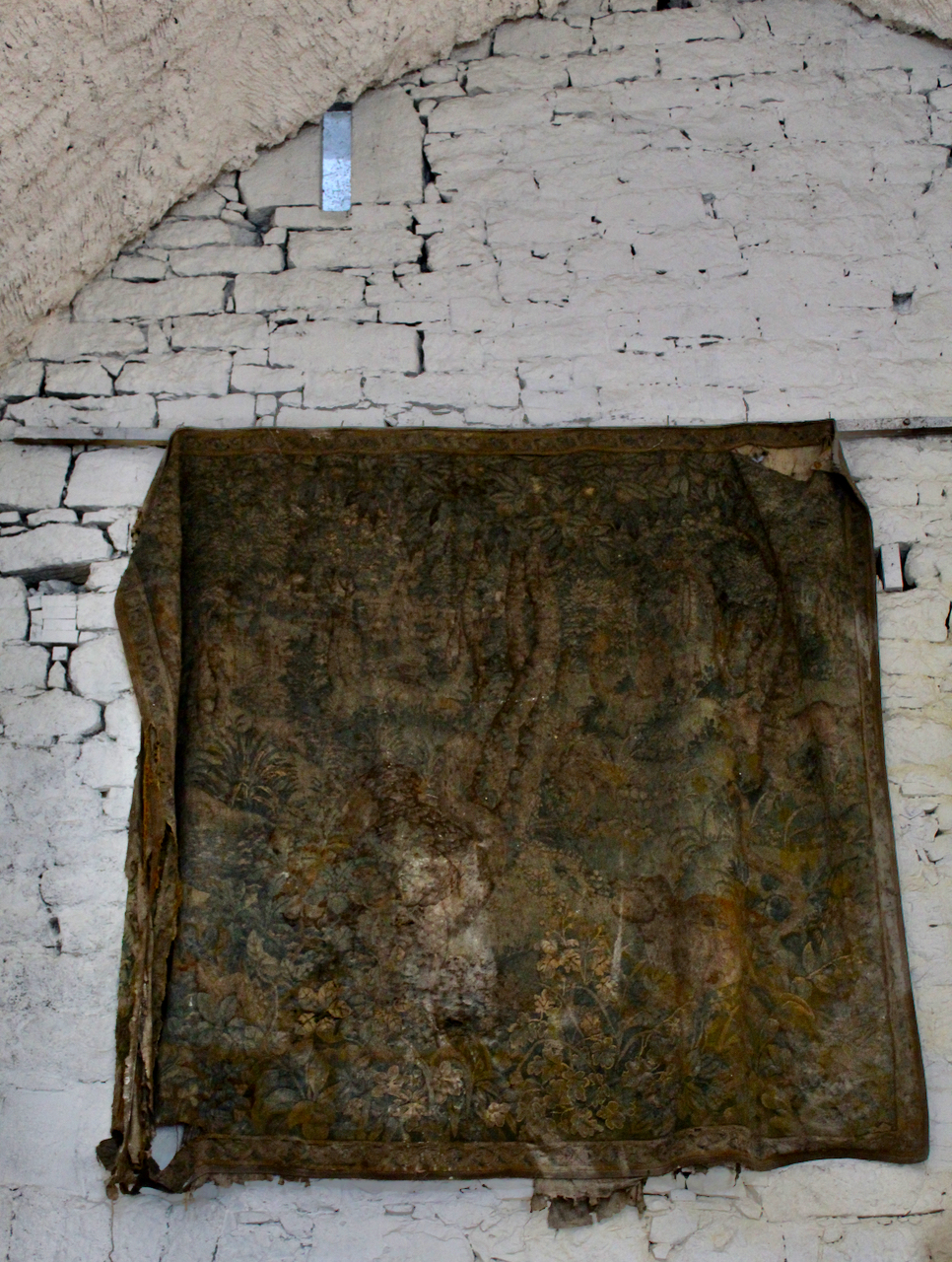
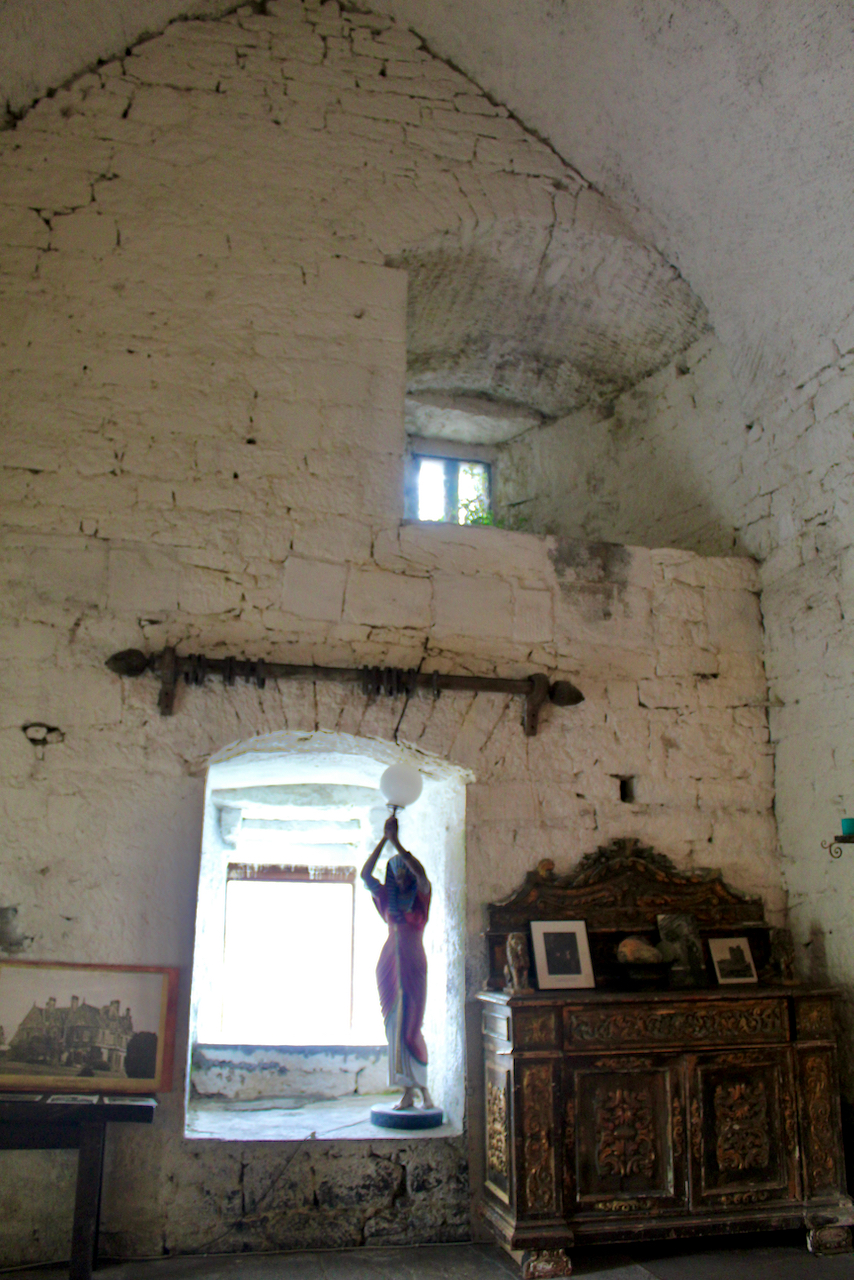
Through the front door, one steps into the large vaulted chamber. It is difficult to capture in a photograph. The castle is a treasure trove of objects and furniture from around the world, and its inhabitants must be creative and artistic. Unfortunately we did not get to meet the owners.
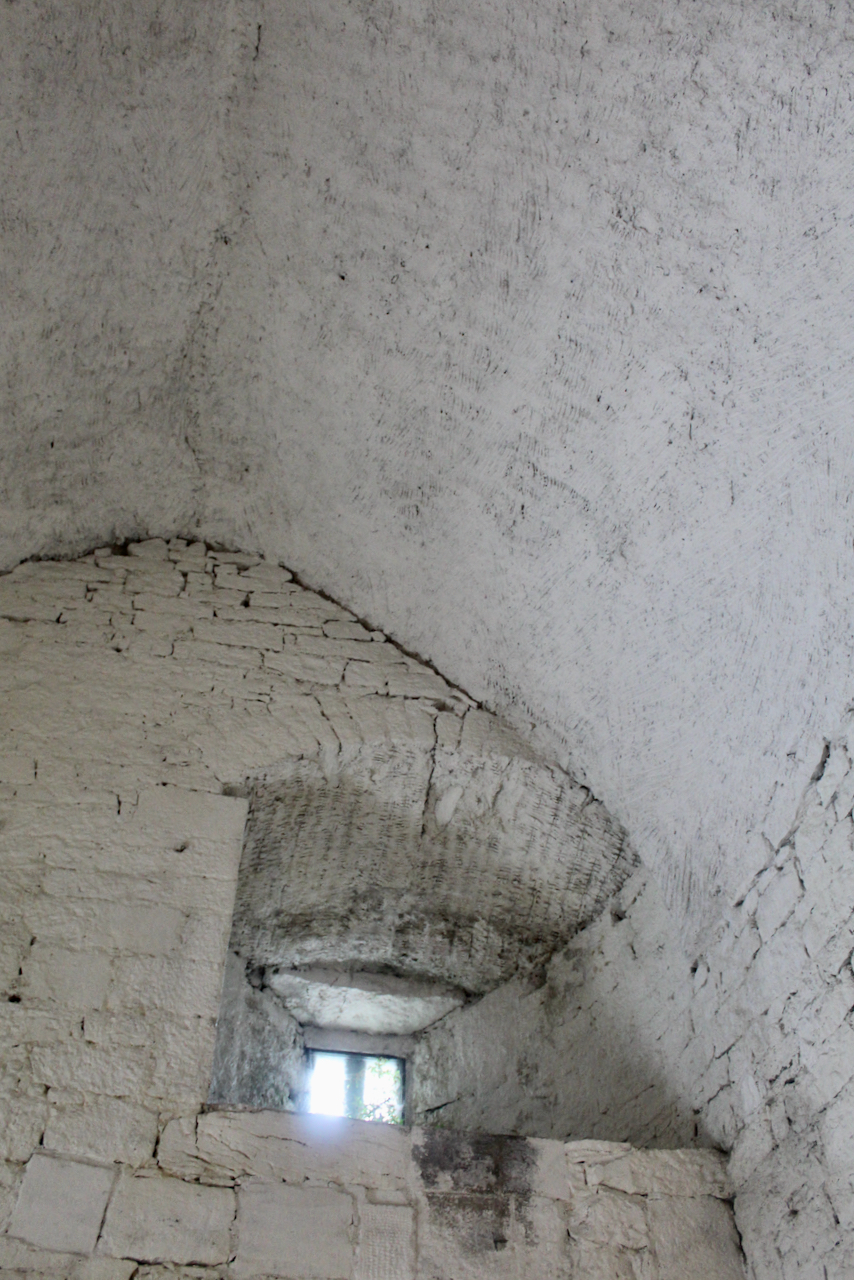
The poster of the Irish Tower House shows a tower house much like Oranmore. We can see the vaulted ceiling, and the way there may have been many floors below the vault. It explains that the mortared vaults were built directly on top of a wattle or wicker-work screen supported by a timber frame. When the frame was removed the wattle was left attached to the mortar and was over plastered over. Today the impression of the woven wattle screens can be seen on the underside of many of these vaults, as we can see on the ceiling in Oranmore. We also saw this effect in St. Mary’s Abbey house in Trim, County Meath (see my entry).
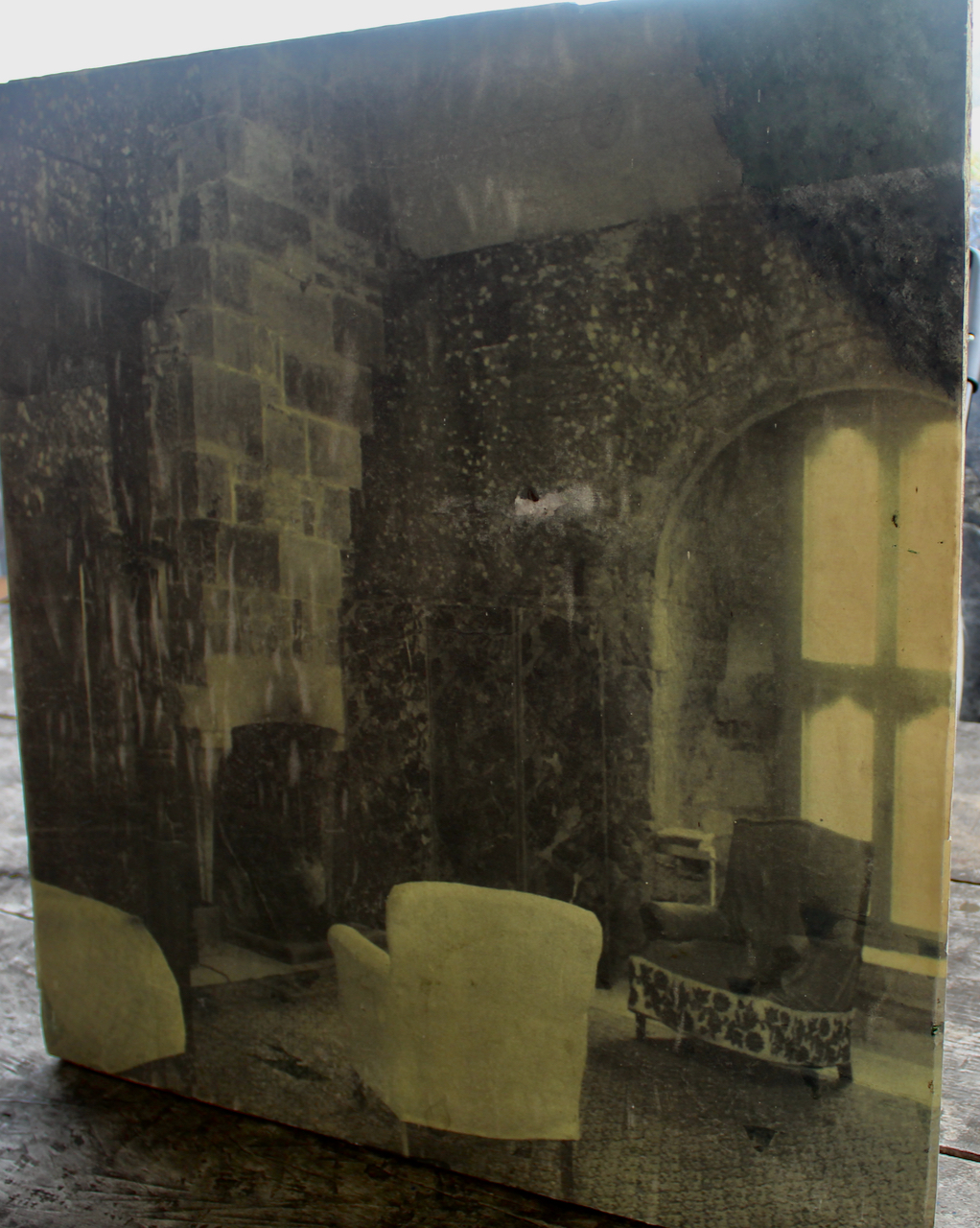
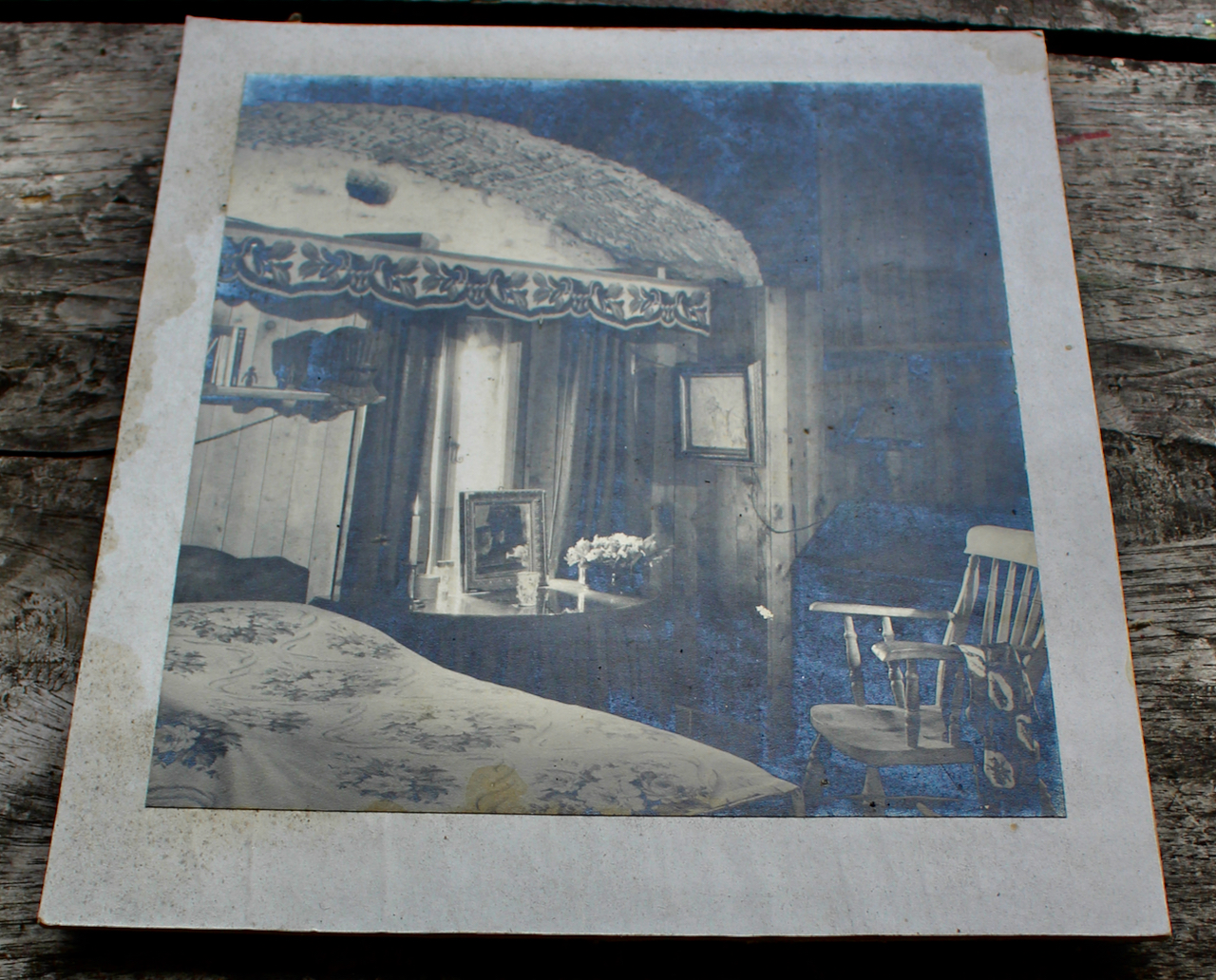
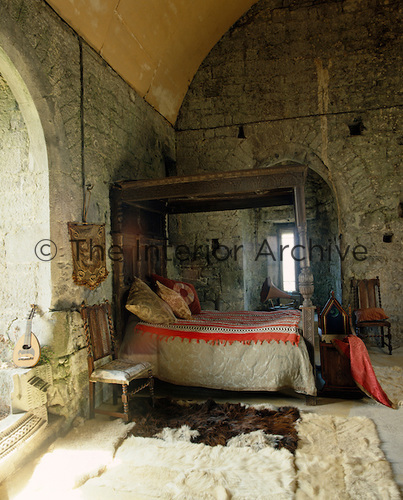
We did not get to see upstairs unfortunately, so I have to make do with photographs of the upstairs which were on display.
In Oranmore Castle, August 2022.In Oranmore Castle, August 2022.The main upper room of the keep was once a soldiers’ dormitory and now houses a large wooden four-poster bed for the occasional guest, Oranmore, Copyright Ianthe Ruthven/The Interior Archive Ltd, IR_92_10.In Oranmore Castle, August 2022.This picture may have been taken in Castle Leslie in County Monaghan, of Leonie and her brother. It looks similar to the bed in which Stephen and I slept at Castle Leslie!Leonie and her brother Tarka as children in the castle.Photograph from airbnb website entry for a stay in Oranmore Castle.A lovely picture of owner Leonie.
Another fascinating person in the extended Leslie family is Clare Sheridan, née Frewin. She was a sculptor and writer. Her mother was the third Jerome sister, i.e. sister of Jennie Jerome mother of Winston Churchill.
[2] Blake family records, 1600 to 1700; a chronological catalogue with notes, appendices, and the genealogies of many branches, of the Blake family, together with a brief account of the fourteen ancient families of tribes of the town of Galway, and a description of the corporate arms used by that town at different periods; with an index to the records in the first part. Illustrated with photographs of various original documents and seals. 2d series. https://archive.org/stream/blakefamilyrecor00blakuoft/blakefamilyrecor00blakuoft_djvu.txt
www.borrishouse.com Open dates in 2026: Open: Apr 1, 2, 7-12, 14-26, 28-30, May 5-10, 19-24, June 12-14, 16-18, 23-25, 30, Aug 5, 12-23, 25, 26, Sept 1, 2, 8, 9, 22, 23, 29 12pm-4pm Fee: adult €12, OAP/student €10, child under 12 free
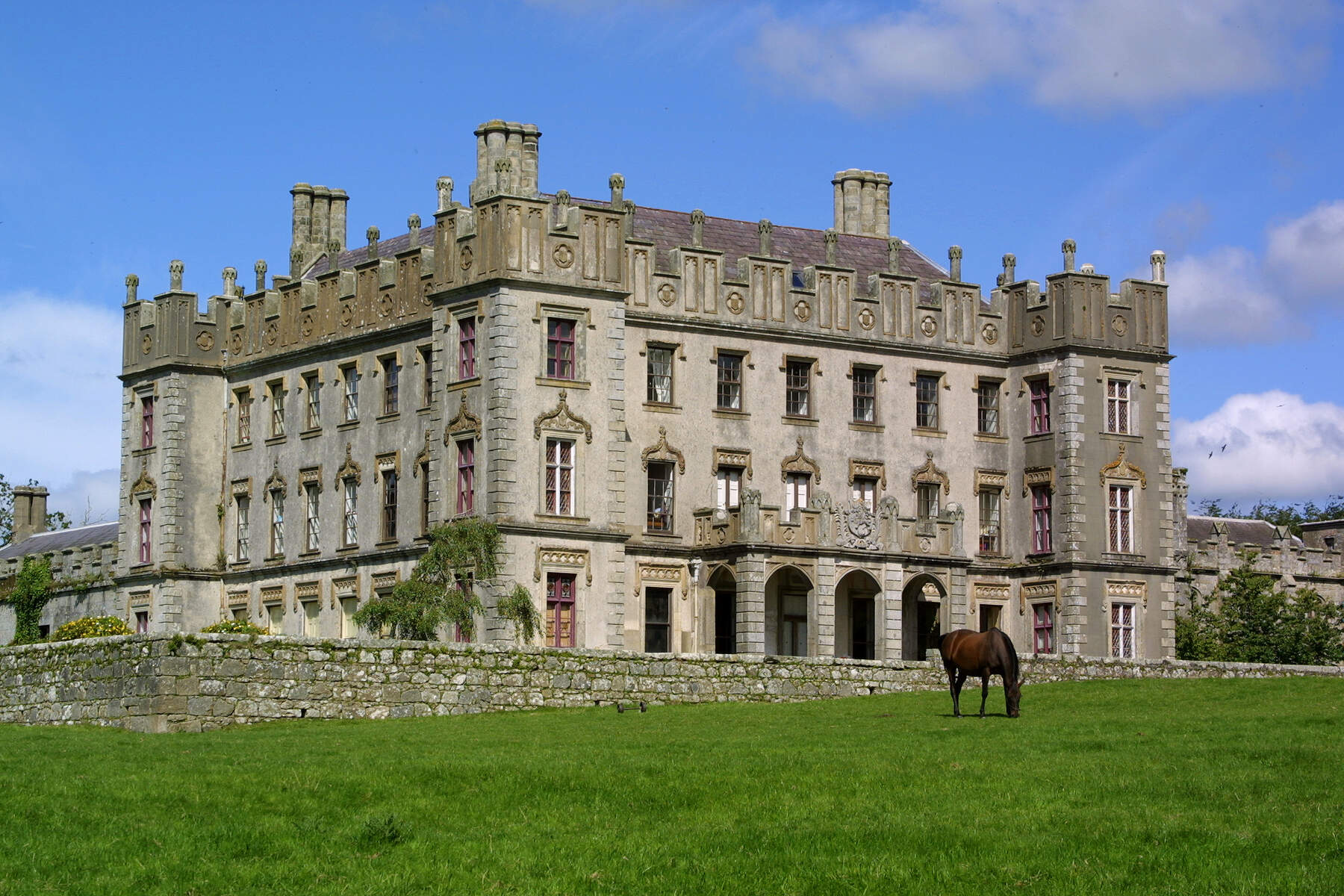
Borris House, Carlow, photograph by Suzanne Clarke, 2016 for Tourism Ireland, Ireland’s Content Pool.
donation
Help me to pay the entrance fee to one of the houses on this website. This site is created purely out of love for the subject and I receive no payment so any donation is appreciated!
I had been particularly looking forward to visiting Borris House. It feels like I have a personal link to it, because my great great grandmother’s name is Harriet Cavanagh, from Carlow, and Borris House is the home of the family of Kavanaghs of Carlow, and the most famous resident of the house, Arthur MacMurrough Kavanagh, was the son of a Harriet Kavanagh! Unfortunately I don’t think there’s a connection.
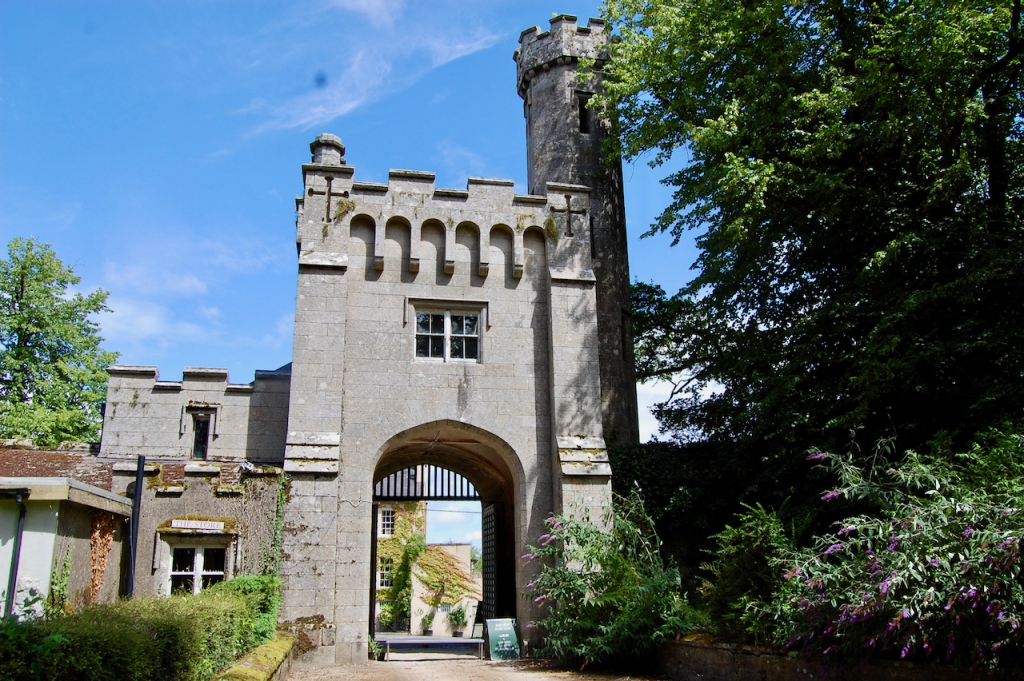
We were able to park right outside on the main street of Borris, across from the entrance. My fond familial feelings immediately faded when faced with the grandeur of the entrance to Borris House. I shrank into a awestruck tourist and meekly followed instructions at the Gate Lodge to make my way across the sweep of grass to the front entrance of the huge castle of a house.
Unlike other section 482 houses – with the few exceptions such as Birr Castle and Tullynally – Borris House has a very professional set-up to welcome visitors as one goes through the gate lodge. The website does not convey this, as it emphasises the house’s potential as a wedding venue, but the property is in fact fully set up for daily guided tours, and has a small gift shop in the gate lodge, through which one enters to the demesne. Borris House is still a family home and is inhabited by descendants of the original owners.
Originally a castle would have been located here on the River Barrow to guard the area. From the house one can see Mount Leinster and the Blackstairs Mountains.
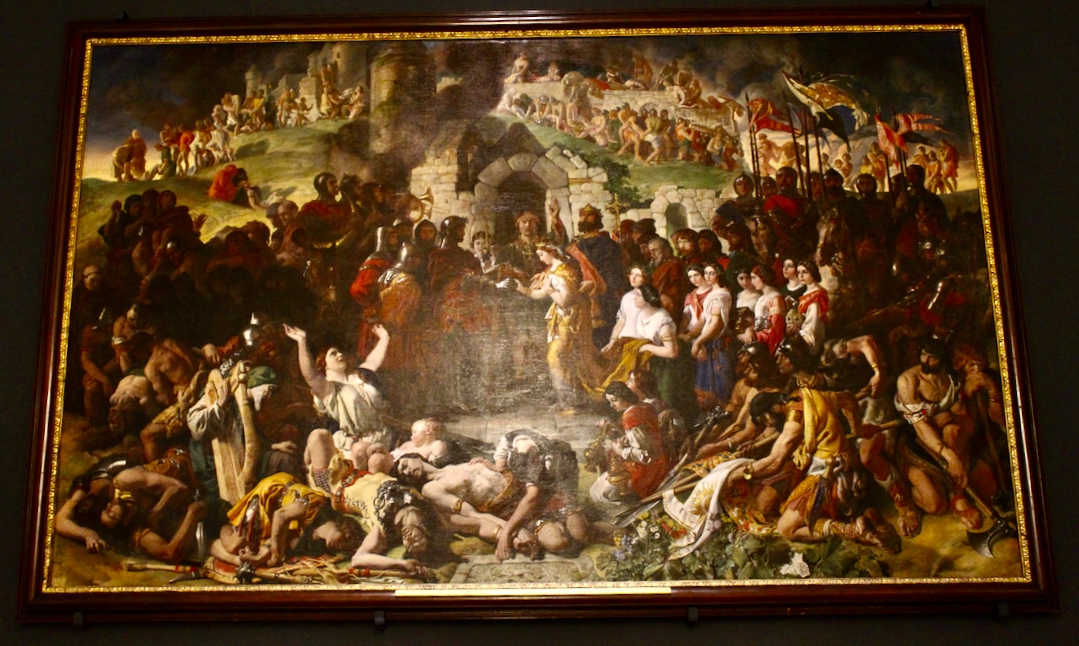
The current owner Morgan Kavanagh can trace his ancestry back to the notorious Dermot MacMurrough (Diarmait mac Murchadha in Irish), who “invited the British in to Ireland” or rather, asked for help in protecting his Kingship. The MacMurroughs, or Murchadhas, were Celtic kings of Leinster. “MacMurrough” was the title of an elected Lord. Dermot pledged an oath of allegiance to King Henry II of Britain. The Norman “Strongbow,” or Richard de Clare, 2nd Earl of Pembroke, came to Ireland to fight alongside Dermot MacMurrough against Dermot’s enemies. As a reward, Dermot MacMurrough offered Strongbow the hand of his daughter Aoife. This was less a love match than a chance to become the next King of Leinster. Succeeding generations of MacMurrough family controlled the area, maintaining their Gaelic traditions.
The Marriage of Aoife and Strongbow, Richard de Clare 2nd Earl of Pembroke at Waterford in 1170, by Daniel Maclise, in National Gallery of Ireland. Conceived for the decoration of the Palace of Westminster, a note tells us, the painting is an ambiguous representation of the victorious Normans and the vanquished Irish. Strongbow places his foot upon a fallen Celtic cross, King Dermot looks on in alarm, and an elderly musician slumps of his harp.
Timothy William Ferres tells us that in 1171, the name Kavanagh was given to Donell, son of Dermot MacMorrough. [1*]
In the late 14th century, Art mac Murchadha (d. around 1417) was one of the Irish kings who was offered a knighthood by King Richard II of England. In the 1500s, King Henry VIII sought to reduce the power of the Irish kings and to have them swear loyalty to him. In 1550 Charles MacMurrough Kavanagh (the Anglicised version of the name ‘Cahir MacArt’ MacMurrough Kavanagh) “submitted himself, and publicly renounced the title and dignity of MacMorrough, as borne by his ancestors.” [2] (note the various spellings of MacMorrough/MacMurrough). The head of the family was still however referred to as “the MacMorrough.”
We gathered with a few others to wait outside the front of the house for our tour guide on a gloriously sunny day in July 2019. Some of the others seemed to be staying at the house. For weddings there is accommodation in the house and also five Victorian cottages. We did not get to see these in the tour but you can see them on the website. Unfortunately our tour guide was not a member of the family but she was knowledgeable about the house and its history.
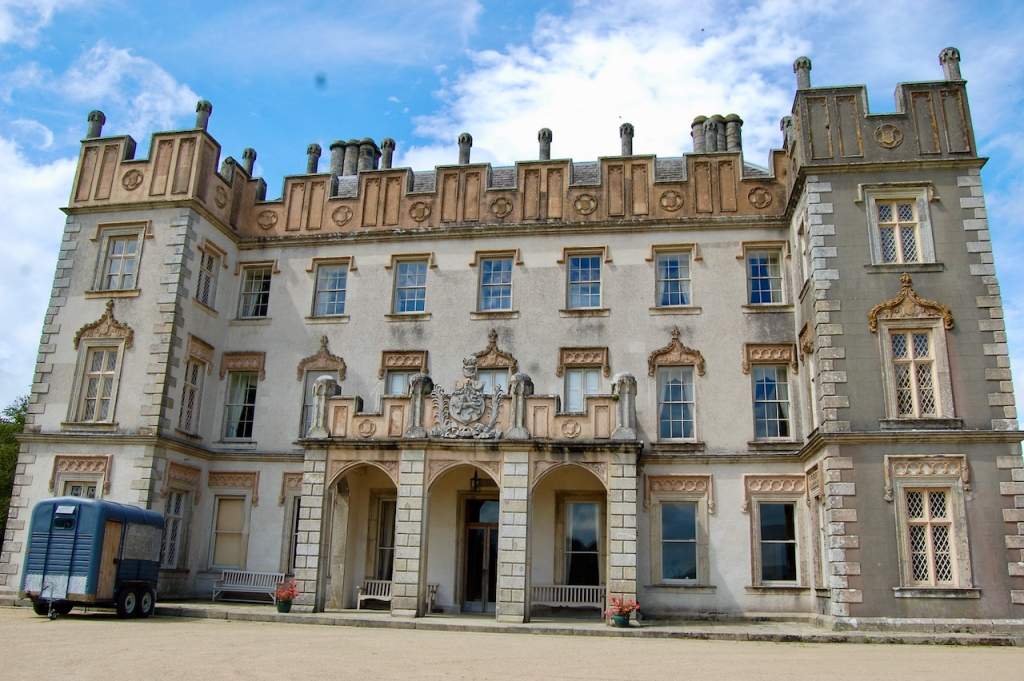
The current house was built originally as a three storey square house in 1731, incorporating part of a fifteenth century castle. We can gather that this was the date of completion of the house from a carved date stone.
According to the Borris House website, the 1731 house was built for Morgan Kavanagh, a descendant of Charles MacMurrough Kavanagh. However, I have the date of 1720 as the death for Morgan Kavanagh. Irish Aesthete Robert O’Byrne writes that the 1731 house was built by Brian Kavanagh. [3] Morgan Kavanagh has a son named Brian (d. 1741), so it could be the case that the house was commissioned by Morgan and completed by his son.
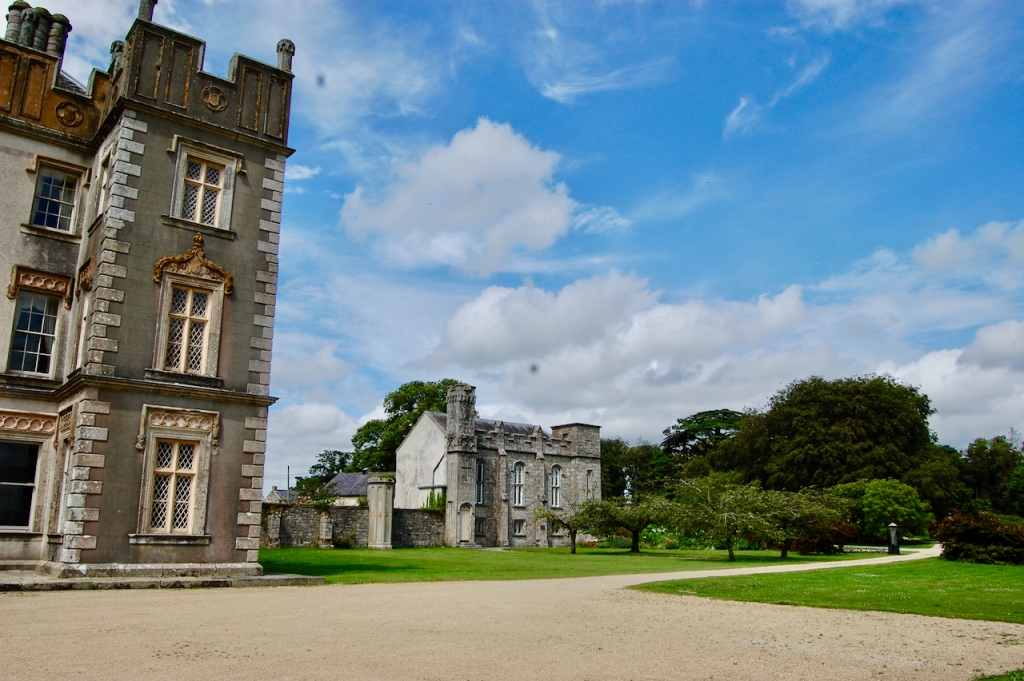
The house was damaged in the 1798 Rebellion and rebuilt and altered by Richard and William Vitruvius Morrison around 1813 into what one sees today. According to Edmund Joyce in his book Borris House, Co. Carlow, and elite regency patronage, it was Walter Kavanagh, grandson of the aforementioned Brian (d. 1741) who commissioned the work, which was taken over by brother Thomas (1767-1837) when Walter died in 1818. [4]. The Morrisons gave it a Tudor exterior although as Mark Bence-Jones points out in his Guide to Irish Country Houses, the interiors by the Morrisons are mostly Classical.
The Morrisons kept the original square three storey building symmetrical. Edmund Joyce references McCullough, Irish Building Traditions, writing that “The Anglo-Irish landlords at the beginning of the 19th century who wanted to establish a strong family history with positive Irish associations were beginning to use the castle form – which had long been a status of power both in Ireland and further afield – to embed the notion of a long and powerful lineage into the mindset of the audience.”
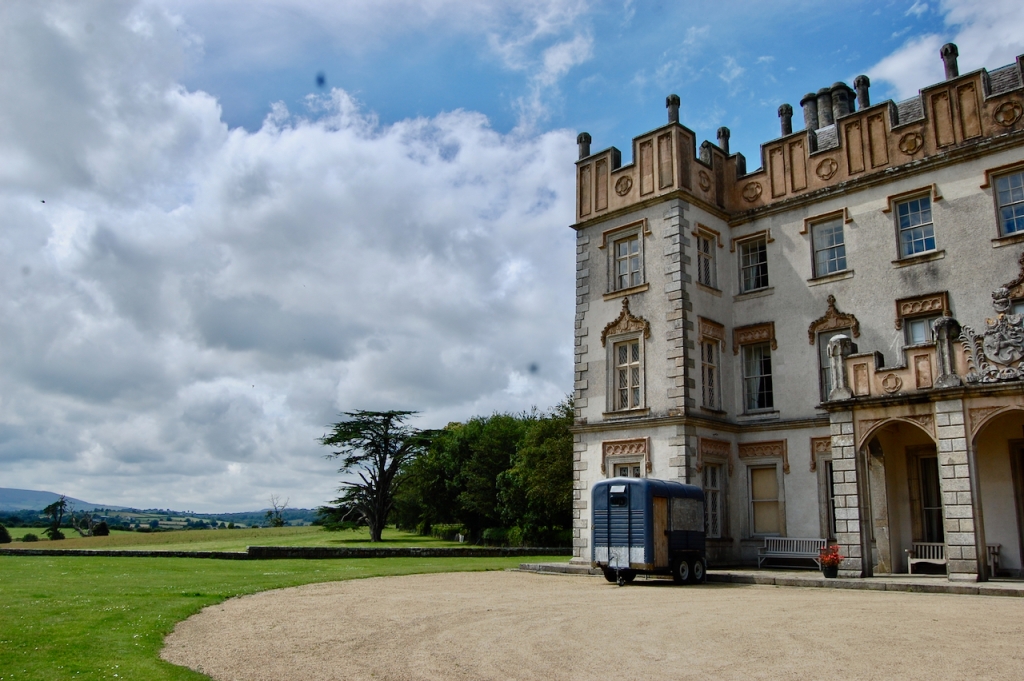
In keeping with this castle ideal, the Morrisons added battlemented parapets with finials, the crenellated arcaded porch on the entrance, as well as four square corner turrets to the house, topped with cupolas (which are no longer there). The porch has slightly pointed arches, and is unusual with its bricklike rustication, and elongated mini towers on top with tawny detailing in between, reflected in the roof parapet.
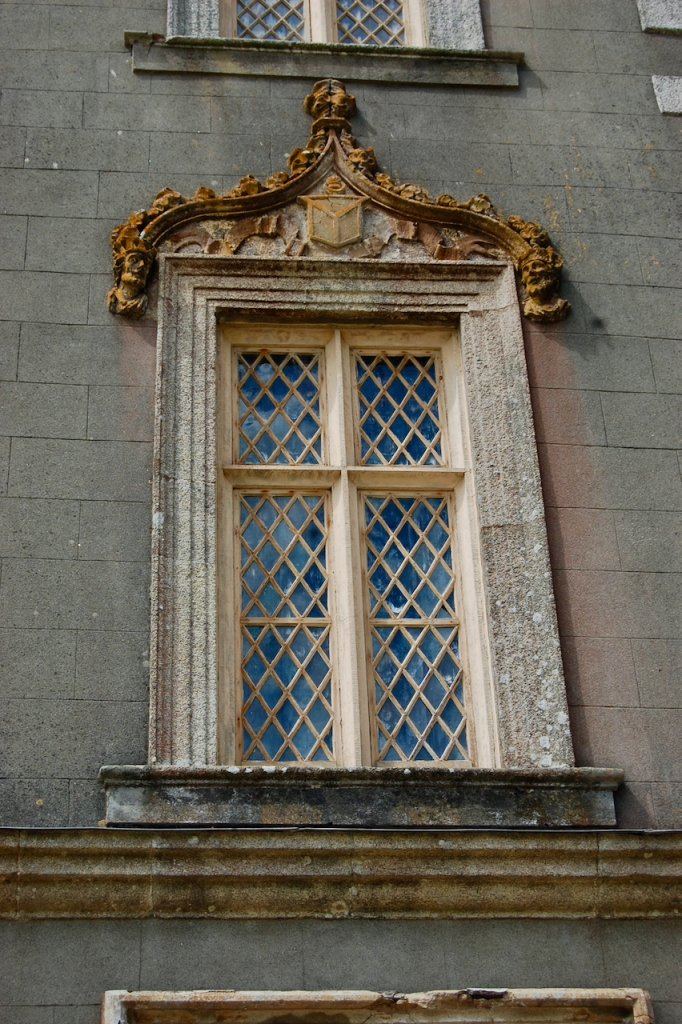
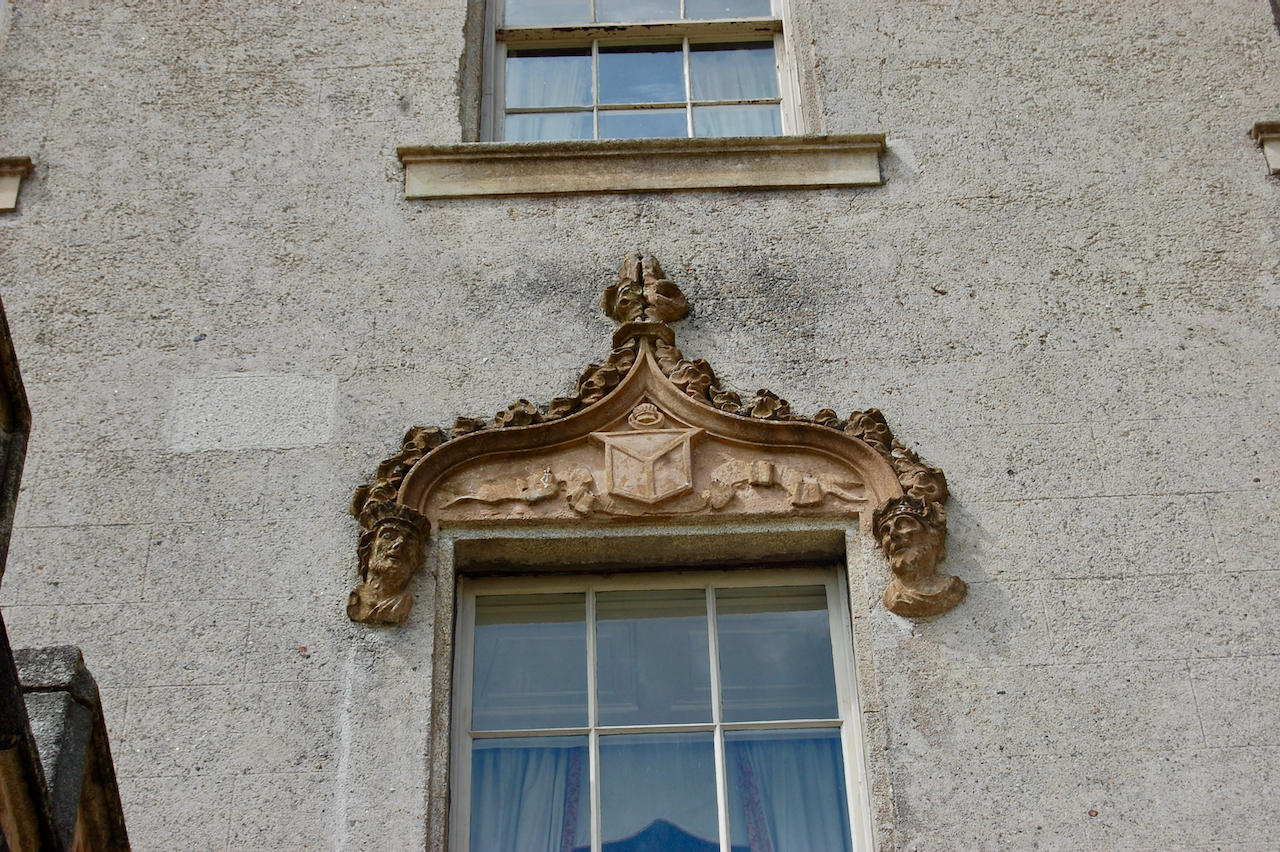
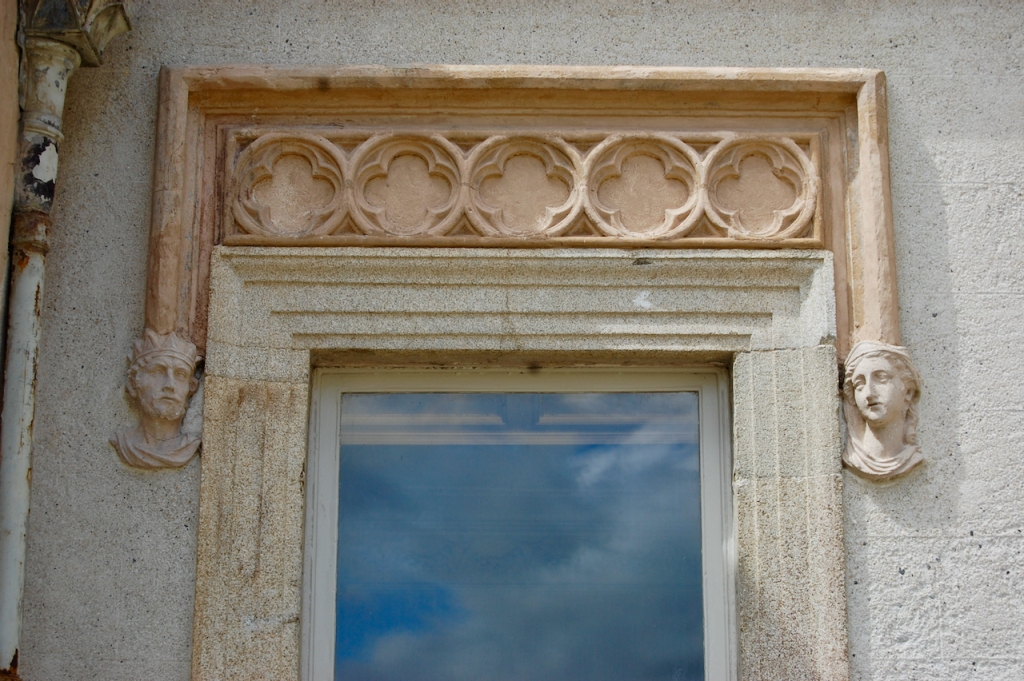
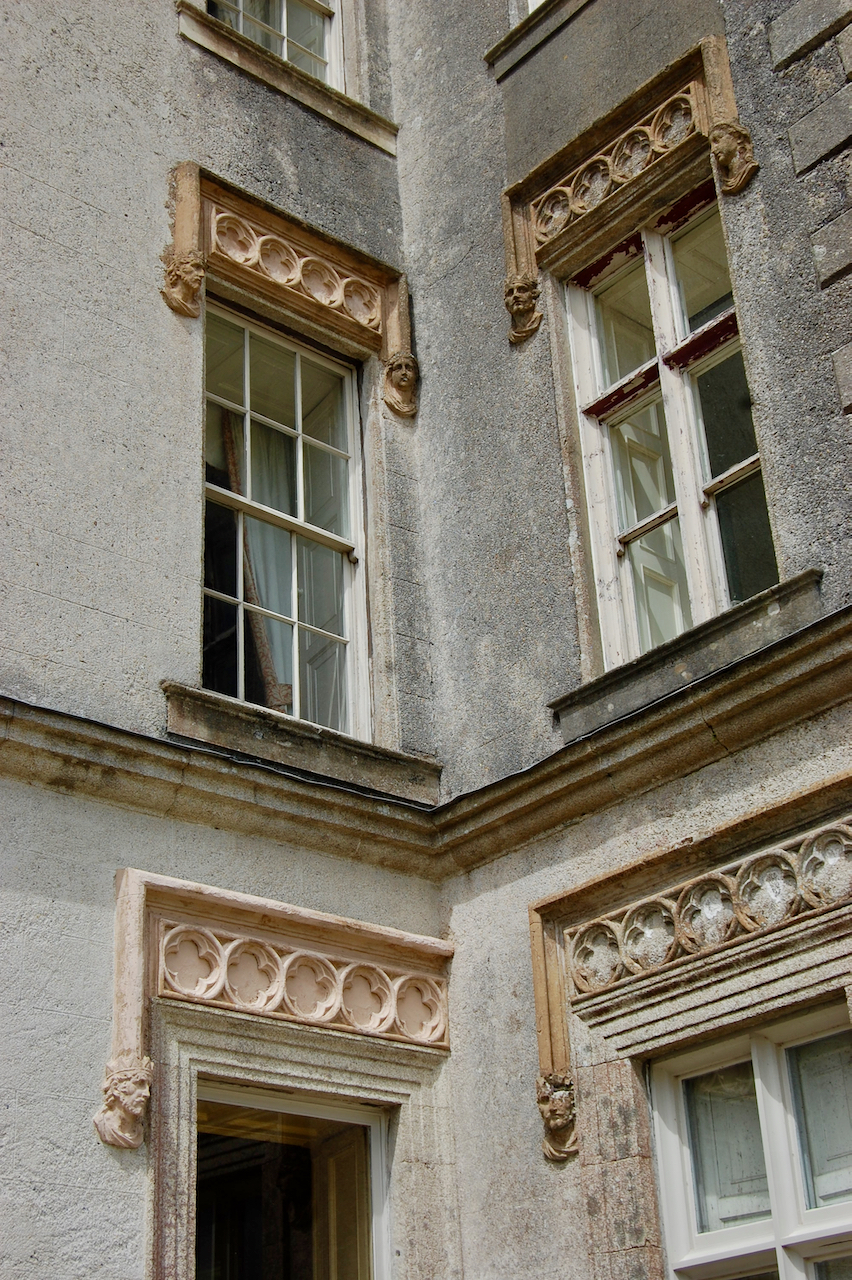
They also created rather fantastical Tudor Gothic curvilinear hood mouldings over the windows, some “ogee” shaped (convex and concave curves; found in Gothic and Gothic-Revival architecture) [5].
These mouldings drop down from the top of the windows to finish with sculptured of heads of kings and queens. These are not representations of anyone in particular, the guide told us, but are idealised sculptures representing royalty to remind one of the Celtic kingship of the Kavanaghs.
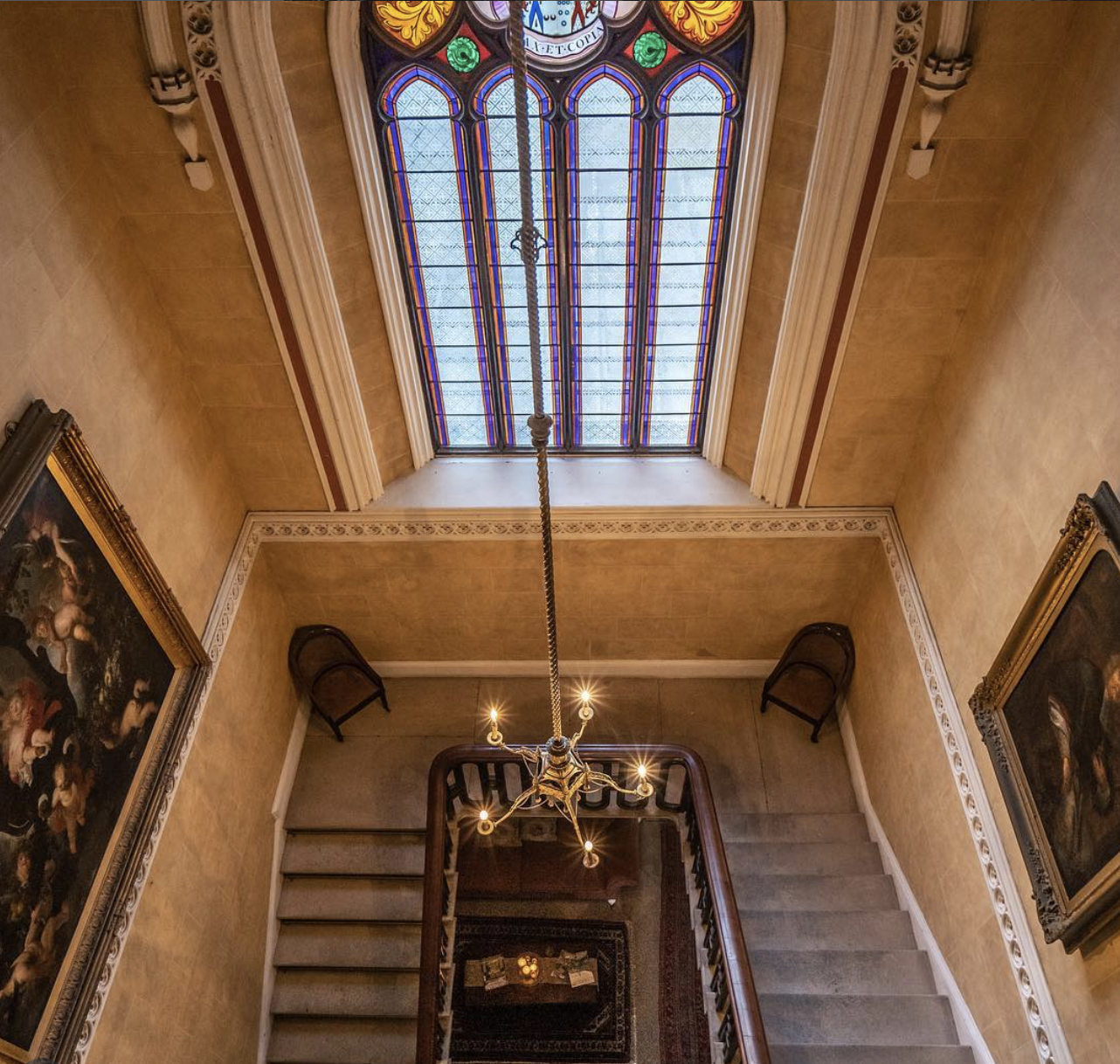
As well as illustrating their heritage in architecture, Walter Kavanagh (d. 1718) commissioned an illustrated book of the family pedigree, titled “The pedigree of the ancient illustrious noble and princely house of Kavanagh in ancient times monarchs of Ireland and at the period of the invasion by Henry the second, kings of Leinster,” which traces the family tree back to 1670 BC! The connections to the prominent families of Butlers, Fitzjohns, De Mariscos and FitzGeralds are highlighted, which are also illustrated in the stained glass window in the main stairwell at Borris.
The guide pointed to the many configurations of windows on the front facade of the house. They were made different deliberately, she told us, to create the illusion that the different types of windows are from different periods, even though they are not! This was to reflect the fact that various parts of the building were built at different times.
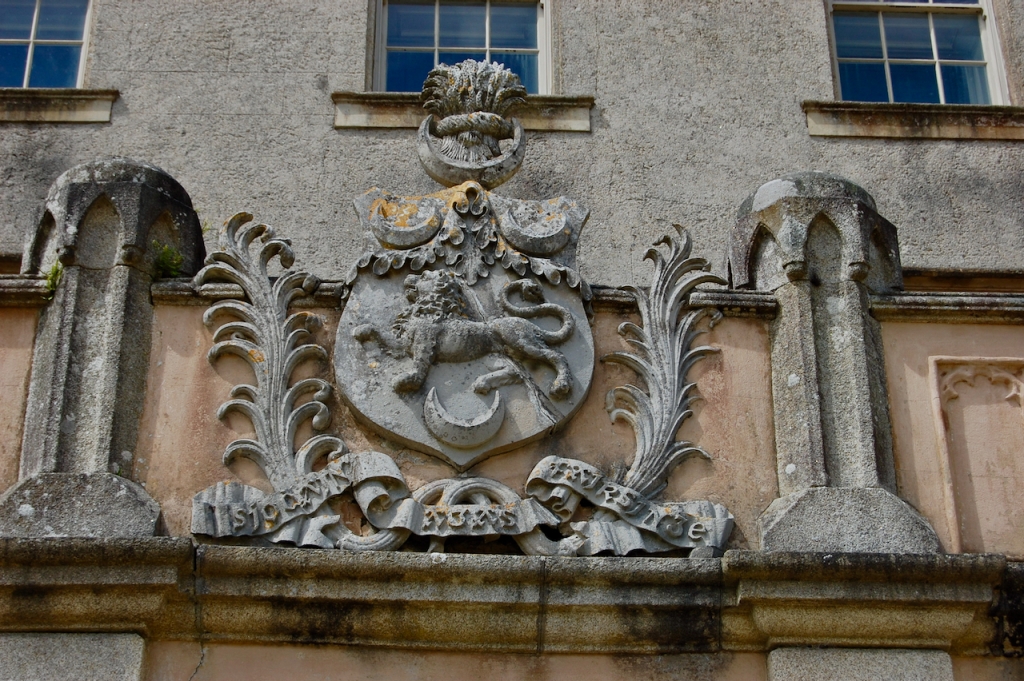
The crest of the family on the front of the house on the portico features a crescent moon for peace, sheaf of wheat for plenty and a lion passant for royalty. The motto is written in Irish, to show the Celtic heredity of the Kavanaghs, and means “peace and plenty.”
Charles MacMurrough Kavanagh married Cecilia, daughter of Gerald Fitzgerald, 9th Earl of Kildare. Charles’s son Brian (c. 1526-1576) converted to Protestantism and sent his children to be educated in England. One of them, Sir Morgan Kavanagh, acquired the estate of Borris when he was granted the forfeited estates of the O’Ryans of Idrone in County Carlow.
When Protestants were attacked in 1641 by a Catholic rebellion, when Morgan’s son Brian (1595-1662) was “The MacMorrough,” the MacMurrough Kavanaghs were spared due to their ancient Irish lineage. Later, when Cromwell rampaged through Ireland, they were spared since they were Protestant, so they had the best of both worlds during those turbulent times.
Brian Kavanagh (1595-1662) married twice. His first wife was Elinor, daughter of Thomas Colclough of Tintern Abbey in County Wexford. His second wife was Elinor Blancheville of Blanchevillestown in County Kilkenny.
The tour guide took us first towards the chapel. She explained the structure of the house as we trooped across the lawn. She pointed out the partially demolished stretch between the square part of the house and the chapel. All that remains of this demolished section is a wall. The octagonal towerlike structures built into the wall were chimneys and the demolished part was the kitchen.
The square tower that joins the house to the demolished kitchen contained the nursery. The wing was demolished to reduce the amount of rates to be paid. The house was reoriented during rebuilding, the guide told us, and a walled garden was built with a gap between the walls which could be filled with coal and heated! I love learning of novel mechanisms in homes and gardens, techniques which are no longer used but which may be useful to resurrect as we try to develop more sustainable ways of living (not that we’d want to go back to using coal).
It is worth outlining some of the genealogy of this ancient family, as they intermarried with many prominent families of their day. Morgan Kavanagh (1668-1720) who probably commissioned the building of the 1730s house married Frances Esmonde, daughter of Laurence Esmonde (1634-1688) 2nd Baronet of Ballynastragh, County Wexford, who lived at Huntington Castle (another section 482 property I visited). After her death, he married Margaret Morres of Castle Morres in County Kilkenny.
Morgan and Frances née Esmonde’s son Brian (1699-1741) married Mary Butler, daughter of Thomas Butler (d. 1738) of Kilcash. Their son Thomas (1727-1790) married another Butler, Susanna, daughter of the 16th Earl of Ormonde.
It was the following generation, another Thomas (1767-1837), who is relevant to our visit to the chapel.
This Thomas (1767-1837) was originally a Catholic. He married yet another Butler, Elizabeth, daughter of the 17th Earl of Ormonde, in 1799. At some time he converted to Protestantism. It must have been before 1798 because in that year he represented Kilkenny City in Parliament and at that time only members of the Established Church could serve in Parliament.
As I mentioned, the house was badly damaged in 1798, when the United Irishmen rose up in an attempt to create an independent Ireland. Although the Kavanaghs are of Irish descent and are not a Norman or English family, this did not save them from the 1798 raids. The house was not badly damaged in a siege but outbuildings were. The invaders were looking for weapons inside the house, the guide told us. Robert O’Byrne the Irish Aesthete writes tells us: “Walter MacMurrough Kavanagh wrote to his brother-in-law that although a turf and coal house were set on fire and efforts made to bring ‘fire up to the front door under cover of a car on which were raised feather beds and mattresses’ [their efforts] were unsuccessful.” [6]
Edmund Joyce describes the raid in his book on Borris House (pg. 21-22):
“The rebels who had marched overnight from Vinegar Hill in Wexford…arrived at Borris House on the morning of 12 June. They were met by a strong opposing group of Donegal militia, who had taken up their quarters in the house. It seems that the MacMurrough Kavanaghs had expected such unrest and in anticipation had the lower windows…lately built up with strong masonry work. Despite the energetic battle, those defending the house appear to have been indefatigable, and the rebels, ‘whose cannons were too small to have any effect on the castle…’ the mob retreated back to their camps in Wexford.”
The estate was 30,000 acres at one point, but the Land Acts reduced it in the 1930s to 750 acres, which the present owner farms organically. The outbuildings which were built originally to house the workings of the house – abbatoir, blacksmith, dairy etc, were burnt in one of the sieges and so all the outbuildings now to be seen, the guide told us, were built in the nineteenth century.
Walter Kavanagh (1766-1813), brother of Thomas (1767-1837) (M.P.) and Morgan Kavanagh (who married Alicia Grace of Gracefield, Queens County). Courtesy Fonsie Mealy March 2019.
Thomas’s second wife, Harriet Le Poer Trench, daughter of the 2nd Earl of Clancarty, was of staunch Scottish Protestant persuasion [7]. When he converted, the chapel had to be reconsecrated as a Protestant chapel. According to legend, Lady Harriet had a statue of the Virgin Mary removed from the chapel and asked the workmen to get rid of it. The workmen, staunch Catholics, buried the statue in the garden. People believed that for this act, Lady Harriet was cursed, and it was said that one day her family would be “led by a cripple.”
The story probably came about because Harriet’s third son, Arthur, was born without arms or legs. As she had given birth to two older sons, and he had another half-brother, Walter, son of Thomas’s first wife, it seemed unlikely that Arthur would be the heir. However, the three older brothers all died before Arthur and Arthur did indeed become the heir to Borris House.
Arthur MacMorrough Kavanagh, M.P., (1831-1839), Politician and Sportsman Date after 1889 Engraver Morris & Co. Photograph courtesy of the National Gallery of Ireland.
The plasterwork in the chapel, which is called the Chapel of St. Molin, is by Michael Stapleton.
In Jimmy O’Toole’s book The Carlow Gentry: What will the neighbours say! (published by Jimmy O’Toole, Carlow, Ireland, 1993. Printed by Leinster Leader Ltd, Naas, Kildare), he tells us of a rather miraculous finding of a Bible giving evidence of Thomas’s early Catholicism:
p. 130. “In the early 1950s, Borris House needed an electrical rewire. It was the kind of job in this rambling mansion that would take tradesmen into all sorts of unused nooks and crannies, attics untouched since the last electricians were there, and of course, there was the necessary task, dreaded by owners, the lifting of floor boards…What the electricians turned up from underneath the floor boards in the library of borris House was an 18C missal, which had been carefully wrapped and placed there by the Catholic Thomas Kavanagh either when he conformed to the Established Church, or when he married for the second time in 1825. The missal was a gift from his mother, the former Lady Suzanna Butler, bearing the hopeful inscription that he would remain faithful to the Catholic religion practised for centuries by his forebears, who could trace their ancestry back to early Christian times.”
Jimmy O’Toole also tells us that Borris House stands on 9th century dungeons!
While we sat in the chapel, our guide told us about the amazing Arthur MacMurrough Kavanagh. When her husband Walter died, Harriet and her children went travelling. They travelled broadly, and she painted, and collected objects which she brought back to Ireland, including a collection of artefacts from Egypt now in the National Museum of Ireland. When Arthur was 17 years old his mother sent him travelling again, to get him away from his high jinks with the local girls. Arthur kept diaries, which are available for perusal in the National Library. I must have a look! I have a special interest in diaries, since I have been keeping my own since I was twelve years old. Some of Arthur’s adventures include being captured and being cruelly put on display by a tribe. He also fell ill and found himself being nursed back to health in a harem – little did the Sultan or head of the harem realise that Arthur was perfectly capable of impregnating the ladies!
Arthur’s brother and tutor died on their travels and Arthur found himself alone in India. He joined the East India Company as a dispatch rider – he was an excellent horseman, as he could be strapped in to a special saddle, which we saw inside the house, now mounted on a children’s riding horse! I was also thrilled to see his wheelchair, in the Dining Room, which is now converted into a dining chair.
Arthur MacMurrough’s saddle in mounted on the rocking horse. Photograph by Paul Barker, 2011, for Country Life.
When Arthur came home as heir, he found his mother had set up a school of lacemaking, now called Borris Lace, to help the local women to earn money during the difficult Famine years. The lace became famous and was sold to Russian and English royalty. The rest of the estate, however, was in poor shape. Arthur set about making it profitable, bringing the railway to Borris, building a nearby viaduct, which cost €20,000 to build. He also built cottages in the town, winning a design medal from the Royal Dublin Society, and he set up a sawmill, from which tenants were given free timber to roof their houses. He set up limekilns for building material, and also experimented (unsuccessfully) with “water gas” to power the crane used to built the viaduct. His mother built a fever house, dower house and a Protestant school, and Arthur’s sisters built a Catholic school. There is a little schoolhouse (with bell) behind the chapel.
Arthur seems to have had a great sense of humour. On one of his visits to Abbeyleix, he remarked to Lady De Vesci, “It’s an extraordinary thing – I haven’t been here for five years but the stationmaster recognised me.”
Arthur married Mary Frances Forde-Leathley and fathered six children. He became an MP for Carlow and Kilkenny, and sat in the House of Commons in England, which he reached by sailing as far as London, where he was then carried in to the houses of Parliament.
He lost when he ran again for Parliament in 1880, beaten by the Home Rule candidates. He returned from London after his defeat and saw bonfires, which were often lit by his tenants to celebrate his return. However, this time, horrifically, he saw his effigy being burned on the bonfires by tenants celebrating the triumph of the Home Rule candidates. He must have been devastated, as he had worked so hard for his tenants and treated them generously. For more about him, see the Irish Aesthete’s entry about him. [8]
Jimmy O’Toole’s book gives a detailed description of politics at the time of Arthur’s defeat and explains why the tenants behaved in such a brutal way. Elections grew heated and dangerous in the days of the Land League and of Charles Stewart Parnell, when tenants hoped to own their own land. In the 1841 election, tenants of the Kavanaghs were forced to vote for the Tory candidate against Daniel O’Connell Jr., despite a visit from Daniel O’Connell Sr, “The Liberator” who fought for Catholic emancipation.
The land agent for the Kavanaghs, Charles Doyne, threatened the tenants with eviction if they did not vote for his favoured candidate. In response to threats of eviction, members of the Land League forced tenants to support their cause by publicly shaming anyone who dared to oppose them. People were locked into buildings to prevent them from voting, or on the other hand, were locked in to protect them from attacks which took place if they planned to support the Tory candidate. Not all Irish Catholics supported the Land League. Labourers realised that landlords provided employment which would be lost if the land was divided for small farmers.
It was Arthur’s grandfather, Thomas (b. 1727), who undertook much of the renovation work at Borris in the 1800s, with money brought into the family by his wife, Susanna Butler. [9] Under her influence, Italian workmen were employed and ceilings were decorated and Scagliola pillars installed. After hearing the stories about amazing Arthur, we returned across the lawn to enter the main house.
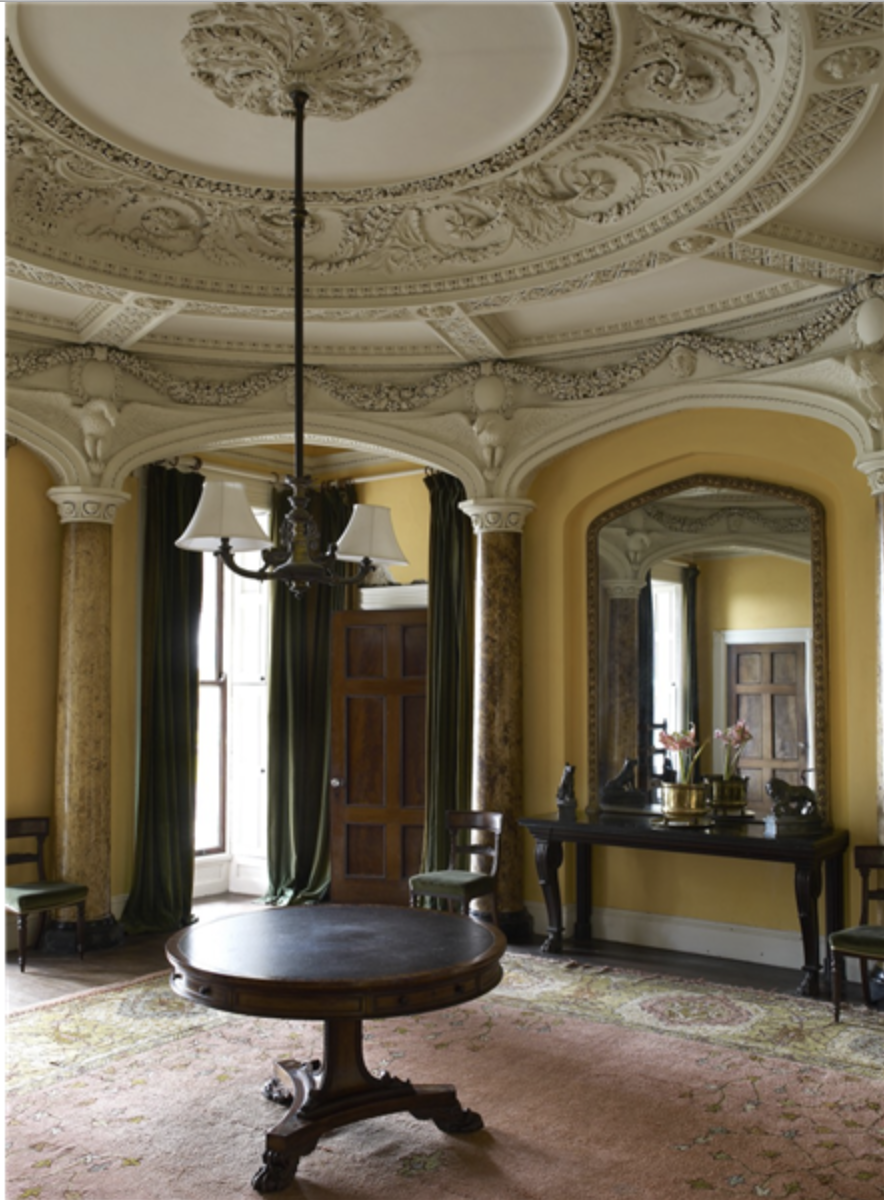
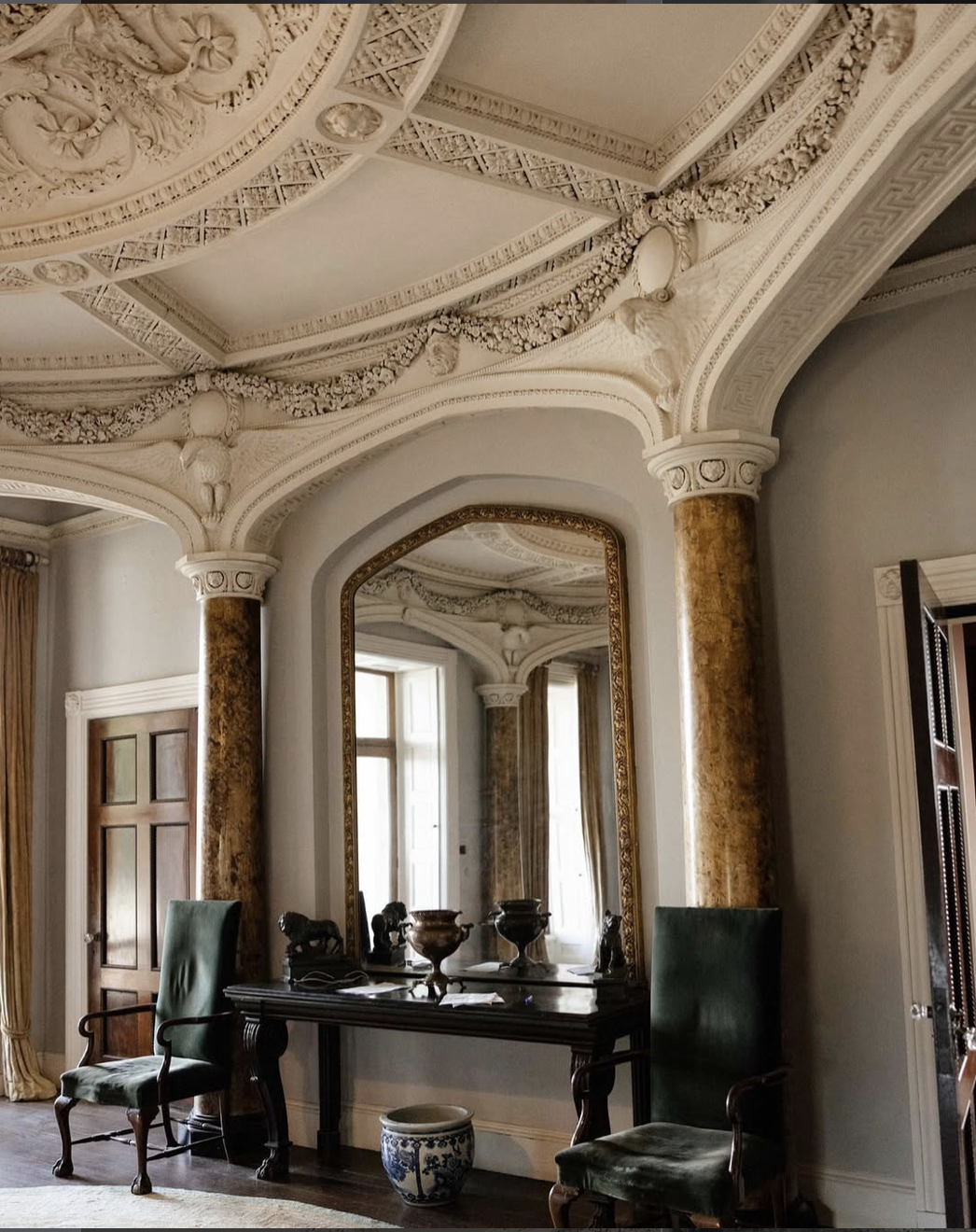
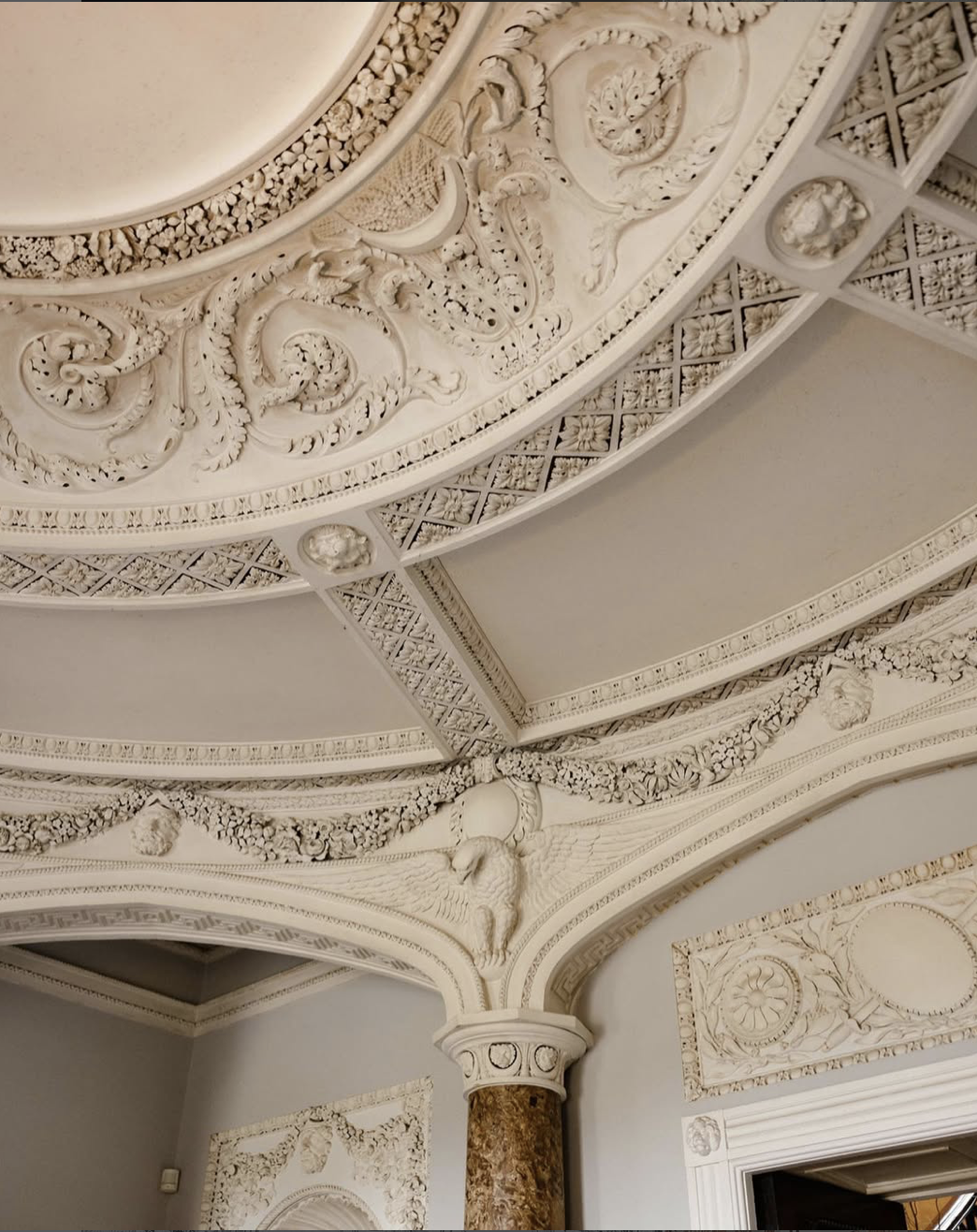
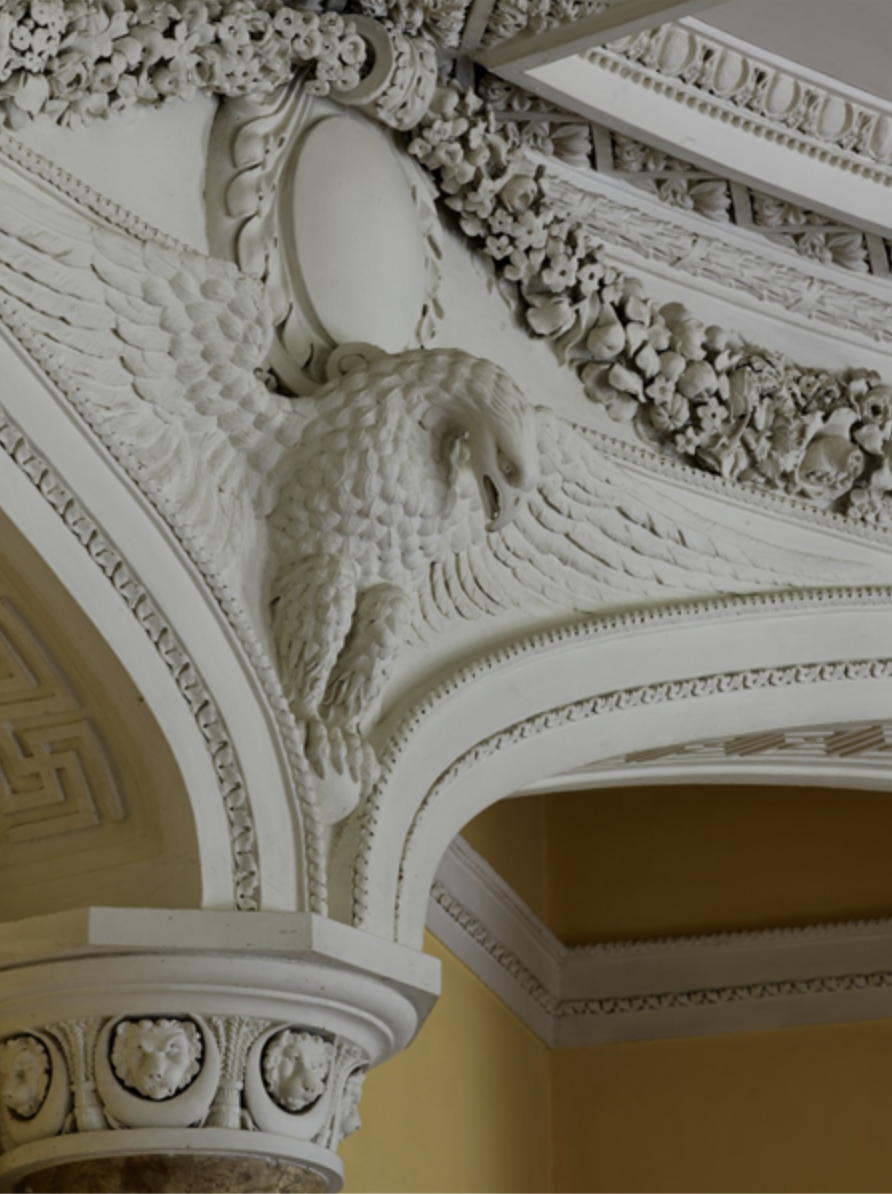
The front hall is square but is decorated with a circular ceiling of rich plasterwork, “treated as a rotunda with segmental pointed arches and scagliola columns; eagles in high relief in the spandrels of the arches and festoons above,” as Mark Bence-Jones describes in his inimitable style [see 5, p. 45]. We were not allowed to take photographs but the Irish Aesthete’s site has terrific photographs [see 3]. The eagles represent strength and power. There are also the sheafs of wheat, crescent moons and lion heads, symbols from the family crest. Another common motif in the house is a Grecian key pattern.
Photograph by Paul Barker, 2011, from Country Life picture library.Borris House front hall, photograph from Borris House instagram, @karinalee.studioBorris House front hall, photograph from Borris House instagram, @karinalee.studioPhotograph by Paul Barker, 2011, from Country Life picture library.
The craftwork and furnishings of the house are all built by Irish craftsmen, including mahogany doors. There is a clever vent in the wall that brings hot air from the kitchens to heat the room.
We next went into the music room which has a beautiful domed oval ceiling with intricate plasterwork. It includes the oak leaf for strength and longevity.
The drawing room has another pretty Stapleton ceiling, more feminine, as this was a Ladies’ room. It has lovely pale blue walls, and was originally the front entrance to the house. When it was made into a circular room the leftover bits of the original rectangular room form small triangular spaces, which were used as a room for preparing the tea, a small library with a bookcase, and a bathroom. The curved mahogany doors were also made by Irish craftsmen in Dublin, Mack, Williams and Gibton.
The dining room has more scagliola columns at one end, framing the serving sideboard, commissioned specially by Morrison for Borris House. It was sold in the 1950s but bought back by later owners. [10] The room has more rich plasterwork by Michael Stapleton: a Celtic design on the ceiling, and ox skulls represent the feasting of Chieftains. With the aid of portraits in the dining room, the guide told us more stories about the family. It was sad to hear how Arthur had to put an end to the tradition of the locals standing outside the dining room windows, and gentry inside, to observe the diners. He did not like to be seen eating, as he had to be fed.
The grand dining room, photograph courtesy of Borris House instagram.
We saw the portrait of Lady Susanna’s husband, whom her sister Charlotte Eleanor dubbed “Fat Thomas.” Eleanor formed a relationship with Sarah Ponsonby, and they ran away from their families to be together. As a result, Eleanor was taken to stay with her sister’s family in Borris House, and she must have felt imprisoned by her sister’s husband, hence the insulting moniker. Eleanor managed to escape and to make her way to Woodstock, the house in County Kilkenny where Sarah was staying. Finally their families capitulated and accepted their plans to live together. They set up house in Wales, in Llangollen, and were known as The Ladies of Llangollen They were visited by many famous people, including Anna Seward, William Wordsworth, Sir Walter Scott, Charles and Erasmus Darwin, Sir Arthur Wellesley and Josiah Wedgewood.
The Ladies of Llangollen, Sarah Ponsonby and Charlotte Eleanor Butler, by Richard James Lane, printed by Jérémie Graf, after Lady Mary Leighton (née Parker) courtesy of National Portrait Gallery NPG D32504.
Mark Bence-Jones describes an upstairs library with ceiling of alternate barrel and rib vaults, above a frieze of wreaths that is a hallmark of the Morrisons, which unfortunately we did not get to see. We didn’t get to go upstairs but we saw the grand Bath stone cantilevered staircase. The room was originally an open courtyard.
We then went out to the Ballroom, which was originally built by Arthur as a billiard room, with a gun room at one end and a planned upper level of five bedrooms. The building was not finished as planned as Arthur died. It is now used for weddings and entertainment.
In 1958 the house faced ruin when Joane Kavanagh’s husband Lieutenant Colonel Archibald Macalpine-Downie died, and she decided to move to a smaller house. However, her son, Andrew Macalpine-Downie, returned to Borris after a career as a jockey in England. with his wife Tina Murray. He assumed the name Kavanagh, and set himself the task of preventing the house from becoming a ruin. [11]
[2] p. 33, MacDonnell, Randal. The Lost Houses of Ireland. A chronicle of great houses and the families who lived in them. Weidenfeld and Nicolson. London, 2002.
The Borris website claims that the 1731 house was built for Morgan Kavanagh, but the Irish Aesthete Robert O’Byrne writes that the 1731 house was built by Brian Kavanagh, incorporating part of the fifteenth century castle. I have the date of 1720 as the death for Morgan Kavanagh and he has a son, Brian, so it could be the case that the house was commissioned by Morgan and completed by his son Brian.
[4] Joyce, Edmond. Borris House, Co. Carlow, and elite regency patronage. Four Courts Press, Dublin, 2013.
and Mark Bence-Jones. A Guide to Irish Country Houses [originally published as Burke’s Guide to Country Houses volume 1 Ireland by Burke’s Peerage Ltd. 1978]; Revised edition 1988 Constable and Company Ltd, London.
This entry also has lovely pictures of the inside of Borris House and more details about the history of the house and family.
[7] p. 130. O’Toole, Jimmy. The Carlow Gentry: What will the neighbours say! Published by Jimmy O’Toole, Carlow, Ireland, 1993. Printed by Leinster Leader Ltd, Naas, Kildare.
[9] for more on the Butlers see John Kirwan’s book, The Chief Butlers of Ireland and the House of Ormond, An Illustrated Genealogical Guide, published by Irish Academic Press, Newbridge, County Kildare, 2018. Stephen and I went to see John Kirwan give a fascinating talk on his book at the Irish Georgian Society’s Assembly House in Dublin.
[10] p. 115. Fitzgerald, Desmond et al. Great Irish Houses. Published by IMAGE Publications Ltd, Dublin, 2008.
[11] p. 134. O’Toole, Jimmy. The Carlow Gentry: What will the neighbours say! Published by Jimmy O’Toole, Carlow, Ireland, 1993. Printed by Leinster Leader Ltd, Naas, Kildare.



































 Irish Historic Houses