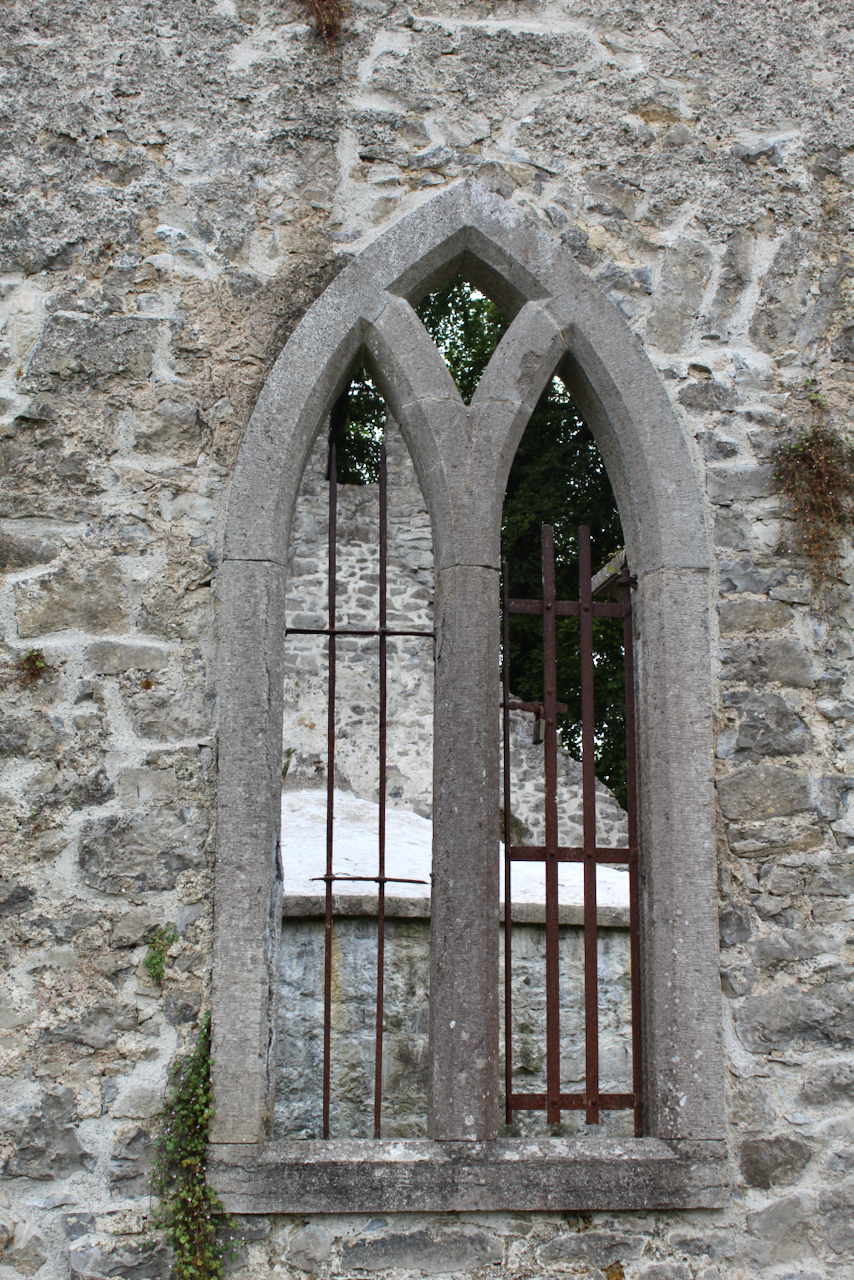
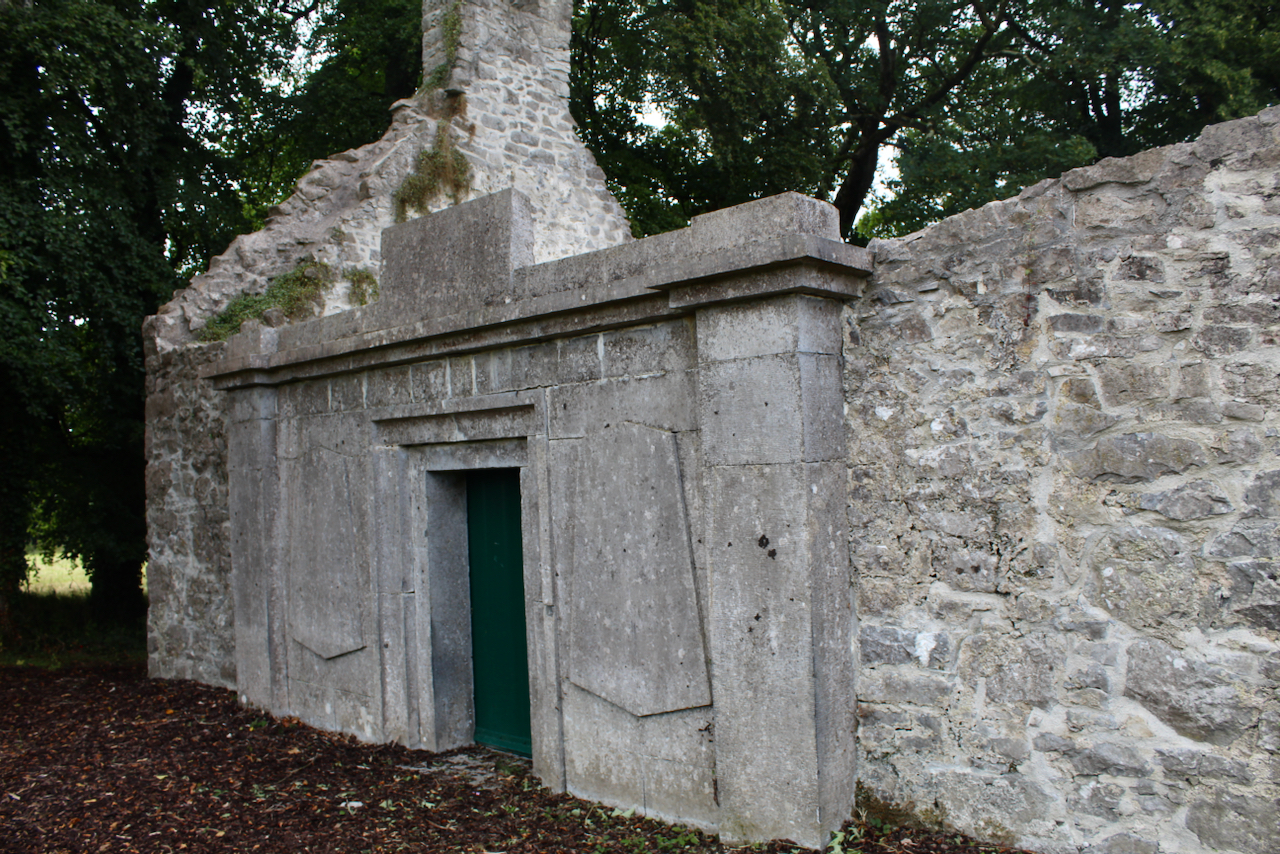
Derreen Gardens, Lauragh, Tuosist, Kenmare, Co. Kerry – section 482

https://www.derreengarden.com/

Open dates in 2025: all year, 10am-6pm

Fee: adult/OAP/student €10, child €5, family ticket €30 (2 adults & all accompanying children under18) 20% discount for groups over 10 people

2025 Diary of Irish Historic Houses (section 482 properties)

To purchase an A5 size 2025 Diary of Historic Houses (opening times and days are not listed so the calendar is for use for recording appointments and not as a reference for opening times) send your postal address to jennifer.baggot@gmail.com along with €20 via this payment button. The calendar of 84 pages includes space for writing your appointments as well as photographs of the historic houses. The price includes postage within Ireland. Postage to U.S. is a further €10 for the A5 size calendar, so I would appreciate a donation toward the postage – you can click on the donation link.

€20.00
Donation

Help me to fund my creation and update of this website. It is created purely out of love for the subject and I receive no payment so any donation is appreciated! For this entry, I paid for petrol and the entrance fee for myself and Stephen.

€10.00
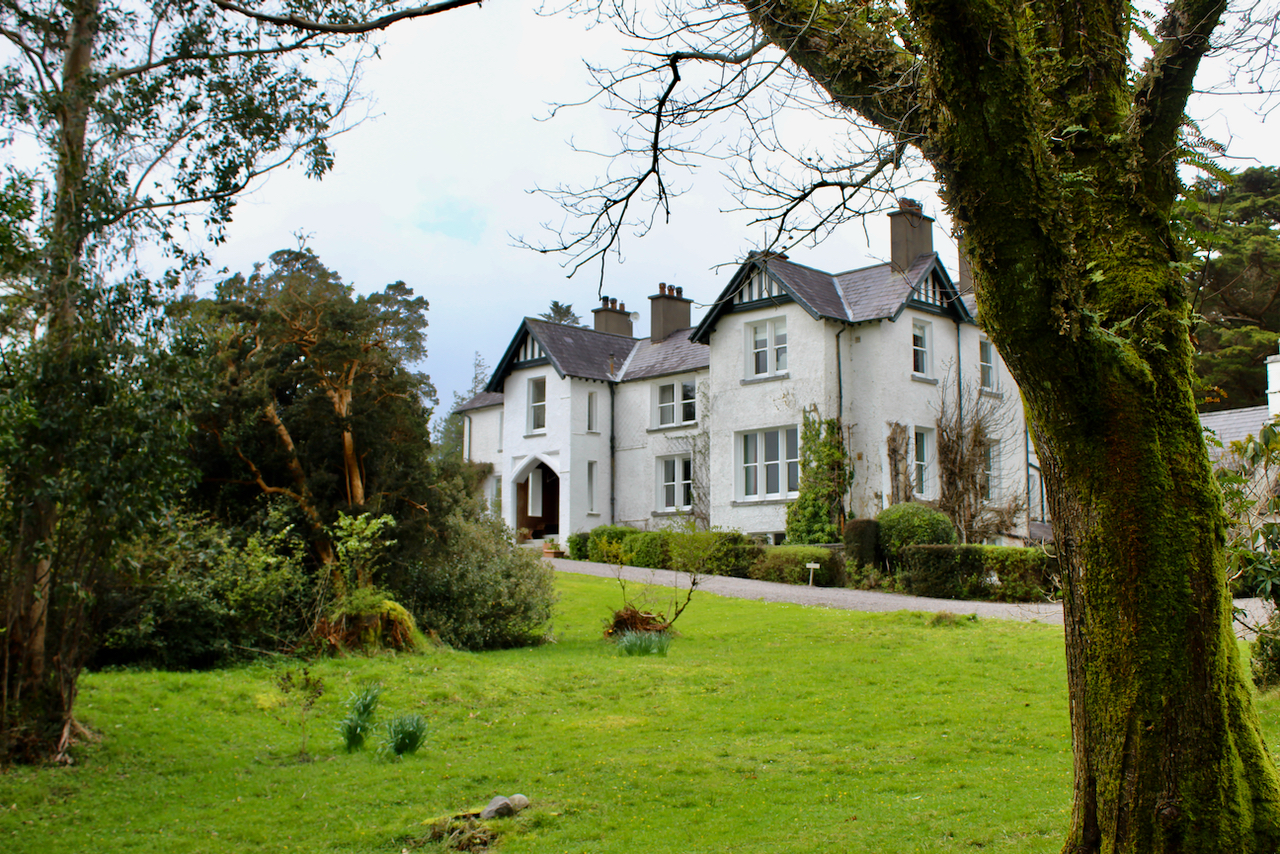
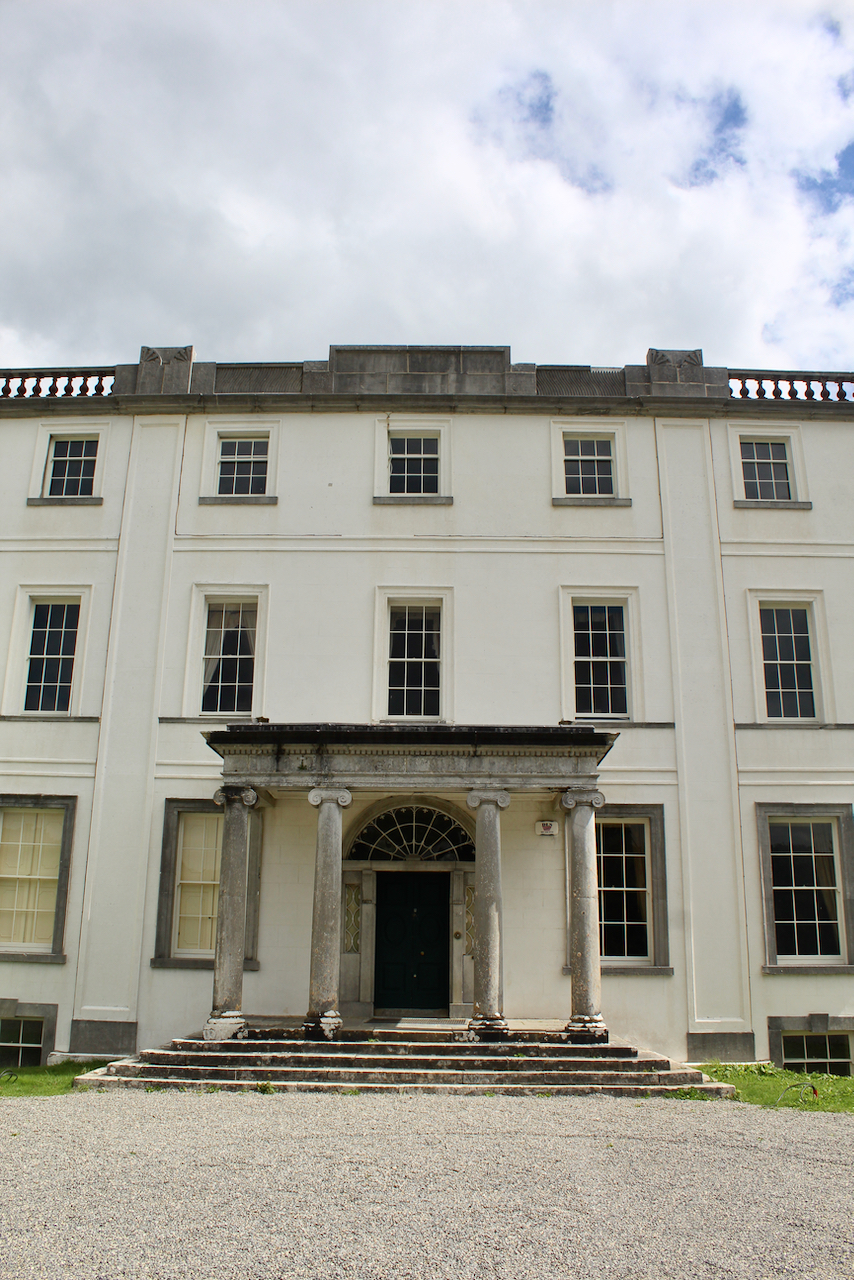
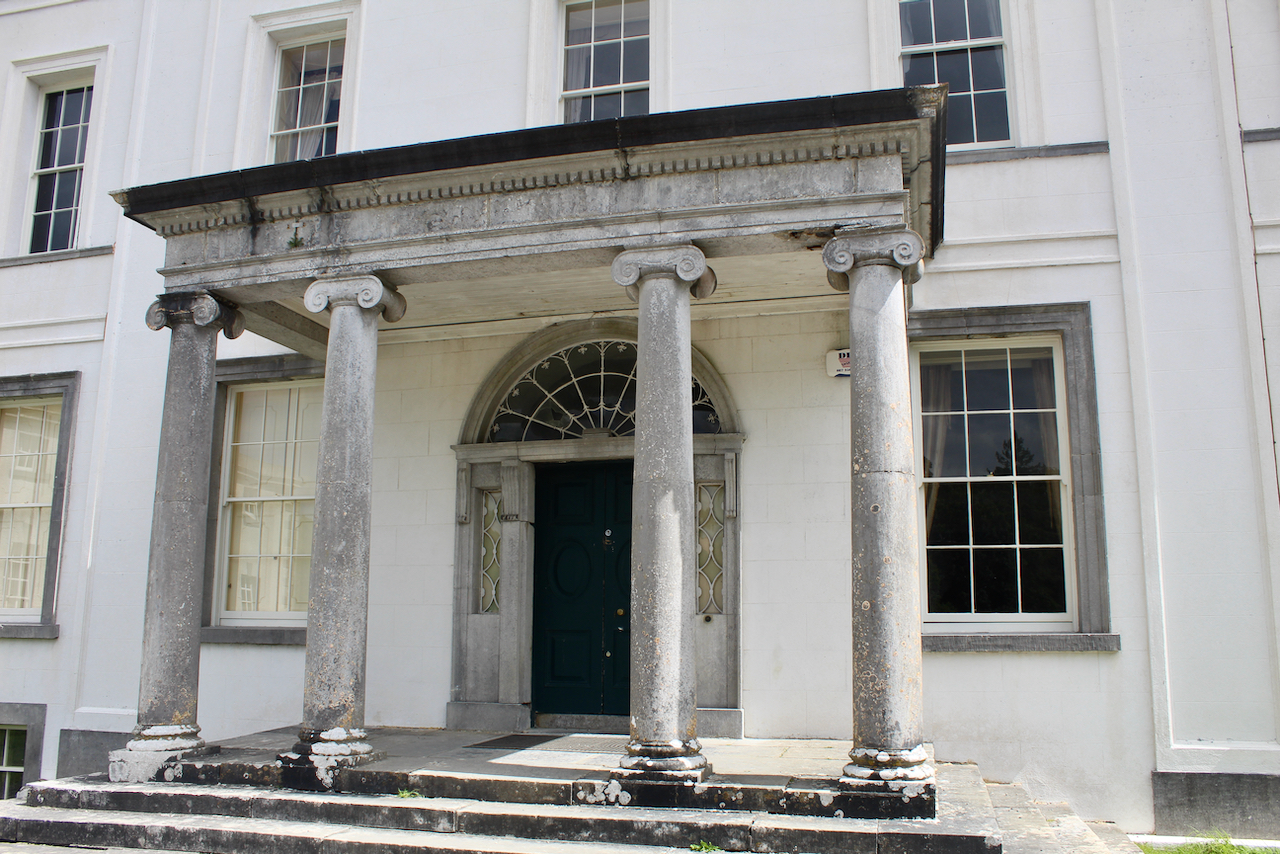
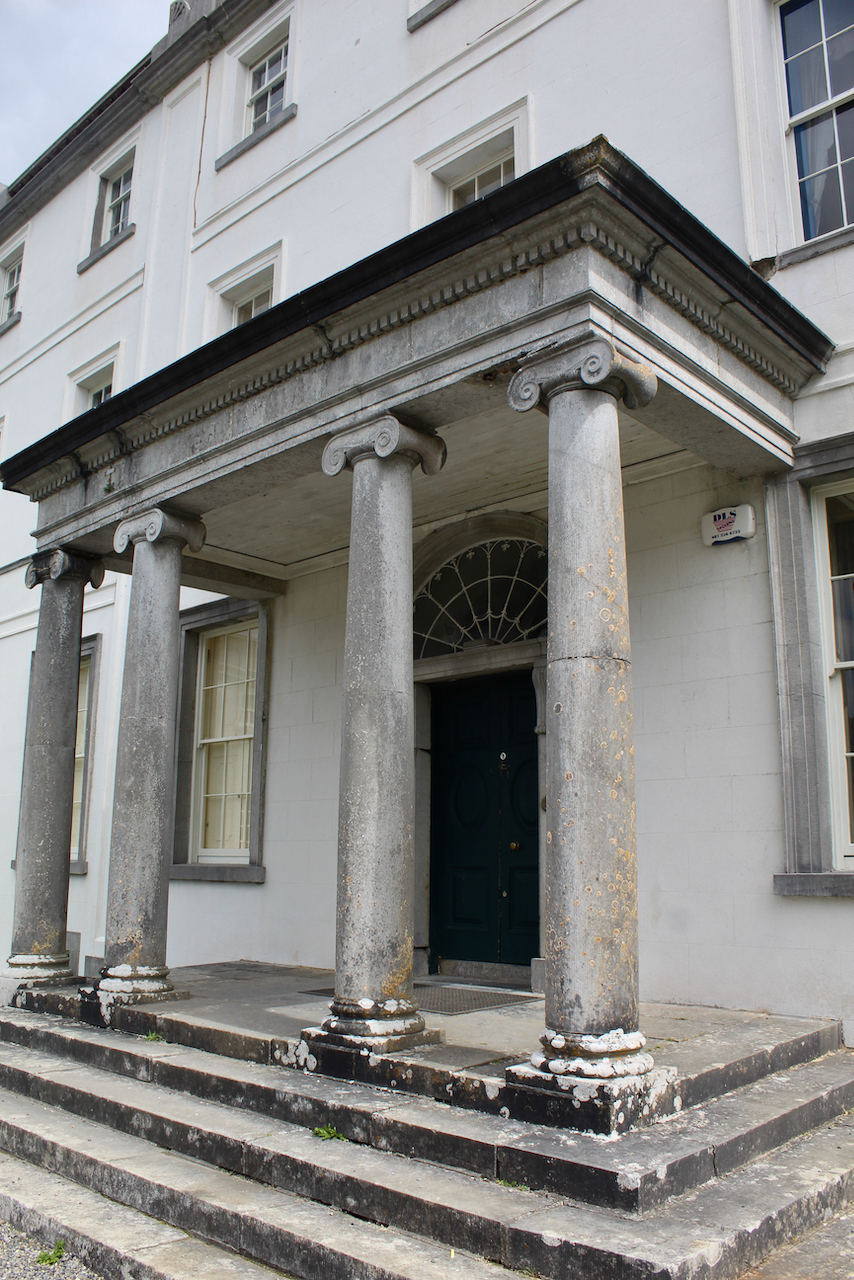
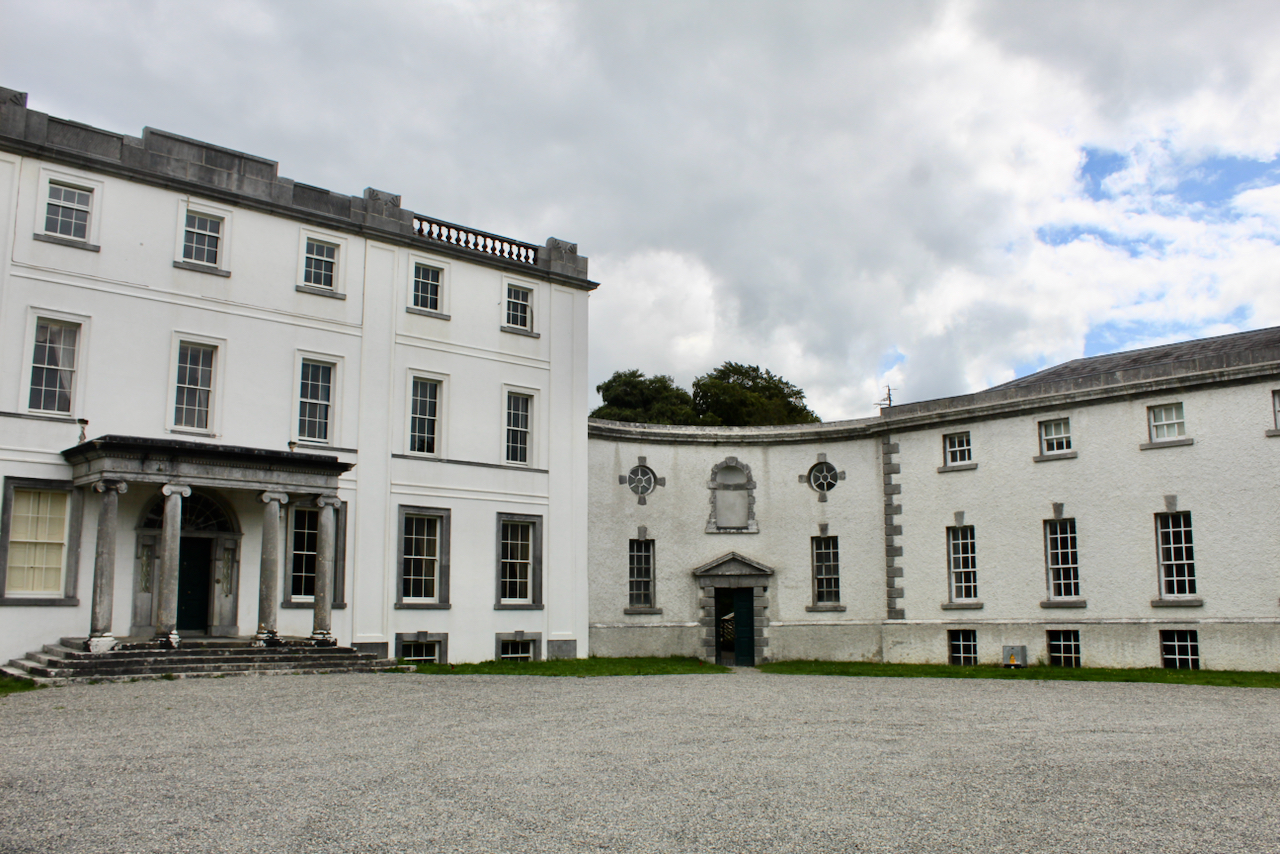
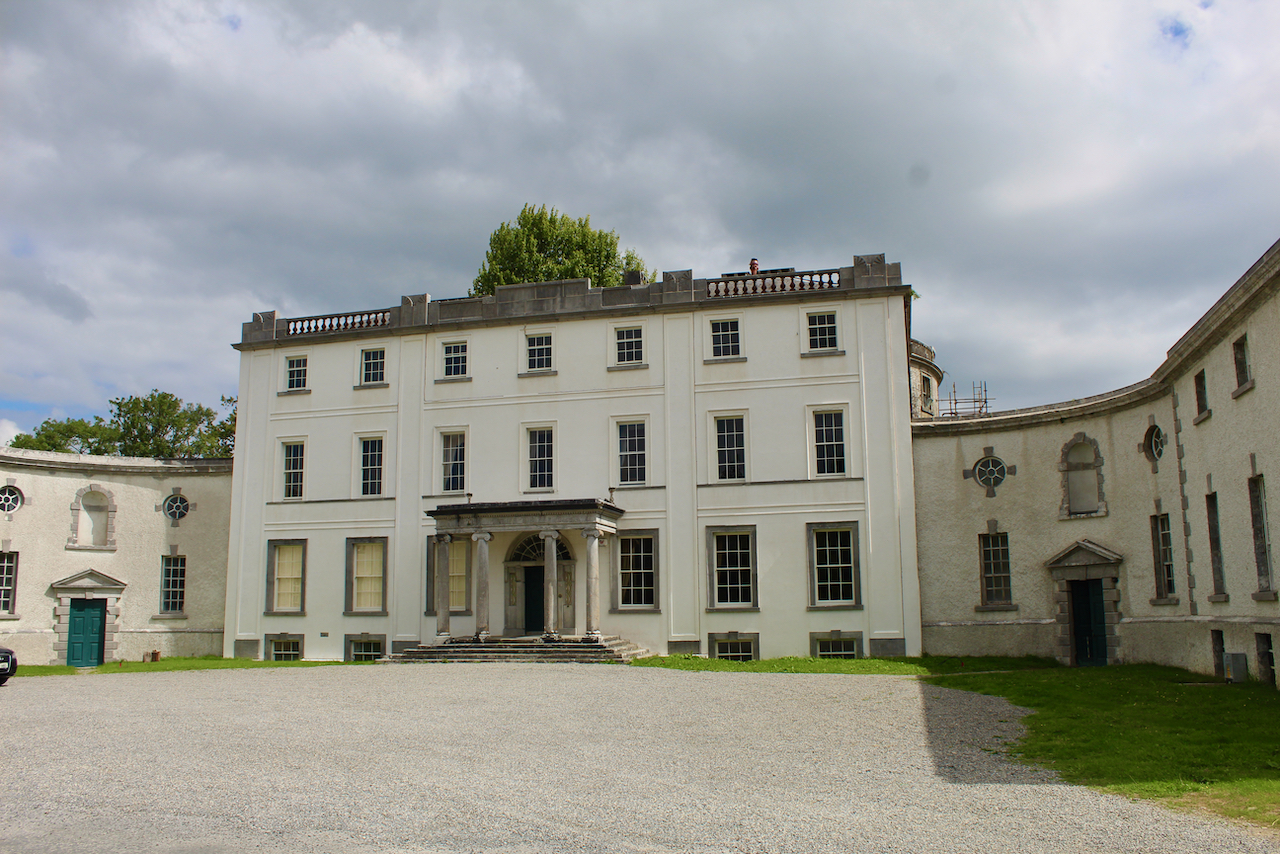
Derreen House, March 2023. It was designed by James Franklin Fuller, burnt in the early 1920s but rebuilt in the same style. It is not open to the public. Photograph © Jennifer Winder-Baggot, www.irishhistorichouses.com

We visited County Kerry at the end of March 2023, when few other Revenue Section 482 properties are open. I didn’t stop to think, however, that it might not be the best time to see the gardens of Kerry in their best state! However, some trees were in bloom, while others had dropped their blossoms.
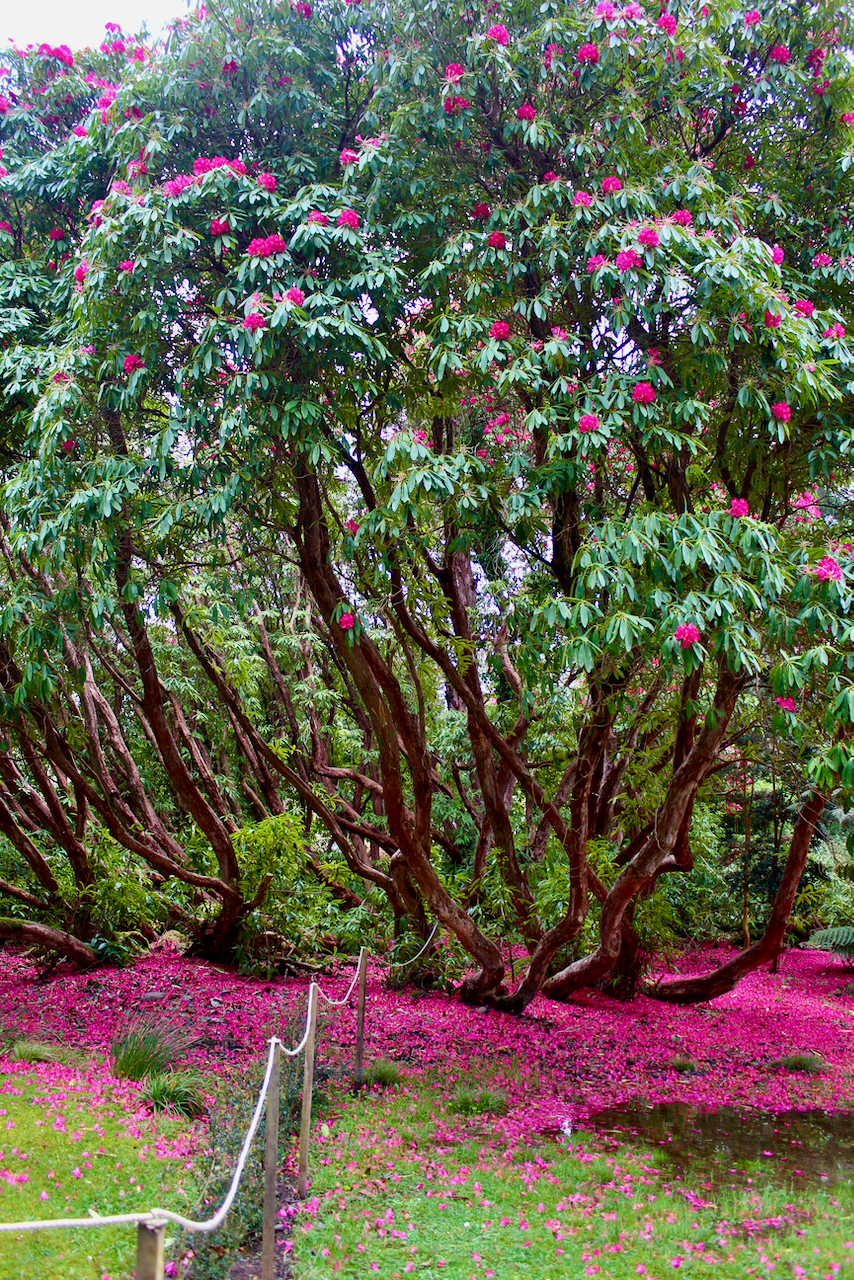
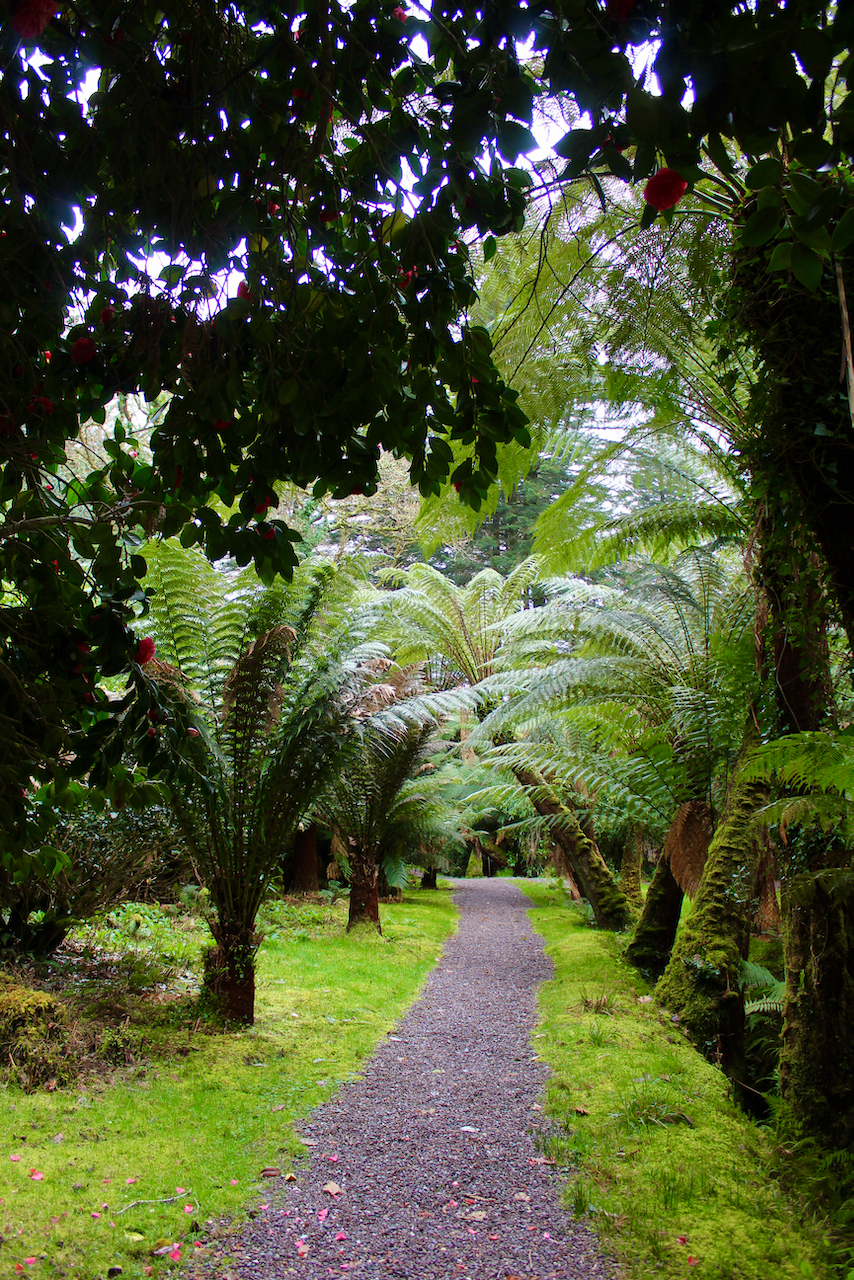
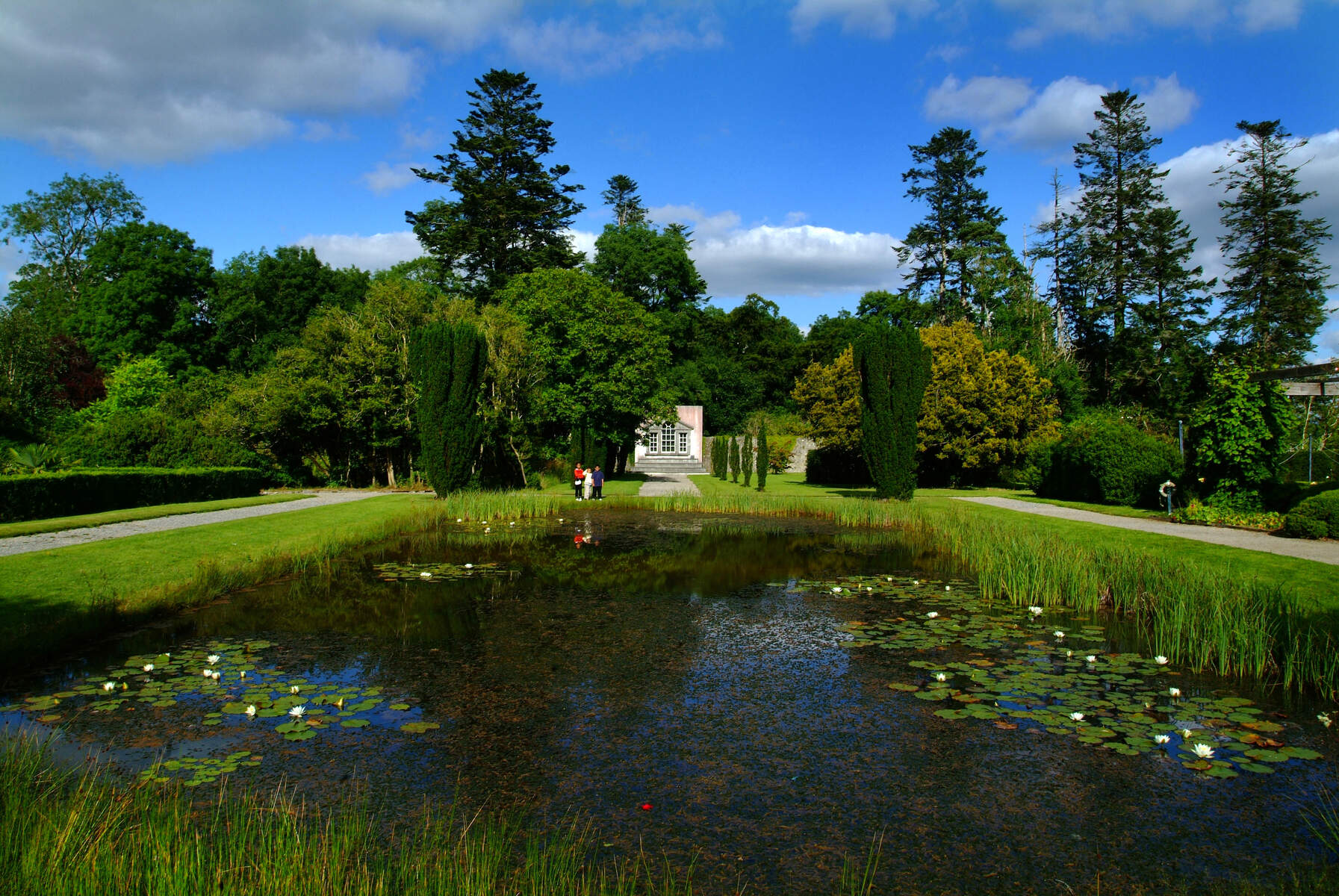
Derreen Gardens, 29th March 2023. Photograph © Jennifer Winder-Baggot, www.irishhistorichouses.com

Derreen is famous for its collection of rhododendrons and some of the Arboretum rhododendrons planted in the 1870s by the 5th Marquess of Lansdowne have grown to a size rarely seen elsewhere.

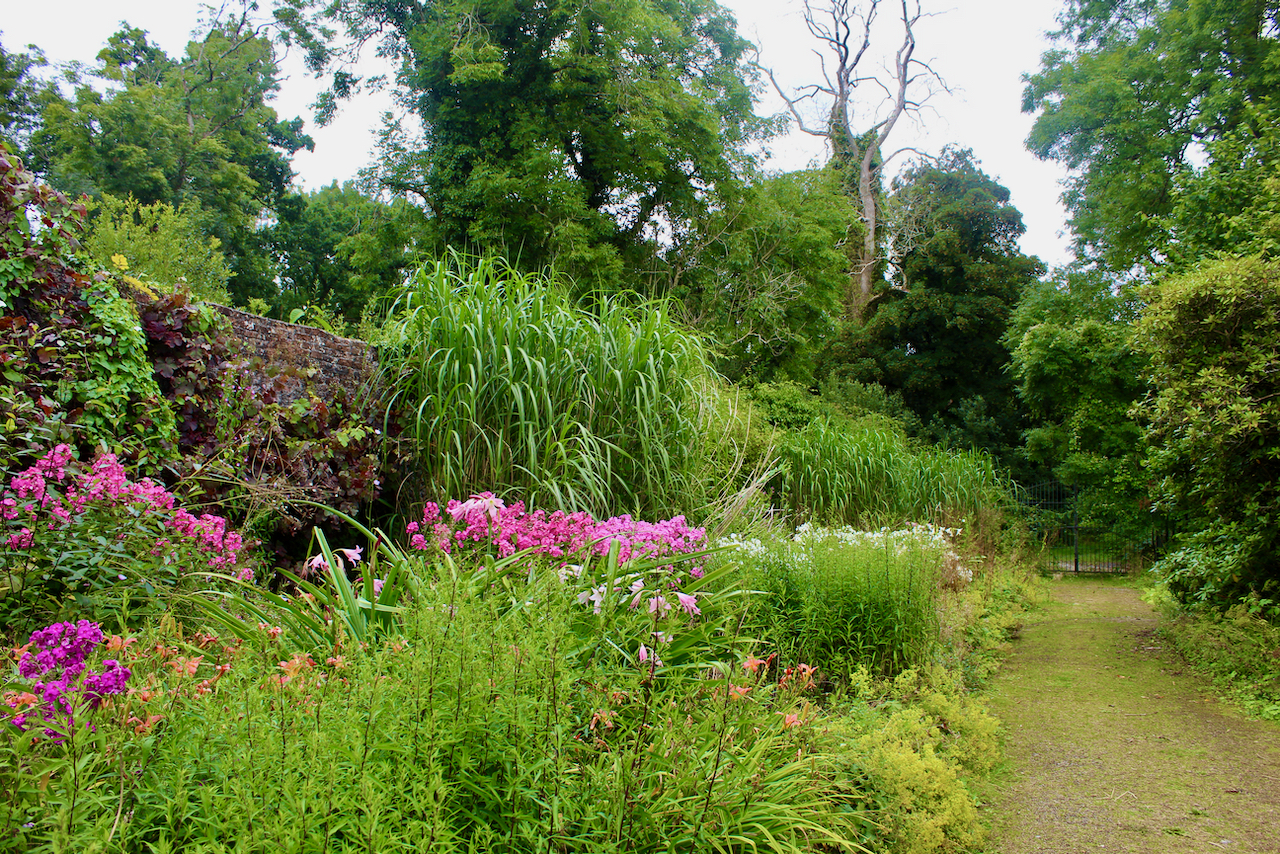
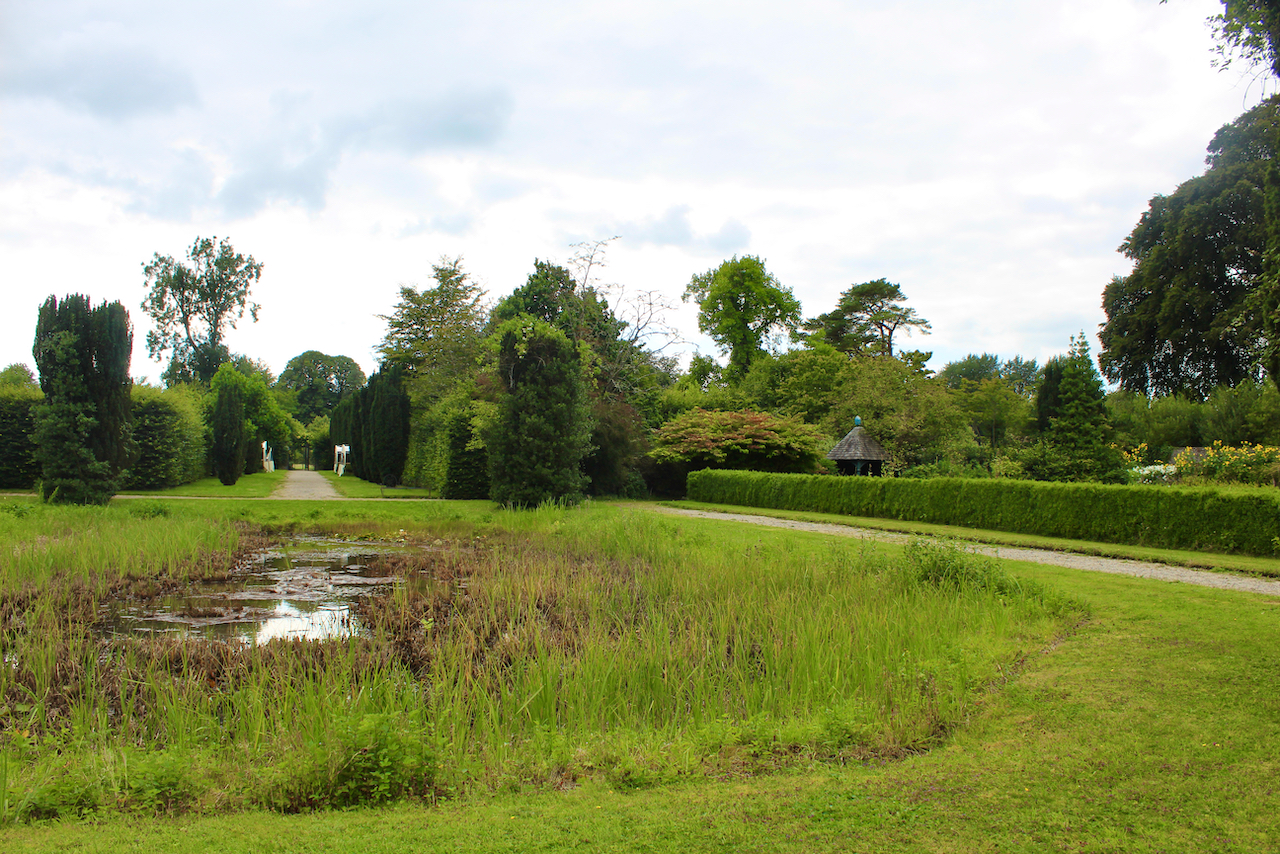
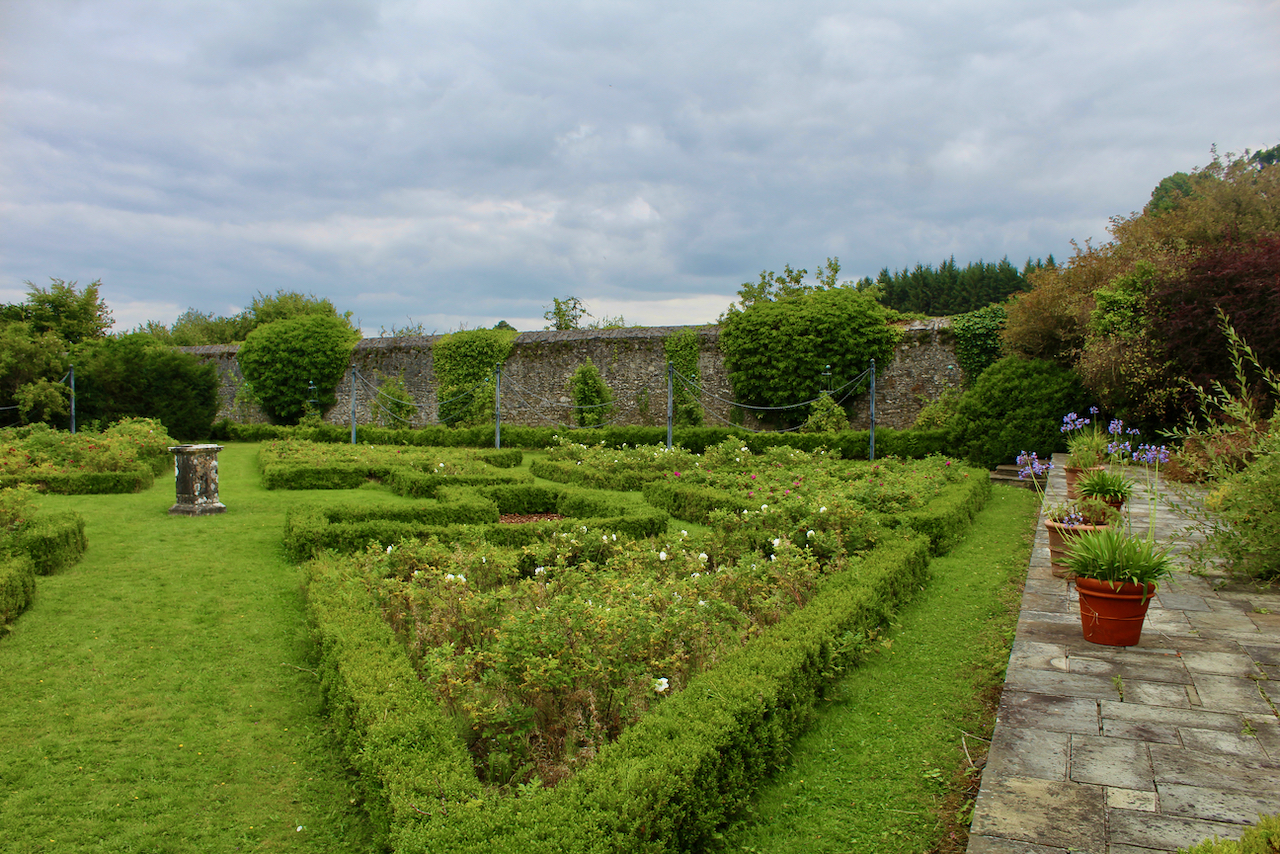
The house at Derreen is not on the Section 482 scheme, just the surrounding gardens. Derreen takes its name from the woods around it, as it means “little oak wood” in Gaelic. The gardens cover an area of 60 acres and include nearly eight miles of paths, which wind through mature and varied woodland, a garden laid out 150 years ago with subtropical plants from around the world and views of the sea and mountains.
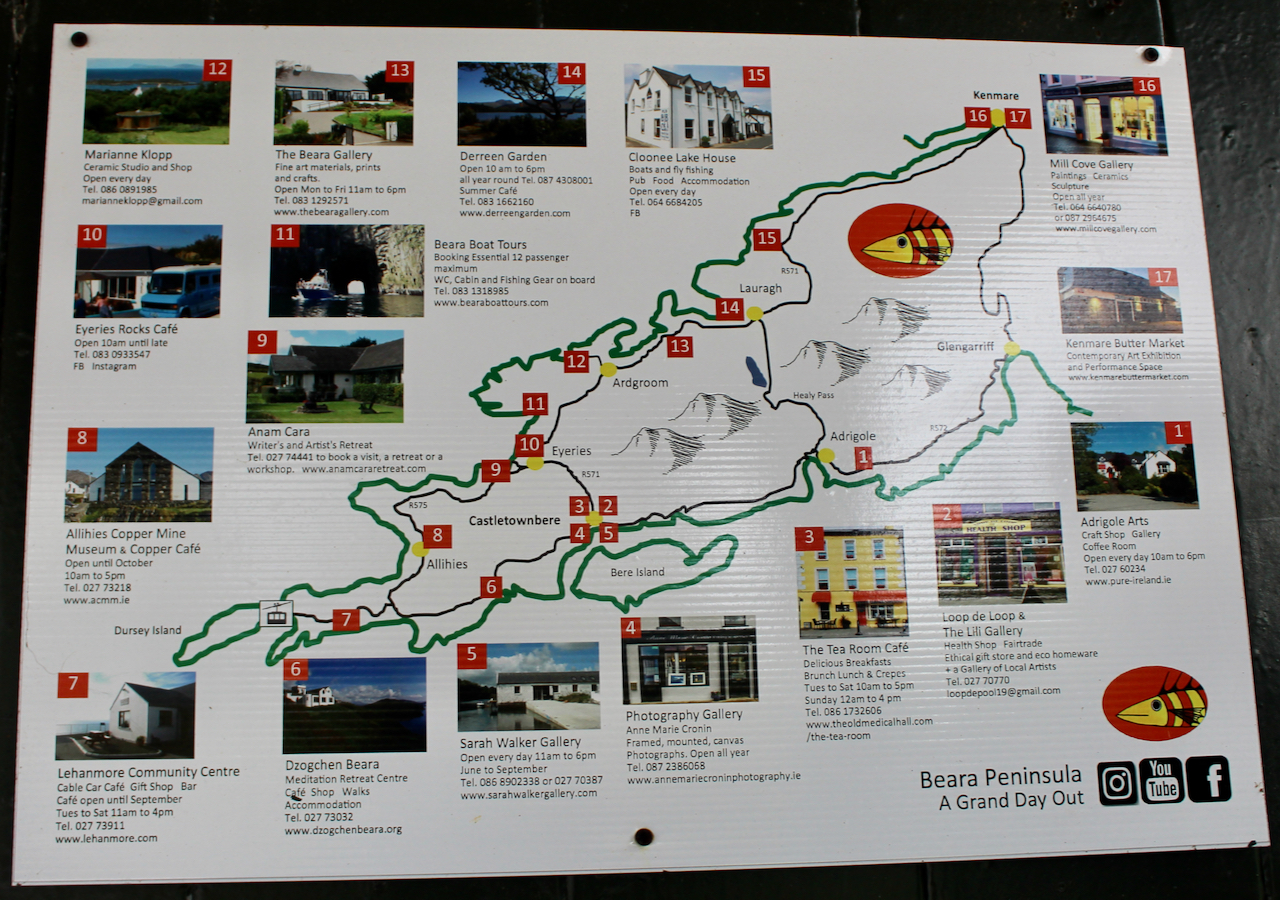
Derreen Gardens is number 14 on this map of the Beara Peninsula.
Derreen Gardens, March 2023. Photograph © Jennifer Winder-Baggot, www.irishhistorichouses.com
Derreen Gardens, 29th March 2023. Photograph © Jennifer Winder-Baggot, www.irishhistorichouses.com

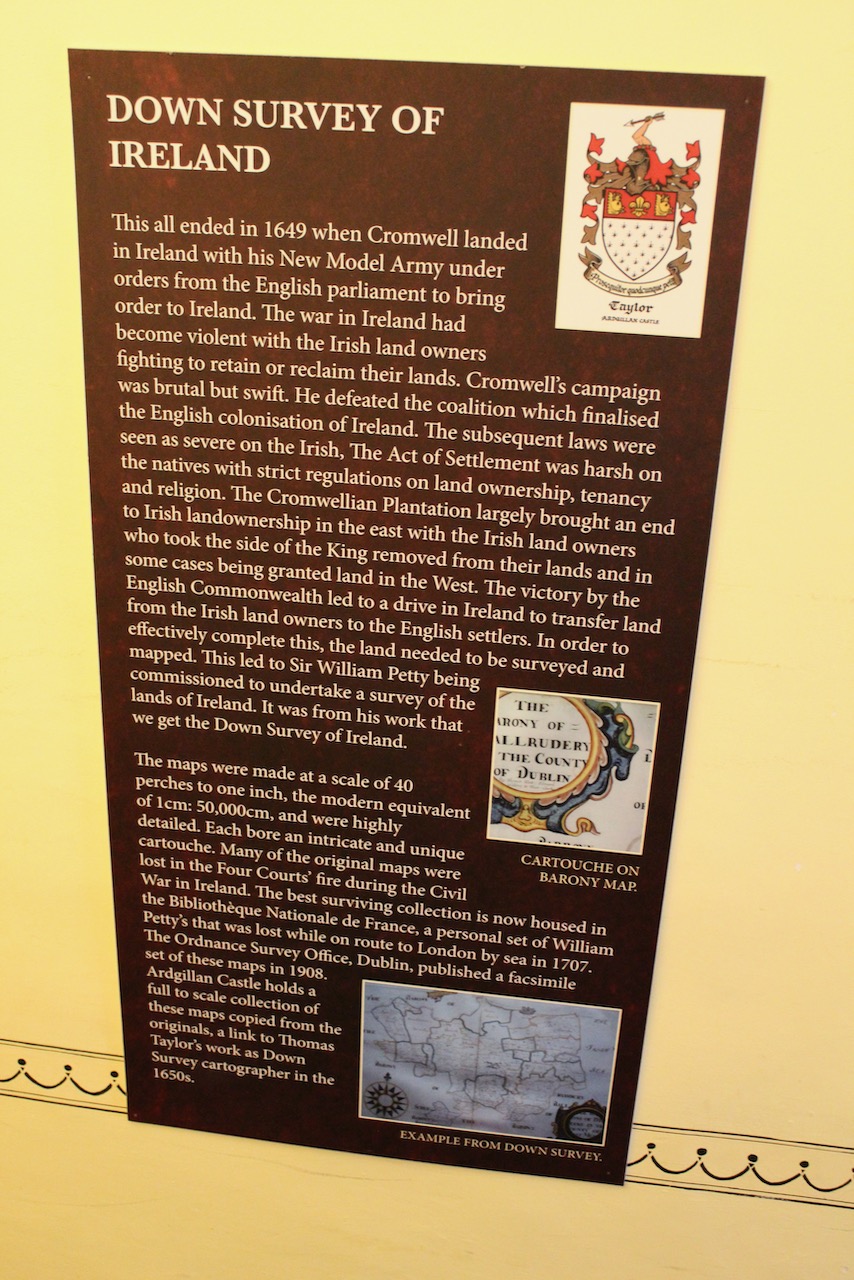
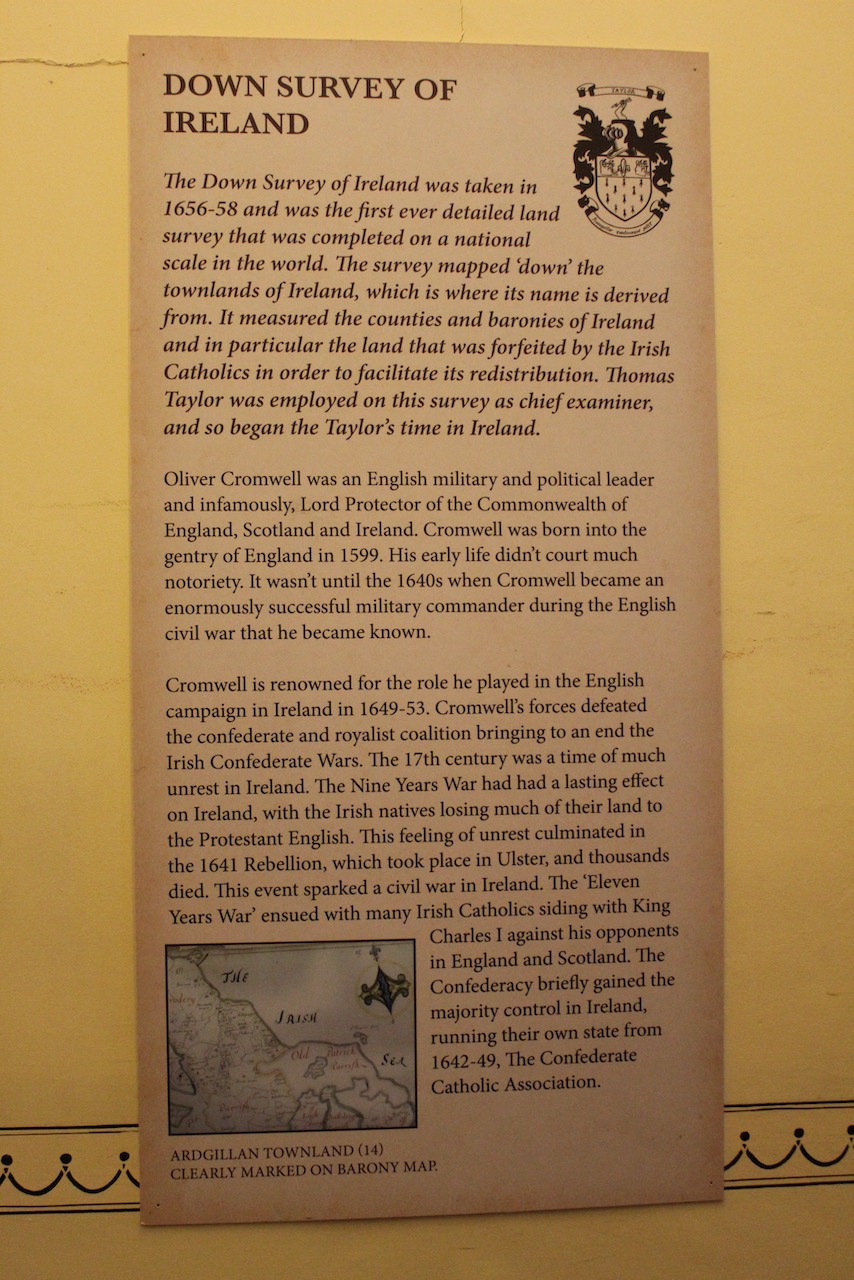
In 1657 the area was granted to William Petty (1623-1687), physician of Oliver Cromwell. In 1664, Petty undertook the survey of Ireland and by 1666 he had completed the measurement of 2,008,000 acres of forfeited land, for which, by contract, he was to receive one penny per acre. He also acquired an estate of £6,000 a year. [1] He received the baronies of Iveragh, Glanarought and Dunkerron in County Kerry as well as land in Counties Meath, Cork, Limerick and Offaly. These Kerry lands contained resources such as pearls in the river, silver in the mountains, and forest. He experimented, unsuccessfully, with iron making. There was already an iron-work in nearby Kenmare.

William Petty (1623-1687) by Isaac Fuller circa 1651, National Portrait Gallery of London ref. 2924.
Down Survey of Ireland information board in Ardgillan Castle, Dublin.

He married Elizabeth Waller (1636-1708), who had been previously married to Michael Fenton of Mitchellstown in County Cork.

The Dictionary of Irish Biography tells us that from 1659 Petty divided his time between London and Dublin and that, despite some London properties, Ireland supplied the bulk of his wealth.

In 1684 the Dublin Philosophical Society was founded and Petty was elected as its first president.

William Petty died of gangrene in his foot in 1687. He had refused a peerage, but after he died, Elizabeth née Waller was created Baroness Shelburne in her own right by King James II, in 1688. On the same day her eldest son by William Petty, Charles Petty (1672-1696), became Baron Shelburne.
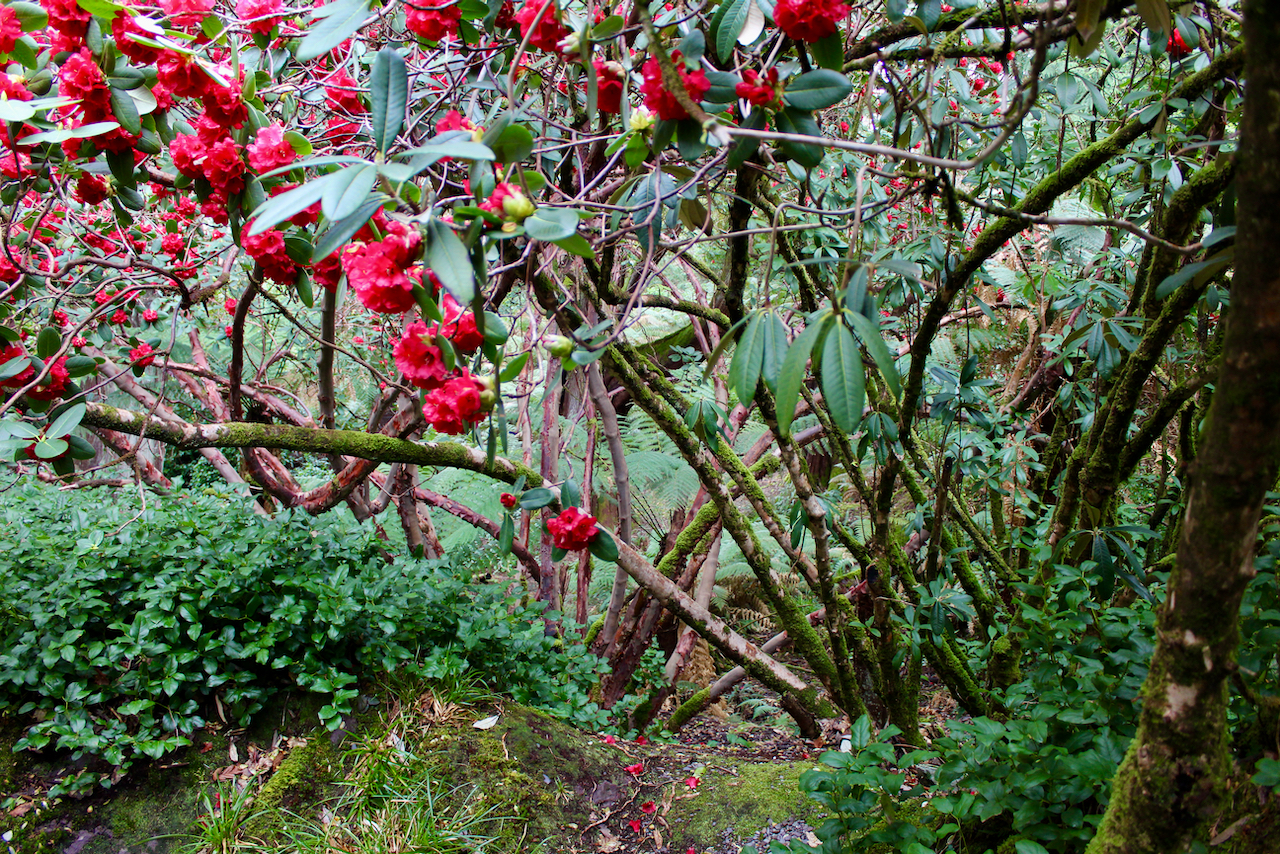
Derreen Gardens, March 2023. Photograph © Jennifer Winder-Baggot, www.irishhistorichouses.com

Charles Baron Shelburne married Mary Williams (d.1710) but they had no children. After he died, she married Lt.-Gen. Henry Conyngham (d. 1705/6) of Mountcharles County Donegal and of Slane Castle in County Meath (another Section 482 property and the first one we visited when I undertook this project! See my entry).

William Petty and Elizabeth née Waller’s second son, Henry (1675-1751) was created Viscount Dunkerrin and Earl of Shelburne in the Irish Peerage. He married Arabella Boyle (d. 1740) daughter of Charles Boyle, 2nd Baron Clifford of Lanesborough, County York in England and 3rd Viscount Dungarvan, County Waterford. They had no sons but a daughter, Anne Fitzmaurice Petty. She married Francis Bernard (1698-1793) of Castle Bernard, County Cork (now an impressive ruin).

Castle Bernard ruins in County Cork, photograph courtesy of National Inventory of Architectural Heritage.

Since Henry Petty 1st Earl of Shelburne had a daughter but no sons his estates passed to his nephew John Fitzmaurice who changed his surname to Petty. The earldom of Shelburne was revived for John in 1753.
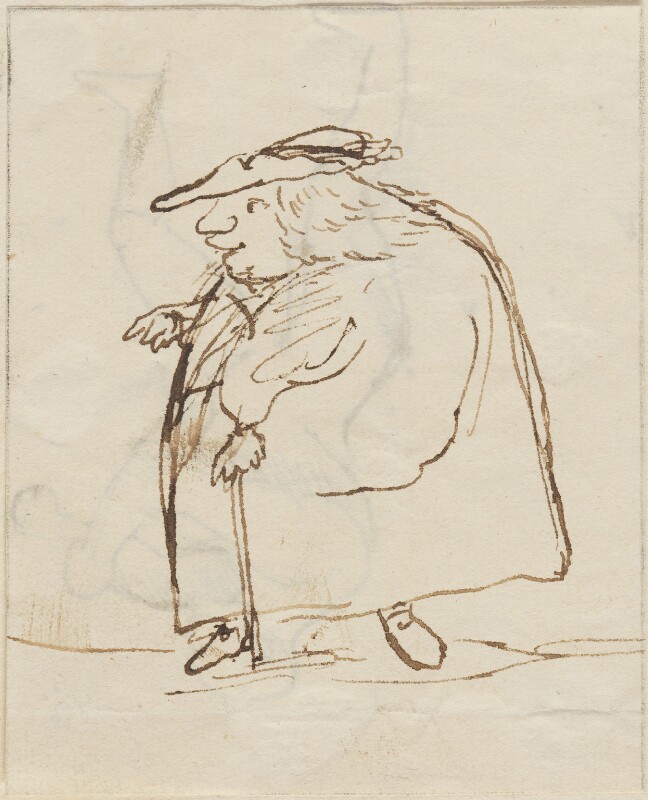
A sketch of Henry Petty (1675-1751) Earl of Shelburne by George Townshend, 4th Viscount and 1st Marquess Townshend National Portrait Gallery of London ref. 4855(15)

William Petty and Elizabeth née Waller’s daughter Anne (1671-1737) married Thomas Fitzmaurice (1668-1741), 21st Baron of Kerry, who became 1st Earl of Kerry. He was MP for County Kerry and a Privy Counsellor in Ireland. At the same time as being created Earl of Kerry in January 1722/23, he was created 1st Viscount Clanmaurice.

His grandson, the Marquess of Lansdowne, wrote of him, “my grandfather did not want the manners of the country nor the habits of his family to make him a tyrant. He was so by nature. He was the most severe character which can be imagined, obstinate and inflexible; he had not much understanding, but strong nerves and great perseverance, and no education, except what he had in the army, where he served in his youth, with a good degree of reputation for personal bravery and activity. He was a handsome man and, luckily for me and mine, married a very ugly woman, who brought into his family whatever degree of sense may have appeared in it, or whatever wealth is likely to remain in it, the daughter of Sir William Petty… With all this he had high principles of honour and a strict love of justice, which made him govern the country better than he did his own family… His children did not love him, but dreaded him; his servants the same.” [2]
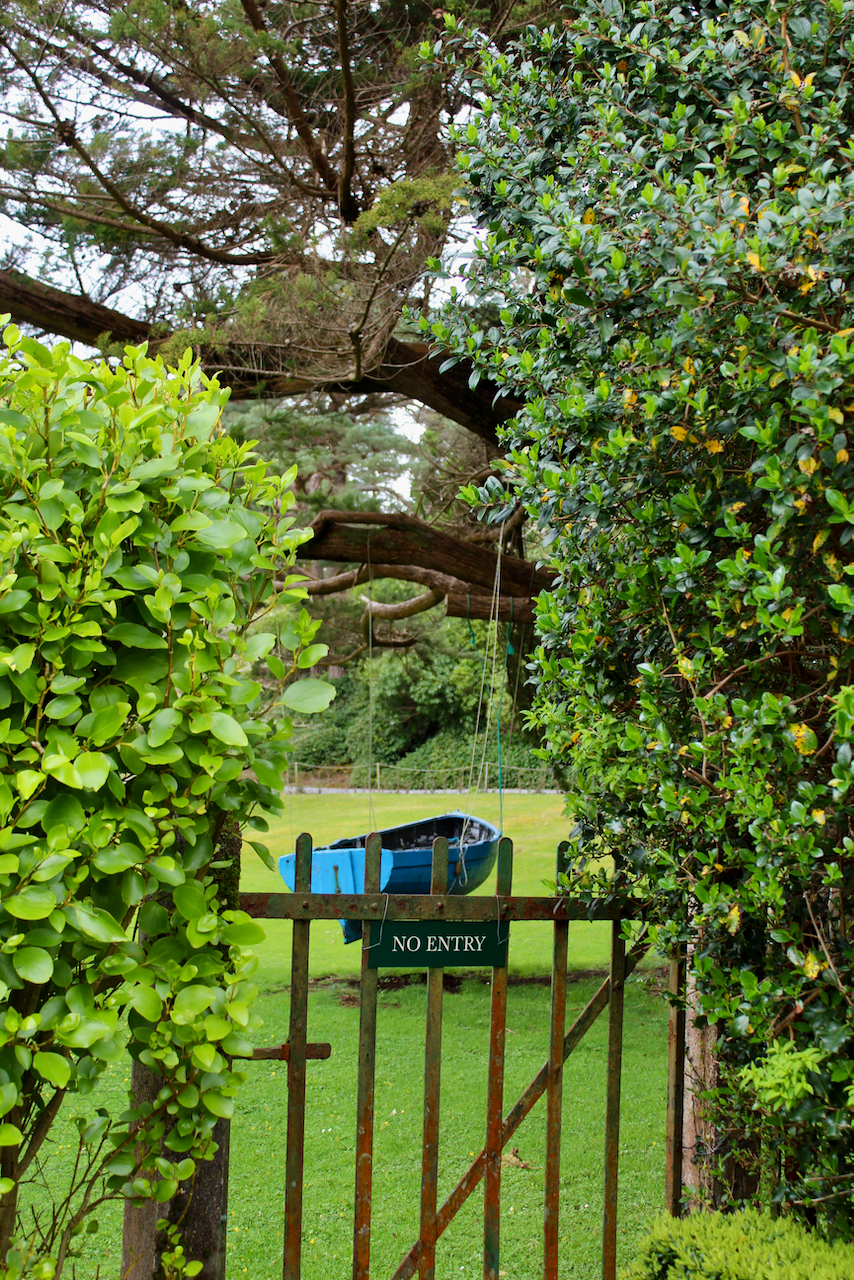
By Derreen House, March 2023. Photograph © Jennifer Winder-Baggot, www.irishhistorichouses.com

The Landed Estates Database tells us the 1st Earl of Kerry had two younger brothers, William of Gallane, County Kerry, ancestor of the Fitzmaurices of Springfield Castle, County Limerick and John who had an only child Anne who married her cousin of Springfield Castle (you can rent the castle, see my Places to Visit and Stay in County Limerick entry. [3]

The property passed through the family of the Marquesses of Lansdowne. Timothy William Ferres tells us that the Marquesses of Lansdowne owned the greatest amount of land in Kerry, more than any other landowners in Kerry, with 94,983 acres. [see 1]

Derreen Gardens, March 2023. Photograph © Jennifer Winder-Baggot, www.irishhistorichouses.com

The 1st Earl’s daughter Elizabeth Anne (d. 1757) married Maurice Crosbie, 1st Baron Branden (circa 1689-1762). His daughter Arabella married Colonel Arthur Denny (d. 1742), MP and High Sheriff of County Kerry. Another daughter, Charlotte (d. 1774), married John Conway Colthurst (1722-1775) 1st Bt. of Ardrum, County Cork.

The 1st Earl’s eldest son, William Fitzmaurice (1694-1747) held the offices of Lord-Lieutenant of County Kerry and Custos Rotulorum of County Kerry, Governor for the county and Privy Counsellor. He married Elizabeth Moss but they had no children and she died and he subsequently married Gertrude Lambart in 1738, daughter of Richard Lambart (d. 1741) 4th Earl of County Cavan and 4th Viscount Kilcoursie, in the King’s County.

Their daughter Anna Maria FitzMaurice (d. 1808) married Maurice Fitzgerald (d. 1780) 16th Knight of Kerry.

William and Gertrude’s son Francis Thomas FitzMaurice became 3rd Earl of Kerry after his father died in 1747. Horace Walpole described him as “a simple young Irish Peer, who had married an elderly Irishwoman that had been divorced on his account, and had wasted a vast estate in the idlest ostentation.” [see 2] This elderly Irishwoman was Anastasia Daly (d. 1799 and buried in Westminster Abbey!), she was daughter of Peter Daly and had been married to Charles Daly of County Galway and she obtained a divorce from him in 1768 by an Act of Parliament.
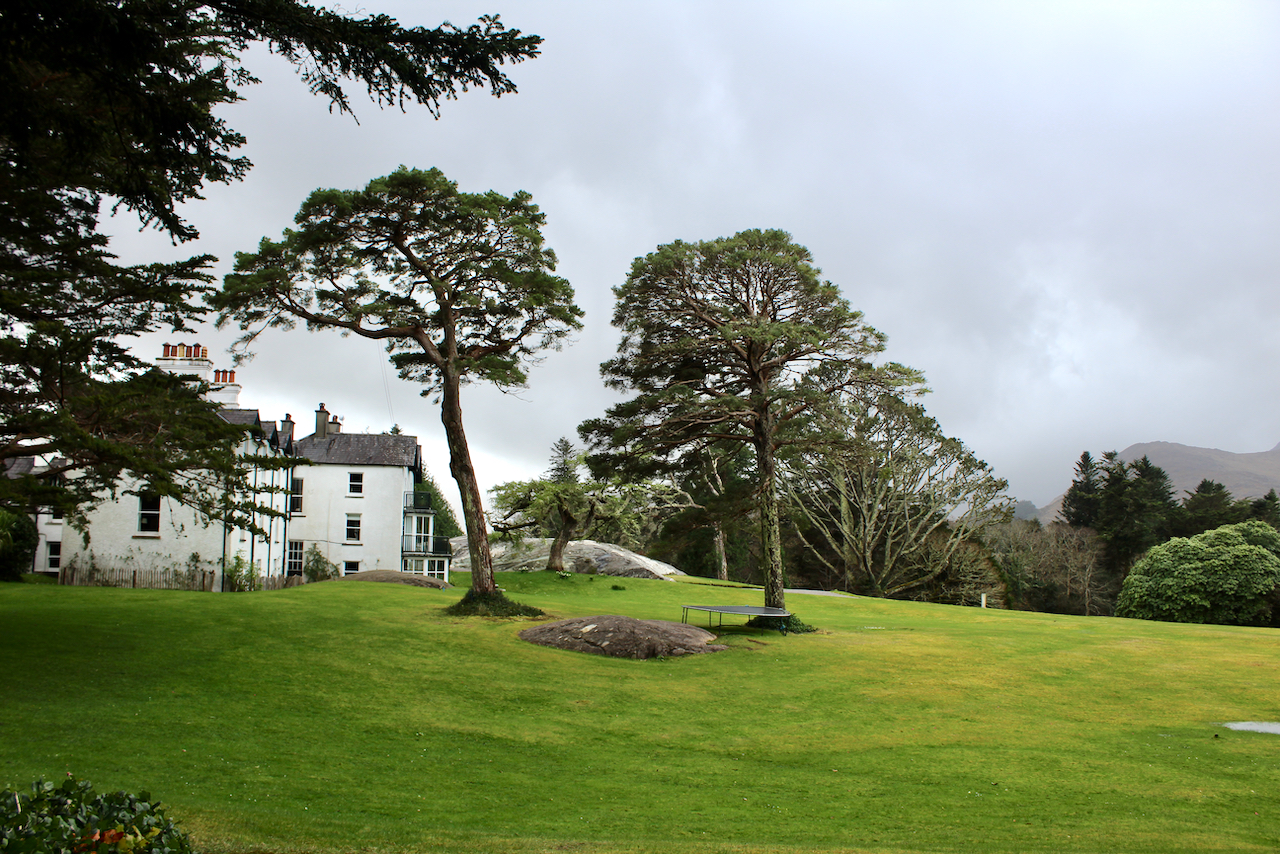
Derreen Gardens, March 2023. Photograph © Jennifer Winder-Baggot, www.irishhistorichouses.com

The Marquess of Lansdowne wrote that “the present Lord Kerry, after being educated under the direction of the Chancellor of Ireland, and being left a good deal to himself, fell in love with a married lady twenty years older than himself, the daughter of an eminent Roman Catholic lawyer, and, obtaining a divorce, married her—an extraordinary vain woman. Having their way to fight up to get into good company, and having no posterity, they sold every acre of land which had been in our family since Henry the Second’s time.” [see 1]

The Landed Estates Database tells us:

Francis, the 3rd Earl of Kerry was mostly an absentee landlord, his estates being administered by agents including Christopher Julian. Dickson writes that he sold much of his Kerry estates to Richard Hare in the 1780s. With his death in 1818 the connection between the Earls of Kerry and Lixnaw came to an end. The title was inherited by the Marquis of Lansdowne of Derreen, county Kerry who owned 1,526 acres in county Limerick in the 1870s.”

The 3rd Earl of Kerry and his wife had no son. The 1st Earl of Kerry and his wife Anne née Petty had a second son, John (1706-1761). It was this son who is mentioned above, who became the heir of his uncle Henry Petty 1st Earl of Shelburne, and he changed his surname to Petty in 1751. That year, he was created 1st Baron Dunkeron and 1st Viscount FitzMaurice. He held the office of Sheriff of County Kerry in 1732 and was a Whig MP for County Kerry from 1743-1751. He was created 1st Earl of Shelburne, County Wexford in 1753. He was Governor of County Kerry and a Privy Counsellor. Between 1754 and 1760 he was MP in England for Chipping Wycombe, County Buckinghamshire and in 1760 he was created was created 1st Lord Wycombe, Baron of Chipping Wycombe [Great Britain].

Derreen Gardens, March 2023. Photograph © Jennifer Winder-Baggot, www.irishhistorichouses.com
Derreen Gardens, 29th March 2023. Photograph © Jennifer Winder-Baggot, www.irishhistorichouses.com

In 1734 he married his first cousin Mary Fitzmaurice, granddaughter of William Fitzmaurice, 18th Baron of Kerry and Lixnaw, daughter of William of Gullane, a brother of the 1st Earl of Kerry.

John Petty and his wife Mary née Fitzmaurice had two sons. The eldest, William (1737-1805), was born under his father’s original surname of Fitzmaurice but changed his name to Petty when his father changed his name. He rose to the position of Prime Minister of England.
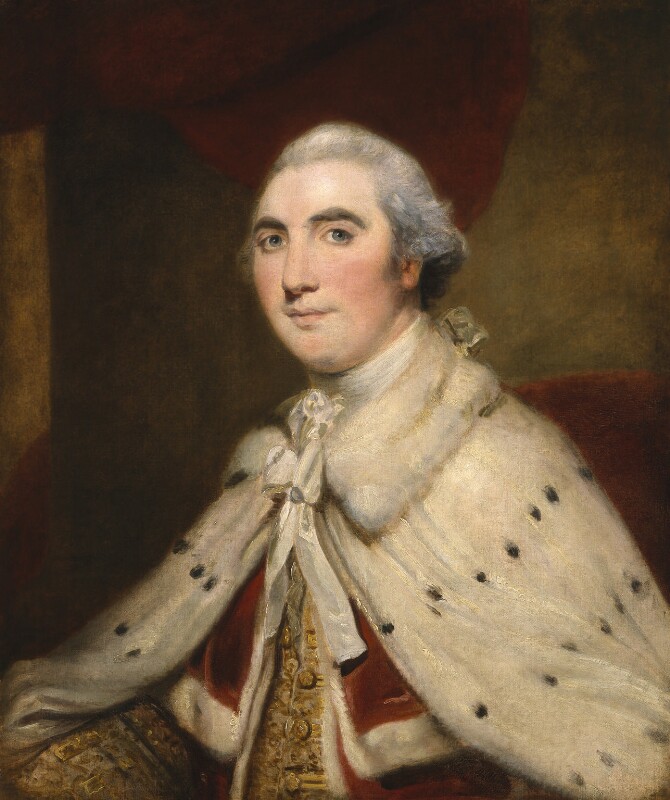
William Petty (1737-1805) 1st Marquess of Lansdowne, Lord Shelburne, Prime Minister, after Sir Joshua Reynolds based on a work of 1766, National Portrait Gallery of London ref. 43.

William was called Viscount FitzMaurice between 1753 and 1761. He served in the British army and then had an illustrious political career. He held the office of First Lord of Trade April-December 1763 and like his forebears, served as a Privy Counsellor. He held the office of “Secretary of State for the South” between July 1766 and October 1768, and was Foreign Secretary March-July 1782 and was made Knight, Order of the Garter.

He held the office of Prime Minister and First Lord of the Treasury between 13 July 1782 and 5 April 1783. He was nominated Prime Minister in 1782 after the death of the Marquess of Rockingham, under whom he had been Secretary of State for Foreign Affairs. He was created 1st Marquess of Lansdowne, County Somerset [Great Britain] on 6 December 1784.

The Shelbourne hotel in Dubiln is named after him.

First William Petty married Sophia Carteret, daughter of John Carteret, 2nd Earl Granville of England. Their son John Henry Petty (1765-1809), succeeded as 2nd Marquess of Lansdowne. He married but had no children.

John Henry Petty (1765-1809) 2nd Marquess of Lansdowne National Portrait Gallery of London ref. D37171.

After his wife Sophia died in 1771, William married Louisa Fitzpatrick (1755-1789) in 1779, daughter of John Fitzpatrick, 1st Earl of Upper Ossory. Their son Henry (1778-1863) succeeded his brother as 3rd Marquess of Lansdowne in 1809.
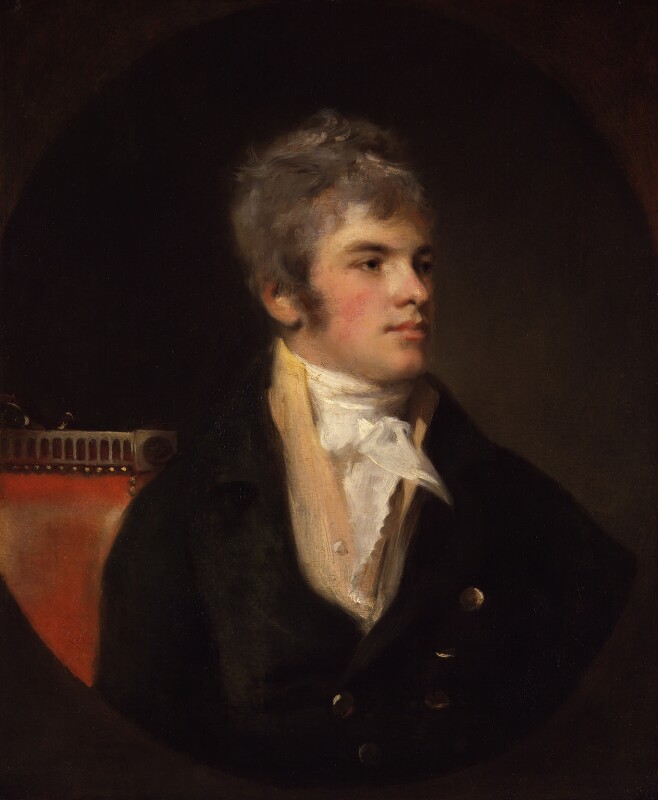
Henry Petty-Fitzmaurice (1780-1863) 3rd Marquess of Lansdowne, Trustee of the National Portrait Gallery, by Henry Walton circa 1805 courtesy of National Portrait Gallery of London, NPG 178

In 1808 Henry (afterwards 3rd Marquess Lansdowne) married Louisa Emma Fox-Strangways (1785-1851), daughter of Henry Thomas Fox-Strangways, 2nd Earl of Ilchester. She held the office of Lady of the Bedchamber for Queen Victoria between August 1837 and September 1838.

In 1818 Henry changed his surname from Petty to Petty-Fitzmaurice, when he succeeded as 4th Earl of Kerry, after the death of Francis Thomas Fitzmaurice, 3rd Earl of Kerry (the one who had married “elderly” Anastasia). Henry followed in the footsteps of his forebears as MP and Privy Counsellor, and he also served as a Cabinet Minister and was appointed Knight, Order of the Garter in 1836.

Henry and Louisa had several children. Their daughter Louisa (d. 1906) married James Kenneth Howard, son of the 16th Earl of Suffolk. Henry 3rd Marquess’s oldest son, William Thomas Petty-FitzMaurice, who was called Earl of Kerry from 1818, predeceased him. William Thomas had married Augusta Lavinia Priscilla Ponsonby, daughter of John William Ponsonby, 4th Earl of Bessborough, and they had a daughter Mary Caroline Louisa Thomas Petty-FitzMaurice who married the son of the 2nd Earl of Powis. After the young Earl of Kerry died in 1836 at the age of just 25, his widow remarried, this time to Charles Alexander Gore (1811-1897).

It was therefore the next son of Henry and Louisa, Henry (1816-1866) who became the 4th Marquess of Lansdowne. The youngest son, Bentinck Yelverton Petty-FitzMaurice, died in 1892.

Henry Thomas Petty-Fitzmaurice (1816-1866) 4th Marquess of Lansdowne, Politician and railway company chairman, photograph by by John & Charles Watkins circa early 1860s, courtesy of National Portrait Gallery of London NPG Ax16422.
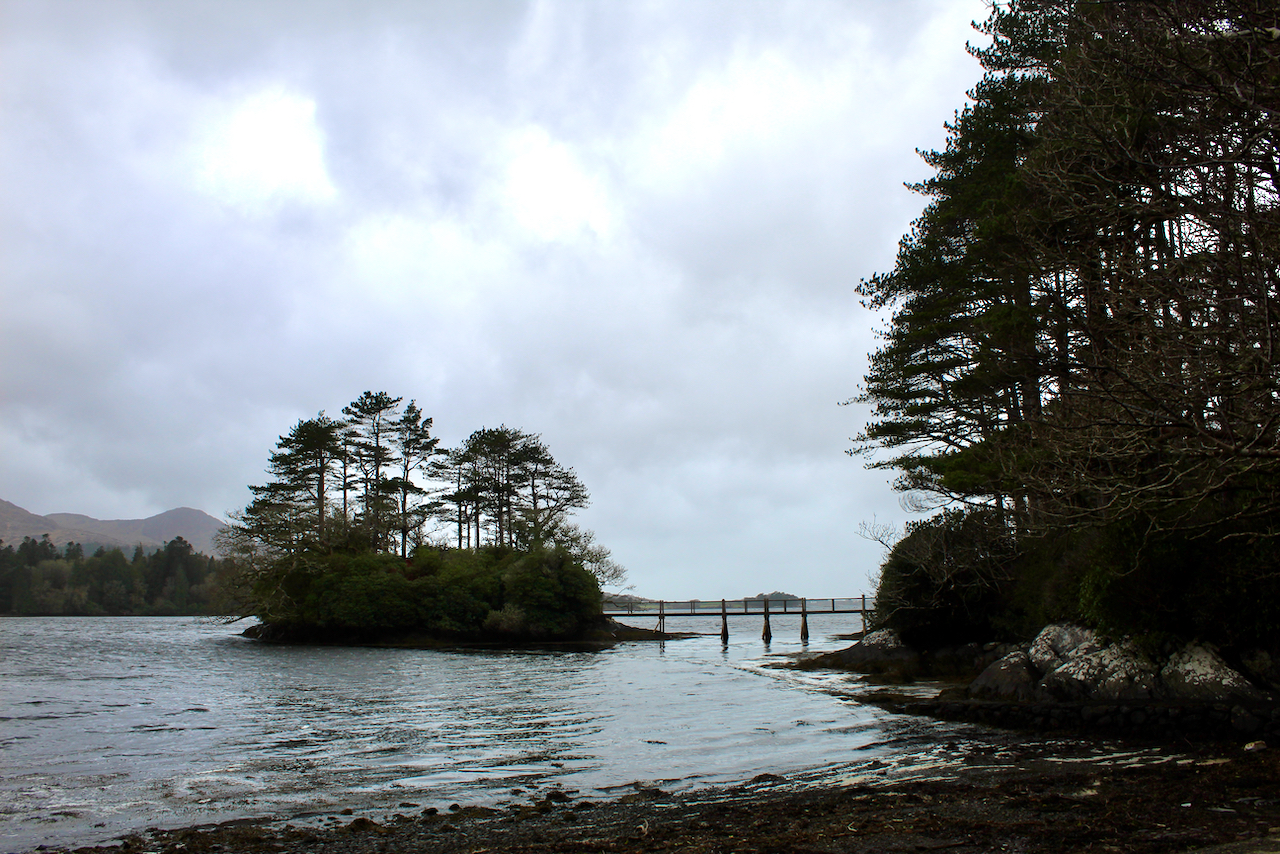
There’s a bridge across to a little island. Photograph © Jennifer Winder-Baggot, www.irishhistorichouses.com
Derreen Gardens, 29th March 2023. Photograph © Jennifer Winder-Baggot, www.irishhistorichouses.com

Henry (1816-1866) was styled as Earl of Shelburne from August 1836 until January 1863 when his father died. He was a Liberal MP for Calne in England between 1837 and 1856, and held the office of Under-Secretary for Foreign Affairs between 1856 and 1858. He was appointed Knight, Order of the Garter in 1864.

Derreen Gardens, 29th March 2023. Photograph © Jennifer Winder-Baggot, www.irishhistorichouses.com

The Landed Estates database tells us that before the Petty-Fitzmaurices built the house, at the time of Griffith’s Valuation the property was leased from the Lansdowne estate by Peter McSweeney. Griffith’s Valuation was the first full-scale valuation of property in Ireland and details of property with valuations were published between 1847 and 1864.
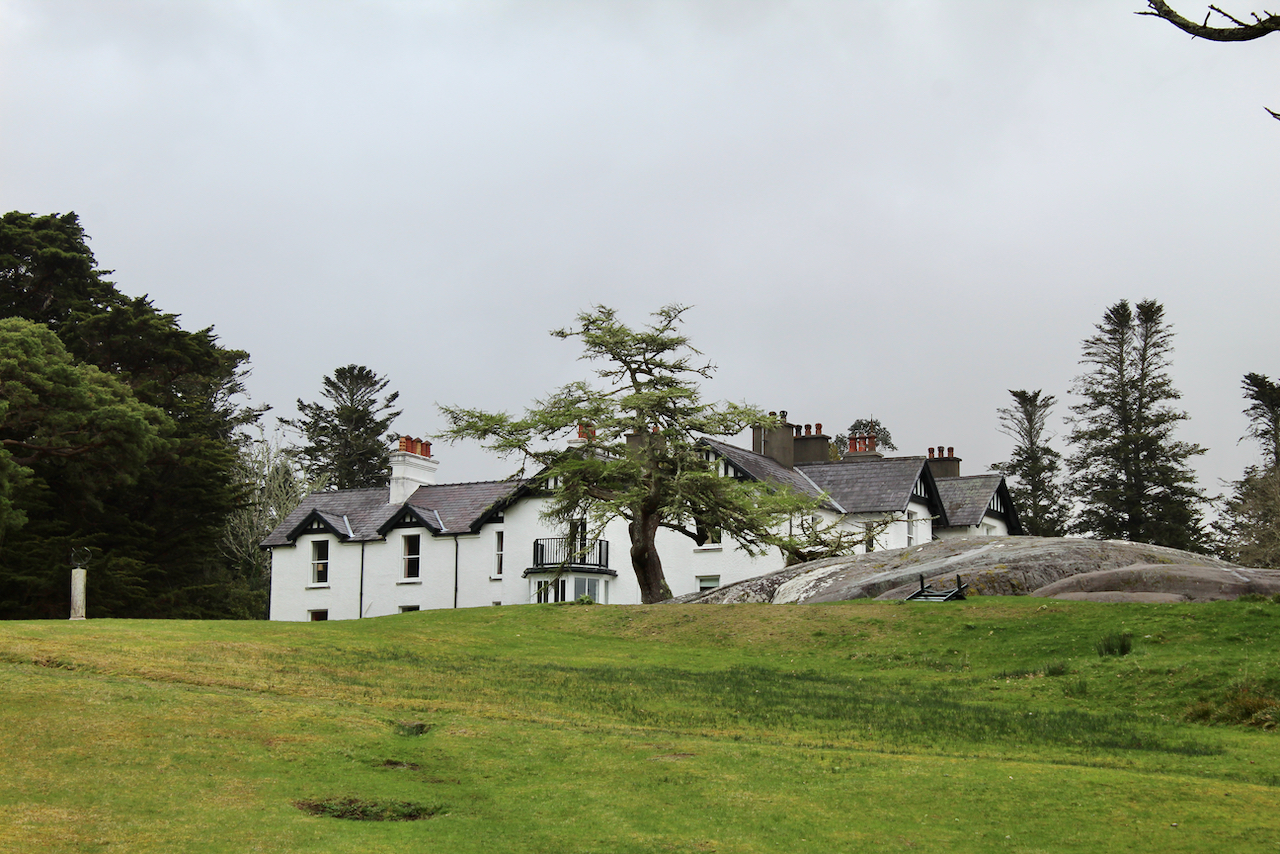
Derreen Gardens, 29th March 2023. Photograph © Jennifer Winder-Baggot, www.irishhistorichouses.com

The Landed Estates database adds that Derreen House was originally built by a branch of the O’Sullivans, from whom the lease passed to Peter McSweeney, who was married to a member of the O’Sullivan family.

Mark Bence-Jones tells us in his A Guide to Irish Country Houses (1988) that Henry Thomas Petty-Fitzmaurice 4th Marquess enlarged the house at Derreen between 1863 and 1866. [4] The National Inventory tells us that the version of the house built c. 1865 was designed by James Franklin Fuller. [5]

The house at Derreen Gardens. Only the gardens are Section 482 so the house is not open to the public. Photograph © Jennifer Winder-Baggot, www.irishhistorichouses.com

Henry the 4th Marquess married Georgina Herbert (1817-1841), daughter of General George Augustus Herbert, 11th Earl of Pembroke in 1840, but she died the following year. He then married the grandly named Emily Jane Mercer-Elphinstone-de Flahault (1819-1895), daughter of French army genearl Auguste Charles Joseph de Flahault, Comte de Flahault de la Billardrie and of Margaret Mercer Elphinstone, 2nd Baroness Keith and 7th Lady Nairne (a Scottish barony). They married in 1843 at the British Embassy in Vienna. Emily Jane succeeded her mother as 8th Lady Nairne in 1874.

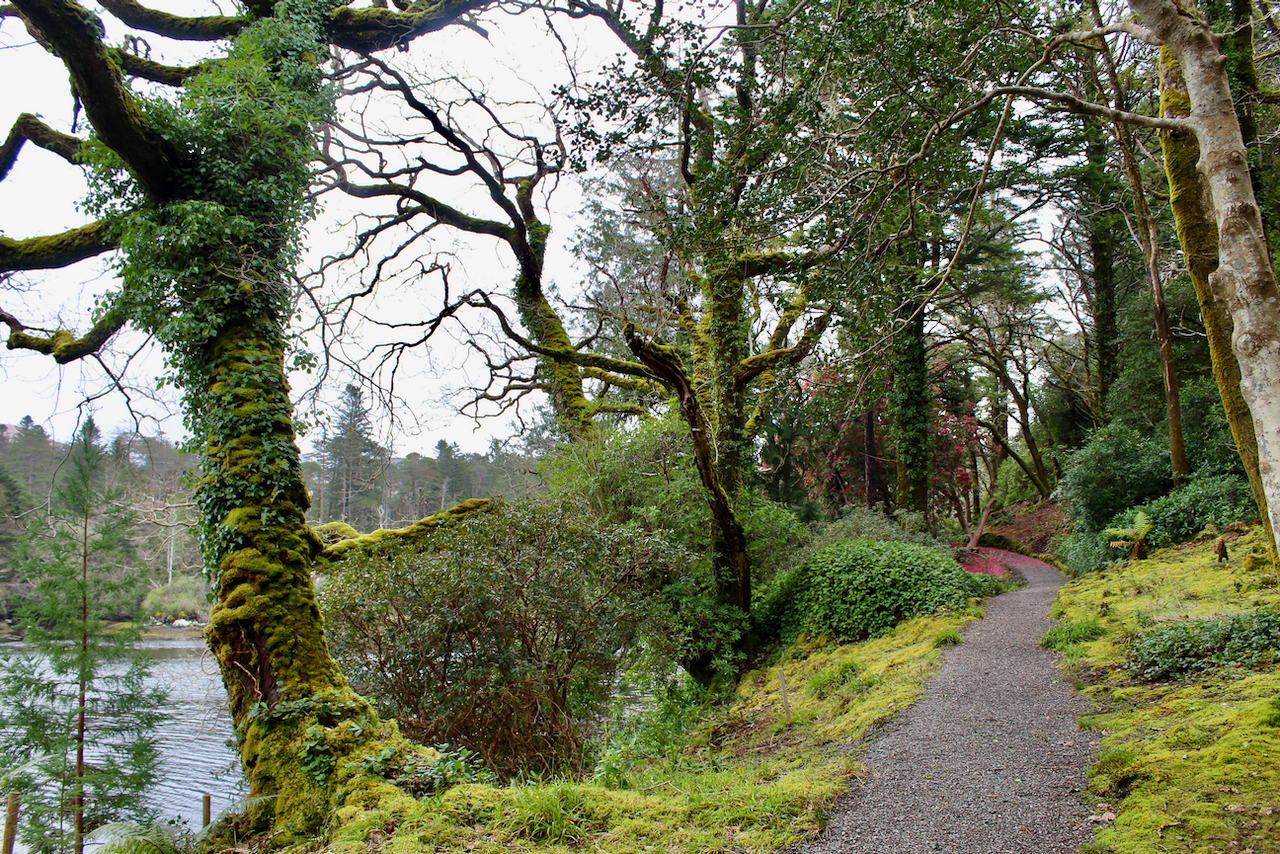
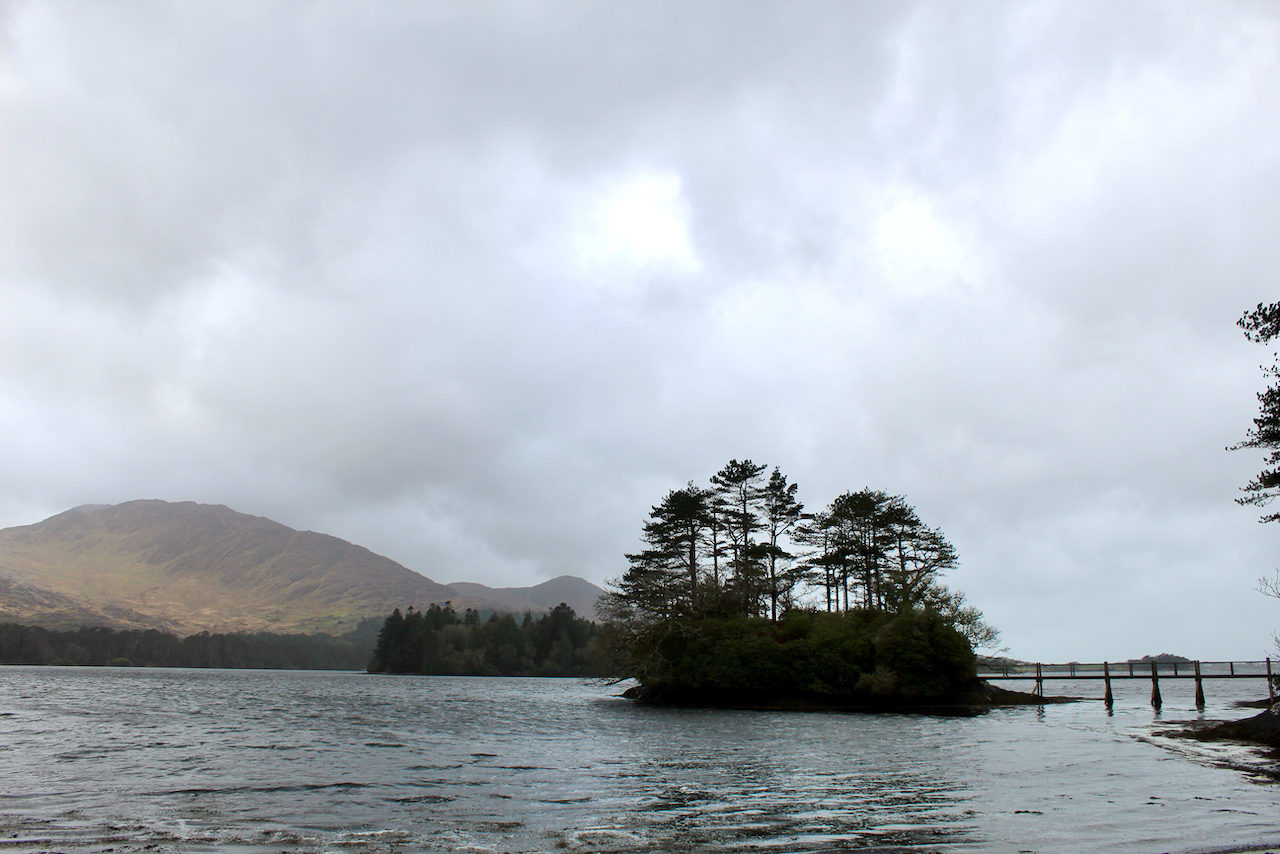
The view from Derreen Gardens, March 2023. Photograph © Jennifer Winder-Baggot, www.irishhistorichouses.com
Derreen Gardens, 29th March 2023. Photograph © Jennifer Winder-Baggot, www.irishhistorichouses.com

Henry and Emily Jane had several children. Their daughter Emily Louisa Anne married Everard Charles Digby (1852-1915), son of 9th Baron Digby of Dorset.

Henry’s son Henry Charles Keith Petty-Fitzmaurice (1845-1927) succeeded as the 5th Marquess when his father died in 1866. A younger son, Edmond George Petty Petty-FitzMaurice, was created 1st (and last) Baron FitzMaurice of Leigh, Co. Wiltshire, England in 1906 and also played a role in Foreign Affairs of state.

Henry Charles Keith Petty-Fitzmaurice (1845-1927) married Maud Evelyn Hamilton (1850-1932), daughter of James Hamilton (1811-1885), 1st Duke of Abercorn and Louisa Jane née Russell. Henry Charles Keither was styled as Earl Clanmaurice between 1845 and 1863 and Earl of Kerry between 1863 and 1866, and in 1866 he succeeded to the many other titles passed down through his family.

Henry Charles Keith Petty-Fitzmaurice.

The 5th Marquess held the office of Lord of the Treasury between 1868 and 1872 and Under-Secretary for War between 1872 and 1874. He was Under-Secretary for India between April and July 1880, Governor-General of Canada between 1883 and 1888, and Viceroy of India between 1888 and 1893. He held the office of Secretary of State for War between 1895 and 1900. He succeeded as the 9th Lord Nairne in 1895 when his mother died. He held the office of Lord-Lieutenant of Wiltshire between 1896 and 1920, and Secretary of State for Foreign Affairs between 1900 and 1905.

The 5th Marquess’s wife held the office of Lady of the Bedchamber to Queen Alexandria between 1905 and 1909 and “Extra” Lady of the Bedchamber between 1910 and 1925.
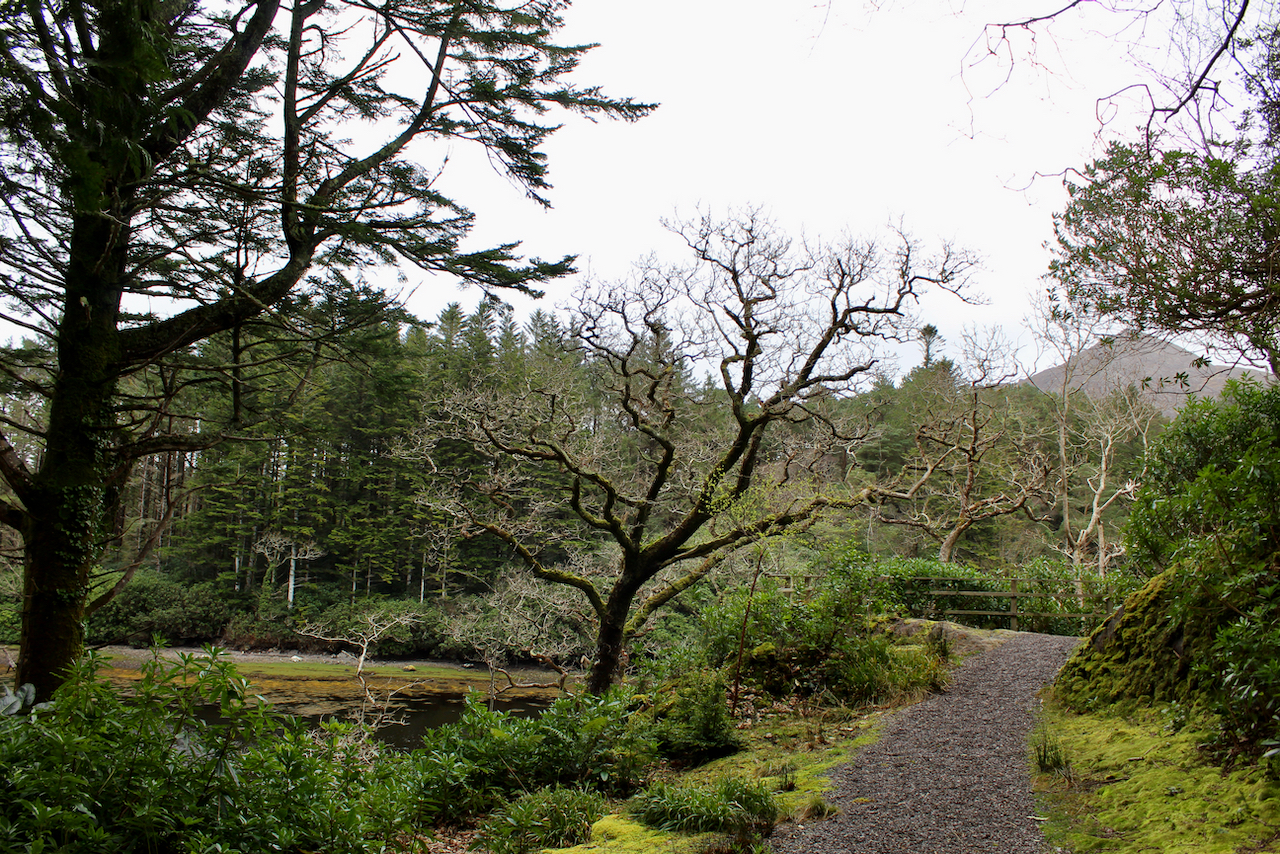
Derreen Gardens, March 2023. Photograph © Jennifer Winder-Baggot, www.irishhistorichouses.com

The Marquesses of Lansdowne made Derreen their summer residence. The garden was originally planted by the 5th Marquess. The website tells us that in 1870 Lord Lansdowne began an ambitious project to transform the countryside around the house from bare rock and scrub oak into a luxurious woodland garden. He planted 400 acres of woodland to shelter a collection of shrubs and specimen trees which were then being brought back from plant hunting expeditions in the Himalayas and elsewhere.

Robert O’Byrne quotes from Extracts from Glanerought and the Petty-FitzMaurices by the sixth Marquis of Lansdowne (1937):

The year 1903 was made memorable at Derreen by a visit from King Edward VII and Queen Alexandra. Their Majesties made in that summer a tour of Ireland, partly in the Royal Yacht and partly overland. The original intention had been that they should come to Derreen by water from County Clare, but weather conditions made this inadvisable, and the journey was eventually made by motor-car. They arrived on the afternoon of July 31. A Union Jack had been floated on the top of Knockatee and a triumphal arch was erected outside the Derryconnery Gate, where an address of welcome was presented by the assembled tenantry. On the lawn in front of the house the children of Lauragh school had been marshalled and they presented a bouquet to the Queen. Then there was a walk around the gardens where two commemorative bamboos were duly planted in the glade now called “the King’s Oozy”. After tea in the new dining room, which had been added to the house that year, the party went down to the pier, where Queen Alexandra was initiated into the mysteries of prawn fishing. The ground had been lavishly baited in advance and the fishing was such a success, that in spite of the obvious impatience of His Majesty, she could scarcely be persuaded to relinquish her net when the hour came for departure.’

Robert O’Byrne tells us that during the 5th Marquess’s absence in India (1888-1893), Derreen was let to the Duke of Leeds. [6]

The house at Derreen was burnt and plundered in 1922 and rebuilt by 5th Marquess in a similar style 1924; it underwent further reconstruction, having been attacked by dry-rot, 1925-26.

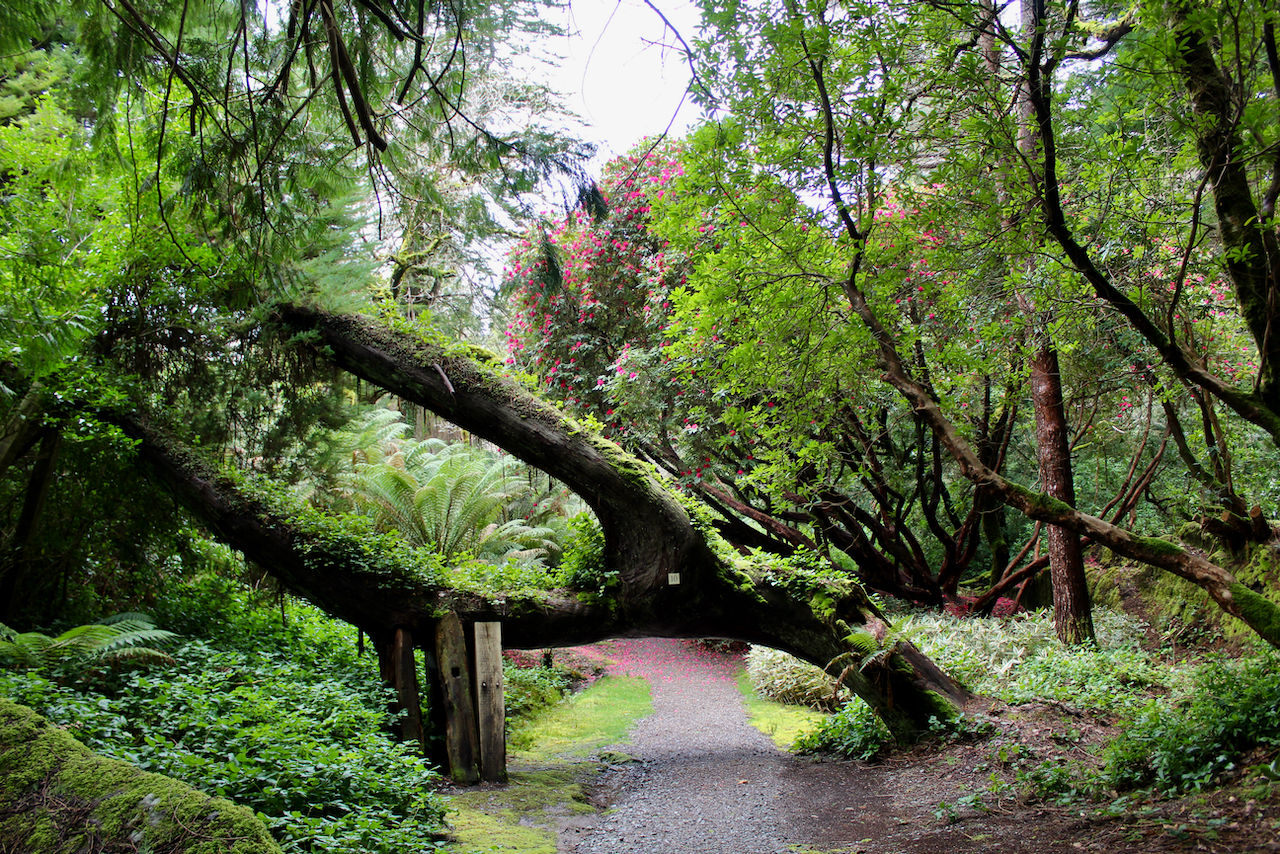
The view from Derreen Gardens. Photograph © Jennifer Winder-Baggot, www.irishhistorichouses.com
Derreen Gardens, 29th March 2023. Photograph © Jennifer Winder-Baggot, www.irishhistorichouses.com

The 5th Marquess and his wife Maud Evelyn had several children. Their daughter Evelyn Emily Mary Petty-FitzMaurice (1870-1960) married Victor Christian William Cavendish (1868-1938) 9th Duke of Devonshire.

Their younger daughter Beatrix Frances Petty-FitzMaurice (1877-1953) married first Henry de la Poer Beresford (1875-1911) 6th Marquess of Waterford of Curraghmore (see my entry about Curraghmore). He died at the young age of 36, and after having six children with her first husband, Beatrix married Osbourne de Vere Beauclerk, 12th Duke of Saint Albans.
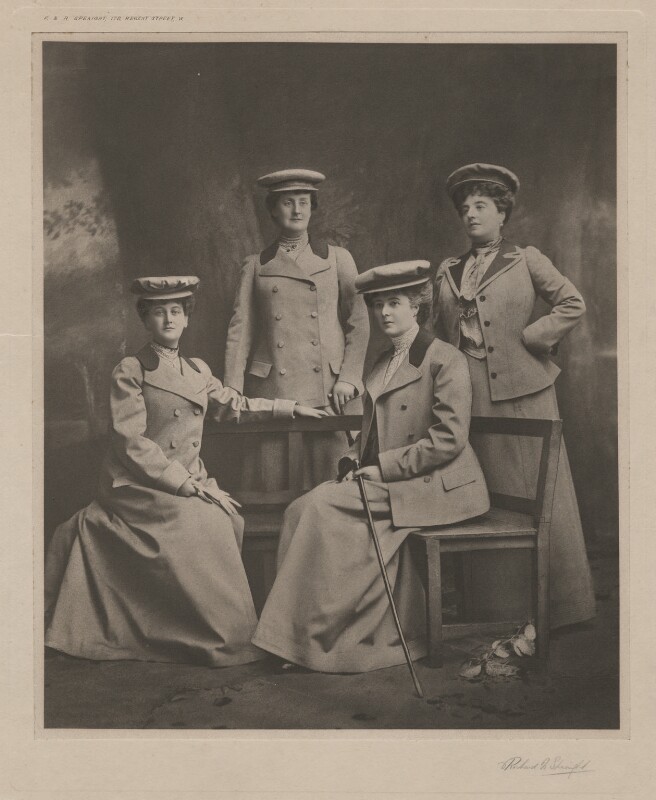
Beatrix Frances Duchess of St Albans [(1877-1953), Daughter of 5th Marquess of Lansdowne; former wife of 6th Marquess of Waterford, and later wife of 12th Duke of St Albans], Maud Evelyn Petty-Fitzmaurice, Marchioness of Lansdowne [mother of Beatrix, née Hamilton], Theresa Susey Helen Vane-Tempest-Stewart, Marchioness of Londonderry and Evelyn Emily Mary Cavendish, Duchess of Devonshire [(1870-1960), sister of Beatrix] by Frederick & Richard Speaight, National Portrait Gallery of London ref. x76669

Their younger son, Charles George Francis (1874-1914) added Mercer Nairne to his surname in 1914 to become the mouthful “Mercer Nairne Petty-FitzMaurice.” His wife’s surname was equally impressive, as he married Violet Mary Elliot-Murray-Kynynmound, daughter of the Earl of Minto, County Roxborough in England.

The elder son, Henry William Edmund Petty-Fitzmaurice (1872-1936), became 6th Marquess of Lansdowne. He married Elizabeth Caroline Hope, whose mother was Constance Christina Leslie, daughter of John Leslie, 1st Baronet of Glaslough, County Monaghan, of Castle Leslie, another Section 482 property (see my entry).

Mark Bence-Jones describes the property in his A Guide to Irish Country Houses (1988):

Derreen is famous for its garden, which extends over the greater part of the peninsula on which the house is built. It was originally planted by 5th Marquess; but the collection of trees and shrubs has been constantly added to by his successors. In the moist and mild climate, tender and exotic species flourish; while the older trees have grown to an incredible height and girth. The garden is particularly noted for its rhododendrons and tree ferns. As a foil to the luxuriant plantings, there are great natural outcrops of rock. After WWII, Derreen passed to Lady Nairne, now Viscountess Mersey, sister of 7th Marquess, who was killed in action 1944. It is now the property of her son, Honourable David Bigham; the garden is open to the public.” [see 4]

The 6th Marquess’s sons all died young, tragically, so the estate passed to their sister, Katherine Evelyn Constance Petty-FitzMaurice (1912-1995), who succeeded as the 12th Lady Nairne in 1944. She married Edward Clive Bigham, later 3rd Viscount Mersey, in 1933. They have several children.

There is a chapter about the family in Jane O’Hea O’Keeffe’s Voices from the Great Houses: Cork and Kerry (Mercier Press, Cork, 2013).
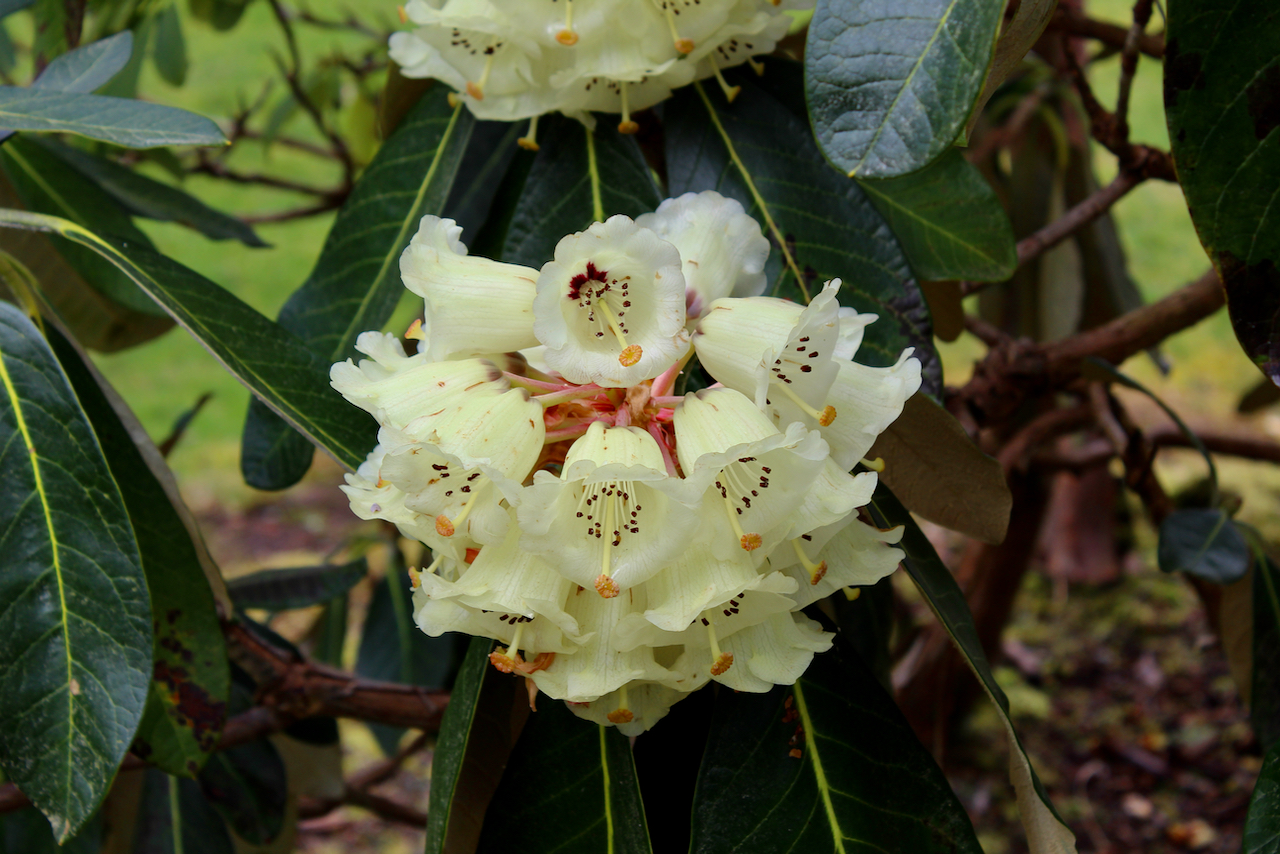
Derreen Gardens, 29th March 2023. Photograph © Jennifer Winder-Baggot, www.irishhistorichouses.com

[1] http://lordbelmontinnorthernireland.blogspot.com/2013/07/derreen-house.html

[2] G.E. Cokayne; with Vicary Gibbs, H.A. Doubleday, Geoffrey H. White, Duncan Warrand and Lord Howard de Walden, editors, The Complete Peerage of England, Scotland, Ireland, Great Britain and the United Kingdom, Extant, Extinct or Dormant, new ed., 13 volumes in 14 (1910-1959; reprint in 6 volumes, Gloucester, U.K.: Alan Sutton Publishing, 2000), volume VII, page 213.

[3] https://www.springfieldcastle.com 

http://landedestates.nuigalway.ie/LandedEstates/jsp/property-list.jsp?letter=D

[4] Bence-Jones, Mark. A Guide to Irish Country Houses (originally published as Burke’s Guide to Country Houses volume 1 Ireland by Burke’s Peerage Ltd. 1978); Revised edition 1988, Constable and Company Ltd, London.

[5] https://www.buildingsofireland.ie/buildings-search/building/21310805/derreen-house-derreen-wood-derreen-ma-by-co-kerry

[6] https://theirishaesthete.com/2018/06/25/luxuriance-of-growth/

Text © Jennifer Winder-Baggot, www.irishhistorichouses.com
Ballyseede Castle, Ballyseede, Tralee, Co. Kerry – section 482 Accommodation

www.ballyseedecastle.com

Open dates in 2025: Mar 14-Dec 31, 8am-12 midnight

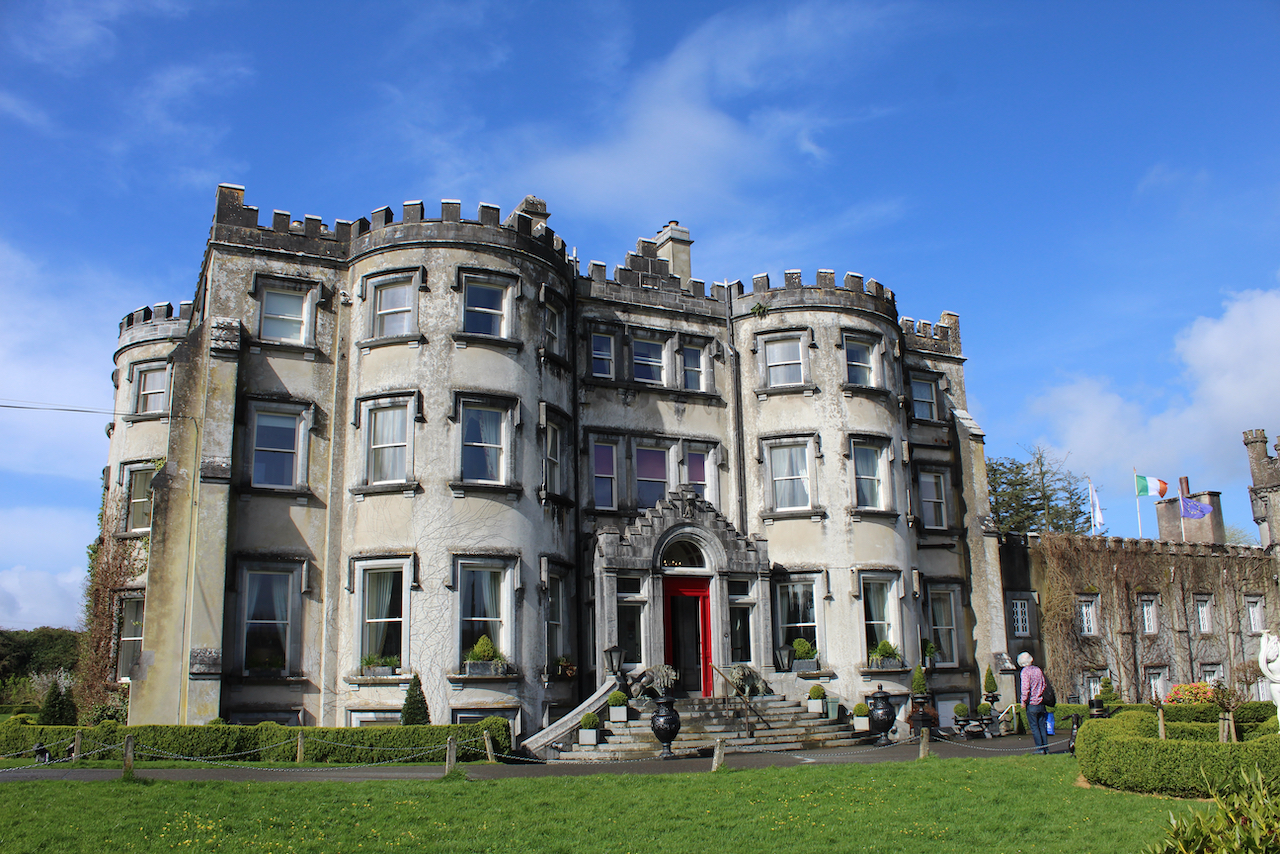
Ballyseede Castle, March 2023. © Jennifer Winder-Baggot, www.irishhistorichouses.com
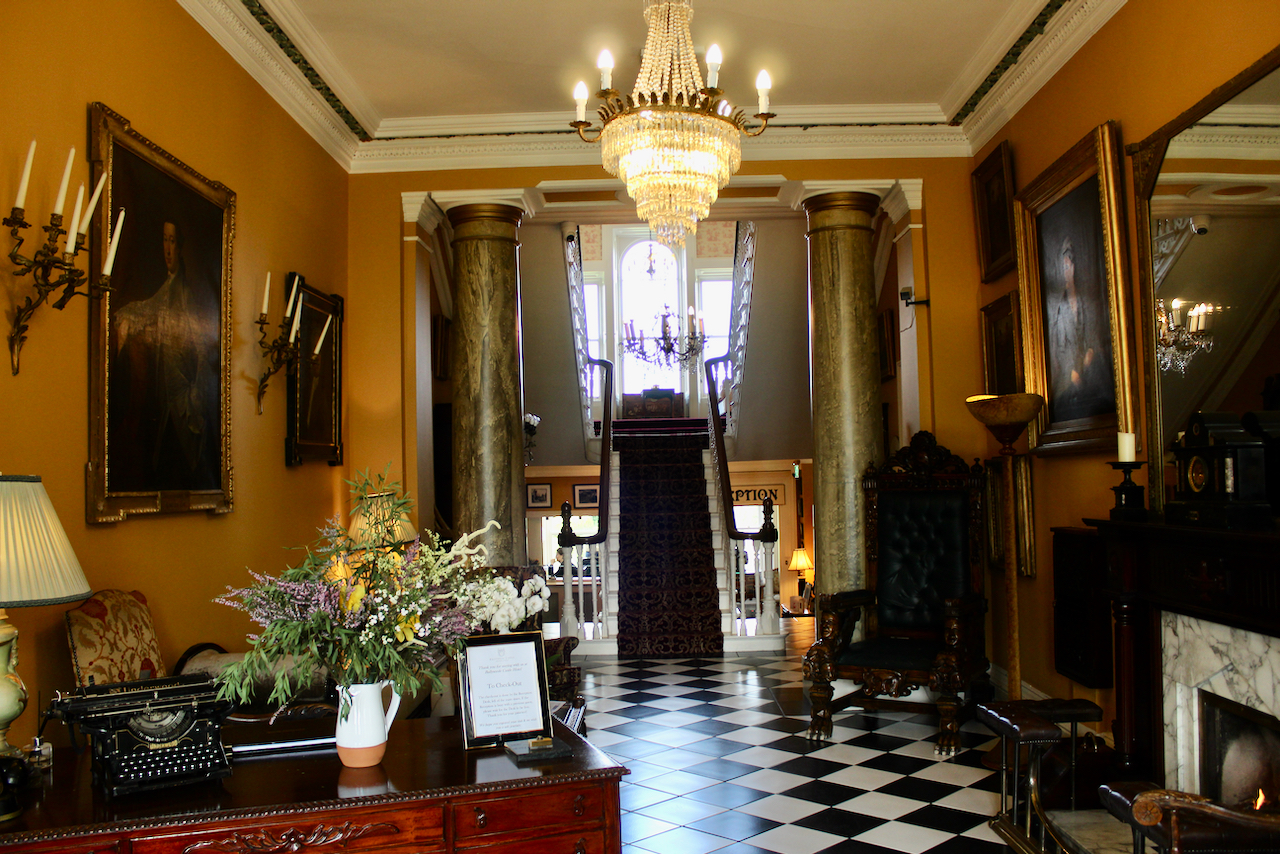
Ballyseede castle (pronounced Ballyseedy) is now a hotel, and Stephen and I treated ourselves to a stay in March 2023. The house was built in around 1760 for the Blennerhassett family, and parts were added and gothicized over time. Gothic revival additions may have been designed by William and Richard Morrison. Later renovations were carried out by James Franklin Fuller.

The castle is now one of four owned by the Corscadden family. We have visited the other properties: Cabra Castle in County Cavan and Markree in County Sligo, both of which are also section 482 properties (see my entries). We also visited the fourth, Castle Bellingham in County Louth, kindly welcomed by Patrick, who showed us around and I told him of my website. I am in the process of writing about that in my “Places to visit and stay in County Louth” page, still a work in progress.

Ballyseede Castle, March 2023: bifurcating staircase rising behind a screen of Doric columns at one end of the hall. © Jennifer Winder-Baggot, www.irishhistorichouses.com
The website tells us:

Take a step back in time with a hotel steeped in history that offers luxurious surroundings within 30 acres of private gardens and woodland.

The Doric columns that lead to an elegant oak staircase in the lobby are indicative of the grand decoration throughout the hotel. Impressive drawing rooms with ornate cornices, adorned with marble fireplaces provide an ideal setting for afternoon tea or morning coffee.

Elegant accommodation, fine dining with traditional Irish cuisine, rooms that tell a story and the picturesque natural setting, will all comprise to make your stay at Ballyseede Castle an unforgettable one.”

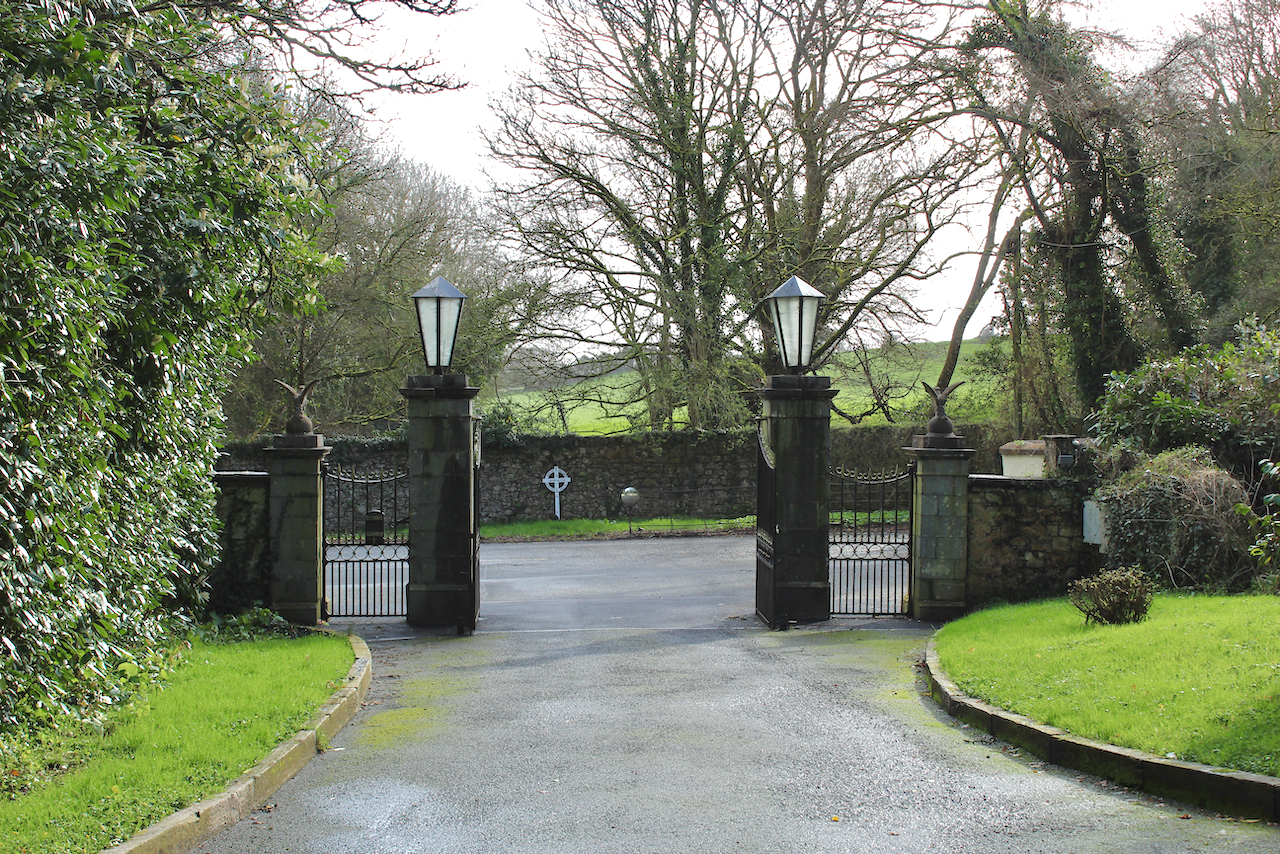
The entrance gates are described in the National Inventory: “Gateway, built c. 1825, comprising four limestone ashlar piers with wrought-iron double gates, flanking pedestrian gates and curved quadrant walls with half-round projecting bays having blind pointed arches. Painted and rendered walls with stone copings and having arched blind openings with painted sills.” © Jennifer Winder-Baggot, www.irishhistorichouses.com
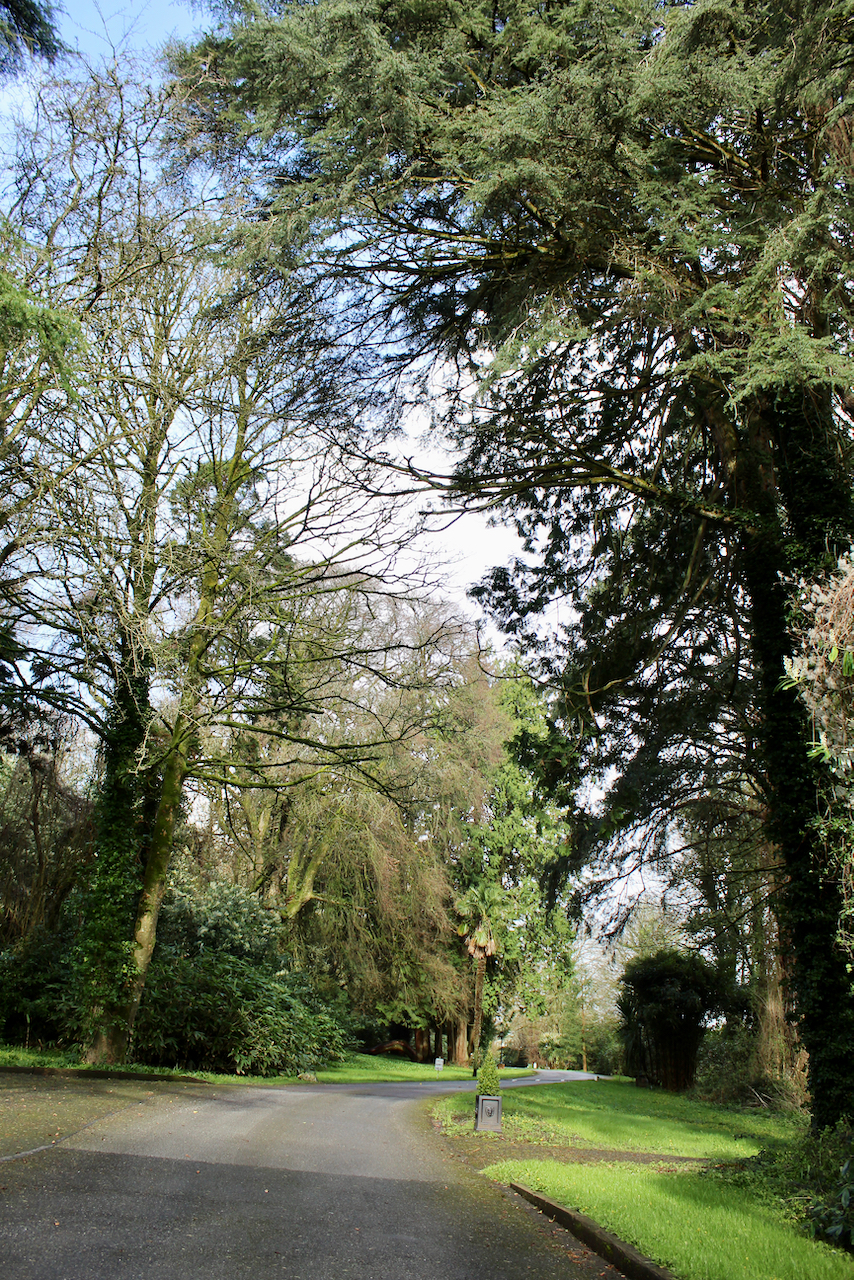
The lovely drive up to the castle. © Jennifer Winder-Baggot, www.irishhistorichouses.com
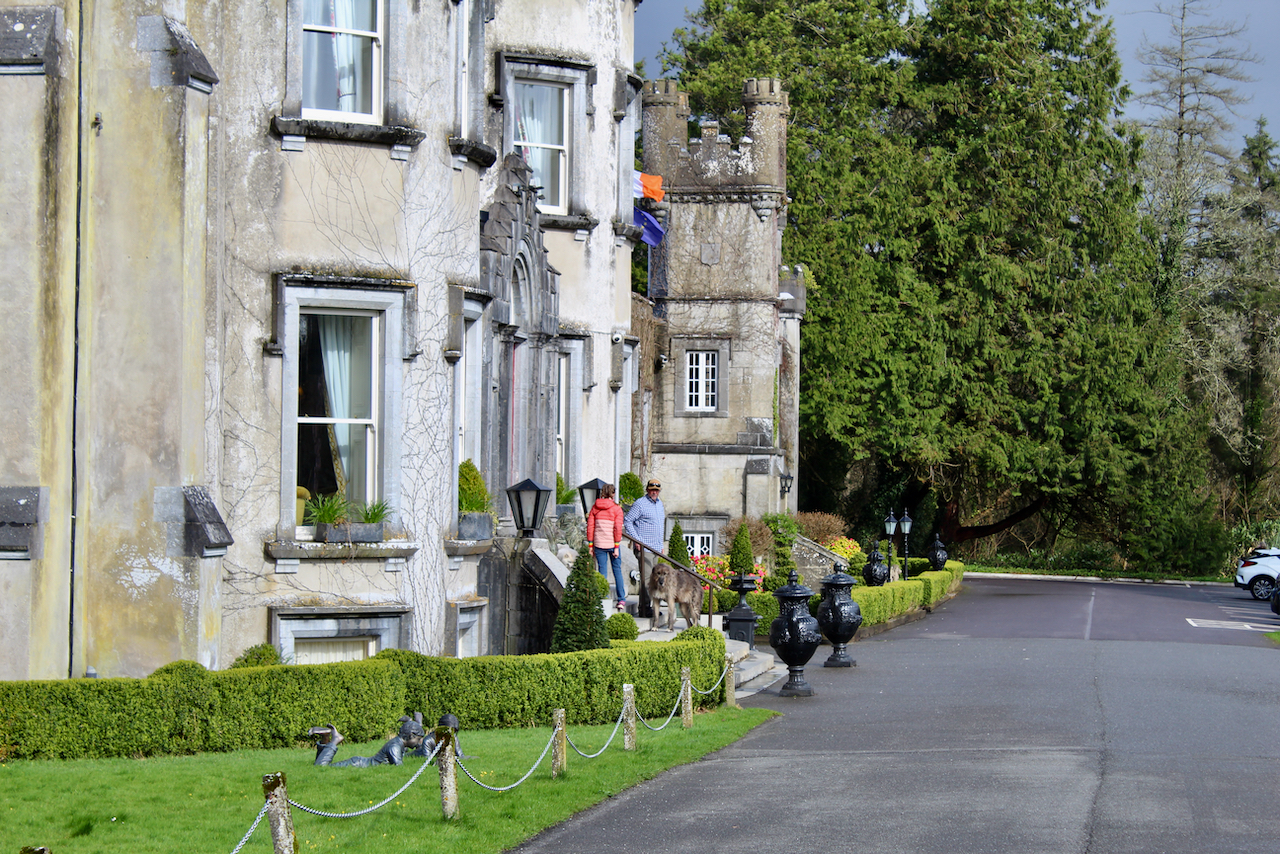
Ballyseede, March 2023. © Jennifer Winder-Baggot, www.irishhistorichouses.com
Ballyseede Castle, March 2023: Limestone ashlar porch with crow-step gable and arched doorway with double-leaf panelled door. This porch was added in around 1880. © Jennifer Winder-Baggot, www.irishhistorichouses.com
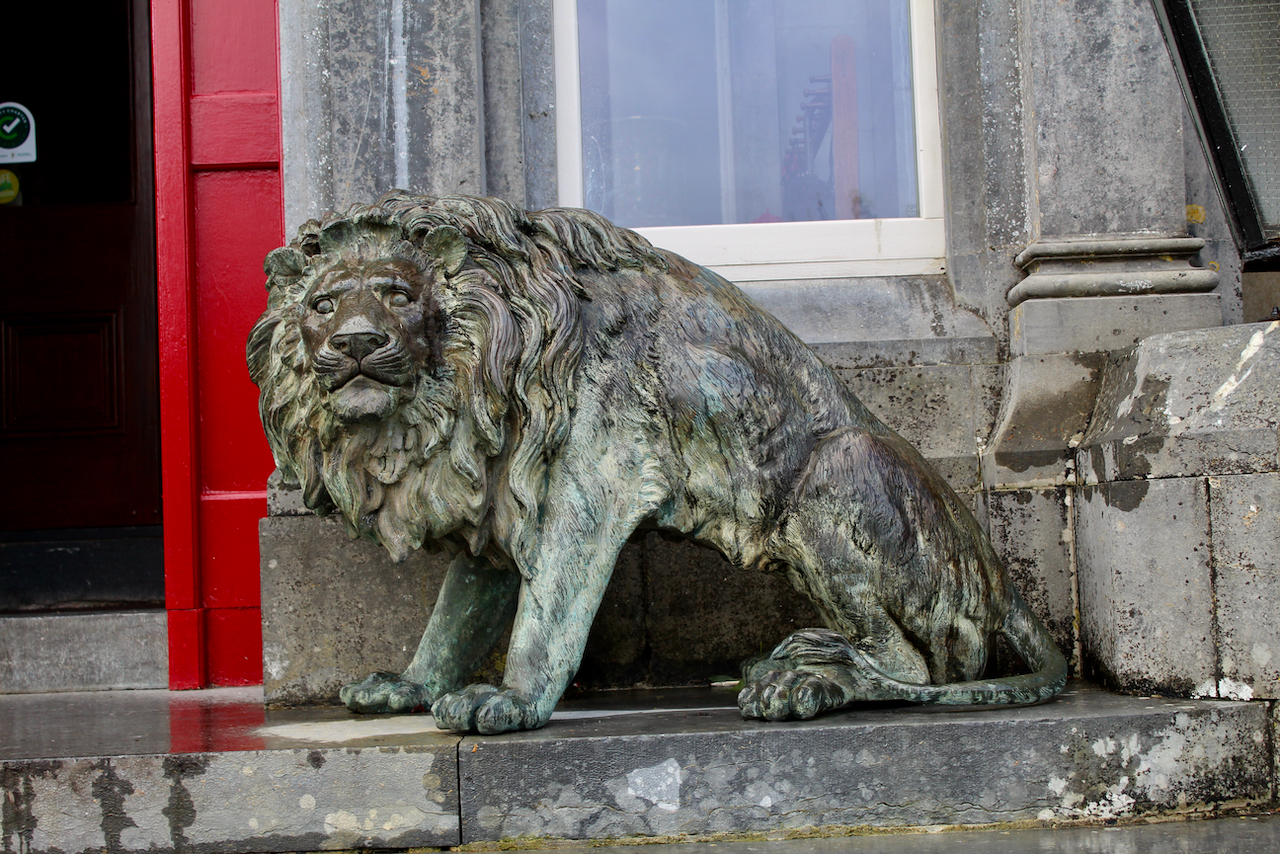
Ballyseede Castle, County Kerry. Impressive lions flank the door. © Jennifer Winder-Baggot, www.irishhistorichouses.com
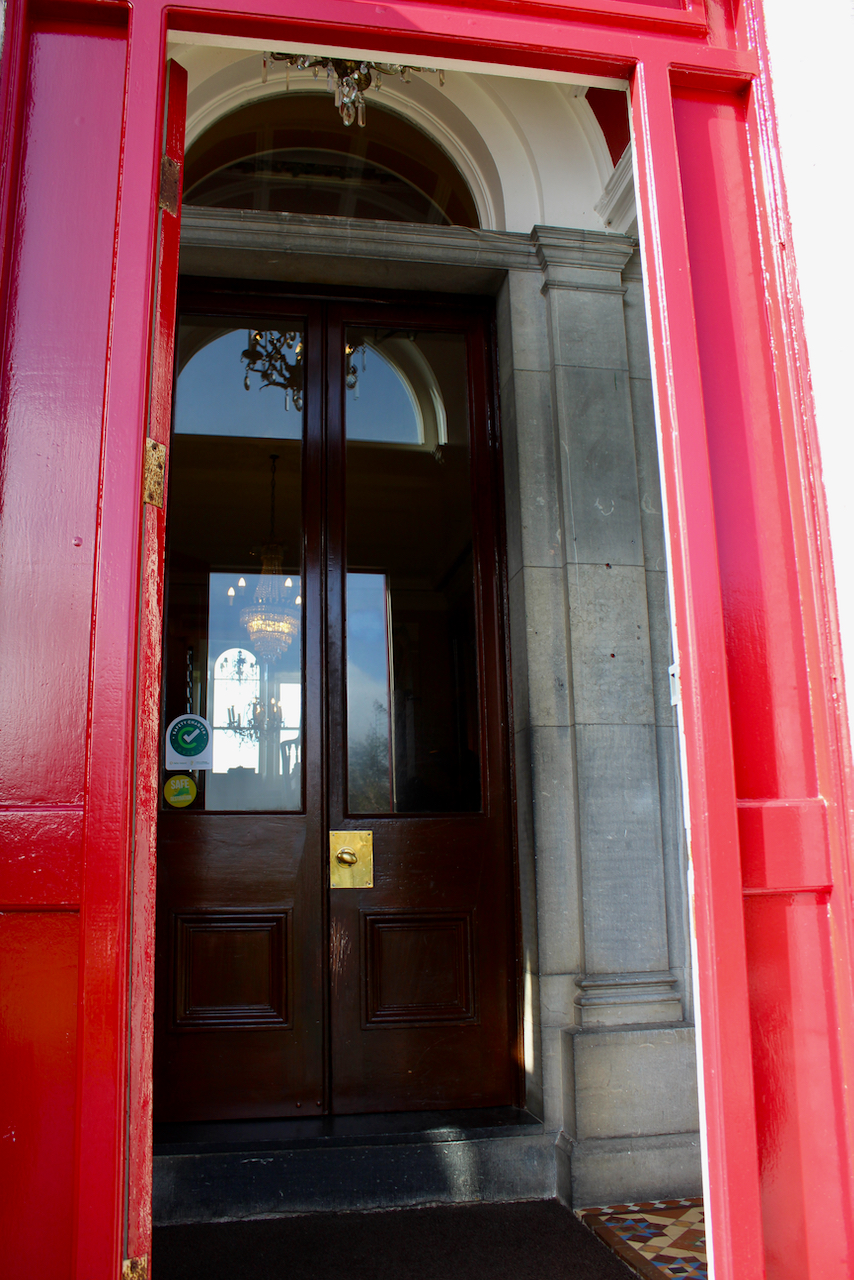
Ballyseede Castle, March 2023. © Jennifer Winder-Baggot, www.irishhistorichouses.com
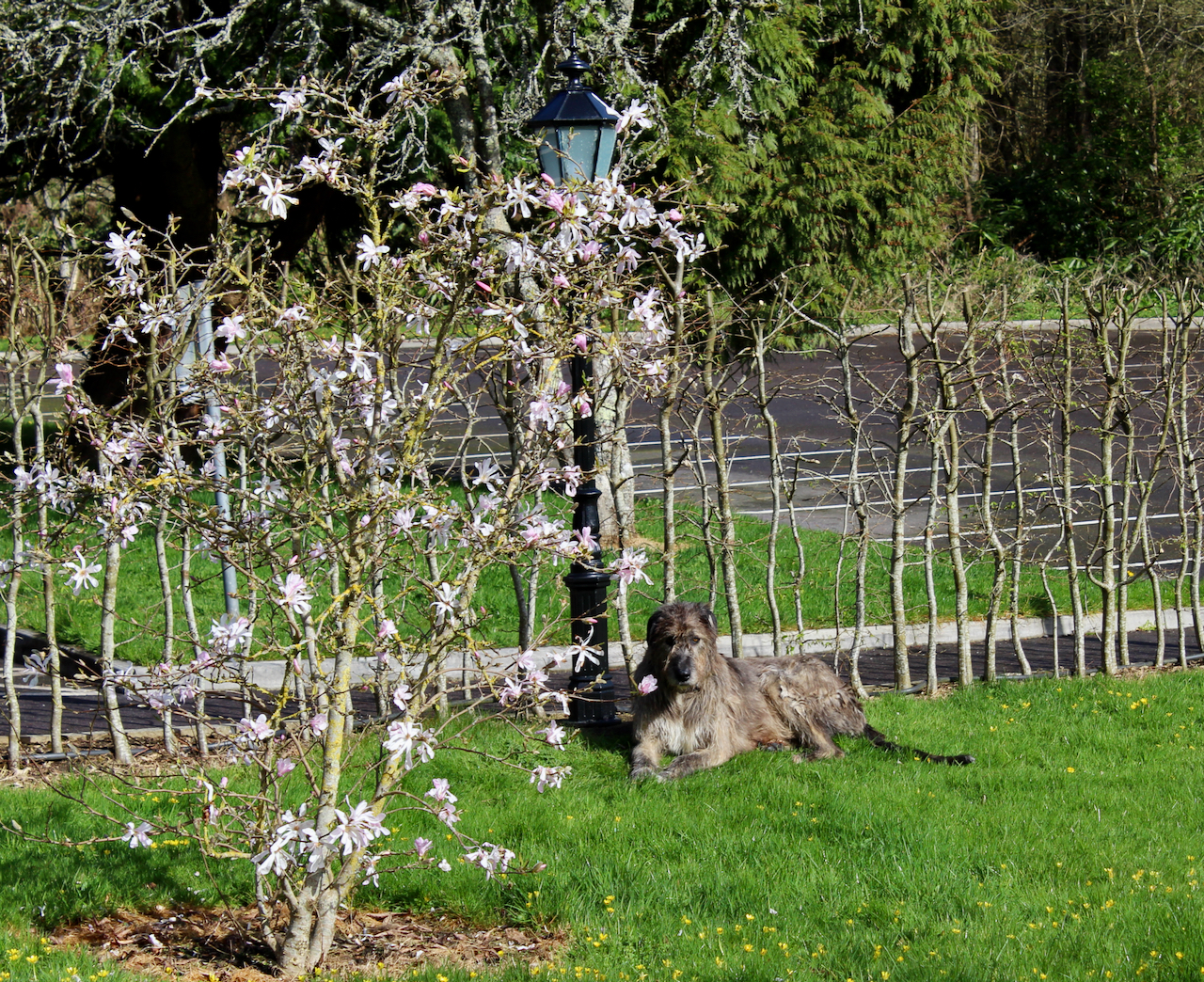
The castle comes complete with dogs, a trademark of the Corscadden hotels. The Irish wolfhounds add elegance to wedding photographs.

The castle comes complete with dogs, a trademark of the Corscadden hotels. © Jennifer Winder-Baggot, www.irishhistorichouses.com
I fell in love with this affectionate little doggie, who had a particularly thick soft coat. © Jennifer Winder-Baggot, www.irishhistorichouses.com
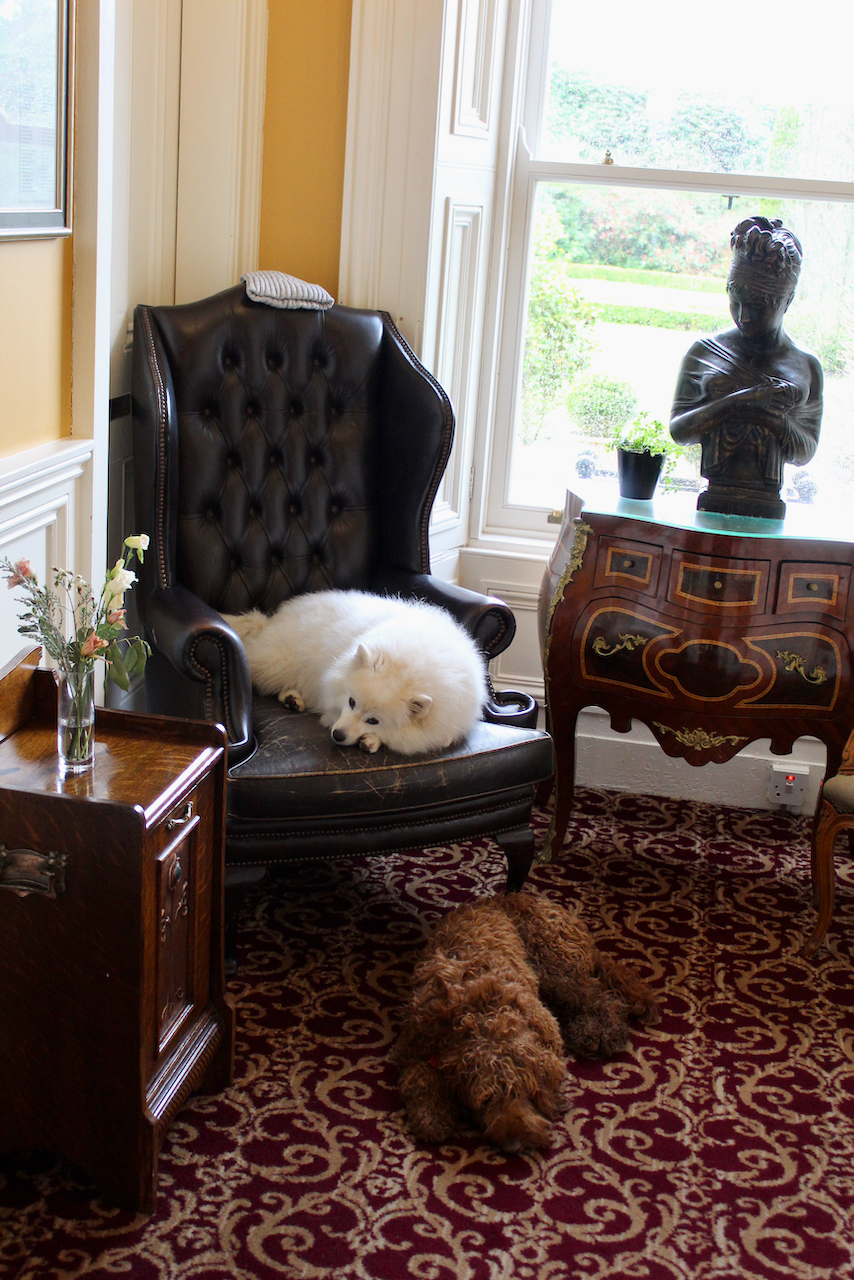
Her brown shaggy friend was adorable too and they vied for attention, full of excitement every time I stopped to pet them. © Jennifer Winder-Baggot, www.irishhistorichouses.com
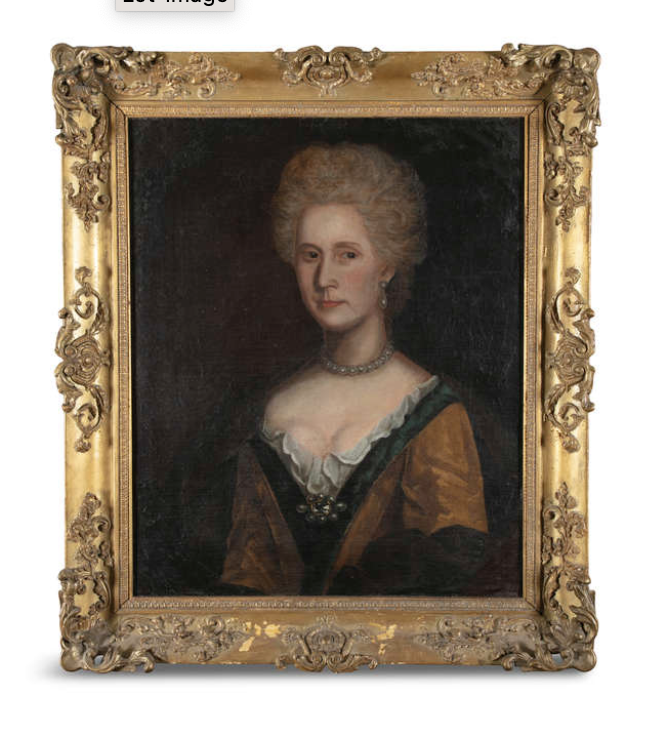
The Landed Estates database tells us that the Blennerhassett family was originally from Cumbria in the north of England. Robert Blennerhassett was the first to settle in Kerry. He married Elizabeth, daughter of Captain Jenkin Conway of Castle Conway, Killorglin, County Kerry, formerly known as Killorglin Castle (now a ruin). He was originally from Pembrokeshire in Wales.

Between 1611 and 1618 Robert acquired lands in Ireland. He held the office of Member of Parliament (M.P.) for Tralee in 1613 and between 1635 and 1639. He lived in an old castle named Ballycarty Castle and also owned the old Ballyseedy Castle. The current Ballyseede Castle is different from the original Ballyseedy Castle, a castle that had belonged to the Fitzgeralds, located at the west end of Ballyseedy Wood.

The Landed Estates database tells us that a John Blennerhassett was granted an estate of 2,787 acres in the barony of Trughanacmy, County Kerry (where Ballyseede Castle and Ballyseedy woods are located) and 2,039 acres in the barony of Fermoy, County Cork under the Acts of Settlement in 1666. [1] This John is probably son of Robert.

Lady Blennerhassett (I’m not sure which one), Ballyseedy Castle, Tralee, Co. Kerry, Irish school 18th century, Adams auction 19 Oct 2021

John Blennerhassett, son of Robert and Elizabeth, was, following his father’s footsteps, MP for Tralee [2]. He too lived in Ballycarty Castle, now a ruin. He married Martha Lynn, daughter of George from Southwick Hall, Northamptonshire, England. They had several children and he died in 1676.

His younger brothers Edward and Arthur married and lived nearby.

The lawn in front of the castle. © Jennifer Winder-Baggot, www.irishhistorichouses.com

John and Martha’s son John was also MP for Tralee and high sheriff, but died only a year after his father, in 1677. He had married Elizabeth Denny in 1654, whose family lived in Tralee Castle (it no longer exists). She was the daughter of Edward Denny (1605-1646) who was also an MP and High Sheriff for County Kerry. [see 2] The Denny and Blennerhassett families intermarried over generations.

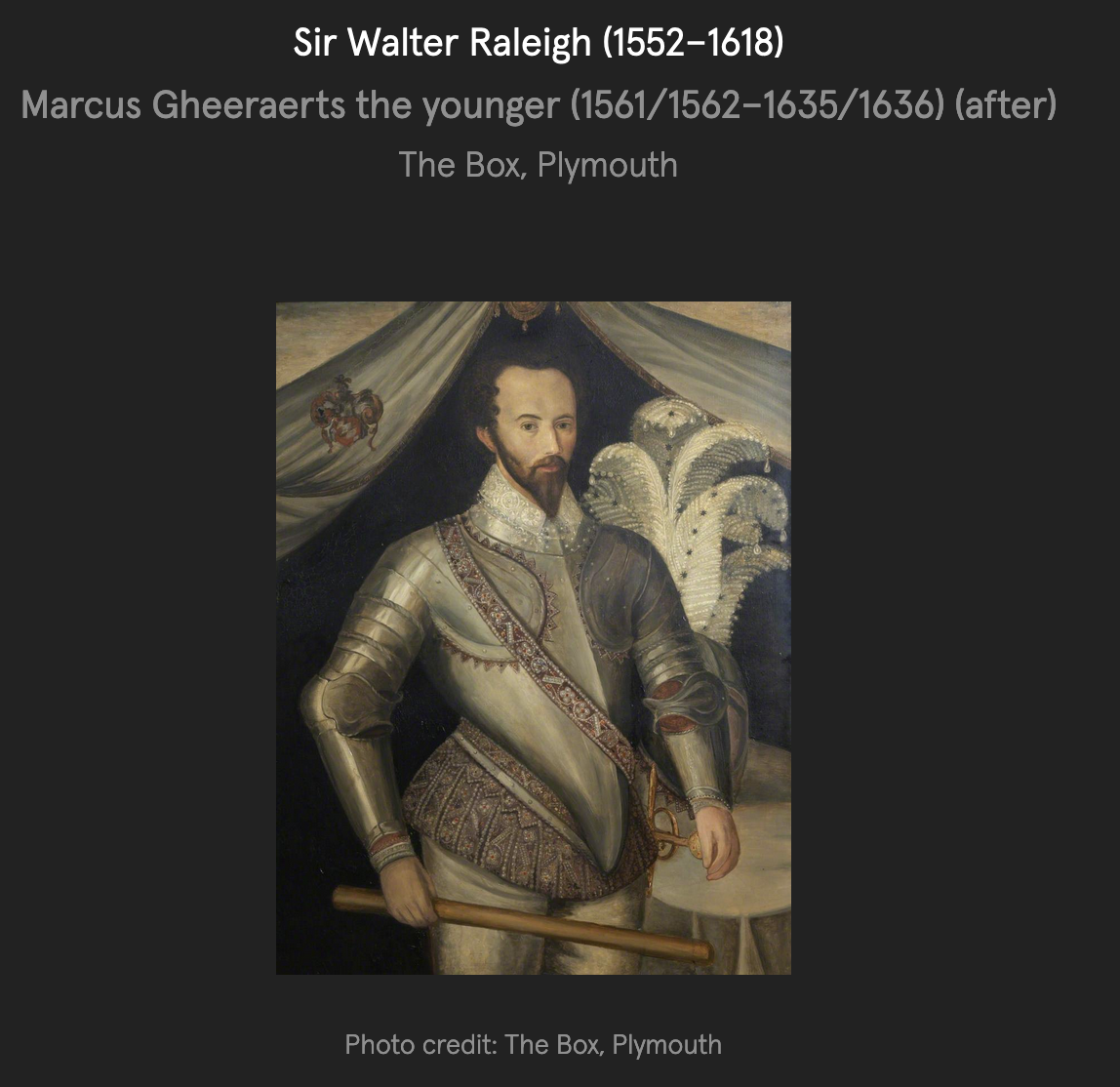
Edward Denny (1547-1600), who was granted land in Tralee County Kerry after the Desmond Rebellions photograph courtesy of the Roaringwaterjournal website.

In her Voices from the Great Houses: Cork and Kerry (2013) Jane O’Hea O’Keeffe tells us about the grandfather of Edward Denny (1605-1646), Edward Denny (1547-1599/1600), who moved to Kerry:

Following the Desmond rebellions of 1569-73 and 1579-83, Sir Edward Denny of Waltham Abbey, Herefordshire, who was born in 1547, was granted 6,000 acres of land around Tralee, County Kerry. The ruined thirteenth century Tralee Castle, formerly a Desmond property, was included in the grant. Sir Edward Denny was a relative of Sir Walter Raleigh, who was also granted 42,000 acres in Cork and Waterford at this time.” [3]

John Blennserhassett and Martha had other children beside John who died in 1677. Their son Robert also held the office of MP for Tralee and High Sheriff of County Kerry in 1682. He married Avice Conway (d. 1663), a daughter of Edward Conway of Castle Conway, County Kerry. Their son John (d. circa 1738) inherited Castle Conway from his mother.

John (d. 1677) and Elizabeth née Denny’s son John (d. 1709) was MP for Tralee, Dingle and County Kerry at various times. He married Margaret Crosbie (1670-1759) of Tubrid, County Kerry (Tubrid House no longer exists, and should not be confused with Tubbrid Castle in County Kilkenny). Her father Patrick held the office of High Sheriff of County Kerry in 1660.

Margaret née Crosbie and John Blennerhassett had several children. After John’s death in 1709 Margaret married David John Barry in the same year, son of Richard Barry (1630-1694) 2nd Earl of Barrymore but they had no children together.

Margaret and John’s heir was Colonel John (1691-1775), who was called “Great Colonel John” thanks to his hospitality. He followed in his forebears’ footsteps, becoming an MP. In 1727 he signed a family compact with Maurice Crosbie of Ardfert and Arthur Denny of Tralee, partitioning the county representation among the three families [see 2].

Colonel John married Jane Denny, daughter of Colonel Edward Denny (1652-1709) of Tralee Castle.

A website about the Blennerhassett family tells us that in 1721 the first “Ballyseedy House” was built among ruins of the Geraldine Ballyseedy Castle at the west end of Ballyseedy Wood. Colonel John lived here with his family. [4]

The foundation stone dated 1721 over the seventeenth century fireplace. The foundation stone is from the earlier Blennerhassett home called “Ballyseedy Castle,” built in 1721, and the fireplace may be from the earlier Ballycarty Castle or the Desmond Ballyseedy Castle. This fireplace is now in Ballyseede Castle (built c. 1780). © Jennifer Winder-Baggot, www.irishhistorichouses.com

It was Margaret and John Blennerhassett’s younger son William (1705-1785) who built the house which has become the hotel Ballyseede Castle. It was built around 1780 (the National Inventory says c. 1760) and named “Elm Grove.” [4] William died during its construction and the work was completed around 1788 by his son William Blennerhassett Jr. (c. 1735-1797).

We will return to William and his family later. First, let’s look at the older son Colonel John and his offspring.

Colonel John’s son John Blennerhassett (1715-1763) would have succeeded his father and lived in the original Ballyseedy House, if he had not predeceased him in 1763. This John was admitted to the Middle Temple in London to train for the legal profession, and he also held the office of High Sheriff of County Kerry, in 1740, and M.P. for County Kerry between 1751 and 1760. He married Anne Crosbie, daughter of William Crosbie of Tubrid, County Kerry, who was MP for Ardfert between 1713 and 1743. Her mother was Isabella Smyth from Ballynatray, County Waterford, another Section 482 property – gardens only – that I’ll be writing about soon. Anne Crosbie had been previously married to John Leslie of Tarbert, County Kerry (another section 482 property which I hope to visit soon), but he died in 1736.

Anne died and John Blennerhassett remarried in 1753, this time wedding Frances Herbert, daughter of Edward Herbert (1693-1770) of Muckross, County Kerry. For more on Muckross House, see my entry on places to visit and stay in County Kerry.

Muckross House Killarney Co. Kerry, photograph by Chris Hill 2014 for Tourism Ireland, Ireland’s Content Pool.

Neither of John’s sons married and one died young. His house, Ballyseedy House, fell into disuse.

John’s daughter Frances married Reverend Jemmett Browne (d. 1797) of Riverstown, County Cork, another Section 482 property (see my entry).

Colonel John and Jane née Denny had a younger son, Arthur (1719-1799), who served as MP for Tralee between 1743 and 1760. He married Jane Giradot and had two daughters but no sons. His daughter Jane married George Allanson-Winn, 1st Lord Headley, Baron Allanson and Winn of Aghadoe, County Kerry. She was heiress of her father’s unentailed Ballyseedy estates – this would have been land that did not include what is now Ballyseede Castle. She died in 1825.

Colonel John and Jane née Denny also had several daughters. Agnes, born in 1722, married neighbour Thomas Denny (d. 1761) of Tralee Castle, son of Colonel Edward Denny (1728). Another daughter, Arabella (1725-1795), married Richard Ponsonby of Crotto, County Kerry (now demolished), MP for Kinsale, County Kerry, and then secondly Colonel Arthur Blennerhassett (1731-1810), a grandson of John who died in 1709 and Margaret née Crosbie. A third daughter of Jane and John Blennerhassett, Mary, married Lancelot Crosbie, who lived at Tubrid, County Kerry. Lancelot was MP for County Kerry between 1759 and 1760 and for Ardfert in County Kerry between 1762 and 1768 [see 2].

Ballyseede Castle, March 2023. © Jennifer Winder-Baggot, www.irishhistorichouses.com
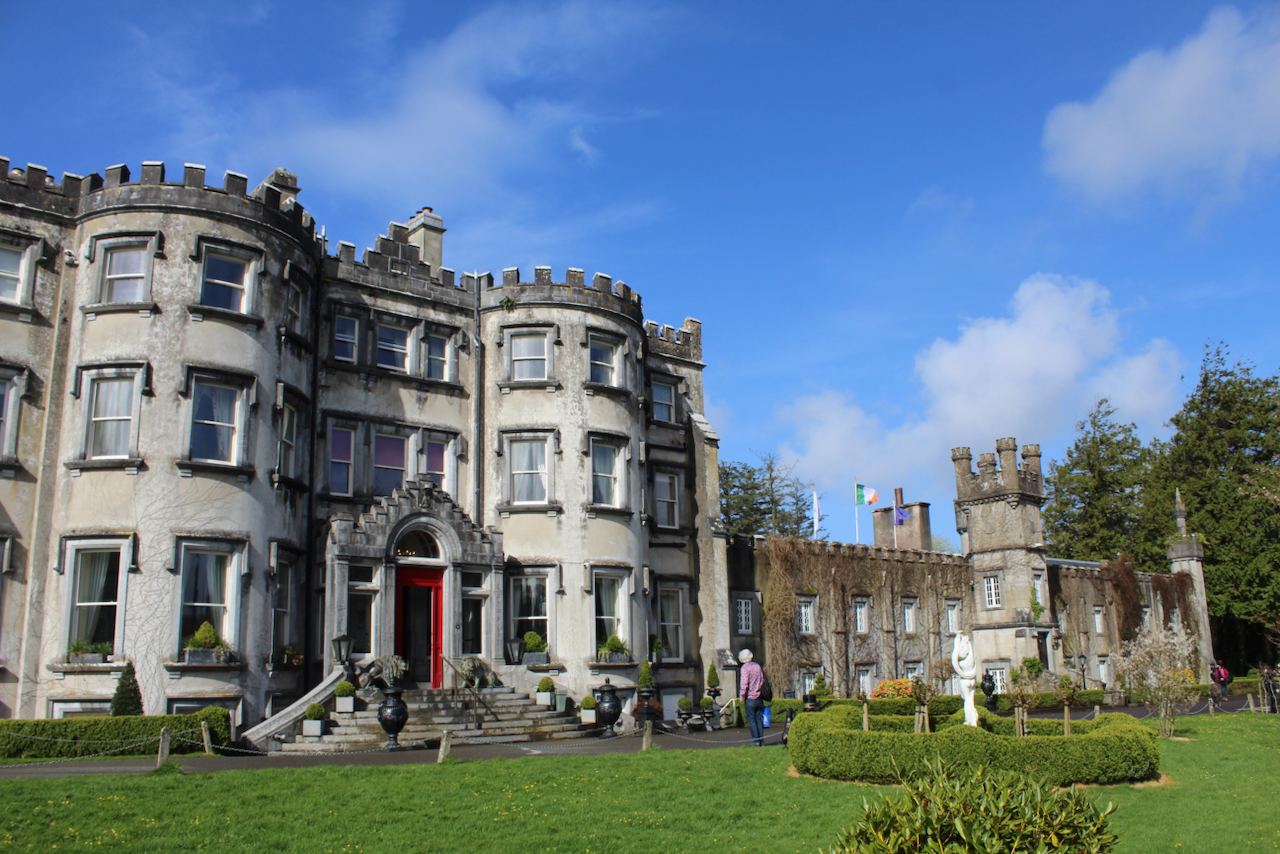
Let us return now to Elm Grove, now called Ballyseede castle. It is an eleven-bay three-storey over part-raised basement house, comprising a three-bay entrance bay to the centre with door opening approached by flight of steps, and a pair of three-bay full-height flanking bow bay windows and single-bay end bays. It has five-bay side elevations with three-bay full-height bow bay window to south elevation and eight-bay west elevation with two-bay breakfront. [5]

Ballyseede Castle, March 2023: Five-bay side elevations with three-bay full-height bow bay window to south elevation. © Jennifer Winder-Baggot, www.irishhistorichouses.com

William Blennerhassett Senior (1705-1785), son of John Blennerhassett (d. 1709) of Ballyseedy and Margaret Crosbie married Mary, daughter of John Morley, Mayor of Cork. Their son William (c.1735-1797) inherited Elm Grove.

Their daughter Agnes, born in 1740, married William Godfrey (c. 1738-1817) 1st Baronet of Bushfield, County Kerry, later called Kilcolman Abbey (renovated by William Vitruvius Morrison in 1818, demolished in 1977).

William (c.1735-1797) held the office of High Sheriff of County Kerry in 1761 and was the Collector of Customs at Tralee, which could have been a lucrative post.

William married Catherine daughter of the interestingly named Noble Johnson of County Cork. William and Catherine’s son Arthur (1779-1815) lived in Elm Grove with his wife Dorcas (1775/7-1822) daughter of George Twiss from Cordell House, County Kerry. Arthur died in 1815, but it seems that before he died he began plans to renovate the house. As was the case with his father and grandfather, Arthur’s son, another Arthur (1800-1843), continued the renovations.

Ballyseede Castle, March 2023. © Jennifer Winder-Baggot, www.irishhistorichouses.com
William and Catherine’s daughter Catherine (b. 1777) married Colonel John Gustavus Crosbie (d. 1797), a son of Lancelot Crosbie and Mary née Blennerhassett. He was M.P. for County Kerry between 1795 and 1797. In 1794 he killed Barry Denny, 2nd Bt. in an election duel at Oak Park (now Collis-Sandes House) and was subsequently poisoned, it is said, by the Denny family, which resulted in him falling from his horse as he was riding home from Churchill to his home in Tubrid. Catherine then married George Rowan of Rathanny, County Kerry (a beautiful Georgian house, still occupied). Rowan ordered the militia to fire into the crowd at an election rally killing five people. He was tried for murder but not convicted. [6]

Another daughter, Mary, married another cousin, Captain Nevinson Blennerhassett de Courcy (1789-1845). He was the son of Anne Blennerhassett of the Castle Conway branch of the family.

A younger son of William and Catherine née Johnson, John (circa 1769-1794), served as MP for Kerry between 1790 and 1794. He died unmarried.

Mark Bence-Jones tells us that the Gothic Revival renovation dates from 1816 and may be designed by Richard Morrison (1767– 1849). [7] The work was completed in 1821, and the house renamed “Ballyseedy House” because the original old “Ballyseedy” of Colonel John Blennerhassett at the west end of Ballyseedy Wood had by then fallen into disrepair and disuse.

The house was extended, adding a seven-bay two-storey wing to the north. This wing has a pair of single-bay three-storey turrets to the east elevation. These turrets have battlemented roof parapets and pinnacles. The ten-bay rear elevation to the west has hood mouldings to the openings and a single-bay three-storey corner turret on a circular plan to north-west. [see 5]

The seven bay two-storey Gothic-Revival addition, perhaps designed by Richard Morrison. © Jennifer Winder-Baggot, www.irishhistorichouses.com
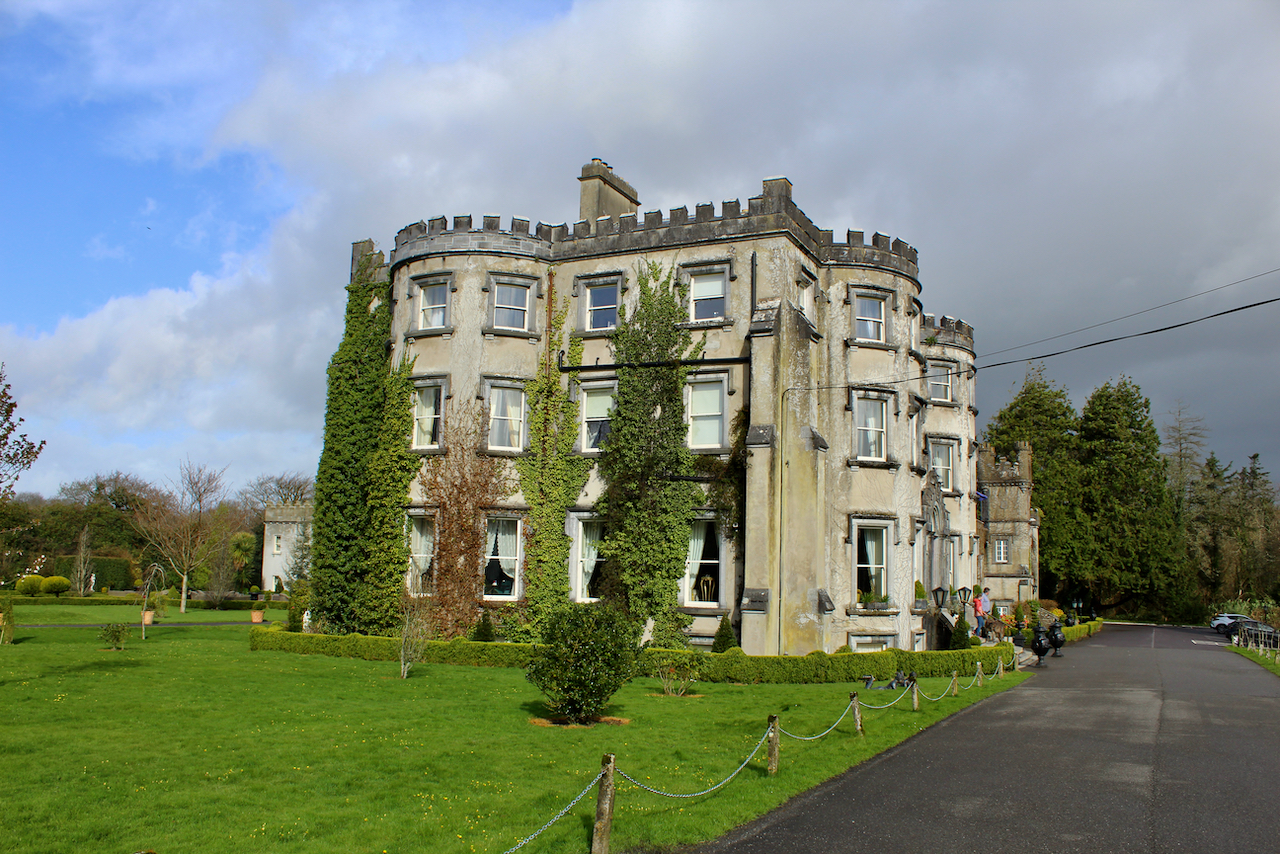
This wing has two single bay three storey turrets. © Jennifer Winder-Baggot, www.irishhistorichouses.com
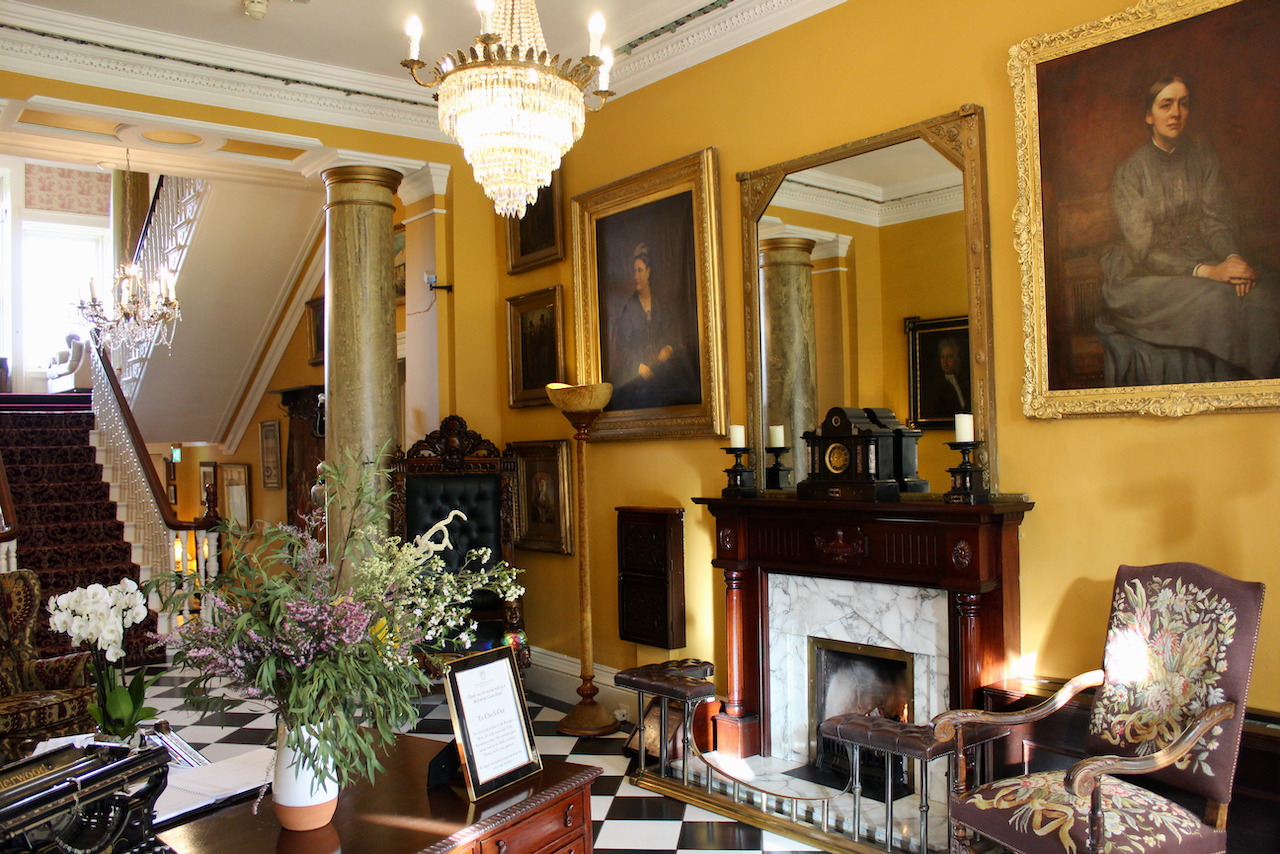
The Gothic addition has battlemented parapet and hood mouldings over the windows. © Jennifer Winder-Baggot, www.irishhistorichouses.com

The Blennerhassett site tells us: “It was William Blennerhassett Jr’s son Arthur (1779-1815) and his wife Dorcas Twiss (1775/7-1822) who commenced addition of the long north wing, something of a “folly” with the stable yard surrounded by a great wall of false windows, with two carriage entrances and a round tower of medieval appearance at the north-west corner. The work of architect Sir William Morrison [From 1809 onward Richard Morrison collaborated increasingly with his second son, William Vitruvius Morrison (1794–1838)], this remodelling was completed in 1821, exactly 100 years after the older “Ballyseedy House” house had been built, by his son Arthur Blennerhassett (b. 1799 d.1843) then only 22 years of age.” [8]

Mark Bence-Jones describes: “At one side of the front is a long and low castellated service wing, with round and square turrets, the other side of which has a sham wall, consisting of a long range of false windows.”

I couldn’t work out where this sham wall of false windows was – perhaps later renovations changed this folly.

Ballyseede Castle, March 2023. © Jennifer Winder-Baggot, www.irishhistorichouses.com
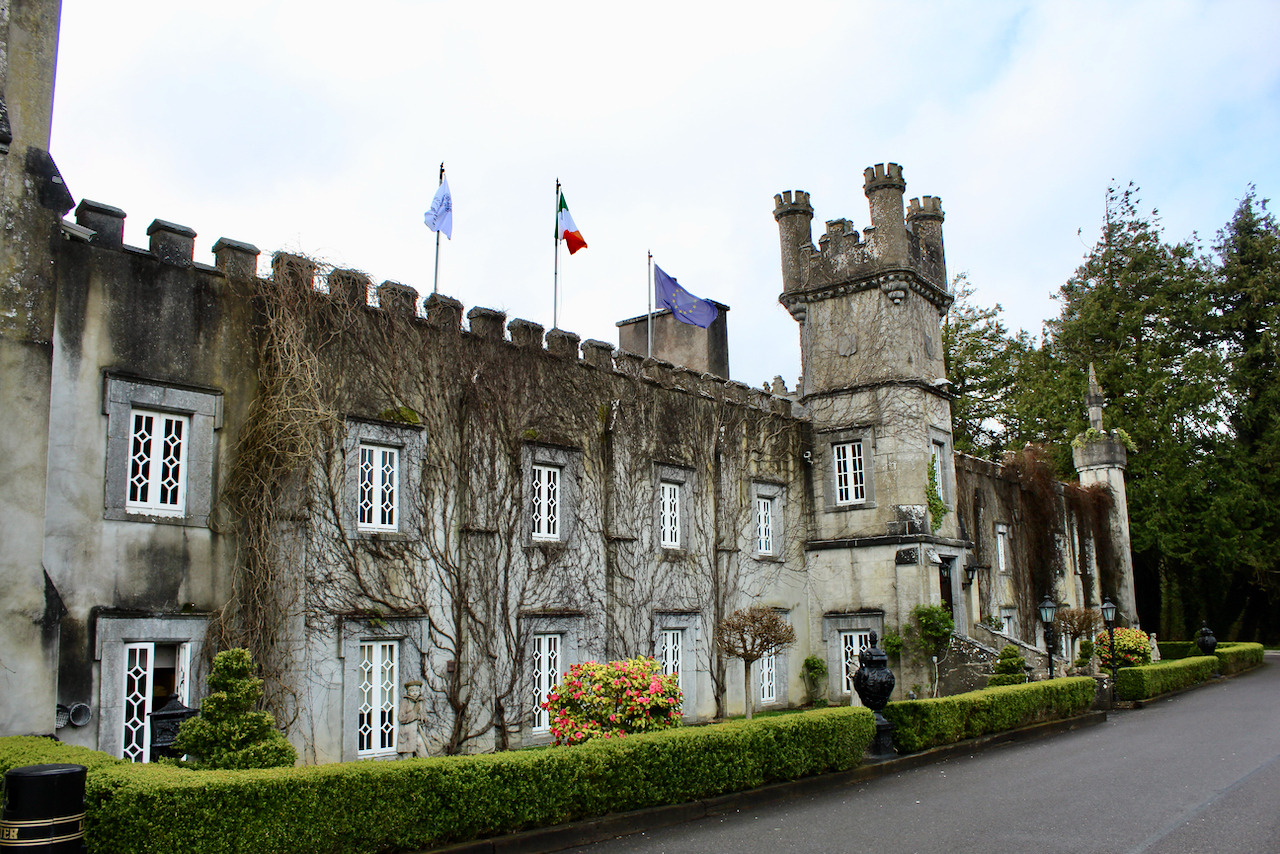
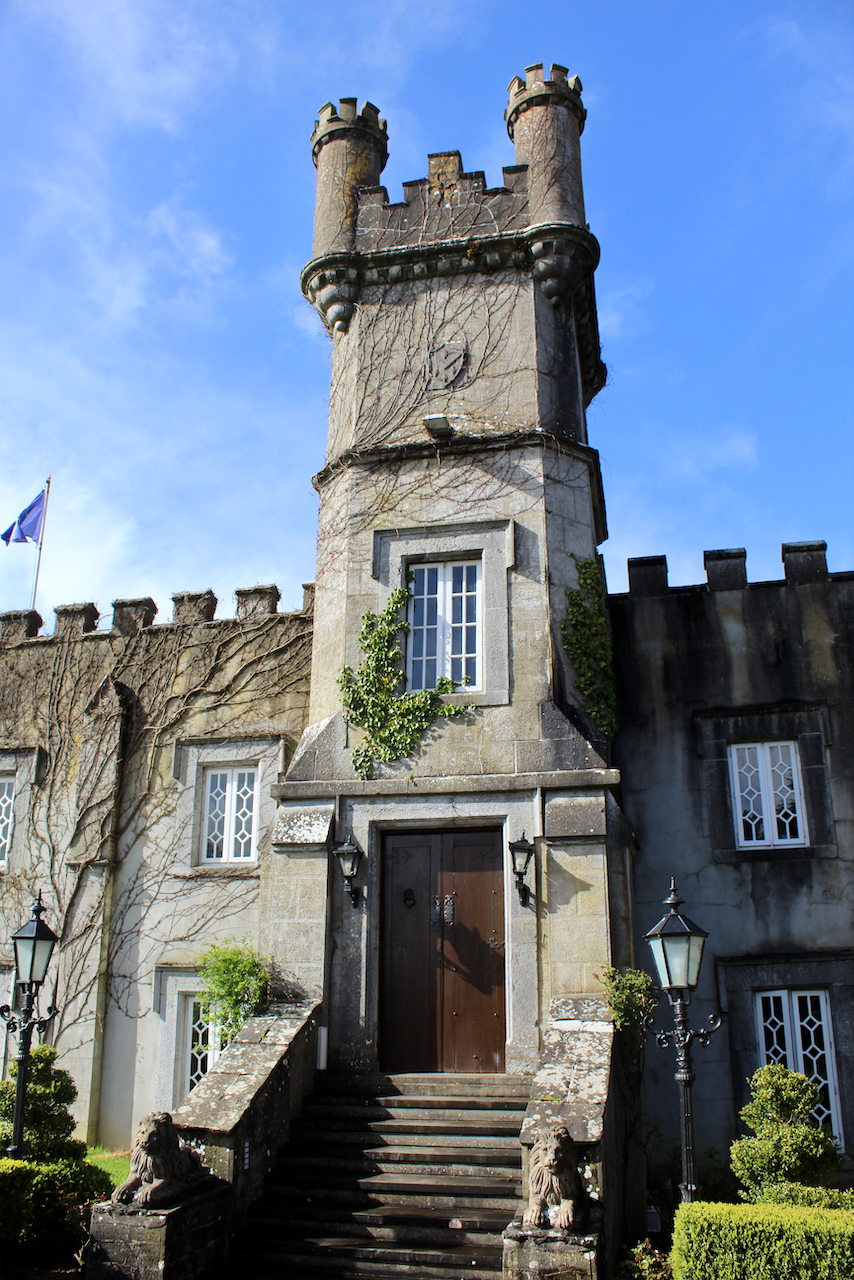
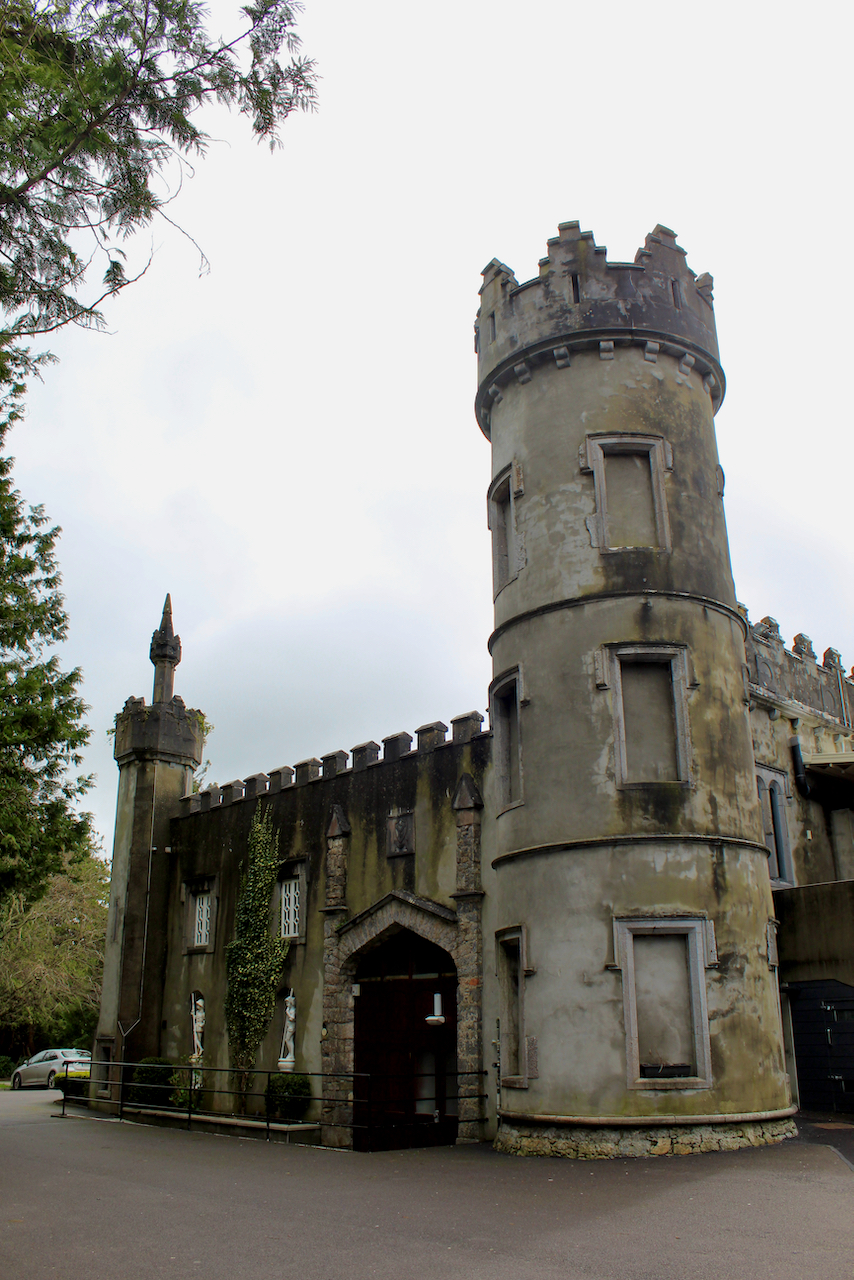
This is the far end of the wing, with what must be the round tower mentioned in the description on the Blennerhassett website: “addition of the long north wing, something of a “folly” with the stable yard surrounded by a great wall of false windows, with two carriage entrances and a round tower of medieval appearance at the north-west corner.” © Jennifer Winder-Baggot, www.irishhistorichouses.com
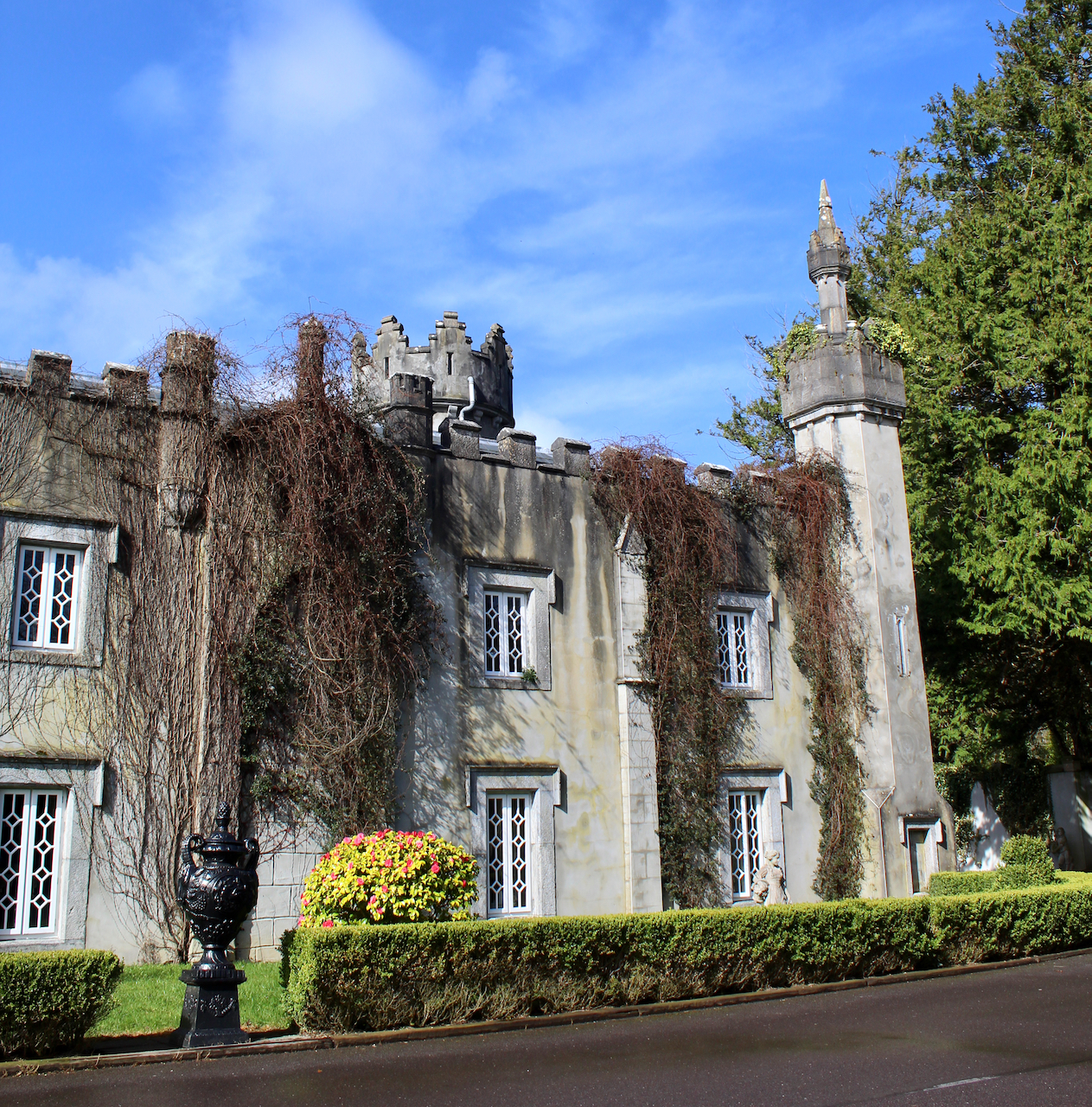
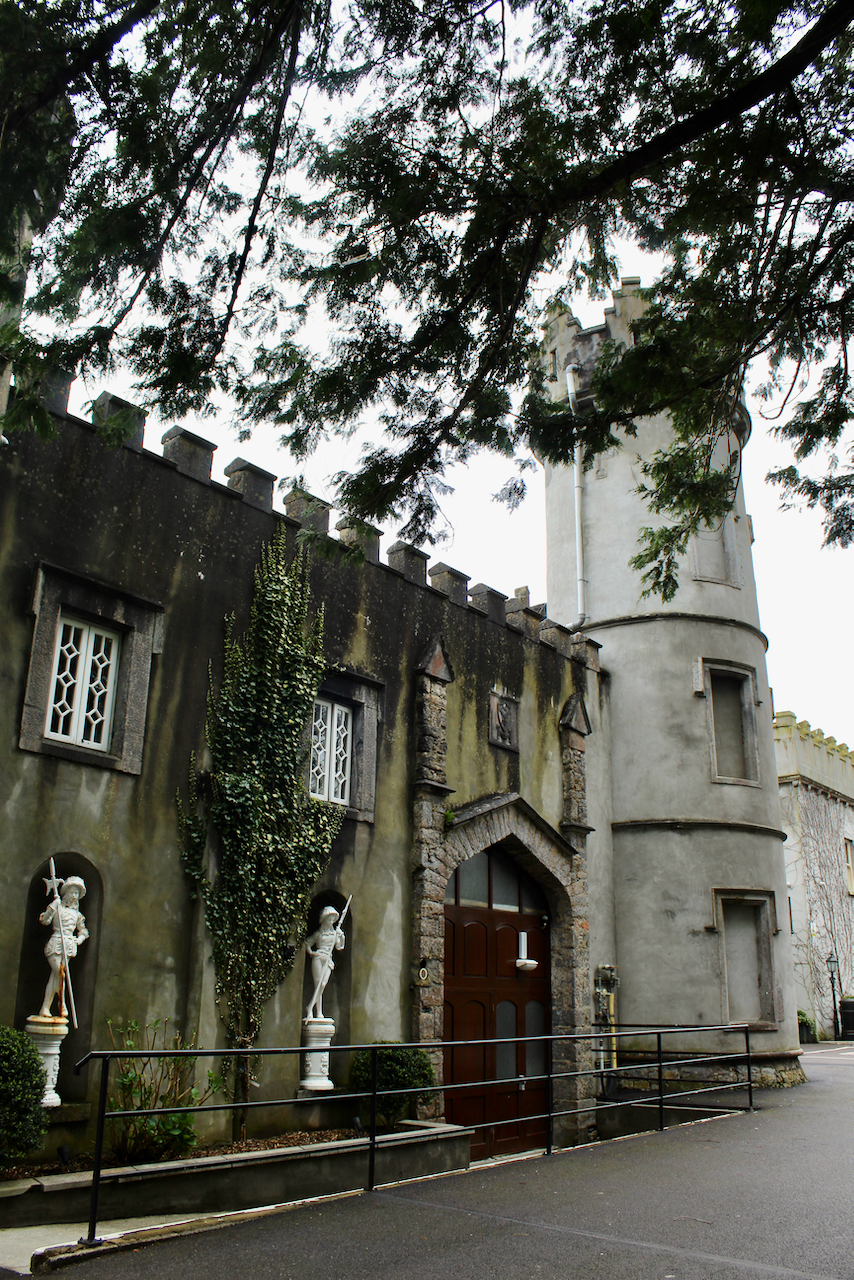
Stephen liked the pike-wielding statues. © Jennifer Winder-Baggot, www.irishhistorichouses.com
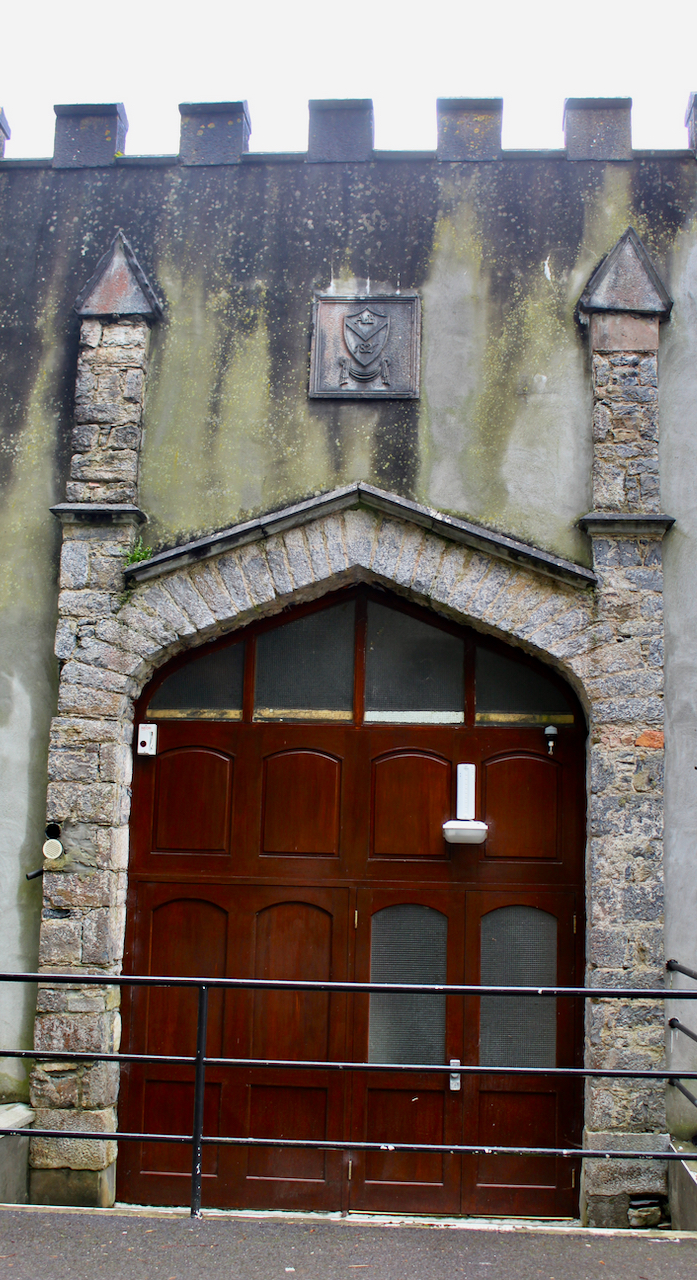
This must be one of the carriage entrances. © Jennifer Winder-Baggot, www.irishhistorichouses.com
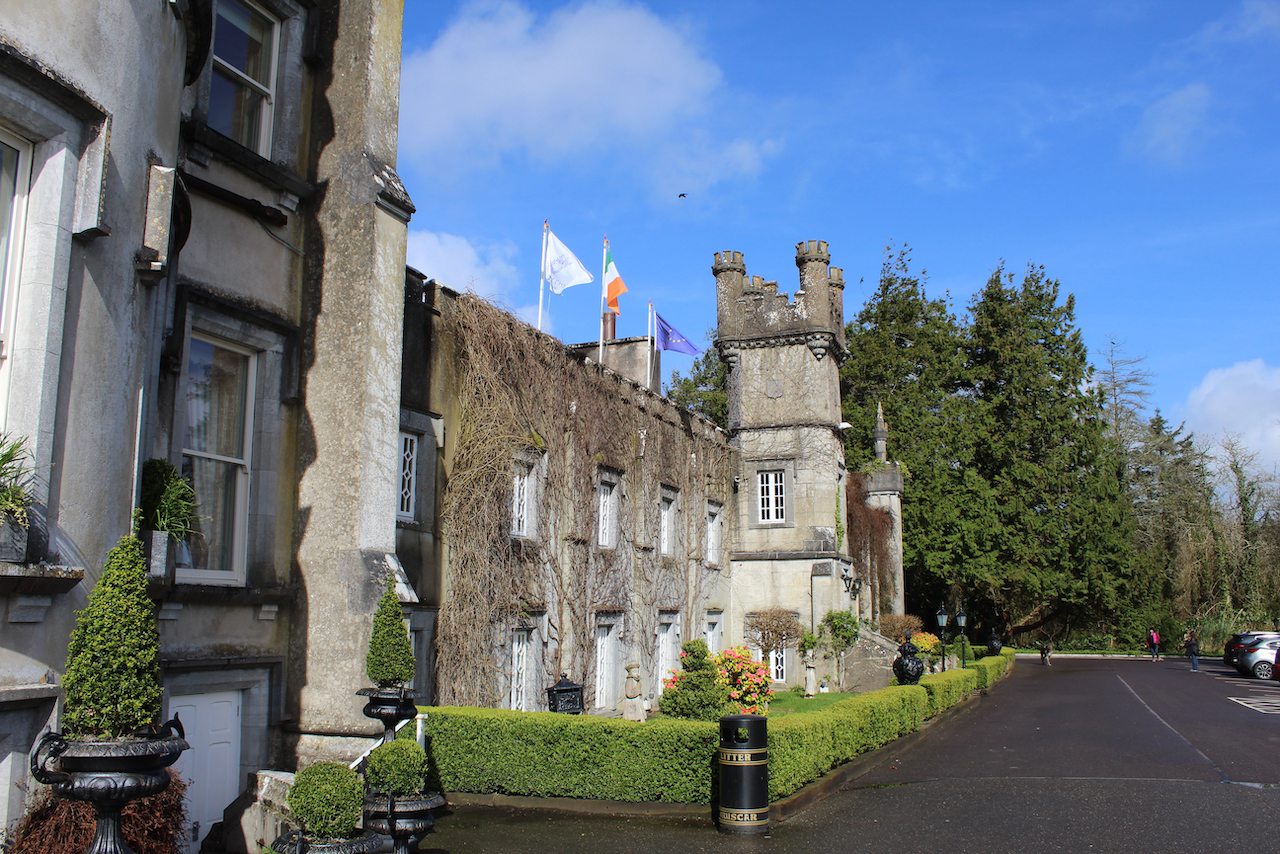
You can see in this photograph that the carriage entrance is open.

At the time of renovations, the son of Arthur and Dorcas, Arthur (1800-1843), was High Sheriff for County Kerry.

The Blennerhassett website tells us:

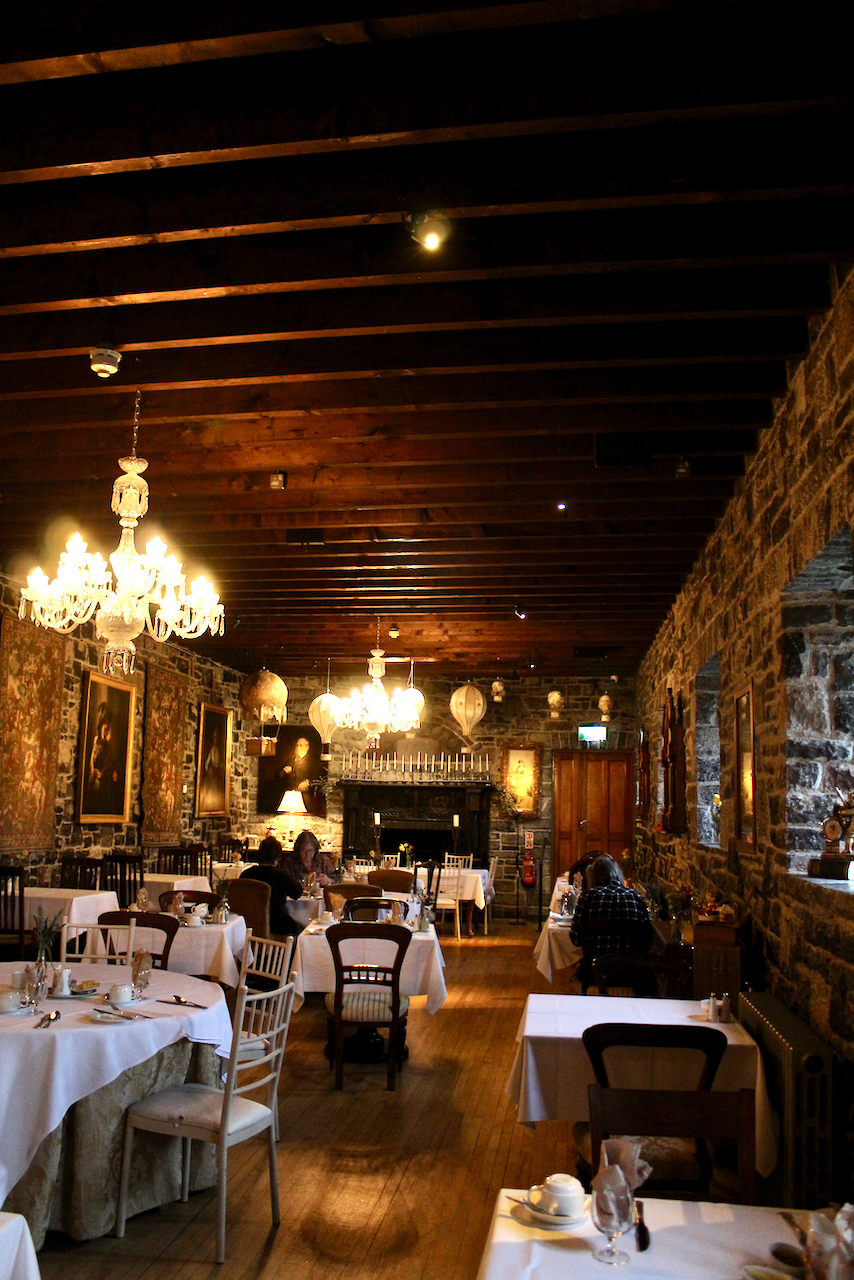
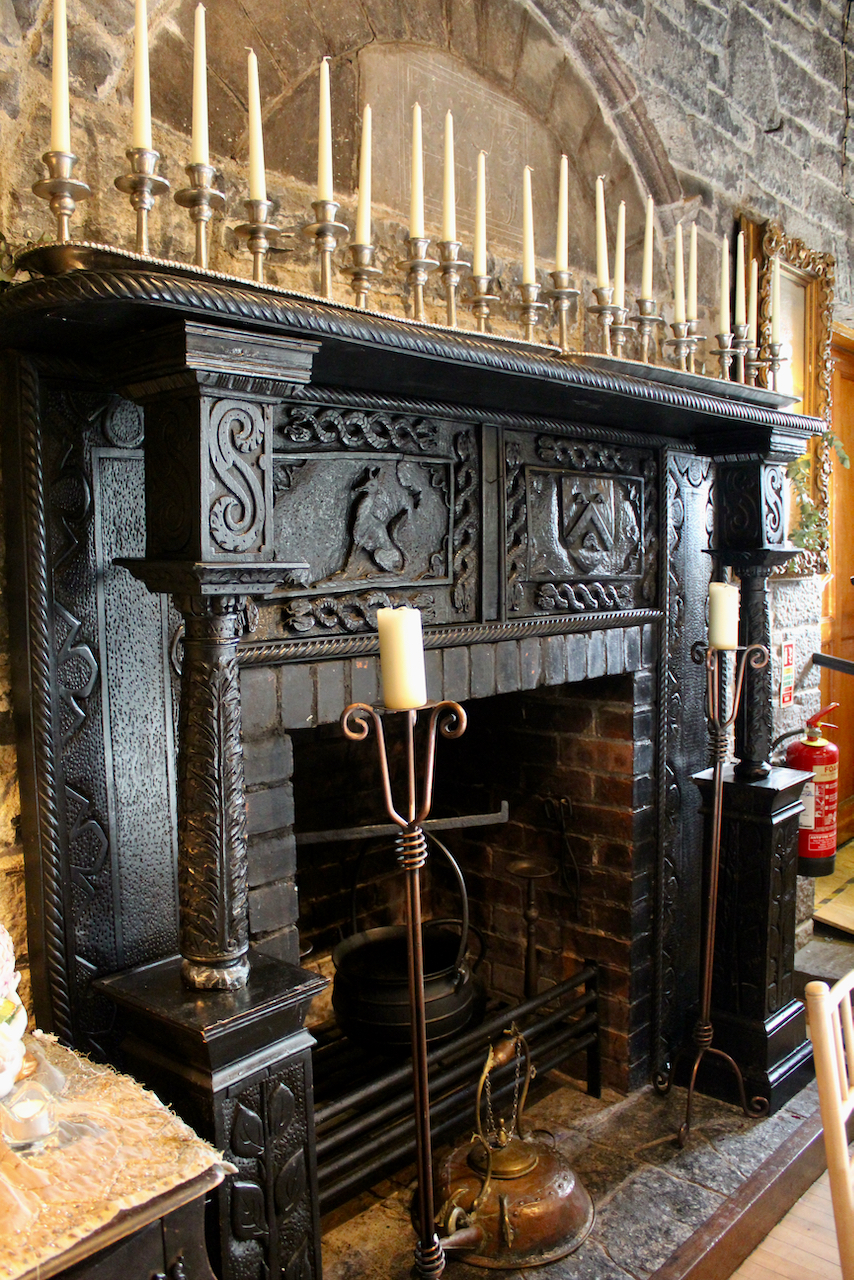
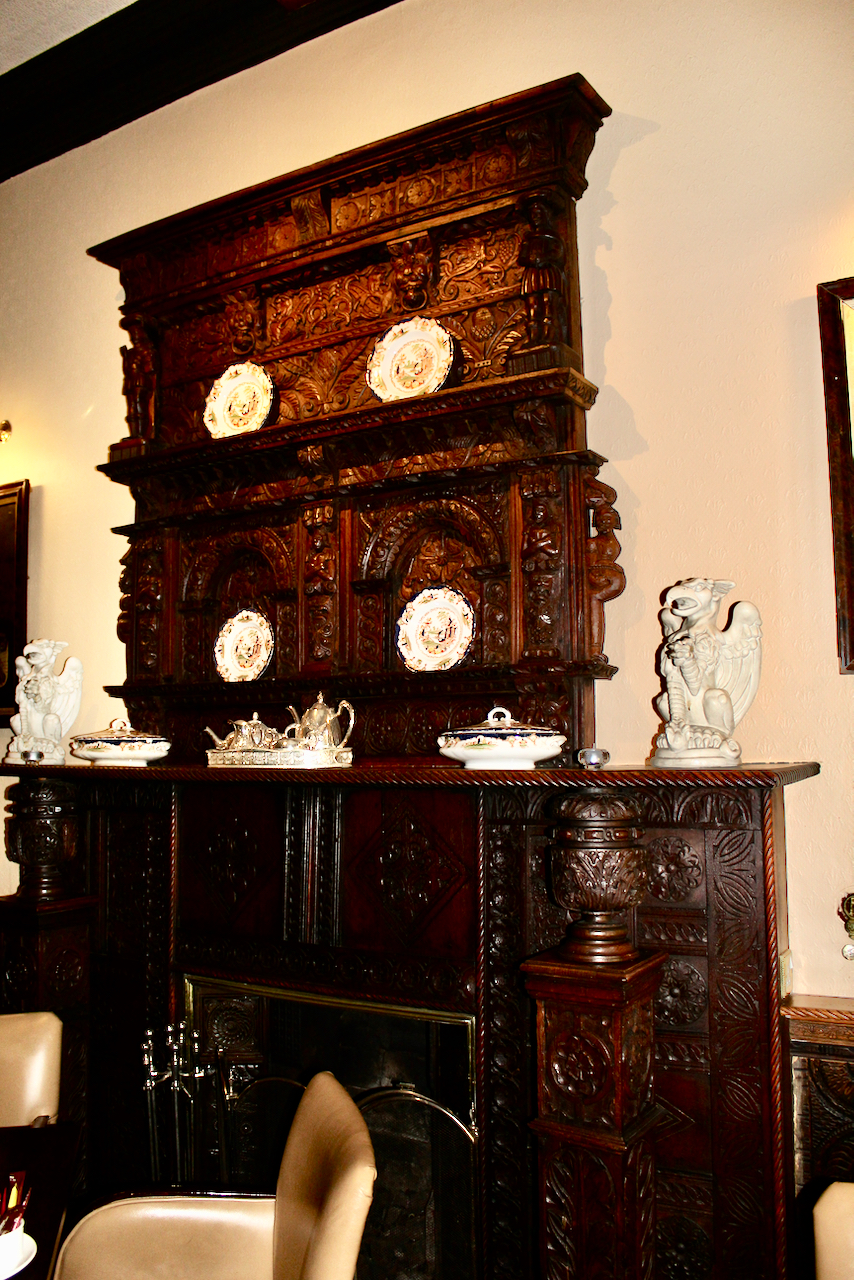
In the north wing is a “Banqueting Hall” which features a foundation stone dated 1721, set into the wall over primitive 17th century black oak fireplace surround.

In the north wing is a “Banqueting Hall.” © Jennifer Winder-Baggot, www.irishhistorichouses.com
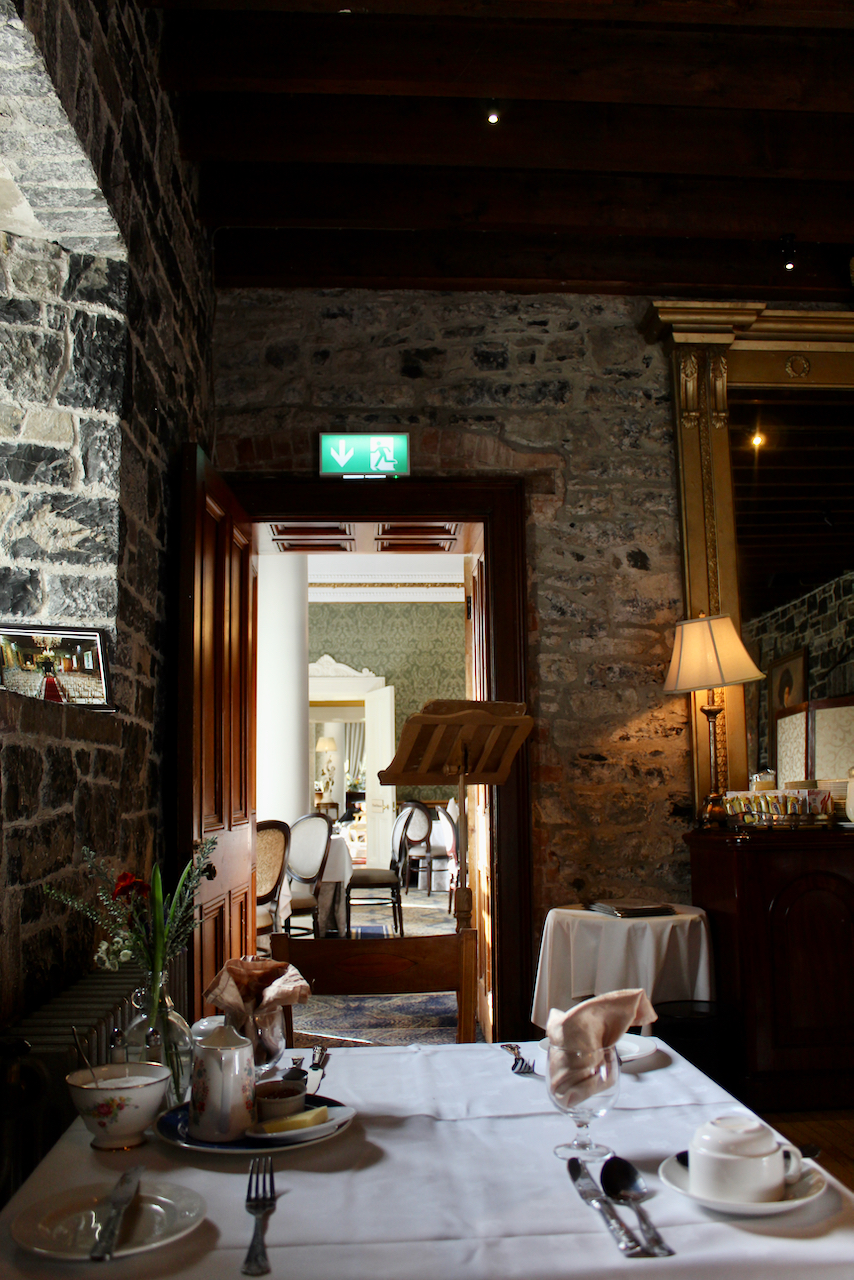
We ate our breakfast here every day. © Jennifer Winder-Baggot, www.irishhistorichouses.com
The 17th century oak fireplace in the banqueting hall. © Jennifer Winder-Baggot, www.irishhistorichouses.com
Detail of the seventeenth century fireplace in Ballyseede. © Jennifer Winder-Baggot, www.irishhistorichouses.com
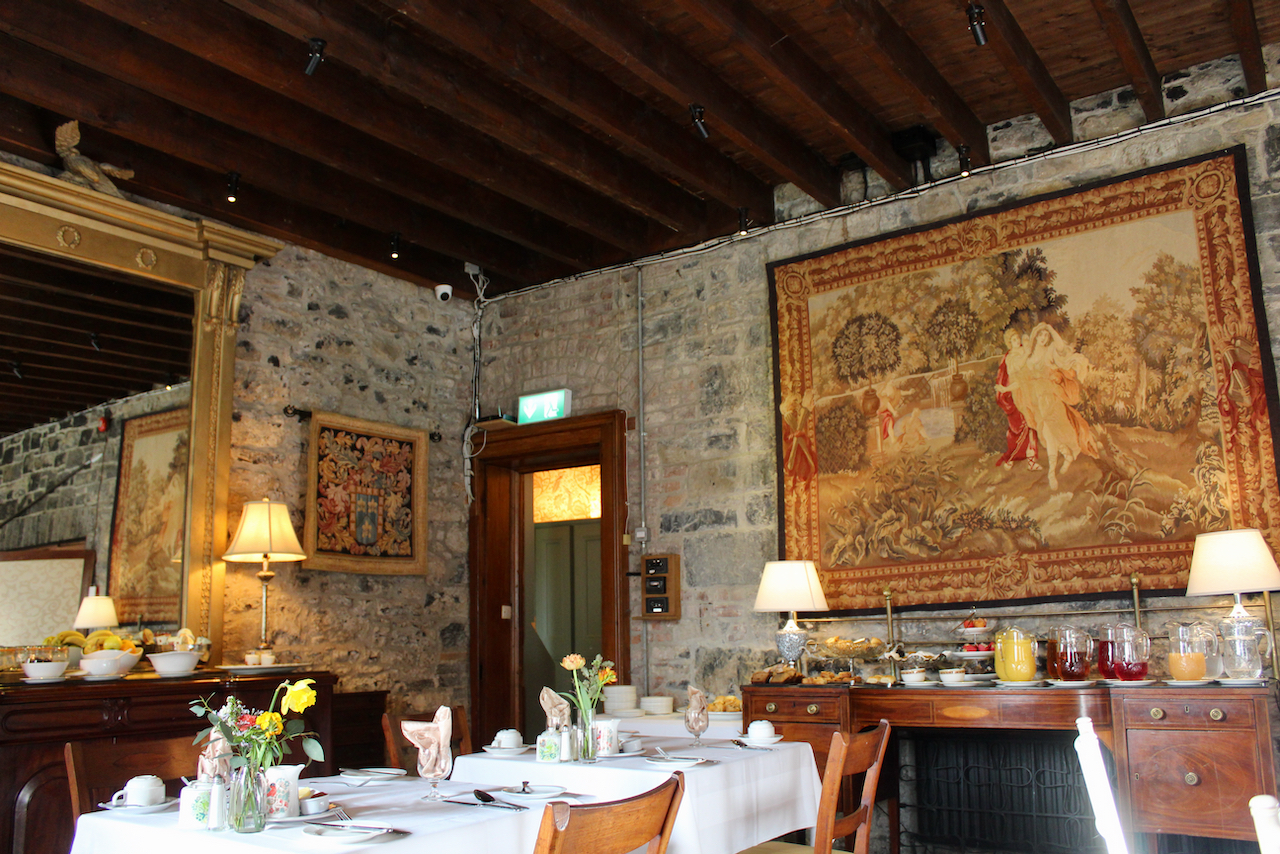
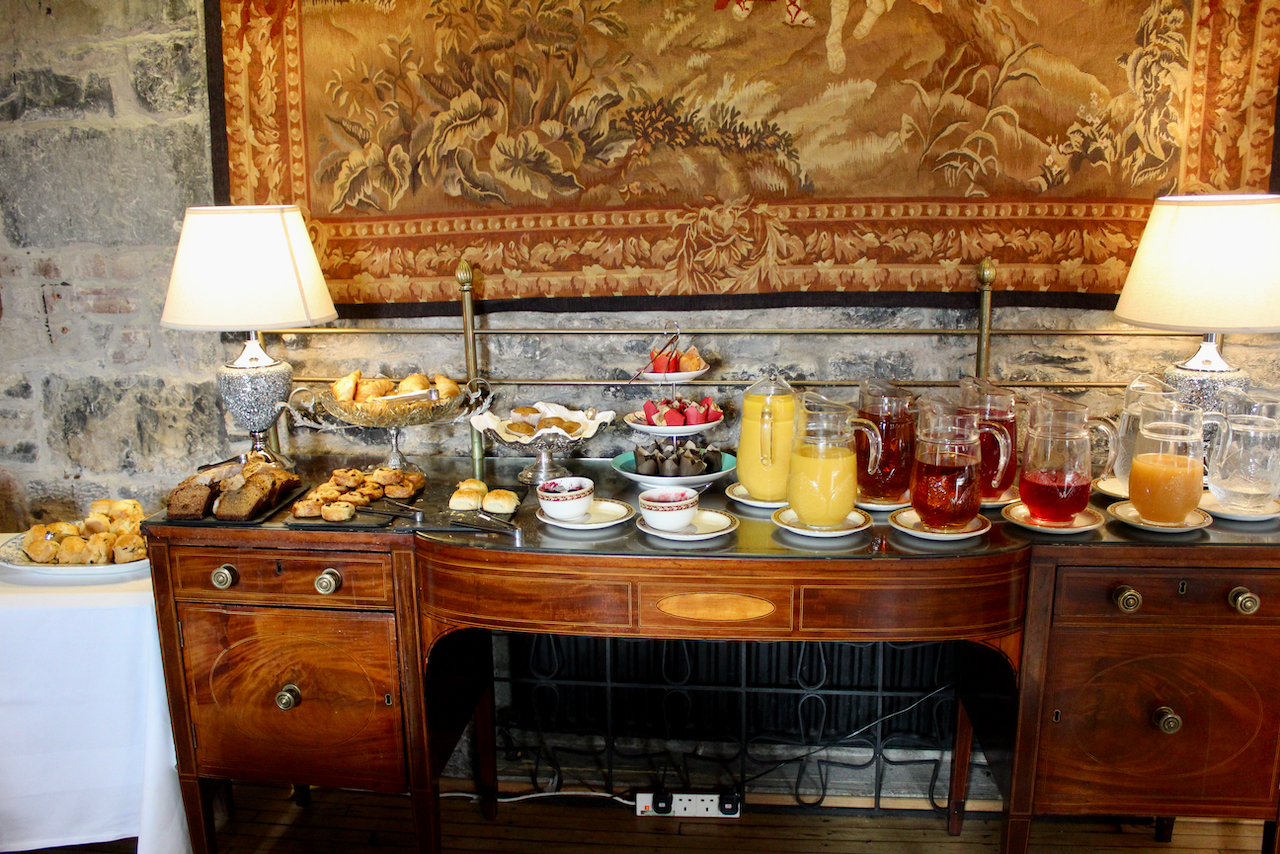
We were treated to a delicious breakfast every day. © Jennifer Winder-Baggot, www.irishhistorichouses.com
Breakfast includes lovely pastries and I confess Stephen and I sneaked a couple into our bag for lunch! © Jennifer Winder-Baggot, www.irishhistorichouses.com
Ballyseede Castle, March 2023. © Jennifer Winder-Baggot, www.irishhistorichouses.com

The Blennerhassett website tells us that another 17th century wooden fireplace surround of finer workmanship was installed in what was the library of the main house (now the hotel bar). The two fireplaces are believed to have been moved with other free-standing oak furniture from “Old” Ballyseedy” as it fell into ruin.

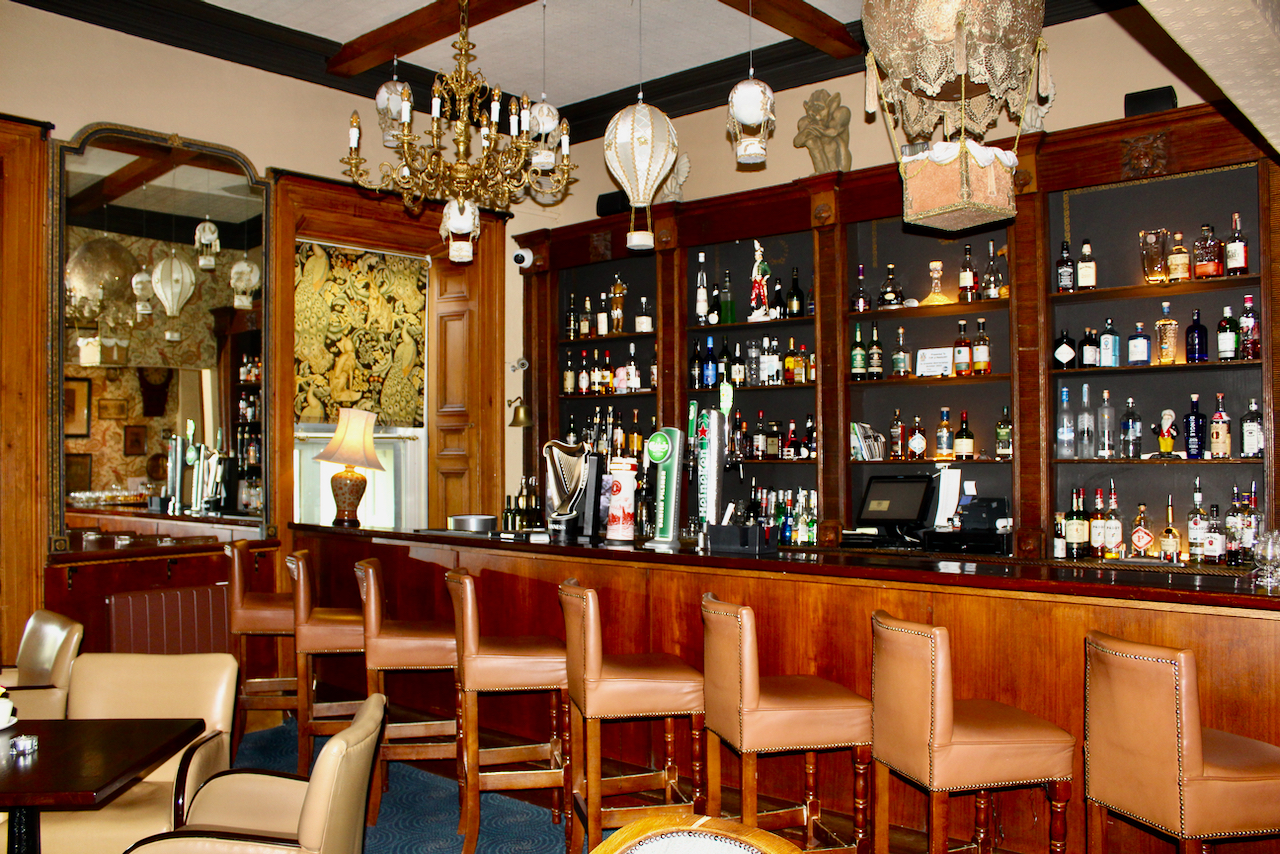
This is the fireplace in the bar believed to have been moved with other free-standing oak furniture from “Old” Ballyseedy” as it fell into ruin. My apologies for the quality of the photographs – the bar is used as a restaurant and I found it impossible to get a good photograph when people were eating in the room! © Jennifer Winder-Baggot, www.irishhistorichouses.com
17th century wooden fireplace in the former library of Ballyseede Castle. © Jennifer Winder-Baggot, www.irishhistorichouses.com
The former library of Ballyseede Castle is now the bar, where casual meals are also served. Stephen and I ate here every evening of our stay. © Jennifer Winder-Baggot, www.irishhistorichouses.com
Arthur Jr. (1800-1843) married Frances Deane O’Grady (1800-1834), daughter of Henry Deane O’Grady (1765-1847). This would have been a prestigious marriage. Her sisters married, respectively, Edward Chichester, 4th Marquess of Donegal (Amelia); David Roche (1791-1865), 1st Baronet of Carass, Co. Limerick (Cecilia); John Skeffington (1812-1863), 10th Viscount Massereene (Olivia); and Matthew Fitzmaurice Deane (1795-1868), 3rd Baron Muskerry (Louisa). Thus Arthur would have been very well connected. He served as M.P. for County Kerry between 1837 and 1841.

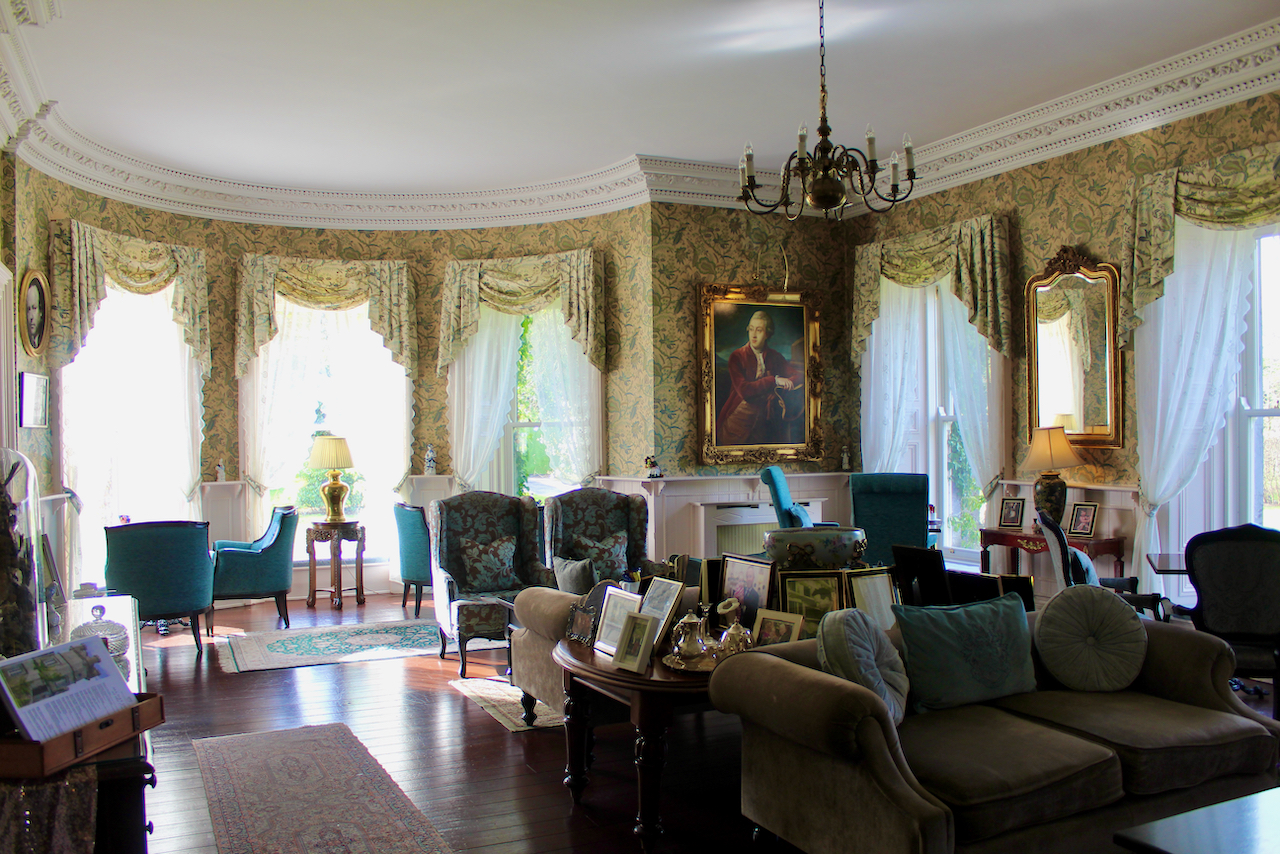
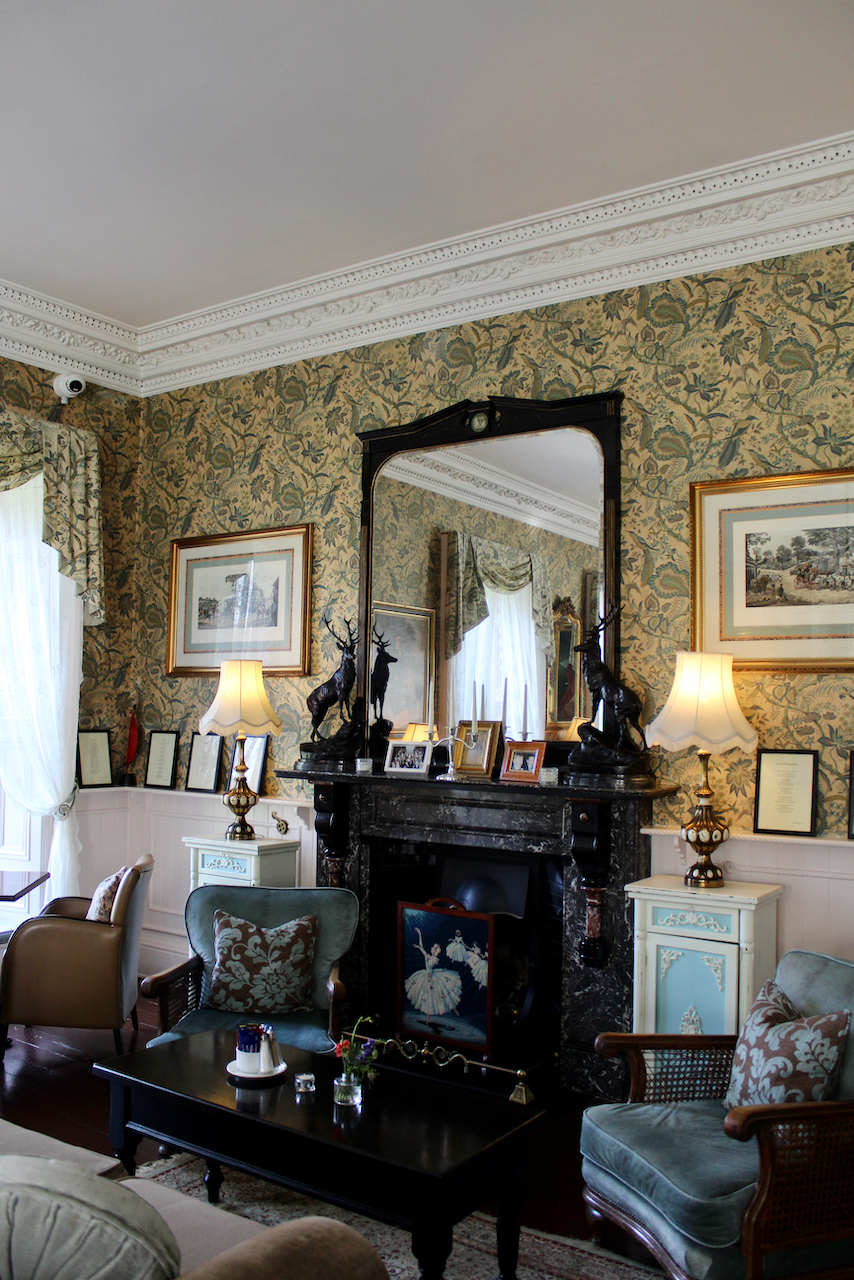
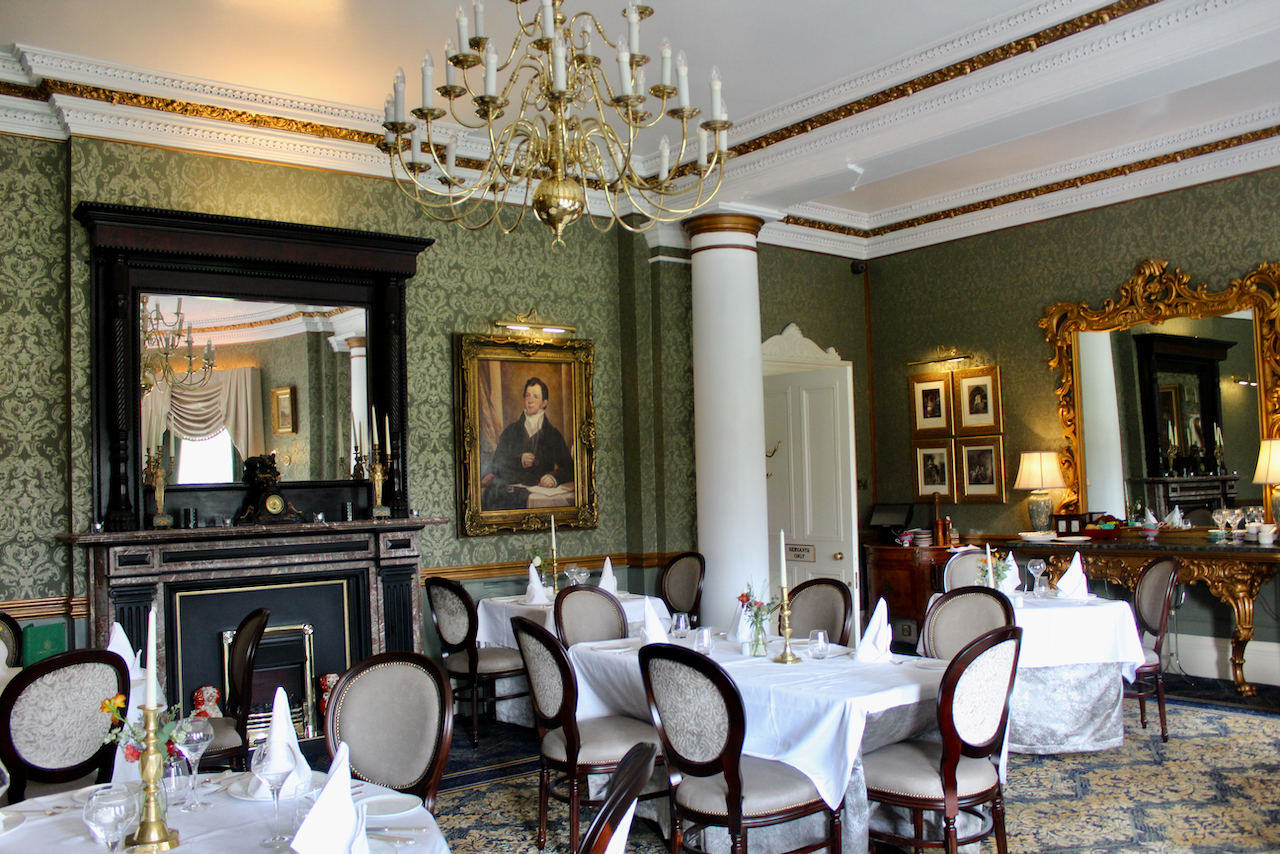
One of the formal rooms of Ballyseede Castle. © Jennifer Winder-Baggot, www.irishhistorichouses.com
The room has a lovely marble fireplace. © Jennifer Winder-Baggot, www.irishhistorichouses.com
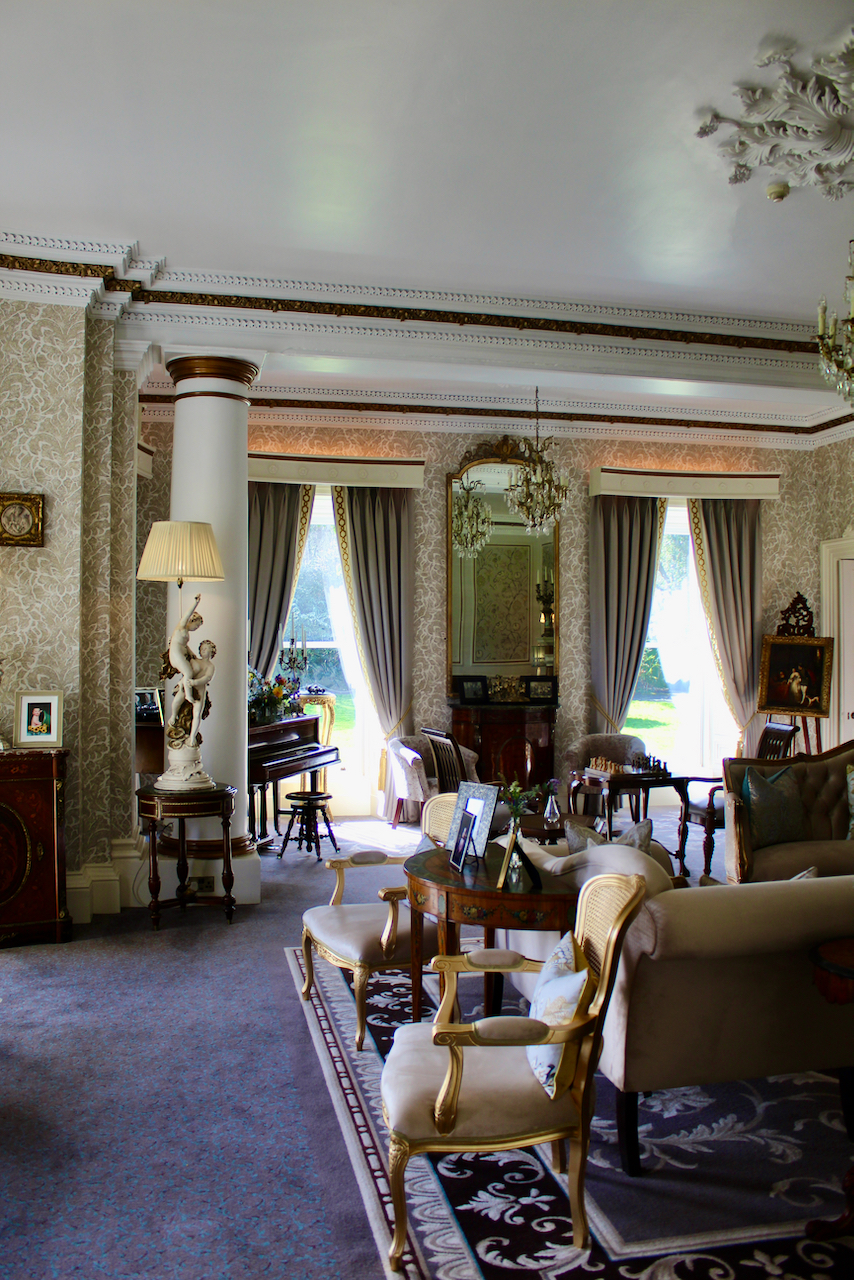
Another of the formal rooms of Ballyseede Castle. © Jennifer Winder-Baggot, www.irishhistorichouses.com
Stephen and I particularly enjoyed the chess set and availed of it on two evenings, imagining ourselves in a drawing room in the eighteenth century. © Jennifer Winder-Baggot, www.irishhistorichouses.com
Ballyseede Castle. © Jennifer Winder-Baggot, www.irishhistorichouses.com
One of the bay windows of Ballyseede. © Jennifer Winder-Baggot, www.irishhistorichouses.com
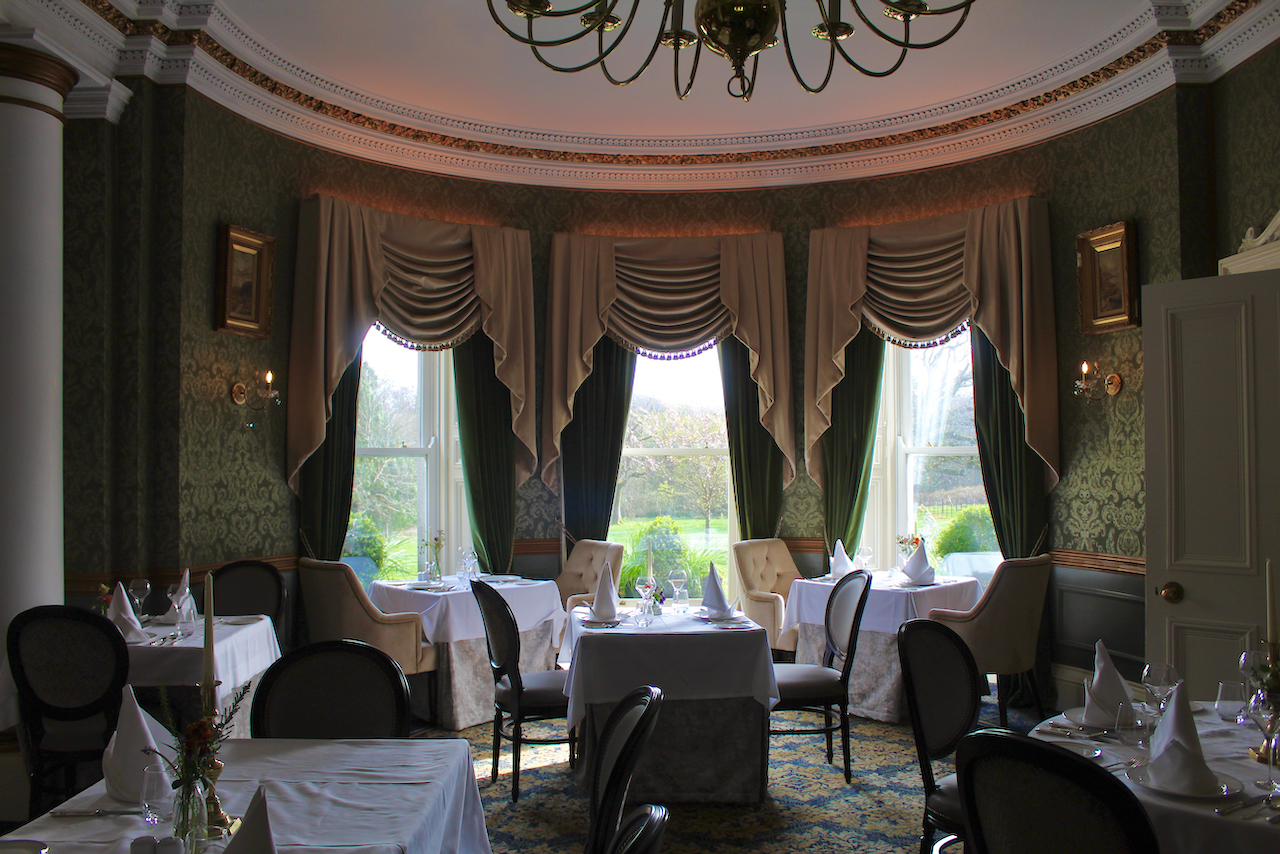
It must have been during this Arthur’s time in the 1830s that Ballyseede was leased to Edward Denny (1796-1889), 4th Baronet.

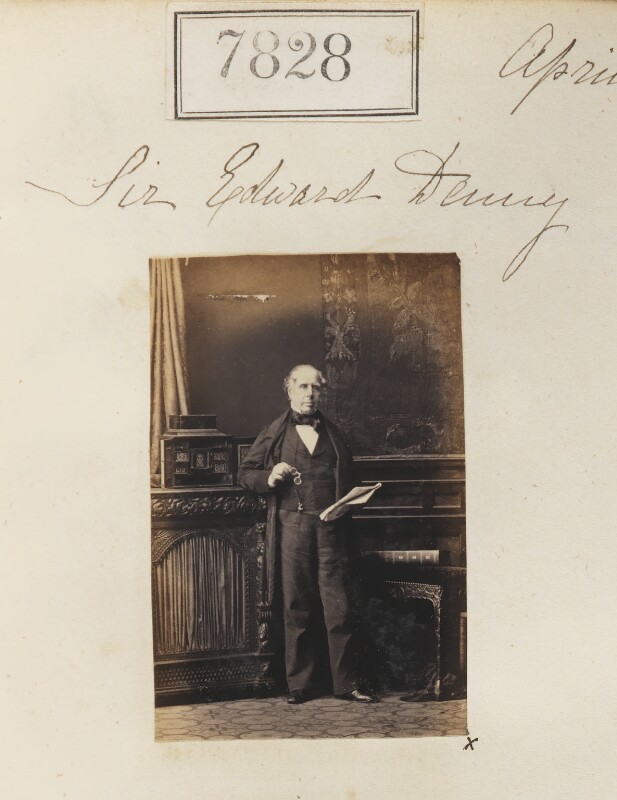
Edward Denny (1796-1889) 4th Bt , Poet and hymn writer, by Camille Silvy, 1862, National Portrait Gallery of London, Ax57667.

In Voices from the Great Houses: Cork and Kerry (2013) Jane O’Hea O’Keeffe tells us:

p. 160. “Several generations of the Denny family occupied the ancient castle in Tralee. They ran the estate through both peaceful and turbulent times until 1826, when Sir Edward Denny, 3rd Baronet [1773-1831, of Castle Moyle, Co. Kerry], decided to demolish the castle. Tom Denny ruefully remarks, “The demolition of Tralee Castle by Sir Edward Denny was a crime, and much resented in Tralee at that time. People felt angry that part of the town’s history was being destroyed. Sir Edward was really quite a muddled character. As a younger man, when he inherited the estate, he promptly set about enlarging the castle, something which is powerful father-in-law Judge Day found very irritating, and which created enormous problems for Sir Edward’s finances. He subsequently went to live in Worcester. He remained fascinated by genealogy and artefacts from the family’s past and continued to acquire Tudor portraits long after he had pulled down the Tudor remains of the Denny house. 

In the 1830s the Worcestershire Dennys came back to Tralee, and Sir Edward Denny, 4th Baronet, rented Ballyseedy Castle outside the town for a number of years. His younger brother William [1811-1871] became his agent, and he lived at Princes Quay in Tralee in a house when the Dominican church now stands. Sir Edward Denny planned to rebuild the [Tralee] castle, and he replanted the park and also built lodges on the estate. His plans came to an end in 1840 when he joined the conservative Plymouth Brethren movement and he lived thereafter in poverty in London, leaving the management of the estate to his family. 

The indebted Denny estate in Tralee was run by members of the family, or their agents, until 1892, when it was taken over by an insurance company; this severed a family link to the area which had remained strong for over 300 years. 

The Denny estates at one time, stretched to around 29,000 acres, extending from Fenit to Tralee and around the other side of the bay to Derrymore,” explains Tom Denny. “Sir Arthur Denny, 5th Baronet (1838-1921), was a notorious gambler who managed to lose the entire estate by around 1892.” 

The dining room of Ballyseede Castle. © Jennifer Winder-Baggot, www.irishhistorichouses.com
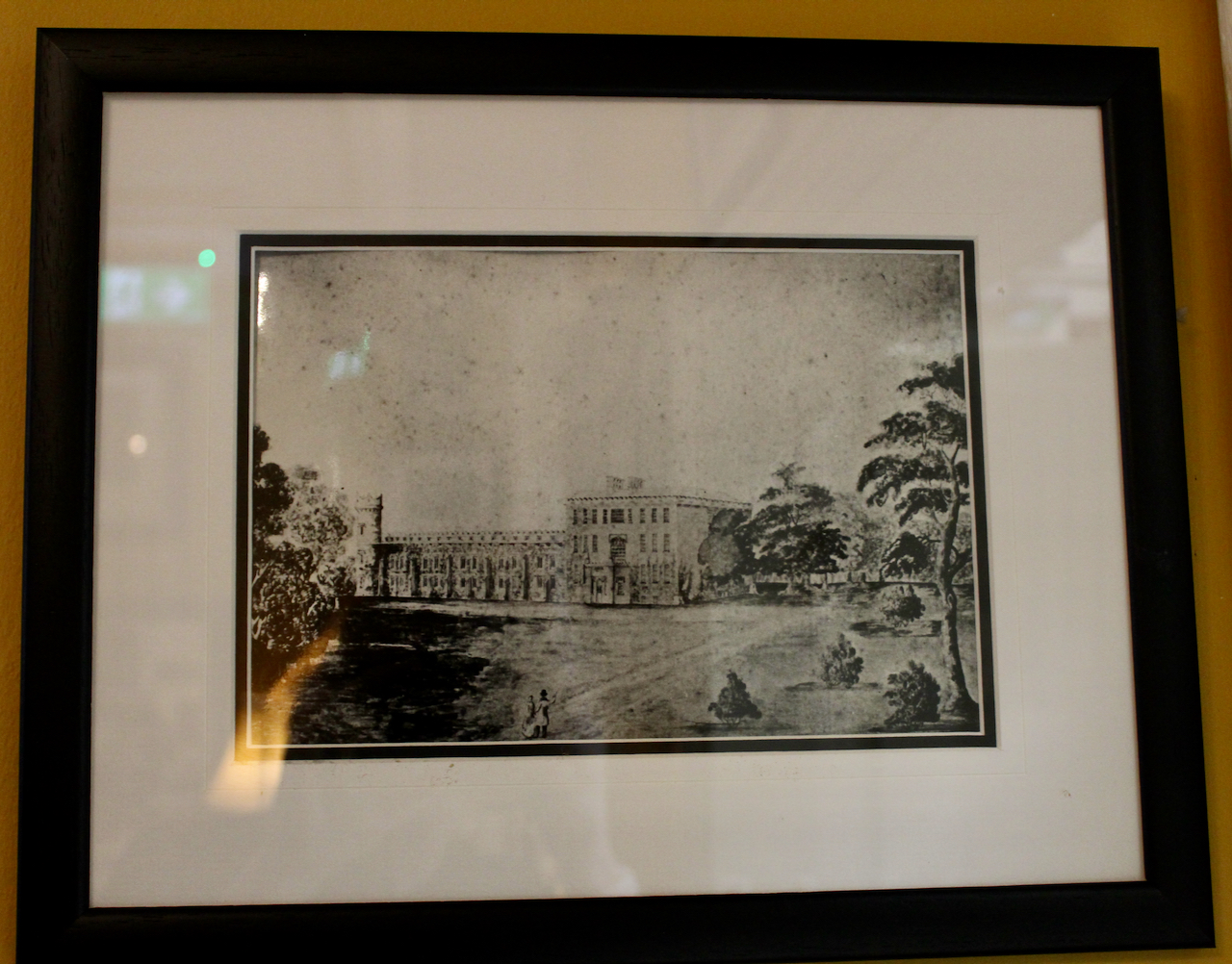
Ballyseede Castle, March 2023. © Jennifer Winder-Baggot, www.irishhistorichouses.com

Arthur Blennerhassett died in 1843 when his son, Charles John Allanson Winn Blennerhassett (1830-1859) was only thirteen years old. By this time, Ballyseedy was probably back in the hands of the Blennerhassetts. Charles’s mother has died when he was only four. I am not sure who raised him. A few of his uncles still lived in County Kerry: His uncle Thomas (1806-1878) remained unmarried and lived in Kerry, and uncle Lt.-Col. Francis Barry Blennerhassett (1815-1877) lived in Blennerville, County Kerry, also unmarried.

Charles John Allanson Winn married Marianne Hickson of Dingle, County Kerry, in 1855. He held the office of High Sheriff in 1858 and was a Justice of the Peace. He died at the young age of 29 and his wife remarried, this time to Captain William Walker. Before Charles died, his wife had two children: Barbara, who died at the age of ten, and Arthur (1856-1939). Young Arthur was only three years old when his father died. He was sent away to school in Harrow in England.

Charles John Allanson Winn Blennerhassett (1830-1859) had several siblings. His sister Adelaide married Standish O’Grady (1832-1860) 3rd Viscount Guillamore, County Limerick. His sister Dorcas married Robert Conway Hurly of Glenduffe, County Kerry. His sister Amelia married Chichester Thomas Skeffington, son of Thomas Henry Skeffington, 2nd Viscount Ferrard, County Louth. Frances Annabella married John Richard Wolseley, 6th Bt of Mount Wolseley, County Carlow. His only brother, Henry Deane, died unmarried in 1850.

Young Arthur Blennerhassett (1856-1939) was the owner of 12,621 acres in 1876 [see 2]. He held the office of High Sheriff in 1878. In 1882 he married Clara Nesta Richarda FitzGerald, daughter of Desmond John Edmund FitzGerald, 26th Knight of Glin.

The house was further remodelled during the 1880s for the Blennerhassett family by James Franklin Fuller (1835–1924), after which it was then known as “Ballyseedy Castle.” Fuller added a battlemented parapet, hood mouldings and other mildly baronial touches. The three-bay single-storey flat-roofed limestone ashlar projecting porch was added to the entrance bay. The Blennerhassett website tells us that the back of the castle became the front at this time.

Older pictures of Ballyseedy. It looks like this could be the original front of the castle. It is identified on the Blennerhassett family website as Ballyseedy c.1837-1841 and their version is titled “The Seat of Arthur Blennerhassett Esq MP, Co Kerry.”

The Blennerhassett family website [8] tells us more about the history:

During the 1880s Arthur’s grandson, Maj. Arthur Blennerhassett (b.1856 d.1939), commissioned a “mock castle” refacing of the house, as was popular during the late Victorian period, these changes causing what had previously been the front elevation and west facing main entrance to become the rear of the house. This work, executed by Kerry architect, historian and Blennerhassett descendant James Franklin Fuller, caused the house to lose its Georgian elegance and simplicity but resulted in the more impressive building we see today. Following these changes the house began to be referred to as “Ballyseedy Castle” and is named as such on the family headed writing paper of the time.” [8]

Unfortunately not having read this fully in advance of our visit, I didn’t take a proper picture of the back of the hotel, not knowing that it had originally been the front!

The back of the hotel. © Jennifer Winder-Baggot, www.irishhistorichouses.com
An early aerial shot of Ballyseede.

Out the back there is a lovely garden with statues, small hedges, trees and a gazebo perfect for wedding photographs. Unfortunately it rained during most of our visit, so we didn’t get to explore much outside.

The gardens at Ballyseede Castle. © Jennifer Winder-Baggot, www.irishhistorichouses.com
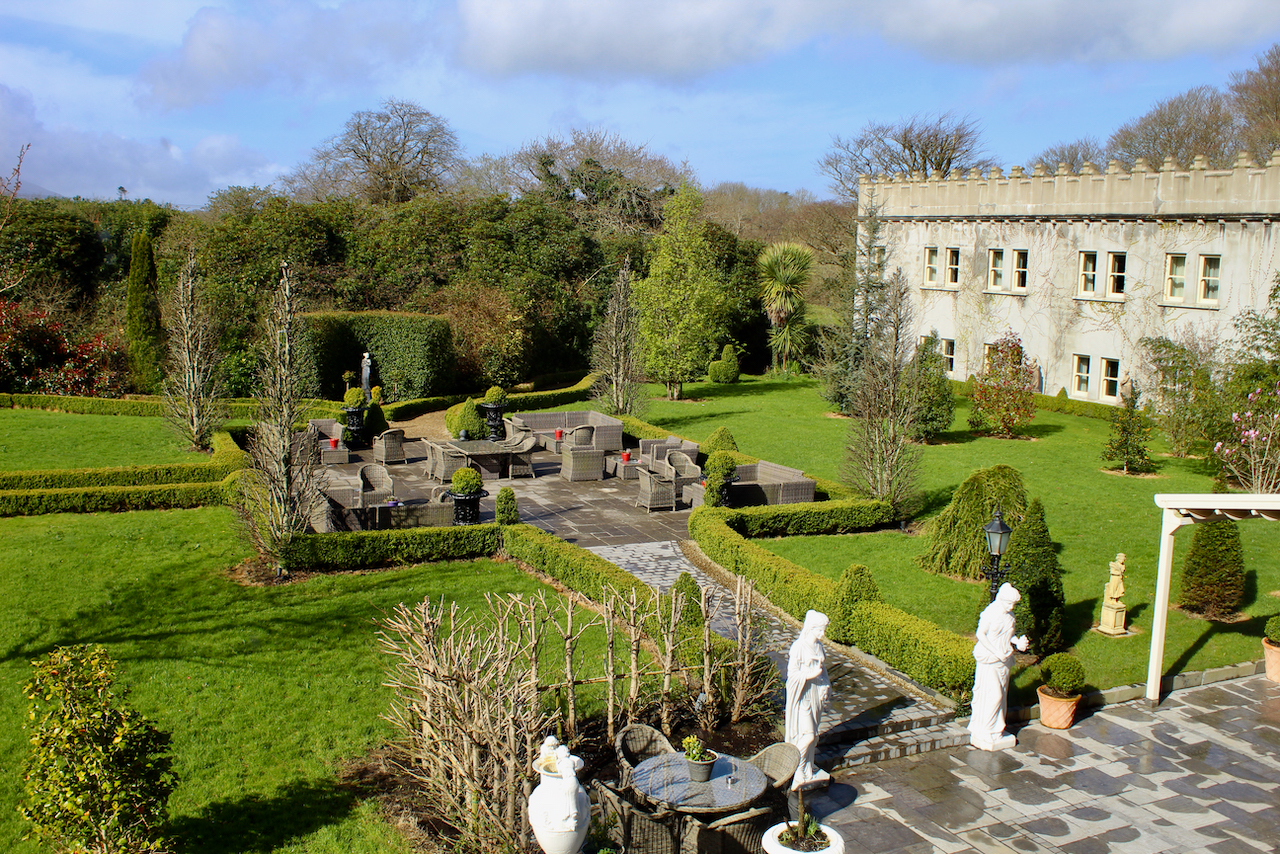
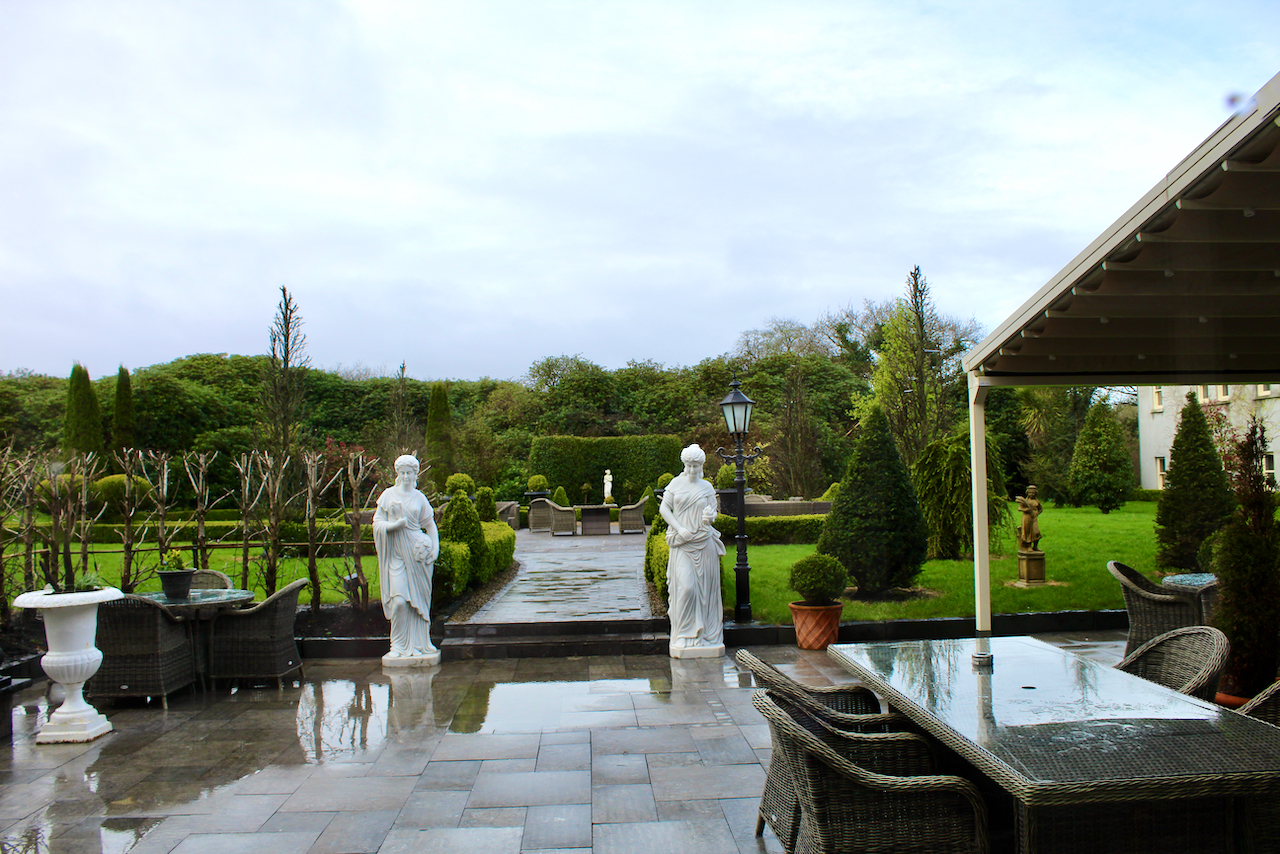
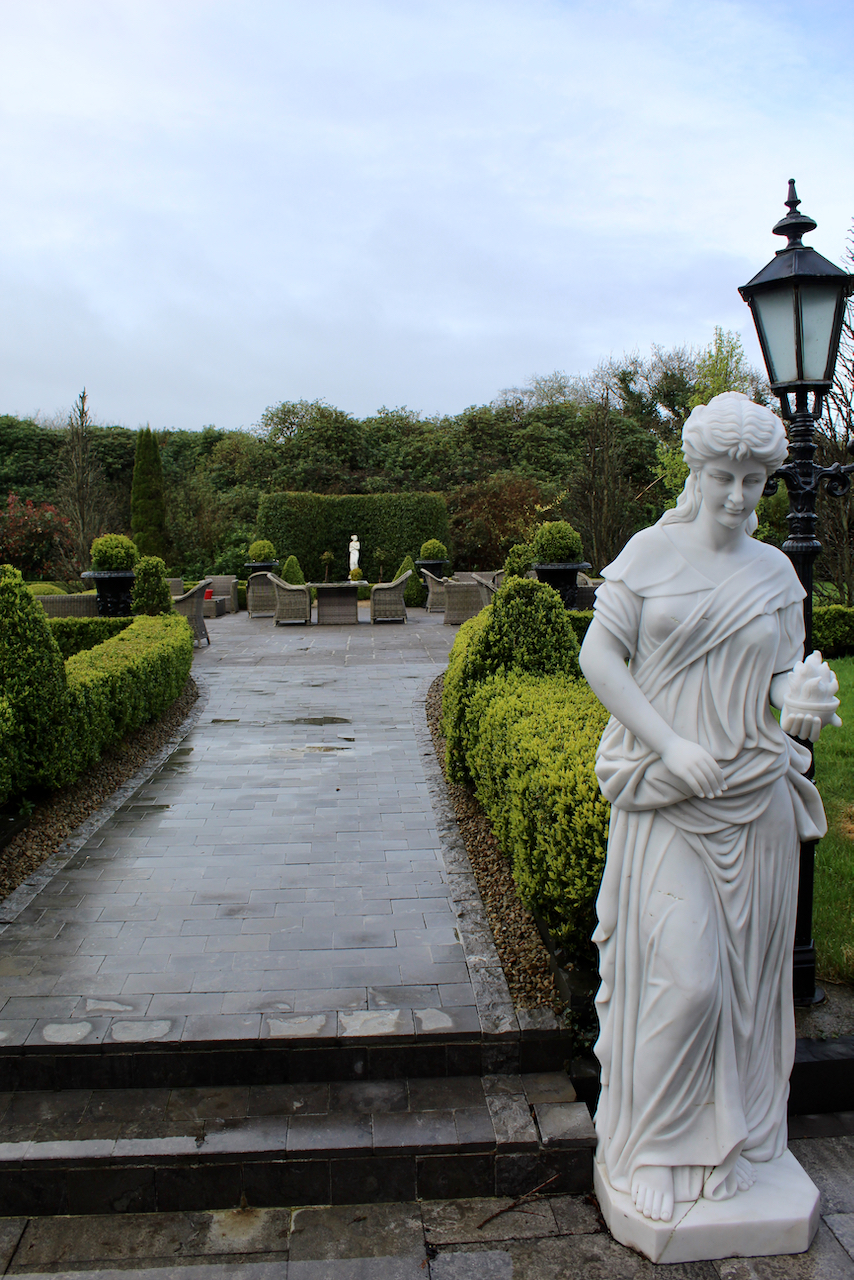
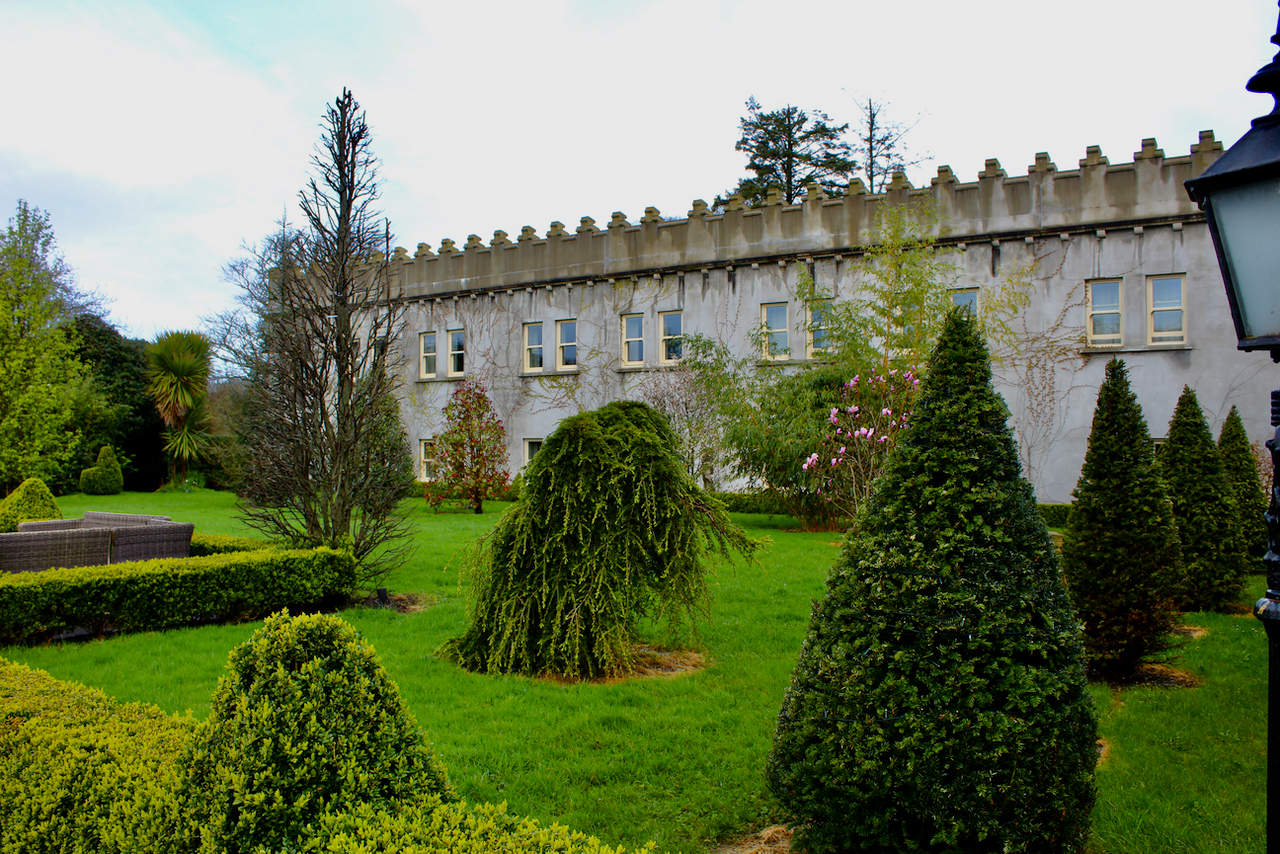
A later addition to the castle, a sixteen bedroom extension. © Jennifer Winder-Baggot, www.irishhistorichouses.com
Arthur served as Deputy Lieutenant and Justice of the Peace. He fought in the first World War and gained the rank of Major in the 4th Battalion, Munster Fusiliers. In 1918, both he and Clara Nesta (known as Nesta) were appointed as Members of the Order of the British Empire (M.B.E.) for their services: Nesta because during WWI she and her younger daughters Hilda and Vera served as Voluntary Aid Detachment nurses caring for the wounded, first behind the battlefields of France, and later on Lord Dunraven’s hospital ship “Grianaig” in the Mediterranean. 

Arthur and Nesta had three daughters. Hilda and Vera lived at Ballyseedy. Hilda bequeathed the estate in 1965 to her kinsman Sir (Marmaduke) Adrian Francis William Blennerhassett, 7th Bt of Blennerville, County Kerry, who sold it 1967. [see 5] This branch of Blennerhassetts are descendants of Robert Blennerhassett of Ballycarty Castle and his wife Elizabeth Conway also, from their grandson Robert, younger brother of John from whom the Ballyseedy Blennerhassetts descended.

The Blennerhassett website has a copy of the auction of the contents of the house, held by Hamilton and Hamilton in 1967.

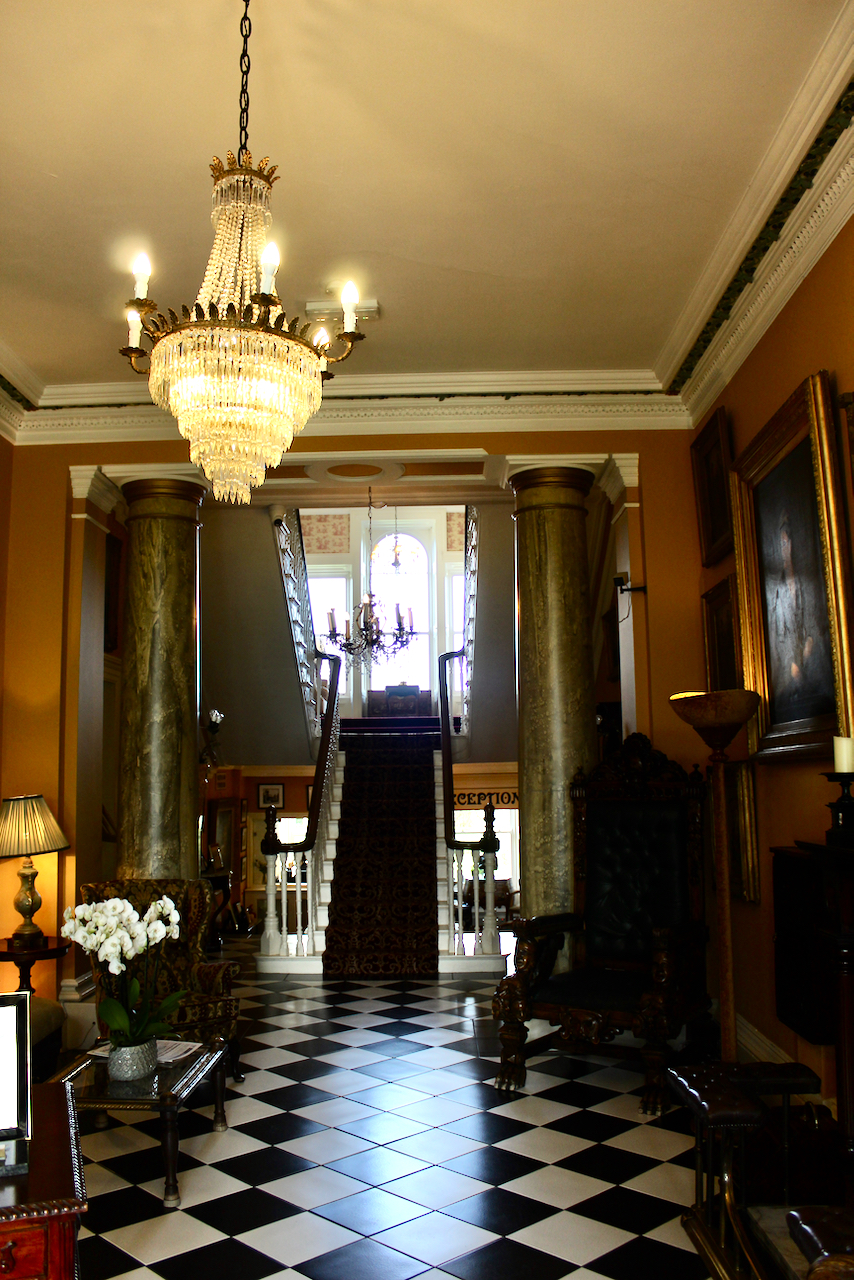
The stair hall of Ballyseede Castle. © Jennifer Winder-Baggot, www.irishhistorichouses.com
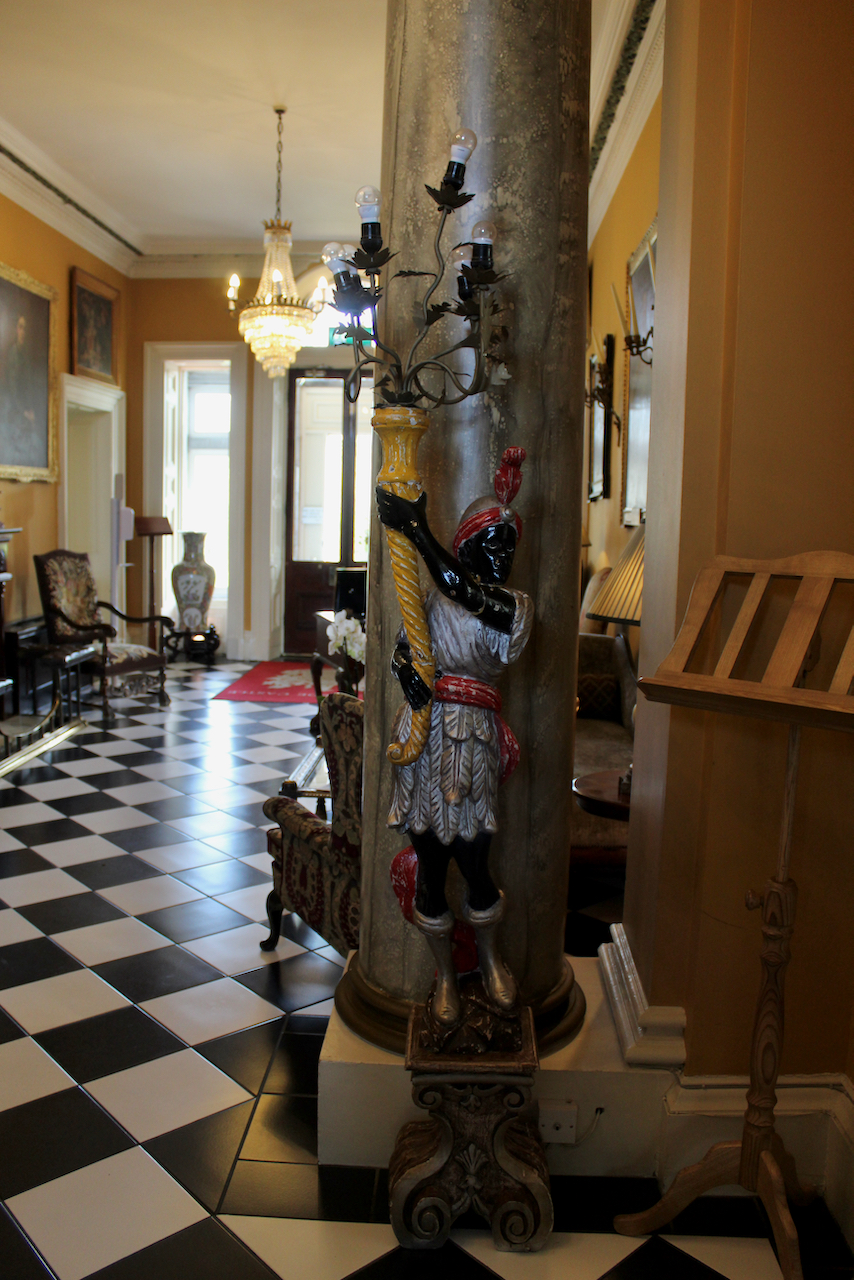
Everywhere there are little touches and treasures. © Jennifer Winder-Baggot, www.irishhistorichouses.com
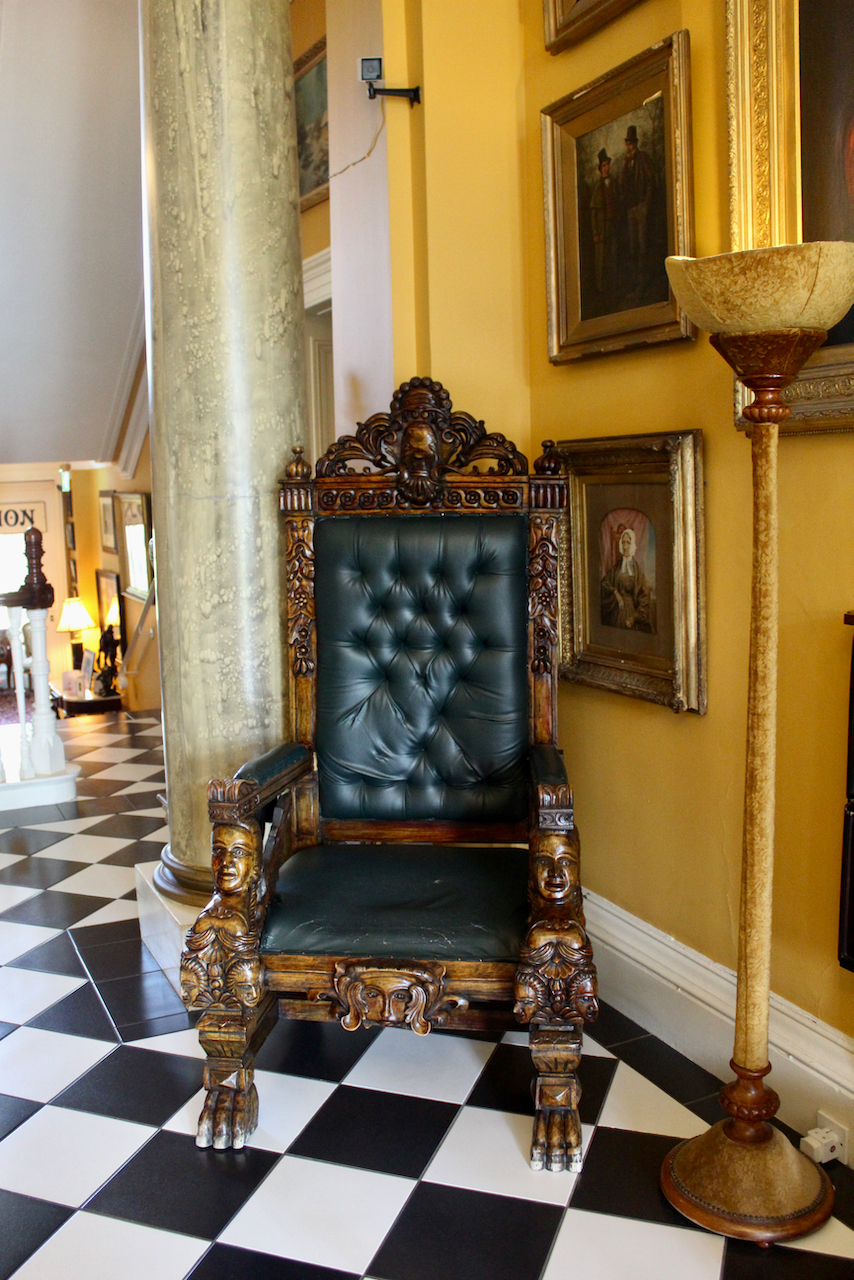
Stephen and I loved this carved chair in the front hall. © Jennifer Winder-Baggot, www.irishhistorichouses.com
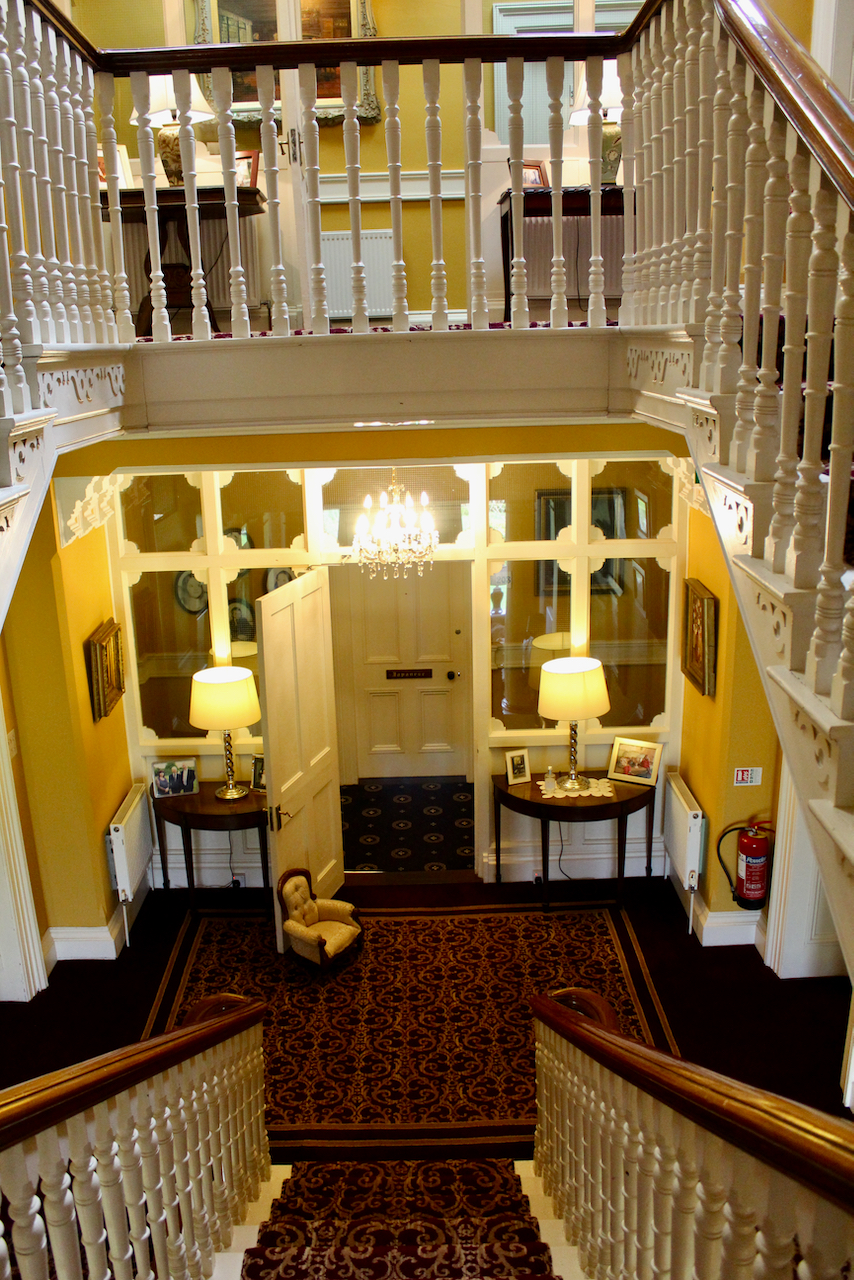
The halfway landing at Ballyseede Castle, March 2023. © Jennifer Winder-Baggot, www.irishhistorichouses.com
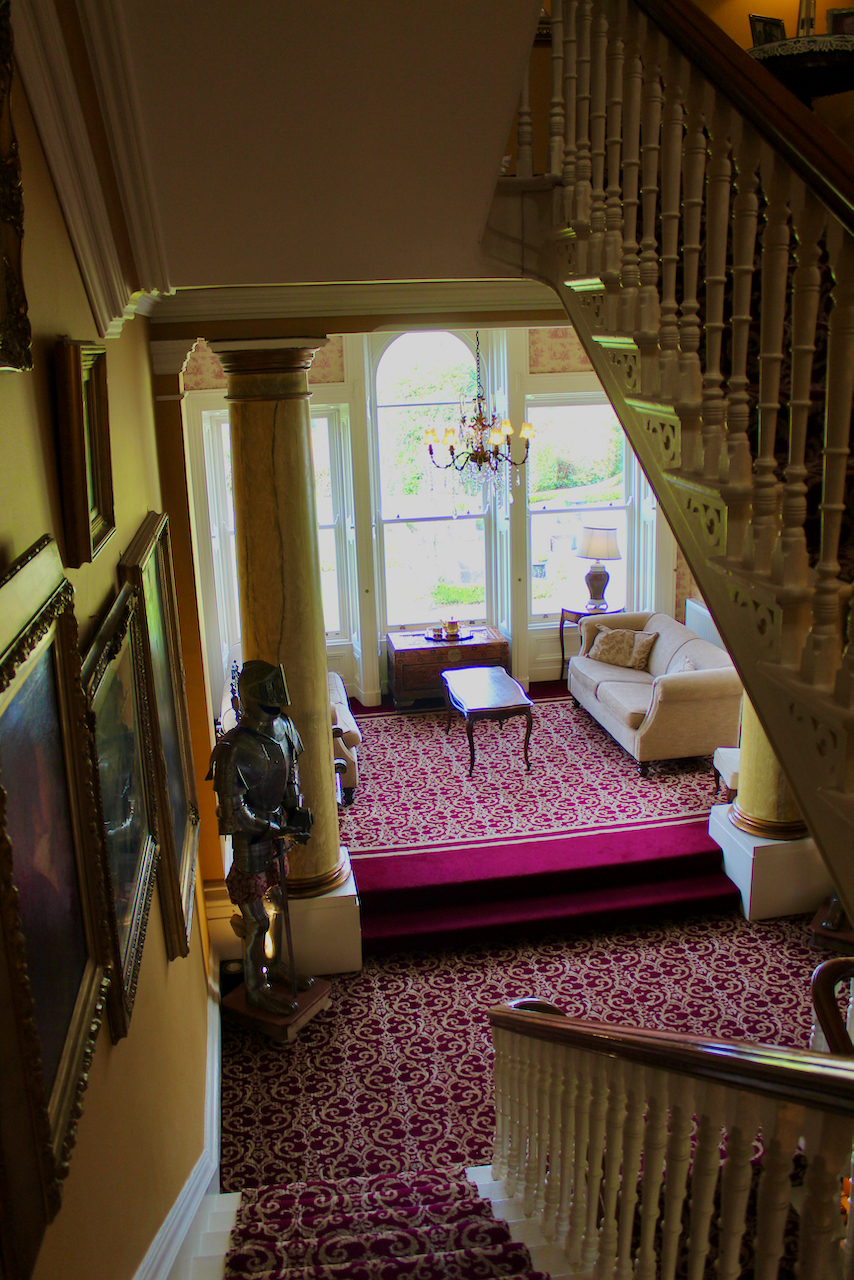
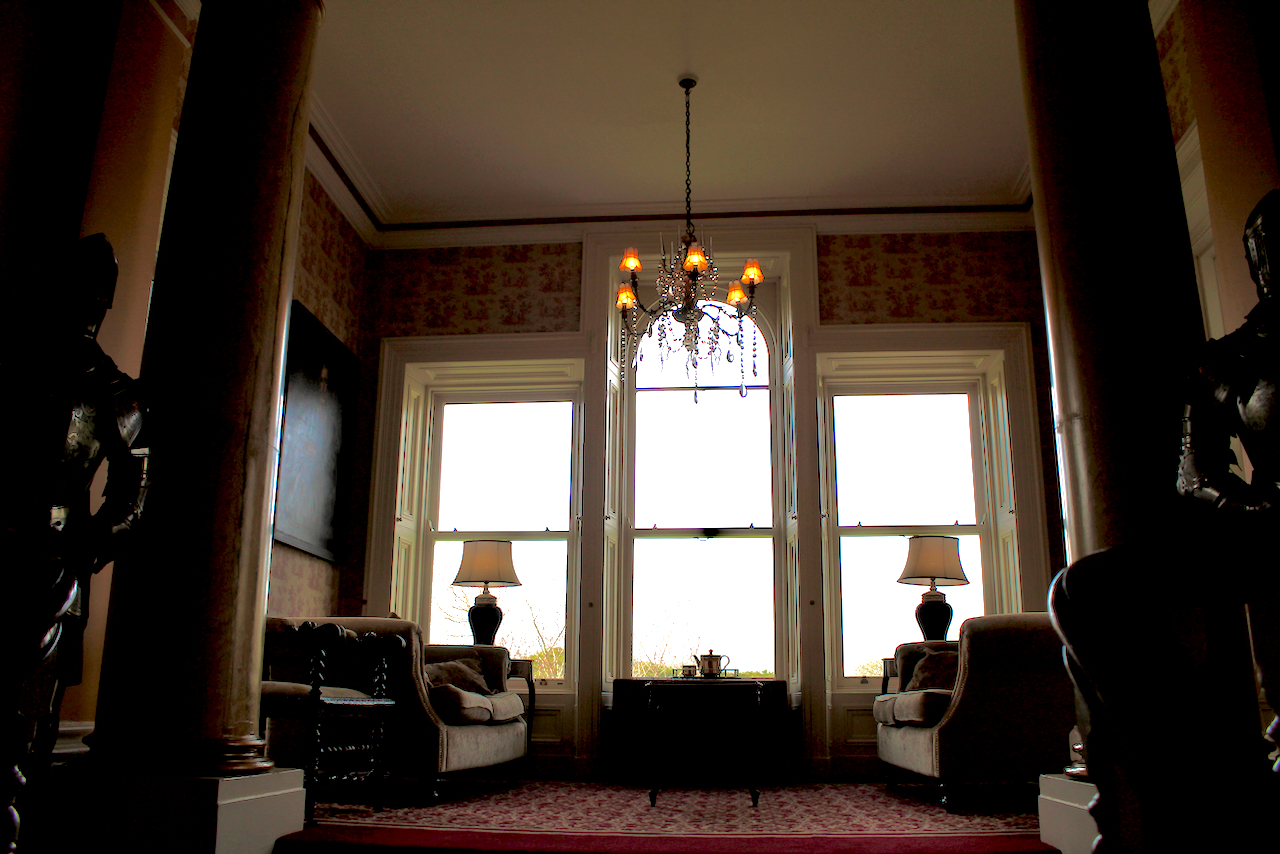
The first and second floors of Ballyseede Castle, March 2023. © Jennifer Winder-Baggot, www.irishhistorichouses.com
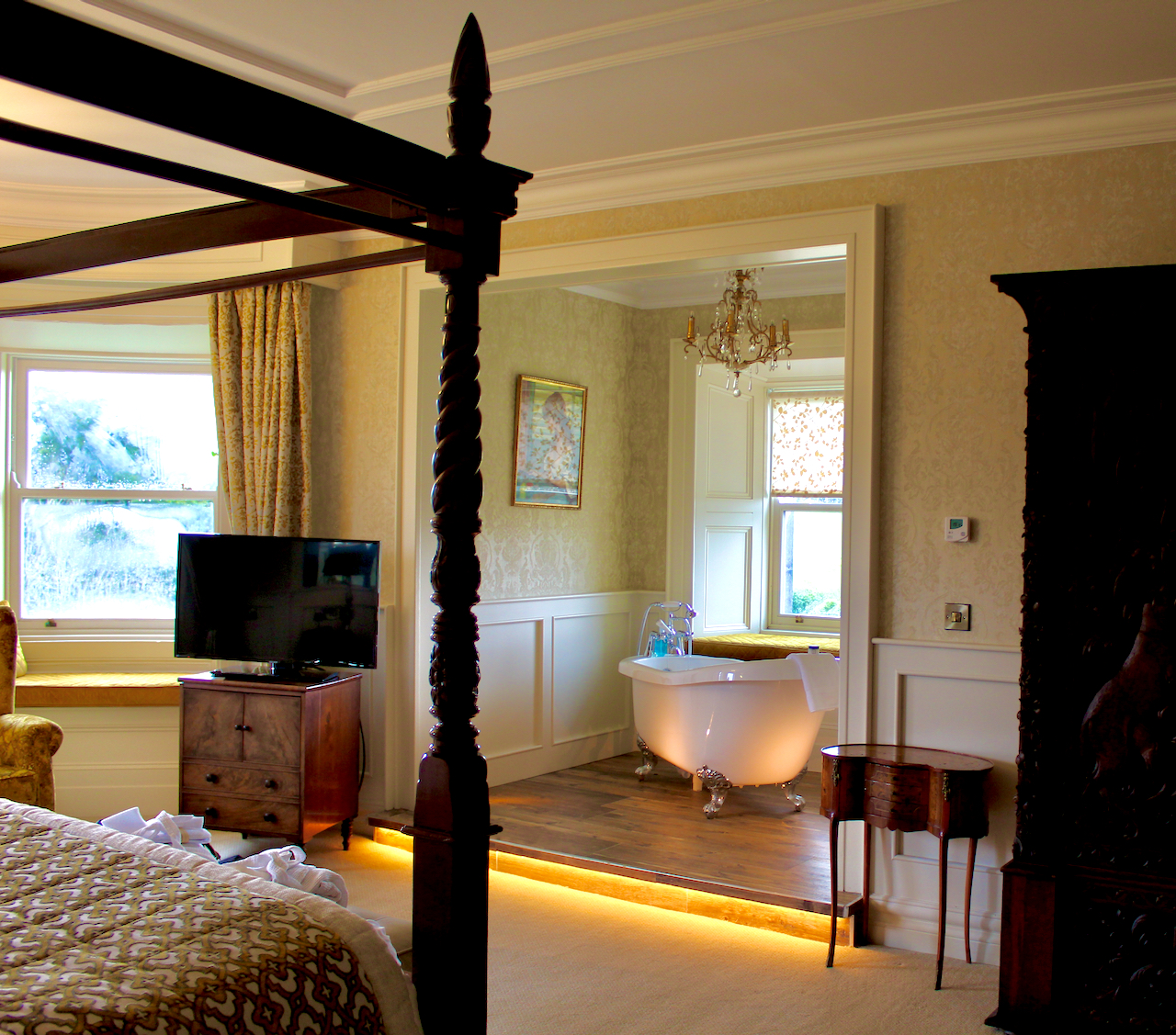
Marnie Corscadden was kind enough to upgrade us to a beautiful suite, complete with stand alone clawfoot bath! We had a wonderful stay.

Our impressive bedroom, the Coghill suite. © Jennifer Winder-Baggot, www.irishhistorichouses.com
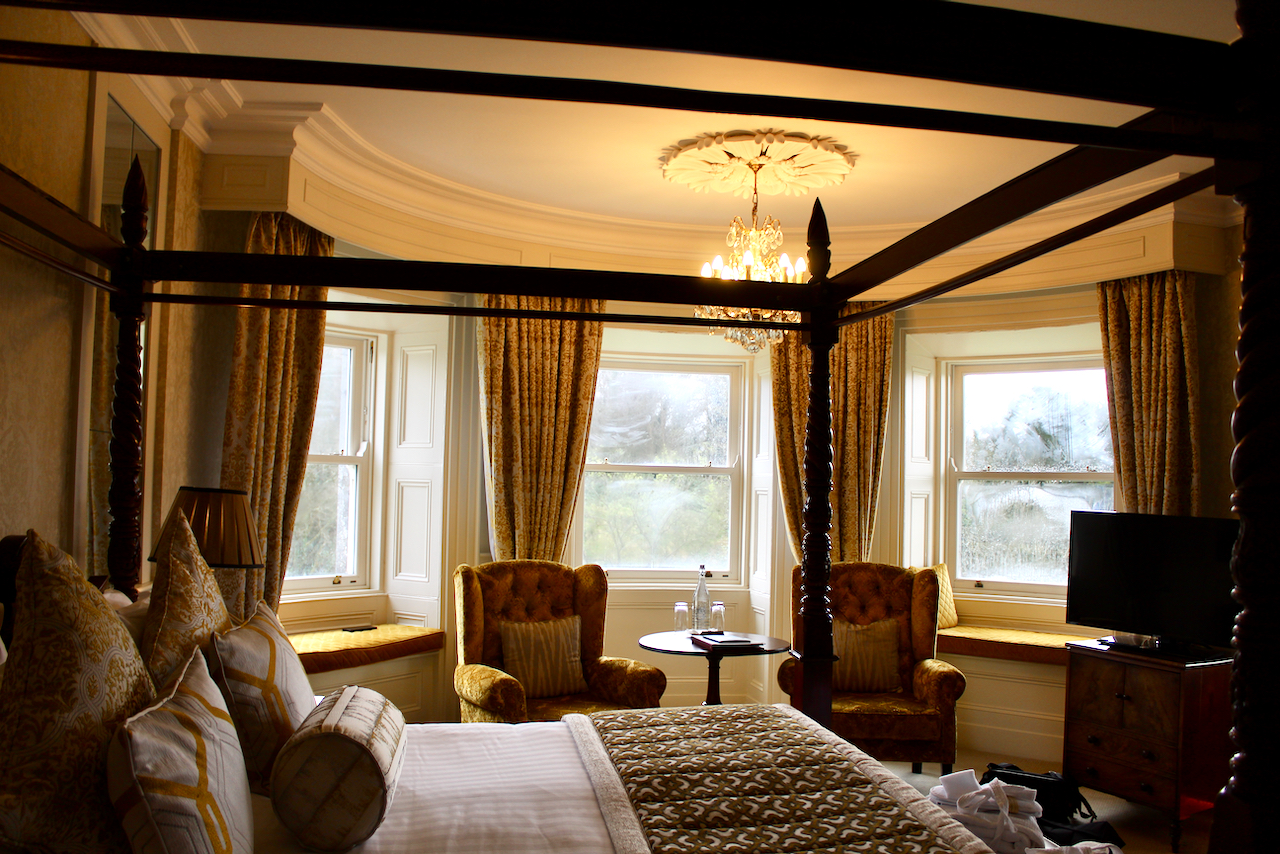
Our room in Ballyseede Castle, County Kerry, with a stand alone clawfoot bath. © Jennifer Winder-Baggot, www.irishhistorichouses.com
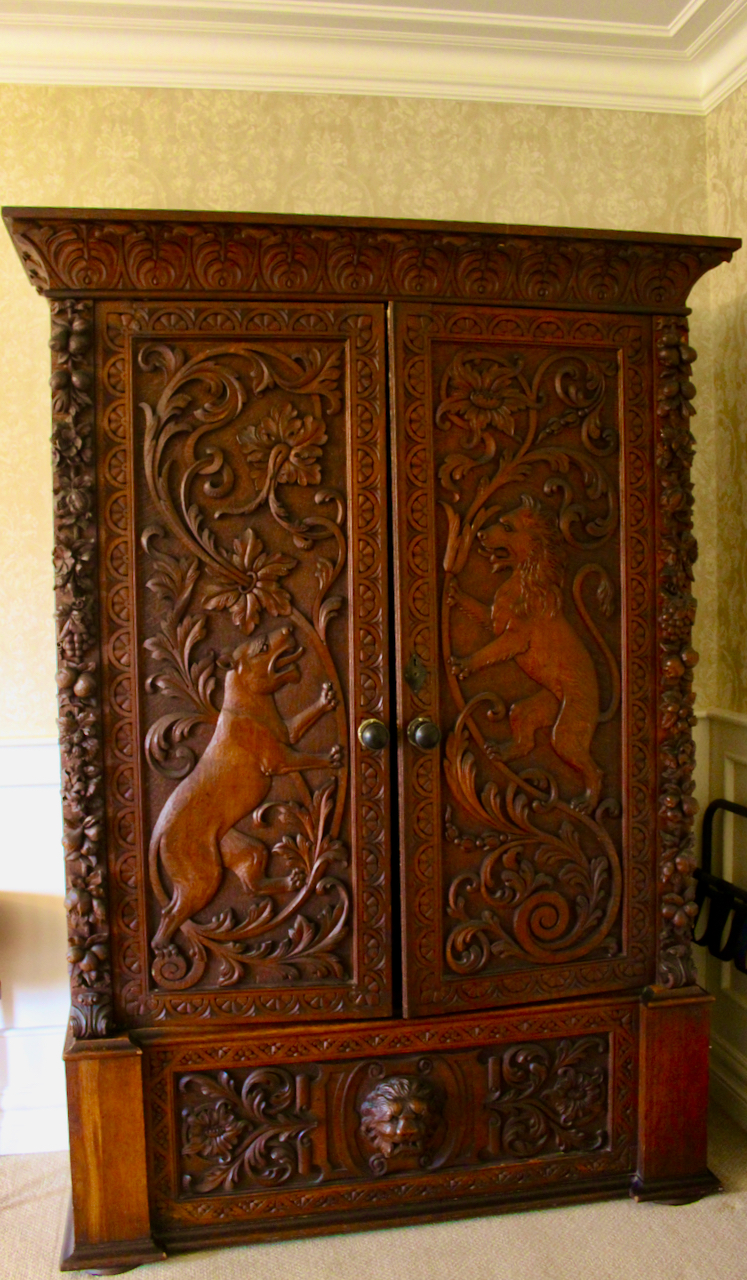
Our bedroom had an amazing carved wooden wardrobe. © Jennifer Winder-Baggot, www.irishhistorichouses.com
The carved wardrobe in our room. © Jennifer Winder-Baggot, www.irishhistorichouses.com
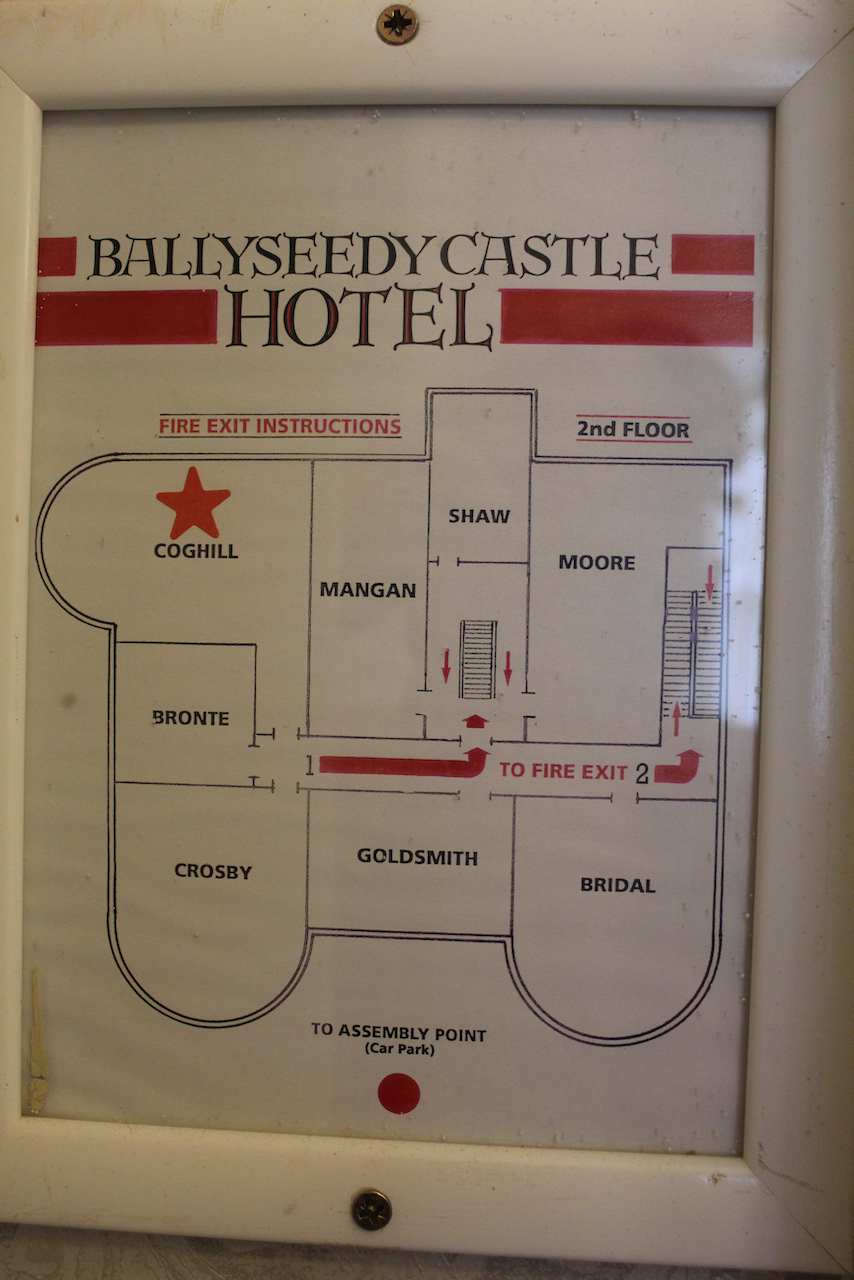
The rooms are named after various families associated with the Blennerhassetts. We stayed in the Coghill Room.
Busy at “work.” © Jennifer Winder-Baggot, www.irishhistorichouses.com
The bed was a work of art also. © Jennifer Winder-Baggot, www.irishhistorichouses.com
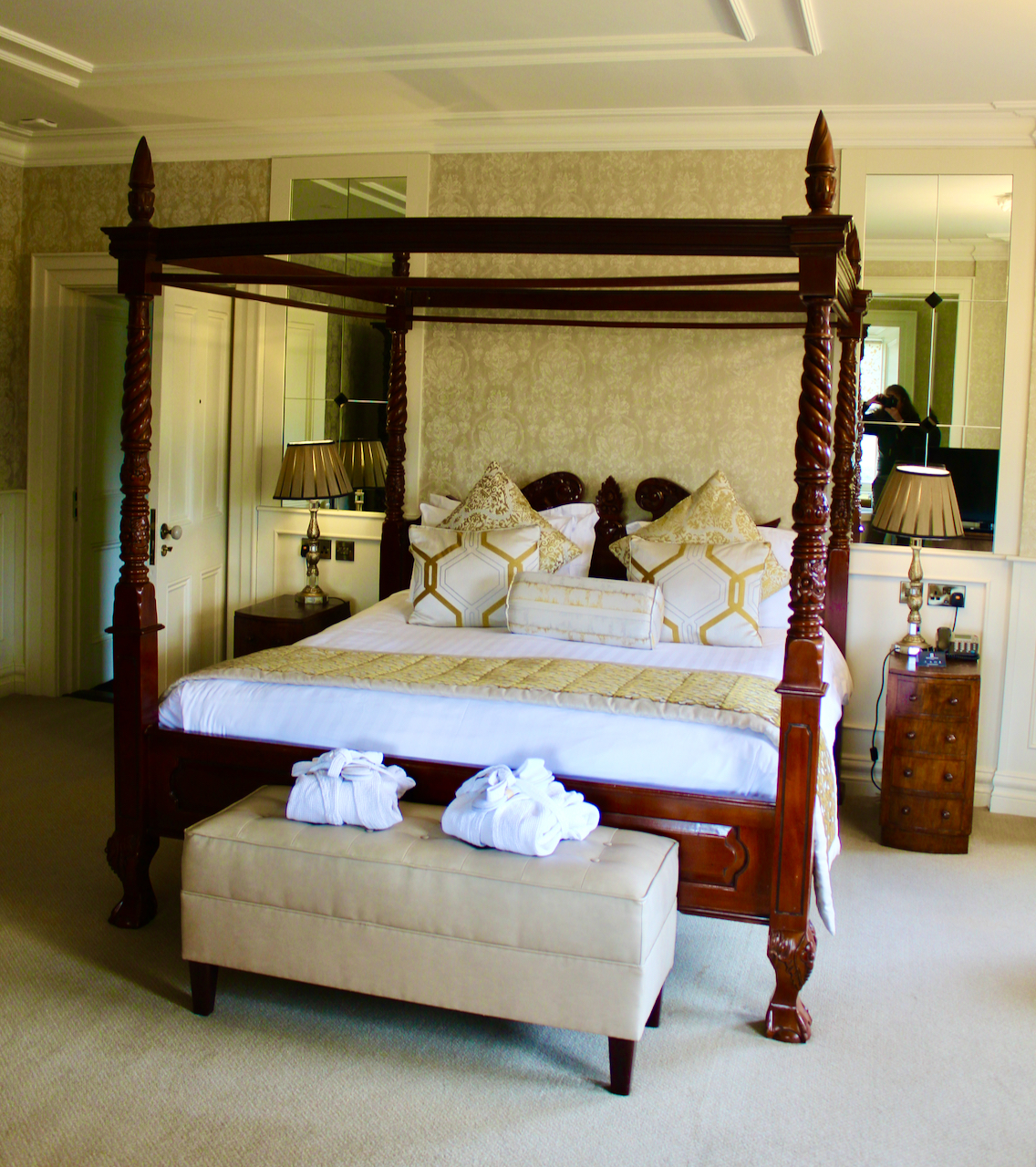
I can’t wait to go back sometime! © Jennifer Winder-Baggot, www.irishhistorichouses.com
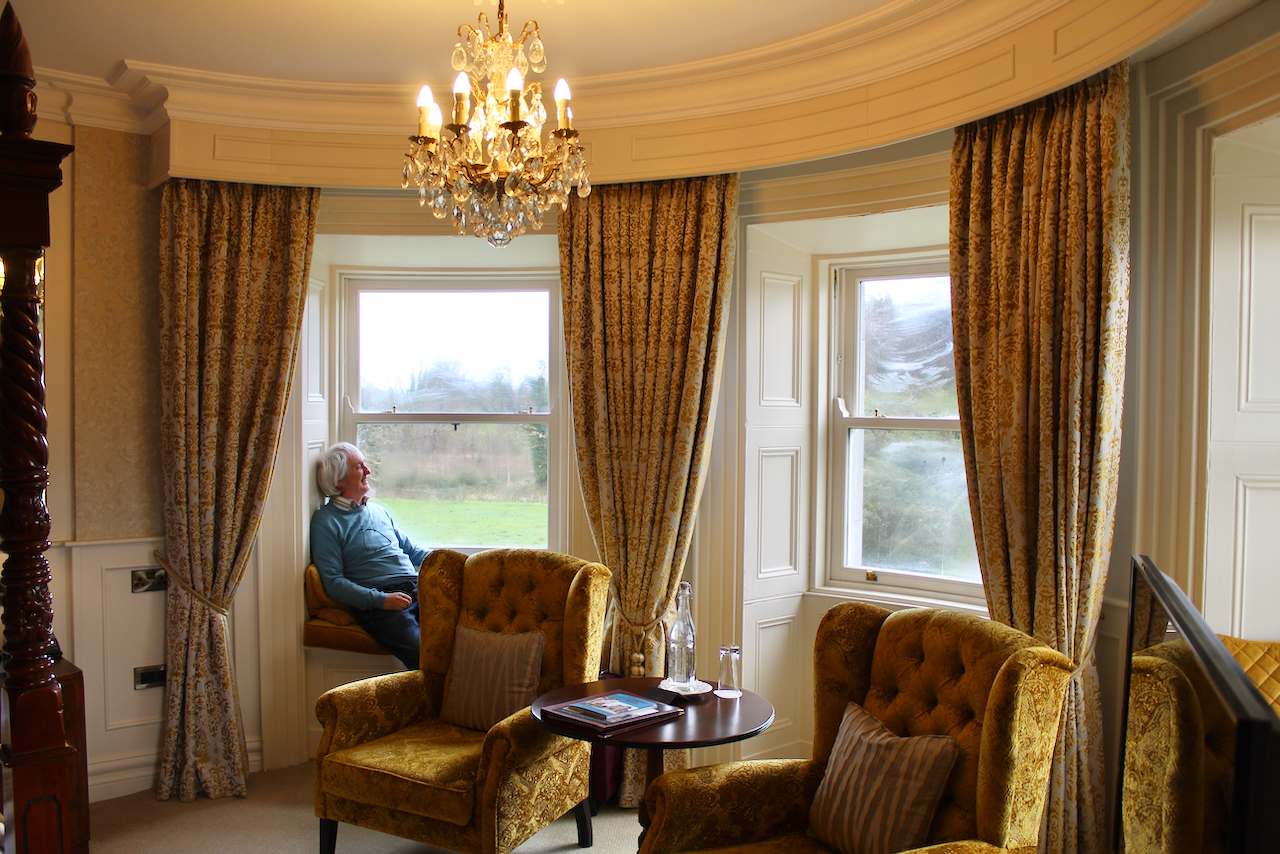
Stephen admiring the view. © Jennifer Winder-Baggot, www.irishhistorichouses.com
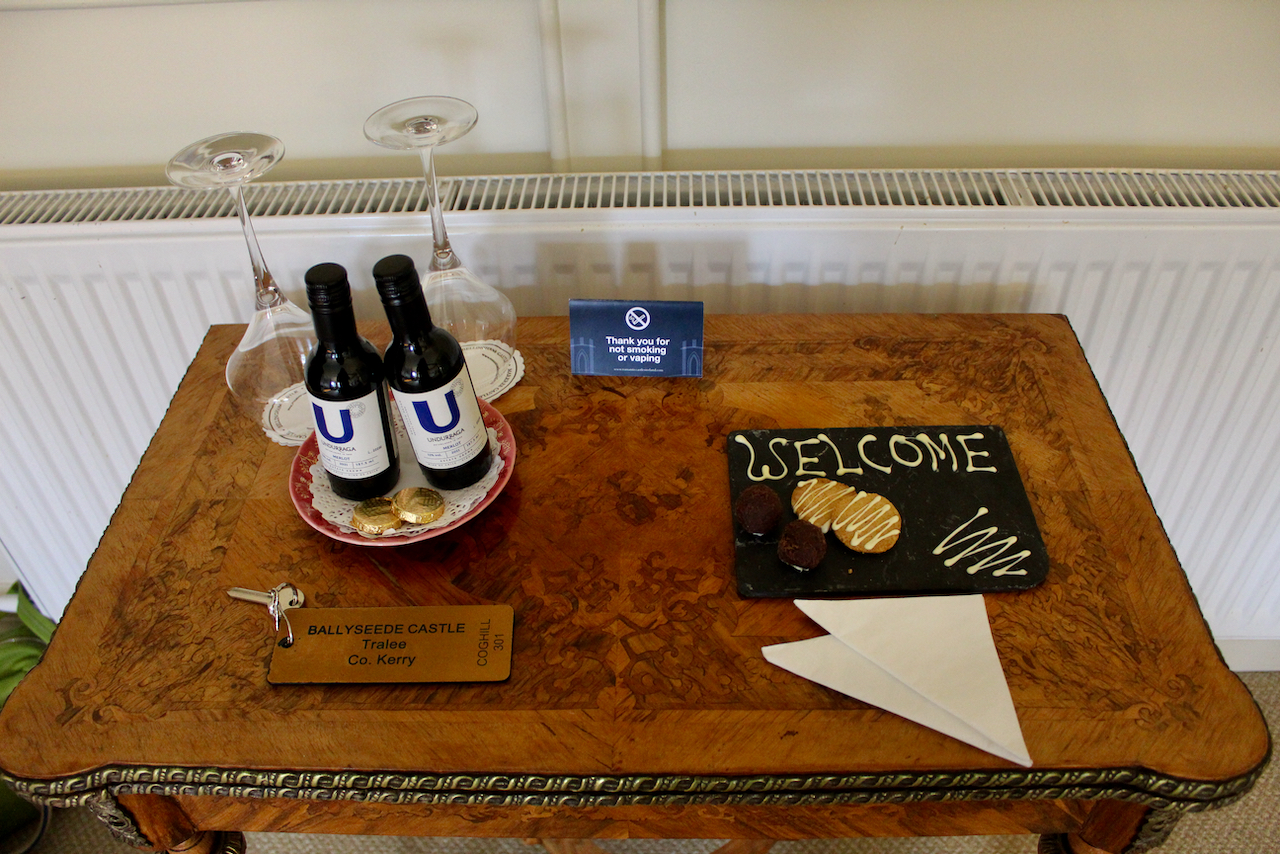
We explored the other rooms of the castle. The back gardens open into another function room, the Orangerie, which was built in 2017.

The Orangerie, built in 2017. © Jennifer Winder-Baggot, www.irishhistorichouses.com
I love the balloons! © Jennifer Winder-Baggot, www.irishhistorichouses.com
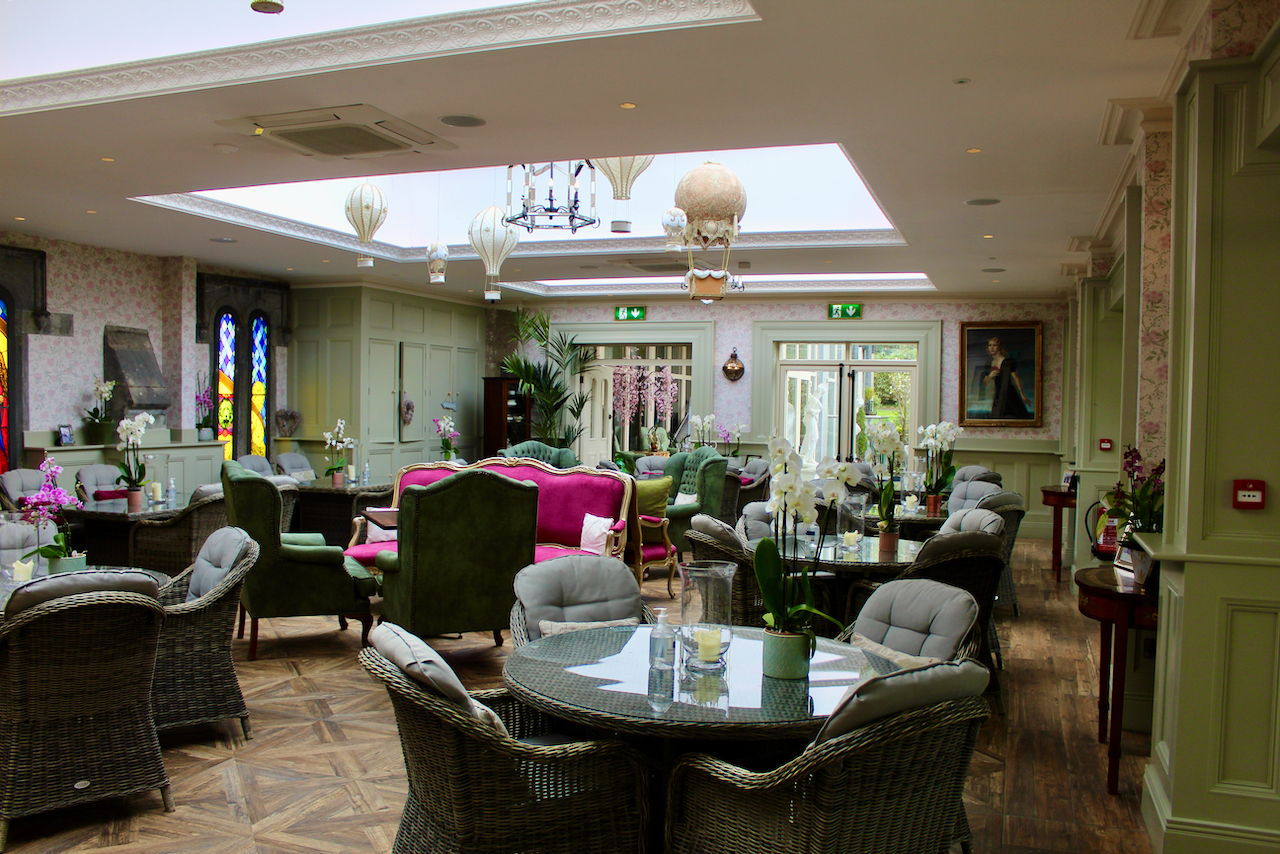
This rooms is very bright and comfortable. © Jennifer Winder-Baggot, www.irishhistorichouses.com
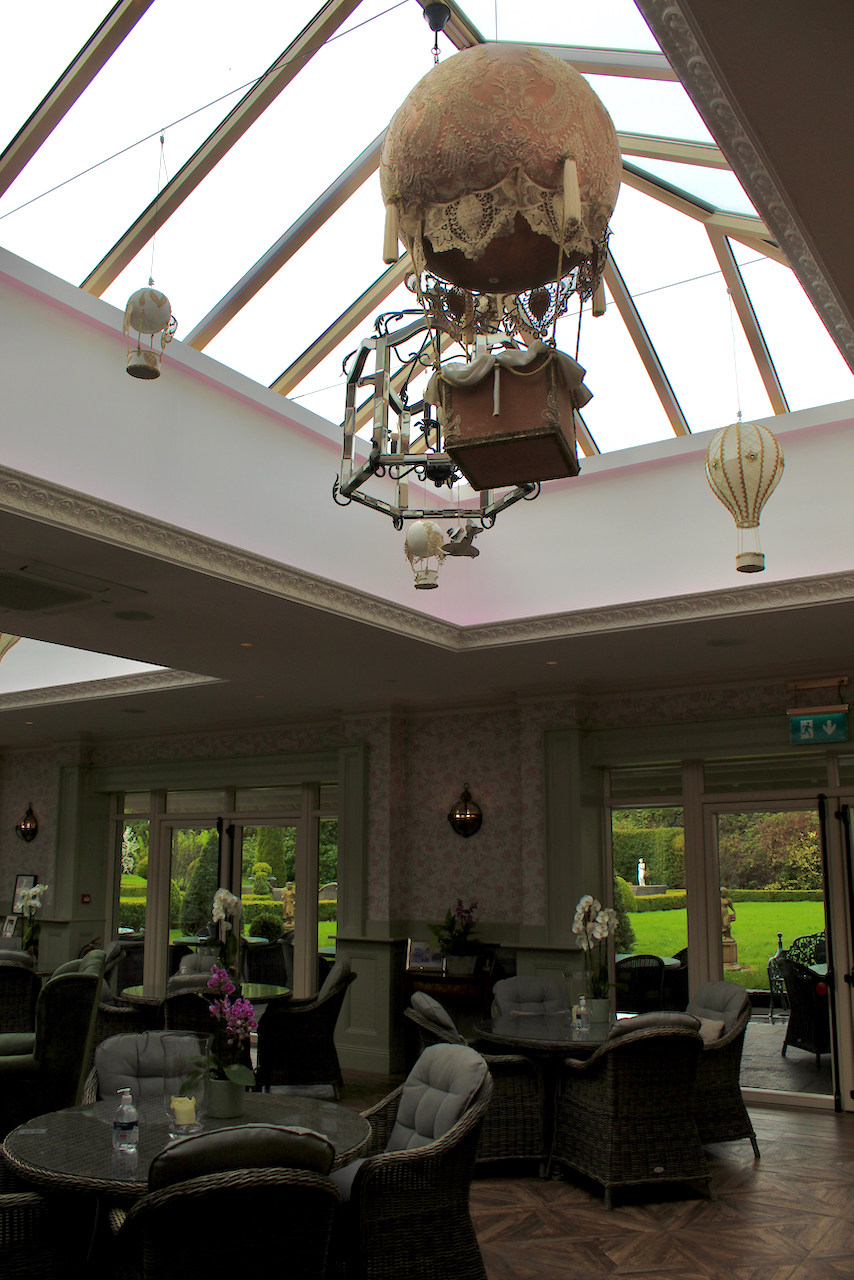
The Orangerie has some stained glass windows. © Jennifer Winder-Baggot, www.irishhistorichouses.com
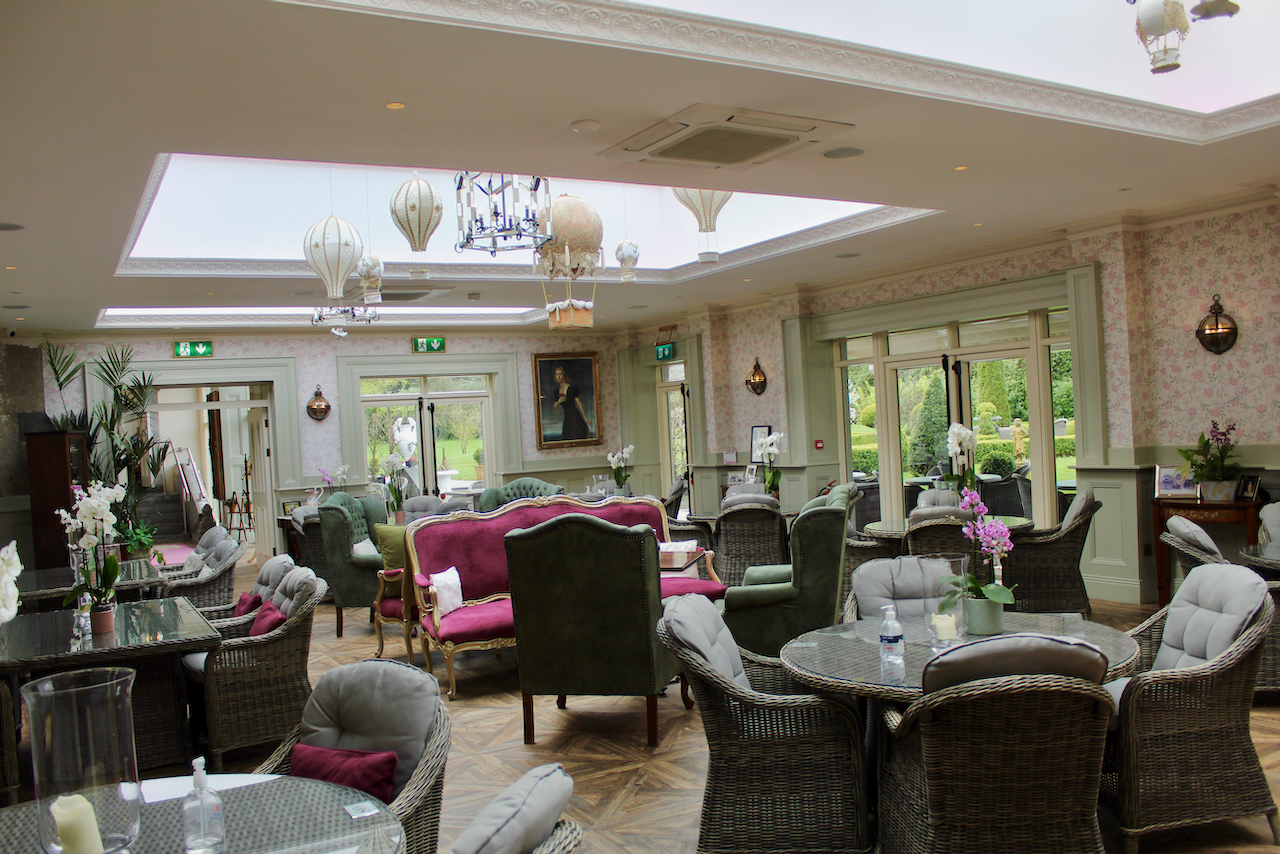
A hallway along the back garden leads back to the reception area. © Jennifer Winder-Baggot, www.irishhistorichouses.com

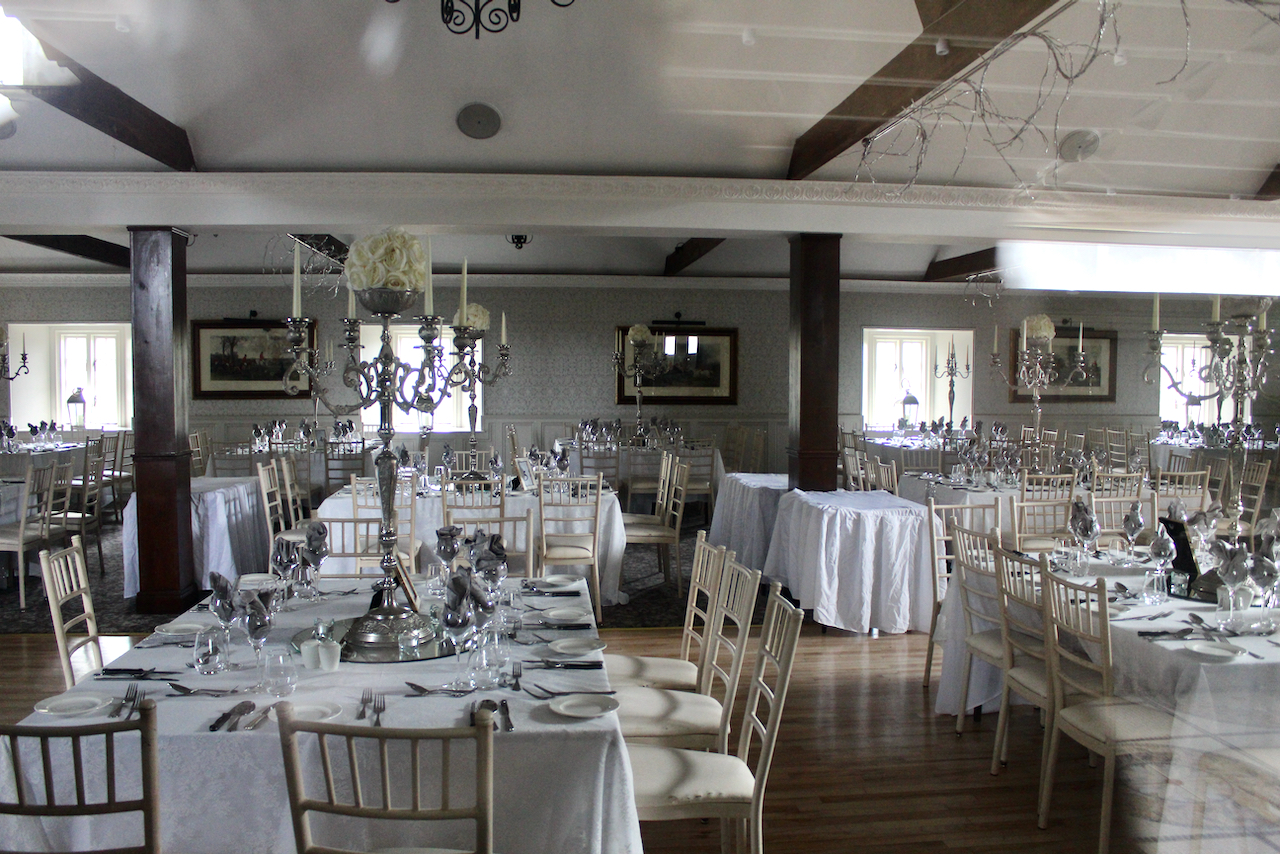
There’s also a large reception room.

The banqueting hall in the north wing. We didn’t get to go into this room but I peered through the window to take a photograph. © Jennifer Winder-Baggot, www.irishhistorichouses.com
Ballyseede Castle, County Kerry. This leads to the large reception rooms. © Jennifer Winder-Baggot, www.irishhistorichouses.com
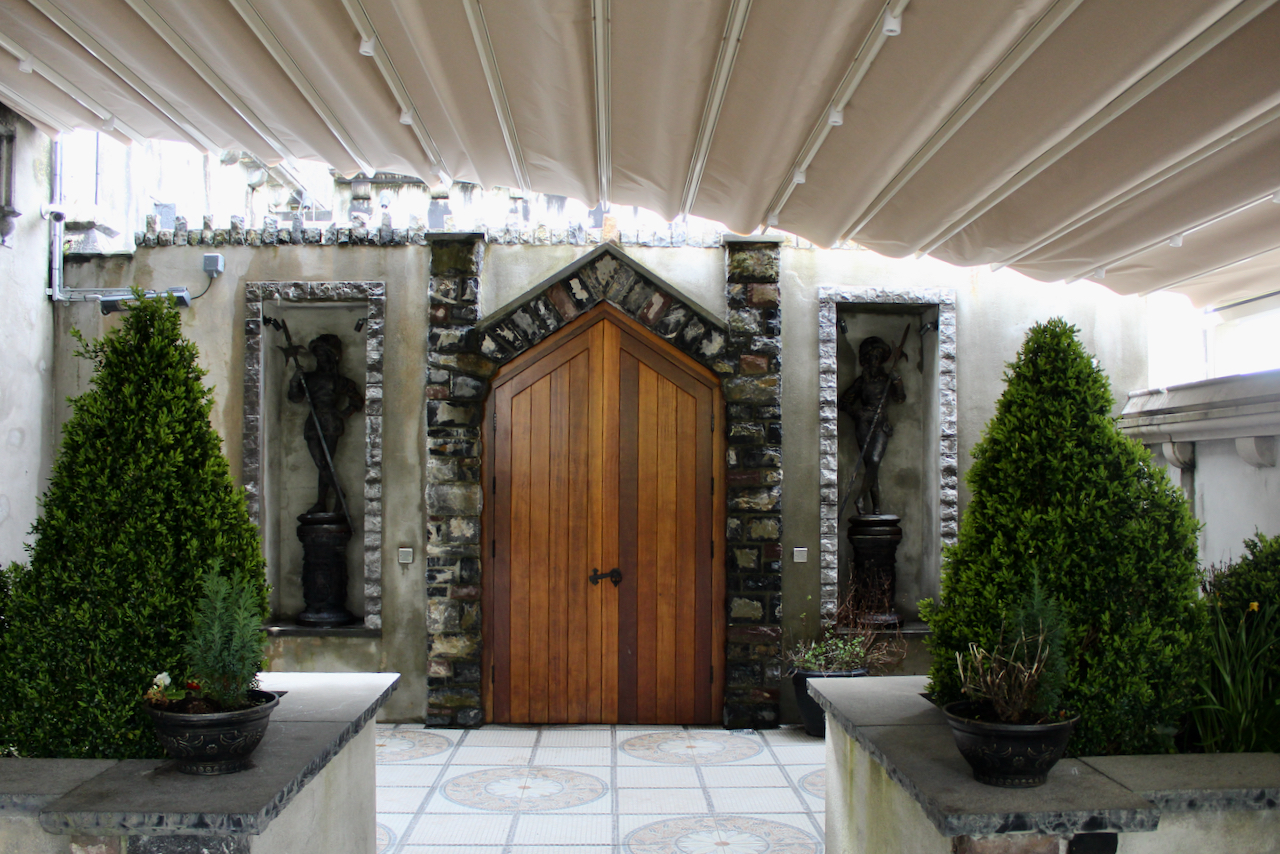
I noticed an old service bell in the hallway. © Jennifer Winder-Baggot, www.irishhistorichouses.com
We sneaked into another room to see it while it was open for cleaning – I love the Oriental decor. © Jennifer Winder-Baggot, www.irishhistorichouses.com

[1] https://landedestates.ie/family/1834

[2] Montgomery-Massingberd, Hugh. Burke’s Irish Family Records. London, U.K.: Burkes Peerage Ltd, 1976.

List of M.P.s for County Kerry:

1692: Edward Denny (1652-1709 or 1712) of Tralee Castle; Thomas Fitzmaurice (1668-1741) 1st Earl of Kerry

1697: Edward Denny (1652-1709 or 1712) of Tralee Castle; William Sandes

1703: Edward Denny (d. 1727/8, son of Edward Denny (1652-1709 or 1712) of Tralee Castle); John Blennerhassett (d. 1709)

1709: Edward Denny (1676–1727/8); John Blennerhassett (1691-1775)

1715: John Blennerhassett (1691-1775); Maurice Crosbie (c. 1689 –1762) 1st Baron Brandon, of Ardfert, County Kerry

1727: Maurice Crosbie (c. 1689 –1762) 1st Baron Brandon; Arthur Denny (1704-1742), son of Edward Denny (1676–1727/8)

1743: Maurice Crosbie (c. 1689 –1762) 1st Baron Brandon; John Petty-Fitzmaurice (1706-1761) 1st Earl of Shelburne, son of Thomas Fitzmaurice (1668-1741) 1st Earl of Kerry

1751: Maurice Crosbie (c. 1689 –1762) 1st Baron Brandon; John Blennerhassett (1715-1763), son of John Blennerhassett (1691-1775)

1759: John Blennerhassett (1715-1753); Lancelot Crosbie (1723-1780)

1761: William Petty-Fitzmaurice (1737-1805) 1st Marquess of Lansdowne; Lancelot Crosbie (1723-1780)

1762: John Blennerhassett (1715-1763)

1763: John Blennerhassett (1691-1775); Thomas Fitzmaurice

1768: John Blennerhassett (1691-1775); Barry Denny (c. 1744-1794), 1st Baronet

1775: Barry Denny (c. 1744-1794), 1st Baronet; Arthur Blennerhassett (1719-1799) son of John Blennerhassett (1691-1775)

1776: Arthur Blennerhassett (1719-1799); Rowland Bateman (c. 1737-1803)

1783: Barry Denny (c. 1744-1794) 1st Bt; Richard Townsend Herbert (1755-1832)

1790: Barry Denny (c. 1744-1794) 1st Bt; John Blennerhassett (1769-1794)

1794: Barry Denny (d. 1794 in in dual with John Gustavus Crosbie) 2nd Bt; John Gustavus Crosbie (c. 1749-1797) son of Lancelot Crosbie (1723-1780)

1795: Maurice Fitzgerald (1774-1849) 18th Knight of Kerry; John Gustavus Crosbie (c. 1749-1797)

1798: Maurice Fitzgerald (1774-1849) 18th Knight of Kerry; James Crosbie (c. 1760-1836)

[3] p. 157. O’Hea O’Keeffe, Jane. Voices from the Great Houses: Cork and Kerry. Mercier Press, Cork, 2013.

[4] http://www.blennerhassettfamilytree.com/Ballyseedy-Castle.php

[5] National Inventory: https://www.buildingsofireland.ie/buildings-search/building/21302913/ballyseede-castle-ballyseedy-co-kerry

[6] http://www.thepeerage.com/p27968.htm#i279679

[7] p. 28. Bence-Jones, Mark. A Guide to Irish Country Houses (1988)

[8] http://www.blennerhassettfamilytree.com/Ballyseedy-Castle.php

Strokestown Park House, Strokestown, Co. Roscommon – section 482

www.strokestownpark.ie

Open dates listed for 2024:

House tour at noon. Jan-Feb, Nov-Dec, 10.30am-4pm,

Mar-May, Sept-Oct, 10am-5pm,

June-Aug, 10am-6pm

Fee: adult house €14.50, tour of house €18.50, child €7, tour of house €10, OAP/student €12, tour of house €14.50, family €31, tour of house €39

donation

Help me to pay the entrance fee to one of the houses on this website. This site is created purely out of love for the subject and I receive no payment so any donation is appreciated!

€10.00

Image by Chris Hill, 2014, Tourism Ireland, from Ireland’s Content Pool. [1]
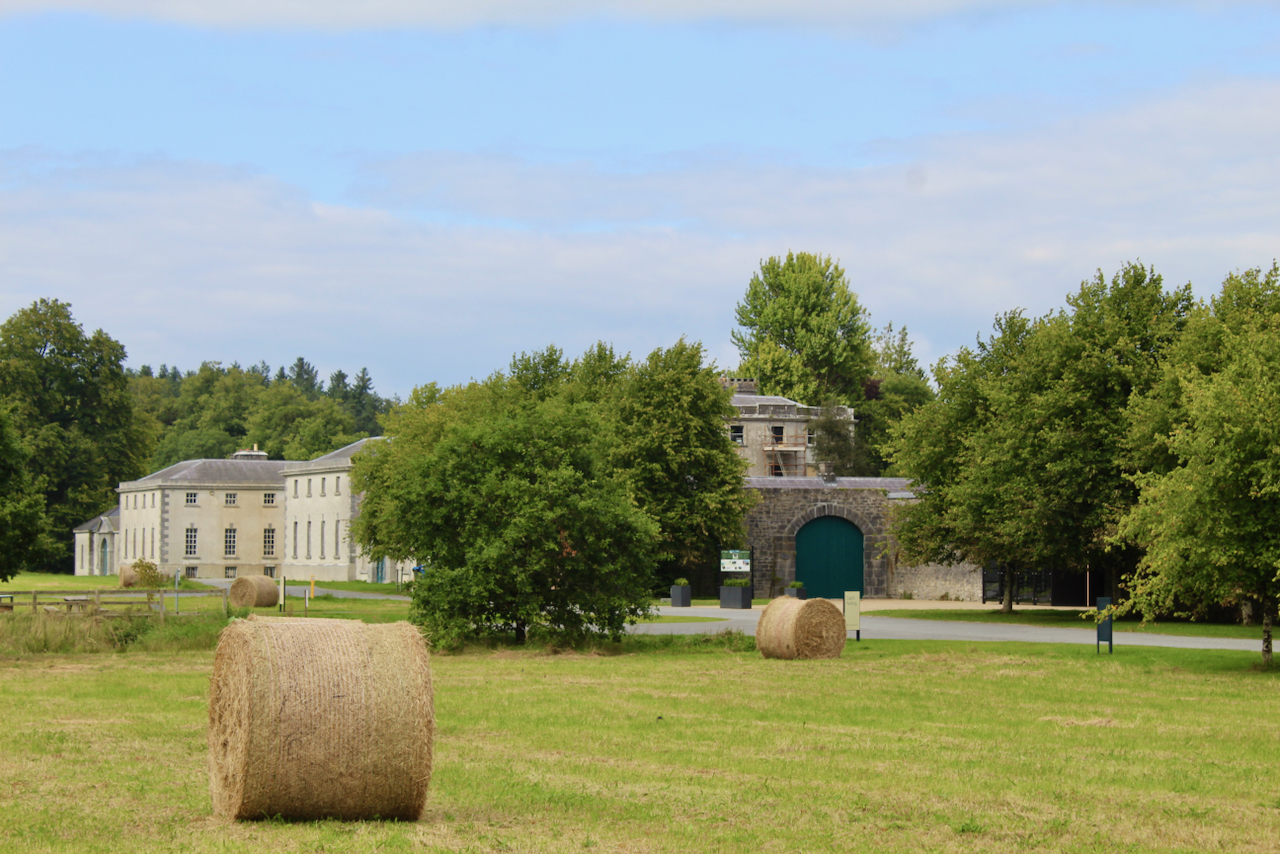
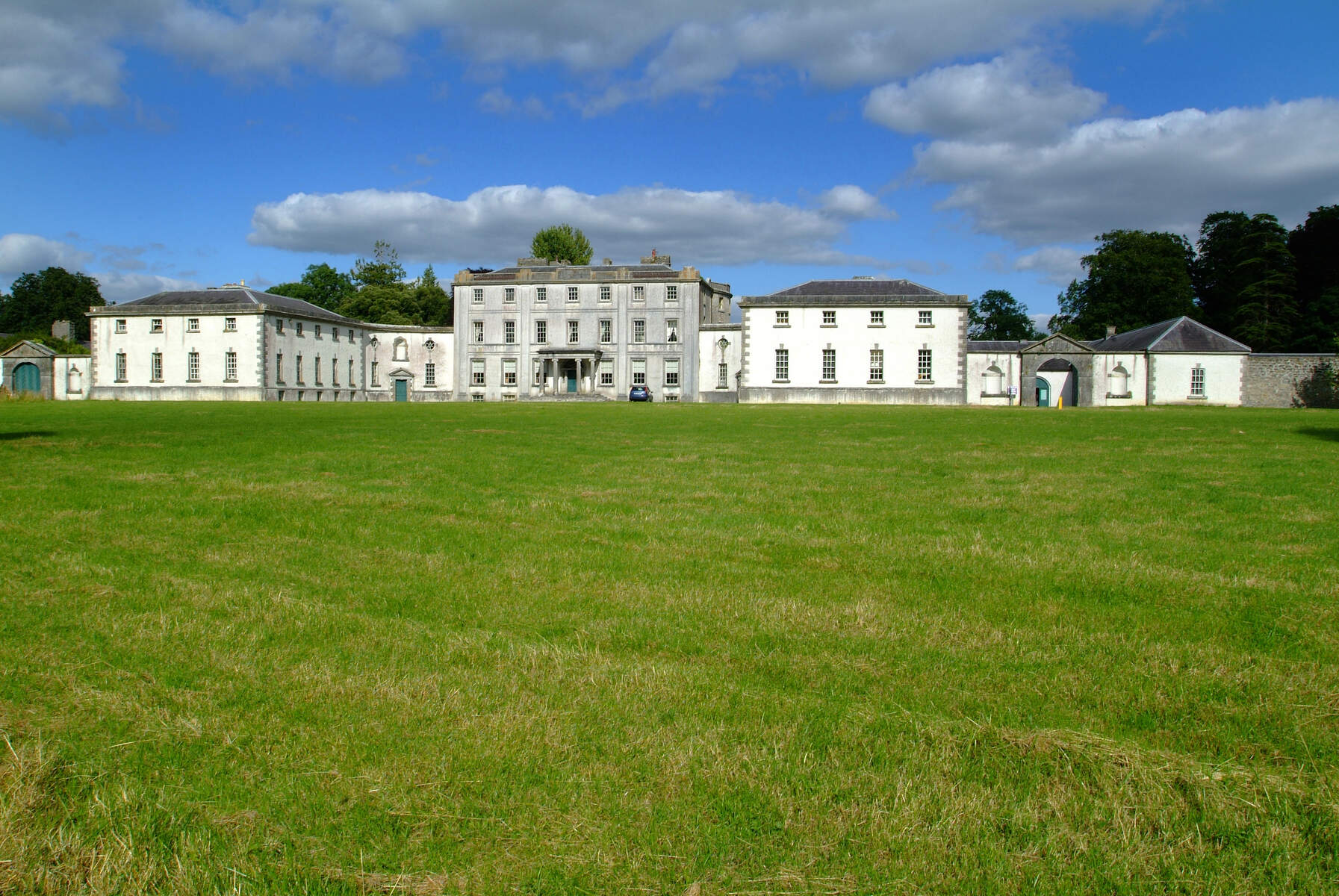
Strokestown Park, County Roscommon, August 2022. Photograph © Jennifer Winder-Baggot, www.irishhistorichouses.com

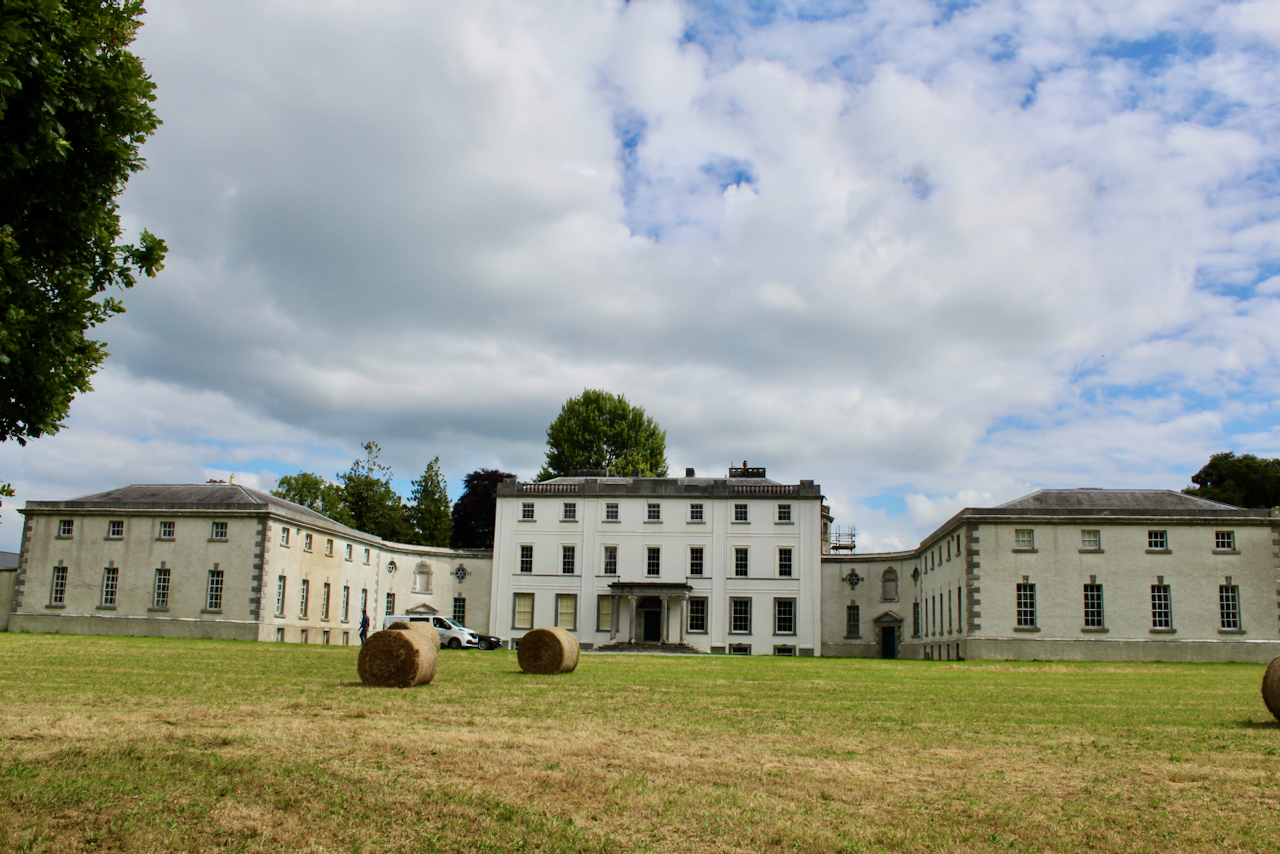
The Archiseek website describes Strokestown Park house as “a substantial house in the Palladian manner of a central block flanked by wings and curved sweeps. The centre block was completed in 1696 but extended around 1730 by Richard Cassels who added the substantial wings. The house was further altered in 1819 by J. Lynn.” [2]

Strokestown Park, County Roscommon.

We visited Strokestown Park in County Roscommon during Heritage Week 2022. It houses the excellent National Famine Museum and Archive, which is really worth visiting. It sounds grim, but it is a great exhibition and it tells us so much about people’s lives that it is not a grim museum at all. It also tells us about the Pakenham-Mahons, the family who lived in the impressive Strokestown Park. Strokestown Park was the home of the first landlord to be assassinated during the height of the Great Famine of Ireland the 1840s, and it is therefore ideal for the location of the Famine Museum.

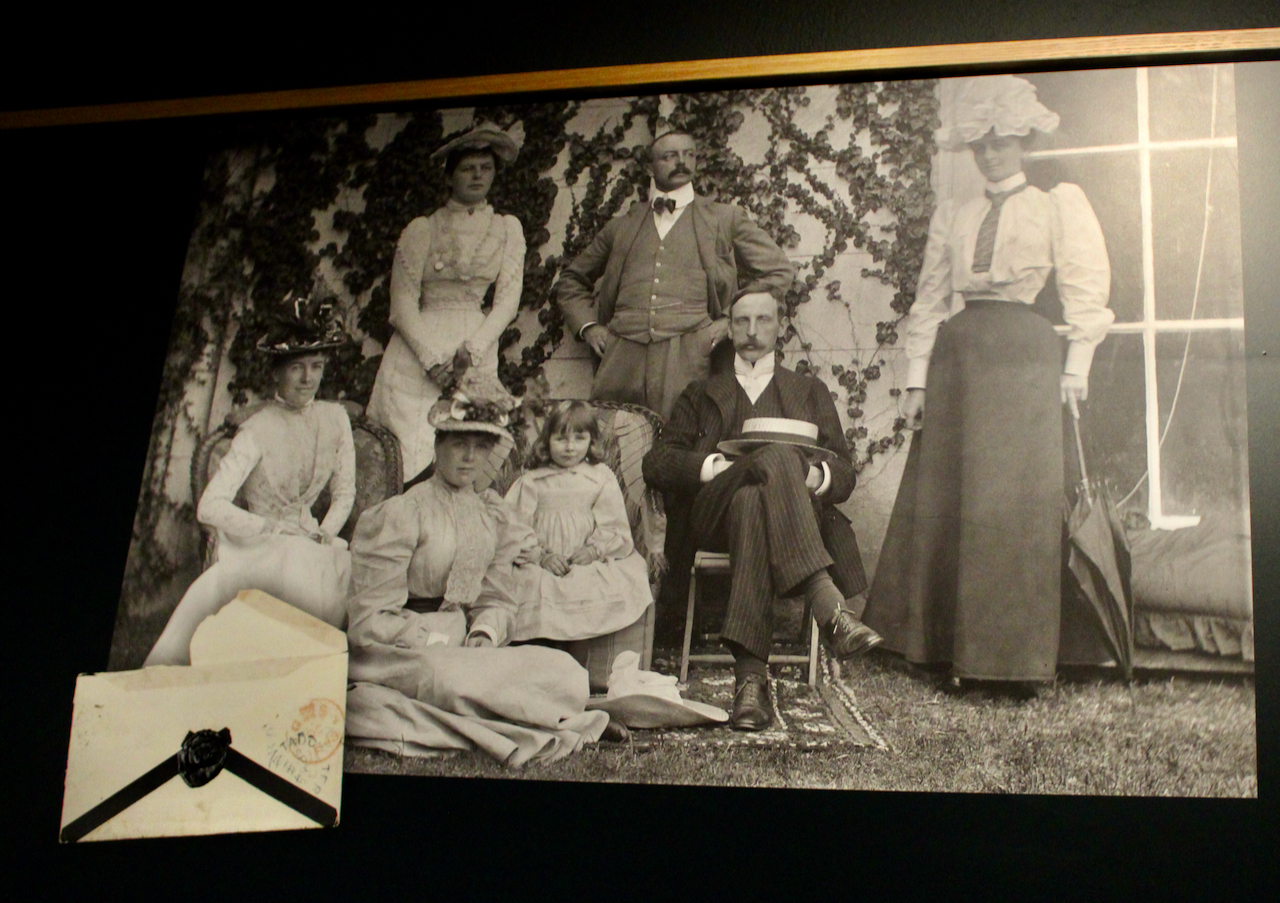
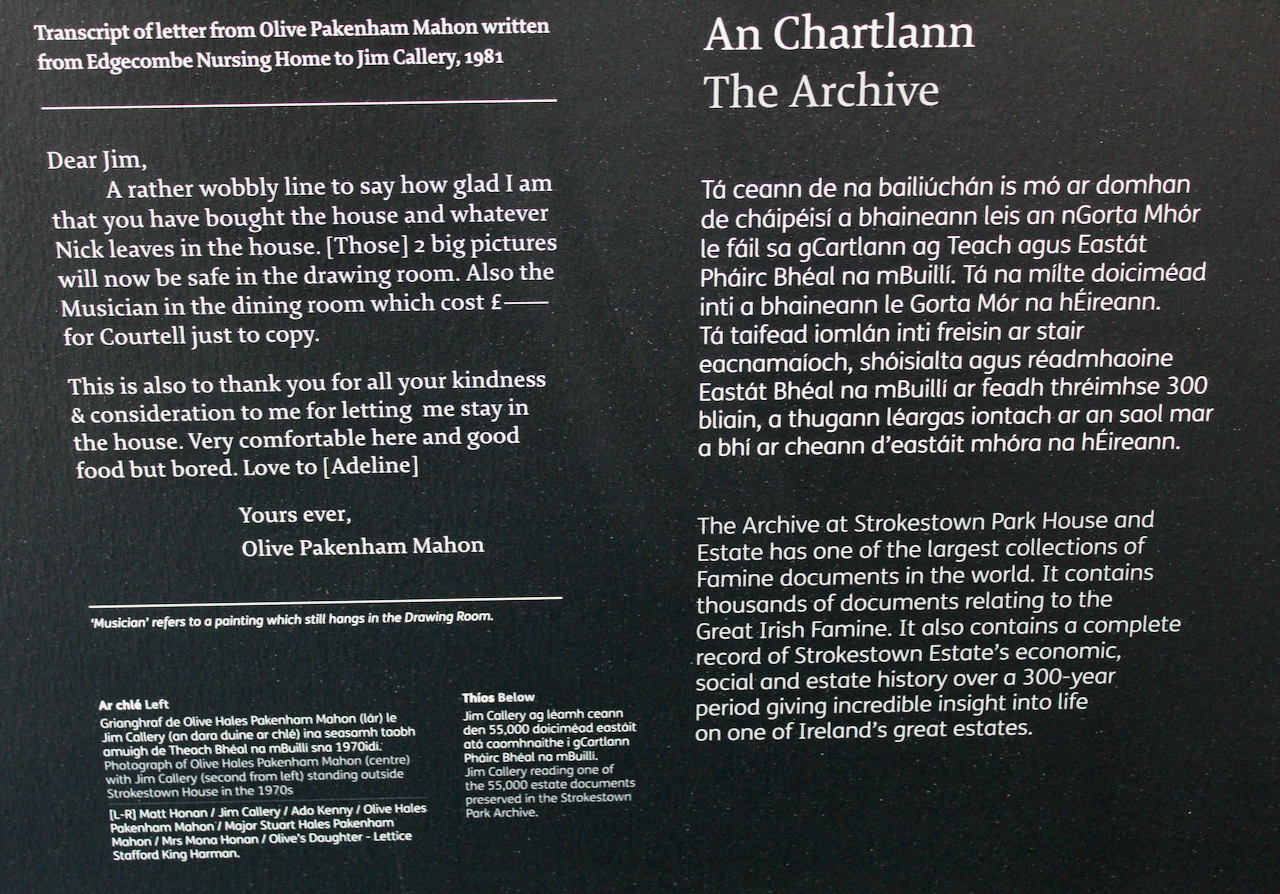
In 1979 Nicholas Hales Pakenham Mahon sold the estate to Westward Garage, founded by Jim Callery. The new owners allowed the last of the Mahon family, Olive and her husband Wilfrid Stuart Hales Pakenham Mahon, to remain living in the house until she moved to a nursing home.

Despite no longer being in the hands of the original owners, the house contains the original furnishings and fittings. The house is unchanged from the time when the Mahons lived there.

Strokestown Park, County Roscommon, August 2022.

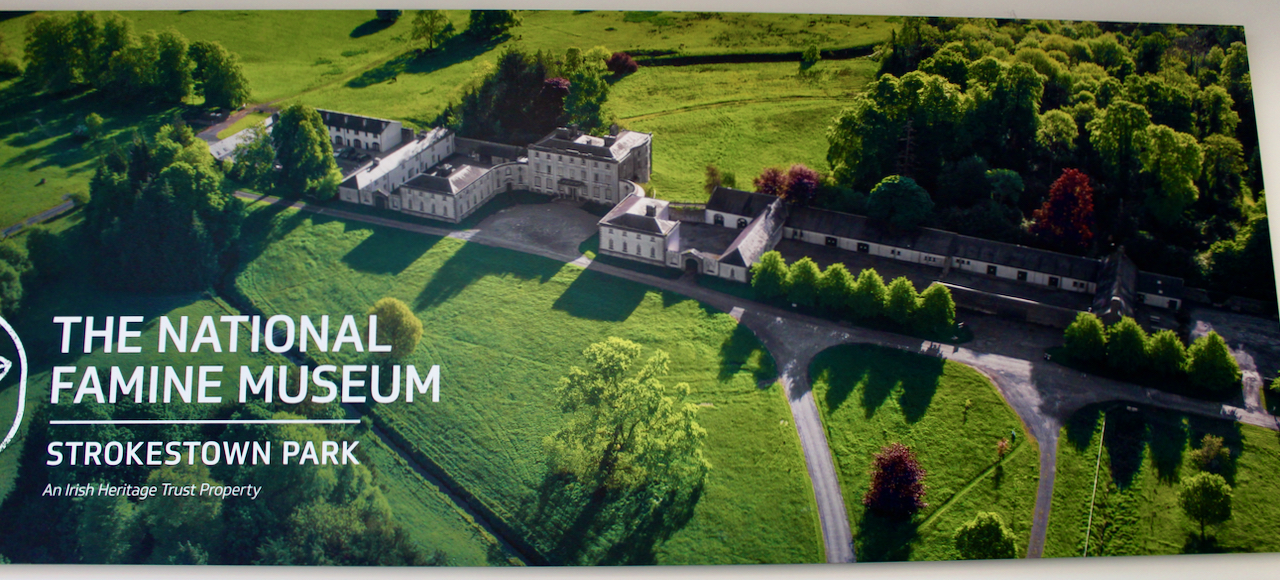
The Museum was created when Jim Callery, founder of the Westward Garage which purchased the property, found documents relating to the famine in the family archives. Jim Callery and the Westward Garage carried out a major restoration programme and opened the property to the public. Since 2015, Strokestown Park is cared for by the Irish Heritage Trust, an independent charity. Produce from the original working gardens are grown by volunteers and used in the Strokestown Park Café.   

Strokestown Park, County Roscommon, August 2022.

The website tells us that the house is built on the site of the 16th-century castle, home of the O Conor-Roe Gaelic Chieftains. Before being called “Strokestown House” the property was called “Bawn,” in reference to the bawn of the O Conor-Roe castle.

Nicholas Mahon, a captain in King Charles I’s army, was granted Strokestown as a royal deer park in 1653. Later, after pledging allegiance to King Charles II, he received more land. He was High Sheriff of County Roscommon, 1664-76. [3] He received over 3000 acres in 1678. He started to build a house, which was completed after his death in 1680, in 1696. Terence Reeves-Smyth tells us in his book Irish Big Houses that there is a stone by the door which has 1696 carved into it – the stone is now inside the house.

Strokestown Park featured as Building of the Month in December 2015 on the National Inventory of Architectural Heritage, and it tells us about the 1696 house:

Evidence of this house survives to the present day at basement level where a panelled still room, previously one of the principal reception rooms, retains a rosette-detailed Jacobean chimneypiece, an egg-and-dart-detailed plasterwork overmantle decorated with fruits and shells, and a compartmentalised ceiling with dentilated moulded plasterwork cornices. Some earlier remains of the castle are also found in the basement where sections of the walls measure almost three metres deep. Memories of the medieval past were carried through into the nineteenth century when the house was still officially called, and was referred to by Isaac Weld (1832) and Samuel Lewis (1837) as “Bawn”.” [4] [5]

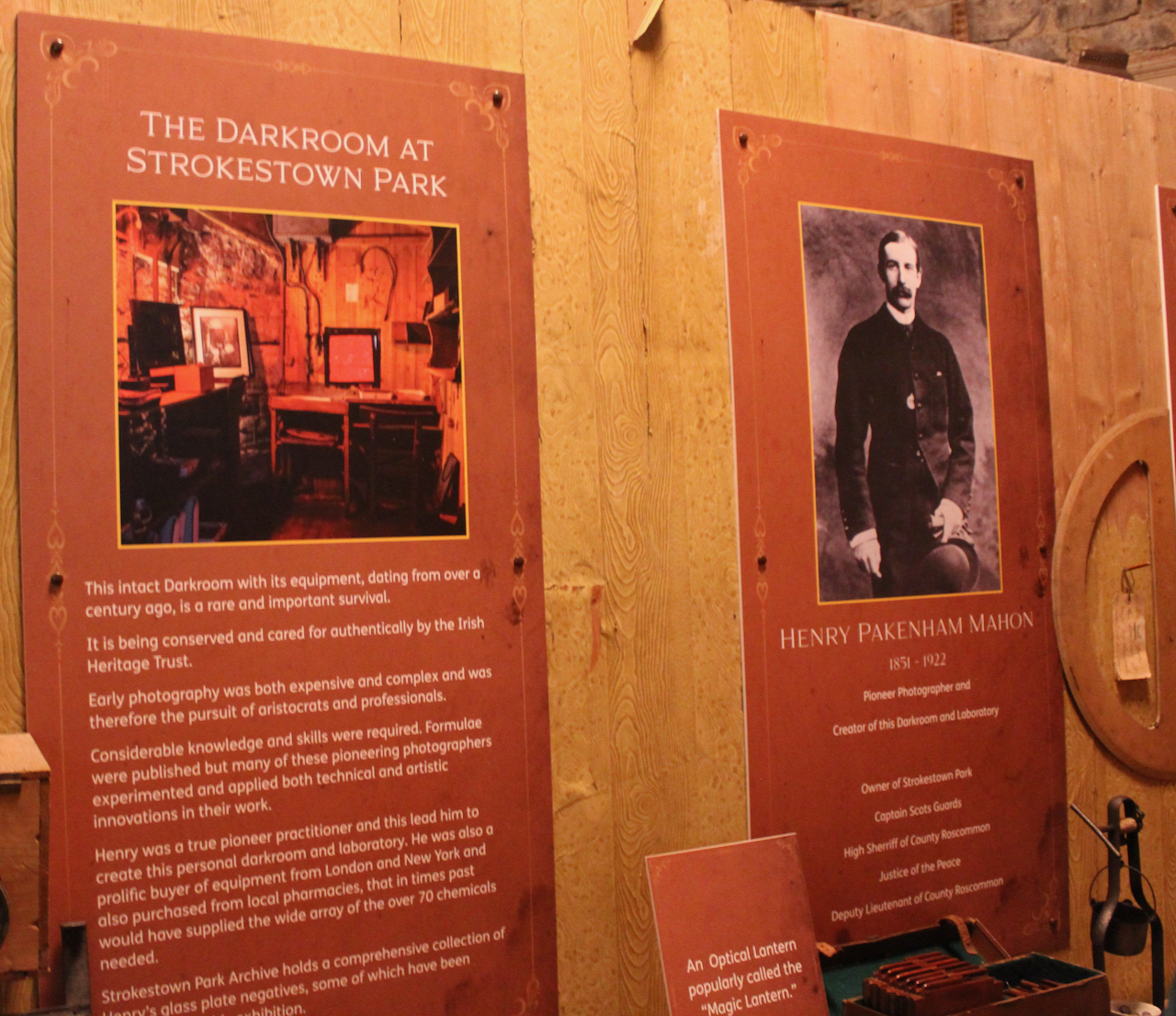
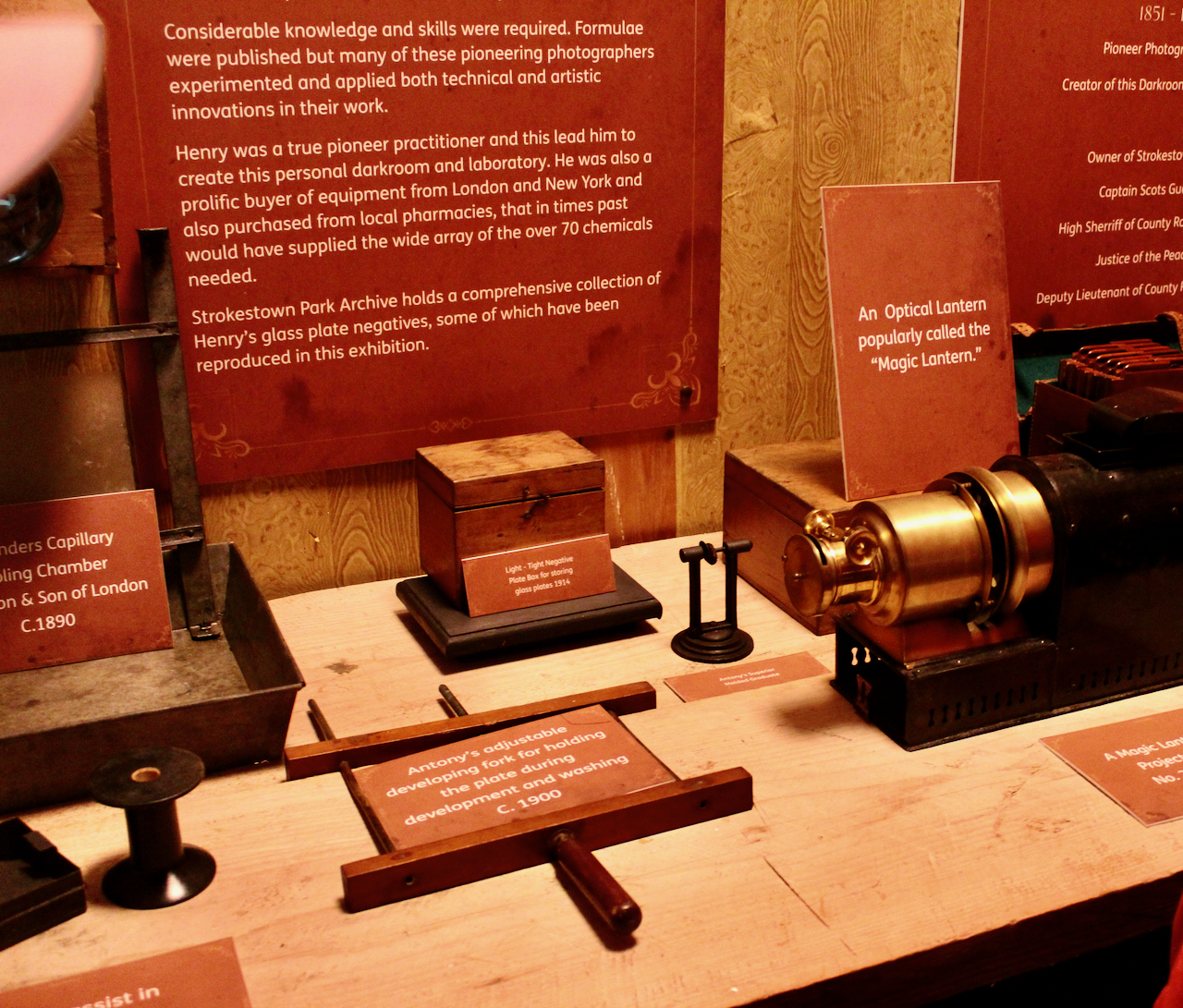
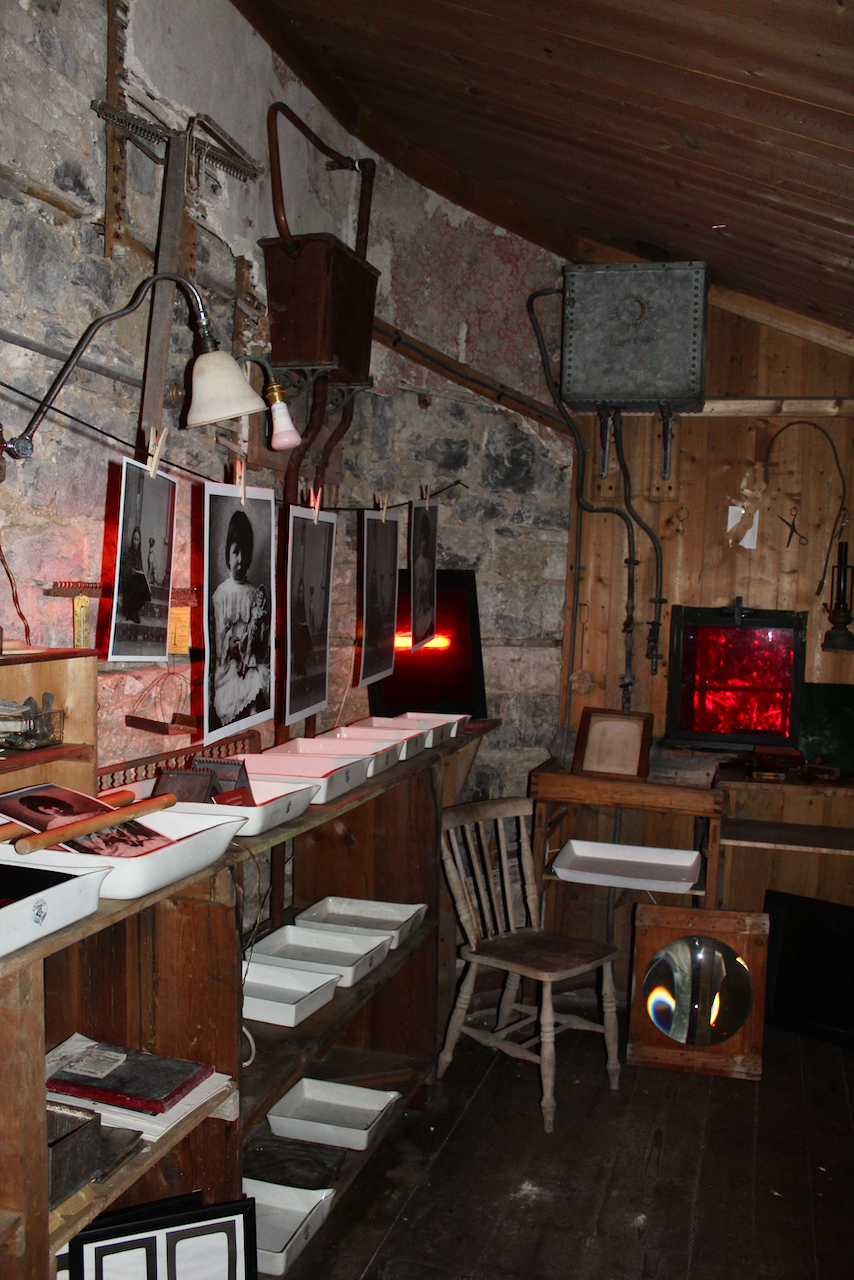
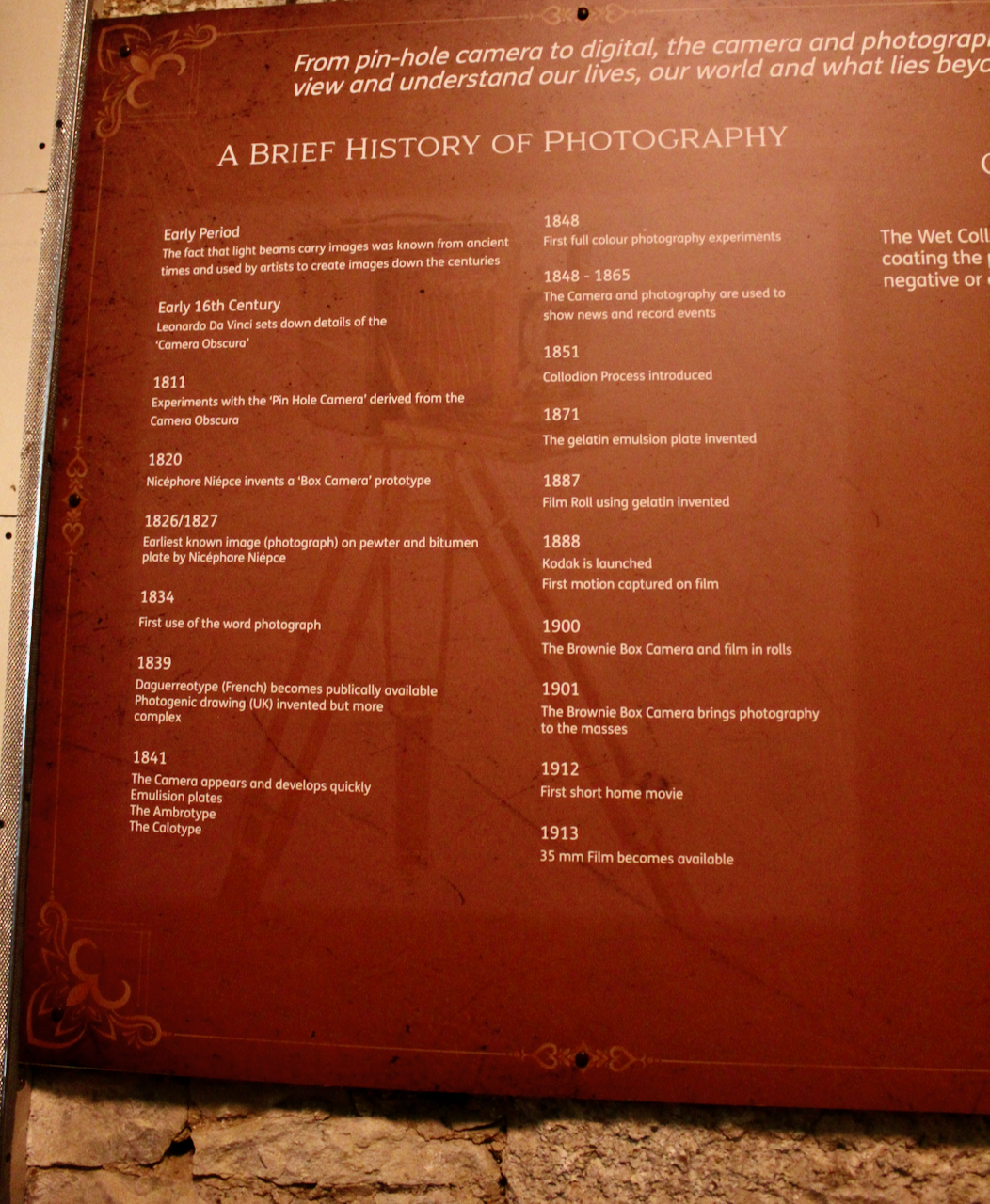
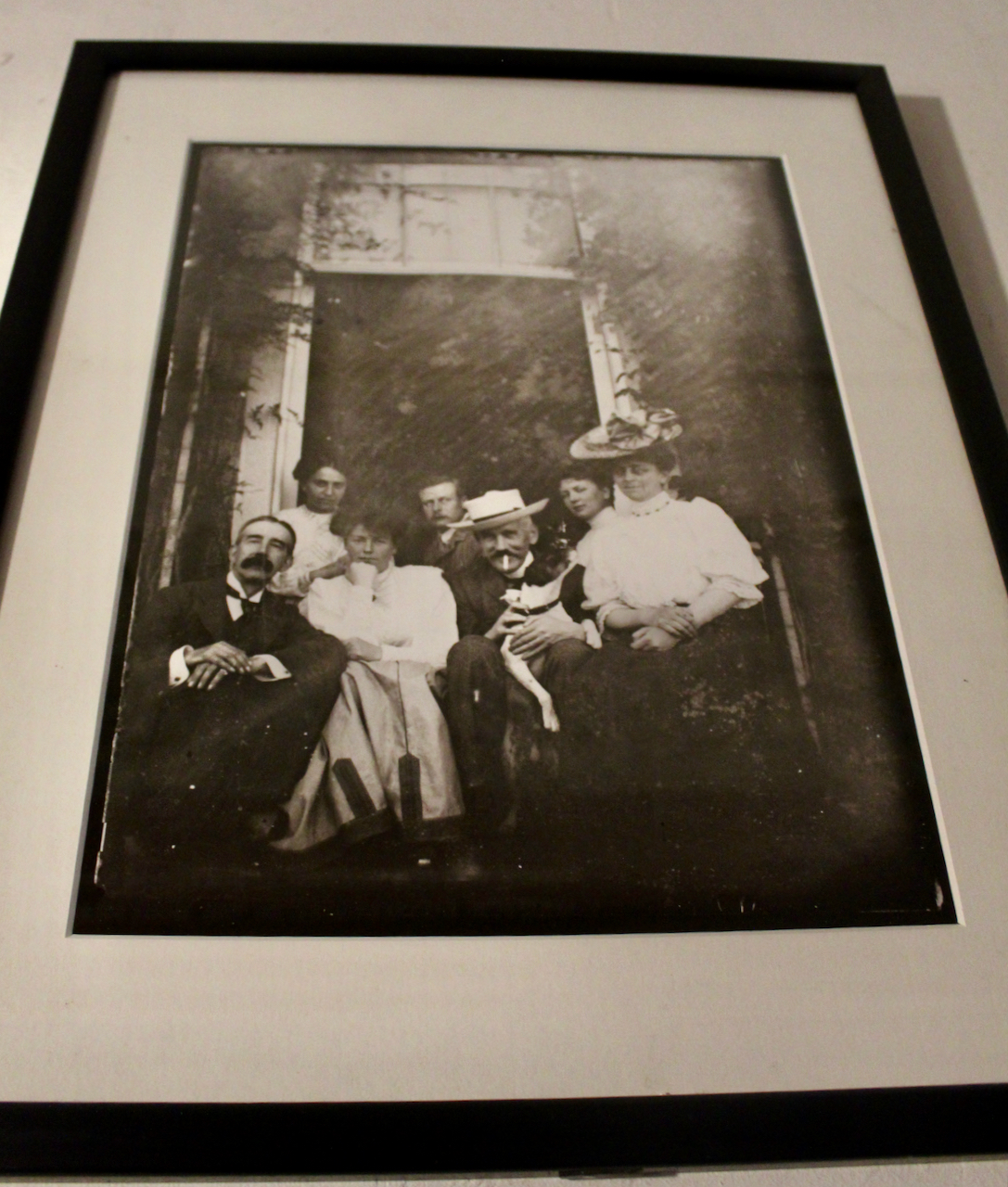
Stephen and I were able to see part of the interior of the house, despite the house being closed for restoration work at the time, by joining a Heritage Week talk about a photographic dark room which had been created in the house by one of its residents. Unfortunately we did not get to see the basement or the galleried kitchen.

Captain Nicholas married Magdalena French, daughter of Arthur French of Movilla Castle, County Galway. [6] They had several children. Their son Reverend Peter (d. 1739) became Dean of Elphin and married Catherine, daughter of Paul Gore of Castle Gore, County Mayo (otherwise known as Deel Castle, now a ruin), who was son of Arthur, 1st Baronet Gore, of Newtown Gore, otherwise known as Parkes Castle in Leitrim (see my Office of Public Works in Connaught, Counties Leitrim, Mayo and Roscommon entry).

Another son, Nicholas (c. 1671-1781) married Eleanor Blayney, daughter of Henry Vincent, 5th Baron Blayney of Castle Blayney, County Monaghan.

A daughter, Margaret, married Edward Cooper of Markree Castle, County Sligo (another Section 482 property which we visited).

Strokestown passed via another son, John (d. 1708), who married Eleanor Butler (daughter of Thomas, 3rd Baronet Butler, of Cloughgrenan, Co. Carlow), to their son Thomas (1701-1782). It was Thomas who built on to the 1696 house, to create a residence designed by Richard Cassells, in about 1730.

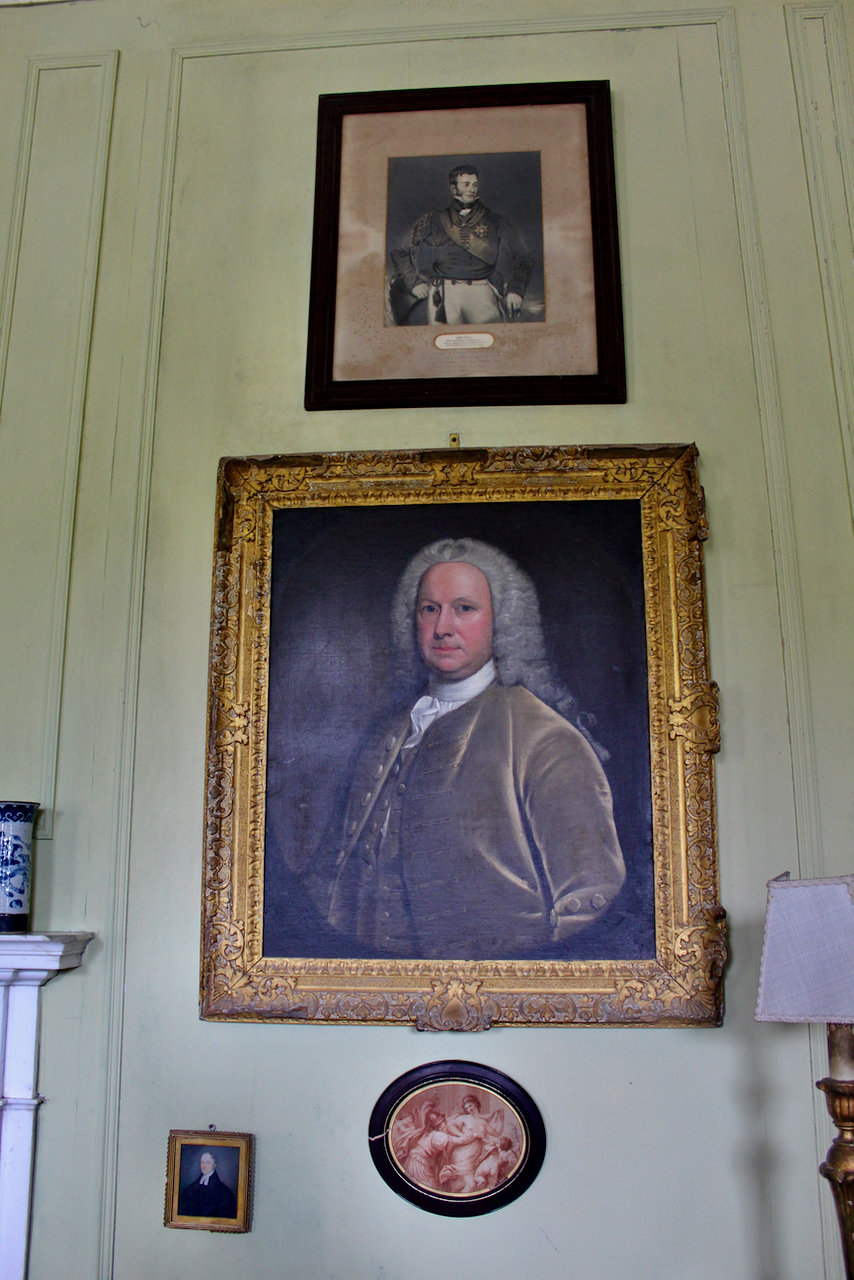
I think the portrait is of Thomas Mahon (1701-1782), who employed Richard Castle to built a house at Strokestown. Photograph © Jennifer Winder-Baggot, www.irishhistorichouses.com

Terence Reeves-Smyth tells us in his Irish Big Houses that the top storey and balustrade were added probably around 1740 when Richard Castle built the wings for Thomas Mahon. [7]

Richard Castle, or Cassells, (c.1690/95–1751) probably came to Ireland to work for Sir Gustavus Hume to design Castle Hume, Co. Fermanagh. [8] He then worked under Edward Lovett Pearce when Pearce worked on the Parliament Building in Dublin. Pearce died young and Castle succeeded to his practice. The Dictionary of Irish Biography tells us:

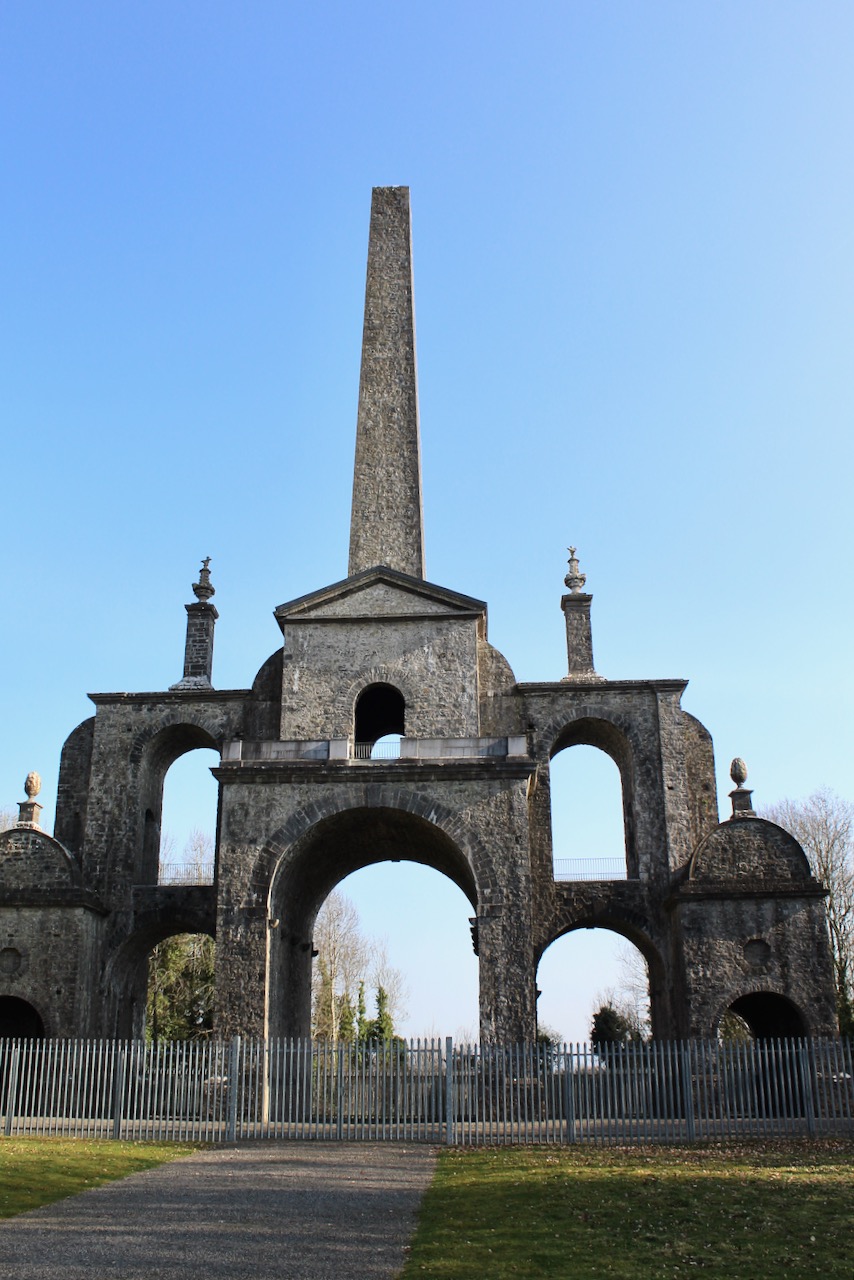
He contributed significantly to the development of Dublin, designing the first imposing town houses in cut stone for the nobility, notably Tyrone House, Marlborough St. (1740–45), built for Marcus Beresford (1694–1793), later earl of Tyrone, and Leinster House, Kildare St. (1745–51), for James Fitzgerald, earl of Kildare, the grandest town house and since the 1920s the seat of Dáil Éireann. His commissions included 85 Stephen’s Green (c.1738), the first stone-fronted house on the Green, latterly part of Newman House; houses in Kildare St., notably Doneraile House (designed c.1743); and Sackville Place...Castle designed many country houses, including Belvedere, Co. Westmeath (designed 1740), which incorporated the ‘Venetian’ window, a common feature of his designs, and Ballyhaise, Co. Cavan (c.1733). By altering and enlarging many houses, he created grand country mansions (often with vaulted stables), notably Powerscourt, Co. Wicklow, with its magnificent Egyptian hall (built 1731×1740; damaged by fire 1974, and since partly restored), Westport House, Co. Mayo (1731–40), and Carton House, Co. Kildare (c.1739–45). Conolly’s Folly at Castletown estate, Co. Kildare (1740), a tall obelisk mounted on multiple arches, is attributed to him. He possibly collaborated with Francis Bindon on Belan House, Co. Kildare, complete with temple and three obelisks (1743), and Russborough, Co. Wicklow (c.1742–55).” [9]

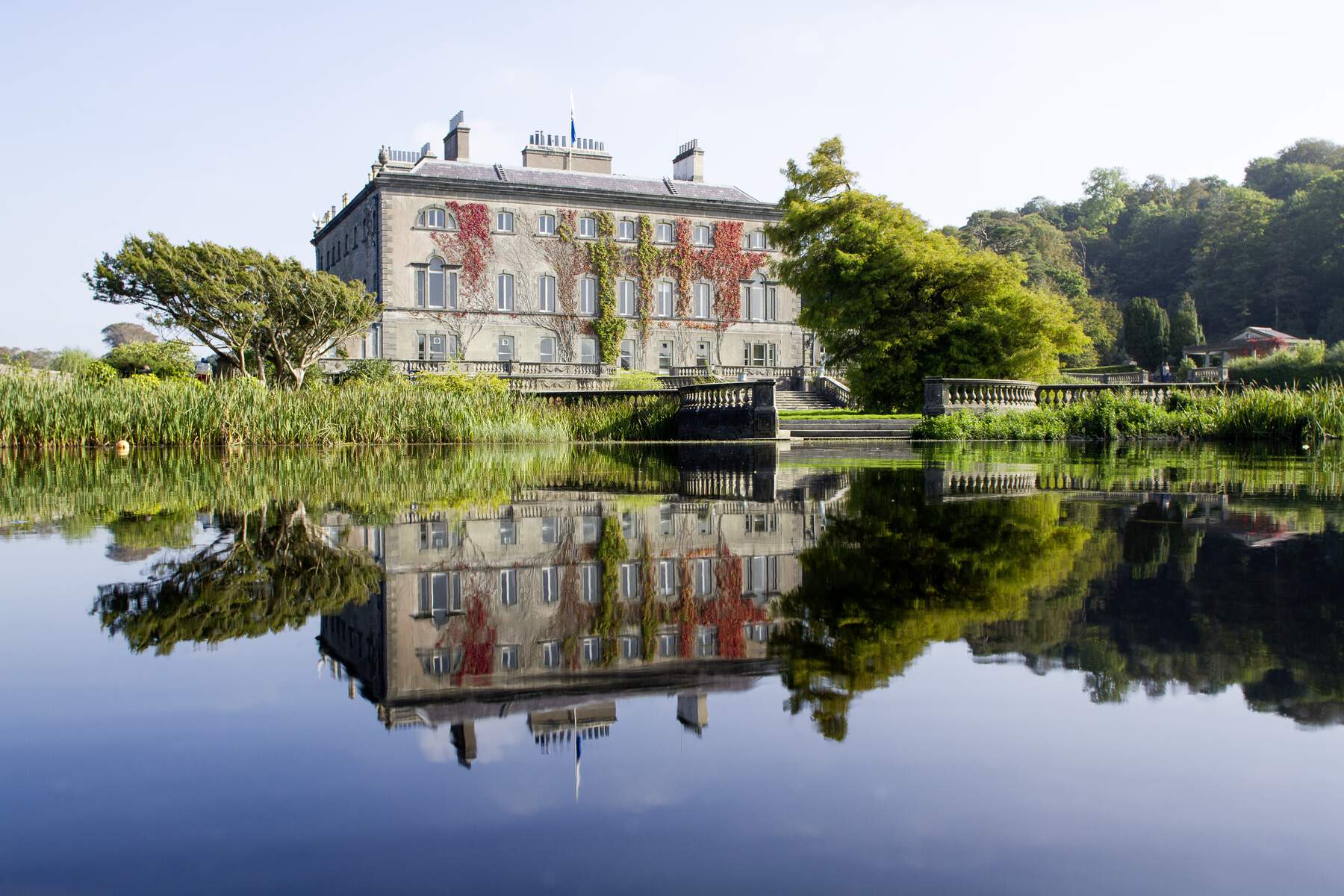
Also designed by Richard Castle: Westport House, County Mayo (1731), photograph courtesy of Ireland’s Content Pool [1].
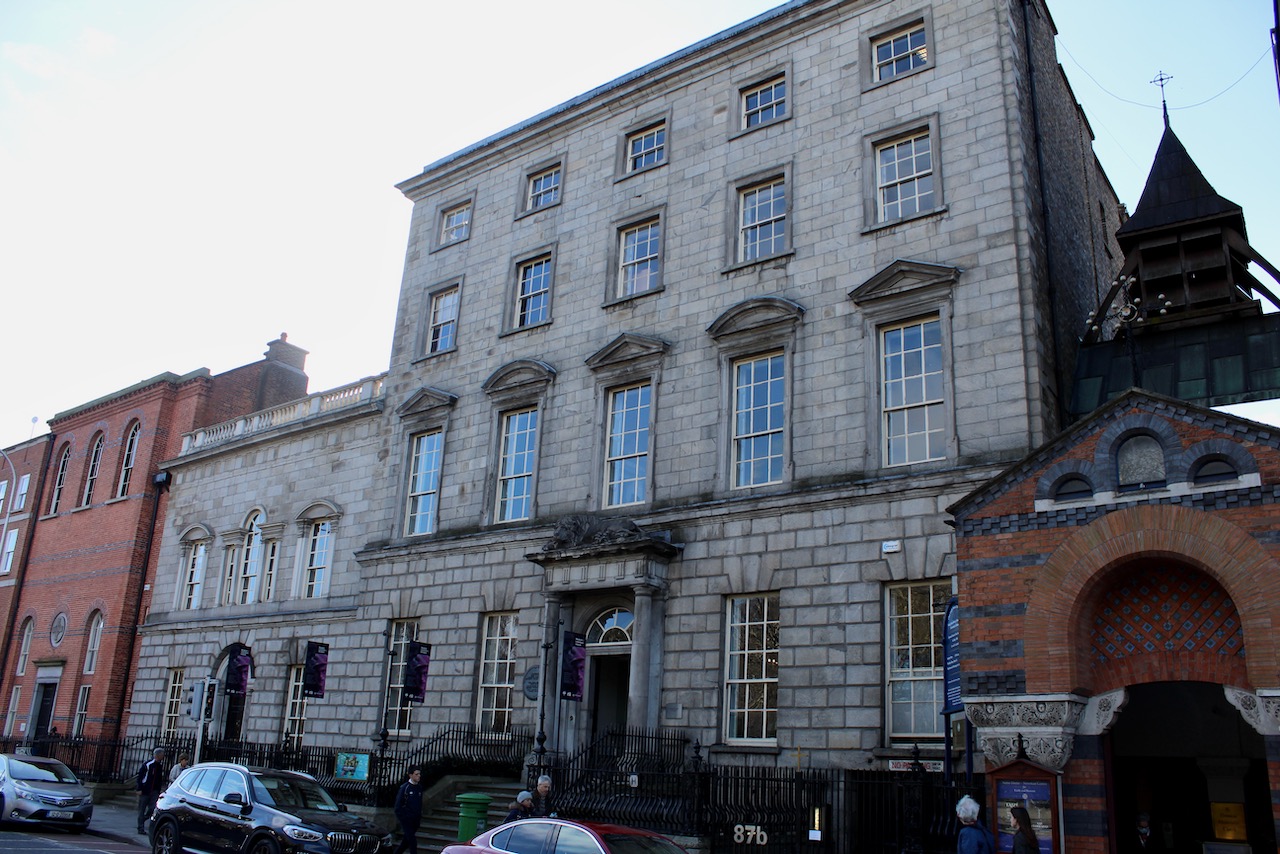
Newman House, St. Stephen’s Green (Museum of Literature Ireland), also designed by Castle (1738). Photograph © Jennifer Winder-Baggot, www.irishhistorichouses.com
Also designed by Richard Castle: Carton House, County Kildare, renovations by Castle in 1739. Photograph © Jennifer Winder-Baggot, www.irishhistorichouses.com
Carton House, County Kildare, renovations by Castle in 1739. Photograph © Jennifer Winder-Baggot, www.irishhistorichouses.com
Castletown obelisk folly, also by Richard Castle (1740). Photograph © Jennifer Winder-Baggot, www.irishhistorichouses.com
Also designed by Richard Castle: Belvedere, County Westmeath (1740). Photograph © Jennifer Winder-Baggot, www.irishhistorichouses.com
Also designed by Richard Castle: Powerscourt, County Wicklow (1740) Photograph © Jennifer Winder-Baggot, www.irishhistorichouses.com
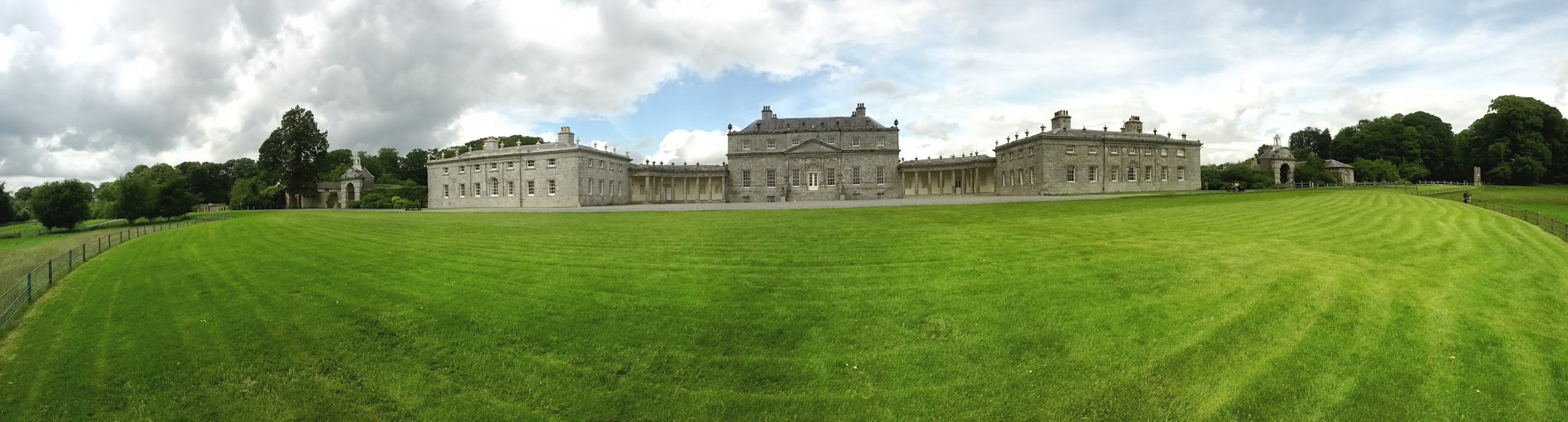
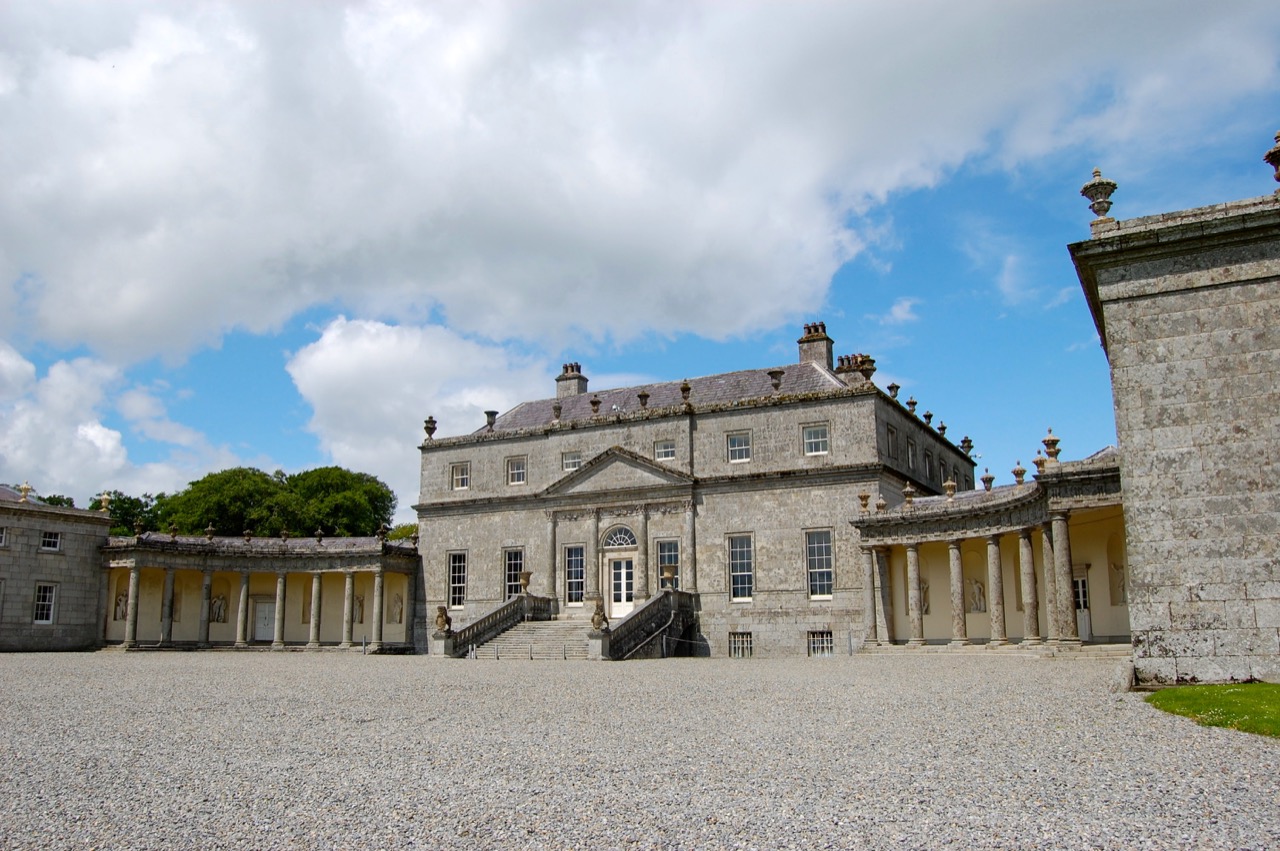
Russborough House, also designed by Richard Castle, 1742. Photo taken by Jeremy Hylton June 2012.
Russborough House, County Wicklow, also designed by Richard Castle. Photograph © Jennifer Winder-Baggot, www.irishhistorichouses.com
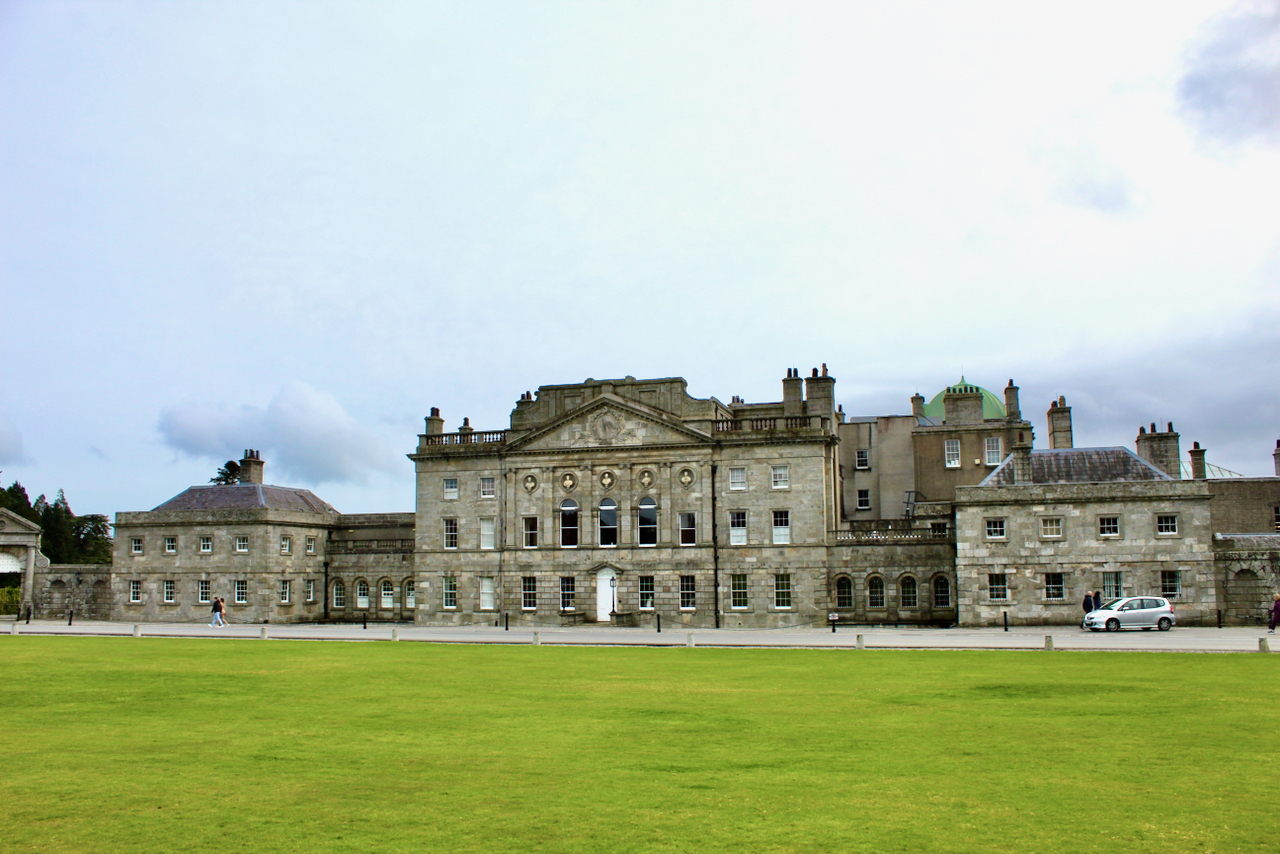
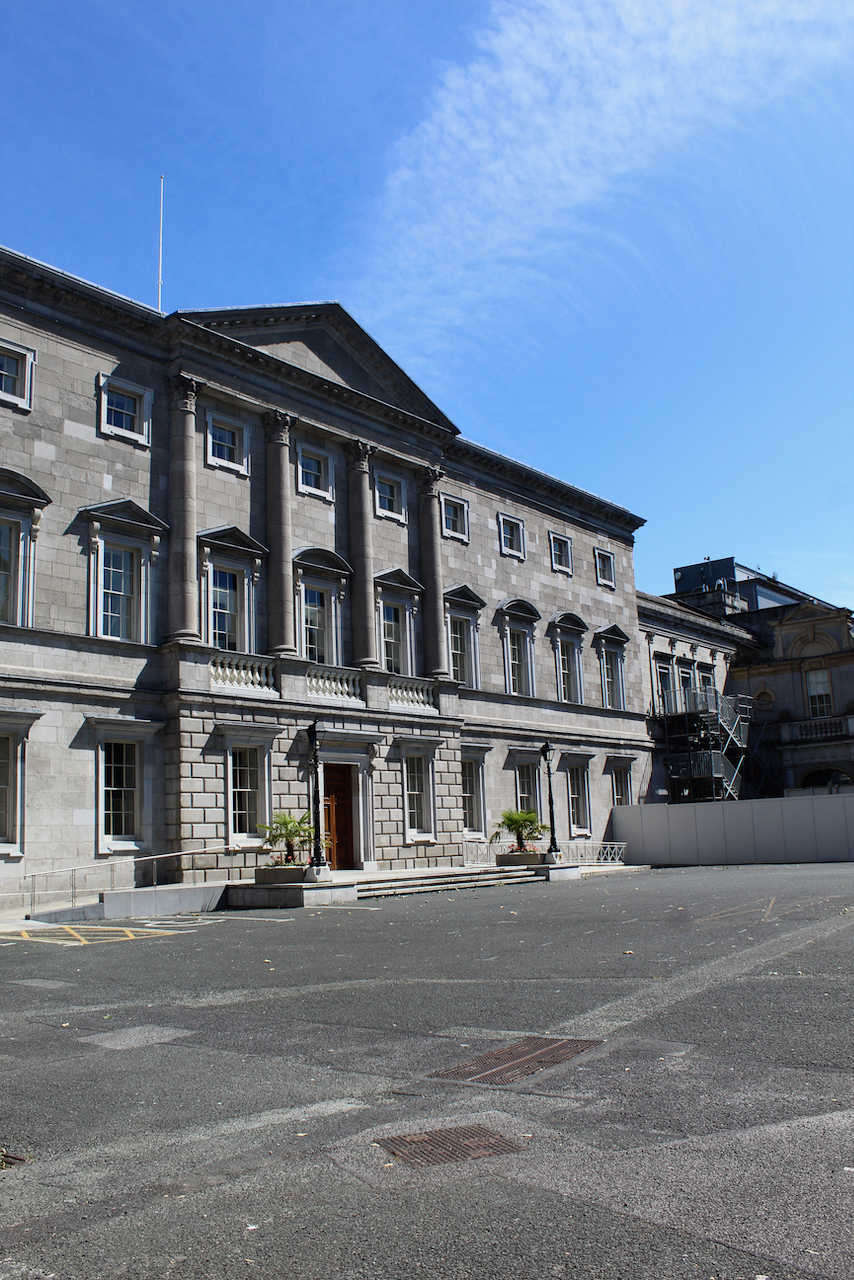
Also designed by Richard Castle: Leinster House, 1745 [Dublin, July 2022]. Photograph © Jennifer Winder-Baggot, www.irishhistorichouses.com
The house has a seven-bay, three-storey over basement central block, with curved curtain walls linking it to flanking pavilions with four-bay principal façades. The centre block front facade has three bays in the centre with giant pilasters either side and two bays beyond on either side. The centre three bays have a central panel on the pediment and the two bays on either side of the pilasters have a balustraded pediment. The front door is set in a tooled stone doorcase with decorative brackets, with an ornate spoked fanlight, and is flanked by traceried sidelights.

Strokestown House. Photograph © Jennifer Winder-Baggot, www.irishhistorichouses.com
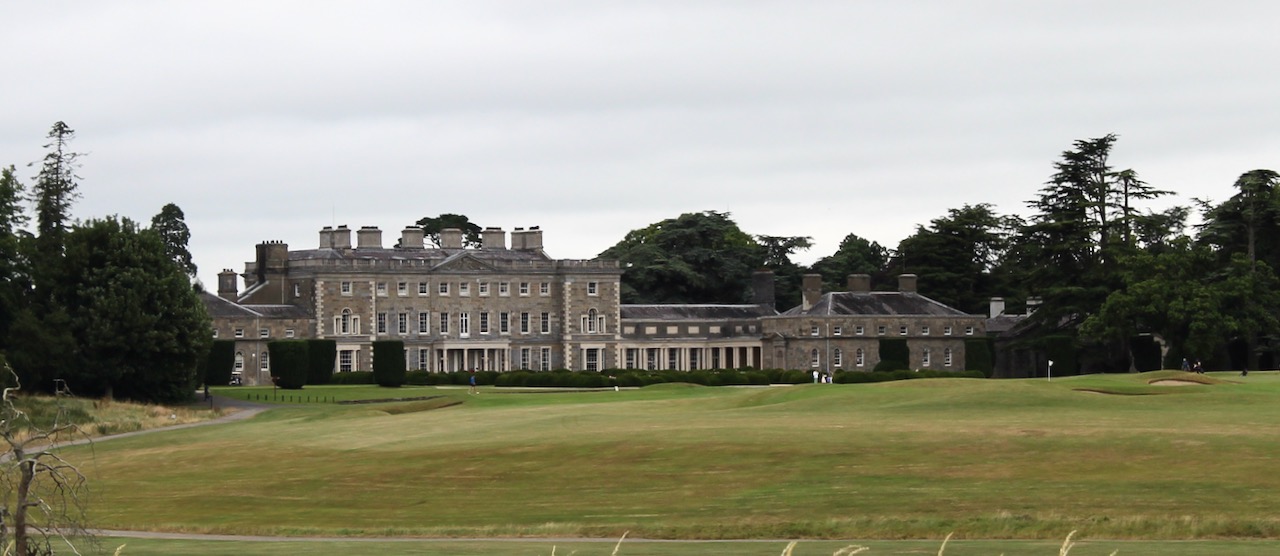
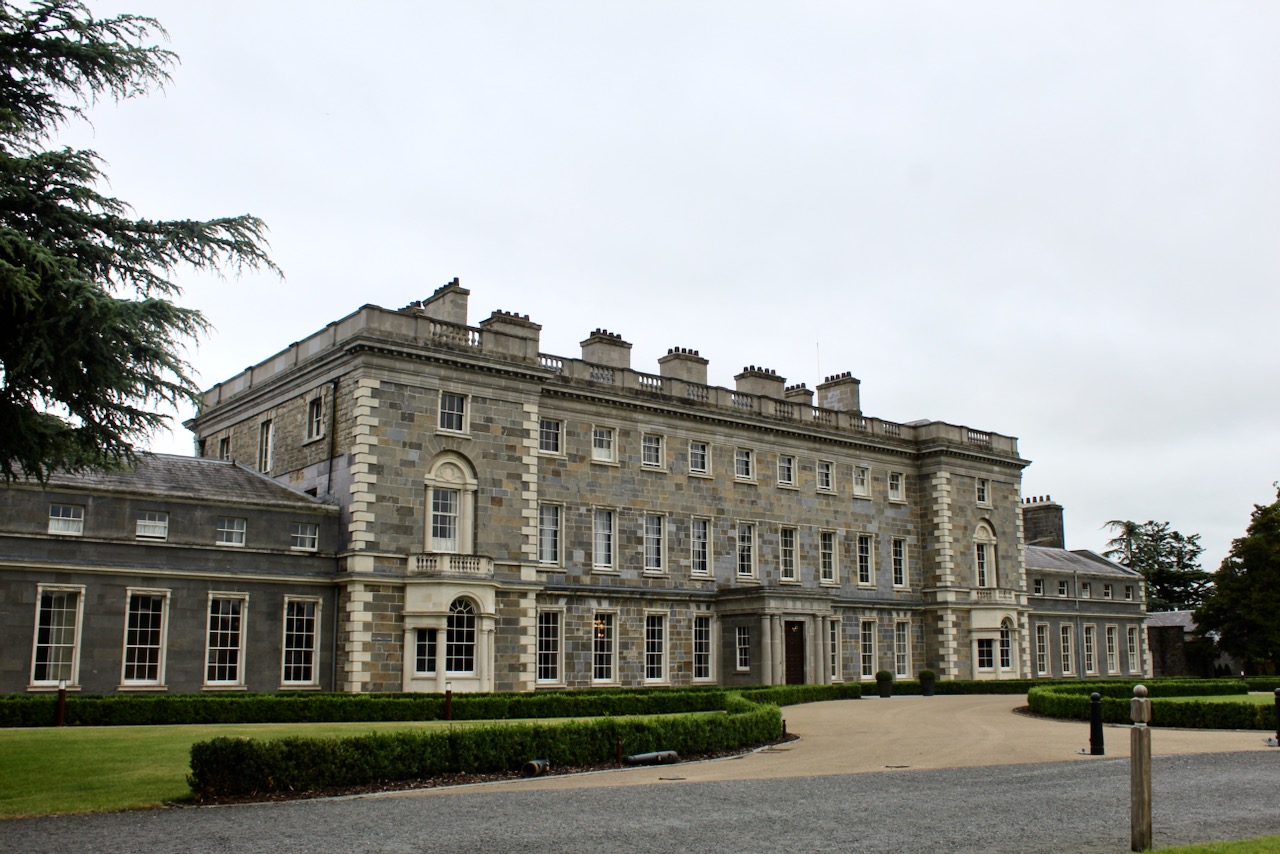
Most of what we see today was designed by Castle, but the house was resurfaced in 1819 and the portico added.

The portico was added around 1820. Photograph © Jennifer Winder-Baggot, www.irishhistorichouses.com
Strokestown Park, County Roscommon, August 2022. Photograph © Jennifer Winder-Baggot, www.irishhistorichouses.com
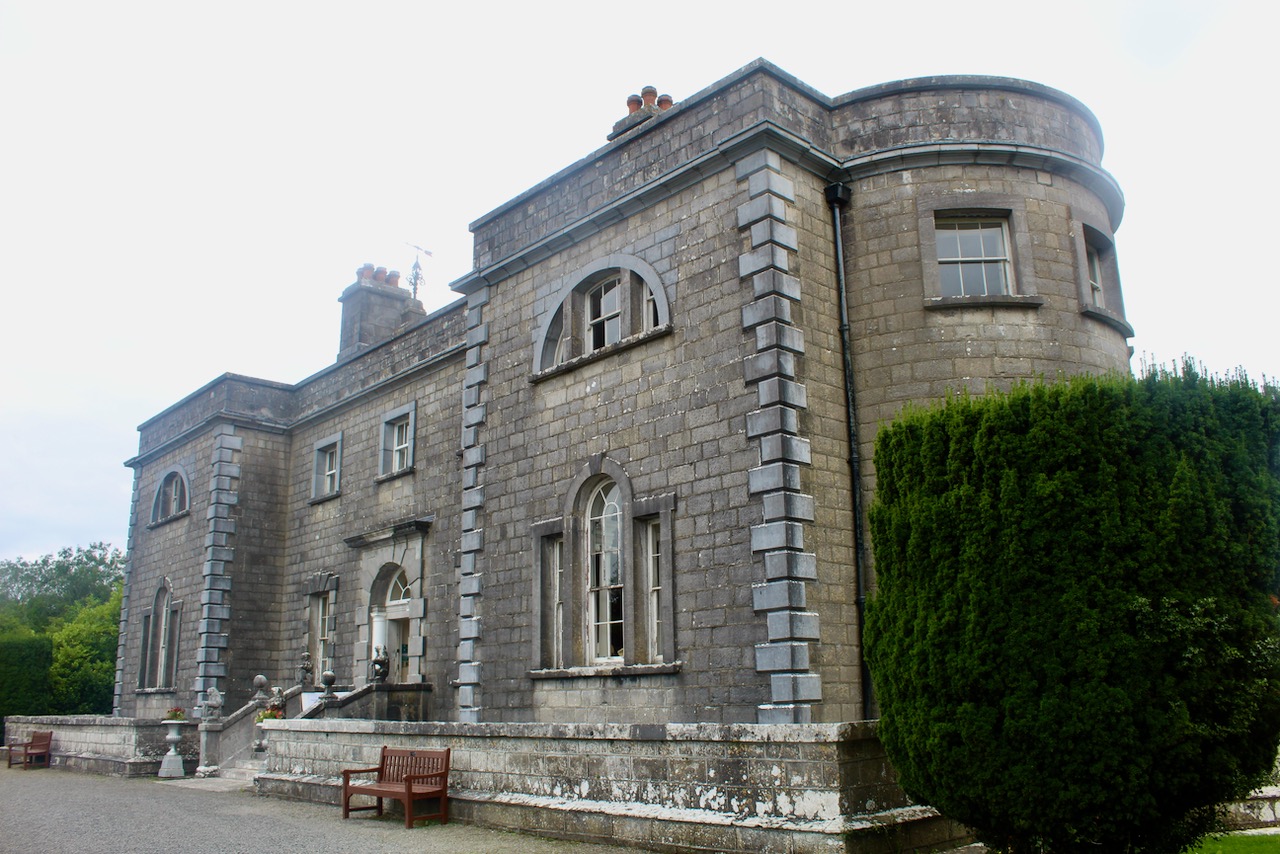
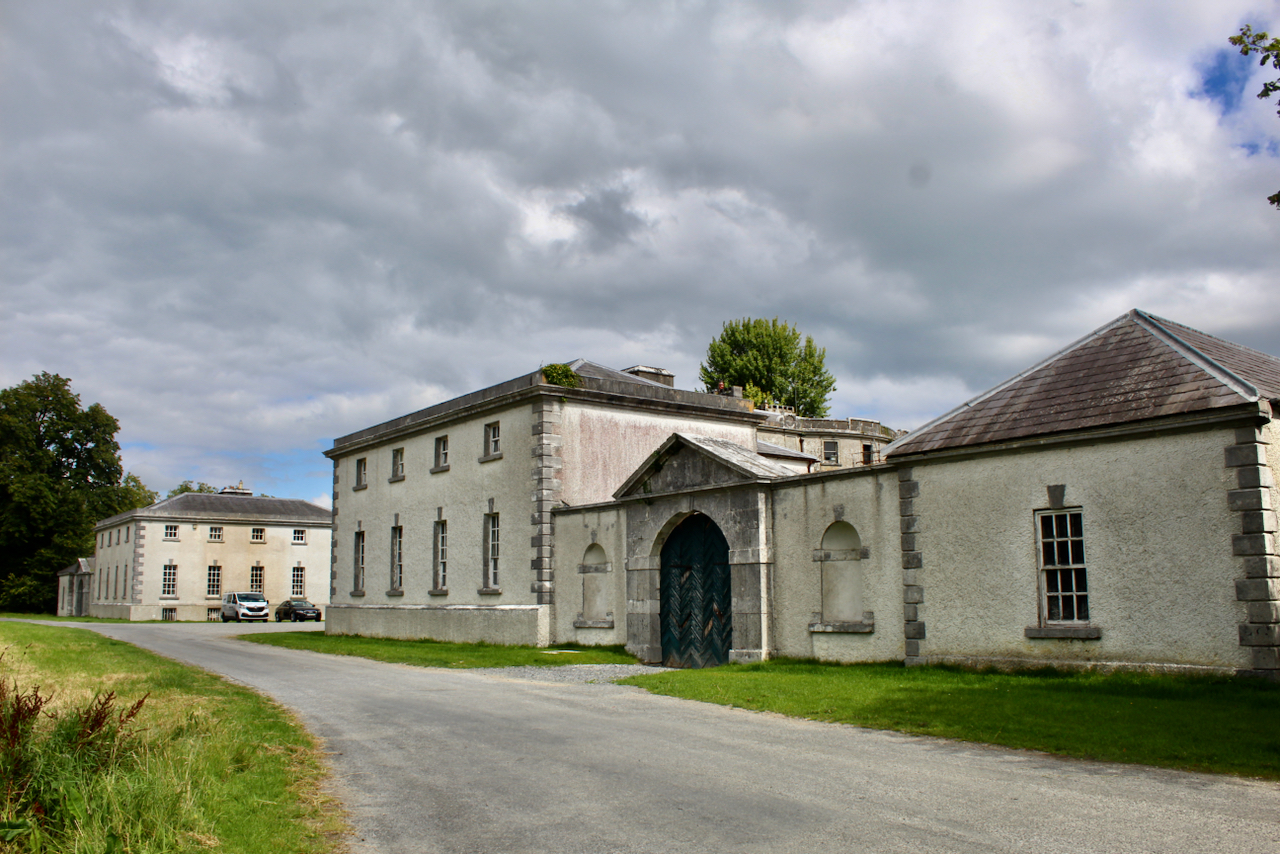
The National Inventory of Architectural Heritage tells us that the pedimented archways to outer walls extending from pavilions give access to stable complex and kitchen yards. [10]

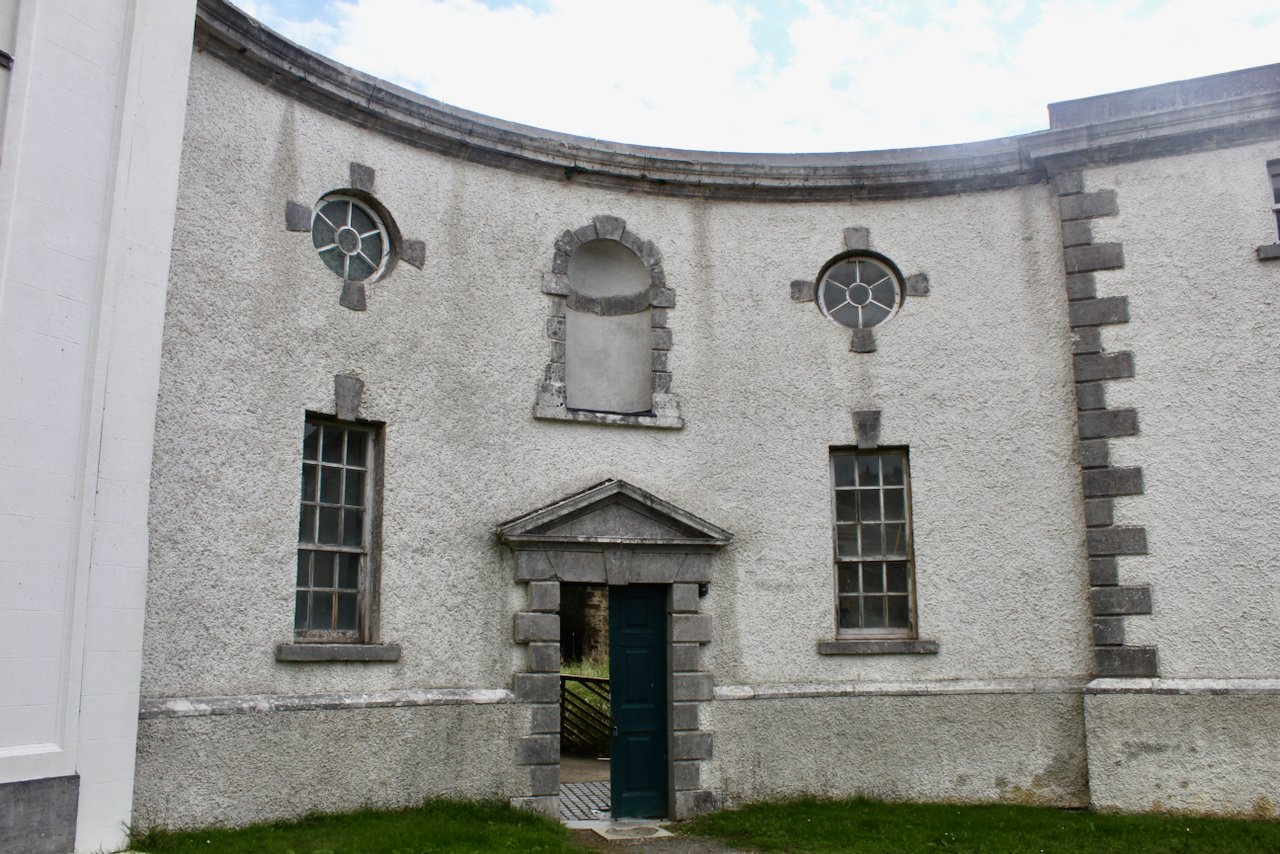
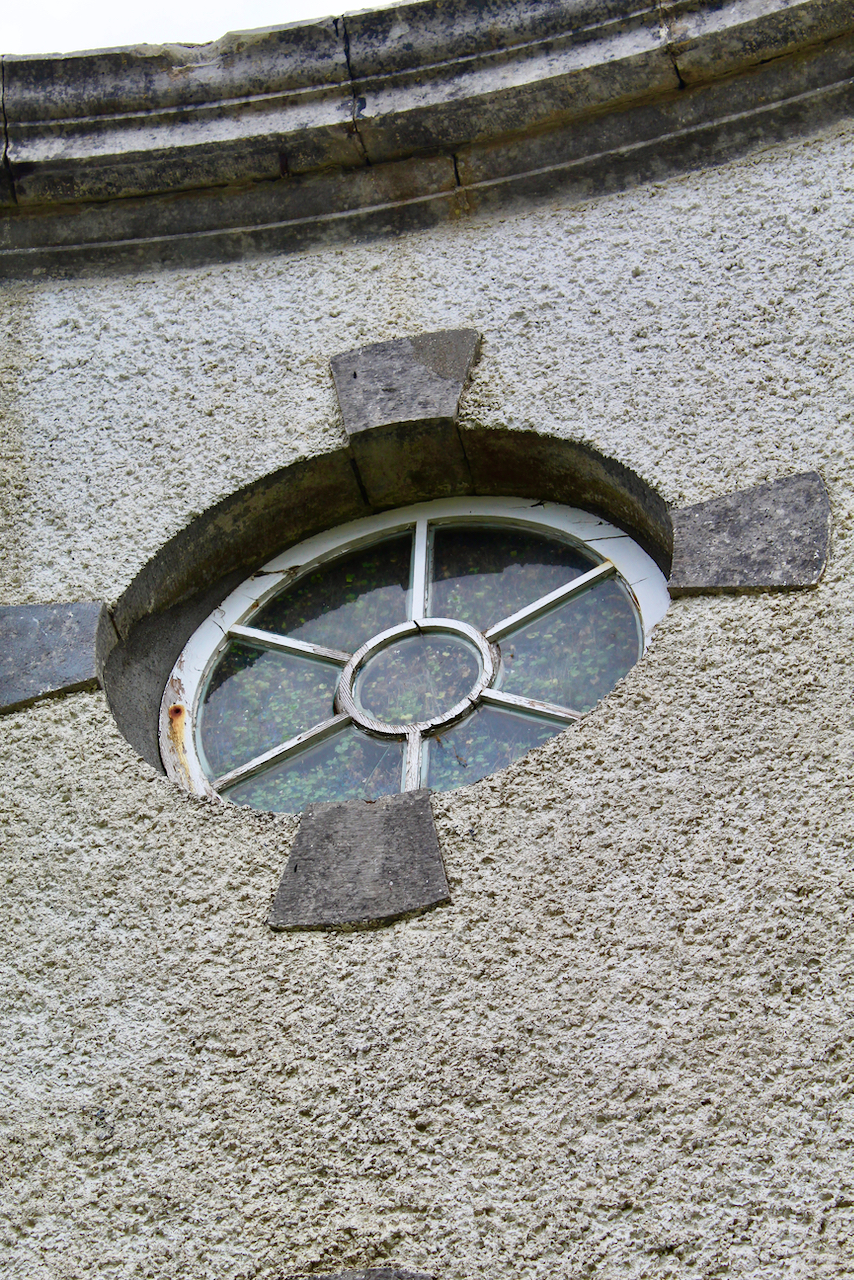
The flanking curtain walls have niches flanked by oculus windows on the upper part with tooled stone surrounds, and a Gibbsean doorcase with pediment over.

Strokestown Park, County Roscommon, August 2022. Photograph © Jennifer Winder-Baggot, www.irishhistorichouses.com
Flanking wall between main block and a pavilion block. Photograph © Jennifer Winder-Baggot, www.irishhistorichouses.com
Strokestown Park, County Roscommon, August 2022. Photograph © Jennifer Winder-Baggot, www.irishhistorichouses.com
An oculus window in the curtain wall has overgrowth of greenery on the other side! Photograph © Jennifer Winder-Baggot, www.irishhistorichouses.com
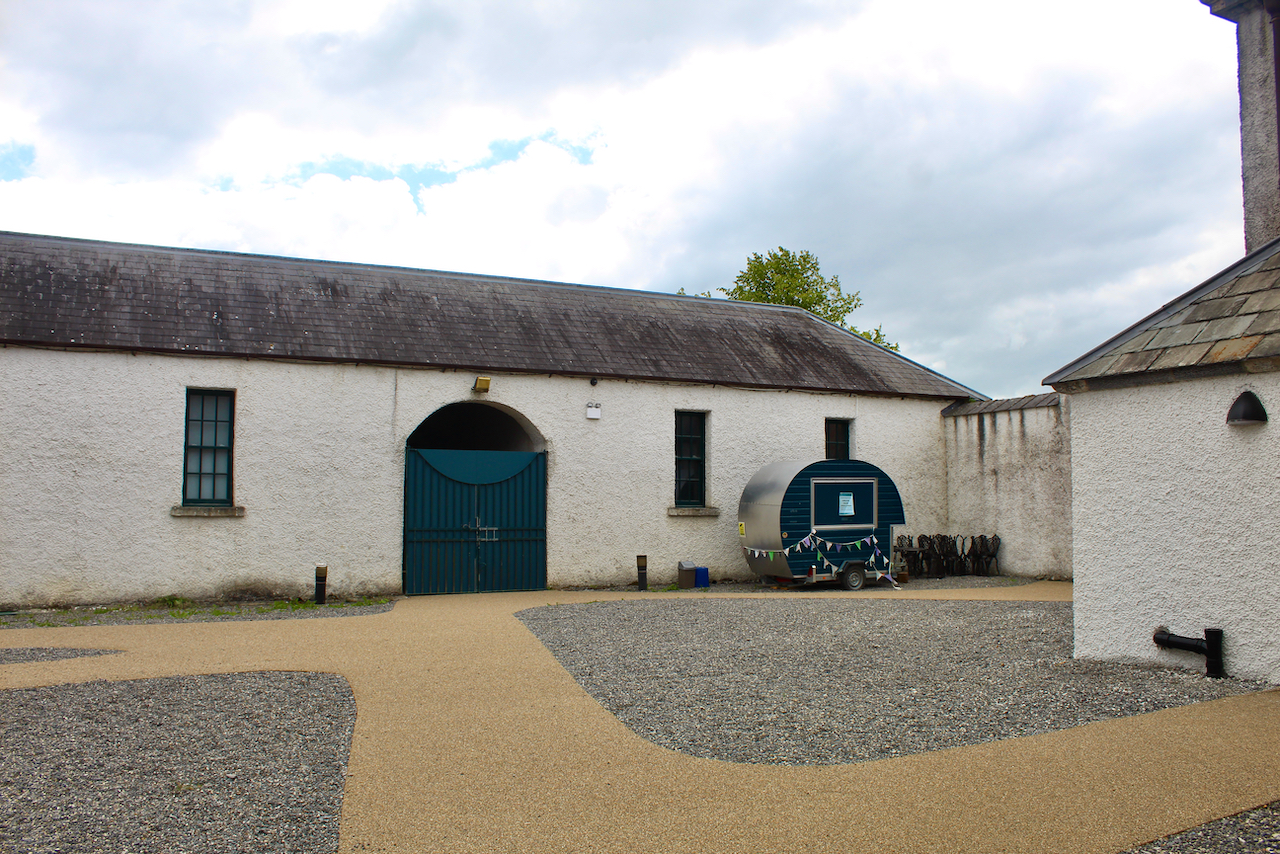
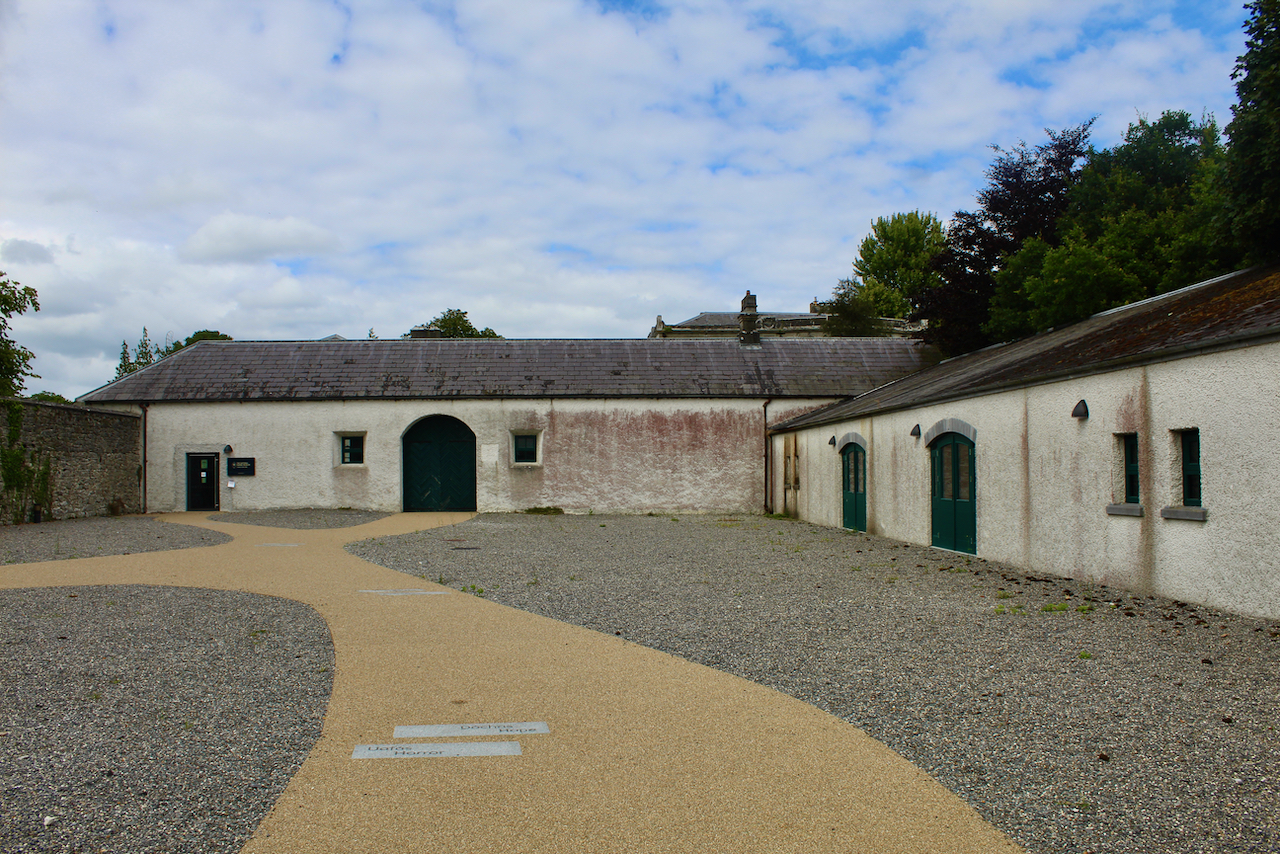
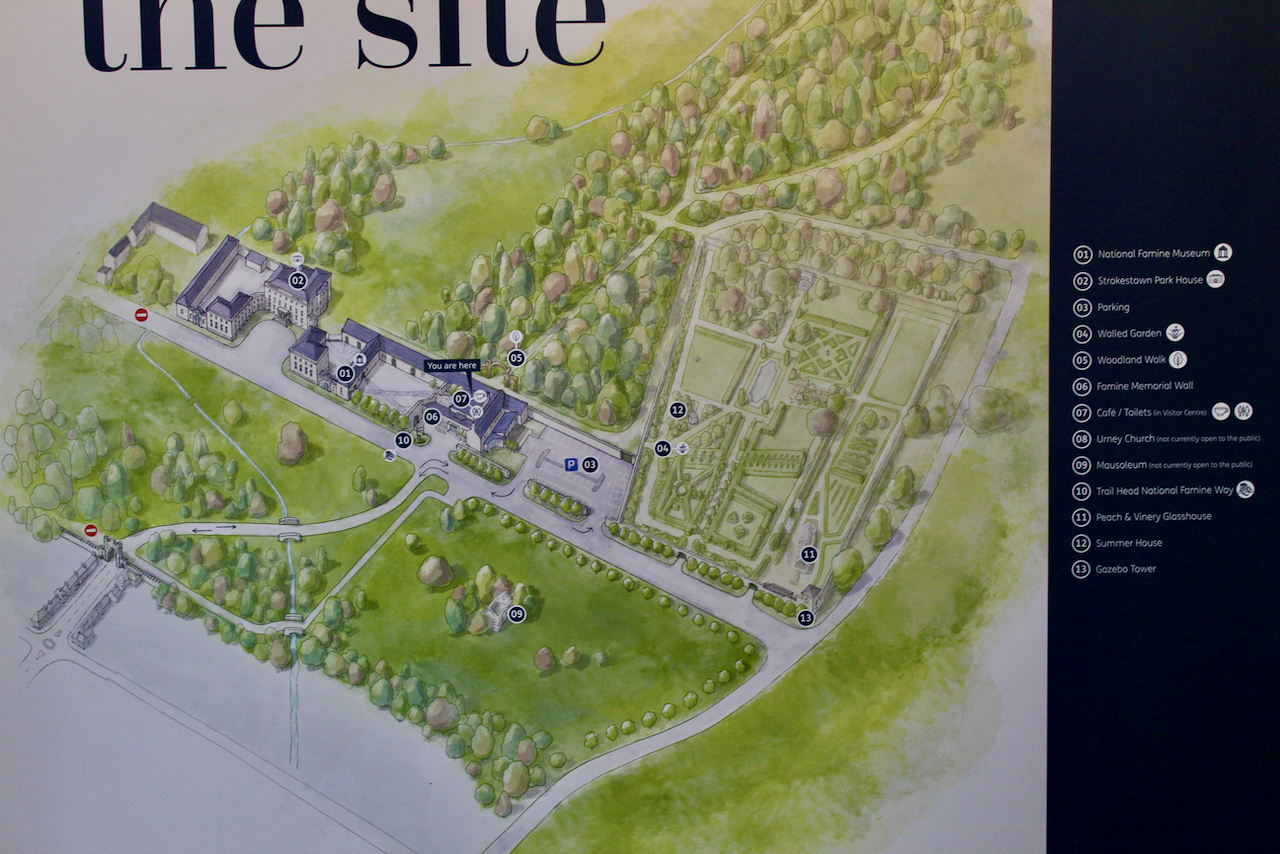
The Famine Museum is located in the stables. One enters via a Visitor Centre to one end of the complex.
Pedimented archways to outer walls extending from pavilions give access to stable complex and kitchen yards. Photograph © Jennifer Winder-Baggot, www.irishhistorichouses.com
Strokestown Park, County Roscommon, August 2022. Photograph © Jennifer Winder-Baggot, www.irishhistorichouses.com
Entrance to the Famine Museum, located in the stables. Photograph © Jennifer Winder-Baggot, www.irishhistorichouses.com
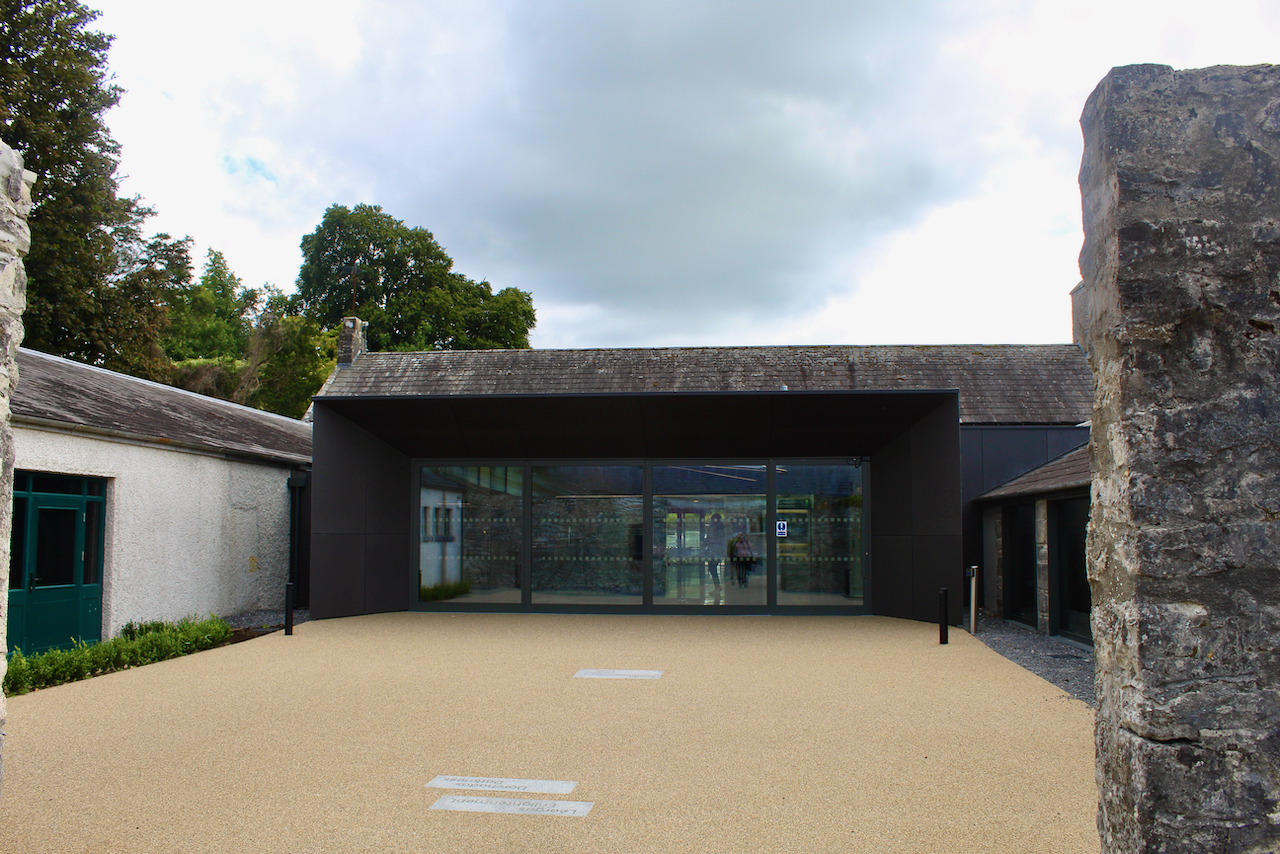
Visitor Centre, located at one end of the stable courtyard, opposite the entrance to the stables and the Famine Museum. Photograph © Jennifer Winder-Baggot, www.irishhistorichouses.com
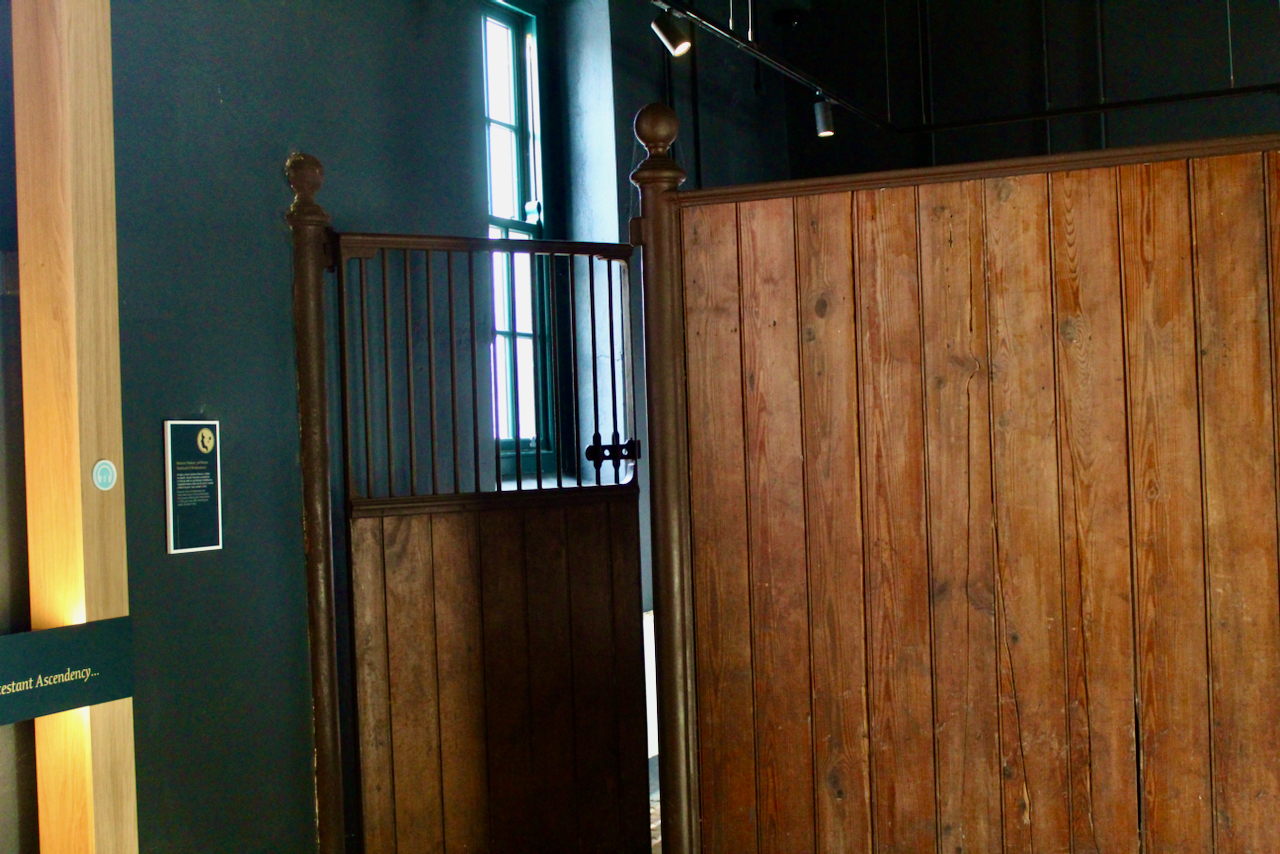
Inside the Famine Museum, which is in the former stables. Photograph © Jennifer Winder-Baggot, www.irishhistorichouses.com

In 1735, Thomas married Jane Crosbie, daughter of Maurice, 1st Baron Branden, of Ardfert, County Kerry, MP for County Kerry. Thomas Mahon later became MP, first for the Borough of Roscommon in 1739-1763 then for County Roscommon 1763-82, when he was called the “Father of the House.” [11]

I think this is Jane Crosbie, who married Thomas Mahon. Photograph © Jennifer Winder-Baggot, www.irishhistorichouses.com

Thomas’s son Maurice (1738-1819), named after Jane’s father, married Catherine, daughter of Stephen Moore, 1st Viscount Mountcashell, in 1765. He inherited when his father died in 1782. He was granted a peerage for his support of the Act of Union, and created 1st Baron Hartland, of Strokestown, Co. Roscommon in 1800.

Terence Reeves-Smyth tells us:

His son Maurice, who became Baron Hartland upon accepting a Union Peerage in 1800, made further additions and modifications to the house, including the inlaid mahogany doors, chimney-pieces and cornices as well as the library.”

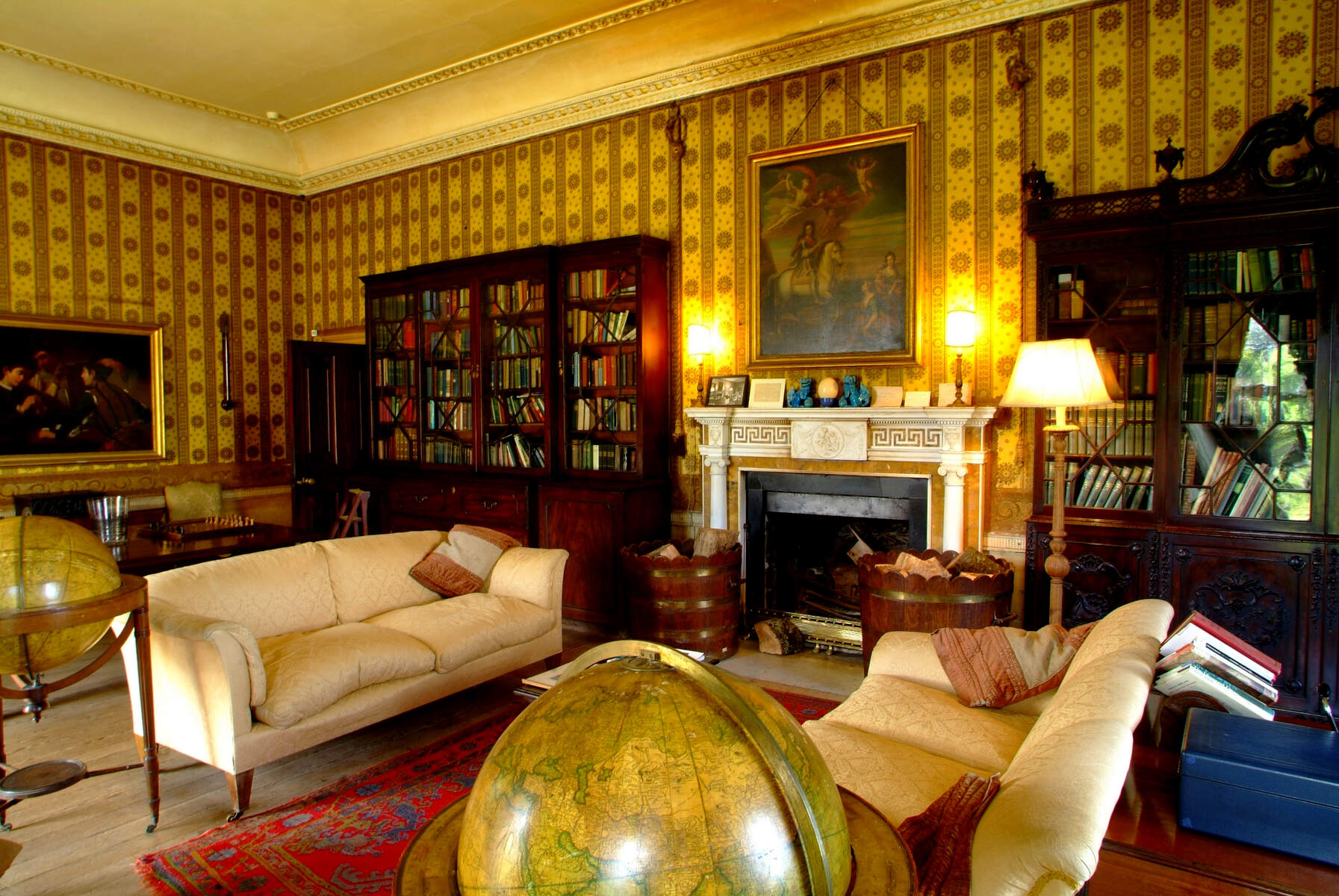
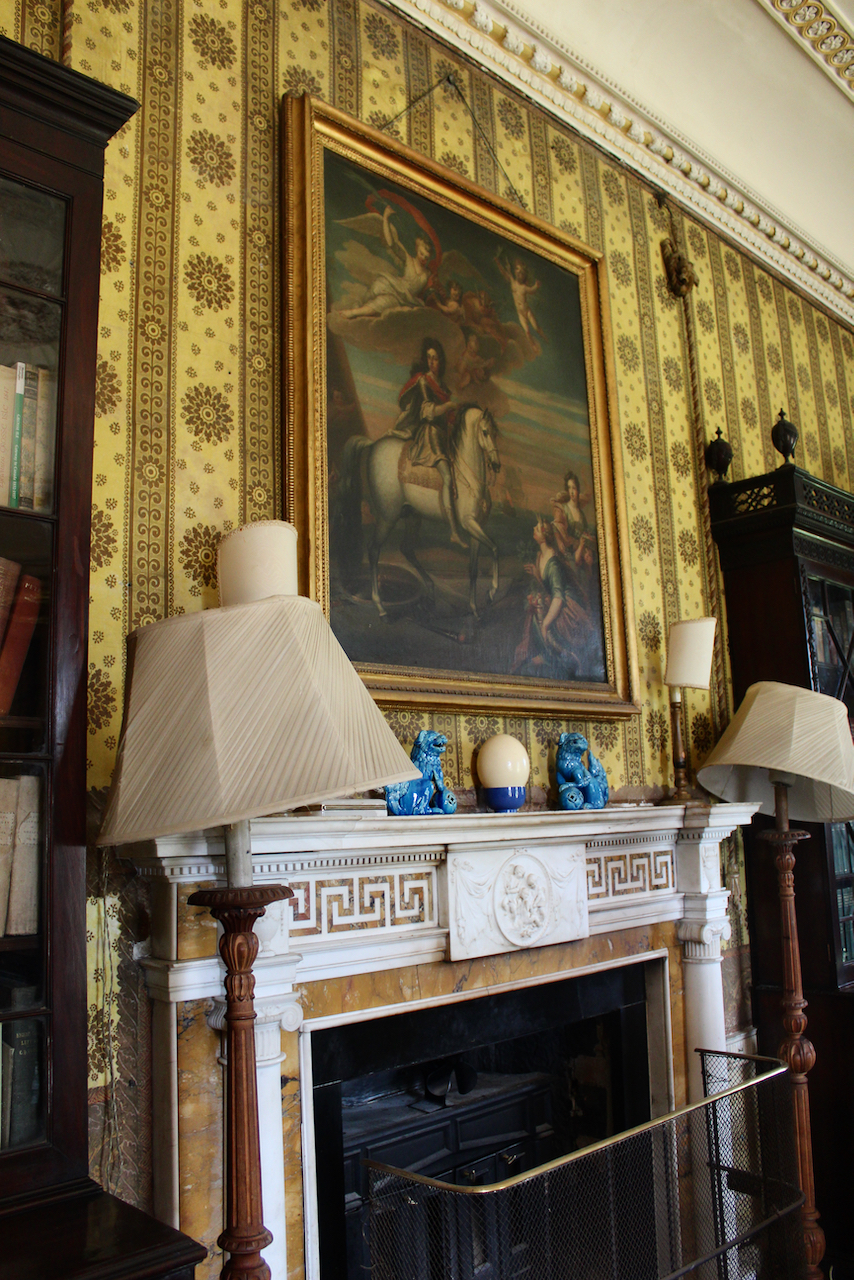
Strokestown, image by Chris Hill, 2014, Tourism Ireland, from Ireland’s Content Pool. [1] Mark Bence-Jones writes that in a late-Georgian addition at the back of the house there is a splendid library with a coved ceiling and an original early nineteenth century wallpaper of great beauty, in yellow and brown, which gives the effect of faded gold. [12]

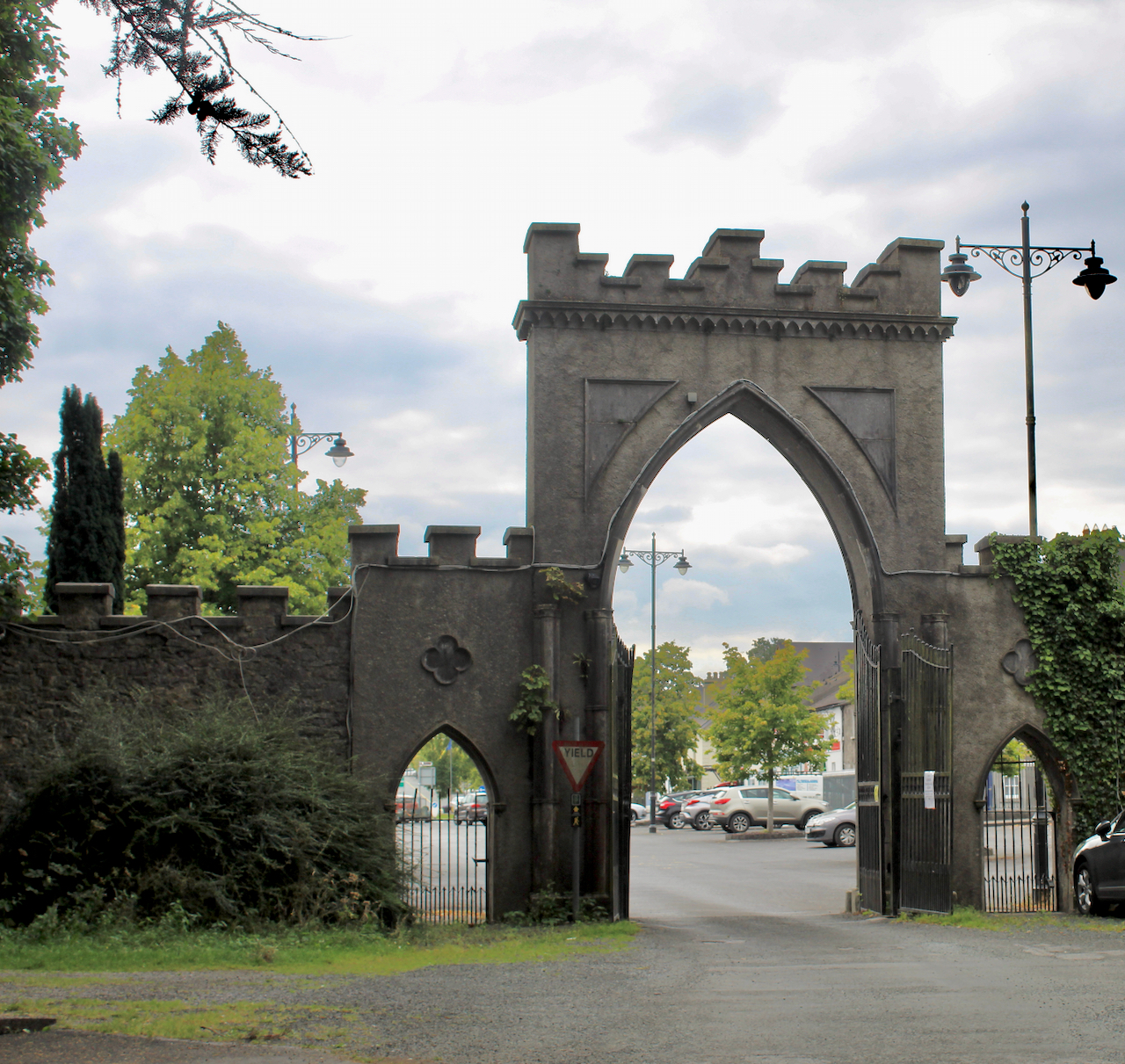
Maurice Mahon also had the main street of Strokestown laid out between 1810 and 1815, and had a tall Georgian Gothic arch erected at the entrance to Strokestown Park, at one end of the main street. At almost one hundred and fifty feet wide, the main thoroughfare, leading up to the gates of the estate, was said to be the widest in Ireland at the time. Apparently Baron Hartland wanted it to be wider than the Ringstrasse in Vienna. [see 12]

Tripartite gate at the entrance to the Strokestown Park estate, with crow stepped battlements. Photograph © Jennifer Winder-Baggot, www.irishhistorichouses.com

Maurice, 1st Baron Hartland had three sons. The first, Thomas (1766-1835) succeeded as 2nd Baron Hartland in 1819. His mother lived another fifteen years after her husband died in 1819, and the museum tells us that receipts for her extravagant spending are kept in the archive.

When Thomas inherited the property in 1819 he hired John Lynn who created the porch, among other renovations. Lynn had served as clerk of works for the building of Rockingham House in County Roscommon, erected in 1810 for Robert, 1st Viscount Lorton to designs by John Nash. We saw pictures of Rockingham House when we visited King House, see my entry. Rockingham House no longer exists. Soon after working in Strokestown, Lynn moved up to Downpatrick, County Down. [13]

Terence Reeves-Smyth continues in Irish Big Houses: “In 1819 Lieutenant General Thomas Mahon, second Lord Hartland, employed the architect J[ohn] Lynn to carry out some more improvements, such as the addition of the porch and giant pilasters to the front. Except for the gardens, few changes were later carried out at Strokestown and it remained the centre of a vast 30,000 acre estate until the present century.”

Thomas the second baron was educated at the Royal School in Armagh, Trinity College Dublin and St. John’s College, Cambridge. He joined the military and became Major in the 24th Light Dragoons. In 1798 he was in command of a garrison in Carlow, where he trapped and killed many rebels. [14] In 1811 he married Catherine Topping, but they did not have any children. He later fought in the Napoleonic wars and in Argentina.

Terence Reeves-Smyth continues:

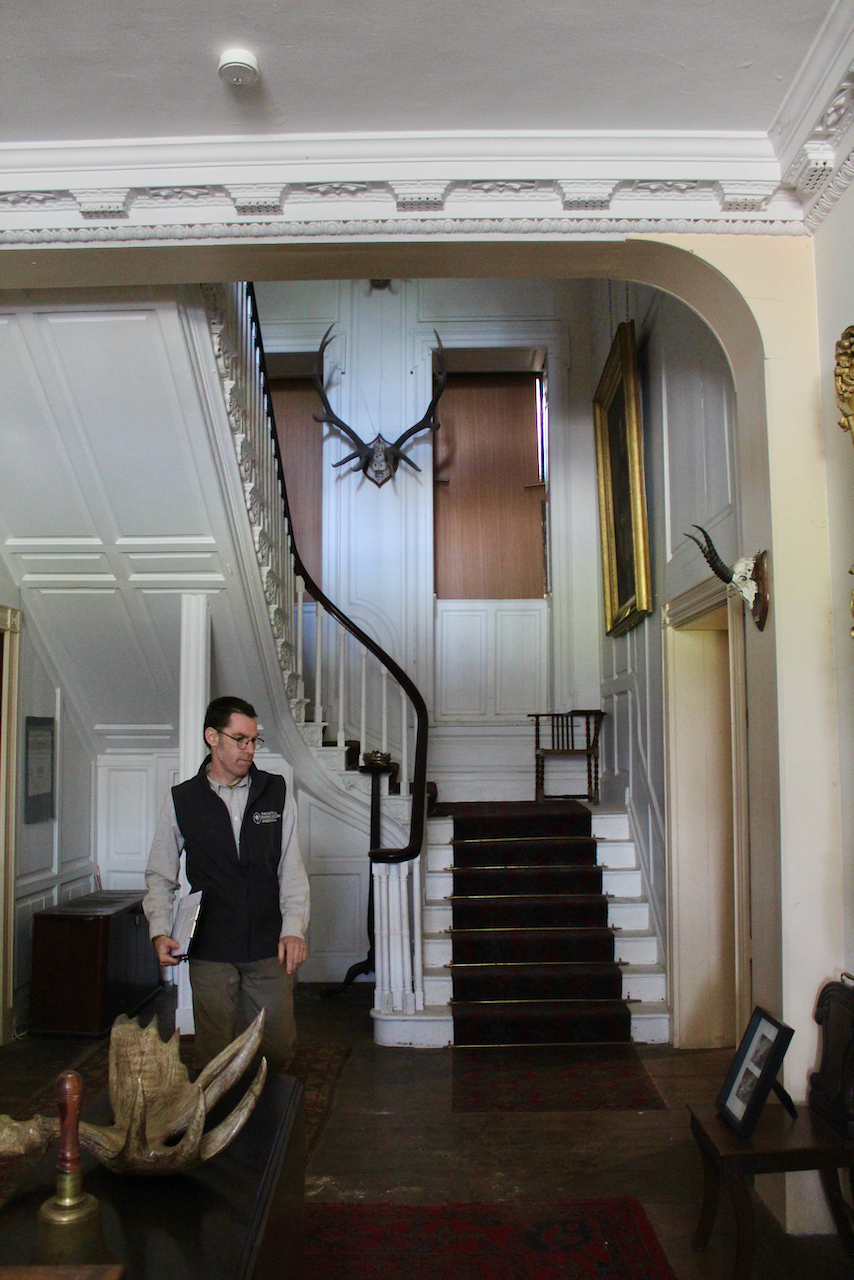
In contrast to the exterior, the interior is quite intimate, with surprisingly small rooms – a product of the early date of much of the building. Early 18th century wood panelling survives in parts of the house including the main staircase hall, but many rooms were redecorated in regency times, such as the dining room which still has its early 19th century furniture, including a bath-sized turf bucket and pinkish-red damask wallpaper.

Staircase hall of Strokestown Park, with its original wood panelling, and archivist Martin Fagan. Photograph © Jennifer Winder-Baggot, www.irishhistorichouses.com
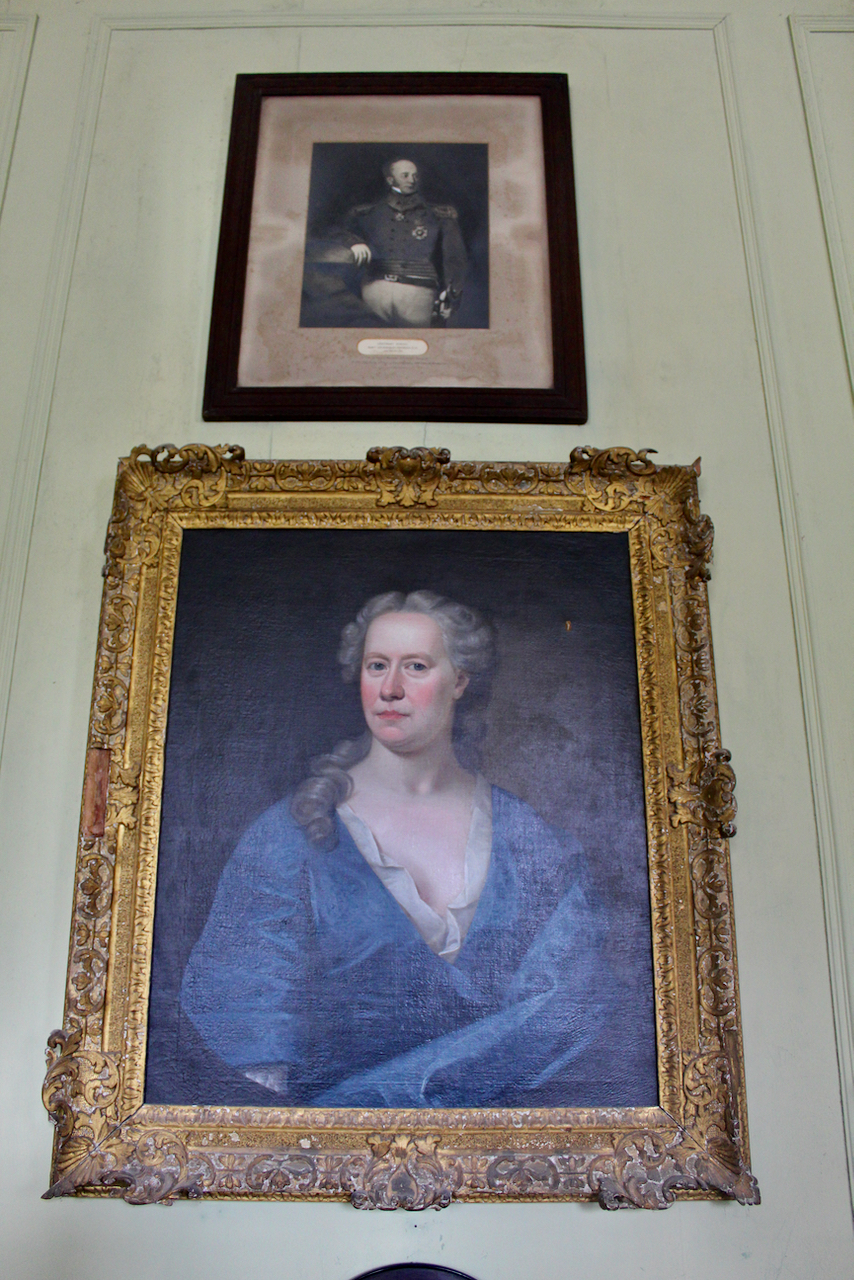
On the wall on the right hand side is a portrait of Edward Pakenham (b. 1778), an uncle of Henry Sandford Pakenham who married into the family, and on the left, his brother Lt. Col. Hercules Pakenham (1781-1850). Both were brothers of the 2nd Earl of Longford, of Tullynally, County Westmeath. Photograph © Jennifer Winder-Baggot, www.irishhistorichouses.com
Strokestown Park, County Roscommon, August 2022. Photograph © Jennifer Winder-Baggot, www.irishhistorichouses.com
Mark Bence-Jones tells us that some of the principal rooms in the centre of the house have eighteenth century panelling. [see 12] Photograph © Jennifer Winder-Baggot, www.irishhistorichouses.com
Strokestown Park, County Roscommon, August 2022. Photograph © Jennifer Winder-Baggot, www.irishhistorichouses.com
Strokestown dining room, image by Chris Hill, 2014, Tourism Ireland, from Ireland’s Content Pool. [1] Robert O’Byrne tells us that the wallpaper features in Wallpaper in Ireland 1700-1900 written by David Skinner.

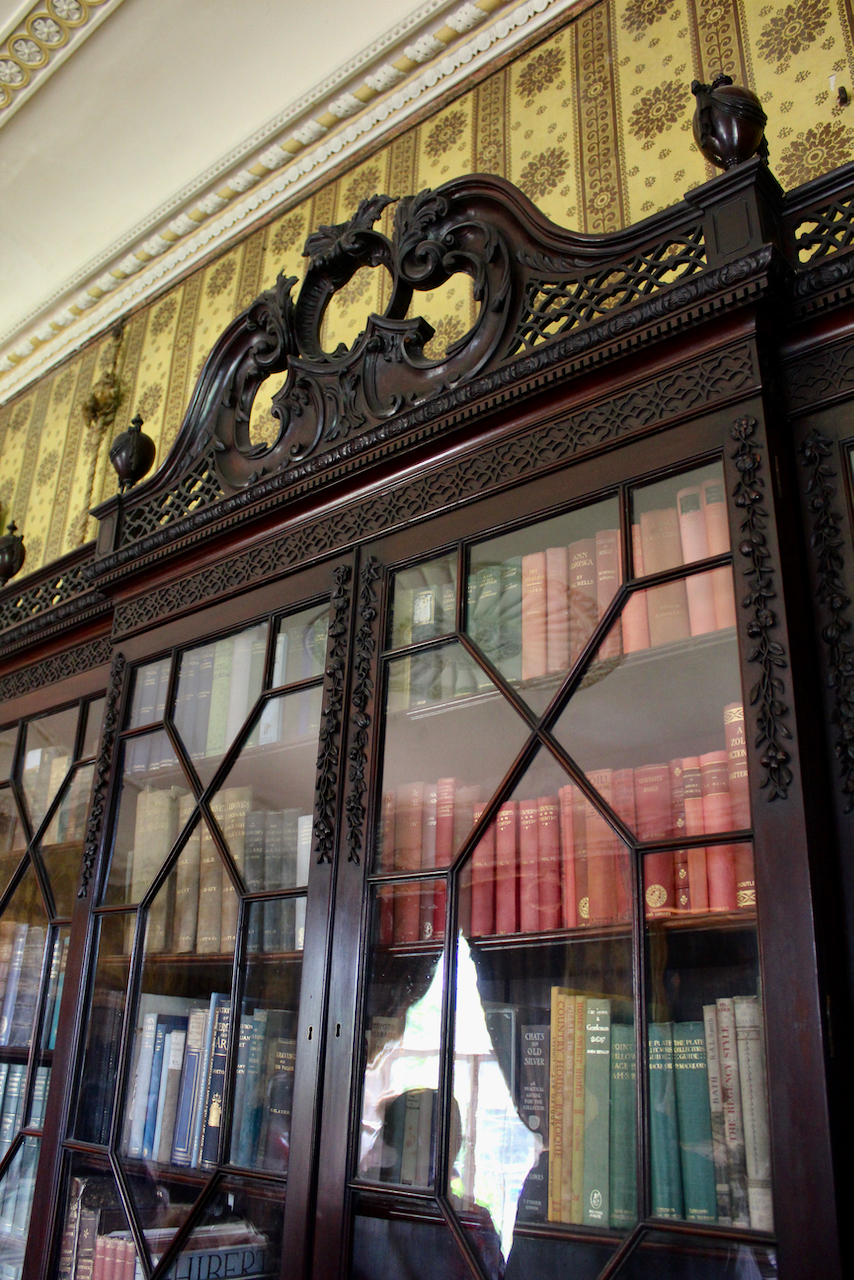
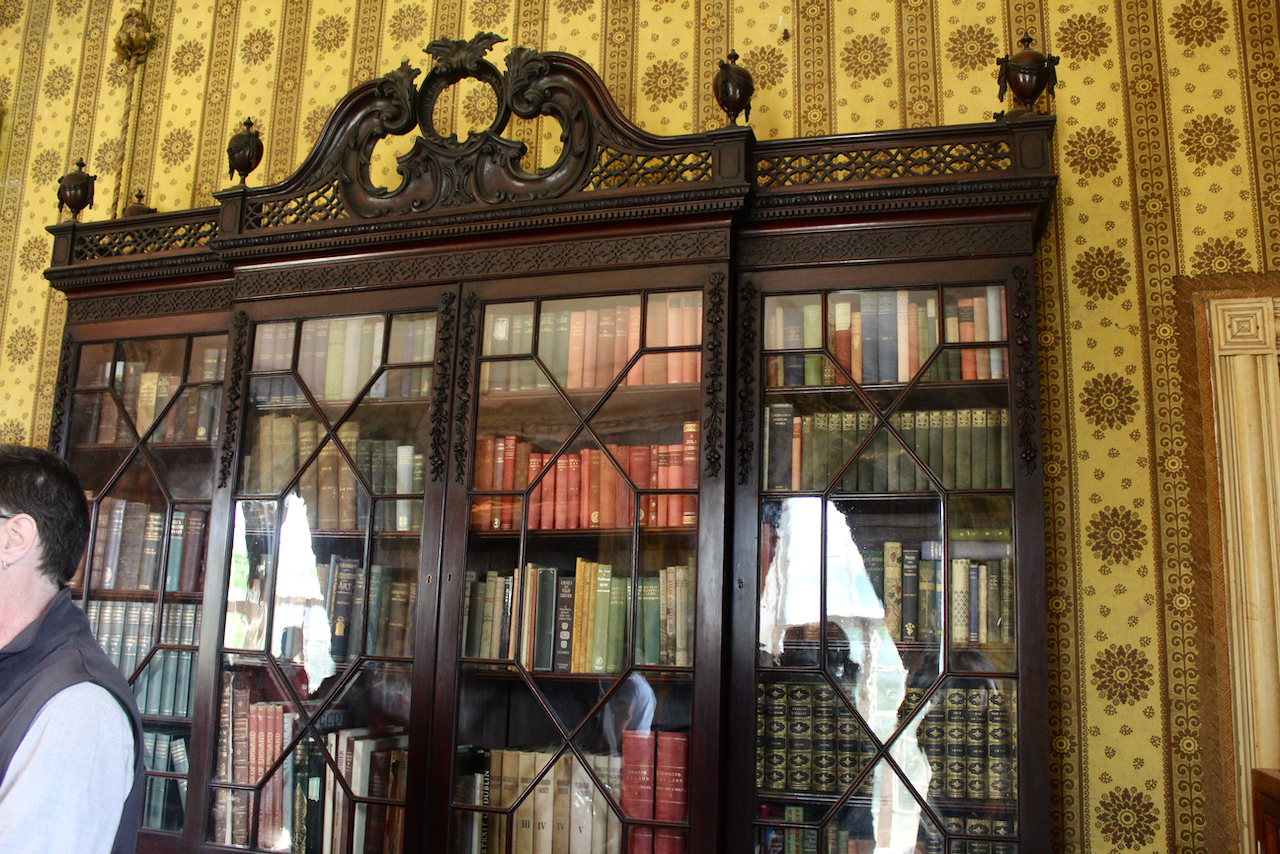
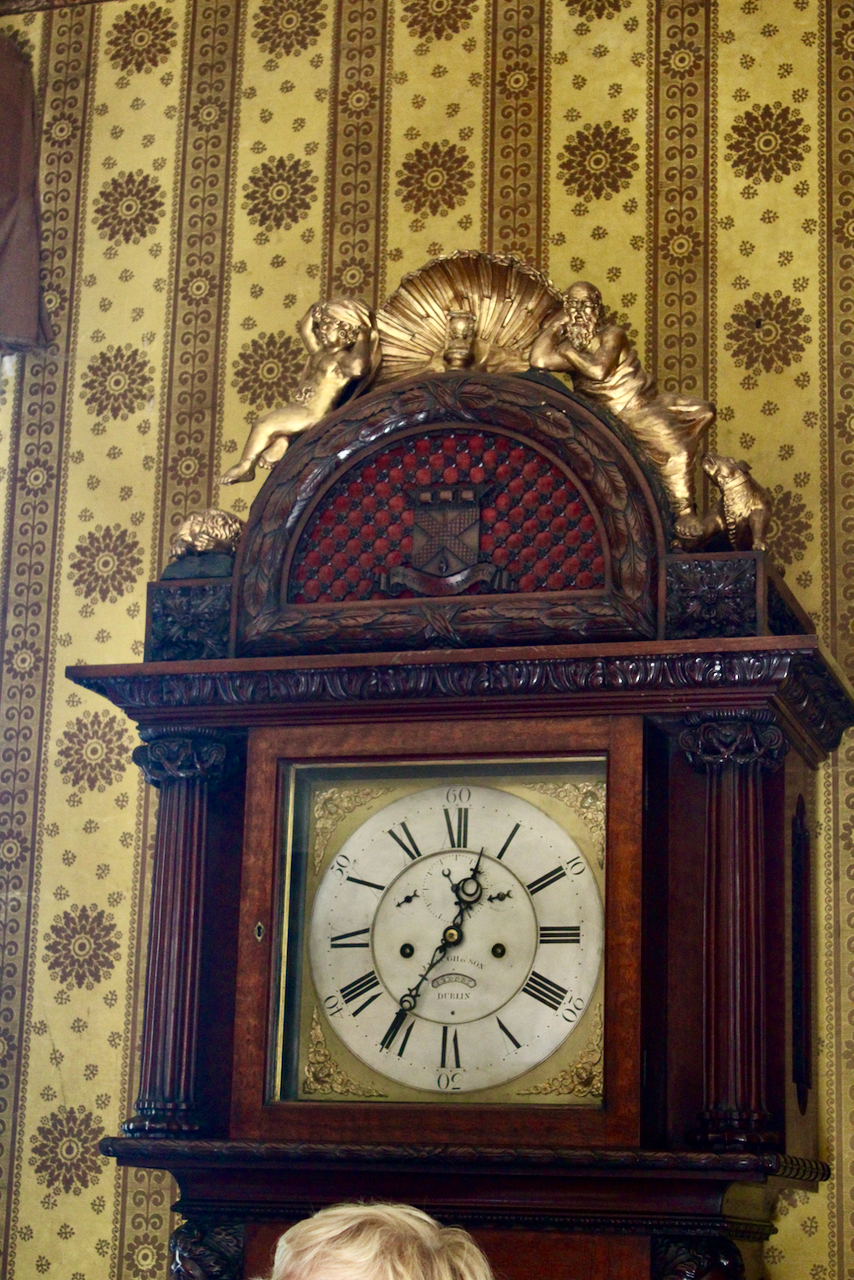
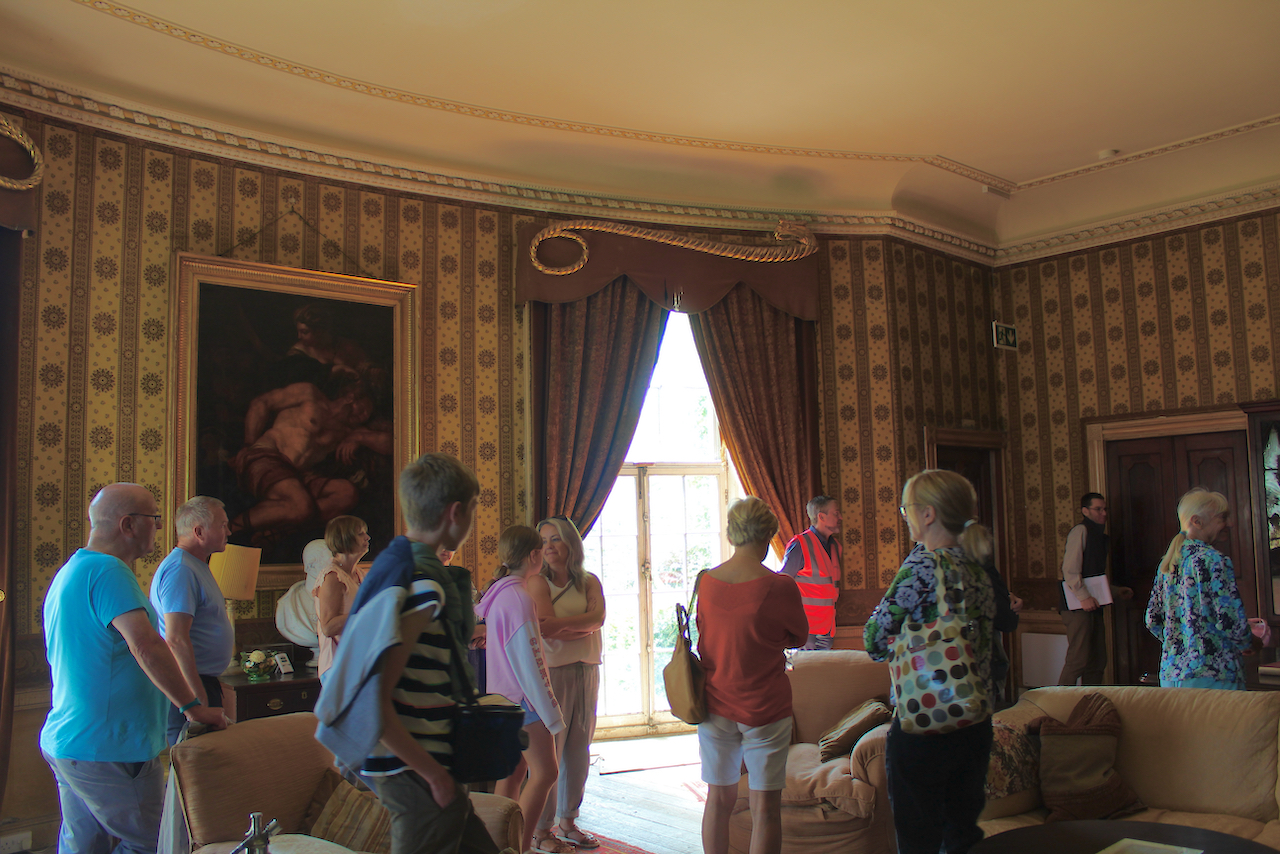
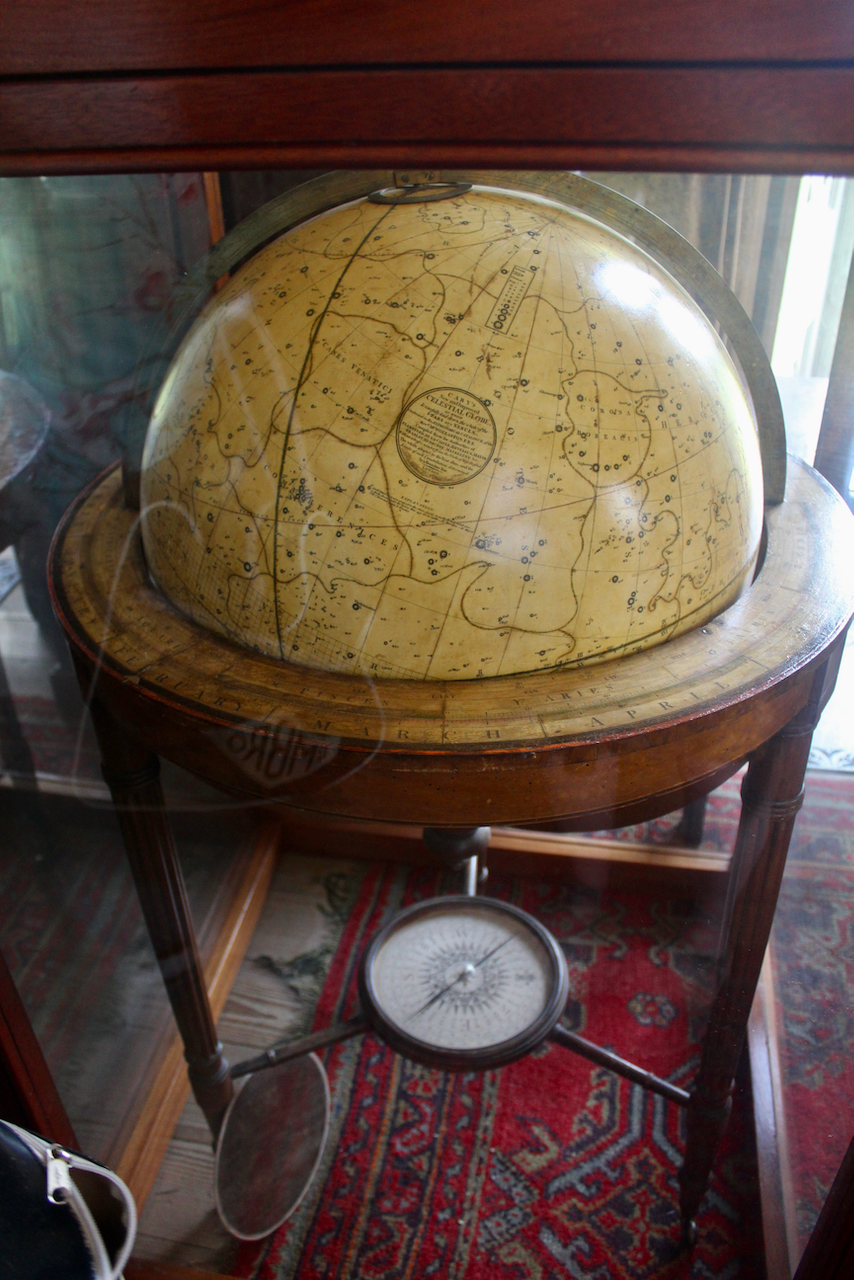
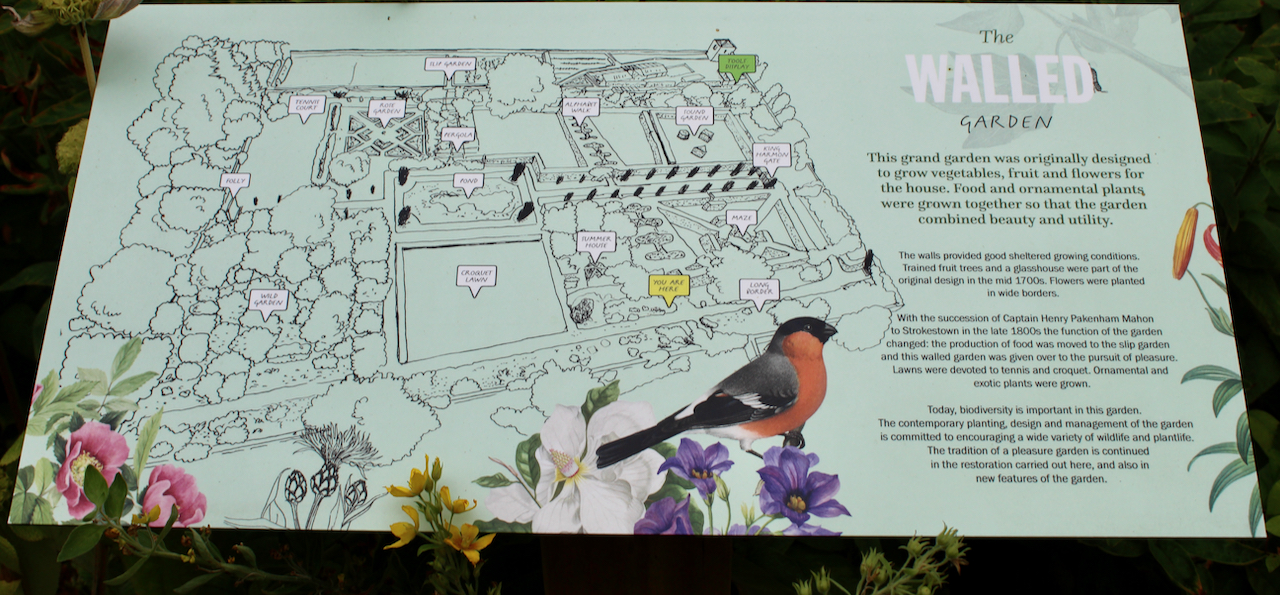
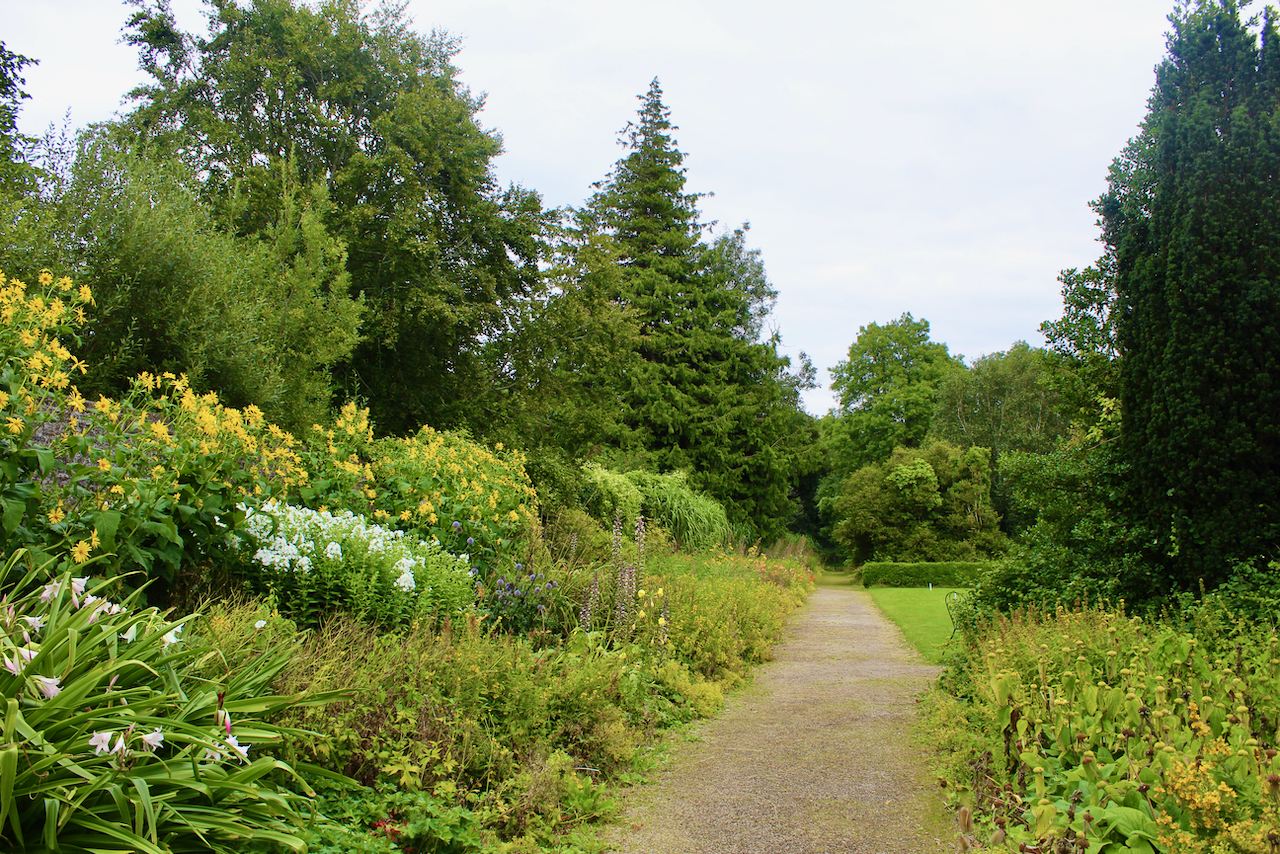
Terence Reeves-Smyth continues: “Regency additions incorporated the study, which also retains its original furnishings, and the smoking room, which was converted into a laboratory and photography darkroom by Henry Pakenham-Mahon, an amateur scientist, in the 1890’s. The finest regency addition is the library at the back, originally built as a ballroom with a bowed wall at one end to accommodate musicians. This contains Chippendale bookcases and beautiful brown and gold wallpaper, made especially for the walls in the early 19th century.

The bowed library with its gold-coloured wallpaper. Photograph © Jennifer Winder-Baggot, www.irishhistorichouses.com
King William III on his horse in the portrait. The chimneypiece features Siena marbe, Ionic pilasters and a Grecian key pattern. Photograph © Jennifer Winder-Baggot, www.irishhistorichouses.com
The library contains Chippendale bookcases. Photograph © Jennifer Winder-Baggot, www.irishhistorichouses.com
Strokestown Park, County Roscommon, August 2022. Photograph © Jennifer Winder-Baggot, www.irishhistorichouses.com
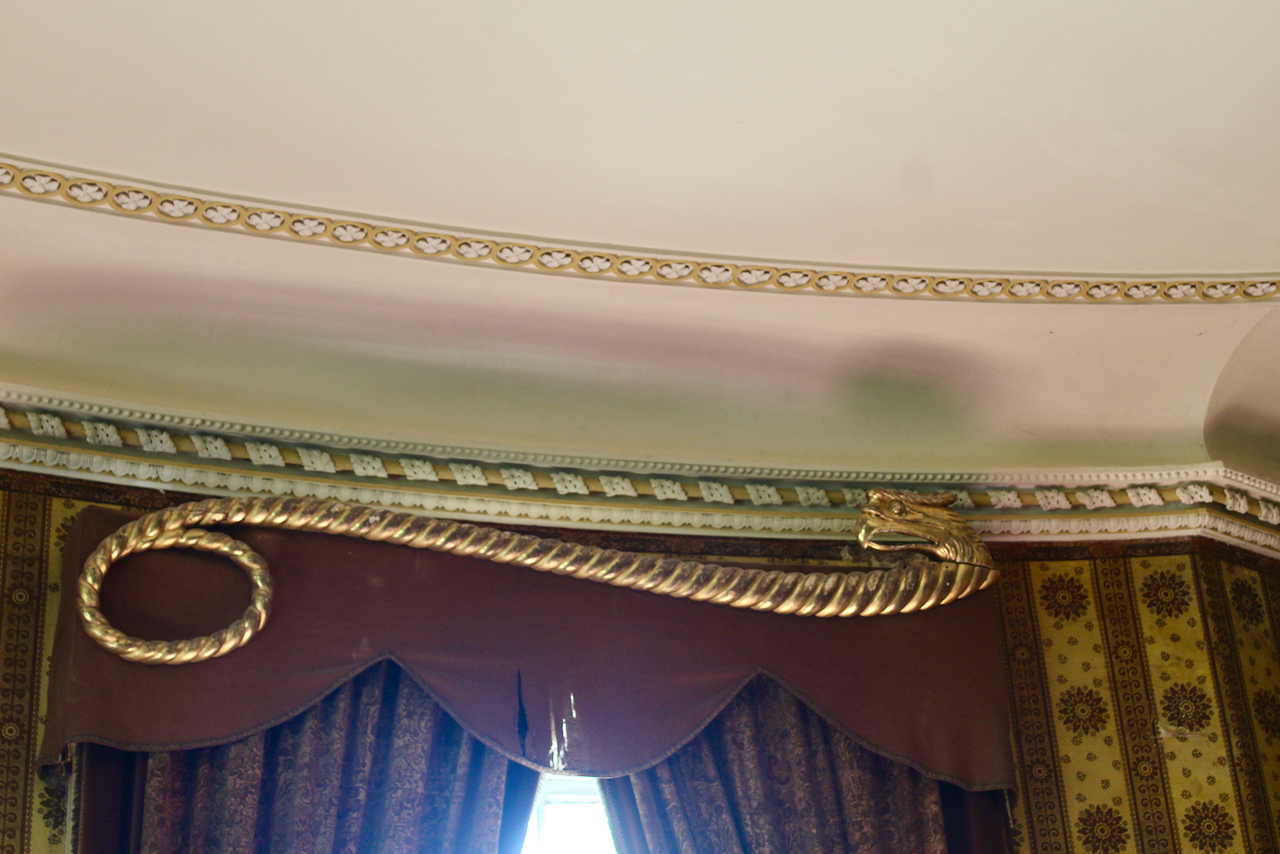
The curtain pelmet features a dragon head. Photograph © Jennifer Winder-Baggot, www.irishhistorichouses.com
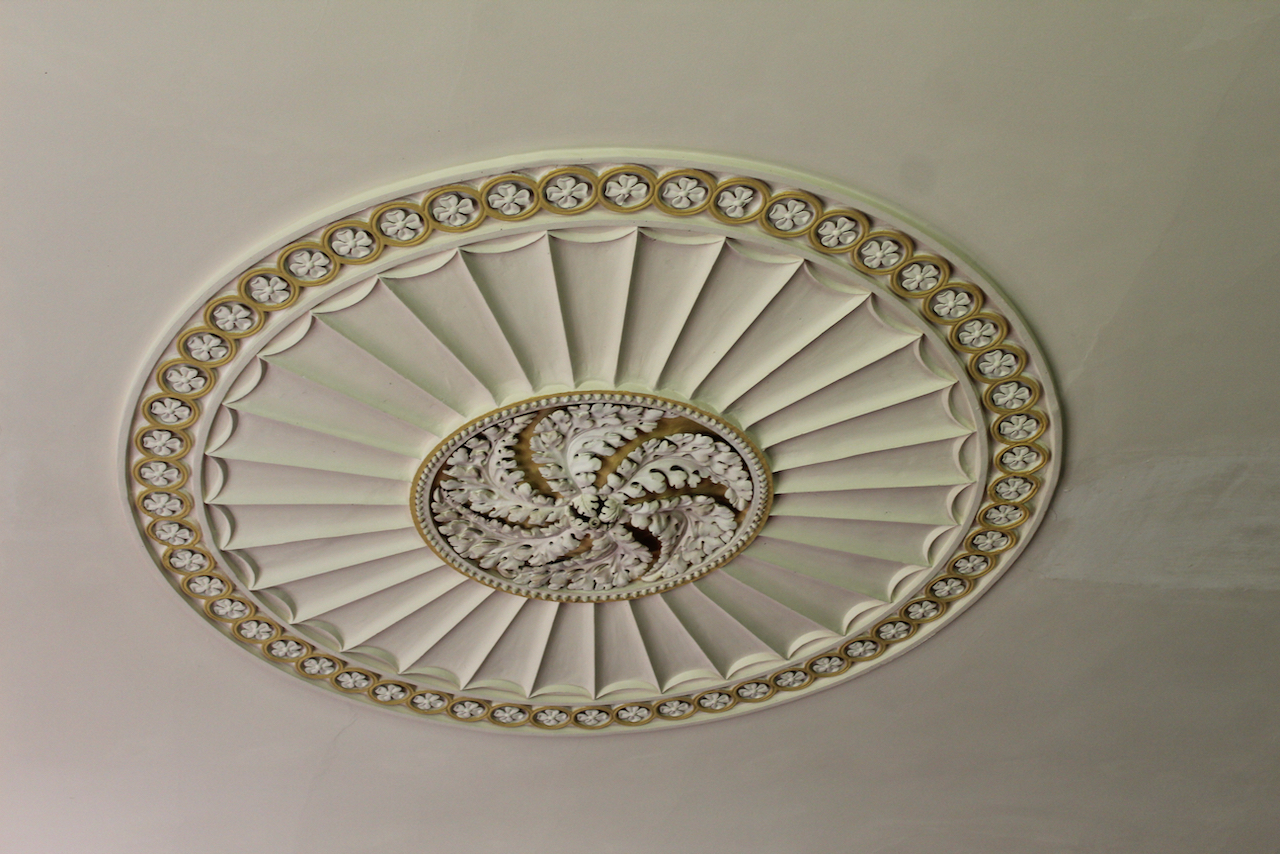
The ceiling rose in the library. Photograph © Jennifer Winder-Baggot, www.irishhistorichouses.com
Strokestown Park, County Roscommon, August 2022. Photograph © Jennifer Winder-Baggot, www.irishhistorichouses.com

Reeves-Smyth continues, describing the kitchen which we did not see: “The old kitchen in the left wing of the house is approached from the dining room along a curved corridor, past store rooms for kitchen utensils and sporting equipment. Fitted with spits and ovens for baking, roasting and smoking, this kitchen has its original balustraded gallery which crosses the high ceilinged room lengthwise, the only example of its kind to survive in Ireland, especially in houses designed by Richard Castle. These galleries allowed the housekeeper to supervise the affairs below – one tradition has it that menus were dropped from the balcony on Monday mornings with instructions to the cook for the week’s meals.

The wing to the right of the central block contains magnificent vaulted stables carried on Tuscan columns, similar to stables built by Castle for Carton (1739) and Russborough (1741). An underground passage links these stables to the yard on the north side of the house. The estate office was also in this wing, which meant the tenantry had to come here rather than to an office in the village to pay their rent.

A photograph of the vaulted stables, by Henry Pakenham Mahon (1851-1922).

Maurice Craig tells us in his Irish Country Houses of the Middle Size: p. 21. “The practice of connecting the house with outlying offices by a tunnel seems to be peculiar to Ireland…Strokestown, Bellamont, Castle Coole and Lucan are amongst the Irish examples. In the nature of things, this is a feature of the grander houses, though it has been reported in connection with some of modest size.”

Thomas 2nd Baron married but had no children and his brother Maurice (1772-1845) succeeded as 3rd Baron Hartland when Thomas died in 1835. Maurice had joined the clergy, and was awarded a prebendary (an administrative role) in Tuam Cathedral in 1804.

In 1813 the 3rd Baron Hartland married Jane Isabella Hume of Humewood, County Wicklow, but also had no children and the title became extinct. He had another brother, Stephen, but he predeceased his brothers and had no children. The museum tells us that the 3rd Baron suffered with mental illness, though it does not give us specifics. He was declared insane just a year after he inherited the property in 1835.

The 3rd Baron Hartland married Jane Isabella Hume of Humewood, County Wicklow. Humewood, County Wicklow photograph courtesy of National Library of Ireland, photographer Robert French, Lawrence Collection Circa 1865 – 1914 NLI Ref. L_IMP_3853.

The Dictionary of Irish Biography tells us that it was Denis Mahon who brought a motion against Maurice claiming that he was mentally ill and incapable of caring for the estate. Maurice had allowed the lease to lapse for a portion of the estate and stopped collecting rent from the town of Ballykilcline and its surrounding area. This led to an official declaration stating Maurice was a “lunatic.” Denis was named executor of the estate as well as being named Maurice’s legal guardian.

The museum tells us that when he was declared insane in 1836, two cousins battled in the courts to inherit the property: Denis Mahon (1787-1847) and Marcus McCausland.

Marcus McCausland owned the property of Drenagh, Limavady in County Derry (now a wedding venue). His mother was Theodosia Mahon, a sister of the 1st Baron Hartland, who had married Conolly McCausland-Gage. The nine year court case decided in favour of Denis Mahon. As well as the now poorly managed property, he inherited debts.

Denis was the son of a brother of 1st Baron Hartland, Reverend Thomas Mahon (1740-1811). Reverend Thomas married Honoria Kelly, daughter of Denis Kelly of Castle Kelly, County Galway (also called Aughrane Castle, it has been demolished. It was purchased by Bagots in 1910, I’m haven’t found an ancestral link to these Bagots).

Strokestown Park, County Roscommon, August 2022.

It was Denis Mahon who was then murdered during the Famine. The story is told in detail in the Famine Museum. The estate was badly run and tenants let and sublet their parcels of land, hence owned smaller and smaller portions of land to grow their crops.

Reeves-Smyth tells us: “Major Denis Mahon, who succeeded to Strokestown on the death of the third and last Lord Hartland in 1845 was so unpopular a landlord during the famine years that he was shot whilst returning from a meeting of the Roscommon Relief Committee in 1848, apparently on suspicion of chartering unseaworthy ships to transport emigrants from his estate to America. His successors were much better regarded and his great-granddaughter and last owner, Mrs. Olive Hales-Packenham-Mahon, was a much loved figure in this part of Ireland. She died in 1981, leaving a house filled with the trappings of three centuries of unbroken family occupation.

Strokestown Park, County Roscommon, August 2022.

Captain Denis Mahon chose to help his tenants to leave Ireland. He wanted to reduce his number of tenants. The 1838 Poor Law made a local tax for poor rates. In 1843 the act was amended and introduced new rates, charging landlords a tax for each tenant who had holdings of less than a value of £4. Landlords therefore tried to reduce the number of tenants.

Sculptures of shoes like this are dotted along the way of the Famine Walk. Photograph © Jennifer Winder-Baggot, www.irishhistorichouses.com
Strokestown Park, County Roscommon, August 2022.
The entrance to the Famine Museum and café. Photograph © Jennifer Winder-Baggot, www.irishhistorichouses.com

The Famine Museum is introduced by a beautifully handwritten letter by tenants asking not for money or food, but work. The eloquent letter humanises those who were experiencing the poverty of the famine in the 1840s.

Strokestown Park, County Roscommon, August 2022.

Arthur Young writes in his A Tour in Ireland in 1799 that “the poor live on potatoes and milk, it is their regular diet, very little oat bread being used and no flesh meat at all except on Easter Sunday and Christmas day.

Strokestown Park, County Roscommon, August 2022.

Denis Mahon tried to make the estate pay for itself, to pay off the debts he had inherited. He also tried to take care of his tenants. He had two agents, John Ross Mahon and Thomas Conry. He began relief efforts for his tenants in March 1846. 4000 people were provided with corn on a weekly basis at low or no cost, and after a harsh winter, he distributed free seed to his most needy tenants. He also had a soup kitchen set up.

John Ross Mahon wrote to him that the poor rates would exceed receipts of rent. By 1847 the conditions were worse and there was unrest amongst the tenants. Mahon began to evict tenants and to encourage others to emigrate. The Freeman’s Journal in 1848 states that “The evictions on the estate since Major Mahon had taken over amounted to 3006 people, including the 1,490 who were selected to emigrate.” Fewer than half of those who emigrated survived the trek to Dublin and the journey on the ship.

The building of the month entry in the National Inventory summarises: “Major Mahon, an improving landlord, sought to alleviate the situation by judicious depopulation and in 1847 organised the voluntary emigration of almost one thousand of his tenants to North America. However, a far greater number refused to move and were the subject of evictions involving almost 600 families and 3000 individuals. Returning from an evening meeting in Roscommon, where he had urged the Board of Guardians to keep the workhouse open for needy paupers, Major Mahon was fatally shot on the 2nd of November 1847. Three men were hanged for the murder and two were transported, but the true identity of the assassin or assassins has been debated ever since.”

Strokestown Park, County Roscommon, August 2022.

The Famine Museum tells us that there were secret societies who sought to improve the conditions of the poor. A local one in Roscommon was called the “Molly Maguires.”

Strokestown Park, County Roscommon, August 2022.

The man suspected to be the mastermind of the murder, Andrew Connor, probably escaped to Canada. Police followed to Canada to try to capture him but to no avail. A man named Patrick Hasty was hanged for the murder, along with two others.

Strokestown Park, County Roscommon, August 2022.

Denis’s son Thomas predeceased him, childless, and the house passed to his daughter, Grace Catherine. Earlier in 1847, Grace had married Henry Sandford Pakenham (1823-1893), son of Reverend Henry Pakenham, Dean of St. Patrick’s Cathedral in Dublin, who was from Pakenham Hall in County Westmeath, now called Tullynally (see my entry, it is another Section 482 property which can be visited).

Henry Sandford Pakenham held the office of High Sheriff of County Roscommon in 1830. He was heir to the vast Pakenham and Sandford estates in counties Longford, Westmeath and Roscommon. He legally changed his name to Henry Sandford Pakenham Mahon by Royal Licence in 1847.

Elizabeth Sandford, mother of Henry Sandford Pakenham, wife of Reverend Henry Pakenham, Dean of St. Patrick’s Cathedral in Dublin. Henry Sandford Pakenham married the heiress Grace Catherine Mahon and changed his surname to Pakenham Mahon. Photograph © Jennifer Winder-Baggot, www.irishhistorichouses.com
A portrait of Lt. Gen. Hercules Pakenham (1781-1850), an uncle of Henry Sandford Pakenham Mahon, hangs in the front hall of Strokestown House.
Major General Edward Pakenham (1778-1815), another uncle of Henry Sandford Pakenham Mahon, also hangs in the front hall of Strokestown House.

After Denis Mahon was killed his devastated daughter Grace moved to the Isle of Wight with her husband, who continued to manage the estate with the help of his agent.

He and Grace Catherine had several daughters, and a son, Henry Pakenham-Mahon (1851-1922).

Henry moved back to live in Strokestown. He was High Sheriff, Justice of the Peace and Deputy Lieutenant of County Roscommon, following in the footsteps of his father. He married Mary Burrard and Olive, as mentioned by Reeves-Smyth, was their daughter.

Henry Pakenham-Mahon was a keen horticulturalist and his main contribution to the estate was the development of the gardens. The family lived part-time in Strokestown Park and part-time in England. He developed a Pleasure Garden in the walled garden.

Strokestown Park, County Roscommon, August 2022.

He also had an interest in photography, and he built a darkroom in Strokestown House.

Strokestown Park, County Roscommon, August 2022.
Strokestown Park, County Roscommon, August 2022. Photograph © Jennifer Winder-Baggot, www.irishhistorichouses.com
Strokestown Park, County Roscommon, August 2022.

His daughter Olive, born in 1894, first married Captain Edward Charles Stafford-King-Harman, from Rockingham House, County Roscommon, whom we came across in King House. Tragically, he died in the first world war in 1914. They had one daughter, Lettice. If Lettice had been a boy she would have inherited Rockingham. Olive and Lettice returned to live in Strokestown Park.

The King Harman Gate in the Pleasure Gardens, a wedding present from the men of Rockingham Estate on the marriage of Olive to Edward Charles Stafford-King-Harman. Photograph © Jennifer Winder-Baggot, www.irishhistorichouses.com
Strokestown Park, County Roscommon, August 2022.

Olive married again, this time to Wilfrid Stuart Atherstone Hales, who also fought in the first world war, and later, in the second. A British garrison was set up in Strokestown House during the War of Independence. After an ambush nearby, Wilfrid Stuart Hales was sent to investigate, and he and Olive fell in love. On 18 April 1923 his name was legally changed to Wilfrid Stuart Atherstone Hales Pakenham Mahon by Deed Poll. He married Olive in 1921 and he changed his name after the death of her father in 1922. They went on to have several children. It was her son who sold the estate.

Olive Hales Pakenham Mahon dressed for a visit to Buckingham Palace in the 1930s.
Strokestown Park, County Roscommon, August 2022.

The Pakenham Mahons did not spent much time in Strokestown due to Stuart Hales Pakenham Mahon’s military career, until they returned to live there in the 1950s.

Stuart Hales Pakenham Mahon was interested in finding water and mineral deposits by “dousing,” and the photography display we saw in the house also had information on this topic.

Strokestown Park, County Roscommon, August 2022. Photograph © Jennifer Winder-Baggot, www.irishhistorichouses.com

The property has a six acre walled garden and woodlands.

Westward Garage Ltd approached the Pakenham Mahons to buy their land, and terms were agreed. At first the garage only wanted to keep some land and they planned to sell the house, but then Jim Callery found the documents relating to the famine, and had the idea of setting up a famine museum. The company let Olive and her husband remain in the house. Jim Callery employed his cousin Luke Dodd to oversee restoration of the house. [15] In 1987 the house opened to the public, and the Famine Museum opened in 1994. The walled garden opened in 1997, and the herbaceous border is said to be the longest in either Ireland or the UK.

Strokestown Park, County Roscommon, August 2022.
Strokestown Park, County Roscommon, August 2022. Photograph © Jennifer Winder-Baggot, www.irishhistorichouses.com
Seated is Henry Pakenham Mahon, son of Grace Mahon and her husband Henry Sandford Pakenham Mahon (born Pakenham). He is photographed here with his wife Mary and to far left, his daughter Olive, and friends.

After exploring the Famine Museum we went out to the extensive walled garden.

Strokestown Park, County Roscommon, August 2022.
Strokestown Park, County Roscommon, August 2022. Photograph © Jennifer Winder-Baggot, www.irishhistorichouses.com
Strokestown Park, County Roscommon, August 2022.
Strokestown Park, County Roscommon, August 2022. Photograph © Jennifer Winder-Baggot, www.irishhistorichouses.com
This Venetian window was over the doorway of Strokestown Park House in the eighteenth century. The window was removed when the house was refaced in 1819 and remained in storage until an opportunity for its reuse was found. Its “Venetian” form elicits comparisons with the doorcase of the Castle-designed Ledwithstown House (1746), County Longford, and the first floor centrepiece of the long ruined Mantua House (1747), near Elphin. [16] Photograph © Jennifer Winder-Baggot, www.irishhistorichouses.com
image by Chris Hill, 2014, Tourism Ireland, from Ireland’s Content Pool. [1]
Strokestown Park, County Roscommon, August 2022.
Strokestown Park, County Roscommon, August 2022. Photograph © Jennifer Winder-Baggot, www.irishhistorichouses.com
Strokestown Park, County Roscommon, August 2022.
Paul Connolly tells us that this building was used in the summer months by the Mahons, offering views of their garden. Photograph © Jennifer Winder-Baggot, www.irishhistorichouses.com
Strokestown Park, County Roscommon, August 2022. Photograph © Jennifer Winder-Baggot, www.irishhistorichouses.com
Strokestown Park, County Roscommon, August 2022.
Strokestown Park, County Roscommon, August 2022. Photograph © Jennifer Winder-Baggot, www.irishhistorichouses.com

The following day there was a talk about the mausoleum at Strokestown, but we had to move on with our Heritage Week plans. The mausoleum was constructed within an earlier 17th century church and contains a crypt in which members of the Mahon Family were buried. Following years of careful and professional conservation and sympathetic landscaping, this ruin is again accessible and visible to visitors to Strokestown Park.

Strokestown Park, County Roscommon, August 2022. Photograph © Jennifer Winder-Baggot, www.irishhistorichouses.com

[1] https://www.irelandscontentpool.com/en

[2] https://www.archiseek.com/2012/1730-strokestown-park-co-roscommon/

[3] http://lordbelmontinnorthernireland.blogspot.com/search/label/County%20Roscommon%20Landowners

[4] https://www.buildingsofireland.ie/building-of-the-month/strokestown-park-house-cloonradoon-td-strokestown-county-roscommon/

[5] You can see the chimney and plaster overmantel on the website of Robert O’Byrne, https://theirishaesthete.com/2014/10/29/getting-to-the-bottom-of-it/

[6] Bernard, Sir Burke, editor, Burke’s genealogical and heraldic history of the landed gentry of Ireland, 4th ed. (London, U.K.: Burkes Peerage Ltd, 1958), page 471. I’m not sure if “Movilla” mentioned here refers to Moyveela townland.

[7] Reeves-Smyth, Terence. Irish Big Houses. Appletree Press Ltd (22 April 2009)

[8] https://www.dia.ie/architects/view/347/CASTLE-RICHARD

[9] https://www.dib.ie/index.php/biography/castle-castles-cassels-cassells-richard-a1552

[10] https://www.buildingsofireland.ie/buildings-search/building/31811028/strokestown-park-house-cloonradoon-strokestown-co-roscommon and Strokestown Park featured as Building of the month in December 2015 https://www.buildingsofireland.ie/building-of-the-month/strokestown-park-house-cloonradoon-td-strokestown-county-roscommon/

[11] http://www.thepeerage.com/p37647.htm#i376469

[12] Bence-Jones, Mark. A Guide to Irish Country Houses (originally published as Burke’s Guide to Country Houses volume 1 Ireland by Burke’s Peerage Ltd. 1978); Revised edition 1988, Constable and Company Ltd, London. Note that Mark Bence-Jones claims that it was the 2nd Baron Hartland who laid out the main street of Strokestown and had the entrance built, but the National Inventory tells us that it was Maurice, 1st Baron Hartland.

[13] https://www.dia.ie/architects/view/3279/LYNN-JOHN%5B1%5D#tab_biography

[14] p. 203. Connolly, Paul. The Landed Estates of County Roscommon. Published by Paul Connolly, 2018.

[15] p. 213, Connolly.

[16] https://www.buildingsofireland.ie/building-of-the-month/strokestown-park-house-cloonradoon-td-strokestown-county-roscommon/

Text © Jennifer Winder-Baggot, www.irishhistorichouses.com