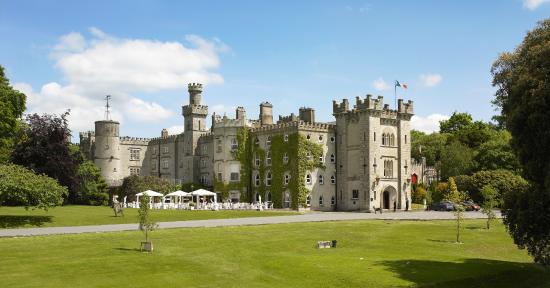
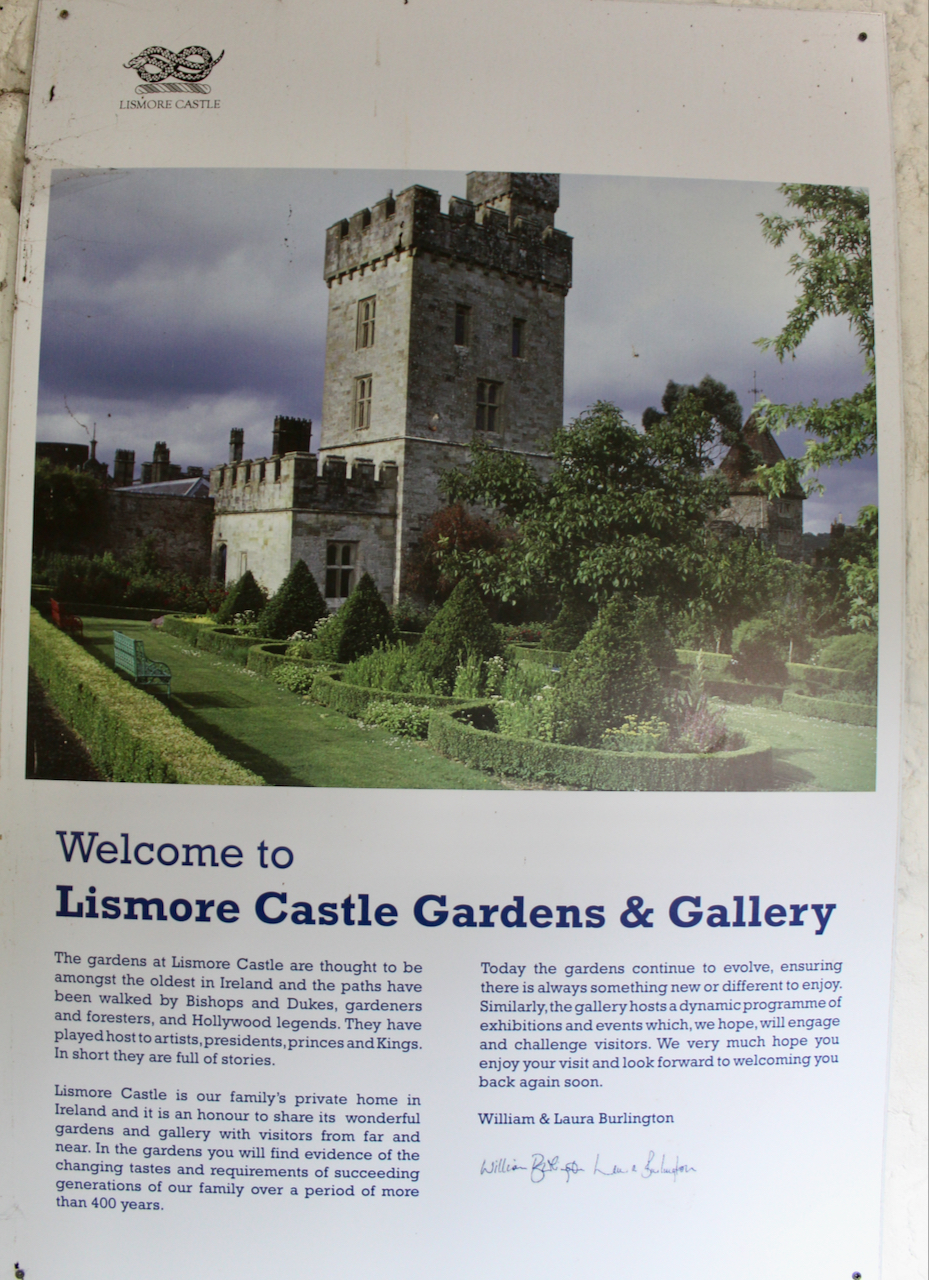
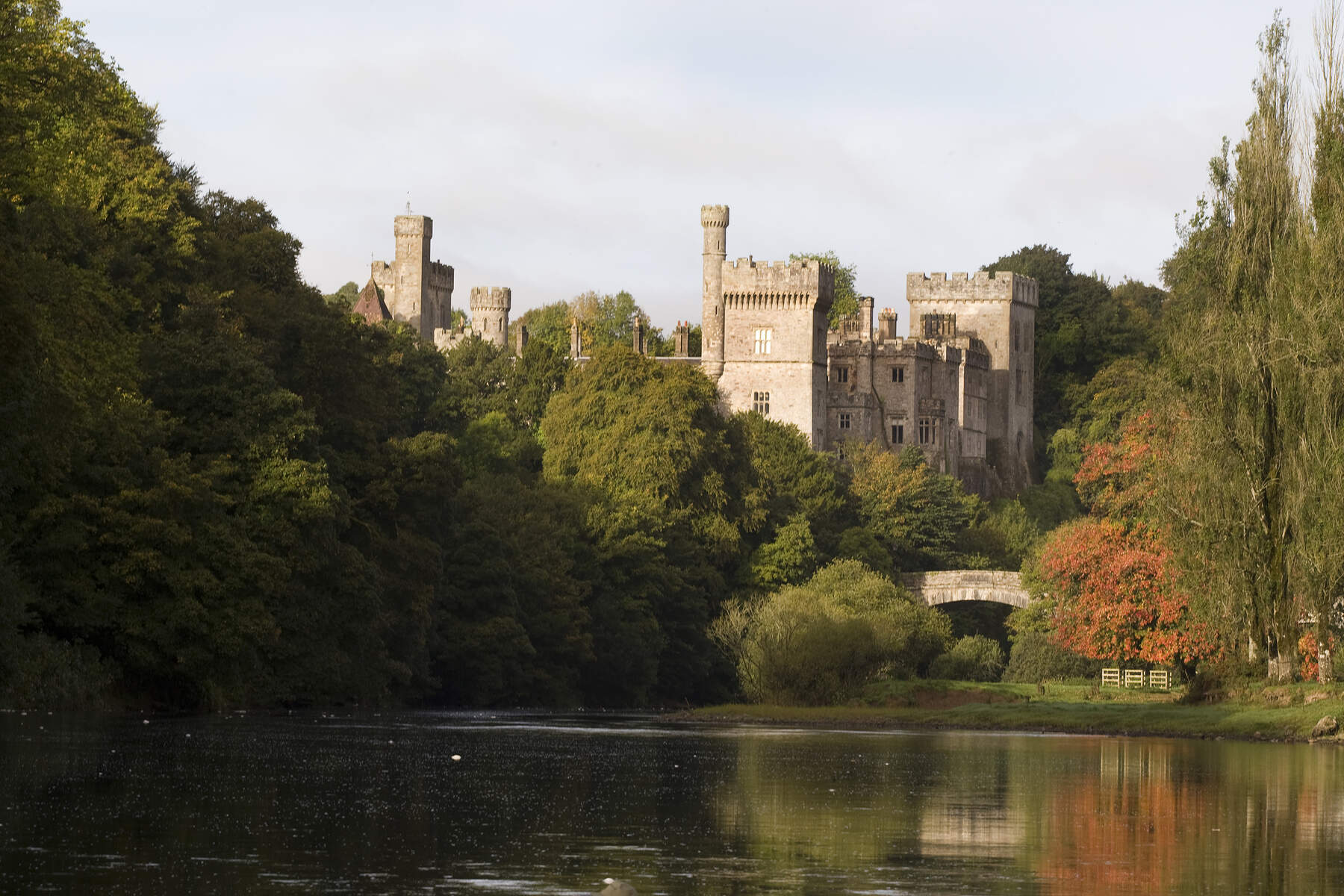
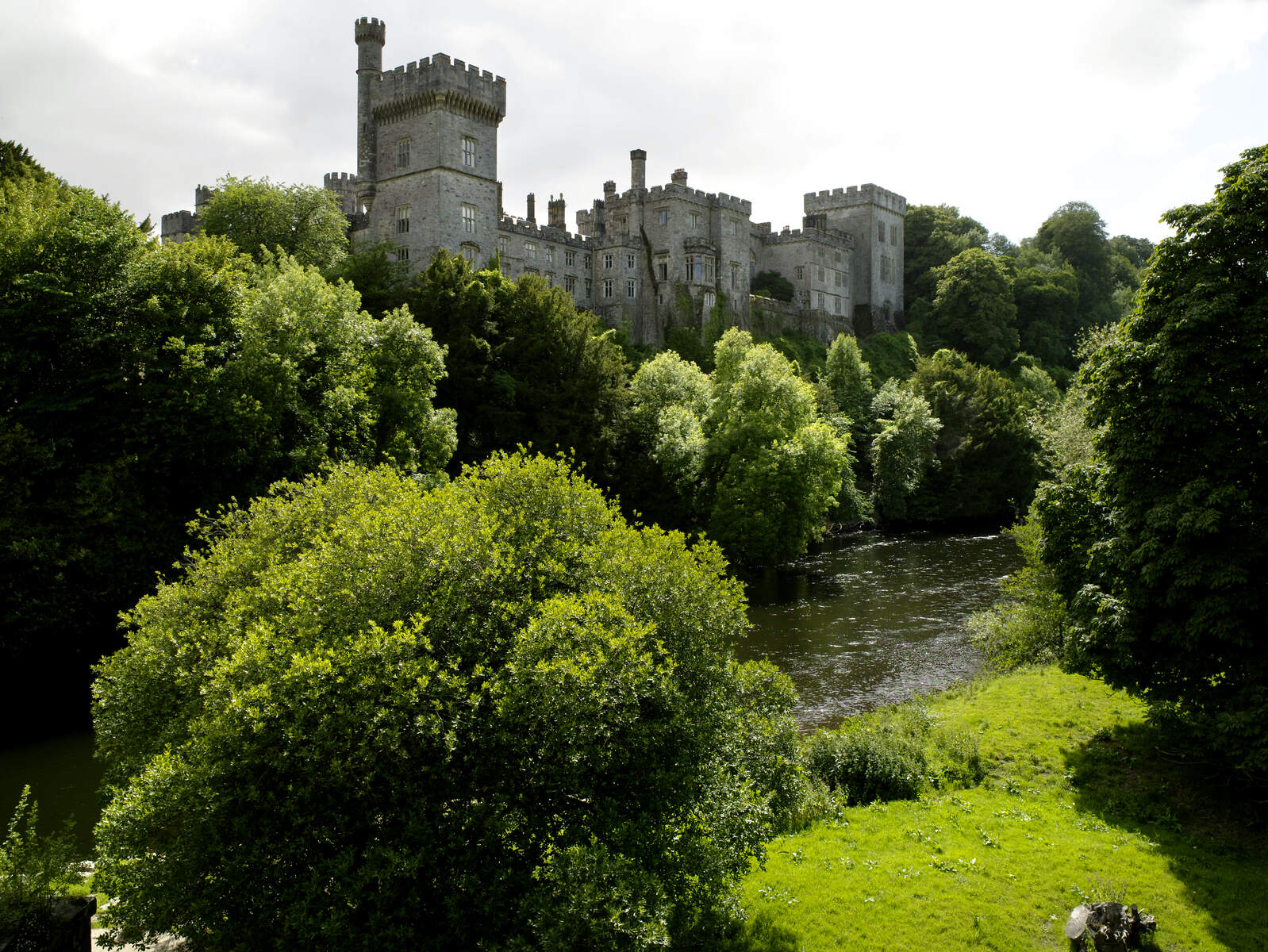
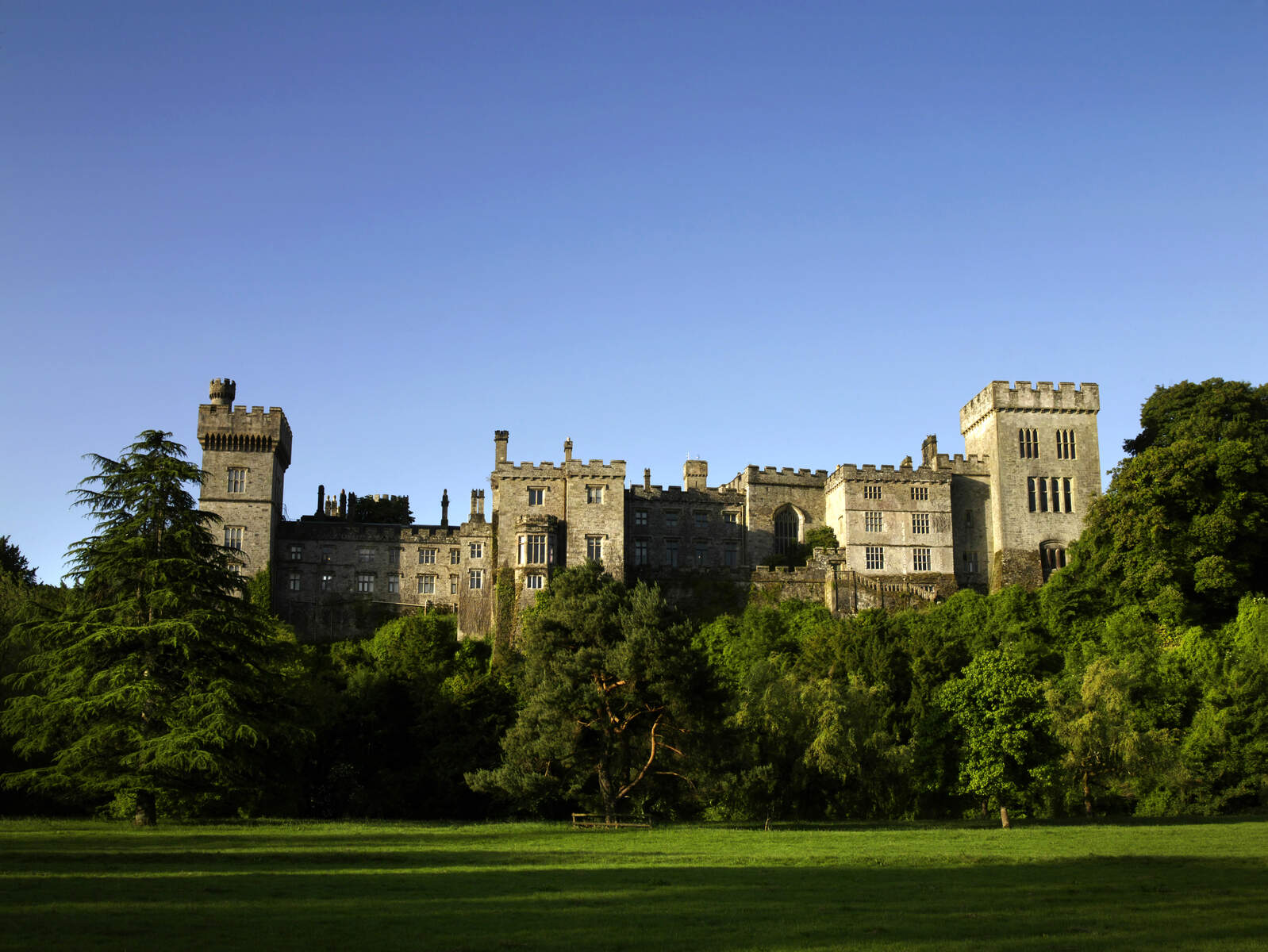
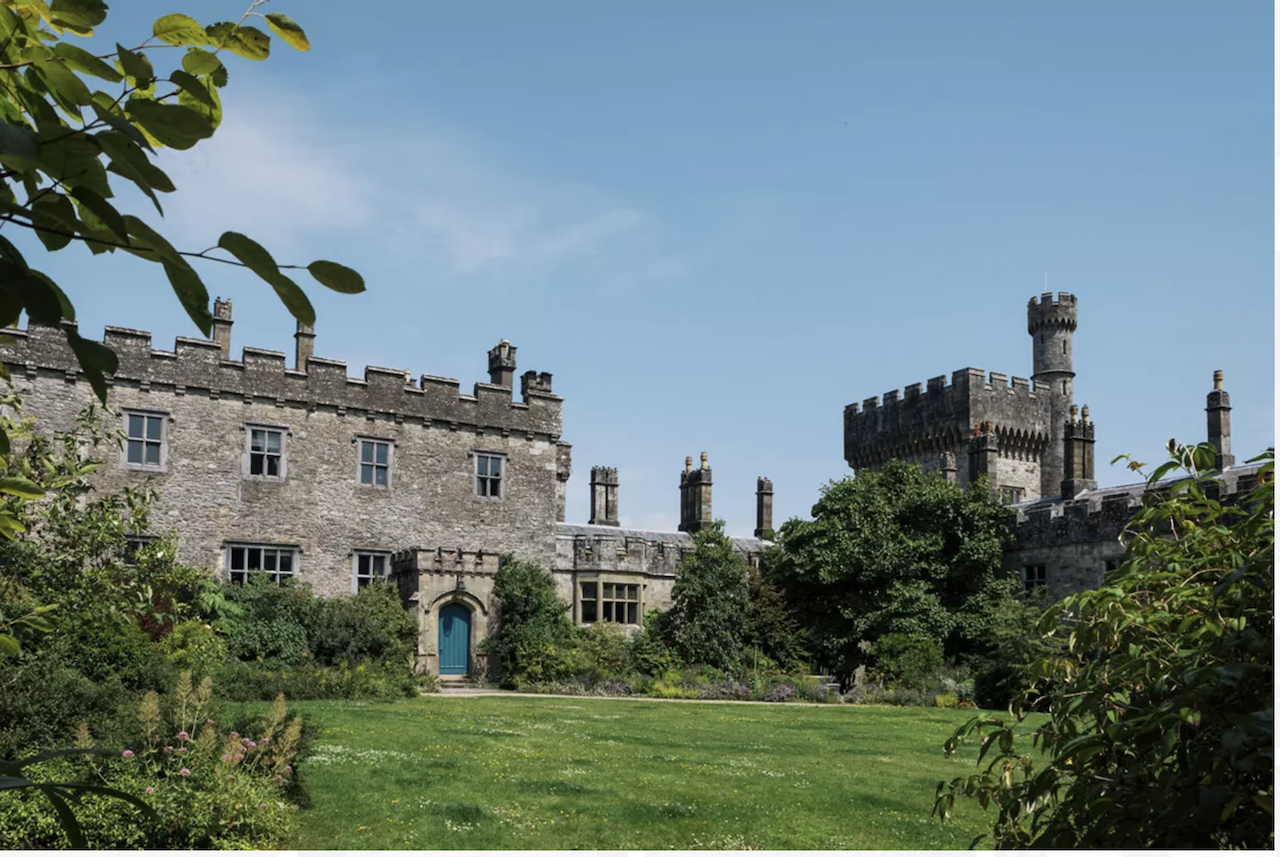
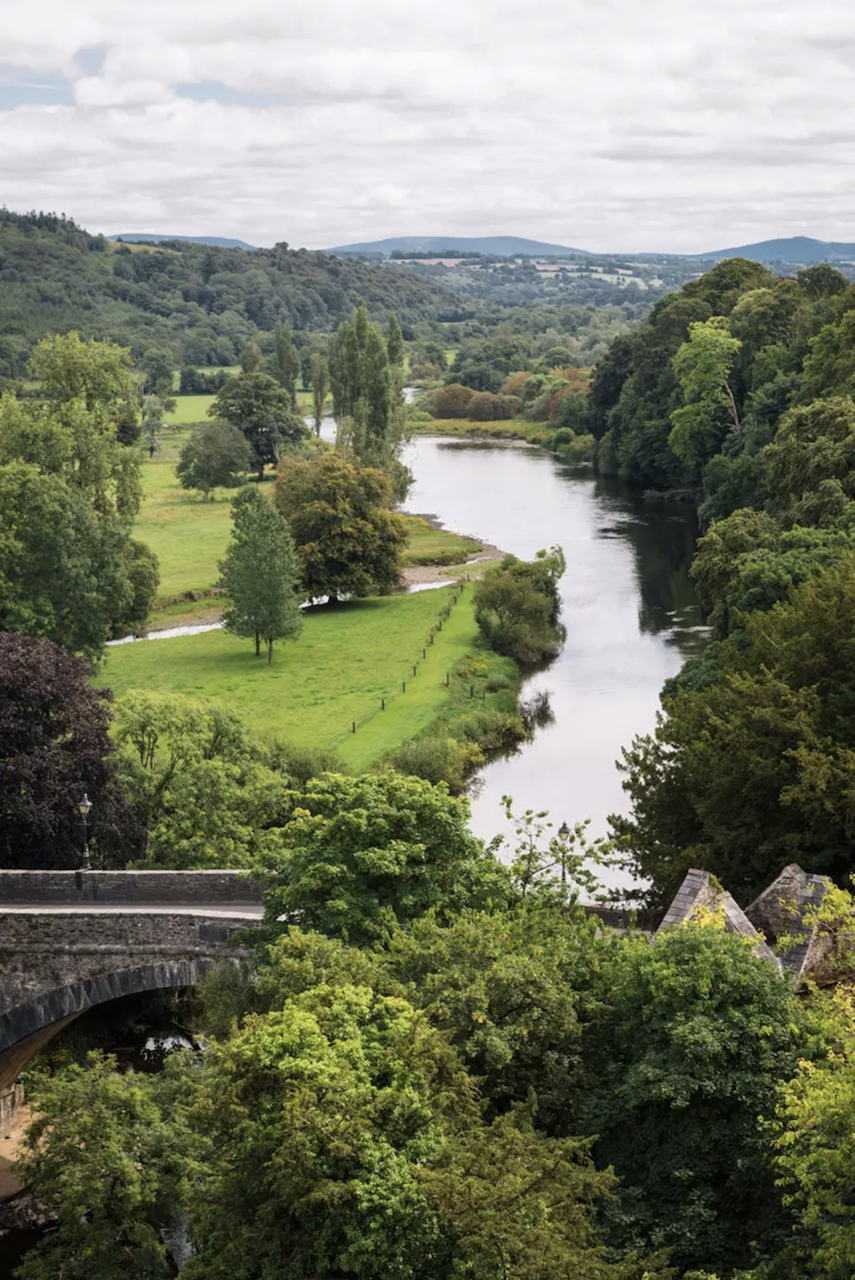
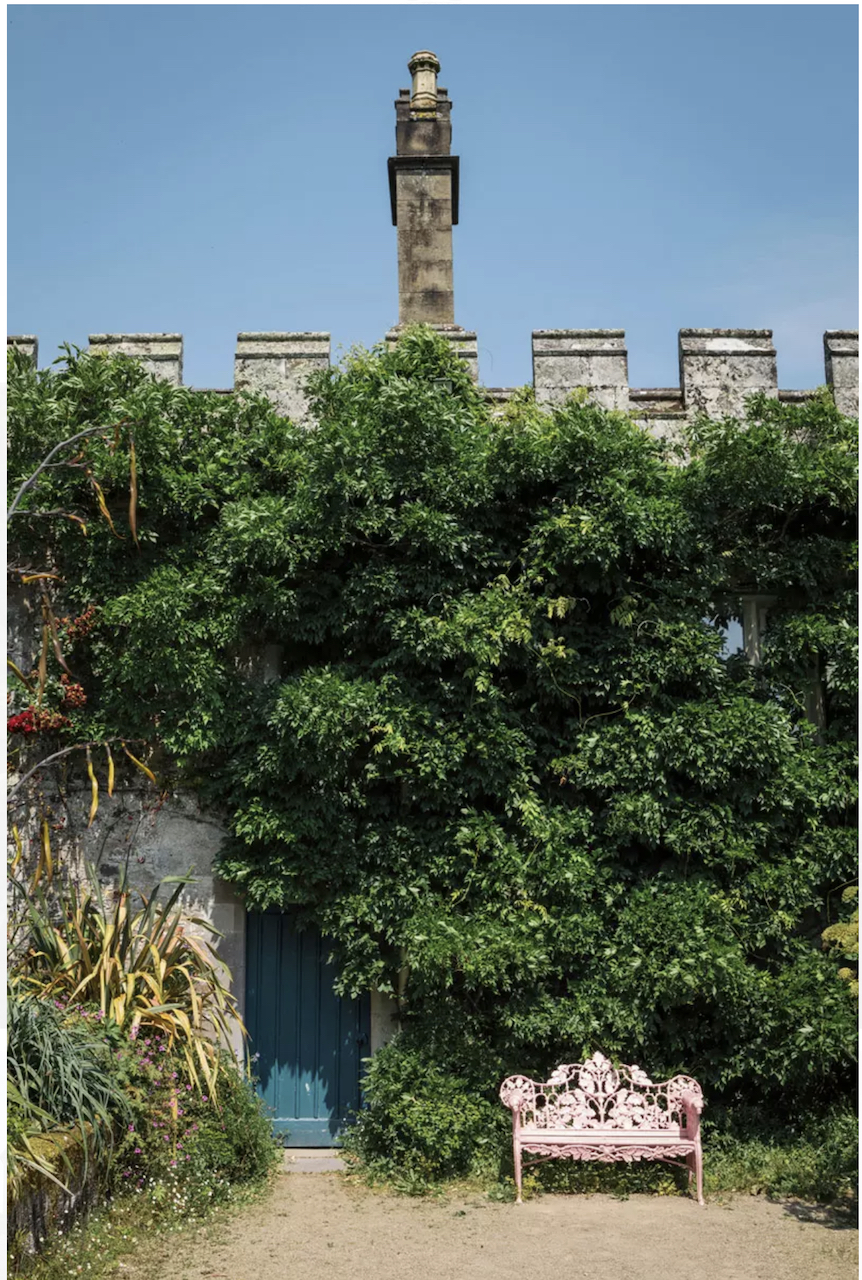
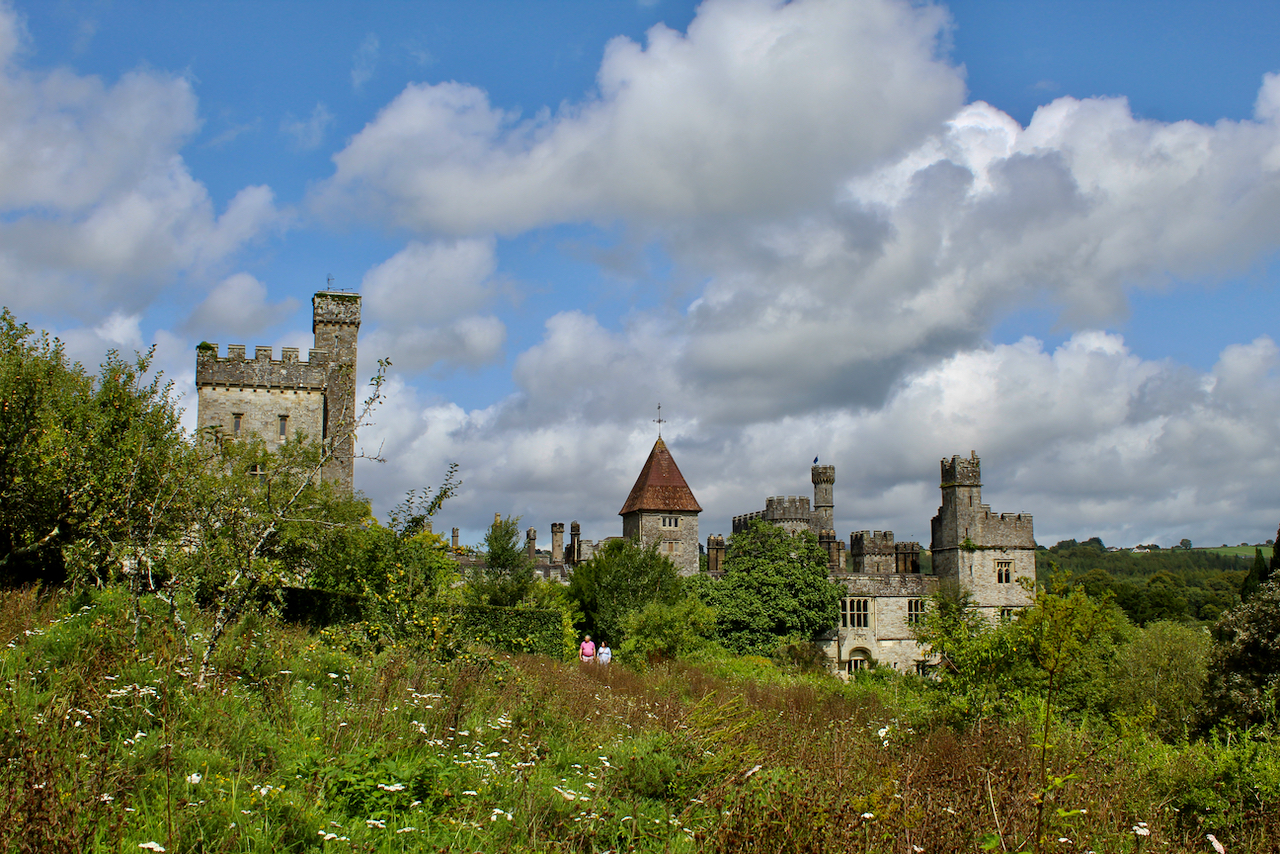
“Lismore Castle’s 800-year history is everywhere you look, from the stained-glass windows and thick stone walls, to the centuries-old gardens and the exceptional artworks by Old Masters and leading contemporary artists. Available for rent, this exclusive use castle in Ireland’s county Waterford is the perfect retreat for you and your guests.“
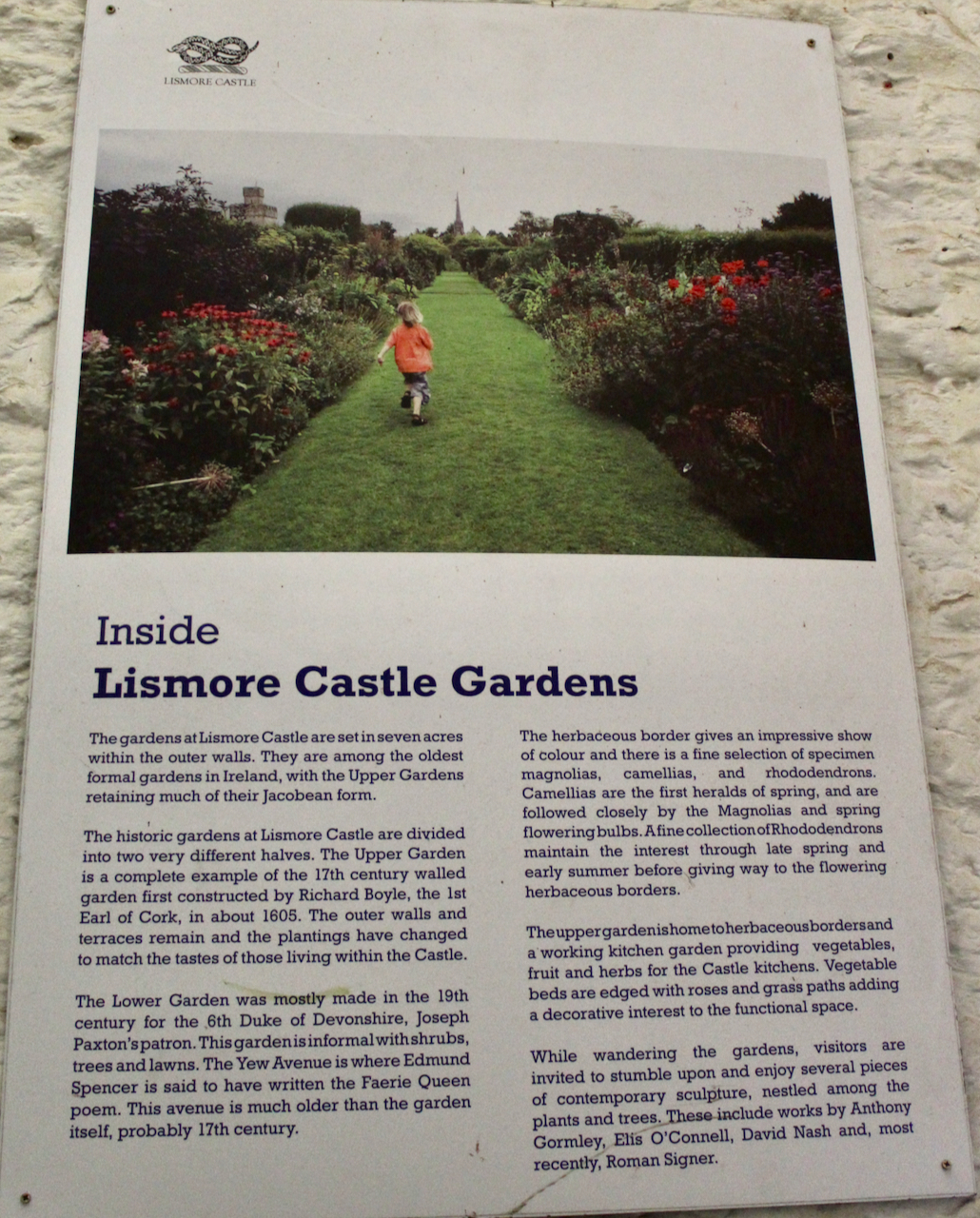
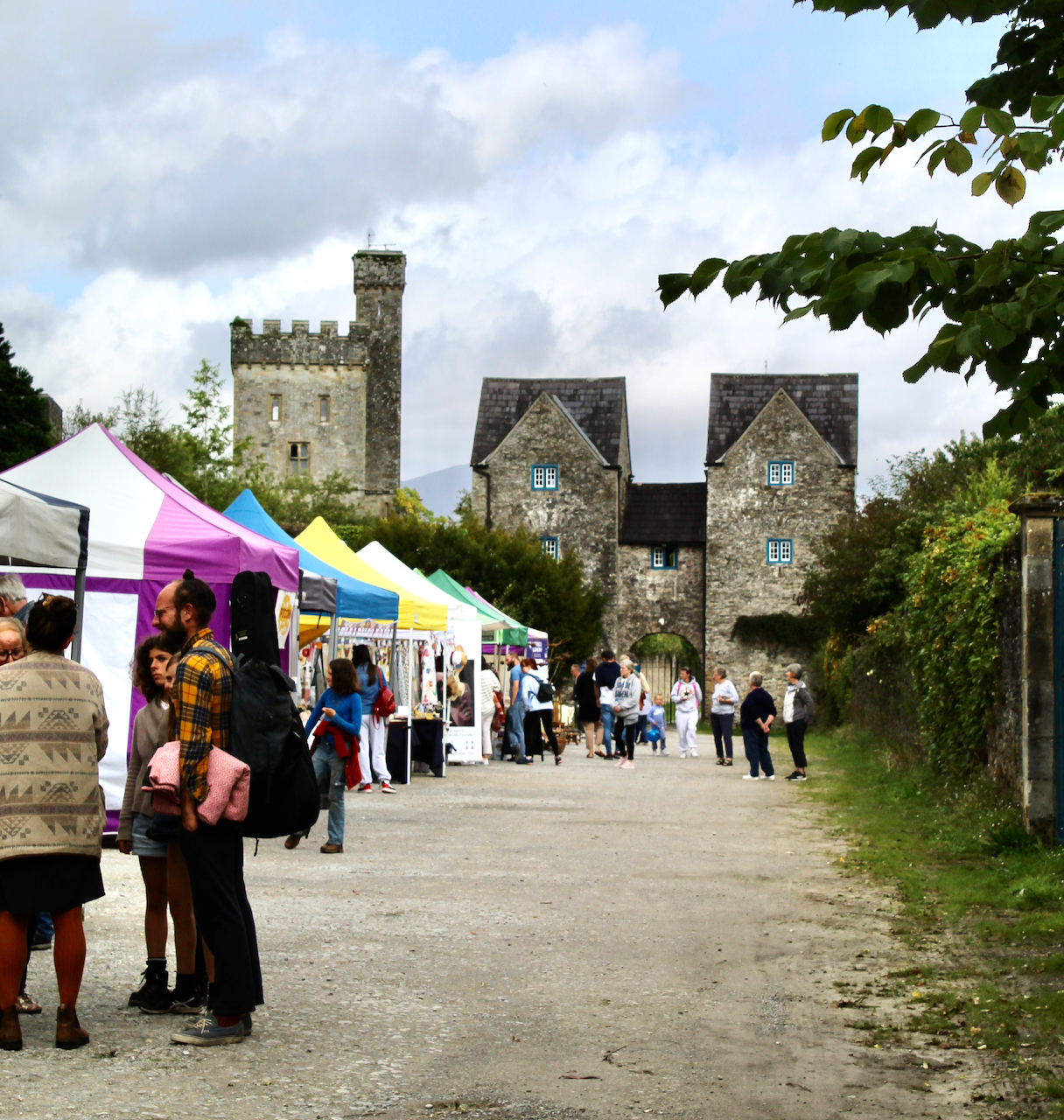
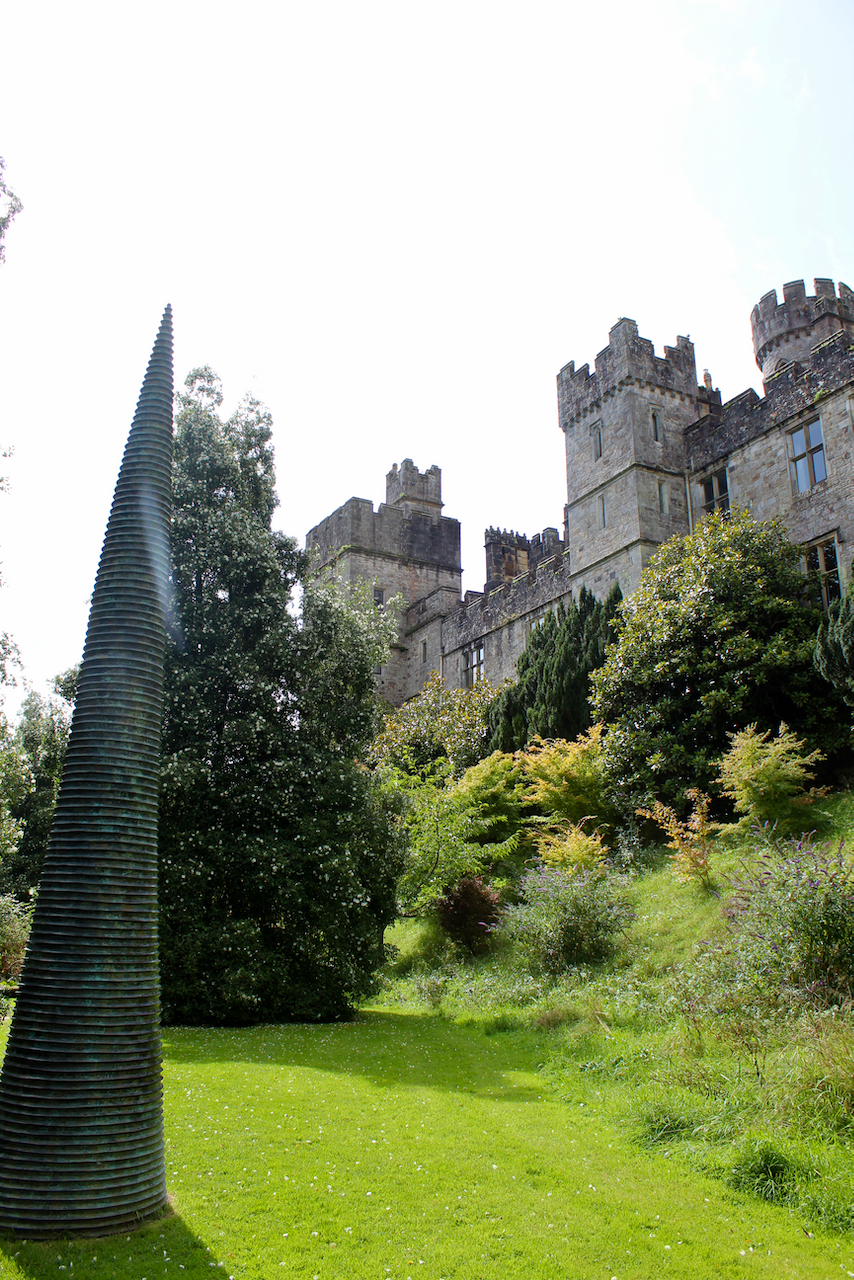
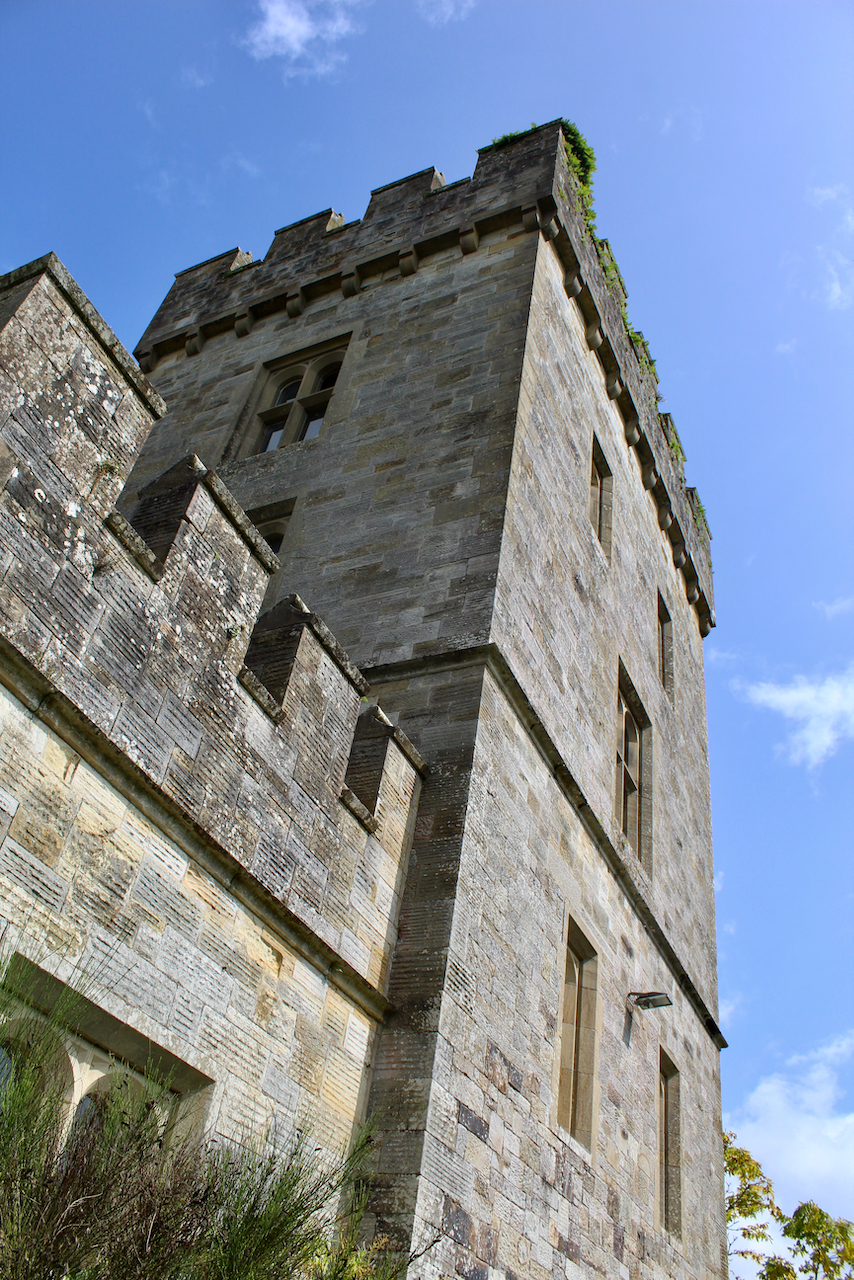
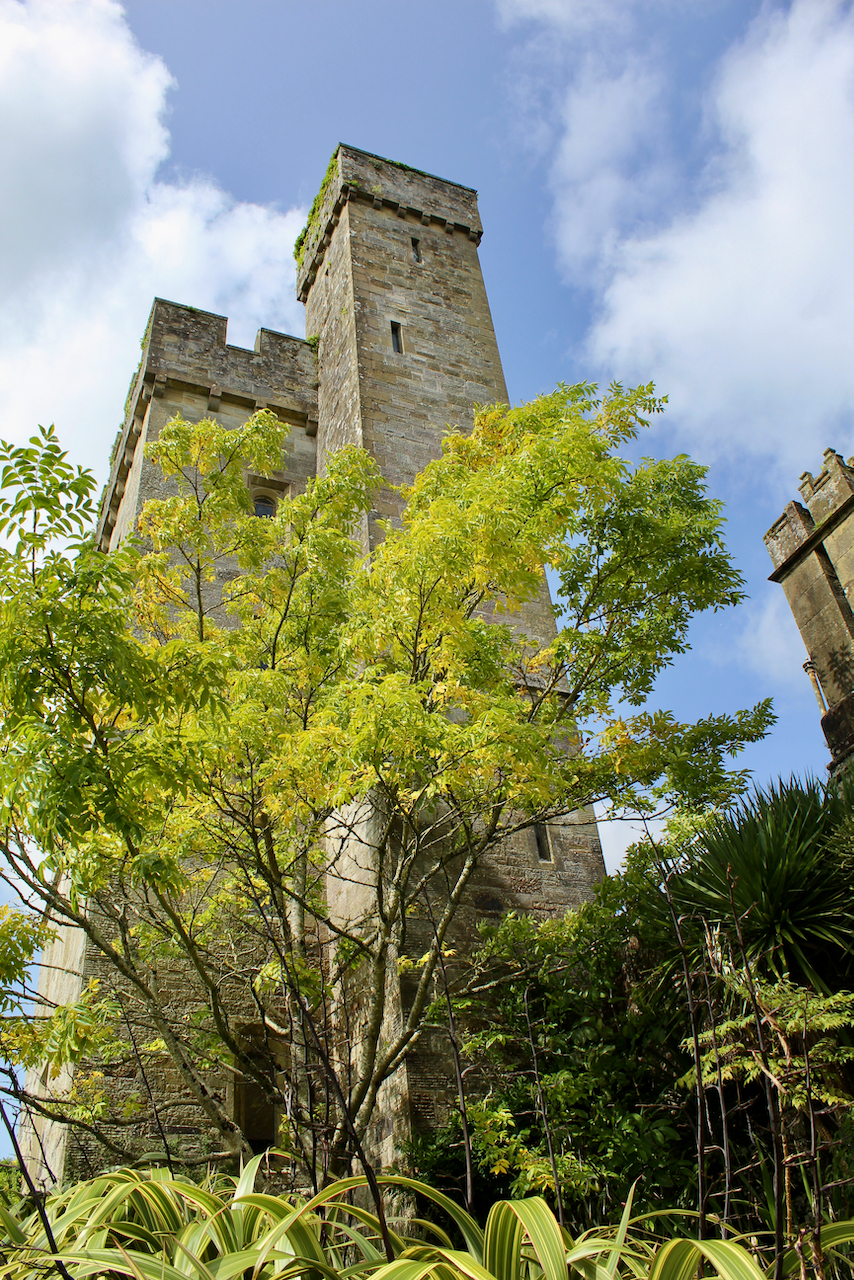
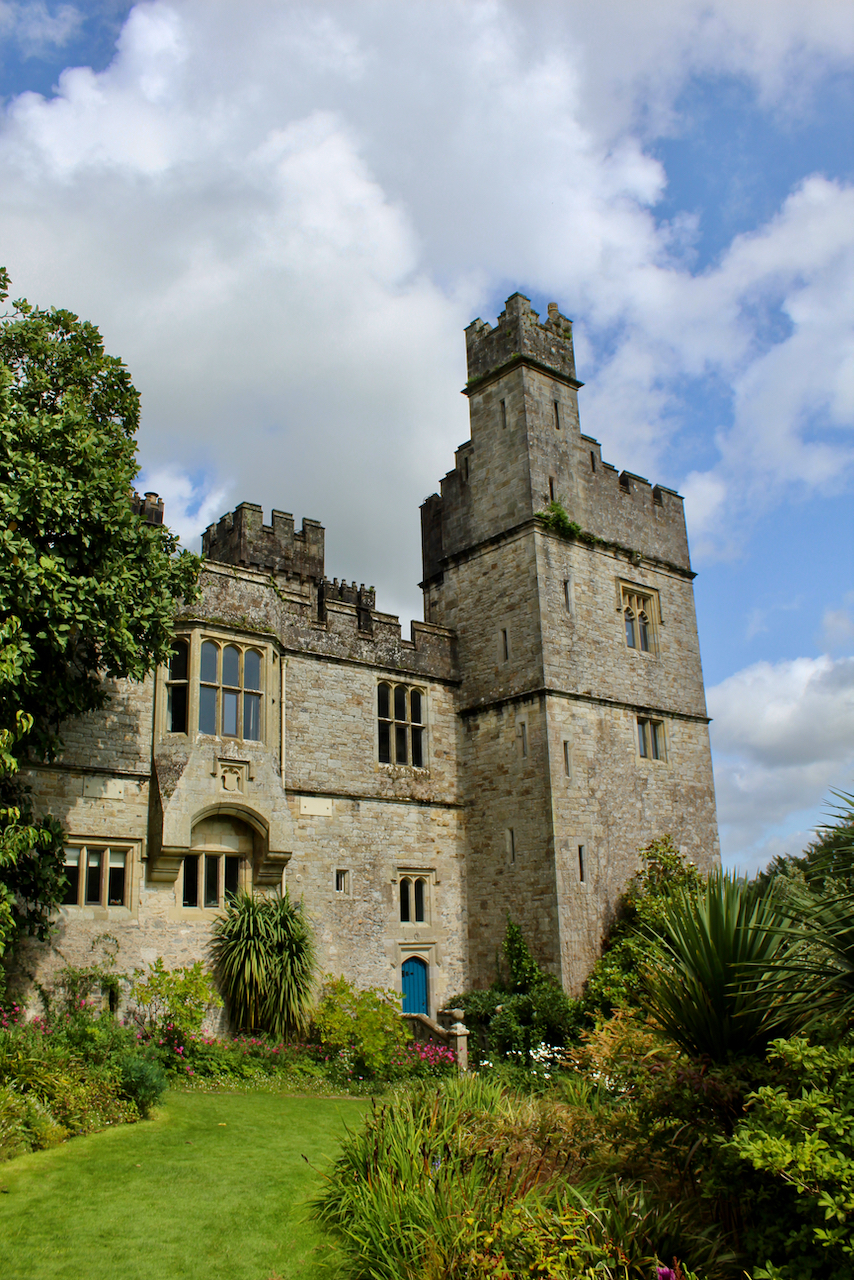
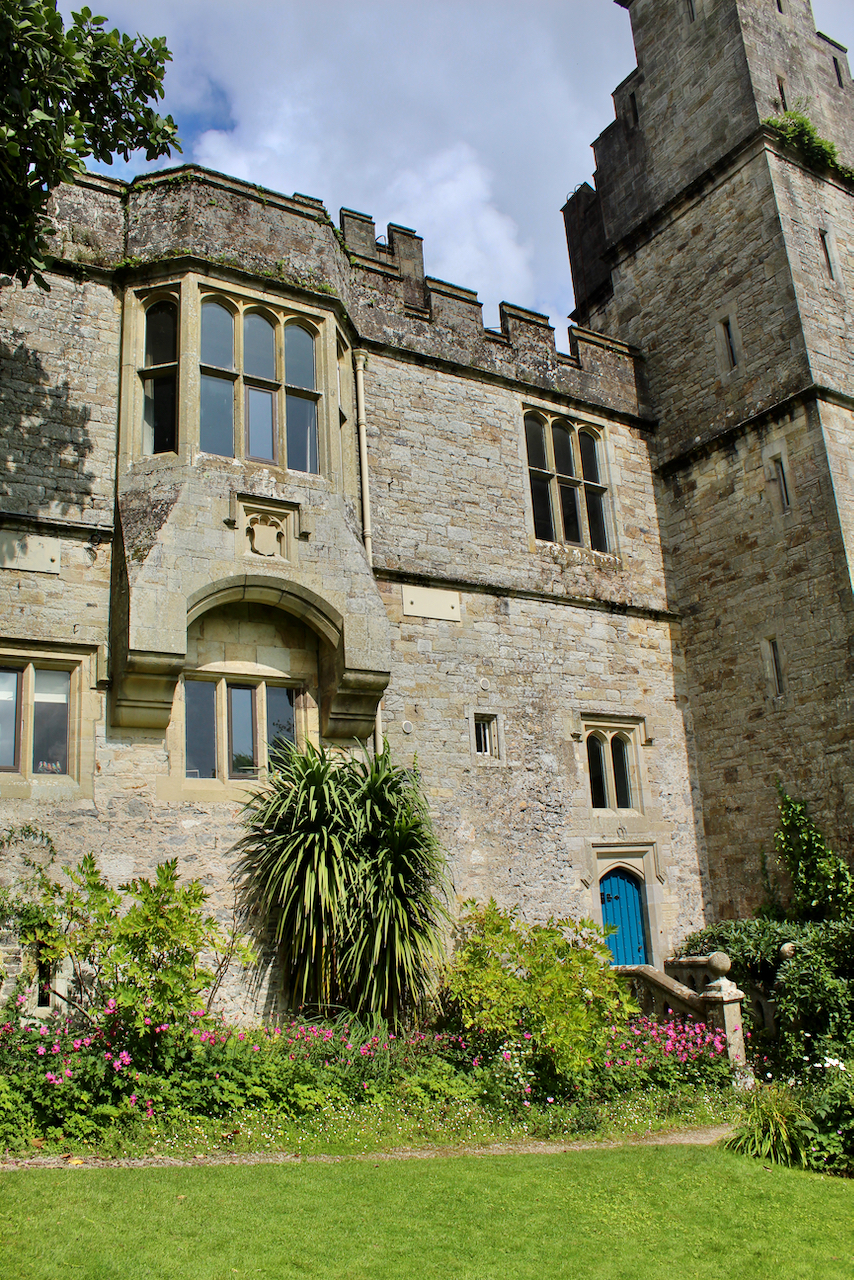
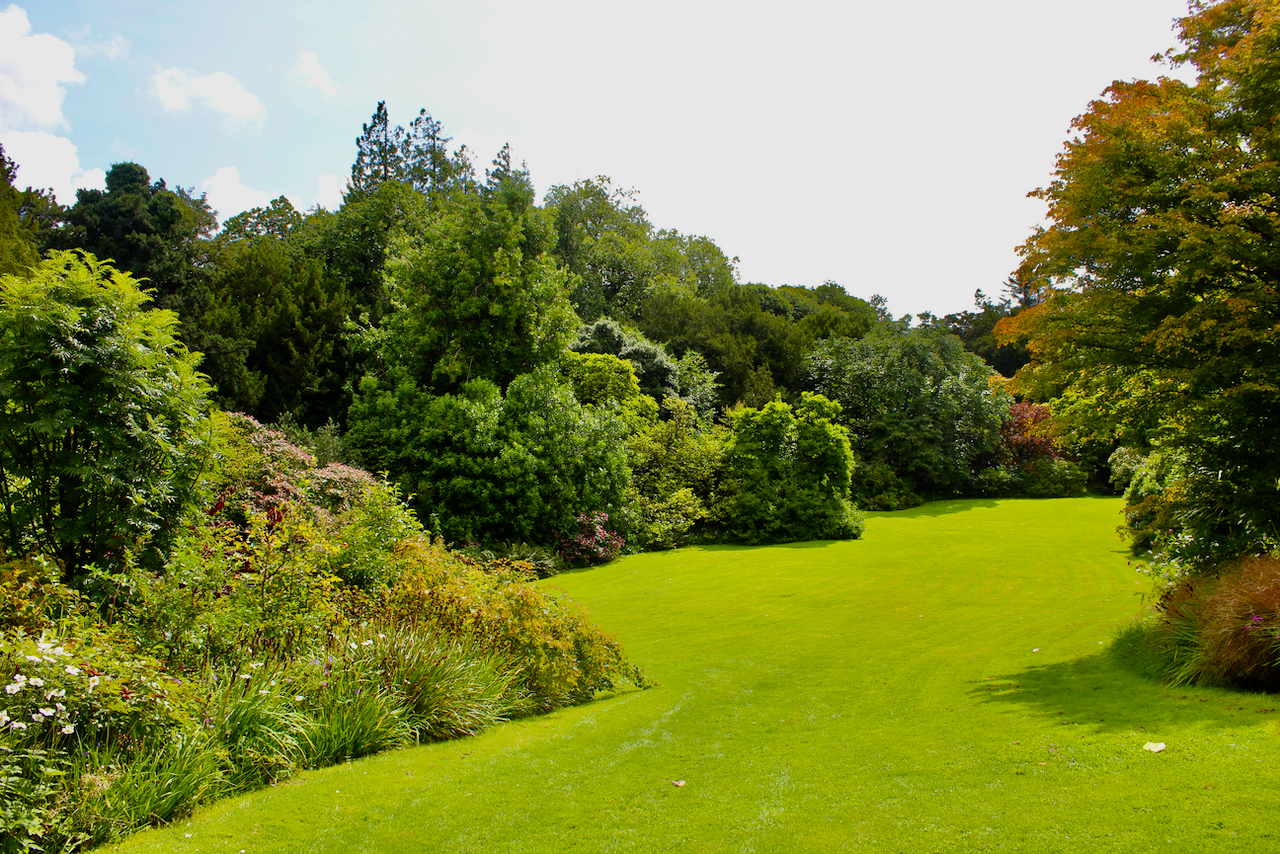
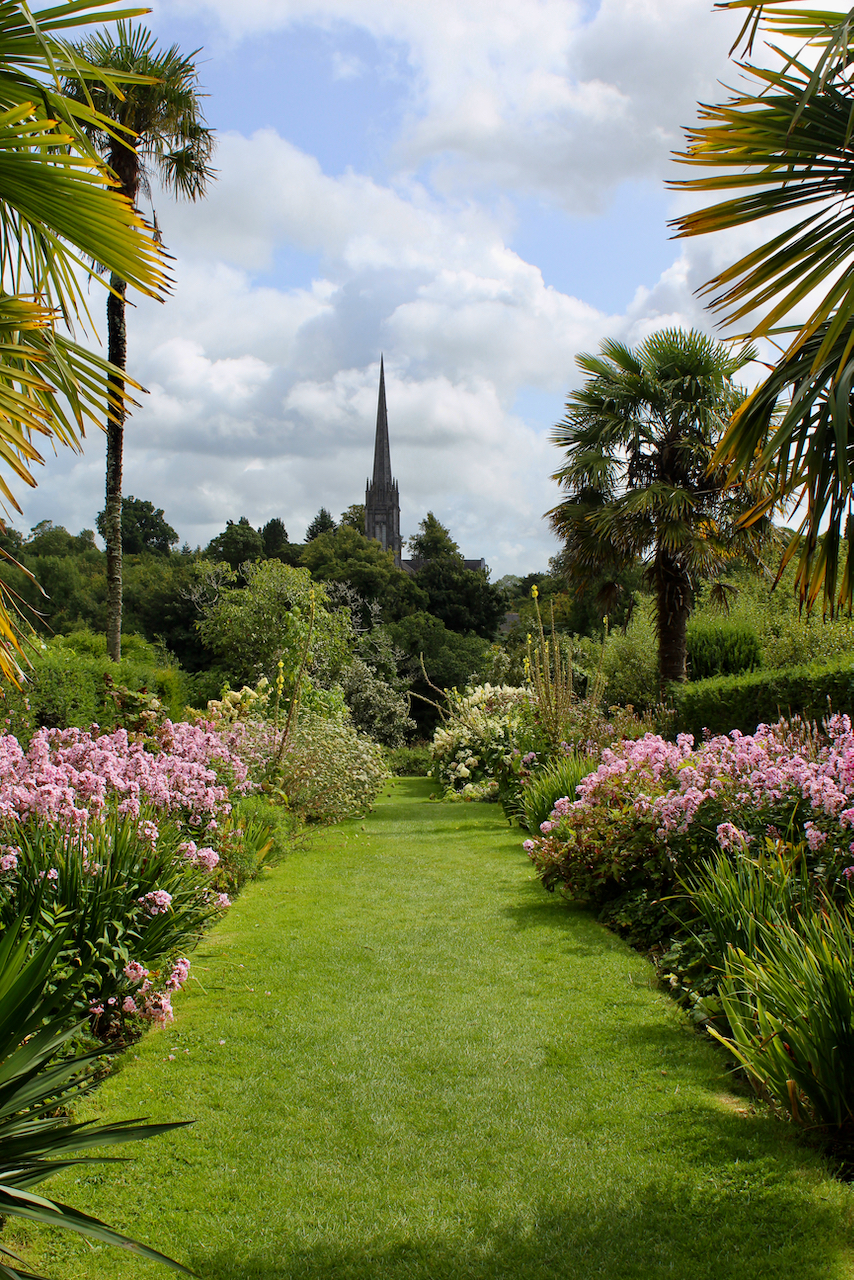
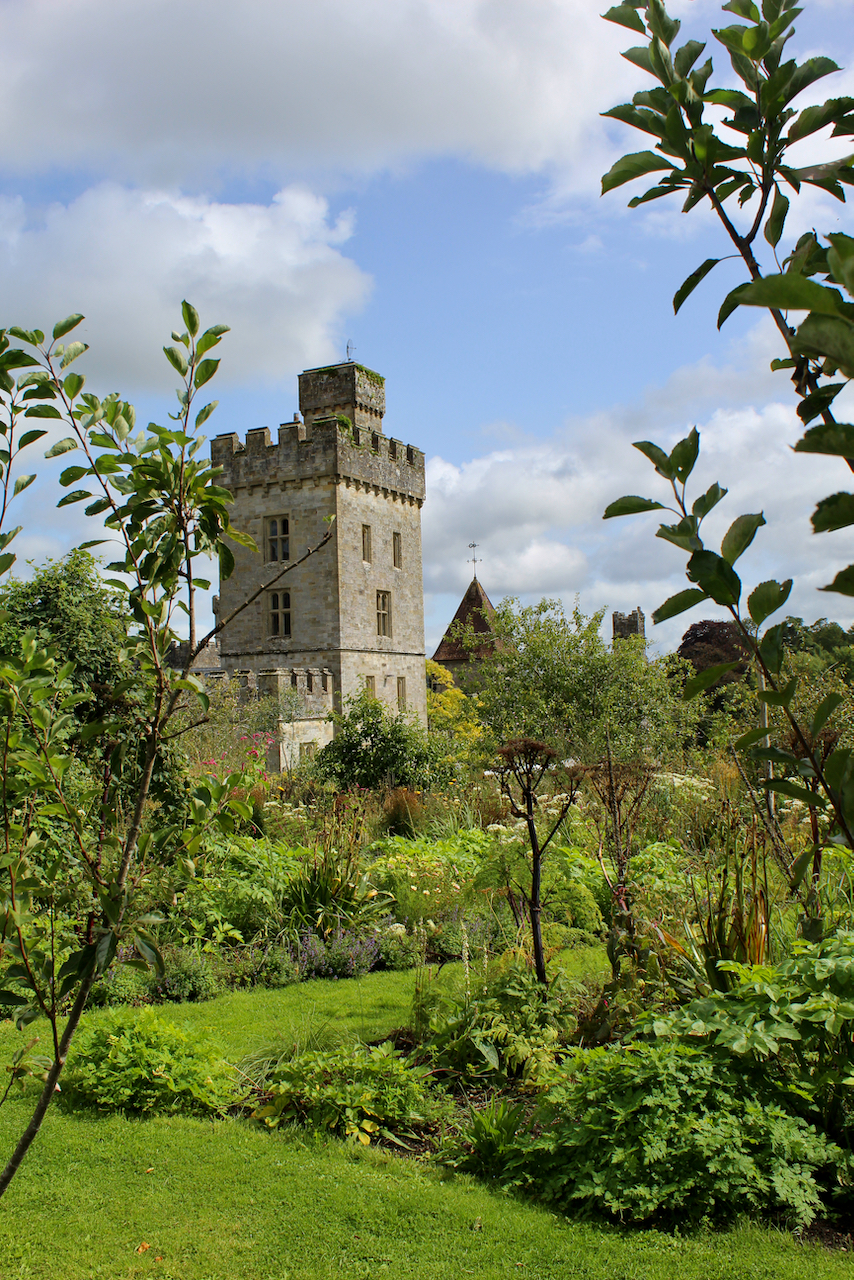
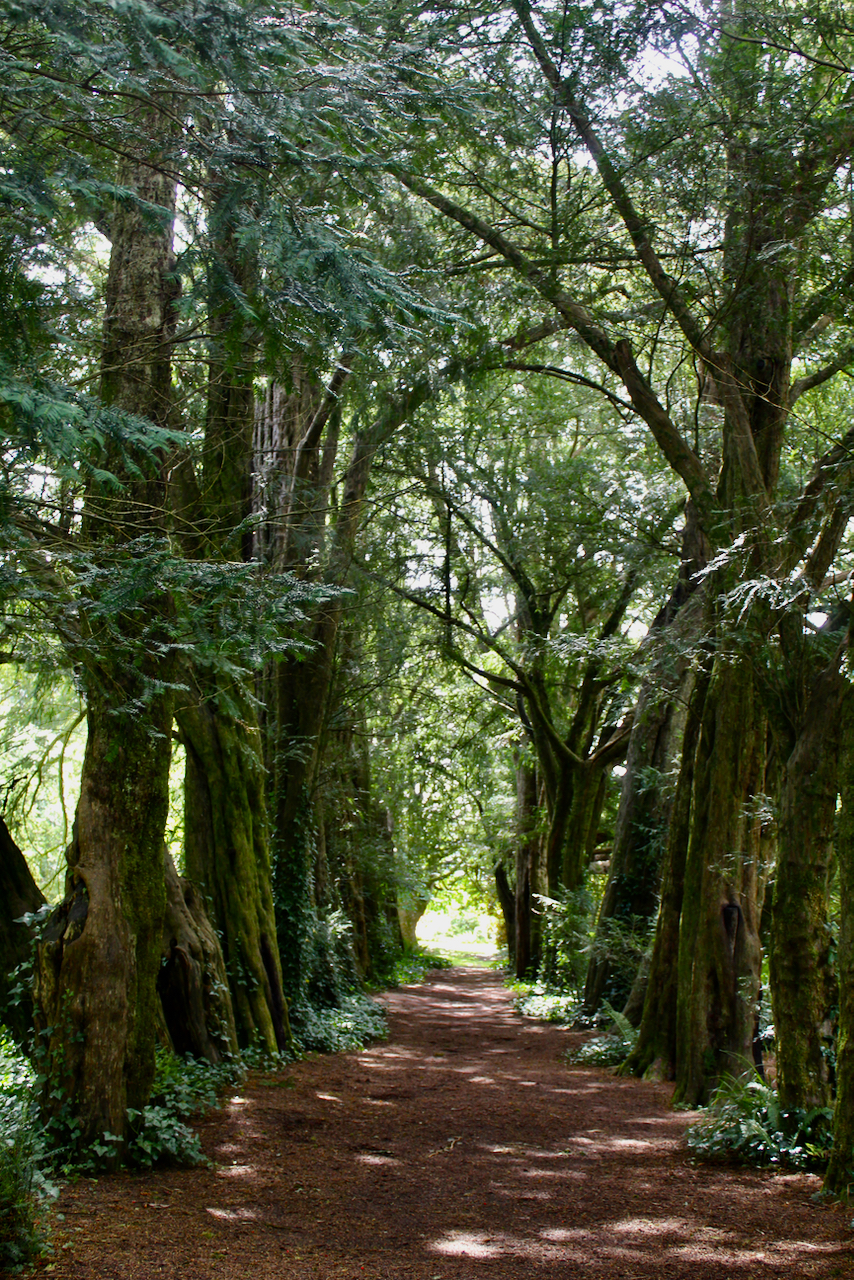
You can’t visit the castle inside but you can visit the beautiful gardens.
Photograph courtesy of The Hall and Lismore Castle website.
If anyone wants to give me a present, could you book me in for a week at Lismore Castle?
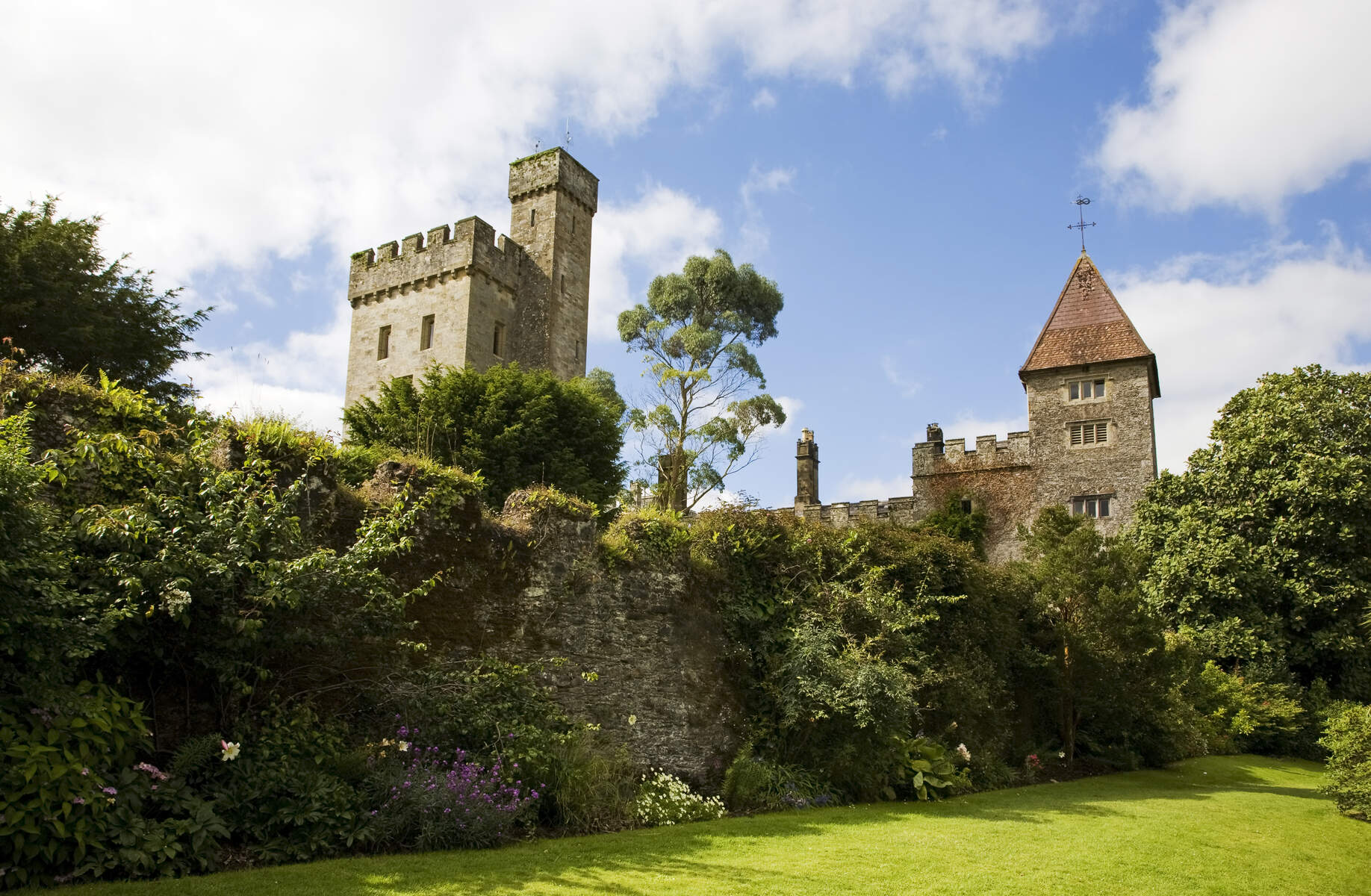
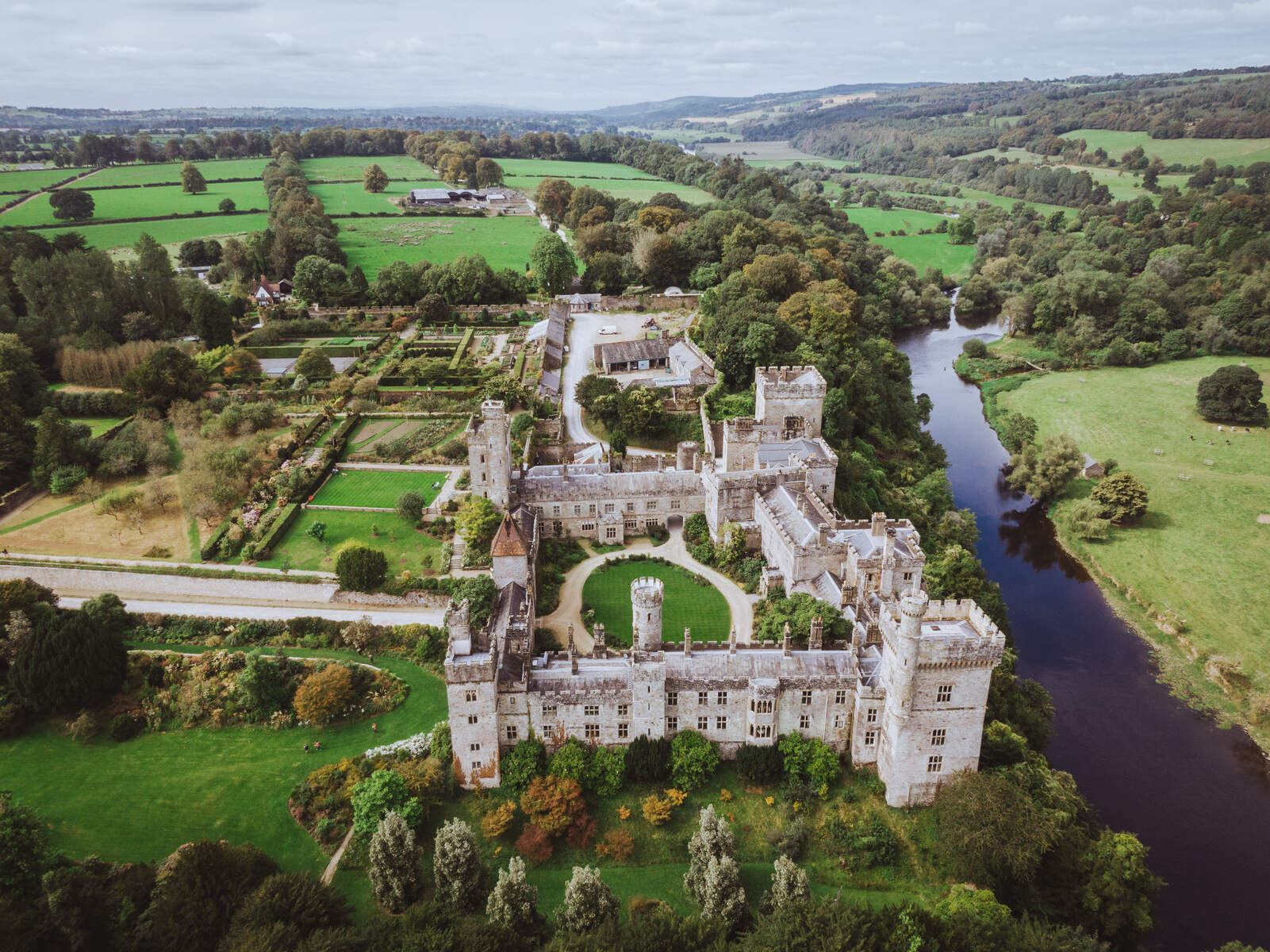
Lismore Castle Gardens, Co Waterford, photograph Courtesy of Celtic Routes 2019 for Tourism Ireland (see [1])Lismore Castle Gardens, Co Waterford, photograph Courtesy of Celtic Routes 2019 for Tourism Ireland (see [1])
Mark Bence-Jones writes of Lismore Castle:
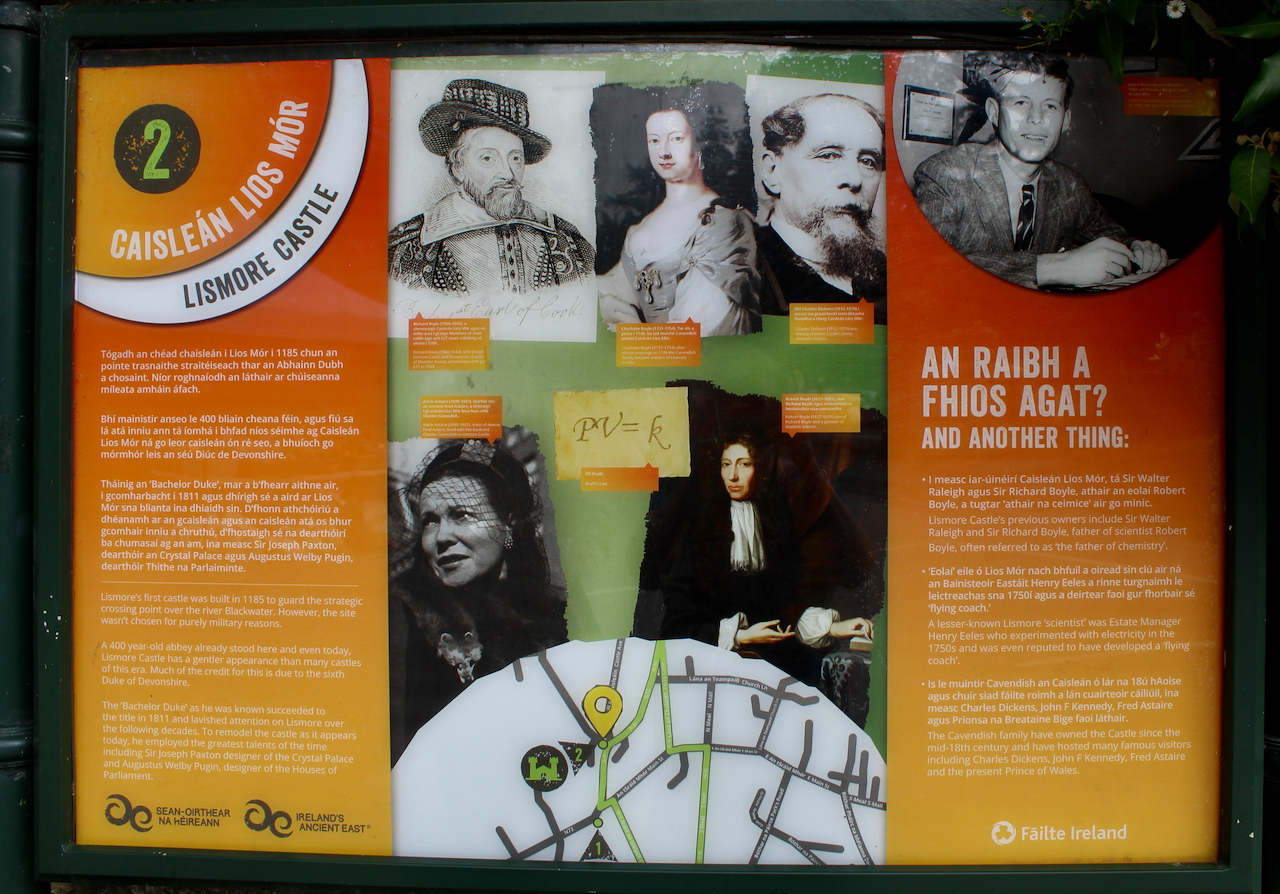
p. 186. “(Boyle, Cork and Orrery, E.PB; Cavendish, Devonshire, D/PB)…Now predominantly of early C17 and C19; but incorporating some of the towers of the medieval castle of the Bishops of Lismore which itself took the place of a castle built by King John [around 1185] where there had formerly been a famous monastery founded by St. Carthagh and a university which was a great centre of civilisation and learning in the Dark Ages. The first Protestant Bishop, the notorious Myler McGrath, granted the castle and its lands to Sir Walter Raleigh; who, however, seldom lived here, preferring his house in Youghal, now known as Myrtle Grove.” [2]
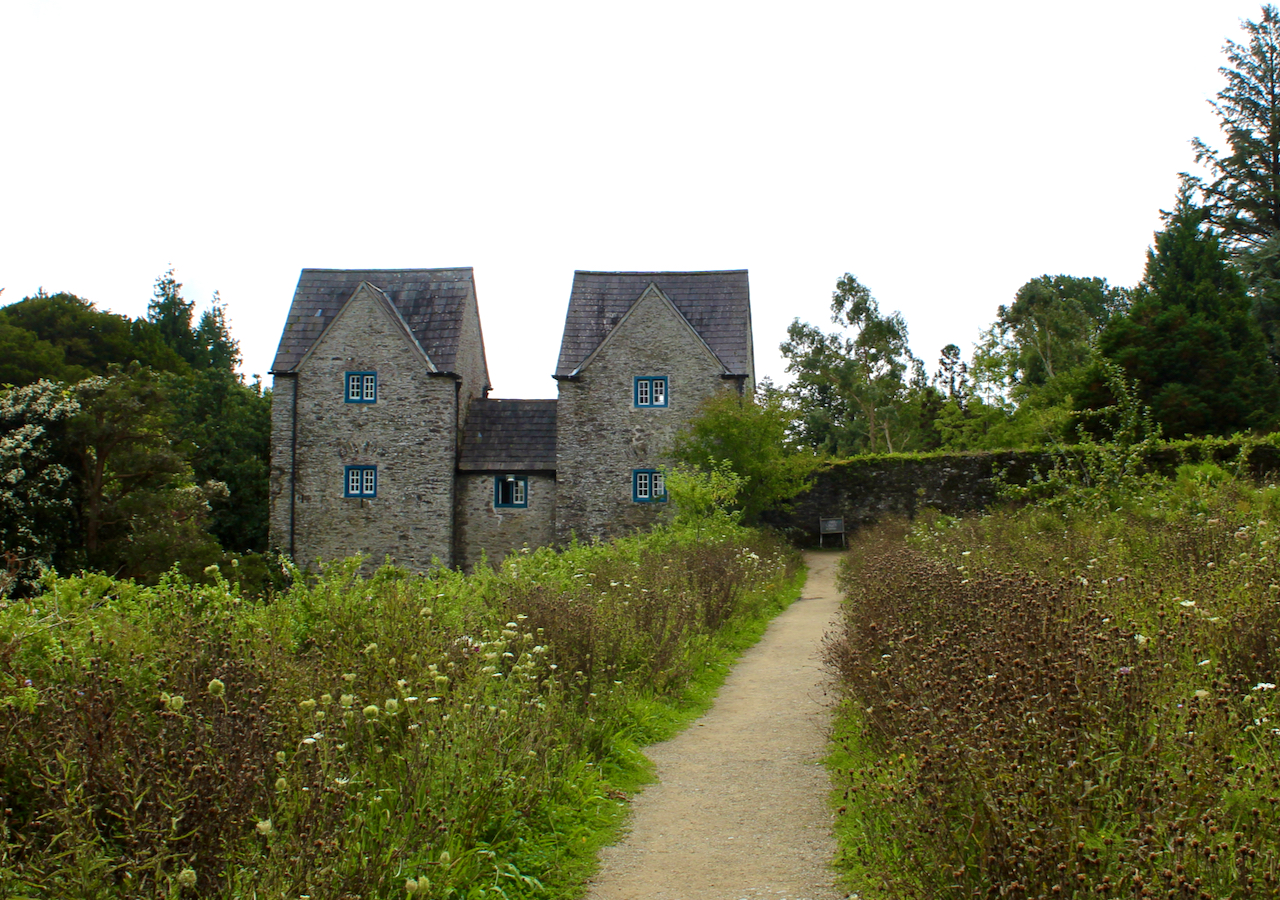
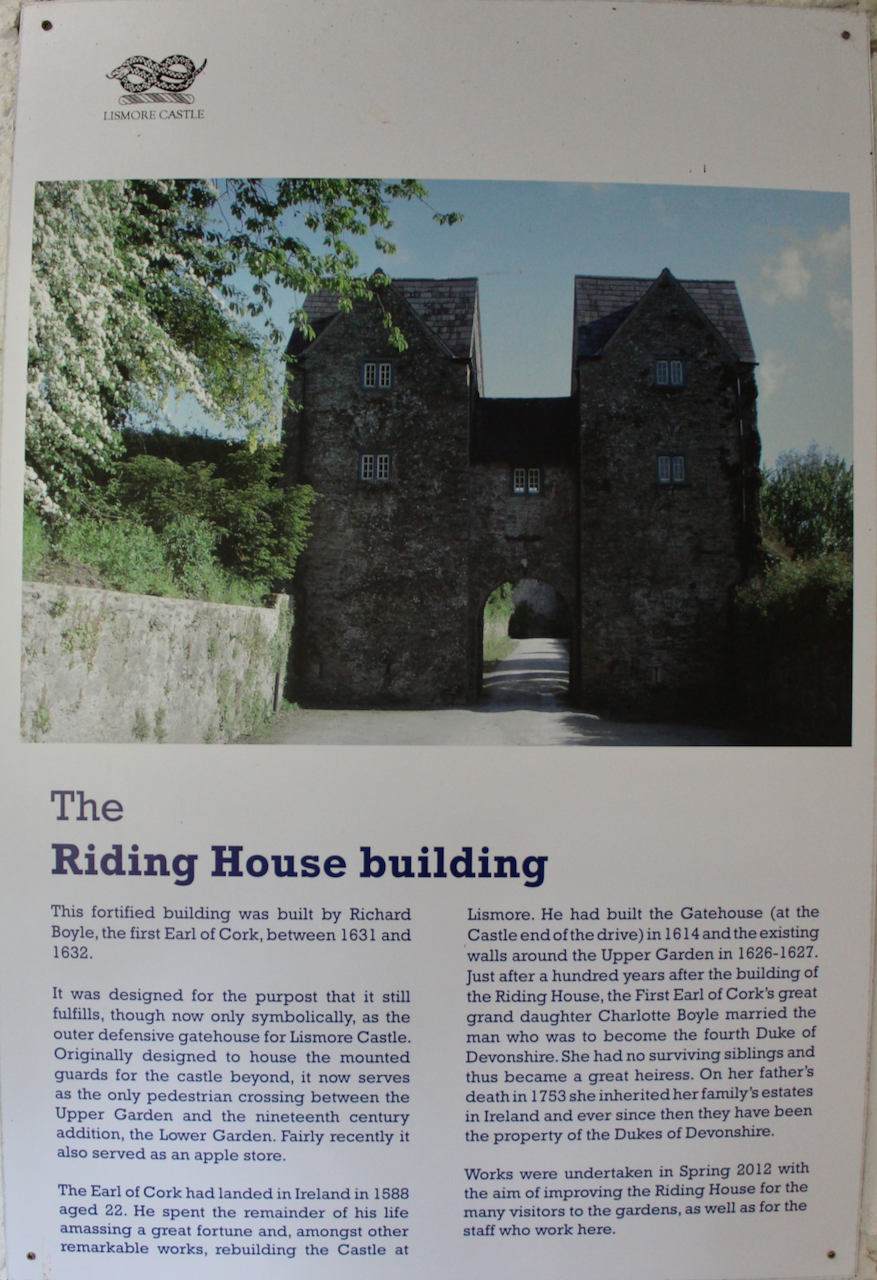
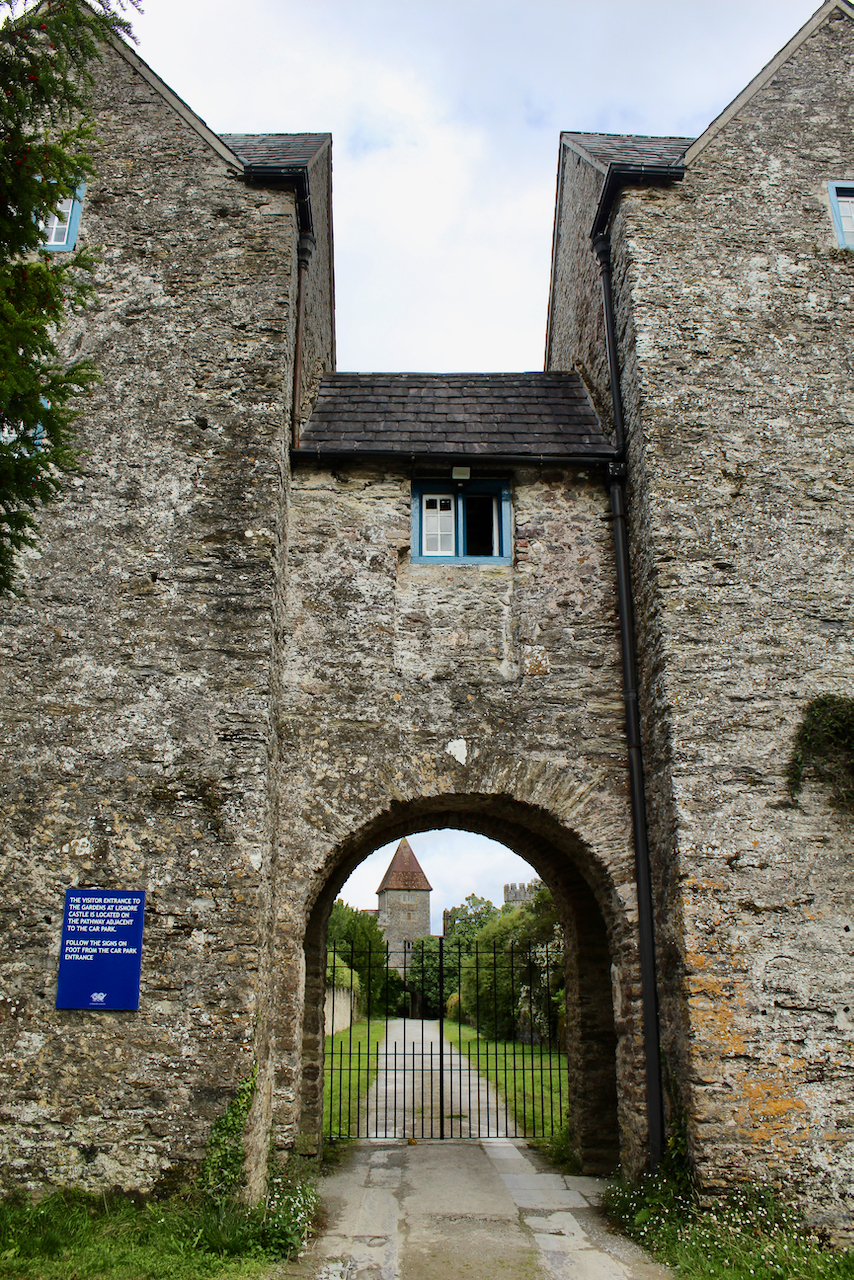
Mark Bence-Jones continues the history of the castle: “In 1602, Raleigh sold Lismore and all his Irish estates to Richard Boyle, afterwards 1st Earl of Cork, one of the most remarkable of Elizabethan adventurers; who, having come to Ireland as a penniless young man, ended as one of the richest and most powerful nobles in the kingdom. From ca. 1610 onwards, he rebuilt Lismore Castle as his home, surrounding the castle courtyard with three storey gabled ranges joining the old corner-towers, which were given Jacobean ogival roofs; the principal living rooms being on the side above the Blackwater, the parlour and dining-chamber in a wing projecting outwards to the very edge of the precipice, with an oriel window from which there is a sheer drop to the river far below. On the furthest side from the river Lord Cork built a gatehouse tower, incorporating an old Celtic-Romanesque arch which must have survived from Lismore’s monastic days. He also built a fortified wall – so thick that there is a walk along the top of it – enclosing a garden on this side of the castle; and an outer gatehouse with gabled towers known as the Riding House because it originally sheltered a mounted guard. The garden walls served an important defensive purpose when the castle was besieged by the Confederates 1642, the year before the “Great Earl’s” death. On this occasion the besiegers were repulsed; but in 1645 it fell to another Confederate Army and was sacked.”
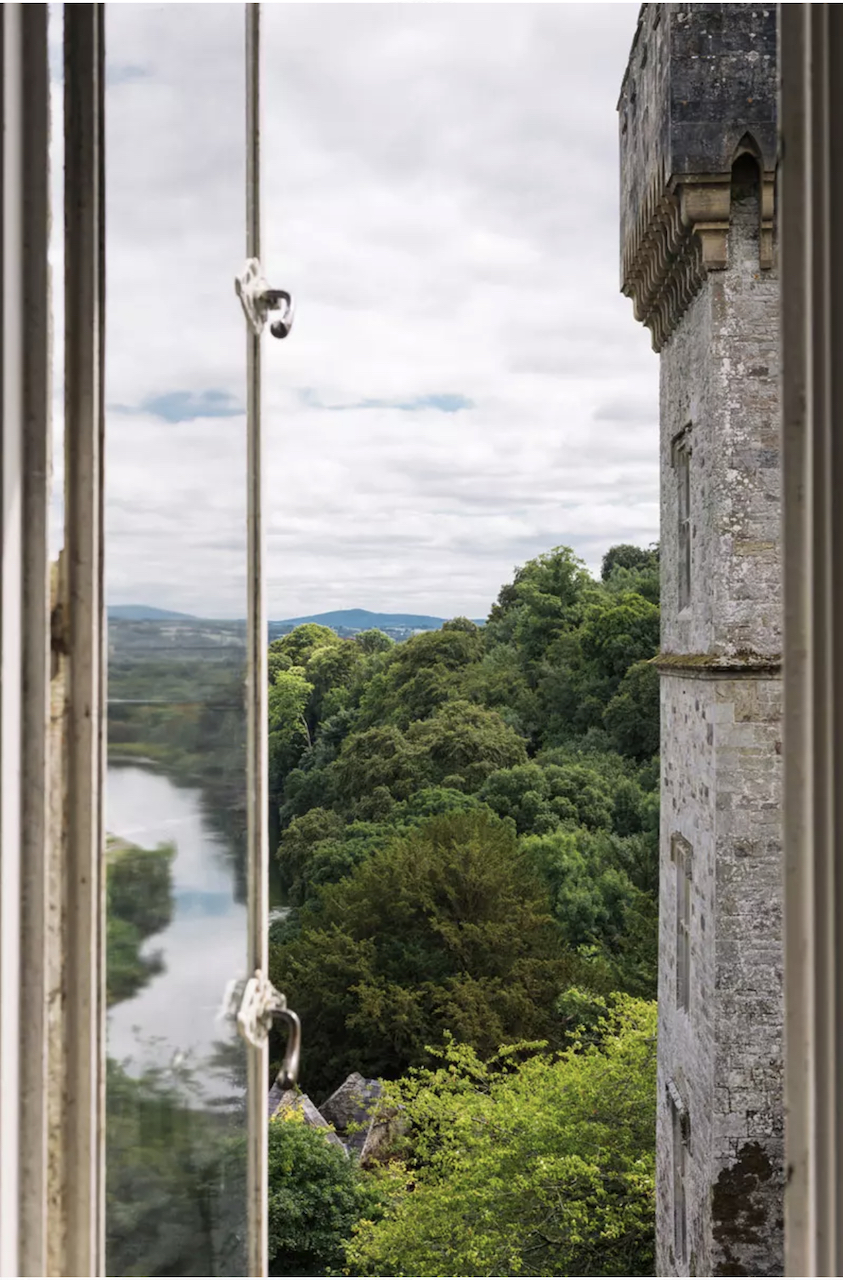
Mark Bence-Jones continues the fascinating history: “It was made habitable again by the 2nd Earl of Cork – James II stayed a night here in 1689 and almost fainted when he looked out of the dining room window and saw the great drop – but it was neglected in C18 and became largely ruinous; the subsequent Earls of Cork, who were also Earls of Burlington, preferring to live on their estates in England.“
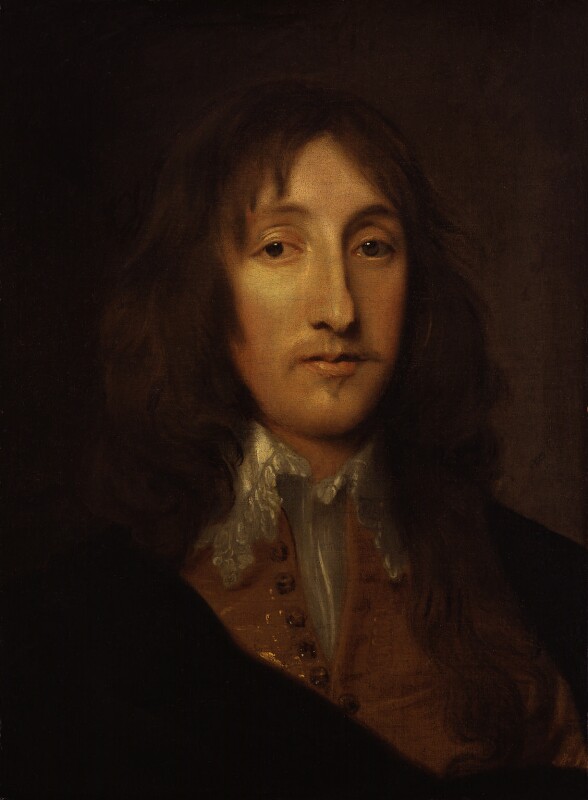
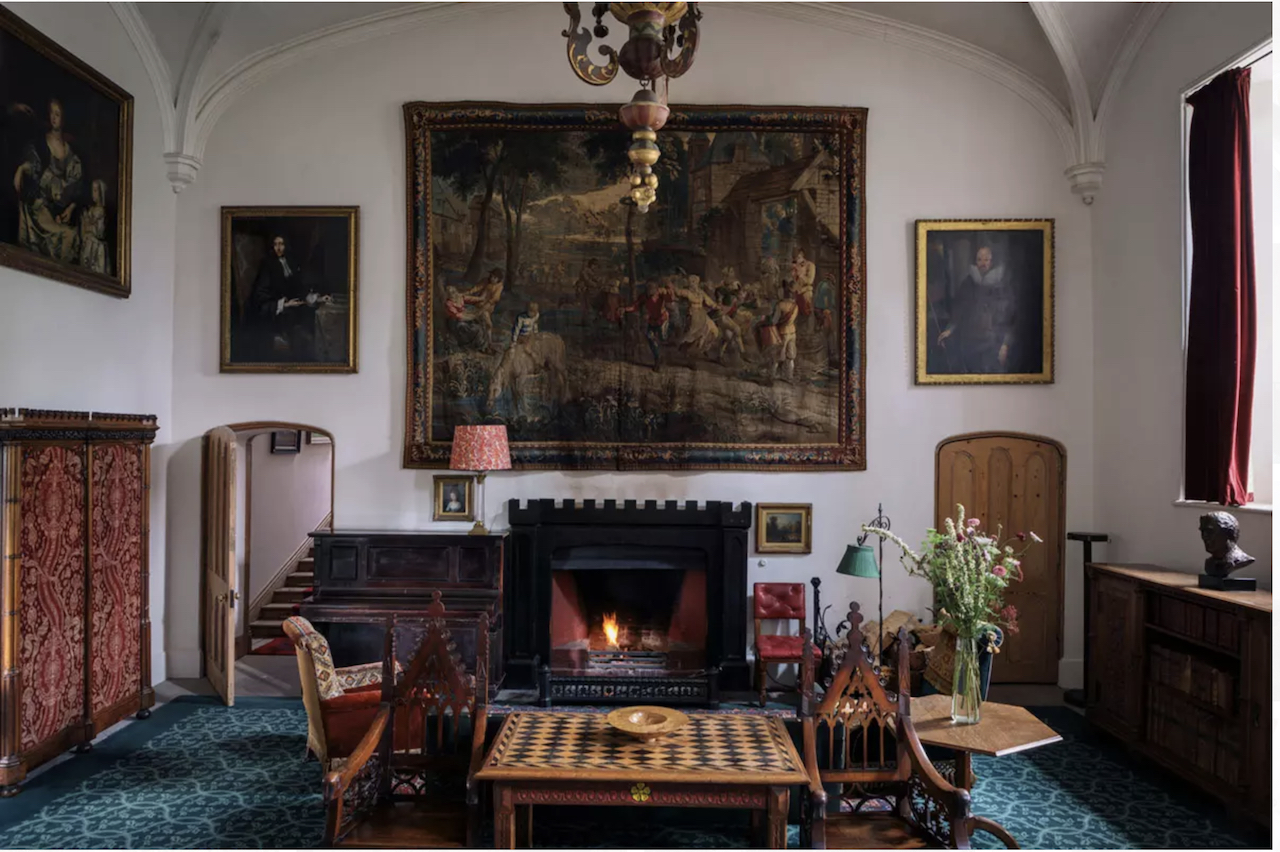
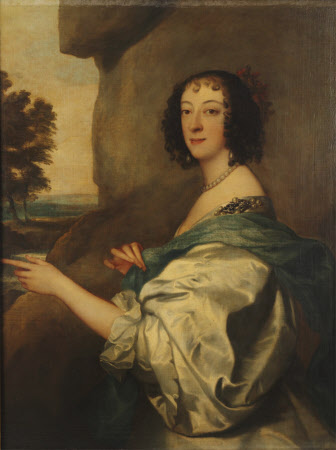
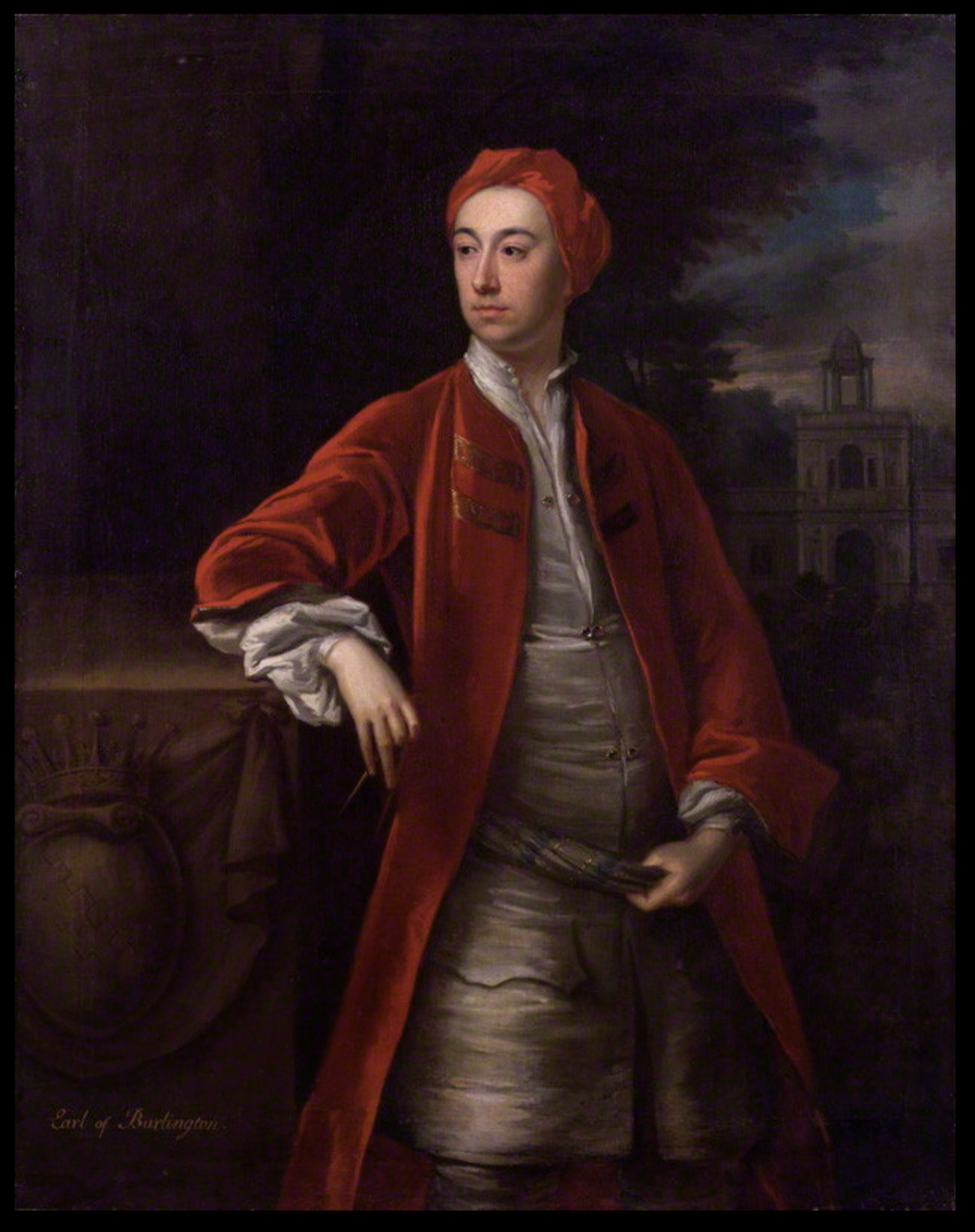
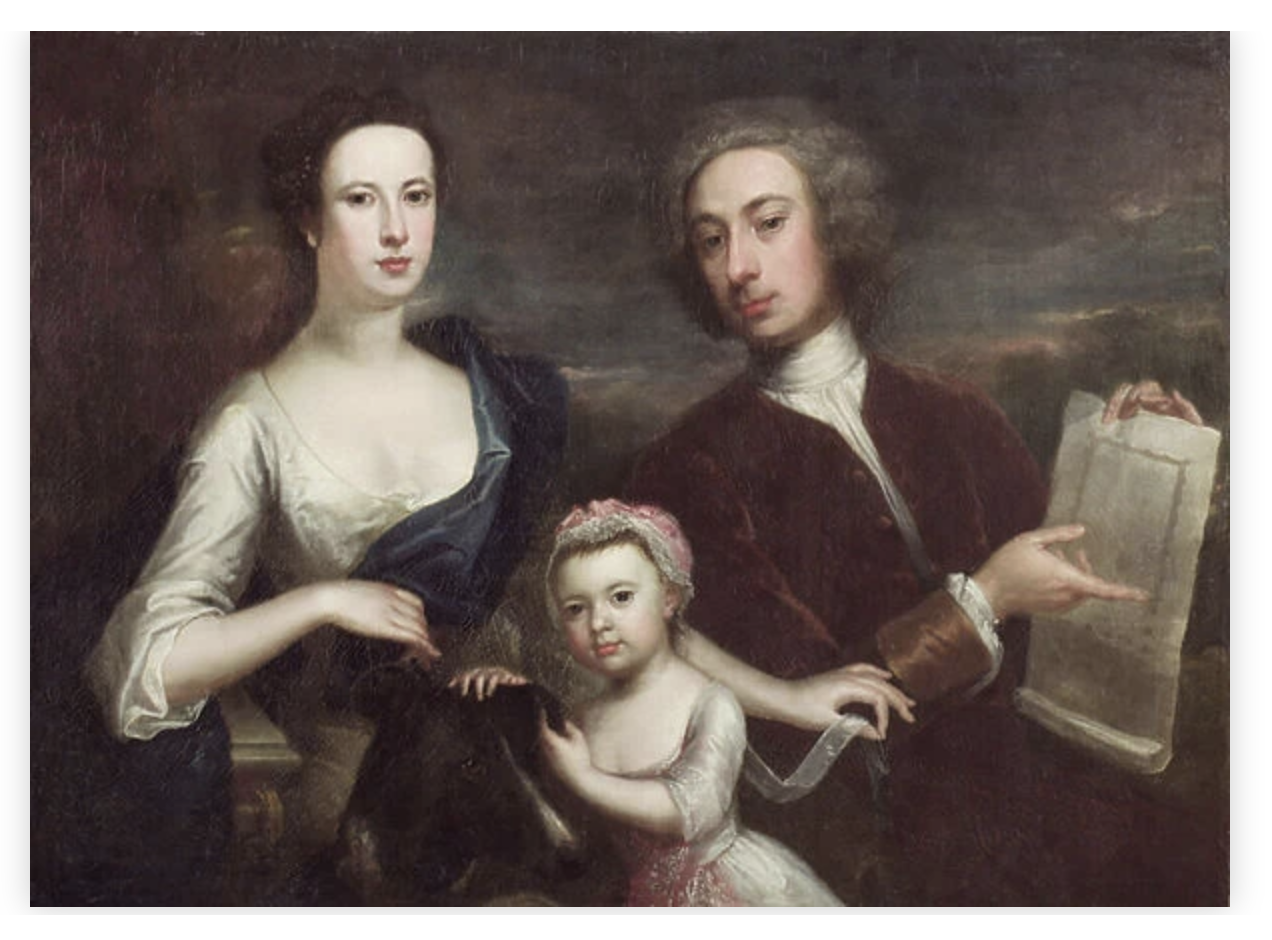
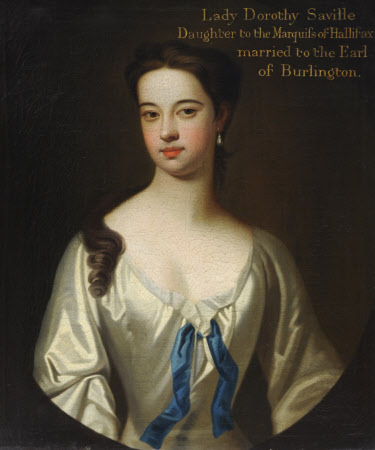
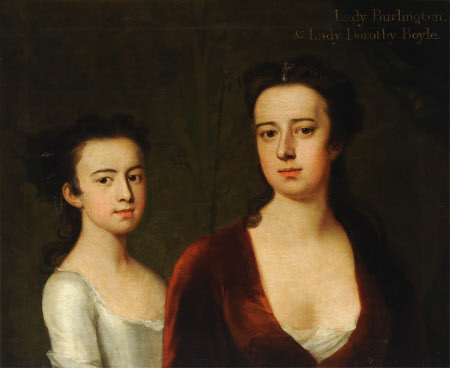
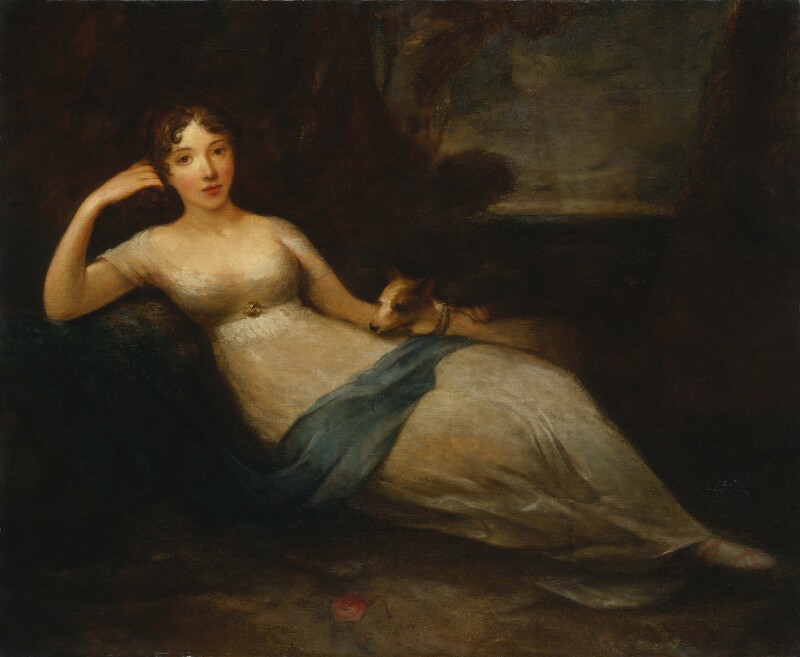
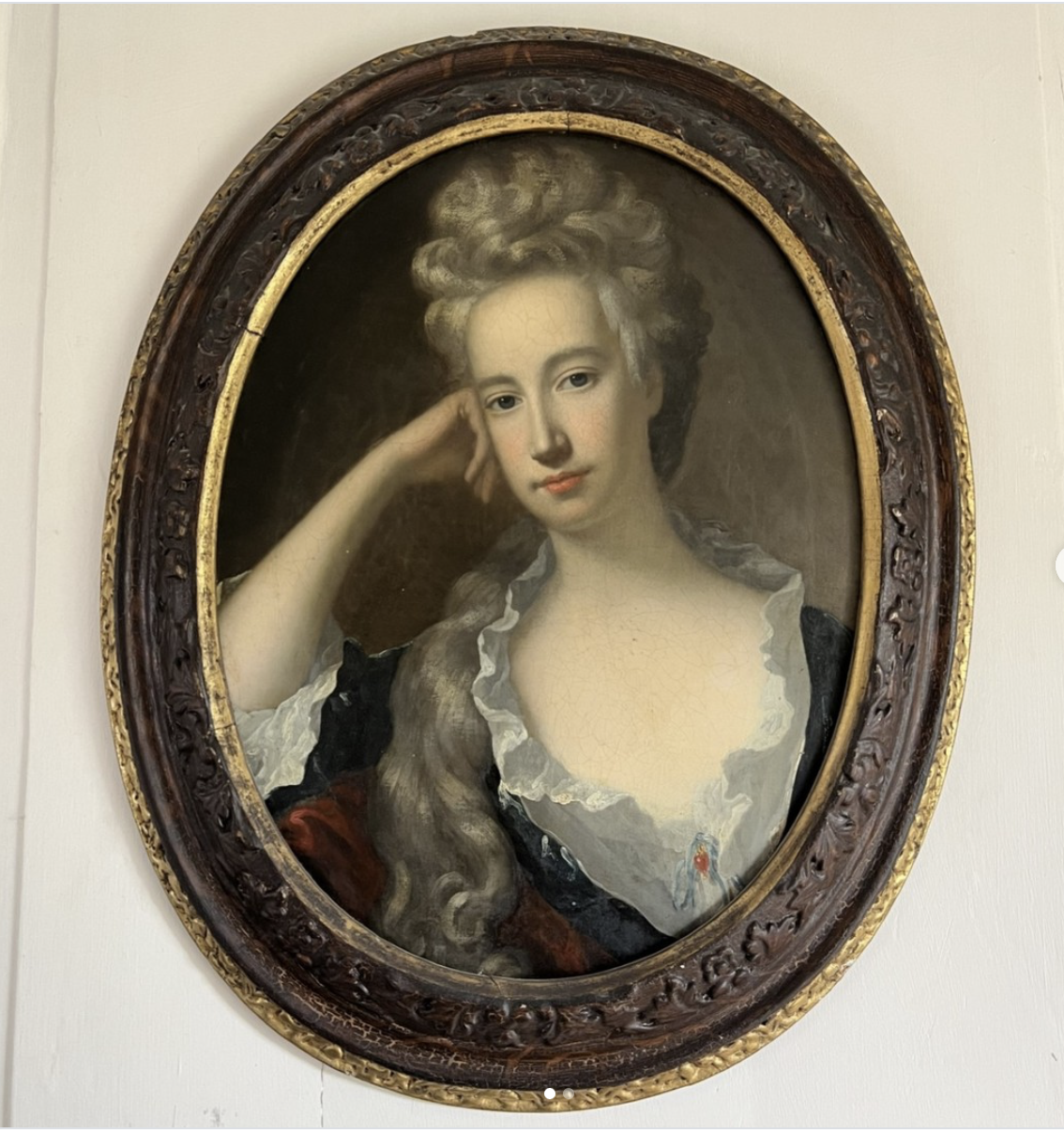
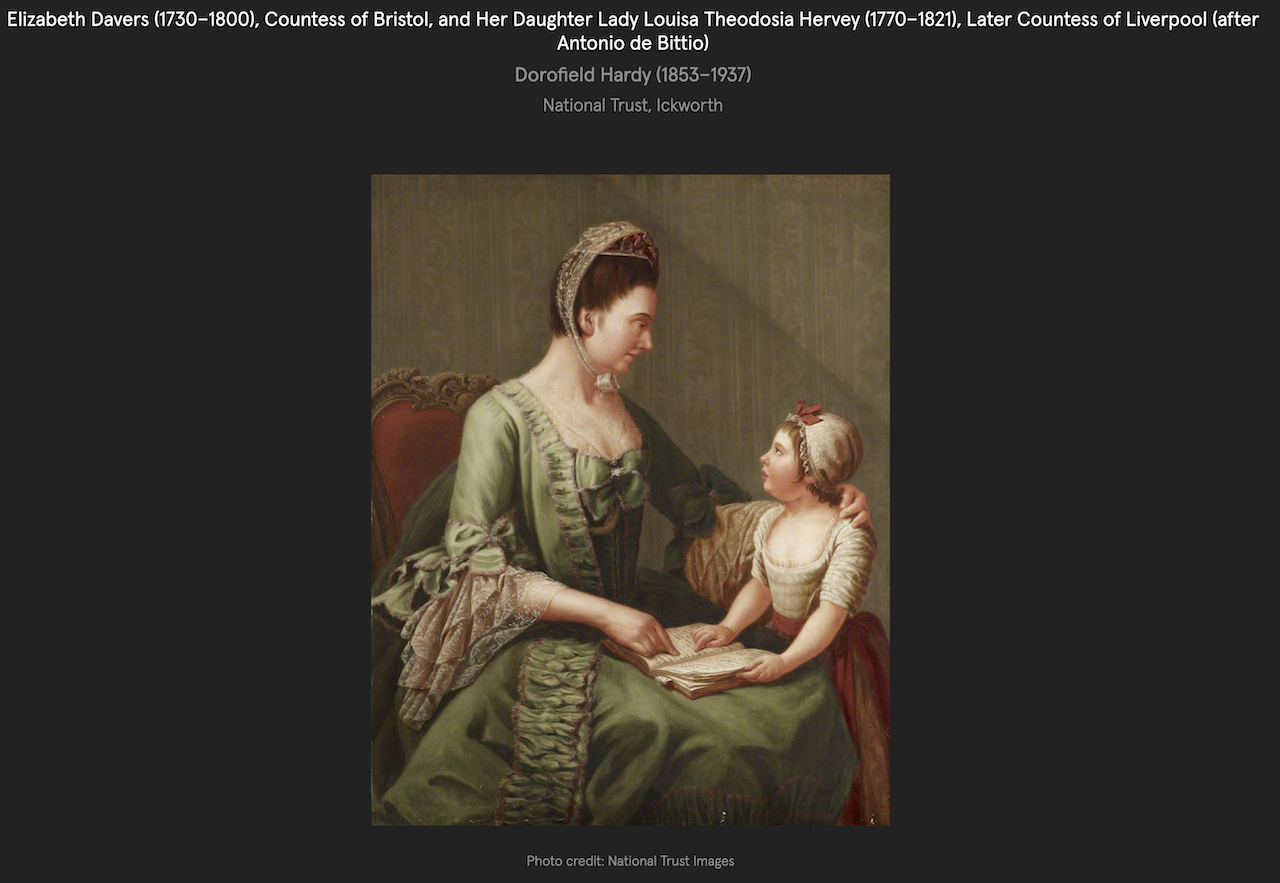
I’m not sure if it’s this window that nearly made King James II faint! Photograph courtesy of The Hall and Lismore Castle website.Richard Boyle (1612-1698) 1st Earl of Burlington and 2nd Earl of Cork, possibly after Sir Anthony van Dyck c.1640, NPG 893.This photograph shows the portrait of Robert Boyle (1627-1691) on the wall, Photograph courtesy of The Hall and Lismore Castle website.Robert Boyle F. R. S. (1627-1691) by Johann Kerseboom, 1689, courtesy of Science History Institute.He was the brother of the 2nd Earl of Cork.Oil painting on canvas, Lady Elizabeth Clifford, Countess of Burlington (1621 – 1698) by Sir Anthony Van Dyck (Antwerp 1599 – London 1641). Three-quarter length portrait, profile to left, head facing, wearing wbite satin dress and blue scarf, pointing with her left hand in a landscape. She married Richard Boyle, 2nd Earl of Cork and 1st Earl of Burlington.Charles Boyle (c. 1662-1704) 3rd Earl of Cork and 2nd Earl of Burlington, by Godfrey Kneller, courtesy of National Trust Hardwick Hall.Richard Boyle, 3rd Earl of Burlington (1694-1753) by Jonathan Richardson, courtesy of London’s National Portrait Gallery NPG 4818.Richard Boyle 4th Earl of Cork and 3rd Earl of Burlington and Dorothy Savile attributed to Aikman, William Aikman (1682-1731).Oil painting on canvas, Possibly Lady Dorothy Savile, Countess of Burlington and Countess of Cork (1699-1758) by Michael Dahl, circa 1720. Inscribed top right in gold: Lady Dorothy Saville / Daughter to the Marquis of Halifax / married to the Earl of Burlington. A half-length portrait of a young woman, facing, wearing white decollete dres with blue ribbon.Lady Dorothy Savile, Countess of Burlington (1699-1758) with her Daughter Lady Dorothy Boyle, later Countess of Euston (1724-1742) by Michael Dahl (Stockholm 1656/9 ? London 1743), inscribed top right in gold: Lady Burlington / & Lady Dorothy Boyle. Two bust-length portraits, the mother at the right, wearing red, the daughter dressed in white.
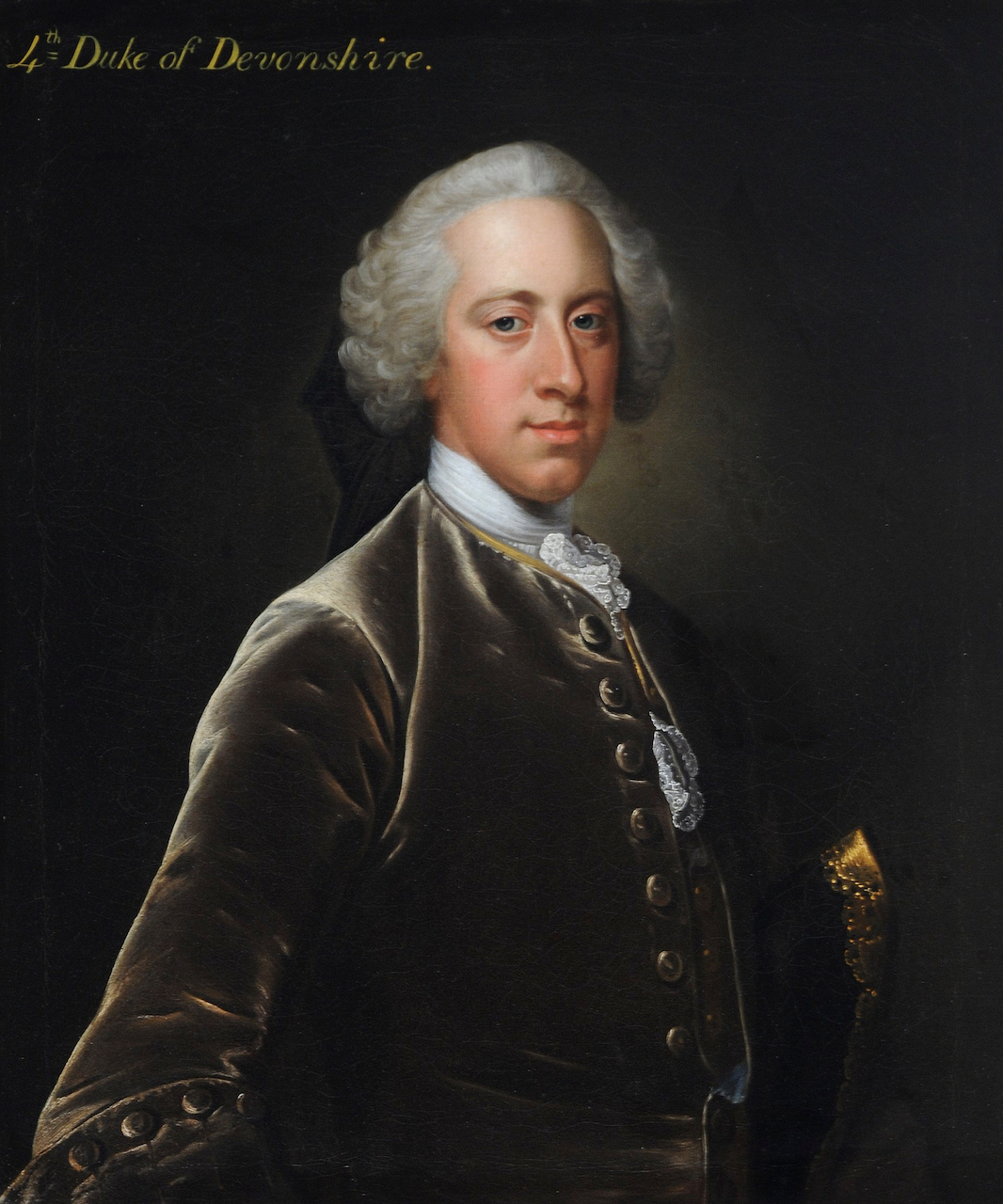
“Through the marriage of the daughter and heiress of the architect Earl of Burlington [Charlotte Elizabeth Boyle (1731-1754), daughter of Richard Boyle, 3rd Earl of Burlington, 4th Earl of Cork] and Cork to the 4th Duke of Devonshire [William Cavendish (1720-1764)], Lismore passed to the Cavendishes. The 4th and 5th Dukes took no more interest in the castle than the Earls of Burlington had done; but the 6th Duke [William George Spenser Cavendish (1790-1858)] – remembered as the “Bachelor Duke” – began work at Lismore as soon as he succeeded his father 1811.”
William Cavendish (1720-1764) 4th Duke of Devonshire, after Thomas Hudson, briefly Prime Minister between 1756 and 1757.Charlotte Boyle (1731-1754) daughter of Richard Boyle (1694-1753) 3rd Earl of Burlington 4th Earl of Cork who married William Cavendish (1720-1764) 4th Duke of Devonshire and brought Lismore Castle, County Waterford, into the Cavendish family. Painting after style of George Knapton, courtesy of Chiswick House collection.As the heir of her father, she succeeded to the title of Baroness Clifford of Londesborough suo jure.
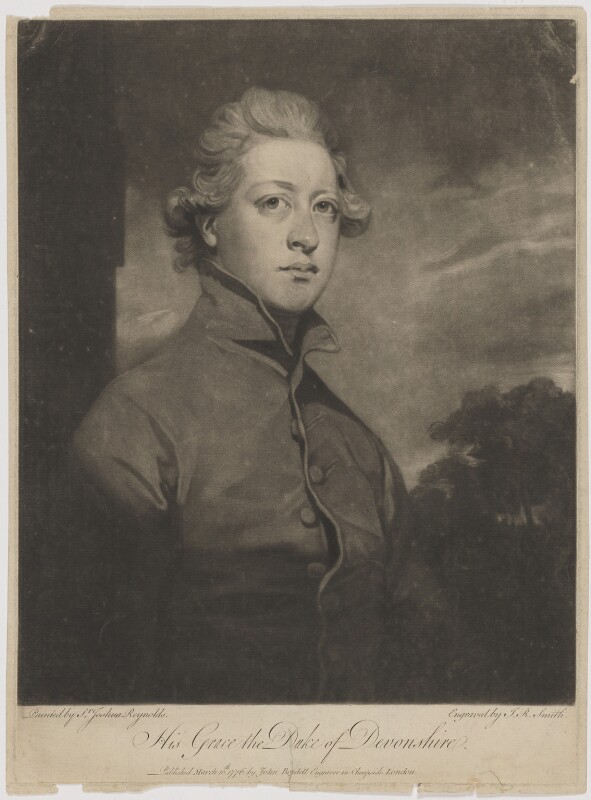
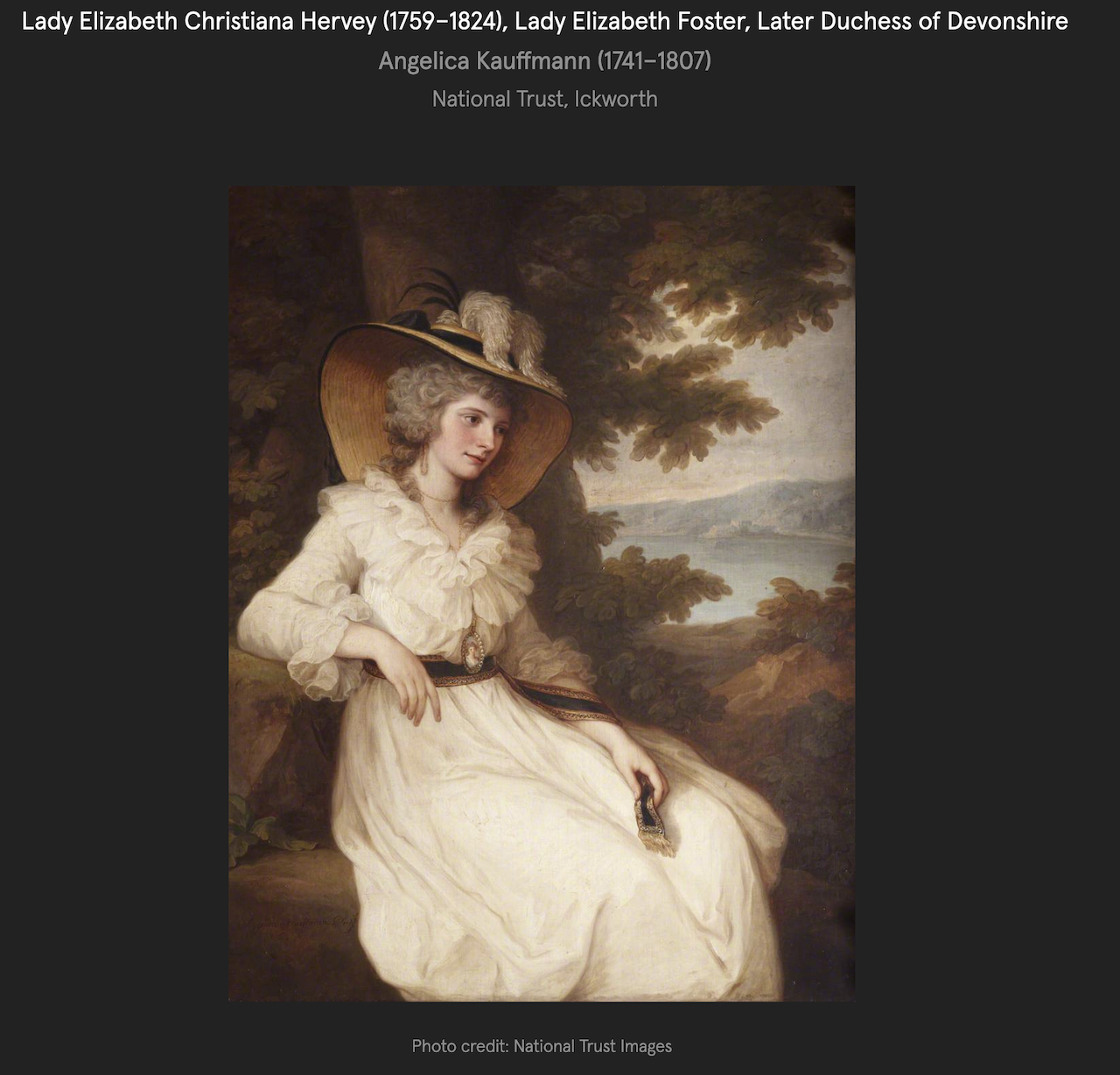
We came across the 5th Duke of Devonshire before as he had an affair with and then, after his wife died, married Elizabeth Christina Hervey. Elizabeth Christina had been married to John Thomas Foster (1747-1796), MP for Dunleer, County Louth, of Glyde Court (see my entry on Cabra Castle). After the 5th Duke of Devonshire died, Elizabeth Christina married for a third time, to Valentine Richard Quin 1st Earl of Dunraven and Mount Earl, of Adare Manor in Limerick.
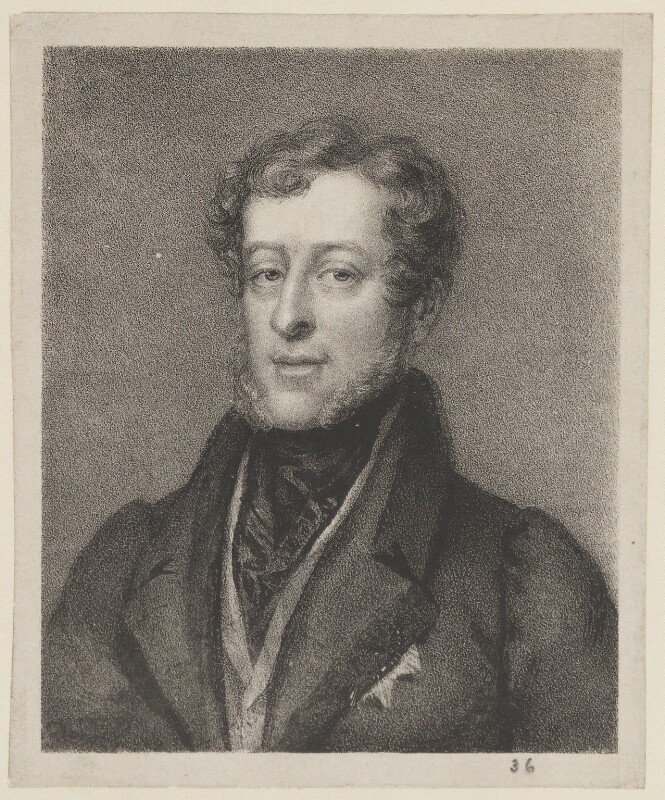
The 6th Duke, William George Spenser Cavendish (1790-1858), son of the 5th Duke’s first wife Georgiana née Spencer, began work at Lismore as soon as he succeeded his father 1811.
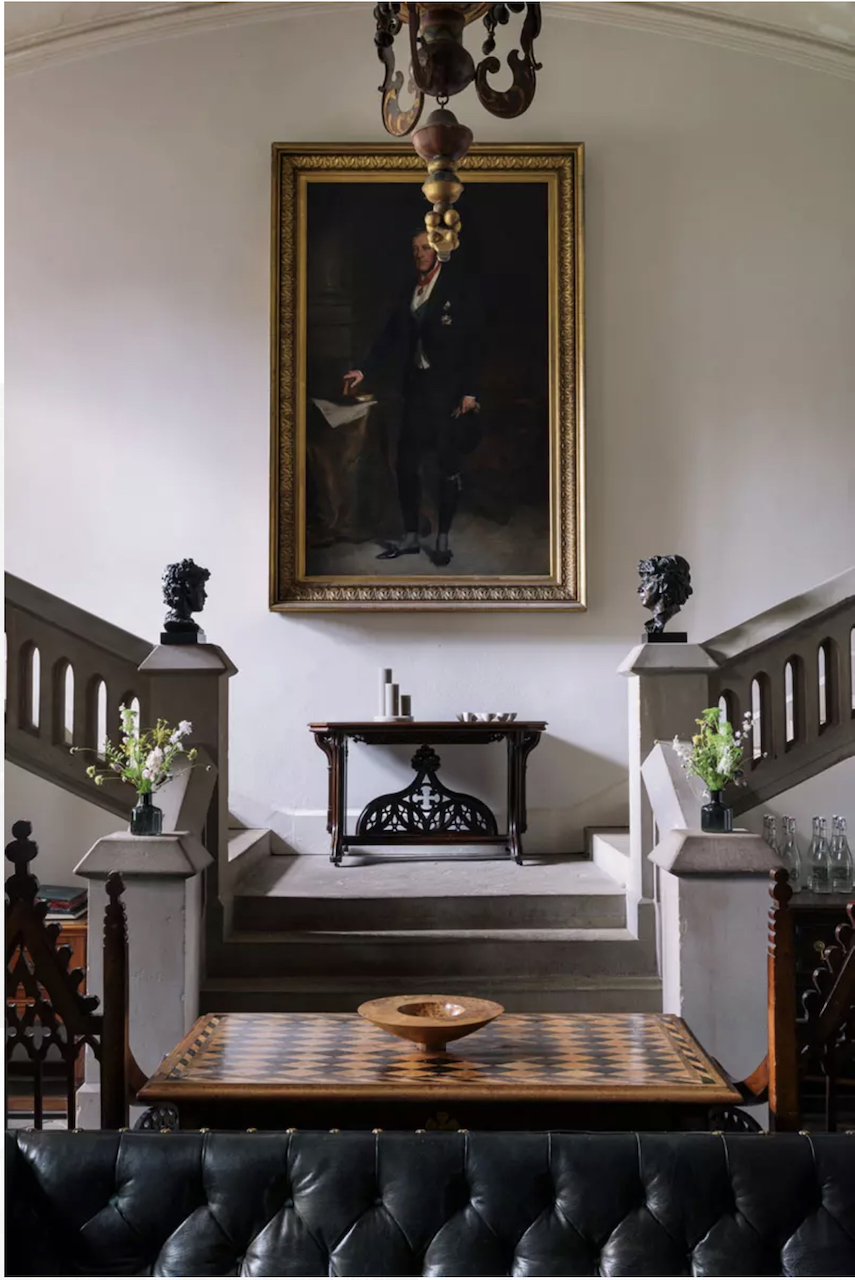
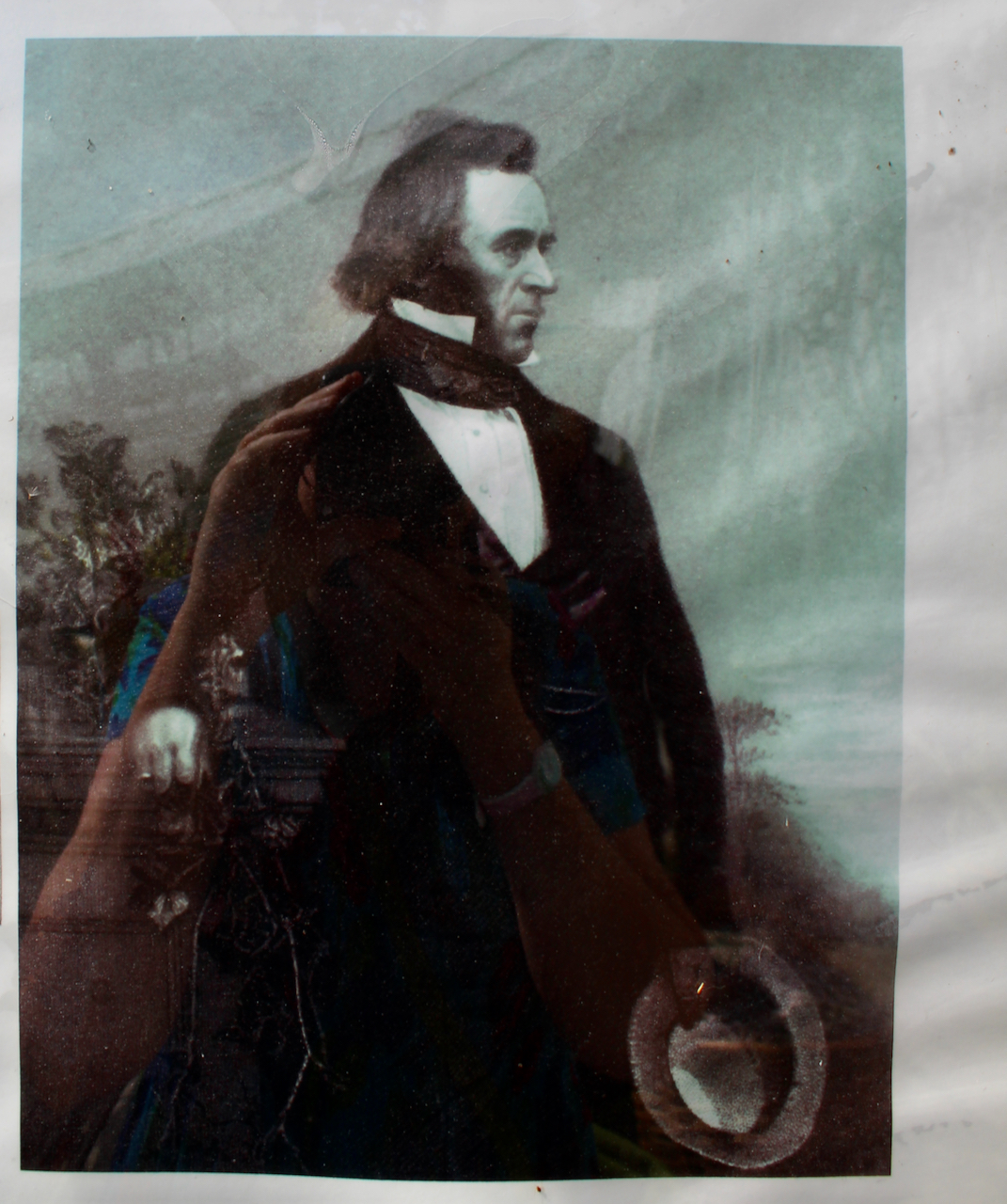
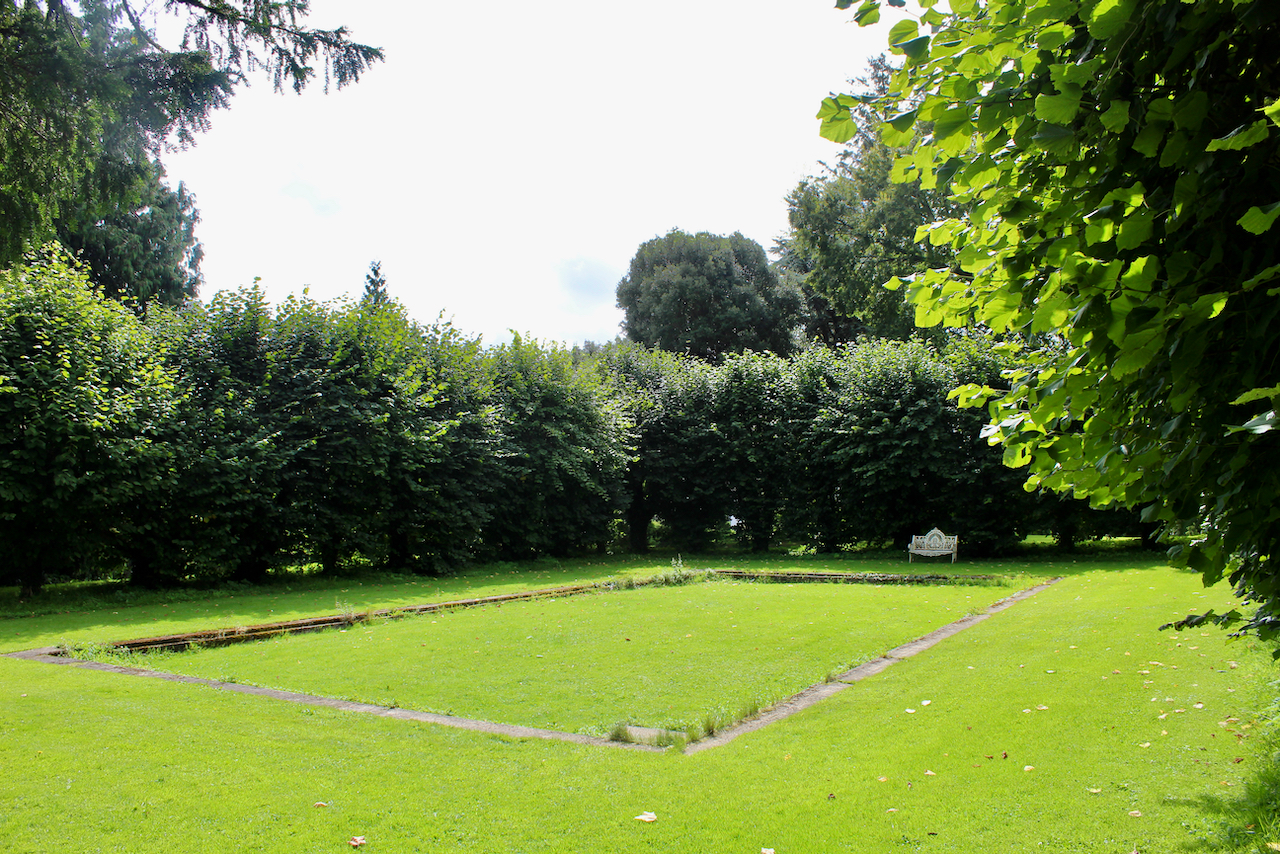
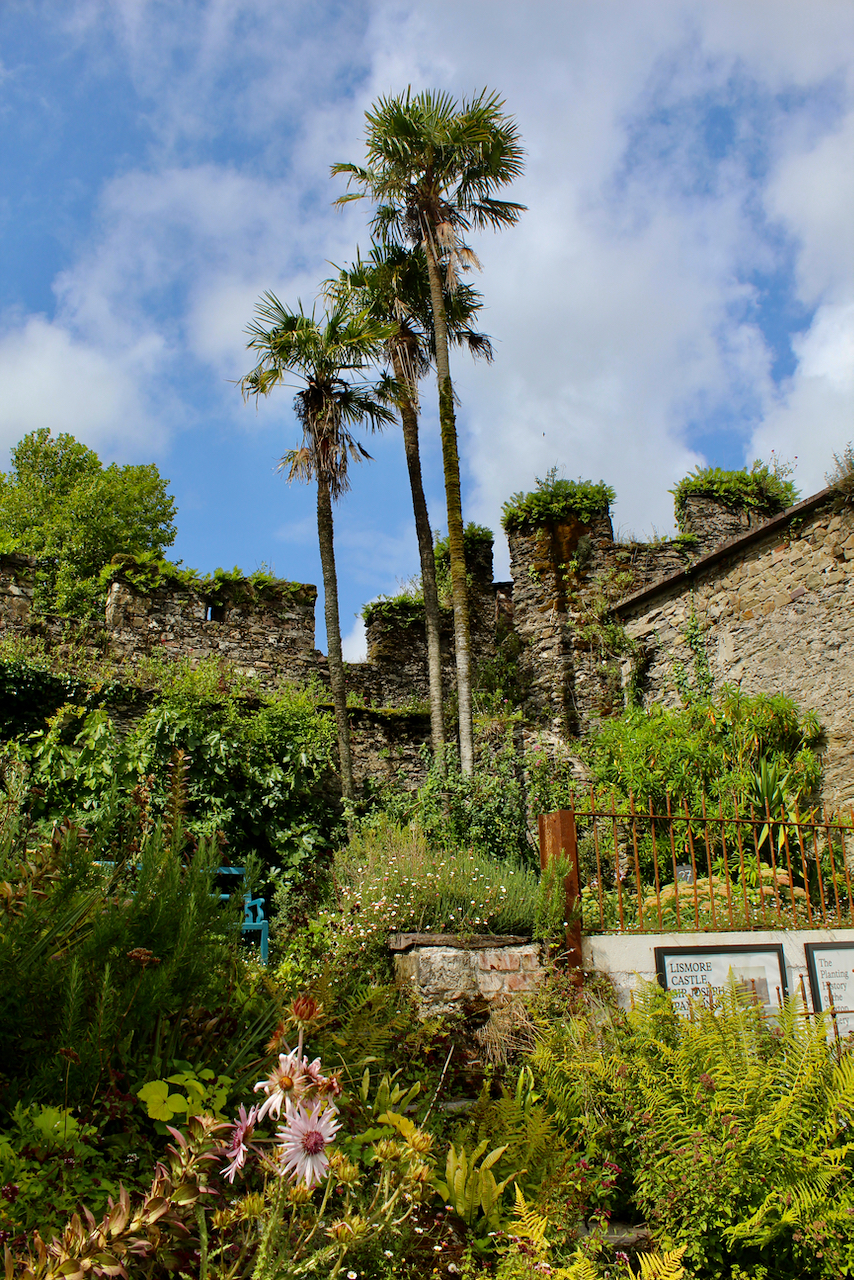
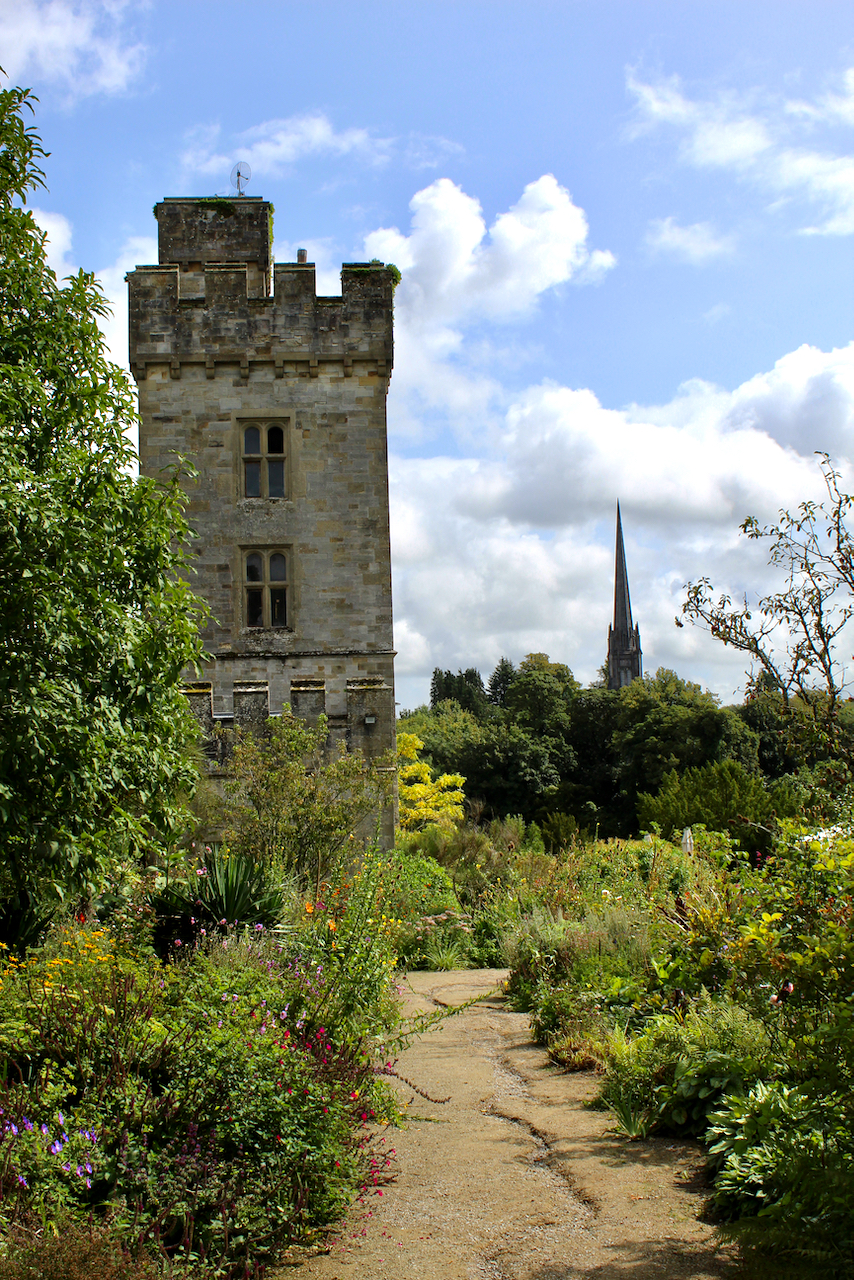
William George Spencer Cavendish (1790-1858) 6th Duke of Devonshire, the “Bachelor Duke,” by George Edward Madeley, National Portrait Gallery of London D15276.Photograph courtesy of The Hall and Lismore Castle website, the portrait looks like the 6th Duke of Devonshire.Lismore Castle gardens, County Waterford, 20th August 2023.Photograph courtesy of The Hall and Lismore Castle website.
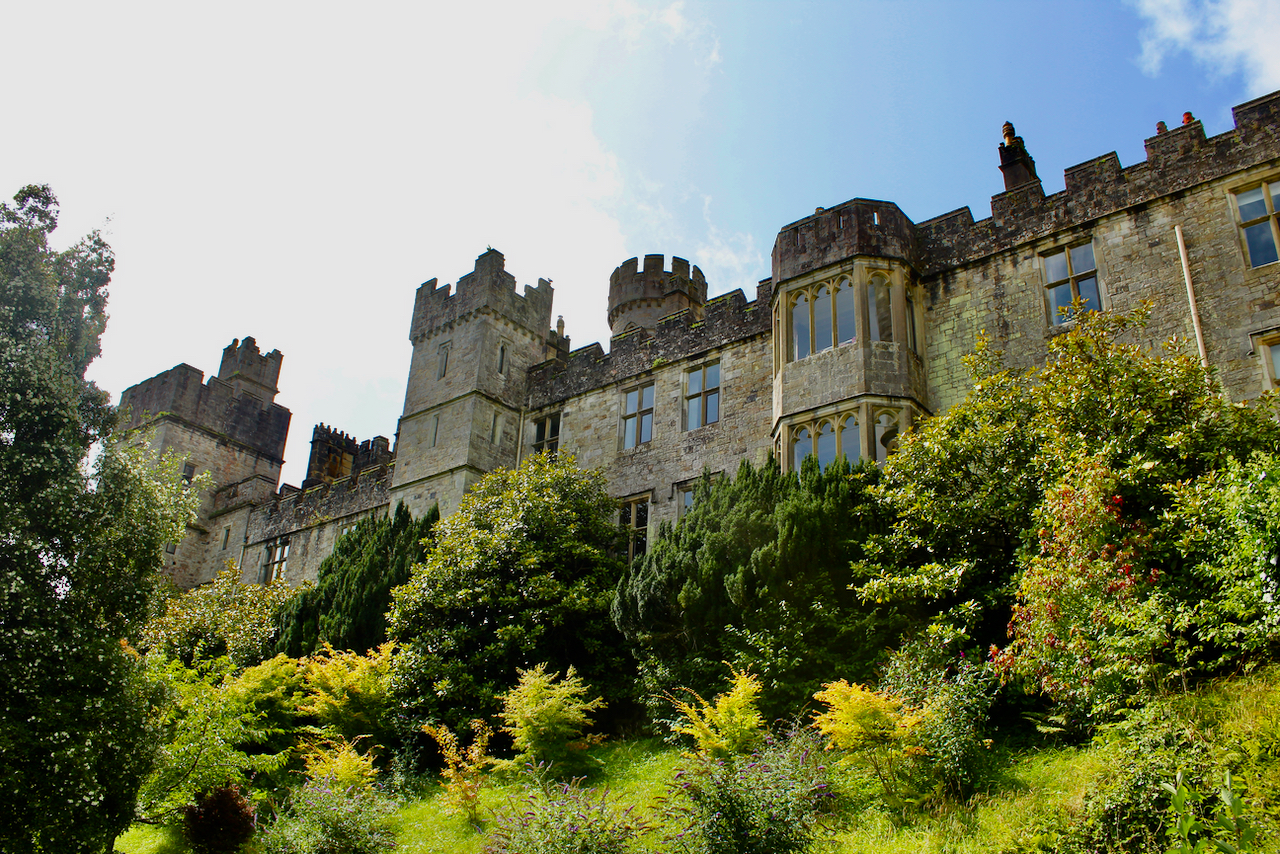
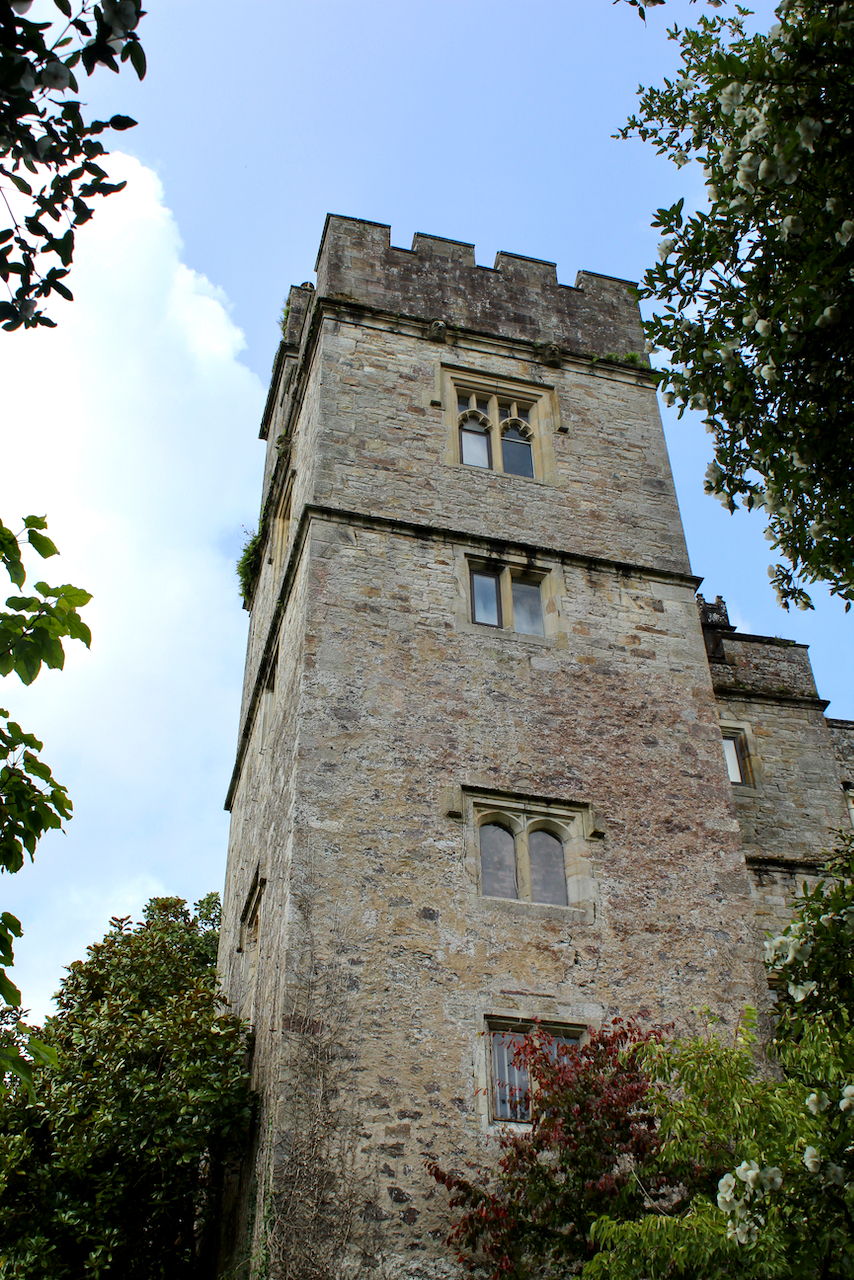
I love the story of the Bachelor Duke: “By 1812 the castle was habitable enough for him to entertain his cousin, Lady Caroline Lamb [nee Ponsonby], her husband William, and her mother, Lady Bessborough, here. Caroline, who had been brought to Ireland in the hope that it would make her forget Byron, was bitterly disappointed by the castle; she had expected “vast apartments full of tattered furniture and gloom”; instead, as Lady Bessborough reported, “Hart handed her into, not a Gothic hall, but two small dapper parlours neatly furnished, in the newest Inn fashion, much like a Cit’s villa at Highgate.” Hart – the Bachelor Duke [He succeeded as the 6th Marquess of Hartington, co. Derby [E., 1694] on 29 July 1811] – had in fact already commissioned the architect William Atkinson to restore the range above the river in a suitably medieval style, and the work actually began in that same year. Battlements replaced the Great Earl of Cork’s gables and the principal rooms – including the dining room with the famous window, which became the drawing room – where given ceilings of simple plaster vaulting.“
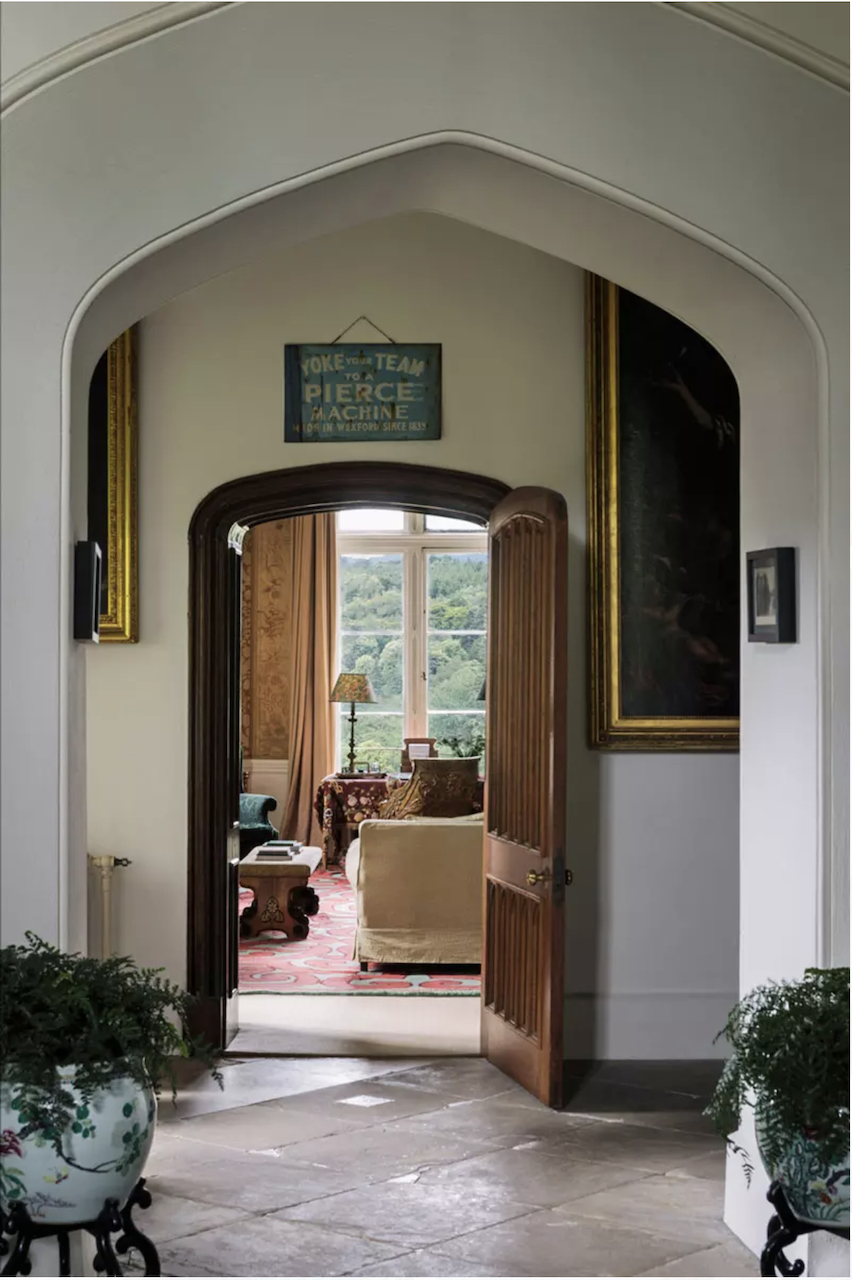
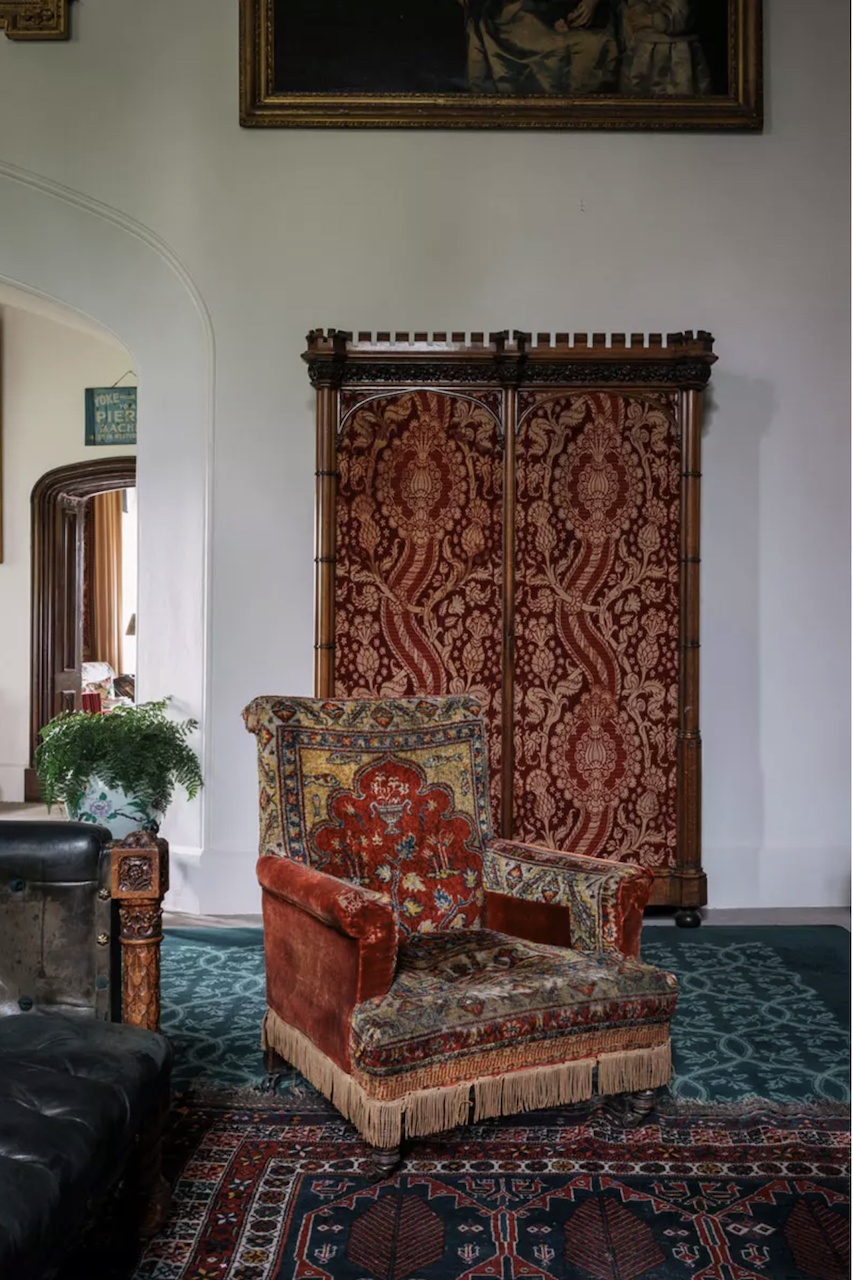
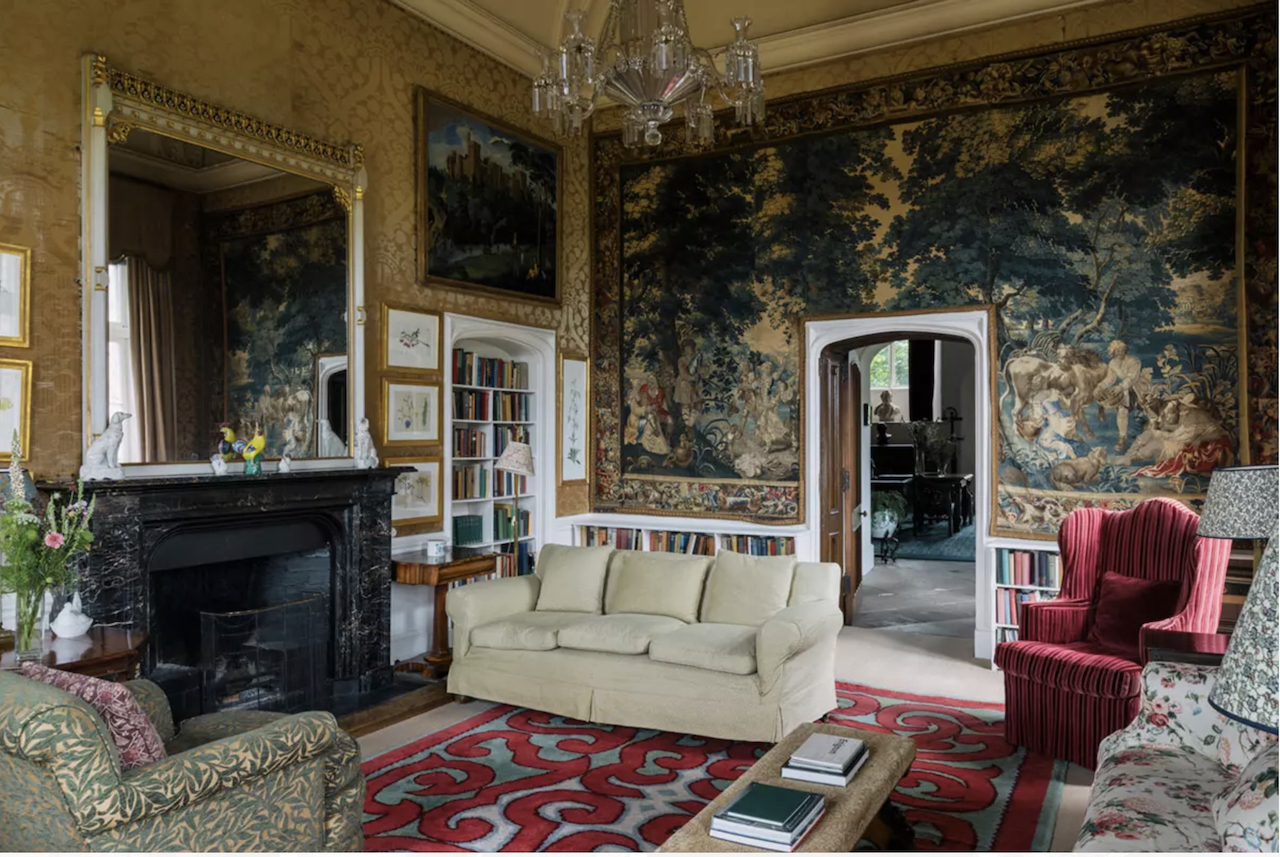
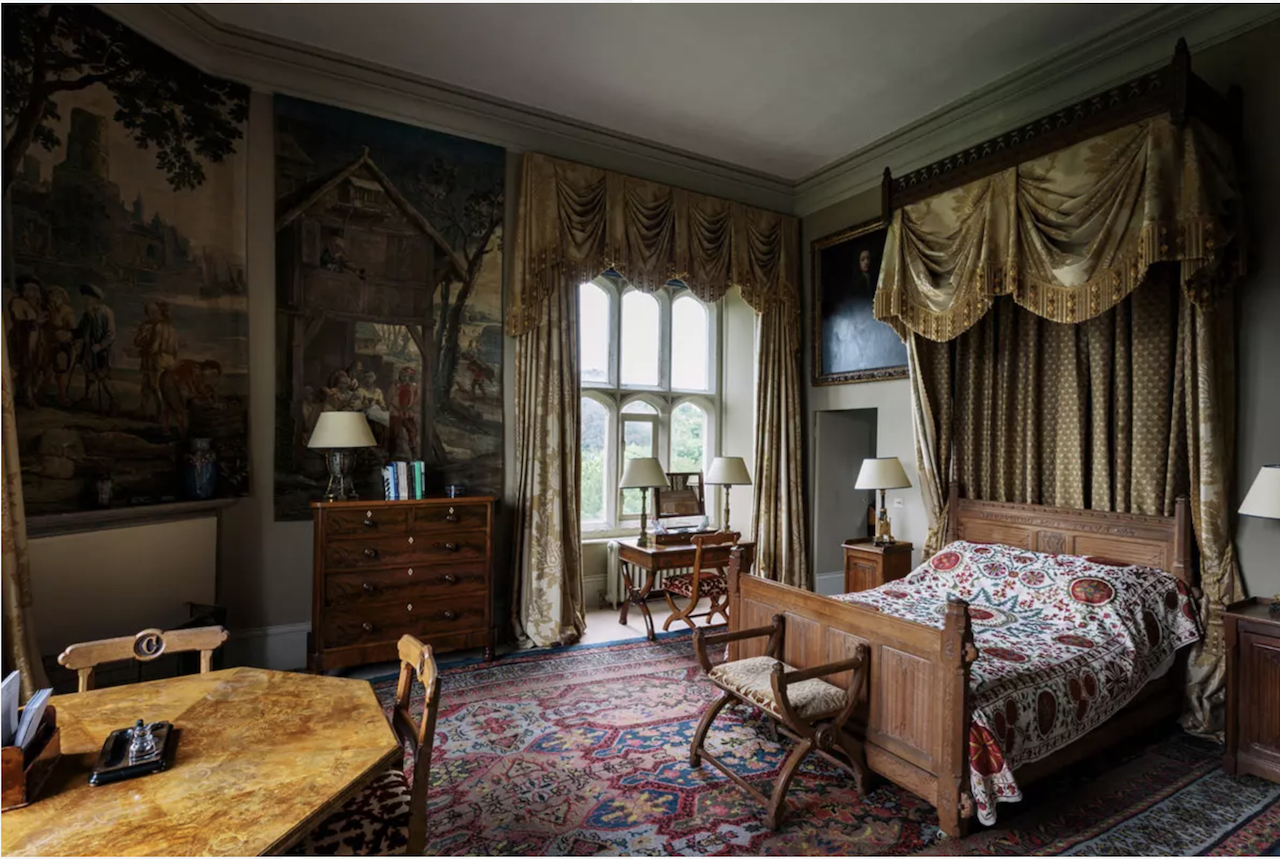
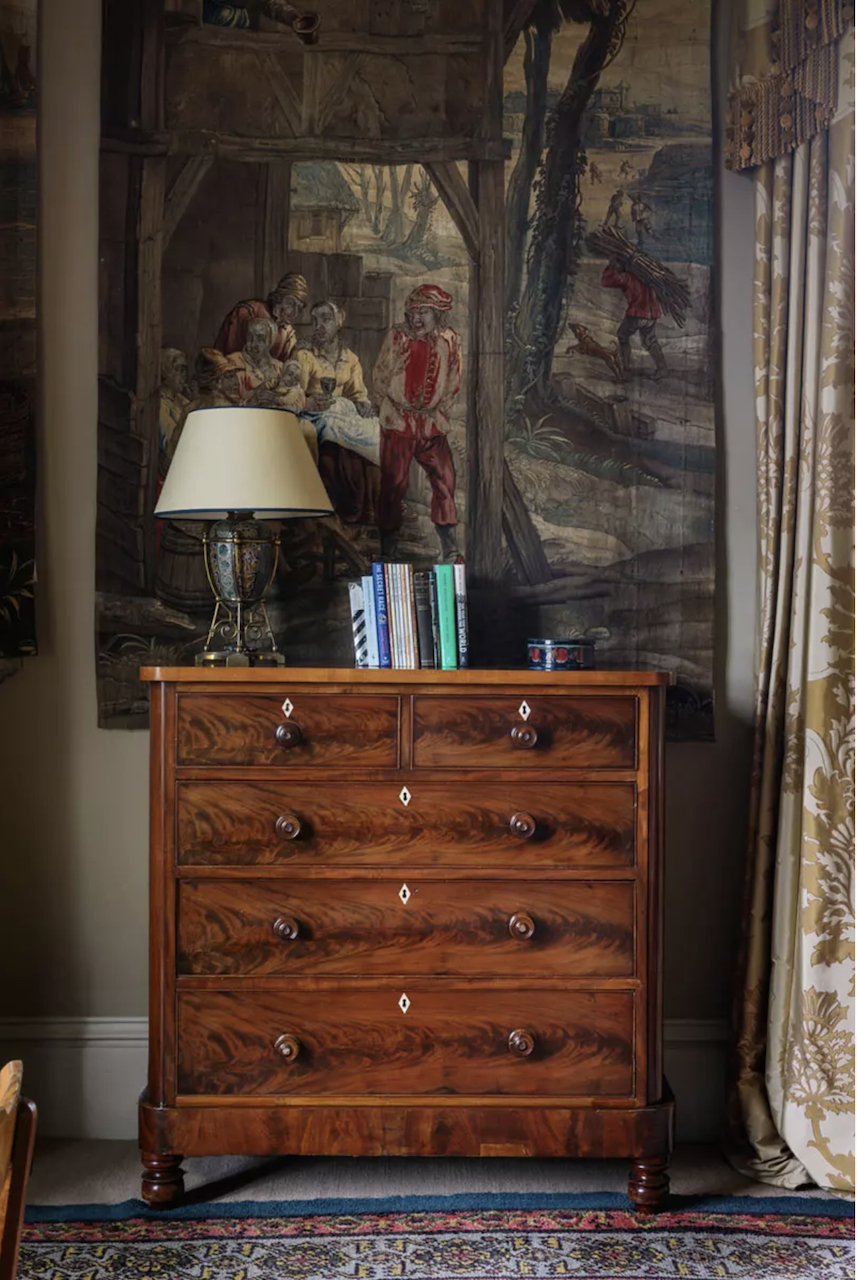
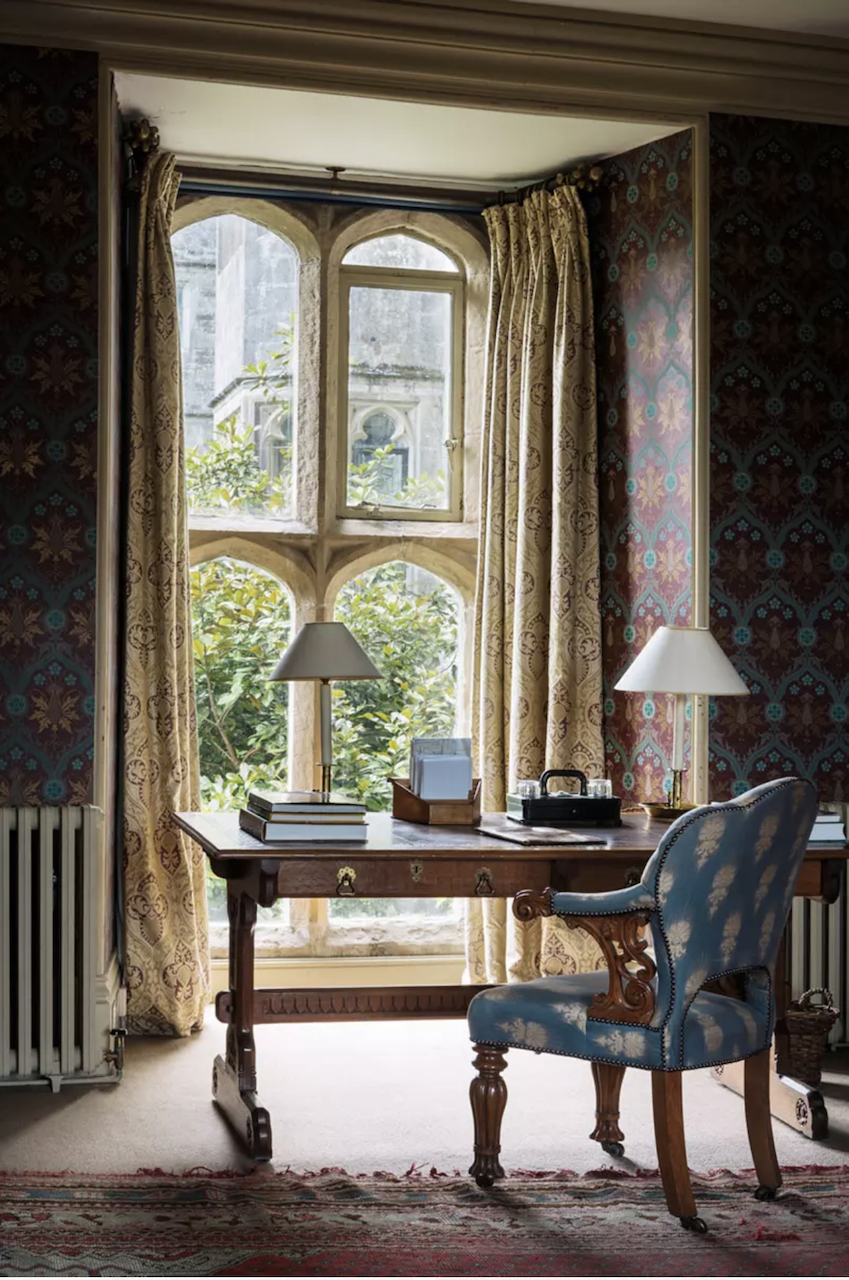
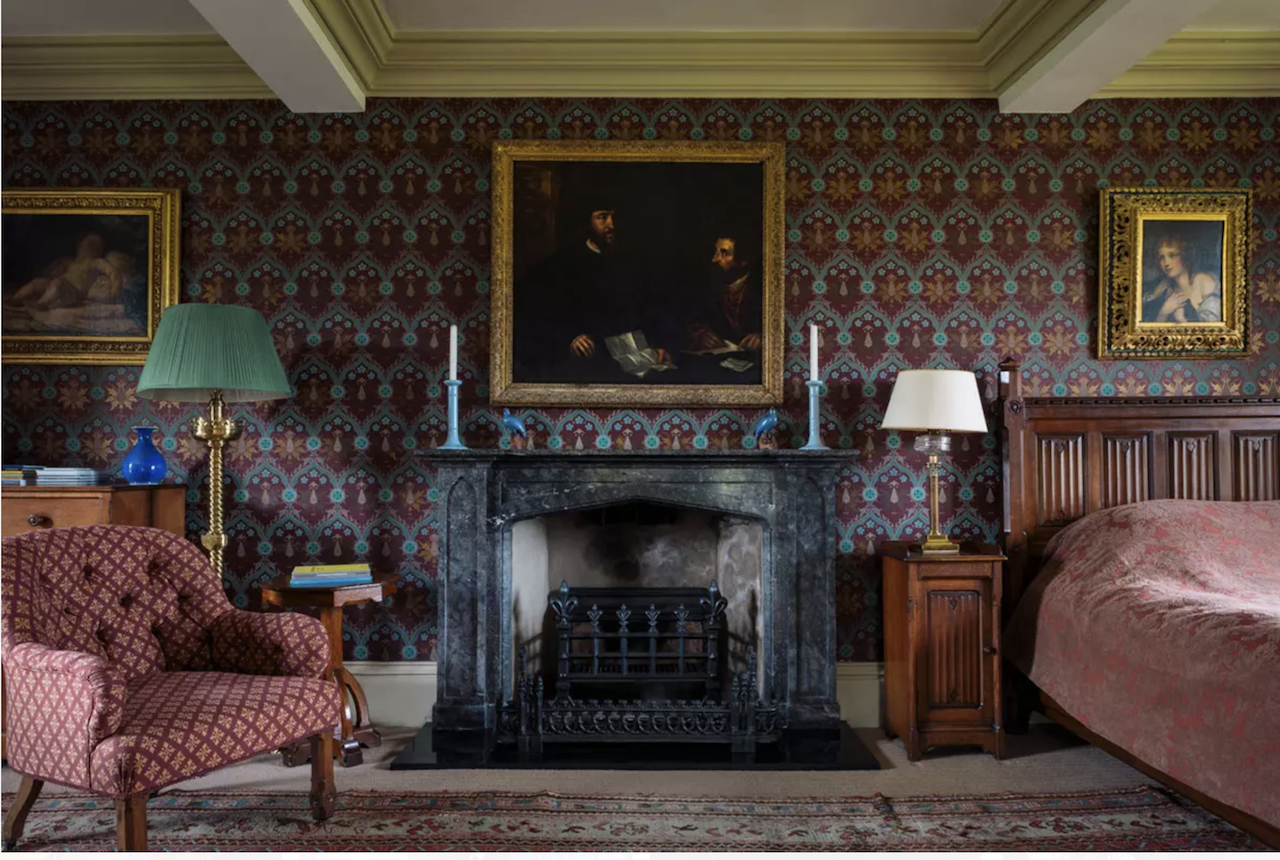
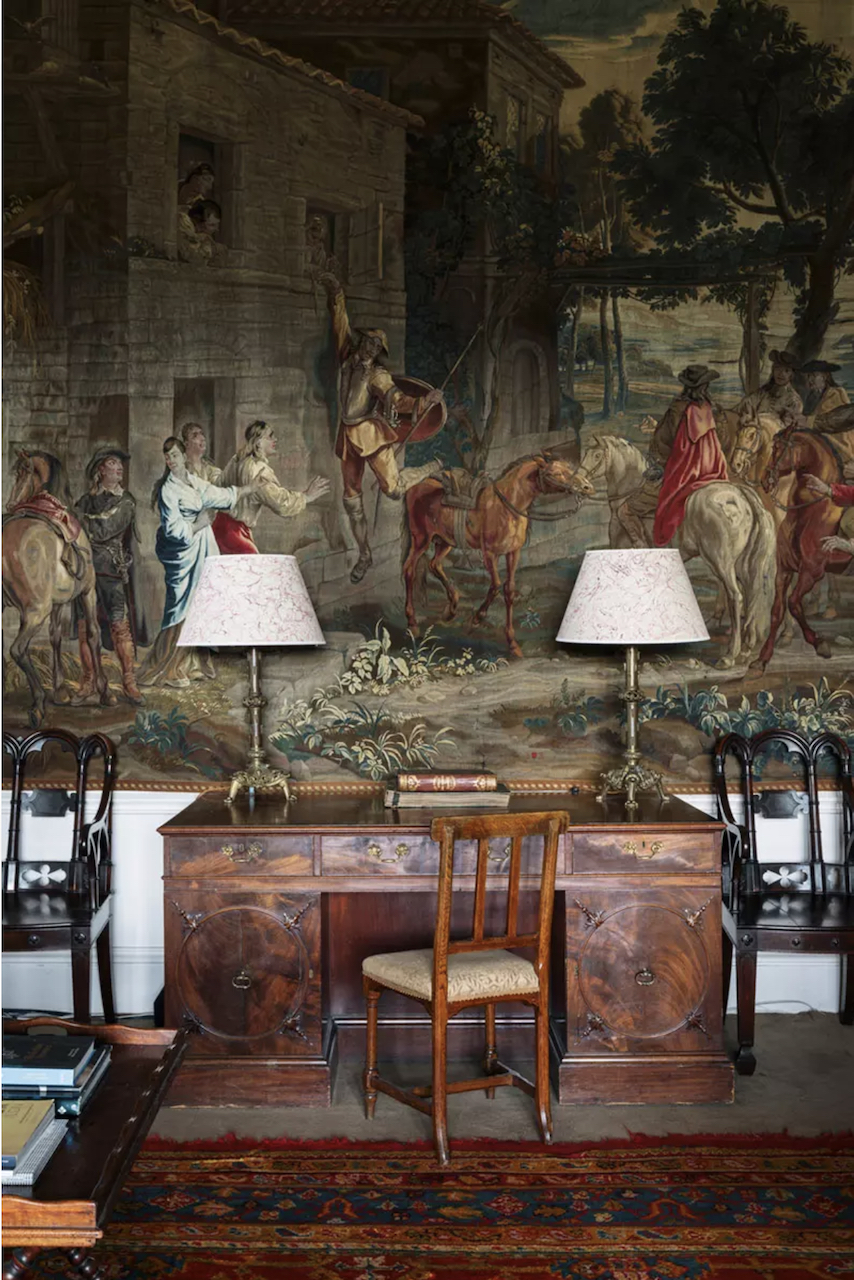
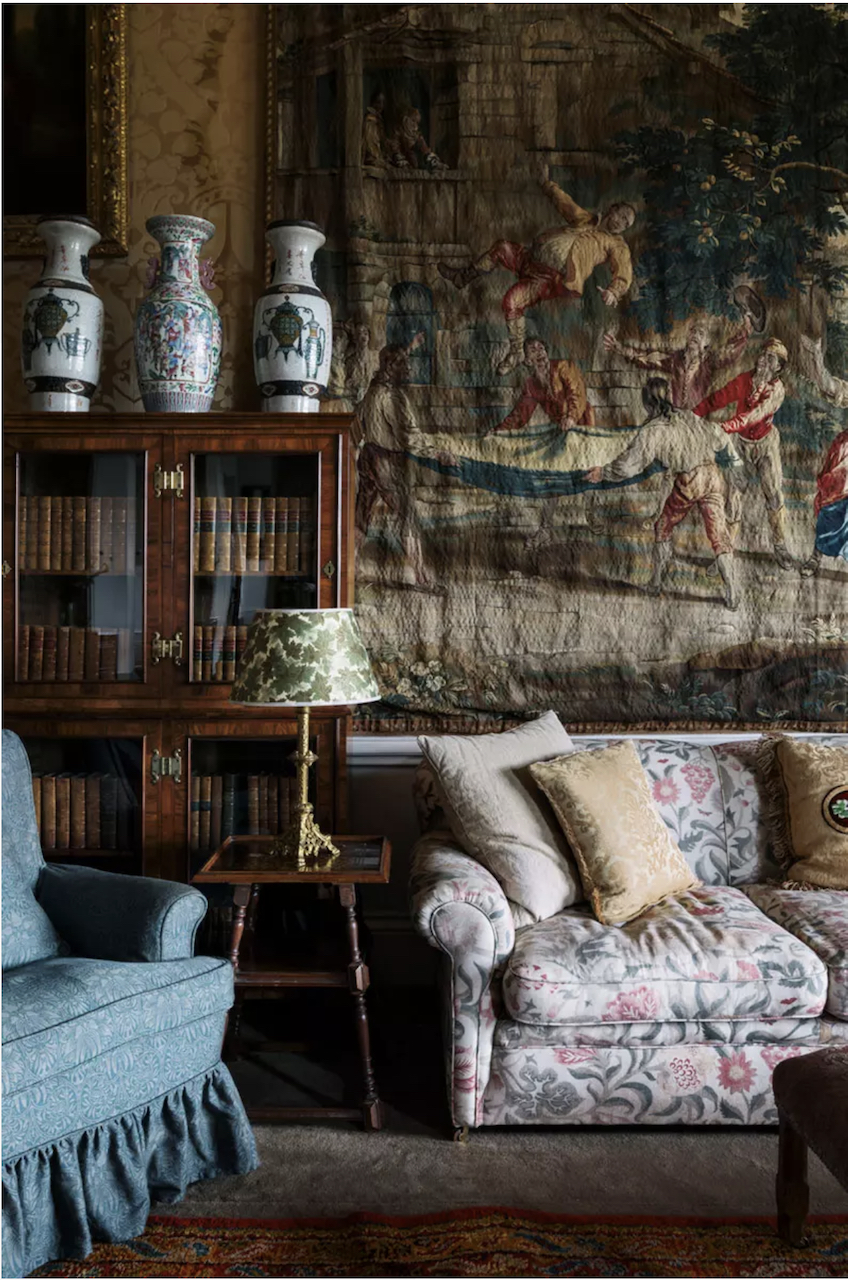
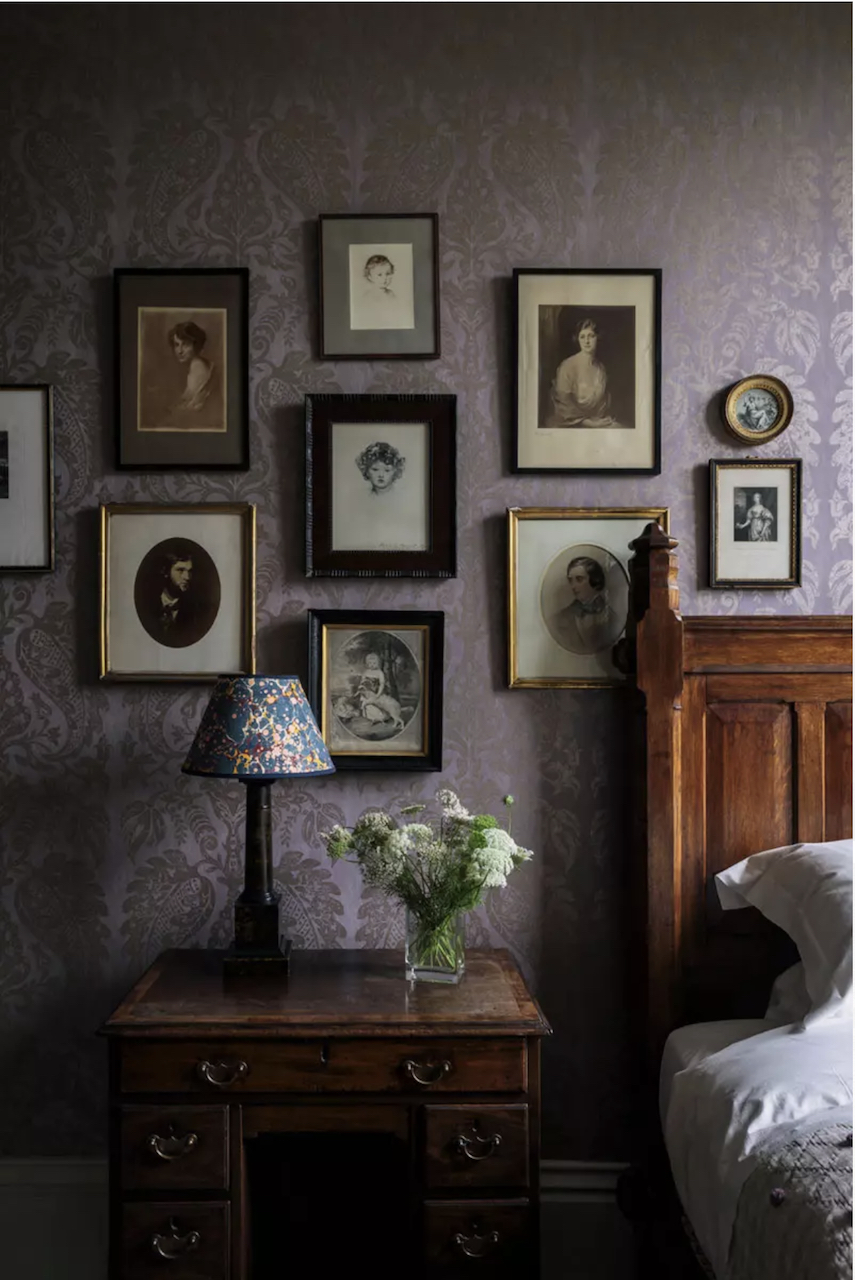
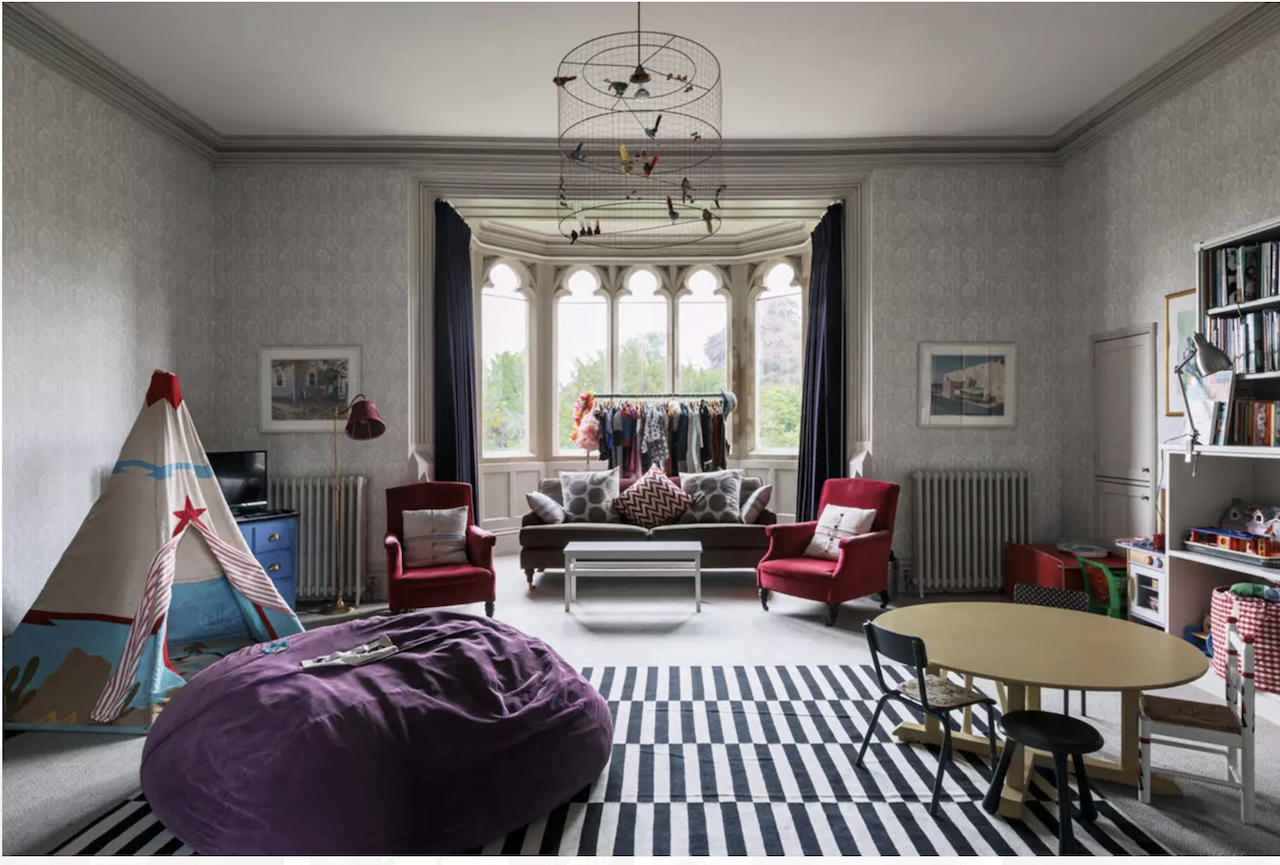
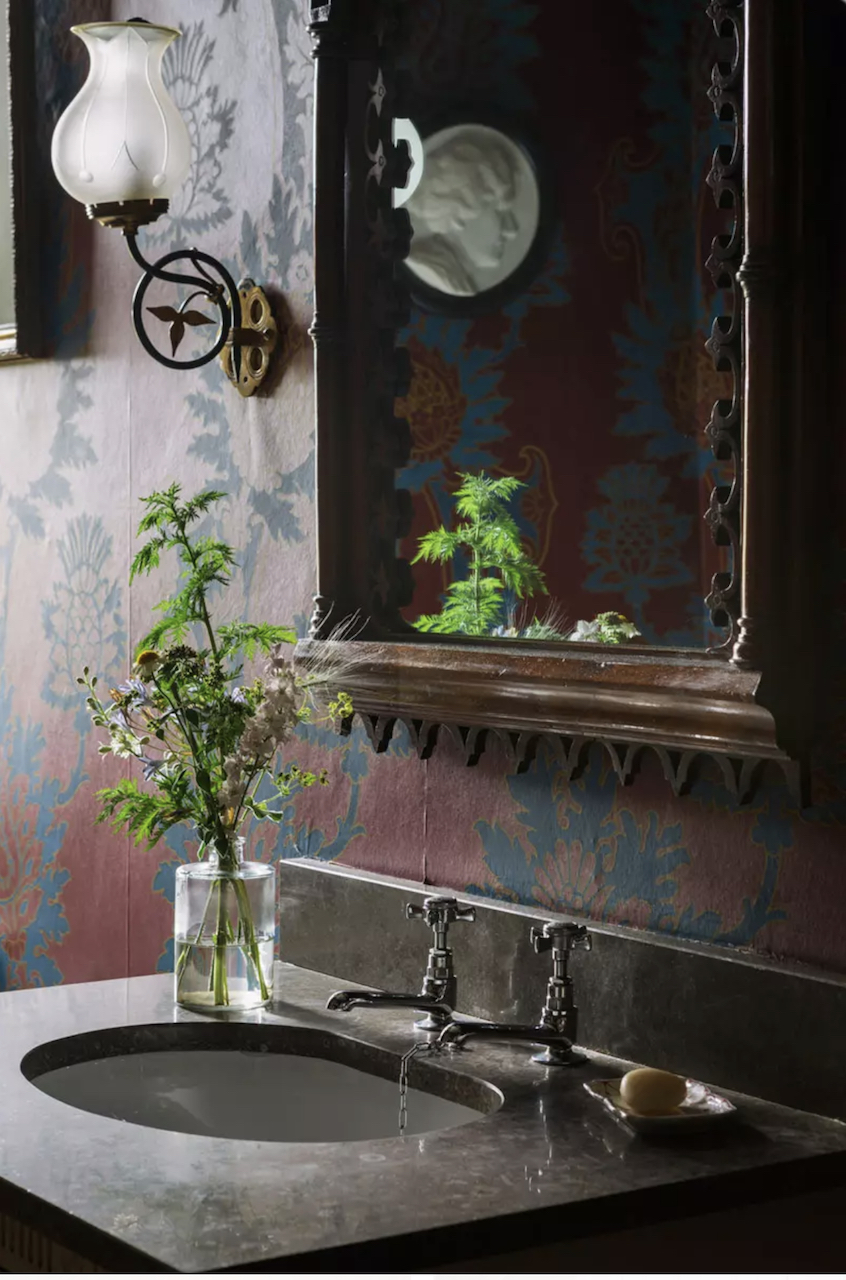
From the website, we can see the interiors of the rooms of the Gothic windows we can see from the Lower Garden.
Photograph courtesy of The Hall and Lismore Castle website.Photograph courtesy of The Hall and Lismore Castle website.Photograph courtesy of The Hall and Lismore Castle website.Photograph courtesy of The Hall and Lismore Castle website.Photograph courtesy of The Hall and Lismore Castle website.
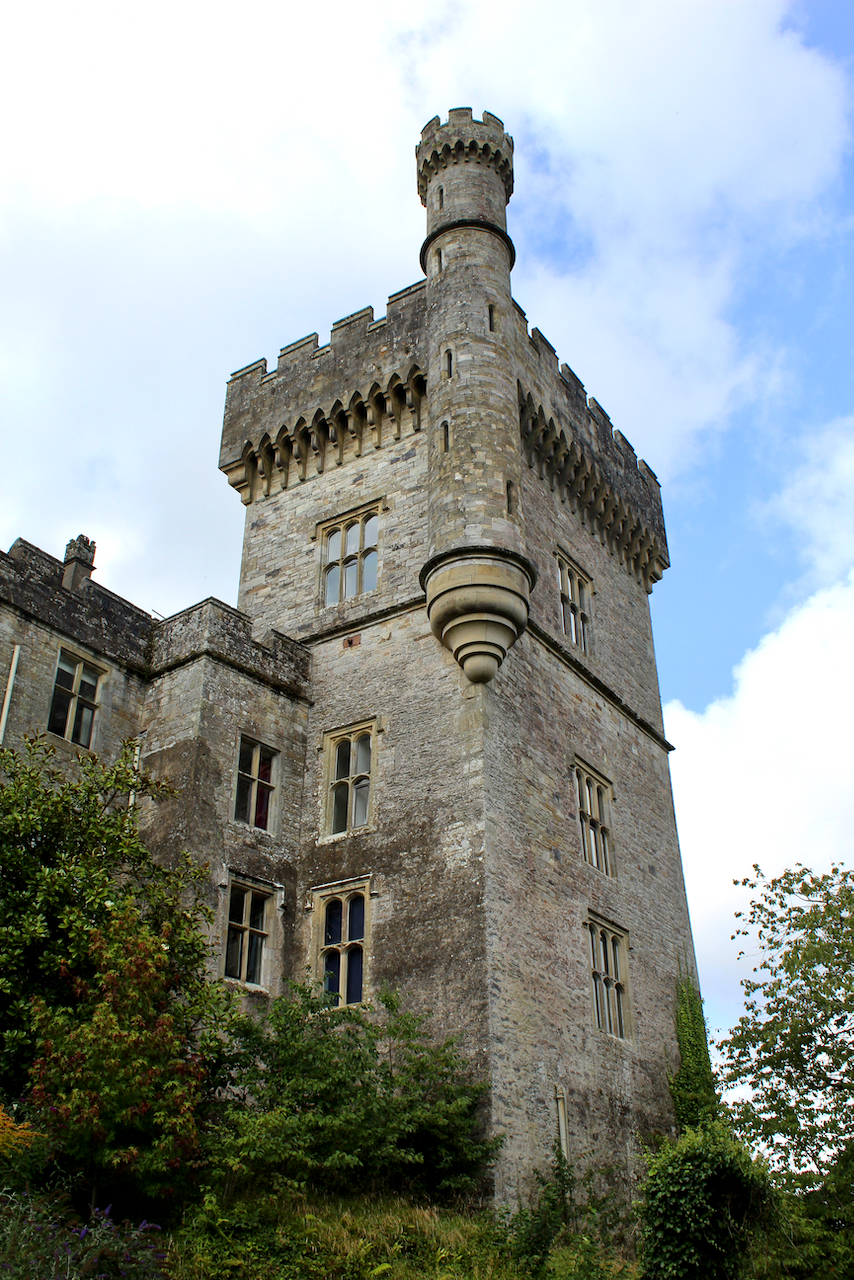
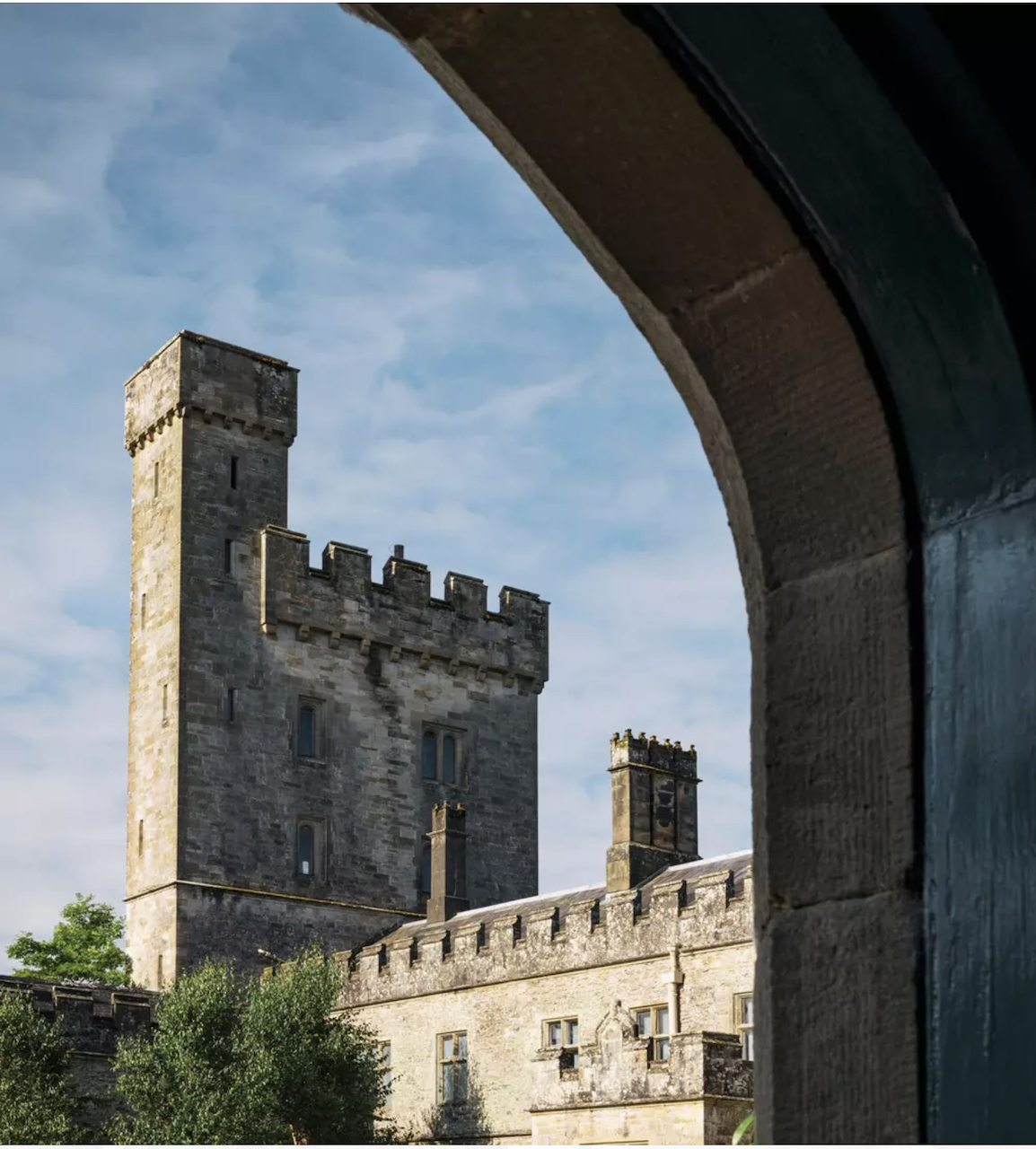
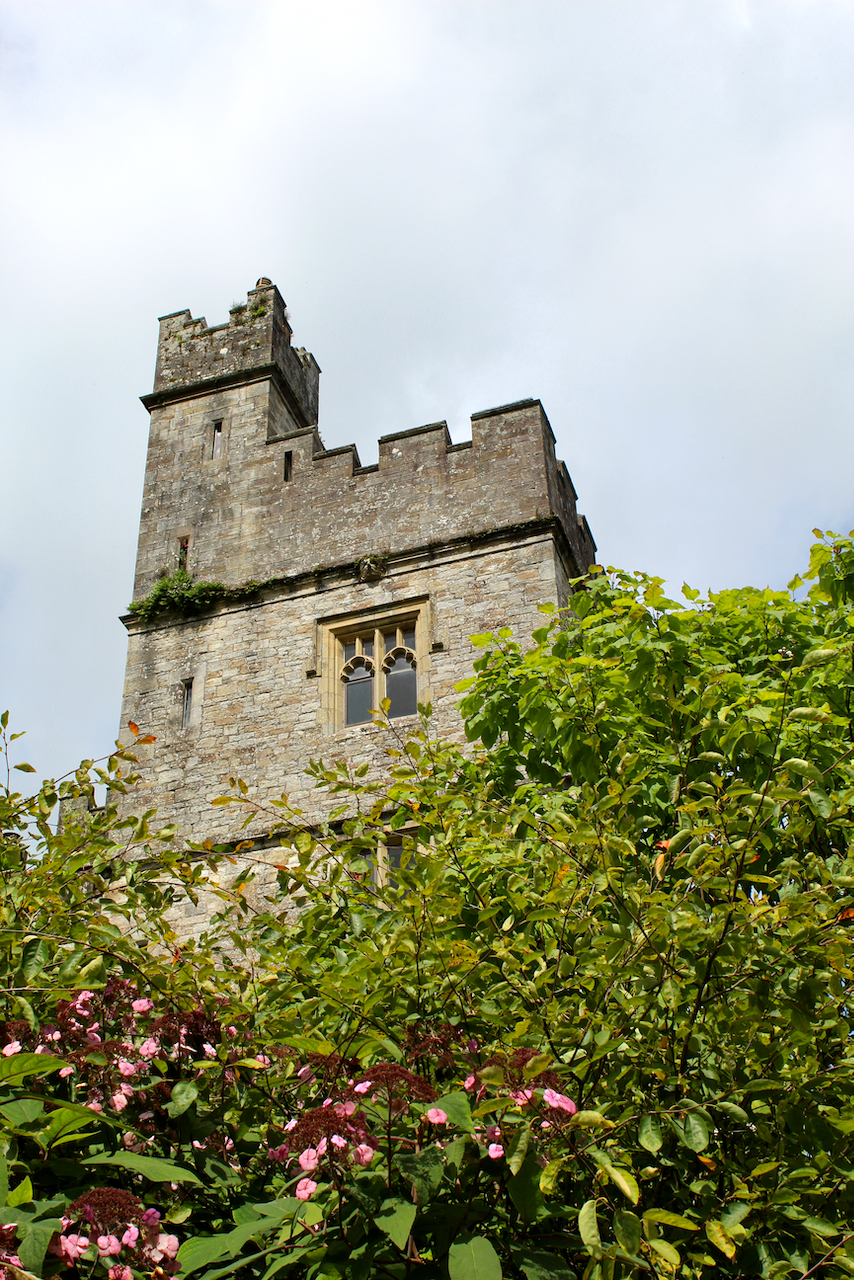
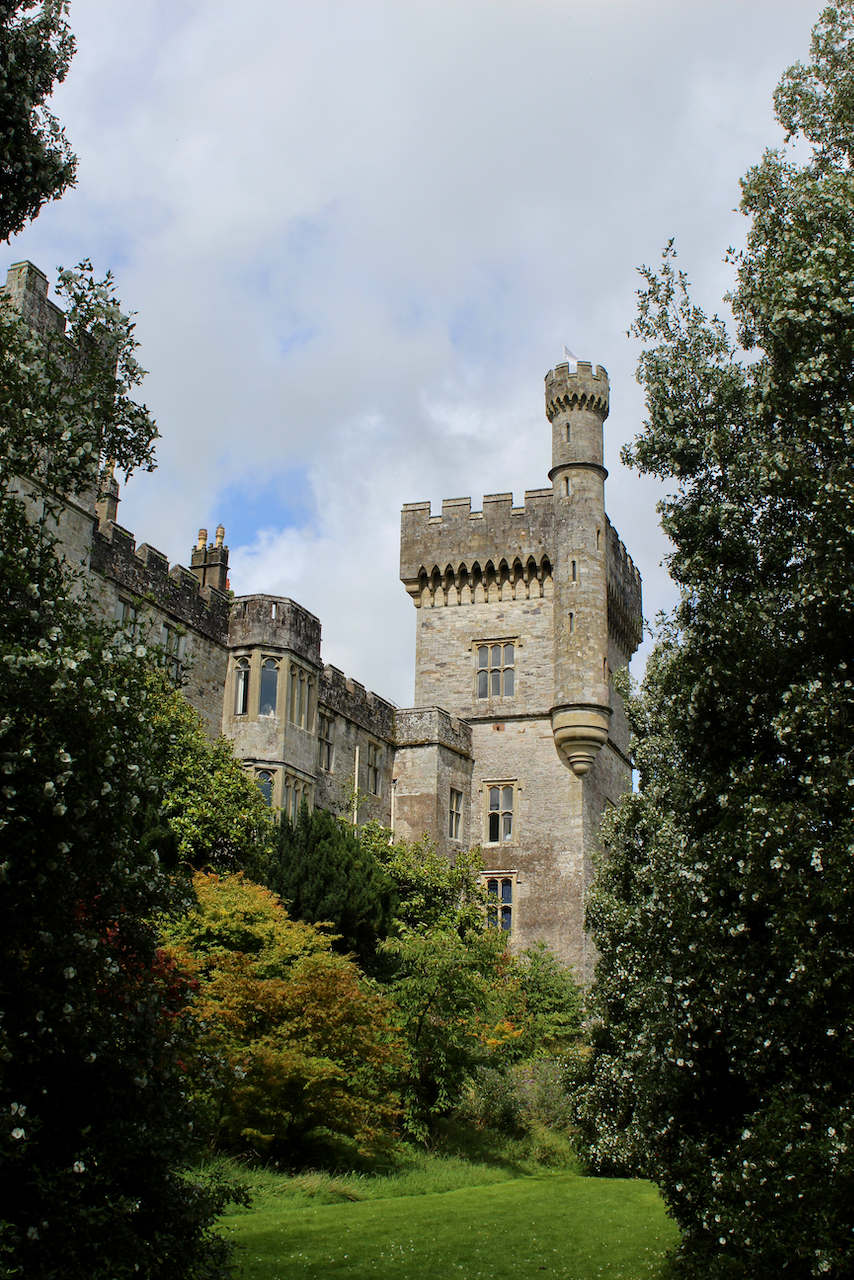
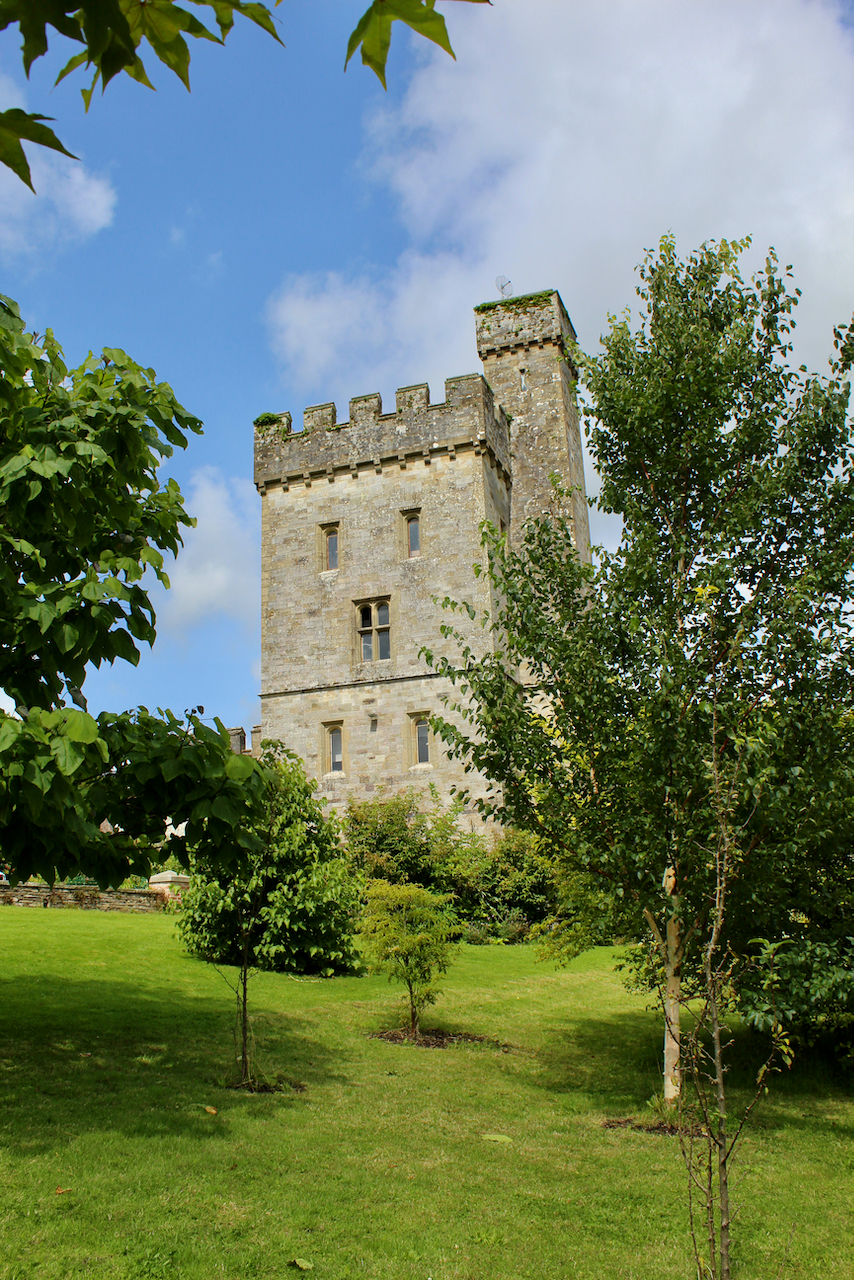
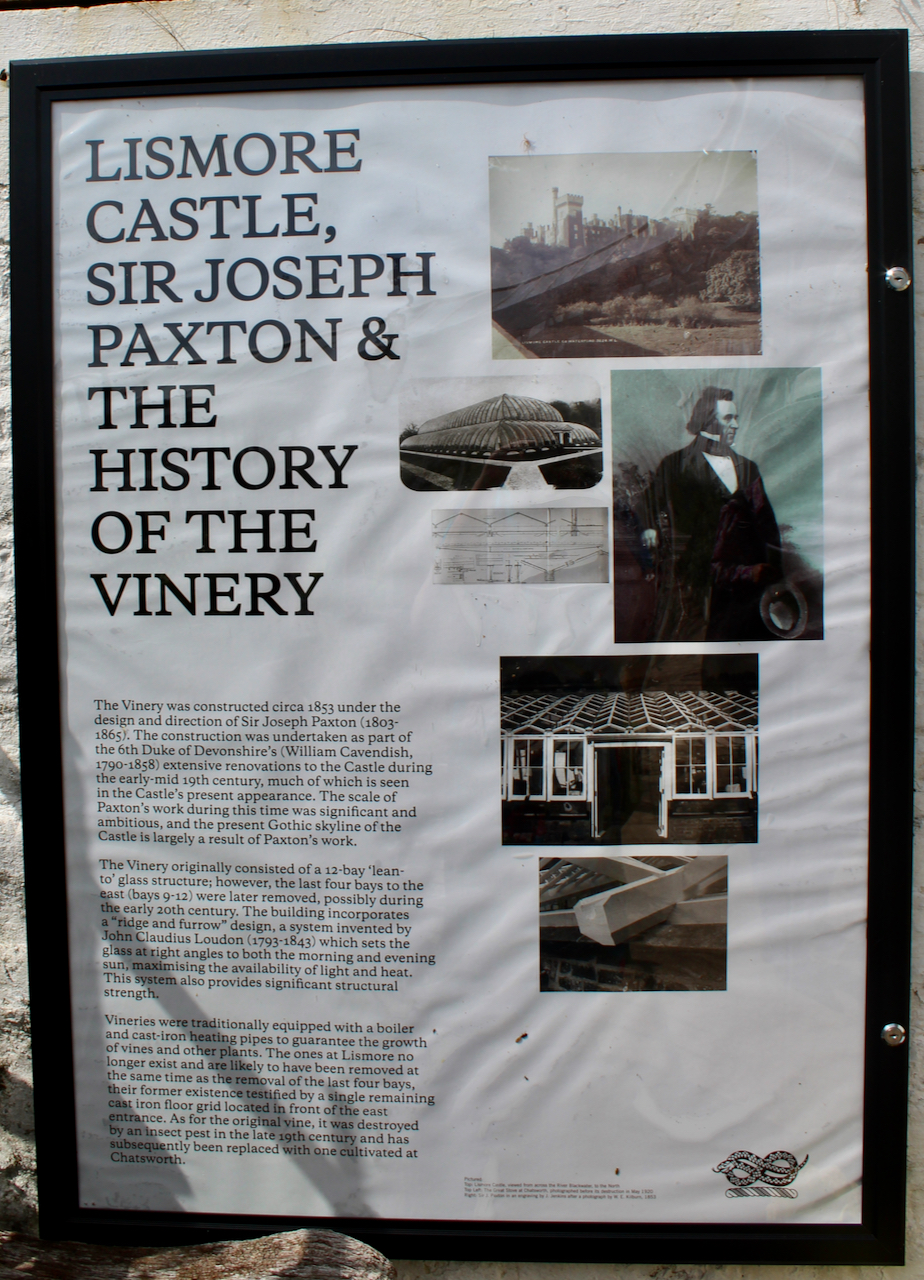
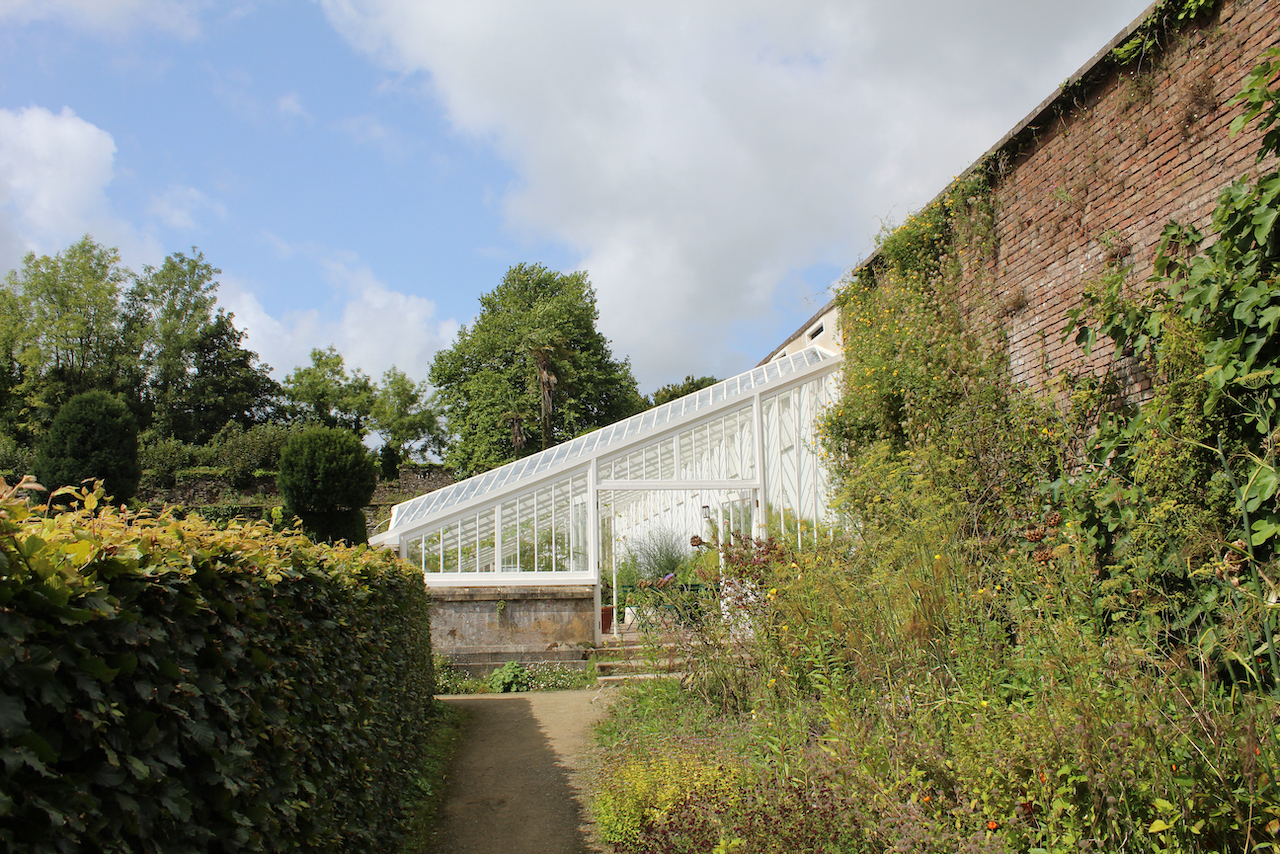
“The Bachelor Duke, who became increasingly attached to Lismore, began a second and more ambitious phase of rebuilding 1850, towards the end of his life. This time his architect was Sir Joseph Paxton, that versatile genius who designed the Crystal Palace and who, having started as the Bachelor Duke’s gardener, became his close friend and right hand man. During the next few years, the three remaining sides of the courtyard were rebuilt in an impressive C19 castle style, with battlemented towers and turrets; all faced in cut-stone shipped over from Derbyshire. The Great Earl’s gatehouse tower, with its pyramidal roof, was however, left as it was, and also the Riding House.“
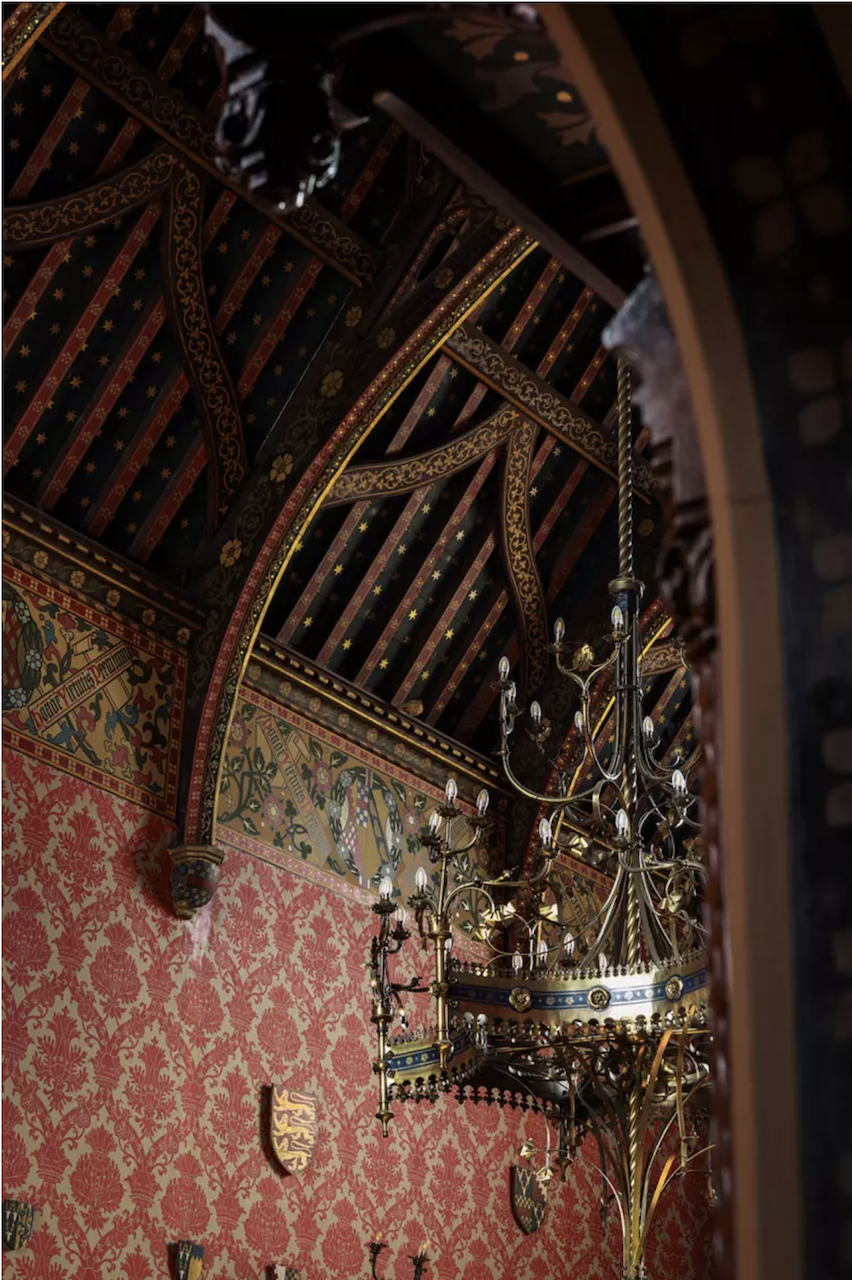
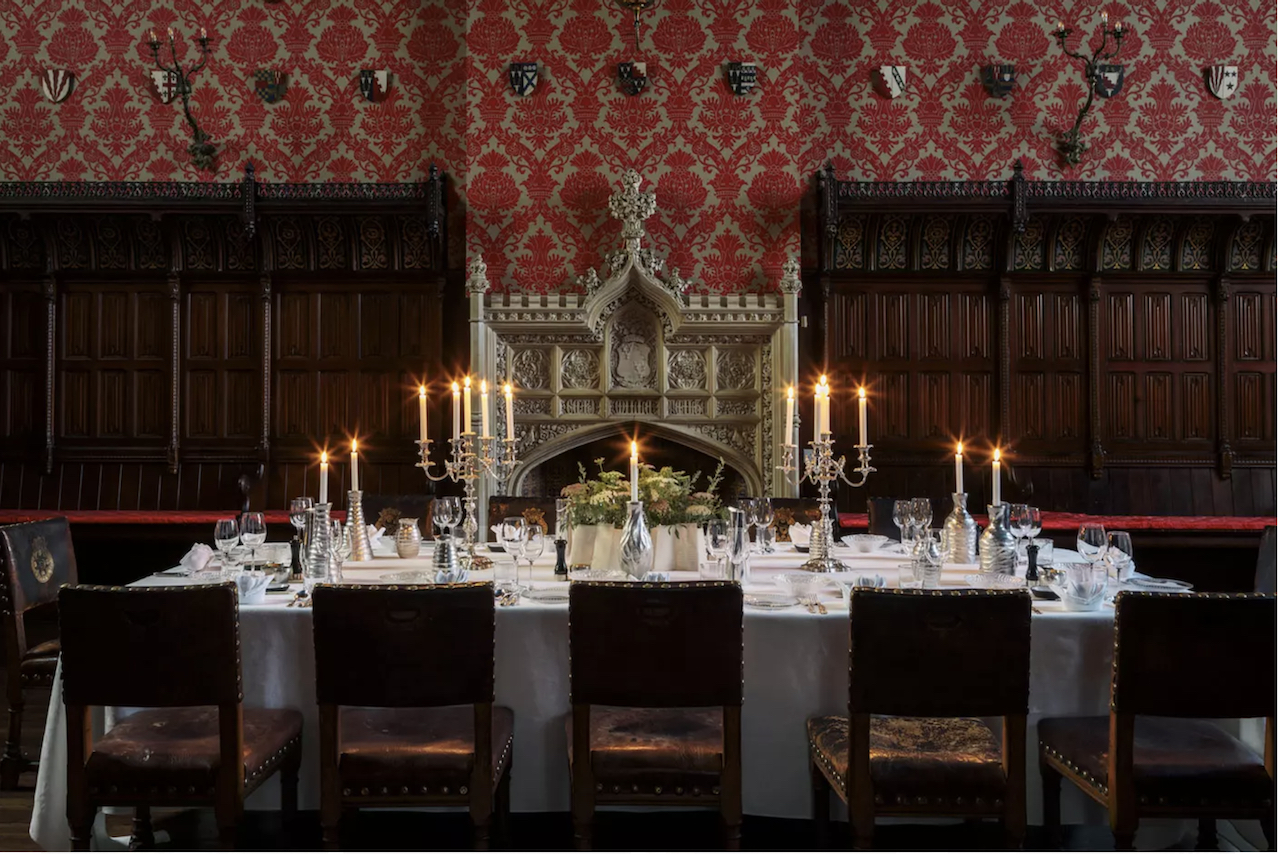
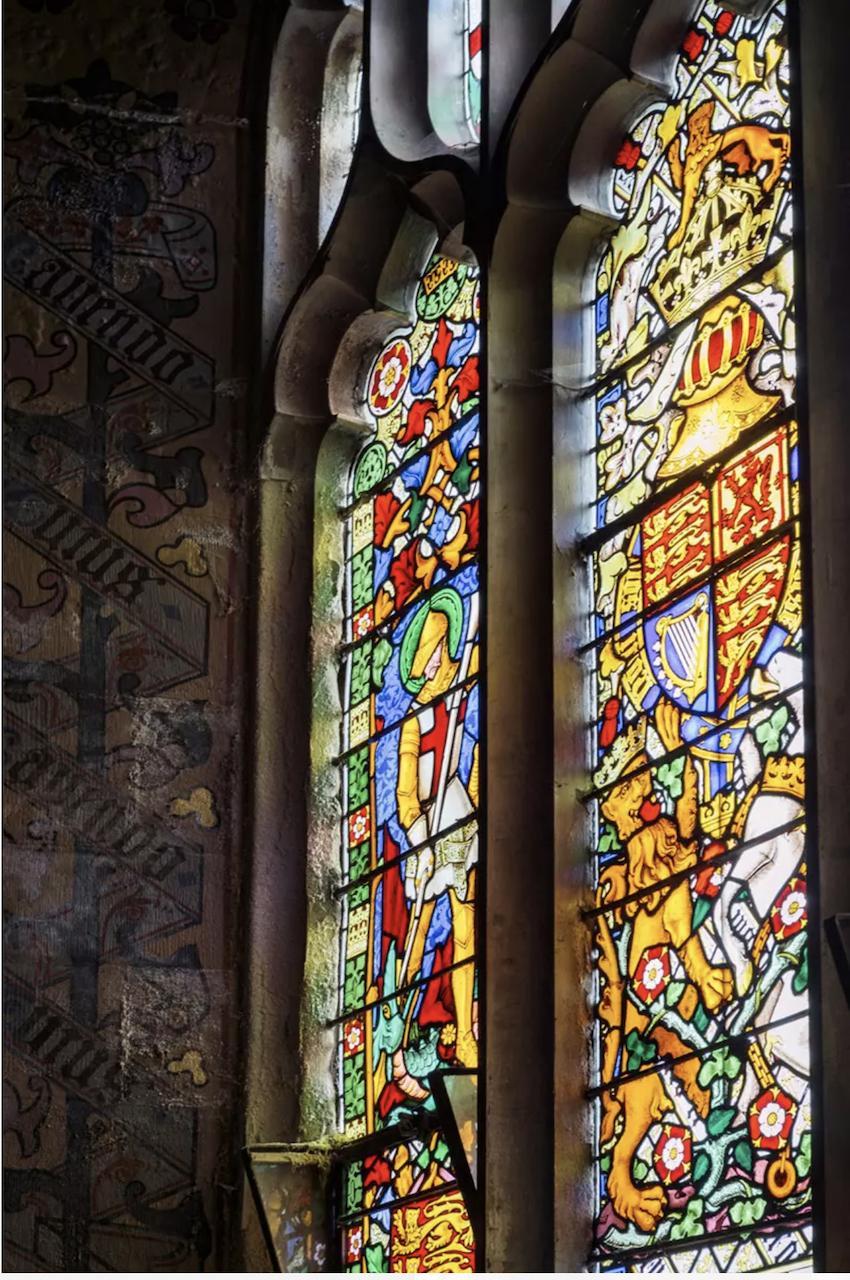
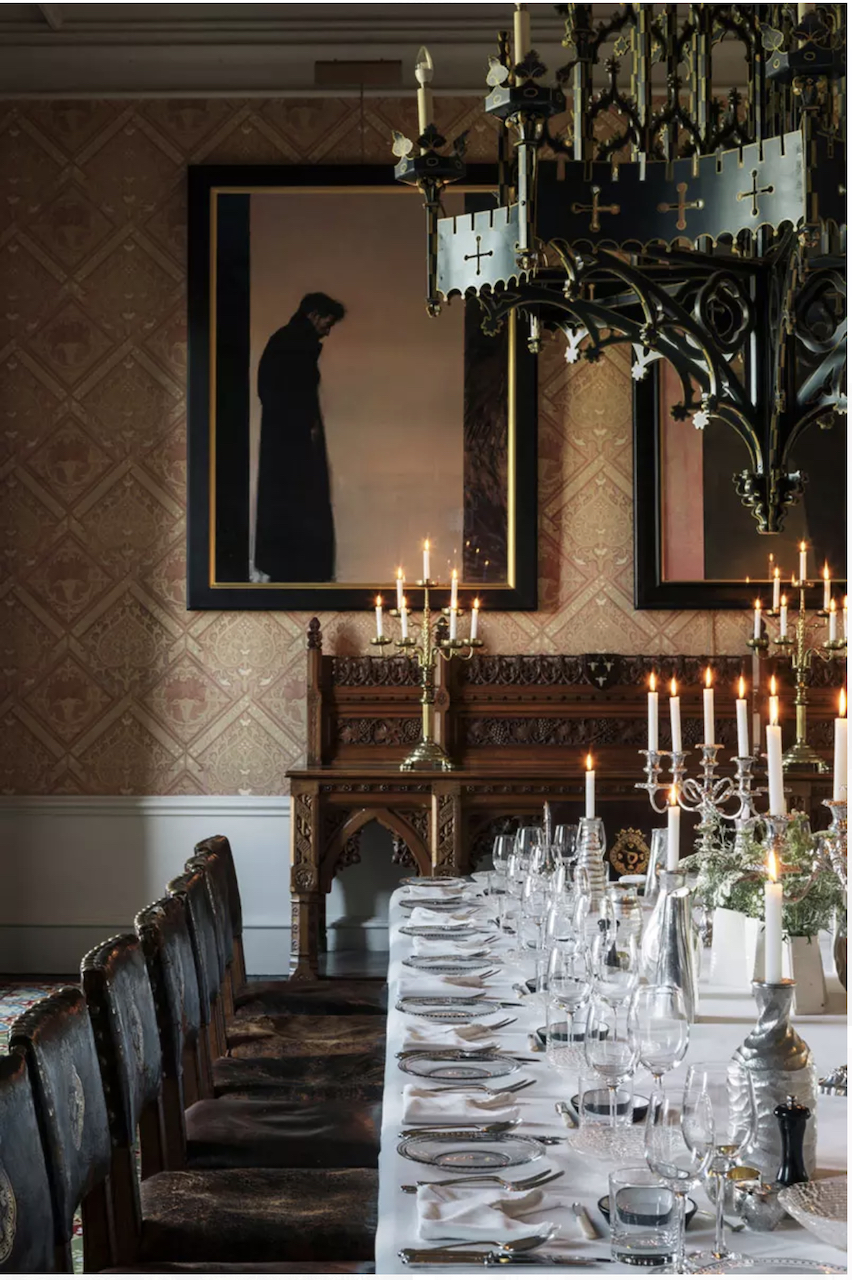
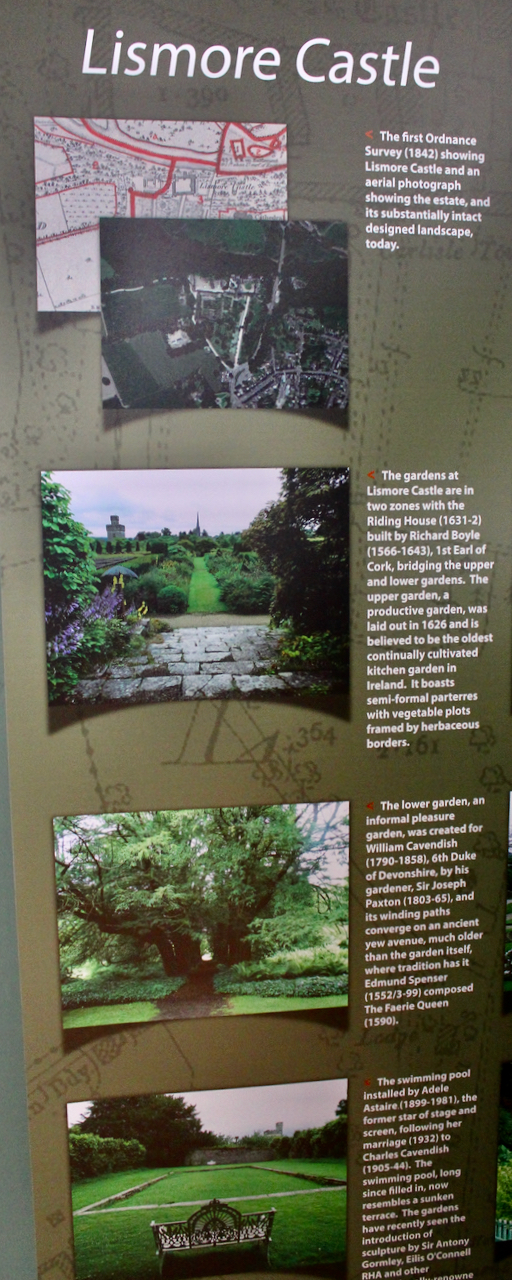
Mark Bence-Jones continues: “The ruined chapel of the Bishops, adjoining the range containing the Great Earl’s living rooms, was restored as a banqueting hall or ballroom of ecclesiastical character; with choirstalls, a vast Perpendicular stained glass window at either end, and richly coloured Gothic stencilling on the walls and the timbers of the open roof. The decoration of the room was carried out by John Gregory Crace, some of it being designed by Pugin, including the chimneypiece, which was exhibited in the Medieval Court at the Great Exhibition. The banqueting hall is the only really large room in the castle, the interior of which is on a much more modest and homely scale than might be expected from the great extent of the building; but in fact one side of the courtyard was designed to be a separate house for the agent, and another side to be the estate office. Subsequent Dukes of Devonshire have loved Lismore as much as the Bachelor Duke did, though their English commitments have naturally prevented them from coming here for more than occasional visits. From 1932 until his death 1944, the castle was continuously occupied by Lord Charles Cavendish, younger son of the 9th Duke, and his wife, the former Miss Adele Astaire, the dancer and actress, who still comes here every year. The present Duke and Duchess have carried out many improvements to the garden, which consist of the original upper garden, surrounded by the Great Earl’s fortified walls, and a more naturalistic garden below the approach to the castle; the two being linked in a charming and unexpected way by a staircase in the Riding House.”
[2] Bence-Jones, Mark. A Guide to Irish Country Houses (originally published as Burke’s Guide to Country Houses volume 1 Ireland by Burke’s Peerage Ltd. 1978); Revised edition 1988 Constable and Company Ltd, London.
Nicola Hamilton (1666-1713) by 17th century Irish portraitist, Garrett Morphy, courtesy of Howth Castle instagram.
The excellent site of Timothy William Ferres tells us of the Hamiltons, of Stackallen in County Meath:
GUSTAVUS HAMILTON (1642-1723), having abandoned the fortunes of JAMES II, to whom he was a privy counsellor, and distinguished himself as a military officer in the service of WILLIAM III, particularly at the battle of the Boyne, and the siege of Derry, was sworn of the Privy Council of the latter monarch, appointed Brigadier-General of his armies, and further rewarded with a grant of forfeited lands. General Hamilton was MP for County Donegal, 1692-1713, and for Strabane, 1713-15. He was elevated to the peerage, 1715, in the dignity of Baron Hamilton of Stackallan, County Meath. His lordship was advanced to a viscountcy, in 1717, as VISCOUNT BOYNE.
Gustavus Hamilton (1642-1723) 1st Viscount Boyne, c. 1680 unknown artist.
He married Elizabeth, second daughter of SIR HENRY BROOKE, Knight, of Brookeborough, County Fermanagh. They had issue:
FREDERICK (c. 1663-1715), father of GUSTAVUS, 2nd Viscount; Gustavus, father of 3rd and 4th Viscounts; Henry, MP for Donegal, 1725-43; Elizabeth.
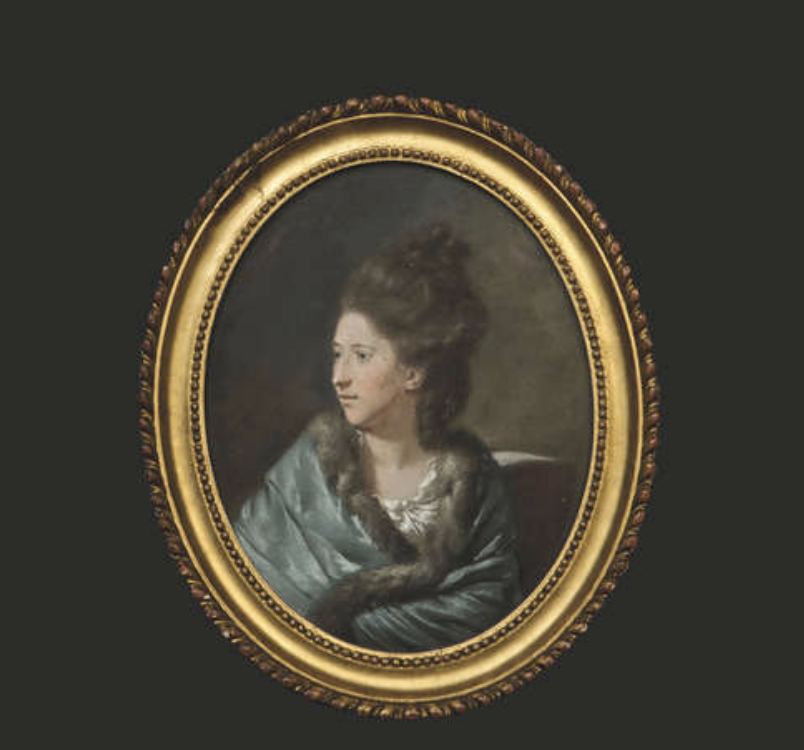
Mary Preston youngest daughter of the Hon. Henry Hamilton, MP for Donegal, 1725-43, by Hugh Douglas Hamilton, courtesy of Adam’s auction 20 Sept 2015. Mary Hamilton married in 1764 (as his second wife) the second Nathaniel Preston (1724-1796), Reverend, of Swainstown, Co. Meath. Her father was a younger son of Gustavus Hamilton 1st Viscount Boyne of Stackallan, Co. Meath and her parents were intimate with Mrs Delaney who of them said – “I never saw a couple better suited than Mr Hamilton and his wife, their house like themselves looks cheerful and neat…., they have four children, whose behaviour shows the sense of their parents”. Mary’s brother, Sackville Hamilton became a competent and respected Civil Servant.
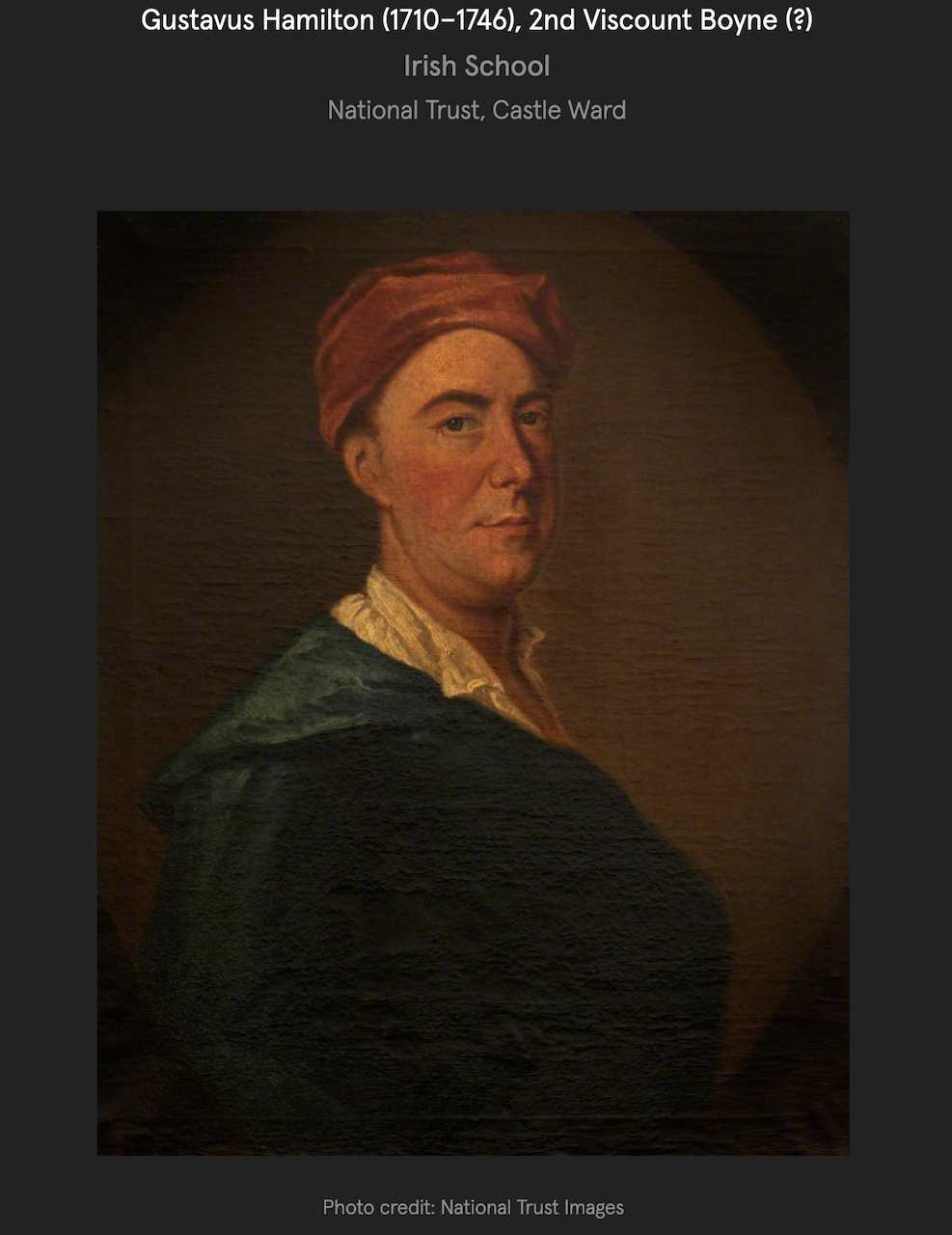
The 1st Viscount was succeeded by his grandson, GUSTAVUS, 2nd Viscount (1710-46).
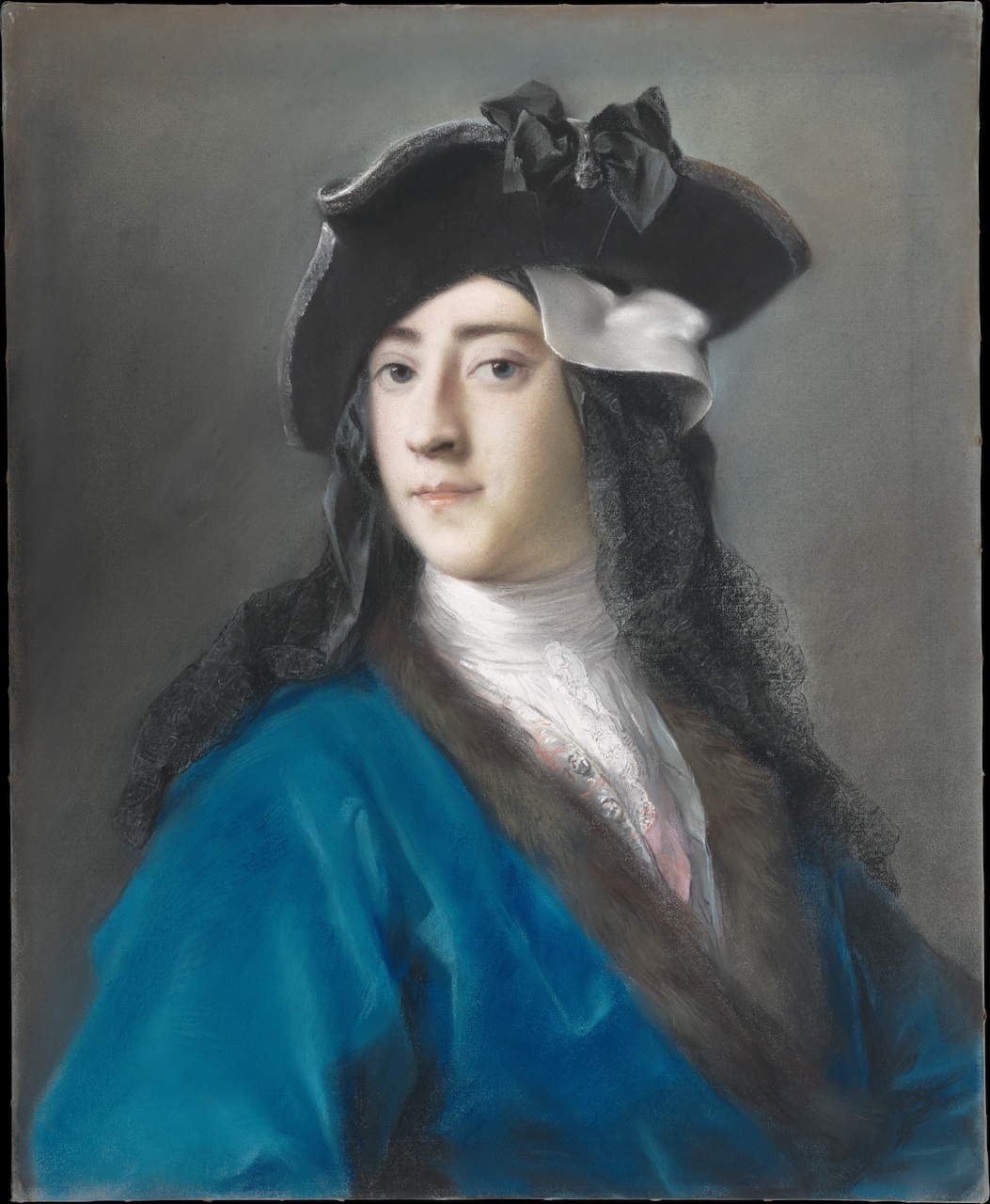
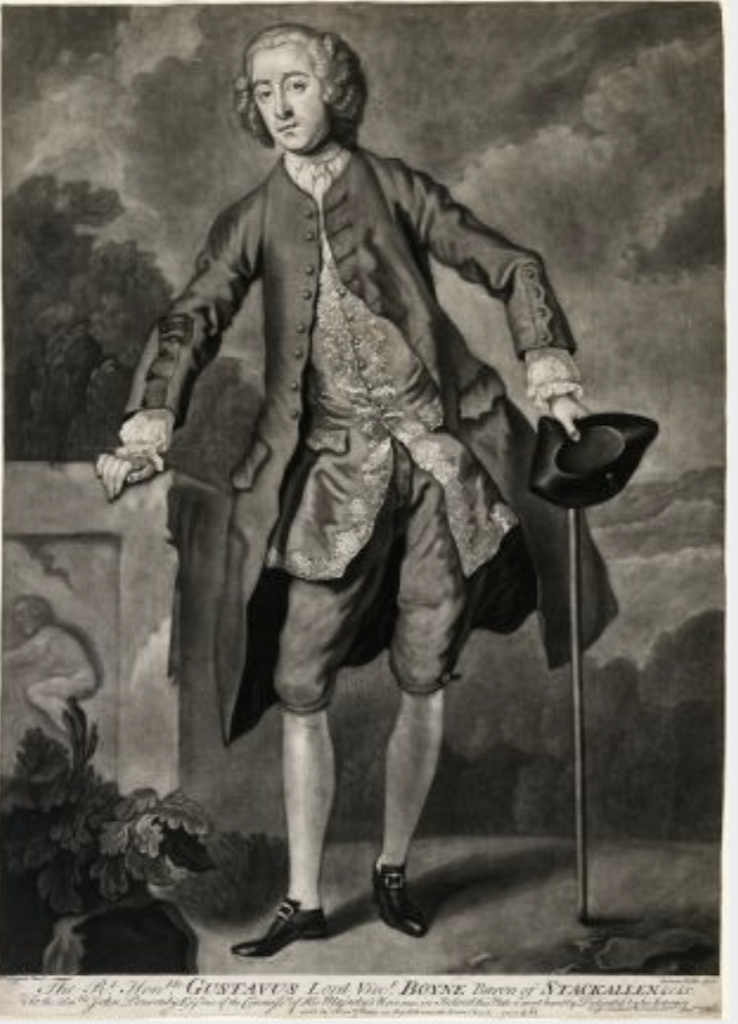
Gustavus Hamilton (1710-46) 2nd Viscount Boyne with a “bauta masque” i.e. the Venetian type supposedly worn by Cassanova, on his ear, by Rosalba Carriera around 1730. He was a founder member of The Society of Dilettanti (founded 1734), a British society of noblemen and scholars that sponsored the study of ancient Greek and Roman art, and the creation of new work in the style.Gustavus Hamilton, 2nd Viscount Boyne, (1710-1746) Engraver Andrew Miller, English, fl.1737-1763 After William Hogarth, English, 1697-1764, courtesy of National Gallery of Ireland.Gustavus Hamilton, 2nd Viscount Boyne, (1710-1746)courtesy of National Trust Castle Ward.
Gustavus 2nd Viscount died unmarried, and the honours devolved upon his cousin, Frederick, 3rd Viscount (1718-72).
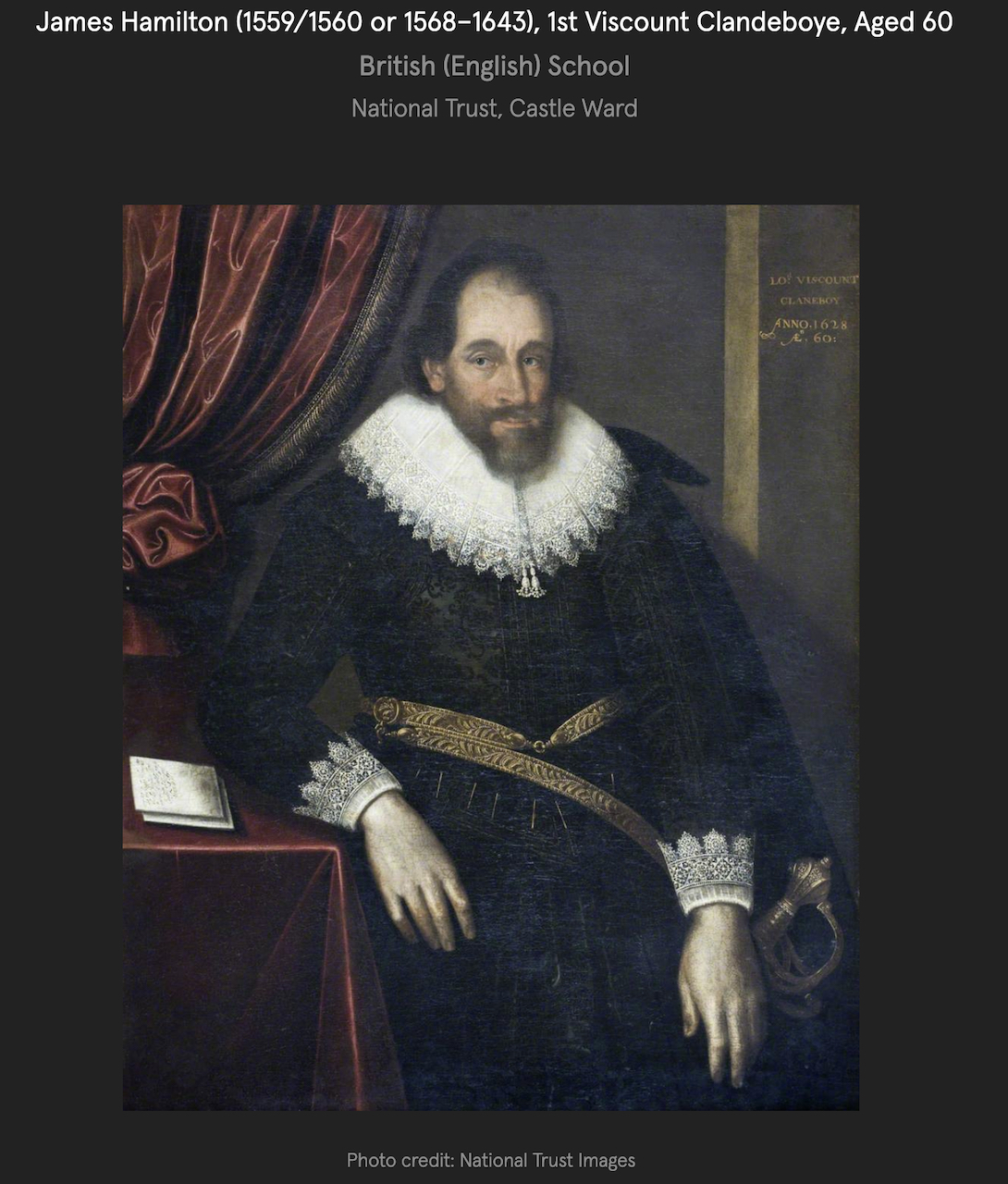
James Hamilton (1559/1560 or 1568-1643) 1st Viscount Clandeboye, courtesy of National Trust Castle Ward.
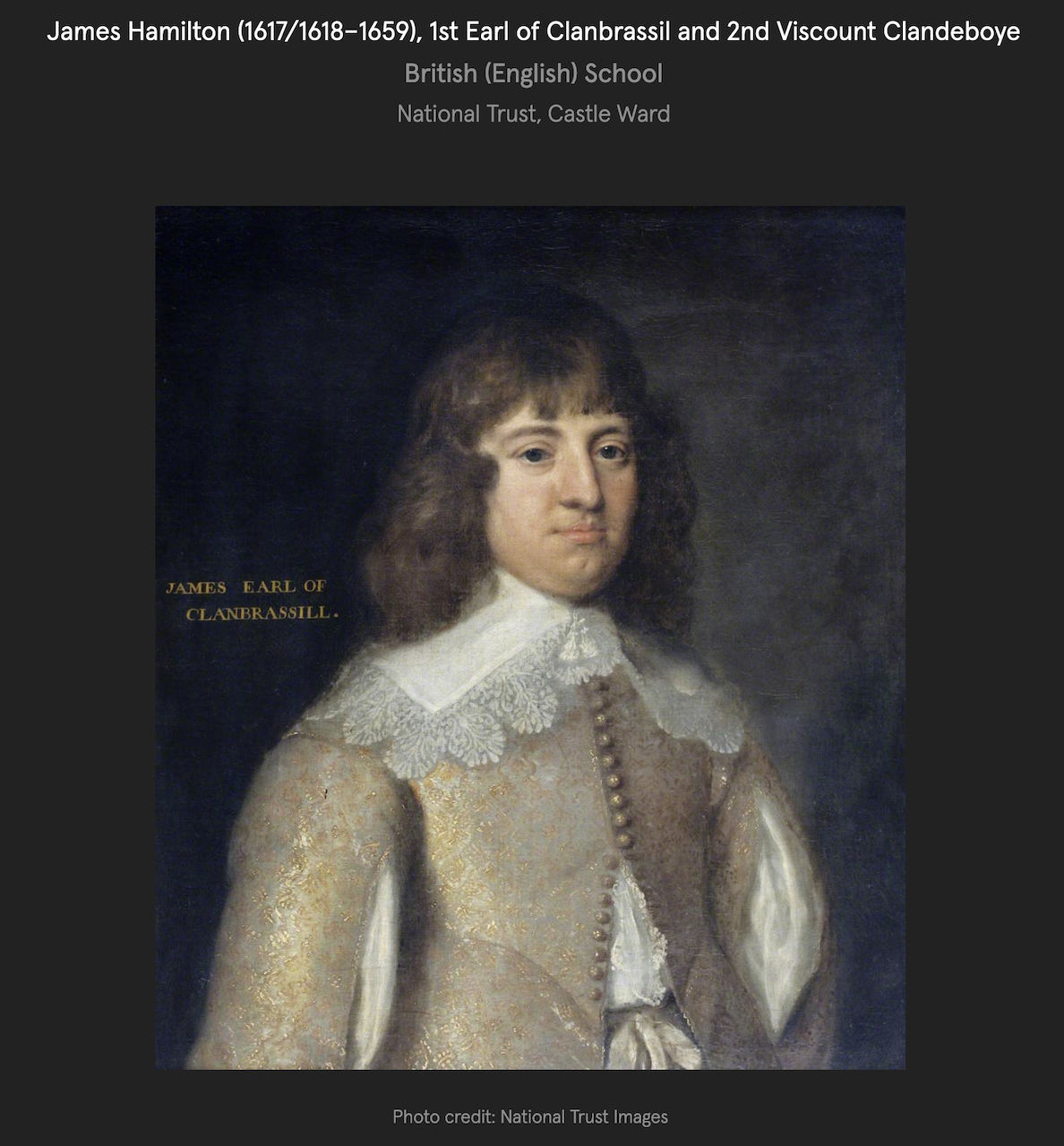
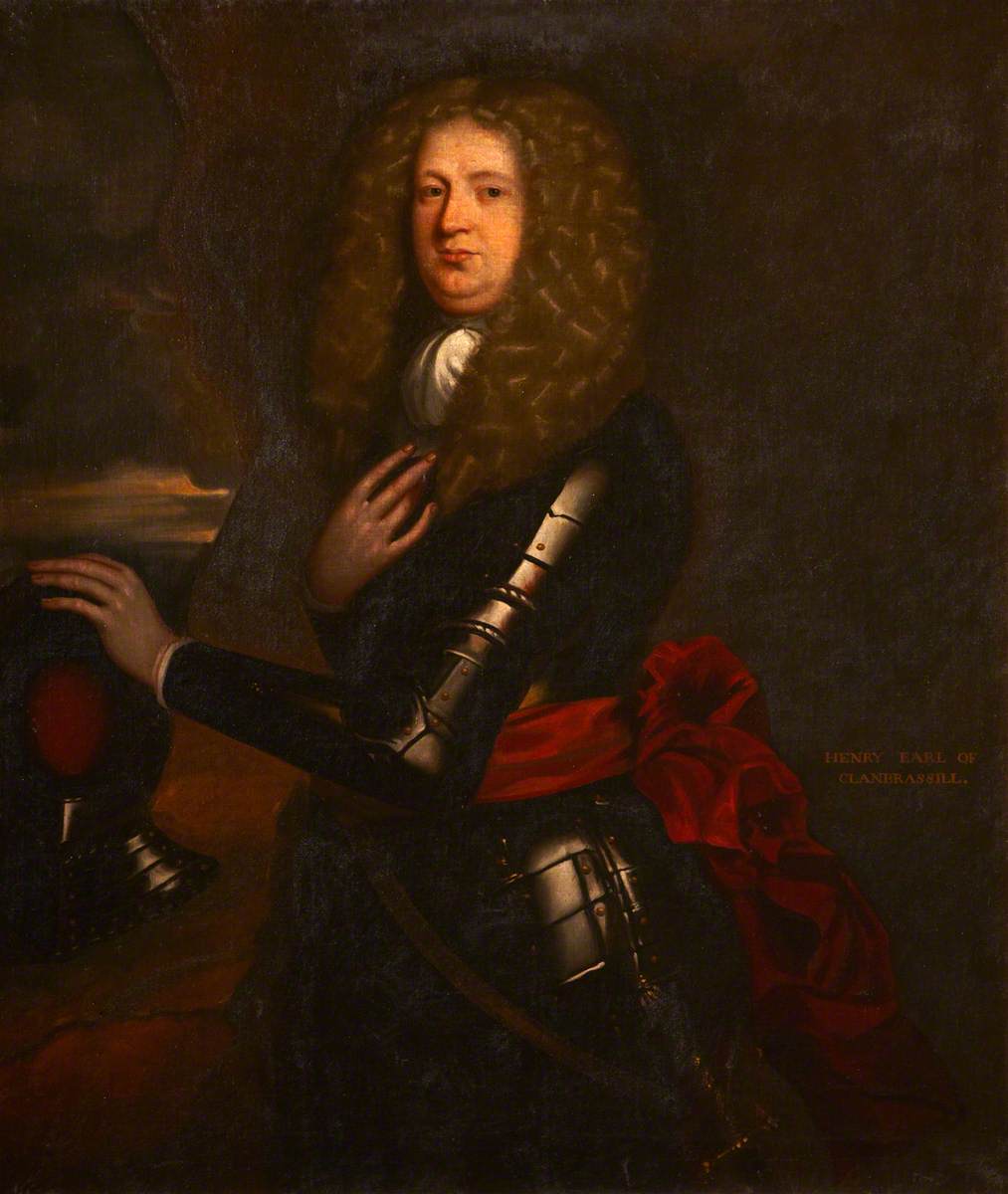
James Hamilton (1559/1560 or 1568-1643) 1st Viscount Clandeboye married Ursula, daughter of Edward Brabazon, 1st Lord Brabazon, Baron of Ardee. They had no children and after her death he married Jane Philipps, who gave birth to their heir James Hamilton (1617/18-1643) 1st Earl of Clanbrassil, County Armagh.
James Hamilton (1617/1618-1659) 1st Earl of Clanbrassil and 2nd Viscount Clandeboye, courtesy of National Trust Castle Ward.
James Hamilton (1617/18-1643) 1st Earl of Clanbrassil married Anne Carey (d. 1688/89), who gave birth to their heir Henry Hamilton (1647-1675), 2nd Earl of Clanbrassil. They had no children and after his death the title became extinct. The name Claneboye was revived in a title in 1800 when his great-great-grandniece Dorcas Blackwood was made 1st Baroness Dufferin and Claneboye.
There were lots of creations of Earls of Clanbrassil! There was James Hamilton (1697-1758) 1st Earl of Clanbrassill, Co. Armagh. He was the son of James Hamilton (d. 1693) and Anne Mordaunt.
James Hamilton (1575-1618) 1st Earl of Abercorn, Co. Linlithgow [Scotland] was Member of the Council of the province of Munster on 20 May 1615. His son Claud Hamilton (d. 1638) was created 2nd Lord Hamilton, Baron of Strabane, County Tyrone. Another son was the heir, James Hamilton, 2nd Earl of Abercorn. The 2nd Earl had a son, George Hamilton who became 3rd Earl of Abercorn but had no children.
Claud Hamilton (d. 1638) 2nd Lord Hamilton, Baron of Strabane, County Tyrone was succeeded by his son James Hamilton (1633-1655) 3rd Lord Hamilton, Baron of Strabane but he died without issue and was succeeded by his brother, George Hamilton (d. 1668) 4th Lord Hamilton, Baron of Strabane.
George’s son Claud Hamilton (1659-1691) succeeded as 5th Lord Hamilton, Baron of Strabane, Co. Tyrone and 4th Earl of Abercorn. He held the office of Lord of the Bedchamber to King James II. He fought in the Battle of the Boyne on 1 July 1690. On 11 May 1691 he was outlawed in Ireland, and his Irish titles were forfeited. He fought in the Battle of Aughrim on 12 July 1691, where he commanded a regiment of horse. [1]
Claud Hamilton (1659–1691) 4th Earl of Abercorn didn’t have offspring and was succeeded by his brother, Charles (d. 1701) who became 5th Earl of Abercorn. His brother John (1713/4-1755) had a son, John James Hamilton, who succeeded as 5th Baronet Hamilton, of Donalong, Co. Tyrone and of Nenagh, Co. Tipperary, 9th Earl of Abercorn, and was later created 1st Marquess of Abercorn.
With his death, the senior line of the Abercorns and the Strabanes failed as he had no surviving offspring. With regard to the Abercorns, the succession reverted to the next of the cadet branches descending from the five sons of the 1st Earl of Abercorn as it already had done in about 1650 when George, the 3rd Earl, died unmarried in Padua. As the 1st Earl’s third son, William, 1st Baronet of Westport, had no children, the succession passed to the descendants of the fourth son, Sir George Hamilton (d. 1679) 1st Baronet, of Donalong, County Tyrone and his wife Mary Butler (d. 1680) daughter of Thomas Butler Viscount Thurles. The 5th Earl was therefore succeeded as Earl of Abercorn by his second cousin, James Hamilton (d. 1734) the grandson of Sir George. James Hamilton would thus become the 6th Earl of Abercorn.
James Hamilton, 6th Earl of Abercorn, also 2nd Baronet Hamilton, of Donalong, Co. Tyrone and of Nenagh, Co. Tipperary and 1st Baron Mountcastle, Co. Tyrone was succeeded by his son, James Hamilton, (1685/6-1743/4) 7th Earl of Abercorn, who was succeeded by his son, James Hamilton (1712-1789) 8th Earl of Abercorn, who died unmarried.
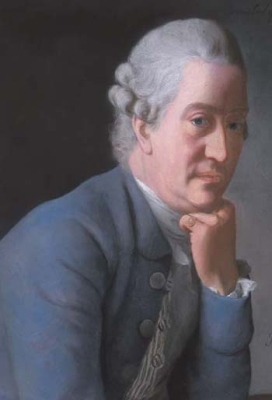
James Hamilton, 8th Earl of Abercorn (1712-1789) Engraver John Dean, British, c.1750-1798 After Thomas Gainsborough, English, 1727-1788, courtesy of National Gallery of Ireland.
The next in line was John James Hamilton (1756-1818) who succeed as 5th Baronet Hamilton, of Donalong, Co. Tyrone and of Nenagh, Co. Tipperary, 9th Earl of Abercorn and was later created 1st Marquess of Abercorn. He was the posthumous son of Captain Hon. John Hamilton and his wife Harriet, and grandson of James Hamilton, 7th Earl of Abercorn
John James Hamilton (1756-1818) 1st Marquess of Abercorn married first Catherine Copley and they had several children including a son James (1786-1814), called Viscount Hamilton. He married Harriet Douglas who gave birth to their heir James Hamilton (1811-1885), who was to become 1st Duke of Abercorn.
Cecil Frances Howard née Hamilton, Countess of Wicklow (1795-1860), Wife of William Howard (1788-1869) 4th Earl of Wicklow; After George Henry Harlow, British, 1787-1819,courtesy of National Gallery of Ireland.She was the daughter of John James Hamilton 1st Marquess and 9th Earl of Abercorn.James Hamilton (1811-1885) 1st Duke of Abercorn, Landowner and politician; Lord Lieutenant of Ireland, possibly by John Watkins 1860s courtesy of National Portrait Gallery NPG Ax21858.
John James Hamilton (1756-1818) 1st Marquess of Abercorn married secondly a cousin, Cecil Hamilton, but they later divorced. He then married Anne Jane Gore, daughter of Arthur Saunders Gore, 2nd Earl of Arran of the Arran Islands.
[1] G.E. Cokayne; with Vicary Gibbs, H.A. Doubleday, Geoffrey H. White, Duncan Warrand and Lord Howard de Walden, editors, The Complete Peerage of England, Scotland, Ireland, Great Britain and the United Kingdom, Extant, Extinct or Dormant, new ed., 13 volumes in 14 (1910-1959; reprint in 6 volumes, Gloucester, U.K.: Alan Sutton Publishing, 2000), volume I, page 4. Hereinafter cited as The Complete Peerage.
www.cabracastle.com Open in 2026: all year, except Dec 24, 25, 26, 11am-4pm Fee: Free to visit
donation
Help me to pay the entrance fee to one of the houses on this website. This site is created purely out of love for the subject and I receive no payment so any donation is appreciated!
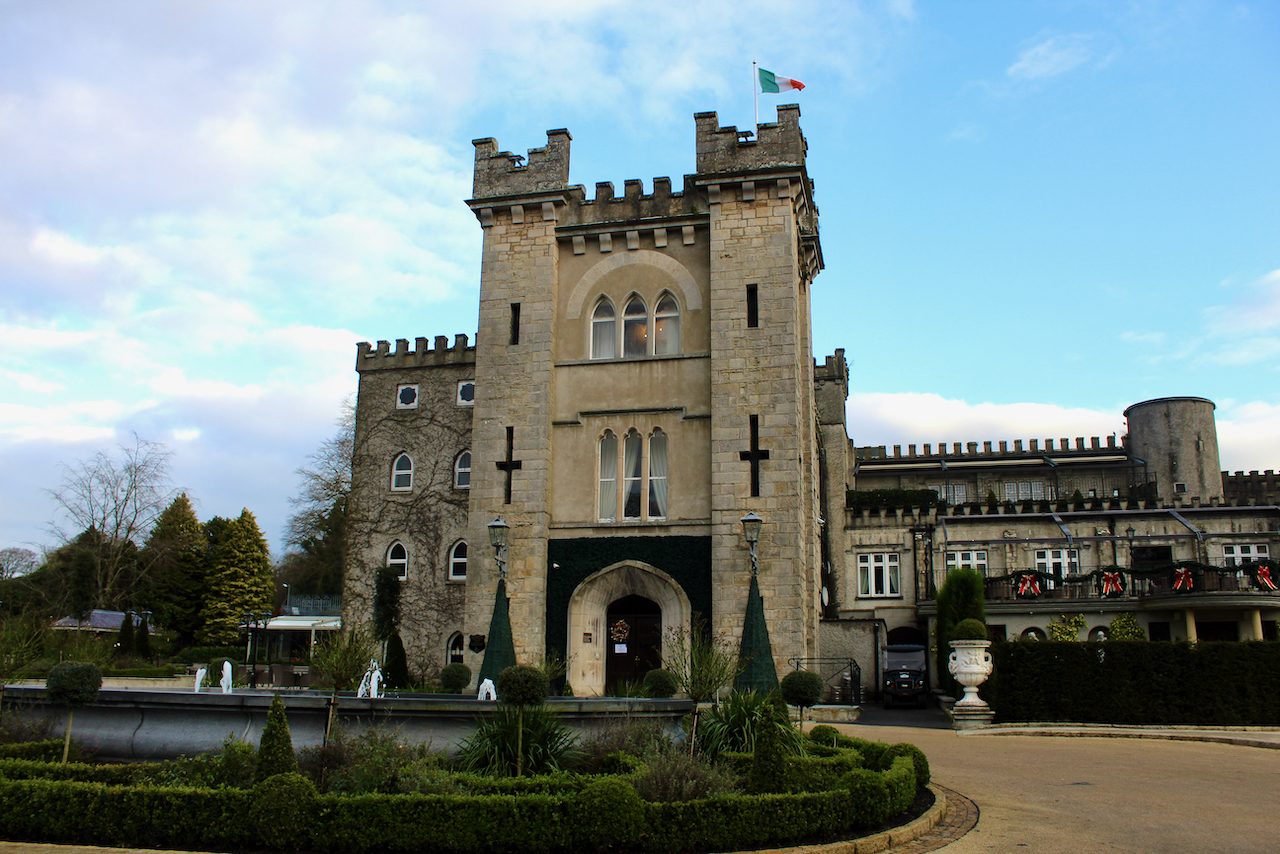
Stephen and I visited Cabra Castle in December 2020. I contacted the owner, Howard Corscadden, in advance, to request a tour of the castle. The Corscadden family own several beautiful Irish properties which provide unique castle accommodation. As well as Cabra Castle, they own Markree Castle in County Sligo and Ballyseede Castle in County Kerry, both of which are on the Section 482 list, as well as Bellingham Castle in County Louth. They are all hotels except the latter which is available as a four star venue for weddings and events, with accommodation. Howard’s parents and grandparents were also in the hotel business in Ireland, as are his siblings – Ballyseede is run by his sister Marnie, Castle Bellingham by his brother Patrick and Markree Castle by his sister Patricia. Howard worked in the Waldorf hotel in Switzerland and in Dromoland Castle in Ireland before purchasing Cabra Castle in 1991. [1] It had been converted to a hotel in 1964 by the local Brennan family. In 1986 it was sold to become a private house once more, but with a change in fortune the family sold to Howard Corscadden.
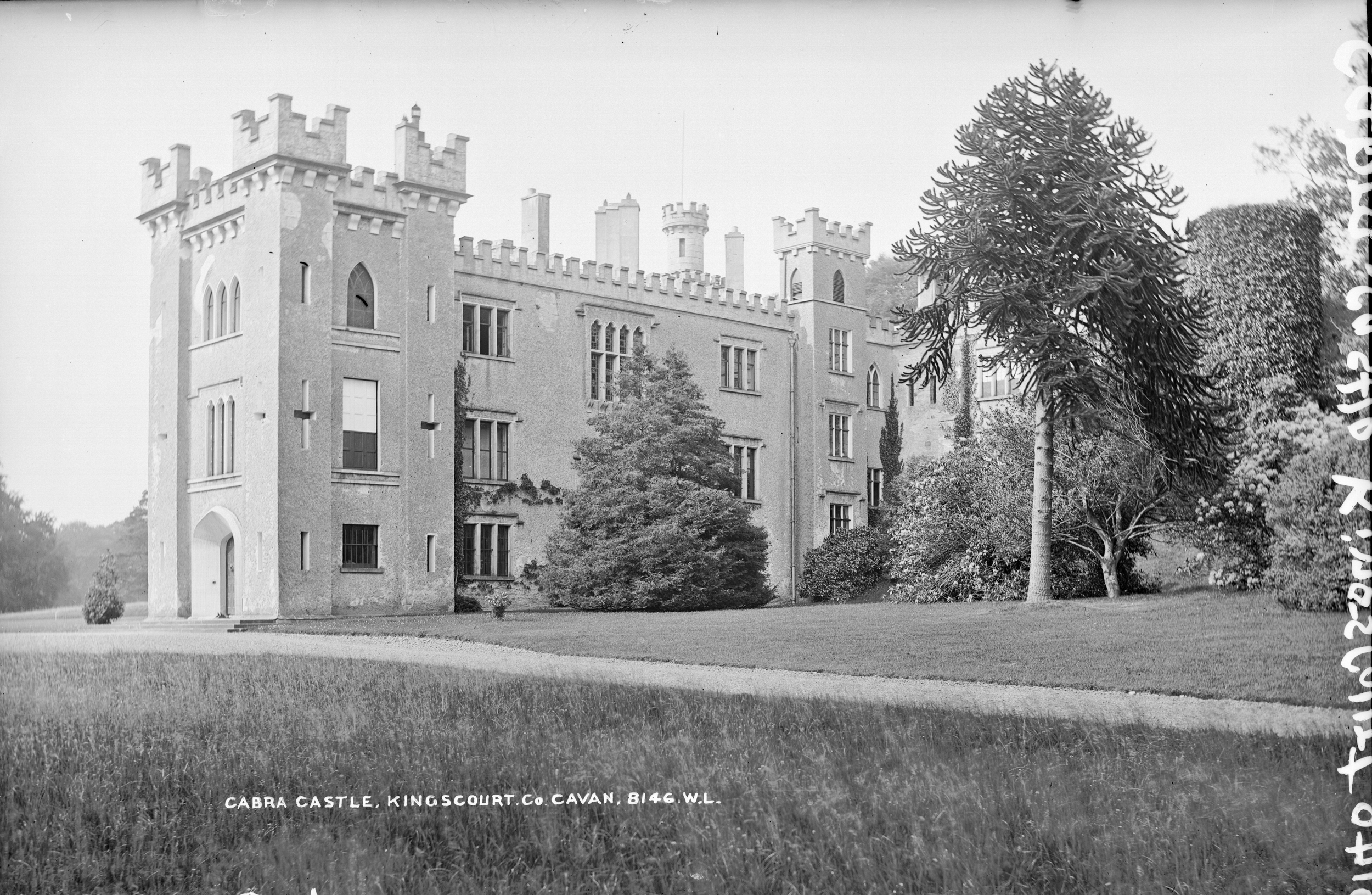
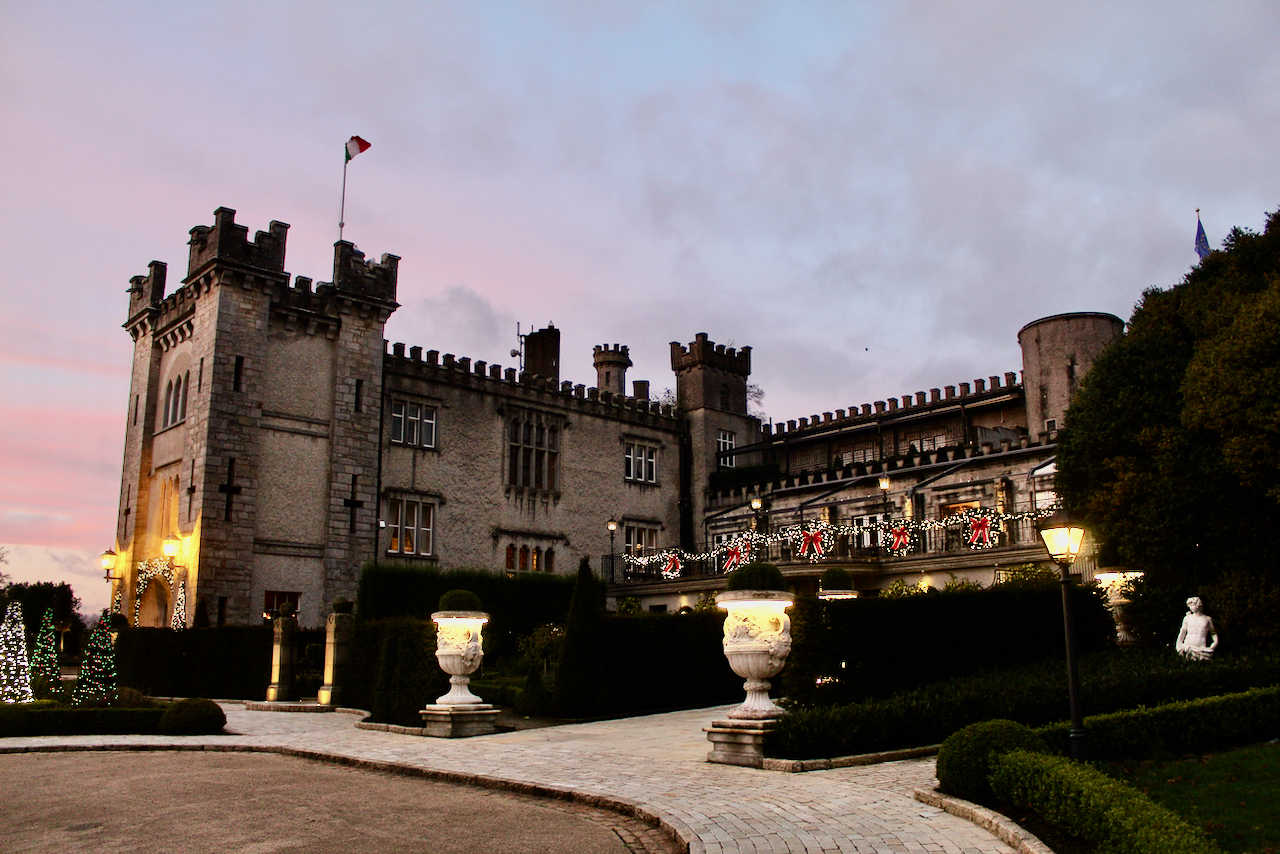
Cabra Castle, December 2020.
The early history of the castle is the history of two land-owning families, the Fosters and the Pratts. The building now known as Cabra Castle was originally known as Cormy Castle. At that time, an adjacent property was called “Cabra.” Cormy Castle was named after the townland of Cormy.
In 1795 the land, which contained an old round tower castle called Cormy Castle, belonged to John Thomas Foster (1747-1796), who had been MP for Dunleer, County Louth, and for Ennis, County Clare. The main building of Cormy Castle was in ruins, destroyed during the Cromwellian War, but its adjacent courtyard remained in good repair.
The Foster family owned large amounts of land in County Louth and their family seat was in Dunleer. The family produced many members of the Irish Parliament. John Thomas’s grandfather John Foster (1665-1747) had been MP for Dunleer. His father, Reverend Thomas Foster (1709-1784) was Rector at Dunleer. His uncle Anthony Foster (1705-1778) had also been MP for Dunleer and for County Louth, and was Chief Baron of the Exchequer, and lived at Collon, County Louth. [2] Anthony’s son John Foster (1740-1828) was Speaker of the Irish House of Commons, created 1st Baron Oriel of Ferrard, and also owned property which is now part of University College Dublin and the adjacent road Foster Avenue is named after him.
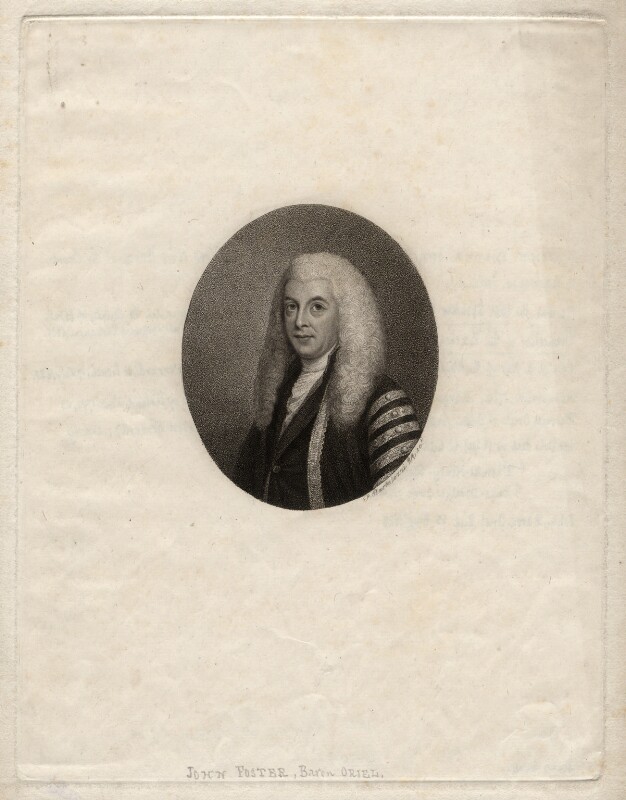
John Foster, 1st Baron Oriel, by Francesco Bartolozzi, after Unknown artist, stipple engraving, late 18th century. Photograph from National Portrait Gallery, London.
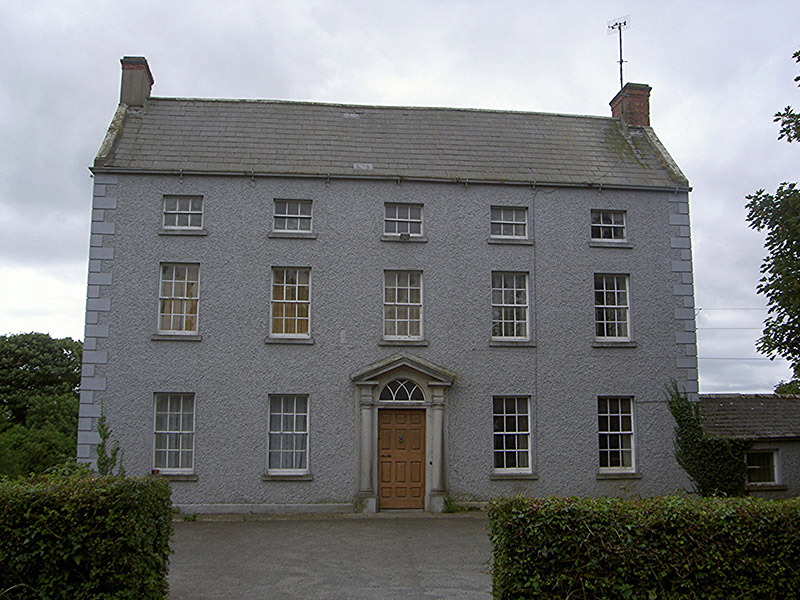
Turtle Bunbury tells us that John Thomas Foster’s father Reverend Thomas, the rector of Dunleer, acquired land in County Louth in the 1750s and 1760. He then acquired the 700 acre manor of Killany, County Louth, from 1763 on a series of long leases from the Provost and Fellows of Trinity College Dublin. He purchased Stonehouse, Dunleer, around 1787. [3]
Stone House, County Louth, built around 1760 and purchased by Reverend Thomas Foster in around 1787. Photograph from National Archive of Architectural Heritage.
In 1776 John Thomas Foster married Elizabeth Christina Hervey, daughter of the 4th Earl of Bristol. After the marriage they lived with her father in Suffolk. They had two sons: Frederick Thomas (1777-1853) and Augustus John (1780-1848). [4]
The marriage of John Thomas and Elizabeth Christina was not a success, and they separated after five years. Foster took the sons, and she did not see them for fourteen years. [5]
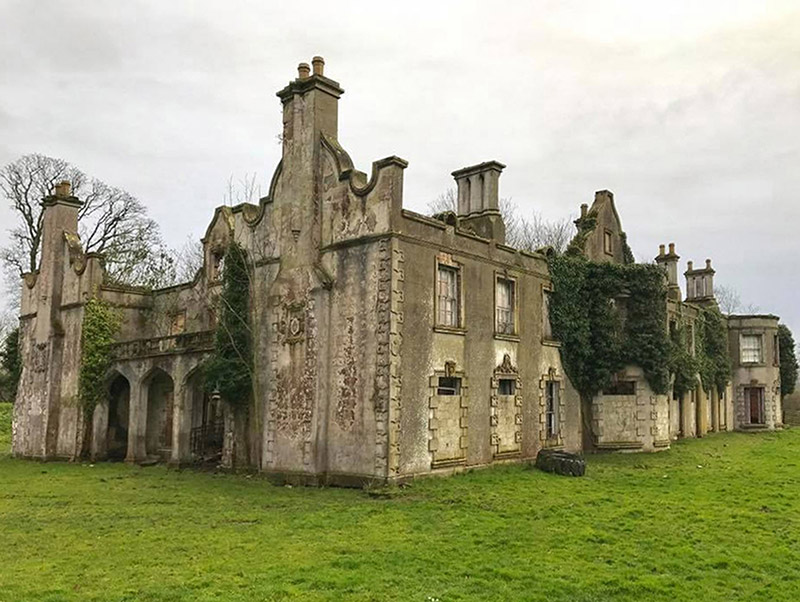
In 1783 John Thomas Foster inherited a property named Rosy Park in Louth from his uncle, John William Foster. In 1820 it was renamed Glyde Park by his son, Augustus. [6] It is unfortunately now a ruin.
The ruin of Glyde Court, County Louth, built around 1780. Photograph from National Inventory of Architectural Heritage.
John Thomas died in 1796, when his sons were still minors. They moved back to England to live with their mother, who by this time was living with William Cavendish, the 5th Duke of Devonshire, along with his wife, Georgiana, and had born him two children. A film starring Keira Knightly, “The Duchess,” is based on their story. [7] She married him in 1809 when his wife died.
Meanwhile, a cousin of John Thomas Foster, Henry Foster (c. 1747-1838), was appointed Trustee and Executor of the property of Cormy. He lived at Cormy Castle while acting as Trustee for his wards. According to Turtle Bunbury, he was a magistrate for Meath, Cavan and Louth. There is a record in the National Library of Ireland of a Grant of Arms to Henry Foster of Cormy Castle from March 13th 1806, when he was about to be created a baronet, but “the creation did not eventuate” (i.e. he was not made baronet). The National Library also has a map of the demesne of Cormy Castle from 1810, named as the seat of Henry Foster. In 1808 he began to rebuild and enlarge the castle. However, he exhausted the personal estate of his wards in doing so, and incurred debts, and the castle and land had to be sold. In about 1813 his wards sold the estate to Colonel Joseph Pratt, who lived on the adjacent property. [8]
John Thomas Foster’s son Frederick Thomas Foster may have remained in England, as he served as MP for Bury St. Edwards between 1812 and 1818. His brother Augustus John Foster became a politician and diplomat. Between roughly 1802 and 1804 he was Secretary to the British Legion in Naples. He held the office of Envoy Extraordinary and Minister Plenipotentiary to the U.S.A. in 1812. He wrote about his American experiences in Notes on the United States of America.
From 1814-1824 he held the office of Minister Plenipotentiary to Denmark. He was created 1st Baronet Foster of Glyde Court in 1831, and was appointed Privy Counsellor. His final posting was to Turin, in the Kingdom of Sardinia.
Colonel Joseph Pratt, who owned the adjacent Cabra estate, continued the enlargement of Cormy Castle, and the work was completed in 1837. In 1820 he renamed it Cabra Castle. [9]
Before we examine the development of Cabra Castle, let’s look at the history of the property of Cabra across the road from the current Cabra Castle.
According to the Cabra Castle website, this area belonged to the O’Reilly family. In 1607 Gerald Fleming, who had been granted territory by King James I, built a castle on the property. He lost his lands, however, when he supported James II against William III, and Colonel Thomas Cooch (1632-1699) acquired the property. [10]
Colonel Thomas Cooch married Elizabeth Mervyn, (sister of Audley Mervyn, Speaker of the Irish House of Commons), and they had an only daughter and heiress, Elizabeth.
Elizabeth’s first husband (Nathaniel Pole, who lived in County Meath) died in 1685, before they had any children, and Elizabeth then married Joseph Pratt, who lived not far off at Garadice, Co. Meath, a property which his father received for his support of Oliver Cromwell. [11] This marriage (which was also Joseph Pratt’s second) took place in 1686 and a son, Mervyn Pratt, was born in 1687. Joseph Pratt held the office of High Sheriff of County Meath in 1698. He and Elizabeth had several other children.
Colonel Thomas Cooch left his Cabra property to his grandson Mervyn.
Mervyn Pratt was only 12 years old when his grandfather died. He graduated from Trinity College, Dublin and married Elizabeth Coote, daughter of Sir Thomas Coote, Judge, of Bellamont, Coote Hill, County Cavan. Mervyn and Elizabeth lived at Cabra near the Wishing Well. He followed in his father’s footsteps and held the office of High Sheriff, but of County Cavan rather than Meath. He was also an MP for County Cavan.
The Fleming castle was modernised by Mervyn Pratt. The new villa may have been designed by Edward Lovett Pearce, who was a cousin of Elizabeth Coote. The Irish Aesthete quotes a visitor to Mervyn Pratt in Cabra:
“On August 25th 1732, the future Mrs Delany (then the merrily widowed Mrs Pendarves) embarked on a journey from Navan, County Meath to Cootehill, County Cavan. She wrote in her journal, ‘travelled through bad roads and a dull, uninhabited country, till we came to Cabaragh, Mr Prat’s house, an old castle modernized, and made very pretty: the master of it is a virtuoso, and discovers whim in all his improvements. The house stands on the side of a high hill; has some tall old trees about it; the gardens are small but neat; there are two little terrace walks, and down in a hollow is a little commodious lodge where Mr Prat lived whilst his house was repairing. But the thing that most pleased me, was a rivulet that tumbles down from rocks in a little glen, full of shrub-wood and trees; here a fine spring joins the river, of the sweetest water in the world.’” [12]
Cabra Castle by Robert French, Lawrence Photograph Collection NLI flickr constant commons.
Mervyn and Elizabeth Pratt had three daughters and one son. Their son Joseph joined the clergy. Reverend Joseph married Elizabeth Chetwood and had five children.
Of the five children of Reverend Joseph Pratt, a daughter Anne married her neighbour Henry Foster the trustee for Cormy Castle. [13] A son, James Butler Pratt, married a sibling of Henry Foster, Margaret. Another son entered the clergy, Reverend Joseph Pratt (1738-1831).
This second Reverend Joseph Pratt married Sarah Morres, daughter of the 1st Viscount Mountmorres, of Castle Morres, County Kilkenny (which has been demolished). Their son, Colonel Joseph Pratt (1775-1863), purchased Cormy Castle from Henry Foster. Their other son, Hervey Randall Saville Pratt inherited the property of Castle Morres through his mother.
The house at Cabra was destroyed by fire in the 1950s, and is now part of Dun na Ri Forest Park, a lovely place to explore, owned by Coillte. After Joseph Pratt moved to Cormy Castle and created a new seat for his family, his former property became known as Old Cabra. [14]
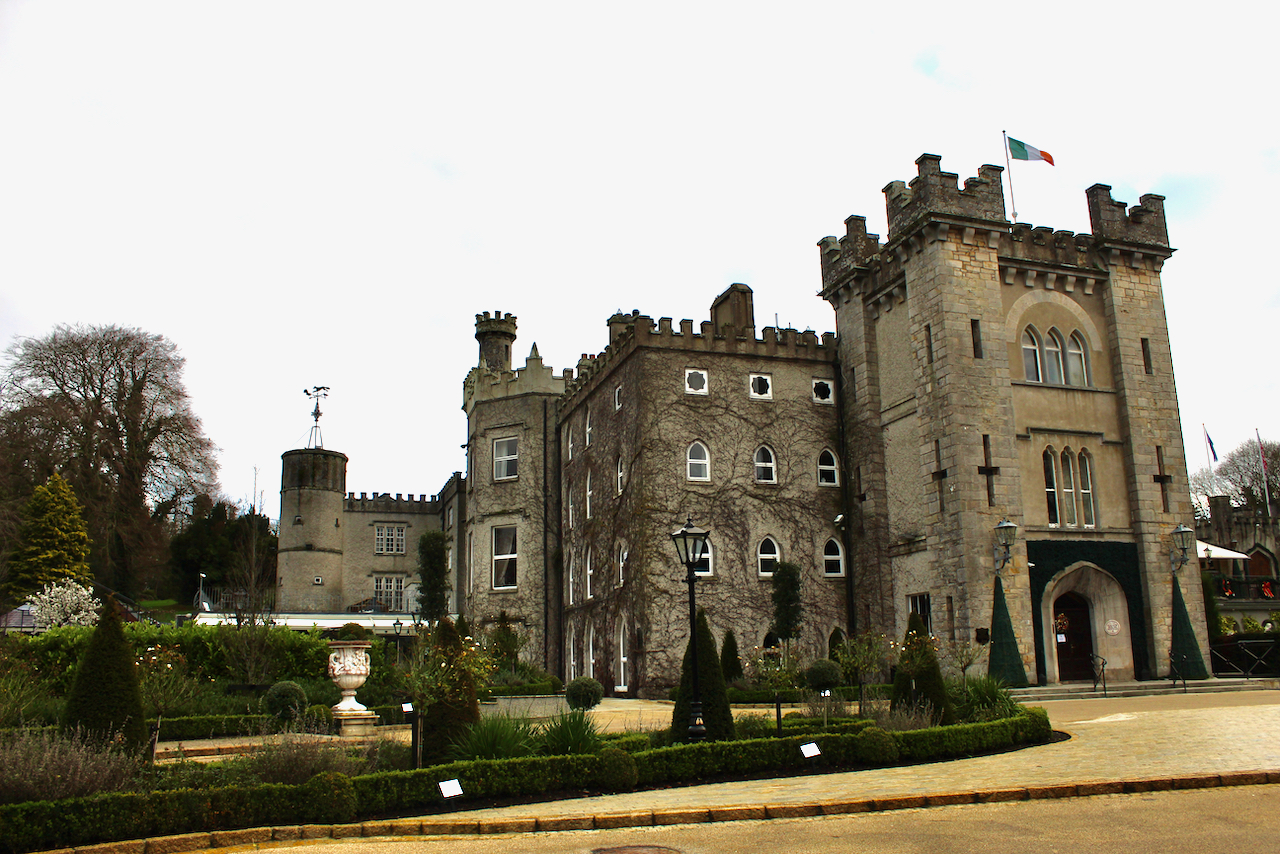
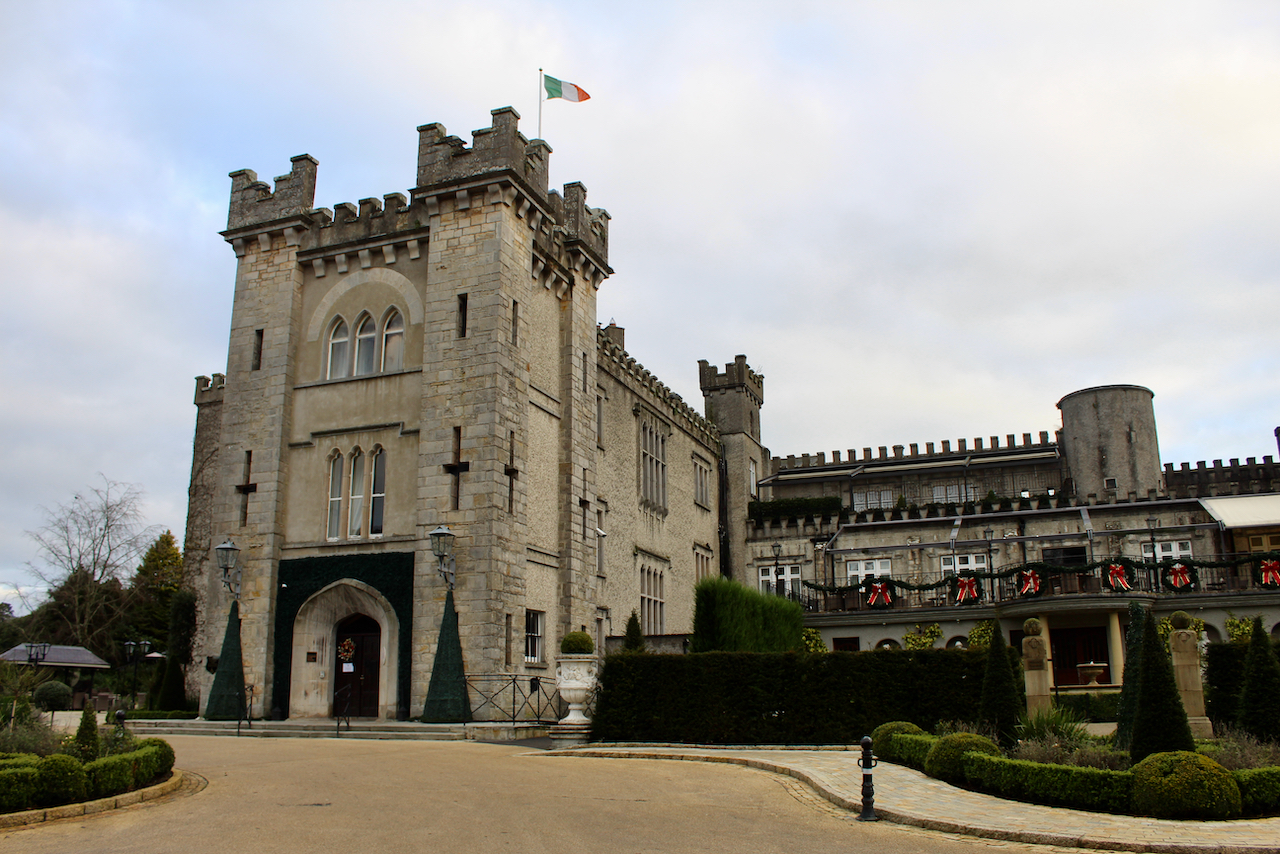
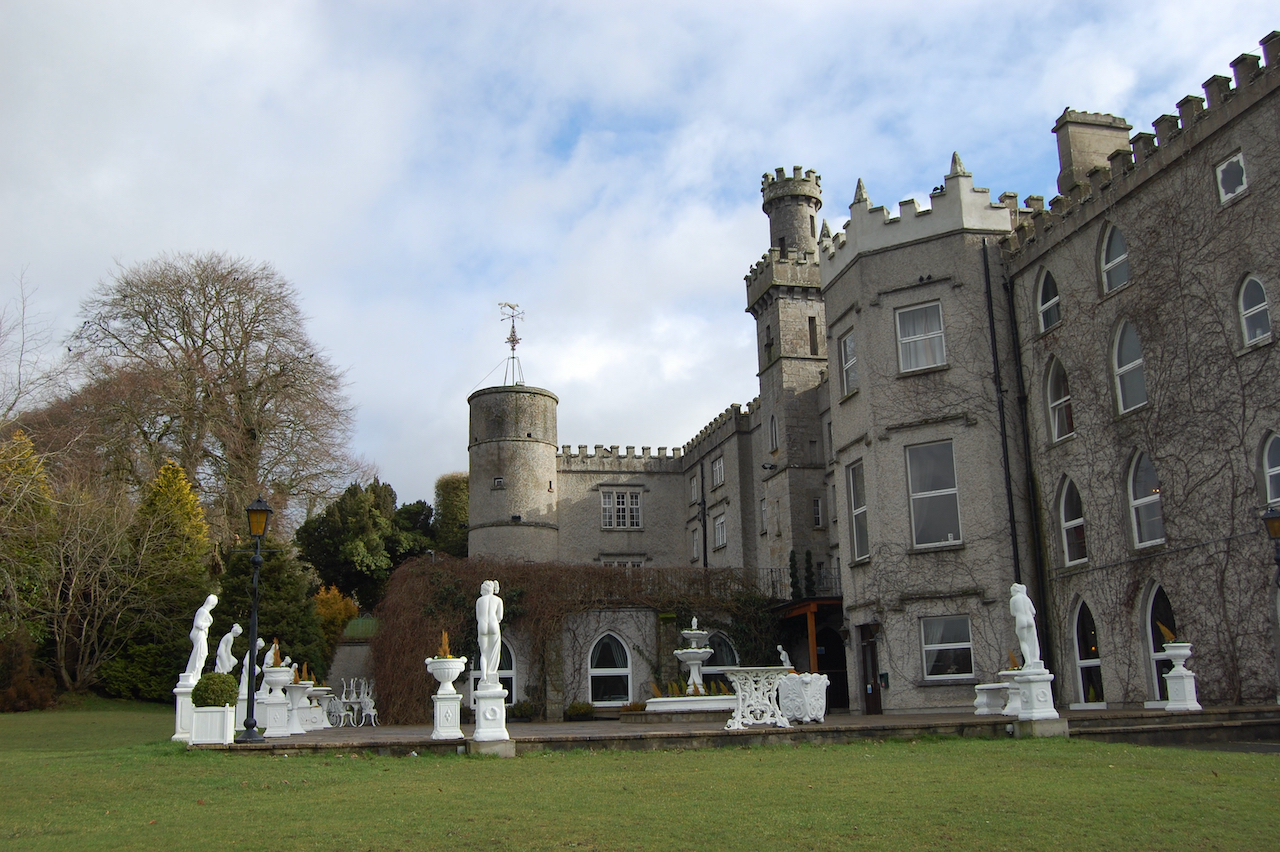
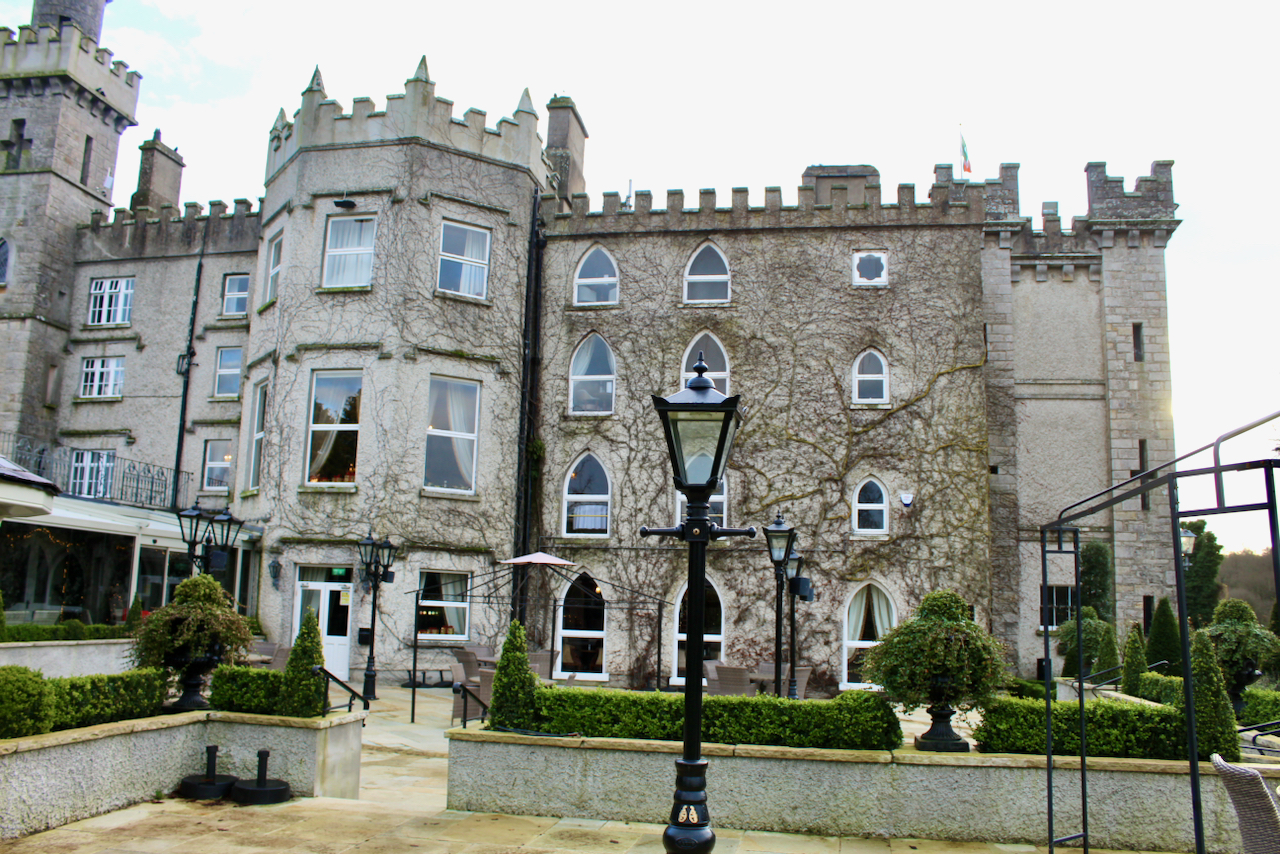
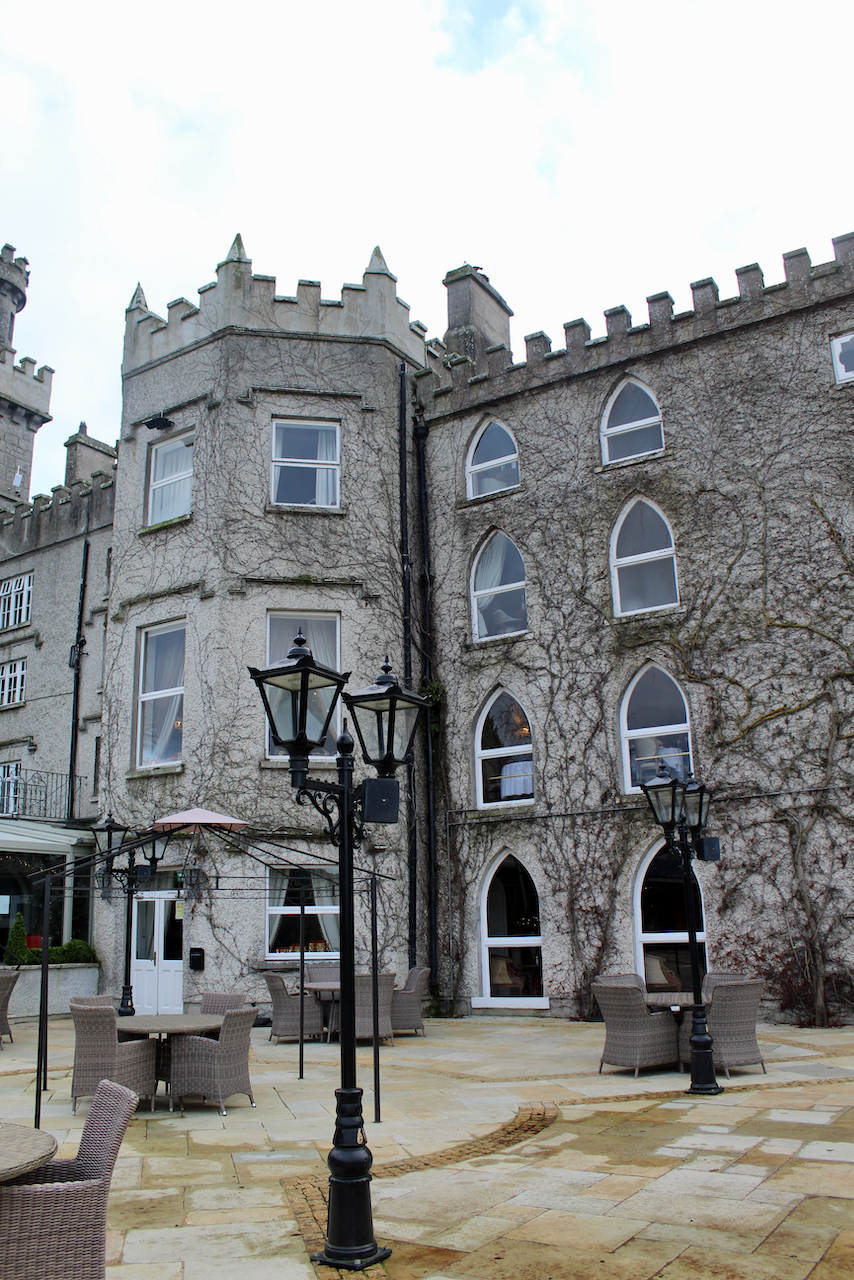
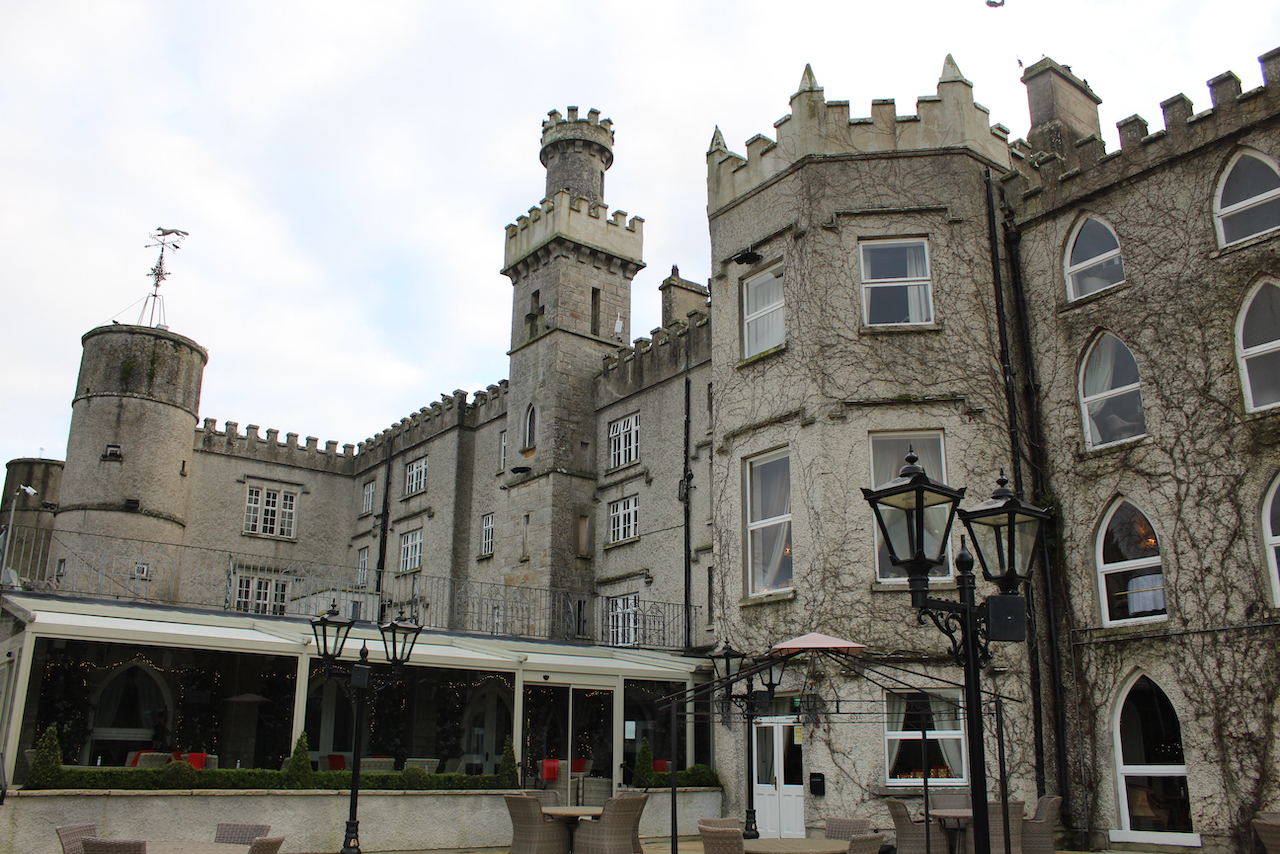
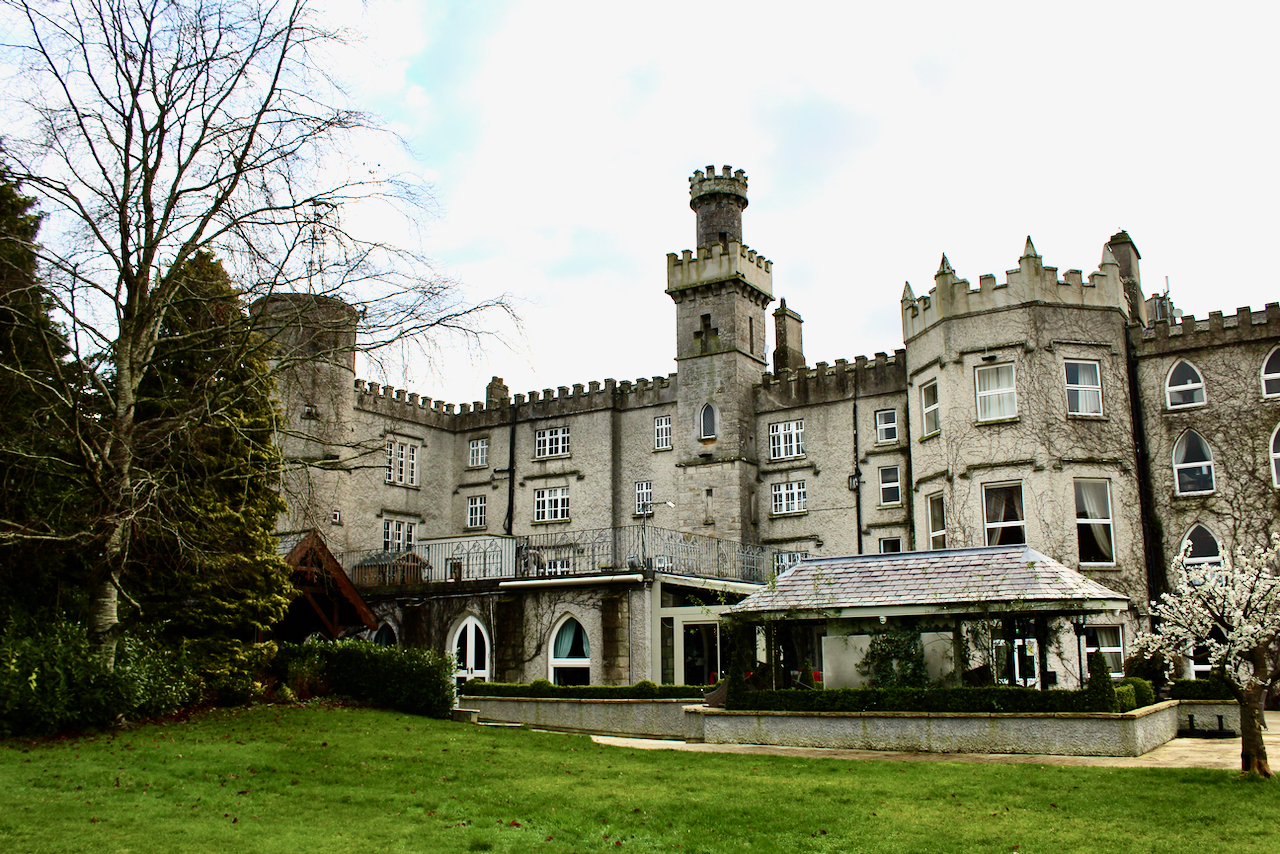
Now let us travel back across the road to the former Cormy Castle, now Cabra Castle. Cabra Castle is a mixture of Norman and Gothic styles.
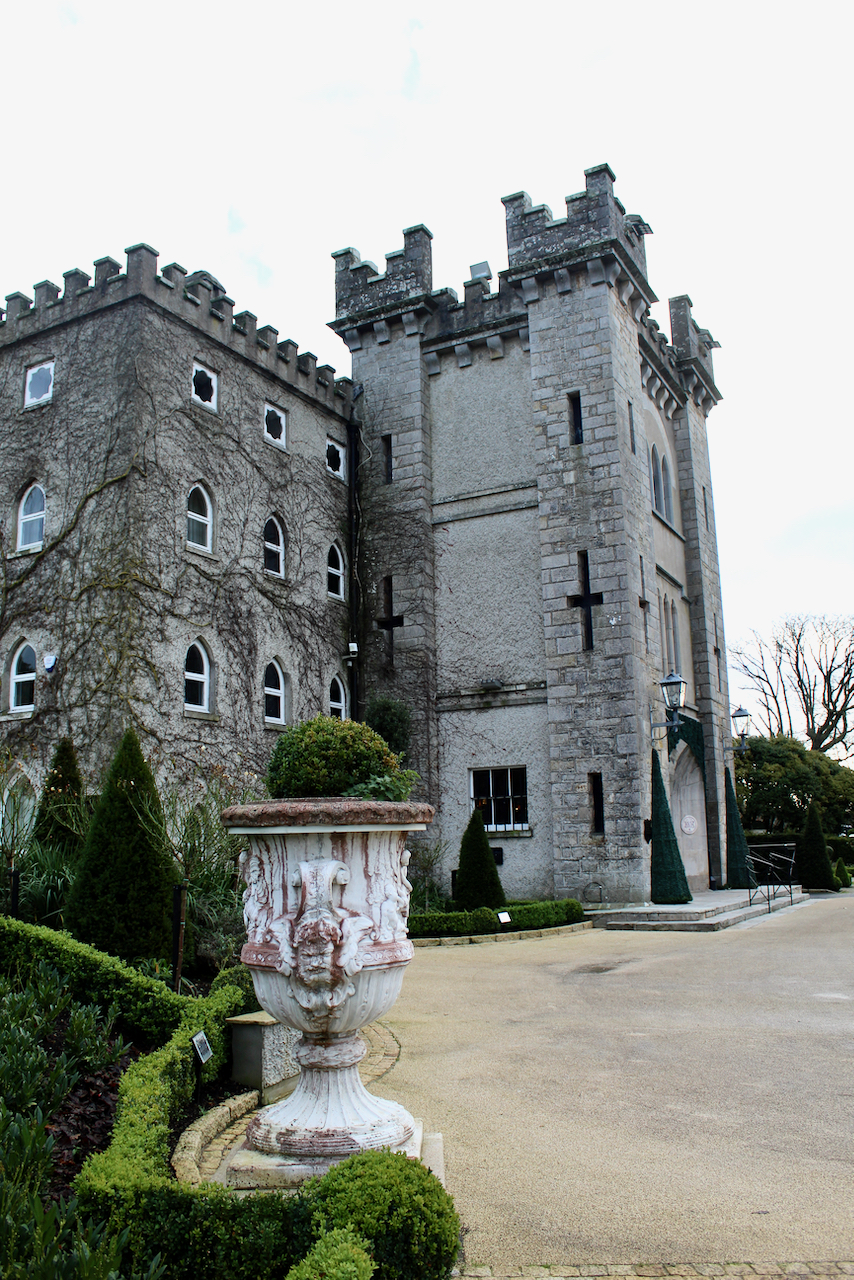
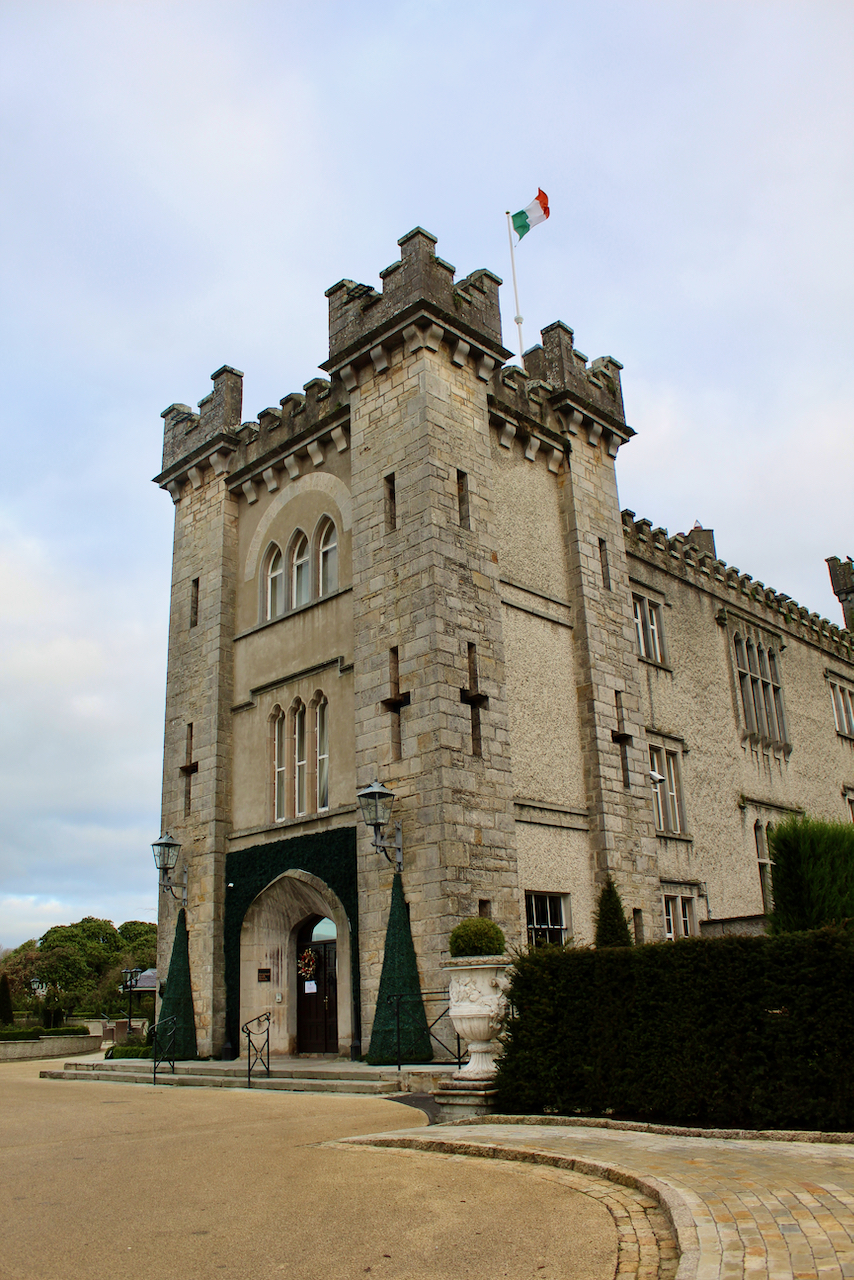
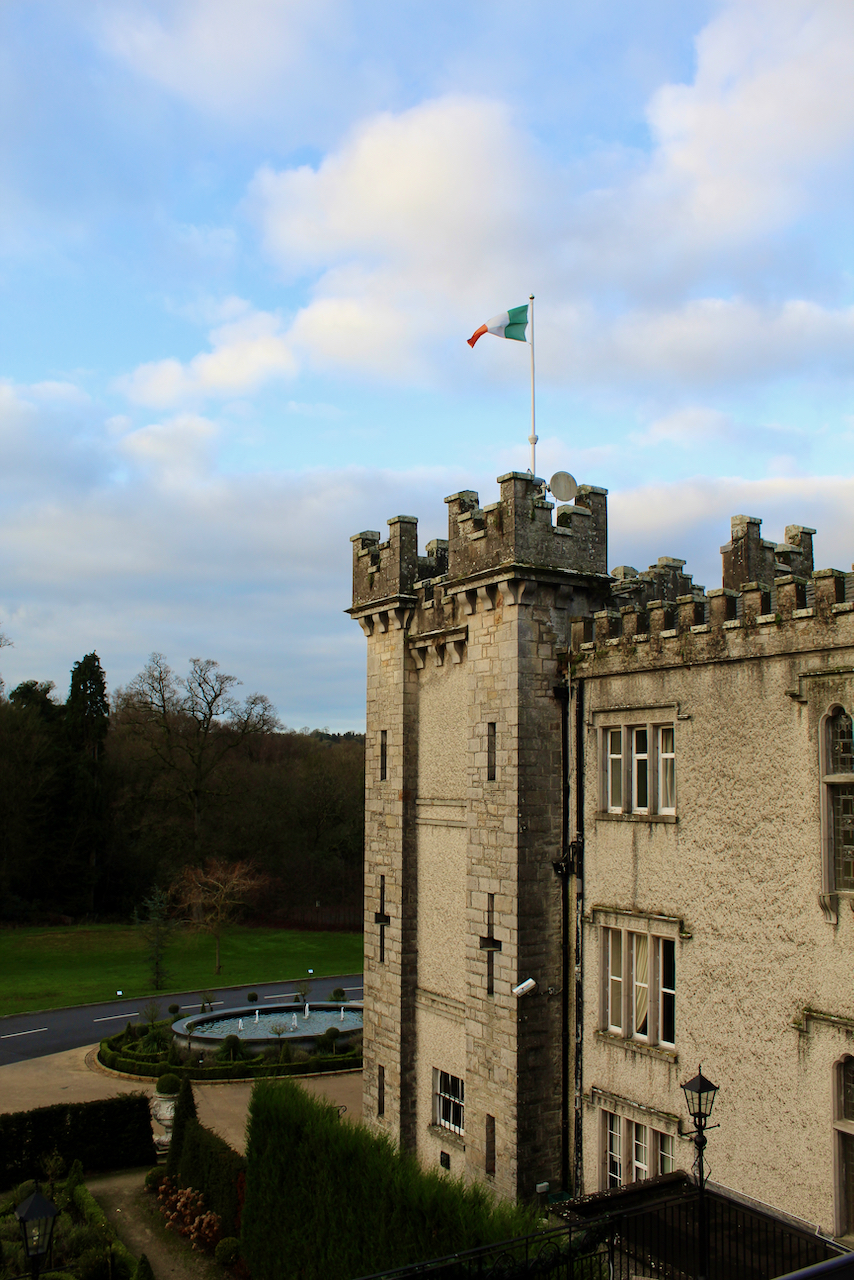
The entrance is in a Norman-style “donjon” or square tower house, with corner turret. The door is in a deeply recessed pointed arch.
The building has two, three and four story sections over a basement. The building, including outbuildings, is castellated, and has several round and square towers.
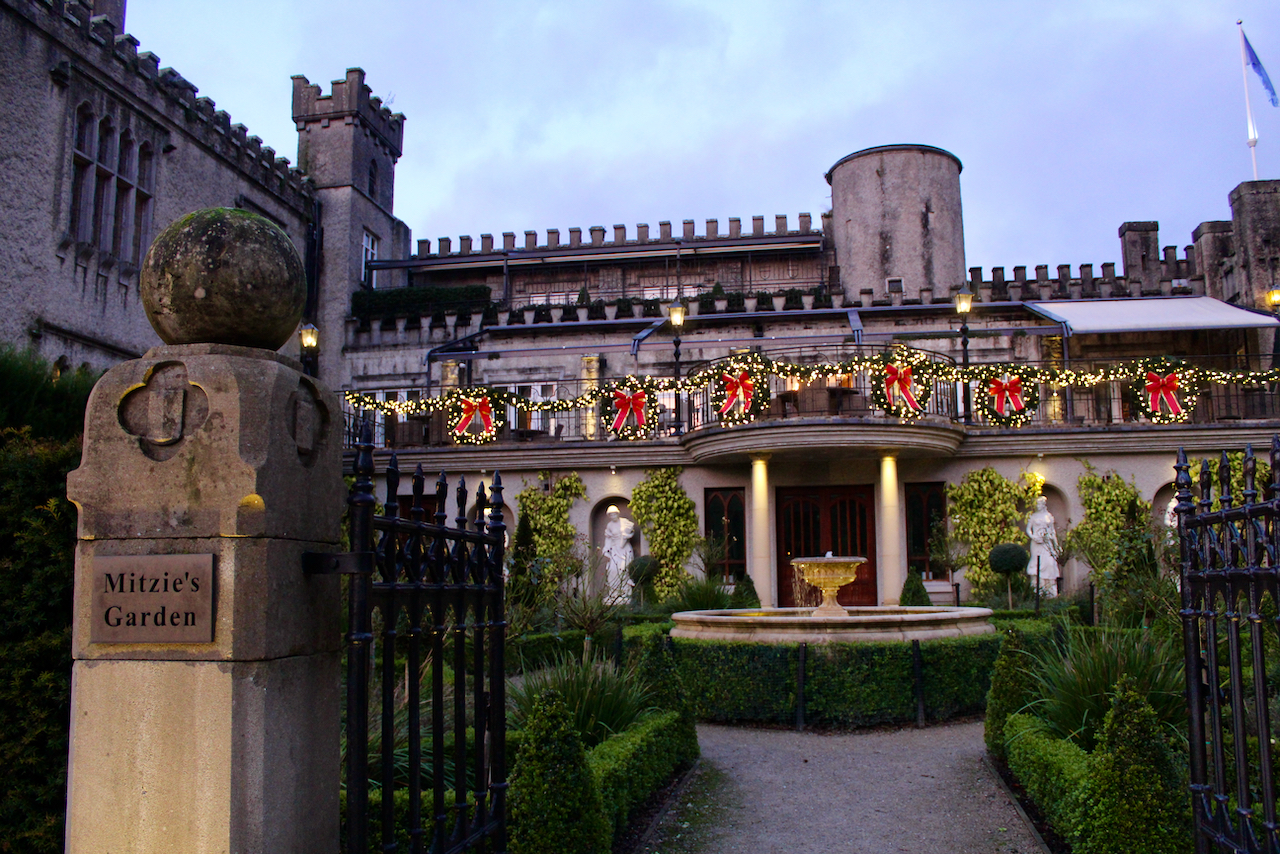
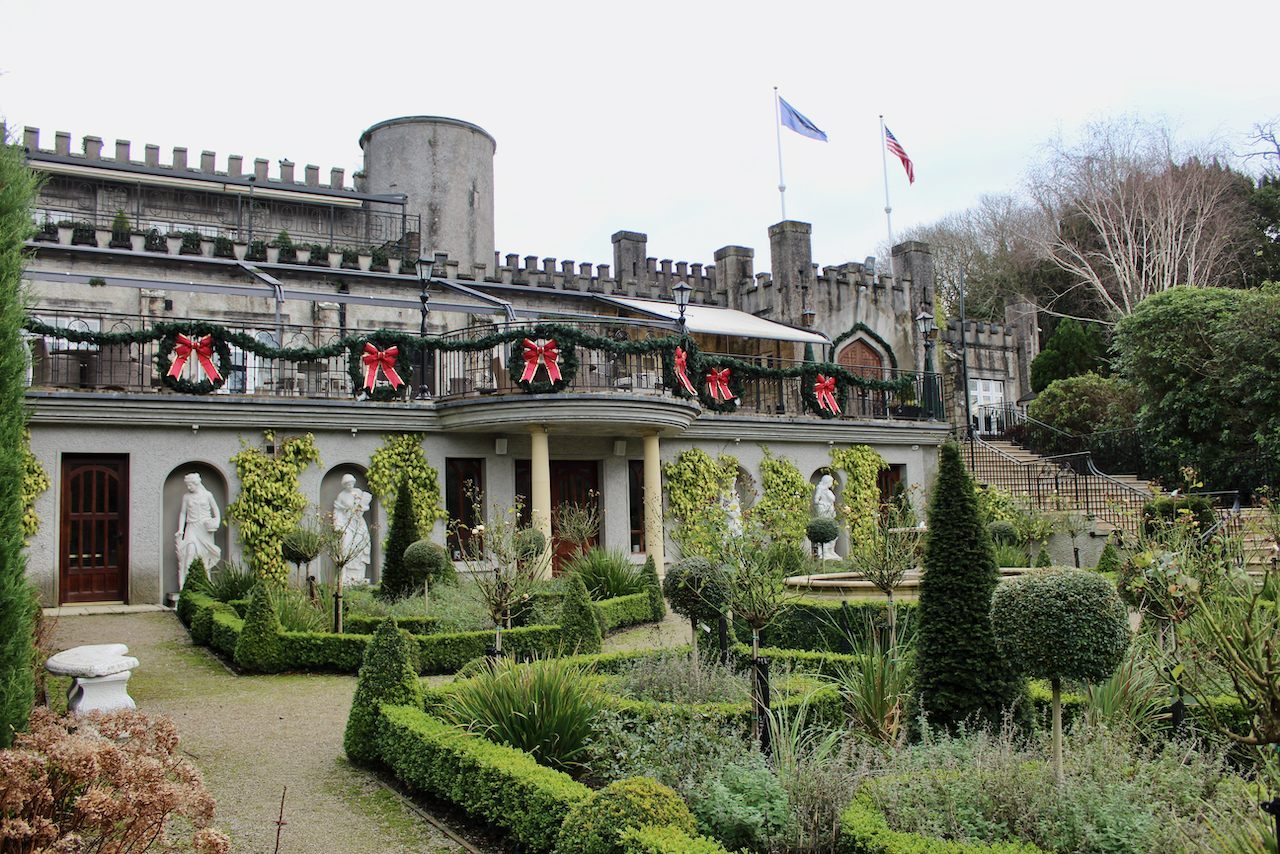
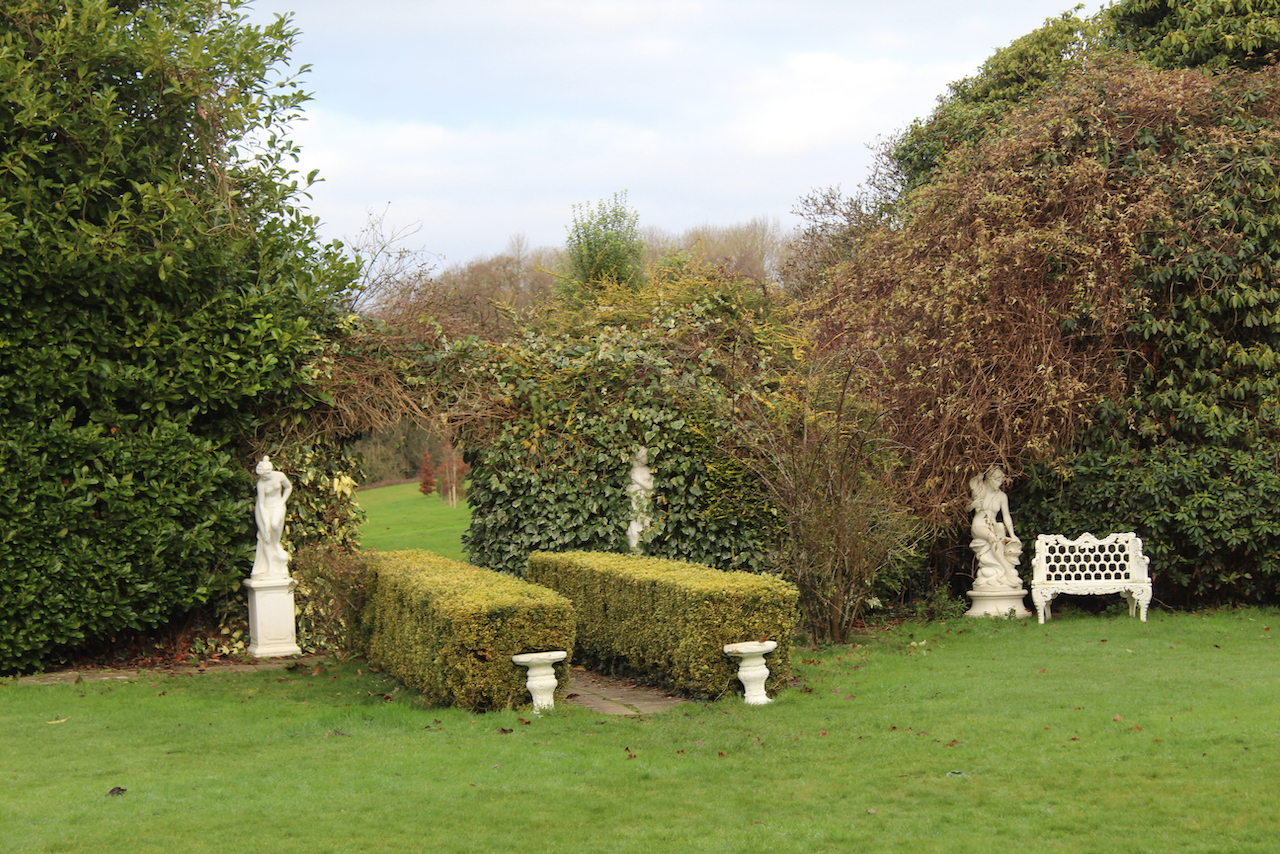
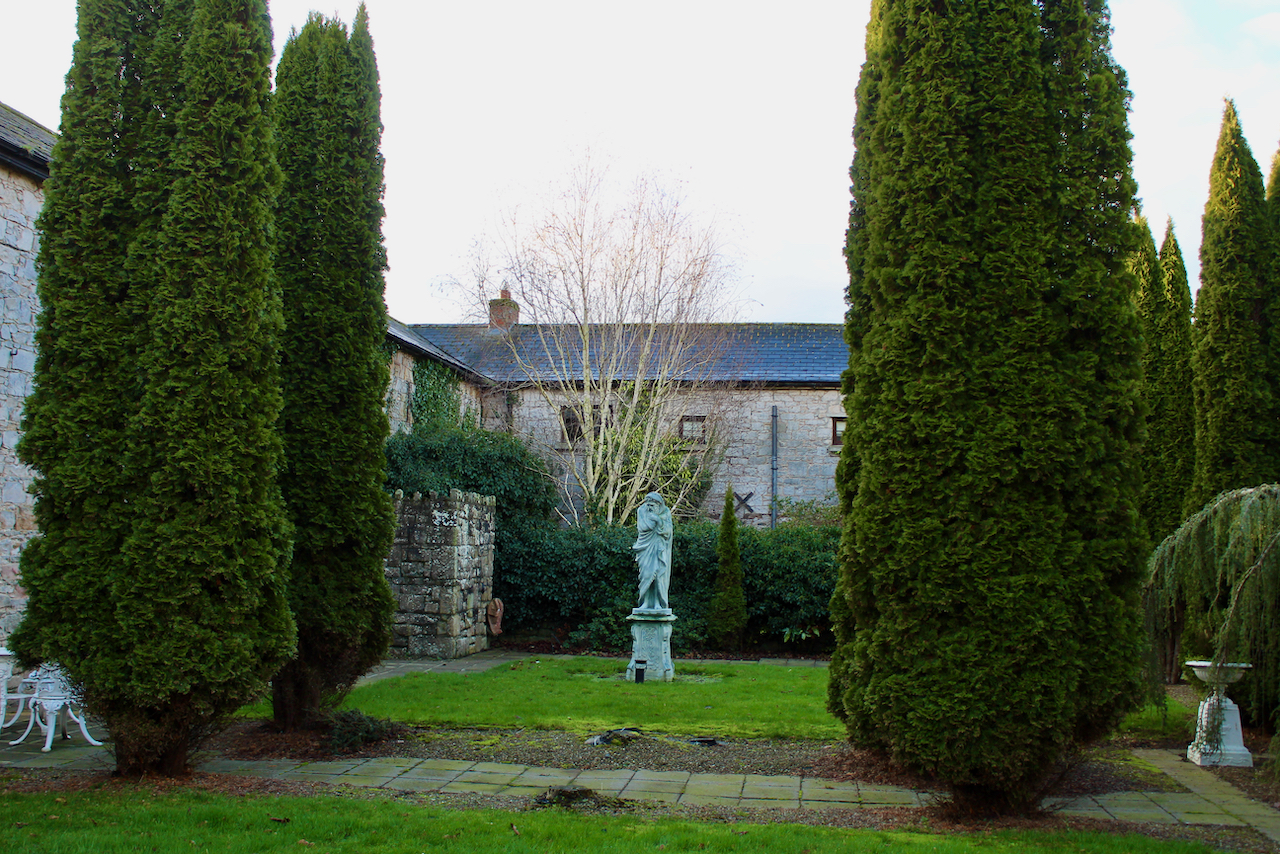
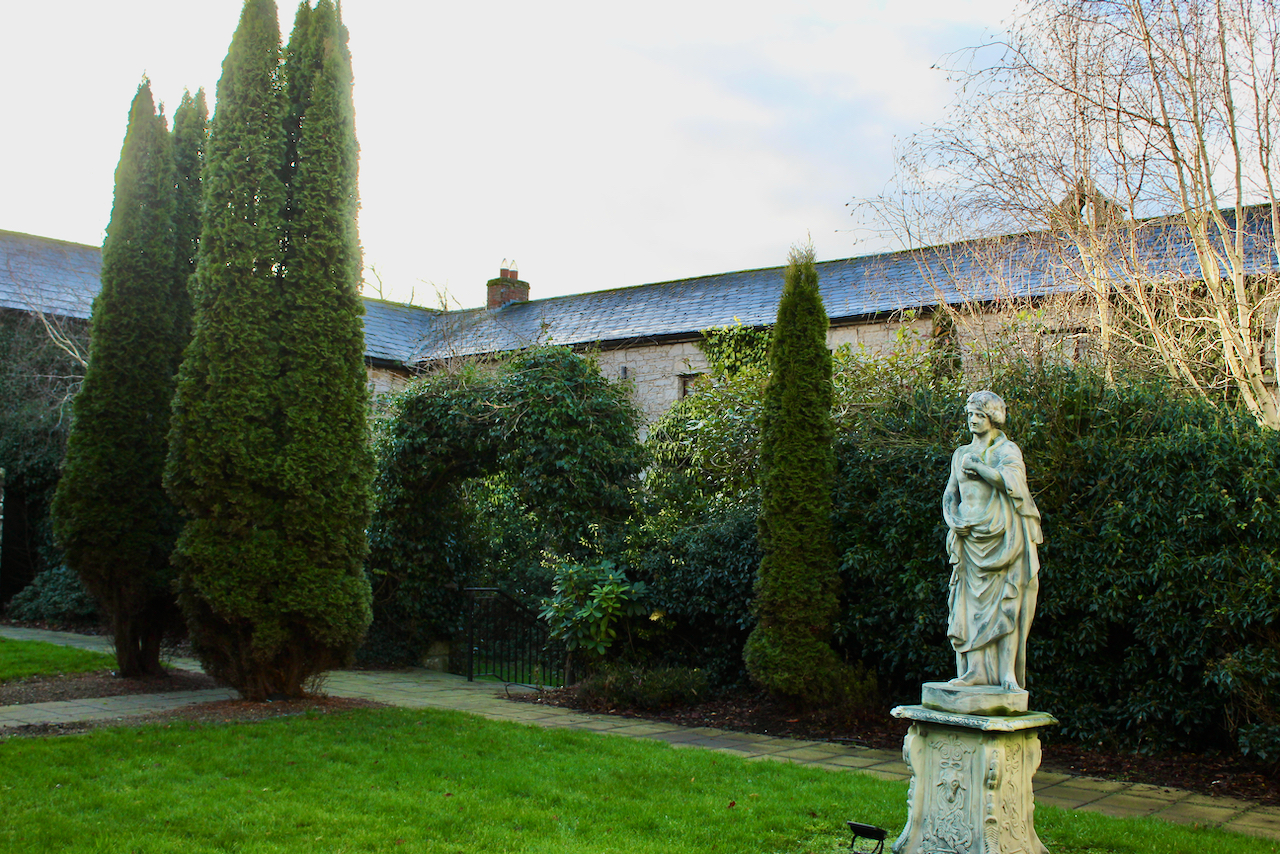
A recent creation to one side of the tower is “Mitzi’s garden,” a formal garden with fountain, tribute to the mother of the current generation of Corscaddens, who is nicknamed Mitzi. This area used to be used for parking.
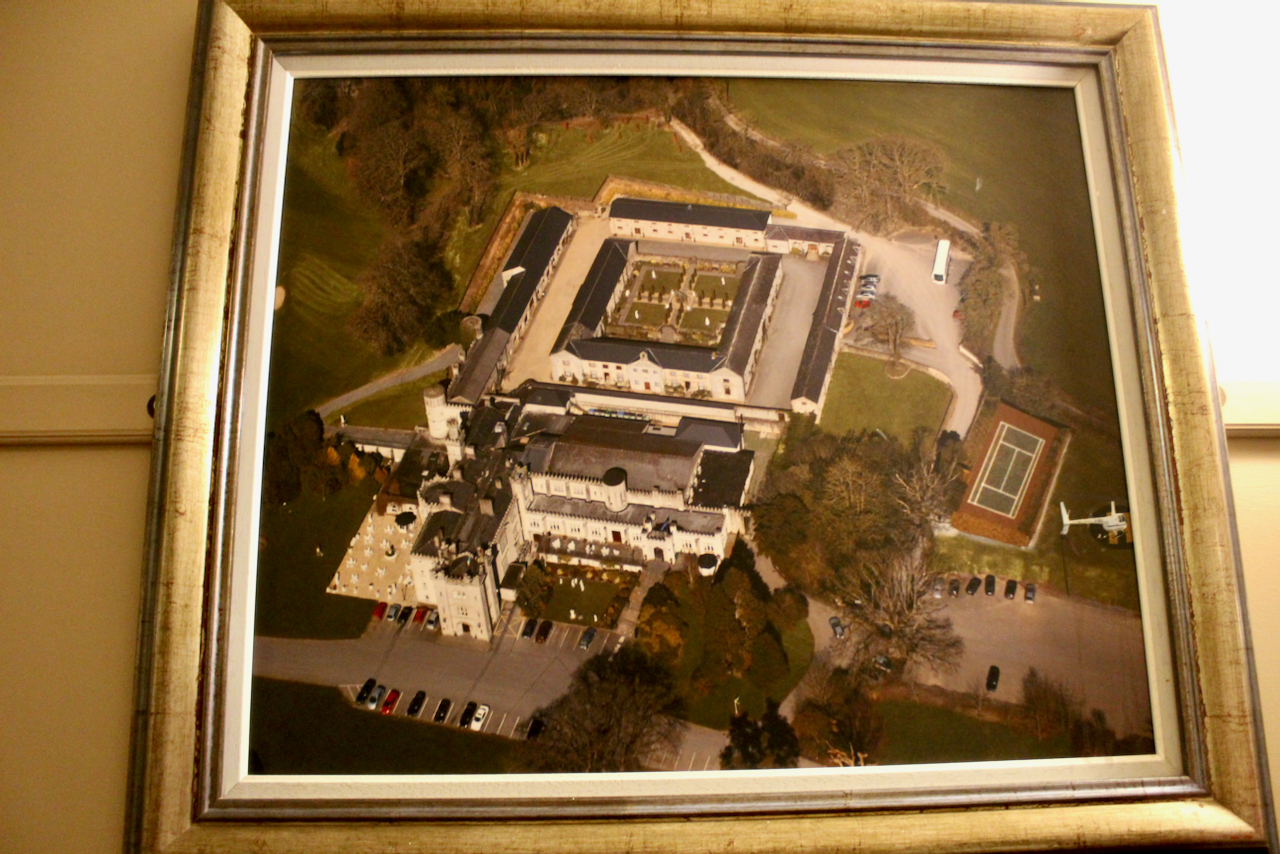
The oldest part of the castle can be pinpointed in the aerial view. According to the National Inventory of Architectural Heritage the “earlier house of c.1750 [is] embedded within northern section of south-east side concealed behind extension of c.1990, junction marked by square-plan rendered turret corresponding to north-west side in simplified form.” This square plan turret actually contains our bathroom!
Beyond Mitzi’s Garden a path leads to the car park and further self-catering accommodation, beyond the tennis court. A branch of this path and driveway curves around to the courtyard at the back of the castle. One can also enter this courtyard through the castle. The courtyard originally contained the stables, but these have been converted into more hotel accommodation. There are about sixty rooms in the courtyard.
“Colonel Joseph Pratt had married Jamima, daughter of Sir James Tynte [of Tynte Park, County Wicklow – the beautiful house that stands there today wasn’t built until around 1820; Jamima married in 1806], and had ten children. The eldest – Mervyn, born in 1807 – married Madeline Jackson, only daughter and heiress of Colonel Jackson of Enniscoe, Co. Mayo. They inherited this property when Colonel Pratt died.
“He succeeded his father, Col. Joseph Pratt, as owner of Cabra in 1863, but from this time onwards, the interests of the Pratt Family were divided between Cabra in Co. Cavan and Enniscoe in Co. Mayo. Mervyn Pratt died in 1890 and was succeeded on his death by his eldest son – Major Mervyn Pratt, in 1927.”
Enniscoe, by the way, is another Section 482 property which I look forward to visiting, which also provides accommodation. The house was completed in 1798. [15]
Mervyn Pratt (1807-1890) who married into Enniscoe had several brothers. Joseph Pratt took the name of Tynte in 1836 from his mother and lived in Tynte Park. Mervyn held the offices of High Sheriff of County Cavan in 1841 and High Sheriff of County Mayo in 1843. He was also Justice of the Peace for County Cavan and High Sheriff for County Meath in 1875. His son Joseph Pratt (1843-1929) inherited Enniscoe and Cabra Castle, and then Joseph’s son Mervyn (1873-1950) lived at Enniscoe and left Cabra Castle unoccupied. He served in the military, and was a Justice of the Peace, and never married. He bequeathed Cabra to his nearest male relative, Mervyn Sheppard (1905-1994), a Malayan Civil Servant. [16] According to the Cabra Castle website, death duties and taxes, rates, the cost of repairs, and farm losses, meant he could not afford to live there, and he had to sell it. It was sold in 1964 to the Brennans and turned into a 22 bedroom hotel.
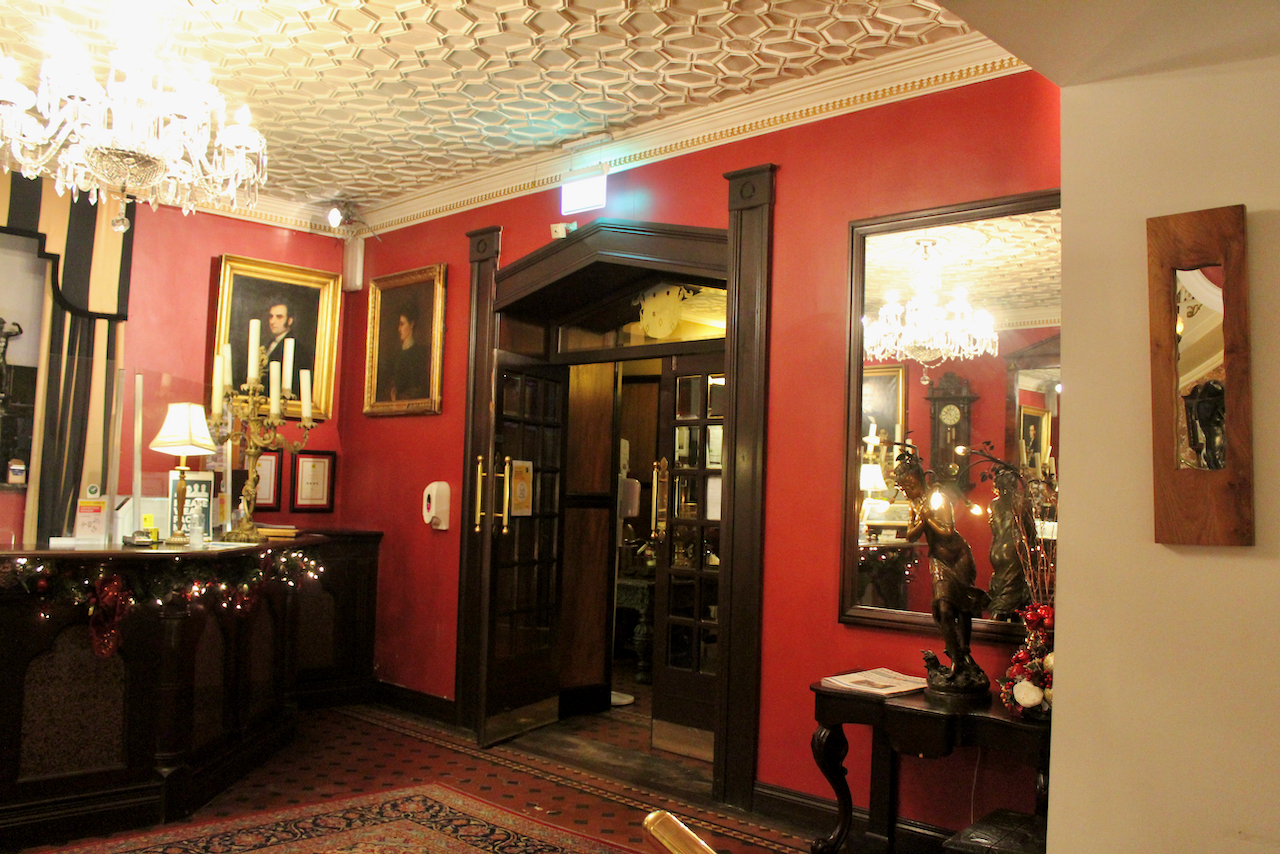
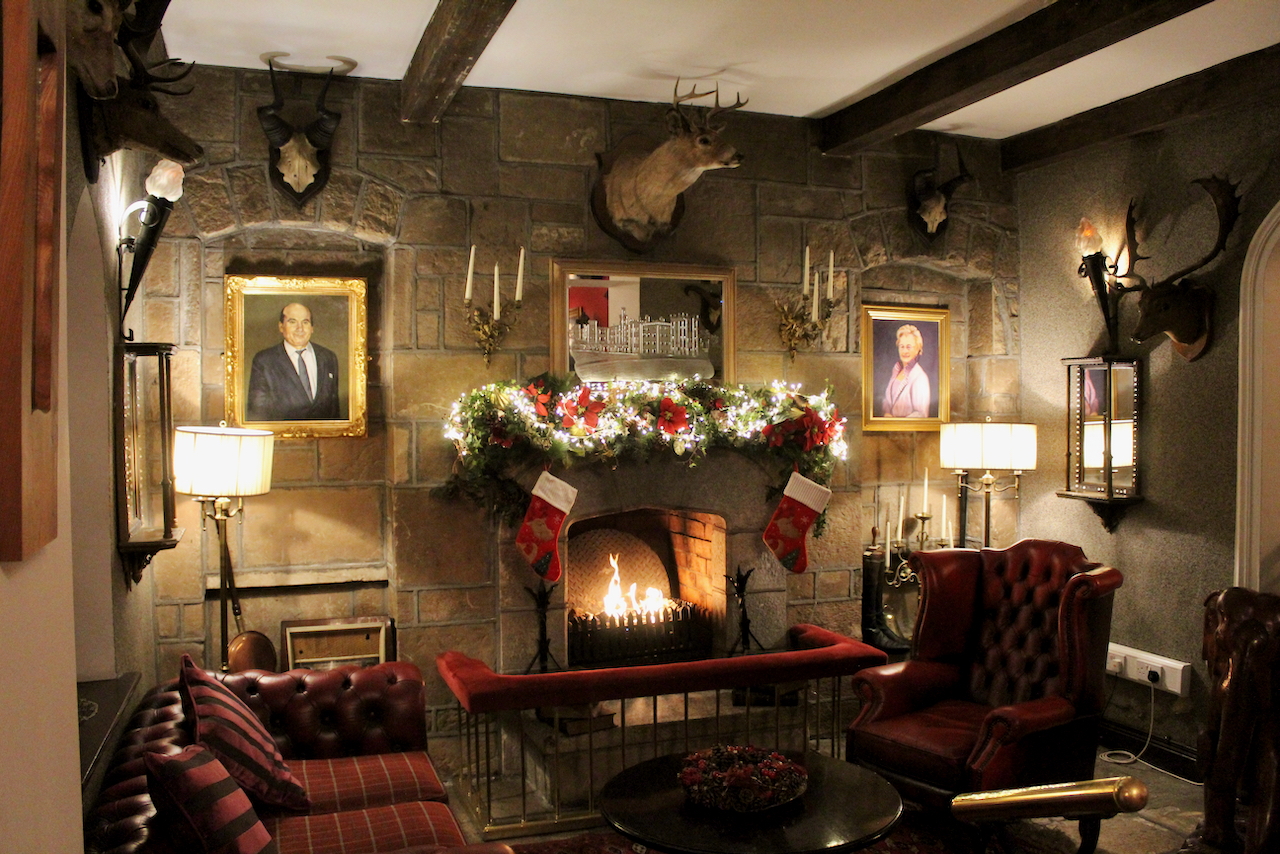
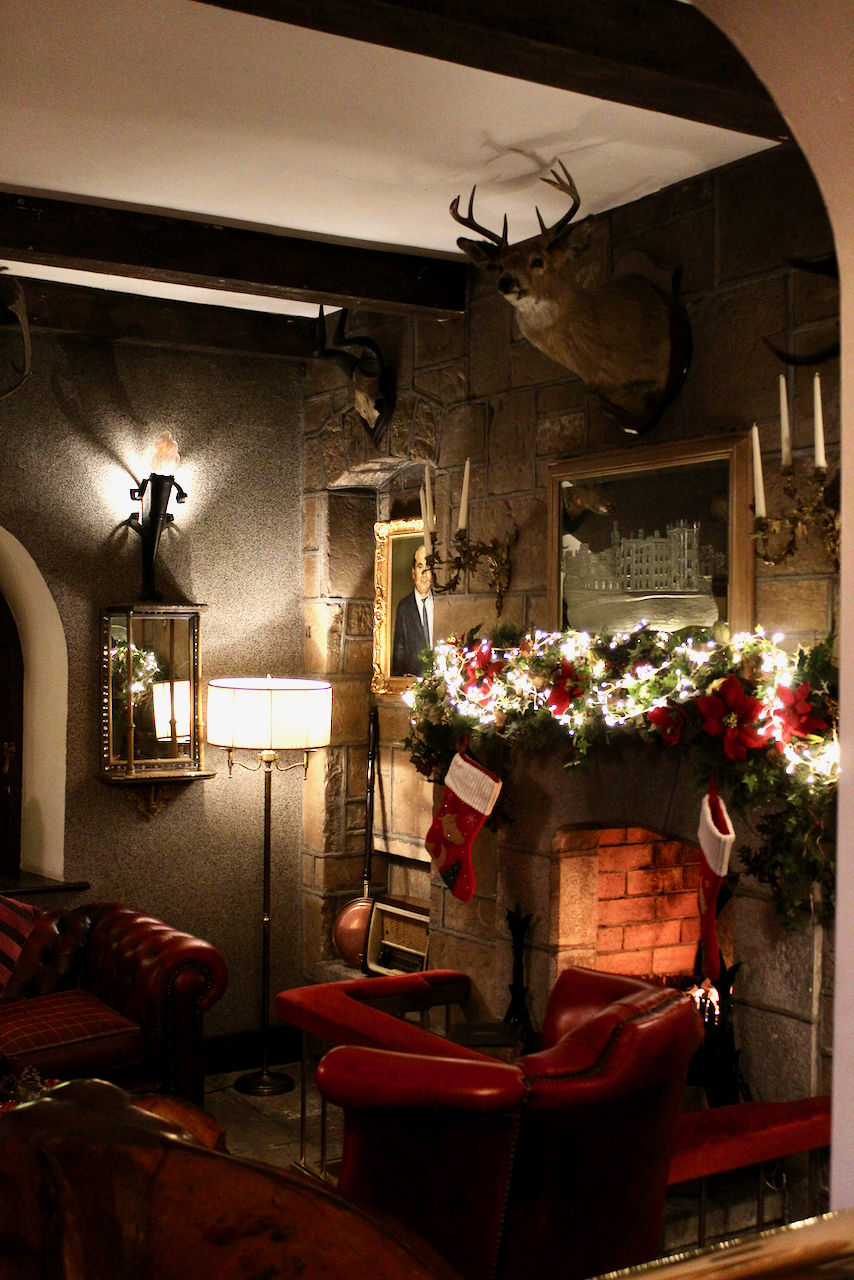
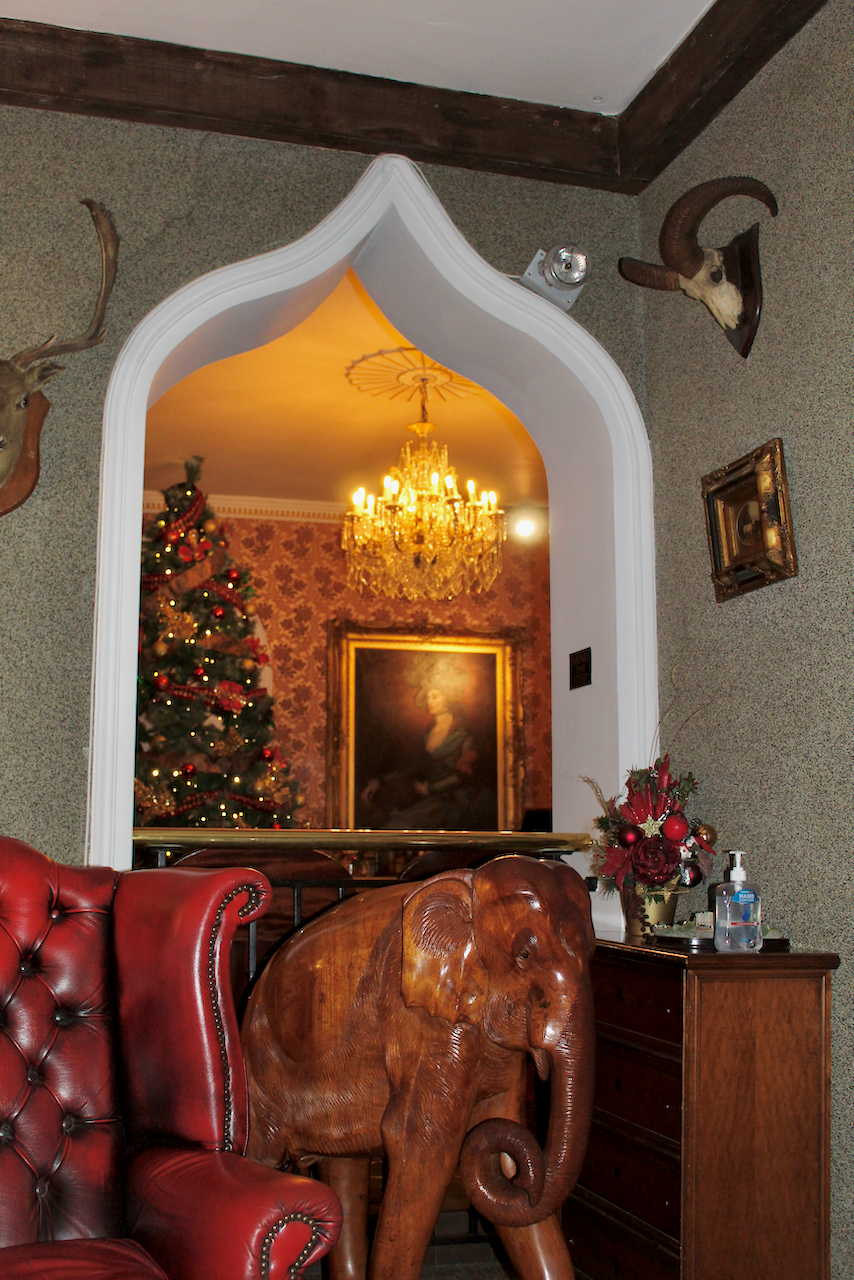
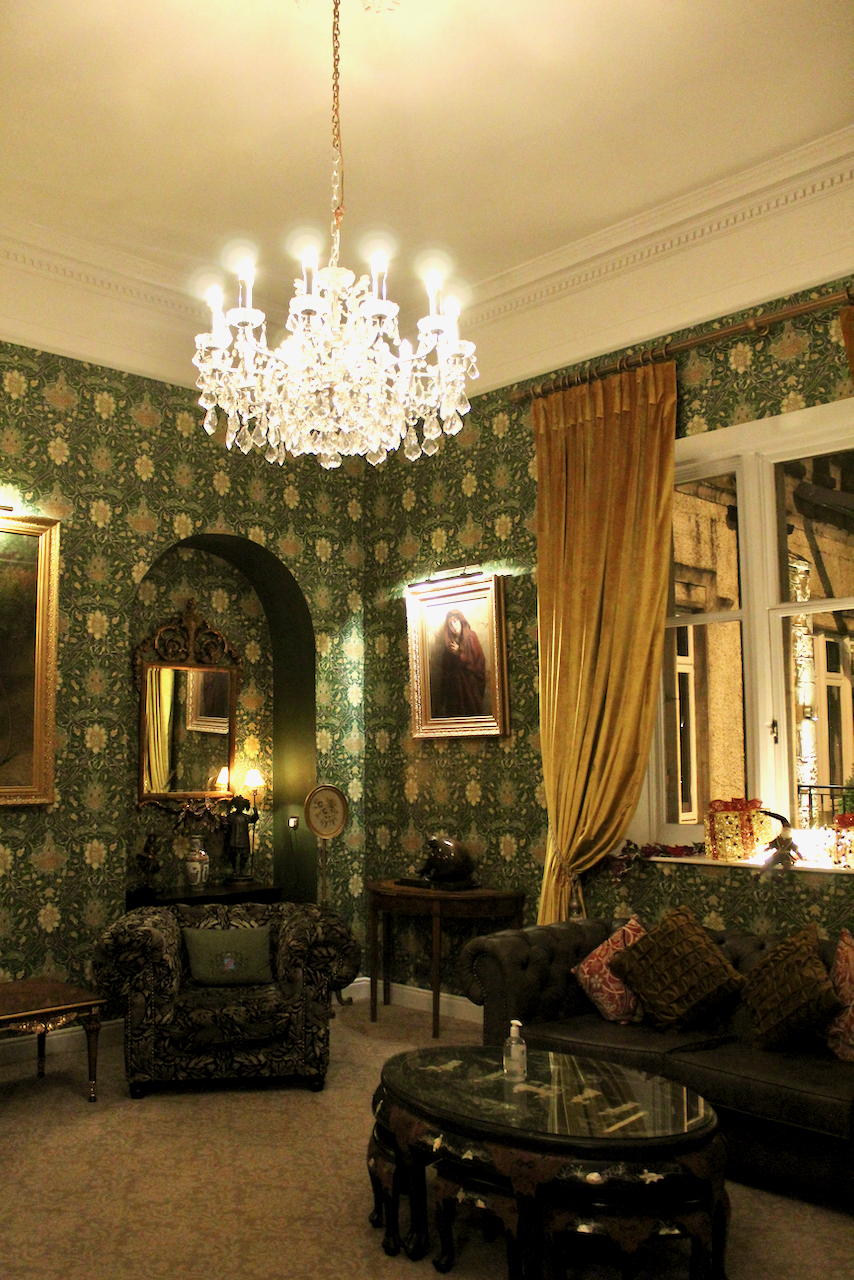
The manager of the hotel, Johnny, took us on a tour. While we waited for him we sat by an open fire in a small sitting room off the reception hall.
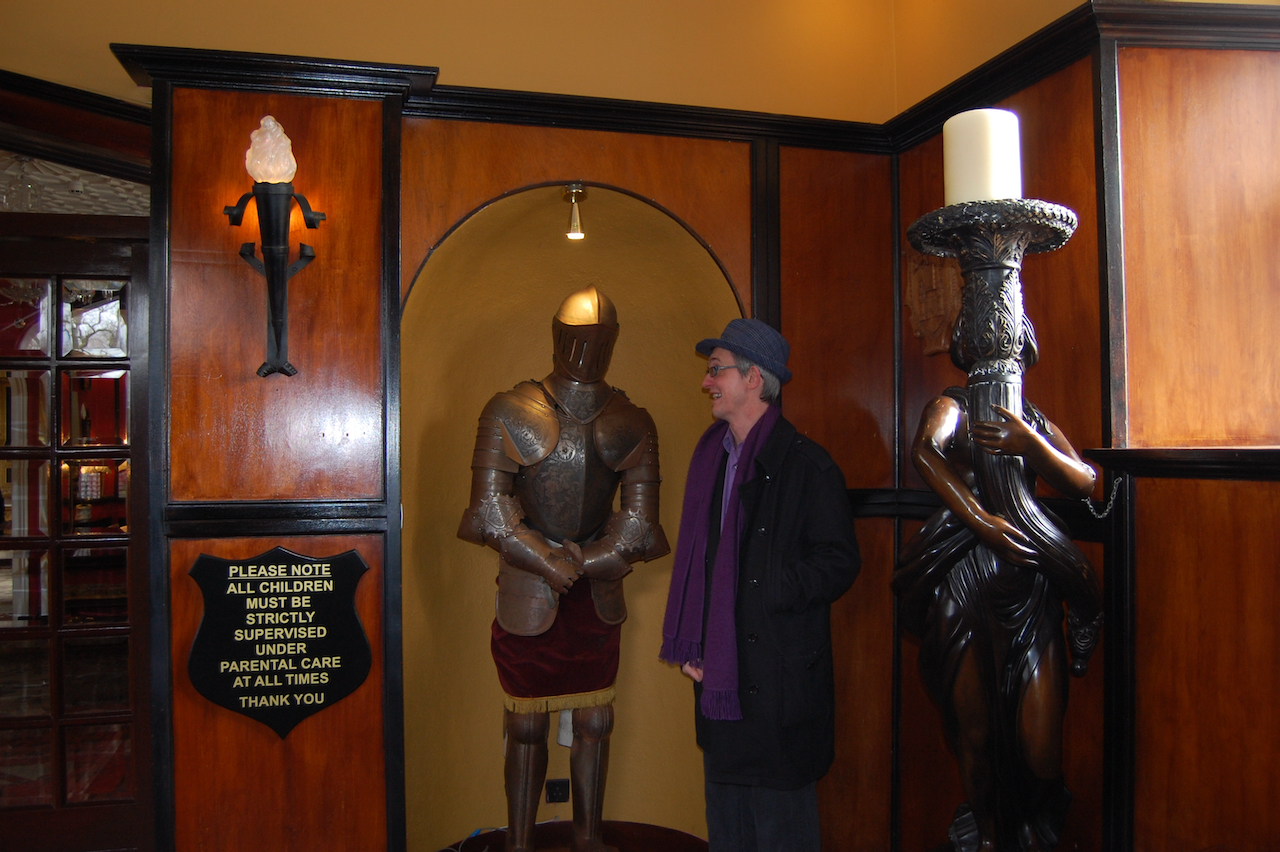
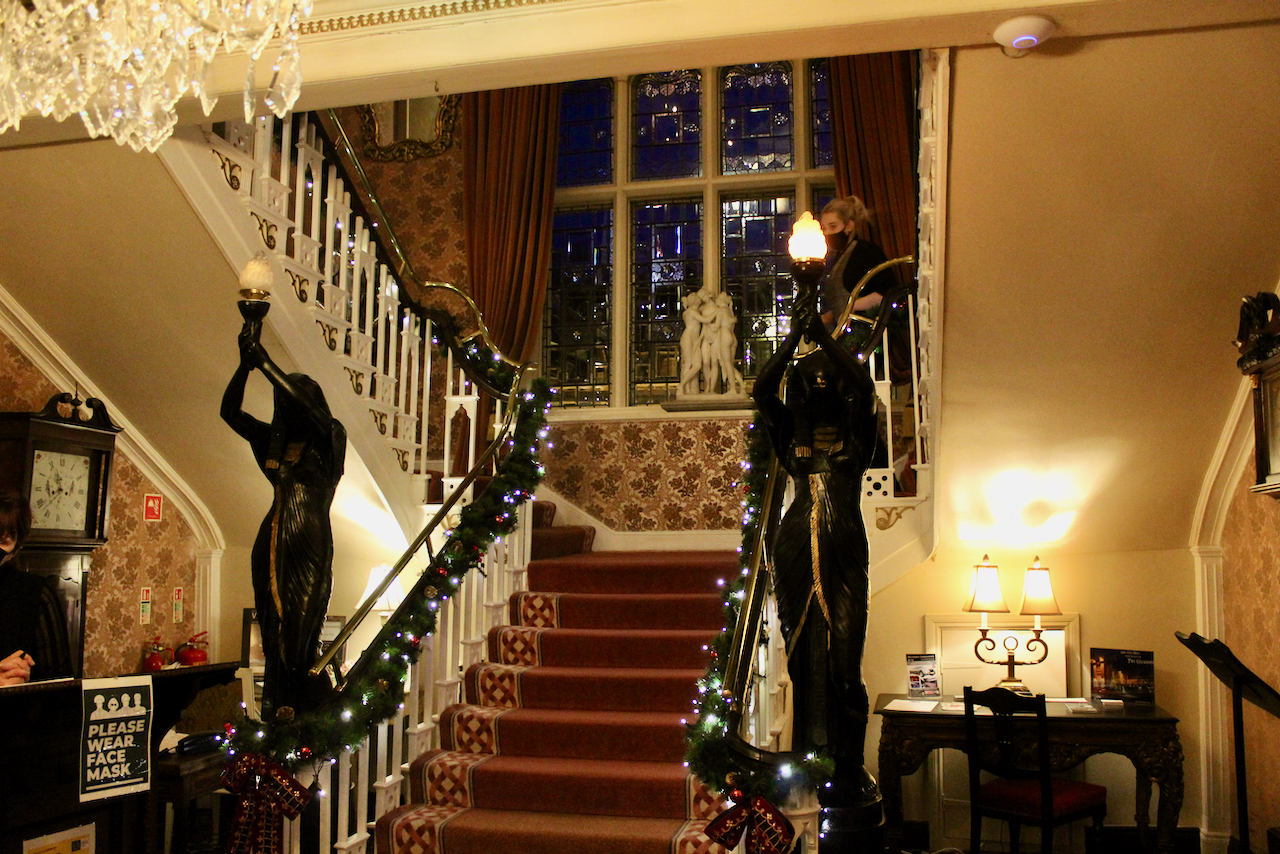
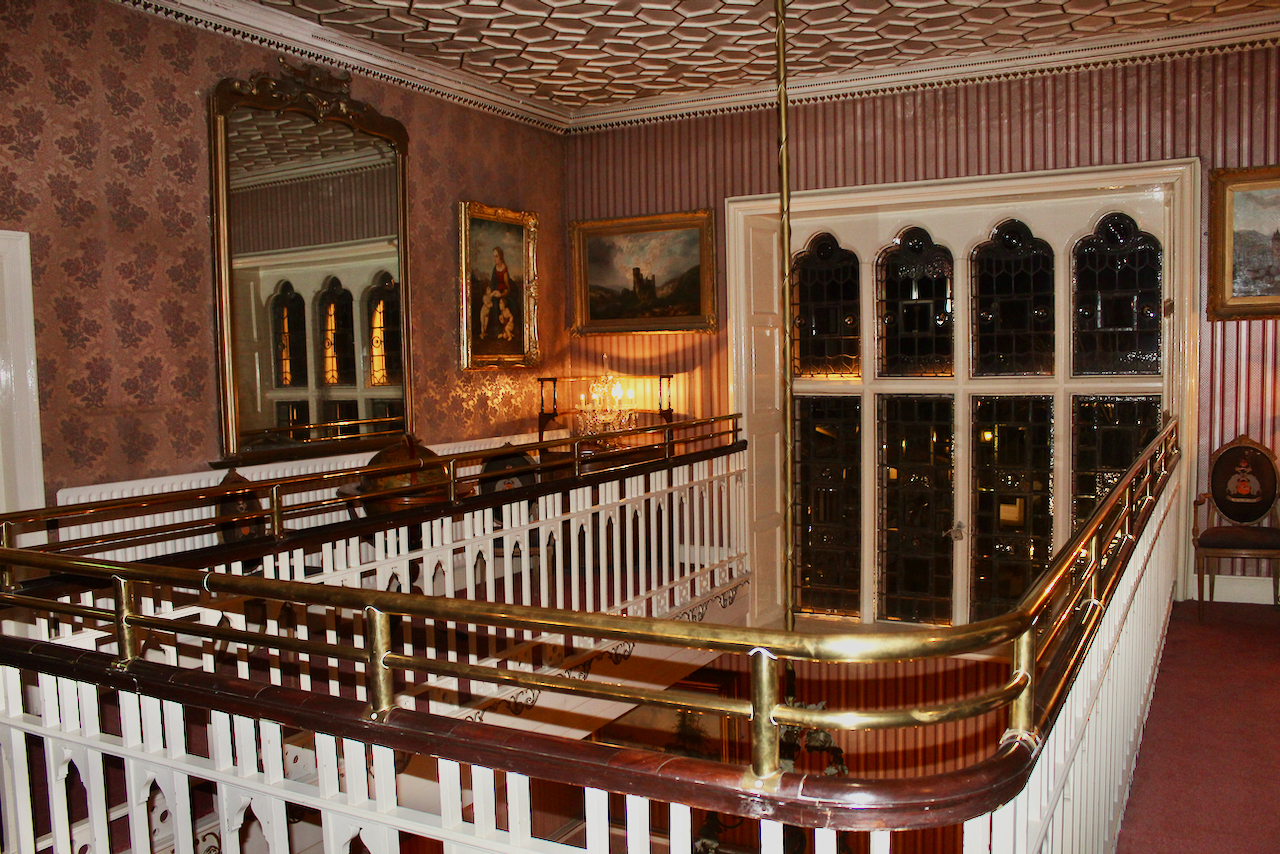
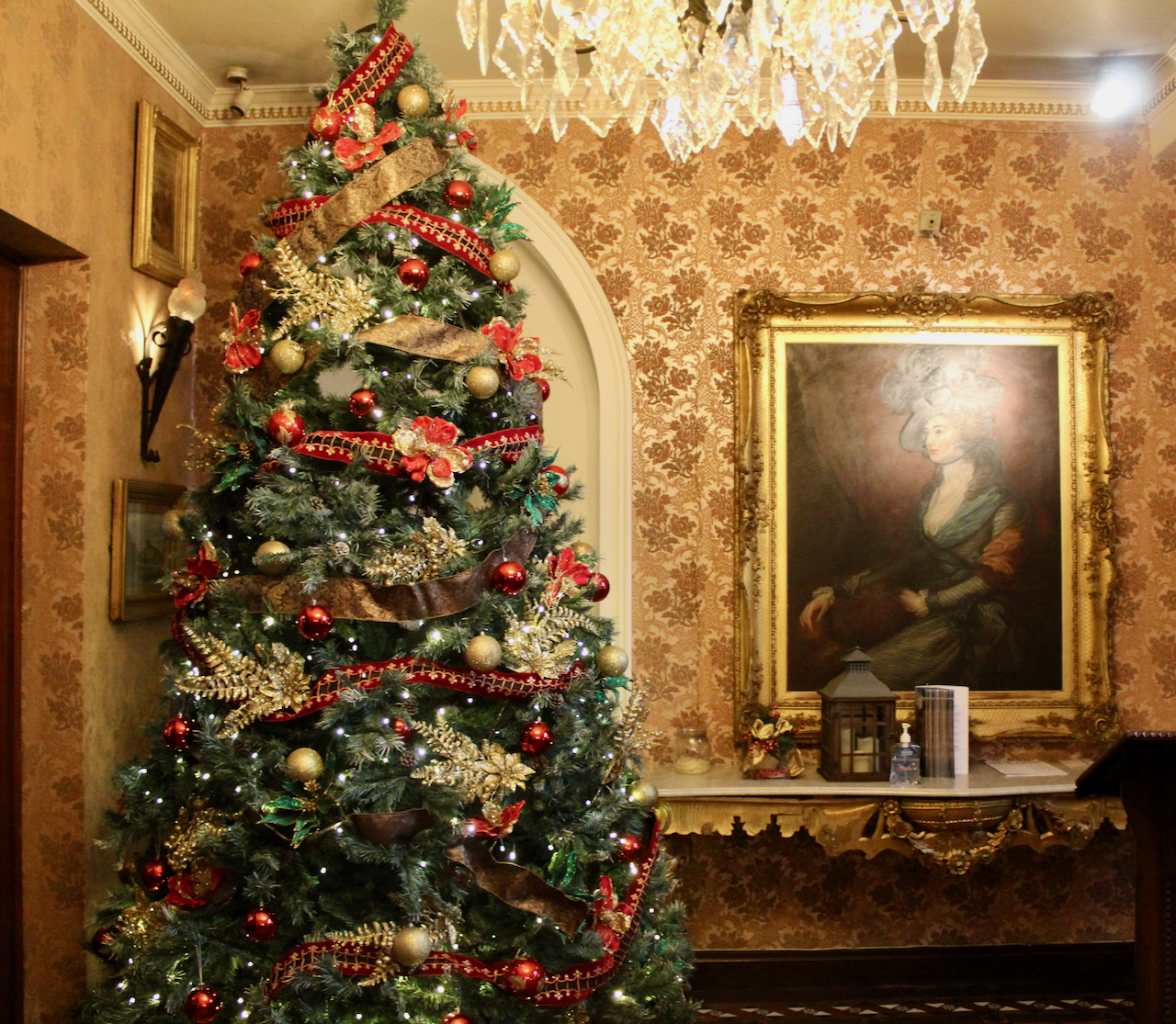
Beyond the reception area is the staircase hall with a bifurcating staircase with metalwork balustrade ascending to the first floor. Two statues very similar to the ones that were recently removed from outside the Shelbourne Hotel in Dublin while the owners determined whether they represented slave girls or not (they do not) adorn the staircase. [17]
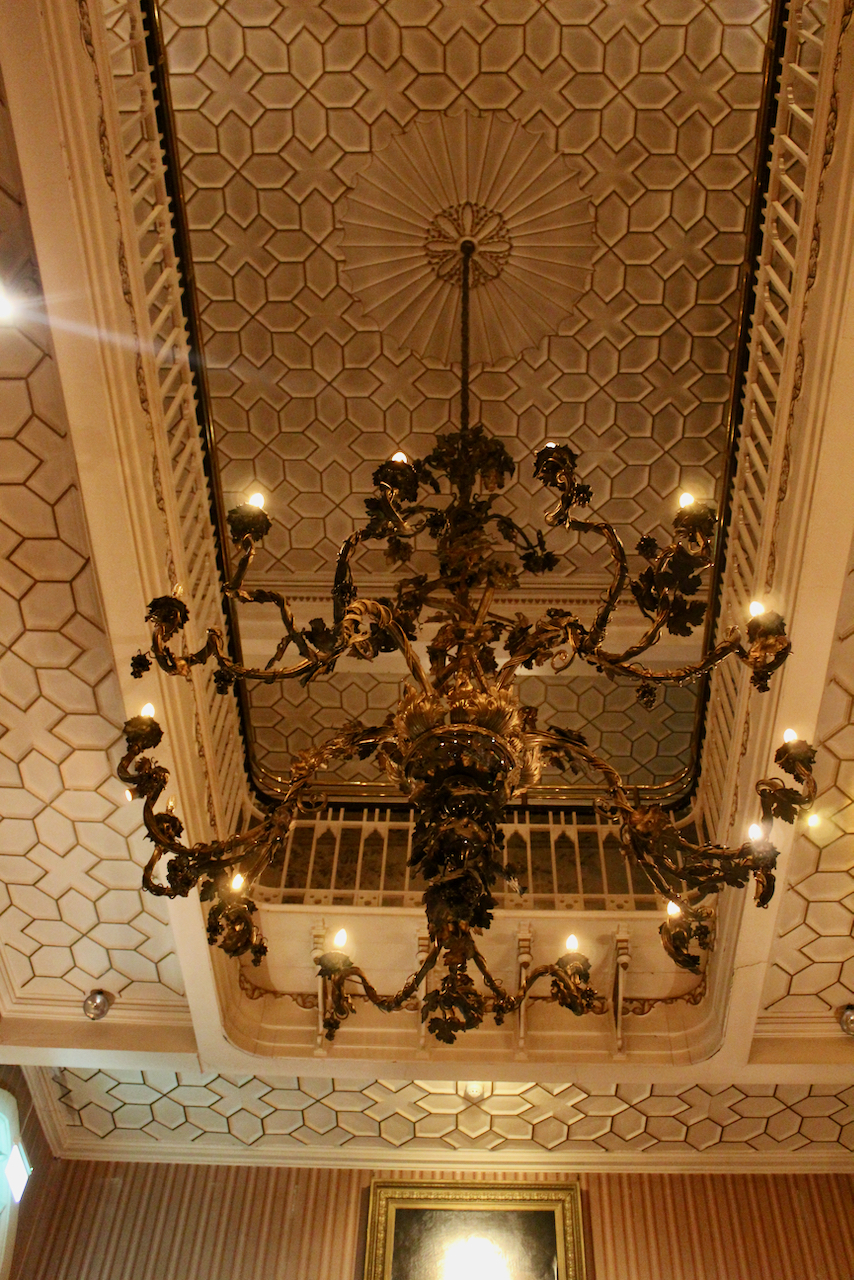
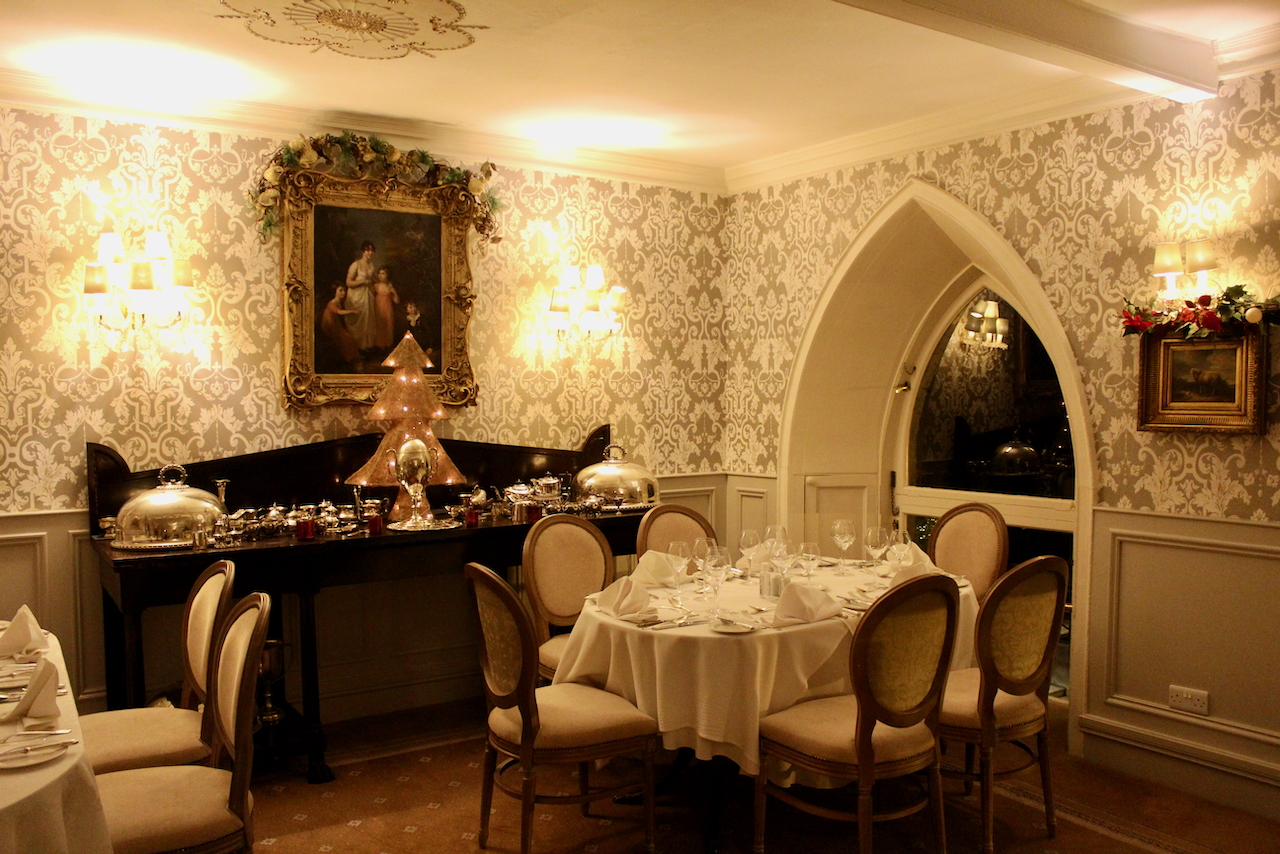
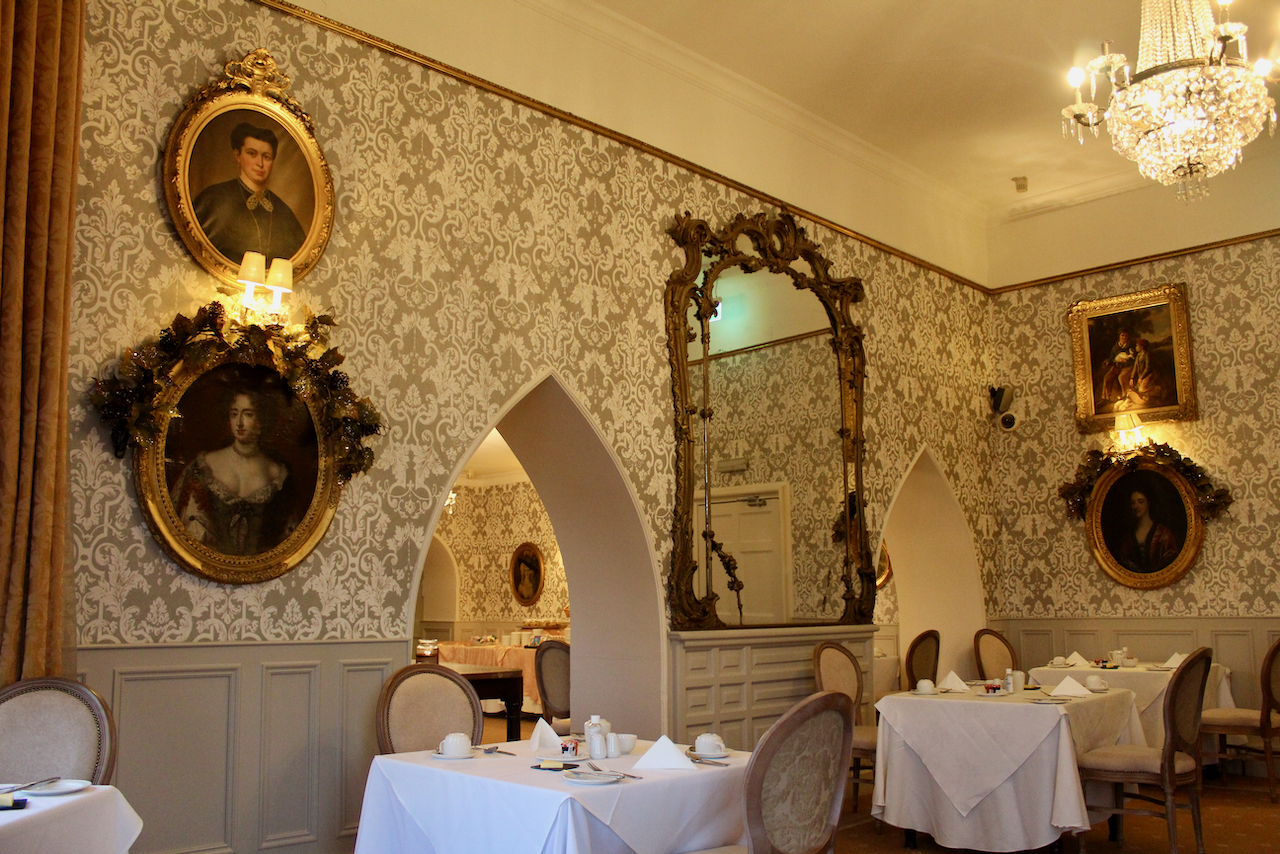
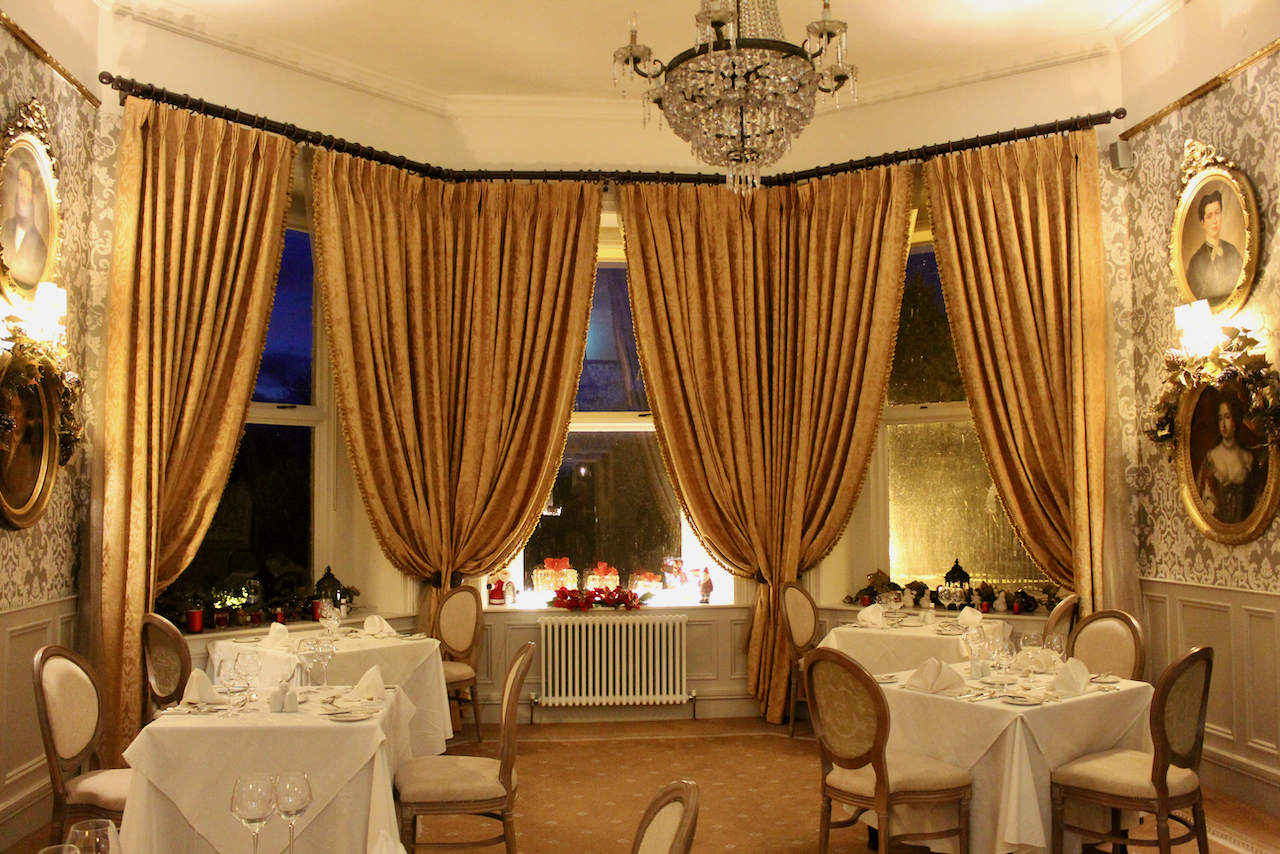
The ceiling has matching gilt decoration. Next to this room, facing the staircase, is the dining area – a suite of several rooms. The arches between the rooms reflect the entrance arch to the castle and the arched windows.
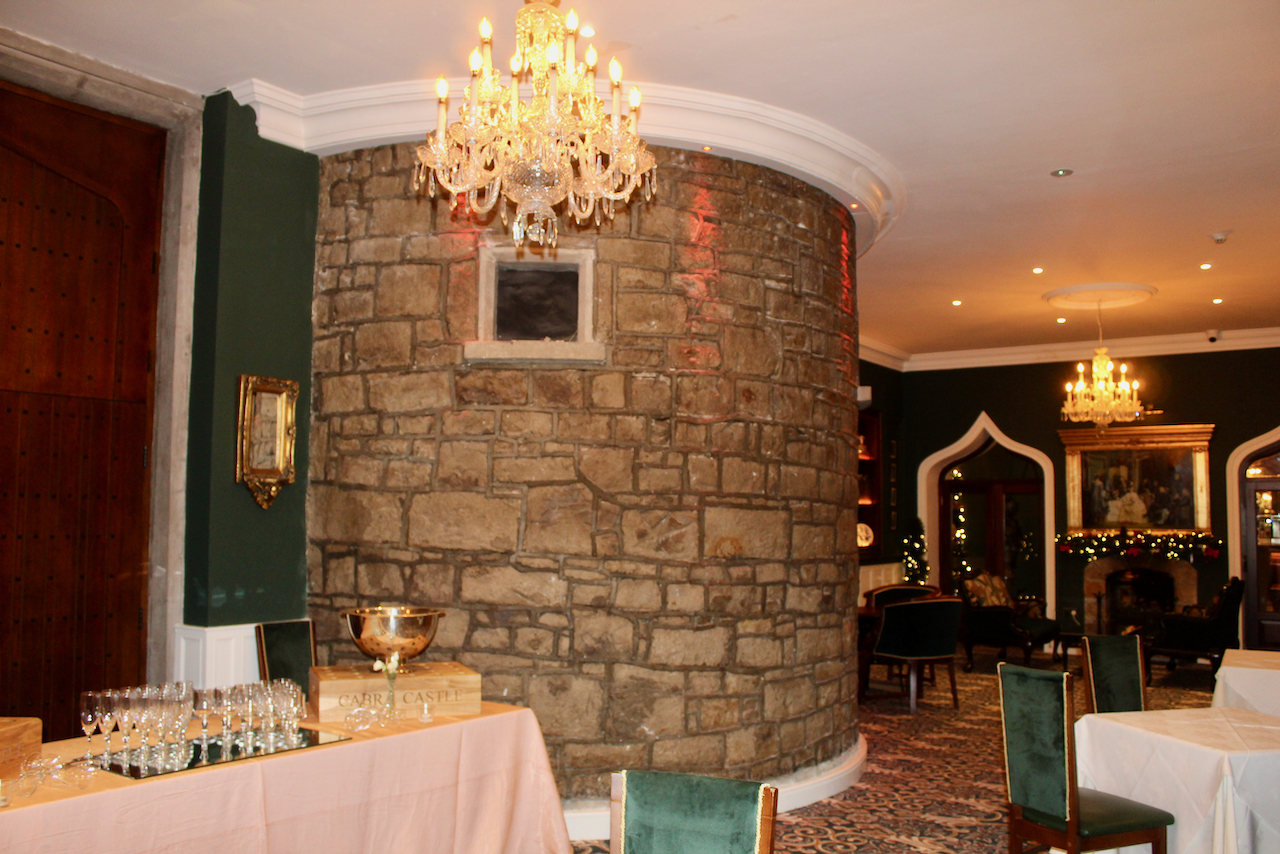
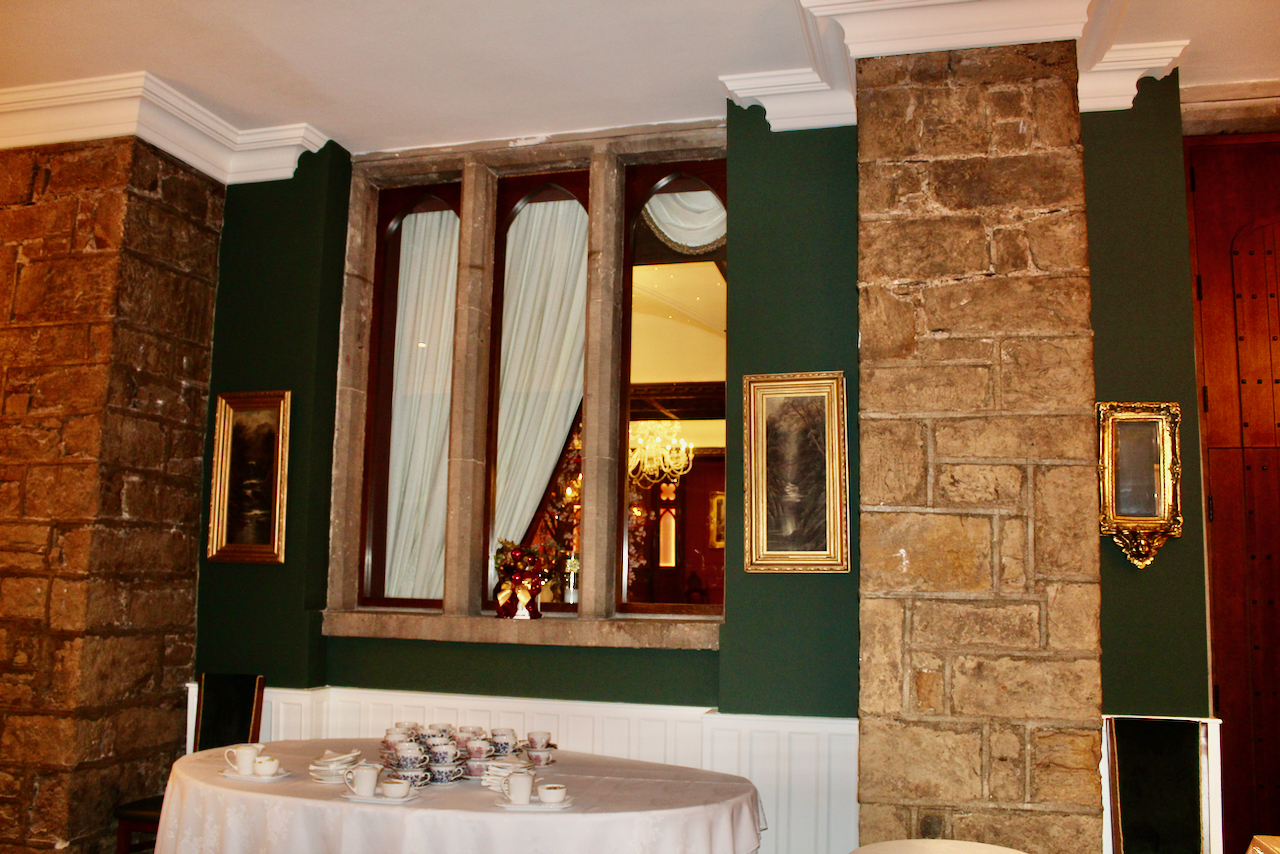
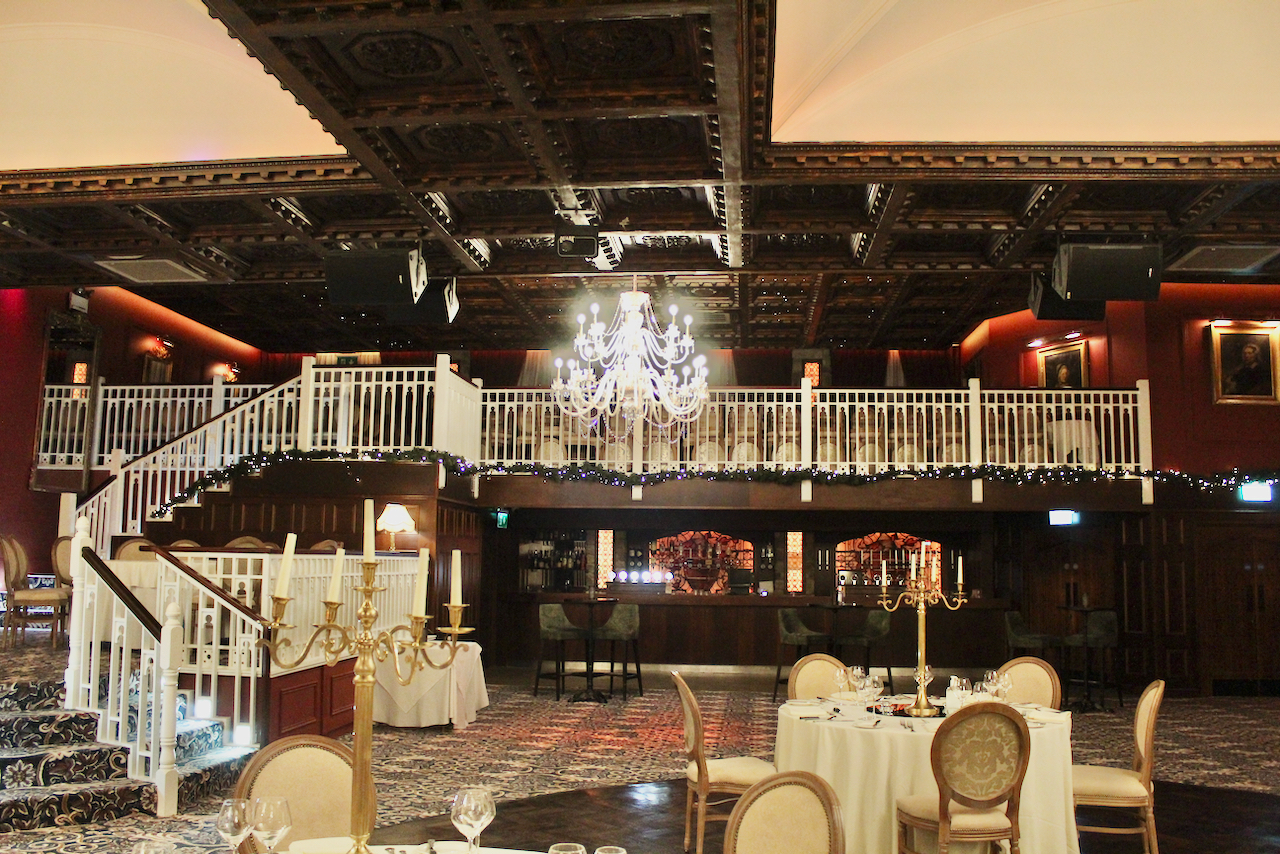
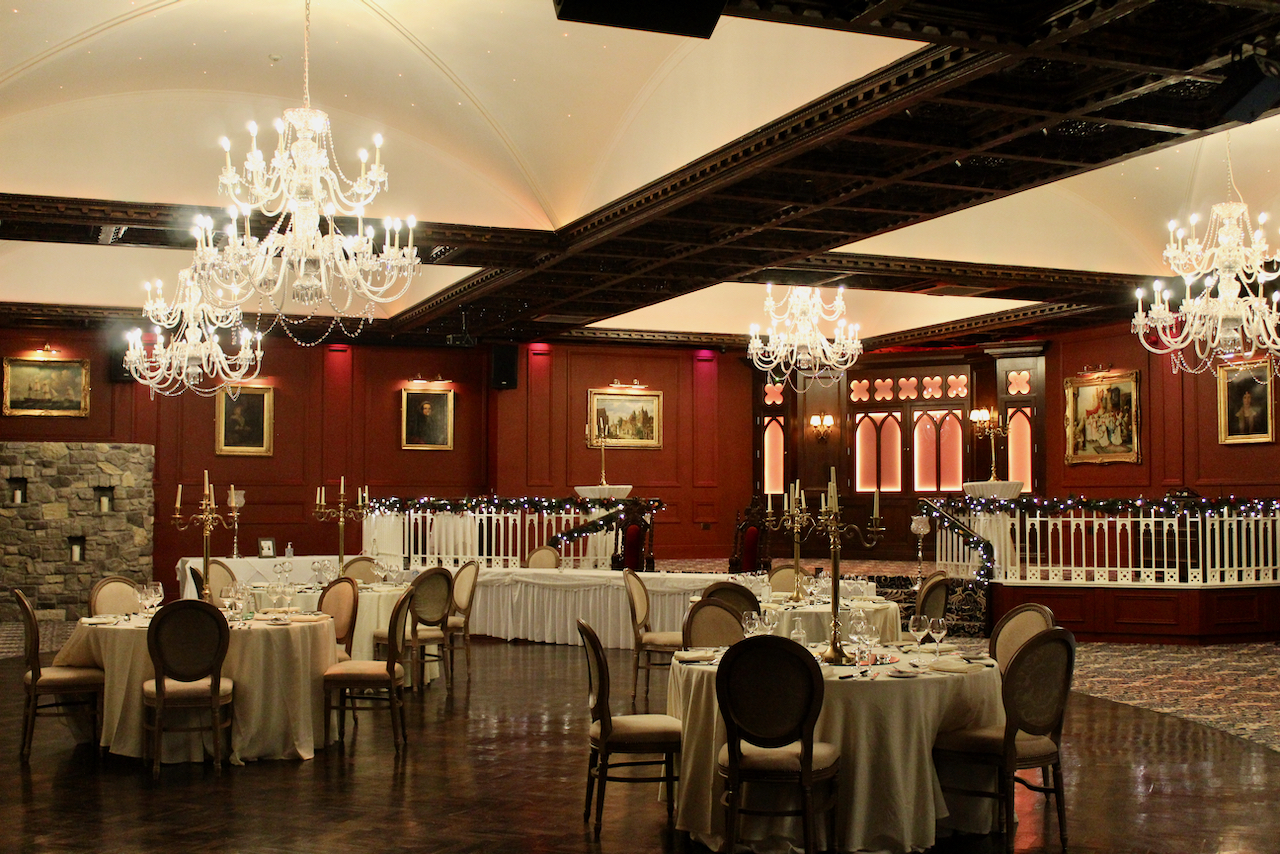
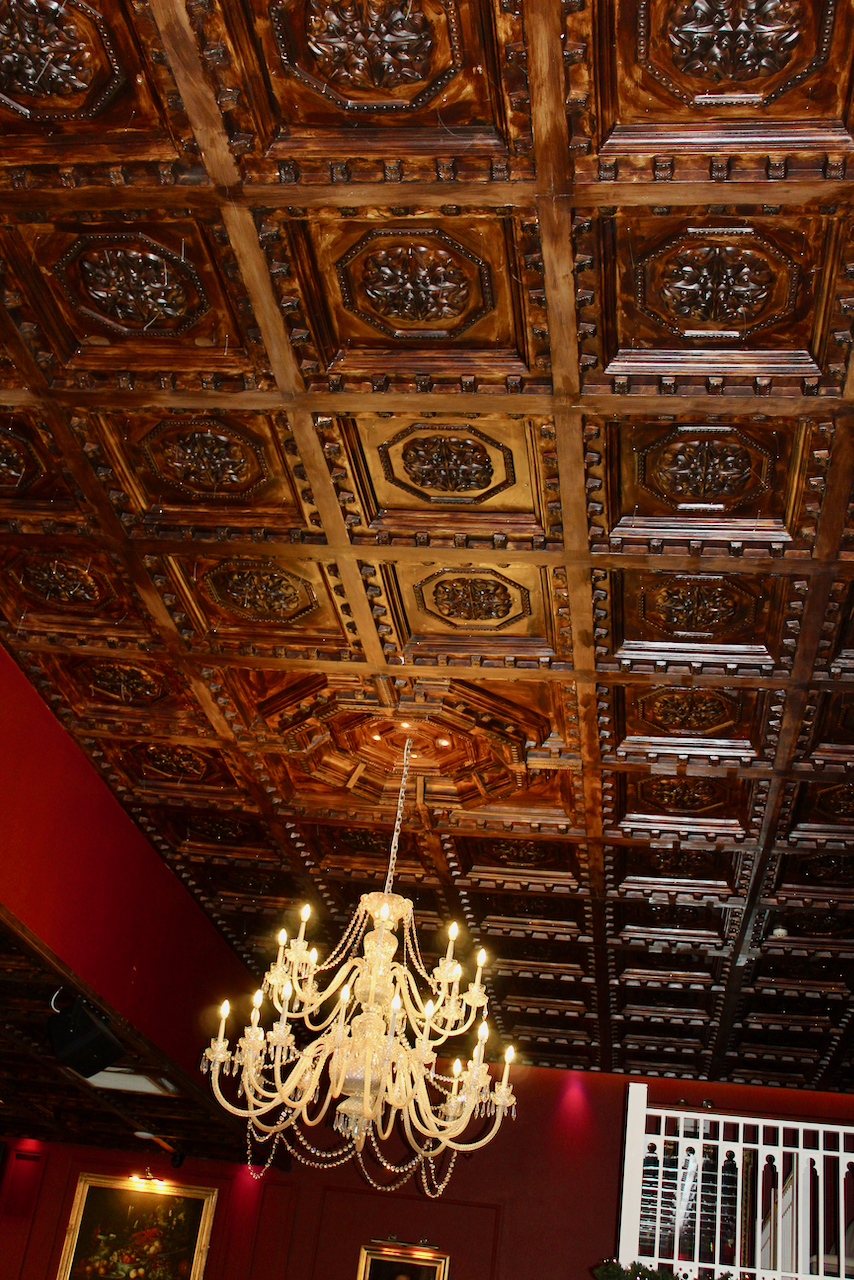
The manager then took us through to the most recent piece de resistance, the Ballroom. It has been sensitively built and decorated to reflect the style of the older parts of the castle, and I loved the ceiling, which is quite amazing and looks like heavy medieval carved wood but is actually manufactured using a modern technique. In the hallway leading to the ballroom, our guide pointed out that the original round stone tower of the castle has been incorporated.
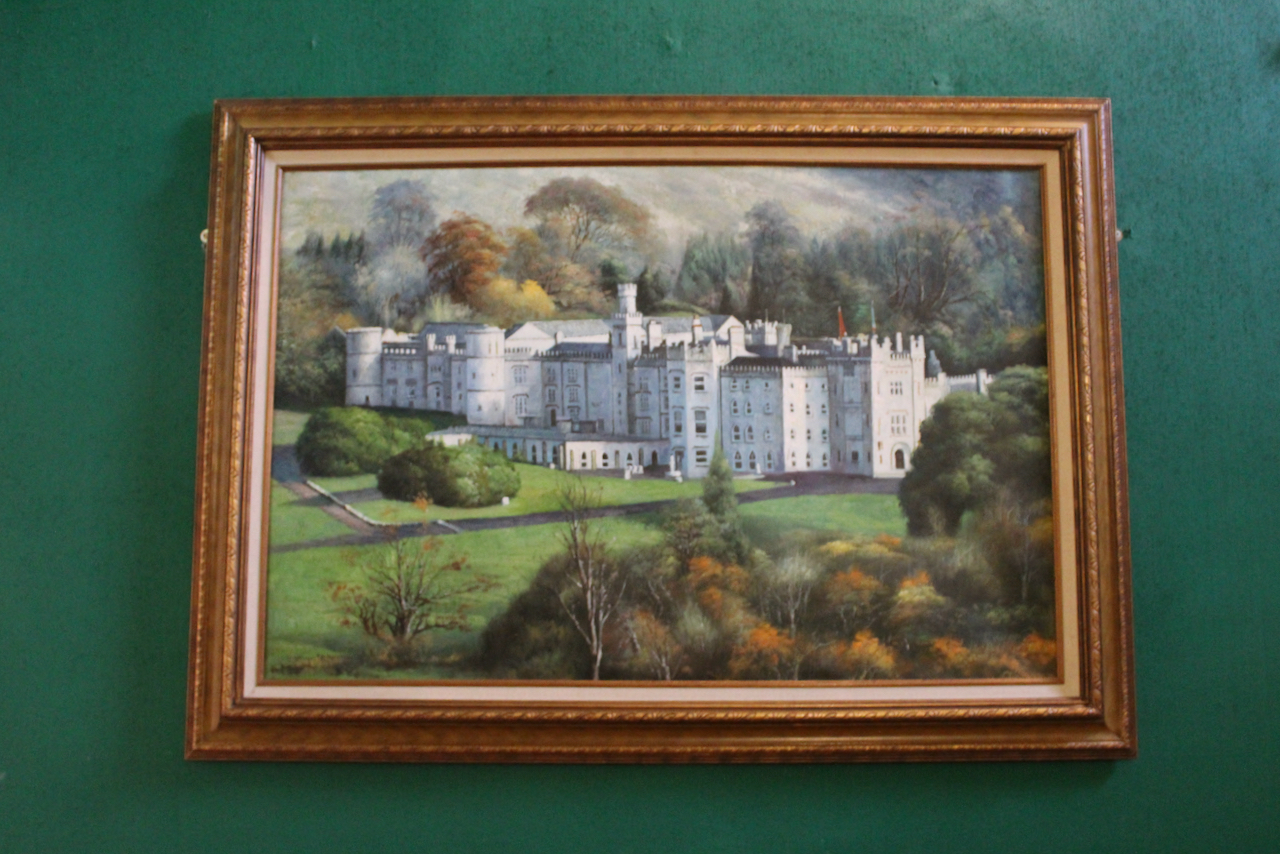
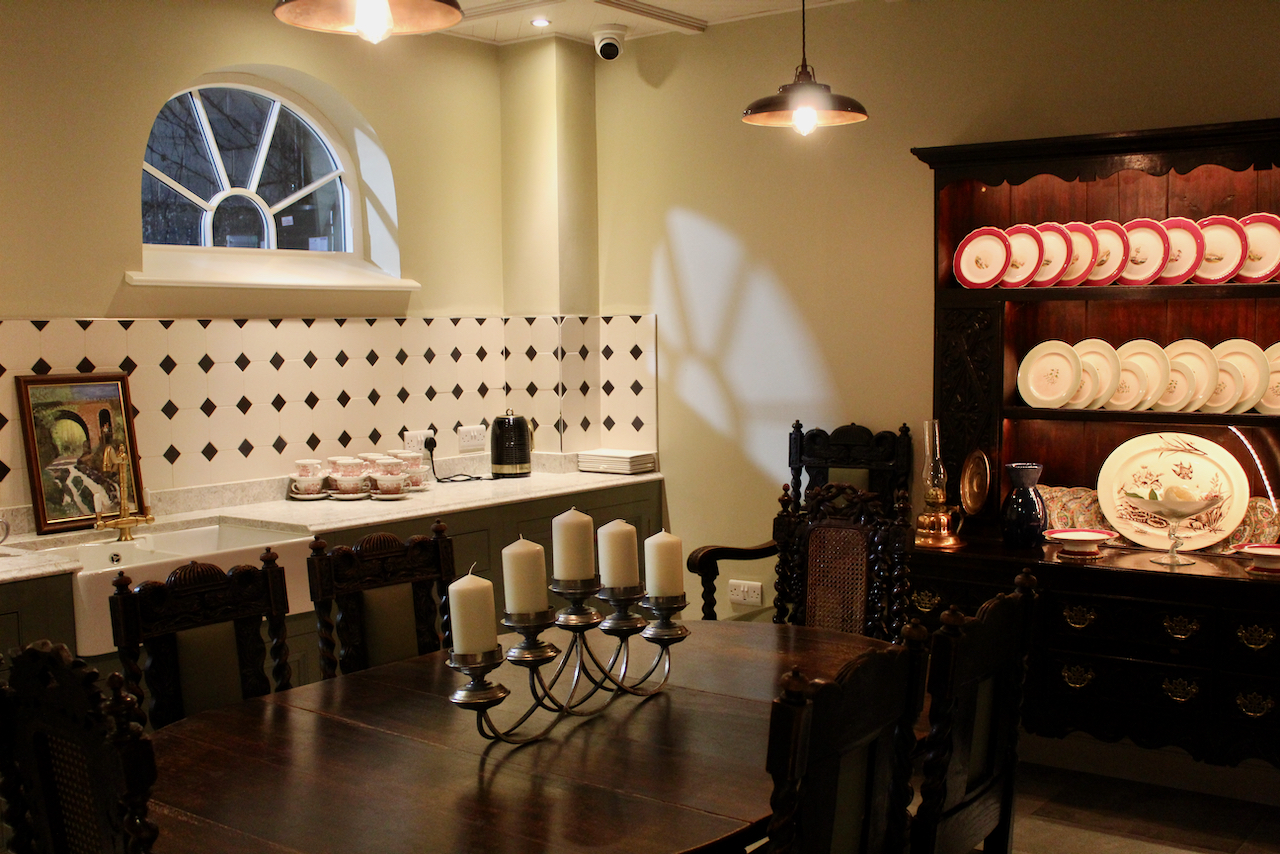
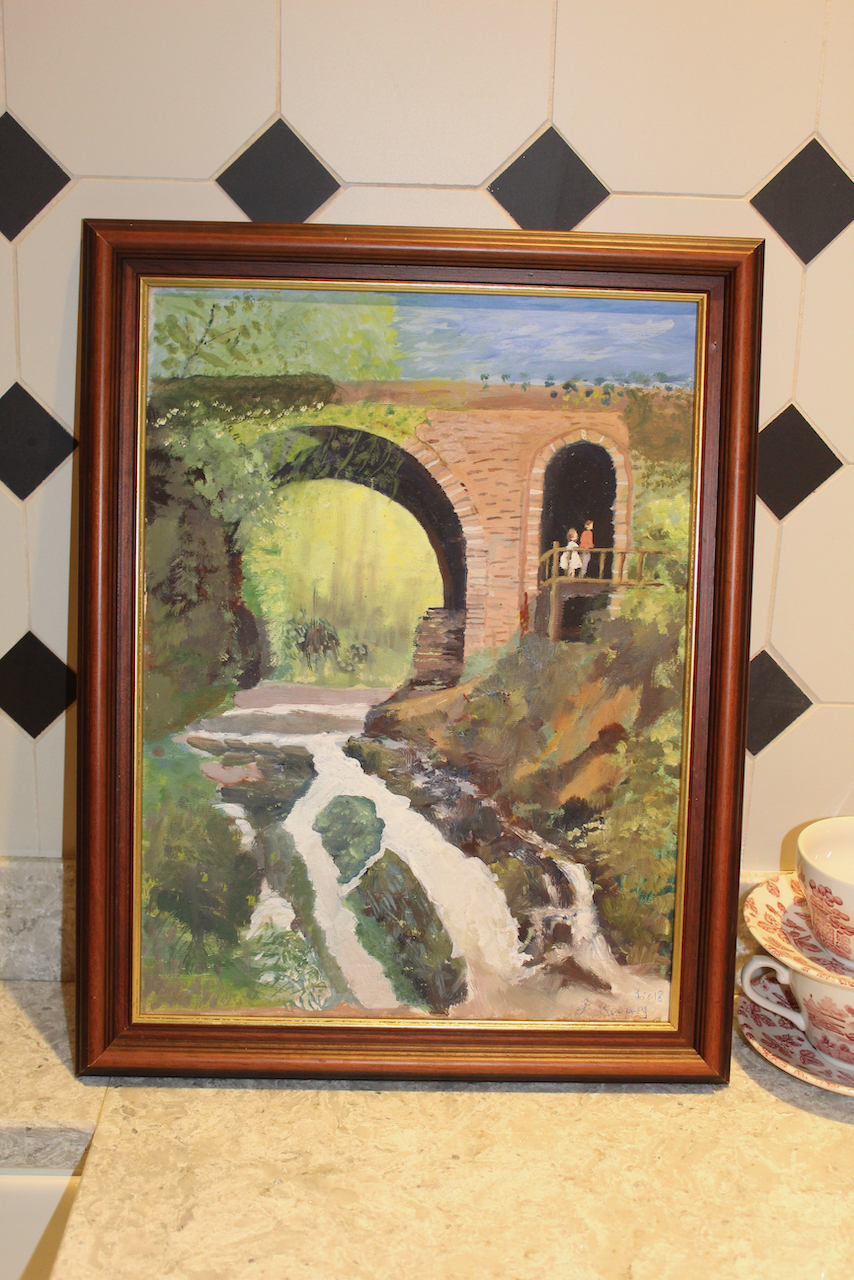
In Josephine’s kitchen, guests can help themselves to tea and coffee. A painting of Cormy Bridge, near where Old Cabra was located, is by Josephine herself!
Cabra Castle, December 2020.
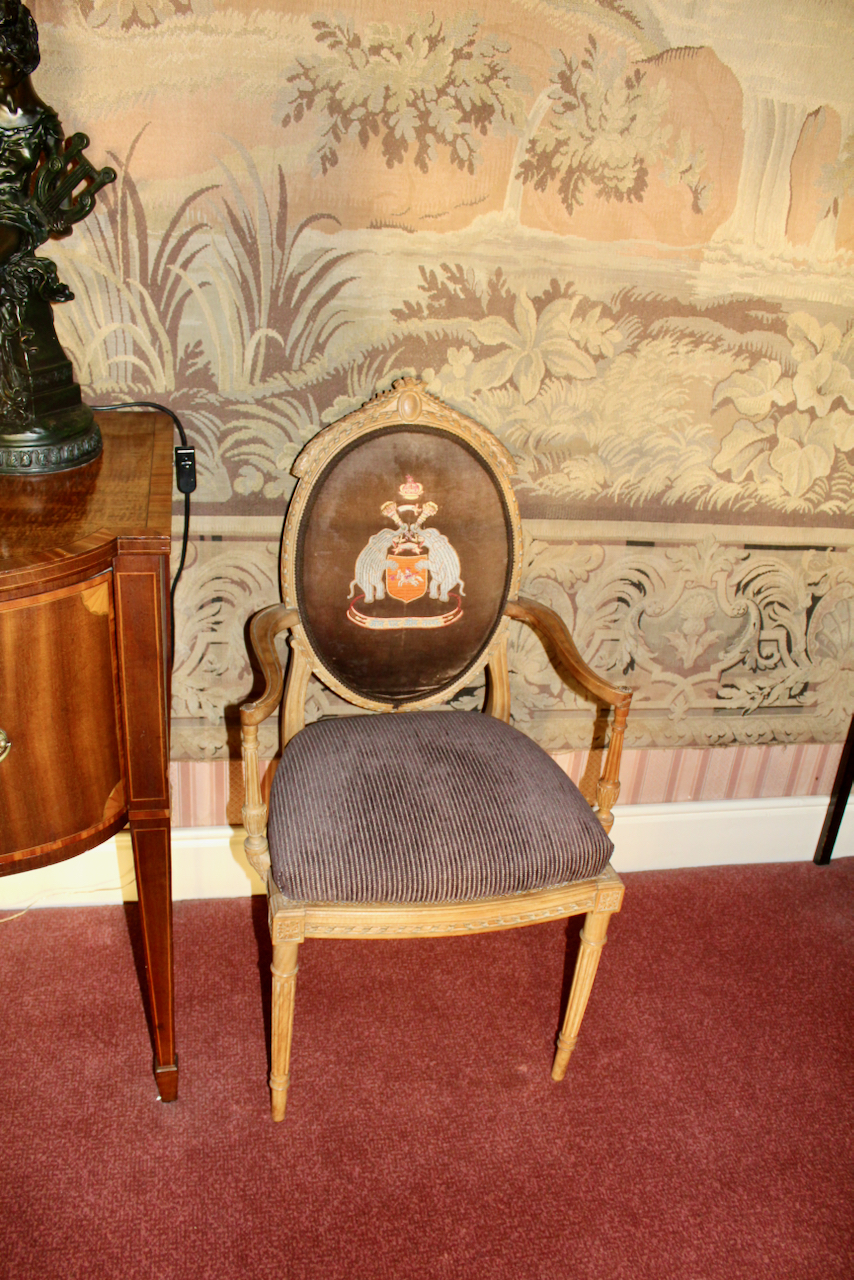
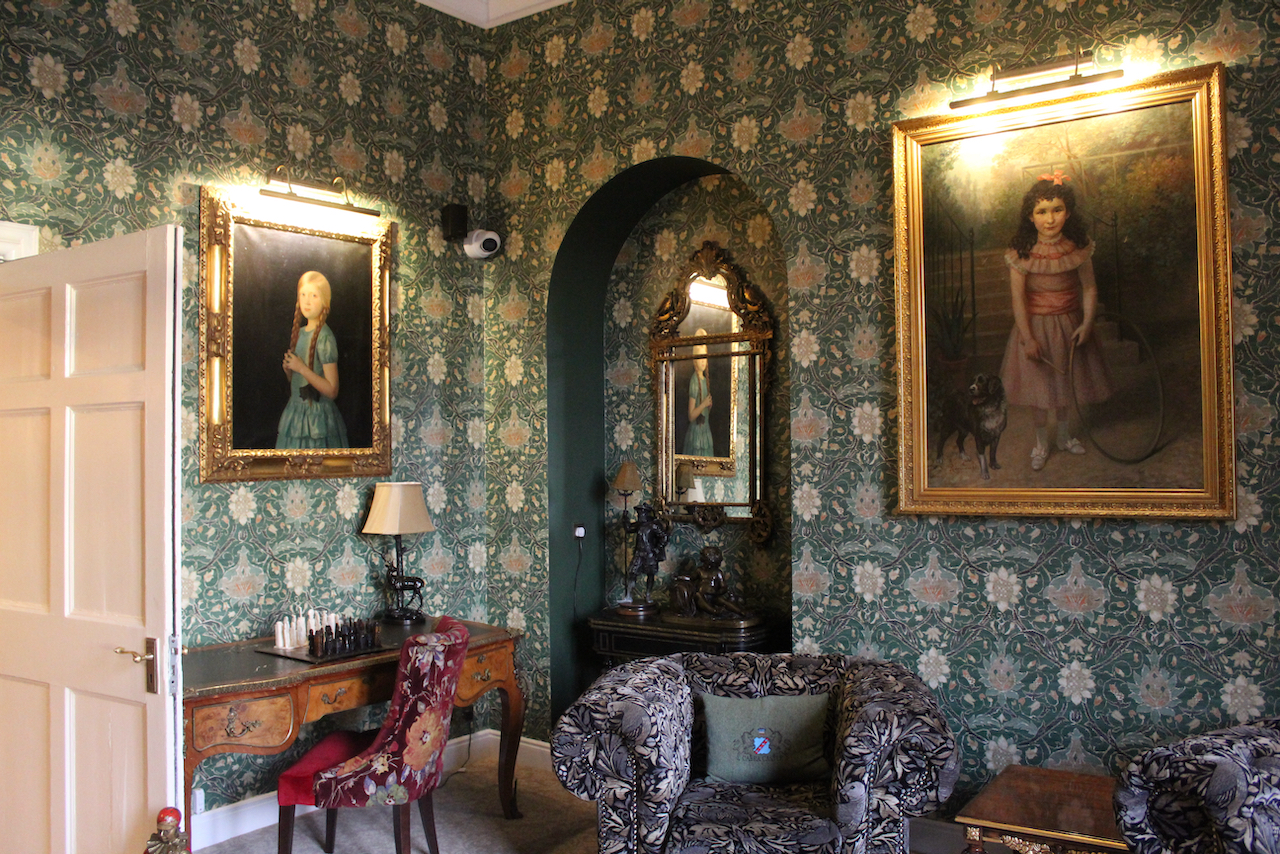
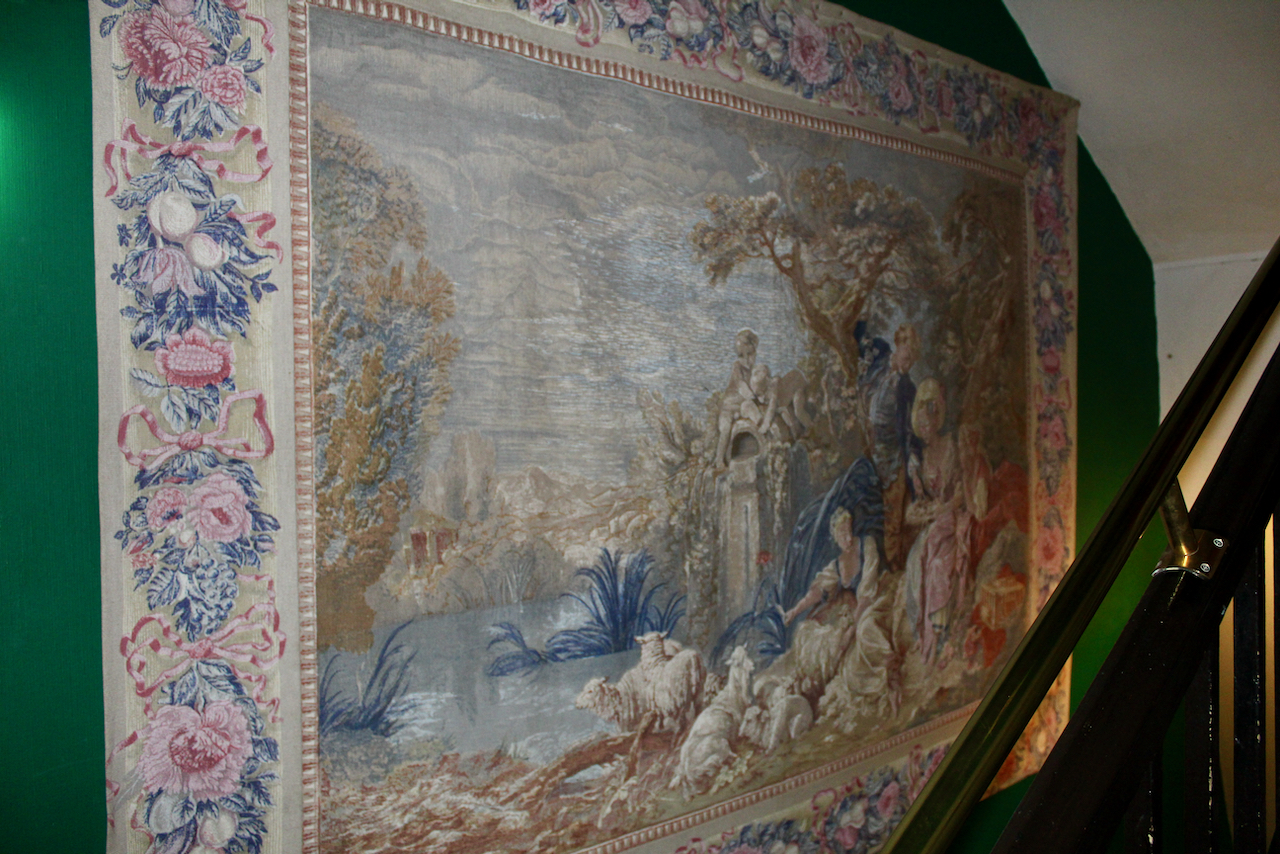
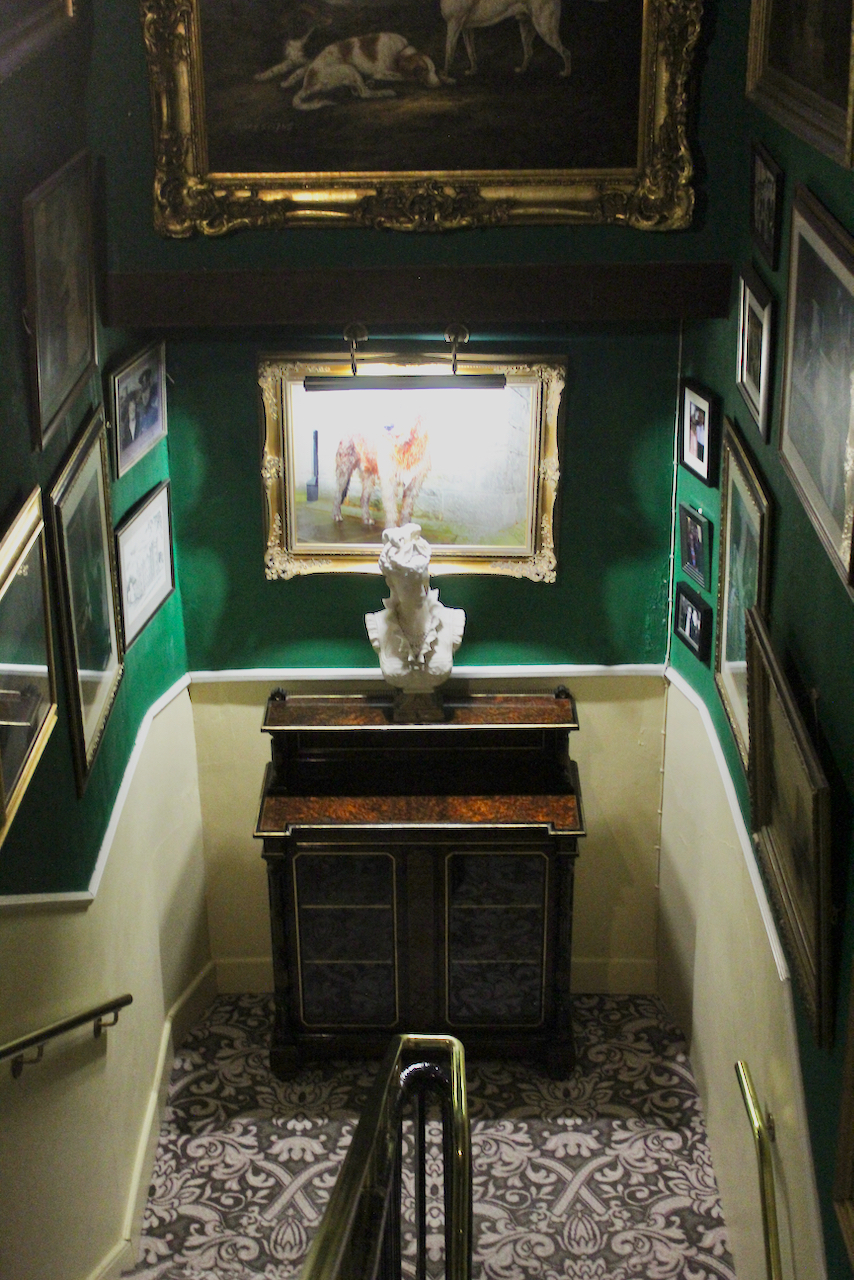
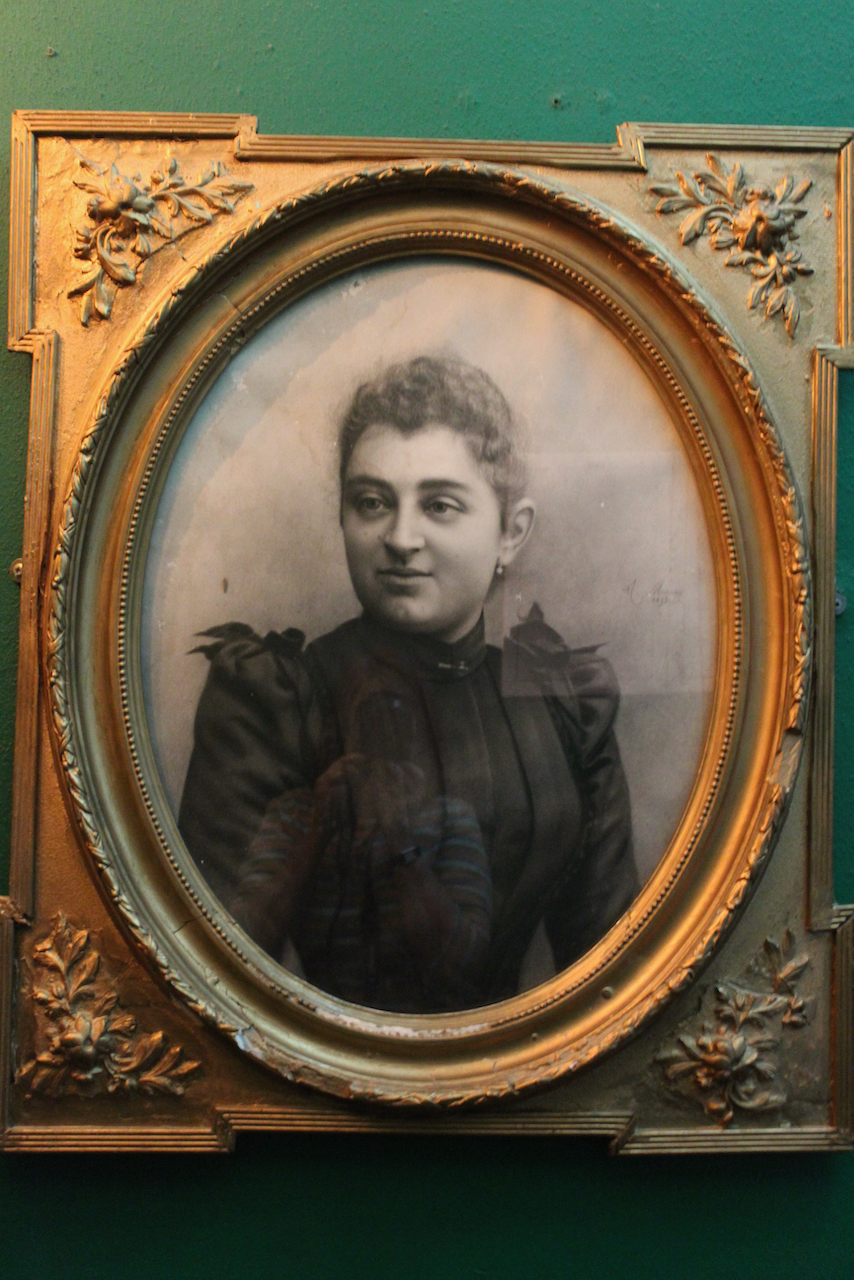
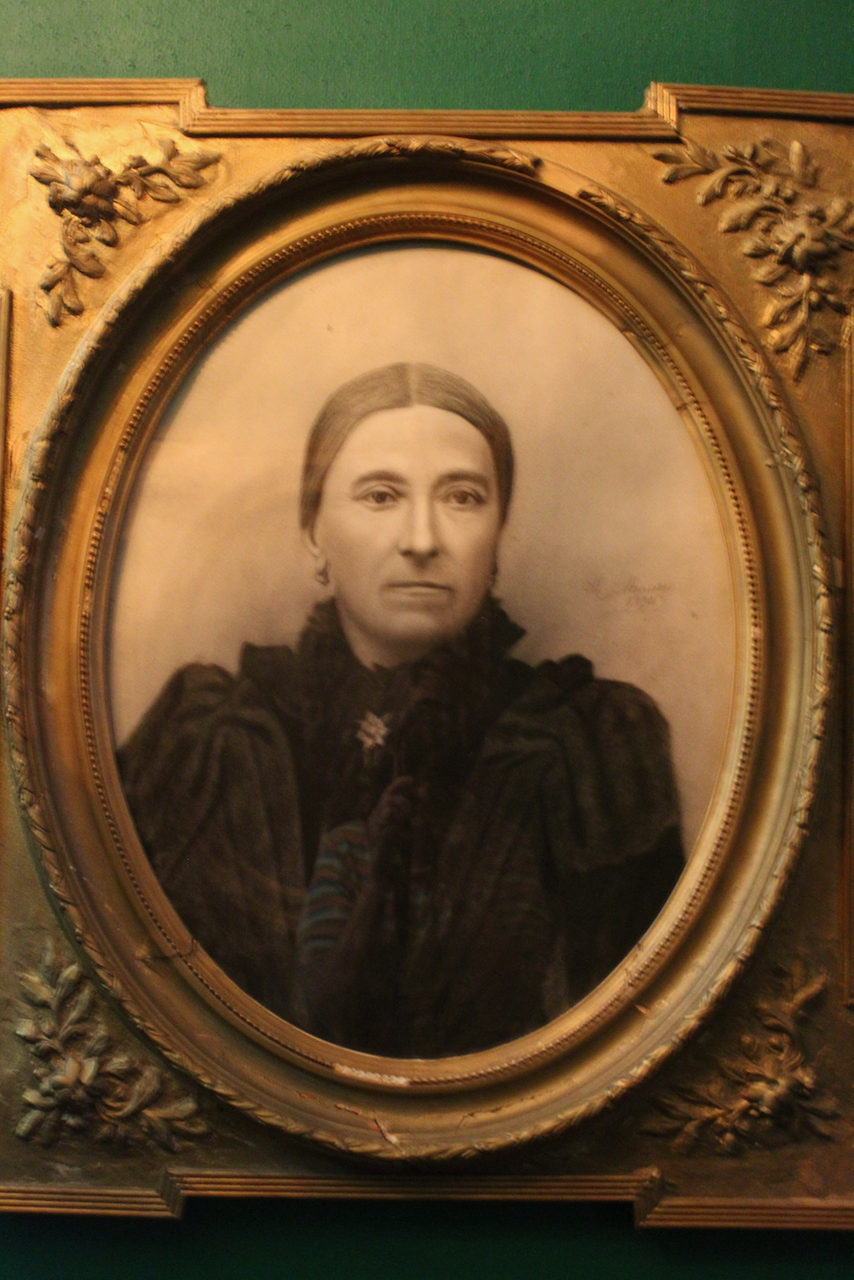
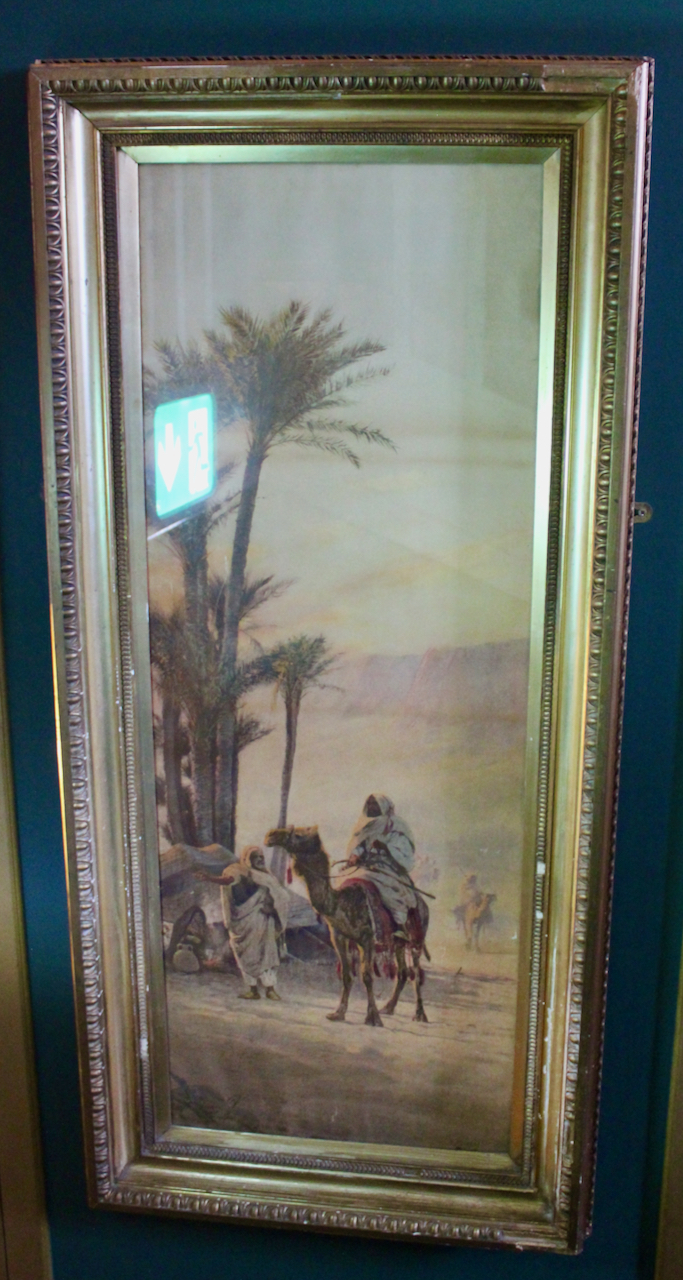
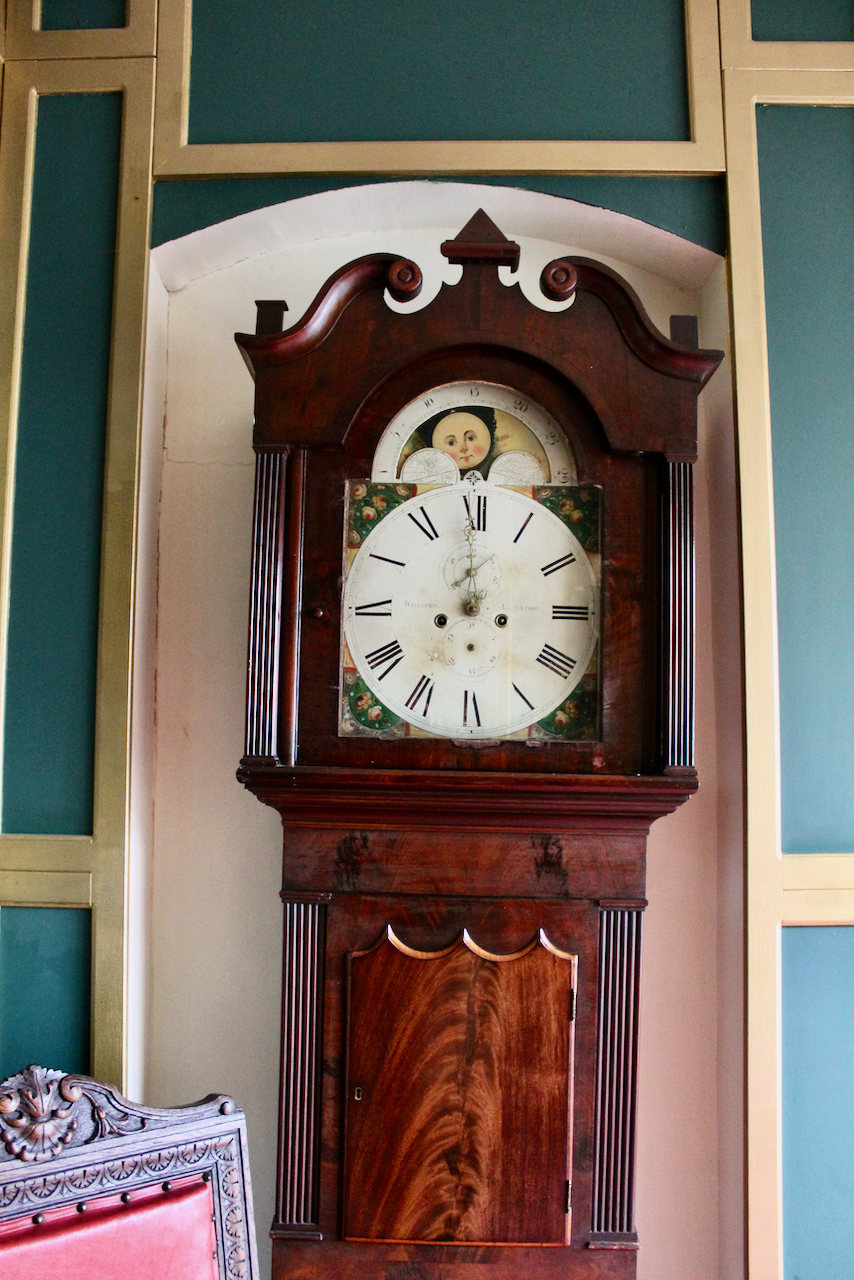
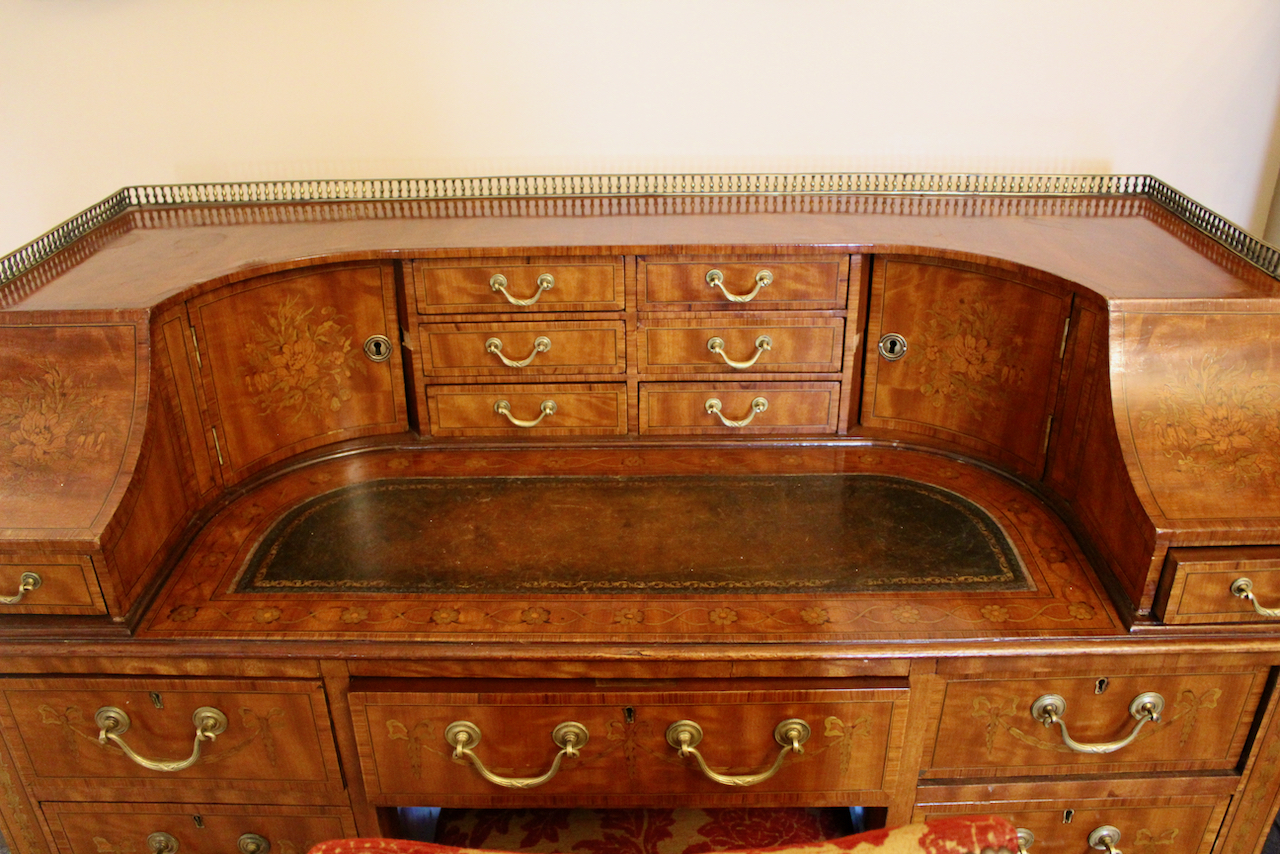
Our guide told us that Howard Corscadden likes to pick up antiques to add to the décor. I love these additions, making me feel like I was a visitor in the days of the Pratts when the castle must have boasted its full glory. After our tour, I explored the nooks and crannies, enjoying the irregularity of the stairways and corridors.
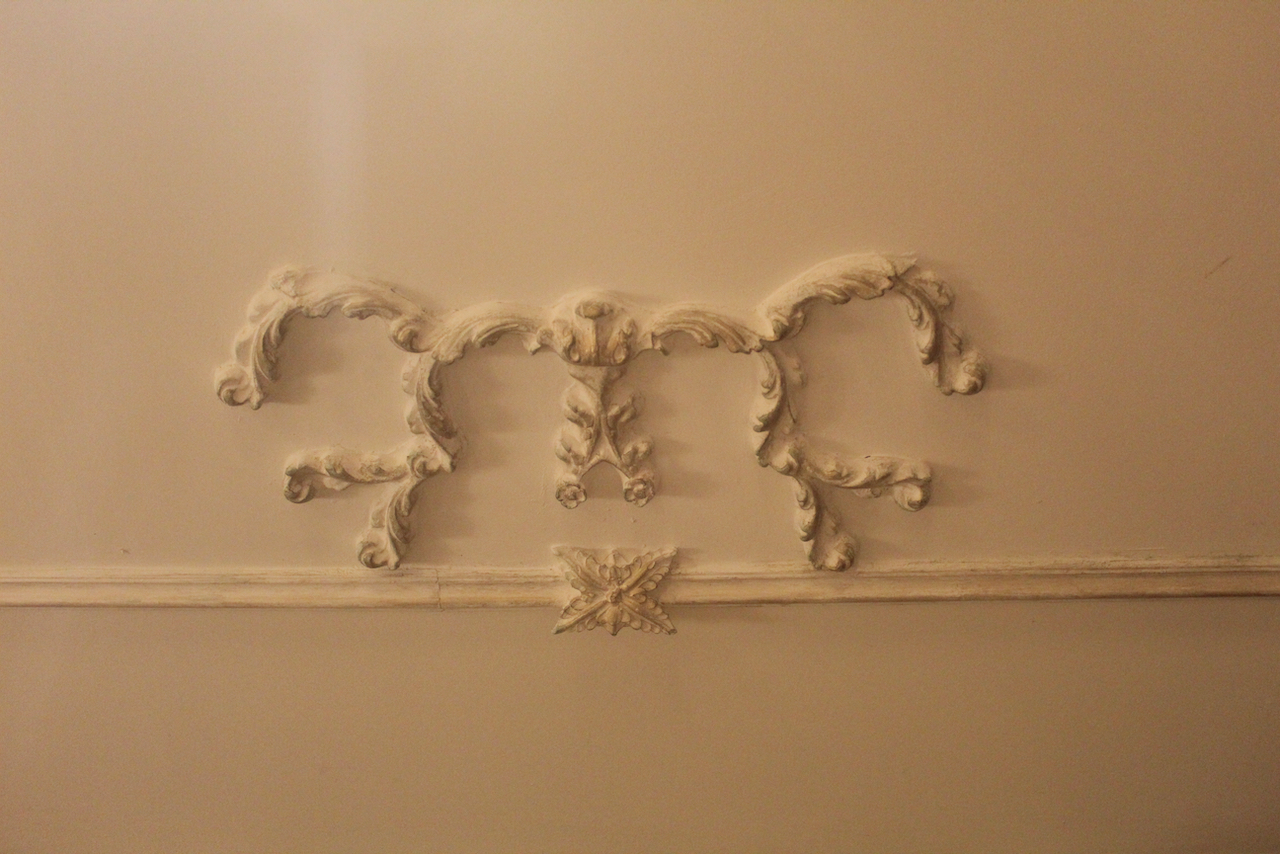
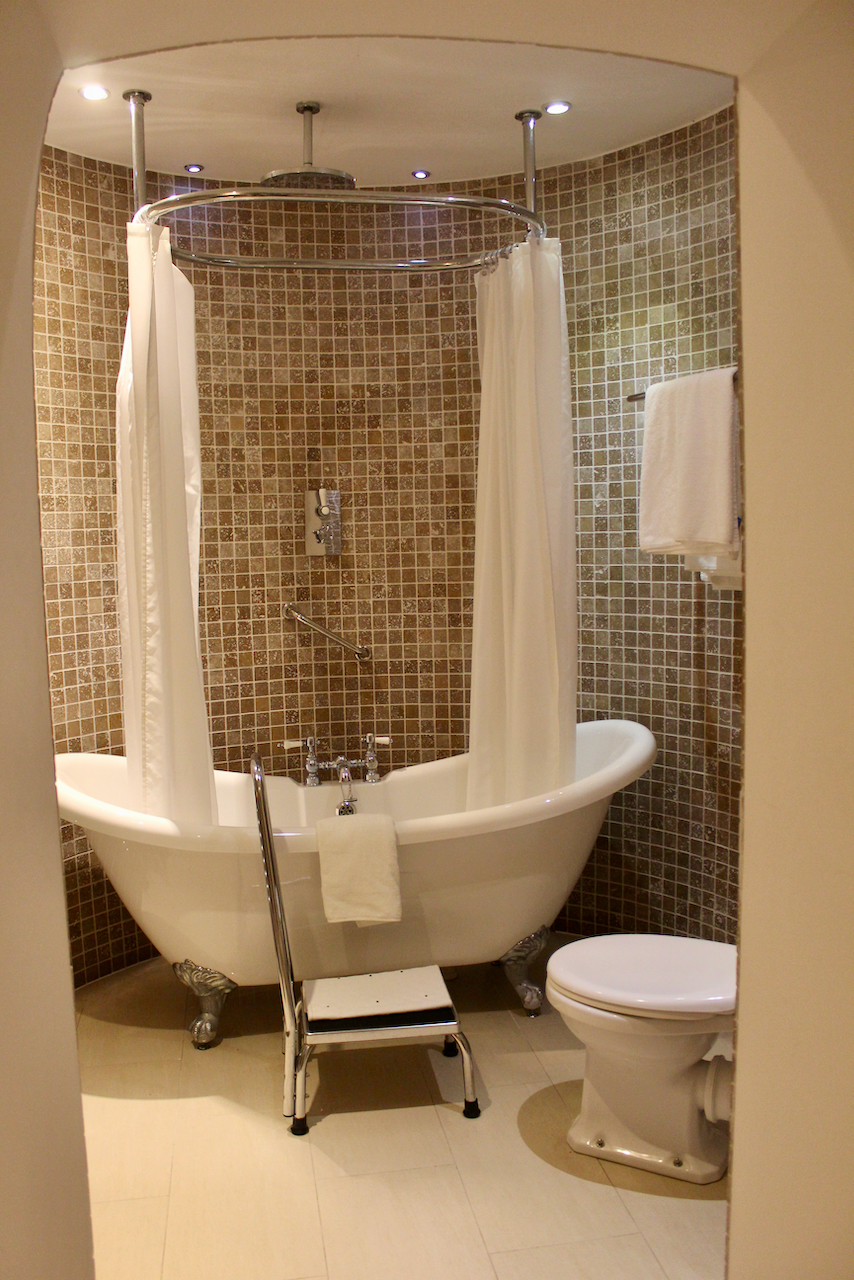
Our guide showed us to one of his favourite bedrooms, which has a ceiling recently adorned with plasterwork. He particularly loves the use of the round tower, renovated into a gorgeous bathroom.
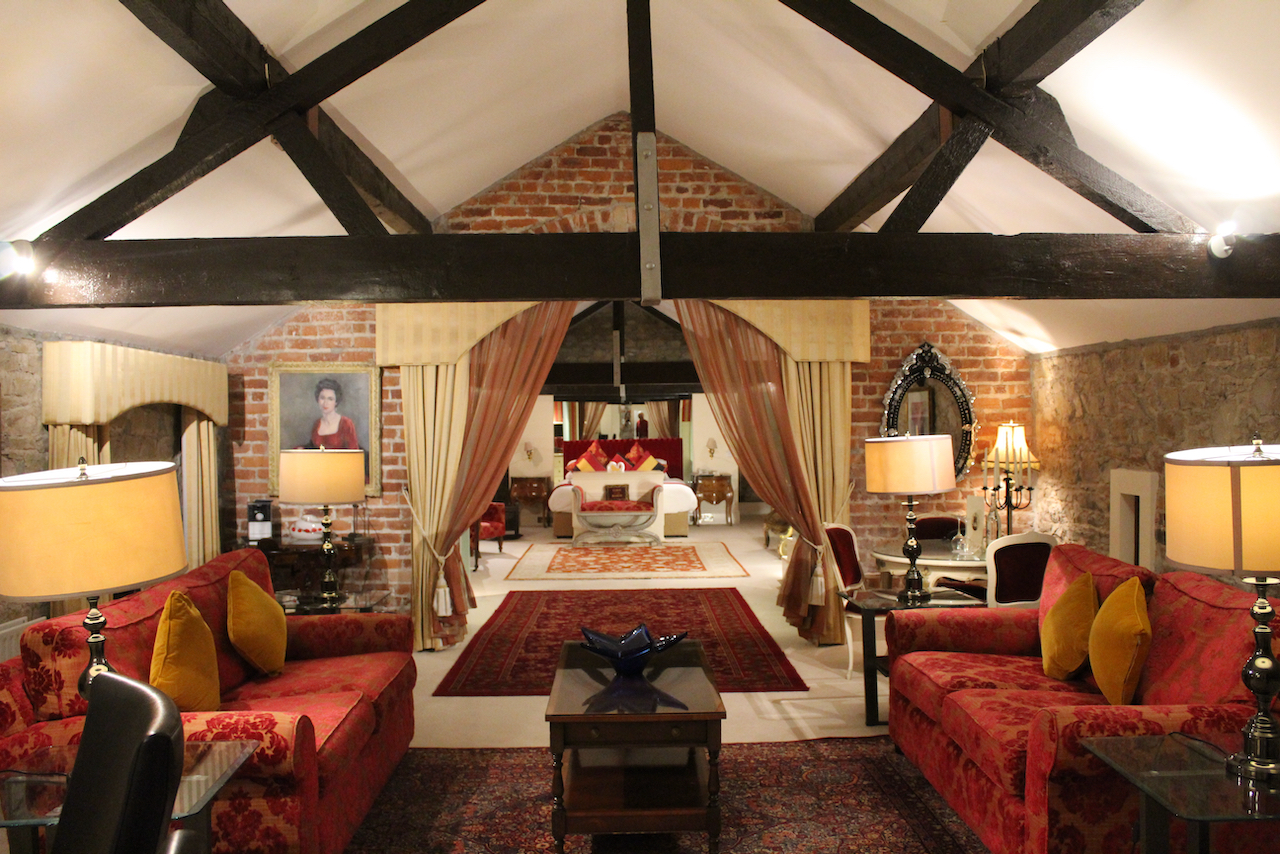
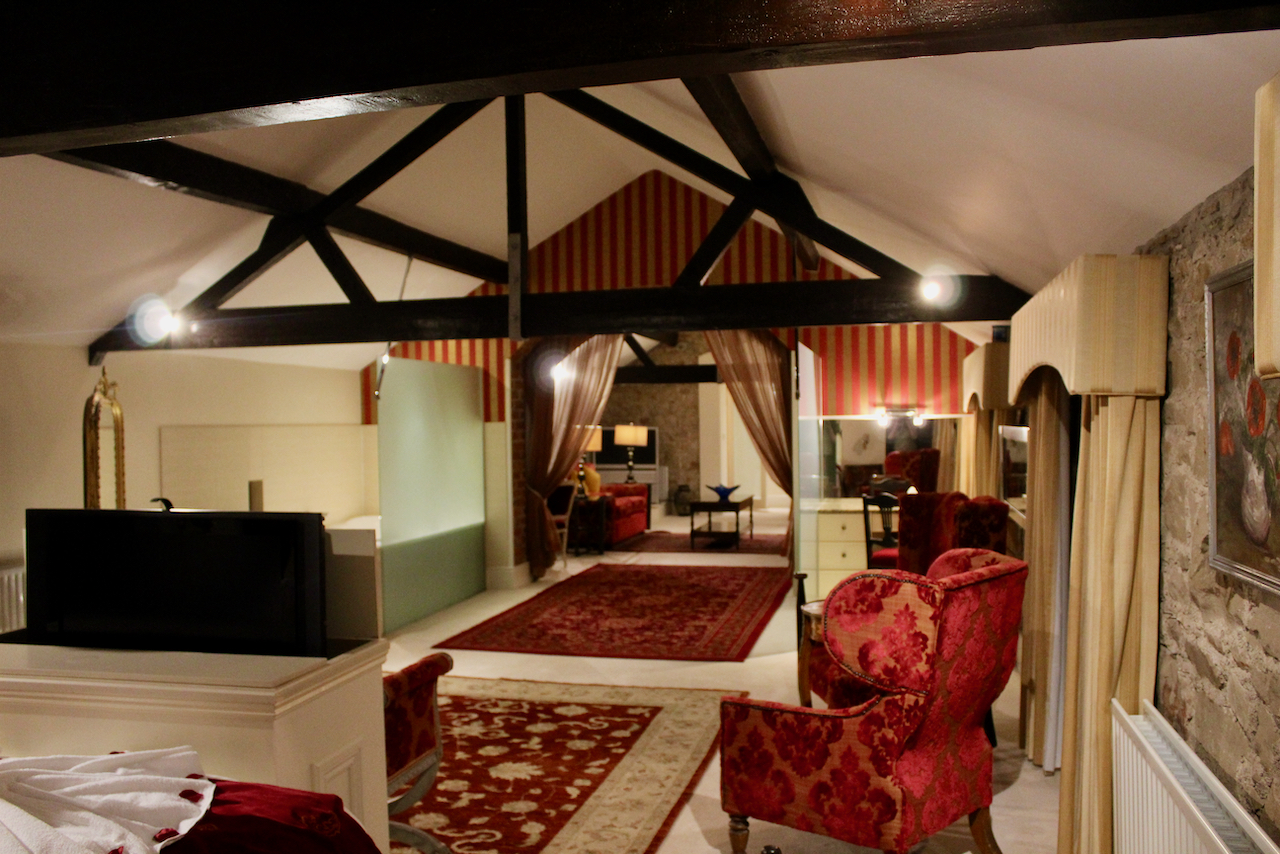
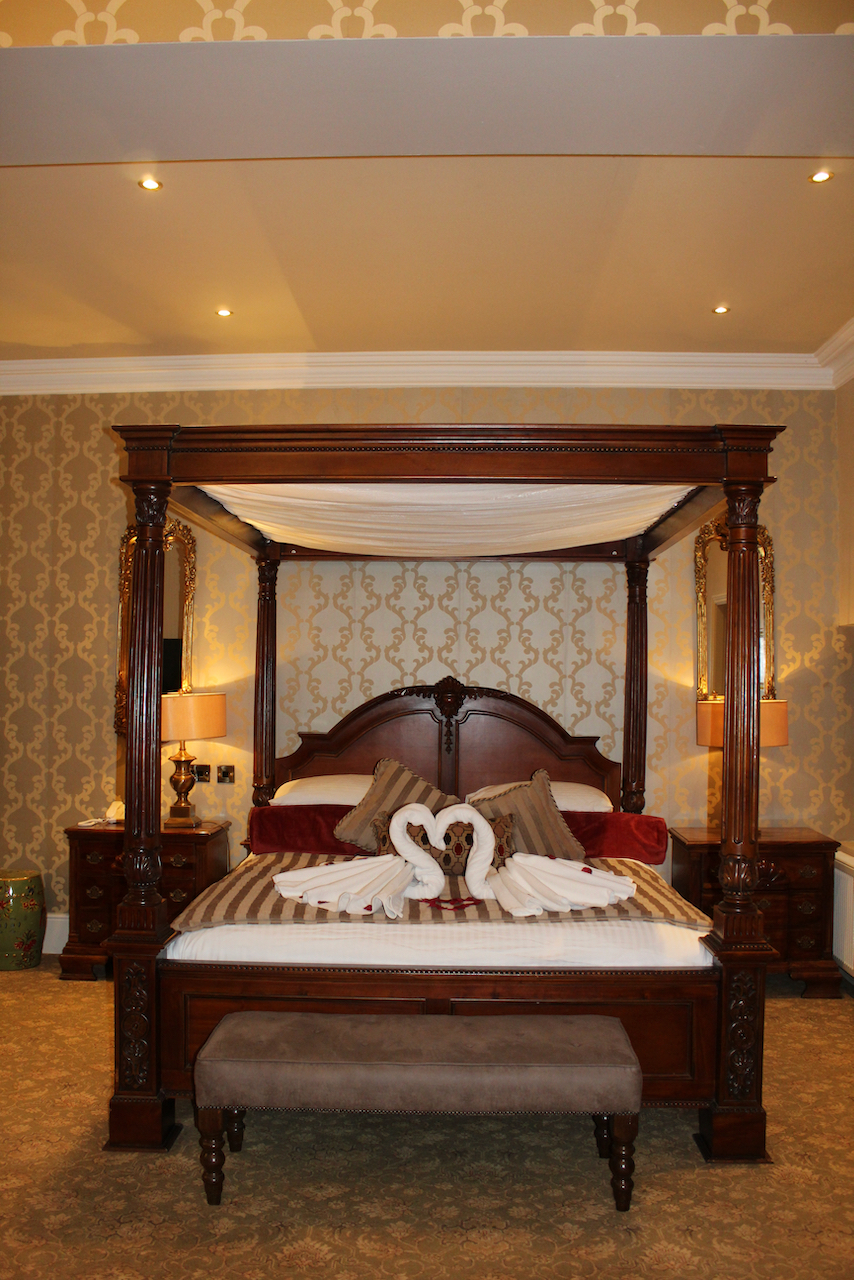
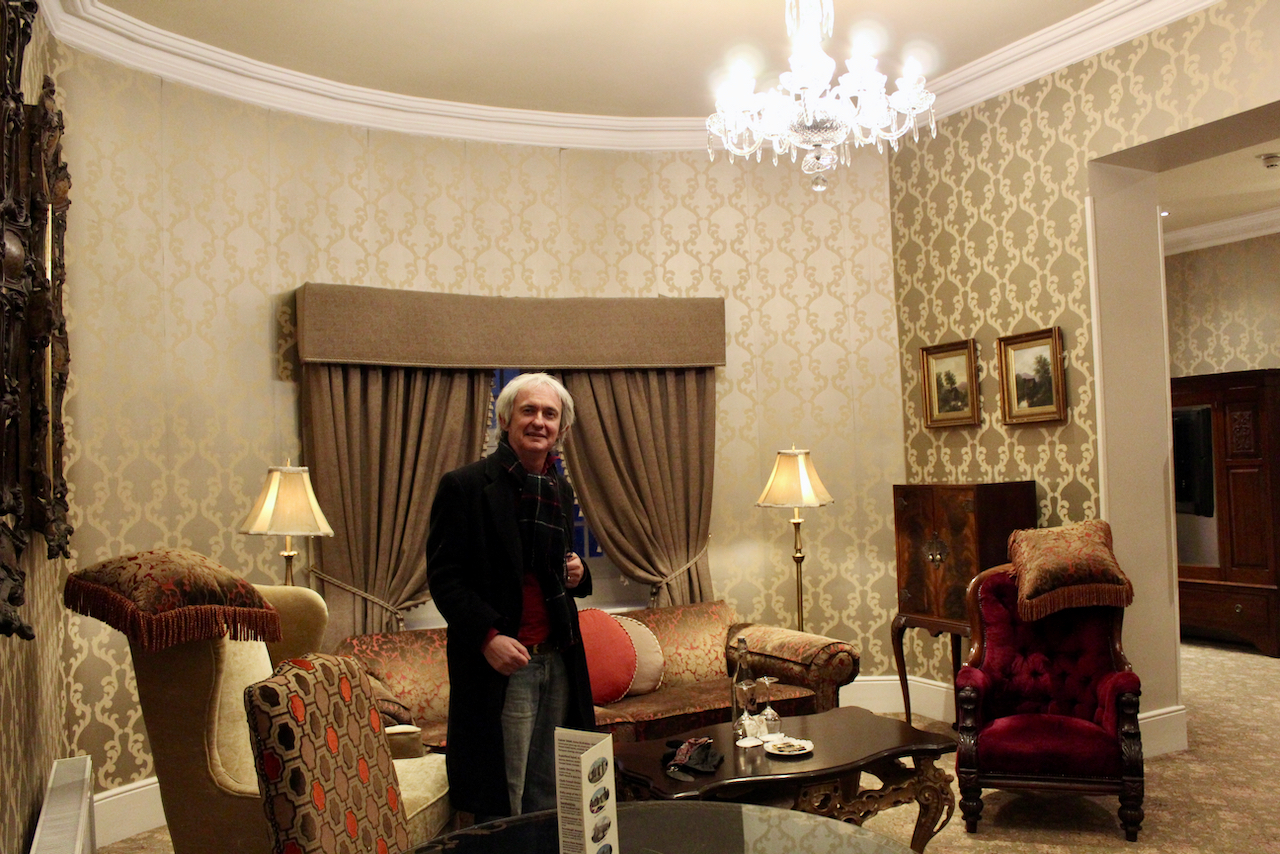
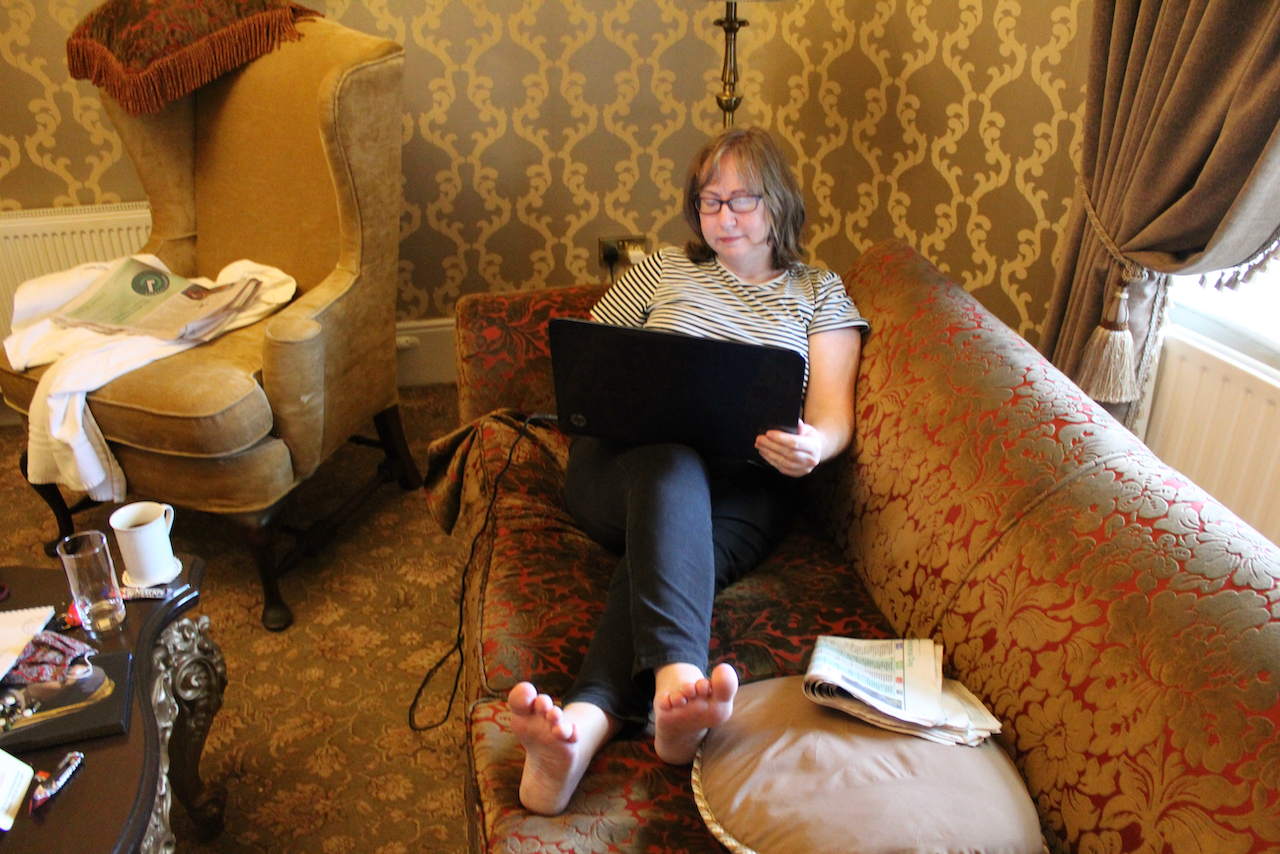
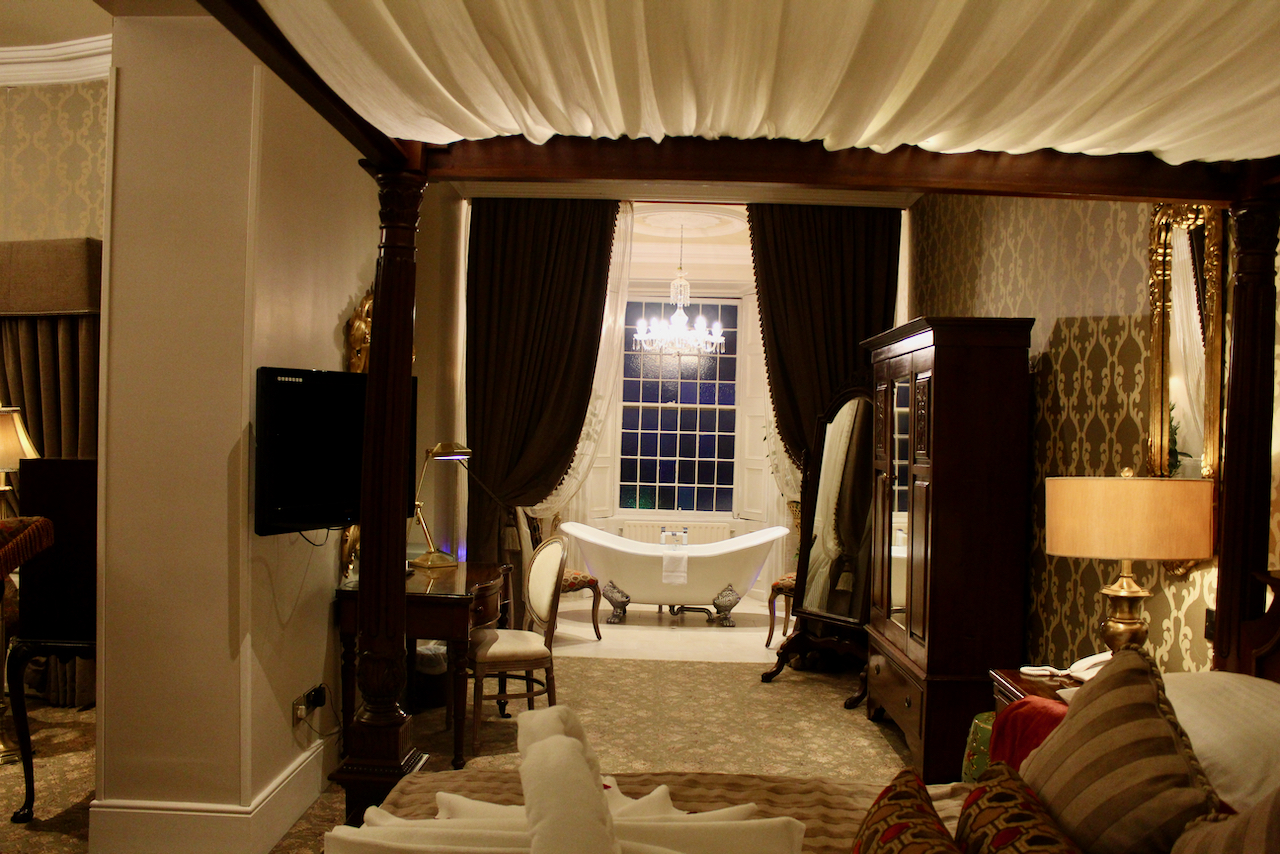
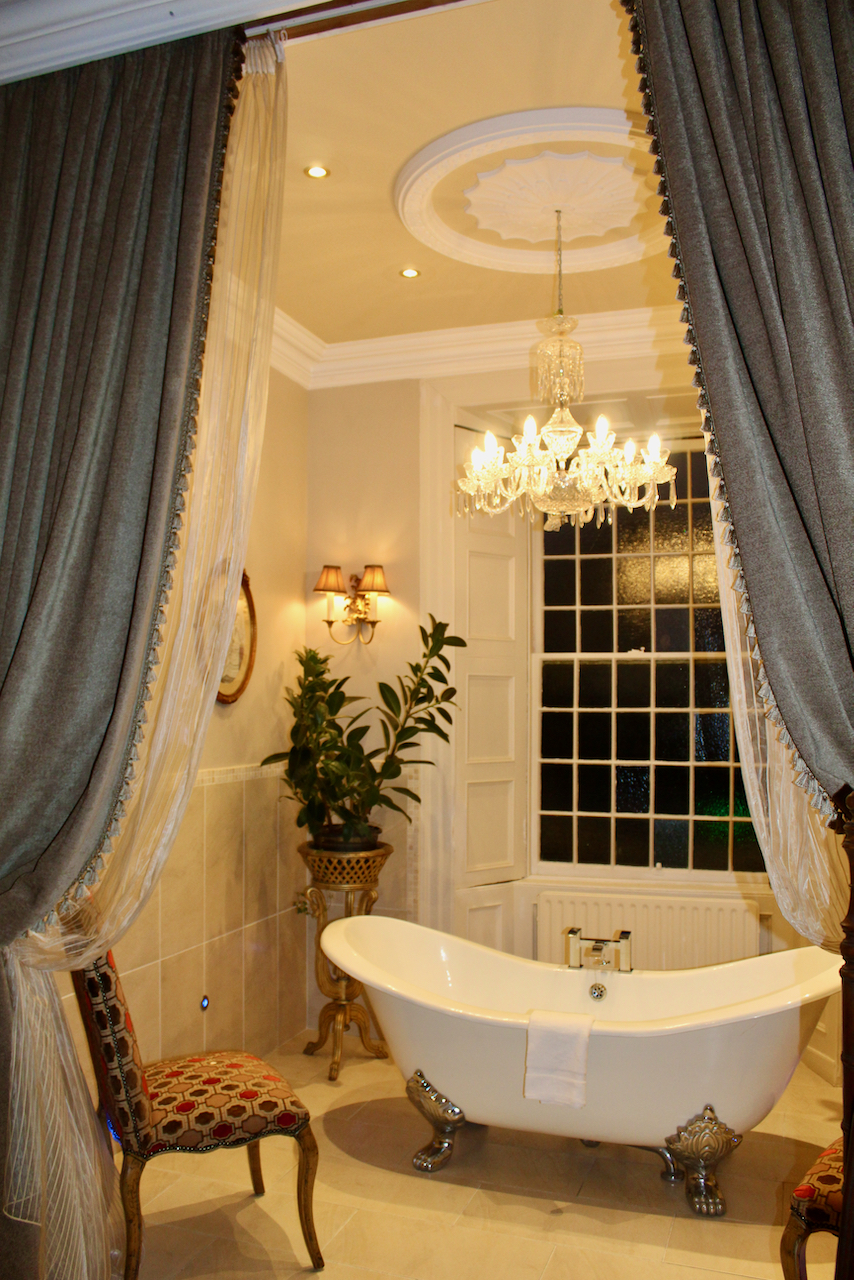
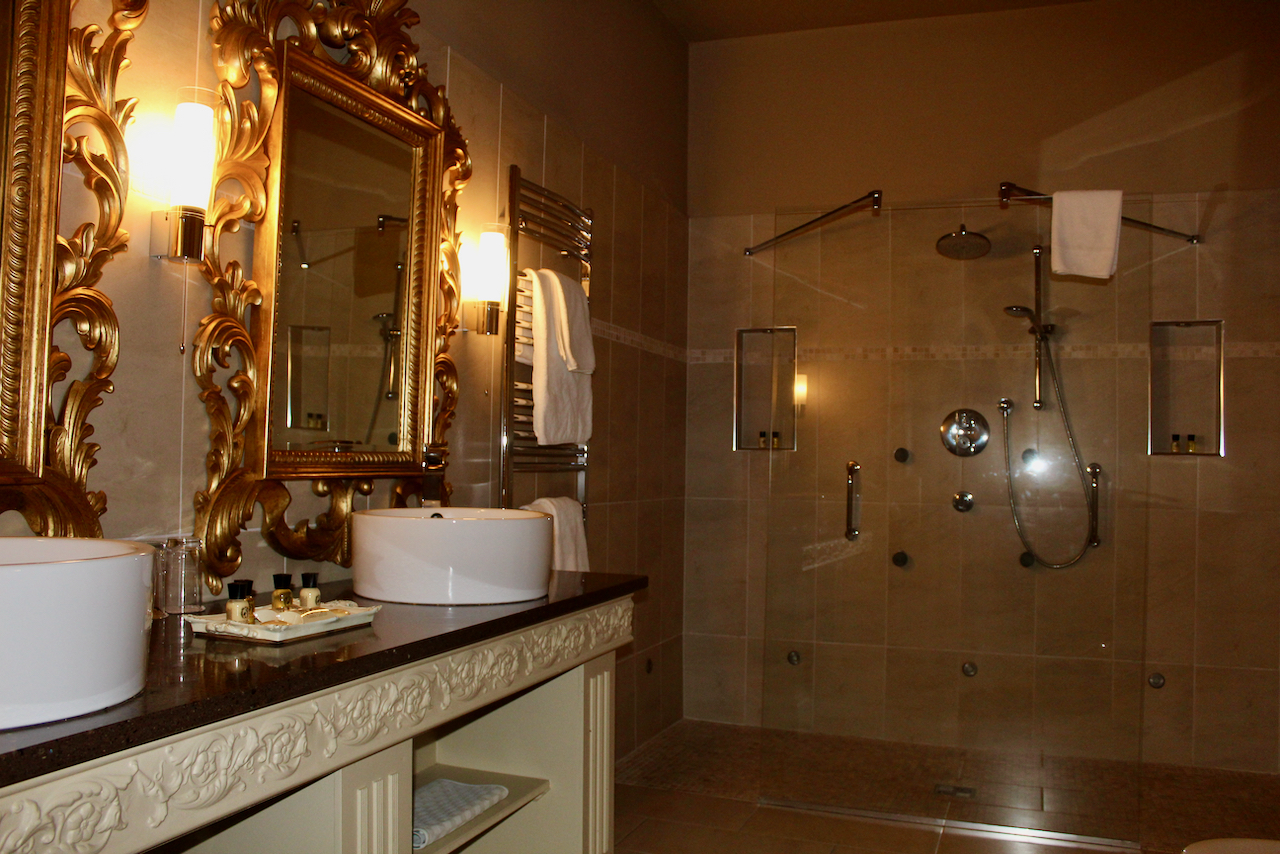
There is another Bridal Suite, inside the castle. I have saved the best until last, because this was our room! It used to be three bedrooms, a hallway and an office, all now incorporated into a luxurious suite. It has a canopied four poster bed, a comfortable seating area with fireplace, and a beautiful clawfoot bath.
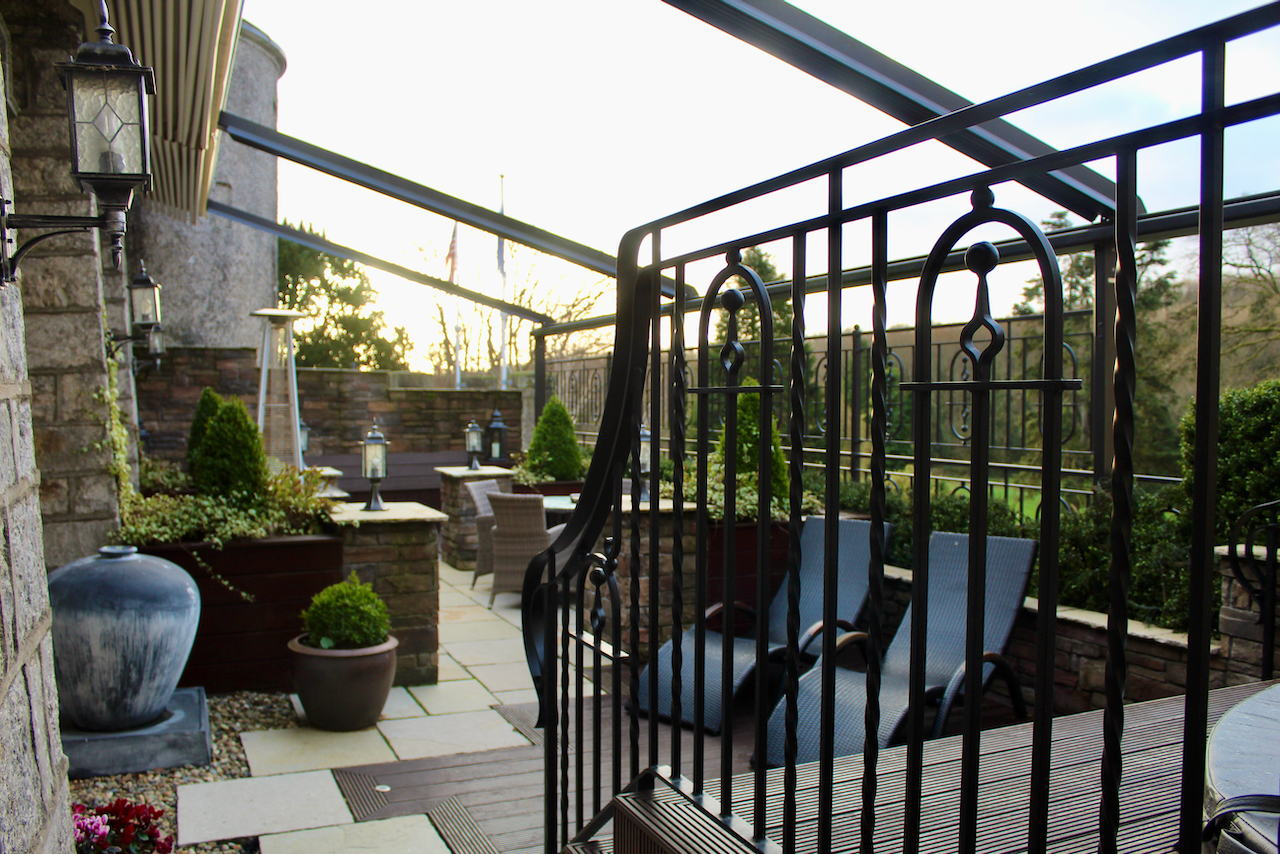
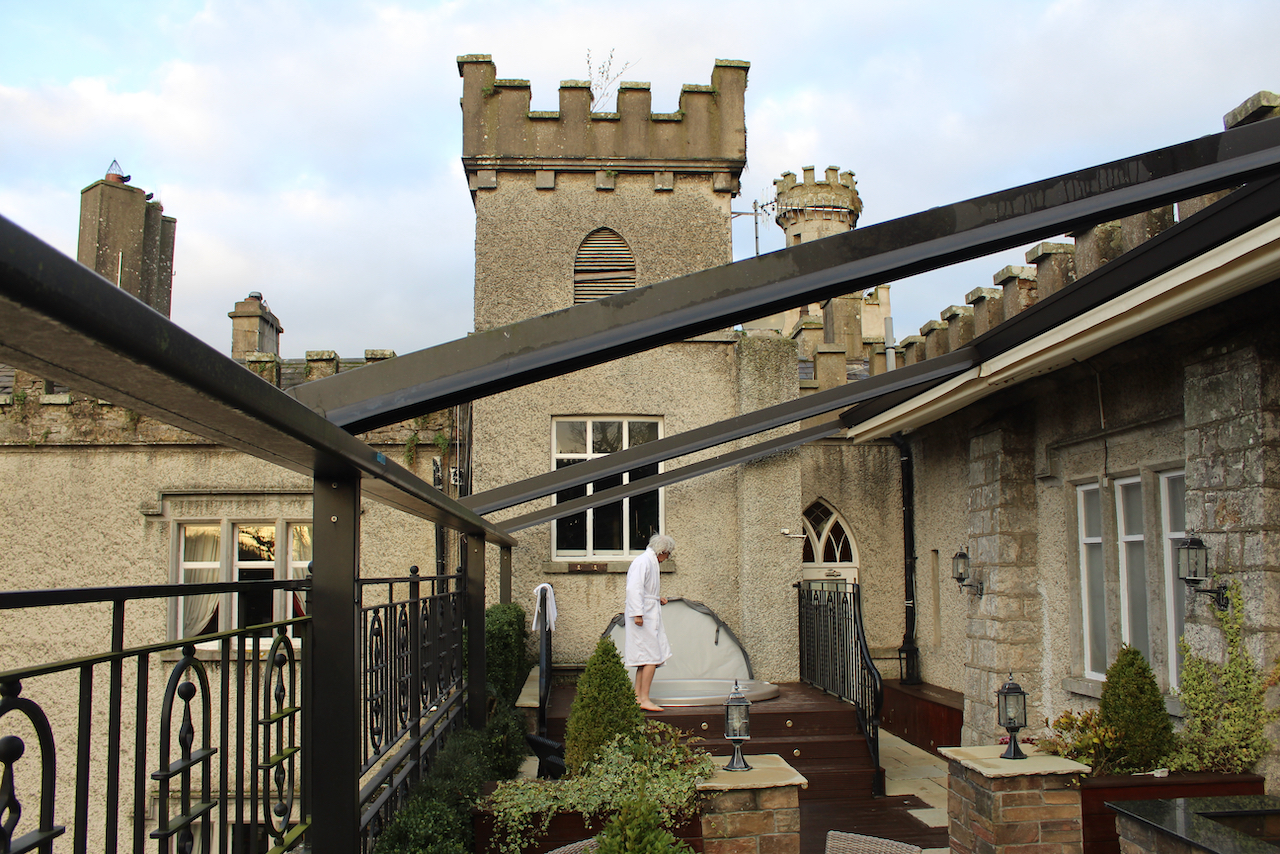
The bathroom has a door to a large private patio, with stunning views over Mitzi’s Garden and the landscape beyond. And best of all, we had our own private outdoor jacuzzi!
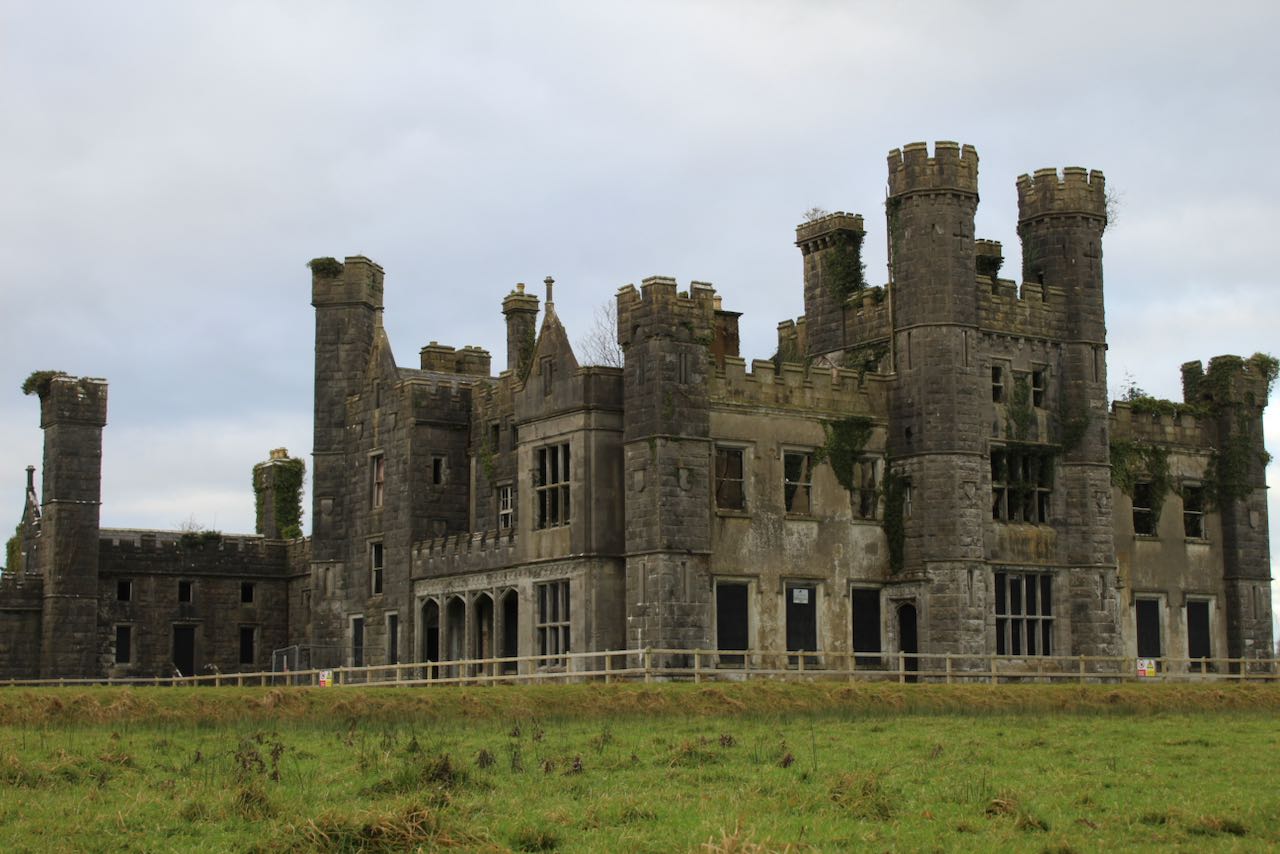
There are self-catering cottages where one can also stay. It is a beautiful part of the country. Before heading home, we availed of the opportunity to visit the impressive remnants nearby of Castle Saunderson.
It is interesting to note that his neighbour, Dr. Benjamin Pratt, son of Joseph Pratt and Elizabeth Cooch, was a Provost of Trinity College Dublin in 1710.
[14]Mark Bence-Jones. A Guide to Irish Country Houses. Originally published as Burke’s Guide to Country Houses volume 1 Ireland by Burke’s Peerage Ltd. 1978; Revised edition 1988 Constable and Company Ltd, London.
[16] Imagine inheriting a castle from a distant relative! Mervyn Pratt died in 1950 and his siblings had predeceased him and had no children. Louisa Catherine Hannah Pratt was his aunt. It was through her line that Mervyn Sheppard inherited.
Louisa Pratt was the sister of Joseph Pratt (1843-1929), who lived at Enniscoe, the father of Mervyn Pratt. Louisa Pratt married Thomas Rothwell. Thomas Rothwell served in County Meath militia, and was High Sheriff of County Meath in 1867, and also served as Justice of the Peace for County Meath. He lived at Rockfield, County Meath.
Louisa and Thomas had four daughters. Louisa Frances Rothwell must have been the oldest of the daughters, as it was through her son that Mervyn Sheppard inherited. Mervyn Sheppard was the son of Canon James William ffrank Sheppard and Louisa Frances Rothwell. Mervyn probably grew up in England where father was rector. He had a twin, Frank Baden ffrank Sheppard, who served in the military, and a younger brother.
[17] An Irish Times article by Ronan McGreevy from Thursday Sept 24th 2020 explains the origin of the Shelbourne hotel statues. They were designed and sculpted by Mathurin Moreau (1822-1912) and were cast in a foundry in Paris. The statues represent Egyptian and Nubian women.
I receive no funding nor aid to create and maintain this website, it is a labour of love. I travel all over Ireland to visit Section 482 properties and sometimes this entails an overnight stay. A donation would help to fund my accommodation.





















































































 Irish Historic Houses