Tollymore Park, Bryansford, Co Down – house demolished, demesne open to public, with follies
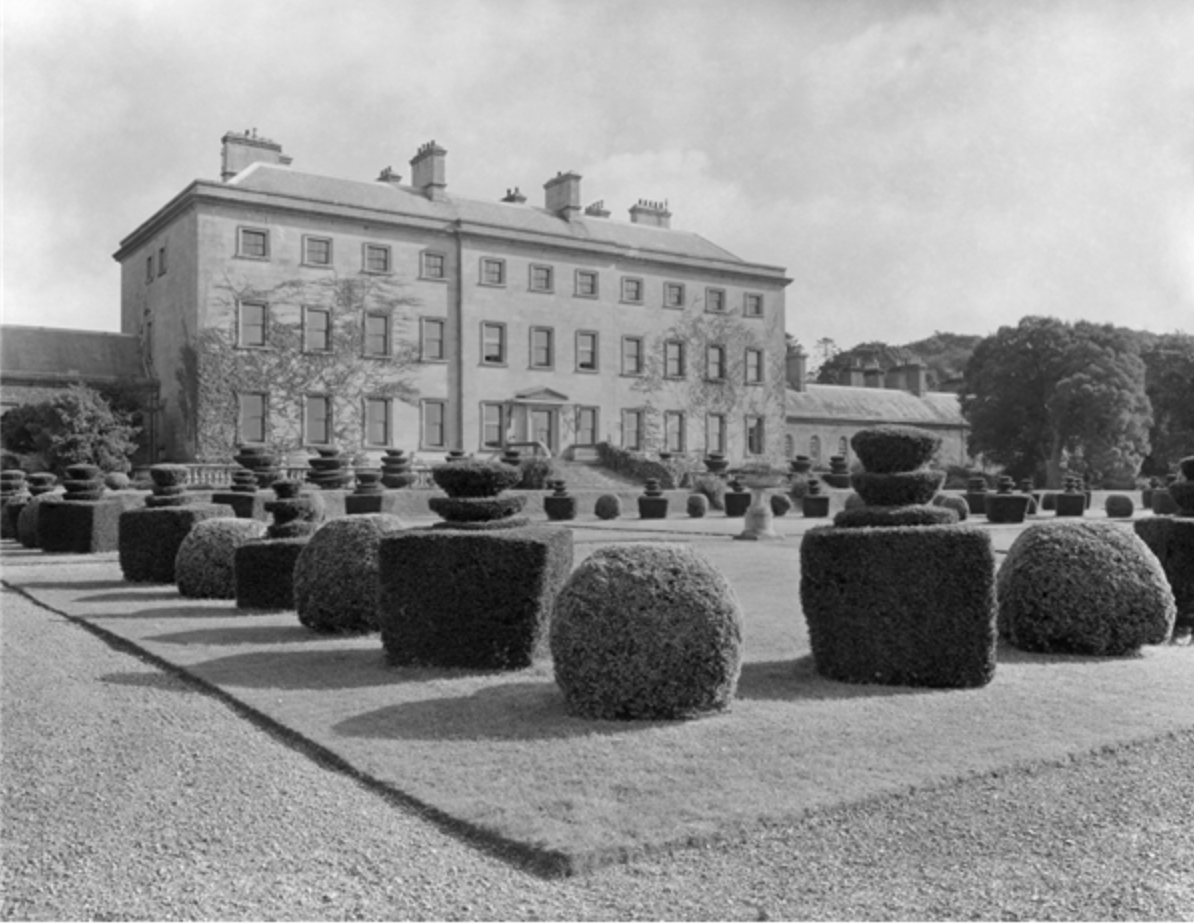
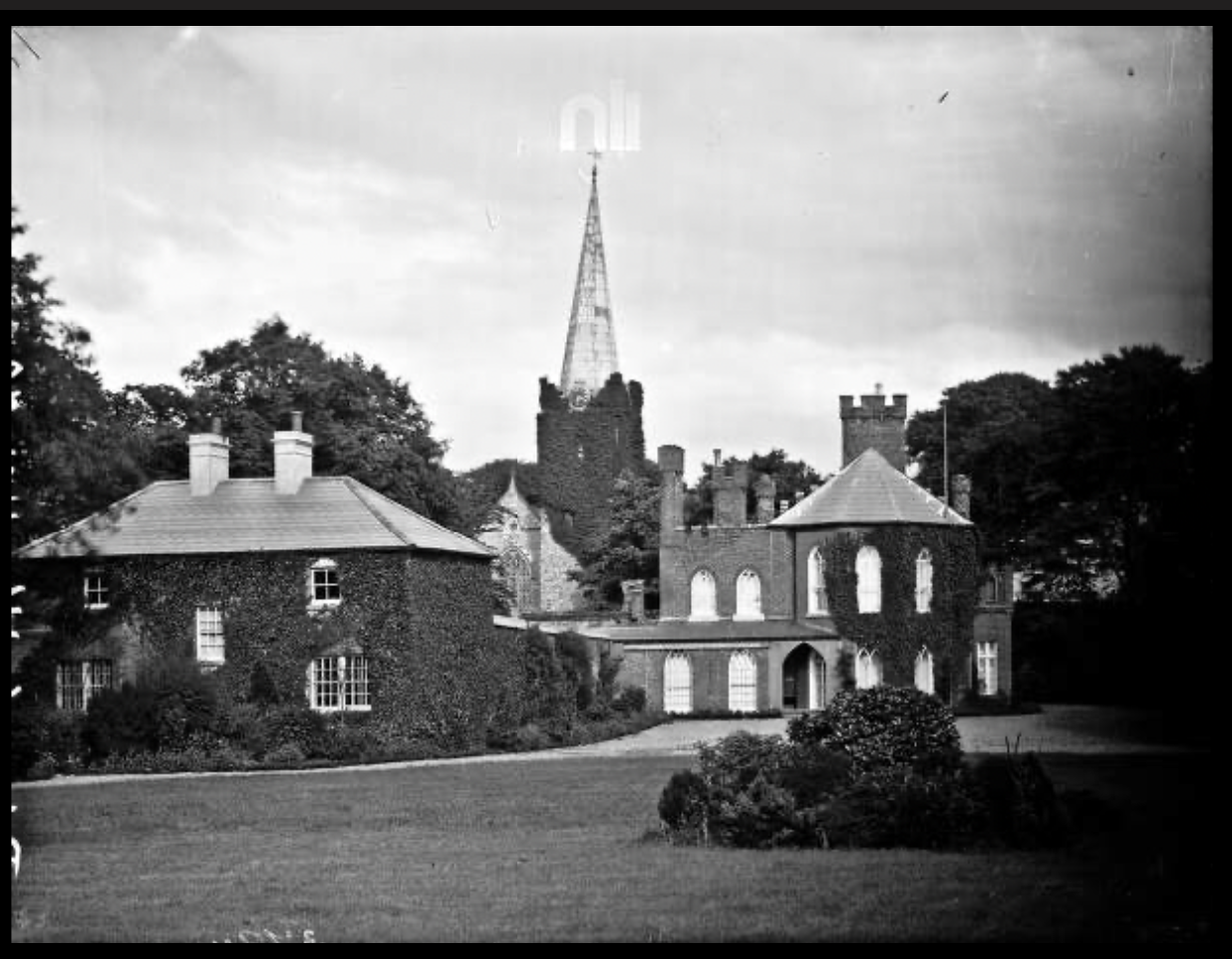
Tollymore Park, County Down, photograph by Robert French, (between ca. 1865-1914), Lawrence Photograph Collection, National Library of Ireland.
Bence-Jones, Mark. A Guide to Irish Country Houses (originally published as Burke’s Guide to Country Houses volume 1 Ireland by Burke’s Peerage Ltd. 1978); Revised edition 1988 Constable and Company Ltd, London.
p. 2772. “(Hamilton, Clanbrassill, E/DEP; Jocelyn, Roden, E/PB) A C18 and C19 house extending round four sides of a courtyard; of which the earliest part was built mid-C18 by James Hamilton, Viscount Limerick and1st Earl of Clanbrassill of 2nd Creation; whose grandmother was the heiress of the Magennis family, the original owners of the estate.
James Hamilton (1617/1618-1659) 1st Earl of Clanbrassil and 2nd Viscount Clandeboye, courtesy of National Trust Castle Ward.
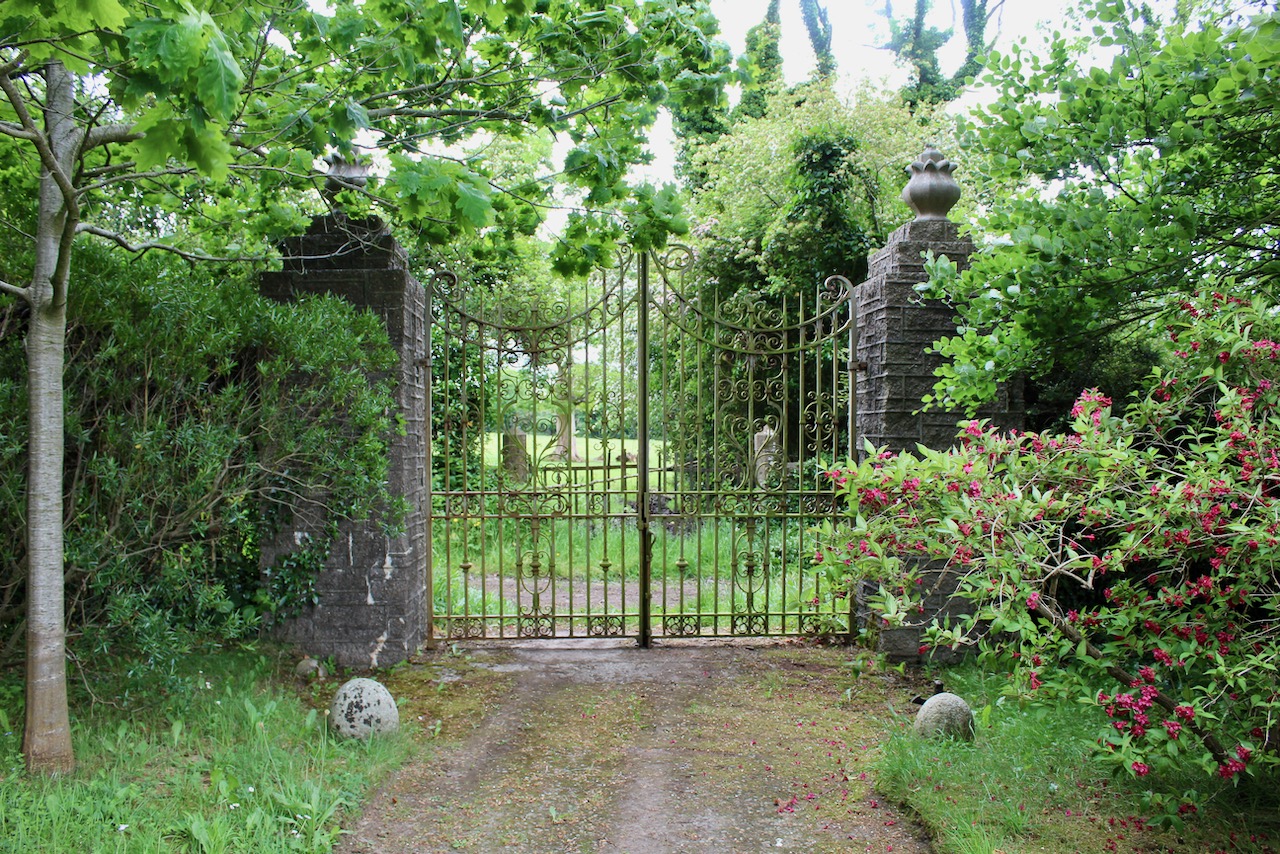
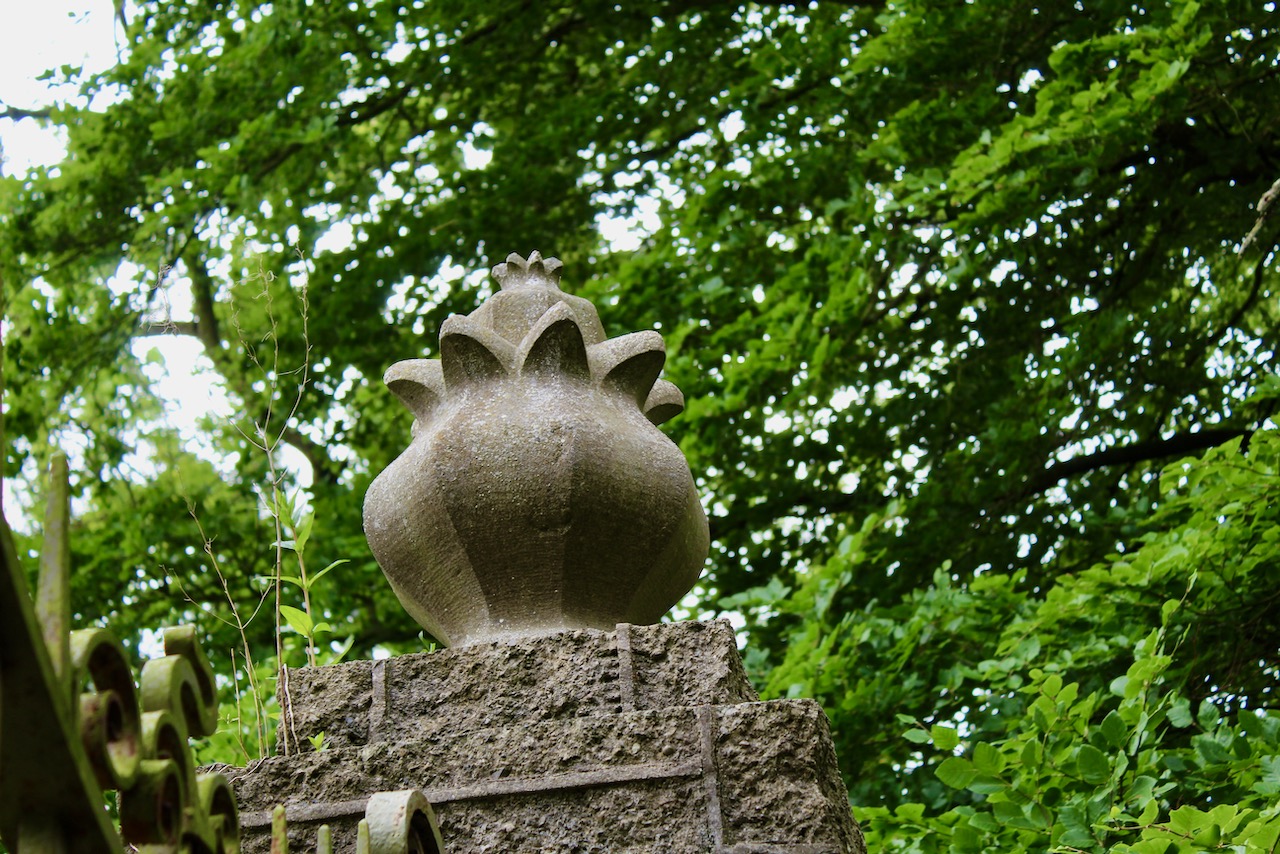
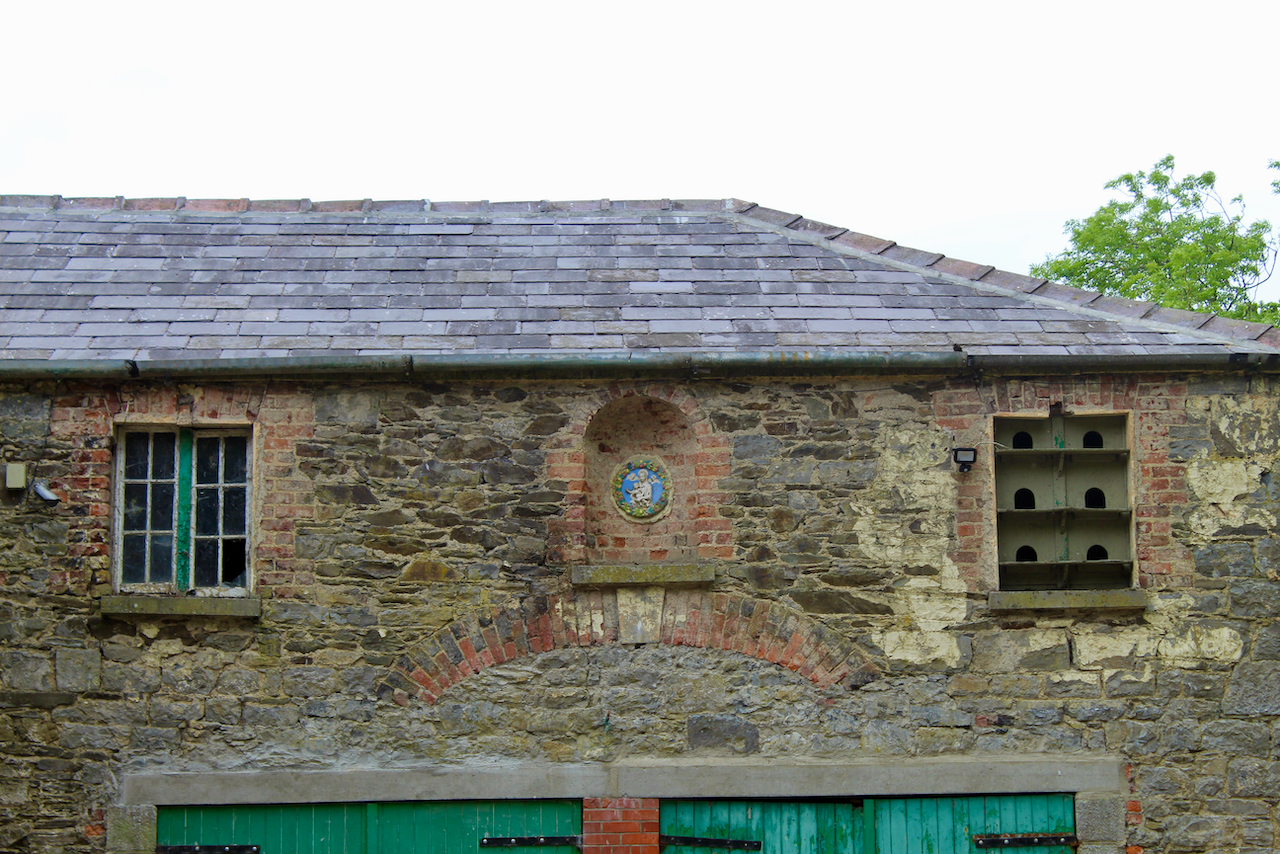
As first built, the house consisted of a two storey block with one bay on either side of a central three sided bow, and single-storey three bay wings; the entrance door being not in the middle of the bow, but in the bay to the left of it. The architect of this original range is likely to have been Thomas Wright, of Durham, probably very much in collaboration with first Earl. By 1787 the three other sides of the courtyard had been built, all single-storey; the entrance had been moved from its original position to the centre of the adjoining front, and the house already had the long corridors with windows containing roundels of Flemish stained glass, for which it was noted in later years. Towards mid-C19 – by which time Tollymore had passed by inheritance to the Earls of Roden – an extra storey was added to all those parts of the house which had formerly been of one storey only. The entrance front became a typical late-Georgian composition…The demesne of Tollymore is famous for its picturesque scenery and its numerous follies. It is one of the earliest examples in Ireland of a naturalistic landscape park in the manner of William Kent, having been laid out by 1st Earl of Clanbrassill (then Viscount Limerick) in mid-C18. The follies, gateways and bridges, mostly erected by 2nd and last Earl of Clanbrassill and some of them probably designed by Thomas Wright, include a barn made to look like a Gothic church, with a tower and spire, gate piers with spires, an obelist, a grotto or hermitage, an elegant Gothic arch with crocketed pinnacles and flying buttresses, and a castellated gateway known as the Barbican Gate. The Tollymore estate was bought by the Northern Ireland Ministry of Agricuture in two portions in 1930 and 1941. The house was demolished 1952; but the demesne is maintained as a forest park and open to the public.
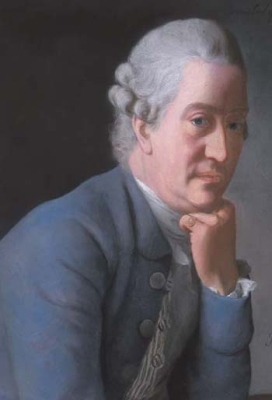
Lord Clanbrassil (probably James Hamilton (1729-1798) 2nd Earl of Clanbrassil of second creation) by Thomas Hickey (Irish 1741-1824) courtesy of Wooley and Wallis sale 2010.Tollymore Park, County Down, photograph by Robert French, (between ca. 1865-1914), Lawrence Photograph Collection, National Library of Ireland.Tollymore Park, County Down, photograph by Robert French, (between ca. 1865-1914), Lawrence Photograph Collection, National Library of Ireland.Robert Jocelyn (1688? – 1756) Viscount Jocelyn, Lord Chancellor of Ireland,by STEPHEN SLAUGHTER (1697-1765), Adams auction 26th April 2022.His city residence was on St Stephen’s Green, and he had country residences in Co. Dublin at Donnybrook and later at Mount Merrion.Robert Jocelyn, Baron Newport (c.1688-1756), Lord Chancellor of Ireland, later 1st Viscount Jocelyn Date 1747 Engraver Andrew Miller, English, fl.1737-1763 After Justin Pope-Stevens, Irish, fl.1743, d.1771, courtesy of National Gallery of Ireland.Robert Jocelyn (1688? – 1756) Baron Newport and 1st Viscount, as Lord High Chancellor of Ireland Irish school courtesy of National Trust Castle Ward.Robert Jocelyn (1788-1870) 3rd Earl of Roden, by Thomas Goff Lupton, printed by R. Lloyd, published 28 April 1839 by Hodgson & Graves, after Frederick Richard Say, courtesy of National Portrait Gallery NPG D39829.Elizabeth Jocelyn (1813-1884), Marchioness of Londonderry, wife of 4th Marquess of Londonderry, formerly Viscountess Powerscourt, wife of 6th Viscount Powerscourt, by James Rannie Swinton, courtesy of Mount Stewart National Trust.She was the daughter of Robert Jocelyn, 3rd Earl of Roden.
Open dates in 2026: Feb 1-20, May 1-31, Aug 15-23, 9am-1pm
Fee: house and garden, adult/OAP/child/student, €12, house €5, garden €7
donation
Help me to pay the entrance fee to one of the houses on this website. This site is created purely out of love for the subject and I receive no payment so any donation is appreciated!
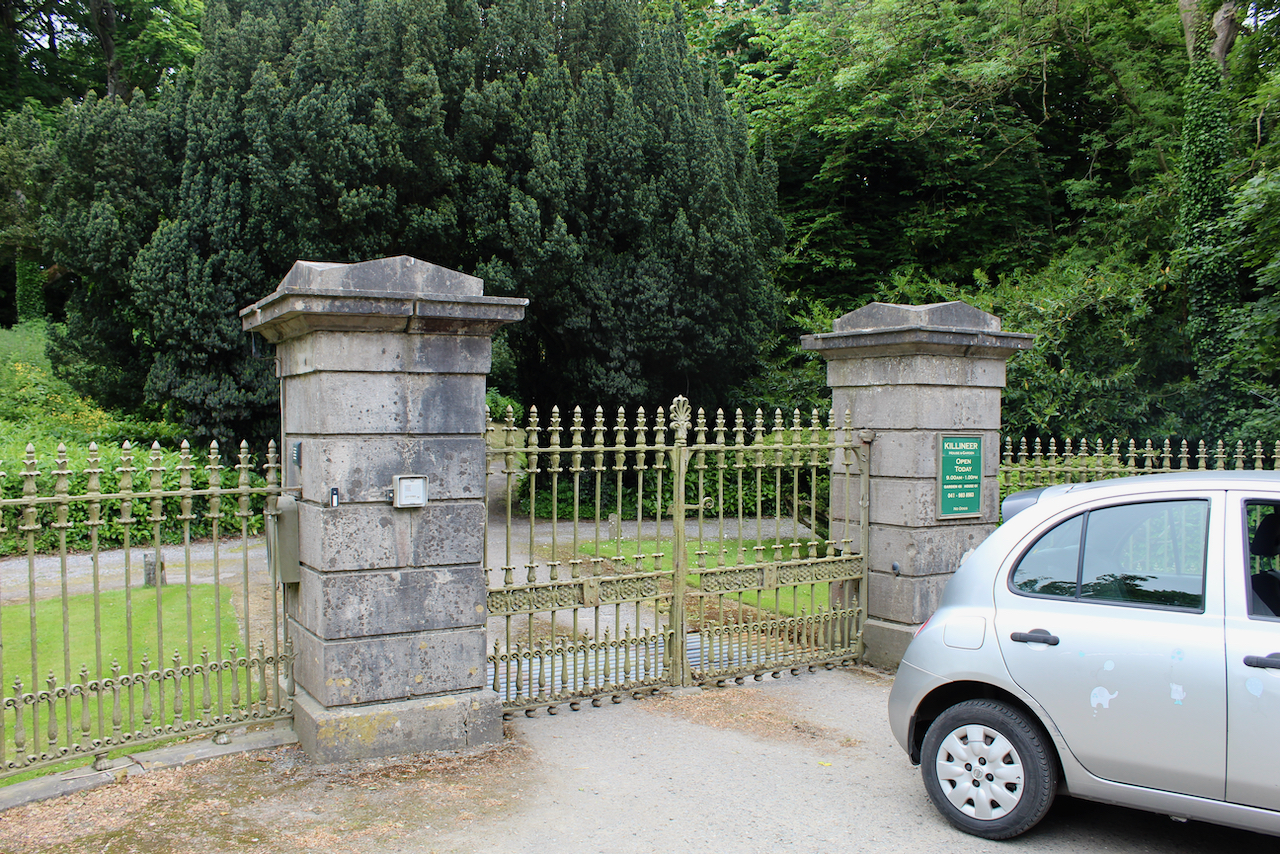
Stephen and I visited Killineer on Saturday June 9th, one of our first houses to visit once Covid restrictions eased. I like the drive up along the M1 motorway, over the Mary McAleese bridge. The house has entrance gates.
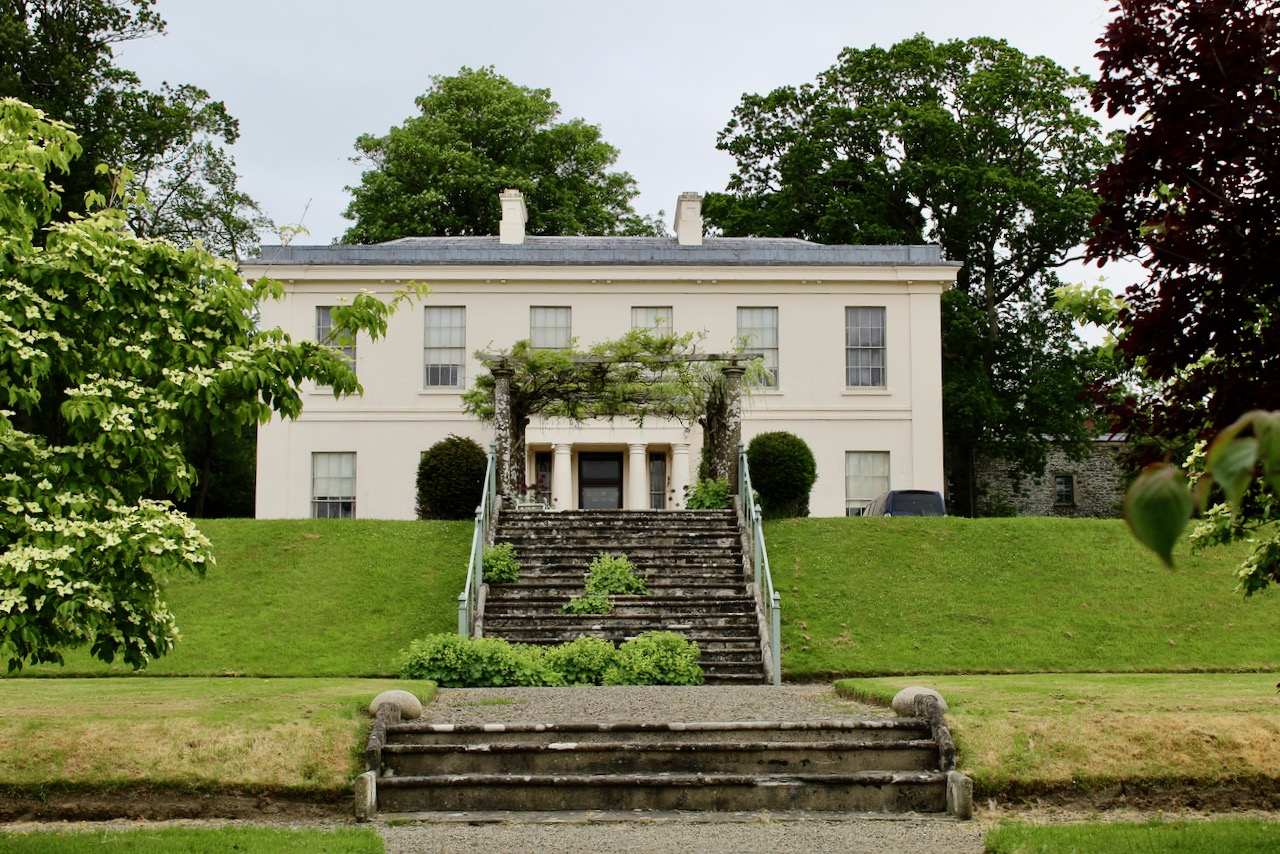
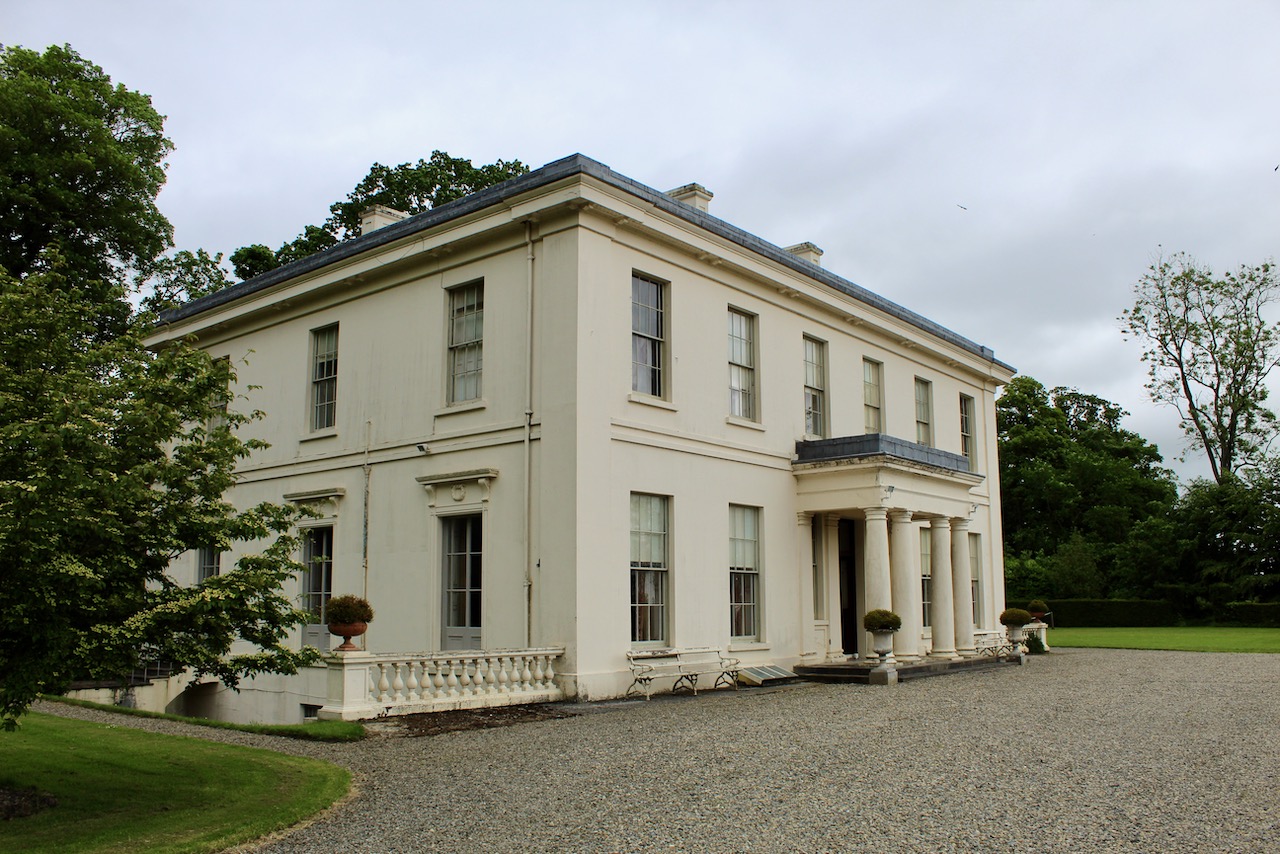
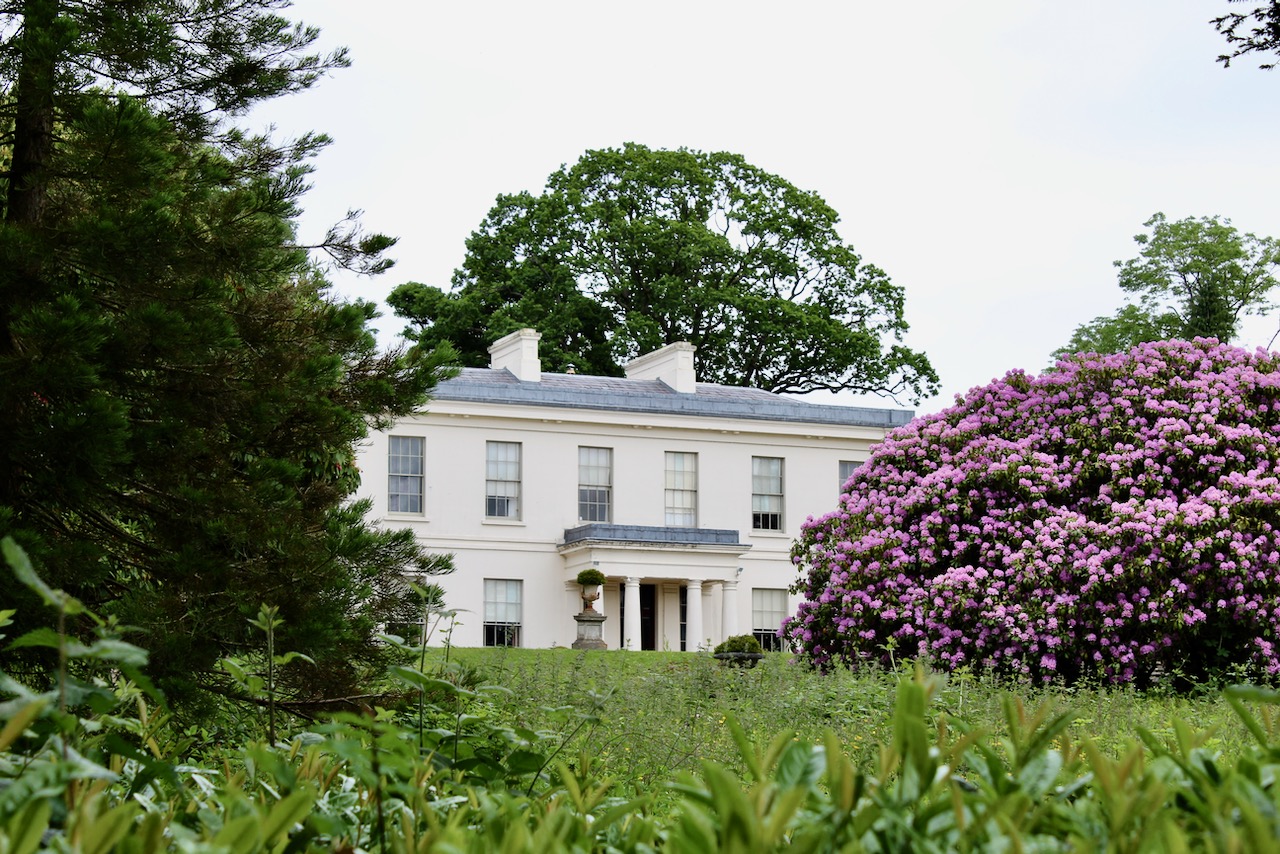
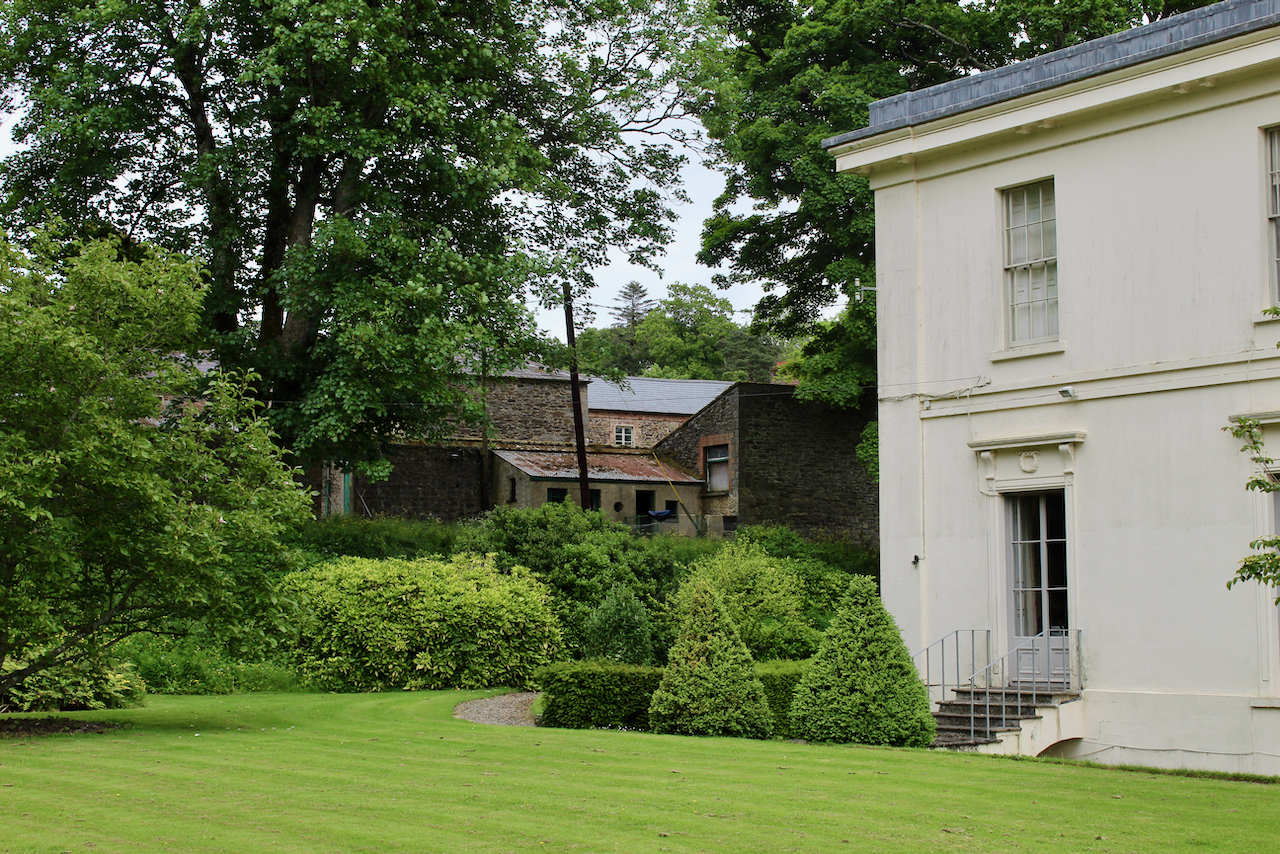
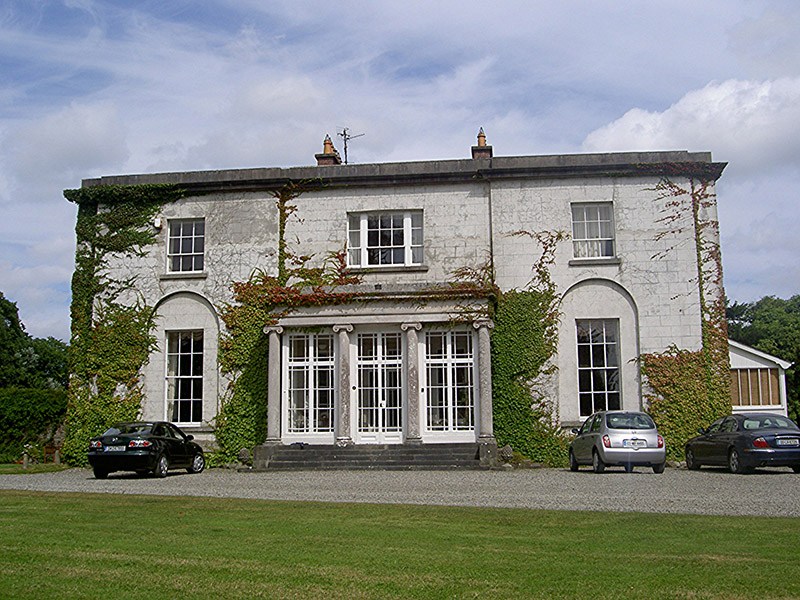
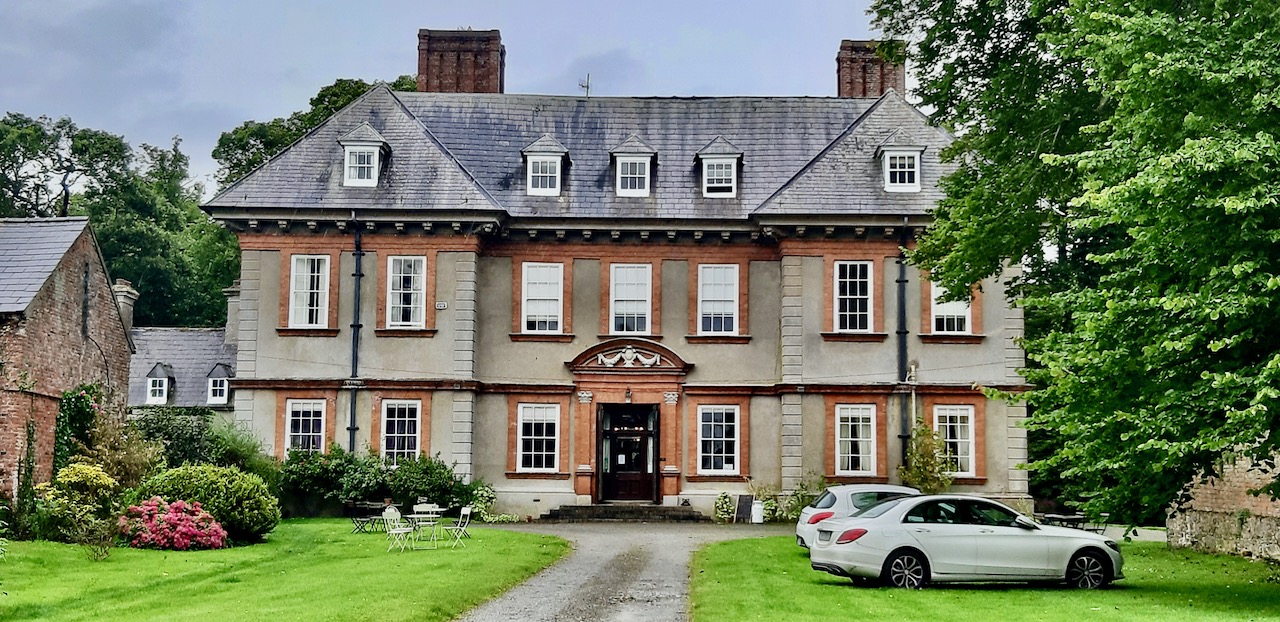
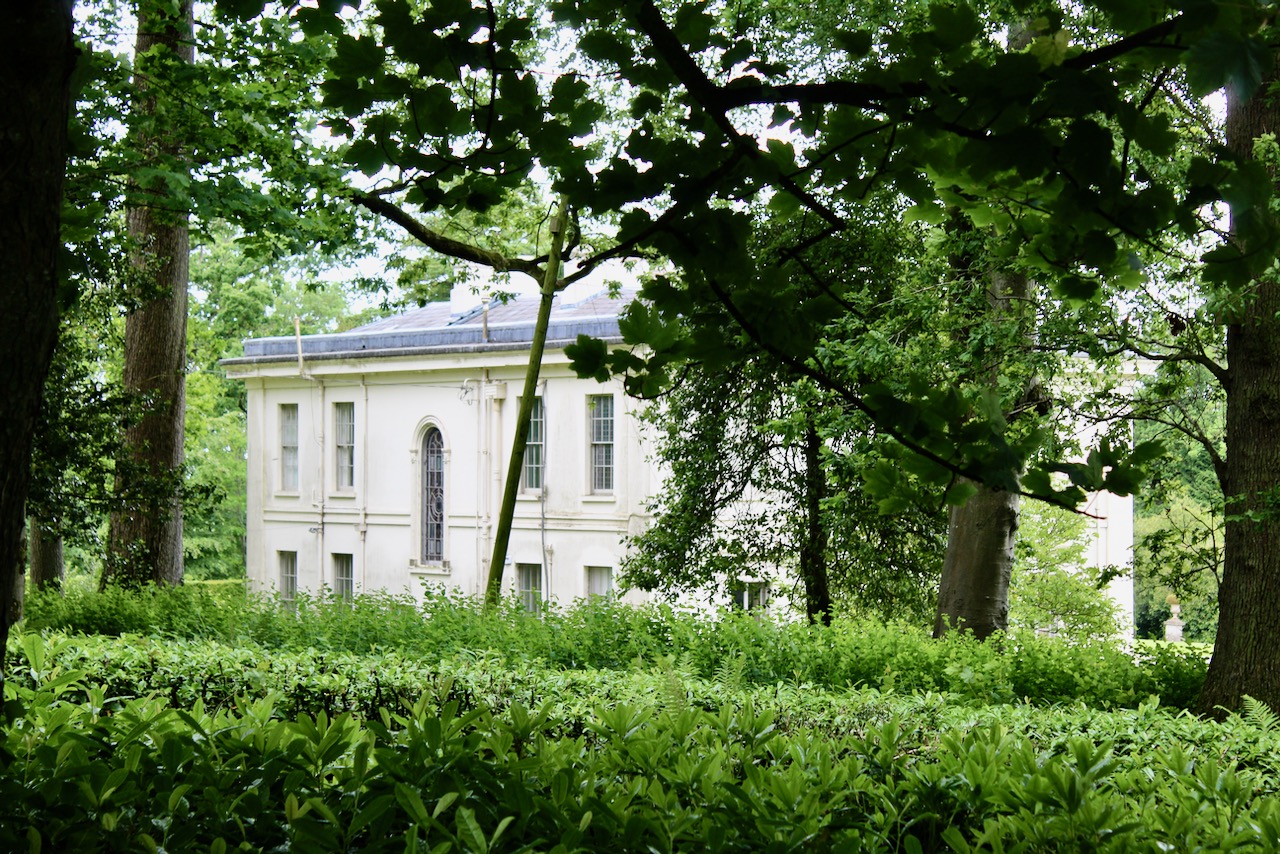
The house is a Regency house, that is, of the Classical style built shortly after the period in England when George IV was Prince Regent (1811-1820, when King George III was ill). Like many Regency houses, it has a stucco facade and columns framing the front door, with a Doric single-storey portico.
The house was built for a local businessman, George Harpur, who made his fortune in trade, dealing in salt and timber. He would have availed of the nearby port to bring in his salt, and timber from Canada. Salt was used to preserve meats and was a precious commodity. Harper married Louisa Ball in 1835, daughter of George Ball (1755-1842) of Ballsgrove, County Louth, and his wife Sarah Webber.
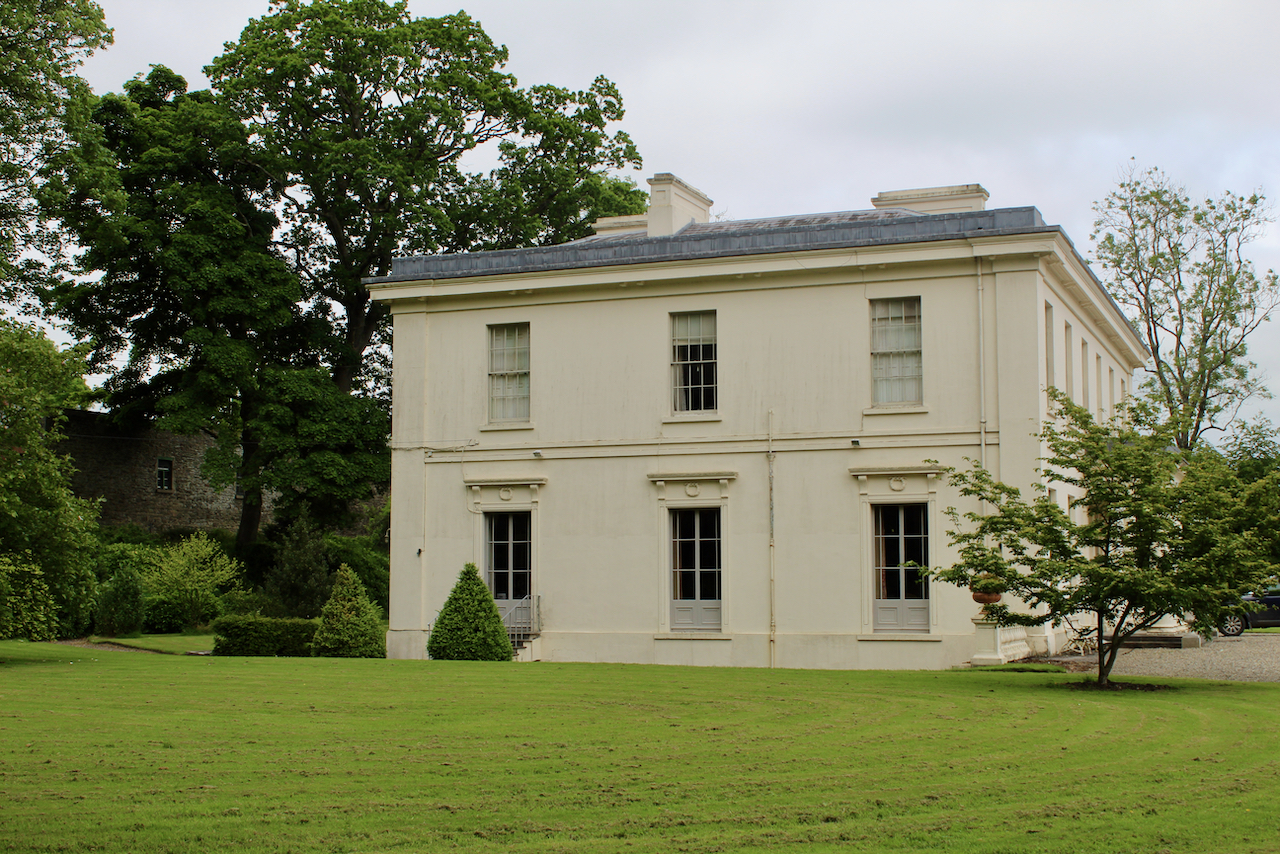
Killineer house was completed in 1836. The front, of two storeys, has six bays on top and a Doric single-storey portico flanked by two bays on either side. The corners have double-height pilasters. The house has a basement and the back is of three storeys. The sides are of three bays, with entablatures over the ground floor windows.
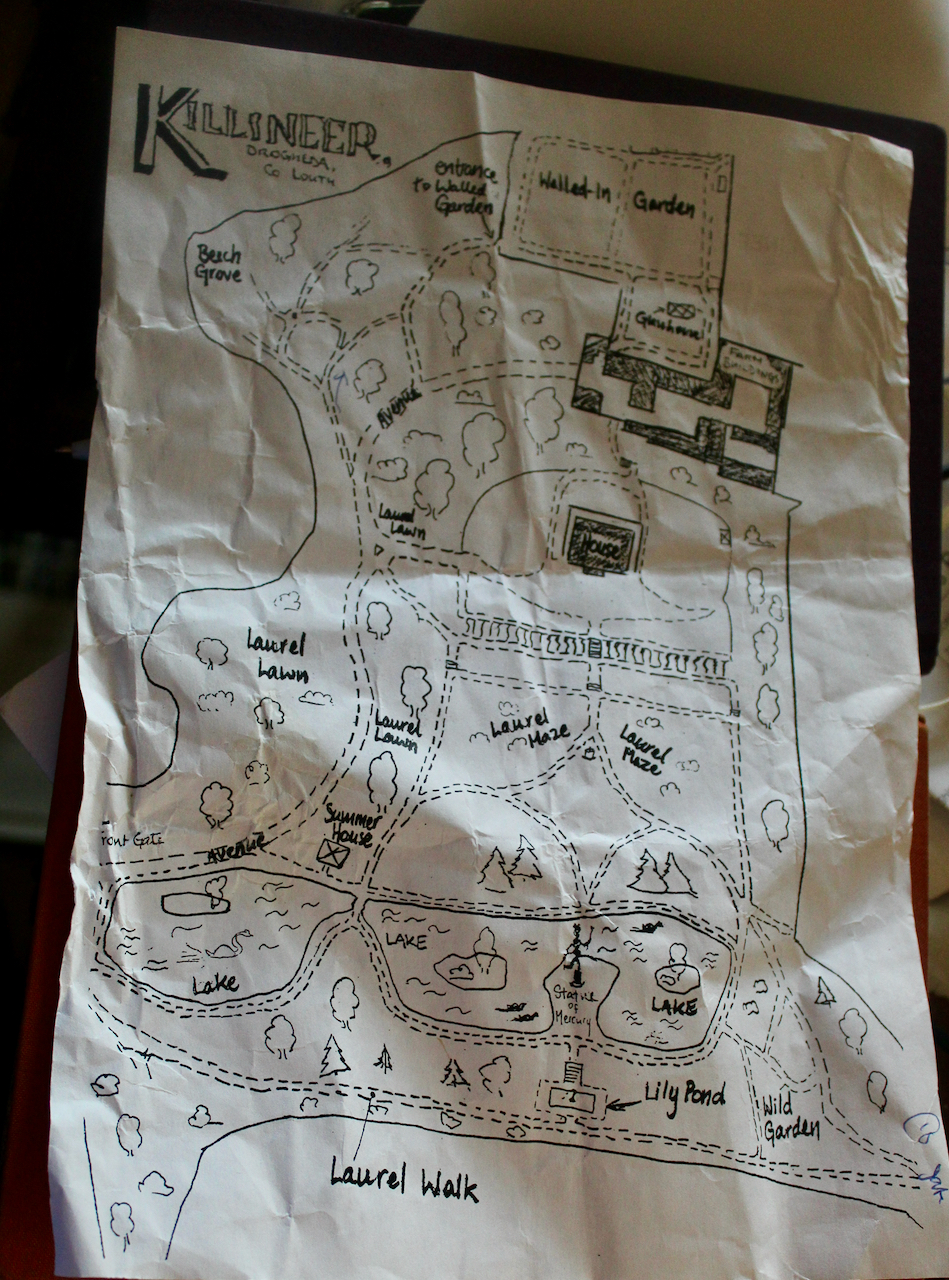
Harpur surrounded the house with seventeen acres of garden, creating terraces and a lake which on the site of an earlier rough pond. A house already stood on the property, the remains of which are in the walled garden behind the current house.
The earlier house, now located in the walled garden behind the house, may have been built by George Pentland (1770-1834), who owned the property before Harpur, before he moved to Blackhall in 1815, which was begun in approximately 1790 by a fellow solicitor, Philip Pendleton. [2] Before that, the land was owned by Thomas Taylour of Headfort House, County Meath.
Black Hall, County Louth. Picture from the National Inventory of Architectural Heritage. Casey and Rowan (1993) suggest that the house is in a ‘style greatly reminiscent of Francis Johnston.’ Headfort House, County Meath, photograph by A.E. Henson, from Country Life, volume LXXIX, published 21/03/1936. The house was built in the early 1770s by Irish architect George Semple with the interiors designed by Robert Adam. [3]
The Harpurs had no children and the house was sold, probably after George Harpur died in 1888. Unfortunately, any record of the plans for the house or garden have been lost, so neither the architect nor the creator of the garden has been identified.
The house passed through several owners until the present family, including Robert Ussher, and the Montgomery family of Beaulieu, County Louth. Richard Thomas Montgomery (1813-1890) of Beaulieu had a son, Richard Johnston Montgomery, who lived in Killineer house when he was High Sheriff of County Louth in 1910. Perhaps he lived at Killineer until he inherited Beaulieu. He married Maud Helena Collingwood Robinson of Rokeby Hall, another Section 482 property in Louth.
James Carroll, ancestor of the current owner, purchased the house in 1938. He was the grandson of Patrick James Carroll, a tobacco manufacturer from Dundalk. James’s daughter Grace lived in Killineer all of her life and never married. She died in 1999, and the house passed to her cousin, the current owner.
According to her obituary in the Irish Times, Grace became involved with the Order of Malta, of which her father had been president. She was the first woman in this country to be appointed Dame Grand Cross of Honour and Devotion, Sovereign Military Hospitaller, Order of Malta. This was in recognition of her work and fundraising for those with disabilities in Drogheda. She was instrumental in helping fund The Village, a training centre for those with special needs, built in the former Presentation Convent. [4]
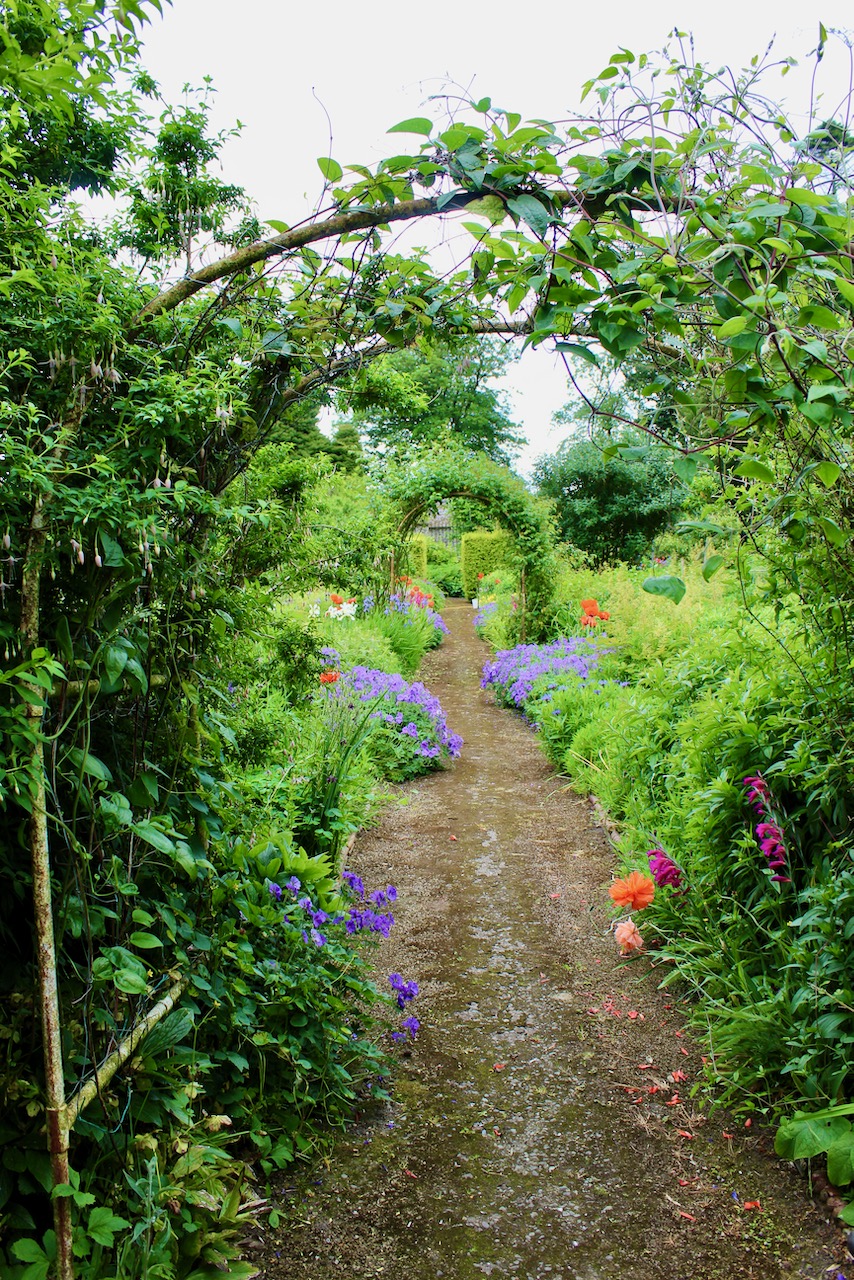
She maintained the gardens laid out by George Harpur, and they were featured in Country Life in 1998. We enjoyed a wander in the lovely gardens after the owner Charles Carroll gave us a tour inside.
The house has an impressive octagonal entry hall, with niches and busts on plinths. It has four doors that look as if they lead off the hall, but two are only for symmetry and do not open. The house itself has a classical layout of four rooms plus the hall on the ground floor, a basement, and the bedrooms above. It has an “imperial” staircase – a staircase which bifurcates into two. A lovely stained glass window of browns, blues and yellows, made by Edward Lowe of Dublin who also did the windows in Collon’s Church of Ireland, has the Carroll coat of arms in the middle. [5] Below the stairs, in a door, is another stained glass window, with a knight with a lion, which might also have been installed by the Carrolls.
The Carrolls are an ancient Irish family that can be traced back to the Carrolls of Oriel. Oriel was an area of Ireland. Donogh O’Carroll, King of Oriel, died in 1168 AD and the Carrolls of Oriel are his descendants. Patrick Carroll of Culcredan, County Louth, was born in 1600. The Carrolls of Killineer branch off from the main line of “the O’Carroll Oriel” after this Patrick Carroll. [6] [7]
We entered the dining room first and sat down under a portrait of Grace to hear a little about the history of the house. The windows are French doors, and the room is panelled. It originally had a ceiling with a seascape of Neptune, but unfortunately the house was left empty for two years before the Carrolls purchased it and the ceiling was ruined. The ceiling now features a “very attractive bold circle of plasterwork in the centre of the ceiling,” as Mark Bence-Jones describes it. [8]
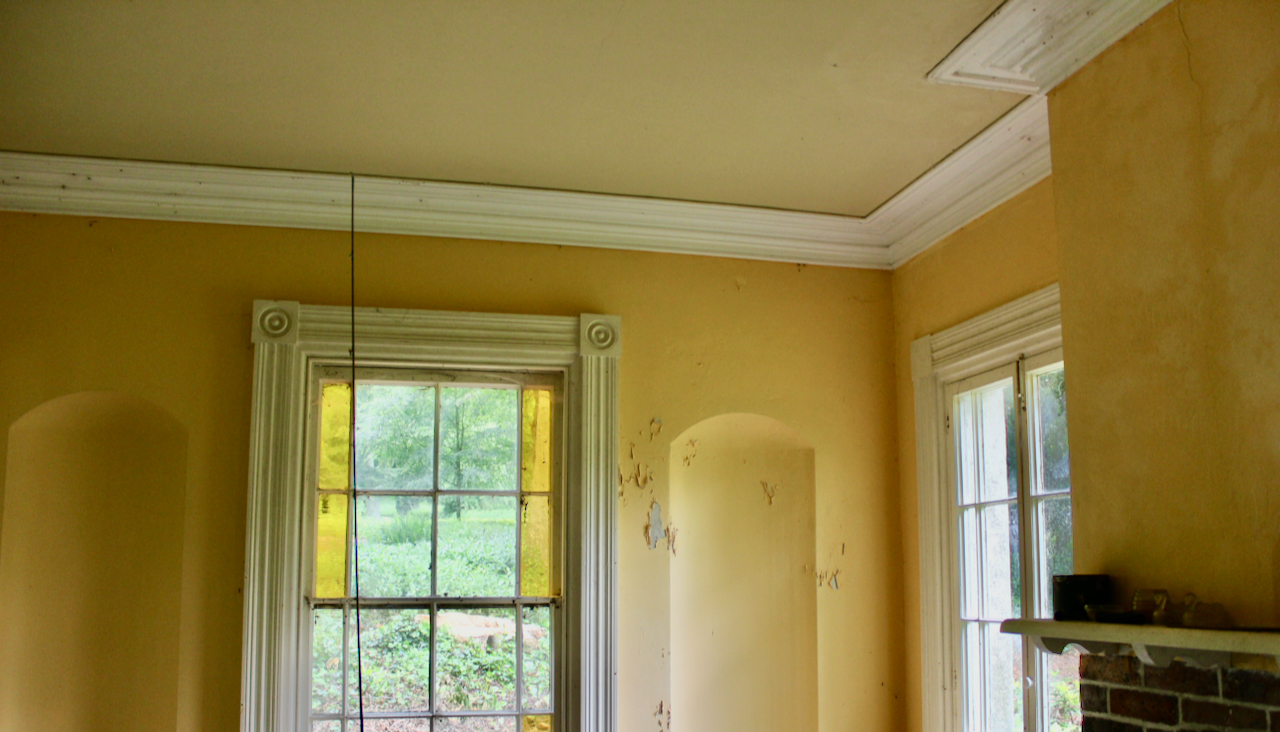
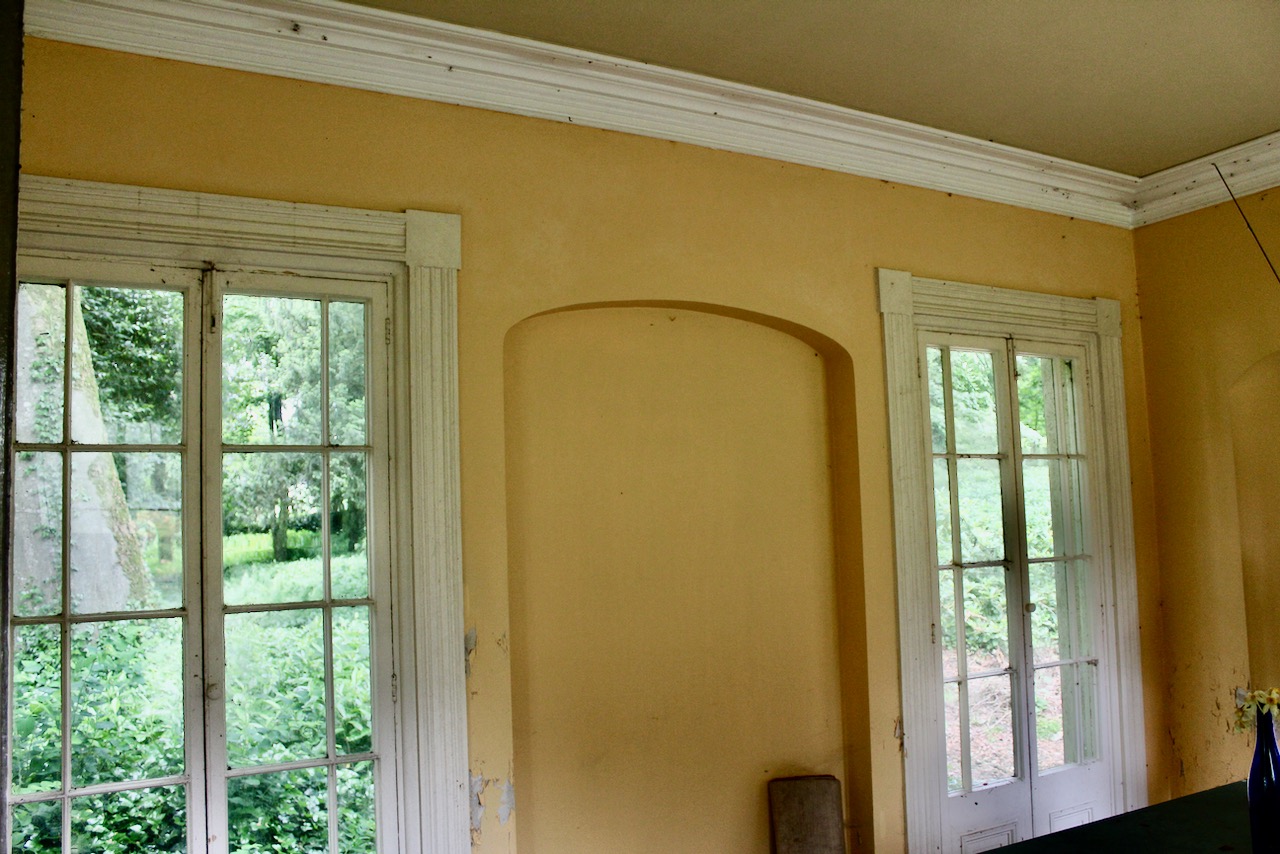
The plasterwork in the house is impressive. There are about five layers of cornice patterns around the ceiling in the study, such as ovals and egg-and-dart, and the rooms have wood-like plaster panelled walls. The rooms are decorated in a French empire style of gilt and a deep rose colour. Charles pointed out that some of the plasterwork over the doors may have been added later, as it is a little too ornate and does not quite fit with the rest of the plasterwork.
The fourth room on the ground floor has been divided in two, probably after the house was built. The pattern around the ceiling continues in both rooms, and features griffons and centaurs and is coloured wine red, pale blue and pink. An unusual sculpted ceiling depicts the figure of Justice, doves, and a figure with a lyre.
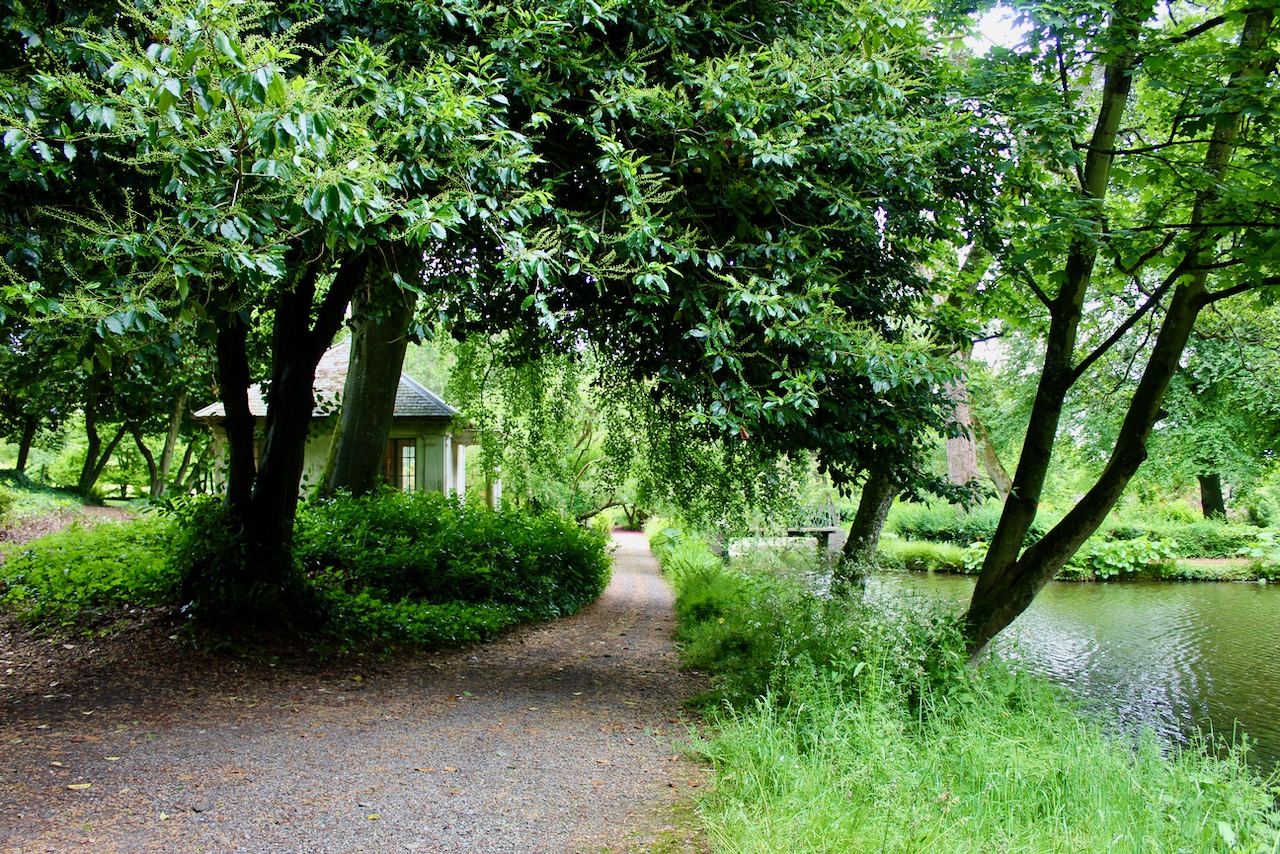
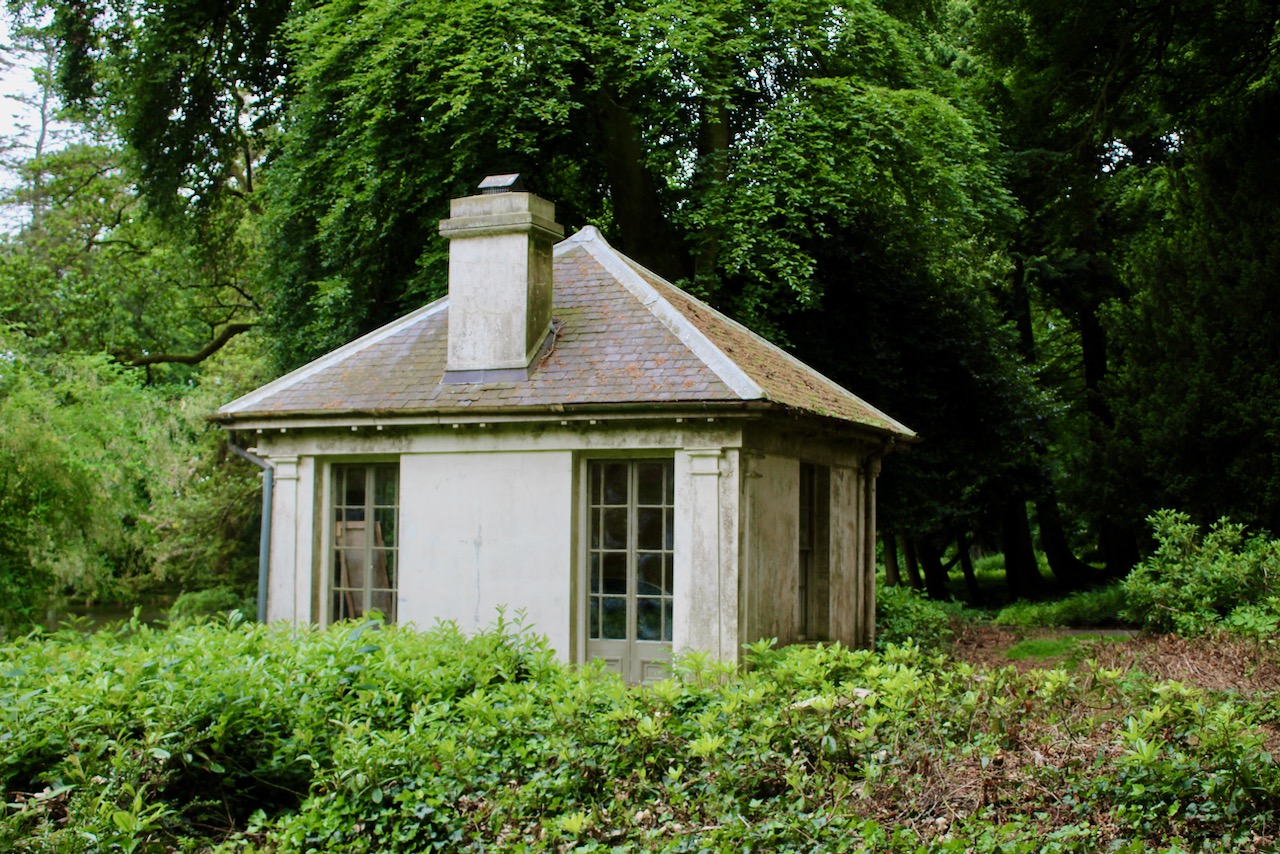
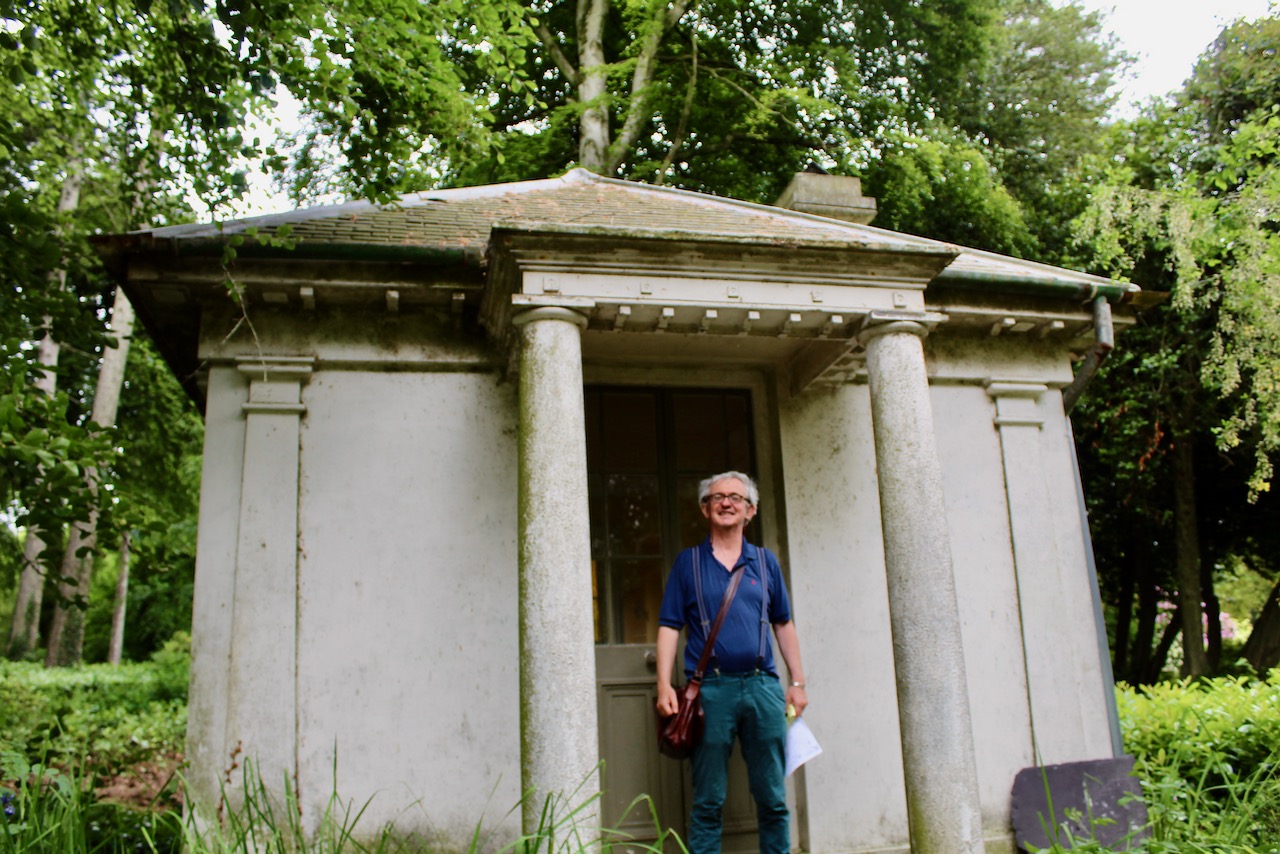
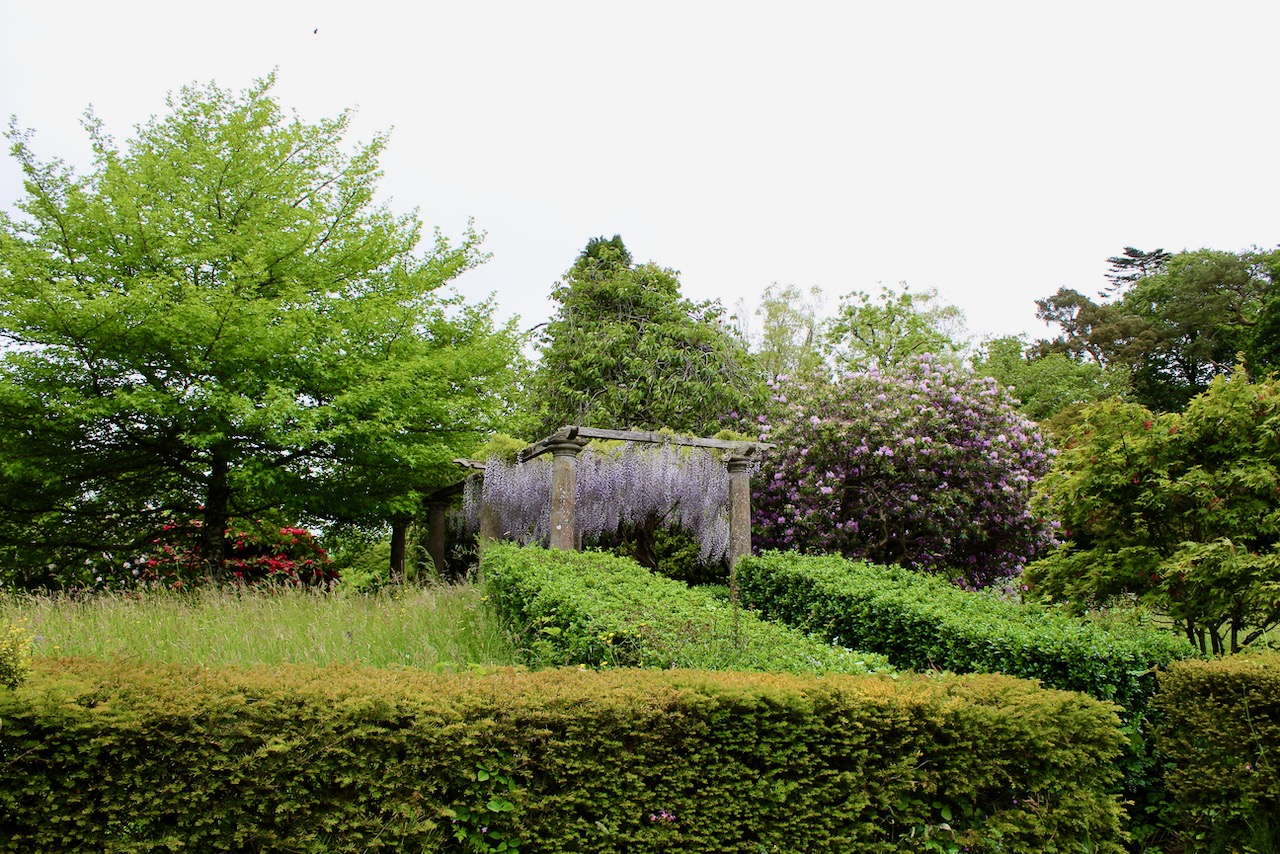
A summer-house in the garden is designed to mirror the architecture of the house, and was probably also built by George Harpur.
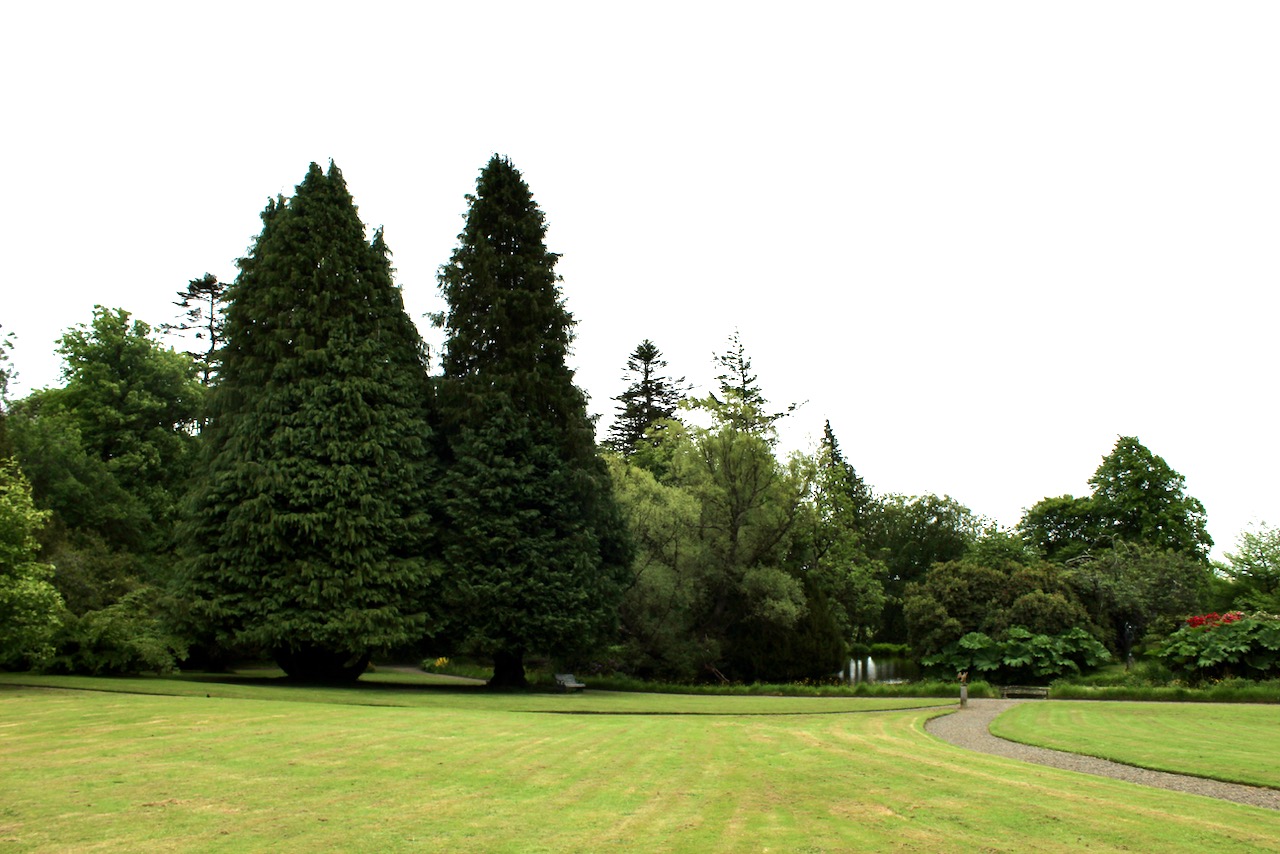
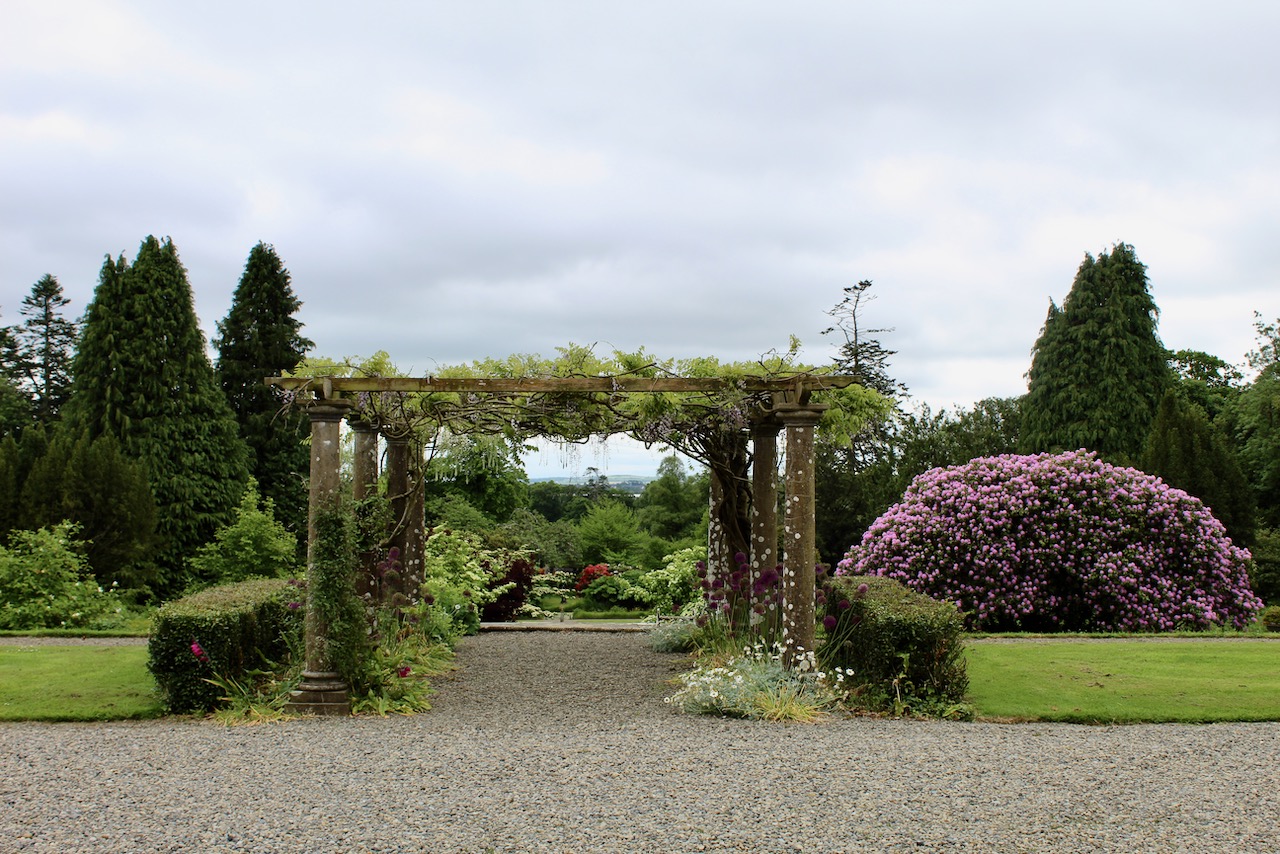
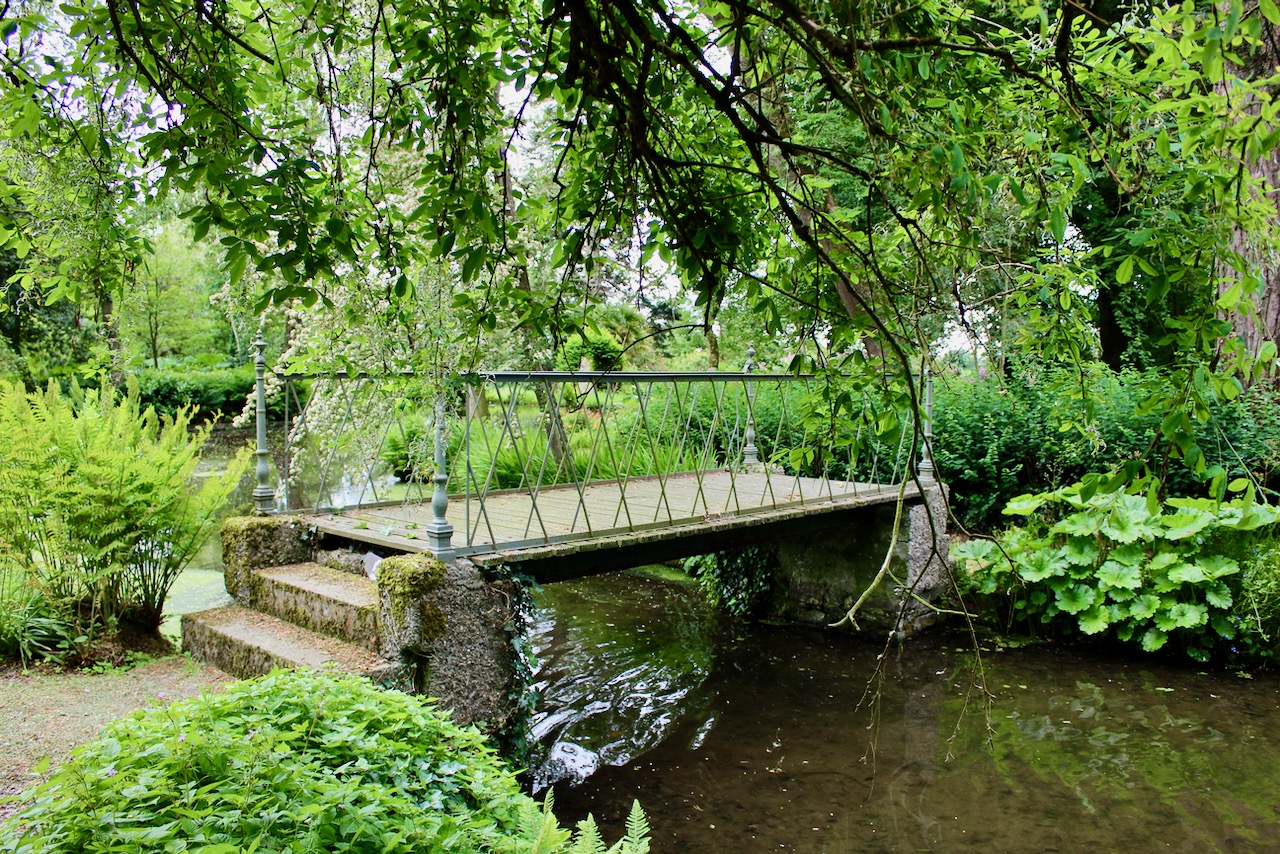
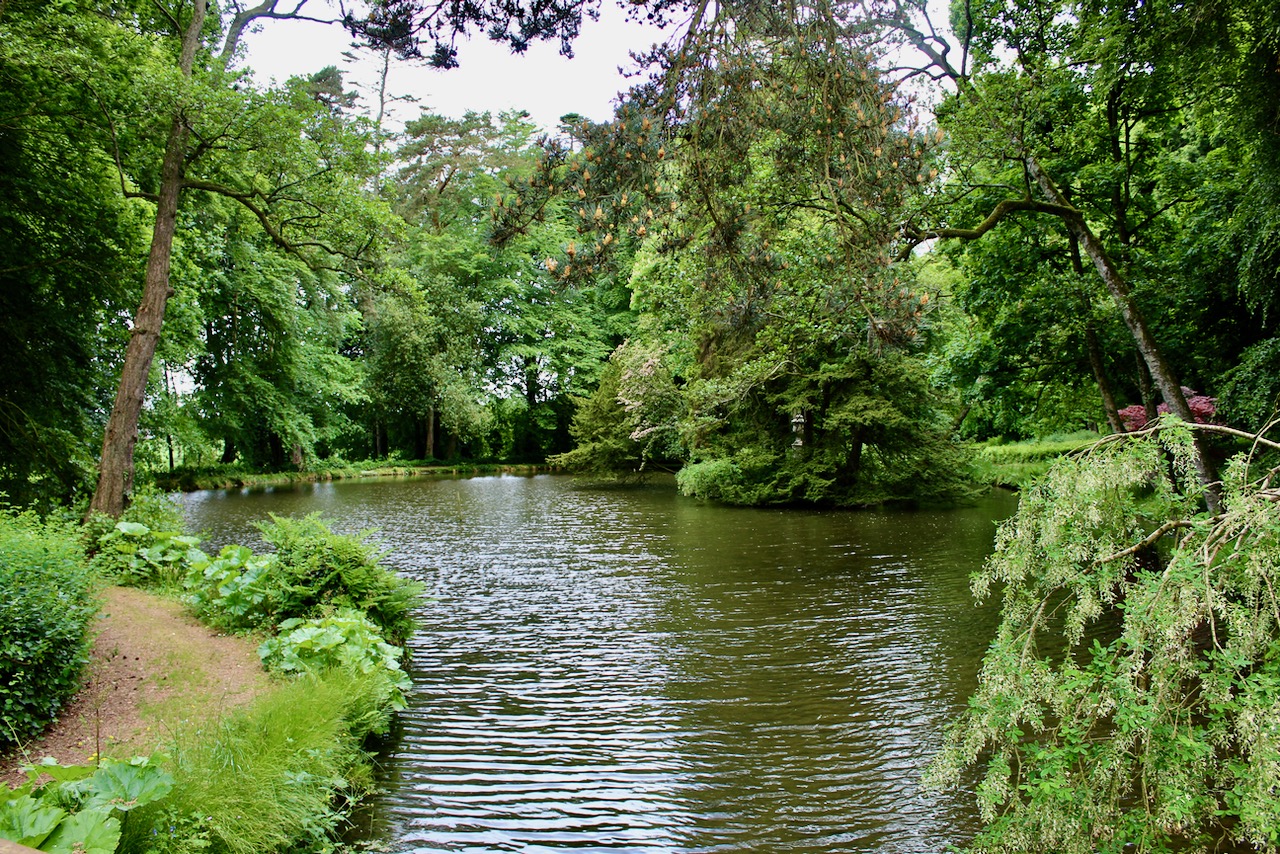
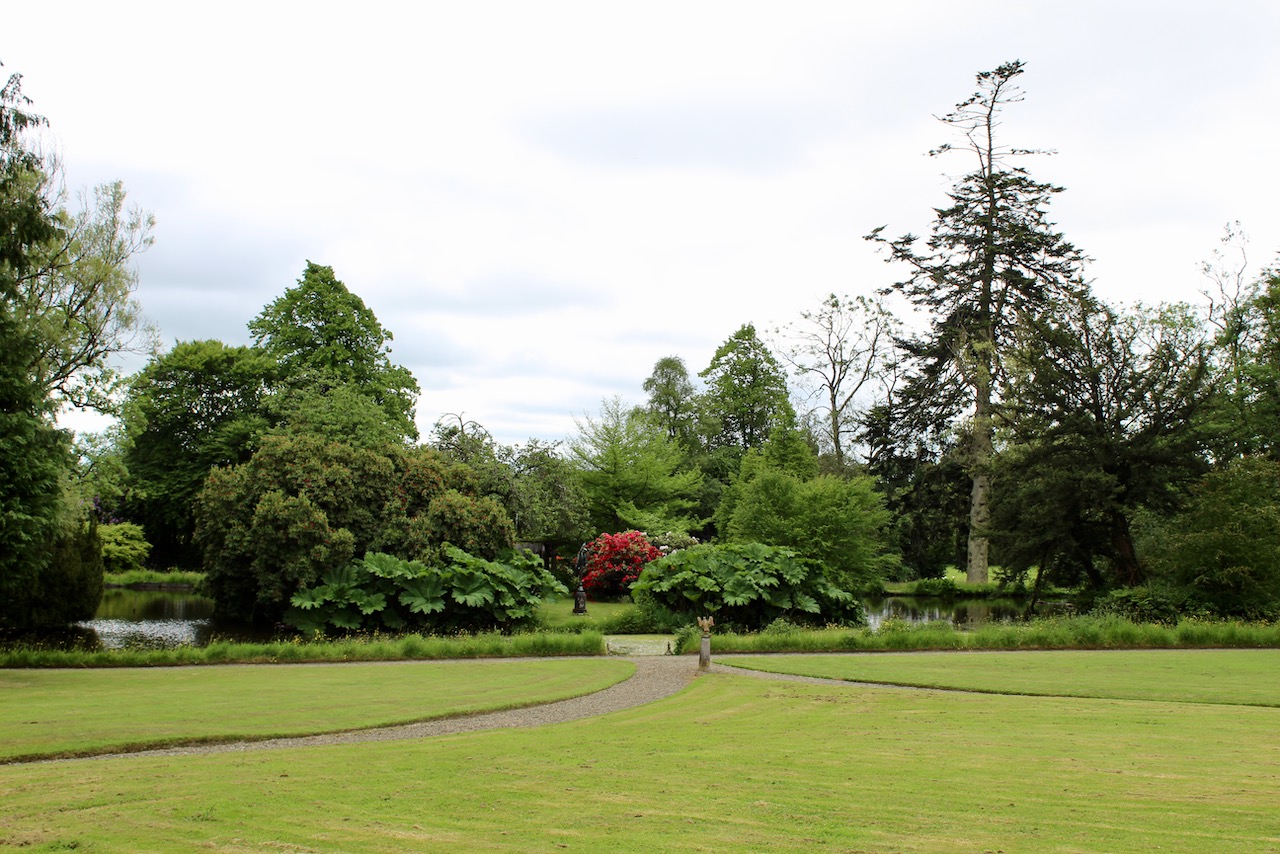
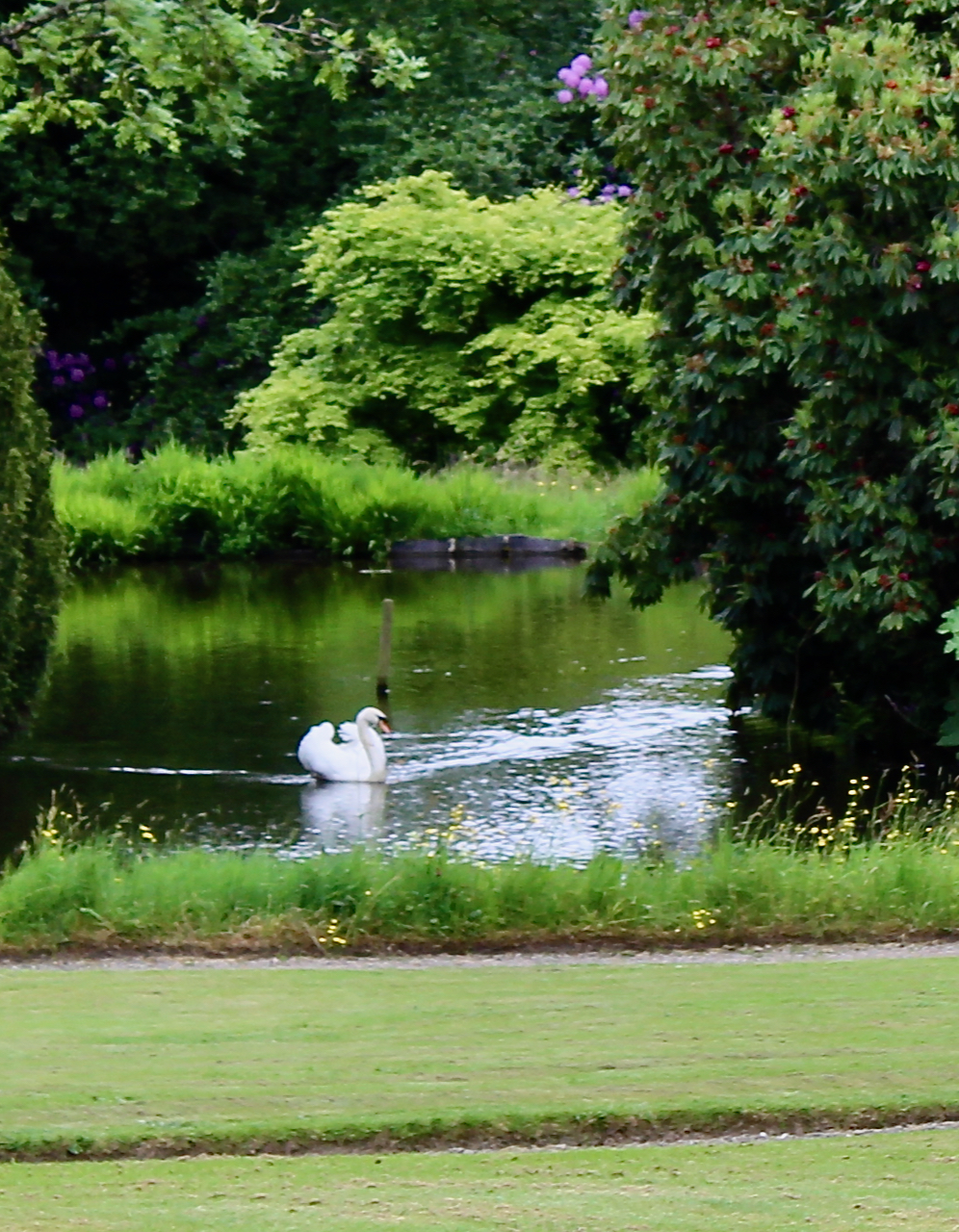
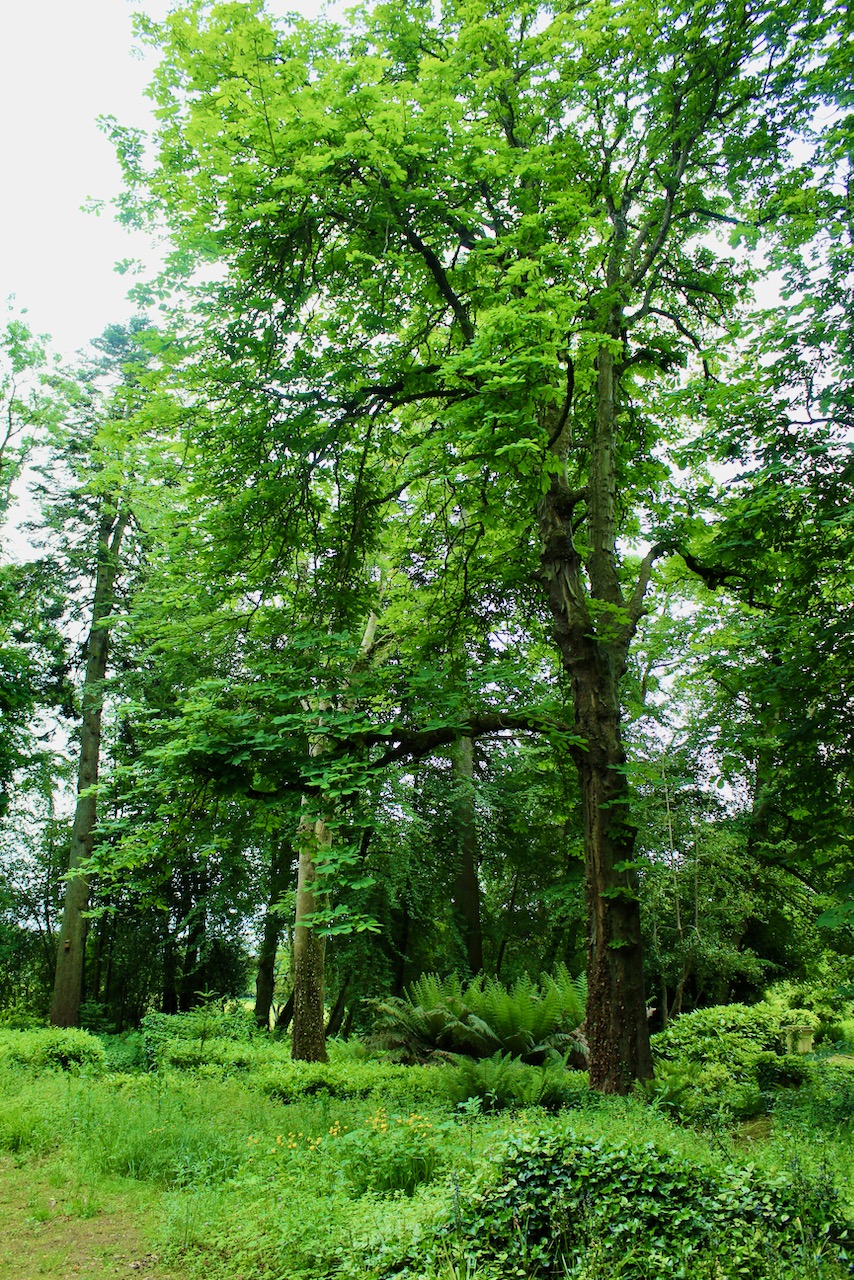
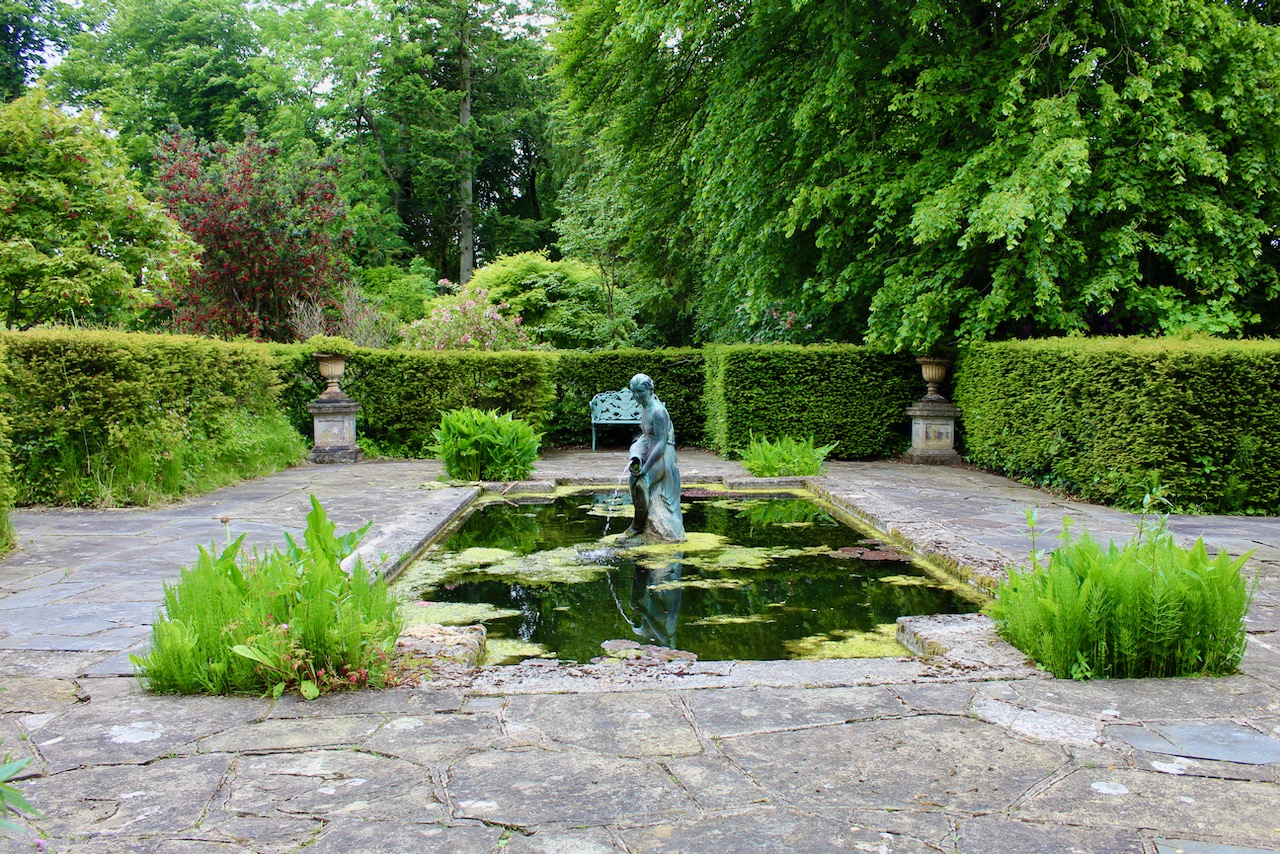
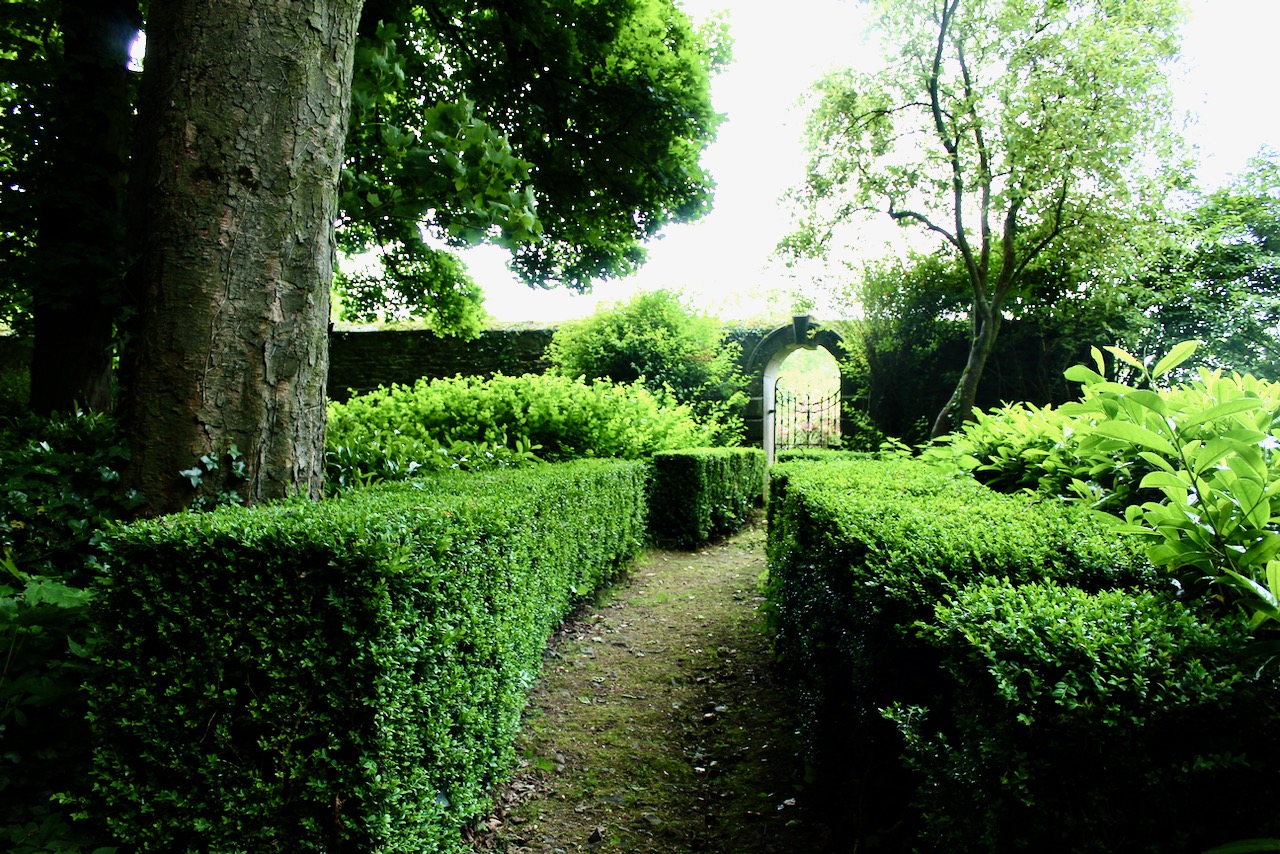
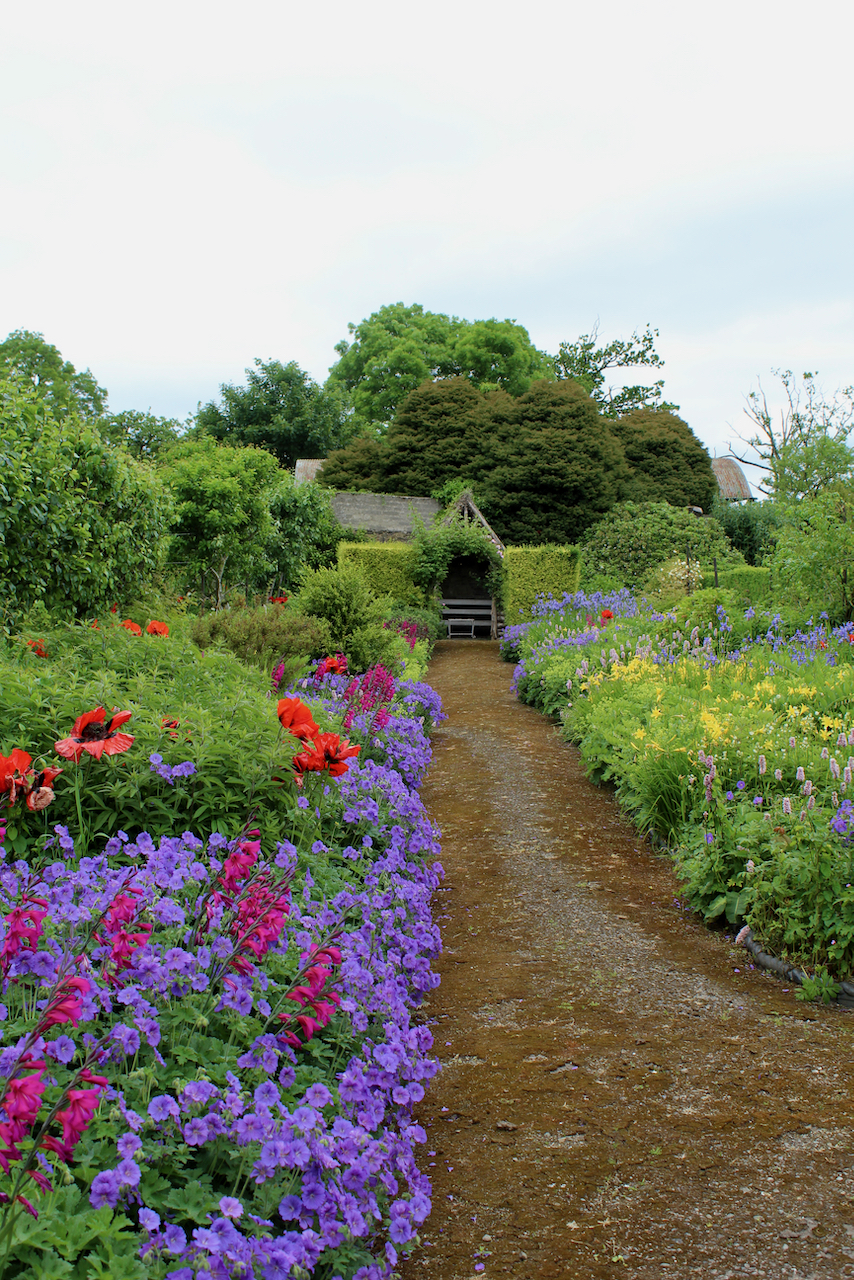
Stretching from the house, the garden is terraced. It leads down through a canopy to a laurel maze and lawn laid out in an astragal pattern, to the lake, where a swan was guarding a nest. The lakes, created by George Harpur, are lined with a special yellow clay, which is very fine and hard, so it holds in the water particularly well. Yellow clay is impermeable and can be used to prevent damp in houses.
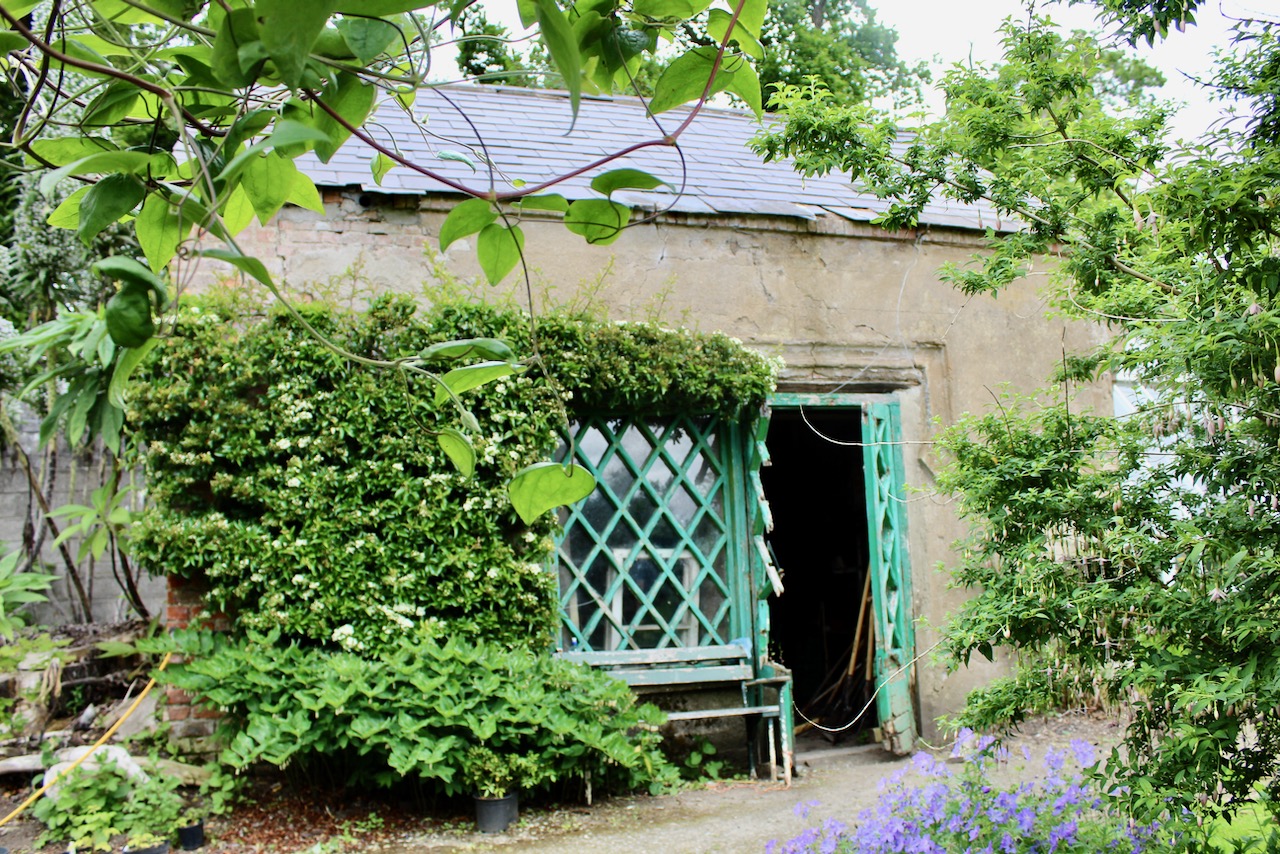
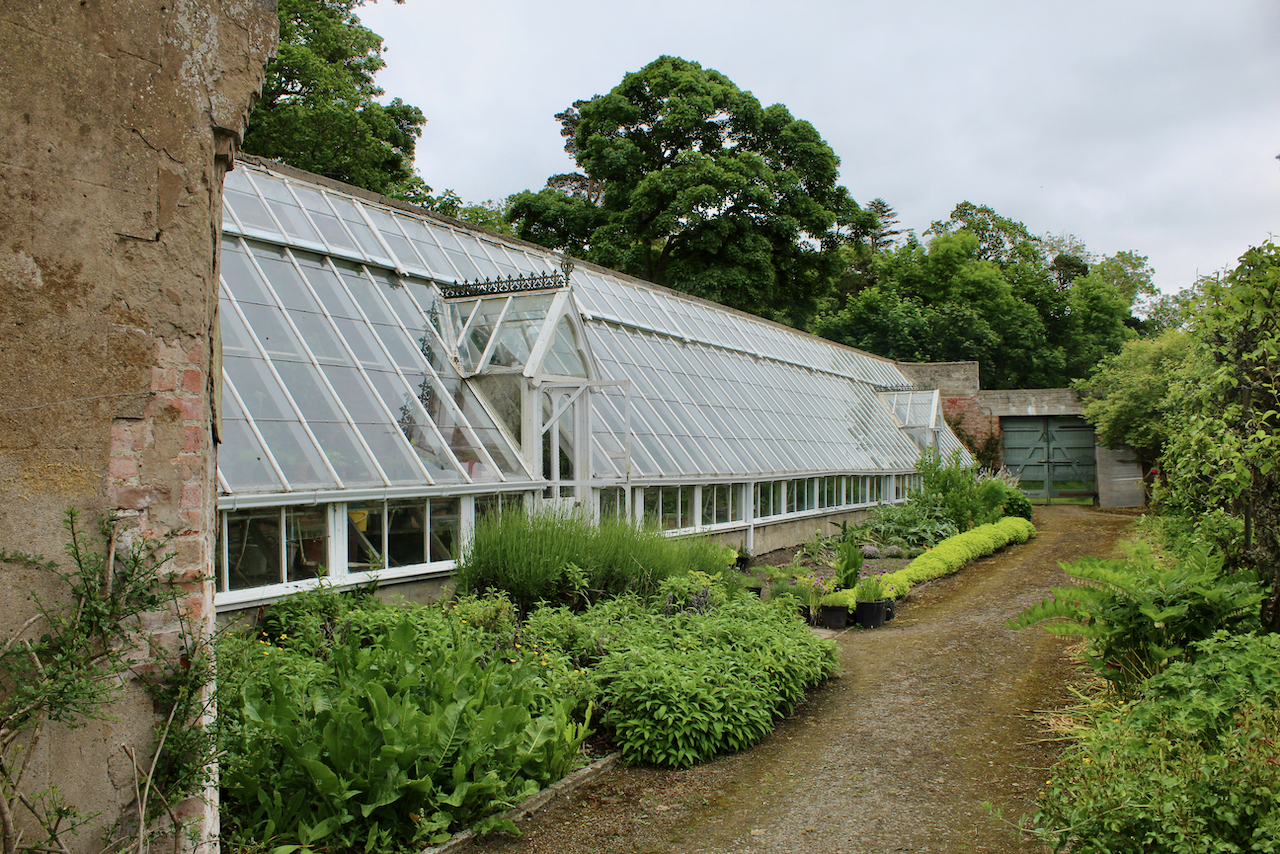
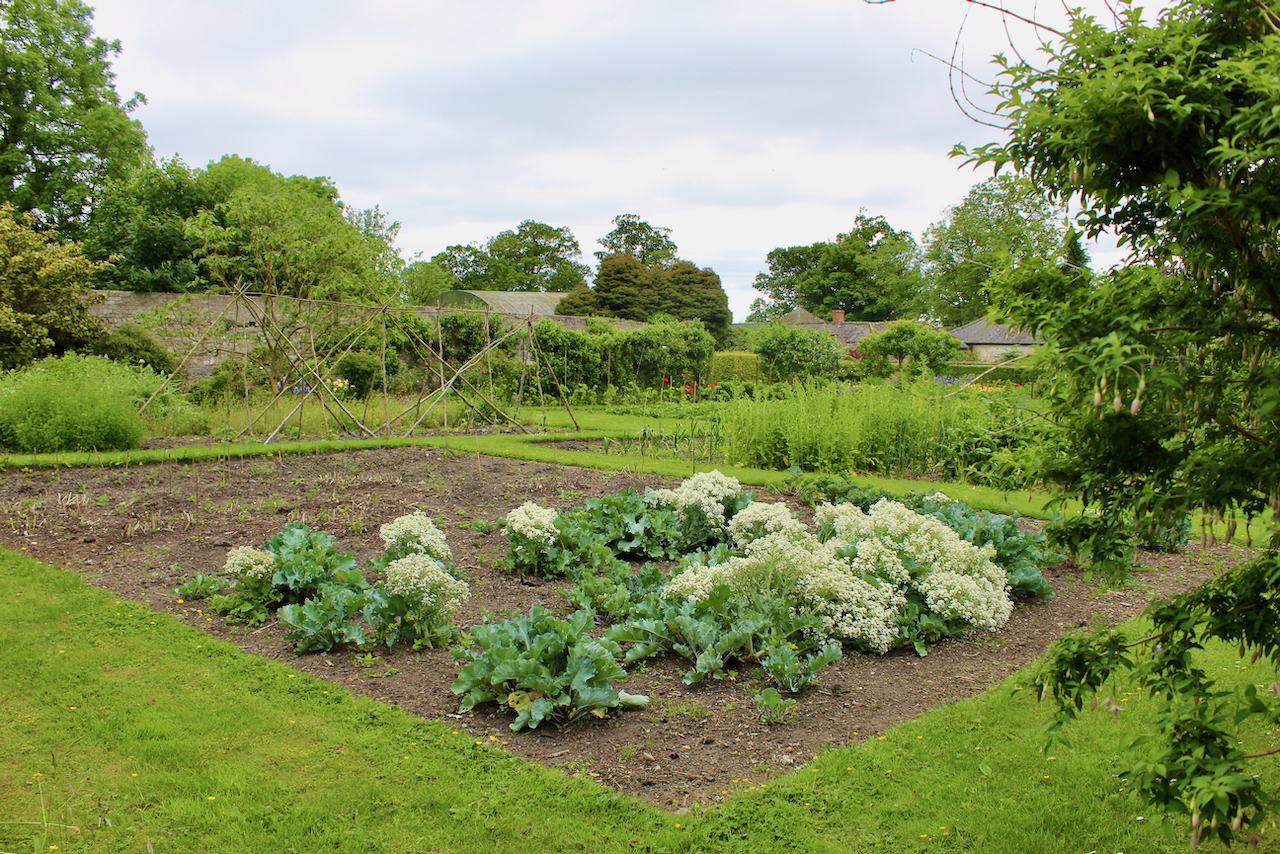
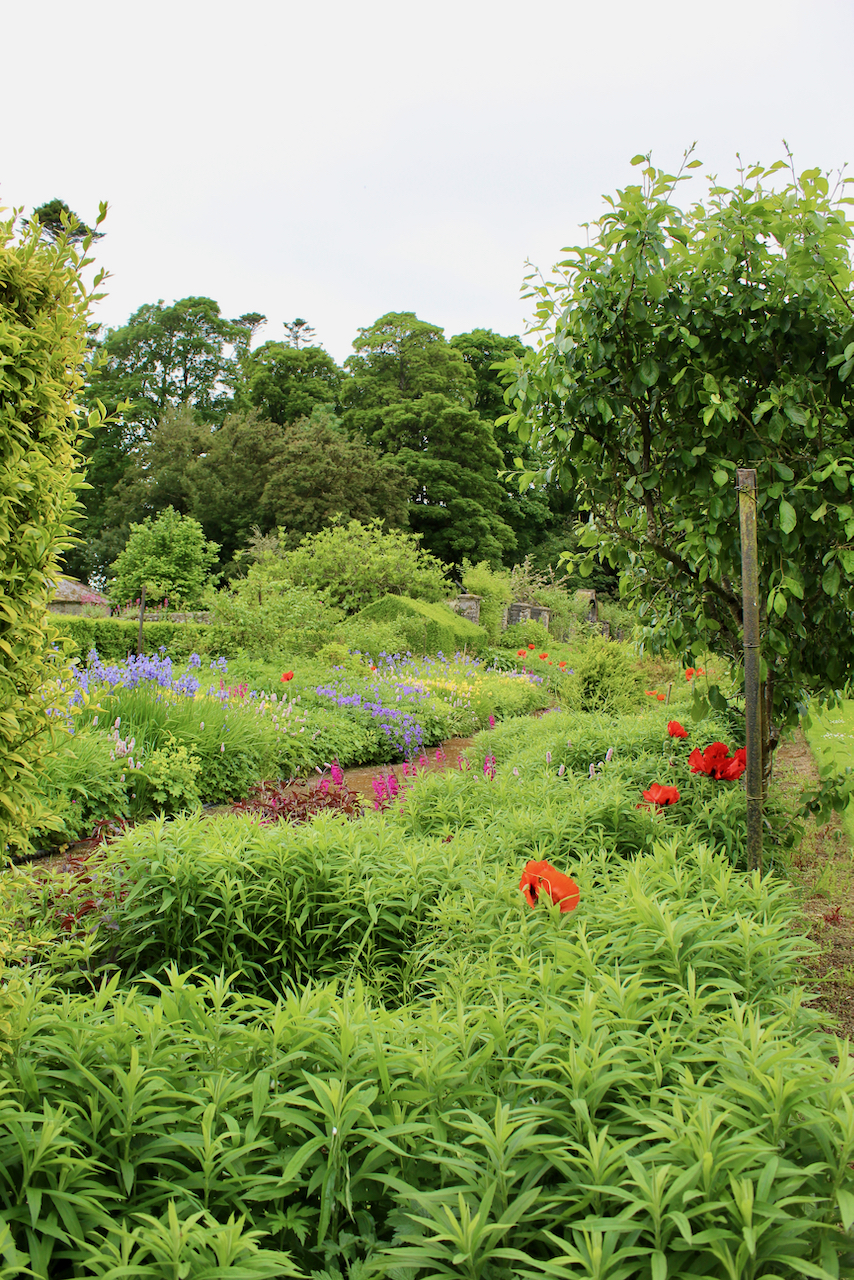
Behind the house lies the walled garden from the original house at Killineer. It is still in active use today producing fruits and vegetables. It has a glasshouse in which apricot, peach and nectarine trees grow, and an apiary that houses bees who pollinate the plants.
The lush gardens were a treat after months of lockdown in Dublin. They were so peaceful, such an oasis from the everyday bustle. They remind us to stop, linger, and appreciate.
Robert O’Byrne notes that: A century earlier the land here had been granted by the local corporation on a 999-year lease to Sir Thomas Taylor, whose family lived atHeadfort, County Meath. It then passed to the Pentlands whose main residence was to the immediate east at Blackhall. At some date in the 18th century a house was built on the property: it appears on earlymapsbut little now remains other than one room which still retains sections of plaster panelling. Located to the rear of the walled garden, this space now serves as atoolshed.
It’s interesting that George Pentland’s son, George Henry Pentland (1800-1882), married Sophia Mabella Montgomery, of Beaulieu, since after George Harpur died, Killineer was owned by one of the Montgomery family from Beaulieu.
George Henry Pentland (1800-1882) married twice, once to Rebecca Brabazon and secondly to Sophia Mabella Montgomery, daughter of Rev. Alexander and Margaret Johnston. George Henry Pentland lived at Black Hall, Co Louth, as did his father George Pentland (1770-1834).
The church was erected thanks to the Foster family of Collon, County Louth and of Glyde Court, whom we came across in their association with Cabra Castle in County Cavan.
[8] Mark Bence-Jones. A Guide to Irish Country Houses (originally published as Burke’s Guide to Country Houses volume 1 Ireland by Burke’s Peerage Ltd. 1978); Revised edition 1988 Constable and Company Ltd, London.




 Irish Historic Houses