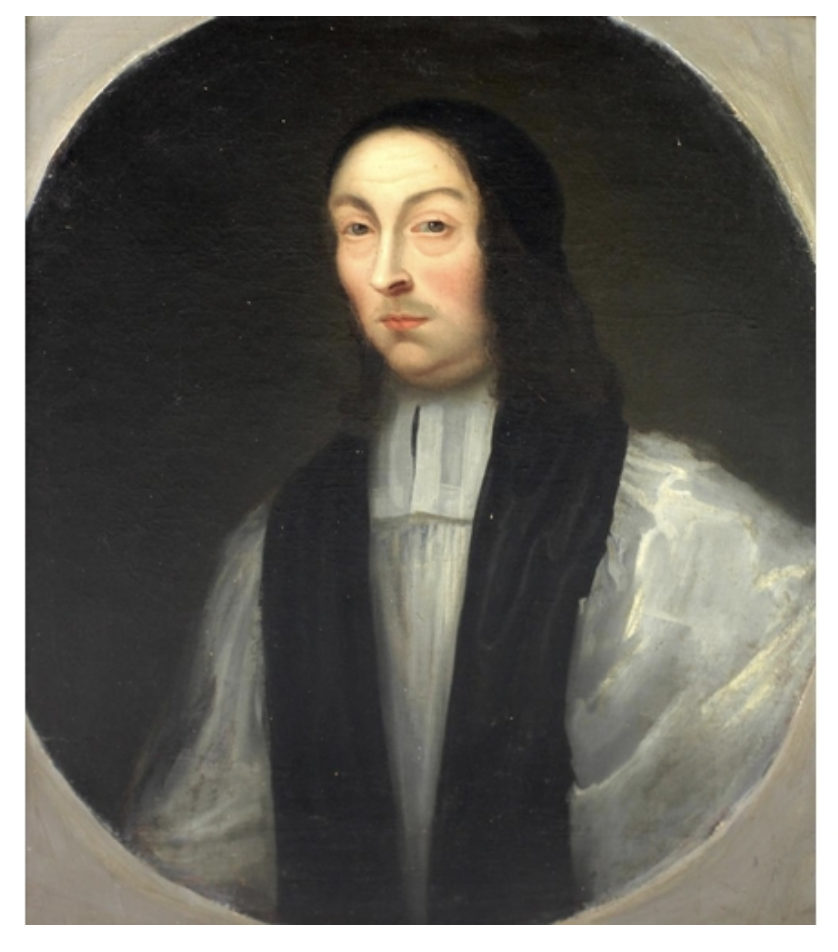
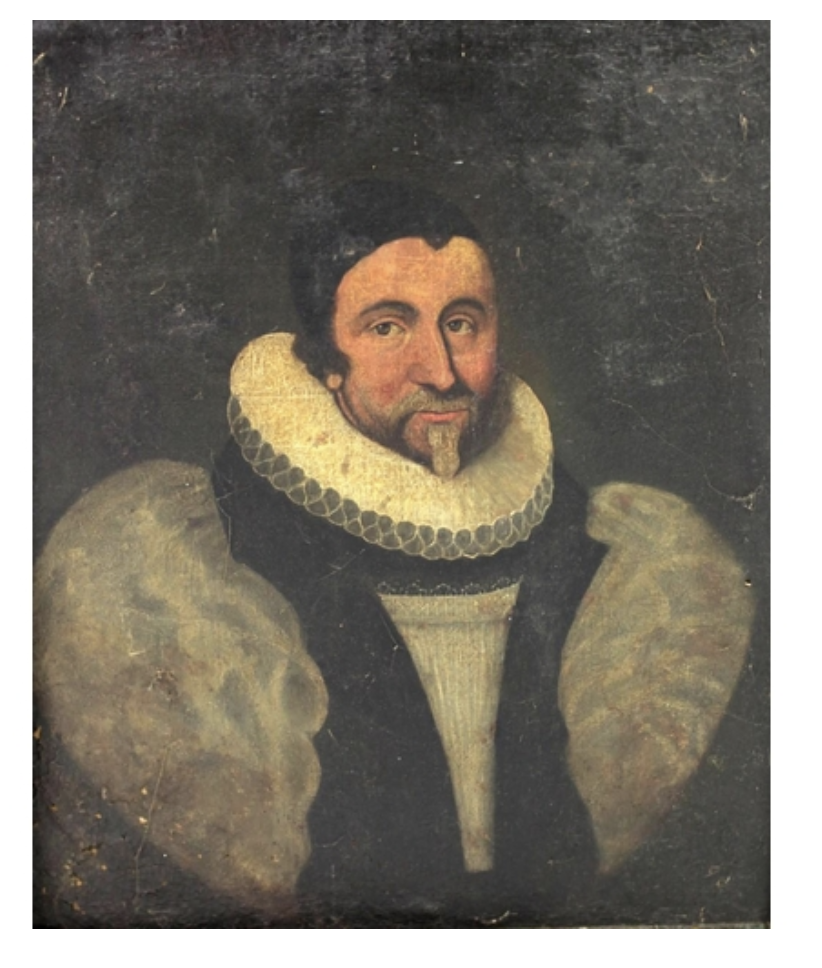
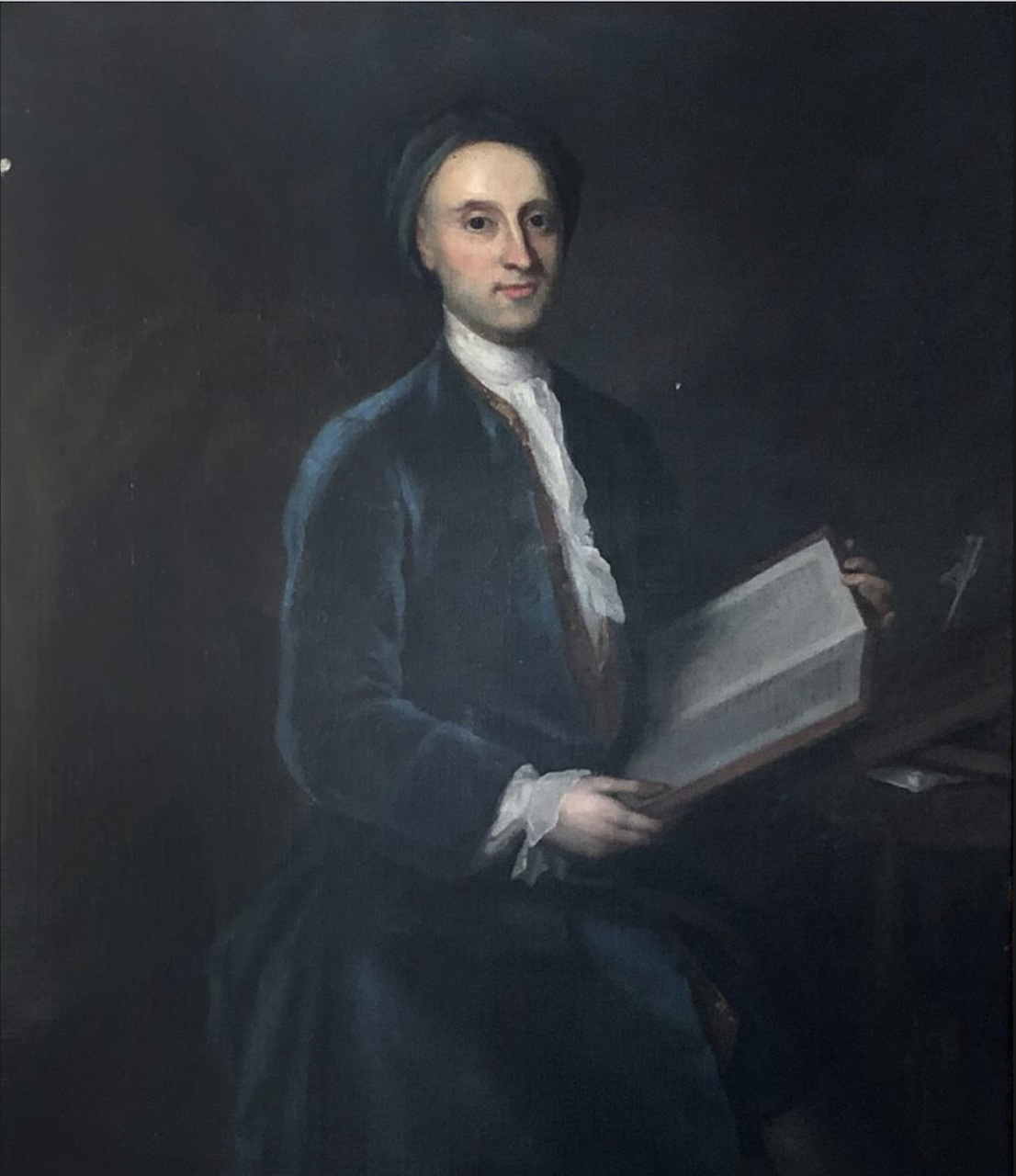
Portraits S

S

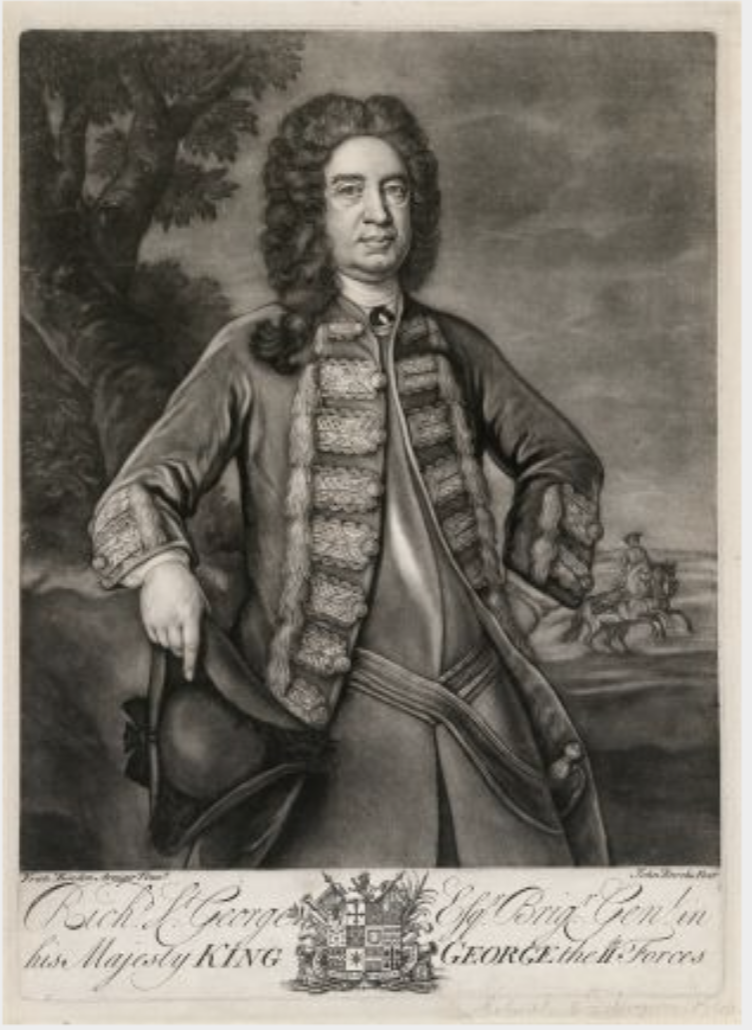
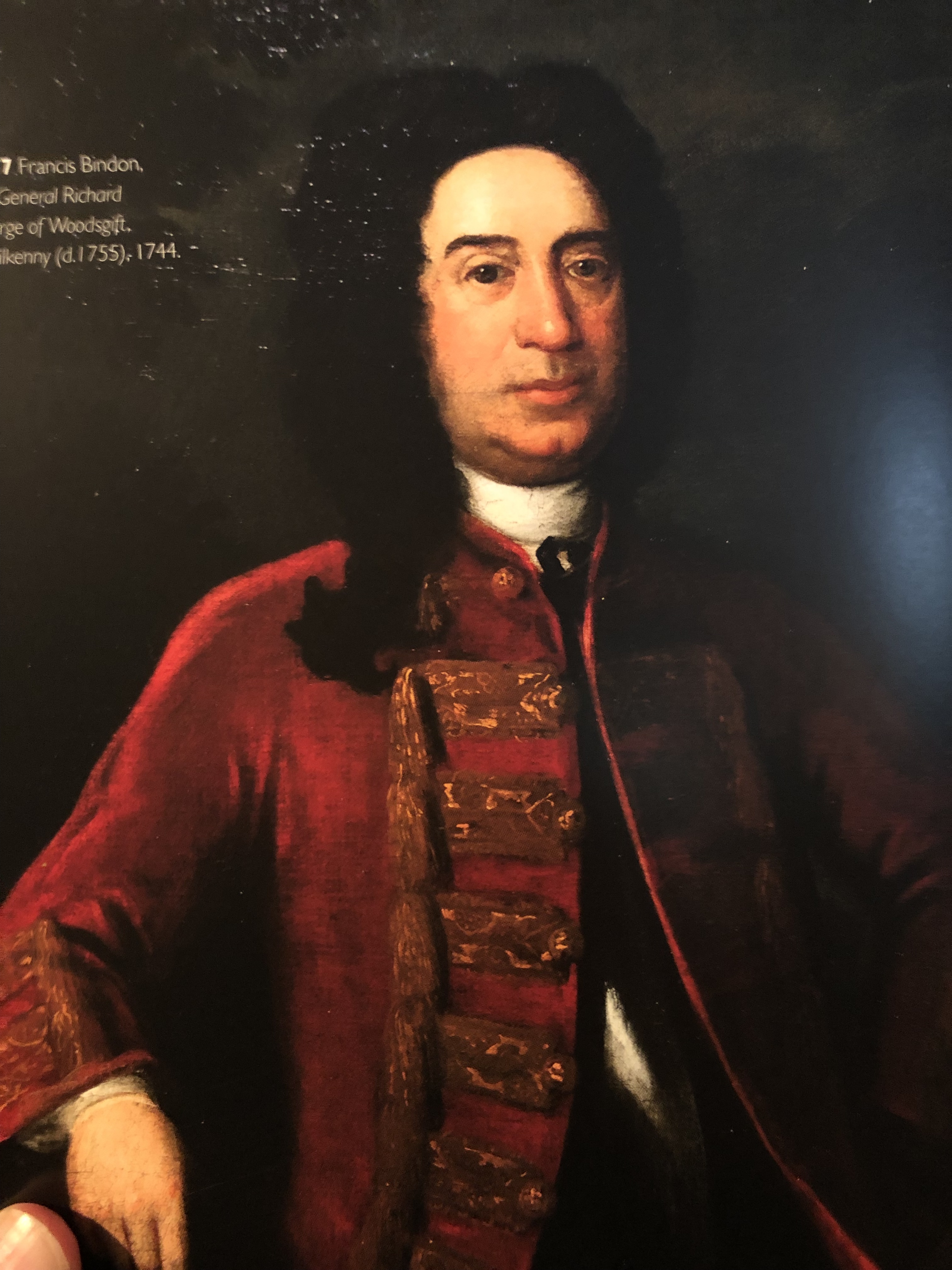
Richard Saint George of Woodsgift, County Kilkenny (d. 1755), (Brigadier General ), 1744 After Francis Bindon, Irish, 1690-1765 engraver John Brooks, Irish.
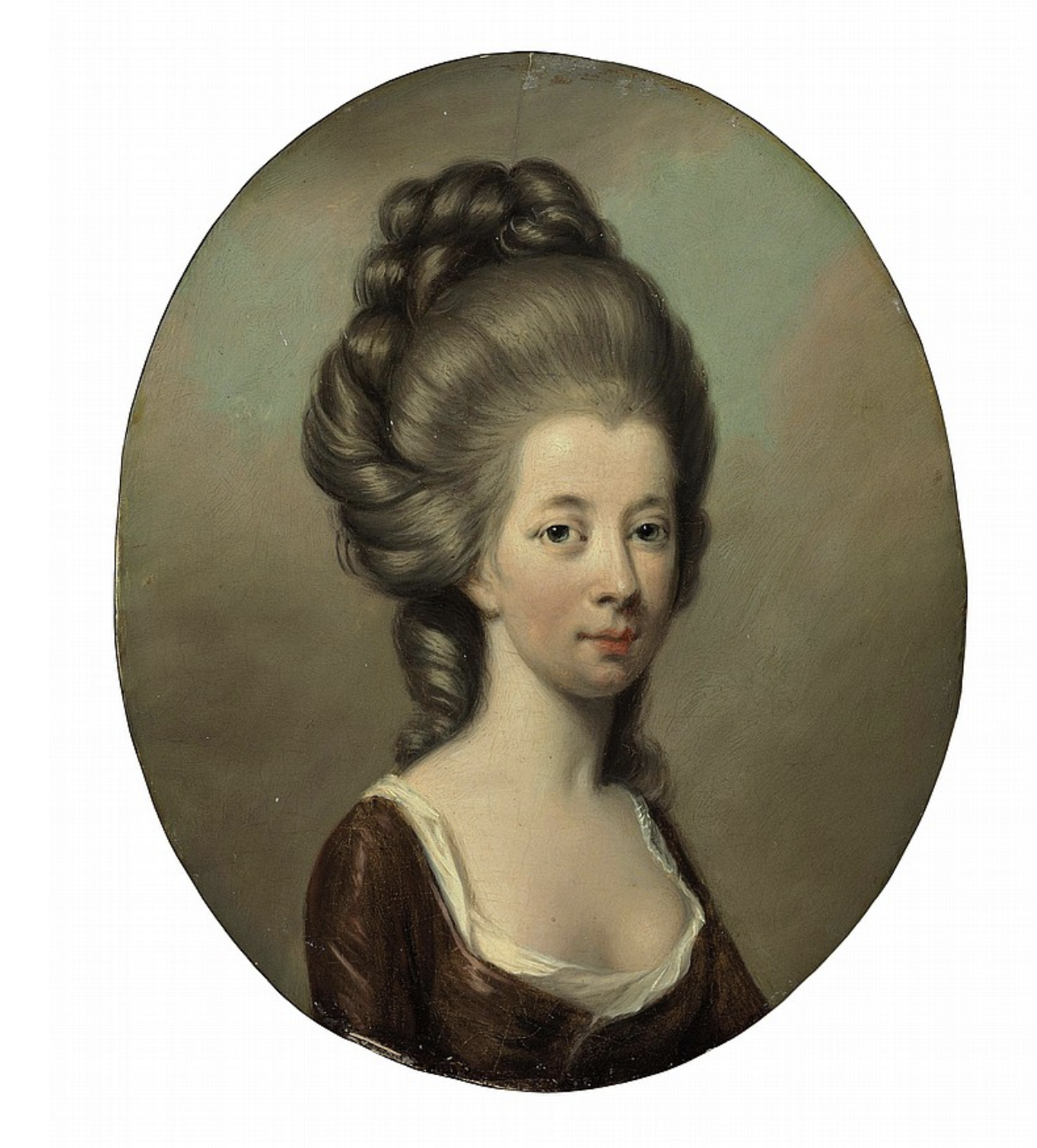
Hugh Douglas Hamilton portrait of Emilia Olivia née St. George, 2nd Duchess of Leinster courtesy of Bonhams Old Master Paintings 2018.
Emilia Olivia Ussher-St. George, the Duchess of Leinster by Hugh Douglas Hamilton courtesy of Old Master Paintings Part II by Christie’s 2012.
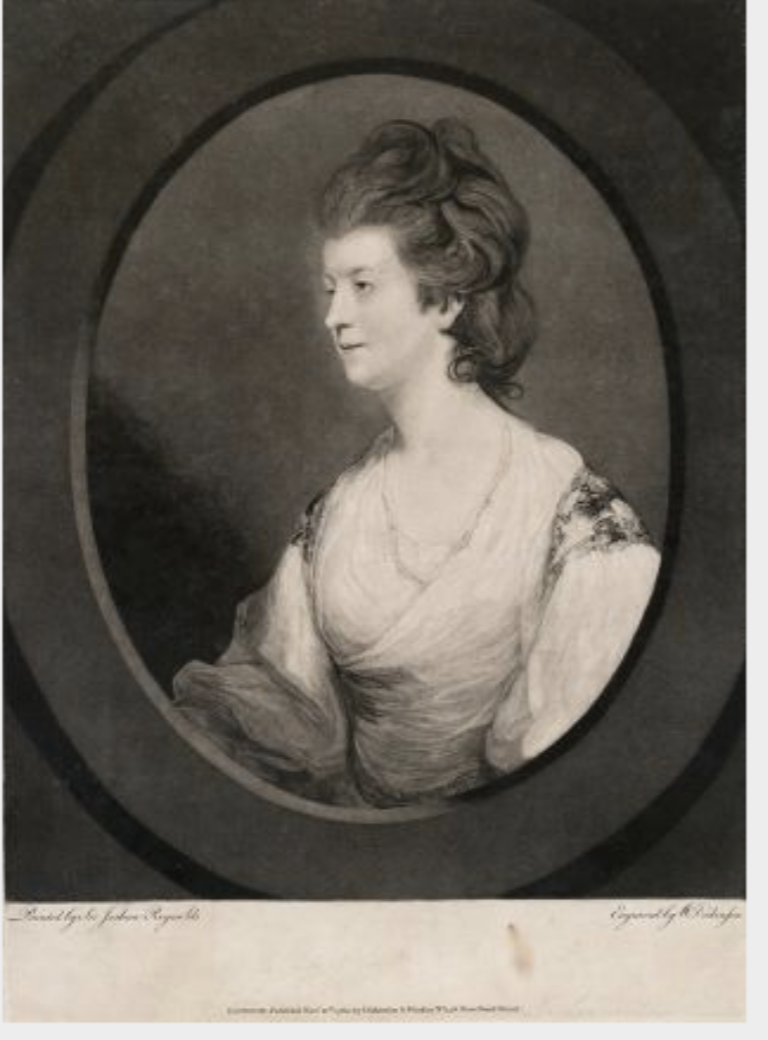
Emilia Olivia née Usher St. George (1759-1798), Duchess of Leinster, wife of 2nd Duke, 1780 engraver William Dickinson after Joshua Reynolds, courtesy of National Gallery of Ireland.
Anne St. George née Stepney of Durrow Abbey County Offaly, and Child, 1971, by George Romney courtesy of August Heckscher Collection 1959.147
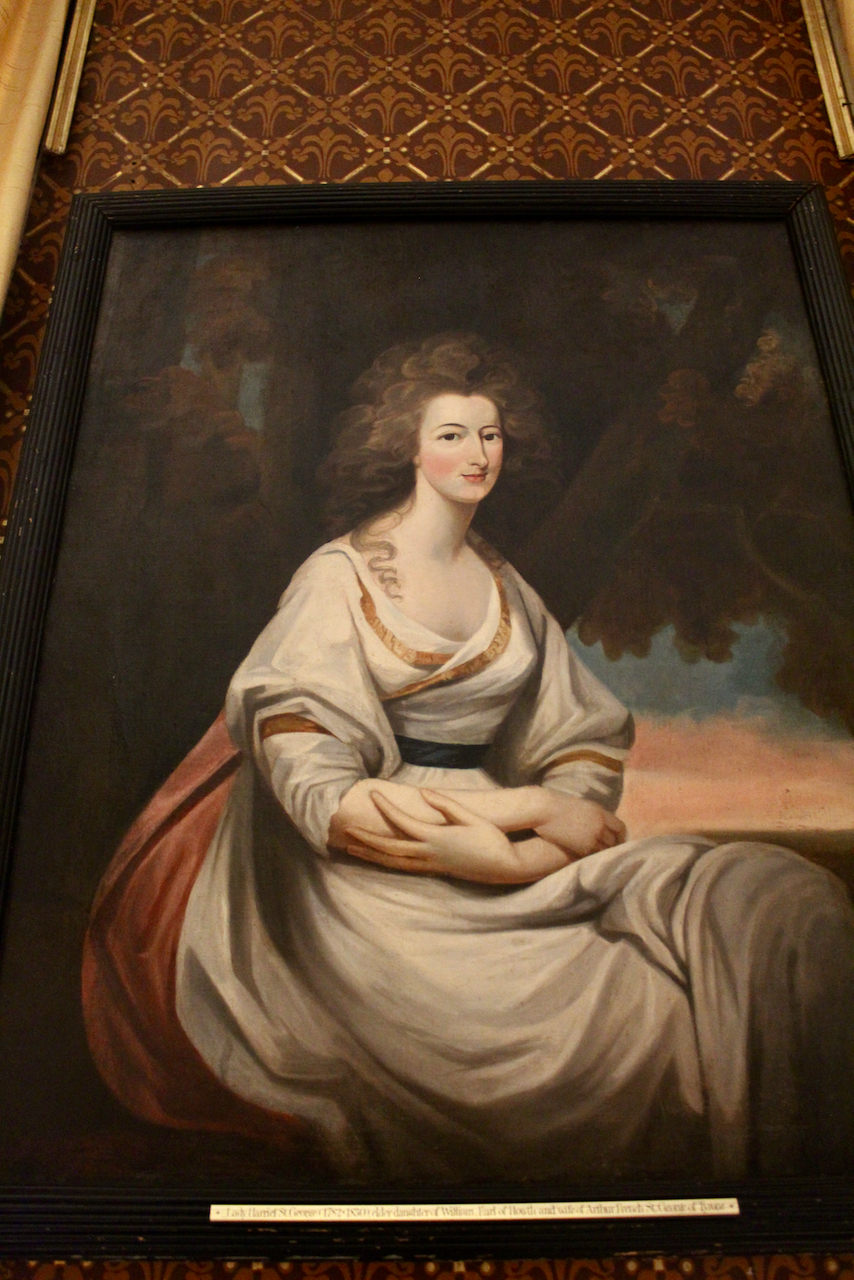
Harriet St. Lawrence (d. 1830), daughter of William 2nd Earl of Howth. She married Arthur French St. George (1780-1844). Photograph © Jennifer Winder-Baggot, www.irishhistorichouses.com
Elizabeth Aldworth née St. Leger (1693-1773), the first female Freemason. https://commons.wikimedia.org/wiki/File:MrsAldworth.jpg#/media/File:MrsAldworth.jpg
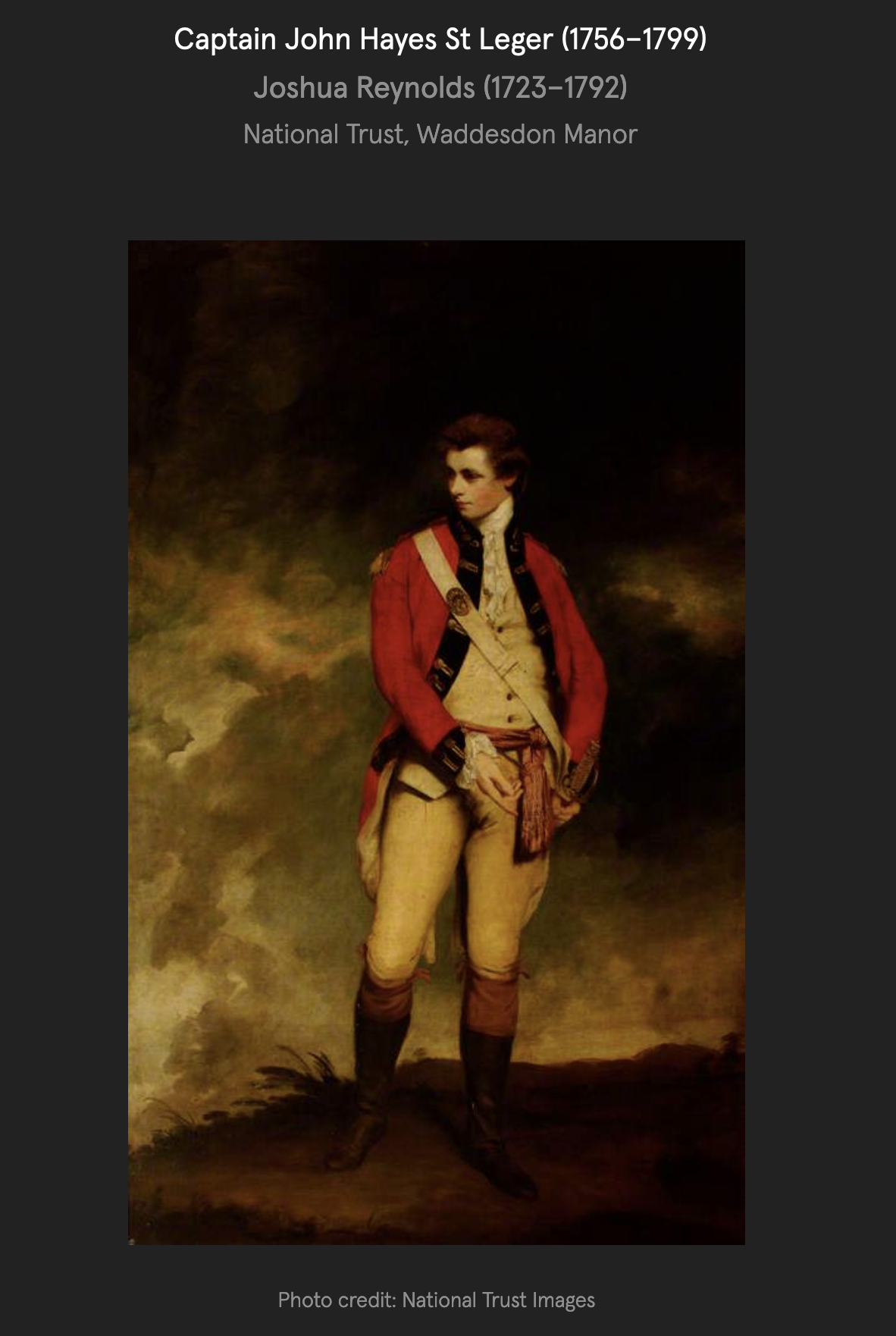
John Hayes St. Leger (1756-1799) courtesy of National Trust Waddesdon Manor.
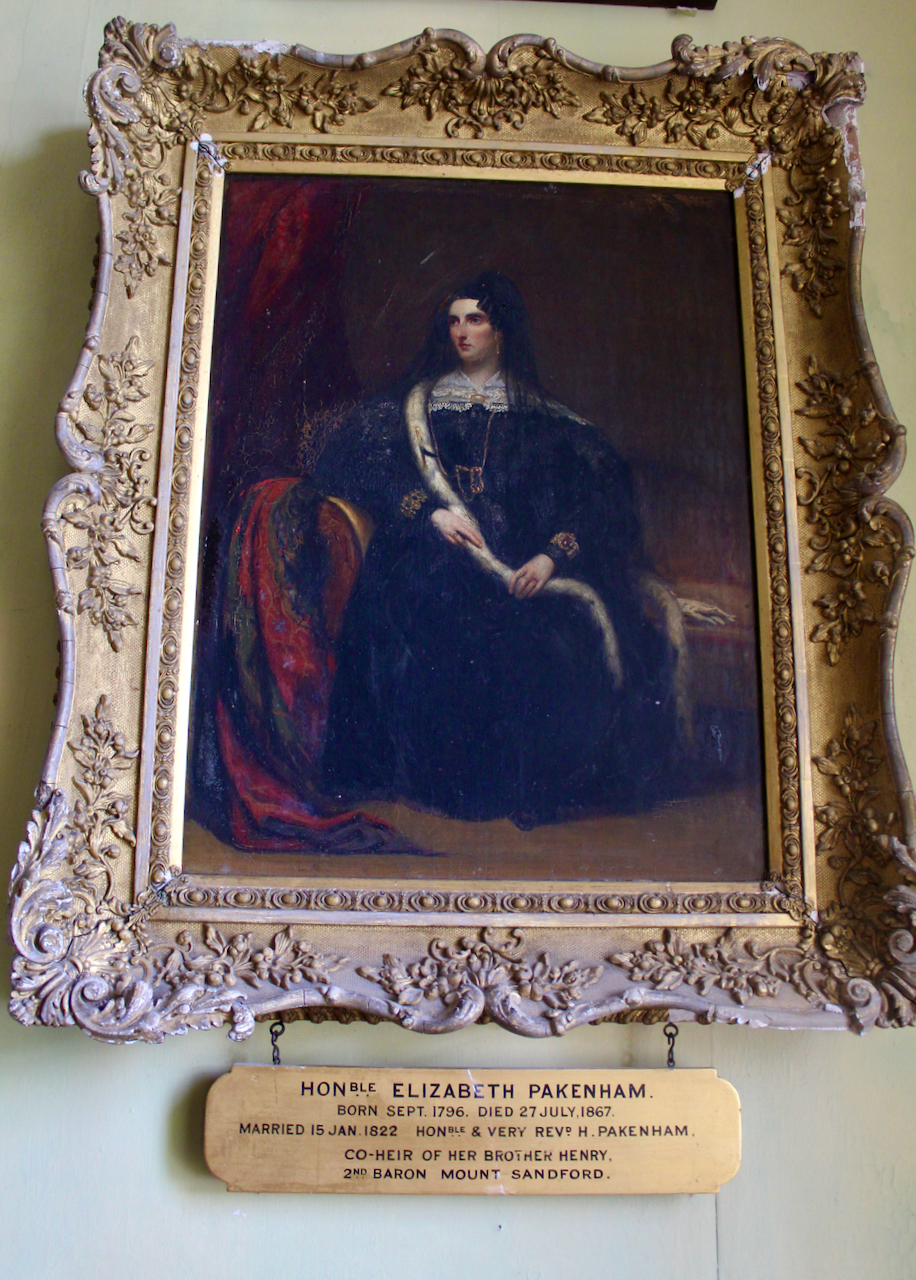
Elizabeth Sandford, mother of Henry Sandford Pakenham, wife of Reverend Henry Pakenham, Dean of St. Patrick’s Cathedral in Dublin. Henry Sandford Pakenham married the heiress Grace Catherine Mahon and changed his surname to Pakenham Mahon. Photograph © Jennifer Winder-Baggot, www.irishhistorichouses.com
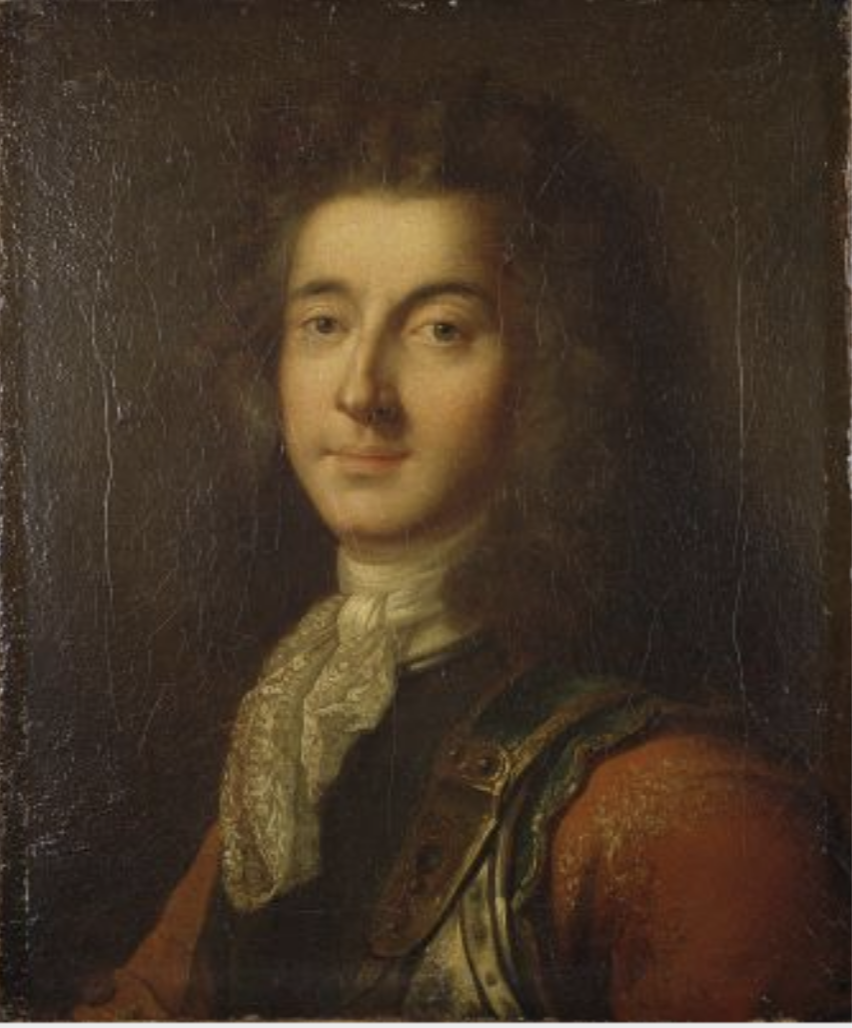
Patrick Sarsfield 1st Earl of Lucan (1620-1693) attributed to Hyacinthe Rigaud, French, 1659-1743.
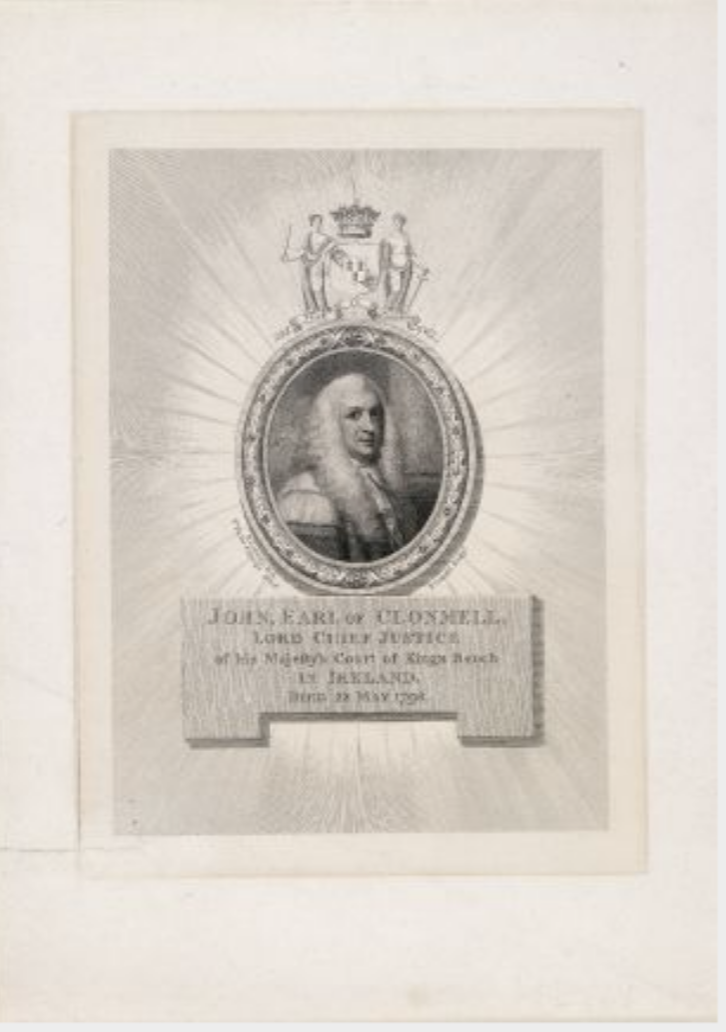
John Scott (1739-1798) 1st Earl of Clonmel, engraver Pierre Conde French after Richard Cosway, courtesy of National Gallery of Ireland.
Dorothy Scott (1765-1837) second wife of John Keane, 1st Baronet, by George Romney courtesy of Philadelphia Museum of Art.
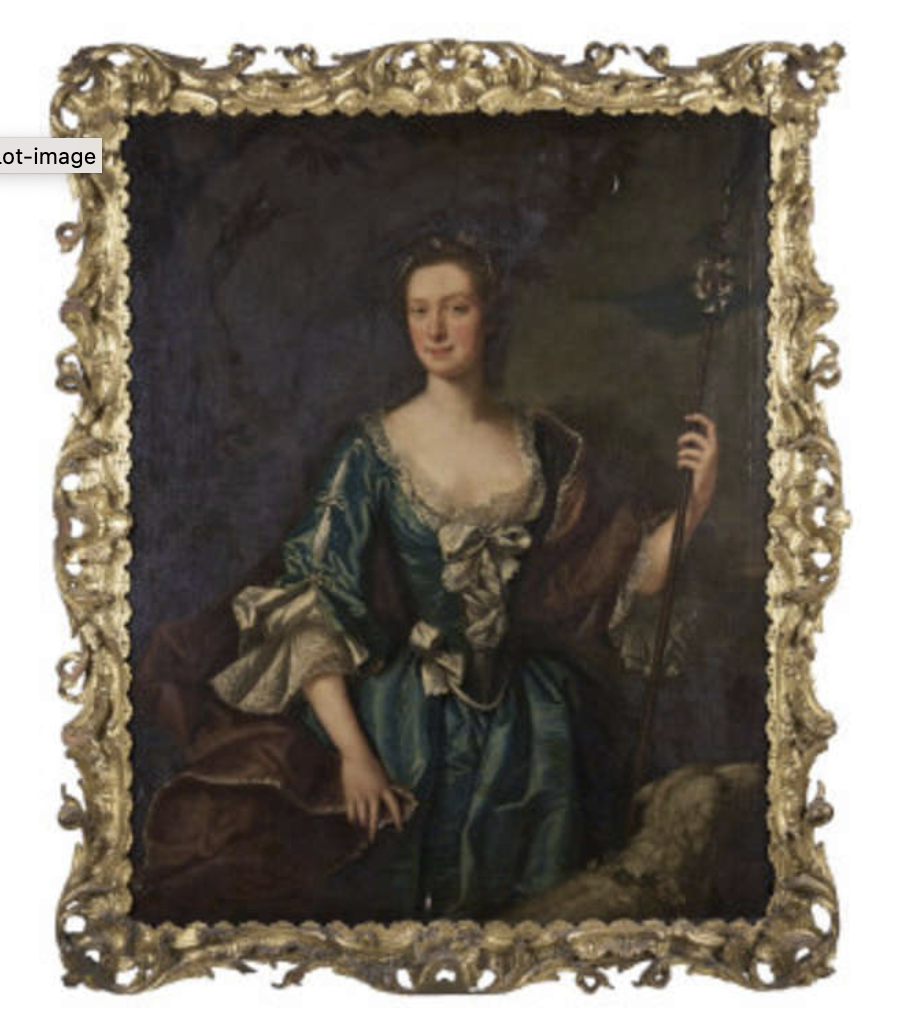
Mary Seymour, who according to Mealy’s sales catalogue married John Dawson 1st Earl of Portarlington of Emo Court, by Thomas Heaphey, courtesy of Fonsie Mealy auction; I think she married George Lionel Dawson-Damer, son of 1st Earl. She was the daughter of Hugh Seymour Conway 1st Marquess of Hertford.
Sarah Eliza Conolly née Shaw (1845-1921), wife of Thomas of Castletown. Photograph © Jennifer Winder-Baggot, www.irishhistorichouses.com
Robert Shaw, 1774-1849, first baronet of Bushy Park Co. Dublin attributed to Hugh Douglas Hamilton courtesy of Mealys Autumn Sale 2015.
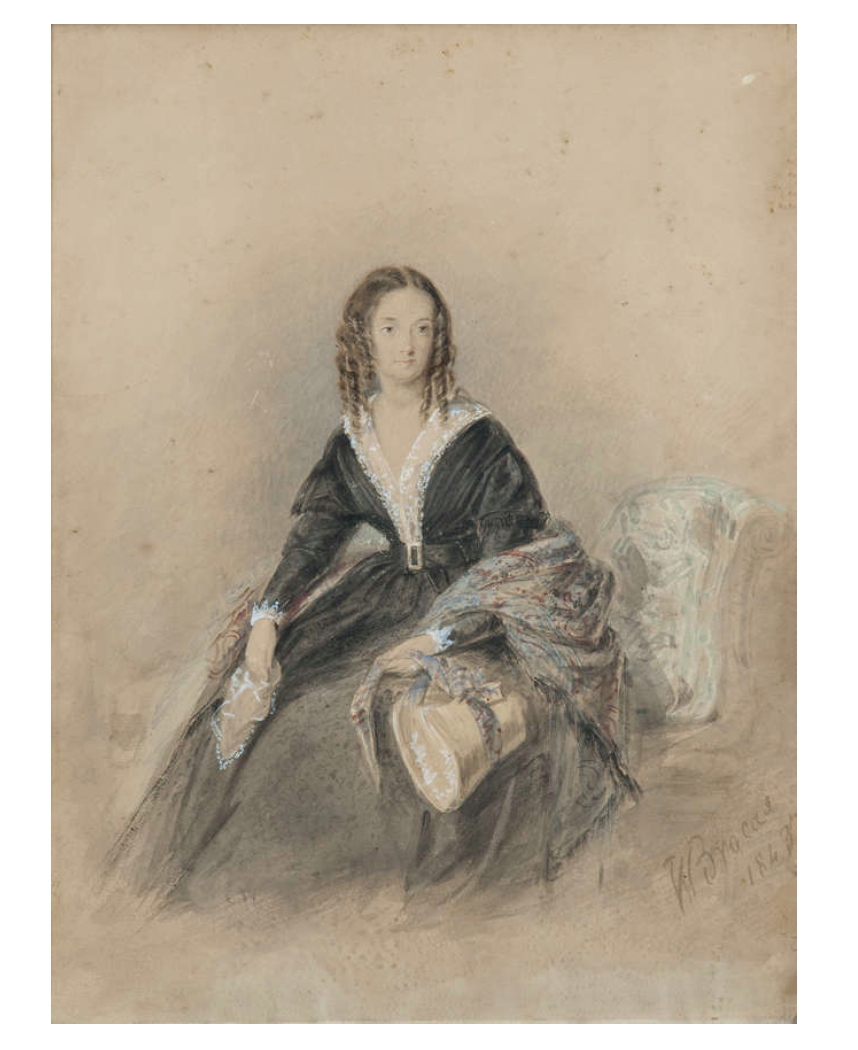
Maria Shaw (1838-1875), Daughter of Sir Frederick Shaw 3rd Bt of Bushy Park, Dublin, by William Brocas, courtesy of Adam’s auction 23 March 2016.
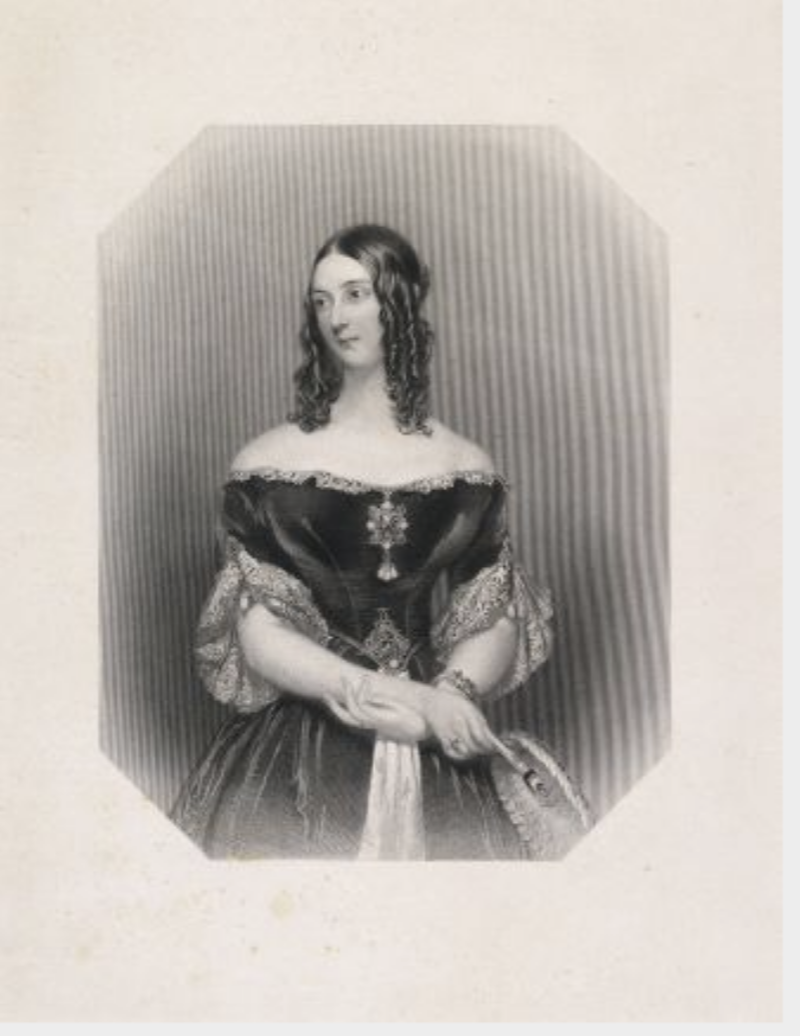
Helena Selina Blackwood née Sheridan (1807-1867), Writer, Wife of 4th Baron Dufferin and Clandeboye, later Countess of Gifford Date 1849, Engraver John Henry Robinson, English, 1796 – 1871 After Frank Stone, English, 1800-1859.
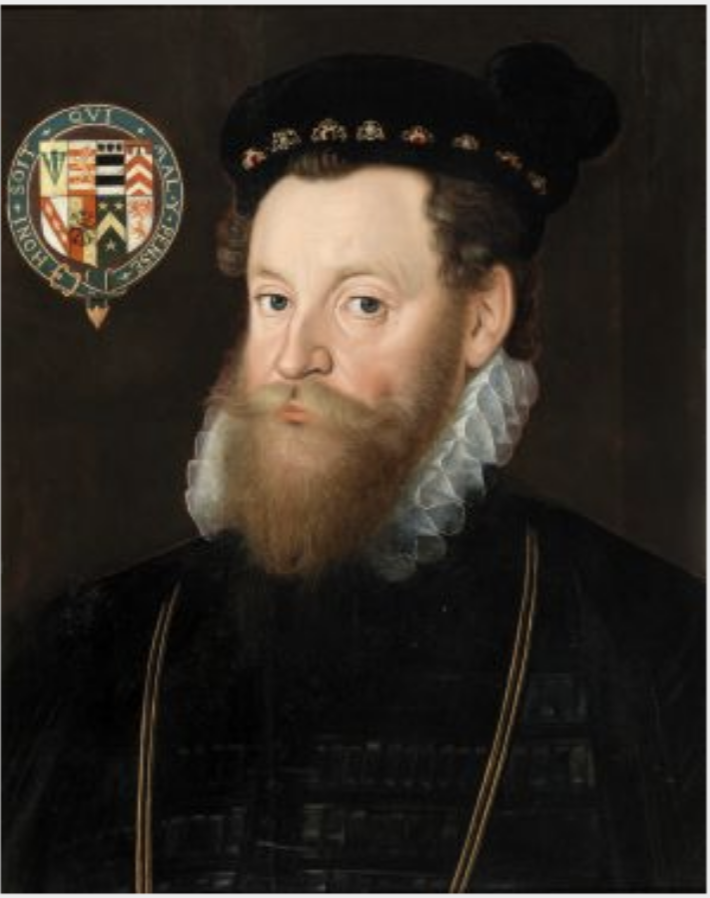
Sir Henry Sidney (1529-1586), Lord Deputy of Ireland, after painter Arnold Van Brounkhorst, courtesy of National Gallery of Ireland.
Philip Sidney in a painted oval Provenance Estate of The Late Basil Collins courtesy Adam’s 8 March 2006.
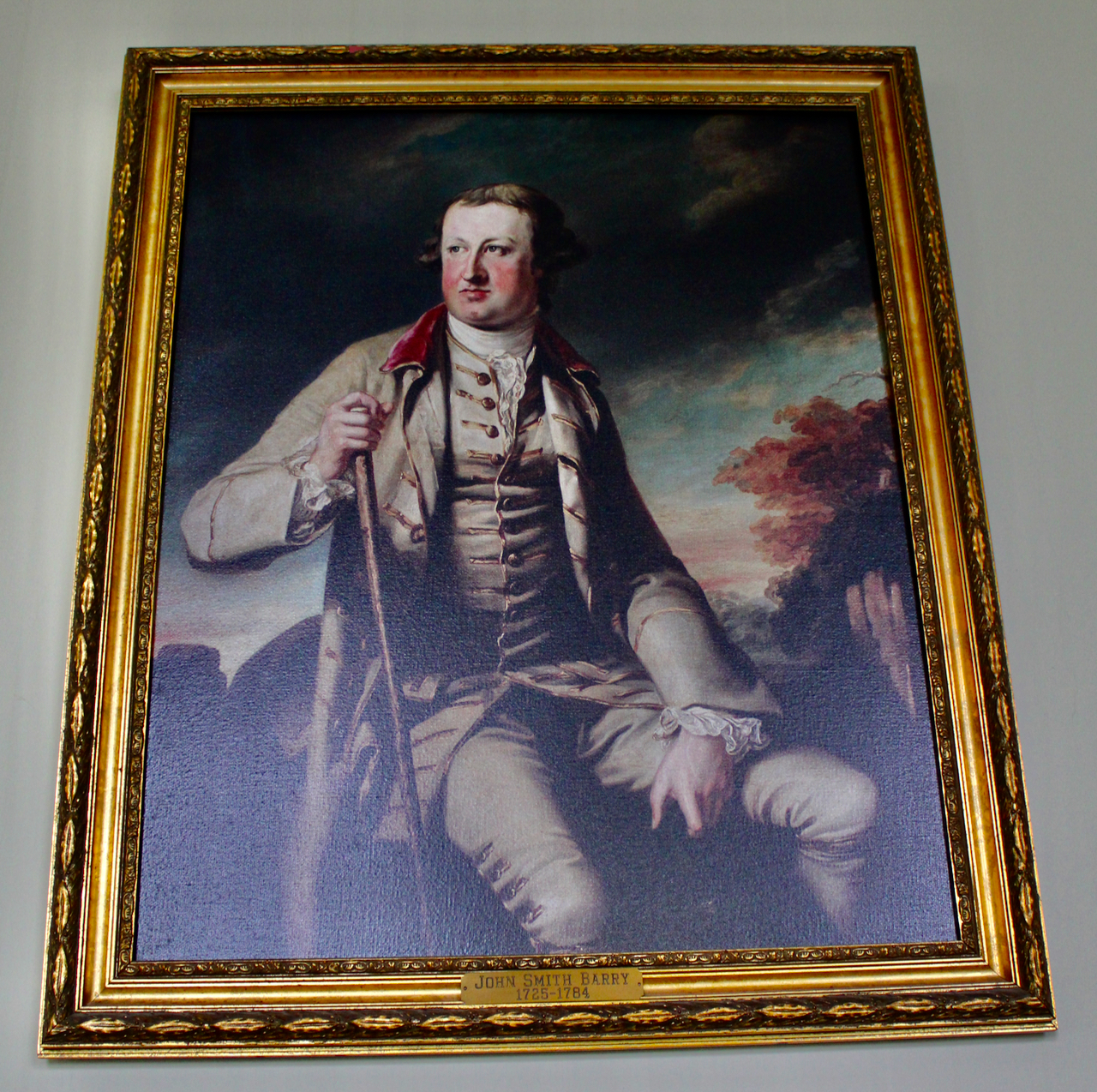
John Smith-Barry (1725-1784) of Fota, County Cork. Photograph © Jennifer Winder-Baggot, www.irishhistorichouses.com

John Barry (1725-1784), who added the name Smith to his surname after his marriage to a wealthy heiress, was the son of James Barry, 4th Earl of Barrymore, of Castlelyons, County Cork, and Barry’s third wife, Anne Chichester, daughter of Arthur Chichester, 3rd Earl of Donegall (it was spelled with two ‘l’s in the title, unlike the county). He married Dorothy Smith, daughter of Hugh Smith of Weald Hall, Essex, and John added Smith to his surname.

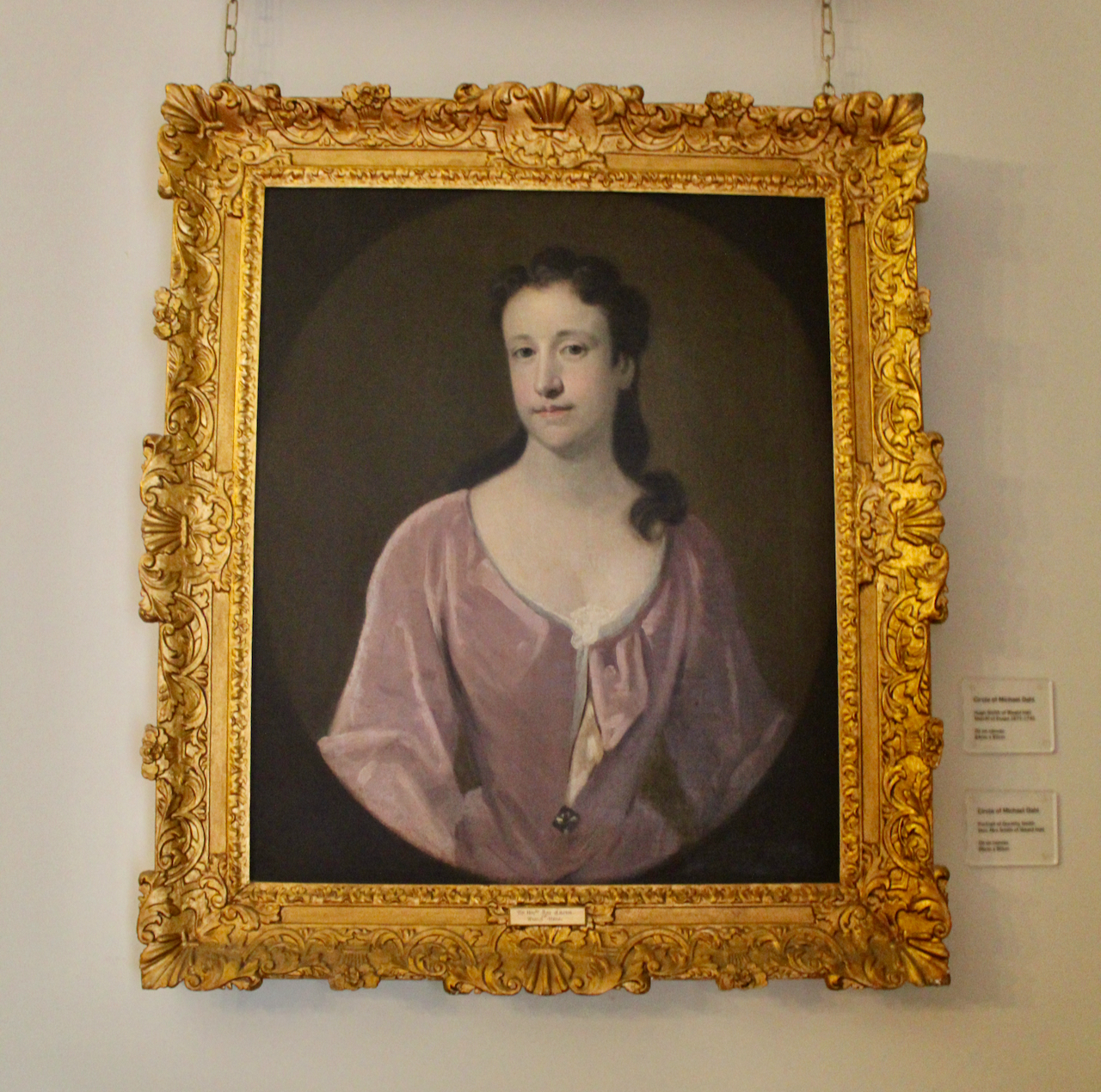
Hugh Smith (1673-1745) of Weald Hall, father of Dorothy Smith who married John Barry (1725-1784), of Fota House, County Cork. Photograph © Jennifer Winder-Baggot, www.irishhistorichouses.com
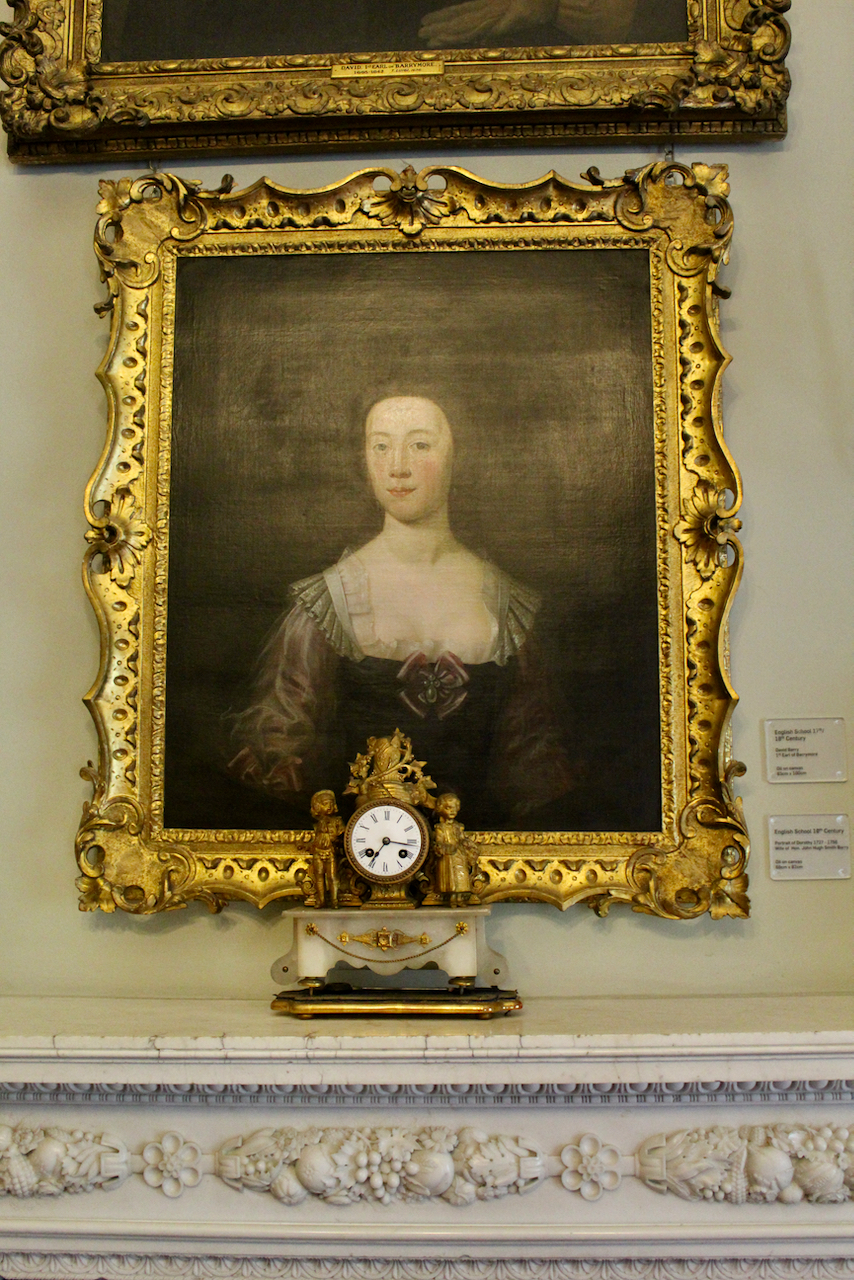
Dorothy Smith née Barrett, wife of Hugh Smith (1673-1745) of Weald Hall. Photograph © Jennifer Winder-Baggot, www.irishhistorichouses.com
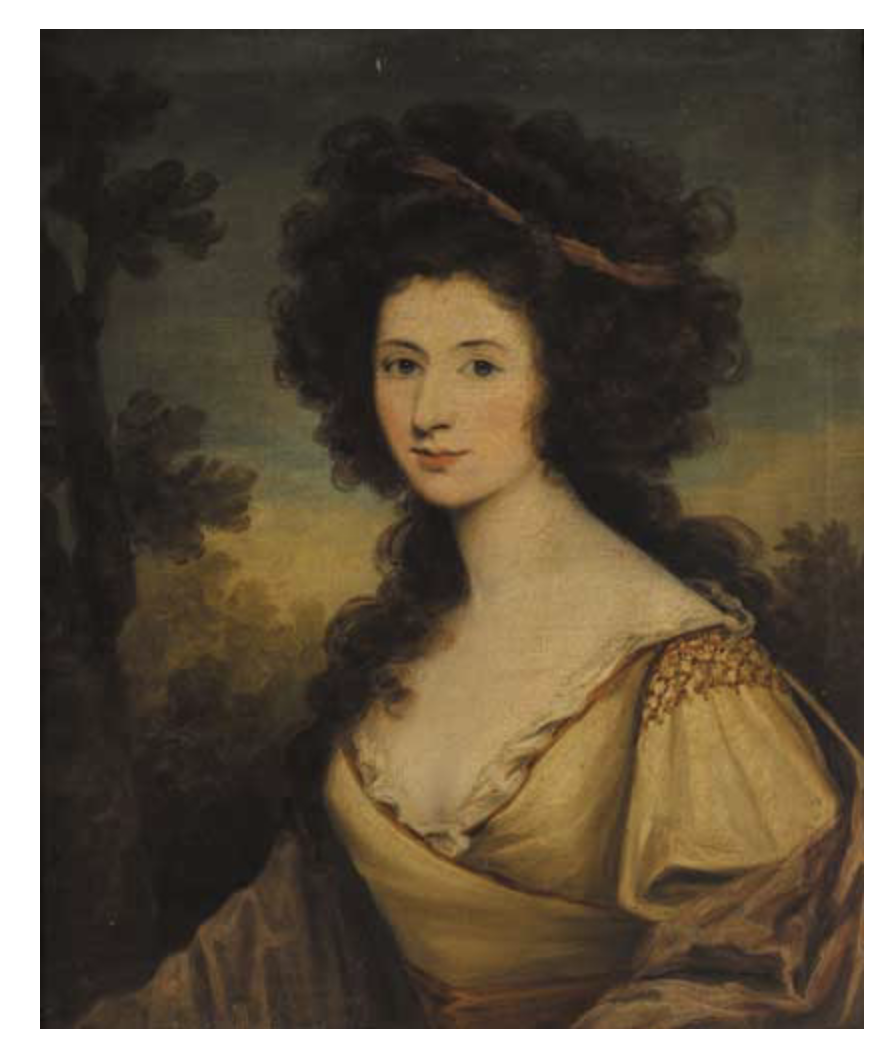
Dorothy Smith-Barry née Smith (1727-1756) wife of John Hugh Smith Barry (1725-1784). Photograph © Jennifer Winder-Baggot, www.irishhistorichouses.com

John and Dorothy’s oldest son and heir was James Hugh Smith-Barry (1746-1801). He never married, but had several children.

James Hugh Smith-Barry (1746-1801). Photograph © Jennifer Winder-Baggot, www.irishhistorichouses.com
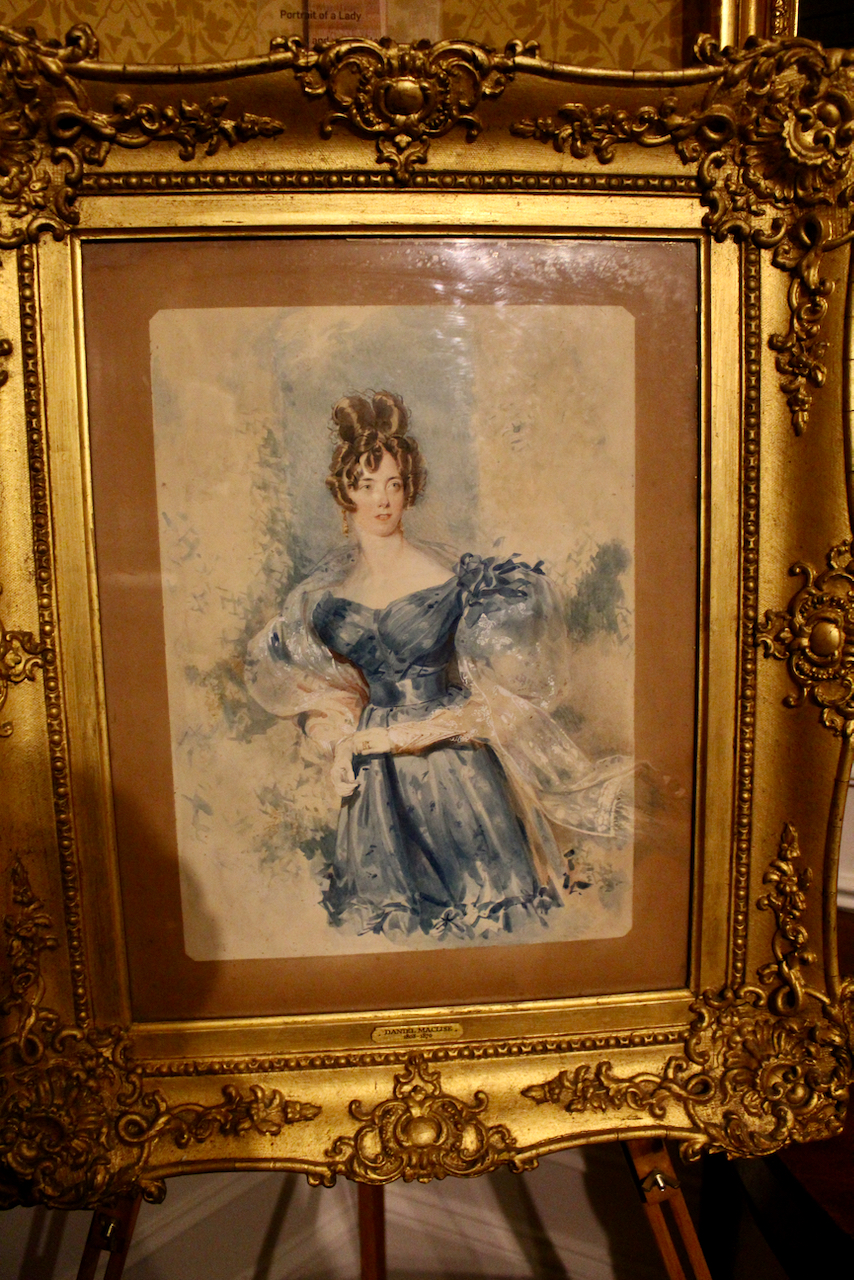
Portrait Of A Lady traditionally identified as Caroline Courtenay Née Smith-Barry, courtesy of Whyte’s Sept 2007, daughter of James Smith-Barry (1746-1801) of Fota House, County Cork, she married George Courtenay of Ballyedmond House, County Cork (no longer exists).

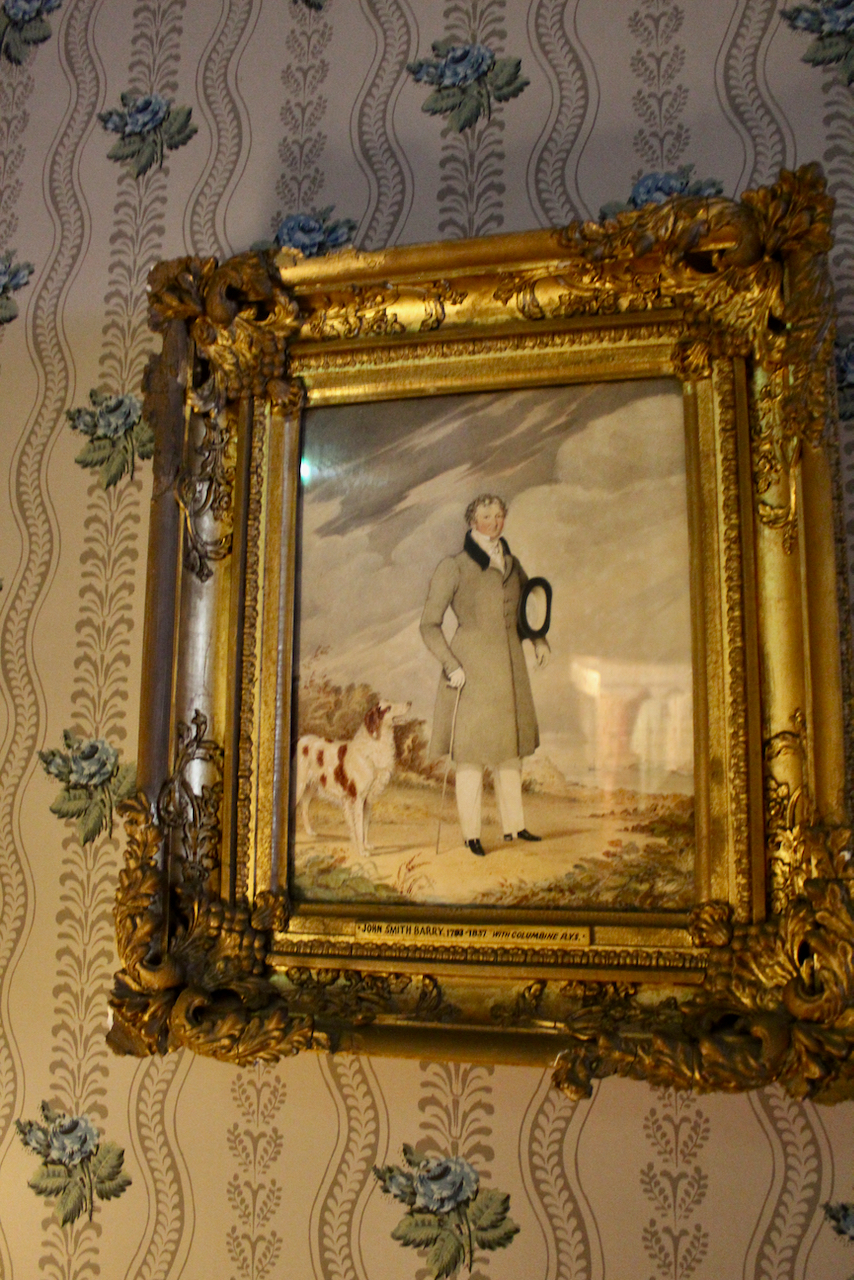
John Smith-Barry (1783-1837), son of James Hugh Smith-Barry (1746-1801) settled in Fota, County Cork, after his marriage to Eliza Courtenay of Ballyedmond, Midleton, County Cork.

John Smith-Barry (1783-1837), who hired the Morrisons to enlarge Fota house, County Cork. Photograph © Jennifer Winder-Baggot, www.irishhistorichouses.com
John Smith-Barry (1783-1837), who hired the Morrisons to enlarge Fota house. Photograph © Jennifer Winder-Baggot, www.irishhistorichouses.com
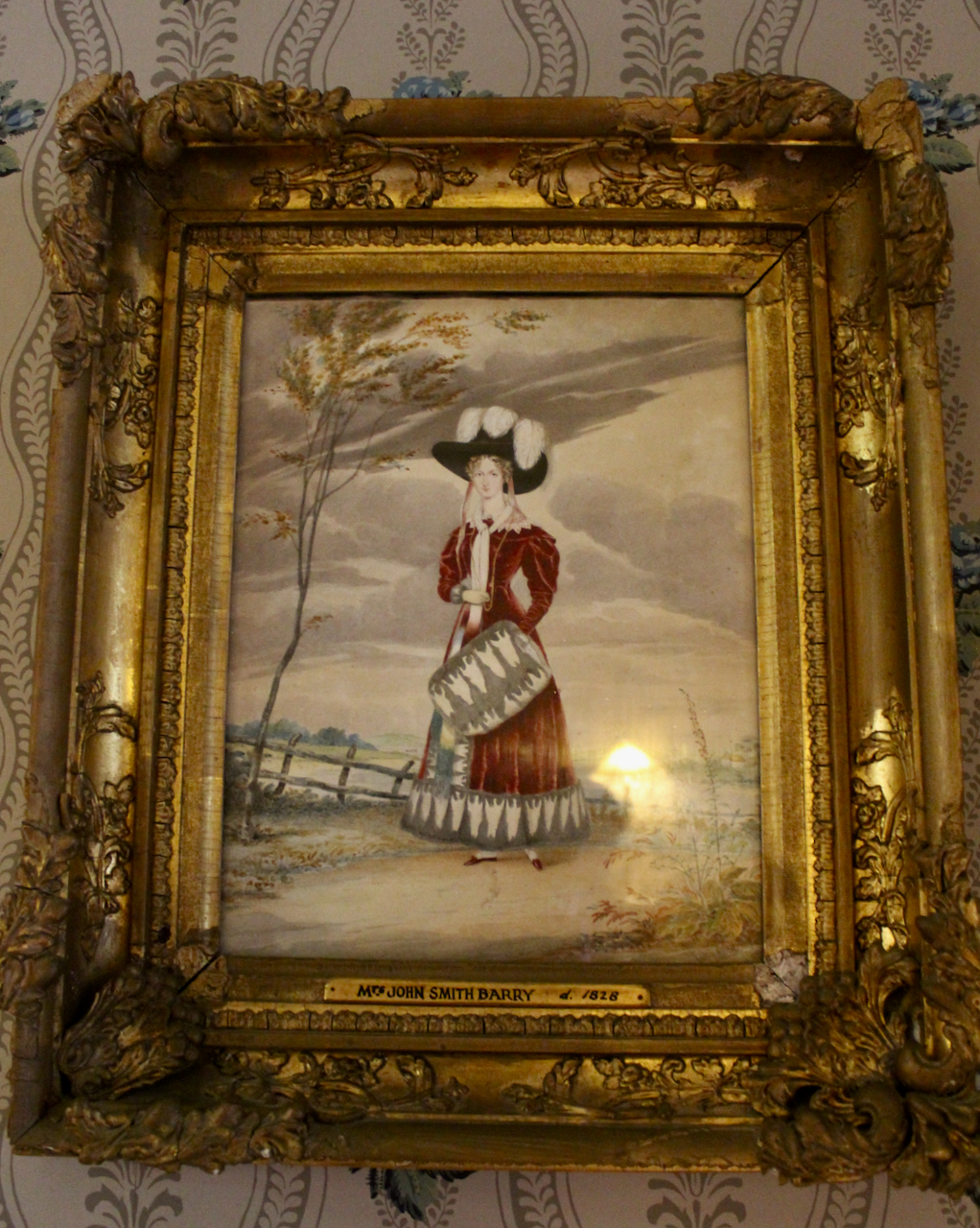
I think this is probably Eliza Mary née Courtenay (1797-1828) who married John Smith-Barry, Fota House, County Cork, August 2023. Photograph © Jennifer Winder-Baggot, www.irishhistorichouses.com
Eliza Mary née Courtenay (1797-1828) who married John Smith-Barry. She was the daughter of Robert Courteney of Ballyedmond in County Cork. Photograph © Jennifer Winder-Baggot, www.irishhistorichouses.com

James Hugh Smith-Barry (1816-1856) inherited Fota and also Marbury Hall in Cheshire. He served as Deputy Lieutenant, Justice of the Peace and High Sheriff of County Cork. He married Elizabeth Jacson of Cheshire. After her husband died, she married George Fleming Warren, 2nd Baron de Tabley of Tabley House, County Chester.

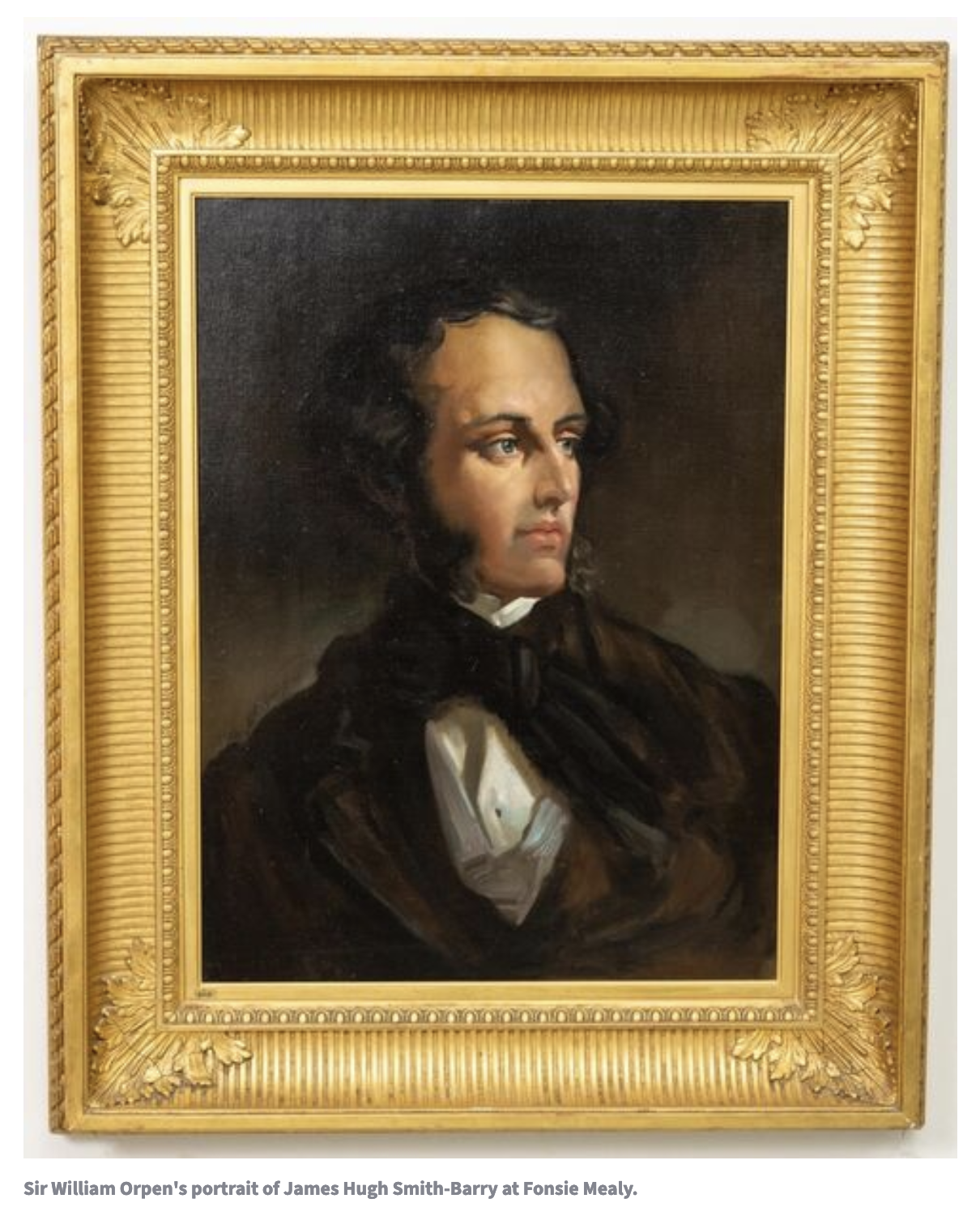
James Hugh Smith-Barry by William Orpen 1904, courtesy of Fonsie Mealy auction 2022.

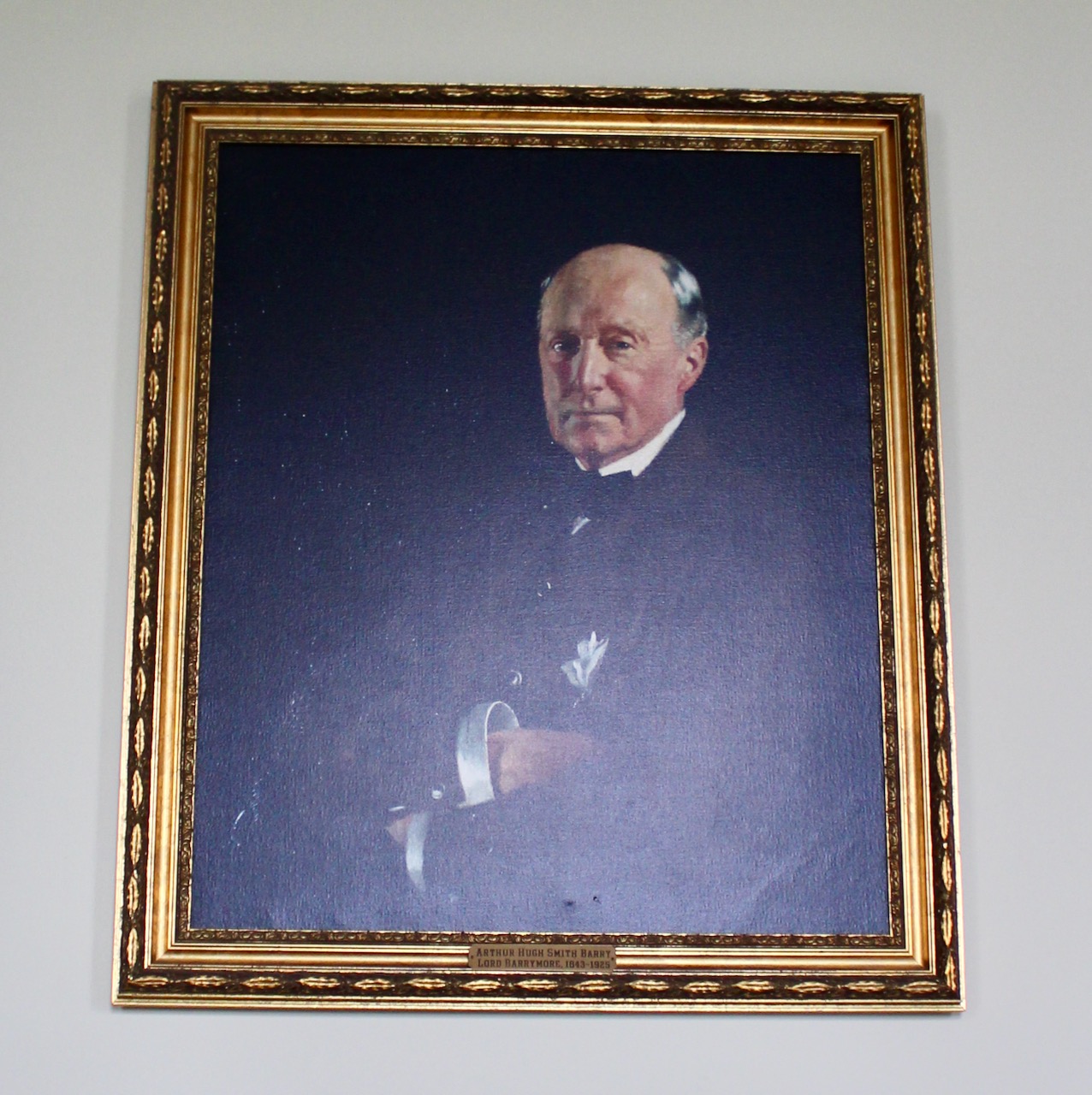
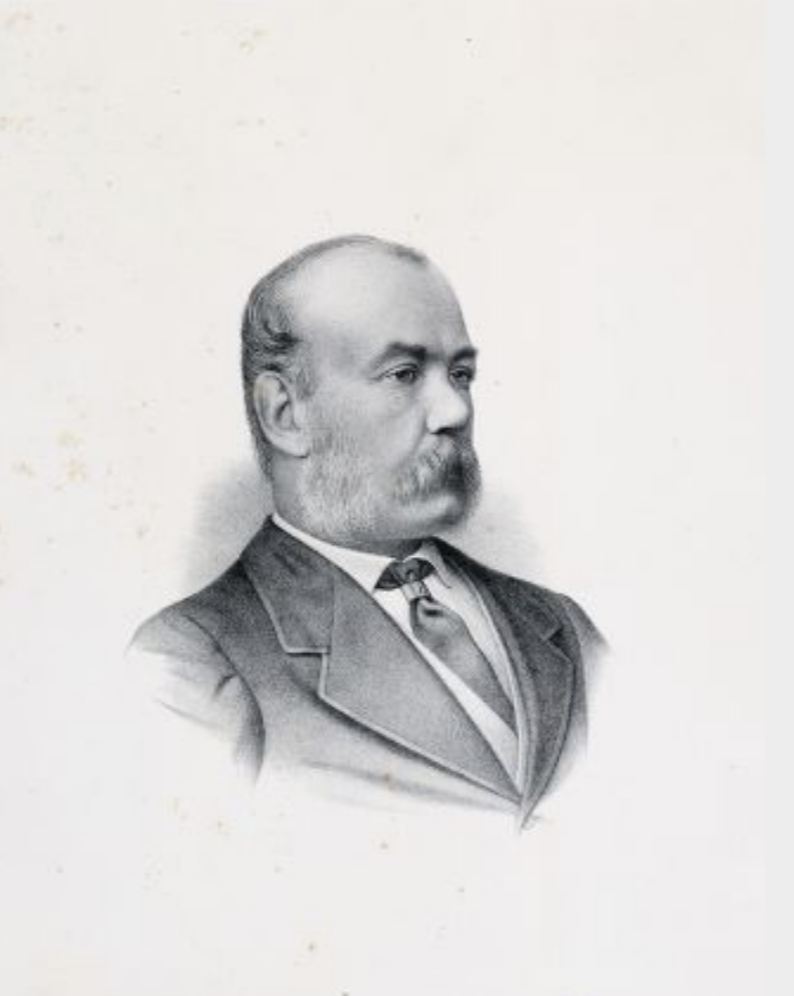
Arthur Hugh Smith-Barry (1843-1925), the oldest son of James and Elizabeth, inherited Fota and also Marbury Hall. He too served as Deputy Lieutenant, Justice of the Peace and High Sheriff of County Cork as well as Member of Parliament (M.P.) (Conservative) for County Cork between 1867 and 1874. He held the office of Member of Parliament (M.P.) (Conservative) for South Huntingdonshire in England between 1886 and 1900. In 1902 he was created 1st (and last) Baron Barrymore of County Cork.

Arthur Hugh Smith-Barry (1843-1925) of Fota House, 1st Viscount Barrymore. Photograph © Jennifer Winder-Baggot, www.irishhistorichouses.com
Captain Richard Hugh Smith-Barry (1823-1894) of Fota House, County Cork.
Charlotte Mary Smyth with a Landscape View of Ballynatray by James Butler Brenan courtesy of Adam’s 6 Oct 2009, provenance Ballynatray House. She married Charles William Moore 5th Earl of Mountcashell.
Richard Smyth of Ballynatray (1796-1858) who married in 1821 Harriet St. Leger of Doneraile, Irish school, courtesy of Adam’s auction 6 Oct 2009.
Percy Ellen Frederick William Smythe (1825-1869) 8th Viscount Strangford and Philippa Eliza Sydney Smythe (d. 1854) daughter of 6th Viscount Strangford, wife of Henry J. Baillie (d. 1885) of Scotland by William Fisher, 1817 – 1895.
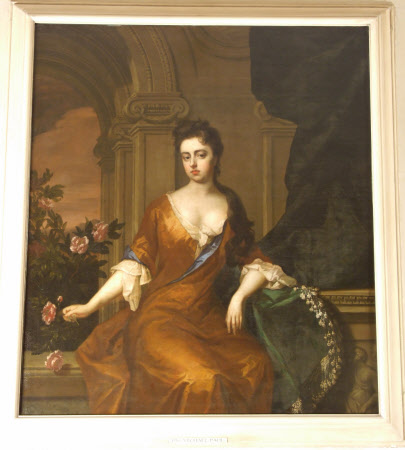
Mary Somerset (1665-1733), Duchess of Ormond, wife of James Butler 2nd Duke of Ormond (1665-1745), painted by Michael Dahl. Photograph © Jennifer Winder-Baggot, www.irishhistorichouses.com
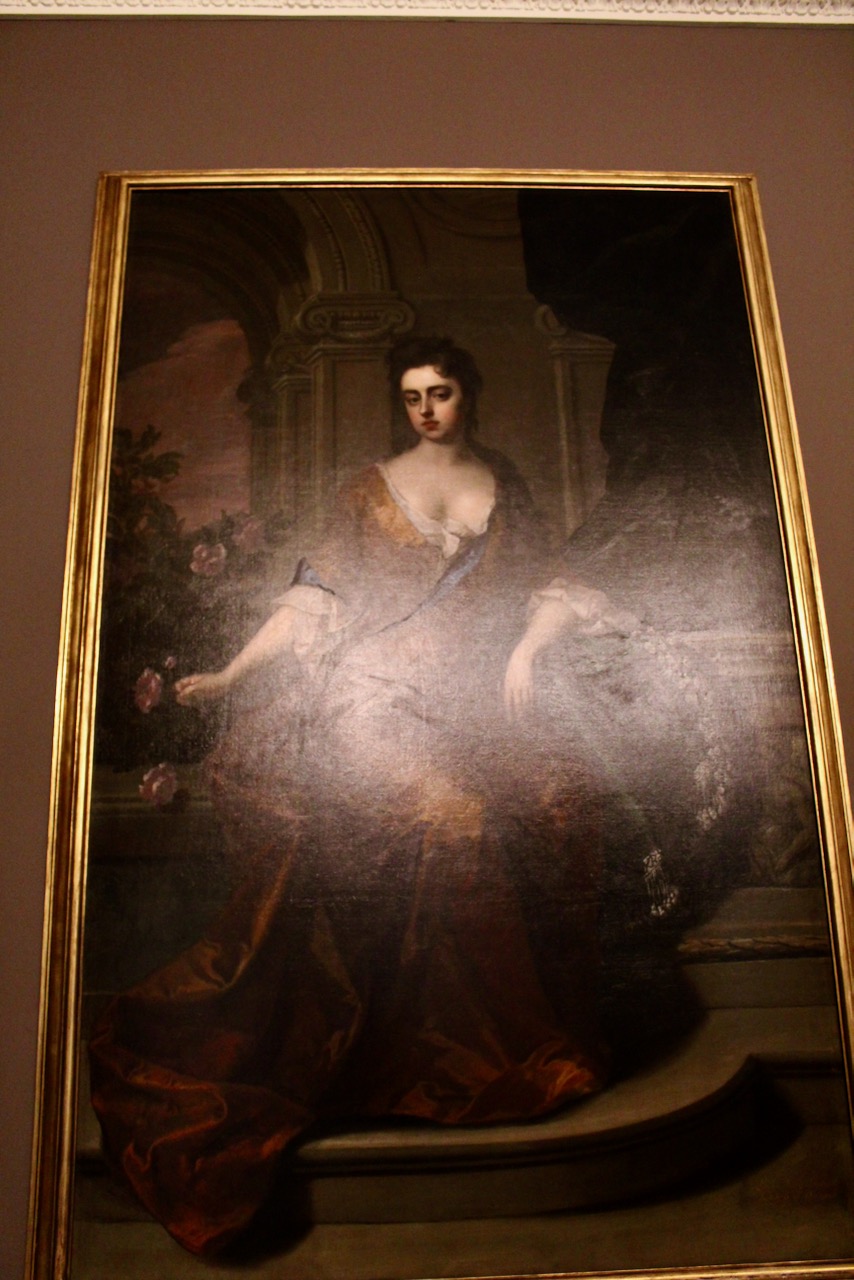
Lady Mary Somerset, Duchess of Ormonde (1665-1733) by Michael Dahl (Stockholm 1656/9 ? London 1743), 1690s. Three-quarter-length portrait, of a young woman, seated, full front, her head three-quarters left. She is wearing a deep brown-gold dress, blue lined and is holding a rose in her right hand. A bottle green curtain is to the right and an arcade in the left background.
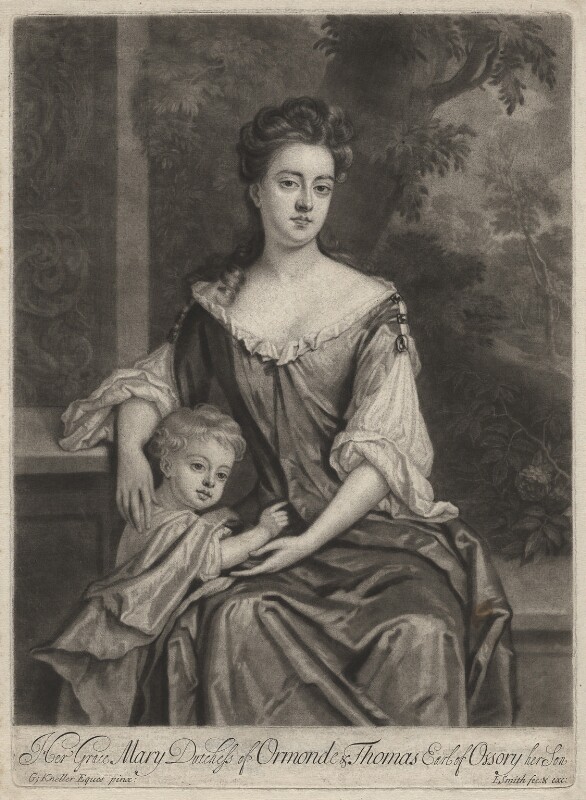
Mary Butler née Somerset (1665-1733) Duchess of Ormonde, Engraver John Smith, After Godfrey Kneller.
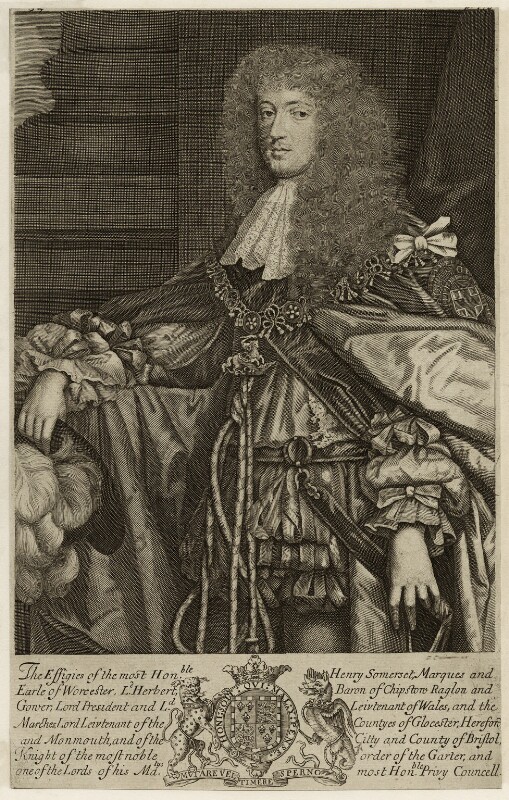
Henry Somerset (1629-1700) 1st Duke of Beaufort by Robert White, after Sir Godfrey Kneller, Bt, NPG D28194.
Mary Isabella Manners née Somerset, Duchess of Rutland, daughter of Charles Somerset 4th Duke of Beaufort and Elizabeth Berkeley, wife of Charles Manners, 4th Duke of Beaufort, Vice Regent of Ireland. Photograph © Jennifer Winder-Baggot, www.irishhistorichouses.com
Mary Sackville (1637-1678) Countess of Orrery later Viscountess Shannon (d.1714) by Godfrey Kneller courtesy of National Trust Knole. She was the wife of Roger Boyle, 2nd Earl of Orrery.
Charlotte née Seymour (1835-1903) Countess Spencer, wife of John Poyntz Spencer 5th Earl Spencer, by John Leslie, 1860. She was the daughter of Frederick Charles William Seymour. Photograph © Jennifer Winder-Baggot, www.irishhistorichouses.com
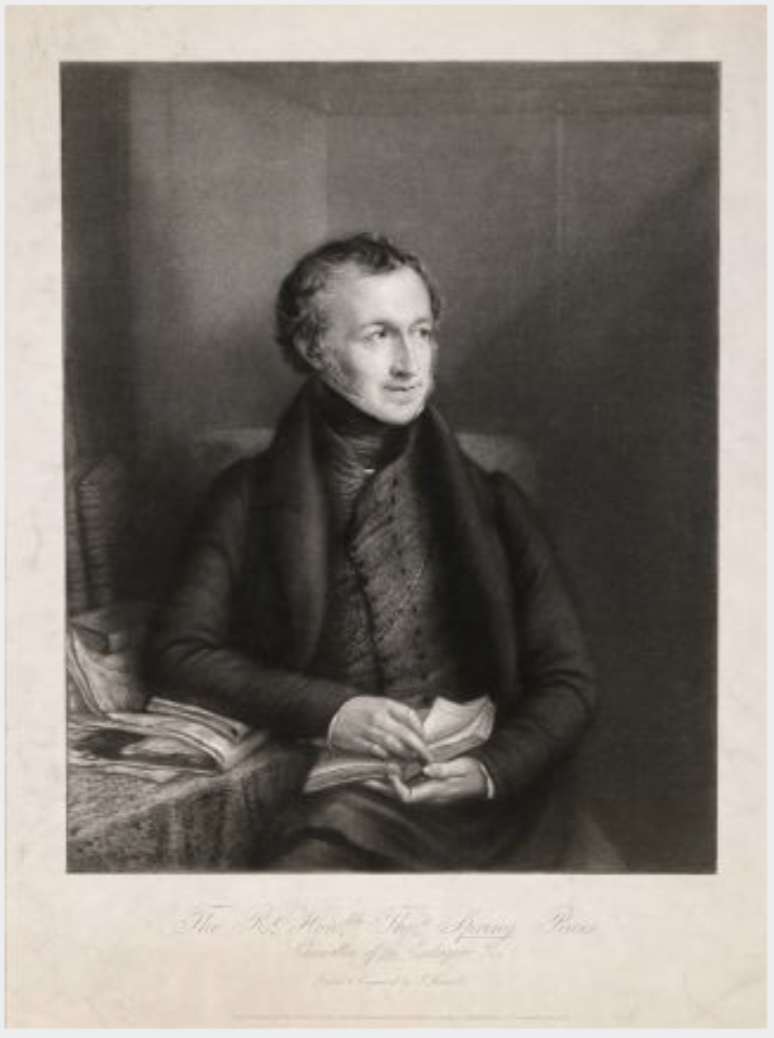
Thomas Spring-Rice (1760-1866), Chancellor of the Exchequer and later 1st Baron Monteagle, photograph courtesy of National Gallery of Ireland.
Thomas Spring-Rice (1849-1926) 2nd Baron Monteagle by Charles Wellington Furse, photograph courtesy of National Gallery of Ireland.
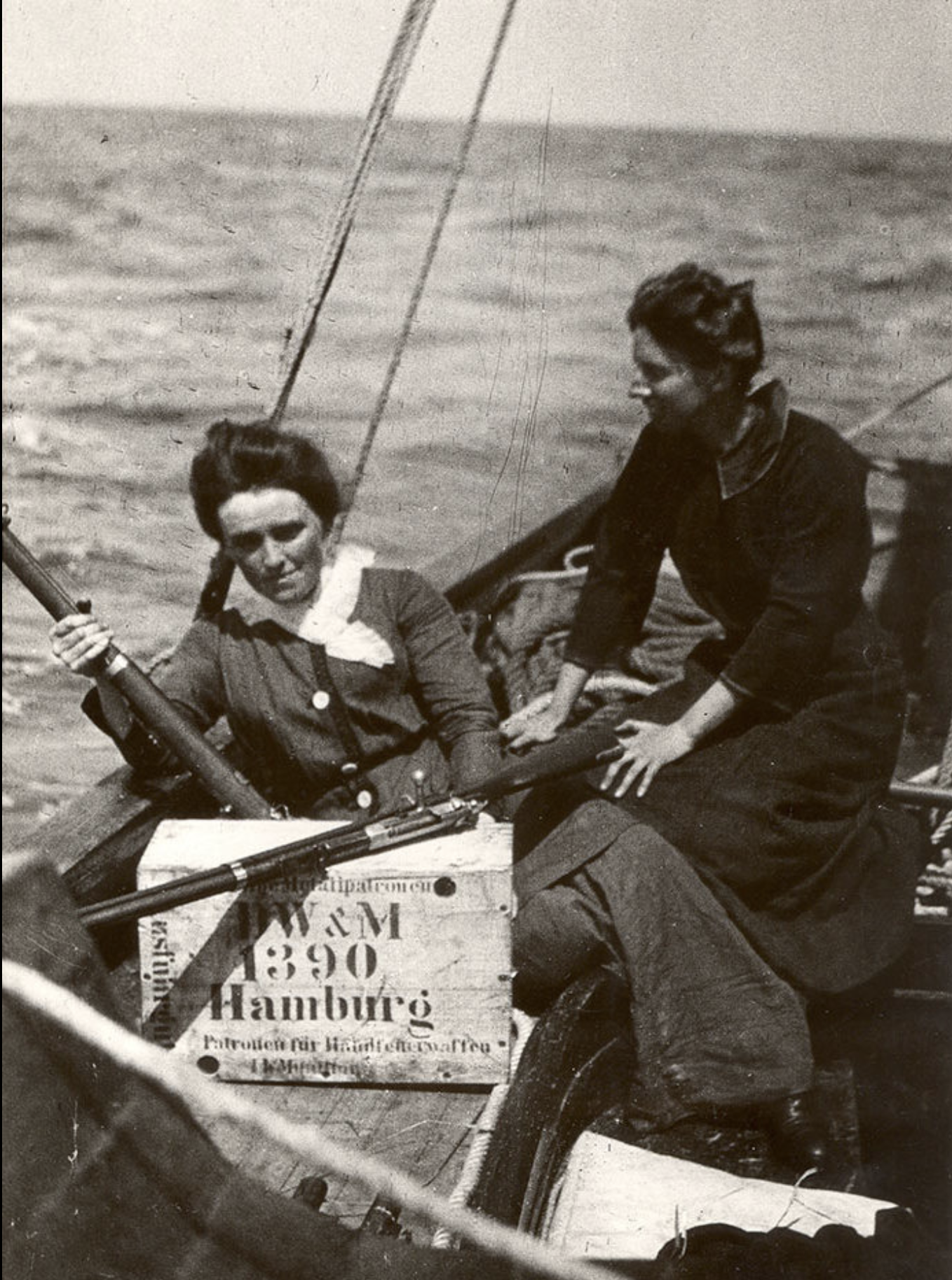
Mary Spring Rice (1880-1924) and Molly Childers aboard the Asgard during the Howth gun-running.
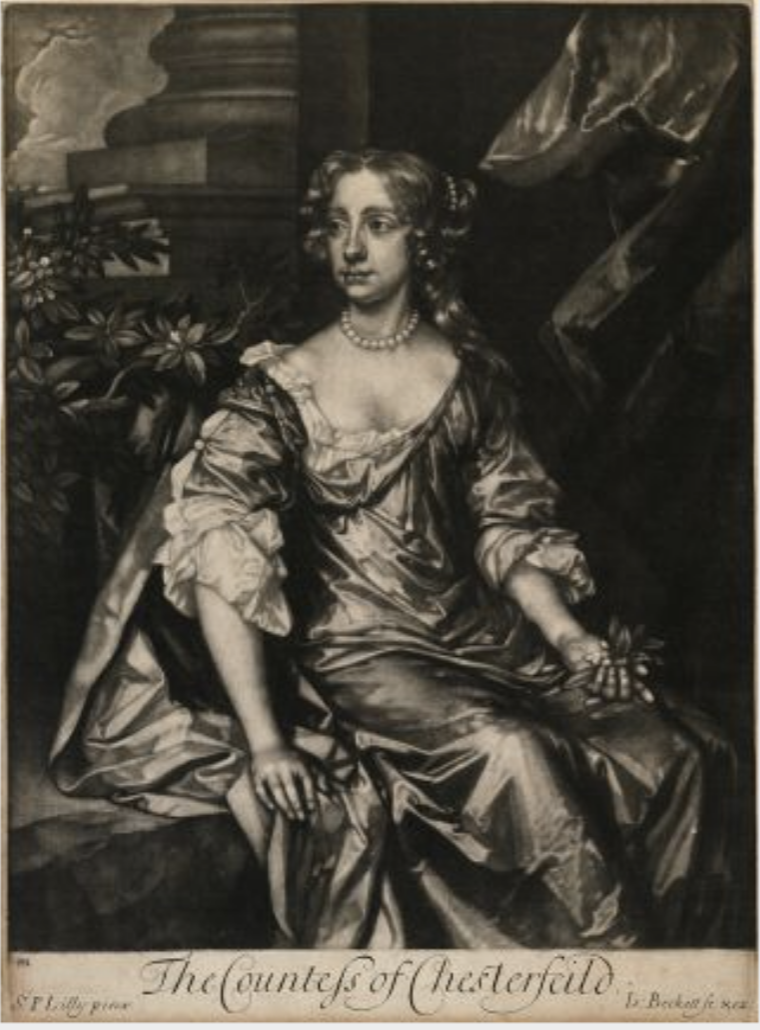
Elizabeth Stanhope née Butler (1640-1665), daughter of the 1st Duke of Ormonde and 2nd wife of Philip Stanhope 2nd Earl of Chesterfield Date: 1681/1688 Engraver: Isaac Beckett, English, c.1653-c.1715/19 After Peter Lely, Dutch, 1618-1680, courtesy of National Gallery of Ireland.
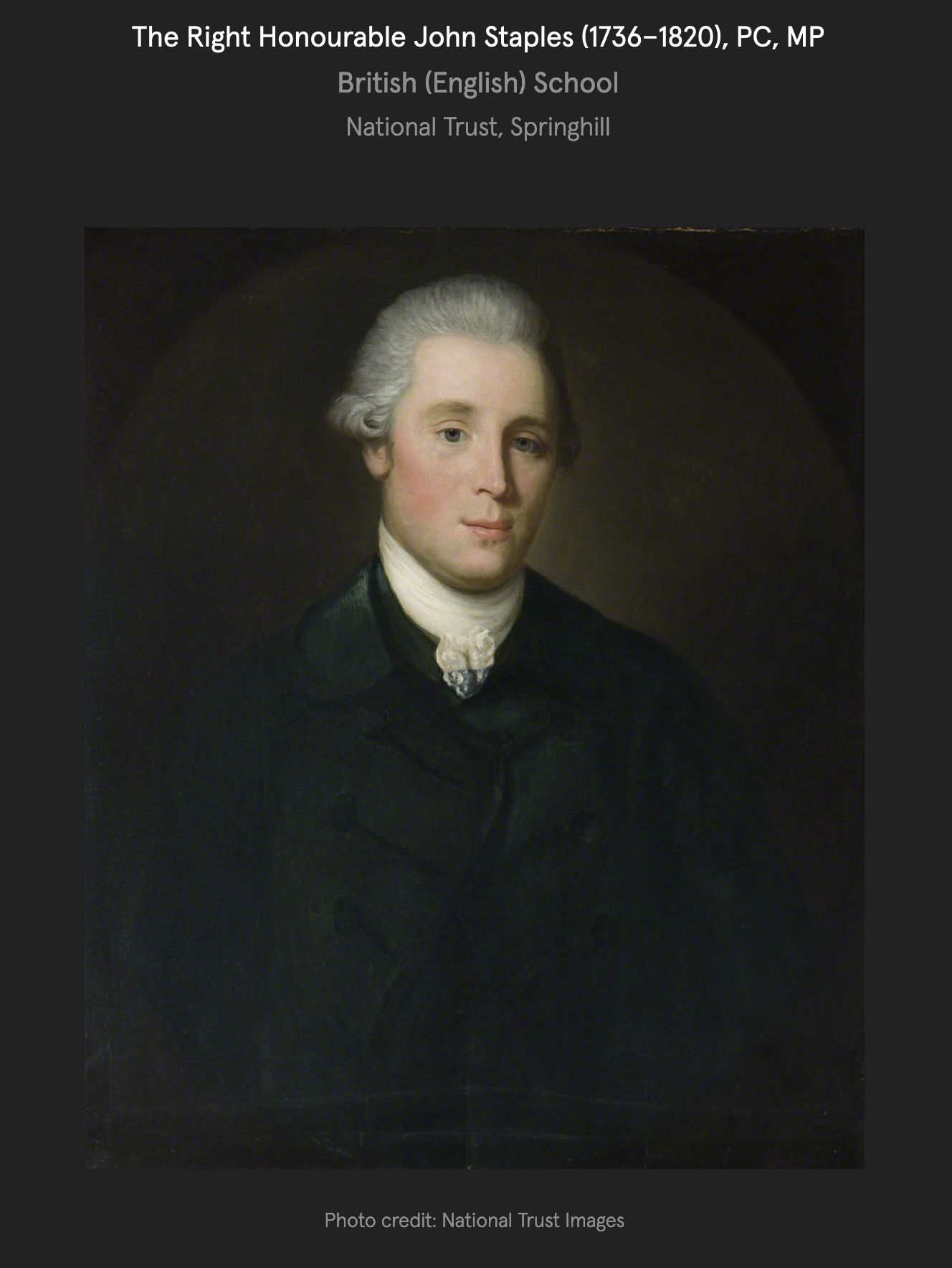
John Staples (1736-1820), of Lissan, County Tyrone, courtesy of National Trust. Springhill, County Derry.
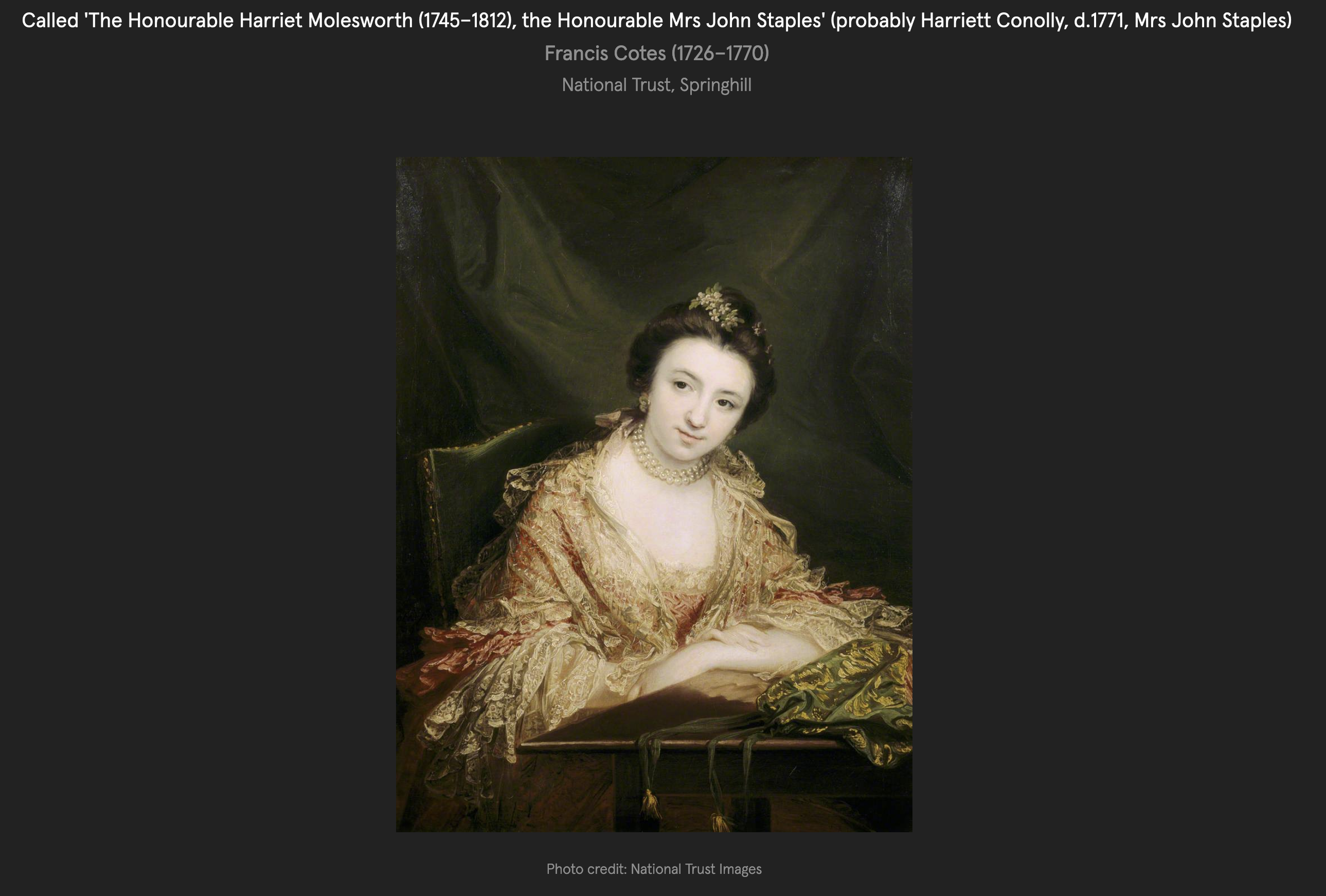
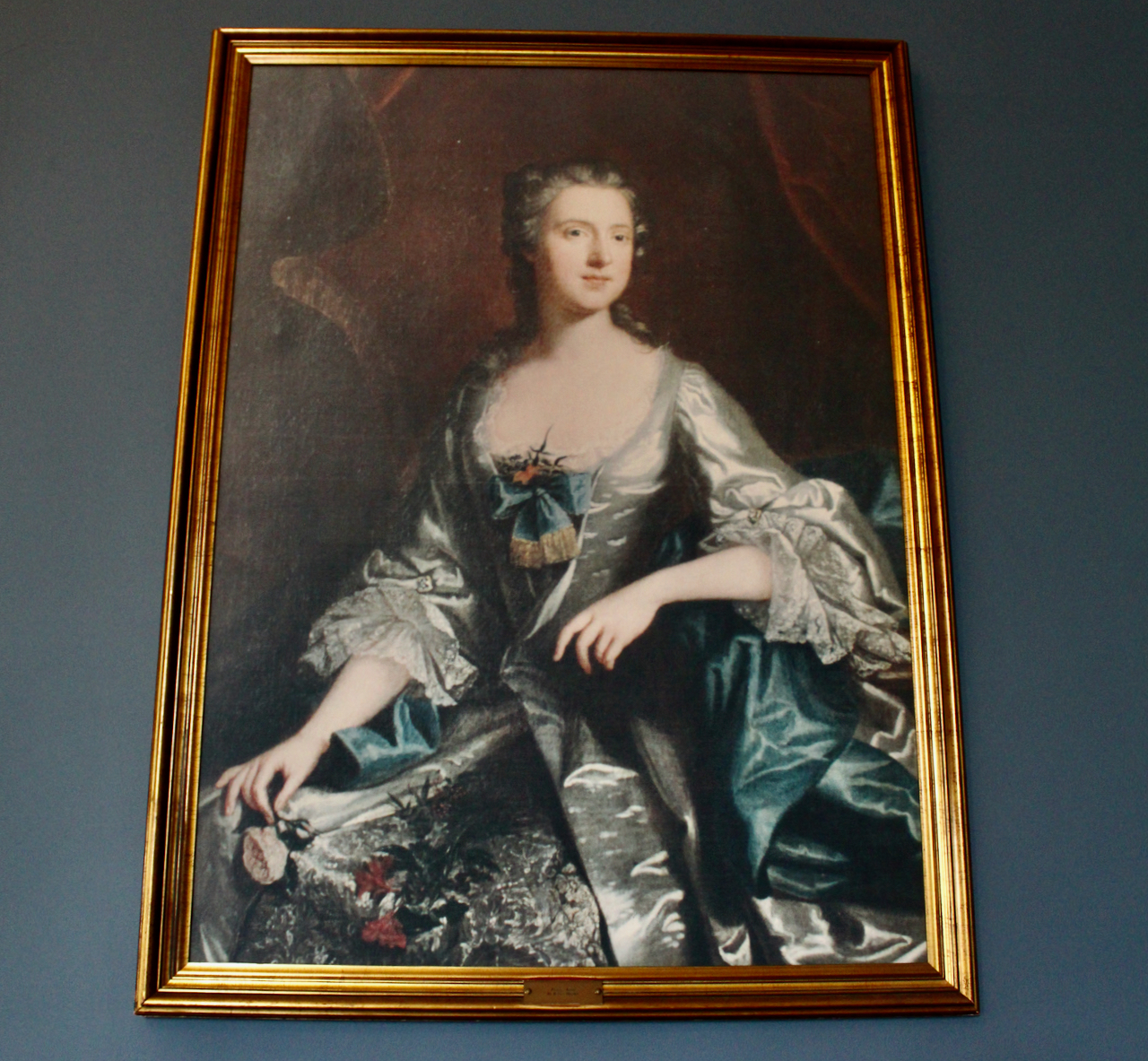
Portrait called The Honourable Harriet Molesworth (1745-1812), wife of John Staples (1736-1820) (probably Harriet Conolly, d. 1771), by Francis Cotes, courtesy of National Trust. Springhill, County Derry.
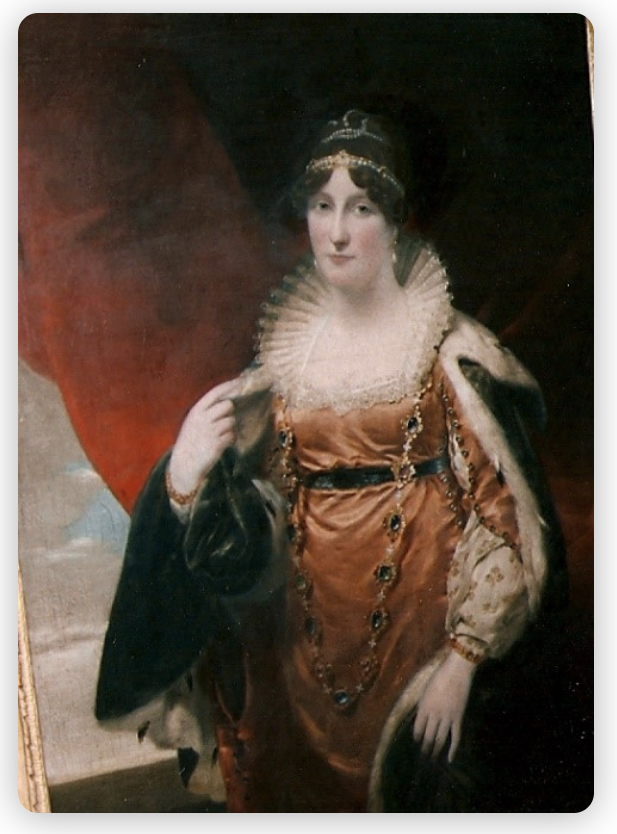
Grace Louisa Staples (1779-1860) Marchioness of Ormonde by John Saunders. She was the wife of James Wandesford Butler, 1st Marquess of Ormonde, and daughter of John Staples (1736-1820) of Lissan, County Tyrone.
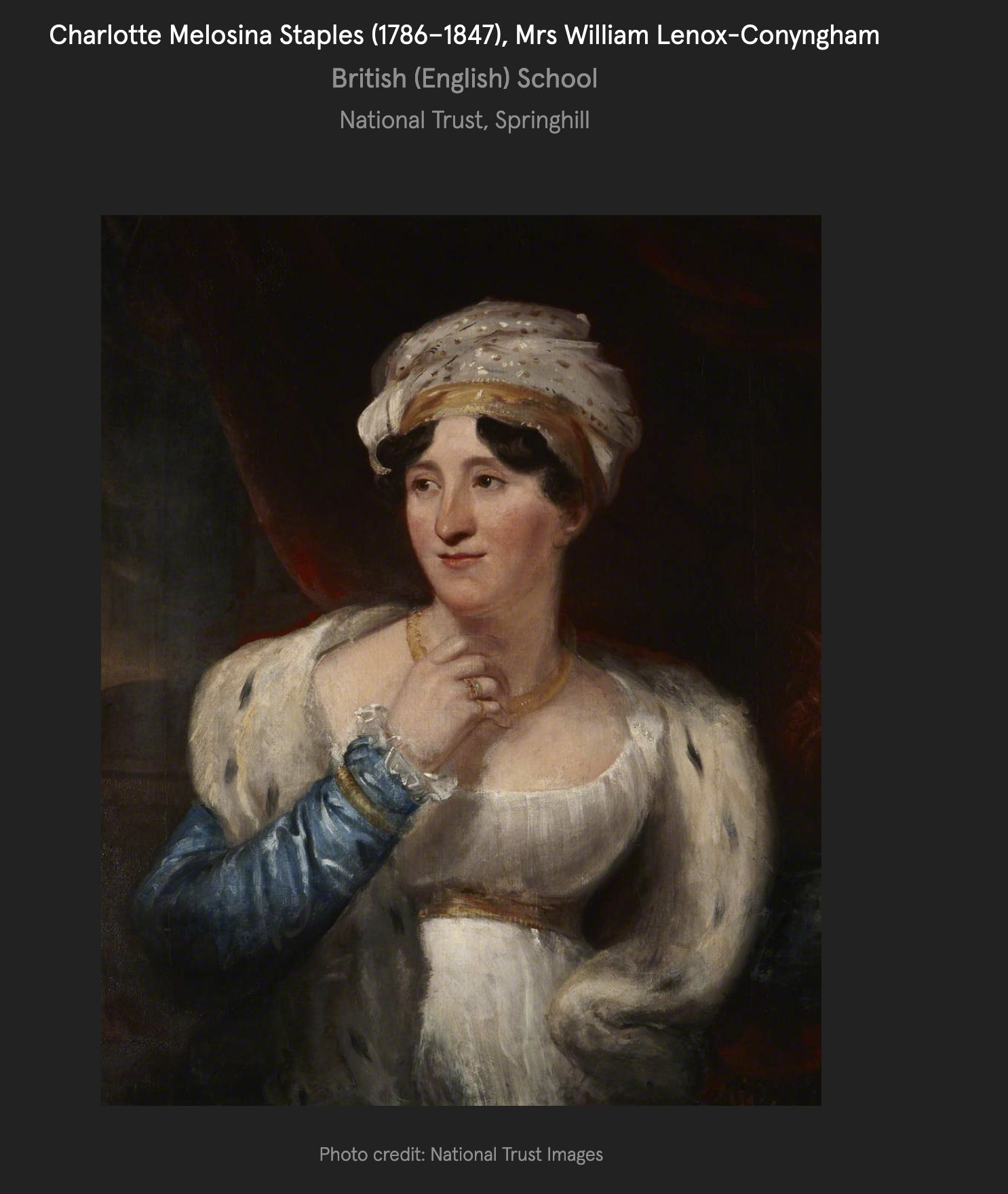
Chalotte Melosina Staples (1786-1847), wife of William Lenox-Conyngham (1792-1858), daughter of John Staples (1736-1820) of Lissan, County Tyrone, courtesy of National Trust. Springhill, County Derry.
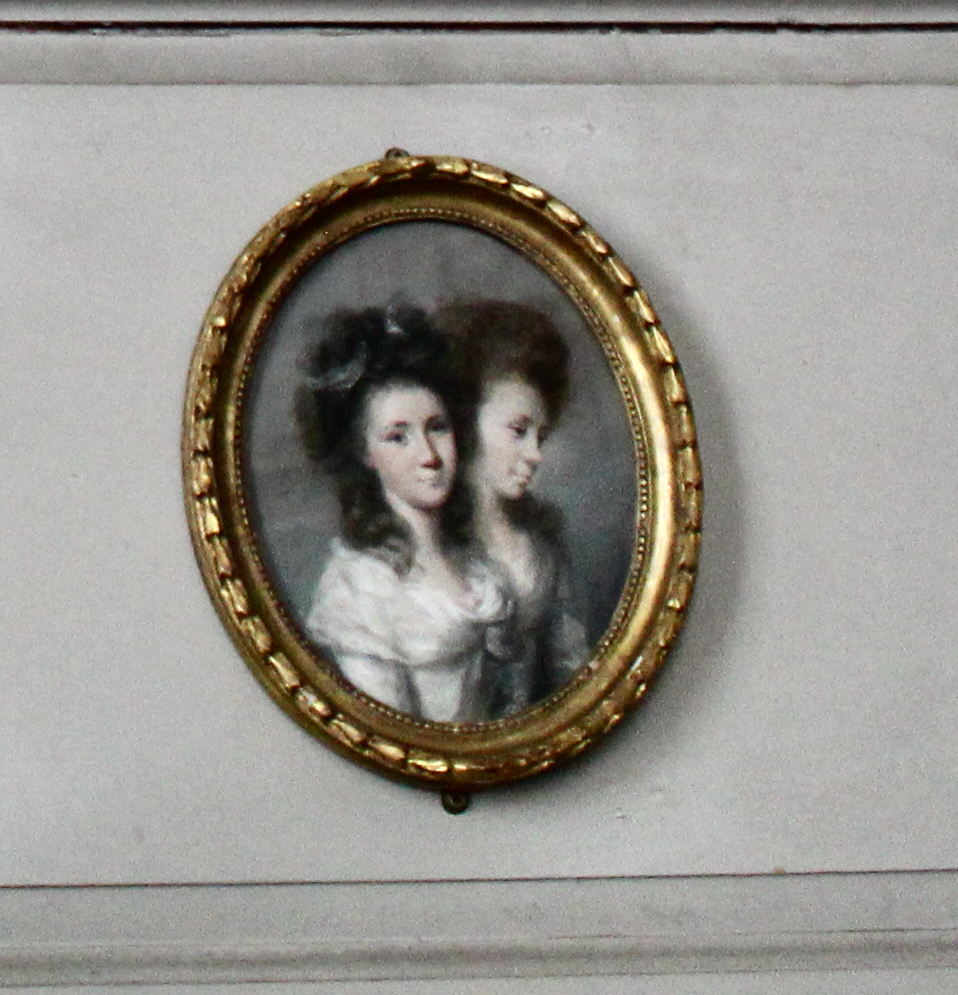
Louisa Anne Pakenham née Staples (1770-1833) and her sister Henrietta Margaret Trench née Staples (1770-1847) Countess of Clancarty (c.1770-1847) by Hugh Douglas Hamilton. Louisa was married to Thomas Pakenham (1757-1836) and Henrietta was married to Richard Power Keating Le Poer Trench (1767-1837) 2nd Earl of Clancarty. Their father was John Staples (1736-1820) of County Tyrone, and their mother was Harriet Conolly (1739-1771) of Castletown House, County Kildare. Photograph © Jennifer Winder-Baggot, www.irishhistorichouses.com
Robert Staples (1772-1832) 8th Baronet, of Springhill, County Derry and Lissan, County Tyrone, courtesy of National Trust. Springhill, County Derry.
Charles Stewart Parnell’s mother Delia. She was an American, daughter of the famous “Old Ironsides,” Admiral Charles Stewart.
William Stewart of Killymoon (1710-1797), British (Irish) School, mid 18th century, inscribed. Oil painting on canvas, A half-length portrait, wearing a gold trimmed blue coat.
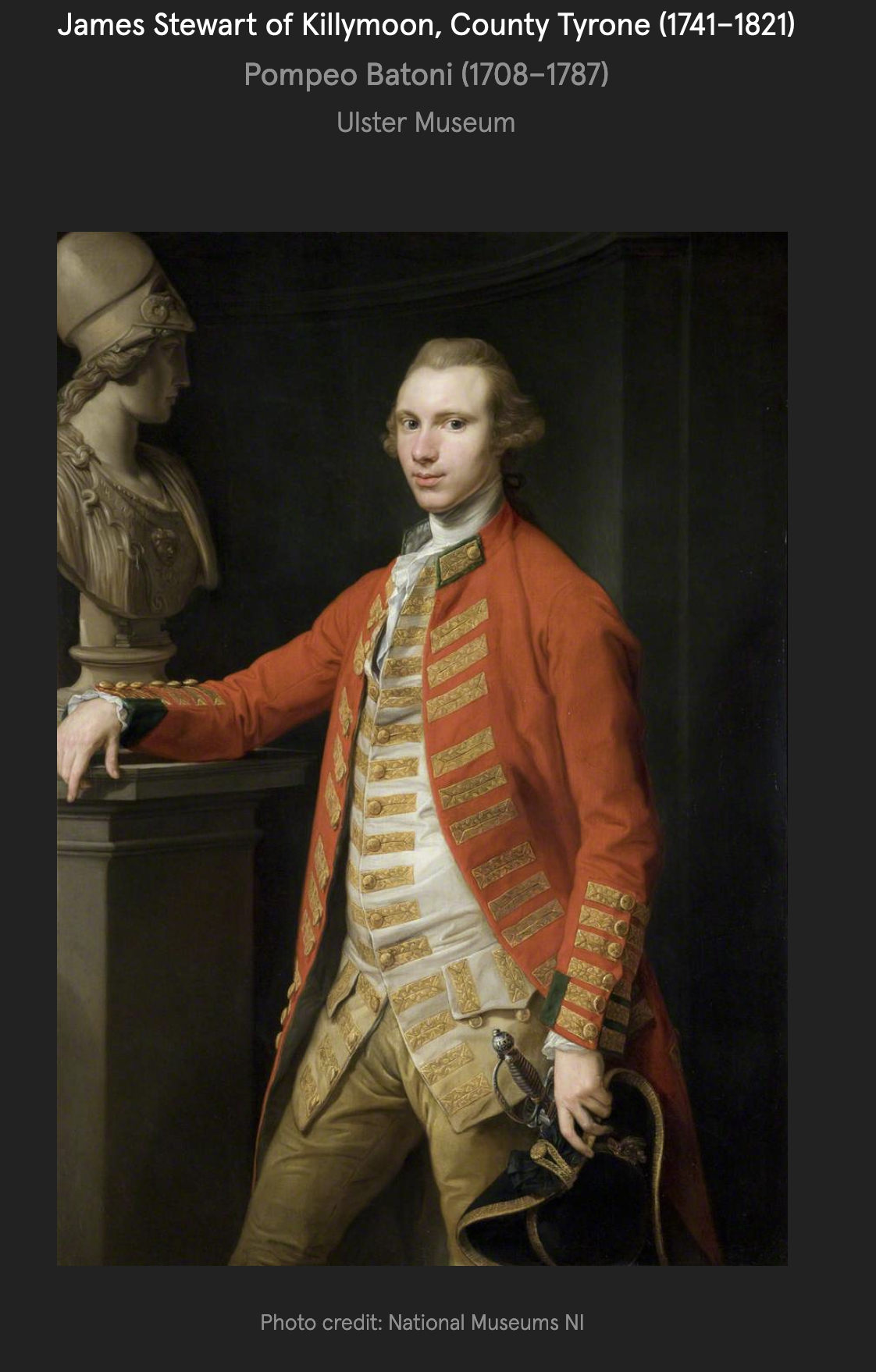
James Stewart (1741-1821) of Killymoon, County Tyrone, by Pompeo Batoni, courtesy of Ulster Museum. He was a son of William Stewart of Killymoon (1710-1797).
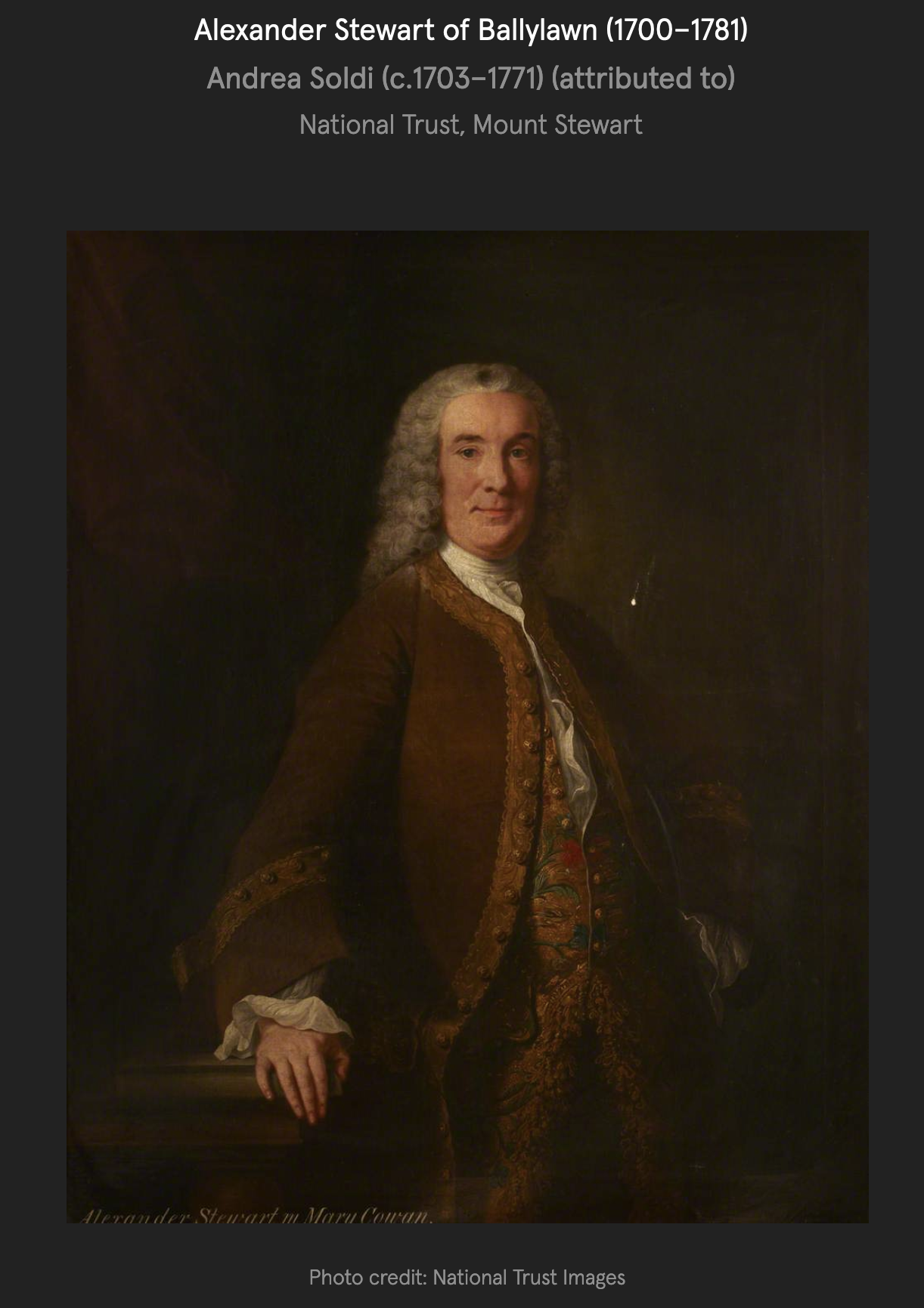
Alexander Stewart (1699/1700-1781) of Ballylawn, by Andrea Soldi, courtesy of National Trust, Mount Stewart.

Alexander Stewart (1699/1700-1781) and his wife, Mary Cowan, bought a large area of land in County Down in 1744, part of which became Mount Stewart demesne.

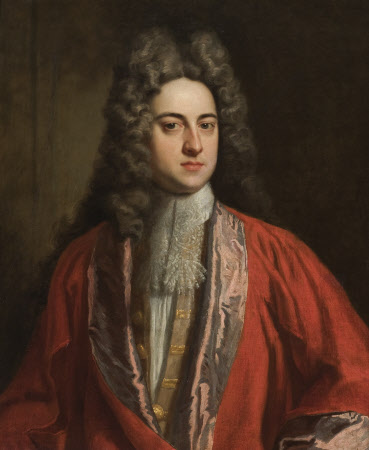
Oil painting on canvas, Alexander Stewart of Mount Stewart (1700-1781), school of Sir Godfrey Kneller (Lubeck 1646/9 – London 1723). A half-length portrait of Alexander Stewart, father of the 1st Marquess of Londonderry, facing the viewer, with his head turned slightly to the right, wearing a red coat and a cravat over a gold-embroidered jacket. By Unknown author – https://www.artuk.org/discover/artworks/alexander-stewart-of-ballylawn-17001781-132900, Public Domain, https://commons.wikimedia.org/w/index.php?curid=72556779
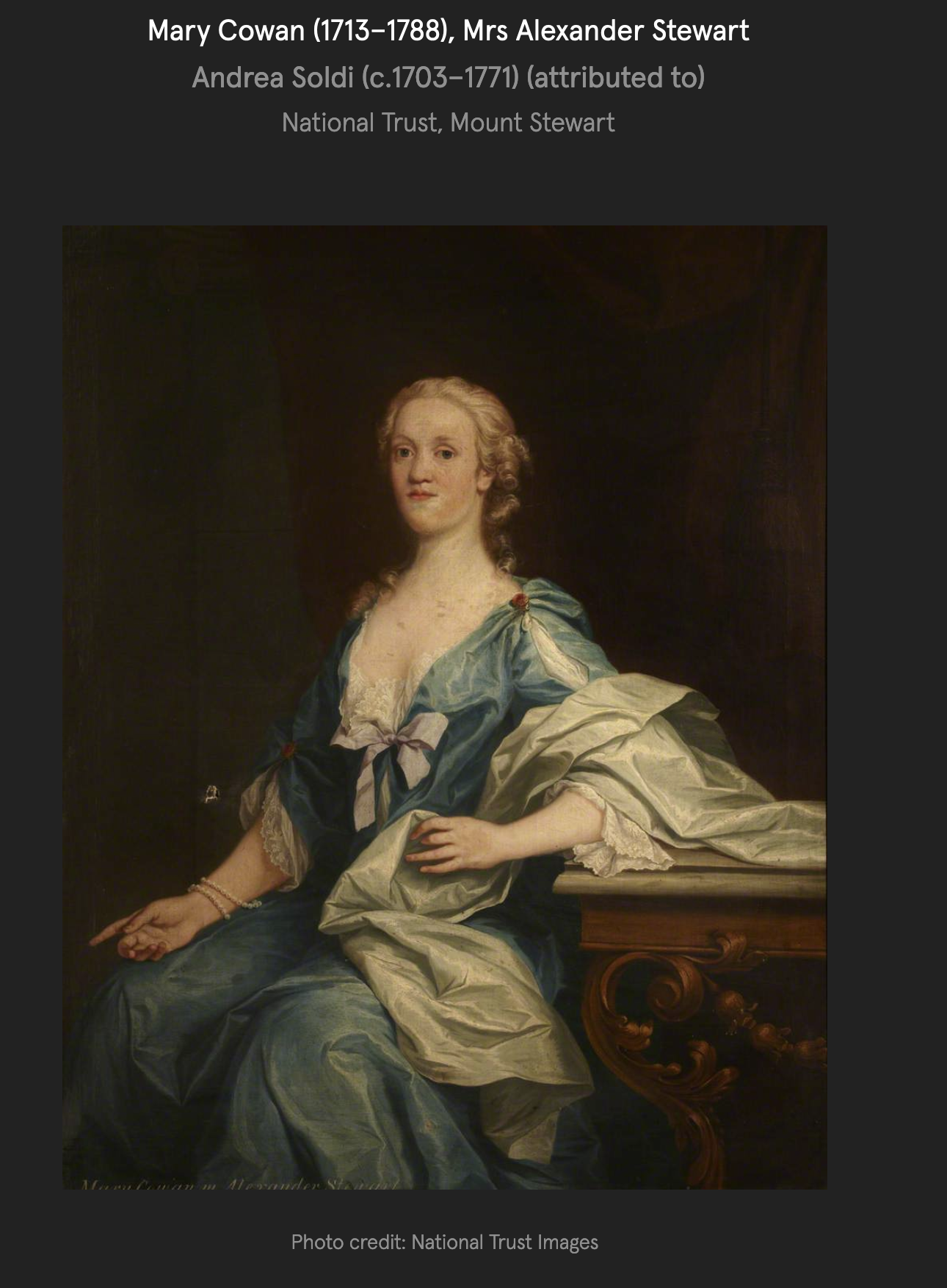
Mary Cowan (1713-1788) who married Alexander Stewart, by Andrea Soldi, courtesy of National Trust, Mount Stewart.
Robert Stewart (1739-1821) later 1st Marquess Londonderry, by Anton Raphael Mengs, courtesy of National Trust, Mount Stewart. He was the son of Alexander Stewart (1700-1781) of Ballylawn and Mary née Cowan.
Oil painting on paper laid down on canvas, A Conversation Piece with Robert, 1st Marquess of Londonderry (1739-1821), his Second Wife, Frances (1750-1833), their Son Charles William (1778-1854), and their Four Younger Daughters, Selina, Matilda, Emily Jane and Octavia by Thomas Robinson (Windermere before 1770 – Dublin 1810), 1803-08. The daughters shown are Lady Selina Stewart, later Lady Selina Kerr (d.1871), Lady Emily Jane Stewart, Viscountess Hardinge (1789-1865), Lady Octavia Catherine Stewart, later Baroness Ellenborough (d.1819) and Lady Matilda Stewart, later Lady Matilda Ward (d.1842). Their elder three daughters Georgiana (d. 1804), Caroline (1865) and France Anne (1777 – 1810) are not present.
Alexander Stewart of Ards, brother of 1st Marquess Londonderry, by Pompeo Batoni, courtesy of National Trust, Mount Stewart. He was the son of Alexander Stewart (1700-1781) of Ballylawn and Mary née Cowan.
Robert Stewart (1769-1822) Viscount Castlereagh, later 2nd Marquess of Londonderry, by Hugh Douglas Hamilton, courtesy of National Trust, Mount Stewart.
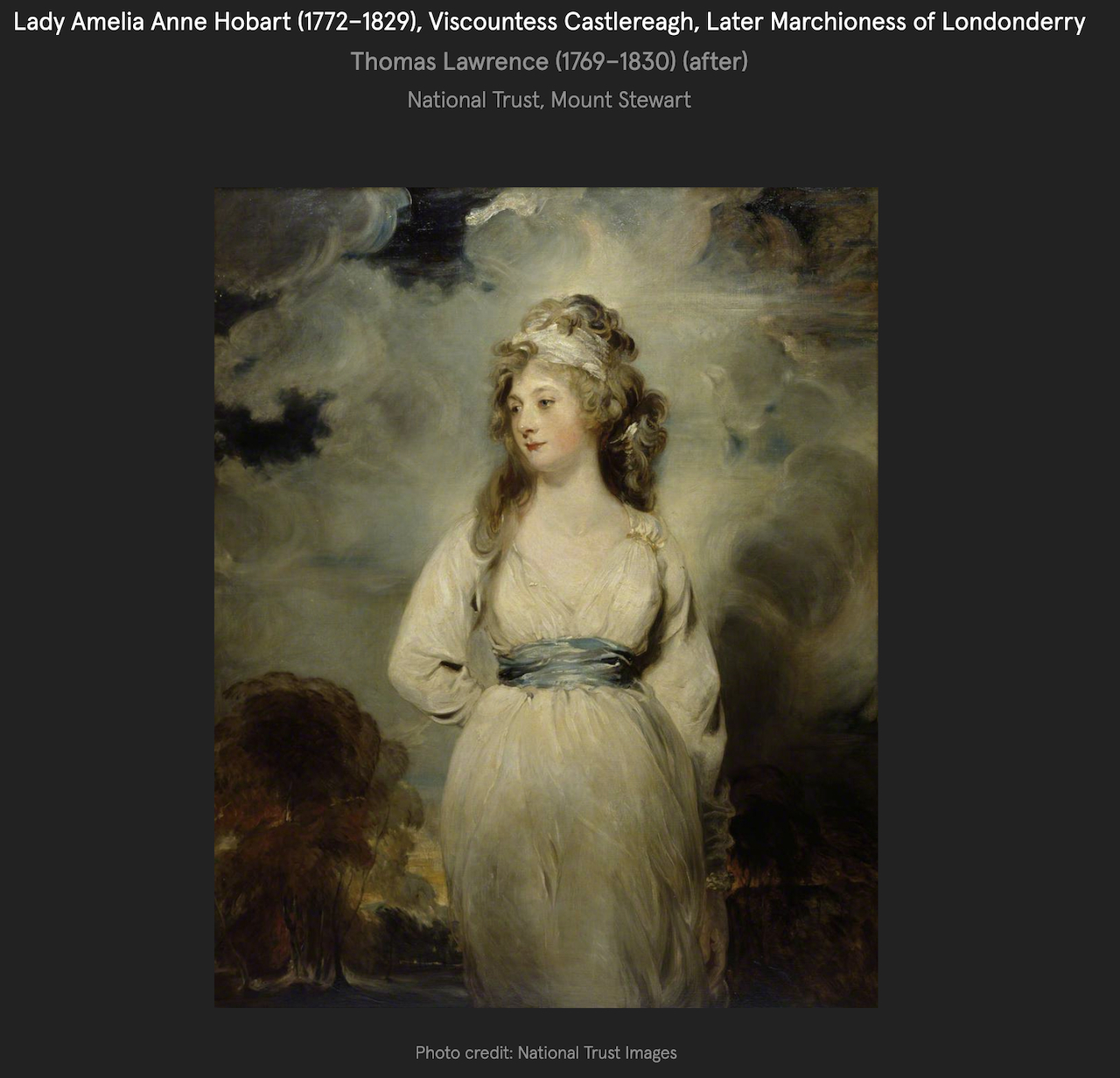
Amelia Anne Hobart (1772-1829) wife of Robert Stewart, 1st Viscount Castlereagh, by Thomas Lawrence, courtesy of National Trust Mount Stewart.
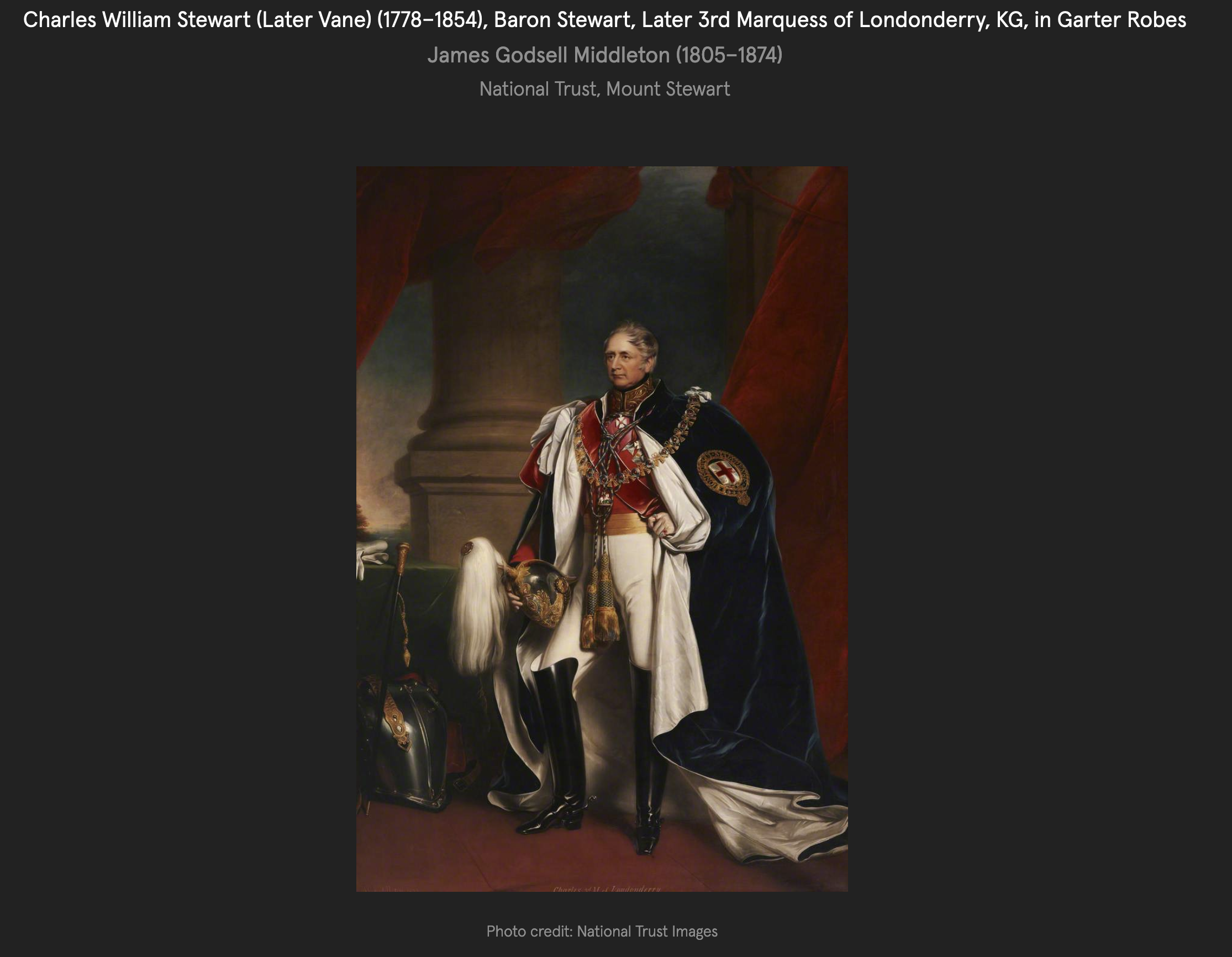
Charles William Stewart (later Vane) (1778-1854), later 3rd Marquess of Londonderry, in Garter Robes, by James Godsell Middleton, courtesy of National Trust, Mount Stewart. He was the half-brother of Robert Stewart (1769-1822) Viscount Castlereagh.
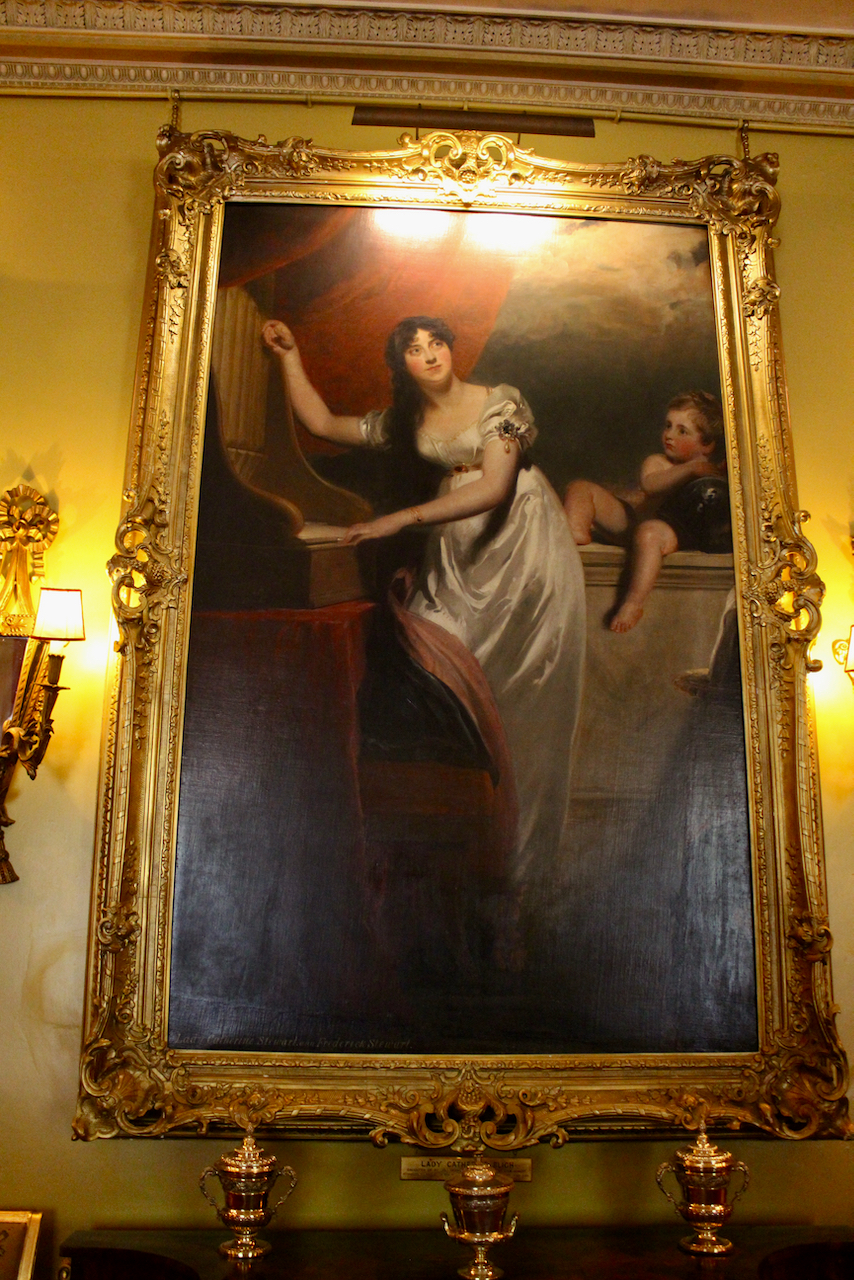
Painting by Thomas Lawrence of Catherine Bligh, daughter of 3rd Lord Darnley, with her son Frederick Wililam Robert, who became 4th Marquess of Londonderry. Mount Stewart, County Down, June 2023. She married Charles William Stewart (later Vane) (1778-1854), later 3rd Marquess of Londonderry. Photograph © Jennifer Winder-Baggot, www.irishhistorichouses.com
Frances Anne (1800-1865) Marchioness of Londonderry, and her son George Henry (1827-1828) Viscount Seaham, by Thomas Lawrence, courtesy of National Trust, Mount Stewart. She married Charles Stewart later Vane, 3rd Marquess of Londonderry.
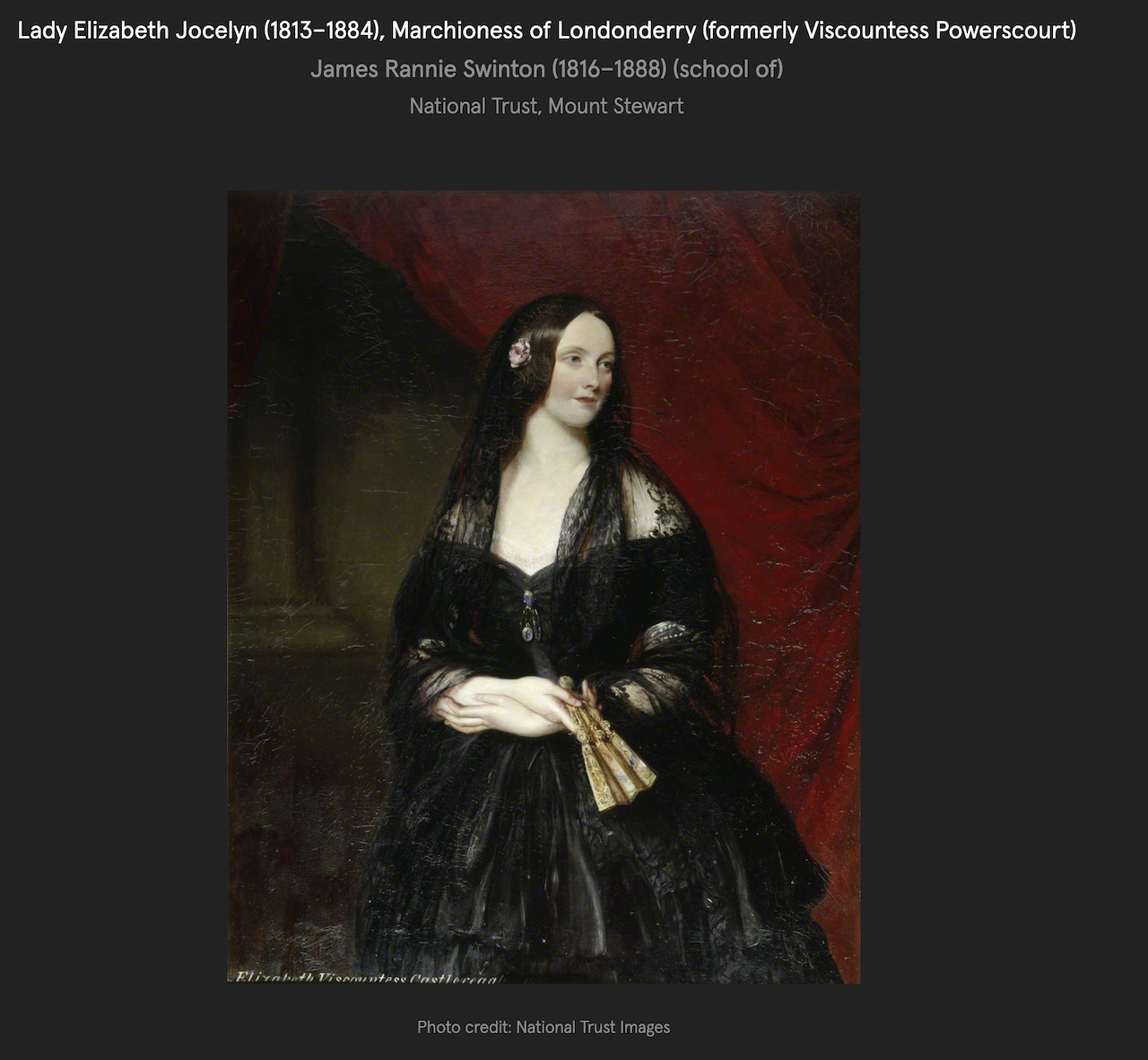
Elizabeth Jocelyn (1813-1884), Marchioness of Londonderry, formerly Viscountess Powerscourt, by James Rannie Swinton, courtesy of Mount Stewart National Trust. She was married to the 6th Viscount Powerscourt. She was the daughter of Robert Jocelyn 3rd Earl of Roden. After her husband’s death she married Frederick William Robert Stewart, 4th Marquess of Londonderry, of Mount Stewart, County Down.
Anna Stewart (née Garner), of Lisburn Co. Down, Second Wife of William Stewart of Wilmont, by Nathaniel Hone, courtesy of Shepphards auctions.
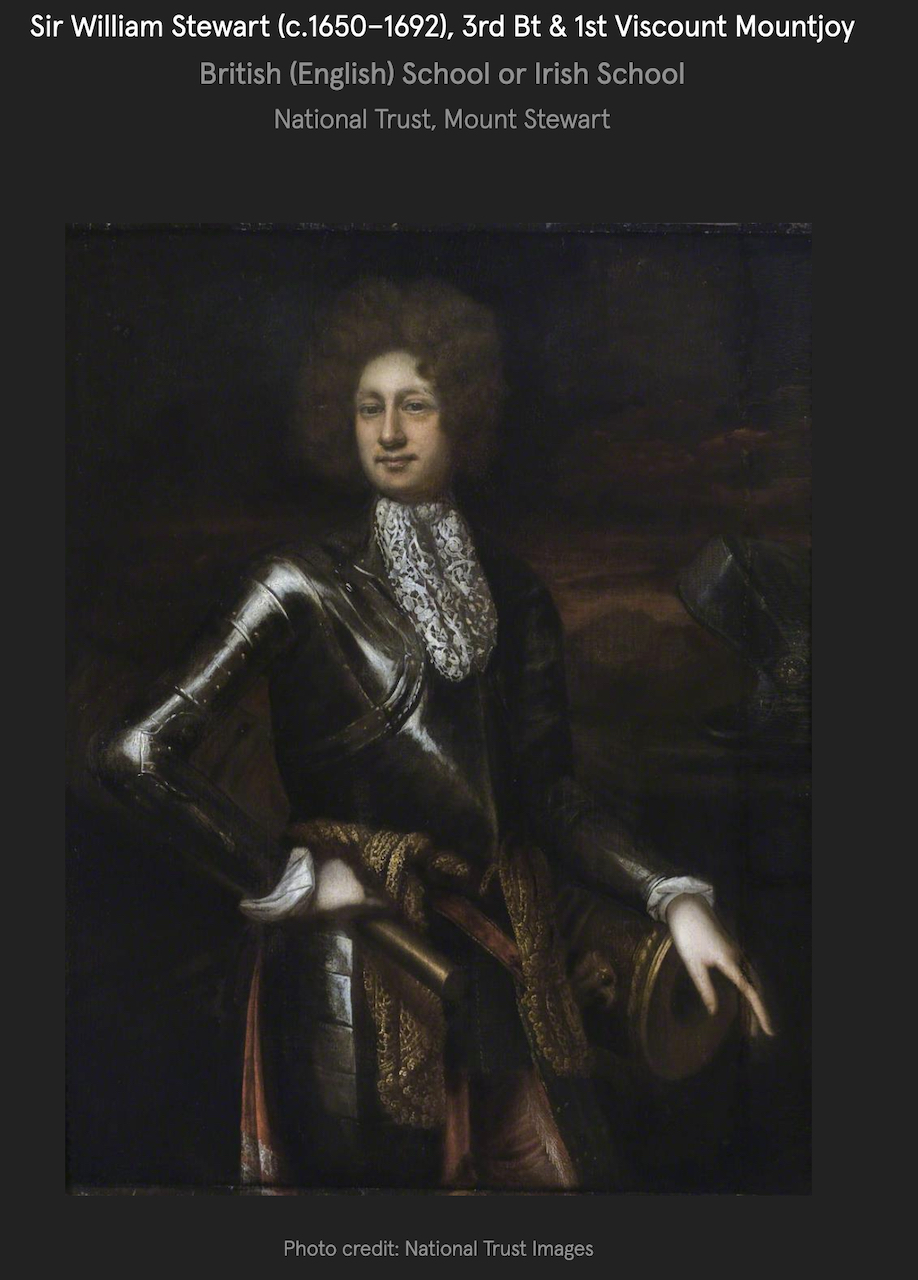
William Stewart (c. 1650-1692) 3rd Bt and 1st Viscount Mountjoy courtesy of National Trust Mount Stewart.
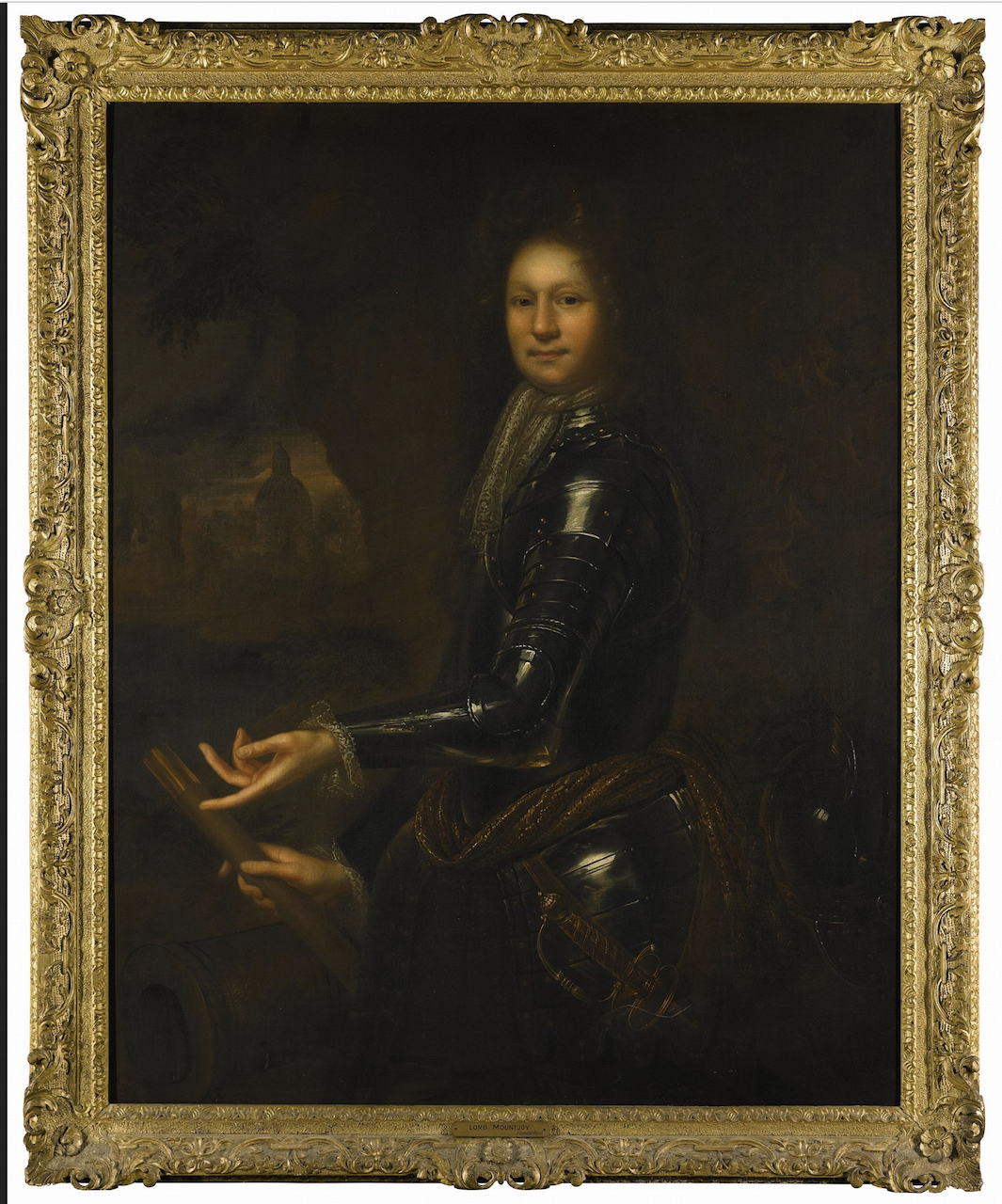
William Stewart (c. 1650-1692) 3rd Bt and 1st Viscount Mountjoy.
Anne Boyle (1700-1742) 2nd Lady Mountjoy, wife of William Stewart 2nd Viscount Mountjoy by Garrett Morphy Adams auction 19 Oct 2021. She was the daughter of Murrough Boyle, 1st Viscount of Blessington.
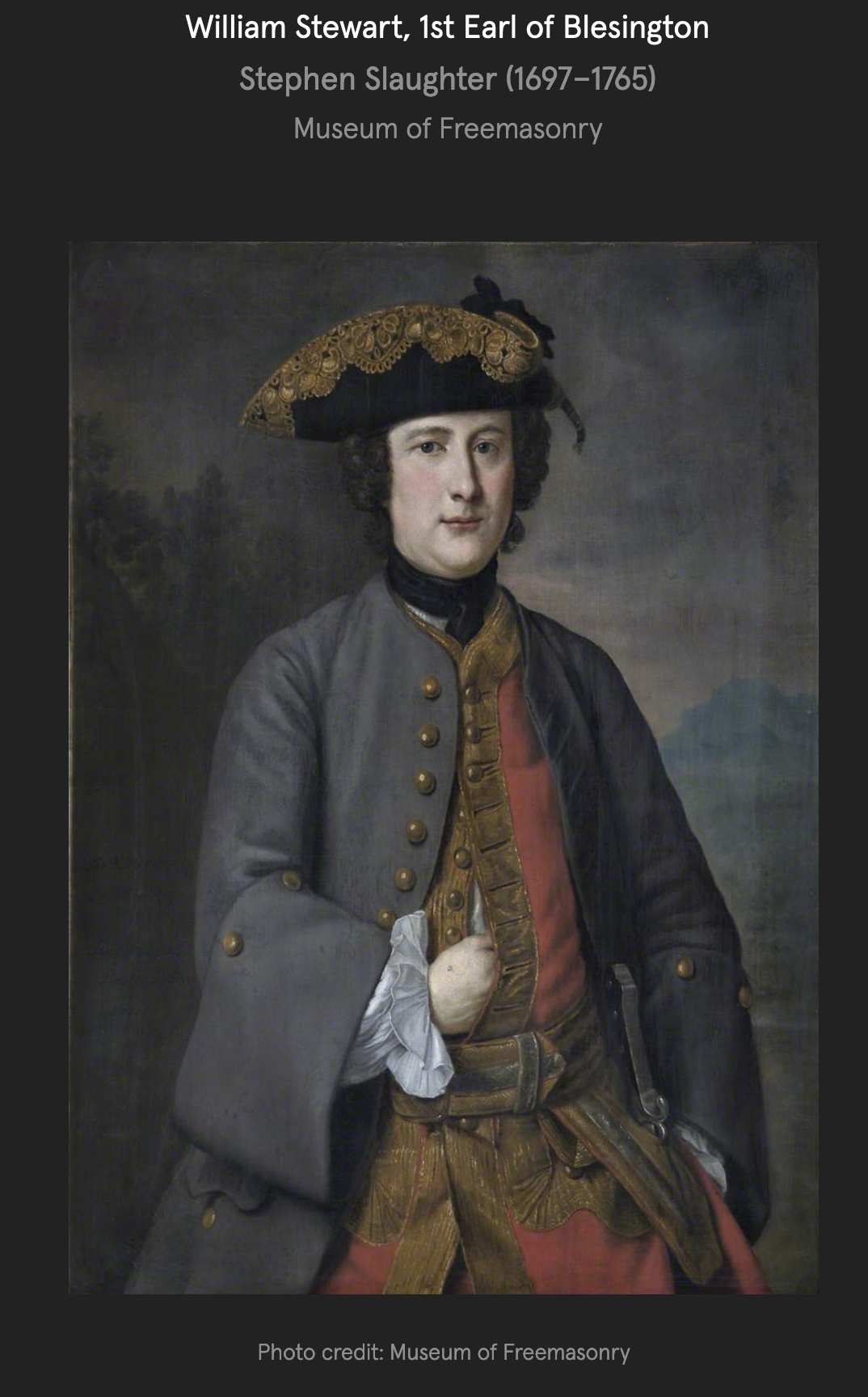
William Stewart (1709-1769) 1st Earl of Blesington by Stephen Slaughter courtesy of Museum of Freemasonry. He was the son of William Stewart 2nd Earl of Mountjoy and Anne née Boyle.
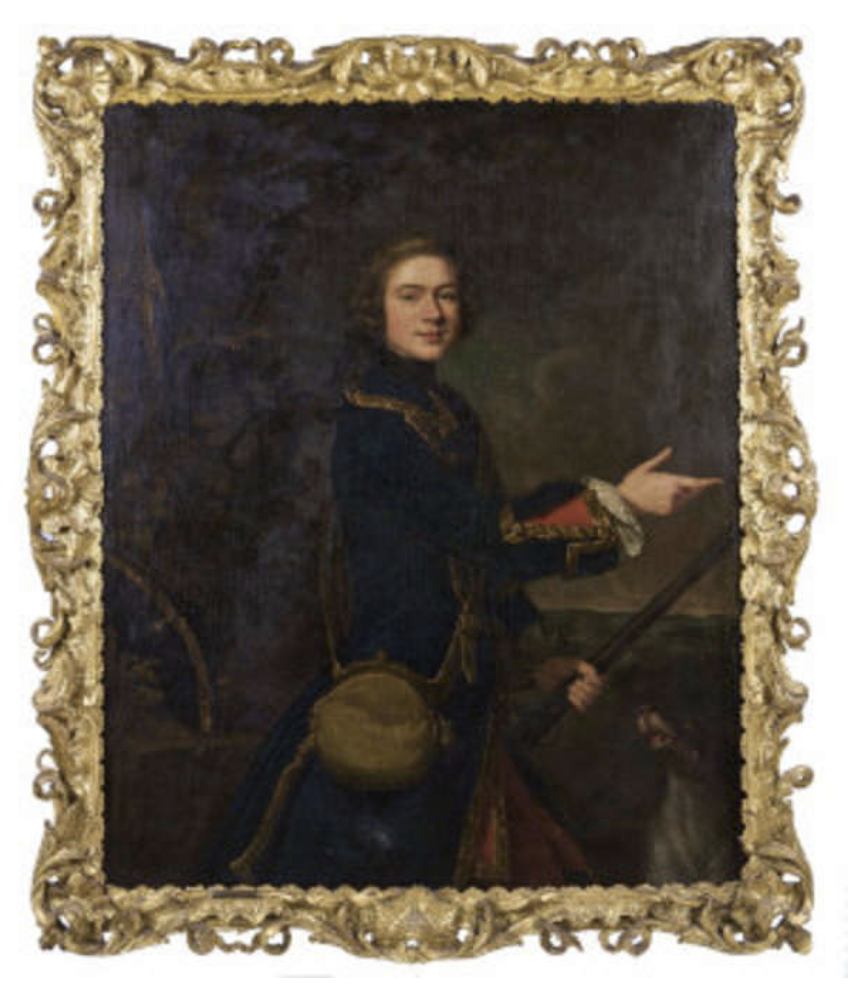
James Stopford (1794-1858) 4th Earl of Courtown, attributed to Joseph Slater, courtesy of Fonsie Mealy auction. He married Charlotte Albina Montagu Scott.
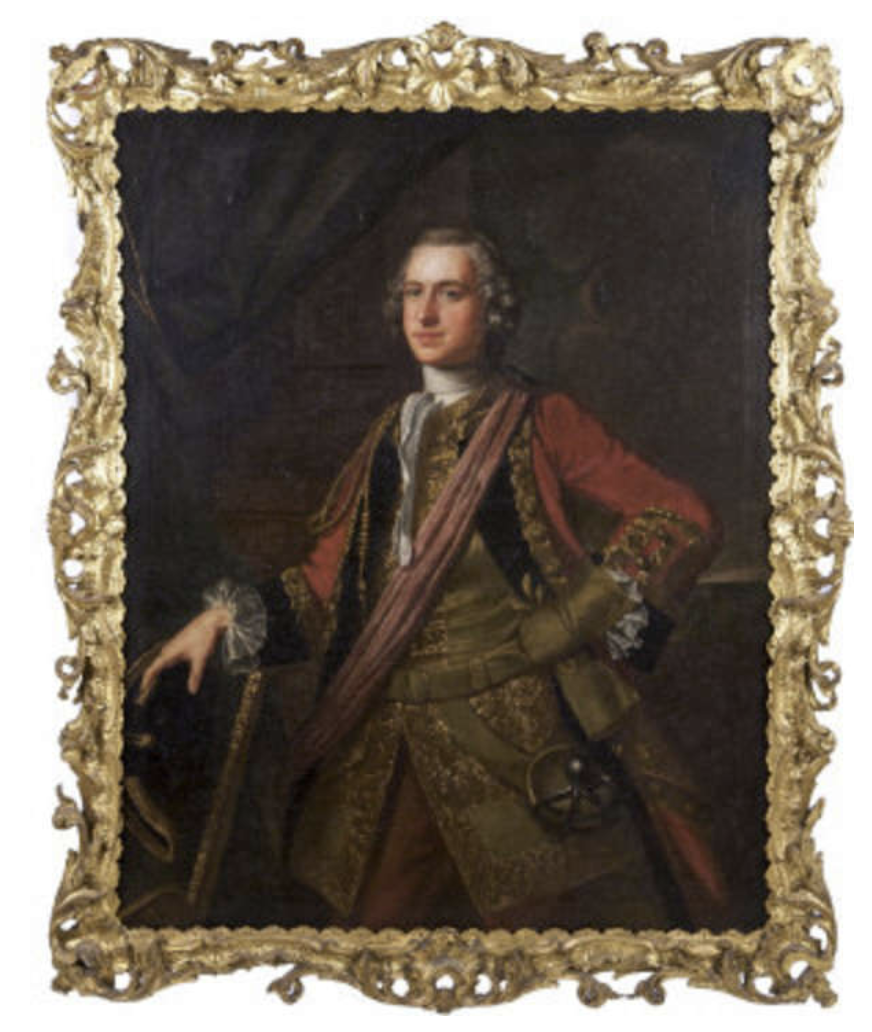
Col. E. Stratford” attributed to Charles Jervas, courtesy Fonsie Mealy Fortgranite auction. It could be Edward Stratford (1663-1740) father of John Stratford (d. 1777) 1st Earl of Aldborough. He lived at Belan, County Kildare.
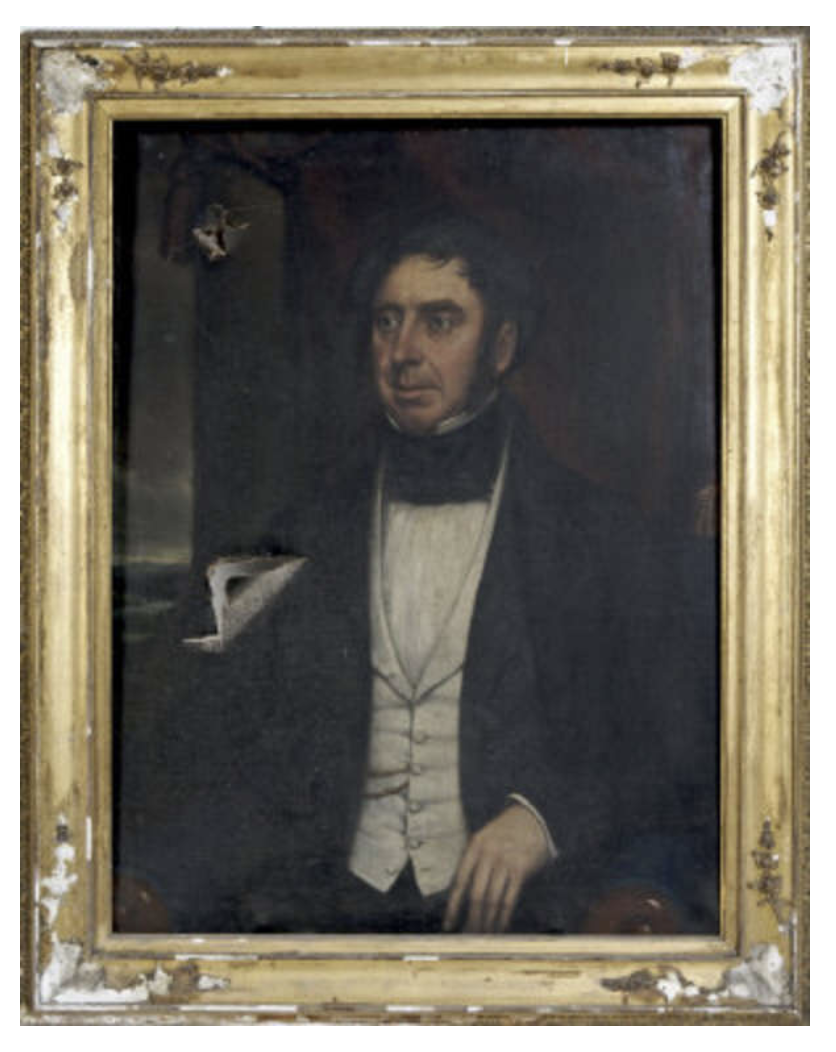
John Stratford (d. 1777) 1st Earl of Aldborough courtesy of Fonsie Mealy Fortgranite auction. He lived at Belan in County Kildare. He married Martha O’Neale, daughter of Benjamin, Archdeacon of Leighlin and Ferns.
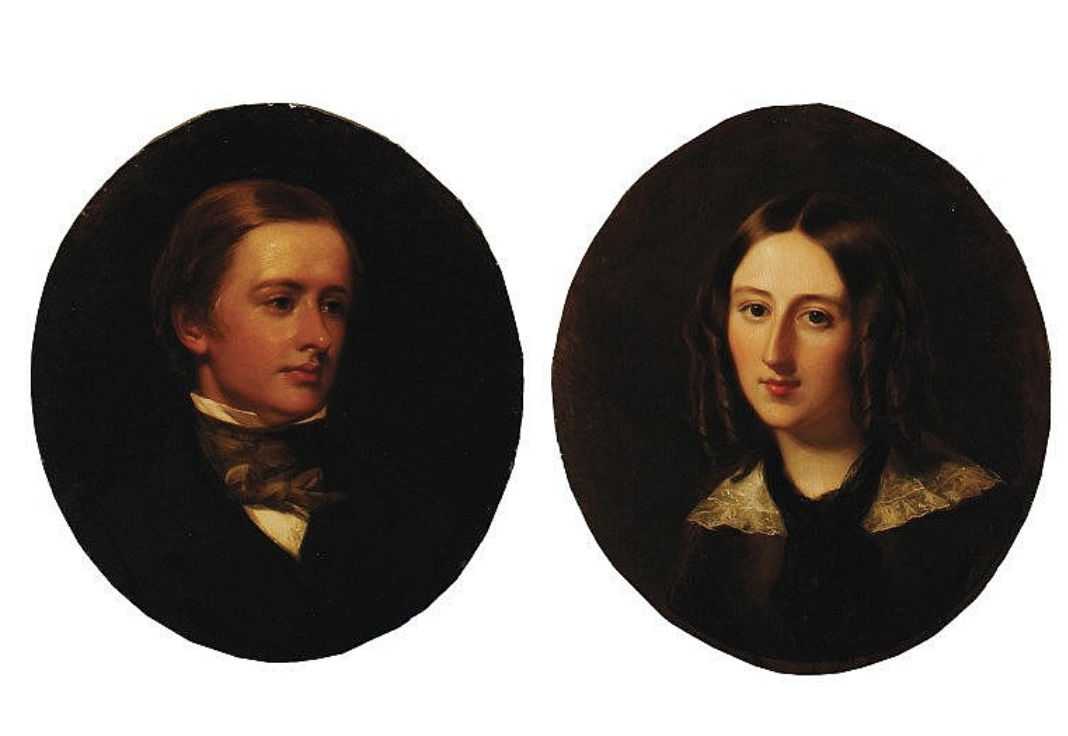
Martha O’Neale, daughter of Benjamin, Archdeacon of Leighlin and Ferns, 1st Countess Aldborough, courtesy of Fonsie Mealy Fortgranite auction.
Martha, Countess of Aldborough courtesy of Fonsie Mealy Fortgranite auction.
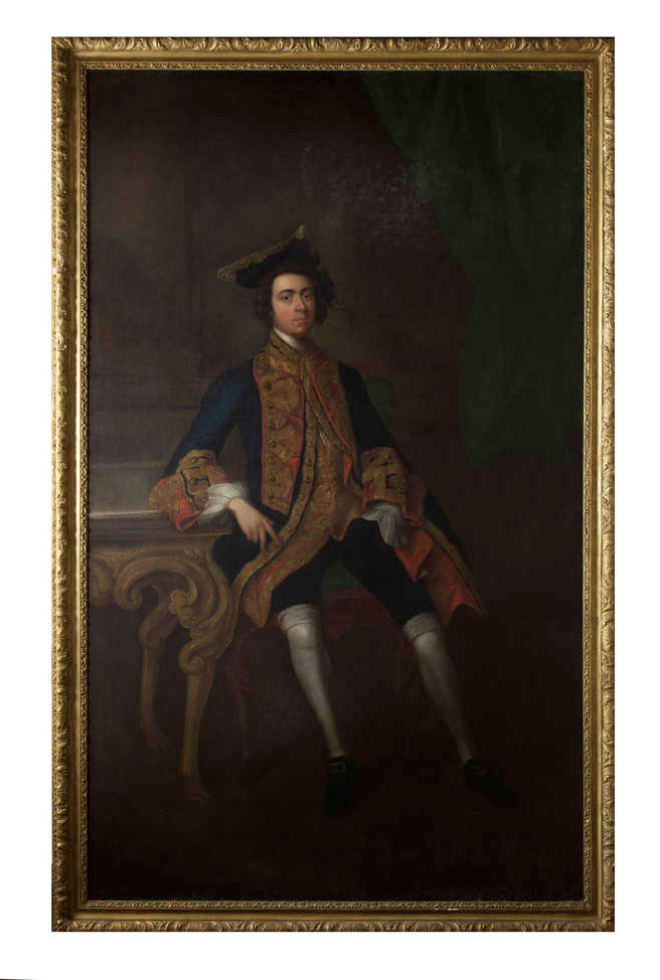
Edward Stratford (1736-1801) 2nd Earl of Aldborough in ceremonial robes, and with painted coat of arms, by Philip Hussey courtesy of Fonsie Mealy Fortgranite. He lived in Belan House, County Kildare.
Elizabeth Countess of Aldborough (1759-1811) by Hugh Douglas Hamilton, as Hebe. Elizabeth Hamilton was wife of John Stratford 3rd Earl of Aldborough. She was the daughter of Frederick Hamilton, Dean of Raphoe, County Donegal.
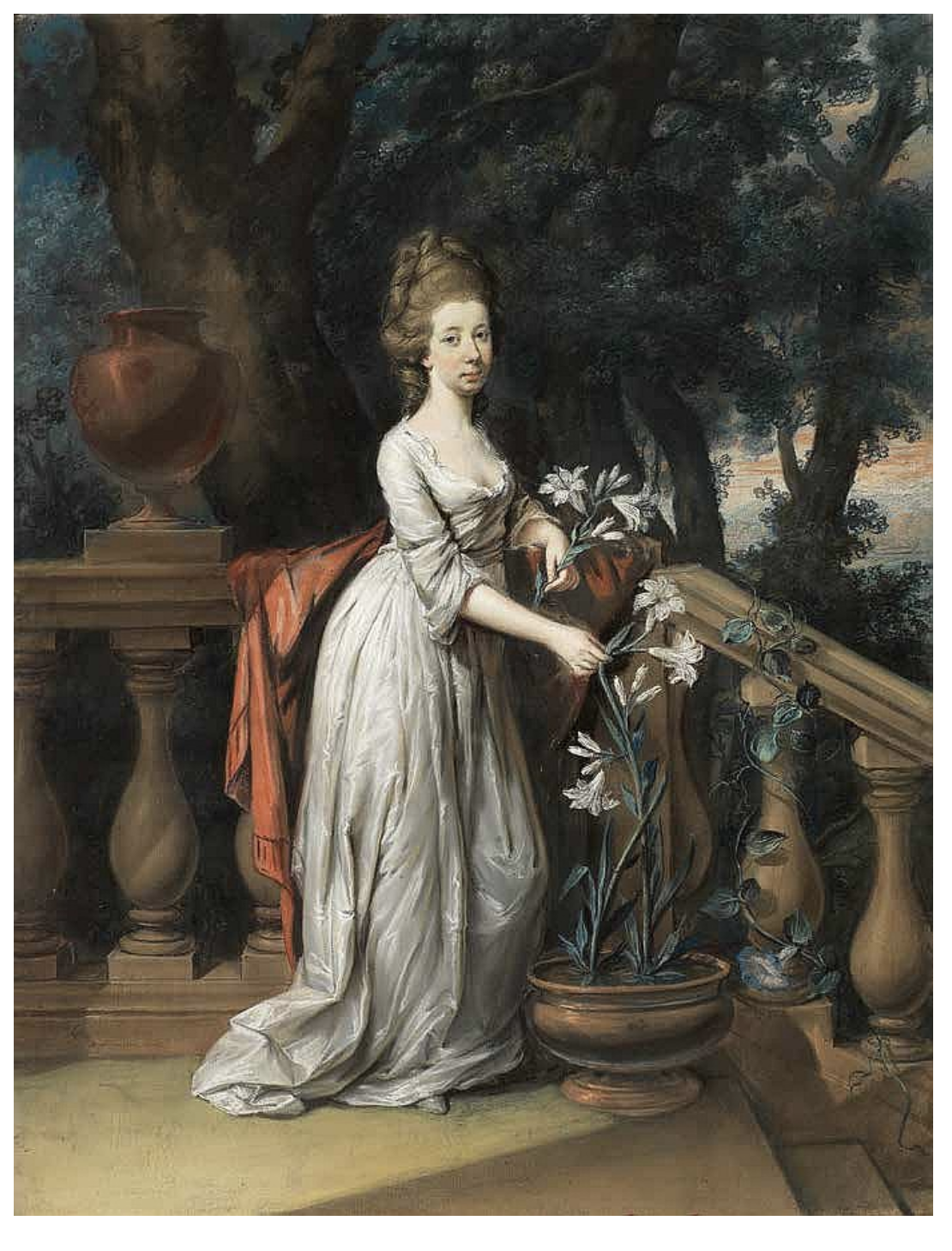
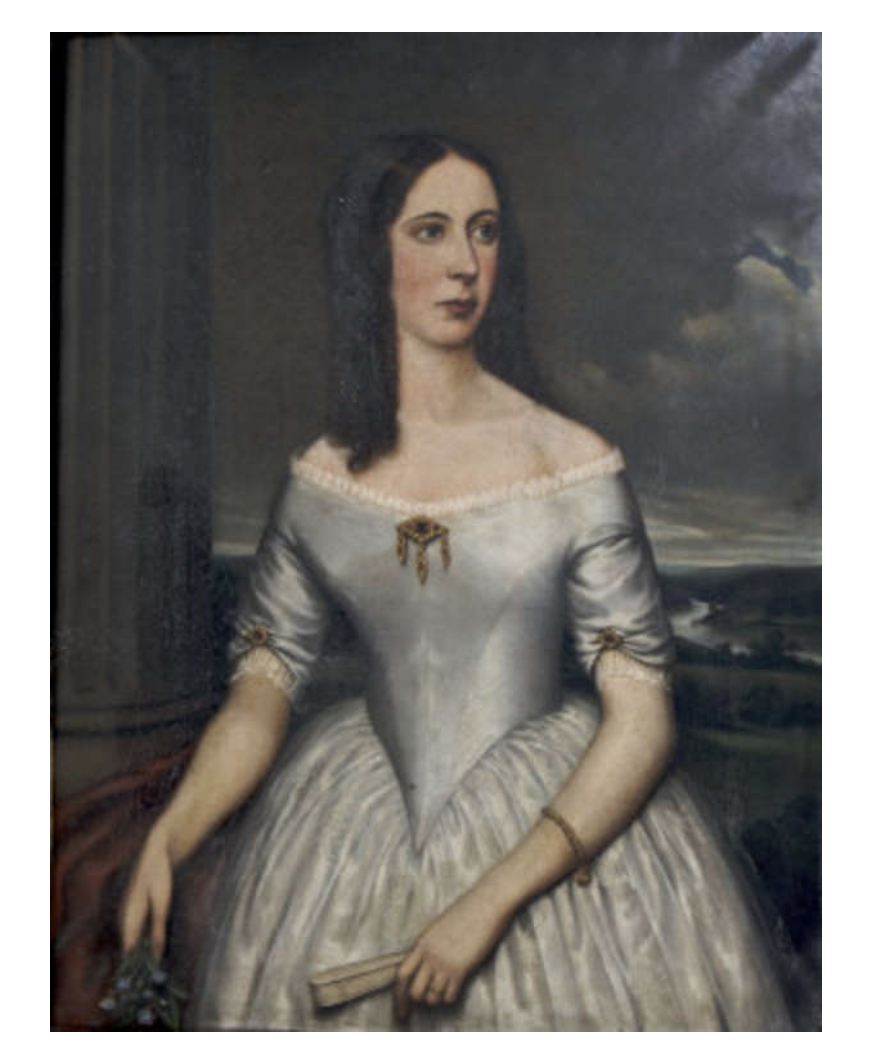
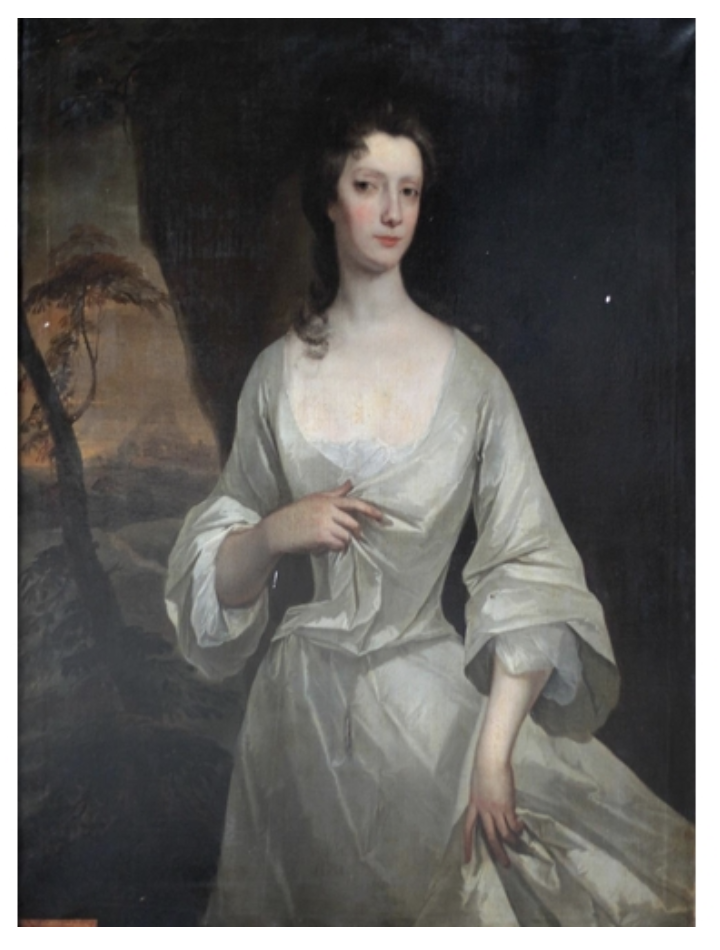
Maria Stratford, daughter of 1st Earl of Aldborough, standing by a tree, landscape in background, wearing full length white silk dress, Attributed to James Latham (1696 – 1747) courtesy Fonsie Mealy Fortgranite.
Archbishop George Stone (1708-1754), Primate of Ireland by Alan Ramsay.
James Stuart (1612-1655) 1st Duke of Richmond and 4th Duke of Lennox, son of King Charles II.
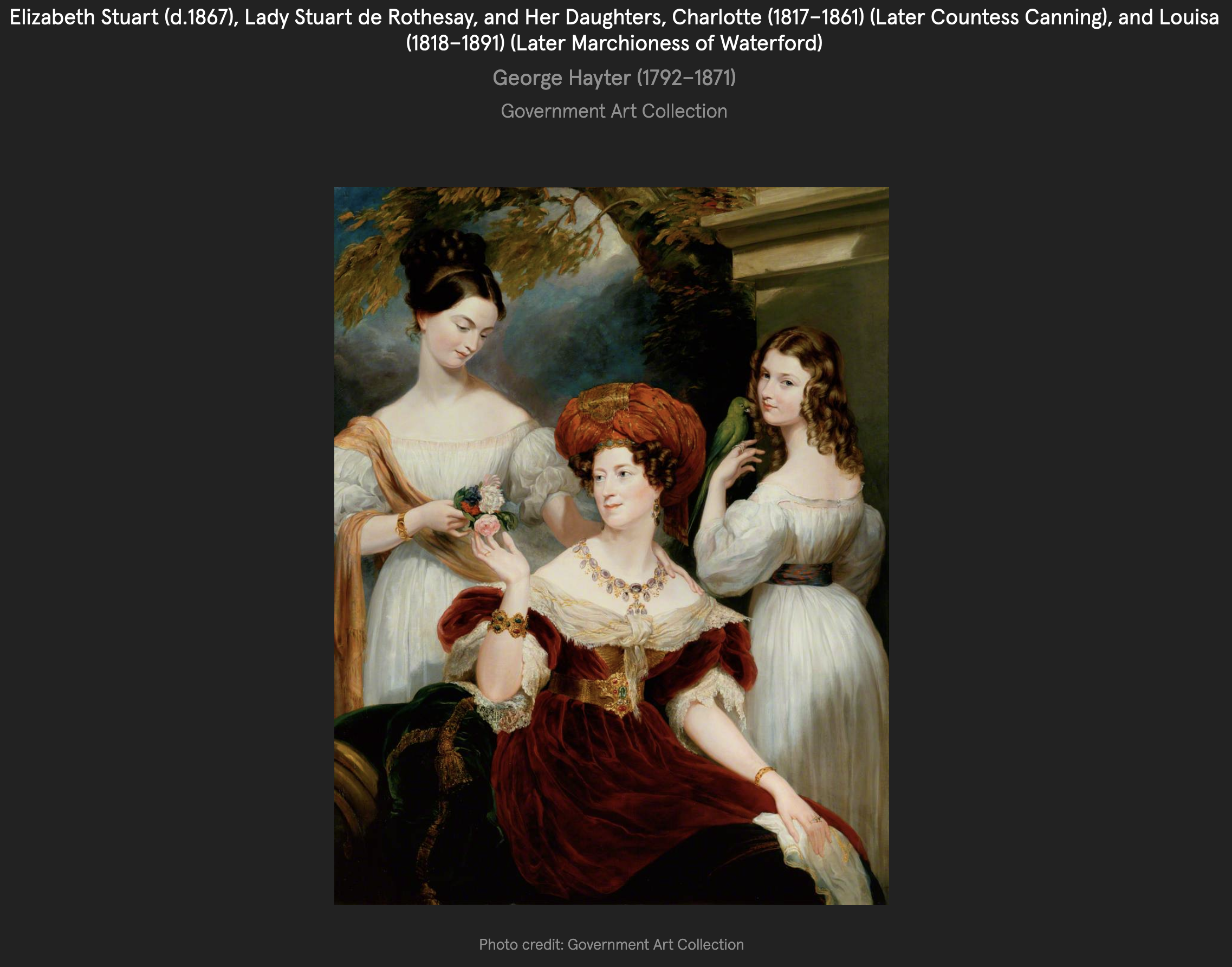
Elizabeth Stuart née Yorke (1789-1867). Lady Stuart de Rothesay, with her daughters Charlotte (1817-1861) and Louisa (1818-1891) by George Hayter, photograph courtesy of UK Government Art Collection. Elizabeth was the daughter of Philip Yorke 3rd Earl of Hardwicke; Louisa married Henry de la Poer Beresford 3rd Marquis of Waterford; Charlotte married Charles John Canning 1st Viceroy of India , 2nd Viscount Canning, 1st Earl Canning.
Louisa Anne Beresford née Stuart (1818-1891) by Sir Francis Grant 1859-1860, NPG 3176. The National Portrait Gallery tells us: “Louisa Stuart was brought up mostly in Paris, where her father was British Ambassador to the French court. She was taught to draw from an early age and art, along with religion and philanthropy, was one of her main interests throughout her life. A gifted amateur watercolourist, she did not exhibit at professional galleries until the 1870s. With a strong interest in the welfare of the tenants on her Northumberland estate, she rebuilt the village of Ford. She provided a school and started a temperance society in the village. Her greatest artistic achievement was the decoration of the new school with life sized scenes from the Old and New testaments that used children and adults from the village as models.”
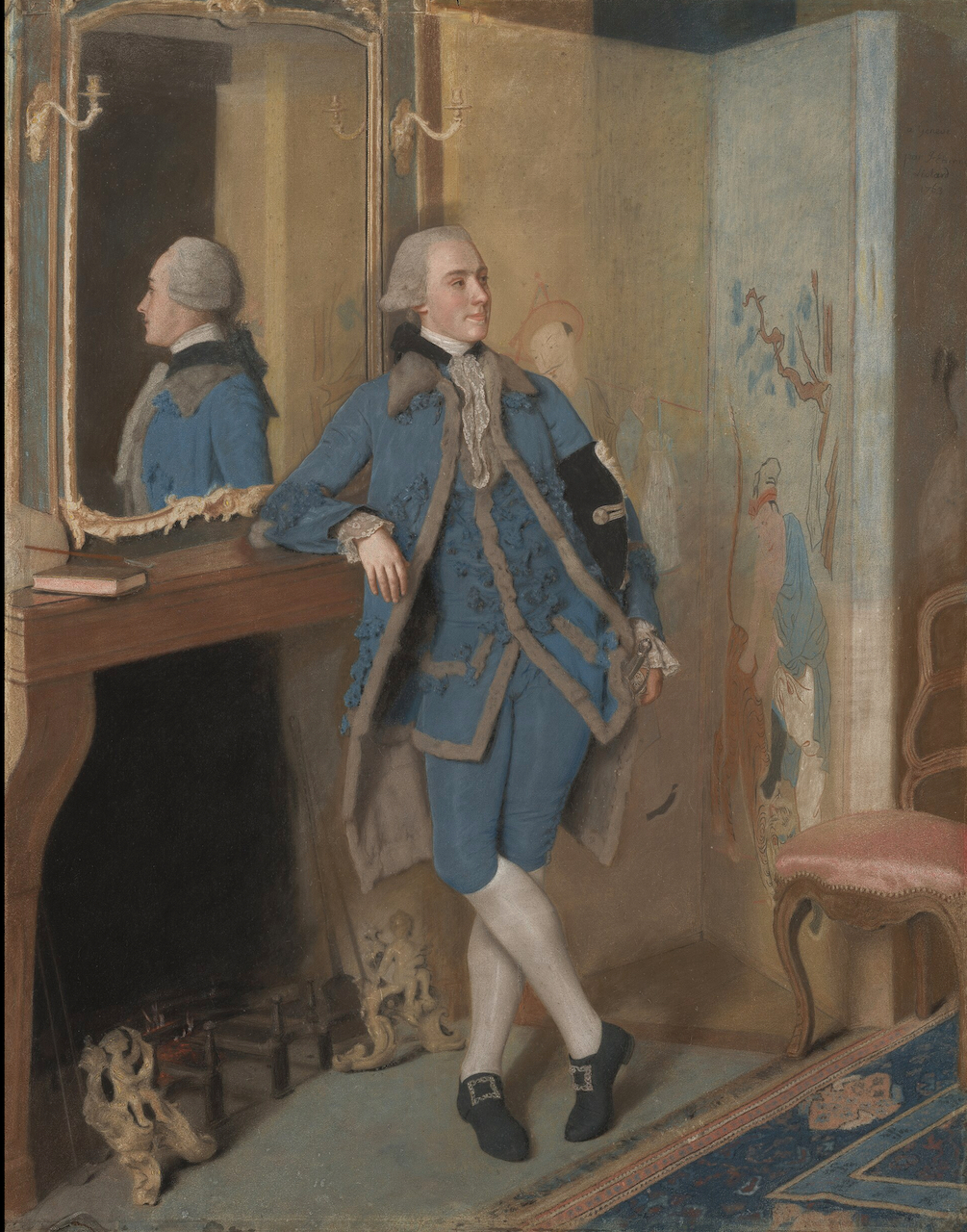
John Stuart (1744-1814), Lord Mountstuart, later 4th Earl and 1st Marquess of Bute by Jean Etienne Liotard, 1763.
Lady Mary Wortley Montagu (1718-1794), Wife of John Patrick Crichton Stuart 3rd Earl of Bute, print after Christian Friedrich Zincke, 1830s, courtesy of National Portrait Gallery of London, NPG D34619.
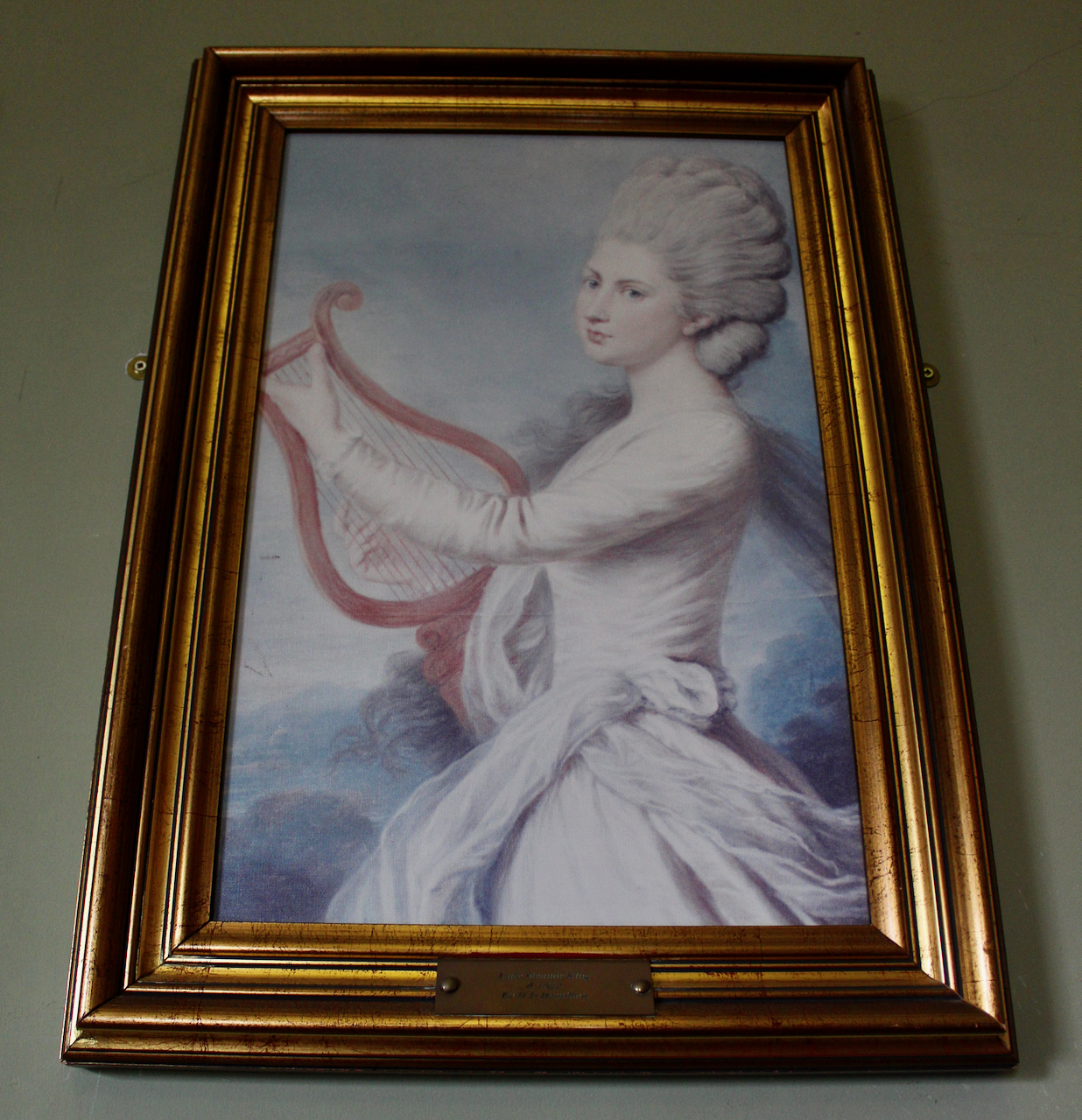
Caroline née Sutherland Leveson Gower (1827-1887), wife of 4th Duke of Leinster, courtesy of National Gallery of Ireland.
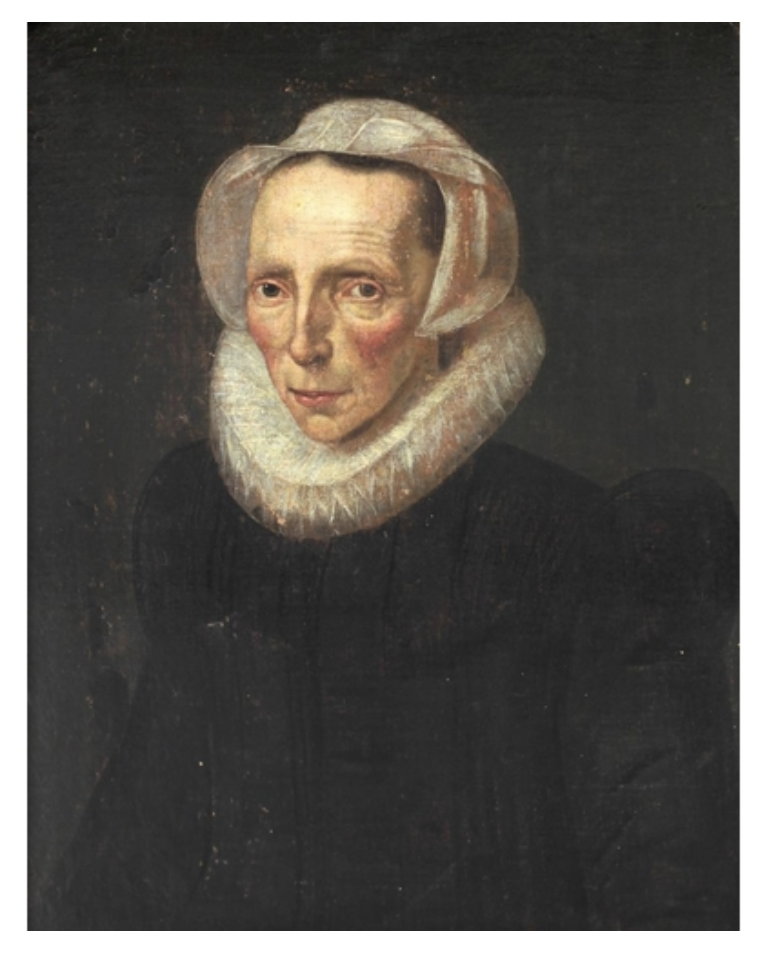
Late 16th / Early 17th Century English School “Mrs. William Swifte” courtesy Fonsie Mealy Fortgranite auction.

Burke’s Landed Gentry of Ireland tells us that Francis Swifte, son of Henry of Sheffield, County York, was knighted in 1616 and died in 1642. Henry of Sheffield’s other son was Thomas, who was buried in Canterbury Cathedral, who married Margaret, daughter and heir of the Right Rev. Thomas Godwin, Bishop of Bath & Wells. Many generations of Swift after him had the forename “Godwin.” Thomas and Margaret had a son William, born in 1566, who was Rector of Herbaldown and who married Mary Philpott.

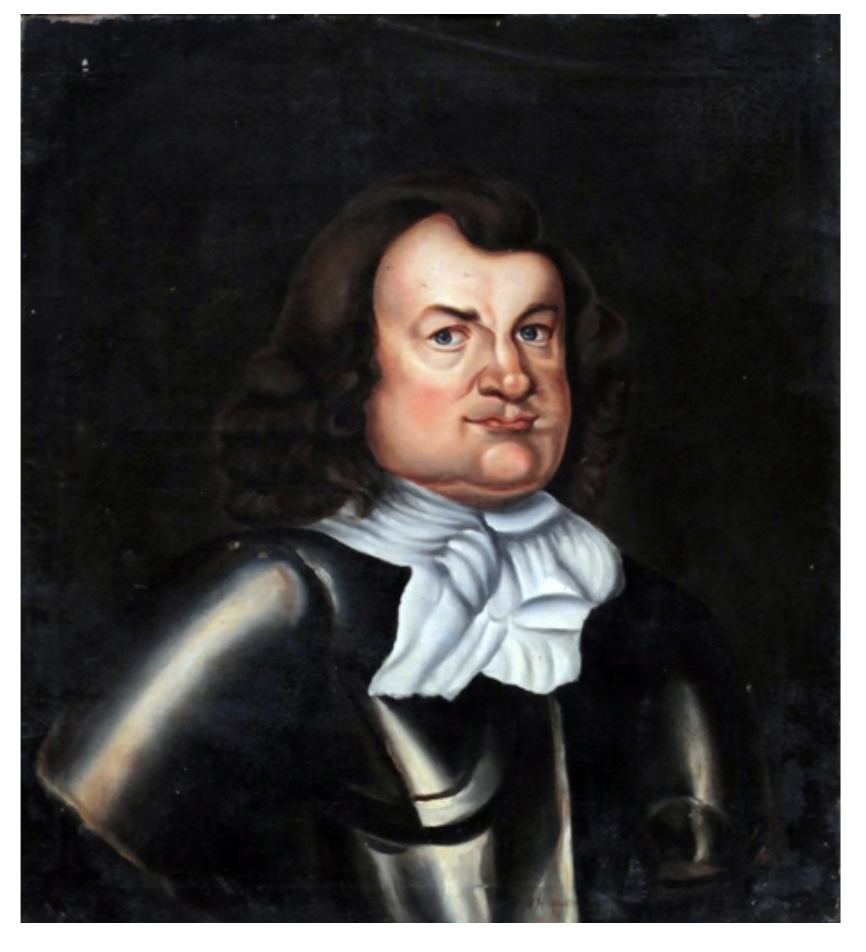
17th Century English School “Portrait of a Gentleman in Armour, Sir Francis Swifte,” courtesy Fonsie Mealy Fortgranite auction. Probably Francis Swifte, son of Henry of Sheffield, County York, was knighted in 1616 and died in 1642.
Reverend Thomas Swifte, 17th Century Irish School. He was born in Canterbury in 1561, and married Margaret, daughter and heir of the Right Rev. Thomas Godwin, Bishop of Bath & Wells. He was the son of Henry Swifte; courtesy of Fonsie Mealy’s Fortgranite auction. Many generations of Swift after him had the forename “Godwin.”
Late 16th / early 17th Century English School, “Right Reverend Thomas Godwin, courtesy Fonsie Mealy Fortgranite auction.

Thomas and Mary’s son Reverend Thomas (1595-1658) of Goodrich, Herefordshire, England, and Bristow, was ancestor of the Irish Swift family of Swiftsheath and Lionsden. He was devoted to King Charles I and the son of Charles I who was to become King Charles II.

Thomas married Elizabeth Dryden (c. 1605-1658). They had many children, many of whom lived in Ireland. His son Jonathan (d. 1667) was a solicitor in Dublin, who married Abigail Erick of County Leicester, and they had a son, born after his death in Hoey’s Court, Dublin, right next to Dublin Castle, in 1667, also named Jonathan, the famed writer, Dean of St Patrick’s Cathedral in Dublin. He wrote many anecdotes about his grandfather in his manuscript The Family of Swift which is preserved in the library at Trinity College, Dublin (I must go to see it!). He died in 1745.

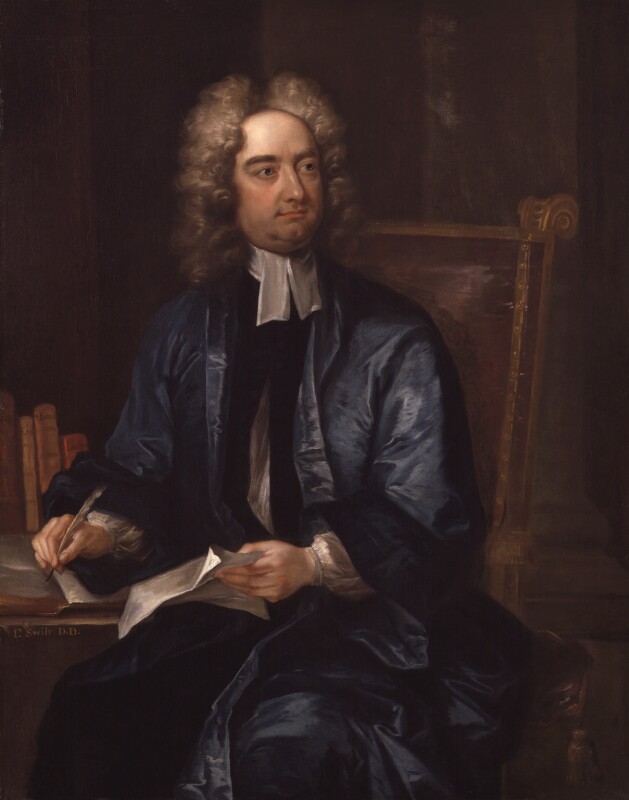
Jonathan Swift (1667-1745) by Charles Jervas circa 1718, National Portrait Gallery in London, 278.
Portrait of Dean Swift attributed to Rupert Barber (1719-1772), courtesy of Adam’s auction 12 May 2013. This must be Jonathan Swift who died in 1745, Dean of St. Patrick’s Cathedral.
Portrait of Stella courtesy of Adam’s auction 12 May 2013, attributed to Rupert Barber (1719-1772).
“Portrait of Esther Johnson (Stella),” Late 18th / Early 19th Century after James Latham (1696 – 1747) courtesy of Fonsie Mealy Fortgranite sale.

Reverend Thomas Swift (1595-1658) had another son, Godwin Swift (d. 1695), who was Attorney-General to the Duke of Ormonde, and married four times. Geoffrey Marescaux tells us that Godwin Swift paid the famous Jonathan Swift’s school fees. His heir was child of his second wife, Katherine Webster, Godwin Swift (1672-1739), later of Dunbrow, County Dublin and Swiftsheath, County Kilkenny. For information on Swiftsheath, see https://kilkennyarchaeologicalsociety.ie/wp-content/uploads/2021/03/OKR1978-356-Geoffrey-Marescaux-Swiftes-Heath.pdf

Godwin Swift (1672-1739) married his cousin, Elizabeth, who was daughter of another son of Reverend Thomas Swift Vicar at Goodrich and Elizabeth née Dryden, William, who had land in Carlow, Kilkenny, Leitrim and Roscommon.

Godwin Swift (1672-1739) and Elizabeth had a son Godwin who inherited Swiftsheath and also owned Tidenton, County Kilkenny. He married a cousin, Elizabeth Swift, who was daughter of Deane Swift (c. 1674-1714) of Castle Rickard, County Westmeath. Deane Swift (c. 1674-1714) was another son of Godwin Swift Attorney-General to the Duke of Ormonde, by his 3rd wife, Hannah Deane.

Their son Godwin Swift (c. 1734-1815) lived in Swiftsheath and Lionsden, County Meath. He also married a cousin, Maria Swift, daughter of Deane Swift (c. 1707-1783) and Mary née Harrison, daughter of Theophilus Harrison. To add confusion to the family tree, Theophilus Harrison, Reverend of Clonmacnois, married twice, and one of his wives, Eleanor Meade, daughter of William Meade Lt Col of Ballintober, County Cork, had been previously married to Godwin Swift Attorney-General to the Duke of Ormonde as his fourth wife! Mary Harrison’s mother was Theophilus Harrison’s second wife, Martha Swift – yes, another Swift! She was the daughter of Adam Swift of Greencastle, County Down, who was another son of Thomas Swift Vicar at Goodrich and Elizabeth née Dryden.

Reverend Deane Swifte, 17th Century Irish School, cousin and biographer of Dean Jonathan Swift. This is be Deane Swift (1703-1783), son of Deane Swift of Castle Rickard, County Westmeath. His great grandfather was a Regicide, ie. signed the death warrant of King Charles I, but fortunately died before Charles II was restored to the throne, according to Jonathan Swift!
Admiral Richard Deane (Regicide) 17th Century English School courtesy Fonsie Mealy Fortgranite auction. The Fonsie Mealy site adds: “Note: Major Joseph Deane (Inistiogue, 1661-66), of Crumlin, County Dublin, and Ballicocksoust, County Kilkenny (formerly the estate of Richard Strange), was the youngest son of Edward Deane, of Pinnock, Gloucestershire, by his 2nd wife, Anne Wase, and was born at Pinnock, 2nd February, 1624. His elder brother, Colonel Richard Deane, a leading member of the Republican party, was one of the Judges who sat on the trial of Charles I, and signed the death warrant of the King. Colonel Richard Deane was entrusted with the settlement of Scotland, which he speedily effected by his temperance and sagacity. He was next appointed one of the “Generals at Sea”, having for his colleague the famous Robert Blake, but was killed in action against the Dutch on 2nd June, 1653. He was honoured with a public funeral and buried in Henry VII’s Chapel at Westminster, but in 1661 his body (being that of a Regicide) was exhumed and cast out of the Abbey. Joseph Deane was educated at Winchester School, and entered the Parliamentary Army as Cornet in Rainsborough’s Horse. He volunteered for service in Ireland under Oliver Cromwell, in whose army he held the rank of Major. Under the Act of Settlement he had two grants of land (16th January, 1666, and 22nd June, 1669), comprising 9,324 statute acres, situated in the counties of Meath, Down, and Kilkenny, 3,859 acres being in Kilkenny. He purchased from Richard Talbot (afterwards Earl and Duke of Tyrconnell) the Manor of Terenure, in county Dublin, for œ4,000. He was named on some important committees of the House of Commons, but was fined œ10 for absence on 31st January 1665. In 1664 he paid 4s. hearth money for “Ballicagbsust”. In 1677 he served as High Sheriff of county Dublin. He died 21st December, 1699, having been twice married. By his 1st wife Anne —-, he had one son and two daughters – Joseph, of Crumlin, whose son, Joseph, became Lord Chief Baron of the Exchequer, and died without male issue. (1) Anne, married in May, 1673 (as his 3rd wife), Godwin Swift, Attorney-General to the Duke of Ormonde. (2) Elizabeth, married 1st in May, 1672, Captain Henry Grey; 2nd in July, 1677, Donogh O’Brien, of Lemenagh, County Clare. Major Deane married, 2ndly, in 1659, Elizabeth, daughter of Maurice Cuffe, and sister of Captain Joseph Cuffe, of Castle Inch, elected M.P. for Knocktopher in 1665, and by her, who died 3rd April, 1698, had a son and a daughter – Edward whom hereafter M.P. for Inistiogue; and Dorothy, married Maurice Berkeley, of Glasnevin county Dublin.THE MEMBERS OF PARLIAMENT FOR THE COUNTY, CITY AND BOROUGHS OF KILKENNYBY G.D. BURTCHAELL, M.A., LL.B [Written for the KILKENNY MODERATOR]
Mrs Godwin Swifte of Swifte’s Heath, courtesy of Fonsie Mealy’s Fortgranite sale.

Godwin Swift (c. 1734-1815) of Swiftsheath and Lionsden and his cousin, Maria Swift had another son called Godwin Swift (c. 1779-1814), of Lionsden. This Godwin Swift married yet another cousin, Jane Sophia Swift (1785-1851), in 1803. She was the daughter of Richard Swift (1750-1796) who was the son of John L’Estrange Swift (1709-1793) of Lynn, County Westmeath, who was the son of Meade Swift (1682-1739) of Lynn, County Westmeath, who was the son of Godwin Swift Attorney-General to the Duke of Ormonde and Eleanor née Meade!

Jane Sophia Swift (1785-1851) married secondly, in 1818, Louis Auguste Alexander, Comte Lepelletier de Molende.

Countess Molende née Swift and her granddaughter Luigina de Sadre, Gifted by the artist to W.R. Swifte as a token, as his predecessor Jonathan Swifte served as Rector at Agher Church from 1699 – 1745, courtesy Fonsie Mealy Fortgranite auction.

Godwin Swift (c. 1779-1814), of Lionsden and Jane Sophia Swift (1785-1851) had a son Godwin Meade Pratt Swift (1805-1864) of Swiftsheath and Lionsden.

Identified as “Godwin Pratt Meade Swifte Lord Carlingford (m. MJ Clarke), Leahy, Dixon & Mulvanney, 19th Century Irish School, standing in a landscape by a grey horse with Foulksrath Castle, Co. Kilkenny in the distance”, courtesy of Fonsie Mealy Fortgranite. Godwin Meade Pratt Swift (1805-1864) of Swiftsheath and Lionsden married Mary Jane Clarke of Bansha Castle, County Tipperary. He took the title Viscount Carlingford.
Jane Christina Swifte (1810-1854), the wife of “Chevalier Sergio Demacdo, Minister Plenipotentiary of HM Emperor of Brazil,” Early 19th Century Irish School, courtesy Fonsie Mealy Fortgranite. She was the daughter of Godwin Swift of Lionsden and Jane Sophia.

Godwin called himself Viscount Carlingford, reviving a title created in 1627 for another branch of the Swift family. Godwin also added the “e” back to the end of the name Swift. He married first, Maria Theresa Plankenstern, Baroness de Wetzlar of Austria at Paris in 1830 after the birth of their son Ferdinando. [see https://www.youwho.ie/swifte.html ].

Godwin secondly married Jane Anne Hopkins on 18 Mar 1845 at Liverpool after an non legal
ceremony some years earlier. Godwin returned with his family from the continent in 1845 to take
up residence at Swiftesheath. Jane died at Lionsden, Castle Rickard in 1848 and was buried in the
family vault. Godwin thirdly married Mary Jane Clarke on 4 Feb 1863 at Kilkenny and declared himself a widower. Mary was the daughter of Robert Hare Clarke. Godwin died 4 Jul 1864.

He created a flying machine which he hoisted to the top of Foulkesrathe Castle, which stood on the property of Swiftesheath, but it failed to fly and a butler who was piloting the plane broke a leg in his fall.

Identified as Pratt Swifte, Early 19th Century Irish School, courtesy of Fonsie Mealy Fortgranite sale.
Mrs. Swifte, grandmother of Thomas Dennis courtesy Fonsie Mealy Fortgranite Auction.
19th Century Irish School, Portrait of Mrs. Godwin Swifte courtesy Fonsie Mealy Fortgranite auction. There were so many Godwin Swifts it is hard to identify the sitter.
Godwin Butler Meade Swifte (1864-1923) son of “Viscount Carlingford,” wearing uniform of the High Sheriff of Kilkenny, seated holding a sword, D.L. was the High Sheriff of Kilkenny and later Carlow, and resided at Swifte’s Heath, Co. Kilkenny, courtesy of Fonsie Mealy Fortgranite.
Ernest Godwin Swifte K.C., with a companion painting of Lady Francis Swifte courtesy of Fonsie Mealy Fortgranite sale. He was the son of William Richard Swift (1807-1890), son of Godwin Swift of Lionsden and Jane Sophia.
Lady Francis Swifte,” with a companion painting of Ernest Godwin Swifte K.C., courtesy of Fonsie Mealy Fortgranite sale. Perhaps it is Ernest Godwin’s sister Julia Frances Swift, who did not marry.

Portraits J-K

J

Colonel George Jackson (1761-1805), MP for County Mayo. Photograph © Jennifer Winder-Baggot, www.irishhistorichouses.com
A portrait of Jane Cuffe, daughter of James Cuffe of Ballinrobe, County Mayo, wife of George Jackson (1717-1789). Photograph © Jennifer Winder-Baggot, www.irishhistorichouses.com
Madeline Jackson (abt 1816-1899) of Enniscoe. Photograph © Jennifer Winder-Baggot, www.irishhistorichouses.com
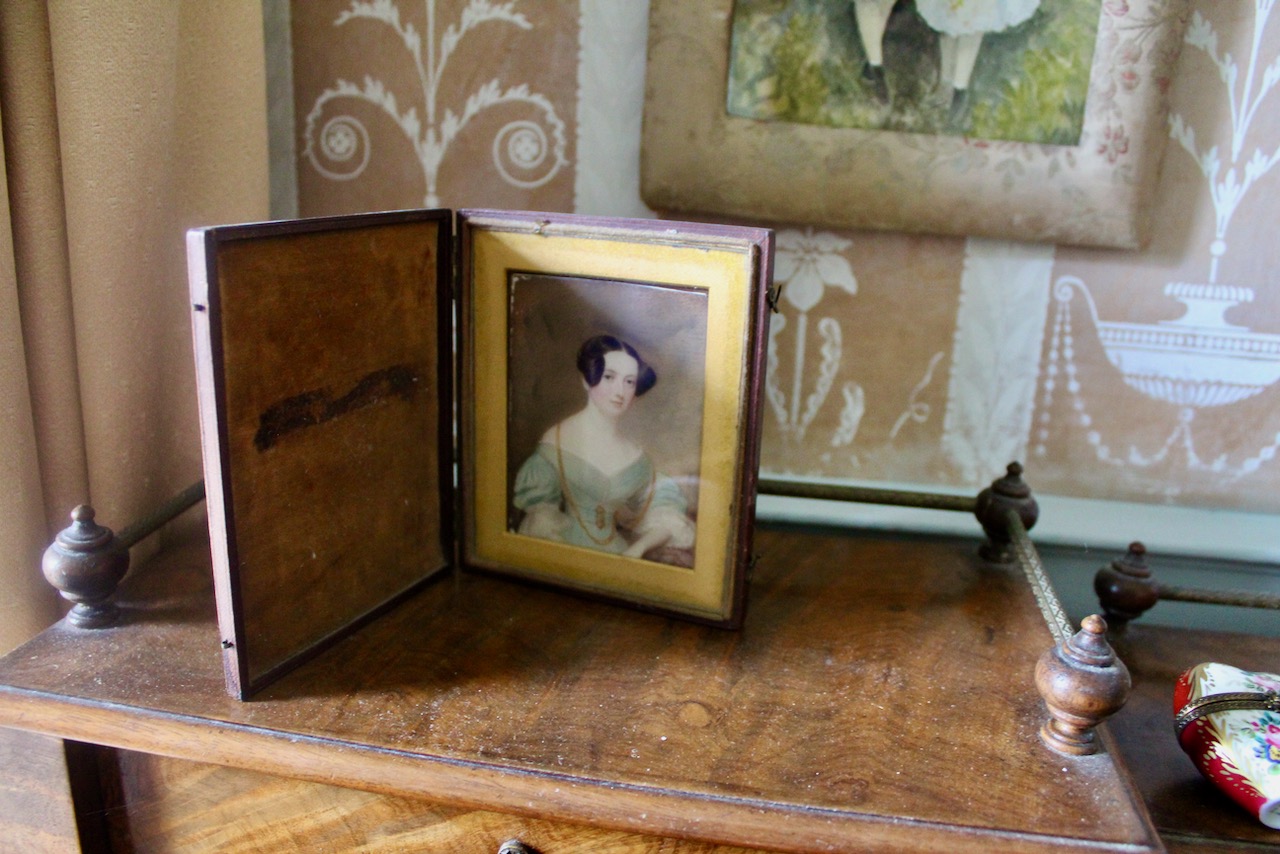
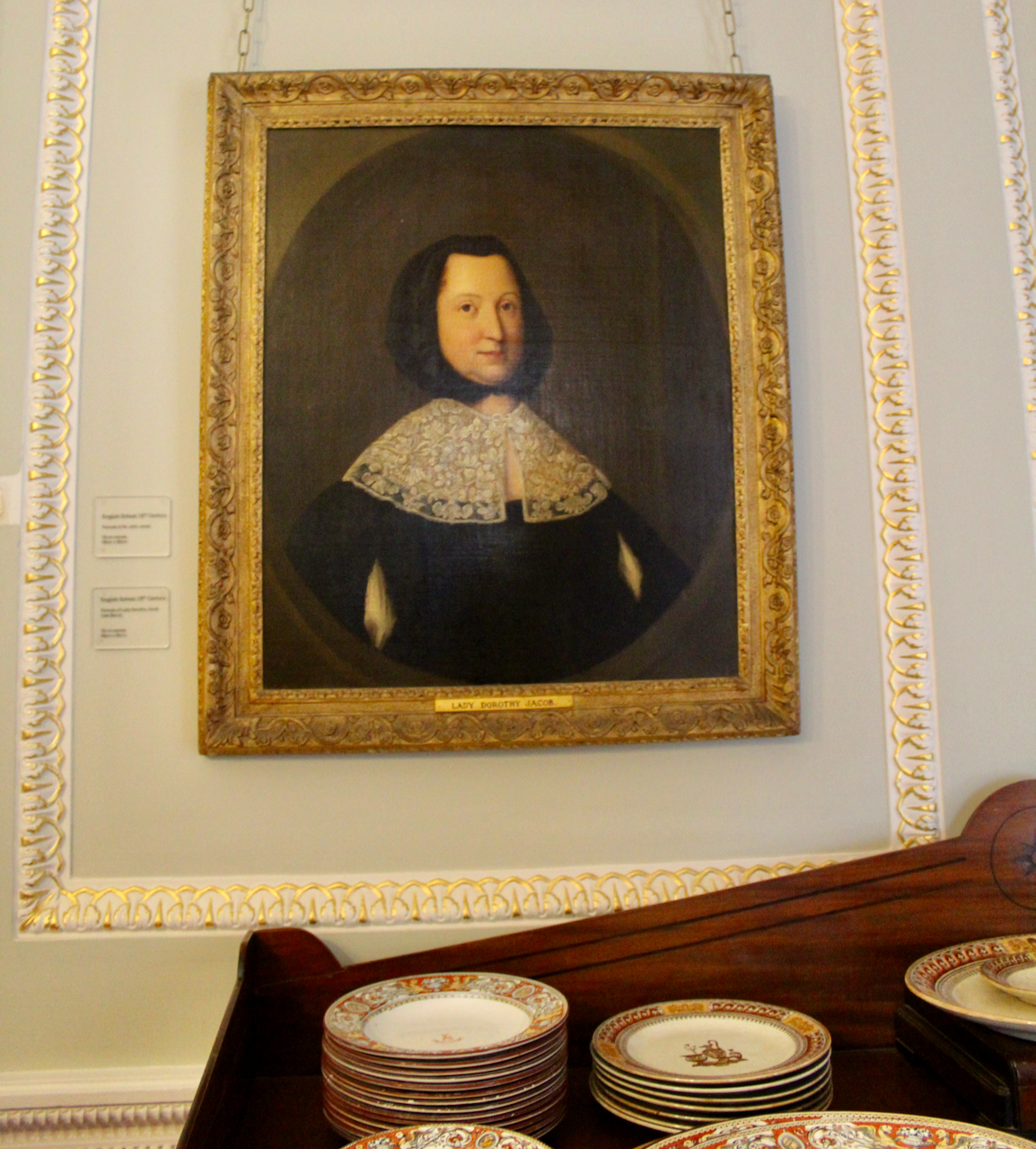
Dorothy née Barry (1670-1748), married John Jacob 3rd Bt of Bromley. She was the daughter of Richard Barry 2nd Earl of Barrymore. Photograph © Jennifer Winder-Baggot, www.irishhistorichouses.com
John Jacob 3rd Bt of Bromley, Essex. Photograph © Jennifer Winder-Baggot, www.irishhistorichouses.com
John Jameson (1740-1823), Whiskey Distiller, c. 1820 by Henry Raeburn, National Gallery of Ireland. Photograph © Jennifer Winder-Baggot, www.irishhistorichouses.com
John Jameson by Stephen Catterson Smith courtesy Christies 2006
Mary Ann Cavendish Bradshaw also known as the Countess of Westmeath. Portrait painted by Sir Thomas Lawrence in 1806. She was born Marianne Jeffreys, and married George Frederick Nugent, the 7th Earl of Westmeath and she became the Countess of Westmeath. In 1796 in a sensational court case she divorced Nugent and soon after married Augustus Cavendish Bradshaw.
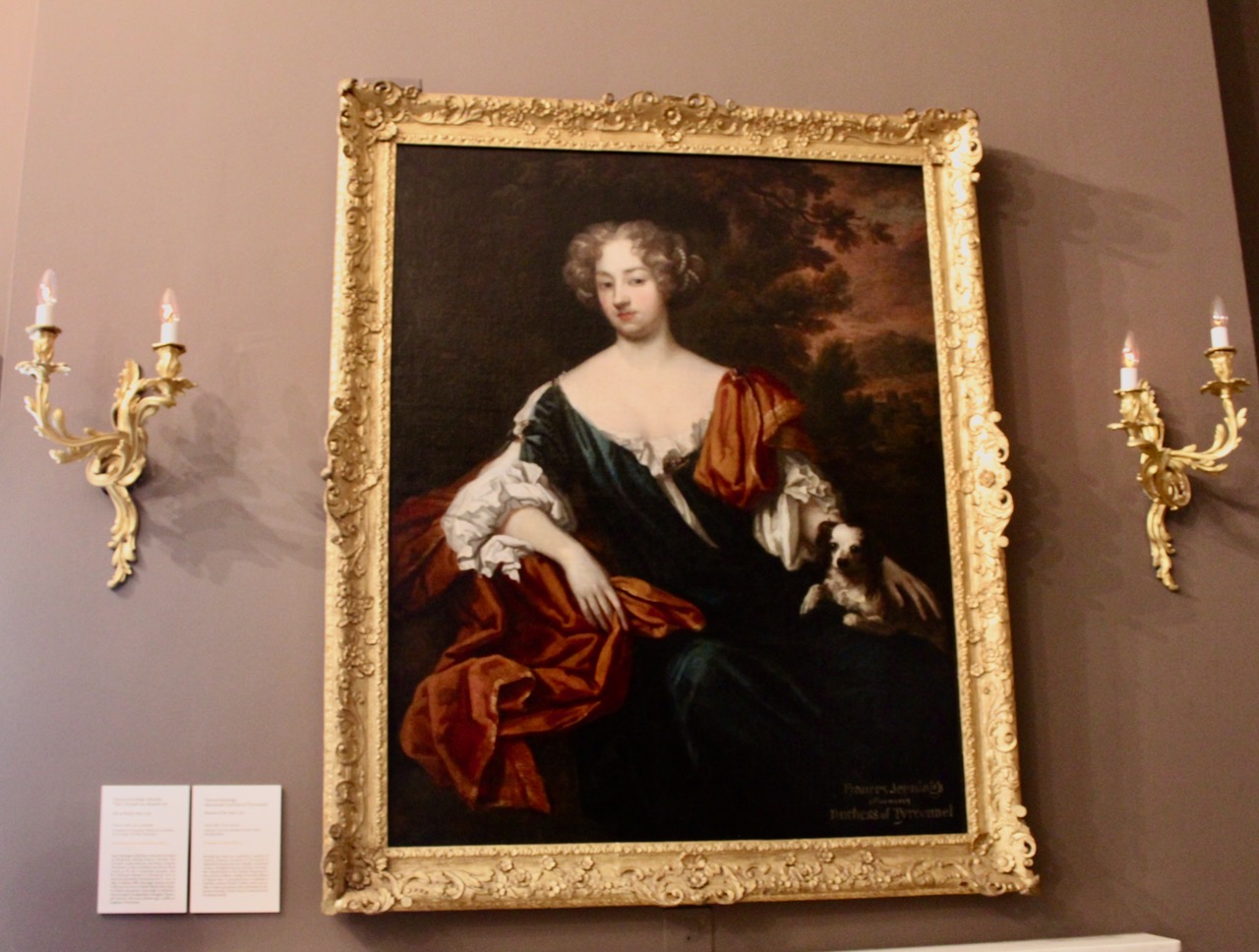
Frances Jennings (1647-1730), Vicereine of Ireland 1687-89, Duchess of Tyrconnell. She was married to Richard Talbot, 1st Duke of Tyrconnell (1630-1691). Photograph © Jennifer Winder-Baggot, www.irishhistorichouses.com
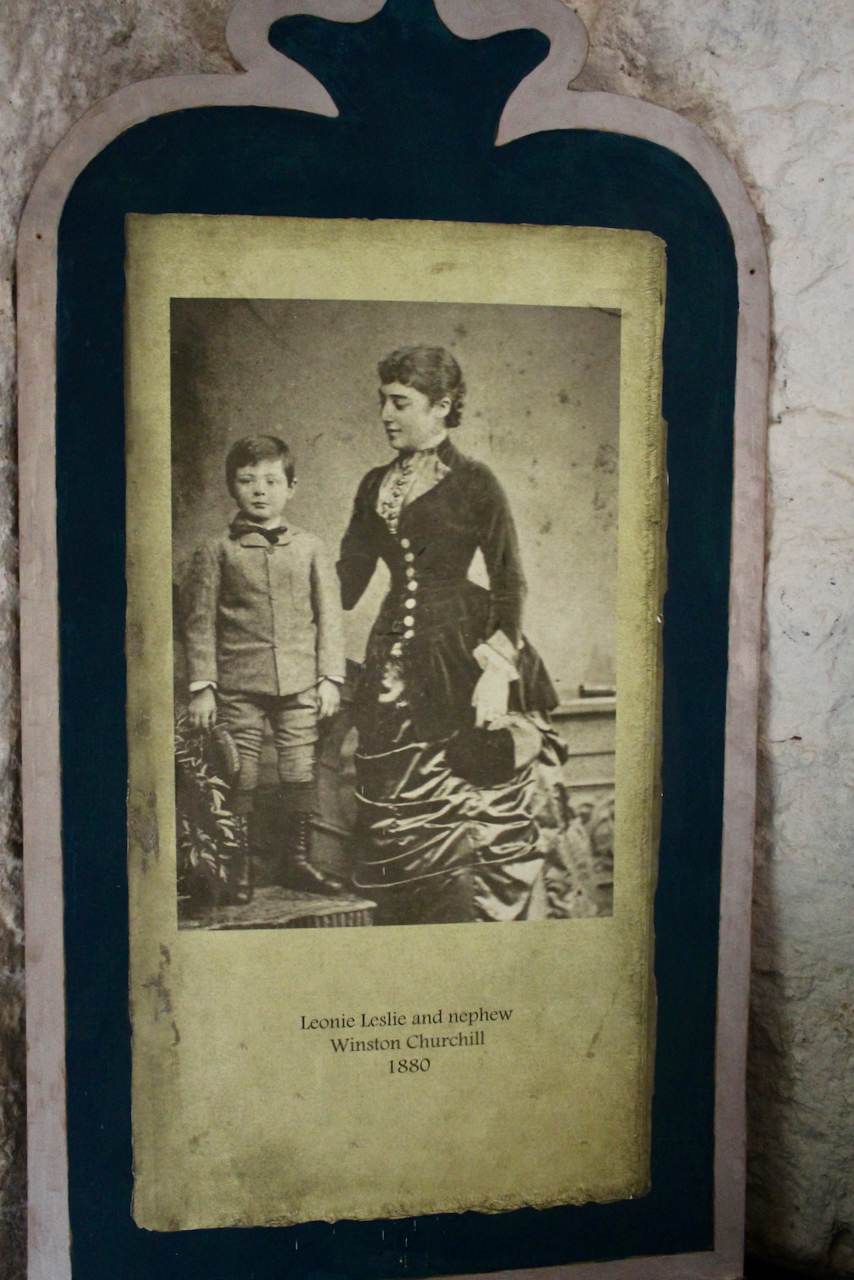
Leonie Leslie (1859-1943), Shane Leslie’s mother. Originally Leonie Jerome, her sister Jennie was Winston Churchill’s mother. Photograph © Jennifer Winder-Baggot, www.irishhistorichouses.com
Charles Jervas (1675-1739) by Thomas Priscott after Gerard Vandergucht, courtesy of National Portrait Gallery NPG D8359.
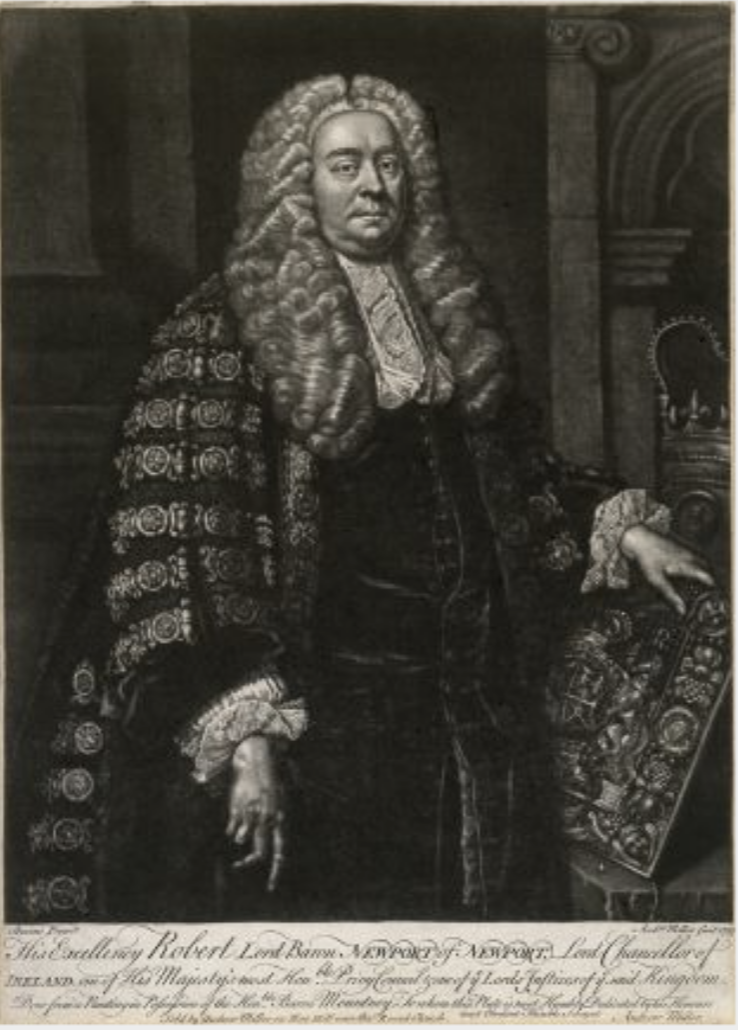
Robert Jocelyn, Baron Newport (c.1688-1756), Lord Chancellor of Ireland, later 1st Viscount Jocelyn Date 1747 Engraver Andrew Miller, English, fl.1737-1763 After Justin Pope-Stevens, Irish, fl.1743, d.1771, courtesy of National Gallery of Ireland.
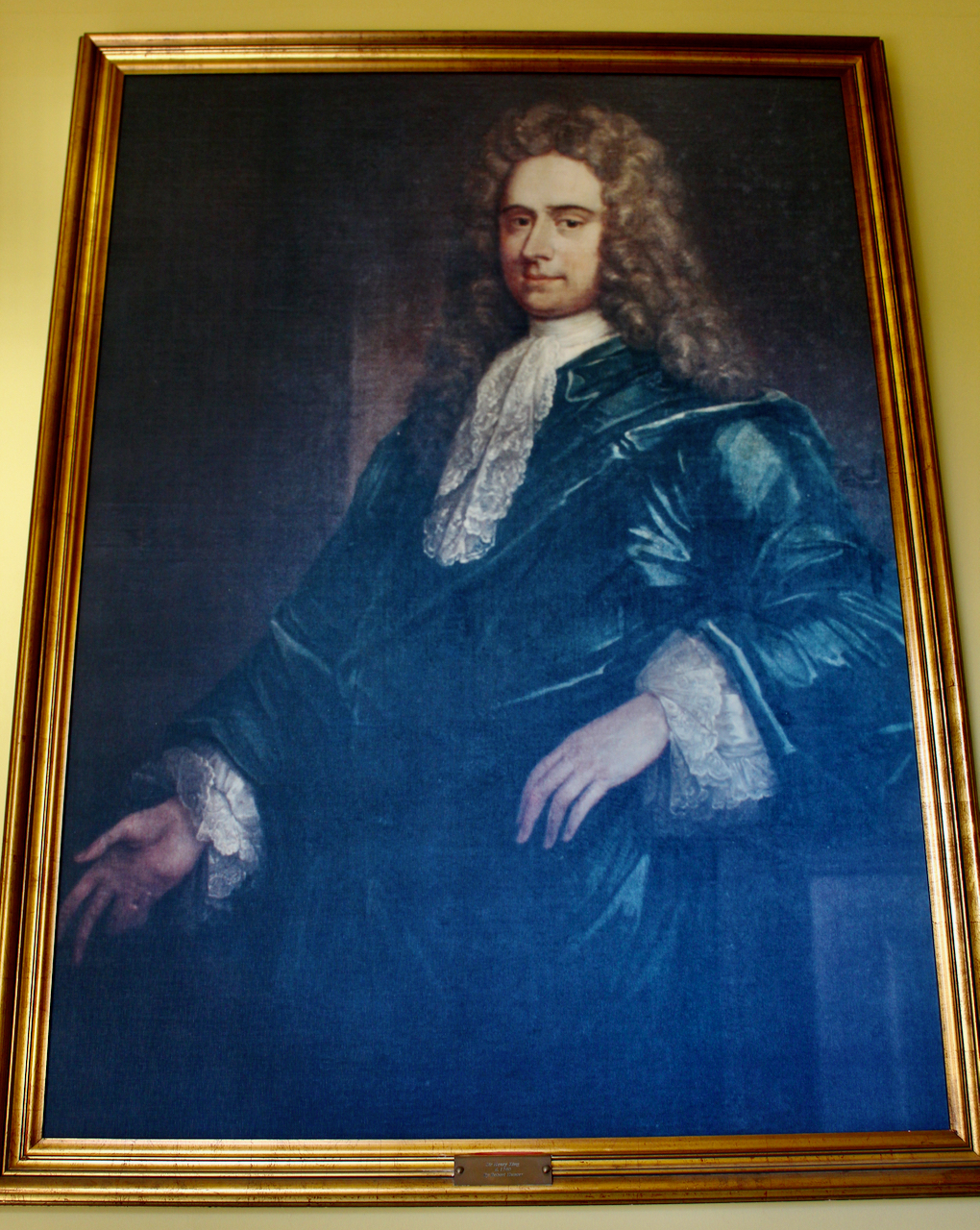
Robert Jocelyn (1688? – 1756) Viscount Jocelyn, Lord Chancellor of Ireland,by STEPHEN SLAUGHTER (1697-1765), Adams auction 26th April 2022.
Robert Jocelyn (1688? – 1756) Baron Newport and 1st Viscount, as Lord High Chancellor of Ireland Irish school courtesy of National Trust Castle Ward.
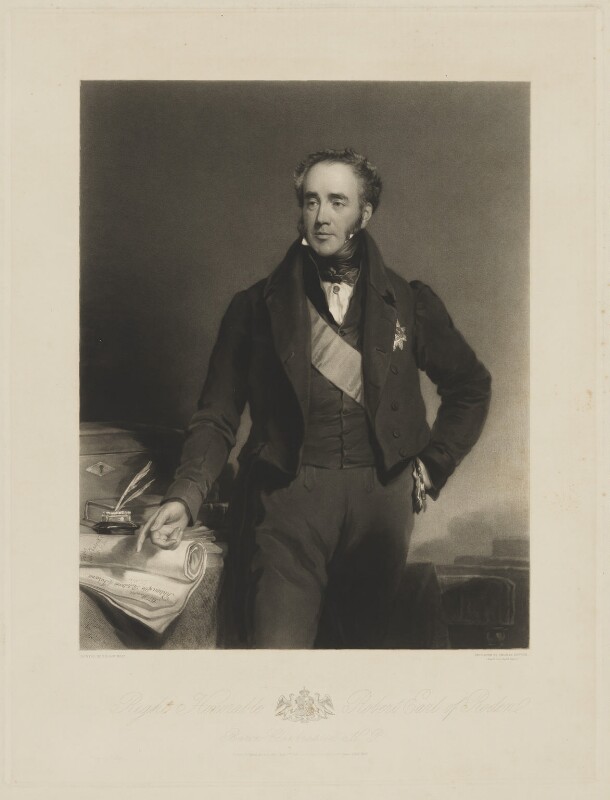
Robert Jocelyn (1788-1870) 3rd Earl of Roden, by Thomas Goff Lupton, printed by R. Lloyd, published 28 April 1839 by Hodgson & Graves, after Frederick Richard Say, courtesy of National Portrait Gallery NPG D39829.
Elizabeth Jocelyn (1813-1884), Marchioness of Londonderry, formerly Viscountess Powerscourt, by James Rannie Swinton, courtesy of Mount Stewart National Trust. She was married to the 6th Viscount Powerscourt. She was the daughter of Robert Jocelyn 3rd Earl of Roden. After her husband’s death she married Frederick William Robert Stewart, 4th Marquess of Londonderry, of Mount Stewart, County Down
Attributed to Adam Black, Portrait of a Gentleman, believed to be Mr. J.J. Johnston, Warrenstown, Co. Meath courtesy Adam’s auction 9 Oct 2012.

In 1847, the Johnson family of Warrenstown changed their surname from MacShane to Anglicized Johnson. Christopher Johnson married Anne, daughter of Michael Warren of Warrenstown, County Meath. Their son John married Catherine Nangle. [1]

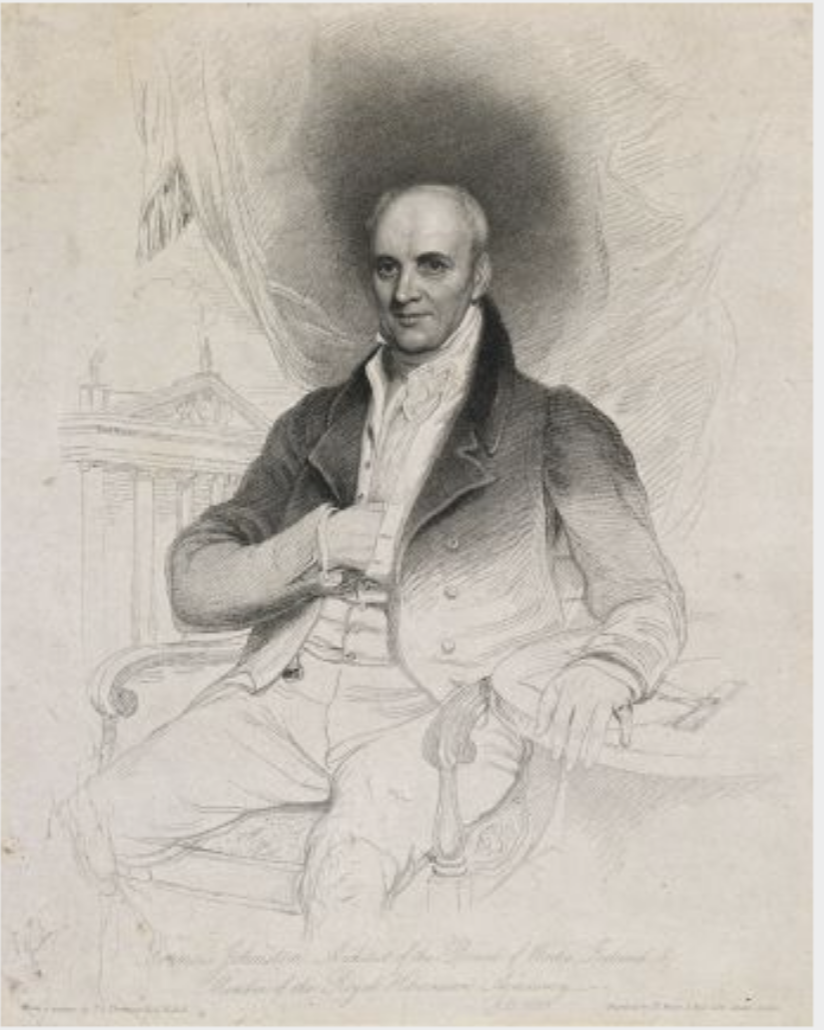
Francis Johnston (1761-1829), 1823 by engraver Henry Hoppner Meyer after Thomas Clement Thompson, courtesy of National Gallery of Ireland.
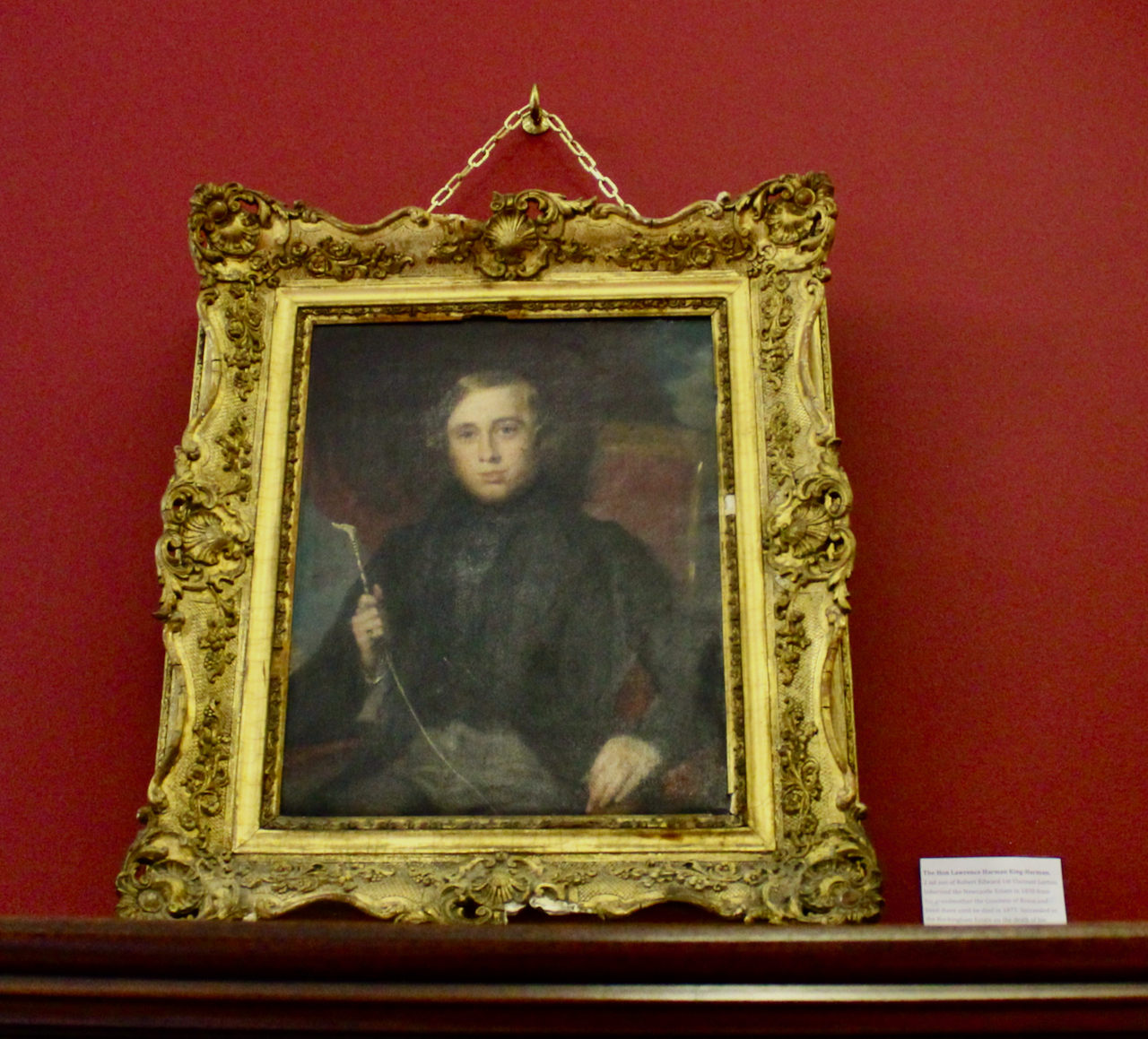
Mary Cecilia, 6th daughter of Thomas Reymond Johnstone of Alva. Married May 1837 Laurence Harman King-Harman, 2nd son of Robert Edward 1st Viscount Lorton. She lived at Newcastle until her husband’s death in 1875 and then in London when she died in 1904. Photograph © Jennifer Winder-Baggot, www.irishhistorichouses.com
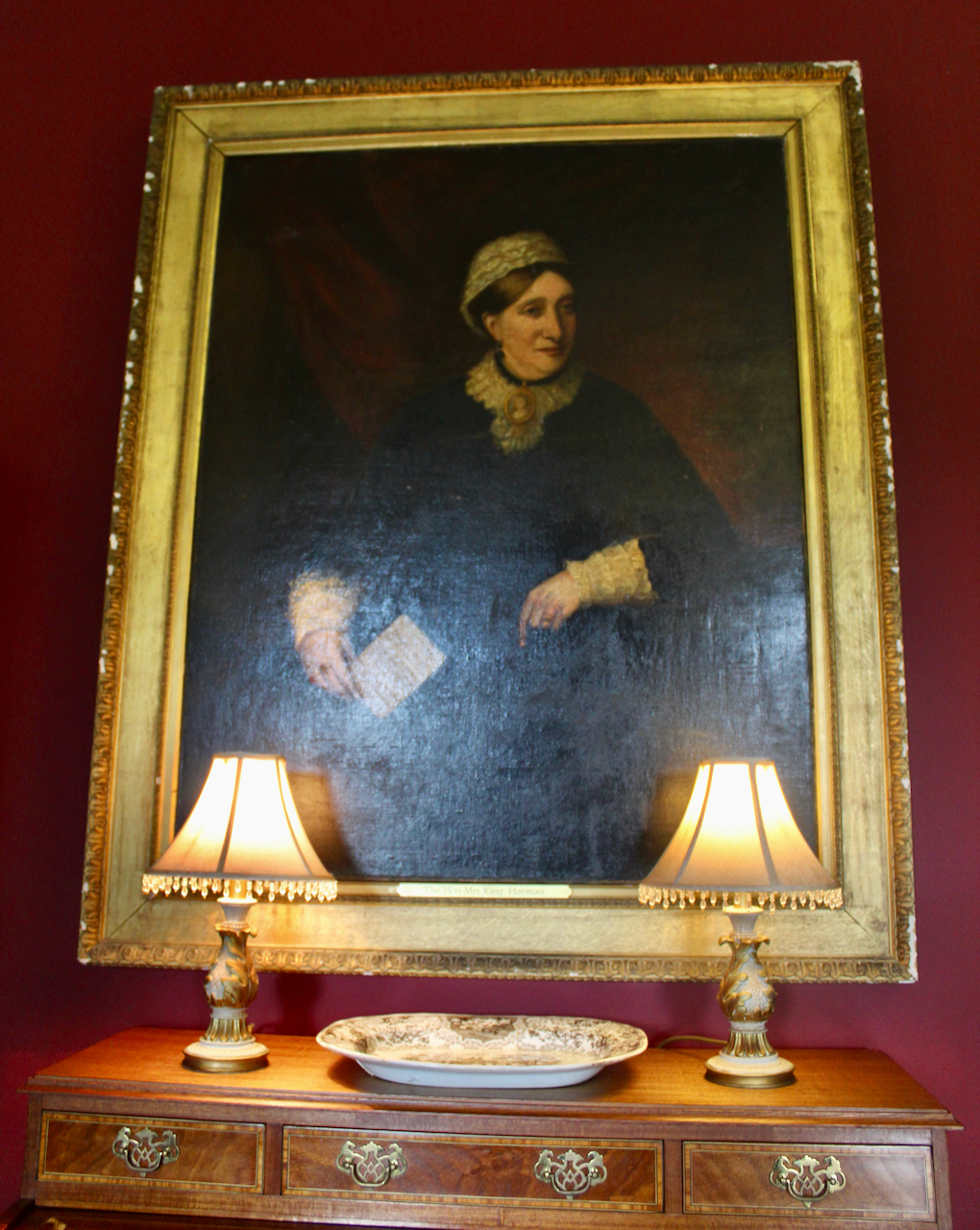
This painting just identifies the sitter as Mrs King-Harman. She is probably Laurence Harman King-Harman’s wife Mary Cecilia née Johnstone, in later life. Photograph © Jennifer Winder-Baggot, www.irishhistorichouses.com
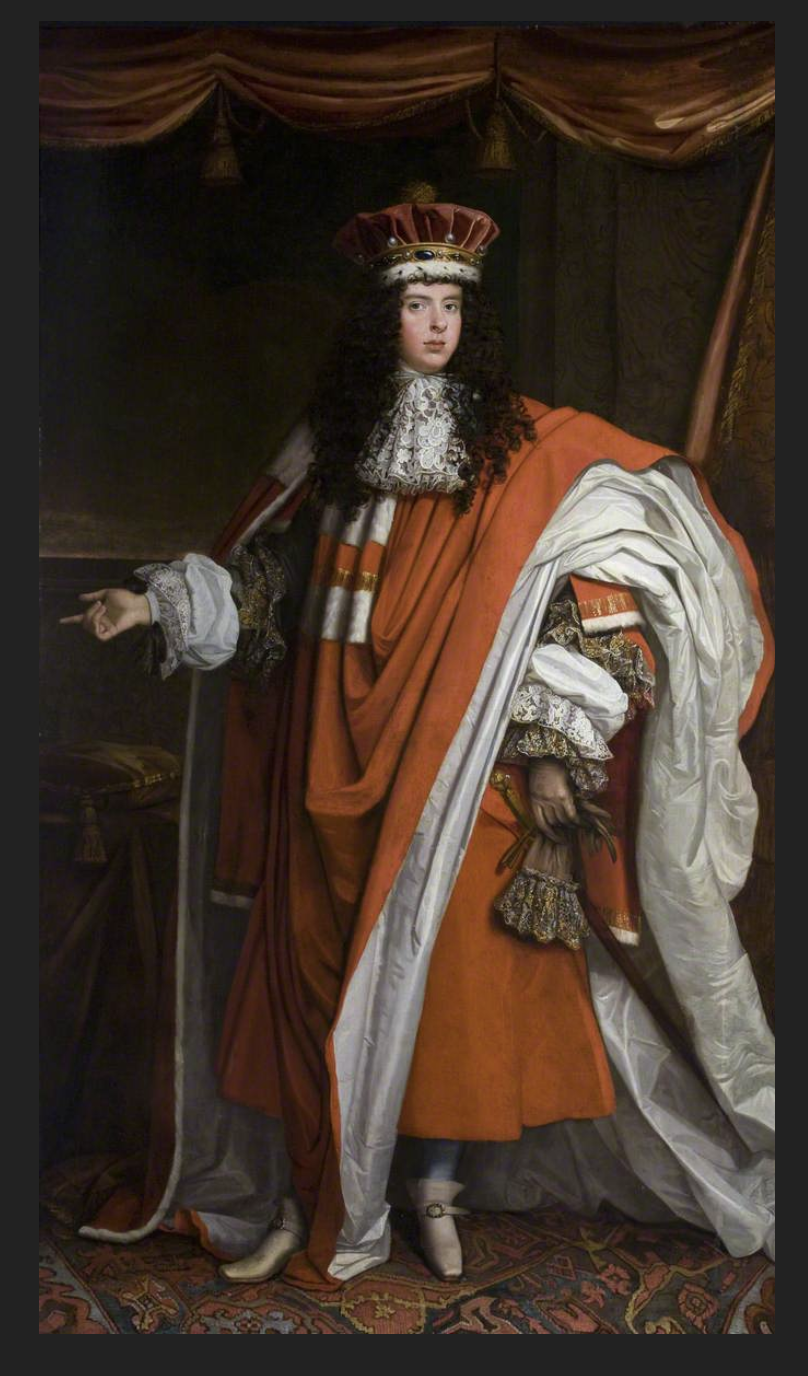
Richard Jones (1636 – 1712) 3rd Viscount and 1st Earl of Ranelagh, style of Sir Godfrey Kneller (Lubeck 1646/9 – London 1723), circa 1700. A three-quarter-length portrait, turned to right, head facing, left hand on hip. Wearing armour, jabot, blue cloak and full bottomed wig. A grisaille painting in background. He was the son of Arthur Jones, 1st Viscount Ranelagh in the Irish peerage and succeeded as 3rd Viscount in 1669 and became Chancellor of the Irish Exchequer in 1668; farmed Irish revenues, 1674-81; Paymaster-General of the Forces, 1691-1702; Richard Hill of Hawkstone (1654-1727) was his Deputy Paymaster in Flanders for six years. Jones was dismissed for embezzlement, was convicted of defalacation, but escaped prosecution; he spent all his ill-gotten money on fine houses and gardens. The Ranelagh pleasure-grounds were laid out on his former estate in Chelsea. He sat in the English parliament between 1685 and 1703. He married firstly The Hon. Elizabeth Willoughby and secondly Lady Margaret Cecil. Courtesy of National Trust Attingham Park.
Margaret Jones née Cecil (1673-1727) Countess of Ranelagh, 2nd wife of Richard Jones 1st Earl of Ranelagh Engraver: John Smith, English, 1652-1743 After Godfrey Kneller, German, 1646-1723, courtesy of National Gallery of Ireland.
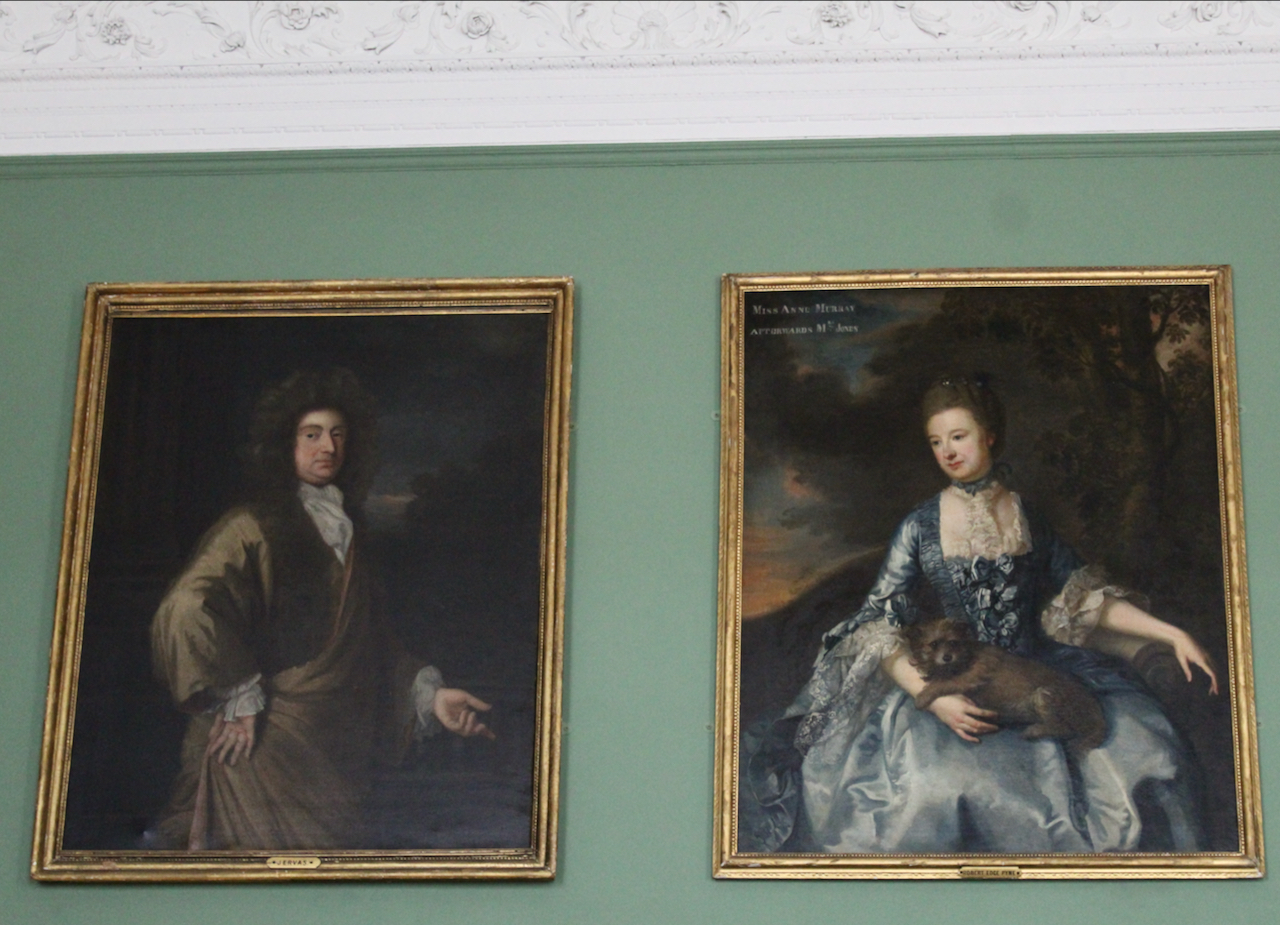
Anne Murray (1734-1827) who married Theophilus Jones (1725-1811). Photograph © Jennifer Winder-Baggot, www.irishhistorichouses.com

K

Angelica Kauffmann (1741-1807) by Angelica Kauffmann, oil on canvas, circa 1770-1775, courtesy of National Portrait Gallery NPG 430.
Arthur MacMorrough Kavanagh, M.P., (1831-1839), Politician and Sportsman Date after 1889 Engraver Morris & Co., courtesy of National Gallery of Ireland.
General John Keane (1781-1844), 1st Baron Keane of Ghuznee in Afghanistan and Cappoquin, Co. Waterford, by Martin Arthur Shea. Photograph © Jennifer Winder-Baggot, www.irishhistorichouses.com
Dorothy Scott (1765-1837) second wife of John Keane, 1st Baronet, by George Romney courtesy of Philadelphia Museum of Art.
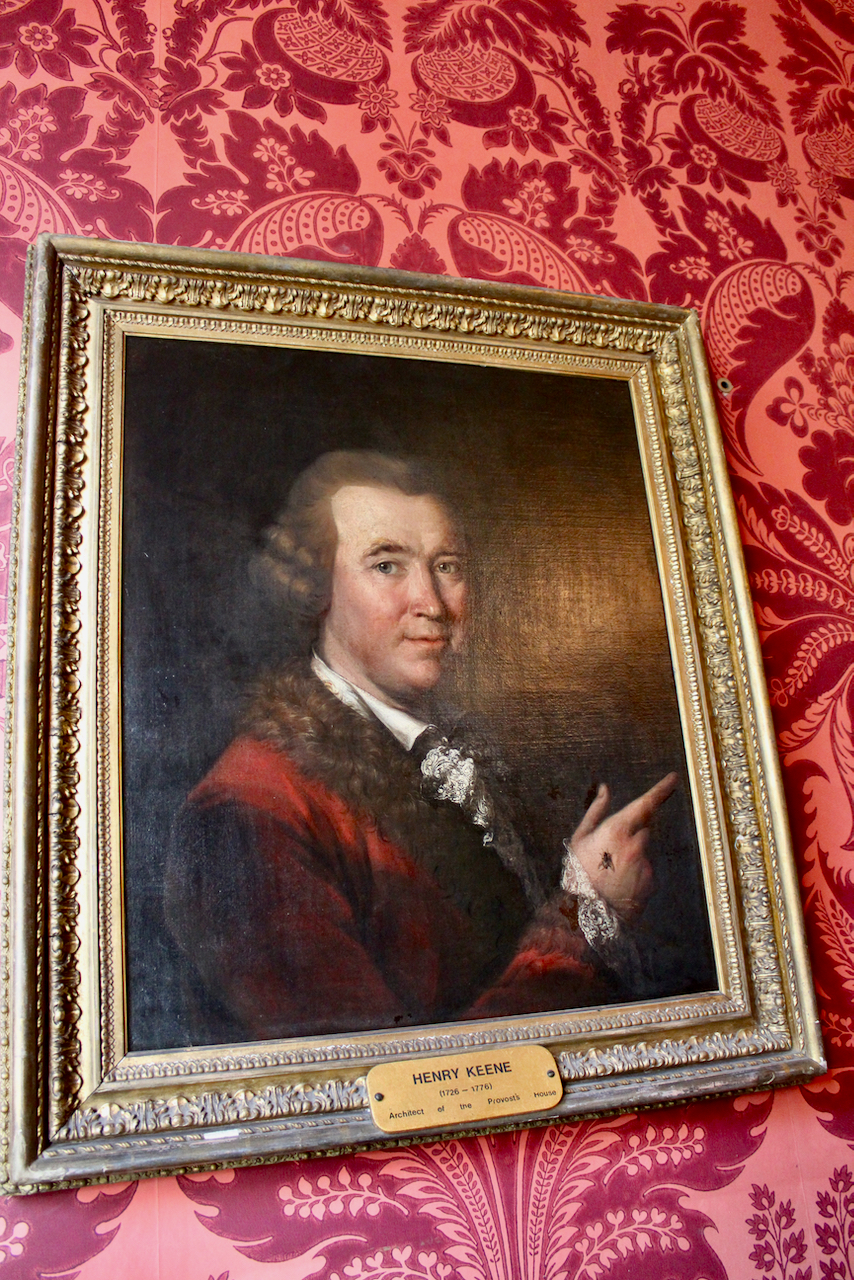
Henry Keene (1726-1776), architect of the Provost’s House, Trinity College Dublin. Photograph © Jennifer Winder-Baggot, www.irishhistorichouses.com
Anne Keene, wife of Henry, architect of the Provost’s house. She looks rather worried. Photograph © Jennifer Winder-Baggot, www.irishhistorichouses.com
Rev. Thomas Kelly of Kellyville Athy, seated in his study, holding a book, by Maria Spilsbury Taylor. Courtesy of Adams auction 16 Oct 2018. Born in 1769 Thomas Kelly was the only son of Judge Thomas Kelly of Kellyville. Having initially intended to follow his father into the law he changed his mind taking holy orders in 1792. Ordained into the Church of England he returned to Ireland where he proved a popular evangelical preacher but soon fell out with Archbishop Fowler of Dublin who forbade him to preach in any church in the Dublin archdiocese. Kelly, in turn, established the Kellyites a fringe Anglican group much like the Plymouth Brethern or the Walkerites. Already a man of independent means, Kelly made an advantageous marriage to Ms Tighe of Rosanna which enabled him to establish meeting houses in Dublin, Athy, Portarlington, Wexford and Waterford. It is presumably through his wife that Rev. Kelly would have encountered Maria Spilsbury Taylor. She executed numerous commissions for the Tighes including portraits of various family members both at their home, Rosanna, in Co. Wicklow and their townhouse overlooking St Stephens Green in Dublin.
King Charles I, and below, a mistress of King Charles II, Louise Renée de Penancoët de Kérouaille, Duchess of Portsmouth, who was the mother of Charles Lennox, 1st Duke of Richmond. Photograph © Jennifer Winder-Baggot, www.irishhistorichouses.com
Robert King (1657–1693), 2nd Baron Kingston by John Michael Wright courtesy of Ulster Museum.

Robert King (d. 1657) lived in Boyle Abbey, County Roscommon. He married first, Frances, daughter of Henry Folliott, 1st Lord Folliott, Baron of Ballyshannon. Frances gave birth to a son, John King (1638-1676) who became 1st Baron Kingston; a second son, Robert (d. 1707) became 1st Baronet King, of Boyle Abbey, Co. Roscommon.

Robert King, (d. 1707) 1st Baronet of Boyle Abbey, County Roscommon from the circle of John Closterman, courtesy of “mutualart.com”

John King (1638-1676) 1st Baron Kingston married Catherine Fenton who gave birth to their heir, the 2nd Baron Kingston (1657–1693), who died unmarried, so the title passed to John (d. 1727/8) 3rd Baron Kingston.

John (d. 1727/8) 3rd Baron Kingston married Margaret O’Cahan.

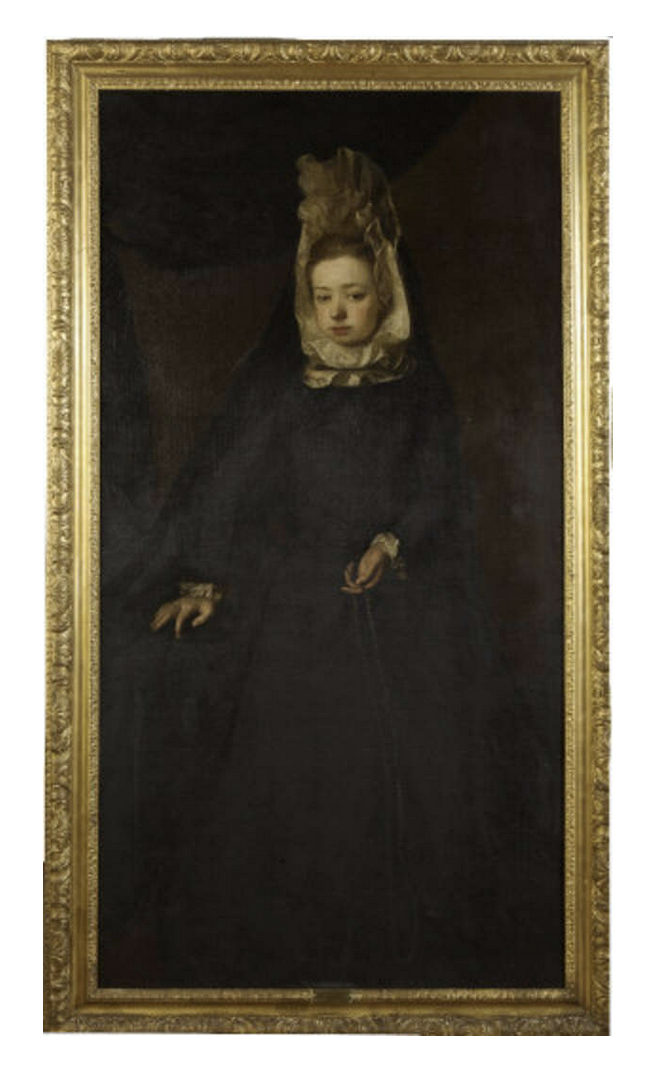
Margaret O’Cahan (c. 1662-1721), standing in a black habit, and holding a string of rosary beads, Attributed to Garret Morphy (c.1655-1715), courtesy Adam’s 6 Oct 2009 she married James King 3rd Baron Kingston.

The 3rd Baron’s daughter Catherine married George Butler, grandson of Edmund Roe Butler, 4th Viscount Mountgarret. His son James King (1693-1761) became 4th Baron Kingston. He married Elizabeth, daughter of John Meade, 1st Bt of Ballintubber, County Cork. She was the widow of Ralph Freke, 1st Bt.

Their daughter Margaret (d. 1763) married Richard Fitzgerald, son of Robert Fitzgerald, 19th Earl of Kildare. A son predeceased him, so on the 4th Baron’s death, the Barony of Kingston became extinct.

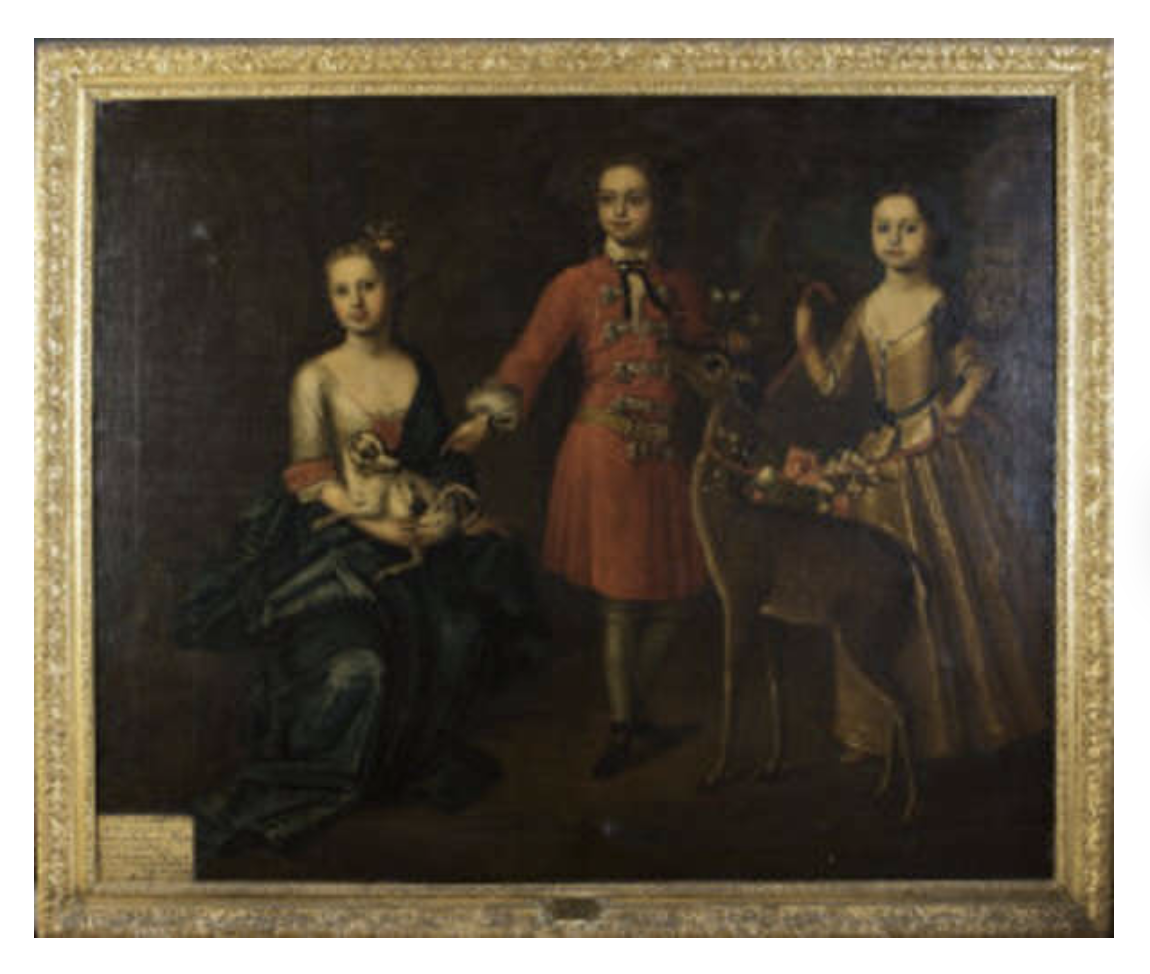
Jeremiah Barrett (d.1770) A conversation portrait of the Children, William, Elizabeth and Margaret King, of James 4th (last) Baron Kingston of Mitchelstown with a pet doe and dog courtesy of Adam’s 6 Oct 2009. The surviving daughter Margaret, daughter of Elizabeth Meade (Clanwilliam), inherited the vast Mitchellstown Estate of the White Knights. She married Richard Fitzgerald of Mount Ophally, and their only daughter Caroline married, as arranged, the 2nd Earl of Kingston thus uniting the two branches of the King family. Life at Mitchellstown was recorded by two famous employees of the Kings, Arthur Young the agriculturalist and Mary Wollstonecraft who probably sketched out the basis of Vindication of the Rights of Women whilst governess to the King children. It was not without excitement, in 1799 Lord Kingston shot dead Colonel Fitzgerald, his wife’s illegitimate half-brother in the hotel in Mitchellstown for abducting his 17 year old daughter Mary Elizabeth and his eldest daughter Margaret having married the 2nd Earl of Mount Cashell left him to befriend Shelley in Italy and is The Lady in ‘The Sensitive Plant’. Provenance: Rockingham House.

Robert King (d. 1707) 1st Baronet King, of Boyle Abbey, Co. Roscommon married Frances Gore, granddaughter of Paul Gore, 1st Baronet Gore, of Magherabegg, Co. Donegal. Their daughter Mary married Chidley, son of Richard Coote, 1st Lord Coote, Baron of Coloony. A son John became 2nd Baronet but died childless and the title passed to his brother Henry (d. 1739/40) who became 3rd Baronet of Boyle Abbey, Co. Roscommon.

Henry King (1681-1739) 3rd Baronet King of Boyle Abbey, by Robert Hunter.

Henry King (d. 1739/40) 3rd Baronet of Boyle Abbey, Co. Roscommon married Isabella, daughter of Edward Wingfield of Powerscourt, County Wicklow.

Isabella Wingfield (d. 1761) by John Verelst, 1722, daughter of Edward Wingfield (d. 1728) of Powerscourt, sister of 1st Viscount Powerscourt, wife of Henry King 3rd Baronet.

Henry King (d. 1739/40) 3rd Baronet and Isabella’s daughter Elinor married William Stewart of Killymoon. Another daughter, Isabella (1729-1794) married Thomas St. Lawrence 1st Earl of Howth, and Anne (d. 1803) married John ‘Diamond’ Knox of Castlerea, Co. Mayo, and Frances (1726-1812) married Hans Widman Wood of Rossmead, County Westmeath. It’s funny looking at their portraits by Robert Hunter – he seems to have used the same picture for each sister except for Frances, with tiny adjustments to the dress and pose!

Frances King, by Robert Hunter. The portrait is in King House. Thus could be a portrait of Robert’s sister Frances (1726-1812) who married Hans Widman Wood of Rossmead, County Westmeath. Photograph © Jennifer Winder-Baggot, www.irishhistorichouses.com
Portrait almost certainly of Anne King, daughter of Sir Henry King and sister of 1st Earl of Kingston, married John ‘Diamond’ Knox of Castlerea, Co. Mayo courtesy Adam’s 6 Oct 2009 by Robert Hunter (c.1715/20-c.1803).
Isabella King, daughter of Sir Henry King and sister of 1st Earl of Kingston, wife of Thomas, 1st Earl of Howth courtesy Adam’s 6 Oct 2009 Robert Hunter (c.1715/20-c.1803).
Eleanor King (1722-1810), daughter of Sir Henry King 3rd Baronet of Boyle Abbey and sister of Edward 1st Earl of Kingston, with her son James Stewart (18749-1840), by Robert Hunter. Eleanor married William Stewart of Killymoon, County Tyrone. This picture was also in the auction at Adam’s 6 Oct 2009.
Portrait most likely to be William Stewart of Killymoon married to Isabella King, courtesy of Adam’s 6 Oct 2009 by Robert Hunter (c.1715/20-c.1803).

Henry King (d. 1739/40) 3rd Baronet and Isabella’s son Robert (1724-1755) succeeded as 4th Baronet King, of Boyle Abbey, Co. Roscommon and was created 1st (and last) Baron Kingsborough. Another son, Edward (1726-1797) succeeded as 5th Baronet King, of Boyle Abbey, Co. Roscommon was created 1st Earl of Kingston, and they had another son, Henry.

Robert King (1724-1755), later 1st (and last) Baron Kingsborough courtesy Adam’s 6 Oct 2009, by Robert Hunter (c.1715/20-c.1803).
Robert King, created Baron Kingsborough, died 1755, painting by Robert Hunter, courtesy Adam’s auction 11th Oct 2016. The sales catalogue tells us what the museum does not: Robert King 1724-1755 M.P. for Boyle succeeding Richard Wingfield, succeeded as 4th baronet in 1740 and was made Baron Kingsborough at the age of 23 in 1747, having fought a notorious duel with Captain Johnston. He borrowed the large sum of £40,000, became Grand Master of the Freemasons, set the family up in Henrietta Street and lived with a mistress, Mrs. Jones. He died unmarried and his will was bitterly contested by his surviving brothers as far as the House of Lords in London, Edward claimed that Kingsborough was subjected to undue influence by Mrs. Jones, “a common prostitute,” and that the will was witnessed by a drunken porter and a Swiss servant, all such being scoundrels.
Robert King (1724-1755), 4th Baronet of Boyle Abbey, created Baron Kingsborough, by Robert Hunter.
Edward King (1726-1797), 5th Baronet of Boyle Abbey and eventually, 1st Earl of Kingston. The portrait is the same as above, so is misidentified in one of them.
Edward King, later 1st Earl Kingston courtesy Adam’s 6 Oct 2009 by Robert Hunter (c.1715/20-c.1803).
In King House in Boyle, County Roscommon, the same portrait is identified as Henry King b. 1733 by Hunter. He was a son of Henry King who built King House. Photograph © Jennifer Winder-Baggot, www.irishhistorichouses.com
Henry King, Later Rt. Hon. Colonel courtesy Adam’s 6 Oct 2009 by Robert Hunter (c.1715/20-c.1803). He was probably a younger son of Henry King 3rd Baronet of Boyle Abbey, since several of the siblings were painted by Robert Hunter.

Edward (1726-1797) 5th Baronet King, of Boyle Abbey, Co. Roscommon, 1st Earl of Kingston married Jane Caulfeild (d. 1784), daughter of Thomas Caulfeild of Castle Donamon, County Roscommon. Their daughter Jane (d. 1838) married Laurence Harman, 1st Earl of Rosse. A daughter Frances married Thomas Tenison (d. 1812). Another daughter, Eleanor, died unmarried, as did her sister Isabella. The heir was Robert (1754-1799) who became 2nd Earl of Kingston.

Eleanor King, died 1822, unmarried, painting by Hugh Douglas Hamilton. Photograph © Jennifer Winder-Baggot, www.irishhistorichouses.com
Robert King (1754-1799) 2nd Earl of Kingston by Hugh Douglas Hamilton.

Robert King (1754-1799) 2nd Earl of Kingston married Caroline Fitzgerald (d. 1823), daughter of Richard Fitzgerald and Margaret King. The latter was daughter of James King, 4th Baron Kingston. Richard Fitzgerald was son of Robert 19th Earl of Kildare.

Caroline, née Fitzgerald, Countess of Kingston, wife of Robert King 2nd Earl of Kingston, by Hugh Douglas Hamilton. She was the daughter of Richard Fitzgerald and Margaret King. The latter was daughter of James King, 4th Baron Kingston. Richard Fitzgerald was son of Robert 19th Earl of Kildare.
Caroline King née Fitzgerald (c. 1754-1823), daughter of Richard and Margaret Fitzgerald, who married Robert King (1754-1799), 2nd Earl of Kingston. Photograph © Jennifer Winder-Baggot, www.irishhistorichouses.com

Caroline née Fitzgerald and Robert King 2nd Earl of Kingston had a daughter Margaret (1773-1835) who married first, Stephen Moore 2nd Earl of Mountcashell and second, George William Tighe. Caroline and Robert 2nd Earl’s son George (1771-1839) succeeded as 3rd Earl of Kingston.

Margaret King (1773–1835) c. 1800 Public Domain, https://en.wikipedia.org/w/index.php?curid=67983213
George King (1771-1839), later 3rd Earl of Kingston, painting by Romney. Photograph © Jennifer Winder-Baggot, www.irishhistorichouses.com

Caroline and Robert 2nd Earl’s son Henry (d. 1839) married first Mary Hewitt and then Catherine Philips. Another son, James William King (d. 1848) married Caroline Cleaver. Another son, Robert Edward (1773-1854) was created 1st Viscount Lorton of Boyle, County Roscommon. Another son, Richard Fitzgerald King (1779-1856) married Williamina Ross.

This large portrait in the dining room is General Robert King (1773-1854), 1st Viscount Lorton, who was the son of Robert King, 2nd Earl of Kingston. Photograph © Jennifer Winder-Baggot, www.irishhistorichouses.com
In the centre, Frances née Parsons Harman (1775-1841) who married Robert Edward King (1773-1854) 1st Viscount Lorton. She is flanked by their daughter Jane King, who married Anthony Lefroy, and Frances King, who married Right Reverend Charles Leslie of Corravahan. Photograph © Jennifer Winder-Baggot, www.irishhistorichouses.com
Frances née Parsons Harman (1775-1841) who married Robert Edward King (1773-1854), 1st Viscount Lorton. She was the daughter of Lawrence Harman Parsons (1749-1807) 1st Earl of Rosse who assumed the surname Parsons-Harman.
Jane King (d. 1868), daughter of Robert Edward King General, 1st Viscount Lorton of Boyle, who married Anthony Lefroy (1800-1890) of Carriglas Manor, County Longford.
Frances King (d. 1835), daughter of Robert Edward King 1st Viscount Lorton, who married Right Reverend Charles Leslie (1810-1870) of Corravahan, County Cavan, Bishop of Kilmore.

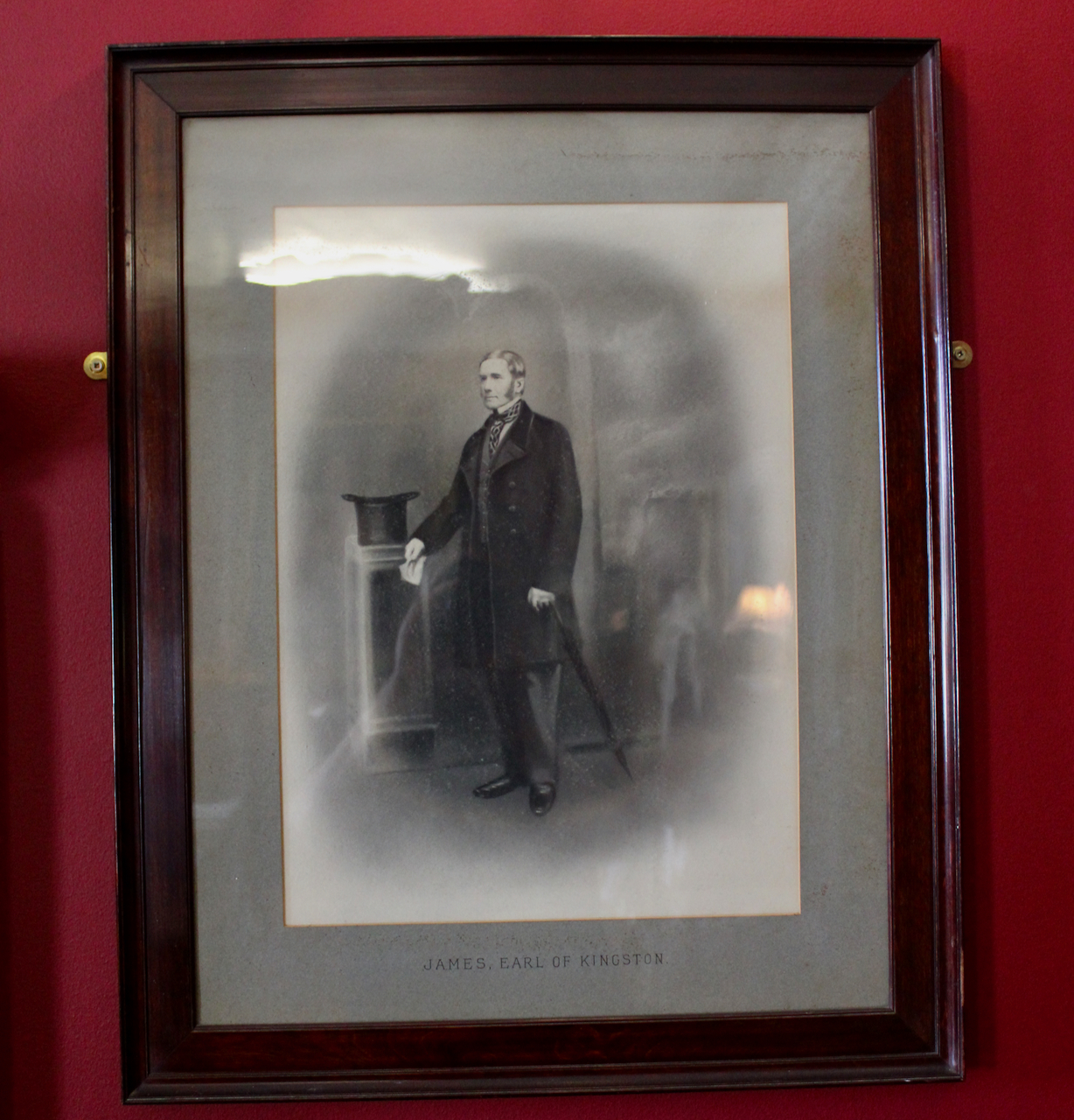
George King (1771-1839) 3rd Earl of Kingston had several illegitimate children with Caroline Amelia Morison, daughter of William Morison, Chief Justice of the Bahamas. The 3rd Earl married Helena Moore (1773-1847), daughter of Stephen Moore, 1st Earl Mountcashell. His son (1795-1837) Edward King, known as Viscount Kingsborough, was imprisoned for his father’s debts and died of typhus in prison. His son Robert Henry King (1796-1867) succeeded 4th Earl of Kingston. He was declared of unsound mind, and had no children. His brother James King (1800-1869) succeeded as 5th Earl of Kingston.

James King (1800-1869), 5th Earl of Kingston, who married Anna Brinkley.
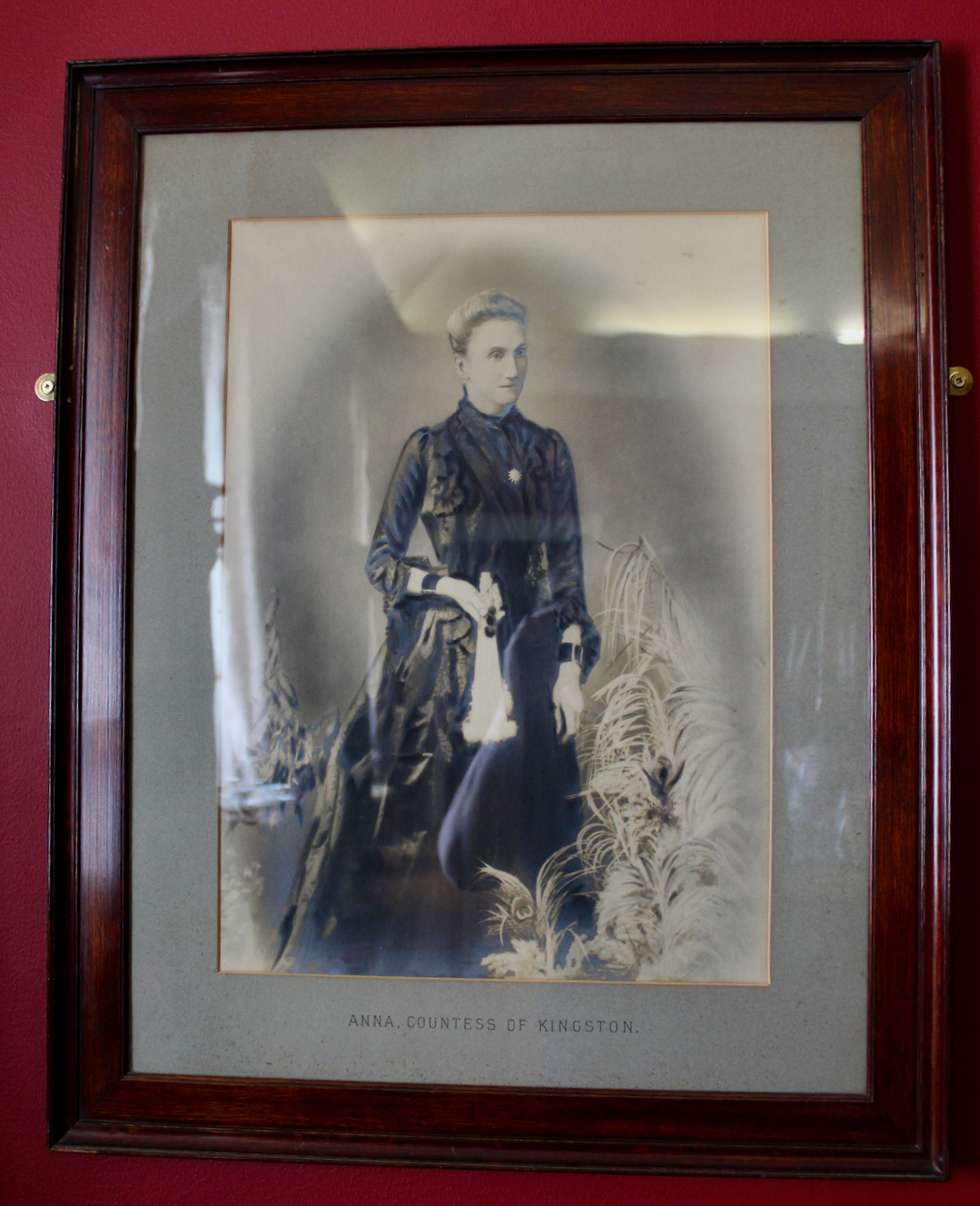
Anna King née Brinkley, wife of James King (1800-1869) 5th Earl of Kingston, who lived in Mitchelstown.
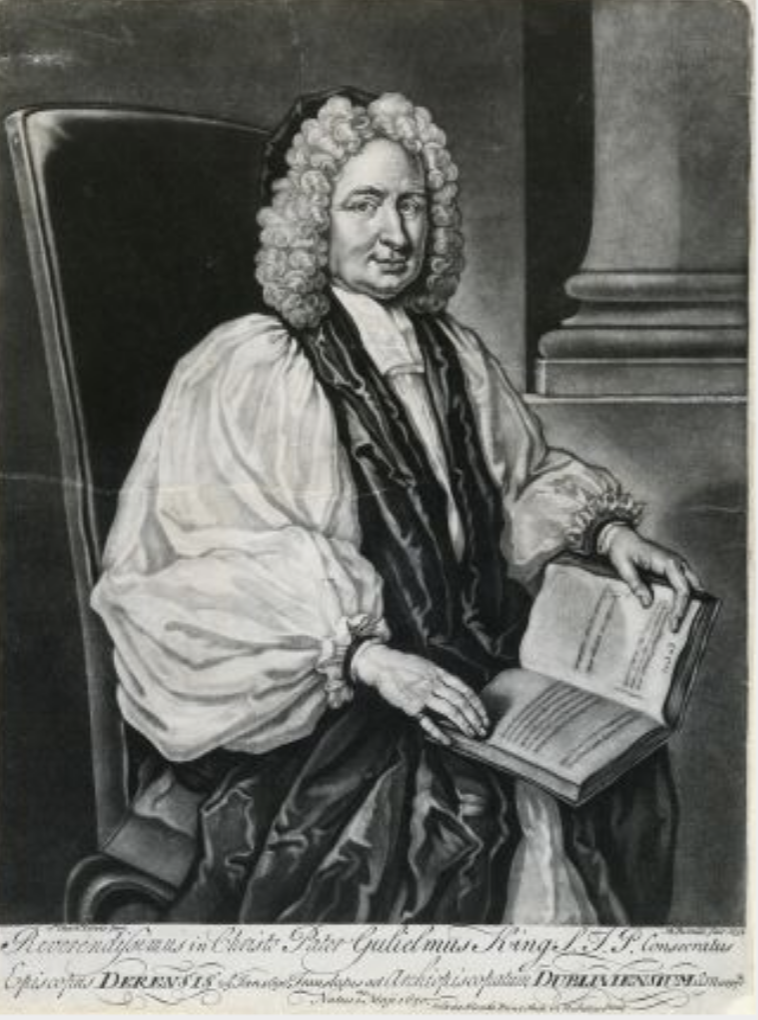
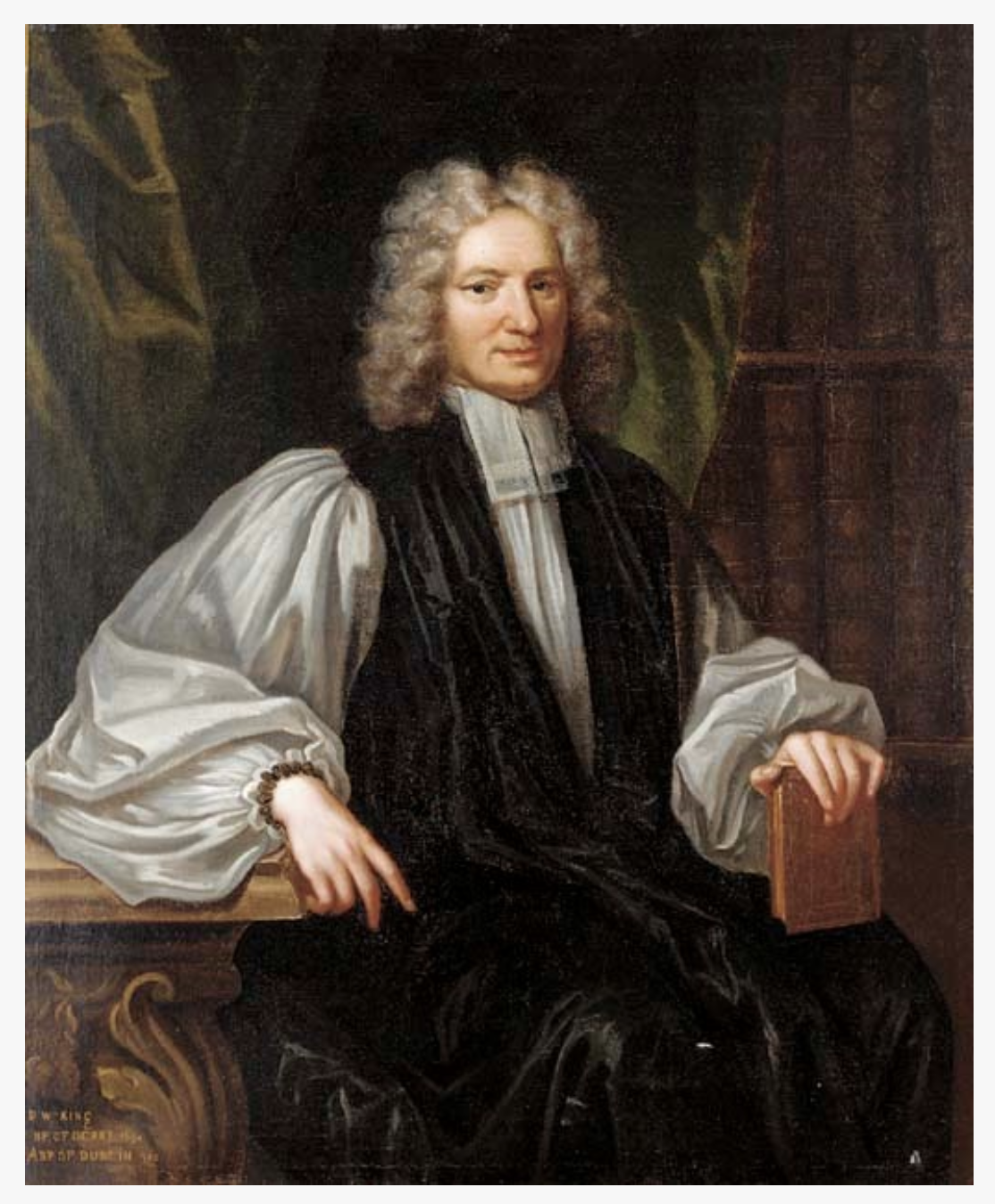
William King (1650-1729), Protestant Archbishop of Dublin, engraver Richard Purcell, Irish, c.1736-c.1766 After Charles Jervas, Irish, c.1675-1739, courtesy of National Gallery of Ireland.
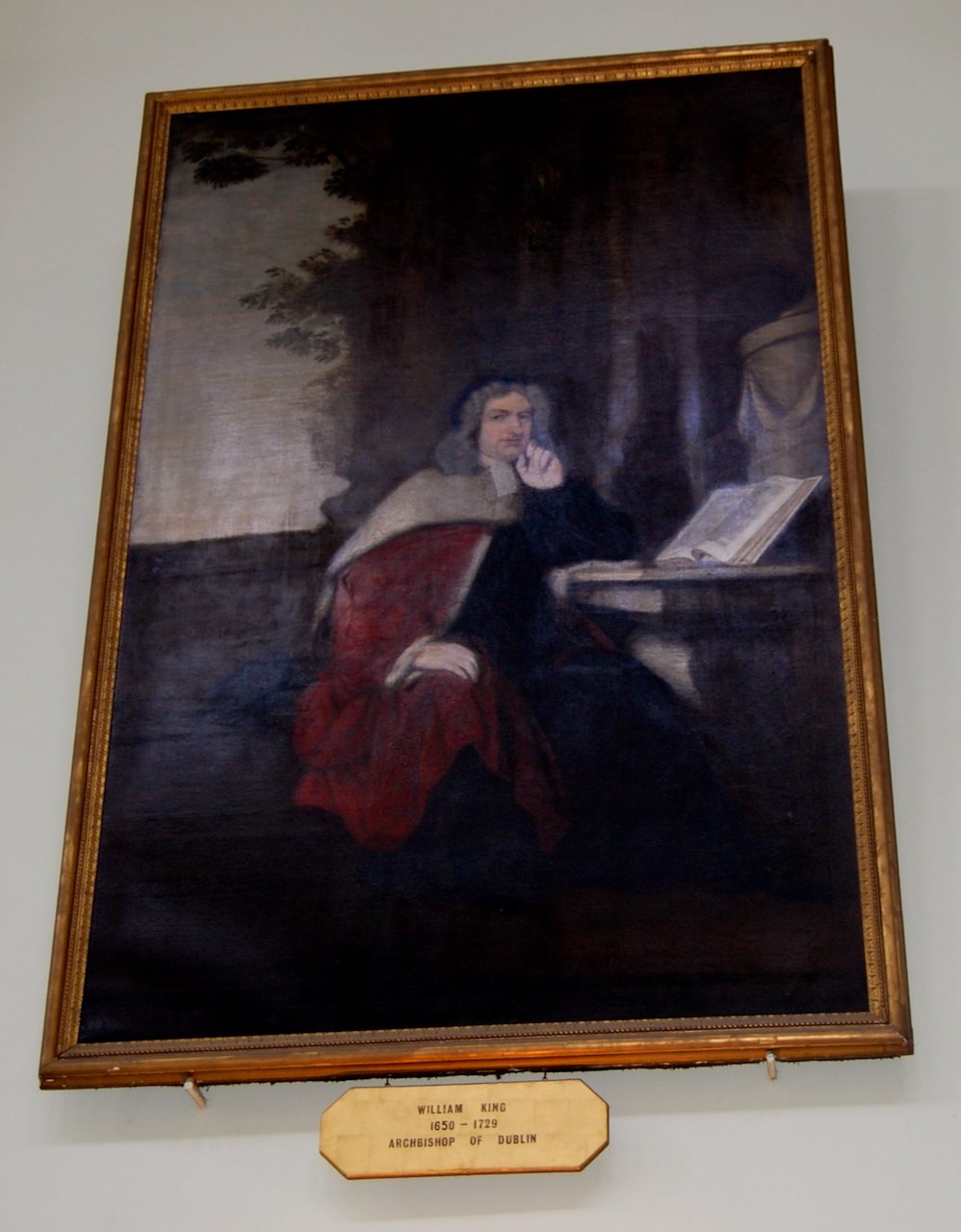
William King (1650-1729) Archbishop of Dublin, portrait in Trinity College Dublin exam hall. Photograph © Jennifer Winder-Baggot, www.irishhistorichouses.com
Dr. William King, Archbishop of Dublin Attributed to Ralph Holland (early 18th Century) courtesy Christies Irish Sale.
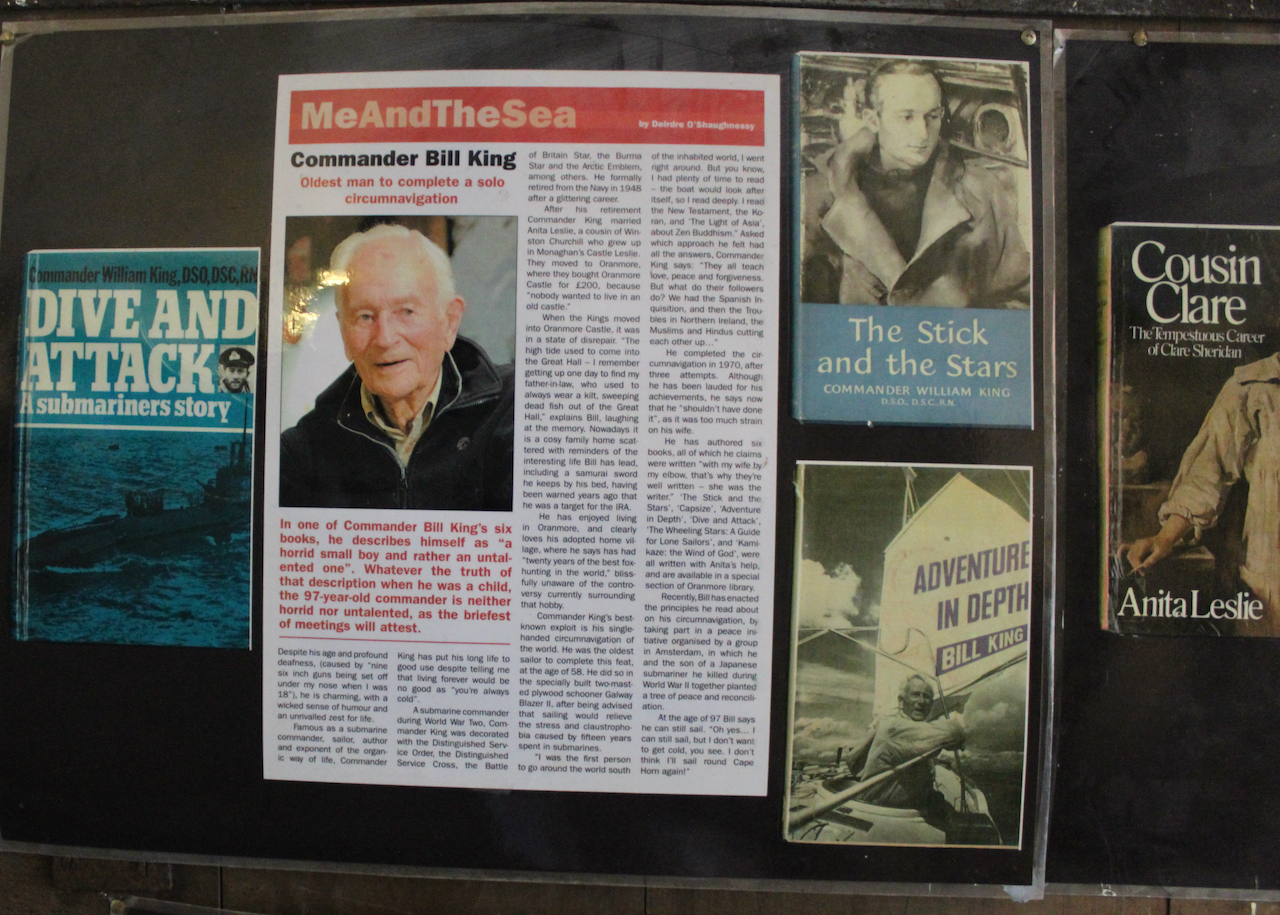
Bill King, of Oranmore Castle, County Galway
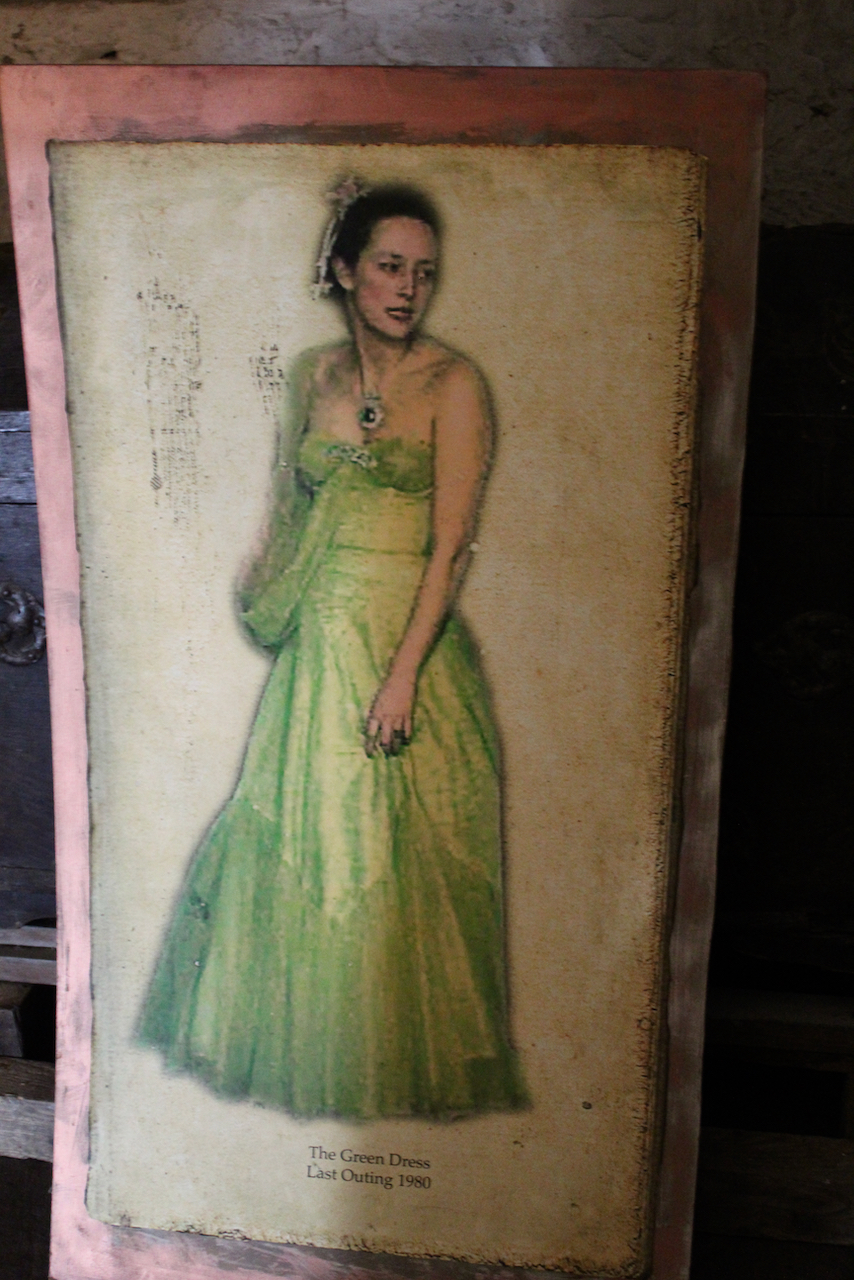
Leonie King, of Oranmore Castle, County Galway. Photograph © Jennifer Winder-Baggot, www.irishhistorichouses.com
Cecil Stafford King-Harman
Vanity Fair entry and picture, about Edward Robert King-Harman (1838-1888), son of Laurence Harman King-Harman. He inherited Newcastle in County Longford and Rockingham in Roscommon.
The Honourable Laurence Harman King-Harman (1816-1875). Photograph © Jennifer Winder-Baggot, www.irishhistorichouses.com
Mary Cecilia (1816-1904), 6th daughter of Thomas Reymond Johnstone of Alva. Married May 1837 Laurence Harman King-Harman, 2nd son of Robert Edward 1st Viscount Lorton. She lived at Newcastle until her husband’s death in 1875 and then in London when she died in 1904. Photograph © Jennifer Winder-Baggot, www.irishhistorichouses.com
Laurence Harman King-Harman (1816-1875). The information tells us that he was the second son of Edward King, 1st Viscount Lorton. He inherited the Newcastle estate in County Longford in 1838 from his grandmother the Countess of Rosse, and lived there until his death. He succeeded to the Rockingham estate after the death of his brother Robert, 6th Earl of Kingston, in 1869. Photograph © Jennifer Winder-Baggot, www.irishhistorichouses.com
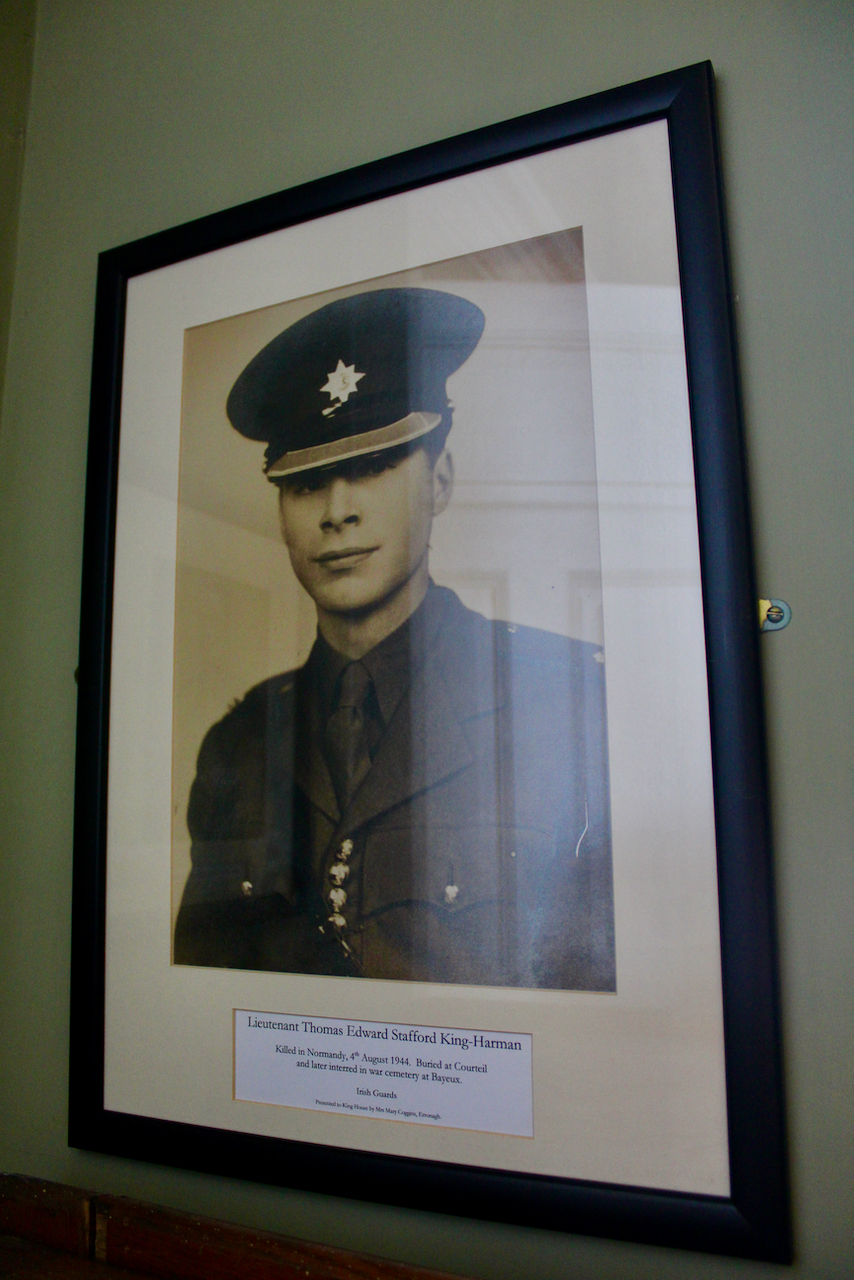
Thomas Edward Stafford King-Harman d. 1944.

[1] http://www.limerickcity.ie/media/NMAJ%20vol%2017%2009%20Johnsons%20-%20lineal%20descendents%20of%20Ui%20N%82ill,%20by%20Eileen%20MacCarvill.pdf

Cappoquin House & Gardens, Cappoquin, Co. Waterford P51 D324 – section 482

www.cappoquinhouseandgardens.com
Open dates in 2025: Apr 7-12, 15-19, 22-26, 28-30, May 1-3, 5-10, 2-17, 19-24, 26-31, June 2-7, Aug 16-24, 9am-1pm

Gardens open all year

Fee: adult house €10, house and garden €15, garden only €6, child free

donation

Help me to pay the entrance fee to one of the houses on this website. This site is created purely out of love for the subject and I receive no payment so any donation is appreciated!

€15.00

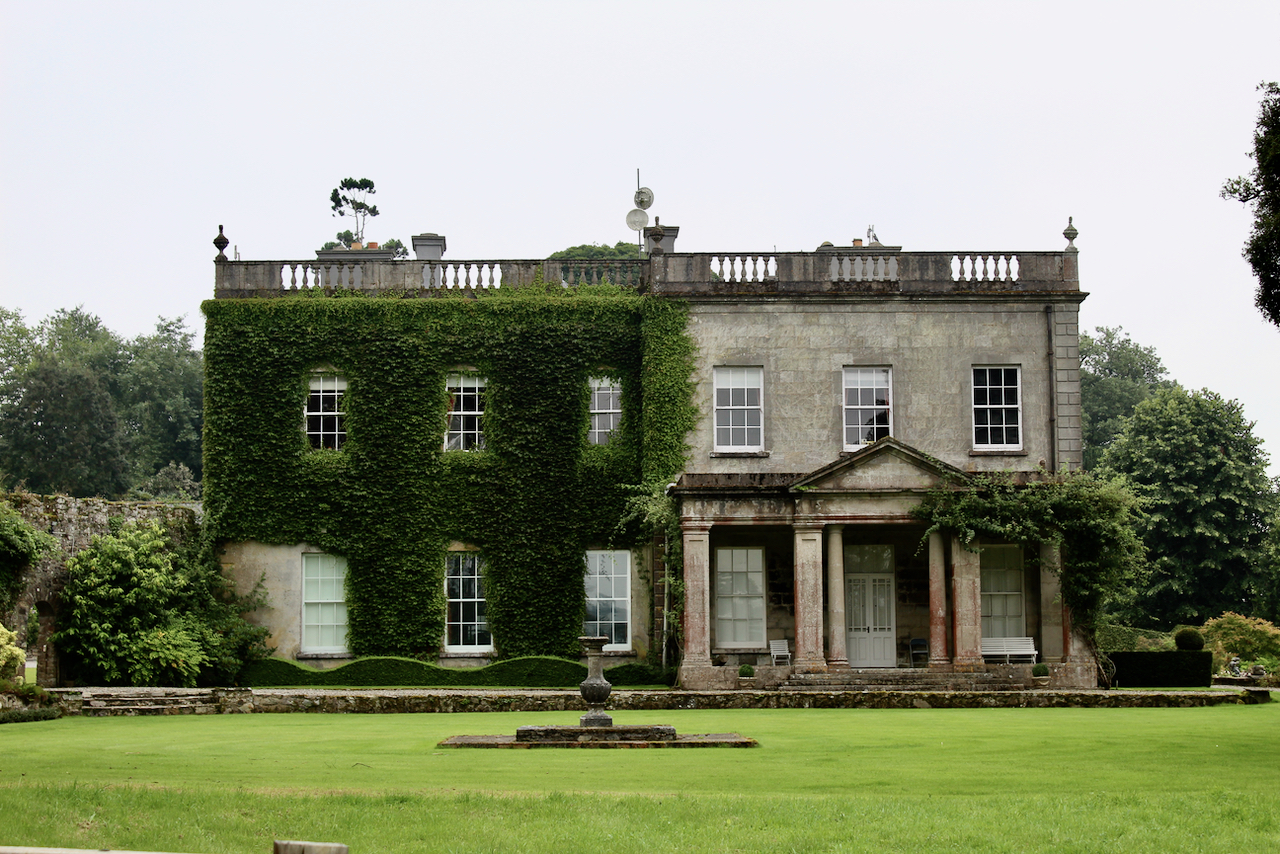
The front of Cappoquin House, which was originally the back. Photograph © Jennifer Winder-Baggot, www.irishhistorichouses.com

We visited Cappoquin House during Heritage Week in 2020. Cappoquin House was built in 1779 for Sir John Keane (1757-1829), and is still owned by the Keane family. The original house, sometimes known as “Belmont,” the name of the townland, was built on a site of an Elizabethan house built by the Munster planter, Sir Christopher Hatton. [1] It is most often attributed to a local architect, John Roberts (1712-96). [2] John Roberts was also architect of Moore Hall in County Mayo (1792 – now a ruin) and Tyrone House in County Galway (1779 – also a ruin).

From the National Inventory of Architectural Heritage, Moore Hall, County Mayo.
From the National Inventory of Architectural Heritage, Tyrone House, County Galway.

Glascott Symes points out in his book Sir John Keane and Cappoquin House in time of war and revolution that it is not known who the original architect was, and it may have been Davis Ducart, who also built Kilshannig. [3]

The house was burnt and destroyed in 1923, because a descendent, John Keane (1873-1956), accepted a nomination to the Senate of the new government of Ireland. Ireland gained its independence from Britain by signing a Treaty, in which independence was given to Ireland at the expense of the six counties of Northern Ireland, which remained a part of Britain. Disagreement about the Treaty and the loss of the six counties led to the Irish Civil War. During this war, Senators’ houses were targeted by anti-Treaty forces since Senators served in the new (“pro-Treaty”) government; thirty-seven houses of Senators were burnt.

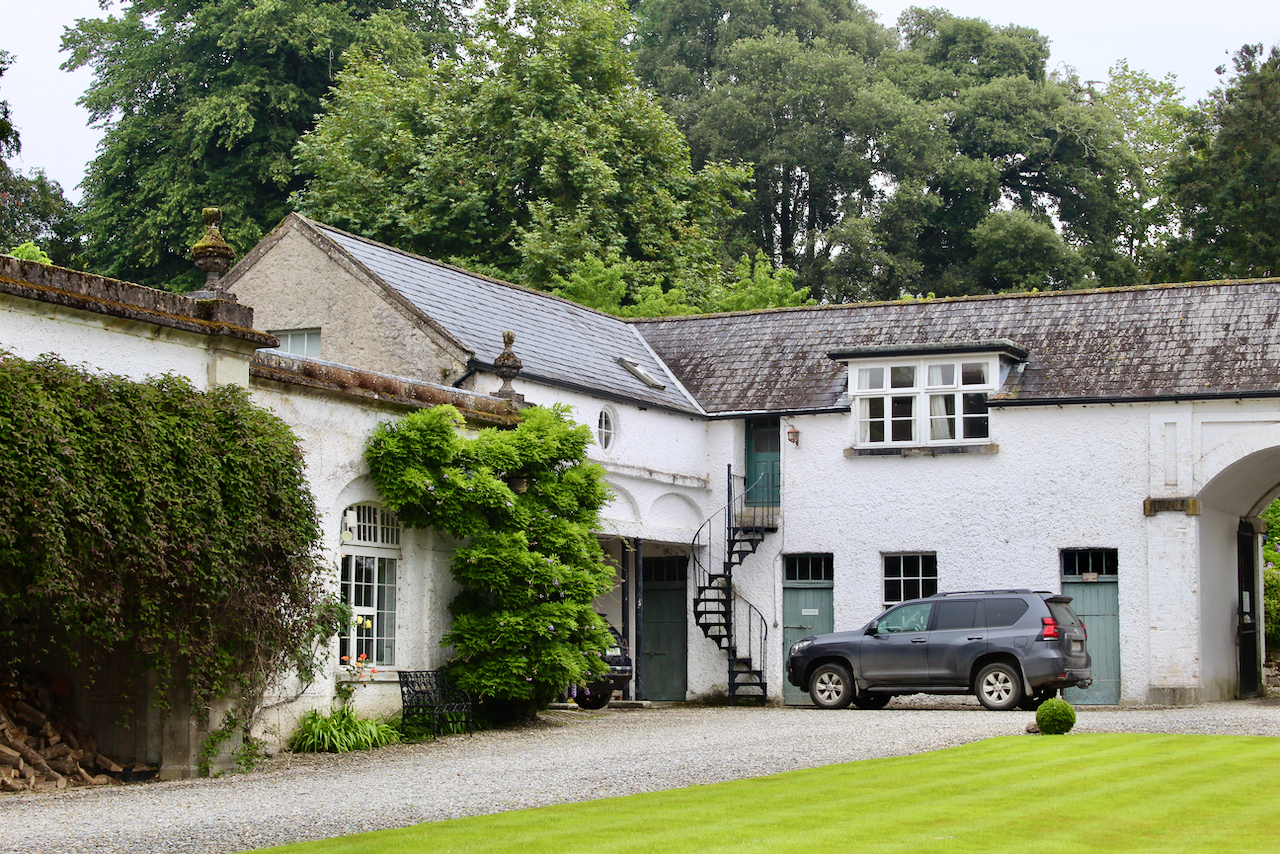
Fortunately the Keanes received compensation and engaged Richard Francis Caulfield Orpen (1863-1938) of South Frederick Street, Dublin [4], brother of painter William Orpen, to rebuild. Any material possible to salvage from the fire was used, and the fine interiors were recreated. [5] It was at this time that the former back of the house became the front, overlooking a courtyard which is entered through an archway. 

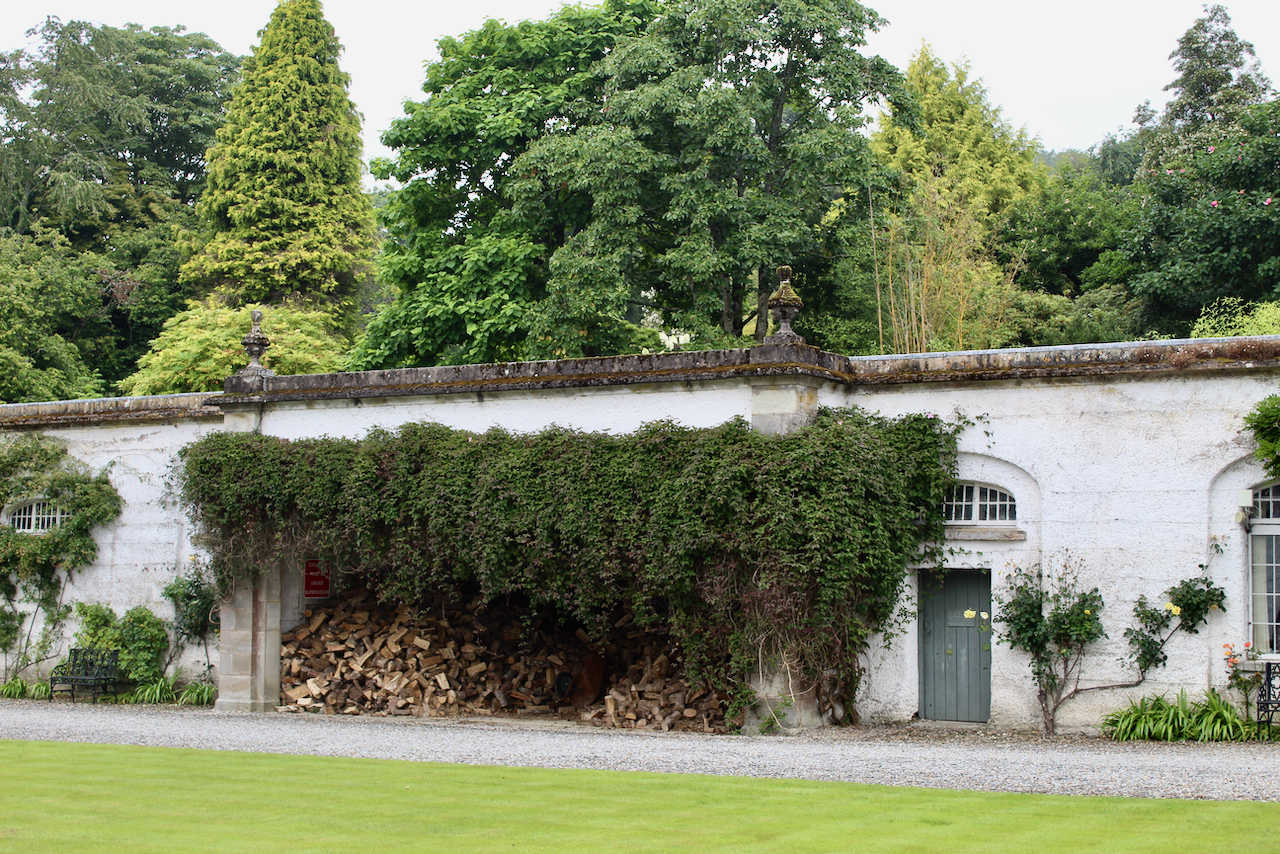
The archway to the courtyard. The lawn was laid by Sir Charles’s parents. Photograph © Jennifer Winder-Baggot, www.irishhistorichouses.com
View of the arched entry to the courtyard from the garden. Photograph © Jennifer Winder-Baggot, www.irishhistorichouses.com

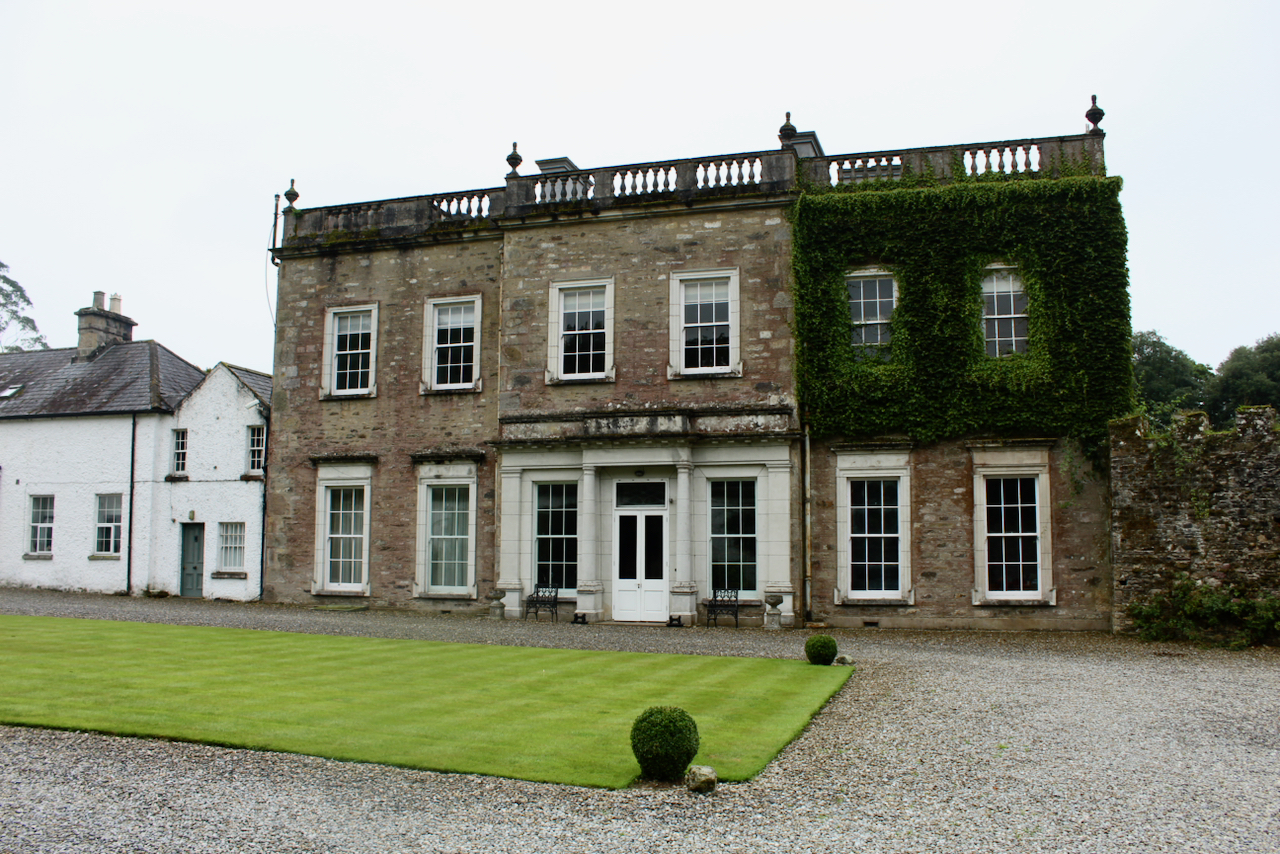
The square house has six bays across with a two-bay two-storey breakfront, and the door is in a frontispiece with columns.

Cappoquin House, August 2020. Photograph © Jennifer Winder-Baggot, www.irishhistorichouses.com

The house has a balustraded parapet topped with urns. The garden front, which was originally the front of the house, faces toward the Blackwater River, and has a central breakfront of three bays with round-headed windows and door. The door has cut-limestone surround with flush panelled pilasters and a fanlight. The round-headed flanking windows have fluted keystones and six-over-six timber sashed windows with fanlights.

Garden front of the house. Photograph © Jennifer Winder-Baggot, www.irishhistorichouses.com
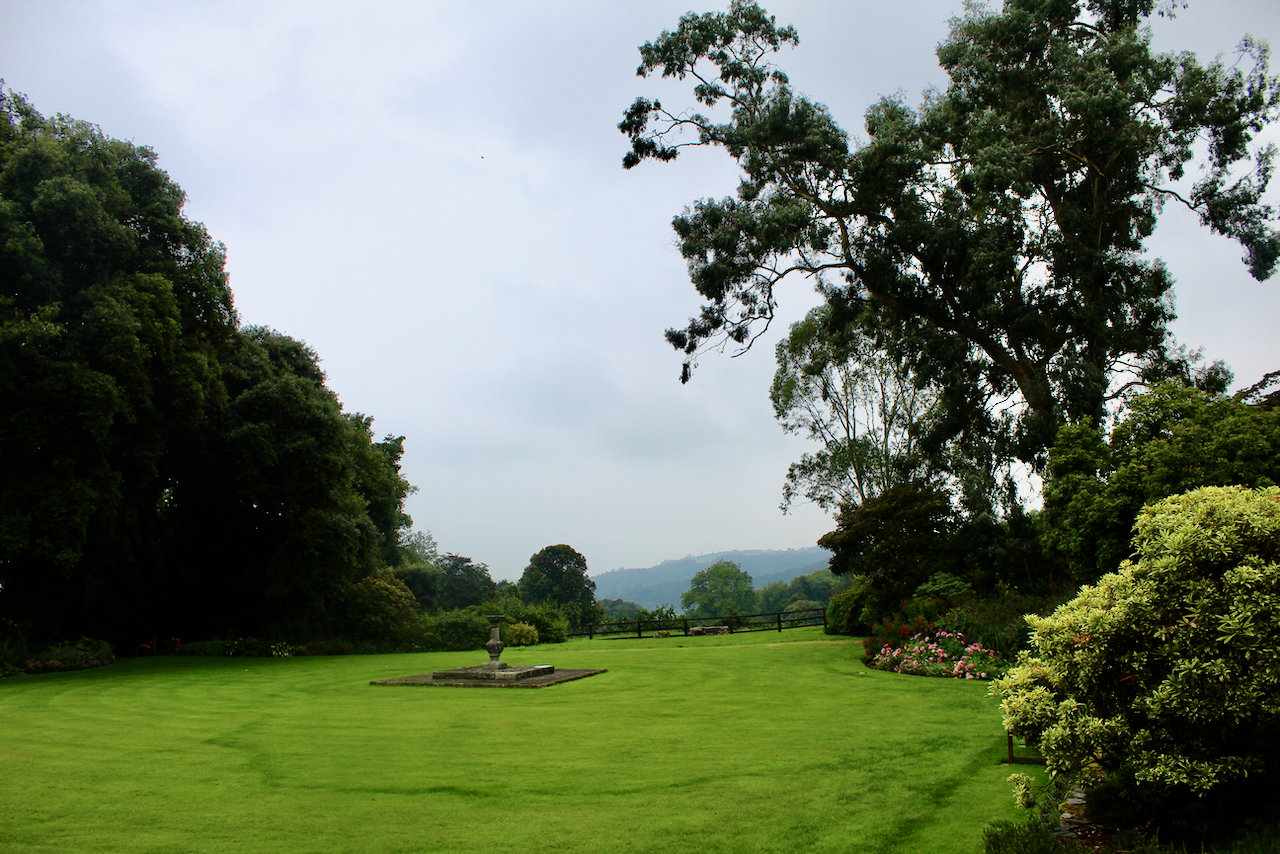
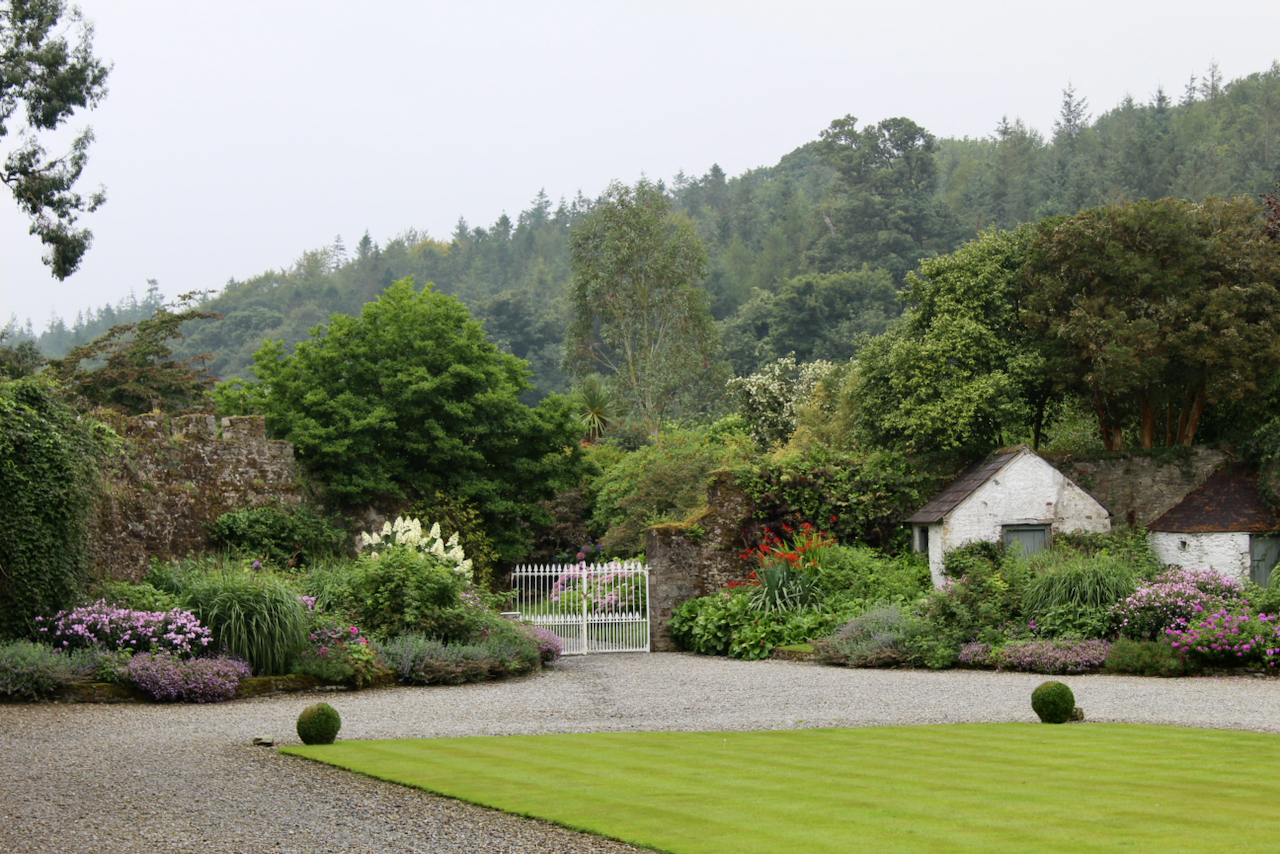
View from the gardens, beyond the courtyard. Photograph © Jennifer Winder-Baggot, www.irishhistorichouses.com
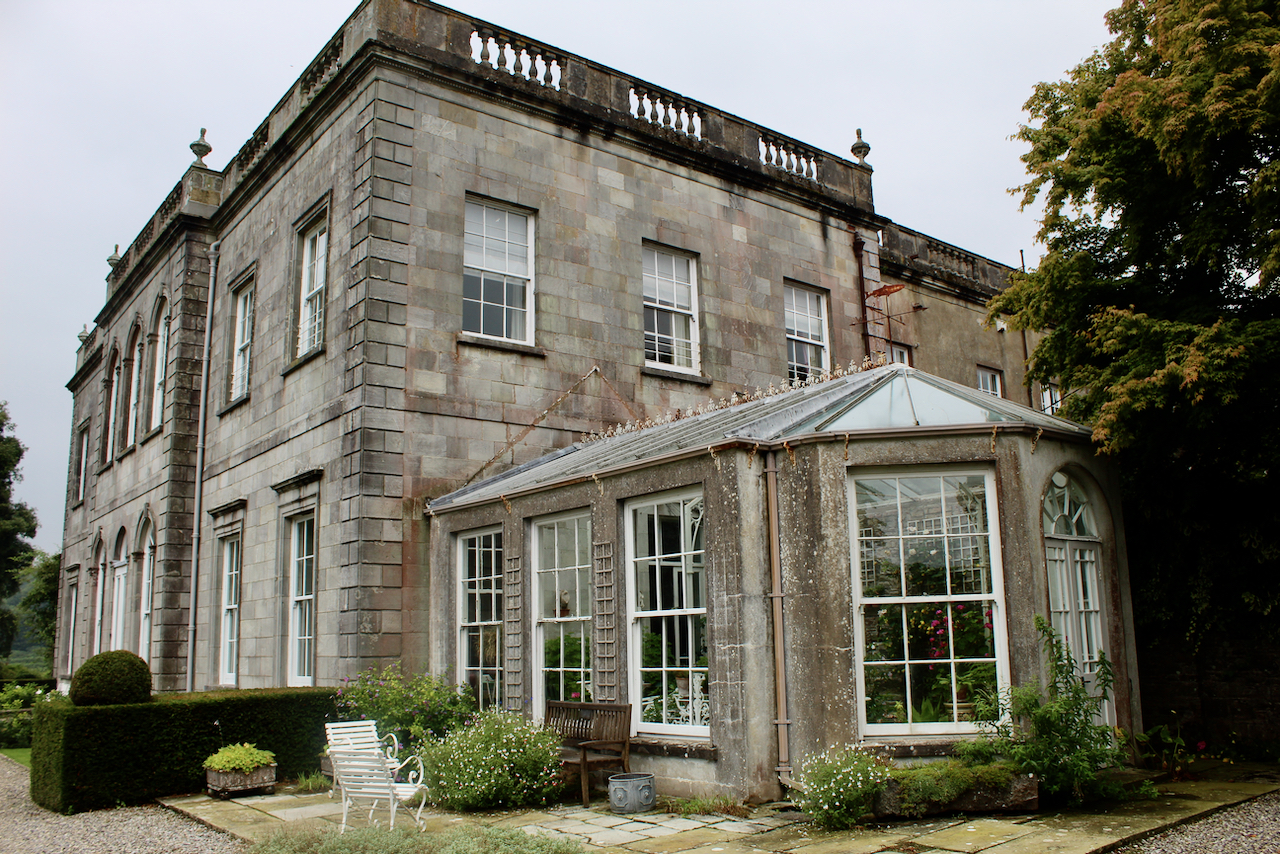
West side of the house. Photograph © Jennifer Winder-Baggot, www.irishhistorichouses.com
Cappoquin House, August 2020. Photograph © Jennifer Winder-Baggot, www.irishhistorichouses.com

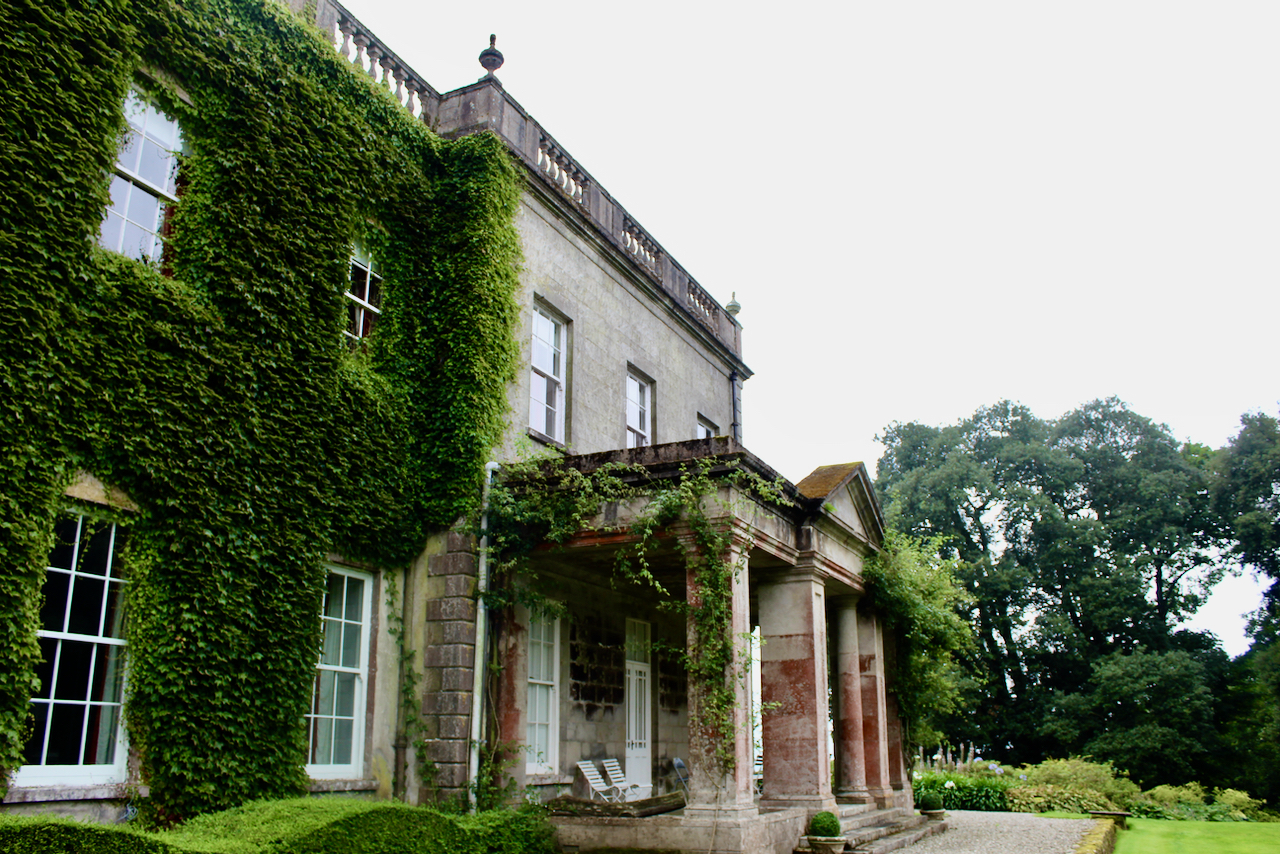
The porch on one side of the house was built in 1913 by Page L. Dickinson for John Keane, and remains the same after the fire. [6] The work done by Dickinson inside the house in 1913, including decorative plasterwork, was destroyed.

Side of the house with porch from 1913 by Page Dickinson. Photograph © Jennifer Winder-Baggot, www.irishhistorichouses.com
Cappoquin House. Photograph © Jennifer Winder-Baggot, www.irishhistorichouses.com
View from the west portico. Photograph © Jennifer Winder-Baggot, www.irishhistorichouses.com

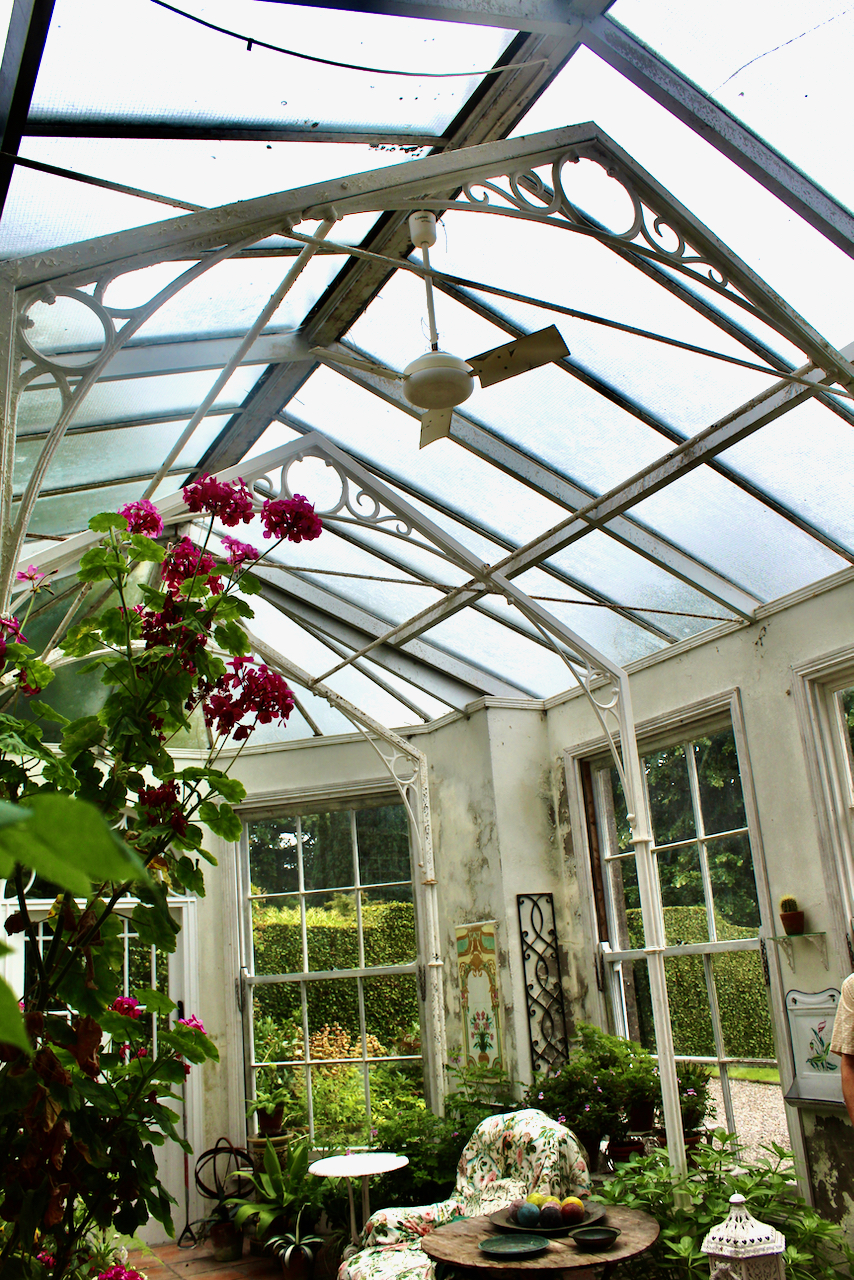
On the east side of the house is a Conservatory.

Cappoquin House. Photograph © Jennifer Winder-Baggot, www.irishhistorichouses.com
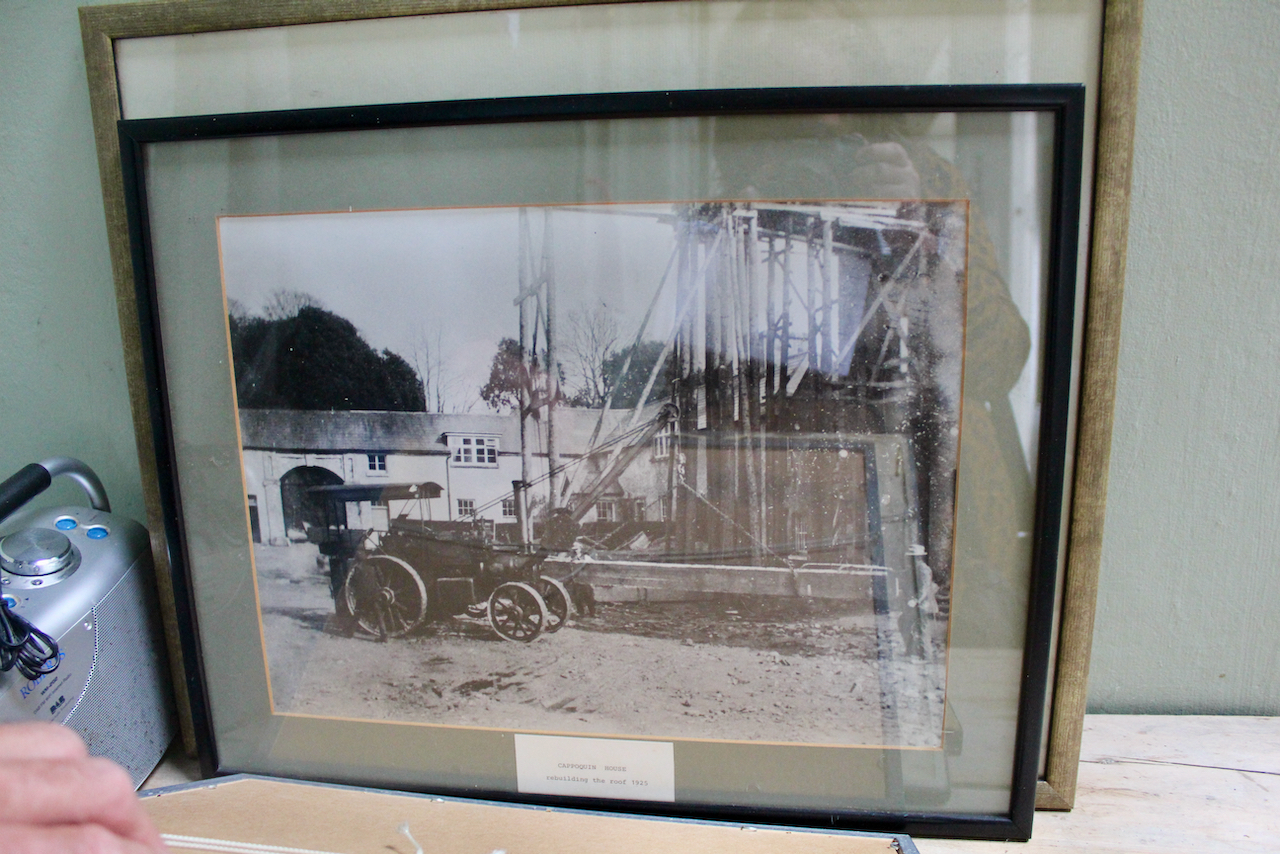
Cappoquin House after the fire, 1922.
Rebuilding the roof, 1922. The motor vehicle puts the dates into perspective!

When Sir John had the house rebuilt after the fire, he asked Page Dickinson again to be his architect but by this time Dickinson had moved to England, so Keane engaged Dickinson’s former partner, Richard Caulfield Orpen.

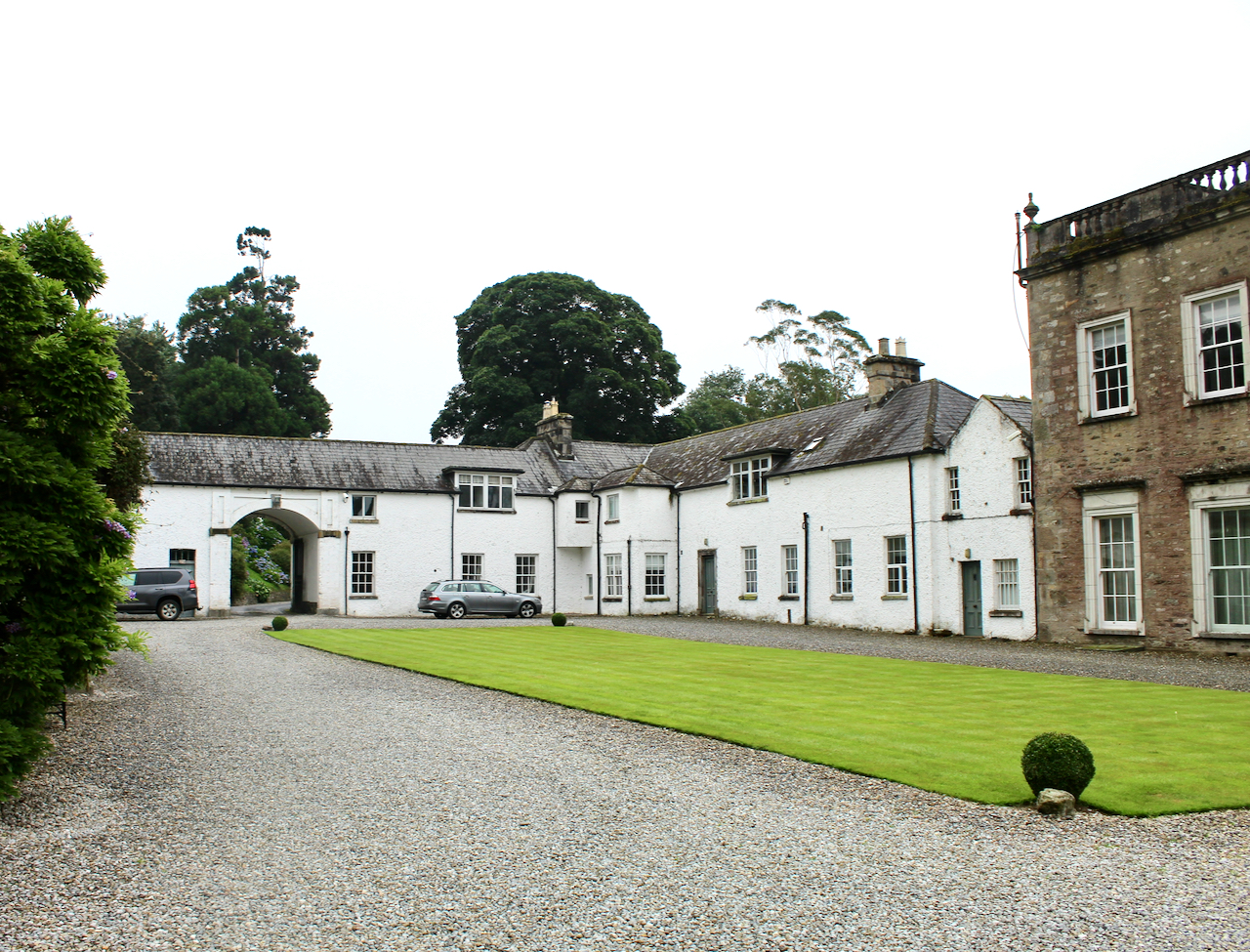
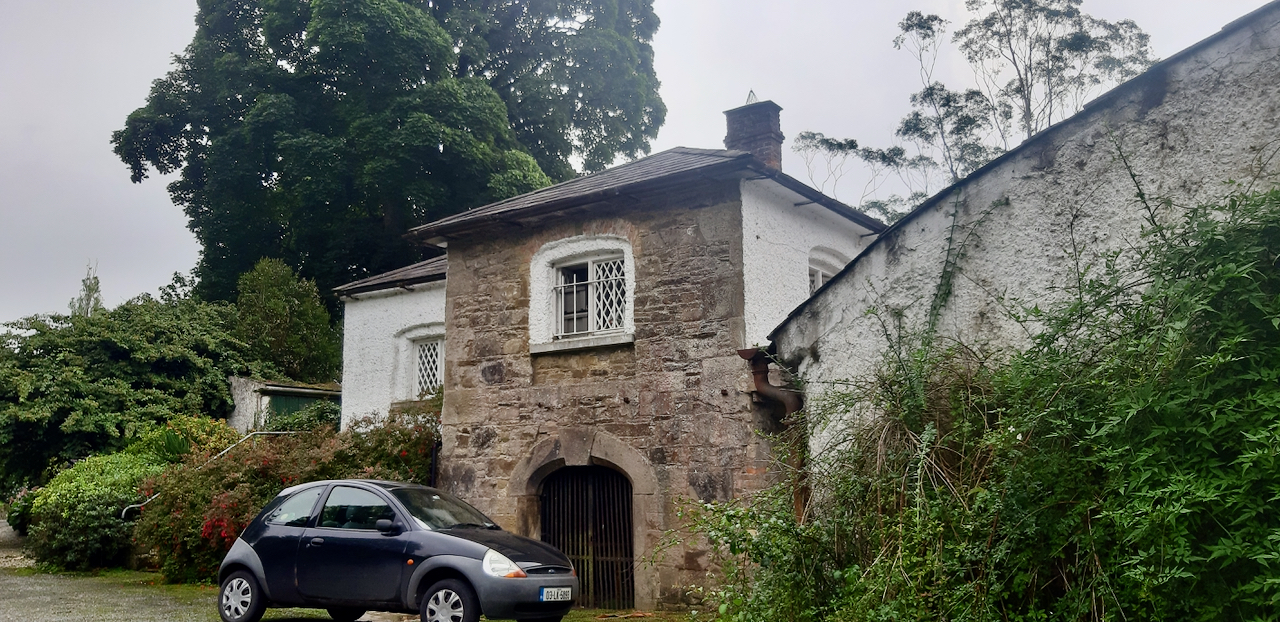
The white buildings around the courtyard were not destroyed in the fire and pre-date the rebuilt house. Some probably date from Hatton’s time.

Cappoquin House. Photograph © Jennifer Winder-Baggot, www.irishhistorichouses.com
Cappoquin House, August 2020. Photograph © Jennifer Winder-Baggot, www.irishhistorichouses.com

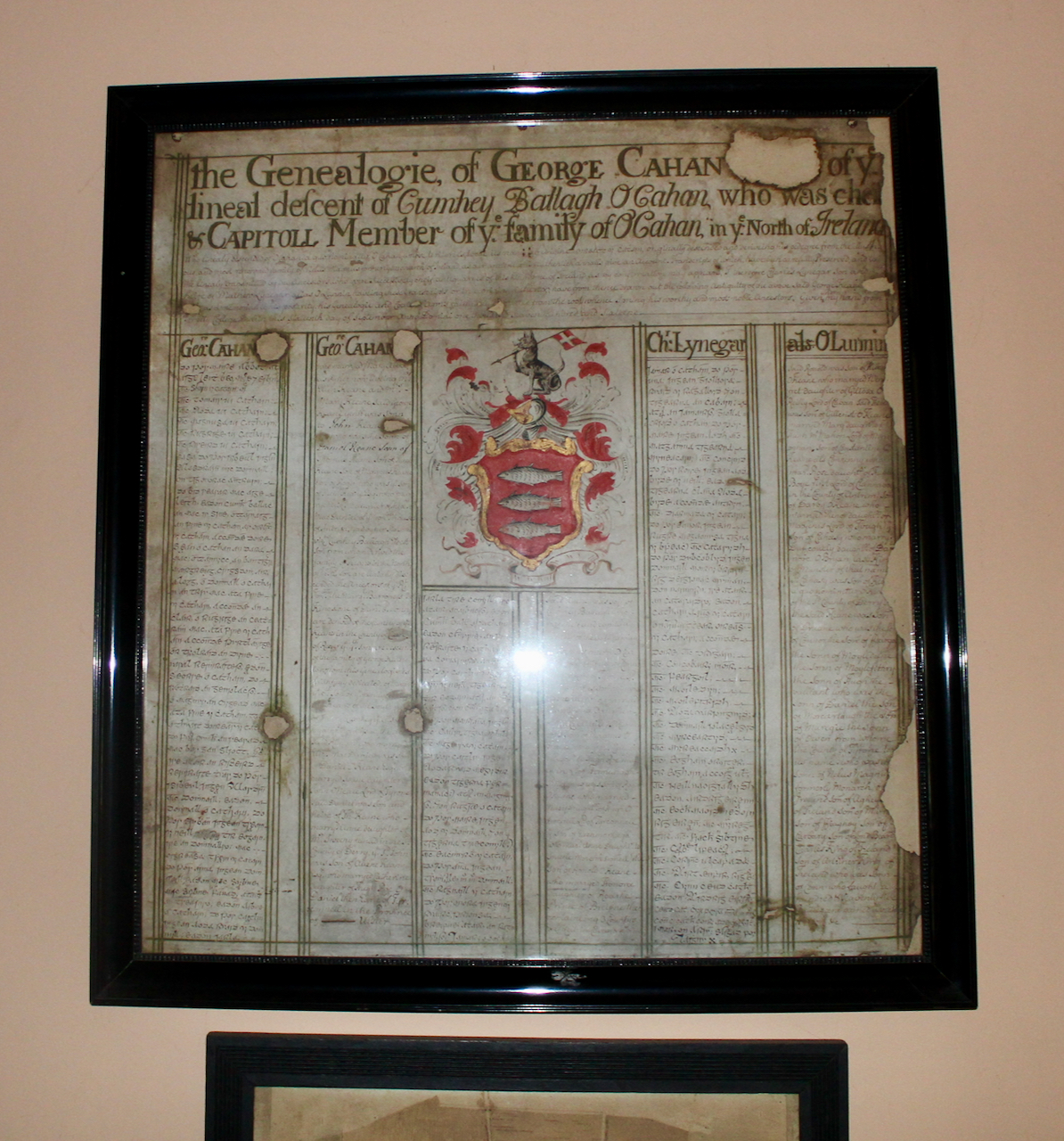
The Keanes are an old Irish family, originally named O’Cahan. The Ulster family lost their lands due to the Ulster Plantation in 1610. In 1690, following the victory of William III at the Battle of the Boyne, George O’Cahan and converted to Protestantism and anglicized his name to Keane. He practiced as a lawyer. [7] In 1738 his son, John, acquired land in the area of Cappoquin in three 999 years leases from Richard Boyle, the 4th Earl of Cork. The leases included an old Fitzgerald castle. It was this John’s grandson, also named John Keane (1757-1829), who bought out the lease and built Cappoquin House. [8]

Cappoquin House, August 2020. Photograph © Jennifer Winder-Baggot, www.irishhistorichouses.com

John became MP for Bangor in the Irish parliament from 1791 to 1801 and for Youghal in the British parliament from 1801 to 1818. He was created a baronet, denominated of Belmont and Cappoquin, County Waterford, in 1801 after the Act of Union. The current owner is the 7th Baronet.

John the 1st Baronet’s oldest son, Richard, became the 2nd Baronet (1780-1855). John’s second son, John, served in the British army, and received the title of 1st Baron Keane of Ghuznee in Afghanistan and Cappoquin, Co. Waterford, in 1839. The current owner is a descendant of the elder son, Richard the 2nd Baronet, who also served in the military. He was Lieutenant Colonel of the Waterford Militia. 

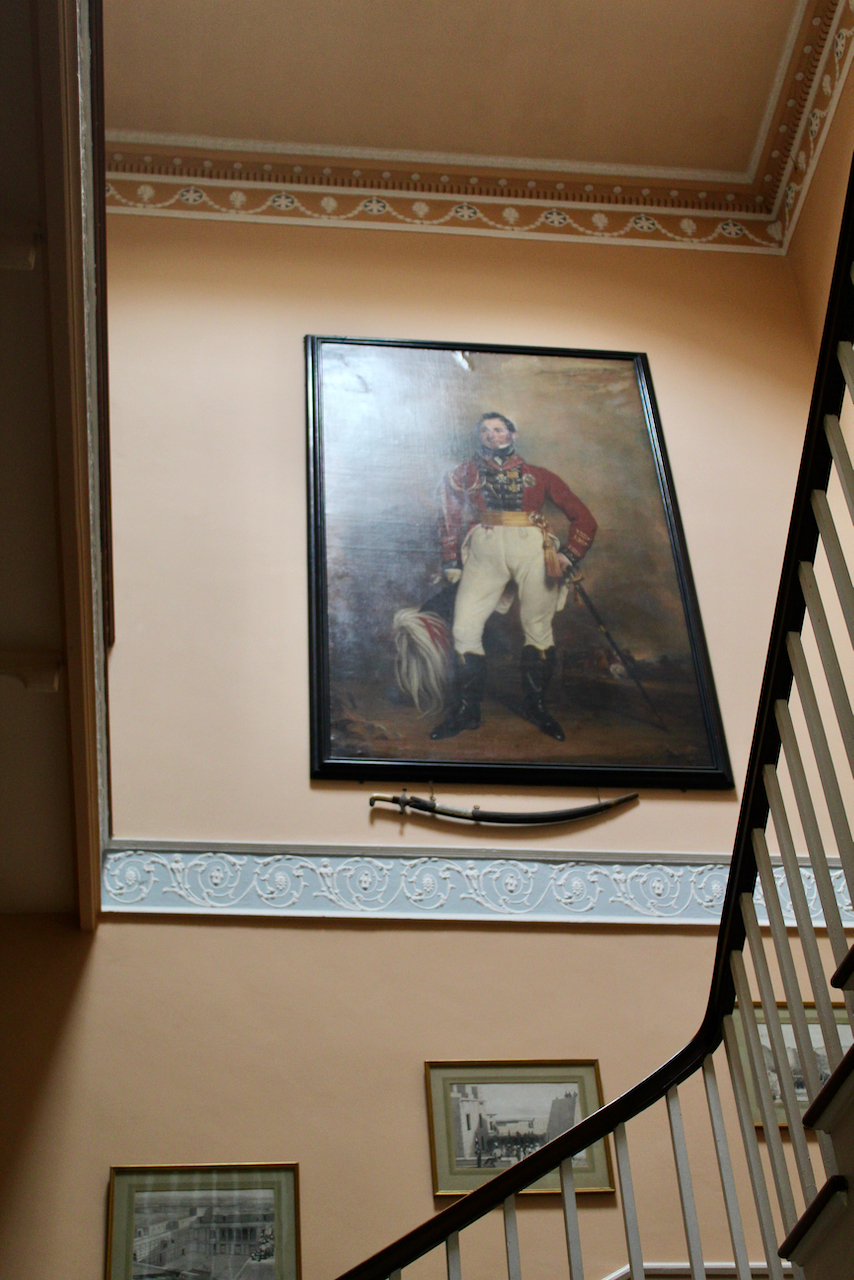
General John, 1st Baron Keane of Ghuznee in Afghanistan and Cappoquin, Co. Waterford, by Martin Arthur Shea. This is the ancestor who was in Afghanistan – he can be identified by his medals and sword. Photograph © Jennifer Winder-Baggot, www.irishhistorichouses.com

After his first wife died, Sarah Keily, daughter of Richard Keily of Springmount, County Waterford and Sarah Ussher of Cappagh House, another section 482 property in County Waterford, John Keane the 1st Baronet remarried, this time to Dorothy née Scott, widow of Philip Champion de Crespigny who was MP for Aldborough in Suffolk, England.

Dorothy Scott (1765-1837) second wife of John Keane, 1st Baronet, by George Romney courtesy of Philadelphia Museum of Art.

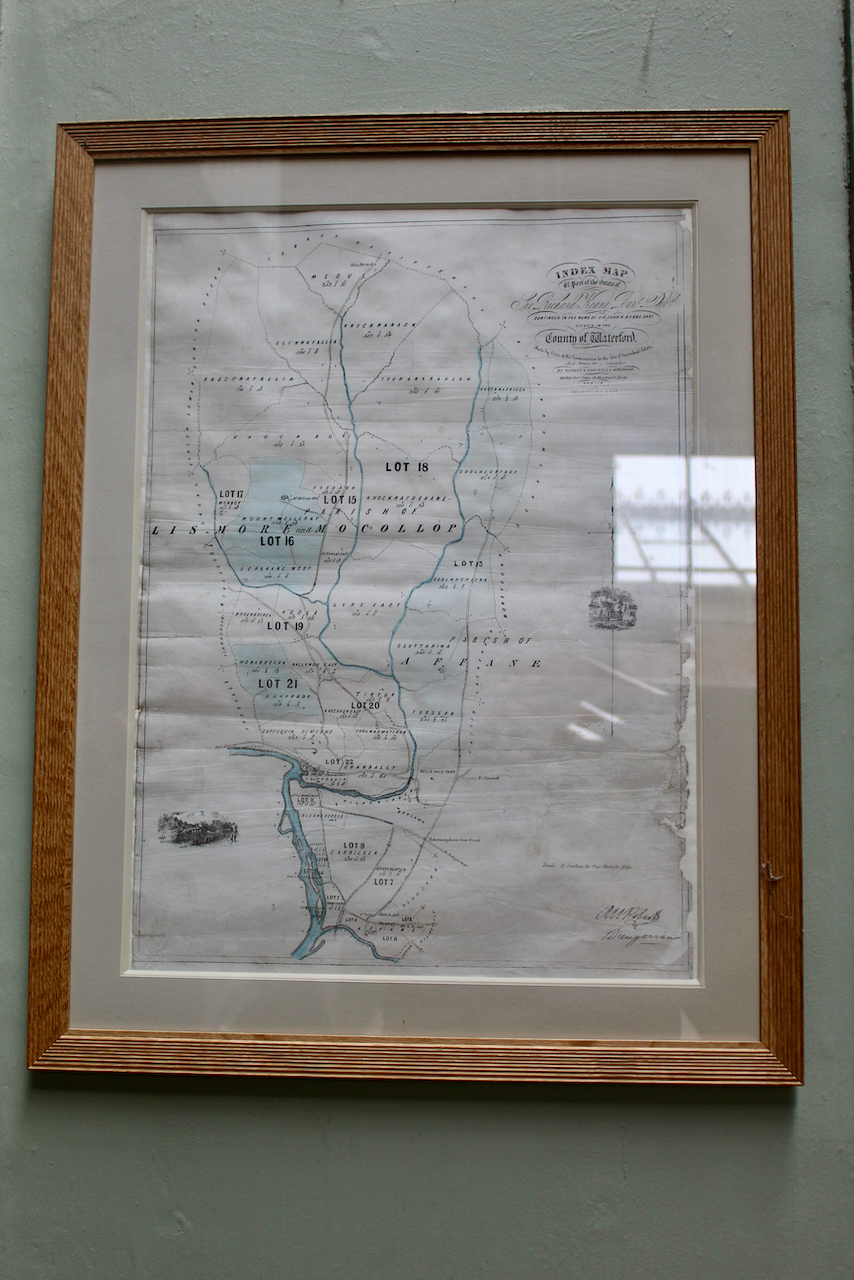
In 1855 the Keane estate was offered for sale in the Encumbered Estates Court, as the estate was insolvent after tenants could not pay their rents during the Famine. It seems however that the 3rd Baronet, John Henry Keane (1816-1881), managed to clear the debt and reclaim the estate.

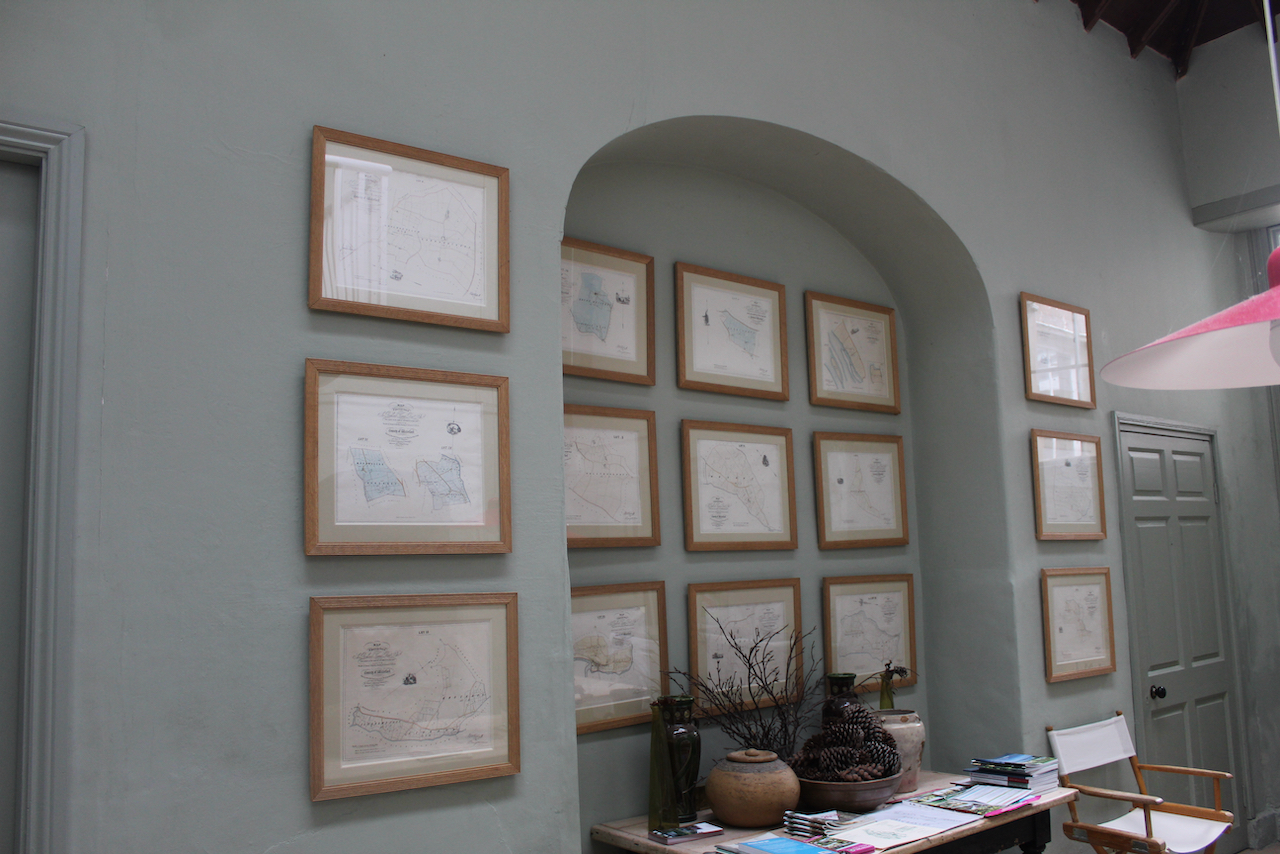
Sir Charles showed us maps of the property, as drawn up under the Encumbered Estates Act.

Cappoquin House.
Cappoquin House, August 2020. Photograph © Jennifer Winder-Baggot, www.irishhistorichouses.com

The 4th Baronet, Richard Henry Keane (1845-1892), served as High Sheriff of County Waterford and Deputy Lieutenant of County Waterford. He married Adelaide Sidney Vance, whose father John was a Conservative MP for the city of Dublin, and they had several children.

John Keane (1873-1956) the 5th Baronet also served in the British Army, and fought in the Boer War between 1899-1902. He was Private Secretary to the Governor of Ceylon between 1902 and 1905. In 1904 he was admitted to the Middle Temple to become a Barrister, but he never practiced as a Barrister. Following in his father’s footsteps he too held the office of High Sheriff of County Waterford. He followed politics closely and supported Home Rule for Ireland. He was a kind, thoughtful man and housed refugees during the wars. He fought in World War One, becoming a Lieutenant Colonel. It was this John who became a Senator.

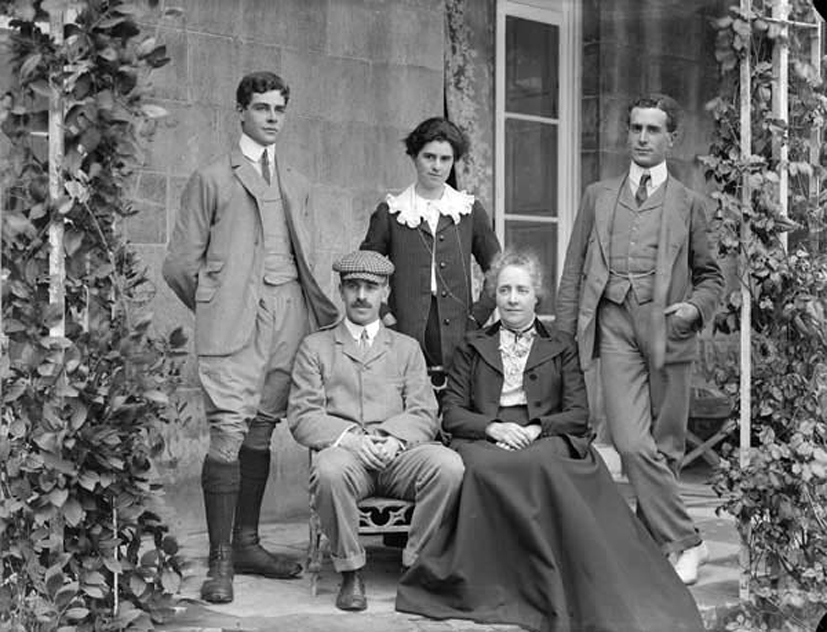
In the cap is John Keane 5th Baronet, with his wife, daughter and his 2nd and 3rd sons George, right and Frederick, left, 3 September 1902 courtesy of National Library of Ireland.

The 5th Baronet married Eleanor Lucy Hicks-Beach, daughter of the 1st Earl of Saint Aldwyn, Gloucester, England.

Keane joined Horace Plunkett in the co-operative movement in Ireland, which promoted the organisation of farmers and producers to obtain self-reliance. The idea was that they would process their own products for the market, thus cutting out the middle man. The founders of the co-operative movement embraced new technologies for processing, such as the steam-powered cream separator. Unfortunately this led to a clash with farm labourers who unionised to prevent reduction in their wages when prices fell. Keane refused to negotiate with the Union. Rancour grew between landowners and labourers, which may have encouraged the later burning of Keane’s house. The idealism of the co-operative movement, with the goal of “better farming, better business, better living,” was easier said than done.

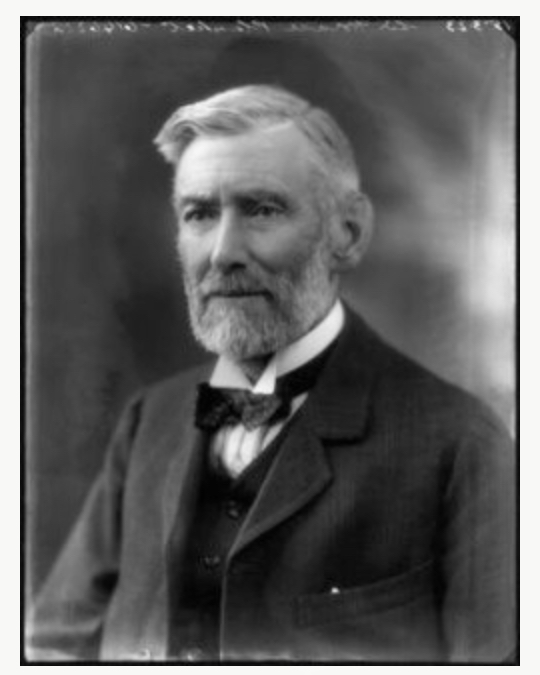
Horace Plunkett by photographer Bassano Ltd, 1923, courtesy of National Portrait Gallery of London, reference NPGx12783.

Keane kept diaries, which have been studied by Glascott J.R.M. Symes for an MA thesis in Maynooth University’s Historic House Studies. Symes outlines the details about the disagreements. [9] Horace Plunkett, one of the founders of the Irish Agricultural  Organisation Society, also became a Senator in Ireland’s first government and his house in South Dublin, Kilteragh, was also destroyed during the Civil War that followed the founding of the state.

Keane knew that his house may become a target and he sent his wife and children to live in London, and packed up principal contents of the house. Seventy six houses were destroyed in the War of Independence in what was to become the Republic of Ireland, but almost two hundred in the Civil War. [10] Unfortunately the library and some of the art collection at Cappoquin were destroyed. [11] 

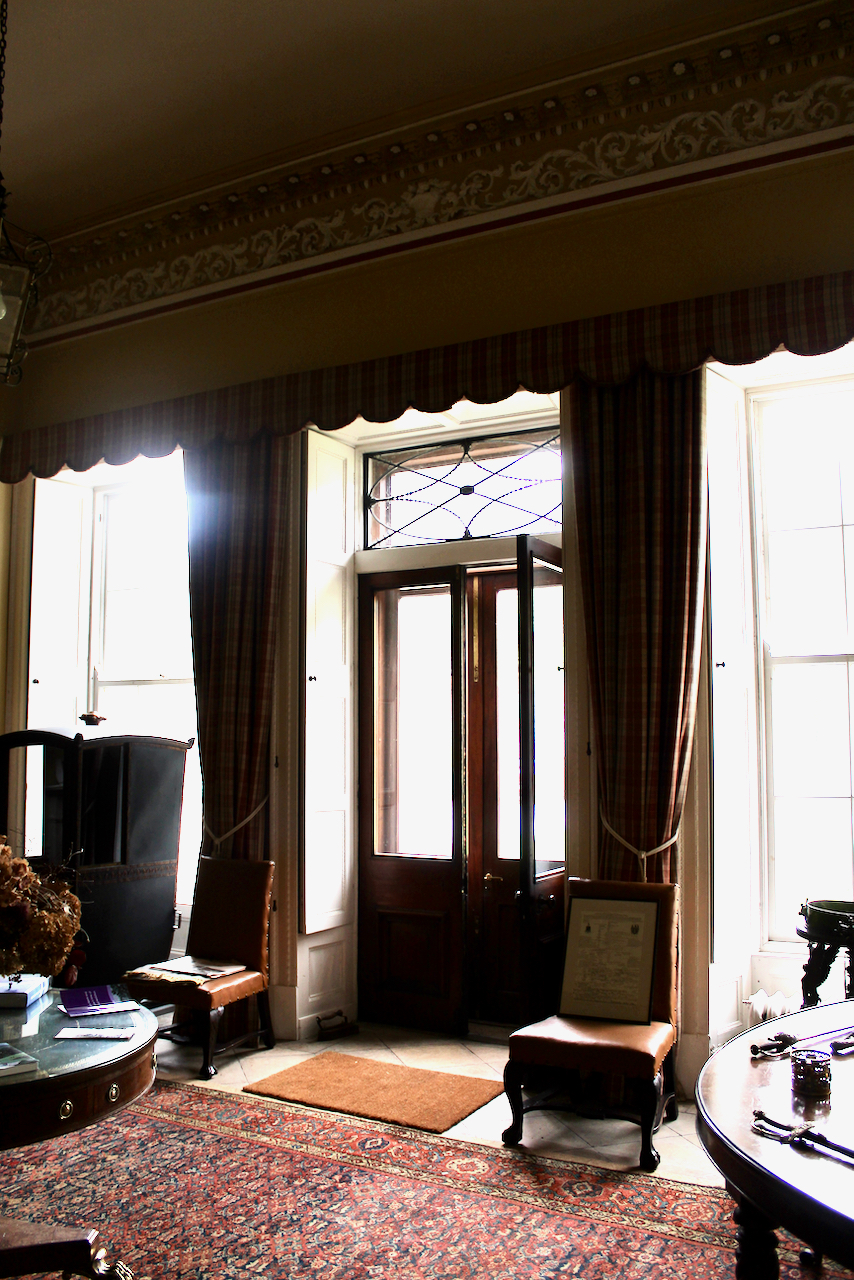
We entered the house through a door in the older former servants’ area in order to see the maps. We then passed into the main house, with its impressive entrance hall, with stone floor and frieze of plasterwork.

Cappoquin House. Photograph © Jennifer Winder-Baggot, www.irishhistorichouses.com
Cappoquin House, August 2020. Photograph © Jennifer Winder-Baggot, www.irishhistorichouses.com

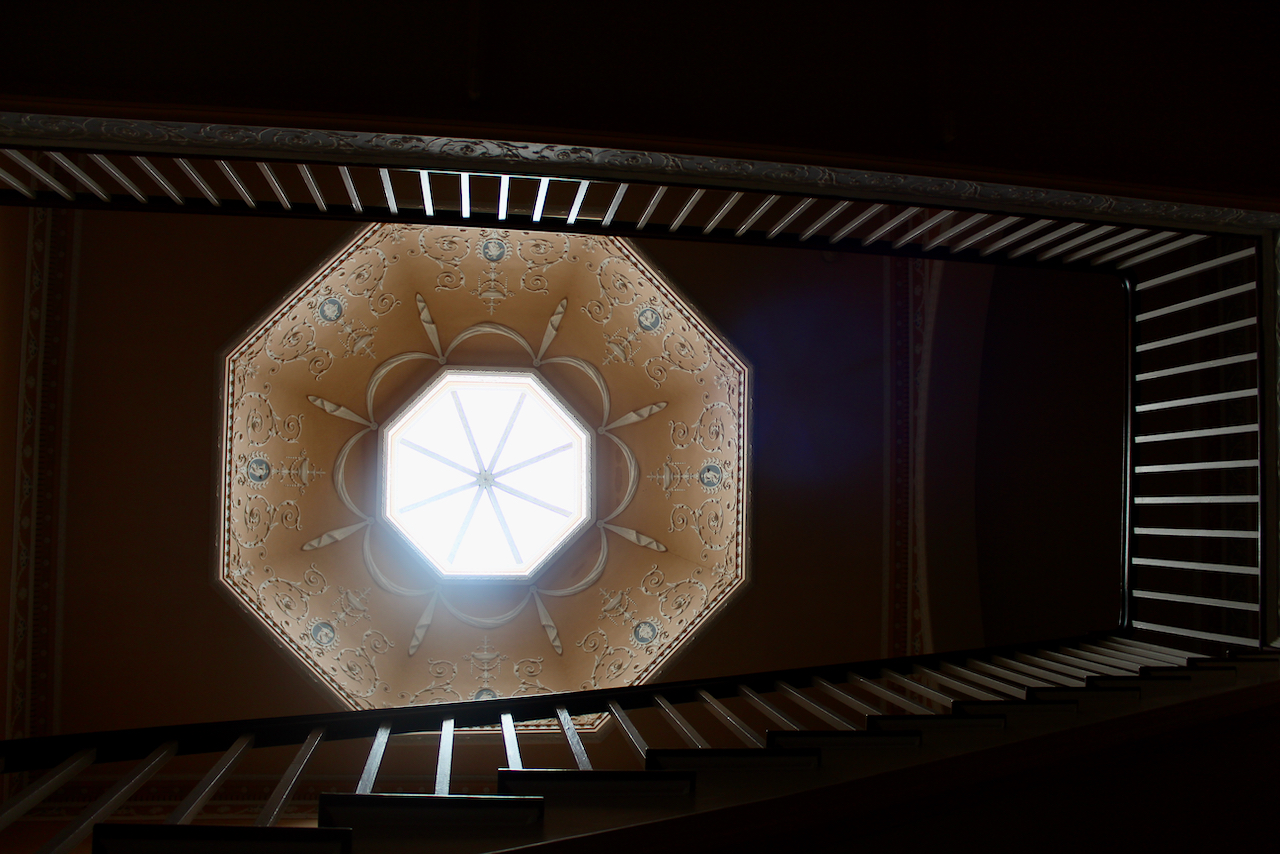
Beyond this room is the stair hall, with a top-lit cantilevered staircase and beautiful coffered dome. The timber banister terminates in a volute.

Cappoquin House. Photograph © Jennifer Winder-Baggot, www.irishhistorichouses.com
Cappoquin House, August 2020. Photograph © Jennifer Winder-Baggot, www.irishhistorichouses.com

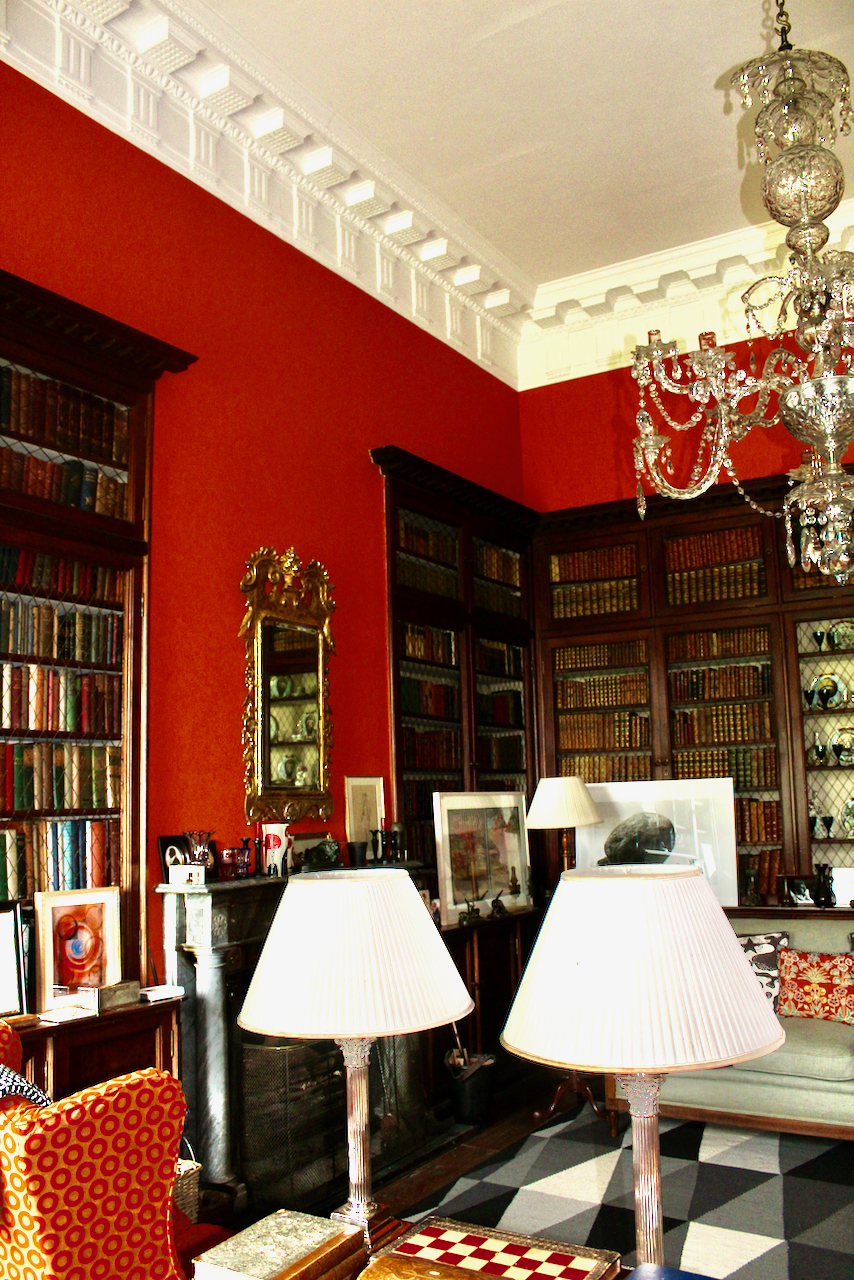
From the stair hall we entered the library, which has a dentilled cornice and built-in bookcases and is painted a deep red colour. The most intricate works in rebuilding the interior of the house were the library bookcases and the staircase, which are a tribute to the skills of carpenter James Hackett and Edward Brady, a mason from Cappoquin. [see Symes].

Cappoquin House, August 2020. Photograph © Jennifer Winder-Baggot, www.irishhistorichouses.com

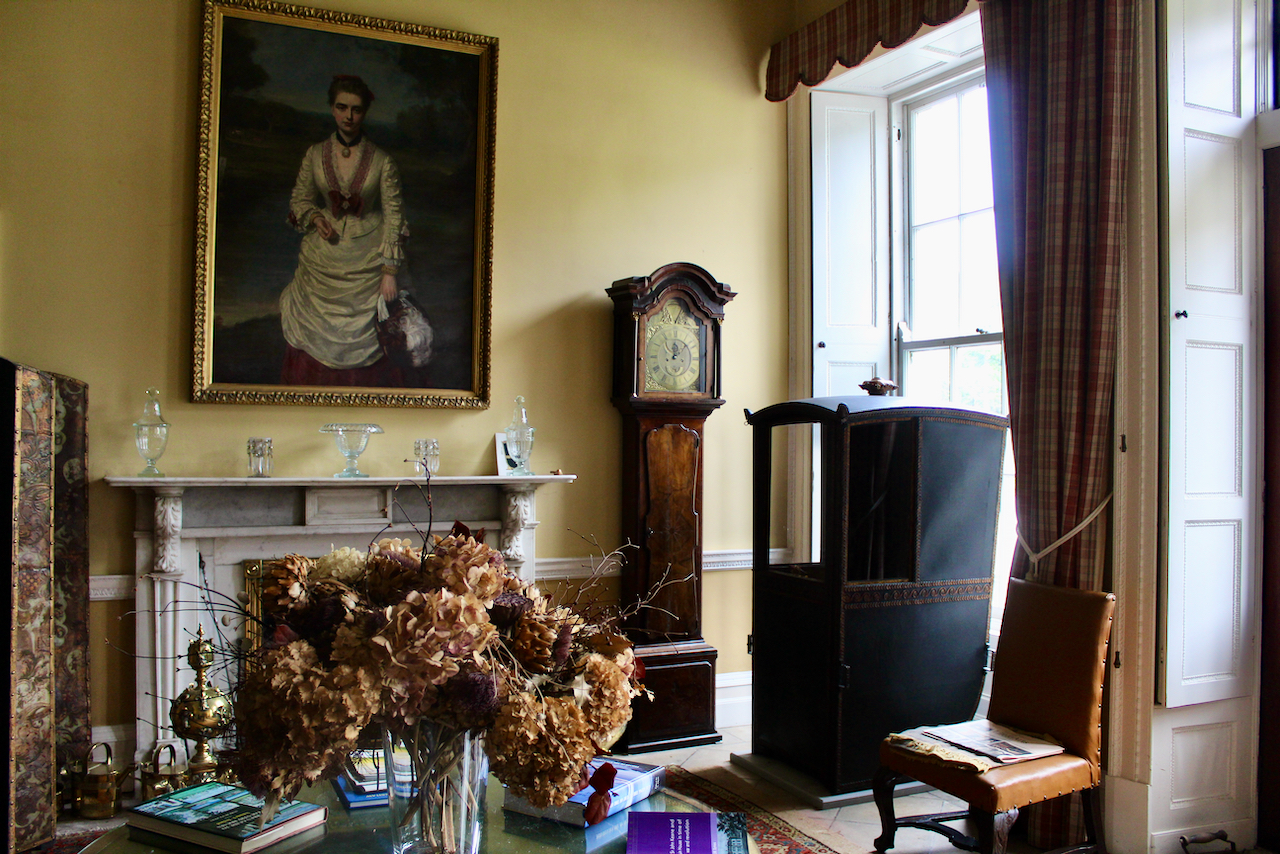
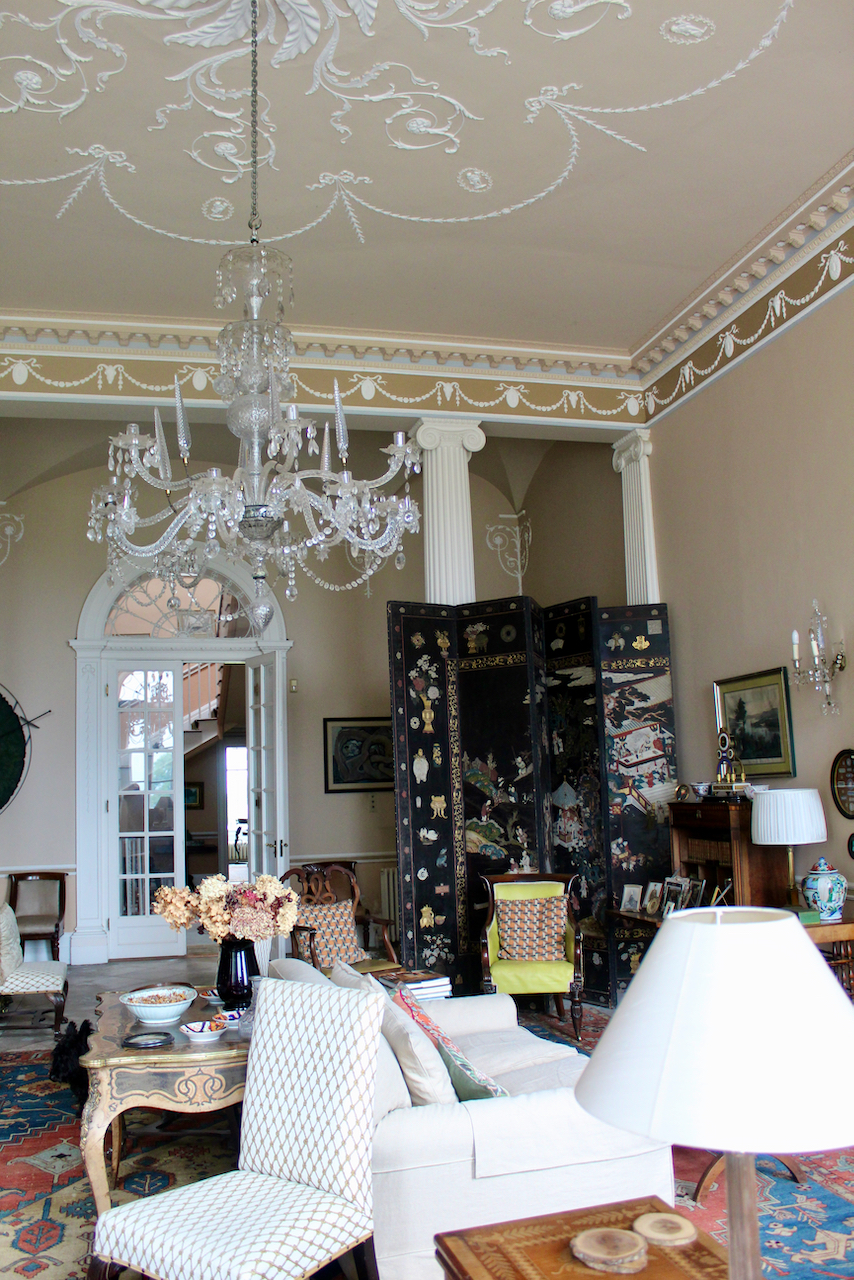
Beyond the stair hall is the central drawing room, which was formerly the entrance hall. It has an Ionic columnar screen, and a decorative plasterwork cornice – a frieze of ox skulls and swags.

Cappoquin House. Photograph © Jennifer Winder-Baggot, www.irishhistorichouses.com
Cappoquin House, August 2020. Photograph © Jennifer Winder-Baggot, www.irishhistorichouses.com

The ceiling plasterwork and columns in the drawing room are by G. Jackson and Sons (established 1780) of London, who also made the decoration in the stair hall. Sir Charles explained to us that it would have been made not freehand but from a mould.

Cappoquin House, August 2020. Photograph © Jennifer Winder-Baggot, www.irishhistorichouses.com

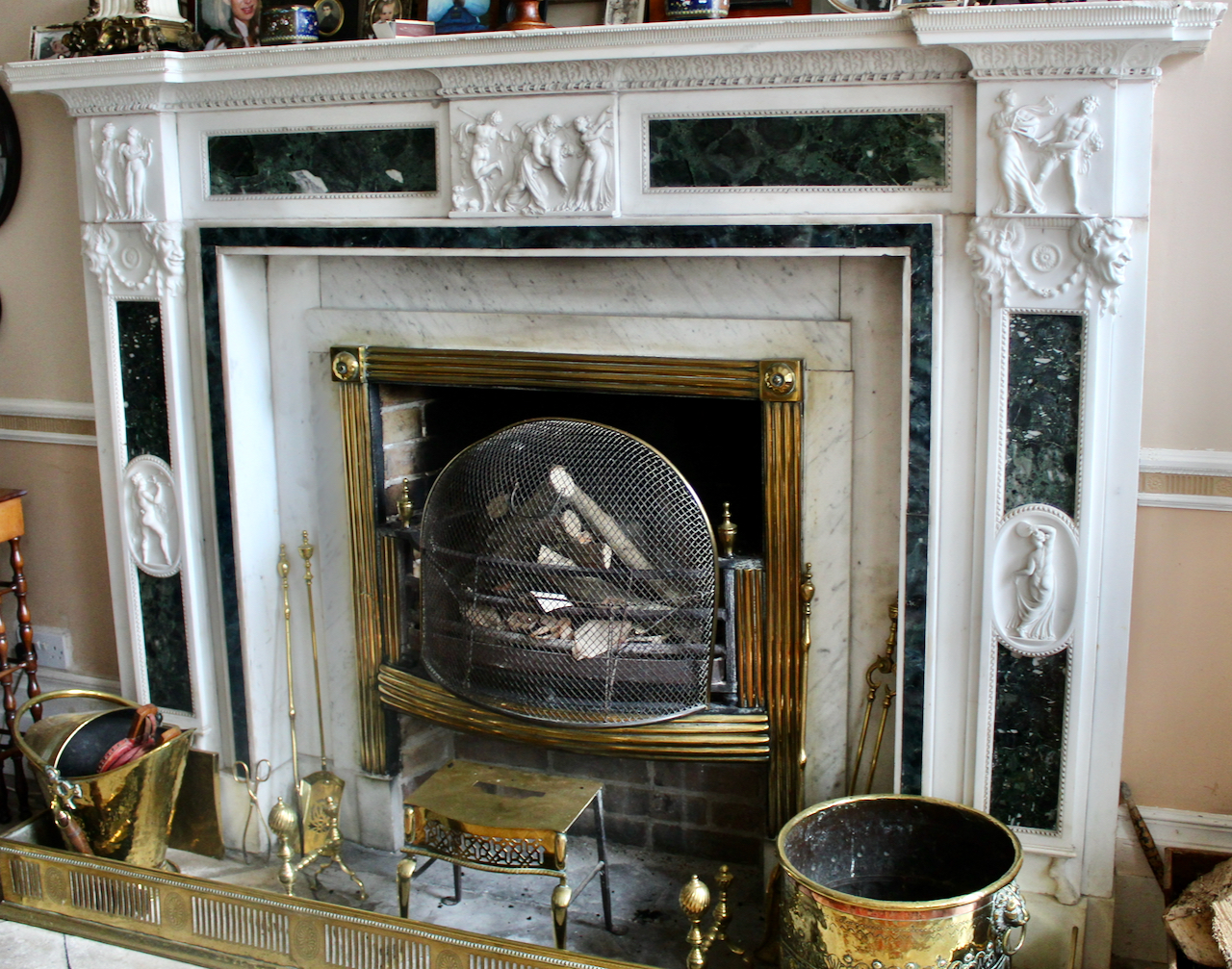
The chimneypiece is similar to one in 52 St. Stephen’s Green, the home of the Office of Public Works. One can tell it is old, Sir Charles told us, by running one’s hand over the top – it is not smooth, as it would be if it were machine-made. According to Symes, three original marble mantelpieces survive from before the fire, and the one in the drawing room was brought from a Dublin house of Adelaide Sidney Vance’s family, probably 18 Rutland Square (now Parnell Square), in the late nineteenth century. The Vance chimneypiece is of Carrara marble with green marble insets and carved panels of the highest quality. Christine Casey has identified the designs as derived from the Borghese vase, a vase now in the Louvre museum, which was sculpted in Athens in the 1st century BC. [12]

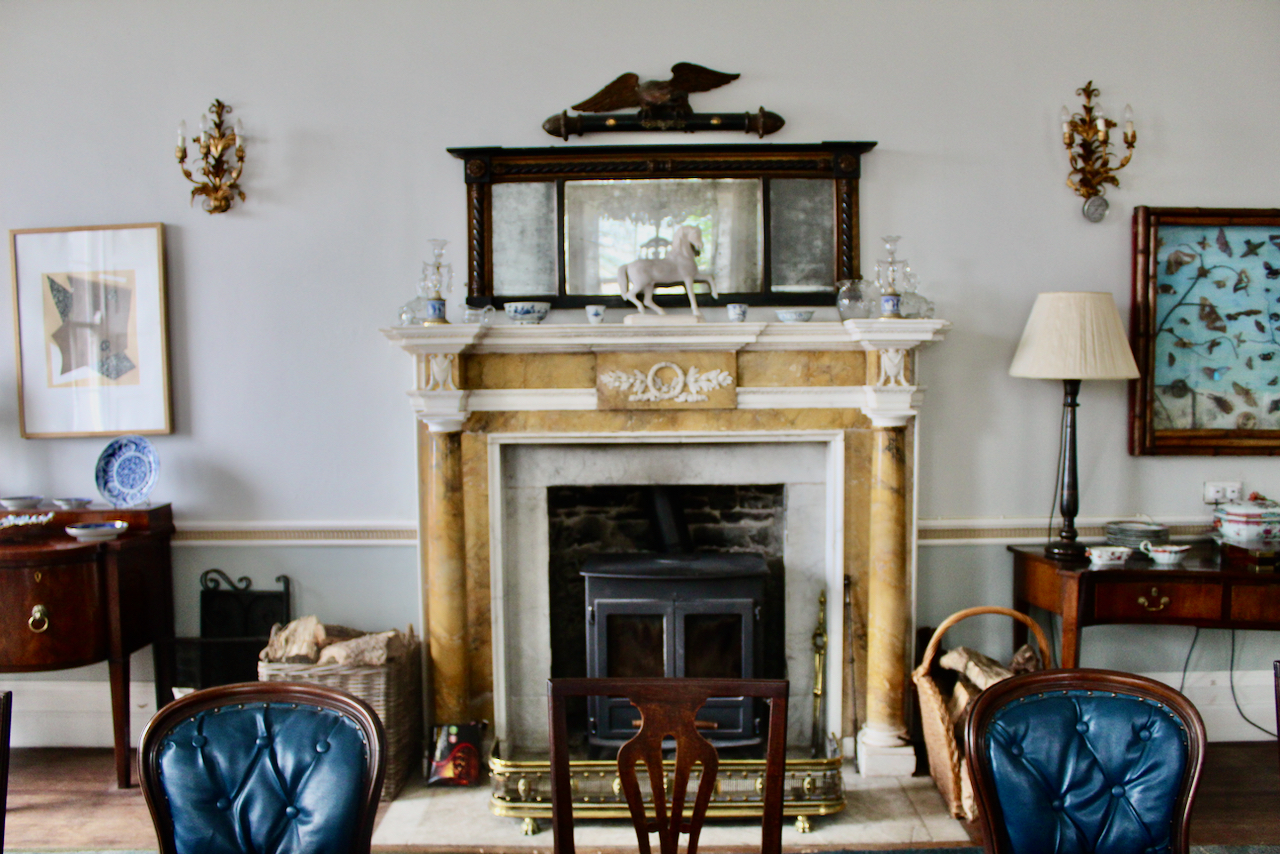
The chimneypieces in the dining room and former drawing room are of carved statuary marble with columns and are inset with Brocatello marble (a fine-grained yellow marble) from Siena. [13] The dining room has another splendid ceiling. The chimmeypiece in the dining room has a central panel of a wreath and oak leaves with urns above the columns. 

Cappoquin House. Photograph © Jennifer Winder-Baggot, www.irishhistorichouses.com
The Brocatello marble fireplace in the Dining Room. Photograph © Jennifer Winder-Baggot, www.irishhistorichouses.com

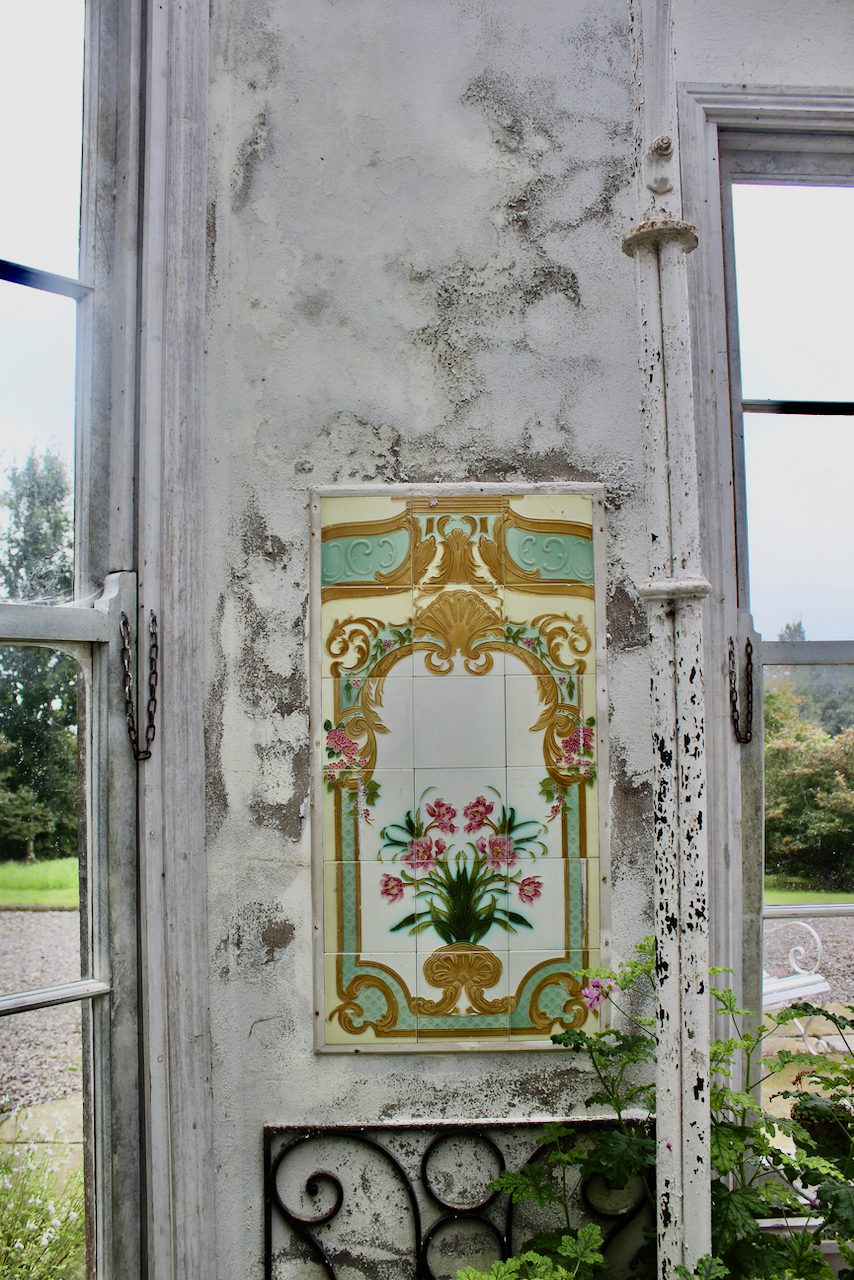
We then went out to the conservatory. 

Cappoquin House. Photograph © Jennifer Winder-Baggot, www.irishhistorichouses.com
Cappoquin House, August 2020. Photograph © Jennifer Winder-Baggot, www.irishhistorichouses.com

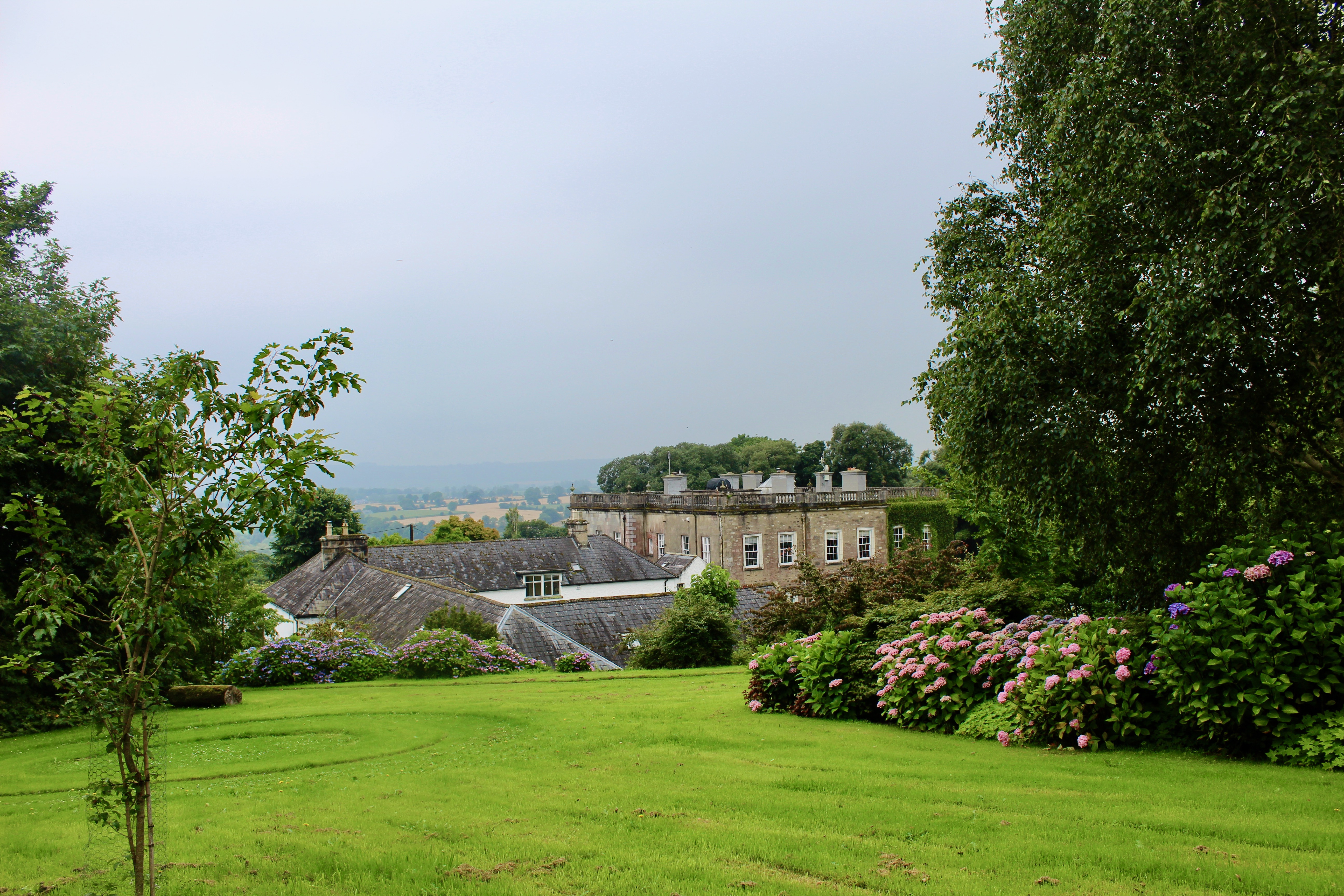
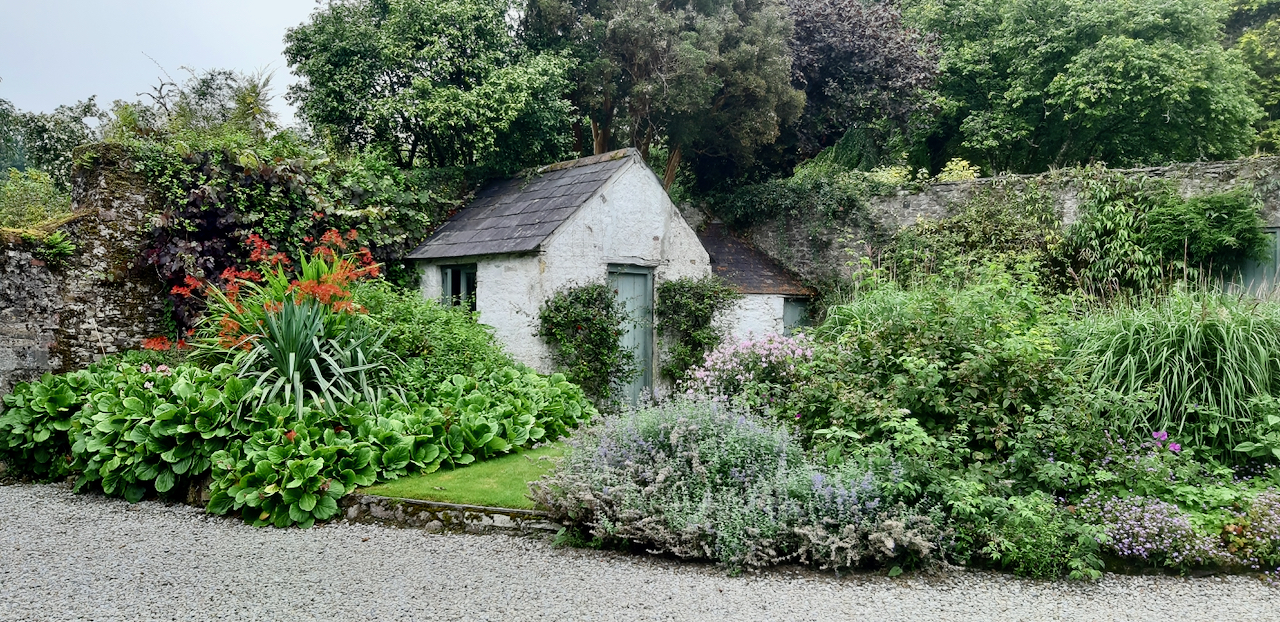
After our house tour, we had the gardens to explore. The gardens are open to the public on certain days of the year [14]. They were laid out in the middle of the nineteenth century but there are vestiges of earlier periods in walls, gateways and streams. Sir Charles’s mother expanded the gardens and brought her expertise to the planting.

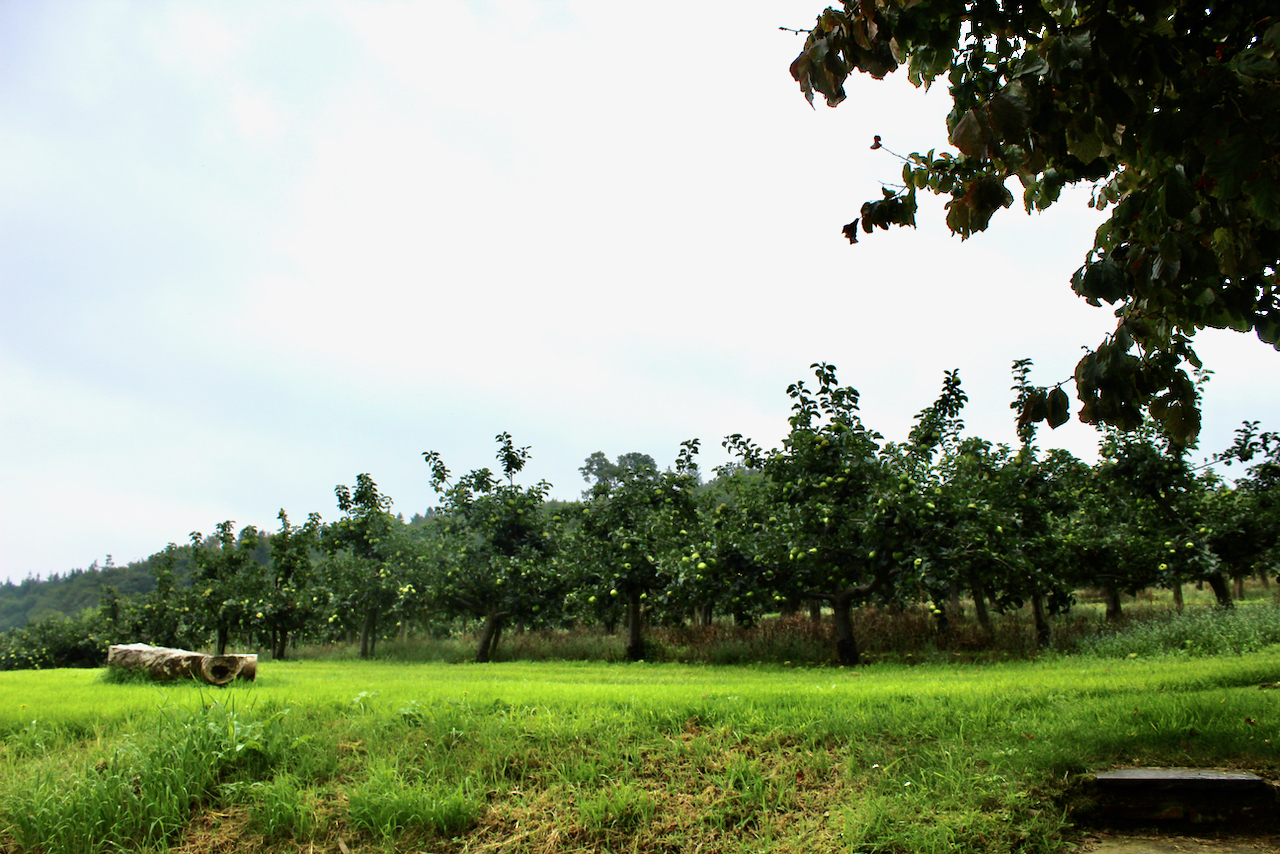
To the west of the house is an orchard of pears and Bramley apples. 

Cappoquin House. Photograph © Jennifer Winder-Baggot, www.irishhistorichouses.com
The Eucalyptus coccifera. Photograph © Jennifer Winder-Baggot, www.irishhistorichouses.com

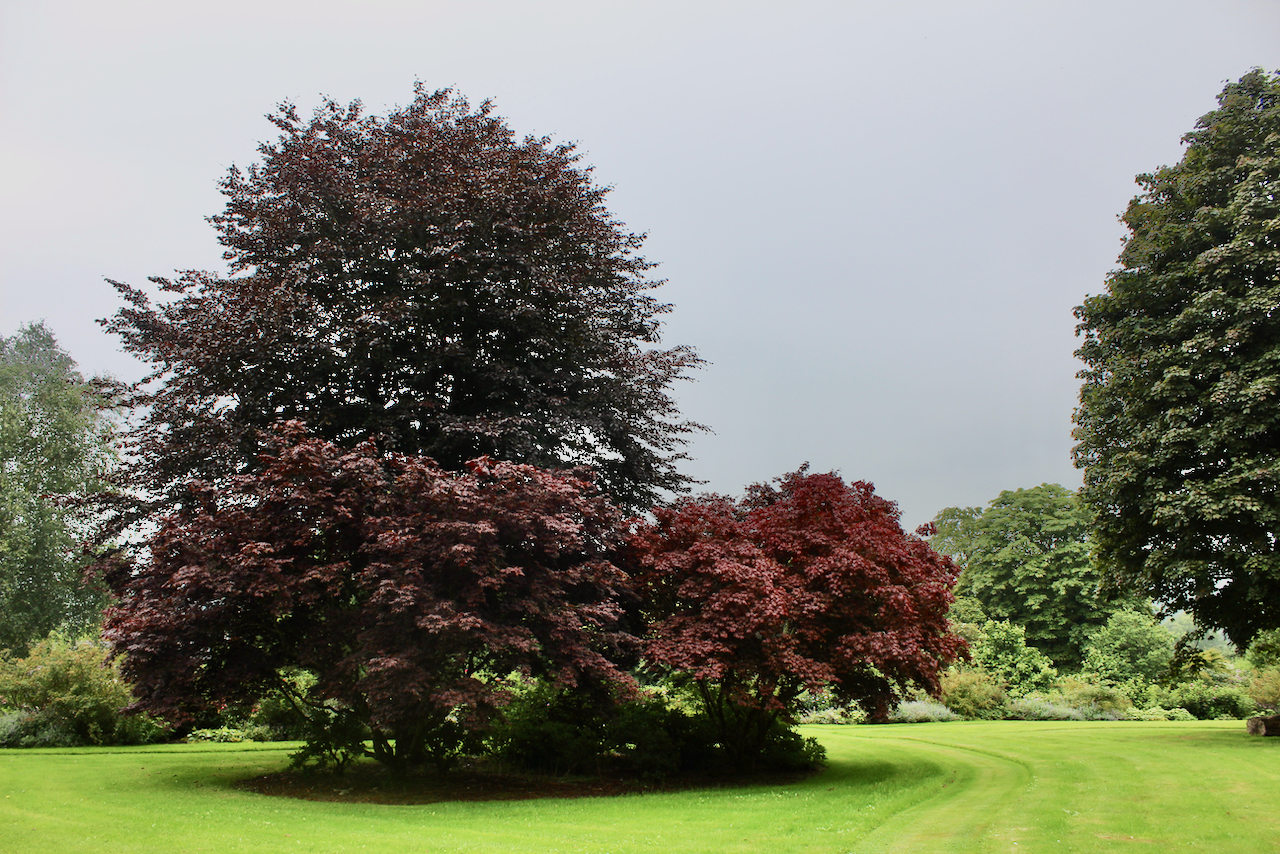
One wends one’s way up the hill across picturesque lawns, the Upper Pleasure Gardens. The paths take one past weeping ash and beeches, a Montezuma pine and rhododendrons.

Cappoquin House. Photograph © Jennifer Winder-Baggot, www.irishhistorichouses.com
Cappoquin House, August 2020. Photograph © Jennifer Winder-Baggot, www.irishhistorichouses.com

Our energy was flagging by the end of our walk around the gardens so unfortunately I have no pictures of the sunken garden, which is on the south side of the house, overlooking the view towards Dromana House.

Cappoquin House. Photograph © Jennifer Winder-Baggot, www.irishhistorichouses.com
Cappoquin House, August 2020. Photograph © Jennifer Winder-Baggot, www.irishhistorichouses.com

I noticed that you can stay in a cottage in the courtyard! https://www.airbnb.ie/rooms/16332970?adults=2&children=0&infants=0&pets=0&wishlist_item_id=11002218087407&check_in=2023-05-23&check_out=2023-05-24&source_impression_id=p3_1681134404_prgB5ShntjT0gCzp

[1] p. 7. Symes, Glascott J.R.M. Sir John Keane and Cappoquin House in time of war and revolution. Four Courts Press, Dublin, 2016.

[2] https://www.buildingsofireland.ie/buildings-search/building/22810098/cappoquin-house-cappoquin-demesne-cappoquin-co-waterford

[3] p. 42, Symes.

[4] Irish Builder 5th March 1927, 162, https://www.buildingsofireland.ie/buildings-search/building/22810098/cappoquin-house-cappoquin-demesne-cappoquin-co-waterford

[5] p. 56. Mark Bence-Jones. A Guide to Irish Country Houses (originally published as Burke’s Guide to Country Houses volume 1 Ireland by Burke’s Peerage Ltd. 1978). Revised edition 1988, Constable and Company Ltd, London.
[6] https://theirishaesthete.com/2014/07/16/exactly-as-intended/

[7] http://lordbelmontinnorthernireland.blogspot.com/search/label/County%20Waterford%20Landowners

[8] https://theirishaesthete.com/2013/03/04/risen-from-the-ashes/

[9] p. 31-35. Symes.
[10] p. 39. Symes.

[11] http://landedestates.nuigalway.ie/LandedEstates/jsp/property-list.jsp?letter=C

[12] p. 46. Symes.

[13] p. 45. Symes.

[14] https://www.cappoquinhouseandgardens.com/

Text © Jennifer Winder-Baggot, www.irishhistorichouses.com