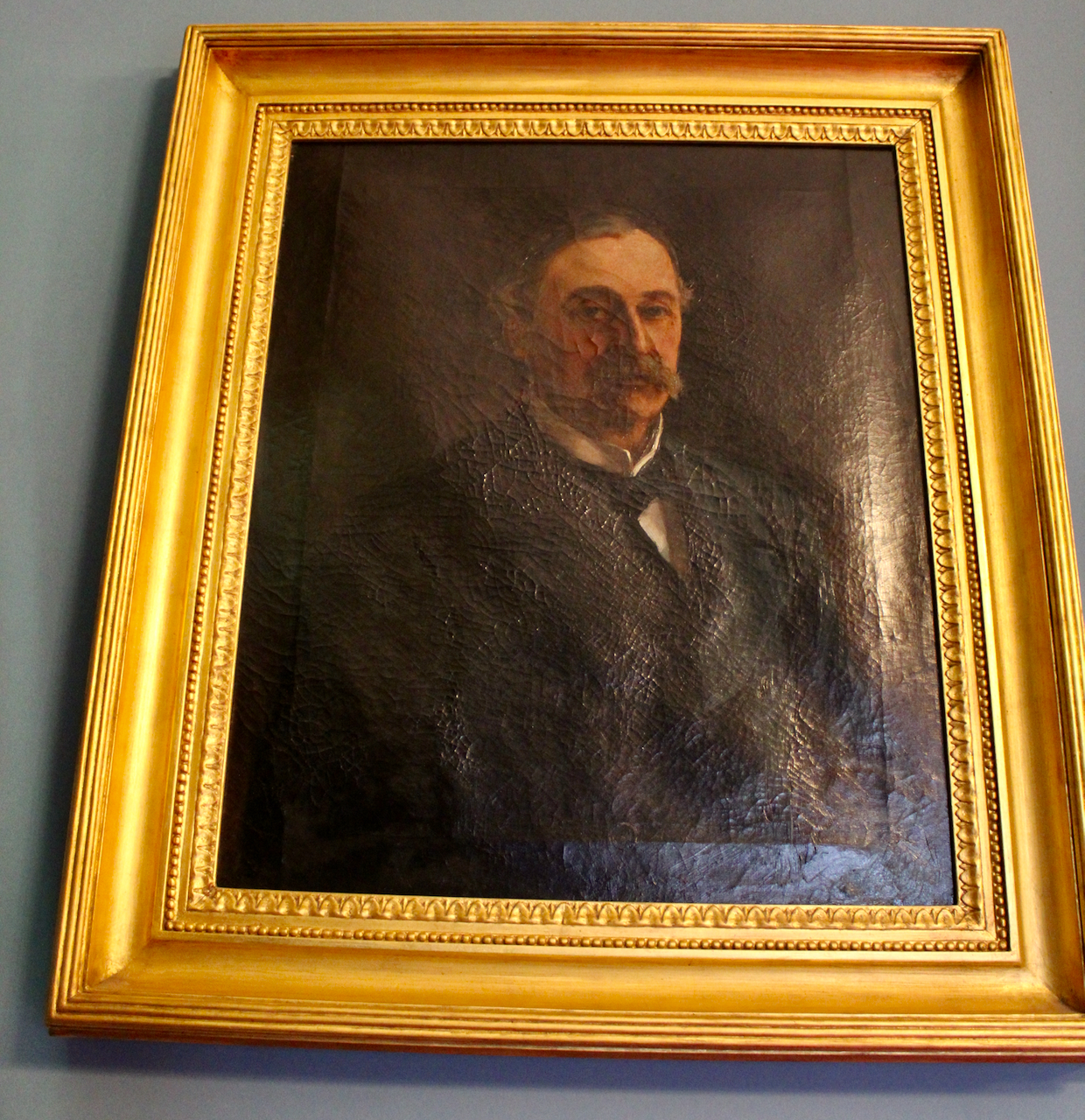
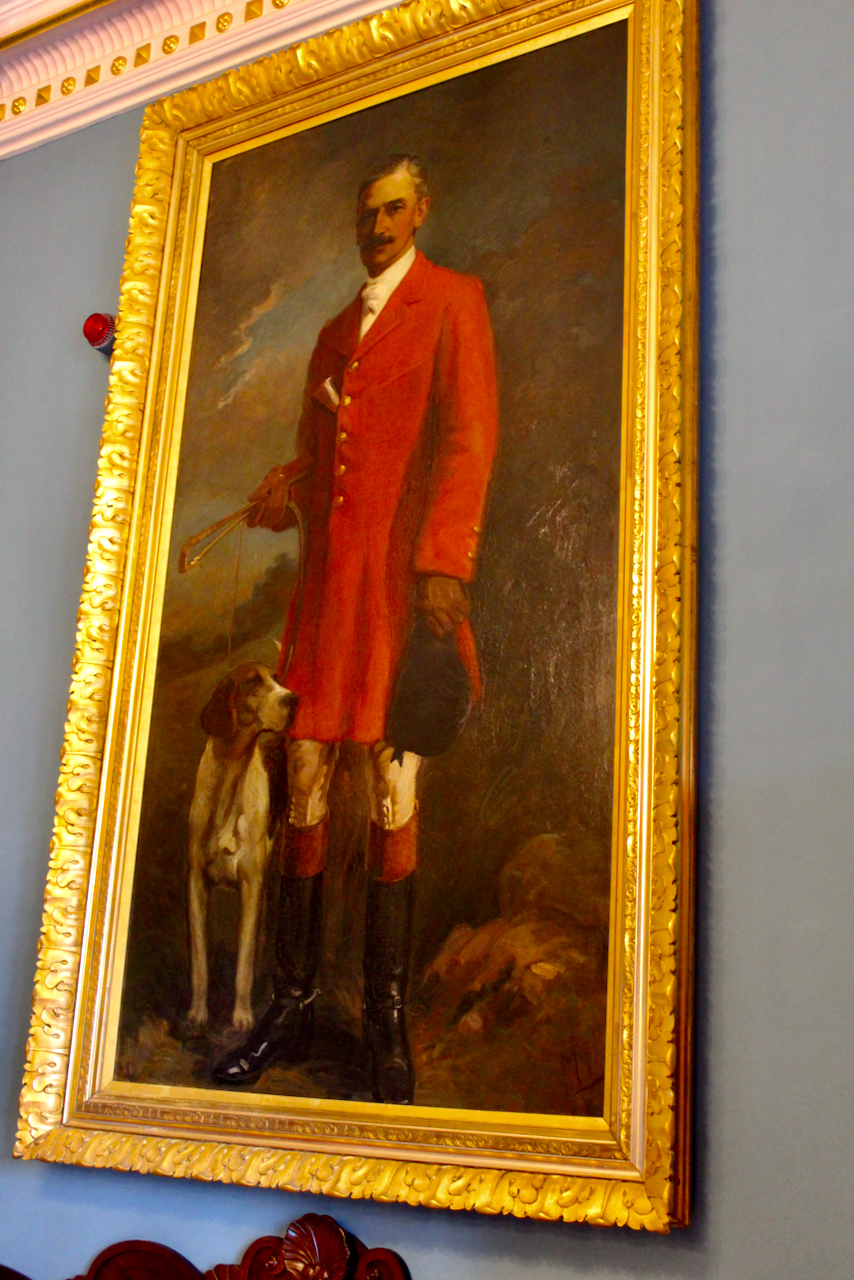
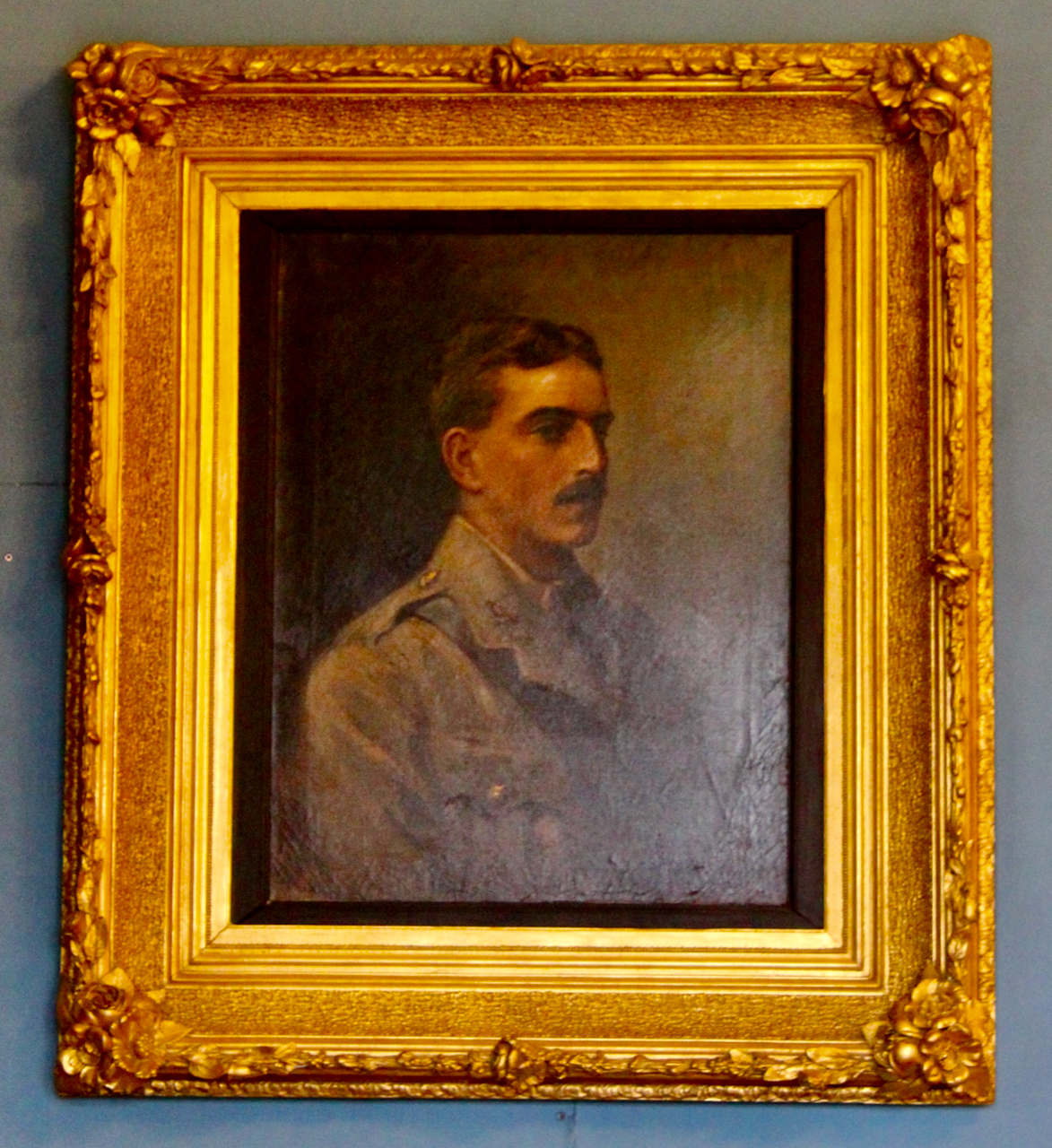
Belvedere House, Gardens and Park, County Westmeath – open to the public

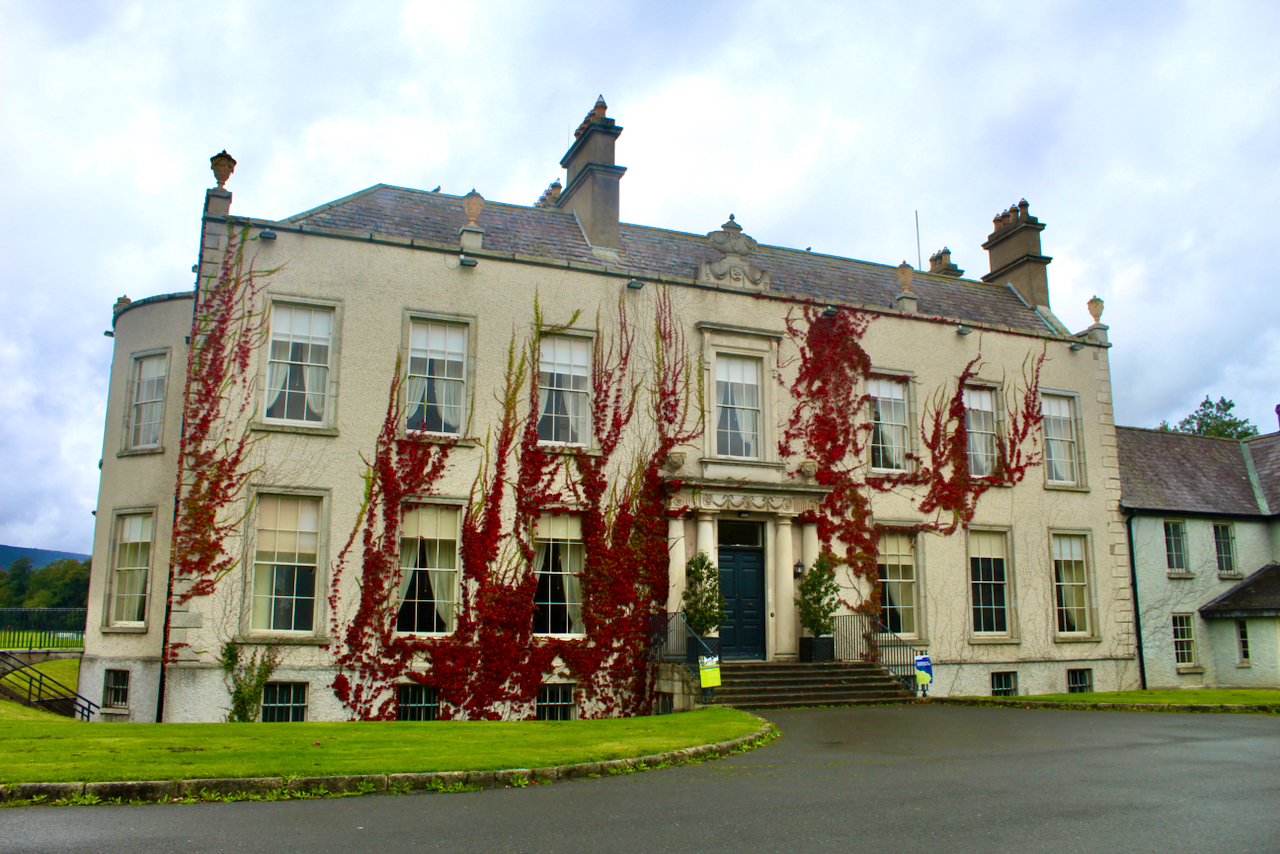
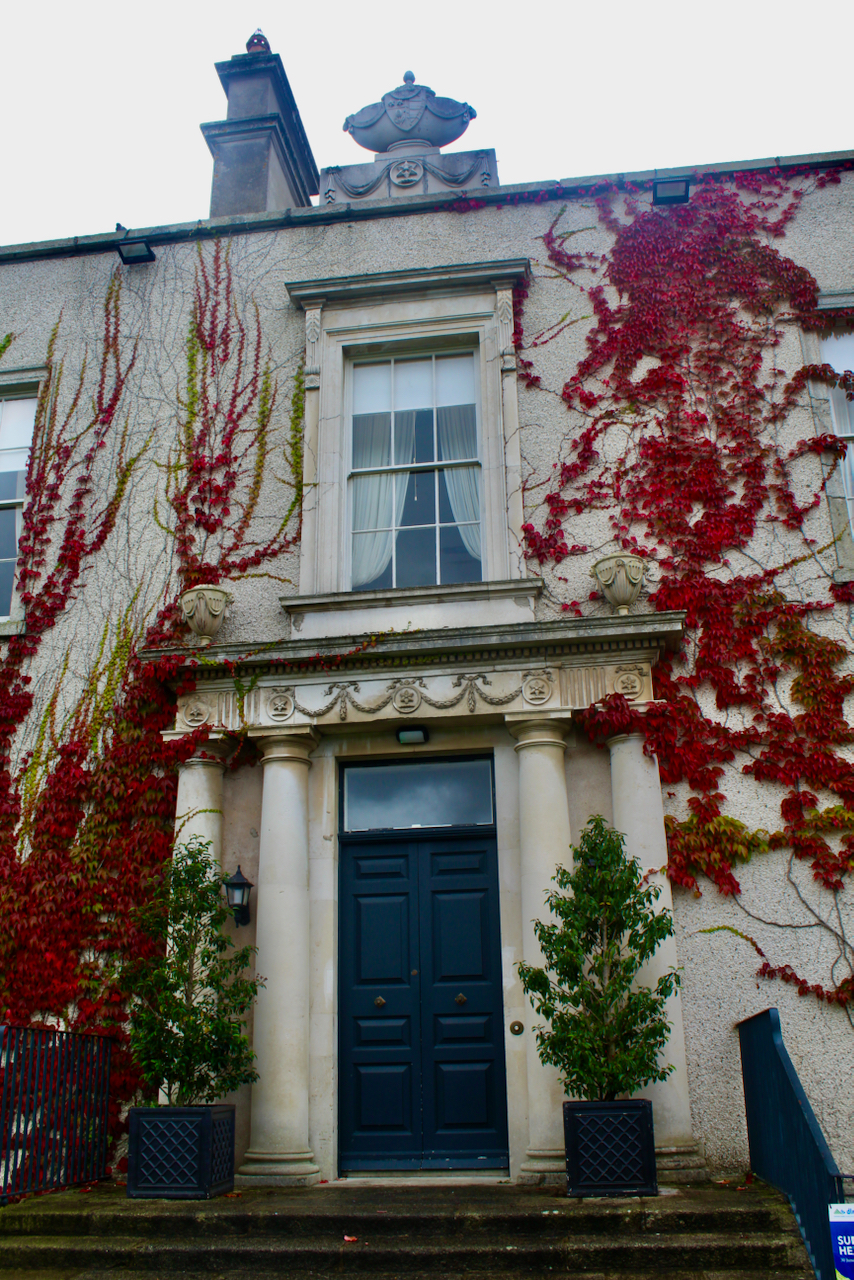
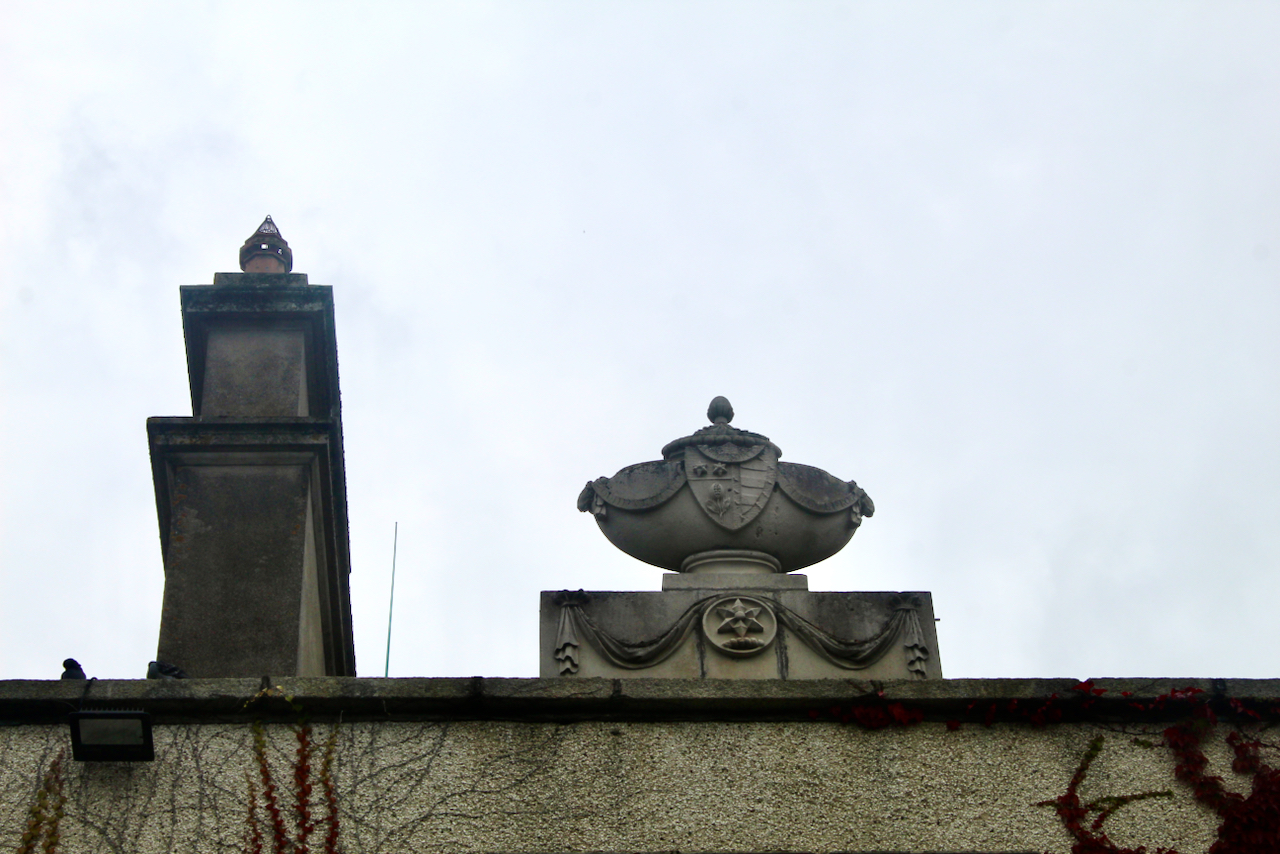
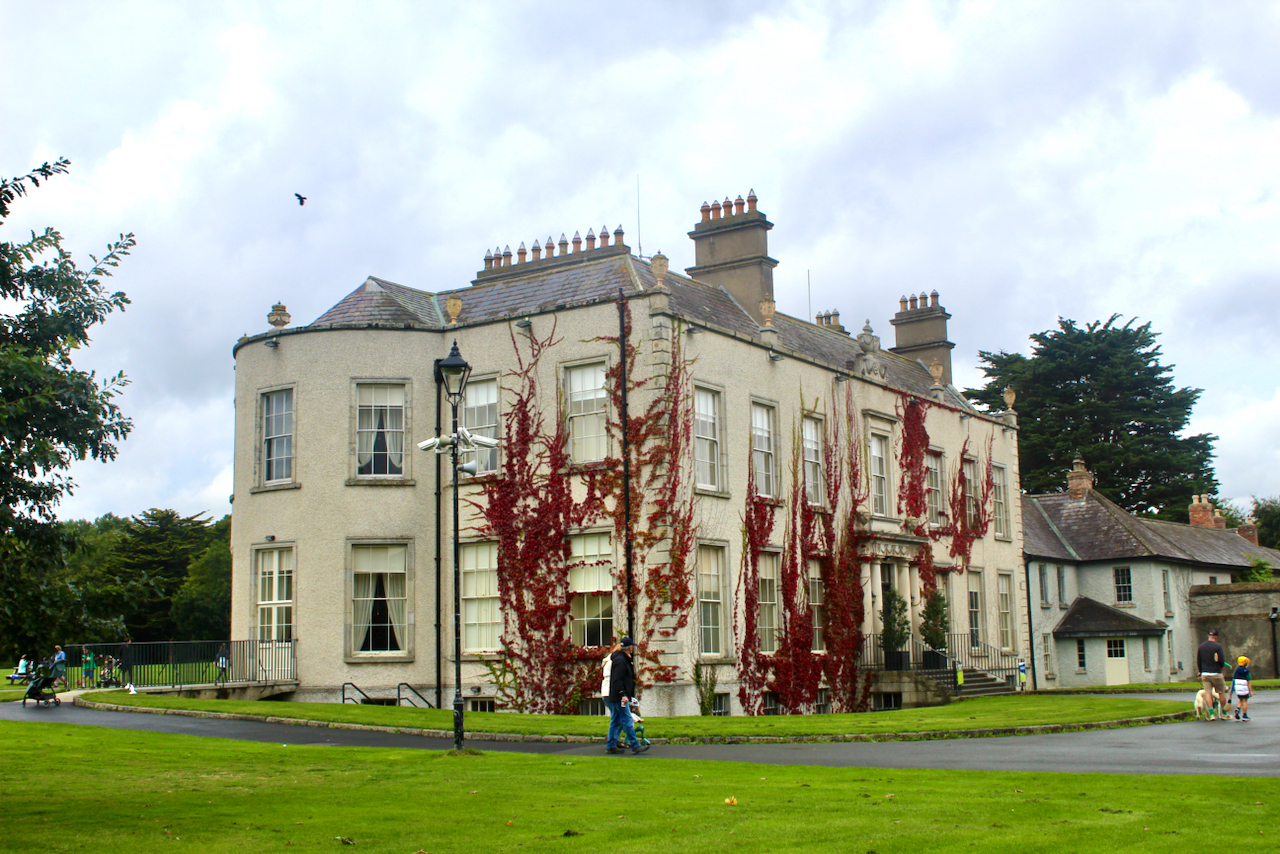
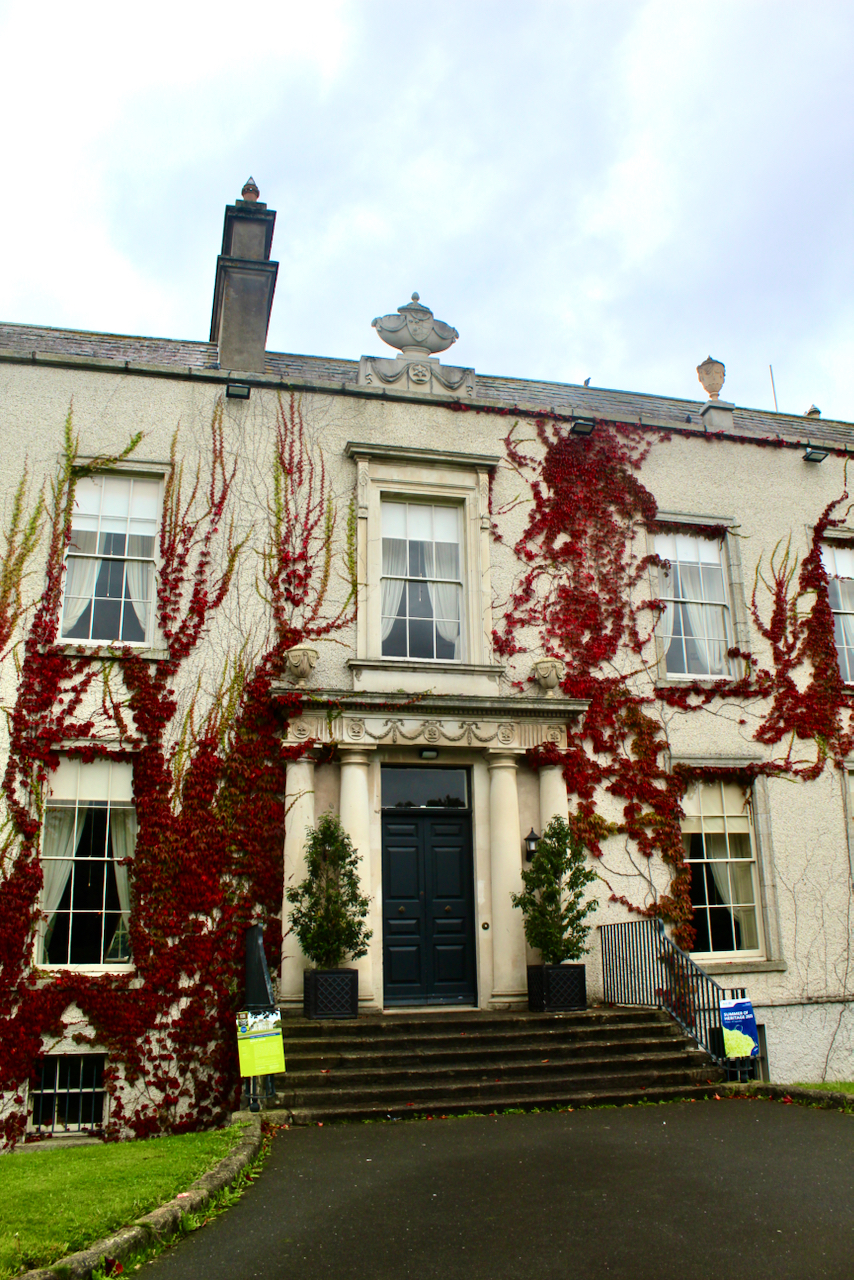
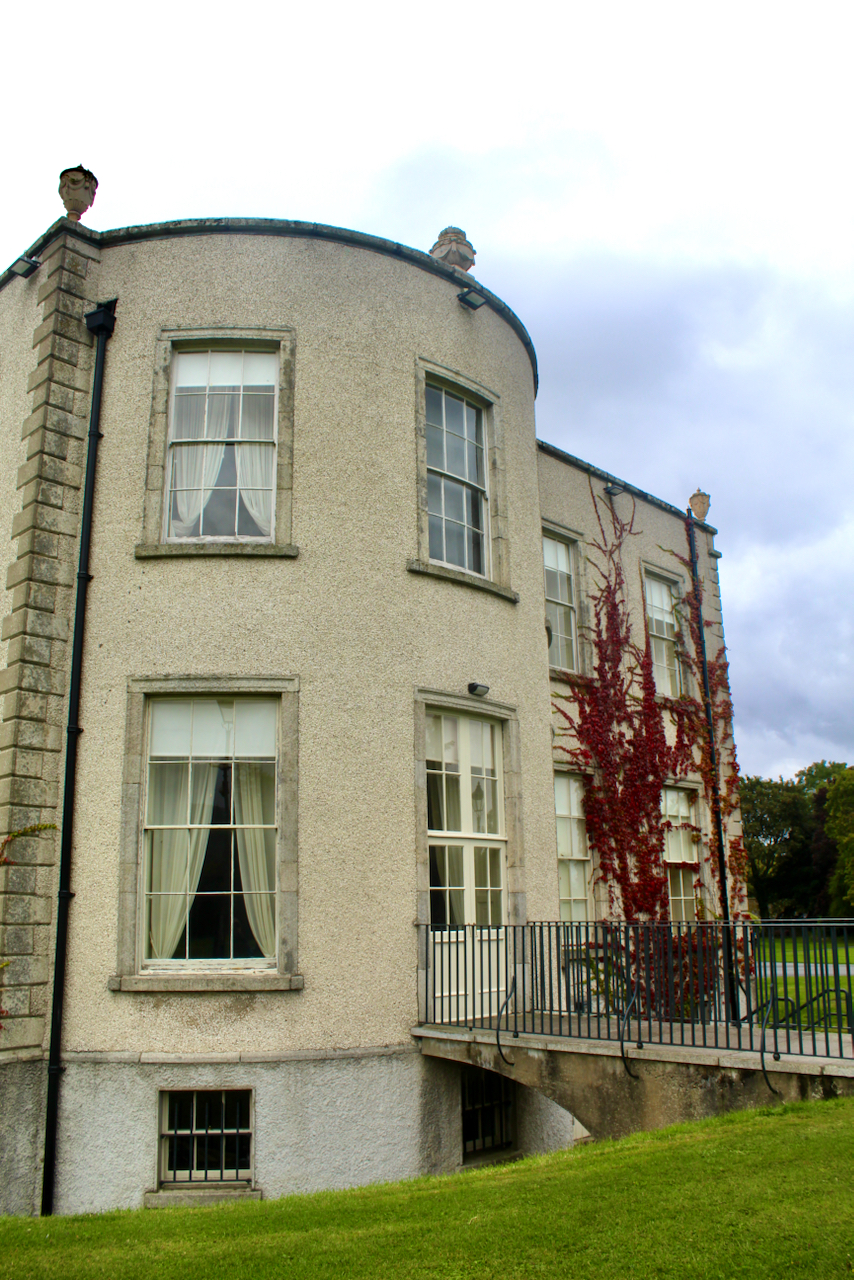
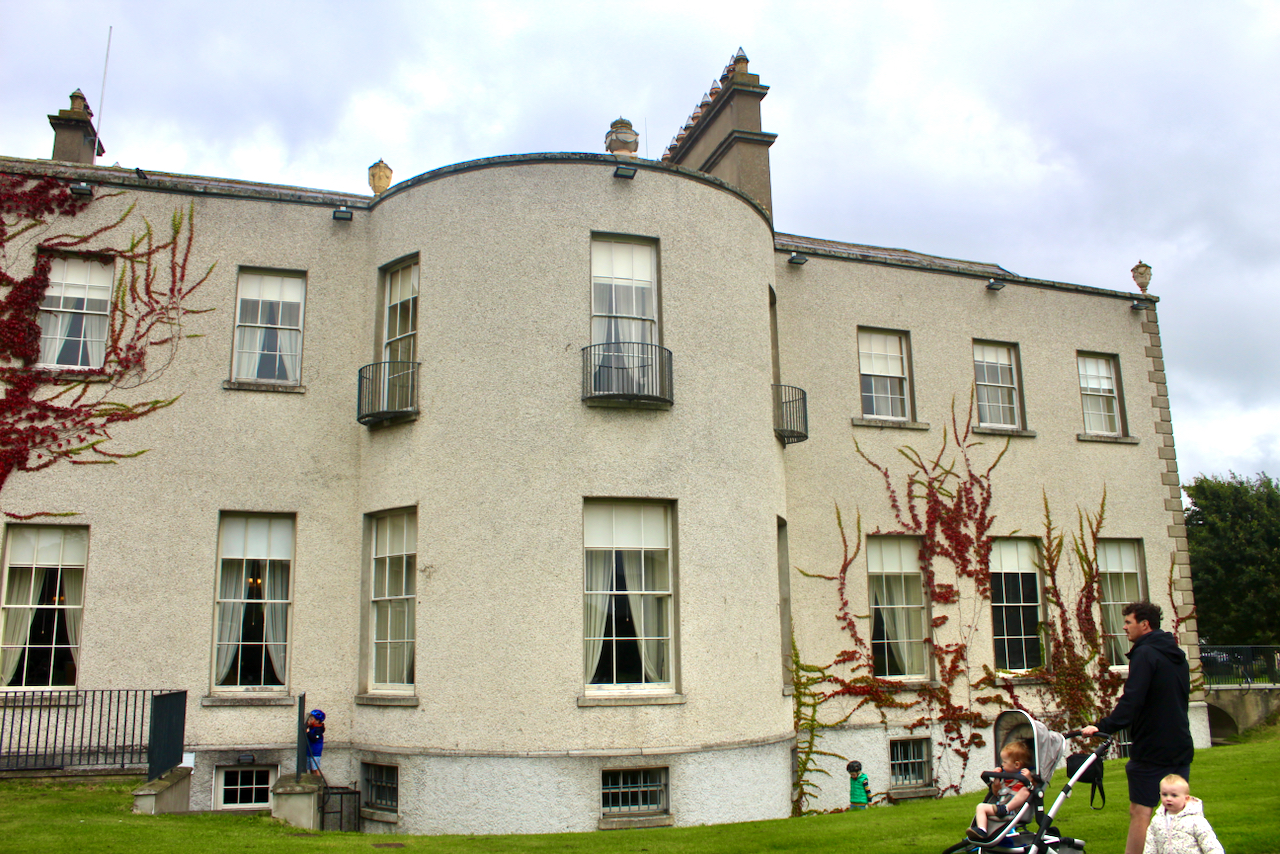
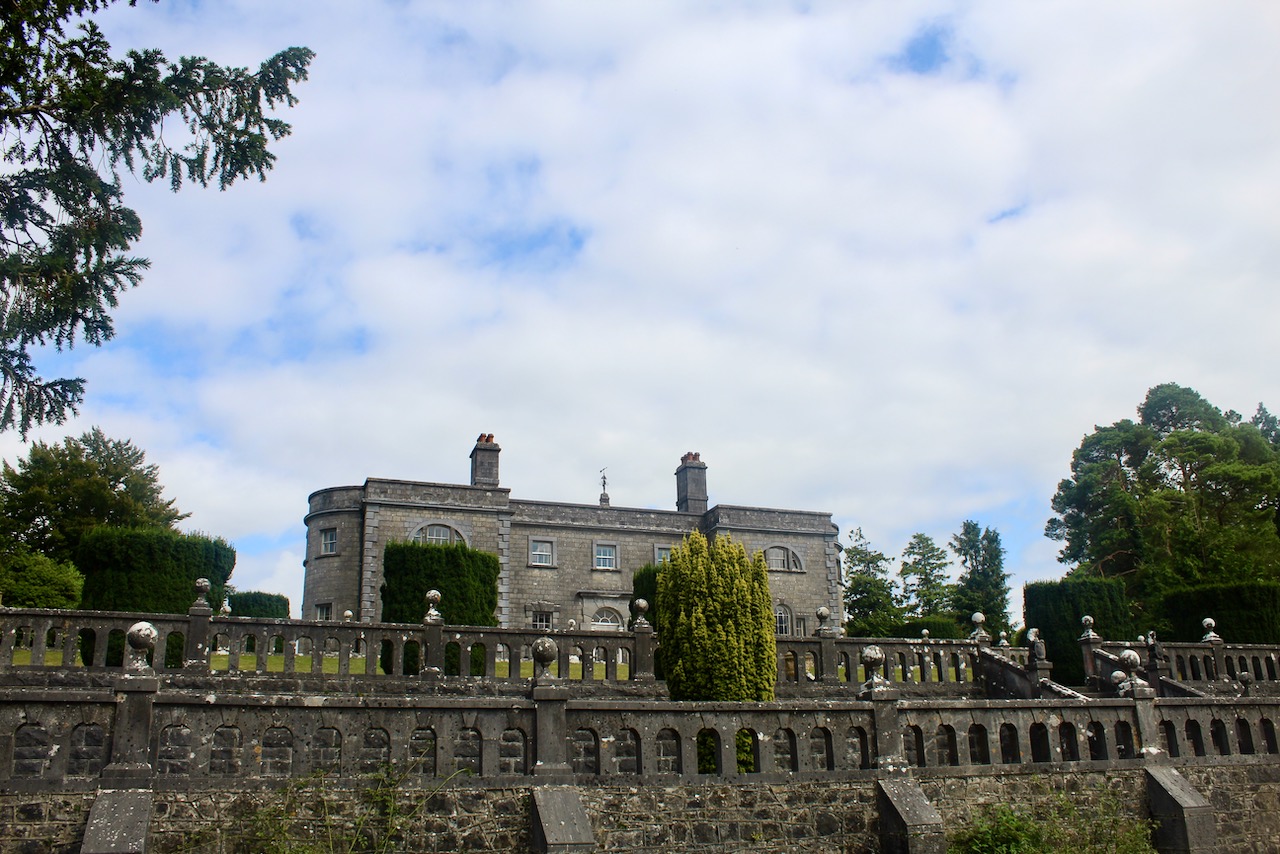
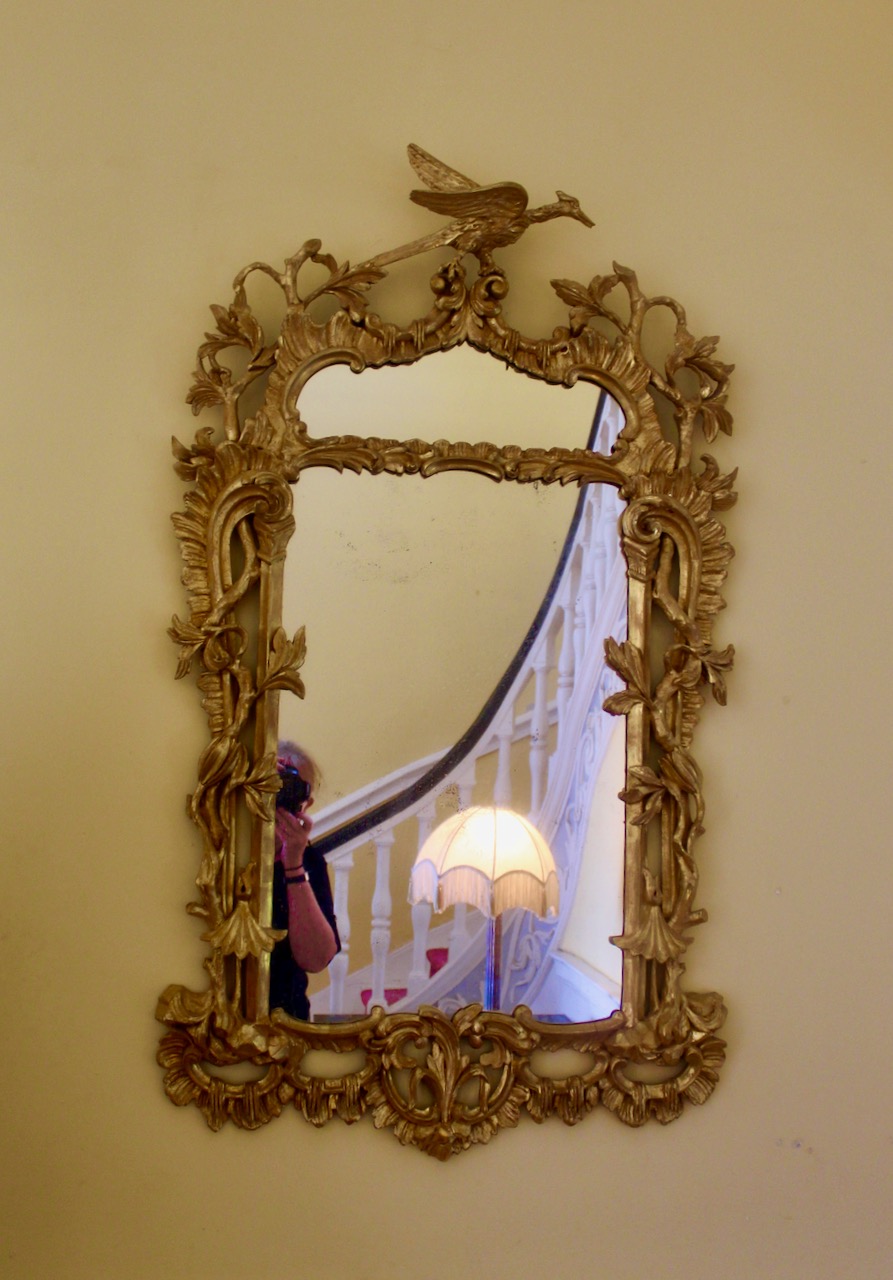
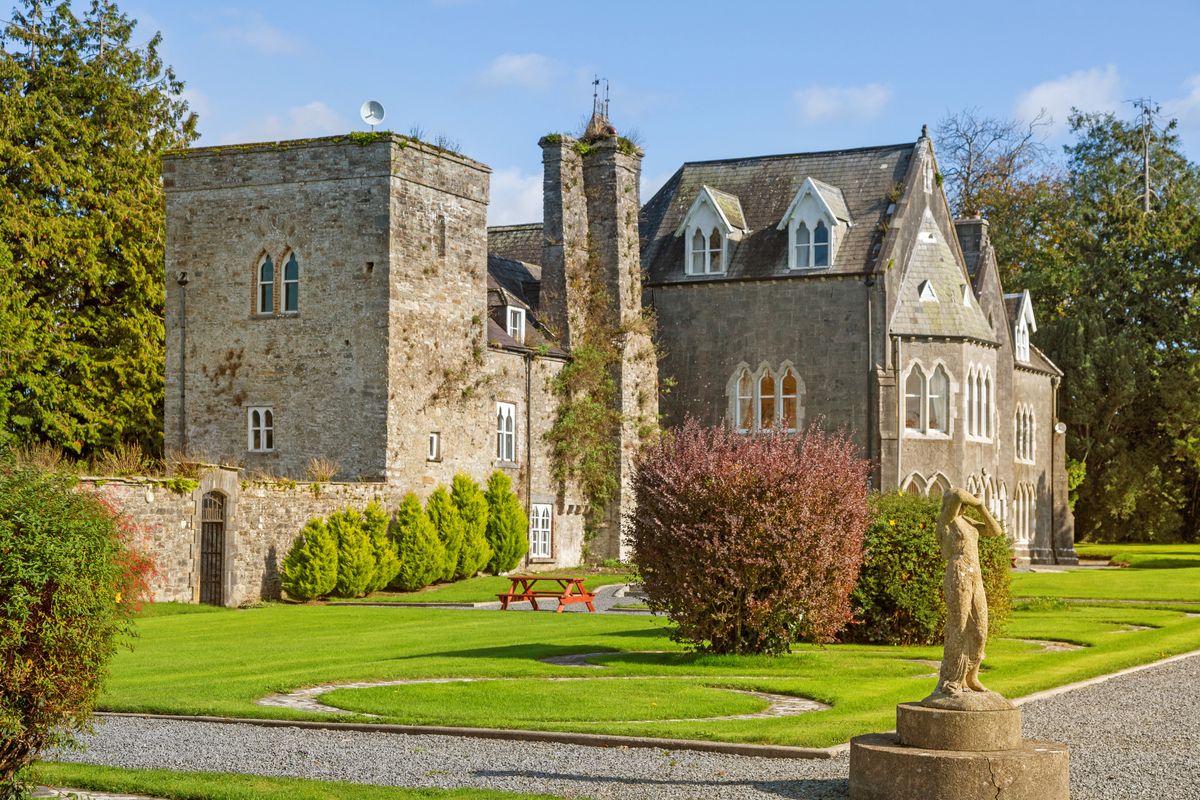
Belvedere, County Westmeath, August 2021. Photograph © Jennifer Winder-Baggot, www.irishhistorichouses.com

Belvedere House and gardens are open to the public.

http://www.belvedere-house.ie/

Mark Bence-Jones writes of Belvedere in his 1988 book:

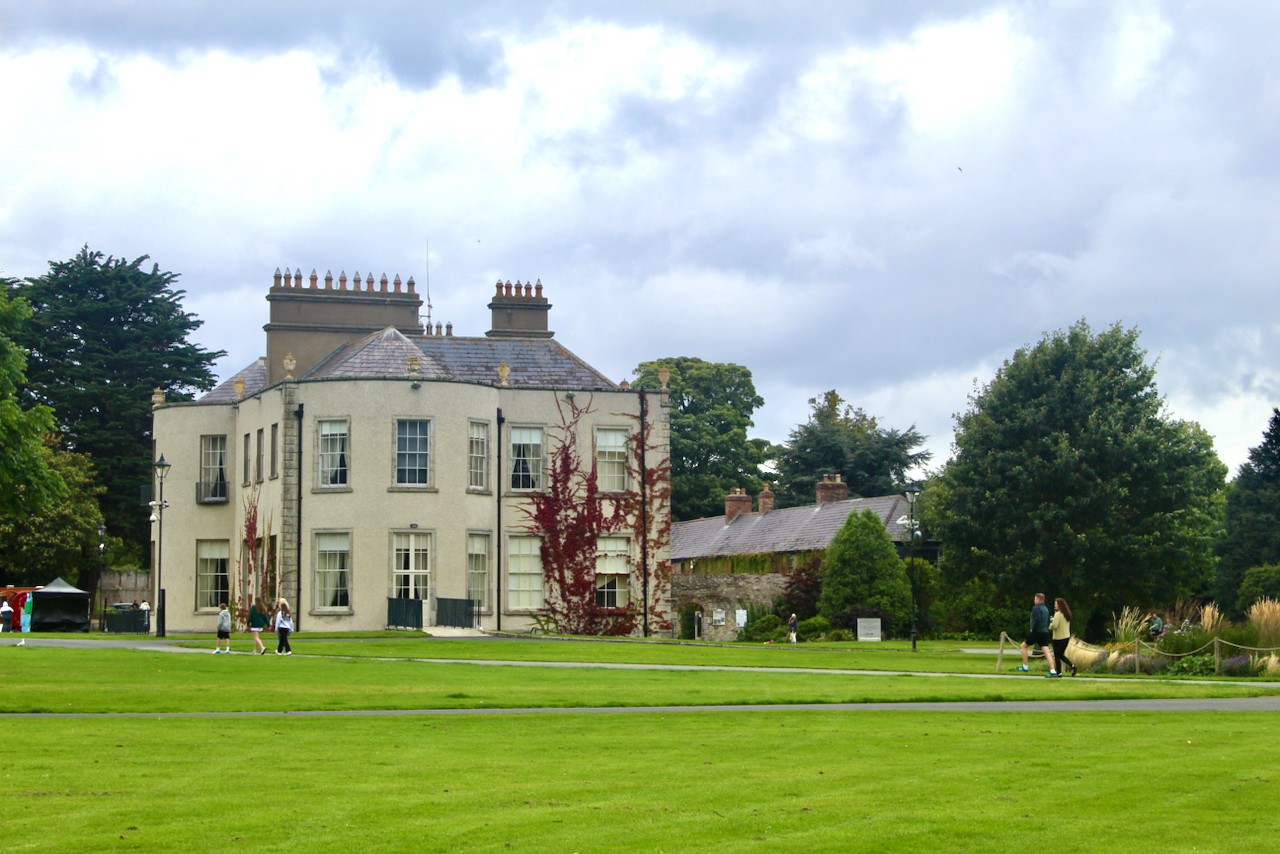
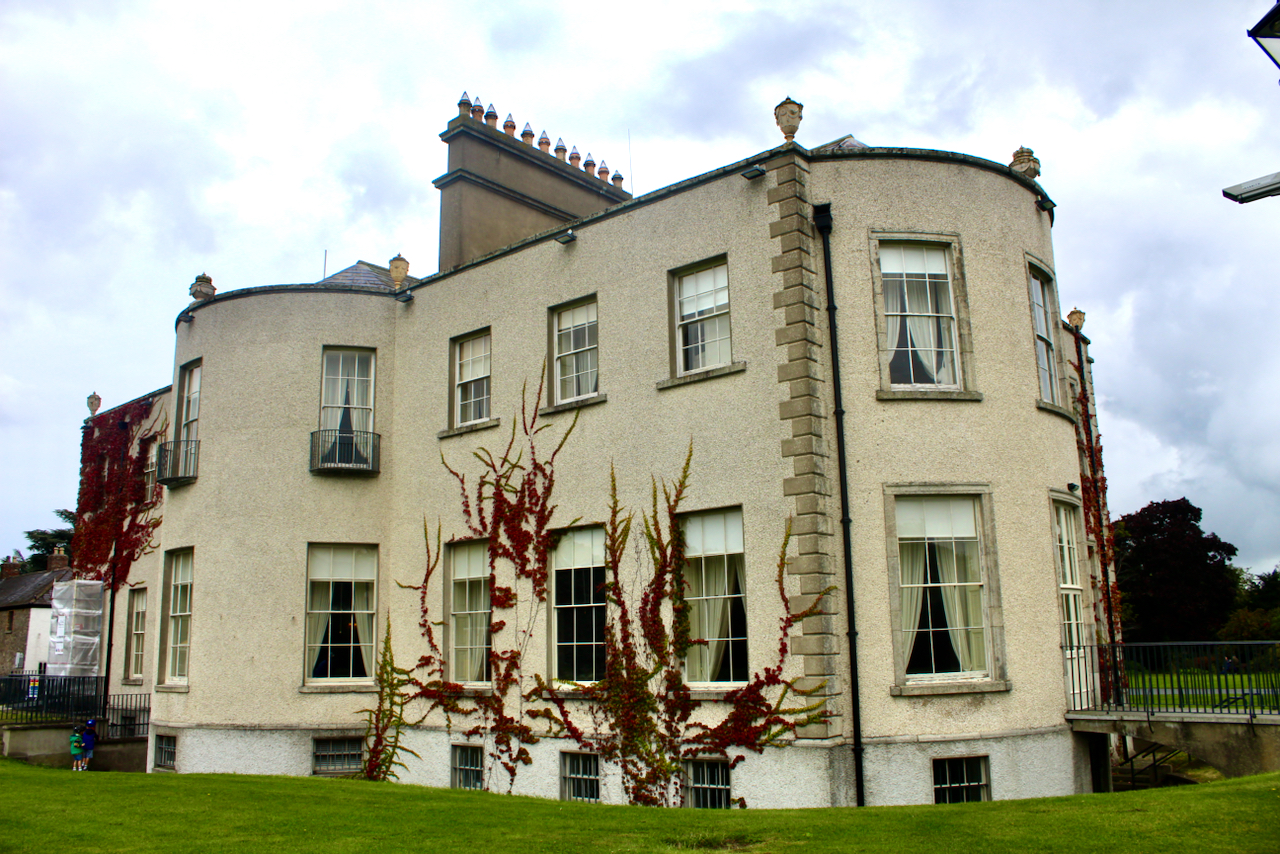
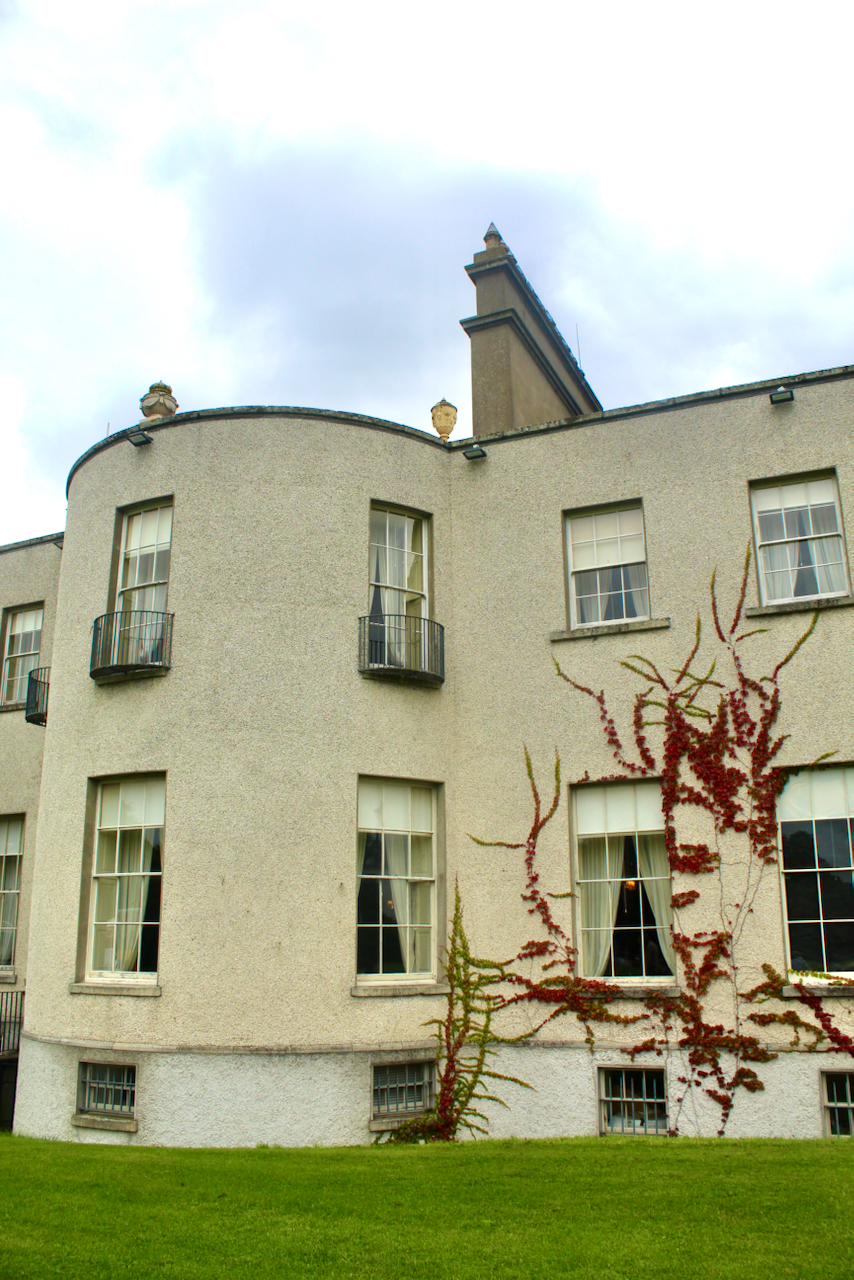
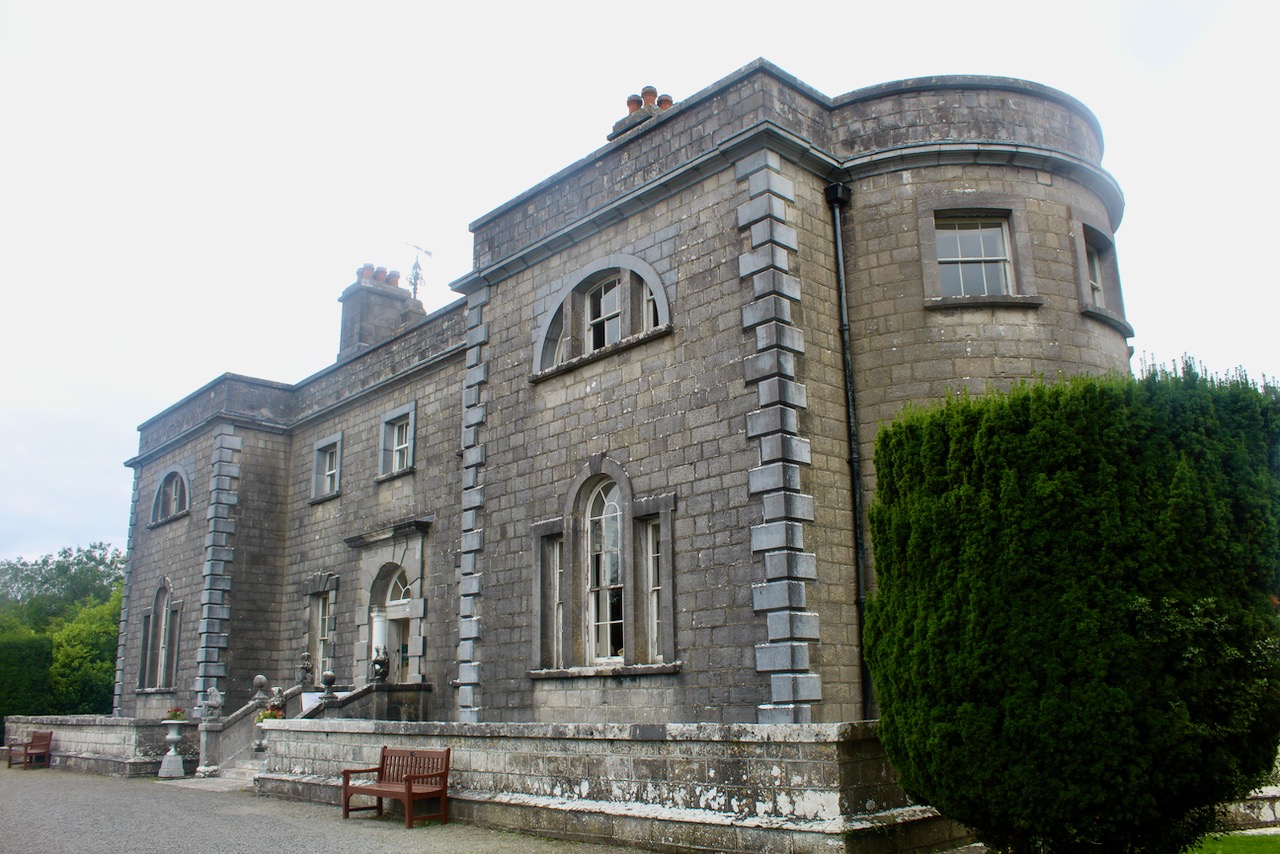
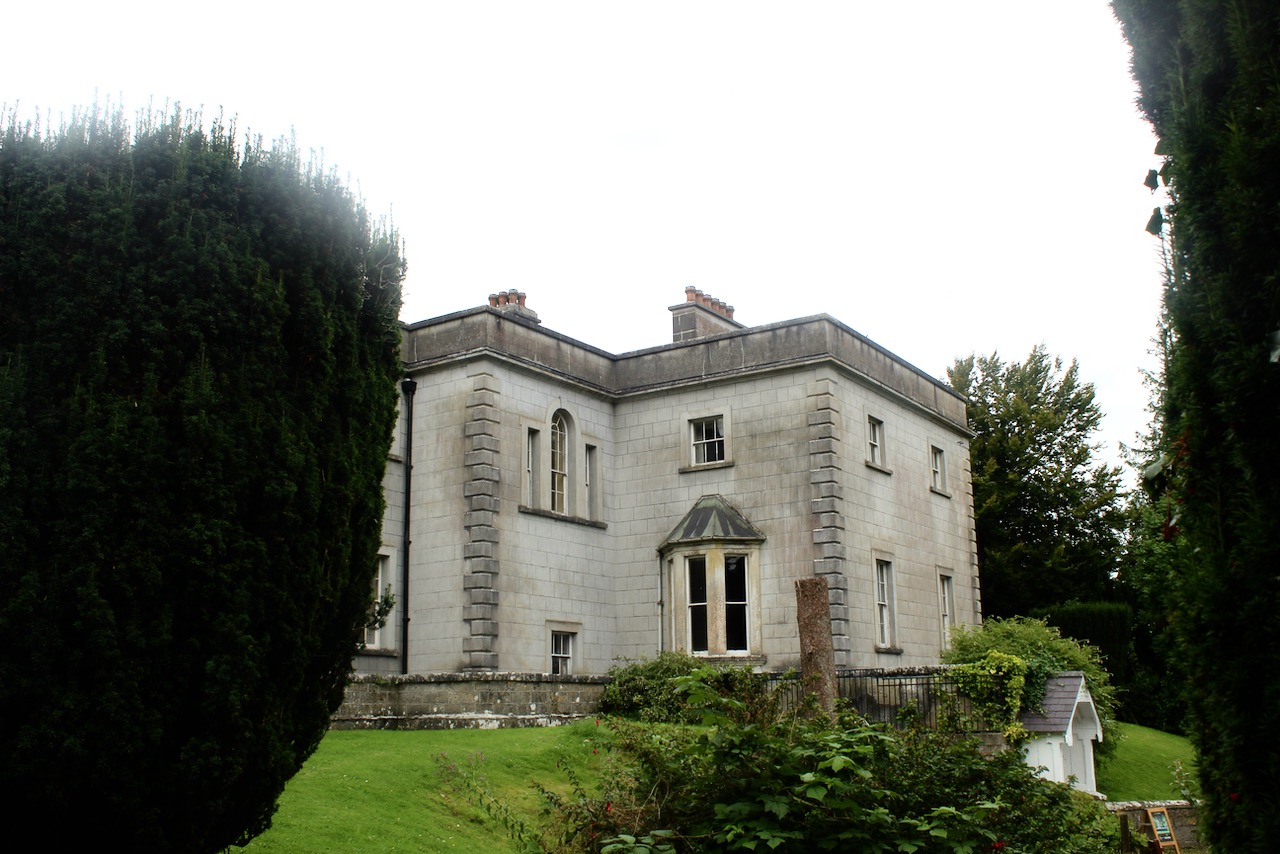
p. 39. “(Rochfort, sub Belvedere, E/DEP Rochfort/LGI1912; Marlay/LGI1912; Howard-Bury, sub Suffolk and Berkshire, E/PB; and Bury/IFR) An exquisite villa of ca 1740 by Richard Castle, on the shores of Lough Ennell; built for Robert Rochfort, Lord Bellfield, afterwards 1st Earl of Belvedere, whose seat was at Gaulston, ca 5 miles away [Gaulston is no longer standing]. Of two storeys over basement, with a long front and curved end bows – it may well be the earliest bow-ended house in Ireland – but little more than one room deep.”

Belvedere, County Westmeath, August 2021. Photograph © Jennifer Winder-Baggot, www.irishhistorichouses.com
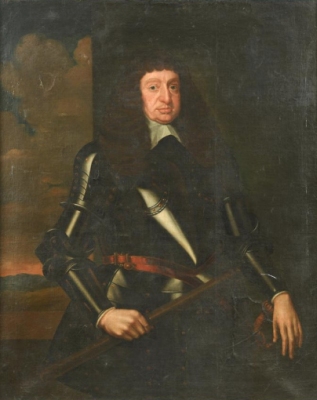
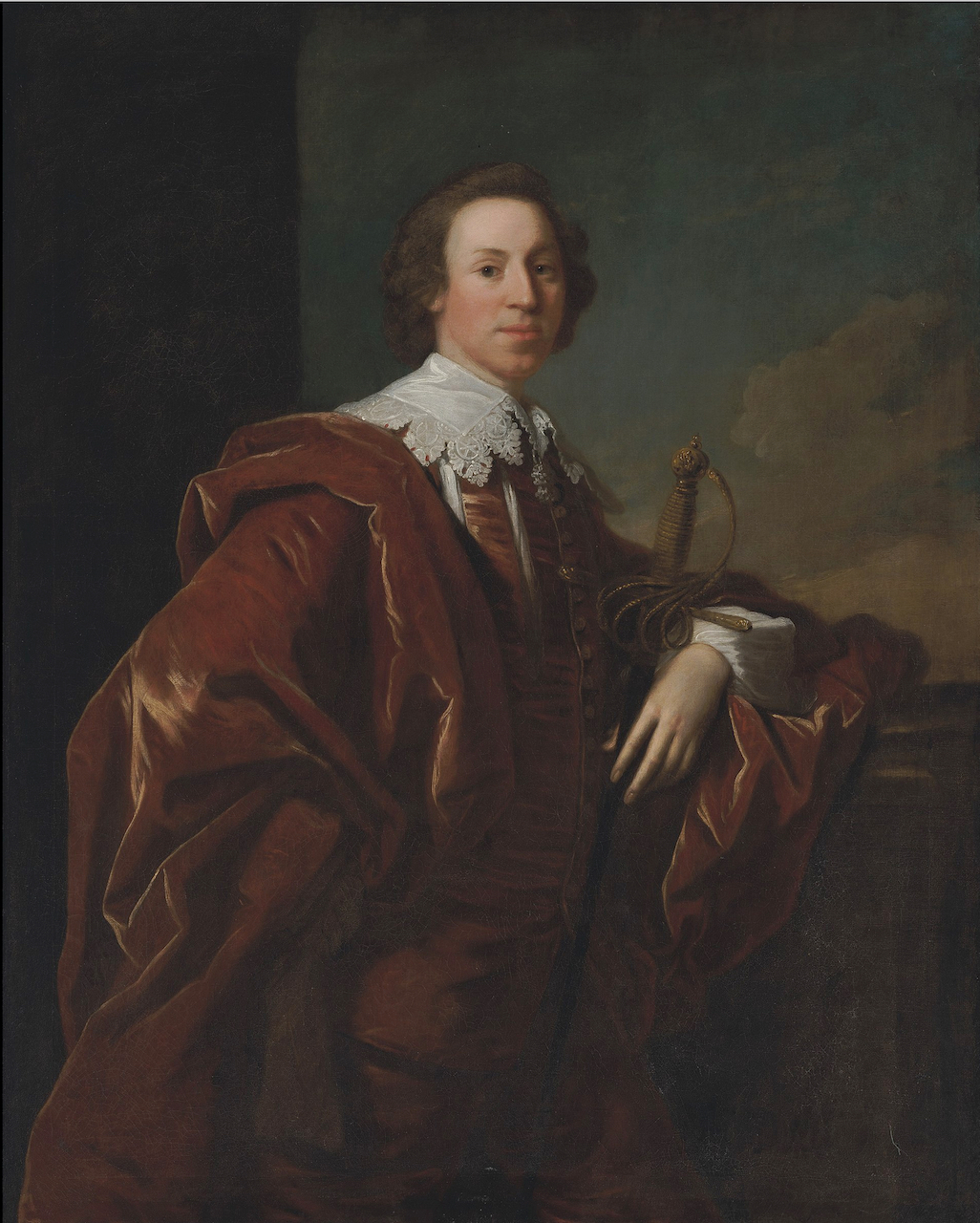
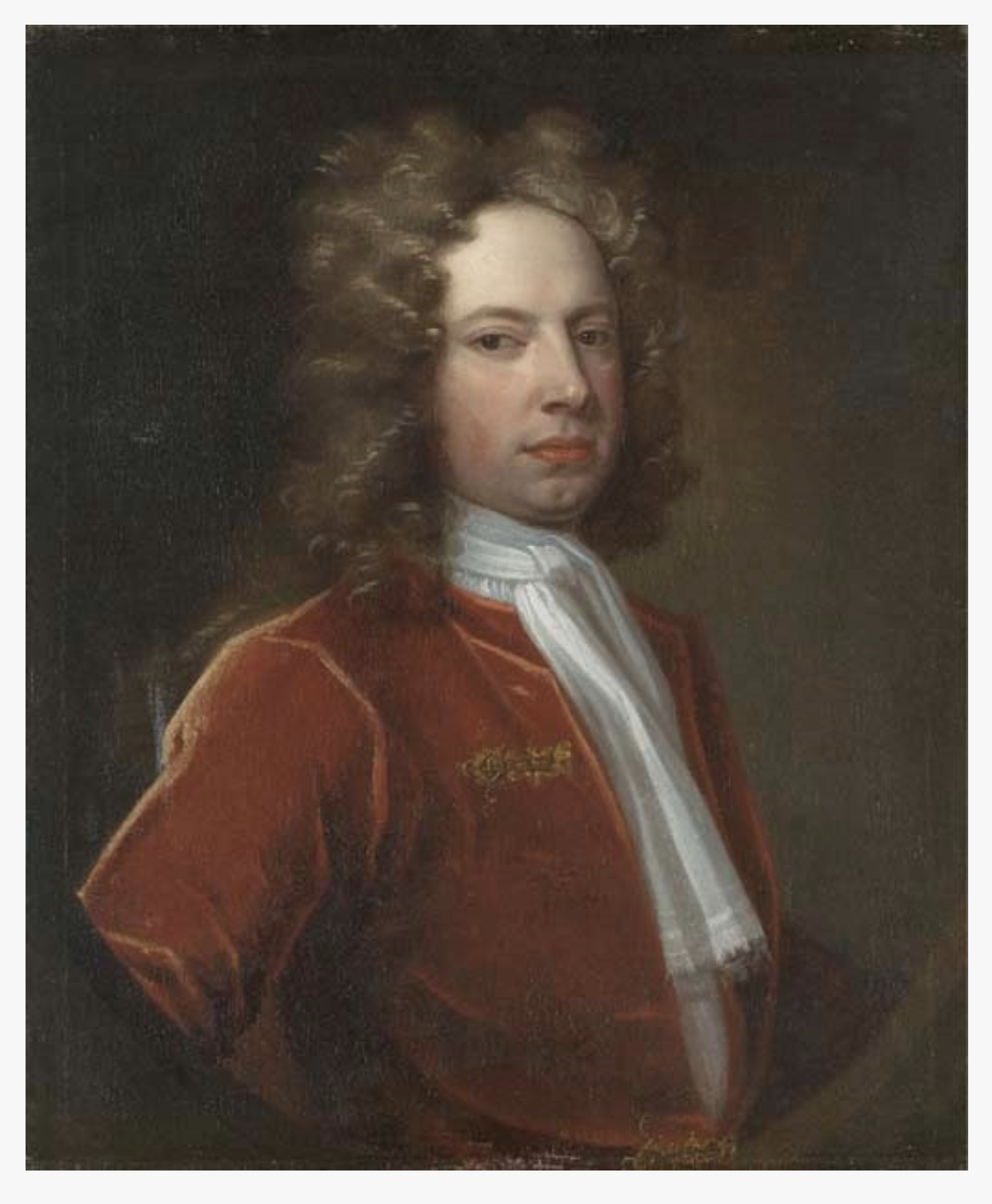
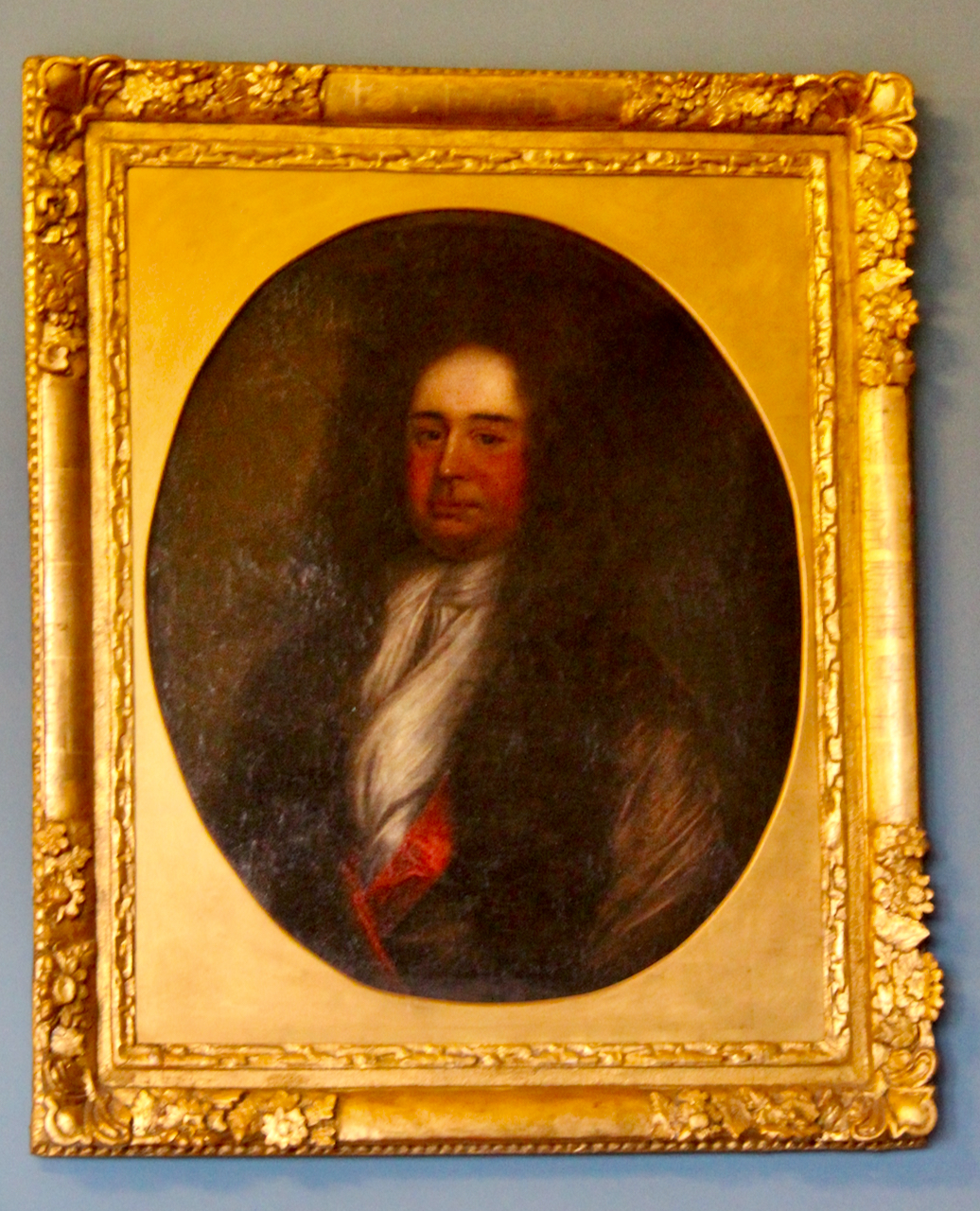
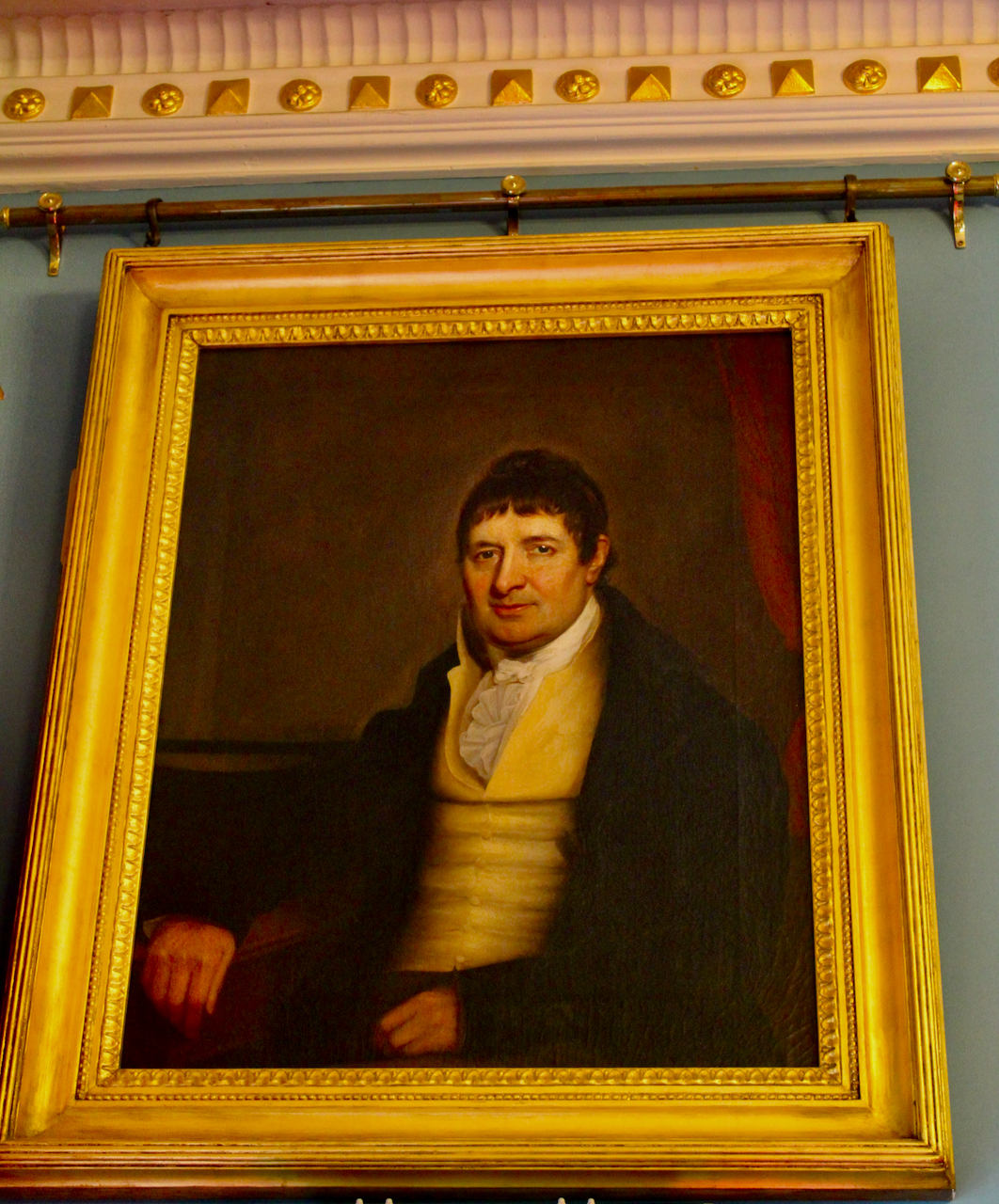
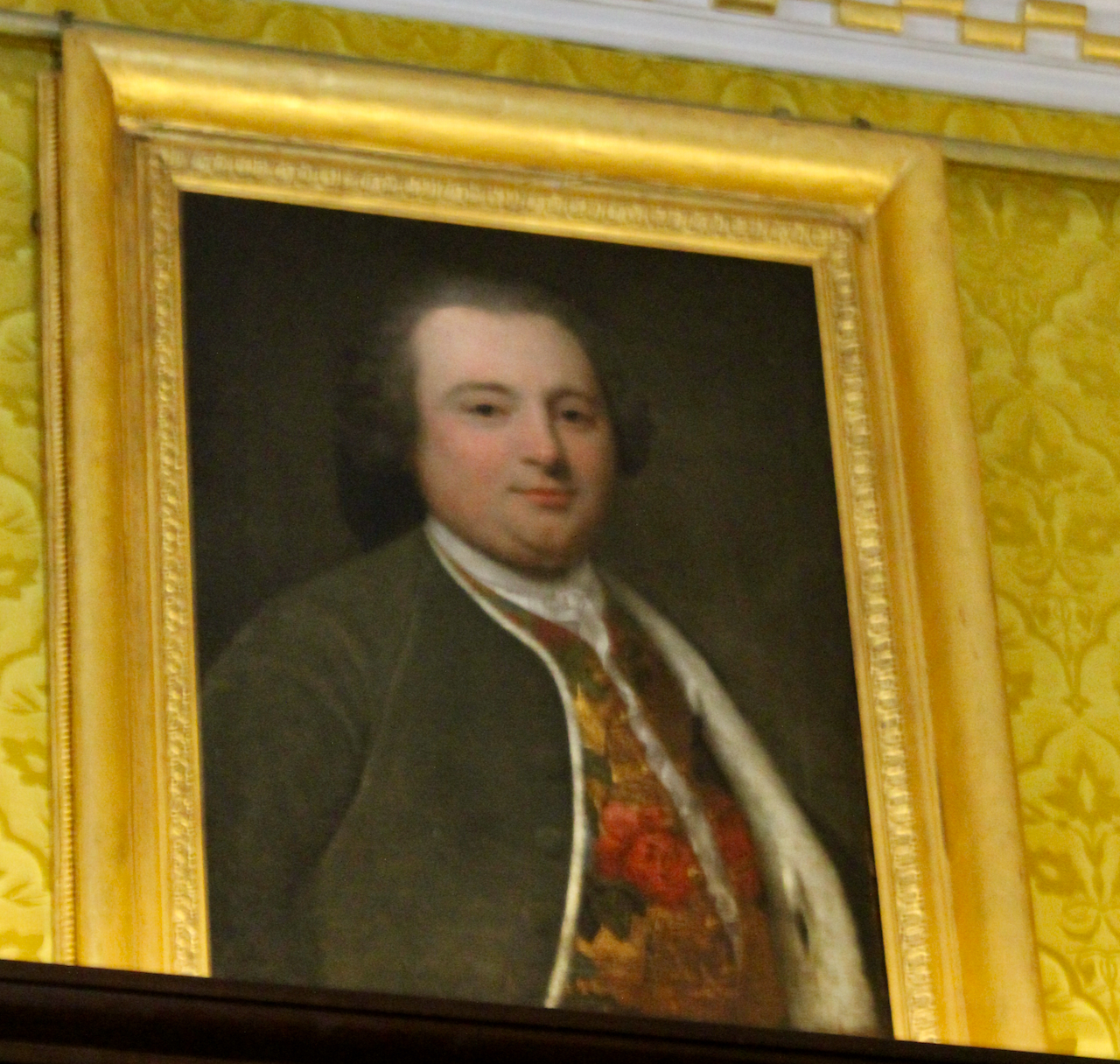
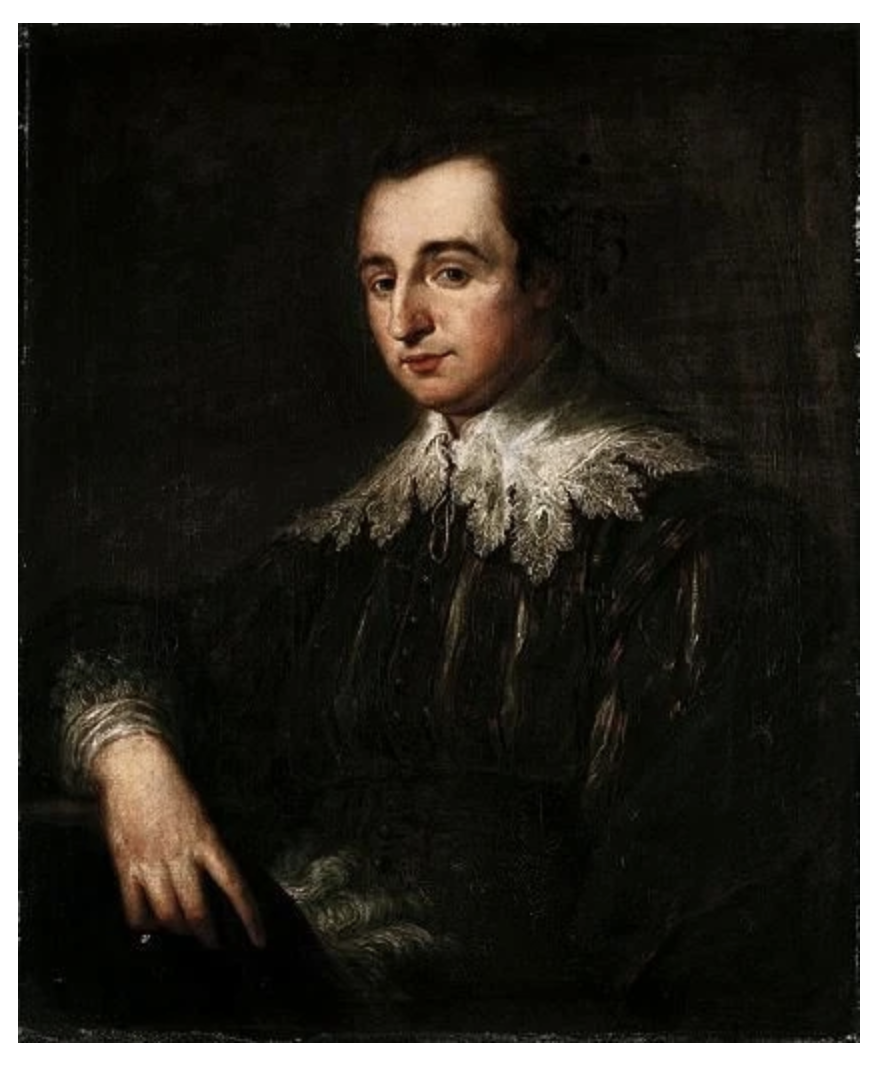
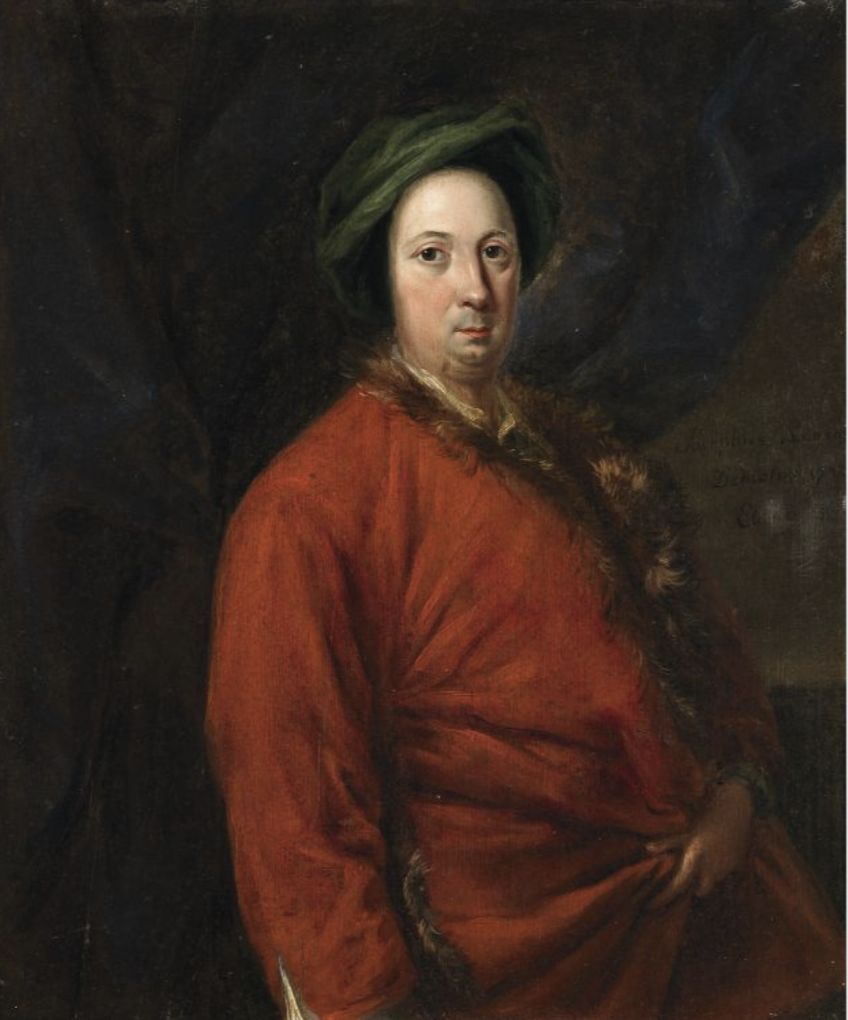
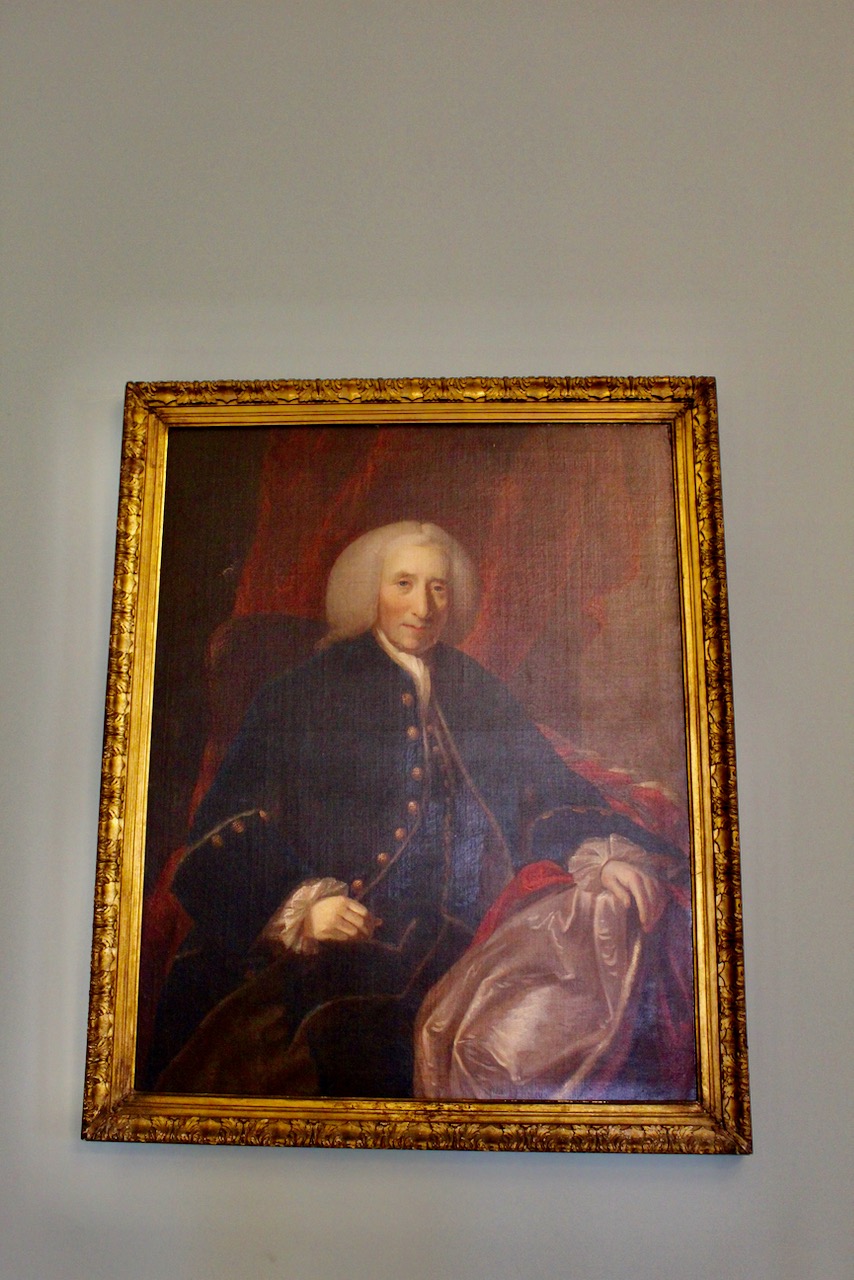
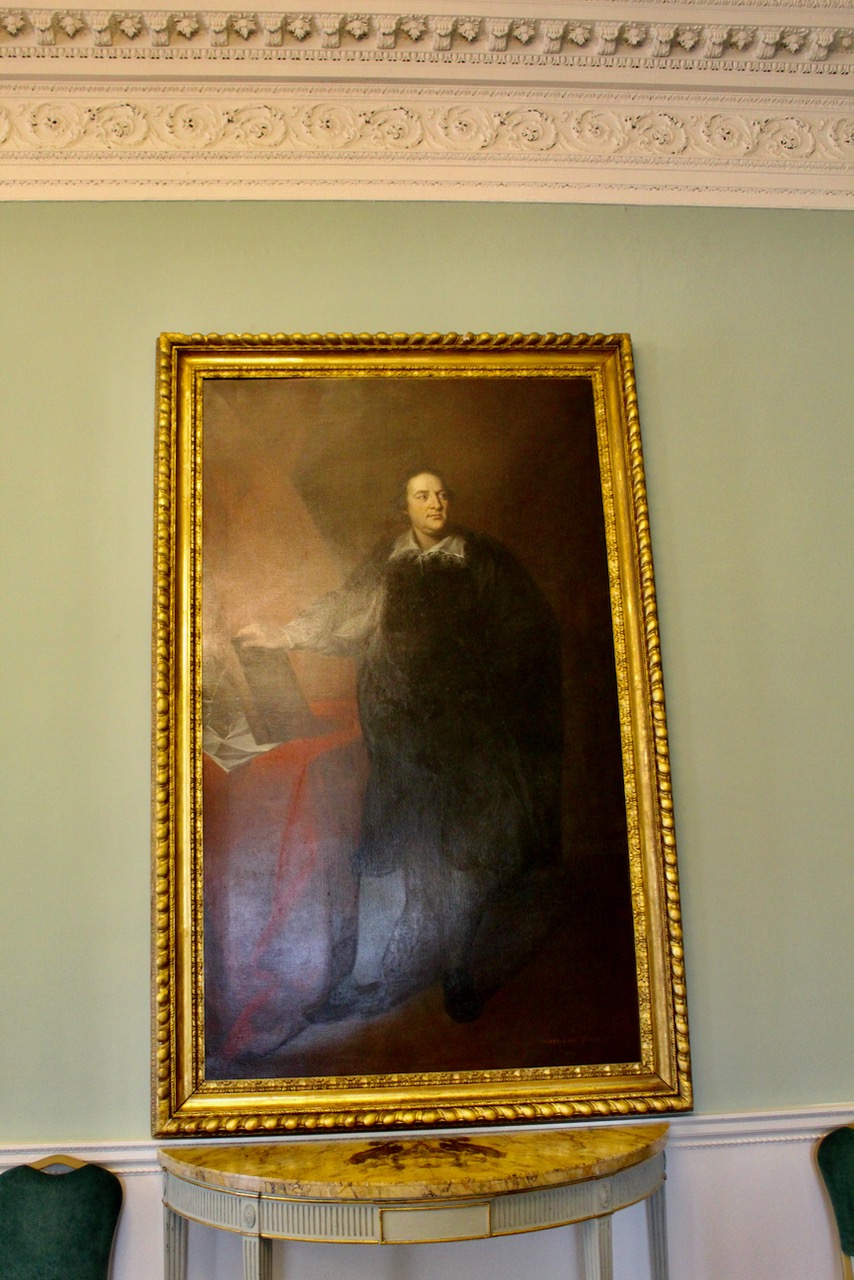
Robert Rochfort (1708-1774) 1st Earl of Belvedere in van Dyck costume, by Robert Hunter It is possible that the present portrait was executed posthumously.

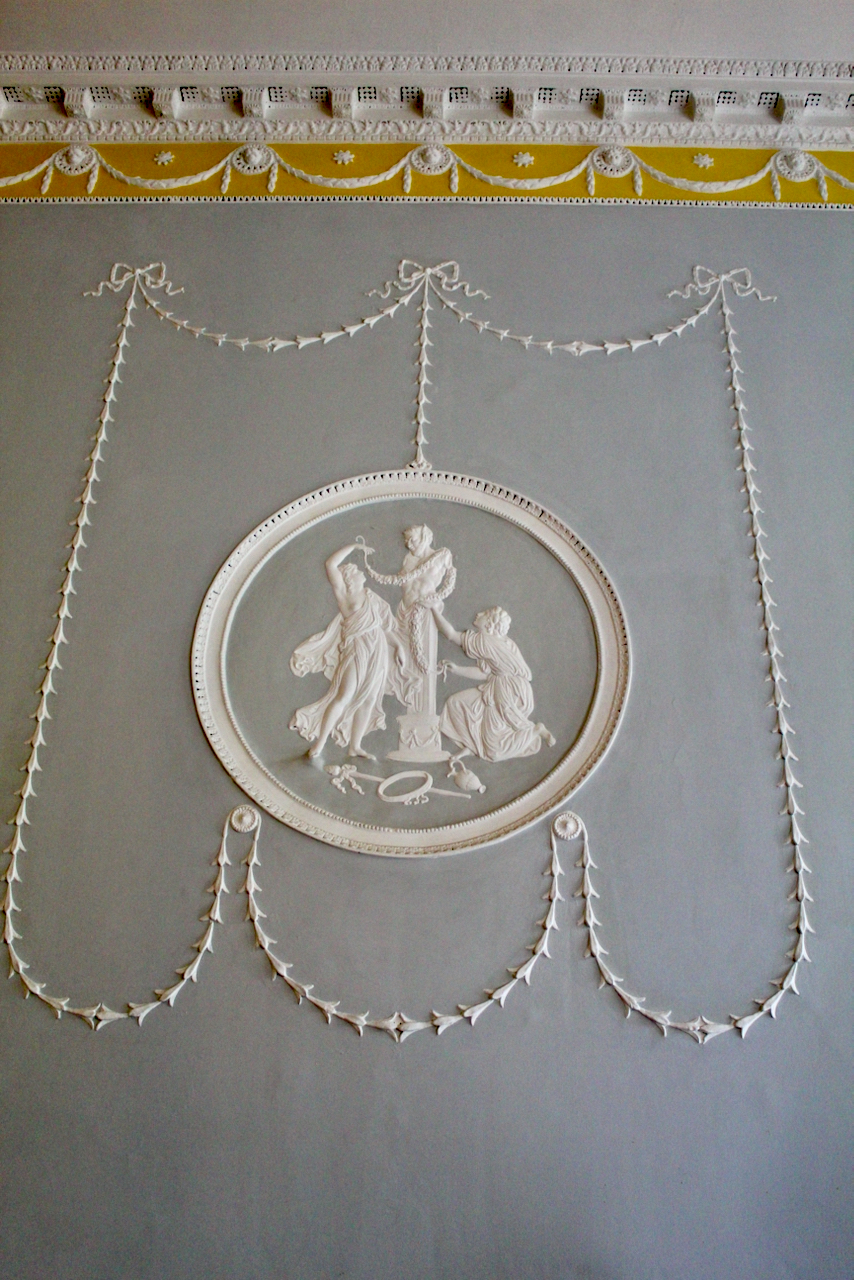
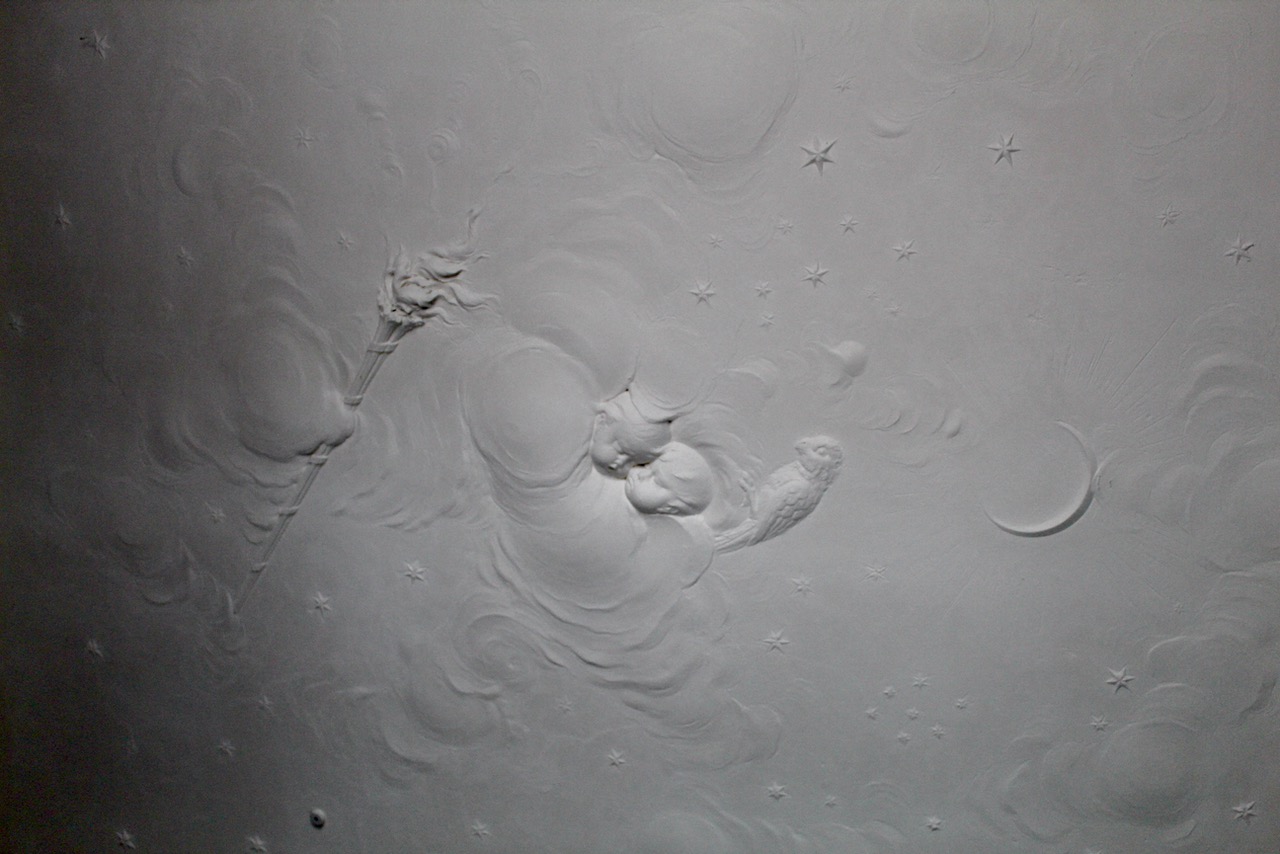
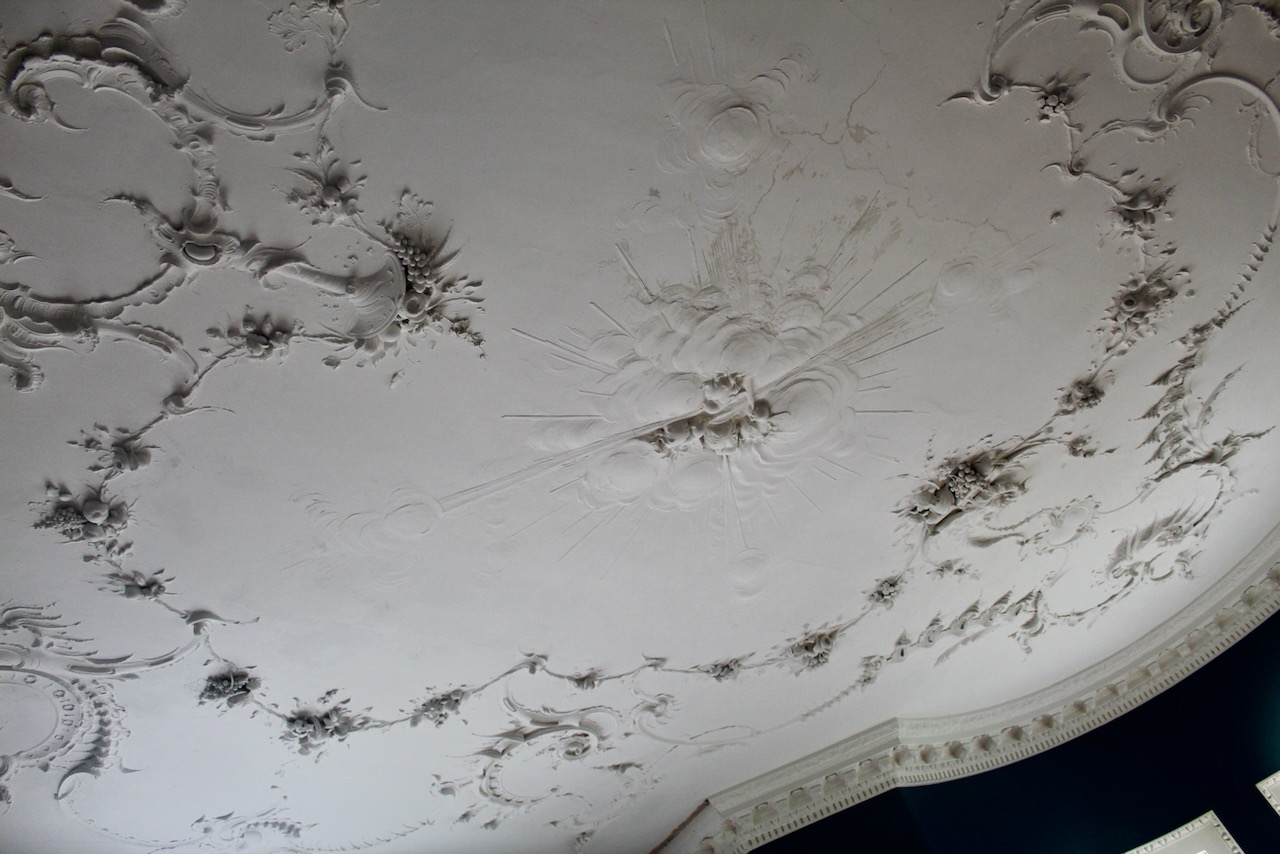
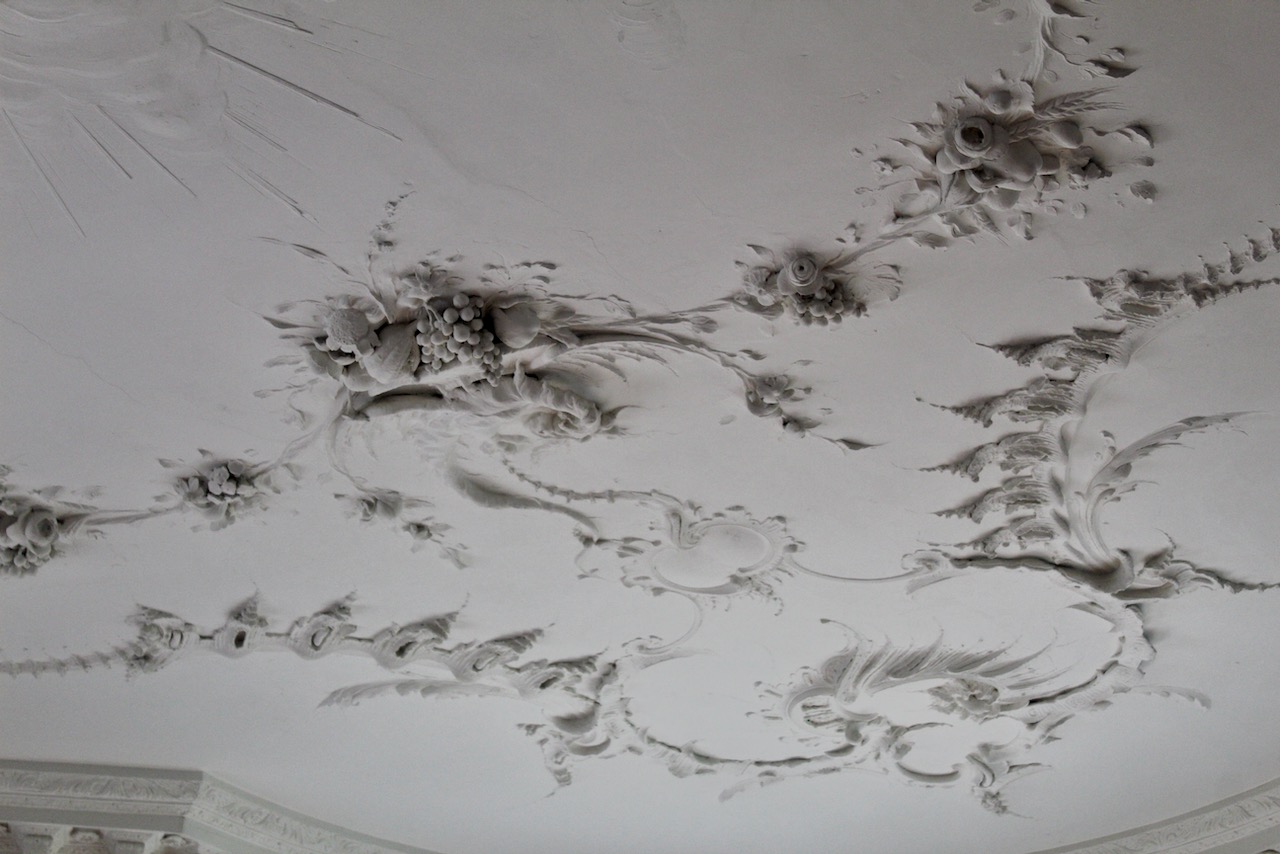
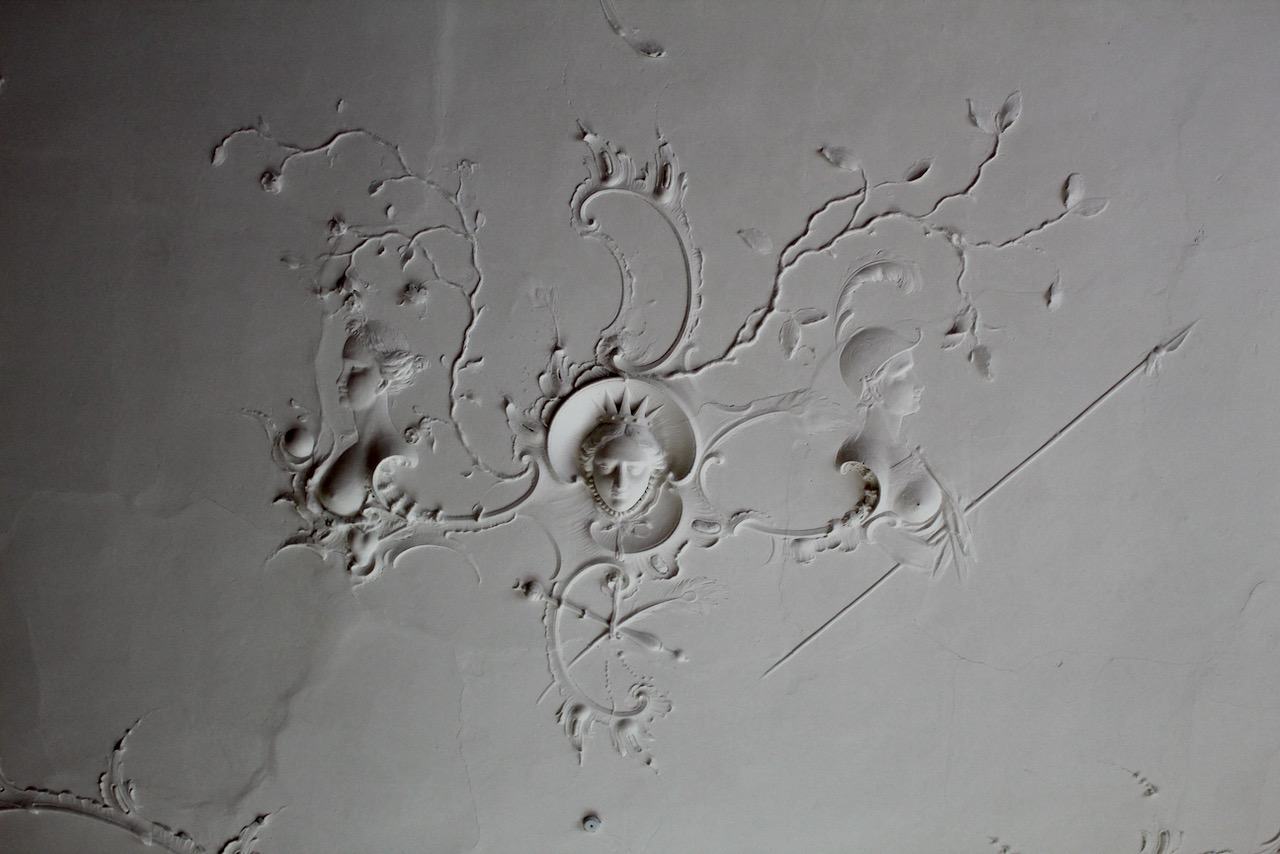
Bence-Jones continues: “The front has a three bay recessed centre between projecting end bays, each of which originally had a Venetian window below a Diocletian window. Rusticated doorcase and rusticated window surrounds on either side of it; high roof parapet. The house contains only a few rooms, but they are of fine proportions and those on the ground floor have rococo plasterwork ceilings of the greatest delicacy and gaiety, with cherubs and other figures emerging from clouds, by the same artist as the ceilings formerly are Mespil House, Dublin, one of which is now in Aras.

When Robert Rochfort decided to use Belvedere as his principal residence he employed Barthelemij Cramillion, the French Stuccadore, to execute the principal ceilings. The Rococo plasterwork ceilings were completed circa 1760.

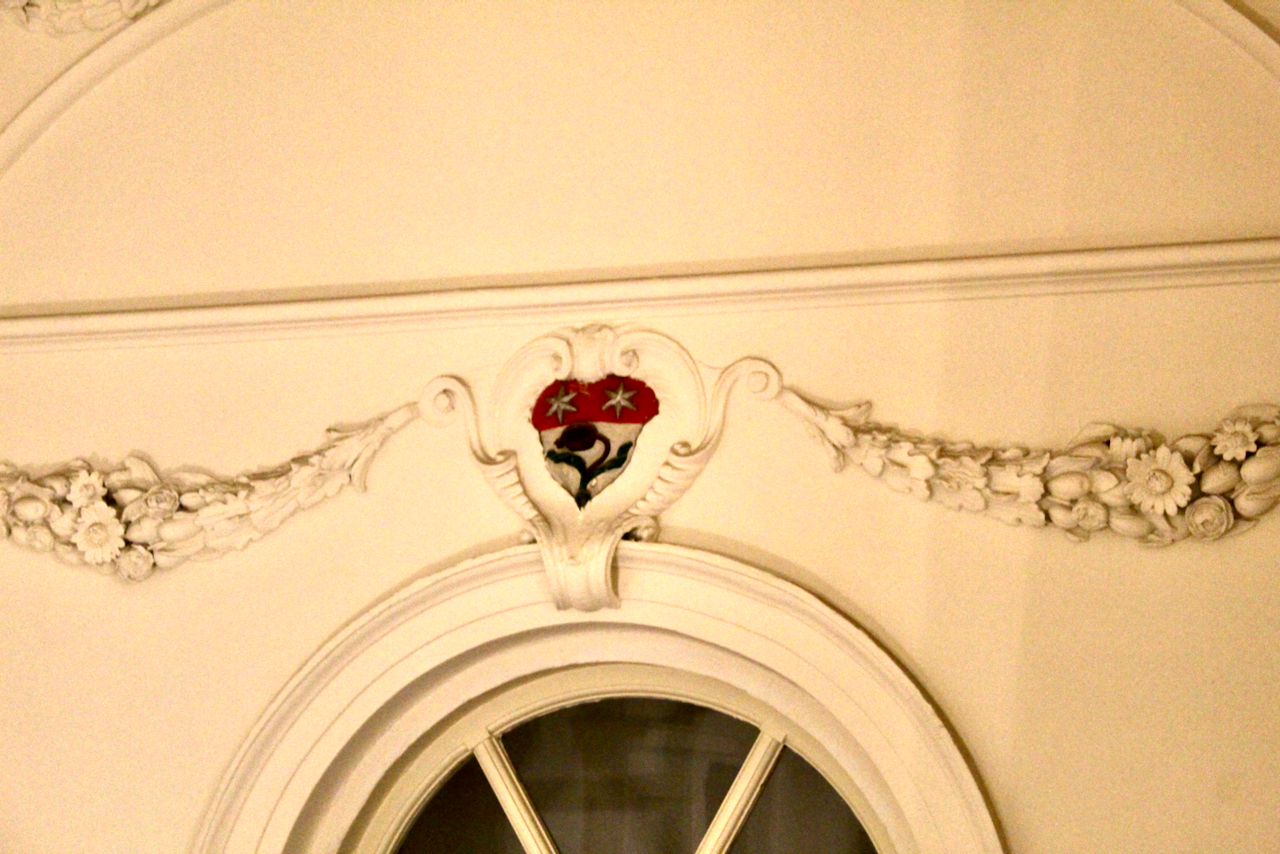
Belvedere, County Westmeath, August 2021: “The house contains only a few rooms, but they are of fine proportions and those on the ground floor have rococo plasterwork ceilings of the greatest delicacy and gaiety, with cherubs and other figures emerging from clouds, by the same artist as the ceilings formerly are Mespil House, Dublin, one of which is now in Aras.” Photograph © Jennifer Winder-Baggot, www.irishhistorichouses.com
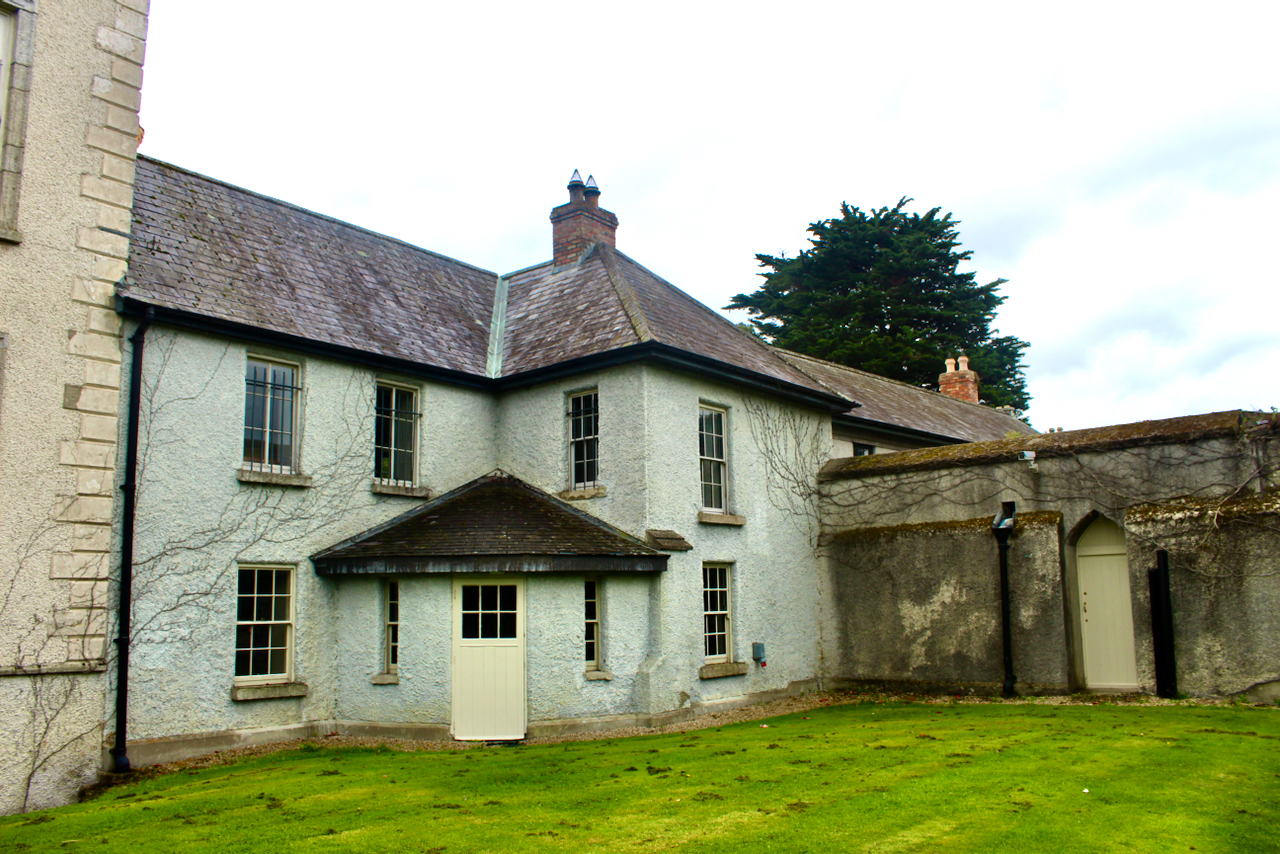
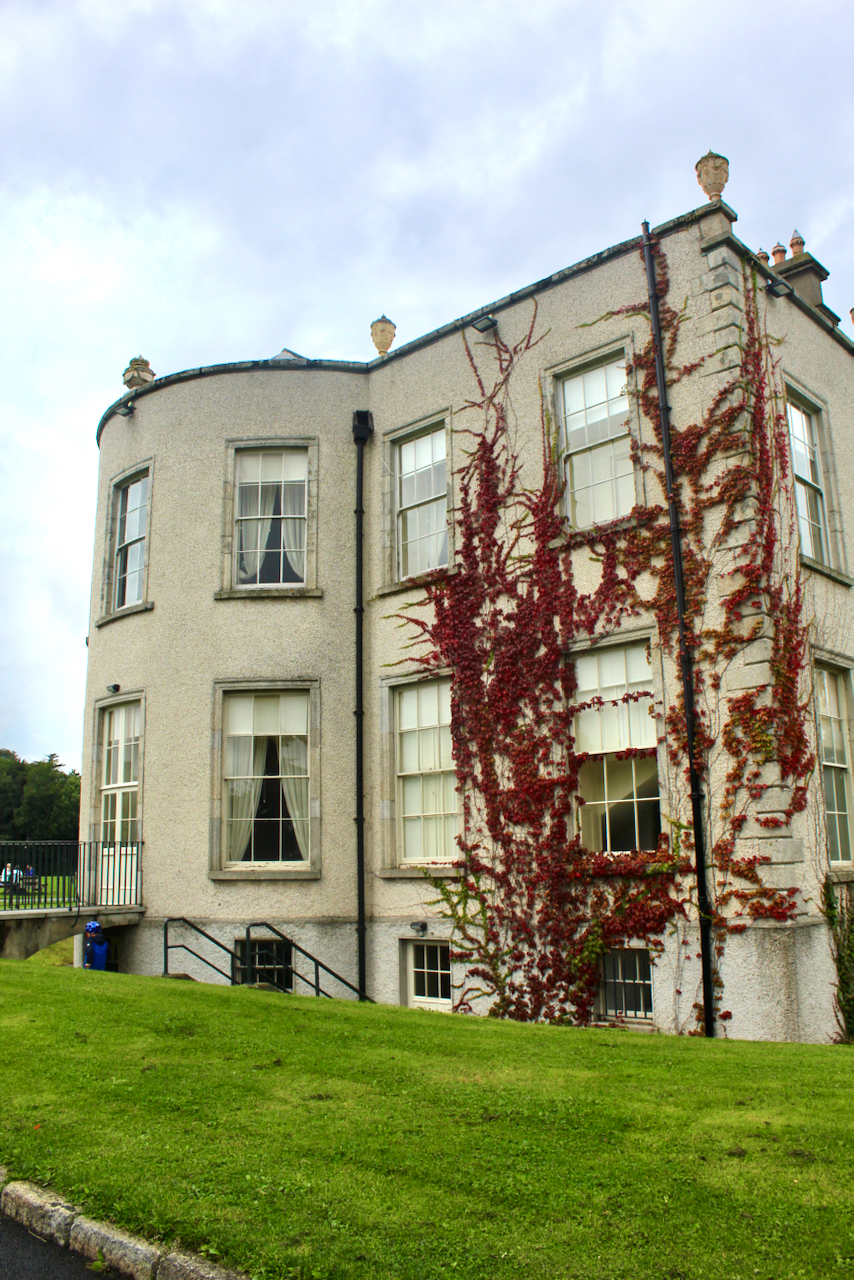
The Venetian window that lights the stairs, on the back facade of the house. The wooden porch below is an entrance into the basement of the house. Photograph © Jennifer Winder-Baggot, www.irishhistorichouses.com
Belvedere, County Westmeath. Photograph © Jennifer Winder-Baggot, www.irishhistorichouses.com

Robert Rochfort the 1st Earl of Belvedere was the son of George Rochfort (1682-1730) and Elizabeth, daughter of Henry Hamilton-Moore, 3rd Earl of Drogheda.

George Rochfort (1682-1730) of Gaulstown, Co. Westmeath, M.P. for Co. Westmeath by Charles Jervas courtesy of Christies Auction 2002.
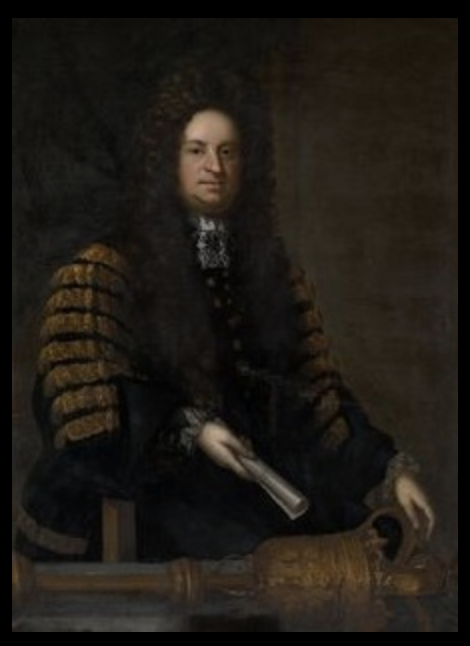
Robert Rochfort (1652-1727) as Speaker of the Irish House of Commons by an unknown artist, Photograph of a painting owned by Michael O’Reilly. He was the father of George Rochfort (1682-1730) of Gaulstown, Co. Westmeath
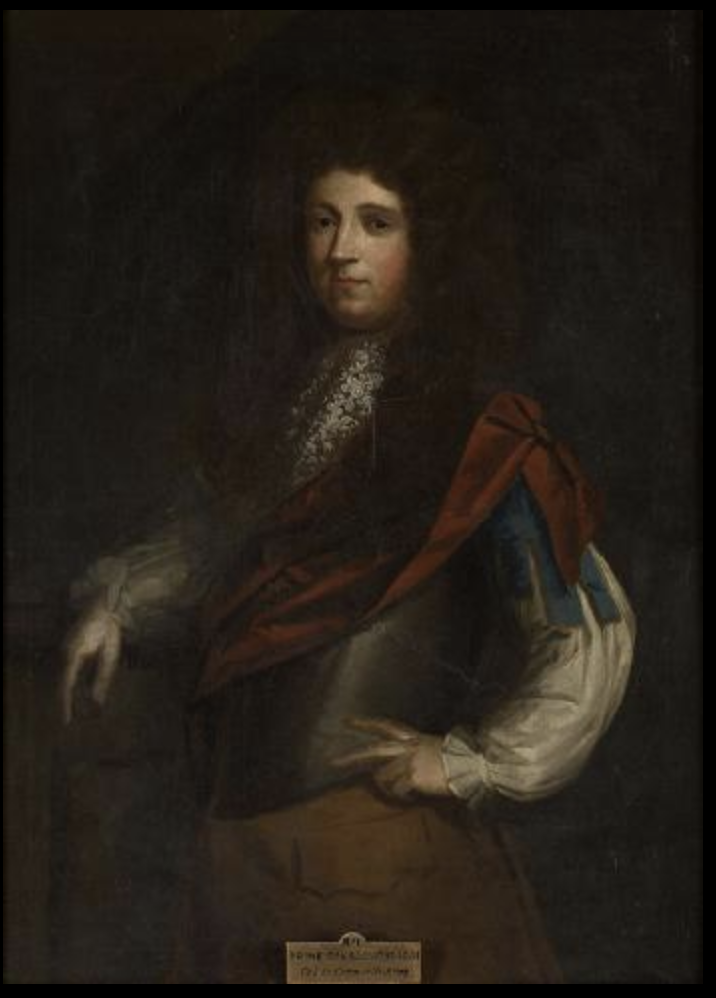
James Rochfort (executed in 1652 after killing someone in a duel) usually known by his nickname “Prime Iron,” by Garret Morphy. He was the father of Robert Rochfort (1652-1727).

Bence-Jones tells of the Rochforts: “Soon after the house was finished, Lord Bellfield’s beautiful wife [Mary Molesworth, daughter of Richard, 3rd Viscount Molesworth of Swords, Dublin] confessed to him that she had committed adultery with his brother; whereupon he incarcerated her at Gaulston, where she remained, forbidden to see anyone but servants, until his death nearly thirty years later; while he lived a bachelor’s life of great elegance and luxury at Belvedere.

Belvedere, County Westmeath.

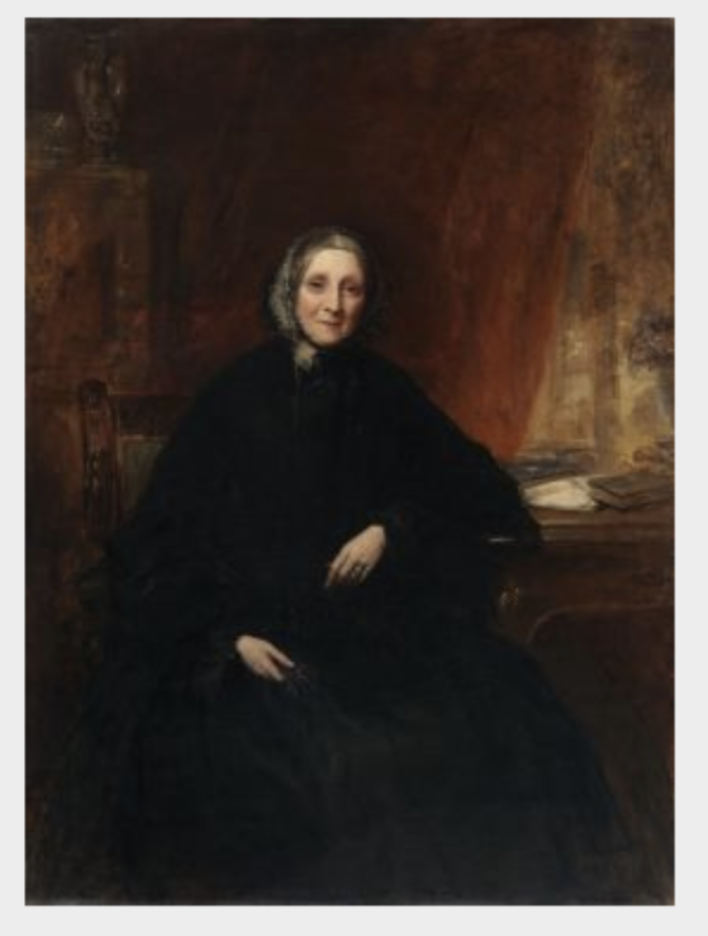
Mary Molesworth was Robert Rochfort’s second wife. His first wife, Elizabeth Tenison, died childless in 1732, from smallpox.

Mrs. Delaney writes of Robert and his second wife “he has discovered an intrigue, and they say he has come to England in search of him [the brother who committed adultery] to kill him wherever he meets him… He is very well-bred and very well in his person and manner; his wife is locked up in one of his houses in Ireland, with a strict guard over her, and they say he is so miserable as to love her even now; she is extremely handsome and has many personal accomplishments.

It is said that Charlotte Bronte may have been inspired by Mary’s imprisonment to write the character of “the madwoman in the attic” in Jane Eyre.

Belvedere, County Westmeath.
Sarah Rochfort (nee Singleton) was the daughter of The Rev. Rowland Singleton (1696-1741) of Drogheda, later Vicar of Termonfeckin, County Louth, wife of Arthur Rochfort (1711-1774) of Bellfield House Co Westmeath, sold at Shepphards. Her husband was imprisoned when he could not pay his legal damages for adultery.

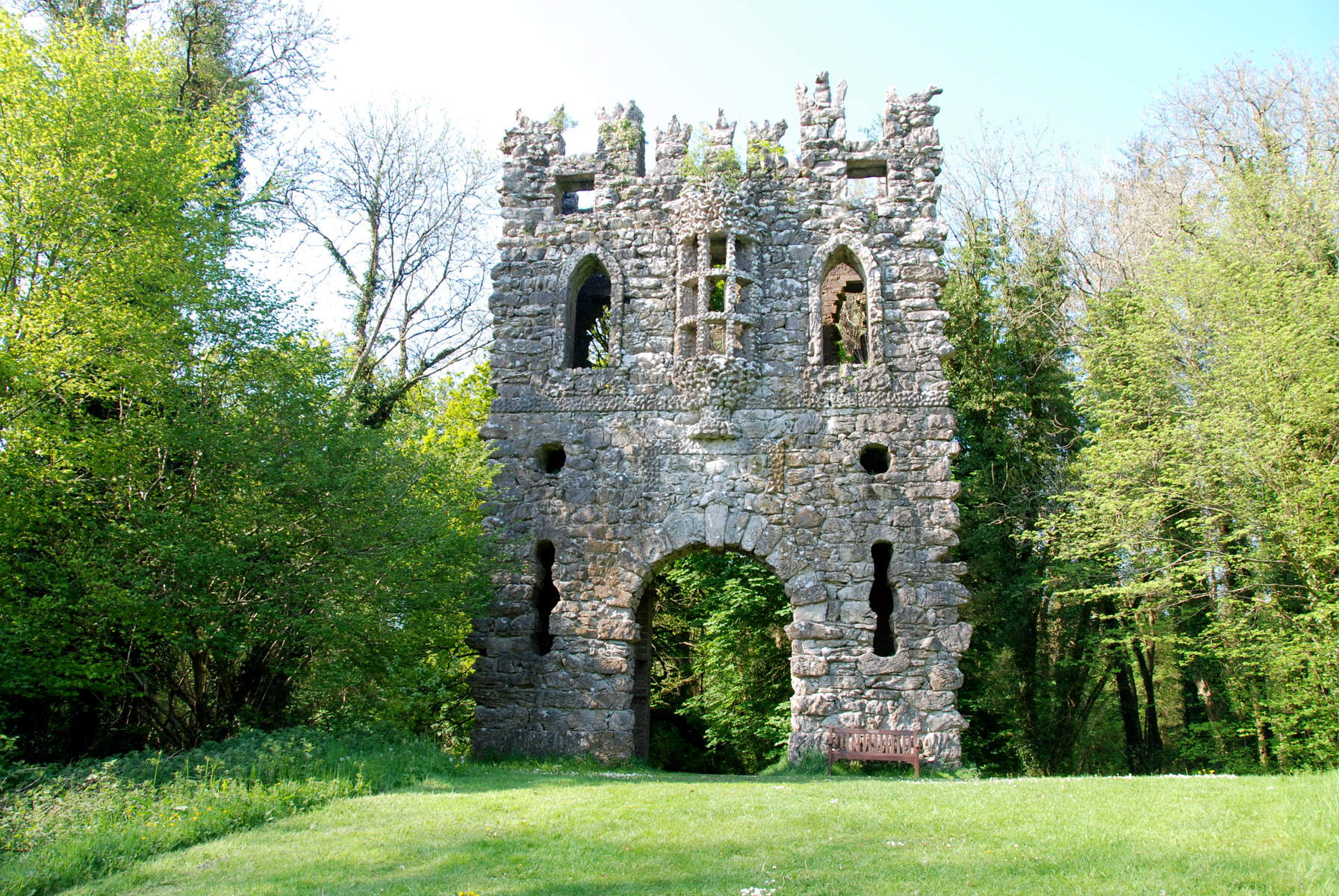
Mark Bence-Jones continues: “Another of his brothers lived close to Belvedere at Rochfort (afterwards Tudenham Park); having quarrelled with him too, Lord Belvedere, as he had now become, built the largest Gothic sham ruin in Ireland to blot out the view of his brother’s house; it is popularly known as the Jealous Wall.”

Tudenham Park was built for Robert’s brother George Rochfort (1713-1794) around 1743. He married Alice, daughter of Gustavus Hume 3rd Baronet of County Fermanagh. Tudenham Park is now a ruin and was recently sold.

Tudenham Park, County Westmeath, courtesy of Sherry FitzGerald Davitt & Davitt Mullingar.
“The Jealous Wall,” Belvedere. Photograph © Jennifer Winder-Baggot, www.irishhistorichouses.com

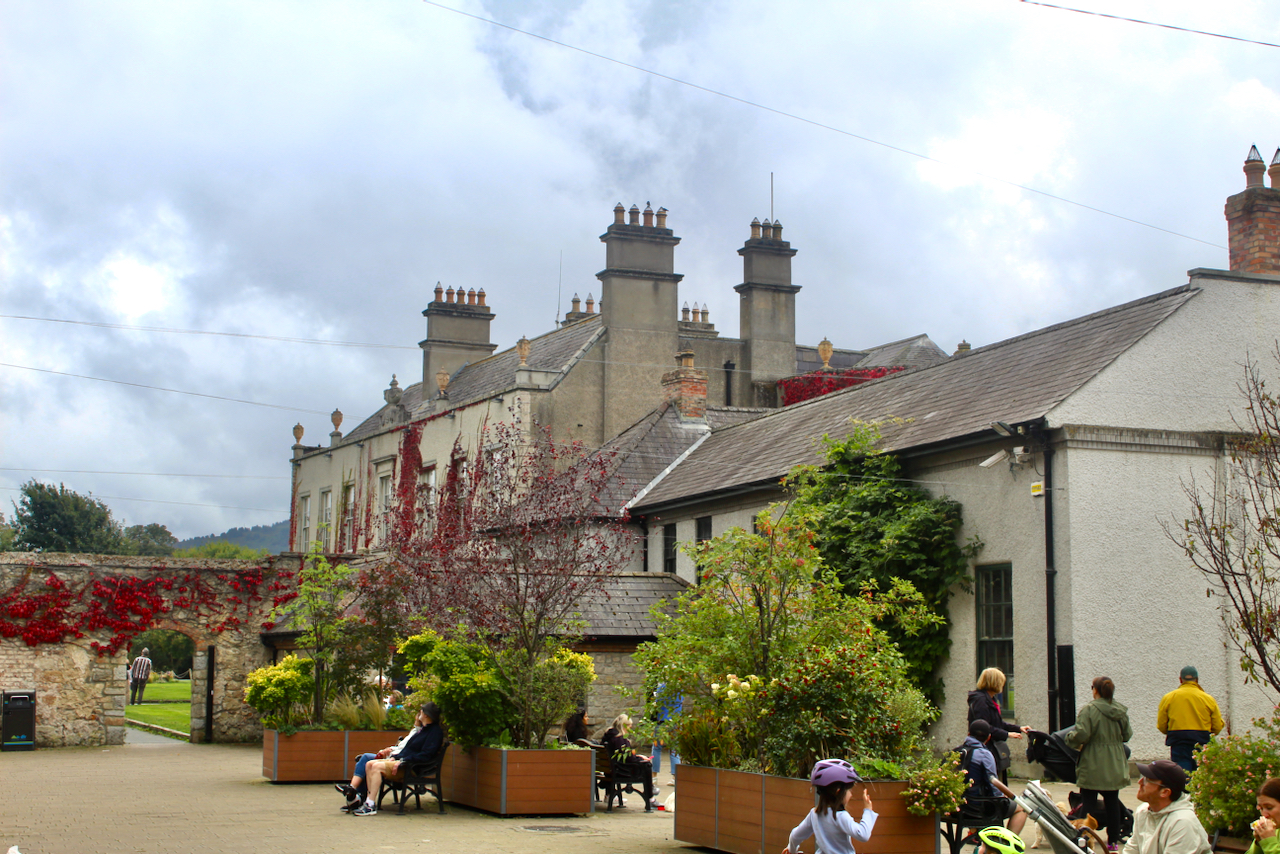
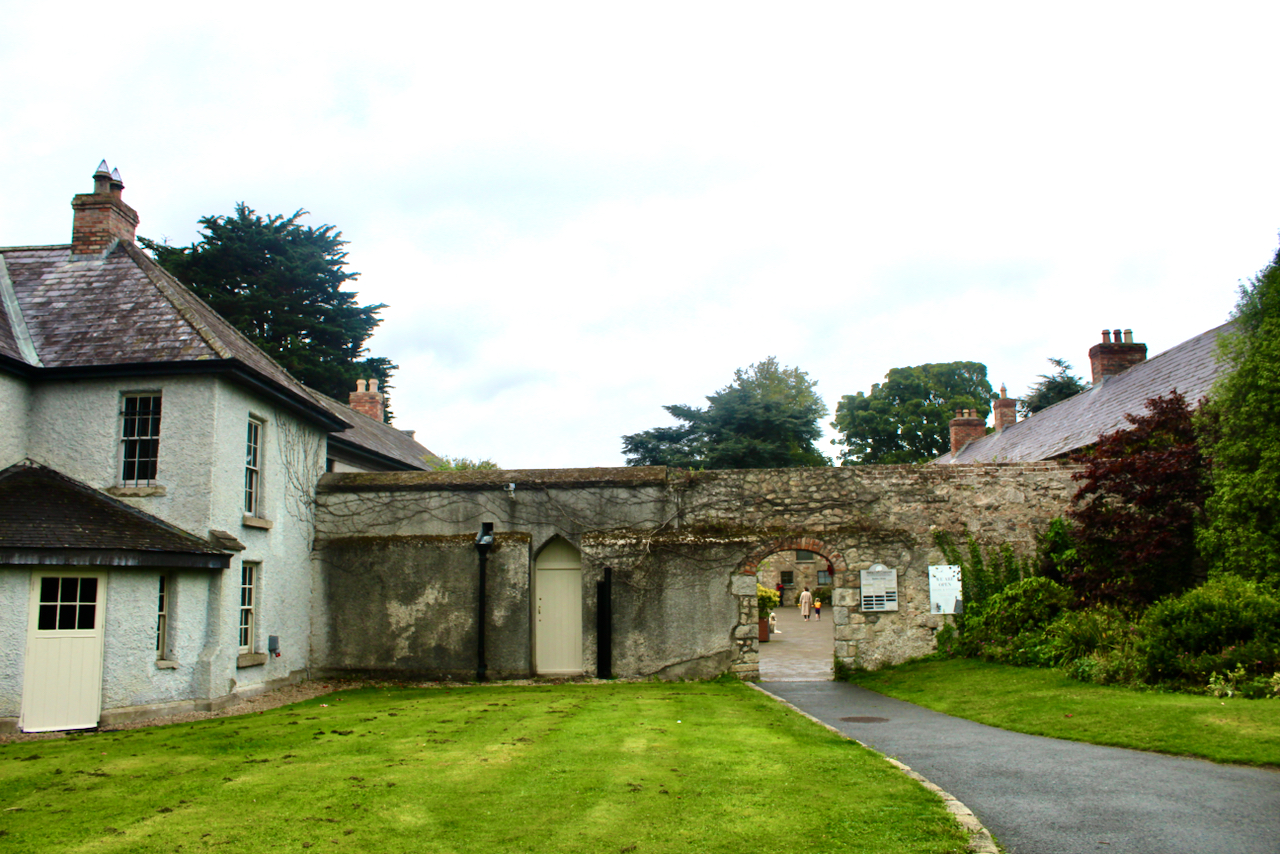
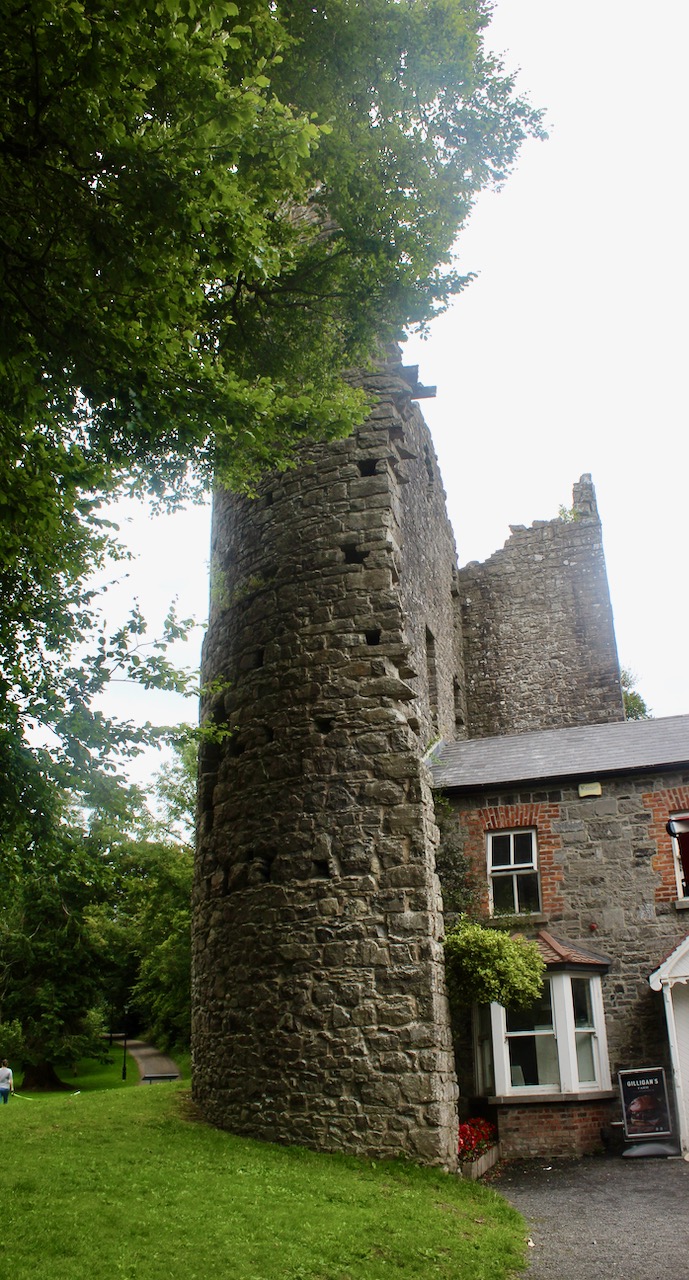
The jealous wall is rather disappointingly attached to the visitor centre of Belvedere at the entrance to the park. Robert went to great expense to construct the wall to resemble an artificial ruined abbey, hiring the celebrated Italian architect Barrodotte to work on the project.

Visitor centre attached to the Jealous Wall, Belvedere. Photograph © Jennifer Winder-Baggot, www.irishhistorichouses.com
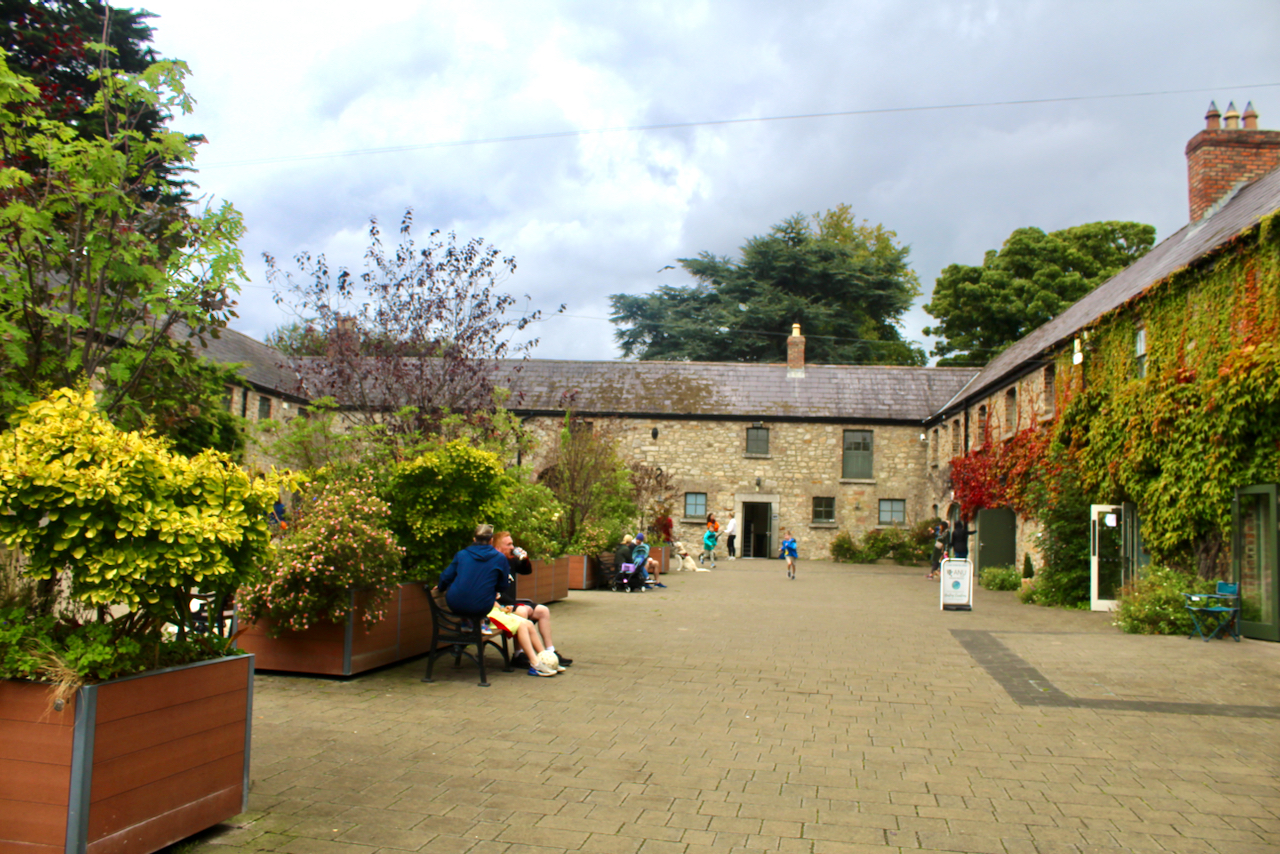
Belvedere, County Westmeath. Photograph © Jennifer Winder-Baggot, www.irishhistorichouses.com
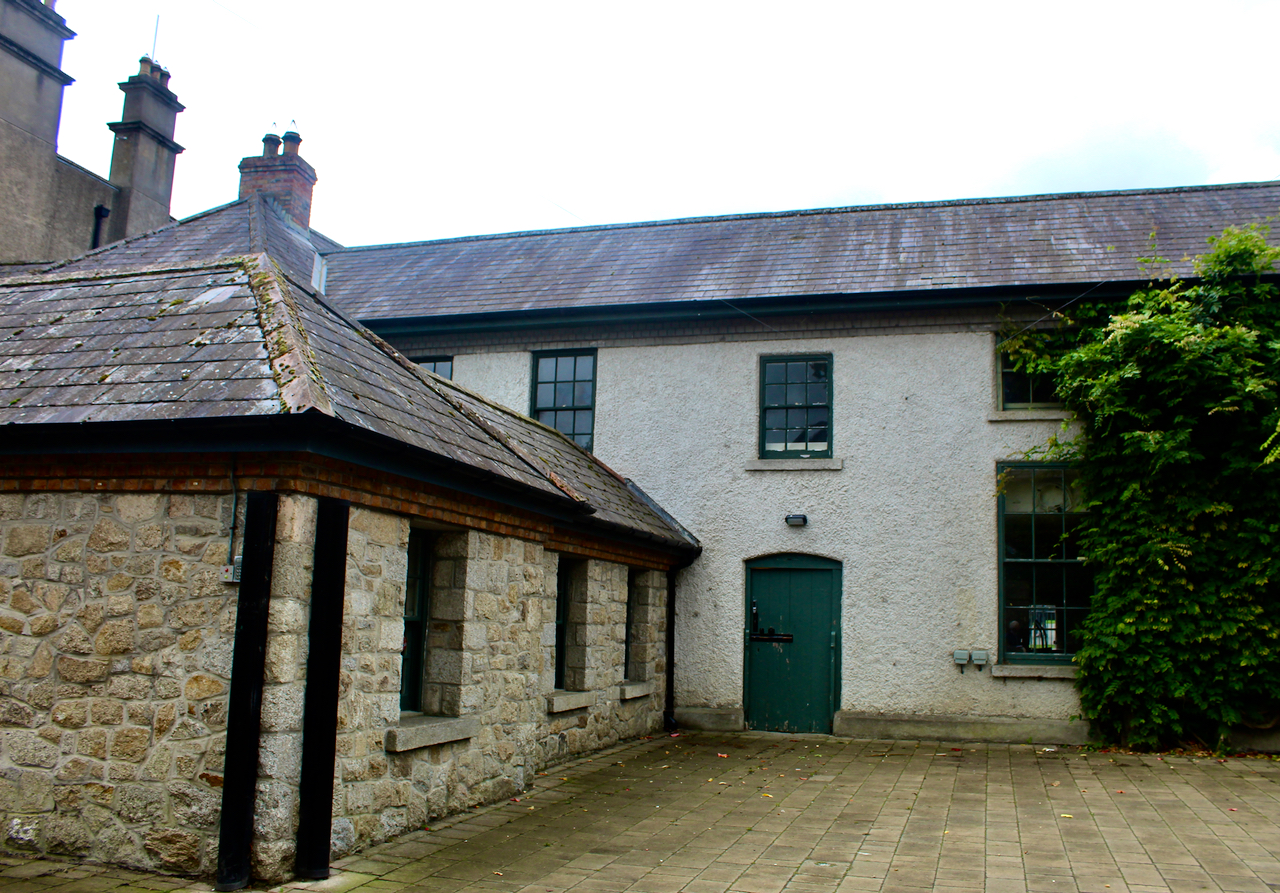
Visitor centre attached to the Jealous Wall. Photograph © Jennifer Winder-Baggot, www.irishhistorichouses.com

The Earl of Belvedere managed to have children despite his antipathy toward his wife. His son George Rochfort (1738-1814), 2nd Earl of Belvedere inherited Belvedere and other estates when his father died in 1774. He also inherited debts, and sold Gaulston House, the house where his mother had been imprisoned by his father. Unfortunately Gaulston House was destroyed by fire in 1920. George Rochfort built an extension onto the rear of Belvedere but spent most of his time in his townhouse, Belvedere House in Great Denmark Street, Dublin.

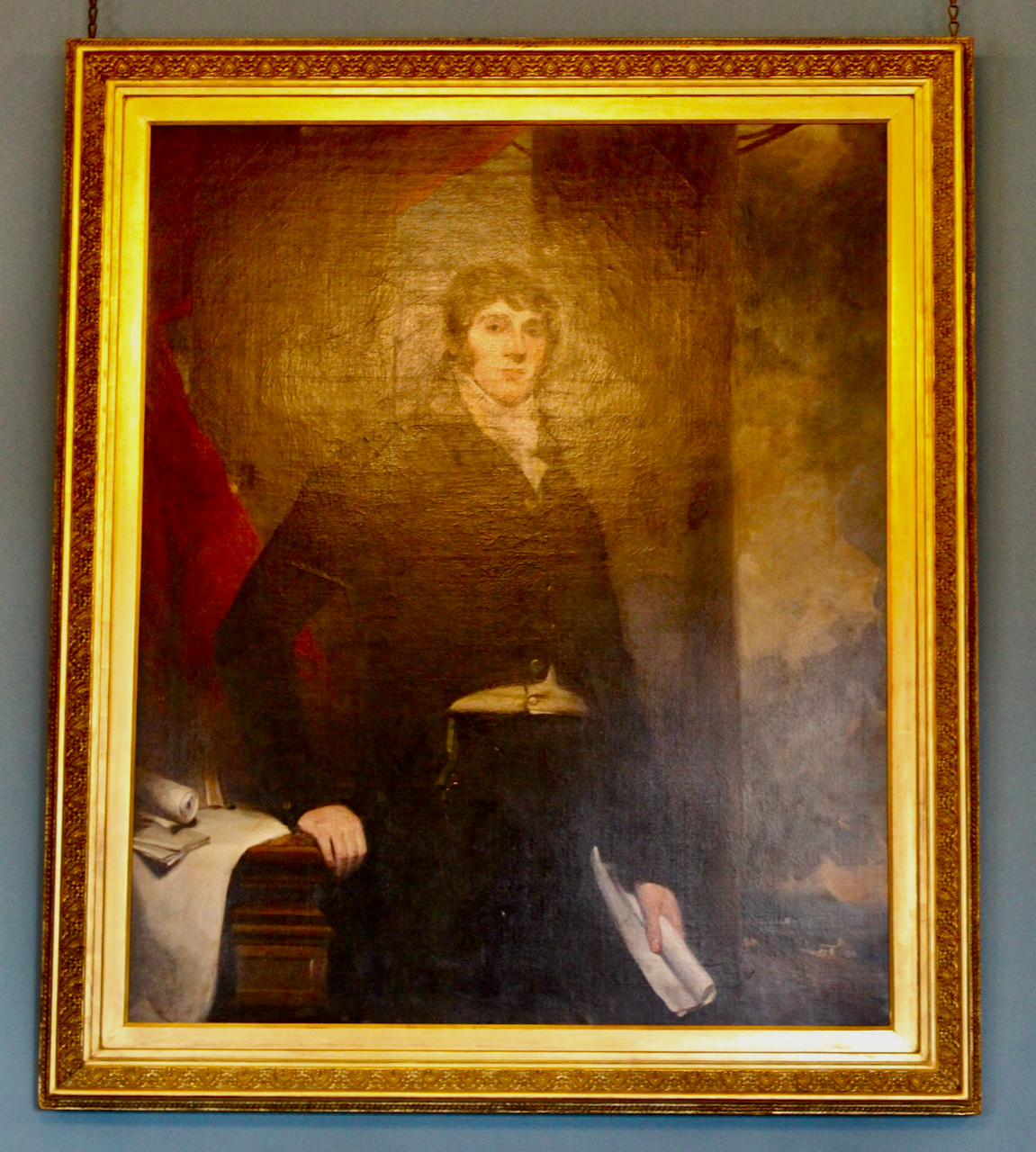
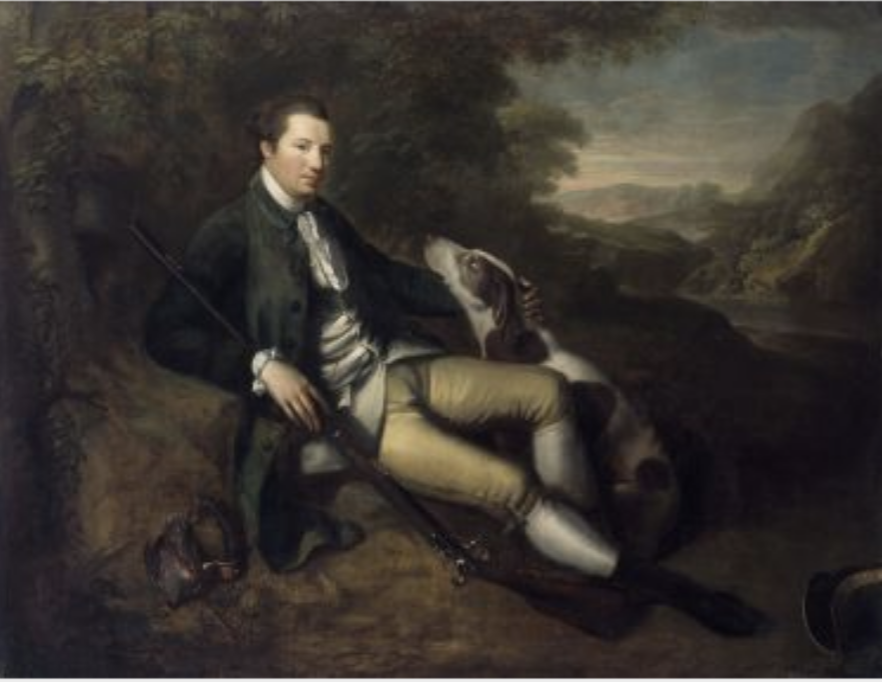
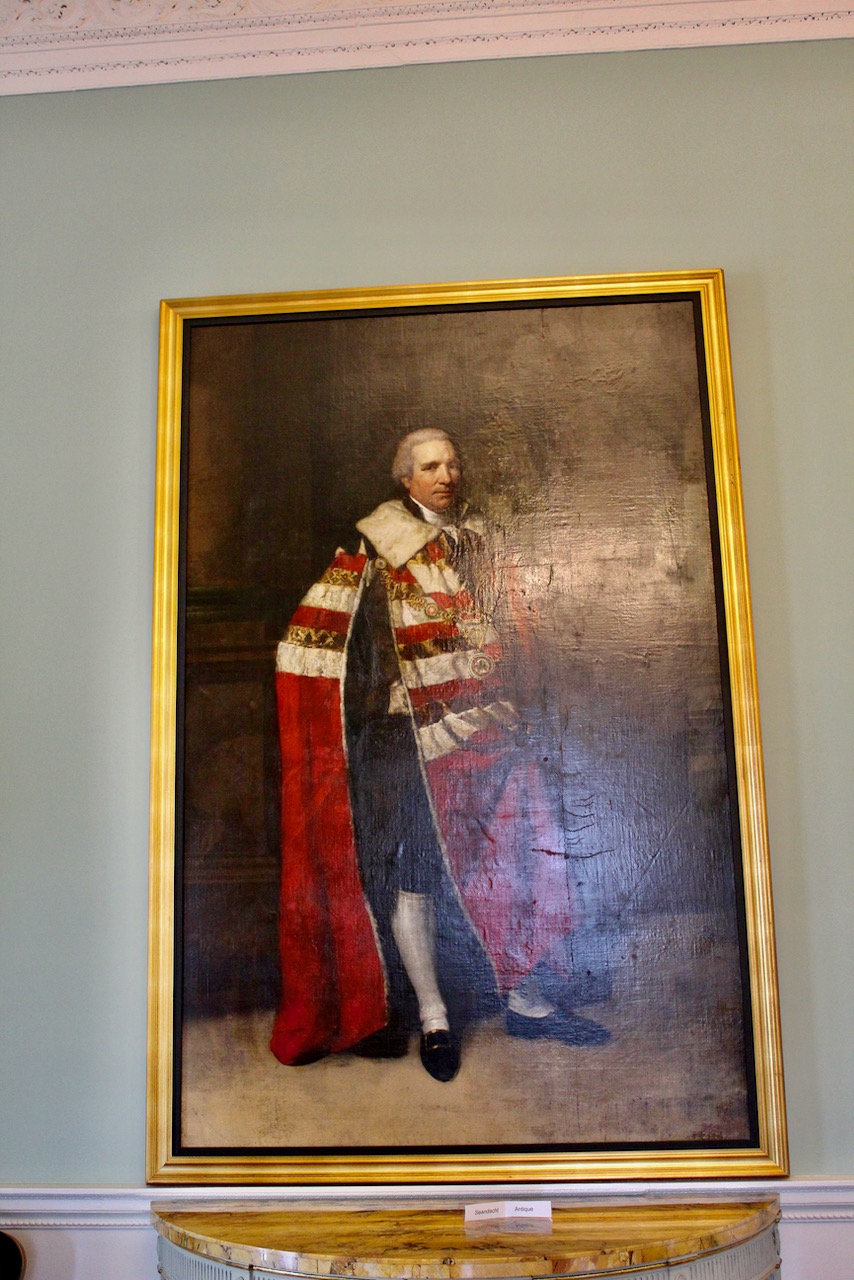
George Rochfort (1738-1815), later 2nd Earl of Belvedere by Robert Hunter (c. 1715/20-1801), Adams auction 18 Oct 2022.
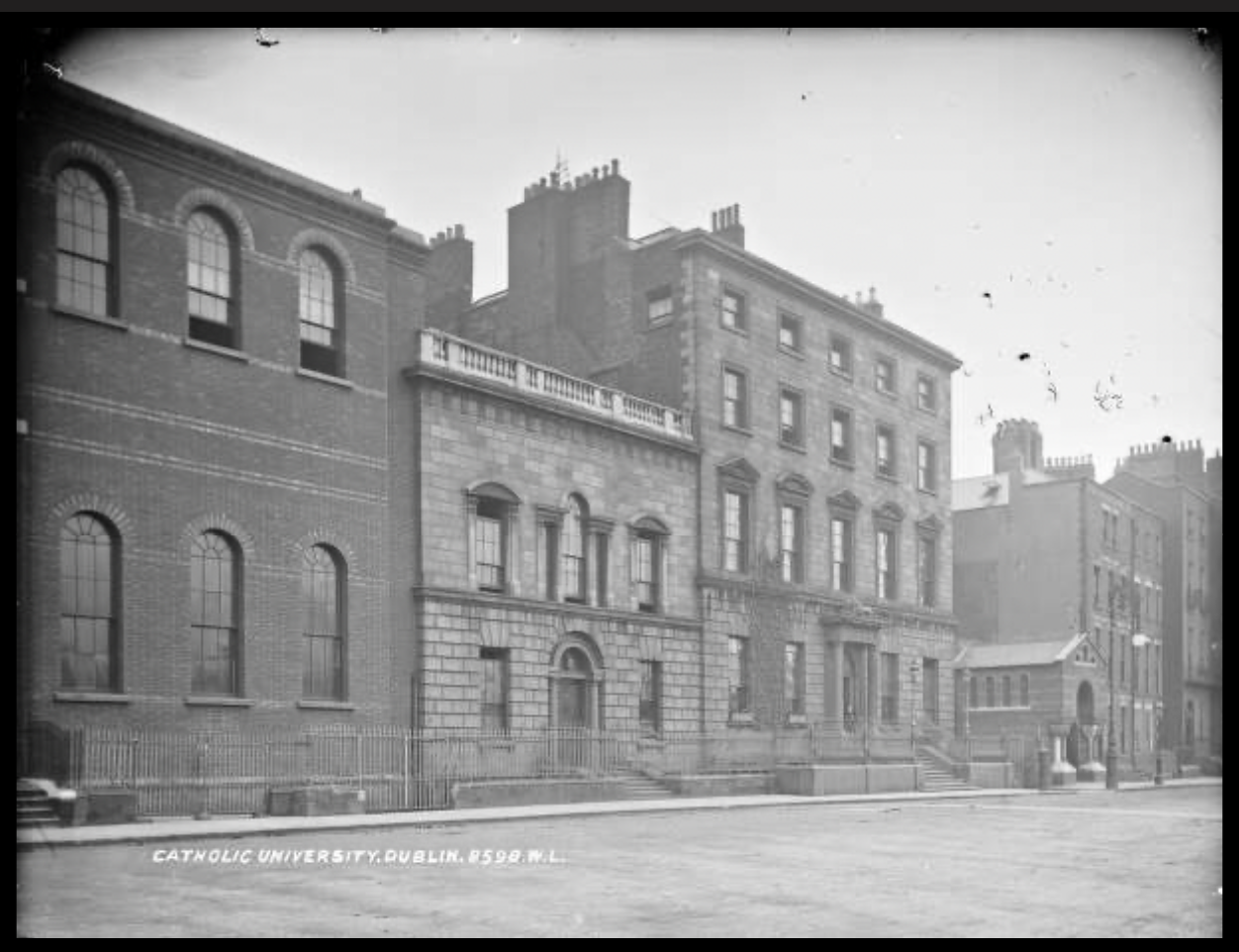
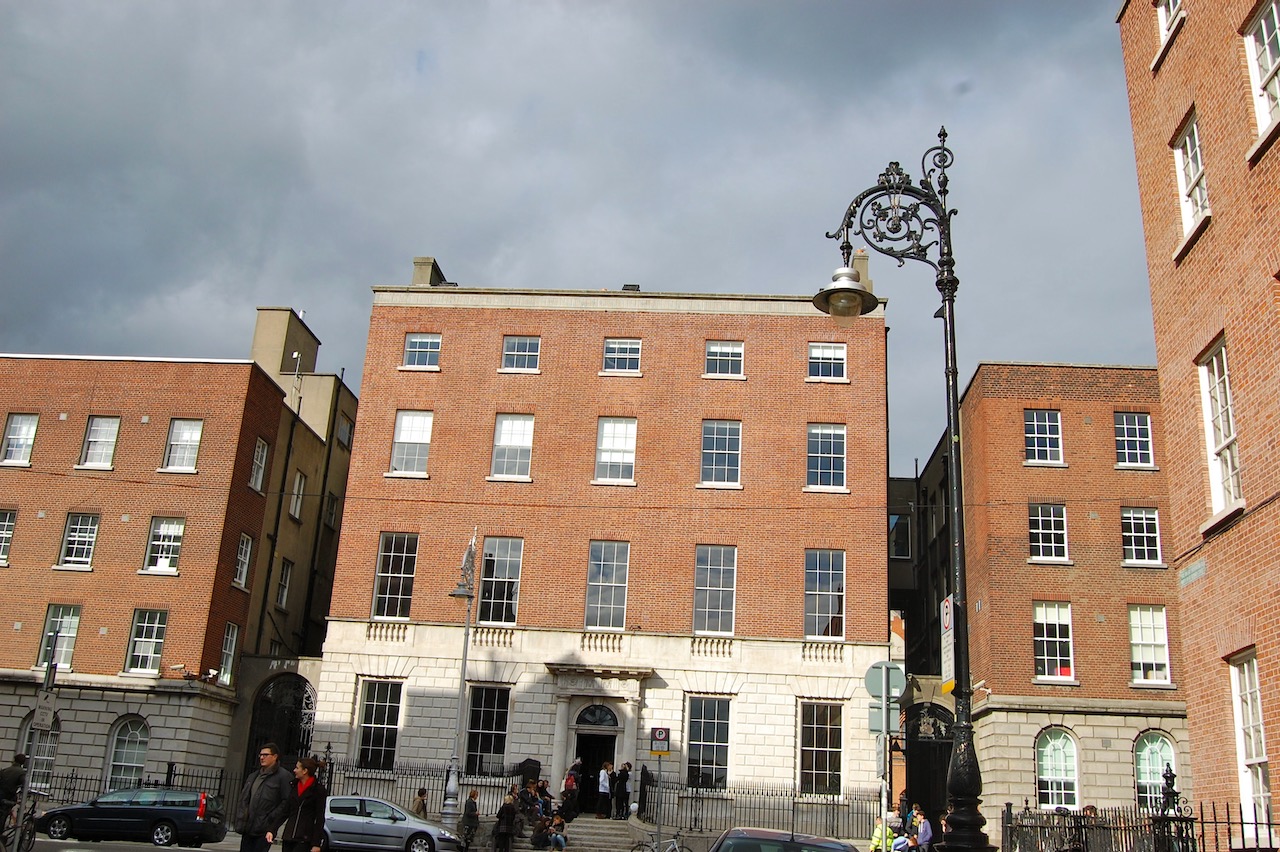
Belvedere House, Belvedere College, Dublin.
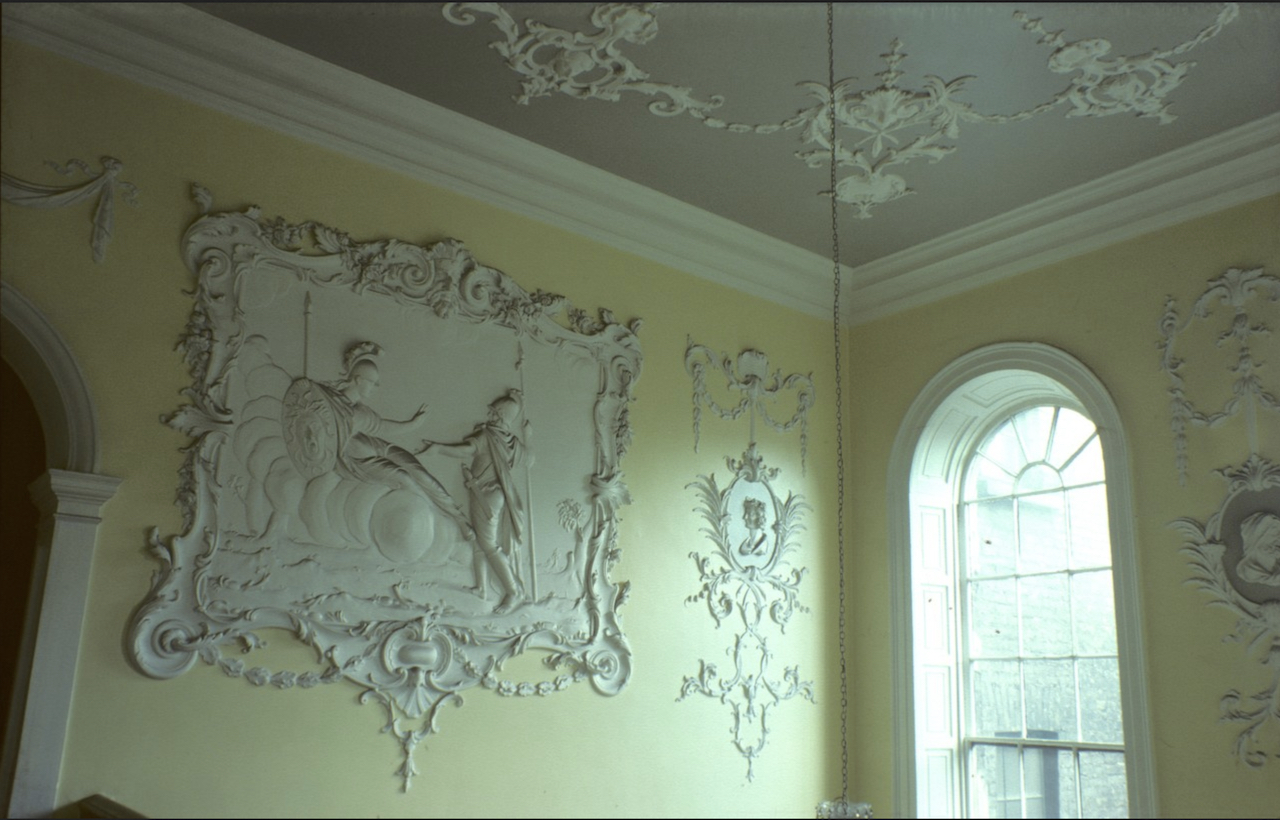
Inside Belvedere House, plasterwork by Michael Stapleton, Belvedere College, Dublin.
Belvedere House, Belvedere College, Dublin.

Robert Rochfort 1st Earl and Mary née Molesworth had a daughter Jane whom it seems was not dissuaded from marriage despite treatment of her mother, and married Brinsley Butler, 2nd Earl of Lanesborough, MP for County Cavan.

George Rochfort (12 October 1738 – 13 May 1814), 2nd Earl of Belvedere, and his second wife Jane née Mackay, by Robert Hunter, 1804 courtesy of Christies.

The 2nd Earl of Belvedere married first Dorothea Bloomfield, and after she died, he married Jane Mackay. He had no surviving children after his death in 1814. His wife inherited his Dublin property but his sister Jane née Rochfrot inherited Belvedere. Jane married Brinsley Butler, 2nd Earl of Lanesborough. She inherited Belvedere when she was 77 years old! She had married a second time, to John King, and the income from the estate allowed herself and her second husband to live in fine style in Florence.

Jane née Rochfort Countess of Lanesborough (1737-1828) Attributed to Thomas Pope Stevens courtesy Christies Irish Sale 2002. She was the daughter of Robert Rochfort, 1st Earl of Belvedere and married Brinsley Butler, 2nd Earl of Lanesborough.

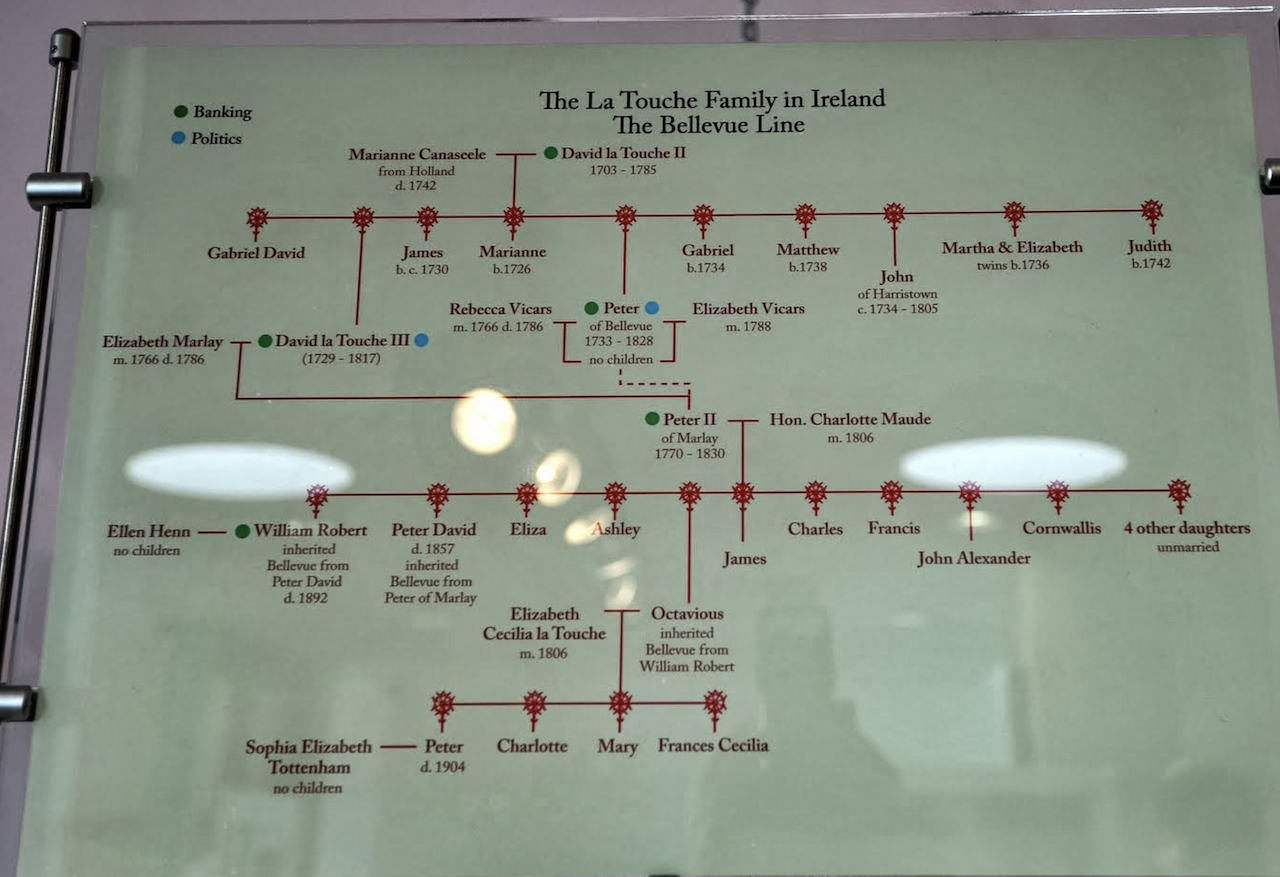
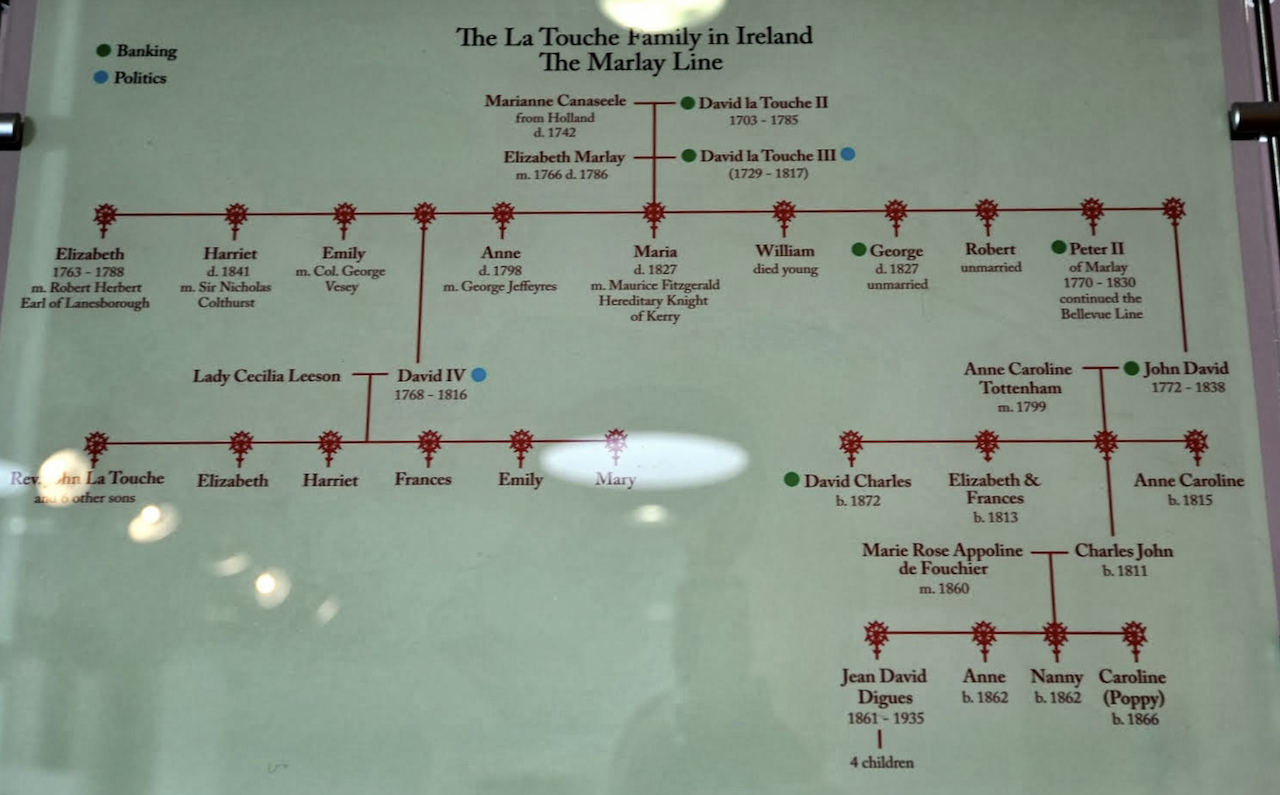
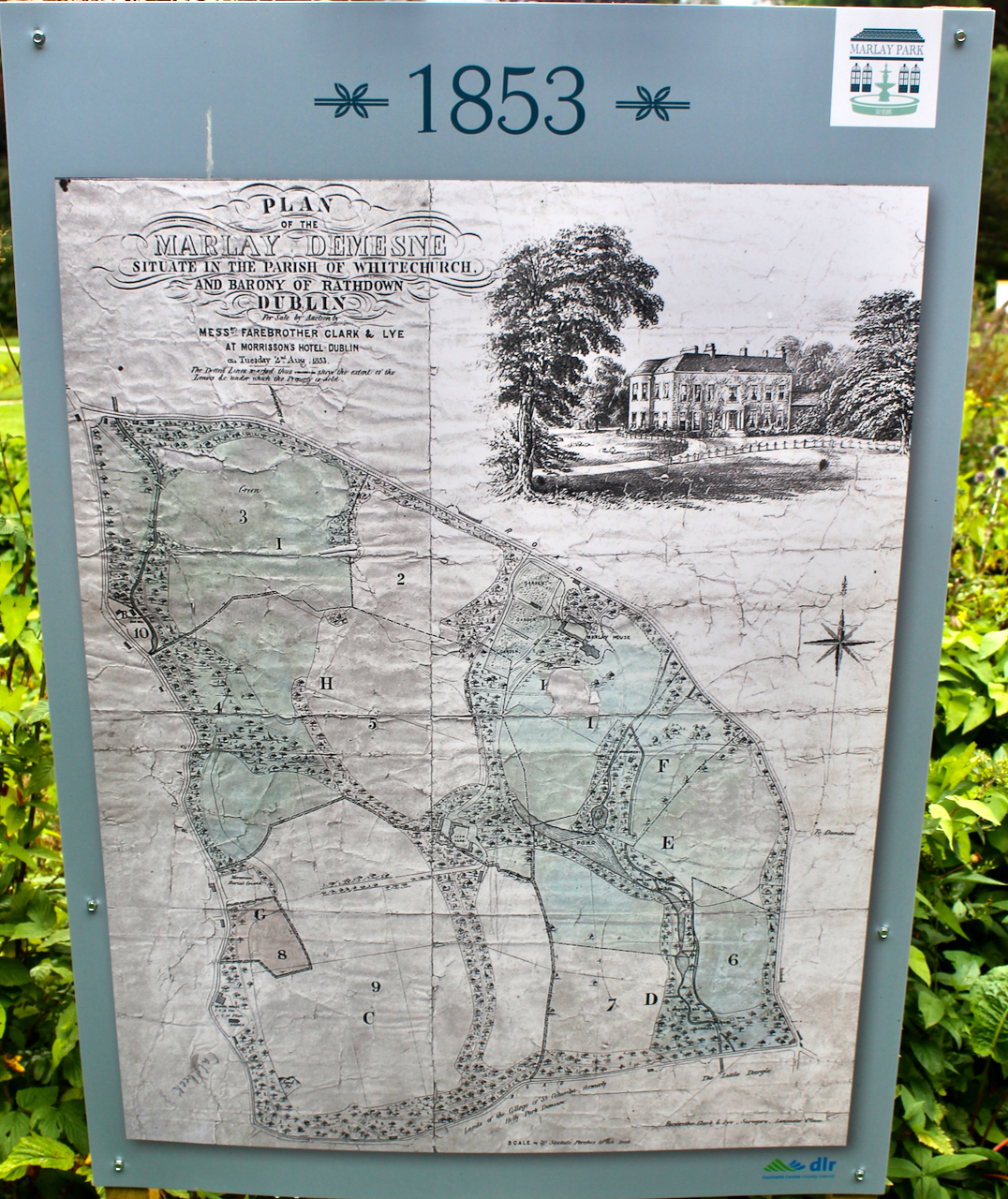
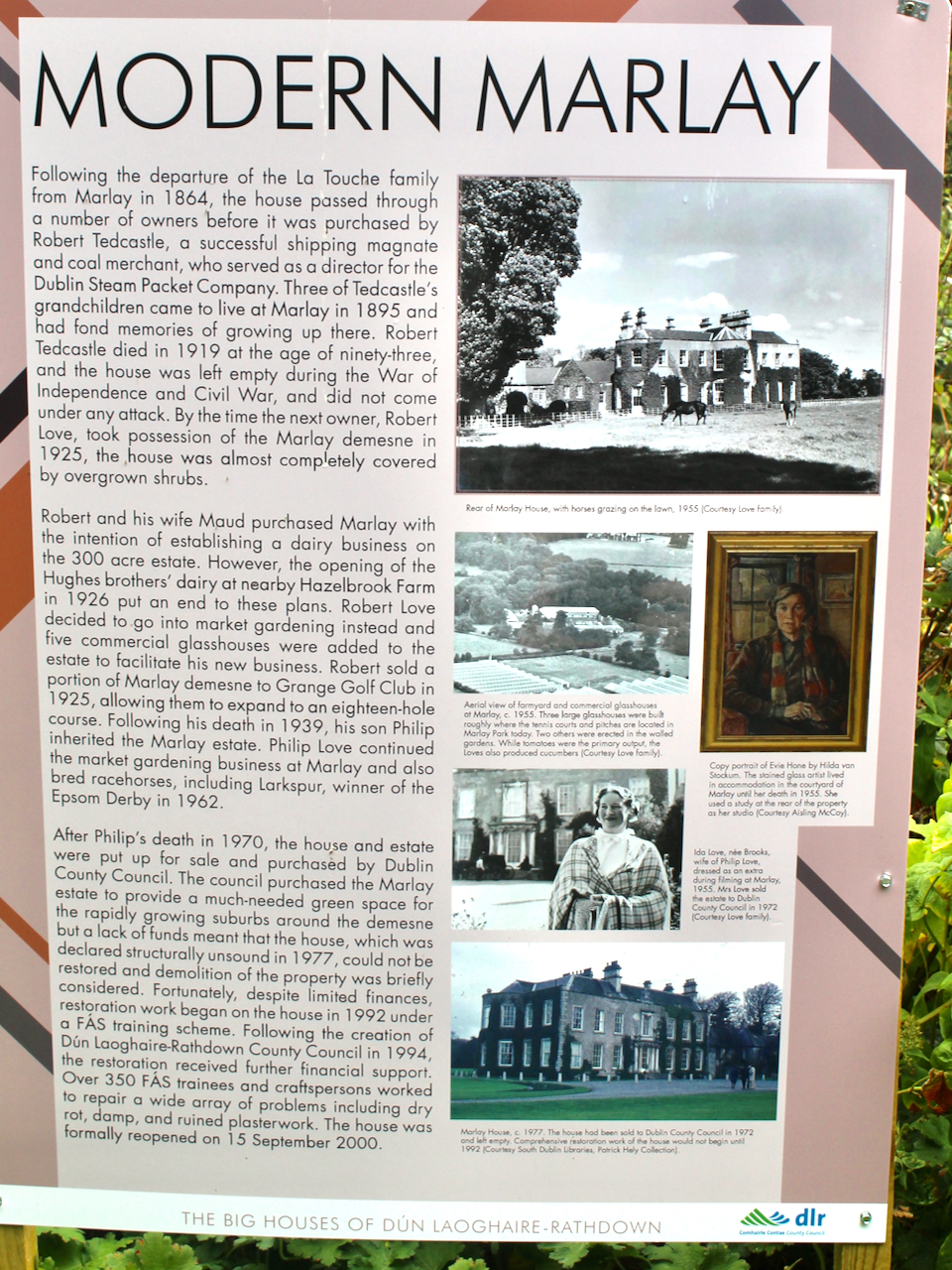
The male line of the Earls of Lanesborough died out after two more generations. Jane’s son Robert Henry Butler (1759-1806) 3rd Earl of Lanesborough married Elizabeth La Touche, daughter of David La Touche (1729-1817) and Elizabeth Marlay, whom we came across when we visited Harristown, County Kildare (see my entry) and Marlay Park in Rathfarnham, Dublin. The estate passed down to their son, Brinsley Butler, 4th Earl of Lanesborough, but he died unmarried. The estate then passed through the female line. The 3rd Earl of Lanesborough’s sister Catherine married George Marlay (1748-1829), the brother of Elizabeth who married David La Touche.

Elizabeth, Countess of Lanesborough (née La Touche), (1764-1788), wife of 3rd Earl of Lanesborough, Date 1791 Engraver Francesco Bartolozzi, Italian, 1725-1815 After Horace Hone, English, 1756-1825, photograph courtesy of National Gallery of Ireland.

Mark Bence-Jones continues: “In C19, the Diocletian windows in the front of the house were replaced with rectangular triple windows; and the slope from the front of the house down to the lough was elaborately terraced. Belvedere passed by inheritance to the Marlay family and then to late Lt-Col C.K. Howard-Bury, leader of the 1921 Mount Everest Expedition; who bequeathed it to Mr Rex Beaumont.” (see [3])

Belvedere, County Westmeath.
Photograph © Jennifer Winder-Baggot, www.irishhistorichouses.com

Catherine and George Marlay had a son, George (1791-1880), who married Catherine Tisdall, and the estate passed to his son, Charles Brinsley Marlay (1831-1912). Charles was only sixteen when he inherited Belvedere from his cousin the Earl of Lanesborough.

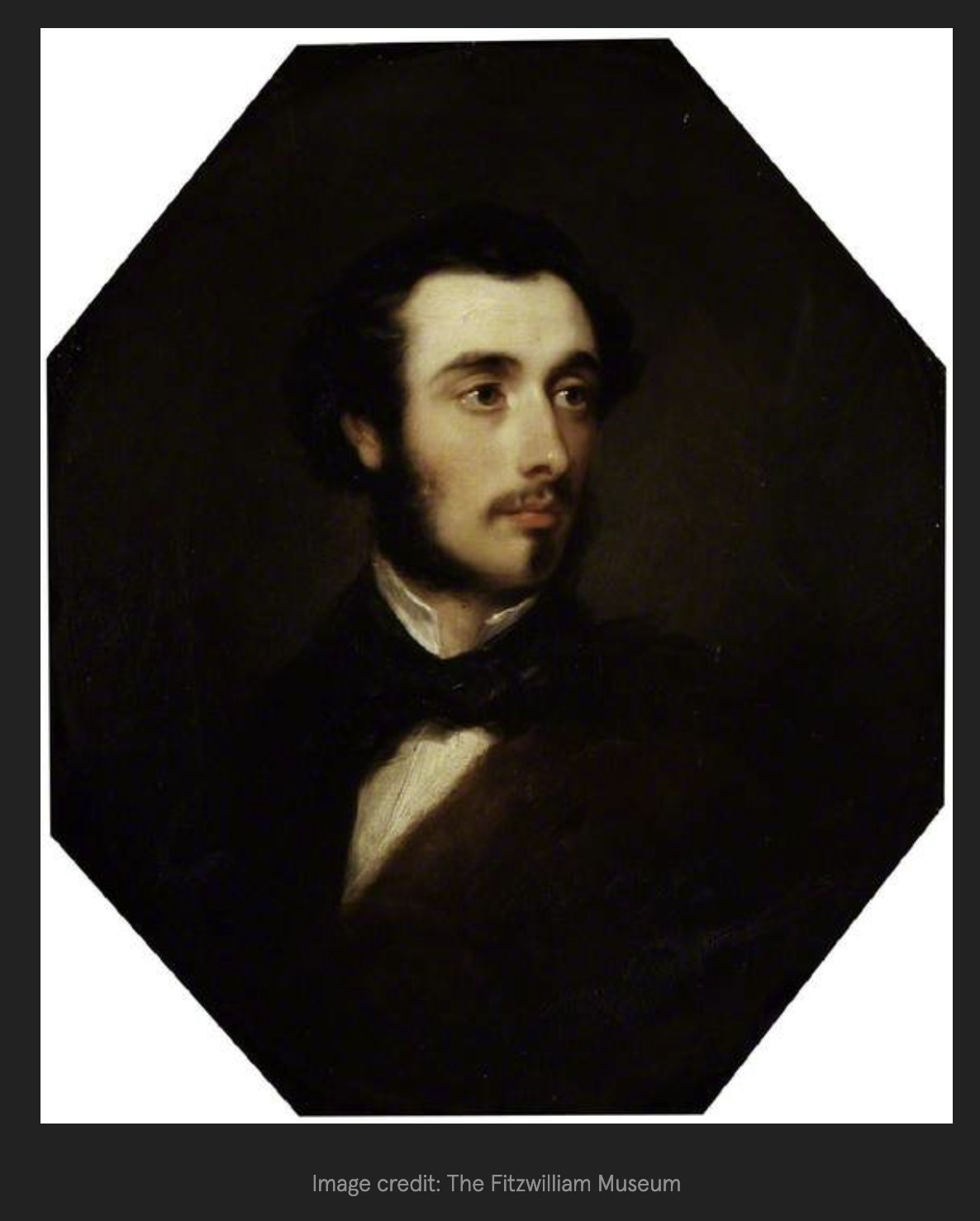
Charles Brinsley Marlay of Belvedere House County Westmeath, courtesy of The Fitzwilliam Museum.

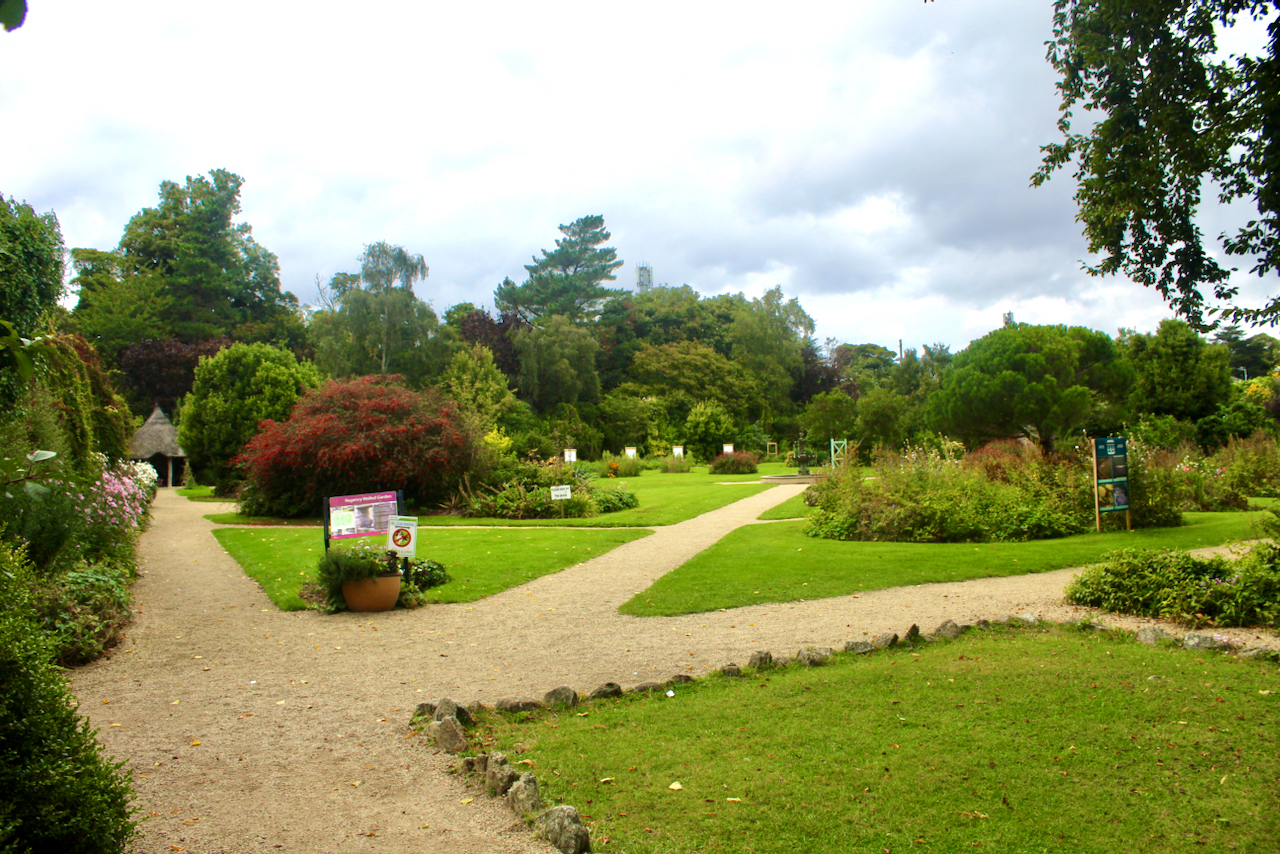
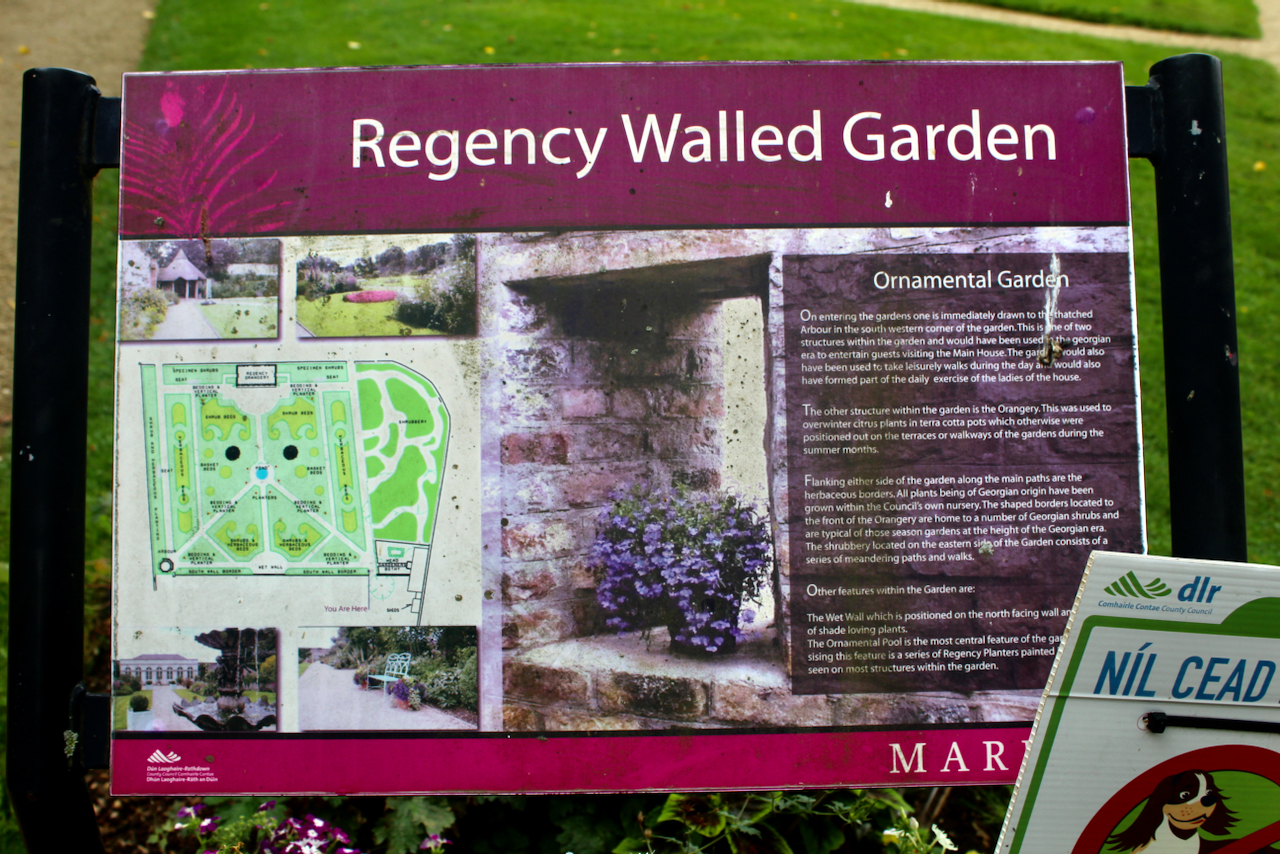
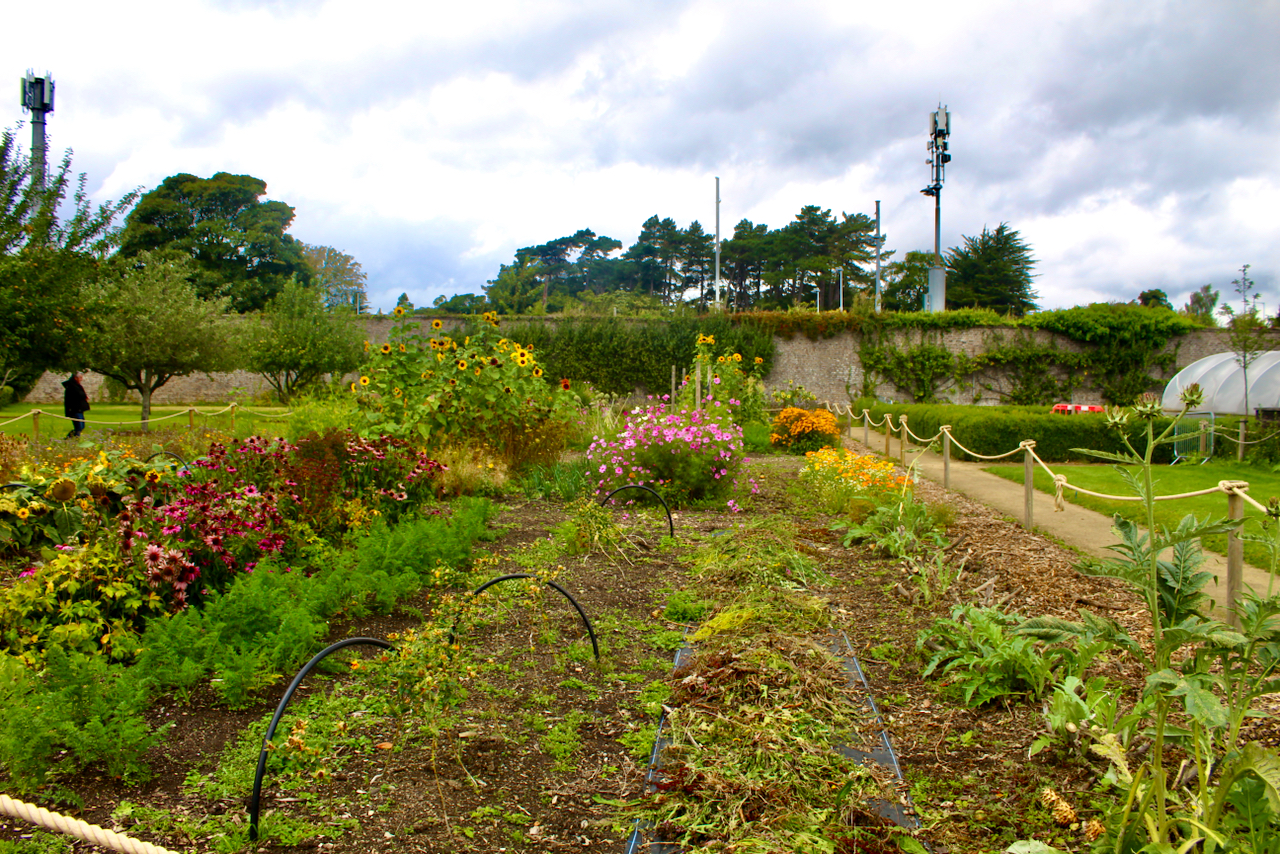
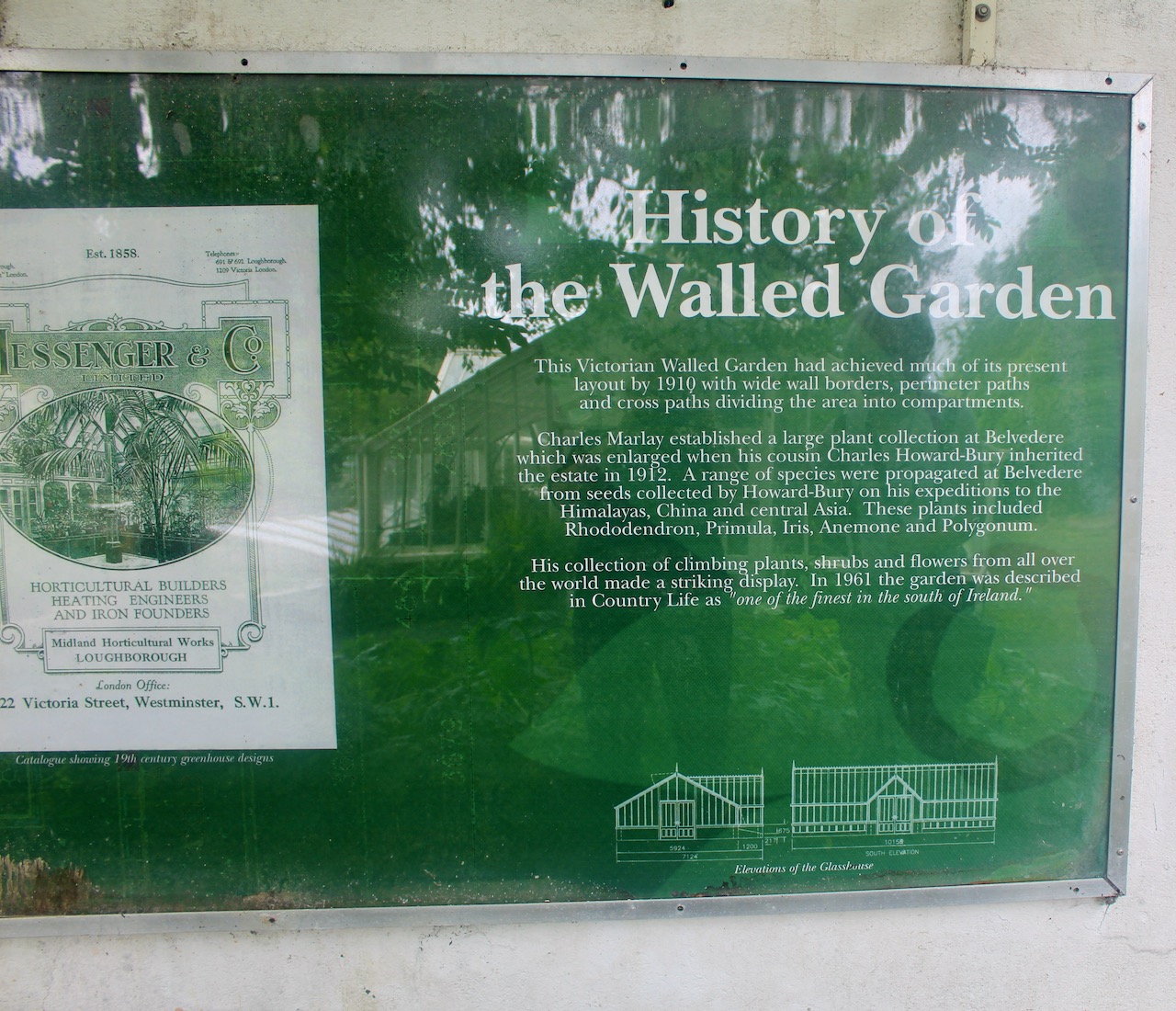
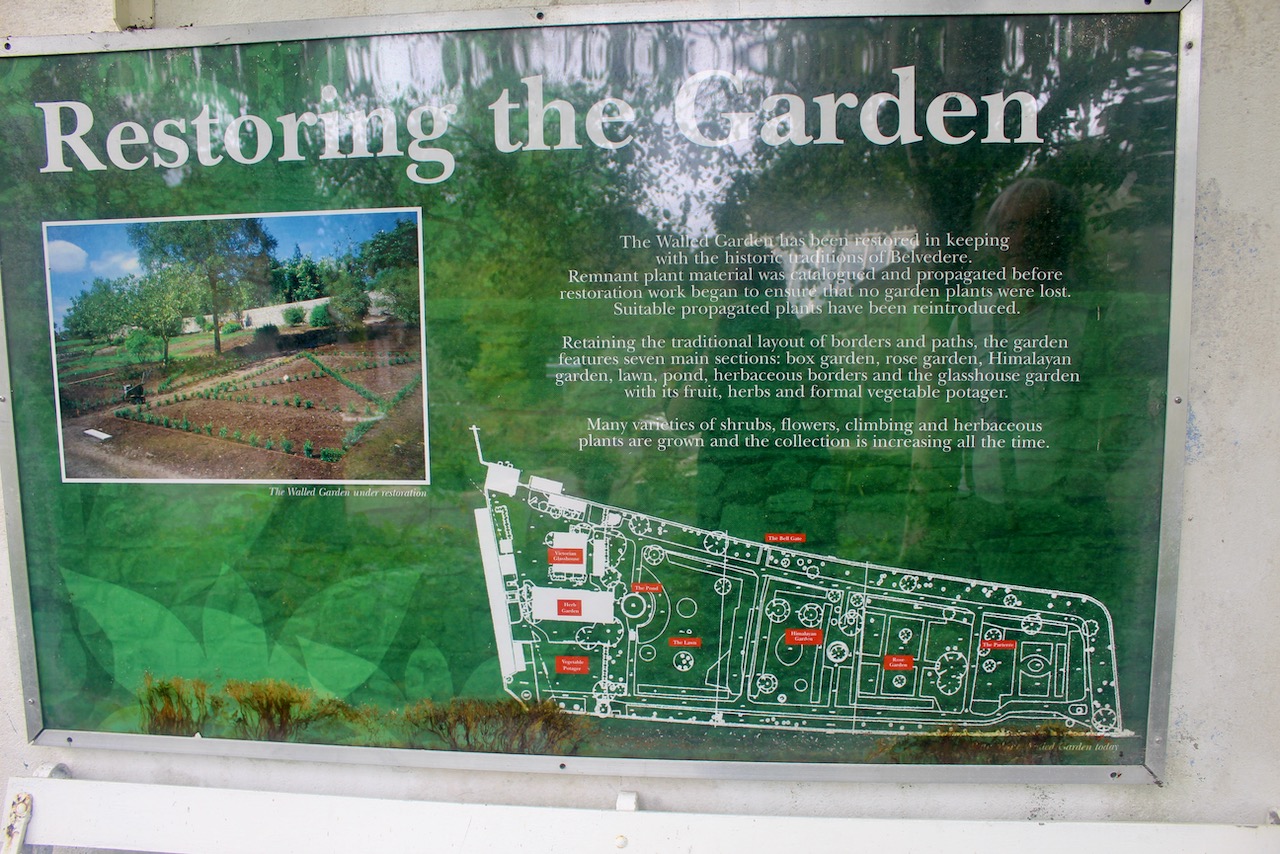
It was Charles Brisley Marlay who built the terraces leading down to the lake, in the late 1880s. The twelve stone lions were added later. He spent many hours planning the 60 metre long rockery to the side of the terraces, and also built the walled garden. He was known as “the Darling Landlord” due to his kindness to tenants, and for bringing happiness and wealth back to Belvedere. He was cultured and amassed an important art collection, as well as improving the estate.

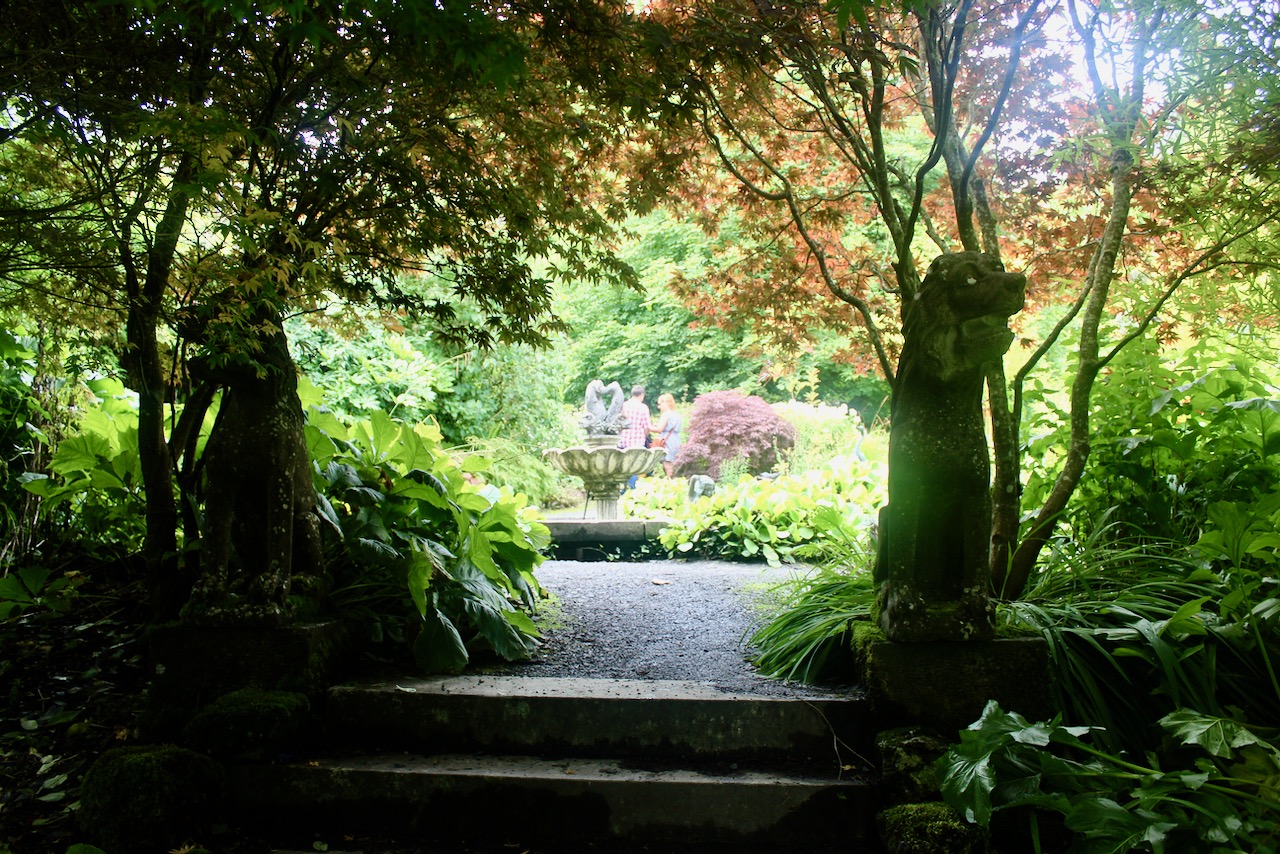
Charles Brisley Marlay built the terraces leading down to the lake, in the late 1880s. The twelve stone lions were added later. The terraces are said to have been inspired by the terraces at Haddon Hall, Derbyshire, the home of his sister. Photograph © Jennifer Winder-Baggot, www.irishhistorichouses.com
Charles Brisley Marlay built the terraces leading down to the lake, in the late 1880s. The twelve stone lions were added later. Photograph © Jennifer Winder-Baggot, www.irishhistorichouses.com
Belvedere, County Westmeath. Photograph © Jennifer Winder-Baggot, www.irishhistorichouses.com
Photograph © Jennifer Winder-Baggot, www.irishhistorichouses.com

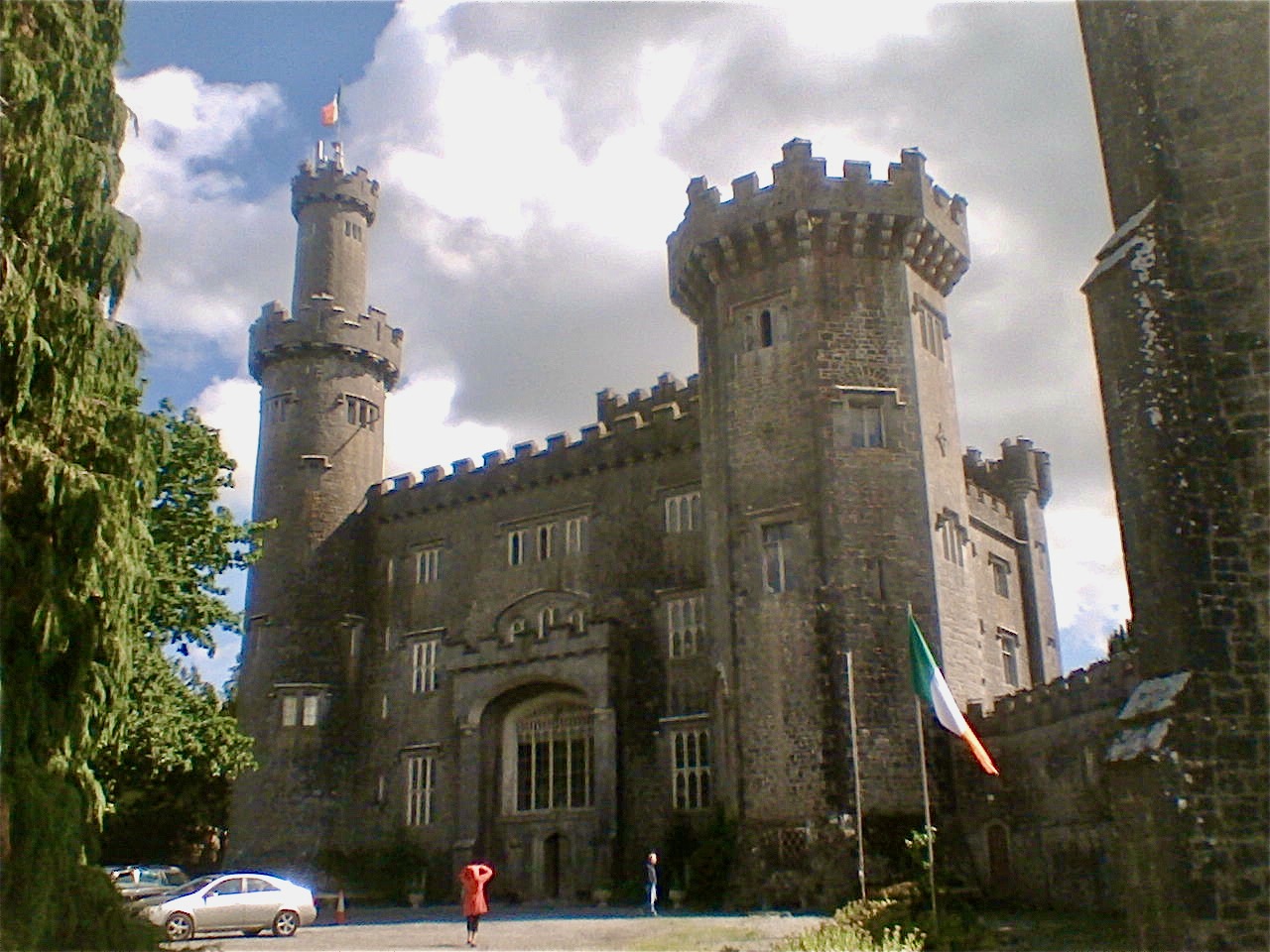
The inheritance of Belvedere continues to be even more complicated. It passed via Catherine Tisdall’s family. Her mother Catherine Dawson (1762-1821) had married twice. Catherine’s second husband was Charles William Bury (1764-1835), the 1st Earl of Charleville. We came across him earlier, as an owner of Charleville Forest, in Tullamore, County Offaly.

Charleville Forest Castle, County Offaly.

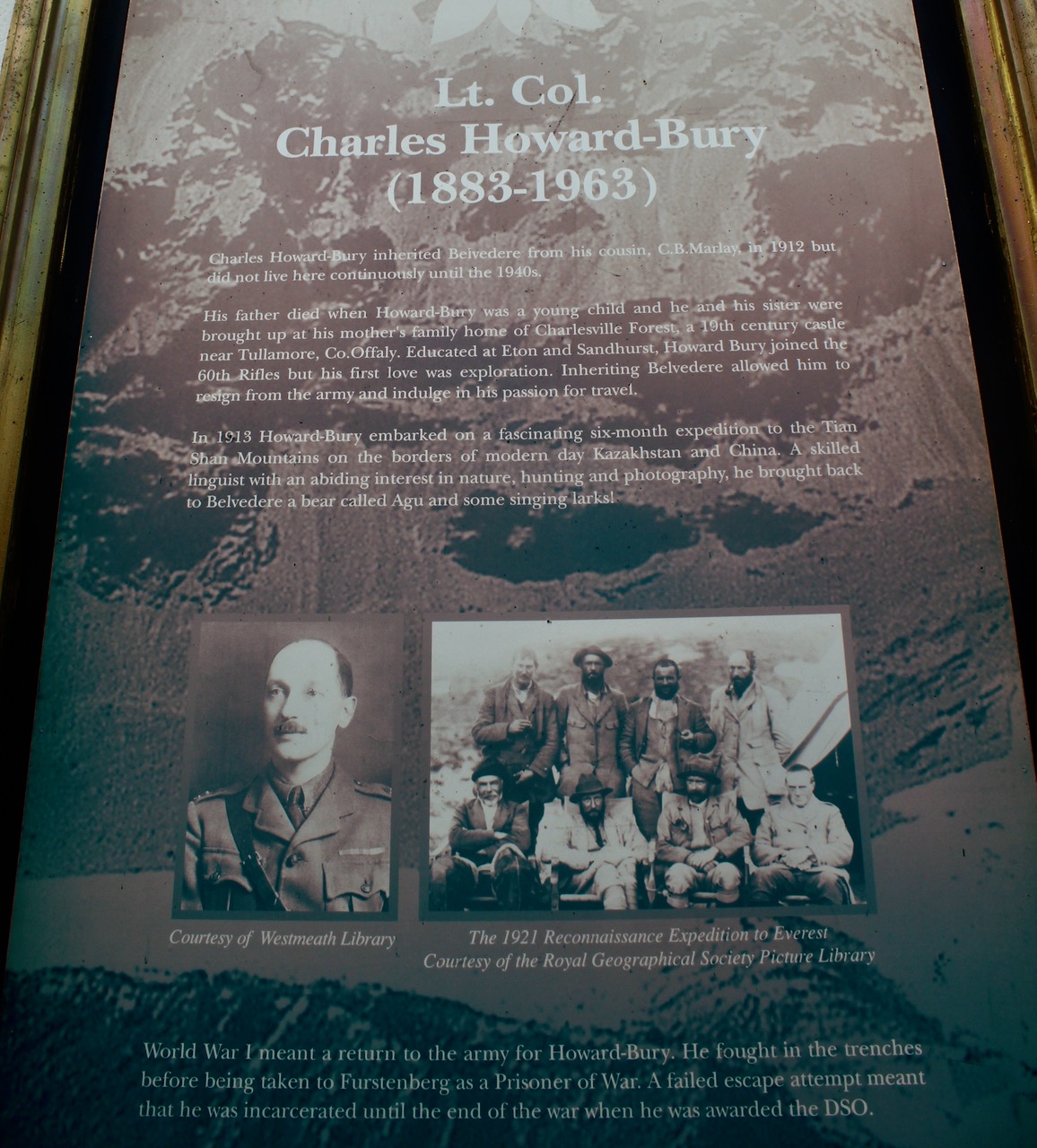
Belvedere passed to Charles William Bury (1764-1835) the 1st Earl of Charleville’s descendant, Lt. Col Charles Howard-Bury (1883-1963). The 3rd Earl of Charleville, Charles William George Bury (1822-1859) had several children but the house passed to the fourth child, Emily Alfreda Julia Bury (1856-1931), as all others had died before Charles Brinsley Marley died. It was therefore the son of Emily Alfreda Julia Bury and her husband Kenneth Howard, who added Bury to his surname, who inherited Belvedere. Their son was Charles Kenneth Howard-Bury (1883-1963).

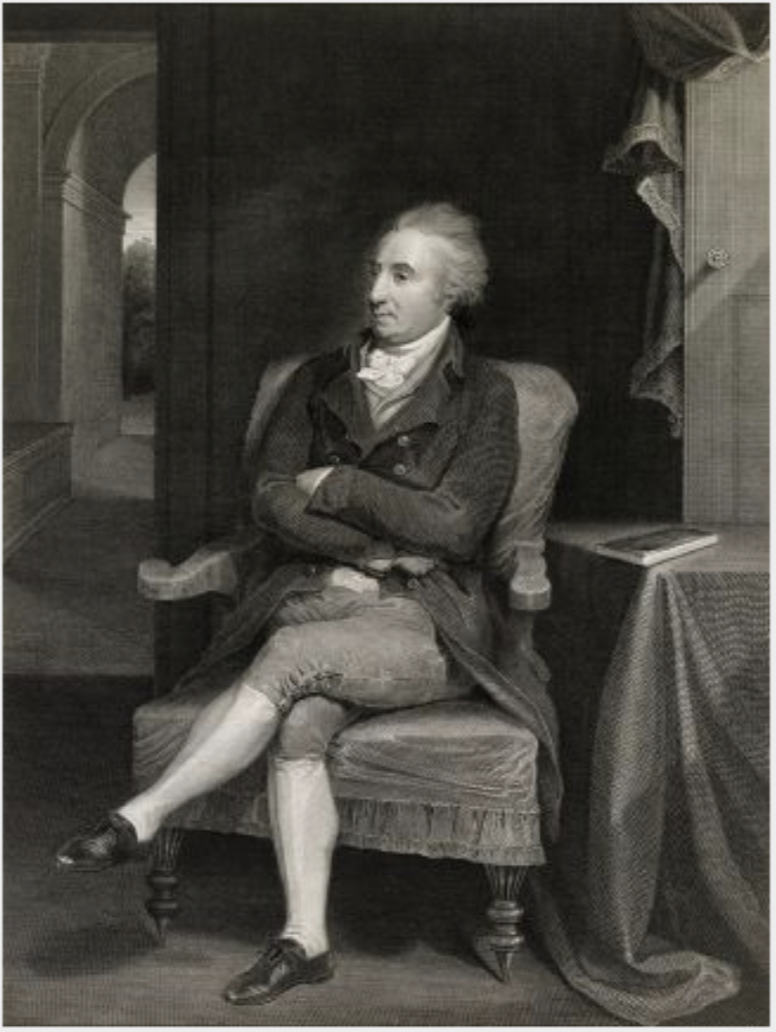
Charles William Bury, 2nd Earl of Charleville, seated in red cloak before a curtain, portrait by Henry Pierce Bone, 1835.
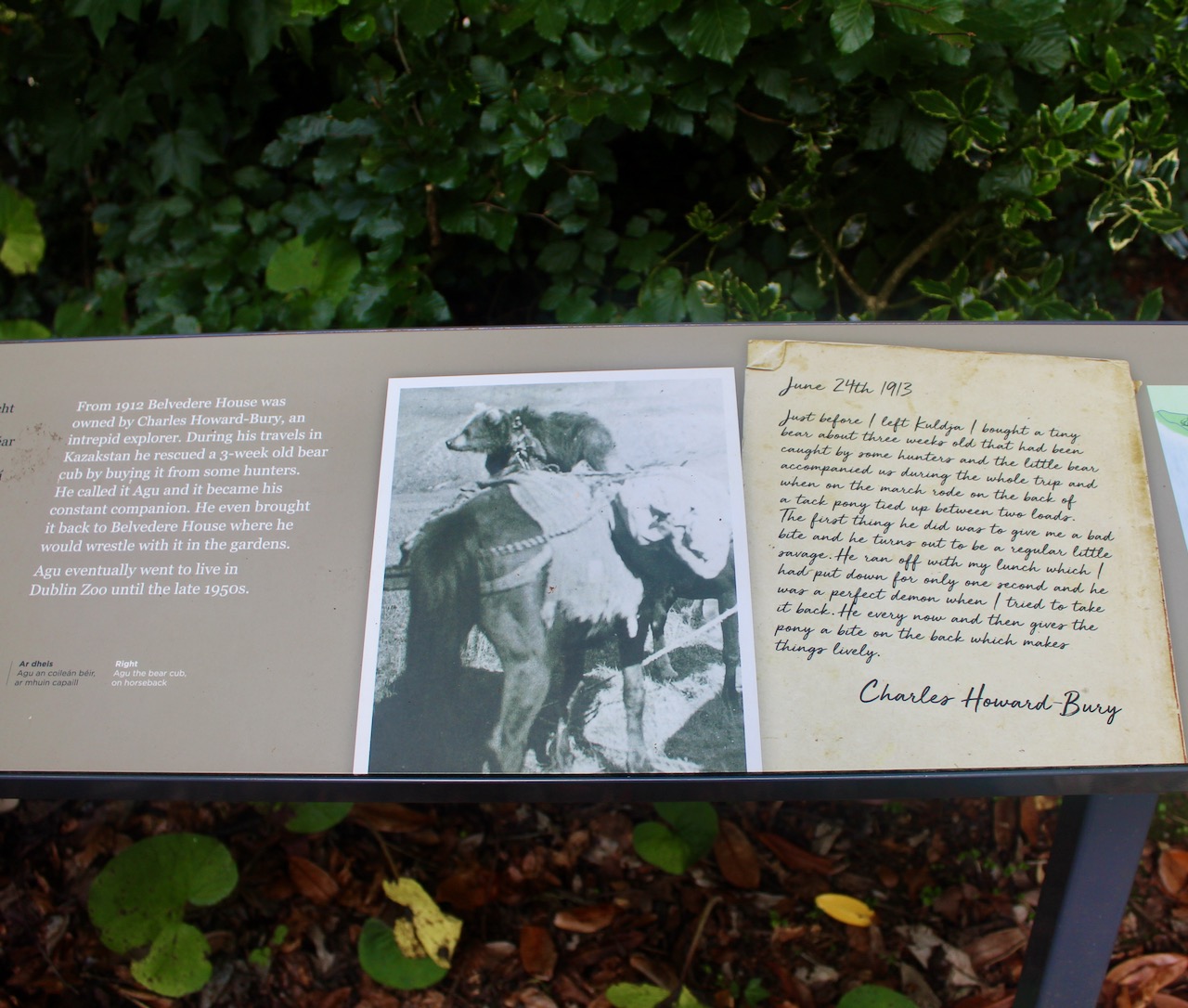
Charles Howard-Bury brought a bear back from Kazakhstan!
Photograph © Jennifer Winder-Baggot, www.irishhistorichouses.com

Charles Howard-Bury left Belvedere to his friend, Rex Beaumont. Eventally financial difficulties caused Mr Beaumont to sell the property, and it was acquired by Westmeath County Council. Two years previously, in 1980, Mr Beaumont sold the contents of the house – I wonder where those things ended up?

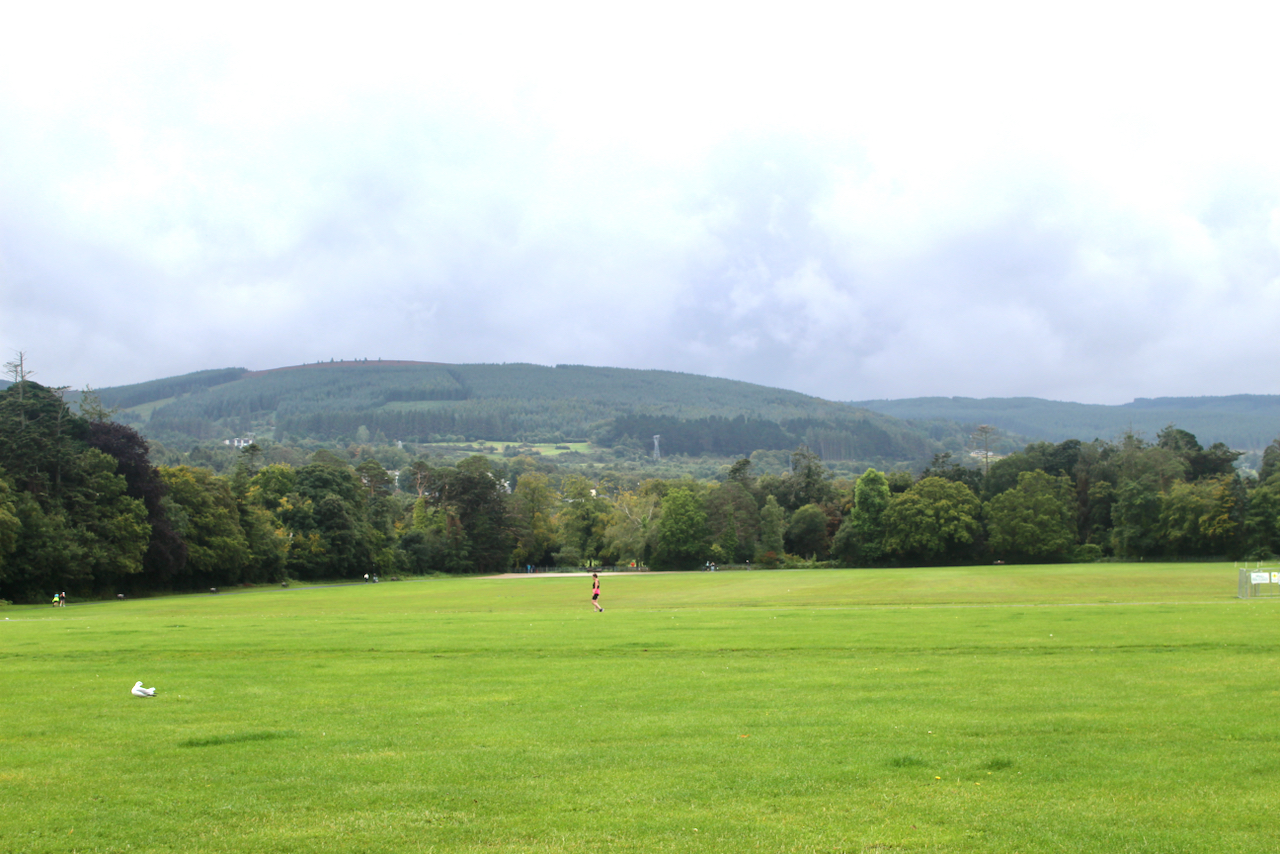
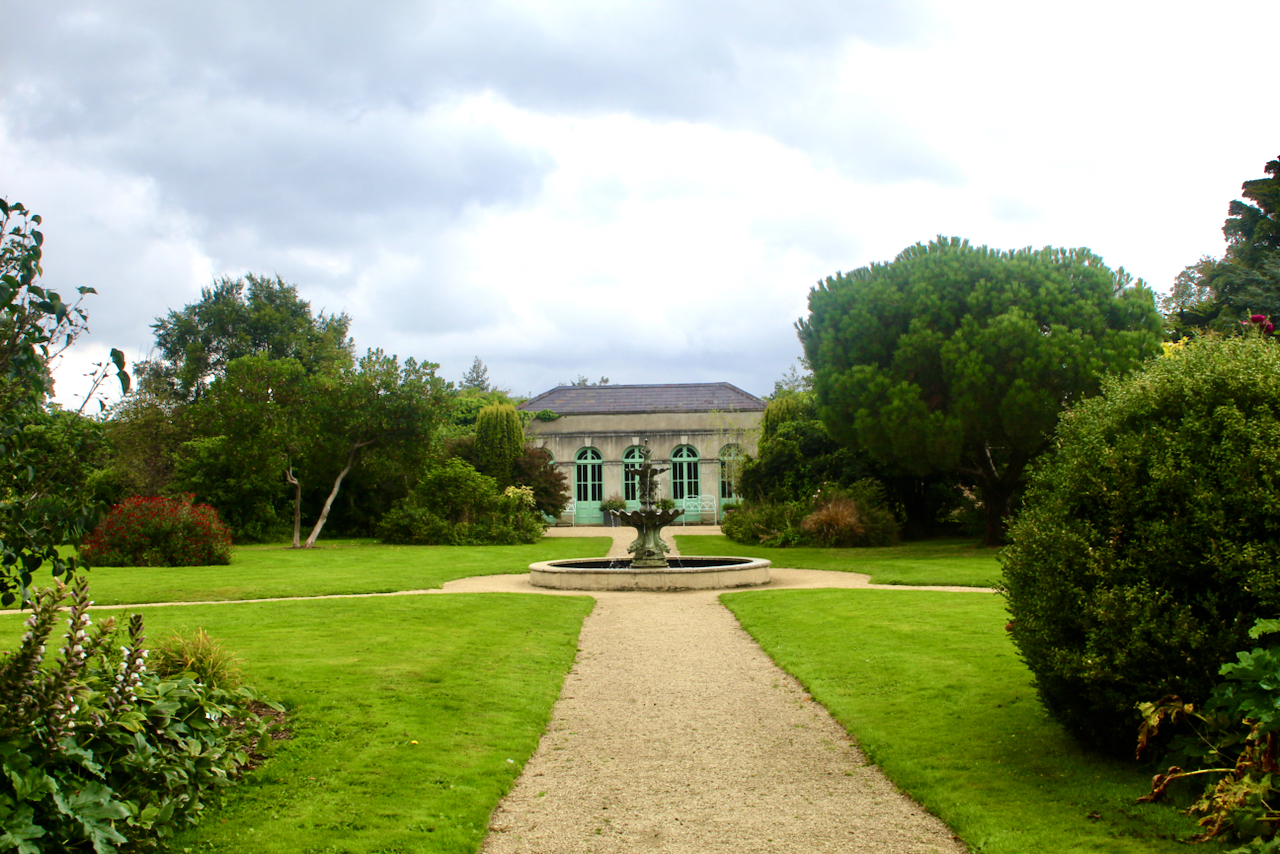
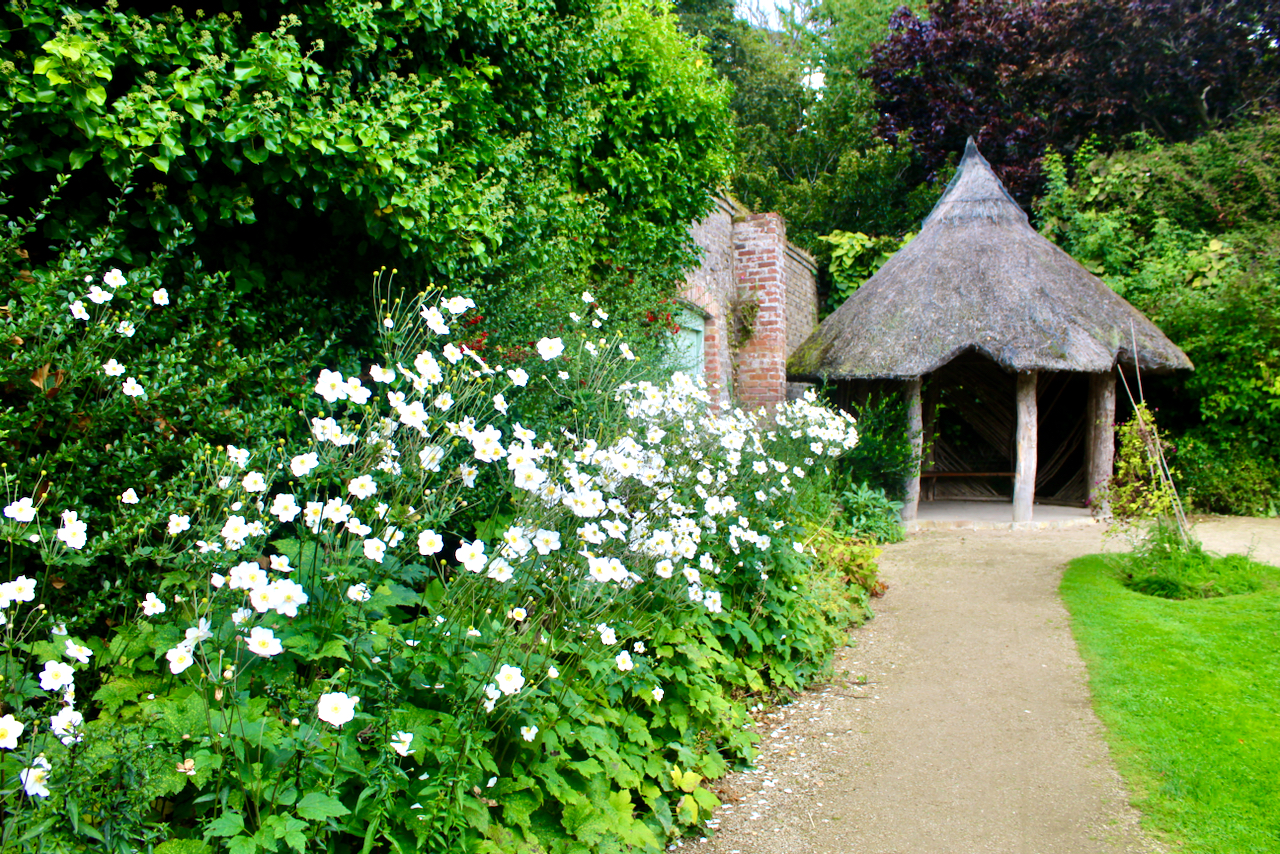
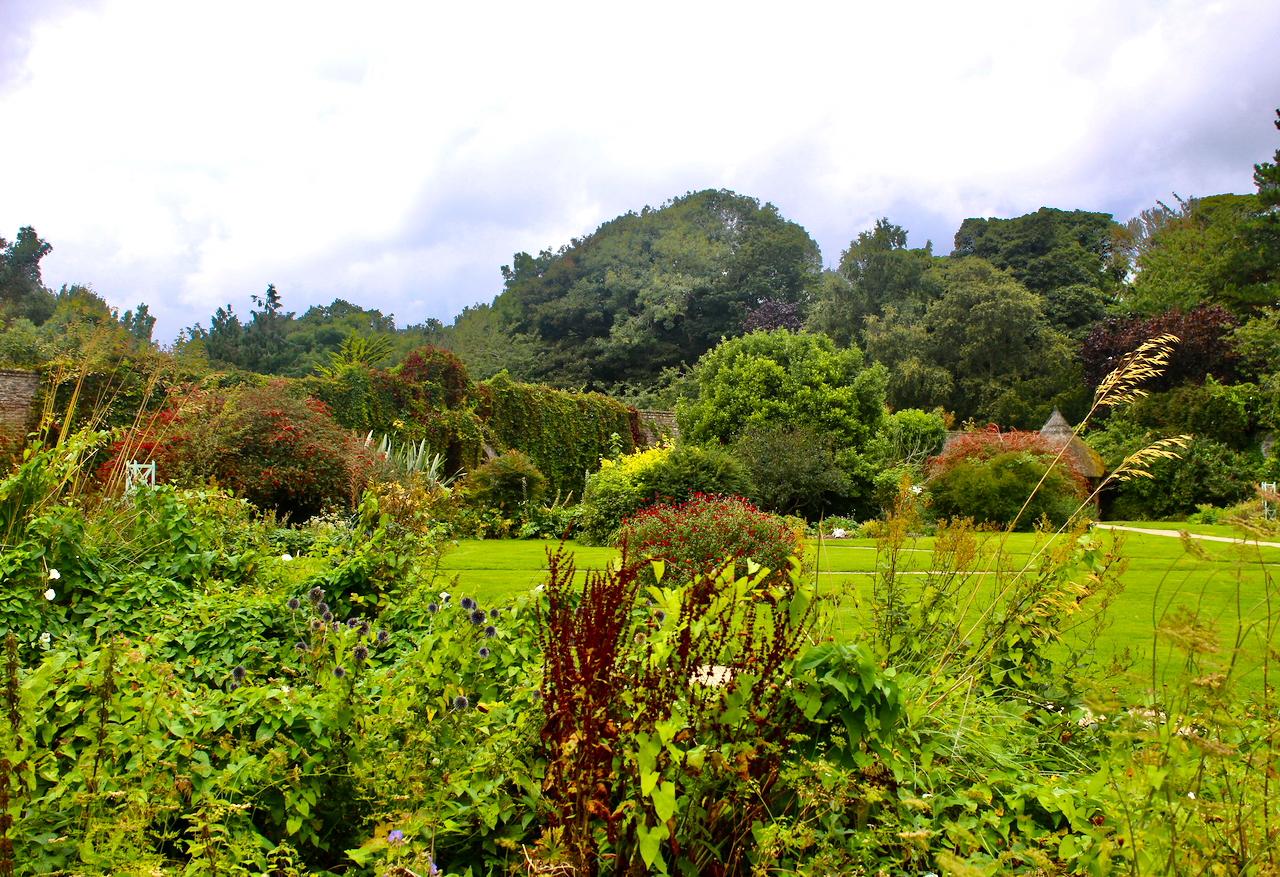
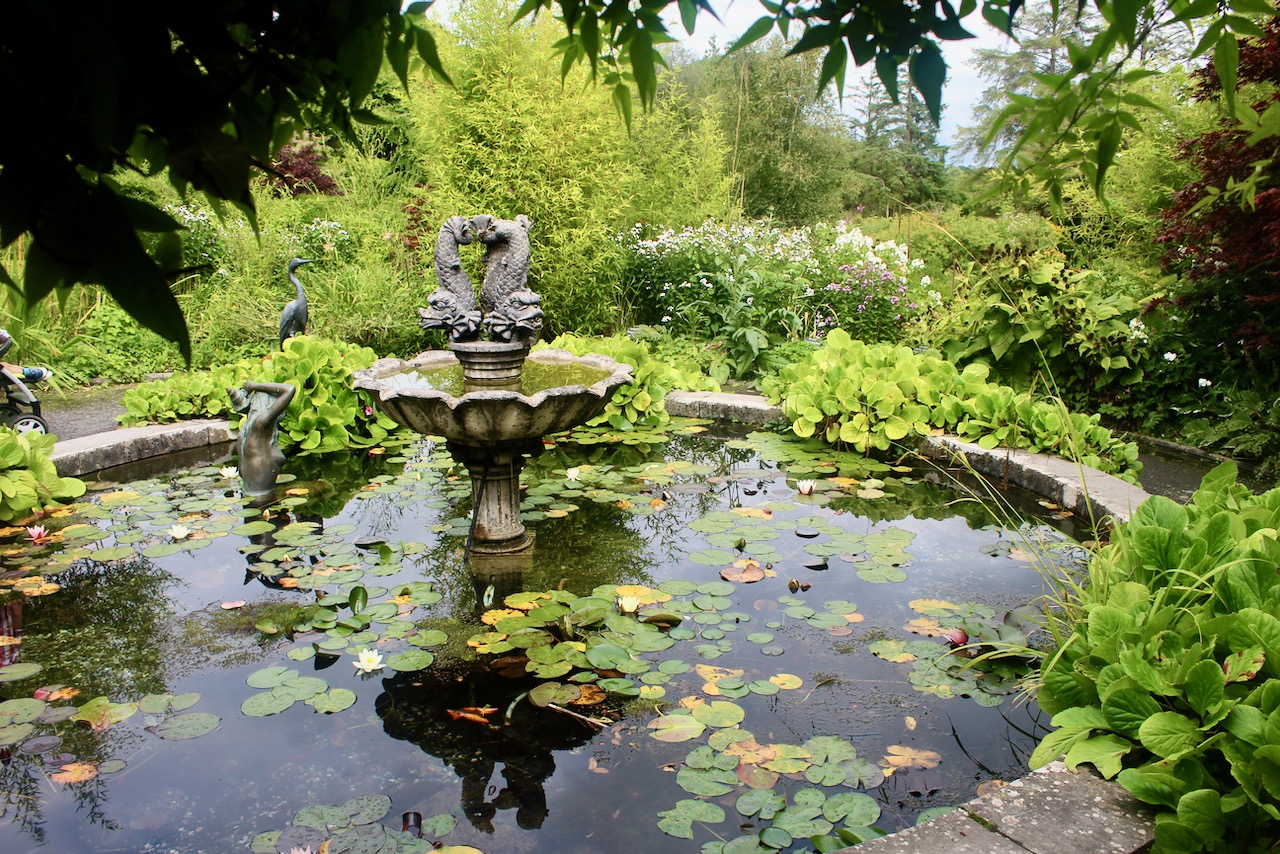
The estate is a wonderful amenity for County Westmeath, with large parklands to explore with several follies, as well as the walled garden.

Belvedere, County Westmeath.
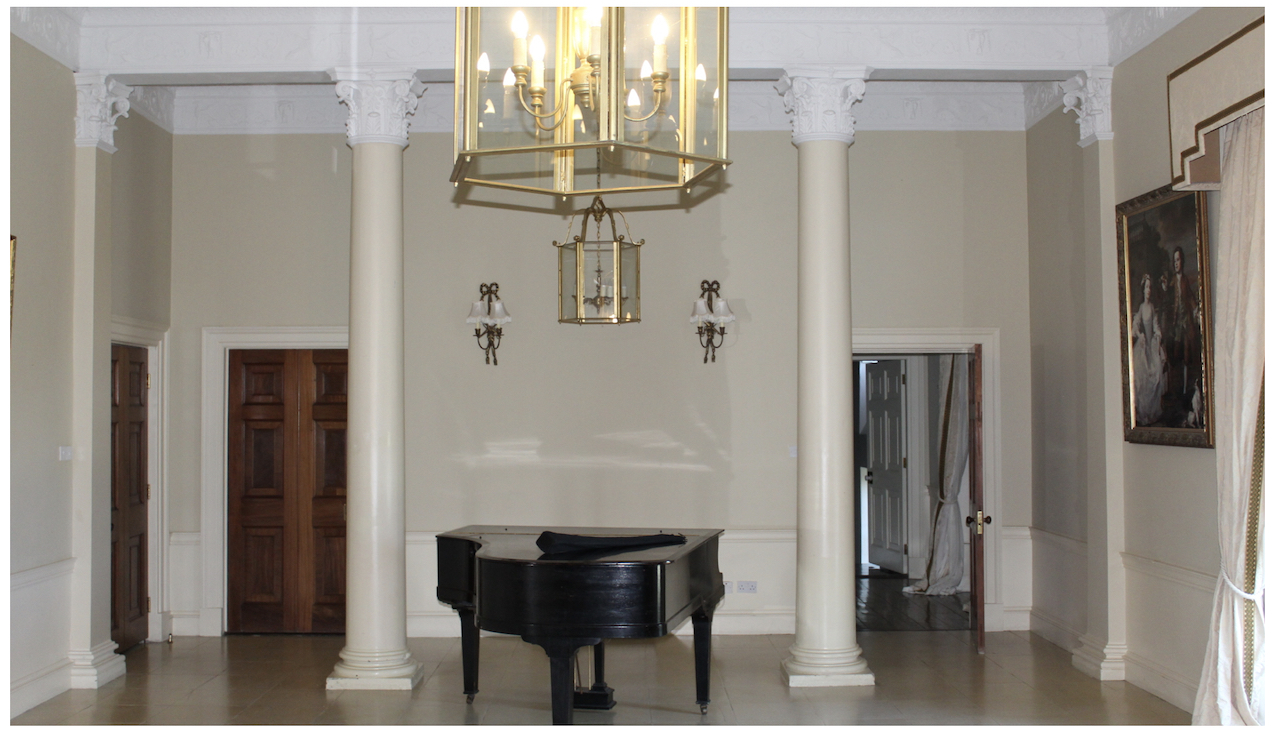
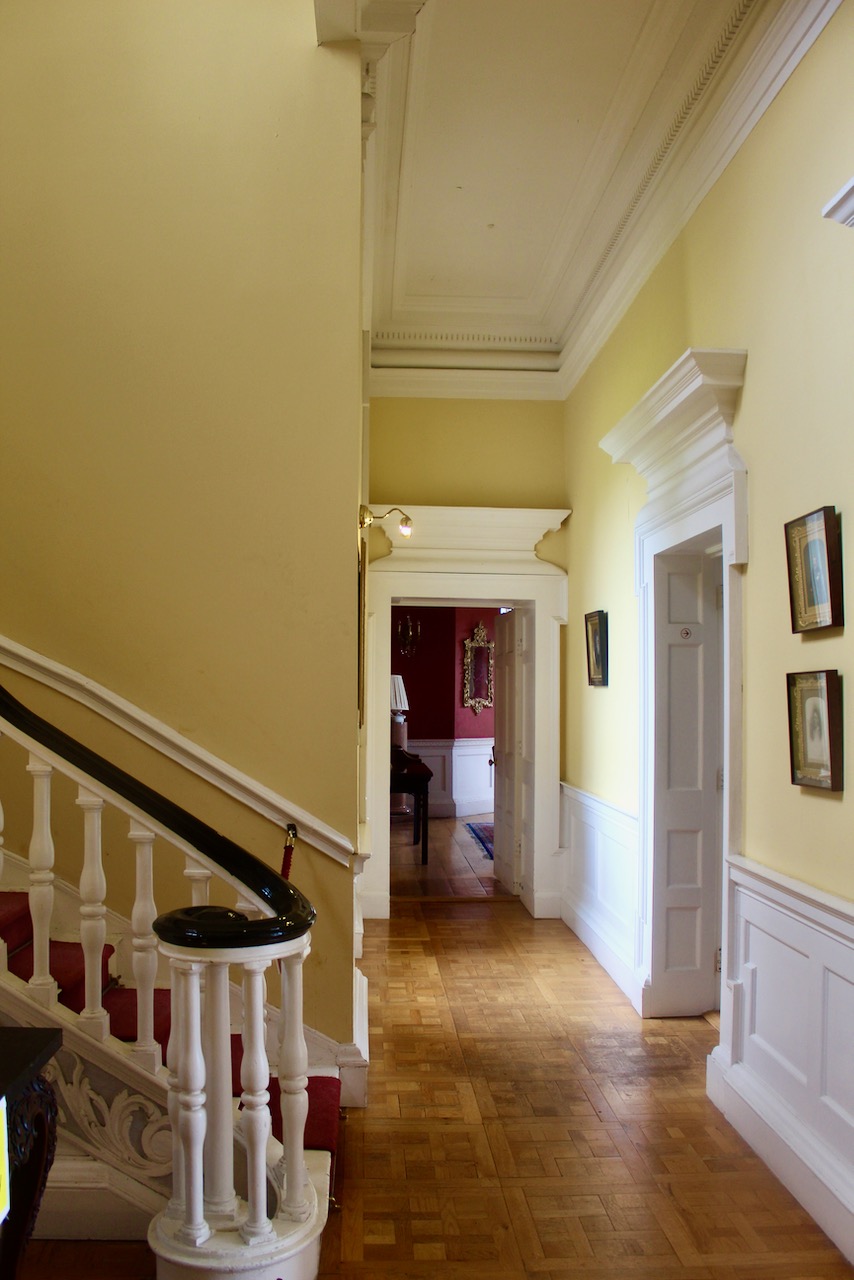
Hallway, Belvedere, County Westmeath. Photograph © Jennifer Winder-Baggot, www.irishhistorichouses.com
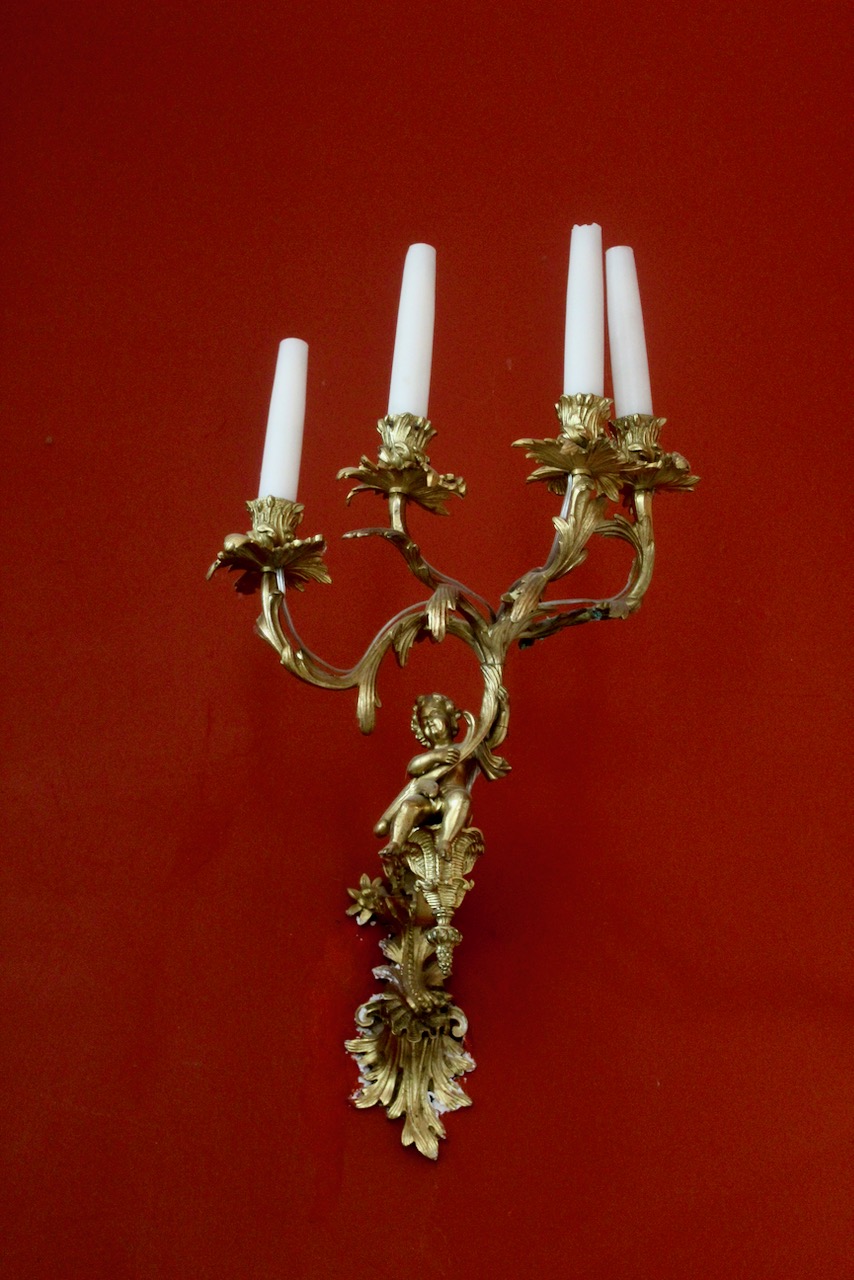
Belvedere, County Westmeath. Photograph © Jennifer Winder-Baggot, www.irishhistorichouses.com
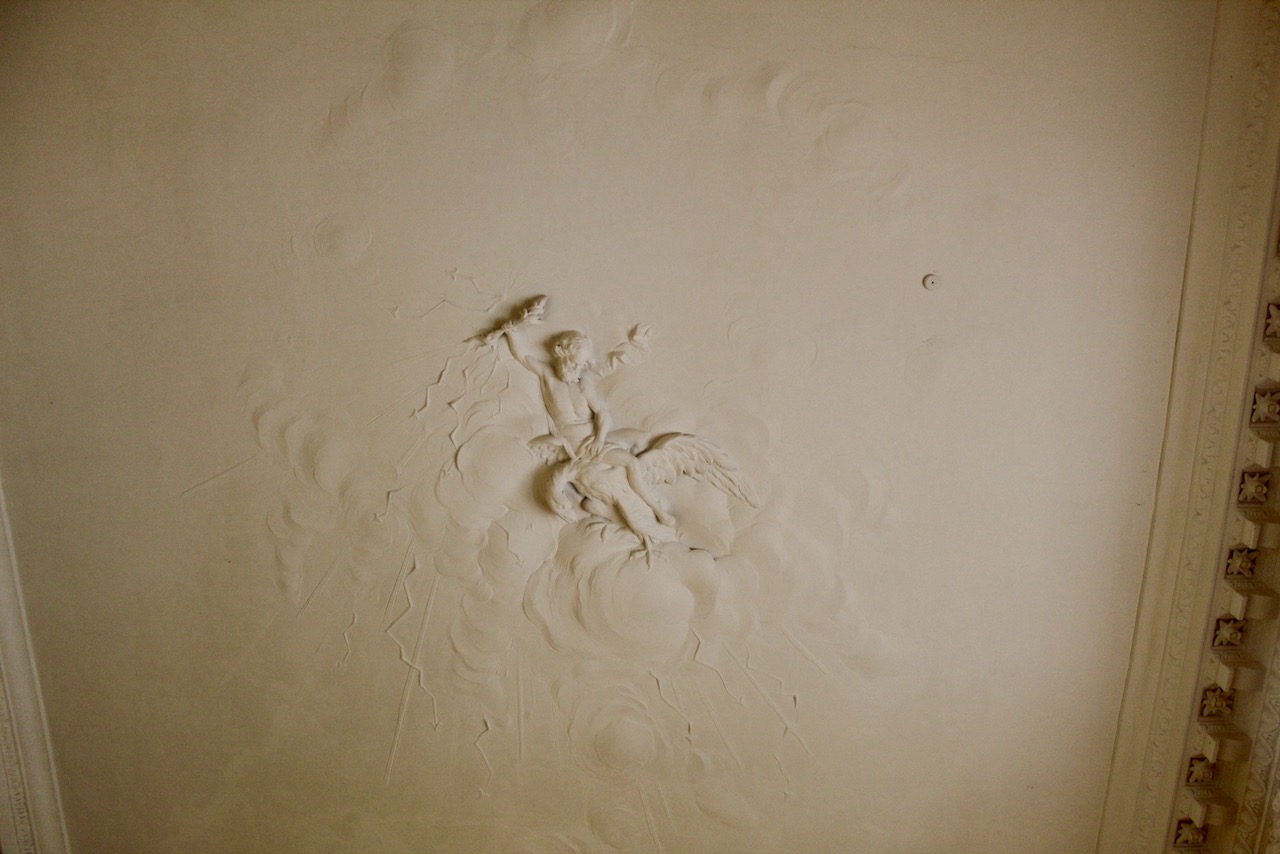
Belvedere, County Westmeath, August 2021: Juniper astride an eagle. Photograph © Jennifer Winder-Baggot, www.irishhistorichouses.com
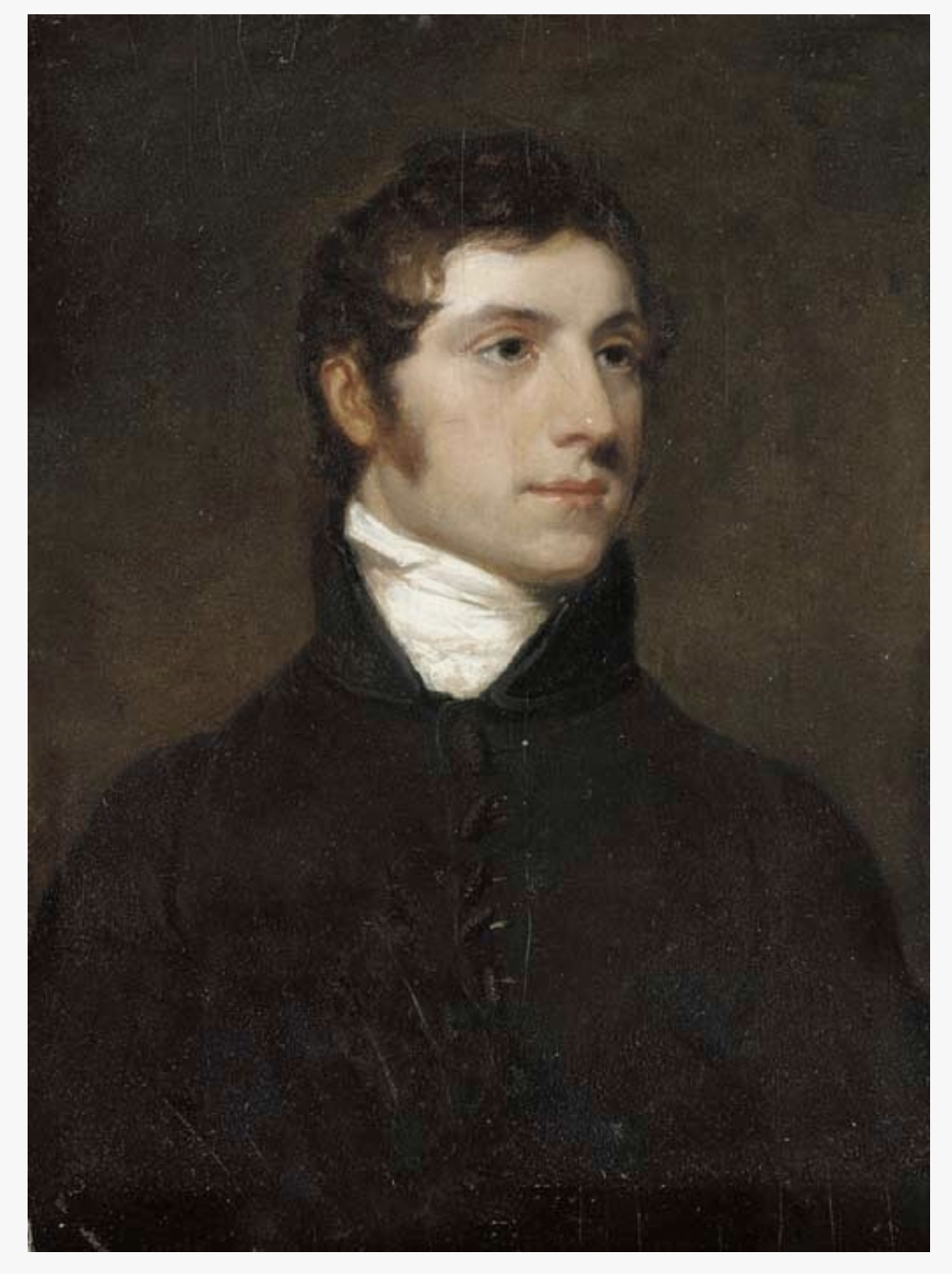
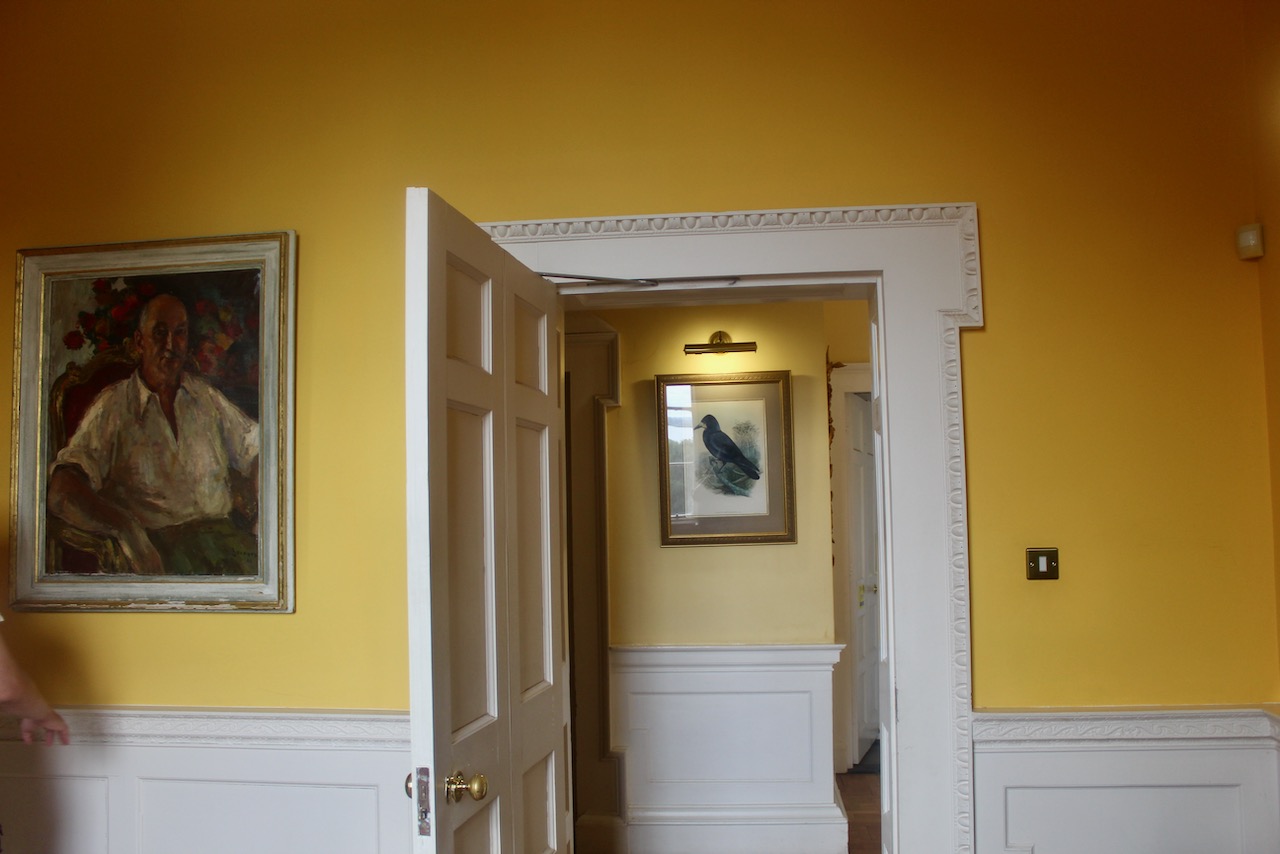
The portrait is of Charles Howard-Bury, who was one of the owners of Belvedere. Photograph © Jennifer Winder-Baggot, www.irishhistorichouses.com
Belvedere, County Westmeath. Photograph © Jennifer Winder-Baggot, www.irishhistorichouses.com
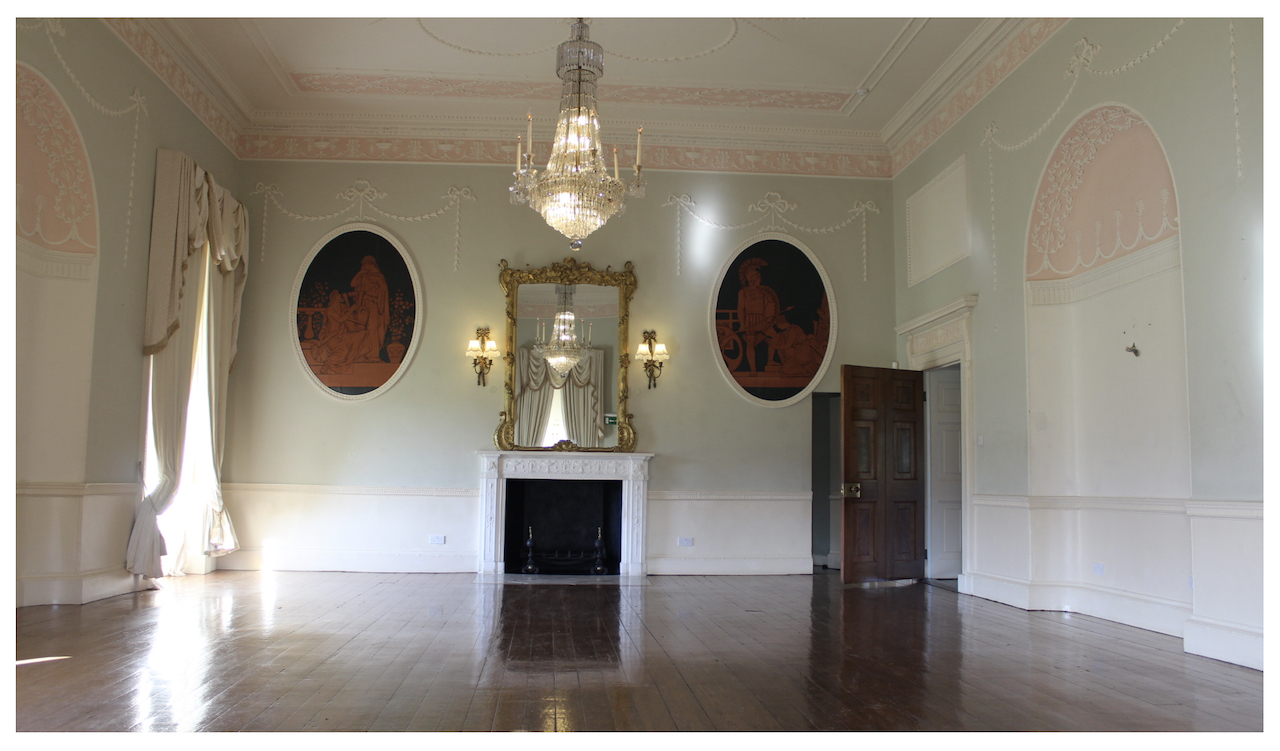
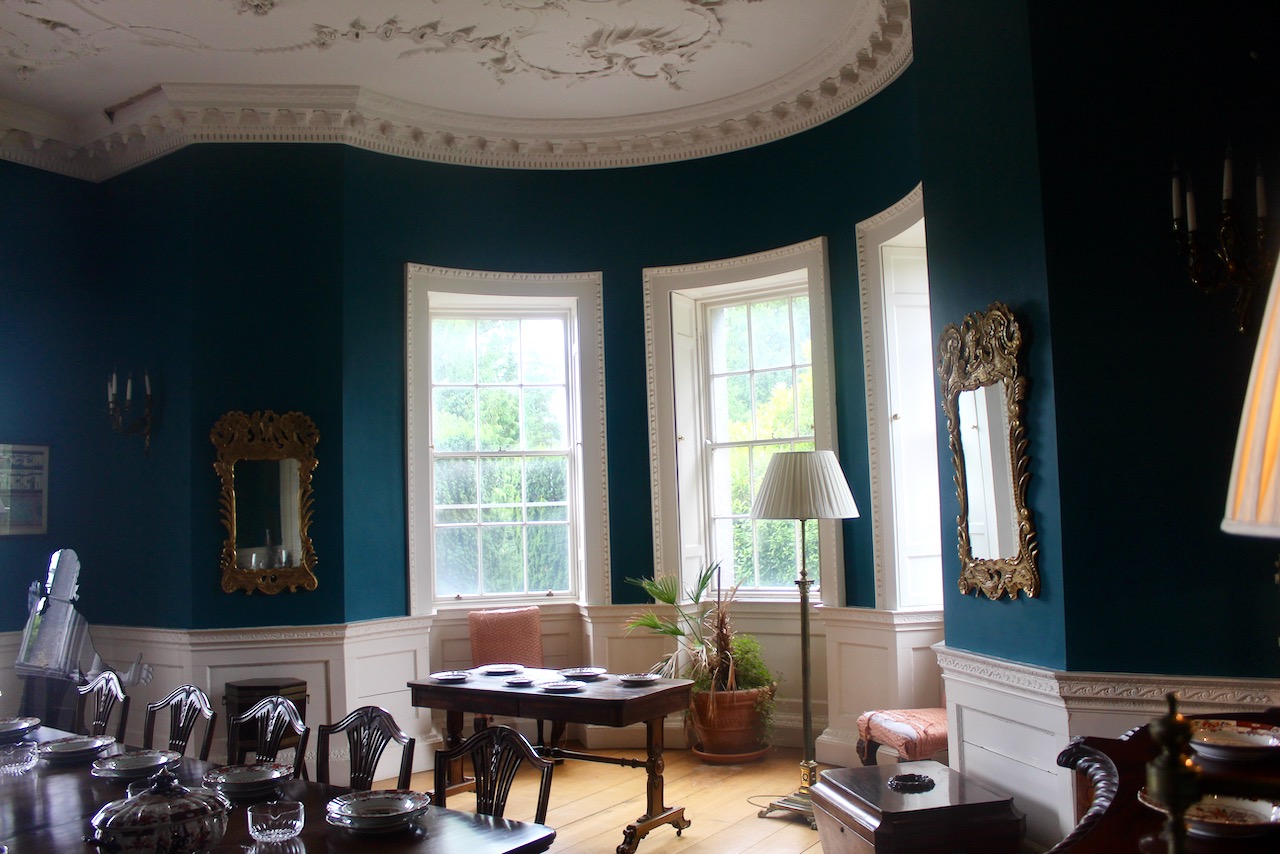
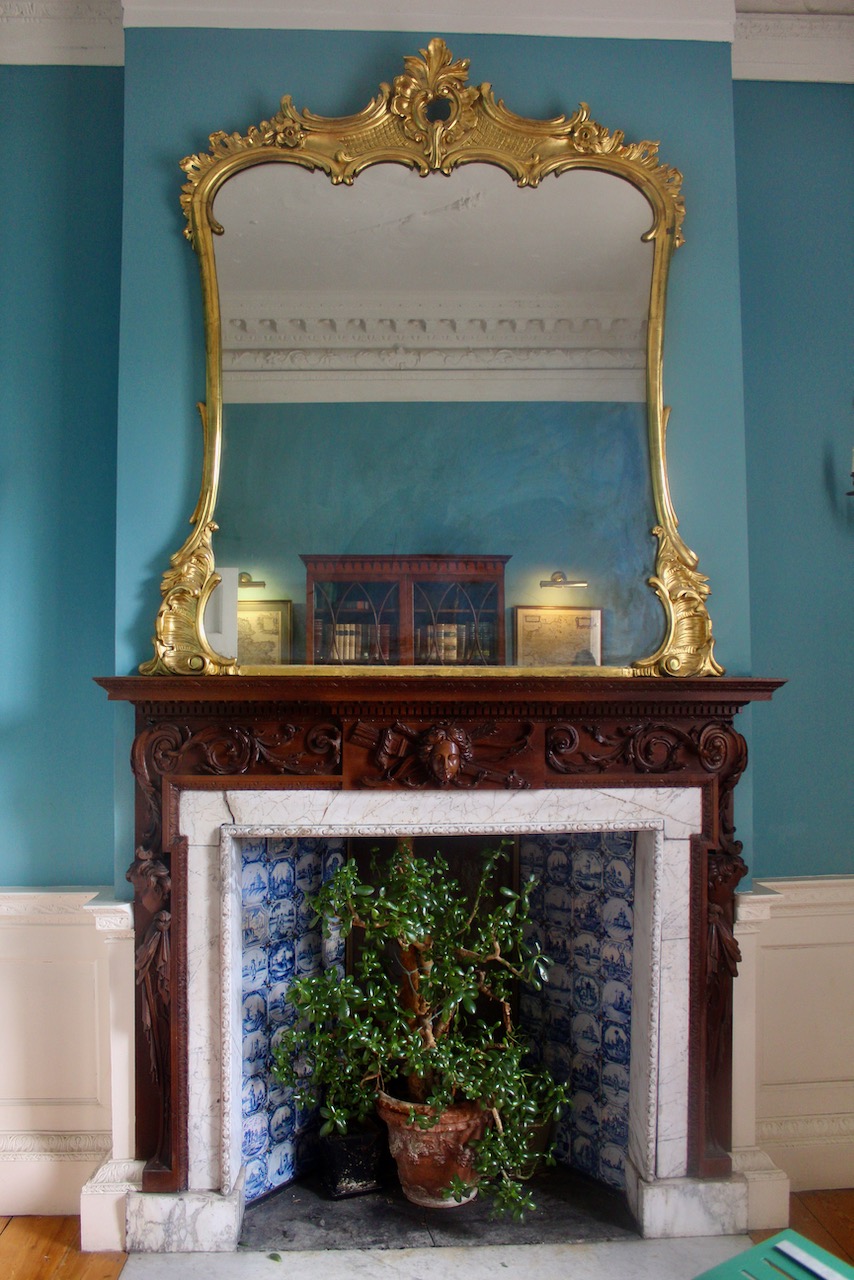
The Dining Room, Belvedere, County Westmeath. The Dining Room occupies one end bow of the house, and has a Venetian window overlooking Lough Ennell. Photograph © Jennifer Winder-Baggot, www.irishhistorichouses.com

In Belvedere, dining was an opportunity to impress guests not only by the room but by the sumptuous meals, presented by immaculately dressed servants. The rococo ceiling of puffing cherubs and fruits and foliage is attributed to Barthelemji Cramillion, a French stuccodore.

The Dining Room, Belvedere, County Westmeath. Photograph © Jennifer Winder-Baggot, www.irishhistorichouses.com
The Dining Room, Belvedere, County Westmeath: The rococo ceiling of puffing cherubs and fruits and foliage is attributed to Barthelemji Cramillion, a French stuccodore. Photograph © Jennifer Winder-Baggot, www.irishhistorichouses.com
The Dining Room, Belvedere, County Westmeath. Photograph © Jennifer Winder-Baggot, www.irishhistorichouses.com

Bence-Jones continues: “The staircase, wood and partly curving, is in proportion to the back of the house.

Belvedere, County Westmeath. Photograph © Jennifer Winder-Baggot, www.irishhistorichouses.com
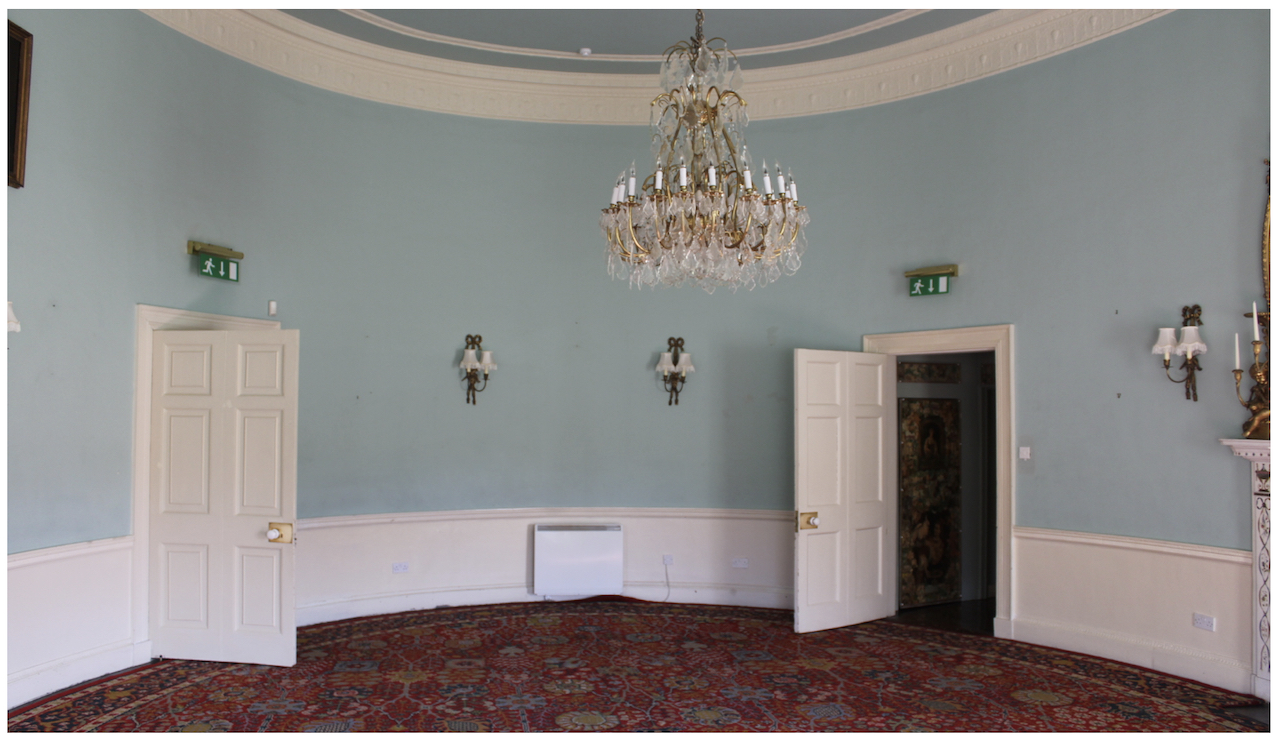
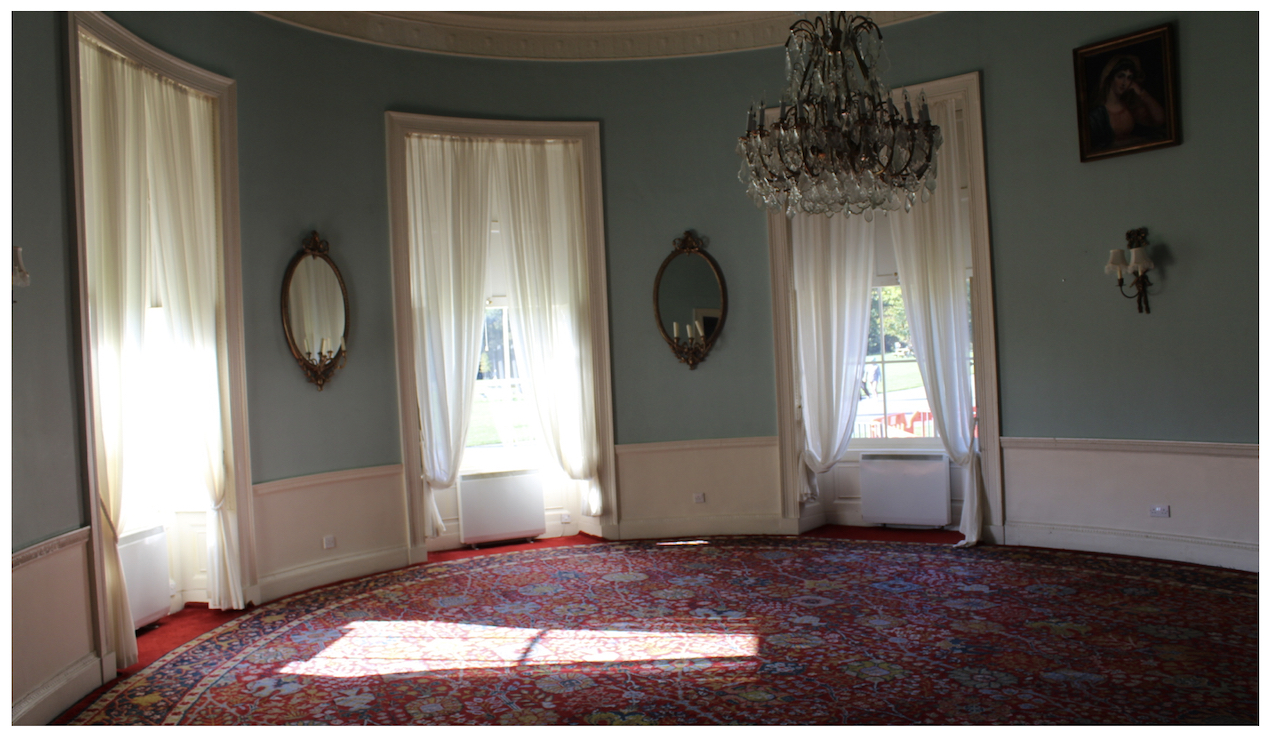
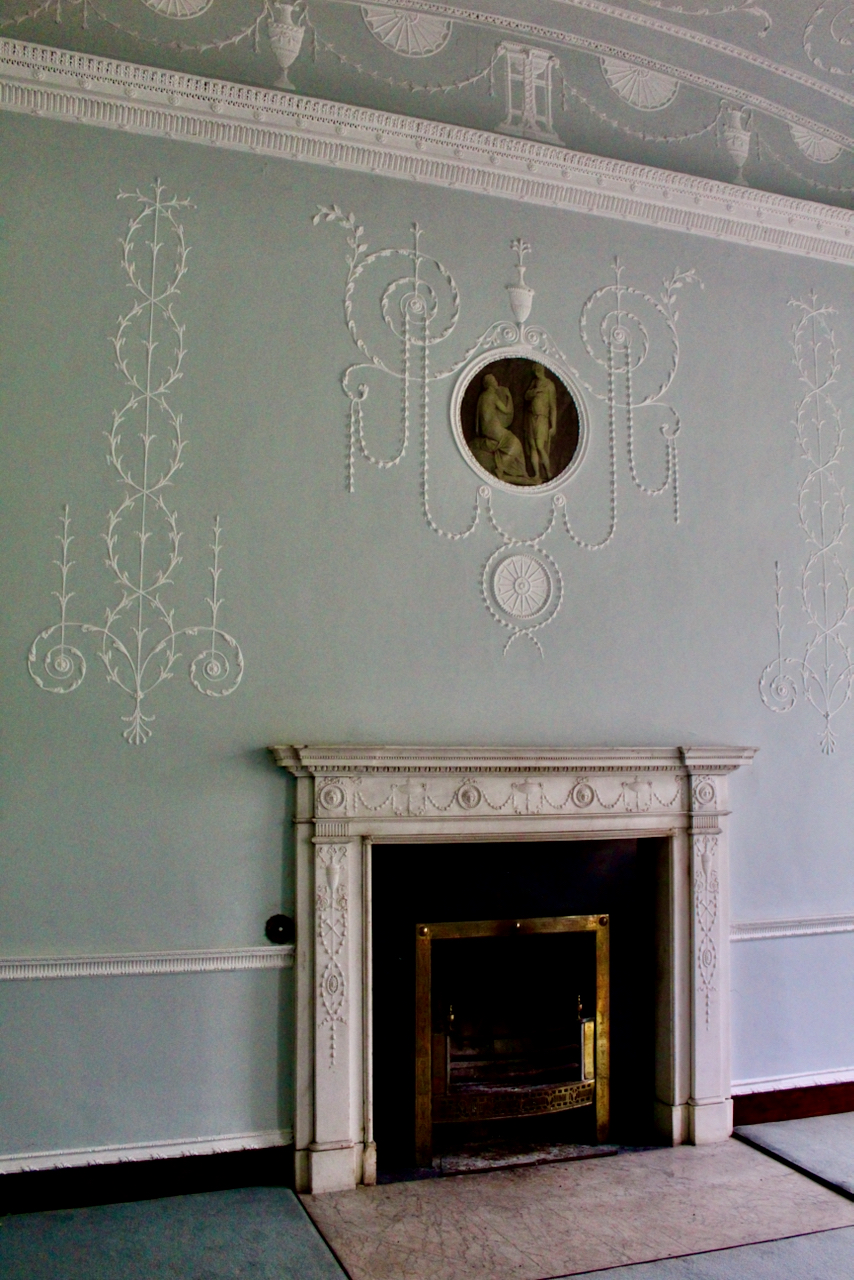
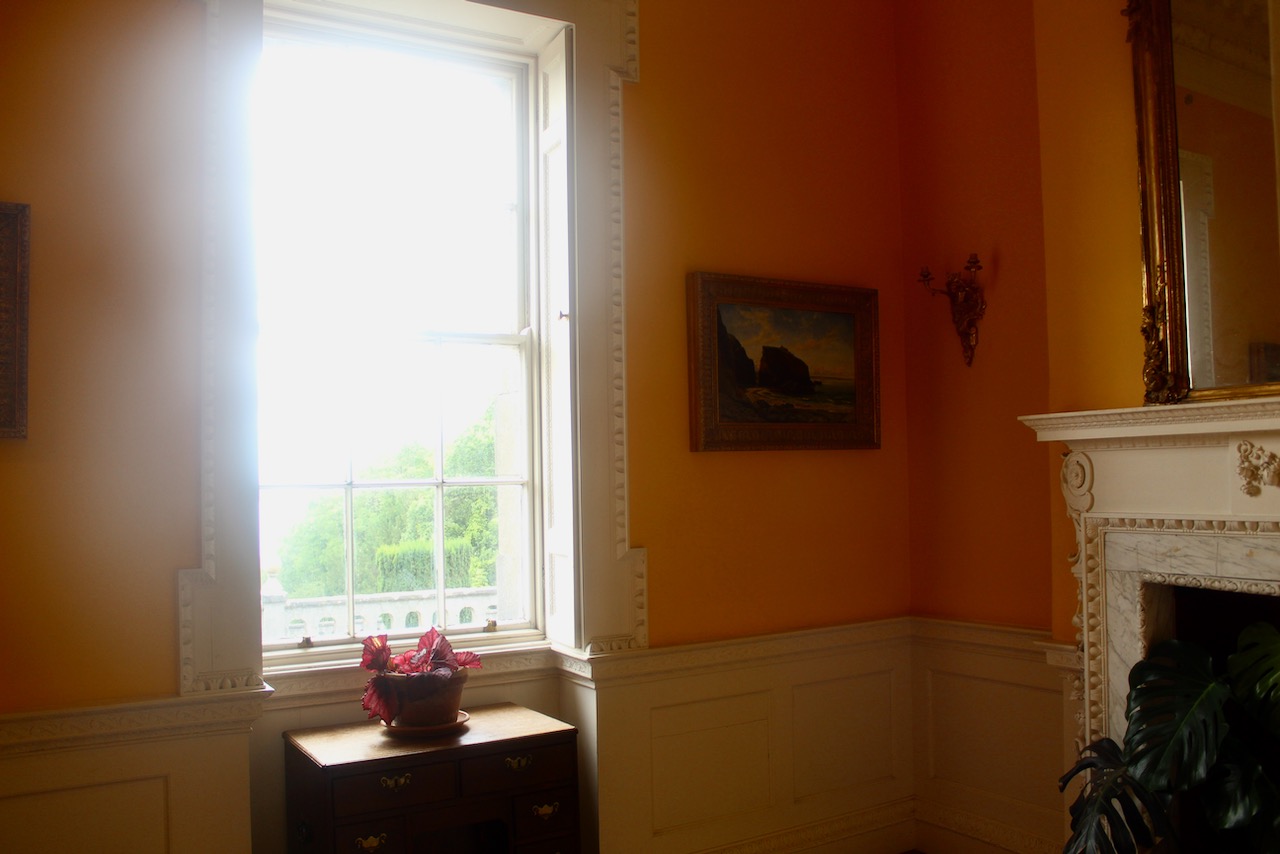
Drawing Room, Belvedere, County Westmeath. The drawing room occupies one of the bows of the house, and has a Venetian window overlooking the terrace and Lough Ennell. Photograph © Jennifer Winder-Baggot, www.irishhistorichouses.com

Information boards tells us that the Drawing Room was the place for afternoon tea, after-dinner drinks, music and conversation. Belvedere’s last owners, Charles Howard-Bury and Rex Beaumont would have passed many happy hours relaxing and reminiscing about their wartime experiences and travels across the world, as well as planning trips to Tunisia and Jamaica.

Belvedere, County Westmeath. Photograph © Jennifer Winder-Baggot, www.irishhistorichouses.com
Ceiling of the Drawing Room, Belvedere, County Westmeath. Photograph © Jennifer Winder-Baggot, www.irishhistorichouses.com
Belvedere, County Westmeath. Photograph © Jennifer Winder-Baggot, www.irishhistorichouses.com
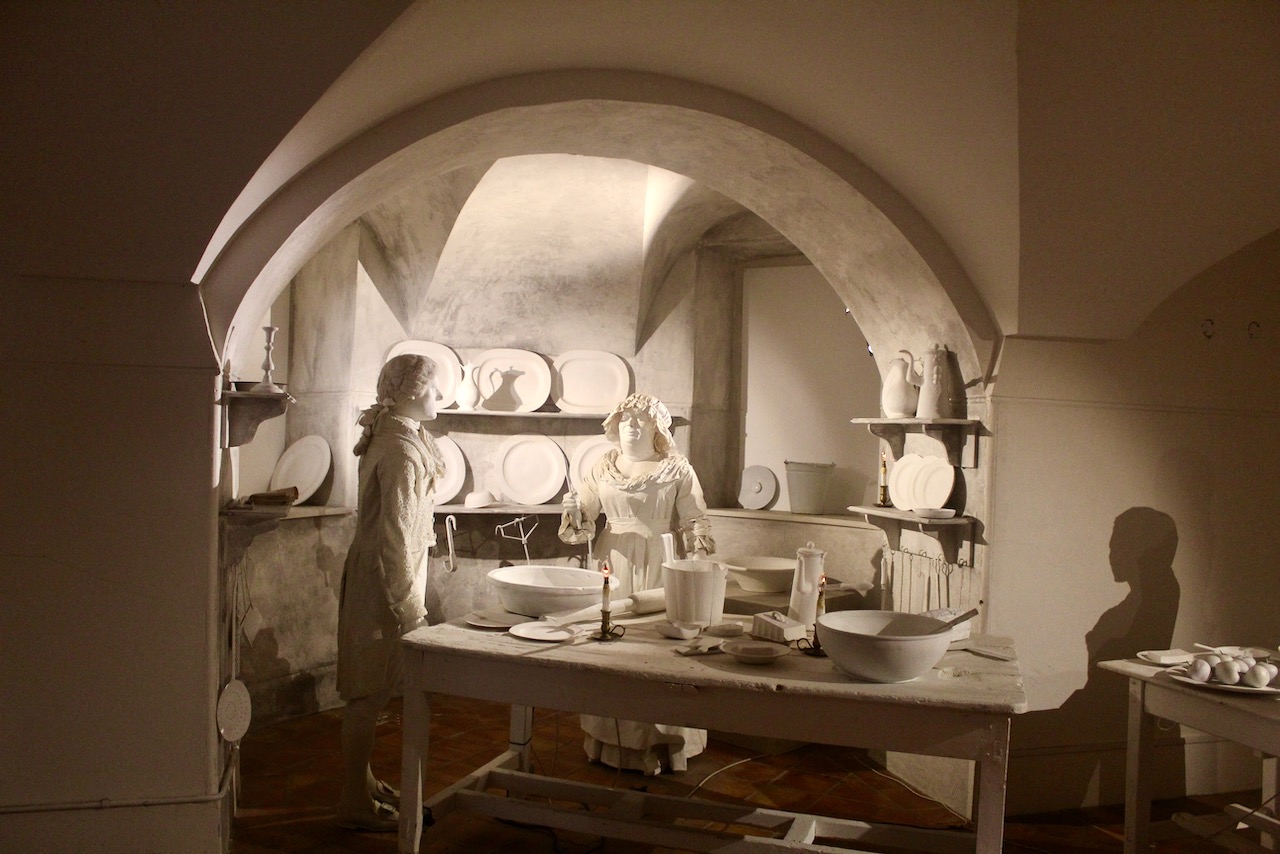
The kitchen is in the vaulted basement of Belvedere and has an interesting ghostly display of servants. Photograph © Jennifer Winder-Baggot, www.irishhistorichouses.com
Photograph © Jennifer Winder-Baggot, www.irishhistorichouses.com
Belvedere, County Westmeath.
Belvedere, County Westmeath. Photograph © Jennifer Winder-Baggot, www.irishhistorichouses.com
Belvedere garden folly, the Gothic Arch, built around 1760, designed by Thomas Wright as a ‘mock entrance’ to the estate. Courtesy of Westmeath County Council (www.visitwestmeath.ie), photograph by Clare Keogh, 2019. Photograph © Jennifer Winder-Baggot, www.irishhistorichouses.com
The Octagonal Gazebo, Belvedere. It was once panelled with wood on the walls, floor and ceiling and was used for summer picnics, where guests would be waited on by servants. Photograph © Jennifer Winder-Baggot, www.irishhistorichouses.com

The Octagonal Gazebo was built around 1765 by astronomer, mathematician and architect Thomas Wright.

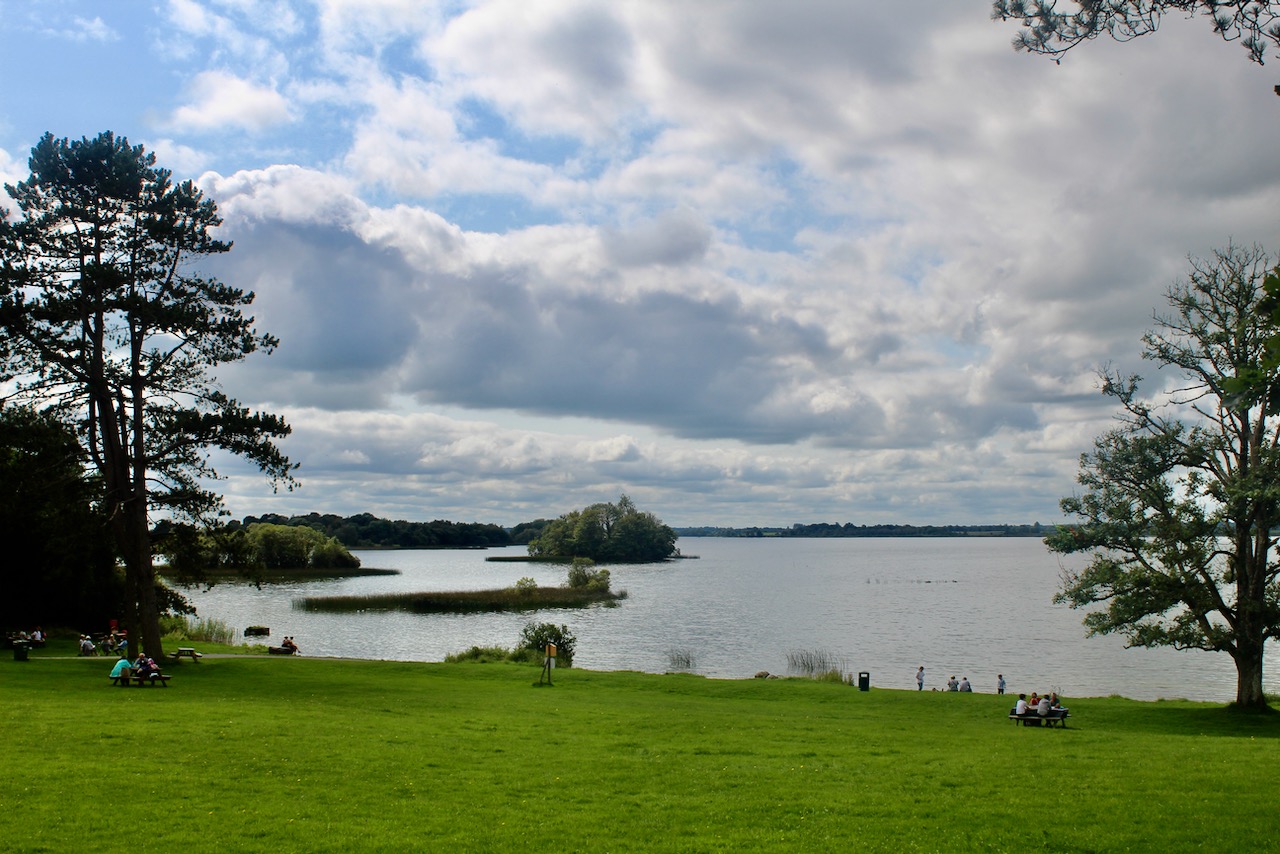
Lough Ennell. Photograph © Jennifer Winder-Baggot, www.irishhistorichouses.com

Text © Jennifer Winder-Baggot, www.irishhistorichouses.com

Portraits L

L

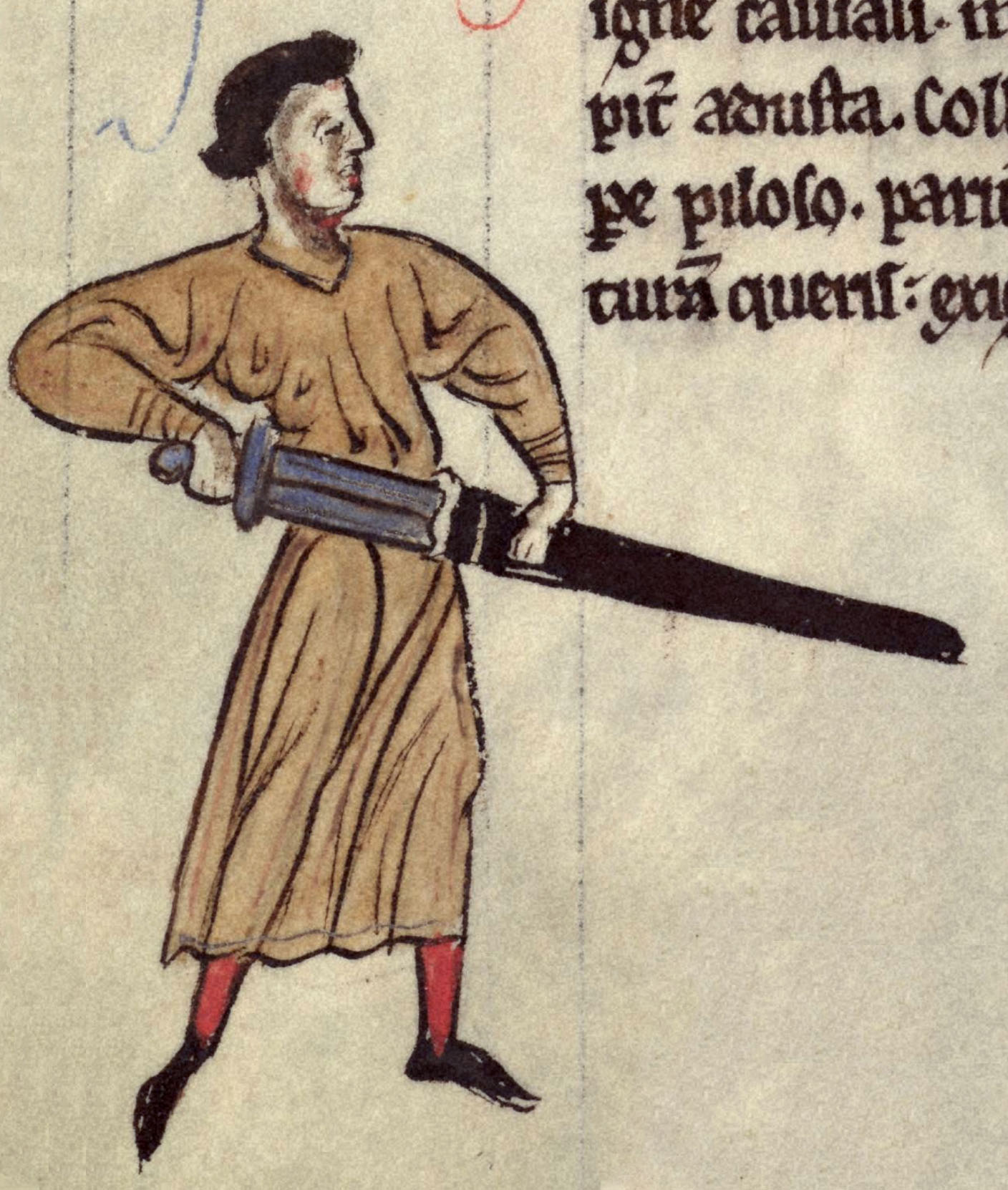
Hugh de Lacy (d. 1186) 4th Baron Lacy portrait by Gerald of Wales – Expugnatio Hibernica (1189) https///www.isos.dias.ie/NLI/NLI_MS_700
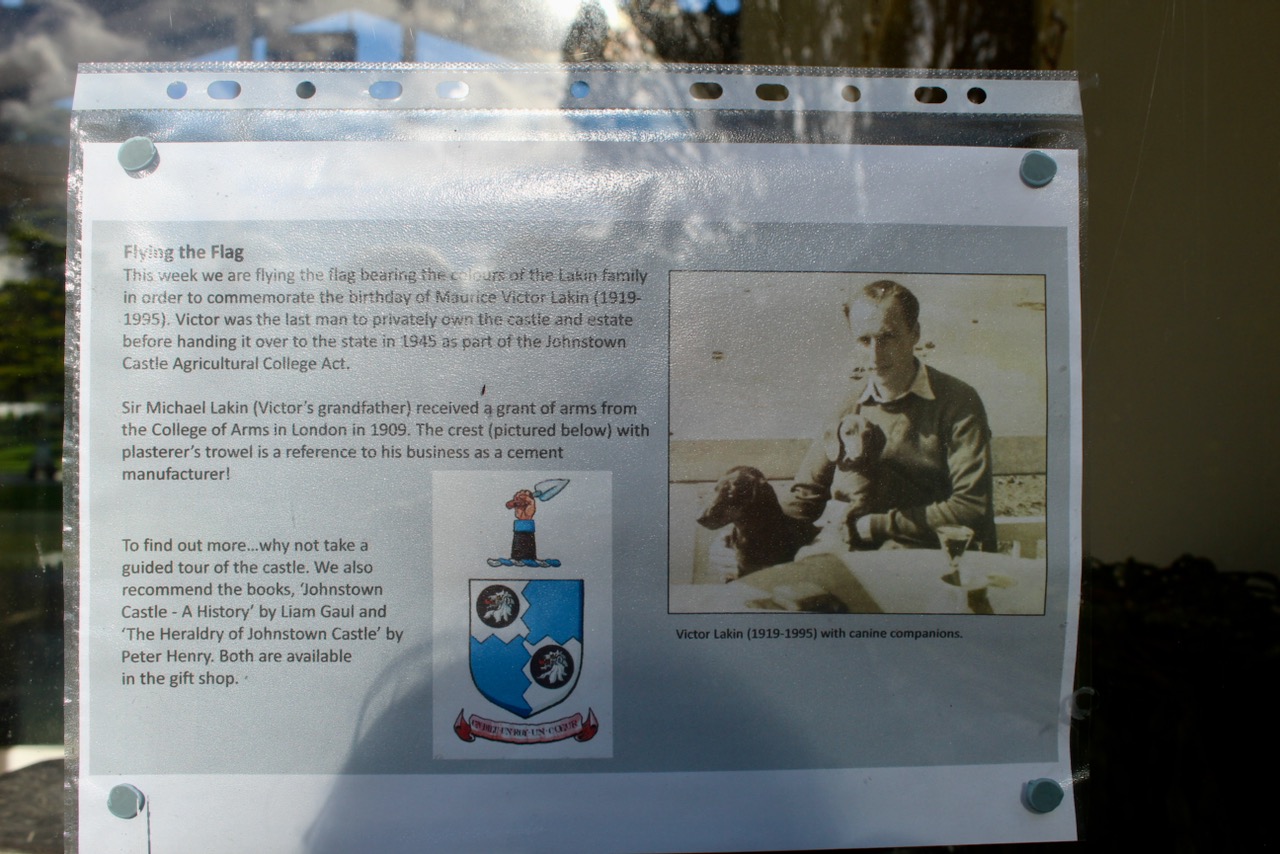
Maurice Victor Lakin (1919-1995), last man to privately own Johnstown Castle, County Wexford, before handing it over to the state in 1945.
Frances Thomasine, Countess Talbot (née Lambart), (1782-1819), Wife of the 3rd Earl Talbot Date 1822 Engraver John Samuel Agar, British, c.1773-1858 After Charles Robertson, Irish, 1759-1821, courtesy of National Gallery of Ireland.
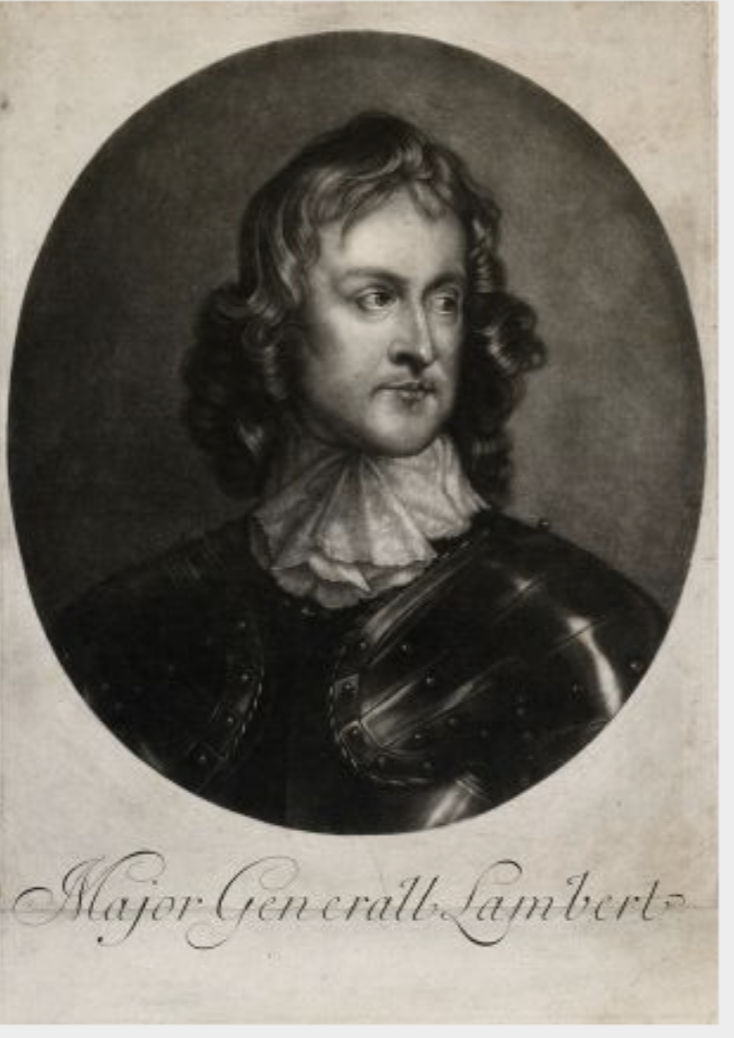
Major-General John Lambert, (1619-1683), Parliamentarian, Deputy Lord Lieutenant of Ireland, courtesy of National Gallery of Ireland.
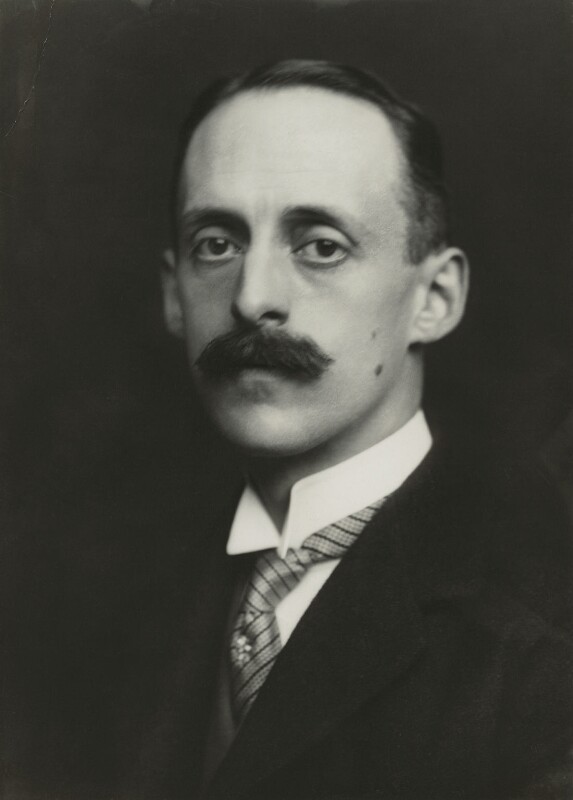
Hugh Percy Lane (1875-1915) by George Charles Beresford, 1909, NPG x6528.
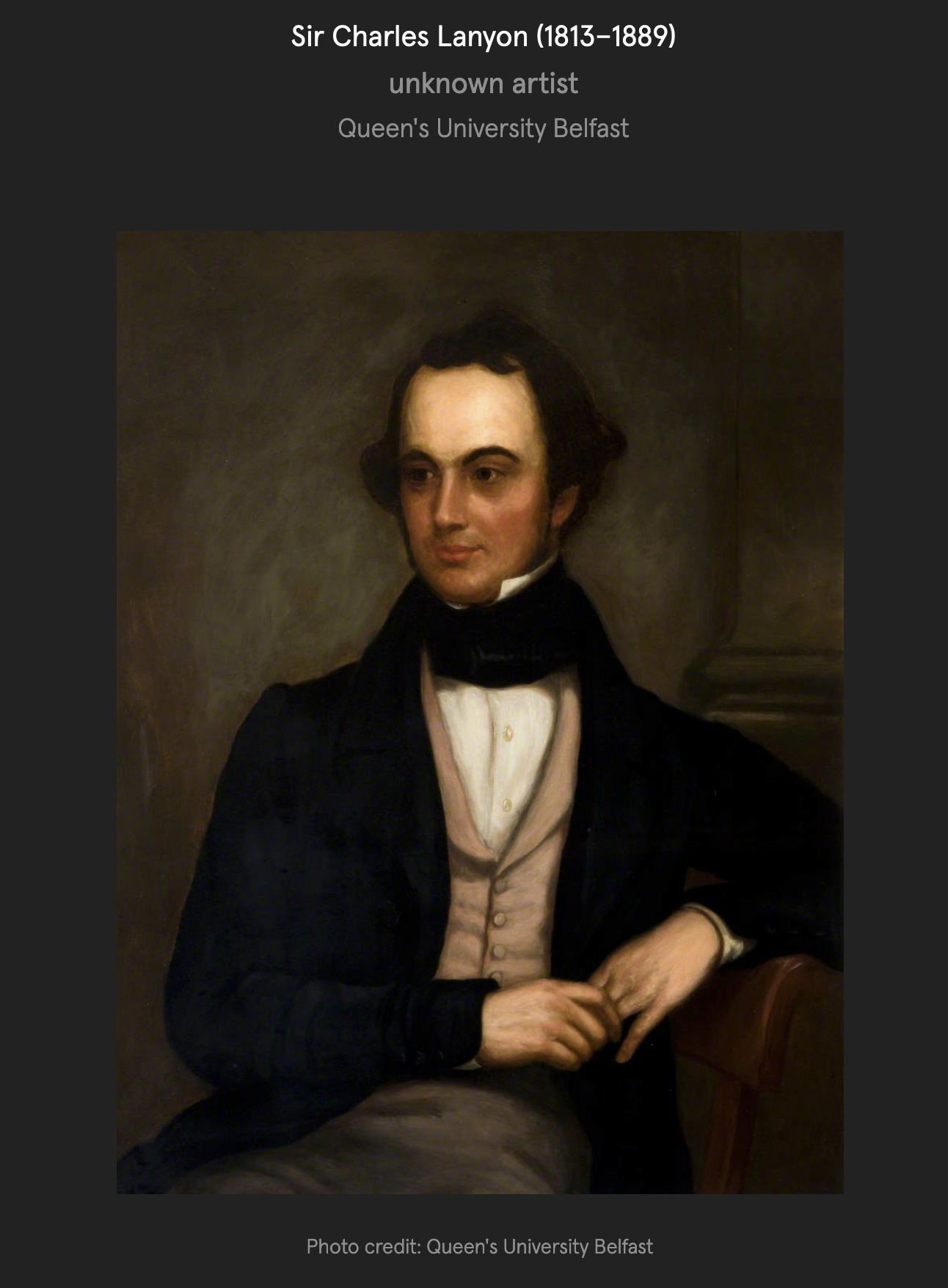
Charles Lanyon (1813-1889) courtesy of Queen’s University Belfast.
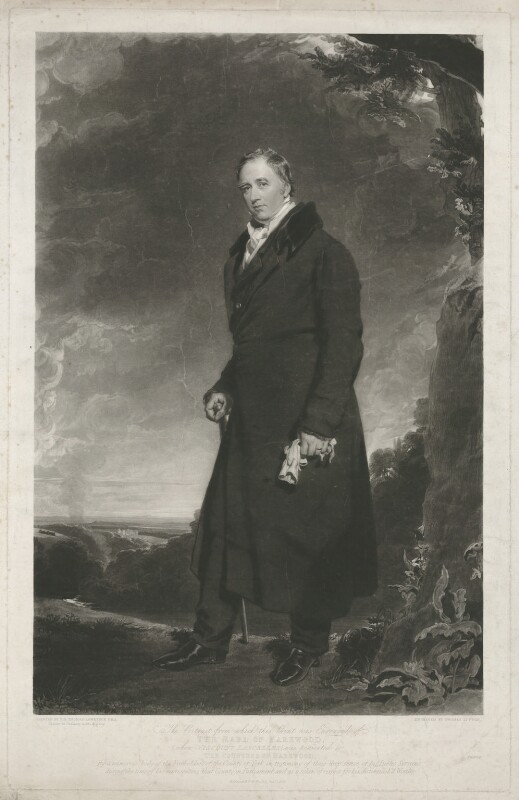
Henry Lascelles (1767-1841) 2nd Earl of Harewood by Thomas Goff Lupton after Sir Thomas Lawrence 1823, NPG D35437.
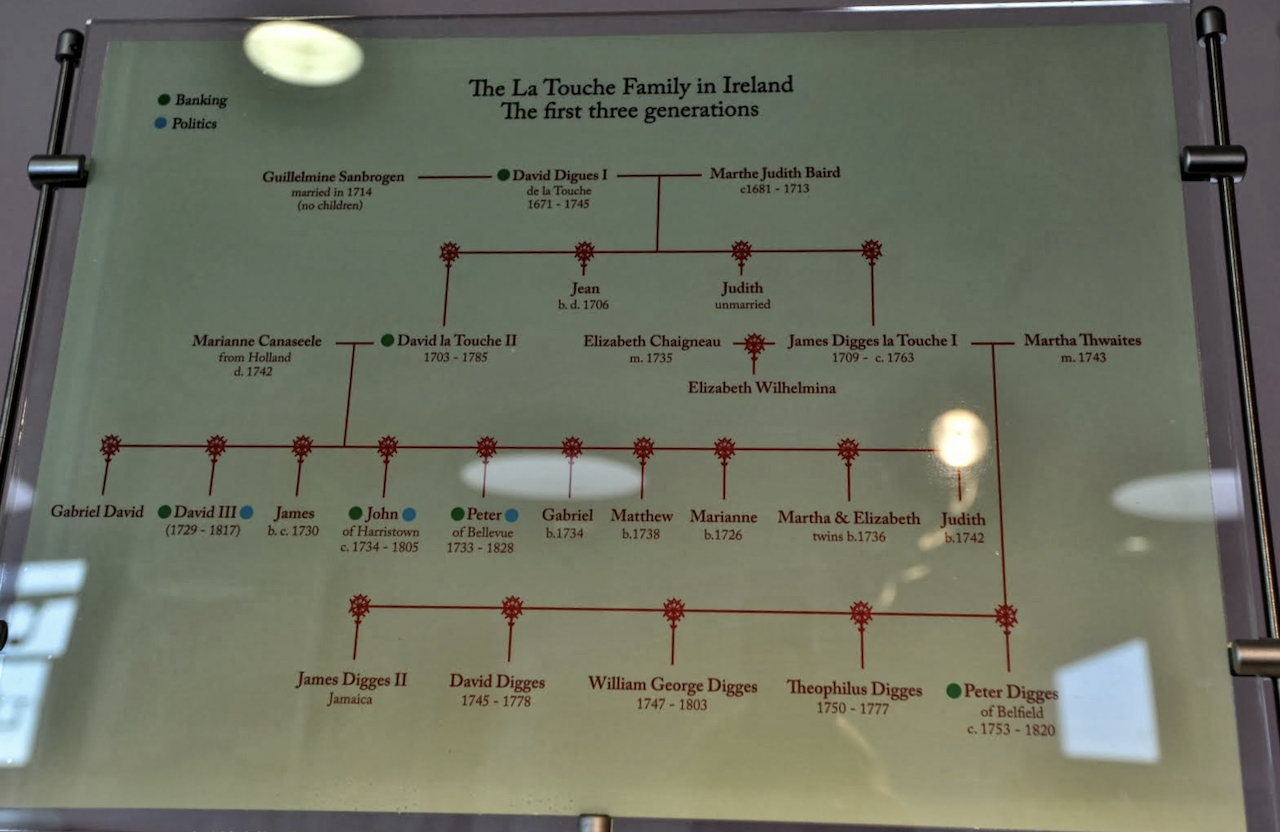
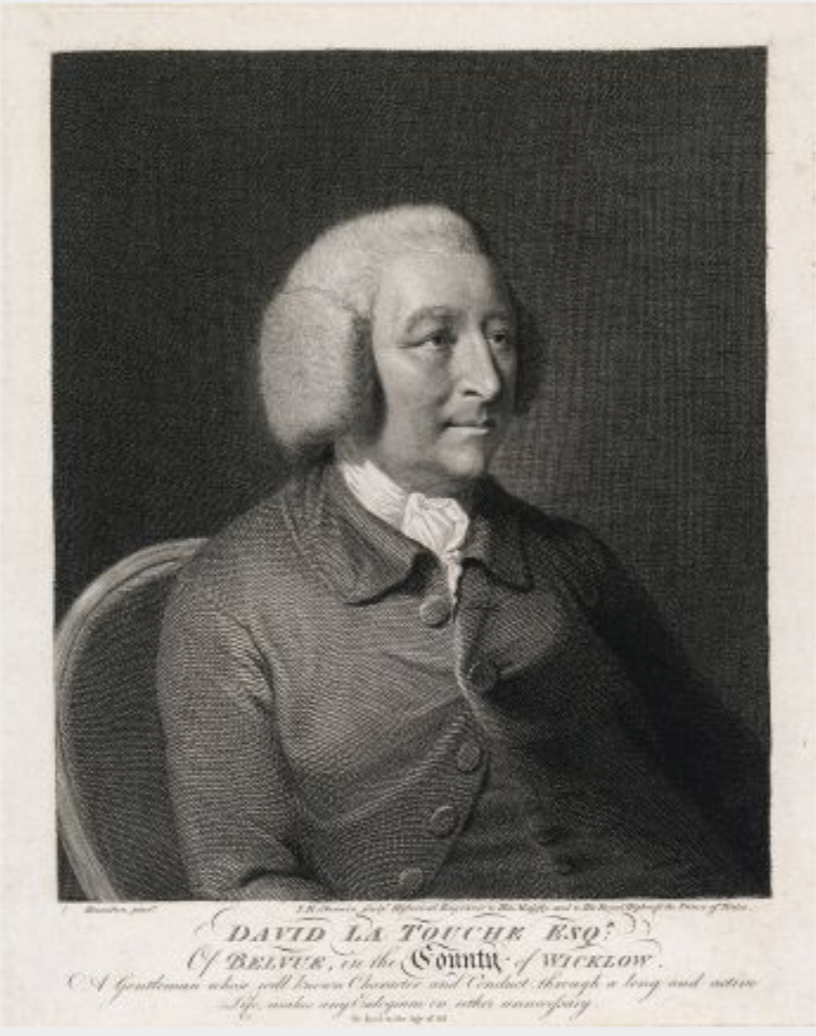
David Digges La Touche (1703-1785), of Bellevue, County Wicklow, courtesy of National Gallery of Ireland.
William Digges La Touche (d.1803) of no. 4, St Stephen’s Green courtesy of Adam’s 1st April 2009, Irish School, late 18th Century. He was a brother of David Digges La Touche (1703-1785), of Bellevue, County Wicklow.

David Digges La Touche (1703-1785) had sons David (1729-1817) and John (d. 1805)

David La Touche (1729-1817), of Marlay, 1800 by Hugh Douglas Hamilton, courtesy of National Gallery of Ireland.
David Digges La Touche (1729-1817) of Marlay, County Dublin, by James Fittler, photograph courtesy of National Gallery of Ireland.
John La Touche (1732-1805) by Angelica Kauffmann courtesy of MutualArt.com

First, let us look at his son David’s family, and then at John’s. David La Touche (1729-1817) and his wife, née Marlay, had many children:

Harriet married Nicholas Colthurst, 3rd Bt of Ardrum, County Cork;

Anne (d. 1798) married George Charles Jefferyes (d. 1841) of Blarney Castle, County Cork;

Emily married Col. George Vesey of Lucan House, Dublin;

Maria (d. 1829) married Maurice Fitzgerald, 18th Knight of Kerry;

Elizabeth (d. 1788) married Robert Butler, 3rd Earl of Lanesborough;

Elizabeth, Countess of Lanesborough (née La Touche), (1764-1788), wife of Robert Henry Butler 3rd Earl of Lanesborough. Date 1791 Engraver Francesco Bartolozzi, Italian, 1725-1815 After Horace Hone, English, 1756-1825, photograph courtesy of National Gallery of Ireland.

David married Cecilia Leeson, daughter of Joseph Leeson 1st Earl of Milltown;

Cecilia La Touche (d. 1848) née Leeson (about 1769-1848), by Hugh Douglas Hamilton. She married David La Touche (1769-1816). She was the daughter of Joseph Leeson (1701-1783), 1st Earl of Milltown and Elizabeth French. Photograph courtesy of English Heritage, Kenwood.

There was a son John David La Touche born 1772 who had a son: Peter La Touche (1777-1830) married Charlotte daughter of Cornwallis Maude, 1st Viscount Hawarden.

Peter La Touche of Bellevue (1733-1828) Date 1775 by Robert Hunter, Irish, 1715/1720-c.1803, photograph courtesy of National Gallery of Ireland.
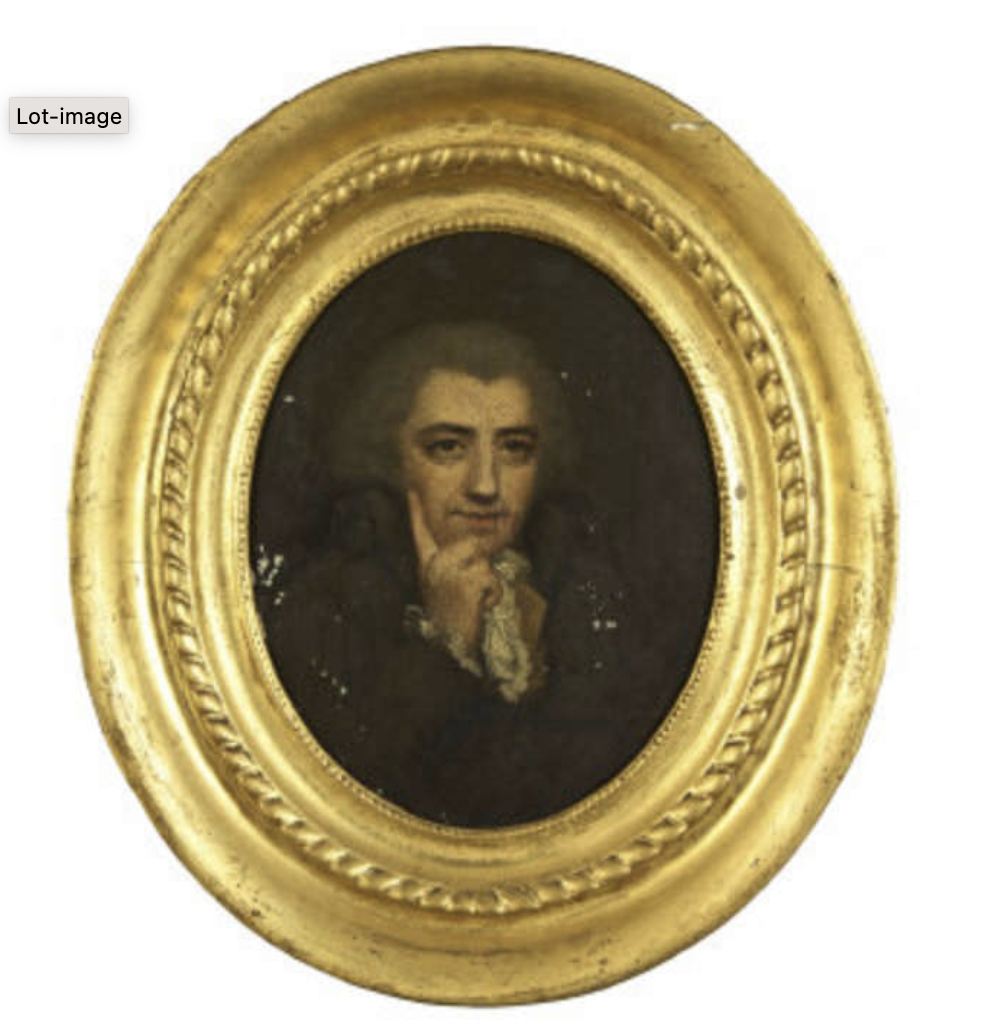
Portrait Of A Young Gentleman, Believed To Be Peter Digges La Touche courtesy of Adam’s 1st April 2009, Irish School, late 18th Century.
Mrs La Touche of Bellevue by Stephen Catterson Smith 1806-1872, courtesy of National Gallery of Ireland NGI 628.

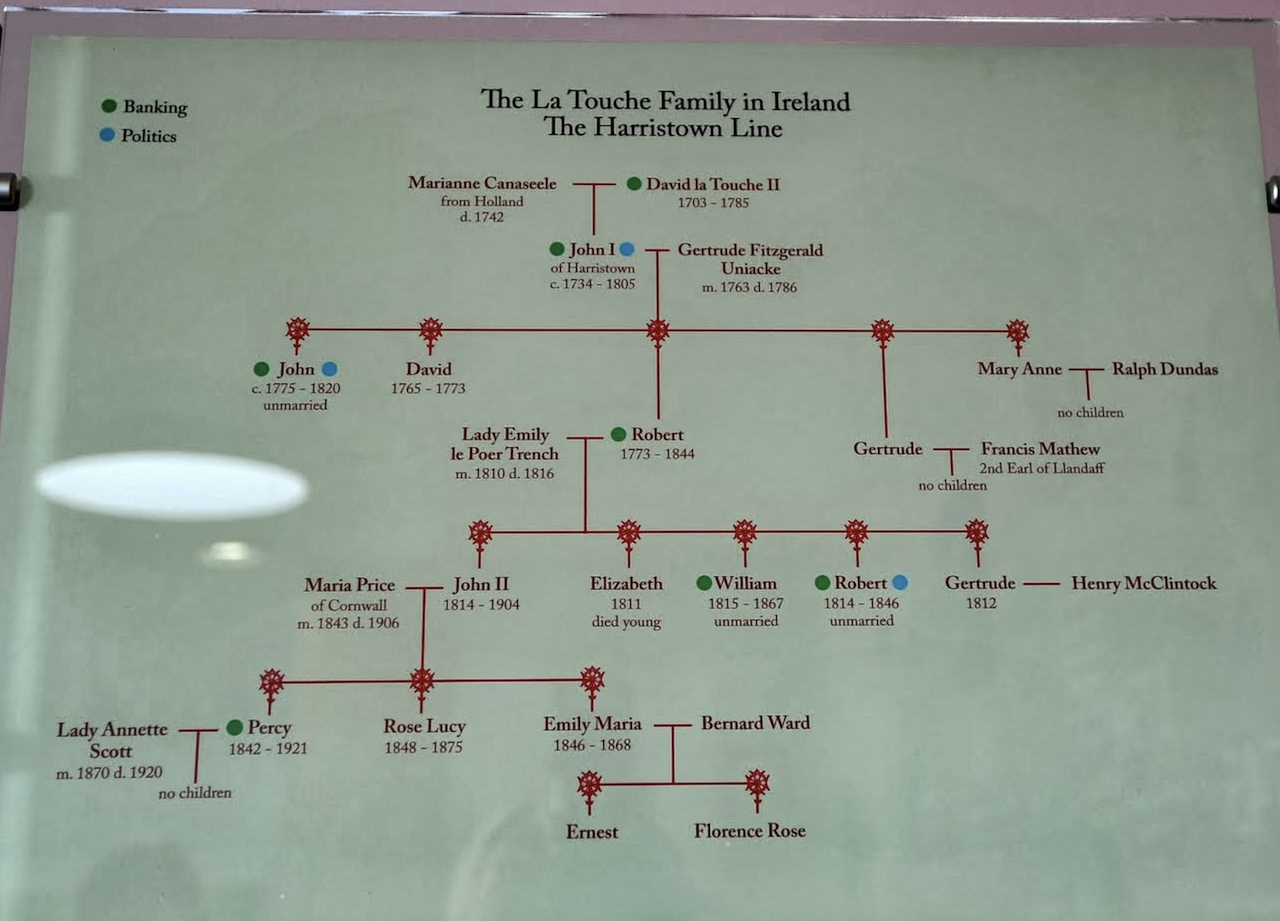
Now let’s go back and look at the family of John La Touche (1732-1805). He had a son Robert La Touche (d. 1844). He lived in Harristown in County Kildare. He married Emily Trench (1790-1816), daughter of William Power Keating Trench, 1st Earl of Clancarty.

They had a daughter Gertrude (1812-1864) who married Henry Stanley McClintock. Robert and Emily née Trench had a son John (1814-1904) who married Maria Price (1824-1906).

Maria La Touche née Price (1824-1906) of Harristown, she married John La Touche (1814-1904).

John (1814-1904) and Maria née Price (1824-1906) had a daughter Emily Maria (1846-1868) who married Bernard Matthew Ward, son of Edward Southwell Ward, 3rd Viscount Bangor.

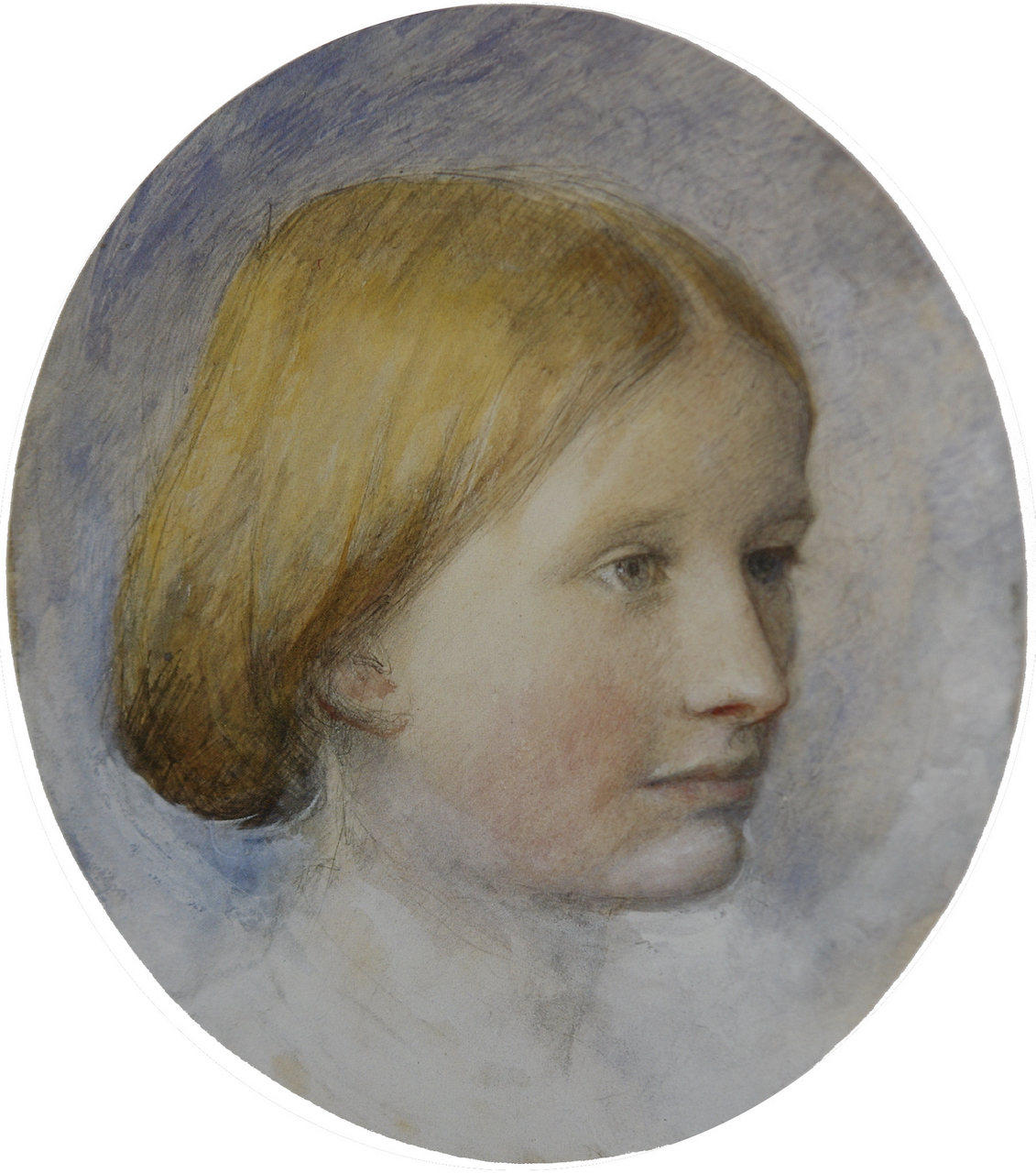
Rose La Touche, 1861, by John Ruskin From “Ruskin, Turner and the pre-Raphaelites”, by Robert Hewison, 2000.
Gentleman believed to be Robert La Touche by Hugh Douglas Hamilton courtesy Christies Irish Sale 2003. Robert died when a stand collapsed at the Curragh Races.
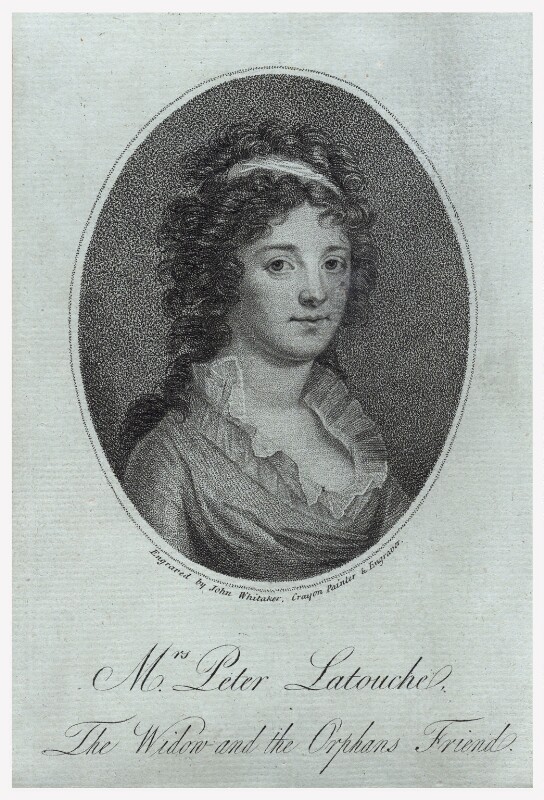
Elizabeth La Touche née Vicars (1756-1842), wife of Peter La Touche, by John Whitaker National Portrait Gallery of London D18415.
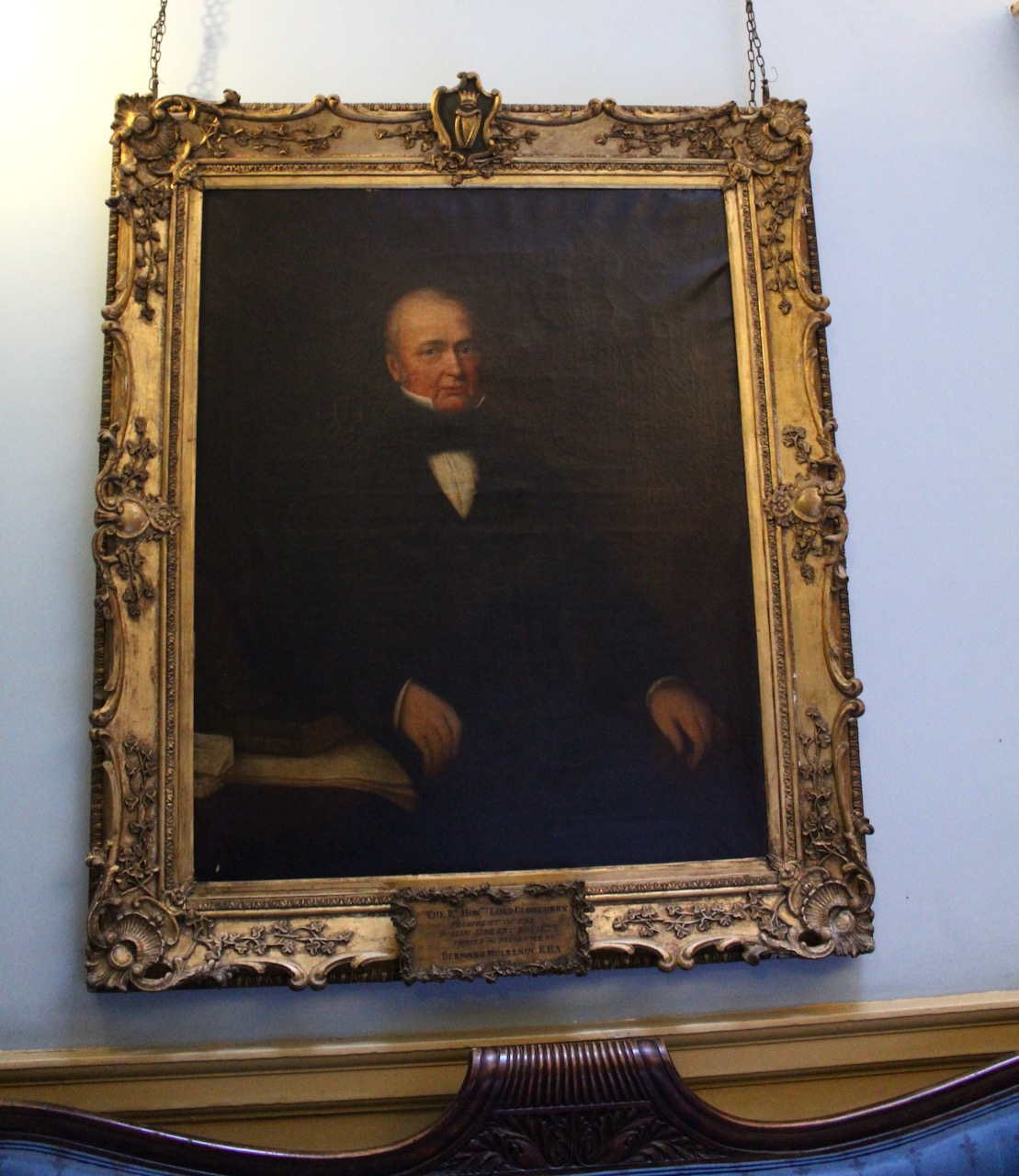
Valentine Lawless (1773-1853) 2nd Baron Cloncurry, member of the Society of United Irishmen and President of the Dublin Literary Society, he lived at the Lyons estate in County Kildare. He married first Elizabeth Gergiana Morgan, daughter of General Charles Morgan but divorced her and married secondly Emily Douglas, third daughter of Archibald Douglas and Mary Crosbie, and widow of the Hon. Joseph Leeson. Photograph © Jennifer Winder-Baggot, www.irishhistorichouses.com
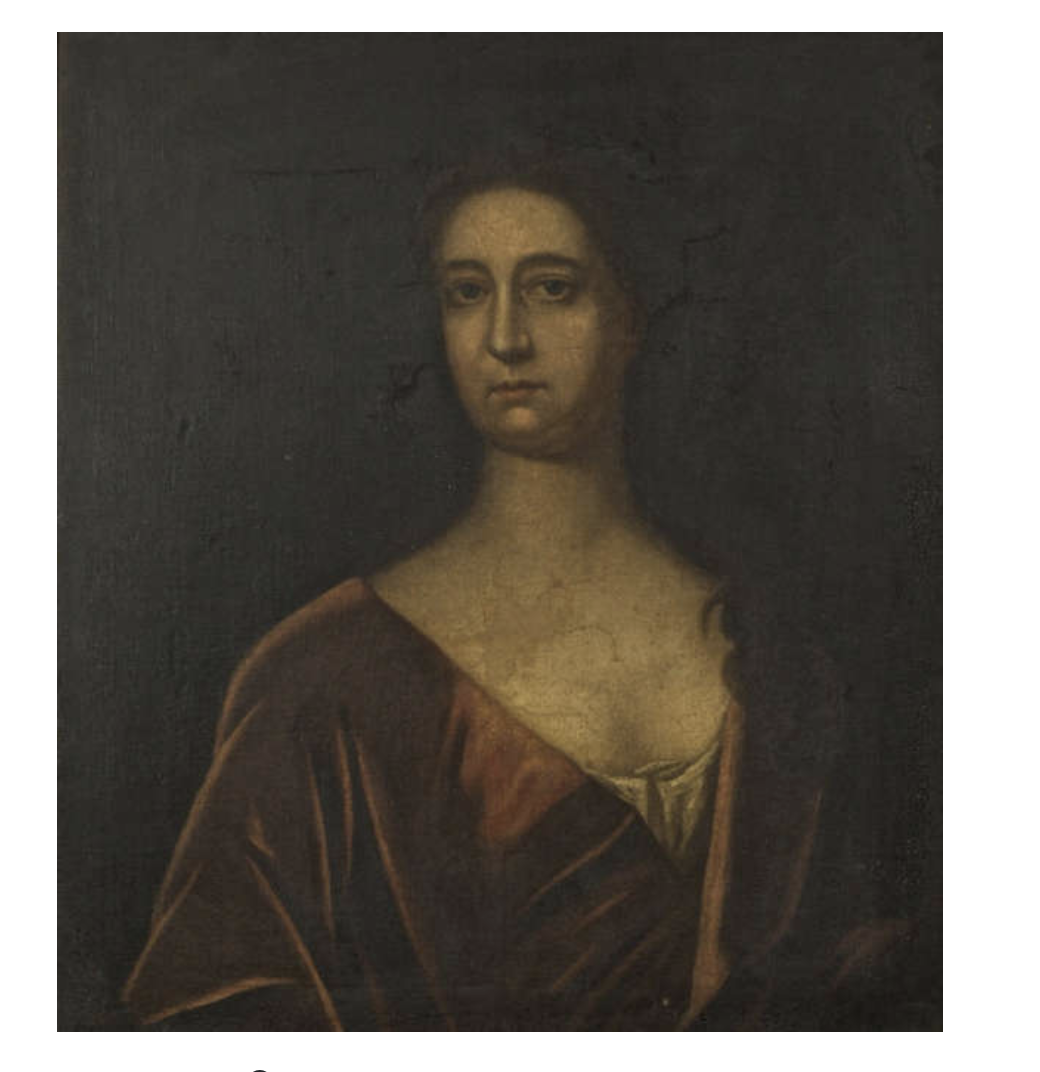
Suzannah, Daughter of John Benson, wife of George Digby Leake of Rathkeale Abbey, Son of Sir John Leake and Great-Grandson of Francis Leake, Earl of Scarsdale of Sutton, Derbyshire; His Wife Suzannah, Daughter of John Benson courtesy Adam’s 11 Oct 2011, IRISH SCHOOL 18TH CENTURY
Colonel George Leake of Rathkeale Abbey, Son of Jones Benson Leake courtesy Adam’s 11 Oct 2011, IRISH SCHOOL 18TH CENTURY.
George D’Alton Leake of Rathkeale Abbey, Elder Son of George Leake and of Alice D’Alton Furnell courtesy Adam’s 11 Oct 2011, IRISH SCHOOL 18TH CENTURY.
Portrait of Joseph Leeson (1660-1741) of Saint Stephen’s Green Date c.1772, photograph courtesy of National Gallery of Ireland.

Joseph Leeson (1660-1741) married Margaret Brice.

Margaret Leeson née Brice wife of Joseph Leeson (1660-1741), c. 1772 by unknown artist, courtesy of National Gallery of Ireland NGI 1649.

Their daughter Anne married Hugh Henry (d. 1743). Their daughter Joyce married Robert Blackwood, 1st Bt. of Ballyleidy, Co. Down, and their son Joseph (1701-1783) became 1st Earl of Milltown.

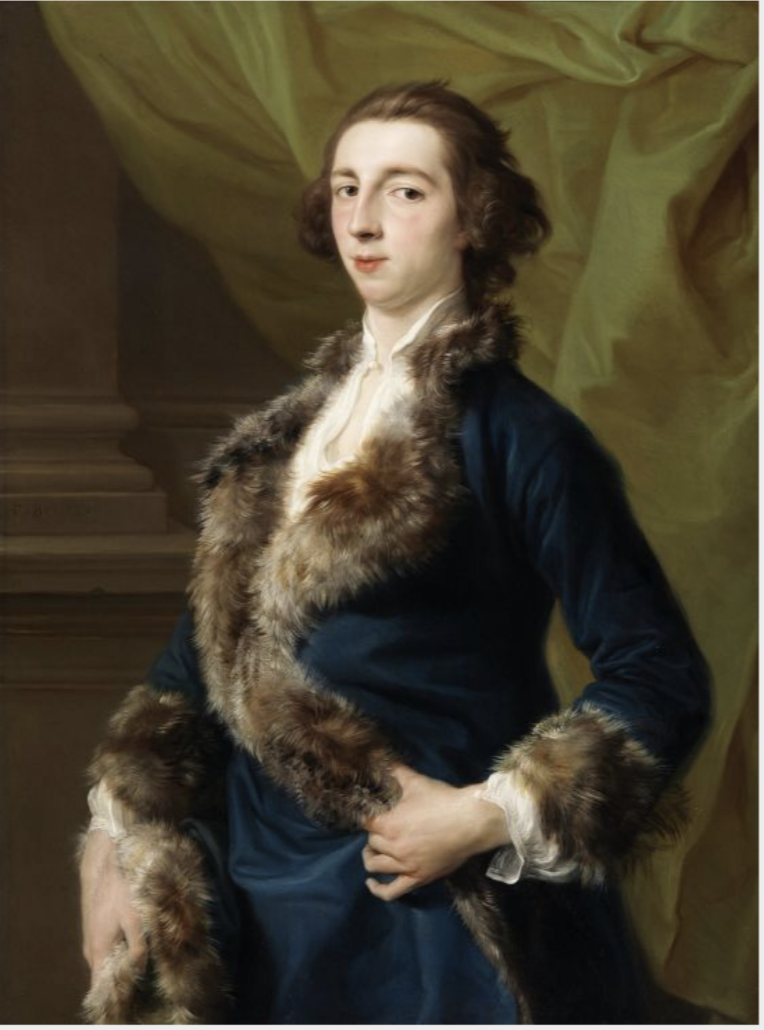
Joseph Leeson (1701-1783), later 1st Earl of Milltown, 1744, by Pompeo Batoni, National Gallery of Ireland 701. Photograph © Jennifer Winder-Baggot, www.irishhistorichouses.com
Joseph Leeson (1701-1783) 1st Earl of Milltown, painted by Anthony Lee. Portrait from the National Gallery of Ireland. Later he was created 1st Earl of Milltown. He had Russborough House built in County Wicklow. Photograph © Jennifer Winder-Baggot, www.irishhistorichouses.com

Joseph Leeson (1701-1783) 1st Earl of Milltown married first Cecelia Leigh (d. 1731?). Their daughter Mary (d. 1794) married John Bourke, 2nd Earl of Mayo. A son Joseph Leeson (1730-1801) succeeded as 2nd Earl of Milltown. He died unmarried and his brother Brice (1735-1807) succeeded as 3rd Earl of Milltown.

Cecilia Leeson née Leigh d. 1737, painted by Anthony Lee, courtesy of National Gallery of Ireland.
Joseph Leeson (1730-1801) later 2nd Earl of Milltown, 1751 by Pompeo Batoni, courtesy of National Gallery of Ireland.

Joseph Leeson (1701-1783) 1st Earl of Milltown then married Anne Preston (d. 1766) daughter of Nathaniel Preston of Swainstown, County Meath. They had a daughter Anne who married her cousin Hugh Henry.

Third, Joseph Leeson (1701-1783) 1st Earl of Milltown married Elizabeth French (d. 1842), daughter of Reverend William French.

Joseph Leeson (1701-1783) 1st Earl of Milltown with his third wife Elizabeth née French and their daughter Cecilia and his grandson Joseph later 3rd Earl of Milltown, 1772, after Pompeo Batoni,courtesy of National Gallery of Ireland, NGI.1697. This is what the Gallery website says, but I think this 3rd Earl of Milltown was Brice Leeson (1735-1807).

Joseph Leeson (1701-1783) 1st Earl of Milltown and Elizabeth née French (d. 1842) had a daughter Cecelia who married David La Touche. A daughter Frances Isabella (d. 1840) married Marcus Beresford (1764-1797). They also had sons William (1770-1819) and Robert (1773-1842).

Cecilia La Touche (d. 1848) née Leeson (about 1769-1848), by Hugh Douglas Hamilton. She married David La Touche (1769-1816). She was the daughter of Joseph Leeson (1701-1783), 1st Earl of Milltown and Elizabeth French. Photograph courtesy of English Heritage, Kenwood.

Brice (1735-1807) 3rd Earl of Milltown married Maria Graydon and she gave birth to Joseph (1766-1800); John (1767-1835) and Robert (d. 1842).

Joseph (1766-1800) married Emily Douglas (d. 1841) and she gave birth to their heir, Joseph (1799-1866) who succeeded as 4th Earl of Milltown.

Emily Douglas (d.1841) by James Dowling Herbert courtesy of National Gallery of Ireland NGI 6271. She was wife of Joseph Leeson (1766-1800) mother of 4th Earl of Milltown.

Joseph (1799-1866) 4th Earl of Milltown married Barbara (d. 1874), daughter of Joshua Colles Meredyth, 8th Bt of Greenhills, Co. Kildare, widow of Eyre Tilson Coote, 3rd Baron Castle Coote. She gave birth to both the 5th and the 6th Earls of Milltown.

Edward Nugent Leeson, 6th Earl of Milltown (1835-1890), 1875 by Francis Grant, Courtesy of National Gallery of Ireland NGI.1036.
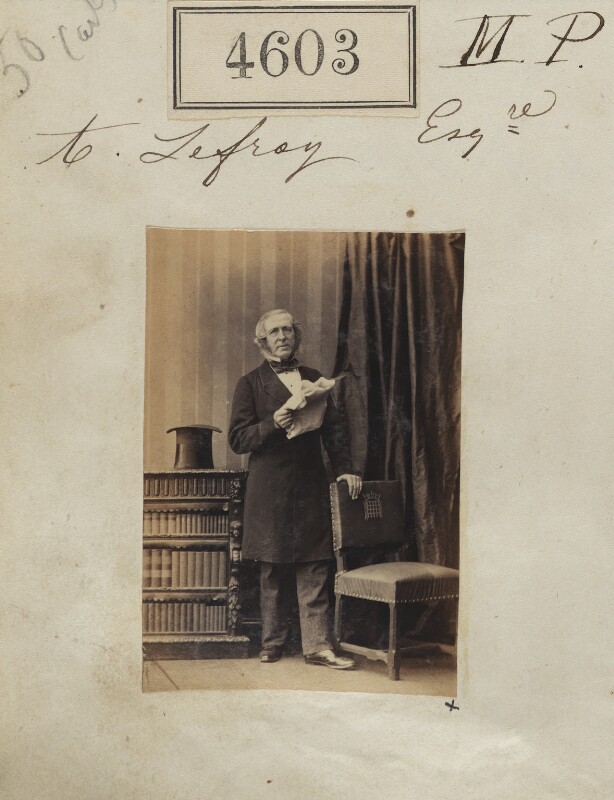
Anthony Lefroy (1800-1890), Conservative politician; MP for Longford and Dublin University, by Camille Silvy 1861 courtesy of National Portrait Gallery NPG Ax54615.
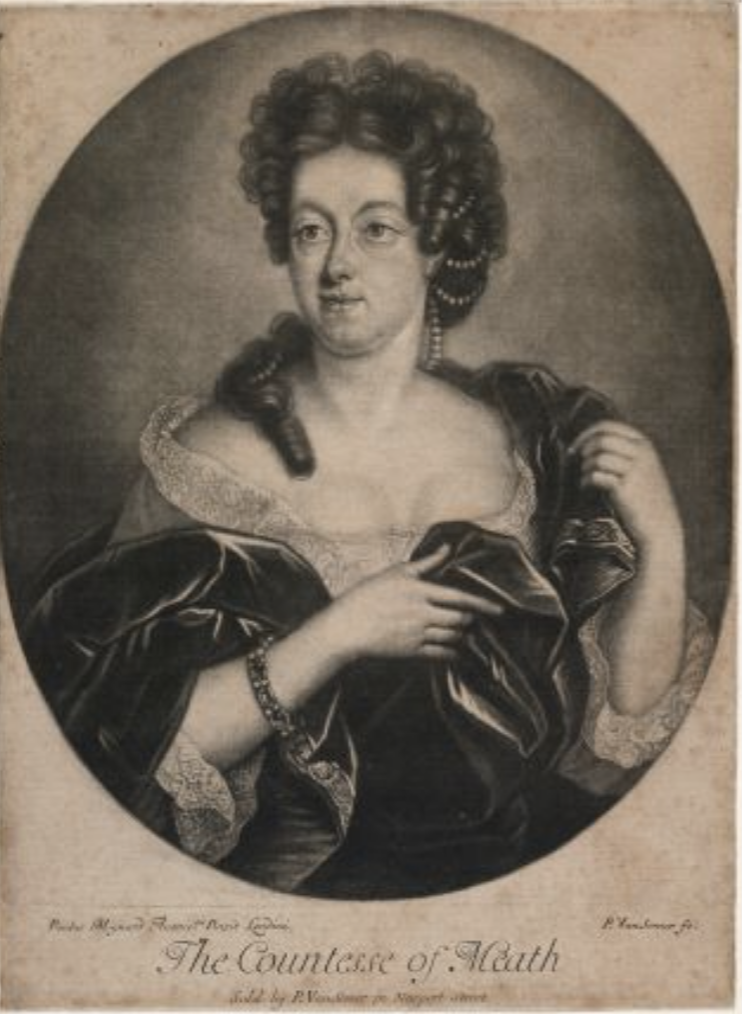
Elizabeth née Lennard (1670-1701), Countess of Meath, wife of 3rd Earl, 1701 engraving by Paul Van Somer II after Paul Mignard, photograph courtesy of National Gallery of Ireland.
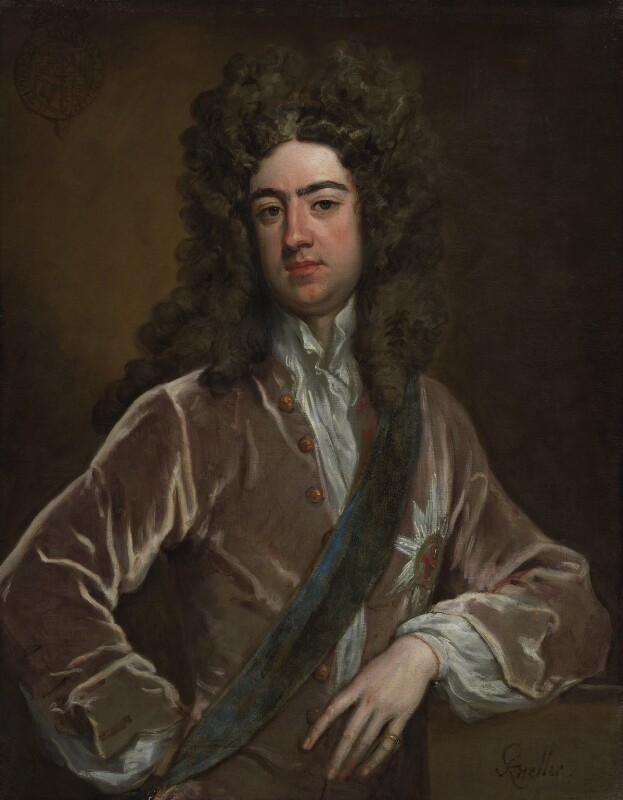
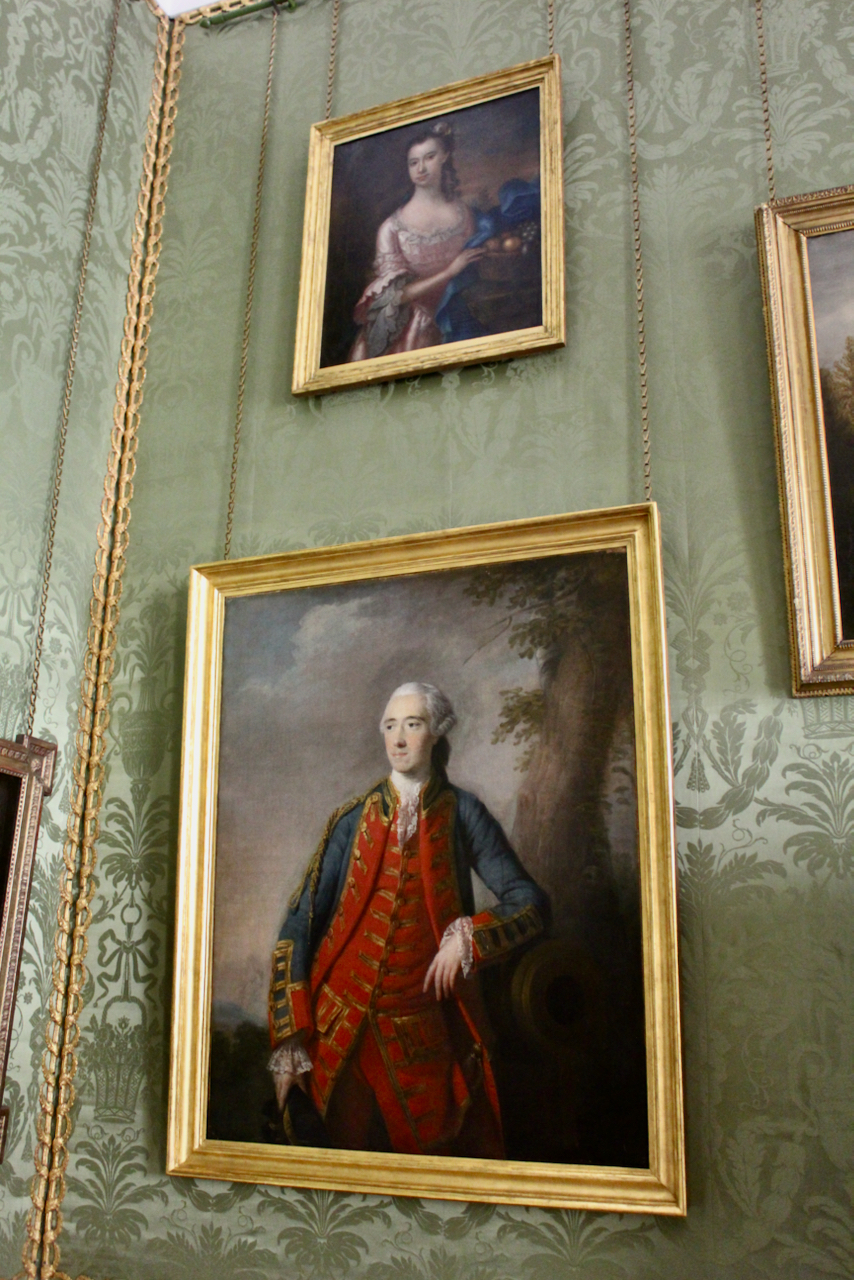
Charles Lennox (1672-1723) 1st Duke of Richmond and Lennox, Courtier; son of King Charles II, by Sir Godfrey Kneller, Bt c. 1703 courtesy of National Portrait Gallery NPG 3221.

Charles Lennox (1672-1723) 1st Duke of Richmond and Lennox was an illegitimate son of King Charles II, by Louise Renée de Penancoët de Kérouaille, Duchess of Portsmouth. His son Charles Lennox (1701-1750) succeeded as 2nd Duke of Richmond and married Sarah Cadogan (1705-1751).

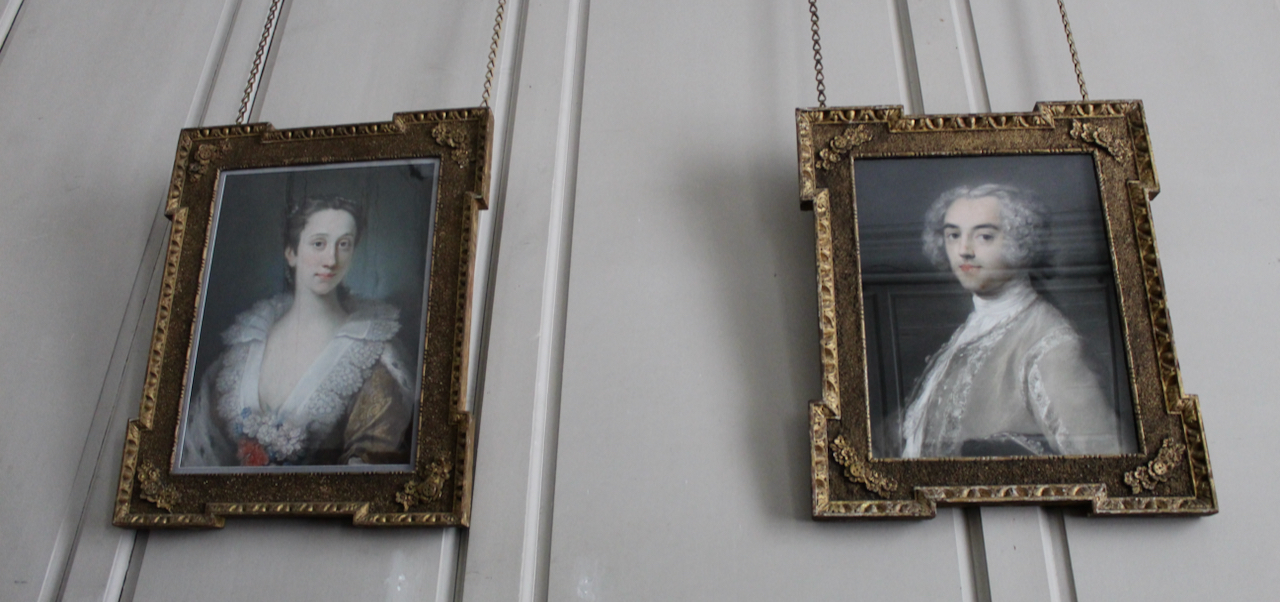
Sarah Lennox née Cadogan (1705-1751) and Charles Lennox (1701-1750) 2nd Duke of Richmond. Photograph © Jennifer Winder-Baggot, www.irishhistorichouses.com
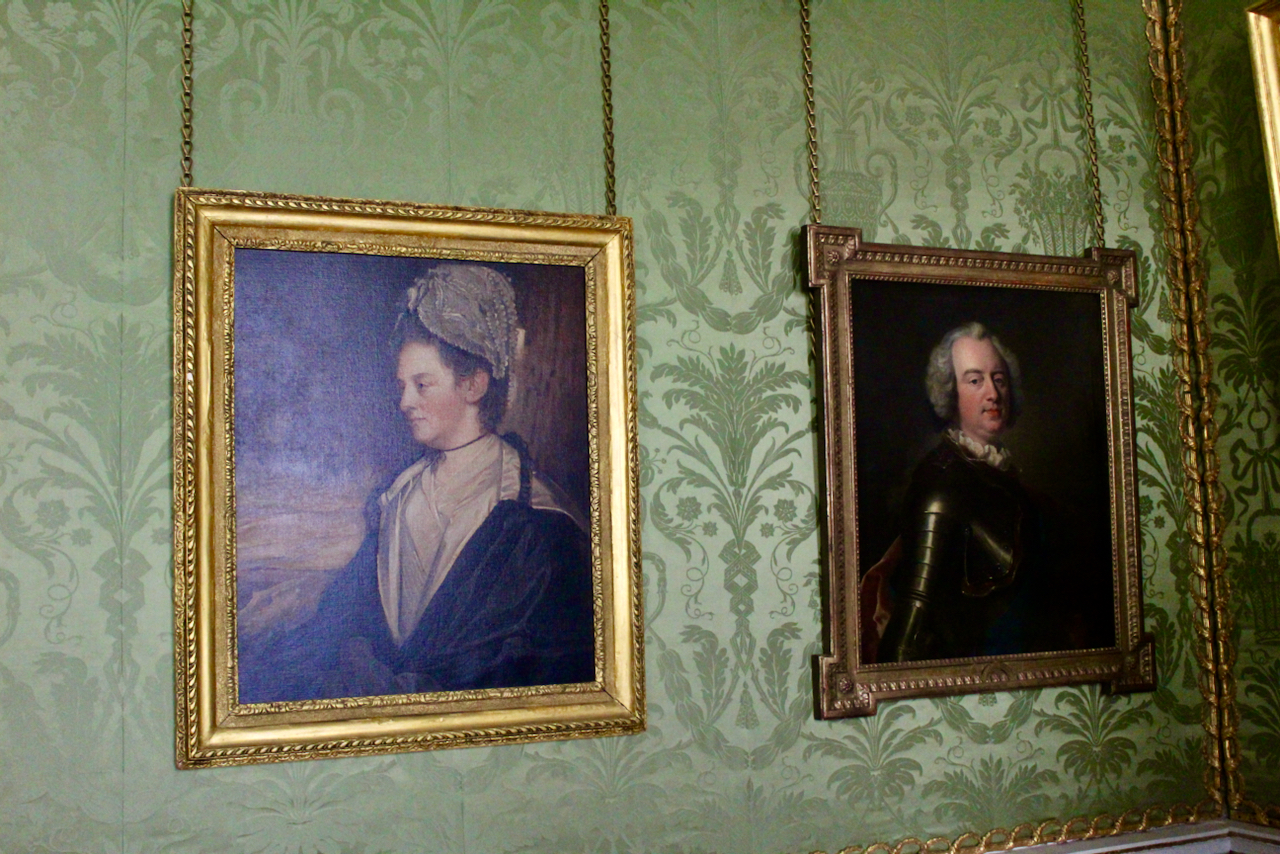
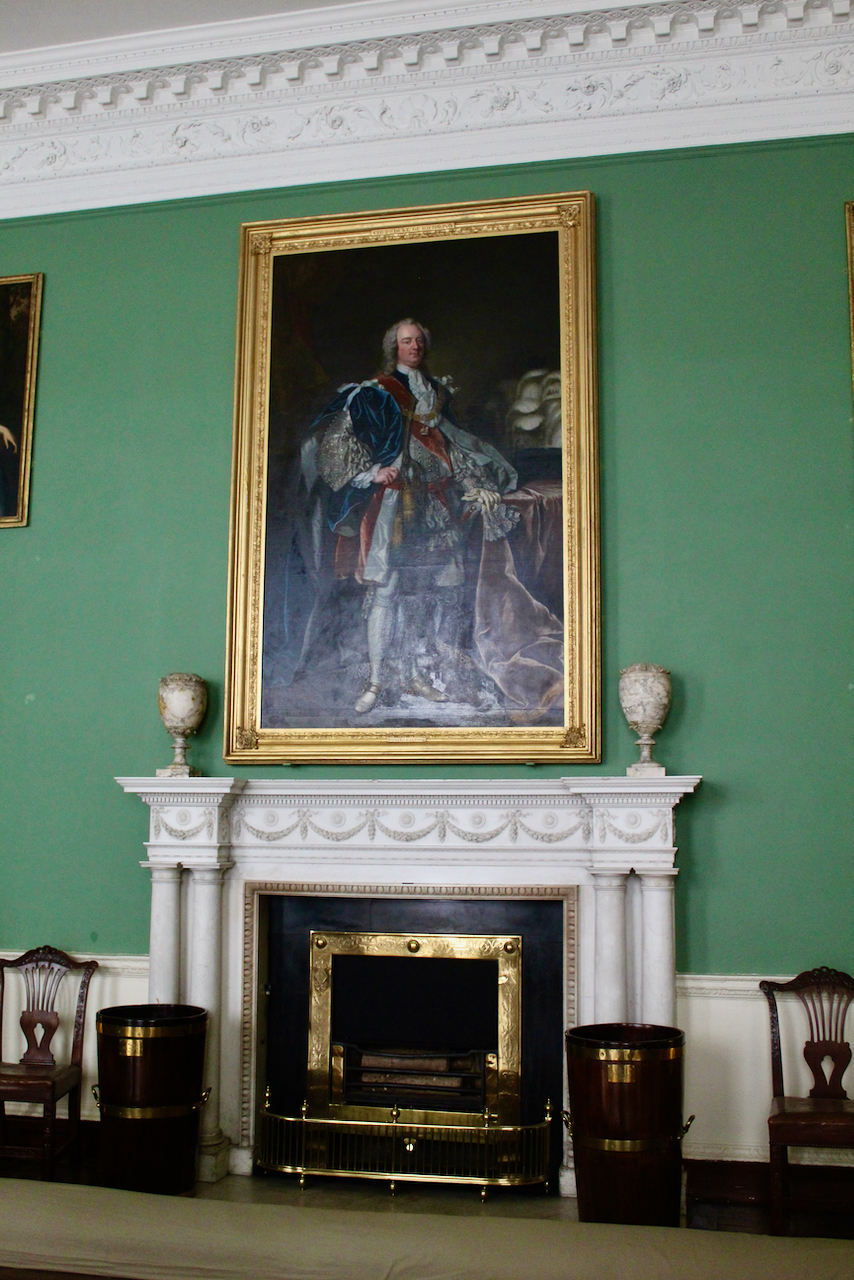
Charles Lennox 2nd Duke of Richmond (1701-1750). Photograph © Jennifer Winder-Baggot, www.irishhistorichouses.com
The portrait over the fireplace in the dining room is a half-length portrait of Charles Lennox (1701–1750), 2nd Duke of Richmond and 2nd Duke of Lennox, wearing armour with the ribbon of the Order of the Garter. Photograph © Jennifer Winder-Baggot, www.irishhistorichouses.com

Charles Lennox (1701-1750) 2nd Duke of Richmond and Sarah née Cadogan (1705-1751) had several children:

Georgiana Carolina (1723-1774) married Henry Fox, 1st Baron Holland of Foxley;Emilia Mary

Emilia Mary (1731-1814) married James Fitzgerald 1st Duke of Leinster;

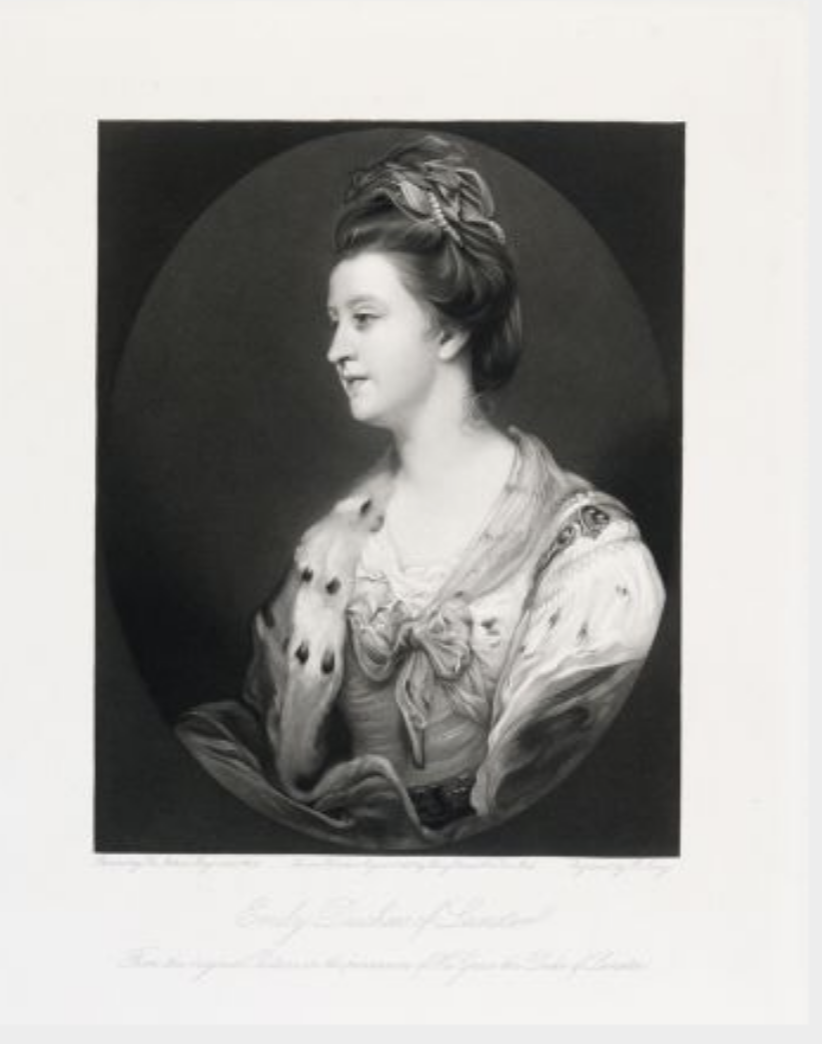
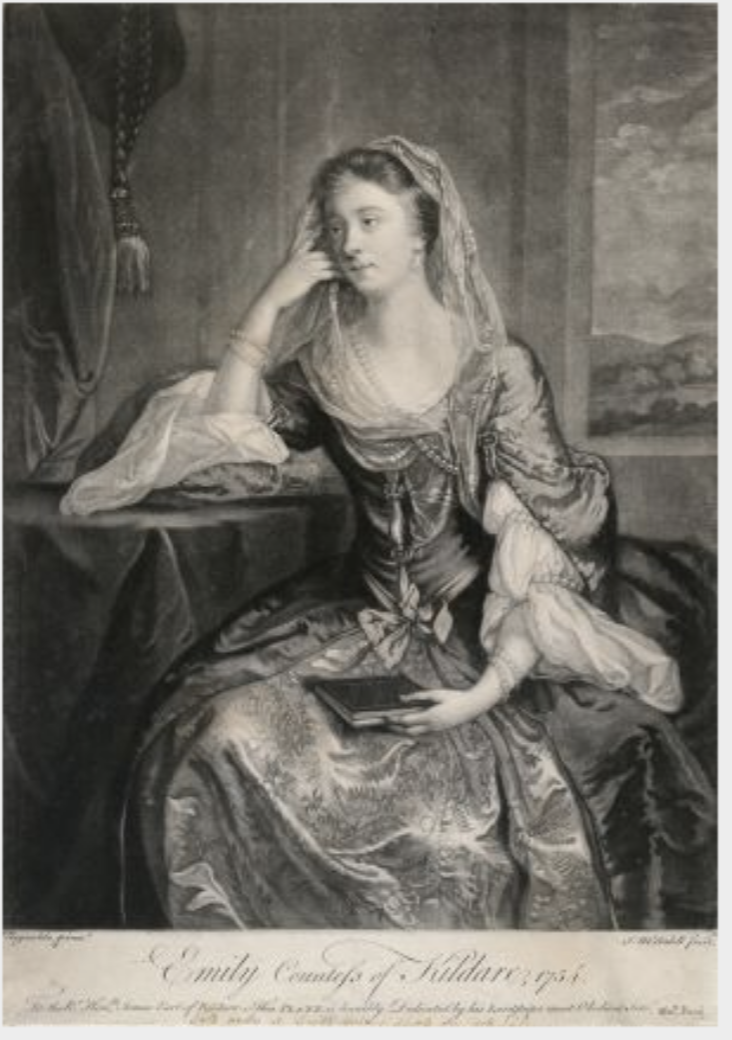
Emilia Mary Fitzgerald née Lennox (1731-1814) Duchess of Leinster, courtesy of National Gallery of Ireland. She was married to James FitzGerald 1st Duke of Leinster, 1st Marquess of Kildare, 20th Earl of Kildare.
Emilia née Lennox (1731-1814), Countess of Leinster, engraving after Joshua Reynolds, courtesy of National Gallery of Ireland.

Louisa Augusta (1743-1821) married Thomas Conolly;

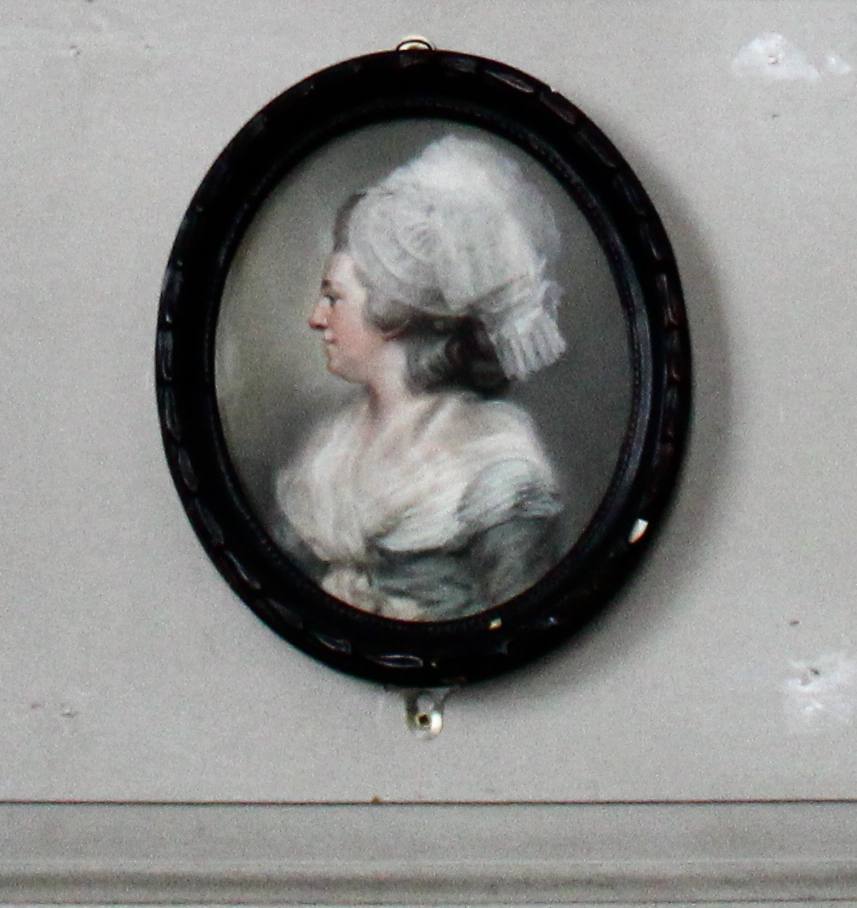
Pastel of Lady Louisa Lennox (1743-1817), circle of George Knapton, c.1747. Photograph © Jennifer Winder-Baggot, www.irishhistorichouses.com
The portrait of Lady Louisa Conolly née Lennox (1743-1817) is after Reynolds (the original is in the Fogg Art Museum, Harvard). She was the daughter of Charles 2nd Duke of Richmond and Lennox, and wife of Thomas Conolly (1734-1803). Photograph © Jennifer Winder-Baggot, www.irishhistorichouses.com
Louisa Conolly née Lennox (1743-1817) who married Thomas Conolly (1734-1803). Photograph © Jennifer Winder-Baggot, www.irishhistorichouses.com
Louisa Conolly née Lennox (1743-1817), by Hugh Douglas Hamilton. Photograph © Jennifer Winder-Baggot, www.irishhistorichouses.com
The small medallion in the centre is Lady Louisa by Hugh Douglas Hamilton. The one of the two girls on the right is of Louisa Staples (1770-1833) and her sister, by Hugh Douglas Hamilton. William James Conolly (1712-1754) was the nephew of William Conolly who built Castletown, and he inherited the estate. He was the father of Thomas Conolly (1734-1803). Thomas’s sister Harriet married John Staples (1736-1820), and their daughter was Louisa Staples. Louisa married Thomas Pakenham (1757-1836). It was their son, Edward Michael (1786-1849) who inherited Castletown, and added Conolly to his surname, to become Pakenham Conolly. Photograph © Jennifer Winder-Baggot, www.irishhistorichouses.com

Sarah (1745-1826) married Thomas Charles Bunbuy 6th Baronet then George Napier, and another daughter, Cecily (1750-1769) married Robert XI Arthur Geoffrey Nicholls, Comte de Cherbourg. A son, George Henry Lennox (d. 1805) married Louisa, daughter of General William Henry Kerr, 4th Marquess of Lothian. The elder son, Charles Lennox, (1734/5-1806) succeeded as 3rd Duke of Richmond.

I think this is a portrait of Louisa’s brother Charles Lennox (1734-1806), 3rd Duke of Richmond. Photograph © Jennifer Winder-Baggot, www.irishhistorichouses.com
Charles Lennox (1734-1806) 3rd Duke of Richmond and Lennox, courtesy of National Gallery of Ireland.

Charles Lennox, (1734/5-1806) 3rd Duke of Richmond had a daughter so his nephew General Charles Lennox (1764-1819) succeeded as 4th Duke of Richmond.

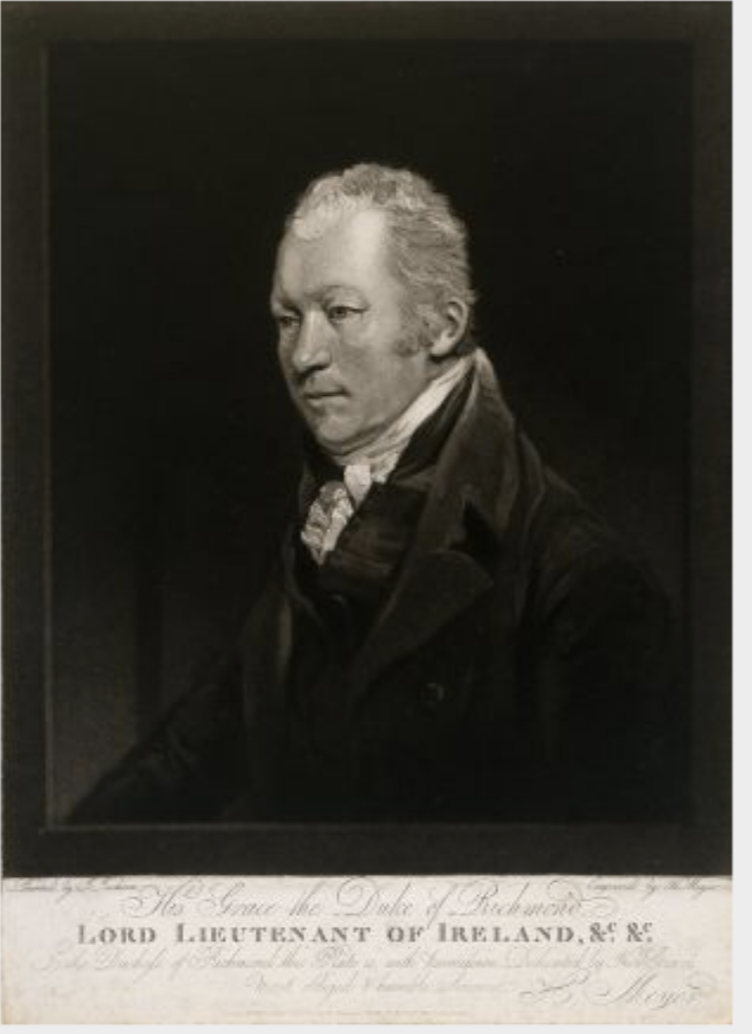
Charles Lennox (1764-1819) 4th Duke of Richmond, engraver Henry Hoppner Meyer, after painter John Jackson, courtesy of National Gallery of Ireland.
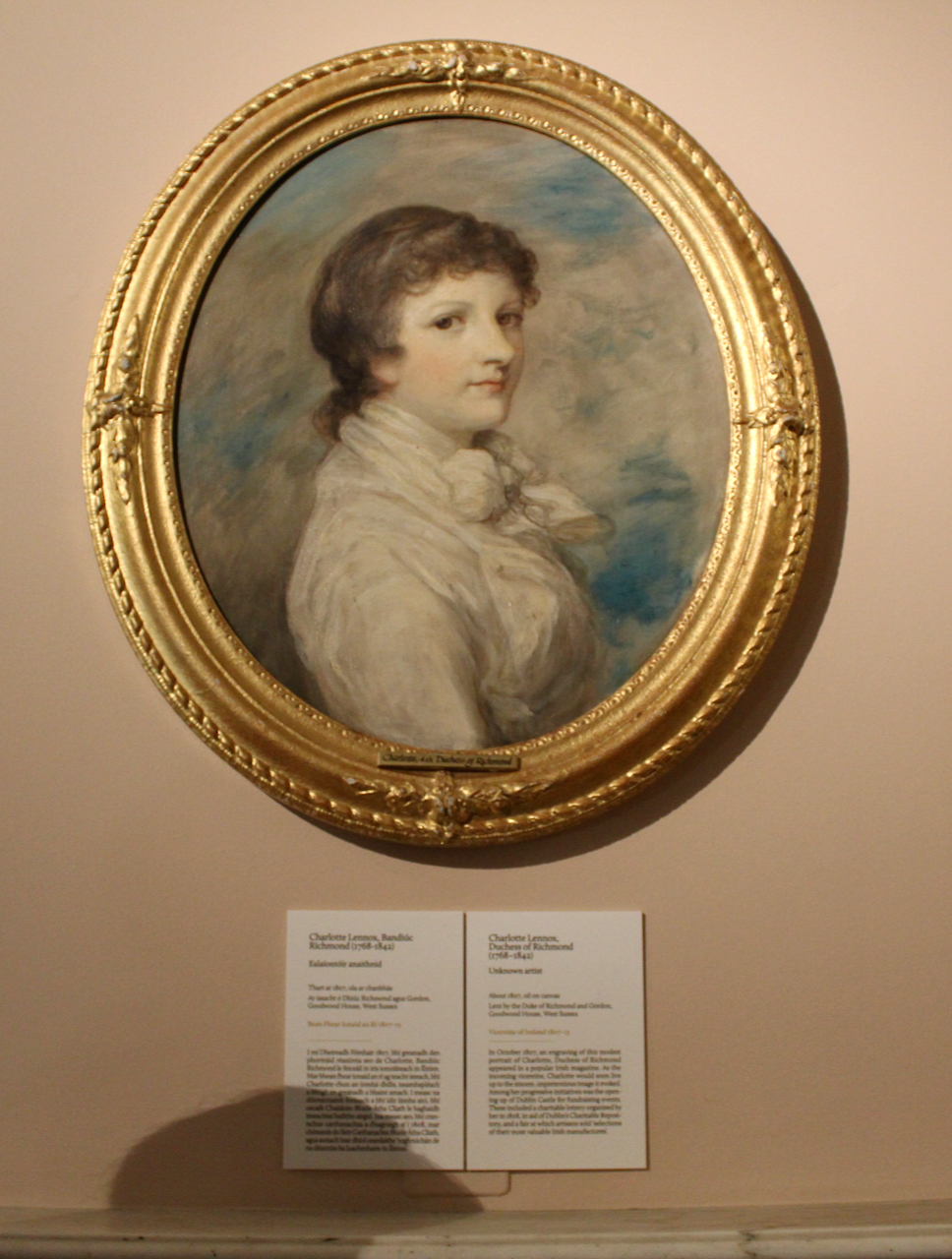
Charlotte Lennox née Gordon (1768-1842), Duchess of Richmond, Vicereine 1807-1813, wife of Charles Lennox, 4th Duke of Richmond. Photograph © Jennifer Winder-Baggot, www.irishhistorichouses.com
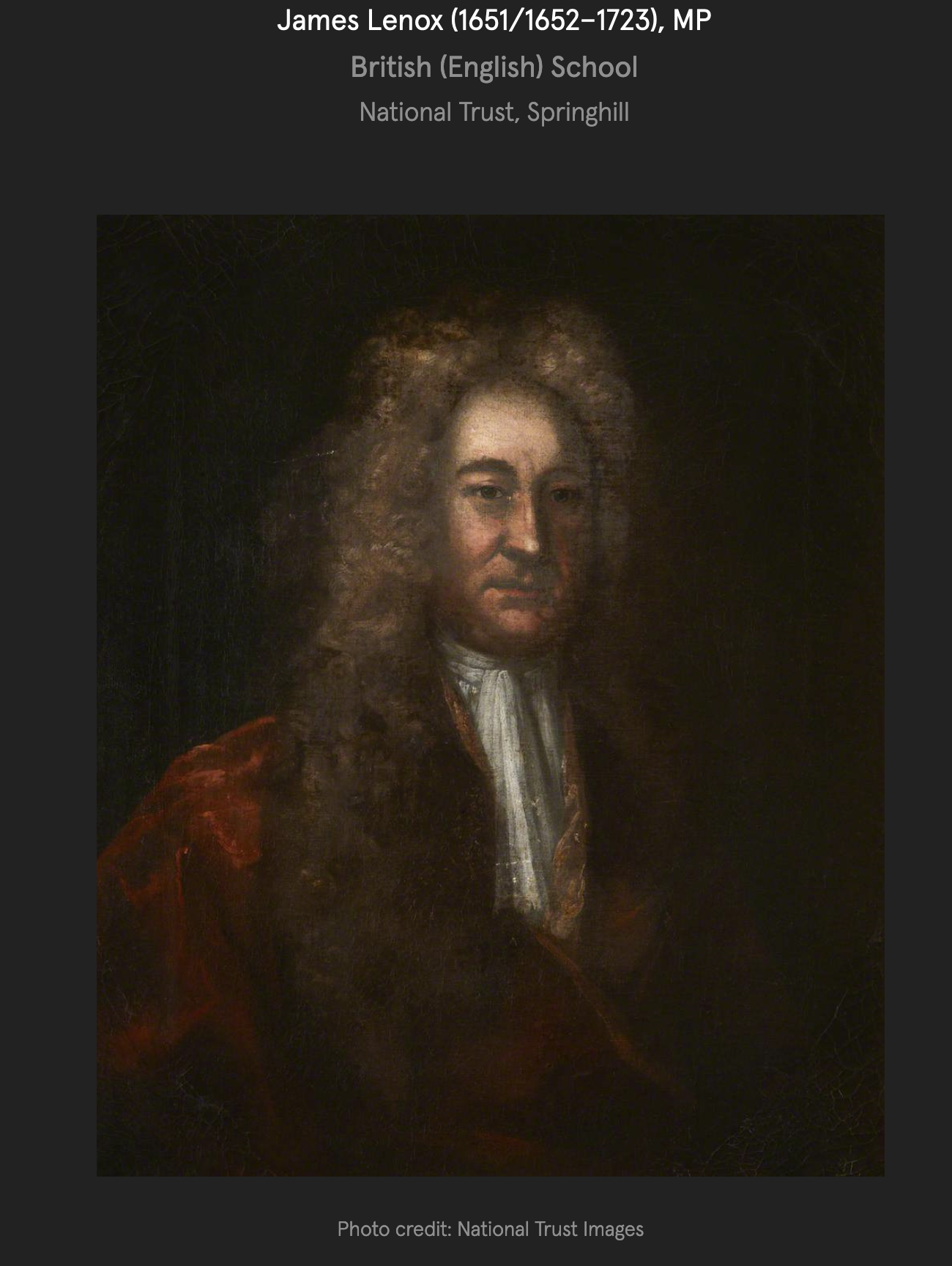
James Lenox (1651/2-1723) courtesy of National Trust, Springhill, County Derry. He was the grandfather of Clotworthy Lenox (d. 1785).
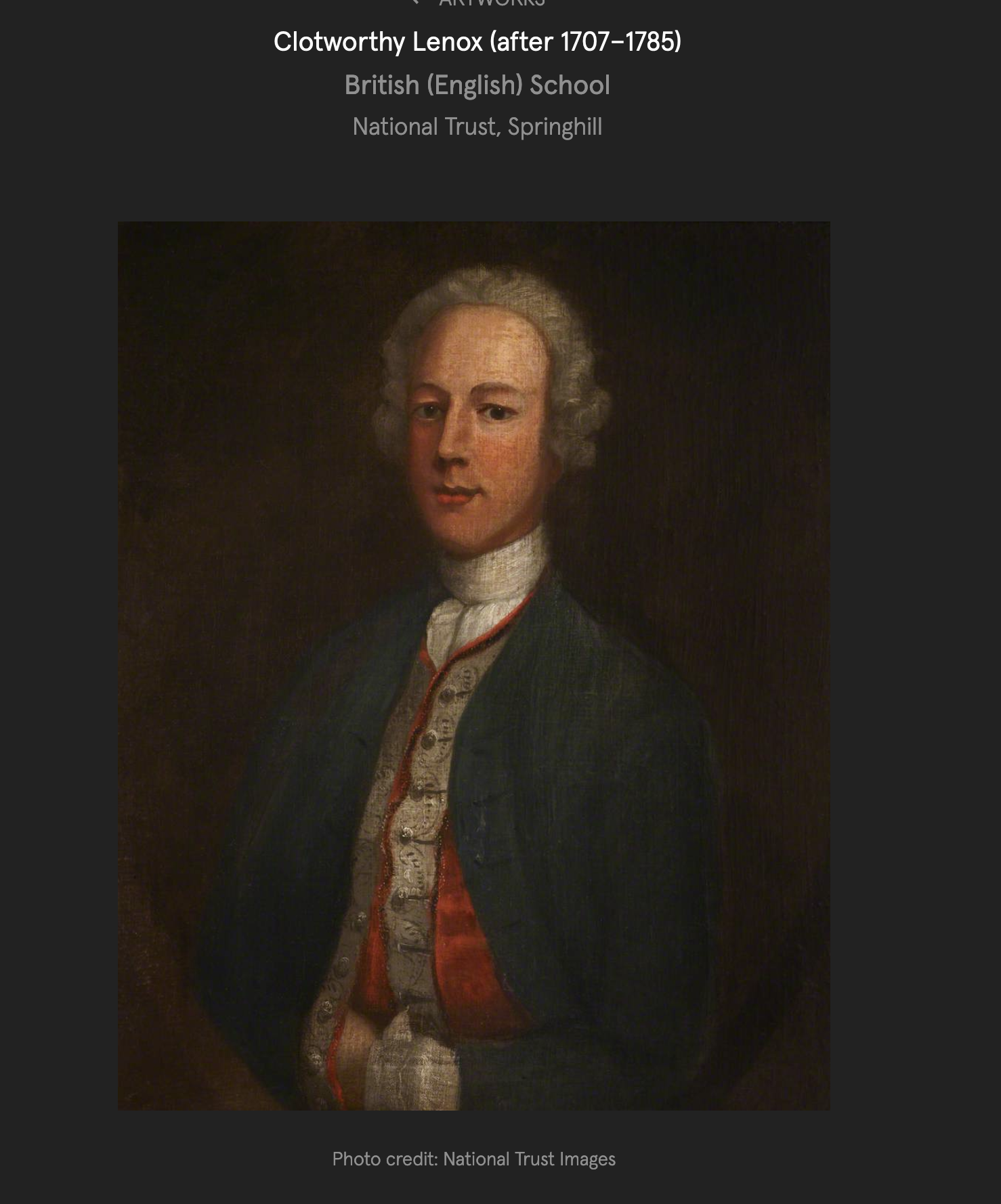
Clotworthy Lenox (d. 1785) courtesy of National Trust, Springhill, County Derry.
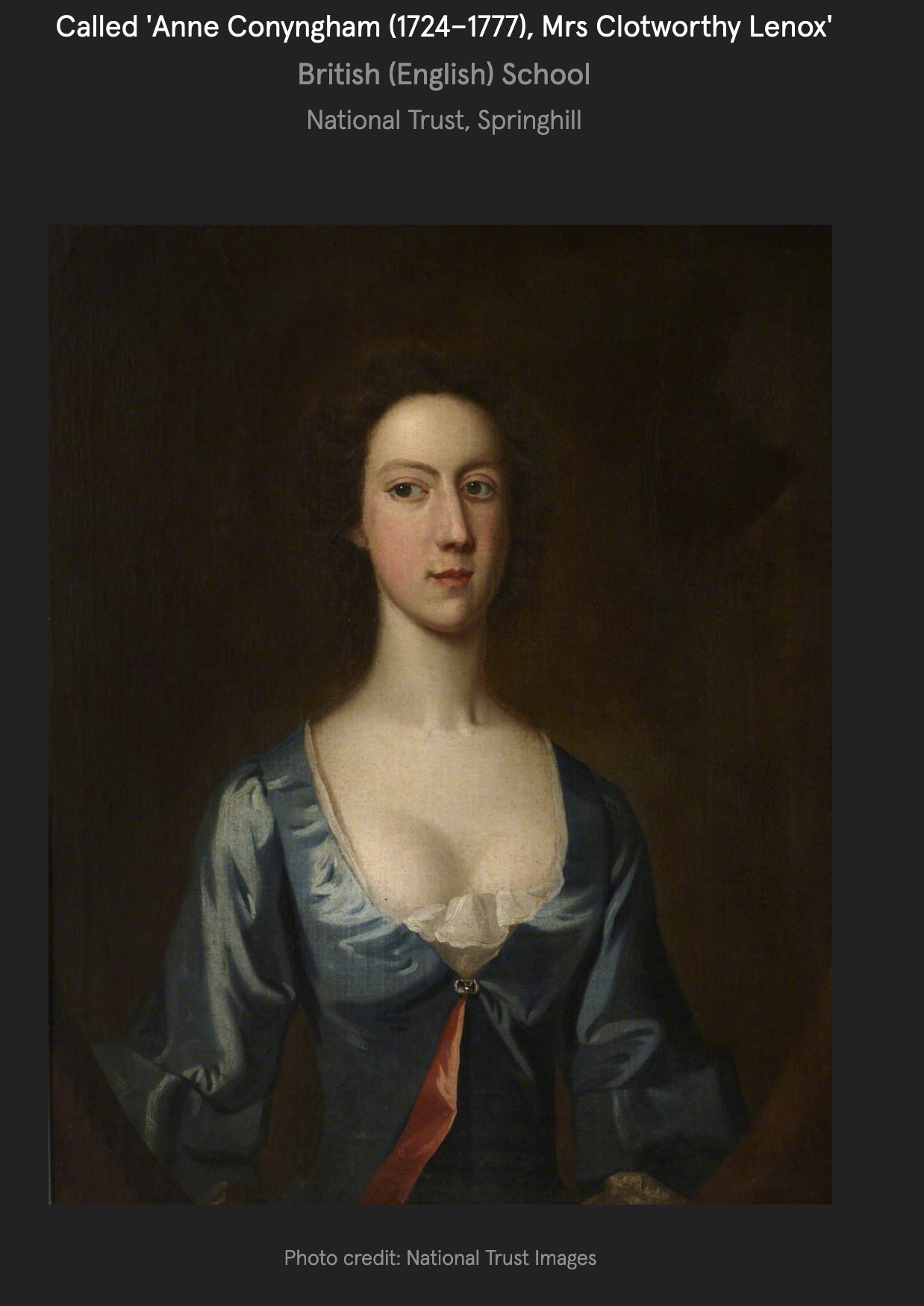
Called Anne Conyngham (1724-1777) Mrs Clotworthy Lenox, courtesy of National Trust. Springhill, County Derry. She was the daughter of George Butle Conyngham (1690-1765).
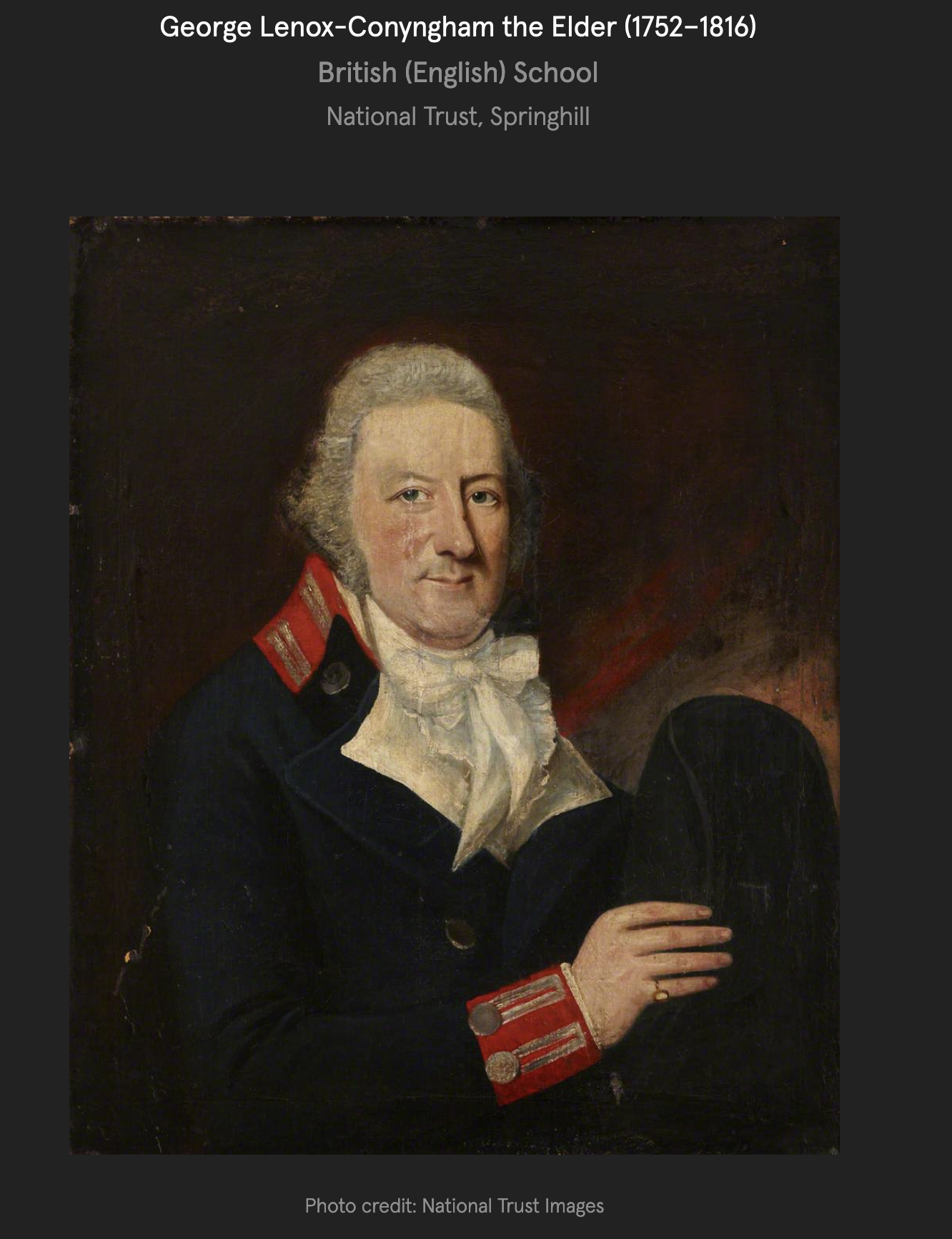
George Lenox-Conyngham (1752-1816) courtesy of National Trust. Springhill, County Derry. He was the son of Clotworthy Lenox (d. 1785) and Anne Conyngham (1724-1777).
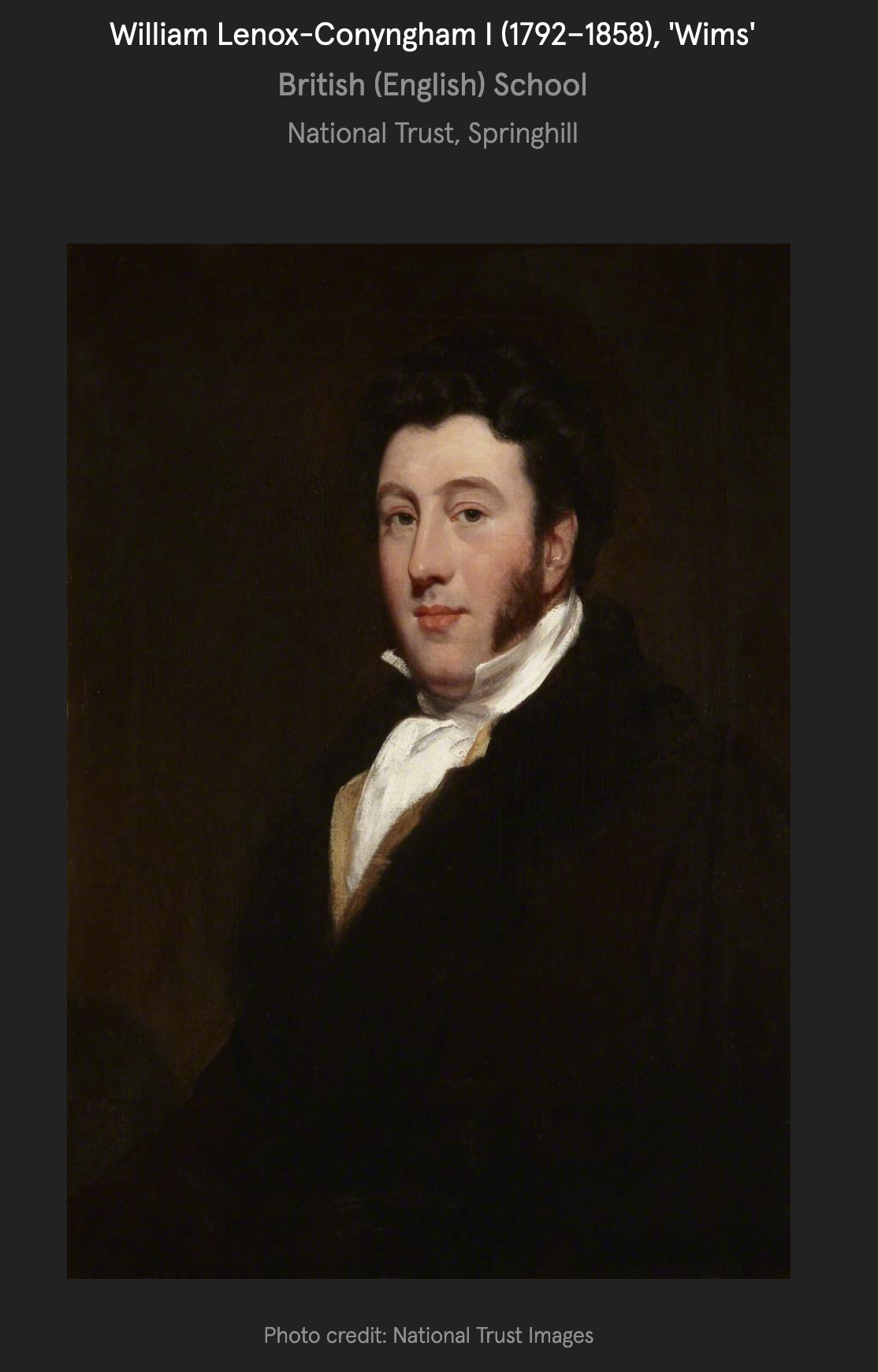
William Lenox-Conyngham (1792-1858) courtesy of National Trust, Springhill, County Derry. He was the son of George Lenox-Conyngham (1752-1816).
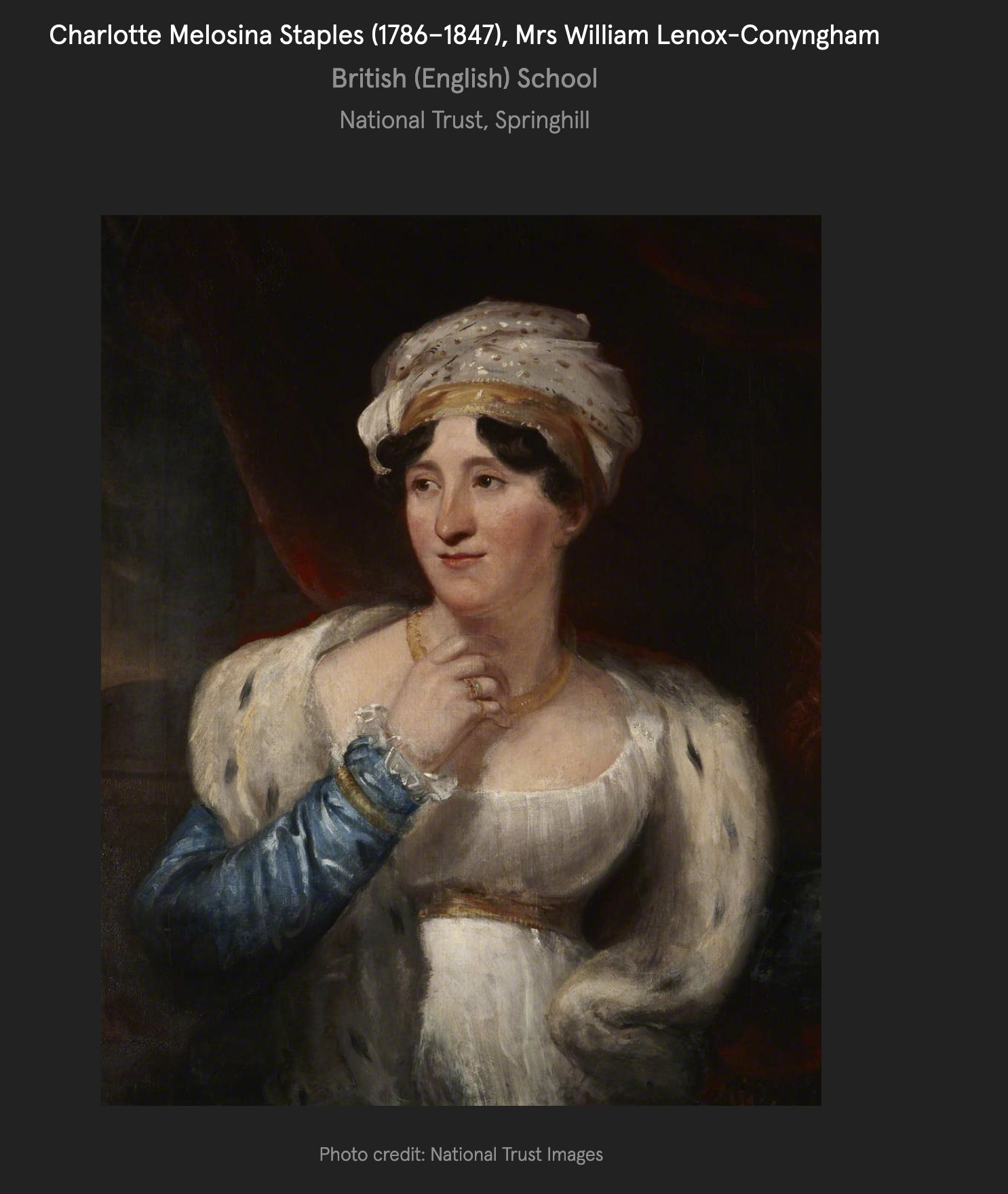
Charlotte Melosina Staples (1786-1847), wife of William Lenox-Conyngham (1792-1858), courtesy of National Trust. Springhill, County Derry.
Jean Hamilton (d. 1788), Mrs William Conyngham, by Joshua Reynolds, courtesy of National Trust, Springhill, County Derry.

Reverend John Leslie (d. 1671) married Katherine Conyngham. They had a son John Leslie (1645-1721) who married Elizabeth Hamilton, and a son Reverend Charles Leslie (1650-1722).

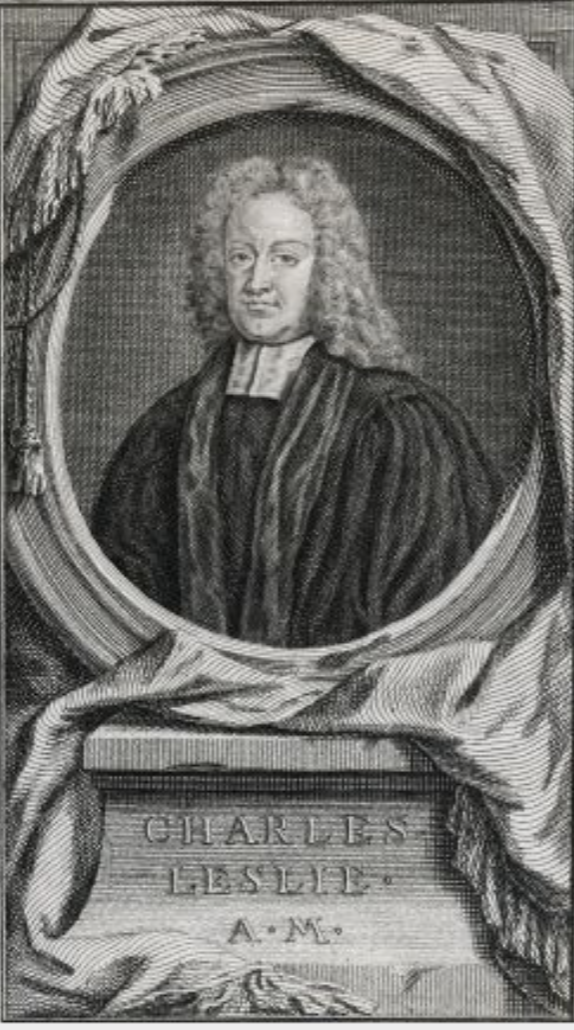
Rev. Charles Leslie (1650-1722), painting after Alexis Simon Belle, courtesy of National Gallery of Ireland.

Reverend Charles Leslie (1650-1722) married Jane Griffith and they had a son, Robert (d. 1743). He married Frances, daughter of John Rogerson, and they had a son, Charles Powell Leslie (1732-1800).

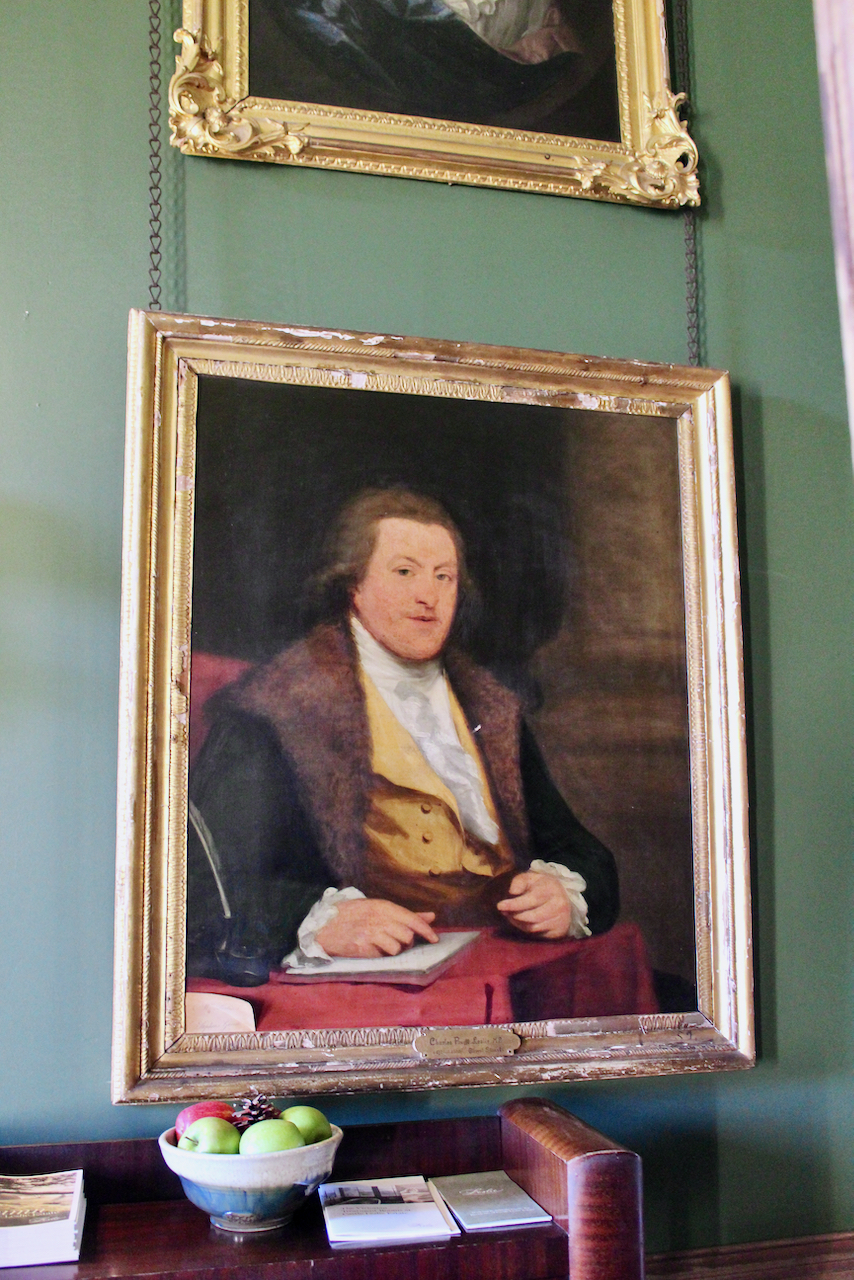
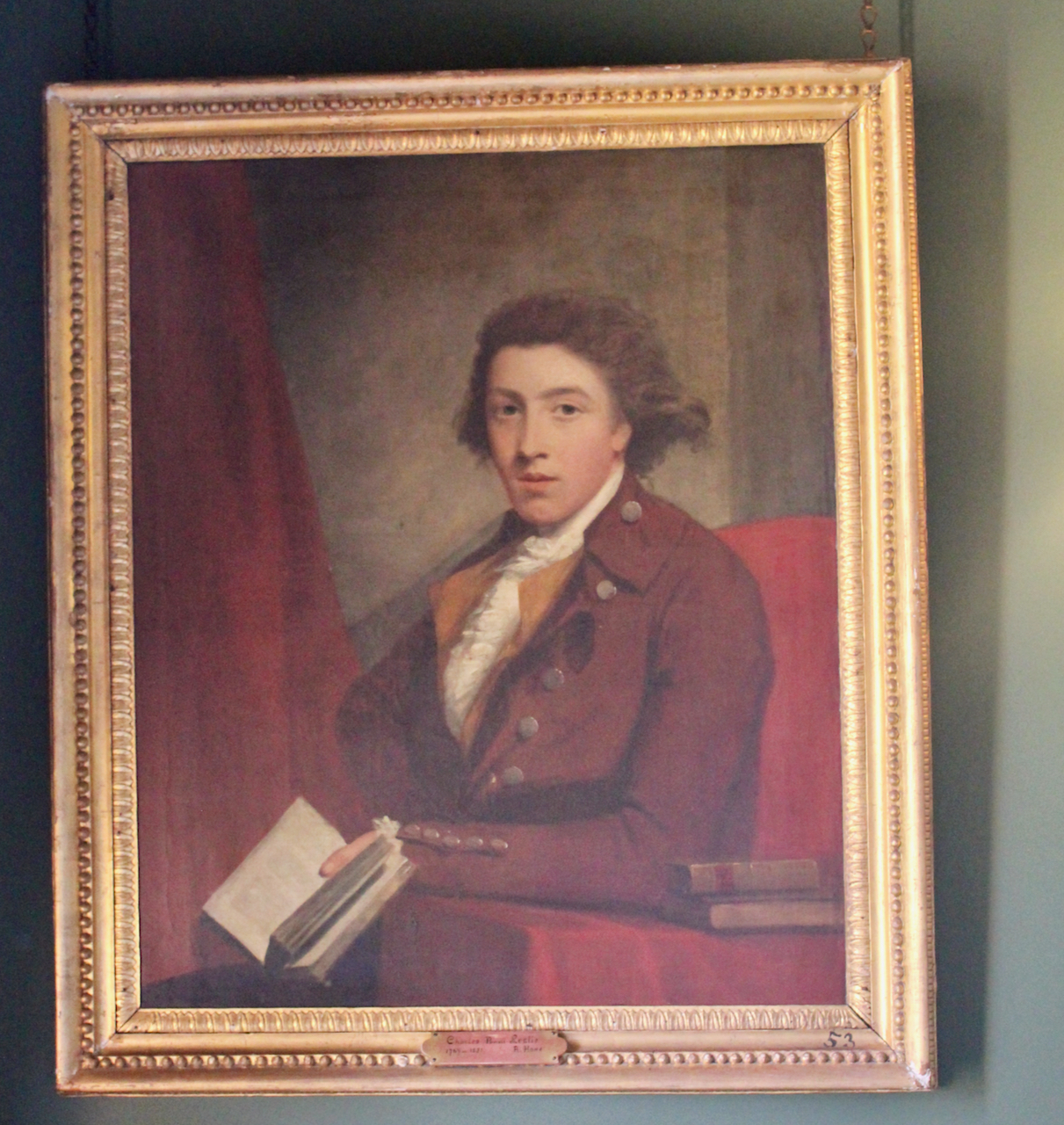
Portrait of Charles Powell Leslie (c. 1731-1800) of Castle Leslie, County Monaghan. Photograph © Jennifer Winder-Baggot, www.irishhistorichouses.com

Charles Powell Leslie (1732-1800) married first Prudence Penelope Hill-Trevor she gave birth to their heir, Charles Powell Leslie (1769-1831). They had a second son, Reverend John Leslie (1772-1854) who married Isabella St. Lawrence (d. 1830), and who served as Bishop of Dromore and Bishop of Elphin.

Charles Powell Leslie (1769-1831), Castle Leslie, County Monaghan. Photograph © Jennifer Winder-Baggot, www.irishhistorichouses.com
Bishop John Leslie (1772-1854), Corravahan, County Cavan. Photograph © Jennifer Winder-Baggot, www.irishhistorichouses.com
Frances King (d. 1835), daughter of Robert Edward King 1st Viscount Lorton, who married Right Reverend Charles Leslie (1810-1870) of Corravahan, County Cavan, Bishop of Kilmore, who was son of Reverend John Leslie (1772-1854) and Isabella née St. Lawrence (d. 1830).

Charles Powell Leslie (1732-1800) married secondly Mary Anne Tench and they had several children.

Colonel Charles Powell Leslie (d. 1831) married Christiana Fosbery and they had several children, including Charles Powell Leslie (1821-1871) who died unmarried, and John Leslie (1822-1916) who became 1st Baronet of Castle Leslie.

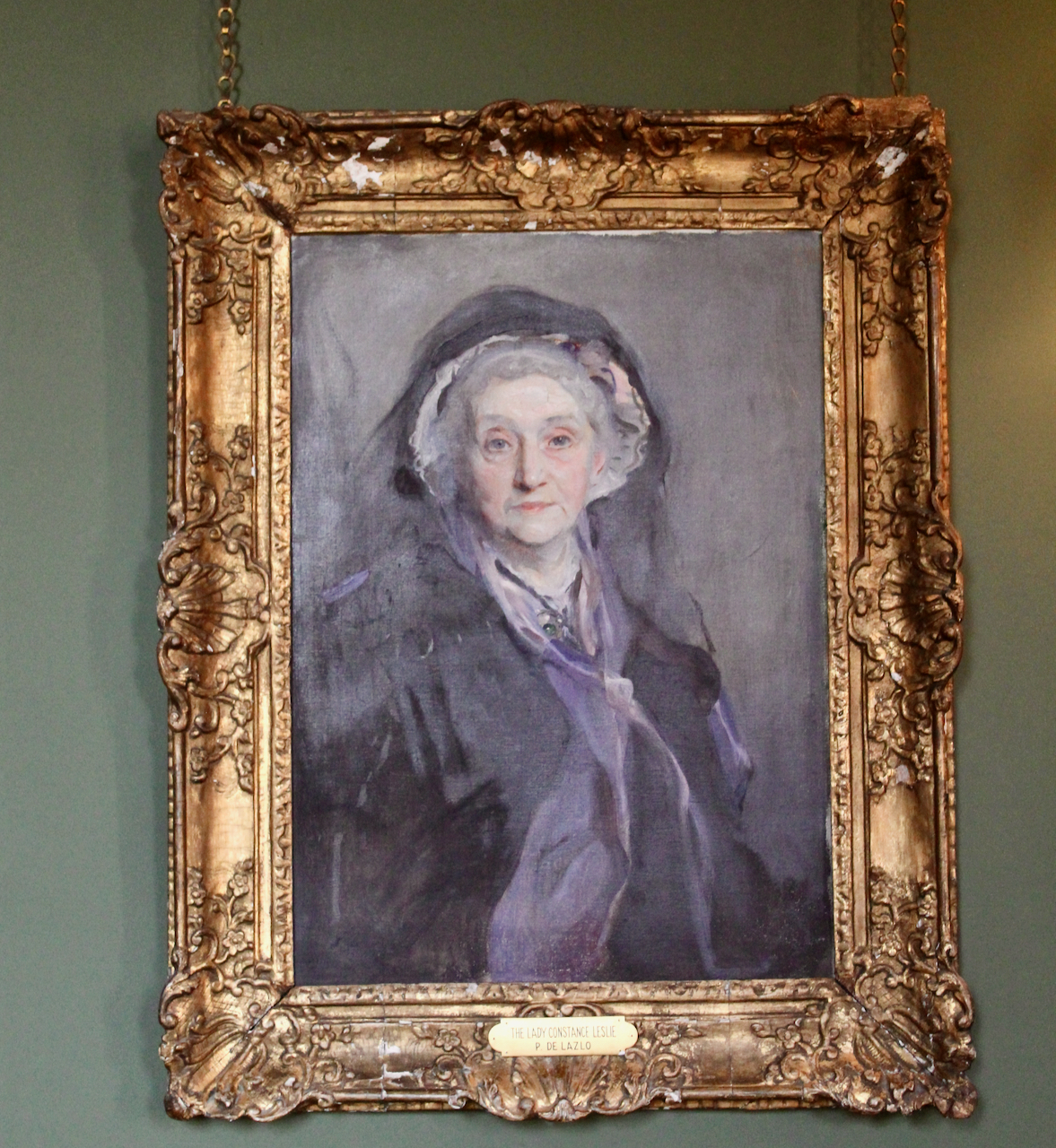
A portrait of Lady Constance Leslie (née Dawson Damer) in later life, of Castle Leslie, County Monaghan, wife of John Leslie (1822-1916) 1st Baronet of Glaslough, Co Monaghan. Photograph © Jennifer Winder-Baggot, www.irishhistorichouses.com
Shane Leslie (1885-1781), 3rd Baronet of Glaslough, County Monaghan. Photograph © Jennifer Winder-Baggot, www.irishhistorichouses.com
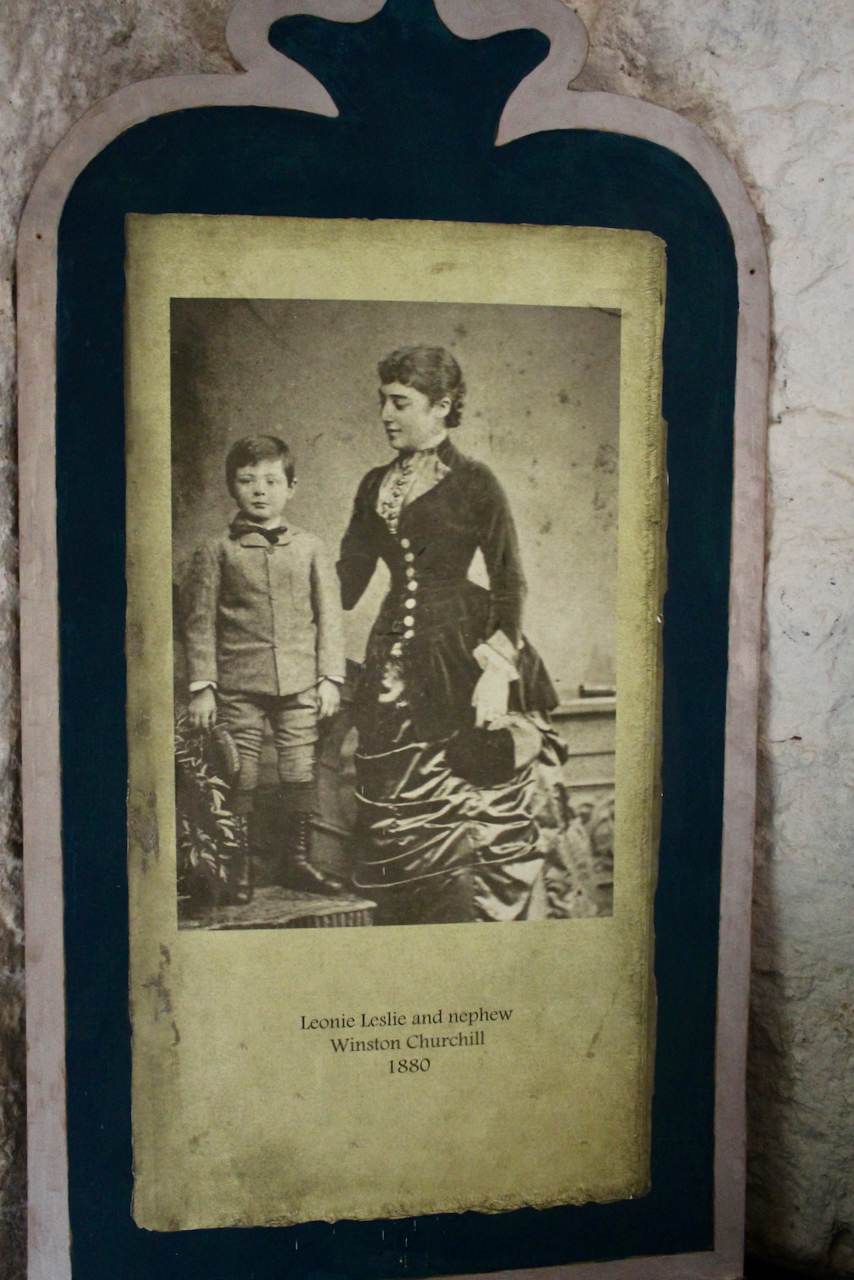
Leonie Leslie (1859-1943), Shane Leslie’s mother. Originally Leonie Jerome, her sister Jennie was Winston Churchill’s mother. Photograph © Jennifer Winder-Baggot, www.irishhistorichouses.com
Maria Phipps née Liddell, Marchioness of Normanby (1798-1882) by George Hayter. Photograph © Jennifer Winder-Baggot, www.irishhistorichouses.com
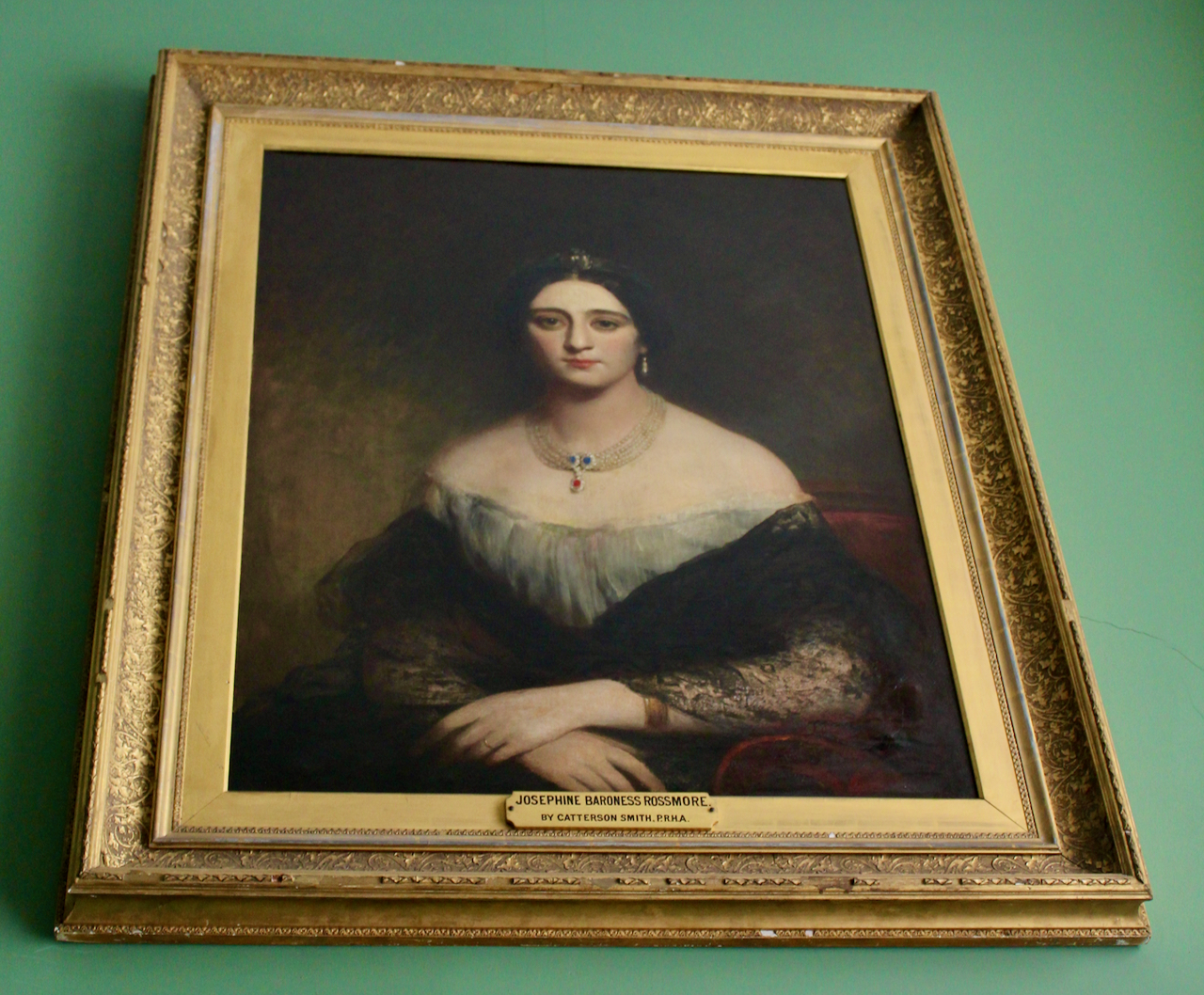
Josephine Lloyd (1827-1912) who married Henry Robert Westenra, 2nd (UK) and 3rd Baron (Ireland) Rossmore of Monaghan. Photograph © Jennifer Winder-Baggot, www.irishhistorichouses.com
Archbishop-Chancellor Adam Loftus (1533-1605). The portrait is in Trinity College Dublin, as he was the first Provost. Photograph © Jennifer Winder-Baggot, www.irishhistorichouses.com

Adam Loftus (1533-1605) married Jane Purdon and they had several children:

Anne married Henry Colley and then Edward Blayney, 1st Lord Blayney, Baron of Monaghan;

Martha (d. 1609) married Thomas Colclough (1564-1624) of Tintern Abbey in County Wexford;

Isabelle (d. 1597) married William Ussher (1561-1659);

Alice (d. 1609) married Henry Warren of Warrenstown, County Offaly;

Katherine married Francis Berkeley; Margaret married George Colley; Dorothy (d. 1633) married John Moore (1570-1633).

Adam Loftus and Jane née Purdon had a son Thomas (d. 1635); Adam (d. 1599); Edward (d. 1601) and Dudley (b. 1561).

Dudley Loftus (b. 1561) married Anne Bagenal and they had a son, Adam, who married Jane daughter of Walter Vaughan of Golden Grove, County Offaly. They had other sons: Samuel, Edward and Nicholas (1592-1666).

Adam Loftus and Jane née Vaughan had several children. Their daughter Lettice married Richard son of William Parsons, 1st Baronet; Margaret married Walter Burrowes 2nd Baronet; Elizabeth married Nicholas Forde; Mary married Thomas Boyd of Dublin. Their son Arthur married Dorothy Boyle (1617-1668), daughter of Richard Boyle 1st Earl of Cork. She married secondly Gilbert Talbot, son of William 1st Baronet Talbot, of Carton, Co. Kildare.

Arthur Loftus and Dorothy Boyle (1617-1668) had a daughter Ellen who married Theobald Bourke 4th Viscount of Mayo. Arthur and Dorothy had a son Arthur (1632-1691), who became 1st (and last) Viscount Lisburne.

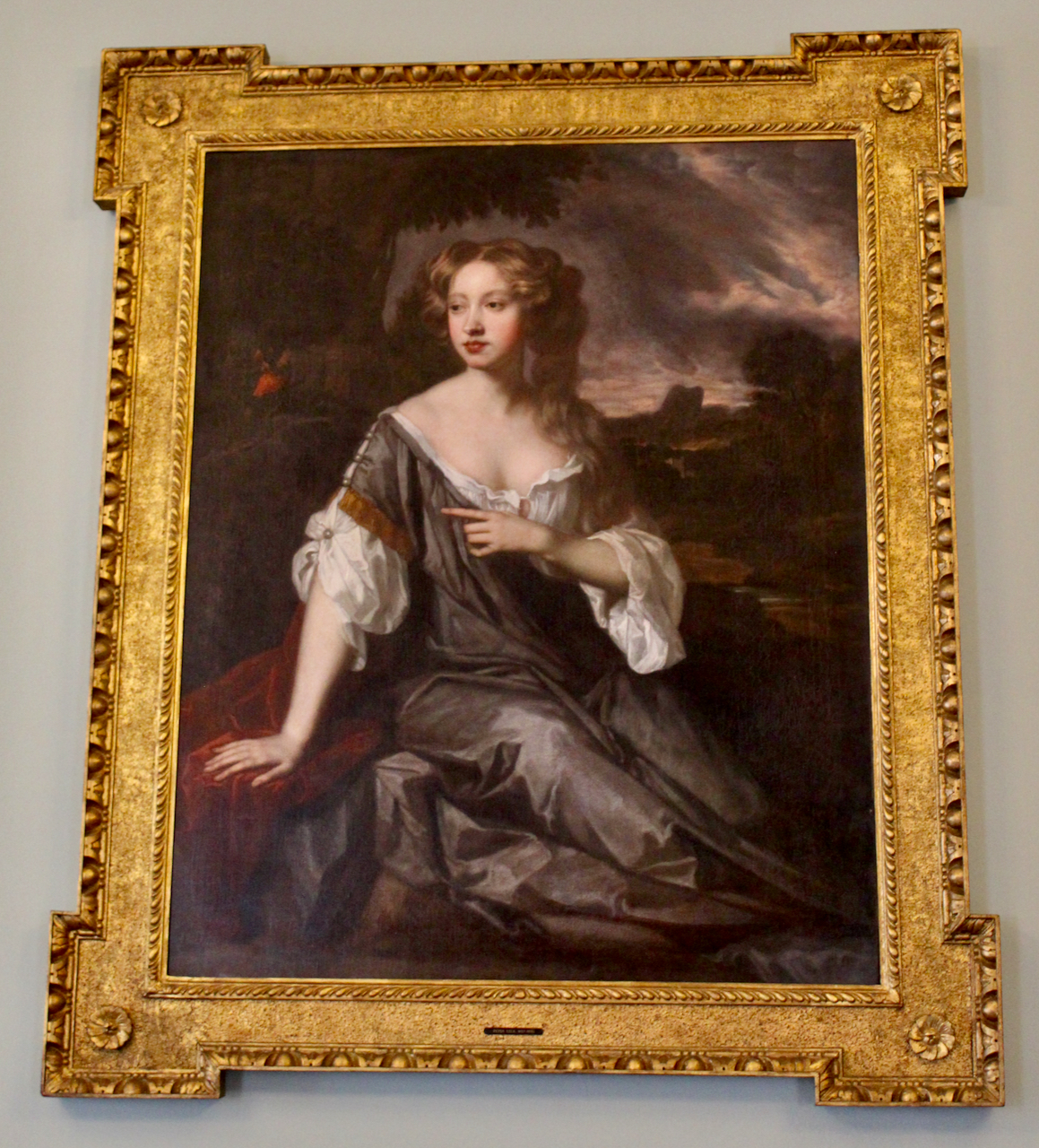
Lucy Loftus née Brydges (1654-1681? or 1646-1689?) of Sudeley Manor, Gloucestershire, England, by Peter Lely, wife of Adam Loftus (1632-1691), 1st and last Viscount Lisburne. Photograph © Jennifer Winder-Baggot, www.irishhistorichouses.com

Dudley Loftus (b. 1561) and Anne née Bagenal’s son Nicholas (1592-1666) of Fethard, County Tipperary, married Margaret Chetham and they had a son Nicholas (b. 1635) who had three daughters, and Henry (1636-1716), who lived at Loftus Hall in County Wexford.

Henry Loftus (1636-1716) married first Amy Gorges and they had a daughter Jane (d. 1734) who married Thomas Cosby (d. 1735) of Stradbally Hall in County Laois, and a daughter Margaret who married Highgate Boyd.

Henry Loftus (1636-1716) then married Anne Crewkern and they had a son Henry who died unmarried and a son Nicholas (d. 1763) who became 1st Viscount Loftus of Ely.

Nicholas Loftus, 1st Viscount Ely (1687-1763). Rathfarnham Castle. Photograph © Jennifer Winder-Baggot, www.irishhistorichouses.com

Nicholas Loftus (d. 1763) 1st Viscount Loftus of Ely married Anne, daughter of William Ponsonby, 1st Viscount Duncannon. They had several children:

Mary (d. 1779) married William Alcock (d. 1779) of Wilton Castle in County Wexford;

Anne (d. 1768) married Charles Tottenham (1716-1795).

Elizabeth (d. 1747) married John Tottenham, 1st Bt (d. 1786);

Nicholas (d. 1766) who took the name Hume-Loftus and became 1st Earl of Ely. He married Mary Hume, daughter of Gustavus Hume, 3rd Baronet. Their son Nicholas Loftus Hume (1738-1769) 2nd Earl of Ely and on his death the Earldom expired.

Nicholas Hume Loftus, 1st Earl of Ely (1708-1766) by Jacob Ennis. He added Hume to his name after marrying Mary Hume, daughter of Gustavus Hume 3rd Baronet of Castle Hume, Co Fermanagh. Photograph © Jennifer Winder-Baggot, www.irishhistorichouses.com

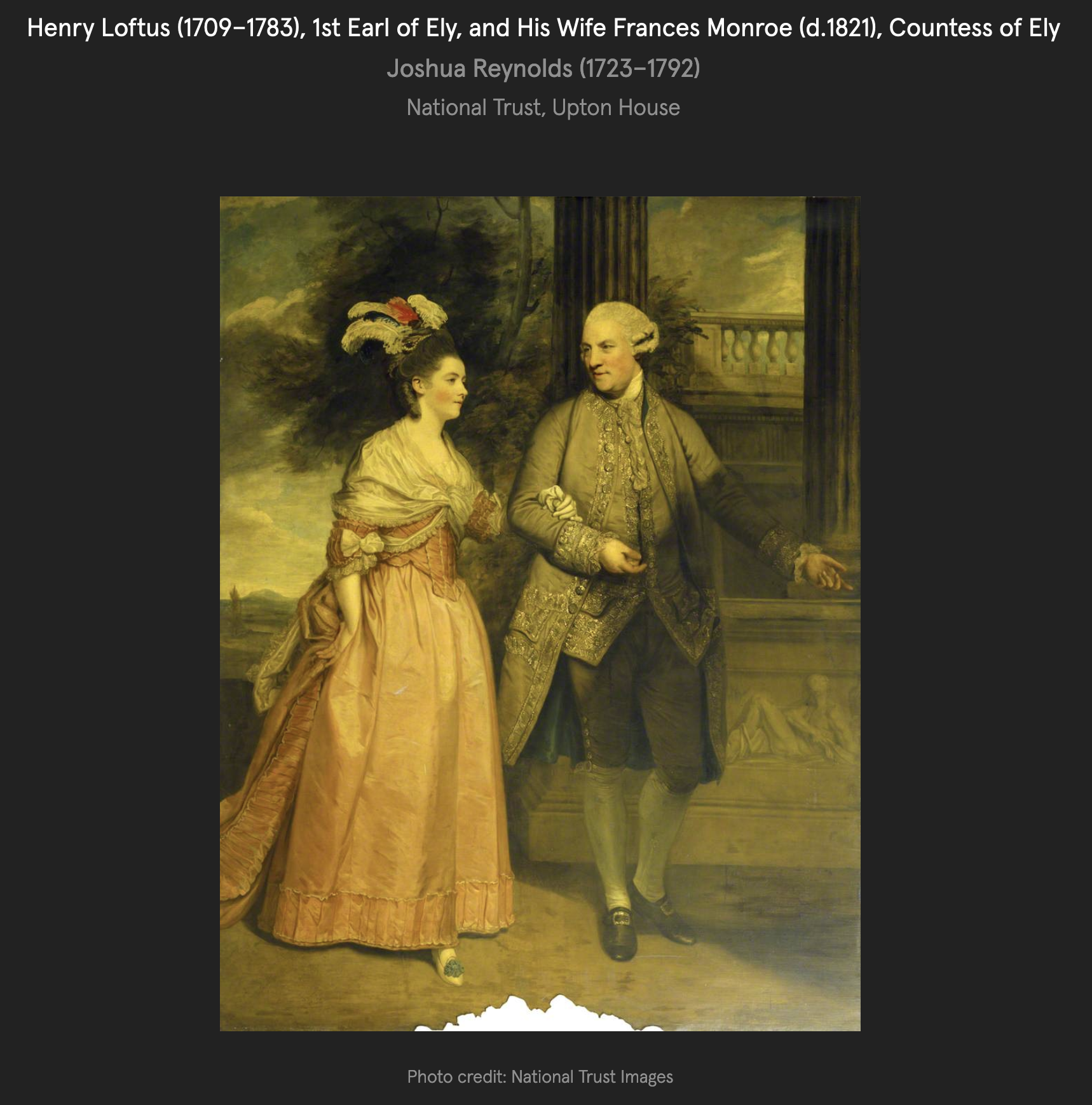
Nicholas Loftus (d. 1763) 1st Viscount Loftus of Ely and Anne née Ponsonby had another son Henry Loftus (1709-1783) who became 1st (and last Earl) of Ely of the second creation.

Henry Loftus, 1st Earl of Ely of the 2nd Creation (1709-1783) by Angelica Kauffman. He was the son of Nicholas Loftus, 1st Viscount Ely (1687-1763). Rathfarnham Castle. Photograph © Jennifer Winder-Baggot, www.irishhistorichouses.com
Henry Loftus (1709-1783) and wife Frances Monroe, Countess of Ely (d.1821) by Sir Joshua Reynolds courtesy of National Trust Upton House.

Nicholas Loftus (d. 1763) 1st Viscount Loftus of Ely and Anne née Ponsonby’s daughter Elizabeth (d. 1747) who married John Tottenham, 1st Bt (d. 1786) had a son Charles (1738-1806) who took the surname Loftus in 1784, and was created 1st Marquess of Ely.

Charles Tottenham Loftus (1738-1806) 1st Marquess of Ely by Hugh Douglas Hamilton, at Rathfarnham Castle. He was the son of John Tottenham 1st Baronet Tottenham and Elizabeth Loftus, daughter of Nicholas Loftus 1st Viscount Loftus of Ely, of Loftus Hall in County Wexford. Photograph © Jennifer Winder-Baggot, www.irishhistorichouses.com

Charles Tottenham Loftus (1738-1806) 1st Marquess of Ely married Jane Myhill and they had two sons: John Loftus (1770-1845) who succeeded as 2nd Marquess of Ely, and Rt. Rev. Lord Robert Ponsonby Tottenham (1773-1850) who served as Bishop of Clogher.

Oil painting on canvas, John Loftus, 2nd Marquess of Ely (1770-1845), attributed to Sir Thomas Lawrence (1769-1830). A three-quarter-length portrait, in a brown coat and blue sash. Peer’s robes to the right, red curtain to the background. A picture of the sitter’s wife by Lawrence is in the Art Institute of Chicago. Sothebys, Public Domain, https://commons.wikimedia.org/w/index.php?curid=15266849
John Henry Wellington Graham Loftus (1849-1889) 4th Marquess of Ely with Jane Loftus née Hope-Vere Marchioness of Ely by John & Charles Watkins c. 1860, NPG x134191.
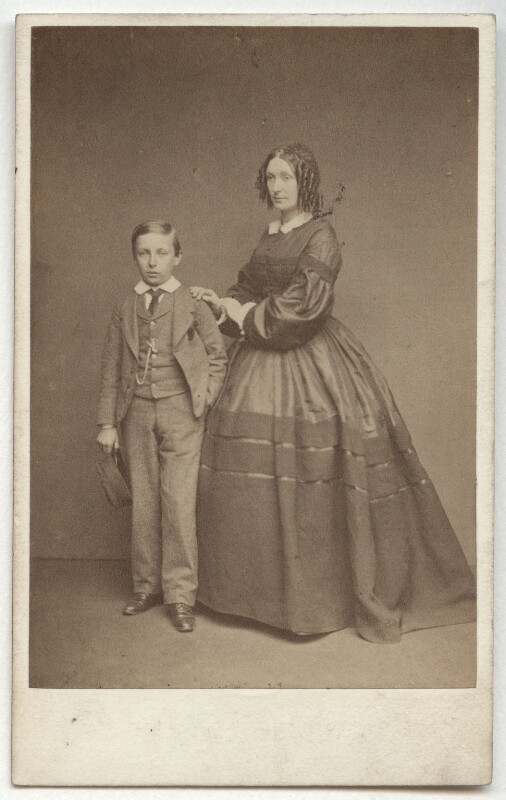
Inscription verso reads, ‘Harriette / Née McClintock – wife of Richard Longfield of Longueville Co. Cork.’ courtesy of Whyte’s May 2016. Harriet Elizabeth (c. 1814-1834) was the daughter of John McClintock (1770-1855) of County Louth and Elizabeth Trench (1784-1877), and she married Richard Longfield (1802-1889) of Longueville, County Cork.
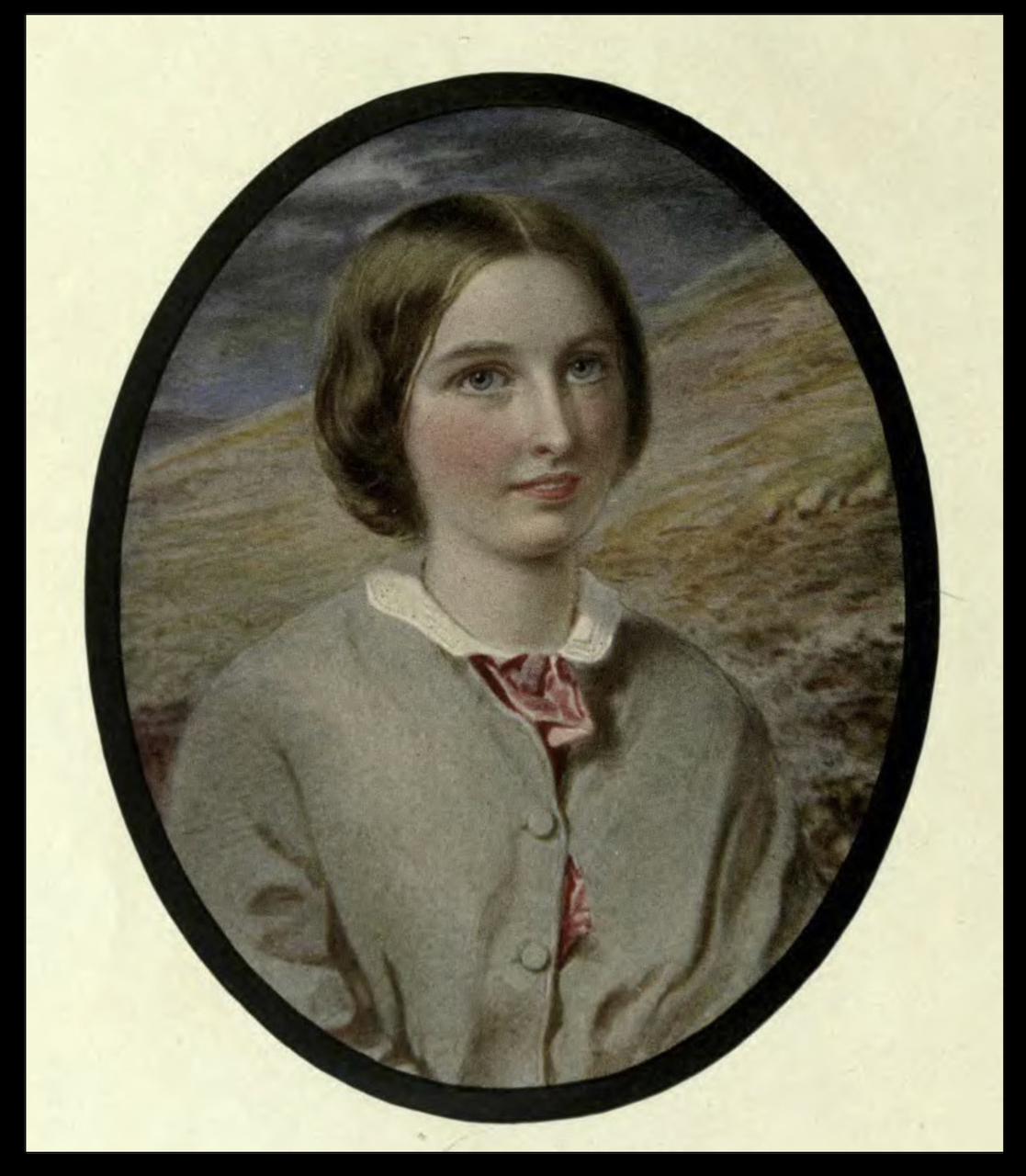
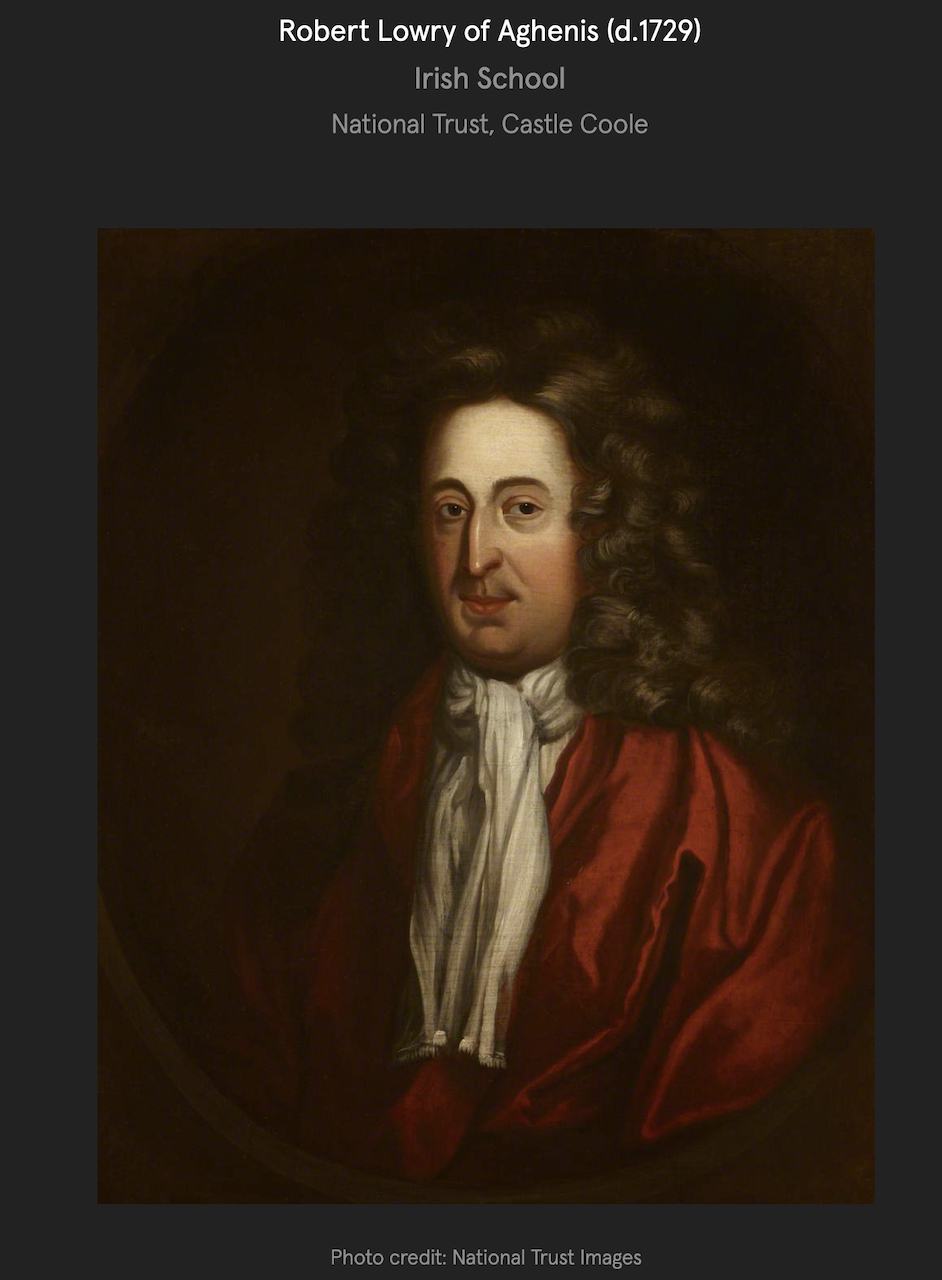
Lowry, Robert (d. 1729) of Aghenis Irish school courtesy of National Trust Castle Coole. He was the father of Galbraith Lowry-Corry (1706-1769).
Galbraith Lowry-Corry (1706-1769) courtesy of National Trust, Castle Coole, County Fermanagh.
Sarah Corry (1709-1779) later Mrs Galbraith Lowry Corry, by Anthony Lee courtesy of National Trust, Castle Coole, County Fermanagh.
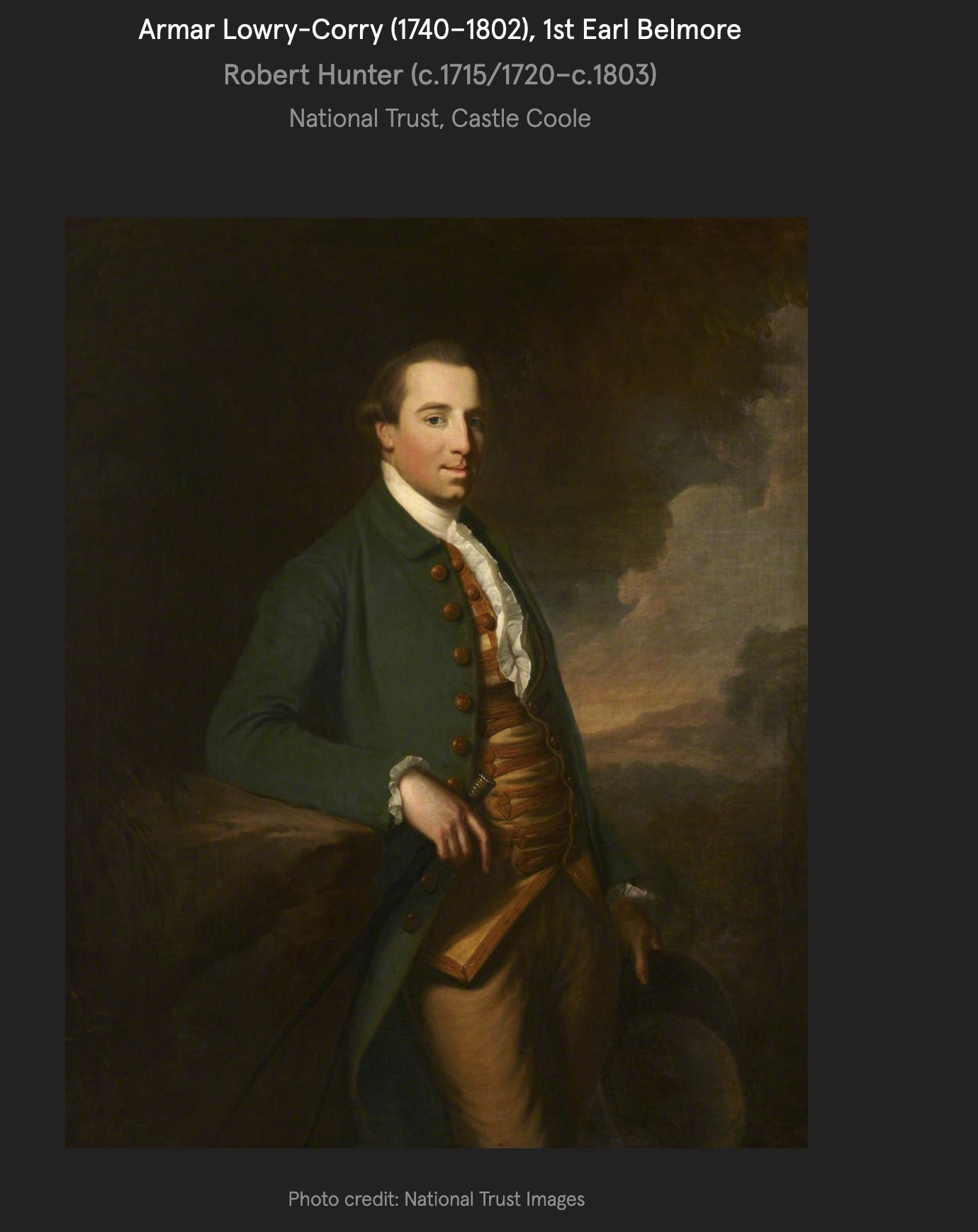
Armar Lowry-Corry (1740-1802) 1st Earl Belmore, by Robert Hunter, courtesy of National Trust, Castle Coole, County Fermanagh. He was the son of Galbraith Lowry-Corry (1706-1769) and Sarah Corry (1709-1779).
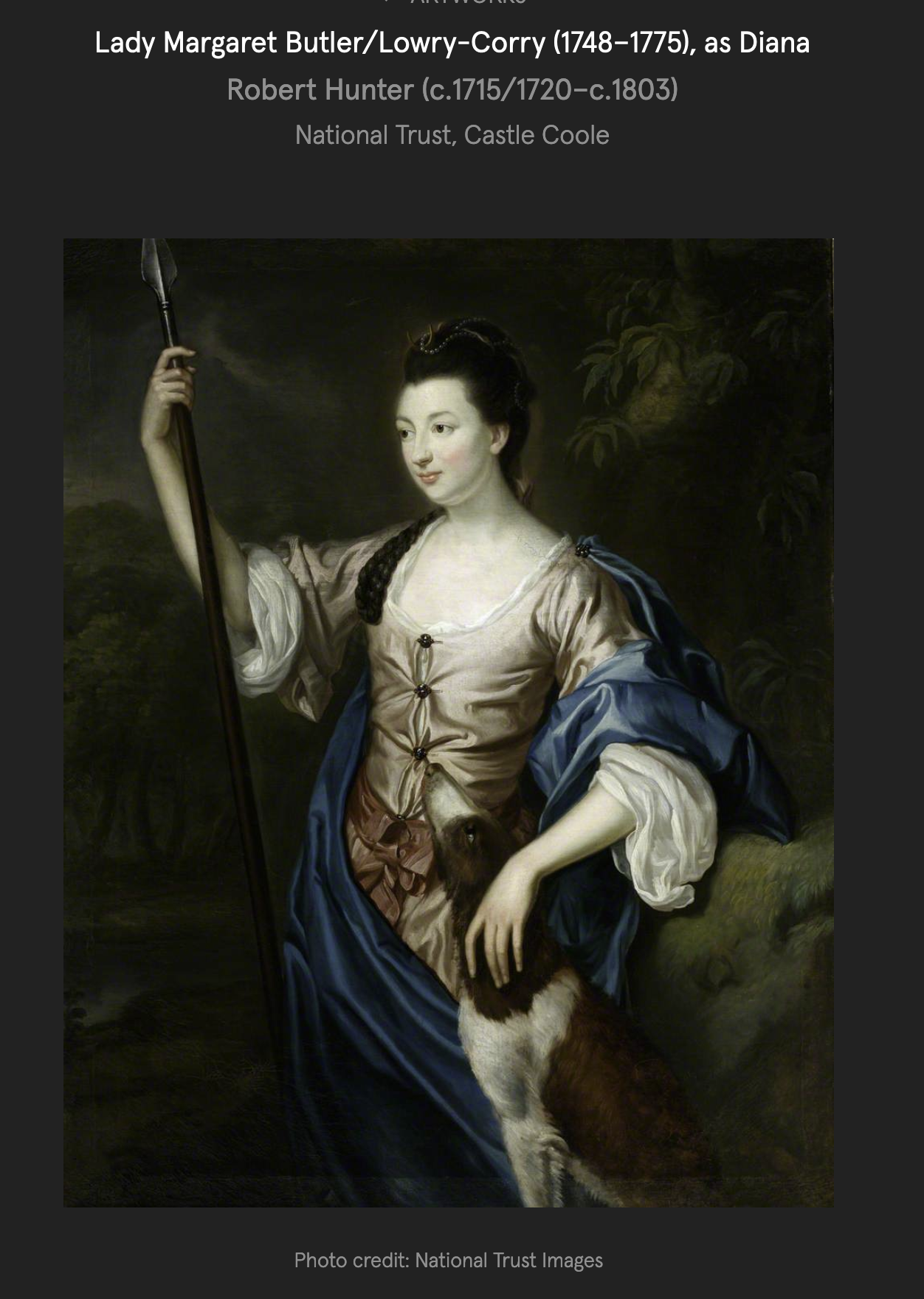
Margaret Lowry-Corry née Butler (1748-1775) by Robert Hunter, courtesy of National Trust, Castle Coole, County Fermanagh. She was 1st wife of Armar Lowry-Corry (1740-1802) 1st Earl Belmore.
Anne Lowry-Corry, Countess of Enniskillen (1742-1802) by Horace Hone c.1785, watercolour painting on ivory, courtesy National Trust Florence Court. Sister of Armar Lowry-Corry (1740-1802) 1st Earl Belmore and wife of William Willoughby Cole 1st Earl of Enniskillen.
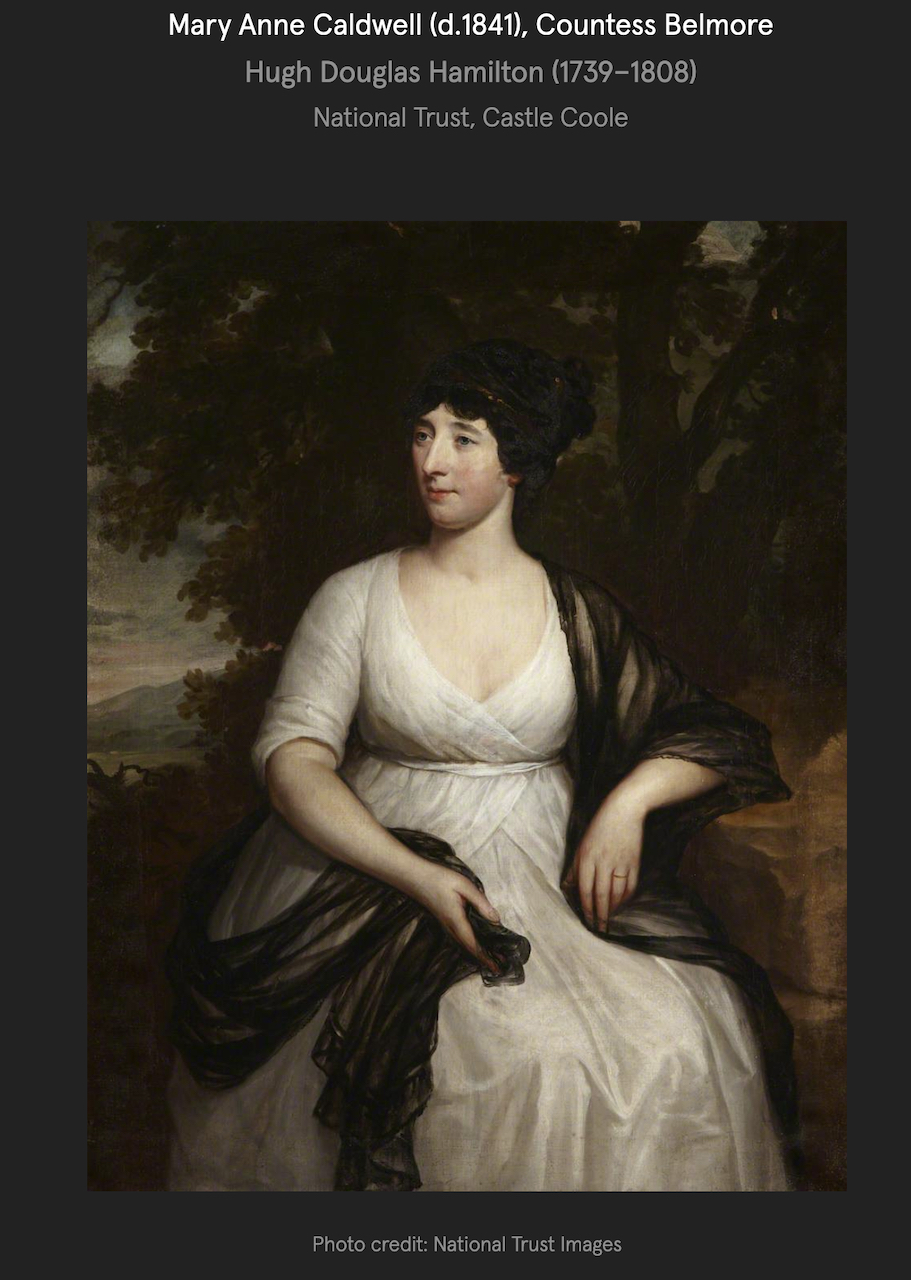
Mary Anne Lowry-Corry née Caldwell, (d. 1841) Countess Belmore by Hugh Douglas Hamilton courtesy of National Trust Castle Coole. She was the daughter of John Caldwell 4th Baronet of Castle Caldwell in County Fermanagh. She was 3rd wife of Armar Lowry-Corry (1740-1802) 1st Earl Belmore. His second wife was Henrietta Hobart, daughter of John Hobart 2nd Earl of Buckinghamshire.
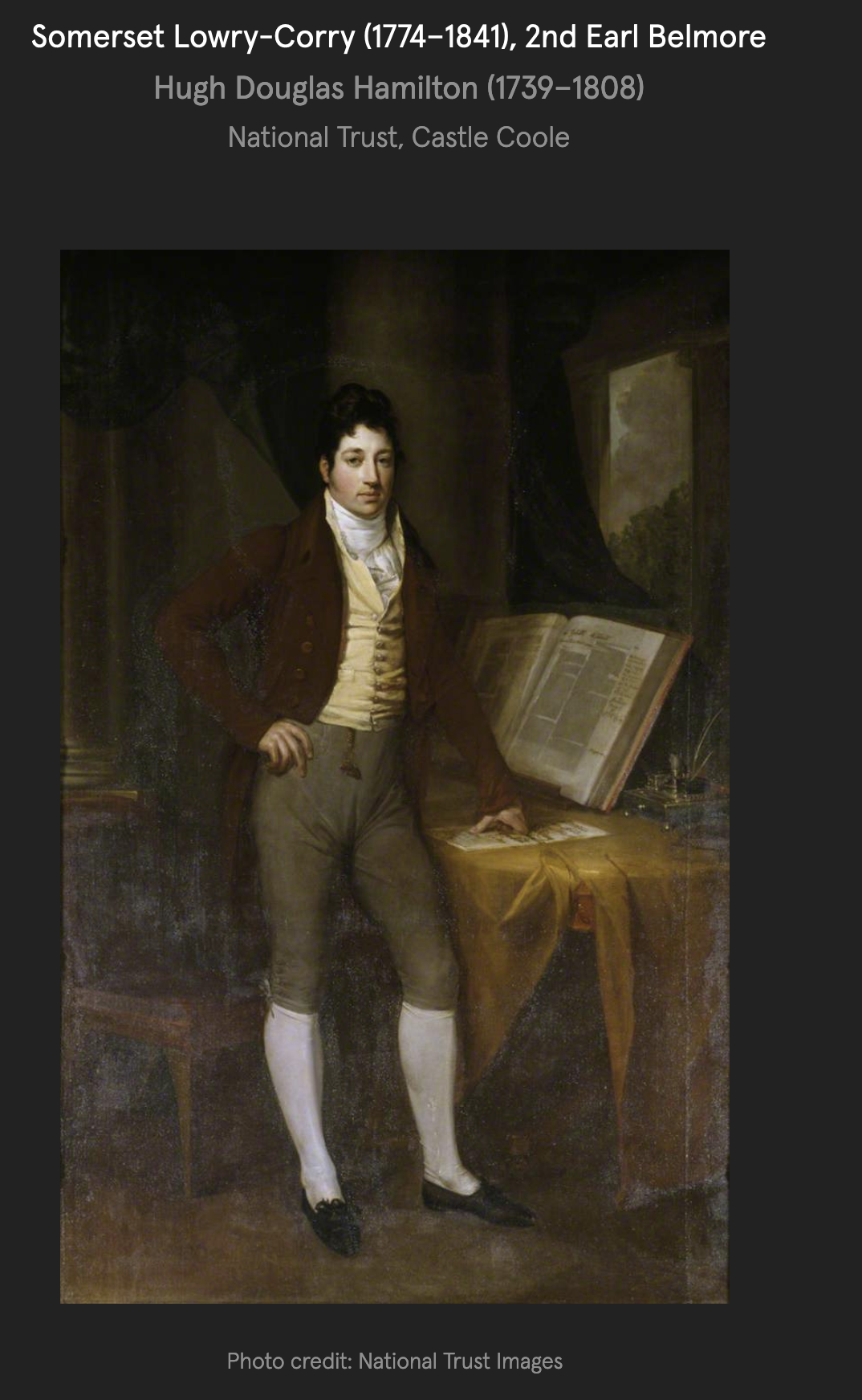
Somerset Lowry-Corry (1774-1841) 2nd Earl Belmore, by Hugh Douglas Hamilton, courtesy of National Trust, Castle Coole, County Fermanagh. He married Juliana Butler (1783-1861), daughter of Henry Thomas Butler 2nd Earl of Carrick (2nd Creation).
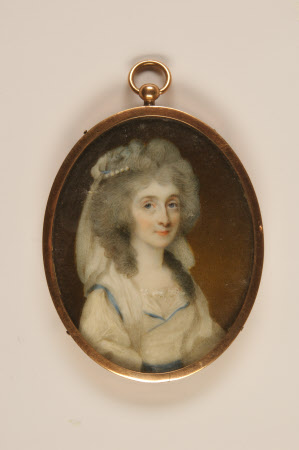
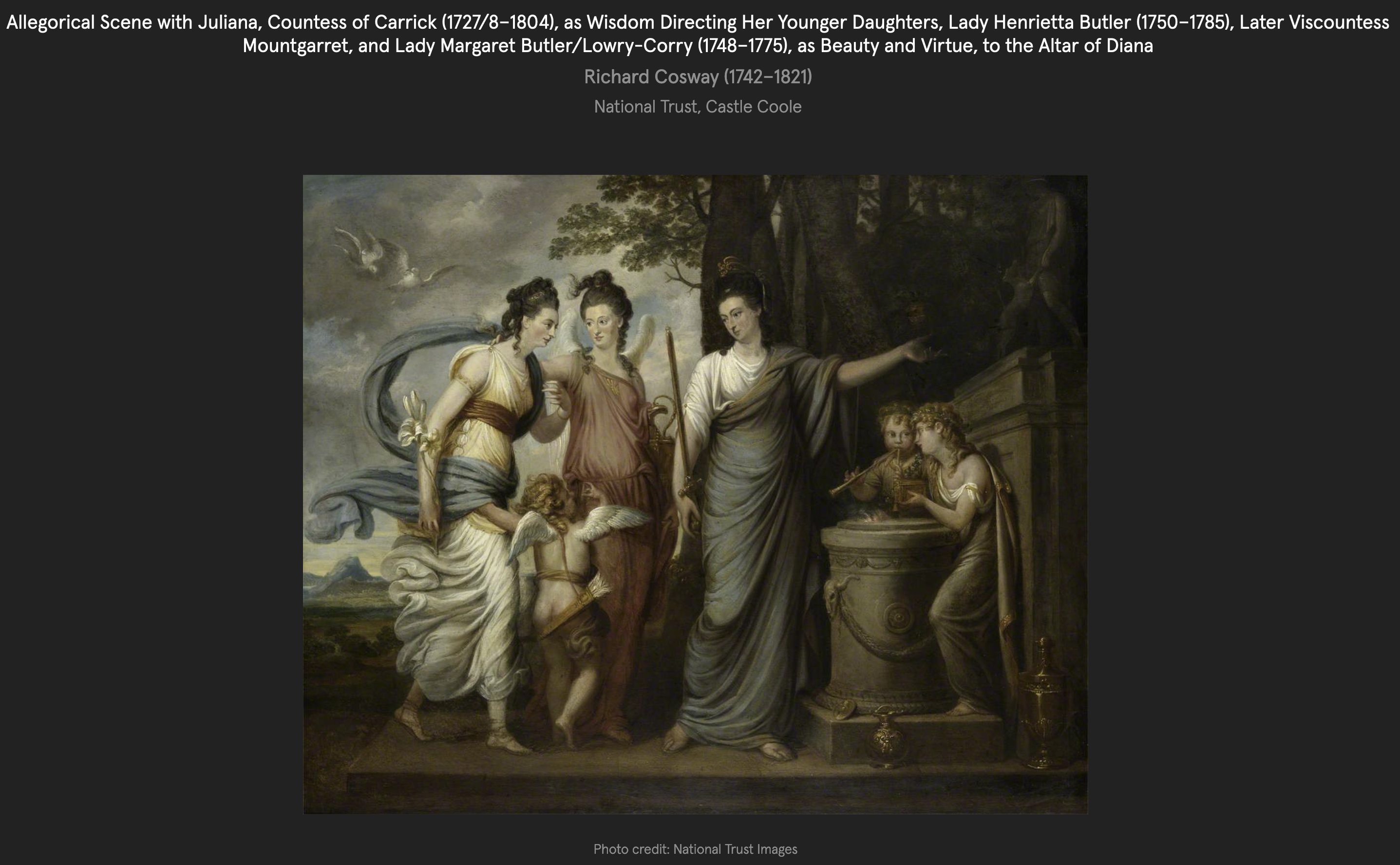
Juliana Butler (1727/8-1804) Countess of Carrick, with her younger daughters Lady Henrietta Butler (1750-1785), later Viscountess Mountgarret, and Lady Margaret Butler/Lowry-Corry (1748-1775), by Richard Cosway, courtesy of National Trust, Castle Coole, County Fermanagh.
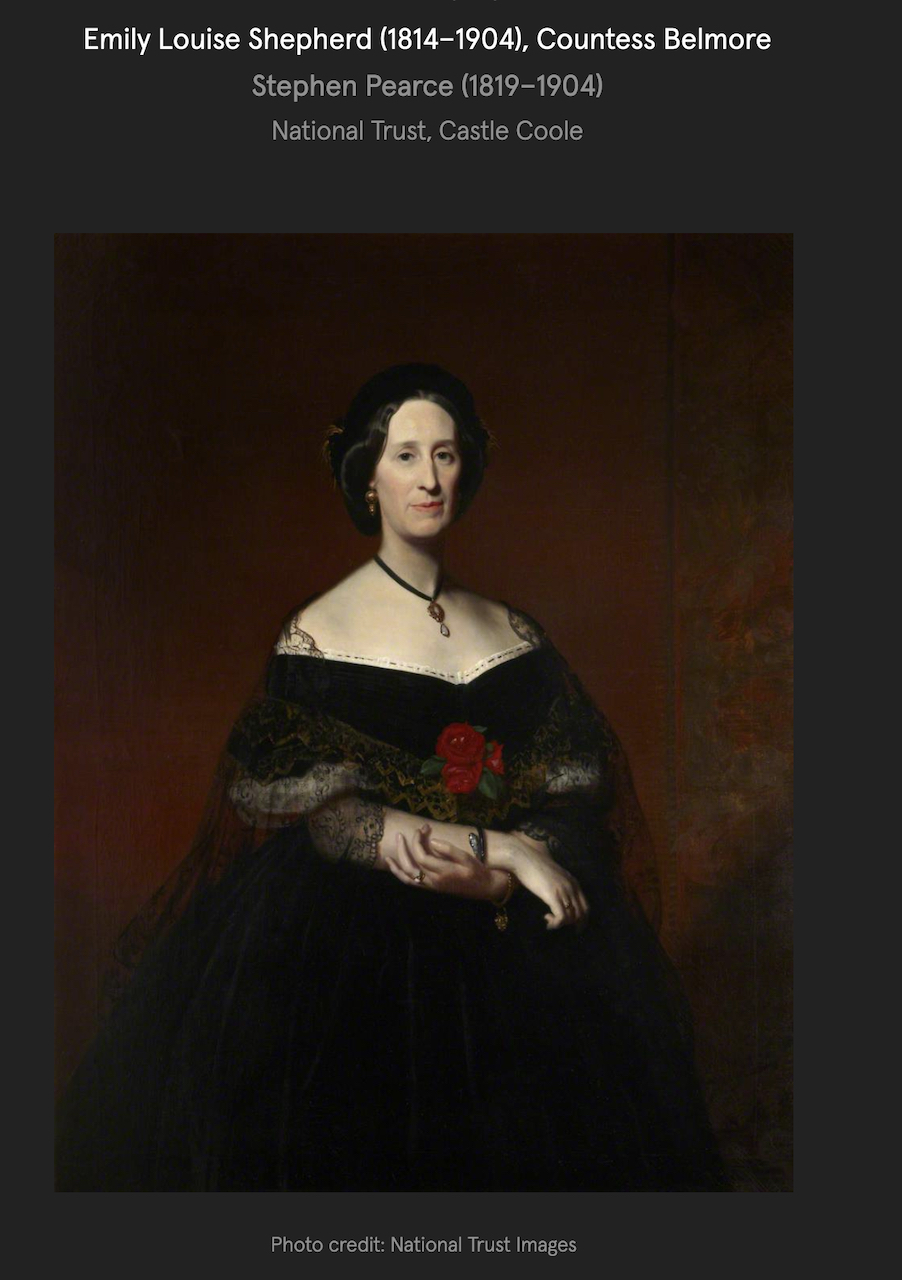
Emily Louise Lowry-Corry née Shepherd (1814-1904) Countess Belmore, wife of Armar Lowry-Corry 3rd Earl of Belmore, by Stephen Pearce courtesy of National Trust Castle Coole.
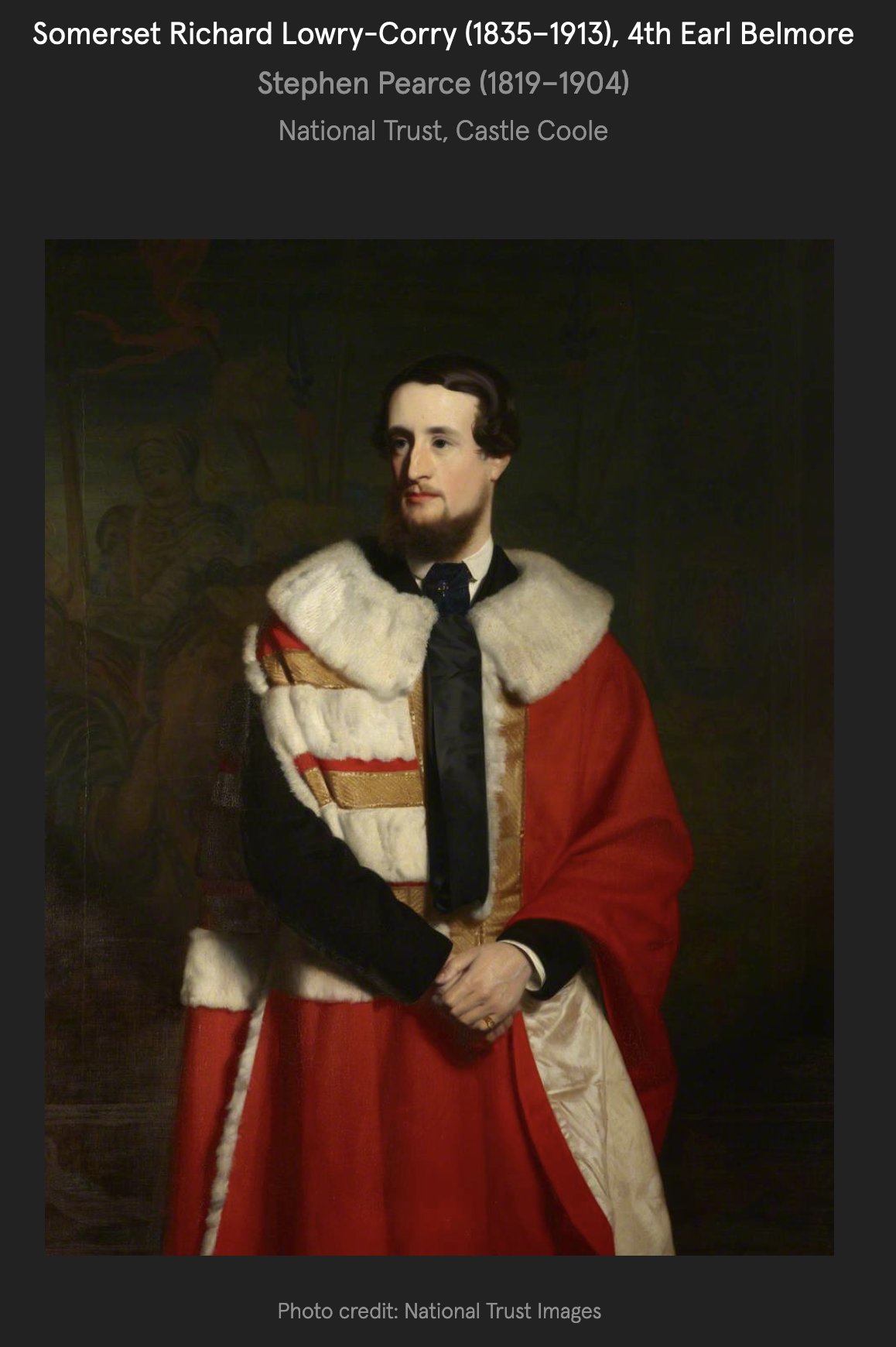
Somerset Richard Lowry-Corry (1835-1913) 4th Earl Belmore, by Stephen Pearce, courtesy of National Trust, Castle Coole, County Fermanagh. He was son of Armar Lowry-Corry 3rd Earl of Belmore.
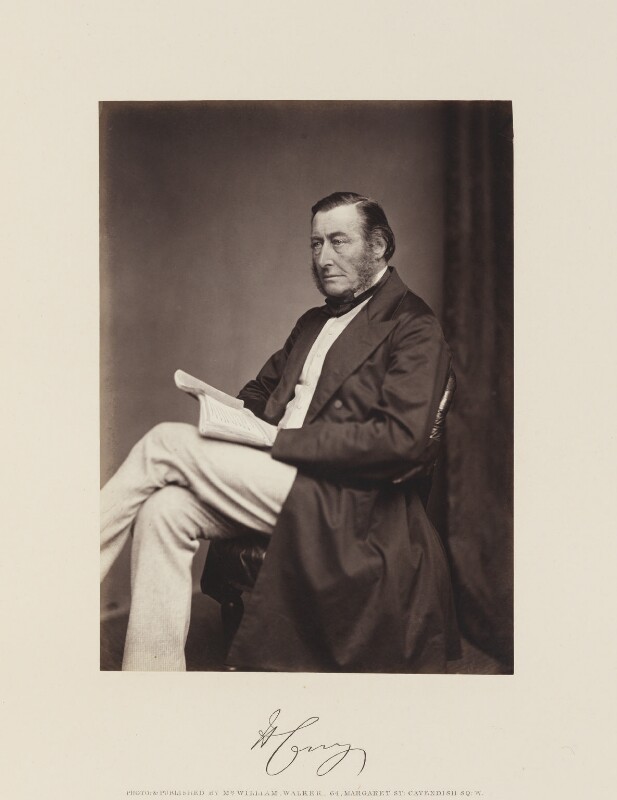
Henry Thomas Lowry Corry (1803-1873) by and published by William Walker 1867, NPG Ax15852.
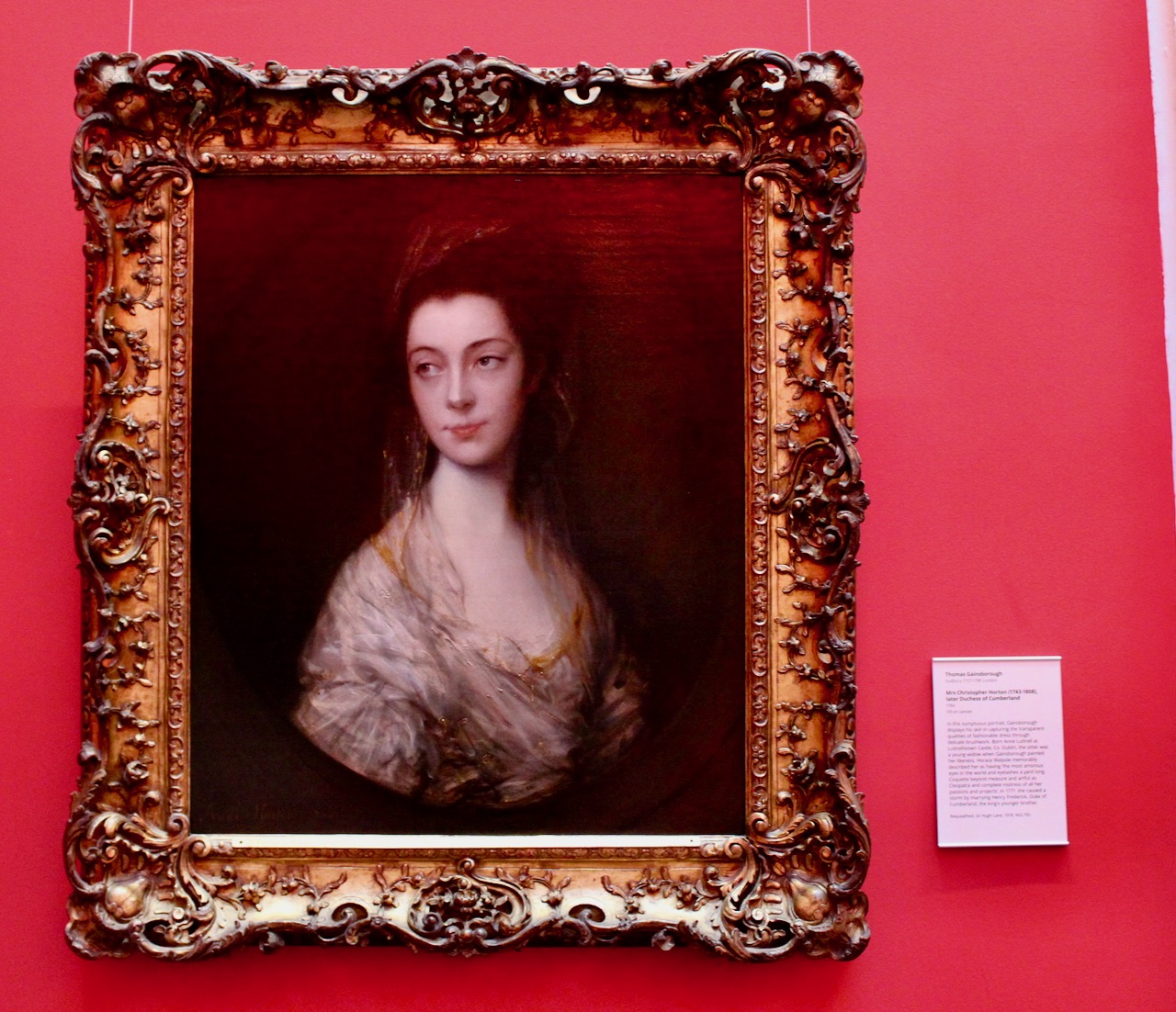
Anne Luttrell (1743-1808), who married Christopher Horton and later, Henry Frederick, Duke of Cumberland, painted by Thomas Gainsborough, National Gallery of Ireland, NGI795. Photograph © Jennifer Winder-Baggot, www.irishhistorichouses.com
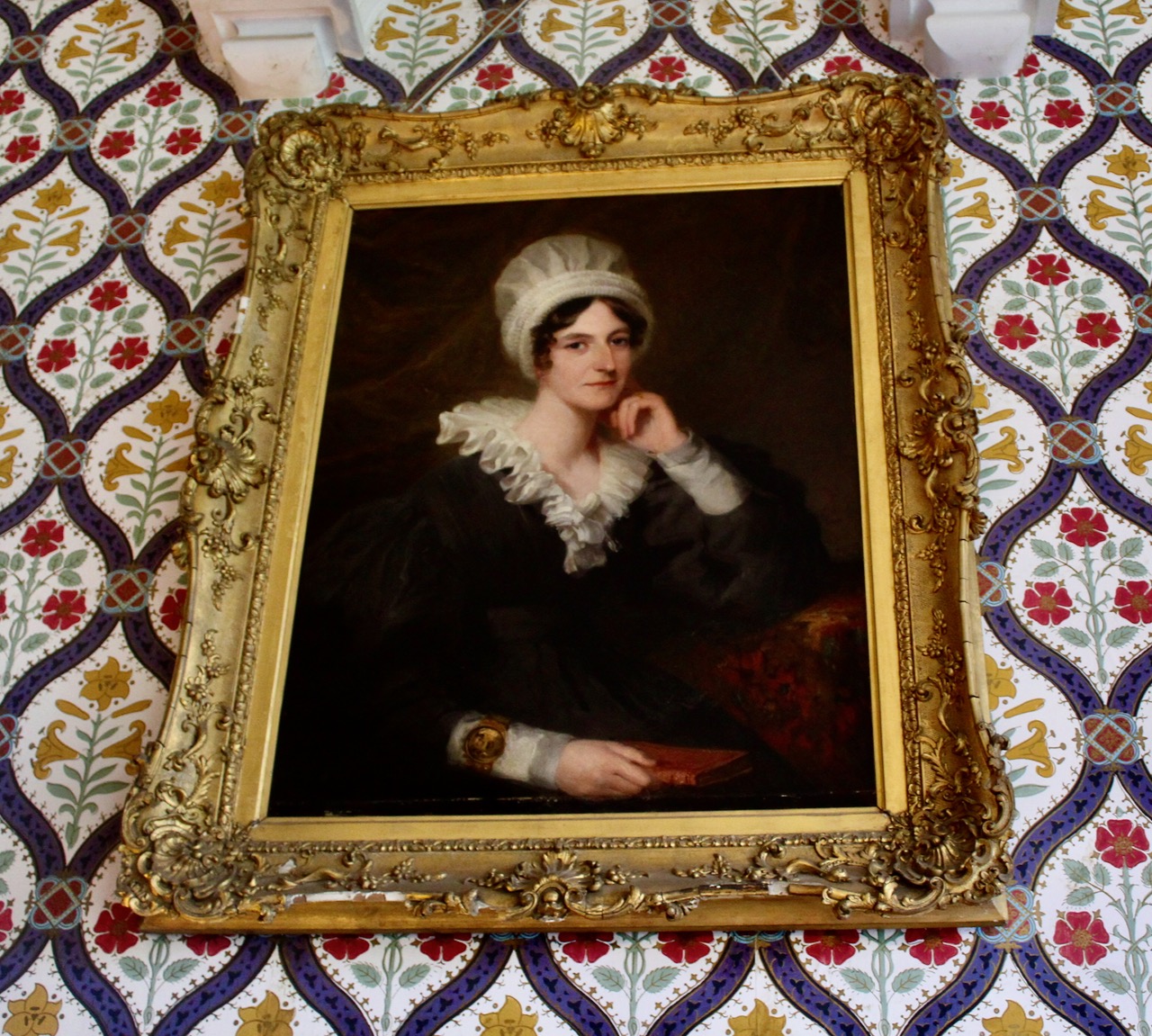
Georgiana Pakenham née Lygon (1774-1880). She married Thomas Pakenham 2nd Earl of Longford. Photograph © Jennifer Winder-Baggot, www.irishhistorichouses.com