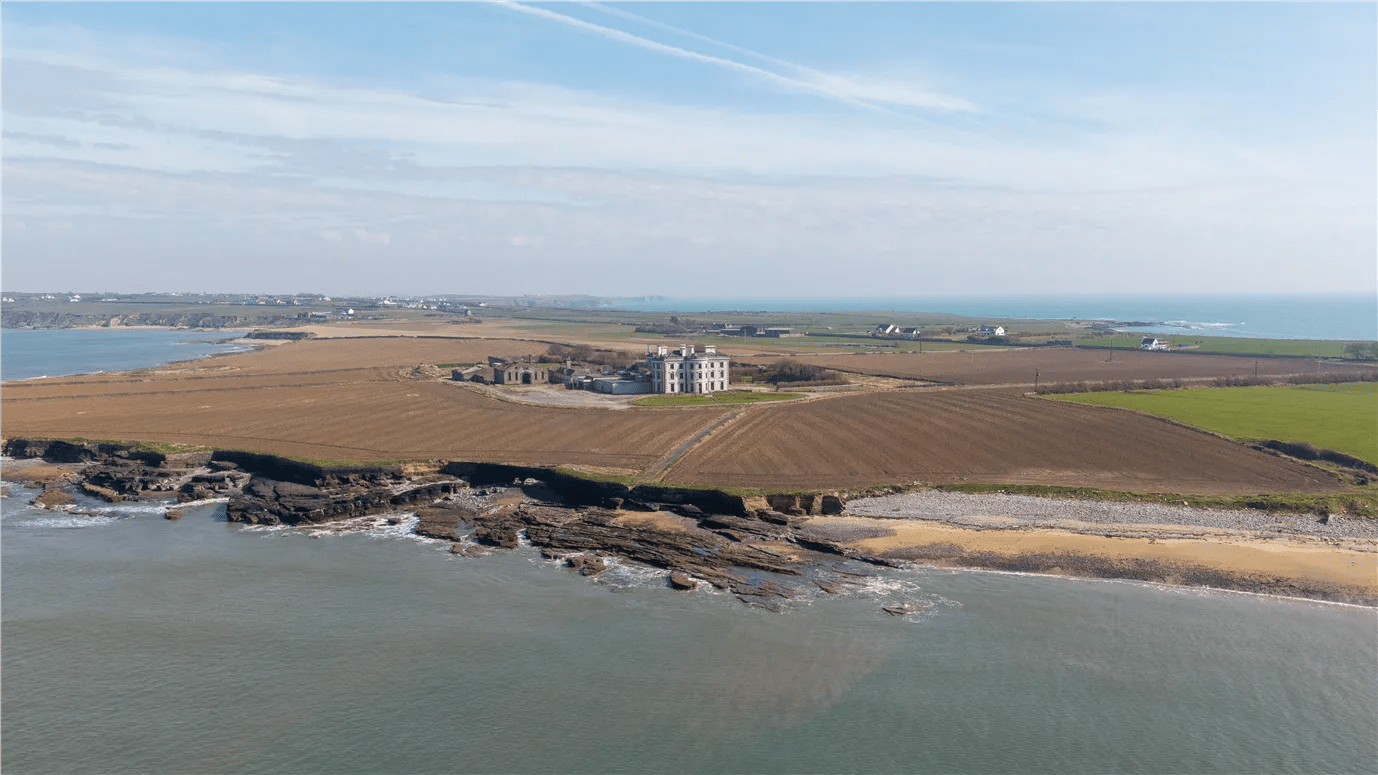
Rathfarnham Castle, Dublin, an Office of Public Works property

Rathfarnham Castle, Dublin

https://heritageireland.ie/places-to-visit/rathfarnham-castle/
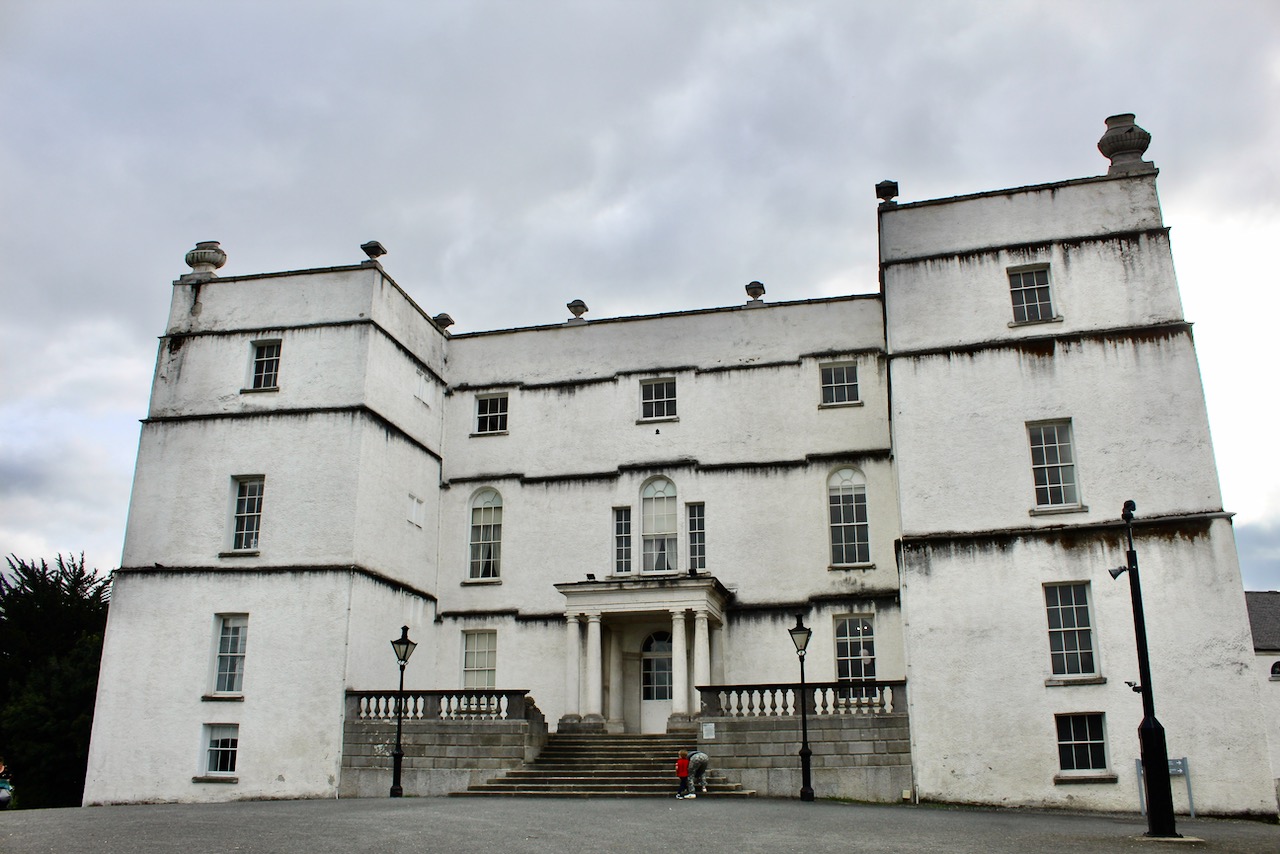
Rathfarnham Castle, Dublin, September 2021. Photograph © Jennifer Winder-Baggot, www.irishhistorichouses.com

General Enquiries: 01 493 9462, rathfarnhamcastle@opw.ie

Rathfarnham Castle is a wonderful property to visit and I suspect, much underappreciated! It is one of the oldest surviving residences in Ireland, and has a variety of impressive ceilings. It is also another property which was inhabited by the Jesuits at one time, as was Emo Court in County Laois. Although they no longer own either of these properties, they still run schools in the former Castle Browne in County Kildare (now Clongowes Wood College) and Belvedere House in Dublin. They certainly knew how to pick impressive properties! [1]

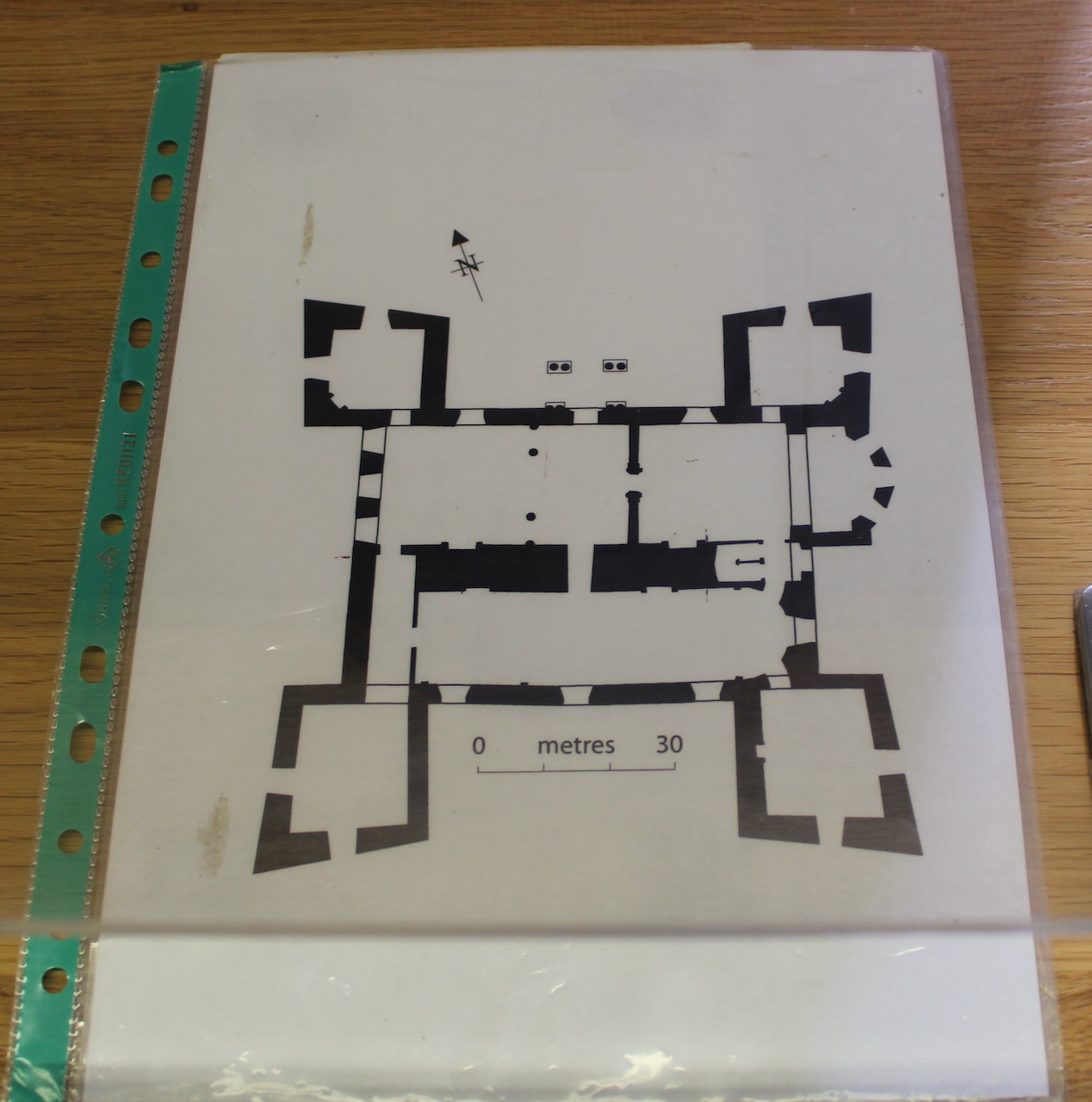
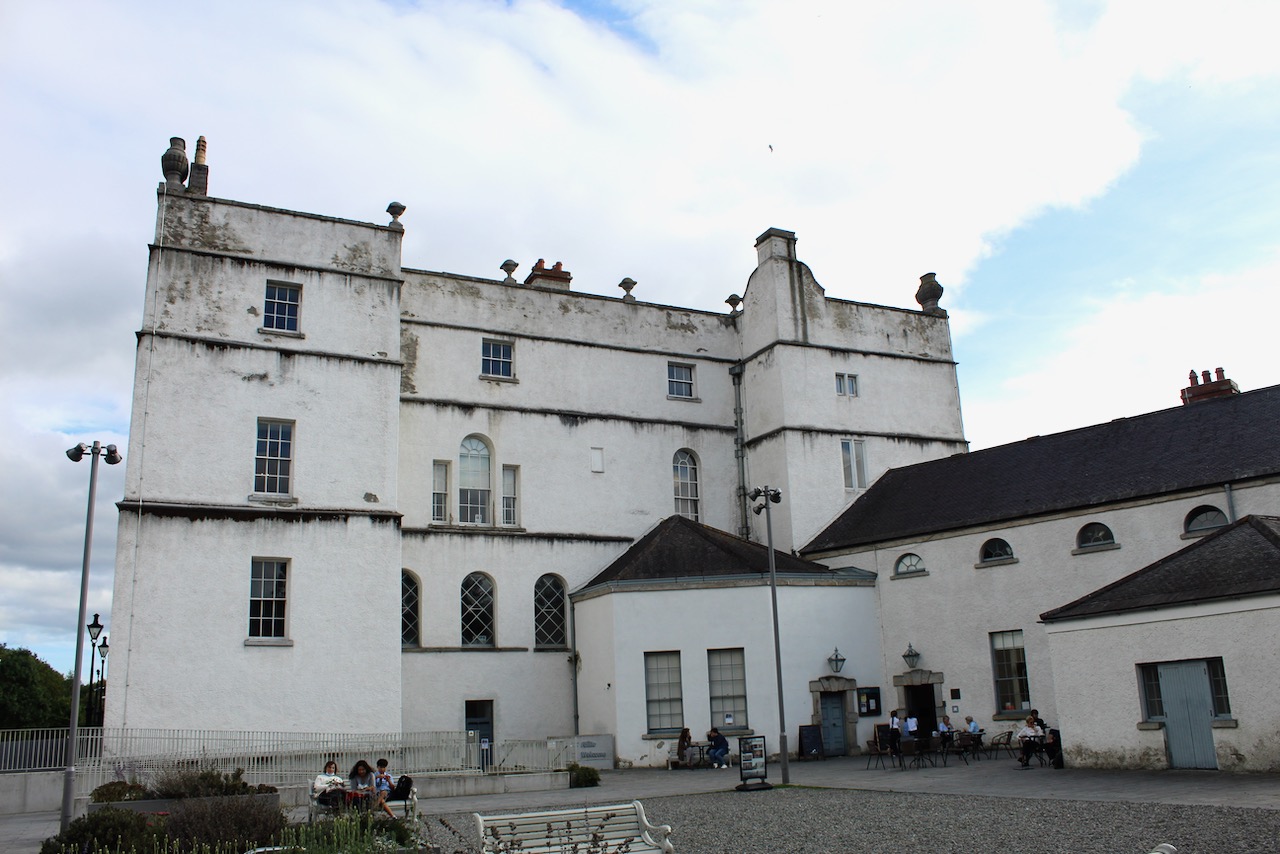
Rathfarnham Castle was built around 1583 for Adam Loftus (1533-1605), a clergyman originally from Yorkshire, who rose to the position of Archbishop of Dublin and Lord Chancellor of Ireland. Its position outside the city of Dublin made it vulnerable to attack, so it was built as a fortified house, with four flanker towers shaped to give maximum visibility of the surrounding landscape. The OPW website tells us:

Loftus wanted the Castle to be a grand and impressive home which would reflect his high status in Irish society. He also needed it to be easily defended against attack from hostile Irish families such as the O’Byrnes based in the mountains to the south. The design was radically modern for the time and based on recent continental thinking about defensive architecture. The angled bastion towers located at each corner of the building were equipped with musket loops which allowed a garrison of soldiers to defend all approaches to the castle.”
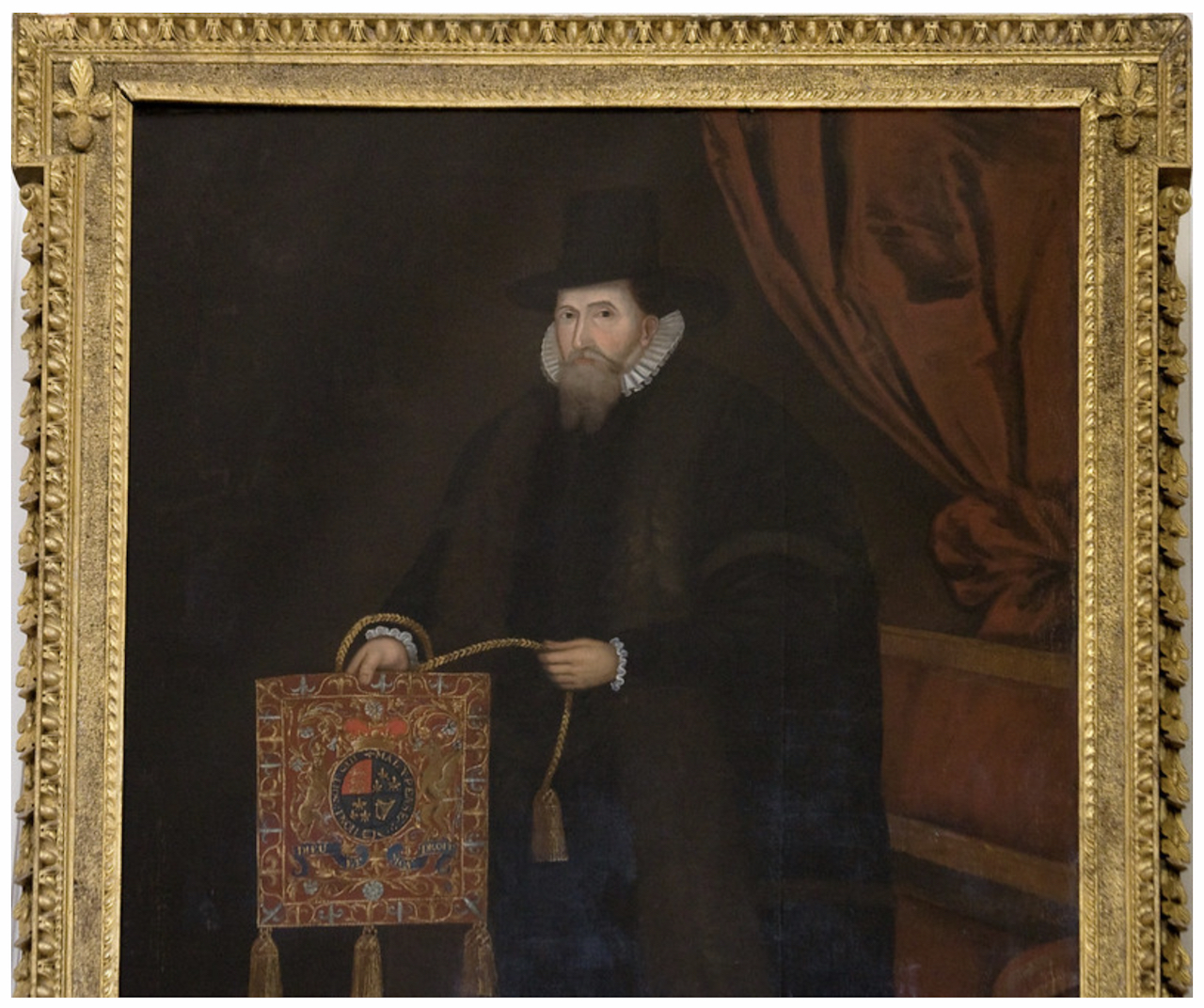
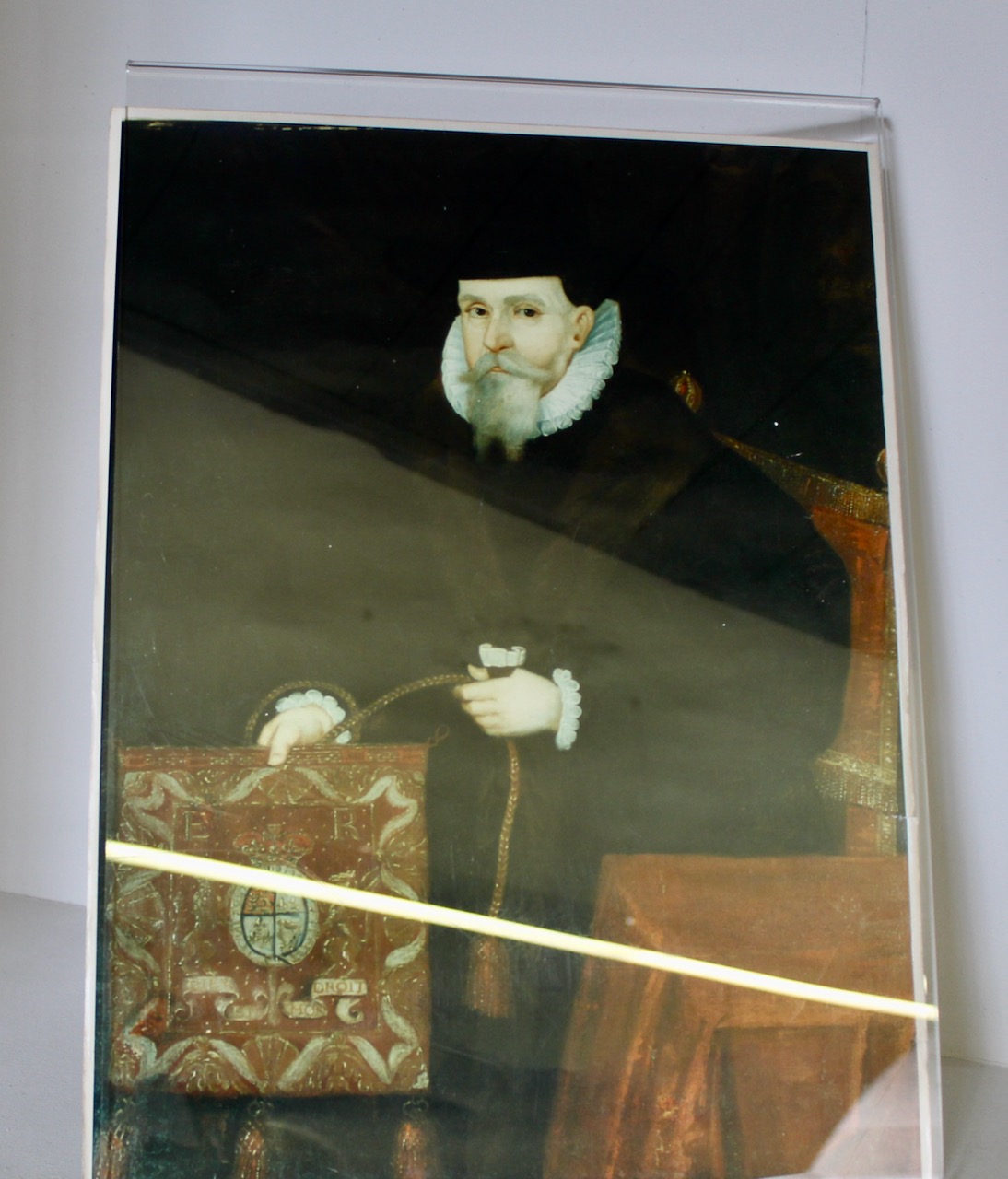
Archbishop-Chancellor Adam Loftus (1533-1605). The portrait is in Trinity College Dublin, as he was the first Provost. He was also Keeper of the Great Seal of Ireland, and he is here holding the embroidered purse which held the seal.
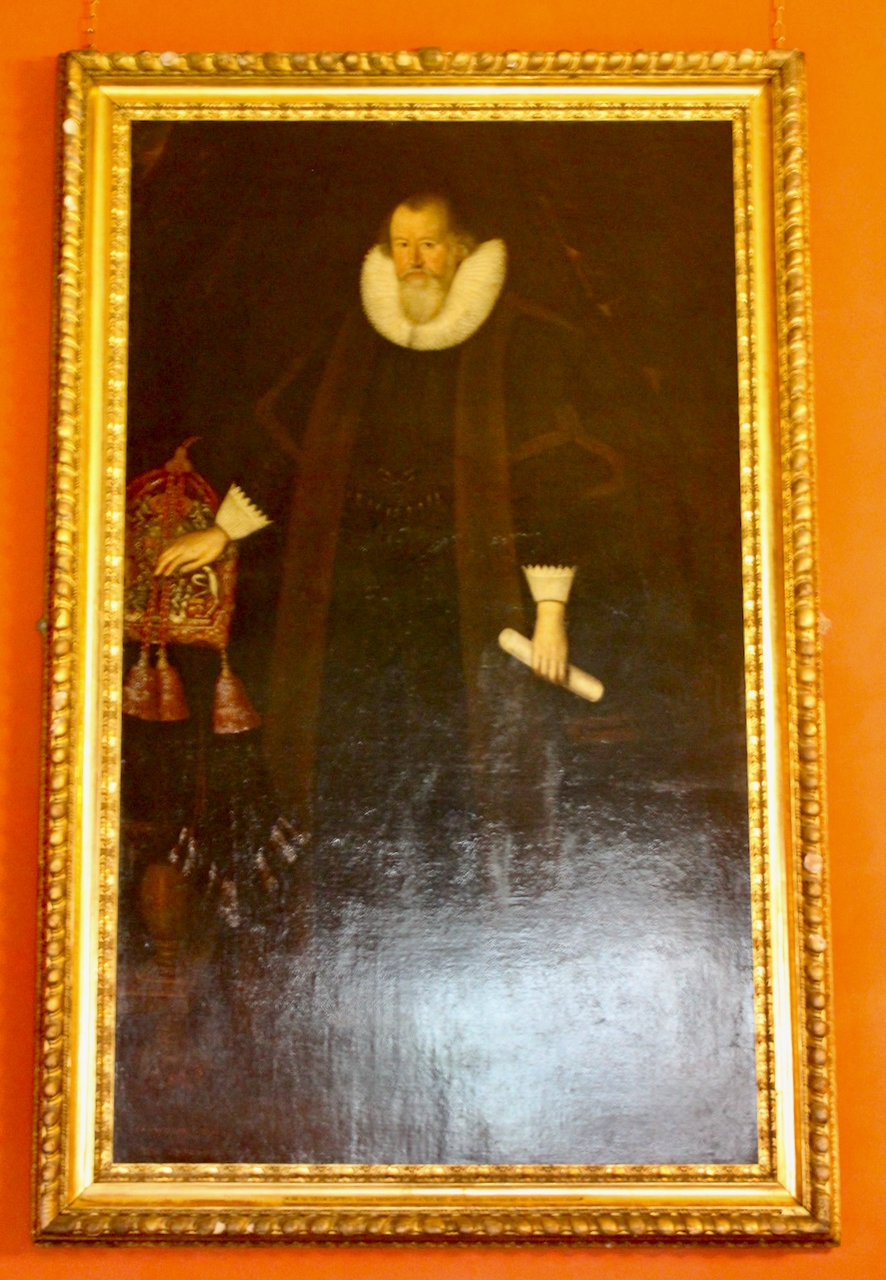
Adam Loftus (1533-1605), Lord Chancellor, 1619. Painting hangs in Malahide Castle, courtesy of National Museum of Ireland.
This shows the special shape of Rathfarnham Castle’s flanker towers.

Loftus had previously lived in an archiepiscopal palace in Tallaght, and it had been sacked by the O’Byrnes and O’Tooles from the Wicklow mountains, which is why he ensured that his new house in Rathfarnham had strong defenses. The Bishop’s Palace in Raphoe, now a ruin, is similarly shaped.
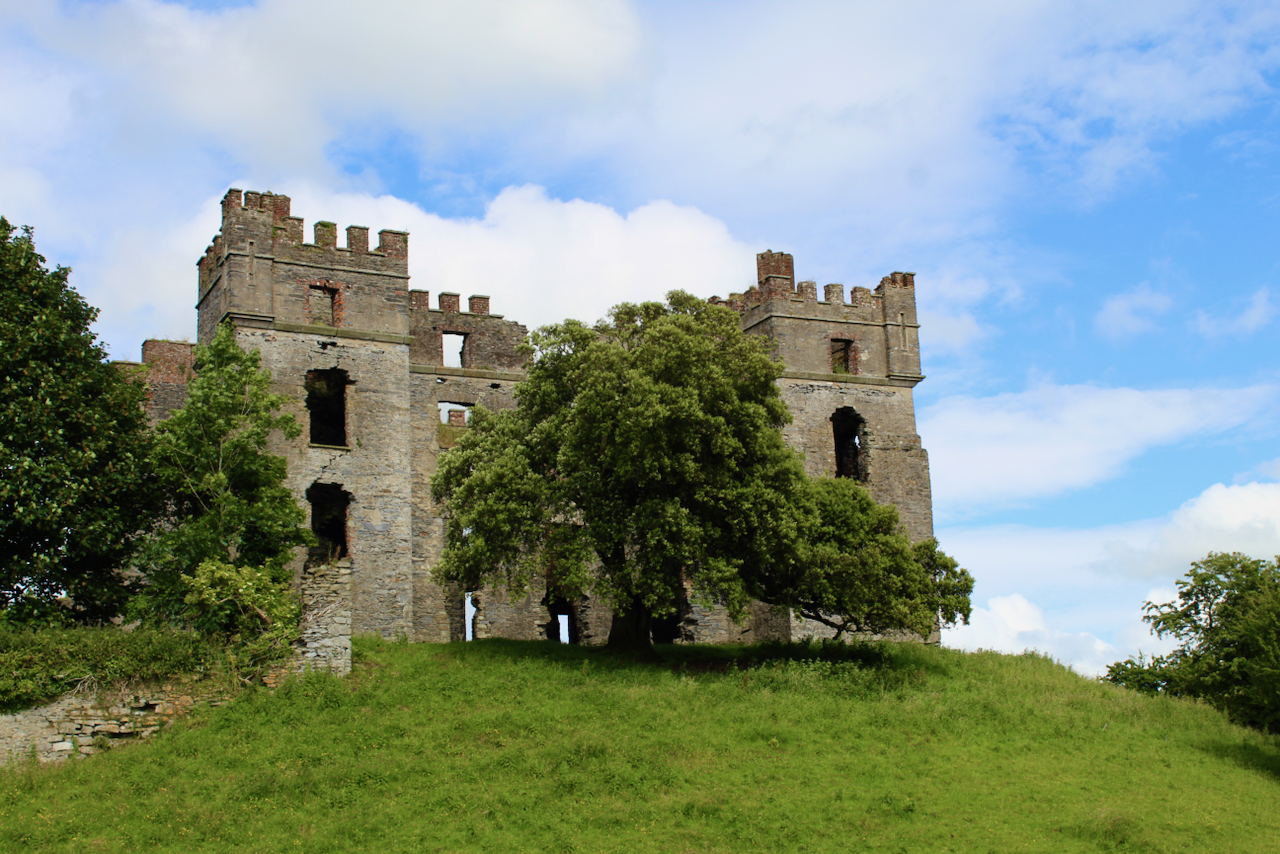
Ruin of Bishop’s Palace in Raphoe, County Donegal, built for Bishop John Leslie in 1636. Photograph © Jennifer Winder-Baggot, www.irishhistorichouses.com

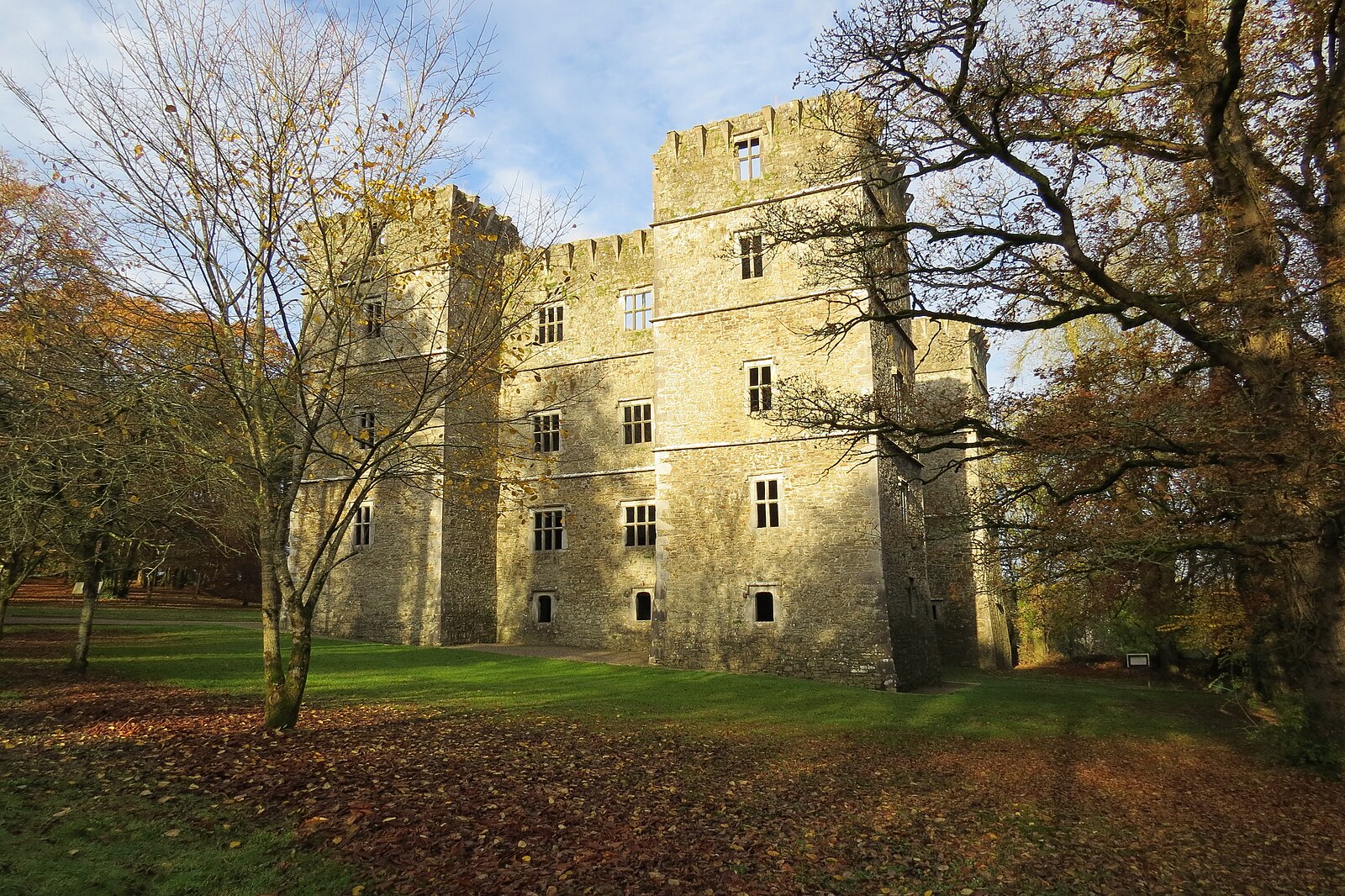
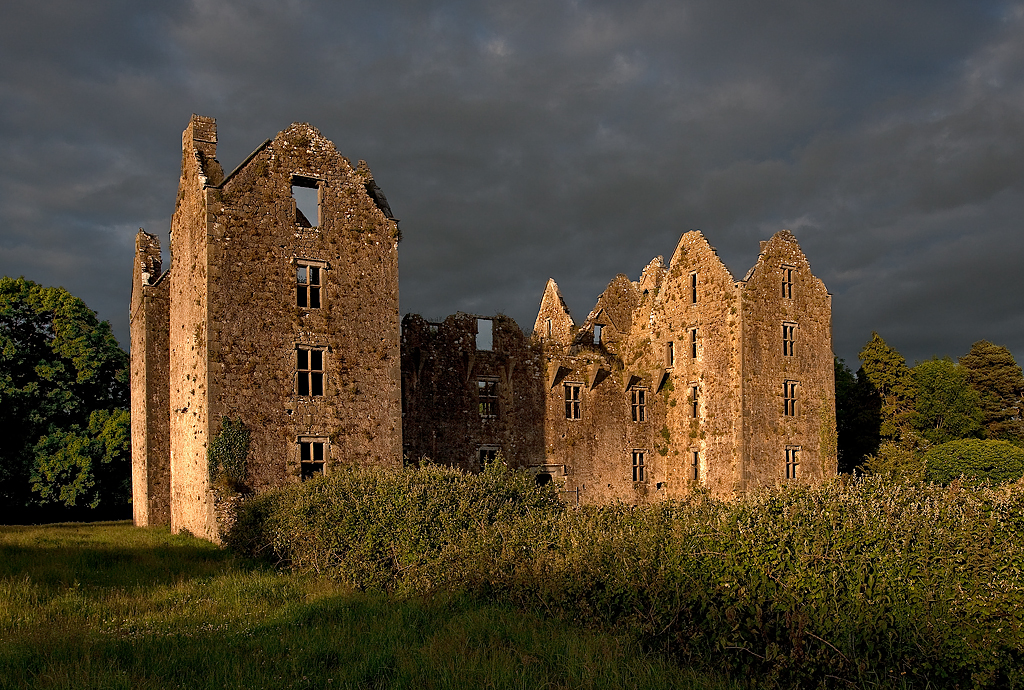
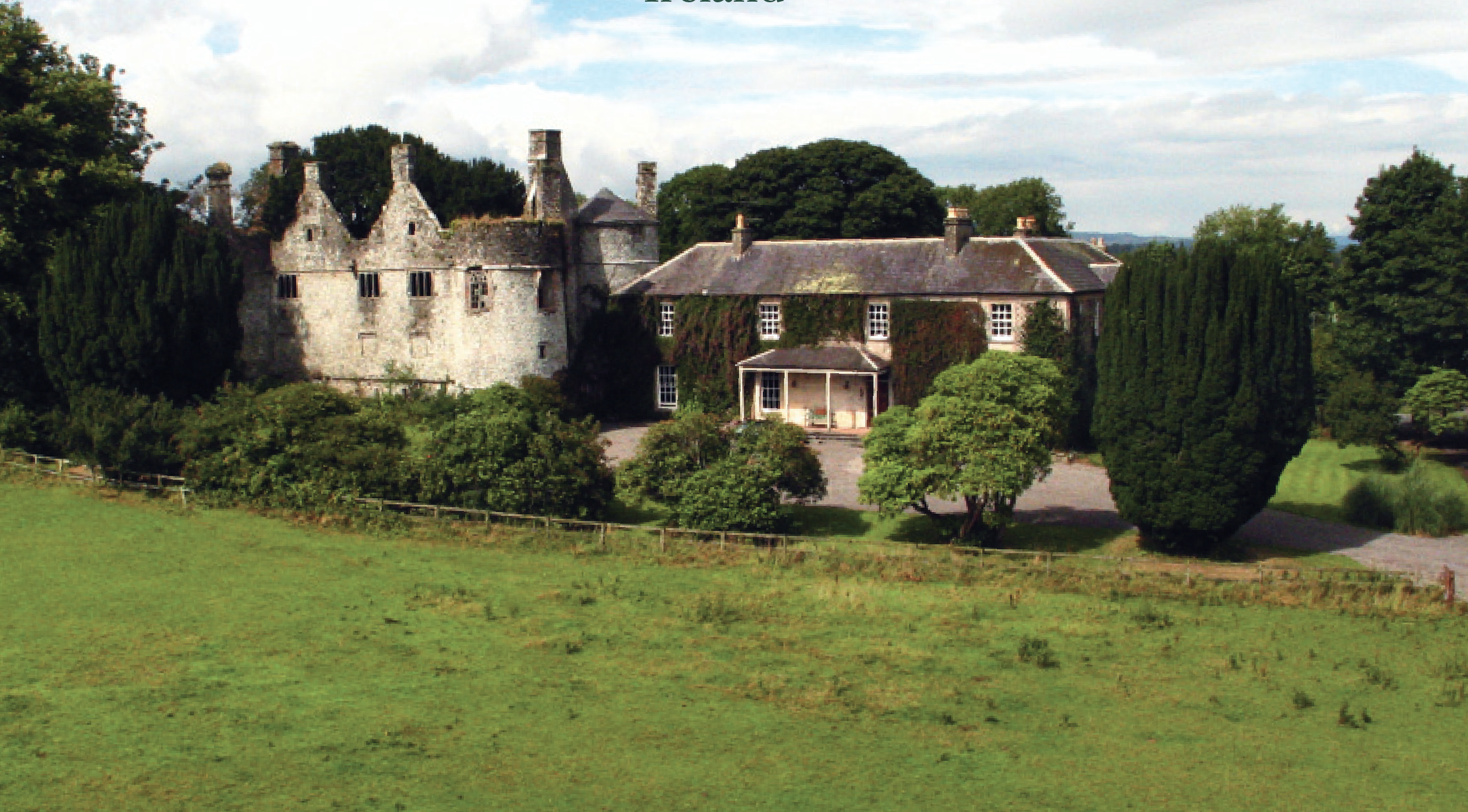
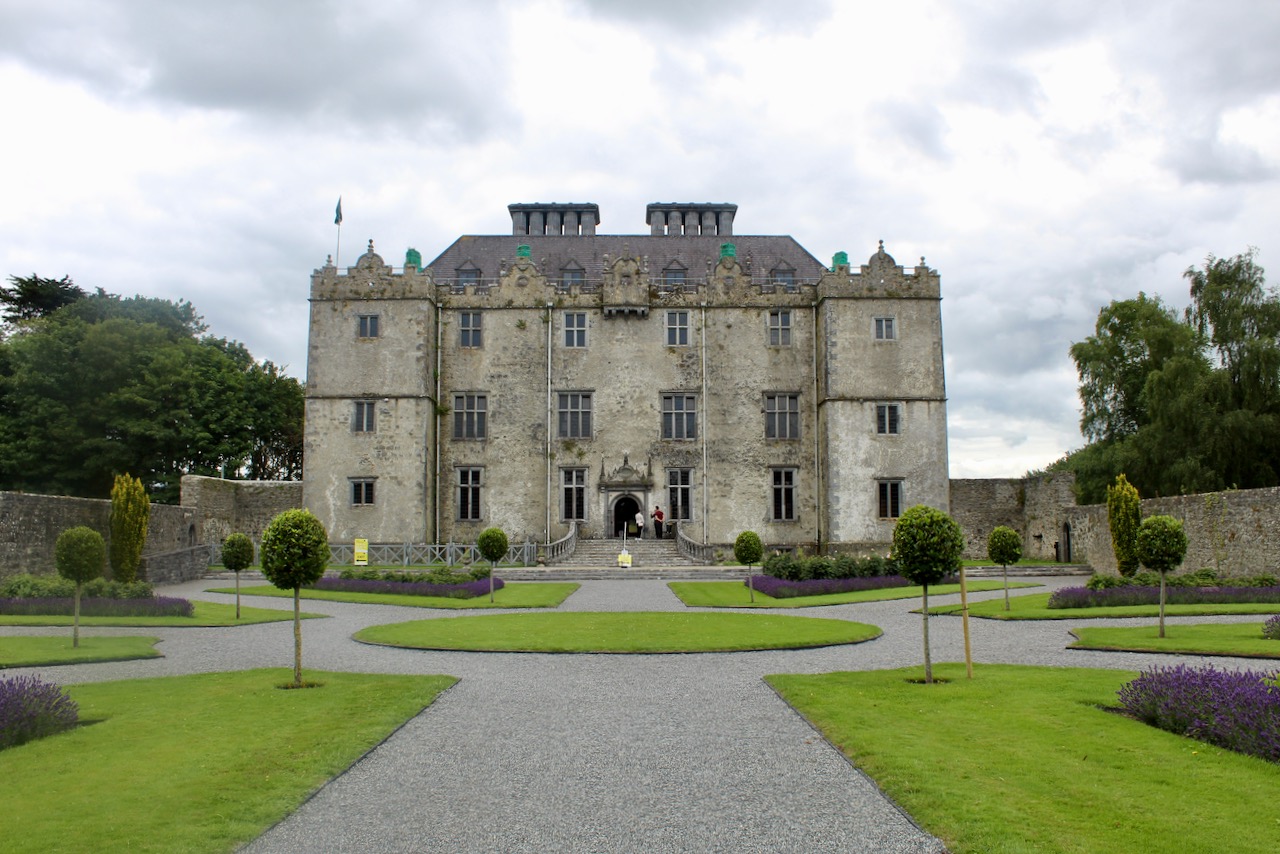
Maurice Craig points out in his The Architecture of Ireland from the earliest times to 1880 that there are a group of similar buildings, built over a period of fifty years or more: Rathfarnham; Kanturk for MacDonagh MacCarthy, built before 1609; Portumna for the Earl of Clanrickarde, before 1618; Manorhamilton for Sir Frederick Hamilton, probably around 1634; Raphoe, for Bishop John Leslie (the “Fighting Bishop” – see my entry on Castle Leslie https://irishhistorichouses.com/2020/08/07/castle-leslie-glaslough-county-monaghan/) in 1636, and Burncourt for Sir Richard Everard before 1650. Manorhamilton is a section 482 ruin (see my entry https://irishhistorichouses.com/2025/02/20/manorhamilton-castle-castle-st-manorhamilton-co-leitrim/) and we visited Portumna in County Galway – see my entry https://irishhistorichouses.com/2022/02/14/office-of-public-works-properties-connacht/. The buildings resemble a fort, such as Mountjoy Fort in County Tyrone built 1600-1605. Killenure, County Tipperary, is similar but has cylindrical flankers, Craig tells us. This last was unroofed by 1793, and it is now (2025) a Section 482 property which I must visit!
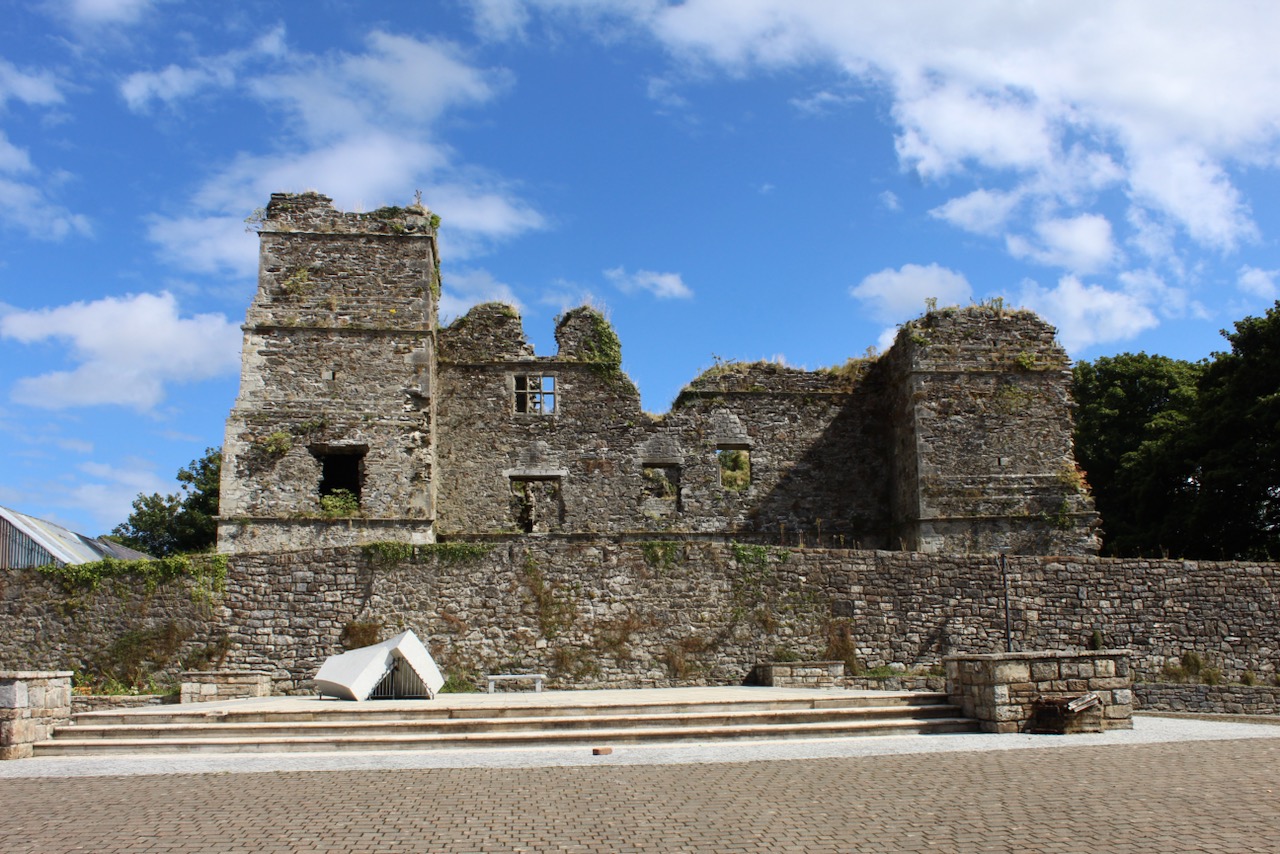
Manorhamilton, County Leitrim, August 2022, built for Sir Frederick Hamilton, probably around 1634. Photograph © Jennifer Winder-Baggot, www.irishhistorichouses.com
Portumna Castle, County Galway, July 2021, built for the Earl of Clanrickarde, before 1618. Photograph © Jennifer Winder-Baggot, www.irishhistorichouses.com
Kanturk Castle, built for MacDonagh MacCarthy, built before 1609. Photograph courtesy Breda O’Mullane, photograph licensed under the Creative Commons Attribution-Share Alike 4.0 International license.
Burncourt, County Tipperary, for Sir Richard Everard before 1650. Photograph courtesy Mike Searle, Creative Commons geograph.org.uk -1393348
Killenure Castle, similar but with cylindrical flankers, courtesy of Michael Daniels estate agent. A section 482 property in 2025.

Loftus attended Cambridge, where he took holy orders as a Catholic priest. Upon Queen Elizabeth’s accession to the throne in 1558, he declared himself Anglican. The Dictionary of Irish Biography tells us that a major turning point in Loftus’s life and career occurred in 1560, when he emigrated to Ireland as a chaplain to Thomas Radcliffe, 3rd Earl of Sussex, who had been granted a commission to serve as Lord Lieutenant of Ireland by Queen Elizabeth. On the recommendation of Sussex, Loftus was appointed Archbishop of Armagh, his consecration taking place on 2 March 1563. In January 1565, on account of the poverty of the archbishopric of Armagh, Queen Elizabeth granted Loftus the deanery of St Patrick’s cathedral in Dublin. In 1567 he was made Archbishop of Dublin.

It was Adam Loftus who had Reverend Dermot O’Hurley executed, whom I wrote about a couple of weeks ago in my entry about Doheny & Nesbitt.

The Dictionary of Irish Biography tells us:

He was “a strongly delineated establishment figure whose primary concerns were to serve the crown in Ireland, in whatever capacity the queen and her advisers thought fit; and to build up his own personal affinity, so that he would be in a position to execute the offices that came his way with a measure of genuine political and social authority. Thus, during the periods when the archbishop served as lord chancellor of Ireland (1581–1605), or as acting governor of the country during the periodic absences from Ireland of a serving viceroy (August 1582–June 1584, November 1597–April 1599, September 1599–February 1600), he was also careful to establish a network of connections throughout the country, particularly through the marriage of his children to leading families among the new English protestant elite. Among the families with which Loftus made these connections were the Bagenals of Co. Down, the Dukes of Castlejordan, the Hartpoles of Shrule, the Usshers of Dublin, the Colleys of Castle Carbury, the Berkeleys of Askeaton, and the Warrens of Warrenstown. The social ascent of Loftus and his family was also evident in the archbishop’s decision to proceed with the purchase of the estate of Rathfarnham, Co. Dublin (c.1589–90), on which he built a stately castle.” [2]

Adam Loftus married Jane Purdon. They had twenty children, not all of whom survived to adulthood, and those who did married very well.

  1. Anne Loftus married, first, Henry Colley of Castle Carbury in County Kildare, and second, Edward Blayney, 1st Lord Blayney, Baron of Monaghan.
  2. Martha Loftus (d. 1609) married Thomas Colclough (1564-1624) of Tintern Abbey in Wexford.
  3. Isabelle Loftus (d. 1597) married William Ussher (1561-1659)
  4. Thomas Loftus (d. 1635) married Helen Hartpole of Shrule.
  5. Alice Loftus (d. 1608) married Henry Warren of Warrenstown, County Offaly.
  6. Katherine Loftus married Francis Berkeley of Askeaton, County Limerick.
  7. son Adam died unmarried in 1599.
  8. Margaret Loftus married George Colley of Castle Carbury.
  9. Edward Loftus (d. 1601) married Anne Duke of Castle Jordan, County Meath.
  10. Dudley Loftus (1561-1616) married Anne Bagenal of Newry Castle, County Down, daughter of Nicholas Henry Bagenal, Marshal of Ireland.
  11. Dorothy Loftus (d. 1633) married John Moore (d. 1633)

Adam Loftus was the first Provost of Trinity College Dublin.

The Dictionary of Irish Biography continues:

Although by the early 1590s Loftus had largely reconciled himself to the reality that the task of converting the indigenous community to protestantism, and securing its allegiance to the state church, was beyond him, the queen and her advisers still expected him to discharge his religious duties and press ahead with reforming initiatives on behalf of the state church. To this end, and in the midst of a period of mounting political crisis that culminated in the outbreak of the Nine Years War, Loftus was the prime mover behind the foundation of TCD, which received its royal charter on 3 March 1592. The archbishop also served as the college’s first provost till June 1594.

Adam Loftus died in the old Palace of St. Sepulchre beside St. Patrick’s Cathedral, which until recently was the Garda barracks on Kevin Street, now housed in a new building. I hope they will make something of the historic old archbishop’s palace now, which could be a great museum!

Adam’s son Dudley (1561-1616) sat in the Irish parliament for Newborough in County Wexford. He married Anne Bagenal of Newry Castle, County Down, daughter of Nicholas Henry Bagenal, Marshal of Ireland. The castle passed to their son, Adam Loftus (1590-1666), who married Jane Vaughan of Golden Grove, County Offaly.

Another son of Dudley and Anne Bagenal was Nicholas Loftus (1592-1666), the ancestor of Henry Loftus, the Earl of Ely. Nicholas’s second son Henry (1636-1716) lived in Loftus Hall in County Wexford.
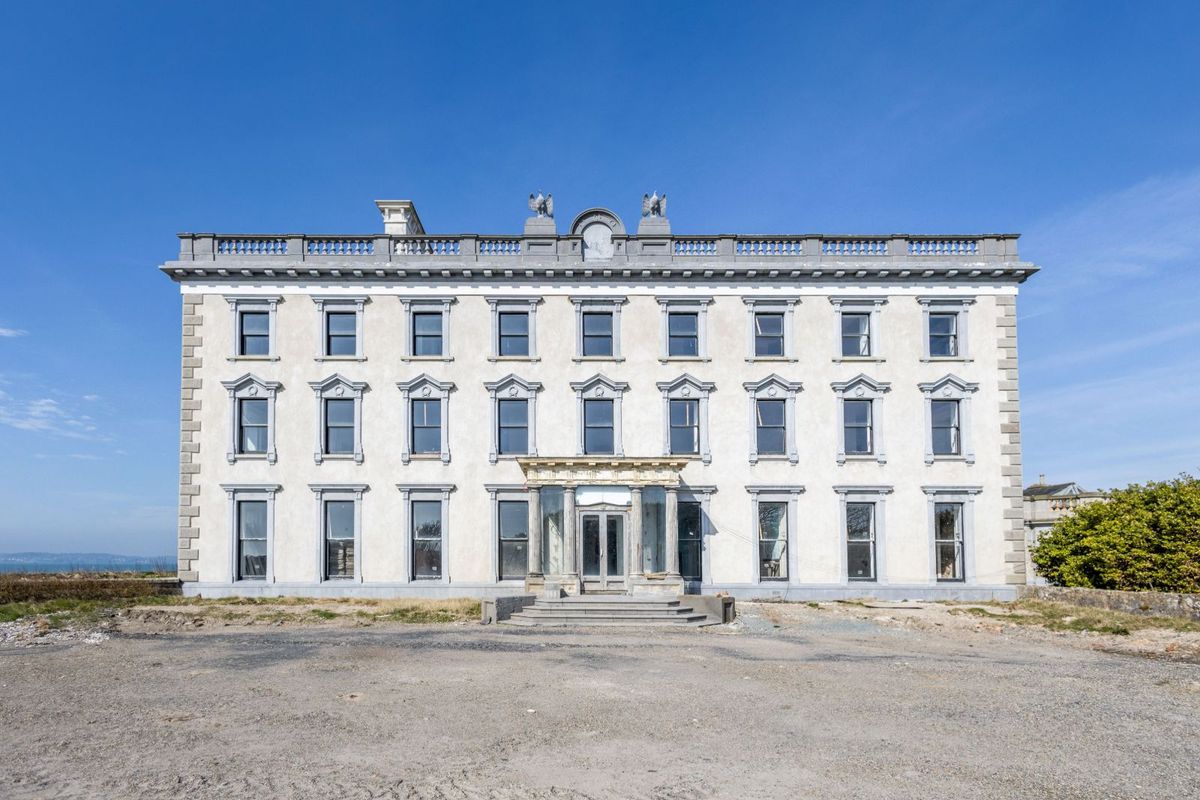
Loftus Hall, County Wexford, for sale April 2025 courtesy Colliers. Formerly named Redmond Hall, it is a three-storey mansion built in 1871, incorporating parts of a previous house here, which was late 17th century or early C18. [3]

Adam Loftus (1590-1666) and Jane née Vaughan’s children also made good marriages. Their son Arthur Loftus (1616-1659) married Dorothy Boyle (1616-1668), daughter of Richard Boyle the 1st Earl of Cork. Arthur also served as MP for County Wexford, as well as Provost Marshall of Ulster.

The castle came under seige in 1641 and in 1642 the house was occupied by Cromwell’s Parliamentary troops. [4] In 1649 it was stormed and taken by Royalist troops under the Marquess of Ormond and all occupants were taken as prisoners. Ormond writes that nobody was killed. [5] Rathfarnham Castle was restored to Adam Loftus (1590-1666) when Charles II was crowned king.

Adam’s son Arthur predeceased him, so the castle passed to Arthur’s wife Dorothy née Boyle. In 1665 she obtained six firelock muskets from the Master of Ordinance to protect the castle.

Arthur Loftus and Dorothy née Boyle had a son Adam Loftus (1632-1691). Adam Loftus was Ranger of the Phoenix Park in Dublin and from 1685, a member of the Irish Privy Council. King James II created him Baron of Rathfarnham and Viscount Lisburne in the Peerage of Ireland. Adam married Lucy Brydges, daughter of George Brydges, 6th Baron Chandos of Sudeley, England.
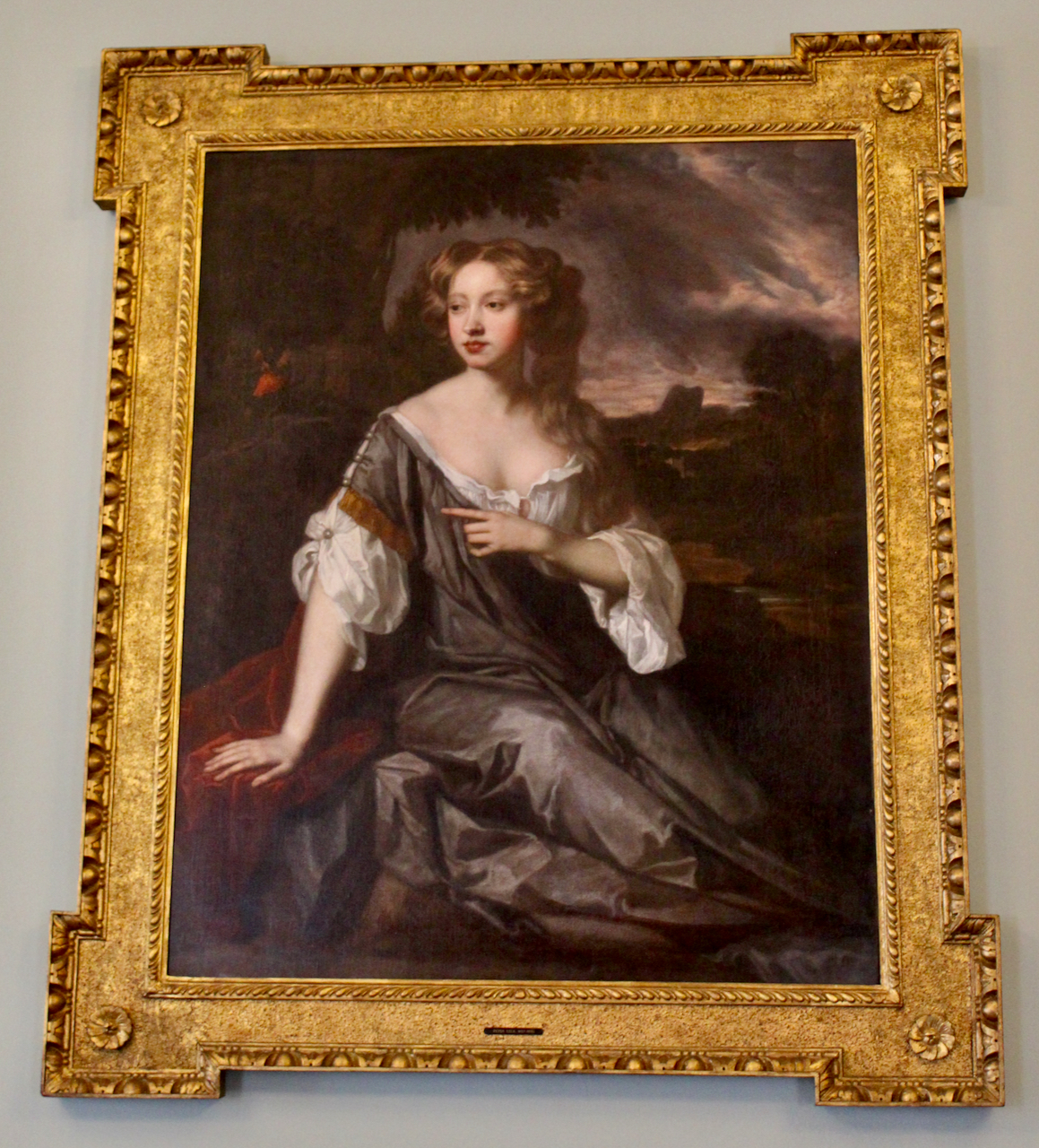
Lucy Loftus née Brydges (1654-1681), by Peter Lely. She was a renowned Restoration beauty and the first wife of Viscount Adam Loftus. He died at the Siege of Limerick in 1691 and the cannon ball which reputedly killed him hangs in St Patrick’s Cathedral. Lucy is dressed in pseudo-antique clothing against an Arcadian landscape. The parrot in the background is an ambiguous symbol and can refer to a number of characteristics including eloquence, marital obedience or exoticism. Peter Lely was of Dutch origin but spent most of his career in England and became the most influential portrait painter at court following the death of Anthony van Dyck. He successfully navigated the turbulence of the 17th century to paint at the court of Charles I, the Cromwellian Commonwealth and Charles II following the Restoration. Lely was prolific, often only painting the sitter’s head while students and assistants at his studio completed the portraits.

After his wife Lucy died, Adam Loftus married Dorothy, the daughter of Patrick Allen or Alen, of St. Wolstan’s of Celbridge in County Kildare. Adam was a gallant at the court of King Charles II.

Despite earning his peerage from King James II, Adam Viscount Lisburn supported the cause of William III. He died at the Siege of Limerick in 1691 and the cannon ball which reputedly killed him hangs in St Patrick’s Cathedral.

The castle passed to Adam’s daughter Lucy, who married Thomas Wharton, 1st Marquess of Wharton in 1692, who in 1715 was created 1st Earl of Rathfarnham, 1st Marquess of Carlow and 1st Baron of Trim.
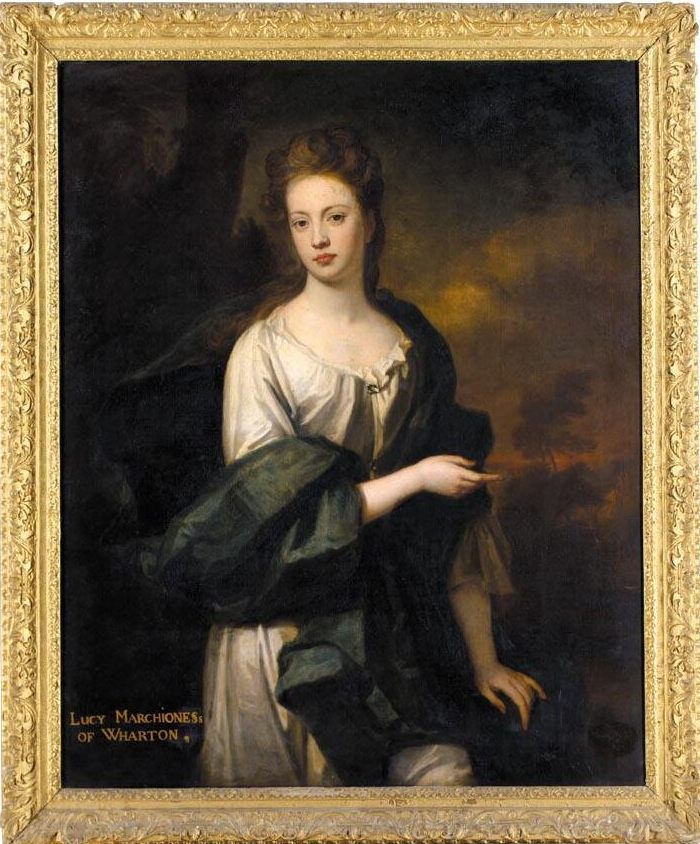
Lucy Loftus, Marchioness of Wharton (1670-1717) by Godfrey Kneller.

Lucy and the Marquess of Wharton had a son Philip, who became the Duke of Wharton. He was a Jacobite and supporter of the titular James III, and was subsequently granted many titles. The Peerage website lists the titles. As well as those he inherited from his father, he was created 1st Viscount Winchendon, Co. Buckingham [England] and 1st Marquess of Woodburn, Co. Buckingham [England], 1st Earl of Malmesbury, Co. Wilts [England] on 22 December 1716, Jacobite. 

He was appointed Privy Counsellor (P.C.) in Ireland between 1717 and 1726. He was created 1st Duke of Wharton, Co. Westmorland [Great Britain] on 28 January 1717/18, in an attempt by the authorities to wean him from his Jacobitism and make him a good Whig like his father. Darryl Lundy of The Peerage website tells us that his Dukedom did at least make him for a while speak and vote with the Tories in the House of Lords, for instance in debates on the South Sea Bubble. He lost a fortune from participation in the South Sea Bubble. In June 1725 he left the country. He was Envoy to Vienna in August 1725, for the Jacobite King James III, and then Envoy to Madrid in March 1725/26. 
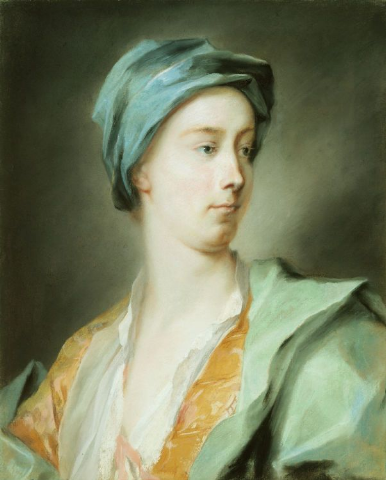
Philip Wharton Duke of Wharton by Rosalba Carriera – Royal Collection, Public Domain.

Out of money, he took a position in the Jacobite forces and commanded a Spanish detachment at the Siege of Gibraltar in 1727, fighting against the English. On 3 April 1729 he was outlawed and his titles and such estates as he still held in Britain forfeited. 

He had no surviving male issue when he died on 31 May 1731. On his death, all his titles, most forfeited by his treason, expired, except the Barony of Wharton, which was deemed by the House of Lords in 1915 to be descendible to his heirs.

He sold Rathfarnham Castle in 1724. It was purchased by Speaker William Conolly for £62,000. Speaker Conolly never lived in the Castle since he had built Castletown in County Kildare, and he leased Rathfarnham in 1742 to Dr. Hoadley, Archbishop of Armagh.
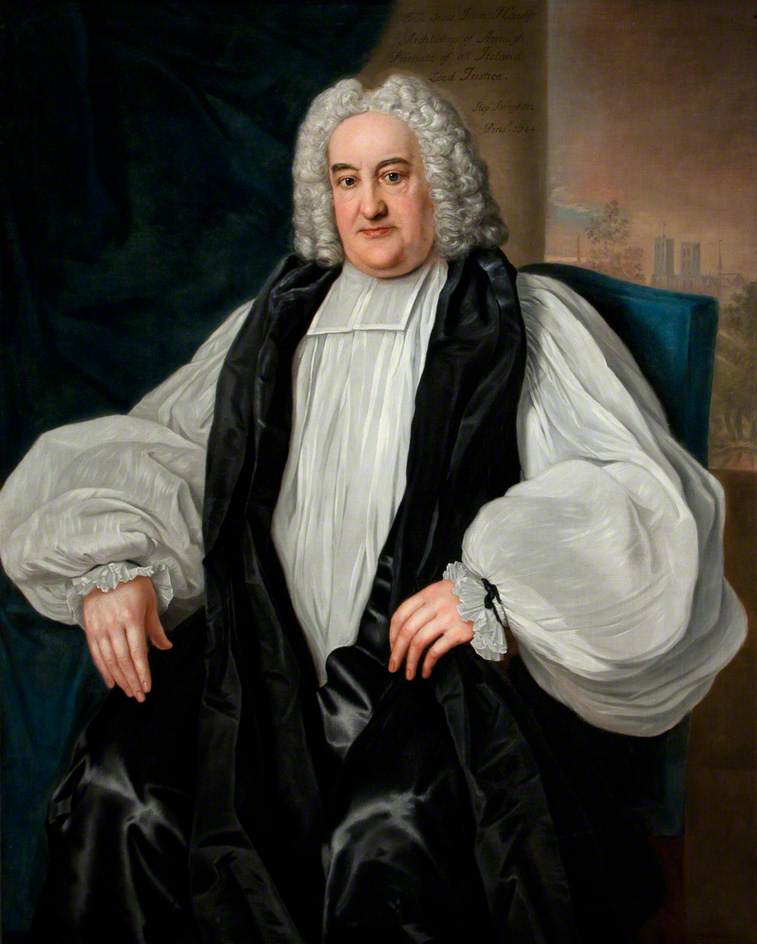
John Hoadly (1678-1746), Archbishop of Armagh and Primate of All Ireland by Stephen Slaughter; Armagh City, Banbridge & Craigavon Borough Council; http://www.artuk.org/artworks/john-hoadly-16781746-archbishop-of-armagh-and-primate-of-all-ireland-122812

Dr. Hoadley was interested in building, and he had built an Episcopal mansion in Tallaght to replace a medieval castle. He then restored Rathfarnham Castle. It was famed for its excellent agriculture and fruit gardens. [see 5].

Dr. Hoadley’s daughter Sarah married Bellingham Boyle (1709-1772), and they inherited Rathfarnham Castle. Boyle also took an interest in farming and grew the first oats in Ireland. [see 5]. The Hoadley-Boyle tenancy lasted for twenty-five years, and Bellingham Boyle and his wife mixed in high society, entertaining two Lords Lieutenant in the castle: the Duke of Devonshire and the Earl of Harrington. Boyle may be be responsible for installing some of the delicate rococo ceilings in the castle.
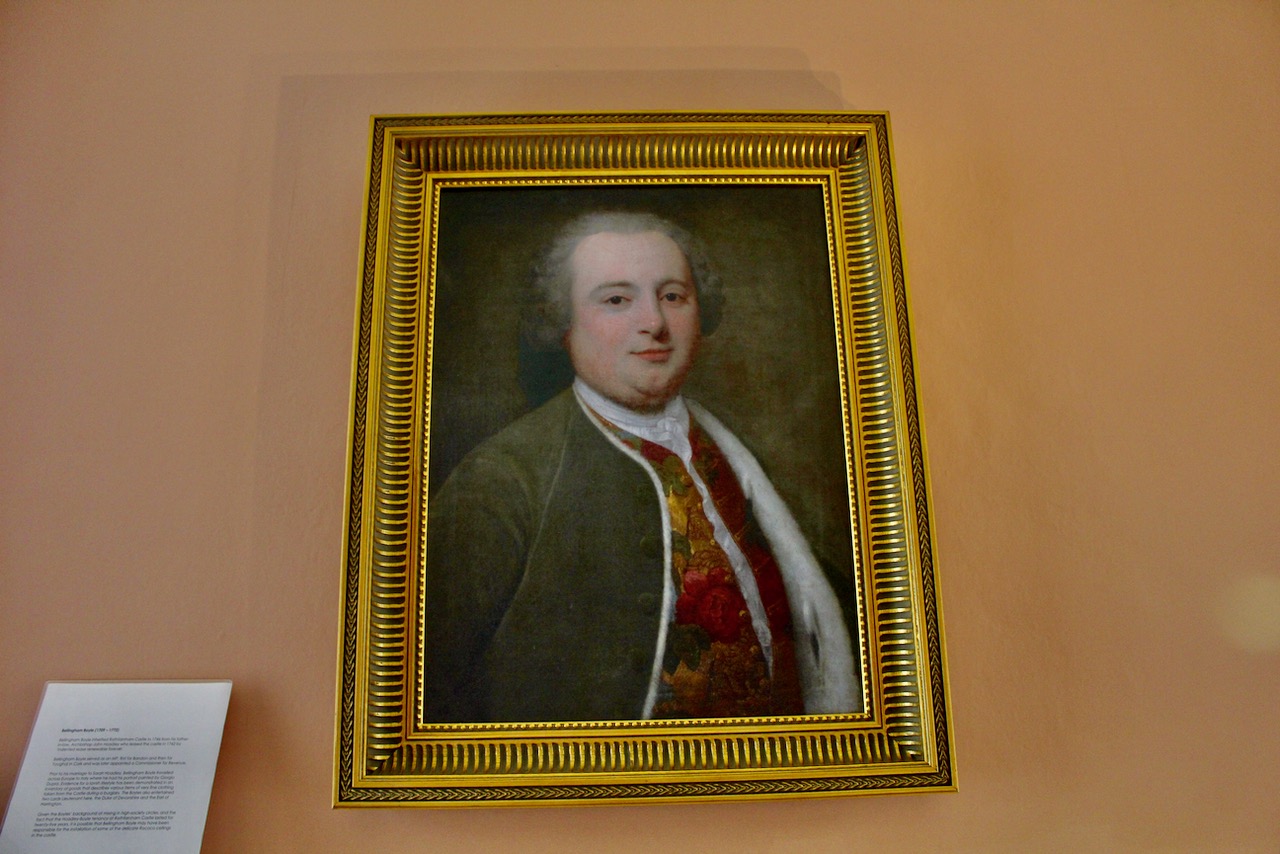
“Bellingham Boyle (1709-1772). He inherited Rathfarnham Castle in 1746 from his father-in-law, Archbishop John Hoadley who leased the castle in 1742 by “indented lease renewable forever.” Bellingham Boyle served as an MP, first for Bandon then for Youghal in Cork and was later appointed a Commissioner for the Revenue. Prior to his marriage, Belingham travelled across Europe to Italy where he had his portrait painted by Giorgio Dupra.”

Interestingly, in Aug 1742, Bellingham Boyle was appointed to a commission to investigate the soundness of mind of Jonathan Swift, Dean of St. Patrick’s Cathedral in Dublin. The Writ “De Lunatico Inquirendo,” in the case of Jonathan Swift, D.D. was issued to investigate and ascertain whether the ailing Dean Swift was of unsound mind and memory to safely conduct his own business. Belllingham Boyle was one of 12 commissioned to perform the investigation. Dean Swift was found to be of unsound mind and memory and was placed under the protection of the Court of Chancery. [6]

Boyle’s daughter Anne married Robert Langrishe 2nd Baronet Langrishe, of Knocktopher, Co. Kilkenny.

Knocktopher Abbey, Knocktopher, Co. Kilkenny, for sale November 2024, photograph courtesy DNG Country Homes & Estates.

The castle returned to the ownership of the Loftus family in 1767, to Nicholas Hume Loftus, 2nd Earl of Ely, a descendant of the original owner Adam Loftus. Nicholas never married and on his death in 1769 the Castle passed to his uncle, Henry Loftus (created Earl of Ely in 1771). Henry continued the remodelling of the castle and the works were completed by the time of his death in 1783. 

Let us backtrack now to look at the descendants of the first Adam Loftus. Adam’s grandson Nicholas lived in Fethard, County Wexford, in the precursor to Loftus Hall. His son Henry (1636-1716) of Loftus Hall was the father of Nicholas Loftus (1687-1763) who was created 1st Viscount Loftus of Ely.
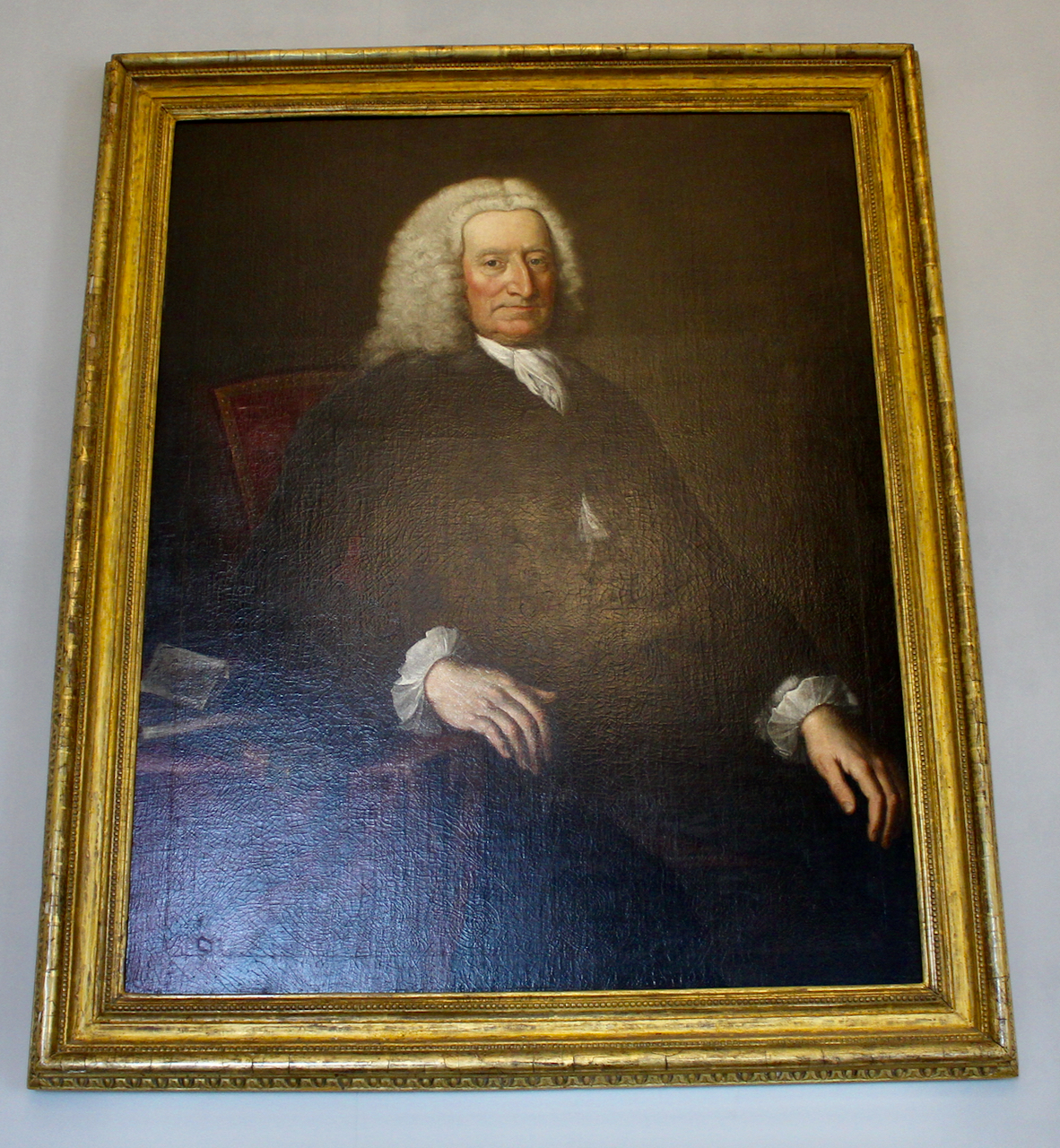
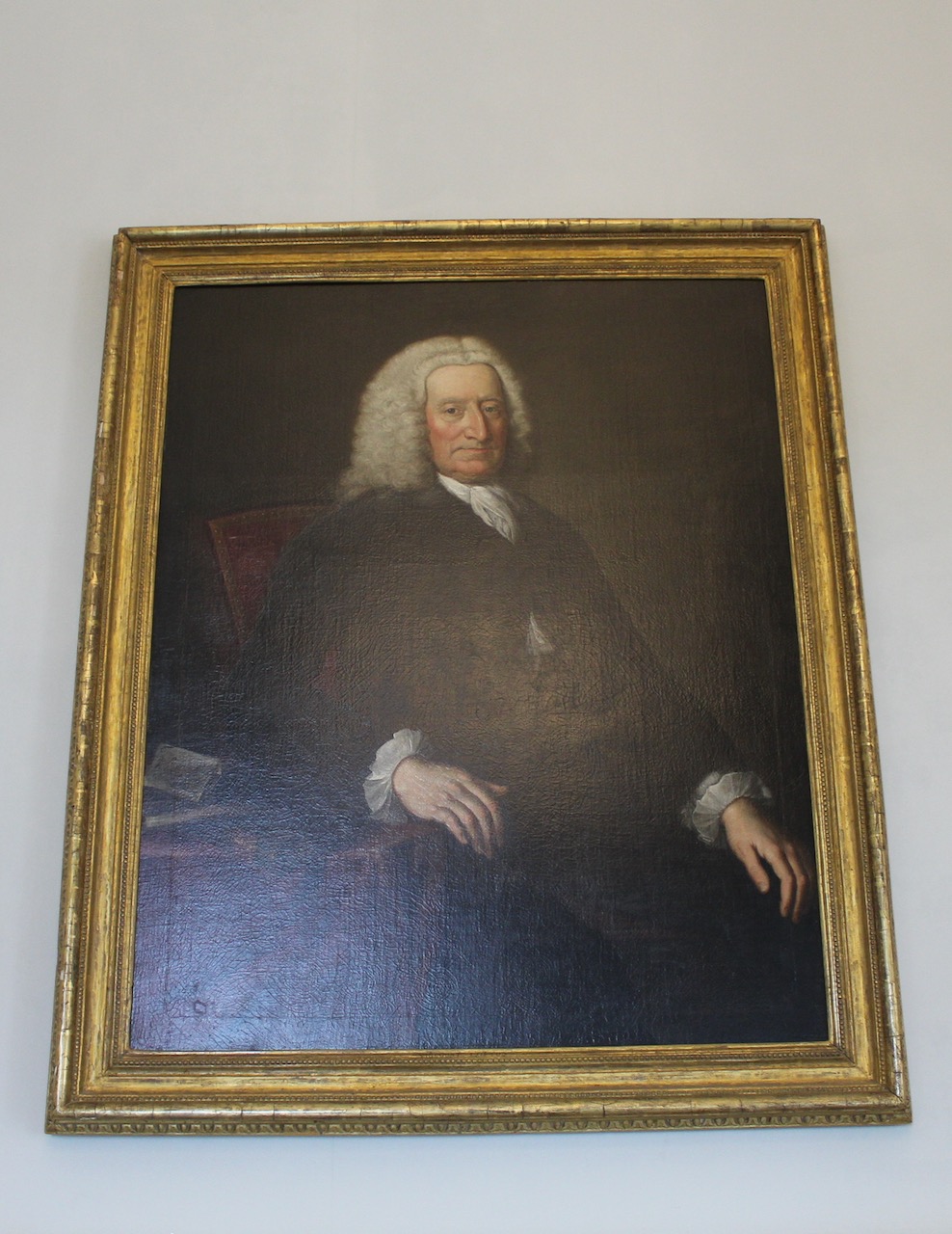
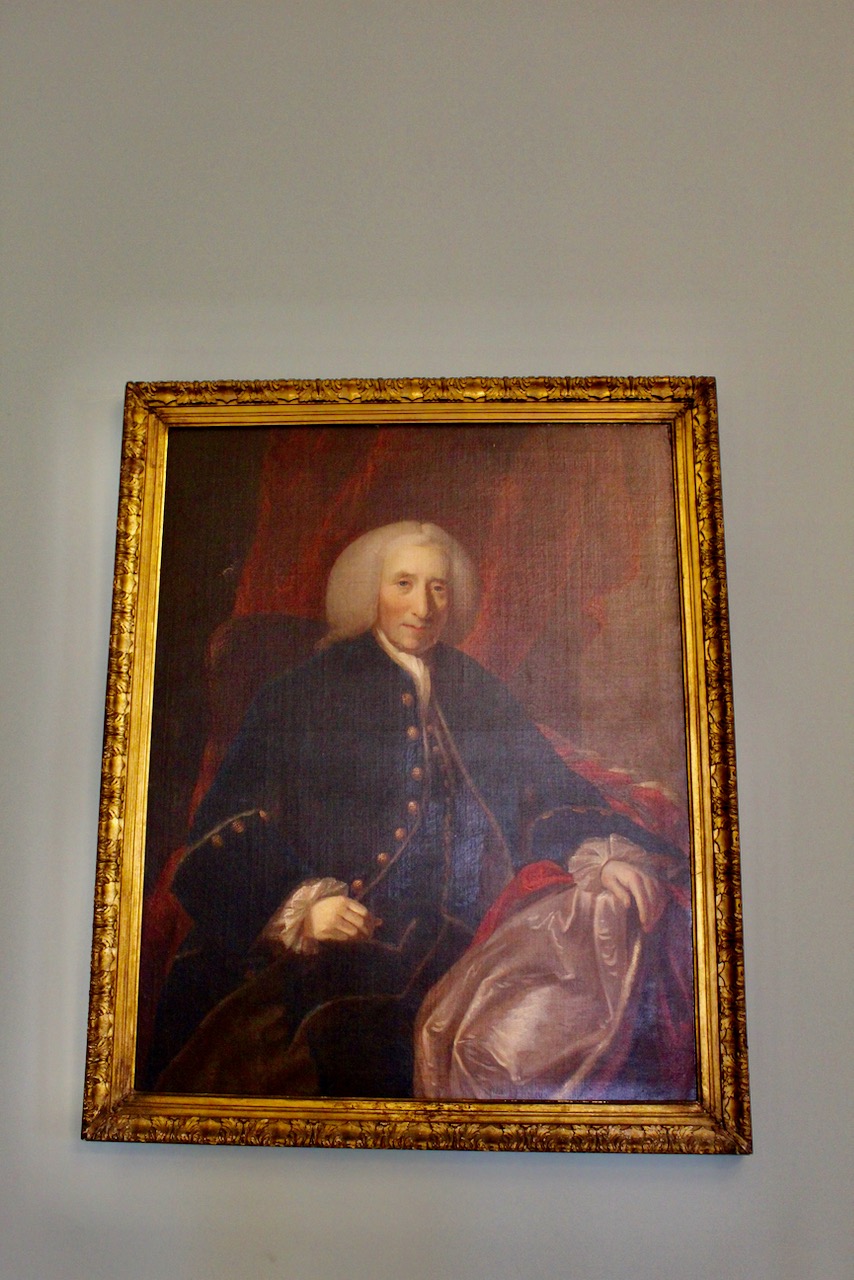
Nicholas Loftus, 1st Viscount Ely (1687-1763). Painter unknown. This painting was completed in 1758 to mark the 70th birthday of Nicholas, father of both Nicholas (the 1st Earl of Ely) and Henry Loftus. He sits next to a book entitled The Present State of Ireland. This anonymous work was originally published in 1730 and contained criticism of the amount of money flowing out of Ireland to absentee landlords, no doubt reflecting Nicholas’s concern with the financial state of the kingdom. He is sometimes known as “the Extinguisher” because of his threat to extinguish the Hook lighthouse in Wexford unless the rent he received from it was increased.

Nicholas served as MP for Wexford, and married Anne Ponsonby, daughter of William Ponsonby, 1st Viscount Duncannon. He was first created Baron Loftus of Loftus Hall in 1751, and then assumed a seat in the House of Lords, and became Privy Counsellor of Ireland in 1753. He was created Viscount Loftus of Ely in County Wicklow in 1756.

After Anne died, around 1724, Nicholas Viscount Ely married Letitia Rowley (d. 1765) of Summerhill in County Meath. To make matters more confusing, she had been previously married to Arthur Loftus (1644-1725) 3rd Viscount of Ely!

Summerhill, County Meath, etnrance front, photograph: Maurice Craig, Vanishing Country Houses of Ireland by The Knight of Glin, David J. Griffin and Nicholas K. Robinson, published by The Irish Architectural Archive and The Irish Georgian Society, 1988.

Viscount Loftus is a title that has been created three times in the Peerage of Ireland for members of the Anglo-Irish Loftus family. The first creation was for Adam Loftus (1568-1643) on 10 May 1622, who served as Lord Chancellor of Ireland in 1619. He is not to be confused the our Adam Loftus (1533-1605) of Rathfarnham Castle. This title became extinct in 1725 upon the death of the third viscount, who had no male heir, despite having married three times. 

Nicholas Viscount Loftus and Anne née Ponsonby had a daughter Elizabeth Loftus (d. June 1747) who married John Tottenham 1st Baronet, MP for New Ross. Another daughter, Mary (1710-1779), married William Alcock (1702-1779) of Wilton Castle in Wexford (see my entry https://irishhistorichouses.com/2022/02/04/wilton-castle-bree-enniscorthy-co-wexford-and-a-trip-to-johnstown-castle/ )

Nicholas and Anne’s son Nicholas Loftus (1708-1766) became the 1st Earl of Ely, and added Hume to his surname after marrying Mary Hume, daughter of Gustavus Hume, 3rd Baronet of Castle Hume, County Fermanagh. As well as Loftus Hall in Wexford, they owned 13 Henrietta Street in Dublin. He became known as the “wicked earl” due to a court hearing about the supposed mental incapacity of his son, also named Nicholas. Young Nicholas’s uncle, George Rochfort (1713-1734), brother of the 1st Earl of Belvedere, sought to have young Nicholas declared incapable of succeeding to the title. George Rochfort was married to another daughter, Alice, of Gustavus Hume, 3rd Baronet of Castle Hume. Family members testified that young Nicholas was of normal intelligence, and that any eccentric behaviour should be blamed on his father’s ill-treatment. The trial lasted for nine years and was even brought to the House of Lords. Poor young Nicholas died before the trial was finished and Rochfort’s case was declared invalid.
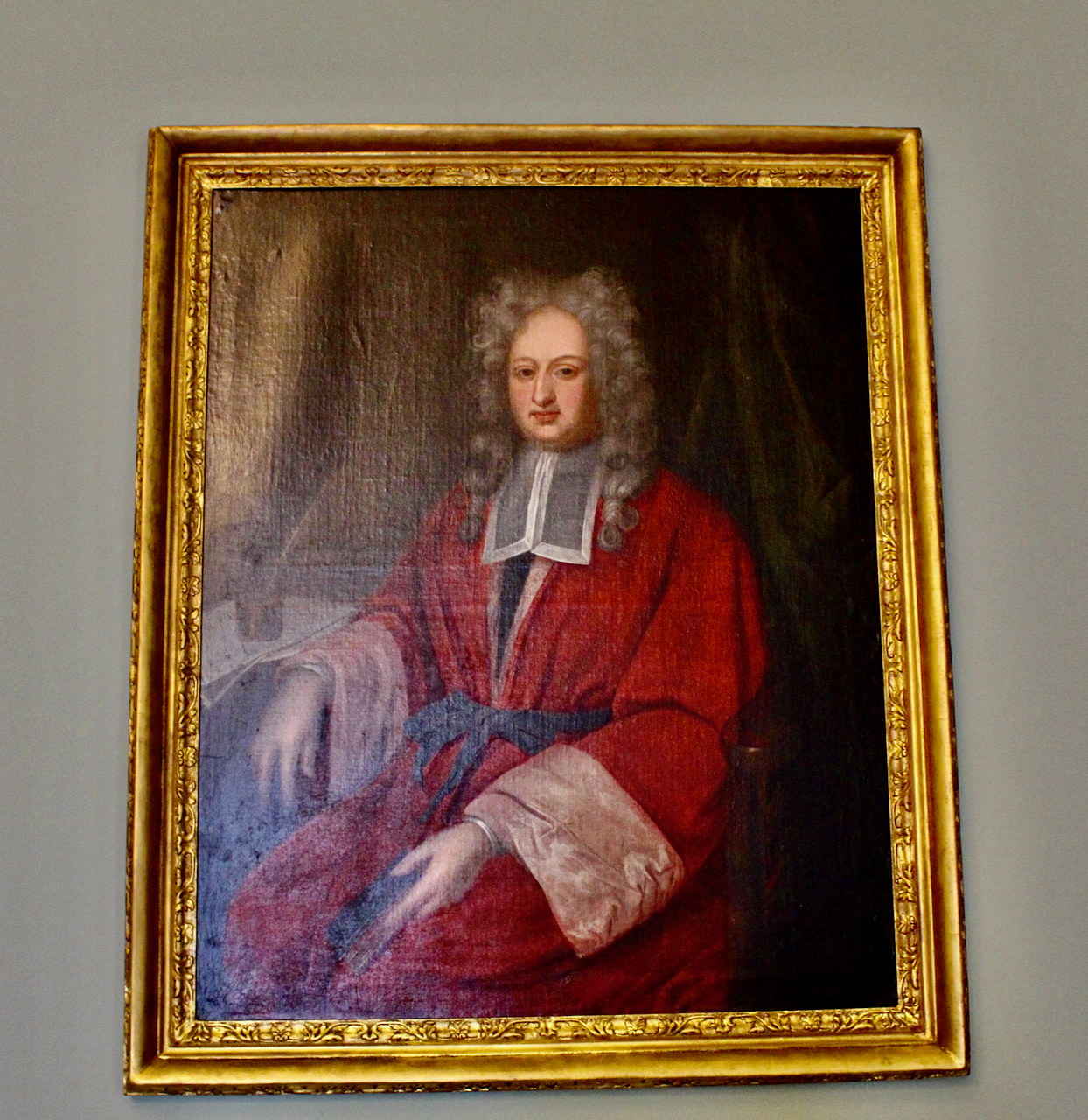
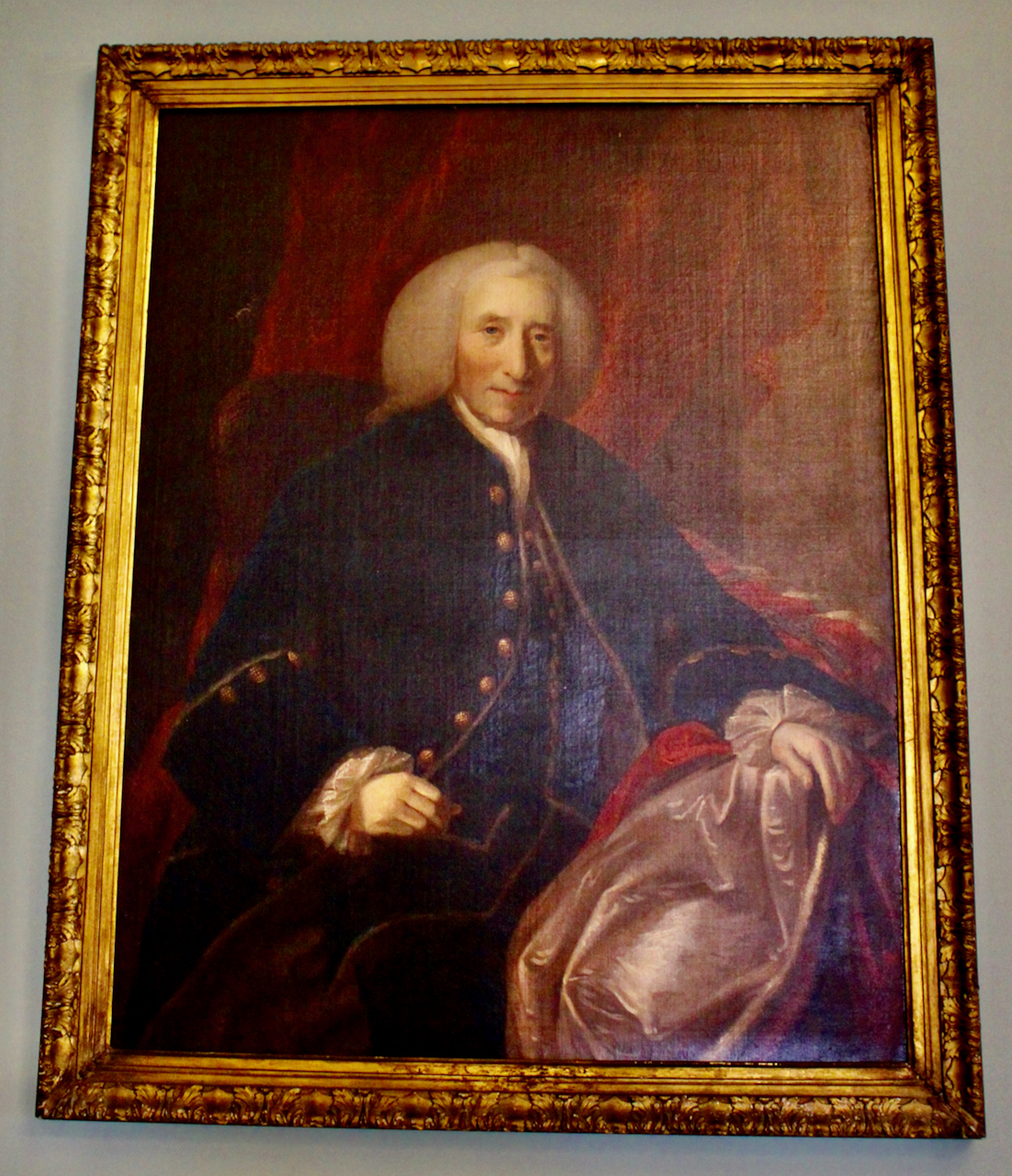
Nicholas Hume Loftus, 1st Earl of Ely (1708-1766), unknown artist. It was after Nicholas Loftus (son of the Extinguisher) had married into the wealthy Hume family that the Ely earldom was created for the first time. This depicts Nicholas, the so-called “Wicked Earl” in the doctoral robes of Trinity College Dublin.
Nicholas Hume Loftus, 1st Earl of Ely (1708-1766) by Jacob Ennis. These two portraits depict Nicholas, the so-called “Wicked Earl” at various stages of his life. Nicholas is much older in the Ennis portrait. Jacob Ennis was an Irish historical and portrait painter who spent some time studying in Italy. He was later a Master in the Dublin Society’s Drawing Schools.

Nicholas Loftus Hume officially succeeded as 2nd Earl of Ely (1738-1769). It was through him that Rathfarnham Castle returned to Loftus ownership. Nicholas bequeathed Rathfarnham Castle and the estate to his uncle, Henry Loftus (1709-1783) who became the 1st Earl of Ely of the second creation. Henry was the younger son of Nicholas Loftus (d. 1763) 1st Viscount Loftus and Anne née Ponsonby, brother to the earlier Nicholas Hume Loftus (d. 1766) 1st Earl of Ely, the Wicked Earl.
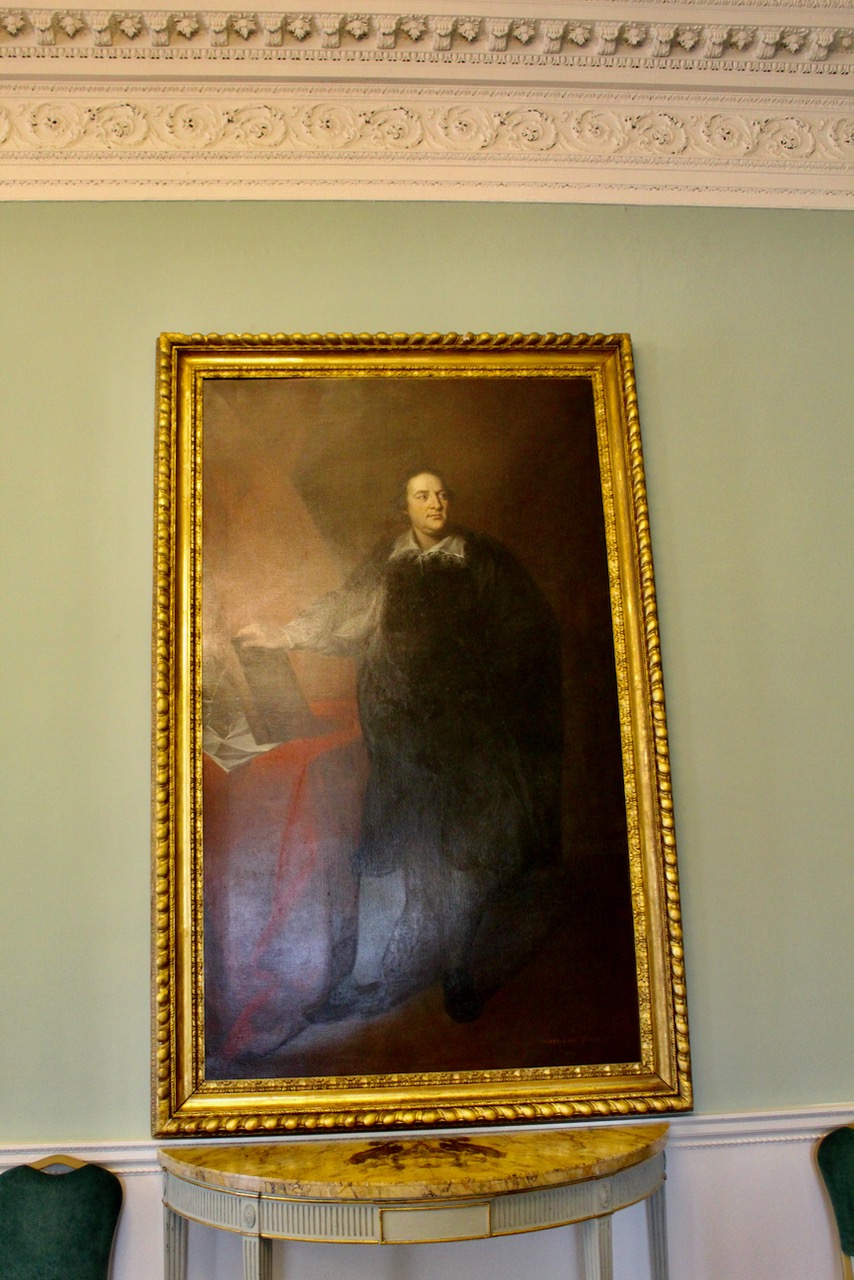
Henry Loftus, 1st Earl of Ely of the 2nd Creation (1709-1783) by Angelica Kauffman. Henry inherited Rathfarnham Castle and its demesne in 1769 upon the death of Nicholas, his nephew. Nicholas had been the subject of a long running legal case concerning the state of his mind and Henry had supported him throughout. The Swiss artist Angelica Kauffman is known to have spent several months in Dublin in 1771. As well as this portrait which was probably completed to mark Henry’s elevation to the earldom of Ely, this renowned painter also completed a group portrait of Henry and his family (now in the National Gallery) as well as a series of ceiling paintings for the long gallery on the first floor depicting scenes from Greek mythology.

Between 1769 and his death in 1783 Henry funded some of the most substantial 18th century changes to Rathfarnham Castle and the demesne.

He contracted Sir William Chambers to remodel several of the rooms including the Ballroom and Anteroom. Externally, the window openings were enlarged, and a new stone Tuscan entrance portico added, probably to the designs of William Chambers. The original battlements were removed and the new parapet was embellished with ball finials and urns some of which also serve as chimneys. On the south front new garden steps were added, while on the east front a three bay bow had been added by 1774.
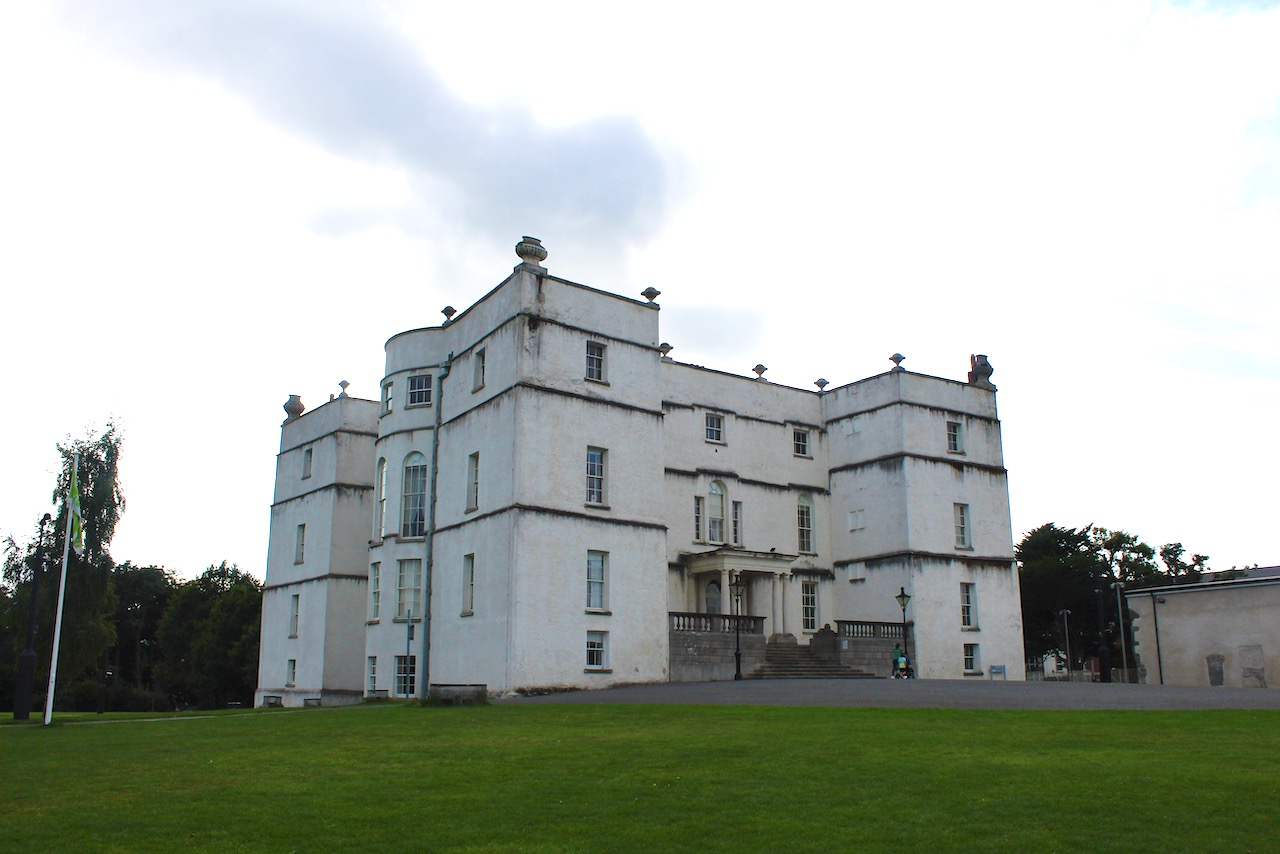
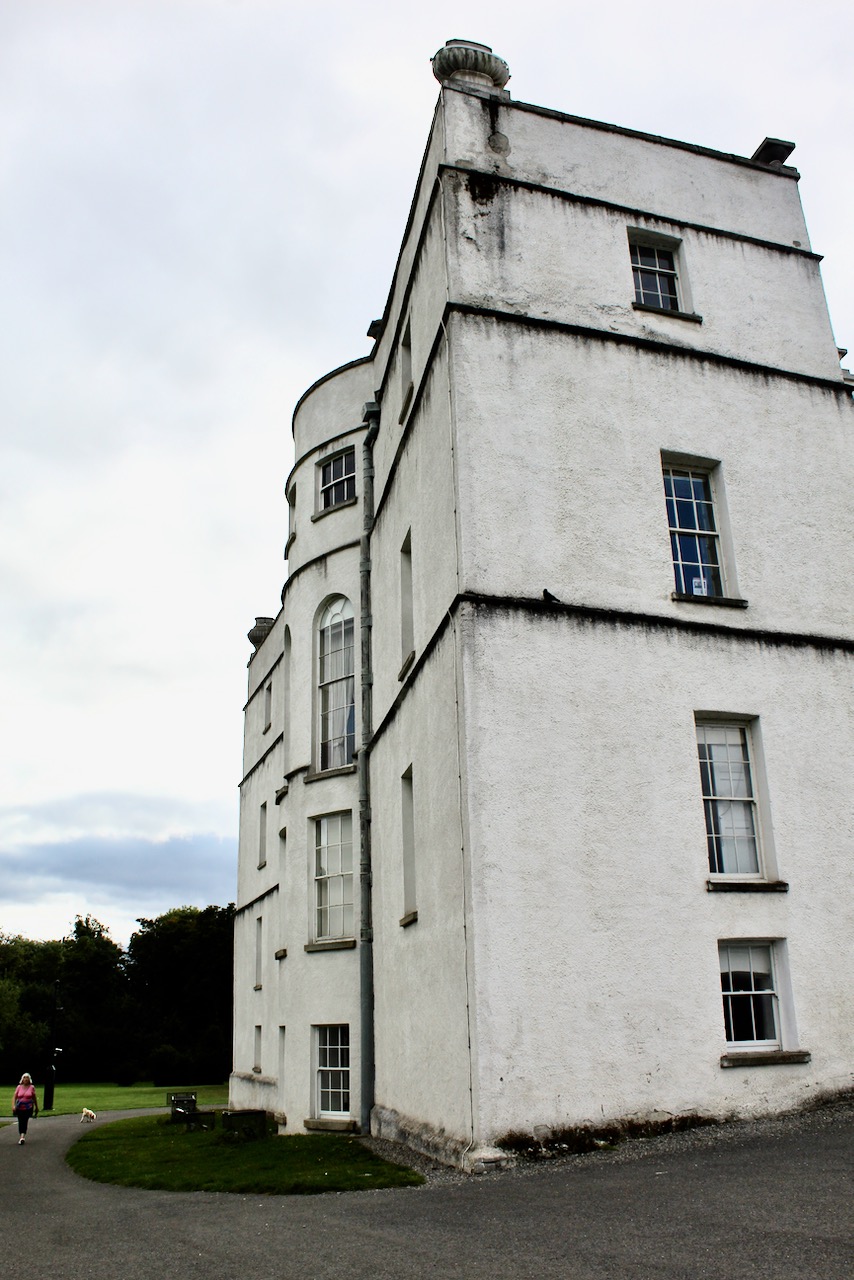
Rathfarnham Castle, Dublin, September 2021. Photograph © Jennifer Winder-Baggot, www.irishhistorichouses.com
Rathfarnham Castle. Photograph © Jennifer Winder-Baggot, www.irishhistorichouses.com

From the OPW website:

Loftus’s castle, with its four flanker towers, is an excellent example of the Elizabethan fortified house in Ireland. In the late eighteenth century, the house was remodelled on a splendid scale employing some of the finest architects of the day including Sir William Chambers and James ‘Athenian’ Stuart. The collection includes family portraits by Angelica Kauffman, Sir Peter Lely, and Hugh Douglas Hamilton.

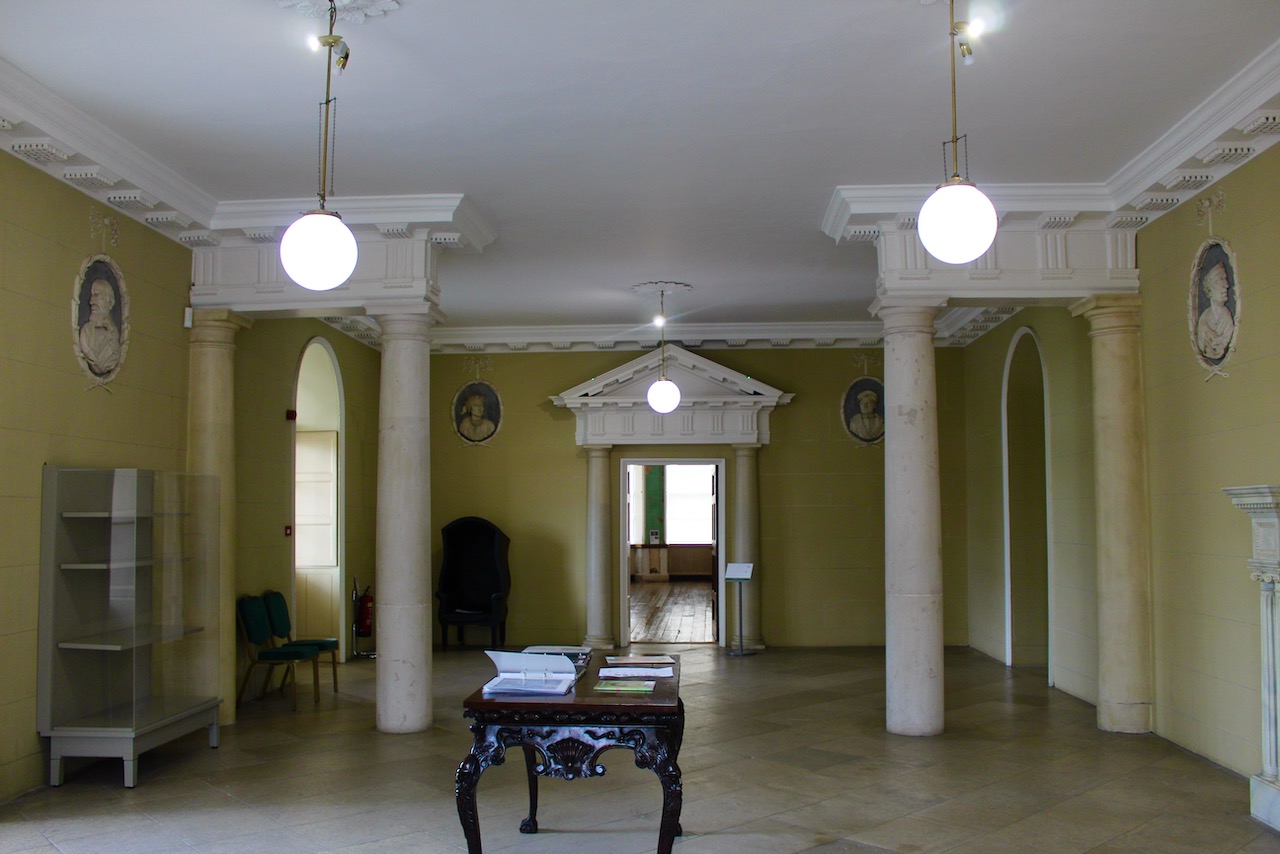
The entrance hall, Rathfarnham Castle. Photograph © Jennifer Winder-Baggot, www.irishhistorichouses.com

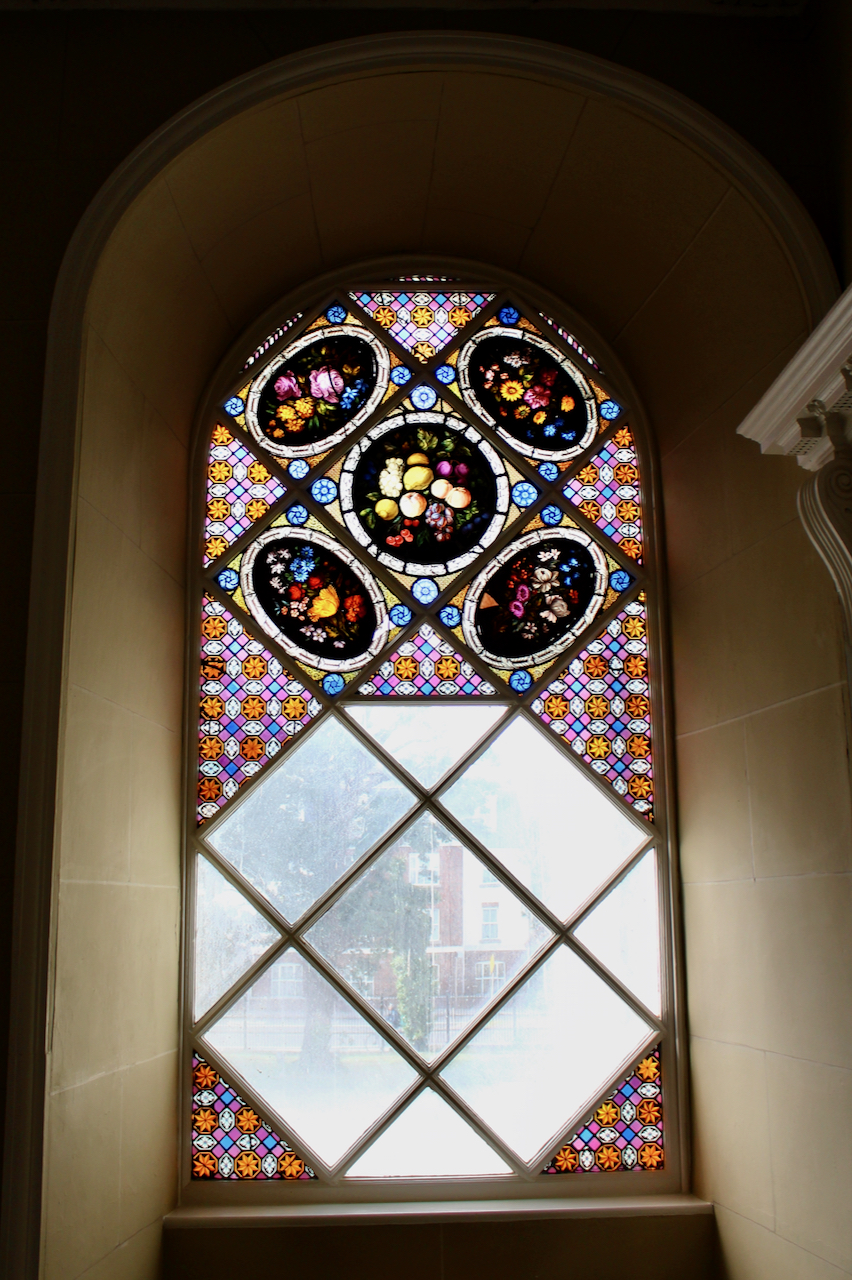
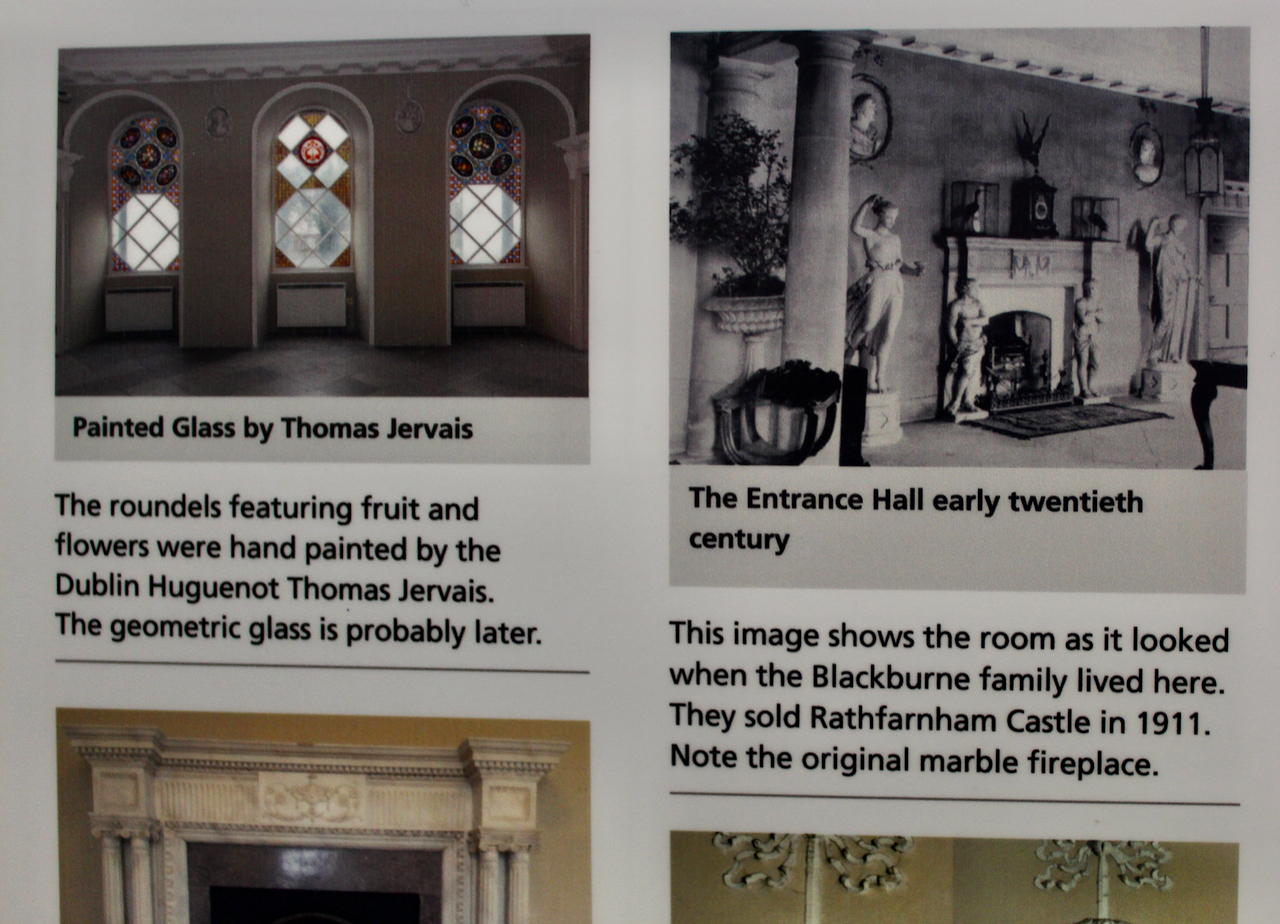
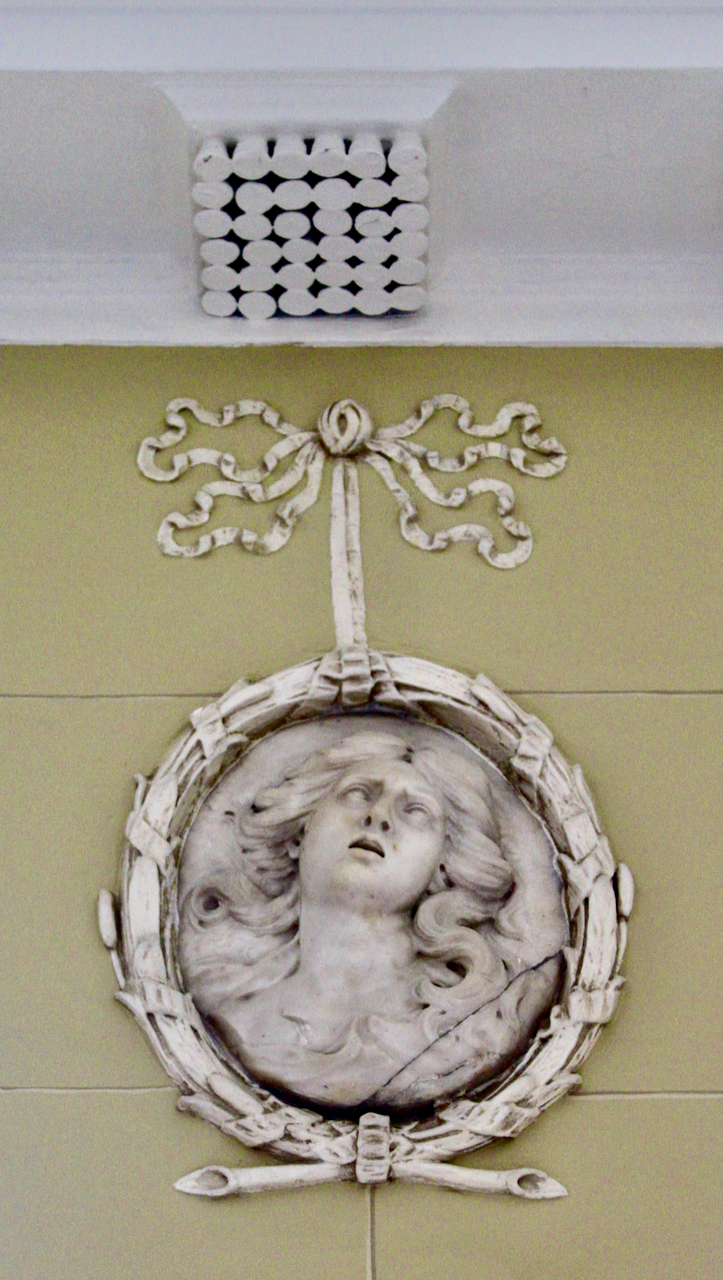
From an information panel in the entrance hall: “This room is believed to have been built to a design by the influential architect Sir William Chambers (1723-1796). Despite never visiting Ireland, Chambers left a significant mark on Dublin where he also designed the Casino at Marino, Charlemont House on Parnell Square, and much of Front Square in Trinity College. The floor and free standing Doric columns are in Portland stone. The painted glass panels featuring fruit and flowers are believed to be by the Dublin Huguenot artist Thomas Jervais (d. 1799). The marble relief busts on the walls depict well known figures from the Classical and Renaissance past, including the Egyptian queen Cleopatra and Italian poet Dante. These sculptures seem to have been acquired in Italy and would have been incorporated into the design of the Entrance Hall to signal the taste and refinement and learning of the Loftus family. The original eighteenth century marble fireplace was replaced with a painted timber one in around 1913. It was one of several of the original fireplaces which were removed and sold when the Blackburne family left the castle in 1911.

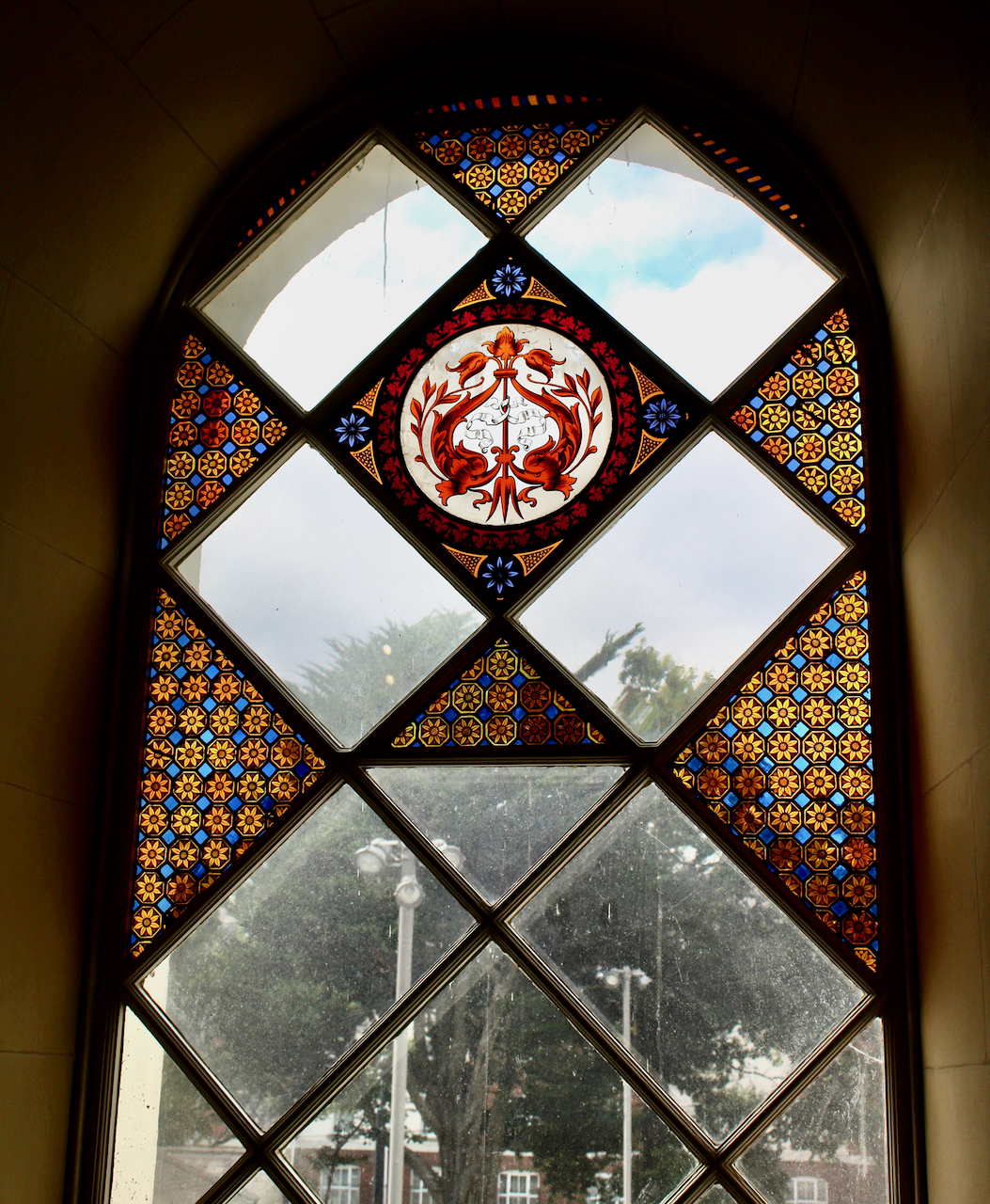
The painted glass panels featuring fruit and flowers are believed to be by the Dublin Huguenot artist Thomas Jervais (d. 1799). Designs for windows for the castle were by Joshua Reynolds. [see 5] Photograph © Jennifer Winder-Baggot, www.irishhistorichouses.com
The entrance hall, Rathfarnham Castle. Photograph © Jennifer Winder-Baggot, www.irishhistorichouses.com
Information board, Rathfarnham Castle.
Cleopatra. The asp that killed her can be seen on her shoulder. Rathfarnham Castle. Photograph © Jennifer Winder-Baggot, www.irishhistorichouses.com
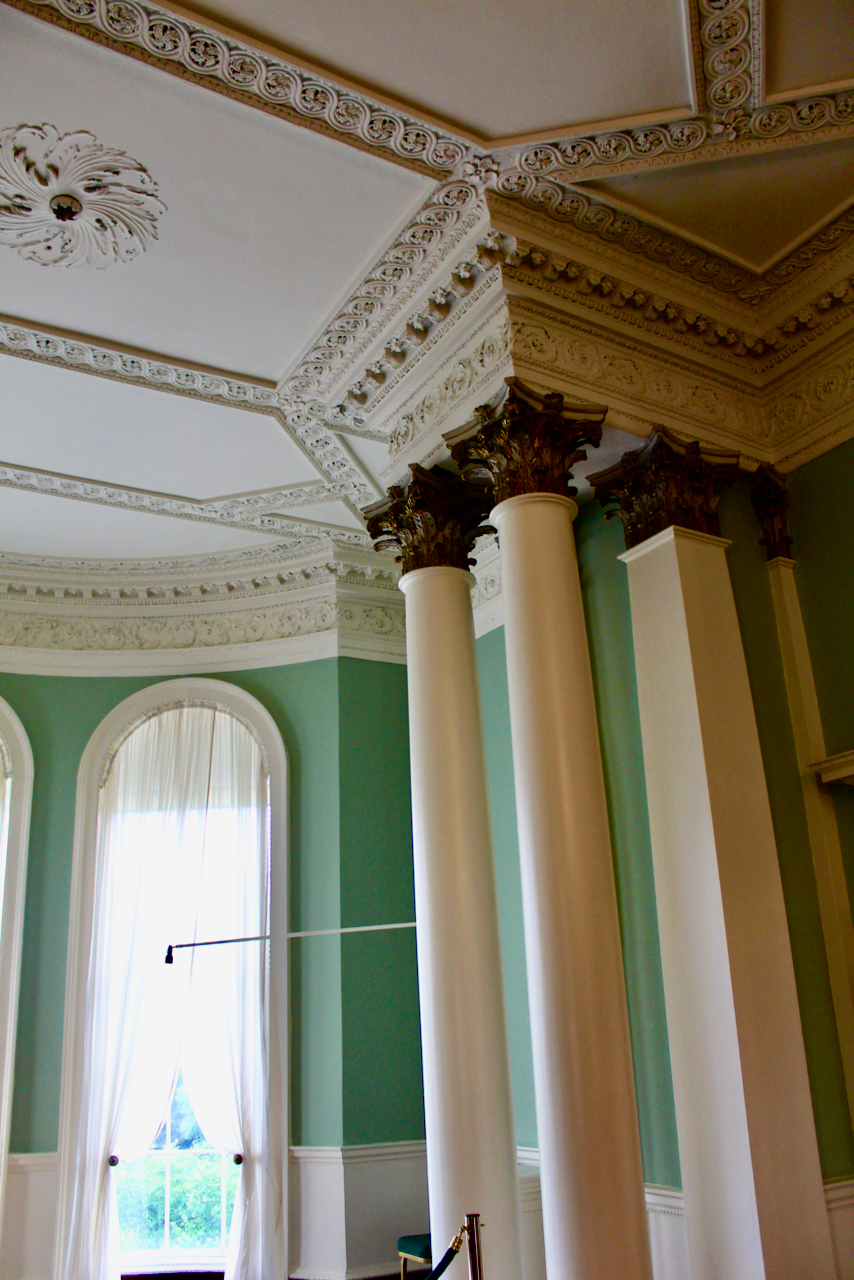
The Ante-Room. This served as a reception or waiting room for guests attending the Ball. The Ionic columned Venetian style window is the highlight of this room. The columns are wooden and hollow, and feature intricately carved foliage. The whole window may be referencing the form of a Roman triumphal arch. The wall separating this room from the ballroom was reinstated in the 1990s by the OPW. It had been removed in the 19th century by the then owner, Lord Chancellor Francis Blackburne (1782-1867), to accommodate a large pipe organ. Photograph © Jennifer Winder-Baggot, www.irishhistorichouses.com
The Ante-Room, Rathfarnham Castle. Photograph © Jennifer Winder-Baggot, www.irishhistorichouses.com
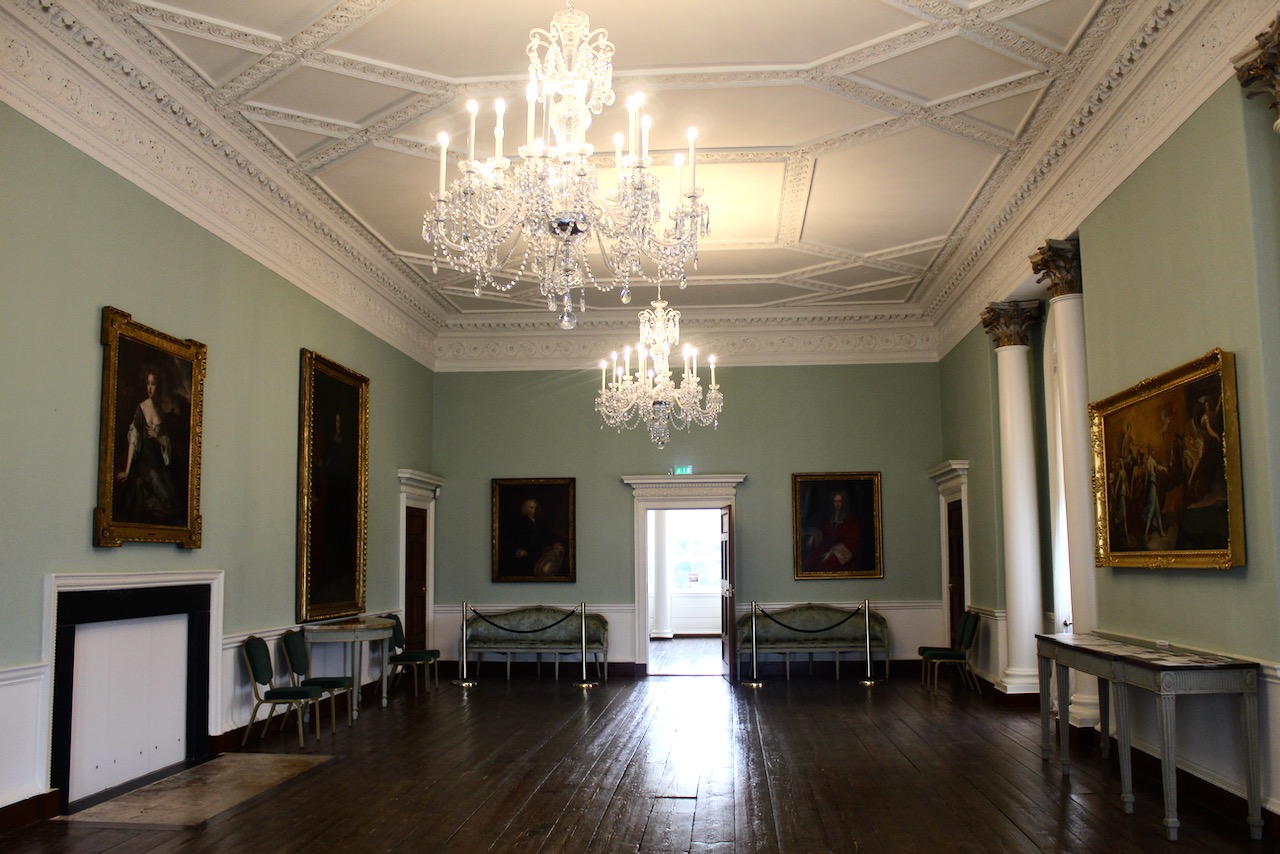
The Ballroom. The Ballroom was the principal room for entertainment and dancing and it is believed that the room was designed by Sir William Chambers. The door to the left on entering the room is false. It opens to reveal the wall behind. It was installed to maintain the balance and symmetry of the room. Musicians may have played in the eastern bow at the top of the Ballroom when dancing took place. Later, the Jesuits transformed the room into a chapel placing an altar in the bow with pews arranged down the centre of the room. Photograph © Jennifer Winder-Baggot, www.irishhistorichouses.com
The Ballroom, Rathfarnham Castle. Photograph © Jennifer Winder-Baggot, www.irishhistorichouses.com
The Ballroom, Rathfarnham Castle, Dublin. Photograph © Jennifer Winder-Baggot, www.irishhistorichouses.com
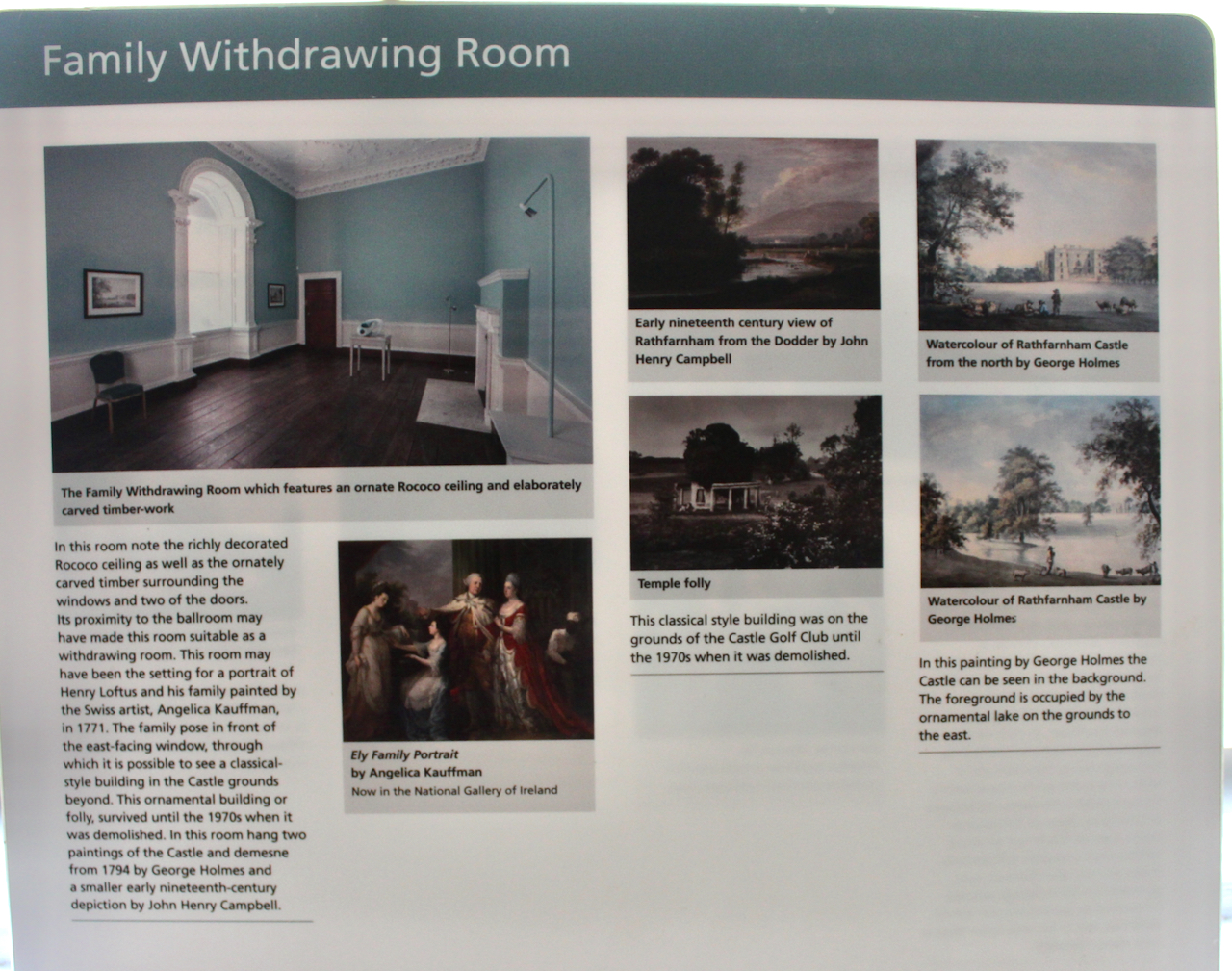
Information board about the Farmily Withdrawing Room in Rathfarnham Castle.
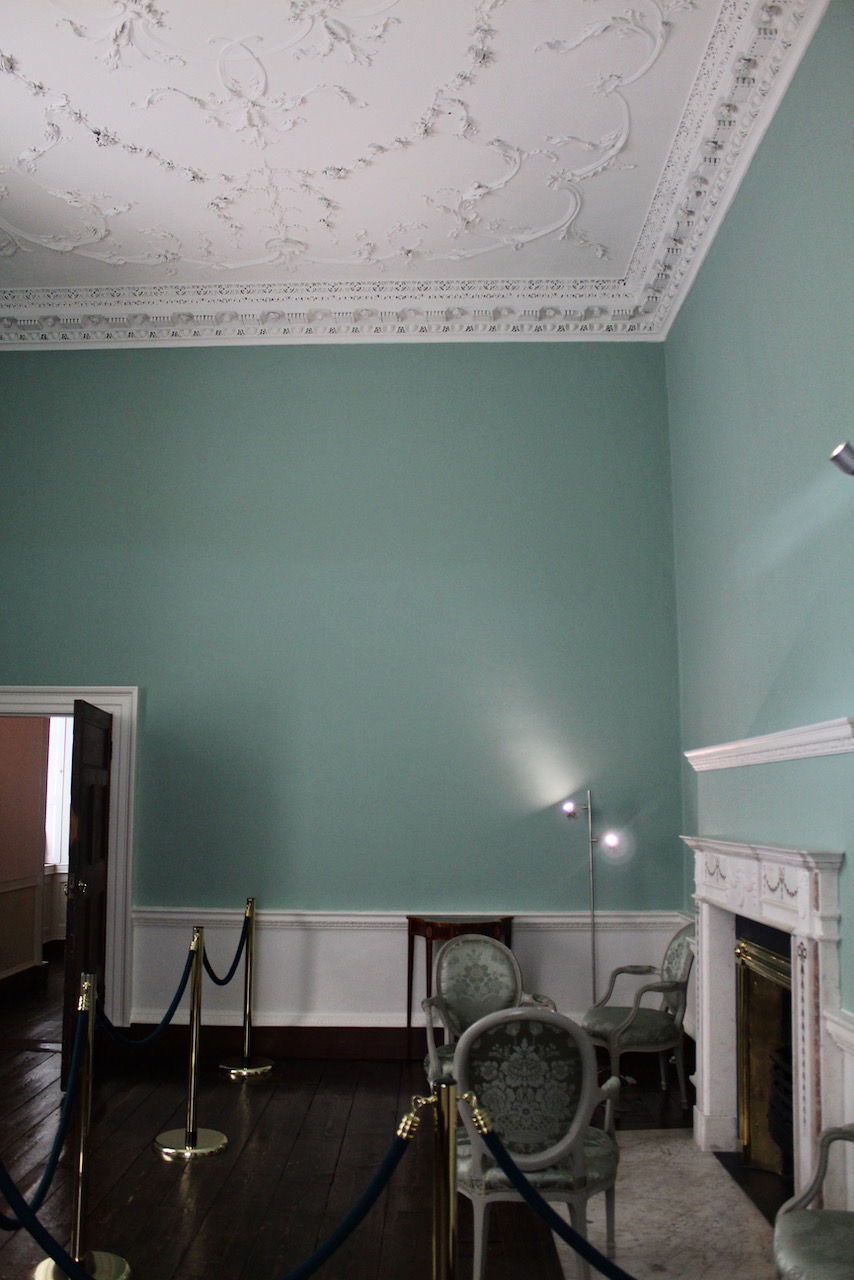
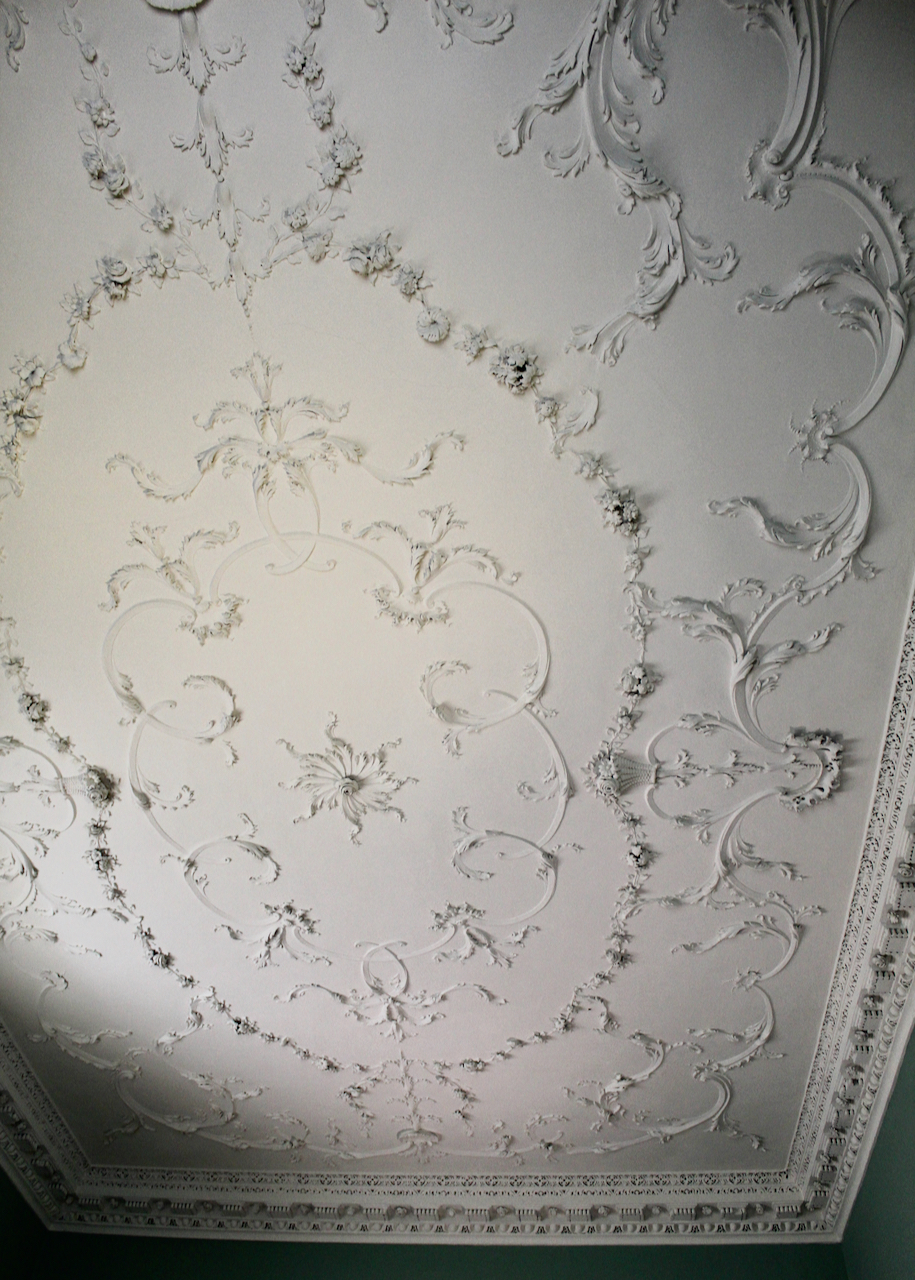
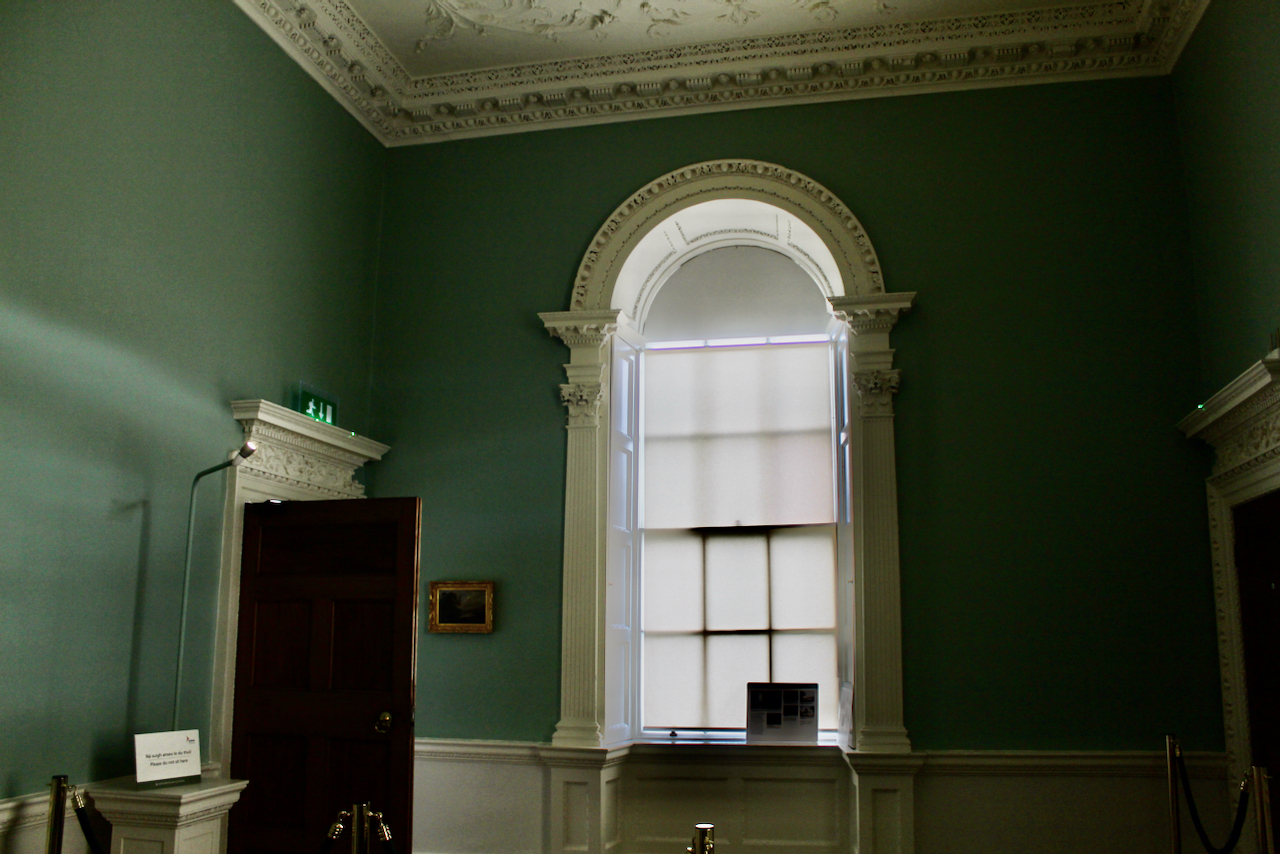
The Farmily Withdrawing Room in Rathfarnham Castle. Photograph © Jennifer Winder-Baggot, www.irishhistorichouses.com

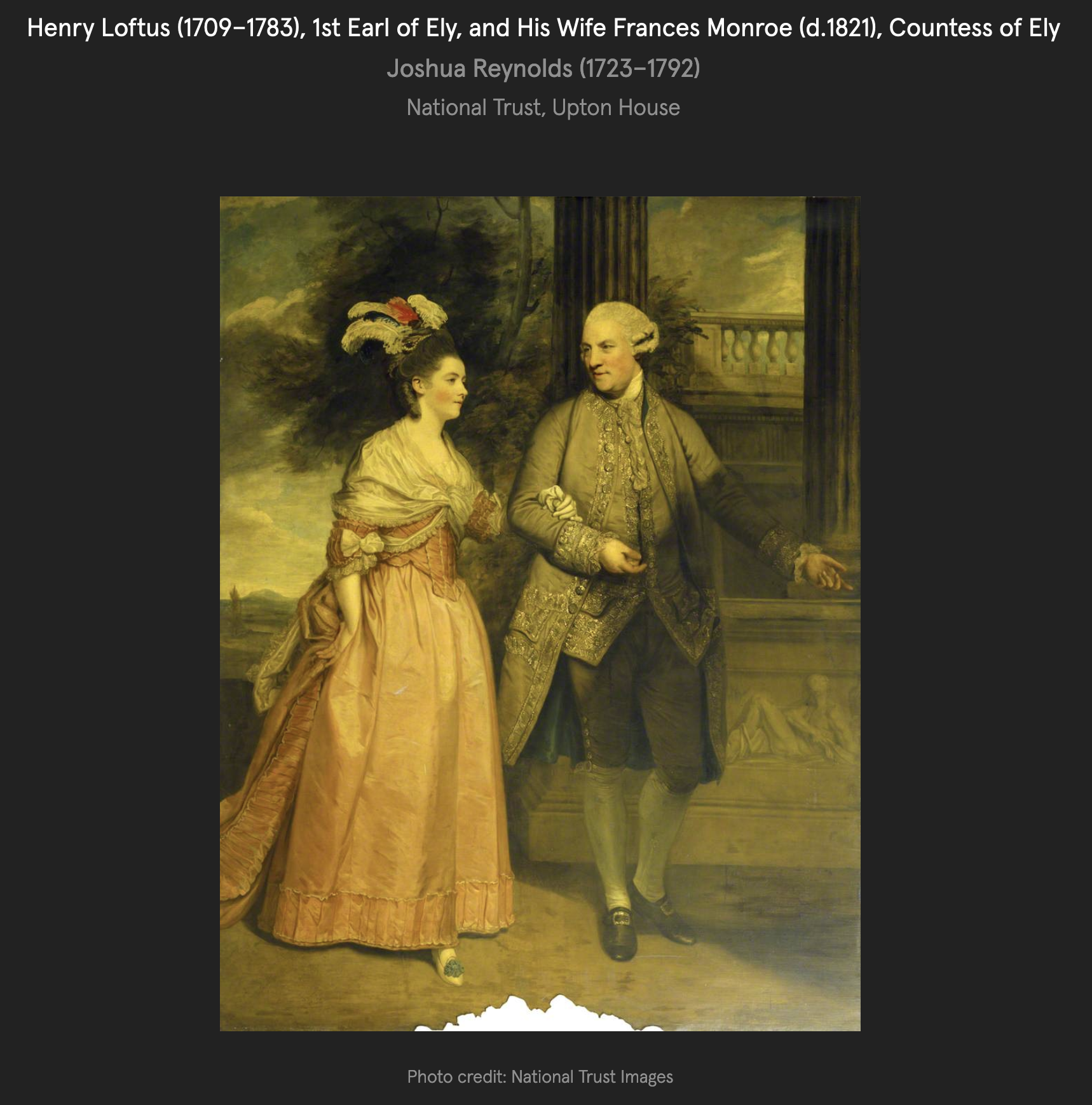
Henry Loftus (1709-1783) is pictured below. He married first, Frances Monroe of Roe’s Hall, County Down, (pictured below), who died in 1774, then married secondly Anne Bonfoy. He purchased Ely House in Dublin (built 1770) from Sir Gustavus Hume, 3rd Baronet (now owned by the Knights of Columbanus).
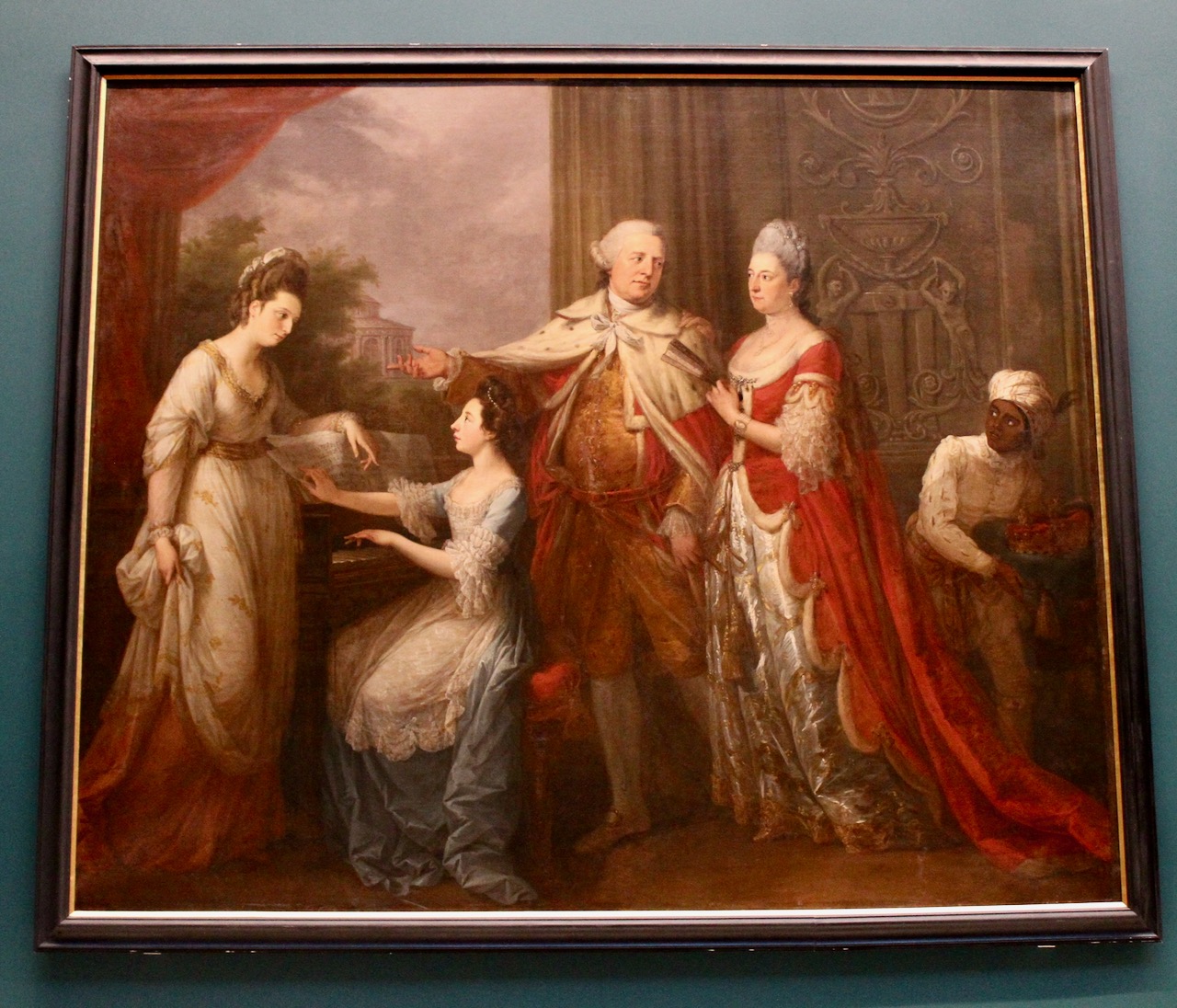
Painting by Angelica Kauffman, who spent several months in Dublin in 1771. It shows Henry Loftus 1st Earl of Ely of the 2nd Creation (1709-1783) with his wife Frances, her nieces and an exotic trophy servant, a young Indian page in Oriental dress carrying a cushion with two coronets, symbolising the title the Earl had just received. The older niece, Dolly Monroe, was Classical costume. Her younger sister Frances plays a fashionable aria on the harpsichord.

As well as the ante room and ballroom and the entrance hall on the first floor, Chambers was responsible for the small drawing room ceiling, back staircase lobby, and the octagonal room in one of the towers.
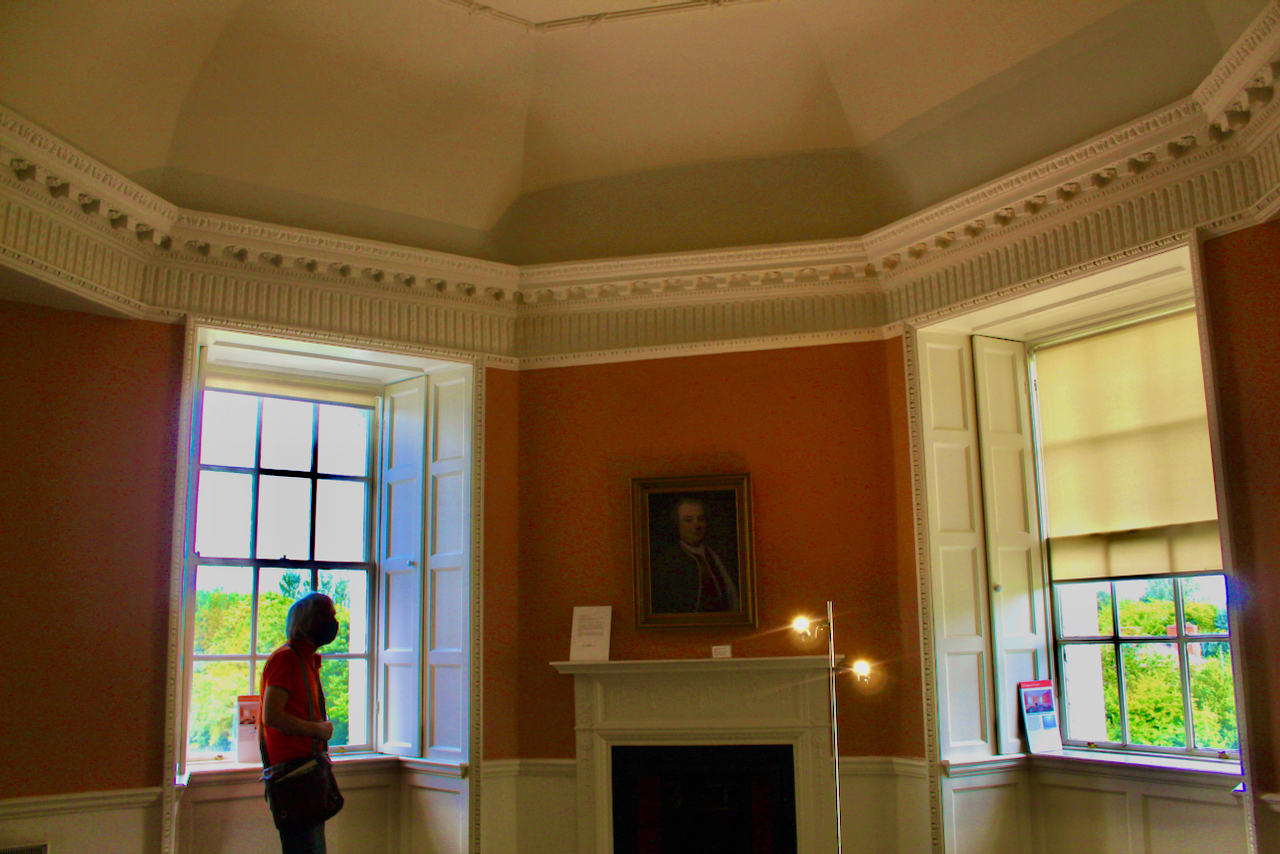
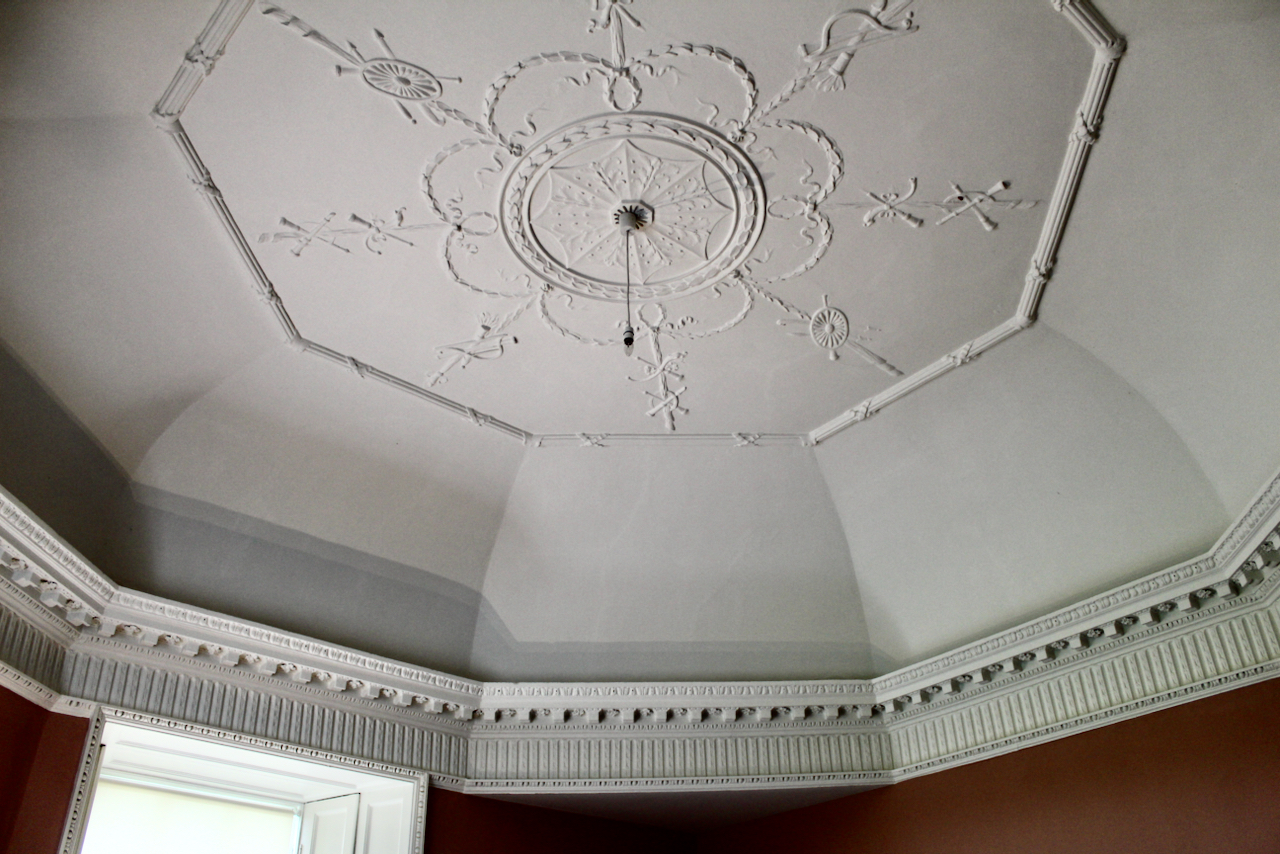
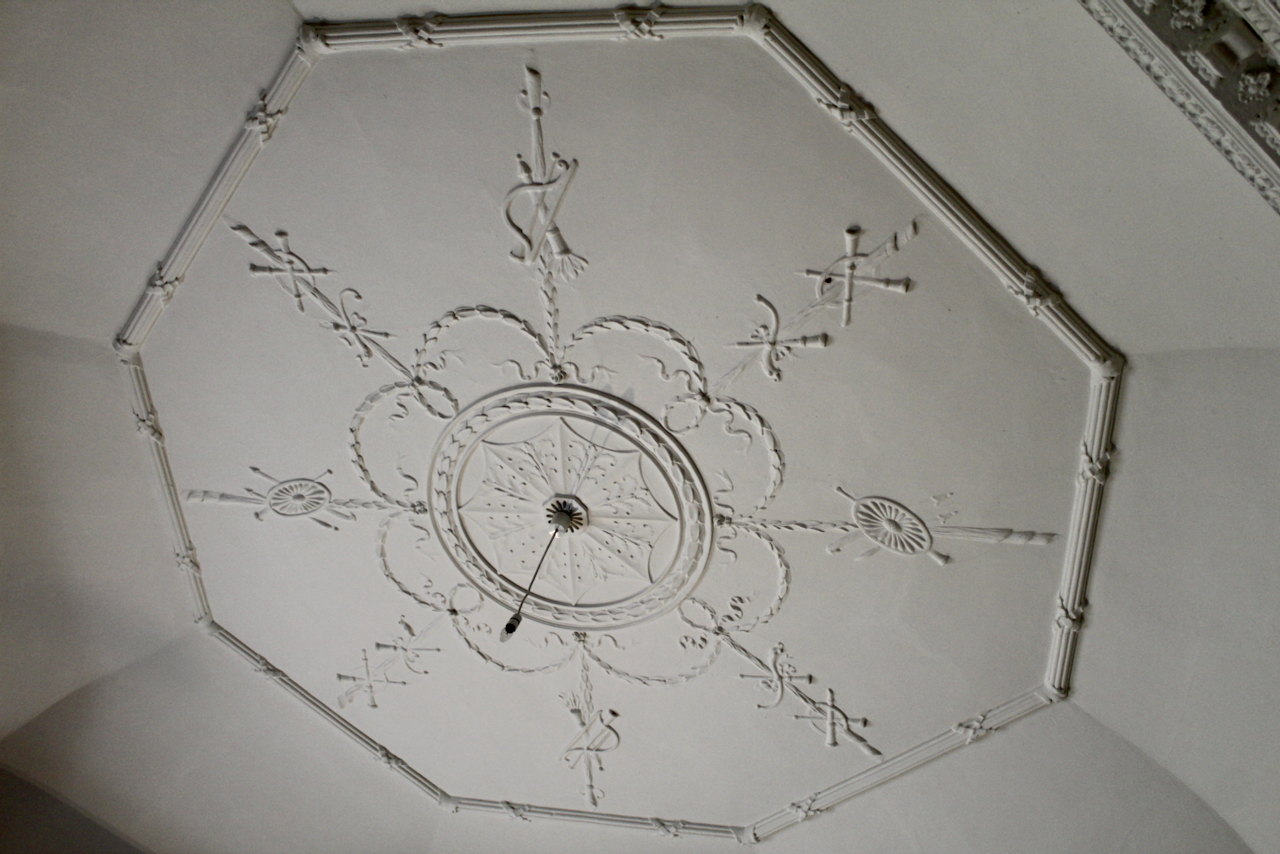
The Octagonal Room. In the 18th century it may have been a withdrawing room where guests could step out of the Ballroom for private conversation or relaxation. It was later used as a sacristy by the Jesuits. Photograph © Jennifer Winder-Baggot, www.irishhistorichouses.com
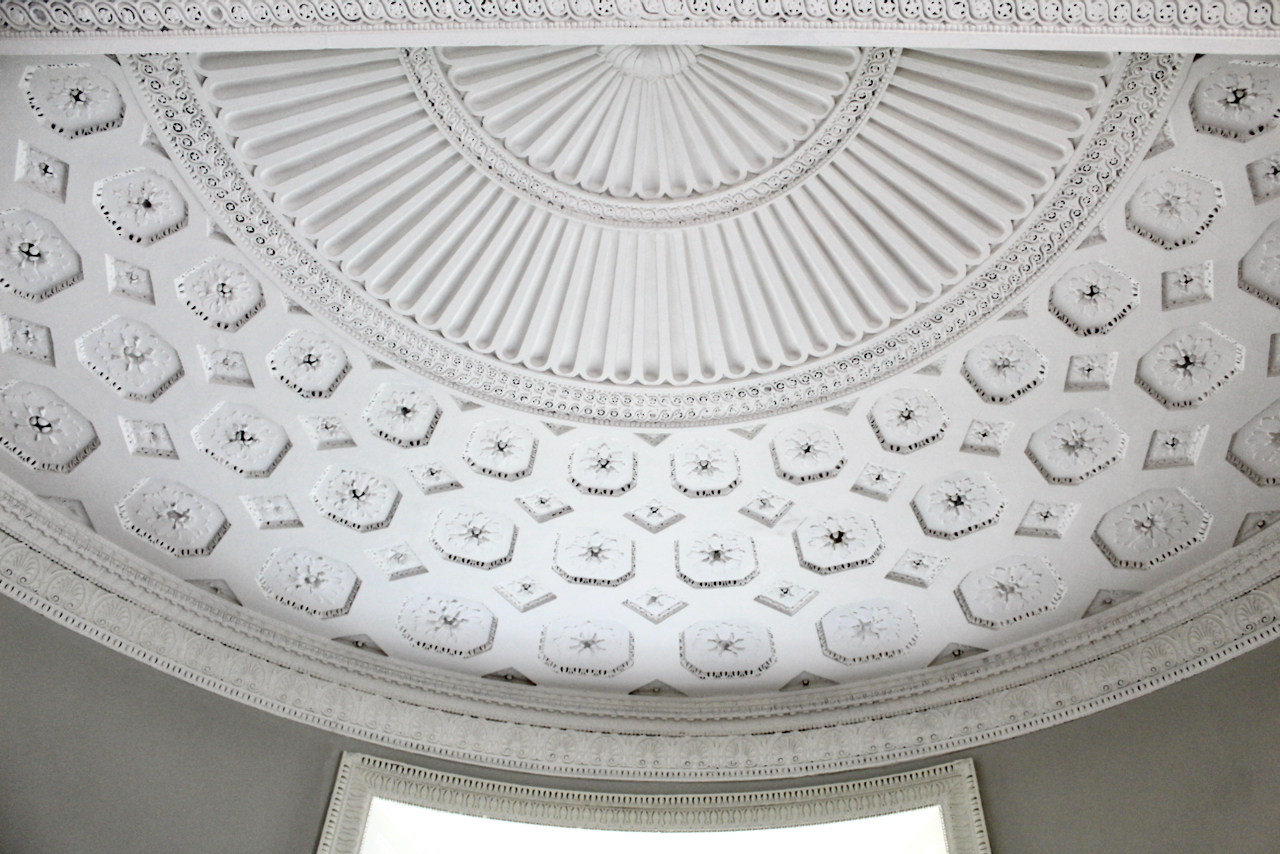
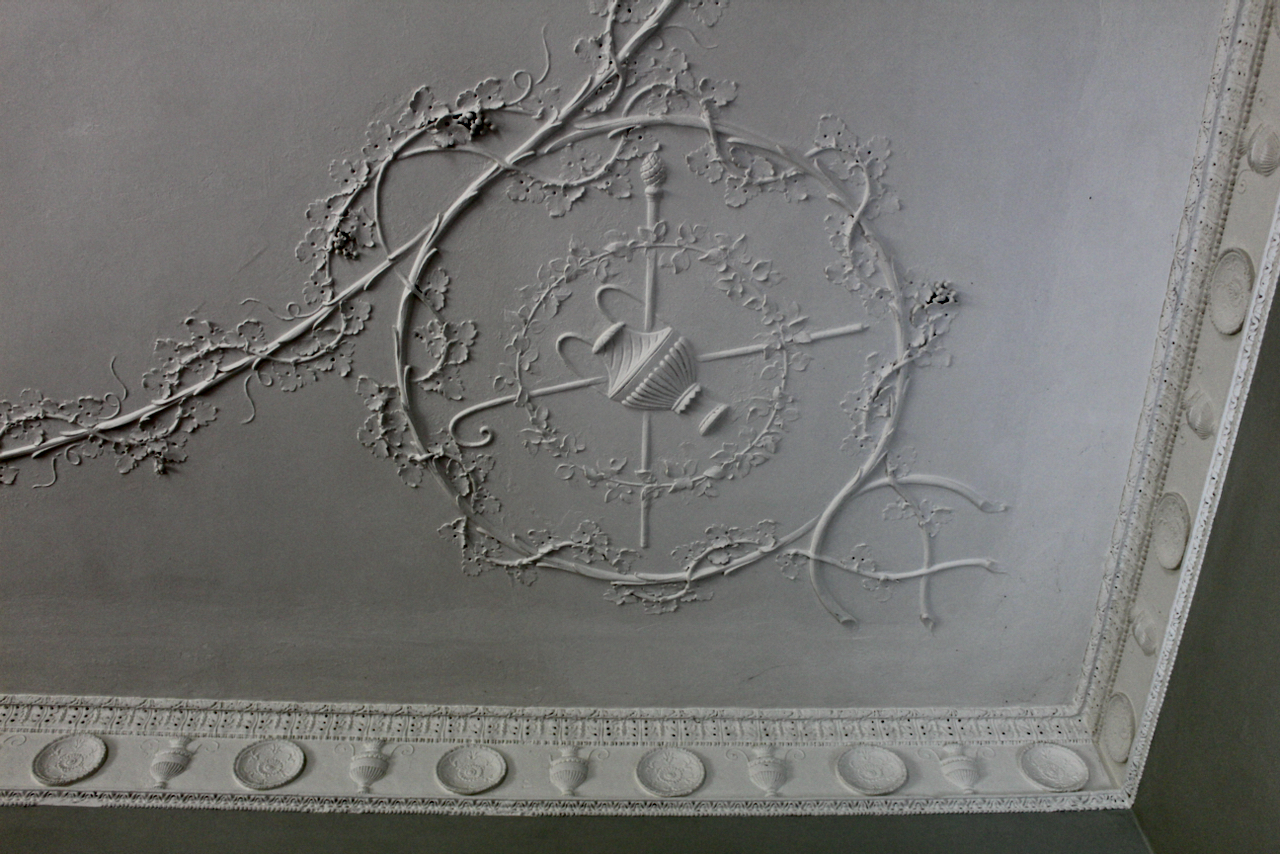
The Octagonal Room. This room features an eight sided ceiling and is decorated with ancient Roman symbols of war. The border is made up of bound groups of timber rods (fasces), a symbol of authority and power in the Roman period. Rathfarnham Castle. Photograph © Jennifer Winder-Baggot, www.irishhistorichouses.com
The Octagonal Room. Rathfarnham Castle. Photograph © Jennifer Winder-Baggot, www.irishhistorichouses.com
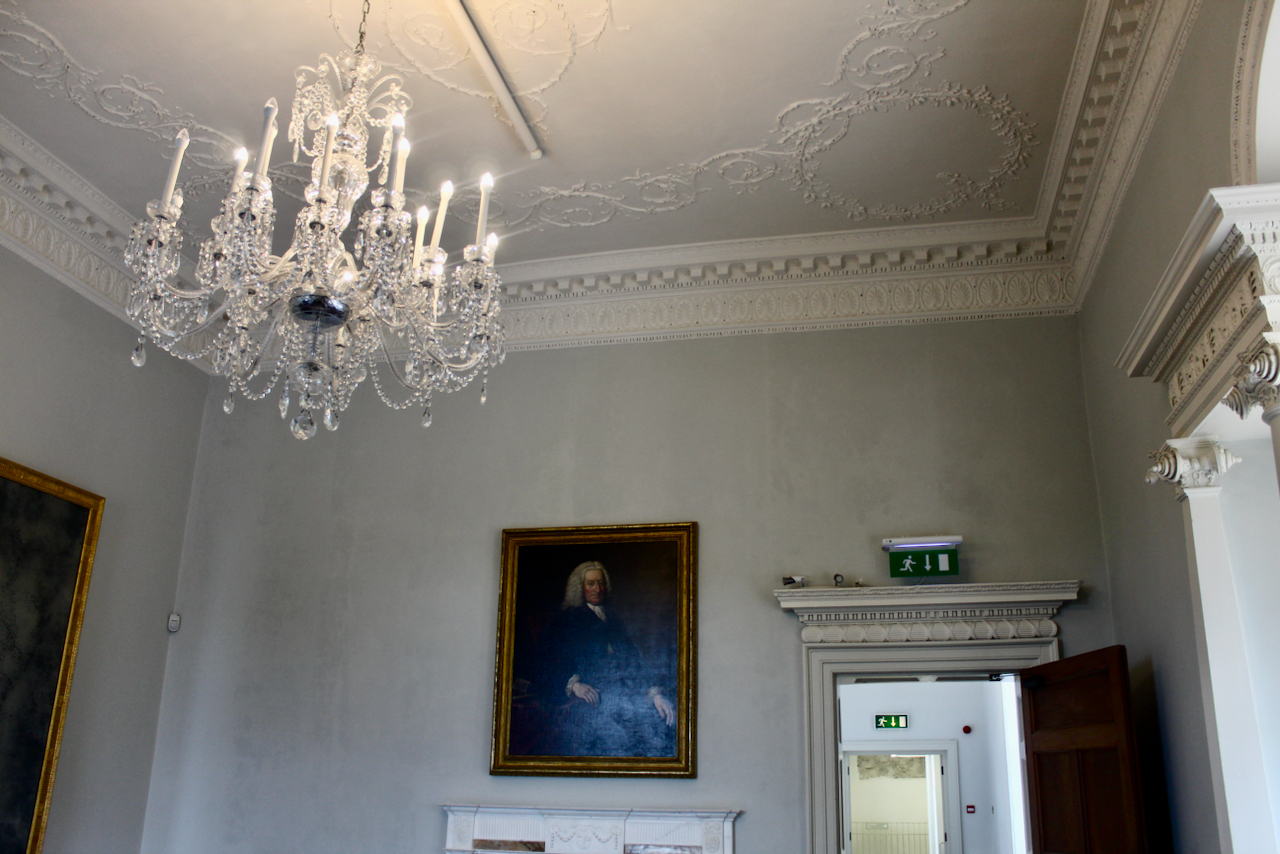
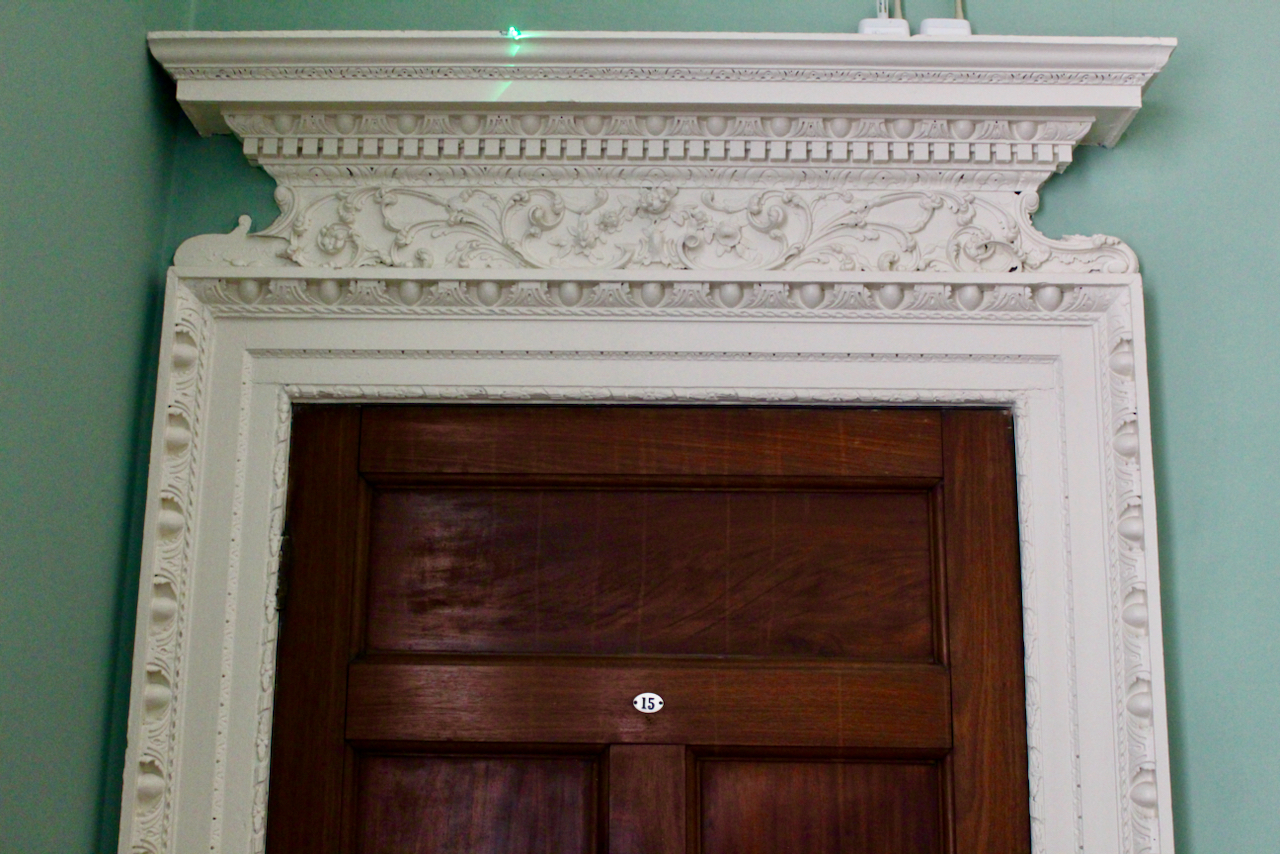
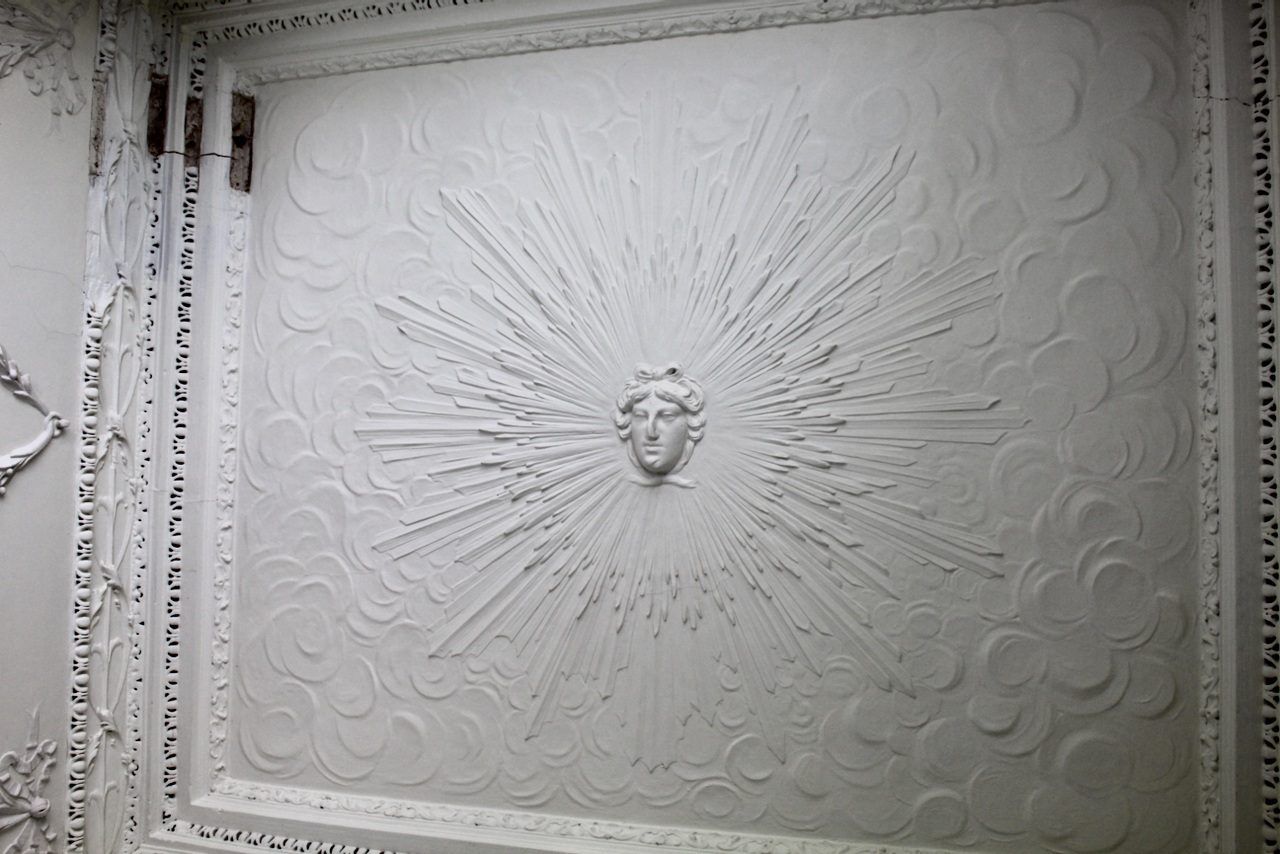
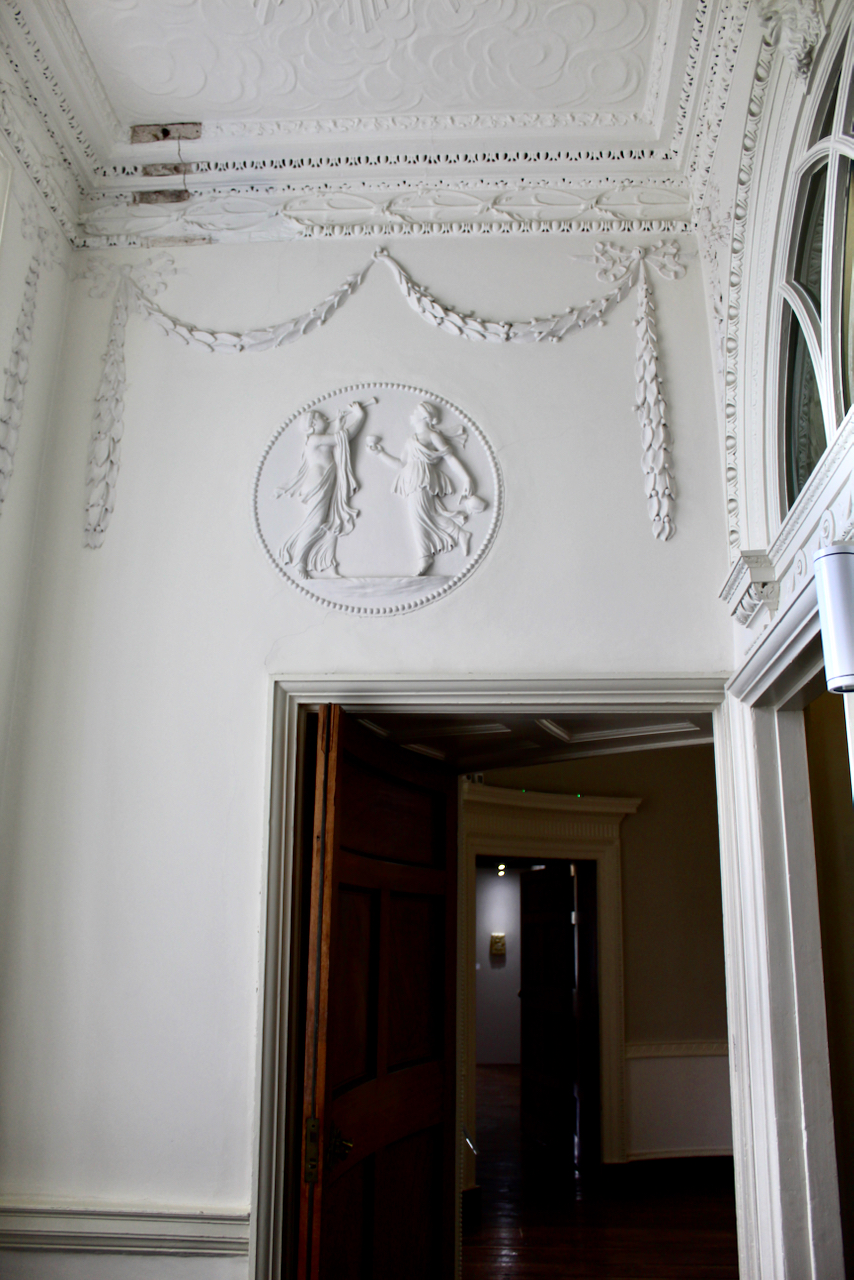
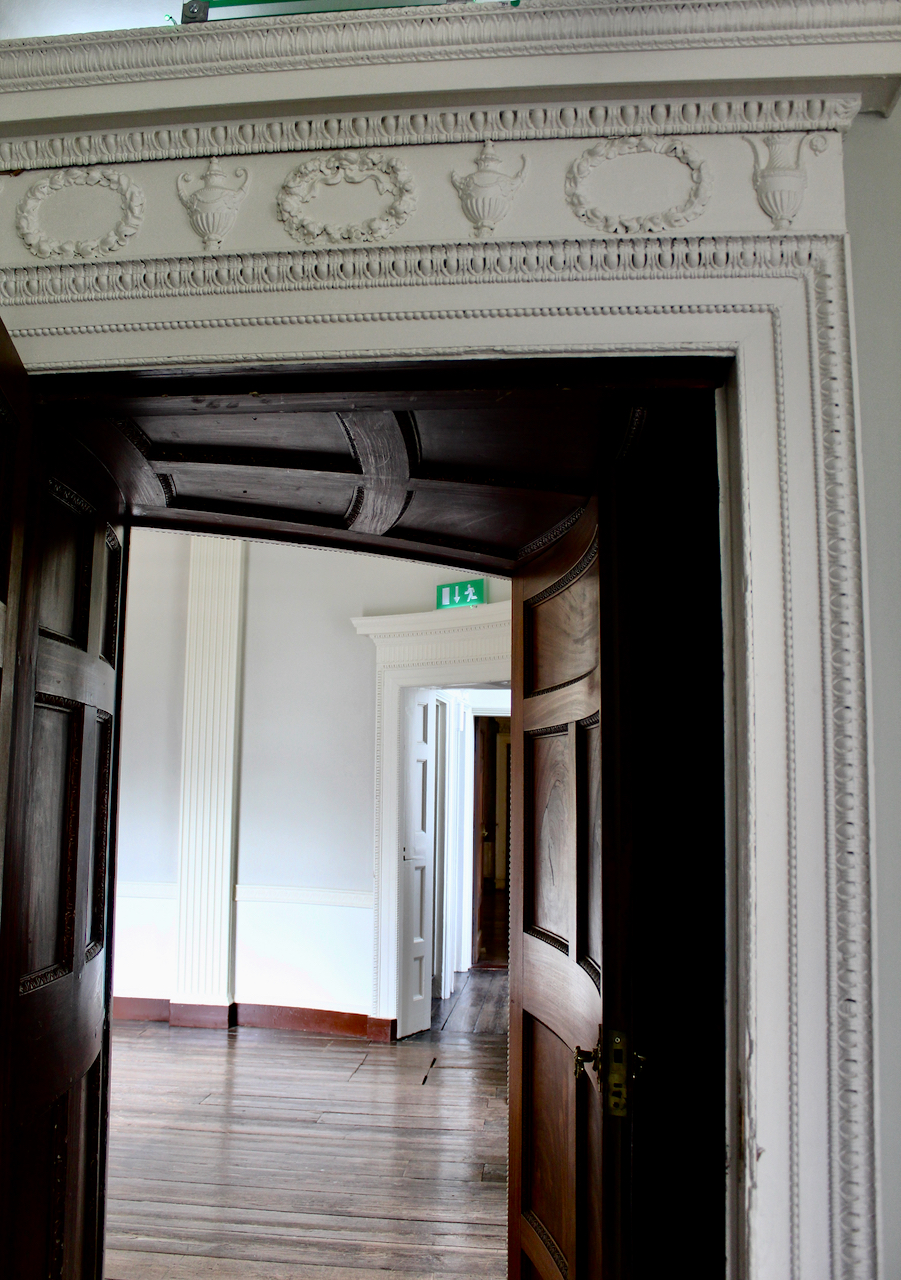
This tiny little passageway between the Dining Room and Long Gallery/Saloon was clearly a space of some importance. The passageway looks out onto the garden, and is decorated with very fine plasterwork. A head of Apollo adorns the ceiling, most likely to the design of Sir William Chambers, and on either side of the doorway there are ornamental plaster plaques with classical figures, celebrating wine, music and dance, a feature favoured and used repeatedly by James ‘Athenian’ Stuart. On one side of the passage there is a narrow wooden stairs, with a fanlight and satyr mask. The stairway has decorative niches, and leads all the way from the garden level to the third floor. Photograph © Jennifer Winder-Baggot, www.irishhistorichouses.com
On either side of the doorway there are ornamental plaster plaques with classical figures, celebrating wine, music and dance, a feature favoured and used repeatedly by James ‘Athenian’ Stuart. On one side of the passage there is a narrow wooden stairs, with a fanlight and satyr mask. The stairway has decorative niches, and leads all the way from the garden level to the third floor. Photograph © Jennifer Winder-Baggot, www.irishhistorichouses.com

There are also several rooms which are attributed to architect and designer James “Athenian” Stuart, whose best work in Ireland is the Temple of the Winds at Mount Stewart, County Down. Stuart was employed at Rathfarnham from at least 1769 and was responsible for the design of the ground floor gallery and two rooms above it. He was also involved in the decoration of some interiors at the family townhouse, Ely House, Dublin.
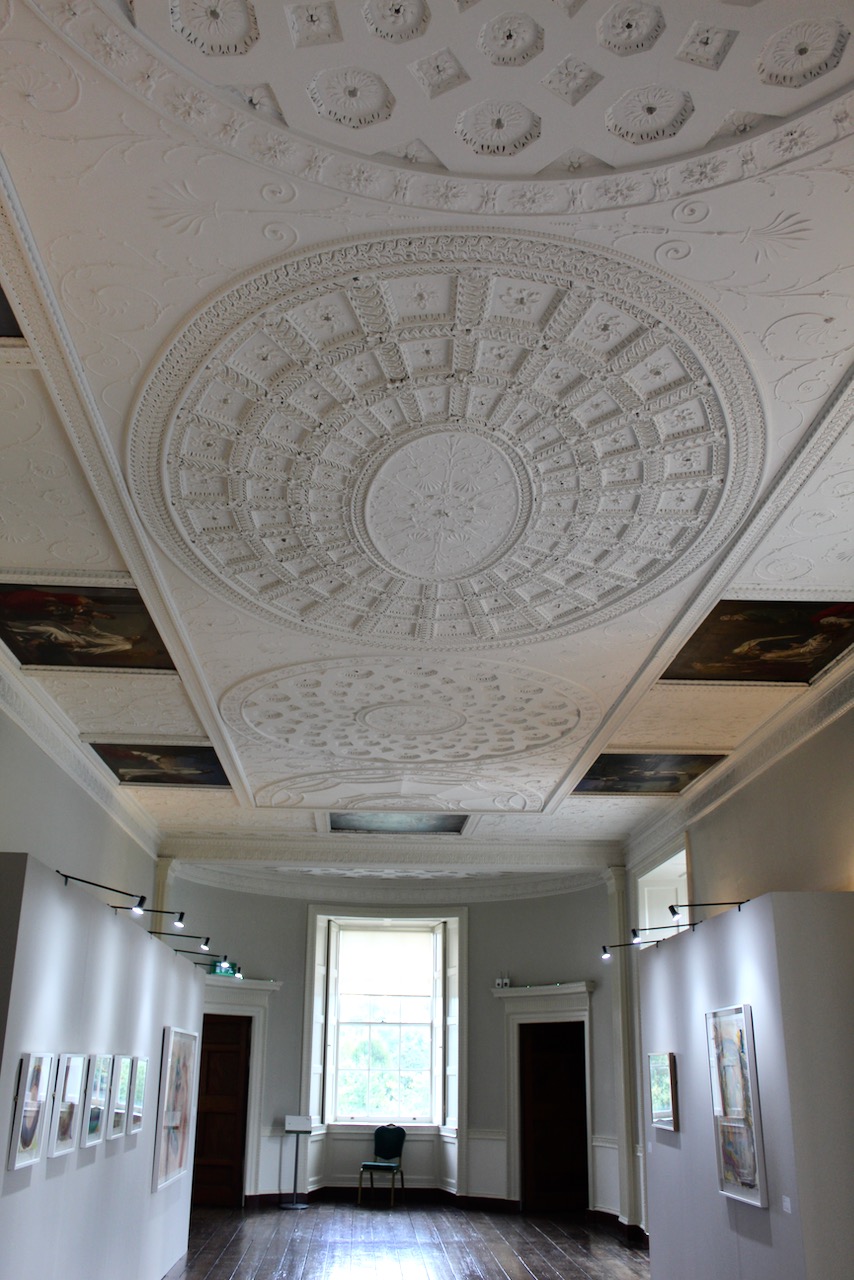
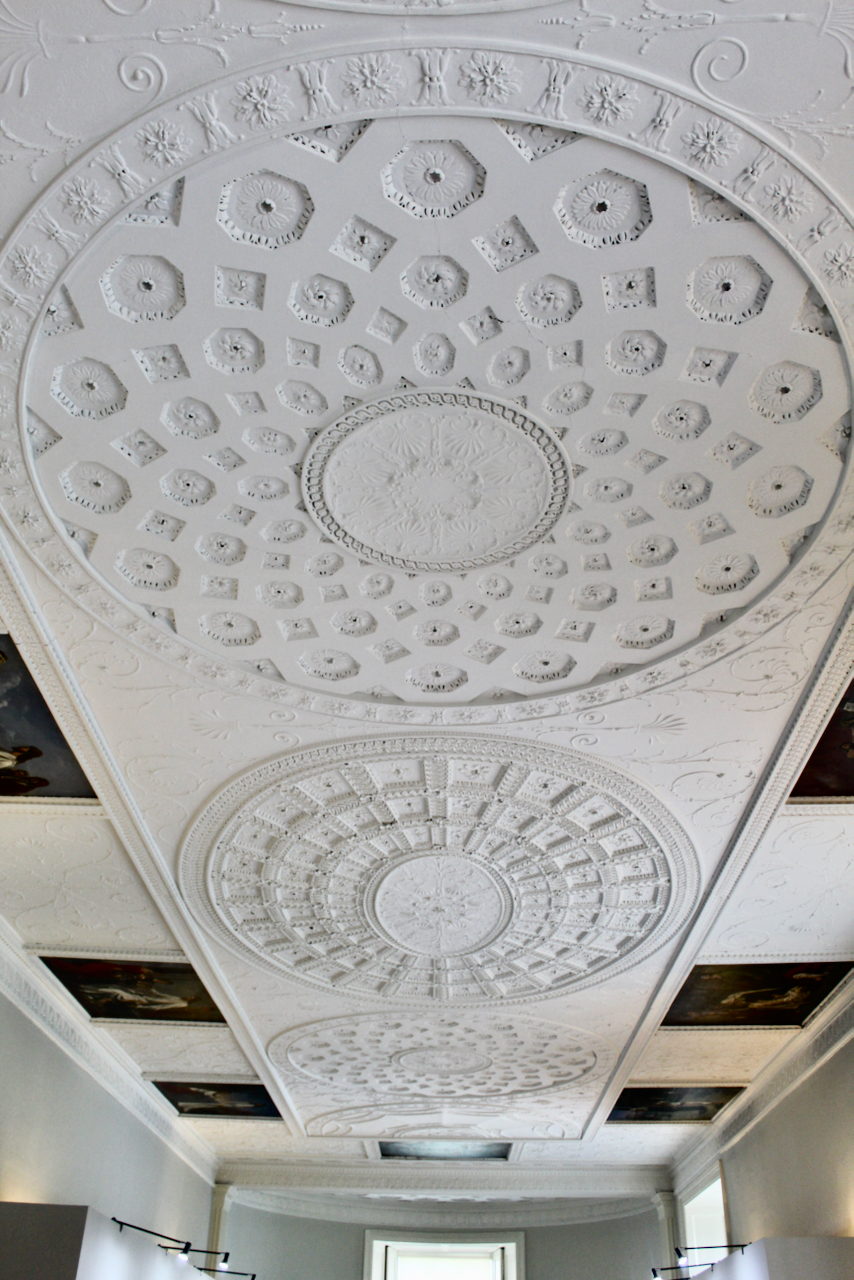
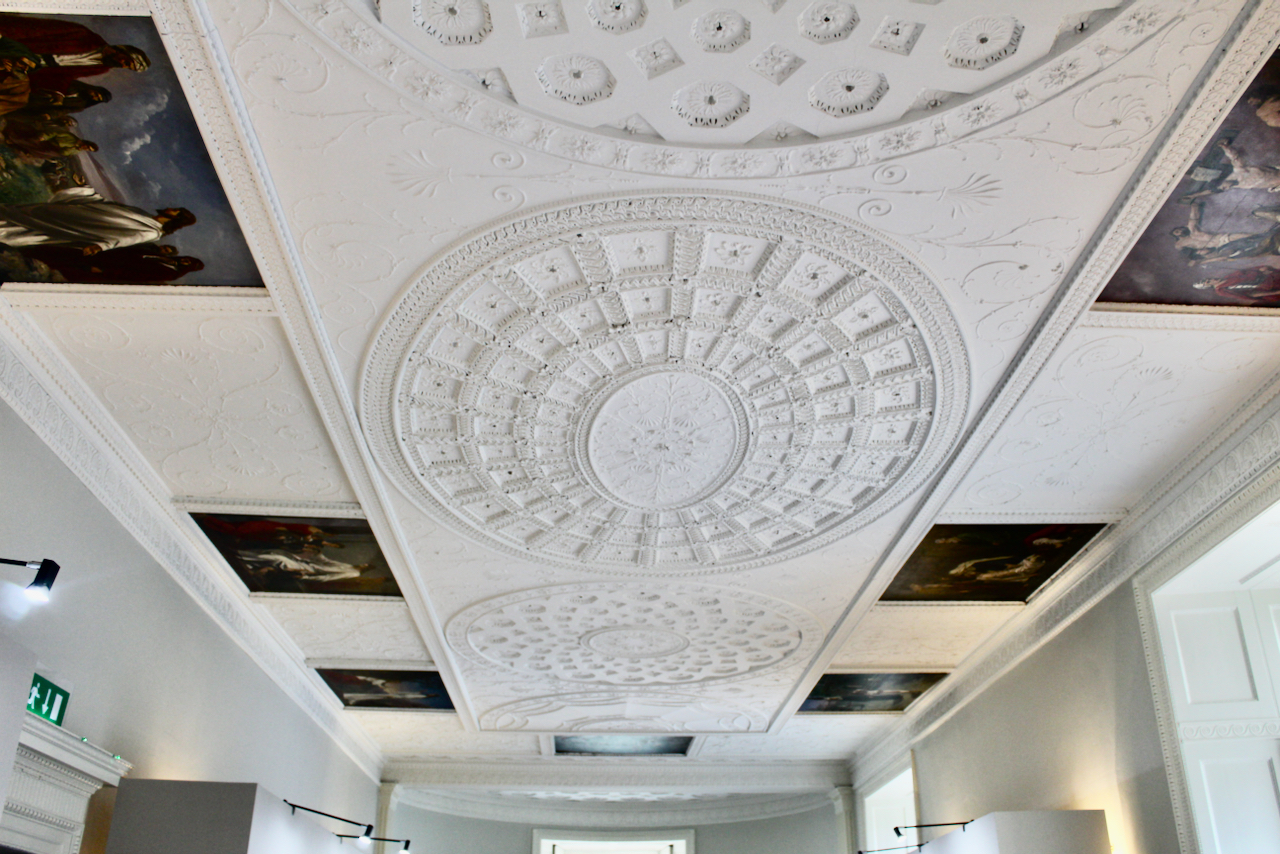
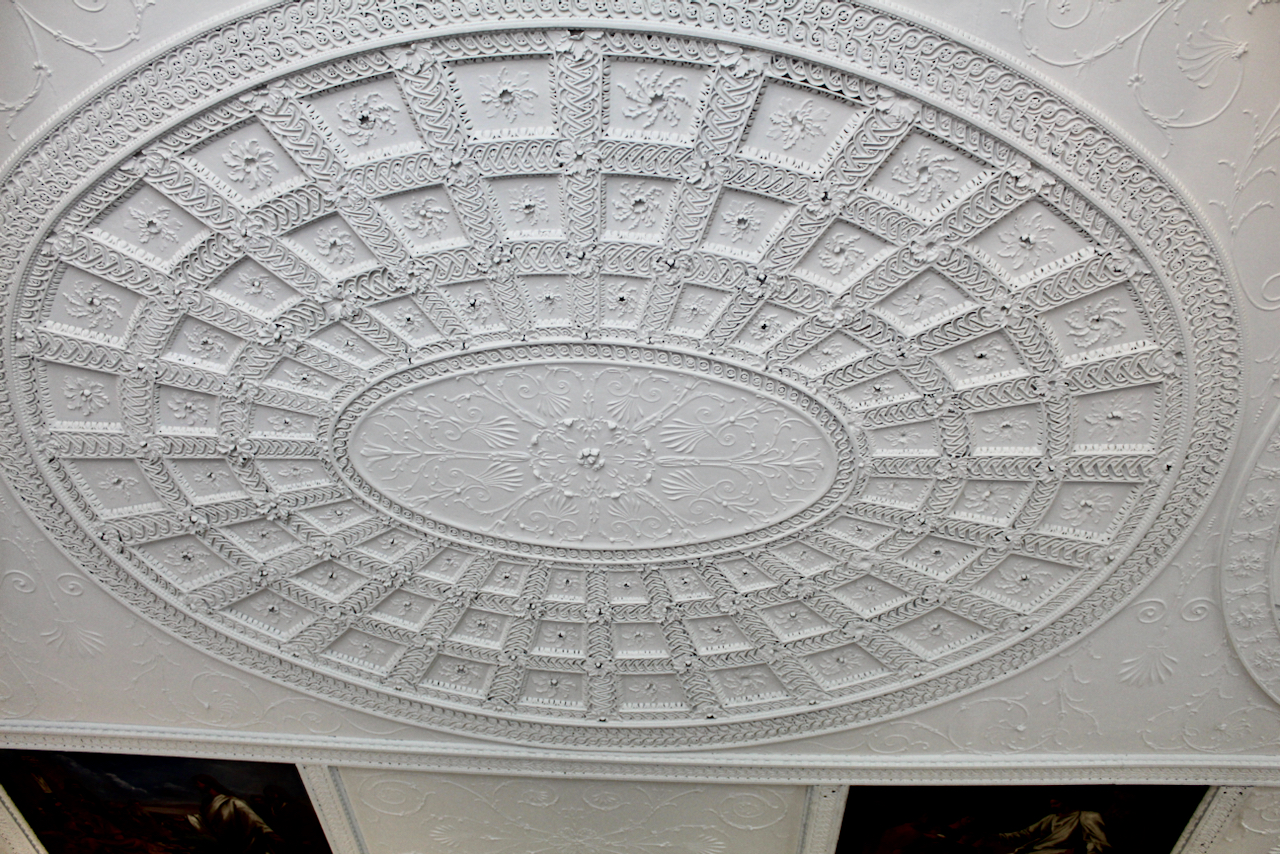
This long room would have been used as a saloon or drawing room to entertain guests and perhaps also as a space to display a collection of art works. It is believed the room was designed by James “Athenian” Stuart (1713-1788). The original ceiling paintings were a series of Greek mythological scenes by Angelica Kauffman (1741-1807). These were sold at auction in the early 20th century and are now believed to be in a private collection in the United States. The Jesuits commissioned a new series of ceiling paintings featuring scenes from the life of Christ by Dublin artist Patrick Tuohy (1894-1930). The residents of the Castle had direct access from this room to the lawn, woods and ornamental lake beyond via a double-cantilevered exterior staircase in Portland stone.” Photograph © Jennifer Winder-Baggot, www.irishhistorichouses.com
The Long Room, Rathfarnham Castle, Photograph © Jennifer Winder-Baggot, www.irishhistorichouses.com
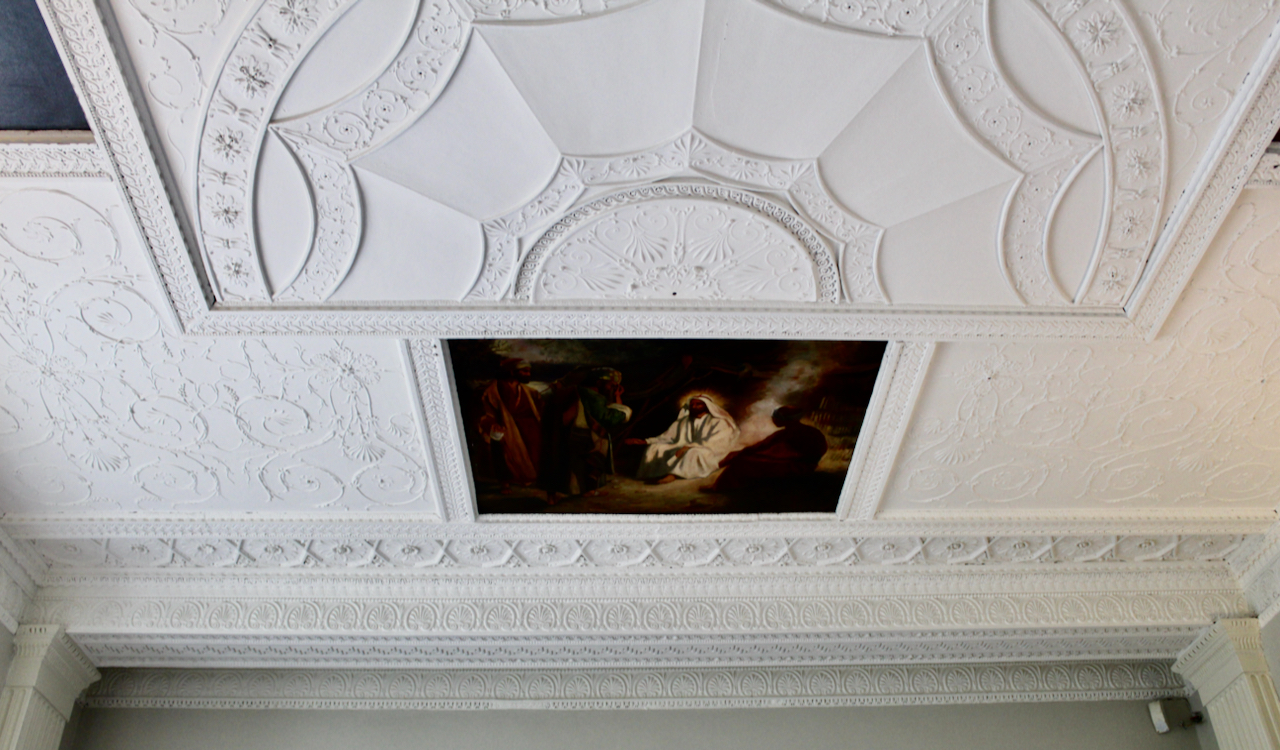
The Jesuits commissioned a new series of ceiling paintings featuring scenes from the life of Christ by Dublin artist Patrick Tuohy (1894-1930).
The Long Room, Rathfarnham Castle, Photograph © Jennifer Winder-Baggot, www.irishhistorichouses.com
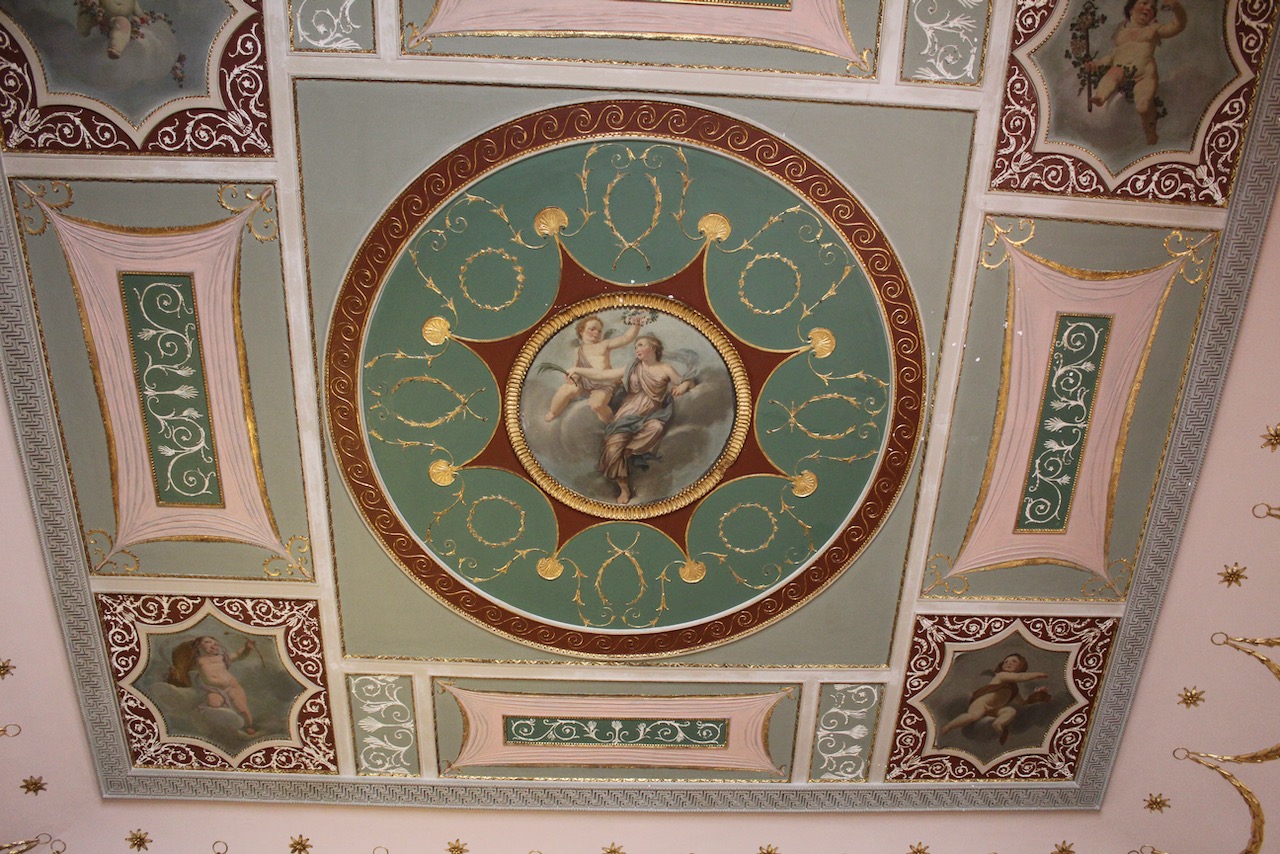
The Four Seasons Room, Rathfarnham Castle, believed to have been designed by James “Athenian” Stuart. In each corner of the ceiling a cherub represents one of the four seasons while the central painting is that of the goddess of agriculture and the harvest (Demeter in Greek or Ceres in Roman mythology). Photograph © Jennifer Winder-Baggot, www.irishhistorichouses.com
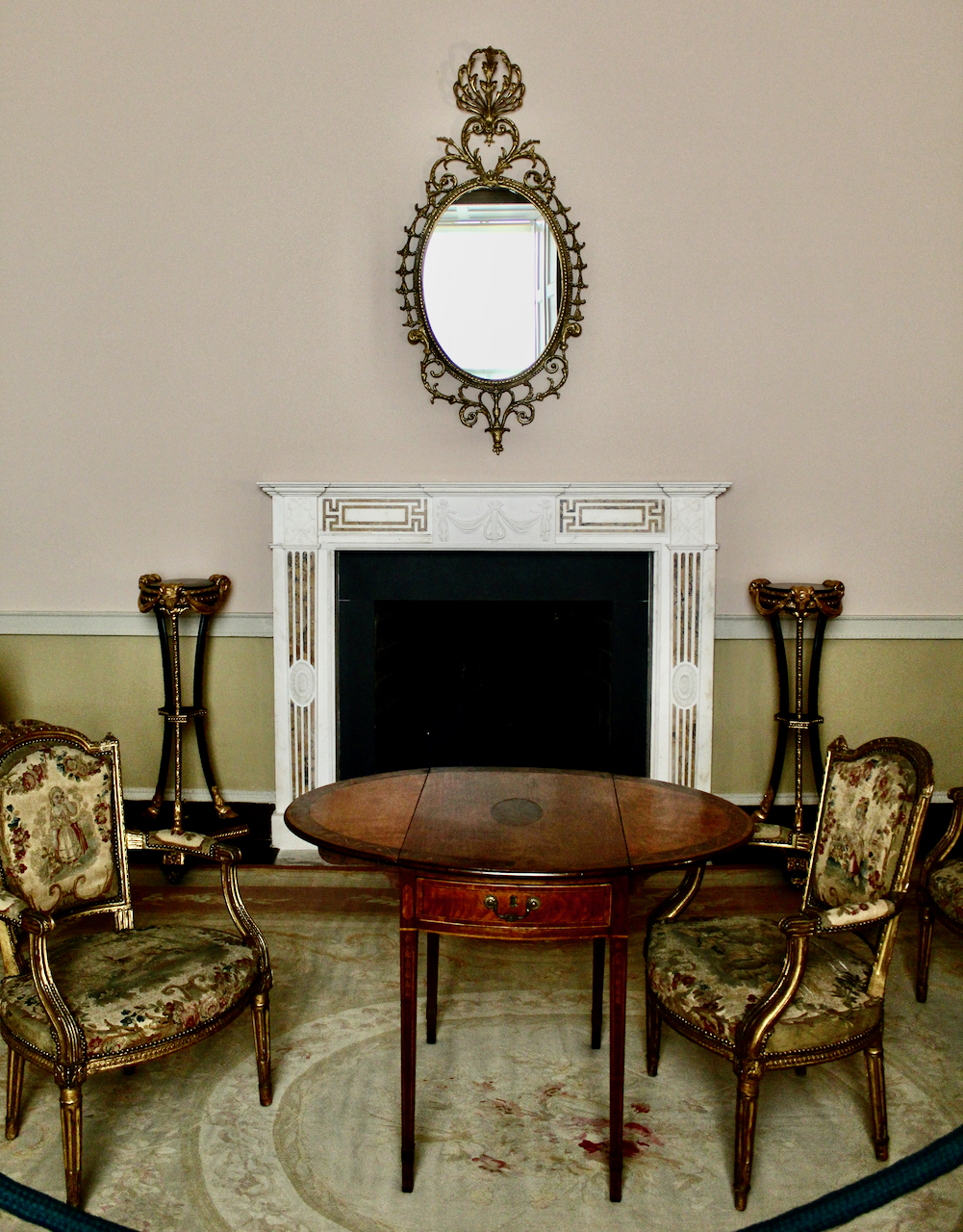
The Four Seasons Room, Rathfarnham Castle. The mirror is from the late 18th century and constructed from a type of papier-mache treated to give the appearance of gilded wood or metal. The Louis XVI giltwood and tapestry chairs feature scenes from La Fontaine’s fables which were adapted from the classics and published in the late 17th century. They are accompanied by an inlaid George III Pembroke Table. Photograph © Jennifer Winder-Baggot, www.irishhistorichouses.com
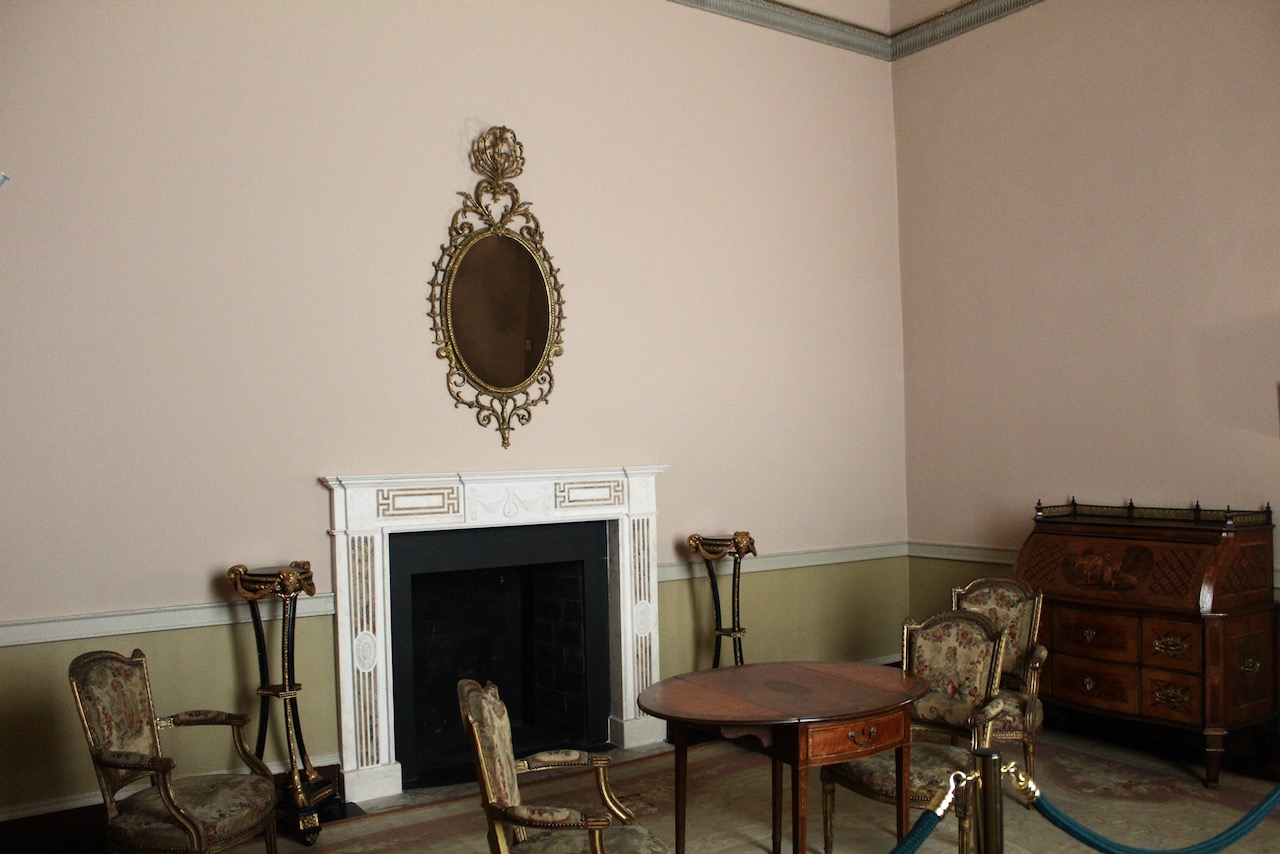
The Four Seasons Room, Rathfarnham Castle. The bureau belonged to Henry Loftus and is of German manufacture (c. 1775). The carpet is a late 19th century Aubusson. Photograph © Jennifer Winder-Baggot, www.irishhistorichouses.com
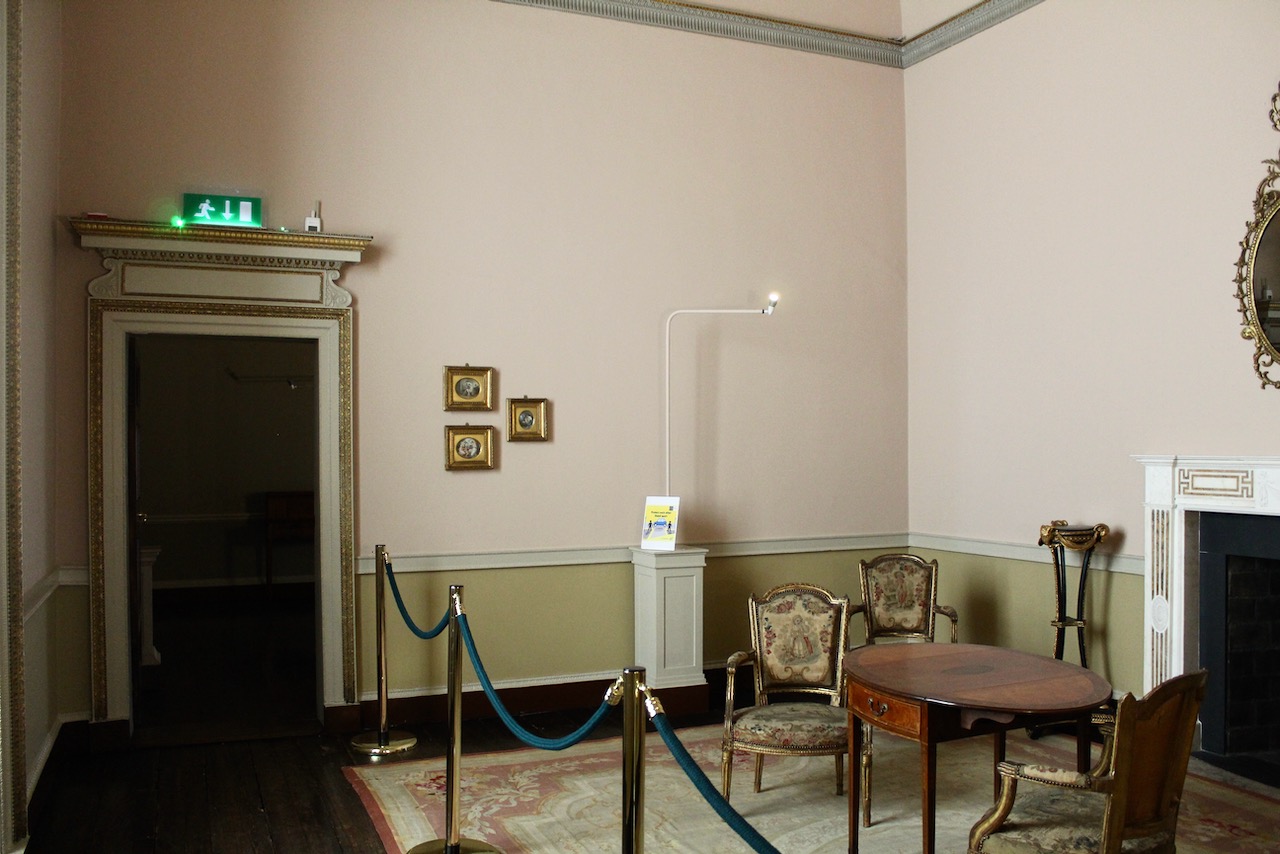
The Four Seasons Room, Rathfarnham Castle. Photograph © Jennifer Winder-Baggot, www.irishhistorichouses.com
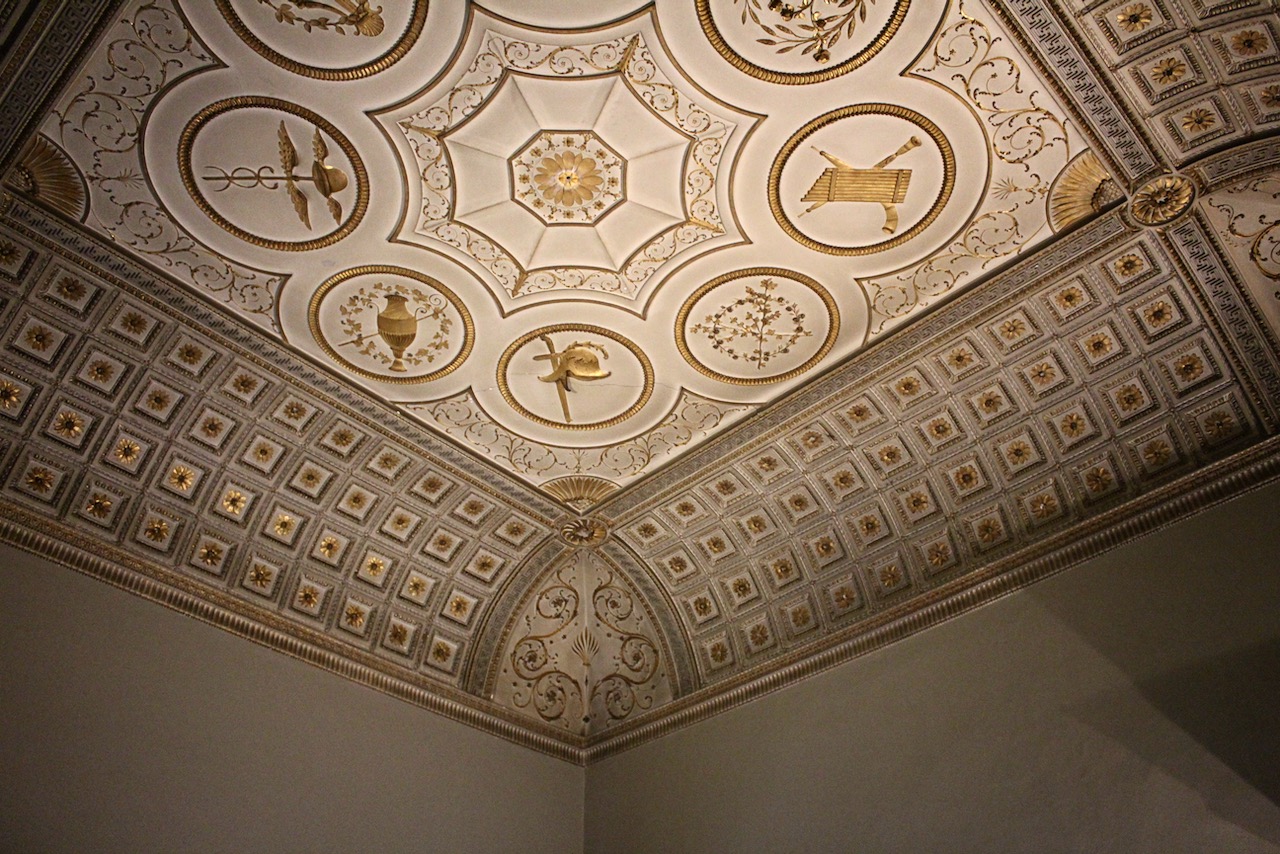
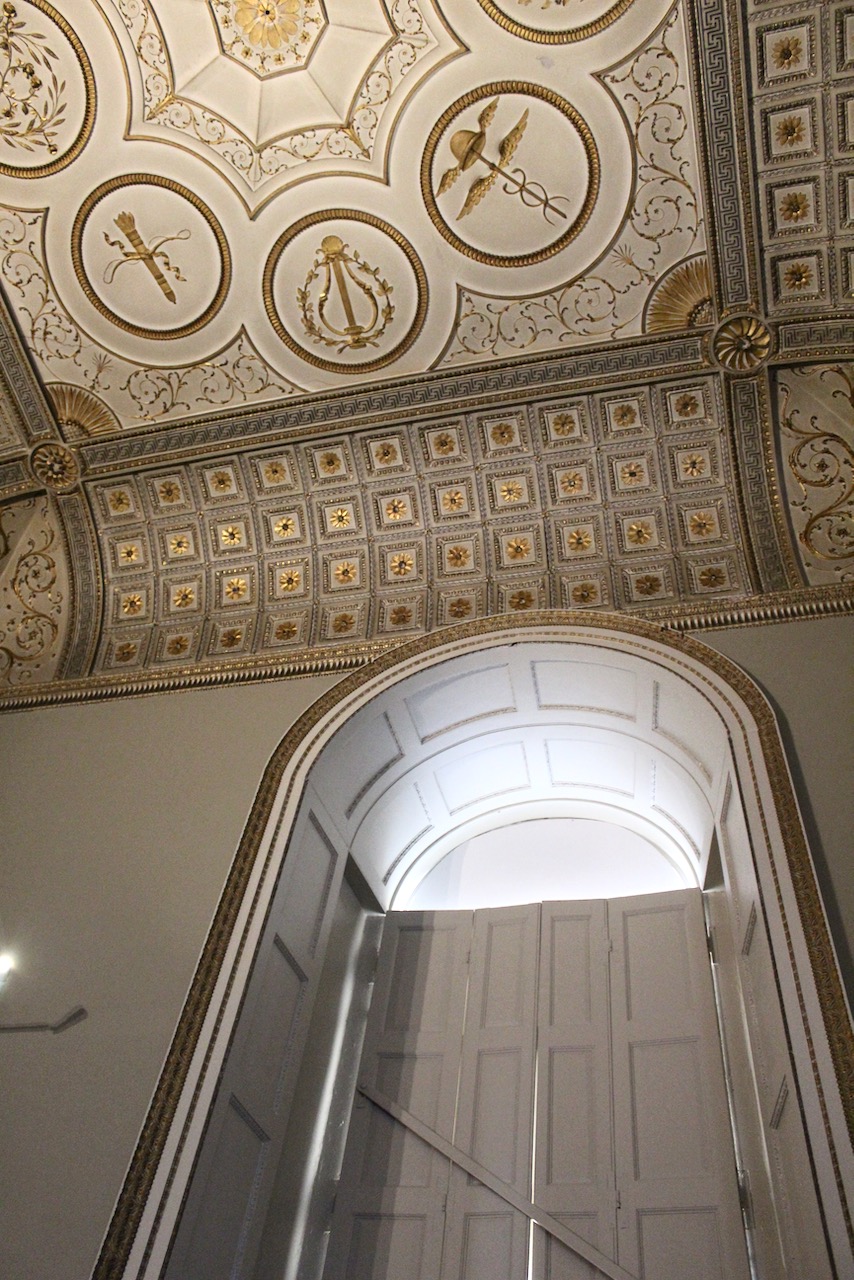
The Gilt Room ceiling, Rathfarnham Castle. A design by James “Athenian” Stuart, features eight rondels containing objects symbolising different Greek gods and goddesses. Facing toward the window and moving clockwise, these symbols are thought to represent Apollo, Hermes, Dionysus, Ares, Aphrodite, Pen, Demeter and Artemis. Photograph © Jennifer Winder-Baggot, www.irishhistorichouses.com
The Gilt Room ceiling, Rathfarnham Castle. Photograph © Jennifer Winder-Baggot, www.irishhistorichouses.com
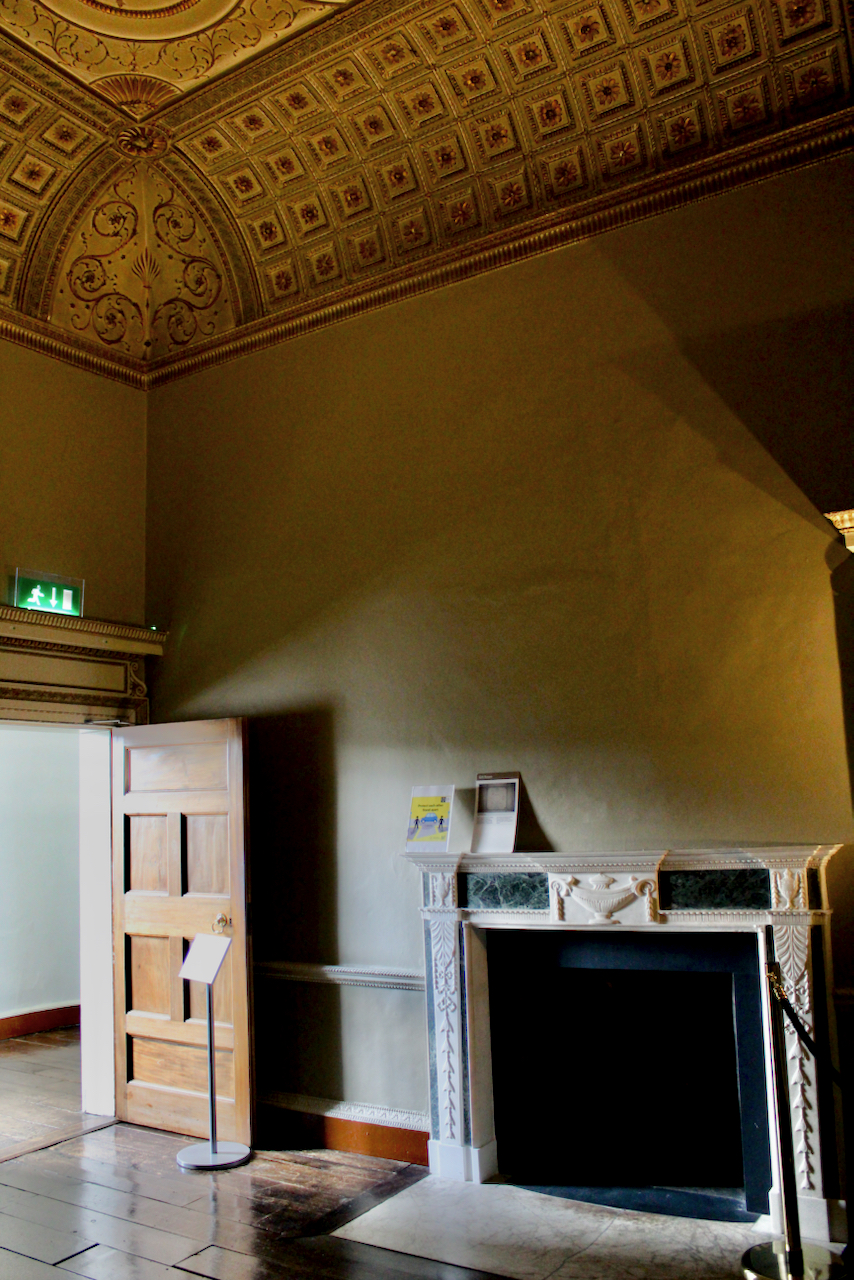
The Gilt Room, Rathfarnham Castle. Photograph © Jennifer Winder-Baggot, www.irishhistorichouses.com

Henry Loftus was succeeded by his nephew Charles Tottenham (1738-1806), son of Henry’s sister Elizabeth (1720-1747) and her husband John Tottenham (1714-1786) 1st Baronet of Tottenham Green, County Wexford. Charles Tottenham’s name was changed to Charles Loftus in 1783 after the death of Henry Loftus 1st Earl of Ely of the 2nd Creation.

Charles held the office of Member of Parliament (M.P.) for New Ross between 1761 and 1768, M.P. for Bannow between 1768 and 1776, M.P. for New Fethard between 1776 and 1783. and M.P. for County Wexford between 1783 and 1785. He was created 1st Baron Loftus of Loftus Hall, Co. Wexford [Ireland] on 28 June 1785. He succeeded as the 2nd Baronet Tottenham [I., 1780] on 29 December 1786. He was created 1st Viscount Loftus of Ely [Ireland] on 28 December 1789 and 1st Earl of Ely [Ireland] on 2 March 1794. He was created 1st Marquess of Ely [Ireland] on 1 January 1801 and 1st Baron Loftus of Long Loftus, Co. York [U.K.] on 19 January 1801. He was also Privy Counsellor. 
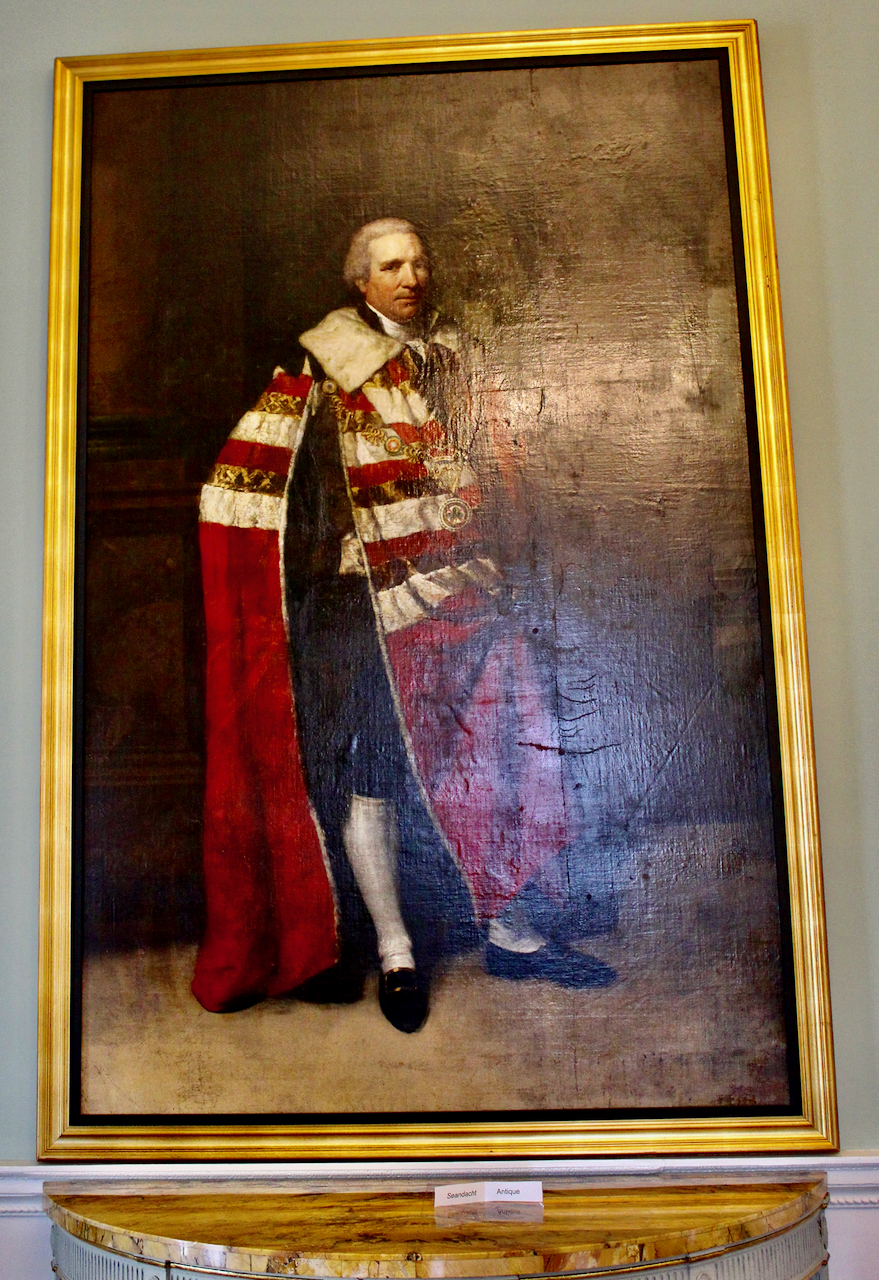
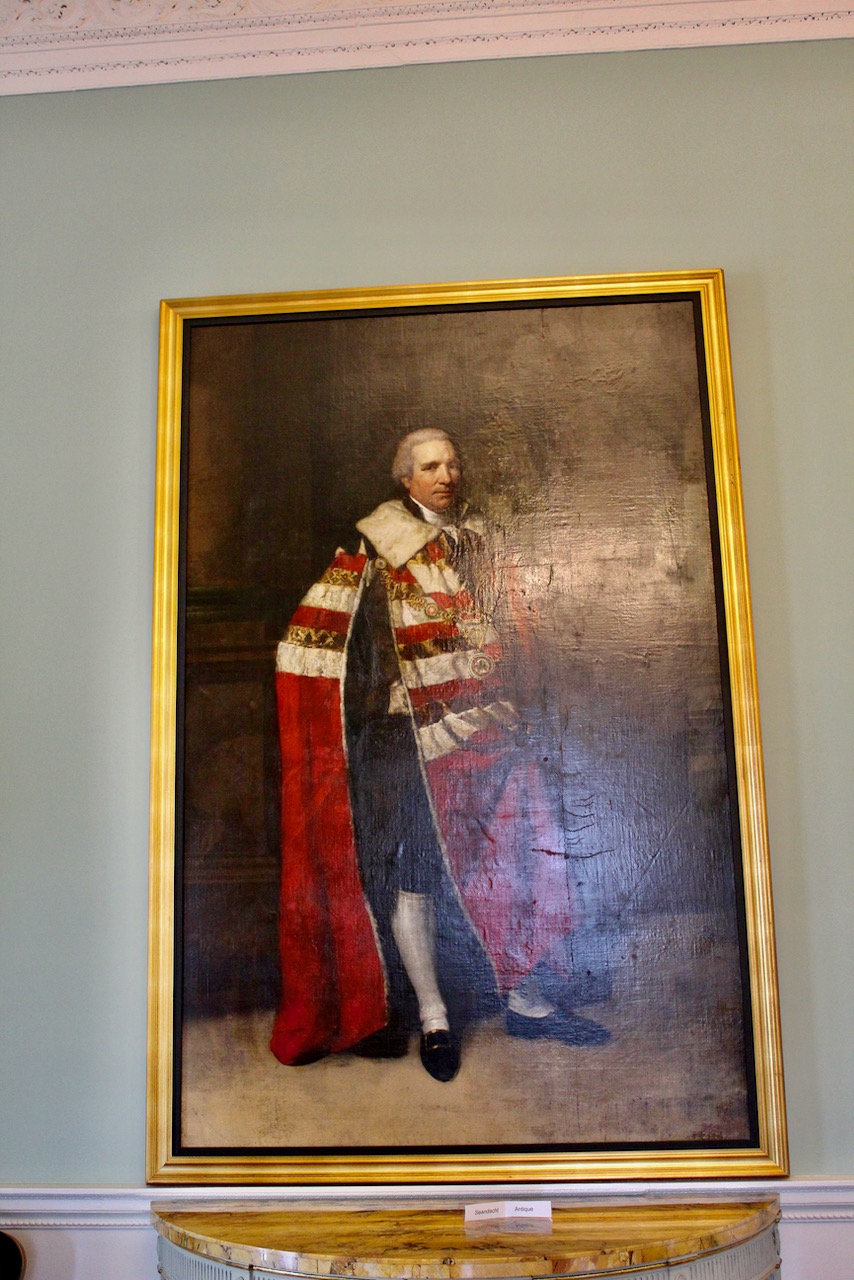
Charles Tottenham Loftus, Marquis of Ely by Hugh Douglas Hamilton. Charles was the nephew of Henry Loftus Earl of Ely and inherited Rathfarnham Castle and the demesne on his death in 1783. The painting shows Charles in the robes of the Irish House of Lords. He is also wearing a chain indicating his membership of the prestigious Order of St Patrick. He was elevated to a Marquis, given a baronetcy in England as well as £45,000 in return for his votes in favour of the Act of Union. Hugh Douglas Hamilton (1740-1808) was born and grew up in Dublin and attended the Dublin Society’s Drawing Schools. He had a long and successful career as an artist and worked in London and Rome as well as Dublin. He is perhaps best known for his work in pastels and left an extensive series of portraits of leading figures in Irish society.

At Rathfarnham, Charles did little beyond the erection in 1790 of the Gothic or Back Gate, now almost competely demolished to make way for a road.

He married Jane Myhill of Killarney, County Kerry. Her sister Hannah married Hercules Langrishe, 1st Baronet of Knocktopher, County Kilkenny.
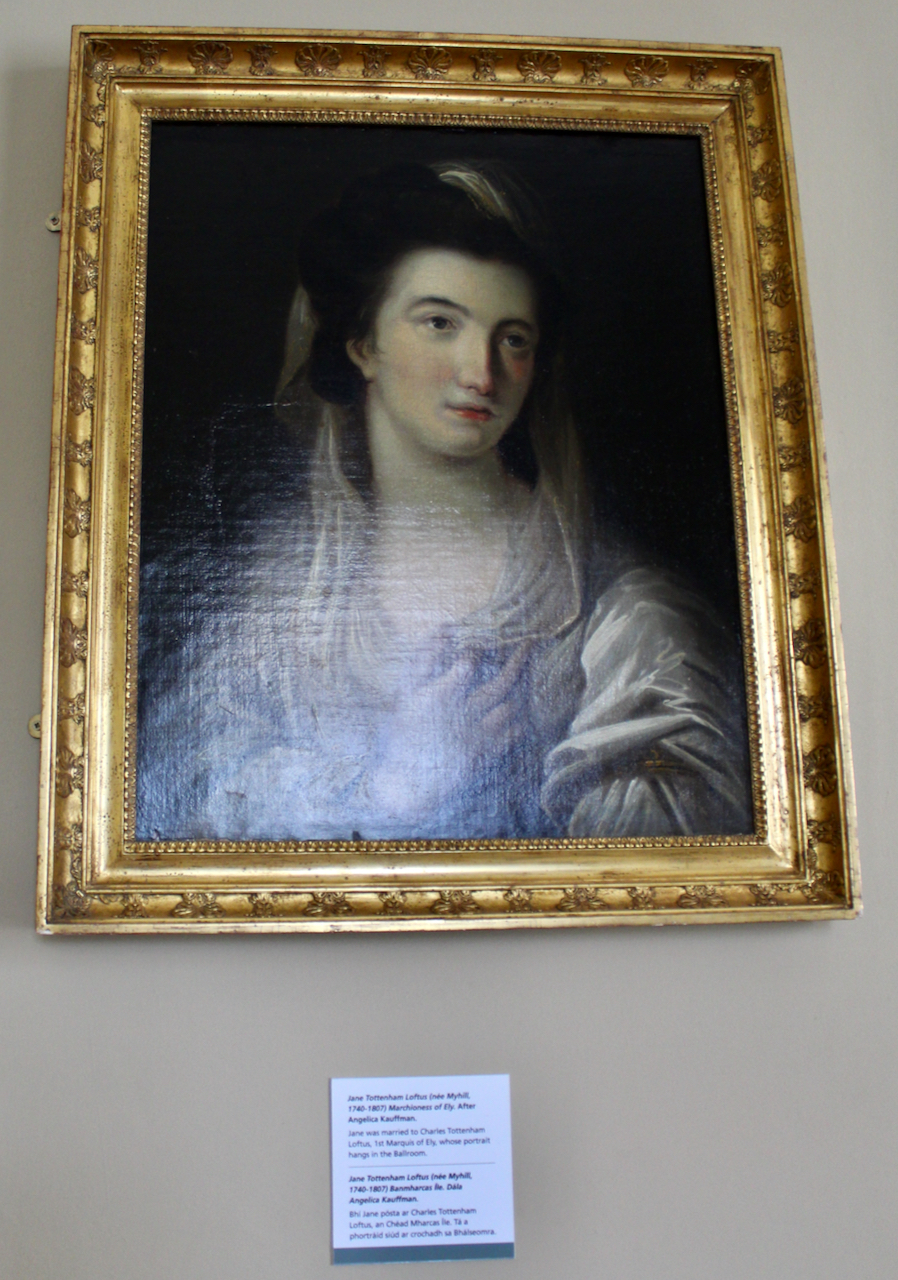
Jane Tottenham-Loftus (nee Myhill), 1740-1807, Marchioness of Ely, painting after Angelica Kauffman. She was married to Charles Tottenham Loftus, 1st Marquess of Ely, whose portrait hangs in the Ballroom. He was the son of John Tottenham, 1st Baron Tottenham of Ireland, and of Elizabeth Loftus, daughter of Nicholas Loftus, 1st Viscount Loftus of Ely.
The Dining Room, Rathfarnham Castle, Dublin. Photograph © Jennifer Winder-Baggot, www.irishhistorichouses.com

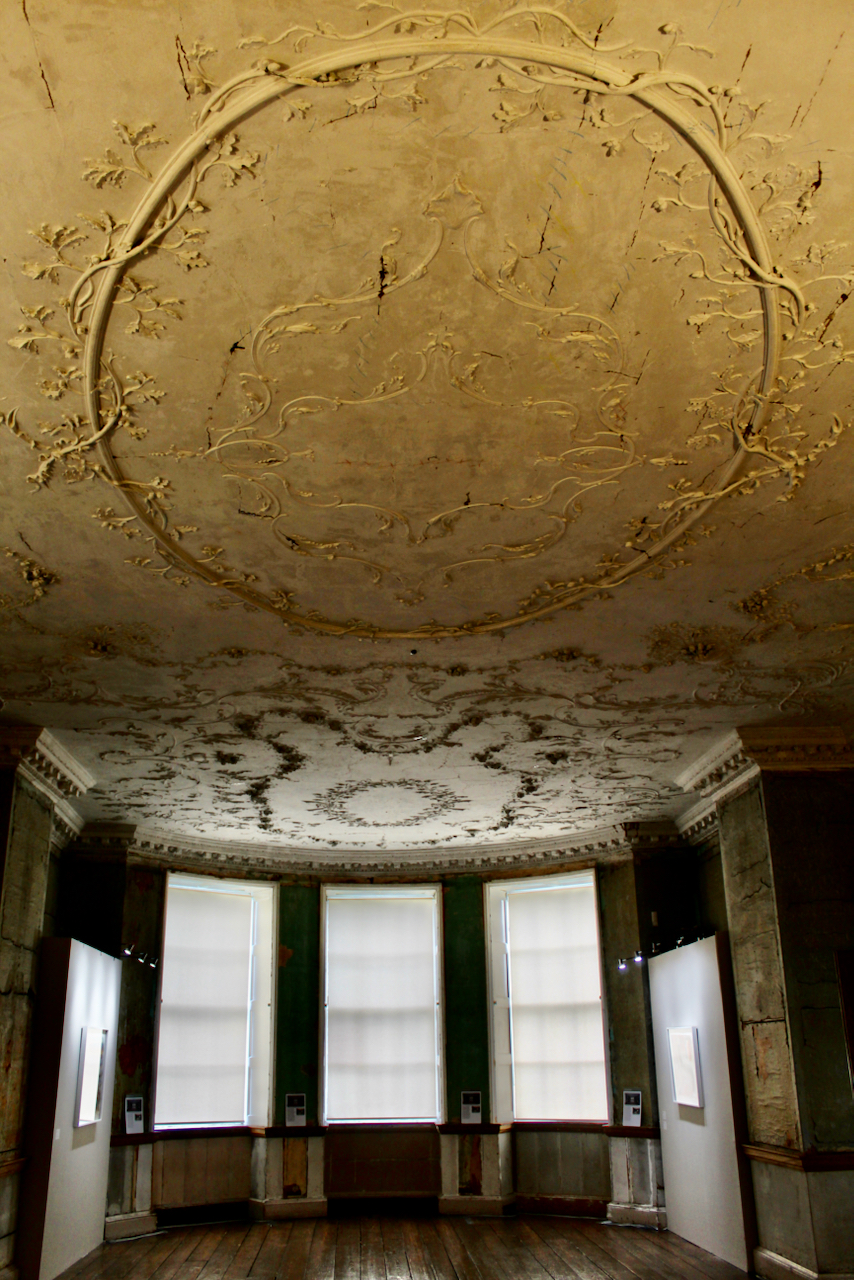
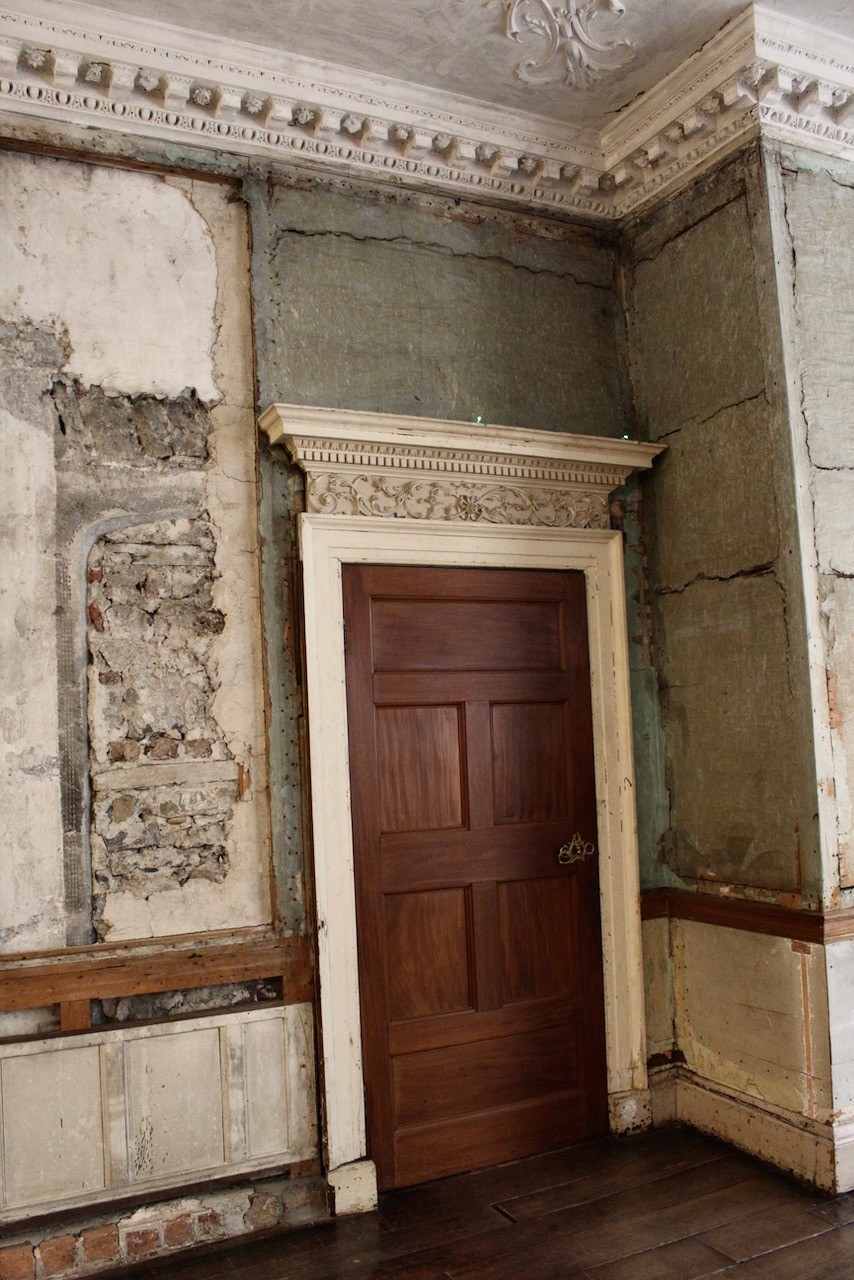
The Dining Room. “This room remains unrestored which allows us to see the changes and alternations which were made to the building over the years. The door on the left-hand (northern) wall is typically eighteenth century in style and decoration. However to the left of it a trace of the original Elizabethan doorway is visible. It was blocked up during the 18th century refurbishments. The bow extension to the eastern side of the building is another change dating to that period which added space and brought more light into these rooms. The 18th century timber wall panelling and lining paper survives in this room. It is likely that the walls were covered with silk. Although designed as a dining room, in the 20th century the Jesuits used this room as a library.

The dining room, Rathfarnham Castle. Photograph © Jennifer Winder-Baggot, www.irishhistorichouses.com
The door on the left-hand (northern) wall is typically eighteenth century in style and decoration. However to the left of it a trace of the original Elizabethan doorway is visible. It was blocked up during the 18th century refurbishments.  Photograph © Jennifer Winder-Baggot, www.irishhistorichouses.com

The Castle fell into disrepair. From the Parliamentary Gazetteer of Ireland 1846 (vol. iii):
Rathfarnham Castle, situated in a once noble demesne, at the south-east extremity of the village, was not long ago esteemed a magnificent building, and boasted a gorgeous picture-gallery, and superb series of garden and pleasure grounds, but it was allowed to fall into decay in consequence of the prolonged non-residence of its proprietor, the Marquis of Ely, and it now prosaically, though usefully, figures as a diary‘.

At this time, John Loftus (1770-1845) was 2nd Marquess of Ely, who inherited the Castle and lands from his father, Charles Tottenham Loftus. John Loftus rented out the house and surrounding lands, and between 1812 and 1852 the estate was leased to the Roper family. [from the castle’s Instagram page]

Oil painting on canvas, John Loftus, 2nd Marquess of Ely (1770-1845), attributed to Sir Thomas Lawrence (1769-1830). A three-quarter-length portrait, in a brown coat and blue sash. Peer’s robes to the right, red curtain to the background. A picture of the sitter’s wife by Lawrence is in the Art Institute of Chicago. By Studio of Thomas Lawrence – Sothebys, Public Domain, https://commons.wikimedia.org/w/index.php?curid=15266849

Rathfarnham Castle was sold in 1852 to Francis Blackburne (1782-1867), Lord Chancellor of Ireland.

Francis Blackburne (1782-1867), Lord Chancellor of Ireland, 1852 by engraver George Sanders, after Stephen Catterson Smith, courtesy of National Gallery of Ireland.

His family lived there until 1911. Coincidentally almost in the footsteps of Adam Loftus who built Rathfarnham Castle, Francis Blackburne became Vice-Chancellor of Trinity College.

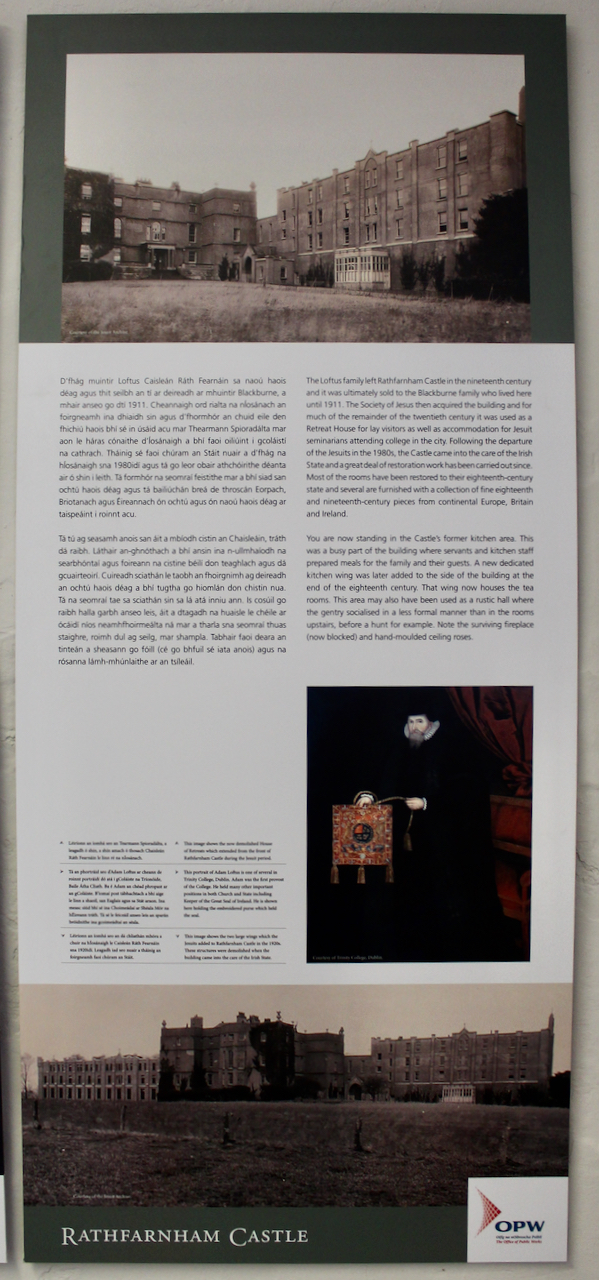
The Society of Jesus then acquired the building and for much of the remainder of the 20th century it was used as a Retreat House for lay visitors as well as accommodation for seminarians attending college in the city. Following the departure of the Jesuits in 1985, the Castle came into the care of the state and a great deal of restoration work has been carried out. Most of the rooms have been restored to their 18th century state and several are furnished with a collection of fine eighteen and nineteenth century pieces from continental Europe, Britain and Ireland.
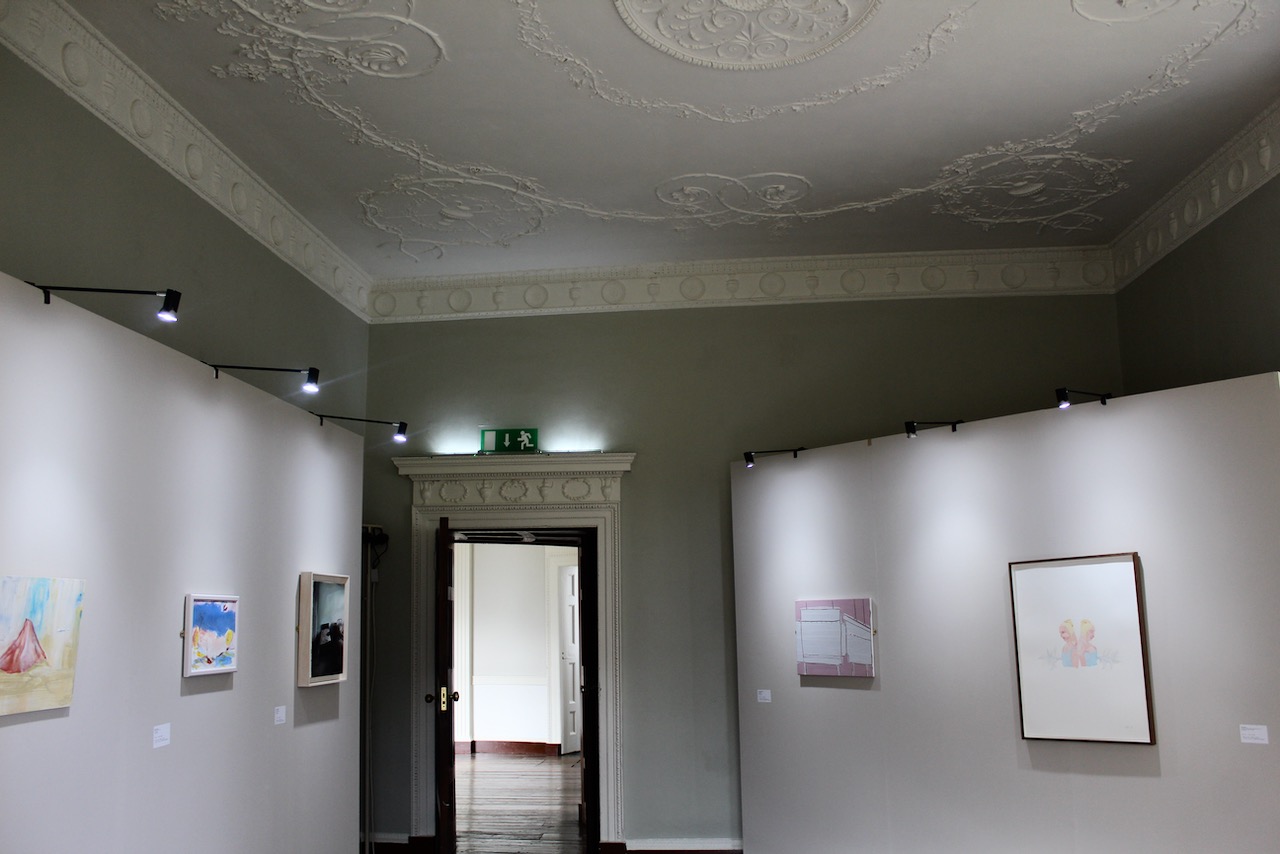
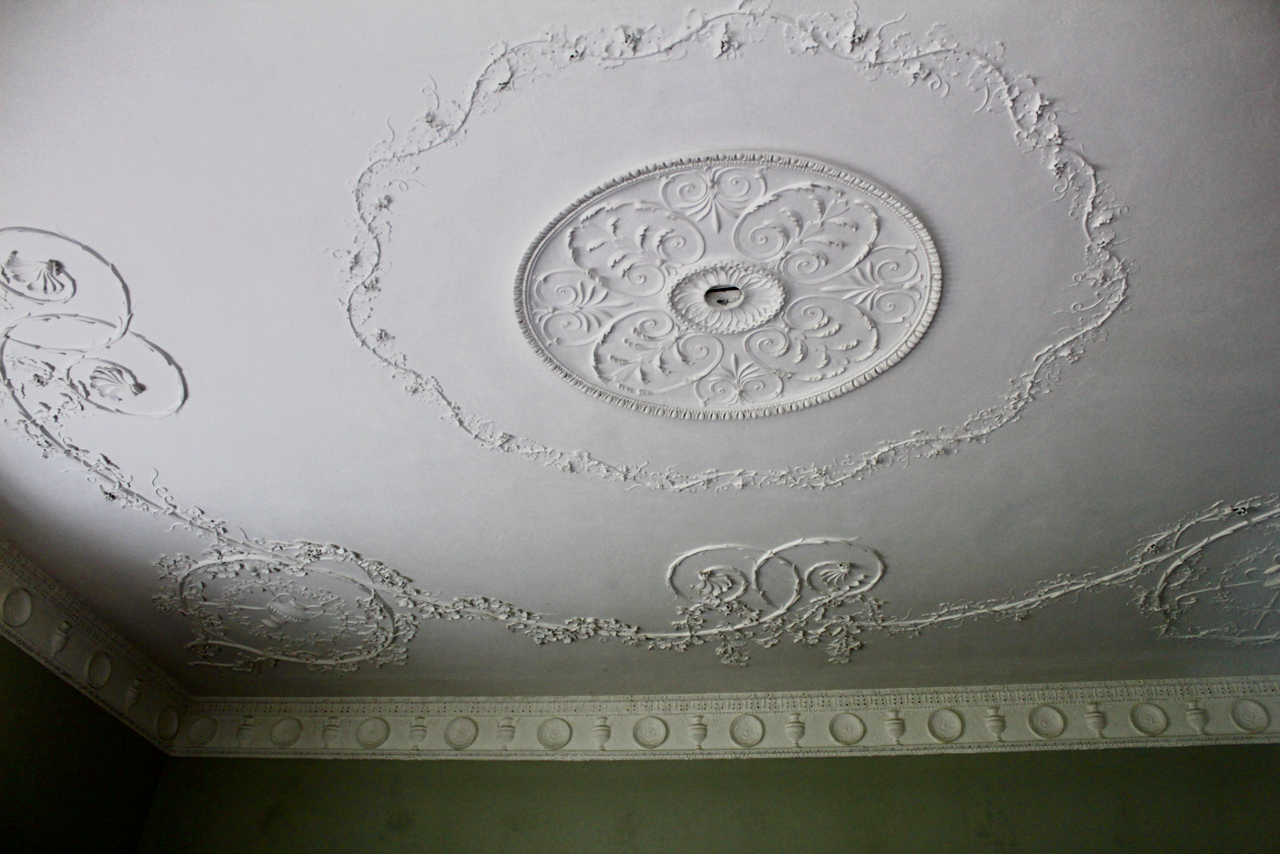
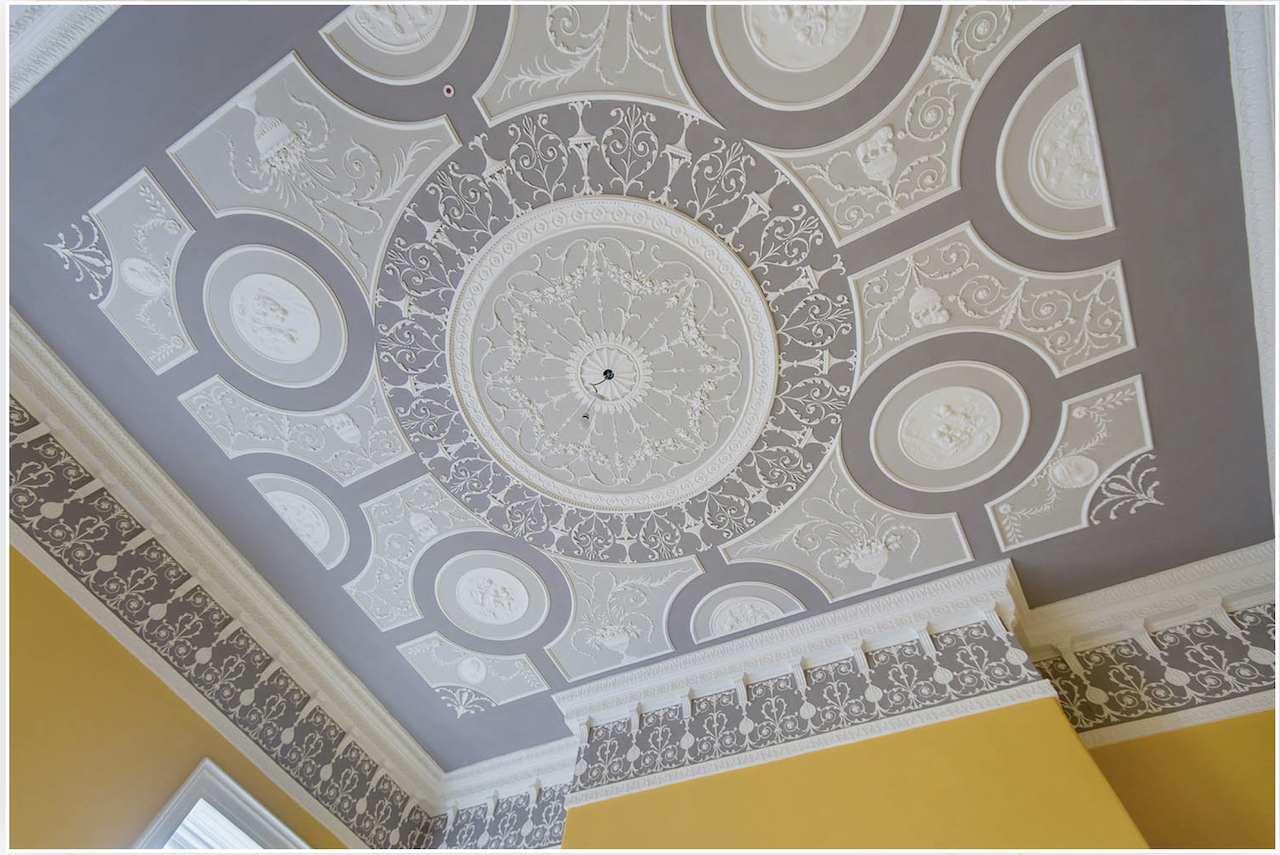
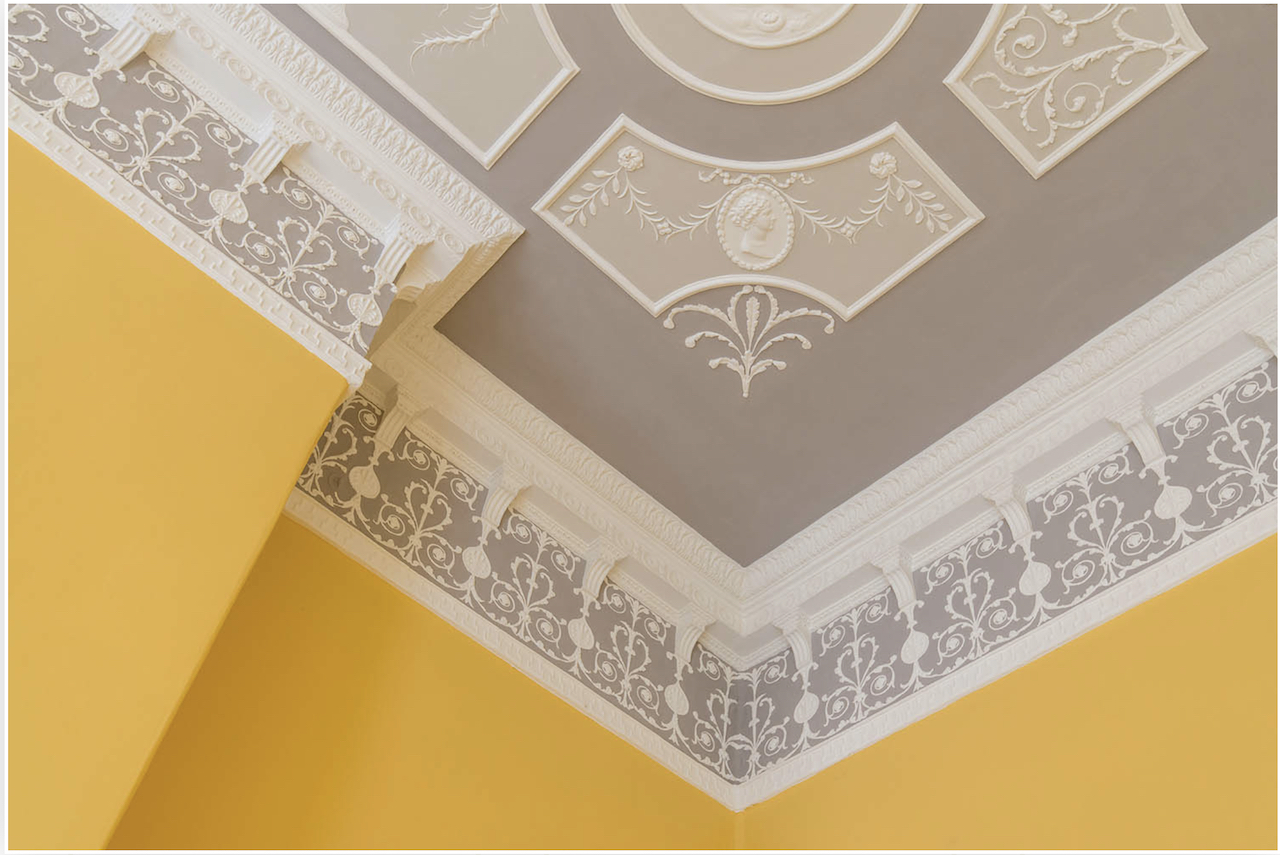
The Pistol Loop Room: “This room in the south-eastern corner of the Castle reminds us of the orignal defensive function of the building. A blocked-up gun loop is still visible in the corner of the room. These gun loops allowed those defending the Castle to fire their weapons at any approaching attackers. Note also the odd shape of the room which tapers off to the left. This reflects the shape of the angled bastion towers which were designed to allow defending soldiers to protect all approaches to the castle. The plates and wine decanters depicted in the plaster frieze just below the ceiling would suggest that in the eighteenth century this room may have been used as a private or smaller dining room.” Photograph © Jennifer Winder-Baggot, www.irishhistorichouses.com
The Pistol Loop Room, Rathfarnham Castle. Photograph © Jennifer Winder-Baggot, www.irishhistorichouses.com
Rathfarnham Castle. Photograph © Jennifer Winder-Baggot, www.irishhistorichouses.com
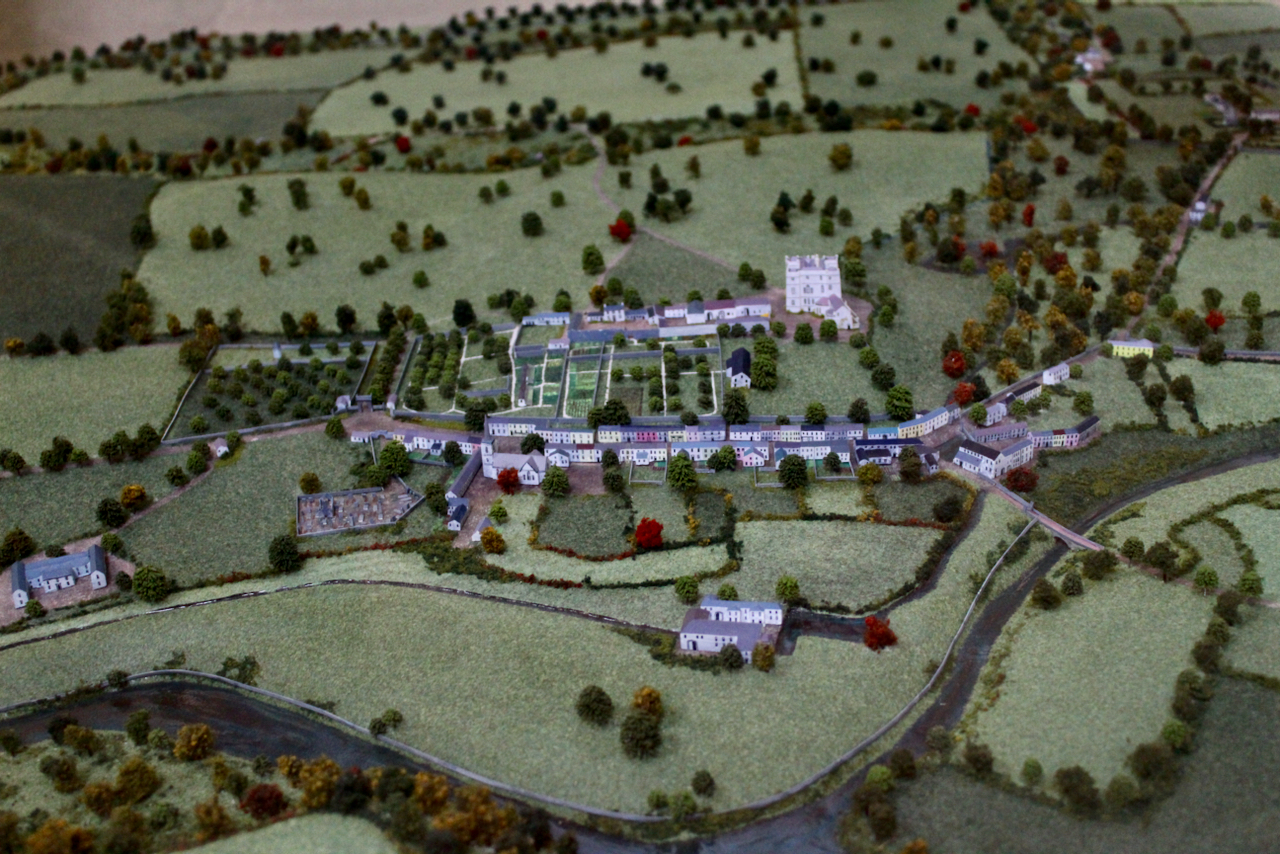
A model based on 19th century maps, showing Rathfarnham demesne before it was broken up in the following century.
The information board shows surrounding buildings which must have been demolished.

[1] Other Jesuit properties include Emo Court, see my entry, https://irishhistorichouses.com/2024/10/22/emo-court-county-laois-office-of-public-works/

Belvedere House in Dublin, Castle Browne, now Clongowes Wood College, and Manresa House in Clontarf, formerly called Granby Hall and Baymount Castle.
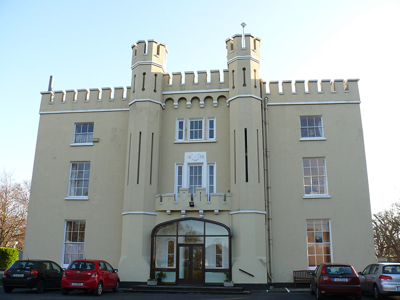
Manresa Jesuit Retreat Centre, Clontarf, photograph courtesy of National Inventory. A three-bay three-storey house over basement, dated 1838, incorporating mid-eighteenth-century fabric. Originally known as Granby Hall, this house was leased by Doctor James Traill, Church of Ireland Bishop of Down and Connor, in 1775. Robert Warren was later granted a lease of the land and house from J.E.V. Vernon in 1838, undertaking to construct new outbuildings, gate lodges, and to repair and improve the house, and renaming it Baymount Castle. 

Clongowes Wood College, County Kildare:
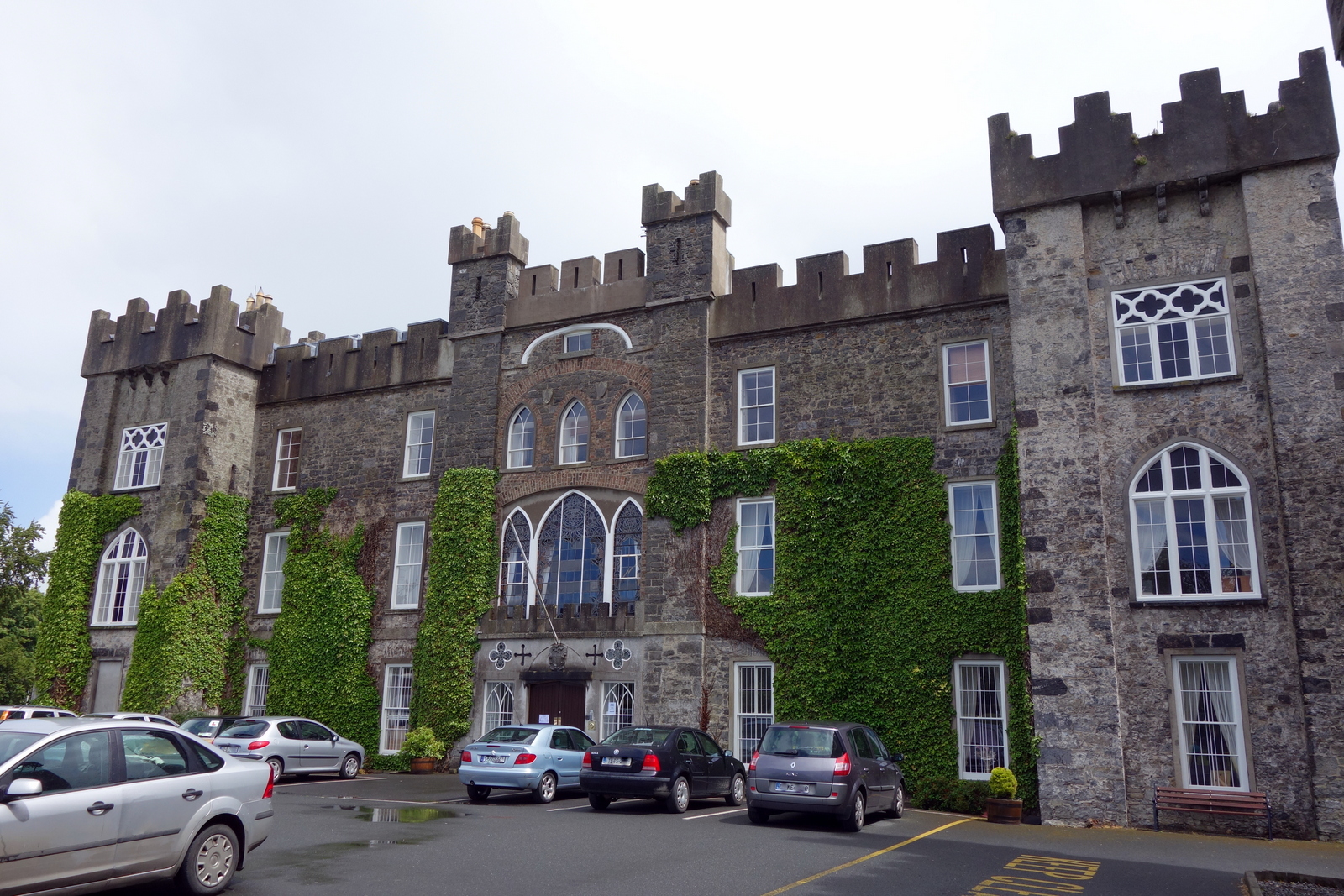
Clongowes Wood College, County Kildare, is a school run by the Jesuits. It was purchased by the Jesuits in 1814. There was a castle here since 1450, built by the Eustace family to protect the area called The Pale. The Pale rampart itself was a six foot high bank surrounded by a double ditch. There are two areas of well preserved Pale on the property of Clongowes Wood. The name comes from a hybrid of Latin and Irish, meaning “the wood of the meadow of the smith.” See https://www.clongowes.net/about-us/clongowes-history/ Photograph by Brian O’Neill, This file is licensed under the Creative Commons Attribution-Share Alike 3.0 Unported license.

In 1718 Stephen Fitzwilliam Browne (d. 1767) rebuilt Clongowes Wood Castle, creating the western front facade as it appears today, comprising the central keep and two square towers. In 1788 Thomas Wogan Browne (d. 1812) extended and decorated the castle. The extension consists of the eastern facade and two round towers at the back of the castle. Note that this information is from the Clongowes Wood school website, with information from A Short History of Clongowes Wood College by Brendan Cullen.
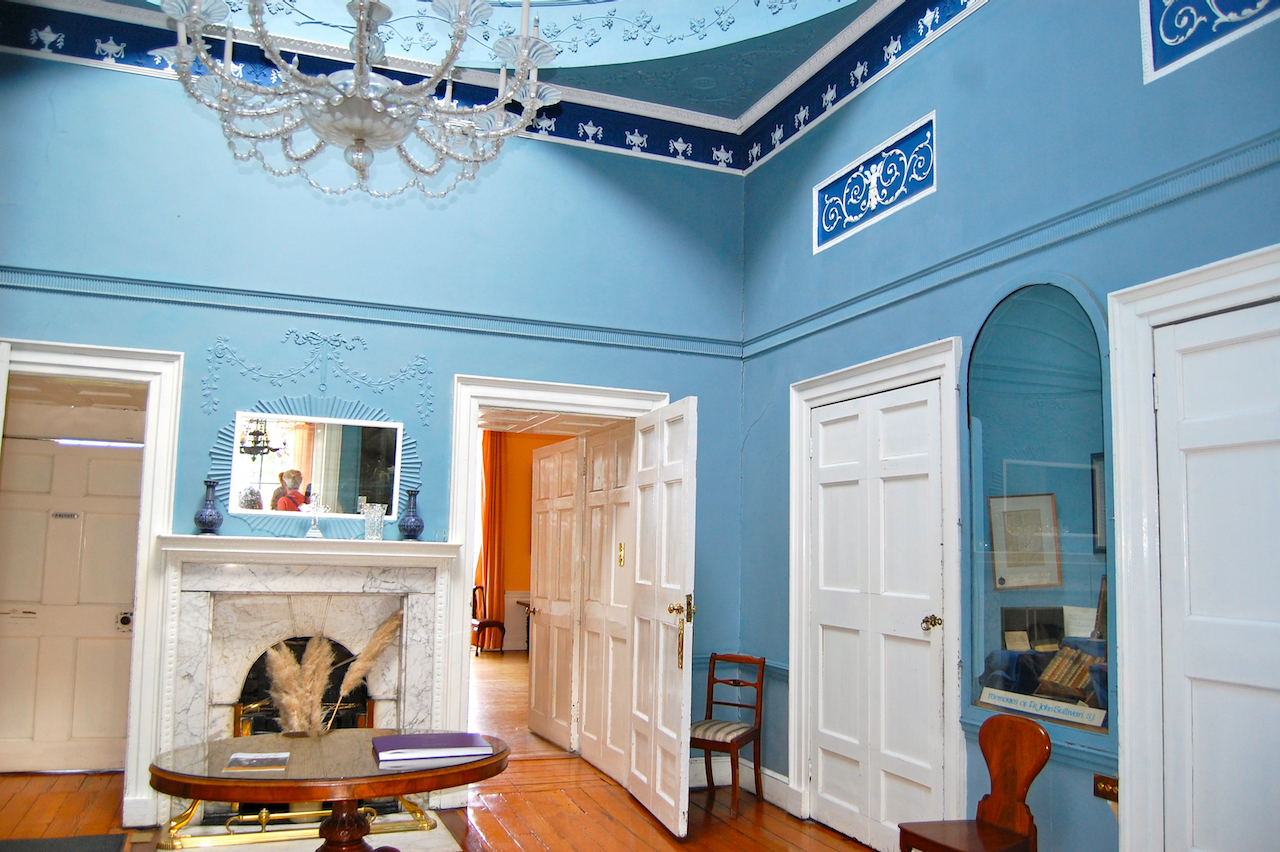
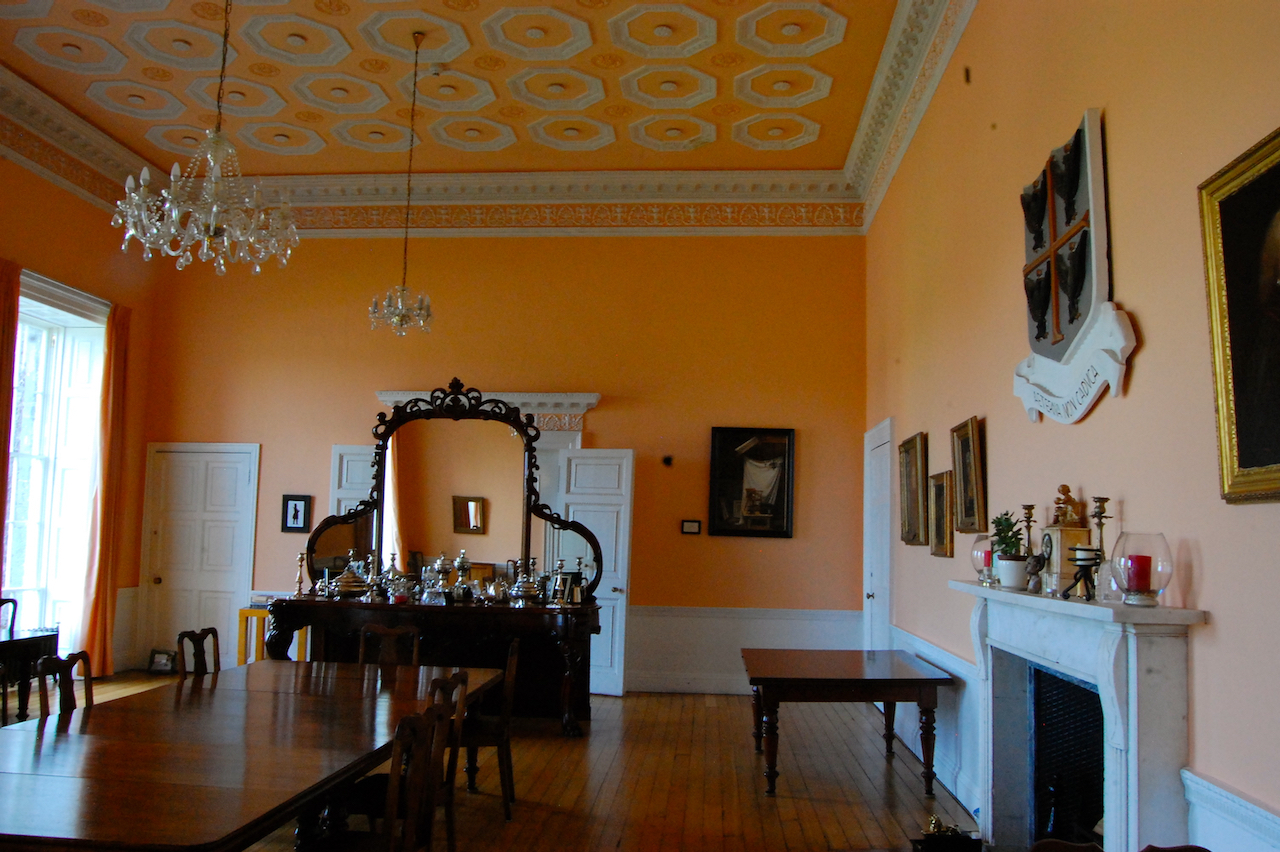
Clongowes Wood College, photographed during a tour taken in August 2018. Photograph © Jennifer Winder-Baggot, www.irishhistorichouses.com
Staff dining room, Clongowes Wood College, photographed during a tour taken in August 2018. Photograph © Jennifer Winder-Baggot, www.irishhistorichouses.com
Staff Reading Common Room, Clongowes Wood College. Photograph by Brian O’Neill, This file is licensed under the Creative Commons Attribution-Share Alike 3.0 Unported license.

Belvedere House, 6 Great Denmark Street, Dublin (visited during Open House 2015):

https://www.oreillytheatre.com/belvedere-house.html
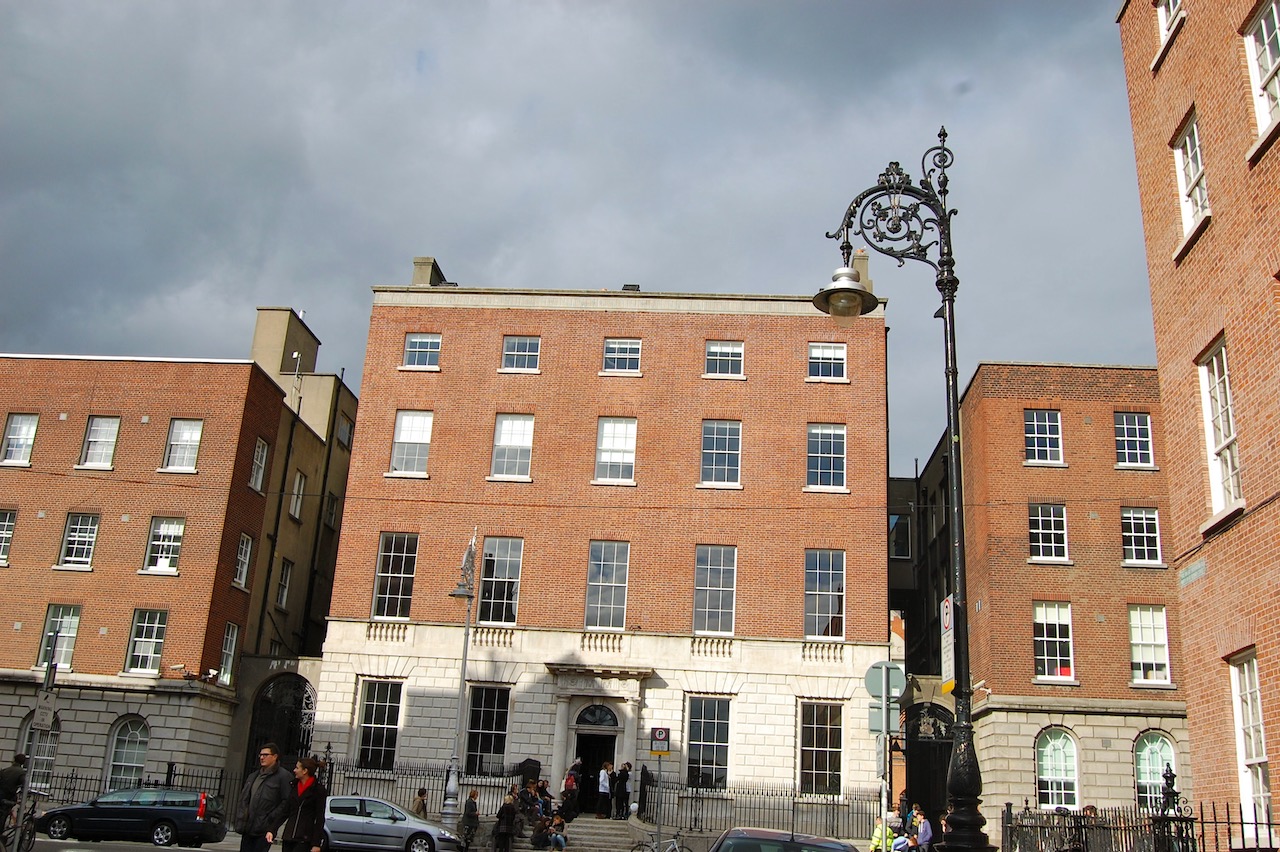
Open House 2015, Belvedere House, Belvedere College, Dublin. Photograph © Jennifer Winder-Baggot, www.irishhistorichouses.com

Stephen and I visited Belvedere House during Open House in 2015. We went into three rooms upstairs, up the beautiful staircase. We weren’t allowed photograph on the tour, unfortunately, in the Apollo Room, Venus Room and Jupiter Room.

Belvedere House is a symmetrical five-bay four-storey Georgian townhouse over exposed basement, completed 1786, designed by Robert West who, in addition to being a stuccodore was also an architect and property developer. It was built for George Augustus Rochfort, 2nd Earl of Belvedere. The house was built for £24,000 on what would have been rural green fields with a view of the Custom House, the bay and distant mountains. It is alleged that the house is haunted by Mary Molesworth, the first lady of Belvedere, mother to George Rochfort – we came across her at Belvedere in County Westmeath.

Rochfort was the son of the cruel Robert Rochfort, 1st Earl of Belvedere, who kept his wife under lock and key in the countryside after he believed she had an affair with his brother. Some believe that she was the inspiration for Charlotte Bronte’s “madwoman in the attic.” Robert Rochfort had the summer lodge, Belvedere, built in County Westmeath, now open to the public, which also has fine plasterwork. Robert O’Byrne writes that it was the 1st Earl who bought the property on Great Denmark Street. At first his son attempted to sell the property, but then he finished having the house built. Robert O’Byrne also tells us that it is similar to 86 St Stephen’s Green (Newman House, now housing the Museum of Literature of Ireland (MOLI), which was begun in 1765, and which is also attributed to Robert West.

North Great Georges Street itself was originally laid out in 1774 as a driveway leading to Belvedere House.

In 1841 the house was bought by the Society of Jesus (Jesuits) to accommodate their growing boys school which had started life ten years previously around the corner on Hardwicke Street, now known as Belvedere College.

One of the more outstanding features of the house is the stucco-work of Adamesque style popularised by Robert and James Adam. This can be seen in the ornamental surrounds, wherein pictures are framed in plaster rather than oil.

Dublin stuccodore and designer Michael Stapleton (1740-1801) was responsible for this work and further examples of his craftsmanship include the ceiling in the exam hall in Trinity College as well as some of the plasterwork in Powerscourt House in South William Street in Dublin and the Aras an Uachtarain in Phoenix Park.

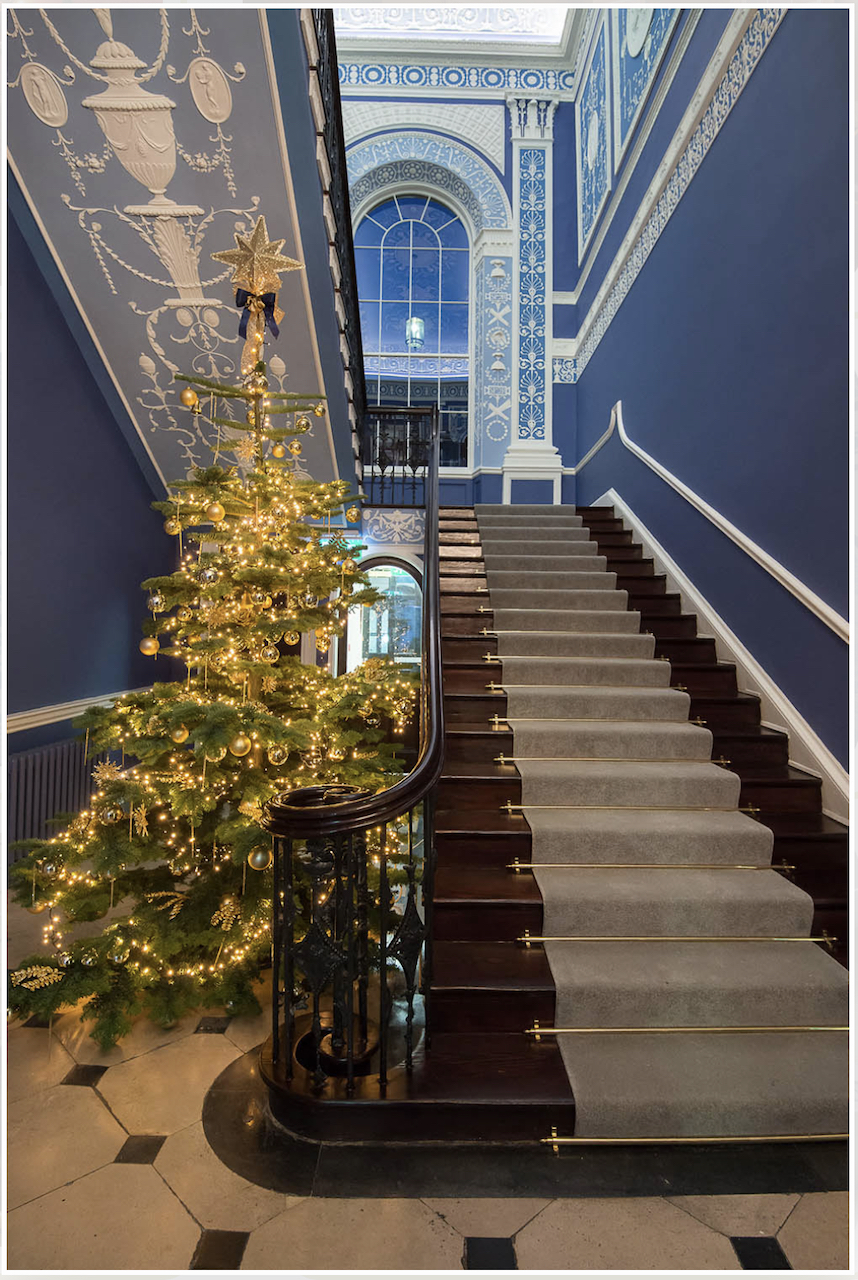
Open House, Belvedere House, Belvedere College, Dublin. Photograph © Jennifer Winder-Baggot, www.irishhistorichouses.com
Belvedere House, Dublin, photograph from Brendan Merry and Partners website from their conservation and restoration of Belvedere House.

It seems odd that a house designed by Robert West would have plasterwork by Michael Stapleton. Robert O’Byrne elucidates this for us:

“In 1967 C.P. Curran’s  Dublin Decorative Plasterwork of the 17th and 18th centuries noted in the collection of drawings left by stuccodore Michael Stapleton several items directly relating to the design of ceilings in Belvedere House. Accordingly, this work was assigned to Stapleton. However, the fact that West was responsible for designing the house complicates matters, and the consensus now appears to be that both he and Stapleton had a hand in the plasterwork. Conor Lucey (in The Stapleton Collection, 2007) suggests that Stapleton may have been apprenticed to, or trained with, West and the fact that he was named the sole executor of the latter’s will in 1790 indicates the two men were close. The source material for the stucco work is diverse, that in the stair hall deriving in part from a plate in Robert Adam’s Works in Architecture, but the first-floor rooms feature a wider range of inspiration, much of it from France and Italy.”

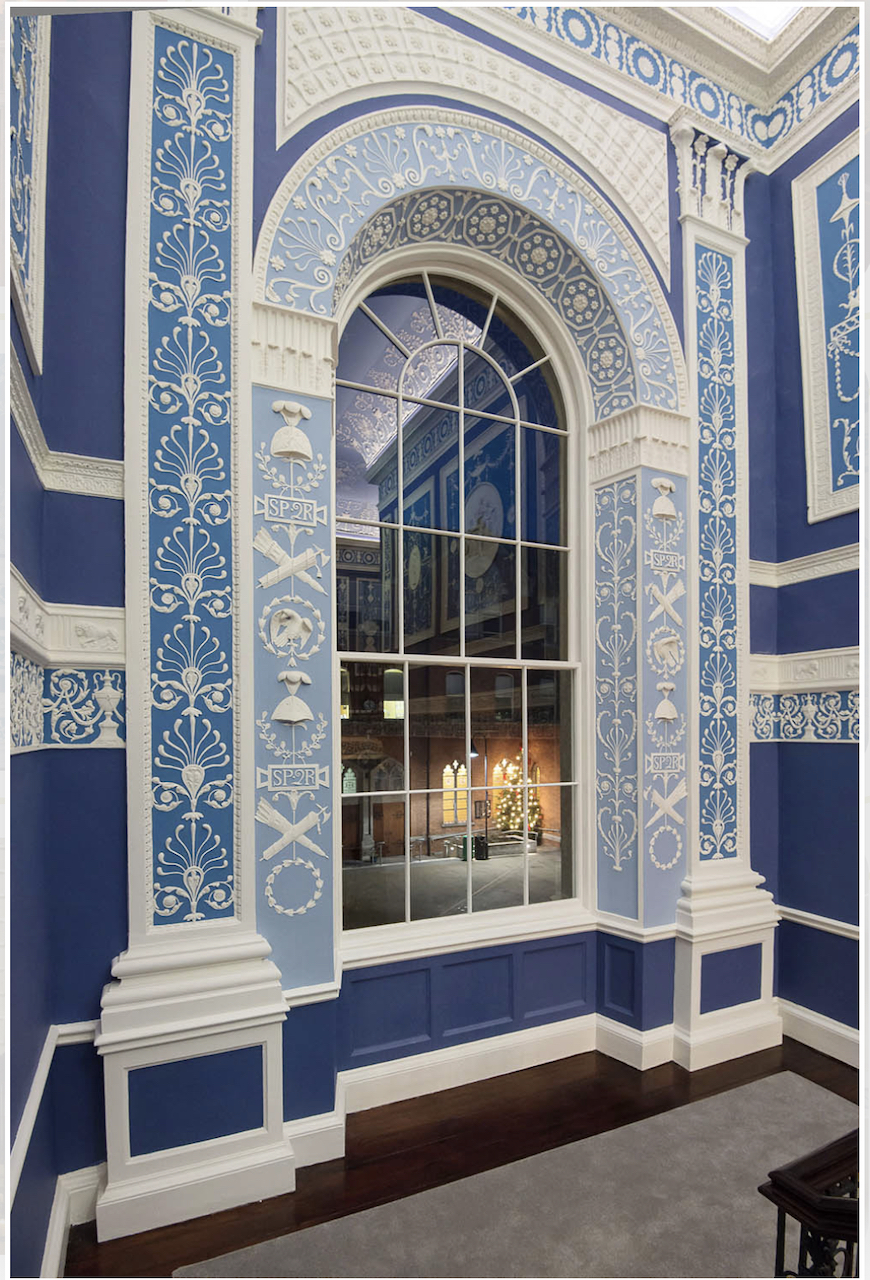
Open House 2015, Belvedere House, Belvedere College, Dublin – excuse the shakey camera – I need to visit again! Photograph © Jennifer Winder-Baggot, www.irishhistorichouses.com
Belvedere House, Dublin, photograph from Brendan Merry and Partners website from their conservation and restoration of Belvedere House.

We were given a leaflet, which tells us:

The ground floor rooms were intended for everyday and business use and therefore are minimally ornamented. However when one ascends they will encounter Stapleton’s stucco-work that depicts scenes from Greek and Roman mythology. On the half-landing the Bacchanalia is celebrated. The left panel depicts Bacchus with his thyrsis and staff, the right panel is Ceres with her cornucopia. The central oval shows Cupid being demoted by the three Graces. The arched window is ornamented with symbols of the authority of ancient Rome. The tall pilasters on each side have the Green anthemion (honeysuckle) motifs.

At the top of the stairs the panel between the two doors on the right show Juno seated on a cloud with her peacock. The panel on the centre wall is Aurora in her chariot pulled by winged horses. Under this plaque “The New Bride” from an ancient marble popular in 18th century Rome. All the five doors have the same over-door: Silenus, the tutor of Bacchus. On the ceiling, Eros is depicted gazing at Psyche as she sleeps. Next is an Apollo head with winged lions and lastly, Cupid with a flower.

The door immediately to the right of the stairs leads to the Apollo Room, named after the featured frieze of Apollo the music-maker holding court with attendent putti playing a variety of instruments. The adjoining Diana Room depicts Diana, patron of the chase, in a chariot drawn by stags. The design is taken directly from Pergolesi, however, Stapleton added the outer circle of flowers.

Finally the Venus Room’s flanking panels have lunettes representing astronomy, architecture and sculpture. Notice the beautiful over-doors in all three rooms, each with the head of the principle subject.”

Venus was taken down by the Jesuits as she was nude, and it is supposedly in the National Gallery.
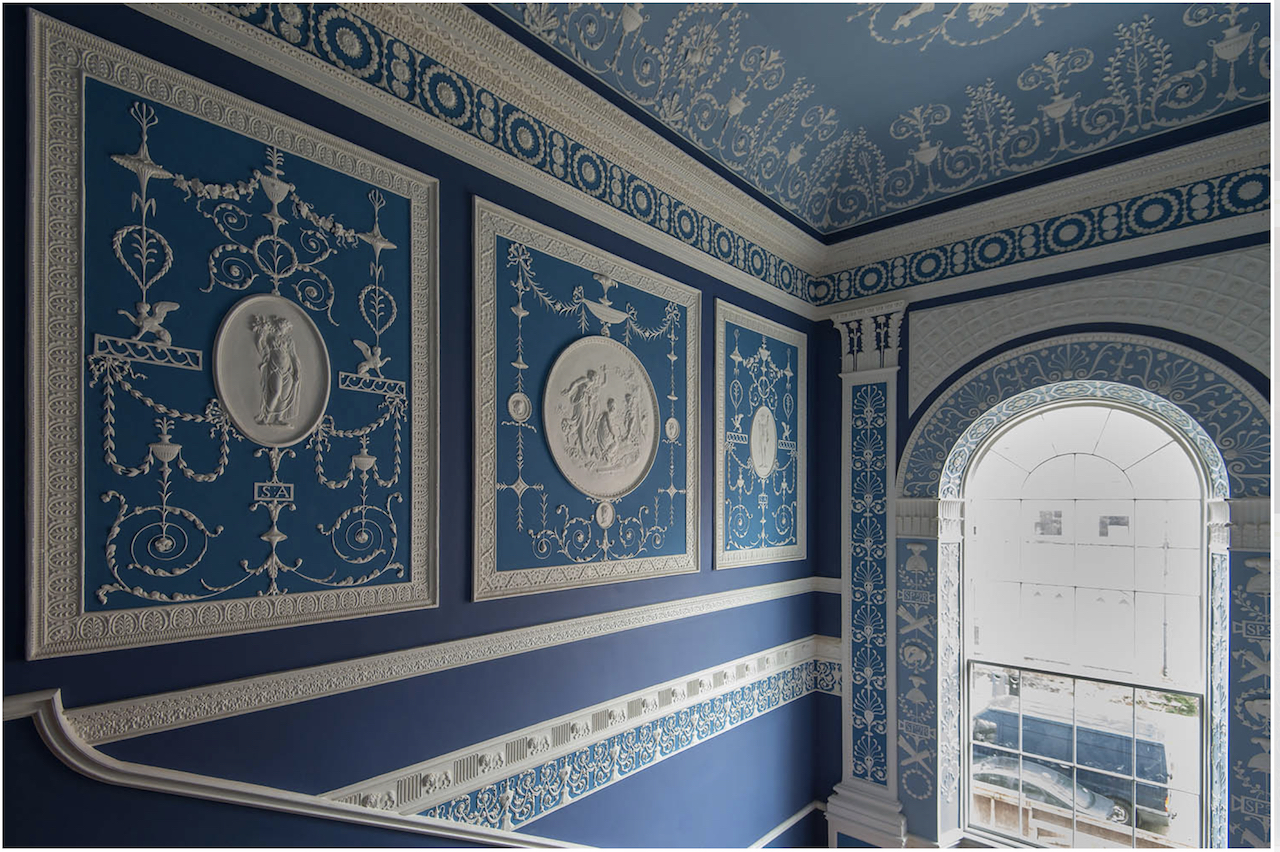
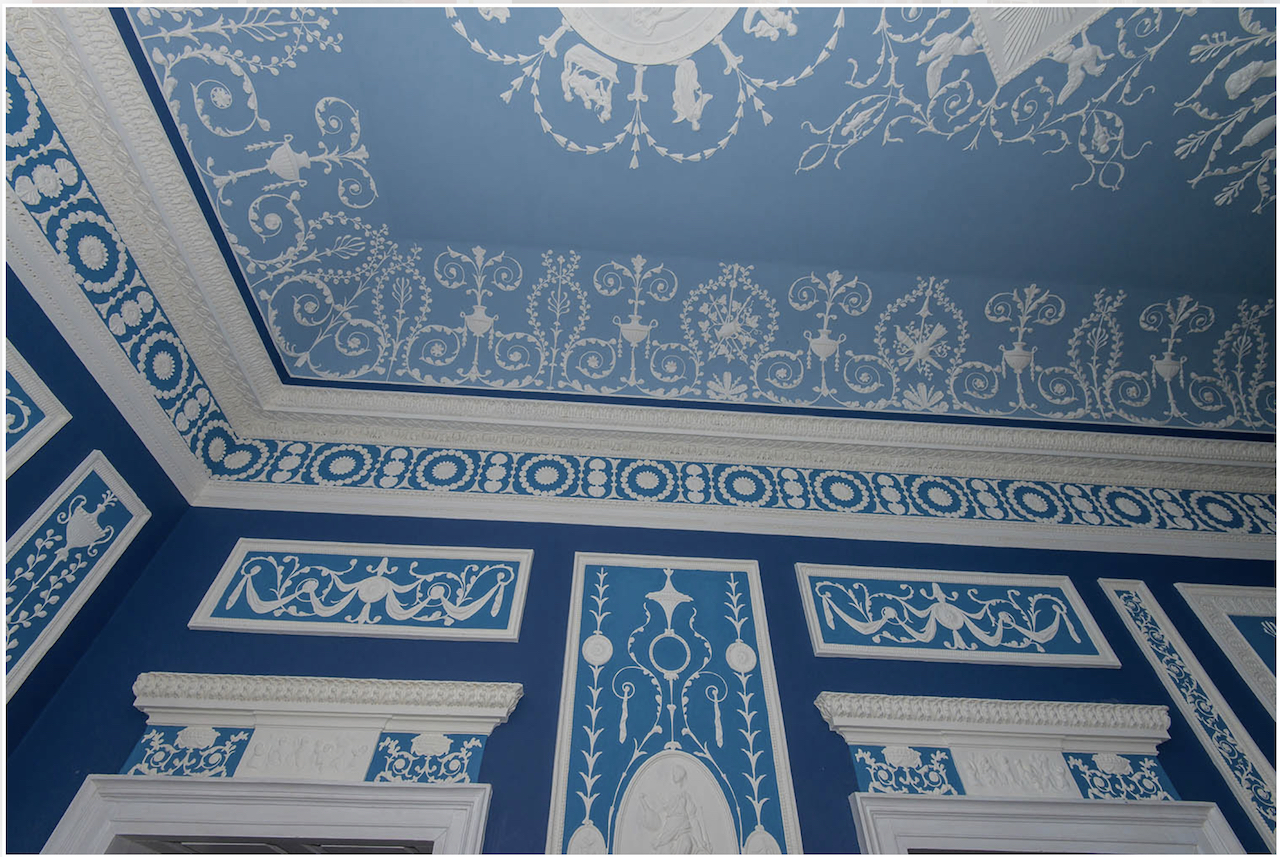
Belvedere House, Dublin, photograph from Brendan Merry and Partners website from their conservation and restoration of Belvedere House.

[2] https://www.dib.ie/biography/loftus-adam-a4867

[3] Loftus Hall: Formerly named Redmond Hall, it is a three-storey mansion built in 1871, incorporating parts of a previous house here, which was late 17th century or early C18.
Loftus Hall, County Wexford, for sale April 2025 photograph courtesy Colliers.

[4] https://www.archiseek.com/1583-rathfarnham-castle-co-dublin/

[5] “Rathfarnham Castle” by C. Scantlebury, Dublin Historical Record, Vol. 12, No. 1 (Feb., 1951), pp. 20-30. https://www.jstor.org/stable/30080721
[6] https://bellinghamswanhistory.club/descendant-tree-for-bellingham-boyle-mp1690-1771-and-sarah-hoadly-b1720/

Portraits L

L

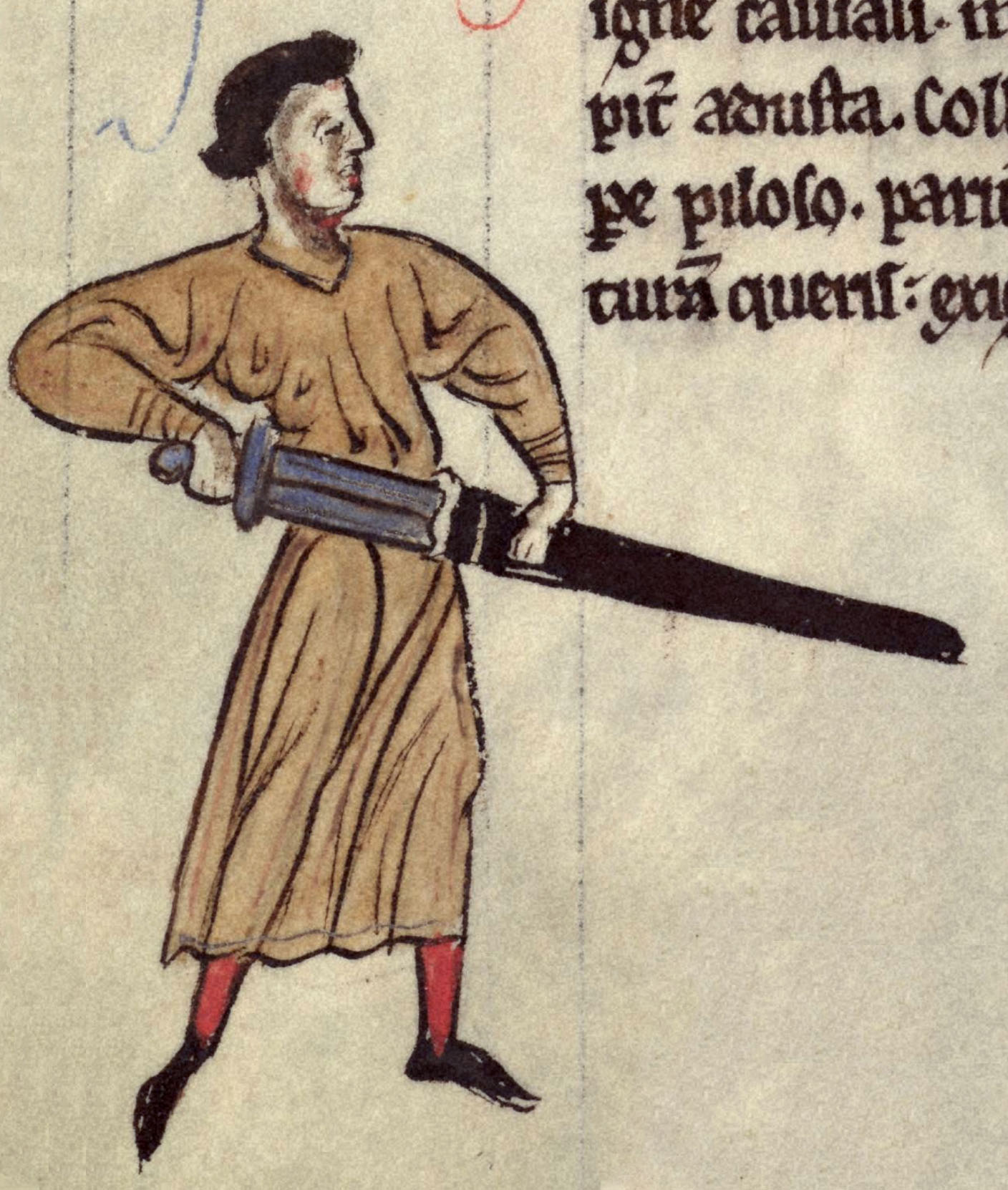
Hugh de Lacy (d. 1186) 4th Baron Lacy portrait by Gerald of Wales – Expugnatio Hibernica (1189) https///www.isos.dias.ie/NLI/NLI_MS_700
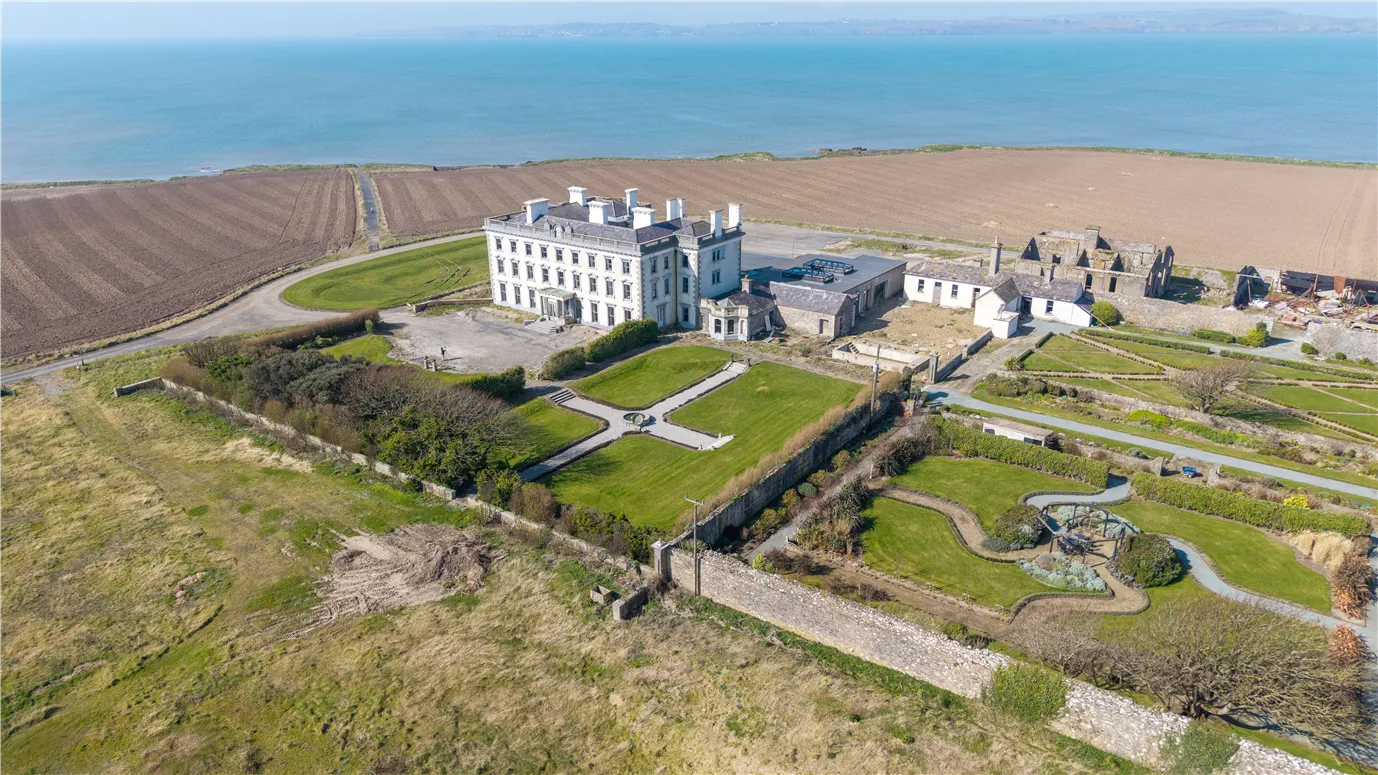
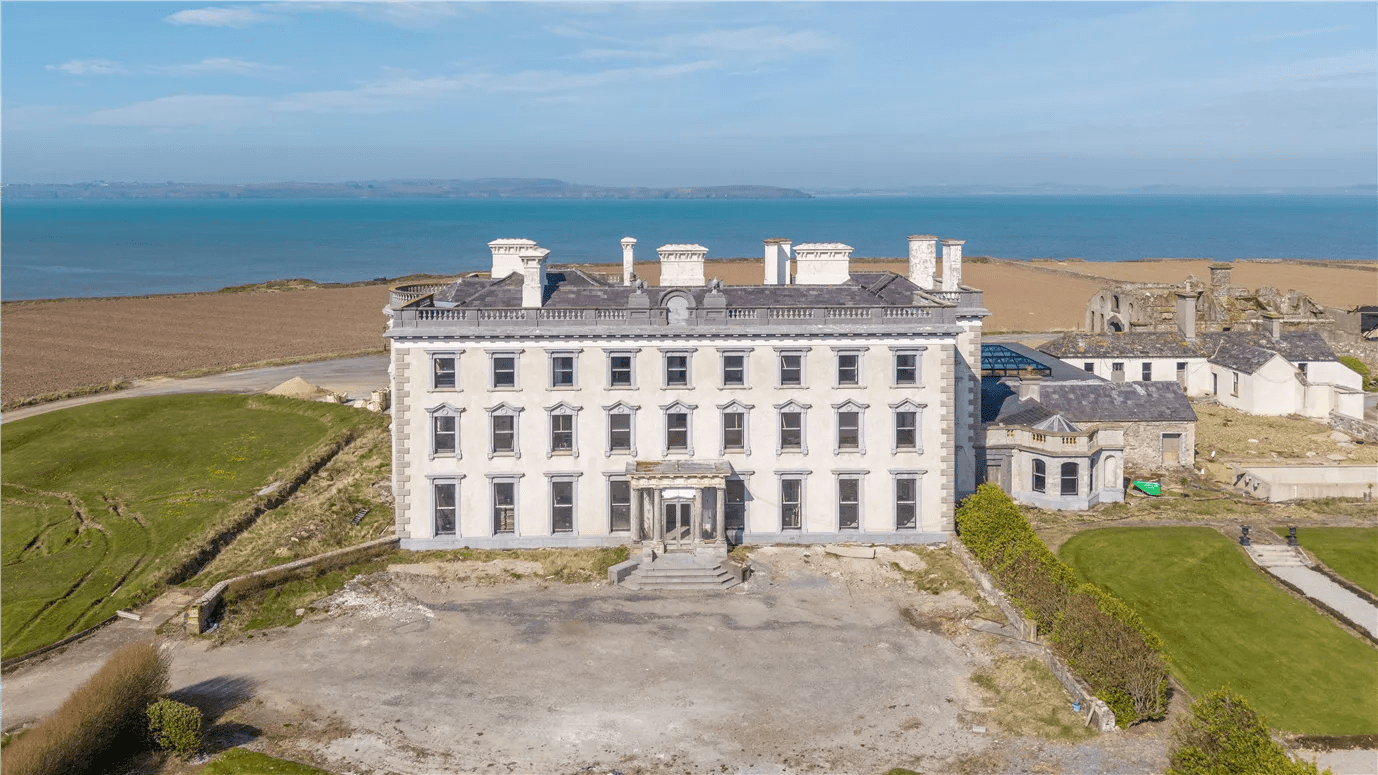
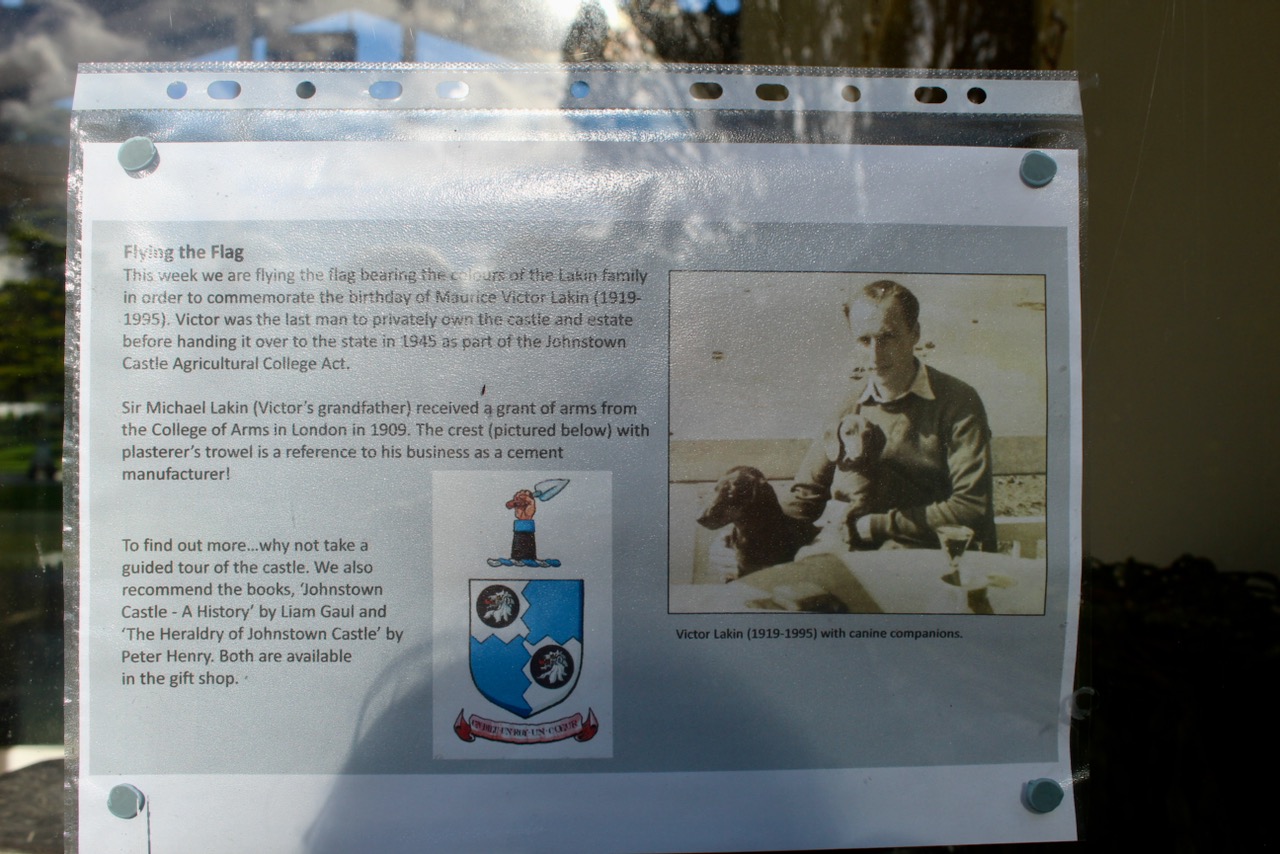
Maurice Victor Lakin (1919-1995), last man to privately own Johnstown Castle, County Wexford, before handing it over to the state in 1945.
Frances Thomasine, Countess Talbot (née Lambart), (1782-1819), Wife of the 3rd Earl Talbot Date 1822 Engraver John Samuel Agar, British, c.1773-1858 After Charles Robertson, Irish, 1759-1821, courtesy of National Gallery of Ireland.
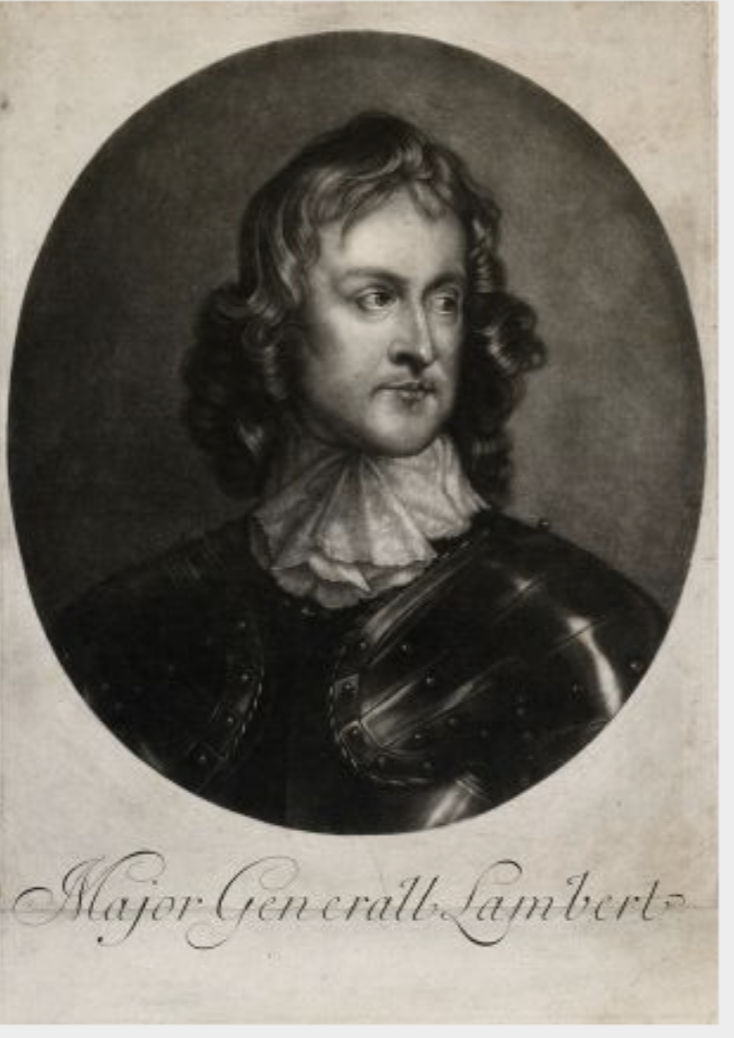
Major-General John Lambert, (1619-1683), Parliamentarian, Deputy Lord Lieutenant of Ireland, courtesy of National Gallery of Ireland.
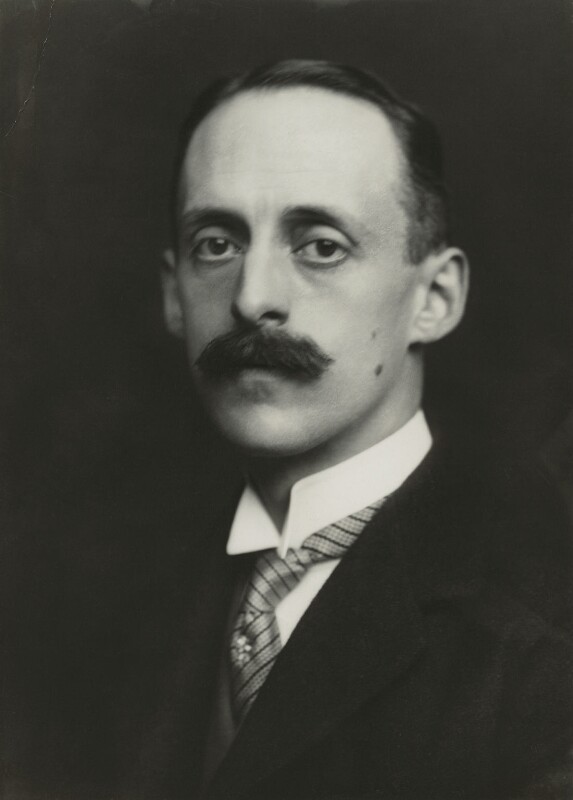
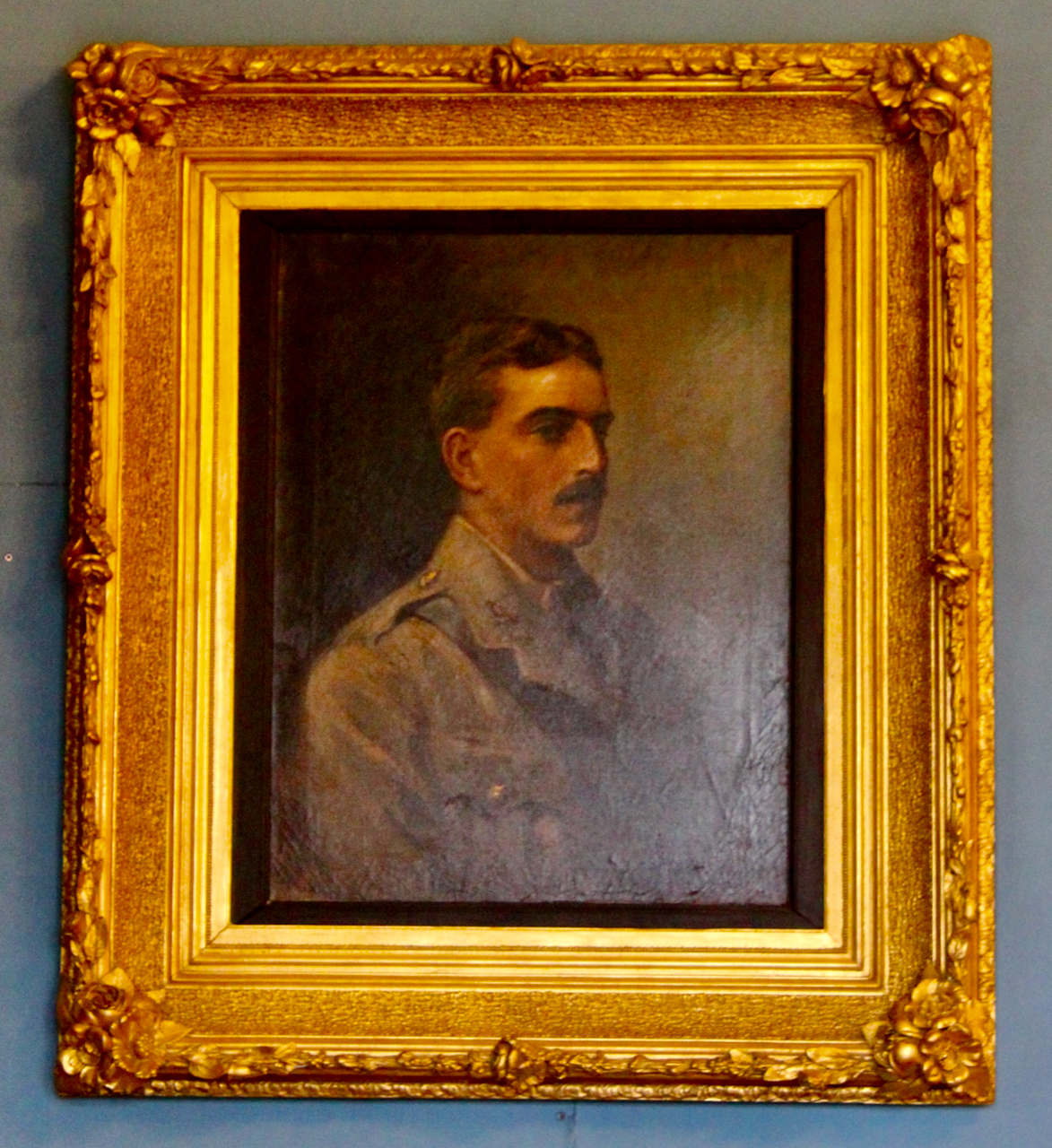
Hugh Percy Lane (1875-1915) by George Charles Beresford, 1909, NPG x6528.
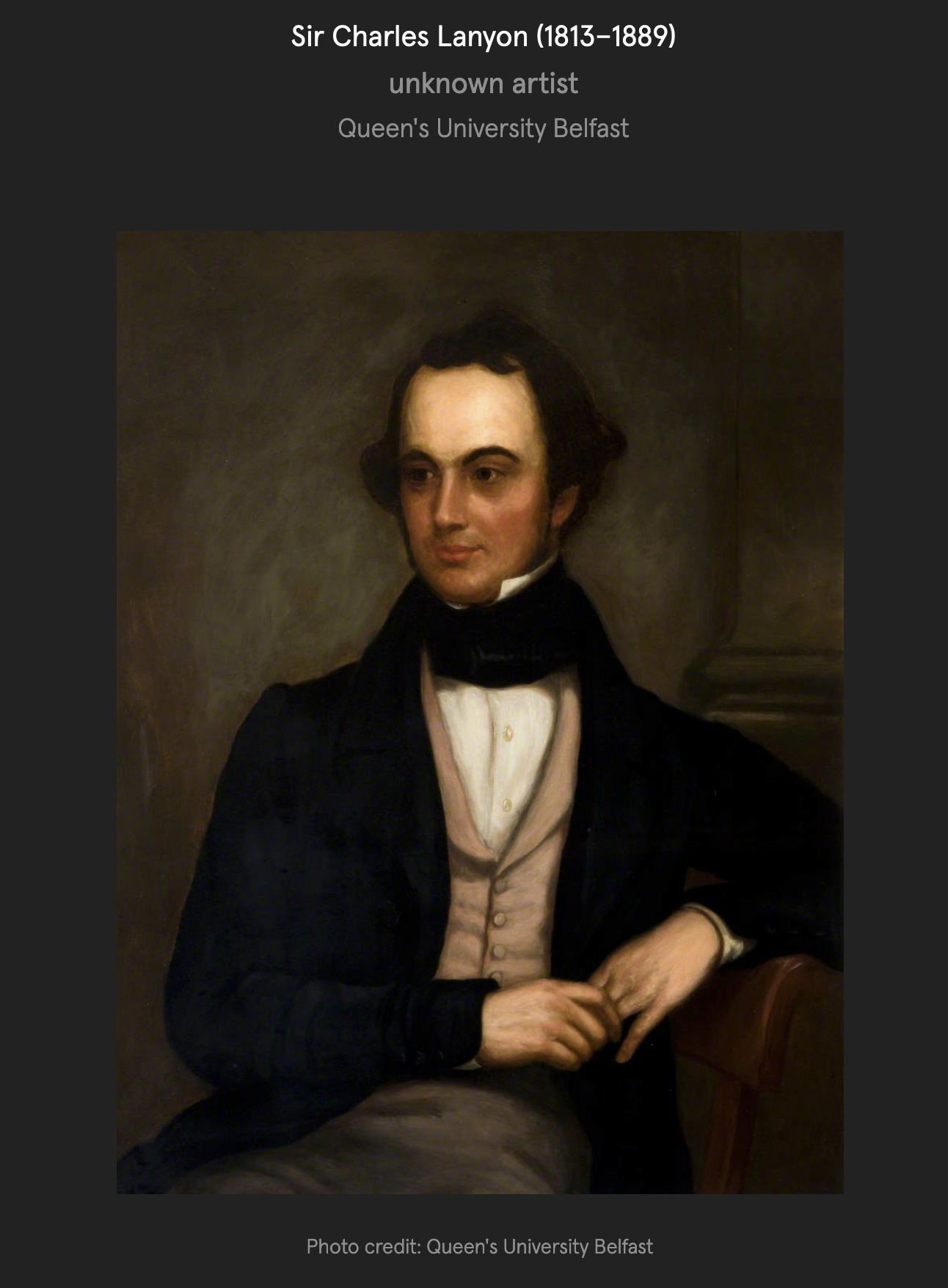
Charles Lanyon (1813-1889) courtesy of Queen’s University Belfast.
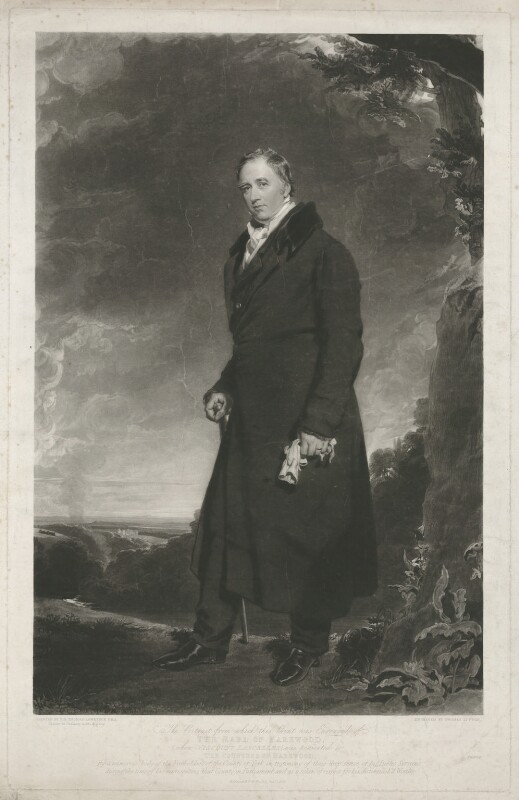
Henry Lascelles (1767-1841) 2nd Earl of Harewood by Thomas Goff Lupton after Sir Thomas Lawrence 1823, NPG D35437.
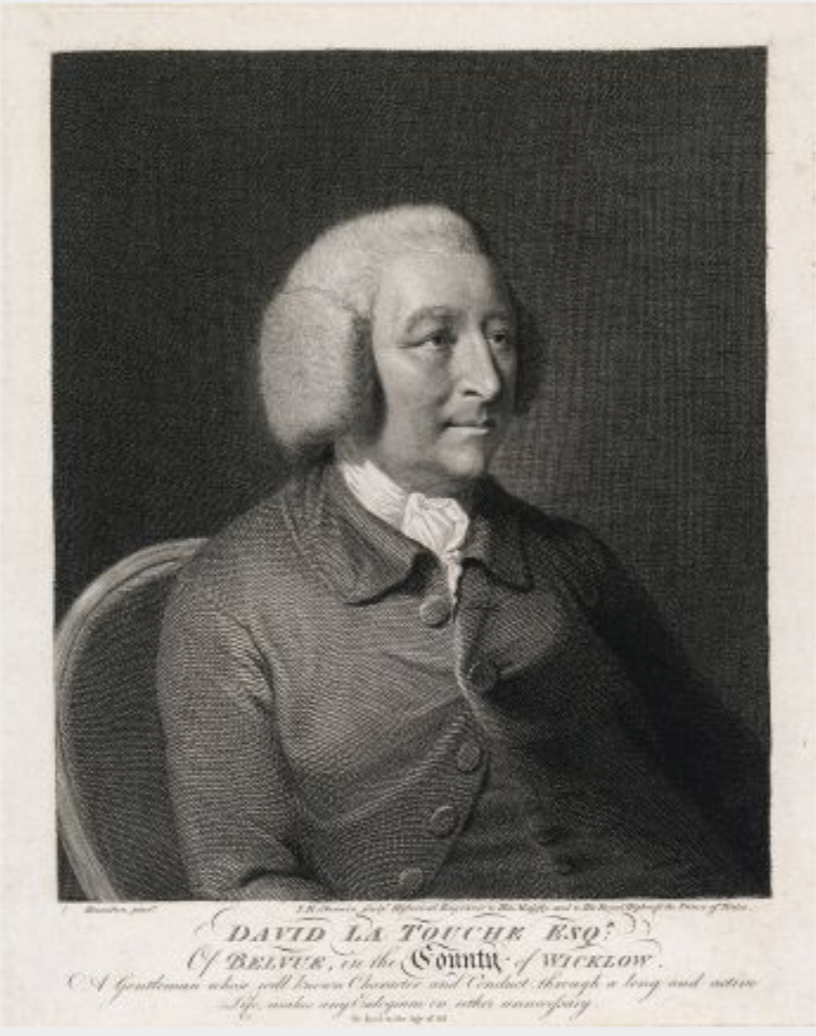
David Digges La Touche (1703-1785), of Bellevue, County Wicklow, courtesy of National Gallery of Ireland.
William Digges La Touche (d.1803) of no. 4, St Stephen’s Green courtesy of Adam’s 1st April 2009, Irish School, late 18th Century. He was a brother of David Digges La Touche (1703-1785), of Bellevue, County Wicklow.

David Digges La Touche (1703-1785) had sons David (1729-1817) and John (d. 1805)

David La Touche (1729-1817), of Marlay, 1800 by Hugh Douglas Hamilton, courtesy of National Gallery of Ireland.
David Digges La Touche (1729-1817) of Marlay, County Dublin, by James Fittler, photograph courtesy of National Gallery of Ireland.
John La Touche (1732-1805) by Angelica Kauffmann courtesy of MutualArt.com

First, let us look at his son David’s family, and then at John’s. David La Touche (1729-1817) and his wife, née Marlay, had many children:

Harriet married Nicholas Colthurst, 3rd Bt of Ardrum, County Cork;

Anne (d. 1798) married George Charles Jefferyes (d. 1841) of Blarney Castle, County Cork;

Emily married Col. George Vesey of Lucan House, Dublin;

Maria (d. 1829) married Maurice Fitzgerald, 18th Knight of Kerry;

Elizabeth (d. 1788) married Robert Butler, 3rd Earl of Lanesborough;

Elizabeth, Countess of Lanesborough (née La Touche), (1764-1788), wife of Robert Henry Butler 3rd Earl of Lanesborough. Date 1791 Engraver Francesco Bartolozzi, Italian, 1725-1815 After Horace Hone, English, 1756-1825, photograph courtesy of National Gallery of Ireland.

David married Cecilia Leeson, daughter of Joseph Leeson 1st Earl of Milltown;

Cecilia La Touche (d. 1848) née Leeson (about 1769-1848), by Hugh Douglas Hamilton. She married David La Touche (1769-1816). She was the daughter of Joseph Leeson (1701-1783), 1st Earl of Milltown and Elizabeth French. Photograph courtesy of English Heritage, Kenwood.

There was a son John David La Touche born 1772 who had a son: Peter La Touche (1777-1830) married Charlotte daughter of Cornwallis Maude, 1st Viscount Hawarden.

Peter La Touche of Bellevue (1733-1828) Date 1775 by Robert Hunter, Irish, 1715/1720-c.1803, photograph courtesy of National Gallery of Ireland.
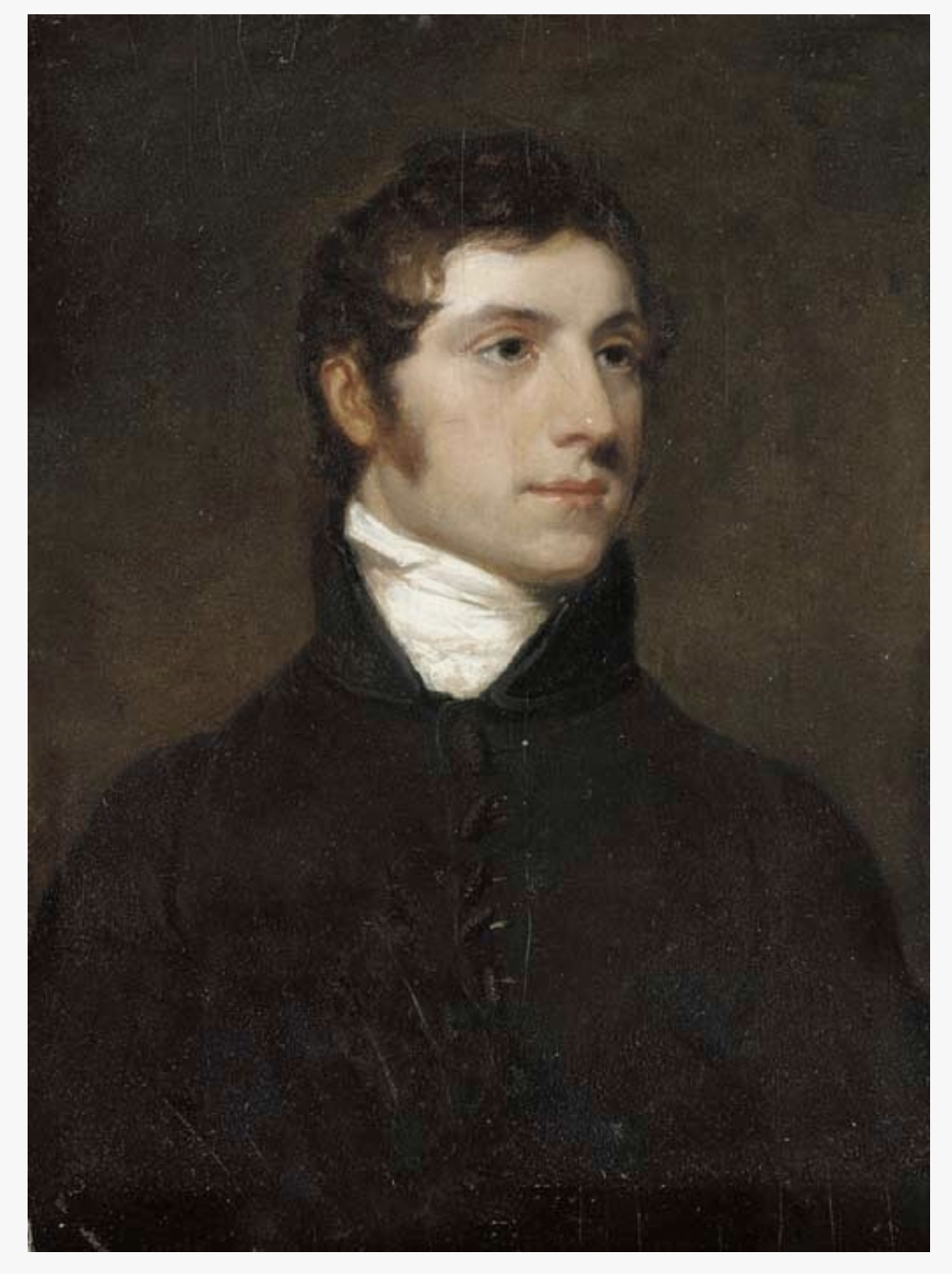
Portrait Of A Young Gentleman, Believed To Be Peter Digges La Touche courtesy of Adam’s 1st April 2009, Irish School, late 18th Century.
Mrs La Touche of Bellevue by Stephen Catterson Smith 1806-1872, courtesy of National Gallery of Ireland NGI 628.

Now let’s go back and look at the family of John La Touche (1732-1805). He had a son Robert La Touche (d. 1844). He lived in Harristown in County Kildare. He married Emily Trench (1790-1816), daughter of William Power Keating Trench, 1st Earl of Clancarty.

They had a daughter Gertrude (1812-1864) who married Henry Stanley McClintock. Robert and Emily née Trench had a son John (1814-1904) who married Maria Price (1824-1906).

Maria La Touche née Price (1824-1906) of Harristown, she married John La Touche (1814-1904).

John (1814-1904) and Maria née Price (1824-1906) had a daughter Emily Maria (1846-1868) who married Bernard Matthew Ward, son of Edward Southwell Ward, 3rd Viscount Bangor.

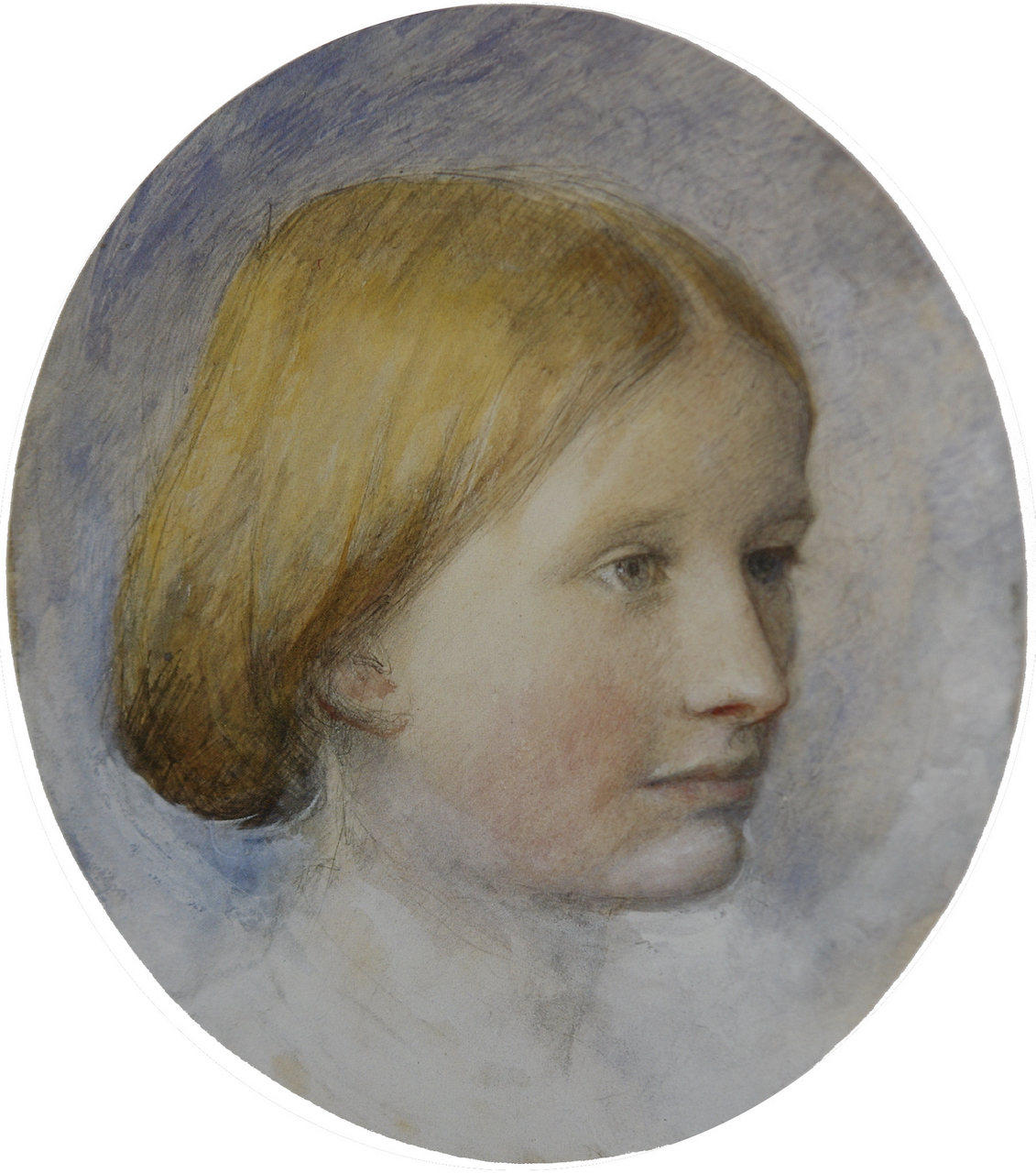
Rose La Touche, 1861, by John Ruskin From “Ruskin, Turner and the pre-Raphaelites”, by Robert Hewison, 2000.
Gentleman believed to be Robert La Touche by Hugh Douglas Hamilton courtesy Christies Irish Sale 2003. Robert died when a stand collapsed at the Curragh Races.
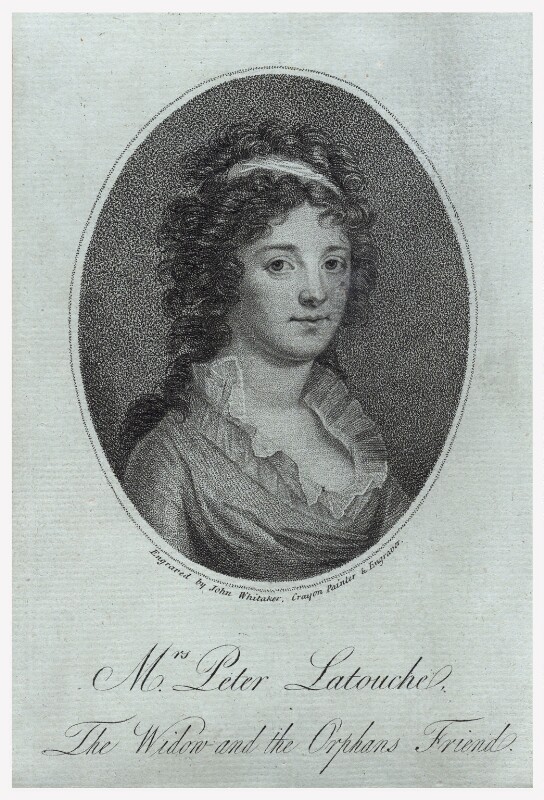
Elizabeth La Touche née Vicars (1756-1842), wife of Peter La Touche, by John Whitaker National Portrait Gallery of London D18415.
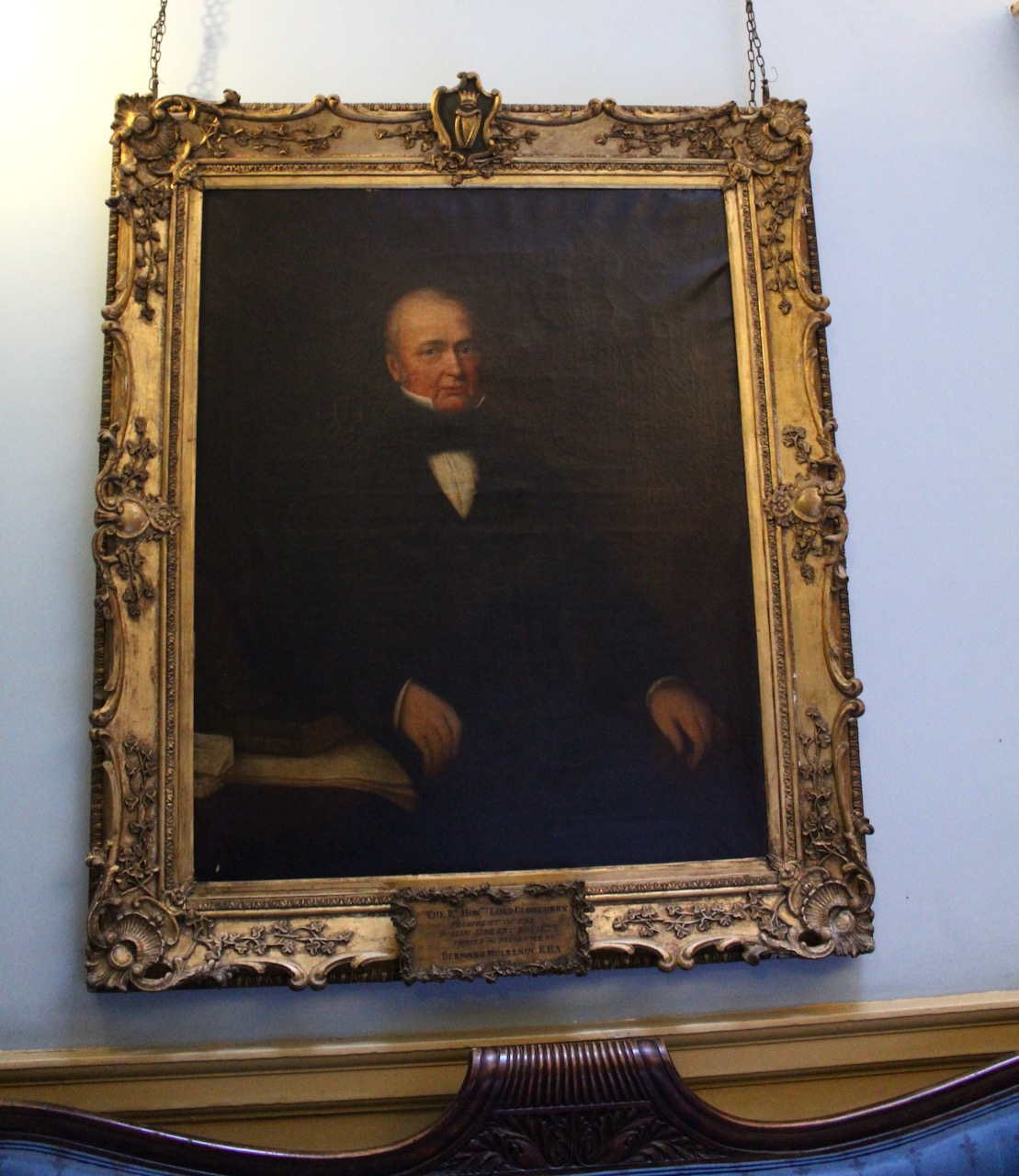
Valentine Lawless (1773-1853) 2nd Baron Cloncurry, member of the Society of United Irishmen and President of the Dublin Literary Society, he lived at the Lyons estate in County Kildare. He married first Elizabeth Gergiana Morgan, daughter of General Charles Morgan but divorced her and married secondly Emily Douglas, third daughter of Archibald Douglas and Mary Crosbie, and widow of the Hon. Joseph Leeson. Photograph © Jennifer Winder-Baggot, www.irishhistorichouses.com
Suzannah, Daughter of John Benson, wife of George Digby Leake of Rathkeale Abbey, Son of Sir John Leake and Great-Grandson of Francis Leake, Earl of Scarsdale of Sutton, Derbyshire; His Wife Suzannah, Daughter of John Benson courtesy Adam’s 11 Oct 2011, IRISH SCHOOL 18TH CENTURY
Colonel George Leake of Rathkeale Abbey, Son of Jones Benson Leake courtesy Adam’s 11 Oct 2011, IRISH SCHOOL 18TH CENTURY.
George D’Alton Leake of Rathkeale Abbey, Elder Son of George Leake and of Alice D’Alton Furnell courtesy Adam’s 11 Oct 2011, IRISH SCHOOL 18TH CENTURY.
Portrait of Joseph Leeson (1660-1741) of Saint Stephen’s Green Date c.1772, photograph courtesy of National Gallery of Ireland.

Joseph Leeson (1660-1741) married Margaret Brice.

Margaret Leeson née Brice wife of Joseph Leeson (1660-1741), c. 1772 by unknown artist, courtesy of National Gallery of Ireland NGI 1649.

Their daughter Anne married Hugh Henry (d. 1743). Their daughter Joyce married Robert Blackwood, 1st Bt. of Ballyleidy, Co. Down, and their son Joseph (1701-1783) became 1st Earl of Milltown.

Joseph Leeson (1701-1783), later 1st Earl of Milltown, 1744, by Pompeo Batoni, National Gallery of Ireland 701. Photograph © Jennifer Winder-Baggot, www.irishhistorichouses.com
Joseph Leeson (1701-1783) 1st Earl of Milltown, painted by Anthony Lee. Portrait from the National Gallery of Ireland. Later he was created 1st Earl of Milltown. He had Russborough House built in County Wicklow. Photograph © Jennifer Winder-Baggot, www.irishhistorichouses.com

Joseph Leeson (1701-1783) 1st Earl of Milltown married first Cecelia Leigh (d. 1731?). Their daughter Mary (d. 1794) married John Bourke, 2nd Earl of Mayo. A son Joseph Leeson (1730-1801) succeeded as 2nd Earl of Milltown. He died unmarried and his brother Brice (1735-1807) succeeded as 3rd Earl of Milltown.

Cecilia Leeson née Leigh d. 1737, painted by Anthony Lee, courtesy of National Gallery of Ireland.
Joseph Leeson (1730-1801) later 2nd Earl of Milltown, 1751 by Pompeo Batoni, courtesy of National Gallery of Ireland.

Joseph Leeson (1701-1783) 1st Earl of Milltown then married Anne Preston (d. 1766) daughter of Nathaniel Preston of Swainstown, County Meath. They had a daughter Anne who married her cousin Hugh Henry.

Third, Joseph Leeson (1701-1783) 1st Earl of Milltown married Elizabeth French (d. 1842), daughter of Reverend William French.

Joseph Leeson (1701-1783) 1st Earl of Milltown with his third wife Elizabeth née French and their daughter Cecilia and his grandson Joseph later 3rd Earl of Milltown, 1772, after Pompeo Batoni,courtesy of National Gallery of Ireland, NGI.1697. This is what the Gallery website says, but I think this 3rd Earl of Milltown was Brice Leeson (1735-1807).

Joseph Leeson (1701-1783) 1st Earl of Milltown and Elizabeth née French (d. 1842) had a daughter Cecelia who married David La Touche. A daughter Frances Isabella (d. 1840) married Marcus Beresford (1764-1797). They also had sons William (1770-1819) and Robert (1773-1842).

Cecilia La Touche (d. 1848) née Leeson (about 1769-1848), by Hugh Douglas Hamilton. She married David La Touche (1769-1816). She was the daughter of Joseph Leeson (1701-1783), 1st Earl of Milltown and Elizabeth French. Photograph courtesy of English Heritage, Kenwood.

Brice (1735-1807) 3rd Earl of Milltown married Maria Graydon and she gave birth to Joseph (1766-1800); John (1767-1835) and Robert (d. 1842).

Joseph (1766-1800) married Emily Douglas (d. 1841) and she gave birth to their heir, Joseph (1799-1866) who succeeded as 4th Earl of Milltown.

Emily Douglas (d.1841) by James Dowling Herbert courtesy of National Gallery of Ireland NGI 6271. She was wife of Joseph Leeson (1766-1800) mother of 4th Earl of Milltown.

Joseph (1799-1866) 4th Earl of Milltown married Barbara (d. 1874), daughter of Joshua Colles Meredyth, 8th Bt of Greenhills, Co. Kildare, widow of Eyre Tilson Coote, 3rd Baron Castle Coote. She gave birth to both the 5th and the 6th Earls of Milltown.

Edward Nugent Leeson, 6th Earl of Milltown (1835-1890), 1875 by Francis Grant, Courtesy of National Gallery of Ireland NGI.1036.
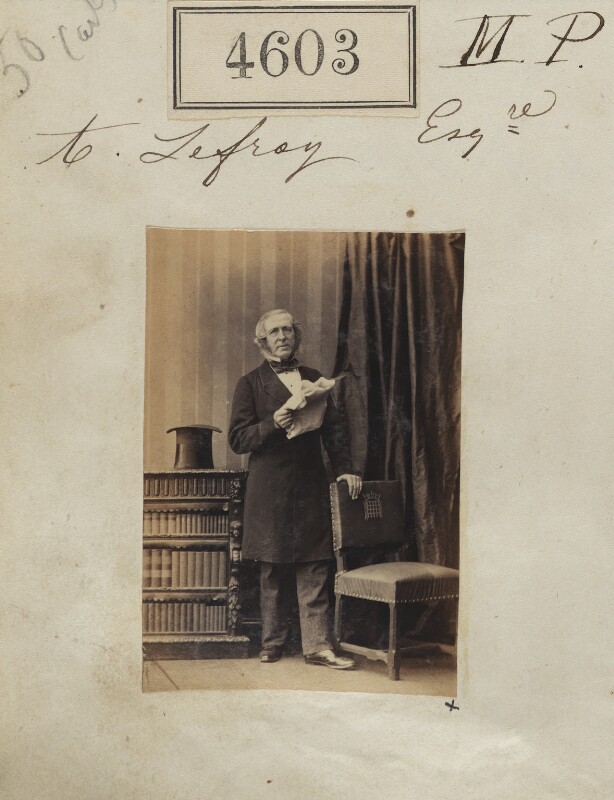
Anthony Lefroy (1800-1890), Conservative politician; MP for Longford and Dublin University, by Camille Silvy 1861 courtesy of National Portrait Gallery NPG Ax54615.
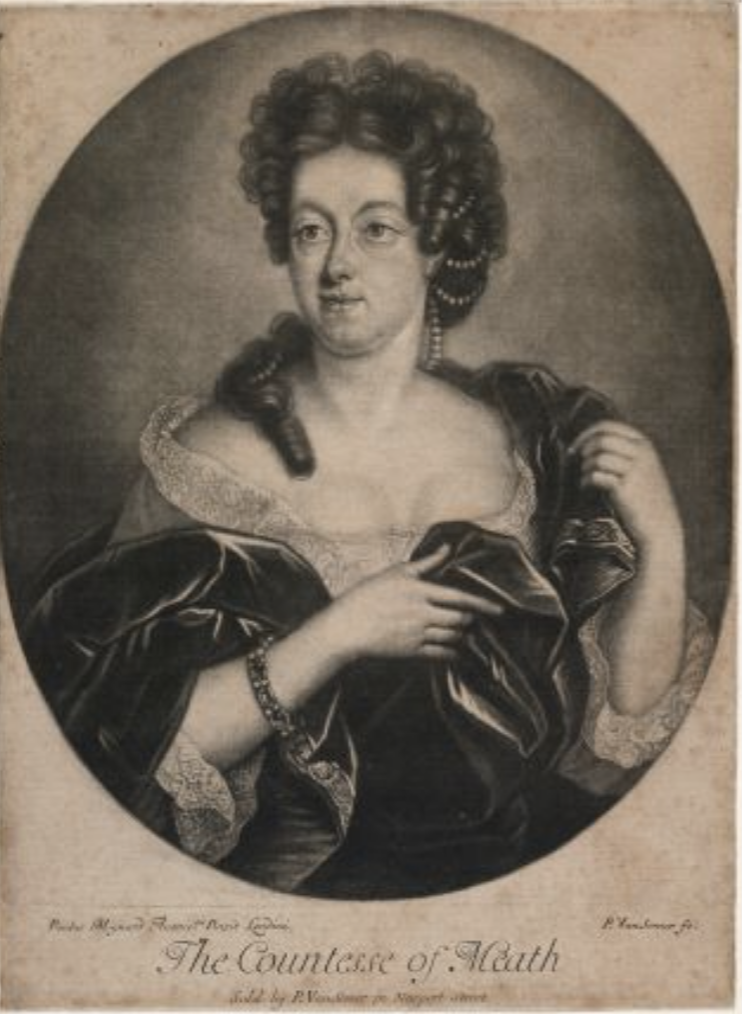
Elizabeth née Lennard (1670-1701), Countess of Meath, wife of 3rd Earl, 1701 engraving by Paul Van Somer II after Paul Mignard, photograph courtesy of National Gallery of Ireland.
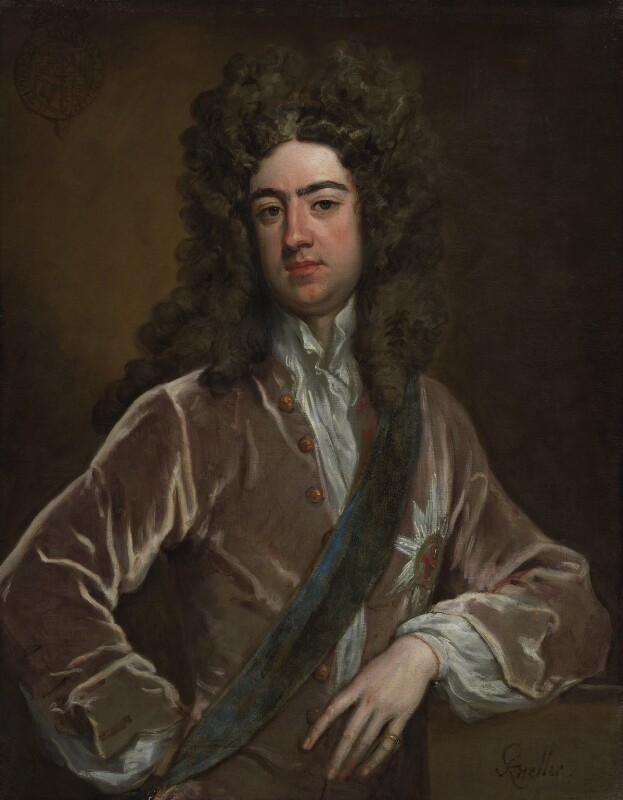
Charles Lennox (1672-1723) 1st Duke of Richmond and Lennox, Courtier; son of King Charles II, by Sir Godfrey Kneller, Bt c. 1703 courtesy of National Portrait Gallery NPG 3221.

Charles Lennox (1672-1723) 1st Duke of Richmond and Lennox was an illegitimate son of King Charles II, by Louise Renée de Penancoët de Kérouaille, Duchess of Portsmouth. His son Charles Lennox (1701-1750) succeeded as 2nd Duke of Richmond and married Sarah Cadogan (1705-1751).

Sarah Lennox née Cadogan (1705-1751) and Charles Lennox (1701-1750) 2nd Duke of Richmond. Photograph © Jennifer Winder-Baggot, www.irishhistorichouses.com
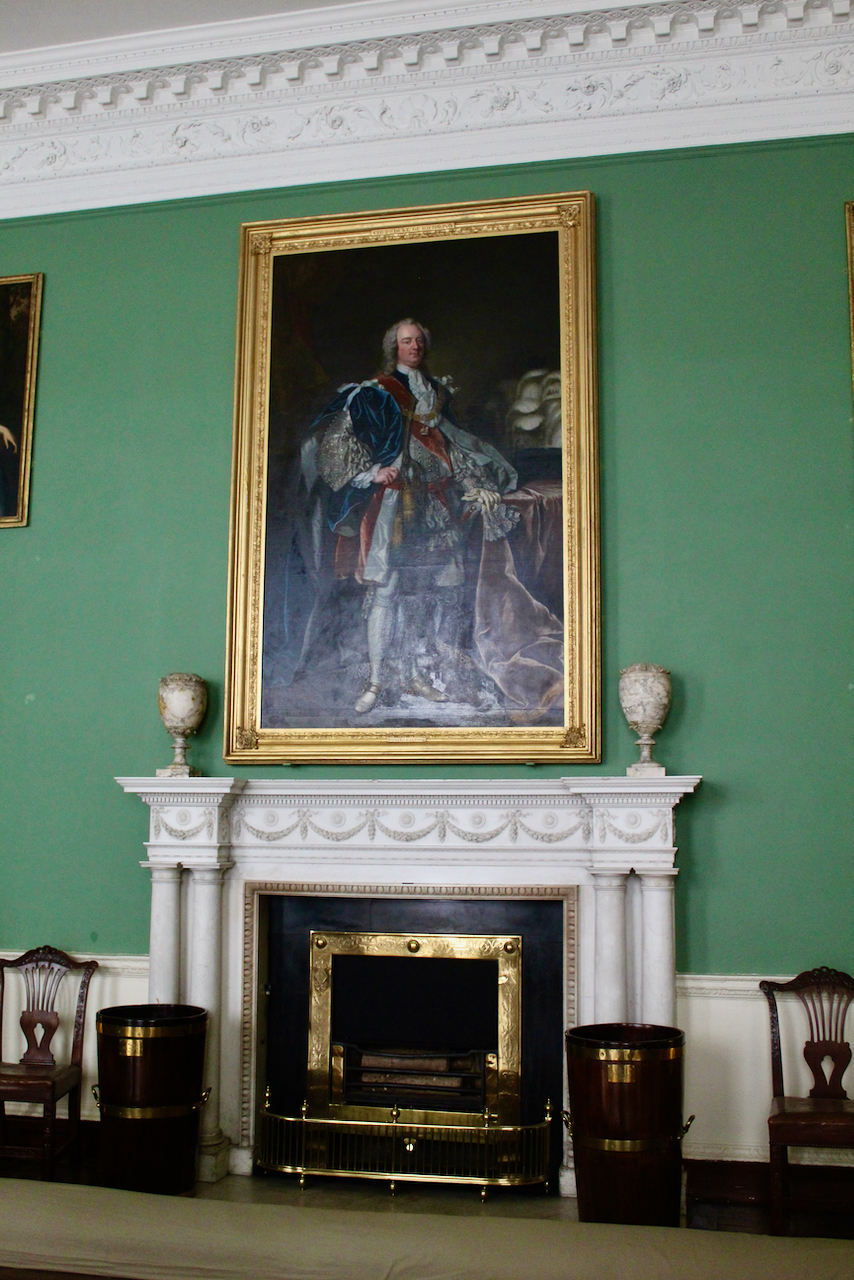
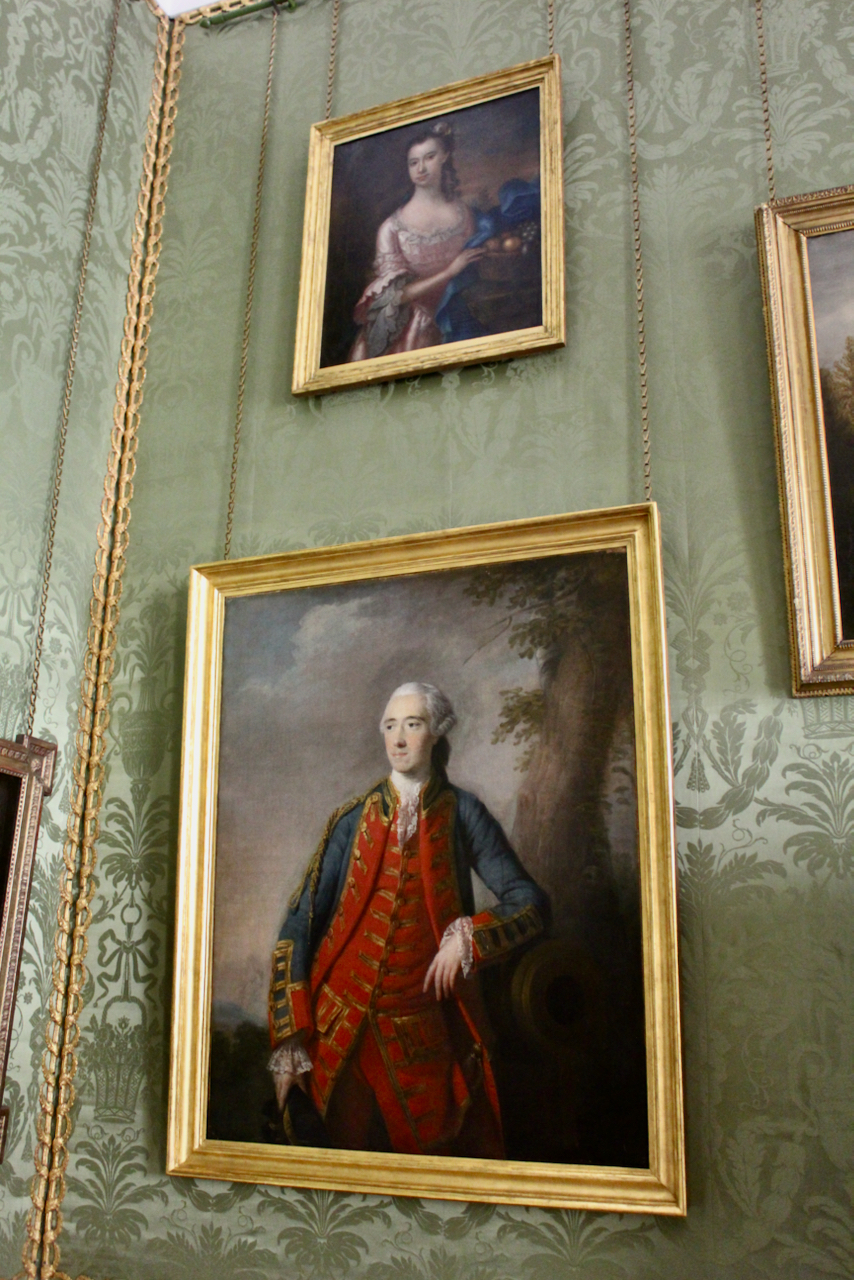
Charles Lennox 2nd Duke of Richmond (1701-1750). Photograph © Jennifer Winder-Baggot, www.irishhistorichouses.com
The portrait over the fireplace in the dining room is a half-length portrait of Charles Lennox (1701–1750), 2nd Duke of Richmond and 2nd Duke of Lennox, wearing armour with the ribbon of the Order of the Garter. Photograph © Jennifer Winder-Baggot, www.irishhistorichouses.com

Charles Lennox (1701-1750) 2nd Duke of Richmond and Sarah née Cadogan (1705-1751) had several children:

Georgiana Carolina (1723-1774) married Henry Fox, 1st Baron Holland of Foxley;Emilia Mary

Emilia Mary (1731-1814) married James Fitzgerald 1st Duke of Leinster;

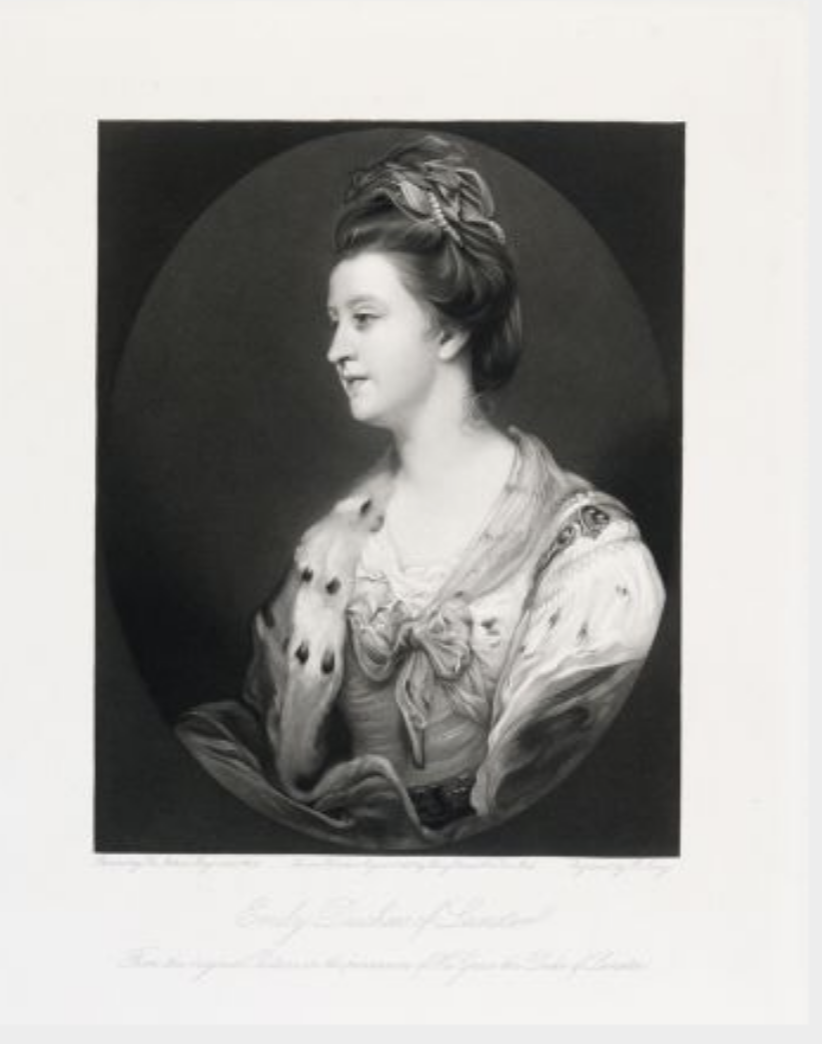
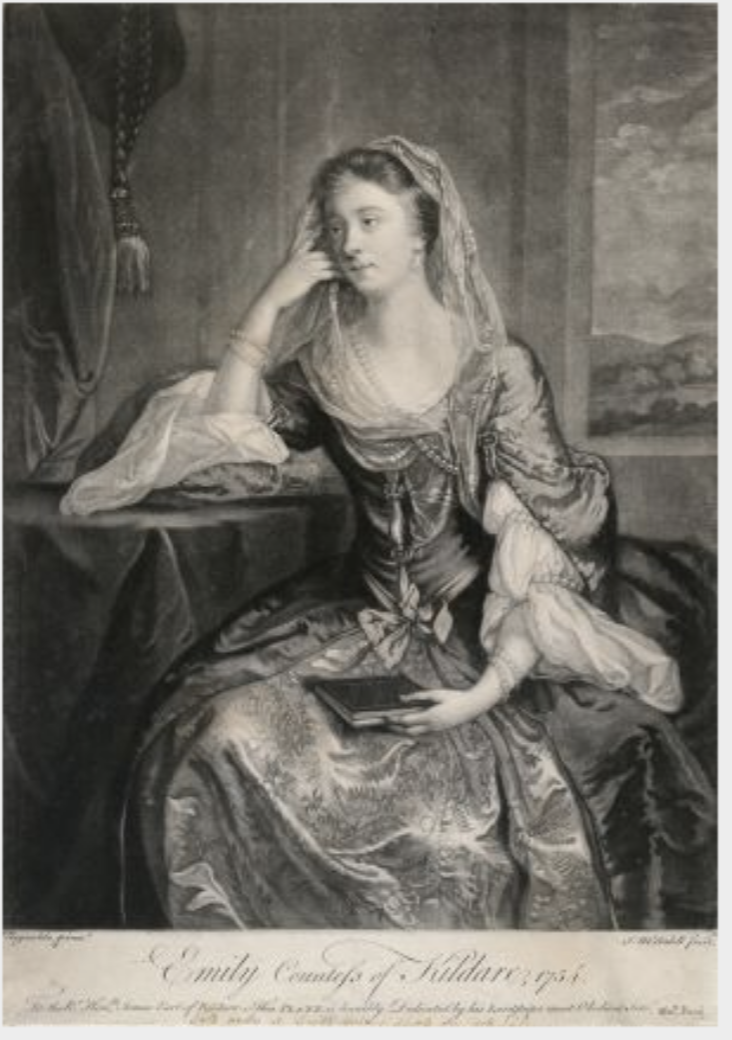
Emilia Mary Fitzgerald née Lennox (1731-1814) Duchess of Leinster, courtesy of National Gallery of Ireland. She was married to James FitzGerald 1st Duke of Leinster, 1st Marquess of Kildare, 20th Earl of Kildare.
Emilia née Lennox (1731-1814), Countess of Leinster, engraving after Joshua Reynolds, courtesy of National Gallery of Ireland.

Louisa Augusta (1743-1821) married Thomas Conolly;

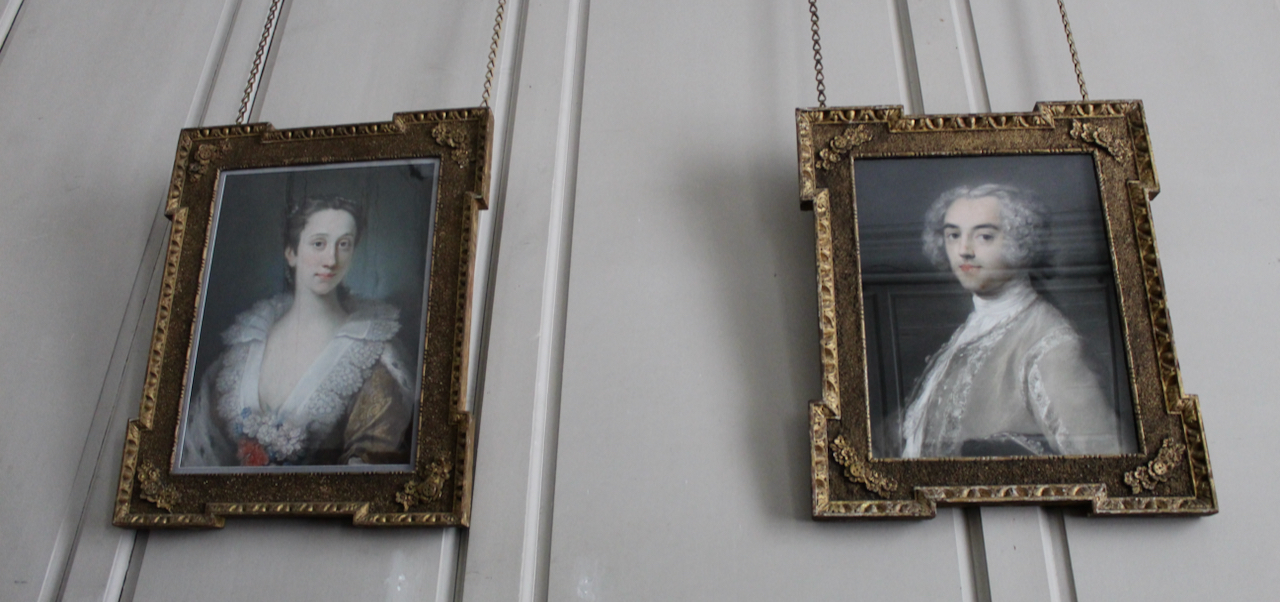
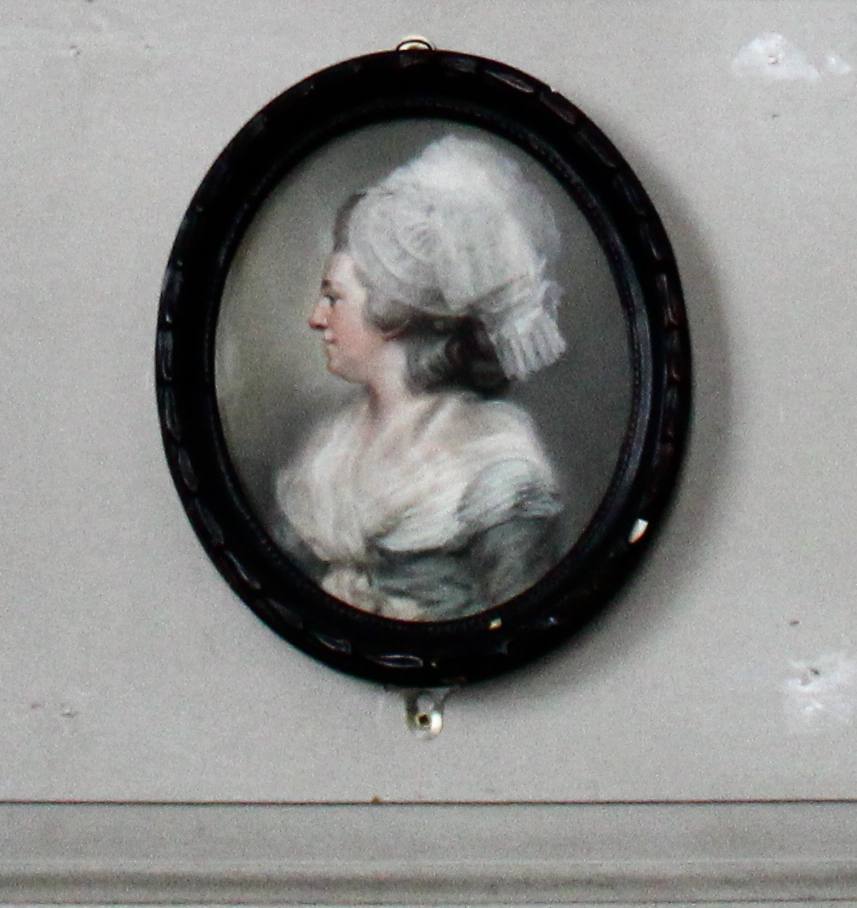
Pastel of Lady Louisa Lennox (1743-1817), circle of George Knapton, c.1747. Photograph © Jennifer Winder-Baggot, www.irishhistorichouses.com
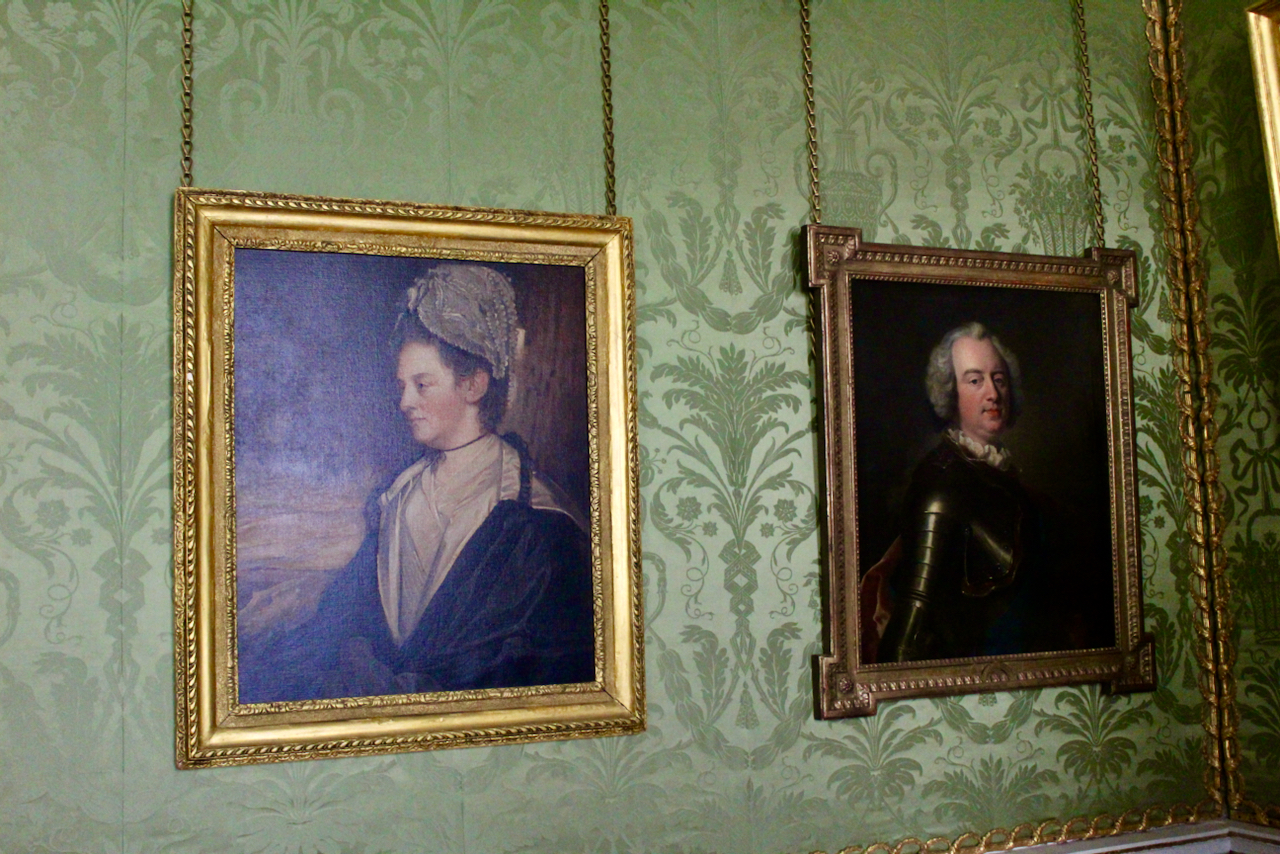
The portrait of Lady Louisa Conolly née Lennox (1743-1817) is after Reynolds (the original is in the Fogg Art Museum, Harvard). She was the daughter of Charles 2nd Duke of Richmond and Lennox, and wife of Thomas Conolly (1734-1803). Photograph © Jennifer Winder-Baggot, www.irishhistorichouses.com
Louisa Conolly née Lennox (1743-1817) who married Thomas Conolly (1734-1803). Photograph © Jennifer Winder-Baggot, www.irishhistorichouses.com
Louisa Conolly née Lennox (1743-1817), by Hugh Douglas Hamilton. Photograph © Jennifer Winder-Baggot, www.irishhistorichouses.com
The small medallion in the centre is Lady Louisa by Hugh Douglas Hamilton. The one of the two girls on the right is of Louisa Staples (1770-1833) and her sister, by Hugh Douglas Hamilton. William James Conolly (1712-1754) was the nephew of William Conolly who built Castletown, and he inherited the estate. He was the father of Thomas Conolly (1734-1803). Thomas’s sister Harriet married John Staples (1736-1820), and their daughter was Louisa Staples. Louisa married Thomas Pakenham (1757-1836). It was their son, Edward Michael (1786-1849) who inherited Castletown, and added Conolly to his surname, to become Pakenham Conolly. Photograph © Jennifer Winder-Baggot, www.irishhistorichouses.com

Sarah (1745-1826) married Thomas Charles Bunbuy 6th Baronet then George Napier, and another daughter, Cecily (1750-1769) married Robert XI Arthur Geoffrey Nicholls, Comte de Cherbourg. A son, George Henry Lennox (d. 1805) married Louisa, daughter of General William Henry Kerr, 4th Marquess of Lothian. The elder son, Charles Lennox, (1734/5-1806) succeeded as 3rd Duke of Richmond.

I think this is a portrait of Louisa’s brother Charles Lennox (1734-1806), 3rd Duke of Richmond. Photograph © Jennifer Winder-Baggot, www.irishhistorichouses.com
Charles Lennox (1734-1806) 3rd Duke of Richmond and Lennox, courtesy of National Gallery of Ireland.

Charles Lennox, (1734/5-1806) 3rd Duke of Richmond had a daughter so his nephew General Charles Lennox (1764-1819) succeeded as 4th Duke of Richmond.

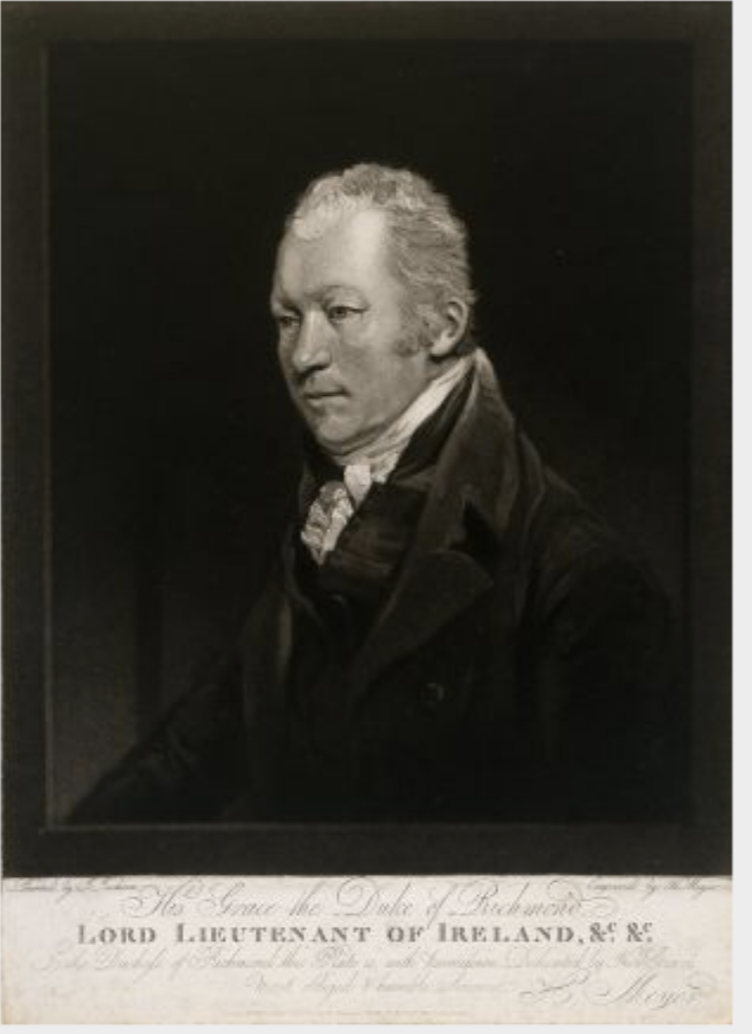
Charles Lennox (1764-1819) 4th Duke of Richmond, engraver Henry Hoppner Meyer, after painter John Jackson, courtesy of National Gallery of Ireland.
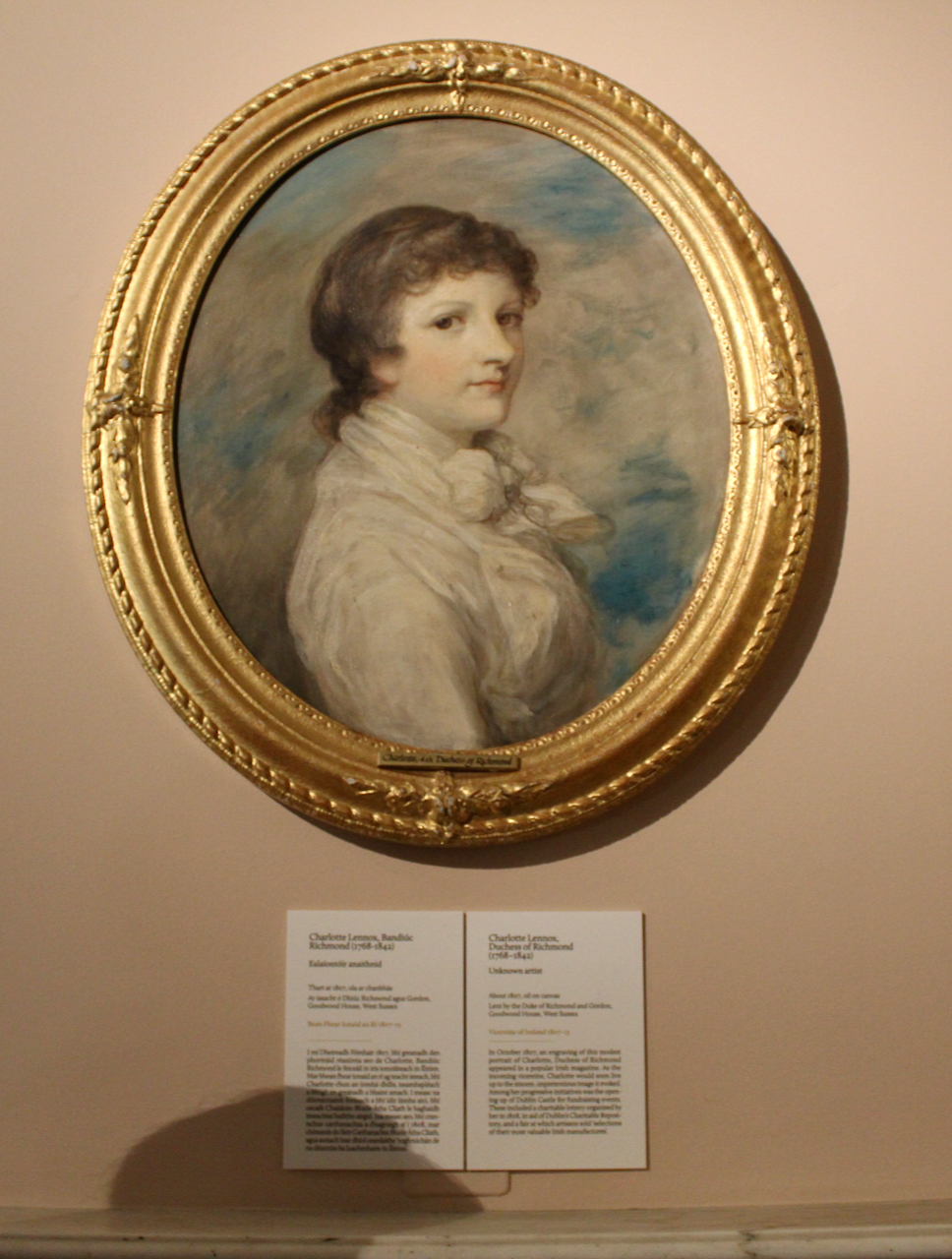
Charlotte Lennox née Gordon (1768-1842), Duchess of Richmond, Vicereine 1807-1813, wife of Charles Lennox, 4th Duke of Richmond. Photograph © Jennifer Winder-Baggot, www.irishhistorichouses.com
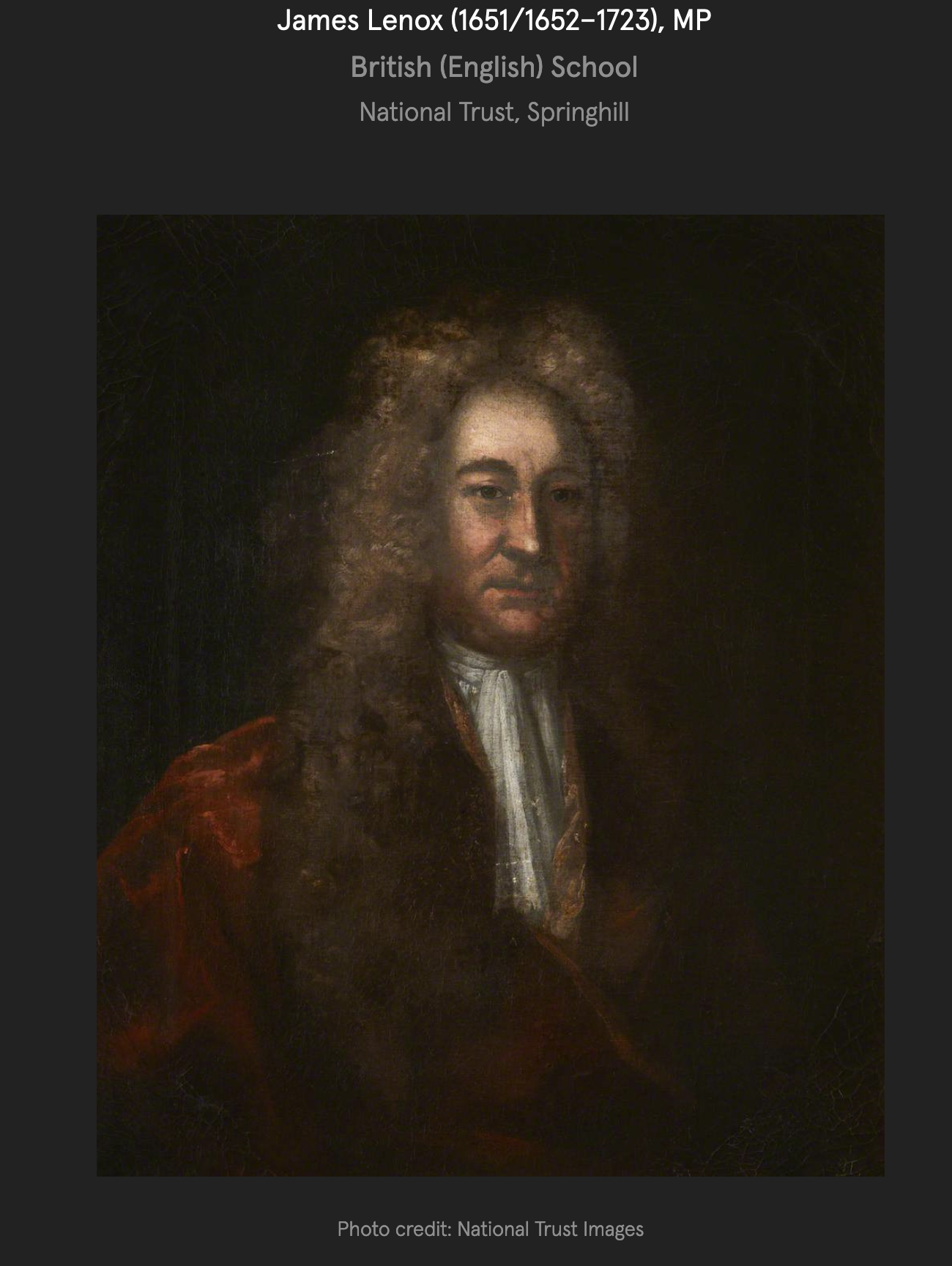
James Lenox (1651/2-1723) courtesy of National Trust, Springhill, County Derry. He was the grandfather of Clotworthy Lenox (d. 1785).
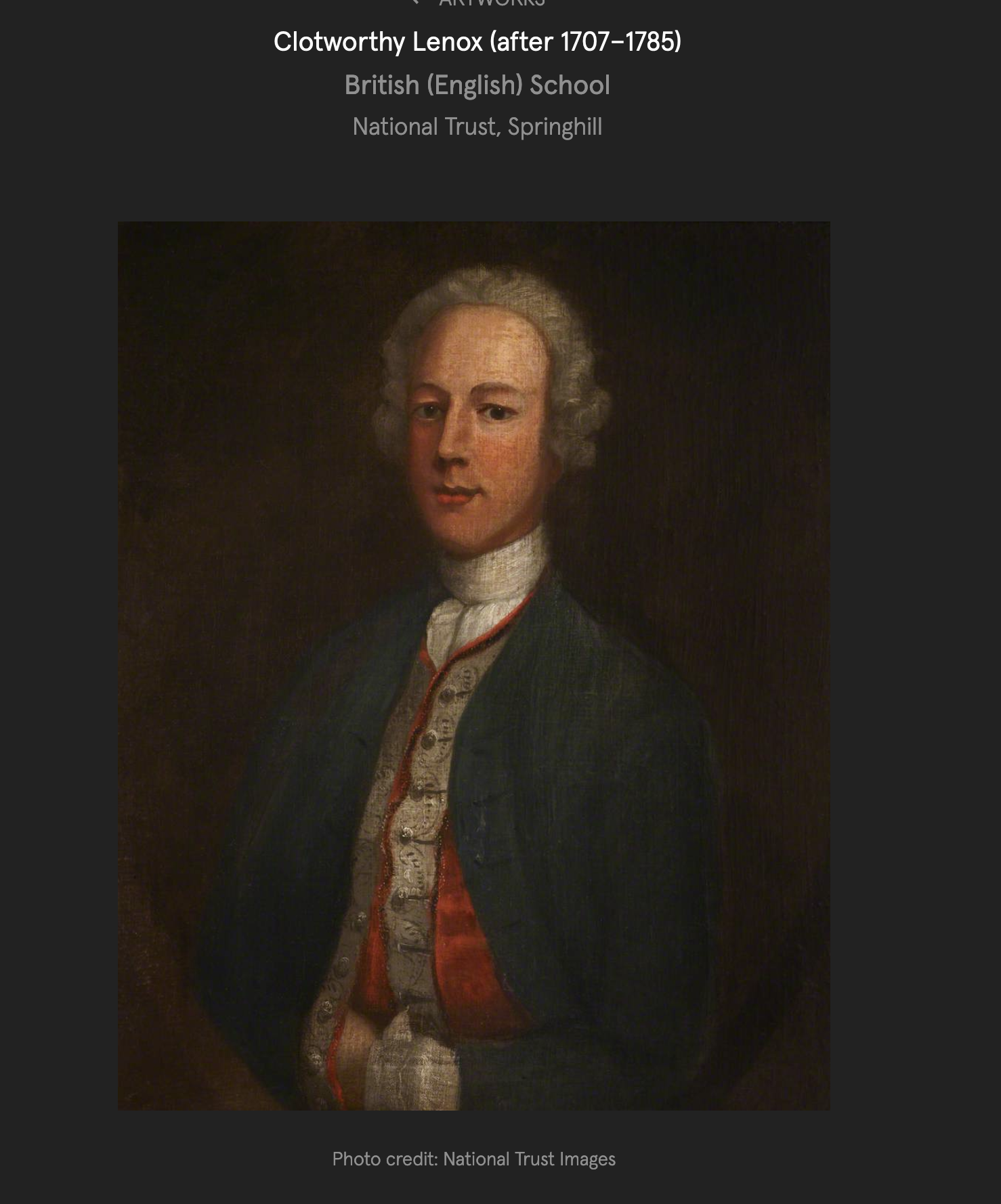
Clotworthy Lenox (d. 1785) courtesy of National Trust, Springhill, County Derry.
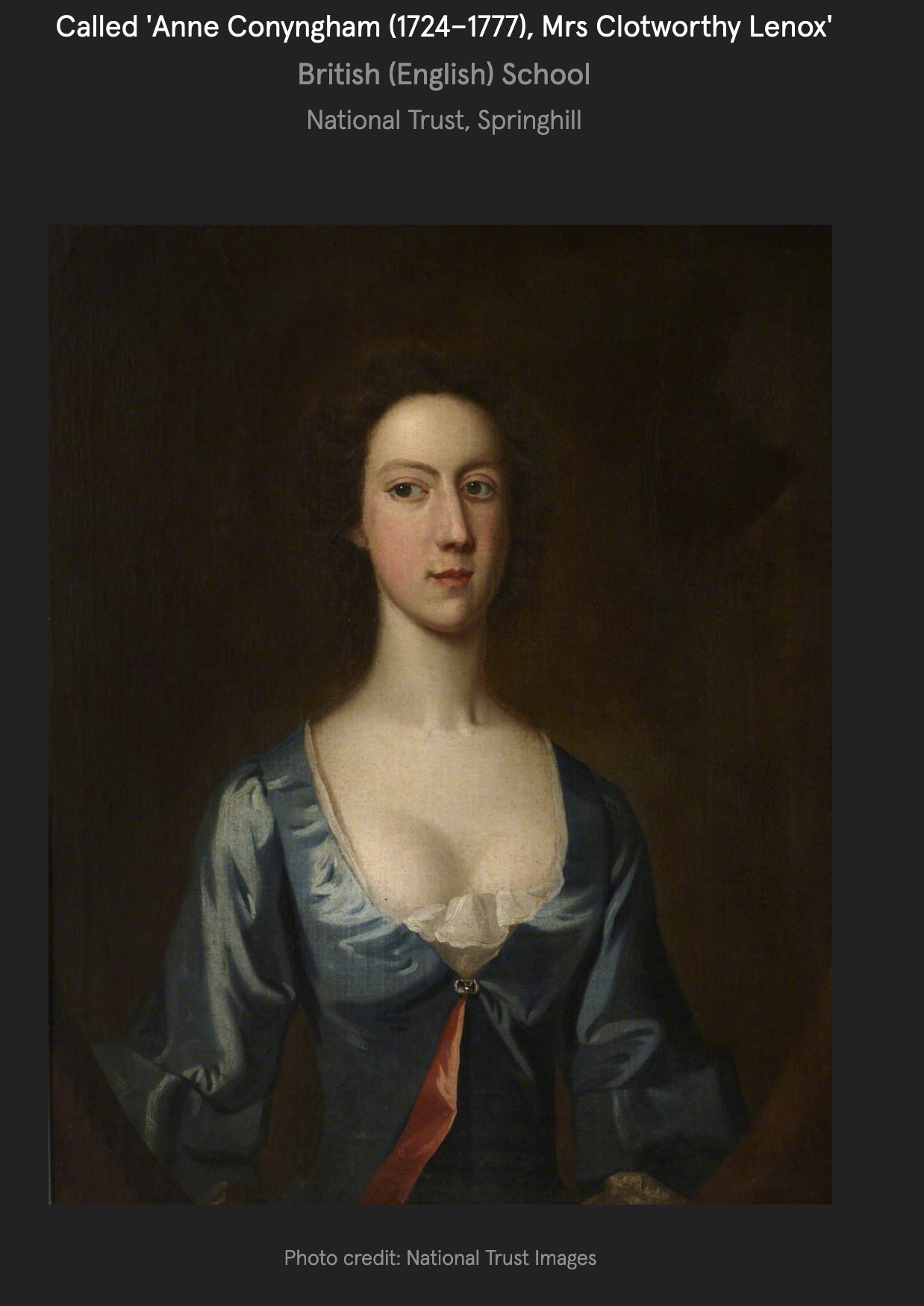
Called Anne Conyngham (1724-1777) Mrs Clotworthy Lenox, courtesy of National Trust. Springhill, County Derry. She was the daughter of George Butle Conyngham (1690-1765).
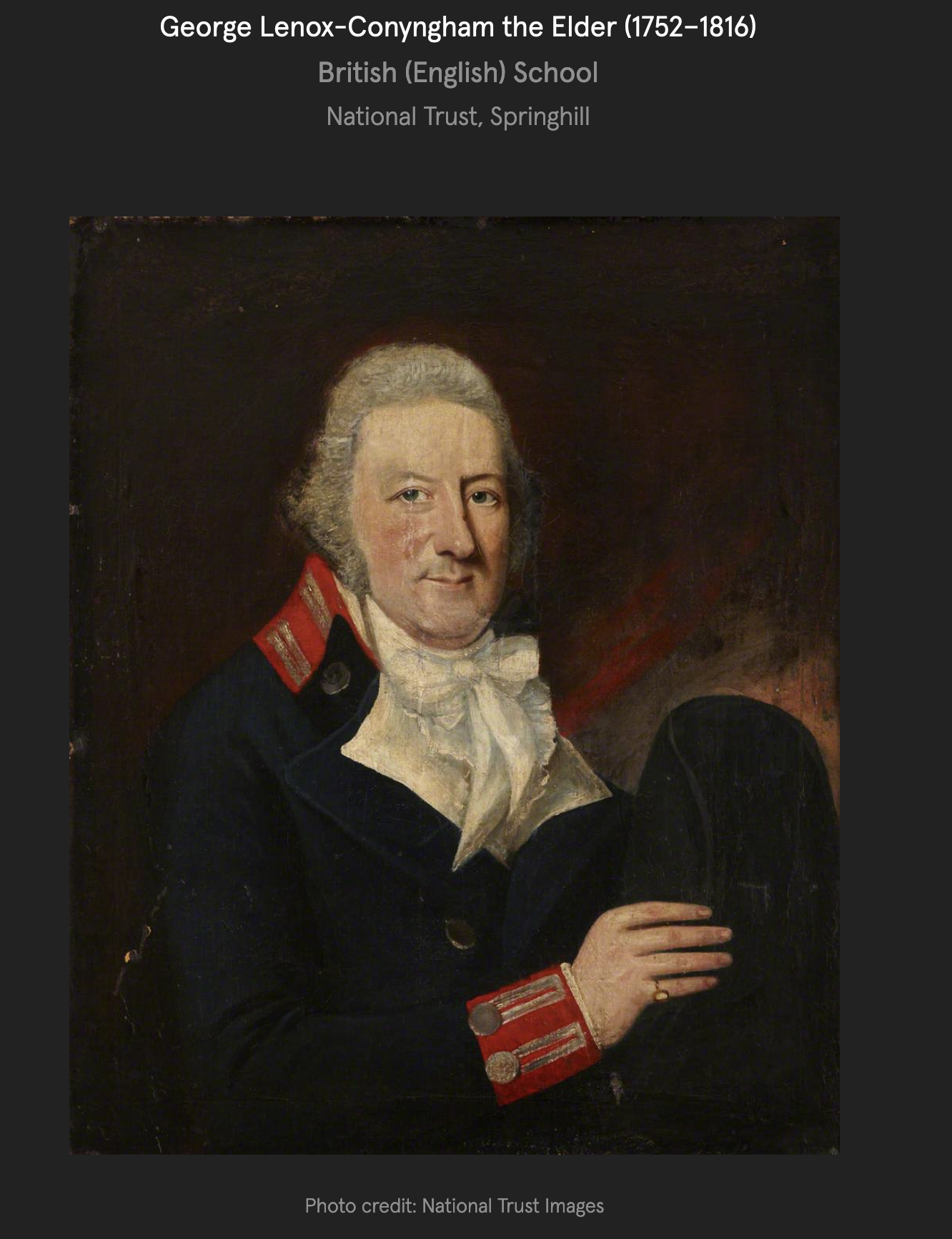
George Lenox-Conyngham (1752-1816) courtesy of National Trust. Springhill, County Derry. He was the son of Clotworthy Lenox (d. 1785) and Anne Conyngham (1724-1777).
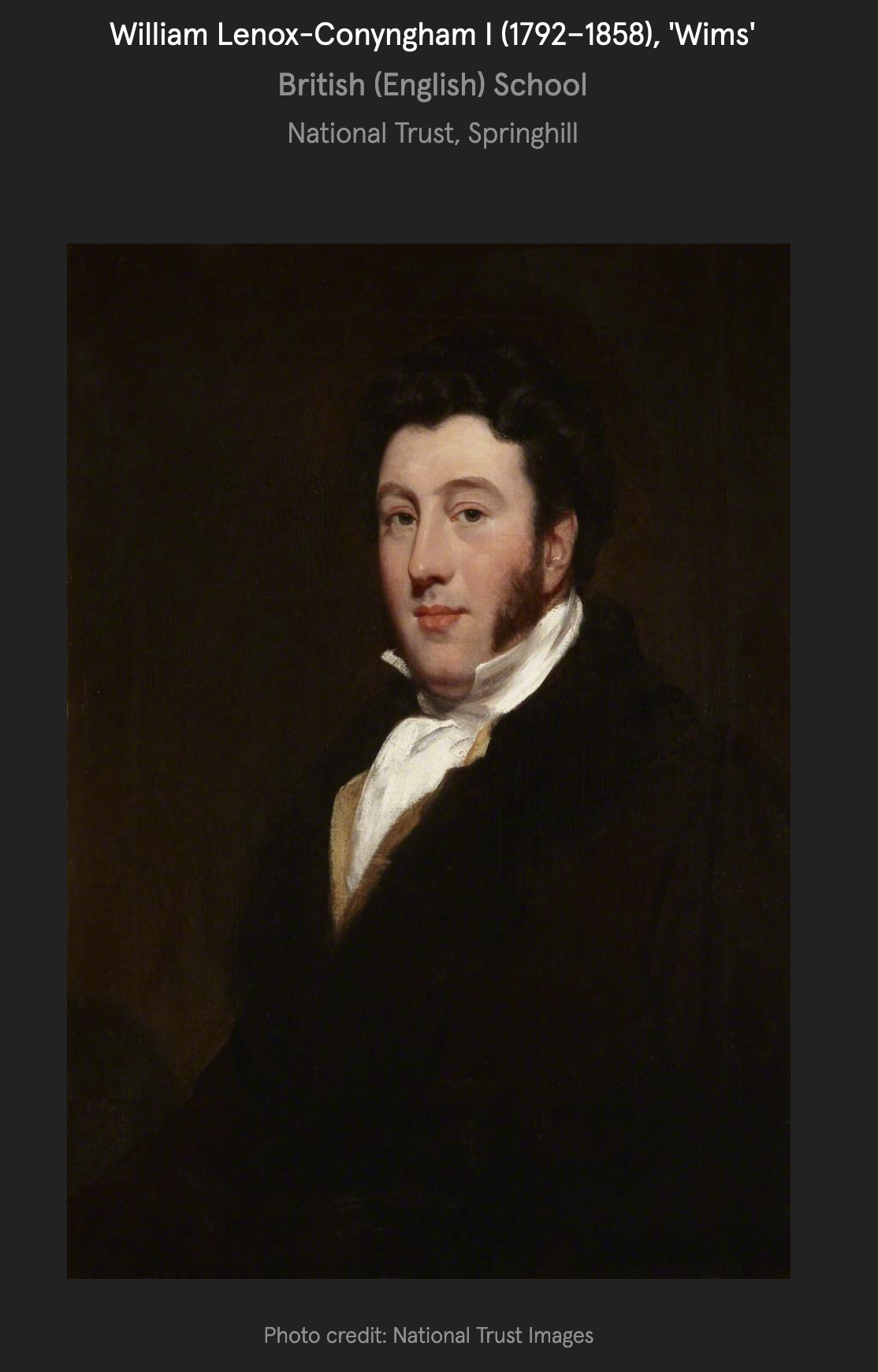
William Lenox-Conyngham (1792-1858) courtesy of National Trust, Springhill, County Derry. He was the son of George Lenox-Conyngham (1752-1816).
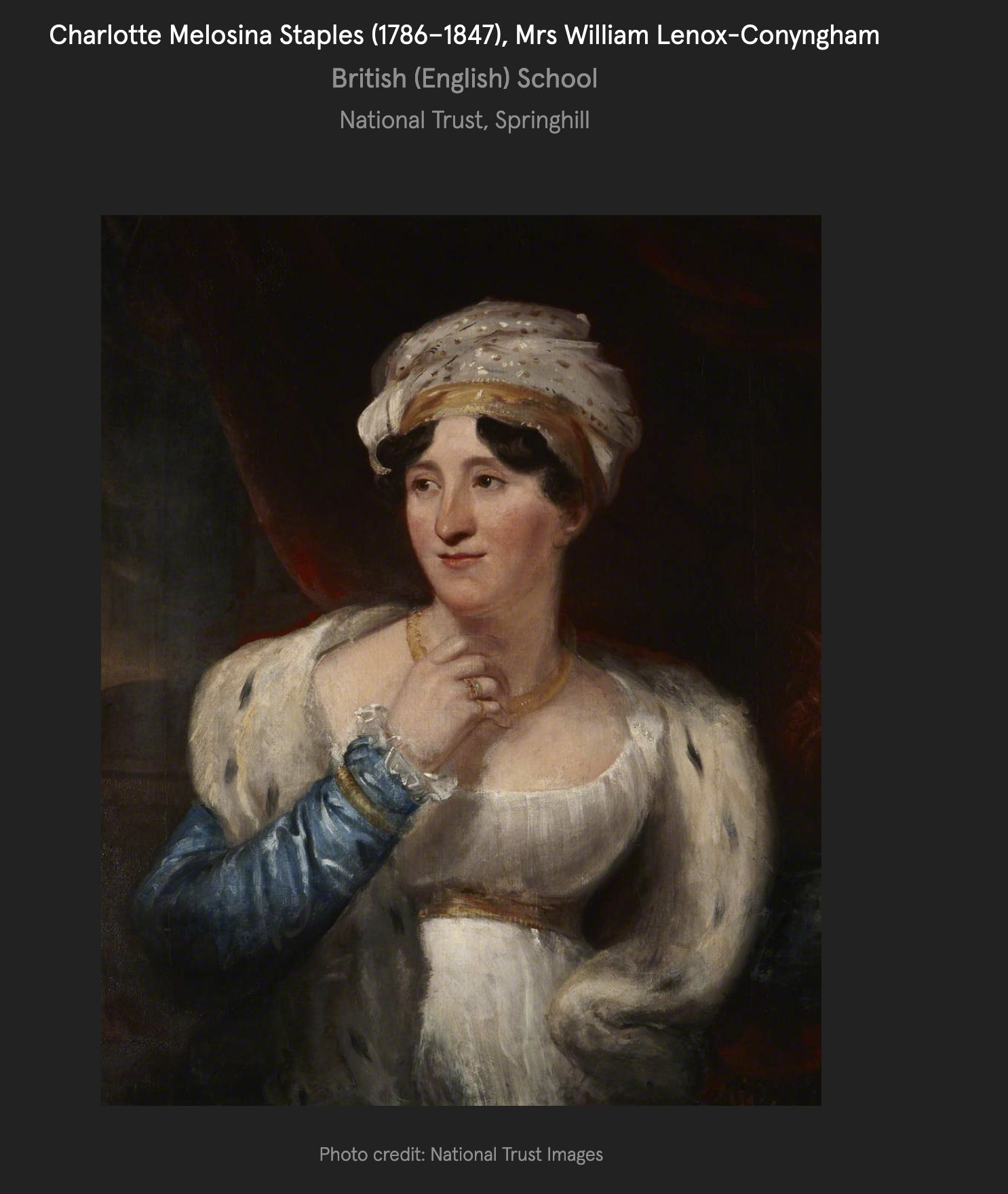
Charlotte Melosina Staples (1786-1847), wife of William Lenox-Conyngham (1792-1858), courtesy of National Trust. Springhill, County Derry.
Jean Hamilton (d. 1788), Mrs William Conyngham, by Joshua Reynolds, courtesy of National Trust, Springhill, County Derry.

Reverend John Leslie (d. 1671) married Katherine Conyngham. They had a son John Leslie (1645-1721) who married Elizabeth Hamilton, and a son Reverend Charles Leslie (1650-1722).

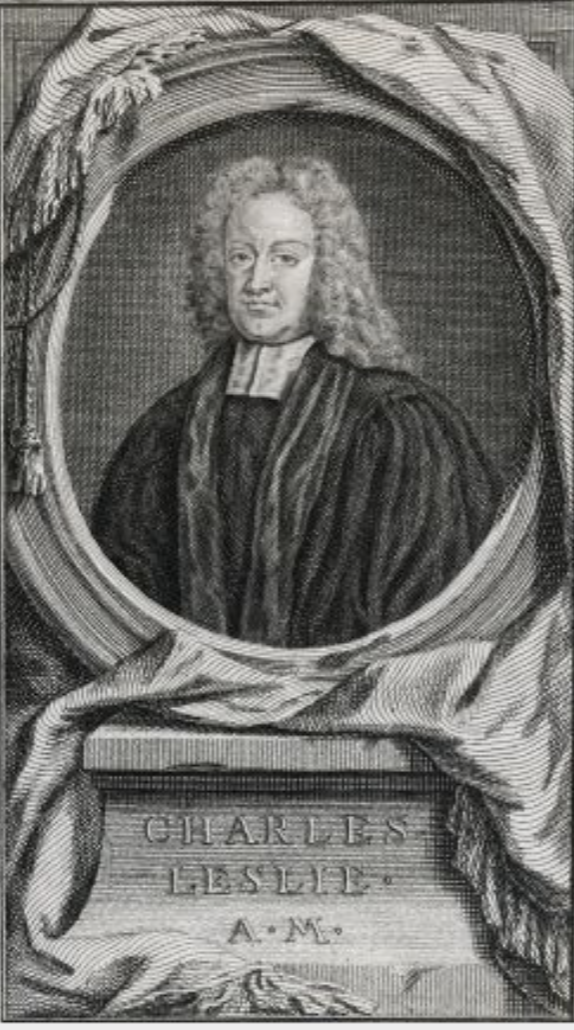
Rev. Charles Leslie (1650-1722), painting after Alexis Simon Belle, courtesy of National Gallery of Ireland.

Reverend Charles Leslie (1650-1722) married Jane Griffith and they had a son, Robert (d. 1743). He married Frances, daughter of John Rogerson, and they had a son, Charles Powell Leslie (1732-1800).

Portrait of Charles Powell Leslie (c. 1731-1800) of Castle Leslie, County Monaghan. Photograph © Jennifer Winder-Baggot, www.irishhistorichouses.com

Charles Powell Leslie (1732-1800) married first Prudence Penelope Hill-Trevor she gave birth to their heir, Charles Powell Leslie (1769-1831). They had a second son, Reverend John Leslie (1772-1854) who married Isabella St. Lawrence (d. 1830), and who served as Bishop of Dromore and Bishop of Elphin.

Charles Powell Leslie (1769-1831), Castle Leslie, County Monaghan. Photograph © Jennifer Winder-Baggot, www.irishhistorichouses.com
Bishop John Leslie (1772-1854), Corravahan, County Cavan. Photograph © Jennifer Winder-Baggot, www.irishhistorichouses.com
Frances King (d. 1835), daughter of Robert Edward King 1st Viscount Lorton, who married Right Reverend Charles Leslie (1810-1870) of Corravahan, County Cavan, Bishop of Kilmore, who was son of Reverend John Leslie (1772-1854) and Isabella née St. Lawrence (d. 1830).

Charles Powell Leslie (1732-1800) married secondly Mary Anne Tench and they had several children.

Colonel Charles Powell Leslie (d. 1831) married Christiana Fosbery and they had several children, including Charles Powell Leslie (1821-1871) who died unmarried, and John Leslie (1822-1916) who became 1st Baronet of Castle Leslie.

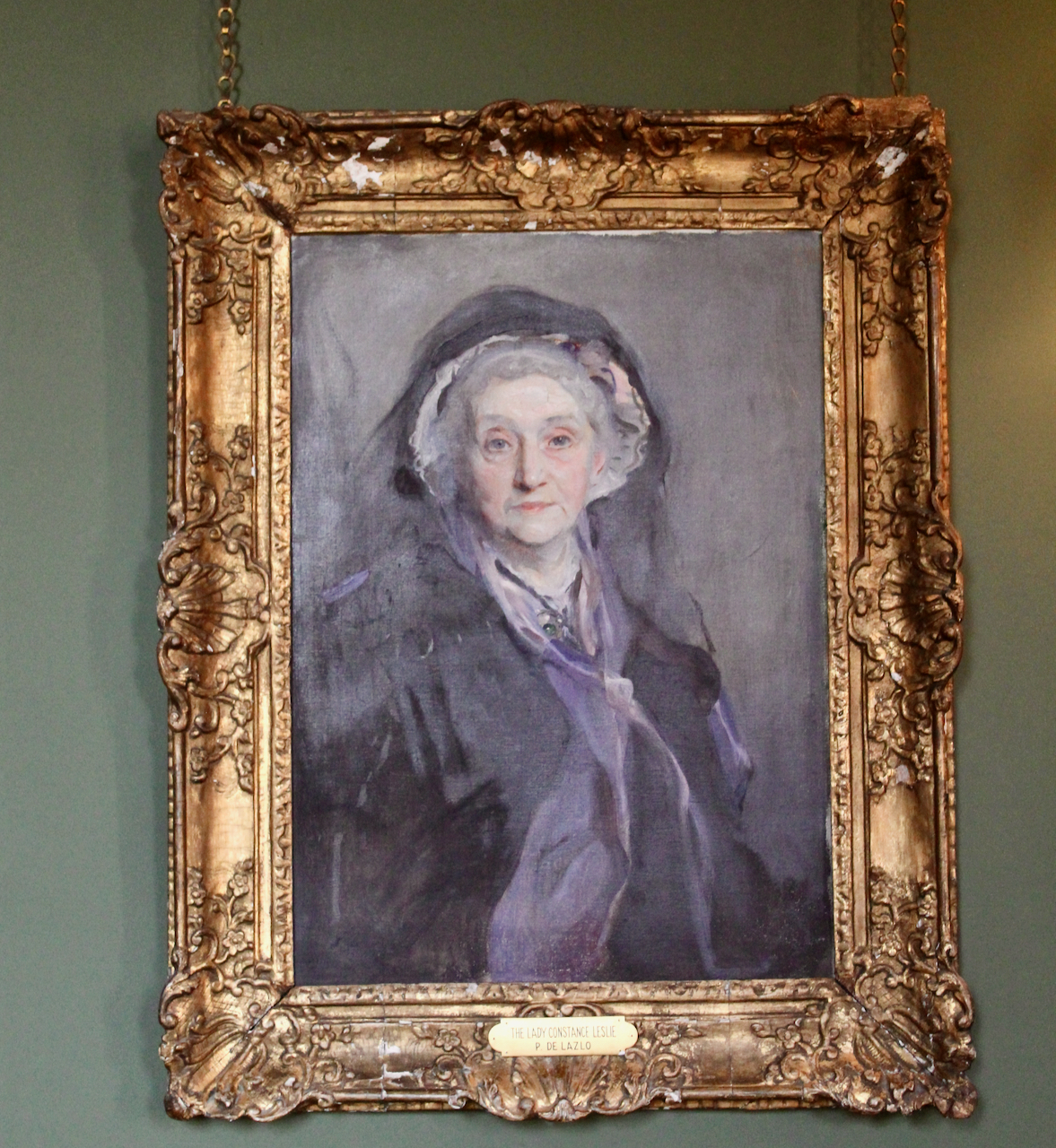
A portrait of Lady Constance Leslie (née Dawson Damer) in later life, of Castle Leslie, County Monaghan, wife of John Leslie (1822-1916) 1st Baronet of Glaslough, Co Monaghan. Photograph © Jennifer Winder-Baggot, www.irishhistorichouses.com
Shane Leslie (1885-1781), 3rd Baronet of Glaslough, County Monaghan. Photograph © Jennifer Winder-Baggot, www.irishhistorichouses.com
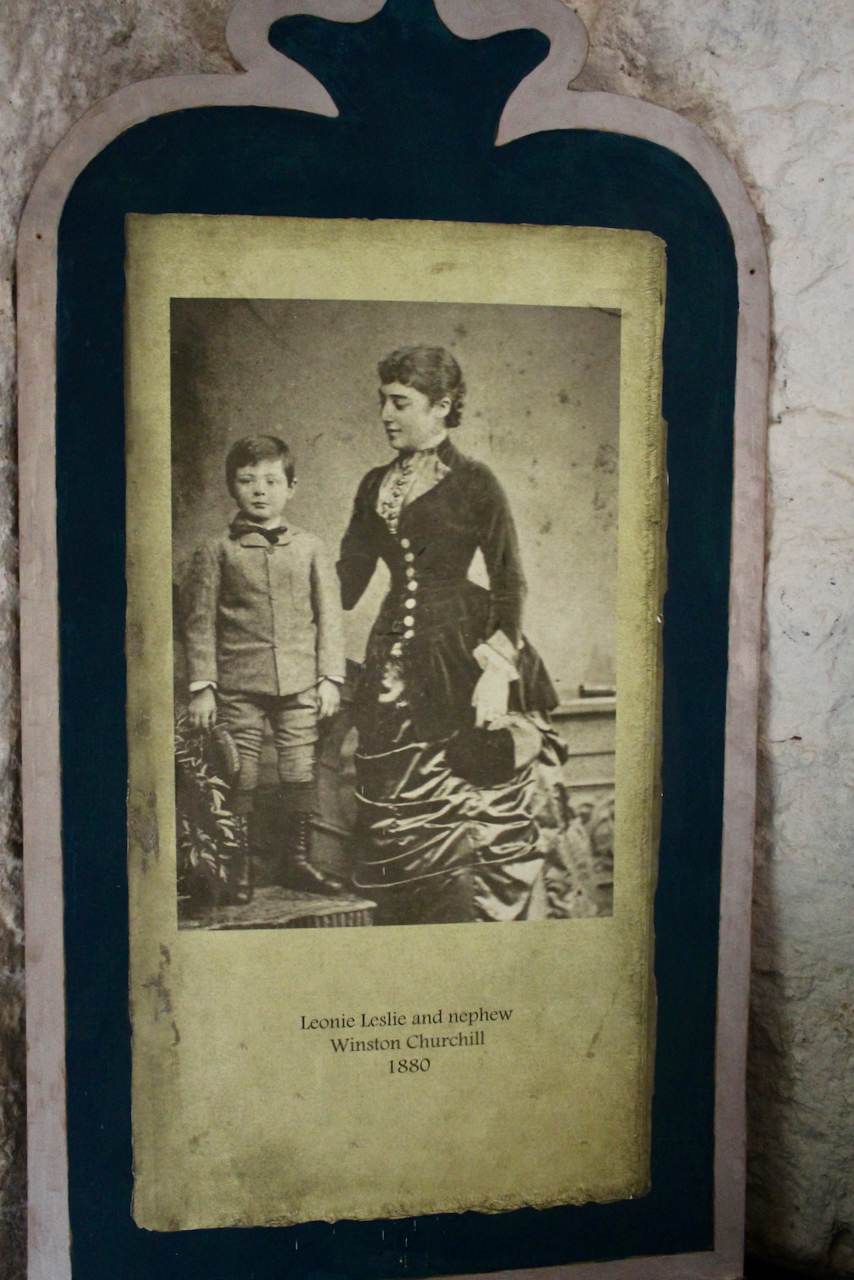
Leonie Leslie (1859-1943), Shane Leslie’s mother. Originally Leonie Jerome, her sister Jennie was Winston Churchill’s mother. Photograph © Jennifer Winder-Baggot, www.irishhistorichouses.com
Maria Phipps née Liddell, Marchioness of Normanby (1798-1882) by George Hayter. Photograph © Jennifer Winder-Baggot, www.irishhistorichouses.com
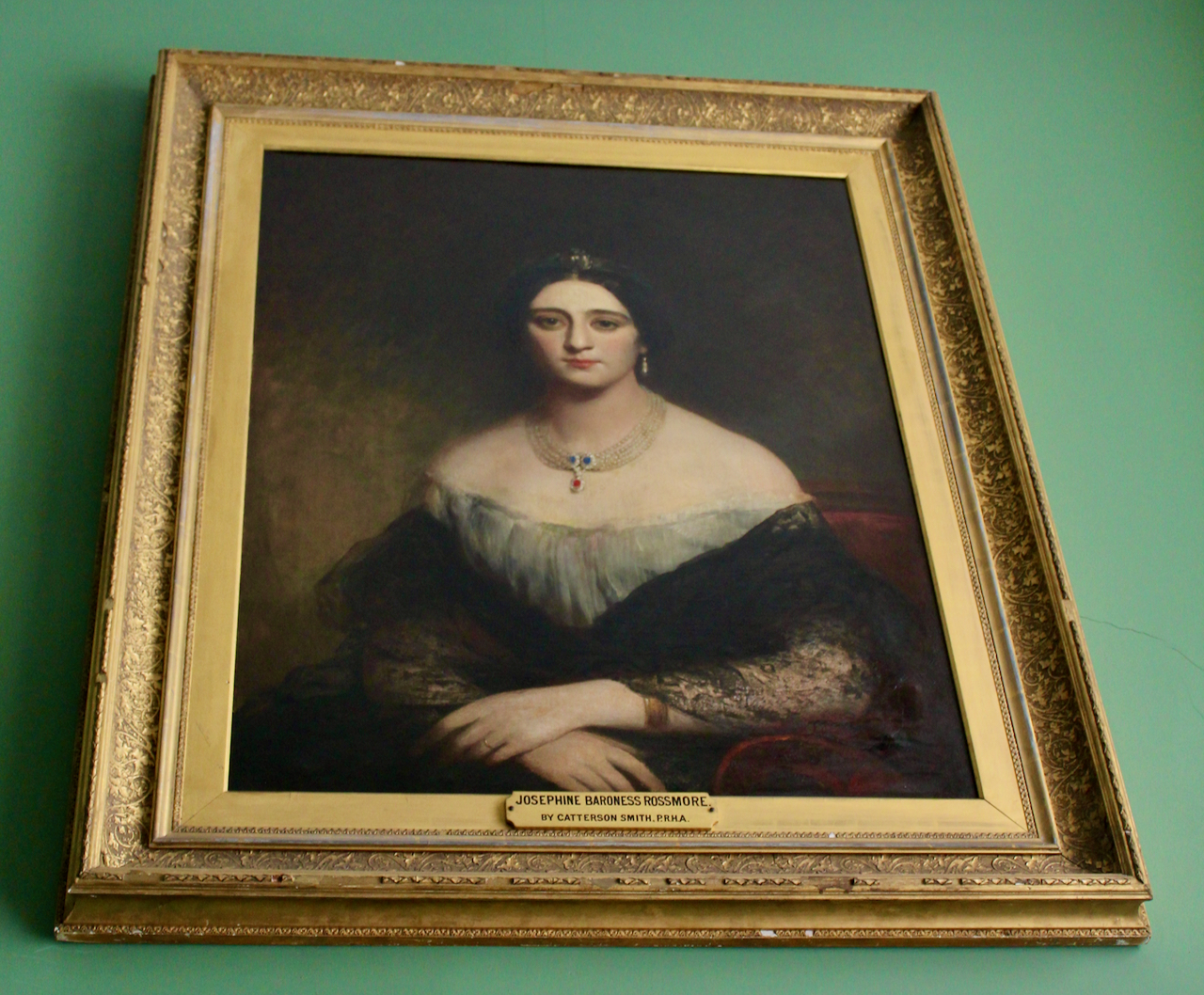
Josephine Lloyd (1827-1912) who married Henry Robert Westenra, 2nd (UK) and 3rd Baron (Ireland) Rossmore of Monaghan. Photograph © Jennifer Winder-Baggot, www.irishhistorichouses.com
Archbishop-Chancellor Adam Loftus (1533-1605). The portrait is in Trinity College Dublin, as he was the first Provost. Photograph © Jennifer Winder-Baggot, www.irishhistorichouses.com

Adam Loftus (1533-1605) married Jane Purdon and they had several children:

Anne married Henry Colley and then Edward Blayney, 1st Lord Blayney, Baron of Monaghan;

Martha (d. 1609) married Thomas Colclough (1564-1624) of Tintern Abbey in County Wexford;

Isabelle (d. 1597) married William Ussher (1561-1659);

Alice (d. 1609) married Henry Warren of Warrenstown, County Offaly;

Katherine married Francis Berkeley; Margaret married George Colley; Dorothy (d. 1633) married John Moore (1570-1633).

Adam Loftus and Jane née Purdon had a son Thomas (d. 1635); Adam (d. 1599); Edward (d. 1601) and Dudley (b. 1561).

Dudley Loftus (b. 1561) married Anne Bagenal and they had a son, Adam, who married Jane daughter of Walter Vaughan of Golden Grove, County Offaly. They had other sons: Samuel, Edward and Nicholas (1592-1666).

Adam Loftus and Jane née Vaughan had several children. Their daughter Lettice married Richard son of William Parsons, 1st Baronet; Margaret married Walter Burrowes 2nd Baronet; Elizabeth married Nicholas Forde; Mary married Thomas Boyd of Dublin. Their son Arthur married Dorothy Boyle (1617-1668), daughter of Richard Boyle 1st Earl of Cork. She married secondly Gilbert Talbot, son of William 1st Baronet Talbot, of Carton, Co. Kildare.

Arthur Loftus and Dorothy Boyle (1617-1668) had a daughter Ellen who married Theobald Bourke 4th Viscount of Mayo. Arthur and Dorothy had a son Arthur (1632-1691), who became 1st (and last) Viscount Lisburne.

Lucy Loftus née Brydges (1654-1681? or 1646-1689?) of Sudeley Manor, Gloucestershire, England, by Peter Lely, wife of Adam Loftus (1632-1691), 1st and last Viscount Lisburne. Photograph © Jennifer Winder-Baggot, www.irishhistorichouses.com

Dudley Loftus (b. 1561) and Anne née Bagenal’s son Nicholas (1592-1666) of Fethard, County Tipperary, married Margaret Chetham and they had a son Nicholas (b. 1635) who had three daughters, and Henry (1636-1716), who lived at Loftus Hall in County Wexford.

Henry Loftus (1636-1716) married first Amy Gorges and they had a daughter Jane (d. 1734) who married Thomas Cosby (d. 1735) of Stradbally Hall in County Laois, and a daughter Margaret who married Highgate Boyd.

Henry Loftus (1636-1716) then married Anne Crewkern and they had a son Henry who died unmarried and a son Nicholas (d. 1763) who became 1st Viscount Loftus of Ely.

Nicholas Loftus, 1st Viscount Ely (1687-1763). Rathfarnham Castle. Photograph © Jennifer Winder-Baggot, www.irishhistorichouses.com

Nicholas Loftus (d. 1763) 1st Viscount Loftus of Ely married Anne, daughter of William Ponsonby, 1st Viscount Duncannon. They had several children:

Mary (d. 1779) married William Alcock (d. 1779) of Wilton Castle in County Wexford;

Anne (d. 1768) married Charles Tottenham (1716-1795).

Elizabeth (d. 1747) married John Tottenham, 1st Bt (d. 1786);

Nicholas (d. 1766) who took the name Hume-Loftus and became 1st Earl of Ely. He married Mary Hume, daughter of Gustavus Hume, 3rd Baronet. Their son Nicholas Loftus Hume (1738-1769) 2nd Earl of Ely and on his death the Earldom expired.

Nicholas Hume Loftus, 1st Earl of Ely (1708-1766) by Jacob Ennis. He added Hume to his name after marrying Mary Hume, daughter of Gustavus Hume 3rd Baronet of Castle Hume, Co Fermanagh. Photograph © Jennifer Winder-Baggot, www.irishhistorichouses.com

Nicholas Loftus (d. 1763) 1st Viscount Loftus of Ely and Anne née Ponsonby had another son Henry Loftus (1709-1783) who became 1st (and last Earl) of Ely of the second creation.

Henry Loftus, 1st Earl of Ely of the 2nd Creation (1709-1783) by Angelica Kauffman. He was the son of Nicholas Loftus, 1st Viscount Ely (1687-1763). Rathfarnham Castle. Photograph © Jennifer Winder-Baggot, www.irishhistorichouses.com
Henry Loftus (1709-1783) and wife Frances Monroe, Countess of Ely (d.1821) by Sir Joshua Reynolds courtesy of National Trust Upton House.

Nicholas Loftus (d. 1763) 1st Viscount Loftus of Ely and Anne née Ponsonby’s daughter Elizabeth (d. 1747) who married John Tottenham, 1st Bt (d. 1786) had a son Charles (1738-1806) who took the surname Loftus in 1784, and was created 1st Marquess of Ely.

Charles Tottenham Loftus (1738-1806) 1st Marquess of Ely by Hugh Douglas Hamilton, at Rathfarnham Castle. He was the son of John Tottenham 1st Baronet Tottenham and Elizabeth Loftus, daughter of Nicholas Loftus 1st Viscount Loftus of Ely, of Loftus Hall in County Wexford. Photograph © Jennifer Winder-Baggot, www.irishhistorichouses.com

Charles Tottenham Loftus (1738-1806) 1st Marquess of Ely married Jane Myhill and they had two sons: John Loftus (1770-1845) who succeeded as 2nd Marquess of Ely, and Rt. Rev. Lord Robert Ponsonby Tottenham (1773-1850) who served as Bishop of Clogher.

Oil painting on canvas, John Loftus, 2nd Marquess of Ely (1770-1845), attributed to Sir Thomas Lawrence (1769-1830). A three-quarter-length portrait, in a brown coat and blue sash. Peer’s robes to the right, red curtain to the background. A picture of the sitter’s wife by Lawrence is in the Art Institute of Chicago. Sothebys, Public Domain, https://commons.wikimedia.org/w/index.php?curid=15266849
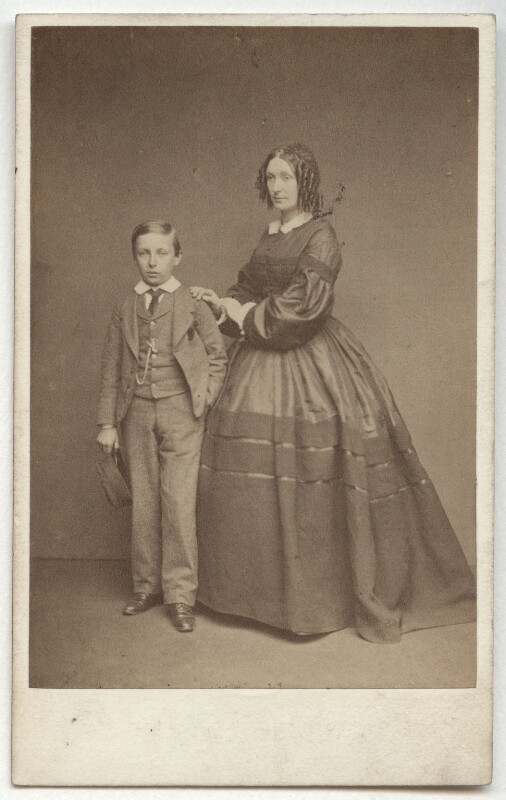
John Henry Wellington Graham Loftus (1849-1889) 4th Marquess of Ely with Jane Loftus née Hope-Vere Marchioness of Ely by John & Charles Watkins c. 1860, NPG x134191.
Inscription verso reads, ‘Harriette / Née McClintock – wife of Richard Longfield of Longueville Co. Cork.’ courtesy of Whyte’s May 2016. Harriet Elizabeth (c. 1814-1834) was the daughter of John McClintock (1770-1855) of County Louth and Elizabeth Trench (1784-1877), and she married Richard Longfield (1802-1889) of Longueville, County Cork.
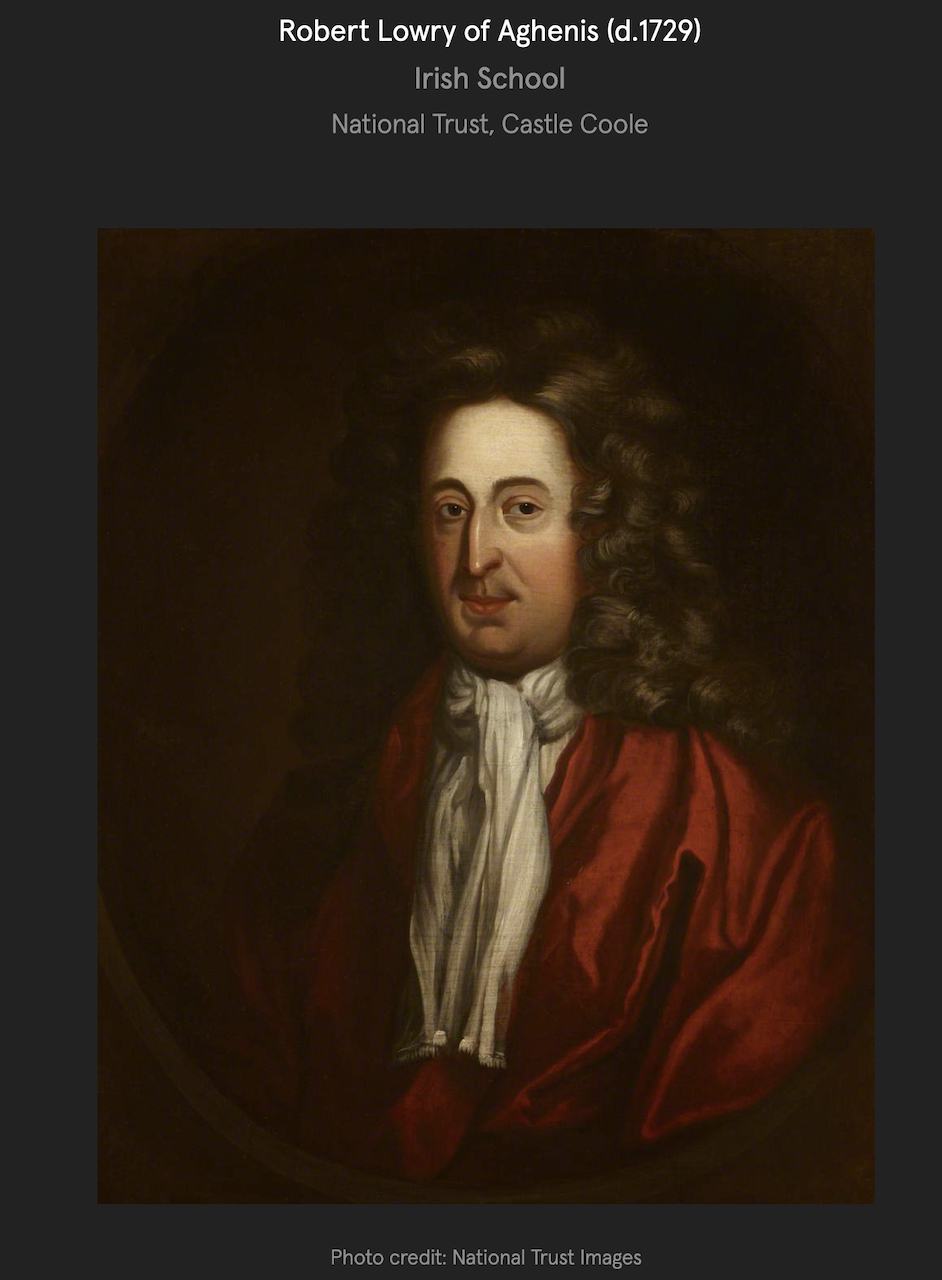
Lowry, Robert (d. 1729) of Aghenis Irish school courtesy of National Trust Castle Coole. He was the father of Galbraith Lowry-Corry (1706-1769).
Galbraith Lowry-Corry (1706-1769) courtesy of National Trust, Castle Coole, County Fermanagh.
Sarah Corry (1709-1779) later Mrs Galbraith Lowry Corry, by Anthony Lee courtesy of National Trust, Castle Coole, County Fermanagh.
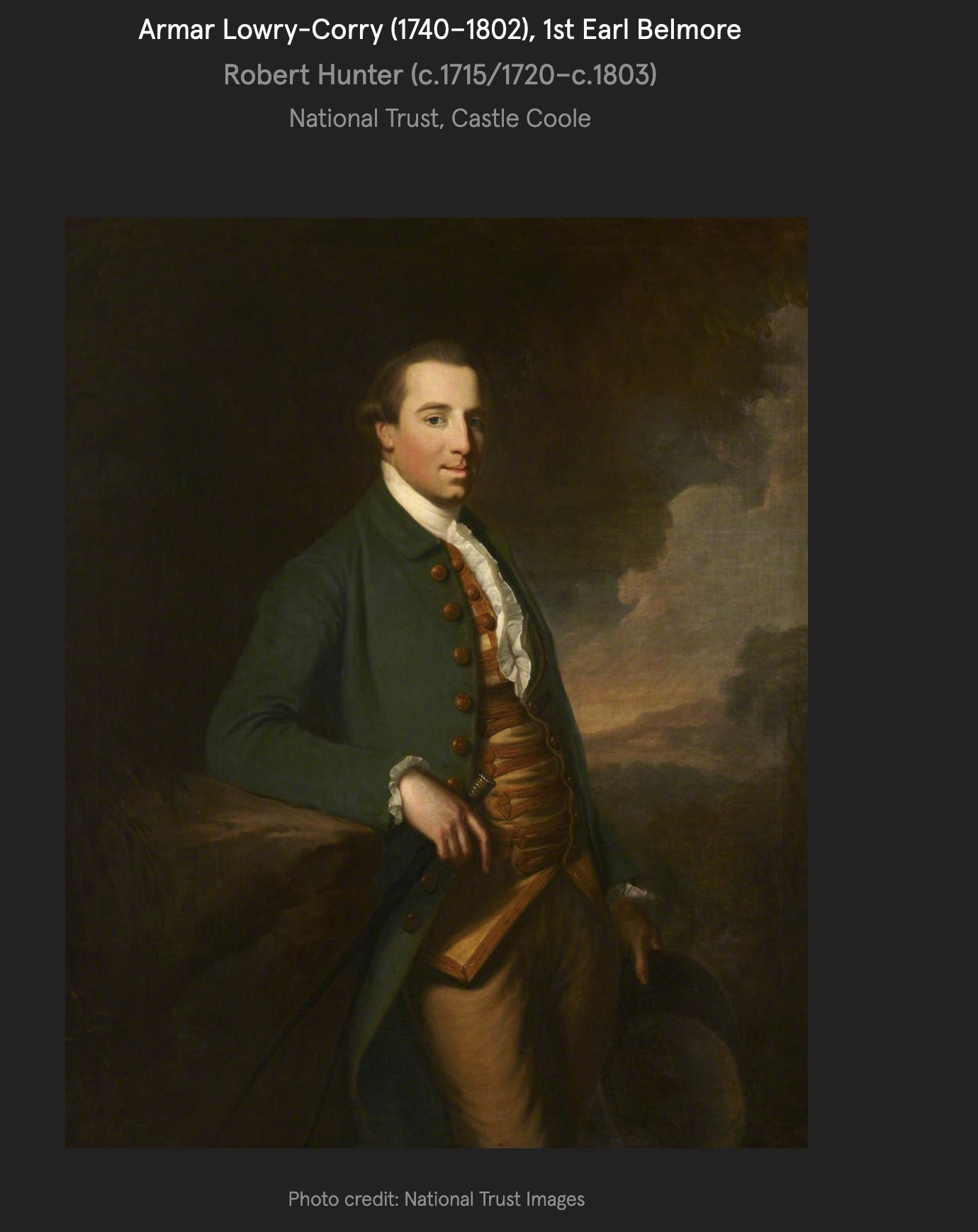
Armar Lowry-Corry (1740-1802) 1st Earl Belmore, by Robert Hunter, courtesy of National Trust, Castle Coole, County Fermanagh. He was the son of Galbraith Lowry-Corry (1706-1769) and Sarah Corry (1709-1779).
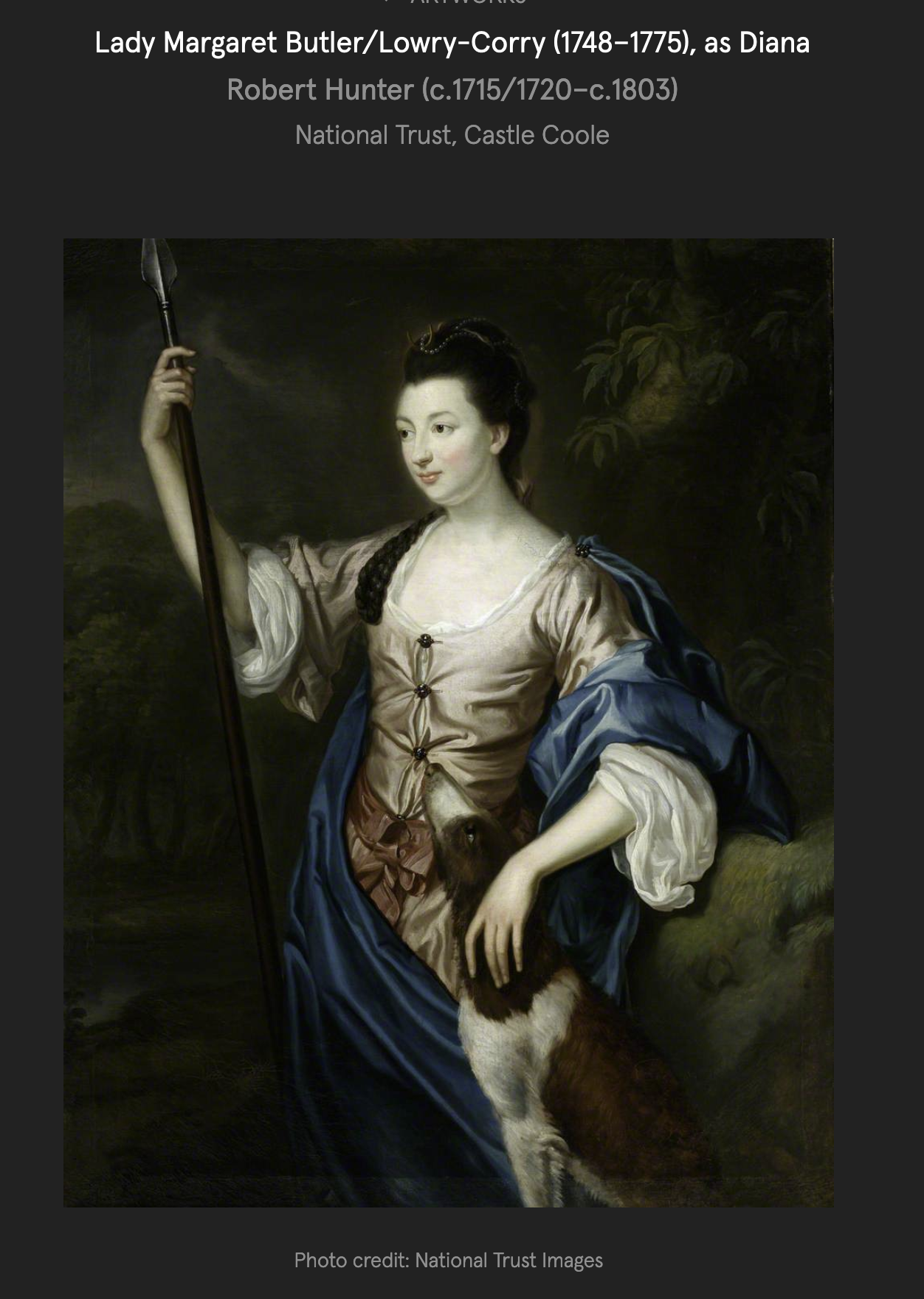
Margaret Lowry-Corry née Butler (1748-1775) by Robert Hunter, courtesy of National Trust, Castle Coole, County Fermanagh. She was 1st wife of Armar Lowry-Corry (1740-1802) 1st Earl Belmore.
Anne Lowry-Corry, Countess of Enniskillen (1742-1802) by Horace Hone c.1785, watercolour painting on ivory, courtesy National Trust Florence Court. Sister of Armar Lowry-Corry (1740-1802) 1st Earl Belmore and wife of William Willoughby Cole 1st Earl of Enniskillen.
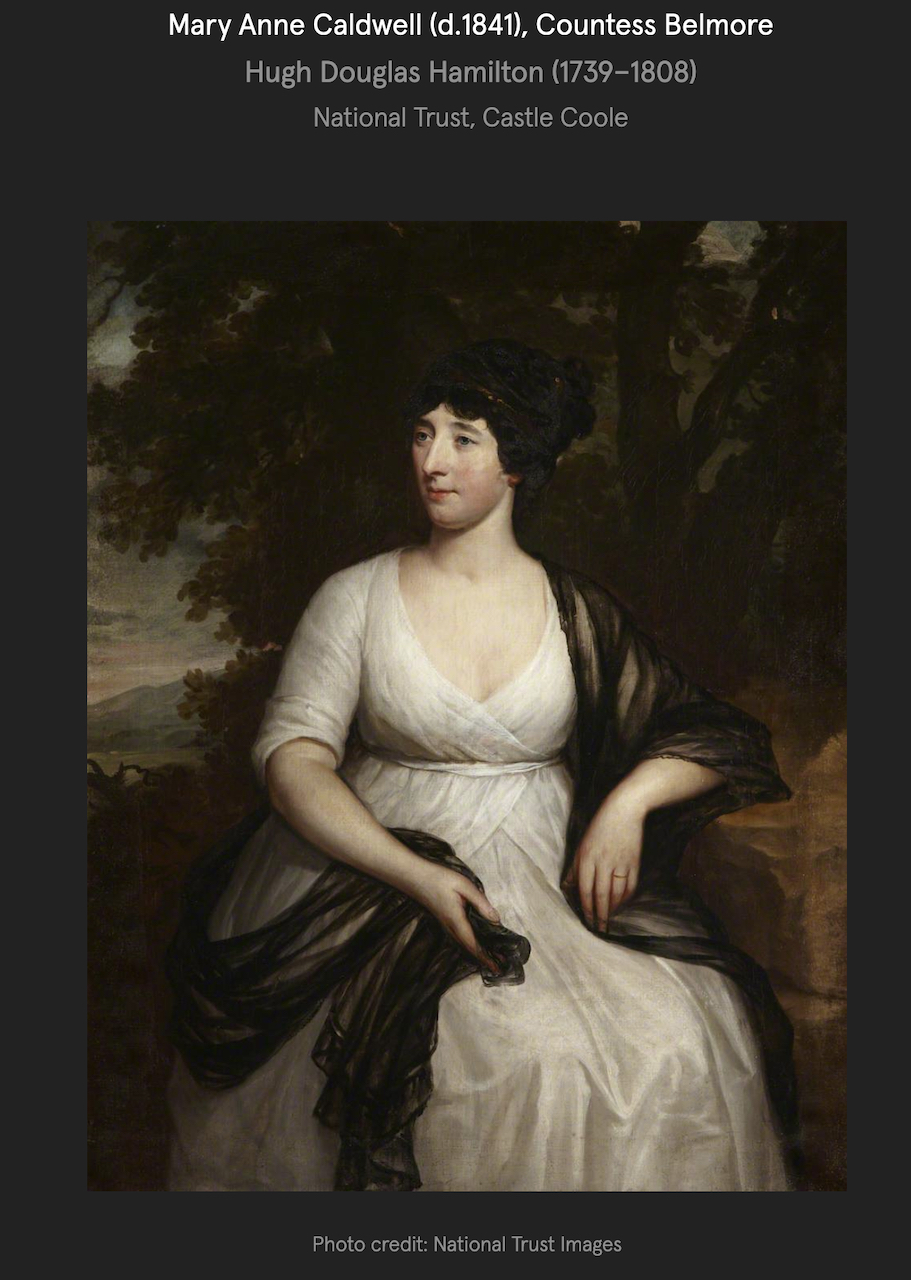
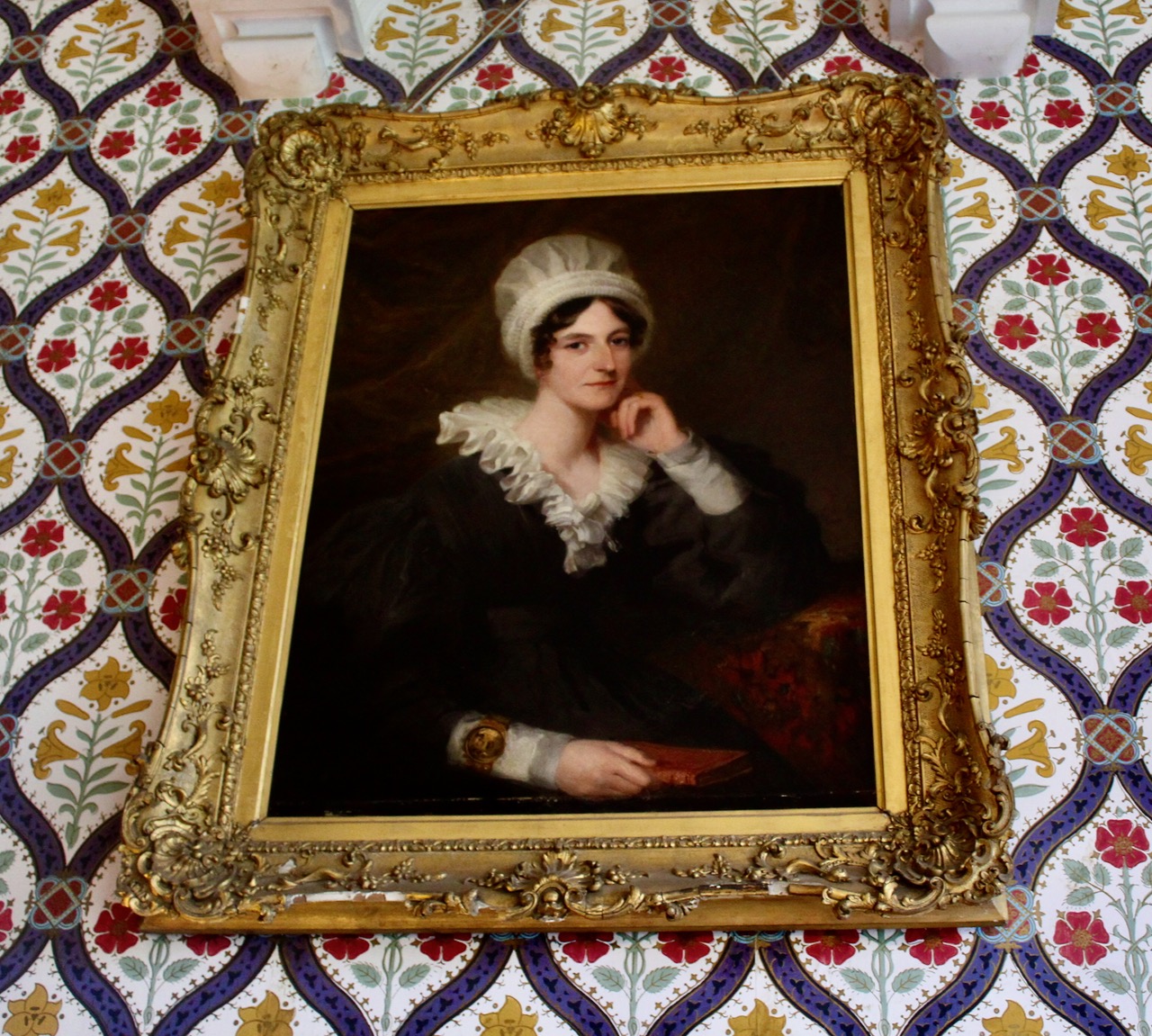
Mary Anne Lowry-Corry née Caldwell, (d. 1841) Countess Belmore by Hugh Douglas Hamilton courtesy of National Trust Castle Coole. She was the daughter of John Caldwell 4th Baronet of Castle Caldwell in County Fermanagh. She was 3rd wife of Armar Lowry-Corry (1740-1802) 1st Earl Belmore. His second wife was Henrietta Hobart, daughter of John Hobart 2nd Earl of Buckinghamshire.
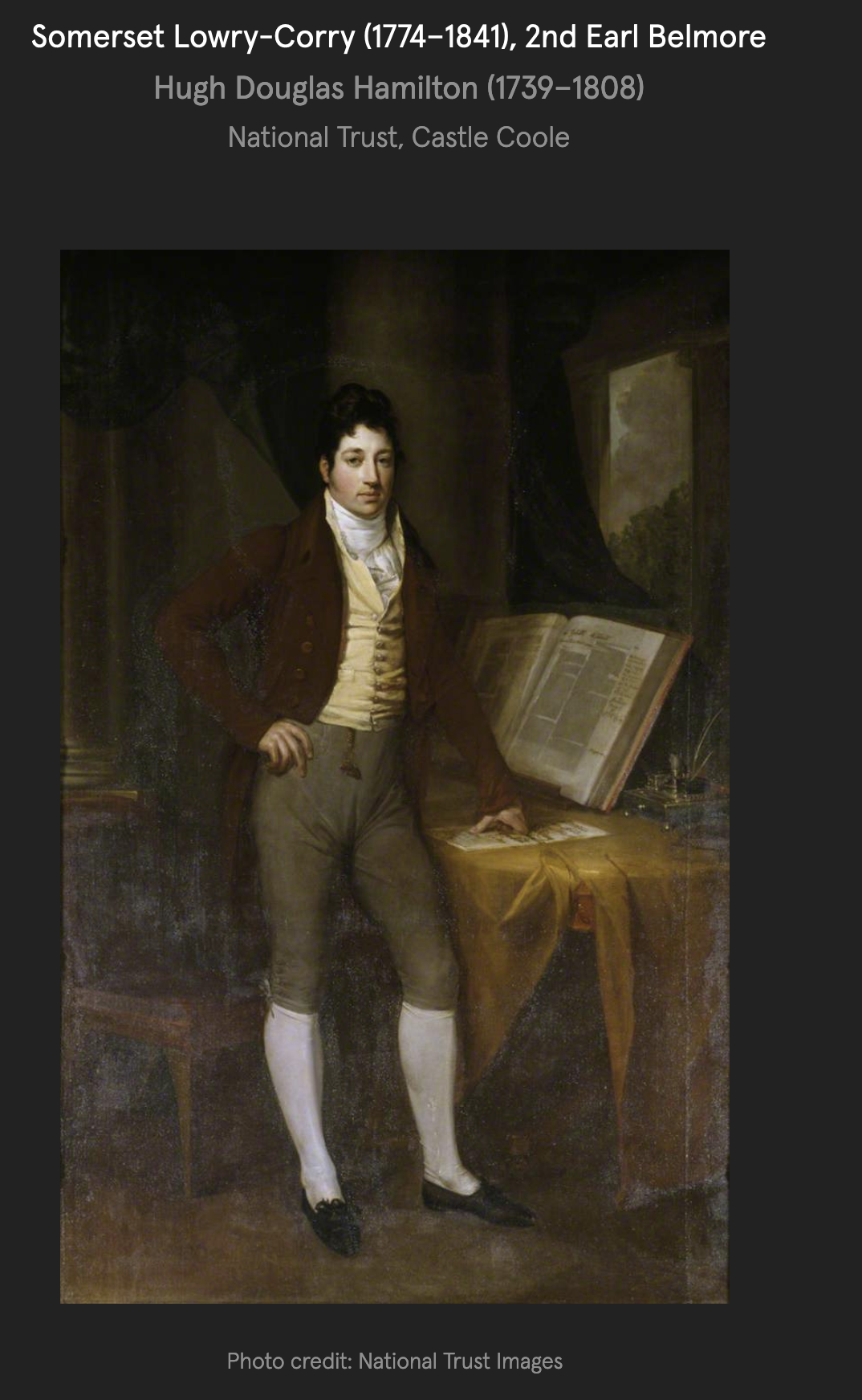
Somerset Lowry-Corry (1774-1841) 2nd Earl Belmore, by Hugh Douglas Hamilton, courtesy of National Trust, Castle Coole, County Fermanagh. He married Juliana Butler (1783-1861), daughter of Henry Thomas Butler 2nd Earl of Carrick (2nd Creation).
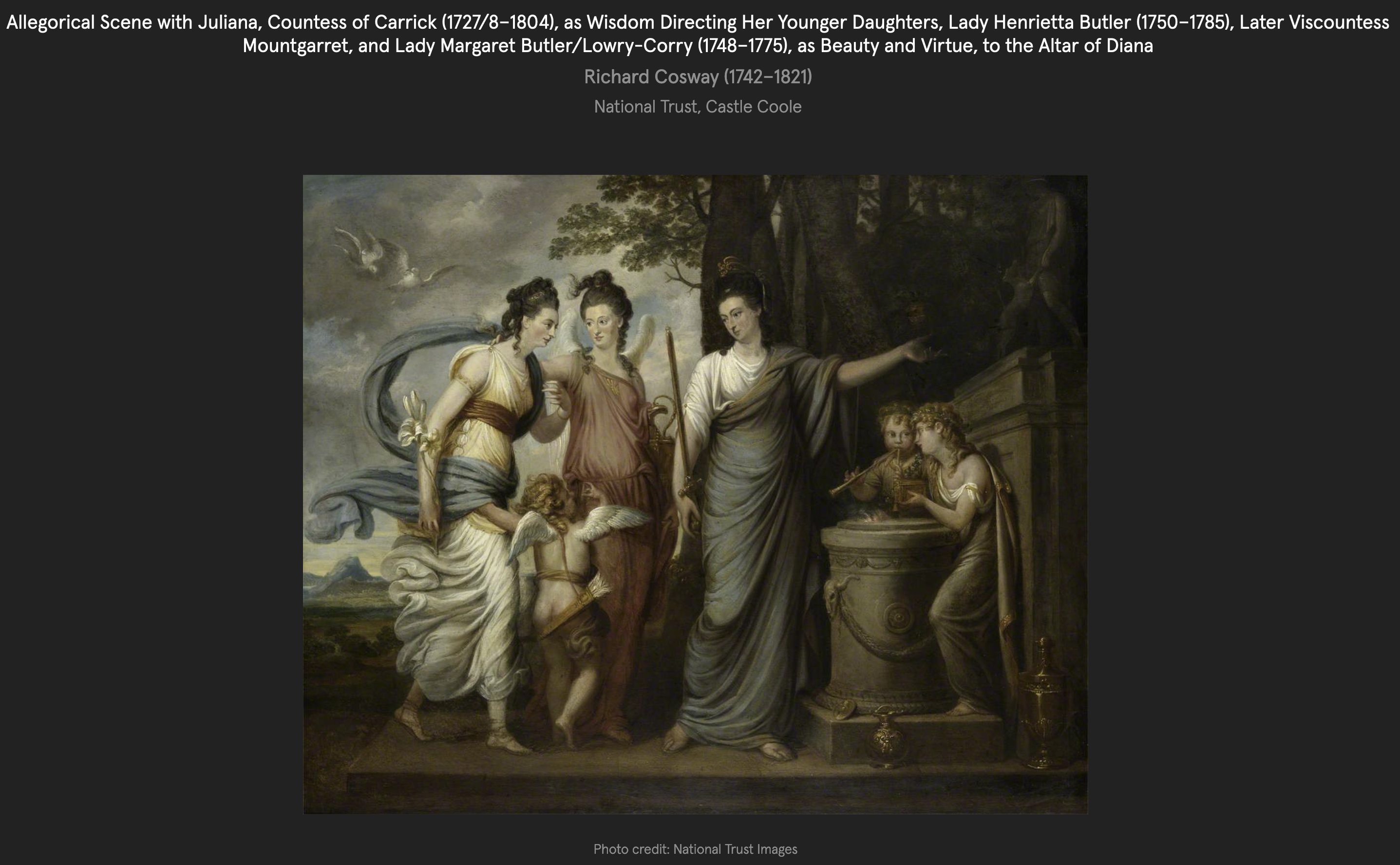
Juliana Butler (1727/8-1804) Countess of Carrick, with her younger daughters Lady Henrietta Butler (1750-1785), later Viscountess Mountgarret, and Lady Margaret Butler/Lowry-Corry (1748-1775), by Richard Cosway, courtesy of National Trust, Castle Coole, County Fermanagh.
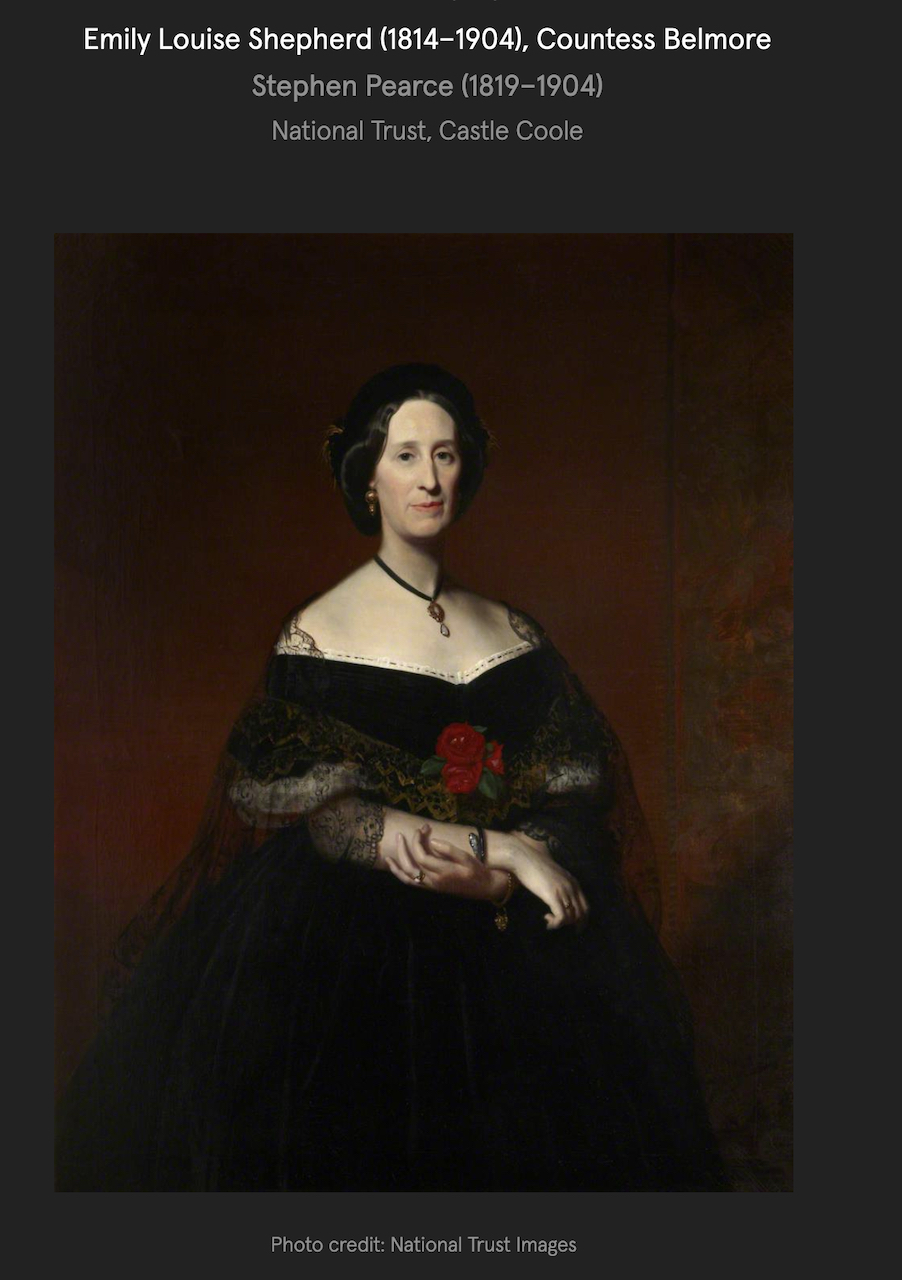
Emily Louise Lowry-Corry née Shepherd (1814-1904) Countess Belmore, wife of Armar Lowry-Corry 3rd Earl of Belmore, by Stephen Pearce courtesy of National Trust Castle Coole.
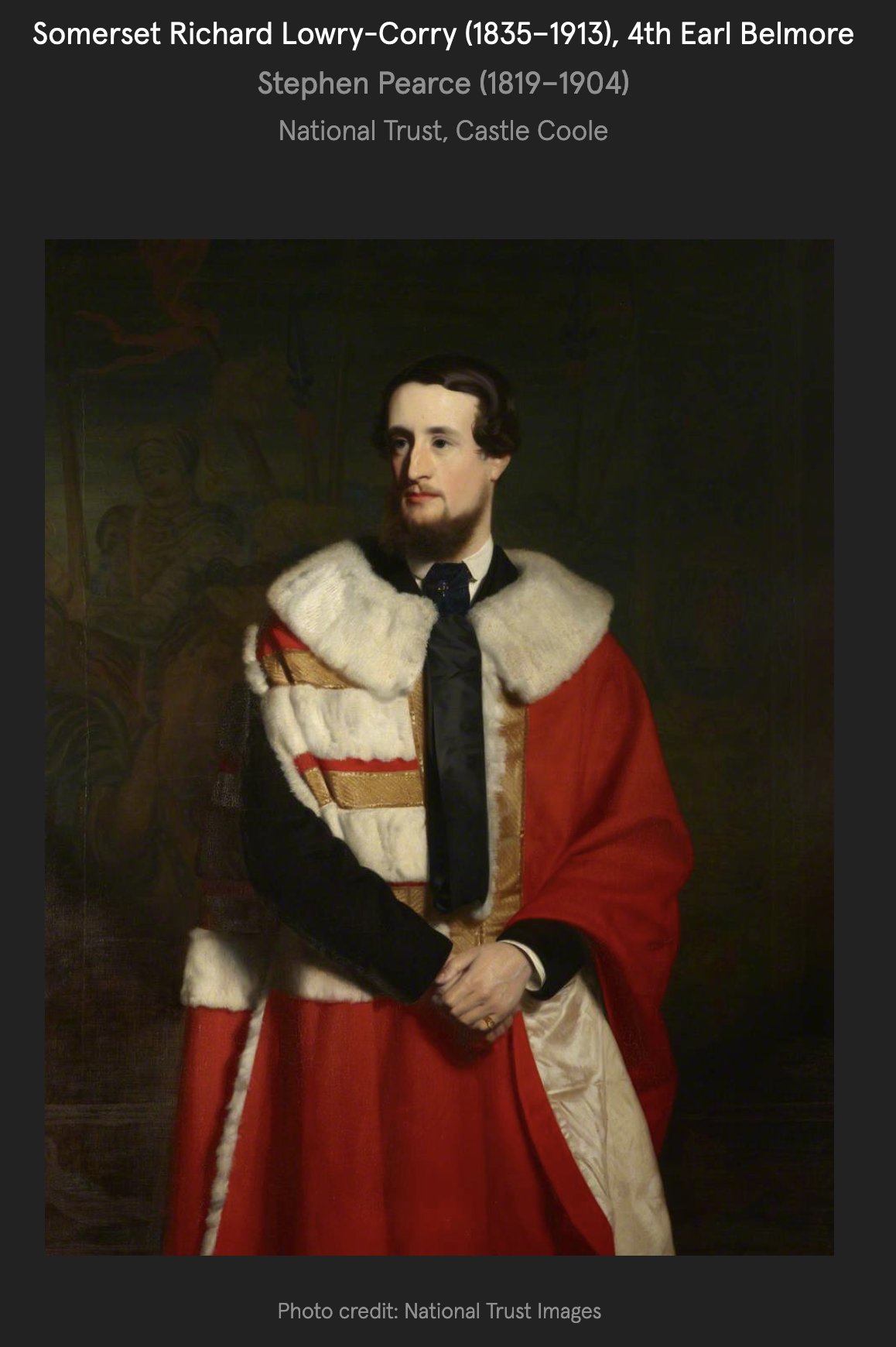
Somerset Richard Lowry-Corry (1835-1913) 4th Earl Belmore, by Stephen Pearce, courtesy of National Trust, Castle Coole, County Fermanagh. He was son of Armar Lowry-Corry 3rd Earl of Belmore.
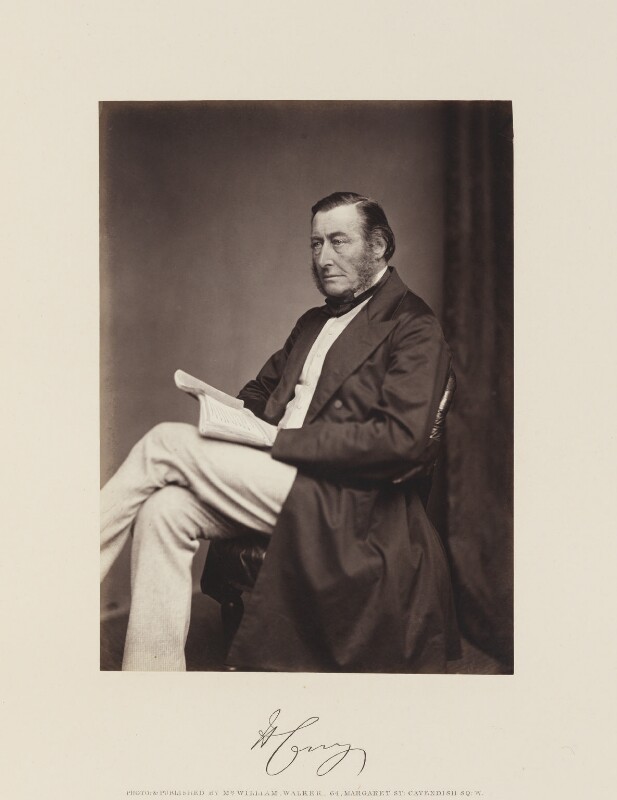
Henry Thomas Lowry Corry (1803-1873) by and published by William Walker 1867, NPG Ax15852.
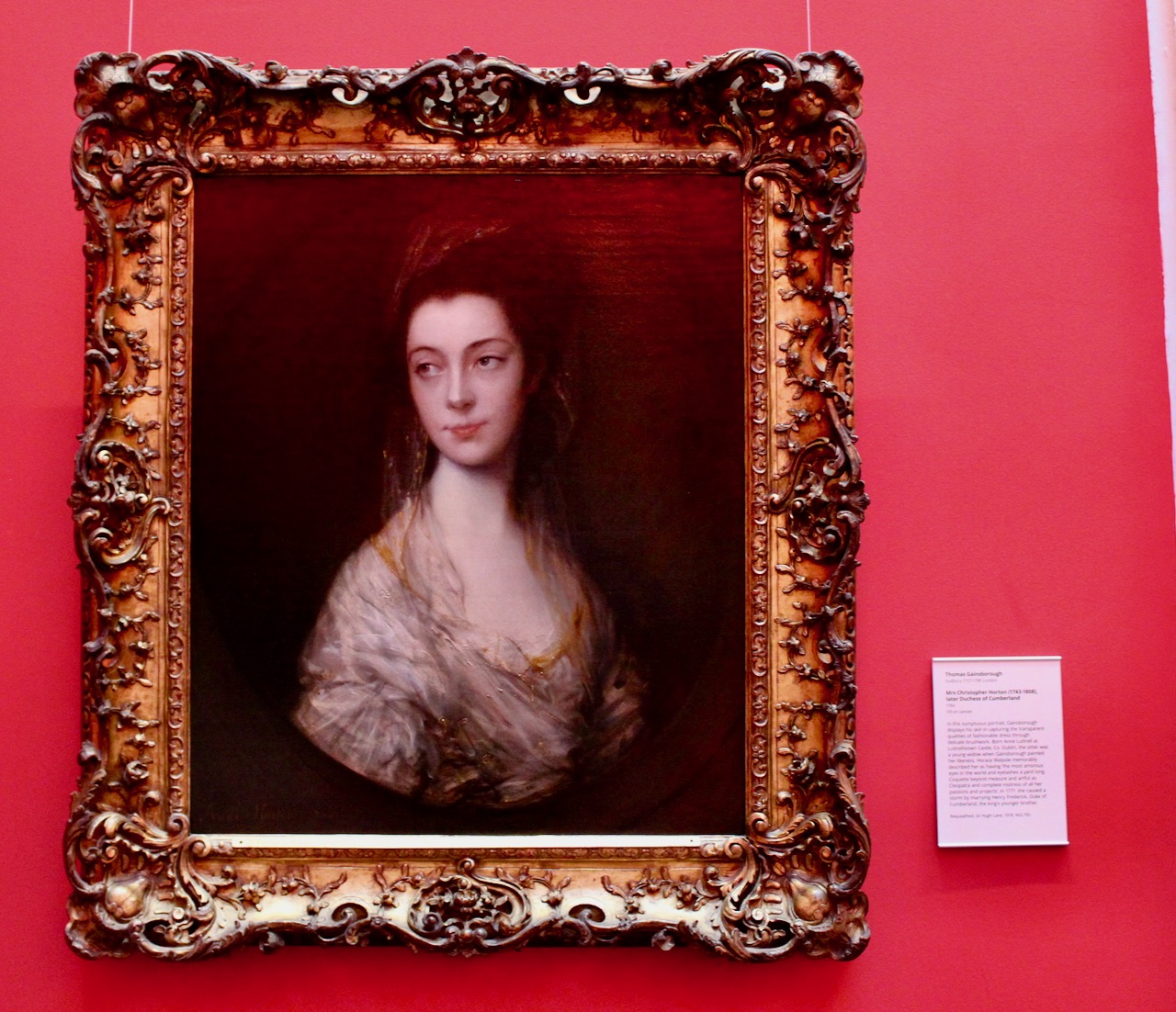
Anne Luttrell (1743-1808), who married Christopher Horton and later, Henry Frederick, Duke of Cumberland, painted by Thomas Gainsborough, National Gallery of Ireland, NGI795. Photograph © Jennifer Winder-Baggot, www.irishhistorichouses.com
Georgiana Pakenham née Lygon (1774-1880). She married Thomas Pakenham 2nd Earl of Longford. Photograph © Jennifer Winder-Baggot, www.irishhistorichouses.com