Bence-Jones, Mark. A Guide to Irish Country Houses (originally published as Burke’s Guide to Country Houses volume 1 Ireland by Burke’s Peerage Ltd. 1978); Revised edition 1988 Constable and Company Ltd, London.
p. 176. “(Molony/IFR) A Georgian house of three storeys, the top storey being treated as an attic above a bold cornice. Odd fenestration; C19 addition on ground floor to enlarge the principal rooms; two storey wing set back. Burnt 1922.“
THE MOLONYS WERE MAJOR LANDOWNERS IN COUNTY CLARE, WITH 10,095 ACRES
The Milesian family of MOLONY is one of great antiquity in the sister island. The Molonys were formerly princes of Clare, where they possessed a large tract of country called the O’Molony’s Lands, as may be seen from some of the old maps of that county.
In Catholic times, three members of the family attained the mitre, as appears from the following epitaph on the tomb of John O’Molony, Bishop of Limerick in 1687, who after the siege of that city, followed JAMES II to Paris, where he assisted in the foundation of a College for the education of Irish priests, in the chapel belonging to which he was buried in 1702.
The Bishop’s nephew,
JAMES MOLONY, of Kiltanon, the first of the family who laid aside the prefix “O,” served first in JAMES II’s army, but subsequently sided with WILLIAM III.
He married twice, by his first wife, Jane, daughter of Colonel Richard Ringrose, whom he wedded about 1690, he had a son, JAMES, his heir; and by the second, he left two sons and a daughter,
Richard;
Stephen;
Catherine.
James Malony died in 1738, and was succeeded by his eldest son,
JAMES MOLONY, of Kiltanon, second son of JAMES MOLONY, of Kiltanon and Ballynahinch, by his second wife, Mary, daughter of James Lambert, married, ca 1715, Elizabeth, widow of Major Morgan Ryan, and second daughter and co-heir of Thomas Croasdaile, of Clostoken, County Galway, by Mercy his wife, daughter of Colonel Richard Ringrose, of Moynoe House, County Clare, and had issue,
JAMES, his heir; Croasdaile; Lambert; Jane.
Mr Molony was succeeded by his eldest son,
JAMES MOLONY (1717-), of Kiltanon, who married, in 1751, Mary, daughter of Stewart Weldon, of Raheenderry, Queen’s County, and had issue,
JAMES, his heir; Arthur; Walter Weldon; Lambert; Weldon John (Rev); Charles; Edmund; Elizabeth.
Mr Molony was succeeded by his eldest son,
JAMES MOLONY (1742-1823), of Kiltanon, High Sheriff of County Clare, 1802, who married, in 1780, Selina, daughter of the Rev John Mills, of Barford, Warwickshire, and had issue,
JAMES, his heir; Charles Arthur, b 1790; Edmund, b 1794; Selina; Mary; Harriet; Anne; Lucy.
Mr Molony was succeeded by his eldest son,
JAMES MOLONY JP DL (1785-1874), of Kiltanon, High Sheriff of County Clare, 1828, who wedded firstly, in 1820, Harriet, daughter of William Harding, of Baraset, Warwickshire, and had issue,
James, 1822-34;
WILLIAM MILLS, his heir;
Harriet, died in infancy.
He espoused secondly, in 1828, Lucy, second daughter of Sir Trevor Wheler Bt, of Leamington Hastings, Warwickshire, and had further issue,
Francis Wheler (Rev); Edmund Weldon; Trevor Charles; Frederick Beresford; Charles Mills, CB; Marcus; Mary; Lucy Anne; Harriet Selina.
Mr Molony died at Leamington Hastings, and was succeeded by his eldest surviving son,
WILLIAM MILLS MOLONY JP DL (1825-91), of Kiltanon, Major, 22nd Regiment, High Sheriff of County Clare, 1865, who married, in 1865, Marianne Marsh, elder daughter and co-heir of Robert Fannin, of Leeson Street, Dublin, by his wife Henrietta, daughter of Croasdaile Molony, of Granahan, and had issue,
James Edmund Harding (1873-79); WILLIAM BERESFORD, his heir; Henrietta Mary; Iva Kathleen; Selina Charlotte; Maud Alice.
Major Molony was succeeded by his only surviving son,
WILLIAM BERESFORD MOLONY (1875-1960), of Kiltanon, High Sheriff of County Clare, 1908, Colonel, King’s Own Royal Lancaster Regiment, who wedded, in 1905, Lena Maria Annie, only daughter of George Wright, of Heysham Lodge, Lancashire, and of Coverham Abbey, Yorkshire, without issue.
KILTANON HOUSE, near Tulla, County Clare, was an attractive, pale brick three-storey Georgian mansion with stone facing which overlooked rolling parklands of mature trees of both native and imported variety.
Unique family mementos, including a marble table and an inlaid set of playing cards, perished.
This classic heirloom was said to have been given to Bishop John O’Molony by LOUIS XIV in atonement for having once lost his temper when playing and tearing up his card.
The top floor was an attic storey.
The fenestration was said to be unusual.
A two-storey wing was set back.
The Molonys managed to hold onto Kiltannon House in the 1690s by a fortunate clause in the Treaty of Limerick which exempted serving officers within the city walls.
In 1878, it was estimated that the lands comprising the Kiltannon Estate numbered 10,000 acres with a rateable valuation of £2,500.
It was then owned by Major William Mills Molony.
His son, Colonel William Molony, was the last of seven generations to own this estate.
Kiltanon was the home of the Molony family for at least two centuries.
The house, built in 1833, had a drive which linked it to the other nearby Molony residences at Bunavory and Cragg.
The house is now ruinous.
In the second half of the 19th century another house, known as the Home Farm House, was built at Kiltanon for Marcus Molony, eighth son of James Molony, and his agent.
This house remains today.
Kiltanon home farm is on the grounds of the Kiltanon Sport Estate and is 1,000 yards south-west of Kiltanon House and estate.
The folklore history of the Kiltanon Estate is that the lands were given to a Cromwellian soldier as payment for his services in the Cromwellian Army.
After arriving in Galway Harbour, he began his journey on foot, and crossing the mountain from Gort, heading south for Tulla with the newly signed property deed on his person, he stopped a member of the Molony clan at Laughan Bridge to ask directions to his estate:
‘Is the lands of Kiltanon as bad as all of the land around here?”the soldier asked. ‘It’s worse’ said Molony, pointing to the snow covered rocks and heather that formed part of the mountain and was many miles from the fertile Kiltanon lands. “Then I have no business being here’ replied the soldier, ‘do you want to buy it from me?’.
Accepting what money Molony had in his pocket as payment, he handed over the deed to Kiltanon Estate and returned to Galway.
Thus, as local folklore has it, the property came into the Maloney family.
A book by Hugh Weir states that the soldier was James Molony, of Ballinahinch and Kiltanon, who served in O’Brien’s regiment of foot in support of JAMES II.
His property was saved at the Treaty of Limerick by a clause which exempted those from within the city walls.
Kiltanon Home Farm was built for Marcus Molony JP, son of James Molony JP DL, of Kiltanon, who married Christina Emma of neighbouring Tyredah Castle and acted as land agent for the family estate which comprised of 10,095 acres.
Colonel William (Willie) Molony (1875-1960), of Kiltanon, was the last of seven direct descendents to own Kiltanon.
“Kiltanon Home Farm is on the grounds of the Kiltanon Sport Estate and is 1,000 meters south west of Kiltanon House and Estate which can trace its history back to the seventeenth century when Ireland was first settled under the ‘Plantation Policy’ of the English Government.
“The folklore history of the Kiltanon Estate is that the lands were given to a Cromwellian soldier as payment for his services in the Cromwellian Army. After arriving in Galway Harbour, he began his journey on foot and crossing the mountain from Gort heading south for Tulla with the newly signed property deed on his person, he stopped a member of the Maloney clan at Laughan Bridge to ask directions to his estate.
‘Is the lands of Kiltanon as bad as all of the land around here? The soldier asked.
‘It’s worse’ said Maloney, pointing to the snow covered rocks and heather that formed part of the mountain and was many miles from the fertile Kiltanon lands.
Then I have no business being here’ replied the soldier, ‘do you want to buy it from me?’
“Accepting what money Maloney had in his pocket as payment, he handed over the deed to Kiltanon Estate and returned to Galway. Thus, as local folklore has it, the property came into the Maloney family
‘The Houses of Clare’ book by Hugh W. L. Weir states that it was a James Maloney of Ballinahinch and Kiltannon who served in O’Brien’s regiment of foot in support of King James 11 (1633 – 1701) of England.
“His property was saved at the Treaty of Limerick by a clause which exempted those from within the city walls. The Treaty of Limerick ended the Williamite Wars in Ireland between the Jacobites and the supporters of William of Orange. The Treaty really consisted of two treaties which were signed on 3 October 1691. Reputedly they were signed on the Treaty Stone, an irregular block of limestone which once served as a mounting block for horses. This stone is now displayed on a pedestal in Limerick City, because of the Treaty, Limerick is sometimes known as the Treaty City.
“These articles dealt with the treatment of the disbanded Jacobite army. Under the treaty, Jacobite soldiers in formed regiments had the option to leave with their arms and flags for France to continue serving under James 11 in the Irish Brigade. Some 14,000 Jacobites chose this option and were marched south to Cork where they embarked on ships for France, many of them accompanied by their wives and children. Individual soldiers wanting to join the French, Spanish or Austrian armies also emigrated in what became known as the Flight of the Wild Geese.
“Kiltanon Home Farm was built for Marcus Moloney J.P. son of James Maloney J. P. D. L. of Kiltanon who married Christina Emma of neighboring Tyredah Castle and acted as land agent for the family estate which comprised of 10,095 acres as per the ratable valuation (2,596.00 Pounds) of 1878.
“Colonel Willie Moloney (1875 – 1960) of Kiltanon was the last of seven direct decedents to own Kiltanon. In 1922, during the War of Independence, Kiltanon House was burned to the ground and the Moloney family ousted but Kiltanon Home Farm was left un-touched.”
First published in August, 2012.
Listed in Vanishing Country Houses of Ireland by The Knight of Glin, David J. Griffin and Nicholas K. Robinson, published by The Irish Architectural Archive and The Irish Georgian Society, 1988.
“Three storey Georgian house with its main cornice at second floor level. Seat of the Molonys for seven generations. Destroyed by fire in 1930s.”
Carrigoran, Newmarket-on-Fergus, Co Clare – demolished in the 1980s
Bence-Jones, Mark. A Guide to Irish Country Houses (originally published as Burke’s Guide to Country Houses volume 1 Ireland by Burke’s Peerage Ltd. 1978); Revised edition 1988 Constable and Company Ltd, London.
p. 293. “(Fitzgerald Bt of Newmarket-on-Fergus/PB1908, Fitzgerald/LGI1912) An 18th century house the residence of the Fitzgerald family in the 18th and 19th centuries. Griffith’s Valuation shows that the house was valued at £45 in the mid 19th century and that it was held by Sir Edward Fitzgerald from Matthew Rosengrave. An earlier house reputedly destroyed by fire in the late 18th century stood nearby. The house was bought by the Sisters of Charity of the Incarnate Word in the 1920s. The house was still in use in the 1940s but was demolished in the 1980s.”
Castle Crine, near Sixmilebridge, Co Clare – demolished 1955
Bence-Jones, Mark. A Guide to Irish Country Houses (originally published as Burke’s Guide to Country Houses volume 1 Ireland by Burke’s Peerage Ltd. 1978); Revised edition 1988 Constable and Company Ltd, London.
p. 66. “(Butler/IFR; Massy, Clarina, B.PB1949; Butler-Henderson, sub Faringdon, B/PB) …..Inherited by Sophia Mary, Lady E.B. Butler-Henderson, who sold it ca 1950. Now demolished.”
THE BUTLERS WERE MAJOR LANDOWNERS IN COUNTY CLARE, WITH 11,389 ACRES
This family is said to descend from the noble house of BUTLER, VISCOUNTS MOUNTGARRET. WILLIAM BUTLER, of Rossroe Castle, County Clare, serving as High Sheriff of that county in 1712, left a daughter, Anne, wife of St John Bridgeman (of Woodfield), and two sons, viz.
HENRY, of Rossroe Castle; THOMAS, of Castle Crine.
The second son,
THOMAS BUTLER, of Castle Crine, was father of
WILLIAM BUTLER, of Castle Crine, who succeeded to the landed property of his cousin, Henry Butler, of O’Brien’s Castle, in 1791.
He wedded Anne D’Alton and had issue, a son,
JAMES BUTLER, of Castle Crine, who espoused Mary, daughter of Robert Ievers, of Mount Ievers, County Clare; and dying ca 1821, leaving issue.
The eldest son,
HENRY BUTLER JP DL, of Castle Crine, married Anna, daughter of Charles Dawson, of Charlesfort, County Wexford, and died in 1852 (buried at Bunratty), leaving,
JAMES, his heir; Charles Eyre, 69th Regiment; Henry, 90th Regiment; William Dawson; Deborah.
The eldest son,
JAMES BUTLER JP DL, of Castle Crine, High Sheriff of County Clare, 1851, wedded, in 1852, Sophia, daughter of Major Irvine, and by her (who married secondly, Major Graham), he left at his decease, in 1857, three daughters, of Castle Crine, his co-heiresses,
ANNA FRANCES; SOPHIA MARY; HENRIETTA JEMIMA.
The second daughter,
Sophia Mary Butler, married the 5th Lord Clarina, though had no male issue, and on the marriage of her eldest daughter, the Hon Sophia (Zoë) Butler-Massey to the Hon Eric Henderson, the Castle Crine estate was settled upon her, subject to the life interests of her mother and aunts.
Following the decease of Miss Anna Frances Butler in 1938, the last survivor, Mrs Butler-Henderson (who with her husband assumed the surname of BUTLER in addition to that of HENDERSON) succeeded to Castle Crine estate.
Her daughter, Mrs Wordsworth, resided there until 1951, when the estate was sold.
CASTLE CRINE, near Sixmilebridge, County Clare, was a castellated late-Georgian house, comprising a two-storey block with two curved bows beside each other at one end; one with pointed Gothic windows and a three-storey tower.
Little battlements; corbelled turret on tower.
Castle Crine was demolished in 1955.
First published in November, 2012.
Listed in Vanishing Country Houses of Ireland. by The Knight of Glin, David J. Griffin and Nicholas K. Robinson, published by The Irish Architectural Archive and The Irish Georgian Society, 1988.
p. 41. Castellated late Georgian house. Seat of the Crine family. Demolished 1950. Gothic gate lodge in ruins.
Cahercon House (or Cahiracon or Cahircon), County Clare, Killadysert, Co. Clare
Bence-Jones, Mark. A Guide to Irish Country Houses (originally published as Burke’s Guide to Country Houses volume 1 Ireland by Burke’s Peerage Ltd. 1978); Revised edition 1988 Constable and Company Ltd, London.
p. 53. “(Kelly, sub Roche-Kelly/IFR; Vandeleur/IFR) …The seat of the Scott family; afterwards of the Kelly and Vandeleur families. Now owned by a religious order.”
THE HON CHARLES WILLIAM WHITE WAS THE SECOND LARGEST LANDOWNER IN COUNTY TIPPERARY, WITH 23,957 ACRES LUKE WHITE (c1740-1824) was born at Bell’s Lane (now Garfield Street), Belfast.
This bookseller, lottery operator and Whig politician was once known as “the Smithfield Millionaire.”
He started as an impecunious book dealer, first in the streets of Belfast; then, from 1778, at an auction house in Dublin, buying and reselling around the country.
By 1798, during the Rebellion, he helped the Irish government with a loan of £1 million (at £65 per £100 share at 5%).
He then purchased Luttrellstown Castle from Henry Luttrell, 2nd Earl of Carhampton, in 1800, and changed its name to Woodlands in order to eradicate the memory of its previous owner.
Mr White, High Sheriff of County Dublin, 1804, Longford, 1806, MP for Leitrim, 1818-24, married firstly, in 1781, Elizabeth, daughter of Peter de la Mazière, and had, with other issue,
Thomas, Colonel in the army, of Woodlands; Samuel; Luke; HENRY, of whom hereafter; Matilda, m 4th Baron Massy.
He espoused secondly, in 1800, Arabella, daughter of William Fortescue, and had further issue, one son.
Mr White died at his London residence in Park Street, Mayfair.
He left properties worth £175,000 per annum which subsequently devolved upon his fourth son,
HENRY WHITE (1791-1873), of Woodlands, County Dublin, and afterwards of Rathcline, County Longford, who wedded, in 1828, Ellen, daughter of William Soper Dempster, of Skibo Castle, Sutherland, and had issue,
LUKE, his heir; Henry; George Frederick; Francis Samuel; Charles William, of Cahercon; Robert; Eleanor; Emily.
Mr White was elevated to the peerage, in 1863, in the dignity of BARON ANNALY, of Annaly and Rathcline, County Longford.
He was succeeded by his eldest son,
LUKE, 2nd Baron (1829-88), KP, MP for Clare, 1859-60, Longford, 1861-2, Kidderminster, 1862-5, who espoused, in 1853, Emily, daughter of James Stuart, and had issue.
The Heir apparent is the present holder’s only son, the Hon Luke Henry White.
***** The 1st Baron’s fifth son, the Hon Charles William White (1838-90), of Cahercon, inherited the County Clare estates comprising 18,226 acres, and 5,731 acres in County Tipperary.
CAHERCON HOUSE, near Kildysart, County Clare, is situated on the banks of the River Shannon, the seat of the Scott family until at least the 1850s.
The sale rental of 1854 gives a detailed description of the house which included 16 bedrooms.
Cahercon, variously known as Cahircon, Caheracon and Cahiracon, is a late-Georgian block of three storeys over a basement, with two-storey, mid-19th century wings and other additions.
The house faces across the Shannon estuary.
The main block is of five bays, with an Ionic porch; the wings have three-sided bows. The roof is prominent.
Cahercon was the seat of the Scott family until at least the 1850s and was constructed around 1790.
In 1873, the wings, conservatory and single storey bay were added.
By the 19th century James Kelly held the house in fee.
The Hon James William White, son of Lord Annally’s son, lived in Cahiracon in the mid 1870s and it was still a seat of the family in 1894.
The Vandeleurs lived in Cahercon at the beginning of the 20th century.
In 1920, it was purchased by the Maynooth Mission to China, and they in turn sold it to the Salesians Sisters of St John Bosco in 1962.
Until 2002, Cahercon House operated as a secondary school, boarding school and convent.
It seems everywhere in Ireland has a rich history behind it, and Cahercon House in Kildysart is no exception. The 60-bedroom Georgian mansion was built around 1790, on 220 acres of land overlooking the Shannon Estuary. Through that time it has been an ascendancy family seat, a seminary for missionaries, a boarding school and, most recently, a pet project for the head of a quarrying conglomerate.
The house was built by the Scott family, but soon becoming the home of the White family in 1800s. The Whites were regarded as “new money” by high society after rapidly making their fortune operating a lottery, however this proved to be the start of an aristocracy and the house stayed in the family for the next 90 years.
Cahercon House, Ireland – Exterior of the house
Cahercon House was sold to the Vandeleurs in 1897, after their previous residence in Kilrish was destroyed by fire, and they remained there for the next two decades. The Vandeleurs, however, were not popular landlords amongst the community, and were responsible for over 1,000 evictions following the potato famine.
The estate was sold to the Maynooth Mission to China, later called the Missionary Society of St Columban and better known as “the Columbans” in 1920 for £14,000. Cahercon became St Senan’s College, a philosophical institute and seminary. A few years later, it would become a convent for the Sisters of Saint Columban, who ran a high school there until 1948. The Columbans sold the place, in October 1962, to the Salesian sisters who turned it into a boarding school for girls, which closed in 2002.
The house then fell into the hands of Clareman Paddy Whelan, a businessman who owned an extensive quarrying business and was looking to set up an explosives factory. Planning permission was granted for construction of the factory in the grounds, but faced furious local opposition, including from the nuns of Cahercon House themselves. The Whelan Group purchased the house from the nuns for something over €1 million, and the objections were silenced.
The planning permission still became overturned in 2003, but following a 10-year legal battle, was reinstated with various conditions. In a strange twist of fate, in 2010 the Whelan group, including the explosives venture, were liquidated in the High Court.
The property is now empty and for sale again, including planning permission to build an explosives factory.
Our visit was late in the day and the daylight was fading, but some of the lights inside were working.
Cahercon House, Ireland – Exterior of the house
Cahercon House was sold to the Vandeleurs in 1897, after their previous residence in Kilrish was destroyed by fire, and they remained there for the next two decades. The Vandeleurs, however, were not popular landlords amongst the community, and were responsible for over 1,000 evictions following the potato famine.
The estate was sold to the Maynooth Mission to China, later called the Missionary Society of St Columban and better known as “the Columbans” in 1920 for £14,000. Cahercon became St Senan’s College, a philosophical institute and seminary. A few years later, it would become a convent for the Sisters of Saint Columban, who ran a high school there until 1948. The Columbans sold the place, in October 1962, to the Salesian sisters who turned it into a boarding school for girls, which closed in 2002.
The house then fell into the hands of Clareman Paddy Whelan, a businessman who owned an extensive quarrying business and was looking to set up an explosives factory. Planning permission was granted for construction of the factory in the grounds, but faced furious local opposition, including from the nuns of Cahercon House themselves. The Whelan Group purchased the house from the nuns for something over €1 million, and the objections were silenced.
The planning permission still became overturned in 2003, but following a 10-year legal battle, was reinstated with various conditions. In a strange twist of fate, in 2010 the Whelan group, including the explosives venture, were liquidated in the High Court.
The property is now empty and for sale again, including planning permission to build an explosives factory.
Our visit was late in the day and the daylight was fading, but some of the lights inside were working.
Cahercon House, Ireland – The grand ballroomCahercon House, Ireland – The grand ballroomCahercon House, Ireland – One of the reception roomsCahercon House, Ireland – Bay windowCahercon House, Ireland – Sitting roomCahercon House, Ireland – A decaying roomCahercon House, Ireland – Room with lots of timberworkCahercon House, Ireland – Dining roomCahercon House, Ireland – Hallway with nice peely ceilingCahercon House, Ireland – Entrance hall and staircaseCahercon House, Ireland – Top of the staircaseCahercon House, Ireland – Upstairs landingCahercon House, Ireland – One of the bedroomsCahercon House, Ireland – Fantastically dated roomCahercon House, Ireland – Hallway with collapsing lanternCahercon House, Ireland – Ballroom with the lights onCahercon House, Ireland – Ballroom with the lights onCahercon House, Ireland – Victorian wrought iron conservatoryCahercon House, Ireland – Exterior of the house
Castle Hyde, County Cork, photograph by Robert French, (between ca. 1865-1914), Lawrence Photograph Collection, National Library of Ireland.
Bence-Jones, Mark. A Guide to Irish Country Houses (originally published as Burke’s Guide to Country Houses volume 1 Ireland by Burke’s Peerage Ltd. 1978); Revised edition 1988 Constable and Company Ltd, London.
p. 70. “(Hyde, now Sealy/IFR; Wrixon-Becher, Bt/Pb) a house built ca 1801 for John Hyde to the design of the elder Abraham Hargrave, of Cork; consisting of a centre block of three storeys over a basement and seven bays joined by straight corridors to bow-fronted pavilions, both the corridors and the pavillions being of one storey over basement. The centre block has a three bay breakfront; the entrance door and the two flaking windows are round-headed, as is the central first floor window’ all the basement windows are semi-circular, and all the windows in the front have keystones. The corridors are of three bays, divided by Ionic pilasters; and there ar three round-headed windows in the bows of the pavilions, which are curved. Large hall with screen of fluted Corinthian columns; frieze of transitional plasterwork; plaster panelling on walls. The drawing room, on one side of the hall, has a rather similar frieze. Long and wide corridors – more like galleries, lead from the hall to oval rooms in the pavilions, which are very much of their period in containing additional reception rooms rather than offices. The latter would almost invariable have been the case had the house been a few years earlier; though in some other respects it seems old-fashioned for the date, and might possibly be a rebuilding of an earlier house. But if the wings are very much of 1801, so is the splendid oval cantilevered staircase of stone with its elegant wrought-iron balustrade, which rises to the top of the house in a domed staircase hall behind the main hall. Surprisingly, one has to clim to the top of this beautiful staircase to reach teh garden, for the house stands beside the River Blackwater with its back up against a cliff. From the top of the stairs one crosses the chasm between the house and the cliff by a bridge; then, after climbing a few more steps cut in the rock one goes through a door and finds onself at the end of a brad vista between colossal beech hedges, looking towards a church tower There is an old ruied castle of the Condons rising from the cliff immediately above the house. Handsome entrance gates, with trefoil arched wickets surmounted by sphinxes and flanked by tall piers with Doric friezes. The seat of the Hydes, of which Douglas Hyde, founder of the Gaelic League and 1st President of Ireland, was a cadet. Sold in mid-C19 during the lifetime of John Hyde, son of the builder fo the house, by order of the Encumbered Estates Court. Subsequently the seat of William Wrixon-Becher, a great yachtsman, and a great hunting man who hunted for almost 60 years with almost every pack in Ireland. For many years the home of Mr and Mrs Henry Laughlin, who bought Castle Hyde btween the wars.”
The Buildings of Ireland. Cork City and County. Frank Keohane. Yale University Press: New Haven and London. 2020.
p. 27. Of mid-C18 Palladian interiors, good representative examples with panelled dados, lugged architraves, fielded panelling and chunky cornices are found at Coole Abbey House, Assolas, Cloghroe, Kilshannig, and Blackrock House. Curiously, the heavy Palladian lugged architrave remained in use in the county long after it fell out of fashion elsewhere. At Lisnabrin, Dunkathel, Burton, Rockforest and Muckridge, the form is encountered in late C18 Neoclassical interiors, suggesting an innate conservatism among local joiners. The finest joinery in most houses is reserved for the staircase, and in many cases these have survived. The best early C18 staircases, at the Red House and Annes Grove, have alternating barley-twist and columnar balusters, big Corinthian newel posts, ramped handrails and carved tread-end brackets. Mount Alvernia (Mallow), Carrigrohane and Cloghroe all have good mid-C18 staircases of a similar type; that at Lota is exceptional in its use of mahogany and for its imperial plan. Good Neoclassical staircases, geometrical in form with delicate ironwork balustrades, survive at Maryborough, Newmarket Court and Castle Hyde; the destruction of those at Vernon Mount is a particularly sad loss.
The best early plasterwork is that of the Swiss-Italian brothers Paolo and Filippo Lafranchini at Riverstown, where highly sculptural late Baroque figurative ornament is applied to the walls and ceilings of the Saloon… Filippo alone decorated two rooms at Kilshannig, blending late Baroque figures with lighter acanthus arabesques and putti. Rococo plasterwork featuring scrolling acanthus and birds comparable to the Dublin school of the 1760s is encountered in the Saloon at Castlemartyr, and at Maryborough. At Laurentium (Doneraile) and the Old College (Youghal), it is rather more hesitant. For the most part, stucco workers remain anonymous, so it is a happy circumstance that Patrick Osborne’s accomplished work at the former Mansion House at Cork is recorded. He also probably worked at Lota, as well as at Castle Hyde. Good Neoclassical plasterwork in low relief and employing small-scale classical motifs of the type made fashionable by Robert Adam and James Wyatt is found at Maryborough, at Old Court House (Rochestown), and at the Old College and Loreto College at Youghal.
Detached seven-bay three-storey over half-basement country house, built c. 1790, facing south, with shallow three-bay breakfront, four-bay side elevations whose north end bays project slightly, seven-bay rear elevation, and three-bay single-storey over half-basement wings terminating in higher single-storey over half-basement pavilions having three-bay bowed front elevations and four-bay side elevations, middle bays of latter projecting slightly. Skirt slate roofs to main block and to pavilions, with cut limestone chimneystacks and moulded limestone cornices and eaves courses. Glazed dome over staircase. Painted rendered walls throughout, with cut limestone quoins to corners of façade and to north bay of side elevations, with pilaster quoins to breakfront. Cut limestone platband between ground and first floors and moulded string course between first and second floors. Carved limestone Ionic-style pilasters flanking openings to ground floor of wings. Cut limestone string course between basement and ground floor of wings and pavilions. Square-headed window openings throughout, with timber sliding sash windows, having cut limestone sills. Blind window openings to south bays of east side elevation. Cut limestone keystones to window openings to front and side elevations. Main block has three-over-three pane windows to second floor, six-over-six pane to first floor, and six-over-nine pane to ground floor. Windows to breakfront have cut limestone surrounds, carved triple-keystones, and sills, with round-headed openings to ground floor and middle bay of first floor having Doric-style pilasters and fanlights. Diocletian windows to basement of main block, with cut limestone surrounds, keystones and sills, blind to side elevation and with fixed windows to front elevation. Elliptical-headed windows to middle bay of side elevations, four-over-eight pane to second floor with cobweb fanlights and eight-over-eight pane to first floor with cobweb and spoked fanlights. Tripartite window to north end bay of ground floor of west side elevation with carved sandstone surround having engaged Ionic-style columns flanking six-over-nine pane lights, with moulded cornice and fluted console brackets to cut-stone sill. Rear elevation of main block has elliptical-headed windows to end bays and square-headed elsewhere, with six-over-six pane windows, and with some six-over-three pane windows to second floor. Decorative cast-iron bridge to rear elevation leading to square-headed timber panelled double-leaf door, other end leading to flight of cut limestone steps. Recessed round-headed window openings to first floor of pavilion bows, having six-over-nine pane windows with spoked fanlights, square-headed elsewhere, with four-over-four pane windows to basement and six-over-nine pane windows to side elevations, some blind window openings to latter. Round-headed main entrance opening having carved limestone surround having pilasters with plinths and moulded capitals, moulded archivolt with triple-keystone and having carved heraldic device and vegetal decoration to tympanum, moulded cornice and timber panelled double-leaf doors, approached by flight of moulded limestone steps having landings to each side with diocletian windows to basement underneath and having cast-iron railings above and to steps, landings having panelled cut limestone piers. Flights of cut limestone steps to doorways to wings and to north-west corner of west pavilion, latter leading to terrace, and wing steps being moulded, all having cast-iron railings. Square-headed doorways to wings having overlights and timber panelled doors. Elliptical-arched vehicular gateway to east, leading to rear of house and having plinths, cut limestone voussoirs, impost course, jambs and coping.
Appraisal
Castle Hyde was built for the Hyde family to the design of the architect Davis Duckart. The architect Abraham Hargreave c. 1800 was employed to enlarge the house; the wings and staircase possibly date from this period. Castle Hyde is similar in design to Cregg House, located in the adjoining townland. Castle Hyde, however, is larger and grander in scale and treatment. Whilst Castle Hyde is characteristic in form of late eighteenth century country houses built in the classical style, it is distinguished by the ornate limestone dressings such as the Ionic style pilasters and tripartite window to the wings. The symmetrical proportions of the façade are articulated by the finely cut limestone quoins, which also add decorative interest to the front elevation. The ornate raised entrance constitutes the focal point of the house; the door surround and heraldic motifs are particularly finely carved. The well-proportioned façade has a piano nobile level raised above the basement, which was a favourite device of eighteenth century Irish architecture. The basement windows are notable for their Diocletian form and cut limestone dressings. The house has an unusual cast-iron bridge to the rear, which leads to walled gardens to the north. The walled gardens retain much of their form and features including carriage arch, dovecote and brick courses. The site retains many demesne related structures such as the walled gardens, grotto, outbuildings and lodges, which provides valuable context.
Complex of two-storey outbuildings, mainly stable-blocks, built c. 1810, for Castle Hyde, comprising square-plan yard with ranges to all sides, having central archways to north and south, latter accessed along street formed by south-west and south-east outbuildings running at right angles to courtyard. All have slate roofs and rubble stone walls. Former steward’s house forms south end of west range. Thirteen-bay north range has exposed stone walls, slight breakfront with gabled single-storey porch to front, rendered pediment with moulded limestone surround, clock-face and having recent louvered timber lantern with weather-vane. Blind elliptical-arched opening to upper level of breakfront with rubble voussoirs and elliptical archway to porch. Slate-roofed lean-to to whole length of range to each side of porch, supported on braced timber posts. Camber-arched window openings with rubble voussoirs and three-over-three pane timber sliding sash windows. Ten-bay east range has roughcast rendered walls, blocked elliptical-headed archways to ground floor and camber-headed three-over-three-pane windows to first floor. Eleven-bay south range has gabled breakfront to courtyard elevation with recent elliptical carriage archway and exposed rubble stone walls, roughcast rendered elsewhere, square-headed three-over-three pane timber sliding sash windows to first floor and altered openings to ground floor with glazed timber doors. External side of archway has roughcast rendered walls, dressed limestone voussoirs, pediment with moulded limestone surround, oculus with timber window, and double-leaf cast-iron gate. West range, thirteen bay externally, formerly used as hotel and comprises seven-bay former outbuilding to north end and multiple-bay rear elevation of former steward’s house to south. North block has recent single-storey hipped slate-roofed addition to four northern bays and recent gabled porch to next bay south, recent brick chimneystack, exposed stone walls except for roughcast rendered south gable, with eaves course, camber-headed three-over-three pane timber sliding sash windows with rubble voussoirs and elliptical-arched openings to ground floor of additions and southmost bay, with glazed timber fittings. West elevation of north block has six-over-six pane timber sliding sash windows and recent three-bay single-storey flat-roofed addition to west. Former steward’s house has brick chimneystacks with string courses and stepped copings, coursed rubble sandstone walls, square-headed window openings with six-over-six pane timber sliding sash windows having brick surrounds and some limestone sills, round-headed door opening with fanlight, timber panelled door and flight of moulded limestone steps with replacement metal railings. Large limestone trough and overflow, and cast-iron water pump, to centre of courtyard. Four-bay, two-storey south-west and south-east buildings, being pairs of workers’ houses, having chamfered corners to street corners with wheel guards, hipped slate roofs, brick chimneystacks, exposed snecked squared rubble stone walls, partly roughcast rendered, with cut-stone quoins, moulded limestone eaves courses, cut-stone voussoirs and sills. Square-headed window and door openings, having three-over-three pane timber sliding sash windows to first floor and six-over-six pane to ground floor, and timber battened doors with paned overlights. Semi-circular limestone arch detail between middle bays. Other stone-walled outbuildings to east and north, with square-profile rubble sandstone piers to road entrance to north, having cut-stone caps.
Appraisal
The Georgian stables of Castle Hyde are a fine example of planned farm buildings, complete with steward’s house. The stables comprise a well-proportioned walled square with perpendicular ranges to the entrance range of the stables proper. High quality materials are used in the dressings of the stables such as the limestone surrounds to the oculus and pediments. The entrance ranges are distinguished from the side ranges, which housed the stables, animal houses and accommodation for farm workers, by means of the pedimented breakfronts. This is a characteristic device of late eighteenth, early nineteenth-century planned farm buildings in Ireland. The complex represents an interesting group of demesne-related structures.
Ashlar limestone gateway to Castle Hyde House, built c. 1830, comprising vehicular gateway and flanking arched pedestrian entrances. Square-profile piers having moulded plinths and entablature with triglyphs, metopes, bucrania and roundel motifs. Pedestrian entrances have moulded coping courses, trefoil-arched openings with hood-mouldings, having moulded panels above, with sphinxes to parapets. Entrance openings flanked by pilasters with moulded capitals. Gateway flanked by curving rubble limestone walling and terminating in second pair of square-profile ashlar limestone piers. Replacement decorative wrought-iron gates. Piers recently resituated back from road. Detached three-bay single-storey gate lodge, built c. 2000, inside gates.
Appraisal
These ornate gates form one of the entrances to Castle Hyde House. The gateway is notable for its design which incorporates both classical and Gothic elements. The piers are enlivened by the finely sculpted bucrania, roundel motifs and triglyphs which serve as a reminder of the skill of local stone masons and sculptors available in Ireland at the time of construction. The gateway provides important context to the locality and forms an attractive roadside feature.
Entrance gateway from north, to Castle Hyde, erected c. 1830, comprising square-profile ashlar limestone inner and outer piers, with moulded plinths, string courses and moulded caps, and with decorative double-leaf wrought-iron gates. Lower inner piers have acorn finials and outer piers have eagles. Dressed limestone and sandstone sweeping walls between piers, with limestone copings.
Appraisal
These imposing and ornate gates form the northern entrance to Castle Hyde House. They are well designed and solidly constructed and form a strong focal point. The varied finials provide eyecatching decorative detail and the stonework is indicative of high quality craftsmanship.
A late 18th century house, which was the home of the Hyde family. In 1786 Wilson describes it as “a beautiful house, magnificent demesne, highly cultivated, the seat of Arthur Hyde”. At the time of the sale of Castle Hyde in 1851 the house was occupied by Spencer Cosby Price, the brother-in-law of John Hyde. The house was valued at £115. Castle Hyde was bought by John Sadleir MP in trust [for Vincent Scully]. Major Chichester was the tenant from year to year in 1861. John Wrixon Becher, second son of Sir William Wrixon Becher of Ballygiblin, county Cork, subsequently lived at Castle Hyde. in the 1870s John R. Wrixon of Castle Hyde is recorded as the owner of 1,263 acres in county Cork. He was resident in 1906 when the buildings were valued at £96. The Irish Tourist Association Survey of 1942 indicated that the house was then “occupied by the military”. Castle Hyde is now the home of dancer, Michael Flatley.
THE WRIXON-BECHER BARONETS WERE MAJOR LANDOWNERS IN COUNTY CORK, WITH 18,933 ACRES
The BECHERS settled in County Cork in the reign of ELIZABETH I.
The family has a pedigree in its possession tracing their ancestors in that line to Sir Eustace D’Abrichecourt, who came from Hainault with Philippa, consort of EDWARD III, in 1328.
HENRY WRIXON, of Assolas, County Cork, married Anna, daughter of William Mansfield; and dying in 1794, left a daughter (Mary, who wedded William, Viscount Ennismore) and a son and heir,
WILLIAM WRIXON (1756-1847), of Cecilstown, County Cork, who espoused Mary, daughter of John Townsend Becher, of Annisgrove, and sister and heir of Henry Becher, of Creagh, both in County Cork, and had issue,
WILLIAM, his heir;
John;
Nicholas, in holy orders;
Mary Anne; Jane; Georgiana.
Mr Wrixon was succeeded by his eldest son,
WILLIAM WRIXON (1780-1850), of Ballygiblin, MP for Mallow, 1818-26, who assumed the additional surname of BECHER, and married, in 1819, Elizabeth O’Neill, the very celebrated actress, and had issue,
HENRY, his heir;
John;
William;
Mary; Elizabeth.
Mr Wrixon-Becher was created a baronet in 1831, denominated of Ballygiblin, County Cork.
Sir William was succeeded by his eldest son,
SIR HENRY WRIXON-BECHER, 2nd Baronet (1826-93), DL, who wedded, in 1878, Florence Elizabeth, daughter of Frederick John Walker; though died without issue, and was succeeded by his brother,
SIR JOHN WRIXON-BECHER, 3rd Baronet (1828-1914), JP DL, High Sheriff of County Cork, 1867, who espoused, in 1857, the Lady Emily Catherine Hare, daughter of William, 2nd Earl of Listowel, and had issue,
EUSTACE WILLIAM WYNDHAM, his successor; Edgar; Henry; Arthur Nicholas; Charles Edward; Alice Elizabeth; Victoria Emily; Mary; Cecil Eleanor; Barbara Elizabeth; Adelaide Maud; Georgina Victoria; Hilda Mary.
Sir John was succeeded by his eldest son,
SIR EUSTACE WILLIAM WYNDHAM WRIXON-BECHER, 4th Baronet (1859-1934), DL, High Sheriff of County Cork, 1859, who married, in 1907, Constance, daughter of Augustus, 6th Baron Calthorpe, and had issue,
WILLIAM FANE, his successor; Muriel Mary; Aileen; Shiela; Rosemary.
Sir Eustace was succeeded by his son,
SIR WILLIAM FANE WRIXON-BECHER, 5th Baronet (1915-2000), MC, who wedded firstly, in 1946, Ursula Vanda Maud, daughter of George, 4th Baron Vivian, and had issue,
JOHN WILLIAM MICHAEL, his successor; Susannah Elizabeth.
He wedded secondly, in 1960, Yvonne Margaret, daughter of Arthur Stuart Johnson.
Sir William was succeeded by his son,
SIR JOHN WILLIAM MICHAEL WRIXON-BECHER, 6th Baronet, born in 1950.
CASTLE HYDE, near Fermoy, County Cork, was built about 1801 for John Hyde MP.
The architect was Hargrave of Cork.
It comprises a central block of three storeys over a basement and seven bays, joined by straight corridors to bow-fronted pavilions on either side (of one storey over a basement).
The centre block has a three-bay breakfront.
The corridors are of three bays each, with dividing Ionic pilasters.
The pavilions have round-headed windows.
The interior boasts a large hall with a screen of fluted Corinthian columns; a frieze of transitional plasterwork, and plaster panelling on the walls.
The stone staircase is magnificent, being oval and cantilevered, with an exquisite wrought-iron balustrade which ascends to the top of the house in the domed staircase hall, which is behind the principal hall.
Castle Hyde is situated behind the River Blackwater, directly against a cliff, where there is an ancient ruined castle.
The entrance gates are no less impressive to visitors, with their trefoil-arched wickets surmounted by sphinxes, flanked by lofty piers with Doric friezes.
*****
In the early 1850s John Hyde’s estate was located in the baronies of Fermoy, Condons and Clangibbon, and Barrymore, county Cork and Ardmayle and Holycross, barony of Middlethird, county Tipperary.
The first division (over 11,600 acres) of the estates of John Hyde, comprising the manor, town and lands of Castle Hyde with other lands, was advertised for sale in December, 1851.
Printed papers accompanying this rental in the Irish National Archives refer to the history of the Hyde family and the surprise at the sale of their estates which is ”attributed to mismanagement of the estates by agents rather than to any faults on the part of the possessors”.
There is also a newspaper cutting listing the purchasers of the various lots: John Sadleir MP bought Castle Hyde in trust for £17,525.
In 1861 Castle Hyde was for sale again, the estate of John W. Burmester, William Corry and James Andrew Durham (bankers).
Douglas Hyde, founder of the Gaelic League and first Irish President, was a scion of this family.
Castle Hyde subsequently became the seat of William Wrixon-Becher, a great yachtsman and, indeed a hunting man who hunted for sixty years with most packs in Ireland. . [Bence-Jones: For many years the home of Mr and Mrs Henry Laughlin, who bought Castle Hyde between the wars]
In 2003, the Irish Sunday Independent newspaper reported that:-
Costing a staggering €30m, Castlehyde House now boasts 14 lavish bedrooms, an entire first-floor suite for Flatley and his partner, Lisa Murphy, two climate-controlled wine cellars, a Roman spa, a 20-seat private cinema, an African safari room, a Jameson-designed whiskey room, a three-storey 3,000-volume library, a music room, a gym and various reception rooms, not to mention a reinforced steel, eight-bay garage for the star’s collection of Ferraris, BMWs and Rolls-Royce cars.
Incredibly, that €30m price-tag does not include the collection of artwork, antiques and collectibles that Michael Flatley is now hoarding for his private palace.
As if that isn’t enough to impress, consider the fact that Castlehyde’s red-wine cellar will, thanks to the star’s collection of fine Bordeaux labels, become the most valuable collection in the country.
The three-storey library – topped with a meticulously painted ceiling mural and American walnut shelves – will house 3,000 volumes and, at the dancer’s insistence, will boast first editions and signed copies of the most famous works of Irish literature.
“Michael loves Joyce’s Ulysses so we have private buyers now searching out suitable works for the collection,” architect Peter Inston explained.
Incredibly, just four years ago this famous mansion – built in 1760 and extended in 1800 – was falling apart with flood damage to its basement and roof. Its foundations were subsiding due to over 100 years of flood damage and its main walls were leaning outwards by over ten inches at their outer peaks.
“To be honest, it would have been easier to demolish the house,” explained David Higgins, co-owner with his wife, Monica, of Cornerstone Construction, the family firm entrusted with turning Flatley’s dream into reality.
But, with the Riverdance and Lord of the Dancestar determined to retain the mansion’s original character, a painful and laborious process of restoring and rebuilding was launched.
“Just to put it in context, every window in this house has been restored from the original. It cost over €500,000. But if we had torn them out and put in cheaper PVC windows, it would have cost less than €250,000,” he explained.
Hailed by Flatley as “my dream home”, the four-storey River Blackwater mansion will now be formally completed in October when the Chicago-born dancer is scheduled to move in.
Flatley’s friend and world-renowned architect, Peter Inston, admitted he has never handled a project of such magnificence in 20 years of work for the world’s rich and famous.
“I’VE worked for the King of Qatar and other royals but I’ve never seen anyone take such a hands-on interest in restoring a property as Michael has,” Inston told the Sunday Independent. Peter stressed that, in his opinion, Castlehyde House would be regarded as the finest restoration project in Ireland and, quite probably Europe, for decades to come.
“The point is that everything in this house is original. We’ve saved absolutely everything we could. We’ve repaired and restored the original floors, windows, ceilings and slates. In the basement, we even stripped out the original bricks, numbered them, repaired the flood damage and then replaced the bricks exactly as they were,” he added.
Castlehyde Estate caretaker and local historian Pat Bartley admitted that the house is now back to its 18th-century splendour, when it was one of the most famous features on Ireland’s aristocratic ‘social circuit’. ”This house is a treasure and only Michael could have ensured that it was restored the way it is,” Bartley explained.
Castlehyde’s location is a suitable setting for such a project – the River Blackwater was, for a time, known as “the Irish Rhine” thanks to its plethora of great houses and castles.
Landscaping is now under-way on the rolling parkland which sweeps in front of Castlehyde House down to the banks of the river. But if the location of the house is spectacular – with the river providing its frontage and, to the rear, a sheer cliff-face topped by the ruin of a 13th-century Condon Castle – entering the mansion literally takes the breath away.
“This house was restored to bring it back to its former glory,” Peter Inston explained. “But we restored it so that it could once again be lived in and enjoyed. This isn’t going to be a museum. It’s a family home.”
Castlehyde’s most famous features are its collection of 18th-century fireplaces – regarded as priceless – as well as its stone cantilever staircase which is widely acknowledged as the finest in Ireland. But guests arriving for one of Flatley’s future parties will savour not only an 18th-century mansion but a palace equipped with every conceivable 21st-century mod-con.
The entrance hall is now equipped with an electric, conveyor-belt operated coat rack. All coat-rooms are climate-controlled. The main ground-floor hallways can also have their doors opened so that, in one giant room stretching the entire length of the house, guests can dine at a single long table a la royalty.
All the original plaster cornices and murals are being restored with specialist gilt-work by British artists including Keith Ferdinand and Tony Raymond, both of whom have worked on numerous Royal palaces.
The music room – fully sound-proofed and with spectacular views over the Blackwater valley – is equipped with a Steinway grand piano, a concert harp and Flatley’s valuable collection of flutes. Every chimney in the house has been relined – and all the marble fireplaces, many of which were in poor repair, have been restored and can be used.
The entire first floor is Flatley’s personal suite – complete with a butler’s chamber, an Italian-style bedroom with four-poster bed and hand-crafted silk hangings.
Off the bedroom are matching ‘his’ and ‘hers’ bathrooms and dressing rooms – with the 18th-century baths raised on a special dais so that bathers can enjoy full views of the river.
A complete wardrobe can be stored in the changing room – and altered, with the season, with clothing in a basement storage room.
Off the first-floor hallway, the dancer can savour direct access to his stunning library.
The books will be stored on hand-carved American walnut shelves with special display cases for the more valuable volumes.
Upstairs lie the guest bedrooms. Each is decorated to a theme reflecting Flatley’s interests or the house’s own heritage. Themes include the China room, the American Presidents room, the French room, the Napoleon room, the Venetian room and the Beecher-Wrixon room, complete with a nautical theme to reflect the yachting exploits of the family that formerly owned Castlehyde.
Each bedroom has its own specially-designed wallpaper or hangings – each is also complete with its own marble bathroom.
The entire house boasts a centralised, computer-controlled audio-visual system offering satelliteTV to all rooms as well as a selection of classic and popular music.
But it’s in the basement that Castlehyde’s lavish decadence truly comes to the fore.
The African Safari room has canvass-lined walls to given an authentic feel to anyone wishing to feel ‘Out of Africa’ while playing billiards, drinking whiskey or smoking the stock of fine Cuban cigars.
Down the corridor lies the Jameson-designed whiskey room – complete with four giant casks of Irish whiskey and cabinets lined with rare malts and distillations.
Nearby is the 20-seat private cinema complete with 20-foot screen and bar. There is also American pop-corn and Coca-Cola machines. In minutes, the cinema can also be transformed into a private audition room for rehearsals or dance preparations.
THERE are two wine cellars – one for red and white – with a special climate control system. Red wines will be stored by the case – Michael Flatley’s collection, includes fine Chateau Latoursand Margaux.
Those opting for fitness over indulgence will be catered for at Castlehyde’s own Roman spa – which includes a massage room with heated-floor, a relaxation room, steam room, sauna, salt-water flotation tank, showers, mechanical massage room, hair-salon and a state-of-the-art gym.
Guests who arrive with children needn’t be too concerned – there is a special children’s dormitory complete with plasma TV screen and computer games.
Staff are also catered for with a laundry room, fully-fitted kitchens and a butler’s room.
Because the basement is located at the foot of the cliffs and was prone to flooding, exacerbated by the nearby river, the entire sub-structure had to be water-proofed. That water-proofing programme alone cost almost 25 per cent of the original purchase price of the house.
“I don’t think any private individual has ever undertaken a restoration project of this scale or cost,” Peter Inston admitted.
Even the grounds are being restored at lavish expense – Castlehyde’s famous stone gateway is being repaired while the caretaker and lodge-keepers homes are also being restored.
As if all that wasn’t enough, consider the eight-bay garage.
Because it is located near Castlehyde’s cliffs, it was decided to build it of reinforced steel complete with a toughened concrete roof – to protect the priceless vehicles housed inside.
The centrepiece of these will be Michael’s new Rolls-Royce Phantom – which, at 20 feet in length, forced the garage to be redesigned.
Also stored will be the dancer’s sports cars, a Ferrari and BMW roadster, as well as a pre-1904 vintage car he is currently negotiating to buy.
And the star needn’t worry too much about taking them onto North Cork roads because his estate will also boast one-and-a-half miles of resurfaced roadways for private jaunts.
Paddy Rossmore. Photographs. Edited by Robert O’Byrne. The Lilliput Press, Dublin 7, 2019.
“The remains of a large castle, originally called Cariganedy, stands perched on cliffs above the Blackwater, its site clearly chosen because it offered an excellent vantage up and down the river. Some old accounts say that it was built by the Condons, others that it was built by the Mahonys. Whichever is true, in the second half of the sixteenth century the property passed into the possession of Sir Arthur Hyde, granted some six-thousandacres in this area by Elizabeth I following the attainder of the Earl of Desmond.
The old castle, and it inhabitants, suffered during the Confederate Wars of the 1640s so it is not surprising that a new residence was constructed soon afterwards, this in turn replaced by the core of the present building at some date during the second half of the eighteenth century: it has been proposed that the central block was designed by the Sardinian architect-engineer Davis Ducart, who may have been of Italian origin. In 1786 William Wilson’s The Post-Chaise Companion or Travellers Directory Through Ireland described Castle Hyde as “a beautiful house, magnificent demesne, highly cultivated, the seat of Arthur Hyde.” Another account of 1825 notes the building as being “recently greatly enlarged and improved.” This work is likely to have begun at the start of the nineteenth century to the designs of Cork architect Abraham Hargrave: it would appear he was responsible for the additions to the rear and also the wings, giving Castle Hyde’s facade a curiously old-fashioned Palladian appearance.
Castle Bernard (formerly Castle Mahon), Bandon, Co Cork – ruin
Castle Bernard, County Cork, by Robert French, Lawrence Collection, Vanishing Country Houses of Ireland by The Knight of Glin, David J. Griffin and Nicholas K. Robinson, published by The Irish Architectural Archive and The Irish Georgian Society, 1988.
Bence-Jones, Mark. A Guide to Irish Country Houses (originally published as Burke’s Guide to Country Houses volume 1 Ireland by Burke’s Peerage Ltd. 1978); Revised edition 1988 Constable and Company Ltd, London.
p. 62. “(Bernard, Bandon, E/PB) The old castle of the O’Mahonys, formerly known as Castle Mahon, was acquired by the Bernards early in C17 and was eventually changed to Castle Bernard. During 1st half of C18, two new fronts were added to the castle, by Francis Bernard, Solicitor-General of Ireland, Prime Serjeant of Judge of the Court of Common Pleas, and by his son, Francis Bernard, MP. They were of brick, with Corinthian pilasters and other enrichments of Portland stone, and were surrounded by formal gardens with statues, fountains, cascades and jets d’eau. In 1798 Francis Bernard, 1st Viscount Bandon, pulled down the two early C18 fronts and began building a new house alongside the old castle, to which it was joined by a corridor. It was of two storeys, with a nine bay entrance front overlooking the Bandon River and a garden front of three bays on either side of a deep curved central bow. Prominent roof with parapet and dentil cornice; bold quoins. In the early 19C – probably in 1815 – 1st Earl of Bandon gave the house a Gothic coating that was literally skin-deep; a facade of battlements and two slender turrets on the entrance front, which continued around the side for part of the way then stopped; the garden front being left as it was, except for the insertion of Gothic tracery in its windows, similar to that in the windows of the entrance front and sides; and the addition of hood mouldings. The old castle, an adjoining range and the connecting corridor also had C19 battlements. The interior of the house was spacious, with a straightforward plan. A square entrance hall with Ionic pilasters and columns opened into a wide central corridor running the whole length of the main block with a curving staircase at one end. On the opposite side of this corridor to the hall was a large oval room, extending into the garden front bow. Castle Bernard was burnt ca 1921; it is now a ruin smothered in climbing roses that forms an object in the garden of the modern house nearby, which was built in 1960s by 5th and last Earl of Bandon.”
Castle Bernard, Bandon in County Cork, photograph by Robert French, [between ca. 1865-1914], Lawrence Photograph Collection, National Library of Ireland.Castle Bernard, Bandon in County Cork, photograph by Robert French, [between ca. 1865-1914], Lawrence Photograph Collection, National Library of Ireland.Castle Bernard, Bandon in County Cork, photograph by Robert French, [between ca. 1865-1914], Lawrence Photograph Collection, National Library of Ireland.Castle Bernard, Bandon in County Cork, photograph by Robert French, [between ca. 1865-1914], Lawrence Photograph Collection, National Library of Ireland.Castle Bernard, Bandon in County Cork, photograph by Robert French, [between ca. 1865-1914], Lawrence Photograph Collection, National Library of Ireland.
Francis Bernard was created 1st Earl of Bandon, and he married Catherine Henrietta Boyle, daughter of Richard Boyle, 2nd Earl of Shannon.
Listed in Vanishing Country Houses of Ireland by The Knight of Glin, David J. Griffin and Nicholas K. Robinson, published by The Irish Architectural Archive and The Irish Georgian Society, 1988.
“A large two storey classical house built 1798 for Francis Bernard, 1st Viscount Bandon. Joined to a twoer house by a single storey corridor. The house had a good interior which included an entrance hall with a series of columns at one end, and a cantilevered stone staircase. Gothic tracery was inserted in the windows in the mid Victorian period. Destroyed by fire in 1921. Now a ruin.“
The Buildings of Ireland. Cork City and County. Frank Keohane. Yale University Press: New Haven and London. 2020.
p. 25. The first prominent exponent of Neoclassicism in Cork was a native, Michael Shanahan. He appears to have been a stonecutter, and probably came to the attention of the ‘Earl-Bishop’ Frederick Hervey while the latter was Bishop of Cloyne in 1767-8. Hervey took Shanahan on a Continental tour in 1770-2, a very rare thing for an Irish architect, during which Shanahan made measured drawings, particularly of bridges, as Hervey was proposing to build a bridge at Londonderry. On his return to Ireland, he became Hervey’s agent and oversaw the construction of James Wyatt’s Downhill in Derry, as well as designing churches and glebe houses in that diocese. Shanahan returned to Cork in the early 1780s, establishing a marble and stone works in White Street which specialized in chimneypieces, geometrical stone staircases and porticos. His first significant commission was St Patrick’s Bridge, in 1788-91. Shanahan’s houses tend to be reticent in the extreme. Castle Freke (1780s) and Castle Bernard [p. 26] (1790s) are big astylar blocks, bare except for rusticated quoins and thin cornices. Castle Bernard in particular appears to owe a debt to Wyatt’s Castle Coole in the axial arrangement of a hall with columnar screen, and the elliptical saloon projecting into the bow on the garden front.
Also in David Hicks, Irish Country Houses, a Chronicle of Change. P.1 The architect in 1715 was John Coltsman, oversaw construction of new wings. The surrounding gardens were enhanced by a hydraulic engineer called Francis Fennell.
Castle Bernard, County Cork, courtesy Archiseek.Castle Bernard, County Cork, courtesy Archiseek.
In 1788 Francis Bernard, the 1st Earl of Bandon demolished much of the old O’Mahony castle that previously stood on this site, and built a castellated mansion. It was of two storeys with a nine-bay entrance front overlooking the River Bandon; and a garden front of three bays on either side of a deep curved central bow. It was altered and enlarged in Gothic style in the mid-19th century. Now ruined, after being destroyed by arson on 21 June 1921.
In O’Hea O’Keeffe, Jane. Voices from the Great Houses: Cork and Kerry. Mercier Press, Cork, 2013.
p. 73. The Bernard family has been associated with the Bandon settlement since the plantation of Munster in the late 1500s. Francis Bernard, third son of Sir Henry Bernard of Acornbank in Westmoreland, accompanied the Lord Lieutenant of Ireland, Robert Devereux, Earl of Essex, and 17,000 men to Ireland in 1599, during the Nine Years’ War. At the time the O’Mahony clan was in possession of Castle Mahon, which was acquired by the descendants of Francis Bernard in 1639 and renamed Castle Bernard.
p. 75. Early on the morning of 21 June 1921, the Bandon Battalion of the IRA, under the command of Sean Hales, burned Castle Bernard, having ordered Lord and Lady Bandon and their servants to leave the house. They stood and watched as the castle and its contents burned. The IRA then kidnapped Lord Bandon, who was 74 years old. Three weeks later, he was released at the gates of Castle Bernard, having been, by all accounts, reasonably well treated. Lady Bandon had spent part of the period of his captivity at the gardener’s cottage on the castle grounds, later. moving to Cork to stay with friends. Immediately on his release, her husband joined her, and they left for England shortly thereafter.
The 4th Earl died in 1924 and was succeeded by his cousin, Air Chief Marshal Percy Bernard, (1904-79), 5th Earl of Bandon. Lady Frances Carter, daughter of the late Percy Bernard, now lives in a house on the Castle Bernard estate, which today stretches to around 500 acres. She reflects on those troubled days:
“He must have been very sad indeed. He loved his Bandon home, and had lived there nearly all his life. He died just three years after he left for England. Today, not a lot survives from the castle… James Francis Bernard, 4th Earl of Bandon, was my father Percy Bernard’s first cousin twice removed, and my father inherited the title on his cousin’s death in England in 1924.”
Lady Frances and her older sister Jennifer were born and reared in England.
p. 76. “We were brought up by our mother, Betty, as a consequence of the split between my parents just before I was born in 1943. I first came her to Bandon in 1956, when I was 13, to stay with my father. We stayed in a most uncomfortable house near the castle, which my grandmother had created from several existing cottages so that she and my father could have somewhere to stay on their visits to Bandon. [he remarried, to Betty Playfair]
p. 78. “When my father inherited, Bandon obviously became a big part of his life. He was always determined to make something of the estate and to live here eventually. He was an absentee in that he was in the Air Force, but he always knew he would eventually live here. This was essentially his home, and he farmed it and kept it going. He was undoubtedly very attached to it.”
p. 79. Lady Frances and Paul Carter married in England in 1967, and just two years ago they moved into the new house they had built on the grounds at Castle Bernard.
p. 80. The Castle Bernard estate now stretches to about 500 acres and is home to Bandon Golf Club. The Carters have also leased the farming land.
p. 81. The records of the Bernard family of Bandon are stored at the Cork Archives at Blackpool, where over 300 boxes of unsorted material await attention. Luckily, when the castl was burned in 1921, the agent in Bandon town had these boxes and estate books in his possession.“
Like many Irish houses, Castle Bernard, County Cork has a long and complex architectural history, some aspects of which are still not clear. The place takes its name from the Bernard family, the first of whom – christened Francis like many of his successors – came here during the Plantation of Munster in the late 16th century. He acquired lands which had formerly been owned by the O’Mahonys and was centred around a great square tower house called Castle Mahon to the immediate south of the river Bandon. This became the Bernards’ residence, its name at some date changed to Castle Bernard, until c.1715, Francis Bernard, great-grandson of the original settler, and Solicitor-General of Ireland, Prime Serjeant and Judge of the Court of Common Pleas initiated work on a new building, seemingly to the designs of John Coltsman of Cork. This involved adding wings to the old tower house, the whole encased in brick with Corinthian pilasters and other ornamentations in Portland stone. A decade later the surrounding demesne was transformed into a formal garden with terraces, cascades, jets d’eau and statuary. This arrangement lasted until the end of the 18th century when Castle Bernard underwent a further transformation.
In 1794 the Cork architect Michael Shanahan, best-known work commissioned in Ulster by his patron Frederick Hervey, Earl-Bishop of Derry, prepared designs for a new house at Castle Bernard. (For more on Shanahan and the Earl-Bishop, see It’s Downhill All the Way, October 28th 2013 and Let the Door be Instantly Open, For There is Much Wealth Within, March 31st 2014). This involved pulling down the additions to the original tower house, and instead erecting a structure to its immediate east, a linking corridor running between the two. In 1800 another Corkman, William Deane, prepared estimates of £522.4s.4d. for work in finishing the house. In both instances, the client was Francis Bernard who from 1793 gradually scaled the hierarchy of the peerage until 1800 when created first Earl of Bandon. The house he commissioned was classical in style, of two storeys over basement and with a nine-bay entrance front. The garden front was similar but broken by a substantial full-height bow occupying the three centre bays. Just fifteen years later, Lord Bandon undertook further work, this time by an unknown architect, in order to give it the – largely superficial – appearance of a gothic castle, and thereby provide better links both to the old tower house and to the Bernard family’s ancient pedigree. While the garden front experienced little other than the insertion of gothic tracery in its windows, battlements and turrets were added to the façade, and the Bernard coat of arms carved in stone above the main entrance. No great changes were made to the interior, which despite the gothic fenestration otherwise retained its classical decoration. On the ground floor, an entrance hall with Ionic pilasters and columns gave access to a wide corridor which ran like a spine down the centre of the house. Among the reception rooms, the most notable was an oval drawing room overlooking the garden: one sees in its design the abiding influence of the Earl-Bishop on Shanahan.
The Bernard family remained in residence at Castle Bernard until June 1921 when the 70-year old fourth earl and his wife were woken in the early hours of the morning by a group of IRA members and ordered out of the house, which was then set on fire. Lord Bandon was then taken into captivity by the men and held for the next three weeks, constantly moved from house to house before being released at the gates of the now-ruined Castle Bernard after three weeks: during this time he had lost a stone in weight and never recovered from the experience, dying less than three years later. He and his wife had no children, so the title passed to a first cousin twice-removed, Air Chief Marshal Percy Bernard, widely known as ‘Paddy’ Bandon. But he inherited not a lot else and so, although some compensation was received by the family, Castle Bernard was not rebuilt (the fifth earl constructed a modest bungalow behind the ruin). Since he in turn had no son, the earldom became extinct. Although his descendants still live on the estate, the land in front of Castle Bernard is now a golf course.” http://lordbelmontinnorthernireland.blogspot.com/2013/07/castle-bernard.html
THE EARLS OF BANDON WERE THE SECOND LARGEST LANDOWNERS IN COUNTY CORK, WITH 40,941 ACRES
The house of BERNARD, Earls of Bandon, derives, according to Thomas Hawley, Norroy King of Arms, from SIR THEOPHILUS, a valiant knight of German descent who, in 1066, accompanied WILLIAM THE CONQUEROR into England.
This Theophilus was son of Sir Egerette, and father of
SIR DORBARD BERNARD, the first of his family surnamed BERNARD.
His descendants settled at Acornbank in Westmorland, and in the counties of Yorkshire and Northamptonshire.
Among these we find Robert FitzBernard, who accompanied HENRY II to Ireland, and who, on the King’s departure, had Wexford and Waterford committed to his custody.
SIR FRANCIS BERNARD, of Acornbank (the lineal descendant of Sir Dorbard), married Hannah, daughter of Sir John Pilkington, and was grandfather of
SIR HENRY BERNARD, Knight, who married Anne, daughter of Sir John Dawson, of Westmorland, and had four sons, ROBERT, William, Francis, and Charles.
FRANCIS BERNARD, the third son, removed to Ireland during ELIZABETH I’s reign and purchased considerable estates.
He died leaving issue, besides two daughters, a son,
FRANCIS BERNARD, Lord of the manor of Castle Bernard, who married Elizabeth, daughter of Arthur Freke, of Rathbarry Castle (ancestor of Lord Carbery).
Mr Bernard was killed while defending his castle from an attack of the rebel forces, and left issue (with four daughters, all married), two sons,
FRANCIS, his heir; Arthur, born in 1666.
The elder son,
FRANCIS BERNARD (1663-1731), was attainted by JAMES II’sparliament, but was restored to his estates by WILLIAM and MARY.
He was appointed Solicitor-General for Ireland by QUEEN ANNE, Prime Sergeant, and Judge of the Court of Common Pleas.
Mr Bernard represented Bandon and Clonakilty in parliament.
He wedded, in 1697, Alice, daughter of Stephen Ludlow, ancestor of the Earls Ludlow, and grandson of Sir Henry Ludlow, of Maiden Bradley, Wiltshire (whose eldest son was the famous General Ludlow), by whom he left at his decease,
FRANCIS, his heir; Stephen, of Prospect Hall; North Ludlow, father of JAMES BERNARD; Arthur; William; John; Elizabeth, m 3rd Viscount Charlemont.
The eldest son,
FRANCIS BERNARD (1698-1783), of Castle Bernard, and Bassingbourne Hall, Essex, MP for Clonakilty, 1725-60, Bandonbridge, 1766-76, espoused, in 1722, the Lady Anne Petty, only daughter of Henry, Earl of Shelburne; but died without surviving issue, when he was succeeded by his nephew,
JAMES BERNARD (1729-90), of Castle Bernard, son of North Ludlow Bernard, MP for County Cork, 1781-90, who married, in 1752, Esther, daughter of Percy Smyth, and heiress of her brother, William Smyth, of Headborough, and widow of Robert Gookin, and had issue,
FRANCIS, his heir; Rose; Esther; Mary; Charlotte; Elizabeth.
The only son,
FRANCIS BERNARD (1755-1830), MP for Ennis, 1778-83, Bandonbridge, 1783-90, was elevated to the peerage, in 1793, in the dignity of Baron Bandon; and advanced to a viscountcy, in 1795, as Viscount Bandon.
His lordship was further advanced, in 1800, to the dignities of Viscount Bernard and EARL OF BANDON.
He wedded, in 1784, Catherine Henrietta, only daughter of Richard, 2nd Earl of Shannon, and had issue,
JAMES, his successor; Richard Boyle (Very Rev), Dean of Leighlin; Francis; William Smyth; Henry Boyle; Charles Ludlow; Catherine Henrietta; Charlotte Esther; Louisa Anne.
His lordship was succeeded by his eldest son,
JAMES, 2nd Earl (1785-1856), who married, in 1809, Mary Susan Albinia, eldest daughter of the Hon and Most Rev Dr Charles Brodrick, Lord Archbishop of Cashel, and had issue,
FRANCIS, his successor; Charles Brodrick; Henry Boyle; Catherine Henrietta.
The 4th Earl was the last Lord-Lieutenant of County Cork, from 1877 until 1922.
CASTLE BERNARD, near Bandon, County Cork, was re-modelled by Francis Bernard, 1st Viscount Bandon and afterwards 1st Earl of Bandon.
He pulled down the two early 18th century fronts in 1798 and began building a new house alongside the old O’Mahony castle, which was joined by a corridor.
It was of two storeys with a nine-bay entrance front overlooking the River Bandon; and a garden front of three bays on either side of a deep curved central bow.
It was altered and enlarged in Gothic style in the mid-19th century.
Castle Bernard became known as one of the most hospitable houses in Ireland and the house parties held by the 4th Earl and Countess were said to have been legendary.
In an early morning raid on the 21st June, 1921, an IRA gang, under Sean Hales, called at the Castle.
They intended to kidnap Lord Bandon, but “Buckshot” Bandon and his staff had taken refuge in the cellars.
Apparently disappointed in the first object of their call, the IRA decided to burn the house.
Hales was heard to say,“well the bird has flown, so we’ll burn the nest”.
At that, Lord Bandon and his party appeared from the cellars but it was too late, the fire had started.
Ironically the IRA carefully took out all the furniture and piled it on the lawn before setting the building on fire.
Lady Bandon had to sit and watch the flames for some hours.
When the flames were at their height, she suddenly stood up in her nightgown and sang God Save the King as loudly as possible, which disconcerted the incendiaries, but while they may not have stood to attention, they let her have her say and did nothing about it.
Lord Bandon was then kidnapped by a local IRA gang and held hostage for three weeks, being released on 12th July.
The IRA threatened to have him executed if the authorities went ahead with executing IRA prisoners of war.
During his captivity, Bandon coolly played cards with his captors, who treated him well.
Tom Barry later stated he believed the kidnapping helped move HM Government towards the Anglo-Irish Treaty of 1921 and the cessation of hostilities.
The elderly Lord Bandon never recovered from the experience and died in 1924.
Some years later, when the last of the IRA burning party died, the 4th Earl was asked to go to the funeral, which he did – in full funeral attire of top hat and morning coat.
Castle Bernard continued to be the home of the 5th Earl and Countess: they built a small house within the Castle boundary walls.
The 5th Earl died in 1979 and, as he had no heir, the titles became extinct.
Lady Bandon died in 1999, aged 102.
Lady Jennifer Bernard, who inherited the property, lived on the grounds of the castle until she died in 2010.
A modern house was built a short distance from the ruin by the 5th Earl in the 1960s and the uncontrolled growth of trees and ivy gives the building its romantic character.
There is a huge high window in the curved stairwell which would have been a magnificent feature in its day.
Above the grand doorway and grass covered steps are a fine carved crest and standards.
Several of the attractive stone window frames are still more or less intact which adds to the appeal of this splendid ruin.
Percy, 5th Earl, GBE CB CVO DSO, Air Chief Marshal, was one of the most senior officers in the RAF.
In his retirement the 5th Earl discovered the pleasures of fishing, particularly in the River Bandon which was well stocked with salmon, and in shooting, snipe and woodcock found in large numbers near Castle Bernard.
He was also developing an enthusiastic skill as a gardener with a particular knowledge of rhododendrons.
The 5th Earl died on 8 February 1979 at Bon Secours Hospital in County Cork aged 74 and without male issue.
Consequently on his death all the titles became extinct.
He was survived by Lois, Lady Bandon and the two daughters from his first marriage, Lady Jennifer Jane Bernard, of Castle Bernard (b 1935) and Lady Frances Elizabeth Bernard (b 1943).
A portrait in oils (painted 1969) of Lord Bandon, in his uniform as an Air Chief Marshal together with his robes as a peer of the realm, hangs in the main dining hall at the Royal Air Force College, Cranwell.
First published in August, 2011. Bandon arms courtesy of European Heraldry.
Mark Bence-Jones writes in 1988 of Castle Martyr in A Guide to Irish Country Houses:
p. 72. “(Boyle, Cork and Orrery, E/PB; Boyle, Shannon, E/PB; Arnott, Bt/PB) Originally an old castle of the FitzGeralds, Seneschals of Imokilly, to which an early C17 domestic range was added by Richard Boyle, the “Great” Earl of Cork, who bought it from Sir Walter Raleigh, to whom it had been granted, along with other confiscated Geraldine estates. Having been damaged during the Civil Wards, it was repaired and made “English like” by Lord Cork’s third son, 1st Earl of Orrery, to whom it had passed; only to suffer worse damage in the Williamiate War, after which it was left a ruin, and a new house built alongside it early in C18 by Henry Boyle, who became Speaker of the Irish House of Commons and eventually 1st Earl of Shannon.“
Richard Boyle, 1st Earl of Cork (1566-1643) Date c.1630, courtesy of National Gallery of Ireland.Castlemartyr, courtesy of Castlemartyr Resort facebook page.
Roger Boyle (1621-1679) 1st Earl of Orrery’s son Roger (1646-1682) succeeded as 2nd Earl of Orrery. Another son, Henry (1646-1693), gave rise to the Earls of Shannon. His son Henry (1682-1764) was created 1st Earl of Shannon.
The house was greatly enlarged by 2nd Earl between 1764/71, and further remodelled in late-Georgian period. While giving it an abnormally long facade, the subsequent additions did not take away from the house’s early C18 character, beign on the same scale and in the same style as the original building. Entrance front of two storeys and 17 bays, consisting of a five bay recessed centre with a giant pedimented portico between projecint wings, the forward-facing one bay ends of which are prolonged by a further five bays on either side. The ends of the projecting wings on either side of the centre are framed by rusticated pilasters, and formerly had Venetian windows in their lower storey, which have now been made into ordinary triple windows; there is also a rusticated pilaster at either end of the facade. The front is unusual in having three entrance doorways, of similar size, one under the portico and one in the centre of the five outer bays on either side; originally these doorways had plain architraves, but they were replaced by rusticated doorcases early this century. High-pitched, slightly sprocketed roofs. Irregular garden front; range of three bays on either side of a curved central bow, then a four bay range set slightly back with a balustraded colonnade of coupled Doric columns along its lower storey, then a range set further back again, of the same height as the rest of the facade but of one storey only, with three tall windows. Long, narrow and low-ceilinged hall with bifurcating wooden staircase at one end; late-Georgian frieze. A wide pilastered corridor runs from the staircase end of the hall, opening into a series of reception rooms along the garden front’ they are of modest size, low-ceilinged and simply decorated. In contrast to them is the magnificent double cube saloon or ballroom at the opposite end of the hall., which rises the full height of the house and is lit by the three tall windows in the single-storey part of the garden front. It has a coved ceiling with splendid rococo plasterwork in the manner of Robert West – birds, swags, flowers, foliage and cornucopiae in high relief – and a doorcase with fluted Ionic columns and a broken pediment. This room was one of 2nd Earl’s additions; it was finished by 1771, when it was seen by Arthur Young, who considered it to be the best room he had seen in Ireland. It certainly rates among the dozen or so finest Irish country house interiors; or anyhow whould have done when it had its chimneypiece and its original pictures and furnishings. The entrance front of the house overlooks a sheet of water which is part of the remarkable artificial river made ante 1750 by 1st Earl; it winds its way between wooded banks through the demesne and round the neighbouring town of Castlemartyr; broad and deep enough to be navigable by what was described in C18 as “an handsome boat.” The entrance gates from the town are flanked by tall battlemented walls shaped to look like Gothic towers; from the side they reveal themselves to be no more than stage scenery. Castle Martyr was sold early in the present century to the Arnott family; it was subsequently re-sold and is now a Carmelite College.”
Castlemartyr, courtesy of Castlemartyr Resort facebook page.Castlemartyr, courtesy of Castlemartyr Resort facebook page.Roger Boyle (1646-1682) 2nd Earl of Orrery, Attributed to Garret Morphey, courtesy Bonhams 2009.Mary Sackville (1637-1679), Countess of Orrery later Viscountess Shannon (d.1714) by Godfrey Kneller courtesy of National Trust Knole. She married Roger Boyle, 2nd Earl of Orrery.Lady Mary Boyle nursing her son Charles, by Godfrey Kneller (1646-1723) Adams auction 18 Oct 2022. I think this could be Mary née Sackville (1637-1679) who married Roger Boyle 2nd Earl of Orrery. Her son Charles Boyle (1674-1731) became the 4th Earl of Orrery.Henry Boyle 1st Earl of Shannon by Stephen Slaughter, in Ballyfin Demesne, courtesy of Parliamentary Art Collection.
Note that Henry Boyle (1682-1764), 1st Earl of Shannon, who owned Castlemartyr, also owned a townouse at 11 Henrietta Street in Dublin. See Melanie Hayes’s wonderful book The Best Address in Town: Henrietta Street, Dublin and its First Residents, 1720-80 published by Four Courts Press, Dublin 8, in 2020.
The Buildings of Ireland. Cork City and County. Frank Keohane. Yale University Press: New Haven and London. 2020.
The fortified houses of the late C16 and early C17 constitute a bridge between the medieval tower house and the modern mansion. They were built by old Norman families, at Castle Lyons and Ightermurragh (Ladysbridge); by city merchants, such as the Archdeacons at Monkstown; by English settlers, at Baltimore, Coppinger’s Court (Rosscarbery) and Mallow; and by Gaelic chiefs, at Coolnalong (Durrus), Mount Long (Oysterhaven), Kanturk, Dromaneen (Mallow) and Reendiseart (Ballylickey). Twenty-two such houses survive in Cork.
In comparison to tower houses, these houses are better lit, have thinner walls, lack vaults, and feature timber floors and staircases as well as integral fireplaces. They are also notably symmetrical in plan and elevation, and some, such as Kanturk, incorporate proto-classical features. They generally retain some defensive features, such as door yetts, gunloops, bartizans and crenellated parapets, [p. 18] although their wall-walks were not all continuous, and in cases such as Mount Long and Monkstown were barely accessible. The other notable feature is the use of towers or turrets, influenced no doubt by the Elizabethan fashion for a quasi-military appearance derived from an earlier chivalric age. The arrangement of the towers gives rise to distinctive plan-forms: U plan (Coolnalong), Y-plan (Mallow and Coppinger’s court), L-plan (Dromaneen (Mallow) and Mossgrove (Templemartin), cross-plan (Kilmaclenine, Ightermurragh), X-plan (Kanturk, Monkstown, Mount Long, Aghadown), Z-plan (Ballyannan (Midleton), and T-Plan (Reendiseart). Baltimore, Carrigrohane, Castle Lyons, Myrtle Grove (Youghal) and Castlemartyr aer simple rectangular blocks. A number of Jacobean bawns with circular corner towers also survive, at Ballinterry (Rathcormac), Dromiscane (Millstreet), Dromagh, Clonmeen (Banteer) and Mossgrove.”
The Buildings of Ireland. Cork City and County. Frank Keohane. Yale University Press: New Haven and London. 2020.
p. 27. Of mid-C18 Palladian interiors, good representative examples with panelled dados, lugged architraves, fielded panelling and chunky cornices are found at Coole Abbey House, Assolas, Cloghroe, Kilshannig, and Blackrock House. Curiously, the heavy Palladian lugged architrave remained in use in the county long after it fell out of fashion elsewhere. At Lisnabrin, Dunkathel, Burton, Rockforest and Muckridge, the form is encountered in late C18 Neoclassical interiors, suggesting an innate conservatism among local joiners. The finest joinery in most houses is reserved for the staircase, and in many cases these have survived. The best early C18 staircases, at the Red House and Annes Grove, have alternating barley-twist and columnar balusters, big Corinthian newel posts, ramped handrails and carved tread-end brackets. Mount Alvernia (Mallow), Carrigrohane and Cloghroe all have good mid-C18 staircases of a similar type; that at Lota is exceptional in its use of mahogany and for its imperial plan. Good Neoclassical staircases, geometrical in form with delicate ironwork balustrades, survive at Maryborough, Newmarket Court and Castle Hyde; the destruction of those at Vernon Mount is a particularly sad loss.
The best early plasterwork is that of the Swiss-Italian brothers Paolo and Filippo Lafranchini at Riverstown, where highly sculptural late Baroque figurative ornament is applied to the walls and ceilings of the Saloon… Filippo alone decorated two rooms at Kilshannig, blending late Baroque figures with lighter acanthus arabesques and putti. Rococo plasterwork featuring scrolling acanthus and birds comparable to the Dublin school of the 1760s is encountered in the Saloon at Castlemartyr, and at Maryborough. At Laurentium (Doneraile) and the Old College (Youghal), it is rather more hesitant. For the most part, stucco workers remain anonymous, so it is a happy circumstance that Patrick Osborne’s accomplished work at the former Mansion House at Cork is recorded. He also probably worked at Lota, as well as at Castle Hyde. Good Neoclassical plasterwork in low relief and employing small-scale classical motifs of the type made fashionable by Robert Adam and James Wyatt is found at Maryborough, at Old Court House (Rochestown), and at the Old College and Loreto College at Youghal.
The castle from which Castlemartyr takes its name was likely built in the middle of the 15th century when the lands in this part of the country passed into the control of the FitzGeralds of Imokilly. For more than 100 years from 1580 it was subject to successive sieges and assaults; in 1581, for example, Thomas Butler, Earl of Ormond captured the building and hanged the ancient mother of John Fitzedmund FitzGerald from its walls. Castlemartyr became part of Sir Walter Raleigh’s estate which he then sold to Richard Boyle, first Earl of Cork in 1602. It is likely that the Boyles built the two-storey manor with tall gable-ended chimney stacks that runs behind the older castle. But the property had to withstand attack again during the Confederate Wars of the 1640s and once more in 1690, after which it was finally abandoned to become a picturesque ruin while a new residence went up on a site to the immediate west.
[note from Jane Ohlmeyer, appendix iv, Richard Boyle in 1660 was Earl of Cork, peer of townland Youghal.]
Seat of the Earls of Shannon in the 18th and 19th centuries, built in the early 18th century by the 1st Earl of Shannon and enlarged by his son the 2nd Earl in the 1760s. At the time of Griffith’s Valuation it was valued at £150. Sold to the Arnott family in the early 20th century, it later became a Carmelite college and now functions as a hotel.
Capella Castlemartyr House, CASTLEMARTYR, Castlemartyr, County Cork
Castlemartyr, County Cork, photograph courtesy of Natinal Inventory.
Detached twenty-five-bay two-storey former country house, built c. 1730, enlarged and remodelled, 1764-71, various subsequent alterations, later used as convent and school, now in use as hotel. Comprising five-bay recessed central block with integral pedimented portico to front (north) elevation having ashlar Doric columns and rendered pediment, flanked by six-bay block to west and seven-bay block to east, with projecting three-bay and four-bay terminating blocks. Full-height bow and balustrated colonnade comprising paired ashlar Doric columns with rendered entablature to rear. Sprocketed hipped slate roofs with dressed limestone chimneystacks, cast-iron rainwater goods and render frieze and cornice. Lined-and-ruled rendered walls with rusticated limestone pilasters. Square-headed openings with cut limestone sills and six-over-six pane timber sliding sash windows, those to ground floor of bays flanking central portico having tripartite six-over-six pane flanked by two-over-two pane windows. Square-headed openings to front elevation with carved limestone Gibbsian surrounds, cornices and timber panelled doors. Carved limestone balustrade to front of main entrance. Retains interior features.
Appraisal
House is unusual in plan and elevation owing to alterations running over three centuries. Exceptionally wide front façade having rarity of three entrances. Variation in roof line adds interest to the façade, as too do well-executed pilasters and pediments. Built by Henry Boyle, Speaker of the Irish House of Commons, Ist Earl of Shannon, it was enlarged and remodelled in 1764-71 by the second Earl. The Ballroom completed in 1771, was described as one of finest rooms in Ireland by Arthur Young. Intricate and well crafted Rococo plasterwork adds much decorative interest to interior and is attributed to the Franchini brothers. Continues to have strong influence on local village.
Castlemartyr, County Cork, photograph courtesy of Natinal Inventory.Castlemartyr, County Cork, photograph courtesy of Natinal Inventory.Castlemartyr, County Cork, photograph courtesy of Natinal Inventory.Castlemartyr, County Cork, photograph courtesy of Natinal Inventory.Castlemartyr, County Cork, photograph courtesy of Natinal Inventory.Castlemartyr, County Cork, photograph courtesy of Natinal Inventory.
THE EARLS OF SHANNON OWNED 11,232 ACRES OF LAND IN COUNTY CORK
This is a branch of the noble house of BOYLE, Earls of Cork and Orrery, springing from
THE HON HENRY BOYLE (1682-1764), second son of Roger, 1st Earl of Orrery, whose son, by the Lady Mary O’Brien, daughter of Murrough, 1st Earl of Inchiquin,
HENRY BOYLE, of Castle Martyr, being sworn of the Privy Council in Ireland, filled some of the highest political offices in that kingdom (Speaker of the house of commons, Chancellor of the Exchequer, Lord Justice etc).
He was elevated to the peerage, in 1756, as Baron Castle Martyr, Viscount Boyle, and EARL OF SHANNON.
His lordship married firstly, in 1715, Catherine, daughter of Chidley Coote, of Killester, by whom he had no issue; and secondly, in 1726, the Lady Henrietta Boyle, youngest daughter of Charles, 3rd Earl of Cork, and had issue,
RICHARD, his successor; Henry; William; Charles; Robert; Juliana.
His lordship was succeeded by his eldest son,
RICHARD, 2nd Earl (1728-1807), KP, PC, who, having filled some high political offices, and being sworn of the Privy Council, was enrolled amongst the peers of Great Britain, in 1786, as Baron Carleton, of Carleton, Yorkshire.
His lordship was a Knight Founder of the Most Illustrious Order of St Patrick, 1783.
He wedded, in 1763, Catherine, eldest daughter of Mr Speaker Ponsonby, of the Irish house of commons, and had issue,
HENRY, his successor; Catherine Henrietta.
His lordship was succeeded by his only son,
HENRY, 3rd Earl (1771-1842), KP, PC, who espoused, in 1798, Sarah, fourth daughter of John Hyde, of Castle Hyde, and had issue,
RICHARD, his successor; Henry Charles; Robert Francis; Catherine; Sarah; Louisa Grace; Jane; Elizabeth; Charlotte Anne.
More superlative rococo plasterwork by Robert West, this time in the double cube former ballroom of Castlemartyr, County Cork. The room was added to the existing house in the second half of the 1760s by Richard Boyle, second Earl of Shannon. The house remained in the family until the beginning of the last century and more recently has become a hotel. Anyone in the area should remember that at present this room contains many of the original Boyle portraits which formerly hung here and have now temporarily returned to their former home.
Castlemartyr Castle lies in the town of Castlemartyr, in County Cork in Ireland.
After James, Earl of Ormond, governor of Imokilly, appointed a local seneschal for the area in 1420, Castlemartyr was built to serve as the seneschals’ seat.
It was captured by Sir Henry Sidney in 1569, after the garrison abandoned it during the night following an exchange of cannonfire. It was later granted to Sir Walter Raleigh only to be recovered by the seneschal of the time, John FitzEdmund FitzGerald, only to be attacked again in 1579 by the Earl of Ormond, who hanged John’s mother outside the walls. John finally submitted in 1583 and died in Dublin Castle in 1589.
During the wars of the 1640s Castlemartyr Castle was captured by Lord Inchiquin but then fell to a raiding party led by Sir Percy Smith, who burnt the castle to prevent it being used as a base for the Irish Confederate forces. It was repaired in the 1650s and inhabited by Lord Broghill, later Earl of Orrery, until his death in 1679. During the civil war it was captured by the Irish, only to be retaken by the Williamites in 1690. This left the castle badly damaged and it was subsequently abandoned and fell into disrepair.
During the 18th century the castle became a farm- and coachyard for a newly build manor to the west. In 2007 this manor opened as the Castlemartyr Resort, a luxury spa and 5-star hotel.
Castlemartyr Castle was a roughly rectangular castle with a 5-storey square keep at its eastern corner. The large chimney stacks were part of a 17th century range built against the inner wall. There is a smaller tower at the northern corner of the enclosure.
A nice castle ruin. It can be visited as a guest of the resort, although the interior of the keep itself can not be visited.
Paddy Rossmore. Photographs. Edited by Robert O’Byrne. The Lilliput Press, Dublin 7, 2019.
“As its name indicates, Castlemartyr was originally a castle, built around 1420 on the site of an earlier fortification on the instructions of James FitzGerald, sixth Earl of Desmond. During the rebellions instigated against the English crown by this family from 1569 onwards, Castlemartyr was occupied by John FitzEdmund FitzGerald but following his capture and subsequent death in 1589, all the land in this part of the country passed into the possession first of Sir Walter Raleigh and then of Richard Boyle, the Great Earl of Cork. He added a domestic range to the old castle, and following damage during the Confederate Wars of the 1640s, this was repaired and made “English like” by Lord Cork’s third son, Roger Boyle, first Earl of Orrery. Further damage was inflicted on teh building at the time of the Williamite Wars, after which the castle was left a ruin and a new residence built for the Boyles on a site to the immediate west. This was gradually extended during the eighteenth century, not least by Henry Boyle who, after serving for twenty years as Speaker of the Irish House of Commons, was elevated to the peerage as teh first Earl of Shannon.
The facade of Castlemartyr is exceptionally long, of seventeen bays and two storeys, and centred on a five bay recessed entrace with a great pedimented portico. Inside, the house is rather plain except for a superb double-cube saloon added by the second earl soon after his succession to the title. It has a wonderful rococo ceiling in the manner of stuccodore Robert West.
Castlemartyr was sold by the Boyles at the start of the last century, and for many decades was, like so many other country houses, used as an educational establishment by the CAtholic church. More recently it has become an hotel, the saloon converted into a bar.
Castlemartyr, County Cork, photograph courtesy of Robert O’Byrne.
The Earls of Shannon are a branch of the Boyle family, descendants of Richard Boyle, the Great Earl of Cork. The title dates back to 1756 when Lord Cork’s great-grandson Henry Boyle, after a remarkably successful political career which saw him sit on the Irish privy council, serve as chancellor of the exchequer and Speaker of the Irish House of Commons for almost 23 years, was created the first Earl of Shannon. During that period and in the years prior to his death in 1764, he also found time to carry out many other duties, not least looking after the Irish estates of his cousin Richard Boyle, the architect Earl of Burlington, as well as his own property in Castlemartyr, County Cork.
For much of the Middle Ages, Castlemartyr was under the authority of the powerful FitzGerald family, who in 1420 were made governors, or seneschals, of Imokilly (a historic barony that covers a substantial area including Youghal, Cloyne and Midleton). Some twenty years later, Maurice FitzGerald chose to settle in Castlemartyr and erected a substantial tower here. Inevitably, such a prominent building was attacked on more than one occasion, being captured by Sir Henry Sidney in 1569 and again in 1581 by the 10th Earl of Ormond who is said to have hanged the mother of the castle’s owner,John FitzEdmund FitzGerald, from its walls. Although the building was restored and considered extended in the 17th century, further assaults occurred: it was burnt by Lord Inchiquin in 1645, plundered in 1688 and then stormed and burnt by Williamite forces two years later. Not surprisingly, the castle, or what remained of it, was thereafter abandoned and left to fall into a picturesque ruin. At some point in the early 18th century, the future first earl – whose family had been given the property in 1665 – embarked on construction of a new house to the immediate west of the old one, but little information exists about when this work started and what form it took. Further additions and alterations followed over the next two centuries, so that today Castlemartyr is long and low, the centre of the facade marked by a two-storey pedimented limestone portico with Tuscan columns, much the most satisfactory feature of the building. The entrance front likewise shows evidence of regular modifications being made, with a four-bay centre block, a nine-bay wing to the east centred on a bow, and a recessed four-bay block to the west; the loggia here replaced a conservatory in the early 1900s. The demesne was also extensively developed by the first earl and then his heir, the latter described by Arthur Young in 1776 as ‘one of the most distinguished improvers in Ireland.’ The grounds had been extensively planted with trees, some of which survive still, as does the ‘river’ which was created by diverting the Womanagh river to run through a channel cut west of its natural bed.
In 1907 Castlemartyr was sold to the Arnott family, but was then acquired by another owner just a decade later, and in 1929 was bought by members of a Roman Catholic religious order, which used the house as a boarding school. This closed in 2004 and since then, further substantial additions have been made to the site which now operates as an hotel.
Taken during the last decades of the 19th century, today’s photographs show the property as it looked when still owned by the Boyles. In the first group, the conservatory still occupies a site on the east side of the garden front, since it was only replaced by a balustraded loggia during the Arnotts’ short tenure. The pictures therefore provide an insight into the house’s appearance and character prior to the place changing hands and purpose several times over the past 115 years.
Castlemartyr, County Cork, photograph courtesy of Robert O’Byrne.
After Monday’s post about Castlemartyr, readers might be interested in seeing some old photographs of the house’s interior when it was still owned and occupied by the Boyles, Earls of Shannon. The pictures date from the late 19th/early 20th century, and were taken by Nellie Thompson, wife of the sixth earl. The two above show the saloon as it was then decorated, filled with a vast quantity of furniture including a grand piano and a billiard table. The two below reflect the family’s travels overseas and what they had collected: prior to inheriting his title and estate in 1890, for example, the sixth earl had been living in Canada where he served as a Mountie. What most immediately strikes any viewer of these images is how dark and cluttered were the rooms, how filled with furnishings and fabrics, all competing and contrasting with each other. An insight into a different aesthetic sensibility from that of our own age.
Stradone House, Stradone, Co Cavan – demolished, but a Grecian gate lodge survives
Bence-Jones, Mark. A Guide to Irish Country Houses (originally published as Burke’s Guide to Country Houses volume 1 Ireland by Burke’s Peerage Ltd. 1978); Revised edition 1988 Constable and Company Ltd, London.
p. 266. “(Burrowes/IFR) a late Georgian mansion by John B. Keane, with a two-storey front, and a large return with an extra mezzanine storey. The entrance front had five bays, the central bay recessed under a massive arch, beneath a pediment. The ground-floor windows on either side of the entrance were set in shallow arched recesses. Demolished, but a Grecian gate lodge survives.”
Listed in Vanishing Country Houses of Ireland by The Knight of Glin, David J. Griffin and Nicholas K. Robinson, published by The Irish Architectural Archive and The Irish Georgian Society, 1988.
“Large classical house designed in 1828 by John B. Keane for Major F. Burrows. Demolished.”
DRUMLAUNAGHT (UPP. LOUGHTEE BY.),STADONE, County Cavan
Detached Greek Revival three-bay single-storey former gate lodge, built c.1845, with projecting entrance porch. Now in use as private house. Hipped slate roof with replacement ridge tiles, oversailing eaves supported on plain timber brackets, cut-stone central chimneystack and replacement rainwater goods. Walls now stripped to reveal red brick with brick cornice, having vertical ashlar strip of quoins raised to form antae, and cut-stone plinth all round. Two-stage windows flanking porch divided by stone lintel, to north bay small window over lintel with blind brick recess below, opposite arrangement to south bay. Replacement casement windows. Advanced flat-roofed porch with pilasters, full salient entablature and blocking course, and replacement timber panelled door with glazed upper sections. Corner antae framing a wide window on each gable with raised cutstone surround and stone sill, brick relieving arch over, and replacement tripartite casement windows. Rear elevation to road with same two-stage window recesses as front elevation having window to one upper section and all others as blind brick.
Appraisal
An important Grecian Style lodge in the style of Sir Richard Morrison, probably designed by J.B. Keane (d.1859) who had been an assistant in the Morrisons’ office. Keane designed Stradone House in 1828 for Major F. Burrows, as well as a contemporary porter’s lodge, both are now demolished. This finely executed gate lodge is an interesting survivor and has a number of striking features including the treatment of windows, the quoins expressed as antae on the elevations and the employment of the gable-facing entrance gates. The lodge retains much of its original form and materials and though small has a strong sense of scale suited to its roadside location.
THE BURROWES’ WERE MAJOR LANDOWNERS IN COUNTY CAVAN, WITH 9,572 ACRES
This family was established in Ireland by
ROBERT BOROWES, who settled at Drumlane, County Cavan, on the settlement of Ulster by JAMES I.
His eldest son and heir,
THOMAS BOROWES, became possessed of Stradone, of which estate he also received a patent of confirmation from CHARLES I, 1638.
THOMAS BURROWES, of Stradone House, High Sheriff of County Cavan, 1743, married Jane, daughter of Thomas Nesbitt, of Lismore House, County Cavan, and had issue,
ROBERT, his heir; Thomas, of Dangan Castle; Arnold (Rev); Cosby; Margery; Anne; Martha; Jane.
The eldest son,
ROBERT BURROWES, of Stradone House, High Sheriff of County Cavan, 1773, married Sophia, daughter of the Ven Joseph Story, Archdeacon of Kilmore, and was father of
MAJOR THOMAS BURROWES (1772-1836), of Stradone House, High Sheriff of County Cavan, 1803, who married, in 1807, Susan, daughter of the Rev Henry Seward, of Badsey, Worcestershire, and had issue,
ROBERT, his heir; James Edward; Henry; Honora Seward.
Mr Borrowes was succeeded by his eldest son,
ROBERT BURROWES JP DL MP (1810-81), of Stradone House, High Sheriff of County Cavan, 1838, MP for Cavan, 1855-57, who wedded, in 1838, Anne Frances, only daughter of John Garden, of Barnane, County Tipperary, and had issue,
Thomas, died in infancy; ROBERT JAMES, his heir; Arnold Henry (1846-48); Frances Susan; Honora; Mary Anne Cecilia.
Mr Borrowes was succeeded by his only surviving son,
ROBERT JAMES BURROWES JP DL (1844-93), of Stradone House, High Sheriff of County Cavan, 1883, Captain, 1st Dragoon Guards, who married, in 1876, Ella (44, Thurloe Square), daughter of Commodore Magruder, US Navy, and niece of Major-General JB Magruder, and had issue,
THOMAS JAMES, his heir; Robert Philip; Helena Mary; Kathleen Fanny.
Mr Borrowes was succeeded by his eldest son,
THOMAS JAMES BURROWES JP DL (1880-1935), of Stradone House, High Sheriff of County Cavan, 1902, who espoused, in 1920, Blanche Wilson, daughter of Joseph Charles Mappin, and had issue,
Robert Philip (1920-91); James Edward; Anne Seward Francis; Susan Honora.
STRADONE HOUSE, near Stradone, County Cavan, was a late Georgian mansion by John Keane, with a two-storey front, and a large return with an extra mezzanine storey.
The entrance front had five bays, the central bay recessed under a massive arch, beneath a pediment.
The ground-floor windows on either side of the entrance were set in shallow arched recesses.
The house had an eaved roof on a bracket cornice.
Stradone House is now demolished.
Former London residence ~ 22 Lowndes Street.
I’m seeking better images and information relating to Stradone House.
Lismore, County Cavan, entrance front c. 1880. Vanishing Country Houses of Ireland by The Knight of Glin, David J. Griffin and Nicholas K. Robinson, published by The Irish Architectural Archive and The Irish Georgian Society, 1988.
Bence-Jones, Mark. A Guide to Irish Country Houses (originally published as Burke’s Guide to Country Houses volume 1 Ireland by Burke’s Peerage Ltd. 1978); Revised edition 1988, Constable and Company Ltd, London
p. 186. “(Nesbitt, sub Burrowes/LGI1912; Burrowes;IFR; Lucas-Clements/IFR) A house of probably ca. 1730 and very likely by Sir Edward Lovett Pearce. The main block was of two storeys over a high basement, with a pediment breakfront centre and a widely spaced Venetian window in both storeys. There were two bays either side of the centre. Overlapping “tower” wings of one storey over basement and one bay. Detached two storey six bay office wings, joined to house by screen walls. These wings have gable-ends with curvilinear gables facing the sides of the house; the outermost bay of each, in the front elevation is also gabled; the gables here are probably originally curvilinear also, though they are now straight. Round headed windows in lower storey and basement of house and in lower storey of office wings.The house had a solid roof parapet with urns and oculi in the upper storey of the office wings. Originally the seat of the Nesbitts, passed to the Burrowes through the marriage of Mary Nesbitt [Mary Anne, born 1826, daughter of John Nesbitt and Elizabeth Tatam] to James Burrowes [1820-1860, of Stradone House, County Cavan] in 1854; Lismore passed to the Lucas-Clements family through the marriage of Miss Rosamund Burrowes to the late Major Shuckburgh Lucas-Clements in 1922.
“Having stood empty for many years, the house fell into ruin and was demolished ca 1952, with the exception of the “tower” wings. The office wings are now used as farm buildings, and the family now live in the former agent’s house, an early house with a Victorian wing and other additions.”
Listed in Vanishing Country Houses of Ireland by The Knight of Glin, David J. Griffin and Nicholas K. Robinson, published by The Irish Architectural Archive and The Irish Georgian Society, 1988.
p. 39. A house dating from c. 1730 and attributed to Edward Lovett Pearce. This house was very much in the style of Sir John Vanburgh, his cousin. the house became a ruin in this century and the central block except for one tower was demolished c. 1952. The flanking pavillions still remain.“
Of the original Lismore House, attributed to Edward Lovett Pearce (1699-1733), only the two wings and tower survive. The house was restored by Richard and Sonya Beer. [1]
It was probably built for Thomas Nesbitt, (c1672-1750), of Grangemore, County Westmeath, High Sheriff of County Cavan, 1720, MP for Cavan Borough, 1715-50 [2].
Photograph from National Inventory of Architectural Heritage.The Inventory tells us it is: “Symmetrical pair of detached six-bay two-storey flanking wings to former Lismore House, built c.1730, having advanced outermost end bays to each block, single-bay two-stage flanking tower formerly attached to south corner of house having single-bay extension to north…Rubble stone walls having red brick quoins, eaves course, and string course. Red brick surrounds to oculi at first floor over round-headed ground-floor windows and central segmental-headed door.“Photograph from National Inventory of Architectural Heritage: “Blind lunette and oculus to gables facing former house.”Photograph from National Inventory of Architectural Heritage: “Tower having mansard slate roof, rubble stone walls with cut-stone platbands, cut-stone surrounds to window openings, round-headed openings with raised keystone and impost blocks to former ground floor, and segmental-headed openings to former basement level.”
Ancestry: See Cosby Nesbitt (1718-1786) and descendants.
Lismore Lodge is a very attractive early c1800 period house and gate lodge. The main house with six bays and two storey extends to 9,680 sq ft and is bound by a large stone wall. The property is believed to be a Stewarts house which was once part of The Lismore estate.
THE NESBITTS WERE MAJOR LANDOWNERS IN COUNTY CAVAN, WITH 9,735 ACRES
ANDREW NESBITT, of Brenter (presumed to be son of Thomas Nesbitt, of Newbottle, and grandson of George Nesbitt, who died in 1590), assignee from the Earl of Annandale, of the estates of Brenter and Malmusock, County Donegal, was father of
ANDREW NESBITT, who served in the army of CHARLES I in Ireland; whose eldest son,
THOMAS NESBITT (c1672-1750), of Grangemore, County Westmeath, High Sheriff of County Cavan, 1720, MP for Cavan Borough, 1715-50, married twice, and was father of
COSBY NESBITT (1718-91), of Lismore, MP for Cavan Borough, 1750-68, High Sheriff of County Cavan, 1764, who succeeded to the Cavan estates on the death of his father.
His eldest son,
COLONEL THOMAS NESBITT (c1744-1820), of Lismore, MP for Cavan Borough, 1768-1800, High Sheriff of County Cavan, 1769, married and was father of
COSBY NESBITT JP DL, High Sheriff of County Cavan, 1798, Major, Cavan Militia, whose second son,
ALEXANDER NESBITT DL (1817-86), of Lismore House, County Cavan, and Old Lands, Sussex, High Sheriff of County Cavan, 1862, died without issue and was succeeded by his sister,
MARY ANNE BURROWES, who espoused, in 1854, James Edward Burrowes, and had issue, an only child,
THOMAS COSBY BURROWES JP DL (1856-1925), of Lismore, County Cavan, High Sheriff of County Cavan, 1888, married, in 1885, Anna Frances Maxwell, sister of 10th Baron Farnham, and had issue,
Eleanor Mary (1886-1962); Rosamund Charlotte, b 1891.
Rosamund Charlotte Cosby Burrowes, of Lismore, married, in 1922, Major Shuckburgh Upton Lucas-Clements in 1922, and had issue,
Elizabeth Anne, b 1922; Thomas, b 1925; John, b 1930; Robert Henry, b 1930.
LISMORE HOUSE, near Crossdoney, County Cavan, was built ca 1730.
The main block was of two storeys over a high basement, with a pediment breakfront centre and a widely spaced Venetian window in both storeys.
There were two bays either side of the centre, overlapping tower wings of one storey each.
The house had a solid roof parapet with urns and oculi in the upper storey of the office wings.
Lismore passed to the Lucas-Clements family through the marriage of Miss R Burrowes to Major Shuckburgh Lucas-Clements in 1922.
Having stood empty for many years, the house fell into ruin and was demolished ca 1952, with the exception of a tower wing.
The estate is three miles from the Farnham estate and hotel.
The office wings were used as farm buildings and appear to have been converted to modern living accomodation.
You know the expression, ’All to one side like Crossdoney’? Well the reason that the modest little village is all to one side is largely due to a house built it in the late 1700s by the Nesbitt family. An old stone wall, the like of which the landed gentry would erect to keep poachers and commoners at bay hides the enormous Georgian home from motorists stopped at the village’s T-junction, deciding whether to head for Ballinagh or Killeshandra. From the 1980s that stone grey edifice hid the true extent to which the proud old home had fallen into dereliction. Likewise, for the last four years it has also hidden its incredible revival under the ownership of Richard and Sonya Beer since 2014. The transformation over the last four years is worthy of TV shows Grand Designs or The Great House Revival. It’s stunning.
Over the course of two years they had viewed maybe 30 to 40 different houses around Ireland. They had even searched abroad. “We had notions at one stage of maybe moving to France, we actually went and had a look at a few places, but we decided very quickly it wasn’t for us – you have three kids living in Dublin, what’s the point of moving to France?” A professional photographer for auctioneering agents, Richard happened upon Lismore Lodge on the way to a job in Killeshandra, back in 2013. He stopped outside the wall to take a swift peek, and as there was no ’for sale’ sign, he didn’t pay it much heed. The listed building had fallen into ruin since Dr Hannah – a surgeon in the hospital – had lived in it in the 1980s. Two owners, but no homemakers had followed. “We had been looking for two years probably for ’a project’ – I mean a project that needed maybe a couple of bathrooms and a new kitchen or something,” recalls Richard with a laugh. With that first glance he decided the derelict property was “too far gone”. It was only when he saw the property online and he and his wife Sonya travelled up from their County Clare home to see it first-hand that Richard realised he’d been here before. This time he was smitten. “I had a vision of what it would look like when it was done – and that was always the goal,” says Richard. “But you didn’t share it,” quips Sonya, who has clearly invested just as much of herself in the project. Did it not seem like it would be just too much work? “Well it was too much, but the thing that sold it to us was the site, and the mature trees and all. You couldn’t buy anything like this in Germany.” It’s understandable that Sonya was dubious considering the state the property was in. They got an architect to give it a once over from a structural point of view, but having photographed homes all his working life, and with two renovation jobs under his belt with their Victorian period home in Dublin and cottage in County Clare, Richard was determined to proceed. The Beers eventually bought the house for €140,000, which sounds like a steel for the stately property it is now – it seems foolhardy when you consider the state of the property back when the sale went through in late summer 2014. At least it came with 14 acres. To finance the purchase and renovation works they sold up their Dublin property, but sadly at the bottom of the market. “We got a fraction of what we thought we’d get,” laments Richard. Lying derelict for 30 years or more, scavengers had taken what they could – copper cylinder from upstairs, lead from windows. One of the fireplaces was found amongst overgrown grass having been dumped in the garden. “There wasn’t one sheet of glass left in the whole house. And what happened was the rain was coming in [through leaks/holes in the roof] and it had nowhere to evaporate because all the windows and doors were sealed, so it was like an incubator for wet rot, dry rot, fungus and whatever you want.” Did you not think Lismore was too far gone? “The walls were two foot thick and were straight, so I mean a two foot wall is not going to go anywhere,” said Richard. “Well we thought that,” offers Sonya, as we peer into a room which is now beautiful and airy with a view of the garden’s mature trees and the village beyond. They had intended inserting a steel support in an upstairs bedroom wall which had a major crack running across it. However it collapsed as a builder tested the reliability of a supporting beam, with 50-60 tonnes of stone coming crashing down. Photos of the scene are truly eye-popping. “That wall could easily have killed somebody,” he accurately recalls.
Nuclear explosion
Separately a relatively modern brick chimney breast in the same room later collapsed and smashed through a section of a newly refurbished floor downstairs. “It was like a nuclear explosion when that thing came down,” remarked Richard. They swiftly realised that the work couldn’t be done within budget by a contractor. “The place was atrocious,” summarises Richard. It got worse. “You could squeeze the water out of some of them with your bare hands,” he says of the timber supporting the roof,” says Richard. He adds: “The roof was still on it when we got here and then about two weeks after we arrived there was an unmerciful bang at one stage.” They discovered the roof in the downstairs dining room. They had hoped they could salvage more of the roof, but they finally retained approximately 15%. Original floors of only two rooms upstairs remain. Lismore Lodge was literally caving in around them. “We couldn’t go into the building upstairs for the first nine months or something like that – there was a carpet upstairs and that was holding everything up basically,” he says with a laugh, that suggests he’s only slightly exaggerating. “It was just ridiculous, and all the plaster was off the walls.” Such perilous support structures where common place: a central heating pipe alone was holding up a collapsed support beam for the floor above the kitchen. “Until you clear everything, you don’t know what’s underneath,” adds Sonya. In the ’Morning Room’, the plaster was still up on the walls, it still had fantastic cornice going around. We came in one day and the whole thing had slid down onto the floor – in one piece!” It quickly emerged that they would be unable to afford a contractor to carry out all of the necessary works within their budget, which they prefer to keep to themselves. Richard took on the role of project leader and employed what tradesmen their endless to-do list demanded first. The couple eagerly took a hands-on role in the work they could manage themselves. While the crash undermined the value they got for their previous home, it helped in that under-employed builders were available. “I wouldn’t want to start it now because you could be waiting months for some people – we were lucky with the plumber, the electrician – the fella who did the roof – they were all really good, and they didn’t mind that I mucked in as well,” says Richard. Whilst he who modestly thinks of himself as “an amateur”, he came up with the solution to supporting upstairs floors when you already have standing walls. They cemented in re-bars where the old joists were, and welded angle iron on top of that to provide a ledge and laid the new floor on the ledge rather than trying to bore huge holes into stone walls. “They were all very doubtful about that, but touch wood, that all worked out really well, because the floors are absolutely level upstairs. “It’s the only thing that’s straight,” add Sonya.
Challenge
Life on a building site was especially difficult in the first winter. “It was a bit of a challenge,” says Sonya, who admits to having been “fed up” at times. “The first nine months we were living in a caravan. It was very cold that winter.” They were constantly removing plaster, which is a particularly messy job, and could only wash up in a basin. “We used to drive to Dublin to one of our kids and have a shower in their house,” recalls Richard. They first concentrated on renovating a secondary home on the property, a little ‘Peacock House’, so called because Dr Hannah kept the flamboyant birds there. That gave them a “very cosy” base from which to attack the main home. Eventually the rebuild started to come together. “About a year ago, once we were fairly sure that we would be able to finish the house and not fall flat on our faces, we started to call the whole enterprise the Lazarus Project – back from the dead,” quips Richard. Walking around the Lismore on one of the most glorious days of the year confirms that all the Beers’ efforts in resuscitating this great house were rewarded. Entering each of the nine bedrooms, you have expect to hear the crescendo of the big reveal music you hear on TV renovation shows. The dining room, where they celebrated their first Christmas dinner having moved in last December, is truly amazing. The rustic kitchen is the Celt’s favourite. Stoves and ovens of varying sizes dominates an entire red brick wall of the kitchen. The internal walls of no less than seven flue had all collapsed, and had to be rebuilt by craftsmen. Richard shows the Celt a beehive bread oven behind an industrial metal door, before his excitement overtakes him as he brings us to the other end of the kitchen. “There’s a three quarter inch steel plate there so you can actually cook on that if you want to,” he enthuses. “Not that we’re going to,” adds Sonya. As the couple have blown their savings on restoring the home, some of the rooms are sparsely decorated, so there’s not quite the opulence you might expect of rooms of such proportions. They are no less stylish for their modesty of furnishings. Richard estimates that they are 97% finished the restoration, with painting and priming certain areas, and carrying out work in the woodland gardens, amongst the few jobs on the dwindling to-do list. Asked if he has any advice for someone thinking of taking on a renovation project, without hesitation, Richard replies: “Do it – its definitely worthwhile. If you can see – that you can come out the other end without either killing yourself or financially destroying yourself altogether, then I would certainly say do it because you get great satisfaction when you see it finished.”
Bellamont Forest, Cootehill, Co Cavan – maybe gardens open
Bence-Jones, Mark. A Guide to Irish Country Houses (originally published as Burke’s Guide to Country Houses volume 1 Ireland by Burke’s Peerage Ltd. 1978); Revised edition 1988, Constable and Company Ltd, London.
p. 37. “(Coote, Bellamont, E/DEP; O’Gowan/IFR) One of the most perfect examples in the British Isles of a Palladian villa; built ca 1730 for Thomas Coote, Lord Justice of the King’s Bench in Ireland, to the design of his nephew, Sir Edward Lovett Pearce; inspired in particular by Palladio’s Rotunda at Vincenze and his Villa Pisani at Montagnana. Of red brick, with ashlar facings; two storeys over a rusticated basement, with a mezzanine fitted in at the sides. The upper storey treated as an attic, above the cornice. Five bay front with pedimented Doric portico; side elevations with central Venetian windows, the centre light of each being blind; one of them having entablatures and recessed columns, the other more simply treated. The hall has a high coved ceiling with a modillion cornice and a moulding in the keyhole pattern; the walls are decorated with rondels containing busts, some of which are said to represent members of the Coote family. The saloon has a richly ornamented coffered ceiling and a pedimented doorcase. The dining room has a deeply coved coffered ceiling (described by Dr. Craig as ‘eminently characteristic of Pearce’); and a screen of engaged fluted Ionic columns at one end. The bedrooms are arranged around a central upper hall, lit by an oval lantern enriched by plasterwork. The coved and coffered ceiling of the library dates from 1775, and was put in by Thomas Coote’s grandson, Charles, who succeeded his cousin as 5th Lord Colooney 1766 and was made Earl of Bellamont of 2nd creation 1767. In honour of this, he changed the name of the house, which had formerly been Coote Hill, to Bellamont Forest. Lord Bellamont was a somewhat absurd figure, ultra-sophisticated and ardently Francophile – he insisted on making his maiden speech in the Irish House of Lords in French – pompous and an inveterate womaniser. He left several illegitimate sons, to one of whom he bequested Bellamont, his only legitimate son having predeceased him. In 1874, Bellamont was sold to the Dorman-Smith (now O’Gowan) family, of which the politician Sir Reginald Dorman-Smith, Governor of Burma at the time of the Japanese invasion, was a younger son. Bought recently by Mr. John Coote.”
Built between 1725 and 1730 for Thomas Coote, once Lord Justice of Ireland, and designed by Coote’s gifted nephew, architect Sir Edward Lovett Pearce. Bellamont Forest is one of Ireland’s finest 18th-century palladian villas. The house is four bays square, built over two storeys, with a basement. The house is built of red brick with ashlar facings, and has a Doric limestone portico, with pediments over the windows.
Detached Palladian-style square-plan four-bay two-storey over basement country house, built c.1730, with central Doric entrance portico raised above flight of steps, three-storey over basement side elevations, three recessed central bays to rear elevation. Hipped slate roof behind parapet wall with central valley, and cast-iron rainwater goods, some with decorative detailing. Two pairs of symmetrically arranged red brick chimneystacks with connecting arches. Profiled carved stone cornice to parapet coping. Red brick Flemish bond walls with moulded limestone stringcourse below upper floor continuing around sides of the building treating upper level as attic storey, stone quoins to ground floor only. Carved limestone plinth with torus moulding above finely-cut V-jointed rustication to top half of basement having random coursed stone finish below ground level. Prostylar tetrasytle pedimented Roman Doric portico to centre entrance level with enriched entablature having metopes with musical instruments, standing on ashlar stone plinth approached by steps with ashlar side walls having cornice and plinth. Door opening within portico in carved sandstone lugged architrave surround with carved swag to door head, projecting cornice, and carved stone round-headed arched detail above. Panelled timber double-leaf door with fixed overpanel. Three-over-three timber sash windows in architrave surrounds to first floor. Six-over-six sash windows to ground floor having pedimented surrounds in outer bays with carved stone architrave surrounds and decorative floral motifs to upper angles, ashlar stone apron and carved brackets supporting moulded sills. Windows to inner bays within portico having lugged architraves and moulded sills on carved brackets without pediment or apron. Segmental-headed windows to basement level having two-over-two timber sash windows. Windows having stone cills without architraves to upper floor, side elevations. Three-over-three mezzanine windows to side elevations, to north side all as functioning openings, to south only west bays functional. Central windows at ground floor to south side paired as Venetian window with central blind arch having entablature and central arch on Doric columns, simpler version to north side with plain stone surrounds. Central ground floor window to rear elevation having lugged and kneed architrave with hood on scrolled console brackets and ashlar apron, advanced outer bays having ground floor Venetian windows with blind side lights and ashlar entablature and archivolt . Small side lights to corresponding basement windows below. Tunnel connecting to outbuildings to north-east.
Bellamont House is an iconic building of national importance set in a dramatic demesne landscape. It is considered the best and earliest example of a Palladian villa in Ireland. The house was designed the Coote family by their cousin, Sir Edward Lovett Pearce (d.1733), who was the leading exponent of Palladian architecture in Ireland. Having trained under the English Baroque architect Sir John Vanburgh (1664-1726) Pearce’s short but successful career included the former Parliament House on College Green, Dublin and many town and country houses including Summerhill House in Co. Meath and two houses on Henrietta Street in Dublin. Bellamont Forest is his most important house design to have been built and the association with this very important architect makes it one of the most significant country houses in this country. Pearce used architectural motifs derived from Palladio’s Italian villa designs, including the Venetian window arrangements with continuous sills, pedimented window surrounds, and Doric portico. The portico had originally been proposed in antis as an open loggia within the plan at the expense of the entrance hall. Instead, placed prostyle it aims to affirms a kind of moral dignity about the architecture and its patron. More prosaically, additional space was gained for the entrance hall, and the external portico was better suited to the Irish climate than an open loggia. The plan has all the compactness of a Palladian villa. The simple treatment of the main stairs may seem surprising, tightly compressed as it is in a narrow space off the hall with none of the gravitas of theatre that has come to be associated with the country house staircase. However the modesty of the main stair does not anticipate the impressive columnar bedroom lobby, the encircling effect of its Tuscan order and oval lantern, an oblique reference perhaps to the centralised plan of Palladio’s Villa Rotonda. It was a theme to be revived later at Russborough and Bellinter by Richard Castle. Bellamont is one of the few houses in Ireland with a mezzanine storey as expressed in the north and south elevations. The interior displays elements of artistic importance, in particular the finely tooled decorative plasterwork, but also in the carvings of the marble and stone fireplaces in the principal rooms and marble busts of the Coote family. Though a modestly sized country house, Bellamont uses symmetrical design and use of red brick to promote a sense of solidity for a house perched on an exposed elevated site enjoying spectacular views of the surrounding lakes and Dromore River. The farm and stable yards located to the north-west of the main house would once have been necessary to support the running of a large country house and together with the entrance gates and gate lodges form an important group of demesne related structures.
Archaeological research would appear to indicate that Richard Coote had a fortified house at Collooney sometimes referred to as Bellamont House or Collooney Castle. A later structure in the town, also known as Bellamont House, is not associated with the Coote family. A possible site for Collooney Castle has been identified by Timoney drawing on earlier sources such as Terence O’Rorke
featured in Great Irish Houses. Forewards by Desmond FitgGerald, Desmond Guinness. IMAGE Publications, 2008.
p. 94. “ The owner, John Coote, bought Bellamont in 1987, thus restoring the estate to the Coote family after it had been gambled away by an ancestor, Captain Richard Coote, and sold to the Smith family in the 19th century. John Coote grew up in Australia, after the Coote family emigrated in 1906, and became involved in sheep farming. The first he knew of Bellamont Forest was from an article in Country Life in 1962. Later, he learned more from his aunt and uncle, Muriel and John Coote, who had visited Bellamont’s then owner, Eric Dorman-Smith, a general in the British army. Four generations of Smiths had lived at Bellamont when Coote, an interior designer, paid a visit and found the property was for sale. He could not resist and bought the house and estate.
“The estate was very run down at the time,” Coote recalls. “The house was structurally sound, but it was in a sorry state. For the last two decades I have restored the house and parklands. The drive has been re-routed so that when you arrive – and this is the beauty of Pearce – the house doesn’t look like a huge villa. When you view it from the back, however, it’s a totally different house and it looks quite large indeed.”
The approach has been to return the estate, where possible, to its 1729 appearance. A painting currently hanging at Leixlip Castle shows the estate as it was at the this time, and Coote has used it as his guide. The façade of the house has been left largely untouched, with the main work done to the windows, some of which have been repaired and glass paneling restored.
Entering the house through the portico, you notice musical instruments are a feature of the exterior engravings. Inside the entrance hall scrapes have been taken and the original colouring has been returned with the assistance of Dr Ian Bristow, a UK painting expert. A very fine Irish table, a copy from a drawing by Pearce, is a hugely impressive feature of this room. The busts have always been present and were bought most likely on the Grand Tour. The flooring is Portland stone and layers of floor polish have been removed to return it to its natural state. Peat buckets and lanterns are all from Coote and Co [p. 97] while the Earl of Bellamont may have introduced the fireplace.
The saloon has a fine example of an early baroque ceiling and a new chandelier has been installed based on the Pearce chandelier in the House of Lords. Portraits of the Earl of Bellamont and the Countess of Bellamont by Reynolds have been copied and hung on the wall. The original of the Earl of Bellamont is hanging in the National Gallery in Dublin, while the portrait of the Countess of Bellamont is owned by the Duchess of Abercorn’s family.
Double doors lead into the dining room with its wall colouring taken from the colouring of the frieze in the fireplace. Gib and dummy doors maintain Pearce’s symmetry while contemporary artworks hang on the walls….
The family sitting room contains a fireplace with shield motif and acanthus leaf. The chair linen was woven according to an 18th century sample found on the estate. Originally, this room was a series of rooms, but after a fire in the 1760s the Earl of Bellamont had a new ceiling installed and made this a companion room to the dining room. At some point, the dining room would probably have served as the state bedroom.
Like all Palladian houses, the staircase at Bellamont is to the side. The small library, which is first left off the entrance hall, is used a great deal as it attracts winter sunshine. As with many of the smaller rooms, the original Pearce fireplace remains. The fringes for the curtains were handmade in London using 18th century looms, while the bookcases were made in Australia.
Upstairs, on the first floor landing, a new floor made of 150 year old Baltic pine salvaged from a nearby bridge has been laid. In addition to the dummy doors, all the bedrooms lead from the hall. The tables are copies of some fine examples at Powerscourt and family portraits adorn the walls.
John Coote’s latest phase of work at Bellamont is to renovate the outbuildings and to create additional bedroom suites, the headquarters of his successful furniture design company, Coote and Co, and a new concert hall. “These estates need to work,” he says.
John Coote has restored Bellamont Forest and ensured it has risen from the landscape of Cootehill to retake its place at the forefront of Palladian design.”
Irish Castles and Historic Houses. ed. by Brendan O’Neill, intro. by James Stevens Curl. Caxton Editions, London. 2002:
Bellamont Forest was designed by Sir Edward Lovett Pearce for the Cootes, Earls of Bellamont, around 1730. The family were descended from a brilliant soldier, Sir Thomas Coote, who was killed in 1642 ‘in a skirmish with the Irish.’ His four sons were given land in different parts of Ireland – Sligo, Laois, Monaghan and Cavan – giving rise to the legend that. you could walk across the country from one coast to the other without leaving Coote land.
Designed around 1730 by Sir Edward Lovett Pearce, the house is one of the finest examples of Palladian architecture in Ireland. Loosely based on Palladio’s Villa Pisani, the house stands four-square on rising ground. It is constructed in red brick with a Doric limestone portico and pediments over the windows to either side. The entrance hall is particularly striking, with the simplicity of its black and white paved floor and marble busts of Roman emperors.
The house is private, but the grounds are accessible from the town and offer some pleasant walks. The town gets its name from the marriage of Thomas Coote, a colonel in the Crown forces, to Frances Hill of Hillsborough.
Bellamont House completed in 1730 by Judge Thomas Coote and designed by the architect Edward Lovett Pearce. In 1800 it passed to an illegitimate son of Earl Charles Coote, who is reported to have fathered up to 18 children by five women. Charles, variously described as a tyrant, a madman, and a person of “disgusting pomposity”, was tried in 1764 for murdering a man during the ‘Oakboy’ rebellion which he helped to repress brutally. He got off and is immortalised in a camp portrait by Joshua Reynolds in the National Gallery. The estate was gambled away by descendant John Coote in 1874 and bought by the Dorman-Smiths, whose most famous member, Eric ‘Chink’ Dorman-Smith, served in the British army in both world wars before being sacked in 1942. He was a good friend of Ernest Hemingway, went home to Bellamont, changed his name to O’Gowan and turned republican, allowing the IRA to use the estate as a training ground, and advised its executive during the Border Campaign. He died in 1969. The most recent owner, John Coote was brought up on a sheep station in the Australian outback, his family having emigrated in the early 1900s. Coote died suddenly in 2012, and the house is now for sale (March 2015).
Here is Bellamont Forest, County Cavan which can lay claim to being the most beautiful house in Ireland. Certainly its situation is unparalleled, since the building sits on a rise at the end of a mile-long drive, the ground to either side dropping to lakes, the world beyond screened by dense woodland. Bellamont is an unexpected delight, hidden from view until one rounds the last turn of the drive and sees the house ahead. In purest Palladian style and looking like a villa in the Veneto, Bellamont is believed to have been designed c.1725-30 by the pre-eminent architect then working in Ireland, Sir Edward Lovett Pearce who was also responsible for the Houses of Parliament in Dublin (now the Bank of Ireland), and a number of since-lost country houses such as Desart Court, County Kilkenny and Summerhill, County Meath. Pearce was a cousin of Bellamont’s builder Thomas Coote, a Lord Justice of the King’s Bench. The Cootes had come to Ireland at the start of the 17th century and prospered so well that within 100 years their various descendants owned estates throughout the country. Ballyfin, County Laois which has recently undergone a superlative restoration was another Coote property.
The appeal of Bellamont lies in its exquisite simplicity, beginning with an exterior which is of mellow red brick with stone window dressings. Of two storeys over a raised rusticated basement, the front is dominated by a full-height limestone portico reached by a broad flight of steps. The imposing effect is achieved by the most effortless means and using the plainest materials, but there can be no doubt that Bellamont was always intended to impress. The Portland stone-flagged entrance hall, with its coved ceiling and pairs of flanking doors, sets the tone for what is follow. While there are small rooms immediately to right and left, the latter traditionally used as a cosy winter library, the main reception areas lie to the rear of the building, a sequence of drawing room, saloon and dining room which retain their 18th century decoration including the chimneypieces. The first of these is believed to have once been a series of rooms, but following a fire in 1760 acquired its present form including the elaborate recessed ceiling which was probably intended to complement that in the dining room on the other side of the saloon. The walls of this central room contain contain stucco panels once filled with family portraits, the best-known of which – painted by Sir Joshua Reynolds in 1773 and showing the Charles Coote, Earl of Bellamont resplendent in his robes as a Knight of Bath – now hangs in the National Gallery of Ireland.
The aforementioned Earldom of Bellamont was a second creation of the title for a member of the family. Evidently an ostentatious and pompous man – seemingly he insisted on making his maiden speech in the House of Lords in French, to the bemusement of his fellow peers – Lord Bellamont can at least be credited with having the good taste to enhance the house built by his grandfather. He married a daughter of the first Duke of Leinster and by her had four daughters and just one son who died in Toulouse at the age of 12, his body being brought back to Bellamont to lie for three days on the upper landing before burial in the family vault. As a result of there being no legitimate heir, the earldom again lapsed on Lord Bellamont’s death in 1800. However, despite being seriously wounded in the groin during a duel with Lord Townshend, he managed to have at least 16 offsring out of wedlock by four different women, and one of these sons, also called Charles Coote, inherited Bellamont Forest. Ultimately it was sold out of the family in the middle of the 19th century and bought by the Smiths (later Dorman-Smiths), one of whom Major-General Eric Dorman-Smith served in the British army during both the First and Second World Wars after which, having changed his surname to O’Gowan, he became involved with the IRA.
In 1987 Bellamont Forest was bought by John Coote, an Australian interior designer whose family had emigrated from Ireland at the start of the last century. John dearly loved the house and undertook to restore it to a pristine condition, keeping the decoration spare so that the beauty of the rooms’ architecture would be more apparent. There was never a great deal of furniture, just a few large pieces he had specifically made and which were inspired by Georgian workmanship. In revealing the building’s purity he not only demonstrated the splendid taste of Pearce but his own also, since it would have been tempting to intervene in the interiors. Those interiors served wonderfully for entertaining, which John did frequently. I have been to a great many terrific parties at Bellamont, and even hosted a few there, one of which – a birthday dinner for 30 – is thankfully uncommemorated by any photographs. But there are ample souvenirs and joyous memories of John’s own sundry social gatherings, such as the thé dansants he loved to throw, when a 16-piece orchestra would play in the saloon and Jack Leslie would demonstrate how to dance the Black Bottom. The last great party at Bellamont took place during the summer of 2009 to mark John’s 60th birthday and was spectacular even by his standards, with drinks in the lower gardens followed by dinner and dancing outdoors in the balmy air. The following year John was obliged to put Bellamont Forest up for sale, and thereafter he rarely visited the place. Tomorrow marks the first anniversary of his death, which happened unexpectedly while he was working in Indonesia. He is still sorely mourned by all of us who knew him in Ireland. Meanwhile Bellamont slumbers, awaiting a new owner who will kiss the place back to life; there is talk now of an auction in March. One prays that whoever next assumes responsibility for Bellamont will bring to the house the same flair and fun as did John Coote for so many years.
Since first writing of Bellamont Forest (La Belle au Bois Dormant, January 21st), I have heard from a number of readers concerned about a set of 18th century marble busts formerly in the house. Although none can be verified with absolute certainty, various tales exist concerning the origin of these busts. It is said, for example, that they represent different members of the Coote family responsible for building Bellamont. It has also been proposed that they were brought back from mainland Europe after a Grand Tour and installed in niches in the entrance hall and first-floor landing specifically created to accommodate them. What can be confirmed is that the busts were already in the house more than two centuries ago. Sir Charles Coote, an illegitimate son of the last Earl of Bellamont, produced a Statistical Survey of Cavan in 1802 in which he wrote of the house, ‘The entrance from the portico is a lofty hall, thirty feet by thirty, which is ornamented with statuary in regular niches…’ Likewise in 1835 Lieutenant P. Taylor’s statistical report on the parish of Drumgoon includes a description of Bellamont with the observation, ‘The portico enters into a lofty hall 30 feet square, tastefully ornamented with statuary…’ I am grateful to Kevin Mulligan for bringing these two references to my attention.
The earliest known visual evidence of the busts’ presence in the house comes from a photograph album presented by Richard Coote to his neighbour Lady Dartrey in September 1870. Now in the possession of the National Library of Ireland, it includes a view of the entrance hall (then serving as a billiard room), which with that institution’s permission I reproduce above; one can assume the picture was taken at some date prior to 1870 (and incidentally, how fascinating to see the hall decorated in such high-Victorian style). A photograph in Volume V of the Irish Georgian Society’s Records (see top of this piece) which was published in 1913 and shows the busts in their niches appears to be a section of the earlier picture. Thereafter it would seem the busts remained within the house through changes of ownership – until last year. Following the death of John Coote in January 2012, the busts were removed from Bellamont. After representations from the Irish Georgian Society, in September Cavan County Council issued notice to a number of parties requiring the busts’ return. To date this has not happened. I do not intend to become immersed in legal niceties, not least because the matter could yet go to litigation. On the other hand, the busts’ removal does raise a number of significant questions about what constitutes a permanent fixture within a historic building and what should be deemed a transitory decorative feature. In the case of the busts no violence was done to the house during their removal, for which nothing other than a step ladder was required. In other words, unlike say when a chimneypiece is taken out, the structure suffered no damage. The Government’s 2011 Architectural Heritage Protection Guidelines for Planning Authories proposes: ‘free-standing objects may be regarded as fixtures where they were placed in positions as part of an overall architectural design.’ It also states that ‘Works of art, such as paintings or pieces of sculpture, placed as objects in their own right within a building, are unlikely to be considered as fixtures unless it can be proved that they were placed in particular positions as part of an overall architectural design.’ It is worth noting first that these are only guidelines; the document’s opening page counsels that what follows ‘does not purport to be a legal interpretation of any of the Conventions, Acts, Regulations or procedures mentioned. The aim is to assist planners and others in understanding the guiding principles of conservation and restoration.’ In addition, the advice offered is that works of art can only be deemed fixtures provided there is proof ‘they were placed in particular positions as part of an overall architectural design.’ In the case of the Bellamont busts the lack of such conclusive documentary evidence is an obvious problem for anyone championing their return. We do not know the artist responsible, or the date of their creation. Were they commissioned or bought ‘off the shelf’? Can it be conclusively demonstrated the niches were designed to accommodate them? The next photograph shows the entrance hall in the mid-1980s not long before Bellamont Forest was bought by John Coote; over the intervening century every aspect of the room’s decoration has changed except for the busts.
I am unaware of any similar case to the Bellamont busts in this country at the moment or indeed in the past but it has to be said that recent precedents in Britain are not encouraging. In 1990, for example, Canova’s marble statue of The Three Graces, which had been commissioned by sixth Duke of Bedford in 1814 and installed in a purpose-built temple at Woburn, was removed after it had been judged not to constitute a part or fixture of the building. Only following four years of intense negotiation was the statue jointly bought by the Victoria & Albert Museum and the National Galleries of Scotland. More recently in 2007 Dumfries House and contents were offered for sale by the Marquess of Bute. Those contents included the only fully documented suites of furniture made by Thomas Chippendale. If anything could be deemed a fitting, albeit free-standing, it was surely these Chippendale pieces. Yet they would have been dispersed at auction (for which catalogues were printed by Christie’s) but for the intervention of the Prince of Wales who subsequently helped to establish a charitable trust preserving Dumfries and its furnishings. Alas in Ireland we have no such well-connected champions of the country’s architectural heritage, nor have we shown much concern for preserving the historic contents of our houses. For this reason, the issue of the Bellamont busts is important and could set a precedent. But it is essential that sentiment does not cloud any discussion relating to their removal. Over centuries an inordinate number of works of art have been taken from their original or long-term settings and placed elsewhere, as a visit to any state gallery or museum will demonstrate. To insist that proprietors of historic buildings may not dispose of certain items which have remained in the same location beyond a certain period of time is to trespass dangerously on the rights of private ownership. It could also hinder rather than help the cause of heritage preservation by inspiring antagonism among the very people we are trying to encourage and support. Having seen the busts in place over many years, my ardent wish is that they will be restored to the niches they occupied for so long. But I am also sufficiently aware of the complexities of the case to appreciate this might not happen.
Having been once to Bellamont (see La Belle au Bois Dormant, January 21st), it is impossible not to return. Here is the upper floor of the house’s main cantilevered staircase. The relative want of ornamentation – only plasterwork curlicues embellishing each sprung arch – forms a striking yet sublime contrast to the elaborate workmanship found on the floor below.
THE EARLS OF BELLAMONT OWNED 5,321 ACRES OF LAND IN COUNTY CAVAN
This is the parent stock whence the noble houses of COOTE, Earls of Mountrath, and COOTE, Lords Castlecoote, both now extinct, emanated.
This noble family derives its origin from
SIR JOHN COOTE, a native of France, who married Isabella, the daughter and heir of the Seigneur Du Bois, of that kingdom, and had issue,
SIR JOHN COOTE, Knight, who coming into England, settled in Devon, and married a daughter of Sir John Fortescue, of that county.
His lineal descendant,
JOHN COOTE, heir to his uncle, 28th Abbot of Bury St Edmund’s, wedded Margaret, daughter of Mr Drury, by whom he had four sons,
Richard; FRANCIS, of whom we treat; Christopher; Nicholas.
Mr Coote’s second son,
FRANCIS COOTE, of Eaton, in Norfolk, served ELIZABETH I; and by Anne, his wife, had issue,
SIR NICHOLAS COOTE, living in 1636, who had two sons,
CHARLES, his heir; William (Very Rev), Dean of Down, 1635.
Sir Nicholas’s elder son,
SIR CHARLES COOTE (1581-1642), Knight, of Castle Cuffe, in the Queen’s County, served in the wars against O’Neill, Earl of Tyrone, at the head, as Captain of the 100th Foot Regiment, with which corps he was at the siege of Kinsale, and was appointed, by JAMES I (in consequence of the good and faithful services he had rendered to ELIZABETH I), provost-marshal of the province of Connaught for life.
In 1620, he was constituted vice-president of the same province; and created, in 1621, a baronet, denominated of Castle Cuffe, Queen’s County.
Sir Charles distinguished himself, subsequently, by many gallant exploits; but the most celebrated was the relief of Birr, in 1642.
Being dispatched, with Sir Thomas Lucas and six troops of horse, to relieve that garrison, and some other fortresses, it was necessary, in order to effect the objective, to pass the causeway broken by the rebels, who had thrown up a ditch at the end of it.
Sir Charles, leading thirty dismounted dragoons, beat the enemy, with the loss of their captain and twenty men; relieved the castles of Birr, Borris, and Knocknamase; and having continued almost forty hours on horseback, returned to the camp with the loss of only one man.
This is the surprising passage through Mountrath woods which justly caused the title of MOUNTRATH to be entailed upon his son.
Sir Charles married Dorothea, youngest daughter and co-heir of Hugh Cuffe, of Cuffe’s Wood, County Cork, and had issue,
Charles, his heir; Chidley, of Killester, Co Dublin; RICHARD, ancestor of the EARL OF BELLAMONT; Thomas, of Coote Hill; Letitia.
The younger son,
RICHARD (1620-83), for his hearty concurrence with his brother, SIR CHARLES, 2nd Baronet, in promoting the restoration of CHARLES II, was rewarded with the dignity of a peer of the realm.
Being the same day that his brother was created Earl of Mountrath, Richard Coote was created Baron Coote, of Coloony, in 1660.
In 1660, Lord Coote was appointed Major to the Duke of Albemarle’s regiment of horse; and the same year he was appointed one of the commissioners for executing His Majesty’s declaration for the settlement of Ireland.
His lordship was, in 1675, appointed one of the commissioners entrusted for the 49 Officers.
In 1676, this nobleman resided at Moore Park, County Meath; and at Piercetown, County Westmeath.
He married Mary, second daughter of George, Lord St George.
Following Lord Coote’s decease, in 1683, he was interred at Christ Church Cathedral, Dublin.
His second son,
RICHARD, 2nd Baron (1636-1701), Governor of County Leitrim, 1689, Treasurer to the Queen, 1689-93, MP for Droitwich, 1689-95, was, in 1688, one on the first to join the Prince of Orange.
In 1689, he was attainted in his absence by the Irish Parliament of JAMES II.
His lordship was created, in 1689, EARL OF BELLAMONT, along with a grant of 77,000 acres of forfeited lands.
His lordship was Governor of Massachusetts, 1695;,and Governor of New York, 1697-1701.
The King had sent Lord Bellamont to New York to put down the “freebooting“.
Unfortunately he was responsible for outfitting the veteran mariner William Kidd, who turned into ‘Captain Kidd’, who terrorised the merchants until his capture in 1698.
According to Cokayne ”he was a man of eminently fair character, upright, courageous and endependent. Though a decided Whig he had distinguished himself by bringing before the Parliament at Westminster some tyrannical acts done by Whigs at Dublin.”
His lordship wedded, in 1680, Catharine, daughter and heir of Bridges Nanfan, of Worcestershire, and had issue,
NANFAN, his successor; RICHARD, succeeded his brother.
His lordship was succeeded by his elder son,
NANFAN, 2nd Earl (1681-1708), who married Lucia Anna van Nassau (1684-1744), daughter of Henry de Nassau, Lord Overkirk, in 1705/6 at St Martin-in-the-Fields Church, London.
He died at Bath, Somerset, from palsy, without male issue, when the family honours devolved upon his brother,
RICHARD, 3rd Earl (1682-1766), who, in 1729, sold the family estate of Coloony, County Sligo, for nearly £17,000.
In 1737, he succeeded his mother to the estates of Birtsmorton, Worcestershire.
Macaulay described him as “of eminently fair character, upright, courageous and independent.”
On his death, the earldom expired.
The last Earl was succeeded in the barony of Coote by his first cousin once removed,
THE RT HON CHARLES, 5th Baron, KB, PC (1738-1800), son of Charles Coote, MP for County Cavan, son of the Hon Thomas Coote, a Justice of the Court of the King’s Bench of Ireland, younger son of the 1st Baron.
In 1767, the earldom of Bellamont was created again when Charles, Lord Coote, was created EARL OF BELLAMONT (3rd creation).
In 1774, Lord Bellamont was created a baronet, of Donnybrooke in the County of Dublin, with remainder to his illegitimate son, Charles.
Following his death in 1800, the titles became extinct as he left no surviving legitimate male issue, though he was succeeded in the baronetcy according to the special remainder by his illegitimate son Charles, 2nd Baronet.
BELLAMONT FOREST, near Cootehill, County Cavan, now sits amid approximately one thousand acres of parkland and lakes.
It is one of Ireland’s finest 18th-century Palladian villas.
The house is four bays square, built over two storeys, with a basement, built of red brick with ashlar facings, and has a Doric limestone portico, with pediments over the windows.
The main house has been re-roofed and the chimneys rebuilt; the current owner has also rewired the house.
A new heating system has been installed on the ground floor with concealed radiators and the entire house re-plumbed.
There are both excellent formal reception rooms and beautiful entertaining rooms, coupled with a comfortable family atmosphere.
It provides extensive bedroom accommodation for both family, guests and staff, and in addition boasts the former linen hall.
The gardens have also been developed and greatly enhanced and act as further entertaining space.
As I’m sure you may be aware I’ve already featured Bellamont Forest in Co Cavan on this page. Due to the generosity of Charles Dorman O Gowan ( and friend ) I’ve got some photos previously never seen publicly , (along with some other very old ones which I’ve recently come across – the 1870s ones ). Charlie’s great great grand father bought the estate in 1874 for £145,000 . The family sold it circa 1980. There have been 3 owners since . As per my previous posts on Bellamont , the renovation of the house continues unabated.
8/8/2016
Bellamont Forest, ,near Cootehill,originally the Cavan seat of the Coote family , whose other branches included Ballyfin . Subsequently the Smith ( O Gowan) family paid about £145,000 in 1874 for the estate and they had many interesting members over the years including ” The Brigadier “, Eric Dorman O Gowan – he changed his name from Smith after a wrangle with Winston Churchill and the British government of the time -they owned it for over 100 years . Then the Mills family for a few years , John Coote an Australian designer and now John Morehart. Designed by Sir Edward Lovett Pearce in the style of Villa Capra /Rotonda by Andrea Palladio ( the Villa Pisani at Montagnana is very similar)for his uncle Thomas Coote in the mid 1720s. It really is exquisite in the trueness of its form . Despite a huge fire about 12/15 years after completion which destroyed much of the house and roof , the “rebuild ” was extensive and it retains its true form . Many timbers/joists after recent refurbishment works displayed evidence of burning and scorching from that fire. It was circa 1775 one of the main reception rooms , the library,had its flat ceiling replaced by the splendid vaulted one that exists today .Evidence of 18th century wallpaper still exists in the space above it where there was once a room ( in pictures section). Sitting overlooking 2 lakes( anyone can have one ) ,the house is quite simply breathtaking . My bias towards the beauty of this house , I’m rarely lost for words , requires me to state , show me another as pure and elegant .This is of National, if not international importance. Lovett Pearce also was responsible for amongst other buildings the former Irish Parliament on College Green and Castletown House. The house is ,as seen in the pictures ,undergoing extensive renovation work after a period of some neglect and possible inept or at least ill advised refurbishment works, but also the ravages of time, standing for not far off 300 years might take its toll on any building .I’m positive all owners tried their best during their time .
One of Ireland’s most architecturally important houses, Bellamont Forest in Cootehill, Co Cavan has sold
Wed, Jun 3, 2015
by Madeleine Lyons
One of Ireland’s most architecturally important houses, Bellamont Forest in Cootehill, Co Cavan has sold for around €2million. The substantial Palladian villa on 1000 acres has been purchased by a US couple with Irish interests and a number of international properties. The 18th century property had been on the market by a liquidator for €1.35million, until three weeks ago when final offers of more than €1.5million were invited by selling agent Ganly Walters. It’s understood the new owners, who currently own a holiday property in Ireland, plan to refurbish Bellamont for private use in a restoration project that will cost upwards of €2million.
According to Robert Ganly most of the bidding took place over a 48 hour period between the US couple and two other interested parties from the UK and Ireland. There had been a lot of interest in the property both for its historical significance as one of the finest examples in the British Isles of a Palladian villa and its role at the centre of a 1991 divorce action between the late owner John Coote and his wife Andrea (an Australian politician)….
Built between 1725 and 1730 for Thomas Coote, the Lord Justice of Ireland and designed by Coote’s gifted nephew, architect Sir Edward Lovett Pearce. Pearce’s other works include the former Houses of Parliament in College Green, now The Bank of Ireland. He later became Surveyor General of Ireland, a post which he held until his death in 1733.
The house is four bays square, built over two storeys, with a basement. The house is built of red brick with ashlar facings, and has a Doric limestone portico, with pediments over the windows.
Considered one of the most perfect Palladian villa ever built in Ireland, Bellamont House is not well known, but the Coote family who built it are. The first was Sir Charles Coote who died in battle at Trim in 1642, leaving his four estates to his four sons.
His youngest son Col. Thomas Coote was granted the lands in County Cavan after the Act of Settlement in 1662 and was the founder of the town known as Cootehill.
After his death in 1671 the estate was passed to his nephew Thomas Coote, who later became a Lord Justice of the Kings Bench in Ireland and was made a Knight of the Bath ‘in testimony of his good and laudable service in suppressing tumultuous and illegal insurrection in the northern parts of Ireland’.
After Thomas married his third wife Ann Lovett in 1697, Coote became the uncle-in-law of Sir Edward Lovett Pearce, a cousin who was the most important architect in Ireland during the early 18th century. It was Pearce who built Thomas Coote’s new house in 1730, the design based on Palladio’s Villa Rotonda at Vicenza.
The name was changed to Bellamont Forest by Coote’s grandson Charles, who inherited the estate in 1764 and became the Earl of Bellamont in 1767. Lord Bellamont was a interesting figure, described by some as a man of ‘the highest refinement’, but also a ‘tyrant’, ‘madman’ and ‘a person of disgusting pomposity’.
An consumate womaniser, he sired at least six illegitimate children, with six different women, including 5 from his wife. After his death the estate passed to these descendants who became less than prosperous.
In 1874 Edward Smith, a coal tycoon bought the Bellamont house and lands for £145,000. Following his death in 1880, the estate was continuously passed down until 1984 when the Irish ‘troubles’ persuaded the family to sell the estate.
Three years later John Coote a descendant whose family immigrated to Australia in the early 1900s, visited Ireland and discovered the derelict estate was for sale and seized the chance to buy it.
After 23 years of renovation, Coote completed the work of his lifetime at his family home, Bellamont Forest. It is truly an extraordinary achievement and the house is virtually unaltered since Pearce’s day. The 11,350 square foot, two-storey main house was re-roofed, rewired and replumbed, with underfloor heating installed on the ground floor.
Double doors lead into the 25ft by 29ft ballroom, the most ornate room in the house that showcase an exceptional coffered ceiling. The main reception room is the library, whose original flat ceiling was replaced by Lord Bellamont in 1775 with a more elaborate coved one to match the dining room. This was the only major alteration made to the house in 238 years.
The stone staircase leads to the mezzanine floor, which leads to a large bedroom with ensuite bath and an office, both with vaulted ceilings.
The staircase continues up to the first-floor bedroom hall, top-lit by a decorative elliptical lantern that later became a typical feature of Irish houses.
A second staircase leads to the basement, where much of the original stone-flag flooring and vaulted brick ceiling has been restored. There’s an apartment, large orignial kitchen, dining room, media room and wine cellar.
The servants’ tunnel links the basement with the landscaped walled garden to the rear of the house.
The vast former linen hall has also been restored to provide five reception rooms and five bedrooms with bathrooms.
John Coote died in 2012 and the property sits empty and quietly awaits someone with the financial ability to make the needed repairs and love this ancient family seat once again.

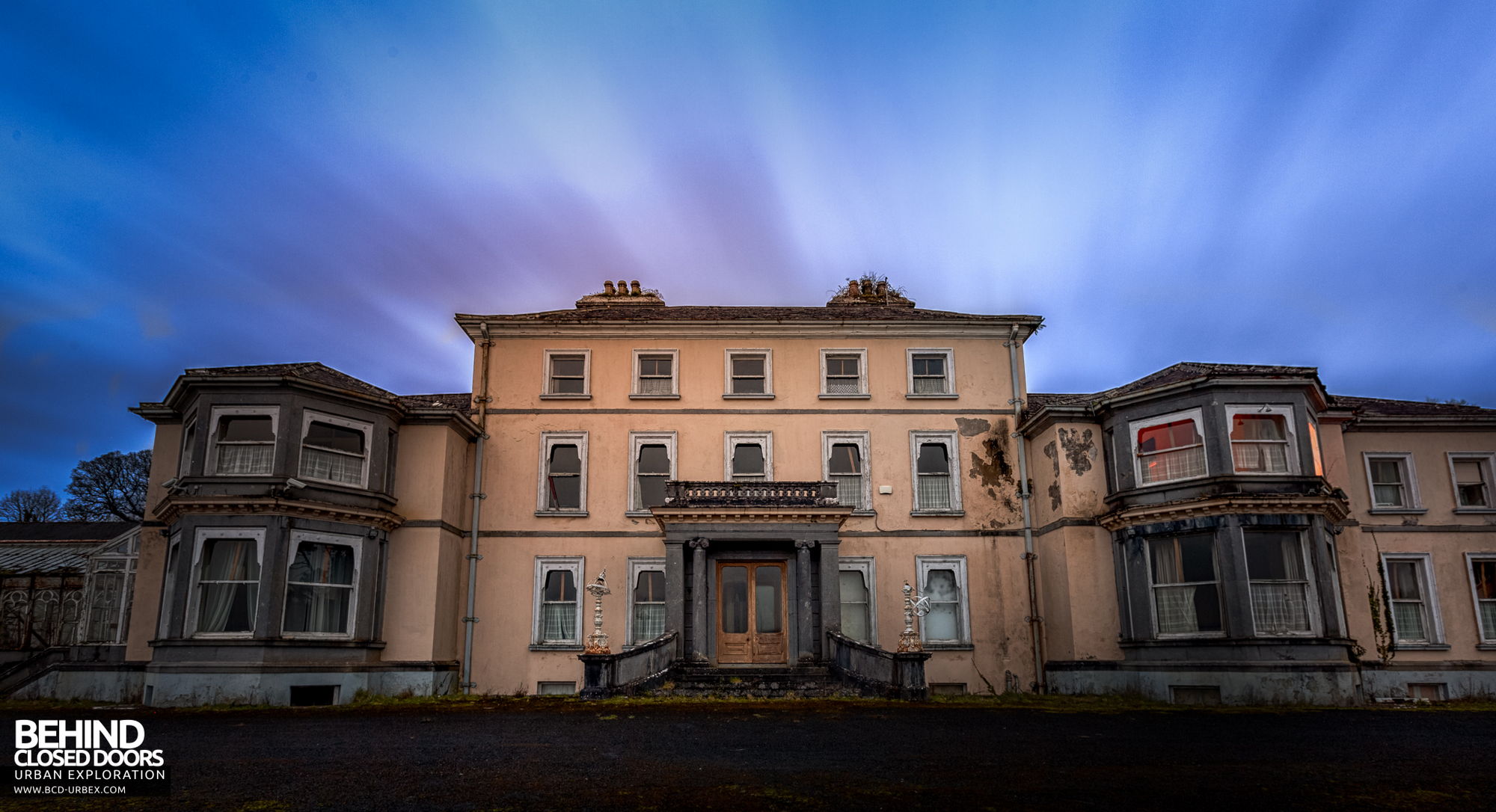
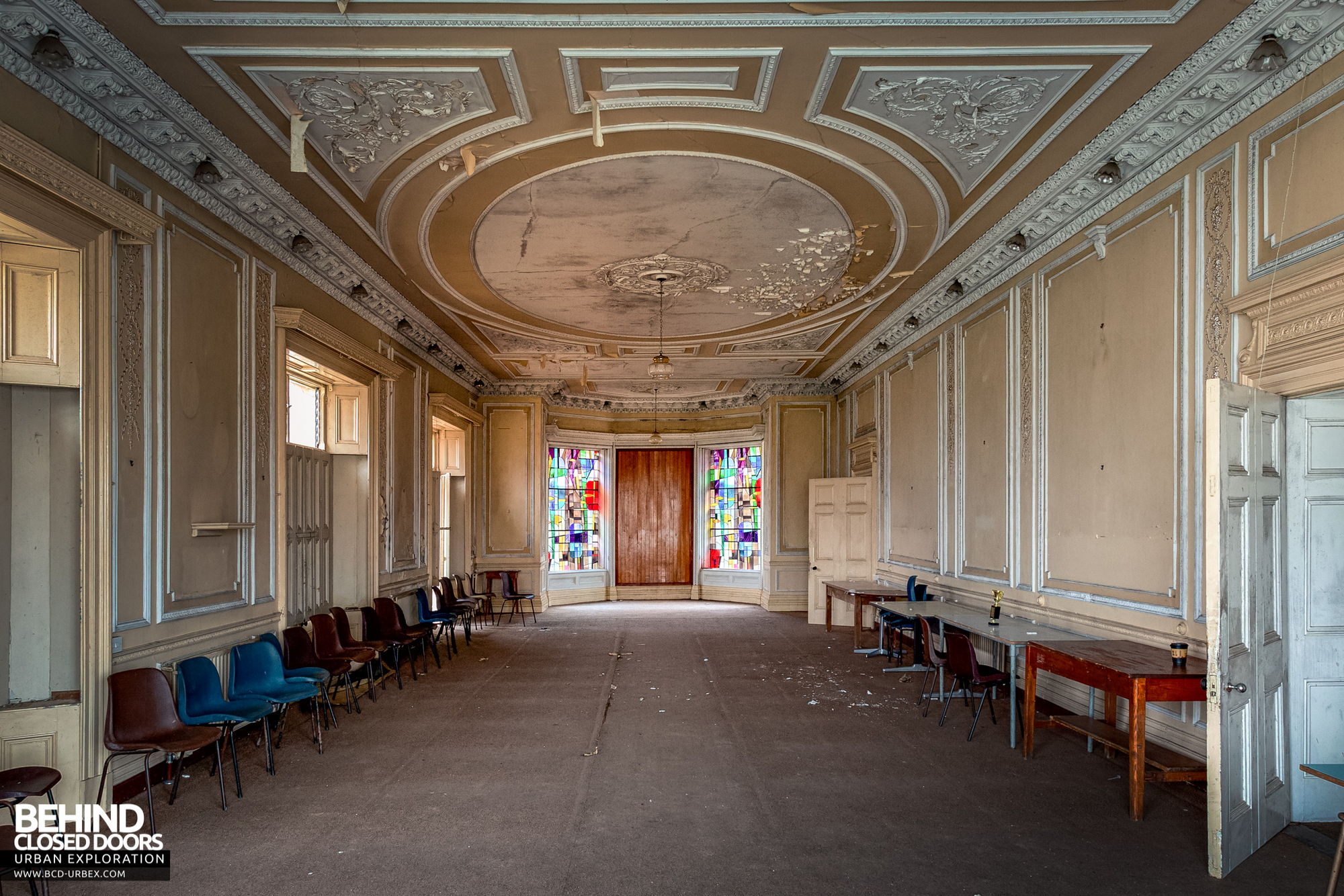


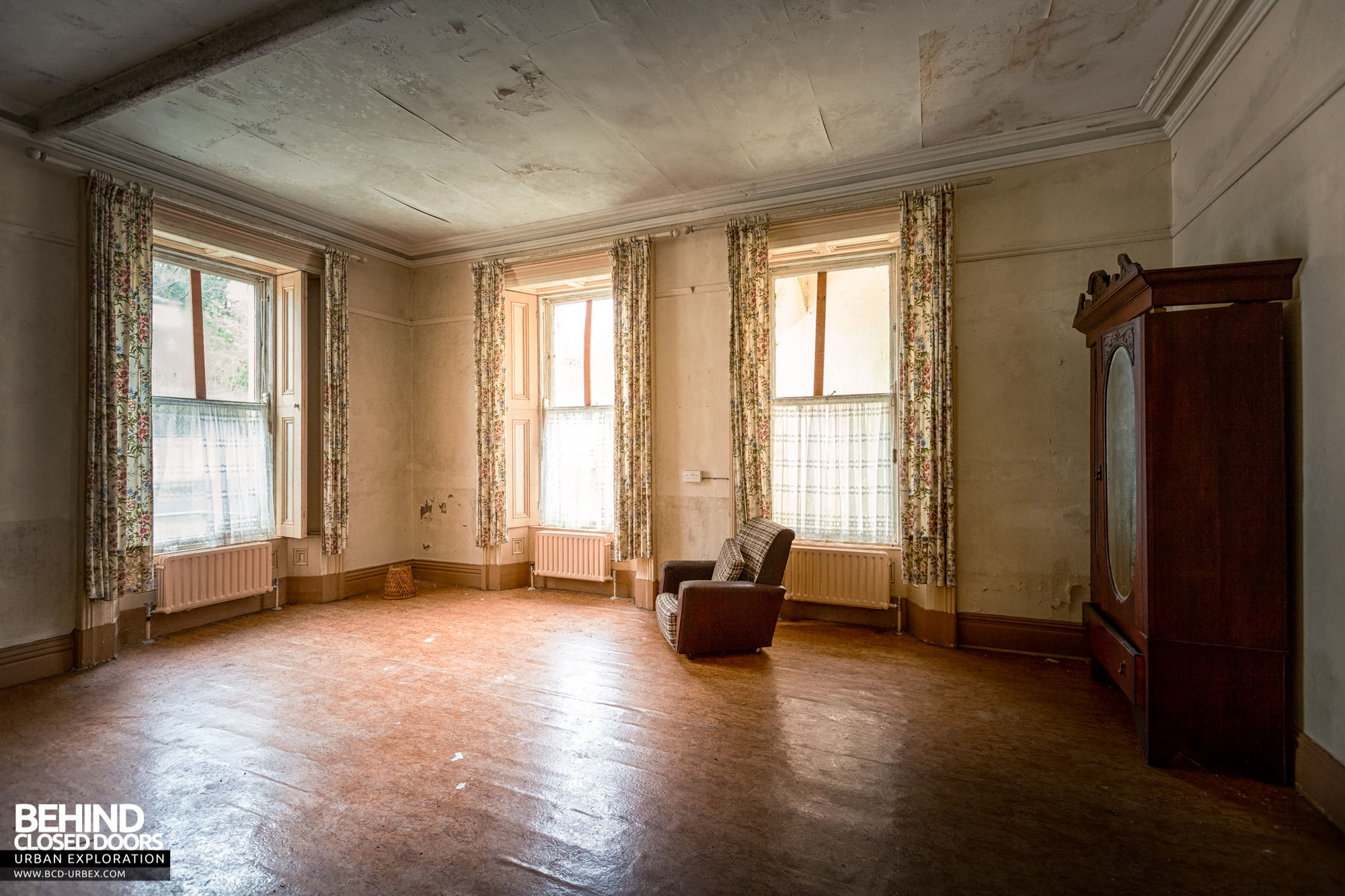
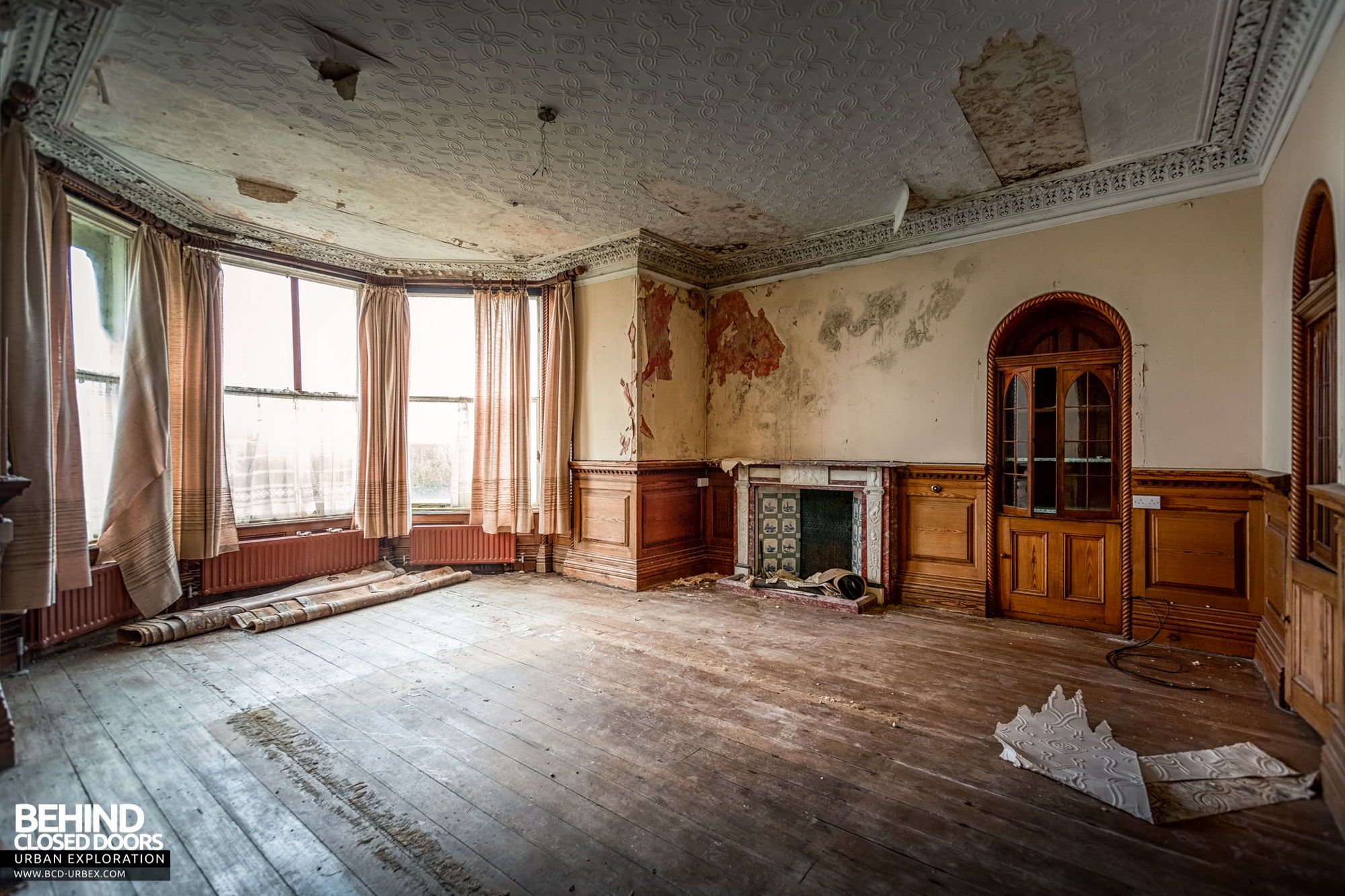
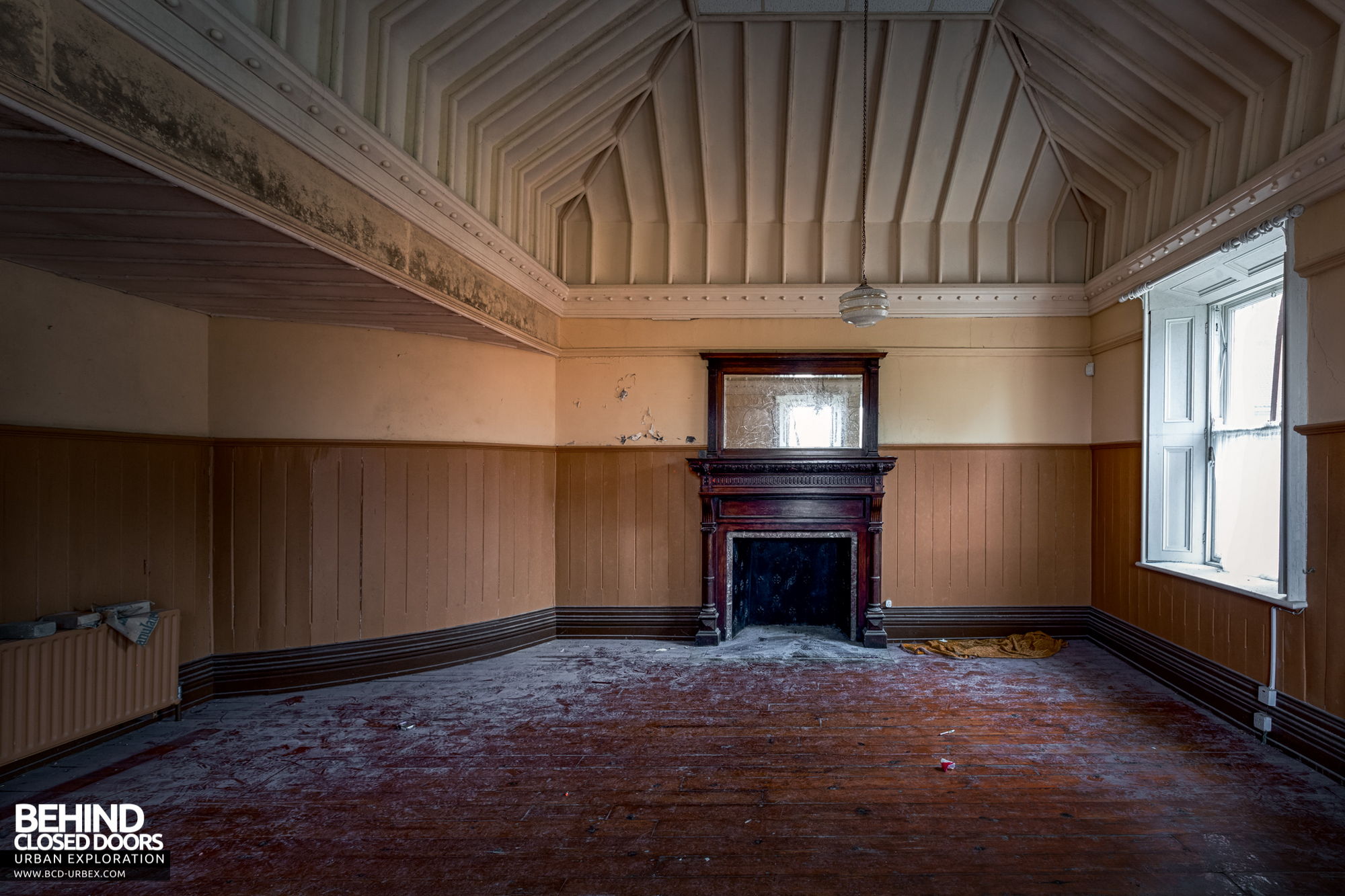
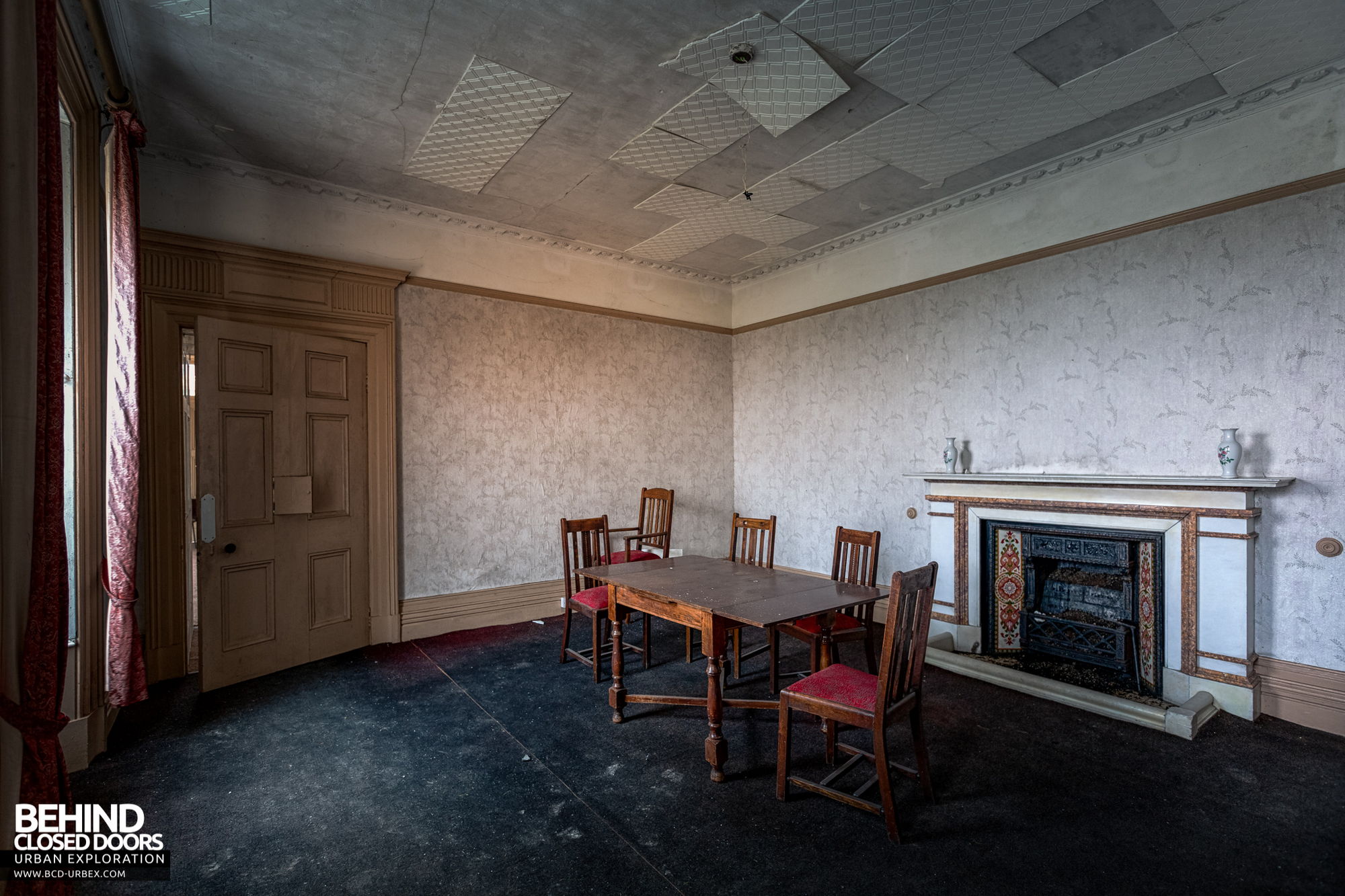
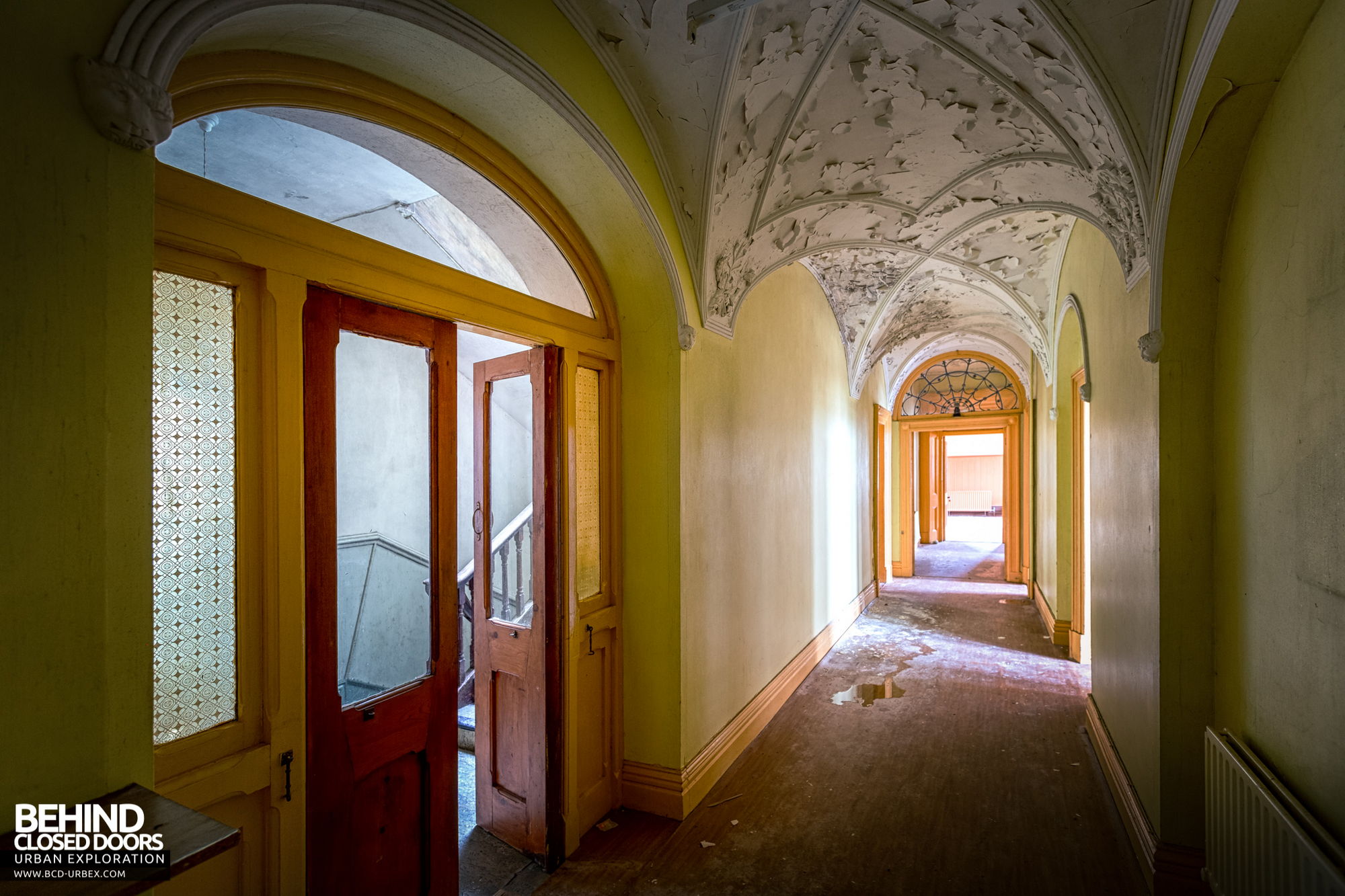
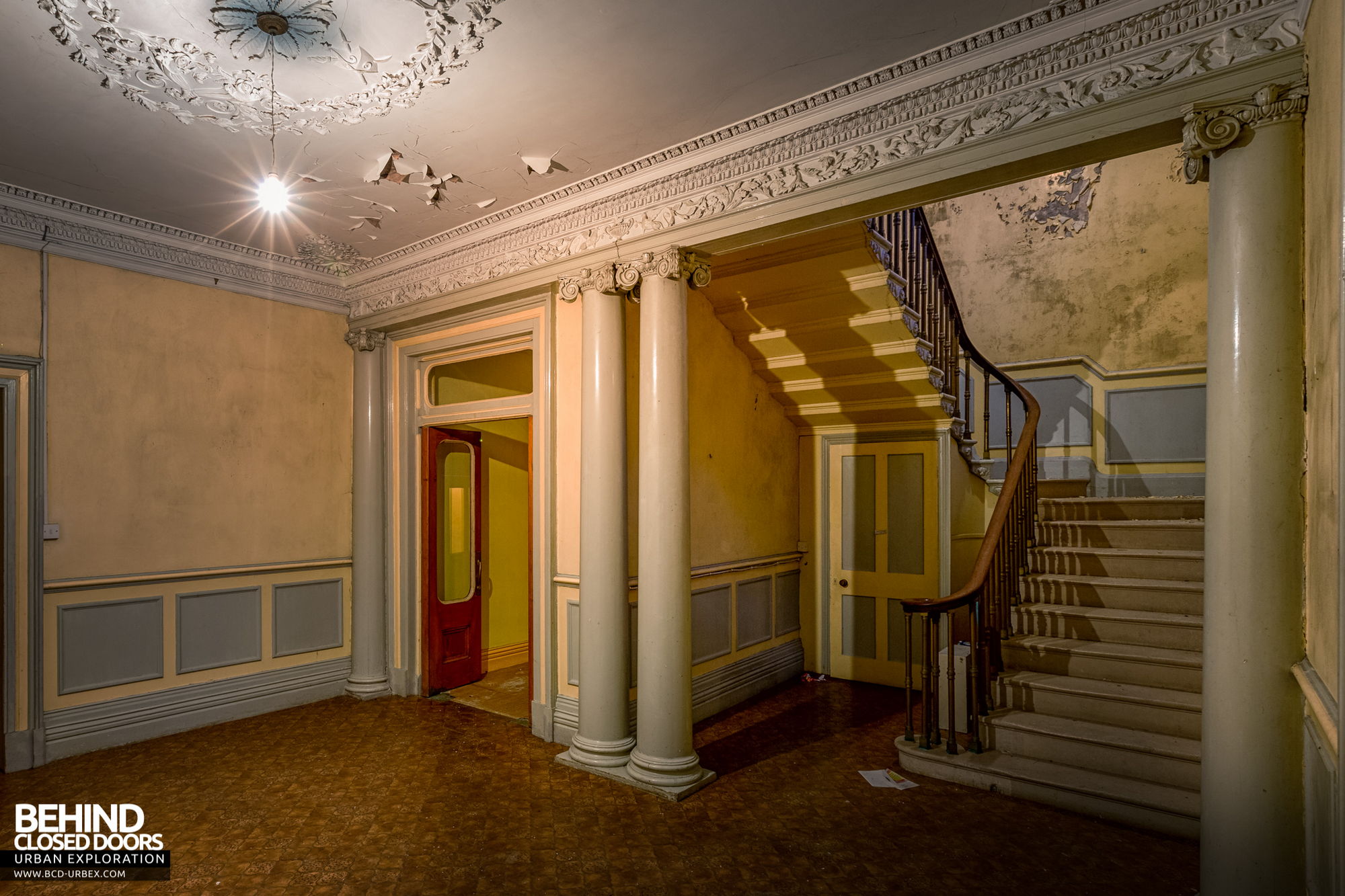
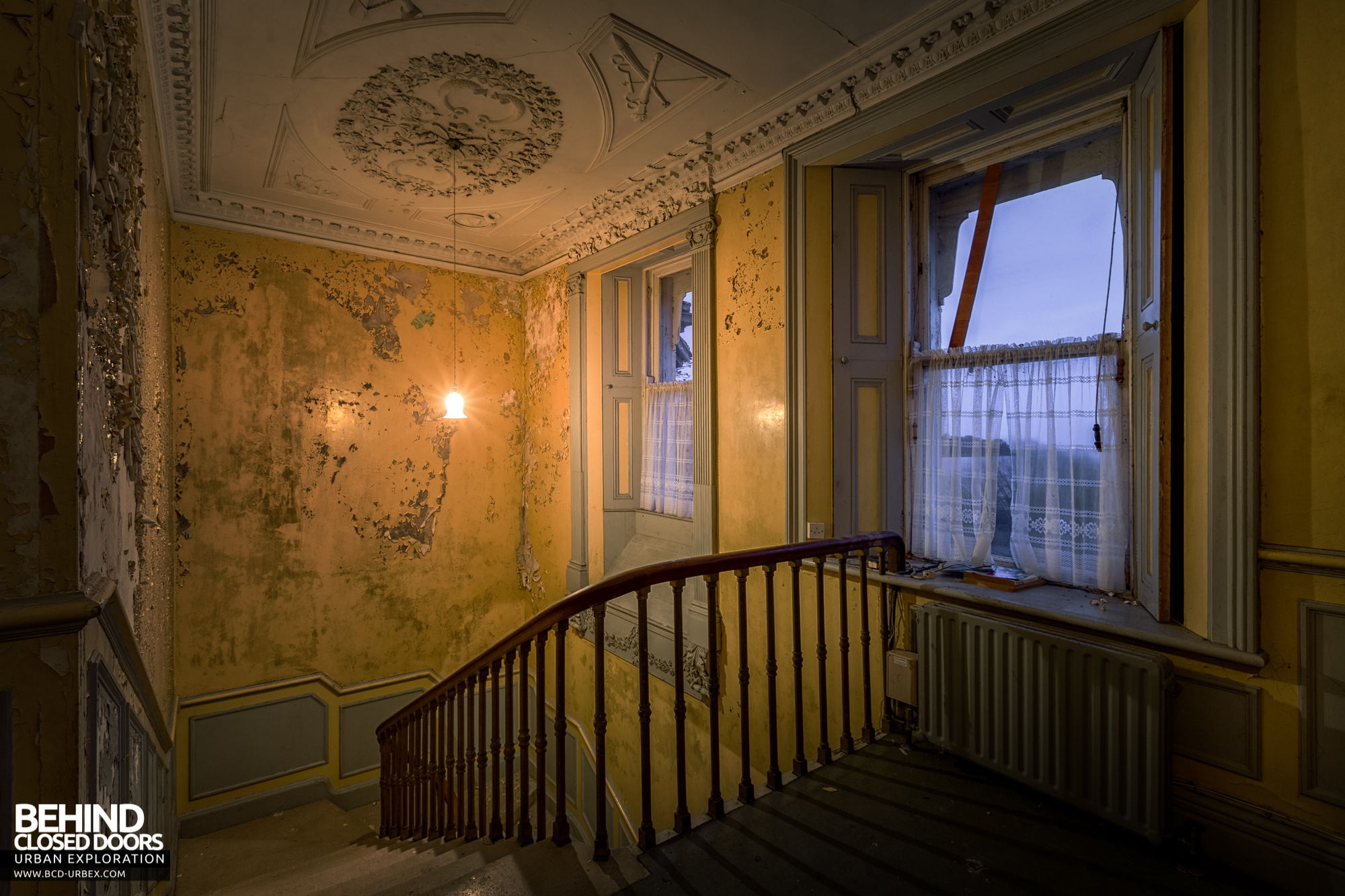
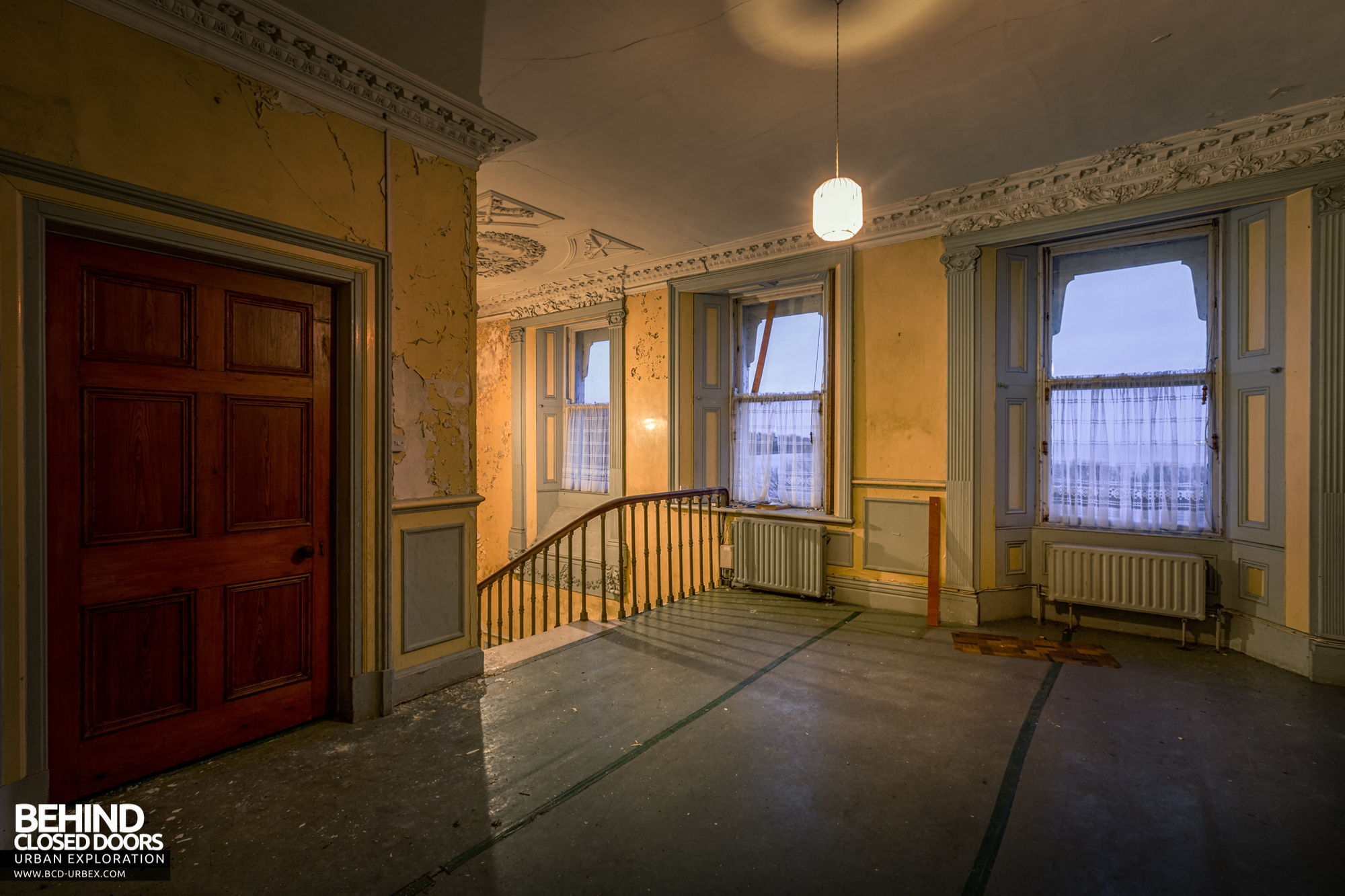
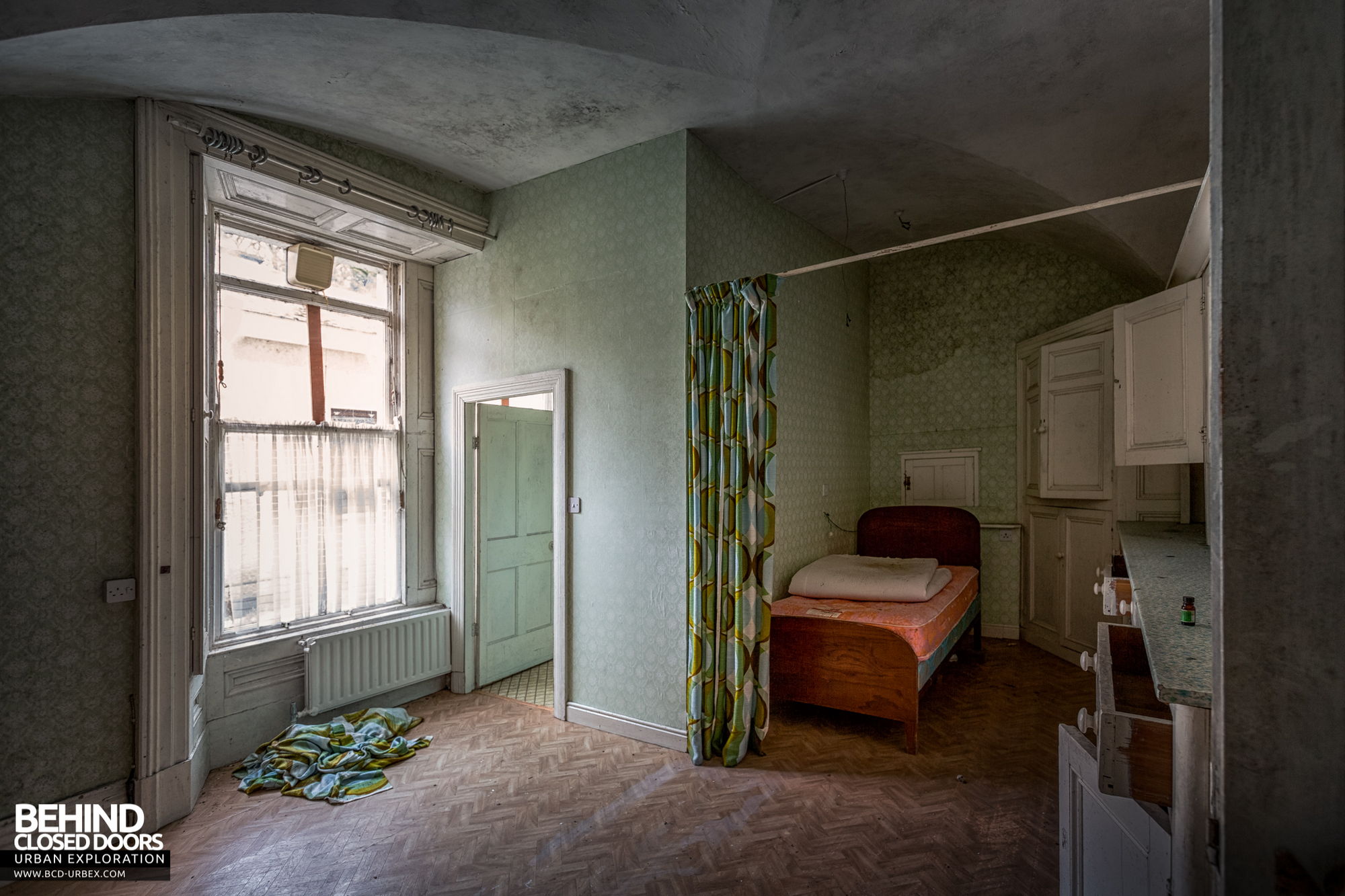

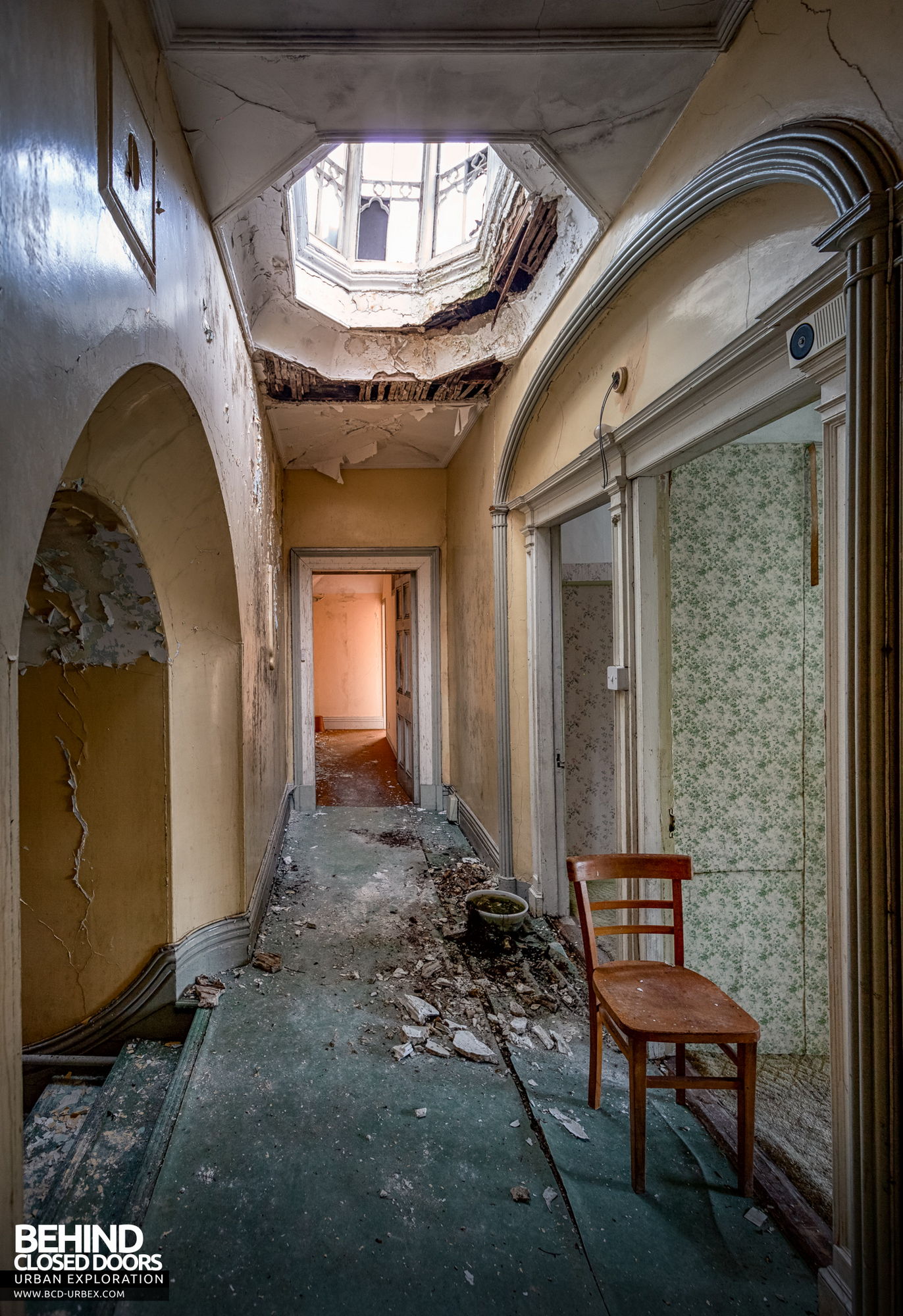
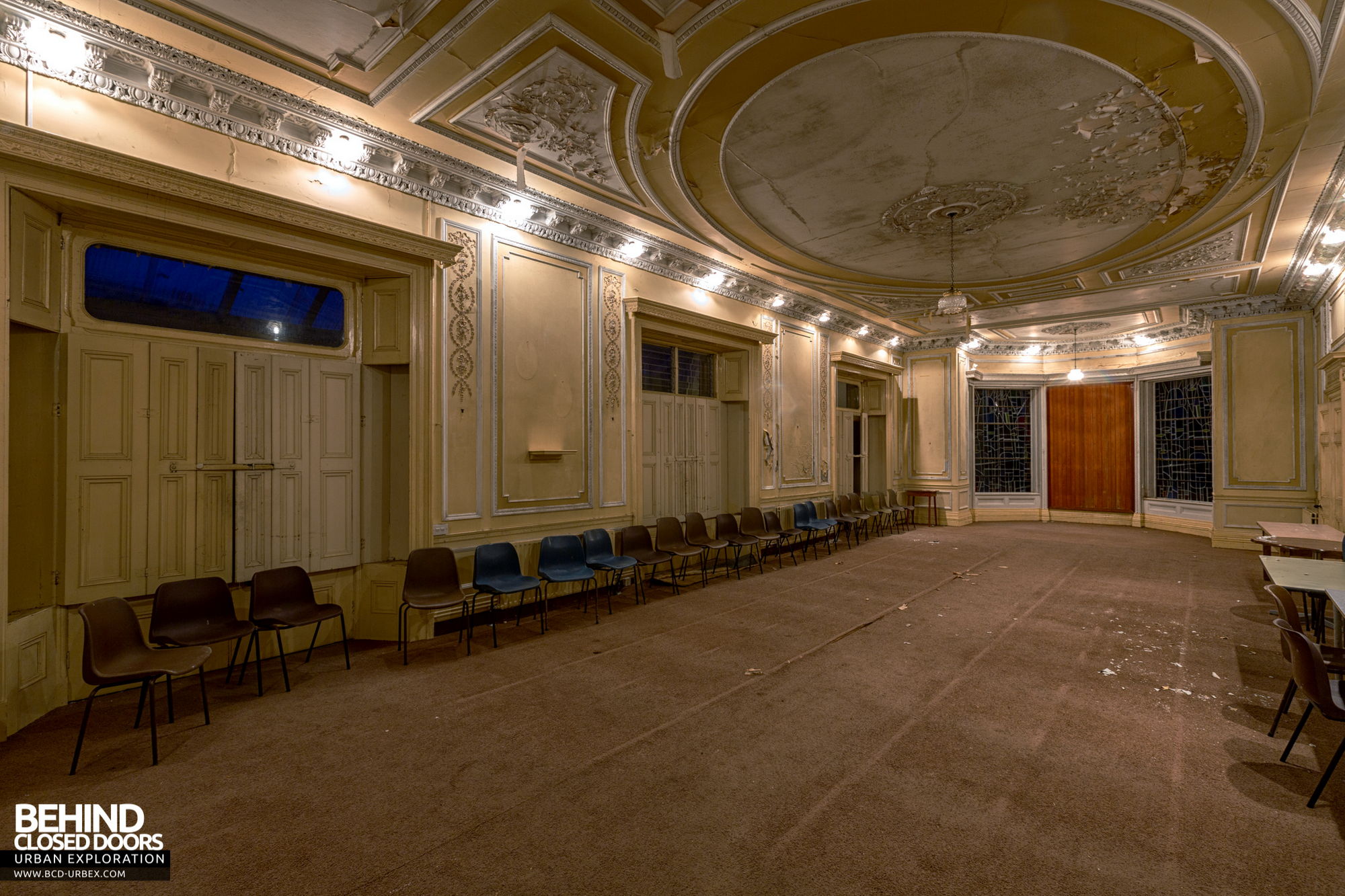
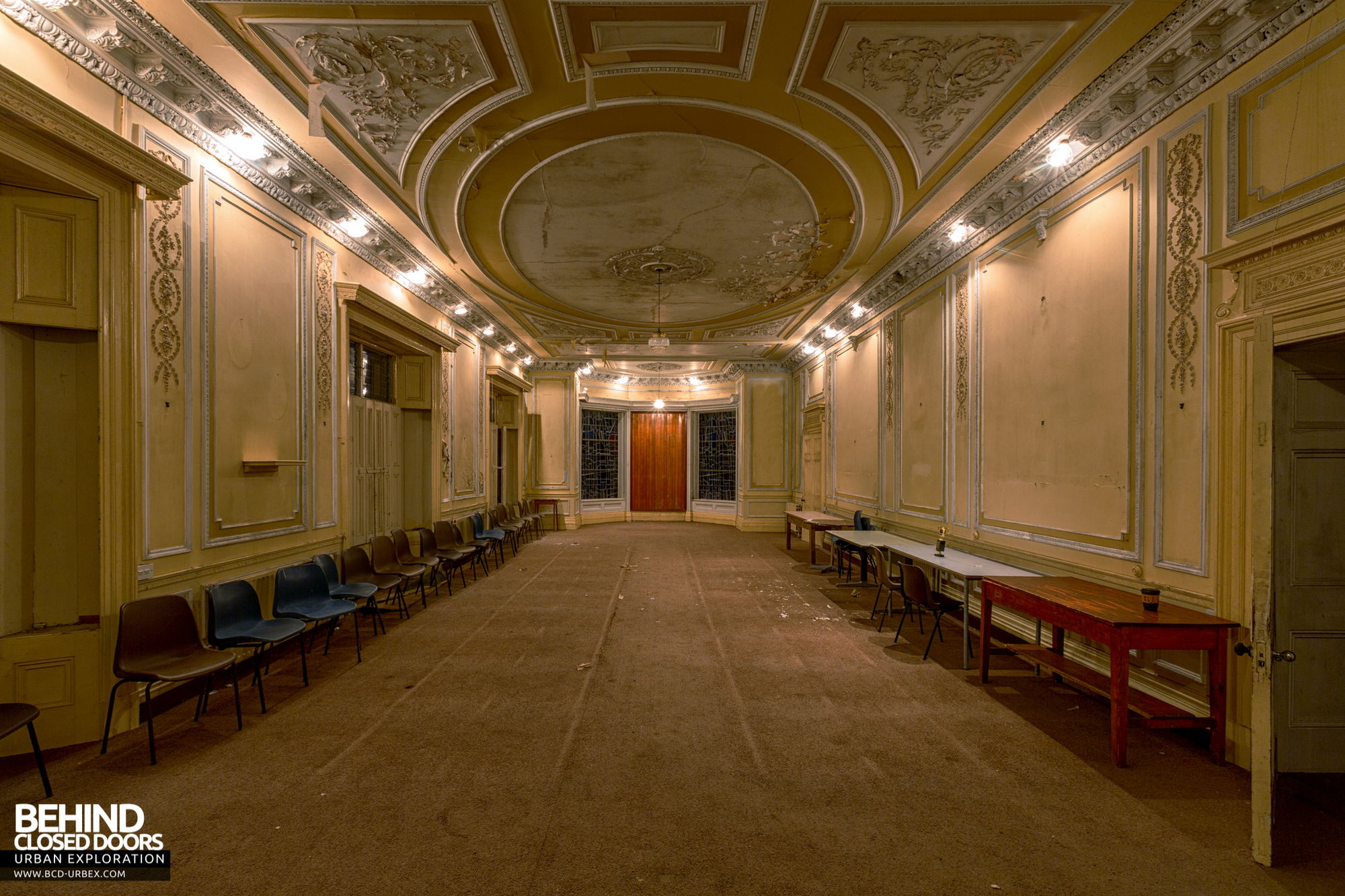
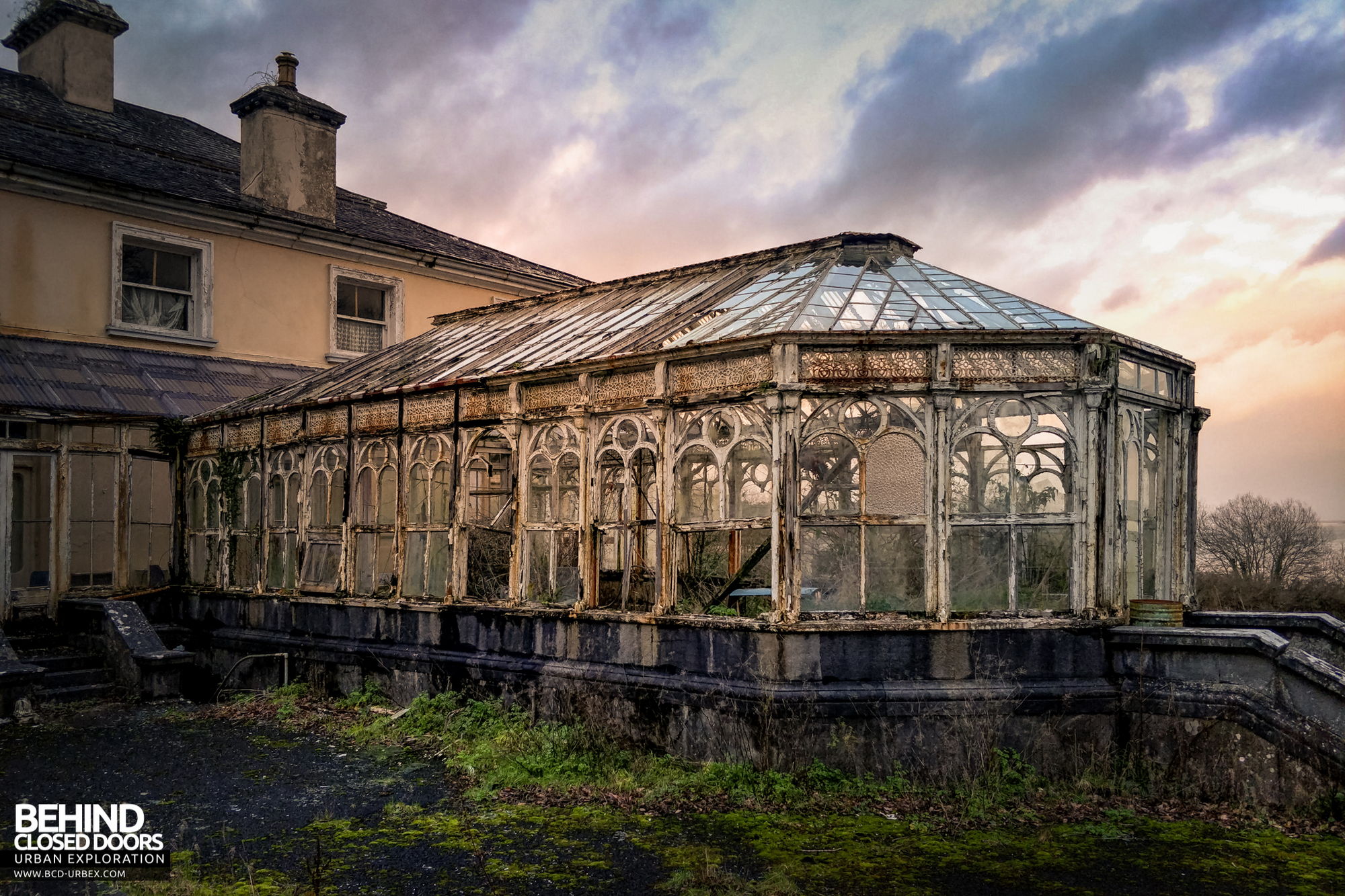


 Irish Historic Houses