Mark Bence-Jones. A Guide to Irish Country Houses (originally published as Burke’s Guide to Country Houses volume 1 Ireland by Burke’s Peerage Ltd. 1978); Revised edition 1988 Constable and Company Ltd, London.
p. 12. “A Victorian Baronial house.. built by Sir Richard Orpen on the site of an earlier house which in turn had replaced an old MacCarthy stronghold. Burnt 1921.”
Listed in Vanishing Country Houses of Ireland by The Knight of Glin, David J. Griffin and Nicholas K. Robinson, published by The Irish Architectural Archive and The Irish Georgian Society, 1988.
Ardtully House was constructed in 1847 by Sir Richard Orpen, a Dublin based solicitor whose family had connections to the area. Built on the site of the old Ardtully castle which was finally destroyed by Cromwell during the civil wars, only ruins remain as it was itself burned down in 1921.
In Ireland few painters are better known or more admired than Sir William Orpen (1878-1931), examples of whose work today fetch some of the highest prices for a picture at auction. Yet Orpen’s background is relatively little studied, and his links with County Kerry are accordingly overlooked. Like many families, the Orpens were inclined to give themselves a more distinguished pedigree that was actually the case. So in Burke’s Landed Gentry of 1847 it is claimed that ‘The family of Orpen is of remote antiquity, and is stated to trace its descent from Erpen, second son of Varnacker (maire of the palace to Clothaire I), who was the son of Meroveus, and grandson of Theodorick, son of Clovis, King of France.’ This places their origins back in the sixth century, so that by the time William, Duke of Normandy won the Battle of Hastings in 1066, he was of course accompanied by a knight called Robert d’Erpen who thereafter settled at Erpingham in Norfolk. According to this version of events, the family turns up in Ireland in the second half of the 17th century already long established as members of the landed gentry on the other side of the Irish Sea. Such would have been the story of his forebears likely known by William Orpen. However the year before his death a cousin, the historian Goddard Henry Orpen produced an alternative, and somewhat less distinguished narrative. From this it would appear that the first Orpen to come to Ireland, a descendant of humble English yeomen, did so some time in the 1650s/60s when he acquired land around the area of Killorglin, County Kerry and that by the mid-1670s his son, Richard Orpen was employed as a land agent by the region’s greatest landowner, Sir William Petty. All of which is not quite so splendid as the lineage proposed by Burke but, as Goddard Henry Orpen wrote, ‘it is the truth I seek and not a (faked) illustrious ancestry and, after all, is it not better to rise than to fall?’
So, the earliest Orpens to settle in Kerry did so in the second half of the 17th century and prospered thanks to their association with the Pettys, later Petty-Fitzmaurices and ultimately Marquesses of Lansdowne. As a result they were able to acquire their own substantial landholdings, including the area around Ardtully in South Kerry. Until the 17th century this property was under the control of the MacFineens, a branch of the powerful MacCarthy clan but according to the Books of Survey and Distribution (compiled c.1650-80) during the course of the Confederate Wars, Colonel Donough MacFineen forfeited Ardtully, on which then stood ‘two good slate houses, a corn-mill, a castle, malthouse, barn, and tuck mill, likewise there are iron-mines and a silver mine in the quarter of Ardtully.’ The lands here were granted by the crown to one John Dillon but subsequently acquired on a long lease by the descendants of the original Richard Orpen: following a marriage between the latter’s grandson and Anna Townsend of Bridgemount, County Cork in 1766 the family’s name became Orpen Townsend. Ultimately in the first half of the 19th century the Ardtully estate was first leased and then purchased through the Encumbered Estates Court by a cousin of Richard Orpen Townsend: this was the successful solicitor Richard John Theodore Orpen. Founder of a legal practice still in existence today (as Orpen Franks) he would act as President of the Law Society from 1860 until his death sixteen years later. Knighted in 1866, he was the grandfather of the artist William Orpen and builder of a house still just extant at Ardtully.
Sir Richard John Theodore Orpen was clearly very proud of his family, if somewhat deluded about its pedigree, and assembled whatever information he could about his ancestors. He also built up a considerable land holding in County Kerry, amounting to over 12,000 acres by the time of his death. A fine residence in the centre of this property was required, and duly built at Ardtully in 1847. Its architect unknown, the house is customarily summarised as being in the Scottish Baronial style but this seems more a flag of convenience than an accurate description. In truth Ardtully looks to have been a typically Victorian grab-bag of architectural elements, its most prominent feature being a castellated round tower and turret on the south-east corner. Looking towards the river Roughty, the entrance front features a porch topped by the Orpen coat of arms (now damaged), another attempt by Sir Richard to demonstrate his lineage. Inside the house looks to have contained the usual collection of reception and bedrooms ranged over two storeys, the roofline marked by a succession of stepped gables and dormers. A substantial range of service outbuildings lay to the north. A handsome coloured illustration of Ardtully appeared in County Seats of The Noblemen and Gentlemen of Great Britain and Ireland (published 1870): conveniently the author of this six-volume work was Sir Richard’s nephew, the Rev. Francis Orpen Morris. The estate was eventually inherited by another Anglican clergyman, Sir Richard’s second son, the Rev. Raymond Orpen, Bishop of Limerick, Ardfert and Aghadoe. Uncle of the painter Sir William Orpen, he retired from office in 1921 and the same year Ardtully was burnt by the IRA. It has remained a ruin ever since, the link with one of this country’s greatest artists forgotten.
Ardtully House lies in a field west of the village of Kilgarvan, in County Kerry in Ireland.
According to tradition the first building at this site was a 13-th century monastery which was replaced, using its stones, by a castle of the McFineen McCarthys. This castle was destroyed in the mid-17th century during Cromwell’s conquest. Later the Orpen family buit a mansion house here, within the remains of the old castle.
In 1847, Sir Richard Orpen Townsend demolished the earlier house and the remains of the castle, replacing it with a fine 5-bay 2-storey Scottish-Baronial style house of which we see the remains today. It had 27 rooms, a circular 3-storey battlemented corner tower on the southeast corner and a 3-storey corbelled circular turret on the east corner.
In 1921, during the Irish War of Independence, Ardtully House was burned down by the IRA. It was never rebuilt.
Ardtully House can freely be visited. The ruin itself can not be entered due to the risk of falling stones. Just north of it are the remains of a walled garden. A very nice ruin.
Castlecaulfeild or Castle Caulfeild, County Tyrone – ruin
Castlecaulfield, County Tyrone, photograph by Robert French, (between ca. 1865-1914), Lawrence Photograph Collection, National Library of Ireland.
Mark Bence-Jones. A Guide to Irish Country Houses (originally published as Burke’s Guide to Country Houses volume 1 Ireland by Burke’s Peerage Ltd. 1978); Revised edition 1988 Constable and Company Ltd, London.
p. 64. “(Caulfeild, Charlemont, V/PB) A “u” shaped Plantation castle originally of three storeys, with mullioned windows and massive chimney stacks; built 1612 by Sir Toby Caulfeild, burnt during the Rising of 1641, subsequently rebuilt but abandoned by 1700 and now a ruin. Also in the village of Castlecaulfeild is Castlecaulfeild House, formerly the dower house of the Caulfeild (Charlemont) family; two storey, seven bay, low-built and plain; of late C18 or early C19 appearance, though it may be basically C17.”
‘Castle-Caulfield owes its erection to Sir Toby Caulfield, afterwards Lord Charlemont – a distinguished English soldier who had fought in Spain and the Low Countries in the reign of Queen Elizabeth, and commanded a company of one hundred and fifty men in Ireland in the war with O’Neill, Earl of Tyrone, at the close of her reign. For these services he was rewarded by the Queen with a grant of part of Tyrone’s estate, and other lands in the province of Ulster; and on King James’s accession to the British crown, was honoured with knighthood and made governor of the fort of Charlemont, and of the counties of Tyrone and Armagh. At the plantation of Ulster he received further grants of lands, and among them a thousand acres called Ballydonnelly, or O’Donnelly’s town, in the barony of Dungannon, on which, in 1614, he commenced the erection of the mansion subsequently called Castle-Caulfield. This mansion is described by Pynnar in his Survey of Ulster in 1618-19, in the following words…’ [see post]
HE VISCOUNTS CHARLEMONT WERE THE GREATEST LANDOWNERS IN COUNTY ARMAGH, WITH 20,695 ACRES
The settlement of this noble family in Ireland took place in the reign of ELIZABETH I, when THE RT HON SIR TOBY CAULFEILD (1565-1627), a distinguished and gallant soldier, was employed in that part of Her Majesty’s dominions against the formidable Hugh O’Neill, Earl of Tyrone.
This gentleman was the son of Alexander Caulfeild, Recorder of Oxford, who was descended from ancestors of great antiquity and worth settled in that county, and at Great Missenden, Buckinghamshire.
In 1615, Sir Toby was appointed one of the council for the province of Munster. The next year, 1616, he joined in commission with the Lord Deputy of Ireland (Oliver St John, 1st Viscount Grandison), and others, for parcelling out the escheated lands in Ulster to such British undertakers as were named in the several tables of assignation.
In these employments, the King (JAMES I) found him so faithful, diligent, and prudent, that His Majesty deemed him highly deserving the peerage, and accordingly created him, in 1620, Lord Caulfeild, Baron Charlemont, with limitation of the honour to his nephew, Sir William Caulfeild, Knight. His lordship died unmarried, in 1627, and was succeeded by the said
SIR WILLIAM CAULFEILD, 2nd Baron (1587-1640), who took his seat in parliament, 1634, after the Lord Chancellor of Ireland had moved to know the pleasure of the House, whether he should be admitted to this place, having brought neither writ of summons nor patent; whereupon it was resolved that his lordship should be admitted, inasmuch as they were all satisfied that he was a Lord of Parliament.
His lordship, High Sheriff of County Tyrone, 1620, wedded Mary, daughter of Sir John King, Knight (ancestor of the Earls of Kingston), and had issue,
TOBY, his successor; ROBERT, successor to his brother; WILLIAM, created Viscount Charlemont; George; Thomas; John; Anne; Mary; Margaret.
His lordship, Master-General of the Ordnance, 1627-34, was succeeded by his eldest son,
TOBY, 3rd Baron (1621-42), who also succeeded his late father as Governor of Charlemont Fort, 1640, and there resided with his company of the 97th Regiment of Foot, in garrison.
This fort was a place of considerable strength and importance during the rebellion of 1641; but his lordship suffered himself to be surprised, in that year; and being made prisoner, with his whole family, was subsequently murdered, by the orders, it is said, of Sir Phelim O’Neill.
This unfortunate nobleman, dying unmarried, was succeeded by his brother,
ROBERT, 4th Baron (1622-42), who died a few months afterwards from an overdose of a prescription of opium, and was succeeded by his next brother,
WILLIAM, 5th Baron (1624-71), who apprehended Sir Phelim O’Neill and had him executed for the murder of his brother, the 3rd Baron.
His lordship having filled, after the Restoration, several high and confidential situations, was advanced to a viscountcy, 1655, as Viscount Charlemont, of County Armagh.
He wedded Sarah, second daughter of Charles, 2nd Viscount Drogheda, and had issue,
WILLIAM, his successor; Toby; John; Mary; Alice; Elizabeth.
His lordship was succeeded by his eldest surviving son,
WILLIAM, 2nd Viscount (c1655-1726); who opposed with zeal the cause of WILLIAM III against JAMES II.
His lordship espoused Anne, daughter of the Most Rev James Margetson, Lord Archbishop of Armagh, by whom he had, with five daughters, five sons to survive infancy, namely,
JAMES, his successor; Thomas, Governor of Annapolis; Charles (Rev), Rector of Donaghenry; John, MP; Henry Charles.
He died after enjoying the peerage more than half a century, in 1726, and was succeeded by his eldest surviving son,
JAMES, 3rd Viscount (1682-1734), MP for Charlemont, 1703-4 and 1713-26, who married Elizabeth, only daughter of the Rt Hon Francis Bernard, of Castle Mahon, County Cork, one of the Judges of the Court of Common Pleas in Ireland, and had issue,
Francis; JAMES, of whom hereafter; Alice.
The elder son, Francis, wedded Mary, only daughter of John, Lord Eyre; though was lost, with his lady, infant child, and servant, in a hurricane, during his passage to Ireland from London, in 1775, to fulfil his parliamentary duties as MP for Charlemont.
The Hon Francis Caulfeild left issue, Colonel James Eyre Caulfeild, born in 1765, and Eleanor, who married William, 3rd Earl of Wicklow.
The 3rd Viscount was succeeded by his only surviving son,
JAMES, 4th Viscount (1728-99), KP, who was advanced to an earldom, in 1763, in the dignity of EARL OF CHARLEMONT.
1st Earl of Charlemont KP. Photo Credit: National Portrait Gallery
His lordship wedded, in 1768, Mary, daughter of Thomas Hickman, of Brickhill, County Clare (descended from the noble family of Windsor, Viscounts Windsor, which title became extinct in 1728), and had issue,
FRANCIS WILLIAM, his successor; James Thomas; Henry, MP, of Hockley Lodge, Co Armagh; Elizabeth.
He was a distinguished patriot, and had the honour of commanding-in-chief the celebrated Volunteer Army of Ireland in 1779.
The 1st Earl was a Founder Knight of the Order of St Patrick.
His lordship was succeeded by his eldest son,
FRANCIS WILLIAM, 2nd Earl (1775-1863), KP, who espoused, in 1802, Anne, daughter of William Bermingham, and had issue,
James William, styled Viscount Caulfeild (1803-23); William Francis (1805-7); Maria Melosina; Emily Charlotte.
His lordship died without surviving male issue, when the family honours reverted to his cousin,
JAMES MOLYNEUX, 3rd Earl (1820-92), KP (son of the Hon Henry Caulfeild, second son of 1st Earl), Lord-Lieutenant of County Tyrone, MP for Armagh, 1847-67.
His lordship married twice, though both marriages were without issue, when the earldom and barony expired, and the remaining peerages devolved upon his kinsman,
JAMES ALFRED, 7th Viscount (1830-1913), CB JP DL, of Loy House, Cookstown, and Drumcairne, County Tyrone,
Captain, Coldstream Guards; fought in the Crimean War; Vice Lord-Lieutenant of County Tyrone, 1868; High Sheriff of County Tyrone, 1868; Comptroller of the Household of the Lord Lieutenant of Ireland, 1868-95; Honorary Colonel, 3rd Battalion, Royal Inniskilling Fusiliers; Usher of the Black Rod of the Order of St Patrick, 1879-1913.
JAMES EDWARD, 8th Viscount (1880-1949), PC DL, was elected to the Northern Ireland Parliament as a Senator, where he sat from 1925-37, and was sometime Minister for Education.
James Alfred Caulfeild, 7th Viscount (1830–1913); James Edward Caulfeild, 8th Viscount; (1880–1949); Charles Edward St George Caulfeild, 9th Viscount (1887–1962); Robert Toby St George Caulfeild, 10th Viscount (1881–1967); Charles St George Caulfeild, 11th Viscount (1884–1971); Richard St George Caulfeild, 12th Viscount (1887–1979); Charles Wilberforce Caulfeild, 13th Viscount (1899–1985); John Day Caulfeild, 14th Viscount Charlemont (1934–2001); John Dodd Caulfeild, 15th Viscount (b 1966).
The heir apparent is the present holder’s son, the Hon Shane Andrew Caulfeild (b 1996).
*****
The Charlemonts were a Patrick family, three members of whom were Knights of St Patrick.
Castle Caulfeild, County Tyrone
Lord Charlemont was the greatest landowner in County Armagh, owning 20,695 acres a century ago.
He also owned almost 6,000 acres in County Tyrone.
During more recent times, the 8th Viscount, PC (NI), DL (1880-1949) was elected to the House of Lords as a Representative Peer; and to the Northern Ireland Parliament as a senator.
He sat in the NI Senate from 1925-37 and was Minister for Education for all but the first of his years.
Lord Charlemont’s main country seat, near the village of Moy, County Tyrone, was Roxborough Castle.
The exquisite gates are all that remain.
The Castle was burnt by Irish republicans in 1922.
Charlemont Fort, on the County Armagh side of the river, was burnt in 1920.
Charlemont Fort, with Roxborough Castle in the Background
Subsequently Lord Charlemont lived at another residence, Drumcairne, near Stewartstown in County Tyrone.
It is thought that he eventually moved to the sea-side resort of Newcastle in County Down.
He inherited the titles from his uncle in 1913.
Having no children, the titles passed, on his death, to a cousin.
The 14th Viscount lived in Ontario, Canada and the viscountcy is still extant with the present 15th Viscount Charlemont.
Parkanour House and garden, County Tyrone, photograph by Robert French, (between ca. 1865-1914), Lawrence Photograph Collection, National Library of Ireland.
Mark Bence-Jones. A Guide to Irish Country Houses (originally published as Burke’s Guide to Country Houses volume 1 Ireland by Burke’s Peerage Ltd. 1978); Revised edition 1988 Constable and Company Ltd, London.
p. 230. “(Burges/IFR) A large and romance Tudor-Revival house, dating from various periods in first half of C19. A small, three gabled two storey house, known as the “farm at Edenfield” was built here 1802-04 by J. H. Burges, who leased the estate from his cousin, Lady Poulett, daughter of Ynry Burges who bought it 1771. Then a “cottage wing” extesnsion of rubble with a hipped roof, identified as the present south wing, was added 1820-21. Finally in 1839, J.H. Burges’s son, J.Y. Burges, having inherited money from Lady Poulett, who died in the previous year, enabling him to buy the freehold of the estate, embarked on the building of a higher and much larger wing, to the design of Thomas Duff, of Newry, which was completed 1848. Its cost was specified as not to exceed £5,000. The three gabled house of 1802-04, which now has an arched porch, can be seen to the left of the 1839-48 wing with its pinnacle and gabled projection and two further gables. The latter wing, and that of 1820-21, have mullioned windows with leaded lights; whereas the windows of the 1802-04 house have mullions and Georgian astragals. Impressive courtyard at back of house, with coachhouse and tower intended for hanging meat. Rich Elizabethan or Jacobean interiors: long gallery with imported English carved wooden mantel dated 1641 and arched screen at one end; antoher C17 carved wooden chimneypiece with overmantel in inner hall; lofty Jacobean ceilings in sitting room, octagonal room and drawing room. The latter, which has a strapwork mantel, was not completed until 1854. Sold by Major Y.A. Burges ca 1958, now the Thomas Doran Training Centre for handicapped children.”
Parkanaur House, County Tyrone, photograph by Robert French, (between ca. 1865-1914), Lawrence Photograph Collection, National Library of Ireland.Parkanaur House, County Tyrone, photograph by Robert French, (between ca. 1865-1914), Lawrence Photograph Collection, National Library of Ireland.Parkanaur House and garden, County Tyrone, photograph by Robert French, (between ca. 1865-1914), Lawrence Photograph Collection, National Library of Ireland.
THE BURGESES OWNED 2,485 ACRES OF LAND IN COUNTY TYRONE
The surname of this family, as appears from ancient documents, was formerly De Burges, afterwards Burches, and subsequently, in 1747, the present one was adopted.
Richard De Burges was High Sheriff of Herefordshire, 1351-2.
SAMUEL BURCHES, born in Dublin, ca 1645, married, in 1684, Margaret Williams, of Llanelian, North Wales, and had issue,
David (Rev), Rector of St Mark’s, Dublin; Wilham; JOSEPH, of whom we treat; Katherine; Deborah.
Both brothers eventually moved northwards to the city of Armagh during the primacy of Archbishop Lindsay, with whom they were connected.
The youngest son,
JOSEPH BURCHES (1689-1747), baptized at St Michan’s Church, Dublin, wedded, in 1716, Elizabeth, daughter of Ynyr Lloyd, of East Ham, Essex (Deputy Secretary of the East India Company), and had issue,
Joseph (Rev), 1717-46; JOHN, of whom hereafter; YNYR, of East Ham; Molly; Margaret; Alice.
Mr Burches’ second son,
JOHN BURGES (1722-90), espoused, in 1763, Martha, daughter of Robert Ford, and had issue,
JOHN HENRY, his heir; Mary, m 1784, G Perry, of Mullaghmore, Co Tyrone; Martha, m 1787, J Johnston, of Knappagh, Co Armagh; Alice, died in infancy.
His only son and heir,
JOHN HENRY BURGES JP (c1768-1822), of Woodpark, Tynan, and Parkanaur, both in County Armagh, married, in 1795, Marianne, eldest daughter and eventually co-heir of Sir Richard Johnston Bt, of Gilford, and had issue,
JOHN YNYR, his heir; Richard, deceased; Margaret Anne; Matilda, d 1805.
The only surviving son,
JOHN YNYR BURGES JP DL (1798-1889) of Parkanaur, County Tyrone, Thorpe Hall, Essex, and East Ham, Essex, High Sheriff of County Tyrone, 1829, wedded, in 1833, the Lady Caroline Clements, youngest daughter of Nathaniel, 2nd Earl of Leitrim KP, and had issue,
YNYR HENRY, his heir; Charles Skeffington, 1835-45; Clements Keppel, d 1840; John Richard Alexander Wamphray, 1843-50; Mary Anne Margaret; Alice Caroline.
The eldest son,
YNYR HENRY BURGES JP DL (1834-1908), of Parkanaur, High Sheriff of County Tyrone, 1869, espoused, in 1859, Edith, third daughter of the Hon Richard Bootle-Wilbraham, and sister of the 1st Earl of Latham, and had issue,
YNYR RICHARD PATRICK (1866-1905), father of YNYR ALFRED; John Ynyr Wilbraham (1871-95); Edith Alice; Ethel Margaret; Lilian Adela; Myrtle Constance; Beatrice Annette; Irene Caroline.
Colonel Burges, officer commanding 6th Brigade, Northern Ireland Division, Royal Artillery, married secondly, in 1896, Mary, daughter of George Pearce, of Bishops Lydeard, Somerset.
He was succeeded by his grandson,
YNYR ALFRED BURGES JP DL (1900-83), of Parkanaur, High Sheriff of County Armagh, 1951, who wedded, in 1930, Christine, daughter Colonel George Iver Patrick O’Shee (by his wife, the Lady Edith King-Tenison), and had issue,
MICHAEL YNYR, b 1931; Susan Elizabeth, b 1934; Patricia Anne, b 1936.
Major Burges, who lived, in 1976, at Catsfield Manor, Battle, Sussex, was succeeded by his son,
MICHAEL YNYR BURGES, Lieutenant, Royal Inniskilling Fusiliers; in the Belfast Linen trade, 1950-74, at Belfast; who lived, in 1976, at Skinners, Edenbridge, Kent.
*****
The BURGES estate, East Ham, Essex, was established by Ynyr Burges, Paymaster, East India Company, between 1762 and his death in 1792, at a total cost of £20,700.
He was succeeded by his daughter Margaret, wife of Sir John Smith-Burges Bt, a director of the East India Company.
In 1799, the estate comprised 422 acres.
Sir John died in 1803.
In 1816, his widow married John, Earl Poulett.
Lady Poulett, who was childless, was succeeded by John Ynyr Burges, grandson of her father’s elder brother.
In 1838, the estate produced an income of £1,549, but by 1840 this had been increased to £2,471. An estate map drawn in 1881, which includes details of recent and later changes, shows that most of the property lay near the present town centre.
John Ynyr Burges, who died in 1889, was succeeded by his son, Colonel Ynyr Henry Burges, who was largely responsible for developing the estate for building.
He had started to do so, on his father’s behalf, about 1887, and continued until his own death in 1908.
Colonel Burges was succeeded by his grandson, Major Ynyr Alfred Burges, who completed the development of the estate during the 1920s.
Ynyr Burges (d 1792) lived at East Ham for most of his life.
As a boy he was adopted by his uncle, Ynyr Lloyd, deputy secretary of the East India Company.
PARKANAUR MANOR, near Castlecaulfield, County Tyrone, is a large, rambling, romantic, Tudor-Revival house which has evolved over many years.
Originally the land was held by the O’Donnellys until granted by JAMES I to Sir Toby Caulfeild in the early 1600s.
The growing importance of the house from retreat to home to seat is reflected in the graduated scale of the different parts.
When Ynyr Henry Burges settled on the estate in the 1820s, the cottage was enlarged.
His son, John Ynyr, added further to the building from 1839-54, encasing the original building and adding a west wing.
This new house was then named Parkanaur and was built from block rubble on a larger scale.
Parkanaur has a grand, terraced front with octagonal shafts (or pinnacles) and gables at each projection of the façade; a big bay window and an upper oriel; and is comparable to Narrow Water Castle in County Down, again by the Newry Architect, Thomas Duff.
The original two-storey dwelling is still visible with the new building adjoined to it.
The large plate windows of the 1820 and 1839 additions have mullioned windows with leaded lights and transformed frames.
They are shielded by block drip-stones.
The present, higher west wing, lying along the terrace, was laid in 1843.
It doubles back to form an upper yard which has a coach house and a tower intended for hanging meat.
A free-standing office block was added in 1870.
A plaque above the doorway leading to the court is inscribed “This house and offices were built by John Ynyr and Lady Caroline Burges without placing any debt upon the property (A.D. 1870)”.
The cost of the works was specified not to exceed £5,000.
The house remained within the ownership of the Burgeses until 1955, when Major Ynyr Burges and his family moved to Catsfield Manor in East Sussex.
The house lay vacant until 1958 when it was bought by the millionaire Thomas Doran for £13,000 as a gift for his friend, the Rev Gerry Eakins.
Mr Doran had originally come from near Castlecaulfield but had emigrated to the USA as a teenager, where he made his fortune as the founder of The Cheerful Greetings Card Company.
The reason for purchasing the house was to facilitate his friend Gerry Eakins in developing a new centre for the education of handicapped young adults.
The house reopened in 1960 as The Thomas Doran Training Centre (Parkanaur College) and much of the house continues today in this role.
It has a great hall lit by its three perpendicular windows, with a Tudor-style, arched screen and minstrel’s gallery at its south end.
Older work includes the 17th Century Jacobean carved, wooden mantel with male and female figures, and an imported dining-room chimney-piece dated 1641 with Ionic columns, decorated with bunches of grapes and interspersed with spiralling vines and cherub heads below the shelf.
In the Duff Wing, Mrs Burges’s sitting room, the drawing room (which has a strap work mantel) and a further octagonal room have lofty Jacobean ceilings.
There is a pretty, mid-17th century Baroque organ-case in the gallery.
Parkanaur is set in beautiful grounds. It boasts a rare herd of white fallow deer.
Much of the original estate remains in the ownership of the NI Forest Service.
As previously stated, the present Tudor-Revival house was begun in 1839 by John Ynyr Burges after he succeeded to the property in 1838, though this building may incorporate elements of the 18th century house on the site.
A wing was added by Duff in 1858 and the whole complex of house and yards completed by 1870 as detailed above, including stable-yard, terrace, retaining wall, gates and urn.
The mansion is enhanced by lawns and parkland, with a small, modern ornamental garden.
Formal gardens on the west side of the house are not planted, but yews and a terrace survive.
The demesne dates from the late 18th century and is on undulating ground; is well planted, with a mixture of mature trees in woodland and parkland, including some unusual trees, exotics and forest planting.
The NI Forestry Service is developing the site as an oak forest and for native conifers.
It is referred to now as‘a lowland broad-leaved estate’.
This continues a tradition noted by Deane, who describes the demesne thus:
… immaculately tended grounds, wooded by the planting of 40,000 trees by John Henry (Burges) are two avenues leading from two gate lodges added in the mid 1840s.
There is a walled garden, no longer planted up, which has a castellated potting shed in the eastern corner and a large, fine lean-to glasshouse used for peaches, with an extending centre piece.
This was erected in 1873 by J Boyd & sons for £250.
There are remnants of an ornamental area east of the house, between the house and the walled garden, which is oval in shape; retained paths, yews and an urn.
A pond and riverside walks in woodland have been maintained by the Forest Service.
The gate lodge, gates and screen, also by Duff ca 1845, are fine and are listed.
The local and main road have been realigned.
In 1976 the NI Department of Agriculture bought 161 hectares and subsequently more land was acquired, including the stable yard, to allow the provision of facilities for the Forest Park.
Five white fallow deer arrived from Mallow Castle, County Cork, in 1978 and they are the basis of the present herd.
The grounds were opened to the public as Parkanaur Forest Park in 1983.
PARKANAUR, County Tyrone (AP MID ULSTER 10) T/030 REGISTERED GRADE A Victorian landscape park with Regency origins (420 acres/170ha) enclosing an Elizabethian-style house of 1839-43 (Listed HB 13/13/002), 3.4 miles (5.4km) west of Dungannon and 1.1 miles (1.8km) south-west of Castlecaulfield. The demesne lies on undulating ground which is well planted with a mixture of mature trees in both woodland and parkland, including some unusual trees, exotics and forest planting. From the 1990 DAERA (Forest Service) have been developing the site as an oak woodland and for native conifers; it is sometimes referred to now as ‘a lowland broad-leaved estate’. Historically the land here belonged to the O’Donnelly’s, one of the ‘household families’ of the O’Neill’s of Tyrone. In 1610 this land became part of the grant – ‘the Manor of Aghloske’ (alas Castlecaulfield) – given by King James I to Sir Toby Caulfield (1565-1627), 1st Baron Caulfield. It remained with the Caulfields until 1771 when the townland of Edenacrannon and adjacent townlands of Stakernagh, Terrenew, Tullyallen and Killymoyle were sold for £13,500 by James Caulfield, (1728-99), 1st Earl of Charlemont, to Ynyr Burges, alas John Burches (1723-92), the Dublin-born Secretary of the East India Company, who lived at East Ham in Essex. In 1774 an estate map by Oliver Beckett was produced of what was to became the demesne, then divided to three tenant holdings. In the event Burges never built a house here and Instead, it passed on his death in 1792 to a nephew, John Henry Burges (1766-1822), of Woodpark, Co. Armagh, who subsequently in the 1790s planted 21,115 trees and 91,000 quicks here at a cost of £197-8-10d followed in 1802-04 by building a modest two-storey house ‘Edenfield’ which forms the core of the present mansion. This house was set 115m north from what was then the Castlecaulfield-Ballygalley public road. It is depicted on a map of 1807 by John Graham as a two-storey plain house with Wyatt-windows. Edenfield (the name derives from he
Register of Parks, Gardens and Demesnes of Special Historic Interest (NI) – November 2020 townland name) served as an occasional residence until 1820 when John Henry moved there permanently from England, though in their absence tree planting had continued with Stakernagh top belt planted in 1811; oak and beech about the waterfall and river walks in 1818, and in 1820, when they take up residence plant variegated sycamore and weeping ashes in front of the house and commenced the ‘Rose Garden’. This lay to the east of the house where the oval path of the present pleasure gardens seem to define what was the old boundary (wall or hedge) of this garden, later pinetum. In 1821 the house is enlarged by building what at the time was called ‘The Cottage’ part – namely the library, ante-room and small drawing room, so house became on plan a long rectangular block with south-east-south axis. Following his death in 1822, his son and heir John Ynyr Burges (1798-1889) inherited the Irish estates. In 1824 he engaged John Kinley Tenor to produce a survey of the demesne and every year added to the plantings in the demesne. In 1833 he married Lady Caroline Clements (1802-69), daughter of 2nd Earl of Leitrim; this no doubt encouraged him to modify and extend his Irish seat, while the choice of style may also have been influenced by the Tudor-revival of Lough Rynn, the Earl of Leitrim’s house, begun in 1833. However, the finances for upgrading the house did not become available until 1838 until he inherited the English family seats of East Ham and Thorpe Hall, Ilford, Essex, following the death of his relative, Margaret, Dowager Countess Poulett. Until this he undertook piecemeal improvements to the demesne; in 1833 built the school house and planted rhododendrons for the first time along the river. The following year 1839 Burges commissioned Newry architect Thomas Duff (1792-1848) to extend and remodel the house in a Tudor-Elizabethian style, which by now he had renamed ‘Parkanaur’. Work proceeded in three main stages until 1848, externally, while work on interior was not finished until the early 1850s. The end product was a large and complex house, basically C-shaped in plan, with walls of cut-stone and squared rubble, a relatively steeply- pitched slated roof with a wealth of gables, and an abundance of Tudoresque detailing including mullioned and transomed windows, label moulding, octagonal shafts between bays, parapets, finials and kneelers to the gables, and tall cut-stone chimneystacks. The earlier two-storey house is in the centre, this being relatively low embellished in 1839-40 with a large cut-stone porch and tall chimneys. Also remodelled in 1839-40 was the taller 2½-storey L-shaped section on the west end with its. projecting full-height gabled bay. Duff started work on the east end from 1841, this being a long single-storey screen wall with buttresses and Tudor-arched windows, which hide a long row gable-fronted coach houses and terminates to the east end in a barbican. The three- storey double-pile west wing and the two-storey T-shaped service wing to the north are all part of Duff’s 1843 commission and are of more uniform appearance, the former having detailing similar the western end of the front elevation. The service wing is much plainer, but has a later octagonal gothic style turret to the eastern gable. Also built by Duff is the service yard with continuous ranges to the north, east and west, octagonal cupola and a high south wall with octagonal tower (apparently for hanging meat) to its western end. While work on the house was being undertaken the ‘new line’ of Ballygawley Road was being built – this road had been diverted away to the south to its present position from 1839 a plan that was first put in place as early as 1807. To achieve this land had to be acquired from Lord Charlemont and indeed it was not until 1849 that the townland of Cullenfad was finally bought from Charlemont. The old road subsequently became an internal demesne driveway which to the west of the walled garden and south of the park lawn is lined with fine beech trees (‘The beech avenue’). New entrances had to be made into the park, notable the main entrance which lies in the south-east section of the park, off the Parkanaur-road and opposite the Torrent River. Both gate lodge and gates (Listed HB 13/13/003) are also probably by Thomas Duff in 1849-50, which Dean has shown is derived from a design by P.F. Robinson. The lodge, known today as the ‘Gothic Lodge’ is a 1½-storey asymmetrical Tudor-style house in ashlar with tall chimney, a gabled porch and a square bay, with a half-dormer over the latter. The adjacent gate screen has sturdy octagonal stone piers with concave caps with original-looking decorative iron carriage and pedestrian gates, and railings. The new walled garden (Listed HB 13/13/004) was built alongside the south side of the old public
Register of Parks, Gardens and Demesnes of Special Historic Interest (NI) – November 2020 road, in 1852. As we might expect for a Victorian walled garden, it has a rigid rectangular plan (1.8 acres/0.73ha) with a slip garden to the north-west (1.05 acres/0.43ha), the latter is not enclosed by walls, probably originally with clipped hedges. It had ceased to grow produce by the 1950s but there were then still some cold frames in the upper portion; the river ran through the lower section supplying the garden with a convenient water supply. There is a centrally placed gate in the north-west wall of the walled garden giving access to the slip garden, while there is a pedestrian entrance in the north-east wall with a handsome iron gate made in 1870 by John Patterson, blacksmith in Castlecaulfield. The walls around the garden, 15ft (4.5m) high, are of stone with brick-lining on all four wall inside; as normal in walled gardens, the brick coursing follows the slope of the ground inside the garden (north-west to south-east). In the south-east corner is a three-stage square brick tower whose gabled roof has corbie-steps with ashlar coping. The top floor has narrow windows with ashlar surrounds and access to upper floors internally was by ladder. The building served as a potting shed with the upper floors used to shore bulbs, roots and seed, where they were safe from mice. The main feature of the garden, demolished in recent years (though also listed) was a fine glasshouse, comprising two lean-to ranges or ‘wings’ and a projecting central canted conservatory against the north-east facing wall. This was built in 1873 by the Scottish firm of James (or John) Boyd & Sons (Paisley) for £250. It contained peaches, nectarines and vines with the central section presumably devoted to more ornamental plants. Entry into the garden for the gentry was via steps directly down the hillside (now overgrown) and through a door into the conservatory and so into the garden. Over this door on the north side is still a large consul supporting a ashlar block, which may have once supported has a coat of arms. Until the 1950s a tall clipped hedge each side of the path leading into this door hid from the sight of visitors the cold frames lined up on the west side and the lean-to potting sheds on their left (east side) – all have now gone and this part of the garden very overgrown. While the wooden glasshouse frame has been removed, its base brick wall remains, compete with enclosed 6-inch heating pipes. The walled garden was in full cultivation until the 1960s with a flower border down the centre on axis with the conservatory and backed by tall clipped hedges (yew or box). After the Dept. of Agriculture took over most of the demesne in 1978 the Forest Service also assumed ownership of the walled garden, but the school retained use of it and vegetables continued to be cultivated here until 1983, while the glasshouse continued to be used to supply house plants for the school into the 1990s; it was dismantled about 2006. In 2010 the Castlecaulfield Horticultural Society with voluntary support rejuvenated the gardens over a period of ten years, restored the paths, put down lawns and have grown vegetables and flowers. Part of the west ed is now under allotments, while the Parkanaur residential school have a polytunnel at the east end which they use for plant sales. Usually the head gardener’s house lie adjacent to the walled garden, but here the house, known as Pleasantview or Cullion House, lies on the south side of the public road overlooking the garden; it was built around 1870. East of the house, just above the walled garden, is the pleasure ground, sometimes called the Upper Garden. This has been a garden from at least the 1820s a rose garden with sundial, developed as an oval area crossed down the long axis by a straight path with pairs of yews at intervals. Until the 1950s the area within the oval was well kept lawns with elaborate bedding out schemes and isolated ornamental shrubs. Outside the ovals were (and still are) exotic trees and shrubs. The house itself formally had formal bedding out schemes on the raised terrace flanking the west side of the house. This now has lawn plats, fountain and sundial at the north end and a swimming pool built here in the 1970s. The idea of the terrace was to permit expansive views of the parkland, but sadly tree now block many of these views. The parkland or west lawn and the area to its south and south-east have been retained as parkland by the Forest Service, though sadly all the many other areas of open parkscape that contributed to the beauty of Parkanaur have been infilled with commercial trees. The west lawn has lost a number of fine parkland cedars here over the past few decades, but still retains good cedars, oaks, Scots Pine and beech. To the south inside the ha-ha is a good Fagus sylvatica var. tortuosa (Dwarf beech). The house terrace gives access down onto the river where
Register of Parks, Gardens and Demesnes of Special Historic Interest (NI) – November 2020 planting has been north and east of the house since the 1820s. In 1842 walks were laid down each side of the river with associated planting, which is recorded as including ‘Pinus, Ilex, Portugal laurel, Holly, Double Hawthorn and Rhododendron’. Planting extended west of the house in the 1850s and near a stone arch over the walk, 250m west of the house and beyond the ha-ha there is some notable planting with impressive Sequoiadenendron giganteum, Thuja plicata, Liriodendron tulipifera and others. A notable feature north-west of the house is a large pond or lake with island, sometimes called the duck pond, created just north of the river and still maintained by the Forest Service wit its water lilies; the lake it seems provided water to the big house via a pump. Every year John Ynyr Burges added to the plantations; once the Cullenfad townland to the south was acquired in 1849, he was able to plant this up with a mixture of open parkland meadows (alongside the road) with trees on the heights above. Much of the planting was completed by 1867 and in 1872 he decided to build an ornamental wooden summer house in the popular ‘Swiss Cottage’ style atop the hill at the very south end of Cullenfad. While Regency cottage ornés where sometimes wrongly called ‘Swiss’ cottages there was a Victorian fashion for more genuine alpine style buildings following the example of Prince Albert’s Swiss Cottage in Osborne in 1854-55. The summer house or chalet at Parkanaur had trees around it and was approached by a carriage drive from the house. It survived until the 1940s and has since been demolished, though its floor can be discerned in the woodland. In 1889 John Ynyr Burges died and Ynyr Henry Burges (1843-1908) inherited Parkanaur and from him it passed to his daughter, Edith Alice Burges (1860-1942), who married Arthur Howard Frere (1860-1931). The property remained in Burges ownership to 1955, before being sold in 1958 to Thomas Doran, a locally-born man who had migrated to the USA as a teenager where he founded a greetings card business and made a fortune. Mr. Doran purchased the house in order to facilitate his friend, Rev Gerry Eakins, in developing a new centre for the education of handicapped young adults. The house reopened in 1960 as ‘The Thomas Doran Training Centre’ (Parkanaur College), and much of the building continues in this role today. In 1976 the Dept. of Agriculture (Forest Service) bought 161 hectares and subsequently more land was acquired, including the stableyard, to allow the provision of facilities for the Forest park. Five white fallow deer arrived from Mallow Castle, Co. Cork in 1978 and they are the basis of the present herd. The grounds were opened to the public as Parkanaur Forest Park in 1983 (administered by DAERA (Forest Service). SMR: TYR 54:39 crannog?. House private.
Parkanaur, County Tyrone, photograph by Robert O’Byrne.
“Like so many others, the Burges (originally Burches) family appear to have arrived in this country in the mid-17th century, having for several previous generations been clergymen in England. And again, as was frequently the case, judicious connections through marriage aided their rise to wealth. Two brothers, David and Joseph, the elder of which was Rector of St Mark’s church in Dublin, moved to Armagh and in 1716 the younger married Elizabeth Lloyd whose father Ynyr was Deputy Secretary of the East India Company and owned land in East Ham, now a suburb of London. One of their sons, another Ynyr, also held an important post in the East India Company as Secretary & Paymaster of Seamen’s Wages, further improving their fortune. The family history in the 18th and early 19th century is complex as various lines failed to produce a male heir and therefore property was inherited by nephews or cousins who sometimes had to change their surnames as a condition of succeeding to estates. However, by the mid-19th century John Ynyr Burges, married to Lady Caroline Clements, a daughter of the second Earl of Leitrim, is listed in gentry directories as being of East Ham and Thorpe Hall, both in Essex, and of Parkanaur, County Tyrone. The land on which the last of these stands was originally held by the O’Donnelly family until they were displaced in the early 1600s and the property granted by James I to Sir Toby Caulfeild. His family remained in possession, until the Parkanaur estate was sold in 1771 by James Caulfeild, first Earl of Charlemont by Ynyr Burges. He appears to have rarely visited the place but some time after his death in 1793 a two-storey gabled cottage called Edenfield was built on the land for use as an occasional residence for the family.“
Parkanaur, County Tyrone, photograph by Robert O’Byrne.
Parkanaur, County Tyrone, photograph by Robert O’Byrne.
Parkanaur, County Tyrone, photograph by Robert O’Byrne.
Parkanaur, County Tyrone, photograph by Robert O’Byrne.
“The architect Thomas Duff has been discussed here before with regard to Narrow Water Castle, County Down (Narrow Water Castle « The Irish Aesthete). Born in Newry in 1792, we know little of his background and education but 21 years later he is mentioned as executant architect of St Mary’s church in his hometown. In 1822 he advertised in the Belfast press to advise ‘such gentlemen as intend building, that he purposes to furnish plans of every description, in the Grecian, Roman and Gothic styles of architecture, with estimates and such written instructions as are requisite for the execution of each design.’ He also reassured readers that he would superintend the work. Soon enough commissions followed, beginning with Belfast’s Fisherwick Presbyterian church, a large classical building dominated by its Ionic portico. Duff was soon in demand among other denominations, and in 1825 he designed the Roman Catholic cathedral in Newry, described in 1841 by Thackeray (otherwise highly dismissive of the ‘Papist’ faith) as a fine building which did the architect credit: the cathedral, incidentally, is in the Perpendicular Gothic manner, reflecting Duff’s versatility and his ability to adapt to the wishes of clients. This was demonstrated in 1830 when, together with his then-partner Thomas Jackson, he designed the first museum built in Ireland by voluntary subscription for the Belfast Natural History and Philosophical Society in the Greek Revival style, with a portico exactly copied from the octagon tower of Adronicus in Athens. A few years later, he was responsible for designing the Tudoresque Narrow Water Castle. And so it went on with a huge amount of work for religious, domestic and commercial properties right up to the time of his death in 1848 at the relatively young age of 56. However, during the previous decade he had been employed by John Ynyr Burges to transform Edenfield, the cottage at Parkanaur, into a substantial mansion.“
Parkanaur, County Tyrone, photograph by Robert O’Byrne.
Parkanaur, County Tyrone, photograph by Robert O’Byrne.
Parkanaur, County Tyrone, photograph by Robert O’Byrne.
Parkanaur, County Tyrone, photograph by Robert O’Byrne.
“Around 1820 Edenfield cottage was enlarged thanks to the addition of a new wing. However, it was only in the following decade that the house assumed its present appearance and proportions, following the employment of Thomas Duff: the original three-bay, two-storey building can still be detected behind the entrance porch. But the entire structure was refronted by Duff, also responsible for designing a very substantial west wing which holds many of the main reception rooms, as well as two neighbouring yards behind the main block. The architect was given a strict budget of £5,000 and a plaque located above the archway leading to the stableyard declared ‘This house and offices were built by John Ynyr and Lady Caroline Burges without placing any debt upon the property A.D. 1870.’ Renamed Parkanaur, the building’s make-over made it look to be an Elizabethan manor house, one that would not be out of place in the Cotswolds. There are further gabled bays, their corners delineated by slender polygonal towers, an abundance of stone finials, tall chimneys, hood mouldings over the windows, as well as the obligatory Oriel window. Inside the decorative flourishes continue, not least in the Great Hall which is lit by three large Perpendicular windows and has a minstrel’s gallery above an arched screen. Elsewhere, other than in the ceiling decoration, the Tudor borrowings are less explicit, and both the gallery and inner hall contain exceedingly fine Jacobean carved chimneypieces, presumably brought here from some house in England; that in the gallery is dated 1641. Parkanaur remained in the possession of the same family until 1955 when sold by Major Ynyr Alfred Burges, after which the house stood empty for three years until bought by Thomas Doran. Originally from this part of Ireland, as a young man he had emigrated to the United States and there worked as a truck driver until unable to do so owing to ill-health. He subsequently started a business, the Cheerful Greetings Card Company, which involved people throughout America selling its products door to door: this was so successful that it made Doran a multi-millionaire (he eventually sold the company in 1966 for in the region of UD$10 million). Doran was a friend of a Presbyterian minister, the Rev Gerry Eakins who wished to establish a residential centre for disabled young adults, and so he bought Parkanaur and presented it to be used for this purpose. Opened in 1960 as the Thomas Doran Training Centre and now called Parkanaur College, the buildings continue to be used for this purpose.”
Parkanaur, County Tyrone, photograph by Robert O’Byrne.
Forest parks on Irish demesnes often have a vital missing component: the country house. All too many were mindlessly demolished in the mid 20th century. Pomeroy House and Seskinore House both in County Tyrone are sadly typical examples. In those two cases all that remain are the stables and a footprint of the house just about legible from an aerial view. Parkanaur is a remarkable exception: the entire house with its rambling wings and outbuildings is intact and in use. Just to add to the country estate feel, white fallow deer descended from a pair gifted by Queen Elizabeth I in 1597 to her niece at Mallow Castle in County Cork roam an enclosure overlooked by the house.
In 1771, an Anglo Irish gentleman Ynyr Burges bought the Parkanaur Estate from the Caulfield family. John Henry Burges, a cousin of John Henry’s daughter Lady Poulet, leased the estate and built a triple gabled hunting lodge about 1804. The entrance door was to the left of the present one. A south wing was added in 1821 when the house became the family seat. John Henry’s son John Yner received an inheritance from Lady Poulet in 1838 enabling him to buy the freehold of the estate the following year.
John Yner commissioned the architect Thomas Duff to design a large extension which was completed at a cost of £3,000 in 1848. The original house has windows with mullions and Georgian astragals; the later addition has mullioned windows with leaded lights. The two principal fronts, at a perpendicular angle to one another, back onto courtyards surrounded by substantial outbuildings included a coach house and tower. The rear elevation of the largest courtyard building with its Georgian sash windows is three storeyed due to the sloping land.
The completed Parkanaur is a handsome Tudor Revival house. Thomas Duff was a serious architect. His oeuvre includes the Catholic Cathedrals of St Patrick’s Armagh, St Patrick’s Dundalk and St Patrick and St Colman’s Newry. Narrow Water Castle outside Newry, equally belonging to the revivification of the Tudor Style, is also by his hand. He partnered for a short time with the equally talented Belfast architect Thomas Jackson. The Newry based architect is credited with designing the first Presbyterian portico in Ulster at Fisherwick Place Church in Belfast.
As a Catholic, Thomas Duff was an unusual choice for Protestant commissions and clients. John Yner and his wife Lady Caroline also made improvements to the demesne, planting thousands of trees each year. The Burges enjoyed a sociable lifestyle revolving around entertaining and visiting other Anglo Irish families. Castle Leslie in County Monaghan, Glenarm Castle in County Antrim and Killymoon Castle in County Tyrone – neighbours in aristocratic terms – were all on their social circuit.
The 1830s were halcyon years for the Burges family. But the following decade, three of their four sons died leaving just two daughters. Lady Caroline sold the carriage horses to fund charitable efforts after the Great Famine struck in 1845. Her husband recorded, “My lady instituted a kitchen with every apparatus and convenience for feeding the labourers, all of whom were fed daily … they got the best beef, potatoes and pudding which sustained them while many were starving … with all this I could not keep my people and no less than 300 went off to America having disposed of their land to try their fortune in a strange country.”
The Burges were benevolent landlords. Lady Caroline’s brother, William Clements 3rd Earl of Leitrim, was not: he was murdered for his callousness in 1878. During World War II, Parkanaur was used as a base for the Western Command, housing 50 military personnel. In 1955, the Burges family sold the house and 25 hectares for £12,000 to Reverend Gerry and Mary Eakin. Their son Stanley had difficulty walking and would later use a wheelchair. The Eakins decided to set up an occupational training college in the house to support disabled students. Parkanaur now celebrates seven decades of educational use and residential care supporting a wide range of needs. It is currently occupied by the Thomas Doran Parkanaur Trust. The demesne continues to be a much loved forest park.
St Michael’s Church of Ireland Church Castlcaulfield is two kilometres from Parkanaur as the falcon files. At the summit of the sloping cemetery stands a Tuscan temple with a gloriously oversized pediment all faced in buff pink (long greyed) Dungannon sandstone. It is the Burges burial vault. There are two tombstones unmissably close to the church entrance porch. One marks the burial place of Frederica Florence Elizabeth (1873 to 1957) Burges of Quintin Castle, Portaferry, County Down (it’s now a nursing home). She was the widow of Ynyr Richard Patrick Burges who was buried in Lawrenny, Pembrokeshire, in 1905. Her tombstone is also over the grave of their daughter Margaret Elizabeth (1908 to 1958). Next to Frederica’s tombstone is the resting place of Major Ynyr Alfred Burges’ (1900 to 1983). The last of the Burges family to own Parkanaur, he was High Sheriff of Counties Armagh and Tyrone. His wife Christine (1908 to 1982) shares the same burial plot.
Tullira Castle, County Galway, also owned by the Martyn family, photograph by Fennell Photography BNPS from 2013 when the house was for sale. The tower house was built originally in the 15th century and in 1882 Edward Martyn, nationalist and patron of the arts, commissioned the design for the house from architect George Ashlin.
Mark Bence-Jones. A Guide to Irish Country Houses (originally published as Burke’s Guide to Country Houses volume 1 Ireland by Burke’s Peerage Ltd. 1978); Revised edition 1988 Constable and Company Ltd, London.
p. 276. “(Martyn/LGI1912; Martyn-Hemphill, Hemphill, B/PB) An old tower-house, onto which a castellated house by George Ashlin was built from 1882 onwards for Edward Martyn, a leading figure in the Irish literary and artistic revival, who started a studio for making Irish stained glass and founded the Palestrina choir at the Pro-cathedral, Dublin. The castellated house is of two storeys, with a porch-tower and turret in the centre of its entrance front, and with polygonal corner-turrets, the battlements of which are slightly higher than those of the main roof-parapet. Symmetrical garden front with oriel surmounted by gable and coat-of-arms in centre. Large and regularly disposed mullioned windows. Prominent gargoyle-spouts. Fine Gothic hall where Edward Martyn, whose bedroom and study were rooms of monastic simplicity in the old tower, would play polyphonic music on the organ after dinner. Staircase with stained glass and other decoration of 1891 by John Dibblee Crace. Passed after Edward Martyn’s death to his cousin, Mary, wife of 3rd Lord Hemphill.”
Irish politician Edward Martyn, who once called for all Irishmen who joined the English army to be flogged, commissioned the main house to be built in the 1880s.Tullira Castle, County Galway, also owned by the Martyn family, photograph by Fennell Photography BNPS from 2013 when the house was for sale.
Tullira Castle, County Galway, courtesy National Inventory.
Detached complex Tudor Revival two-storey country house, built 1882, with fifteenth-century tower house adjoining at south-west. Longer north-east elevation of house is seven bays having pedimented canted middle bay and octagonal turrets to corners, shorter entrance elevation at north-west having three-storey towered entrance bay flanked by five-stage tower to its north-east side and with octagonal turrets to corners. Two-storey outbuilding, part of stable yard, adjoins tower house at its south-west side and to south-east side of longer elevation of house is recessed lower five-bay two-storey block having porjecting and slightly higher three-bay two-storey block to its south-east side, latter having higher square-plan three-stage tower projecting from its north-east corner. Roof of main block not visible behind crenellated cut limestone parapets. Pitched slate roofs elsewhere, including tower house. Cut limestone eaves course with string course below parapets, and with sculpted gargoyles to corners of faces of turrets, and to front corner of entrance tower. Cut limestone chimneystacks, with octagonal-plan stacks, mainly double but some triple, to house and tower house. Some cast-iron rainwater goods, and cut limestone eaves courses. Belfry to rear of tower house. Ashlar limestone walls to house and coursed rubble walls to tower house and other blocks, with block-and-start quoins. Stepped cut-stone buttresses with slate capping to lower north-east block. Main block and lower north-east block have cut-stone plinth course, string courses to parapets and between floors. Machicolation to rear of tower house. Canted bay of north-east elevation of main block has stepped pediment with metal finial, gargoyles to base and armorial plaque having hood-moulding. Square-headed window openings throughout having chamfered surrounds to single, two and three-light windows, with cut-stone label-mouldings and some having stained glass. Windows flanking entrance doorway have decorative iron grilles. Tower house has single, double and triple-light windows, latter types having transoms and mullions and label-mouldings. Windows to its north-west elevation have ogee-headed lights, with decorative ironwork grilles. Slit windows also to tower house. Canted single-light oriel window to entrance bay with hipped roof and supported on corbelled courses, with moulded corbels below. Similar, two-light oriel window to first floor of rear, south-west facing, elevation of house supported on corbel courses partly atop stepped cut-stone buttress, latter flanked by single-light windows with metal bars. Windows to tower of lower north-east block lack label-mouldings. Four-light window to rear, south-east facing elevation of house has two transoms and is set within segmental-headed recess with hood-moulding. Pointed arch door opening to front elevation having chamfered block-and-start surround, cut-stone hood-moulding, and double-leaf timber battened door with elaborate strap hinges,a nd reached by flight of cut-stone steps with noses. Cast-iron bell having hand-pull. Pointed arch door opening to rear of tower house with chamfered tooled block-and-start surround and double-leaf timber battened door with decorative strap hinges and with carved stone armorial plaque above. Square-headed door to rear of lower south-east block having block-and-start surround and battened timber door.
The walled garden features a large stone fountain, greenhouse, pergola, and herb and vegetable gardens. Tullira Castle, County Galway, also owned by the Martyn family, photograph by Fennell Photography BNPS from 2013 when the house was for sale. The monumental Great Hall with its 40ft high timber ceiling is the centrepiece of the castle. There are several fine Irish marble columns, varying in style from Irish Black to Connemara Green. The capitals which crown the columns are of carved stone upon one of which an unknown craftsman carved his own likeness.Tullira Castle, County Galway, also owned by the Martyn family, photograph by Fennell Photography BNPS from 2013 when the house was for sale. Tullira Castle, County Galway, also owned by the Martyn family, photograph by Fennell Photography BNPS from 2013 when the house was for sale. The Drawing Room, Tullira Castle, County Galway, also owned by the Martyn family, photograph by Fennell Photography BNPS from 2013 when the house was for sale. The Morning Room, Tullira Castle, County Galway, also owned by the Martyn family, photograph by Fennell Photography BNPS from 2013 when the house was for sale. Tullira Castle, County Galway, also owned by the Martyn family, photograph by Fennell Photography BNPS from 2013 when the house was for sale. Tullira Castle, County Galway, also owned by the Martyn family, photograph by Fennell Photography BNPS from 2013 when the house was for sale. Tullira Castle, County Galway, also owned by the Martyn family, photograph by Fennell Photography BNPS from 2013 when the house was for sale. Tullira Castle, County Galway, also owned by the Martyn family, photograph by Fennell Photography BNPS from 2013 when the house was for sale. Tullira Castle, County Galway, also owned by the Martyn family, photograph by Fennell Photography BNPS from 2013 when the house was for sale. Tullira Castle, County Galway, also owned by the Martyn family, photograph by Fennell Photography BNPS from 2013 when the house was for sale. Tullira Castle, County Galway, also owned by the Martyn family, photograph by Fennell Photography BNPS from 2013 when the house was for sale. Tullira Castle, County Galway, also owned by the Martyn family, photograph by Fennell Photography BNPS from 2013 when the house was for sale. Tullira Castle, County Galway, also owned by the Martyn family, photograph by Fennell Photography BNPS from 2013 when the house was for sale. Tullira Castle, County Galway, also owned by the Martyn family, photograph by Fennell Photography BNPS from 2013 when the house was for sale.
Appraisal
Edward Martyn, nationalist and patron of the arts, commissioned the design for the house from the noted architect George Ashlin. It incorporates a fifteenth-century tower house, formerly a Burke castle, which Martyn remodeled with the help of William Scott. The design for the house was controversial and it is suggested that Martyn grew to dislike it, withdrawing into the tower house. It is an elaborate, elegant house with the Tudor inspired detailing of turrets and projecting bays, fashionable at the time, which complement the architecture of the tower house. The extensive outbuildings give an indication of the scale of operation required for the running of a large estate. The house is set in landscaped grounds.
Tullira Castle, County Galway, courtesy National Inventory.Tullira Castle, County Galway, courtesy National Inventory.Tullira Castle, County Galway, courtesy National Inventory.Tullira Castle, County Galway, courtesy National Inventory.Tullira Castle, County Galway, courtesy National Inventory.Tullira Castle, County Galway, courtesy National Inventory.Tullira Castle, County Galway, courtesy National Inventory.Tullira Castle, County Galway, courtesy National Inventory.Tullira Castle, County Galway, courtesy National Inventory.Tullira Castle, County Galway, courtesy National Inventory.The property is surrounded by two acres of landscaped gardens, an ornamental lake and an orchard with a ruined original greenhouse. Tullira Castle, County Galway, also owned by the Martyn family, photograph by Fennell Photography BNPS from 2013 when the house was for sale.
Tullira Castle, County Galway, courtesy National Inventory.
Entrance gates, erected c.1815, providing access to Tullira Castle demesne. Comprises pair of tapered square-plan cut limestone piers with chamfered corners, moulded limestone plinths, panelled friezes and pyramidal caps, flanking ornate double-leaf cast-iron vehicular gate. Similar pedestrian gates to each side having similar but lower piers with panelled front faces and simple plinths. Curved cut-stone walls with plinth and coping, terminating in piers matching those to outer sides of pedestrian entrances. Detached three-bay single-storey former gate-lodge to interior, recently refurbished. Pitched slate roof with rendered chimneystack, coursed rubble limestone walls with squared block-and-start quoins, square-headed doorway with block-and-start surround and timber panelled door, and square-headed window openings having tooled sills and surrounds, and replacement timber windows.
Appraisal
This gate lodge and gateway form part of a group with Tullira Castle. The gateway is an accomplished piece of work exemplifying the skills of stone masons and ironworkers, the gates being ornate and the piers being sturdy and giving an air of permanence. Makers imprint on gate ‘…Hammersmith Works – Dublin’. Although the lodge is simple in form, it is well executed with good stone detailing. The assemblage clearly marks the entrance to an important property and makes a strong visual impact on the road.
Tullira Castle, County Galway, courtesy National Inventory.
Entrance gateway, erected c.1880, providing access to Tullira Castle demesne. Comprising pair of square-plan cut limestone piers with plinths, moulded cornices and rounded caps flanking double-leaf cast-iron gate, flanked by similar railings on cut-stone plinths, and flanked in turn by pairs of similar piers flanking similar pedestrian gates. Floral motif to outer face of caps. Lined-and-ruled rendered quadrant walls to gateway, having cut-stone cornice and plinth, terminating in matching square-profile cut limestone piers.
Appraisal
This elaborate gateway appears to have been a later addition to Tullira Castle Demesne, appearing only on the third edition of the Ordnance Survey map. The uniformity and stature of its square-plan piers contrasts well with the decorative nature of the cast-iron gates and railings. Both the masonry and ironwork have been well executed, and the gateway as a whole makes a strong impression on the roadscape.
Tullira Castle, County Galway, courtesy National Inventory.Tullira Castle, County Galway, courtesy National Inventory.Tullira Castle, County Galway, also owned by the Martyn family, photograph by Fennell Photography BNPS from 2013 when the house was for sale.
Enclosed two-storey stableyard to rear of Tullira Castle, dated 1843, comprising six-bay north-east block attached to and forming second pile to rear of south-east block of house, three-bay north-west block to south-west side of tower house and whose external wall is probably medieval bawn wall or perhaps part of medieval hall, thirteen-bay block forming south-west side of yard, and entrance gateway between south-west block and south-east gable of north-east block. Pitched slate roofs with cut limestone chimneystacks, cast-iron rainwater goods, and having cut-stone copings to south-east gables of south-west and north-east blocks and somewhat mimicking open-bed pediments. Double and quadruple octagonal cut-stone chimneystacks to north-west block, triple octagonal-plan to north-east block, and rectangular-plan stacks to north-east and south-west blocks. Cut limestone walls. North-east block has square-headed window openings with raised cut-stone surrounds, cut-stone sills and timber sliding sash windows, three-over-six pane to first floor and six-over-six pane to ground floor, with triple keystones to latter, and with dressed voussoirs above all windows. Recent gabled glazed timber porch with slated roof and with dressed limestone plinth walls, with glazed timber door. North-west block has segmental carriage arches and square-headed doorway with block-and-start cut-stone surrounds, having triple-keystone to doorway, recent timber doors, and square-headed windows to first floor with raised limestone surrounds and cut-stone sills with three-over-six and six-over-six pane timber sliding sash windows. South-west and south-east blocks have central segmental vehicular throughways flanked by openings grouped in threes comprising square-headed doorways flanked by windows, with single window above each doorway. Archway has raised block-and-start cut-stone surround and double-leaf iron gate. All other openings have raised cut-stone surrounds, with block-and-start and triple keystones to ground floor openings, timber louvers to first floor windows of south-west block, three-over-six pane timber sliding sash windows to first floor of south-east block and six-over-six pane timber sliding sash windows to ground floor of both blocks, with timber battened doors and one glazed timber door. Outer elevation of north-west block has inserted nineteenth-century triple-light windows with cut-stone surrounds and round and triangular heads. Outer elevation of south-east block has limestone plaque over vehicular throughway reading ‘Erected by John Martyn Esq. AD 1843’. Symmetrically arranged single-storey blocks to north and south sides of yard to rear of north-east half of south-east block, with arcaded front elevations, square-plan piers with imposts, ashlar voussoirs with ashlar walling above, coursed dressed limestone walls elsewhere, and hipped slate roofs. North-east arcade has windows and door and other is open. Lower single-storey blocks at right angles to each arcaded block, having coursed rubble walls and with raised tooled stone surrounds to doorways. Yard to south-west has two-storey middle block with three-bay first floor and four-bay ground floor, with pitched slate roof, rubble walls and raised cut-stone surrounds with dressed voussoirs to relieving arches, and replacement fittings to openings. Two-storey block flanked by single-storey blocks with similar details.
Appraisal
The outbuildings to Tullira Castle were built to be worthy of the main house, their construction proudly marked by the dated plaque over a vehicular throughway. They display good stoneworking and detailing, exemplified by the raised surrounds to doorways and window openings. The octagonal chimneystacks visible on the house are repeated on the outbuildings. Classical design is evident in the arcaded blocks and in the symmetry of the south-west and south-east ranges, with their symmetrically placed openings. Gravel surface to yards, with fountain to main courtyard.
Tullira Castle, County Galway, courtesy National Inventory.Tullira Castle, County Galway, courtesy National Inventory.Tullira Castle, County Galway, courtesy National Inventory.Tullira Castle, County Galway, courtesy National Inventory.Tullira Castle, County Galway, courtesy National Inventory.Tullira Castle, County Galway, courtesy National Inventory.Tullira Castle, County Galway, courtesy National Inventory.Tullira Castle, County Galway, courtesy National Inventory.Tullira Castle, County Galway, courtesy National Inventory.
[note, from David Hicks, Irish Country Houses, Portraits and Painters. David Hicks. The Collins Press, Cork, 2014.
p. 23: George Coppinger Ashlin, an architect born at Carrigrenane House in Cork in 1837; in 1856 he became a pupil of Edward Welby Pugin with whom he eventually went into partnership. Ashlin was given responsibility of establishing a Dublin branch of the partnership and to look after the Irish commissions. His portfolio of work was dominated by a large number of churches, convents and schools and he was also responsibly for the extension to Tulira Castle for Edward Martyn’s mother in Galway in the 1880s.
Tullira Castle, County Galway, courtesy Archiseek.
The Castle comprises three main buildings, a medieval tower, courtyard buildings and the Victorian Castle. The original structure, a medieval tower house, rests on 12th century foundations. A castellated house was added to the tower in 1882 by Edward Martyn, a leading figure in the Irish Literary and Artistic revival.
Martyn commissioned George C. Ashlin as his architect. Ashlin, a renowned ecclesiastical architect, had only completed two smaller houses prior to designing Tulira. His ecclesiastical gothic leanings are very obvious in the use of materials and decoration.
The monumental Great Hall with its 40ft high timber ceiling is the centrepiece of the castle. There are several fine Irish marble columns, varying in style from Irish Black to Connemara Green. The capitals which crown the columns are of carved stone upon one of which an unknown craftsman carved his own likeness. There is also a fine staircase hall.
Featured in Irish Country Houses, Portraits and Painters. David Hicks. The Collins Press, Cork, 2014.
p. 193. Edward Martyn was a wealthy individual and patron of the arts who supported many of the ideas and schemes of both Lady Gregory and W.B. Yeats. In fact, there is hardly any area of the Irish Revivial in the 19th century that Edward did not fund from his personal wealth.
Edward Martyn was also involved with a stained glass cooperative called An Tur Gloinne with the artist Sarah Purser. Today Tulira endures and thrives; its restoration by its current owners is impressive.
The castle at Tulira is made up of three distinct sections: a 15th century tower house built on the foundations of a 12th century castle, an 18th century courtyard and a Victorian neo-Gothic Castle. …The Martyn family became owners of the De Burgo’s 15th century castle in Tulira around 1598.
p. 204 The castle was eventually purchased by Keiran Breeden, the widow of John Breeden, heir to a San Francisco real estate fortune who had died in 1977. She bred horses in America and purchased a number of the best ponies that were previously sold from the farm. She hoped to run a pony nursery in association with Lady Hemphill, the former owner, who had established the Connemara Stud Farm…She spared no expense in restoring Tulira and maintained the Connemara Stud Farm established by the Hemphills…In 1986 Dame Keiran Breeden died from cancer in Santa Monica and Tulira Castle was back on the market. By October of that year the castle had been purchased for £1 million by another American, Michael McGinn, a businessman from Washington DC… he already owned Mallow Castle…In May 1990 the castle was back on the market again, this time for £1.25 million. An American couple, the Darians, swapped their luxury yacht for the castle… In 1993 Tulira was back on the market as the Darians found the building too large for their needs.
Eventually in 1995 the current Dutch owners, Ruud and Femmy Bolmeijer took over Tulira as they were looking for a retirement project. They paid about £2 million for the down-at-heel castle and instigated an intensive restoration programme, the fruits of which can be seen today. With extensive research and local craftspeople they turned around the years of decline that had blighted the castle. Their architectural investigations resulted in the large ecclesiastical style window over the staircase having the stained glass installed that was originally designed for it. They have also tried to locate and purchase items of furniture that would have been original to Tuliar. The outbuildings and grounds have been restored, some from the point of near dereliction.
Lewis records Tillyra as the seat of J. Martyn. Tullira was originally a tower house which was modified at various times. The OS Name Books record it as a tower house with a modern house attached. The gardens included a hot house. In 1906 it was the property of Edward Martyn when the buildings were valued at £100. It is still extant and was the home of Lord and Lady Hemphill in the 20th century. It has had a number of owners since then and in 2013 was offered for sale.
A view of Tulira Castle, County Galway. The tower house to the right dates from the 15th century although resting on earlier foundations. Around 1880 the estate’s then-owner Edward Martyn commissioned the new castellated residence to the immediate left from architect George Ashlin who hitherto had been primarily known for his ecclesiastical architecture (he worked on no less than eight of Ireland’s new Roman Catholic cathedrals as well as designing countless churches). Indeed the High Gothic interiors would not look out of place in a religious establishment: Martyn was an ardently pious man who directed his body be buried in an unmarked pauper’s grave. Now on the market, Tulira has been extensively and sensitively restored in recent years. It will be among the properties discussed in a talk on The State of the Irish Country House Today that I am giving next Sunday afternoon, June 22nd at the National Gallery of Ireland. For more information, see: http://www.nationalgallery.ie/whatson/Talks/Sunday_Talks/June-22.aspx
Tullira Castle, County Galway, photograph courtesy Irish Aesthete.
It was the misfortune of Edward Martyn that his appearance and character so frequently encouraged ridicule. A large, lumbering man with a passion for beauty in all its manifestations, he devoted the greater part of his life and income attempting to convert others in Ireland to his aesthetic beliefs, with only limited success. In his former friend George Moore’s entertaining, irreverent but not always credible memoir Hail and Farewell, Martyn is described as being ‘not very sure-footed on new ground, and being a heavy man, his stumblings are loud. Moreover, he is obsessed by a certain part of his person which he speaks of as his soul; it demands Mass in the morning, Vespers in the afternoon, and compels him to believe in the efficacy of Sacraments and the Pope’s indulgences…’ W.B. Yeats, another friend-turned-opponent with whom Martyn and Lady Gregory had helped to found Ireland’s National Theatre, was still less charitable, not least on the subject of his old comrade’s religiosity which the poet thought ill-became a member of the ruling gentry. Yeats proposed, ‘The whole system of Irish Catholicism pulls down the able and well-born if it pulls up the peasant, as I think it does.’ From this, he wrote snobbishly of Martyn, ‘I used to think that the two traditions met and destroyed each other in his blood, creating the sterility of the mule…His father’s family was old and honoured; his mother but one generation from the peasant.’ On another occasion Yeats called Martyn, ‘An unhappy, childless, unfinished man, typical of an Ireland that is passing away’. Both Moore and Yeats were baffled by the seeming contradictions in Martyn’s persona, not least his revelling in discomfort. Moore has left an account of Martyn’s accommodation in Dublin, a modest flat above a tobacconist shop on Leinster Street: ‘Two short flights of stairs, and we are in his room. It never changes – the same litter, from day to day, from year to year, the same old and broken mahogany furniture, the same musty wall-paper, dusty manuscripts lying about in heaps, and many dusty books … old prints that he tacks on the wall … a torn, dusty, ragged screen … between the folds of the screen … a small harmonium of about three octaves, and on it a score of Palestrina … on the table is a candlestick made out of white tin, designed probably by Edward himself, for it holds four candles…Is there another man in this world whose income is two thousand a year, and who sleeps in a bare bedroom, without dressing room, or bathroom, or servant in the house to brush his clothes and who has to go to the baker’s for his breakfast?’ Yet Martyn was wont to abandon himself to the same self-imposed hardship even when staying in his country house, Tulira Castle, County Galway.
Tullira Castle, County Galway, photograph courtesy Irish Aesthete.
Tullira Castle, County Galway, photograph courtesy Irish Aesthete.
Tullira Castle, County Galway, photograph courtesy Irish Aesthete.
Tullira Castle, County Galway, photograph courtesy Irish Aesthete.
Tullira Castle, County Galway, photograph courtesy Irish Aesthete.
To understand Tulira and how it now looks, one needs to know something of the history of the Martyn family. Supposedly descended from a Norman supporter of Richard de Clare, otherwise known as Strongbow, they liked to claim one of their number, Oliver Martyn, had accompanied Richard I on the Third Crusade. In return for this support, the king presented him with armorial bearings. More significantly, the Martyns settled in Galway and became one of the city’s mercantile ‘tribes.’ Like so many of the others of their ilk, during the upheavals of the 16th century they moved into the countryside and acquired large amounts of land, not least that around an old de Burgo castle which was in their possession by 1598. Somehow they survived the turbulence of the following century and were confirmed in the possession of their estates in 1710 when they were specifically exempted by Queen Anne in an Act of Parliament passed ‘to prevent the growth of Popery.’ This was thanks to another Oliver Martyn who, it was noted, during the recent Williamite wars, ‘behaved himself with great moderation, and was remarkably kind to Protestants in distress, many of whom he supported in his family and by his charity and goodness, saved their lives.’ As a result the Martyns of Tulira were confirmed in ‘their very extensive estates and in all their rights as citizens, proprietors, and Catholics.’ At some time in the 18th century, another generation of Martyns built a new house beside the old de Burgo tower. Nothing of this Georgian structure, seemingly three-storeys over basement, has survived, although the stable yard immediately behind the castle dates from that period. In the 1870s when Edward Martyn was still a minor the old house was demolished and replaced with a new residence. The impetus for this transformation seems to have come from his formidable mother. Mrs Martyn was born Annie Josephine Smyth of Masonbrook, County Galway. When she married John Martyn in 1857, her self-made father presented his son-in-law with Annie Josephine’s weight in gold: the sum was supposed to amount to £20,000. After only three years of marriage, John Martyn died, leaving his heir Edward aged just 14 months to be raised by the widowed Annie. The following decade, she embarked on Tulira’s transformation, the eventual cost of which is said to have been £20,000, the same amount as was handed over by her father at the time of her marriage.
Tullira Castle, County Galway, photograph courtesy Irish Aesthete.
Tullira Castle, County Galway, photograph courtesy Irish Aesthete.
Tullira Castle, County Galway, photograph courtesy Irish Aesthete.
Tullira Castle, County Galway, photograph courtesy Irish Aesthete.
Tullira Castle, County Galway, photograph courtesy Irish Aesthete.
Given that Edward Martyn was only in his teens when Tulira was rebuilt, it seems likely his mother was responsible for choosing the architect. Since she was an ardent Roman Catholic, it is not altogether surprising the commission should have gone to George Ashlin, who otherwise worked primarily for clerical clients. Ashlin was born in County Cork in 1837 and in his late teens was articled in England to E W Pugin, son of Augustus Welby Pugin (whose daughter Ashlin married in 1860). When, in 1859, the younger Pugin received the commission for the church of SS Peter and Paul, Cork, he made Ashlin a partner with responsibility for their Irish work, which included St Colman’s Cathedral in Cobh. Ashlin remained in partnership with Pugin until about 1870 after which he set up his own highly successful practice. Tulira was his only major secular commission and regrettably no documents relating to the castle’s design or construction have survived. In any case, for Mrs Martyn and her son, Ashlin designed a densely-castellated two-storey house directly linked to the old castle. In the centre of the asymmetric facade is a projecting three storey tower containing an arched Gothic door case and an oriel window immediately above; on the corbels of the latter are carved Edward Martyn’s initials and the date 1882 indicating this was when work concluded. On either side of the tower are polygonal corner turrets which once more are raised slightly higher than the roof parapet. The garden front shows a similar differentiation in surface rhythm thanks to the presence of further projecting towers. The house has always inspired mixed feelings. Moore, in his usual imaginative way, claimed he attempted to dissuade Martyn from undertaking the project: ‘walking on the lawn, I remember trying to persuade him that the eighteenth-century house which one of his ancestors had built alongside of the old castle, on the decline of brigandage, would be sufficient for his want.’ However, since Mrs Martyn was the driving force behind the enterprise, this recollection seems defective. However in 1896 Yeats and the English critic Arthur Symons stayed in Tulira after which Symons wrote inThe Savoy that here he discovered ‘a castle of dreams’, where ‘in the morning, I climb the winding staircase in the tower, creep through the secret passage, and find myself in a vast deserted room above the chapel which is my retiring room for meditation; or following the winding staircase, come out of the battlements, where I can look widely across Galway, to the hills.’ Yeats was also enchanted, although his preference was for ‘the many rookeries, the square old tower, and the great yard where medieval soldiers had exercised.’ Much later, his verdict was more harsh, dismissing Ashlin’s design as being nothing better than ‘a pretentious modern Gothic once dear to Irish Catholic families.’
Tullira Castle, County Galway, photograph courtesy Irish Aesthete.
Tullira Castle, County Galway, photograph courtesy Irish Aesthete.
Tullira Castle, County Galway, photograph courtesy Irish Aesthete.
Tullira Castle, County Galway, photograph courtesy Irish Aesthete.
Tullira Castle, County Galway, photograph courtesy Irish Aesthete.
It is generally accepted that Mrs Martyn’s reason for rebuilding Tulira was to provide a comfortable home for future generations of the ancient family into which she had married. George Moore, most likely apochryally, claimed Annie Martyn had proclaimed, ‘Edward must build a large and substantial house of family importance, and when this house was finished he could not do otherwise than marry.’ Unfortunately she had not reckoned on her son’s lifelong dedication to celibacy and reluctance to linger in the company of women. When he endowed the foundation of the Palestrina Choir in the Pro-Cathedral, Dublin in 1904, for example, he stipulated ‘the said choir shall consist of men and boys only’ and that ‘on no occasion shall females be employed.’ Mrs Martyn also under-estimated her son’s partiality for asceticism: although Tulira was splendidly finished, Martyn preferred to live in the old tower. Here a stone staircase ascending the full height of the building leads to the first floor which served as his private library and still retains its oak floor and oak-panelled walls, as well as stained glass windows designed by Edward Frampton in 1882 and featuring literary figures such as Chaucer, Shakespeare and Dante. A door at the far end of the library provides access to a simple room where Martyn slept, according to Moore ‘with the bed as narrow as a monk’s and the walls whitewashed like a cell and nothing upon them but a crucifix.’ Above this is his private chapel, its fittings, including the benches and altar, apparently designed by Irish architect William A Scott, although the chimneypiece has the dates 1613 and 1681 carved into the limestone. An even more impressive chimneypiece is found on the third floor where the ceiling rises to the roof, allowing for the inclusion of a small minstrels’ gallery at one gable end. Meanwhile inside the Ashlin-designed house, after passing through a modest entrance one reaches the great hall measuring some 31 by 32 feet and rising 42 feet, the full height of Ashlin’s castle. Here Edward Martyn would play the polyphonic music of Palestrina and Vittoria on a long-since lost organ. On a richly-tiled floor repeatedly decorated with the Martyn motto of Sic hur Ad Astra (‘Thus One Climbs to the Stars’) rest the bases of black marble columns, their capitals elaborately carved with figures. From here a massive staircase with quatrefoil balustrading leads to the galleried first floor where a sequence of arches is supported by further marble columns. Much of this room’s decoration is attributed to John Dibblee Crace, the English designer and decorator whose father had worked with Pugin on the Houses of Parliament in London. Crace produced designs for the hall’s main window but these were never executed, as it seems Martyn lost interest in completing the scheme for the castle’s interior decoration. However, on the ground floor a series of reception rooms, intended to impress those prospective brides who were never invited, have compartmented timber ceilings with the recessed panels painted in a delicate design, also by Crace. The drawing and dining rooms retain their polychromatic marble chimneypieces as well as stained glass bearing the crests of Galway’s tribes. The embossed red and bronze wallpaper in the dining room was hung when the castle was first built, with certain sections restored more recently by David Skinner who also made paper for a number of other rooms in the house.
Tullira Castle, County Galway, photograph courtesy Irish Aesthete.
Tullira Castle, County Galway, photograph courtesy Irish Aesthete.
Tullira Castle, County Galway, photograph courtesy Irish Aesthete.
Tullira Castle, County Galway, photograph courtesy Irish Aesthete.
Tullira Castle, County Galway, photograph courtesy Irish Aesthete.
Despite all that he had done, and all that he had tried to do in the fields of art, music and literature, Edward Martyn’s final years were grim, not least due to creeping ill-health. In her journal for September 1921, Lady Gregory his neighbour and former collaborator, noted, ‘He is anxious about money, has fears of his investment in the English railways, and is very crippled by rheumatism.’ Two years later she visited him at Tulira for the last time and afterwards wrote, ‘In the bow window of the library I saw Edward sitting. I thought he would turn and look round at the noise, but he stayed quite quite immovable, like a stuffed figure, it was quite uncanny…I went in, but he did not turn his head, gazed before him. I touched his hands (one could not shake them, all crippled, Dolan [the butler] says he has to be fed) and spoke to him. He slowly turned his eyes but without recognition. I went on talking without response till I asked him if he had any pain and he whispered: “No, thank God”. I didn’t know if he knew me, but talked a little, and presently, he whispered: “How is Robert?” I said: “He is well, as all are in God’s hands, he has gone before me and before you.” Then I said: “My little grandson, Richard, is well”, and he said with difficulty and in a whisper: “I am very glad of that.” Then I came away, there was no use staying…’ Three months later Edward Martyn was dead at the age of sixty-four, leaving instructions that his body be donated to medical science and the remains afterwards buried in a pauper’s grave. Along with his papers, he left the contents of his personal library to the Carmelites of Clarendon Street, Dublin and they are there still. His collection of paintings, mostly by Irish artists but including a Monet landscape and two works by Degas bought while holidaying in Paris with George Moore in April 1885, Martyn bequeathed to the National Gallery of Ireland. The rest of the castle’s contents, it can be conjectured, were still in Tulira after it was left to a cousin Mary, Lady Hemphill. In 1982 the fifth Lord Hemphill sold Tulira and its surrounding land, and at that time Sotheby’s conducted a house contents auction on the premises when many of the 430 lots once owned by Martyn were dispersed. Between 1982 and 1996, Tulira changed hands no less than five times, on one occasion being exchanged for a yacht, before being sold to its present owners. Since taking possession of Tulira, they have tried to acquire any items of furniture that formerly belonged to the house and have come onto the market, such as a Victorian oak centre table (from a house sale in Oxfordshire) and a set of four oak Gothic chairs of the same period all of which have been returned to the castle’s library. Under their guardianship one feels the spirit of Edward Martyn has returned to Tulira.
Tullira Castle, County Galway, photograph courtesy Irish Aesthete.
One of the stained glass windows in the 16th century tower house at Tulira Castle, CountyGalway. This is in Edward Martyn’s former private library, redecorated by George Ashlin when he made over the whole property in the 1880s. The windows, featuring luminaries such as Chaucer and Shakespeare shown here, were designed by English artist Edward Frampton in 1882. The irony, of course, is that within decades of the windows’ installation many key figures in Ireland’s literary revival – not least another pair of giants, Martyn’s neighbour Lady Gregory and W.B. Yeats – would gather at Tulira. Their presence there went unrecorded, at least in glass. For more on Tulira Castle, see The Ascetic Aesthete, October 13th 2014.
The 15th century de Burgo tower house which forms the core of Tulira Castle, County Galway. This was one of a number of country houses acquired by new owners during the course of 2015, significant others including Bellamont Forest, County Cavan and Capard, County Laois. But many others remain on the market, such as Milltown Park, County Offaly, Newhall, County Clare, Kilcooley, County Tipperary and Furness, County Kildare, all of which have been discussed here on earlier occasions. Let us hope the coming year is kind to them and all of Ireland’s architectural heritage.
An historic Irish castle resting in 250 acres of rolling countryside has gone on the market for £5.5million.
The medieval Tulira Castle features a 16th Century tower and a Victorian main house, built by Edward Martyn, the first president of Sinn Fein.
The stone castle, in the village of Ardrahan in County Galway, Ireland, has seven bedrooms, four reception rooms and seven bathrooms. The site also features three separate outbuildings for staff quarters.
Two of the outbuildings have a further three bedrooms and three bathrooms between them.
There are also staff quarters which boast four more bedrooms and two bathrooms, and stables with enough room for 16 horses.
The original tower from the 1500s has been restored and has a chapel, banqueting hall and wine cellar.
Mr Martyn, an Irish politician who once called for all Irishmen who joined the English army to be flogged, commissioned the main house to be built in the 1880s.
The property is surrounded by two acres of landscaped gardens, an ornamental lake and an orchard with a ruined original greenhouse.
The walled garden features a large stone fountain, greenhouse, pergola, and herb and vegetable gardens.
It is currently owned by Dutch couple Ruud and Femmy Bolmeijer who have decided to put it on the market as they are looking to downsize.
Robert Ganly, from estate agents Ganly Walters in Dublin, said: ‘We don’t have grade listings in Ireland but this is a fully protected property. ‘The tower dates back to the 16th century but rests on 12th century foundations from an earlier building.
‘This is the best property to come on the market in Ireland in 20 years.
‘I believe it will be purchased by an overseas buyer who might have Irish roots.
‘We have had interest from Asia and America but it could also be bought by someone who is European.’
National Monument situated 2 miles (3 km) east of Muine Bheag (Bagenalstown), County Carlow, thought to date from the 13th century. Thought to have been built by either Roger Bigod or the Carew family, who acquired the land from the Bigods Earls of Norfolk. In the late 1800s the castle was bought by Michael Sheill from Wexford who established a number of local businesses.The castle is now in ruins and consists of a square courtyard about 80 feet on each side, with 20 foot high granite walls that are about 8 feet wide at the base. The inside of the castle is open, but the walls show where the doors and fireplaces were positioned. The large double fireplace on the north side was part of the great hall. There are no traces of the interior structure of the castle apart from the foundations, and this has led to speculation that the castle was never completed. The wall on the western side has an arched gateway. Portcullis grooves can be seen on the gateway, and there may have been a barbican in front. A number of cross shaped gun loops and arrow slits can be seen in the castle walls. See Visions of the Past with numerous images.
Ballymoon Castle dates from the early 14th century. A substantial curtain wall encloses a courtyard about 24m square. There are rectangular towers projecting off-centre from the NW, SE and NE walls. The gateway in the SW wall has a pointed arch and a groove for the portcullis.
The foundations of cellars and large numbers of embrasures, loops, windows and garderobes indicate ranges of buildings along the inside of the curtain wall enclosing the courtyard. There is a local tradition that the castle was never finished.
It was probably built by Roger Bigod or by a member of the Carew family between 1290 and 1310 but little is known of its history.
See Winder-Baggot tree Nicholas Bagenal b. 1582, d. 1607.
In August 1189 William Marshall married Isabel de Clare, heiress of Richard de Clare, otherwise known as Strongbow, and through his wife came to be one of the greatest Anglo-Norman landowners in Ireland. The couple would have ten children, five of them sons, which would seem to have secured the family’s future, except for a bishop’s curse. At some date between 1207 and 1213, Marshall, by then Earl of Pembroke, seized two manors belonging to Albin O’Molloy (Ailbe Ua Maíl Mhuaidh) and refused to return them. For this slight, O’Molloy excommunicated him and, in the aftermath of Marshall’s death, when his children still held onto the manors, the bishop is supposed to have laid a curse on them, declaring that none of the sons would have heirs and that the great Marshall estates would be scattered. And so it came to pass: although each of the five brothers became Earl of Pembroke, they all died without legitimate children and eventually their father’s property was divided between their sisters and the latters’ children, leading to the break-up of the great Marshall estate, just as the Bishop of Ferns had declared.
Around 1207 Maud, eldest daughter of William Marshall and Isabel de Clare, married Hugh Bigod, third Earl of Norfolk: incidentally, it was through this marriage that the position of Earl Marshall of England would come to be held by the Dukes of Norfolk. Furthermore, as a result of the marriage, the Bigods came to own large areas of land in what is now County Carlow and when Roger, fifth Earl of Norfolk visited Ireland in 1279, it is thought that he embarked on constructing a large stronghold for himself, now known as Ballymoon Castle, the remains of which can be seen here. In his book on the Bigods during the 13th century, Marc Morris proposes that the building’s purpose was not intended to be defensive. ‘Built on a scale which presupposes a patron in need of extensive accommodation and with considerable resources at his disposal,’ Ballymoon was ‘intended to function as a residence more than a fortress.’ Morris points out that there is no ditch around the site and no projecting towers; the only breakfronts on the walls contained latrines. A cousin of the MacMurroughs, with whom he seems to have been on good terms, Roger Bigod did not face militant opposition on Carlow, hence there was no need for a protective citadel.
Ballymoon Castle, Co Carlow courtesy Robert O’Byrne, Irish Aesthete.Ballymoon Castle, Co Carlow courtesy Robert O’Byrne, Irish Aesthete.Ballymoon Castle, Co Carlow courtesy Robert O’Byrne, Irish Aesthete.Ballymoon Castle, Co Carlow courtesy Robert O’Byrne, Irish Aesthete.
Ballymoon Castle consists of a single square courtyard about 80 feet long on each side, the rough-hewn granite outer walls being some eight feet thick at the base and climbing 20 feet, although their uneven appearance indicates they were once higher and perhaps finished with crenellations and walks. The big, empty courtyard has the remains of buildings on each of its four sides, some of which indicate where doors or chimneypieces were once placed. The western wall has an arched gateway with portcullis grooves visible, and there are quite a few cross-shaped openings around the other walls. It may be that work here was never finished: by the autumn of 1280 Roger Bigod was back in England. And two years later, his cousins, Art and Muchertach MacMurrough, were murdered in Arklow on the instructions of the Justiciar of Ireland, Stephen de Fulbourn. When Roger Bigod died in 1306, despite two marriages, like his Marshall forebears he had no heirs, so the direct line ended, his lands were escheated to the crown and eventually bestowed on Thomas of Brotherton, Earl of Norfolk, a younger son of Edward I. Little is known thereafter of Ballymoon Castle’s history, but, having little defensive potential, it would appear to have been abandoned and left to fall into its present condition.
General information: 0505 21850, roscreaheritage@opw.ie
Damer House Roscrea County Tipperary, photographer creator Kerry Kissane All around Ireland 2021 courtesy Tipperary tourism, Ireland’s Content Pool [1]
Finding ourselves with some spare time this Heritage Week (2024) after visiting Emo in County Laois, we drove over to Roscrea, to visit Damer House and Roscrea Castle.
“In the heart of Roscrea in County Tipperary, one of the oldest towns in Ireland, you will find a magnificent stone motte castle dating from the 1280s. It was used as a barracks from 1798, housing 350 soldiers, and later served as a school, a library and even a sanatorium.
“Sharing the castle grounds is Damer House, named for local merchant John Damer [d. 1768], who came into possession of the castle in the eighteenth century. The house is a handsome example of pre-Palladian architecture. It has nine beautiful bay windows. One of the rooms has been furnished in period style.
“The grounds also include an impressive garden with a fountain, which makes Roscrea Castle a very pleasant destination for a day out. There is also a restored mill displaying St Crónán’s high cross and pillar stone.“
This was originally the site of a motte and bailey fortification known as King John’s Castle. The original wooden castle was destroyed in the late 13th century and was replaced with a stone structure built in 1274-1295 by John de Lydyard. The castle was originally surrounded by a river to the east and a moat on the other sides. [2] It was granted to the Butlers of Ormond in 1315 who held it until the early 18th Century. The castle as we see it today was built from 1332.
Roscrea Castle was sold to the Royal Hospital, Kilmainham, by James Butler, 2nd Duke of Ormond in 1703. It was bought by the Damers, who built an elegant three-storey nine bay pre-Palladian house in the courtyard in c. 1730.
The Dictionary of Irish Biography tells us:
“The Damer of folklore tradition is a conflation of the first Joseph [c.1630–1720] with his nephew John [1674-1768]. Thus, while Damer built himself a house in County Tipperary in the seventeenth century, the traditional stories about Damer’s Court (or Damerville) relate to a house built by John after his uncle’s death. John’s brother Joseph [1676–1737] built the Damer House in Roscrea, which was saved from demolition in the 1970s and subsequently restored. The Guildhall Library, London, has Damer correspondence among its Erasmus Smith papers.” [3]
In their book The Tipperary Gentry, Hayes and Kavanagh tell us that Joseph Damer (c.1630–1720) was born in Dorset in England in 1630. [4] He came to Ireland after the restoration of Charles II when land was being sold cheaply by Cromwellian soldiers who were given land instead of pay but did not want to remain in Ireland. Joseph Damer bought land in Tipperary, settling at Shronell, and established himself as a moneylender, lending to other landowners on mortgages. He also became involved in banking in Dublin. His nephew John (1674-1768) acted as his agent in Tipperary.
Joseph had no children and left his vast fortune when he died in 1720 to his nephews John (1674-1768) and Joseph (1676–1737), sons of his brother George Damer. He was so wealthy that he entered folklore with tales of how he gained his wealth, and he was compared to King Midas, as if everything he touched turned to gold.
Jonathan Swift wrote a ditty mocking Joseph Damer’s parsimony:
“He walked the streets and wore a threadbare cloak
He dined and supped at charge of other folk
And – by his look – had he held out his palms
He might be thought an object fit for alms.“
The Dictionary of Irish Biography tells us:
“Despite his reputation for miserliness, Damer was a benefactor of presbyterianism and, by some accounts, unitarianism. He and his nephew John (1673?–1768) were among the trustees and managers of the General Fund established in 1710 to support the protestant dissenting interest; another fund was established in 1718 to support the congregation in New Row in Dublin.” [see 3]
The nephew John had no children and his brother Joseph (1676–1737) inherited. Joseph sat in the British parliament for Dorchester (1722–27) and became MP for Tipperary in 1735. He died two years later. He married Mary Churchill, daughter of John Churchill of Henbury, Dorset.
Robert O’Byrne tells us that his son Joseph (1717-1798) inherited the house and castle was later created the Earl of Dorchester. [5] He was an absentee landlord and his brother managed his Irish properties. He built a mansion named Damerville which was very grand, but was demolished in 1775. Their sister Mary married William Henry Dawson, 1st Viscount Carlow, who lived at Emo in Laois. It was her offspring who later inherited the Damer properties.
Joseph’s son John (1744-1776) married Ann Seymour, a sculptress. He spent all of his inheritance and killed himself. Subsequently it was his younger brother George who inherited the title to become 2nd Earl of Dorchester. None of Joseph’s offspring had children, however, so the properties passed to the 2nd Earl of Portarlington, a second cousin, who assumed the name Dawson-Damer.
Mary Seymour, who according to Mealy’s sales catalogue married John Dawson 1st Earl of Portarlington of Emo Court, by Thomas Heaphey, courtesy of Fonsie Mealy auction; I think she married George Lionel Dawson-Damer, son of 1st Earl.
Mary who had married the 1st Viscount Carlow had a son John Dawson (1744-1798) who became 1st Earl of Portarlington, Queen’s County. He married Caroline Stuart, daughter of the 3rd Earl of Bute and his writer wife, Mary Wortley Montagu. He commissioned James Gandon to built Emo Court in Queen’s County (Laois). It was his son John Dawson (1781-1845), 2nd Earl of Portarlington, who inherited the Damer fortune and lands, and added Damer to his surname.
John Dawson 2nd Earl of Portarlington by Count D’Orsay courtesy of National Portrait Gallery in London NPG D5547Lady Mary Wortley Montagu (1718-1794), Wife of John Patrick Crichton Stuart 3rd Earl of Bute, print after Christian Friedrich Zincke, 1830s, courtesy of National Portrait Gallery of London, NPG D34619.
Damer House has a scroll pediment doorway and inside, a magnificent carved staircase. The Irish Georgian Society was involved in saving it from demolition in the 1960s. [for more photographs, see https://theirishaesthete.com/tag/damer-house/ ] The stairs and floor in the front hall are original to the house. The stairs are similar to ones in Cashel Palace, which was the Archbishop’s Palace, and is now an upmarket hotel. See the website of the Irish Aesthete for photographs of this staircase: https://theirishaesthete.com/tag/cashel-palace/
The Damers didn’t live in the house and it was rented out to various tenants.
Robert O’Byrne tells us about the history of the house:
“In 1798 the house was leased as a barracks and then the whole site sold to the British military in 1858. At the start of the last century the Damer House became ‘Mr. French’s Academy’, a school for boys, reverting to a barracks for the National Army during the Civil War, then being used as a sanatorium, before once again in 1932 serving as a school until 1956, then a library. By 1970 it was empty and unused, and the local authority, Tipperary County Council, announced plans to demolish the house and replace it with an amenity centre comprising a swimming pool, car park, playground and civic centre (it had been nurturing this scheme since as far back as 1957). The council’s chairman wanted the demolition to go ahead, declaring that ‘as long as it stands it reminds the Irish people of their enslavement to British rule,’ and dismissing objectors to the scheme as ‘a crowd of local cranks.’ In fact, most of the so-called ‘crowd’ were members of the Old Roscrea Society and in December 1970 this organisation was offered help by the Irish Georgian Society in the campaign to save the Damer House.“
After our tour of Damer House we crossed the yard for a tour of the castle.
Roscrea Castle fell into disrepair in the 19th century, and when the roof collapsed extensive repairs were needed in the 1850s. It was named a national monument in 1892, and is now under the care of the OPW.
The Castle was located on one of the five main roads in ancient Ireland, and it was essential for the Normans to control this route. In 1315 King Edward II handed the castle over to James Butler, 1st Earl of Ormond.
The castle had many defensive features. The curtain wall is approximately three metres thick, which allowed for a wall-walk from which soldiers had a view of the surrounding area. The River Barrow formed a moat around the east face of the castle, and the Normans constructed a dry moat on the west side. The river was diverted in the 19th century.
Inside the castle reception area there’s a grille on the floor, which is the “oubliette” (from the French, meaning “to forget.”). However, in this case, people were imprisoned here between court dates, the guide told us.
Above the drawbridge is a machicolation from which boiling substances could be dropped, and there are also arrow loop windows for defence. The stairs, called “trip steps” were deliberately built of different heights and widths to impede the intruder. The spiral clockwise to make it more difficult for the enemy to fight his way up the steps.
Silver from nearby silvermines would have been stored in the castle.
Eoin Roe O’Neill (d. 1649), at the head of 1,200 men, stormed Roscrea in 1646 and reportedly killed every man, woman and child. The only survivor was the governor’s wife, Lady Mary Hamilton (1605-1680), who was a sister to the Earl of Ormond [married to George Hamilton, 1st Baronet of Donalong County Tyrone and of Nenagh, County Tipperary]. She was again forced to play host in the castle to O’Neill three years later which again ended by the guests looting everything in sight. [7]
Larger windows were a later addition. Originally there would be only small loopholes. Before glass, the larger windows would be covered with skins to keep out the draught. The inside would have been limewashed, the white walls would then brighten the interior. The fireplace would also provide light.
[4] Hayes, William and Art Kavanagh, The Tipperary Gentry volume 1 published by Irish Family Names, c/o Eneclann, Unit 1, The Trinity Enterprise Centre, Pearse Street, Dublin 2, 2003.
2026 Diary of Irish Historic Houses (section 482 properties)
To purchase an A5 size 2026 Diary of Historic Houses (opening times and days are not listed so the calendar is for use for recording appointments and not as a reference for opening times) send your postal address to jennifer.baggot@gmail.com along with €20 via this payment button. The calendar of 84 pages includes space for writing your appointments as well as photographs of the historic houses. The price includes postage within Ireland. Postage to U.S. is a further €10 for the A5 size calendar, so I would appreciate a donation toward the postage – you can click on the donation link.
€20.00
donation
Help me to pay the entrance fee to one of the houses on this website. This site is created purely out of love for the subject and I receive no payment so any donation is appreciated!
€15.00
I have been working to save all my photographs on USB sticks so do not have a new property to post, although I have lots to write up. I am therefore reposting this entry.
On the map above:
blue: places to visit that are not section 482
purple: section 482 properties
red: accommodation
yellow: less expensive accommodation for two
orange: “whole house rental” i.e. those properties that are only for large group accommodations or weddings, e.g. 10 or more people.
Open dates in 2026: May 1-31, June 1-30, July 1-2, 8-9, 15-16, 22-23, August 15-23, 10am-1pm
Fee: adult €10, OAP/student/child €6
Burtown House and Gardens, Athy, Co Kildare, photograph by Sonder Visuals, 2022, Courtesy Failte Ireland.
The Historic Houses of Ireland website tells us:
“Ballytore, in County Kildare, was a stronghold of the Irish Quakers and the centre of a sizeable Quaker community. One of their members, Robert Power, built Burtown House as the hub of a two thousand acre farming enterprise in the 1720s. His Georgian villa, shown on early maps as “Power’s Grove,” was only one room deep so wings were added later in the century. These were subsequently removed, though their faint outlines can still be identified and Burtown was further extended in the early nineteenth century when a full height bow was added on the garden front.
“The new extension provided a bow ended room on the garden front, a large bedroom above and a grand staircase, lit by a tall round-headed window. Pretty plasterwork in the manner of James Wyatt was also introduced at the time, most notably in an arched alcove in the bow-ended room, which is likely to have been the original dining room. The alcove is filled with a shallow fan, and delightfully cursive sprays of vine leaves, and is flanked by a pair of classical vases on pilasters of foliage with naive Corinthian capitals.
“Burtown has never been sold in all its three hundred years. The house passed from the Power family to the Houghtons and thence to the Wakefields, who gave it a new roof with widely projecting eaves in the early nineteenth century. They also lengthened the sash windows, installed a new front door with a fanlight in a deep recess, and carried out a number of other alterations.
“When Mr. Wakefield was killed playing cricket Burtown passed to his sister, who had married a fellow Quaker from County Tipperary, William Fennell. Their son, William James was a keen horseman but “was asked to leave the Quaker congregation because of his fondness for driving a carriage with two uniformed flunkeys on the back”.
“Today Burtown is in the midst of two hundred acres of parkland, including ten acres of lush flower, vegetable and woodland gardens with many fine walks. The house has now been home to five generations of the Fennell family, and to the acclaimed botanical artist and illustrator, Wendy Walsh. Coincidentally, the leading Irish botanical artist of the early twentieth century, Lydia Shackleton, also came from the same small Quaker community.” [1]
“Donadea Forest Park includes Donadea Castle and estate, the former home of the Aylmer family up until 1935. There are many historical features including the remains of the castle and walled gardens, St. Peter’s church, an ice house and boat house. The Lime tree avenue planted in the 19th century formed the original entrance to the estate. Another feature of the park is the 9/11 Memorial, a scaled replica of the twin towers carved in limestone. The small lake is brimming with ducks, waterhens and has a beautiful display of water lilies in the summer. There is a café open throughout the year.“
In 1581 Gerald Aylmer, (1548-1634), Knight, of Donadea, son of George Aylmer, of Cloncurry, and grandson of Richard Aylmer, of Lyons, built a new tower in Donadea, not fully completed until 1624 and it is now the oldest part of the Castle. [2]
In 1626, he repaired the medieval Church in Donadea and built a new extension in which he established his family burial plot. In the extension he also constructed an Altar Tomb monument as a burial memorial for his family. Gerald was titled by the Crown and became the first Baronet of Donadea.
The Aylmers were connected with the various conflicts and rebellions over the next two centuries. During the wars of the 1640s, Sir Andrew, 2nd Baronet (c. 1610-c. 1671), supported the rebels and was imprisoned at the beginning of the war.
Although he was a brother-in-law of the Lord Lieutenant of Ireland, James Butler, 1st Duke of Ormond, there were no favours granted to him. The Aylmers rebuilt the castle after it was burned by James Butler’s troops.
In 1689, after the battle of the Boyne, Lady Helen Aylmer, widow of the 3rd Baronet, (born Plunkett, daughter of Luke Plunkett 3rd Earl of Fingall) was in charge of the Castle. She was outlawed due to her support for James II, but she managed to hold on to the Castle and lands under the terms of the Treaty of Limerick.
In 1736, Sir Gerald, 5th Baronet, died leaving an only son FitzGerald who became the 6th Baronet.
He was only one year old when his father died and was subsequently raised by his mother (Ellice or Ellen, daughter of Gerald Aylmer, 2nd Baronet of Balrath, County Meath) and her relatives who were members of the established church. FitzGerald subsequently conformed to the established religion. In 1773, he built a new house in front of the Castle and incorporated the Tower in his new residence.
Gerald, 8th Baronet, held the lands of Donadea between 1816 and 1878 and he is accredited with most of the construction work that is visible in Donadea demesne today. He began his building program in the 1820s by re-routing the roads away from the Castle and the construction of a high wall enclosing the demesne. Gate lodges were then built at all the entrances.
He also built a new grand entrance known as the Lime Avenue.
In 1827 he completely remodelled the front of the Castle which gave it an attractive bow shaped appearance. It has been suggested that he employed the renowned architect Richard Morrison to design this new structure.
The older cabin-type dwellings close to the castle were demolished and new estate houses built at the Range. To the west of the Castle he built an eight acre area of gardens and paddocks, surrounded and sub-divided by walls. In the Castle yard he built dwellings for staff and elaborative farm buildings. He also constructed the artificial lake and the Ice House. Large areas of the demesne were planted and, by the time of his death, Donadea demesne was listed as one of the finest parkland settings in the county.
Outside the demesne he was involved in numerous construction projects including the famous ‘Aylmer Folly’, viz. the Tower on the summit of the hill of Allen. (see [2]) Sir Gerald’s grandson Justin, 10th Baronet, died unmarried in 1885. His sister Caroline inherited the castle and much of the demesne, while the baronetcy passed to a cousin. Caroline Maria Aylmer, who was the daughter of Sir Gerald George Aylmer, 9th Baronet, was the last Aylmer to live at Donadea. She died in 1935, leaving the estate to the Church of Ireland who, in turn, passed it bequeathed to the Irish state.
The castle remained unoccupied and its roof was removed in the late 1950s.
For more on the Aylmer family, see The Landed Gentry & Aristocracy of County Kildare by Turtle Bunbury & Art Kavanagh (published by Irish Family Names, 2004).
Open dates in 2026: Feb 9-28, May 5-19, June 5-14, July 6-10, Aug 15-24, 2pm-6pm
Fee: adult €8, OAP/student €5, child free
The Historic Houses of Ireland website tells us:
“In 1685, the village of Ballitore on the river Griese in the southern corner of County Kildare became the first planned Quaker village in England and Ireland. The Shackleton family from Yorkshire settled here some decades later and besides establishing wool and corn mills, founded the famous village school in 1726. Thanks to an entry by Mary (née Shackleton) Leadbetter in her ‘Annals of Ballitore’, we know that the first stone of Griesemount House (also known as Ballitore Hill House) was laid on Midsummer Day in 1817. While the three-bay side elevation is symmetrical, the two-bay front façade with the front door under the left window is quite modest, as was often the case with Quaker houses. It was built by George Shackleton, who had grown up in Griesebank House beside the now-ruinous Ballitore Mills on the river just below. He married Hannah Fisher and they raised 13 children in the new house, including the noted botanical artist Lydia Shackleton, the first artist-in-residence at the Botanic Gardens in Dublin. One of her first recorded sketches is of the house. The family lived here until the early 20th century; the house then changed hands several times. It was briefly owned and restored by the mother of mezzosoprano Frederica von Stade, and has recently come into new ownership.” [3]
Open in 2026: May 17-31, Aug 12-31, Sept 7-16, Dec 17-31, 9am-1pm
Fee: adult €8, student/OAP/child €5
The Historic Houses of Ireland website tells us:
“The forebears of the Greenes of Millbrook House in the far south of County Kildare lived at Kilmanaghan Castle and Moorestown Castle [now a ruin] in County Tipperary. A great grandson of the family patriarch Captain Godfrey Greene moved up to settle near Carlow. William Nassau Greene (1714-1781) was a businessman and magistrate, and built a residence known as Kilkea Lodge (c. 1740) adjacent to the ancient Fitzgerald seat at Kilkea Castle, where his descendants are still resident. A younger son, John (1751-1819), who became High Sheriff of Kildare and Captain of the Castledermot Yeomanry, built a neighbouring house at Millbrook with the help of his father. It was completed in 1776 with its attendant mill and millrace off the River Griese, which had replaced an earlier mill in the nearby Kilkea Castle demesne. The house passed through generations of the family until finally the mill ceased operating under Thomas Greene (1843-1900), a poet and author who was made High Sheriff of Kildare in 1895. The house was left by inheritance to one of the cousins from Kilkea Lodge, father of the present owner. Throughout WWII, he had served as a frontline doctor in the 4th Indian Division in North Africa, Italy and Greece, and returned with his wife in 1950 to an utterly neglected house. Millbrook is still in the process of being restored to its former state.” [5]
Open dates in 2026: Jan 12-16, 19-23, 26-27, 29-31, Feb 3, 5-8, May 1-5, 7-13, 21, 23-34, 26-27, June 25-29, July 2, 20-21, 23-28, Aug 15-23, 8.30am -12.30pm
Fee: adult €6, OAP/student/child €3
16. Steam Museum Lodge Park Heritage Centre, Lodge Park, Straffan, Co. Kildare– section 482
Open dates in 2026: Apr 5-6, 12, 19, 26, May 3-4, 9-10, 16-17, 23-24, 30-31, June 1, 6-7, 12, 14, 20-21, 27-28, July 4-5,11 12, 18, 19, 25-26, Aug 1-3, 8-9, 15-23, 29-30, Sept 5-6, 12-13, 19-20, 26-27, Oct 4, 10, 18, 25-26, 1pm-5pm
Fee: Garden and Museum With steam adult €20, OAP €15, (Sun and Bank Holidays), No steam (Sat) adult €15, OAP €10, Museum only -with steam, adult €15, OAP €10 (Sun and Bank Holidays), No steam (Sat) adult €10, OAP €7, Garden only – adult/OAP €7, student/child free
Lodge Park, photograph courtesy of Historic Houses of Ireland.
The Historic Houses of Ireland website tells us about Lodge Park:
“Lodge Park, overlooking a fine stretch of the River Liffey, was built by Hugh Henry who had married his cousin, Lady Anne Leeson from Russborough [daughter of Joseph Leeson 1st Earl of Milltown]. Completed in about 1776, the centre block forms the core of an unusual composition with curved quadrants leading to a pair of two-storey wings, both attached to two further pavilions by curtain walls to form a unique elongated ensemble of five interconnected buildings, “perhaps the most extreme example of the Irish Palladian style.”
“Henry’s father was the merchant banker Hugh Henry, who had purchased the entire Straffan estate with 7,000 acres. Lodge Park was long thought to be the last building by Nathaniel Clements, who died in 1777, but has now been attributed to John Ensor. The hipped roof is surrounded by a granite-topped parapet, and the walls are finished in rough cast, with ashlar block quoins and granite window surrounds with detailing. It is Ireland’s best exampe of concatenation, having curtain walls attached to the main house, leading to two pavilions, attached by two gateways to two further buildings. Hugh’s son Arthur built the Victorian walled garden, now beautifully restored and open to the public, as well as the fine gate lodge. The house was bought by the Guinness family in 1948.
The walled garden has been beautifully restored while a disused Victorian church has been re-erected in the grounds to house a magnificent Steam Museum with early inventor’s models, scientific engineering models and historic works of mechanical art. The Power Hall displays six huge stationary steam engines, which are run on special occasions.” https://www.ihh.ie/index.cfm/houses/house/name/Lodge%20Park
“Balyna House lies to the south of Moyvalley Bridge over the Grand Canal, about half way between Enfield and Kinnegad on the old Dublin — Galway road. The house lies in the centre of the estates 500 acres. Balyna Estate was granted in 1574 by Queen Elizabeth I to the O’Moore family because they had lost their land in Laois and were reinstated in Balyna.
“Major Ambrose O’Ferrall married Letitia More in 1796. Their eldest son Richard More O’Ferrall was born in 1797. [ I don’t think this is correct. I believe that Letitia More married Richard O’Ferrall (1729-1790) and that their son was Ambrose More O’Ferrall who married Ann Baggot daughter of John Baggot of Castle Baggot, Rathcoole. Richard More O’Ferrall (1797-1880) was their son]. He is reputed for having been responsible for the erection of the Celtic cross which now stands to the rear of the house. It is said that this Cross, along with another was transported from Europe, the two being encased in wooden crates and towed behind the ship on a barge. Legend has it that one was lost at sea, but its twin survives to this day.“
p. 30. [More O’Ferrall] “The ancestral home of the O’More family, the land having been granted to them by Eliz I as a small compensation for their forfeited territories in Laois… A new house was built 1815, which was burnt 1878; this was replaced by the present house, built 1880s. It is slightly Italianate, with a Mansard roof carried on a bracket cornice; of 2 storeys with a dormered attic. Entrance front with two 3 sided bows and a single-storey Ionic portico, 5 by garden front with pediment, the windows on either side being larger than those in the centre. Imposing staircase with handrail of decorative ironwork; ceiling of staircase hall has modillion cornice. Chapel in garden. Sold 1960s, subsequently owned by Bewleys Oriental Cafe Ltd” [6]
The website continues: “The first real record of any house dates from 1815 when Ambrose built a large mansion. That Georgian house was burned down and replaced in the 1880’s by the present Italianate mansion.
“The estate was a refuge for bishops and priests for centuries and Dr. Forstall, Bishop of Kildare, ordained priests here in the year 1678 — 1680. For this loyalty, the family was granted Papal permission to build a private Chapel on the estate (located to the rear of the house) and up to approximately 1914 Sunday Mass was offered. It was only used intermittently after that, with the last occasion being in the summer of 1959.
“The estate remained in the More O’Ferrall family until May 1960 when it was sold to the Bewley family (of Café fame). The wonderful milk and cream in the Cafes came from the pedigree Jersey herd at Balyna. In 1984 the estate was sold to Justin Keating; it was sold again in 1990-1991 to George Grant. Moyvalley was developed into a Hotel & Golf Resort in 2007.
“Balyna House consists of 10 luxurious ensuite bedrooms, 3 reception rooms to cater for up to 100 guests, Balyna Bar and Cellar Bar. The house is available exclusively for private events and weddings.
“In 2014 the resort was purchased by the late Oliver Brady (well-known horse trainer from Co. Monaghan) with his business partner a well know entrepreneur Rita Shah owner of Shabra Recycling Plastic’s Group, Thai business woman Jane Tripipatkul and her son Mark McCarthy who are based in London.
“It is likely that several Irish and European military campaigns were discussed and argued over at Balyna, as apart from the fierce-some O’More’s and the well documented Irish battles in which they took part, several later generations saw service in European armies. All three sons of Richard and Letitia O’Ferrall saw service abroad. The eldest, Ambrose, and his youngest brother, Charles, rose to the rank of Major in the Royal Sardinian Army, while the middle brother, James attained the rank of Major General in the Austrian Hohenzollern Army.“
Incidentally, there was a Bagot family of “Castle Baggot” in Rathcoole, and neither son had children so all the Bagot property, which included land around Smithfield in Dublin and extensive property in County Carlow, passed to the daughter, Ann, who married the above-mentioned Ambrose More O’Ferrall.
“As a digression, it is worth noting that Rory O’ More’s eldest daughter, Anne, married Patrick Sarsfield, 1st Earl of Lucan and famous military leader. His father in law was the man behind the Irish Rebellion of 1641.
“King James had adopted the policy of remodelling the Irish army so as to turn it from a Protestant-led force to a Roman Catholic led one, and Sarsfield, whose family were Roman Catholics, was selected to assist in this reorganisation. Colonel Sarsfield went to Ireland with Richard Talbot, 1st Earl of Tyrconnell , who was appointed commander-in-chief by the king.“
Barberstown Castle, photograph courtesy of barberstowncastle.ie
Mark Bence-Jones writes (1988): p. 31. “A tower-house with a long plain 2 storey wing attached. In 1814, the residence of Jos Atkinson, in 1837, of Capt Robinson.”
The website gives a timeline:
“1288: Nicholas Barby built the original Castle towards the end of the 13th Century on the land which was originally owned by the Great Norman family the Fitzgerald’s.
“1310: The Castle was built as a fortress to protect the village and people of Barberstown from the attack of the rebellious Ui Faolain tribesmen who tried to burn the town (among others) in 1310. It has traditionally found itself in the middle of political struggle and local wars which generally resulted in change of ownership.
“Retaining Ownership: Some of its previous owners have gone to extreme lengths to retain ownership. Just how far some went is illustrated by the story of the body that is said to be interred in the tower of the Castle Keep (the original part of the Castle). His fate can be explained by reading the lease on the Castle at the time in which was written that the lease would expire when he was buried underground (ie. his death). The ending of a lease normally resulted in an increase in rent so after the man’s death he was buried in the tower above the earth which ensured the family continued to hold the lease to the Castle!
“The walls of the Castle Keep walls slope inwards so as to prevent an enemy getting out of range by closing up to the building. Ironically however the rooms on the upper floors of the Castle are larger than those on the ground level as their walls are somewhat thinner.
“Penal Times: The neighbouring village of Straffan is named after St. Straffan, one of the early sixth century missionaries. Its close linkages with the local town and people were proven when an underground tunnel from the Church in Straffan to the Castle was found in 1996 during renovations. A ‘Priest’s Hole’ can be also found in the Castle which was originally made to protect the priests of the town during Penal Times.
“1630: William Sutton of one of the most important families in the area owned the property. The population of Barberstown at the time was 36!
“1689: Lord Kingston [I’m not sure who they mean here – Robert King (d. 1693) was the 2nd Baron of Kingston at the time] had his ownership confiscated by Earl of Tyrconnell after the accession to power of James 11 of England. It was around this time that it fell into the less glamorous hands of the Commissioners of the Revenue who let it out to a Roger Kelly for £102 annual rent in the late 1600s.
“1703: It was purchased by Bartholomew Van Homreigh in 1703 for £1,033 the sixth owner in six years. At the time the property was 335 acres. Van Homreigh had been mayor of Dublin in 1697 and his greatest ‘claim to fame’ lies in the fact that he was the father of Vanessa of whom Swift wrote so passionately about. He sold it to the Henrys who were prone to excessive spending at the time….
“1830: The Henry’s had no option but to sell it to Mr. Hugh Barton [1766-1854] who completed the last wing of the house in the 1830s which added to the present day unique architectural status of Barberstown. He is also famed for constructing Straffan House known today at the K-Club.
“1900: As the property became too expensive to retain as a residence, the Huddlestons who owned Barberstown Castle in the 1900s sold it to Mrs. Norah Devlin who converted it into a hotel in 1971. Barberstown was one of the first great Irish country houses to display its splendour to the outside world when it opened as a hotel in 1971. It has maintained the elegance of design over the centuries by sympathetically blending its Victorian and Elizabethan extensions with the original Castle Keep.
“1979: The acclaimed Musician, Singer, Songwriter & Record Producer Mr. Eric Clapton CBE purchased the property in 1979 and lived in the property until 1987. Music sessions took place in the Green Room and original Castle Keep during the time Eric lived here with many famous Rockstars from all over the world coming here to stay.
“1987 to Present Day: Upon purchasing Barberstown Castle from Eric Clapton in 1987, this beautiful historic house has since been transformed from a 10-bedroom property with three bathrooms to a 55-bedroom Failte Ireland approved 4 Star Hotel. They are a proud member of Ireland’s Blue Book of properties and Historic Hotels of Europe.
“Since 1288 Barberstown has had 37 owners all of whom had the foresight to protect its heritage and character. Look out for the names of all the owners of Barberstown Castle painted on the bedroom doors of the hotel!“
One of the entrances to the Castletown demesne has a Gothic lodge, from a design published by Batty Langley (1696-1751) 1741. Batty Langley was an English garden designer who produced a number of engraved “Gothick” designs for garden buildings and seats. He was named “Batty” after his father’s patron, David Batty. He also published a wide range of architectural books.
“The Village at Lyons, County Kildare is often described as a restoration but to be frank it is more a recreation. By the time the late Tony Ryan bought the estate in 1996, the buildings beside the Grand Canal, which had once included a forge, mill and dwelling houses, were in a state of almost total ruin. Therefore the work undertaken here in the years prior to his death in 2007 involved a great deal of architectural salvage, much of it brought from France, although some Irish elements were incorporated such as a mid-19th century conservatory designed by Richard Turner, originally constructed for Ballynegall, County Westmeath. Today the place primarily operates as a wedding venue, providing an alluring stage set for photographs but bearing little resemblance to what originally stood here.”[9]
The entrance front of Lyons House, designed by Oliver Grave for Nicholas Lawless, 1st baron Cloncurry circa 1786 and remodelled by his son Richard Morrison in 1802-05. Pub Orig Country Life 16/01/2003, vol. CXCVII by Photographer Paul Barker. (see[7])
Mark Bence-Jones writes of Lyons:
p. 196. “(Alymer/IFR; Lawless, Cloncurry, B/PB1929; Winn, sub St. Oswalds, B/PB) Originally the seat of the Aylmer family. Sold 1796 by Michael Aylmer to Nicholas Lawless,the 1st Lord Cloncurry, son of a wealthy blanket manufacturer, who had a new house built in 1797, to the design of an architect named Grace.
“Three storey block with a curved bow on either side of its entrance front, joined to two-storey wings by curved sweeps. About 1801, shortly after his release from the Tower of London, where he had been imprisoned for two years on account of his advanced political views and friendship wiht some of the United Irishmen, the 2nd Lord Cloncurry hired Richard Morrison to undertake improvements and alterations to his father’s house, work continuing till 1805.
“During this period, Lord Cloncurry was in Italy, collecting antiques and modern sculpture for the house; he also acquired three antique columns of red Egyptian granite from the Golden House of Nero, afterwards at the Palazzo Farnese, which were used as three of the four columns in a single-storey portico at Lyons, with a triangular pediment surmounted by a free-standing coat-of-arms.The other notable alteration made to the exterior of the house at this time was the substitution of straight colonnades for the curved sweeps linking the main block to the winds, a change similar to that which Morrison made a few years later at Carton. Also the main block and wings were faced with rusticated ashlar up to the height of one storey on the entrnace front. The hall was given a frieze of ox-skulls and tripods based on the Temple of Fortuna Virilis in Rome, doorcases with fluted entablatures and overdoor panels with classical reliefs; a pair of free-standing antique marble Corinthian columns were set against one wall, and vaarous items from Lord Cloncurry’s collection fo sculpture disposed around the other walls. The walls of the dining room and music rom were painted with Irish waterfalls – and other enchanting decoration by Gaspare Gabrielli, an artist brought by Lord Cloncurry from Rome. The bow-ended dining room was also decorated with a wall painting, of Dublin Bay; and was adorned with reliefs of the story of Daedalus.”
The garden front of Lyons House, The new orangery and pool house are the single-storey buildings flanking the central block. Pub Orig Country Life 16/01/2003, vol. CXCVII by Photographer Paul Barker. (see [7])GASPARE GABRIELLI A Group of Five Mythological Landscapes a preparatory scheme for the murals at Lyons, County Kildare courtesy Adams Irish Old Masters 15 May 2025
Bence-Jones continues: “The seven-bay garden front was left fairly plain, but before it a vast formal garden was laid out, with abundant statuary and urns and an antique column supporting a statue of Venus half way along the broad central walk leading from the house to what is the largest artificial lake in Ireland. Beyond the lake rises the wooded Hill of Lyons.
“The Grand Canal passes along one side of the demesne, and there is a handsome Georgian range of buildings beside it which would have been Lord Cloncurry’s private canal station. A daughter of 3rd Lord Cloncurry was Emily Lawless, the poet, a prominent figure in the Irish Revival of the early yars of the present century. Her niece, Hon Kathleen Lawless, bequeathed the Lyons estate to a cousin, Mr G M V Winn, who sold it about 1962 to University College, Dublin, which has erected a handsome pedimented arch from Browne’s Hill, Co Carlow at one of the entrances to the demesne.”
Art Kavanagh’s book on the Landed Gentry and Aristocracy: Meath, volume 1, tells us more about the Aylmers of Balrath. During the reign of Henry VI, Richard Aylmer of Lyons was a Keeper of the Peace for both Dublin and Kildare. He was in charge of protecting the settler community from attack by the neighbouring O’Toole and O’Byrne septs. The family rose to become one of the most prominent families in Meath and Kildare and key figures in the Dublin administration. Before the end of the 16th century they had established two independent branches at Donadea in Kildare and Dollardstown in County Meath.
The first Aylmer of real significance, Art Kavanagh tells us, was John Aylmer (c. 1359 – c. 1415) who married Helen Tyrell of Lyons, an heiress, at the end of the 14th century, and so the family acquired Lyons. [p. 1, Kavanagh, published by Irish Family Names, Dublin 4, 2005]
Mary Aylmer, daughter of Richard Aylmer of Lyons by Hugh Douglas Hamilton courtesy of House Contents Auction by deVeres 2011.
9. The K Club, Straffan House, County Kildare – hotel
Straffan House, the K Club, courtesy of the K Club Resort, 2005.
The Straffan estate formed part of the original land grant bestowed upon Maurice Fitzgerald by Strongbow for his role in the Anglo-Norman invasion of 1169. In 1679, the property was purchased by Richard Talbot, the Duke of Tyrconnell who commanded the Jacobite army in Ireland during the war between James II and William of Orange. Tyrconnell’s estates were forfeited to the crown in the wake of the Williamite victory. In about 1710, the property was purchased by Hugh Henry, a prosperous merchant banker, who also owned Lodge Park. He married Anne Leeson, a sister of Joseph Leeson, 1st Earl of Milltown. Straffan passed to their son, Joseph, who travelled in Europe and collected art. In April 1764 he married Lady Catherine Rawdon, eldest daughter of the 1st Earl of Moira.
Joseph Henry of Straffan, Co. Kildare by Francis Hayman, R.A. (c. 1708-1776) courtesy of Christies Irish Sale 2001.
Their son John Joseph (1777-1846) married Lady Emily Fitzgerald, the 23-year-old daughter of the 2nd Duke of Leinster. He was an extravagant spender and had to sell Straffan in 1831.
Hugh Barton (1766-1854) acquired Straffan House from the Henry family in 1831 and his descendents remained there until the 1960s. The Barton family were part of the Barton & Guestier winemakers. Hugh soon commissioned Dublin architect, Frederick Darley, to build a new house, based on Madame Dubarry’s great Château at Louveciennes to the west of Paris. [10] The house passed through many hands subsequently.
Mark Bence-Jones writes of Straffan House (1988):
p. 266. “(Barton/IFR) An imposing C19 house in a style combining Italianate and French chateau. Main block of two storeys with an attic of pedimented dormers in a mansard roof; seven bay entrance front, the centre bay breking forward and having a tripartite window above a single-storey balustraded Corinthian portico. Entablatures on console brackets over ground-floor windows; triangular pediments over windows above and segmental pediment of central window. Decorated band between storeys; balustraded roof parapet; chimneystacks with recessed panels and tooth decoration. The main block prolonged at one side by a lower two storey wing, from which rises a tall and slender campanile tower, with two tiers of open belvederes. Formal garden with elaborate Victorian fountain. Capt F.B. Barton sold Straffan ca 1949 to John Ellis. It was subsequently the home of Kevin McClory, the film producer, and later owned by Mr Patrick Gallagher, who restored the main block to its original size.”
10. Kilkea Castle, Castledermot, Kildare – hotel
Kilkea Castle County Kildare by Elena on flickr constant commons 2005.
p. 167. “(Fitzgerald, Leinster, D/PB) A medieval castle of the FitzGeralds, Earls of Kildare, especially associated with C16 11th Earl of Kildare, the most famous “wizard Earl.” [Gerald (1525-1585)] After Carton became the family seat in C18, it was leased to a succession of tenants; one of them being the Dublin silk merchant, Thomas Reynolds, friend of Lord Edward Fitzgerald through whom he became a United Irishman, only to turn informer when he realised the full aims of the movement. His role as informer did not prevent the unhappy Reynolds from having the castle, which he had only recently done up in fine style, sacked by the military; who tored up the floorboards and tore down the panelling on the pretext of searching for arms. Subsequent tenants caused yet more damage and there was a serious fire 1849; after which the third Duke of Leinster resumed possession of the castle and restored and enlarged it as a dower-house for his family. The work was sympathetically done, so that the tall grey castle keeps its air of medieval strength with its bartizans and its massively battered stone walls; though its battlements and its rather too regularly placed trefoil headed windows are obviously C19. AT one side of the caslte a long, low, gabled office range was added, in a restrained Tudor Revival style. The interior is entirely of 1849, for the lofty top storey, where the principal rooms were originally situated, was divided to provide a storey extra. The ceilings are mostly beamed, with corbels bearing the Leinster saltire. In 1880s the beautiful Hermione, Duchess of Leinster (then Marchioness of Kildare) lived here with her amiable but not very inspiring husband [Gerald the 5th Duke of Leinster]; finding the life not much to her taste, she composed the couplet “Kilkea Castle and Lord Kildare/are more than any woman can bear.” After the sale of Carton 1949, Kilkea became the seat of the 8th and Present Duke of Leinster (then Marquess of Kildare), but it was sold ca 1960 and is now an hotel.”
entry in MacDonnell, Randal. The Lost Houses of Ireland. A chronicle of great houses and the families who lived in them. Weidenfeld and Nicolson. London, 2002
p. 117. “About 100 yards from the front of the castle on the right-hand side is the original motte of the castle that was mentioned by Giraldus Cambrensis in 1181. The motte is 40 feet high and is now covered with trees. High in the wall that overlooks the entrance is a carving known as the “Evil Eye” Stone. It is designed to attract the evil eye of anyone entering the building, thus preserving the inhabitants of the castle from evil – for anybody might possess it without knowing. … The stone table in the garden came from Maynooth and was the Council Table of the Earls of Kildare. It is inscribed in Latin with the name of Gerald Fitzgerald, 9th Earl of Kildare, the date 1533 and the family motto “crom-a-boo.”
Thomas FitzGerald, 10th Earl of Kildare, “Silken Thomas,” c. 1530 attributed to Anthony Van Dyck.
p. 118-119: “…legend has it that one day he [11th Earl, Gerald] was at his ease in a room on the ground floor of the castle, when his wife came in and asked him to demonstrate his powers as a great magician. He refused at first but then agreed to her request on the sole condition that she should not cry out in fear. If she did so, he warned her, he would vanish and she would never see him again. He gave her three tests. For the first he caused water to flood the room until it reached all the way to her mouth. Despite this, she held her tongue. He then caused a friend, recently deceased, to enter and shake her by the hand. Again, she kept silent. Finally he conjured up a giant snake to coil itself around her neck and lick her face. Even now, she did not utter a sound but, with the three tests finished, the earl decided on a fourth. He transformed himself into a small bird, which perched on her shoulder. A large black cat crept up behind her and pounced and at this the countess shrieked and fainted. When she came to, her husband had vanished and was never seen alive again.
…The 11th Earl is supposed to return to the scene once every seven years when, mounted on a white horse shod with silver shoes he rides across the country from the Rath of Mullaghmast to Kilkea Castle. He then rides up the stairs to the haunted room and is not seen again until another seven years has passed.”
p. 119. “During the rebellion of the 1640s, the Countess of Kildare leased the castle to the Jesuits. A manuscript from Clongowes Wood College tells us what happened next: ‘In the reign of Charles I, 1634, the good and ever to be honoured Countess of Kildare gave the Castle and all of its furniture to Father Robert Nugent, the Superior of the Jesuits of Kilkea. Father Nugent was a near relative of the Earl of Inchiquin of the noble House of Thomond. In the year 1646 Father Nugent entertained, for twenty days, the celebrated Rinnuccini, the Pope’s nuncio, and several companies of soldiers on their way to besiege Dublin. The nuncio wanting pecuniary means Father Nugent leant him four thousand pieces of gold which the nuncio never repaid; and, consequently, the Jesuit mission was much neglected as they had not sufficient means to support them.”
Elizabeth FitzGerald, née Holles (1638-1666), Countess of Kildare, 1660, by John Michael Wright, wife of Wentworth Fitzgerald 17th Earl of Kildare.
p. 119. “The Jesuits remained at Kilkea until 1646. As for Lady Kildare, she was implicated in the rebellion of 1641 and outlawed in 1642. After the destruction of Maynooth Castle in 1641, George, 14th Earl of Kildare, resided at Kilkea Castle from 1647-1660, and it continued as the family’s principal seat until Robert, the 19th Earl, made Carton House his home in 1738, after his marriage to Lady Anne O’Brien, the daughter of the 3rd Earl of Inchiquin. The 20th Earl of Kildare was made the 1st Duke of Leinster in 1766.
Elizabeth née Jones (d. 1758), Countess of Kildare wife of 18th Earl, daughter of Richard Jones 1st Earl of Ranelagh by Peter Lely.
John Fitzgerald (1661-1707) the 18th Earl had no surviving children and the title passed to his cousin, Robert Fitzgerald (1675-1744) 19th Earl of Kildare.
Robert Fitzgerald (1675-1744) 19th Earl of Kildare, after Frederick Graves, courtesy of Adam’s auction 15th Oct 2019. Robert FitzGerald was married to Mary O Brien, daughter of William O’Brien 3rd Earl of Inchiquin. They had 12 children but only 2 survived to majority. They had lived quietly at Kilkea Castle, near Athy, but in 1739 Robert bought back the lease of Carton, in Maynooth, for £8,000. He commissioned Richard Castle, the eminent architect, to reconstruct the existing house. In the pediment over the South front, previously the main entrance, is the coat of arms of Robert FitzGerald and his wife Mary O’Brien. Robert also employed the La Franchini brothers to construct the wonderful ceiling in the Gold Salon. The additions to Carton were not finished when Robert died in 1744 but he left instructions in his will to finish the restoration according to his plans. A monument dedicated to Robert FitzGerald is situated in Christ Church Cathedral, Dublin. (This portrait hung in Carton until 1949 when the Fitzgerald family sold the estate. It hung in Kilkea Castle until 1960. It was in the FitzGerald family collection in Oxfordshire until 2013.)
p. 120. “In 1787 Kilkea was redecorated and then leased to Thomas Reynolds, through the influence of his relation, Lord Edward Fitzgerald. Reynolds is supposed to have had some of the tall lancet windows put in at Kilkea. One of the most notorious informers in Irish history, Reynolds was born in Dublin in 1771, the son of a prosperous poplin manufacturer, and became the brother-in-law of Theobold Wolfe Tone, one of the founders of the Society of United Irishmen. The Society was founded on 14th October 1791 in Belfast to lobby for parliamentary reform, Catholic emancipation and, as Wolfe Tone said, ‘the unity of all the people – Catholic, Protestant and Dissenter – under the common name of Irishmen.’
In 1797, Reynolds joined the Society (he was to betray their plans for independence to the authorities in Dublin Castle for a large sum of money as early as March of that year); at about the same time he also obtained a lease on Kilkea Castle….[p. 121] Reynolds was in residence at Kilkea until 1798. Having been informed that Lord Edward Fitzgerald, who had escaped arrest after Reynold’s betrayal of the Society, was hiding at Kilkea, Col. Campbell, who commanded the military in the district, arrived there and ordered his men to find the fugitive patriot. The 9th Dragoons and a company of the Cork Militia proceeded to tear the place apart… but all to no avail, since Lord Edward was hiding in Dublin. Reynolds was arrested and held in custody until May On his release he surrendered the lease of the castle to the duke who then re-let it to a Mr. Daniel Caulfield in 1799. This family was to stay in Kilkea for half a century….
‘In 1849, following a fire, Augustus, the 3rd Duke, recovered possession of the castle and undertook a programme of restoration and refurbishment. The great solar on the top floor was divided in two to provide an extra room. The existing windows were enlarged and brought down, or up, so that the façade presented a more balanced and regular appearance, with rows of trefoil-headed windows….
Augustus Frederick FitzGerald, 3rd Duke of Leinster, (1791-1874) Engraver George Sanders, After Stephen Catterson Smith, photograph courtesy of National Gallery of Ireland.
Jeremy Williams has suggested that the architect of this remodelling may have been Frederick Darley, who had been engaged by the duke to build the Church of Ireland and the model schools in nearby Athy. In the course of the reconstruction, the great hall was divided to provide a new dining room below, with extra bedrooms above. The table that was in the dining room is the same one on which the Confederation of Kilkenny was signed and had been brought to Kilkea from Carton. The Irish battlements were extended from the former great hall to cover the whole edifice and, in the gardens, French style parterres were introduced.
“In the 19th century the castle was used as a dower house or as a residence for the Marquess of Kildare, the duke’s son and heir.
“Tragedy hit the family early in the 20th century. The 6th Duke was mentally ill and was detained until his death in a lunatic asylum in Scotland. His next brother, Lord Maurice Fitzgerald, died without a male heir and the youngest brother, Lord Gerald, eventually became the 7th Duke. The real problem with this scenario was that Lord Gerald had previously sold his birthright. He had contracted an unsuitable marriage to a Gaiety Girl, just as Lord Headfort had done; however, Gertie Miller was no Rosie Boote. The couple ran up debts and, in order to pay them, Lord Gerald sold his inheritance, should he ever become Duke, to Sir Malaby Deeley, the ’50-shilling tailor.’ Lord Gerald was to receive £1300 a year for life, while Sir Malaby would inherit Lord Gerald’s prospects, should he ever come into them. On the death of the 6th Duke in 1921, he did. Carton was seized by Deeley and subsequently sold to Lord Brockett. It is currently being destroyed as a country house hotel, with hideous and inappropriate new buildings, in the demesne are the usual gold course and chalets aplenty.
p. 122. “The new duke was apportioned Kilkea Castle in the subsequent settlement, but he never accommodated to his reduced state of affaris. He was bankrupted and later stated that the annuity of £1300 was his sole annual income. Gerald Fitzgerald, Premier Duke, Marquess and Earl of Ireland, committed suicide in 1973. His son, the Marquess of Kildare married, as his first wife, Joane Kavanagh, the daughter of the MacMurrough Kavanagh from Borris House in County Carlow. She was the chatelaine of the castle when these photographs were taken. In 1960, the castle with 100 acres was sold for £8000. It was reopened as a health farm, which must have proved financially unhealthy since it had to be closed quite soon afterwards. The castle was sold on and is now a successful luxury hotel.”
p. 222. “The Society of United Irishmen was founded on 14 Oct 1791 in Belfast, to lobby for parliamentary reform, Catholic Emancipation, and, as Wolfe Tone said, for the unity of all the people – Catholic, Protestant and Dissenter – under the common name of Irishmen. Although in 1793 the Government extended the franchise to Catholics with a minimum freehold of 40 shillings, and allowed them to hold minor military rank, the United Irishmen pressed for the full repeal of the Penal Laws, and by 1798 they had thrown in their lot with Revolutionary France from whom they expected military assistance. In March of that year, however, lmost the entire Leinster Directory of the Society was arrested, on the information of Thomas Reynolds, while planning a rising for 23 May. Their leader, Lord Edward Fitzgerald, was later taken and died of his wounds in gaol. Those members who had not been taken then decided to proceed with the rebellion, even if the French did not arrive. Their efforts failed, as they were unable to take Dubln, were defeated in Wicklow and Kildare, and received no assistance for the Northern Directoy, which failed to mobilize. In Co Wexford a ‘Wexford Republic’ was set up, but the atrocities perpetuated upon Protestant captives tarnished this part of the rebellion. The Wexford Republic was defeated at the Battle of Vinegar Hill on 21 June. Two weeks earlier, Henry Joy McCracken led a belated uprising in Ulster, but was defeated at Antrim, and six days later, Crown forces beat his colleague, Henry Munro, at the battle of Ballynahinch. After this, the Ulster part of the rebellion collapsed and McCracken and Munro were executed. Eight weeks later the French under General Humbert arrives on the west coast of Ireland with 1019 men. After an initial success at Castlebar, they were also defeated, so when another French army, with Wolf Tone in attendance, arrived on 12 Oct, the rebellion was all but over. The British captured the French flagship, La Hoche, and Tone was taken prisoner, sentenced to death, he committed suicide in prison. The Government reaction to the uprising was severe, several of the Society’s members were executed and hangings took place all over Ireland. The rebels in Co Wicklow under Michale Dwyer held out in the mountains until 1803, when Dwyer surrendered and was transported, but by then the government had arranged for the dissolution of the Irish Parliament and for the political Union of Great Britain and Ireland.”
11. Leixlip Manor hotel (formerly Liffey Valley House hotel, formerlySt. Catherine’s Park), Leixlip, Co Kildare
The house that stood before the current Manor House was taller and was tenanted by the Earl of Lanesborough. Then in 1792, it was occupied by David La Touche, of the Huguenot banking family. It shortly thereafter burned to the ground and in around 1798 a new house, also called St Catherine’s Park, was built in the same townland to the design of Francis Johnston; it is now Leixlip Manor Hotel & Gardens.
Rt. Hon. David La Touche of Marlay (1729-1817) Date c.1800 by Hugh Douglas Hamilton, Irish, 1740-1808, courtesy of National Gallery of Ireland.
12. Moone Abbey, County Kildare holiday cottages– see above
Whole house accommodation in County Kildare:
1. de Burgh Manor (or Bert), Kilberry, County Kildare– whole house accommodation
Bert House or De Burgh, photograph courtesy of National Inventory of Architectural Heritage.
“Beautiful self catering, Georgian Manor centrally located in the hearth of Kildare in a very private setting. De Burgh Manor comprises of 15 bedrooms all ensuite. The ground floor consists of a double reception room, drawing room, dining room, bar, library , breakfast room and kitchen. Situated on c. 6 acres of grounds overlooking the River Barrow.“
The website also tells us about the history:
“De Burgh Manor was built circa 1709 [the National Inventory says it was built around 1780] by Thomas Burgh [1670-1730] of Oldtown [built ca 1709 by Thomas Burgh (1670-1730), MP, Engineer and Surveyor-General for Ireland, to his own design. The centre block was burned 1950s. A house has now been made out of one of the wings. He also designed Kildrought house, a Section 482 property] for his brother William Burgh later known as Captain William De Burgh and who became Comptroller and Auditor General for Ireland. Thomas Burgh was Barracks Overseer for Ireland from 1701 and was also responsible for [building] – the Library at Trinity College Dublin, Collins Barracks Dublin – now a museum – and Dr Steeven Hospital Dublin.
“William De Burgh was born in 1667 and had a son, Thomas, and a daughter, Elisabeth. Thomas, born in 1696, eventually became a Member of Parliament for Lanesboro, Co. Longford. Freeman of Athy Borough and Sovereign of Athy, in 1755 he married Lady Ann Downes, daughter of the Bishop of Cork & Ross. Her mother was a sister to Robert Earl of Kildare. Her brother, Robert Downes, was the last MP for Kildare in 1749 and was Sovereign of Athy.
“Thomas had two sons, William and Ulysses [Ulysses was actually the grandson of Thomas, son of another Thomas]. William born in 1741 went on to represent Athy as an MP in Parliament between 1768 and 1776. A monument to his memory by Sculptor Sir Richard Westmacott, a statue of faith, which depicts him with a book in one hand and a scroll in the other and stands in York Minster. He wrote two books on religion and faith.
“Ulysses, born in 1788succeeded to the title of Lord Downes [2nd Baron Downes of Aghanville] on the death of his cousin William Downes who was made Lord Chief Justice in 1803 and created Lord Downes on his retirement in 1822. It was Ulysses De Burgh who presented the Town Hall Clock to Athy in 1846 and it was he who had the wings added to Bert House. [Mark Bence-Jones writes of Bert: “enlarged early in C19 by the addition of two storey Classical overlapping wings, of the same height as the centre block; which is of three storeys over basement with two seven bay fronts.”]
“Ulysses’ daughter Charlotte was the last of the De Burgh’s to call Bert House home with her husband Lt. General James Colbourne [2nd Baron Seaton of Seaton, co. Devon]. Charlotte and James came to Bert House in 1863 as Lord and Lady Seaton after the death of Lord Downes. It was sold by them in 1909 to Lady Geoghegan who then sold it onto her cousin, Major Quirke.“
2. Firmount, Clane, County Kildare – whole house or weddings
“Firmount House is a unique and stunning venue just outside Clane in County Kildare, only 40minutes from Dublin city centre. Lovingly restored by the owners, the house is known for flexibility and creativity and is now open for weddings, private parties, film shoots, yoga retreats and corporate events. Enjoy visiting the Firmount website and see for yourself the lifelong journey these restoration warriors have taken to provide you with the perfect location in a wonderful, natural setting.
“This fabulous house consists of a sitting room, breakfast room and dining room downstairs reached from a large hallway, alongside a commercial kitchen and butlers pantry. The first floor consists of seven large and sumptuous bedrooms – five doubles and two twin rooms with plenty of room for two travel cots which are also provided. There are also six bathrooms. Heated by oil fired radiators, there are also two stoves in the main entertaining space.
“Firmount House has a colourful history dating from the 13th century when there was reputed to be a fortified house on the current site. The Down Survey of 1655 seems to show a house on the land (then known as Keapock). In the 18th century the house was owned by the Warburtons and sat on extensive grounds. The story of the current house really begins in 1878 when Hugh Henry Snr having married his cousin Emily Henry (of Lodge Park, site of the current K-club) bought Firmount house and renovated it extensively. It seems he took what was a Georgian house, wrapped it in concrete (one of the first houses of it’s kind) and added a Victorian wing to the South.
“The estate consisted of 409 acres at that point. Hugh Henry’s son, imaginatively named Hugh Jr, inherited the house in 1888 and lived there until 1917. It is rumoured that his wife, Eileen, had nightmares of the house going down in flames – although given it was made of concrete, we think she would have been ok. The house became a WWI hospital in 1917 and 390 soldiers were treated there until 1919, with no deaths registered – thank goodness for that. However the next decades were not so lucky for the house. In 1929 the house was bought by Kildare County Council and turned into a TB sanatorium. It ran as such until 1961. There are local stories of movies being run in the ballroom for patients with the now Mayor of Clane, at the projector. And of patients sitting on the elevated banks at the very front of the house on the roadside, watching life on the road go by but being unable to participate. 1964 brought the purchase of the house by the Department of Defence who ran it as a Control Centre for Nuclear Tracking and named it Section Seven Regional Control.
“Here things get really interesting as the basement of the house was intended to house senior officials, media and communications personel in the event of nuclear fall out. It is rumoured the Taoiseach (Irish prime-minister) was supposed to have a bunker on site and the house can still be found on Russian nuclear maps! This picture shows one of the several signs found in the house. The downside of government and county council ownership is that many original period features were lost through ignorance, neglect and the reinforcement of windows, floors, porticos and doors with concrete.
“The current “madthings” bought the house in 2012 with the aim of slowly bringing Firmount house back to life, window by window and floor by floor aswell as bringing Firmount forward into a gathering place with a welcome for all.“
3. Griesemount House, County Kildare, whole house rentals– see above
4. Martinstown House, Kilcullen, Co Kildare – group accommodation and weddings
Martinstown House 2012, photograph courtesy of Martinstown House on flickr constant commons.
“Martinstown House is a stunning Strawberry Gothic-style cottage ornée in Kildare, Ireland that looks like it is right out of a fairy tale. With 130 acres of fields, gardens, and it’s own miniature parkland, Martinstown House is an exclusive venue nestled in a peaceful setting with old growth trees and a picturesque vista. From the moment you step over our threshold you will realise that we are not hotel, but rather a stylish private country residence where your every need is catered for. We specialise in bespoke wedding celebrations, corporate events, retreats, and group bookings.”
featured in Great Irish Houses. Forewards by Desmond FitzGerald, Desmond Guinness. IMAGE Publications, 2008.
p. 232. “Martinstown House is one of the finest cottage ornee style buildings in Ireland today. Originally part of the huge estates of the Dukes of Leinster, this fine house was commissioned by Robert Burrowes [d. 1850, son of Kildare Dixon Borrowes, 5th Baronet] and completed by the Burrowes family between 1832 and 1840, when decorative effects such as thatched roofs, undressed stonework and verandahs made of free growing branches were being incorporated into rural Irish dwellings. While experts feel the house was built in 1833, it may have been started years earlier, with many of the outbuildings including stables and also the walled gardens dating to some time between 1815 and 1820.” The book’s authors add that Decimus Burton was involved in the creation of this house.
[6] Bence-Jones, Mark. A Guide to Irish Country Houses (originally published as Burke’s Guide to Country Houses volume 1 Ireland by Burke’s Peerage Ltd. 1978); Revised edition 1988 Constable and Company Ltd, London.
Open dates in 2026: Check website in advance. Mar 30-31, Apr 1-Oct 31, Mon-Sun 10am-5pm
Fee: adult €14, OAP/student €11.50, child €5, groups 8-20 people €10p.p. and groups of 21 or more people €9p.p.
donation
Help me to pay the entrance fee to one of the houses on this website. This site is created purely out of love for the subject and I receive no payment so any donation is appreciated!
What we see today at Bantry House started as a more humble abode: a three storey five bay house built for Samuel Hutchinson in around 1690. It was called Blackrock. A wing was added in 1820, and a large further addition in 1845.
In the 1760s it was purchased by Captain Richard White (1700-1776). He was from a Limerick mercantile family and he had settled previously on Whiddy Island, the largest island in Bantry Bay. The Bantry website tells us that he had amassed a fortune from pilchard-fishing, iron-smelting and probably from smuggling, and that through a series of purchases, he acquired most of the land around Bantry including large parts of the Beare Peninsula, from Arthur Annesley, 5th Earl of Anglesey. The house is still occupied by his descendants, the Shelswell-White family.
Driving from Castletownshend, we entered the back way and not through the town. From the car park we walked up a path which gave us glimpses of the outbuildings, the west stables, and we walked all around the house to reach the visitors’ entrance. We were lucky that the earlier rain stopped and the sun came out to show off Bantry House at its best. I was excited to see this house, which is one of the most impressive of the Section 482 houses.
We missed the beginning of the tour, so raced up the stairs to join the once-a-day tour in June 2022. Unfortunately I had not been able to find anything about tour times on the website. We will definitely have to go back for the full tour! The house is incredible, and is full of treasures like a museum. I’d also love to stay there – one can book accommodation in one wing.
Captain Richard White married Martha Davies, daughter of Rowland Davies, Dean of Cork and Ross. During his time, Bantry House was called Seafield. They had a son named Simon (1739-1776), who married Frances Hedges-Eyre from Macroom Castle in County Cork. Their daughter Margaret married Richard Longfield, 1st Viscount Longueville.
Eyre family portrait of Robert Hedges-Eyre son of Richard Hedges-Eyre of Macroom Castle Co. Cork, courtesy Purcell Auctioneers Feb 2016. Robert Hedges Eyre (d.1840) restored Macroom castle and his daughter married the 3rd Earl of Bantry. Inherited by Olive White who married Lord Ardilaun it was eventually destroyed in 1922 by Republican forces long after it had ceased to have any military significance.Macroom Castle, County Cork, photograph by Robert French, (between ca. 1865-1914), Lawrence Photograph Collection, National Library of Ireland.
The house overlooks Bantry Bay which is formative in its history because thanks to its views, Richard’s grandson was elevated to an Earldom.
Frances Jane and Simon had a son, Richard (1767-1851), who saw French ships sail into Bantry Bay in 1796. The British and French were at war from February 1793. It was in gratitude for Richard’s courage and foresight in raising a local militia against the French that Richard was given a title.
There are four guns overlooking the bay. The two smaller ones are from 1780, and the larger one is dated 1796. One is French and dated 1795 and may have been captured from an invading French ship.
United Irishman Theobald Wolfe Tone was on one of the French ships, which were under command of French Louis Lazare Hoche.
Theobald Wolfe Tone (1763–98) (named after his godfather, Theobald Wolfe) had sought French support for an uprising against British rule in Ireland. The United Irishmen sought equal representation of all people in Parliament. Tone wanted more than the Catholic Emancipation which Henry Grattan advocated, and for him,the Catholic Relief Act of 1793 did not go far enough, as it did not give Catholics the right to sit in the Irish House of Commons. Tone was inspired by the French and American Revolutions. The British had specifically passed the Catholic Relief Act in the hope of preventing Catholics from joining with the French.
Theobald Wolf Tone, who was on the ships which Richard White spotted in Bantry Bay carrying the French who were coming to support Irish Independence.
The Dictionary of Irish Biography tells us that
“With the outbreak of war with France, Dublin Castle instituted a crackdown on Irish reformers who had professed admiration for the French, and by the end of the year the United Irishmen and the reform movement were in disarray. In quick succession, the Volunteers were proscribed, the holding of elected conventions was banned, and a number of United Irishmen… were hauled before the courts on charges of seditious libel.“
Tone went to the U.S. and thought he might have to settle there but with others’ encouragement he continued in his work for liberating Ireland. He went to France for support. As a result 43 ships were sent to France.
“In July 1796 Tone was appointed chef de brigade (brigadier-general) in Hoche’s army ... Finally, on 16 December 1796, a French fleet sailed from Brest crammed with 14,450 soldiers. On board one of the sails of the line, the Indomptable, was ‘Citoyen Wolfe Tone, chef de brigade in the service of the republic.’” [1]
Richard White had trained a militia in order to defend the area, and stored munitions in his house. When he saw the ships in the bay he raised defenses. However, it was stormy weather and not his militia that prevented the invasion. Tone wrote of the expedition in his diary, saying that “We were close enough to toss a biscuit ashore”.
The French retreated home to France, but ten French ships were lost in the storm and one, the Surveillante, sank and remained on the bottom of Bantry bay for almost 200 years.
For his efforts in preparing the local defences against the French, Richard White was created Baron Bantry in 1797 in recognition of his “spirited conduct and important service.” In 1799 he married Margaret Anne Hare (1779-1835), daughter of William the 1st Earl of Listowel in County Kerry, who brought with her a substantial dowry. In 1801 he was made a viscount, and in 1815 he became Viscount Berehaven and Earl of Bantry. He became a very successful lawyer and made an immense fortune.
Richard was not Simon White’s only son. Simon’s son Simon became a Colonel and married Sarah Newenham of Maryborough, County Cork. They lived in Glengariff Castle. Young Simon’s sister Helen married a brother of Sarah Newenham, Richard, who inherited Maryborough. Another daughter, Martha, married Michael Goold-Adams of Jamesbrook, County Cork and another daughter, Frances, married General E. Dunne of Brittas, County Laois. Another son, Hamilton, married Lucinda Heaphy.
A wing was added to the house in 1820 in the time of the 1st Earl of Bantry. This wing is the same height as the original block, but of only two storeys, and faces out to the sea. It has a curved bow at the front and back and a six bay elevation at the side. This made space for two large drawing rooms, and more bedrooms upstairs.
The house was greatly enlarged and remodelled in 1845 by the son of the 1st Earl, Richard (1800-1867). The 1st Earl had moved out to live in a hunting lodge in Glengariff. This son Richard was styled as Viscount Berehaven between 1816 and 1851 until his father died, when he then succeeded to become 2nd Earl of Bantry. He married Mary O’Brien, daughter of William, 2nd Marquess of Thomond, in 1836.
The 2nd Earl of Bantry and his wife travelled extensively and purchased many of the treasures in the house. The website tells us he was a passionate art collector who travelled regularly across Europe, visiting Russia, Poland, France and Italy. He brought back shiploads of exotic goods between 1820 and 1840.
To accommodate his new furnishings he built a fourteen bay block on the side of the house opposite to the 1820 addition, consisting of a six-bay centre of two storeys over basement flanked by four-storey bow end wings.
.”..No doubt inspired by the grand baroque palaces of Germany, he gave the house a sense of architectural unity by lining the walls with giant red brick pilasters with Coade-stone Corinthian capitals, the intervening spaces consisting of grey stucco and the parapet adorned with an attractive stone balustrade.“
He also lay out the Italianate gardens, including the magnificent terraces on the hillside behind the house, most of which was undertaken after he had succeeded his father as the second Earl of Bantry in 1851.
After his death in 1867 the property was inherited by his brother William, the third Earl (1801-1884), his grandson William the fourth and last Earl (1854-91), and then passed through the female line to the present owner, Mr. Shelswell-White.
Mark Bence-Jones tells us: “The house is entered through a glazed Corinthian colonnade, built onto the original eighteenth century front in the nineteenth century; there is a similar colonnade on the original garden front.” [2]
Unfortunately we were not allowed to take photographs inside. You can see photographs of the incredible interior on the Bantry house website, and on the Irish Aesthete Robert O’Byrne’s blog. [3]
The rooms are magnificent, with their rich furnishings, ceilings and columns. Old black and white photographs show that even the ceilings were at one time covered in tapestries. The Spanish leather wallpaper in the stair hall is particularly impressive.
Mark Bence-Jones continues: “The hall is large but low-ceilinged and of irregular shape, having been formed by throwing together two rooms and the staircase hall of the mid-eighteenth century block; it has early nineteenth century plasterwork and a floor of black and white pavement, incorporating some ancient Roman tiles from Pompeii. From one corner rises the original staircase of eighteenth century joinery.”
Staircase in Bantry House, photograph courtesy of Bantry house website.
The website tells us: “Today the house remains much as the second earl left it, with an important part of his great collection still intact. Nowhere is this more son than the hall where visitors will find an eclectic collection garnered from a grand tour, which includes an Arab chest, a Japanese inlaid chest, a Russian travelling shrine with fifteenth and sixteenth century icons and a Fresian clock. There is also a fine wooden seventeenth century Flemish overmantel and rows of family portraits on the walls. The hall was created by combining two rooms with the staircase hall of the original house and consequently has a rather muddled shape, though crisp black and white Dutch floor tiles lend the room a sense of unity.. Incorporated into this floor are four mosaic panels collected by Viscount Berehaven from Pompeii in 1828 and bearing the inscriptions “Cave Canem” and “Salve.” Other unusual items on show include a mosque lamp from Damascus in the porch and a sixteenth century Spanish marriage chest which can be seen in the lobby.“
Bence-Jones continues: “The two large bow-ended drawing rooms which occupy the ground floor of the late eighteenth century wing are hung with Gobelins tapestries; one of them with a particularly beautiful rose-coloured set said to have been made for Marie Antoinette.“
The Drawing Room in Bantry House, photograph courtesy of Bantry house website.
The Royal Aubusson tapestries in the Rose drawing room, comprising four panels, are reputed to have been a gift from the Dauphin to his young wife-to-be Marie Antoinette. In the adjoining Gobelin drawing room, one panel of tapestries is said to have belonged to Louis Philippe, Duc D’Orleans, a cousin of Louis XV.
The website tells us: “The most spectacular room is the dining-room, dominated by copies of Allan Ramsay’s full-length portraits of George III and Queen Charlotte, whose elaborate gilt frames are set off by royal blue walls. The ceiling was once decorated with Guardi panels, but these have long since been removed and sold to passing dealers at a fraction of their worth. The differing heights of the room are due to the fact that they are partly incorporated in the original house and in the 1845 extension, their incongruity disguised by a screen of marble columns with gilded Corinthian capitals. Much of the furniture has been here since the second Earl, including the George III dining table, Chippendale chairs, mahogany teapoy, sideboards made for the room, and the enormous painting The Fruit Market by Snyders revealing figures reputedly drawn by Rubens – a wedding present to the first Countess.“
The Chippendale chairs and the George III dining table were made for the room.
King George III, a reproduction in Castletown, County Kildare.Queen Charlotte, wife of King George III, a reproduction in Castletown, County Kildare.
The description on the website continues: “The first flight of the staircase from the hall belongs to the original early eighteenth century house, as does the half-landing with its lugged architraves. This leads into the great library, built around 1845 and the last major addition to the house. The library is over sixty feet long, has screens of marble Corinthian columns, a compartmented ceiling and Dublin-made mantelpieces at each end with overhanging mirrors. The furnishing retains a fine rosewood grand piano by Bluthner of Leipzig, still occasionally used for concerts. The windows of this room once looked into an immense glass conservatory, but this has now been removed and visitors can look out upon restored gardens and the steep sloping terraces behind. “
The Library in Bantry House, photograph courtesy of Bantry house website.
The third Earl, William Henry (1801-1884), succeeded his brother, who died in 1868. On 7 September 1840 William Henry’s surname was legally changed to William Henry Hedges-White by Royal Licence, adding Hedges, a name passed down by his paternal grandmother.
His grandmother was Frances Jane Eyre and her father was Richard Hedges Eyre. Richard Hedges of Macroom Castle and Mount Hedges, County Cork, married Mary Eyre. Richard Hedges Eyre was their son. He married Helena Herbert of Muckross, County Kerry. In 1760 their daughter, Frances Jane, married Simon White of Bantry, William Henry’s grandfather. When her brother Robert Hedges Eyre died without heirs in 1840 his estates were divided and William Henry the 3rd Earl of Bantry inherited the Macroom estate. [4] Until his brother’s death in 1868, William Henry Hedges-White had been living in Macroom Castle. [5]
Macroom Castle, photograph taken 2009 by “Shiny Things,” flickr constant commons.Macroom Castle gate house, photograph taken 2007 by Carole Waller, flickr constant commons.
William Henry Hedges-White married Jane Herbert in 1845, daughter of Charles John Herbert of Muckross Abbey in County Kerry (see my entry about places to visit in County Kerry).
In November 1853, over 33,000 acres of the Bantry estate were offered for sale in the Encumbered Estates Court, and a separate sale disposed of Bere Island. The following year more than 6,000 further acres were sold, again through the Encumbered Estates Court. Nevertheless in the 1870s the third earl still owned 69,500 acres of land in County Cork.
His son, the 4th Earl, died childless in 1891. The title lapsed, and the estate passed to his nephew, Edward Egerton Leigh (1876-1920), the son of the 4th Earl’s oldest sister, Elizabeth Mary, who had married Egerton Leigh of Cheshire, England. This nephew, born Edward Egerton Leigh, added White to his surname upon his inheritance. He was only fifteen years old when he inherited, so his uncle Lord Ardilaun looked after the estate until Edward came of age in 1897. William Henry Hedges-White’s daughter Olivia Charlotte Hedges-White had married Arthur Edward Guinness, 1st and last Baron Ardilaun. Edward Egerton’s mother had died in 1880 when he was only four years old, and his father remarried in 1889.
Lady Olivia-Charlotte White, Lady Elizabeth-Mary White and William, 4th Earl of Bantry, with a dog, Irish school c. 1860 courtesy Christies Irish Sale 2004. William Henry Hare Hedges-White (1801-1884) was the son of William Hedges-White, 3rd Earl of Bantry. His sister Olivia Charlotte Hedges-White married Arthur Edward Guinness (1840-1915), Baron Ardilaun, and they lived in Ashford Castle in County Mayo. Elizabeth Mary Gore Hedges-White, another sister, married Egerton Leigh.Bantry House, County Cork, photograph 1989 from the National Library, flickr constant commons.
Edward Egerton married Arethusa Flora Gartside Hawker in 1904. She was a cousin through his father’s second marriage. They had two daughters, Clodagh and Rachel. In March 1916 an offer from the Congested Districts’ Board was accepted by Edward Egerton Leigh White for 61,589 tenanted acres of the estate. [6] Edward Egerton died in 1920.
Patrick Comerford tells us in his blog that during the Irish Civil War in 1922-1923, the Cottage Hospital in Bantry was destroyed by fire. Arethusa Leigh-White offered Bantry House as a hospital to the nuns of the Convent of Mercy, who were running the hospital. Arethusa only made one proviso: that the injured on both sides of the conflict should be cared for. A chapel was set up in the library and the nuns and their patients moved in for five years. [7]
In 1926, Clodagh Leigh-White came of age and assumed responsibility for the estate. Later that year, she travelled to Zanzibar, Africa, where she met and married Geoffrey Shelswell, then the Assistant District Commissioner of Zanzibar. (see [7])
Geoffrey Shelswell added “White” to his surname when in 1926 Clodagh inherited Bantry estate after the death of her father. They had a son, Egerton Shelswell-White (1933-2012), and two daughters, Delia and Oonagh.
During the Second World War, the house and stables were occupied by the Second Cyclist Squadron of the Irish Army, and they brought electricity and the telephone to the estate.
Clodagh opened the house in 1946 to paying visitors with the help of her sister Rachel who lived nearby. Her daughter Oonagh moved with her family into the Stable Yard.
Clodagh remained living in the house after her husband died in 1962, until her death in 1978. Brigittte, wife of Clodagh’s son Egerton, writes:
“As far as I know it never occurred to Clodagh to live elsewhere. She thought nothing of having her sitting room downstairs, her kitchen and bedroom upstairs and her bathroom across the landing. No en suite for her! In the winter when the freezing wing howled through the house, she more or less lived in her fur coat, by all accounts cheerful and contented. She loved bridge and held parties, which took place in the Rose Drawing Room, or in the room next to the kitchen, called the Morning Room.“
Brigitte also tells of wonderful evenings of music and dance hosted by Clodagh and her friend Ian Montague, who had been a ballet dancer with the Royal Swedish Ballet. Ian put on plays and dancing in period costumes. Members of the audience were taught about eighteenth century dance and were encouraged to join in. I think we should hold such dances in the lovely octagon room of the Irish Georgian Society!
Clodagh’s son Egerton had moved to the United States with his wife Jill, where he taught in a school called Indian Springs. When his mother died he returned to Bantry. The house was in poor repair, the roof leaking and both wings derelict. Jill decided to remain in the United States with their children who were teenagers at the time and settled into their life there.
Bantry House features in Great Irish Houses, which has a foreward by Desmond FitzGerald and Desmond Guinness (IMAGE Publications, 2008). In the book, Egerton is interviewed. He tells us:
p. 68. “The family don’t go into the public rooms very much. We live in the self-contained area. I remember before the war as children we used the dining rooms and the state bedrooms, but after the war my parents moved into this private area of the house. It feels like home and the other rooms are our business. You never think of all that furniture as being your own. You think of it more as the assets of the company.”
The relatively modest private living quarters were completed in 1985. Sophie Shelswell-White, Egerton’s daughter, says, “When we were younger we shied away from the main house because of the intrusion from the public. Everyone imagines we play hide and seek all day long and we did play it a bit. We also used to run around looking for secret tunnels and passageways. I used to believe one day I’d push something and it would open a secret room, but it never happened.”
Mark Bence-Jones continues his description, moving to the stables: “Flanking the entrance front is an imposing stable range, with a pediment and cupola. The house is surrounded by Italian gardens with balustrades and statues and has a magnificent view over Bantry Bay to the mountains on the far shore. The demesne is entered by a fine archway.” (see [2])
The National Inventory tells us about the East Stables:
“A classically inspired outbuilding forming part of an architectural set-piece, the formal design of which dates to the middle of the nineteenth century when Richard White, Viscount Berehaven and later second Earl of Bantry, undertook a large remodelling of Bantry House. At this time the house was extended laterally with flanking six-bay wings that overlook the bay. This stable block and the pair to the south-west are sited to appear as further lateral extensions of the house beyond its wings; when viewed from the bay they might be read as lower flanking wings in the Palladian manner. This elaborate architectural scheme exhibits many finely crafted features including a distinguished cupola, playful sculptural detailing as well as cut stone pilasters to the façade. The survival of early materials is visible in a variety of fine timber sliding sash windows, which add to the history of the site.“
Egerton married Brigitte in 1981. They undertook many of the repairs themselves. They started a tearoom with the help of a friend, Abi Sutton, who also helped with the house. Egerton played the trombone and opened the house to musical events. They continued to open the house for tours. They renovated the went wing and opened it for bed and breakfast guests.
Coffee is served on the terrace, similar to that in the front, but only partly glazed. Unfortunately we arrived too late for a snack. Bantry House is breathtaking and its gardens and location magnify the grandeur. I like that the grandeur, like Curraghmore, is slightly faded: a lady’s fox fur worn down to the leather and shiny in places.
The balustraded area on the side of the house where tea and coffee are served overlooks a garden.
Brigitte and Egerton continued restoration of the house and started to tackle the garden. They repaired the fountain and started work on the Italian parterre. In 1998 they applied for an EEC grant for renovation of the garden. They restored the statues, balustrades, 100 Steps, Parterre, Diana’s Bed and fourteen round beds overlooking the sea.
The National Inventory tells us the five-bay two-storey west stables were also built c.1845. They have a pedimented central bay with cupola above, which has a copper dome, finial, plinth and six Tuscan-Corinthian columns. [8] The West Stables were used as a workshop for outdoor maintenance and repairs. They had fallen into disrepair but were repaired to rectify deteriorating elements with the help of the Heritage Council in 2010-11.
[2] Bence-Jones, Mark. A Guide to Irish Country Houses (originally published as Burke’s Guide to Country Houses volume 1 Ireland by Burke’s Peerage Ltd. 1978); Revised edition 1988, Constable and Company Ltd, London.
[5] Shelswell-White, Sophie. Bantry House & Garden, The History of a family home in Ireland. This booklet includes an article by Geoffrey Shelswell-White, “The Story of Bantry House” which had appeared in the Irish Tatler and Sketch, May 1951.
I had initially published the County Tipperary OPW sites along with Munster counties of Clare and Limerick but the entry is too long so I am dividing it.
OPW sites in CountyTipperary:
1. Cahir Castle, County Tipperary
2. Damer House and Roscrea Castle, County Tipperary
3. Famine Warhouse 1848, County Tipperary
4. Holycross Abbey, County Tipperary – must prebook for tour
5. The Main Guard, County Tipperary – closed at present
6. Nenagh Castle, County Tipperary
7. Ormond Castle, Carrick-on-Suir, County Tipperary
8. Rock of Cashel, County Tipperary
see 2. Roscrea Castle and Damer House, County Tipperary
9. Swiss Cottage, County Tipperary
donation
Help me to pay the entrance fee to one of the houses on this website. This site is created purely out of love for the subject and I receive no payment so any donation is appreciated!
“Cahir Castle is one of Ireland’s largest and best-preserved castles. It stands proudly on a rocky island on the River Suir.
“The castle was was built in the thirteenth century and served as the stronghold of the powerful Butler family. [The Archiseek website tells us it was built in 1142 by Conor O’Brien, Prince of Thomond] So effective was its design that it was believed to be impregnable, but it finally fell to the earl of Essex in 1599 when heavy artillery was used against it for the first time. During the Irish Confederate Wars it was besieged twice more.
“At the time of building, Cahir Castle was at the cutting edge of defensive castle design and much of the original structure remains.“
Our tour guide took us through the outside of the castle, showing us its defenses. Our tour ended inside the Great Hall, or dining hall.
“In the heart of Roscrea in County Tipperary, one of the oldest towns in Ireland, you will find a magnificent stone motte castle dating from the 1280s. It was used as a barracks from 1798, housing 350 soldiers, and later served as a school, a library and even a sanatorium.
“Sharing the castle grounds is Damer House, named for local merchant John Damer, who came into possession of the castle in the eighteenth century. The house is a handsome example of pre-Palladian architecture. It has nine beautiful bay windows. One of the rooms has been furnished in period style.
“How did an ordinary farmhouse near Ballingarry, County Tipperary, become the site of a bloody siege and a monument of the Young Irelander Rebellion of 1848?
“It was here that rebels, under the leadership of Protestant aristocrat William Smith O’Brien, besieged 47 police officers who had barricaded themselves into the McCormack homestead, taking 5 children hostage. After two of their number were killed, the rebels finally gave in. They were later transported to penal colonies abroad.
“The Warhouse, as it became known, is now a museum. Its contents illuminate the history of the Young Irelander Rebellion, the trials of its leaders, their exile in Australia and escape to the USA. The exhibition places the rebellion in the context of the Great Famine and the upheaval that rocked Europe during that turbulent year.“
Traditionally it was known as Ballingarry Warhouse or The Widow McCormack’s House.
4.Holycross Abbey, County Tipperary:
Holycross Abbey, photograph from Ireland’s Content pool, by Liam Murphy 2016 for Failte Ireland [see 1]
“As destination for pilgrims, Holy Cross Abbey, near Thurles, County Tipperary, has a rich history. Pilgrims travelled here for eight centuries to venerate the relic after which the abbey and surrounding villages are named – a piece of the True Cross of Christ’s crucifixion.
“Today this working parish church is a peaceful landmark and a place for quiet contemplation and historical discovery. As well as inspecting the relic of the cross, you can marvel at the building’s ornate stonework. The chancel is possibly the finest piece of fifteenth-century architecture in the country. The abbey also houses one of the only surviving medieval wall paintings in Ireland.“
5.The Main Guard, Sarsfield Street, Clonmel, County Tipperary:
The Main Guard, or Clonmel Courthouse, County Tipperary. Photograph from National Inventory of Architectural Heritage: five-bay two-storey courthouse and market house, built 1673, with arcaded ground floor to front and north gable, and pediment and cupola to roof.Until restored c.2000, building had been five-bay three-storey with triple public house front to ground floor, and timber sliding sash windows. Now in use as museum.The columns of the arcaded facades were recycled from the ruins of the Cistercian abbey of Inislounaght, to the west of the town and retain some decorative elements that testify to this fact.
General Information: 052 612 7484, mainguard@opw.ie
“In the seventeenth century County Tipperary was a palatinate, ruled by James Butler, duke of Ormond. When the duke decided he needed a new courthouse, he built one in the heart of Clonmel [built in 1673]. Later, when it was used as a barracks, it became known as the Main Guard.
“A fine two-storey symmetrical building, some elements of its design were based on works by the famous Sir Christopher Wren.
“In the eighteenth century it was the venue for the Clonmel Assizes. The most notable trial it witnessed was that of Father Nicholas Sheehy, the anti-Penal Laws agitator. Sheehy was hanged, drawn and quartered.
“In about 1810, the ground floor was converted into shops, but the building has recently undergone an award-winning restoration. The open arcade of sandstone columns is once again an attractive feature of the streetscape, while inside you will find a fantastic exhibition and event space.“
Main Guard, 1948, photograph from Dublin City Library and Archives. [2]
6. Nenagh Castle, County Tipperary
Nenagh Castle, photograph by Brian Morrison, 2017, for Tourism Ireland, Ireland’s Content Pool. [see 1]
General information: 067 33850, castlenenagh@gmail.com
The OPW doesn’t seem to have a site for this currently, but there is information at a site about Nenagh:
“Nenagh Castle was built by Theobald Walter (the first of the Butlers of Ormond) around 1200. To this day the cylindrical keep adorns the town and like most keeps it formed part of the perimeter of the fortress. The walls have now almost disappeared, but fragments remain.
“Built from limestone Nenagh Castle measures fifty-five feet in external diameter at the base and rises to a height of one hundred feet. The Castle features four storeys and thanks to a recent renovation this wonderful landmark now represents the town’s premier tourist attraction.
“The building and has stone spiral stairs to the top. There are 101 steps in all to the top. Access to the tower is through a passageway within the base of the wall. This has low head room and visitors will need to stoop to avoid hitting the stone above. All children under the age of 18 must be accompanied by an adult. [3]
Nenagh Castle, photograph by Brian Morrison, 2017, for Tourism Ireland, Ireland’s Content Pool. [see 1]
7. Ormond Castle, Carrick-on-Suir, County Tipperary:
“Joined on to an earlier medieval riverside castle, Ormond Castle Carrick-on-Suir is the finest example of an Elizabethan manor house in Ireland. Thomas, 10th Earl of Ormond [“Black Tom” (1531-1614)], built it in 1565 in honour of his distant cousin Queen Elizabeth.
“The magnificent great hall, which stretches almost the whole length of the building is decorated with some of the finest stucco plasterwork in the country. The plasterwork features portraits of Queen Elizabeth and her brother Edward VI and many motifs and emblems associated with the Tudor monarchy.“
Ormond Castle, Carrick-on-Suir 1949, photograph from Dublin City Library and Archive. [see 2]
James Butler the 12th Earl of Ormond and 1st Duke of Ormond (1610-1688) spent much of his time here and was the last of the family to reside at the castle. On his death in 1688 the family abandoned the property and it was only handed over to the government in 1947, who then became responsible for its restoration.
7. Rock of Cashel, County Tipperary:
Rock of Cashel, Co Tipperary photograph from Ireland’s Content pool, by Brian Morrison 2018 for Failte Ireland. [see 1]
General Information: 062 61437, rockofcashel@opw.ie
“Set on a dramatic outcrop of limestone in the Golden Vale, the Rock of Cashel, iconic in its historic significance, possesses the most impressive cluster of medieval buildings in Ireland. Among the monuments to be found there is a round tower, a high cross, a Romanesque chapel, a Gothic cathedral, an abbey, the Hall of the Vicars Choral and a fifteenth-century Tower House.
“Originally the seat of the kings of Munster, according to legend St. Patrick himself came here to convert King Aenghus to Christianity. Brian Boru was crowned High King at Cashel in 978 and made it his capital.
“In 1101 the site was granted to the church and Cashel swiftly rose to prominence as one of the most significant centres of ecclesiastical power in the country.
“The surviving buildings are remarkable. Cormac’s Chapel, for example, contains the only surviving Romanesque frescoes in Ireland.“
Rock of Cashel, 1955, from Dublin City Library and Archives [see 2].Rock of Cashel ca. 1901, photograph from National Library of Ireland Flickr constant commons.
8.Roscrea Castle and Damer House, County Tipperary:
Roscrea Castle, photograph from Ireland’s Content pool, by Chris Hill 2014 for Failte Ireland. [see 1]
General information: 0505 21850, roscreaheritage@opw.ie
“In the heart of Roscrea in County Tipperary, one of the oldest towns in Ireland, you will find a magnificent stone motte castle dating from the 1280s. It was used as a barracks from 1798, housing 350 soldiers, and later served as a school, a library and even a sanatorium.
“Sharing the castle grounds is Damer House, named for local merchant John Damer, who came into possession of the castle in the eighteenth century. The house is a handsome example of pre-Palladian architecture. It has nine beautiful bay windows. One of the rooms has been furnished in period style.
“The grounds also include an impressive garden with a fountain, which makes Roscrea Castle a very pleasant destination for a day out. There is also a restored mill displaying St Crónán’s high cross and pillar stone.“
This was originally the site of a motte and bailey fortification known as King John’s Castle. The original wooden castle was destroyed in the late 13th century and was replaced with a stone structure built in 1274-1295 by John de Lydyard. The castle was originally surrounded by a river to the east and a moat on the other sides. [4] It was granted to the Butlers of Ormond in 1315 who held it until the early 18th Century. The castle as we see it today was built from 1332.
The castle was used as a barracks from 1798, housing 350 soldiers. It was used later as a school, a library, and a tuberculosis sanatorium. Roscrea Castle fell into disrepair in the 19th century, and when the roof collapsed extensive repairs were needed in the 1850s. It was named a national monument in 1892, and is now under the care of the OPW.
Damer House is of three storeys and nine bays and has a scroll pediment doorway and inside, a magnificent carved staircase. The Irish Georgian Society was involved in saving it from demolition in the 1960s.
9.Swiss Cottage, Ardfinnan Road, Cahir, County Tipperary:
General Information: 052 744 1144, swisscottage@opw.ie
“The Swiss Cottage, just outside the heritage town of Cahir, is a cottage orné – a fanciful realisation of an idealised countryside cottage used for picnics, small soirees and fishing and hunting parties and was also a peaceful retreat for those who lived in the nearby big house.
Built in the early 1800s [around 1810] by Richard Butler, 1st Earl of Glengall, who, we believe, managed to persuade world-famous Regency architect John Nash to design it [he also designed Buckingham Palace for the Crown]. Originally, simply known as “The Cottage” it appears to have acquired its present name because it was thought to resemble an Alpine cottage.”
Help me to pay the entrance fee to one of the houses on this website. This site is created purely out of love for the subject and I receive no payment so any donation is appreciated!
We visited Oakfield Park in July, on a trip to County Donegal. Unfortunately the house is not open to the public, but there is plenty to see in the grounds, and it has been created as a family-friendly destination complete with steam train! There’s also a shop and café.
The National Inventory of Architectural Heritage tells us that the house at Oakfield Park is a five-bay two-storey over basement former Church of Ireland deanery with dormer attic, built c. 1739, having courtyard of outbuildings to the north with curved screen walls to the north-west and north-east of the house. [1]
“This impressive, well-maintained and well-proportioned mid-eighteenth century country house retains its early form. It has recently been extensively conserved and retains its original character. It was originally built as the deanery for the Church of Ireland Diocese of Raphoe in 1739 at a cost of £1,680. Its form with dormer attic level and Tuscan pedimented porch was slightly old fashioned for its construction date and it has the appearance of the house dating to the second half of the seventeenth century or to the start of eighteenth century. This is something it shares with the contemporary Bogay House, which is located a few kilometres to the north-east of Oakfield.“
Bogay House, courtesy of daft.ieCantilevered staircase, Bogay House, courtesy of daft.ieCantilevered staircase, Bogay House, courtesy of daft.ie
The reason that the Inventory calls the style “old fashioned for its construction date” is because, according to Alistair Rowan in his Buildings of Ireland: North West Ulster, the elevation has a seventeenth century character, or at latest, Queen Anne. It is “not essentially different from Inigo Jones’s design for Lord Maltravers at Lothbury in the City of London of 1638.”
It was William Cotterell, Dean of Raphoe, who commissioned the building of Oakfield Park. Robert O’Byrne tells us:
“Oakfield is of interest for many reasons, not least its links to one of the loveliest estates in England: Rousham, Oxfordshire. The main house at Oakfield, built in 1739 at a cost of £1,680, was commissioned by William Cotterell, then-Dean of Raphoe. Cotterell was a younger son of Sir Charles Lodowick Cotterell who, like his father before him (and several generations of the same family thereafter) held the court position of Master of Ceremonies. In 1741 Dean Cotterell’s brother, Sir Clement Cotterell who performed the same role in the royal household, inherited the Rousham estate from a cousin. William Kent had already been working on the gardens at Rousham but now also undertook improvements to the house. Clearly the Cotterell brothers were men of taste and this can also be seen at Oakfield even if Kent did not work there. In fact the house’s elevations are stylistically somewhat anachronistic and seem to harp back to the late 17th century. Nevertheless, it is a handsome building in an admirably chosen setting: on a bluff offering views across to Croaghan Hill some five miles away.” [3]
The Inventory continues with more particulars about Oakfield Park:
“The detail of Oakfield is kept to a minimum with plain sandstone eaves course while the impressive pedimented Tuscan porch provides an effective central focus. The ranges of outbuildings are hidden behind quadrant screen walls to the north-west of the house in a vaguely Palladian fashion, a style that was en vogue at the time of construction. The house is composed of graceful classical proportions with a rigid simplicity and order to all the three main elevations with the architectural composition defined by the diminishing size of openings on the upper levels, the raised ground floor, overhanging eaves and the central entrance doorway.
“Oakfield remained in use as a deanery until 1869 when it was purchased by Captain Thomas Butler Stoney of the Donegal Militia. Captain Stoney further built up the estate by acquiring additional land in Raphoe including the ruins of the Bishops Palace.“
Robert O’Byrne tells us that Thomas Butler Stoney was a younger son of James Stoney of Rossyvera, County Mayo and that as well as being a Captain in the Donegal Artillery Militia, Stoney also occupied all the other positions expected of someone in his position: County High Sheriff, Deputy Lieutenant of the county, Justice of the Peace. Following his death in 1912 Oakfield was inherited by his only son, Cecil Robert Vesey Stoney, a keen ornithologist who eventually moved to England in the early 1930s.
Rossyvera House, County Mayo, former home of Thomas Butler Stoney. Photograph courtesy of National Inventory of Architectural Heritage.
The National Inventory continues: “It was later the home of Captain George B. Stoney in 1881 and a Captain Thomas Butler Stoney in 1894 (Slater’s Directory). When Captain Stoney died in 1912 the house was inherited by his son Cecil who retained it and some land, letting it out during the 1920s and 30s.“
Robert O’Byrne tells us that the house and surrounding lands thereafter passed through several hands. The Oakfield Park website tells us it belonged to several local families, including the Morrows, Mc Elhinneys and Pattersons. Twenty-six years ago it was purchased by businessman Gerry Robinson who together with his wife Heather has since undertaken an extensive restoration of the property. The website tells us of their renovations:
“Alterations made during Victorian times and earlier were reversed and where possible the house returned to its original design. Wherever possible, the existing floorboards, stairs and panelling internally were retained and restored. The gardens have matured quickly and to-date more than 40,000 trees have been planted. An international collection of Oaks (Quercus) has been established in recent years. A Victorian Ram Pump which was installed at Oakfield Park in 1864 is still in operation. It was used to pump water from a nearby stream up to the main house. For any Donegal sightseeing visitors, this pump has been restored and is still in use today, supplying fresh water to the formal ponds in the walled garden.“
The Inventory continues: “Occupying attractive mature grounds with extensive recent alterations and additions, Oakfield Park is an important element of the built heritage of the Raphoe area and is an integral element of the social history as a former Church of Ireland deanery. It forms the centrepiece of a ground of related structures along with the walled garden (see 40906218) to the north-east, the complex of outbuildings (see 40906214) to the north-west, and the icehouse (see 40906219) to the south-east.“
Unfortunately we arrived too late in the day to see the upper gardens, which are only accessible via a guided tour. They include a clipped box parterre, planned by Tony and Elizabeth Wright, based on a design by Sebastiano Serlio, and a semi-circular pergola.
Robert O’Byrne tells us:
“Over the past two decades, not only have the Robinsons restored the residence at the centre of Oakfield, but they have created a 100-acre parkland around it. Some of this is based in the old walled gardens immediately adjacent to the house but the rest is spread over two areas bisected by a road. This division applies also to the spirit of the two sections, the upper garden having a more classical aspect thanks to elements such as a Nymphaeum on one side of the lake. The lower garden’s principal architectural feature is a newly-created castellated tower house overlooking another stretch of water. Between this pair of substantial structures are other, smaller buildings to engage a visitor’s interest. Oakfield is an admirable demonstration of what imaginative vision allied with sound taste can achieve. Walking around the grounds, it is hard to believe this is County Donegal. But that is what sets Oakfield apart: like Rousham on the other side of the Irish Sea, once inside the gates one is temporarily transported to Arcadia.“
The website tells us that there are many kilometres of designated walking paths through the gardens, which pass under native woodland, alongside sculpture, over natural wetland and via many beautiful viewpoints and features.
“Over 4.5km of narrow-gauge railway track weaves its way through the trees, around the lakes and along the meadows, revealing many pleasing vistas throughout the park – both sculpture and nature. Tickets and departure times are available at the gate on arrival, in Buffers restaurant or in the ice cream truck. No booking is required except for group visits. The trip will take about 15 minutes.
One of three locomotives in Oakfield Park, The Duchess of Difflin steam engine, with her carriages in the traditional red and cream livery of the Wee Donegal is a nostalgic delight that runs on the last Sunday of each month in the season – Steam Sunday. This is a family attraction in Donegal like no other.
At least one of the two diesels run every other day, at least on the hour. The Earl of Oakfield blue diesel engine, delights children, Thomas the Tank Engine fans and train enthusiasts alike and the green locomotive, Bishop Twysden is the first full locomotive ever built in Donegal.”
In the Lower Gardens, there are many sculptures. “The Longsleeper” by Lockie Morris is the largest, constructed from oak and steel. Other sculptures include “The Keepers of the Knowledge” and “Serene” by Owen Crawford, the “Love Seat” and a number of expertly crafted chainsaw sculptures by local carver, Gintas Poderys. Other garden sculpture in Oakfield park includes “Reading Chaucer” by sculptor Philip Jackson, known for his bronze sculptures depicting life-sized elongated figures. Then there is “Deer” by Rupert Till, two life-size mesh statues by one of the leading contemporary wire sculptors in the UK.
The website tells us about a maze, which unfortunately we did not get to try:
““A Maze” is a really popular addition to the park and offers hours of endless fun. The maze was designed by Jennifer Fisher and set out and planted by our team of gardeners at Oakfield Park.
The maze a must do family activity in Donegal suitable for both children and adults alike, working you way into the centre toward the imposing 10-metre-tall brick tower – then spend the afternoon trying to work your way out again! If you get stuck just look up the free Oakfield Park app where you can use the map to guide you out.“


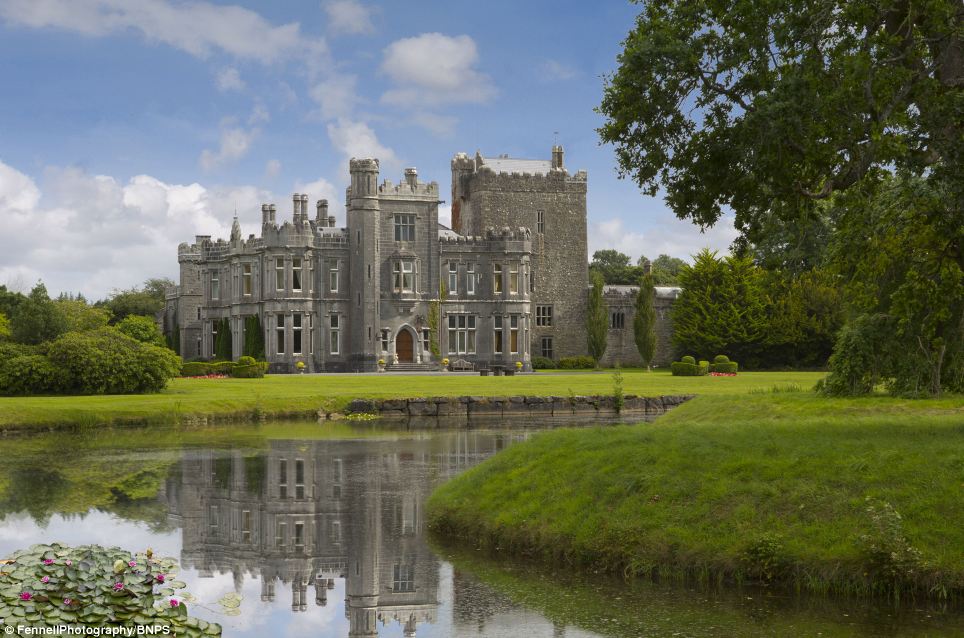


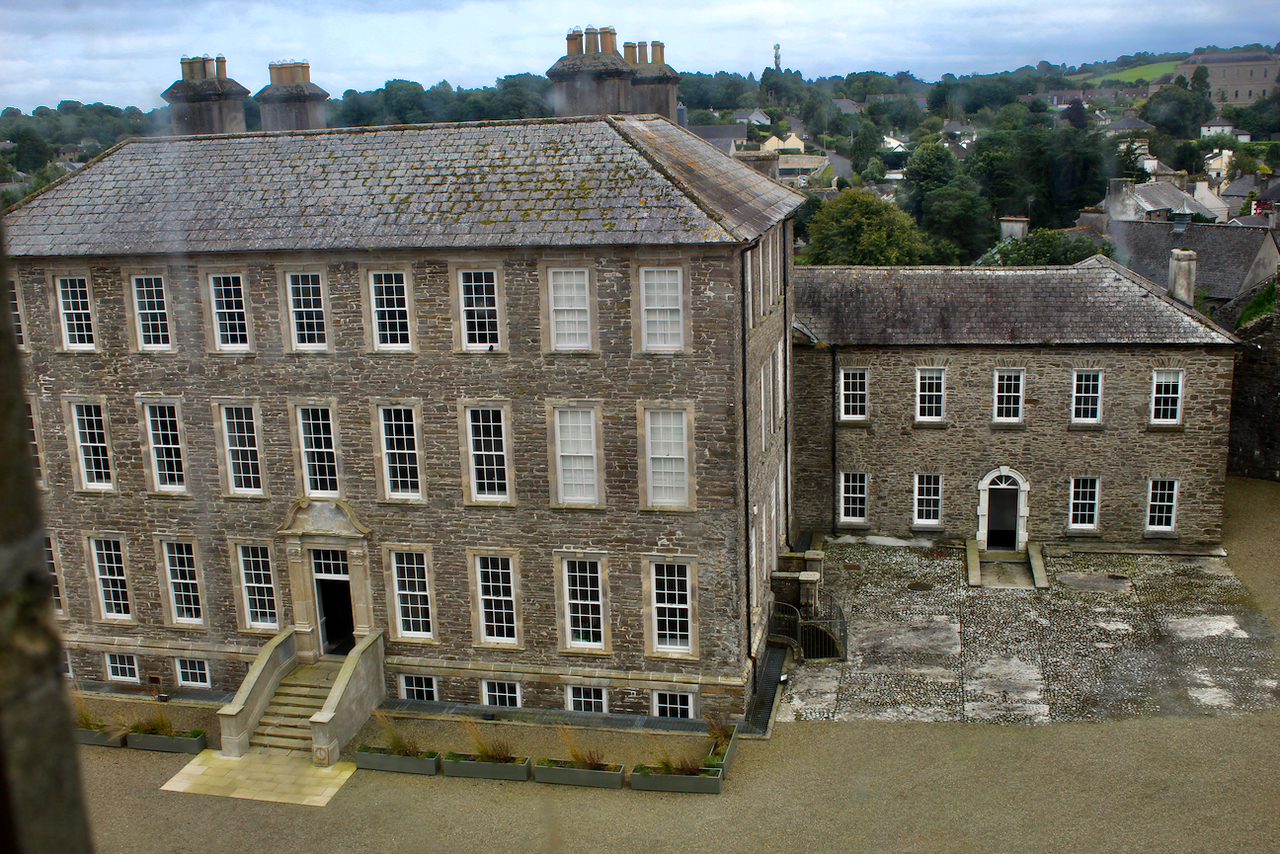
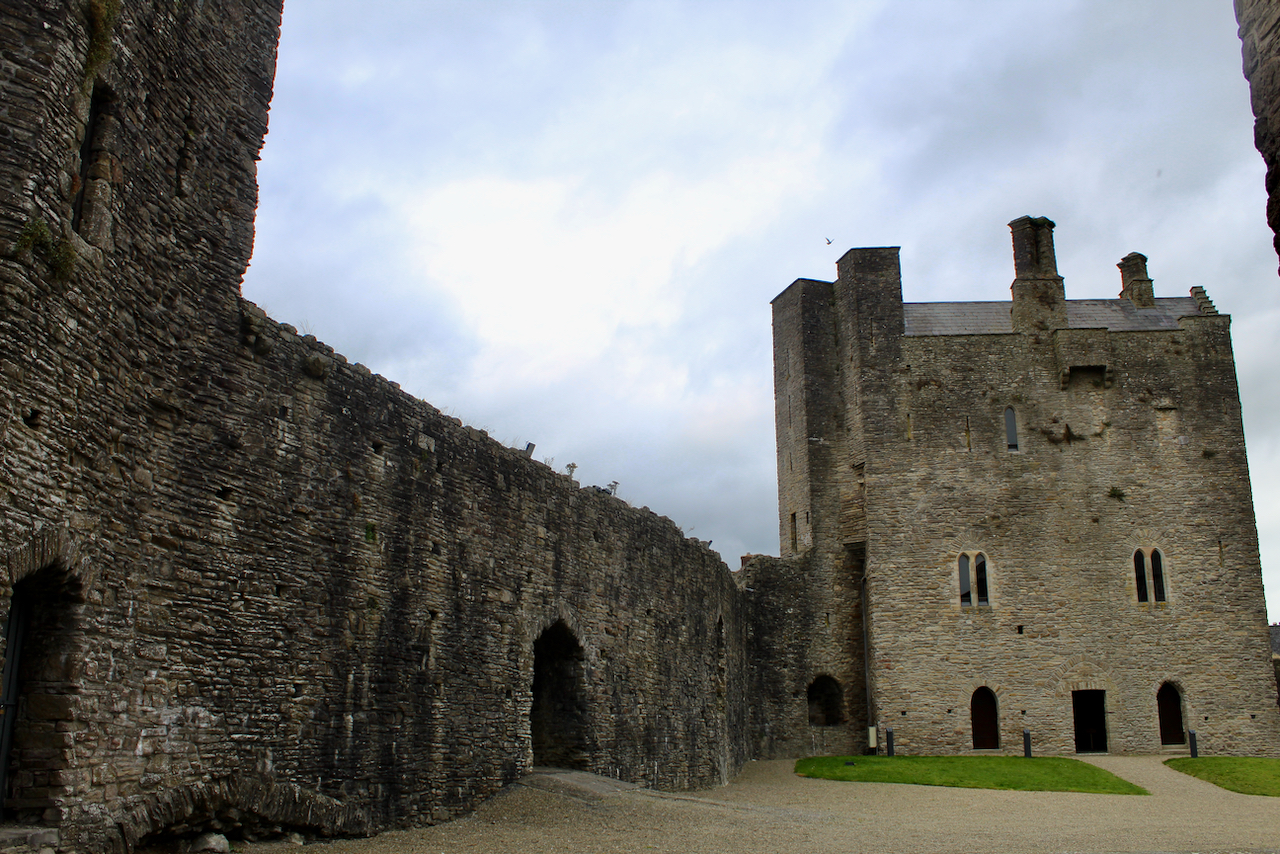
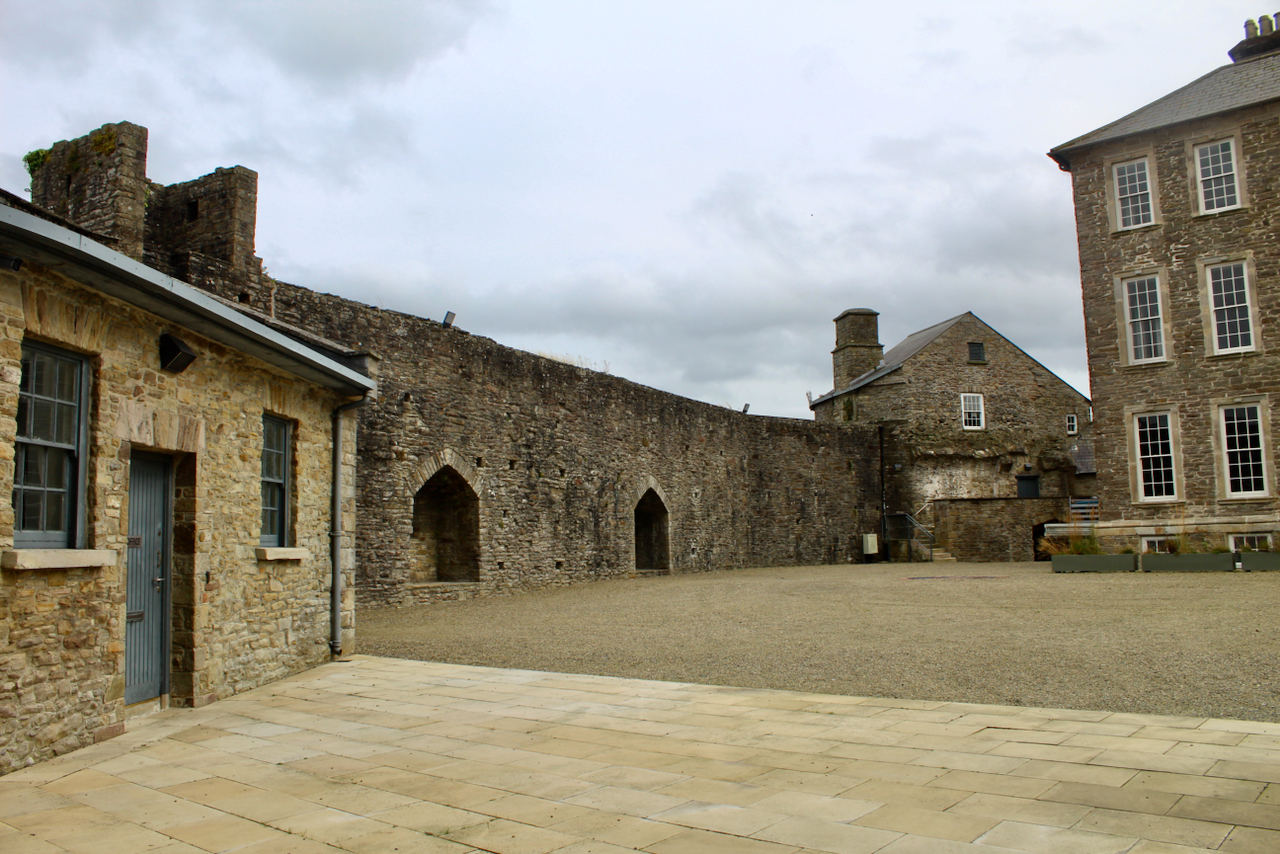
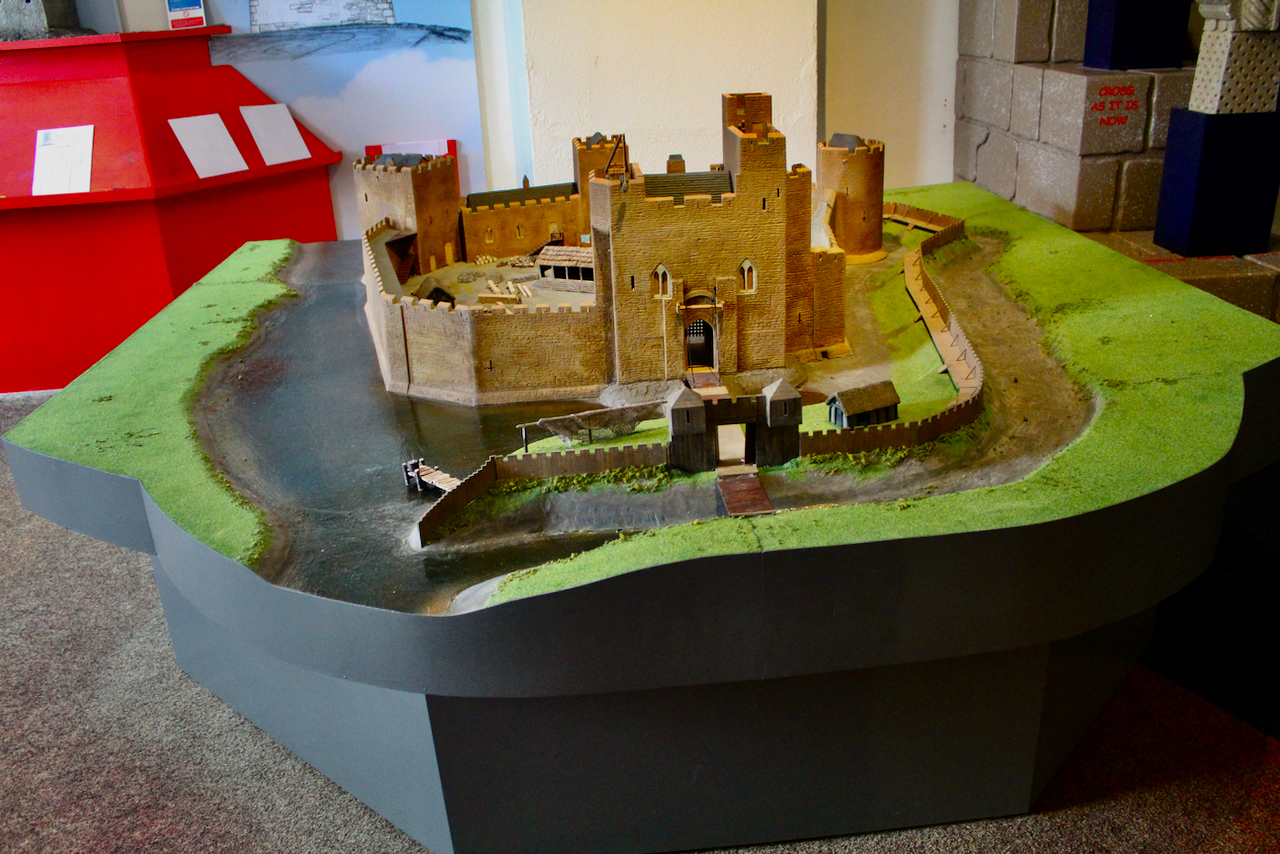
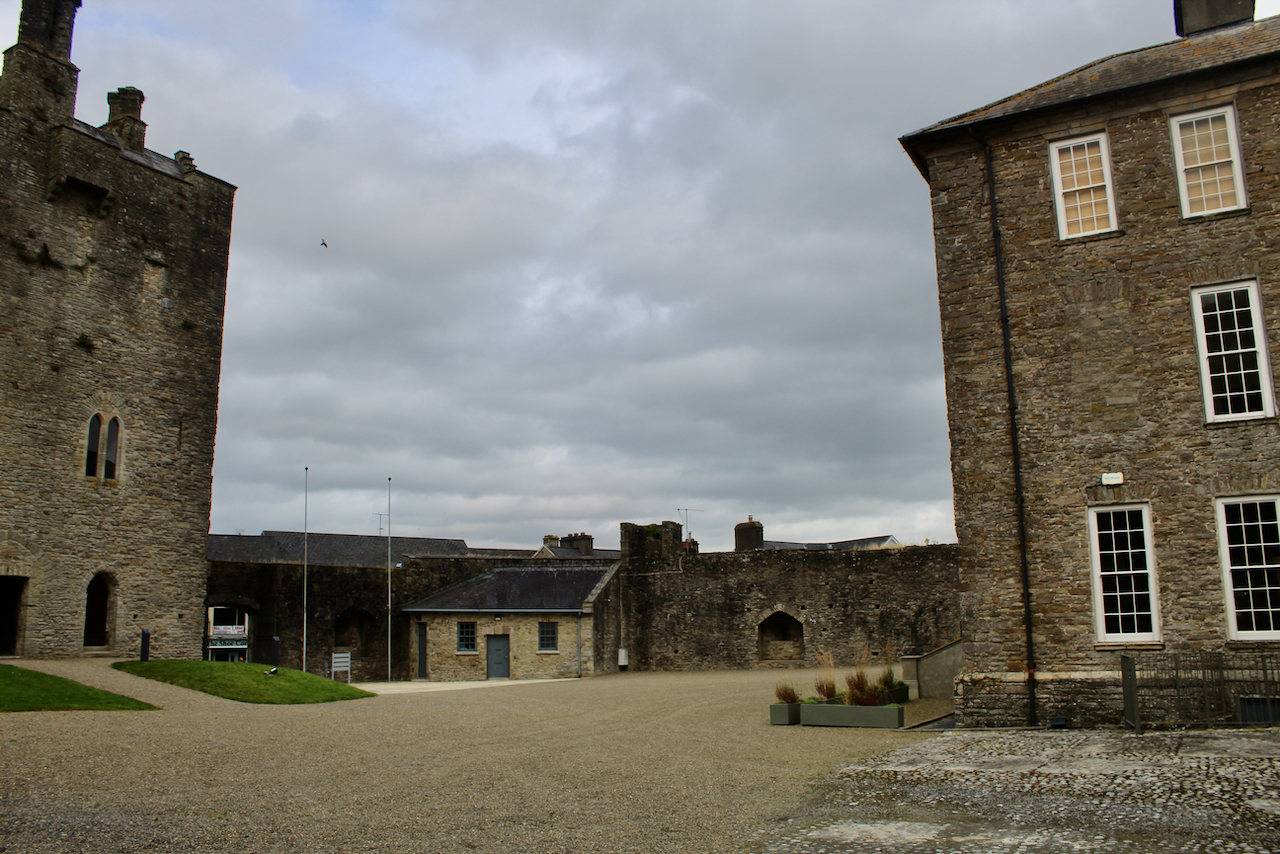
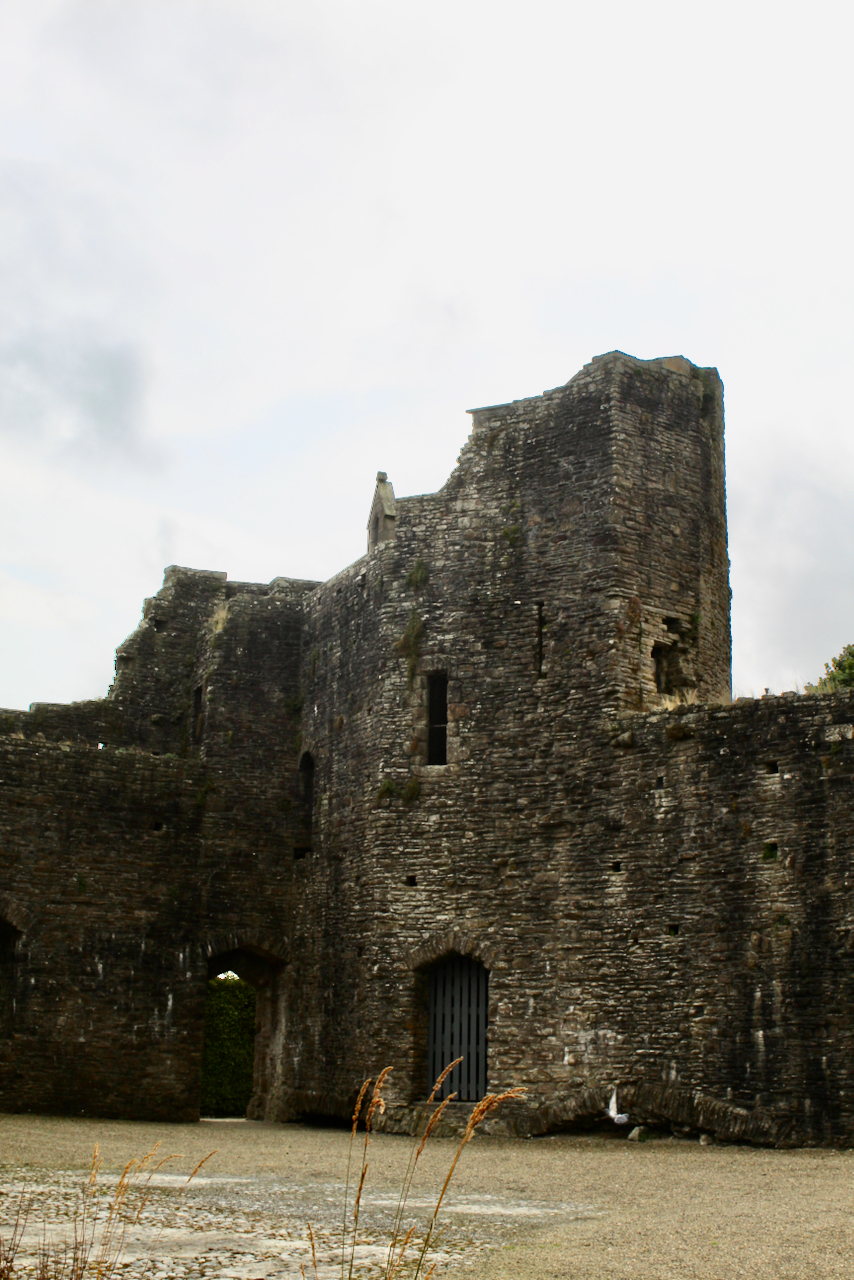
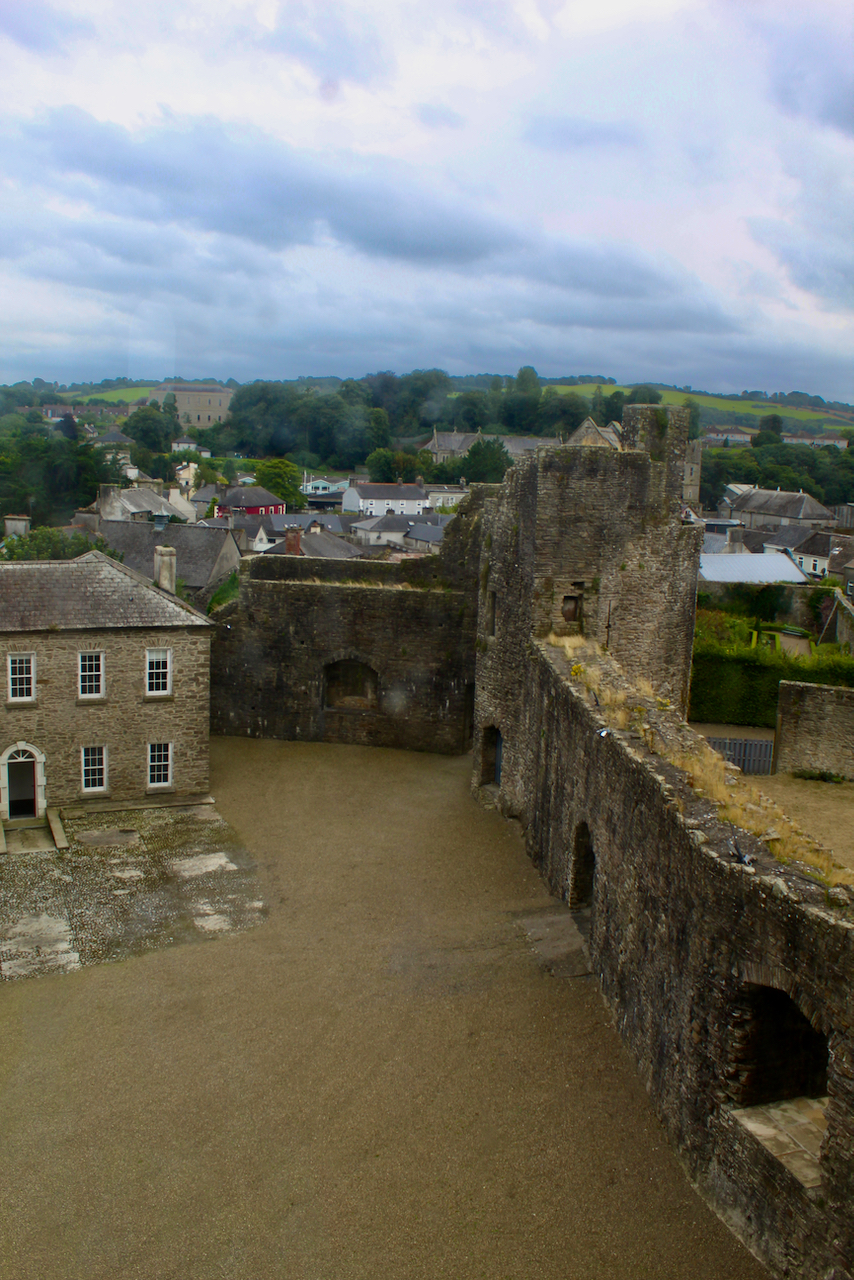
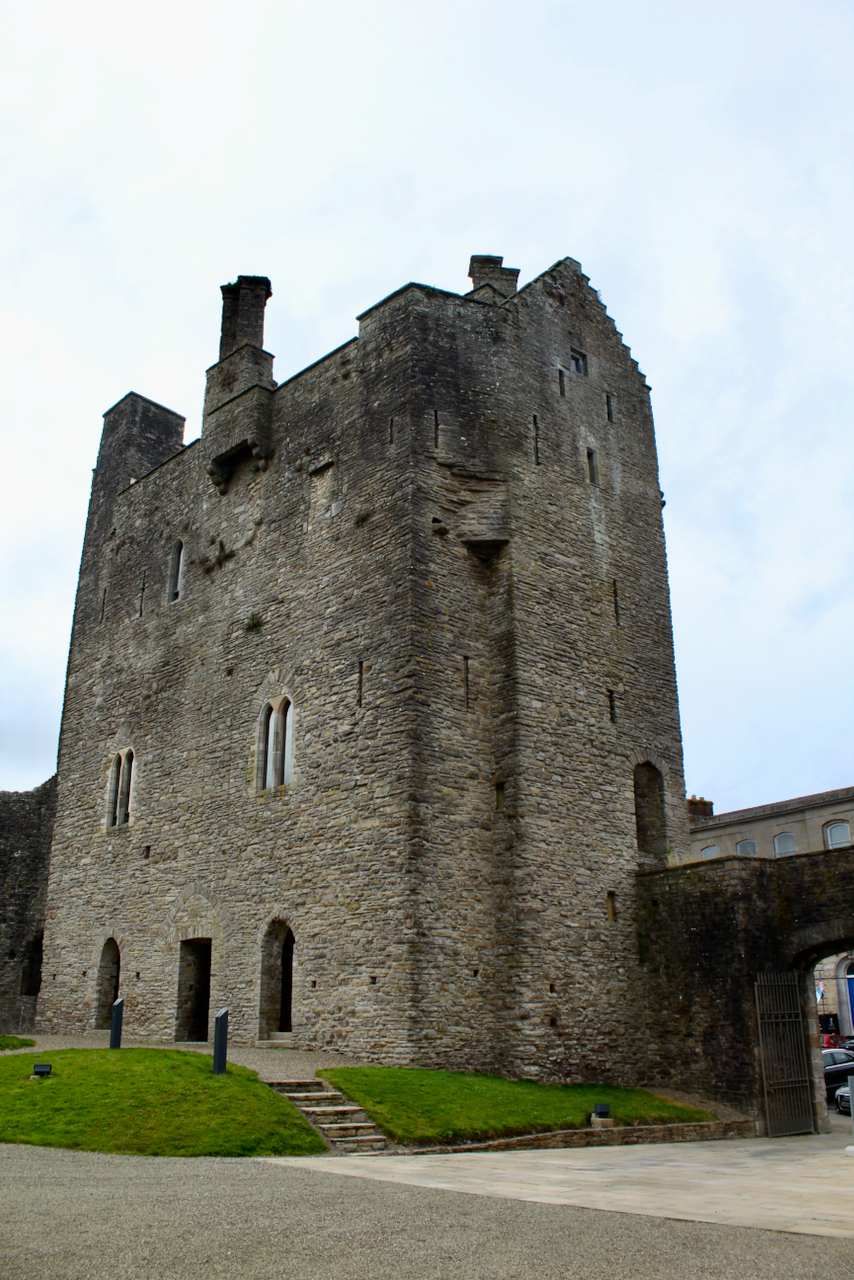
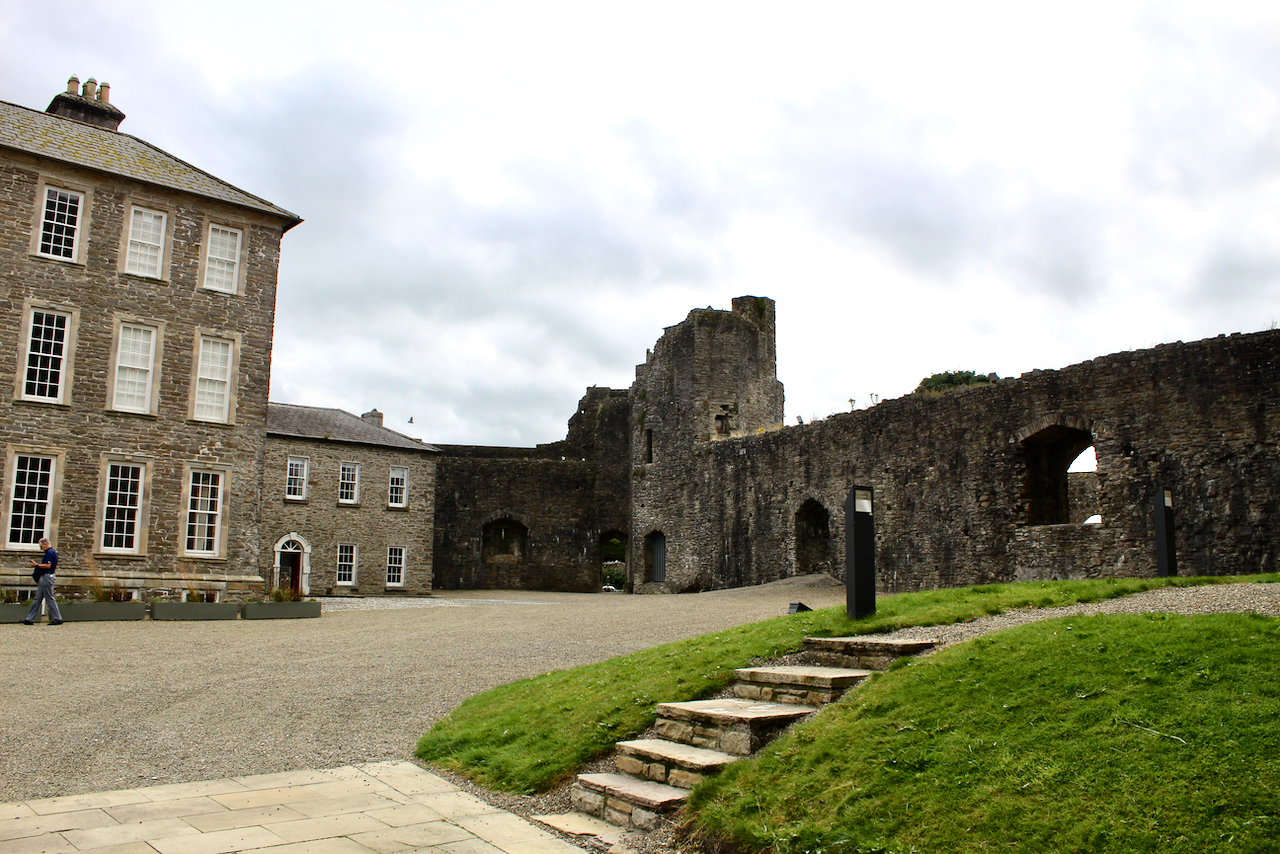

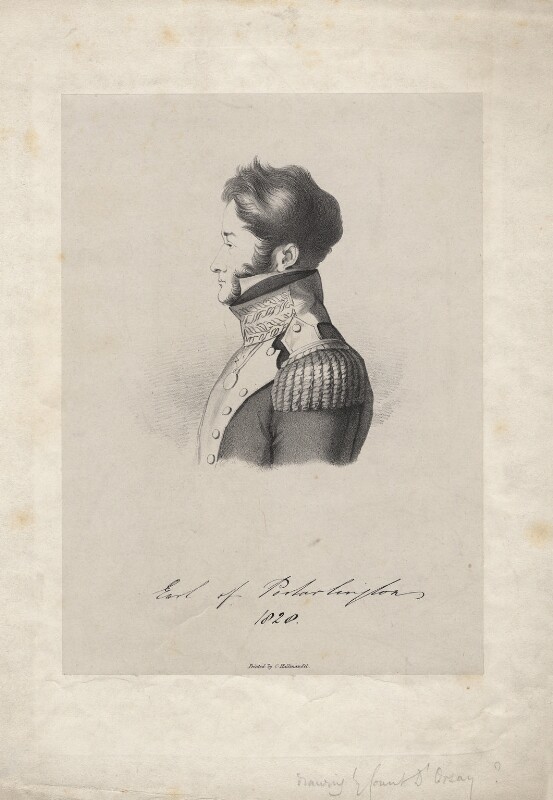

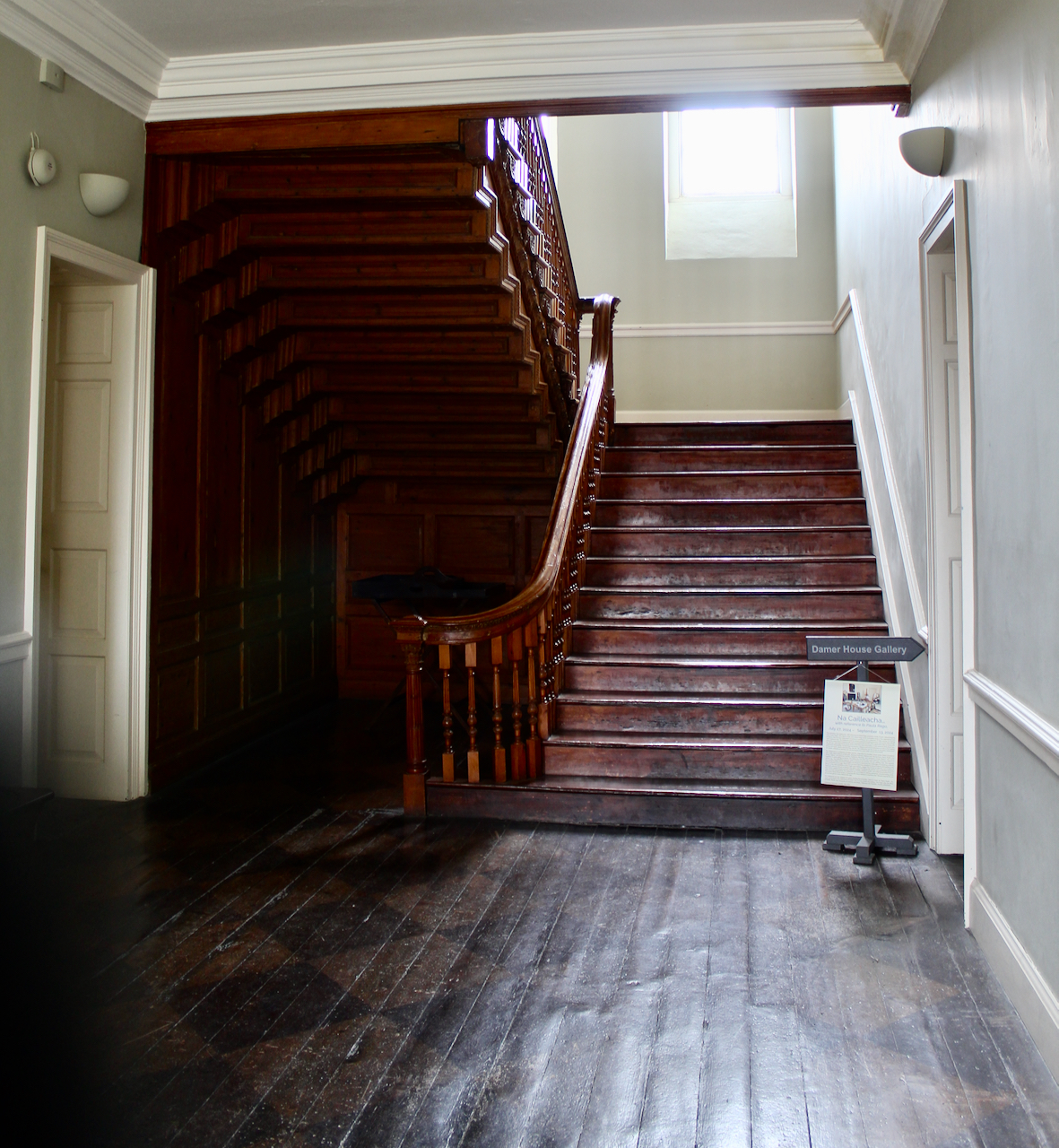
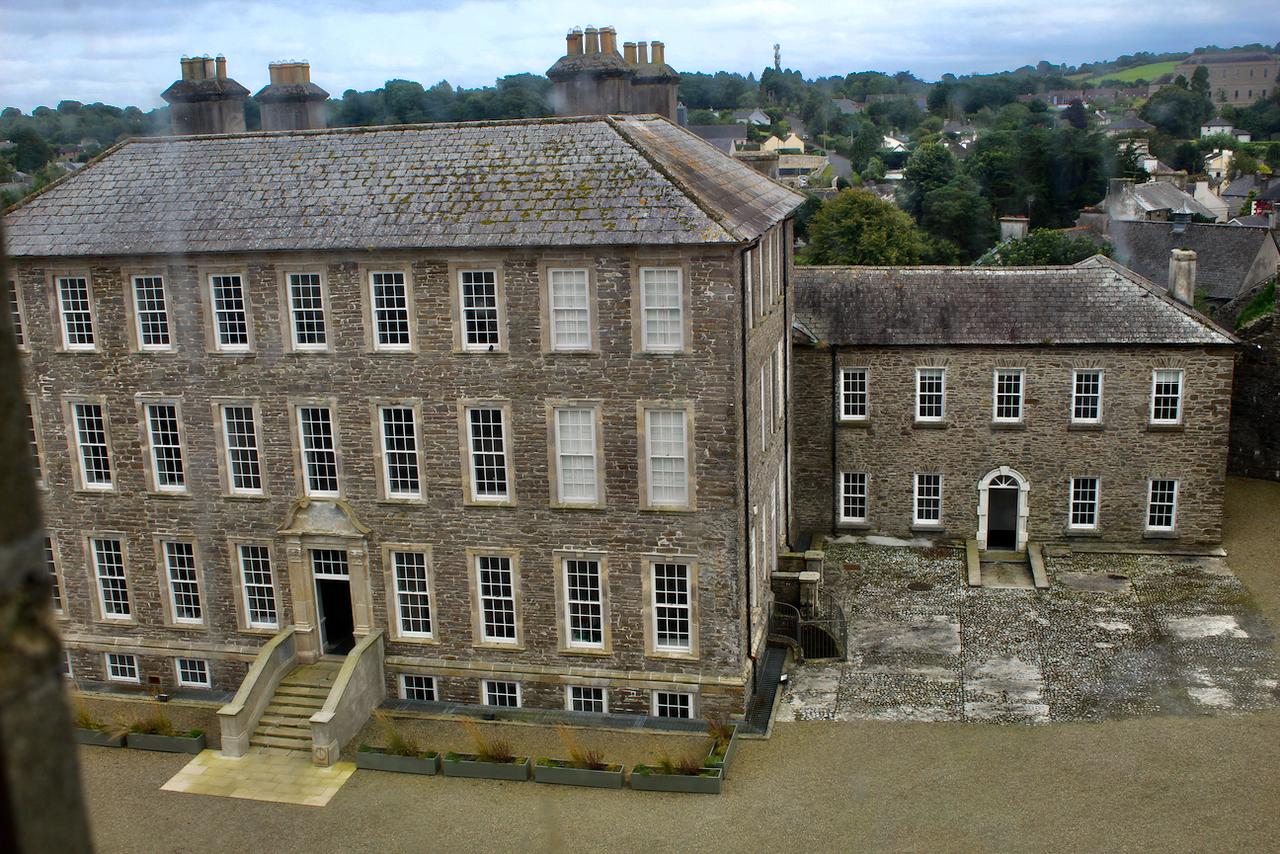
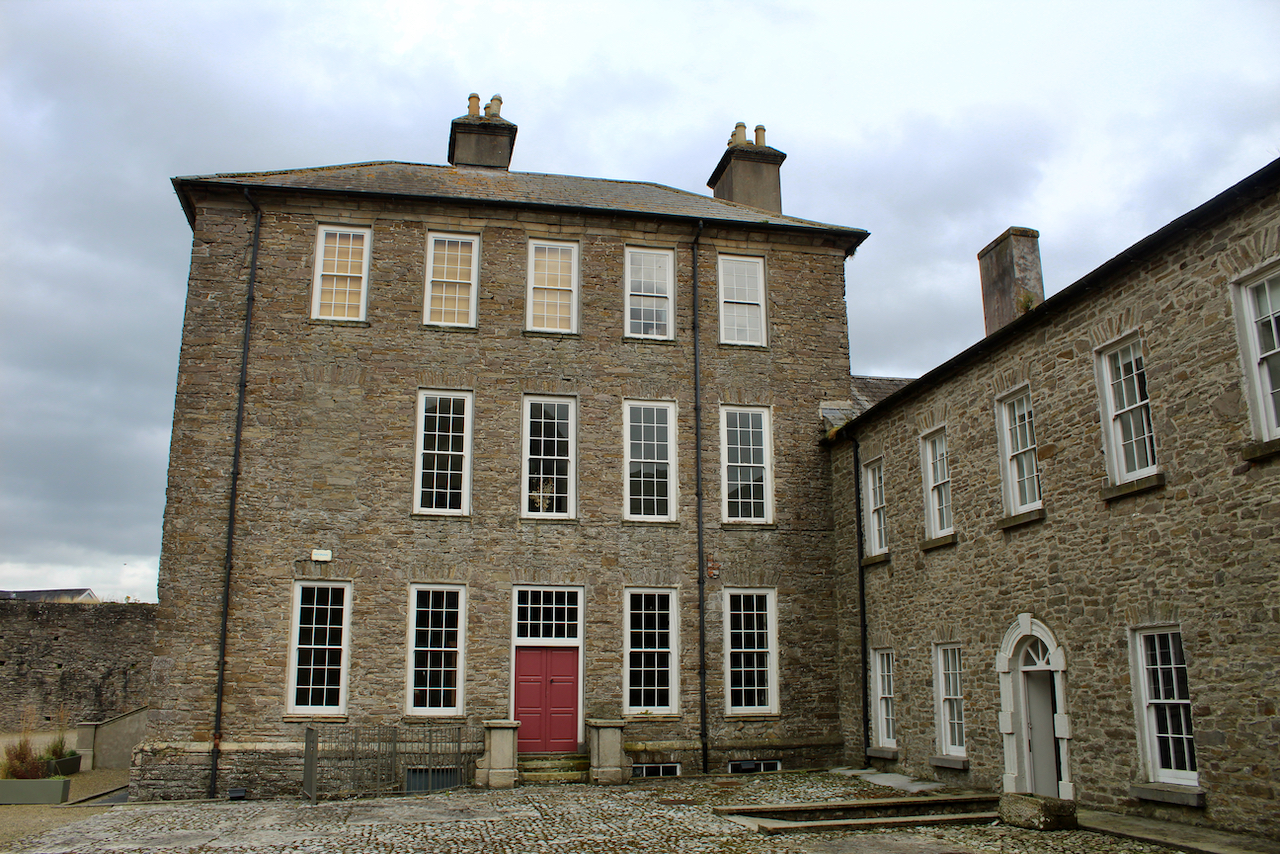
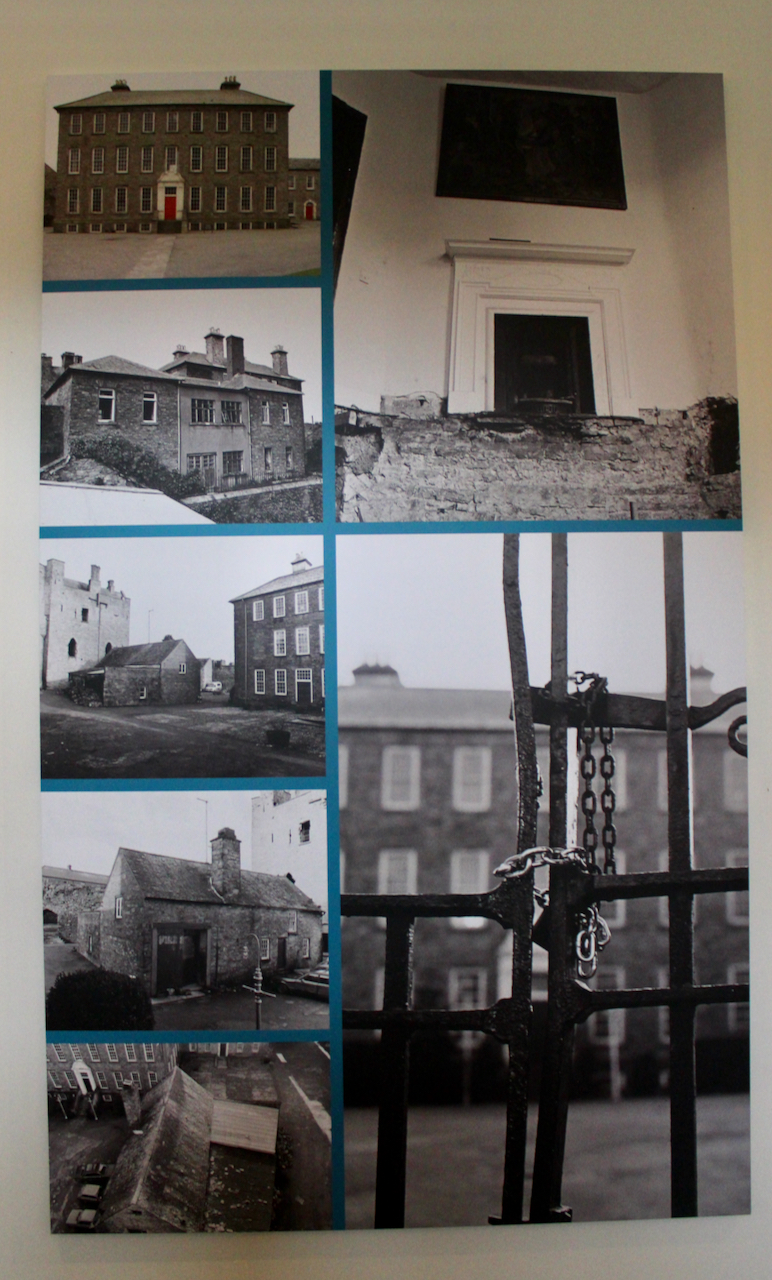
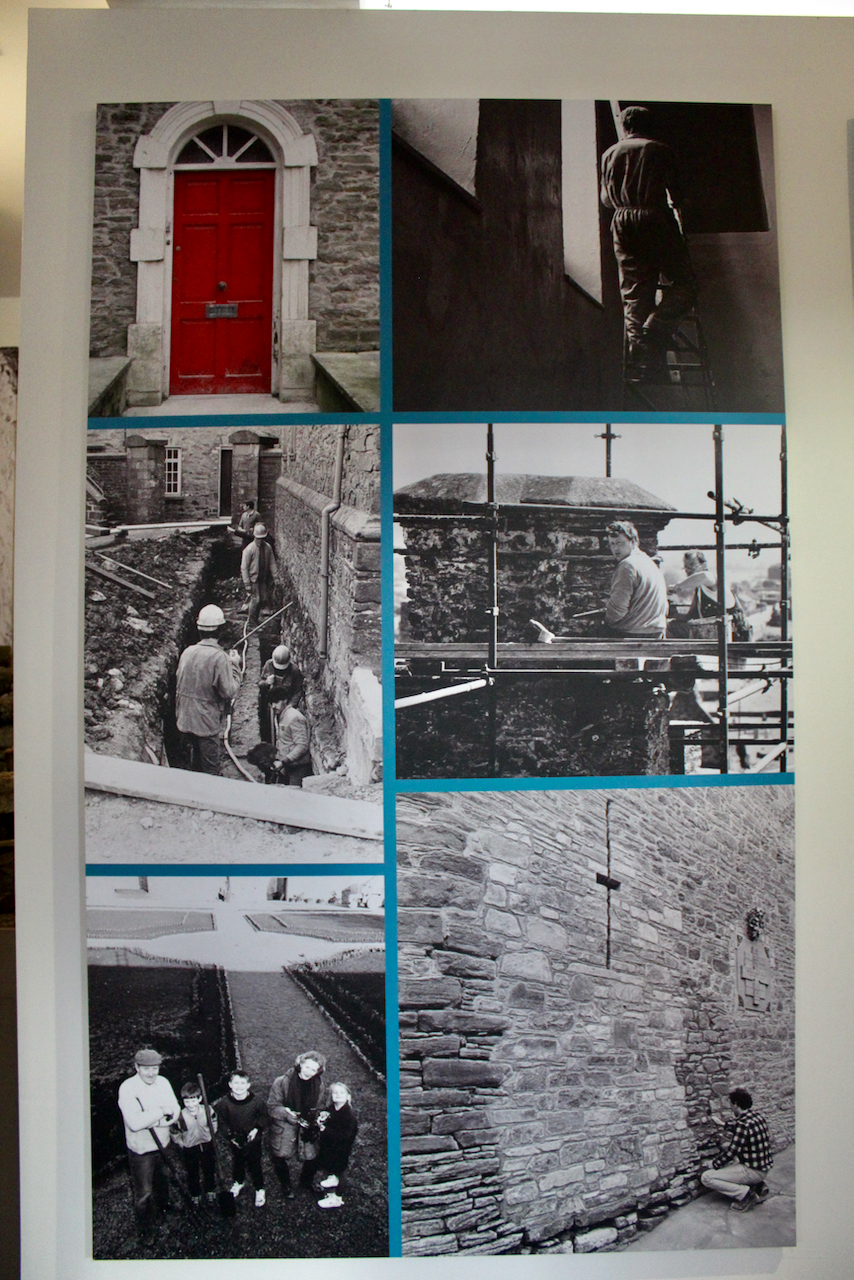
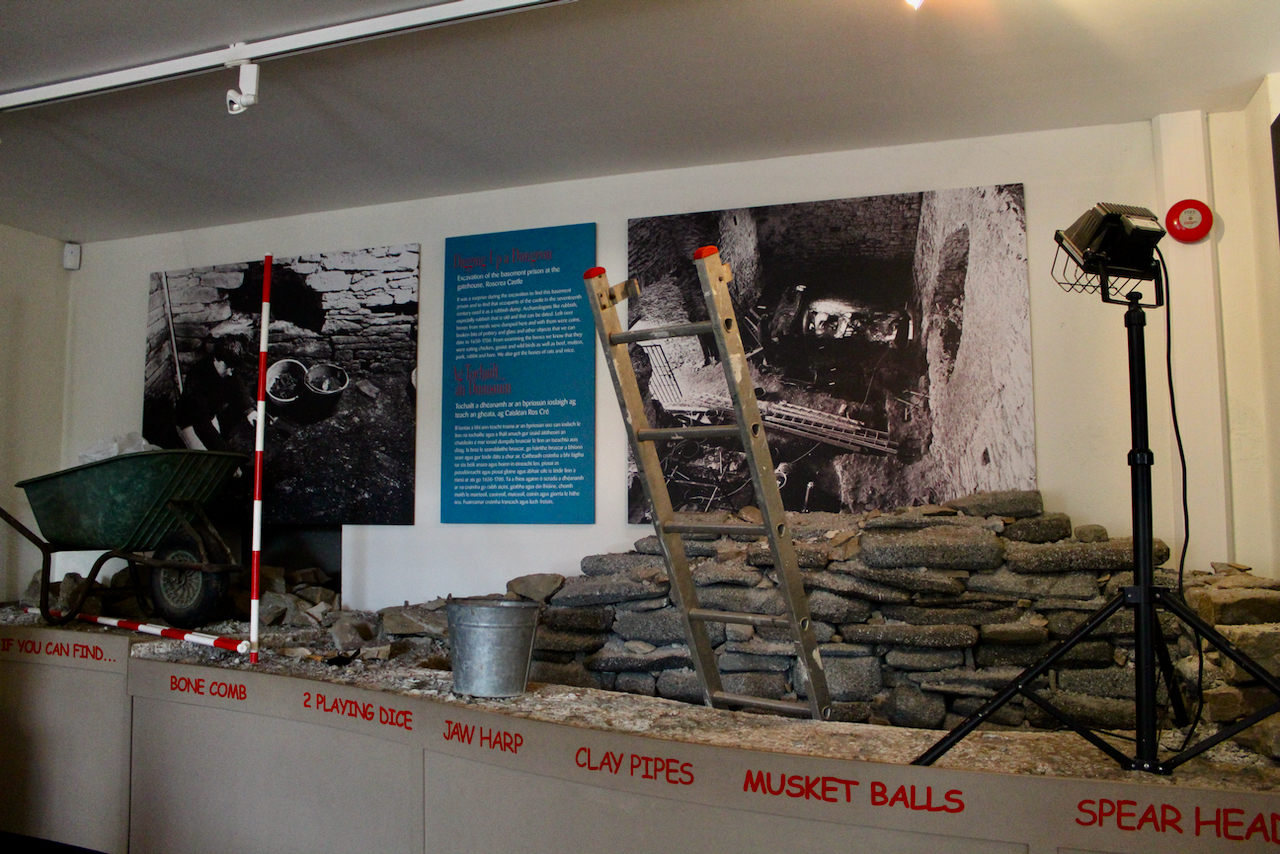
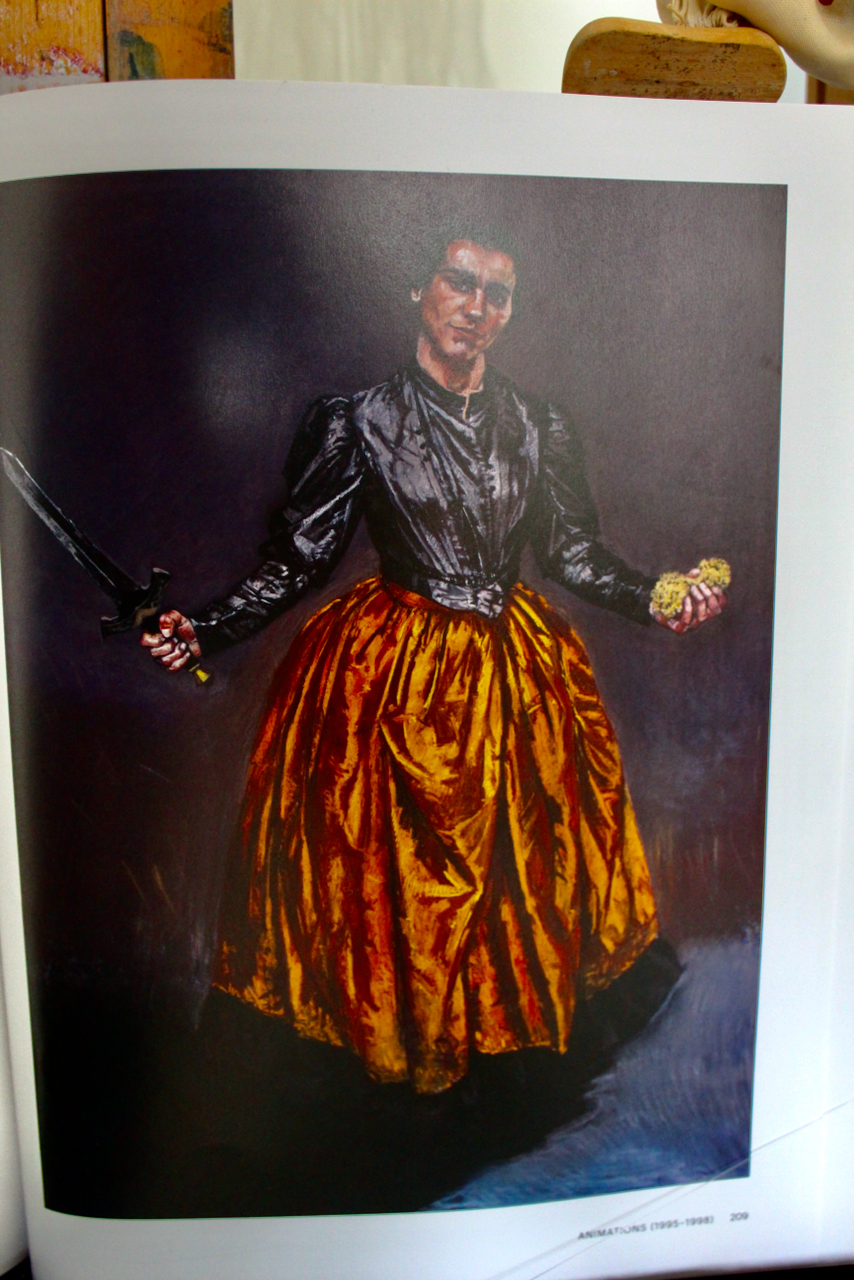
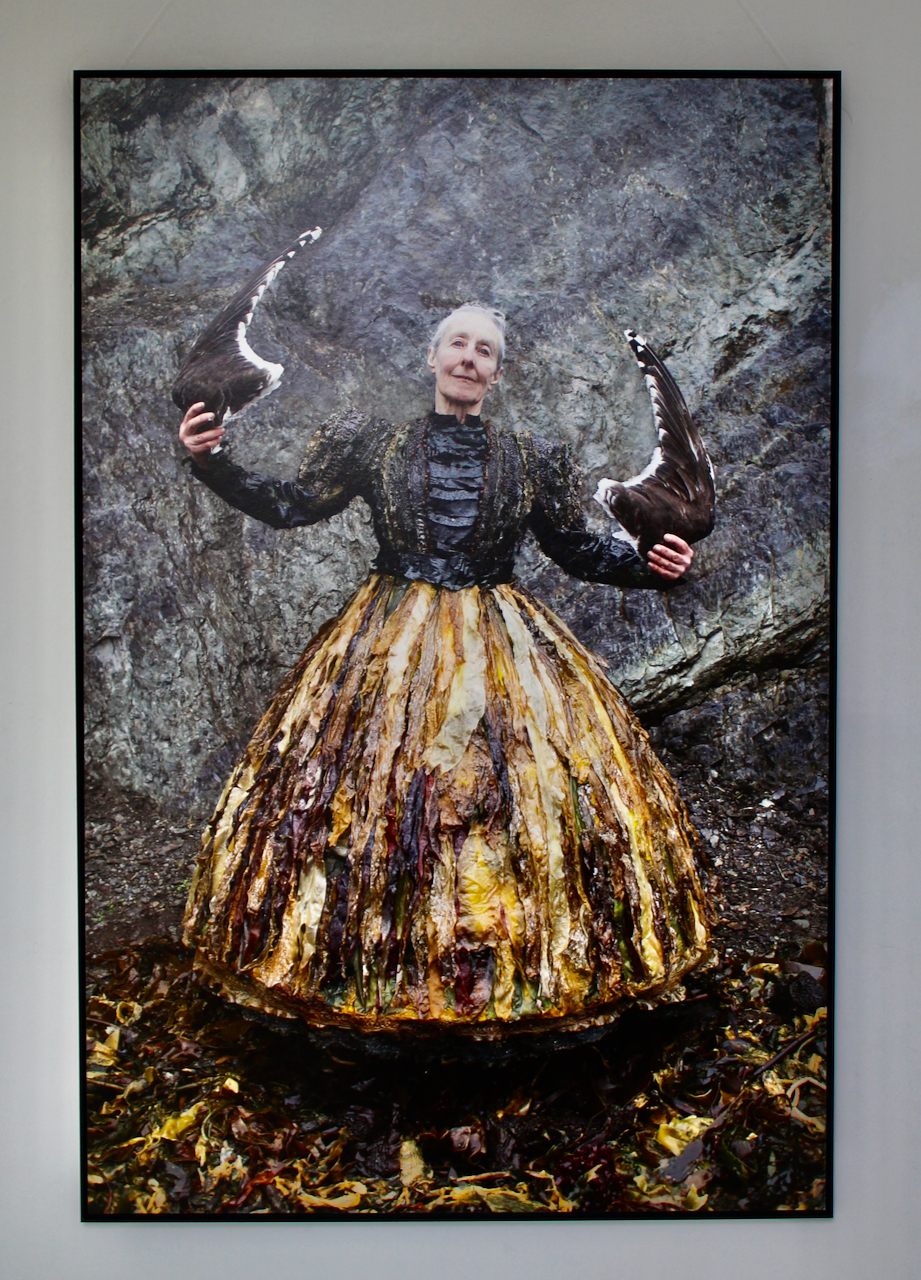
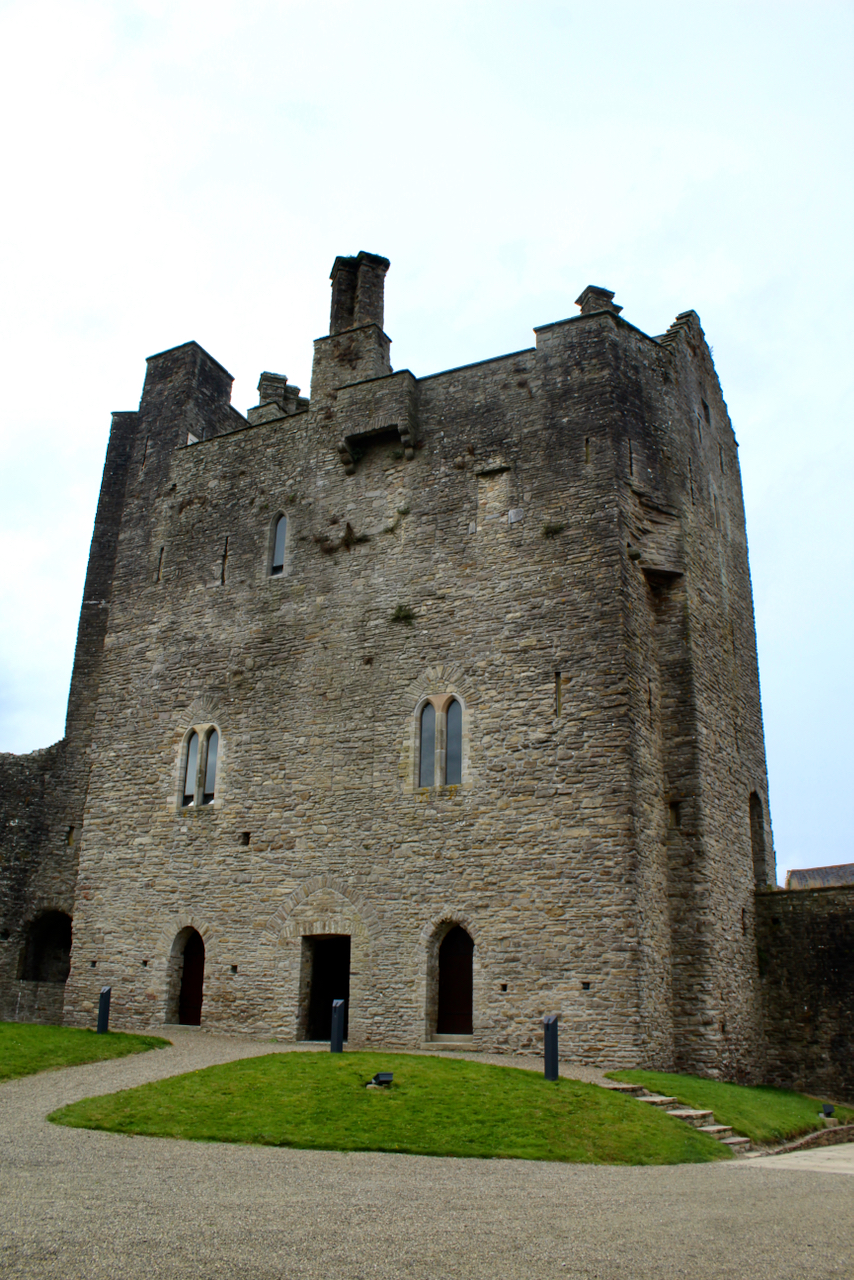
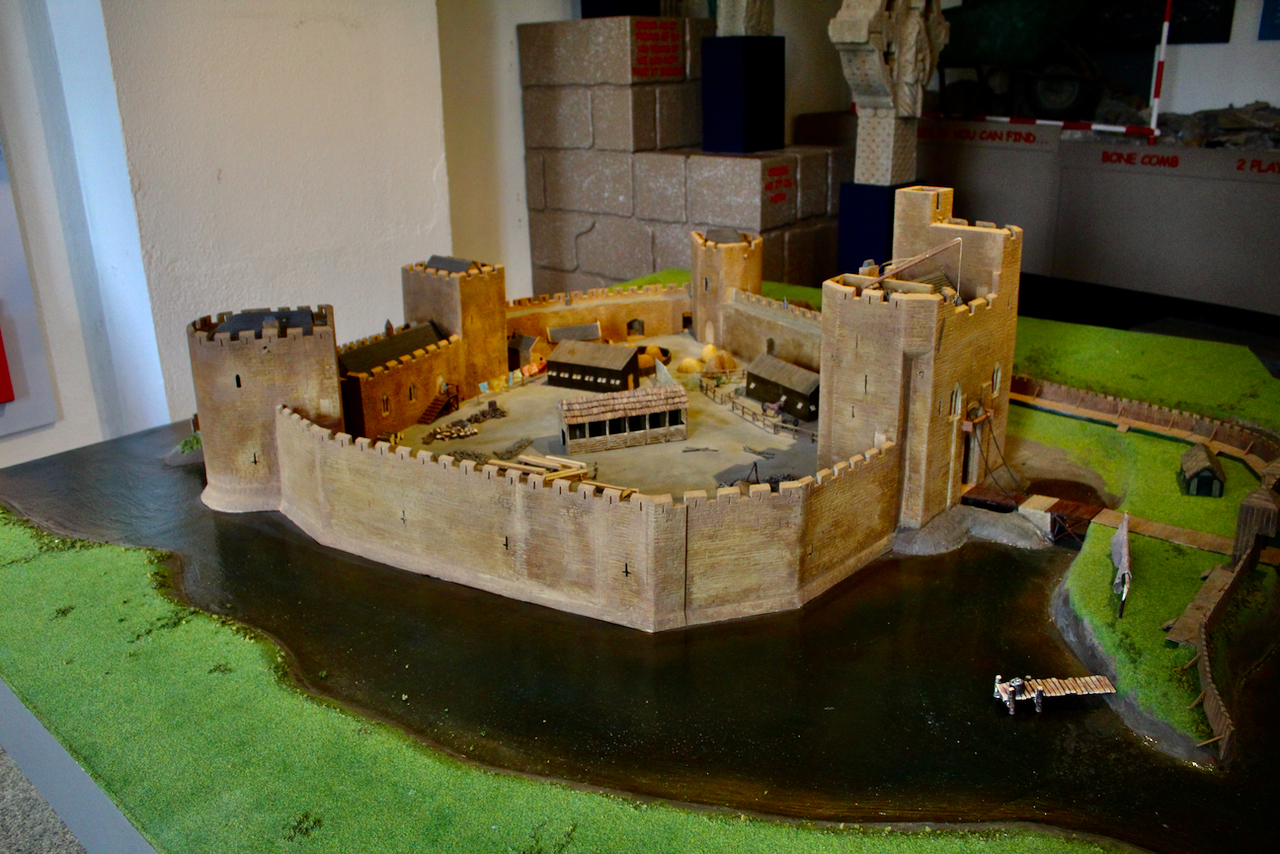
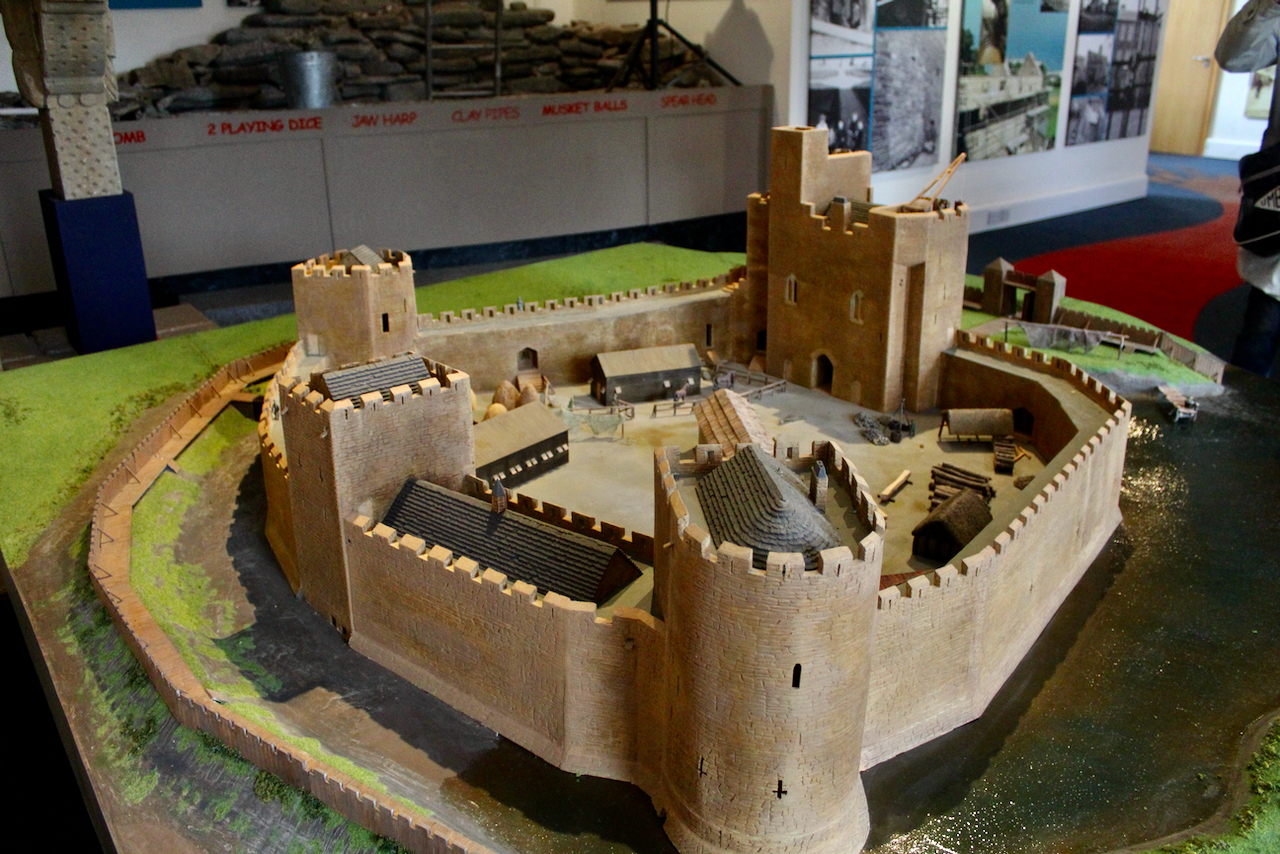
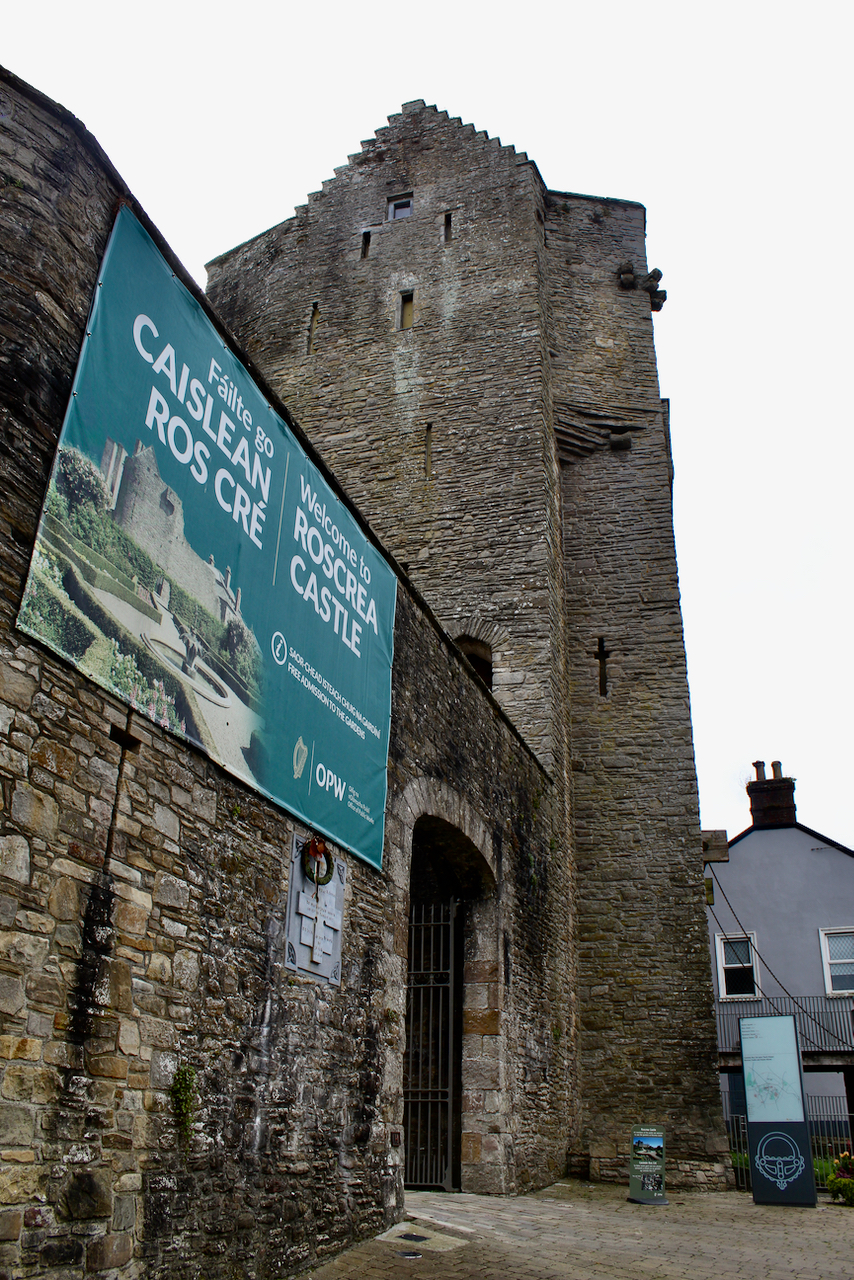
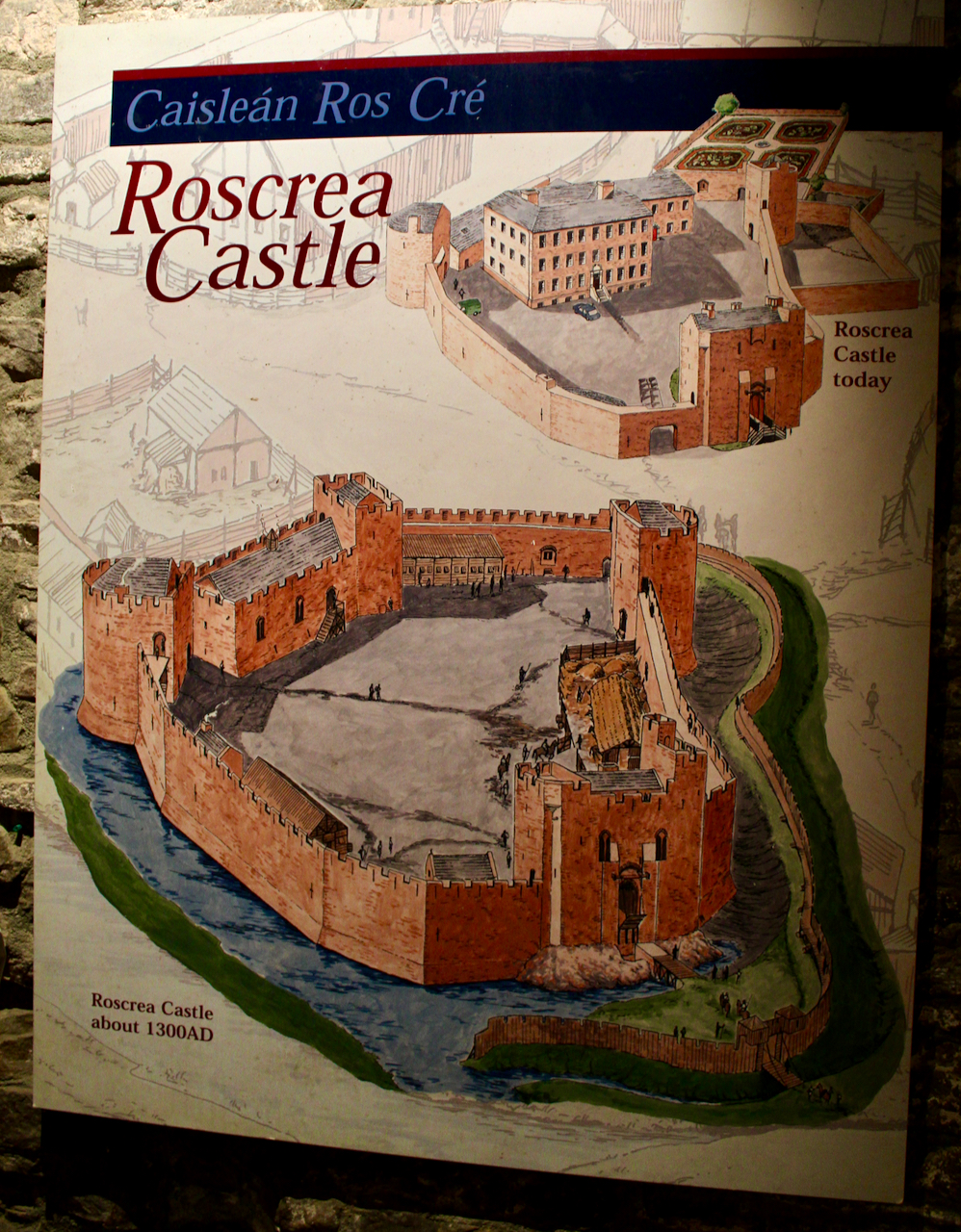
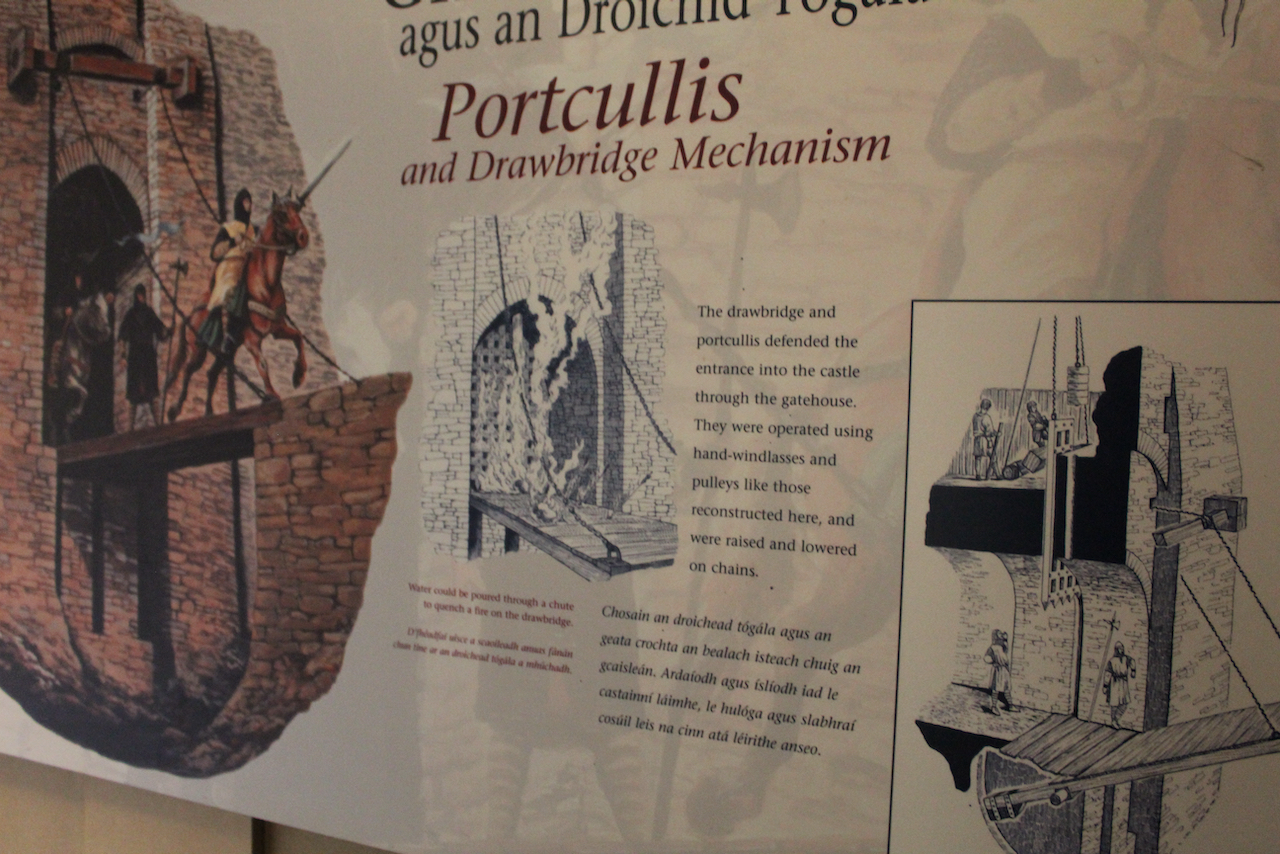
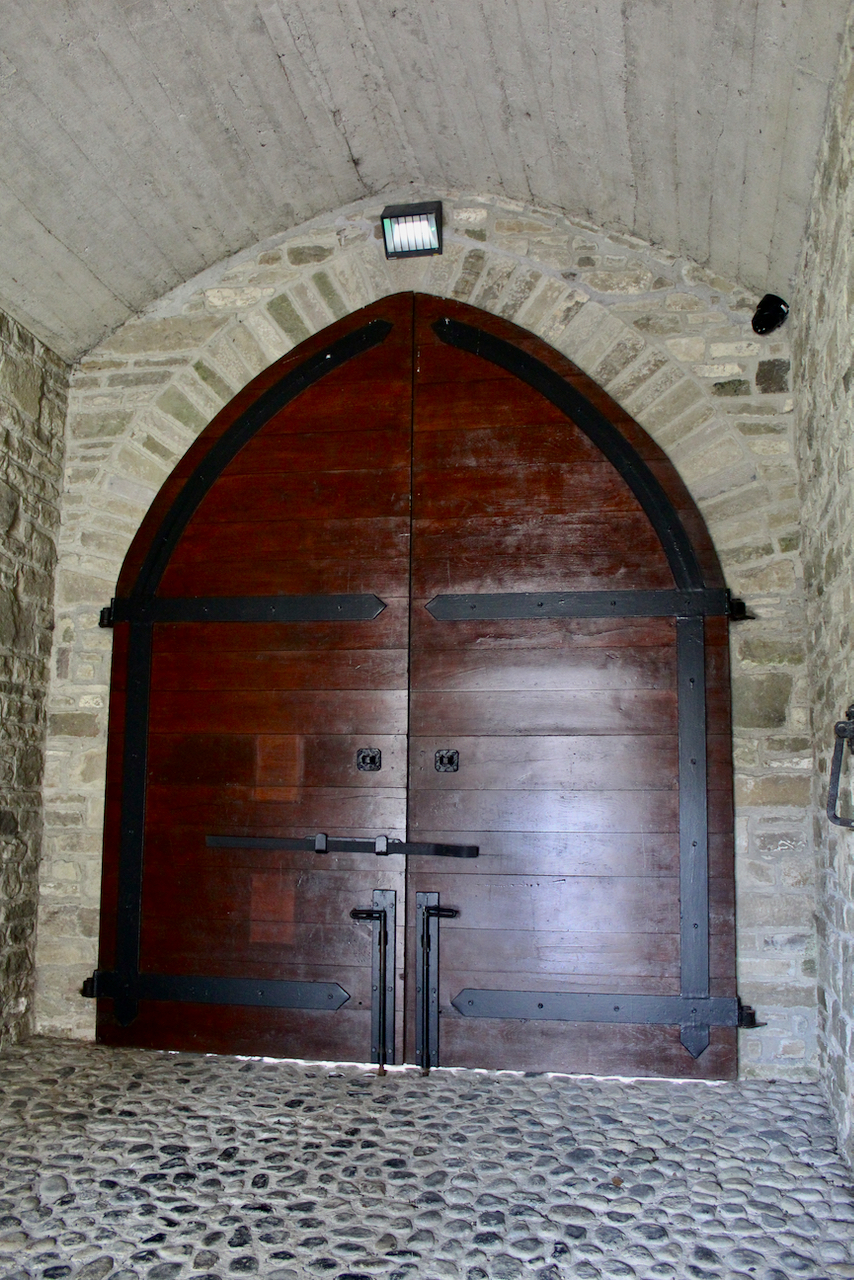
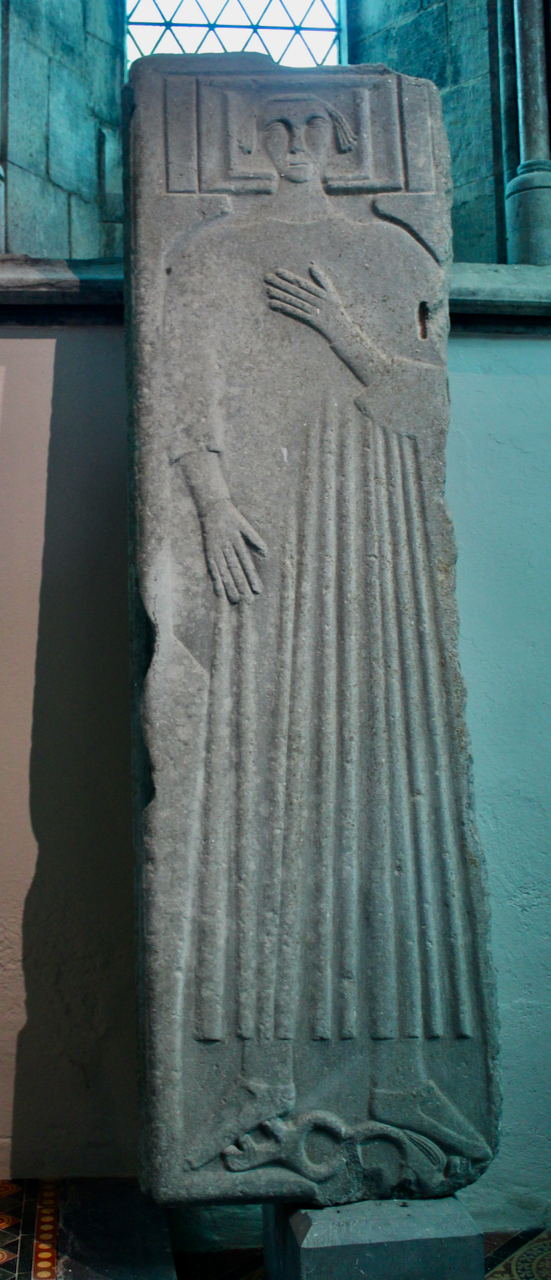
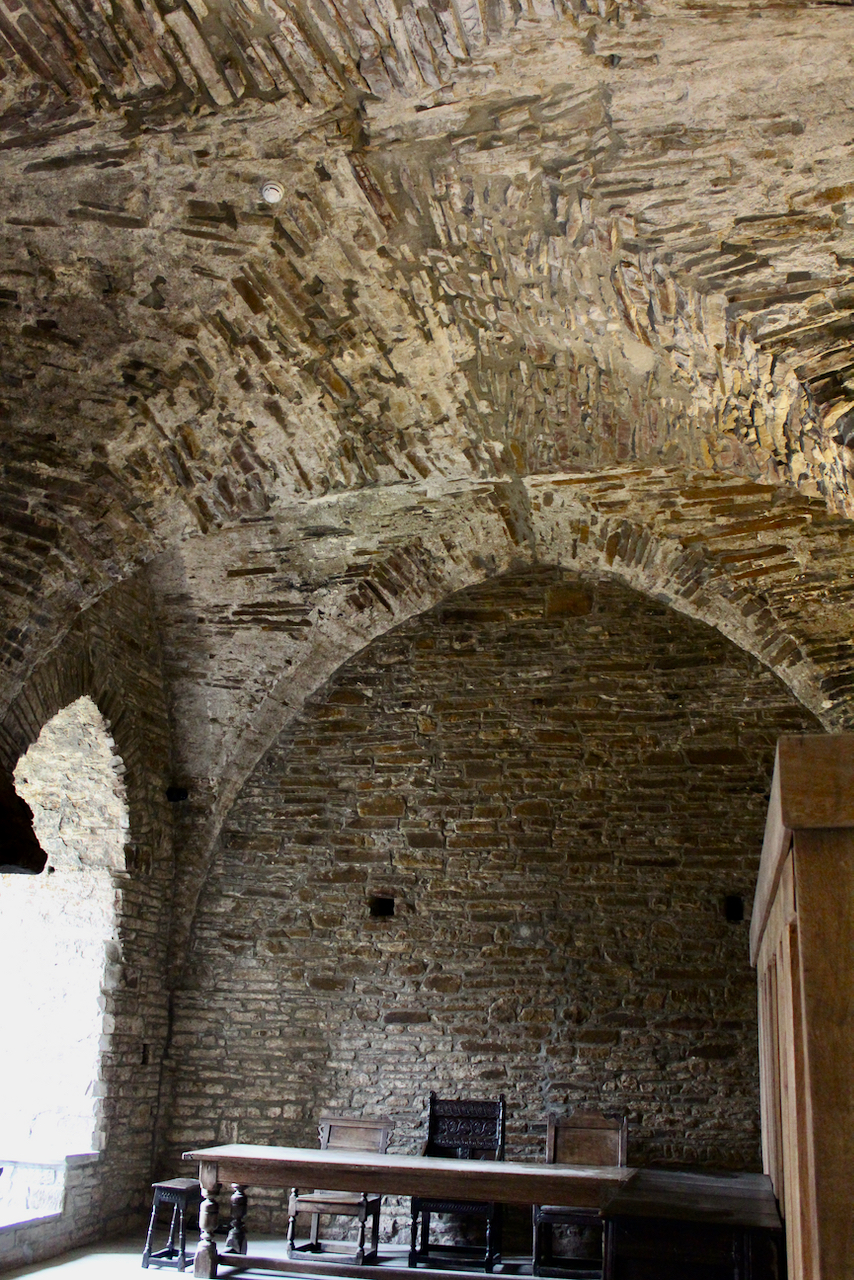
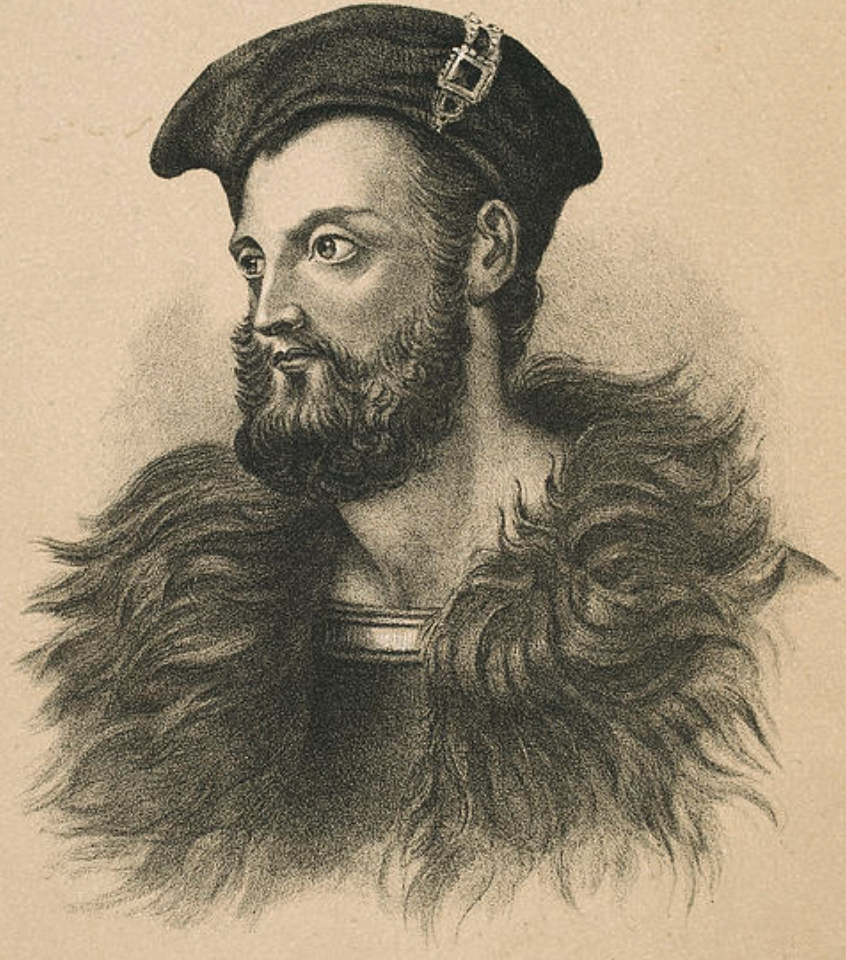
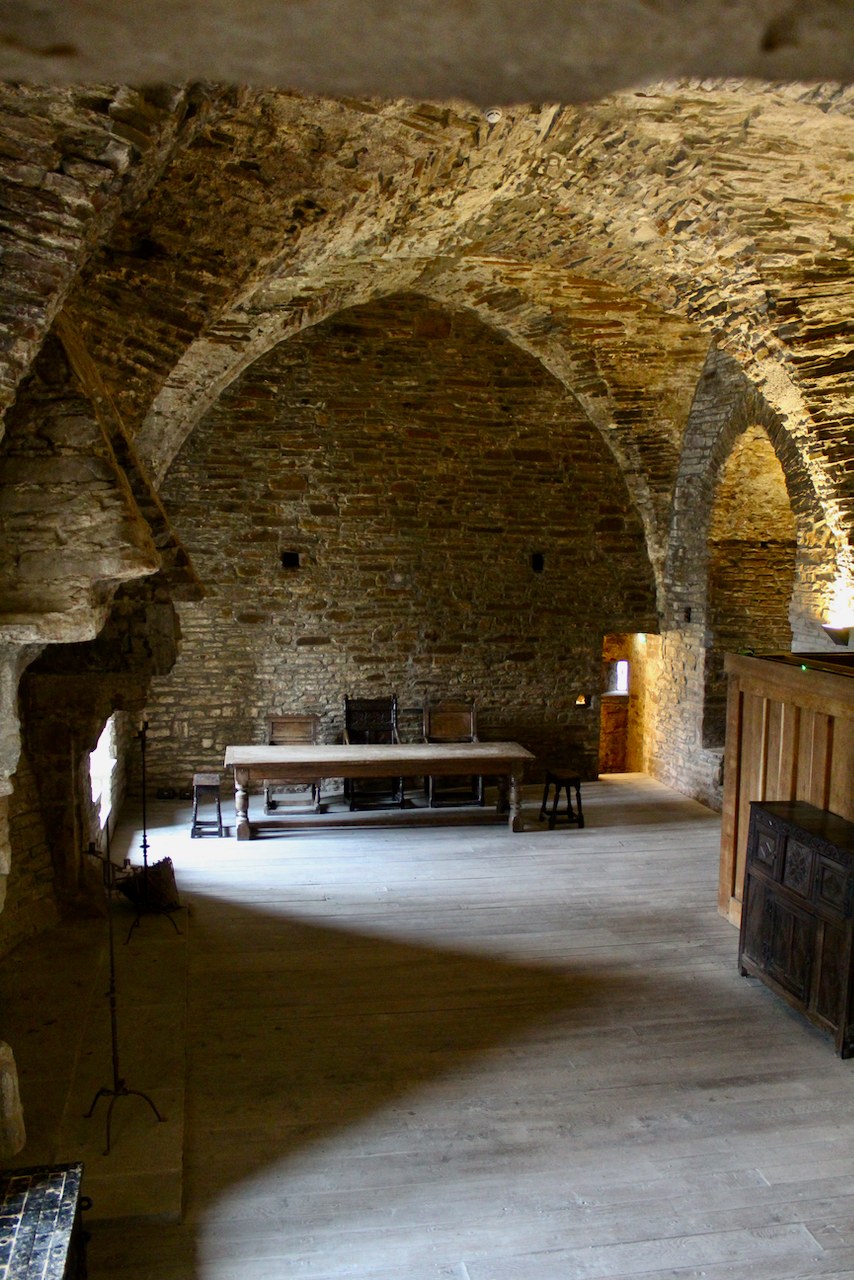
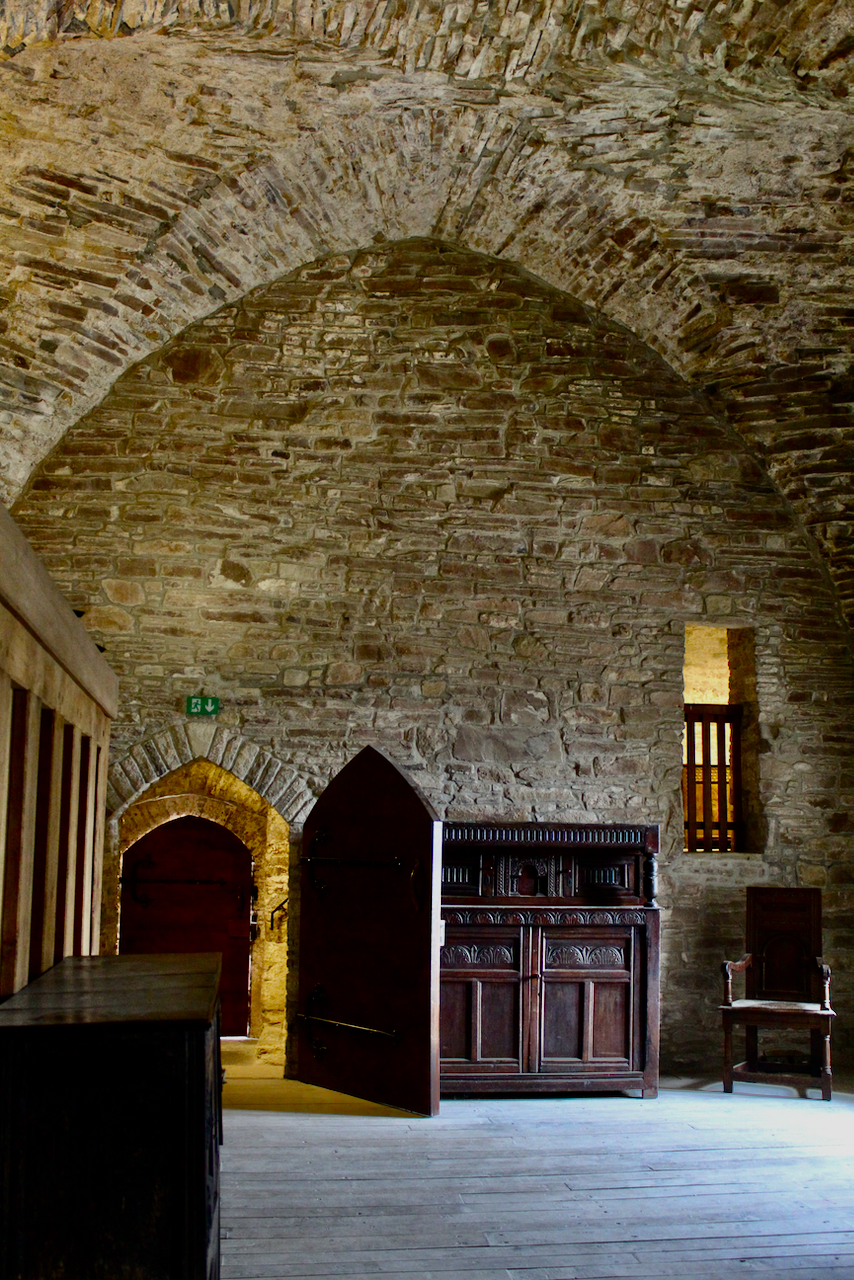
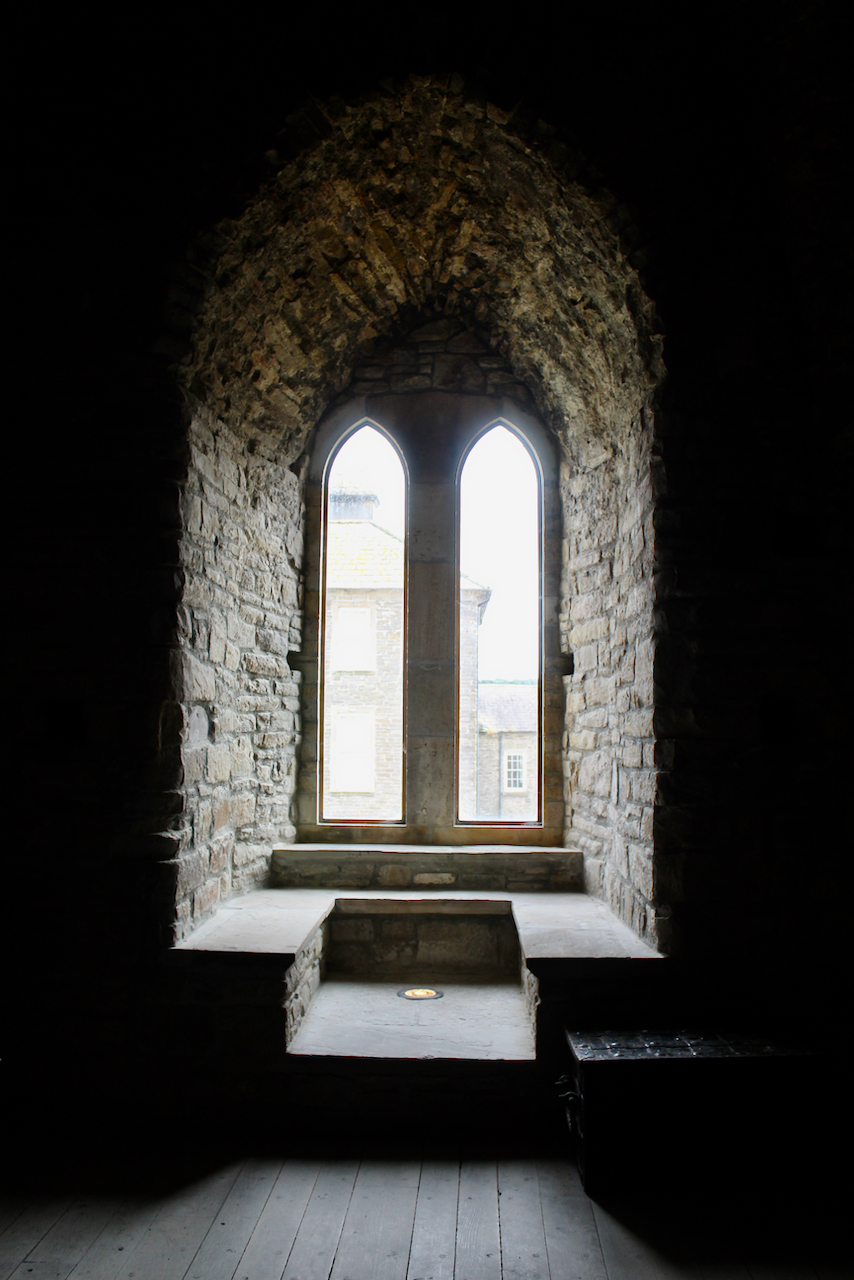
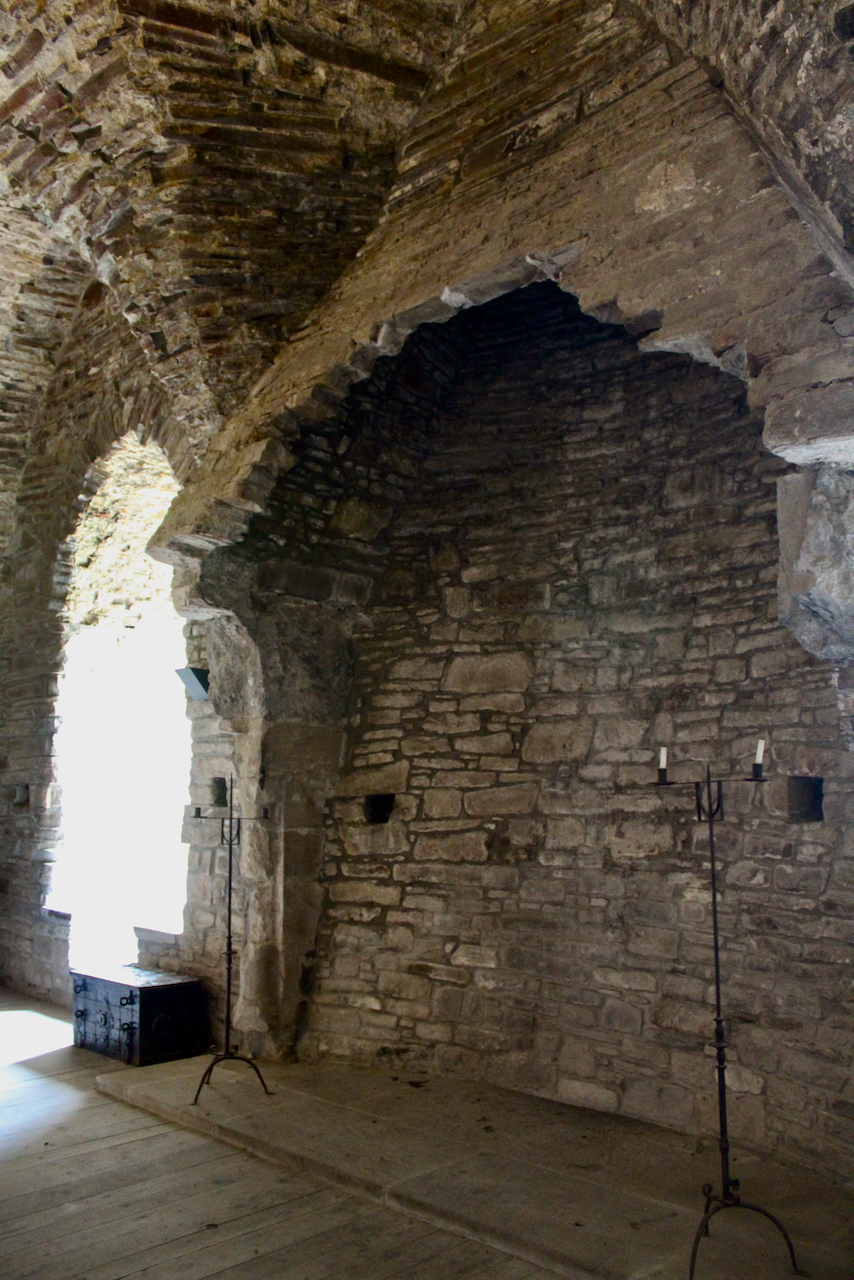
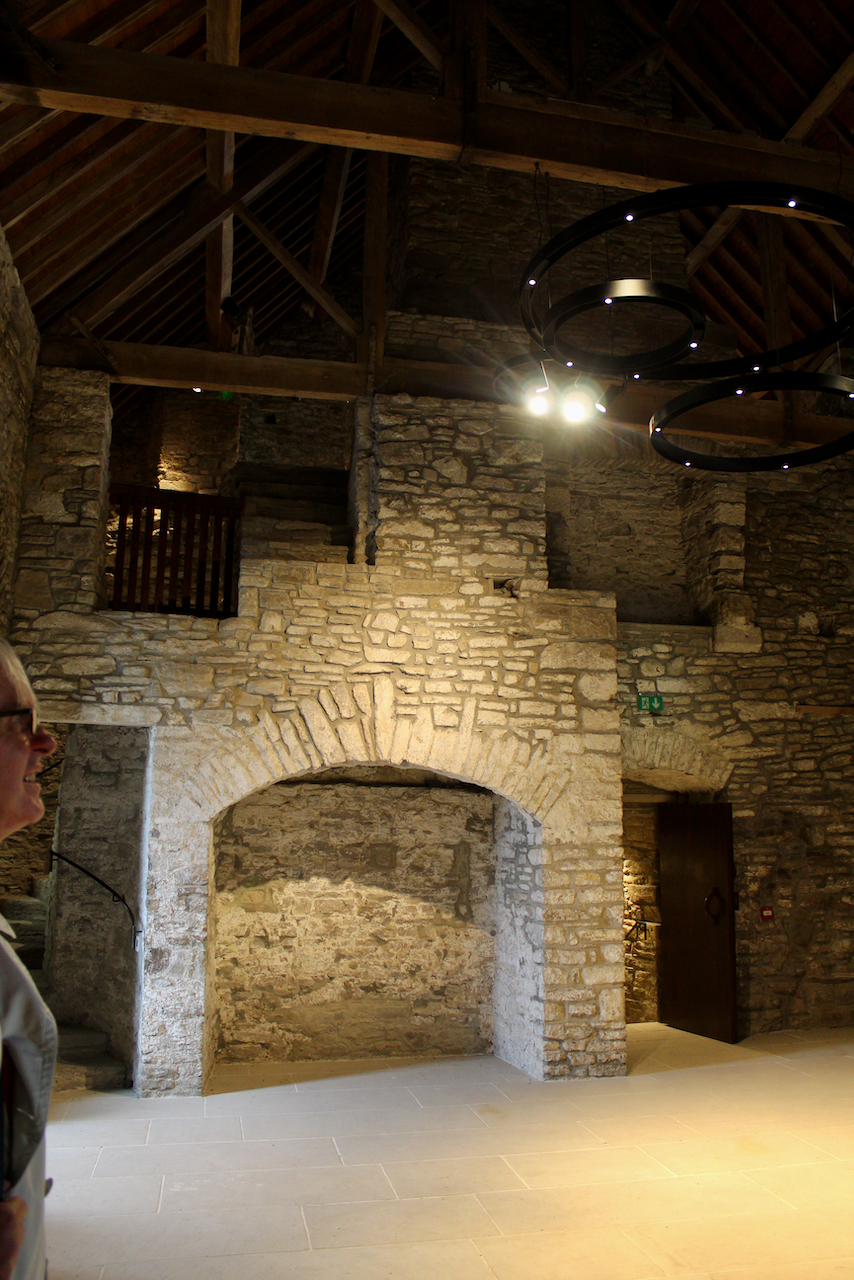
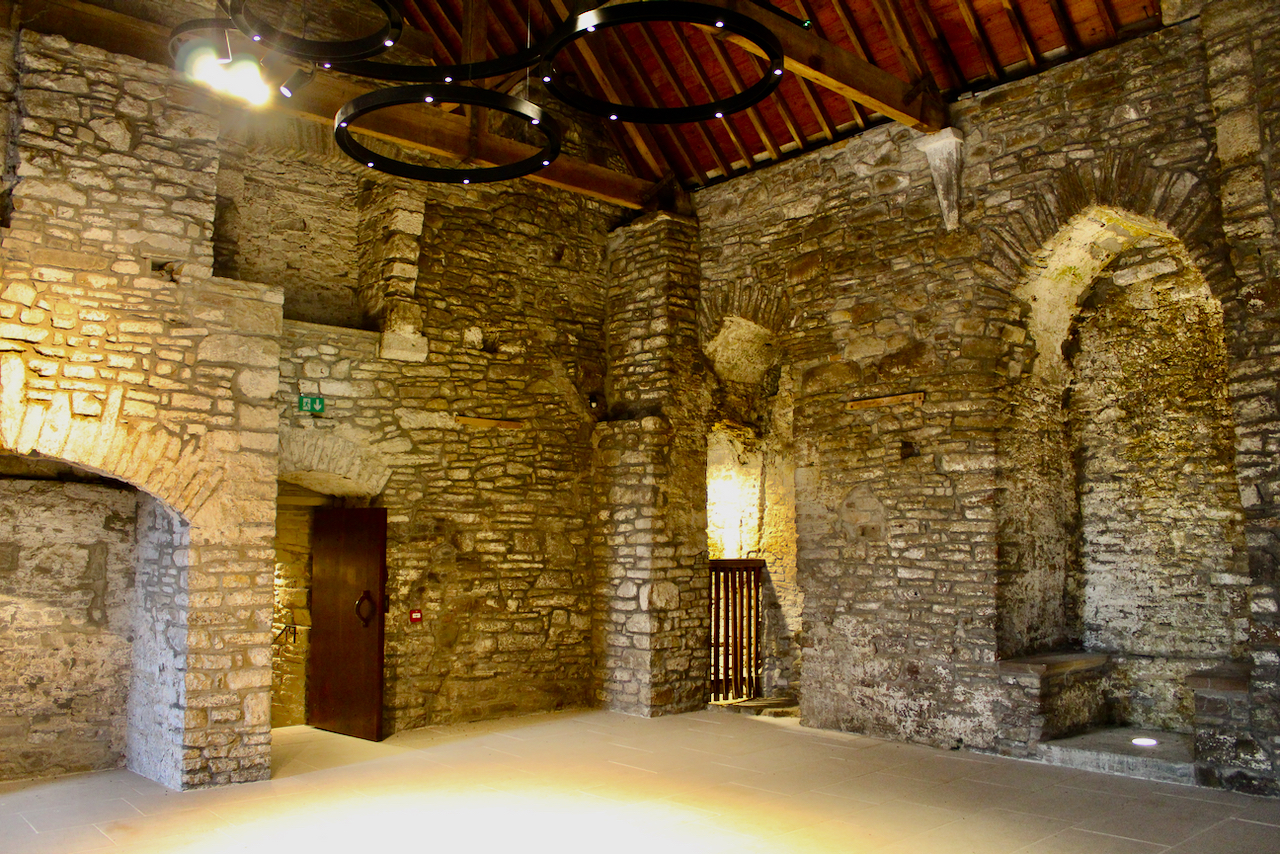
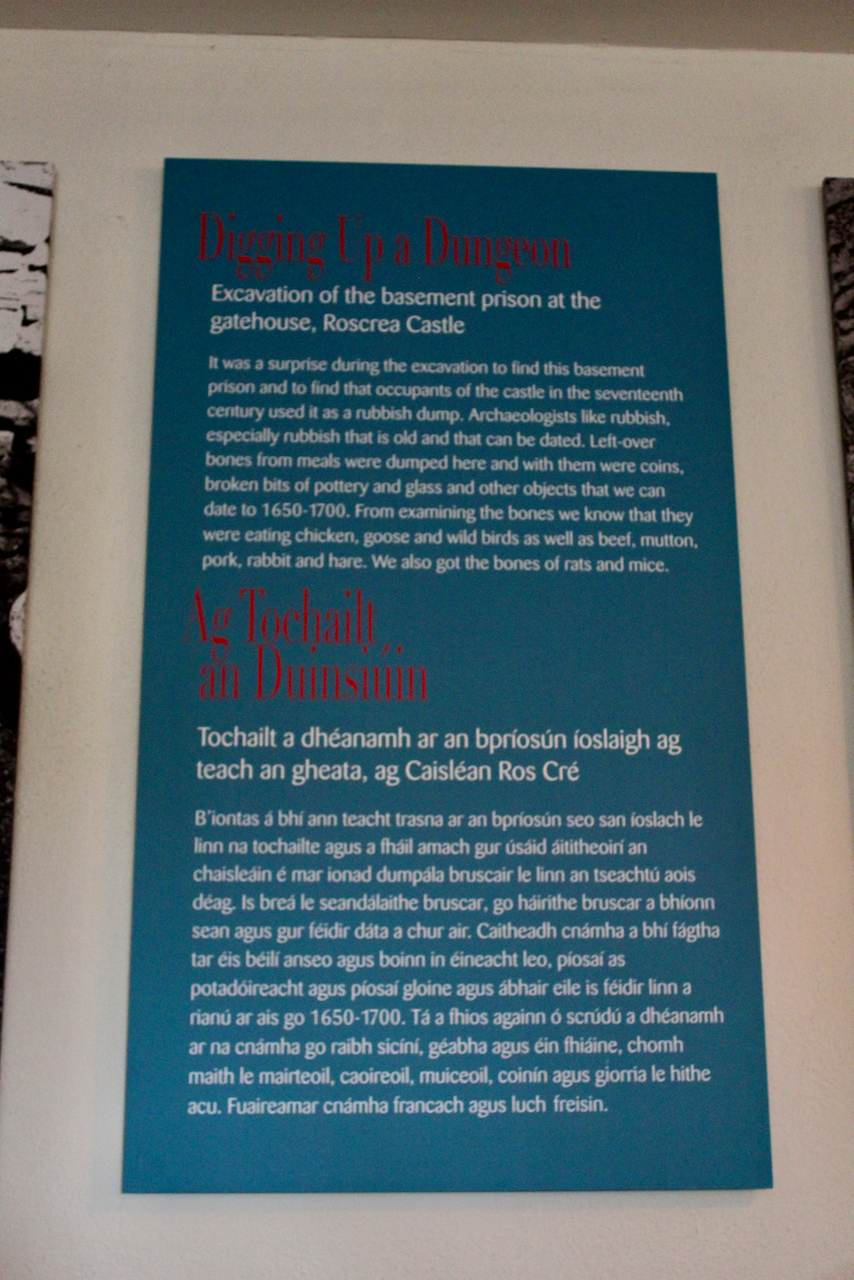
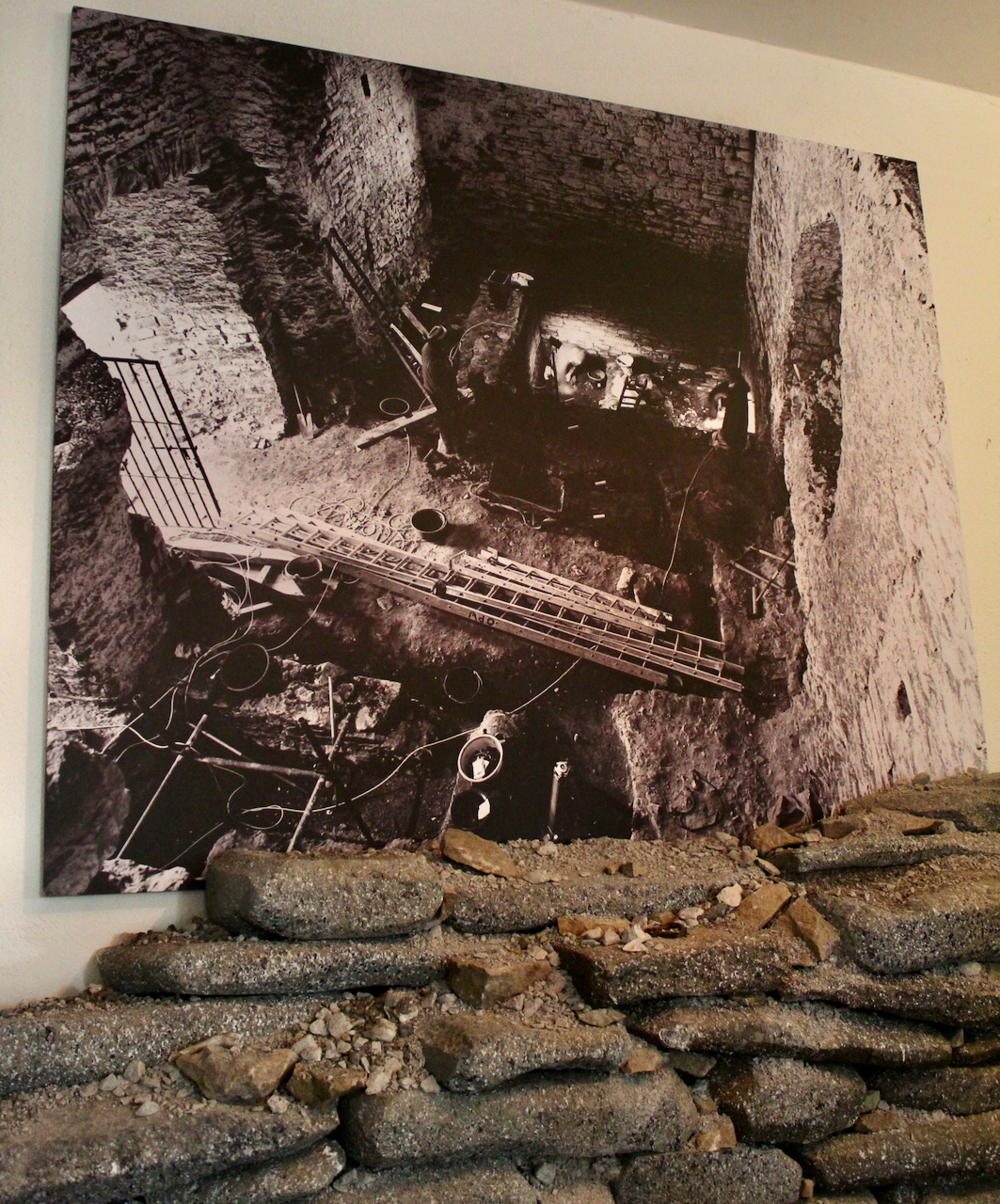
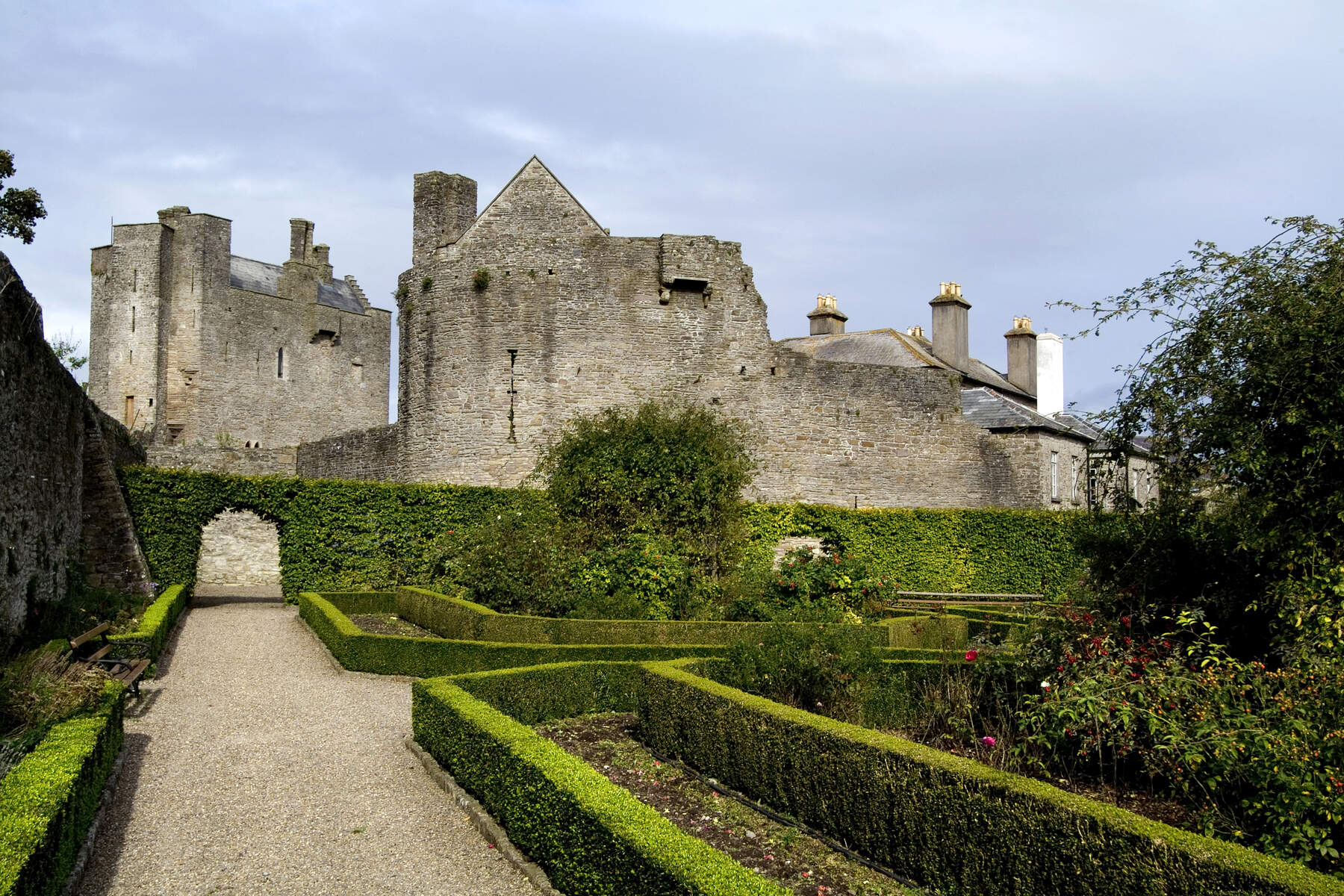
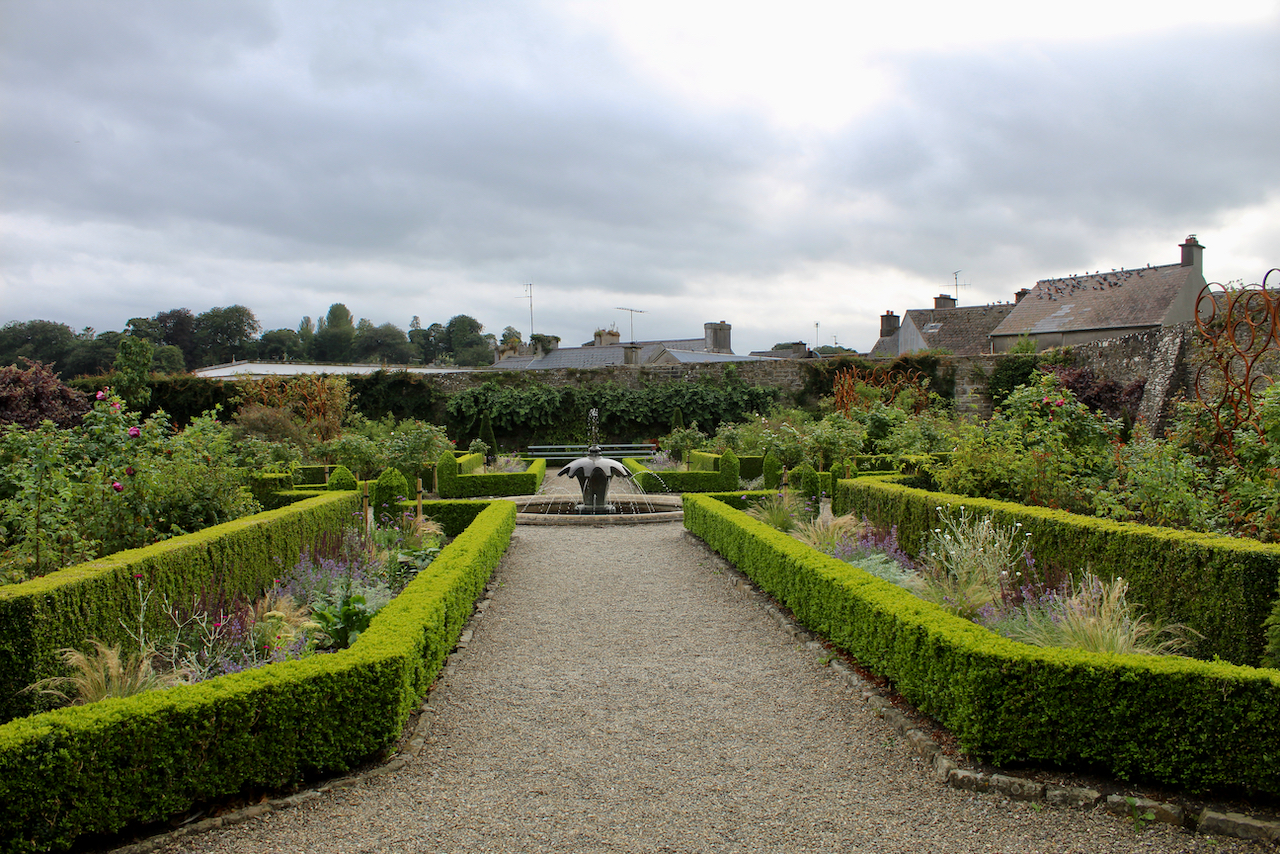
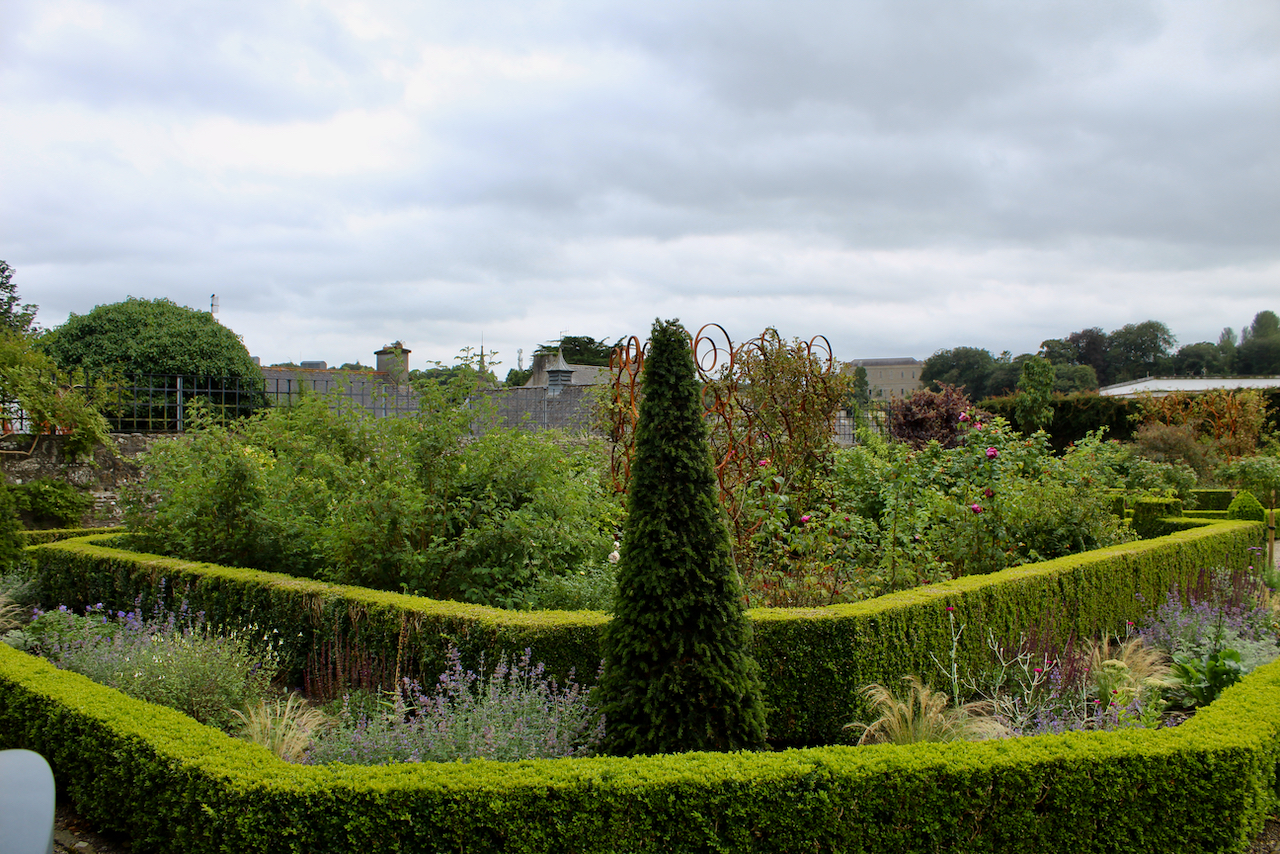
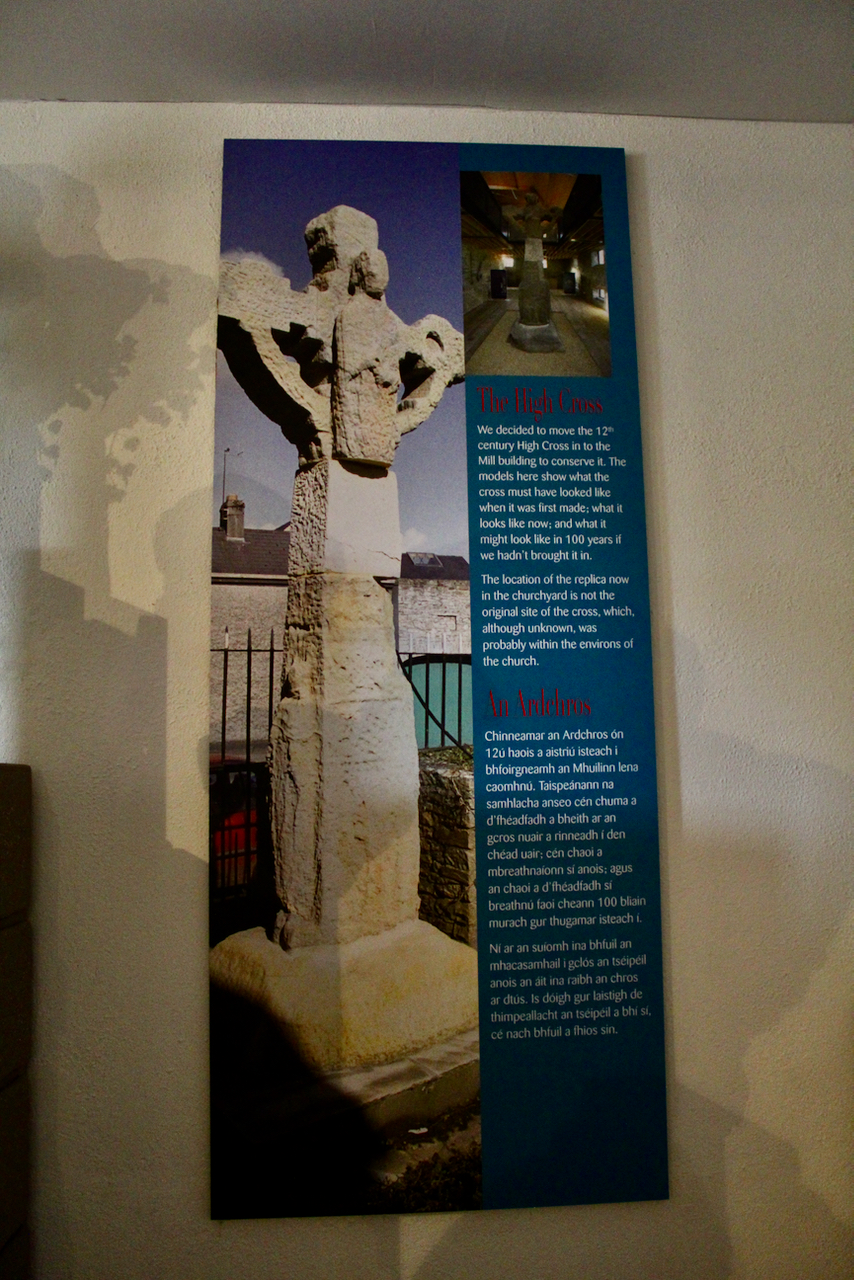
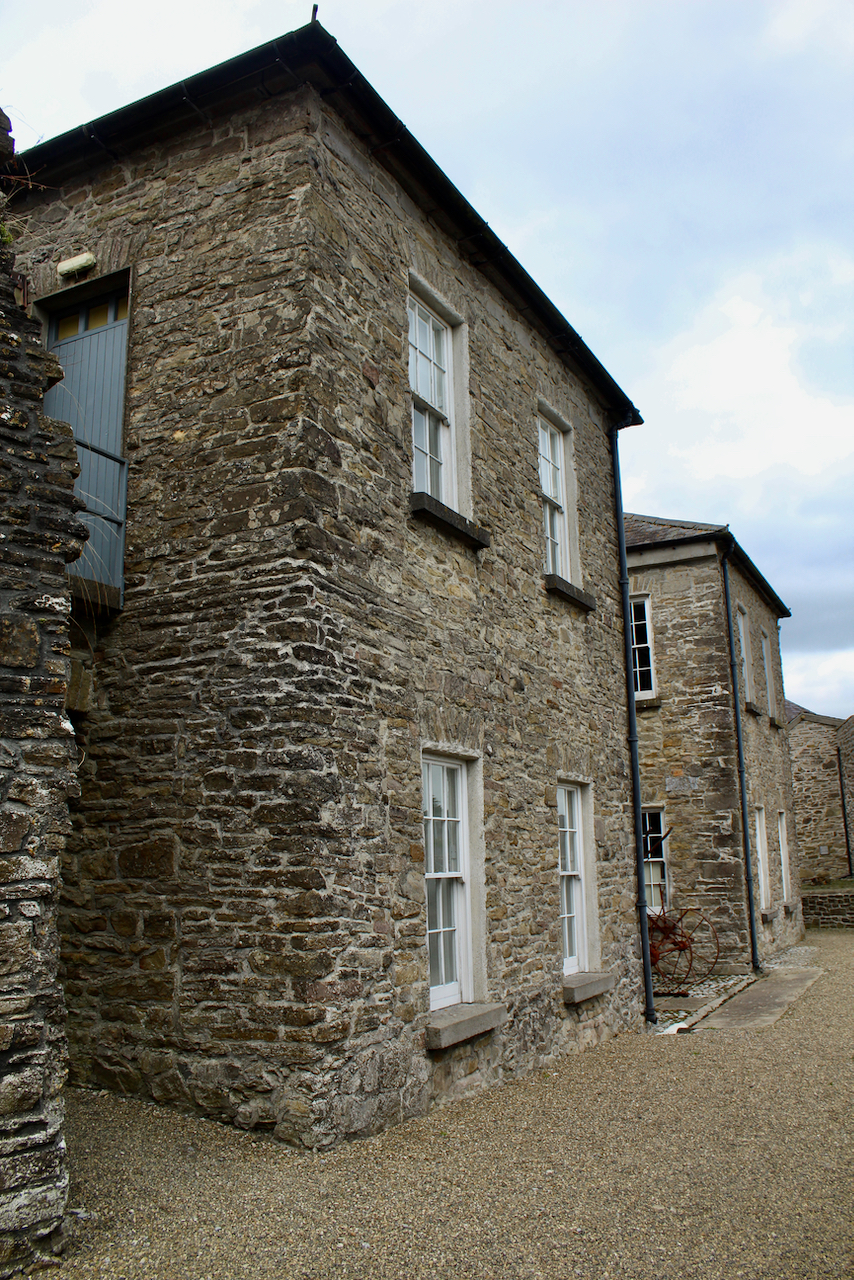
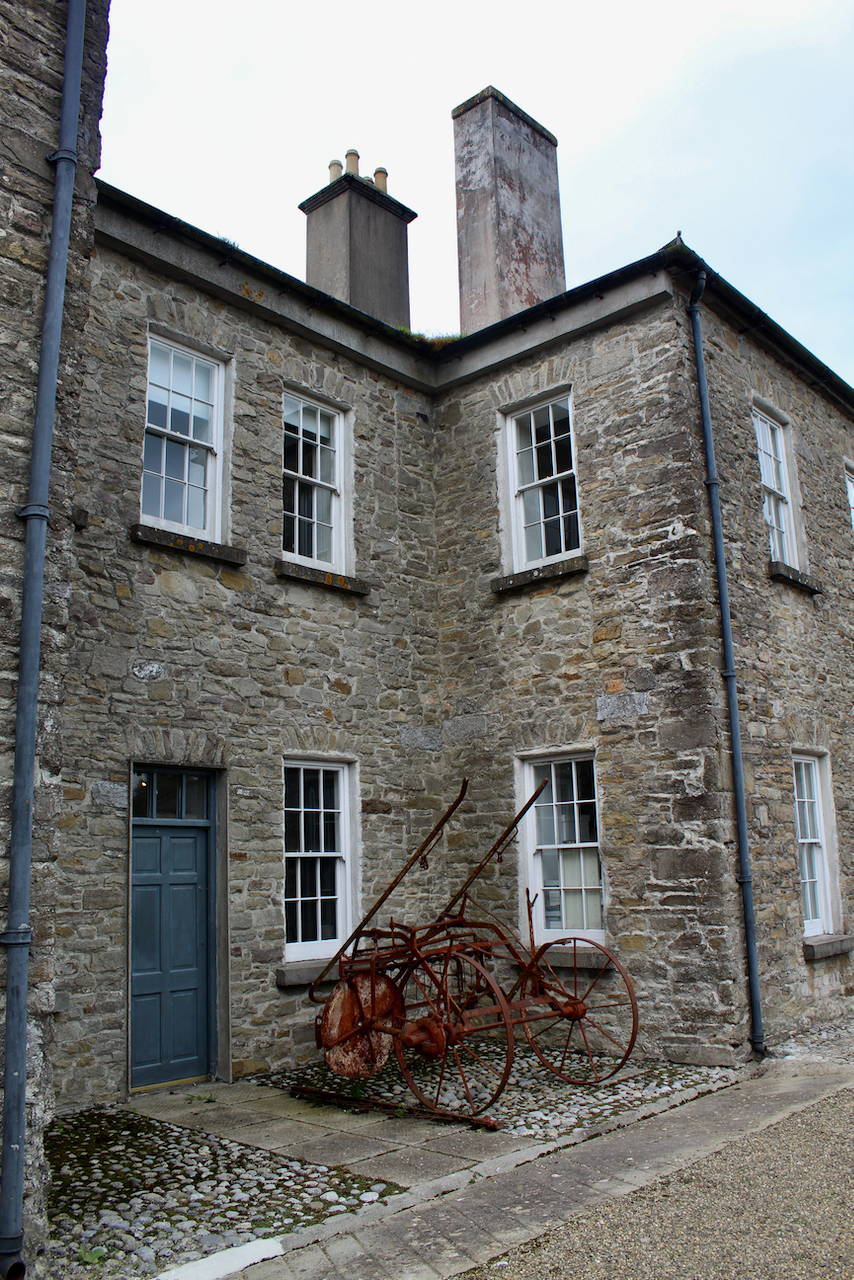
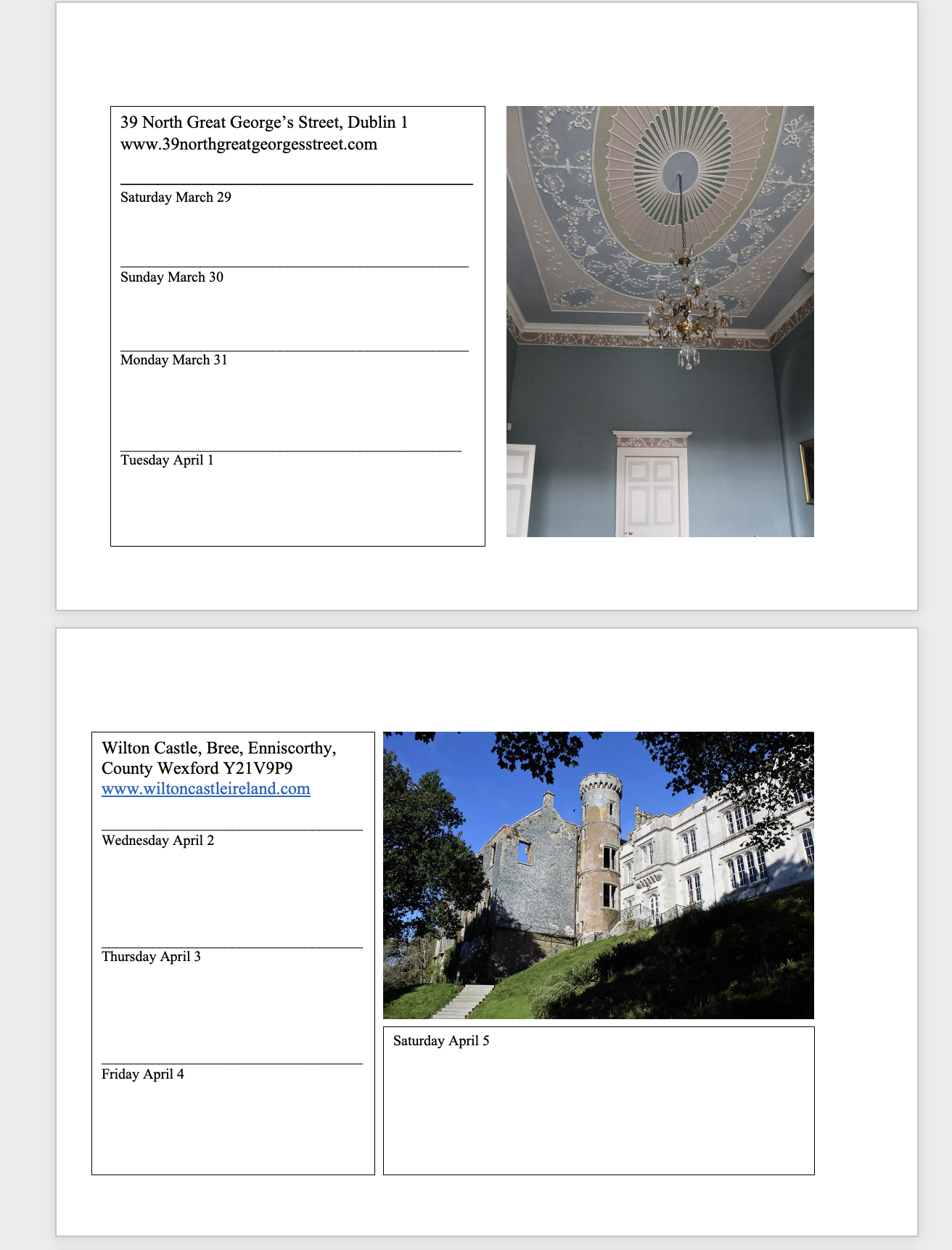


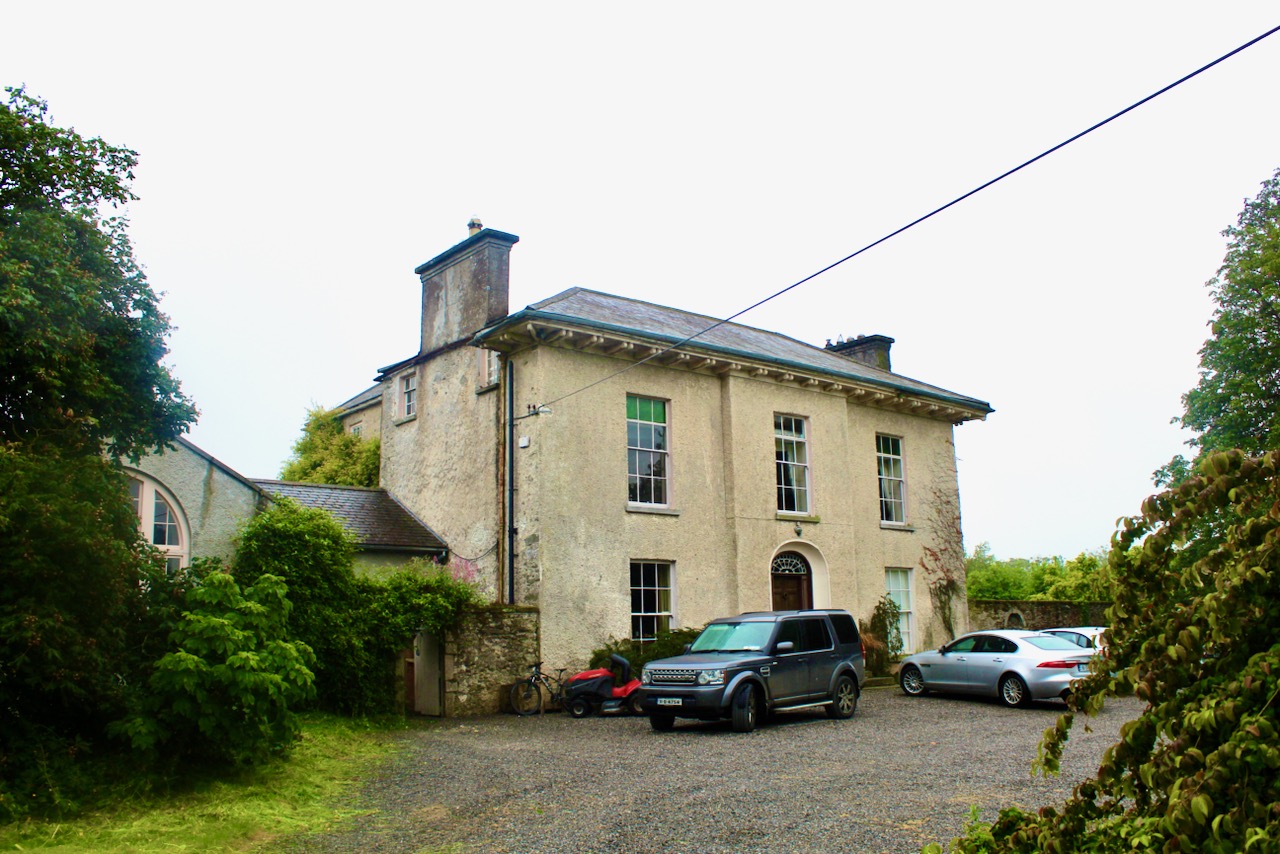
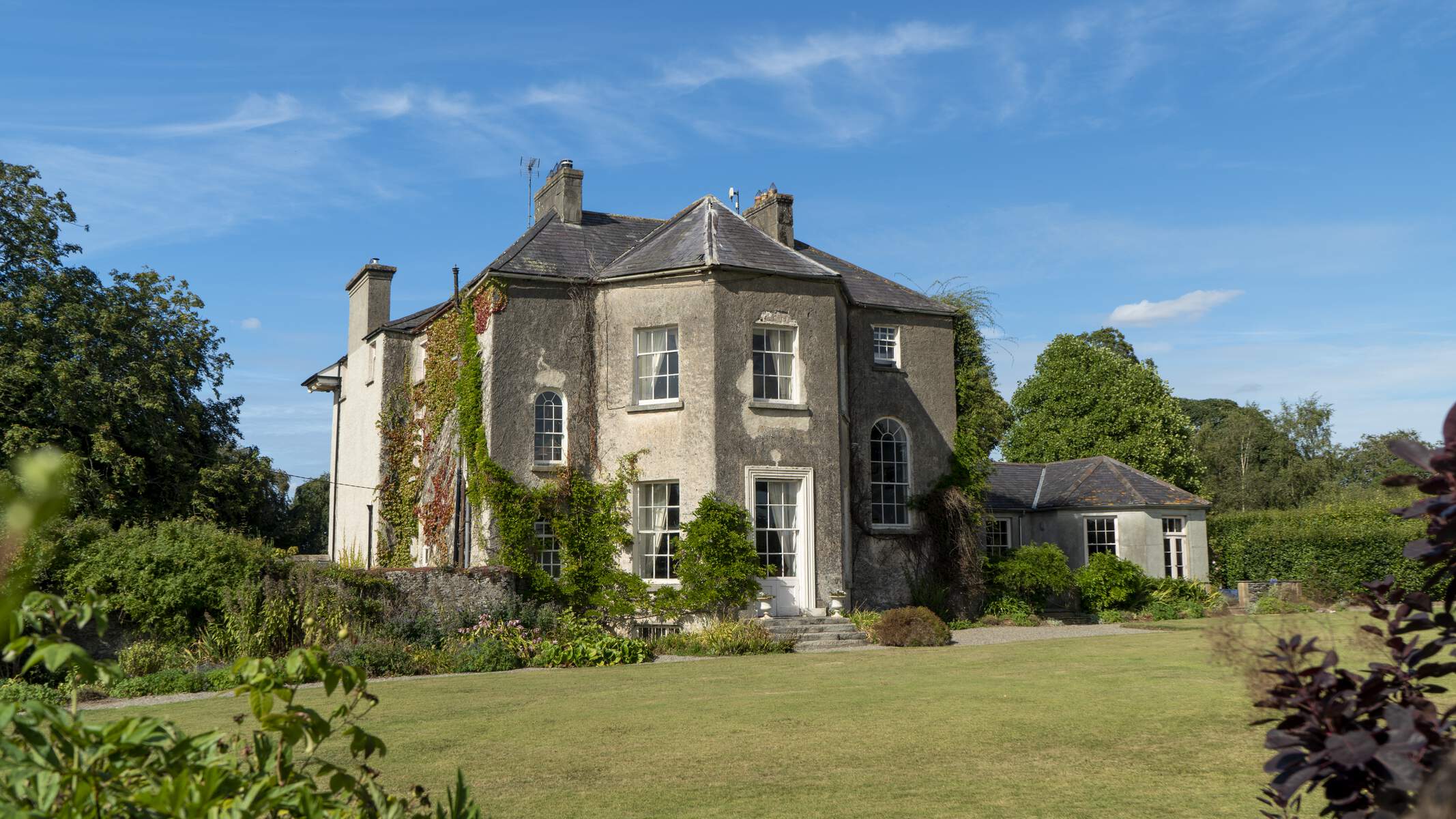
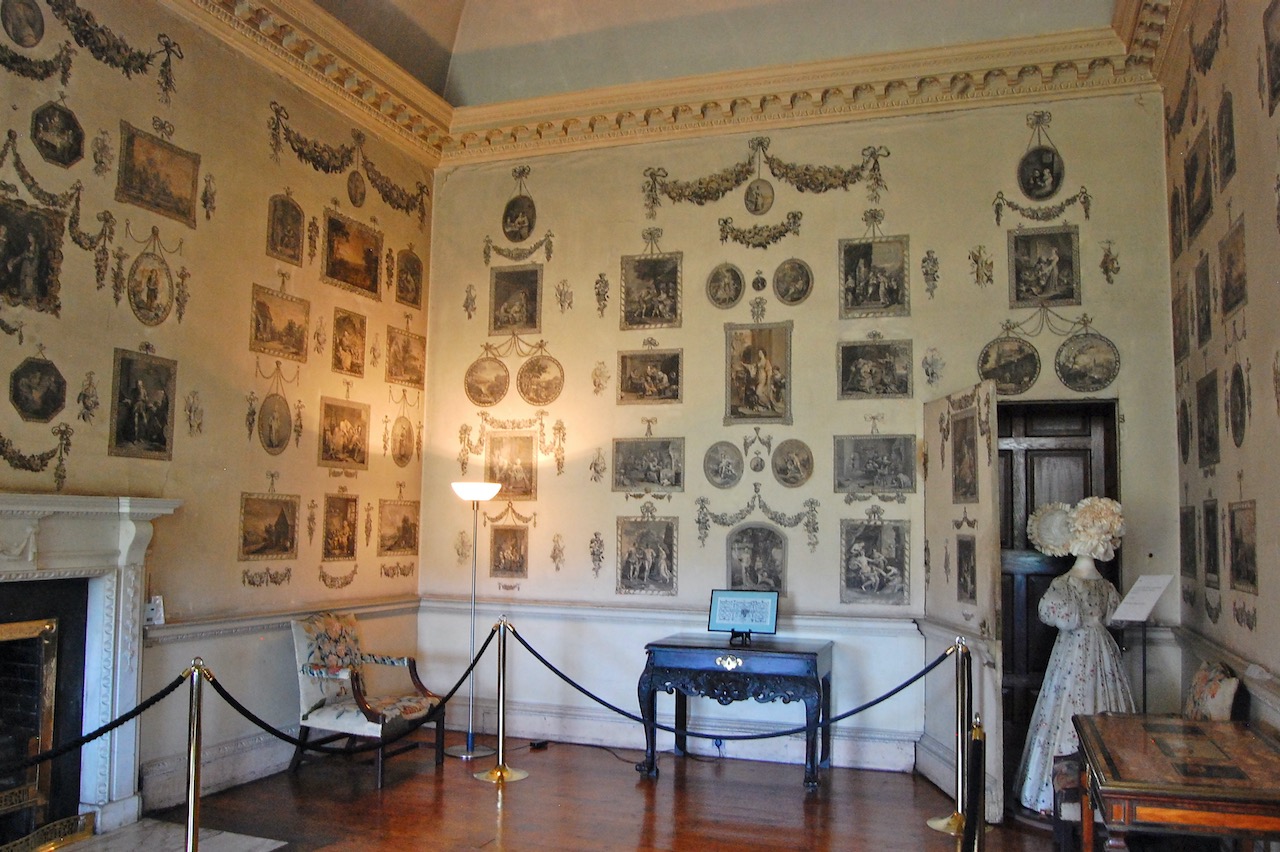
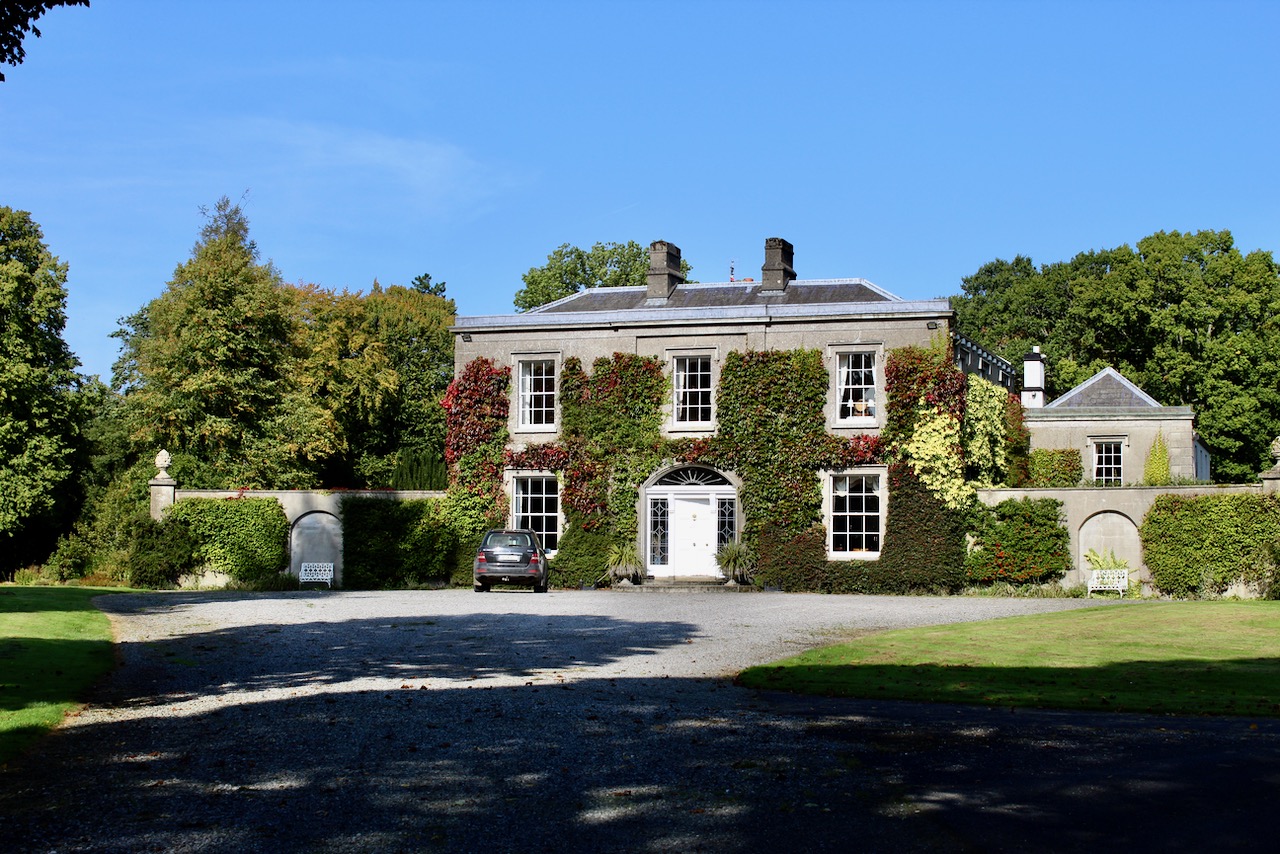

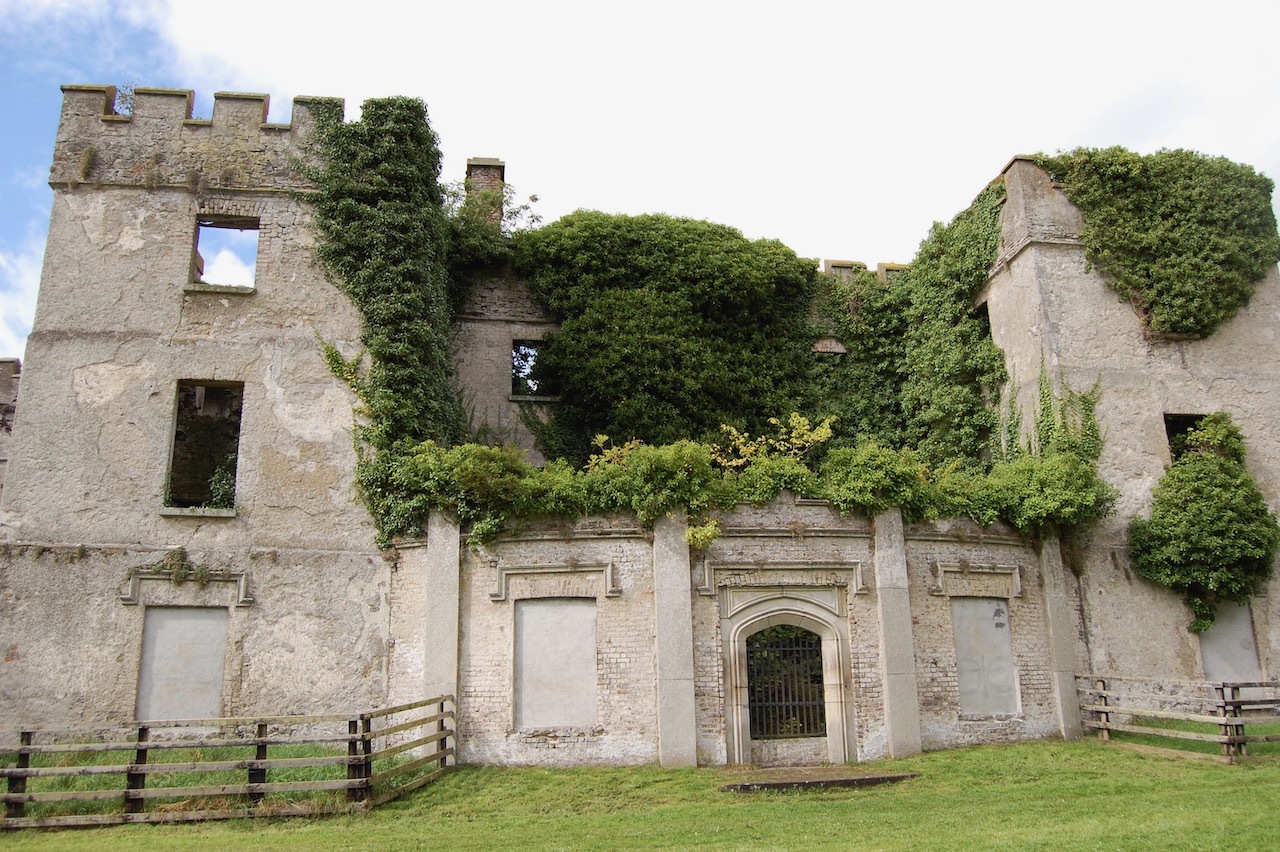
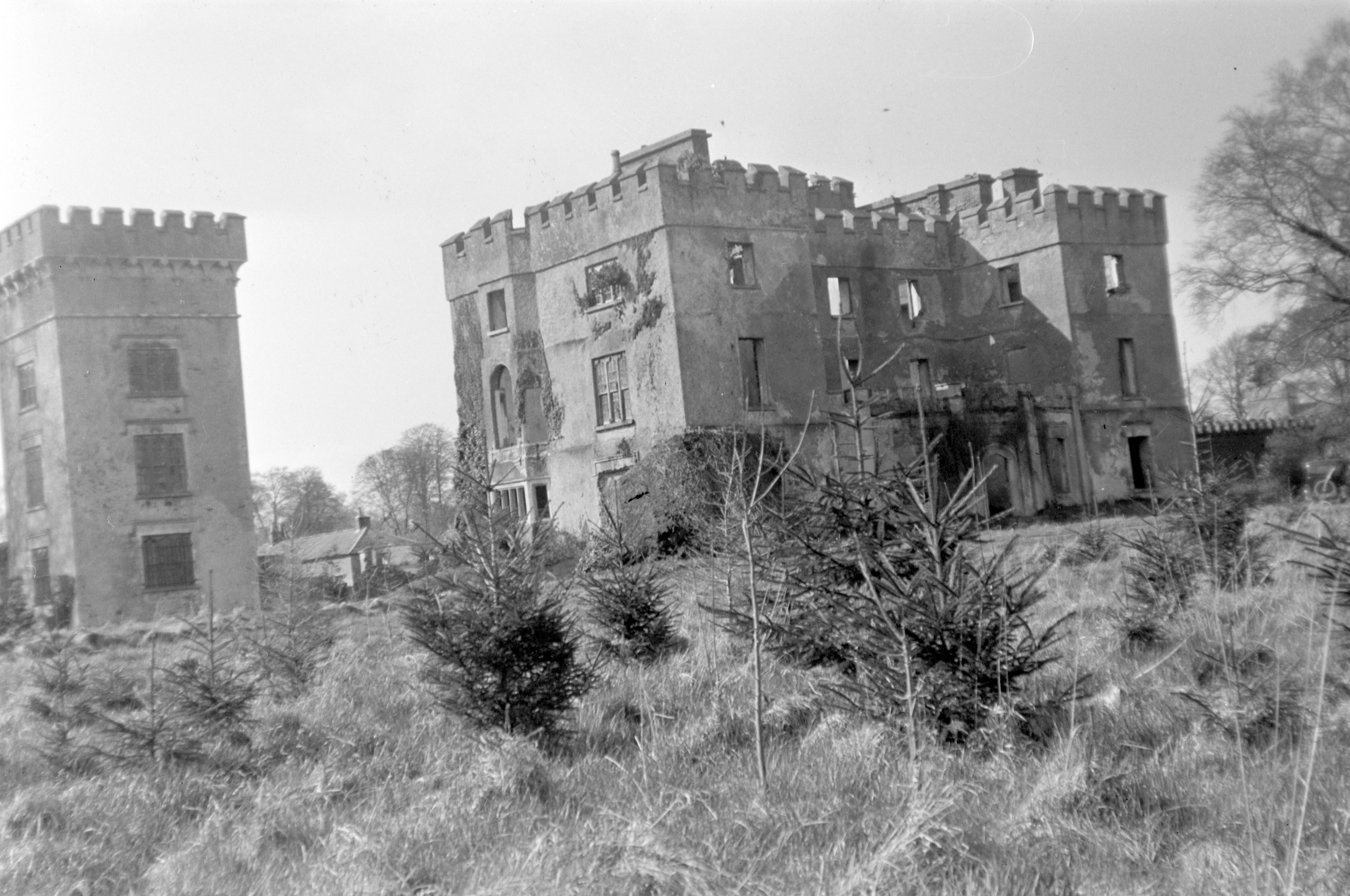
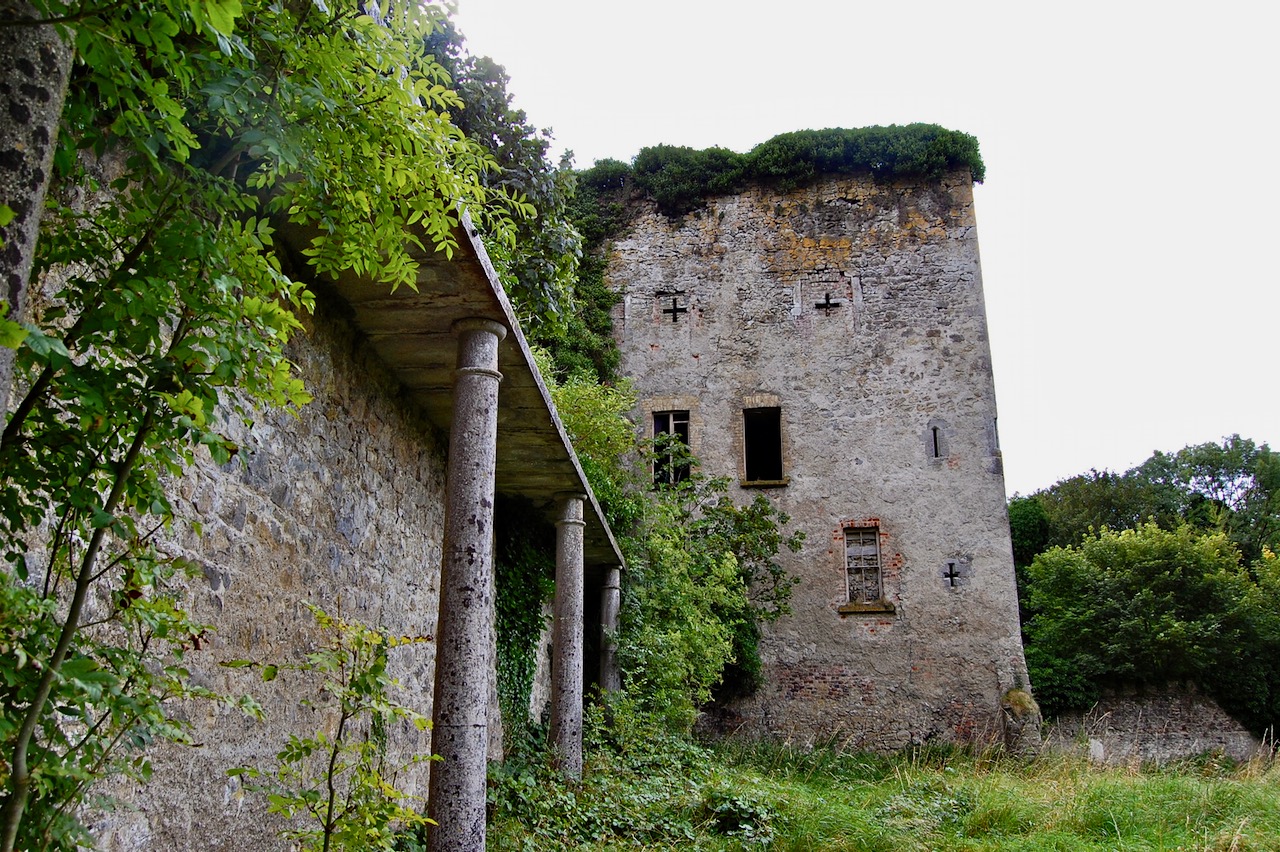
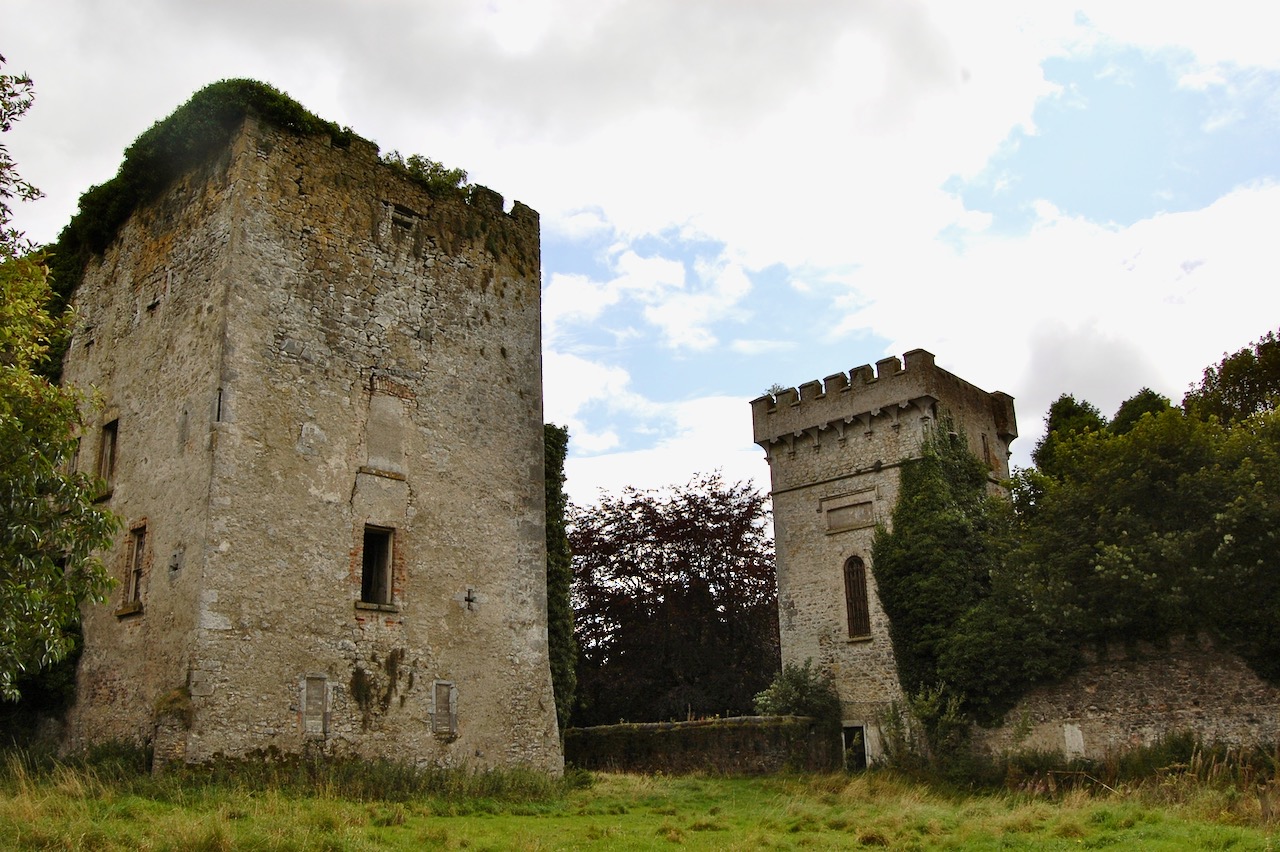
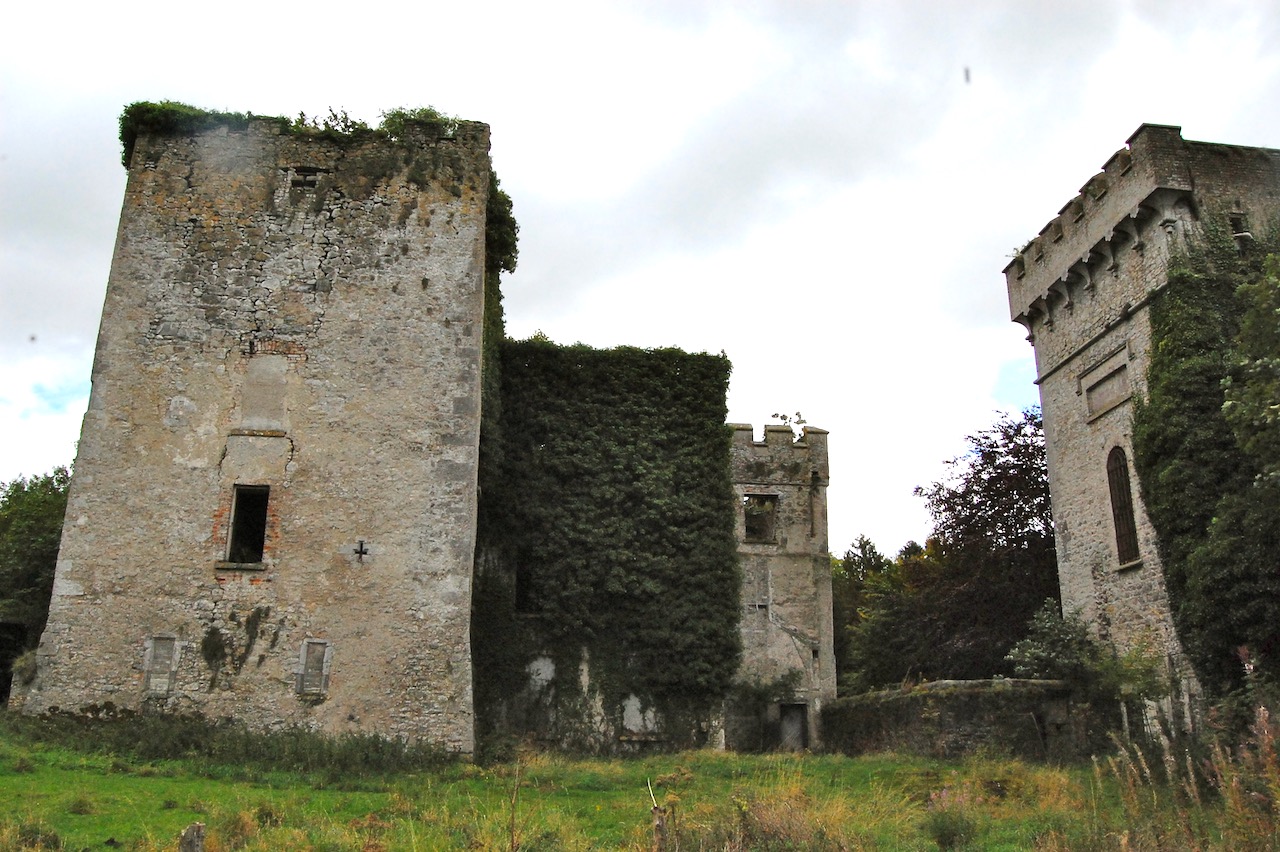

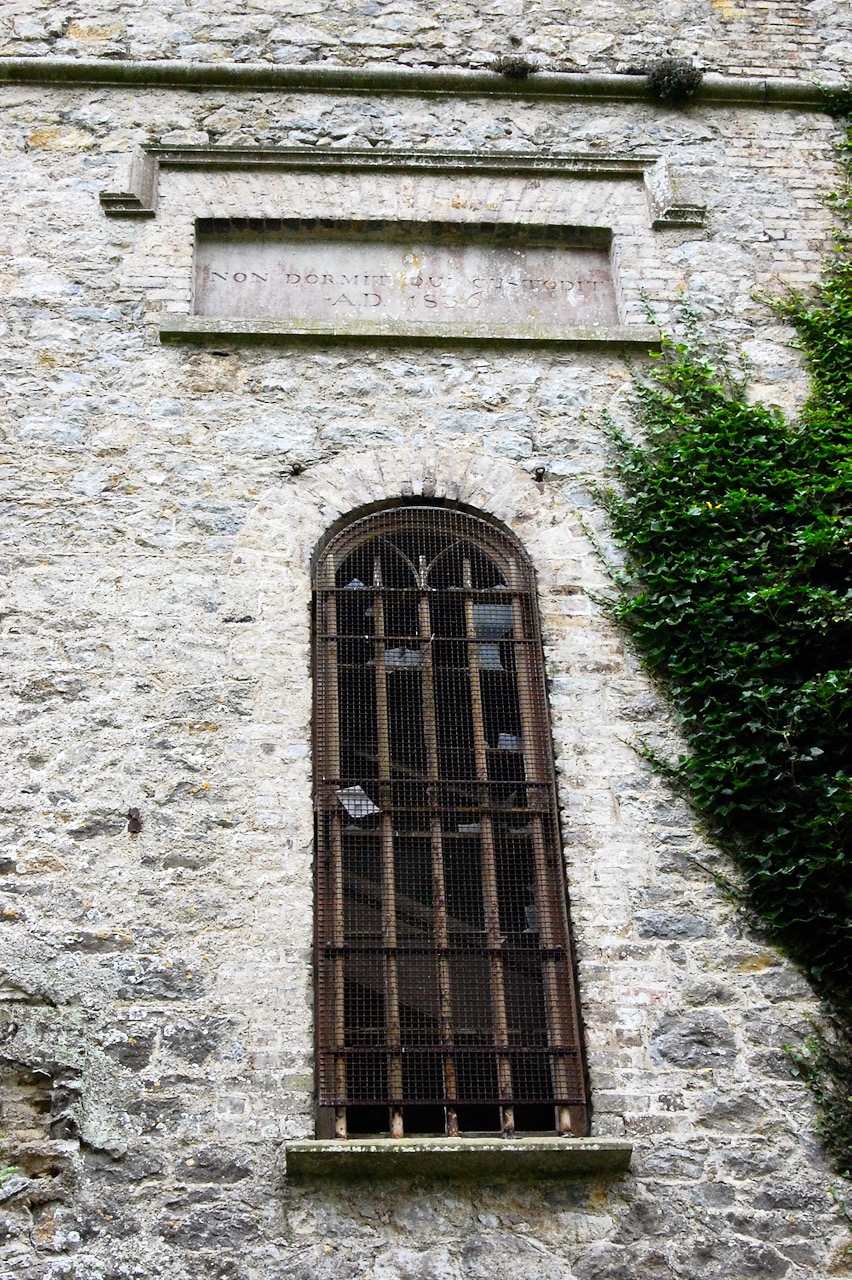
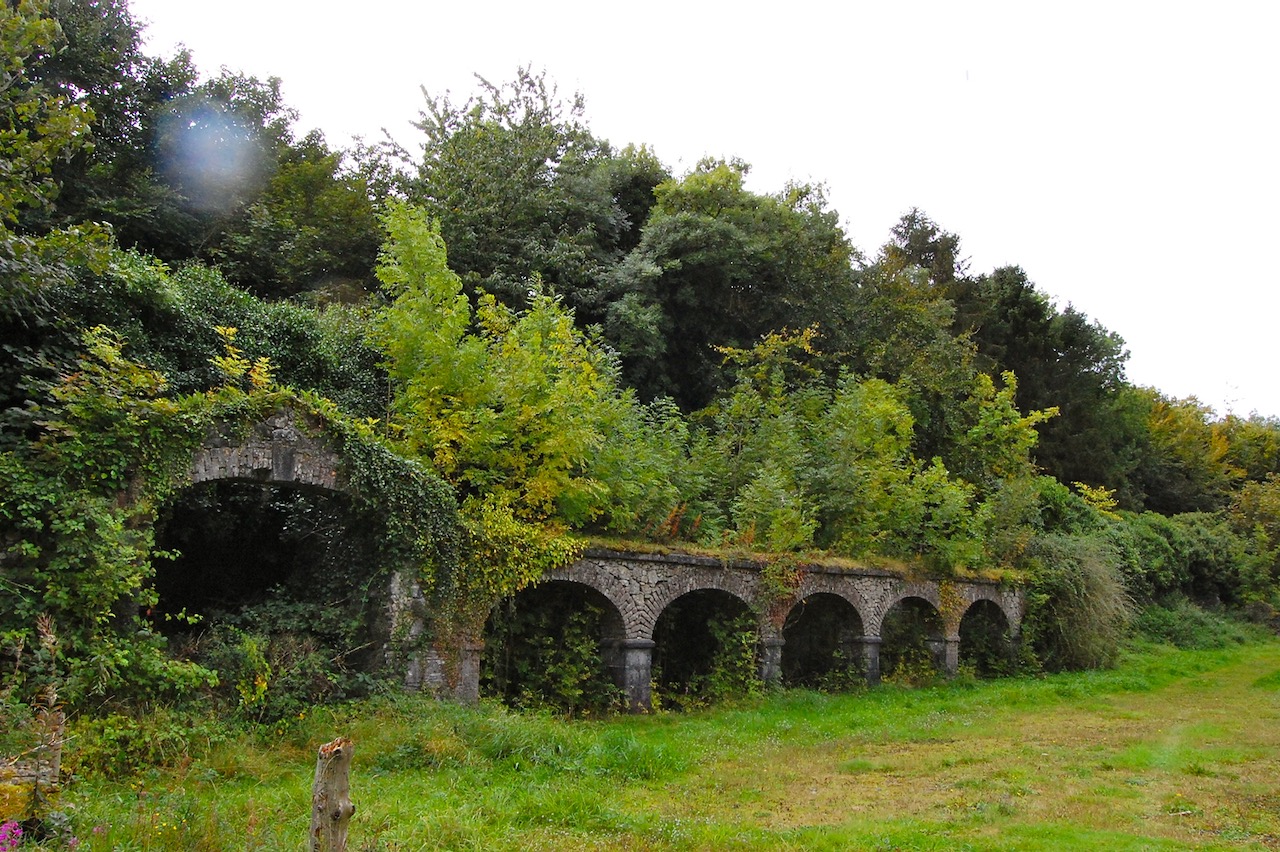
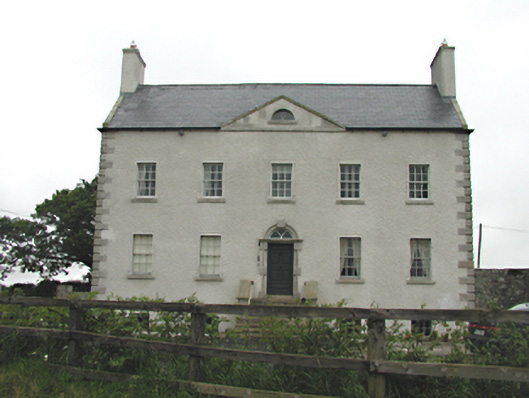
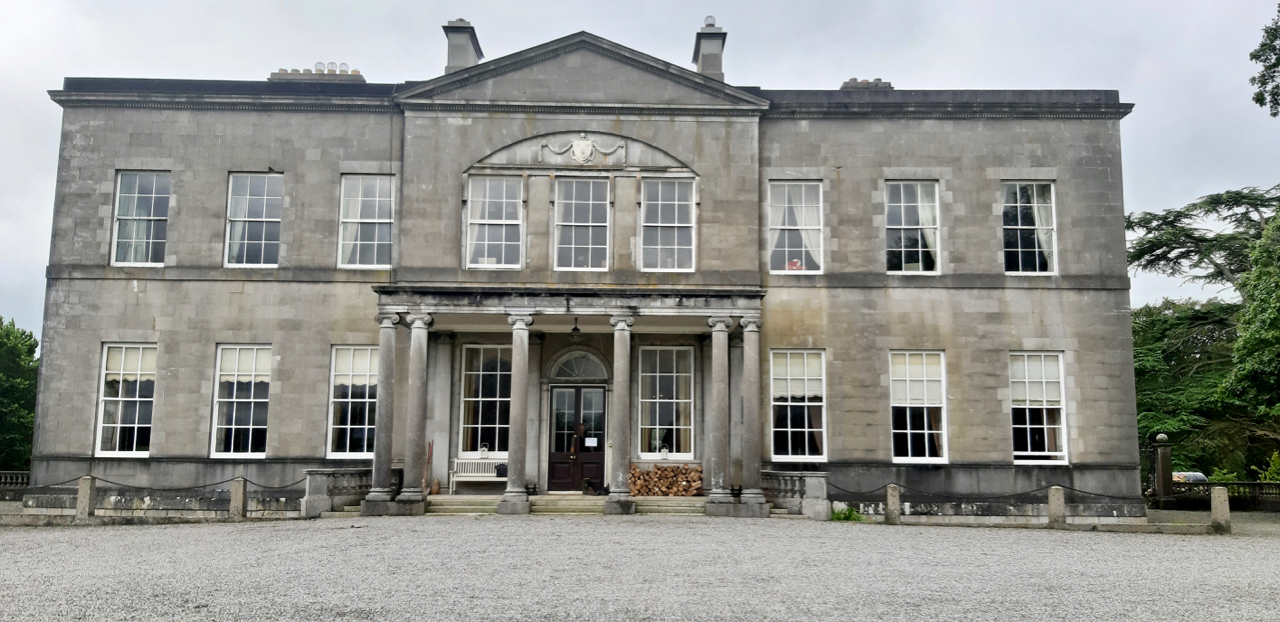


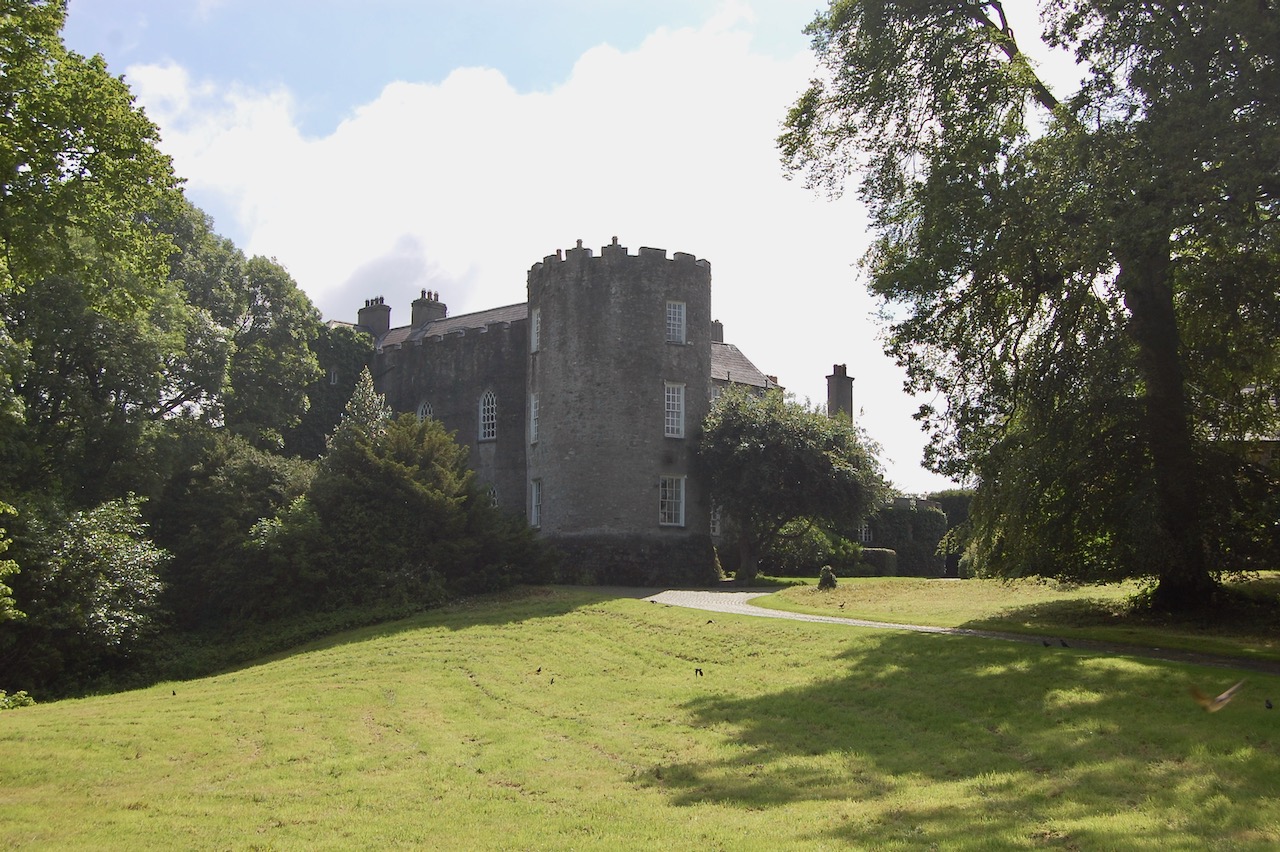

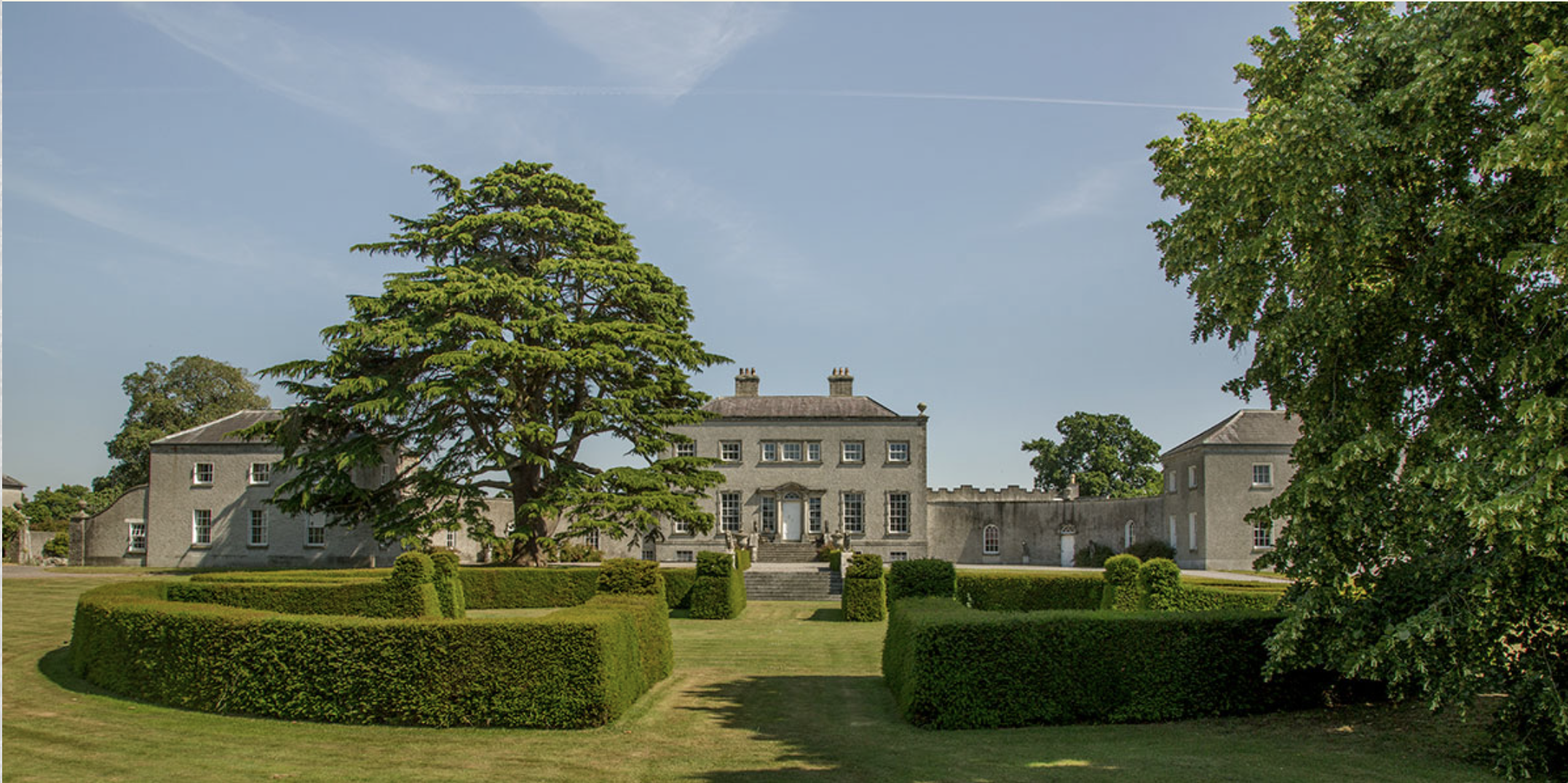
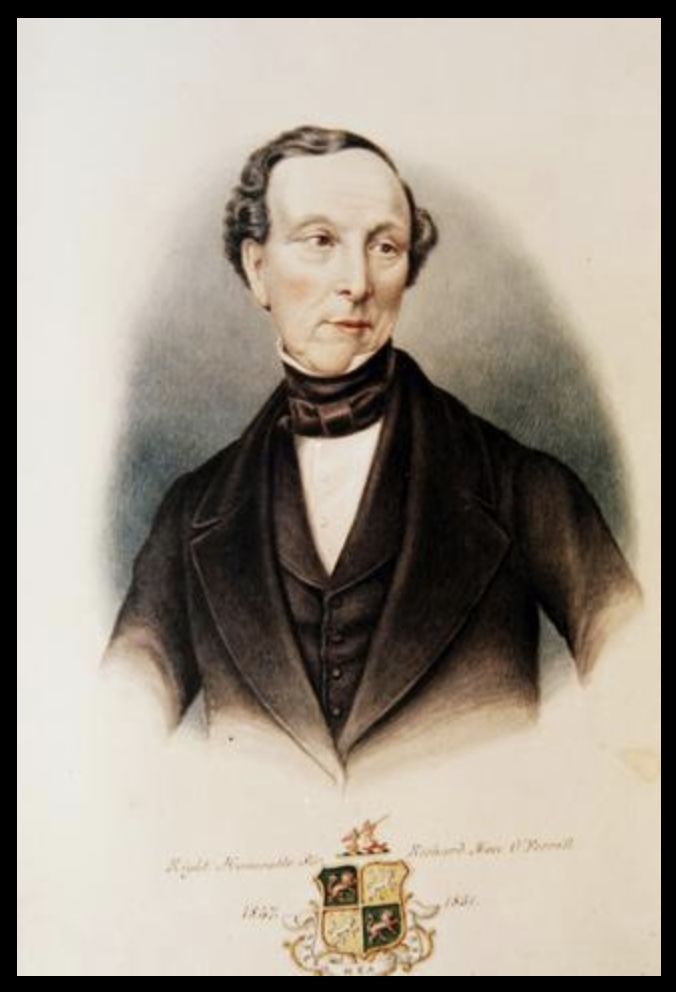
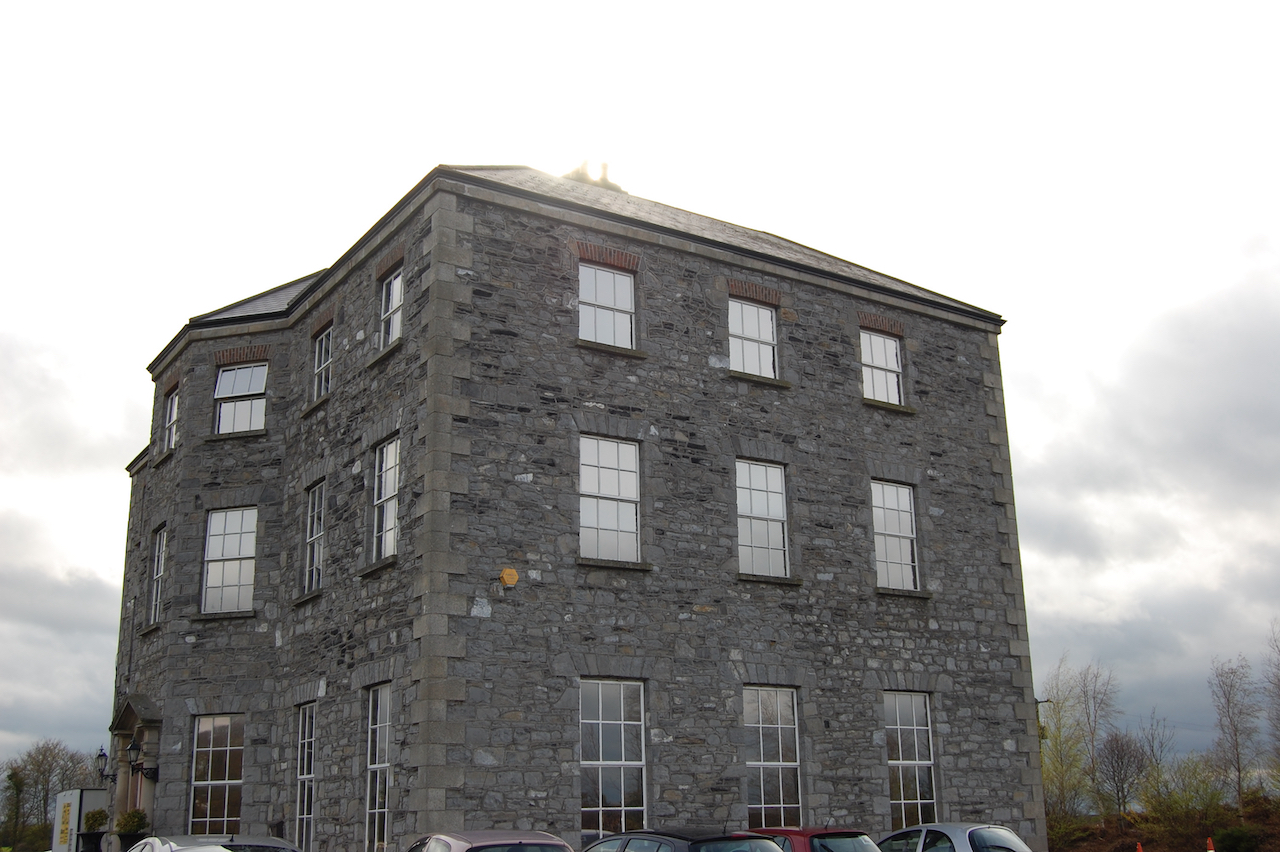

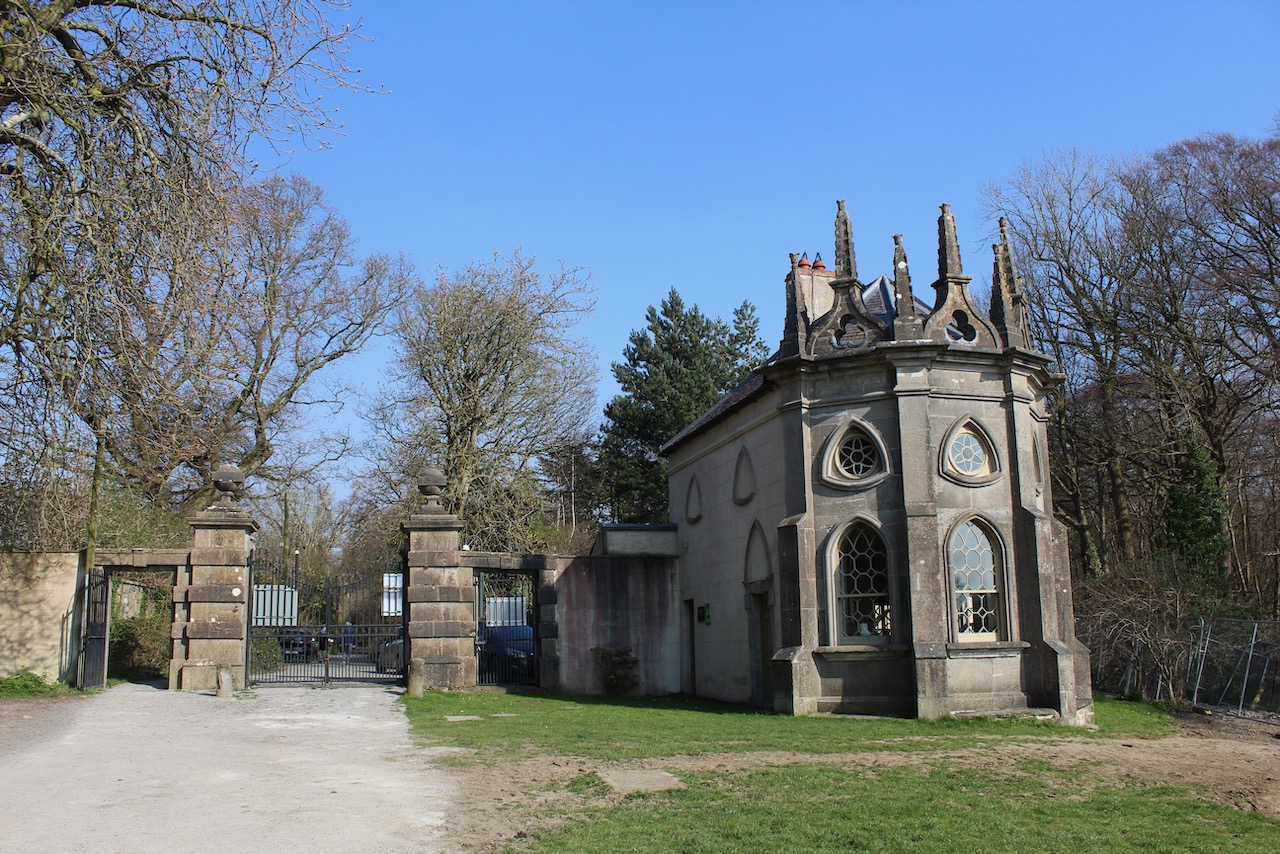
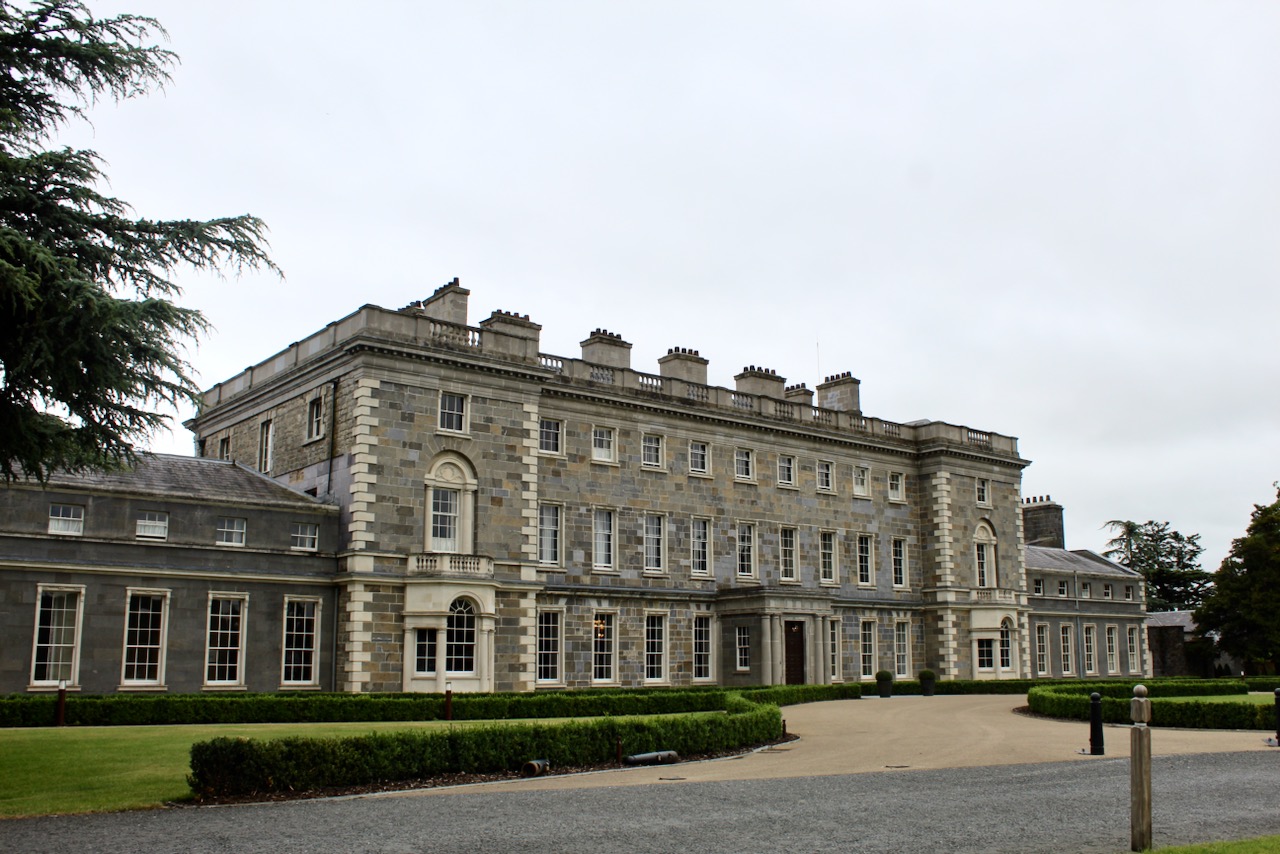

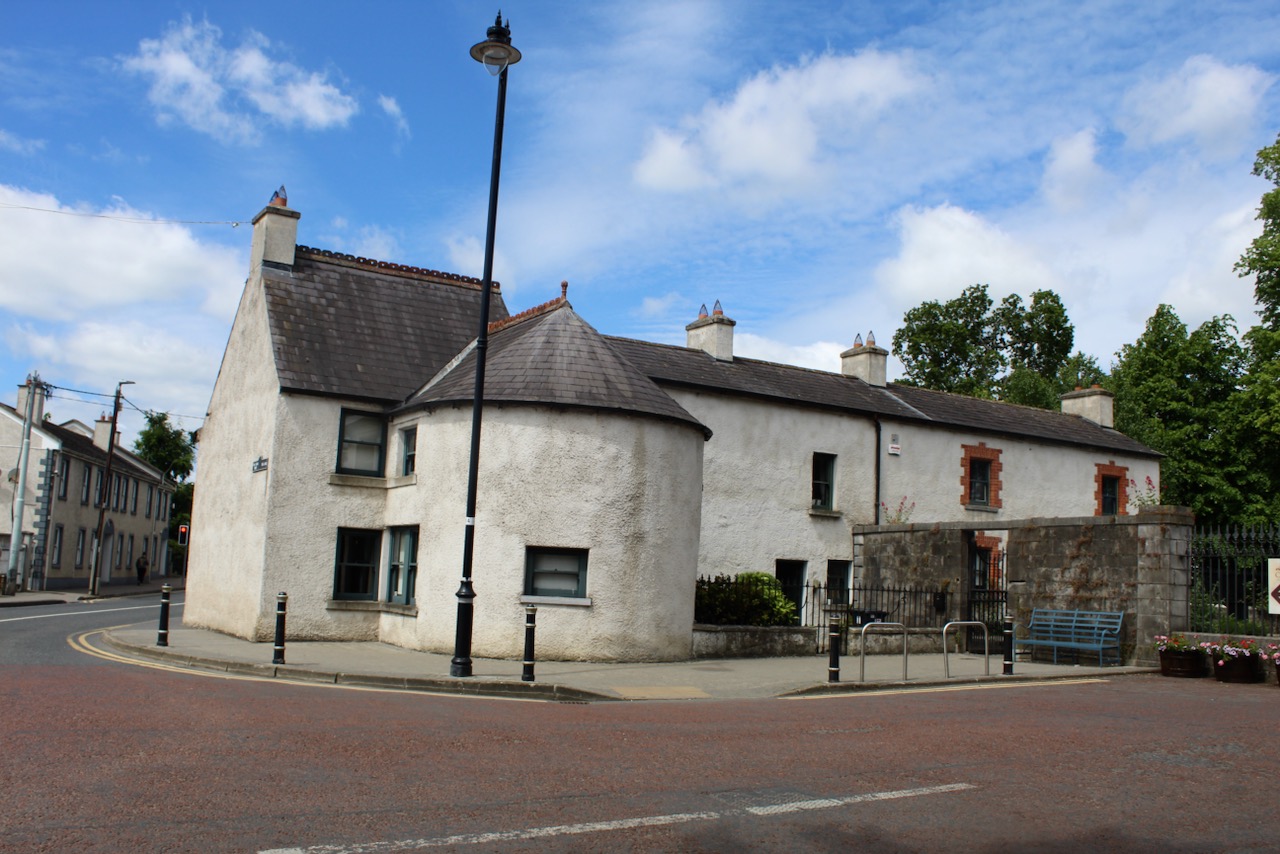
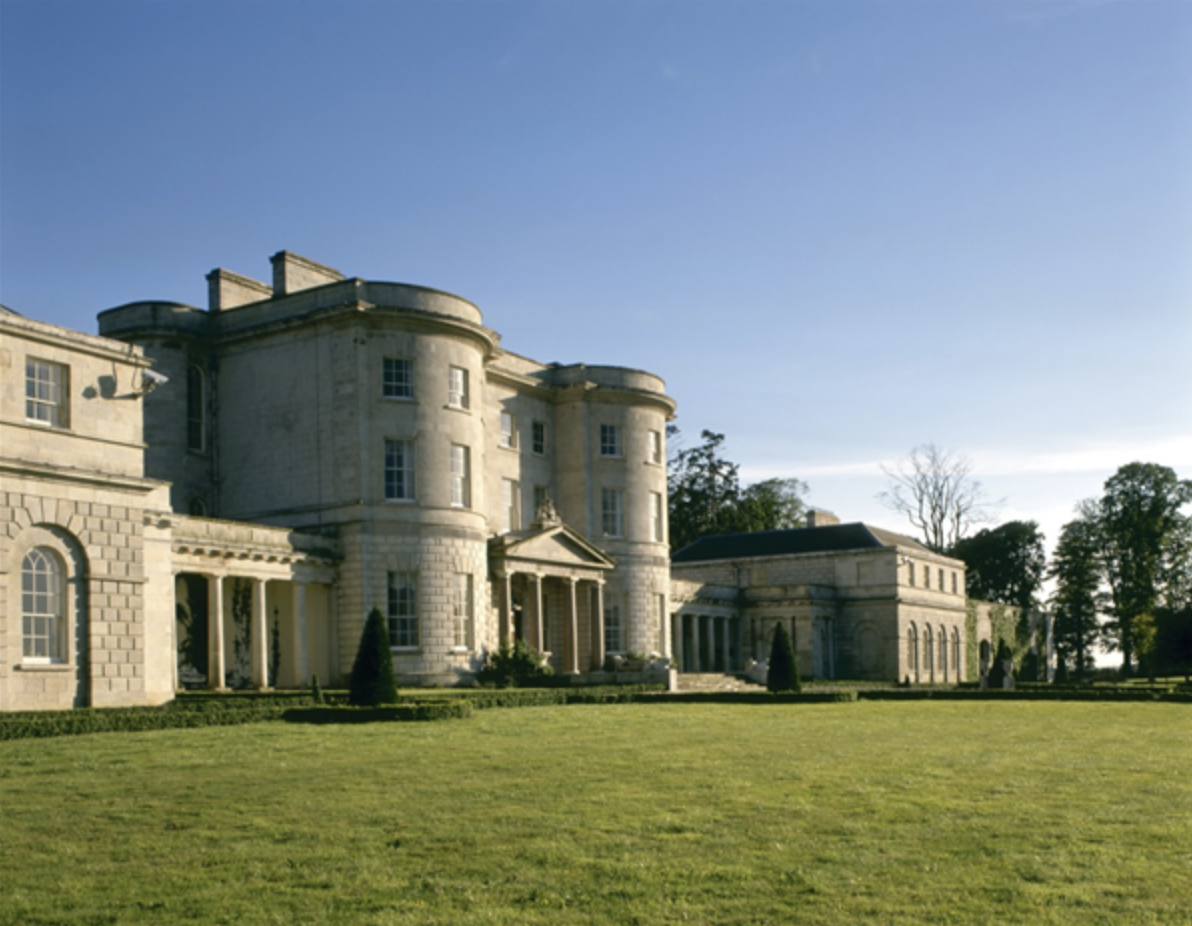
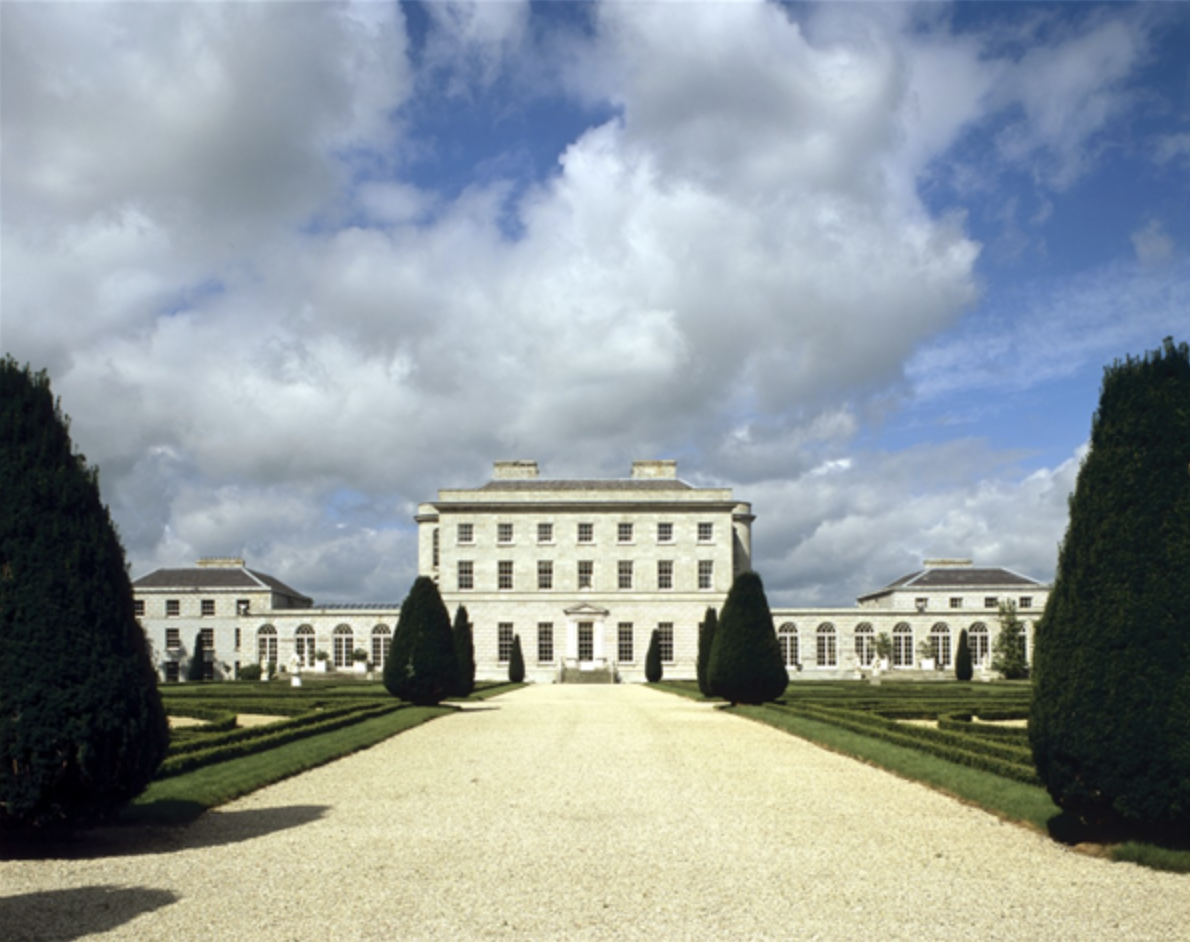
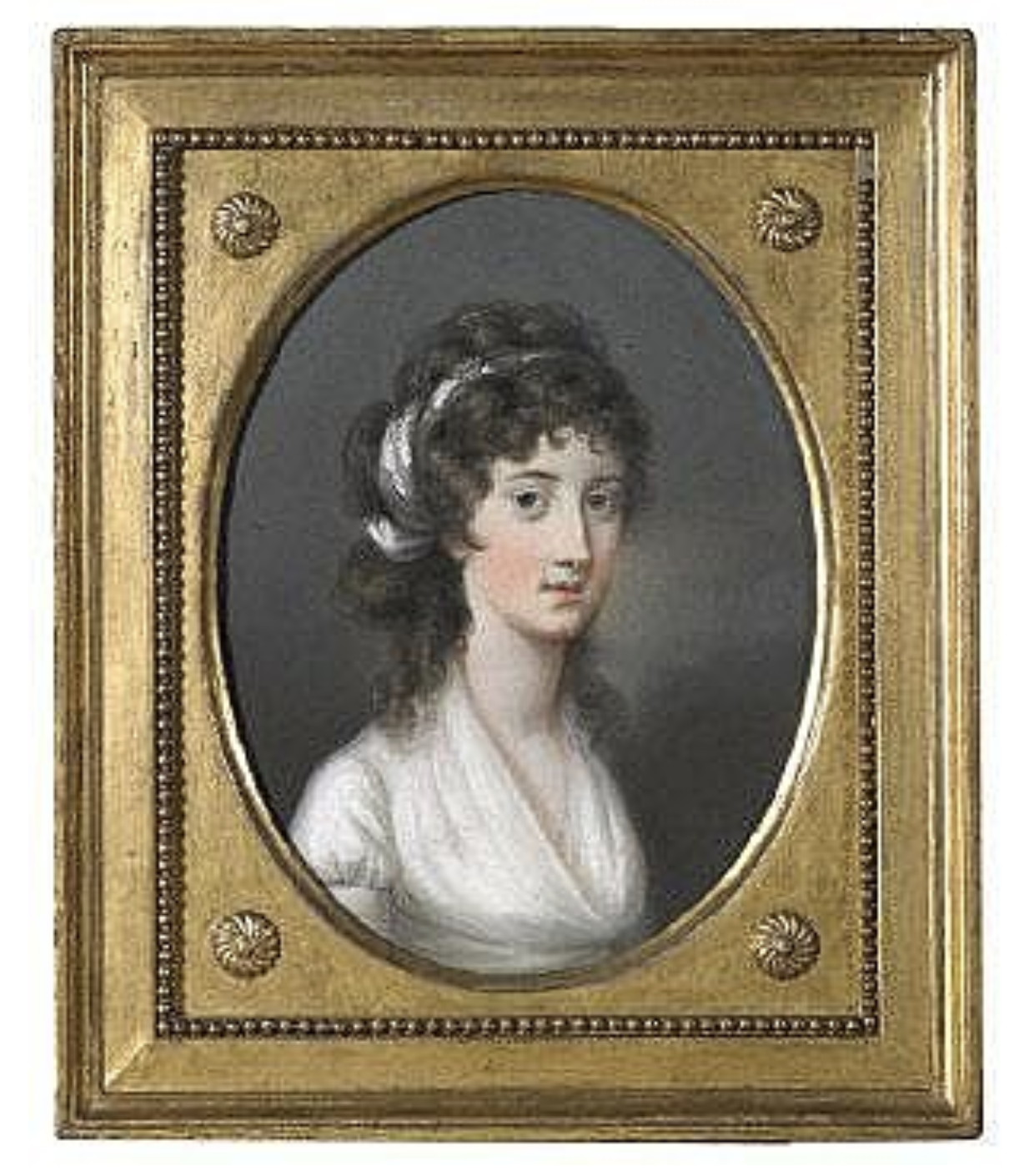
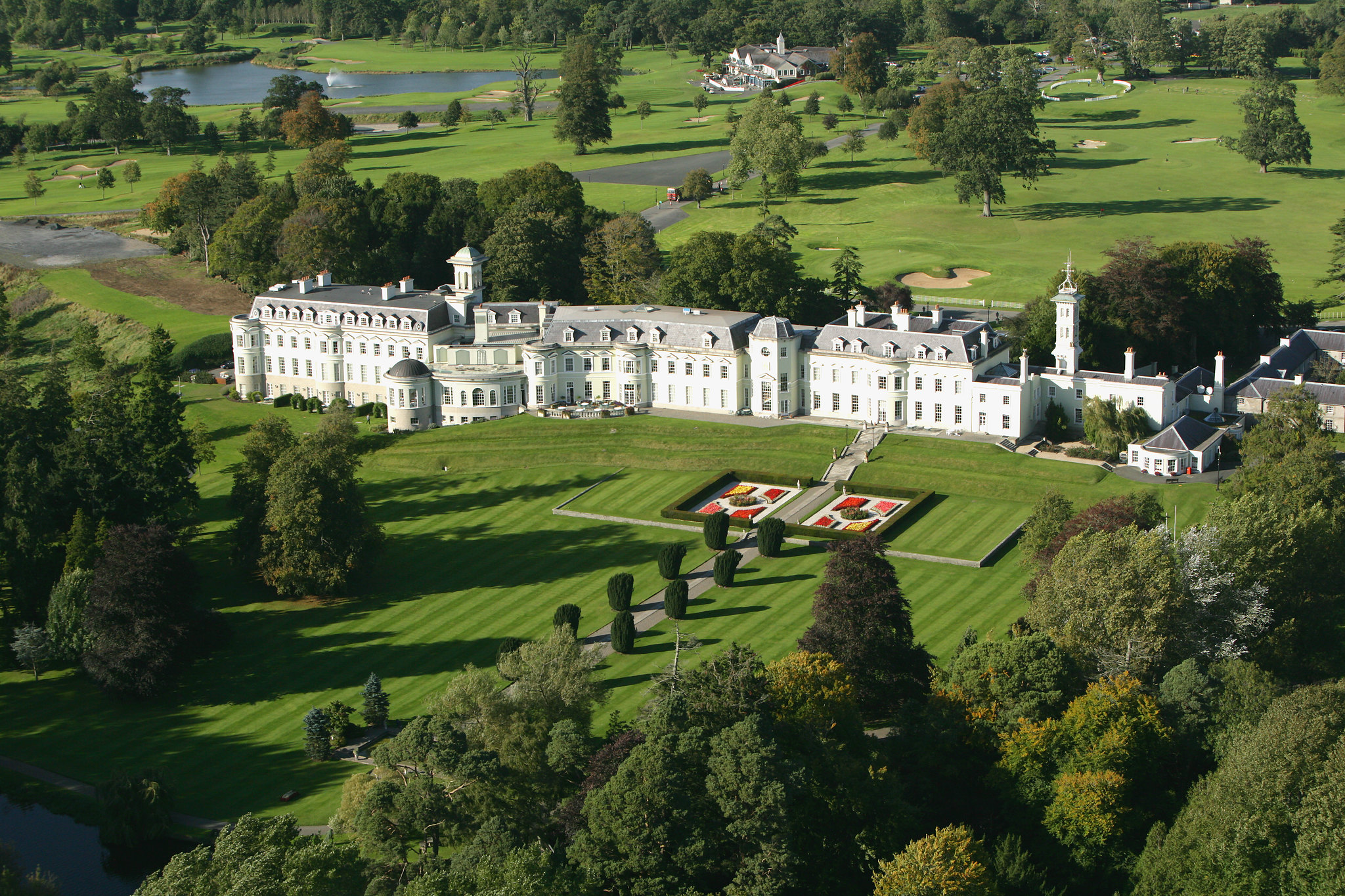
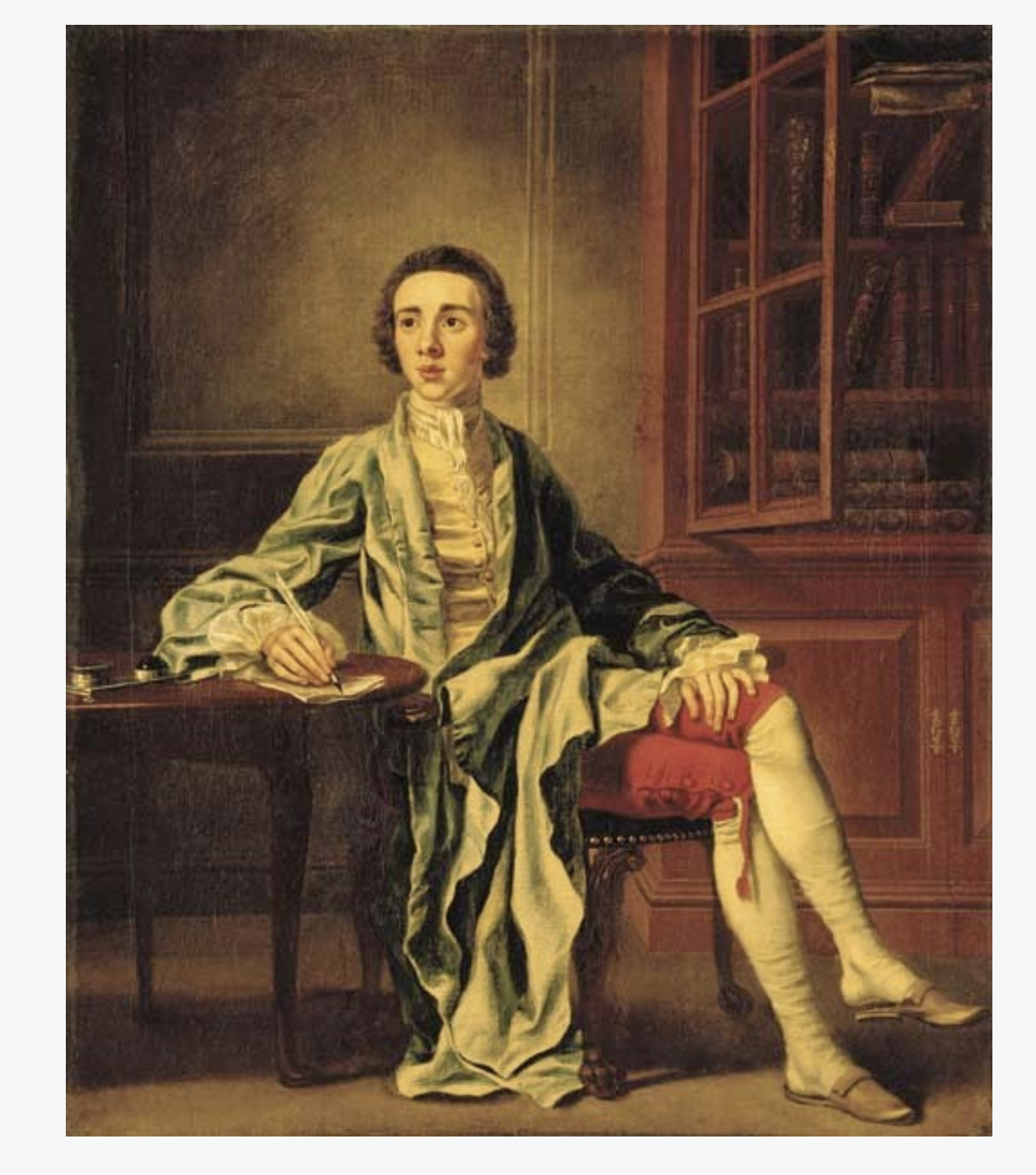
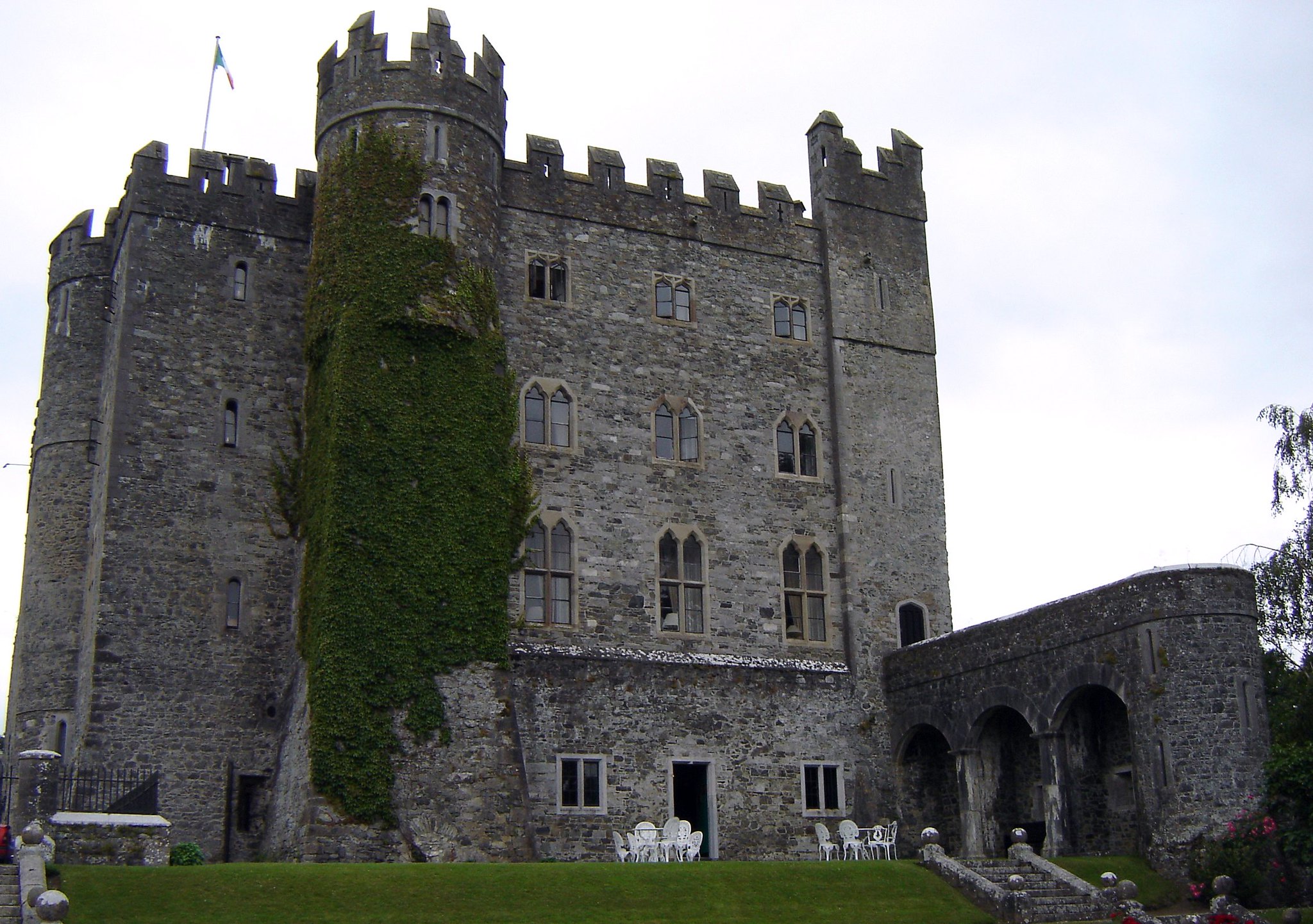


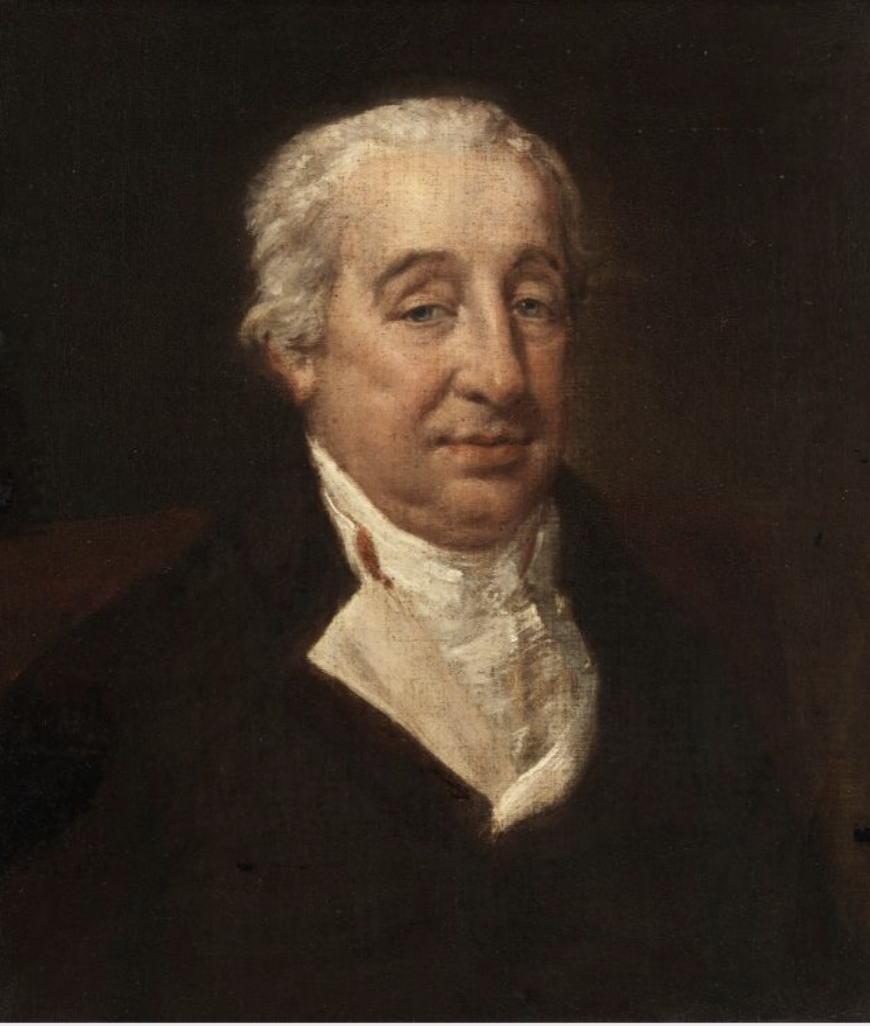
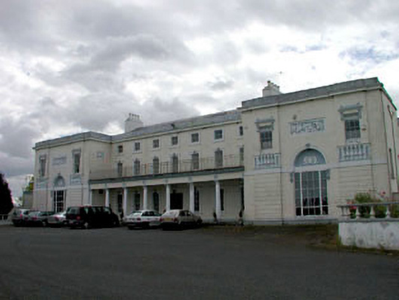
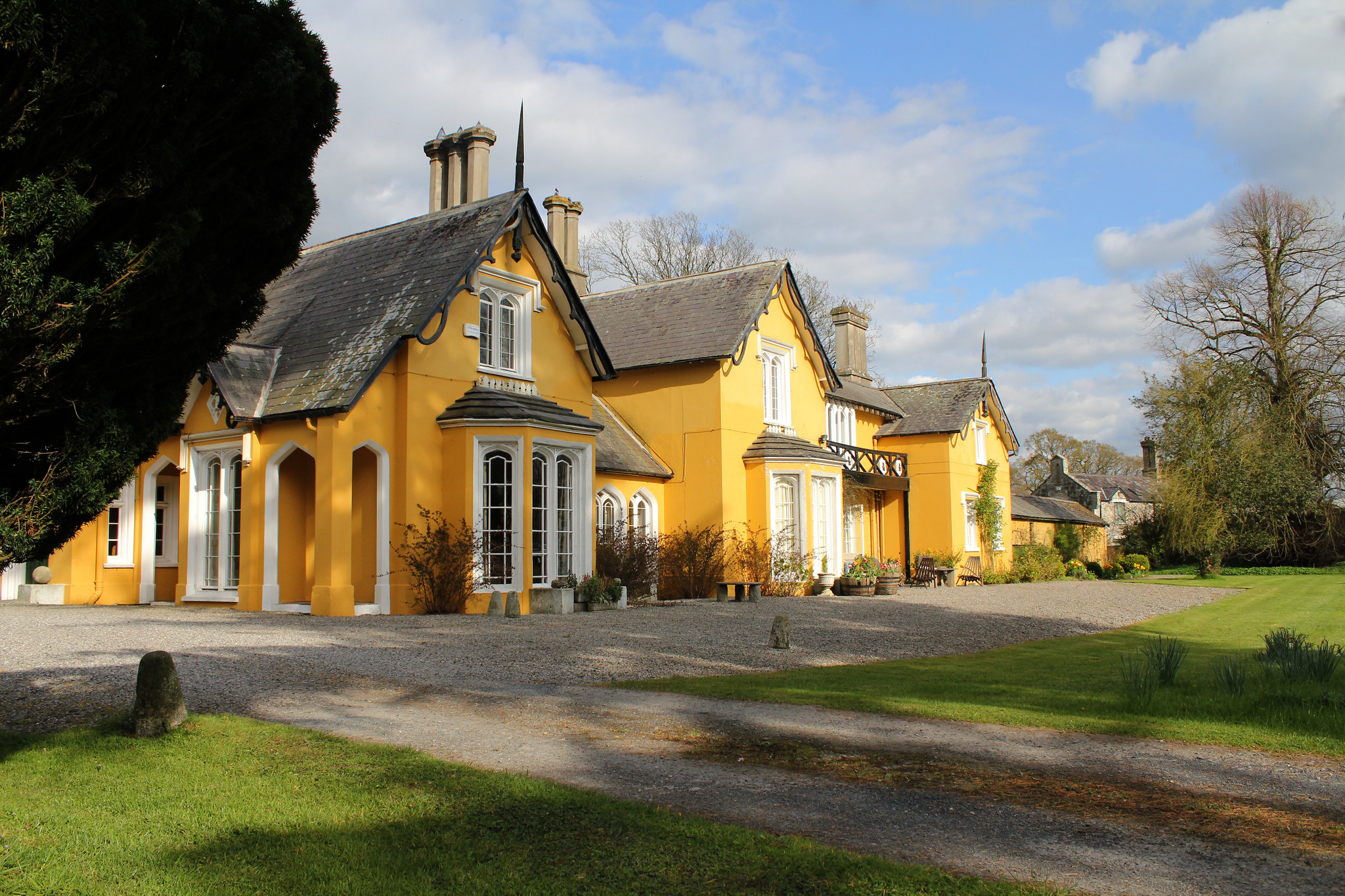

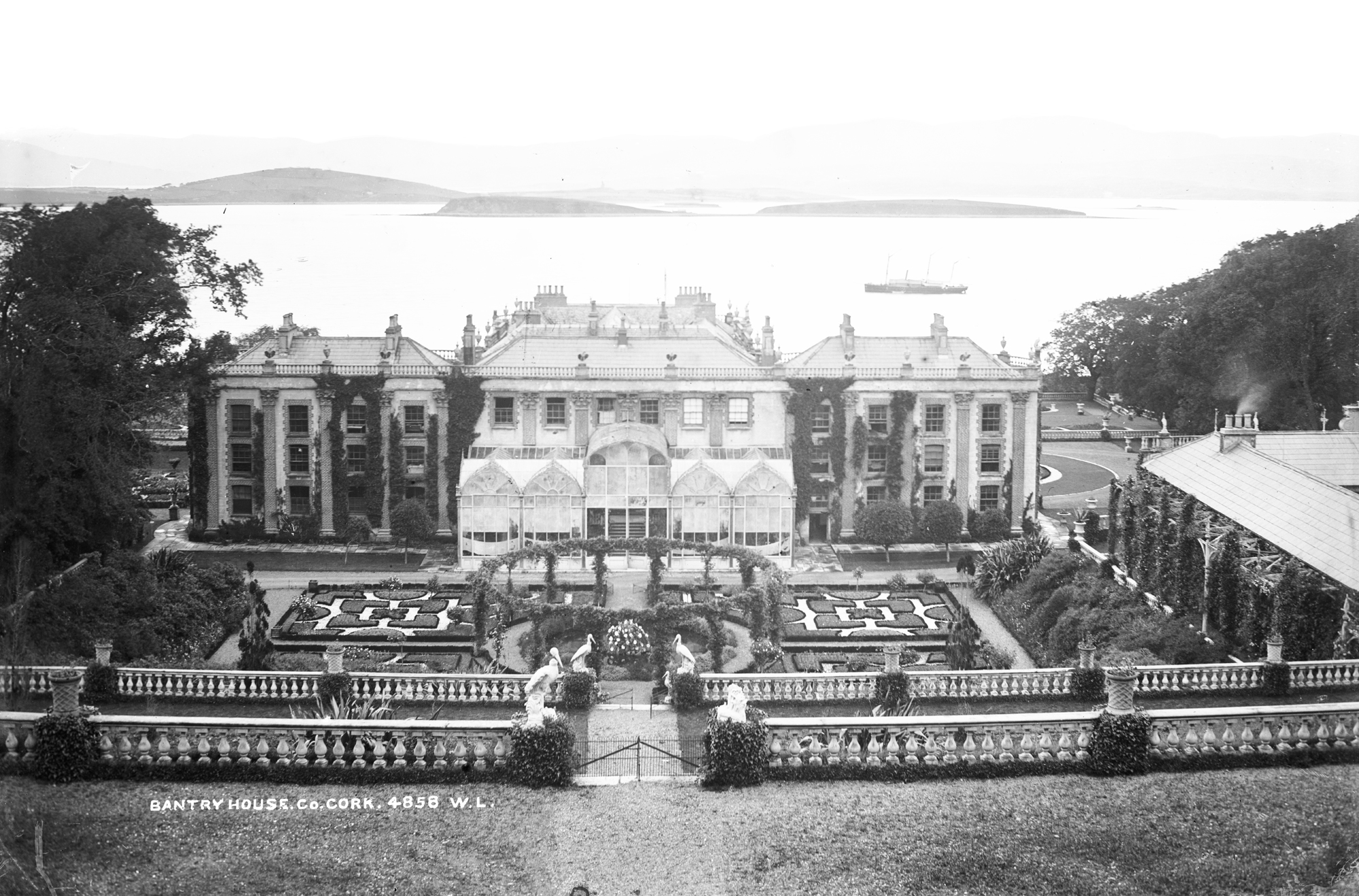
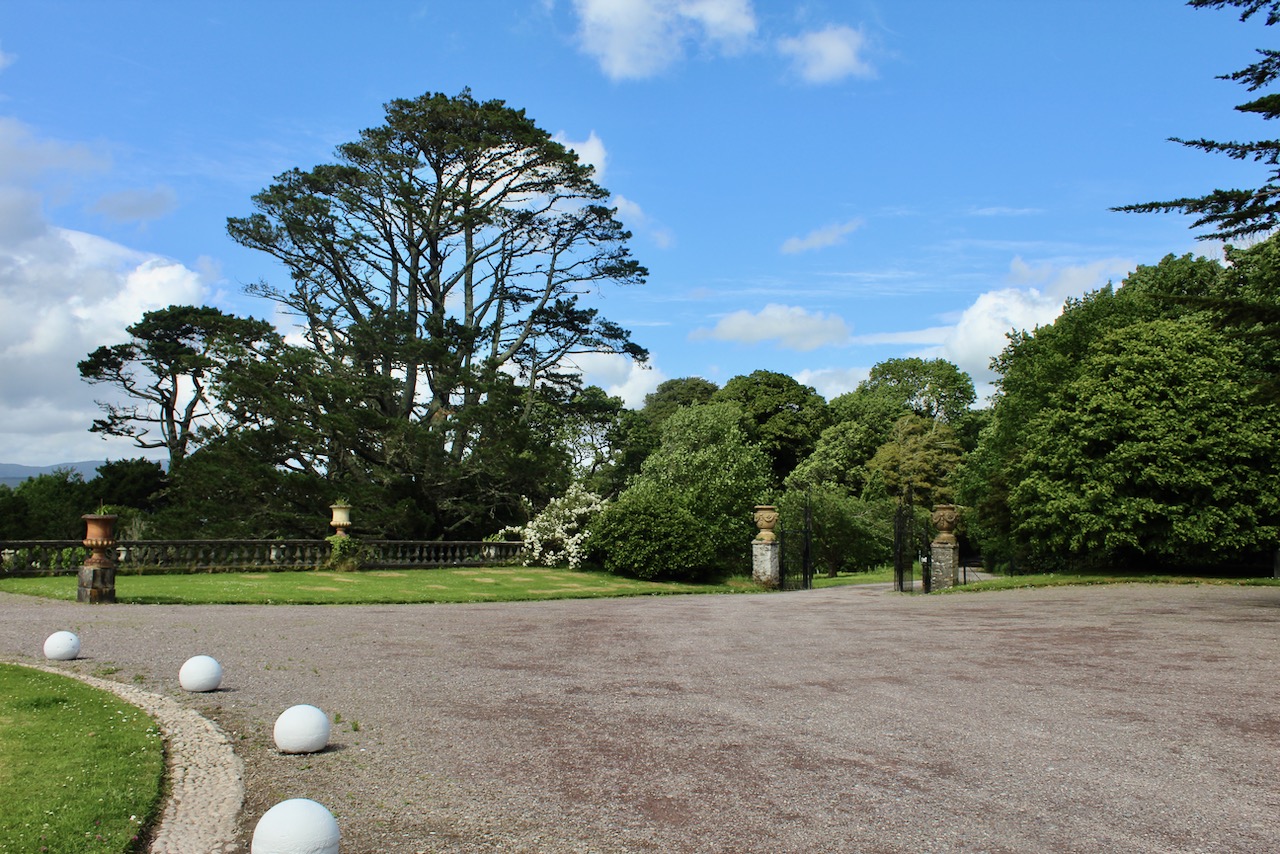
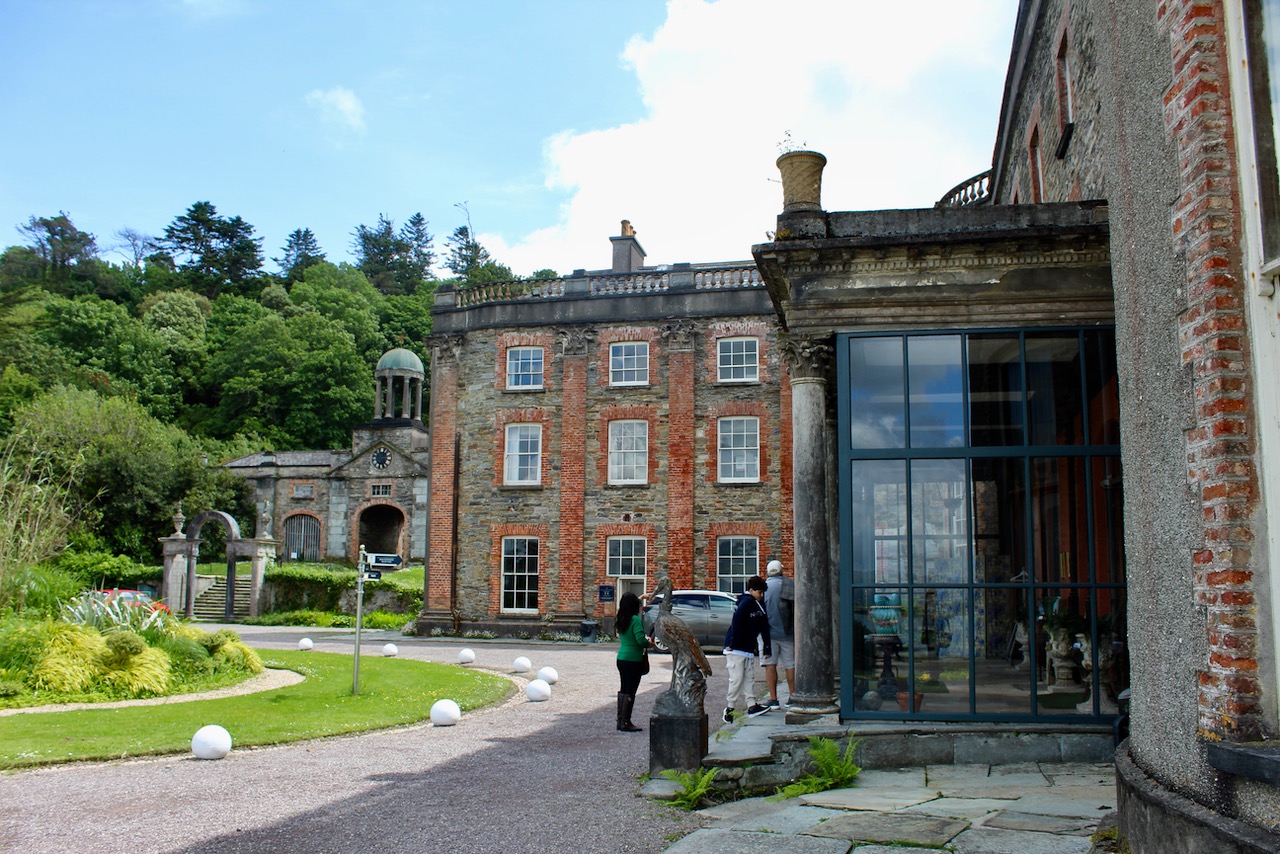
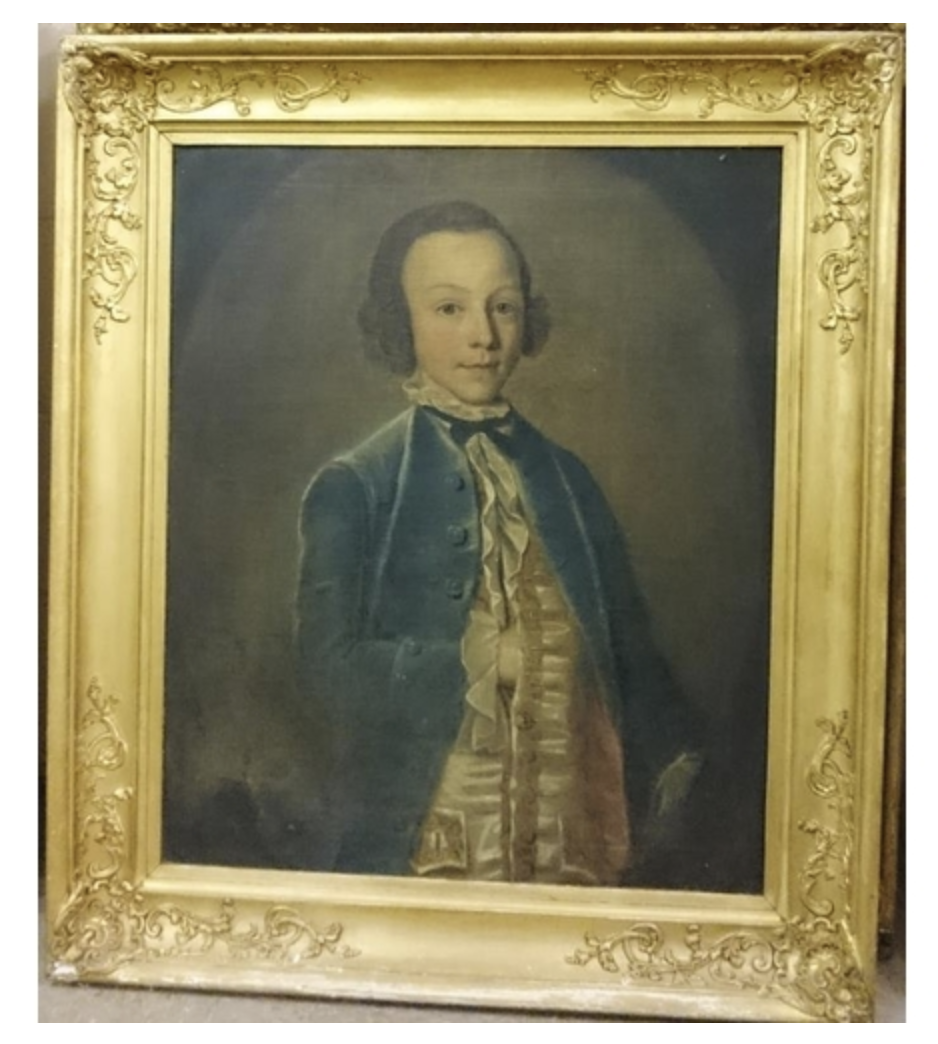

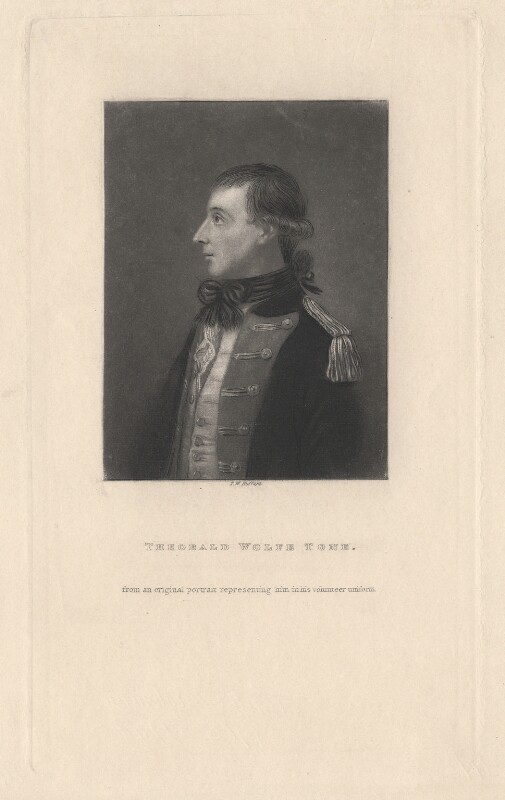

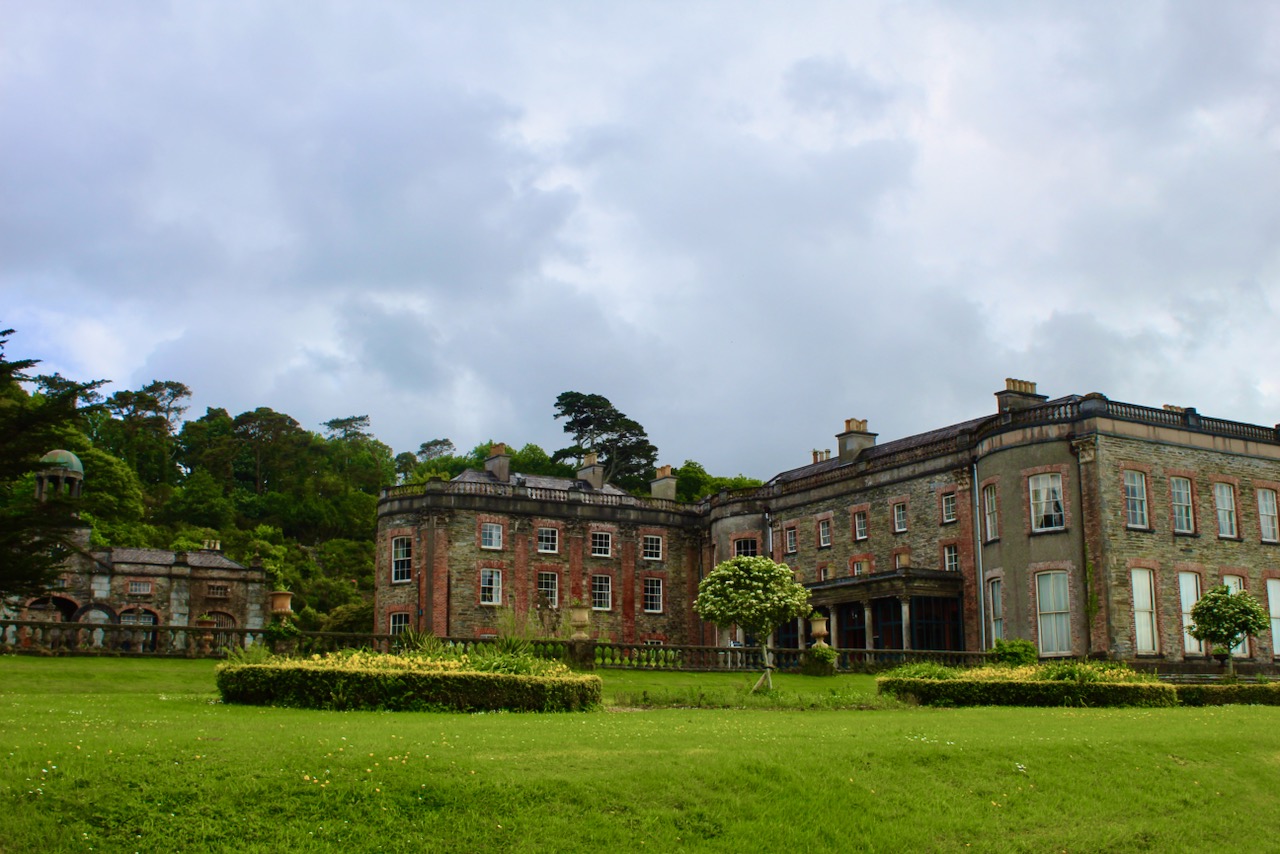


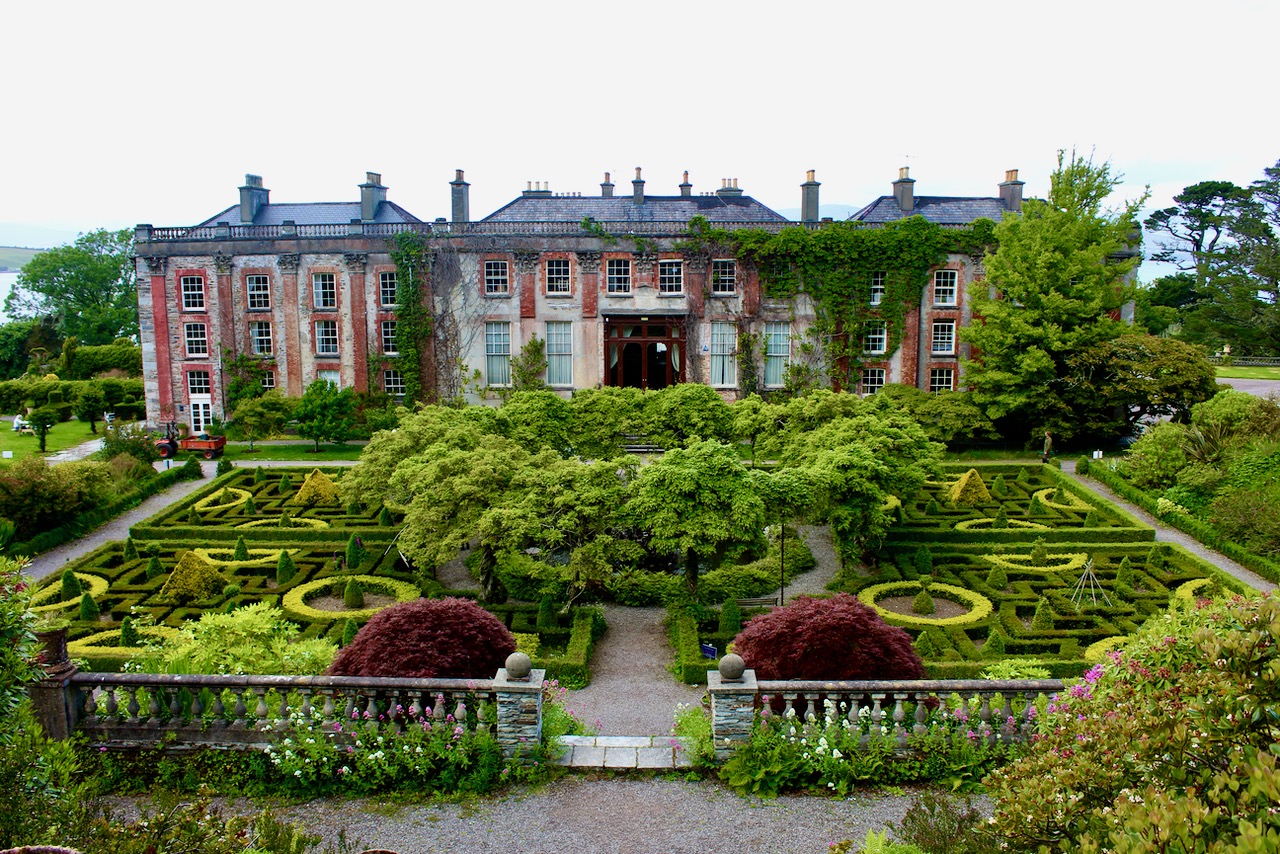
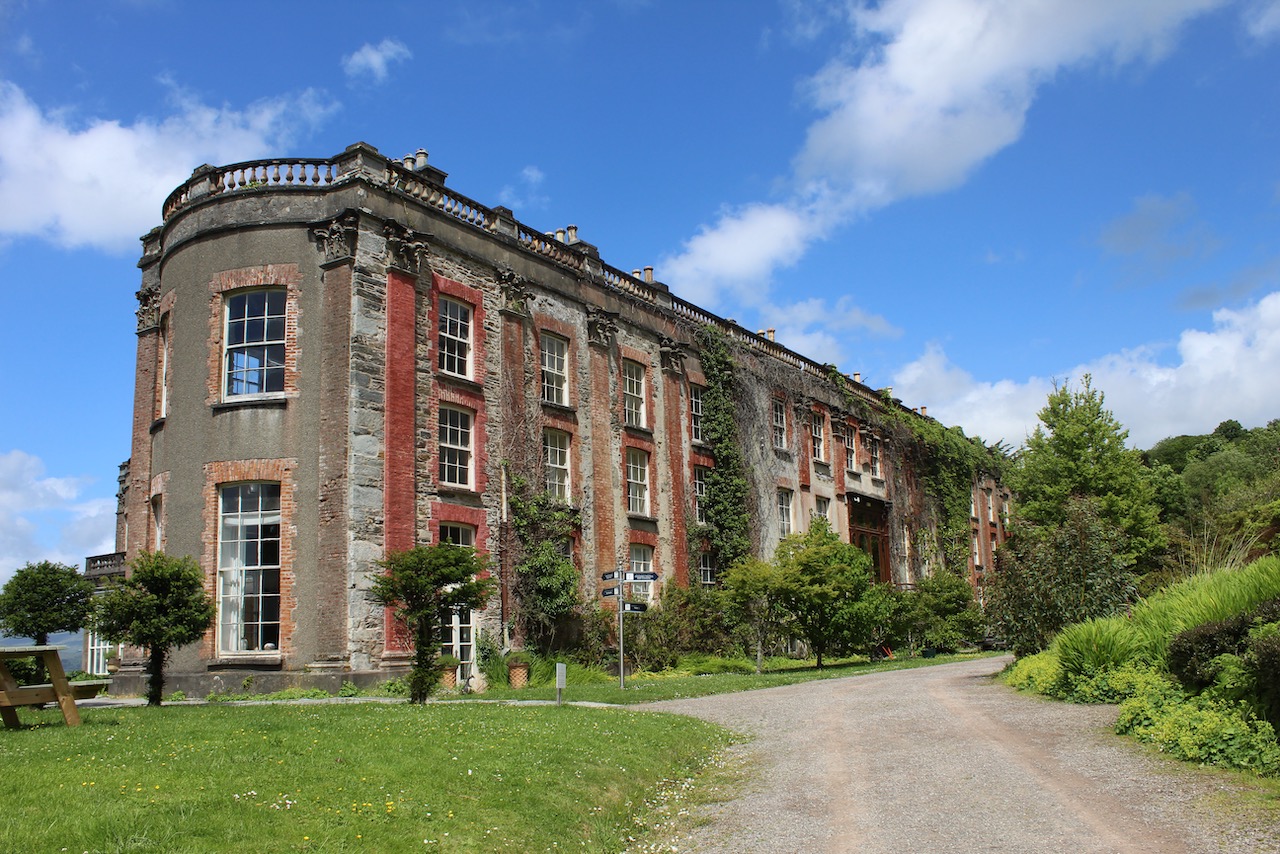
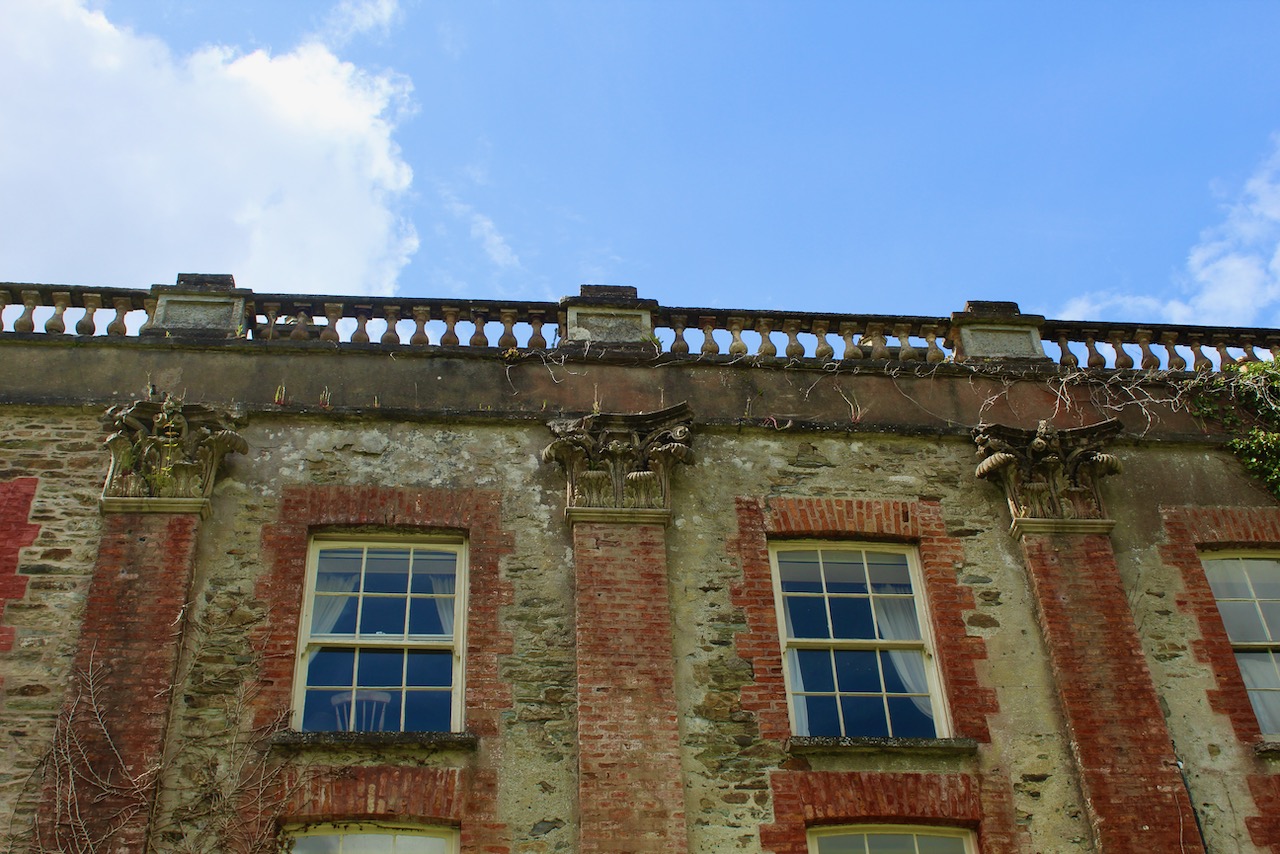

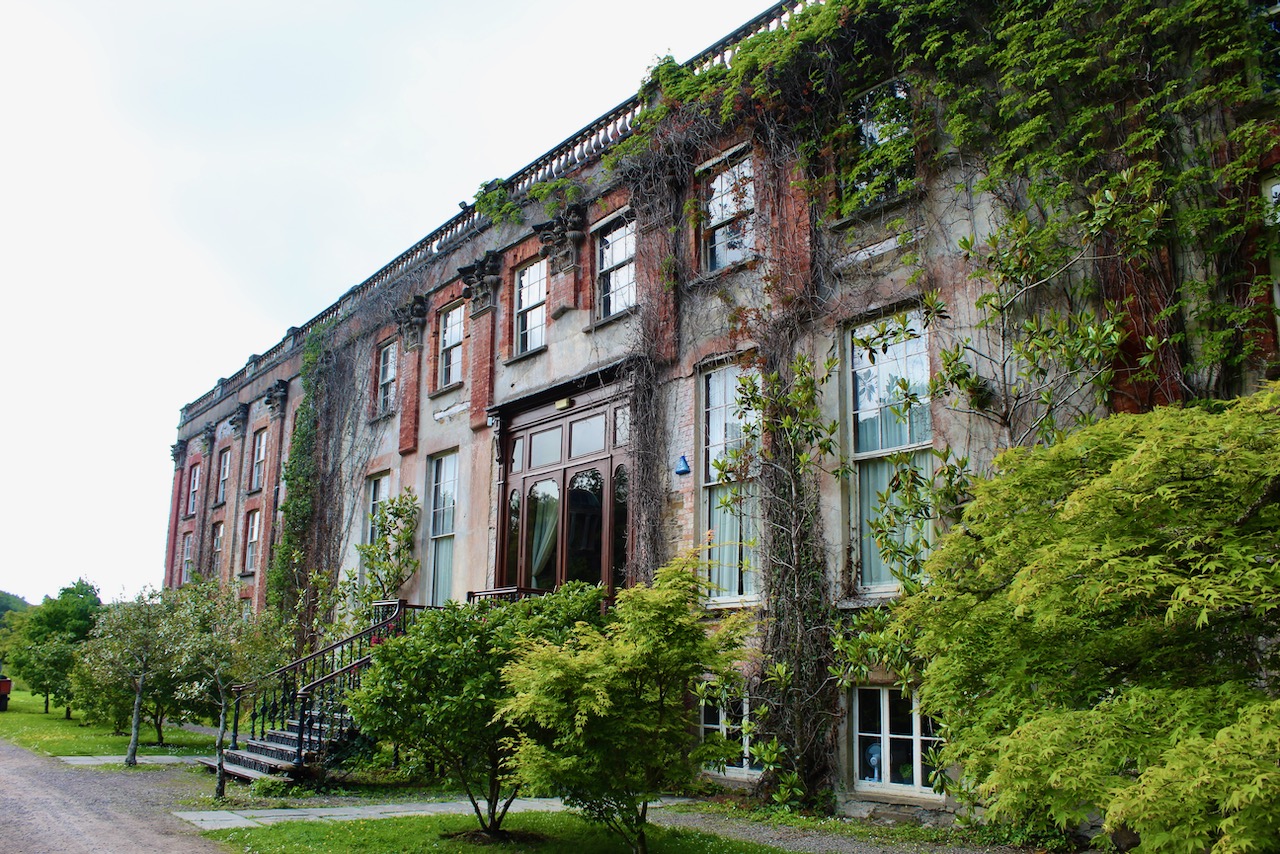
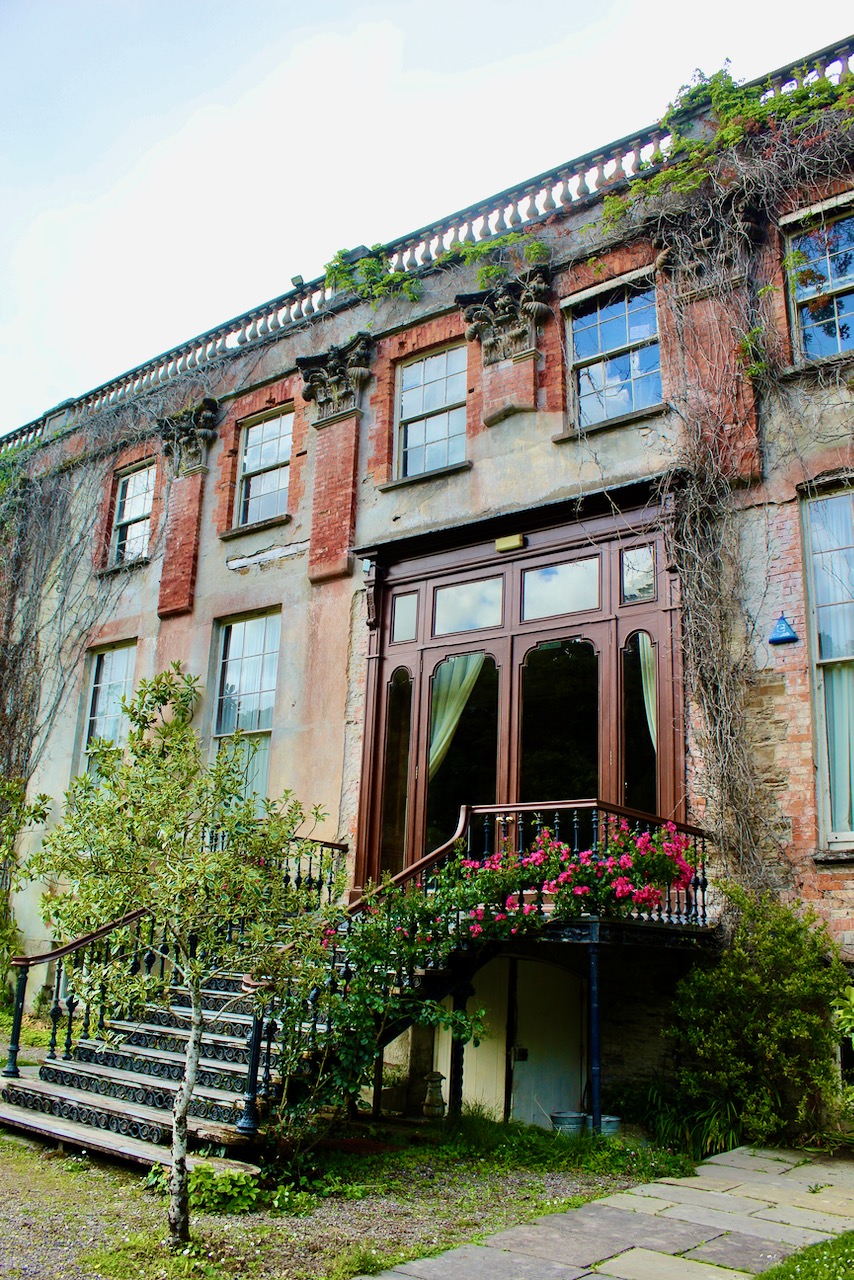
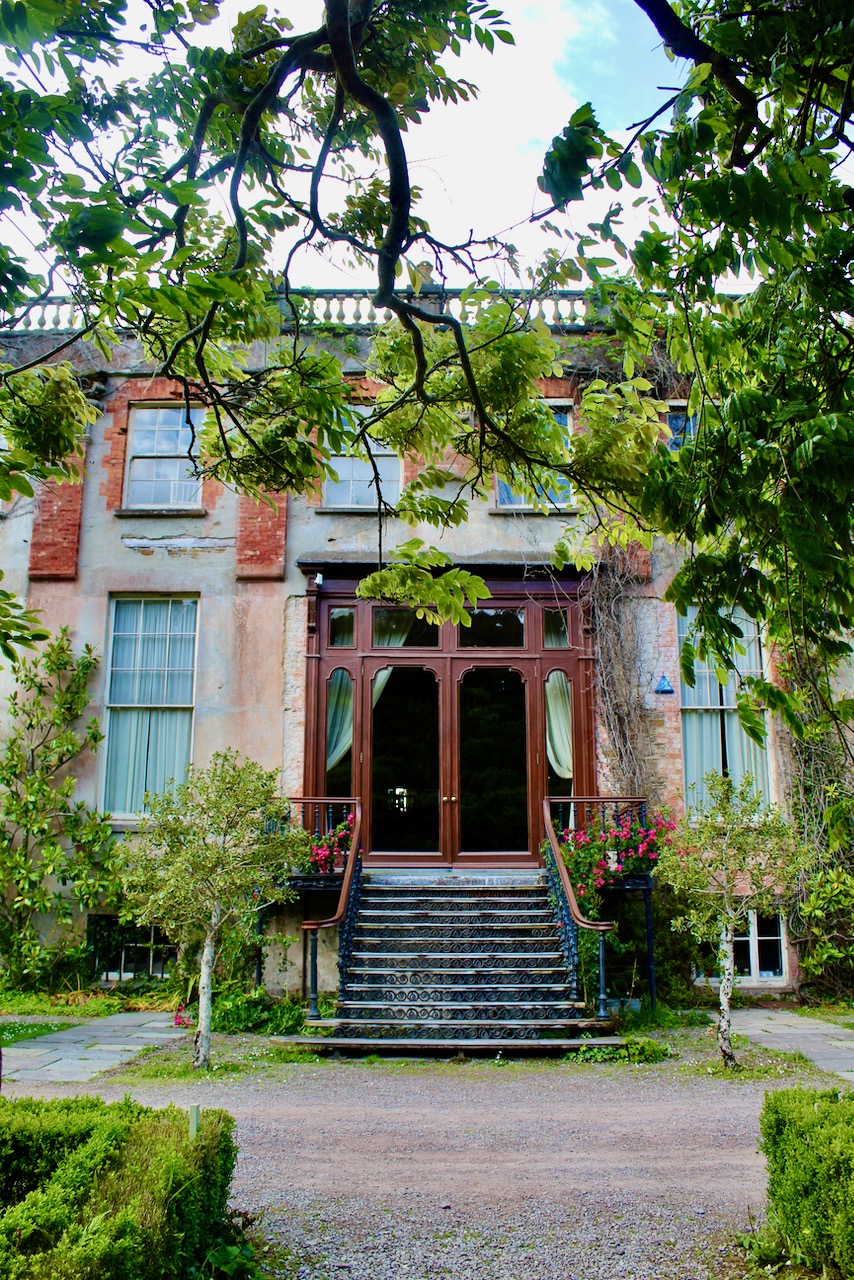
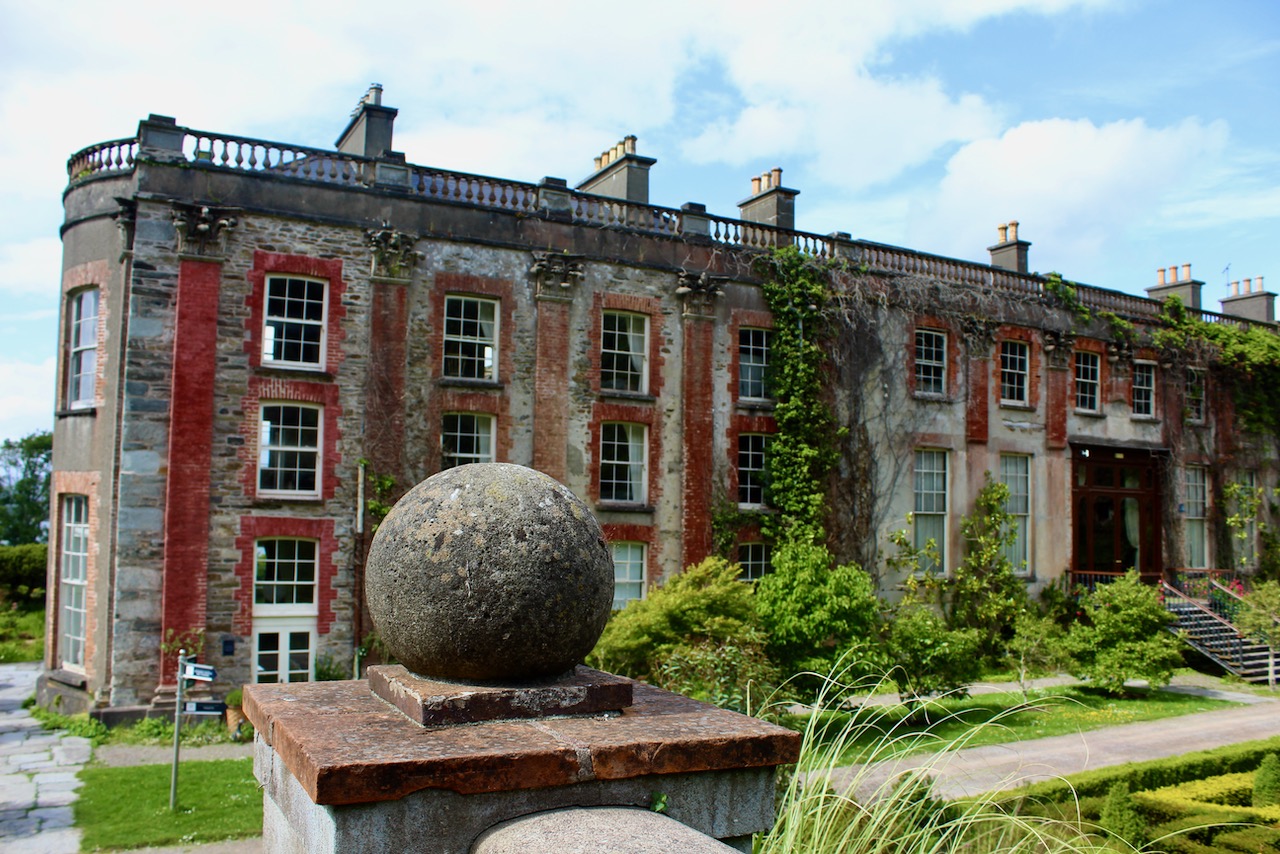
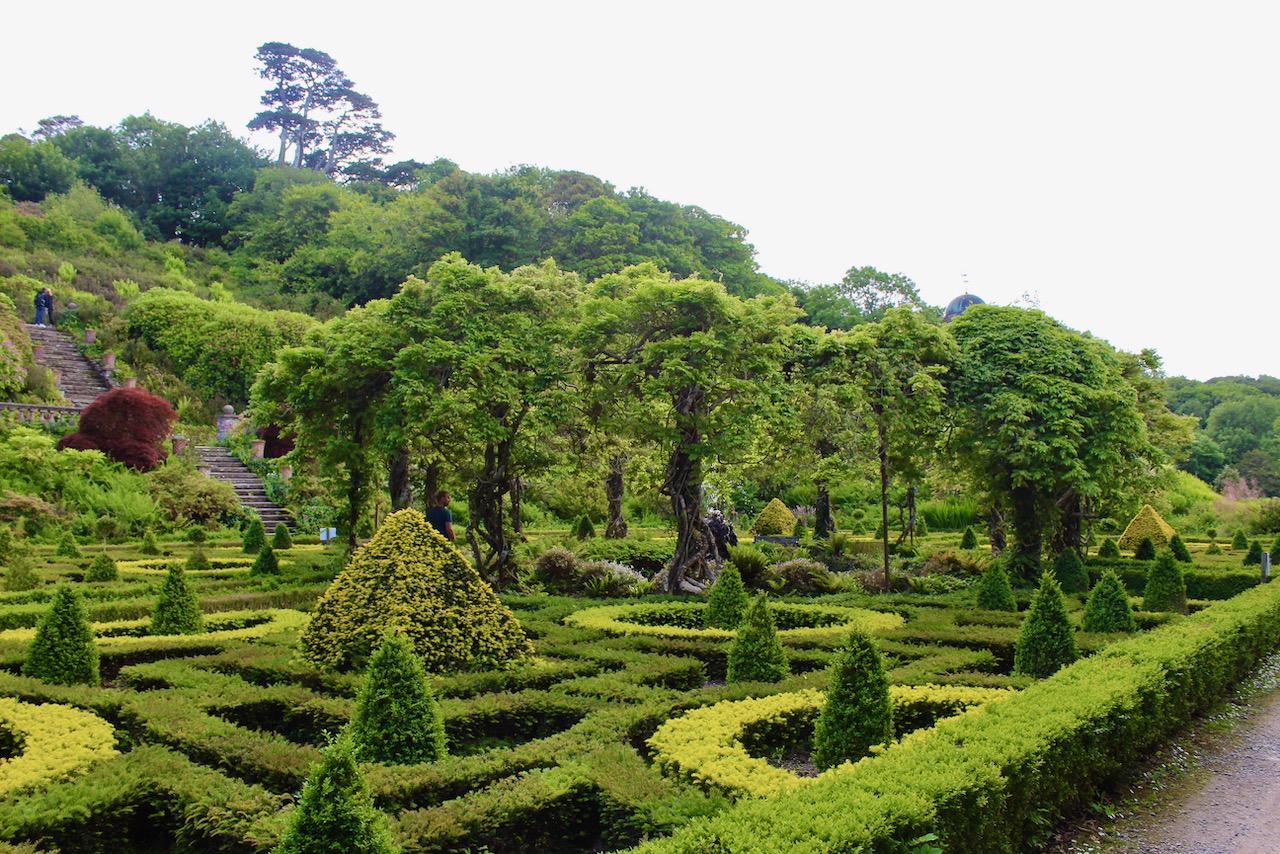
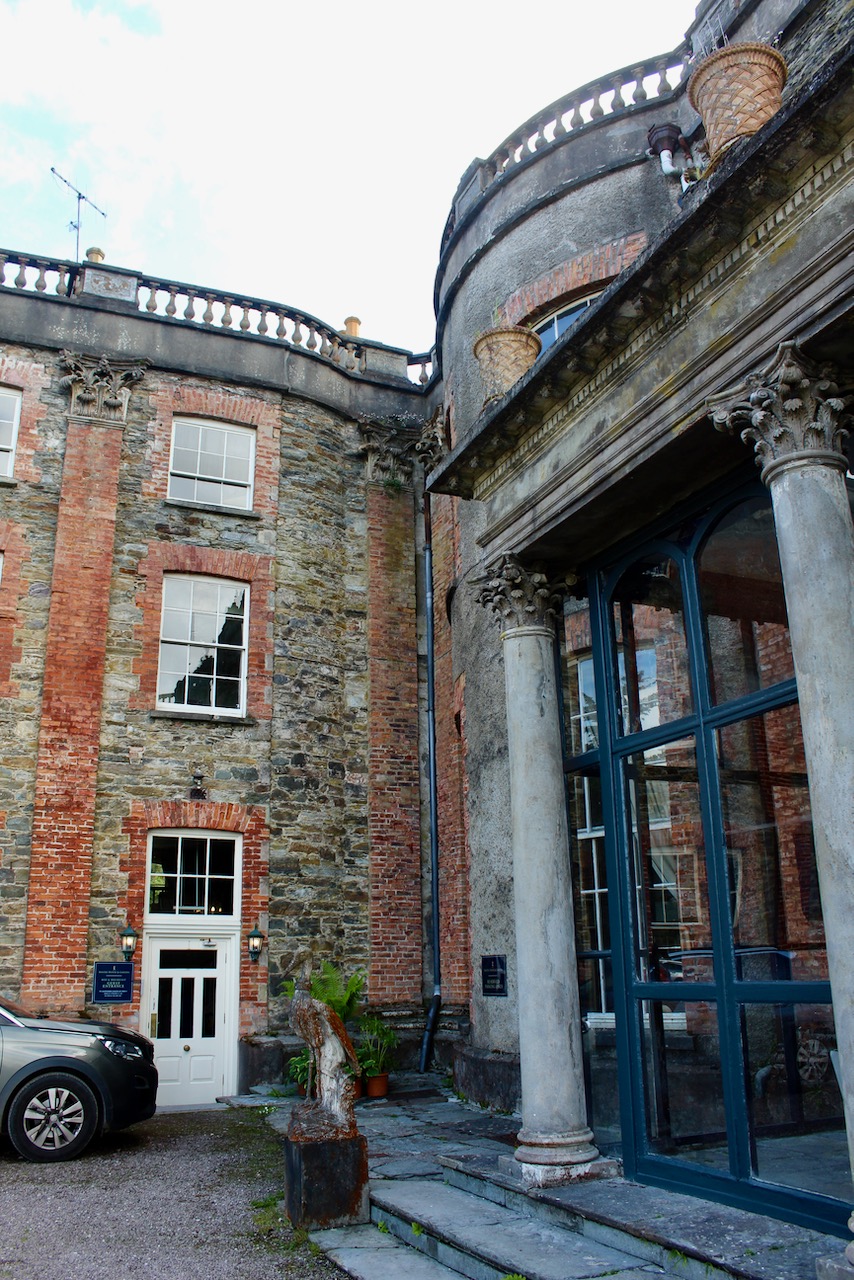

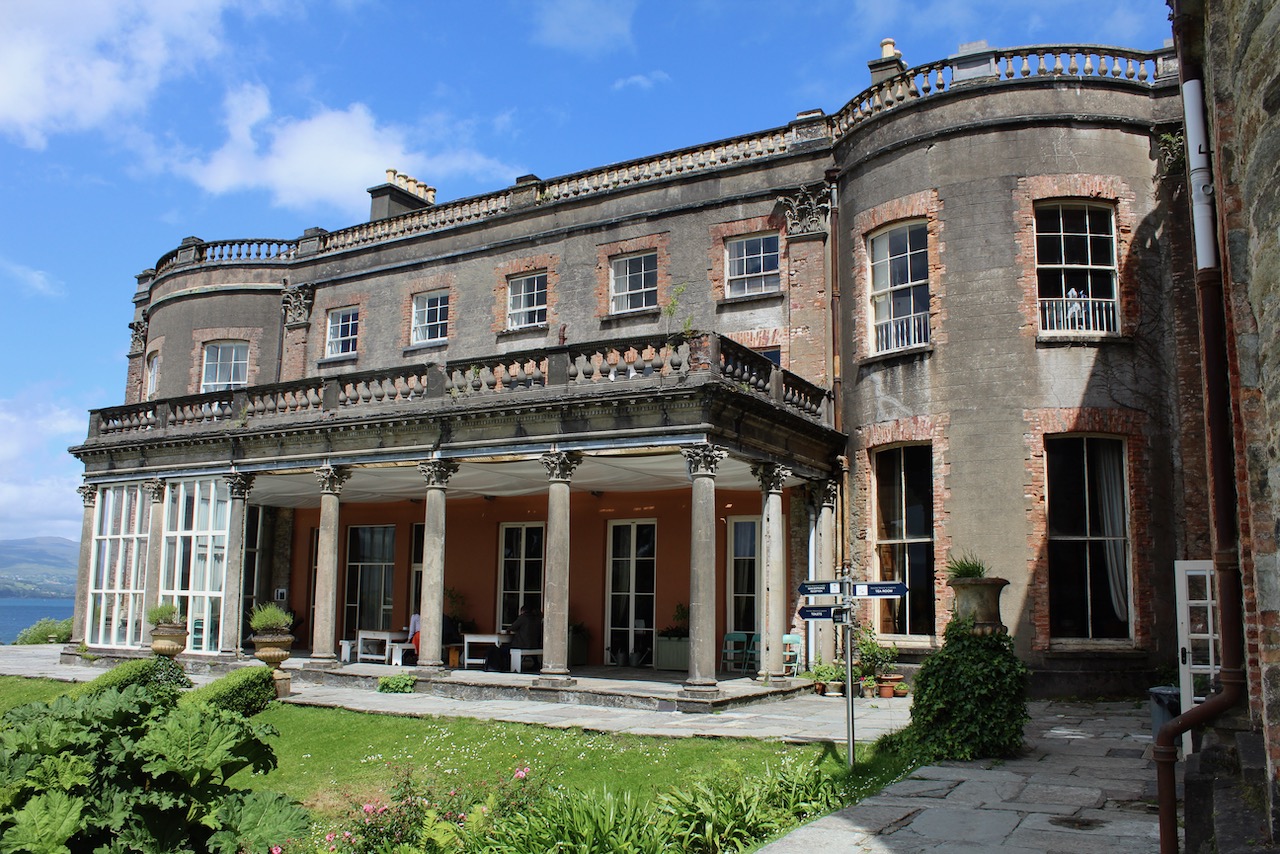
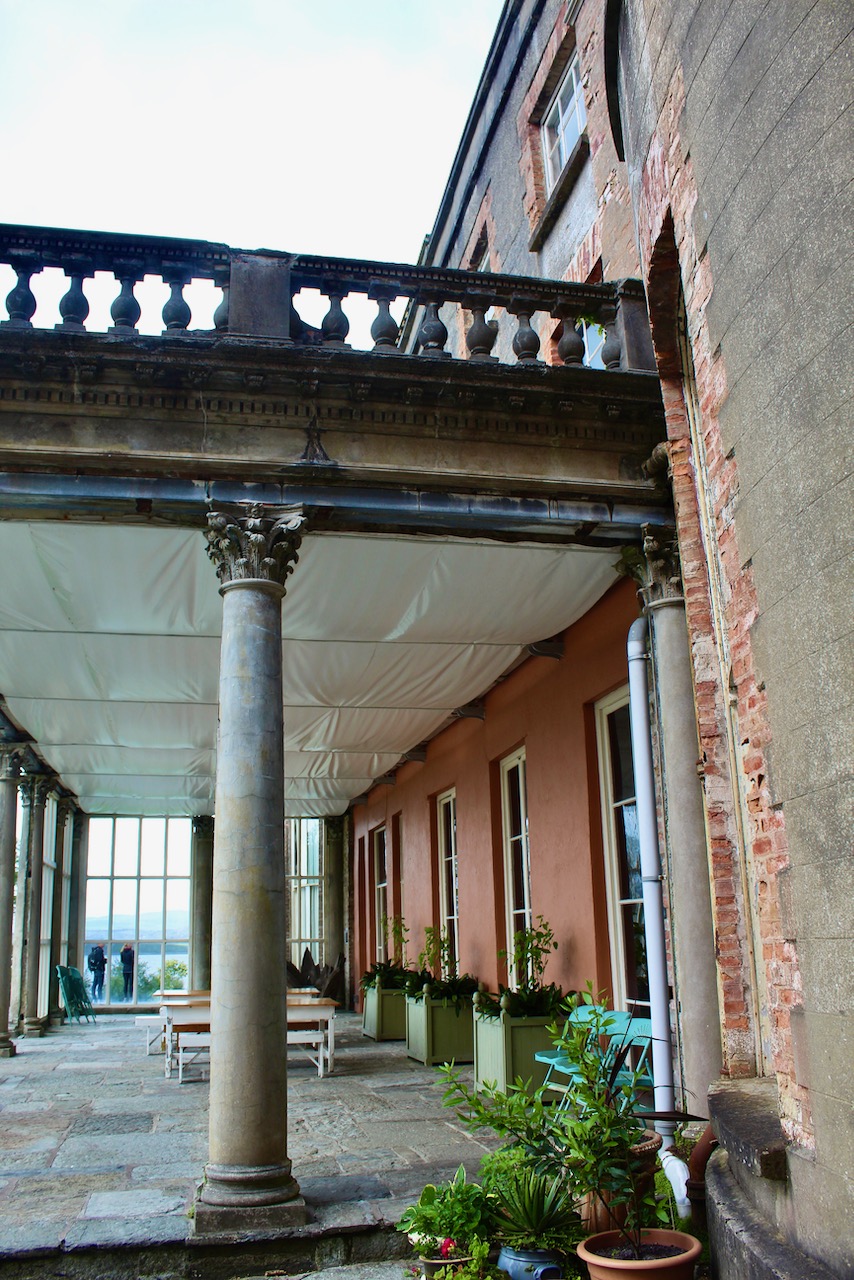

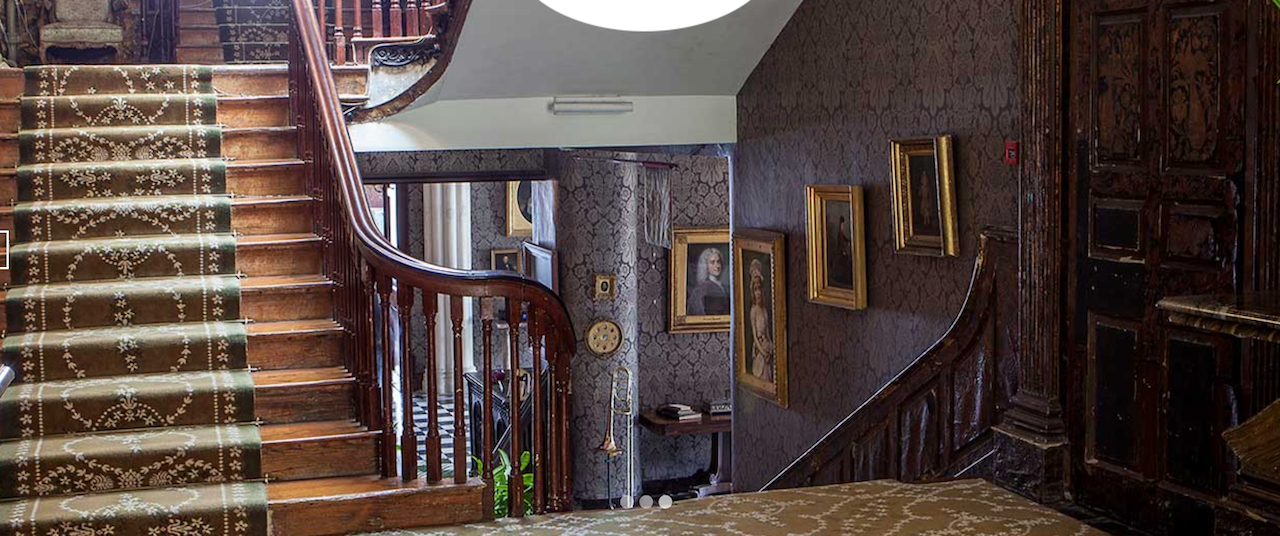


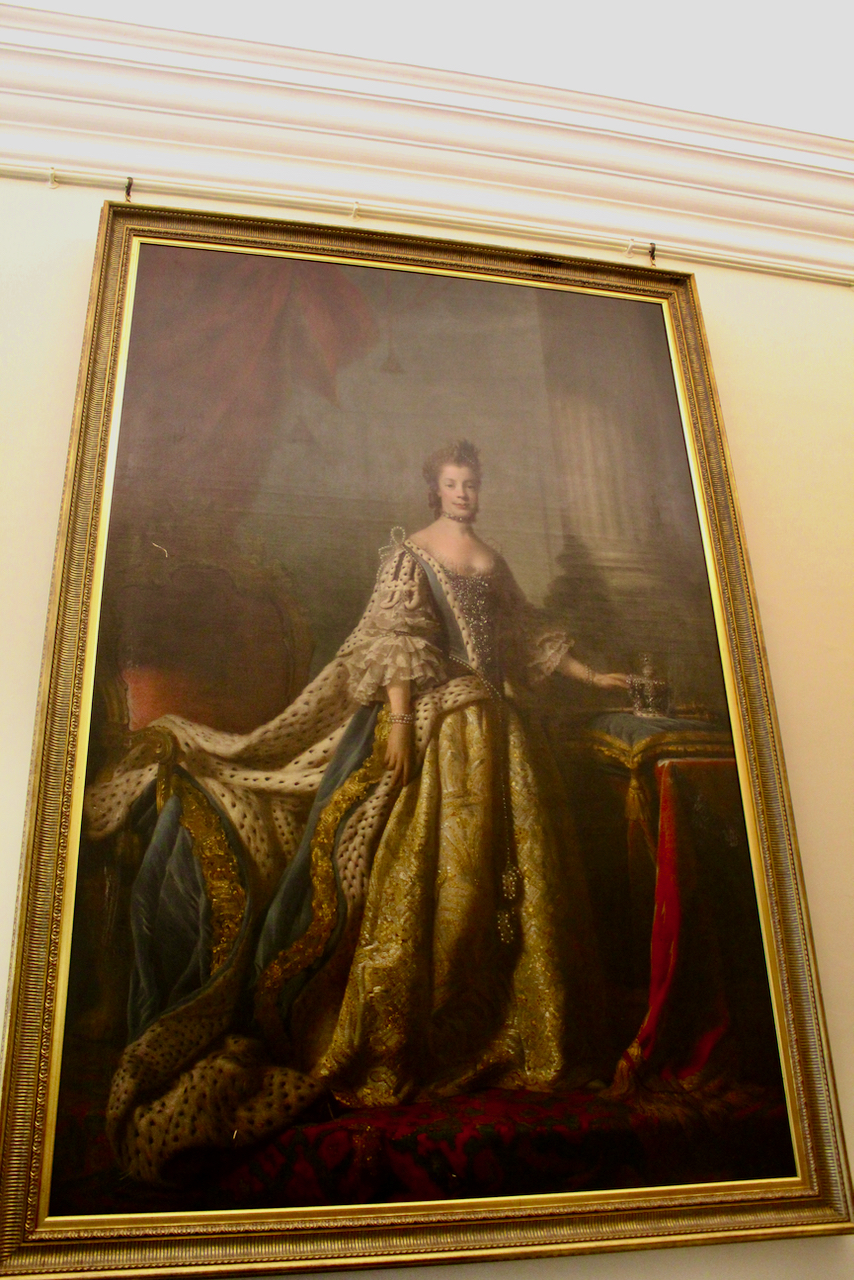

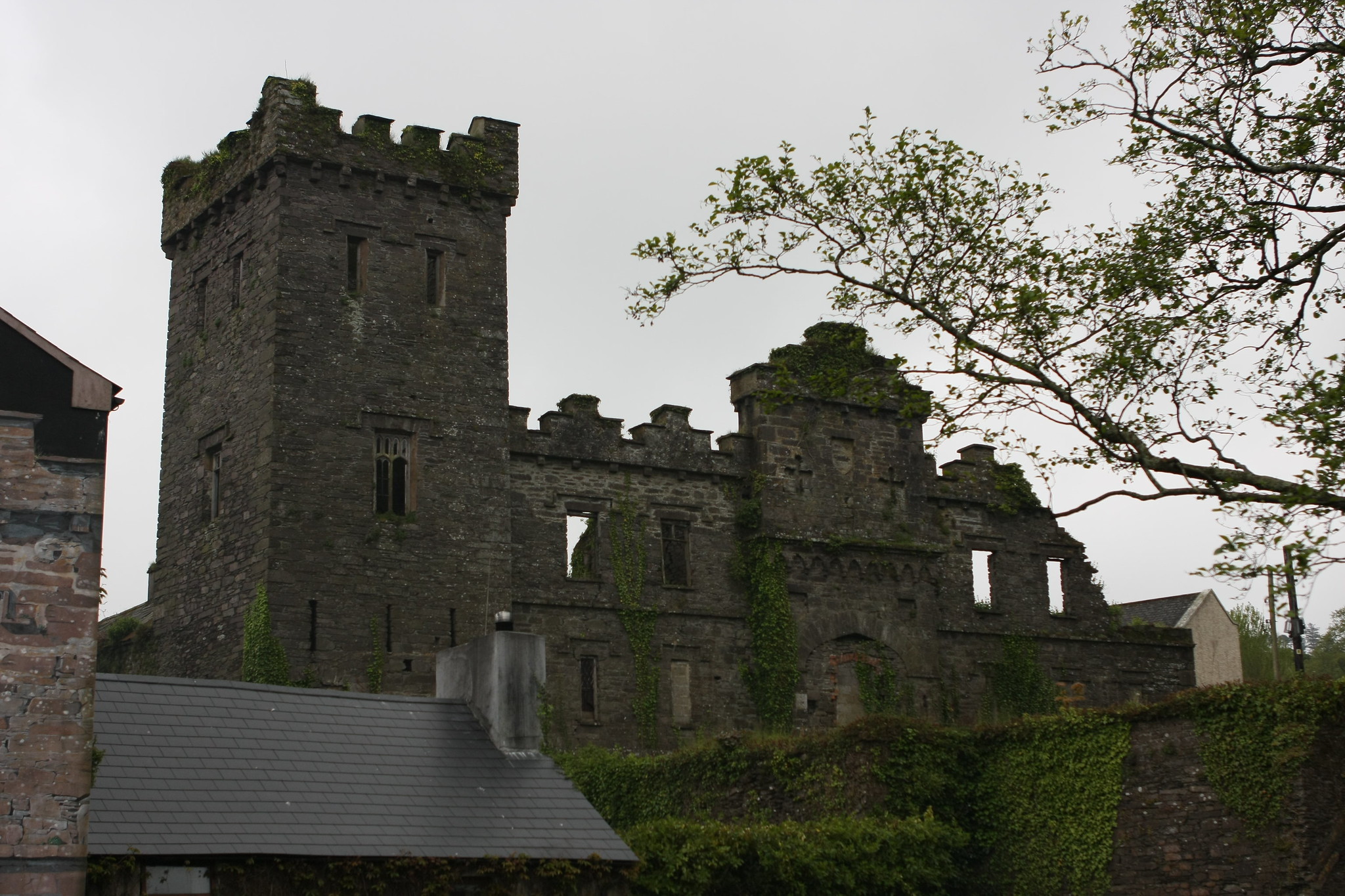
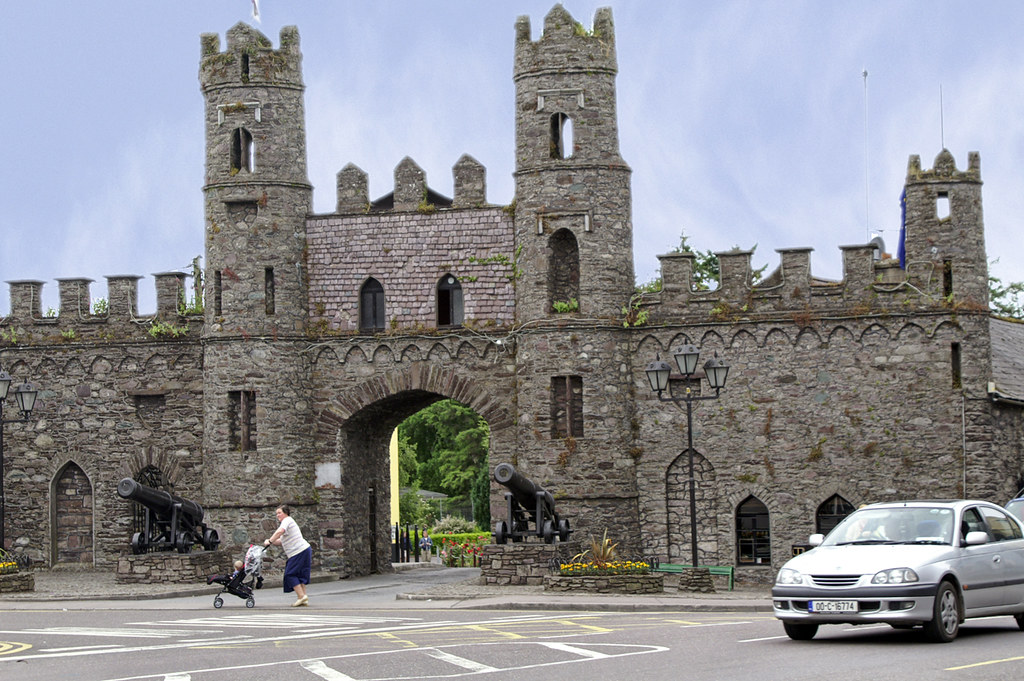
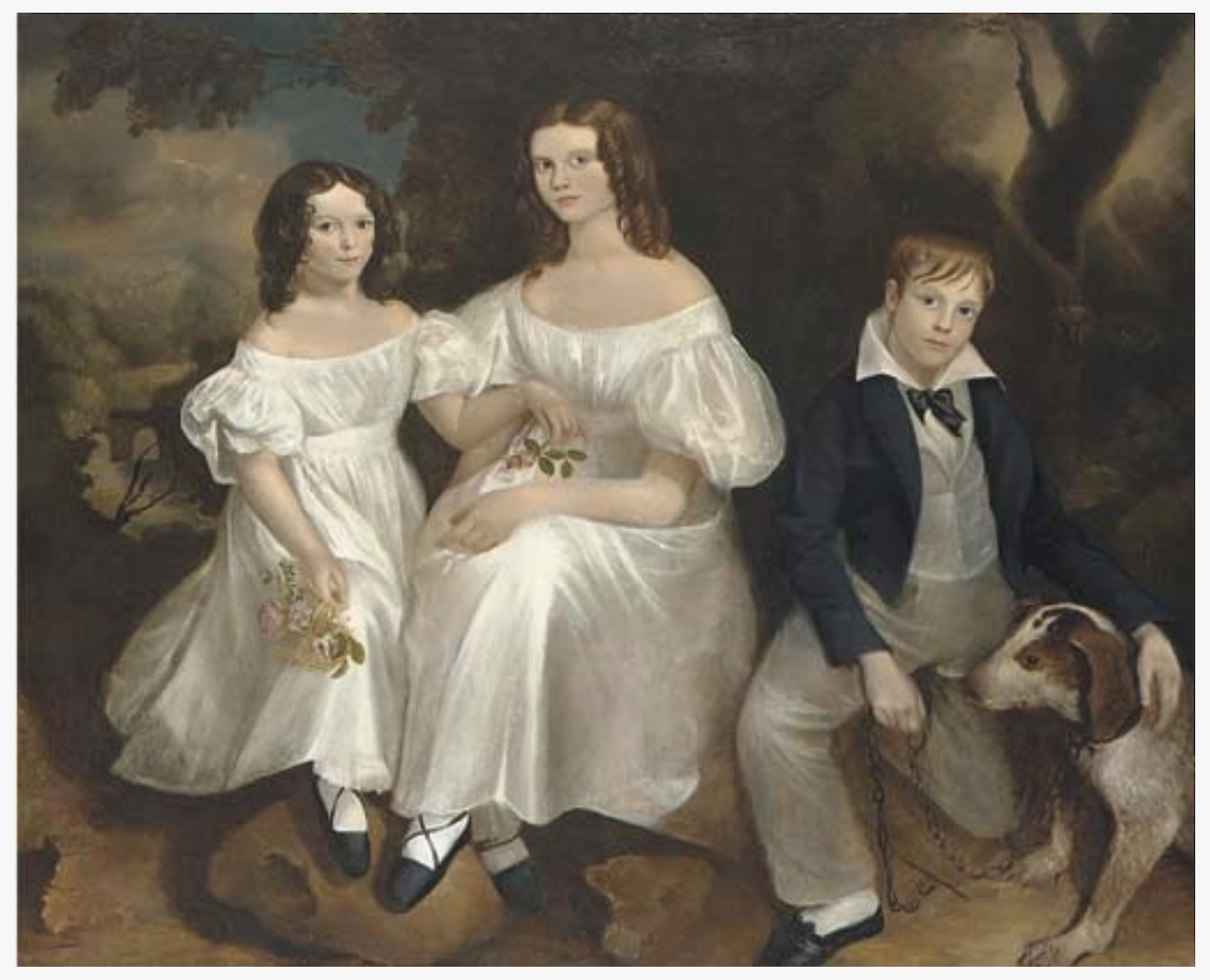
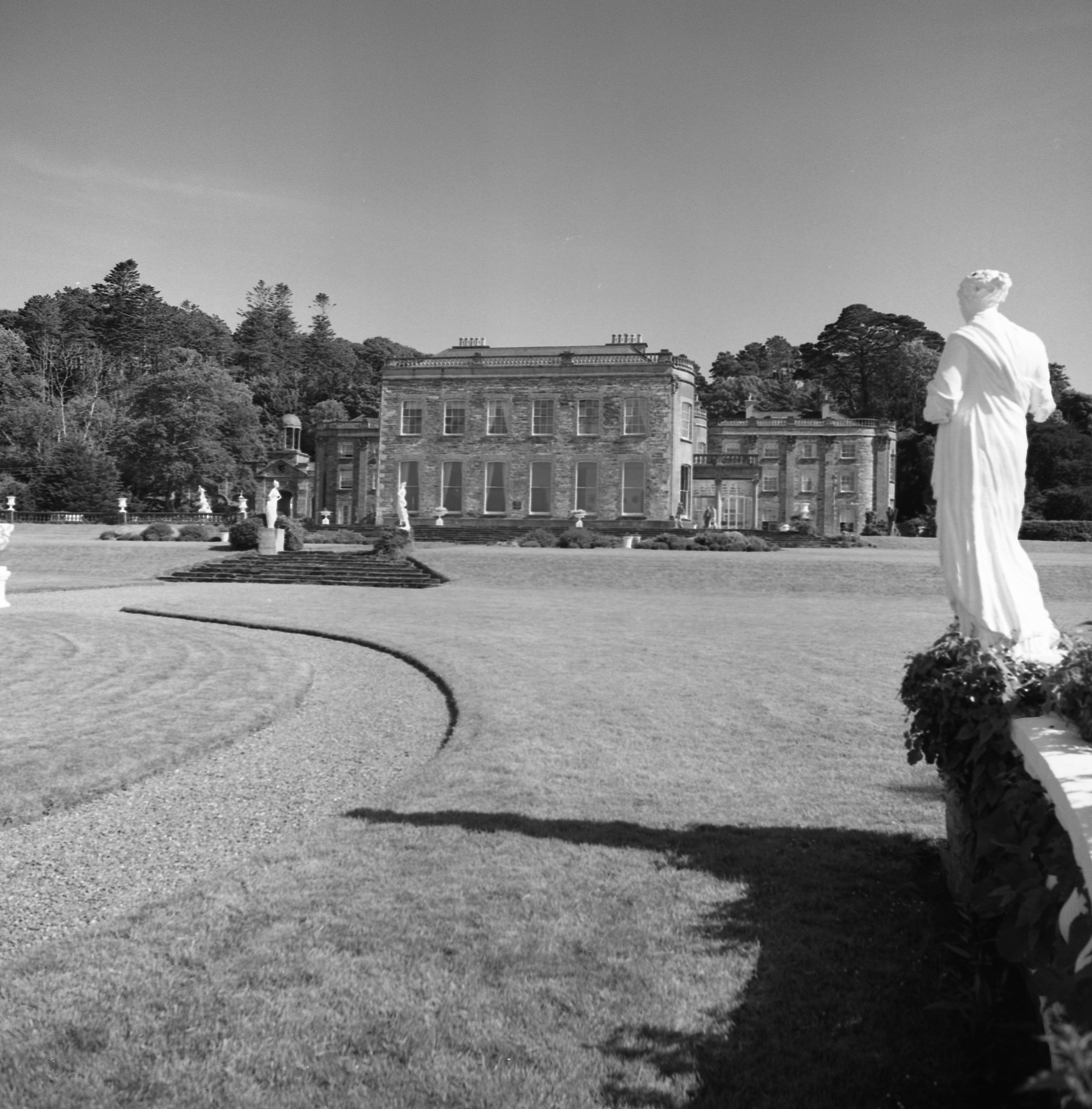

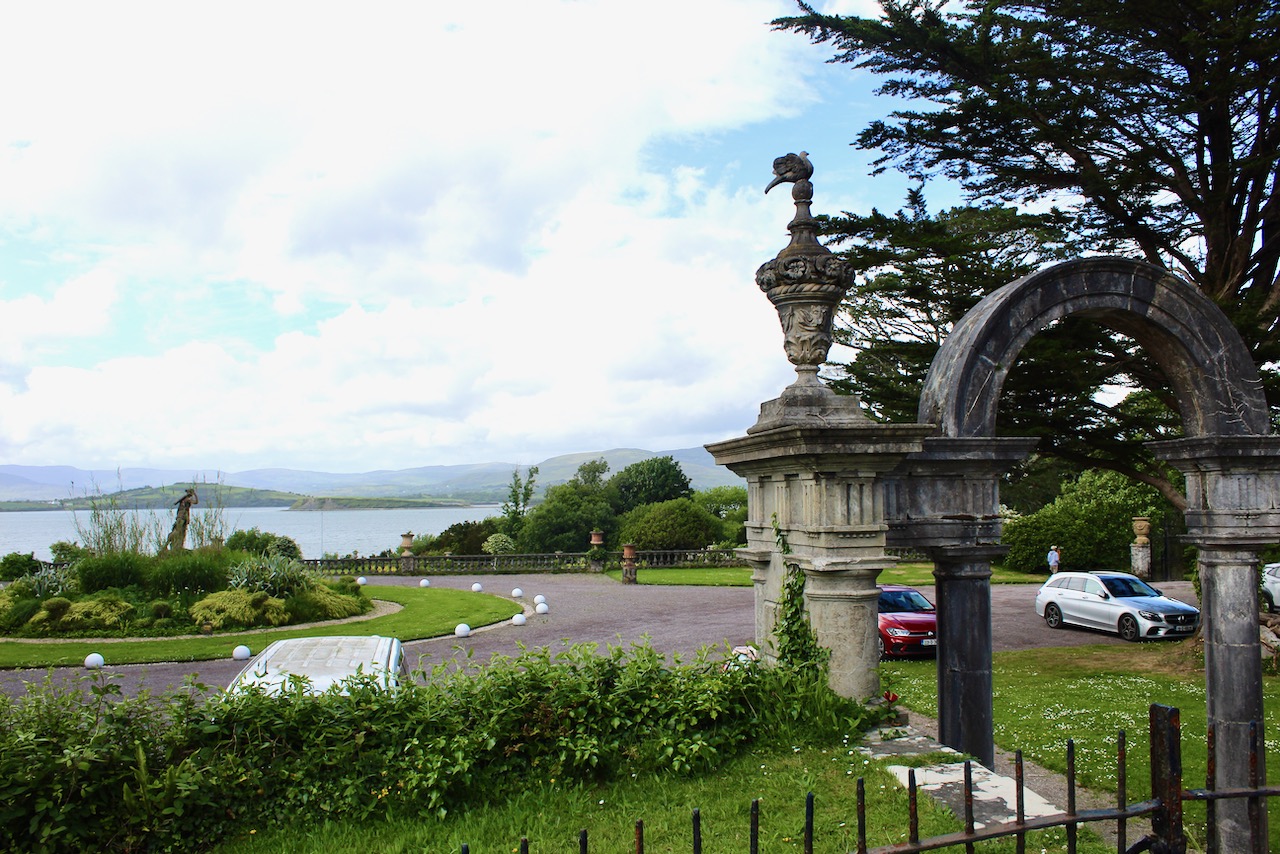


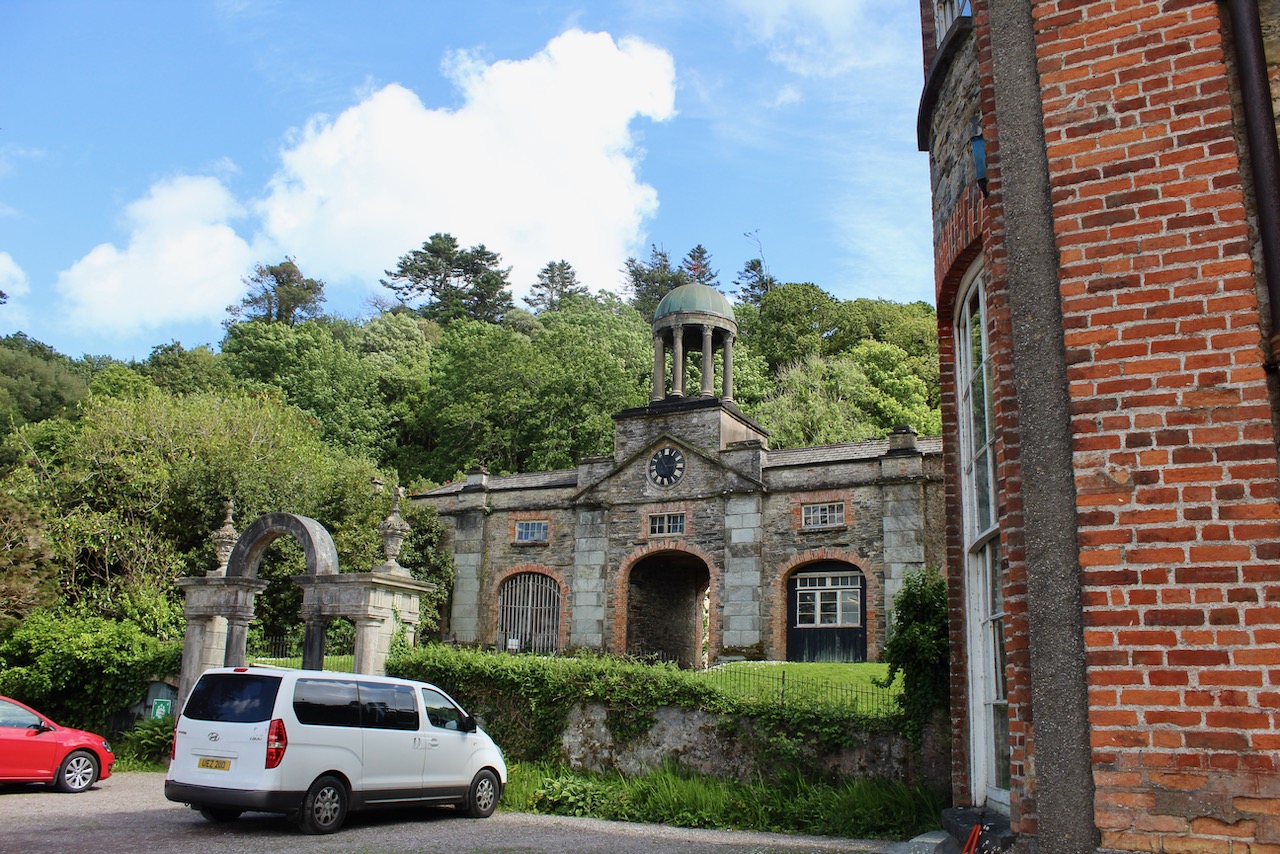
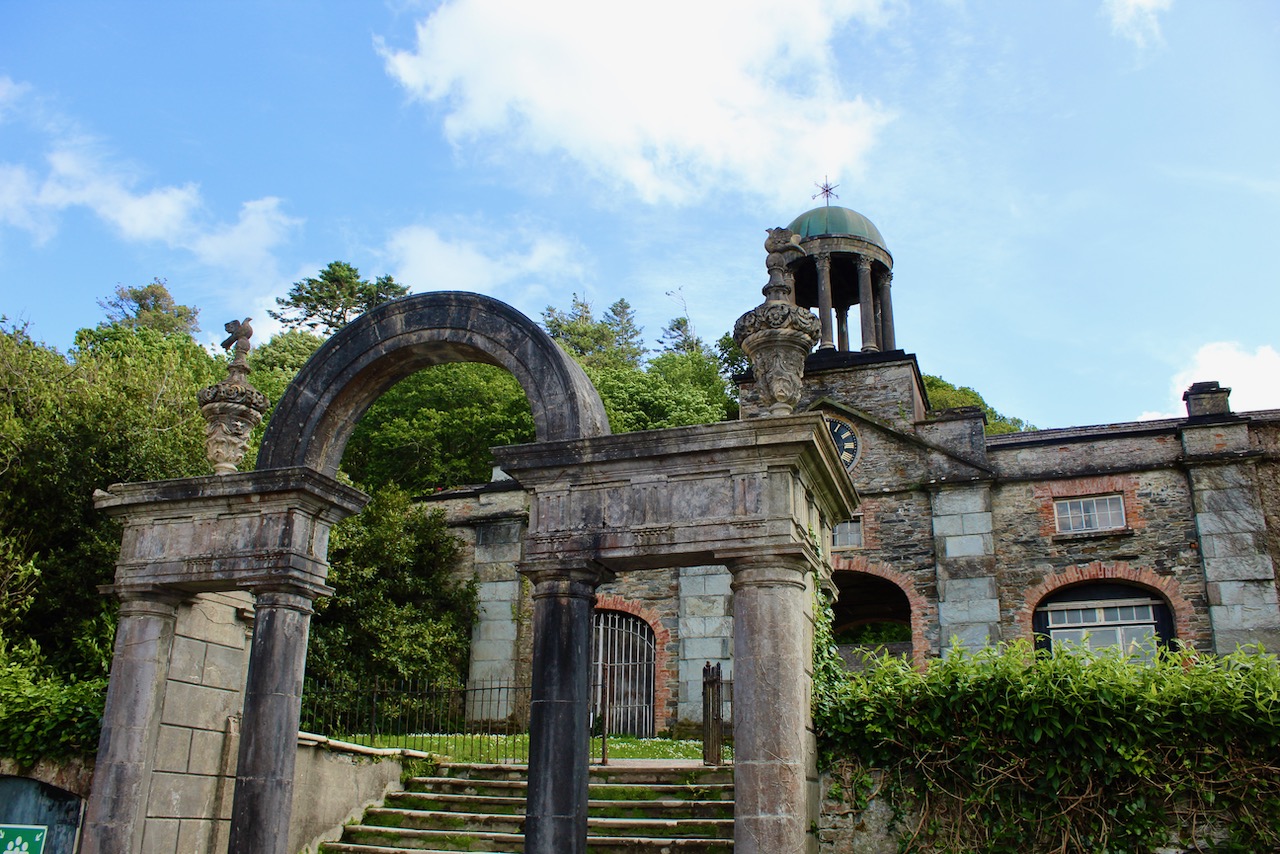
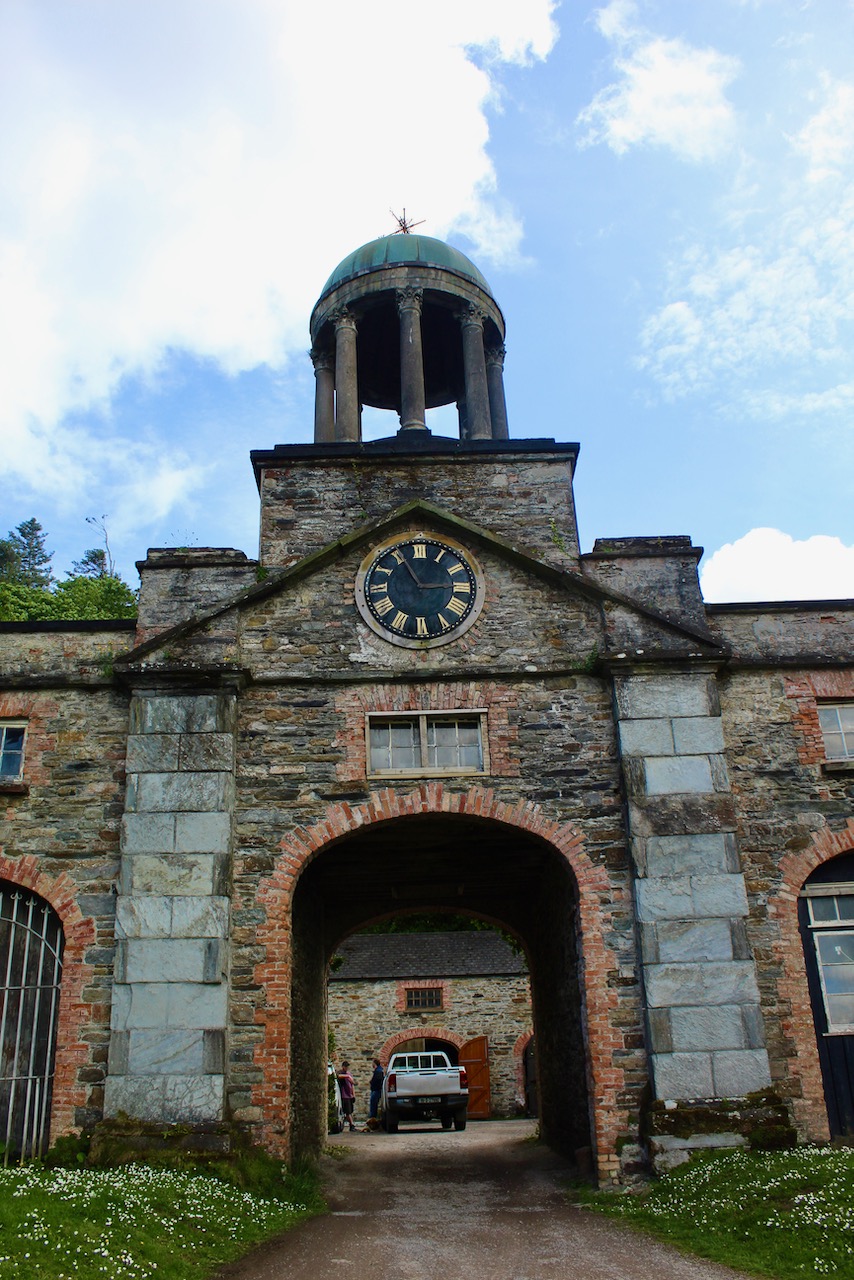
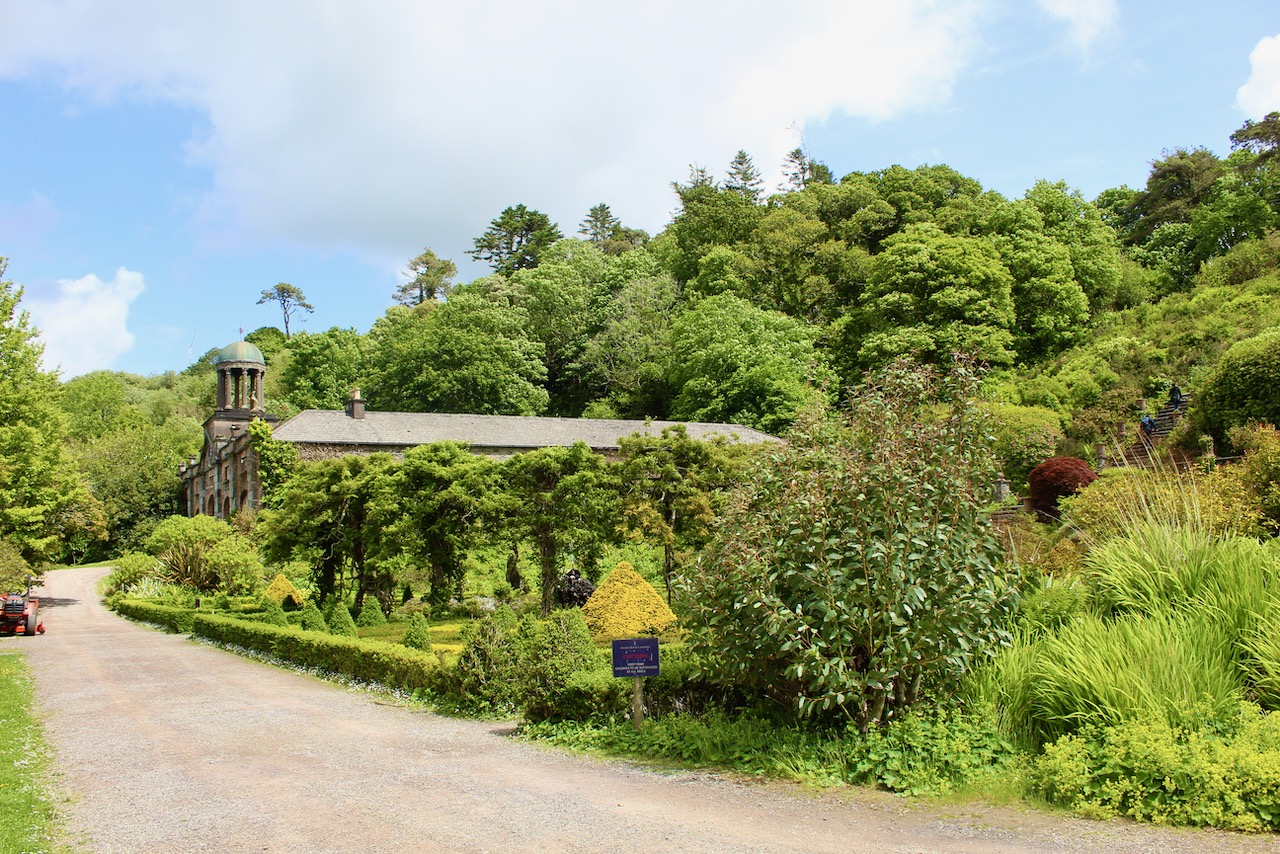
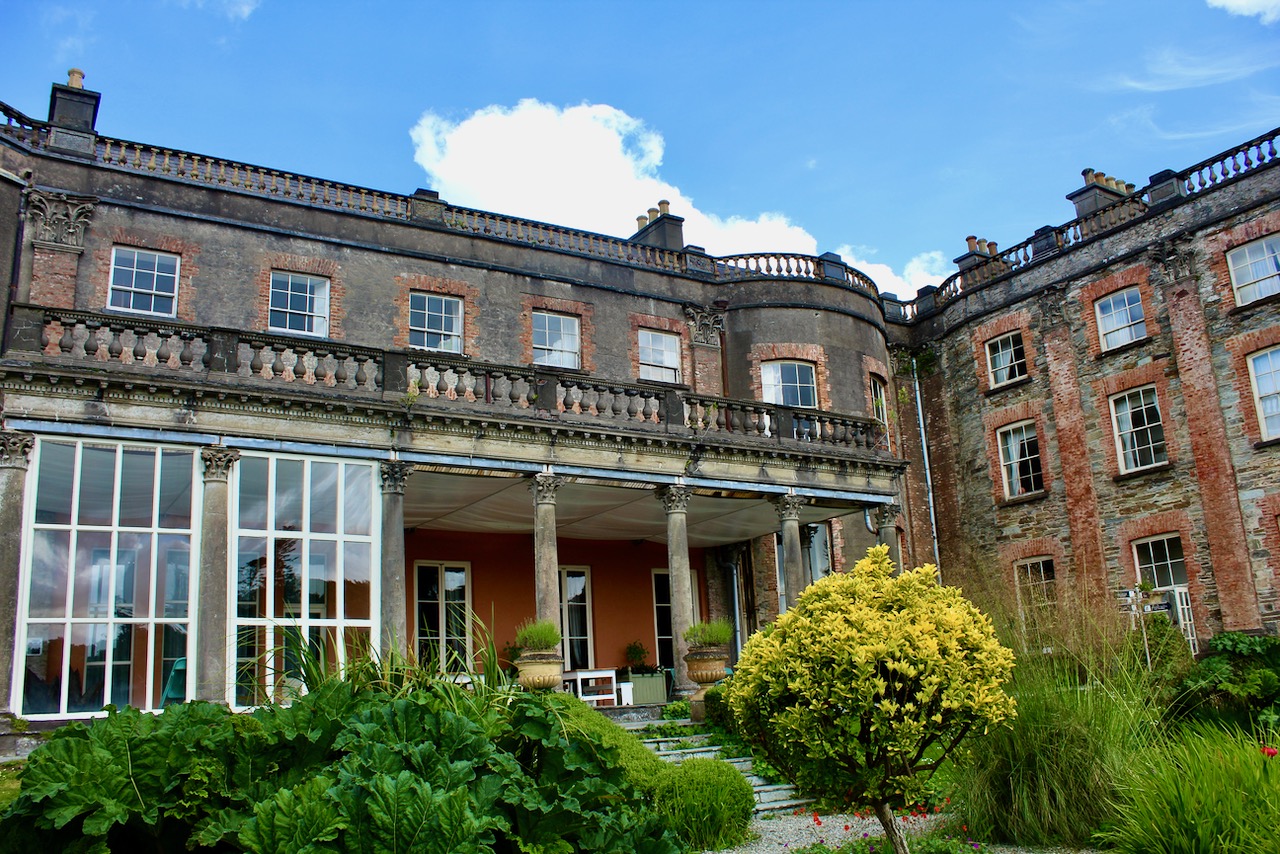
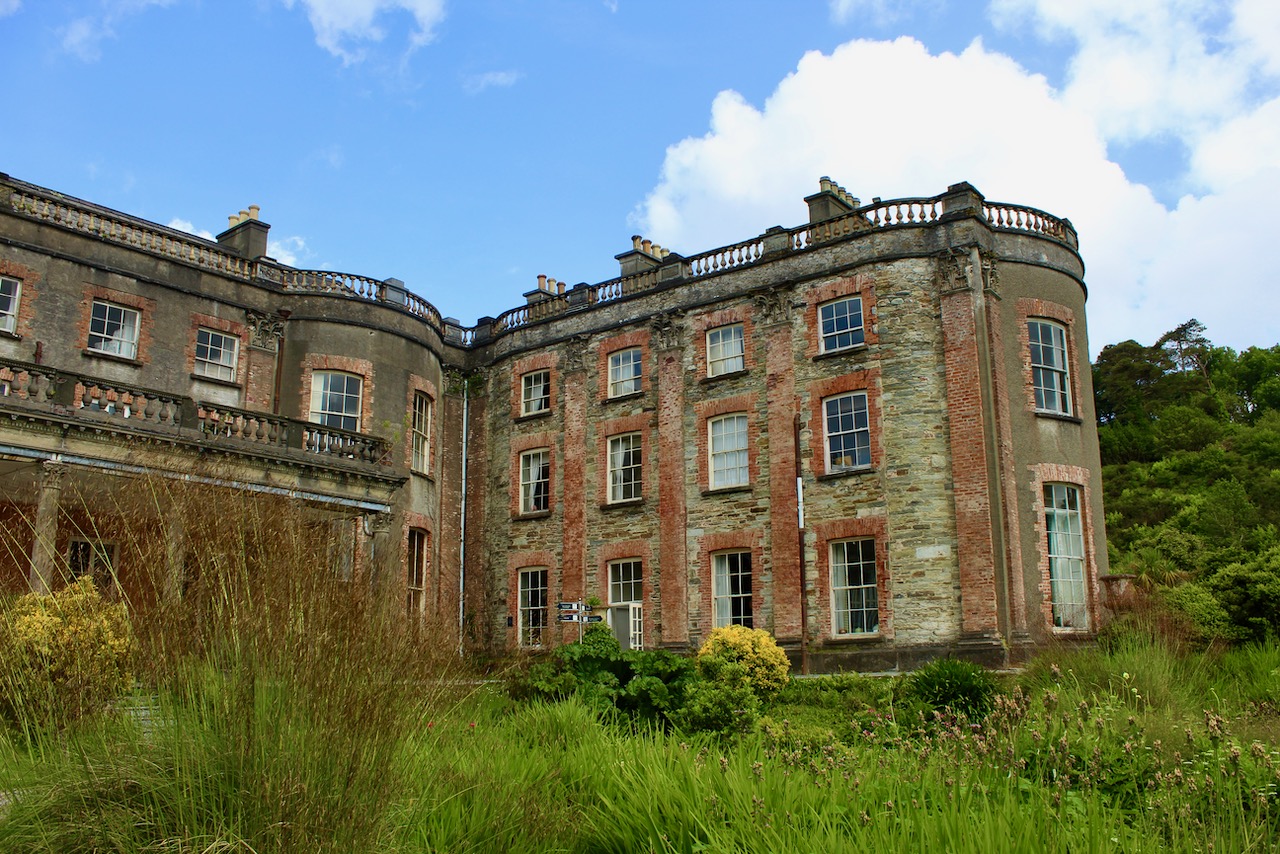
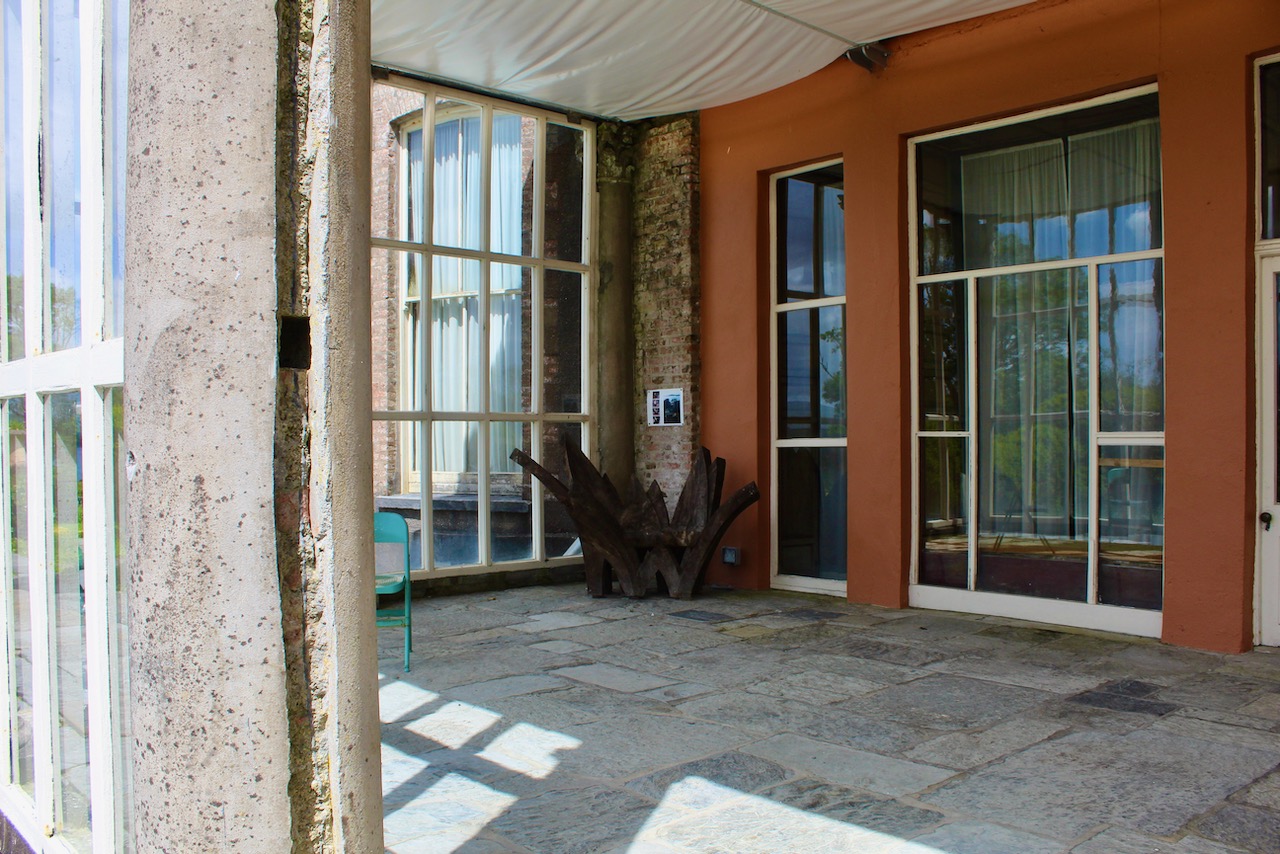

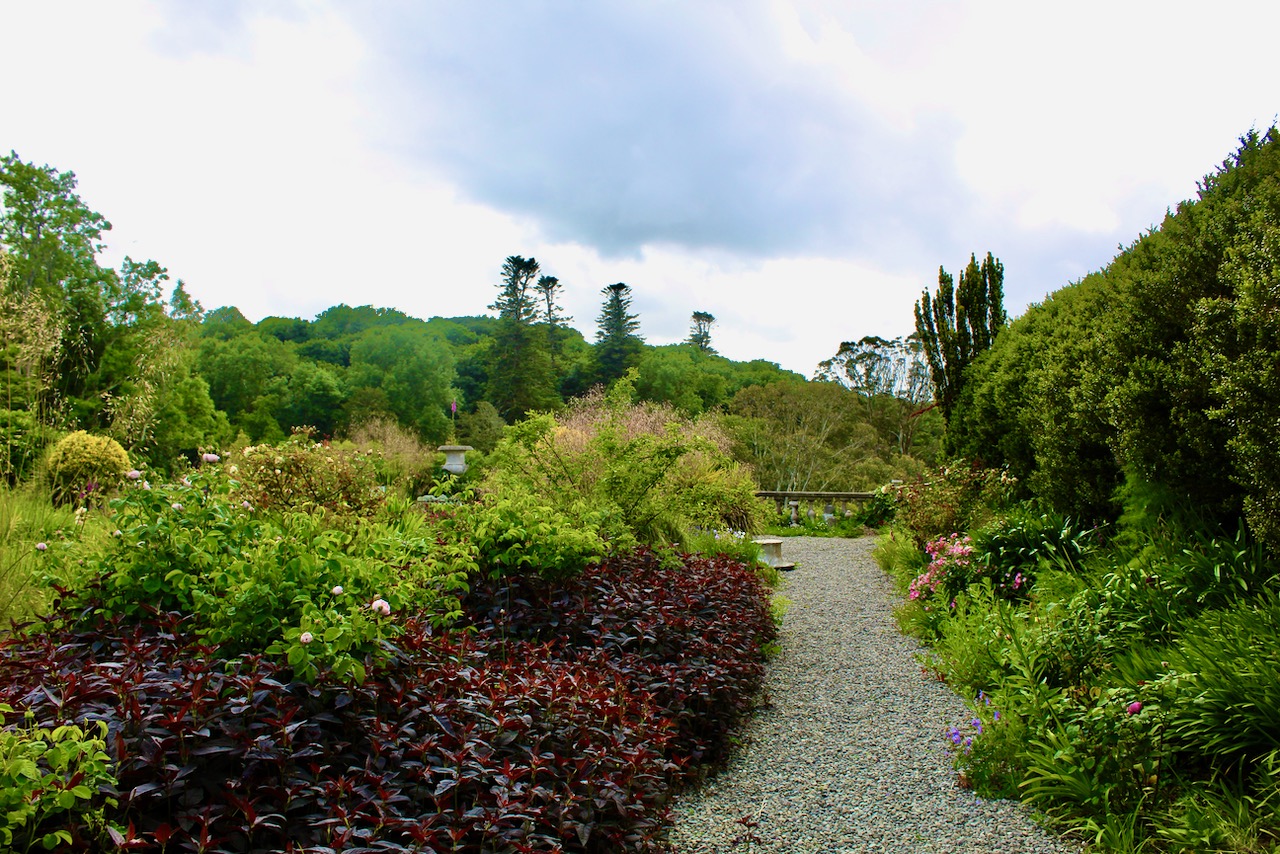
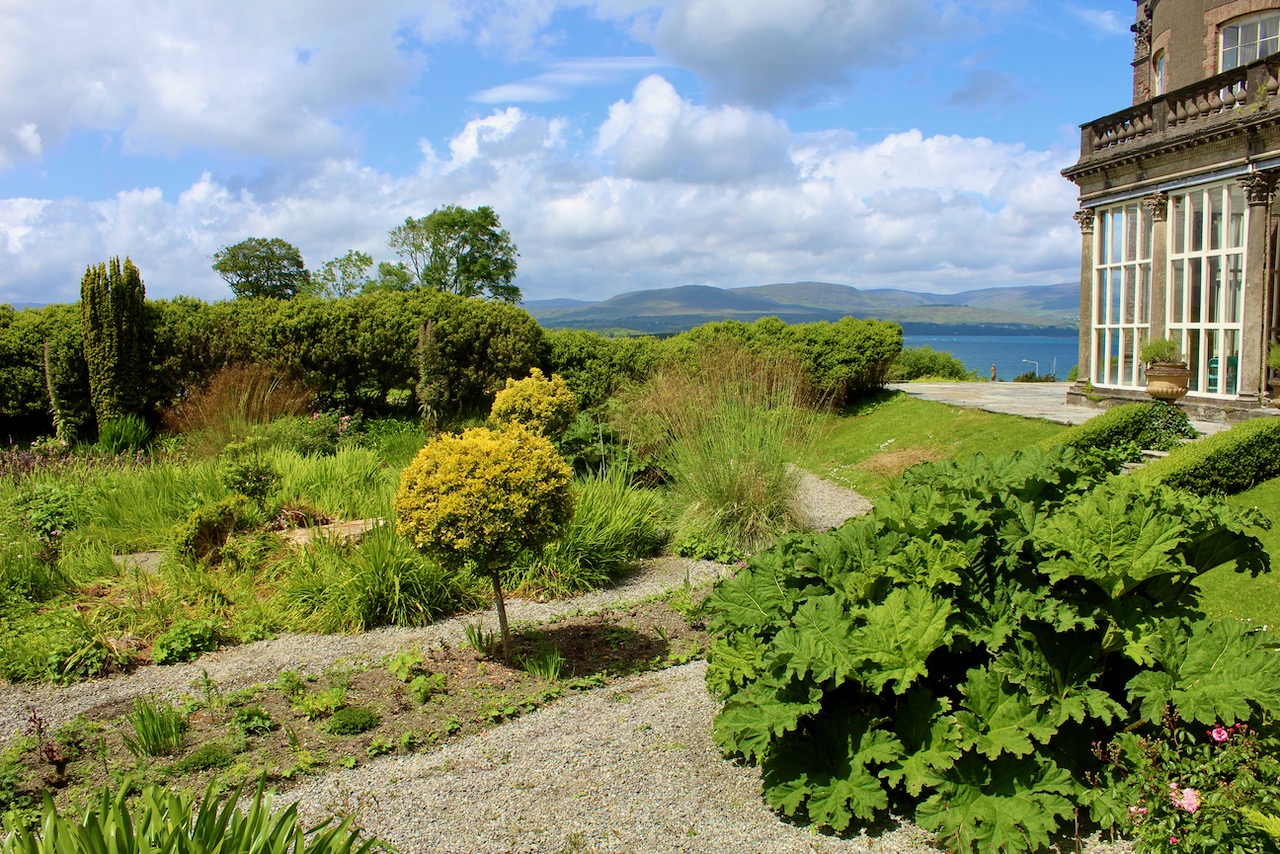

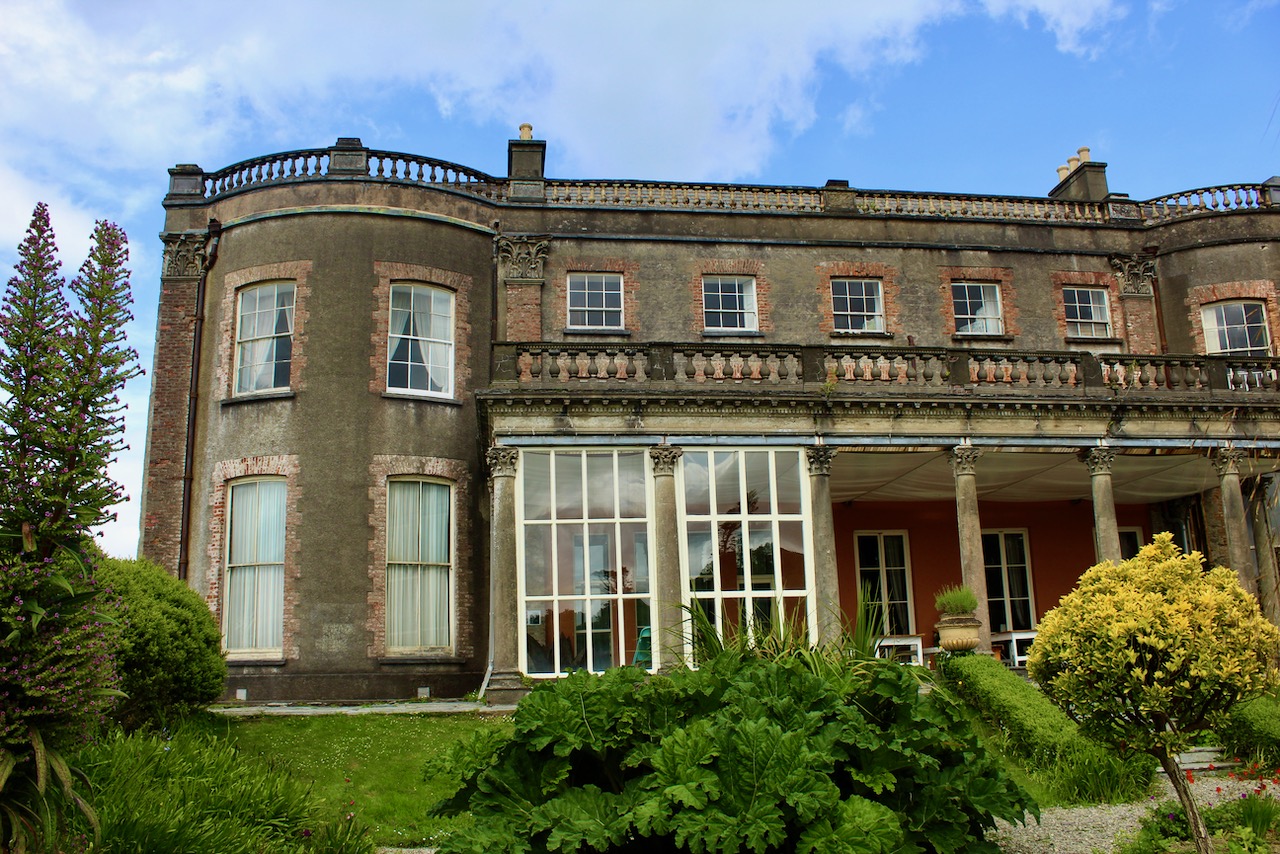

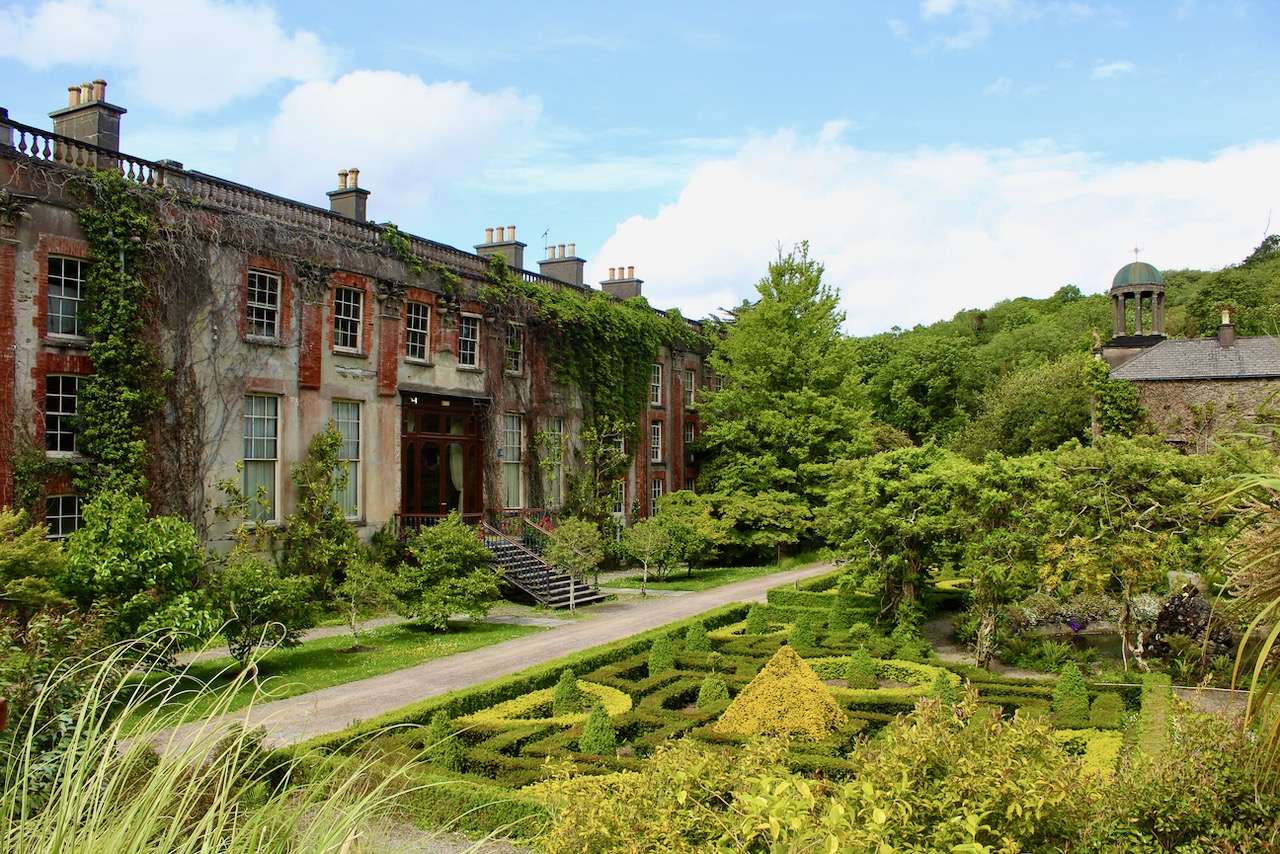
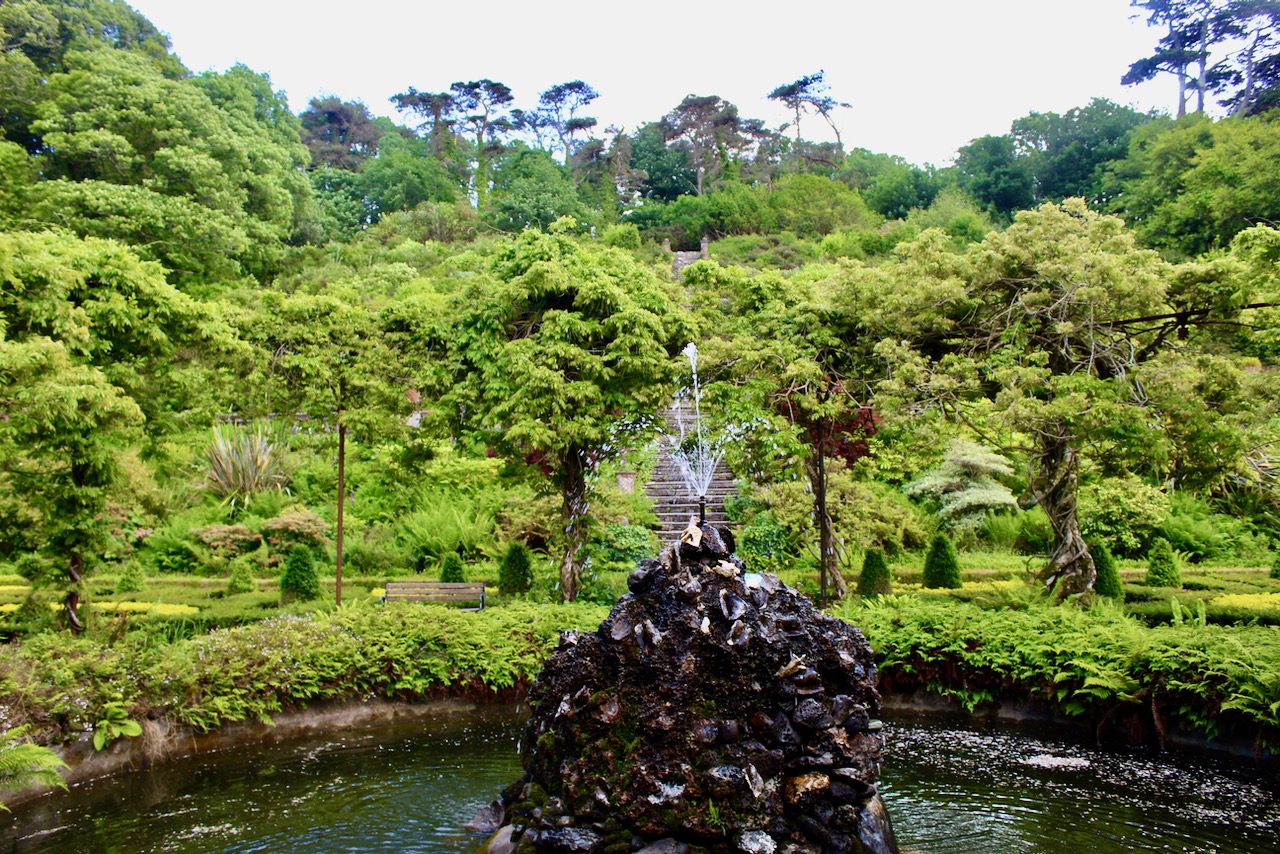
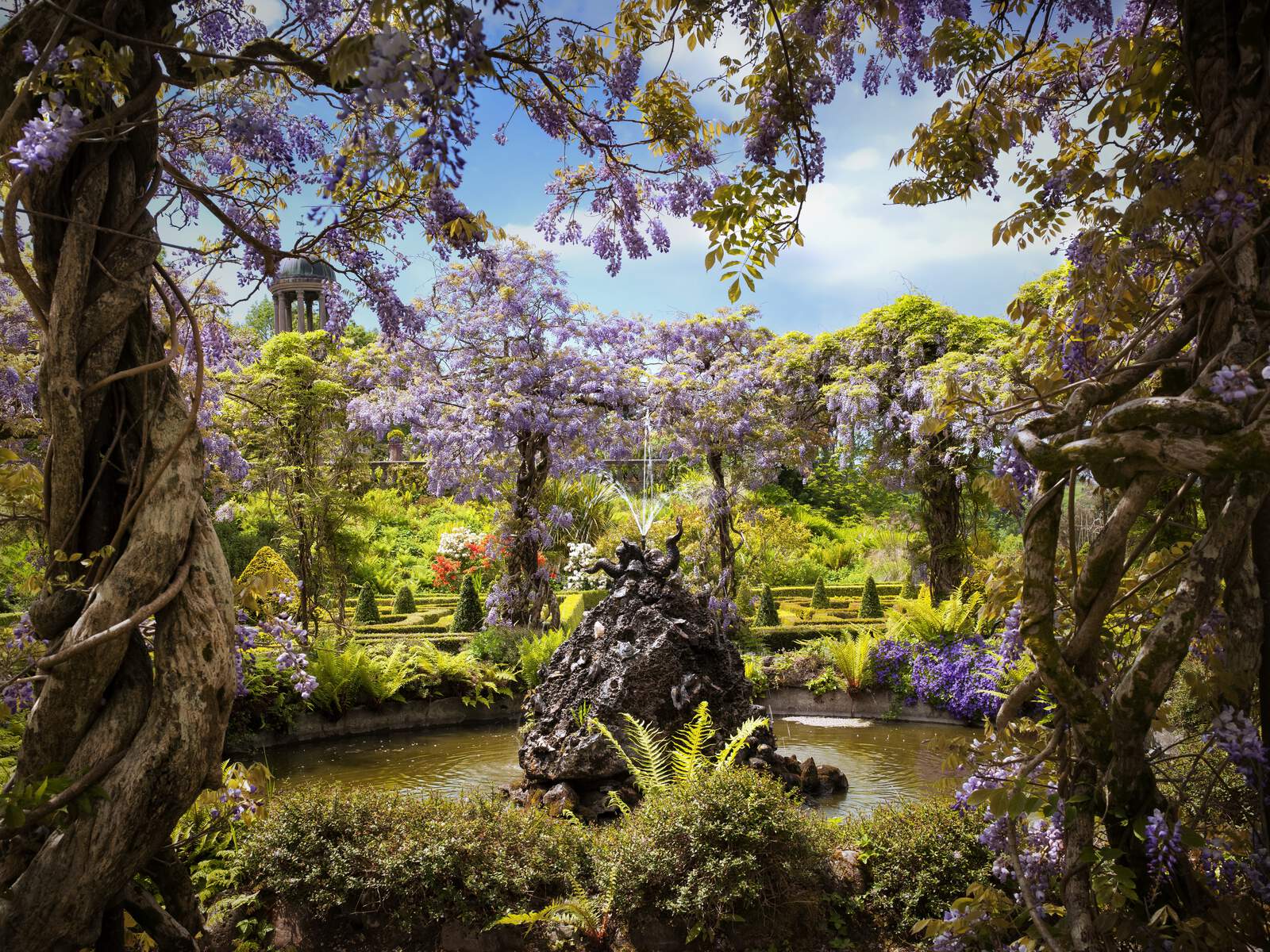


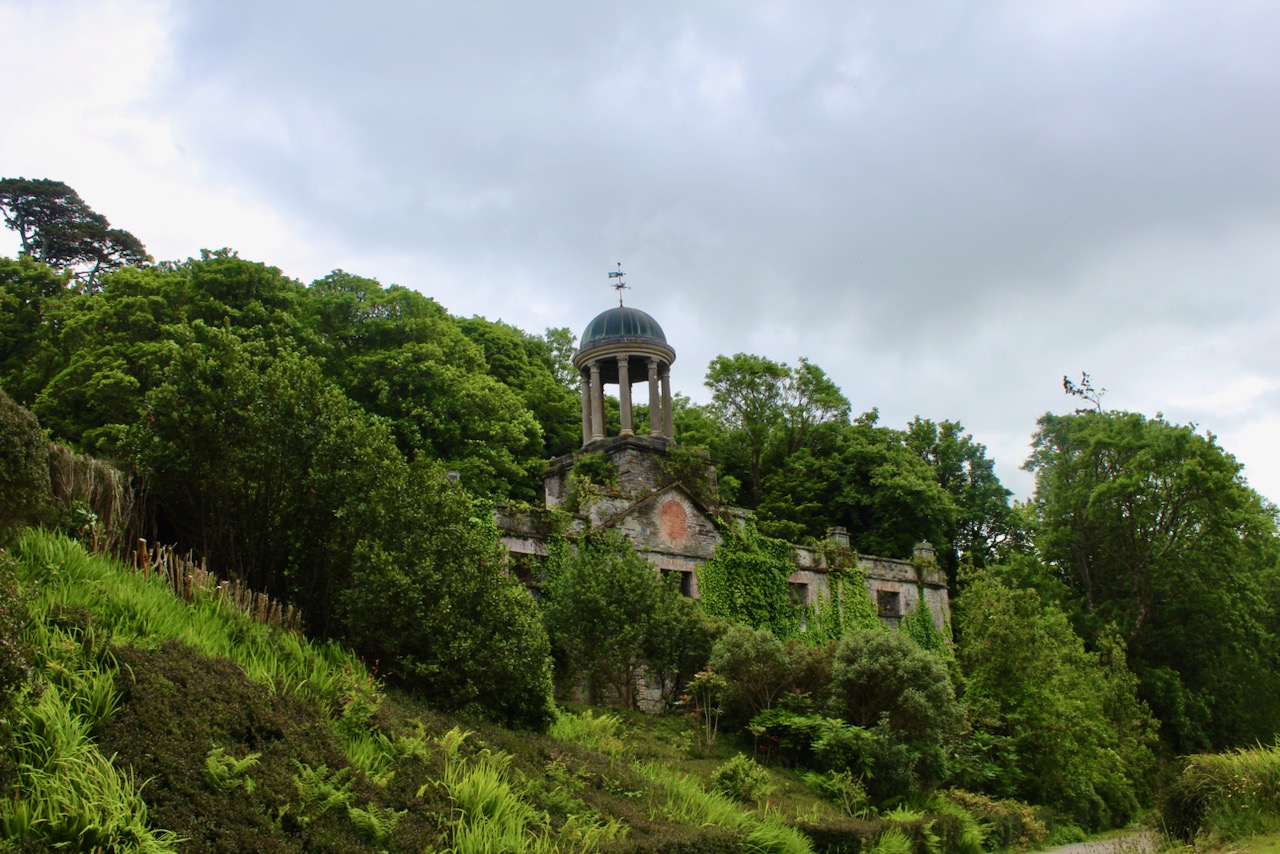

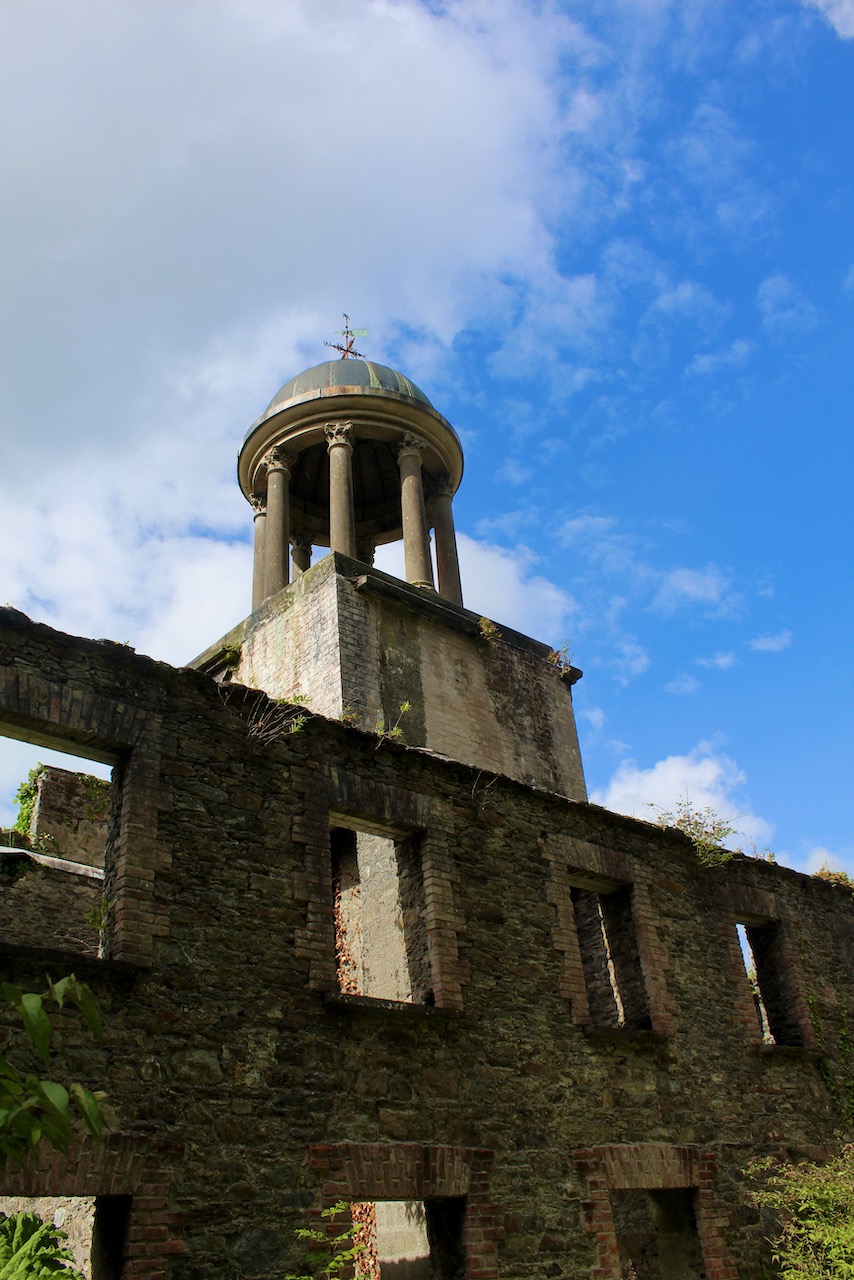
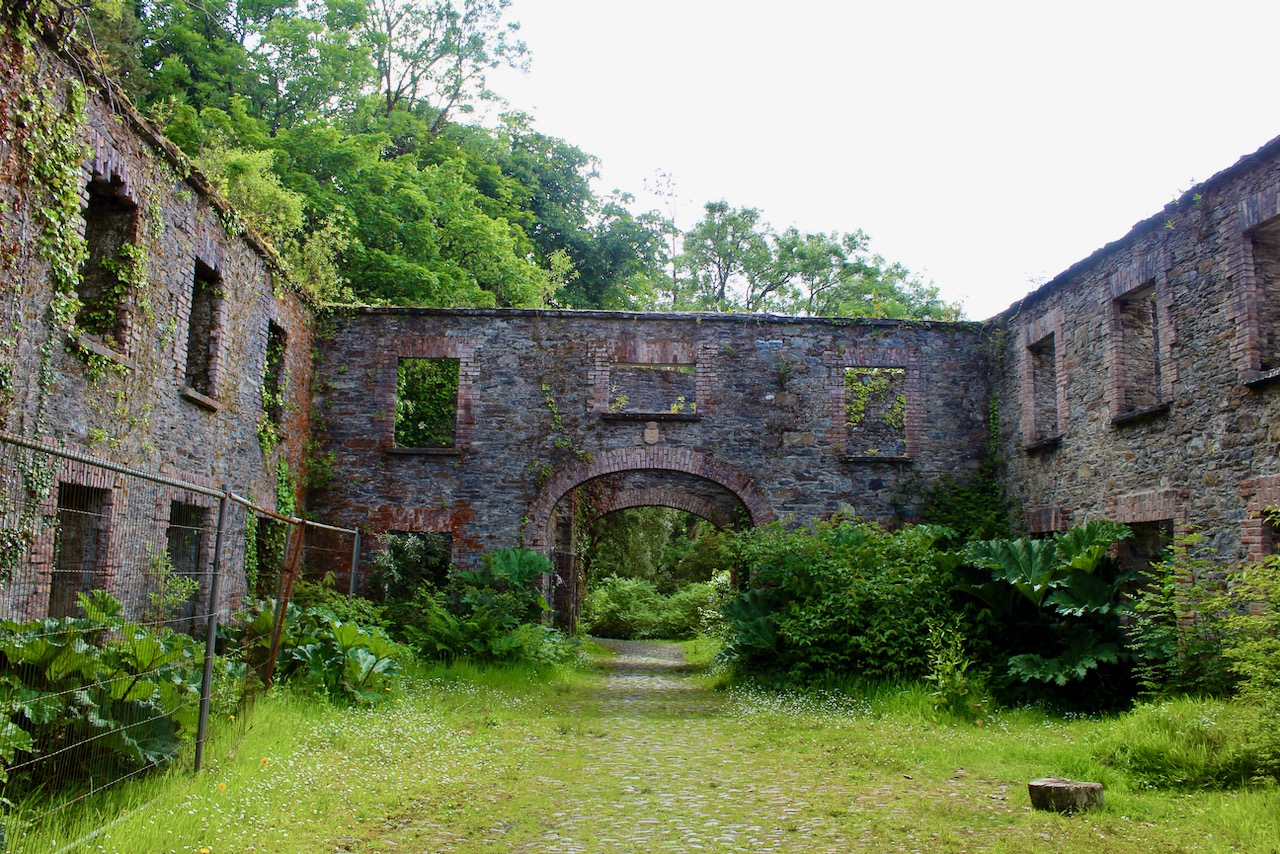

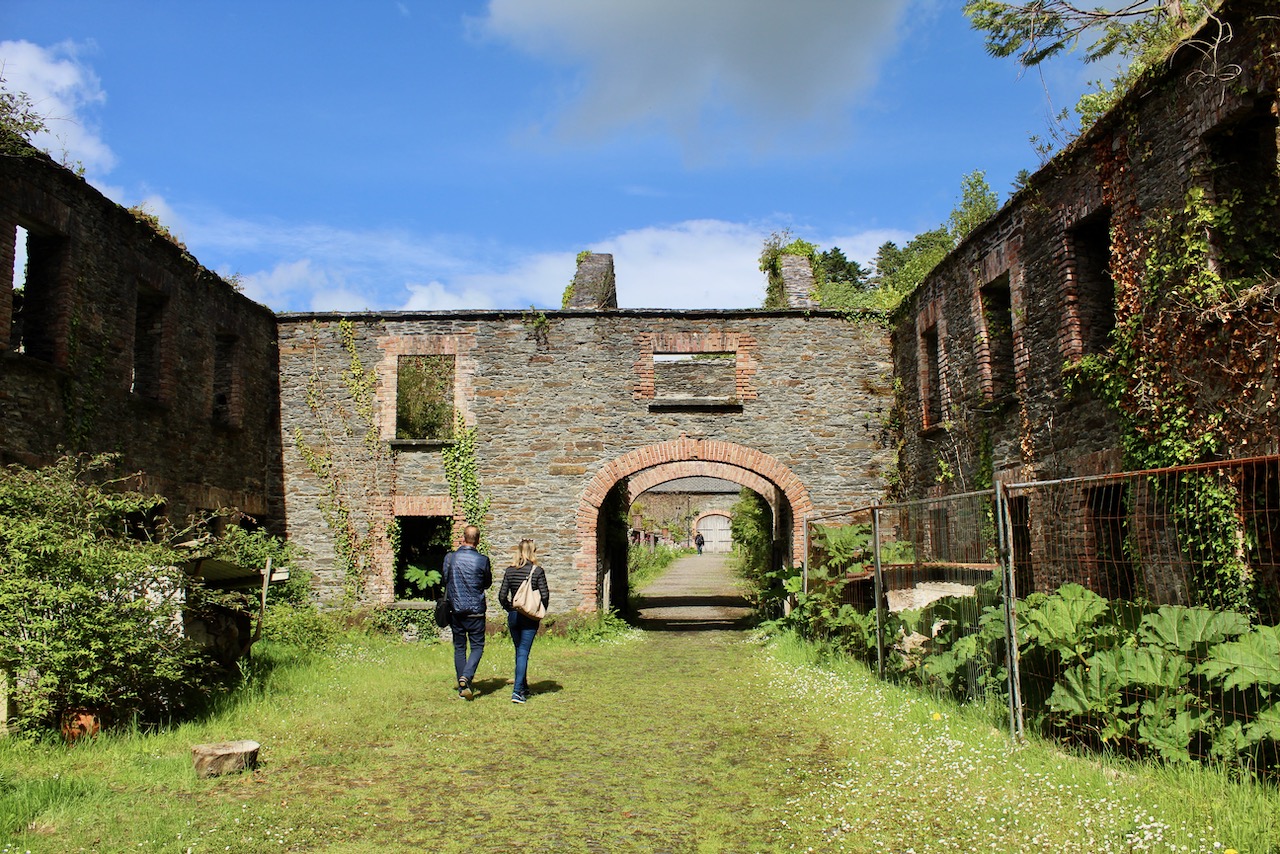

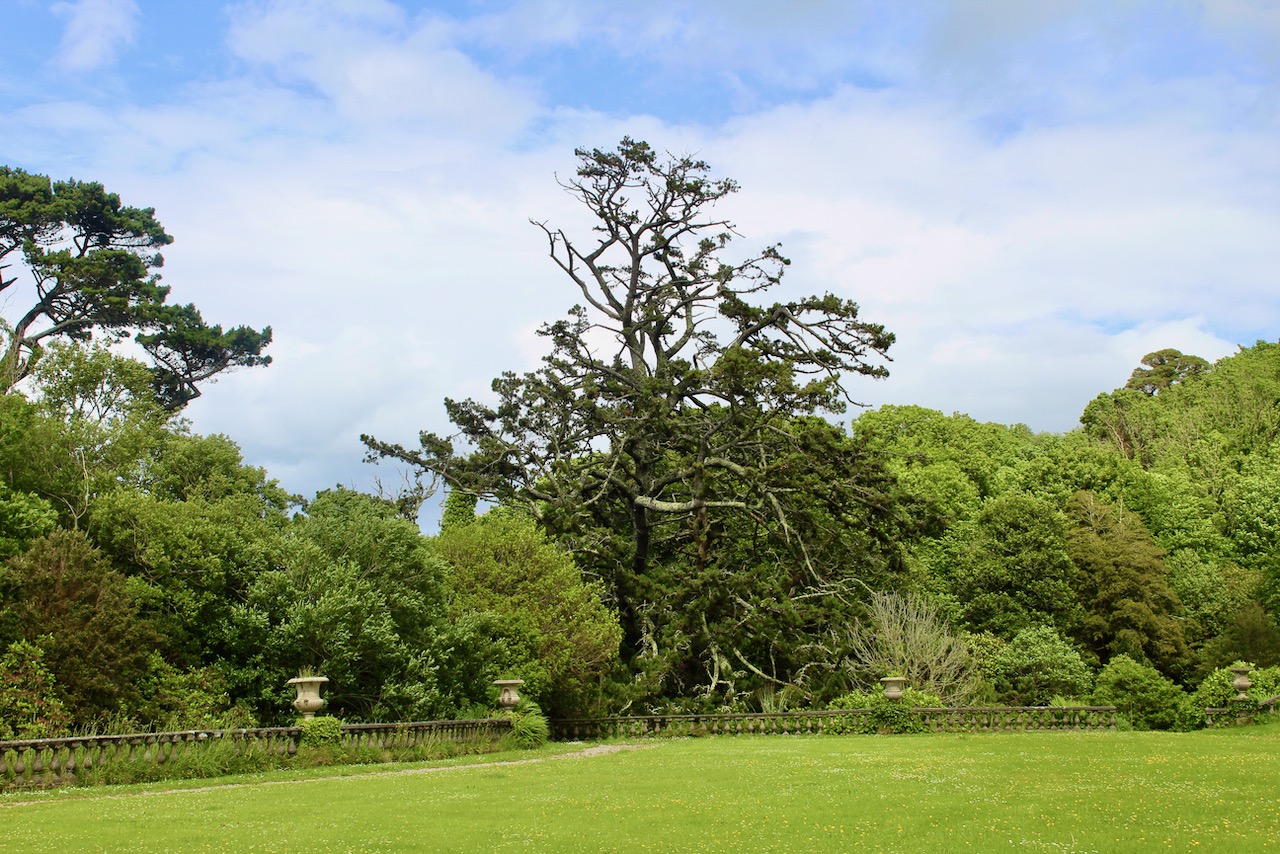


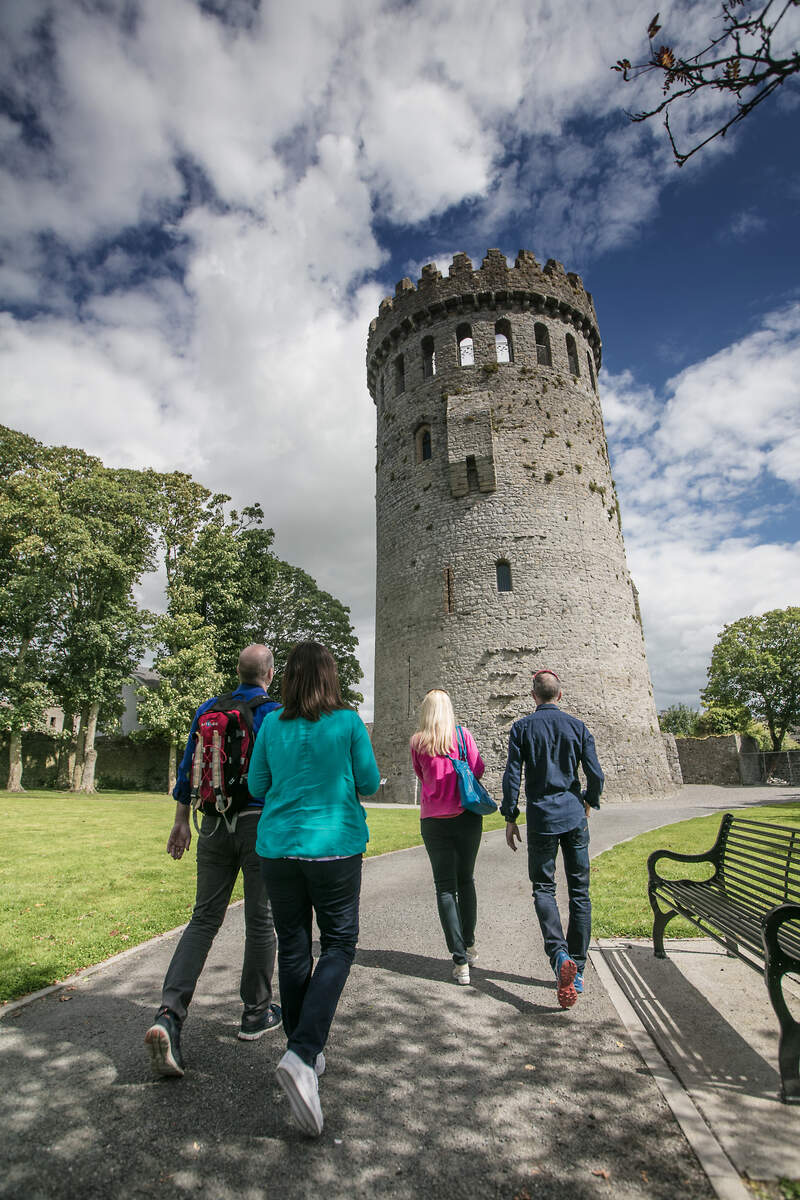
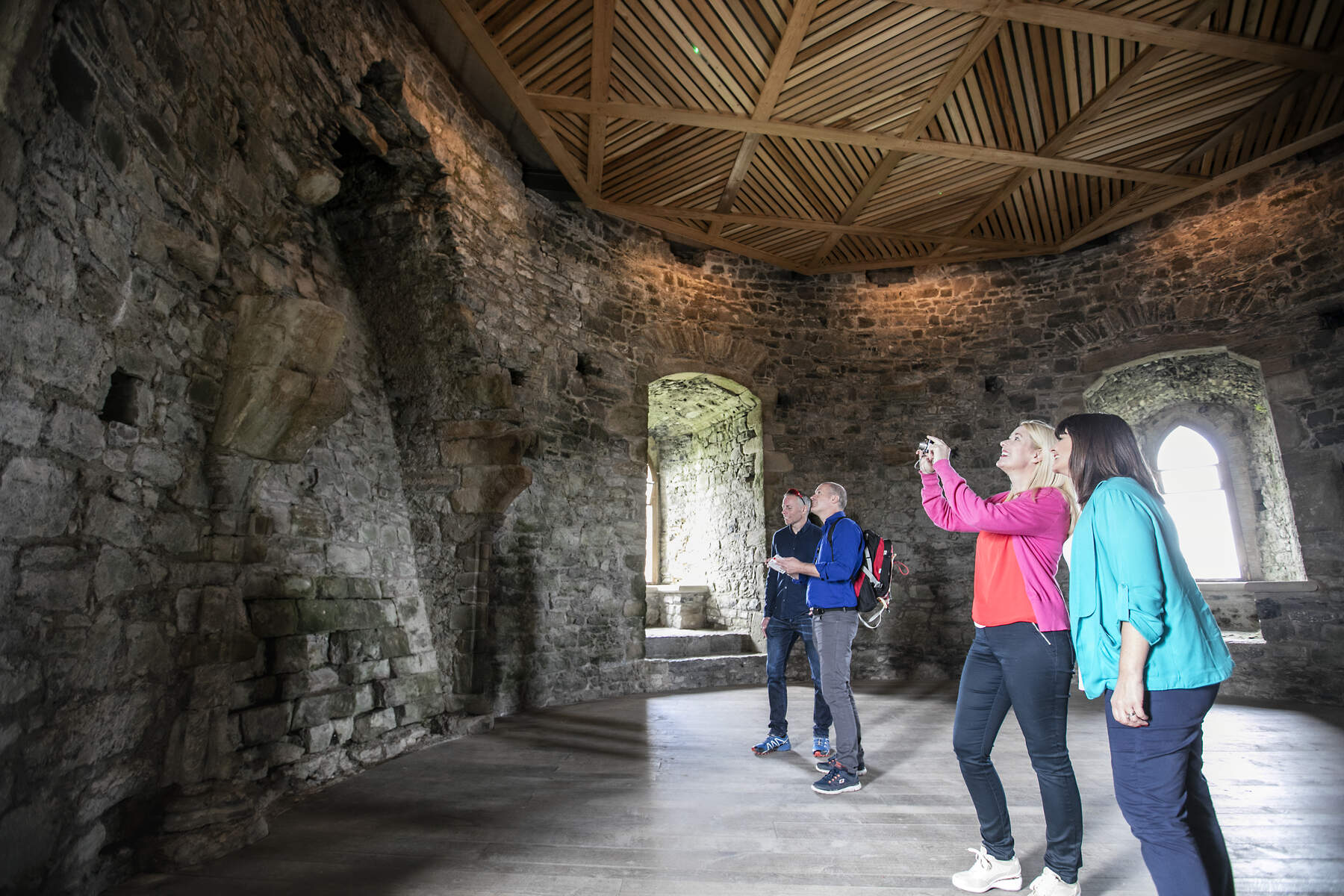

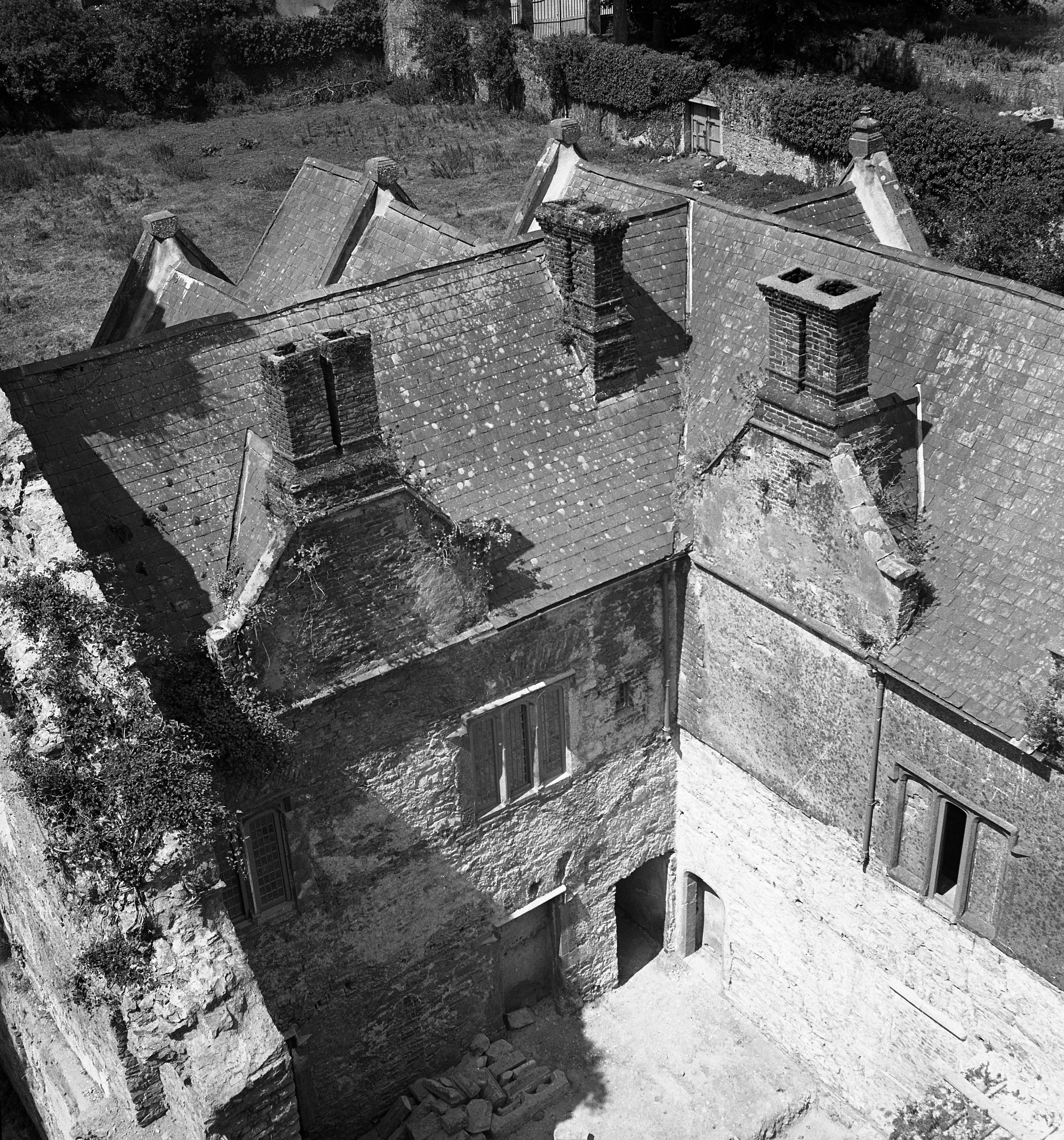
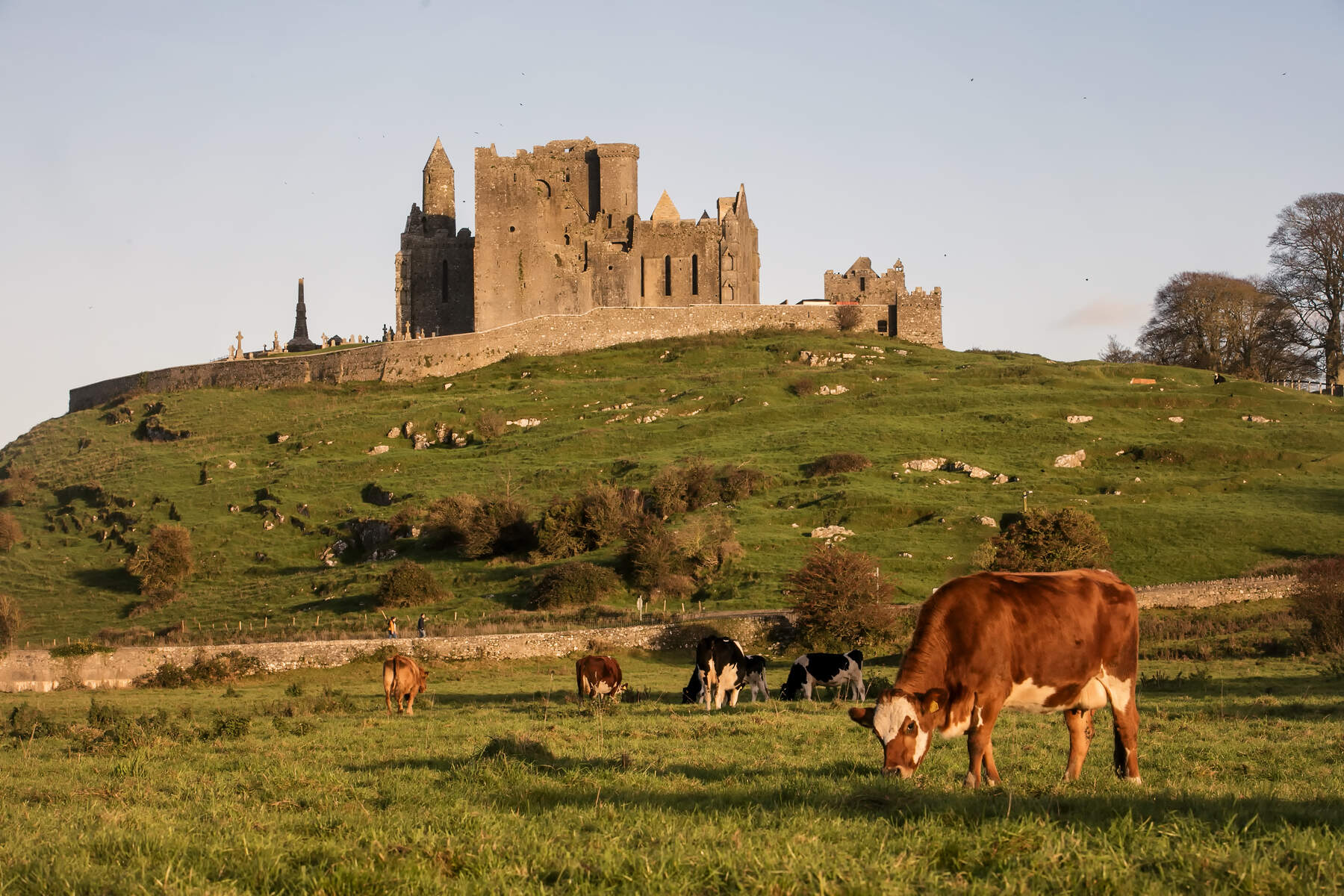
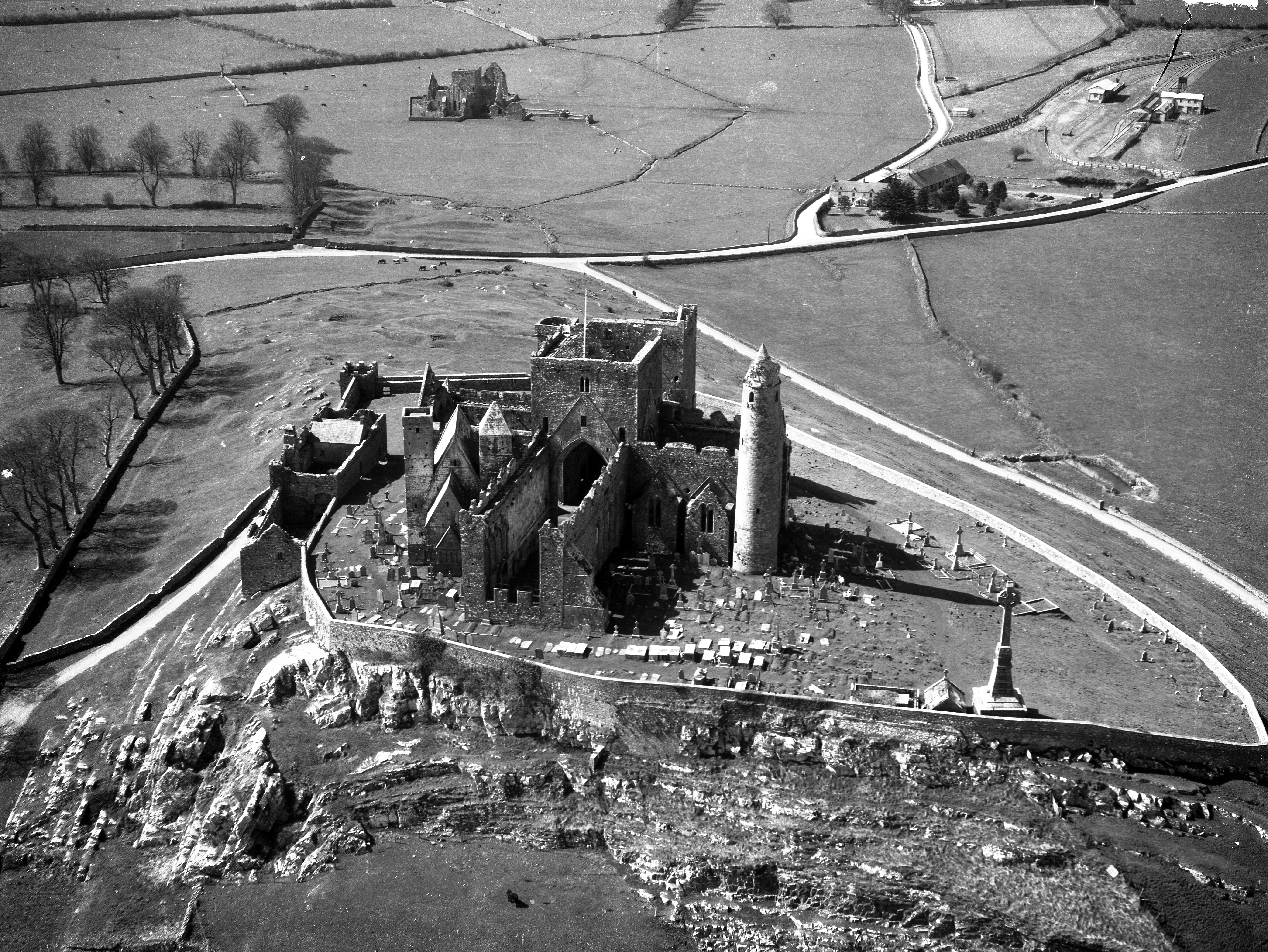

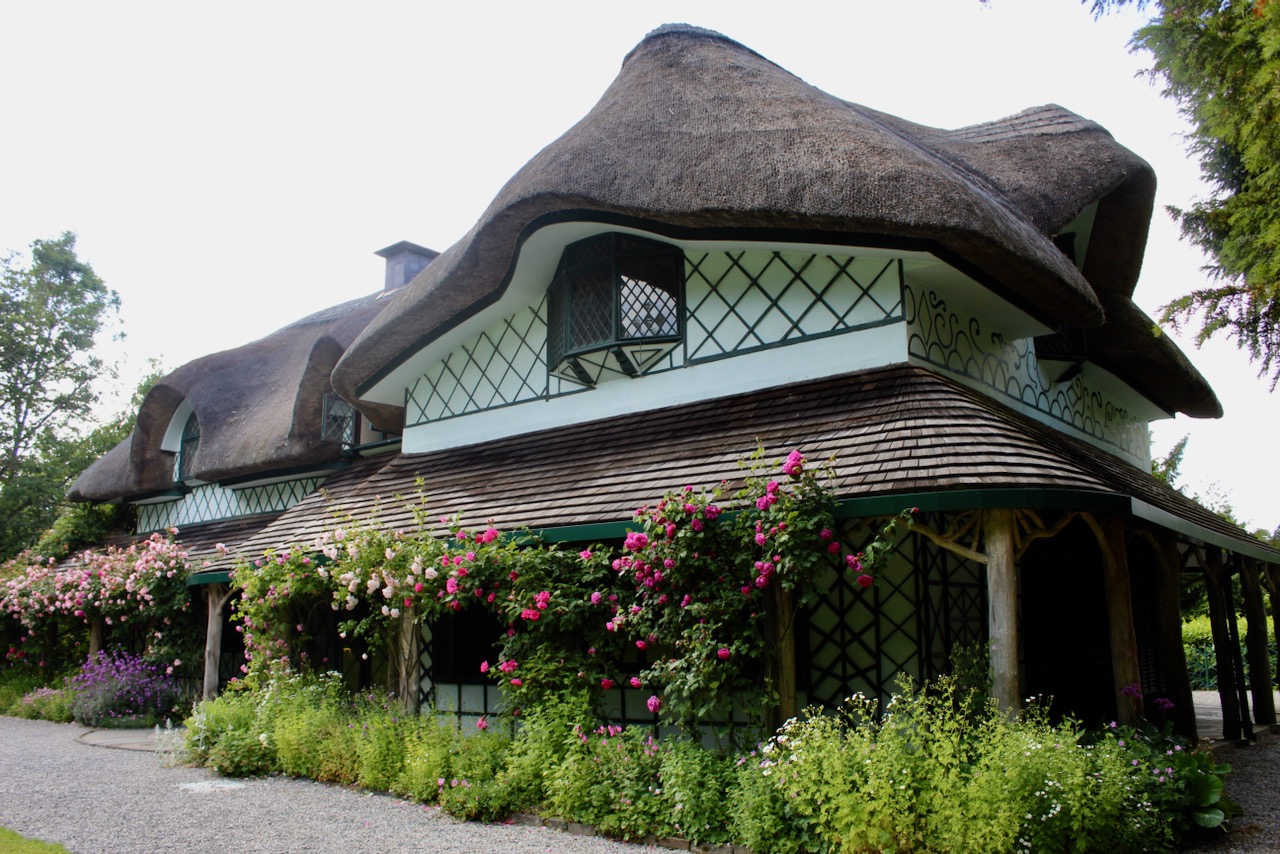

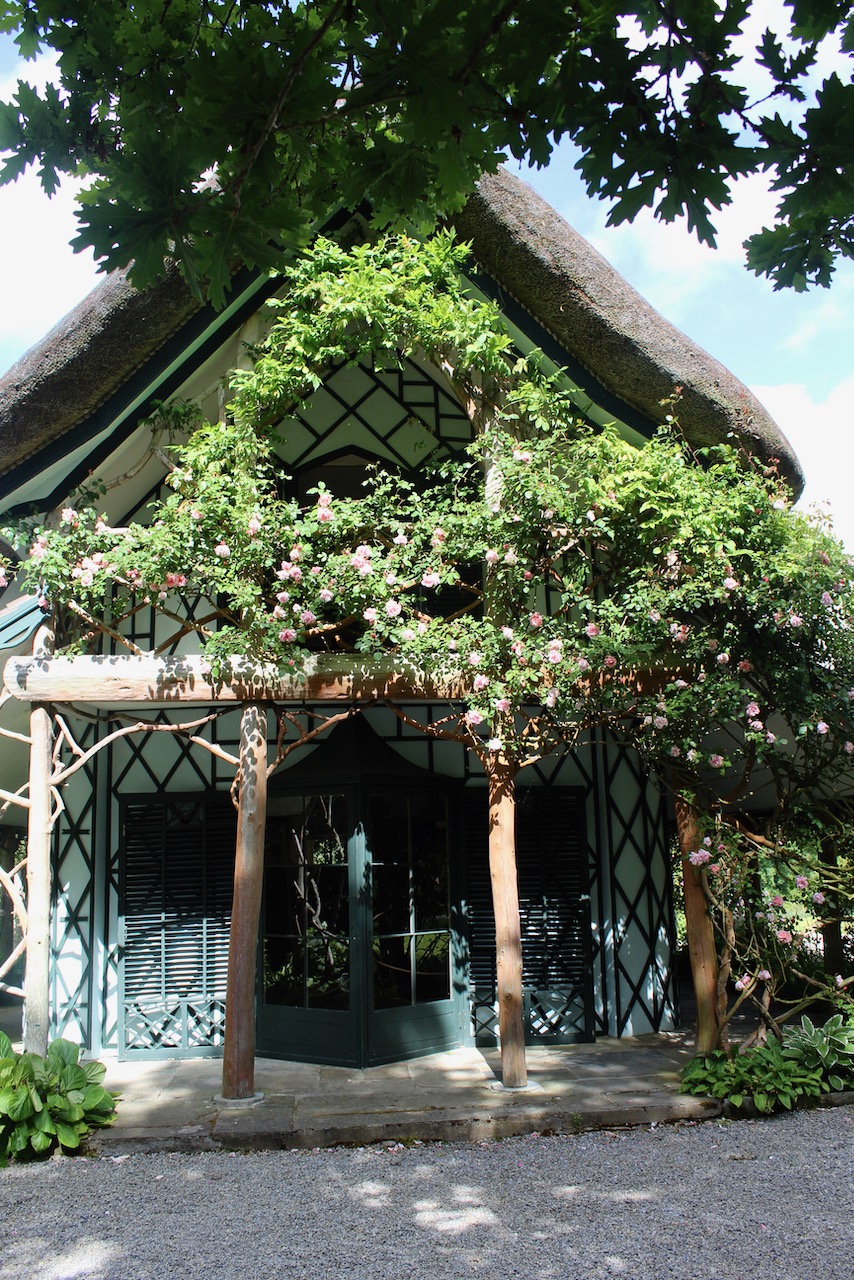
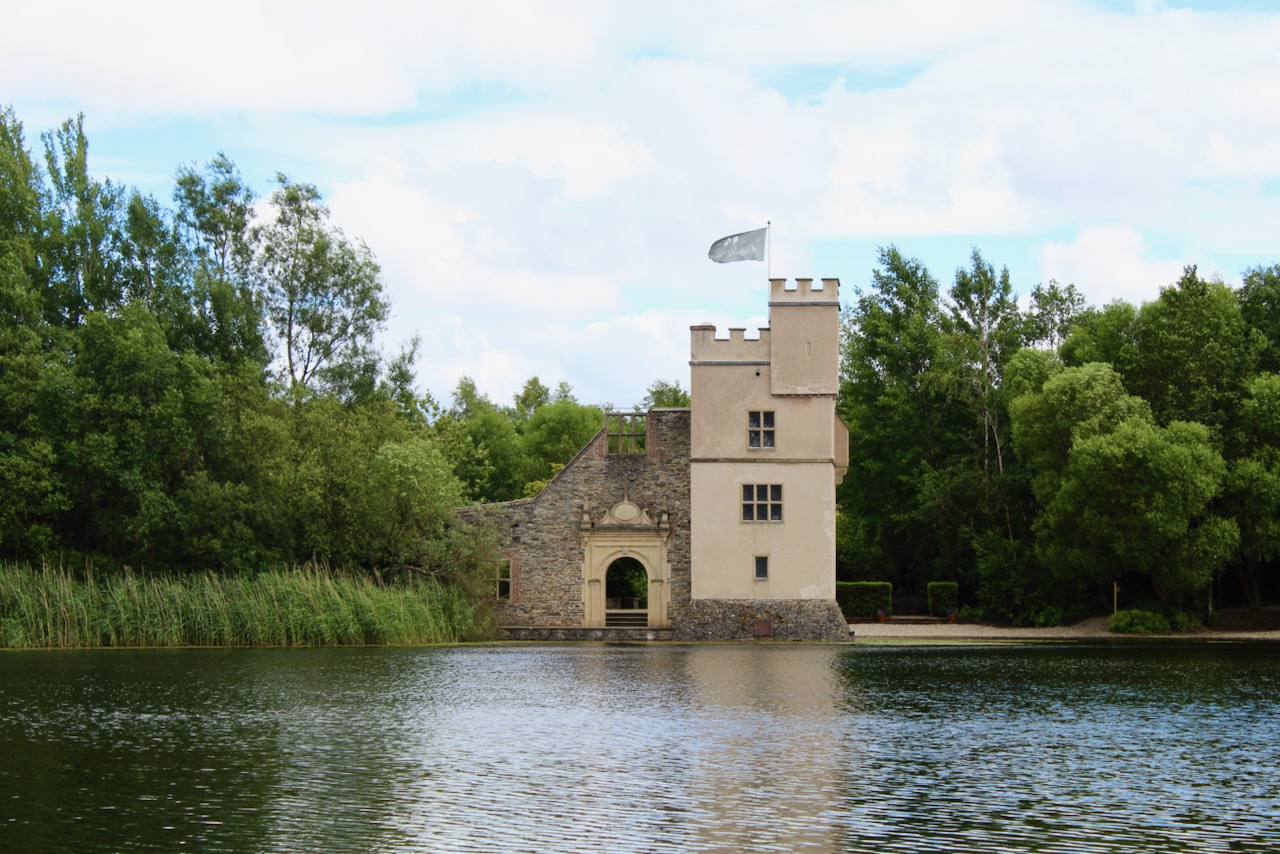
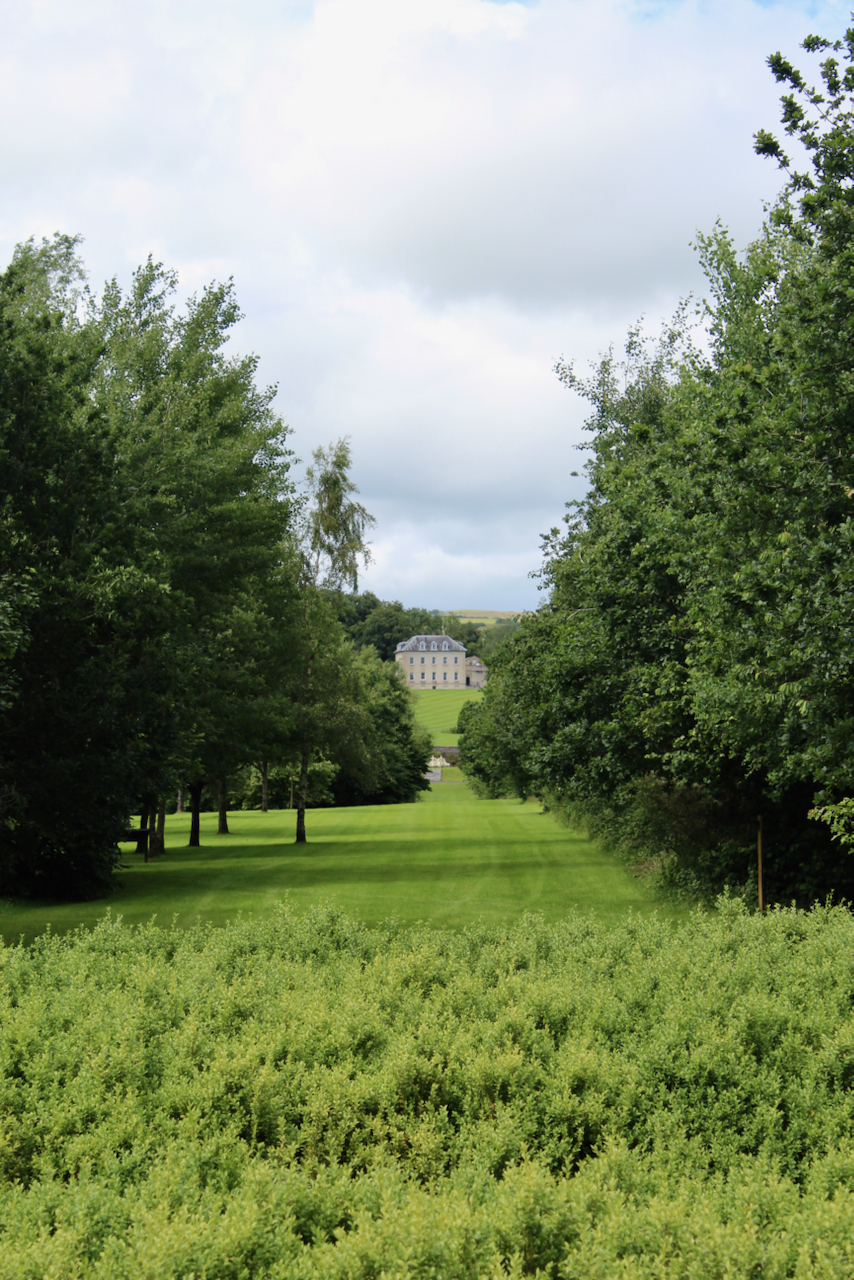
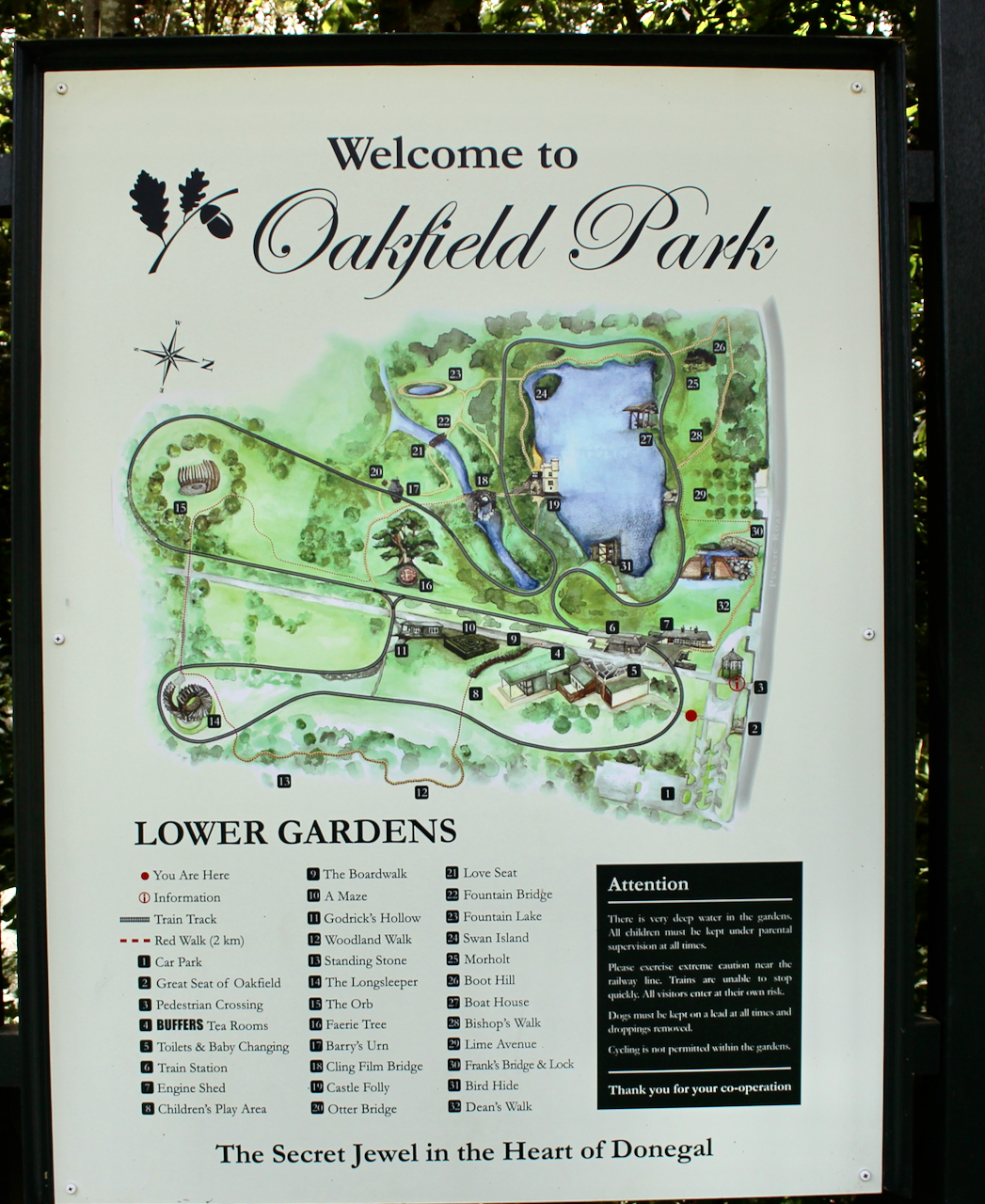

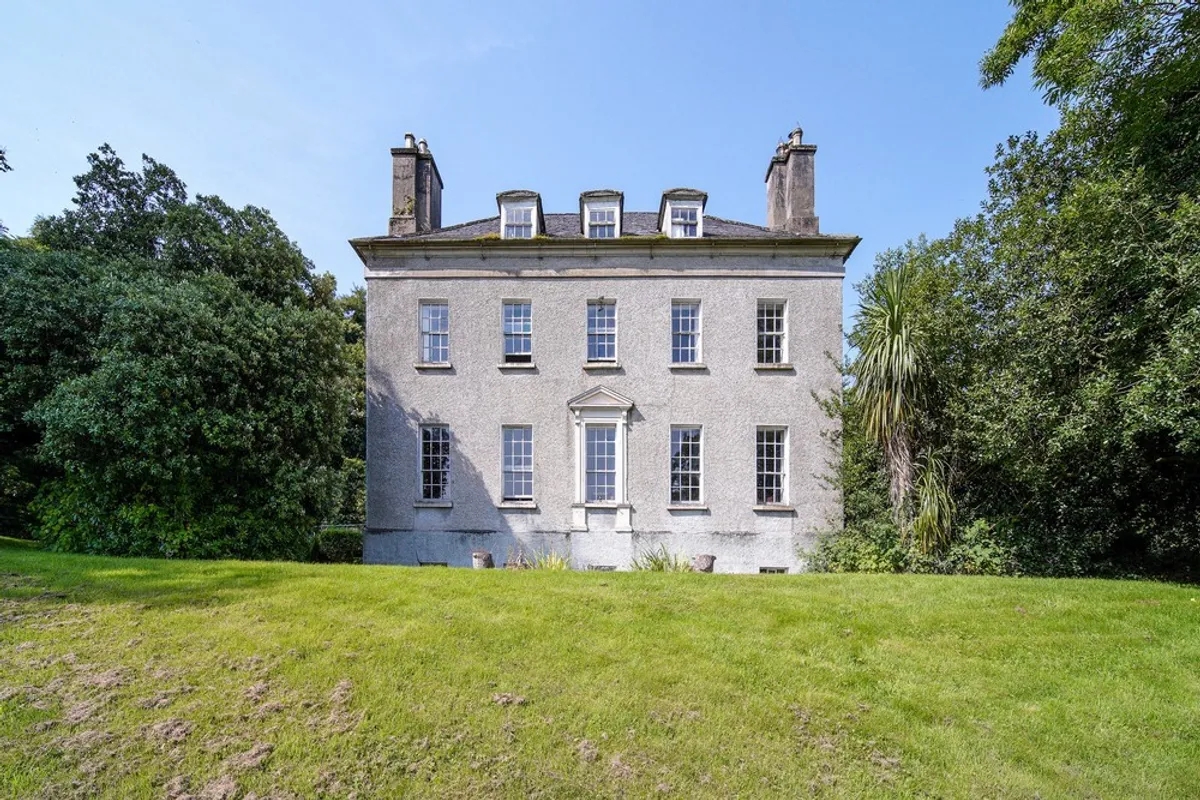
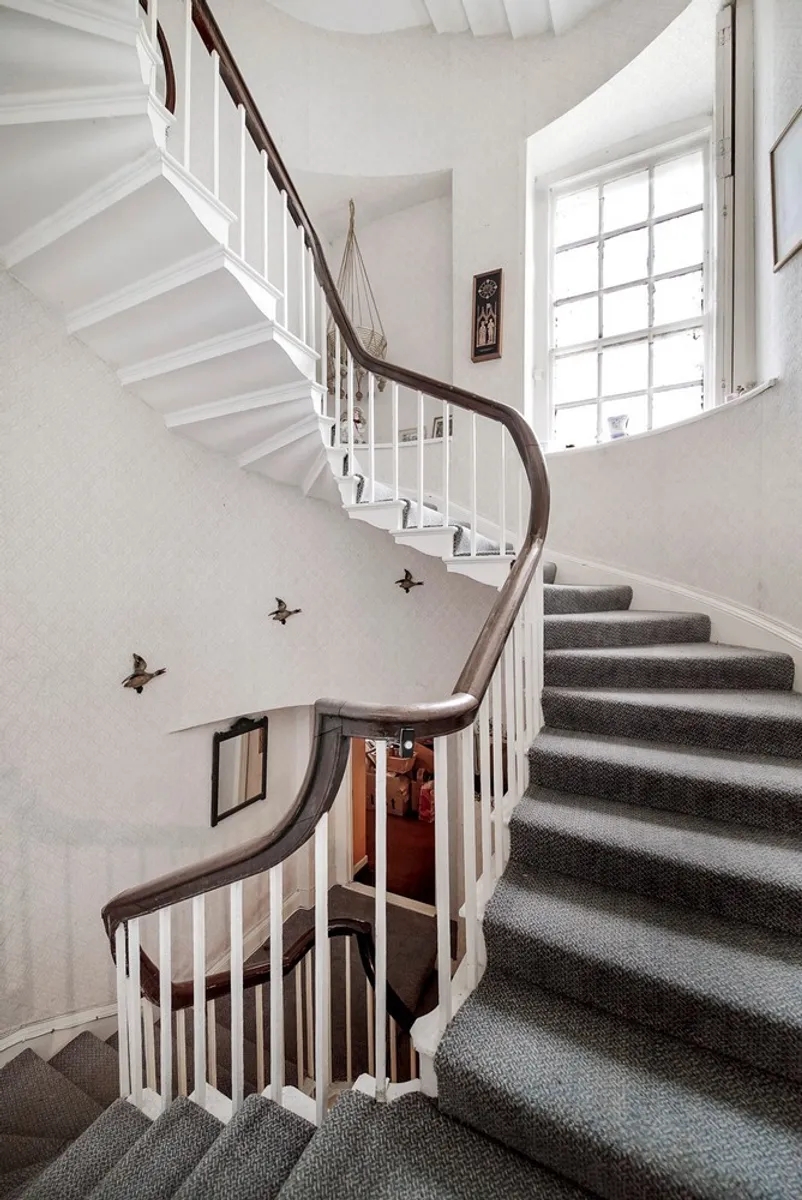
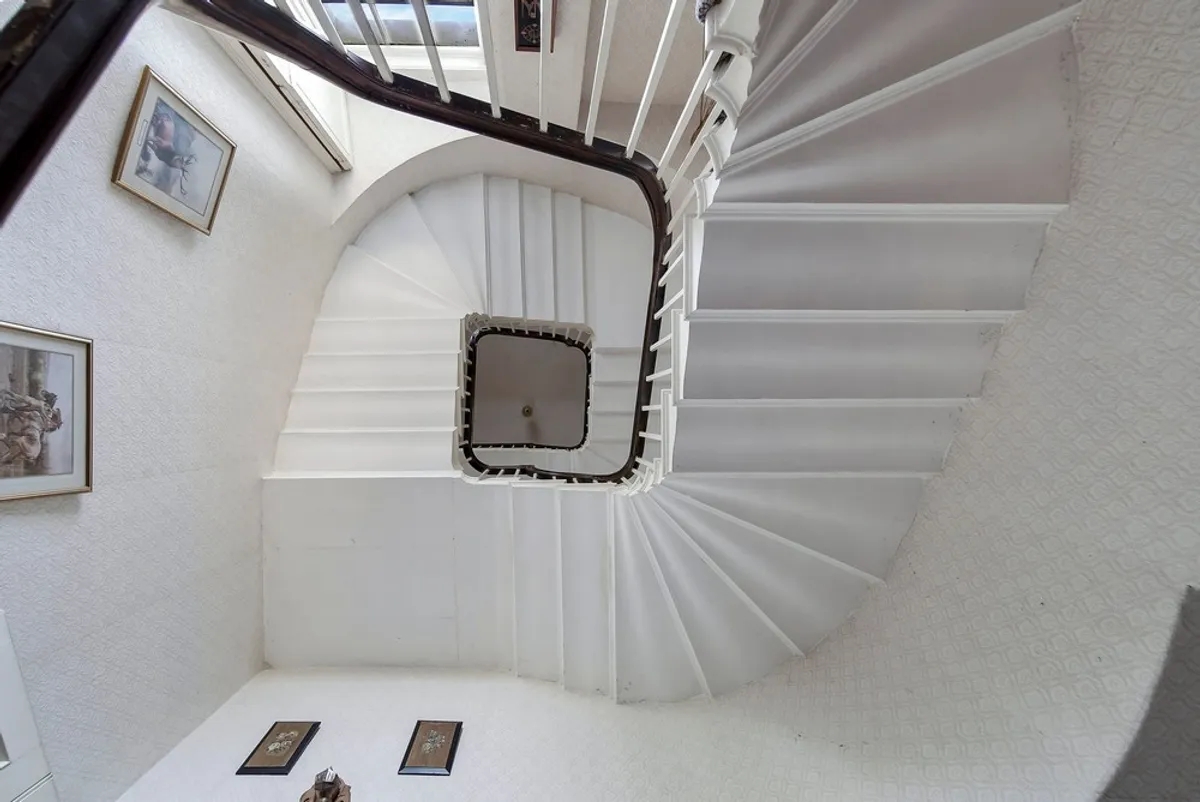
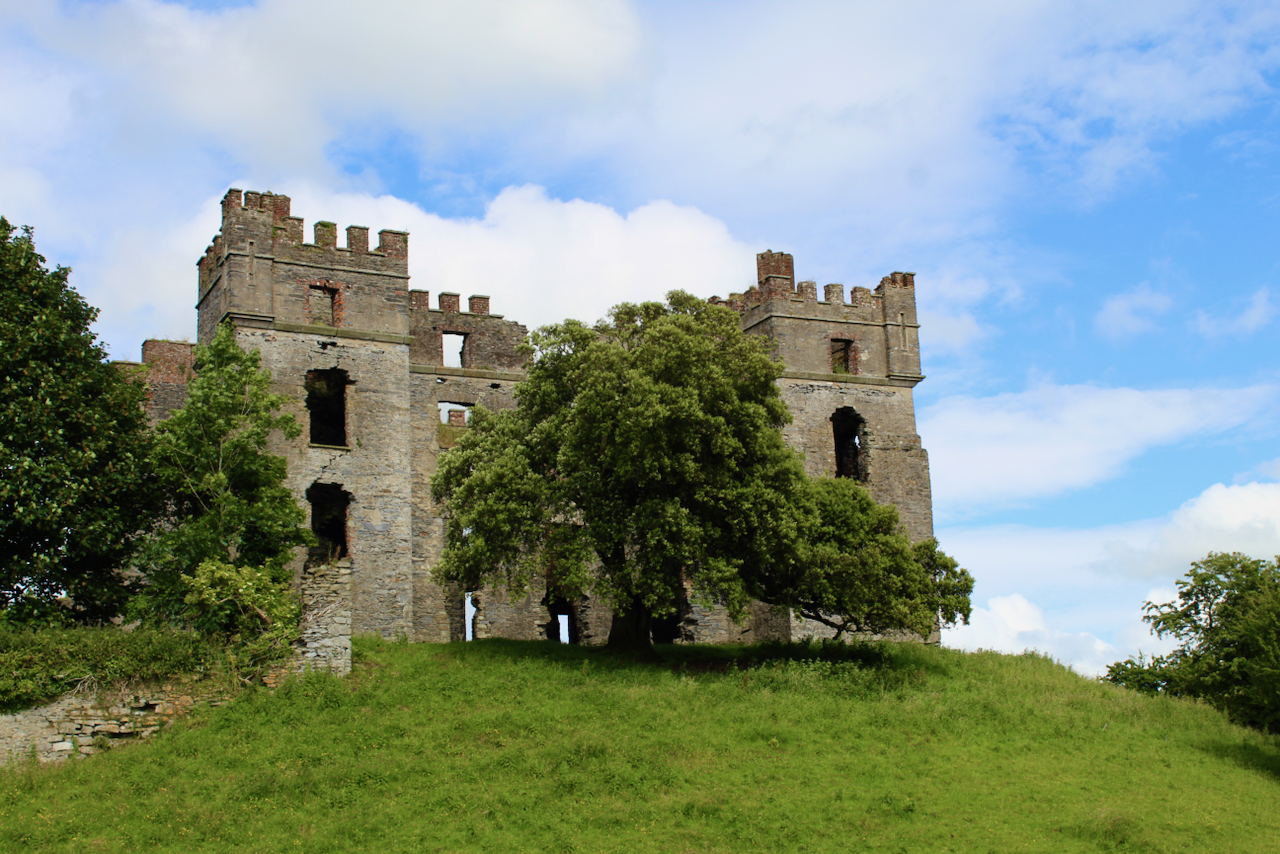
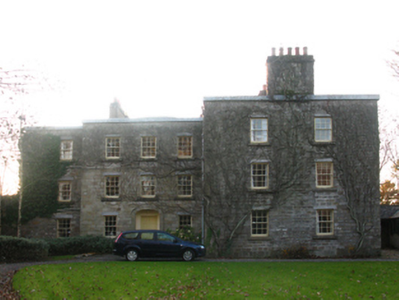
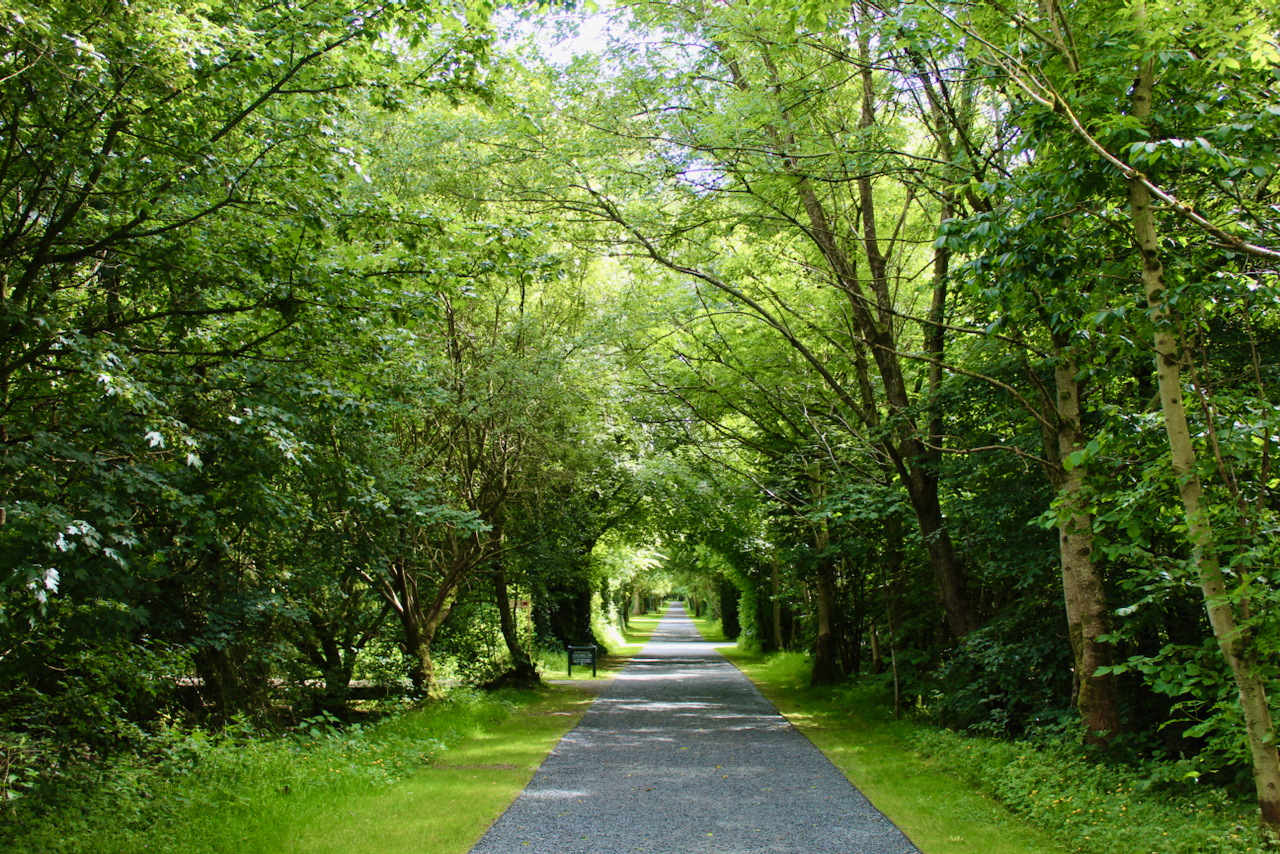
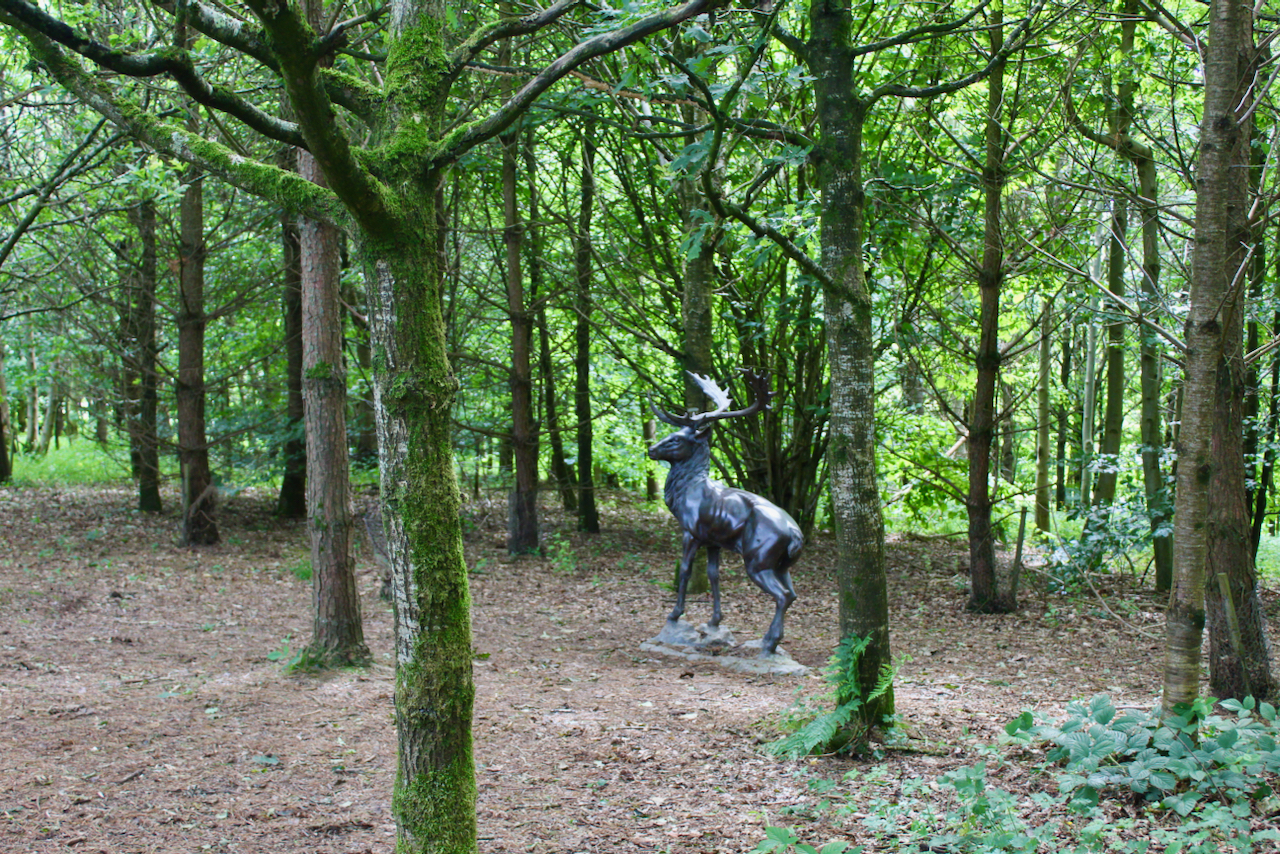
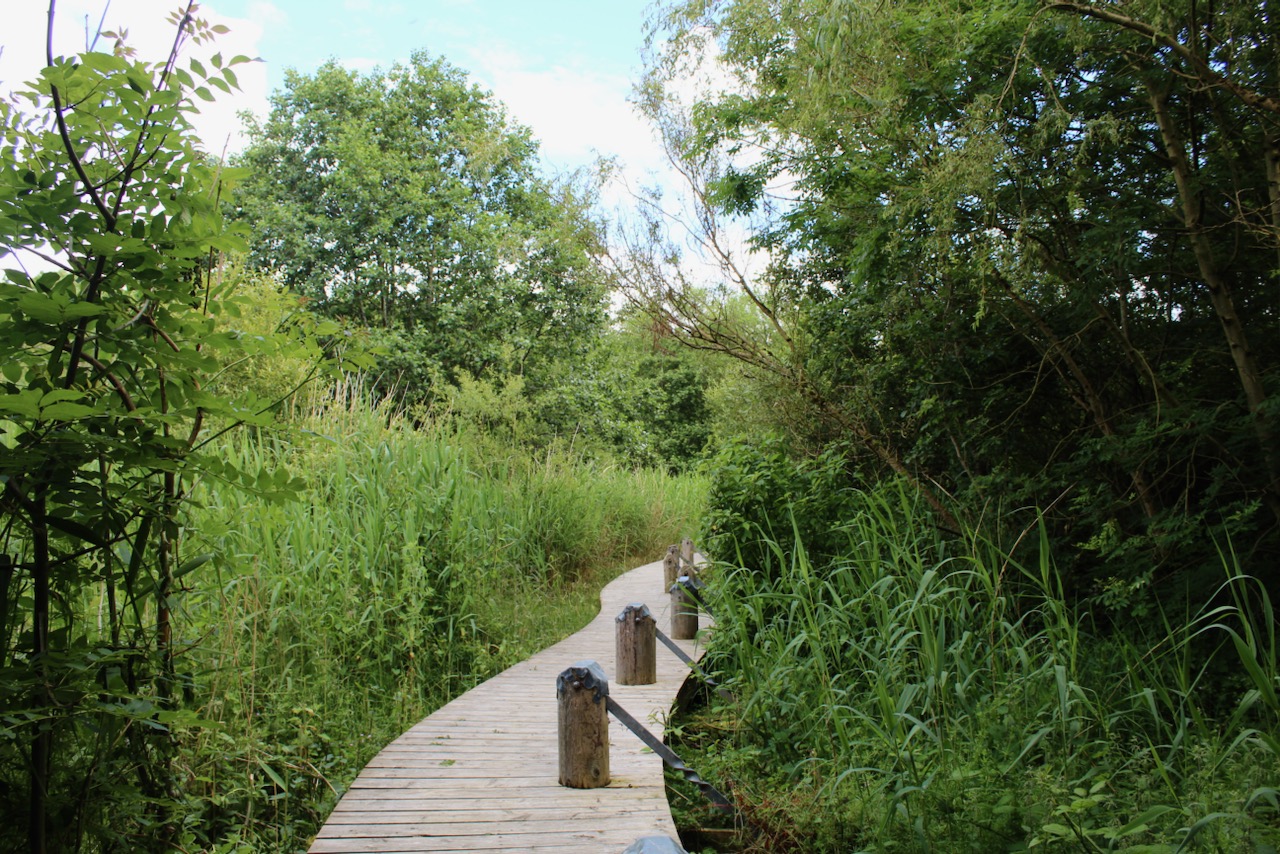

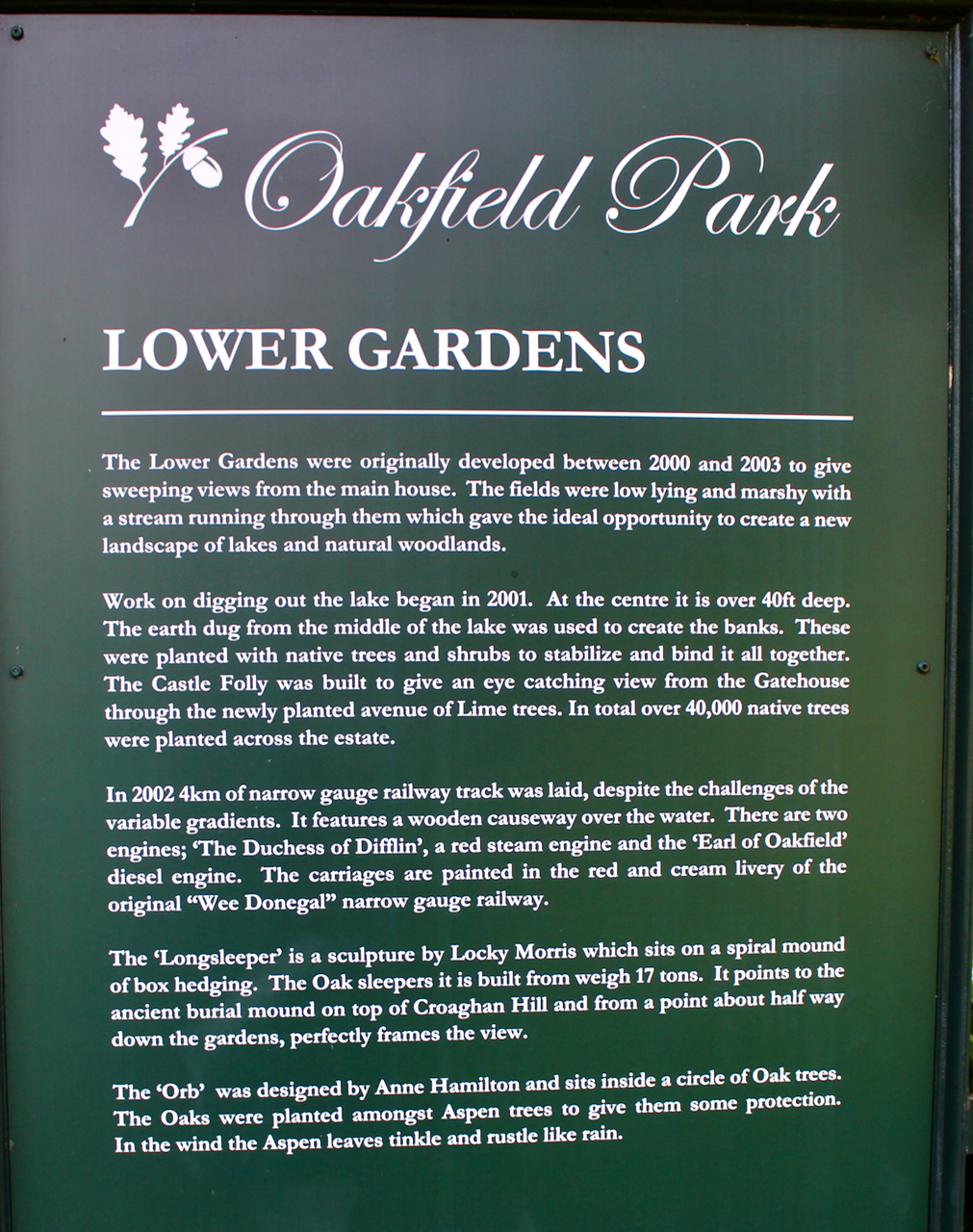
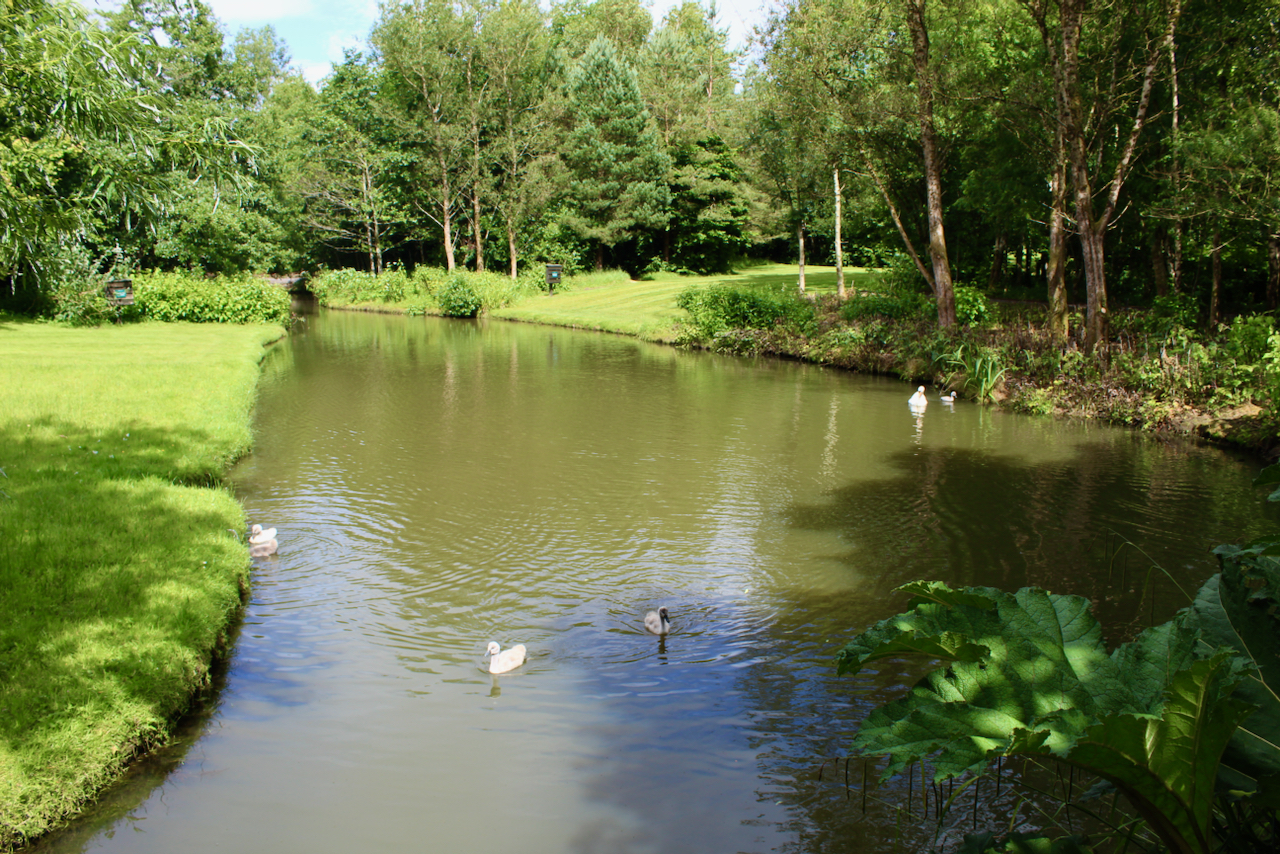
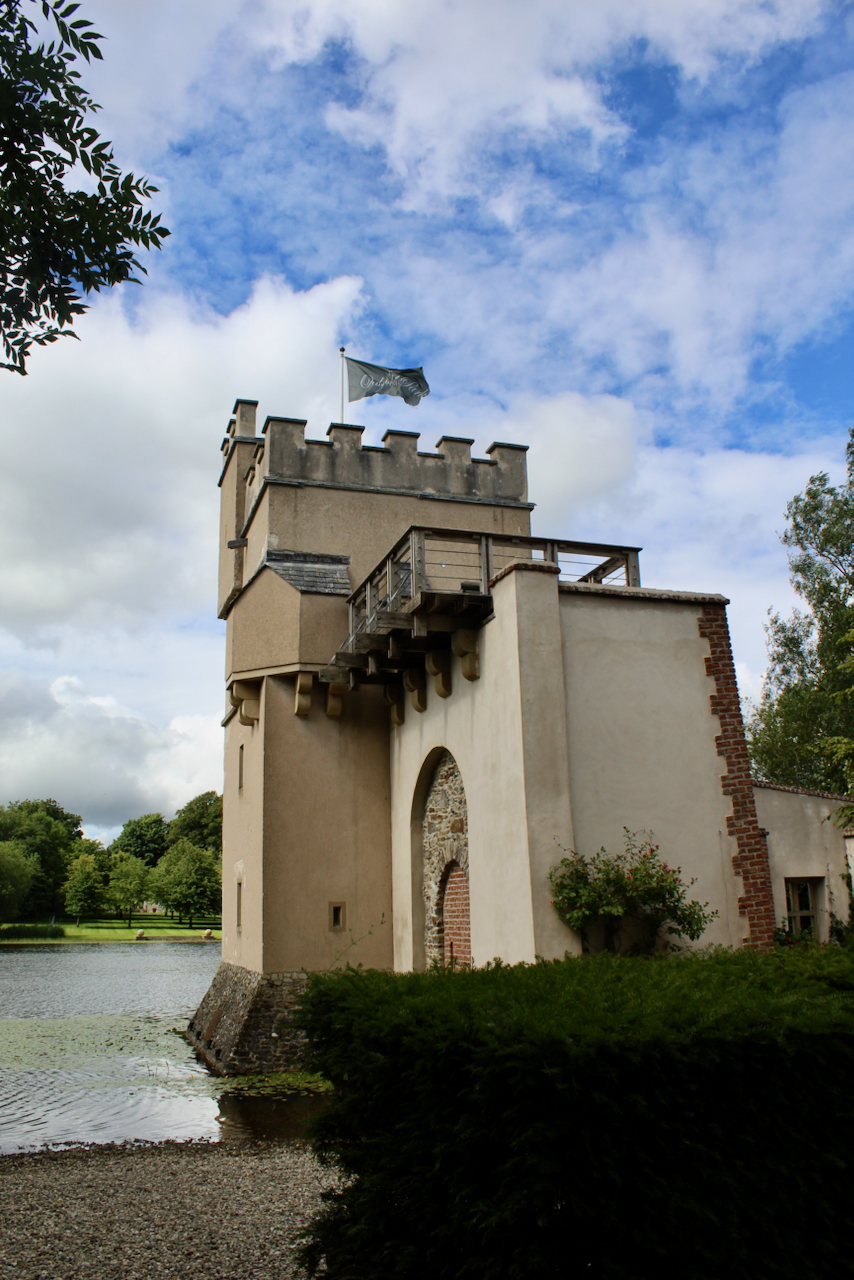
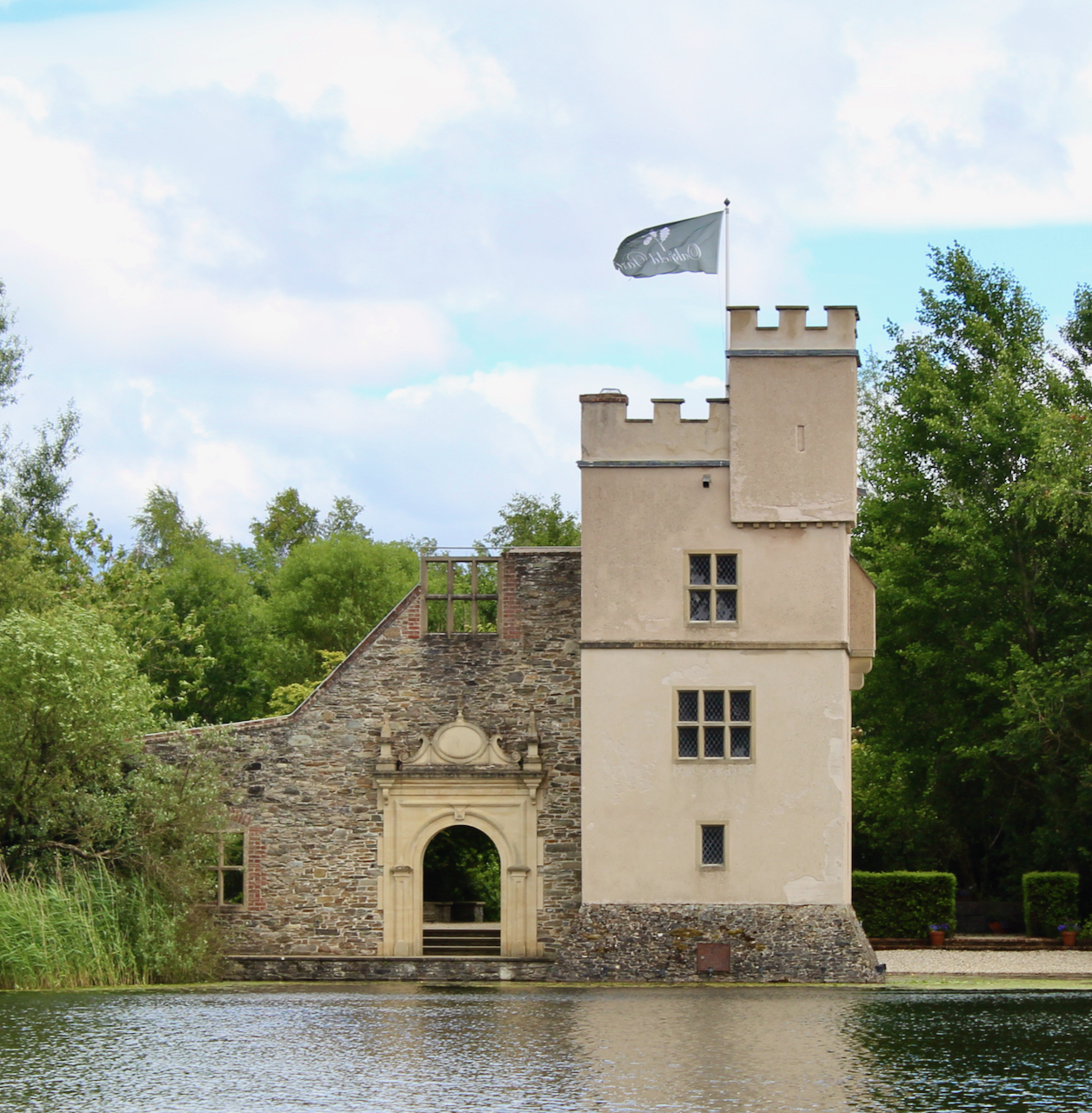
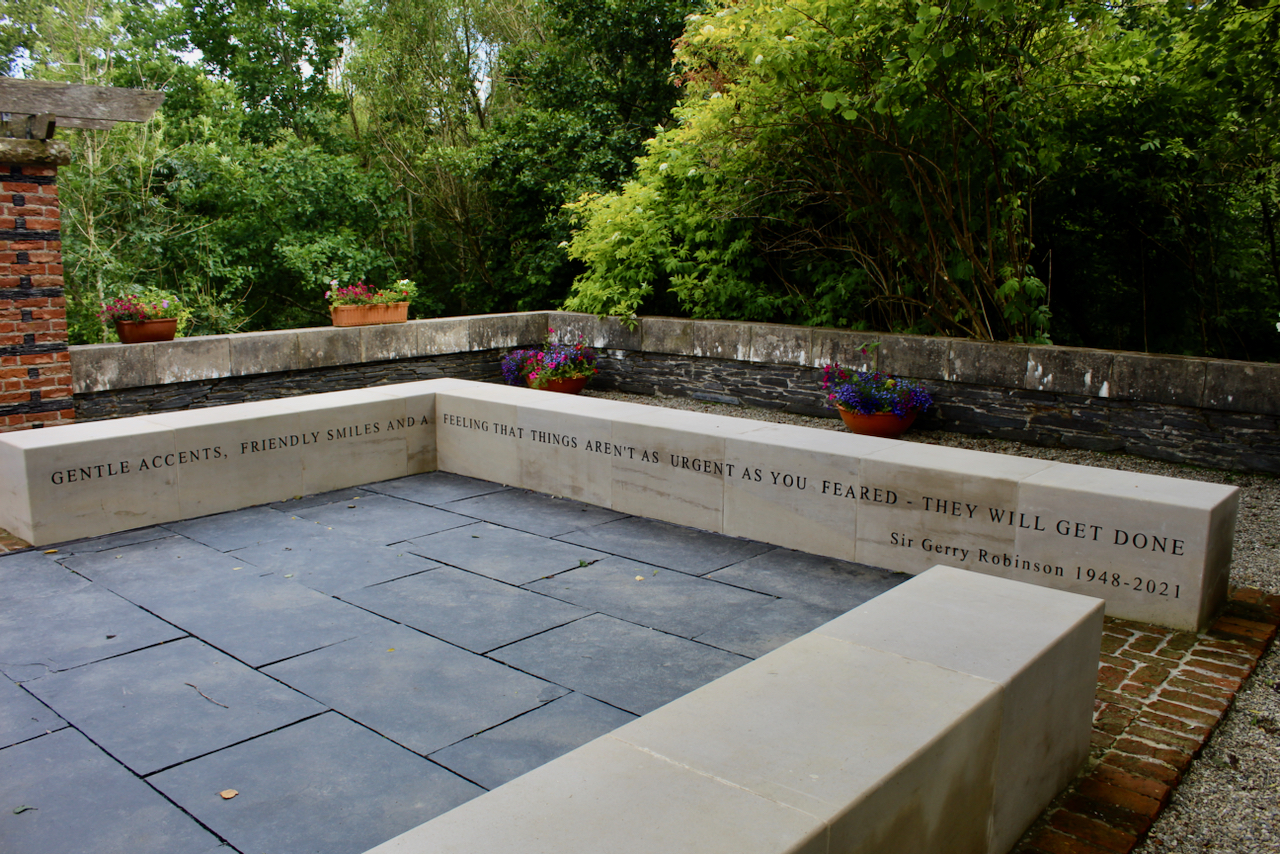
 Irish Historic Houses


