Open dates in 2026: May 1-31, June 1-5, 9-12, 16-19, 23-28, Aug 1-2, 15-23, 29-30, 10am-2pm
Fee: adult/OAP/student €8, child €4, under 4 years free, groups discount
donation
Help me to pay the entrance fee to one of the houses on this website. This site is created purely out of love for the subject and I receive no payment so any donation is appreciated!
We visited Larchill on a glorious sunny day in May 2022. The house has an excellent website explaining the fact that it is a ‘Ferme Ornée’ or Ornamental Farm and is the only surviving, near complete, garden of its type in Europe. It was created between 1740 and 1780. You may have seen the house recently in the television series “Blood” starring Adrian Dunbar.
The Ferme Ornée gardens of the mid 18th century were an expression in landscape gardening of the Romantic Movement. The National Inventory tells us that the house, ornamental farm yards and follies were built by Robert Watson, but it could have been for the previous owners, the Prentice family, a Quaker merchant family who lived in Dublin and at nearby Phepotstown and who owned the land of Larchill. According to the National Inventory, the farm yard was built around 1820, later than the house, which was built around 1790. [1] [2]
Robert Prentice leased Phepotstown in 1708 to grow flax for the production of linen and it seems that at this time he started to develop the land as a ‘Ferme Ornée.’ [3]
It was the current owners, Michael and Louisa de las Casas, who discovered the significance of the property, which had become overgrown and fallen into disrepair, due to a visit by garden historian Paddy Bowe,who was the first to realise that Larchill was a Ferme Ornée and an important ‘lost’ garden.
The website tells us about the idea of an ornamental farm:
“Emulating Arcadia, a pastoral paradise was created to reflect Man’s harmony with the perfection of nature. As is the case at Larchill, a working farm with decorative buildings (often containing specimen breeds of farm animal) was situated in landscaped parkland ornamented with follies, grottos and statuary. Tree lined avenues, flowing water, lakes, areas of light and shade and beautiful framed views combined to create an inspirational experience enabling Man’s spirit to rejoice at the wonder of nature.“
The owners continue the tradition of keeping specimen breeds with the long-horn cow, peacocks and quail. They used to be kept busy with tourists and children with an adventure area and collection of rare breeds of farmyard animal, but they no longer gear it toward such an audience.
The website continues: “At this time in Versailles, Marie Antoinette enjoyed extravagant pastoral pageants, housed specimen cattle in highly decorated barns, while she herself is said to have dressed as a milk maid complete with porcelain milk churns. Freed from the restrictions of the 17th century formal garden, the Ferme Ornée represented the first move towards the fully fledged landscape parkland designs of Capability Browne.“
I recently visited the exhibition of “In Harmony with Nature: The Irish Country House Garden 1600-1900” at the Irish Georgian Society, curated by Robert O’Byrne. He describes the Romantic movement and landscape design of Capability Brown:
From exhibition of “In Harmony with Nature: The Irish Country House Garden 1600-1900” at the Irish Georgian Society, curated by Robert O’Byrne.
The Larchill website continues: “The Prentice family had trading connections throughout Europe and would have been aware of the new fashion in garden design: in particular the famous gardens of Leasowes and Woburn Farm in England. In Ireland the Prentice’s townhouse was adjacent to the home of Dean Swift in Dublin where he had developed his orchard and garden, ‘Naboth’s Vineyard.’ Dean Swift and his great friend Mrs Delaney (known today for her exquisite floral collages) were most closely associated in Ireland with knowledge of the new movement in garden design. Larchill was only 10 miles from Dangan Castle [now a ruin], often visited by Mrs Delaney, where from 1730 an extravagant 600 acres of land was embellished with a 26 acre lake, temples, statuary, obelisks and grottos by Richard Wellesley, Earl of Morningtonand Grandfather of the Duke of Wellington [I think this was Richard Wesley (c.1690-1758), first Baron of Mornington. He was born Richard Colley but took the name Wesley when he inherited Dangan from his cousin Garret Wesley. [4] Mrs Delaney writes that he had a complete man-of-war ship on his lake!]. This is entirely contemporary with the Prentice’s period of garden development on their estate.“
Robert O’Byrne writes of Larchill in his blog and tells us more about the beginnings of the movement for “ornamental farms”:
“Despite its French name, the concept of the ferme ornée is of English origin and is usually attributed to the garden designer and writer Stephen Switzer.* [*Incidentally, Stephen Switzer was no relation to the Irish Switzers: whereas his family could long be traced to residency in Hampshire, the Switzers who settled in this country in the early 18th century had come from Germany to escape religious persecution.] His 1715 book The Nobleman, Gentleman, and Gardener’s Recreation criticized the overly elaborate formal gardens derived from French and Dutch examples, and proposed laying out grounds that were attractive but also functional: ‘By mixing the useful and profitable parts of Gard’ning with the Pleasurable in the Interior Parts of my Designs and Paddocks, obscure enclosures, etc. in the outward, My Designs are thereby vastly enlarg’d and both Profit and Pleasure may be agreeably mix’d together.’ In other words, working farms could be transformed into visually delightful places. One of the earliest examples of the ferme ornée was laid out by Philip Southgate who owned the 150-acre Woburn Farm, Surrey on which work began in 1727. ‘All my design at first,’ wrote Southgate, ‘was to have a garden on the middle high ground and a walk all round my farm, for convenience as well as pleasure.’ The fashion for such designs gradually spread across Europe as part of the adoption of natural English gardens: perhaps the most famous example of the ferme ornée is the decorative model farm called the Hameau de la Reine created for Marie Antoinette at Versailles in the mid-1780s. The most complete extant example of this garden type in Europe is believed to be at Larchill, County Kildare.” [5]
The Larchill website continues: “Thus there were many sources of reference for the Prentice family as they created their own pastoral paradise before falling on hard times and bankruptcy due to failure in their trading enterprises [around 1760]. The Ferme Ornée gardens were, as a result, leased separately from Phepotstown House and became known as Larchill after a boundary of Larch trees was planted around the farm and garden in the early 1800’s.“
The Watsons leased the property in 1790 and the farm manager’s house was upgraded with additions at this time (around 1780). (see [3])
The website Meath History Hub gives us more information about the inhabitants of Larchill:
“Richard Prentice, a haberdasher from The Coombe in Dublin occupied Larch Hill in the late eighteenth century. He may have established a Ferme Ornéeat Larchhill and constructed the follies although they are generally dated to later.Mr. Prentice was declared bankrupt in 1790, owing ten thousand pounds to a Mr John Smith in Galway.
In 1790 the lease at Phepotstown was taken over by Thomas Watson. The Watson family were a Quaker family from Baltracey, Edenderrry. The house at Larch Hill may have been constructed at this time. Thomas died in 1822. His brother, Samuel Eves Watson [1785-1835], took a lease on Larchill when he married Margo Doyle in 1811. In 1820, Samuel E. Watson inherited half the estate of his uncle, Samuel Russell, in Hodgestown, Timahoe. This brought together four estates with a total area of 1,627 acres. When he died in 1836 his grandson, Samuel Neale [or was Samuel Neale his nephew, son of his sister Anna Watson?], got the estate but he had to take the name Watson in order to inherit. In 1837 Larch Hill, Kilmore, Kilcock was the residence of S.E. Watson. Its grounds were embellished with grottoes and temples. Samuel Neale Watson, as he was now known, married Susanna Davis in 1840 and lived mainly in Dublin. Samuel Neale Watson died in 1883. Seamus Cullen has researched the history of the Watson family.” [6]
The property is mainly notable for its follies, but the house is lovely too, an old Quaker farmhouse.
He greeted us outside the barns, and brought us through the house. The house was built around 1780, and entering the back door, one can see the age – one senses it in the walls in the back hallway, which are not as smooth and straight as in a modern house, and they seem to sit more firmly in the ground. The ceilings are also higher.
Although a farmhouse, it has lovely coving in the drawing room, a ceiling rose and marble fireplace.
The Larchill website continues, about the early 1800s: “It was after this time that the local Watson family leased Larchill and the famous connection was made, to this day, between Robert Watson, Master of the Carlow and Island Hounds and the Fox’s Earth folly. Although the Fox’s Earth would certainly predate the Watson’s tenure at Larchill [he died in 1908], and the fact that Robert Watson was only a distant relative of the Watsons at Larchill, still it is believed that the Fox’s Earth was constructed in response to Robert Watson’s guilt at having killed one too many foxes and his fear of punishment in reincarnation as a fox.”
The Larchill website the National Inventory tell us that according to folklore the Fox’s Earth was created by Mr Robert Watson, a famous Master of Hounds in the 18th Century who feared punishment through re-incarnation as a fox, having killed one too many foxes during his hunting career. References I have found refer to the 19th century Robert Watson who was master of the hunt. [7] I’m not sure if there was an 18th Century Robert Watson to whom the Larchill website refers. Robert Watson (1821-1908) of the Hunt lived at Ballydarton, County Carlow. [8] Maybe he influenced his Watson relatives who lived at Larchill to ensure that the odd structure would act as a “fox’s earth” in case he was reincarnated as a fox! Whatever the case, it makes a great story! Ideas of reincarnation were, the Larchill website tells us, being explored at this time through the Romantic movement as established Christian doctrine came into question. It is feasible that there was every intention to create a Fox’s refuge with the design of this folly.
The “Fox’s Earth” folly structure, the website tells us, comprises an artificial grassed mound within which is a vaulted inner chamber with gothic windows and entrance. A circular rustic temple surmounts the mound. Externally it is reminiscent of an ice house.
Leading away, on either side from the vaulted interior, are tunnels disappearing into the mound. These ‘escape’ tunnels seem to corroborate the story of this being a “Fox’s Earth”, a refuge and escape route for a fox pursued by the hunt.
The National Inventory calls it a Mausoleum: “Mausoleum and folly, built c.1820. Comprising three-bay single-storey dressed limestone façade set into artificial mount, with rustic temple set on the mount. Pointed arch openings to three-bay façade. Rubble stone walls to site, with circular profile piers. Circular profile temple, comprising six columns, capped with dome. Rubble stone bridge to the site.” [9]
Another possibility that Michael told us is that the temple is a Temple of Venus. Inside its tunnels are in the shape of a woman’s reproductive system, with a womb and fallopian tubes. It could have been a sort of temple to fertility.
The Larchill website continues: “Although described in the notes to the 1836 Ordnance Survey as ‘the most fashionable garden in all of Ireland’ over the decades knowledge of the Larchill Ferme Ornée faded. The parkland returned to farmland, the lake was drained and the formal garden was lost and used to graze sheep. Although the follies became semi derelict and obscured by undergrowth and trees, the mystery and beauty of Larchill was still recognised. Folklore stories of hauntings and the ‘strange’ nature of Larchill ensured its continued notoriety.
The Meath History Hub tells us: “The Barry family resided at Larchhill from the 1880s until 1993. Christopher and Maria Barry donated the Stations of the Cross to Moynalvey church. Christopher died before 1911 leaving Maria a widow.” (see [6])
In 1994 the de Las Casas family acquired Larchill. Four years of restoration followed with the aid of a grant from the Great Gardens of Ireland Restoration Program and a FAS Community Employment Project.
In recognition of the quality and sensitivity of the restoration program Larchill Arcadian Garden has been awarded the 1988 National Henry Ford Conservation Award, the 1999 ESB Community Environment Award and the 2002 European Union Environmental Heritage Award.
We then went outside to explore. Michael gave us a map to follow around the grounds. First he showed us the ingenious mechanism in the ornamental gate:
Before we walked the circumference of the field and lake, Michael showed us to the walled garden behind the house. On the way we passed a statue of Flora:
The ornamental dairy used to have Dutch tiles but unfortunately a previous owner removed them! Ornamental dairies were common in ornamental farms, and were places where products of the dairy could be sampled if not actually made there.
The tower, called a “Cockle Tower,” is decorated with shells, but unfortunately it needs to be stabilised before one could safely enter. I did manage to see the inside of the shell tower by looking through a window. We saw a shell house in Curraghmore in County Waterford, and Mary Delany is famous for her shell work. There is also one nearby at Carton Estate.
The website tells us that in the case of the Larchill Shell Tower, where lower rooms are decorated with shells laid in geometric patterns, the shells appear to be mostly native varieties, many are cockles with some exotic exceptions such as conches – perhaps sourced via the trading connections of the 18th century Prentice family who created the Ferme Ornée at Larchill.
After we explored the walled garden, we set off to see the follies dotted around the lake. On the lake itself are two follies: the Gibraltar and the round temple. A previous owner had drained the lake but the current owners reinstated it, as water is an essential element of an ornamental farm, creating a romantic landscape. We learned a charming new word: marl clay lines the bottom of the lake. To prepare the clay before the lake was filled with water, the land underwent the process of “puddling.” This is letting sheep loose on the clay to walk it into the ground.
Gibraltar: This is a castellated miniature fort with circular gun-holes and five battlemented towers situated on one of two islands within the lake. It would have been constructed just shortly before, or at the same time as, the famous defense by the British of their garrison on Gibraltar against the Spanish during the ‘Great Siege’ of 1779 to 1783. The siege, which lasted nearly three and half years through starvation and repeated onslaughts by the Spanish, was impressive news at the time and must have motivated the naming of the fortress as Gibraltar.
There is a similar “Gibraltar” tower in Heathfield Park Estate in East Sussex. In 1791 Francis Newbery bought Bailey Park, an estate in East Sussex, which he renamed the Heathfield Park Estate. One of his first projects was to create a memorial to the former owner of the estate, George Augustus Eliot, who had been Governor at Gibraltar during the lengthy ‘Great Siege’ by the Spanish and French of 1779-1783. In 1787 Eliot was created Lord Heathfield of Gibraltar in recognition of his service to his country, and his death in 1790 had been marked by long eulogies in the press. The tower was later sketched by Turner as part of his commission to provide illustrations for Cooke’s Views in Sussex. [11]
However the fortress at Larchill was much more a source of pleasure and entertainment, the Larchill website tells us, with stories of mock battles across the lake.
The website tells us about the Lake Temple: it “is a circular island building in the lake to the west of Gibraltar. The outer wall has decorative recesses and the internal circle of columns surrounds a well-like central core.
There is evidence that the columns may have originally been partially roofed so as to direct rainwater into the well itself. It is possible that the design was intended to emulate the plunge pool baths of Ancient Rome, such as the famous pool at Hadrian’s Villa in Tivoli.”
There used to be a causeway out to the island temple. Another theory is that the well and round temple could have been part of a sham Druidic temple. Tim Gatehouse writes of a Grand Lodge of Irish Druids in the 1790s, whose summer activities included visits to members’ estates. (see [3])
2.Lough Bawn House, Colllinstown, County Westmeath – B&B
3. Lough Bishop House, Collinstown, County Westmeath – B&B
4. Mornington House, County Westmeath – B&B
Whole House Rental/wedding venue, County Westmeath
1. Ballinlough Castle, County Westmeath – exclusive hire
2. Bishopstown House, Rosemount, County Westmeath – whole house rental (sleeps up to 18 people)
3. Middleton Park, Mullingar, County Westmeath – whole house rental and weddings
donation
Help me to pay the entrance fee to one of the houses on this website. This site is created purely out of love for the subject and I receive no payment so any donation is appreciated!
Cruising by Athlone Castle, Co Westmeath Courtesy Fennell Photography 2015, for Tourism Ireland, Ireland’s Content Pool.
The website tells us: “Trace the footprints of the generations who shaped this place. From early settlements and warring chieftains to foreign invaders and local heroes. This site on the River Shannon is the centre of Ireland’s Hidden Heartlands.
“Over the centuries it has been the nucleus of the Anglo-Norman settlement; a stronghold of the rival local families the Dillons and the O’Kelly’s; the seat of the Court of Claims; the residence of the President of Connaught and the Jacobite stronghold during the sieges of Athlone. After the Siege of Athlone it became incorporated into the new military barrack complex. It remained a stronghold of the garrison for almost three hundred years.
“In 1922 when the Free State troops took over the Barracks from their British counterparts, they proudly flew the tricolour from a temporary flagpole much to the delight of the majority of townspeople.
“In 1967 the Old Athlone Society established a museum in the castle with a range of exhibits relating to Athlone and its environs and also to folk-life in the district. Two years later when the military left the castle it was handed over to the Office of Public Works and the central keep became a National Monument.
“In 1991 to mark the Tercentenary of the Siege of Athlone the castle became the foremost visitor attraction in Athlone. Athlone Town Council (then Athlone UDC) made a major investment in the castle creating a multi-faceted Visitor Centre as it approached its 800th Anniversary in 2010. A total of €4.3million euro was invested in the new facility by Fáilte Ireland and Athlone Town Council and was officially opened by the then Minister of State for Tourism and Sport, Michael Ring T.D. on Tuesday 26th February 2012.“
Athlone Castle, County Westmeath, photograph by Robert French, Lawrence Photographic Collection, National Library of Ireland.Athlone Castle, Athlone, Co Westmeath_Courtesy Ros Kavanagh 2014,for Tourism Ireland, Ireland’s Content Pool.
“Athlone Castle Visitor Centre is now a modern, engaging, fun and unique family attraction which harnesses most significant architectural features, such as the keep, to act as a dramatic backdrop to its diverse and fascinating story.
“It houses eight individual exhibition spaces, each depicting a different aspect of life in Athlone, the Castle and the periods both before and after the famous Siege. Fun, hands-on interactives, touchable objects and educational narratives immerse visitors in the drama, tragedy and spectacle of Athlone’s diverse and fascinating story. 3D maps, audio-visual installations, illustrations and artefacts bring the stories and characters of Athlone to life and The Great Siege of Athlone is dramatically recreated in a 360-degree cinematic experience in the Keep of the castle.“
Athlone Castle, Athlone, Co Westmeath_Courtesy Ros Kavanagh 2014,for Tourism Ireland, Ireland’s Content Pool.
“As part of Westmeath County Council’s commemoration of Ireland’s world-renowned tenor, John Count McCormack, a new exhibition dedicated to the celebrated singer was opened at Athlone Castle in October 2014.“
Archiseek tells us about Athlone Castle: “Towards the end of the 12th century the Anglo-Normans constructed a motte-and-bailey fortification here. This was superceeded by a stone structure built in 1210, on the orders of King John of England. The Castle was built by John de Gray, Bishop of Norwich. The 12-sided donjon dates from this time. The rest of the castle was largely destroyed during the Siege of Athlone and subsequently rebuilt and enlarged upon. In the early 1800s, during the Napoleonic Wars, the castle was rebuilt as a fortification to protect the river crossing, taking the form we largely see today. The machicolations of the central keep are all nineteenth century. In the interior is an early nineteenth century two-storey barrack building. The modern ramp up to the castle has a line of pistol loops. The castle was taken over by the Irish Army in 1922 and continued as a military installation until it was transferred to the Office of Public Works in 1970.” [8]
Athlone Castle, Athlone, Co Westmeath_Courtesy Sonder Visuals 2021 for Tourism Ireland, Ireland’s Content Pool.
2. Belvedere House, Gardens and Park, County Westmeath
Mark Bence-Jones writes of Belvedere in his 1988 book:
p. 39. “(Rochfort, sub Belvedere, E/DEP Rochfort/LGI1912; Marlay/LGI1912; Howard-Bury, sub Suffolk and Berkshire, E/PB; and Bury/IFR) An exquisite villa of ca 1740 by Richard Castle, on the shores of Lough Ennell; built for Robert Rochfort, Lord Bellfield, afterwards 1st Earl of Belvedere, whose seat was at Gaulston, ca 5 miles away. Of two storeys over basement, with a long front and curved end bows – it may well be the earliest bow-ended house in Ireland – but little more than one room deep.”
Castle – April 30, May 1-2, 7-9, 14-16, 21-23, 28-30, June 4-6, 11-13, 18-20, 25-27, July 2-4, 9-11, 16-18, 23-25, 30-31, Aug 1, 13-23, 27-29, Sept 3-5, 10-12, 17-19, 11am-3pm
Garden – Mar 19-22, 26-29, Apr 2-6, 9-12, 16-19, 23-26, 30, May 1-4, 7-10, 14-17, 21-24, 28-31, June 1, 4-7, 1-14, 18-21, 25-28, July 2-5, 9-12, 16-19, 23-26, 30-31, Aug 1-3, 6-9, 13-23, 27-30, Sept 3-6, 10-13, 17-20, 24-27,9am-5pm
Fee: castle fee – adult €17, child entry allowed for over 8 years €9, garden fee – adult €9, child €4, family ticket (2 adults + 2 children) €24, adult season ticket €60, family season ticket €73.50, special needs visitor with support carer €4, child 5 years or under is free
“The family run Annebrook House Hotel Mullingar opened its doors February 2007. Originally an Old Georgian residence for the local county surgeon, Dr O’Connell, the historic Annebrook House Hotel was purchased by the Dunne family in 2005. With his experience in hospitality and construction Berty Dunne set about creating a hotel as unique as the man who owns it. The Annebrook’s central location, its diverse range of accommodation from 2 bedroomed family suites to executive doubles has made it a very popular location for those coming to experience all that the midlands has to offer.
“Situated in the heart of Mullingar overlooking 10 acres of parkland, the Award Winning 4 star Annebrook House Hotel presents a modern day styling coupled with 17th century heritage. As a family run hotel the Annebrook prides itself on quality and high standards of customer service, working as part of one team to ensure all guests of their best and personal attention at all times. Annebrook House Hotel is steeped in history and enjoys the enviable advantage of being one of the most centrally located hotels in Mullingar town. This unique venue mixes old world charm with modern comfort and has established itself as one of Westmeath’s top wedding venues and was recently voted Best Wedding Venue Ireland by Irish Wedding Diary Magazine. With accommodation ranging from executive hotel rooms, family suites, luxurious champagne suites and apartments, the Annebrook has much to offer those visiting Mullingar. Offering a range of dining options from Berty’s Bar to fine dining in the award winning Old House Restaurant. The four star Annebrook House Hotel offers an excellent service to both its corporate & leisure guests. The hotel is accessible by car just 50 mins from Dublin and is only 10 minutes from the local Train Station.“
2.Lough Bawn House, Colllinstown, Co Westmeath – B&B accommodation
“A classic Georgian house in a unique setting. Lough Bawn house sits high above Lough Bane with amazing sweeping views. Nestled in a 50 acre parkland at the end of a long drive, Lough Bawn House is a haven of peace and tranquillity.
“The house and estate has been in the same family since it was built in 1820 by George Battesby, the current occupier, Verity’s, Great Great Great Grandfather. The house is being lovingly restored by Verity, having returned from England to live in the family home. Verity ran her own catering and events company in Gloucestershire for over 20 years. Her passion for cooking & entertaining shines through. Guests enjoy an extensive and varied breakfast with much of the ingredients being grown or reared by Verity herself, and delicious dinners are on offer. Breakfast is eaten in the large newly restored dining room, with wonderful views over the lough and of the parading peacocks on the rolling lawns.“
Photograph courtesy of Lough Bawn House website.Photograph courtesy of Lough Bawn House website.
“Both of the large, en-suite rooms have fine views down the length of Lough Bane and over the wooded hills while the single room and the twin/double room have sweeping views of the surrounding parklands. Guests are warmly welcomed and encouraged to relax in the homely drawing room in front of a roaring fire or to explore one of the many local historical sites, gardens, walks or cultural entertainments on offer.
Several areas of the estate have been classified as Special Areas of Conservation (SAC‘s) due to the incredibly varied and rare flora. Wild flowers can be found in abundance and a charming fern walk has been the created amongst the woodland near the house.“
3. Lough Bishop House, Collinstown, County Westmeath– B&B
“Built in the early 19th Century, Lough Bishop is a charming Country House nestling peacefully into a south-facing slope overlooking Bishop’s Lough in County Westmeath, Ireland.
“Breathtaking scenery in an unspoilt and tranquil setting, amid the rolling farmlands and lakes of Westmeath make Lough Bishop an ideal refuge from the hustle and bustle of modern life. There are family dogs in the background and animals play a large part of life at Lough Bishop House.
“Lough Bishop House is a family run business offering Country House Bed & Breakfast accommodation in a wonderful location in the middle of a working organic farm. We even have a purpose built trailer towed behind the quad bike to give guests a tour of the farm and the opportunity to get up close to the animals.
“Following extensive renovation this attractive Georgian Country Farmhouse offers its guests luxurious bed and breakfast accommodations, peaceful surroundings and fine home cooked food much of which comes from our own farm, garden and orchard.“
4. Mornington House, County Westmeath – B&B accommodation
Mornington House, photograph courtesy of their website.
“Mornington House, a historic Irish Country Manor offering luxury country house accommodation located in the heart of the Co. Westmeath countryside, just 60 miles from Ireland’s capital city of Dublin. Tranquility and warm hospitality are the essence of Mornington, home to the O’Hara’s since 1858.
“Mornington House is hidden away in the midst of a charming and dramatic landscape with rolling hills, green pasture, forests with ancient, heavy timber and sparkling lakes, deep in an unexplored corner of County Westmeath. Nearby are ancient churches, castles and abbeys, and delightful small villages to explore, away from all hustle and bustle of 21st century life, yet just 60 miles from Dublin.
“There has been a house at Mornington since the early 17th century but this was considerably enlarged in 1896 by Warwick’s grandparents. It is now a gracious family home with a reputation for delicious breakfasts which are prepared in the fine tradition of the Irish Country House and really set you up for the day ahead.
“A special place to stay for a romantic or relaxing break Mornington House’s location in the centre of Ireland just an hour’s drive from Dublin and Dublin Airport makes it ideal for either a midweek or weekend country break. Guests can walk to the lake or wander round the grounds. Excellent golf, fishing, walking and riding can be arranged. The Hill of Uisneach, the Neolithic passage tombs at Loughcrew and Newgrange and the early Christian sites at Fore and Clonmacnoise are all within easy reach, as are the gardens at Belvedere, Tullynally and Loughcrew.“
The National Inventory tells us:
“A well-detailed middle-sized country house, on complex plan, which retains its early aspect, form and much of its important early fabric. The ascending breakfronts to the entrance front of this structure adds to the overall form and its architectural impact. The facade, incorporating extensive moulded detailing and a very fine doorcase, is both visually and architecturally impressive and displays a high level of workmanship. The present entrance front (east) is built to the front of an earlier house, the form of which suggests that it might be quite early, perhaps early eighteenth-century in date. The 1896 entrance front was built to designs by W.H. Byrne (1844-1917), a noted architect of his day, best remembered for his numerous church designs. Apparently, Mornington is one of only two domestic commissions that can be attributed to this noteworthy architect, adding extra significance to this structure. The building was completed by 1898 at a cost of £2,400. Mornington House was in the ownership of the Daly Family in the early eighteenth-century and has been in the ownership of the O’Hara Family since 1858. It forms the centrepiece of an interesting, multi-period, complex with the outbuildings, the walled gardens and the fine entrance gates to the south. It represents an important element to the architectural heritage of Westmeath and occupies attractive nature grounds to the east of Multyfarnham.” [9]
Whole House accommodation, County Westmeath:
1. Ballinlough Castle, County Westmeath – exclusive hire
Ballinlough Castle, County Westmeath, photograph courtesy of Ballinlough Castle’s website.
The website tells us Ballinlough Castle is available for exclusive hire of the castle and the grounds (minimum hire 3 nights) is available for private or corporate gatherings. Focussing on relaxed and traditional country house hospitality, assisted by a local staff.
Ballinlough Castle, County Westmeath, photograph courtesy of Ballinlough Castle’s website.“Refurbishment of Ballinlough Castle, Clonmellon,”c. 1940, G&T Crampton, held by Assoc. Prof. Joseph Brady, Digital content by Dr. Joseph Brady, published by UCD Library, University College Dublin.
The website tells us of its history:
“The Nugent family at Ballinlough were originally called O’Reilly, but assumed the surname of Nugent in 1812 to inherit a legacy. They are almost unique in being a Catholic Celtic-Irish family who still live in their family castle.
“The castle was built in the early seventeenth century and the O’Reilly coat of arms over the front door carries the date 1614 along with the O’Reilly motto Fortitudine et Prudentia.
“The newer wing overlooking the lake was added by Sir Hugh O’Reilly (1741-1821) in the late eighteenth century and is most likely the work of the amateur architect Thomas Wogan Browne, also responsible for work at Malahide Castle, the home of Sir Hugh O’Reilly’s sister Margaret.
“Sir Hugh was created a baronet on 1795 and changed the family name in 1812 in order to inherit from his maternal uncle, Governor Nugent of Tortola.
“As well as the construction of this wing, the first floor room above the front door was removed to create the two-storey hall that takes up the centre of the original house. The plasterwork here contains many clusters of fruit and flowers, all different. A new staircase was added, with a balcony akin to a minstrel’s gallery, and far grander than the original staircase that still remains to the side.
“Sir Hugh’s younger brothers James and Andrew entered Austrian military service, the latter becoming Governor-General of Vienna and Chamberlain to the Emperor. His portrait hangs in the castle’s dining-room.
“The family traces directly back to Felim O’Reilly who died in 1447. Felim’s son, John O’Reilly was driven from his home at Ross Castle near Lough Sheelin and settled in Kilskeer. His grandson Hugh married Elizabeth Plunket with whom he got the estate of Ballinlough, then believed to have been called Bally-Lough-Bomoyle. It was his great-grandson James who married Barbara Nugent and about whom an amusing anecdote is told in Duffy’s Hibernian Magazine of 1860:
During the operation of the penal laws in Ireland, when it was illegal for a Roman Catholic to possess a horse of greater value than five pounds, he was riding a spirited steed of great value but being met by a Protestant neighbour who was on foot, he was ordered by him to relinquish the steed for the sum of five pounds sterling. This he did without hesitation and the law favoured neighbour mounted his steed and rode off in haughty triumph. Shortly afterwards, however, James O’Reilly sued him for the value of the saddle and stirrups of which he was illegally deprived and recovered large damages.
“The investment in the castle by James’ son, Hugh was recorded in The Irish Tourist by Atkinson 1815, which contained the following account of a visit to Ballinlough:
The castle and demesne of Ballinlough had an appearance of antiquity highly gratifying to my feelings ….. I reined in my horse within a few perches of the grand gate of Ballinlough to take a view of the castle; it stands on a little eminence above a lake which beautifies the demesne; and not only the structure of the castle, but the appearance of the trees, and even the dusky colour of the gate and walls, as you enter, contribute to give the whole scenery an appearance of antiquity, while the prospect is calculated to infuse into the heart of the beholder, a mixed sentiment of veneration and delight.
Having visited the castle of Ballinlough, the interior of which appears a good deal modernised, Sir Hugh had the politeness to show me two or three of the principal apartments; these, together with the gallery on the hall, had as splendid an appearance as anything which I had, until that time, witnessed in private buildings. The rooms are furnished in a style- I cannot pretend to estimate the value, either of the furniture or ornamental works, but some idea thereof may be formed from the expenses of a fine marble chimney-piece purchased from Italy, and which, if any solid substance can in smoothness and transparency rival such work, it is this. I took the liberty of enquiring what might have been the expense of this article and Sir Hugh informed me only five hundred pounds sterling, a sum that would establish a country tradesman in business! The collection of paintings which this gentleman shewed me must have been purchased at an immense expense also- probably at a price that would set up two: what then must be the value of the entire furniture and ornamental works?
“Sir Hugh was succeeded in the baronetcy by his eldest son James, who was succeeded by his brother Sir John, who emulated his uncle in Austria in becoming Chamberlain to the Emperor. His eldest son Sir Hugh was killed at an early age so the title then passed to his second son Charles, a racehorse trainer in England. Sir Charles was an unsuccessful gambler which resulted in most of the Ballinlough lands, several thousand acres in Westmeath and Tipperary being sold, along with most of the castle’s contents.
“Sir Charles’ only son was killed in a horseracing fall in Belgium in 1903, before the birth of his own son, Hugh a few months later. Sir Hugh inherited the title on the death of his grandfather in 1927 and, having created a number of successful businesses in England, retuned to Ballinlough and restored the castle in the late 1930s. His son Sir John (1933- 2010) continue the restoration works and the castle is now in the hands of yet another generation of the only family to occupy it.”
featured in Great Irish Houses. Forewards by Desmond FitgGerald, Desmond Guinness. IMAGE Publications, 2008.
p. 49. “We took over the running and living of the property a few years ago, and structural renovation have been our focus up till now,” says Nick Nugent, the present owner. “It has been a huge challenge, as the entire Georgian wing was leaning out to the lake and we needed to underpin it.”
“Although few of the original pieces of furniture remain, many of the portraits were saved and they provide a unique pictorial history to illustrate the house’s colourful lineage. Over the dining room door hang portraits of Count Andrew, Chamberlain to the Emperor of Austria and Governor General of Vienna when Napolean attacked in 1809, and his great nephew, Sir John Nugent, Chamberlain to the Austrian Emperor. His son, Charles, who got himself into financial trouble through gambling, is also represented, as is an interesting non-famiyportrait of the Duke of Ormond accompanied, unusually for Ireland, by a black manservant.
“Today, Nick and Alice Nugent, who live in the castle with their children, have successfully secured the physical foundations at the lakeside of the house itself and begun the process of redecorating. They were assisted in the redecoration by Kate Earle of Todhunter Earle, a prestigious company with an impressive client list including Au Bar in New York, the Berkeley Hotel in London and Sissinghurst Castle in Kent.
“Their next task, in its own good time, will be to decorate the rest of the property. Much of the plasterwork had split over the years and the Nugents have repaired the cracks and set about rendering part of the exterior with several coats of lime mortar. In the basement, exposed pipes were found to contain asbestos, which needed treatment. “At that point our impending poverty was accelerated somewhat,” observes Nick Nugent wryly.
“The Georgian windows, said to be the tallest in Ireland, have all been removed and repaired under the careful eye of Kells Windows, and, where it survives, the Georgian glass has been retained. In time, they hope to render the rest of the façade and secure the foundations for future generations.
Like many Georgian castles, the building grew in stages.
p. 50 “The ground floor contains a larg drawing room and dining room with four first floor bedrooms approached by a vaulted corridor above.”
[about the Hall] “Initially a double storey room, it is thought Sir Hugh O’Reilly added a new wing towards the end of the 18th century, taking away the first floor in the hall and creating a fine galleried space with grand staircase. …The woodwork has taken on an unusual but entirely fitting stripped pine format, giving the appearance of faded grandeur. Mouldings are individualised with every three or four feet a new set revealed. Interestingly, there is no grand fireplace as is the case in most Irish entrance halls, but this absence may be due to re-modifications over the ages.
“To the right of the entrance hall is a morning room, which is now used as a smaller sitting room, which has an interesting set of oval portraits by Hugh Douglas Hamilton, relating to the O’Reilly and Nugent families. The design of the fireplace is replicated throughout the house and an original door connects to a back room.
“Moving to the left is the library or study, and family legend has it that Oliver Cromwell docked here for a night, keeping a cow in one archway and a horse in another. The drawing room, with Gothic pendant motifs and circular angles, is cetnred by a marvellous white chimneypiece, which is an exact copy of the chimneypiece in the dining room at Curraghmore. Roman females support either upright and the frieze is particularly well crafted.
“It was Nick Nugent’s grandfather, Sir Hugh Nugent, who brought in the majority of contents in this room and the neighbouring dining room where the severely damaged plasterwork has been repaired. In fact, the upturn in Ballinlough Castle’s fortunes began with Sir Hugh who returned to Ireland after a highly successful business career – he invented the tractor cab among other things – at a period when Irish country houses were being vacated. The house was semi-derelict and had been lived in for ten years by Owen Quinn, a family steward, who in the words of Sir John, “Lived in the house on his own with no heating, no water and rats everywhere.”
“Towards the end of the 1930s the house underwent thorough restoration, and much of the current interior decoration downstairs comes from that period, which was completed in 1939. [p. 55] The firm Cramptons, who were still building in Dublin at the time, worked on the restoration and carried out the re-wiring on the premises.
“In recent years, the magnificent gardens have been restored by Sir John and Lady Nugent, with help from the European Union and the Great Gardens of Ireland Programme. The walled garden, which is divided inot four walled sections, is home to a significant collection of shrubs, roses and climbers while the herbaceous borders are being remodeled. The grass tennis court, lily pond, rose garden, herb and soft fruit garden and orchard, all continue to thrive. From the walled gardens, a white door leads to the lakeside walks with the inviting water garden and its rustic summerhouse.
“Nick Nugent and his wife Alice are now committed to carrying on the mantle and their vision is to marry a subtle contemporary feel with country house living. The rooms on the upper floors reveal the new direction. There are twelve bedrooms, many of them with new en suite bathrooms. There are quirky touches, with some of the rooms having wallpapered ceilings, best defining their unorthodox physical shapes, and practical changes too, such as turning an old single four-poster bed into a double, which add to the pervading sense of comfort and cosiness.”
“Bishopstown House is a three-storey Georgian house built in the early 1800s by the Casey family. After he passed away, the original owner, Mr. J Casey left Bishopstown to his two daughters, who then sold the house to Mr Richard Cleary in 1895.
“Mr Richard Cleary, formally from the famed lakeside Cleaboy Stud near Mullingar, planned and erected Bishopstown House and Stud. In his younger days he rode horses at Kilbeggan, Ballinarobe, Claremorris and other Irish meetings with varying degrees of success, but as a trainer he knew no bounds. In his later years he devoted his time to breeding and training, and in time he became one of Ireland’s most famous trainers, breeding some excellent horses, including the winner of the 1916 Irish Grand National, Mr James Kiernan’s All Sorts!
“Other famous horses from the Bishopstown stud include Shaun Spada and Serent Murphy who both won the Aintree Grand National in England. Another horse called Dunadry won the Lancashire Steeple Chase. Other stallion winners include Sylvio III, Lustrea and Irish Battle who frequently had their names in the limelight throughout Irish and English racecourses.
“After being left fall into a dilapidated state, the stud farm and house was purchased by Paddy and Claire Dunning, the owners of the award-winning Grouse Lodge Recording Studios and Coolatore House and members of the Georgian society. It was restored to its former glory in 2009 and is now available for rent.“
2. Middleton Park, Mullingar, County Westmeath – wedding venue and accommodation
Photograph courtesy of Middleton Park House website.
Middleton Park House featured in The Great House Revival on RTE, with presenter (and architect) Hugh Wallace. The website tells us:
“Carolyn and Michael McDonnell, together with Carolyn’s brother Henry, joined together to purchase this expansive property in Castletown Geoghegan. Built during the famine, the property was last in use as a hotel but it had deteriorated at a surprisingly fast rate over its three unoccupied years.
“Designed by renowned architect George Papworth, featuring a Turner-designed conservatory, Middleton Park House stands at a palatial 35,000sq. ft. and is steeped in history. Its sheer scale makes it an ambitious restoration.
“The trio’s aim is to create a family home, first and foremost, which can host Henry’s children at the weekends and extended family all year-round. Due to its recent commercial use, the three will need to figure out how to change industrial-style aspects to make it a welcoming home that is economical to run.
“Henry will be putting his skills as a contractor and a qualified chippy to use, and Michael will be wearing his qualified engineer’s hat to figure out an effective heating system. Carolyn will be using her love of interiors to work out the aesthetic of the house, and how to furnish a property the size of 35 semi-detached houses in Dublin.“
Photograph courtesy of Middleton Park House website.
The trio have now made the house available for accommodation and as a wedding venue.
Photograph courtesy of Middleton Park House website.
The National Inventory tells us:
“A very fine and distinguished large-scale mid-nineteenth country house, which retains its early form, character and fabric This well-proportioned house is built in an Italianate style and is elevated by the fine ashlar limestone detailing, including a well-executed Greek Ionic porch/portico and a pronounced eaves cornice. This house was (re)built for George Augustus Boyd [1817-1887] in 1850 to designs by George Papworth (1781-1855) and replaced an earlier smaller-scale house on site, the property of a J. Middleton Berry, Esq., in 1837 (Lewis). The style of this house is quite old fashioned for its construction date and has the appearance of an early-nineteenth/late-Georgian country house. The form of this elegant house is very similar to Francis Johnston’s masterpiece Ballynagall (15401212), located to the north of Mullingar and now sadly in ruins. This house remained in the Boyd-Rochfort family until 1958 and was famously offered as a prize in a raffle in 1986 by its then owner, Barney Curly. This house forms the centerpiece of an important collection of related structures along with the elegant conservatory by Richard Turner (15318024), the service wing to the north (15318020), the stable block to the north (15318022) and the main gates (15318017) and the gate lodge (15318018) to the west. This building is an important element of the built heritage of Westmeath and adds historic and architectural incident to the landscape to the south of Castletown Geoghegan.” [10]
[3] Bence-Jones, Mark. A Guide to Irish Country Houses (originally published as Burke’s Guide to Country Houses volume 1 Ireland by Burke’s Peerage Ltd. 1978); Revised edition 1988 Constable and Company Ltd, London.
[4] p. 136. O’Reilly, Sean. Irish Houses and Gardens. From the Archives of Country Life. Aurum Press Ltd, London, 1998.
Open dates in 2026: July 1-31, Aug 1-31, 11am-6pm Fee: adult €9, OAP/student €7, child €6
donation
Help me to pay the entrance fee to one of the houses on this website. This site is created purely out of love for the subject and I receive no payment so any donation is appreciated!
Some section 482 properties are “garden only.” I have marked these in the listings on my home page. In the listings it is not always obvious whether the house or just the gardens are open according to the Section 482 rules, so I contacted the Business Taxes Policy & Legislation Division of Revenue, who clarified for me which properties are garden only. Kilfane is one of the properties which is genuinely “garden only.”
The yellow house next to the gardens looks gorgeous but it is a private residence. It is not the main house at Kilfane. The main house was built in 1798 for the Power family (it may have been added on to a previously existing house, owned by the Bushe family, who owned the land before the Powers married into it [1]) and has a three storey five bay centre block with three bay wings, which are single-storey at the front and two storey at the back. This house is located a distance from Kilfane Glen and Waterfall, and we did not see it. For more on the life in that big house, see the chapter on Kilfane in Mark Bence Jones, Life in an Irish Country House. Constable, London (1996), and for more on the old main house at Kilfane, see Robert O’Byrne’s entry about it on his Irish Aesthete website. [2]
Kilfane House (built 1798), County Kilkenny, photograph taken from the National Inventory of Architectural Heritage.
The house which we saw at Kilfane was originally a worker’s cottage or woodsman’s house. built around 1850, probably incorporating fabric of earlier ranges. It was altered to become a dwelling in 1830, probably incorporating fabric of earlier ranges, for Thomas Seigne, who was the land agent for Kilfane. [3] Susan Mosse tells me that according to Jeremy Williams, it was designed by an architect who then emigrated to the US and went on to design the heating system in Washington DC. The White House was designed by a Kilkenny man, James Hoban, in 1792, so he may well have known the designer of the heating system for his building, if he was a fellow Irishman from Kilkenny! The design of Hoban’s White House was greatly influenced by that of Leinster House, designed by Richard Castle in 1750 for the Duke of Leinster.
There is plenty to see, however, in the grounds of Kilfane.
Kilfane, August 2021.
We drove through the woods to reach the car park for Kilfane Glen and Waterfall. The current owners have opened the gardens to the public and restored the key attraction, a romantic glen, waterfall, and cottage ornée in the style of Marie Antoinette’s Petit Trianon, a country-style cottage where she used to play at being a regular person. There is more to the gardens, however, than the glen. The glen, as Robert O’Byrne describes it, is on the edge of the estate: “there existed an area of woodland where the land dropped away to reveal a rock face thirty feet high descending to an open vale dramatically strewn with boulders.” The Powers added a mile-long canal leading to the glen, which spills down as a waterfall. A thatched cottage ornée was added – Robert O’Byrne tells us that advocates of the Picturesque argued that such landscapes needed a humanising focus in the same way as the paintings which had inspired them. There had to be a central point to which the eye was drawn. [4]
We followed the map, provided on paper from the entrance kiosk, and reproduced on a large canvas next to the kiosk. We entered the oak wood, next to a frog pond.
The gardens themselves are an example of a romantic era garden, and date from the 1790s. The gardens embody the theory of the Picturesque. Robert O’Byrne tells us that “the picturesque is associated with painting (it derives from the Italian term ‘pittoresco’ meaning ‘in the manner of a painter’). It was thus used by a key figure in the evolution of the concept William Gilpin who in his 1768 Essay on Prints defined picturesque as being ‘expressive of that peculiar kind of beauty, which is agreeable in a picture.’ Essentially the picturesque as proposed by Gilpin and others offers an aesthetic experience between the extremes of the sublime (which induces an emotion akin to terror [as theorized by Edmond Burke, whom we came across at Annaghmore in County Sligo]) and the beautiful which relies on symmetry and a calm-inducing order. The inspiration for landscapes that might be classified as picturesque came from artists of the previous century, most notably Claude Lorrain and Gaspard Poussin. In Ireland one of the most perfect expressions of this kind of landscape design can be found at Kilfane, County Kilkenny where theories of the picturesque were put into practice with enchanting results.“
Robert O’Byrne writes: “we do not know the precise date for the site’s creation or indeed who was responsible for its design (perhaps the Powers themselves, since the main house contained a famed library and they were likely to be familiar with the theories of Gilpin, along with those of other proponents of the picturesque such as Sir Uvedale Price and Richard Payne Knight).” Susan Mosse, current owner of the gardens and woodsman’s cottage, adds that “in the Royal Society of Antiquaries photos, the drawings specifically refer to MRS POWER, and I believe she must be included as the gardening force in Kilfane. She is known to have helped various others in their gardens (Grattan, et al).” [note that Harriet Bushe’s mother was Mary Grattan.]. The website adds that Sir John’s twin brother Richard, founder of the Kilkenny Theatre, also had a hand in the garden.
The Kilfane website adds to this description: “Under the influence of Rousseau and the Romantic movement, a trend had begun in the final days of the 18th century for the improvement of parks, demesnes and gardens in a new style: more rugged and wild, expressionistic landscapes became the preferred mode, away from the earlier arcadian, pastoral, sublime fashions of the early 18th century. The use of water (cascades and waterfalls) for most dramatic effect, the exploitation of more savage and withdrawn places (ravines and valleys), and the introduction of architectural caprices (caves and grottoes), combined to create and heighten a series of picturesque scenes which might embody the perfect Romantic attitude and transport the soul in a sweet and tender melancholy.“
By the faeries’ gate, we entered more luscious woodland. This included spots tantalizingly named “hell” and “heaven.” We didn’t work out which was which, though there was a path that looked as if it was made of moss-covered bones, so I decided that this must be “hell.”
There are two ways then to reach the cottage and waterfall – we chose to take the longer Cliff Walk. I’m glad we did, as we approached the glen from above, which gave us lovely views of the cottage. To get down to the glen, we had to climb down a spiral staircase!
Robert O’Byrne tells us more about the garden, and about the enormous amount of work the current owners have put into the property: “Gradually the whole place fell into decay, the cottage becoming a ruin, the grassy lawn and surrounding paths overgrown, the woodlands surrendered to laurel and rhododendron (with consequent loss of more delicate ground cover) and the waterfall dried up as the canal was breached and broken. Such might have remained the case to the present but for the discovery and rescue of this delightful spot by its present owners who more than twenty years ago embarked on a complete restoration of the place. Thanks to their admirable diligence the grounds today look much as they did when first created over two centuries ago.”
The National Inventory of Architectural Heritage describes the cottage, which has been called Potter’s Cottage: “Detached two-bay single-storey cottage orné with dormer attic, c.1800, with single-bay single-storey recess to right. Restored, 1989. Hipped roof (hipped to dormer attic windows) with reed thatch in English style having rope work to ridge, rendered chimney stack, and overhanging eaves (on timber post to recess).” [5]
We headed back to the house and picnic area, and noticed a tree house in the garden. All together, it makes for a lovely day out. I envy those who live nearby, who can visit such beauty often!
[1] Kilfane passed through the marriage of Harriet Bushe to John Power (1771-1844), later 1st Bt Power of Kilfane, from the Bushe family to the Power family. Robert O’Byrne tells us: “The land here had originally belonged to the Cantwells, prior to the family being banished to Connaught in the 17th century. It then passed into the ownership of Colonel John Bushe who was granted Kilfane in 1670, and his descendants remained on the estate for most of the following century. In the late 1700s, John Power married Harriet Bushe whose brother Henry Amias Bushe then lived at Kilfane. Power was the son of a County Tipperary landowner who had served with the British army in India where he had been aide-de-camp to Clive during the Battle of Plassey. Eventually he took a lease in perpetuity on Kilfane from his brother-in-law, and carried out many improvements on the estate.”
Open dates in 2026: Jan 12-16, 26-30, Feb 9-13, 23-27, May 1-2, 5-9, 11-15, 17, 25-29, June 2-7, 15-21, Aug 15-23 9.30am-1.30pm
Fee: adult €7, OAP/student €5, child free
donation
Help me to pay the entrance fee to one of the houses on this website. This site is created purely out of love for the subject and I receive no payment so any donation is appreciated!
We visited Newpark House during Heritage Week, when we went on holidays to Sligo. We were delighted to discover that the owner, Christopher, is a cousin of Durcan O’Hara, with whom we were staying at Annaghmore in nearby Collooney.
Burke’s A Genealogical and Heraldic History of the Landed Gentry of Ireland tells us that Newpark was built for Robert King Duke (1770-1836), Justice of the Peace and Deputy Governor of Sligo, but the Historic Houses of Ireland website points out that he was only a boy of ten in 1780 when the house was built, so it was probably built for his father Robert (1732-1792). The Duke family descends from John Duke, who came to Sligo at the time of Oliver Cromwell and was granted land in Sligo in 1662. One can still see traces of their presence in the decorative plasterwork in the house. [1]
In 1910, the In 1910, the Duke family left Newpark, and it was purchased by Richard O’Hara, a younger son from nearby Annaghmore and Coopershill.
The house may have been designed by John Roberts of Waterford, who also may have designed Enniscoe in County Mayo, another house we visited during Heritage Week [2].
The house has a main rectangular block of three bays and two storeys, with a basement and dormer attic, built in 1780. The house was extended in the 1870s and lost some of its original features, but the original staircase remains.
A two-bay two-storey over basement wing was added around 1920.
The house is lime rendered with a tripartite entrance: a round-headed door-case flanked by narrow rectangular sidelights. There is another door in the front in the newer section of the house.
The Historic Houses of Ireland website tells us that architect and writer Jeremy Williams observed of Newtown: “What strikes one is the harmony of the whole ensemble. Entrance gates and lodge, lime avenue, house, carriage-house, farm yard and partly walled demesne are all proportionate to each other and reveal the unpretentious lifestyle of a typical west of Ireland squireen, a rare survival today.”
The gate lodge is available for hired accommodation. [3]
Robert Duke (1732-1792) of Newtown married Lucinda Parke, daughter of William Parke of Dunally, County Sligo. The Parkes of Dunally were a branch of the Parkes who owned Parkes Castle in County Leitrim, which we also visited during Heritage Week.
Robert King Duke (1770-1836) also married a Parke from Dunally, Anne. Newpark passed down through the family and it must have been his great-grandson, Roger Philip Duke (1874-1944), who sold Newpark.
Richard Edward O’Hara (1863-1948) who purchased Newpark in 1913 was the son of Charles William Cooper (1817-1898) of Coopershill, who took the name O’Hara when he inherited Annaghmore from his uncle, Charles King O’Hara (1784-1860) (the “King” may have been from Charles King O’Hara’s mother’s mother, whose maiden name was King). Charles William Cooper O’Hara married Anne Charlotte Streatfield, a wealthy heiress, and they lived in Annaghmore. They had many children, one of whom, Richard Edward O’Hara (1863-1948), purchased Newpark. He moved to Queensland, Australia, where he farmed, and married Ethel Fisken in 1911. They returned to live in Ireland and he purchased Newpark.
They had a daughter, Sheela, who married Finlay Kitchin, grandfather of the current owner, Christopher. Christopher’s parents moved out of Newpark only a few years ago to a house built on the property, yielding the house to their son and his wife, Dorothy-Ellen. Our week took a serendipitous turn when we learned that Dorothy-Ellen is the daughter of Mary White of The Old Rectory, Killedmond in Carlow, where we were going to be staying later that week! [5]
Dorothy and Christopher had arranged for a special event for Heritage Week, so Stephen and I purchased tickets for this: a nature talk and walk by Michael Bell of Naturelearn [6]. Christopher told us that the house would be open to visitors during the event.
Christopher greeted us and was kind enough to take time from his busy preparations for the Heritage Week event to give us a tour of the house. He pointed out that the geometrical plan is most unusual, and reminded the architectural historian Maurice Craig of a swastika, with four principal rooms of unequal size arranged around a small central hall. Another Section 482 property, Oakfield Park in County Donegal, also has this arrangement.
Above the fireplace the frieze of plasterwork has a shield with the arms of the Duke family, a chevron between three terns. The frieze also features the crest of the Dukes, a sword plunged in a plume of nine ostrich feathers. Robert O’Byrne points out that there is a cornet with plumes rising from it, and that this may represent the coat of arms of Lucinda Parke, wife of Robert Duke. [7]
Dorothy and Christopher have converted their barns into a beautiful event space which they call the Juniper Barn. [8] They run it according to eco-conscious principals very like those of Dorothy-Ellen’s mother, a former Green party TD. We headed over to the barns to attend the nature talk.
Today an exhibition opened in the City Assemby House in South William Street in Dublin, the home of the Irish Georgian Society, of paintings of walled gardens of Ireland. The exhibition coincides with a television documentary about walled gardens airing this Sunday on RTE. There will also be a conference in May 2022 about the Irish country house garden, along with another exhibition, and a book edited by Finola O’Kane-Crimmins on the same subject.
Burtown Gardens, which I visited this summer with Stephen and our friend Gary – the house is listed in Section 482 so we’ll be visiting it again at some point. It is the home of the artist Lesley Fennell.
The exhibition features the work of four artists, all owners of big houses: Lesley Fennell of Burtown, County Kildare; Andrea Jameson of Tourin, County Waterford; Alison Rosse of Birr Castle, County Offaly; and Maria Levinge of Clohamon, County Wexford. All of the houses but the last are on the Section 482 listing this year.
Many walled gardens are pictured, and I was delighted to recognise some.
I will be invigilating the exhibition on Wednesday 29th September 10:00 – 1:30, along with some other dates, and was there today. The launch was last night, and I was delighted that some of the artists dropped in today while I was there.
Robert O’Byrne curated the exhibition and introduced the invigilators to the work. During the year the Georgian Society ran a programme of interviews with the artists, by Robert O’Byrne, and these are available to watch at the exhibition.
My photographs, taken on my phone rather than with my Canon camera, do not do justice to the paintings.
According to the small catalogue, which is available for purchase, there are about 8,000 walled gardens in Ireland! The exhibition features about thirty different walled gardens, some public and some private.
Many Section 482 houses featured in this blog have walled gardens. Most recently, I wrote about Killineer in County Louth, which is not in this exhibition. Barmeath, also in Louth, and Cappoquin in County Waterford, are included, as well as Lodge Park and Larchill in Kildare, both of which are listed in Section 482 and which I have yet to visit.
I didn’t realise that the splendid greenhouse at Woodstock, County Kilkenny, which we visited last month, is not the original Turner-built one, but a reproduction of it.
The painters paint their own gardens, and each others’. Gardens featured which are open to the public include Lismore Castle in Waterford, Altamont in Carlow, Kilmacurragh in County Wicklow, Heywood in County Laois (my father remembers seeing the fire which burnt down the house!), Doneraile in County Cork, and Russborough, which I didn’t know has a walled garden.
Some of the gardens are in Northern Ireland, such as at Glenarm and Crom Castle.
Stephen and I have been lucky enough to visit many walled gardens in our explorations of Section 482 properties, and have many more still to visit. We toured rather extensively around Ireland during Heritage Week this year and I have lots to write that I hope to publish soon!
Open dates in 2026: March 18-19, 21, 24, 26-27, April2, 4-7, 9, 11-12,15, 21, 23, 25, May 12, 14, 16-17, 19, 21, 23-26, 28, 30, June 2, 4, 6-9, 11, 13, 16, 25, 27-29, July 2, 4-7, 14, 16, 18-20, 28, 30, Aug 1- 4, 6, 8, 11, 13, 15-25, Sept 18, 20, 22-25, 27, 29, 8.30am-3pm,
Fee: adult €14, OAP €12, student €10, child €8
Stephen and I visited Kilshannig House in Rathcormac, County Cork, in August 2020, during Heritage Week. Kilshannig is most notable for its wonderful stucco work.
I rang Mr. Merry in advance, and he was away but told me his housekeeper could show us around. Stephen and I were spending a few days on holidays with our friends Denise and Ivan, and Denise decided to join us to come to see the house. I was excited to show someone what it is like to visit the section 482 houses. In most cases, like this day visiting Kilshannig, we are going to see someone’s private home. It is not like visiting a place normally open to the public, like Fota House or Doneraile Court, two houses which Stephen and I also visited while in Cork, which are now owned and run by Irish Heritage Trust and the OPW (Office of Public Works) respectively. [1] I always feel that I am an inconvenience, requesting a visit someone’s home. I must remind myself that it is visitors like me and you who ensure that the section 482 revenue scheme continues. I envy owners of these beautiful homes, but maintaining a Big House is almost a career choice. In fact owners often express their belief that they are the caretaker of a small part of Ireland’s built heritage. In this case, Mr. Merry runs an equine stud, and it is the success of that which enables him to maintain the upkeep of his home. He has also converted an extension into self-catering accommodation [2].
The house, as you can see from the photograph of the entire sweep, is Palladian [3]. It was built in 1765-66 for Abraham Devonsher, an MP and a Cork banker. The date 1766 is written on a “hopper” and probably commemorates the completion of the house.
It was designed by Davis Ducart [or Duckart], whose Irish career began in the 1760s and continued until his death in about 1785. The Dictionary of Irish Architects tells us:
According to William Brownlow, writing to the Earl of Abercorn in 1768, he ‘dropped into this Kingdom from the clouds, no one knows how, or what brought him to it.’ [4]
The Irish Historic Houses website tells us that Ducart worked as a canal and mining engineer as well as an architect. With engineering skill, he was committed to good design and craftsmanship. The Dictionary of Irish Architects tells us of criticism of his work, however:
An attack on him in the Freeman’s Journal for 3-4 February 1773 states that he had given up architecture by this time: ‘Our French architect … never could bring any thing to perfection he put his hands to; he made some of his first (and, alas! his last) experiments as an architect, at the cost of the public and many private gentlemen, in the country and city of Cork, the latter of which bears a large monument of his insipid, uncooth taste in the art of designing; he was actually ignorant of the common rules and proportions of architecture; eternally committing mistakes and blunders, and confounding and contradicting his own directions, until he himself saw the folly of such proceedings, and (not without certain admonitions) quitted the profession he had no sort of claim to.’
I do not know enough about architecture to contradict the writer in the Freeman’s Journal but the Irish Historic Houses website claims: “Ducart was arguably the most accomplished architect working in Ireland between the death of Richard Cassels and arrival of James Gandon.” [5] In an article in Country Life, Judith Hill suggests that criticism was motivated by professional jealousy of a foreigner. [6]
Other works associated with Ducart are the Mayoralty or Mansion House, Cork (1765-1773); Lota Lodge in County Cork (1765); Castletown Cox in County Kilkenny (1767); Brockley House, Laois (1768); Custom House of Limerick (1769) which now houses the Hunt Museum; Castlehyde House, County Cork; Drishane Castle, County Cork (which is also a section 482 property, not to be confused with Drishane House – about which I will be writing shortly). [see 4]
The house consists of a central block of two storeys over basement (with a mezzanine level), with wings either side that are described by Mark Bence-Jones as “L” shaped but to me they look U shaped, almost like a pair of crab claws. [7] Curved walls close in either wing into courtyards. Frank Keohane describes it in The Buildings of Ireland: Cork, City and County:
“At Kilshannig, Ducart developed his own interpretation of the ubiquitous Irish Palladian country-house plan, which he also used with modification at Castletown Cox, Co Kilkenny, and The Island, Co Cork (demolished). Eschewing the Pearse-Castle tradition, Duckart’s central block is flanked by inward turned L-shaped (rather than rectangular) wings which project forward to form a cour d’honneur. Curved screen walls connect the inward-facing ends of the wings back to the house and enclose kitchen and stable courts. The principal North front, looking across the park to Devonsher’s parliamentary borough of Rathcormac, comprises a neat central corps de logis flanked by six-bay blind arcades, representing the back ranges of the courts, which terminate in domed pavilions. The plan has been likened to that of Vanbrugh’s Castle Howard, Yorkshire.” [8]
Keohane suggests that Davis Ducart was probably assisted by Thomas Roberts of Waterford. The front of the house is of red brick with limestone quoins, and the centre block is seven bays across with a single-storey three bay Doric frontispiece which the National Inventory of Architectural Heritage tells us is of cut sandstone. [9] The frontispiece has Doric style pilasters, and the door and window openings have fluted scroll keystones with plinths that look like they should hold something, in circular niches. The pilasters support an entablature which the National Inventory describes: “with alternating bucrania and fruit and flowers metopes and triglyphs.” The metopes are the squares with the pictures of “bucrania” (cow or ox skulls, commonly used in Classical architecture, they represent ancient Greek and Roman ceremonies of sacrifice) and fruit and flowers, and the triglyphs are the three little pillars between each square picture (wikipedia describes: “In classical architecture, a metope (μετόπη) is a rectangular architectural element that fills the space between two triglyphs in a Doric frieze, which is a decorative band of alternating triglyphs and metopes above the architrave of a building of the Doric order.“) [10]
Above this stone frontispiece is an empty niche which Bence-Jones tells us contained, in a photograph taken in approximately 1940, a statue or relief of a warrior or god.
There is a mezzanine level, which is unusual in such a house, and we can see that the windows at this level are squeezed between ground and first floor levels. The Irish Historic Houses website tells us that the house has four formal fronts. Unfortunately we did not walk around the house so I did not photograph the other fronts. The basement windows are semicircular, which is apparently characteristic for Ducart.
Photograph from the National Inventory of Architectural Heritage [9].The basement windows, “charmingly glazed with cobweb-like astragals,” as Casey and Rowan describe them. Photograph from National Inventory of Architectural Heritage.
The wings have five arched windows each and Keohane tells us that the wings are actually low two-storey buildings. The copper domes and timber cupolas have been reinstated by the present owners.
Keohane writes that the plasterwork in Kilshannig is by two different people with distinctive styles. He writes: “The accomplished decoration to the Saloon and Library ceilings is the work of the Swiss-Italian Filippo Lafranchini, here combining emphatic late Baroque modelling with the refinement of small-scale ornament of a Rococo character. The remaining decoration, which is vigorously naturalistic and in places ungainly, is by an unknown, and presumably Irish, hand.” For more on the Lafranchini brothers, see the Irish Aesthete’s entry about them. [11]
The stuccadore of the wonderful Rococo plasterwork in the hall is therefore unknown. Our guide, Anne, pointed out that the birds, that reminded me of birds at Colganstown by Robert West of Dublin, stick out too far and that the heads have a tendency to be knocked off. The ceiling is deeply coved, and features acanthus leaves, flower and fruit-filled baskets and garlands with draped ribbons.
The floor of the front hall is of Portland stone with black insets. The walls have Corinthian columns and the corners of the ceiling decoration are curved.
The hall has a beautiful Portland stone fireplace with a mask flanked by garlands, and two male Grecian bearded Herms (“a tapering pedestal supporting a bust, or merging into a sculpted figure, used ornamentally, particularly at the sides of chimneypieces. Roughly similar to a term.’) [3]. Herm refers to Hermes, the Greek god.
The entrance hall leads to a three bay saloon, with dining room on one side and library on the other. To one side of the front hall is a corridor leading to the wonderfully curving staircase. The stone floor and stuccowork continue into the corridor, which has panelled walls.
The circular cantilevered Portland stone staircase rises two full rotations to the first floor. The domed ceiling has more stuccowork. There’s also a lovely circular pattern with geometrical black and grey shapes on the floor below the stairs.
Amusingly, the Kilshannig doll house is more advanced than the actual house, as the attic has been converted! The actual attic of Kilshanning House has not been converted. As the owner charmingly told me: “The two [bedrooms] in the dolls’ house are poetic license to give the owner of the dolls’ house the opportunity to decorate and fit it out bedrooms.”
We entered the library first. The current owner’s father, Commander Merry, and his wife, bought the house. With his DIY skills, the Commander installed the library shelves, acquired from a Big House built in the same period as Kilshannig. The room has another spectacular ceiling, which is deeply coved. The centre features a rondel with Diana and Apollo, and the corners have oval plaques depicting the Seasons. The cove features female portrait busts, eagles, standing putti and garlands. Christine Casey has noted the likeness of the cove to that formerly in the Gallery at Northumberland House in London, which was decorated by Pietro N. Lafranchini, perhaps in collaboration with his brother Filippo.
The next room is the Saloon, or Salon. It has a particularly splendid ceiling, also by Filippo Lafranchini, “combining emphatic late Baroque modelling with the refinement of small-scale ornament of a Rococo character” (Keohane):
“Joseph McDonnell has established that the figurative work is derived from an engraving of 1717 of a now lost ceiling painting by Antoine Coypel, the Assembly of the Gods, at the Palais-Royale in Paris. The centre depicts Bacchus and Araidne, with Pan and a sleeping Silenus, reclining on almost imperceptible clouds. The lavishly intricate border consists of six cartouches framing plaques depicting the Four Elements – Water (a dolphin), Air (an eagle), Earth (a lion), and Fire (a Phoenix) as well as Justice and Liberty. These are linked by a sinuous frame populated by charming putti with dangling legs. The corners feature trophies dedicated to Architecture, Painting, Music and Sculpture.” [12]
The final room we were shown was the dining room. Keohane writes that the stuccowork is by a different hand than the Lafranchini brothers. “The deep cove has four large oval cartouches of naturalistic foliage with masks depicting Bacchus, Ceres, Flora and Diana, the last framed by trophies of the chase and a rather insipid fox.” [13]
It was in the dining room under Bacchus that we stopped to consider how odd it was that a Quaker, as Abraham Devonsher was, had such an elaborate ceilings created in his home. Indeed, he was expelled from the Quaker community before he had the house built, in 1756, for “conformity to the world.” This was because he entered politics that year and became an MP for Rathcormac. [14] My husband Stephen, a Quaker, tells me that in order to serve as an MP, Devonsher would have had to swear an oath, and Quakers do not believe in swearing oaths – they believe that their word suffices (George Fox said: “My yea is my yea and my nay is my nay.”).
The borough was very small – in 1783 it had only seven electors. Devonsher won his seat by appealing directly to the electors, unseating the Barrys who had traditionally held the seat. He entertained grandly in order to woo the electors. He also served as High Sheriff for County Cork in 1762.
The Devonsher family had settled in Cork as merchants in the mid seventeenth century. [15] Abraham’s father Thomas married Sarah Webber in 1662. It was his father Jonas who acquired the land at Kilshannig. A portrait offered for sale in May 2025 by Fonsie Mealy auctioneers could portray Jonas or Thomas, and the seller speculates that it could be by Garret Morphey, as the painting bears many of the attributes of a work by Garret Morphey, an artist who had close connections with Ireland. Many of Morphey’s portraits were of members of families such as the Plunketts, Nettervilles, Talbots, Nugents and O’Neills, and he often depicted men wearing armour, as in his portrait of Sir Edward Villiers at Dromana House in Co. Waterford.
Possibly of a member of the Devonsher family of Kilshannig, attributed to Garret Morphey, provenance Kilshannig House, courtesy Fonsie Mealey Summer art sale 2025. The auctin house writes that “Judging by the style of thepainting and the costume, this portrait can be dated to around 1700.”
The article in Country Life tells us that toward the end of his life the sociable Abraham Devonsher “lives a recluse life with a Harlot.” He led a rather rakish life, apparently, and he died childless in 1783 – or at least left no legitimate heirs – and left the estate to a grand-nephew, John Newenham, of Maryborough, County Cork (now a hotel) who then assumed the name Devonsher.
John had a son, John (1763-1801), who inherited the house and passed it to his son, Abraham Newenham Devonsher. He ran into financial difficulties, and at some date before 1837, sold the estate to Edward Roche (1771-1855). [16]
Edward Roche used it as a winter residence, and lived the rest of the year in his other estate, Trabolgan (since demolished), as did his son, Edmond Burke Roche, who was raised to the peerage as 1st Baron Fermoy in 1856. He was also an MP and served as Lord Lieutenant for County Cork 1856-1874.
According to the Landed estates database, at the time of the Griffith Valuation, James Kelly occupied Kilshanning. The Griffith valuation was carried out between 1848 and 1864 to determine liability to pay the Poor rate (for the support of the poor and destitute within each Poor Law Union). The 1st Baron Fermoy’s sister, Frances Maria, married James Michael Kelly, another MP (for Limerick), of Cahircon, County Clare, and James Kelly was their son. According to the Landed Estates Database, in 1943 the Irish Tourist Association Survey mentioned that it was the home of the McVeigh family. Mark Bence-Jones adds that other owners were the Myles family, and Mr and Mrs Paul Rose. The property had a succession of owners until it was purchased in 1960 by Commander Douglas Merry and his wife.
When they purchased it, the cupolas had disappeared and one wing was ruinous and the rest in poor condition. Commander Merry set about restoring the house. His son Hugo has continued the work, partly with help from the Irish Georgian Society [17]. This work included repairing a sagging saloon ceiling, and restoring the pavilions and cupolas, recladding them in copper. The entire main house, arcades and both courtyards have been completely restored and re-roofed. One wing is used for self-catering and events, and the other contains stables. There are fourteen bedrooms in the wing, and six in the main house, Anne told us.
We did not explore the outside, and did not get to see inside the pavilions or wings. That will have to wait for another visit!
donation
Help me to pay the entrance fee to one of the houses on this website. This site is created purely out of love for the subject and I receive no payment so any donation is appreciated!
[3] Palladian architecture is a style derived from the designs of the Venetian architect Andrea Palladio (1508-1580). Palladio’s work was strongly based on the symmetry, perspective, and values of the formal classical temple architecture of the ancient Greeks and Romans. https://irishhistorichouses.com/2020/04/18/architectural-definitions/
[6] Hill, Judith. “Pot-Walloping Palladianism.” Country Life, June 15, 2016.
[7] Bence-Jones, Mark. A Guide to Irish Country Houses. (originally published as Burke’s Guide to Country Houses volume 1 Ireland by Burke’s Peerage Ltd. 1978); Revised edition 1988 Constable and Company Ltd, London.
[8] p. 465. Keohane, Frank. The Buildings of Ireland: Cork, City and County. Yale University Press, New Haven and London, 2020.
[15] Keohane writes that Abraham Devonsher’s parents are Thomas Devonsher and Sarah Webber. The website The Peerage says his mother was Sarah Morris. https://www.thepeerage.com/p30600.htm#i305998
See also the article in Country Life from June 15 2016, by Judith Hill, that is linked to the Kilshannig courtyard website. Hill says Abraham Devonsher’s father was named Jonas, and that his family began to acquire the land at Kilshannig from the 1670s.
Keohane says that John Newenham was Abraham’s nephew, the Peerage website has John as the great nephew: Abraham’s brother Jonas had a daughter Sarah who married Richard Newenham, and it was their son, John Newenham, who inherited Kilshannig.
The home of the Newenhams, Maryborough, is now a hotel:
www.borrishouse.com Open dates in 2026: Open: Apr 1, 2, 7-12, 14-26, 28-30, May 5-10, 19-24, June 12-14, 16-18, 23-25, 30, Aug 5, 12-23, 25, 26, Sept 1, 2, 8, 9, 22, 23, 29 12pm-4pm Fee: adult €12, OAP/student €10, child under 12 free
Borris House, Carlow, photograph by Suzanne Clarke, 2016 for Tourism Ireland, Ireland’s Content Pool.
donation
Help me to pay the entrance fee to one of the houses on this website. This site is created purely out of love for the subject and I receive no payment so any donation is appreciated!
I had been particularly looking forward to visiting Borris House. It feels like I have a personal link to it, because my great great grandmother’s name is Harriet Cavanagh, from Carlow, and Borris House is the home of the family of Kavanaghs of Carlow, and the most famous resident of the house, Arthur MacMurrough Kavanagh, was the son of a Harriet Kavanagh! Unfortunately I don’t think there’s a connection.
We were able to park right outside on the main street of Borris, across from the entrance. My fond familial feelings immediately faded when faced with the grandeur of the entrance to Borris House. I shrank into a awestruck tourist and meekly followed instructions at the Gate Lodge to make my way across the sweep of grass to the front entrance of the huge castle of a house.
Unlike other section 482 houses – with the few exceptions such as Birr Castle and Tullynally – Borris House has a very professional set-up to welcome visitors as one goes through the gate lodge. The website does not convey this, as it emphasises the house’s potential as a wedding venue, but the property is in fact fully set up for daily guided tours, and has a small gift shop in the gate lodge, through which one enters to the demesne. Borris House is still a family home and is inhabited by descendants of the original owners.
Originally a castle would have been located here on the River Barrow to guard the area. From the house one can see Mount Leinster and the Blackstairs Mountains.
The current owner Morgan Kavanagh can trace his ancestry back to the notorious Dermot MacMurrough (Diarmait mac Murchadha in Irish), who “invited the British in to Ireland” or rather, asked for help in protecting his Kingship. The MacMurroughs, or Murchadhas, were Celtic kings of Leinster. “MacMurrough” was the title of an elected Lord. Dermot pledged an oath of allegiance to King Henry II of Britain. The Norman “Strongbow,” or Richard de Clare, 2nd Earl of Pembroke, came to Ireland to fight alongside Dermot MacMurrough against Dermot’s enemies. As a reward, Dermot MacMurrough offered Strongbow the hand of his daughter Aoife. This was less a love match than a chance to become the next King of Leinster. Succeeding generations of MacMurrough family controlled the area, maintaining their Gaelic traditions.
The Marriage of Aoife and Strongbow, Richard de Clare 2nd Earl of Pembroke at Waterford in 1170, by Daniel Maclise, in National Gallery of Ireland. Conceived for the decoration of the Palace of Westminster, a note tells us, the painting is an ambiguous representation of the victorious Normans and the vanquished Irish. Strongbow places his foot upon a fallen Celtic cross, King Dermot looks on in alarm, and an elderly musician slumps of his harp.
Timothy William Ferres tells us that in 1171, the name Kavanagh was given to Donell, son of Dermot MacMorrough. [1*]
In the late 14th century, Art mac Murchadha (d. around 1417) was one of the Irish kings who was offered a knighthood by King Richard II of England. In the 1500s, King Henry VIII sought to reduce the power of the Irish kings and to have them swear loyalty to him. In 1550 Charles MacMurrough Kavanagh (the Anglicised version of the name ‘Cahir MacArt’ MacMurrough Kavanagh) “submitted himself, and publicly renounced the title and dignity of MacMorrough, as borne by his ancestors.” [2] (note the various spellings of MacMorrough/MacMurrough). The head of the family was still however referred to as “the MacMorrough.”
We gathered with a few others to wait outside the front of the house for our tour guide on a gloriously sunny day in July 2019. Some of the others seemed to be staying at the house. For weddings there is accommodation in the house and also five Victorian cottages. We did not get to see these in the tour but you can see them on the website. Unfortunately our tour guide was not a member of the family but she was knowledgeable about the house and its history.
The current house was built originally as a three storey square house in 1731, incorporating part of a fifteenth century castle. We can gather that this was the date of completion of the house from a carved date stone.
According to the Borris House website, the 1731 house was built for Morgan Kavanagh, a descendant of Charles MacMurrough Kavanagh. However, I have the date of 1720 as the death for Morgan Kavanagh. Irish Aesthete Robert O’Byrne writes that the 1731 house was built by Brian Kavanagh. [3] Morgan Kavanagh has a son named Brian (d. 1741), so it could be the case that the house was commissioned by Morgan and completed by his son.
The house was damaged in the 1798 Rebellion and rebuilt and altered by Richard and William Vitruvius Morrison around 1813 into what one sees today. According to Edmund Joyce in his book Borris House, Co. Carlow, and elite regency patronage, it was Walter Kavanagh, grandson of the aforementioned Brian (d. 1741) who commissioned the work, which was taken over by brother Thomas (1767-1837) when Walter died in 1818. [4]. The Morrisons gave it a Tudor exterior although as Mark Bence-Jones points out in his Guide to Irish Country Houses, the interiors by the Morrisons are mostly Classical.
The Morrisons kept the original square three storey building symmetrical. Edmund Joyce references McCullough, Irish Building Traditions, writing that “The Anglo-Irish landlords at the beginning of the 19th century who wanted to establish a strong family history with positive Irish associations were beginning to use the castle form – which had long been a status of power both in Ireland and further afield – to embed the notion of a long and powerful lineage into the mindset of the audience.”
In keeping with this castle ideal, the Morrisons added battlemented parapets with finials, the crenellated arcaded porch on the entrance, as well as four square corner turrets to the house, topped with cupolas (which are no longer there). The porch has slightly pointed arches, and is unusual with its bricklike rustication, and elongated mini towers on top with tawny detailing in between, reflected in the roof parapet.
They also created rather fantastical Tudor Gothic curvilinear hood mouldings over the windows, some “ogee” shaped (convex and concave curves; found in Gothic and Gothic-Revival architecture) [5].
These mouldings drop down from the top of the windows to finish with sculptured of heads of kings and queens. These are not representations of anyone in particular, the guide told us, but are idealised sculptures representing royalty to remind one of the Celtic kingship of the Kavanaghs.
As well as illustrating their heritage in architecture, Walter Kavanagh (d. 1718) commissioned an illustrated book of the family pedigree, titled “The pedigree of the ancient illustrious noble and princely house of Kavanagh in ancient times monarchs of Ireland and at the period of the invasion by Henry the second, kings of Leinster,” which traces the family tree back to 1670 BC! The connections to the prominent families of Butlers, Fitzjohns, De Mariscos and FitzGeralds are highlighted, which are also illustrated in the stained glass window in the main stairwell at Borris.
The guide pointed to the many configurations of windows on the front facade of the house. They were made different deliberately, she told us, to create the illusion that the different types of windows are from different periods, even though they are not! This was to reflect the fact that various parts of the building were built at different times.
The crest of the family on the front of the house on the portico features a crescent moon for peace, sheaf of wheat for plenty and a lion passant for royalty. The motto is written in Irish, to show the Celtic heredity of the Kavanaghs, and means “peace and plenty.”
Charles MacMurrough Kavanagh married Cecilia, daughter of Gerald Fitzgerald, 9th Earl of Kildare. Charles’s son Brian (c. 1526-1576) converted to Protestantism and sent his children to be educated in England. One of them, Sir Morgan Kavanagh, acquired the estate of Borris when he was granted the forfeited estates of the O’Ryans of Idrone in County Carlow.
When Protestants were attacked in 1641 by a Catholic rebellion, when Morgan’s son Brian (1595-1662) was “The MacMorrough,” the MacMurrough Kavanaghs were spared due to their ancient Irish lineage. Later, when Cromwell rampaged through Ireland, they were spared since they were Protestant, so they had the best of both worlds during those turbulent times.
Brian Kavanagh (1595-1662) married twice. His first wife was Elinor, daughter of Thomas Colclough of Tintern Abbey in County Wexford. His second wife was Elinor Blancheville of Blanchevillestown in County Kilkenny.
The tour guide took us first towards the chapel. She explained the structure of the house as we trooped across the lawn. She pointed out the partially demolished stretch between the square part of the house and the chapel. All that remains of this demolished section is a wall. The octagonal towerlike structures built into the wall were chimneys and the demolished part was the kitchen.
The square tower that joins the house to the demolished kitchen contained the nursery. The wing was demolished to reduce the amount of rates to be paid. The house was reoriented during rebuilding, the guide told us, and a walled garden was built with a gap between the walls which could be filled with coal and heated! I love learning of novel mechanisms in homes and gardens, techniques which are no longer used but which may be useful to resurrect as we try to develop more sustainable ways of living (not that we’d want to go back to using coal).
It is worth outlining some of the genealogy of this ancient family, as they intermarried with many prominent families of their day. Morgan Kavanagh (1668-1720) who probably commissioned the building of the 1730s house married Frances Esmonde, daughter of Laurence Esmonde (1634-1688) 2nd Baronet of Ballynastragh, County Wexford, who lived at Huntington Castle (another section 482 property I visited). After her death, he married Margaret Morres of Castle Morres in County Kilkenny.
Morgan and Frances née Esmonde’s son Brian (1699-1741) married Mary Butler, daughter of Thomas Butler (d. 1738) of Kilcash. Their son Thomas (1727-1790) married another Butler, Susanna, daughter of the 16th Earl of Ormonde.
It was the following generation, another Thomas (1767-1837), who is relevant to our visit to the chapel.
This Thomas (1767-1837) was originally a Catholic. He married yet another Butler, Elizabeth, daughter of the 17th Earl of Ormonde, in 1799. At some time he converted to Protestantism. It must have been before 1798 because in that year he represented Kilkenny City in Parliament and at that time only members of the Established Church could serve in Parliament.
As I mentioned, the house was badly damaged in 1798, when the United Irishmen rose up in an attempt to create an independent Ireland. Although the Kavanaghs are of Irish descent and are not a Norman or English family, this did not save them from the 1798 raids. The house was not badly damaged in a siege but outbuildings were. The invaders were looking for weapons inside the house, the guide told us. Robert O’Byrne the Irish Aesthete writes tells us: “Walter MacMurrough Kavanagh wrote to his brother-in-law that although a turf and coal house were set on fire and efforts made to bring ‘fire up to the front door under cover of a car on which were raised feather beds and mattresses’ [their efforts] were unsuccessful.” [6]
Edmund Joyce describes the raid in his book on Borris House (pg. 21-22):
“The rebels who had marched overnight from Vinegar Hill in Wexford…arrived at Borris House on the morning of 12 June. They were met by a strong opposing group of Donegal militia, who had taken up their quarters in the house. It seems that the MacMurrough Kavanaghs had expected such unrest and in anticipation had the lower windows…lately built up with strong masonry work. Despite the energetic battle, those defending the house appear to have been indefatigable, and the rebels, ‘whose cannons were too small to have any effect on the castle…’ the mob retreated back to their camps in Wexford.”
The estate was 30,000 acres at one point, but the Land Acts reduced it in the 1930s to 750 acres, which the present owner farms organically. The outbuildings which were built originally to house the workings of the house – abbatoir, blacksmith, dairy etc, were burnt in one of the sieges and so all the outbuildings now to be seen, the guide told us, were built in the nineteenth century.
Walter Kavanagh (1766-1813), brother of Thomas (1767-1837) (M.P.) and Morgan Kavanagh (who married Alicia Grace of Gracefield, Queens County). Courtesy Fonsie Mealy March 2019.
Thomas’s second wife, Harriet Le Poer Trench, daughter of the 2nd Earl of Clancarty, was of staunch Scottish Protestant persuasion [7]. When he converted, the chapel had to be reconsecrated as a Protestant chapel. According to legend, Lady Harriet had a statue of the Virgin Mary removed from the chapel and asked the workmen to get rid of it. The workmen, staunch Catholics, buried the statue in the garden. People believed that for this act, Lady Harriet was cursed, and it was said that one day her family would be “led by a cripple.”
The story probably came about because Harriet’s third son, Arthur, was born without arms or legs. As she had given birth to two older sons, and he had another half-brother, Walter, son of Thomas’s first wife, it seemed unlikely that Arthur would be the heir. However, the three older brothers all died before Arthur and Arthur did indeed become the heir to Borris House.
Arthur MacMorrough Kavanagh, M.P., (1831-1839), Politician and Sportsman Date after 1889 Engraver Morris & Co. Photograph courtesy of the National Gallery of Ireland.
The plasterwork in the chapel, which is called the Chapel of St. Molin, is by Michael Stapleton.
In Jimmy O’Toole’s book The Carlow Gentry: What will the neighbours say! (published by Jimmy O’Toole, Carlow, Ireland, 1993. Printed by Leinster Leader Ltd, Naas, Kildare), he tells us of a rather miraculous finding of a Bible giving evidence of Thomas’s early Catholicism:
p. 130. “In the early 1950s, Borris House needed an electrical rewire. It was the kind of job in this rambling mansion that would take tradesmen into all sorts of unused nooks and crannies, attics untouched since the last electricians were there, and of course, there was the necessary task, dreaded by owners, the lifting of floor boards…What the electricians turned up from underneath the floor boards in the library of borris House was an 18C missal, which had been carefully wrapped and placed there by the Catholic Thomas Kavanagh either when he conformed to the Established Church, or when he married for the second time in 1825. The missal was a gift from his mother, the former Lady Suzanna Butler, bearing the hopeful inscription that he would remain faithful to the Catholic religion practised for centuries by his forebears, who could trace their ancestry back to early Christian times.”
Jimmy O’Toole also tells us that Borris House stands on 9th century dungeons!
While we sat in the chapel, our guide told us about the amazing Arthur MacMurrough Kavanagh. When her husband Walter died, Harriet and her children went travelling. They travelled broadly, and she painted, and collected objects which she brought back to Ireland, including a collection of artefacts from Egypt now in the National Museum of Ireland. When Arthur was 17 years old his mother sent him travelling again, to get him away from his high jinks with the local girls. Arthur kept diaries, which are available for perusal in the National Library. I must have a look! I have a special interest in diaries, since I have been keeping my own since I was twelve years old. Some of Arthur’s adventures include being captured and being cruelly put on display by a tribe. He also fell ill and found himself being nursed back to health in a harem – little did the Sultan or head of the harem realise that Arthur was perfectly capable of impregnating the ladies!
Arthur’s brother and tutor died on their travels and Arthur found himself alone in India. He joined the East India Company as a dispatch rider – he was an excellent horseman, as he could be strapped in to a special saddle, which we saw inside the house, now mounted on a children’s riding horse! I was also thrilled to see his wheelchair, in the Dining Room, which is now converted into a dining chair.
Arthur MacMurrough’s saddle in mounted on the rocking horse. Photograph by Paul Barker, 2011, for Country Life.
When Arthur came home as heir, he found his mother had set up a school of lacemaking, now called Borris Lace, to help the local women to earn money during the difficult Famine years. The lace became famous and was sold to Russian and English royalty. The rest of the estate, however, was in poor shape. Arthur set about making it profitable, bringing the railway to Borris, building a nearby viaduct, which cost €20,000 to build. He also built cottages in the town, winning a design medal from the Royal Dublin Society, and he set up a sawmill, from which tenants were given free timber to roof their houses. He set up limekilns for building material, and also experimented (unsuccessfully) with “water gas” to power the crane used to built the viaduct. His mother built a fever house, dower house and a Protestant school, and Arthur’s sisters built a Catholic school. There is a little schoolhouse (with bell) behind the chapel.
Arthur seems to have had a great sense of humour. On one of his visits to Abbeyleix, he remarked to Lady De Vesci, “It’s an extraordinary thing – I haven’t been here for five years but the stationmaster recognised me.”
Arthur married Mary Frances Forde-Leathley and fathered six children. He became an MP for Carlow and Kilkenny, and sat in the House of Commons in England, which he reached by sailing as far as London, where he was then carried in to the houses of Parliament.
He lost when he ran again for Parliament in 1880, beaten by the Home Rule candidates. He returned from London after his defeat and saw bonfires, which were often lit by his tenants to celebrate his return. However, this time, horrifically, he saw his effigy being burned on the bonfires by tenants celebrating the triumph of the Home Rule candidates. He must have been devastated, as he had worked so hard for his tenants and treated them generously. For more about him, see the Irish Aesthete’s entry about him. [8]
Jimmy O’Toole’s book gives a detailed description of politics at the time of Arthur’s defeat and explains why the tenants behaved in such a brutal way. Elections grew heated and dangerous in the days of the Land League and of Charles Stewart Parnell, when tenants hoped to own their own land. In the 1841 election, tenants of the Kavanaghs were forced to vote for the Tory candidate against Daniel O’Connell Jr., despite a visit from Daniel O’Connell Sr, “The Liberator” who fought for Catholic emancipation.
The land agent for the Kavanaghs, Charles Doyne, threatened the tenants with eviction if they did not vote for his favoured candidate. In response to threats of eviction, members of the Land League forced tenants to support their cause by publicly shaming anyone who dared to oppose them. People were locked into buildings to prevent them from voting, or on the other hand, were locked in to protect them from attacks which took place if they planned to support the Tory candidate. Not all Irish Catholics supported the Land League. Labourers realised that landlords provided employment which would be lost if the land was divided for small farmers.
It was Arthur’s grandfather, Thomas (b. 1727), who undertook much of the renovation work at Borris in the 1800s, with money brought into the family by his wife, Susanna Butler. [9] Under her influence, Italian workmen were employed and ceilings were decorated and Scagliola pillars installed. After hearing the stories about amazing Arthur, we returned across the lawn to enter the main house.
The front hall is square but is decorated with a circular ceiling of rich plasterwork, “treated as a rotunda with segmental pointed arches and scagliola columns; eagles in high relief in the spandrels of the arches and festoons above,” as Mark Bence-Jones describes in his inimitable style [see 5, p. 45]. We were not allowed to take photographs but the Irish Aesthete’s site has terrific photographs [see 3]. The eagles represent strength and power. There are also the sheafs of wheat, crescent moons and lion heads, symbols from the family crest. Another common motif in the house is a Grecian key pattern.
Photograph by Paul Barker, 2011, from Country Life picture library.Borris House front hall, photograph from Borris House instagram, @karinalee.studioBorris House front hall, photograph from Borris House instagram, @karinalee.studioPhotograph by Paul Barker, 2011, from Country Life picture library.
The craftwork and furnishings of the house are all built by Irish craftsmen, including mahogany doors. There is a clever vent in the wall that brings hot air from the kitchens to heat the room.
We next went into the music room which has a beautiful domed oval ceiling with intricate plasterwork. It includes the oak leaf for strength and longevity.
The drawing room has another pretty Stapleton ceiling, more feminine, as this was a Ladies’ room. It has lovely pale blue walls, and was originally the front entrance to the house. When it was made into a circular room the leftover bits of the original rectangular room form small triangular spaces, which were used as a room for preparing the tea, a small library with a bookcase, and a bathroom. The curved mahogany doors were also made by Irish craftsmen in Dublin, Mack, Williams and Gibton.
The dining room has more scagliola columns at one end, framing the serving sideboard, commissioned specially by Morrison for Borris House. It was sold in the 1950s but bought back by later owners. [10] The room has more rich plasterwork by Michael Stapleton: a Celtic design on the ceiling, and ox skulls represent the feasting of Chieftains. With the aid of portraits in the dining room, the guide told us more stories about the family. It was sad to hear how Arthur had to put an end to the tradition of the locals standing outside the dining room windows, and gentry inside, to observe the diners. He did not like to be seen eating, as he had to be fed.
The grand dining room, photograph courtesy of Borris House instagram.
We saw the portrait of Lady Susanna’s husband, whom her sister Charlotte Eleanor dubbed “Fat Thomas.” Eleanor formed a relationship with Sarah Ponsonby, and they ran away from their families to be together. As a result, Eleanor was taken to stay with her sister’s family in Borris House, and she must have felt imprisoned by her sister’s husband, hence the insulting moniker. Eleanor managed to escape and to make her way to Woodstock, the house in County Kilkenny where Sarah was staying. Finally their families capitulated and accepted their plans to live together. They set up house in Wales, in Llangollen, and were known as The Ladies of Llangollen They were visited by many famous people, including Anna Seward, William Wordsworth, Sir Walter Scott, Charles and Erasmus Darwin, Sir Arthur Wellesley and Josiah Wedgewood.
The Ladies of Llangollen, Sarah Ponsonby and Charlotte Eleanor Butler, by Richard James Lane, printed by Jérémie Graf, after Lady Mary Leighton (née Parker) courtesy of National Portrait Gallery NPG D32504.
Mark Bence-Jones describes an upstairs library with ceiling of alternate barrel and rib vaults, above a frieze of wreaths that is a hallmark of the Morrisons, which unfortunately we did not get to see. We didn’t get to go upstairs but we saw the grand Bath stone cantilevered staircase. The room was originally an open courtyard.
We then went out to the Ballroom, which was originally built by Arthur as a billiard room, with a gun room at one end and a planned upper level of five bedrooms. The building was not finished as planned as Arthur died. It is now used for weddings and entertainment.
In 1958 the house faced ruin when Joane Kavanagh’s husband Lieutenant Colonel Archibald Macalpine-Downie died, and she decided to move to a smaller house. However, her son, Andrew Macalpine-Downie, returned to Borris after a career as a jockey in England. with his wife Tina Murray. He assumed the name Kavanagh, and set himself the task of preventing the house from becoming a ruin. [11]
[2] p. 33, MacDonnell, Randal. The Lost Houses of Ireland. A chronicle of great houses and the families who lived in them. Weidenfeld and Nicolson. London, 2002.
The Borris website claims that the 1731 house was built for Morgan Kavanagh, but the Irish Aesthete Robert O’Byrne writes that the 1731 house was built by Brian Kavanagh, incorporating part of the fifteenth century castle. I have the date of 1720 as the death for Morgan Kavanagh and he has a son, Brian, so it could be the case that the house was commissioned by Morgan and completed by his son Brian.
[4] Joyce, Edmond. Borris House, Co. Carlow, and elite regency patronage. Four Courts Press, Dublin, 2013.
and Mark Bence-Jones. A Guide to Irish Country Houses [originally published as Burke’s Guide to Country Houses volume 1 Ireland by Burke’s Peerage Ltd. 1978]; Revised edition 1988 Constable and Company Ltd, London.
This entry also has lovely pictures of the inside of Borris House and more details about the history of the house and family.
[7] p. 130. O’Toole, Jimmy. The Carlow Gentry: What will the neighbours say! Published by Jimmy O’Toole, Carlow, Ireland, 1993. Printed by Leinster Leader Ltd, Naas, Kildare.
[9] for more on the Butlers see John Kirwan’s book, The Chief Butlers of Ireland and the House of Ormond, An Illustrated Genealogical Guide, published by Irish Academic Press, Newbridge, County Kildare, 2018. Stephen and I went to see John Kirwan give a fascinating talk on his book at the Irish Georgian Society’s Assembly House in Dublin.
[10] p. 115. Fitzgerald, Desmond et al. Great Irish Houses. Published by IMAGE Publications Ltd, Dublin, 2008.
[11] p. 134. O’Toole, Jimmy. The Carlow Gentry: What will the neighbours say! Published by Jimmy O’Toole, Carlow, Ireland, 1993. Printed by Leinster Leader Ltd, Naas, Kildare.
Open dates in 2026: Feb 16-20, 23-27, Mar 2-6, 9-13, May 11-22, June 8-19, Aug 15-23, 31, Sept 1-6, 9am-1pm
Fee: adult €10, OAP/student €5, child free, no charge for school visits
donation
Help me to pay the entrance fee to one of the houses on this website. This site is created purely out of love for the subject and I receive no payment so any donation is appreciated!
€15.00
I am publishing my Leixlip Castle blog this week to honour Desmond Guinness who died last month. The Irish Aesthete Robert O’Byrne published a thoughtful tribute on his website. [1]
It was a beautiful sunny day on Saturday June 15th 2019 when we headed to Leixlip Castle. It is just outside of Leixlip, not far from Dublin on the N4, though confusing to find when one drives into Leixlip – don’t get it confused with the Manor! Keep going through the town and you’ll see it on your left as you are heading to veer right – so don’t veer right but turn left instead. You cannot see it in advance so I’m sure one could cause an accident if a car follows close behind!
A note on the gate listed tour times – I think they were every hour at quarter past the hour, on open days. We made it in time for the 11:15 tour. We were early, so had time to walk around the grounds. This is the place so far where I most want to live! It is so beautiful, especially the garden.
We passed a gate lodge on the way in – impressive itself!
Not sure where to park, I parked outside the gate lodge. We then walked up toward the house, along a cobbled driveway with wildflower meadow alongside and gorgeous sylvan landscape.
We approached the castle: impressive with a rounded tower immediately in view and castellated wall, with gothic mullioned windows, approached by a sweeping lawn:
The oldest part of the castle, the round tower, was built in 1172 – there is a stone noting that date [2] – by Adam de Hereford, an Anglo-Norman knight. A lovely coincidence is that when I looked up Adam de Hereford on Wikipedia, I have discovered that amongst the land bestowed by Strongbow on de Hereford, was “half the vill of Aghaboe.” My Grandfather purchased the house and farm at Aghaboe, which contains the Abbey of Aghaboe in County Laois! Unfortunately the Land Commission placed a compulsory purchase order on the land when my Grandfather, John Baggot, died in 1977. Our family was left the house and about ten acres. The family sold the remaining land and house in 1985, much to my disappointment.
John Colgan has complied a chronology of Leixlip, 1200-1499. [3] According to this, the grant from King John to Adam de Hereford is given in 1202. A website called “Curious Ireland” claims that soon after the castle was built, it was used as a hunting base by King John when he was Lord of Ireland in 1185. [4]
According to Mark Bence-Jones in his A Guide to Irish Country Houses, it later belonged to the Crown [more on this later], and was then granted in 1569 to Sir Nicholas Whyte, Master of the Rolls [again, we shall learn more about these details later]. In 1731, it was sold by John Whyte to Rt Hon William Conolly (1712-1754), nephew and heir of Speaker Conolly, the builder of nearby Castletown. William Conolly left Leixlip for Castletown after his aunt’s death in 1752, but it remained in the Conolly family until 1914, being let to a succession of tenants.
Bence-Jones writes that remodelling of the castle appears to date from when William Conolly lived in it, and also perhaps slightly later, during the tenancy of Primate George Stone, which was from 1752 onwards. The wing which forms a projection on the entrance front, balancing the old round tower, was more or less rebuilt at this period, and has a regular three storey four bay front towards the river. The windows on this projection are pointed and have Gothic astragals (a term used loosely to denote the glazing bars in the window). Similar windows, Bence-Jones adds, “were pierced in the thick old wall of the entrance front, and were glazed with diamond panes, in a delightful Batty Langley manner.” [5]
Archbishop George Stone (1708-1754), Primate of Ireland by Alan Ramsay.
Beyond the round tower in the other direction there are steps leading up to a small terrace:
The other side of the cobbled driveway leads to outbuildings with a path down to farmbuildings. Ahead of us, was a doorway in the wall, leading to the gardens.
According to the National Inventory of Architectural Heritage Buildings of Ireland website, the castle was completed in 1837. I find it hard to correlate the descriptions of the castle with the castle itself: the inventory describes:
Detached four-bay two-storey over part-raised basement rubble stone house, completed 1837, incorporating fabric of earlier castle, dated 1172, and subsequent reconstructions with two-bay two-storey advanced end bay to left (north-east), four-bay three-storey side elevation to north-east and single-bay three-storey corner tower to west on a circular plan having battlemented parapet.…Set back from road in own extensive landscaped grounds. [6]
Leixlip Castle has been owned by Desmond Guinness, the founder of the Irish Georgian Society in 1958. The Georgian Society is dedicated to the conservation and research into eighteenth century Irish art and architecture. His wife Penny joined us in the front hall, before Jenny took us on a tour of the house. The tour guide, Jenny, a young Philipino woman who was hired to take care of Desmond’s parents, and has been with the family for seventeen years and at the time we visited, took care of Desmond. Before entering the house, however, we had to find where to enter!
There’s a front door to the front of the castle but moss growing on the steps indicated to me that that door is not used. We went around to the side, to the terrace. The door is small – the handle very low, so I imagined Sleepy, Doc or Grumpy opening the door! Jenny explained that the floor had to be raised and that they just cut the door to make it fit.
Jenny had us sign the book and started to tell us about the castle, when another couple arrived and joined us for the tour. There is an accompanying brochure written by Desmond Guinness about the house and its contents. Jenny told us we are allowed to take photos! I began eagerly to snap away, as well as to take notes.
The pamphlet explains that the Irish name for Leixlip, Leim an Bhradain, means “leap of the salmon,” and that the name derives from the Danish Lax-Hlaup, as the village was first established by the Vikings.
The pamphlet says that the castle was built just after 1192, so this must be the part built on to the earlier 1172 tower. It was built where the Rye Water and the River Liffey meet.
From 1300, a family called Pypard lived in Leixlip. Sources online state that in 1302 Ralph Pypard “surrendered all his castles etc to the Crown, and in consequence Richard de Kakeputz, who was constable of Leixlip, was ordered to deliver it up to the king. [7] “Curious Ireland” adds that in 1316 the castle withstood a four day siege by Edward Bruce’s army.
According to the leaflet written by Desmond Guinness, the Pypards occupied Leixlip until King Henry VII granted Leixlip to Gerald Fitzgerald 8th Earl of Kildare, upon his marriage to Dame Elizabeth Saint John, between 1485-1509. Known as “Garret the Great” (Gearóid Mór) or “The Great Earl”, he was Ireland’s premier peer. He served as Lord Deputy of Ireland from 1477 to 1494, and from 1496 onwards. His power was so great that he was called “the uncrowned King of Ireland”. A legend, retold by Nuala O’Faoláin, says that Fitzgerald was skilled in the black arts, and could shapeshift. However, he would never let his wife see him take on other forms, much to her chagrin. After much pleading, he yielded to her, and turned himself into a goldfinchbefore her very eyes. A sparrowhawk flew into the room, seized the “goldfinch”, and he was never seen again. [8]
Due to the rebellion of Silken Thomas Fitzgerald, 10th Earl of Kildare, in 1534, Leixlip Castle was taken back by the Crown. In 1569 the Manor and Castle were granted to Sir Nicholas Whyte, Master of the Rolls, and the house remained in the family for nearly 200 years.
Thomas FitzGerald, 10th Earl of Kildare, “Silken Thomas,” c. 1530 attributed to Anthony Van Dyck.
An article in The Journal of County Kildare, based on notes on Leixlip principally taken from a pamphlet called “Leixlip Castle,” written by the late Very Rev. James Canon O’Rourke, in 1885 (when Parish Priest of Maynooth), states:
“In 1538 the Manor and Castle of Leixlip were surrendered by Matthew King, of Dublin, on which John Alen, the Chancellor, obtained a lease of them for twenty-one years; in 1561 they passed to William Vernon, gent., for a like period; and in 1569 they were granted to Sir Nicholas Whyte, Master of the Rolls, in whose family they remained till about the beginning of the eighteenth century.” [9]
Nicholas Whyte, or White, c.1532 – 1592, was the son of a Steward for the Earl of Ormond. He served in the Irish Parliament and was Justice of the Peace in County Kilkenny. Master of the Rolls was a senior judicial office in Ireland. Due to political turmoil in his lifetime, he was incarcerated in the Tower of London later in life and died soon after.
Reverend O’Rourke continues: “Sir Nicholas Whyte’s successor at Leixlip was his fourth son, Charles, who had served in Spain, and in 1689 was Governor of the County Kildare; he died about the year 1697, was buried at Leixlip, and was succeeded by his son John, from whom, I believe, the Conollys of Castletown purchased Leixlip, which remains at present in the possession of that family.”
William James Conolly (died 1754), nephew, heir and namesake of Speaker (of the Irish House of Commons) William Conolly (1662-1729) of Castletown, County Kildare, purchased Leixlip Castle in 1731 and it remained the property of the family until 1914. It was frequently let during this period. Desmond Guinness purchased Castletown House in 1967 to preserve it from destruction, nearly ten years after purchasing Leixlip Castle!
Mark Bence-Jones mentions two of the tenants of Leixlip Castle during this period: in the eighteenth century, Primate George Stone, Archbishop of Armagh, “the most powerful man in Ireland in his day,” and 4th Viscount (afterwards 1st Marquess) George Townshend (1724-1807), when he was Viceroy.
George Townshend, 1st Marquess Townshend (1724-1807) by George Romney.
O’Rourke tells us:
“Lewis, in his “ Topographical Dictionary of Ireland,” speaking of Leixlip Castle, says: — “ This venerable mansion was the favourite retreat of several of the viceroys, of whom Lord Townsend usually spent the summer here; it is at present (1837) the residence of the Hon. George Cavendish, by whom it has been modernized and greatly improved.”…
George Cavendish (1766-1849), of Waterpark, County Cork, added “unobtrusive” battlements, according to Mark Bence-Jones. O’Rourke continues:
“In the autumn of 1856, John Michael Henry, Baron de Robeck, then a tenant of the Castle, was drowned in the Liffey during a great flood. He was High Sheriff for the County Kildare in 1834, for the County Dublin in 1838, and for the County Wicklow in 1839. His remains were deposited in the vault in the Maynooth Church tower.”… “In 1878 Captain the Honourable Cornwallis Maude, son and heir to the Earl of Montalt, took up his residence in the Castle after his marriage in this year. When the Boer war broke out, he volunteered for service, and was numbered with the dead after the disastrous Majuba Hill affair on the 27th February, 1881. The present resident in the Castle is William Mooney, Esq., j.p., who so kindly admitted the members of the County Kildare Archaeological Society into his demesne to visit the Salmon Leap, and showed them over the old Castle in 1896.”
John Michael Henry Fock 3rd Baron De Robeck (1790-1856) by unknown artist.
In 1914, John de La Poer Beresford, 5th Baron Decies, Chief Press Censor, purchased the property and added the kitchen wing. Bence-Jones tells us that he replaced some of the Georgian-Gothic windows with Tudor-style mullions, and panelled one or two rooms in oak. Unable to sell it in 1923, the castle was let to more tenants, and for a while served as residence for the French ambassador. In 1945 the castle was sold to William Kavanagh (see [4], and when I googled him, I found, interestingly, a painting for auction by Whytes in 2004 of the Salmon Weir, Leixlip, and it was owned by William Kavanagh, “Rathgar, a well known specialist in the work of O’Connor in the 1920s to 1940s” ). Finally, Desmond Guinness purchased the castle in 1958. His ancestor Richard Guinness had a brewery in Leixlip in the mid eighteenth century, before Richard’s son, Arthur, founded the Guinness brewery in Dublin!
The pamphlet we obtained in the hallway states that an electric dam was built in1947, completely submerging the salmon leap.
Jenny had us sign the Guest Book and then began to tell us of the contents of the grand hallway in which we stood.
Desmond Guinness’s pamphlet describes the contents also. The black Kilkenny marble mantel was originally made for Ardgillan Castle, Balbriggan, County Dublin, in 1744. The coat of arms featured over the fireplace belongs to the Gorges family of Ratoath, County Meath. The tapestry to the right of the fireplace was made in Florence in around 1730 and a manufactory by the name of Bennini, and it has the Medici arms, with the balls. When Stephen and I travelled to Florence for a holiday, we saw these balls on many buildings.
To the right of the side door hangs a mirror from Clonfert Palace, County Galway (palace of the Church of Ireland bishops of Clonfert, unfortunately a ruin since 1950).
The wooden-headed antlers are probably of German origin and come from Powerscourt, County Wicklow. The tapestry is seventeenth century and depicts Theodotus offering the head of Pompey to Caesar. [10]
Desmond Guinness states that the dining room chairs are eighteenth century “Irish Chippendale,” and were purchased at the Malahide Castle sale in 1976, as were the two black side tables.
The tapestries, in the “Chinese taste,” were woven in Bavaria in around 1750. The picture over the fireplace is an early view of Leixlip Castle of unknown origin. The ornate frame came originally from the eighteenth century house that was replaced by the present Dromoland Castle in County Clare. There is also a picture of the Holy Family by Cambiasi, the leaflet tells us.
As we read the pamphlet we can see Desmond Guinness’s love of antiques and history, which brought us the great treasure that is the Georgian Society. His generosity spills from the house, in the way he let us photograph, and he teaches us patiently through his leaflet.
The pamphlet states that the plasterwork in the Library dates from the mid 18th Century. An Irish library cabinet stands between the windows. These windows, and the bookcases, are modern and were installed by the present owner, who also devised the print room decoration on the walls. The prints are laid out in a way similar to those of the Print Room in Castletown House, which were done by the Lennox sisters.
The prints in Leixlip Castle were put up by Nicola Windgate-Saul in 1976. The engravings, according to the pamphlet, relate to the decoration in the Galerie des Glaces in Versailles, executed in 1755 by Jean Baptiste Masse, based on the seventeeth century paintings of Charles le Brun (gardener to Louis XIV I believe – see my entry on Curraghmore).
The gilt mirror over the mantel was originally in a bedroom (Lady Kildare’s, Jenny told us) at Castletown, as well as the golden plasterwork, and was made in Dublin by the firm of Francis and John Booker in the mid-18th century.
We could not identify the origin of the death mask:
There are a lot of mongooses (mongeese?) in Grenada in the West Indies, I remember. They supposedly harbour rabies. One rarely sees one, however. We did have an injured one come into our garden in Grenada, which we discovered due to our dog Minky barking madly from the safety of the patio. The poor mongoose, like the one above, died. Mongoose can kill snakes and snails. I need one for my allotment!
The pamphlet tells of the treat in the Drawing Room: the large 18th century Dolls House that originally came from Newbridge House. It was given to Desmond’s daughter Marina when she was ten years old (his children’s mother is his first wife, Mariga).
The little plates in the dolls’ house are decorated with the initials “JG” for Desmond’s granddaughter Jasmine Guinness, now a model in London. The building blocks beside the dolls’ house were for the boys.
There are also drawings of the six Mitford sisters by William Acton. These sisters are the mother and aunts of Desmond Guinness.
The one on the top left is Nancy Mitford the writer. Diana Mitford, below her, is Desmond Guinness’s mother: she left his father, Bryan Walter Guinness, in order to be with Robert Mosley, the Nazi, and Hitler was the best man at their wedding, five years after she had married Bryan Guinness. Next to Nancy on top is Unity Mitford, a friend of Hitler, and below her, Deborah, who married Andrew Cavendish, 11th Duke of Devonshire, who inherited Lismore Castle in Waterford, a real fairytale-looking castle with gardens which are open to the public.
On the way to the grand staircase we passed another painting of Desmond’s mother – one she was not so fond of, as you can imagine, as it’s a bit risque. It highlights the blue of her eyes, however, which are inherited by her son.
The woodwork of the staircase dates from the early 18th century or late 17th. The window is twentieth century and probably replaces a Venetian window, Guinness tells us in the pamphlet, in an attempt to make the interior look earlier than it is.
The carved wooden heads “supporting” the upstairs landing came from a shop front in Dawson Street, Dublin, where they were unrecognisable due to many layers of paint. They may be the work, Guinness tells us, of Edward Smyth who carved the Riverine heads on the facade of the Custom House in Dublin, besides much of the sculptural ornament on public buildings in Dublin.
The tapestry was woven in Brussels in the seventeenth century and depicts Caesar in a green toga, making the crossing to Brindisium, protected on the way by the goddess Fortuna, who hovers aloft. It was a present to Desmond from his mother, who brought it from France (somehow!).
Our last room, the Tower Room, is not usually one shown to guests, I think, because it’s not always kept tidy, but Jenny found us such enthusiastic guests, along with the other couple, that we were privileged with a view of the room and even the toilet off it.
[5] p. 183. Bence-Jones, Mark. A Guide to Irish Country Houses (originally published as Burke’s Guide to Country Houses volume 1 Ireland by Burke’s Peerage Ltd. 1978); Revised edition 1988 Constable and Company Ltd, London.
“Sir Nicholas Whyte, Knt., was the son of James Whyte, of King’s Meadows, in the County Waterford. He was in 1564 Recorder of Waterford; in 1569 he was appointed Seneschal of the County of Wexford and Constable of the Castle of Wexford; and in 1572 he was made Master of the Rolls — an office which he held till his death on the 20th March, 1593. In 1569 he was granted the lands of St. Catherine’s, on the opposite bank of the Liffey, in the County Dublin, and in the following year he obtained a grant of the Manor of Leixlip, two castles, a water-mill, a salmon-weir, two fishing-places, called the Salmon Leap, on the river Analiffey, Priortown Meade, and other demesne lands of the manor, 6d. rent for licence to have a right of way from Confey to Leixlip, the right of pasture on the great common of Moncronock, and rents out of several townlands, to hold for ever in capite by the service of a fortieth part of a knight’s fee, at a rent of £36 13s. 4d.Irish (or 1227 10s.sterling)….”
[16] And to finish off, if you have had the mammoth attention-span to get through this all in one go (and even if you have not!), we’ll end with a Ghost Story by Charles Robert Maturin (a favourite writer of Oscar Wilde’s):
Bibliographical note: First published in The Literary Souvenir; or, Cabinet of Poetry and Romance (London: Hurst & Robinson 1825); rep. in The Grimoire and Other Supernatural Stories, collected by Montague Summers (Fortune Press 1936), pp.23-27.
Source: The Literary Souvenir, or Cabinet of Poetry and Romance (1825), at “The Literary Gothic Website” [online] – supplied by Dr. Dick Collins (Inchigeela, Co. Cork, Ireland) [accessed 30.11.2007.]
THE INCIDENTS of the following tale are not merely founded on fact, they are facts themselves, which occurred at no very distant period in my own family. The marriage of the parties, their sudden and mysterious separation, and their total alienation from each other until the last period of their mortal existence, are all facts. I cannot vouch for the truth of the supernatural solution given to all these mysteries; but I must still consider the story as a fine specimen of Gothic horrors, and can never forget the impression it made on me when I heard it related for the first time among many other thrilling traditions of the same description.
C.R.M.
The tranquillity of the Catholics of Ireland during the disturbed periods of 1715 and 1745, was most commendable, and somewhat extraordinary; to enter into an analysis of their probable motives, is not at all the object of the writer of this tale, as it is pleasanter to state the fact of their honour, than at this distance of time to assign dubious and unsatisfactory reasons for it. Many of them, however, showed a kind of secret disgust at the existing state of affairs, by quitting their family residences and wandering about like persons who were uncertain of their homes, or possibly expecting better from some near and fortunate contingency.
Among the rest was a Jacobite Baronet, who, sick of his uncongenial situation in a Whig neighbourhood, in the north – where he heard of nothing but the heroic defence of Londonderry; the barbarities of the French generals; and the resistless exhortations of the godly Mr Walker, a Presbyterian clergyman, to whom the citizens gave the title of ‘Evangelist’; – quitted his paternal residence, and about the year 1720 hired the Castle of Leixlip for three years (it was then the property of the Connollys, who let it to triennial tenants); and removed thither with his family, which consisted of three daughters – their mother having long been dead.
The Castle of Leixlip, at that period, possessed a character of romantic beauty and feudal grandeur, such as few buildings in Ireland can claim, and which is now, alas, totally effaced by the destruction of its noble woods; on the destroyers of which the writer would wish ‘a minstrel’s malison were said’. – Leixlip, though about seven miles from Dublin, has all the sequestered and picturesque character that imagination could ascribe to a landscape a hundred miles from, not only the metropolis but an inhabited town. After driving a dull mile (an Irish mile) [1] in passing from Lucan to Leixlip, the road – hedged up on one side of the high wall that bounds the demesne of the Veseys, and on the other by low enclosures, over whose rugged tops you have no view at all – at once opens on Leixlip Bridge, at almost a right angle, and displays a luxury of landscape on which the eye that has seen it even in childhood dwells with delighted recollection. – Leixlip Bridge, a rude but solid structure, projects from a high bank of the Liffey, and slopes rapidly to the opposite side, which there lies remarkably low. To the right the plantations of the Vesey’s demesne – no longer obscured by walls – almost mingle their dark woods in its stream, with the opposite ones of Marshfield and St Catherine’s. The river is scarcely visible, overshadowed as it is by the deep, rich and bending foliage of the trees. To the left it bursts out in all the brilliancy of light, washes the garden steps of the houses of Leixlip, wanders round the low walls of its churchyard, plays, with the pleasure-boat moored under the arches on which the summer-house of the Castle is raised, and then loses itself among the rich woods that once skirted those grounds to its very brink. The contrast on the other side, with the luxuriant walks, scattered shrubberies, temples seated on pinnacles, and thickets that conceal from you the sight of the river until you are on its banks, that mark the character of the grounds which are now the property of Colonel Marly, is peculiarly striking.
Visible above the highest roofs of the town, though a quarter of a mile distant from them, are the ruins of Confy Castle, a right good old predatory tower of the stirring times when blood was shed like water; and as you pass the bridge you catch a glimpse of the waterfall (or salmon-leap, as it is called) on whose noon-day lustre, or moon-light beauty, probably the rough livers of that age when Confy Castle was ‘a tower of strength’, never glanced an eye or cast a thought, as they clattered in their harness over Leixlip Bridge, or waded through the stream before that convenience was in existence.
Whether the solitude in which he lived contributed to tranquillize Sir Redmond Blaney’s feelings, or whether they had begun to rust from want of collision with those of others, it is impossible to say, but certain it is, that the good Baronet began gradually to lose his tenacity in political matters; and except when a Jacobite friend came to dine with him, and drink with many a significant ‘nod and beck and smile’, the King over the water – or the parish-priest (good man) spoke of the hopes of better times, and the final success of the right cause, and the old religion – or a Jacobite servant was heard in the solitude of the large mansion whistling ‘Charlie is my darling’, to which Sir Redmond involuntarily responded in a deep bass voice, somewhat the worse for wear, and marked with more emphasis than good discretion – except, as I have said, on such occasions, the Baronet’s politics, like his life, seemed passing away without notice or effort. Domestic calamities, too, pressed sorely on the old gentleman: of his three daughters the youngest, Jane, had disappeared in so extraordinary a manner in her childhood, that though it is but a wild, remote family tradition, I cannot help relating it:-
The girl was of uncommon beauty and intelligence, and was suffered to wander about the neighbourhood of the castle with the daughter of a servant, who was also called Jane, as a nom de caresse. One evening Jane Blaney and her young companion went far and deep into the woods; their absence created no uneasiness at the time, as these excursions were by no means unusual, till her playfellow returned home alone and weeping, at a very late hour. Her account was, that, in passing through a lane at some distance from the castle, an old woman, in the Fingallian dress (a red petticoat and a long green jacket), suddenly started out of a thicket, and took Jane Blaney by the arm: she had in her hand two rushes, one of which she threw over her shoulder, and giving the other to the child, motioned to her to do the same. Her young companion, terrified at what she saw, was running away, when Jane Blaney called after her – ‘Good-bye, good-bye, it is a long time before you will see me again.’ The girl said they then disappeared, and she found her way home as she could. An indefatigable search was immediately commenced – woods were traversed, thickets were explored, ponds were drained – all in vain. The pursuit and the hope were at length given up. Ten years afterwards, the housekeeper of Sir Redmond, having remembered that she left the key of a closet where sweetmeats were kept, on the kitchen table, returned to fetch it. As she approached the door, she heard a childish voice murmuring – ‘Cold – cold – cold how long it is since I have felt a fire!’ – She advanced, and saw, to her amazement, Jane Blaney, shrunk to half her usual size, and covered with rags, crouching over the embers of the fire. The housekeeper flew in terror from the spot, and roused the servants, but the vision had fled. The child was reported to have been seen several times afterwards, as diminutive in form, as though she had not grown an inch since she was ten years of age, and always crouching over a fire, whether in the turret-room or kitchen, complaining of cold and hunger, and apparently covered with rags. Her existence is still said to be protracted under these dismal circumstances, so unlike those of Lucy Gray in Wordsworth’s beautiful ballad:
Yet some will say, that to this day She is a living child – That they have met sweet Lucy Gray Upon the lonely wild; O’er rough and smooth she trips along, And never looks behind; And hums a solitary song That whistles in the wind.
The fate of the eldest daughter was more melancholy, though less extraordinary; she was addressed by a gentleman of competent fortune and unexceptionable character: he was a Catholic, moreover; and Sir Redmond Blaney signed the marriage articles, in full satisfaction of the security of his daughter’s soul, as well as of her jointure. The marriage was celebrated at the Castle of Leixlip; and, after the bride and bridegroom had retired, the guests still remained drinking to their future happiness, when suddenly, to the great alarm of Sir Redmond and his friends, loud and piercing cries were heard to issue from the part of the castle in which the bridal chamber was situated.
Some of the more courageous hurried up stairs; it was too late – the wretched bridegroom had burst, on that fatal night, into a sudden and most horrible paroxysm of insanity. The mangled form of the unfortunate and expiring lady bore attestation to the mortal virulence with which the disease had operated on the wretched husband, who died a victim to it himself after the involuntary murder of his bride. The bodies were interred, as soon as decency would permit, and the story hushed up.
Sir Redmond’s hopes of Jane’s recovery were diminishing every day, though he still continued to listen to every wild tale told by the domestics; and all his care was supposed to be now directed towards his only surviving daughter. Anne, living in solitude, and partaking only of the very limited education of Irish females of that period, was left very much to the servants, among whom she increased her taste for superstitious and supernatural horrors, to a degree that had a most disastrous effect on her future life.
Among the numerous menials of the Castle, there was one withered crone, who had been nurse to the late Lady Blaney’s mother, and whose memory was a complete Thesaurus terrorum. The mysterious fate of Jane first encouraged her sister to listen to the wild tales of this hag, who avouched, that at one time she saw the fugitive standing before the portrait of her late mother in one of the apartments of the Castle, and muttering to herself – ‘Woe’s me, woe’s me! how little my mother thought her wee Jane would ever come to be what she is!’ But as Anne grew older she began more ‘seriously to incline’ to the hag’s promises that she could show her her future bridegroom, on the performance of certain ceremonies, which she at first revolted from as horrible and impious; but, finally, at the repeated instigation of the old woman, consented to act a part in. The period fixed upon for the performance of these unhallowed rites, was now approaching – it was near the 31st of October – the eventful night, when such ceremonies were, and still are supposed, in the North of Ireland, to be most potent in their effects. All day long the Crone took care to lower the mind of the young lady to the proper key of submissive and trembling credulity, by every horrible story she could relate; and she told them with frightful and supernatural energy. This woman was called Collogue by the family, a name equivalent to Gossip in England, or Cummer in Scotland (though her real name was Bridget Dease); and she verified the name, by the exercise of an unwearied loquacity, an indefatigable memory, and a rage for communicating, and inflicting terror, that spared no victim in the household, from the groom, whom she sent shivering to his rug, [2] to the Lady of the Castle, over whom she felt she held unbounded sway. The 31st of October arrived – the Castle was perfectly quiet before eleven o’clock; half an hour afterwards, the Collogue and Anne Blaney were seen gliding along a passage that led to what is called King John’s Tower, where it is said that monarch received the homage of the Irish princes as Lord of Ireland and which was, at all events, the most ancient part of the structure. [3]
The Collogue opened a small door with a key which she had secreted, about her, and urged the young lady to hurry on. Anne advanced to the postern, and stood there irresolute and trembling like a timid swimmer on the bank of an unknown stream. It was a dark autumnal evening; a heavy wind sighed among the woods of the Castle, and bowed the branches of the lower trees almost to the waves of the Liffey, which, swelled by recent rains, struggled and roared amid the stones that obstructed its channel. The steep descent from the Castle lay before her, with its dark avenue of elms; a few lights still burned in the little village of Leixlip – but from the lateness of the hour it was probable they would soon be extinguished. The lady lingered – ‘And must I go alone?’ said she, foreseeing that the terrors of her fearful journey could be aggravated by her more fearful purpose. ‘Ye must, or al
l will be spoiled,’ said the hag, shading the miserable light, that did not extend its influence above six inches on the path of the victim. ‘Ye must go alone – and I will watch for you here, dear, till you come back, and then see what will come to you at twelve o’clock. The unfortunate girl paused. ‘Oh! Collogue, Collogue, if you would but come with me. Oh! Collogue, come with me, if it be but to the bottom of the castlehill.’
‘If I went with you, dear, we should never reach the top of it alive again, for there are them near that would tear us both in pieces.’
‘Oh! Collogue, Collogue – let me turn back then, and go to my own room – I have advanced too far, and I have done too much.’
‘And that’s what you have, dear, and so you must go further, and do more still, unless, when you return to your own room, you would see the likeness of some one instead of a handsome young bridegroom.’
The young lady looked about her for a moment, terror and wild hope trembling at her heart – then, with a sudden impulse of supernatural courage, she darted like a bird from the terrace of the Castle, the fluttering of her white garments was seen for a few moments, and then the hag who had been shading the flickering light with her hand, bolted the postern, and, placing the candle before a glazed loophole, sat down on a stone seat in the recess of the tower, to watch the event of the spell. It was an hour before the young lady returned; when her face was as pale, and her eyes as fixed, as those of a dead body, but she held in her grasp a dripping garment, a proof that her errand had been performed. She flung it into her companion’s hands, and then stood, panting and gazing wildly about her as if she knew not where she was. The hag herself grew terrified at the insane and breathless state of her victim, and hurried her to her chamber; but here the preparations for the terrible ceremonies of the night were the first objects that struck her, and, shivering at the sight, she covered her eyes with her hands, and stood immovably fixed in the middle of the room. It needed all the hag’s persuasions (aided even by mysterious menaces), combined with the returning faculties and reviving curiosity of the poor girl, to prevail on her to go through the remaining business of the night. At length she said, as if in desperation, ‘I will go through with it: but be in the next room; and if what I dread should happen, I will ring my father’s little silver bell which I have secured for the night – and as you have a soul to be saved, Collogue, come to me at its first sound.’
The hag promised, gave her last instructions with eager and jealous minuteness, and then retired to her own room, which was adjacent to that of the young lady. Her candle had burned out, but she stirred up the embers of her turf fire, and sat, nodding over them, and smoothing the pallet from time to time, but resolved not to lie down while there was a chance of a sound from the lady’s room, for which she herself, withered as her feelings were, waited with a mingled feeling of anxiety and terror.
It was now long past midnight, and all was silent as the grave throughout the Castle. The hag dozed over the embers till her head touched her knees, then started up as the sound of the bell seemed to tinkle in her ears, then dozed again, and again started as the bell appeared to tinkle more distinctly – suddenly she was roused, not by the bell, but by the most piercing and horrible cries from the neighbouring chamber. The Cologue, aghast for the first time, at the possible consequences of the mischief she might have occasioned, hastened to the room. Anne was in convulsions, and the hag was compelled reluctantly to call up the housekeeper (removing meanwhile the implements of the ceremony), and assist in applying all the specifics known at that day, burnt feathers, etc., to restore her. When they had at length succeeded, the housekeeper was dismissed, the door was bolted, and the Collogue was left alone with Anne; the subject of their conference might have been guessed at, but was not known until many years afterwards; but Anne that night held in her hand, in the shape of a weapon with the use of which neither of them was acquainted, an evidence that her chamber had been visited by a being of no earthly form.
This evidence the hag importuned her to destroy, or to remove: but she persisted with fatal tenacity in keeping it. She locked it up, however, immediately, and seemed to think she had acquired a right, since she had grappled so fearfully with the mysteries of futurity, to know all the secrets of which that weapon might yet lead to the disclosure. But from that night it was observed that her character, her manner, and even her countenance, became altered. She grew stern and solitary, shrunk at the sight of her former associates, and imperatively forbade the slightest allusion to the circumstances which had occasioned this mysterious change.
It was a few days subsequent to this event that Anne, who after dinner had left the Chaplain reading the life of St Francis Xavier to Sir Redmond, and retired to her own room to work, and, perhaps, to muse, was surprised to hear the bell at the outer gate ring loudy and repeatedly – a sound she had never heard since her first residence in the Castle; for the few guests who resorted there came, and departed as noiselessly as humble visitors at the house of a great man generally do. Straightway there rode up the avenue of elms, which we have already mentioned, a stately gentleman, followed by four servants, all mounted, the two former having pistols in their holsters, and the two latter carrying saddle-bags before them: though it was the first week in November, the dinner hour being one o’clock, Anne had light enough to notice all these circumstances. The arrival of the stranger seemed to cause much, though not unwelcome tumult in the Castle; orders were loudly and hastily given for the accommodation of the servants and horses – steps were heard traversing the numerous passages for a full hour – then all was still; and it was said that Sir Redmond had locked with his own hand the door of the room where he and the stranger sat, and desired that no one should dare to approach it. About two hours afterwards, a female servant came with orders from her master, to have a plentiful supper ready by eight o’clock, at which he desired the presence of his daughter. The family establishment was on a handsome scale for an Irish house, and Anne had only to descend to the kitchen to order the roasted chickens to be well strewed with brown sugar according to the unrefined fashion of the day, to inspect the mixing of the bowl of sago with its allowance of a bottle of port wine and a large handful of the richest spices, and to order particularly that the pease pudding should have a huge lump of cold salt butter stuck in its centre; and then, her household cares being over, to retire to her room and array herself in a robe of white damask for the occasion.
At eight o’clock she was summoned to the supper-room. She came in, according to the fashion of the times, with the first dish; but as she passed through the ante-room, where the servants were holding lights and bearing the dishes, her sleeve was twitched, and the ghastly face of the Collogue pushed close to hers; while she muttered ‘Did not I say he would come for you, dear?’ Anne’s blood ran cold, but she advanced, saluted her father and the stranger with two low and distinct reverences, and then took her place at the table. Her feelings of awe and perhaps terror at the whisper of her associate, were not diminished by the appearance of the stranger; there was a singular and mute solemnity in his manner during the meal. He ate nothing. Sir Redmond appeared constrained, gloomy and thoughtful. At length, starting, he said (without naming the stranger’s name), ‘You will drink my daughter’s health?’ The stranger intimated his willingness to have that honour, but absently filled his glass with water; Anne put a few drops of wine into hers, and bowed towards him. At that moment, for the first time since they had met, she beheld his face – it was pale as that of a corpse. The deadly whiteness of his cheeks and lips, the hollow and distant sound of his voice, and the strange lustre of his large dark moveless eyes, strongly fixed on her, made her pause and even tremble as she raised the glass to her lips; she set it down, and then with another silent reverence retired to her chamber.
There she found Bridget Dease, busy in collecting the turf that burned on the hearth, for there was no grate in the apartment. ‘Why are you here?’ she said, impatiently.
The hag turned on her, with a ghastly grin of congratulation, ‘Did not I tell you that he would come for you?’
‘I believe he has,’ said the unfortunate girl, sinking into the huge wicker chair by her bedside; ‘for never did I see mortal with such a look.’ ‘But is not he a fine stately gentleman?’ pursued the hag.
‘He looks as if he were not of this world,’ said Anne.
‘Of this world, or of the next,’ said the hag, raising her bony fore-finger, ‘mark my words – so sure as the – (here she repeated some of the horrible formularies of the 31st of October) – so sure he will be your bridegroom.’ ‘Then I shall be the bride of a corpse,’ said Anne; ‘for he I saw tonight is no living man.’
A fortnight elapsed, and whether Anne became reconciled to the features she had thought so ghastly, by the discovery that they were the handsomest she had ever beheld – and that the voice, whose sound at first was so strange and unearthly, was subdued into a tone of plaintive softness when addressing her or whether it is impossible for two young persons with unoccupied hearts to meet in the country, and meet often, to gaze silently on the same stream, wander under the same trees, and listen together to the wind that waves the branches, without experiencing an assimilation of feeling rapidly succeeding an assimilation of taste; – or whether it was from all these causes combined, but in less than a month Anne heard the declaration of the stranger’s passion with many a blush, though without a sigh. He now avowed his name and rank. He stated himself to be a Scottish Baronet, of the name of Sir Richard Maxwell; family misfortunes had driven him from his country, and forever precluded the possibility of his return: he had transferred his property to Ireland, and purposed to fix his residence there for life. Such was his statement. The courtship of those days was brief and simple. Anne became the wife of Sir Richard, and, I believe, they resided with her father till his death, when they removed to their estate in the North. There they remained for several years, in tranquility and happiness, and had a numerous family. Sir Richard’s conduct was marked by but two peculiarities: he not only shunned the intercourse, but the sight of any of his countrymen, and, if he happened to hear that a Scotsman had arrived in the neighbouring town, he shut himself up till assured of the stranger’s departure. The other was his custom of retiring to his own chamber, and remaining invisible to his family on the anniversary of the 31st of October. The lady, who had her own associations connected with that period, only questioned him once on the subject of this seclusion, and was then solemnly and even sternly enjoined never to repeat her inquiry. Matters stood thus, somewhat mysteriously, but not unhappily, when on a sudden, without any cause assigned or assignable, Sir Richard and Lady Maxwell parted, and never more met in this world, nor was she ever permitted to see one of her children to her dying hour. He continued to live at the family mansion and she fixed her residence with a distant relative in a remote part of the country. So total was the disunion, that the name of either was never heard to pass the other’s lips, from the moment of separation until that of dissolution.
Lady Maxwell survived Sir Richard forty years, living to the great age of ninety-six; and, according to a promise, previously given, disclosed to a descendent with whom she had lived, the following extraordinary circumstances.
She said that on the night of the 31st of October, about seventy-five years before, at the instigation of her ill-advising attendant, she had washed one of her garments in a place where four streams met, and peformed other unhallowed ceremonies under the direction of the Collogue, in the expectation that her future husband would appear to her in her chamber at twelve o’clock that night. The critical moment arrived, but with it no lover-like form. A vision of indescribable horror approached her bed, and flinging at her an iron weapon of a shape and construction unknown to her, bade her ‘recognize her future husband by that.’ The terrors of this visit soon deprived her of her senses; but on her recovery, she persisted, as has been said, in keeping the fearful pledge of the reality of the vision, which, on examination, appeared to be incrusted with blood. It remained concealed in the inmost drawer of her cabinet till the morning of the separation. On that morning, Sir Richard Maxwell rose before daylight to join a hunting party – he wanted a knife for some accidental purpose, and, missing his own, called to Lady Maxwell, who was still in bed, to lend him one. The lady, who was half asleep, answered, that in such a drawer of her cabinet he would find one. He went, however, to another, and the next moment she was fully awakened by seeing her husband present the terrible weapon to her throat, and threaten her with instant death unless she disclosed how she came by it. She supplicated for life, and then, in an agony of horror and contrition, told the tale of that eventful night. He gazed at her for a moment with a countenance which rage, hatred, and despair converted, as she avowed, into a living likeness of the demon-visage she had once beheld (so singularly was the fated resemblance fulfilled), and then exclaiming, ‘You won me by the devil’s aid, but you shall not keep me long,’ left her – to meet no more in this world. Her husband’s secret was not unknown to the lady, though the means by which she became possessed of it were wholly unwarrantable. Her curiosity had been strongly excited by her husband’s aversion to his countrymen, and it was so – stimulated by the arrival of a Scottish gentleman in the neighbourhood some time before, who professed himself formerly acquainted with Sir Richard, and spoke mysteriously of the causes that drove him from his country – that she contrived to procure an interview with him under a feigned name, and obtained from him the knowledge of circumstances which embittered her after-life to its latest hour. His story was this:
Sir Richard Maxwell was at deadly feud with a younger brother; a family feast was proposed to reconcile them, and as the use of knives and forks was then unknown in the Highlands, the company met armed with their dirks for the purpose of carving. They drank deeply; the feast, instead of harmonizing, began to inflame their spirits; the topics of old strife were renewed; hands, that at first touched their weapons in defiance, drew them at last in fury, and in the fray, Sir Richard mortally wounded his brother. His life was with difficulty saved from the vengeance of the clan, and he was hurried towards the seacoast, near which the house stood, and concealed there till a vessel could be procured to convey him to Ireland. He embarked on the night of the 31st of October, and while he was traversing the deck in unutterable agony of spirit, his hand accidentally touched the dirk which he had unconsciously worn ever since the fatal night. He drew it, and, praying ‘that the guilt of his brother’s blood might be as far from his soul, as he could fling that weapon from his body,’ sent it with all his strength into the air. This instrument he found secreted in the lady’s cabinet, and whether he really believed her to have become possessed of it by supernatural means, or whether he feared his wife was a secret witness of his crime, has not been ascertained, but the result was what I have stated.
The separation took place on the discovery: – for the rest,
I know not how the truth may be, I tell the Tale as ’twas told to me.
1. An Irish mile – a distance of undetermined length. In the West of Ireland, any distance up to about sixty kilometres may be expressed as ‘about a mile or so.’ 2. His rug – the horse-rug under which he sleeps. 3. King John – king of England 1199-1216. Was Lord of Ireland for a brief period; having mortally insulted the Irish chieftains, he was hastily withdrawn by his father, the great Henry II (1154-1189). This is why he was called ‘John Lackland.’
Help me to pay the entrance fee to one of the houses on this website. This site is created purely out of love for the subject and I receive no payment so any donation is appreciated!
Stephen and I visited Rokeby Hall in County Louth on Saturday September 7th, 2019. I texted ahead to alert Jean to our visit. We were lucky to have another beautifully sunny day!
There is an excellent website for Rokeby Hall which I read in advance so knew a little bit of information. [1]
“Rokeby Hall is a country house in the Neoclassical style built for Richard Robinson, Archbishop of Armagh.
Initially designed by Thomas Cooley and built c. 1785 by renowned Irish architect Francis Johnston, Rokeby is an elegant building with beautiful exterior and interior detailing which remains largely unchanged to this day.
The house is a testament to the architects and the skilled craftsmen of the Georgian era and is today considered to be one of the most significant historic country houses remaining in Co. Louth.”
Francis Johnston (1760-1829) is best known for building the General Post Office in Dublin, and is the son of another architect, William Johnston. Francis is from Armagh and first practised his architecture there, and then lived in Drogheda from 1786 before moving to Dublin about 1793. It was the archbishop of Armagh, Richard Robinson, who sent Johnston to Dublin to train under Thomas Cooley, having already worked with Cooley to design buildings.
Thomas Cooley, who worked first as a carpenter then draughtsman in an architectural office, came from England to Ireland in 1768 when he won a competition to design a new Royal Exchange in Dublin, which is now the City Hall on Dame Street. He built several public buildings in Dublin in the neoclassical style. Together with James Gandon (1743–1823), Cooley was part of a small school of architects influenced by Sir William Chambers (1723–1796). Cooley died in 1784. He worked closely with the Archbishop Richard Robinson and designed many buildings in Armagh, including the Archbishop’s Palace (now the Town Hall) and the library. He also designed the Four Courts in Dublin, and Caledon in County Tyrone.
Cooley designed Rokeby Hall, and it fell to Francis Johnston to finish the project after Cooley’s death. Johnston continued to work with Archbishop Robinson, for whom he went on to build the Armagh Observatory and Armagh Courthouse, and other buildings in Armagh (I think that the observatory in Rokeby was built for the current owner, but I’m sure the Archbishop would have been delighted had he known, since he had the one in Armagh built in 1790 [2]!). Jean Young, the owner of Rokeby, recommended that we also visit another house in Louth designed and built by Francis Johnston, Townley Hall.
Johnston designed more buildings, including the beautiful Chapel Royal in Dublin Castle, and he converted Parliament House in College Green in Dublin into the Bank of Ireland. He also designed Charleville Forest Castle in Tullamore, County Offaly, and probably designed another Section 482 house, Turbotstown in County Westmeath (see my entry). He also helped in the 2nd Earl of Longford to convert Tullynally House into Tullynally Castle (see my entry), completing that work in 1803.
Jean greeted us and invited us inside. We paused in the capacious front hall to look at a portrait while she told us about the man responsible for having the house built, Archbishop Richard Robinson. Robinson named the building after his family home in Yorkshire, England, Rokeby Park.
“After coming to Ireland as chaplain to the Duke of Dorset in 1751, he eventually rose through the ranks of the church before becoming Archbishop of Armagh in 1765. Prior to Robinson’s appointment, most Archbishops had spent little time in Armagh which in 1759 had been described as ‘an ugly, scattered town’. Primate Robinson is credited with much of Armagh’s transformation to the beautiful Georgian city it is today. His many contributions to the city include the Armagh Robinson Library, the Armagh Observatory, the Gaol, the Armagh Infirmary and the Archbishop’s Palace, Chapel and Palace Stables.
“He was created the 1st Baron Rokeby in 1777, choosing the title “Rokeby” as his elder brother Sir Thomas Robinson had by then sold the family estate of Rokeby Park. He purchased land at Marlay in Co. Louth from the Earl of Darby to create a new “Rokeby” estate. On his death, his titles passed to a cousin but he left the Rokeby estate in Louth to the son of his sister Grace. The Reverend John Freind changed his name to his maternal surname “Robinson” and moved from England to Rokeby Hall in 1794.”
I was surprised to hear that an archbishop was made a Baron, but Jean assured me that this was quite common.
Jean has studied the history of her home, completing a Masters degree in Maynooth, so we thoroughly enjoyed our discussion and she was able to explain the history of ownership of the house as well as architectural details. It is the details of the house which are special.
I also asked why Robinson lived here in Rokeby rather than in Armagh, since he was archbishop of Armagh. Jean explained that archbishops had much work to do in Dublin, including taking their place in Parliament, so it was suitable to live in a premises between Dublin and Armagh. The Irish Aesthete Robert O’Byrne has a delightful entry that tells us more about this Archbishop of Armagh, who, according to O’Byrne, “behaved more like a continental prince-bishop.” He extravagantly travelled in a carriage with six horses, attended by three footmen behind. [4]
In Classic Irish Houses of the Middle Size, Maurice Craig writes (p. 152):
“The north (entrance) front of the house built for Richard Robinson, Archbishop of Armagh, in the years following 1785, probably by Thomas Cooley (1740-84) and certainly with the participation of Francis Johnston (1760-1829). Both in elevation and in plan it is related to Lucan House, and in plan also to Mount Kennedy. James Wyatt, Michael Stapleton, Richard Johnston and even Sir William Chambers are involved in a complex tale which may never be fully unravelled. Rokeby is more remarkable for the beauty of its detail than for its overall impression…”
The most noteable feature of the house, for me, is the round hallway upstairs, and the second one above that in what seems to be the nursery and children’s area – which we saw after a tour of the first floor rooms.
This is the landing at the top of the staircase. It opens into many bedrooms, a bathroom, another small landing, and one door is purely decorative, to keep symmetry. Note the detailing of the windows, over every second door, which let in light to the hall – all original.
Jean and Jeff had to furnish the house entirely, as unfortunately it was empty when they purchased it and needed repairs. They have done so beautifully.
These bedrooms contain their original chimneypieces. The Irish Aesthete writes that the upstairs chimneypieces are original to the house but that the downstairs ones are not and were installed later, along with some downstairs doors.
The Youngs have also restored the garden to its former splendour:
The room, although in the attic, contains as much attention to detail as the reception rooms, with curving door and window frames. Outside is the parapet of the house, so the windows have to be set back to allow in maximum light. The Youngs still have work to do to restore the cupola roof. You can see the wear and tear of use on the original stone stairs:
“The house’s severe limestone façade hides a more inviting interior, of three storeys over basement, since Rokeby contains a particularly generous attic concealed behind the parapet, centred on a circular room lit by glazed dome. A similar circular landing on the first floor provides access to the main bedrooms.
“Descendants of the Robinson family remained in possession, although not necessarily in occupation, of Rokeby until the middle of the last century. Thereafter the property passed through a variety of hands often with unfortunate consequences. When the present owners bought the place in 1995, for example, the library had been stripped of its bookcases and divided in two with one half used as a kitchen. Over the past twenty years, a process of reclamation has taken place, driven by the correct balance of enthusiasm, commitment and ongoing research into the house’s history. Most recently the present owners have impeccably restored Rokeby’s mid-19th century conservatory.” [5]
In the article from the Irish Times which originally inspired me to start visiting houses and to write this blog, “Open season: Grand Irish homes that welcome visitors – and get a tax break,” published Sat, Apr 13, 2019, Mary Leland writes that Jean and Jeff worked on the house for ten years, commuting back and forth to California to working in the software industry, before finally moving over in 2006. The tax break enabled them to restore the Richard Turner conservatory. [6]
The complete restoration of this structure took about two years, 2012-2014. The restored conservatory received 1st prize of the Ellison Award for Meath An Taisce in 2014. A fascinating full description of the restoration is on the Rokeby Hall website. There’s also discussion of the restoration of the Armorial window and the attics.
Jean noticed my puzzlement at the crescent dips in the glass at the top of the window, as you can see in the picture above. Her explanation shows just how authentic the restoration work was: in the 1850s, the size of panes of glass was limited. Therefore glass was laid out in layers. The curved edge ensured that rainwater would move to the middle of the glass before dripping down, thus protecting the window frames.
Richard Robinson, 1st Baron Rokeby (1709-1794), Archbishop of Armagh by Joshua Reynolds.
The archbishop left the house upon his death in 1794 to his sister Grace’s son. Grace Robinson had married the Dean of Canterbury, William Freind. Her son, the Reverend Archdeacon John Freind subsequently changed his surname to Robinson. Reverend John did not stay long in Ireland, however. When his father-in-law, Captain James Spencer of Rathangan House, County Kildare, was killed by rebels during the 1798 rebellion, he fled. Despite no longer living there, Reverend John Robinson was created 1st Baronet of Rokeby Hall in 1819.
The house was subsequently let to tenants, including Viscount Thomas Southwell; Count Jerome de Salis (leased from 29 April 1822 – he had been appointed High Sheriff of Armagh in 1810 – see [7]); and Henry Coddington, Esq (1734-1816). This is the same Henry Coddington whose daughter Elizabeth married Edward Winder (1775-1829), one of my husband Stephen’s ancestors! Henry himself probably did not live in Rokeby, but probably leased the land to farm, as he lived in Oldbridge nearby. The house was left to deteriorate. Robert O’Byrne quotes James Brewer’s The Beauties of Ireland published in 1826, who wrote that the house “is now, we believe, in the hands of a farmer, and the chief apartments are let furnished to casual inmates.”
It was only after the death of John Robinson in 1832 that his son, Richard, returned to Rokeby in 1840. Richard, 2nd Baronet (1787-1847) had married, in 1813, the Lady Eleanor Helena Moore, daughter of Stephen, 2nd Earl Mount Cashell. He died in 1847 and was succeeded by his eldest son Sir John Stephen Robinson. Sir John and his wife were responsible for two significant additions to Rokeby Hall – the Turner conservatory, added in the 1850s, and the armorial window in the main stair hall showing the Robinson family history.
Sir John, 3rd Baronet (1816-95), JP DL, High Sheriff of County Louth, 1849, married, in 1841, Sarah, only daughter of Anthony Denny, of Barham Wood, Hertfordshire, and granddaughter of Lord Collingwood, Admiral in the Royal Navy who served alongside Lord Nelson in the Napoleonic Wars. Due to his fame, Sarah’s eldest sons took the name Collingwood. [8]
The Rokeby Hall website continues the history of the Rokeby inhabitants:
“Sir John died in 1895 and the estate passed to his son Sir Gerald [William Collingwood] Robinson (4th bart.) who died in 1903. The 5th baronet was Sir John’s younger brother Richard Harcourt Robinson. After his death in 1910 the estate eventually passed to Sir Gerald’s sister Maud who had earlier married Richard Montgomery, the owner of Beaulieu House in Co. Louth.“
Richard Harcourt Robinson, died in 1910.
“With the Robinsons no longer in residence, the estate was gradually broken up. The house and demesne lands were sold to the Clinton family in 1912. The remaining estate lands were also broken up and sold and the Robinson collection of furniture, art and books were eventually auctioned in 1943. The Clinton family remained at Rokeby until about 1950. Since then the ownership of the house has changed a number of times. The current owners purchased the house in 1995.”
After the tour of the house, Stephen and I went out to explore the gardens.
[3] Wikipedia defines scagliola: Scagliola (from the Italian scaglia, meaning “chips”) is a technique for producing stucco columns, sculptures and other architectural elements that resemble inlays in marble and semi-precious stones. The Scagliola technique came into fashion in 17th-century Tuscany as an effective substitute for costly marble inlays, the pietra dura works created for the Medici family in Florence.
Scagliola is a composite substance made from selenite, glue and natural pigments, imitating marble and other hard stones. The material may be veined with colours and applied to a core, or desired pattern may be carved into a previously prepared scagliola matrix. The pattern’s indentations are then filled with the coloured, plaster-like scagliola composite, and then polished with flax oil for brightness, and wax for protection. The combination of materials and technique provides a complex texture, and richness of colour not available in natural veined marbles.
Jerome de Salis was born in Italy and inherited the title, Count de Salis, a Count of the Holy Roman Empire. He lived in England from the 1790s. He married three times – had one child by each of his first two wives, then after the first two wives’ deaths, married in 1810, Henrietta (or Harriet) Foster, daughter of Right Reverend William Foster, who was chaplain to the Irish House of Commons (1780–89), and then at different times, Bishop of Cork and Ross; Kilmore; and of Clogher. They had a further nine children.
Stephen and I visited Altidore Castle on a grey Saturday, June 1st 2019. I contacted Philip Emmet beforehand and he suggested we come at 3pm for a tour of the house. Philip Emmet is a descendant of the family of the Irish rebel Robert Emmet, who was hung for treason in 1803.
Execution of Robert Emmet, copyright 1897 by Kurz & Allison-Art publishers, Chicago
We arrived early and Philip’s wife Vicky suggested we look around the gardens until the other couple who were coming for the tour arrived. We had spied a pond to our left on our way up the long driveway, and there were stone steps up from the driveway across from the front of the house to a large rectangle of a lawn, edged by huge rhododendrons, so we headed off to explore.
We only had about fifteen minutes, so after looking at the lawn above, we went down toward the pond and the gardens directly outside the house. We found a lovely sunken garden with two lions guarding it, containing a “wishing well.”
We walked around the back, I was conscious that we could look in the windows and not wanting to disturb or pry, I carefully kept my back to the windows and gazed at the impressive view of the wide valley below. What a view!
We headed back to the front of the house then. It is a most odd-looking home. It’s quite small but has imposing castellations. This must be why it is called a “toy fort” (by Mark Bence-Jones) or a “toy castle” (National Inventory of Historic Architecture).
Mark Bence-Jones describes it in his A Guide to Irish Country Houses:
A charming late-Georgian “toy fort,” with four octagonal corner turrets; of two storeys on the entrance side and three on the other sides, where the ground falls away. Despite the battlements on the turrets, the house is more Classical than Gothic; it is symmetrical and has a central Venetian window over a pillared porch. [1]
The house was built for General Thomas Pearce around 1730. It may have been designed by his nephew, Edward Lovett Pearce. General Thomas Pearce (ca. 1670-1739) was a British Army officer, a privy councillor and member of Parliament. He was appointed to Ireland in 1715, ultimately becoming General of His Majesty’s Forces in Ireland. He represented Limerick in Parliament from 1727 until his death. He married Mary daughter of William Hewes of Wrexham, and they had three sons and two daughters. His daughter Anne married her first cousin, Edward Lovett Pearce. [2]
Edward Lovett Pearce was a young Irish architect, born in 1699. He favoured the Palladian style of architecture and studied initially under his cousin the English Baroque architect John Vanbrugh. Lovett Pearce is best known for his work on Castletown House and the Irish Houses of Parliament, which later became the Bank of Ireland on College Green in Dublin. In Italy he met the Florentine architect Alessandro Galilei who was making plans for Castletown. Pearce seems to have taken over the work on Castletown based on Galilei’s plans.
Pearce was also commissioned by his uncle-in-law Thomas Coote (Coote married Edward Lovett Pearce’s aunt Anne Lovett – she was Thomas Coote’s third wife) to build Bellamont House in Cootehill, County Cavan (around 1730). He also designed two houses on Henrietta Street in Dublin, including number 9, for his cousin Mrs. Thomas Carter, and he designed Summerhill, County Meath. He died of an abscess at the young age of 34 in his home The Grove in Stillorgan, Dublin, and is buried in St. Mary’s Graveyard, now a closed graveyard in Donnybrook, which I was lucky enough to see in a tour a couple of years ago.
We followed the other couple in through the porch to meet Philip Emmet, who welcomed us. We stepped into a large high-ceilinged hall.
The inside of the front hall and staircase is odd as the windows don’t look as if they fit the plans, or else the staircase has been moved. Philip does not know a lot about the background of the house. The Irish Historic Houses website states that Altidore was enlarged and modified for a subsequent owner, Major Henry Brownrigg. [3] We did not go upstairs, but Mark Bence-Jones tells us that the staircase is “of stout but elegant joinery with a scrolled end to its balusters.”
By 1773 the house was owned by Reverend William Blachford, Librarian of Marsh’s Library in Dublin. Philip has a portrait of Reverend Blachford’s daughter Mary Tighe, a poet who was famous in her time and was grouped with the Romantic writers Byron and the revolutionary Mary Wollestonecraft. The poet John Keats admired her work. I must borrow her book, Psyche or the Legend of Love from the library!
Mary Tighe (1747-1791), Poet, by George Romney, courtesy of National Gallery of Ireland.
Mary, nee Blachford, had a severely religious upbringing. William Blachford died in 1773 leaving his wife Theodosia (daughter of William Tighe of Rossana, County Wicklow), a son John and daughter Mary. Theodosia converted to Methodism, founded by John Wesley, and was involved in many charitable works including supporting the Leeson Street Magdalen Asylum for unmarried mothers, and the Female Orphan House on Prussia Street in Dublin. [4]
Theodosia Blachford née Tighe (c.1780) A self portrait, seated three-quarter length, with her children, Mary and John courtesy of Adam’s 2 April 2008.William Tighe of Rosanna! Portrait by by Charles Jervas (c.1675-1739), courtesy of Adams auction 19 Oct 2021.
At the young age of 21, Mary married her cousin Henry Tighe (1771-1836), son of William Tighe of Woodstock, County Kilkenny. Henry served as an MP in the Irish Parliament representing Inistioge, County Kilkenny.
Mary contracted tuberculosis and lived her final months as an invalid in her brother-in-law William Tighe’s estate of Woodstock, where she died at the age of 37.
A marble statue of Mary, commissioned by her son after her death and carved by Lorenzo Bartolini of Tuscany, stood in the hall of Woodstock before the house was burnt in 1922. Although the original statue was destroyed in the fire at Woodstock, the plaster original of Bartolini’s statue is in the Accademia in Florence. There is also another life-size sculpture of her by English sculptor John Flaxman in her mausoleum in the graveyard attached to the former Augustinian priory in Inistioge, County Kilkenny. [5]
Mary Blachford Tighe (1772-1810) as sculpted by Lorenzo Bartolini ca. 1820, photograph from National Library of Ireland, flickr constant commons.
Woodstock was not rebuilt after it was burned in 1922 and it remains a ruin but the gardens are open to the public.
Reverend Blachford’s son John inherited Altidore and lived there with his wife Mary Anne, daughter of Henry Grattan MP (1746-1820) from nearby Tinnehinch [6]. I don’t think they had any children.
Henry Grattan (1746-1820).
There was another fascinating portrait in one of the beautifully decorated rooms, this time of an Indian military man, who was a servant of an ancestor of Philip’s wife. This ancestor, named Dennehy, worked in India under Queen Victoria, and introduced Victoria to Indian servants – and through him she met her beloved Indian servant, about whom, and their relationship, there was a movie a few years ago, “Victoria and Abdul”! Philip’s wife was in Osbourne, Victoria’s home on the Isle of Wight, and noticed that there is a series of these pictures, matching her own, of Queen Victoria’s other Indian servants. Stephen and I also loved the tv series about young Victoria.
Before the Emmets purchased the house in 1944, the Dopping-Hempenstals owned the house, from 1834-1918. They owned extensive lands in County Wicklow. They rarely lived in Altidore and instead leased it out. At one stage it housed a tuberculosis sanatorium. According to the Irish Historic Houses website, Altidore changed hands many times over the next decades and was owned by two different banks on separate occasions.
Finally, in 1945, James Albert Garland Emmet (who went by “Garland”) purchased the house on three hundred acres from Percy Burton, a bachelor. The Emmets carried out extensive restoration and created a large new garden, centred on a pair of canals from the early 18th century garden layout. These are the bodies of water we saw on the way in. The present owners, Philip (grandson of Garland Emmet) and his wife Vicky, have farmed the estate organically for nearly 20 years.
We moved from the drawing rooms to the dining room. The walls are adorned with fine medallions of Classical figures in stucco relief. They were uncovered when the walls were being redone, under layers of paint and wallpaper! The Irish Aesthete writes about them, and has beautiful photographs on his website:
“One of the past year’s most fascinating personal discoveries was the dining room at Altidore Castle, County Wicklow …. Much of the interior decoration dates from that period [ca. 1730], including the dining room’s panelling. In the last quarter of the 18th century, however, additional ornamentation was added with the introduction of oval and circular plaster medallions featuring female classical deities and graces: this would have been around the period that Altidore was owned by Rev William Blachford … During the same period the interiors of nearby Mount Kennedy – designed by James Wyatt in 1772 but only built under the supervision of Thomas Cooley the following decade – was being decorated by the celebrated stuccadore Michael Stapleton. The medallions are not unlike those seen in Lucan House, County Dublin where Stapleton also worked: might he have had a hand in the plasterwork at Altidore?” [7]
Michael Stapleton (1747-1801) was a famous Irish stuccodore, known as the “Dublin Adam,” referring to the Scottish architect and interior designer Robert Adam (1728-1792), who worked in the neo-Classical style of plasterwork. [8]
Philip told us that his ancestors, the Emmets, had to leave Ireland after Robert (1778-1803) and his brother Thomas Addis Emmet rebelled. Thomas Addis Emmet moved to the United States.
Robert Emmet. Published by Fishel, Alder & Schwartz 64 Fulton St. New York (1880), coloured and framed and entitled ”Robert Emmett, The Irish Patriot” courtesy Adam’s auction 18 April 2012Thomas Addis Emmett (1764-1827) by William Carroll, bearing inscription on back Thomas Addis Emmet by William O’Carroll, 57 Henry Street Dublin, courtesy of Adam’s auction 22 Nov 2015.
Thomas Addis Emmet (1764-1827) was a lawyer and politician from a wealthy Anglo-Irish Protestant family. He sought to end discrimination against Catholics and Protestant Dissenters such as Presbyterians. He tried to find a peaceful way of introducing a non-sectarian democracy to Ireland.
He acted as a legal advisor for the Society of United Irishmen. However, the United Irishmen were declared illegal, so efforts for a peaceful Catholic emancipation were abandoned. Instead, the United Irishmen sought independence from Britain by armed rebellion. Thomas Addis Emmet advocated waiting until the French had arrived for the rebellion, but Edward Fitzgerald (1763-1798) was more impatient and decided to go ahead with the rebellion in 1798. British intelligence infiltrated the United Irishmen and arrested most of the leaders, including Thomas Addis Emmet, on the eve of their rebellion on March 12, 1798. On his release in 1802 he went to Brussels, where he was visited by his brother Robert in October that year, who informed of the preparations for a fresh rising in Ireland in conjunction with French aid. However, at that stage France and Britain were briefly at peace, and the Emmets’ pleas for help were turned down by Napoleon.
I came across this painting of the Emmet house in St. Stephen’s Green in Dublin in the museum at Lissadell.
Thomas received news of the failure of Robert Emmet’s rising in July 1803 in Paris. Robert was hung for treason in front of St. Catherine’s Church in Thomas Street in Dublin on September 20th 1803. Thomas Addis then emigrated to the United States and joined the New York bar where he had lucrative practice.
Thomas Addis Emmet became a member of the “New York Society for Promoting the Manumission of Slaves, and Protecting Such of Them as Have Been, or May Be Liberated,” commonly known as the New-York Manumission Society (N-YMS). Emmet denounced slavery for destroying the character, dignity and natural rights of man. [9]
Thomas Addis’s son John Patten Emmet (1796–1842) studied medicine and developed an interest in Chemistry. He was a chemistry professor at the University of Virginia from 1825 until his death in 1842.
Thomas Addis Emmet’s grandson, son of John Patten Emmet, also named Thomas Addis Emmet (1828-1919), visited Ireland in 1880. He hoped to move to Ireland but unfortunately he was not allowed by the government to live in Ireland, although he was a gynaecologist by profession, because it was thought that, like his ancestors, he may harbour rebellious tendencies. He requested that he be buried in Ireland so he could “rest in the land from which my family came.” Dr Emmet was interred according to his wishes in Glasnevin Cemetery in Dublin in 1922. His grave marker was designed by the father and brother of the revolutionary Padraig Pearse (they also sculpted the statues adorning St. Augustine and St. John church on Thomas Street).
It was Dr. Thomas Addis Emmet’s grandson, James Garland Emmet, who returned to Ireland and purchased Altidore Castle in 1944. He married Jocelyn Portman, daughter of Claud Berkeley Portman, 4th Viscount Portman of Bryanston, County Dorset in England.
He set up his home as the base the Irish branch of the Emmet family and gathered objects for a collection of Emmet memorabilia. Altidore still hosts an Emmet Museum. Fascinated, Stephen lingered in the museum room and traded stories with Philip. There are lovely miniatures of the Emmet family, and a sketch of Emmet done from his time in court, by – oh, who was it? Someone famous! [10] They also have Robert Emmet’s college books, with his sketches of uniforms – he was a good artist! He was thrown out of Trinity for being a revolutionary. The house also has some artifacts from Thomas Addis Emmet, and also Robert Emmet’s final letter from prison – written not to his fiance, Sarah Curran, as Stephen and I had believed, but to a politician, to urge him to excuse himself for not anticipating the rebellion. Robert Emmet was reknown for his secrecy.
We wandered back out to the ponds, which are divided into three, and are part of a canal running down the mountain. We found the old walled garden – not in use currently – and looked around the farm and the beautiful old farm buildings.
Help me to fund my creation and update of this website. It is created purely out of love for the subject and I receive no payment so any donation is appreciated! For this entry I paid for petrol to drive from Dublin and for the entrance fee for myself and Stephen.
€15.00
[1] Bence-Jones, Mark. A Guide to Irish Country Houses published by Constable and Company Limited, London, 1988, previously published by Burke’s Peerage Ltd as Burke’s Guide to Country Houses, vol. 1 Ireland, 1978.
[4] Mary Delany (1700-1788) whose letters are published, was Godmother to a musician in the Wesley family, and explains how the Methodist Wesleys were cousins of Arthur Wellesley, the Duke of Wellington – who is honoured in the Wellington obelisk in the Phoenix Park.
The Irish Aesthete also notes: A new biography of Mary Tighe by Miranda O’Connell has been published by the Somerville Press.
[6] Tinnehinch was presented to Grattan, according to Mark Bence-Jones, in gratitude for the part he played in obtaining freedom from British control in 1782. The house has been destroyed by fire but one storey of the ruin still stands and has been made into a feature of the garden of the present house, which is in the former stables.
[8] Other work by Michael Stapleton can be seen in Marlay House in Dublin, several houses in North Great George’s Street including Belvedere House, Powerscourt Townhouse, 59 South William Street, Dublin 2 and in Trinity College Dublin, especially in the Exam Hall and the Chapel. Note that Stapleton was the executor of Robert West’s will, and may have trained with Robert West. We came across Robert West’s characteristic stucco work in Colganstown.
Examination Hall, Trinity College Dublin.
[9] Landy, Craig A. “Society of United Irishmen Revolutionary and New-York Manumission Society Lawyer: Thomas Addis Emmet and the Irish Contributions to the Antislavery Movement in New York” New York History, Vol. 95, No. 2 (Spring 2014), pp. 193-222 (30 pages).
[10] Perhaps the artist was John Comerford, who sketched Robert Emmet during his trial, and a miniature has been made from the sketch. The miniature is now in the National Gallery.

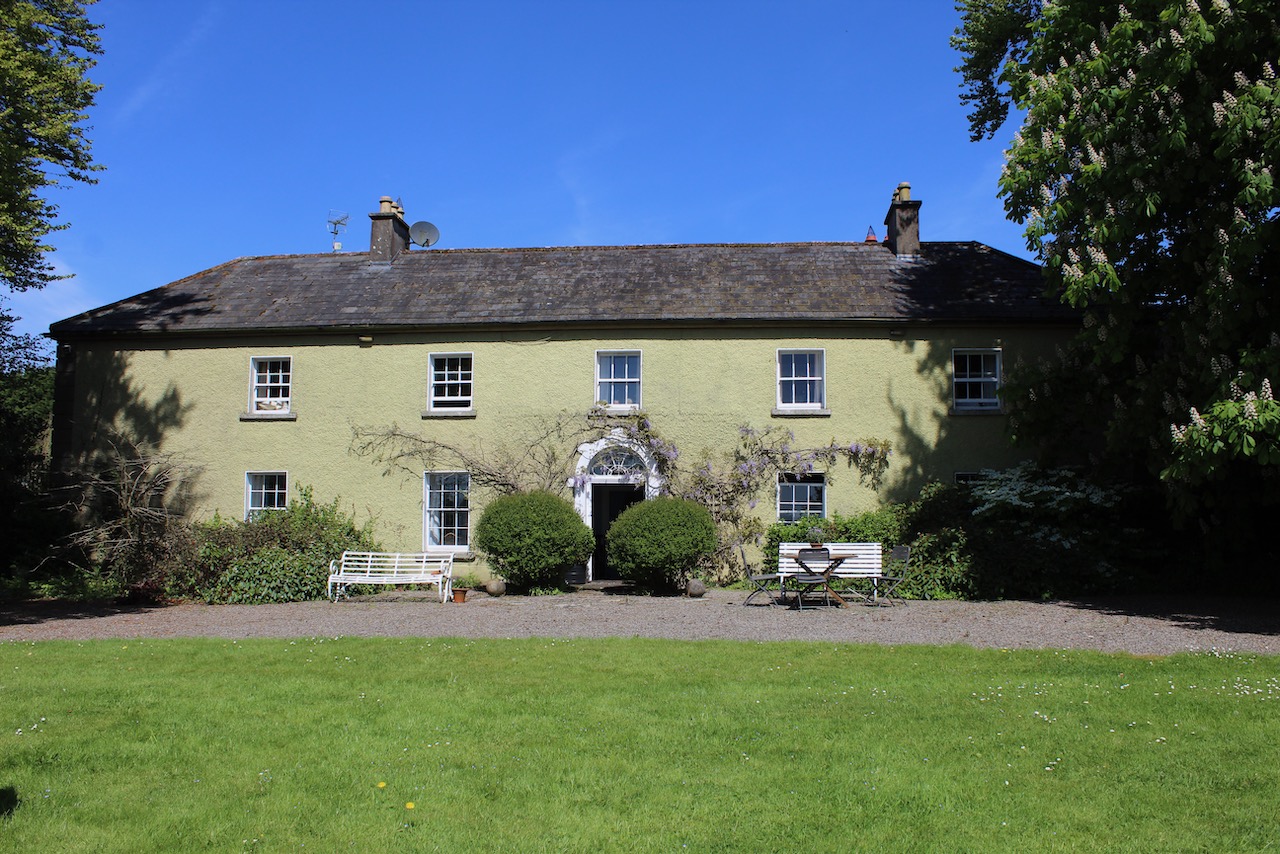
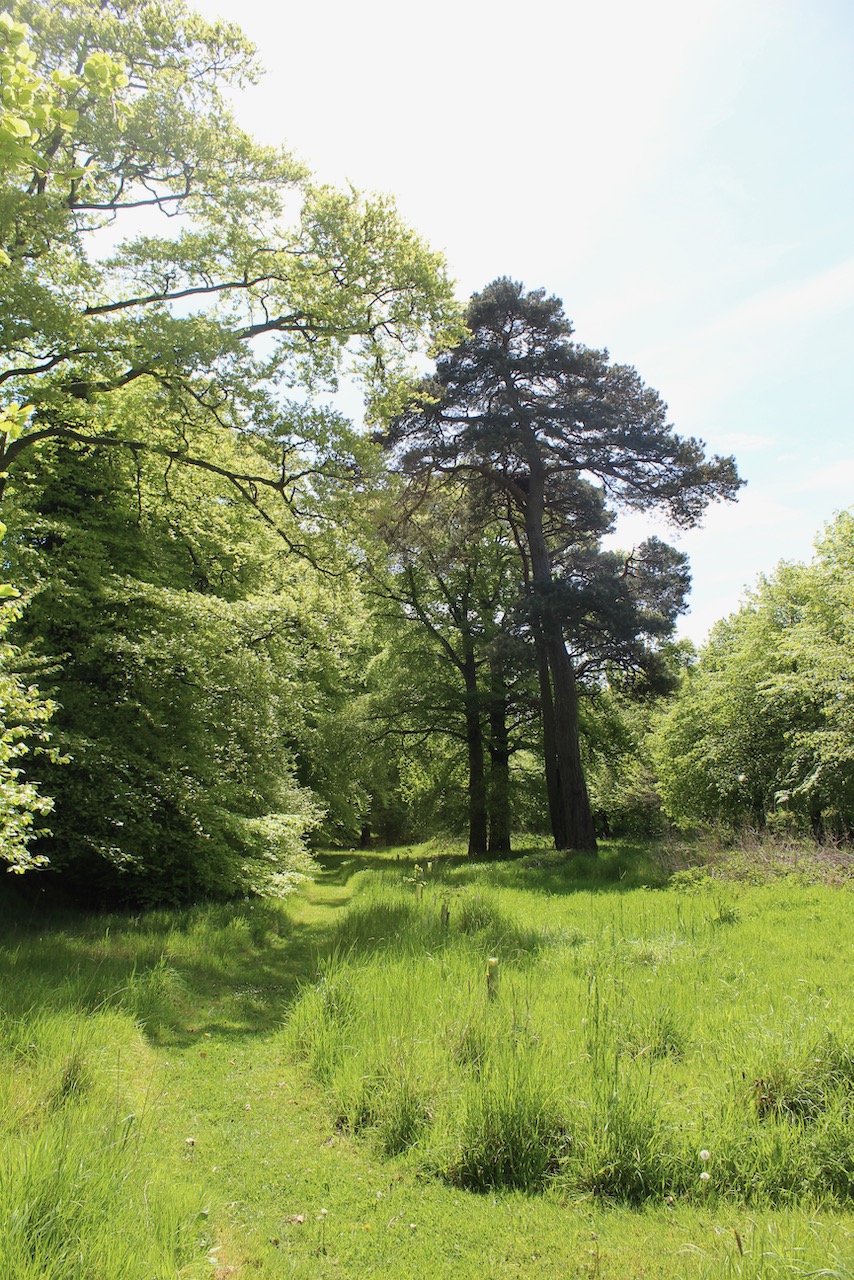
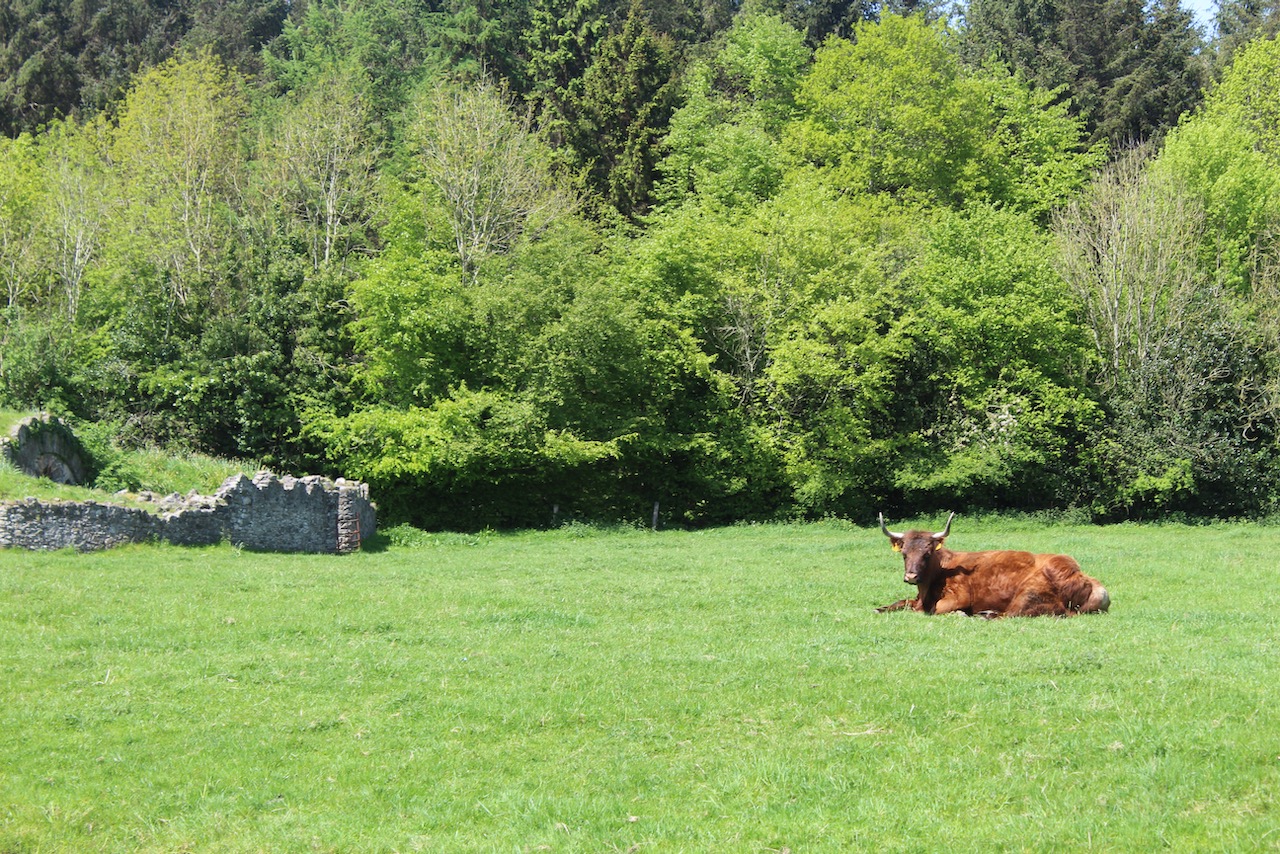
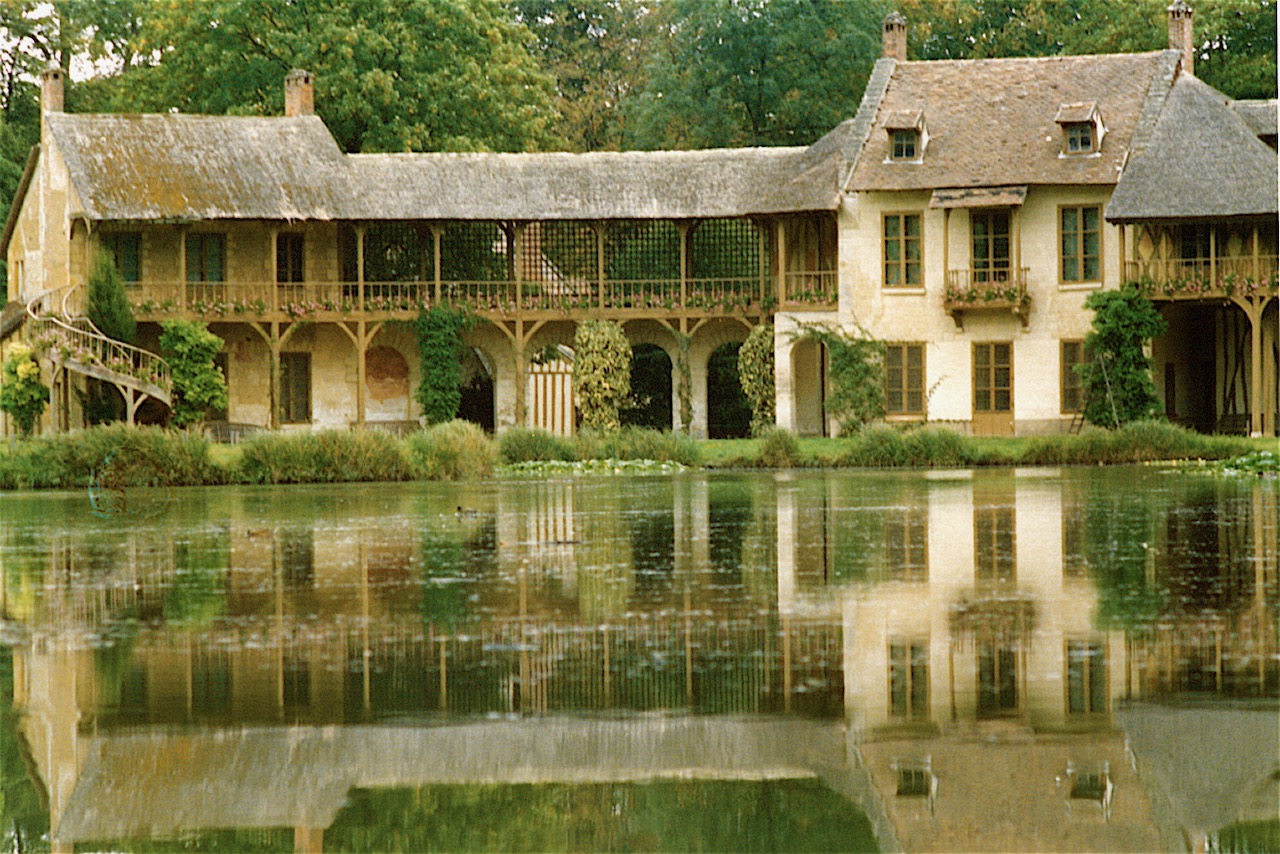
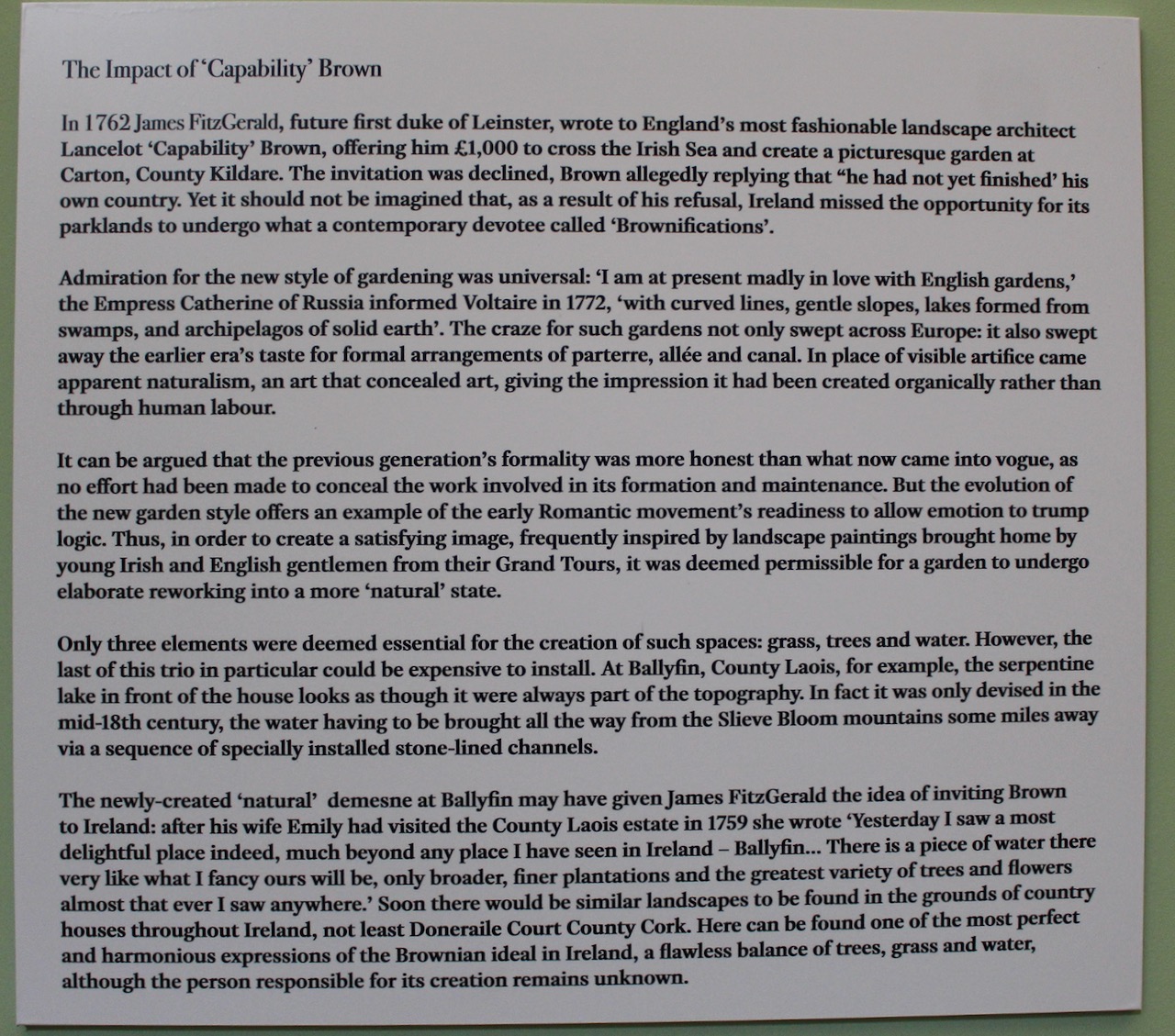
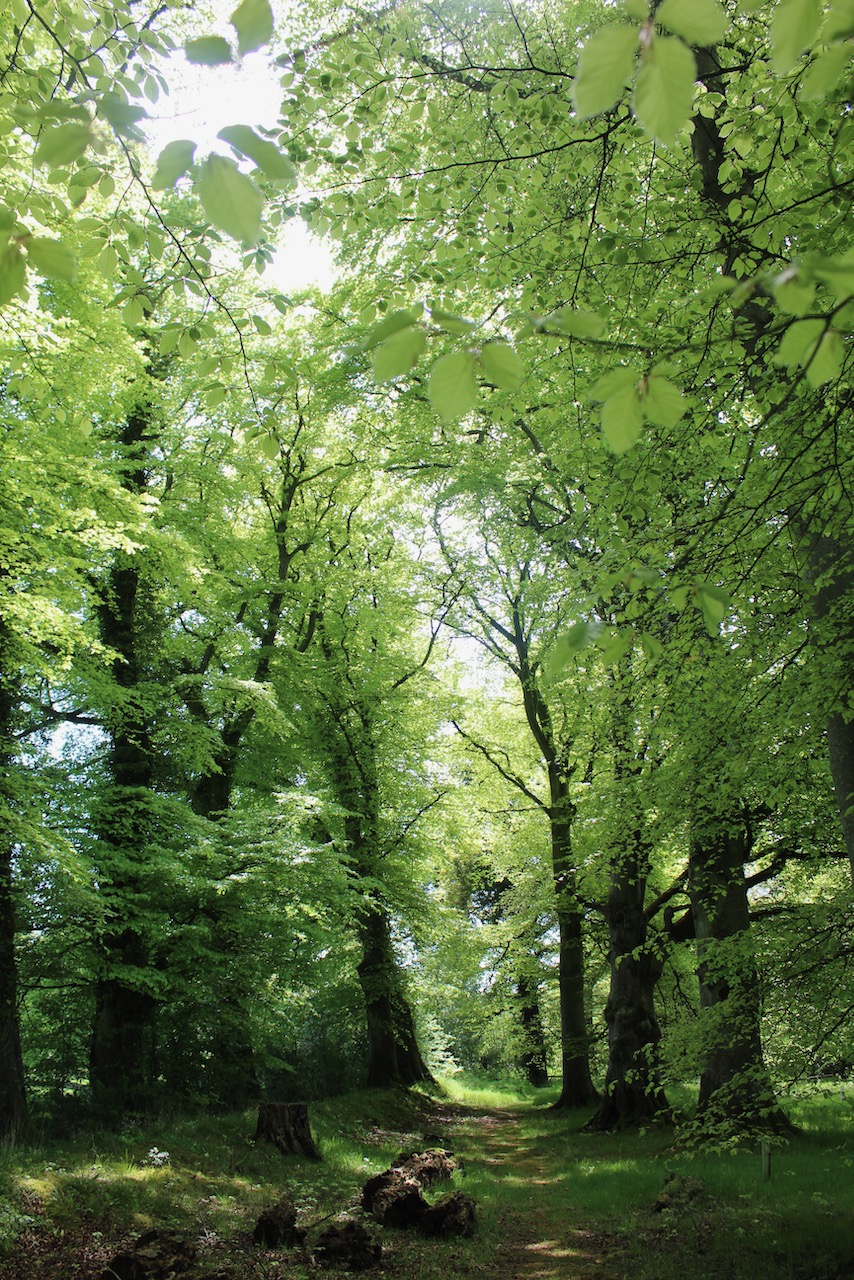

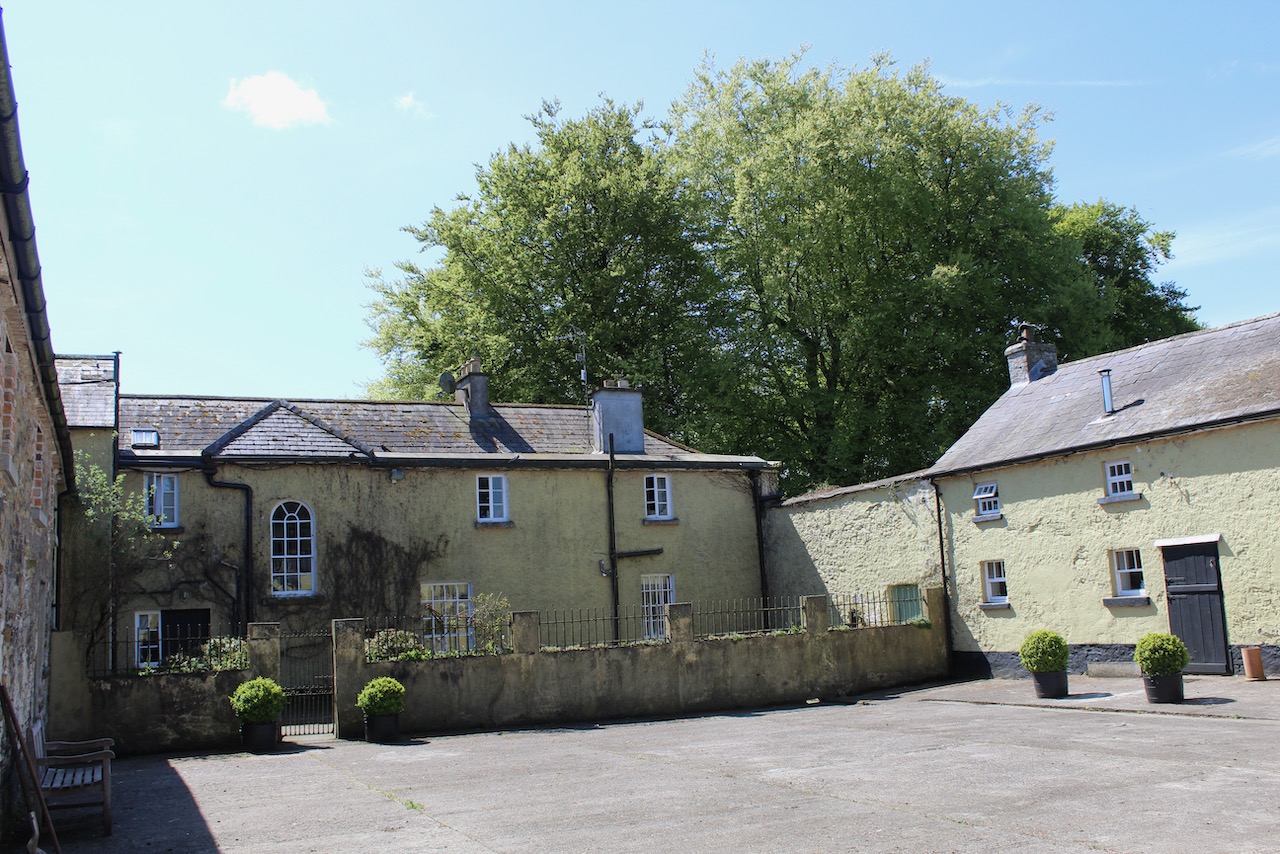
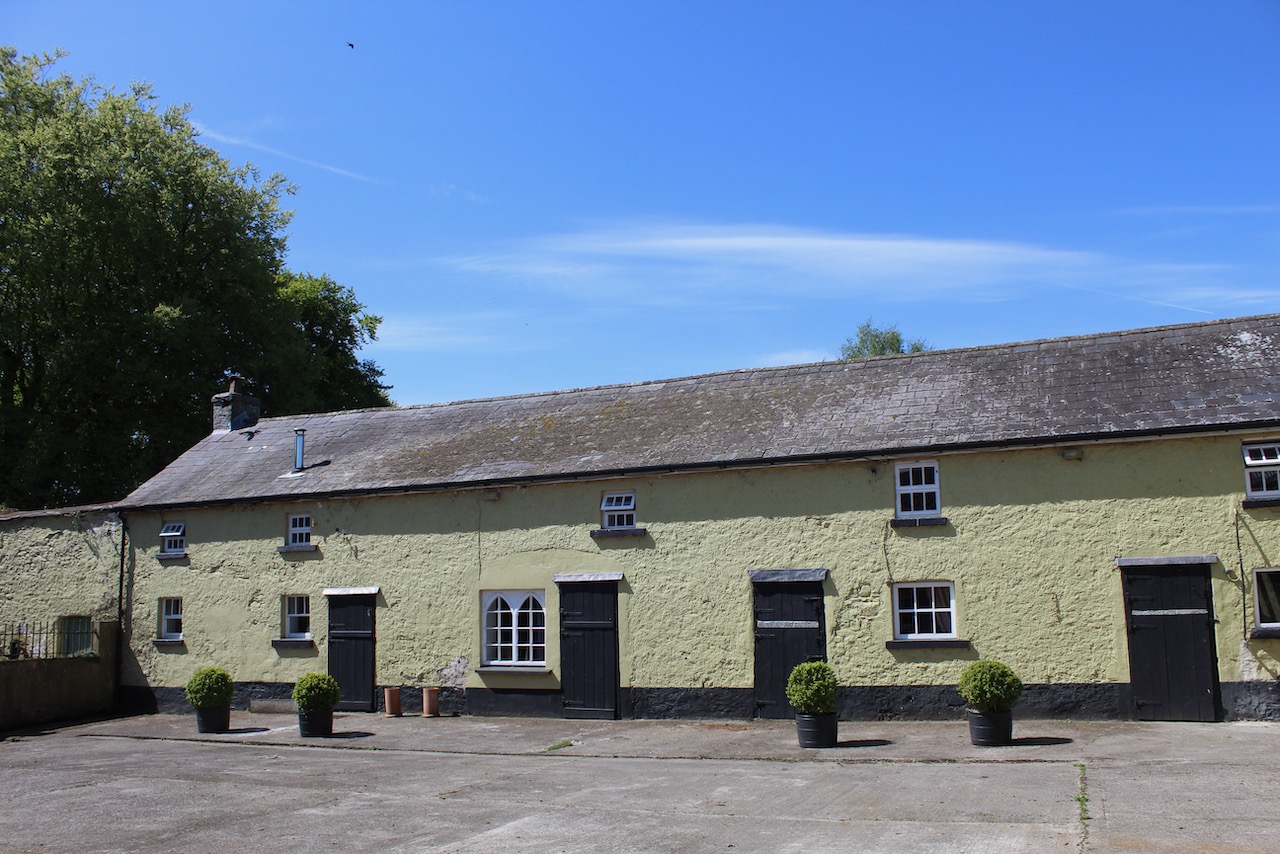
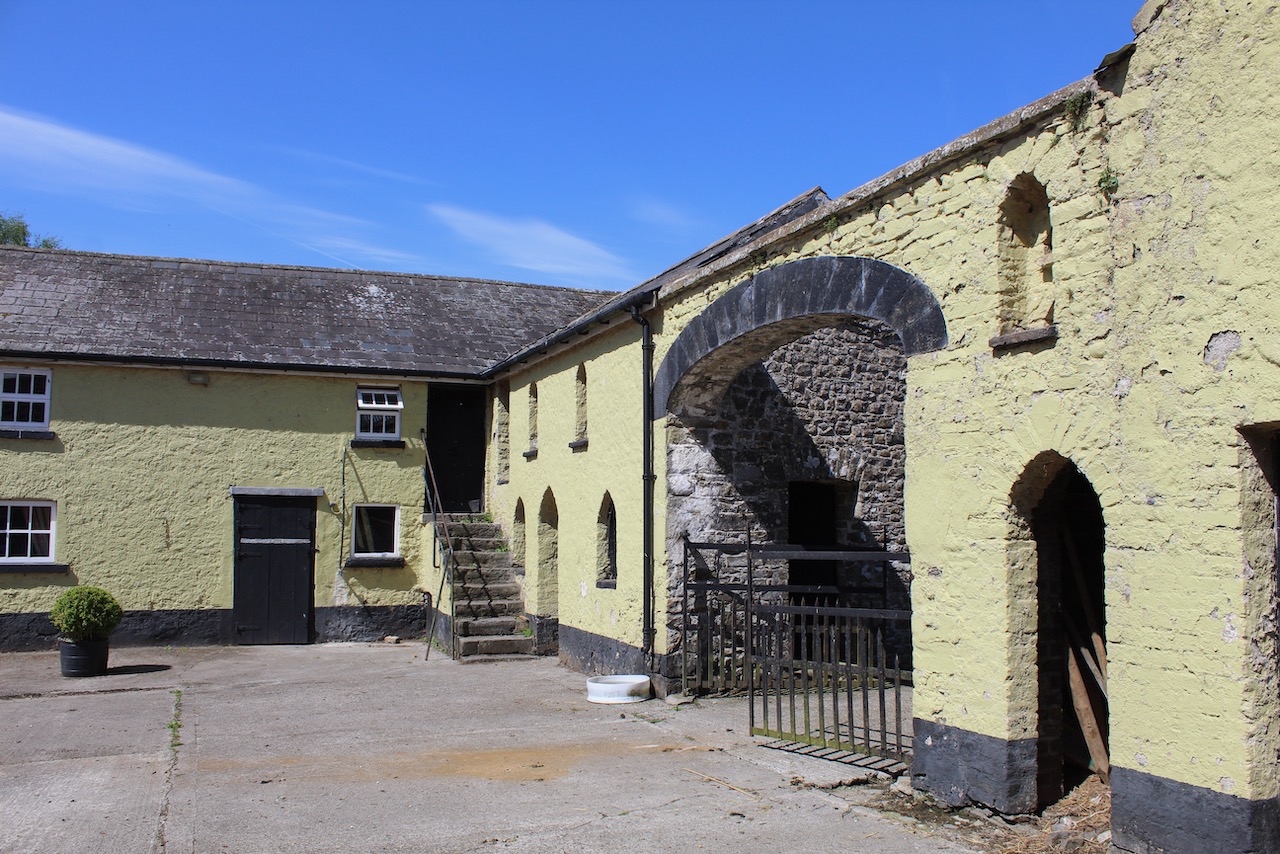
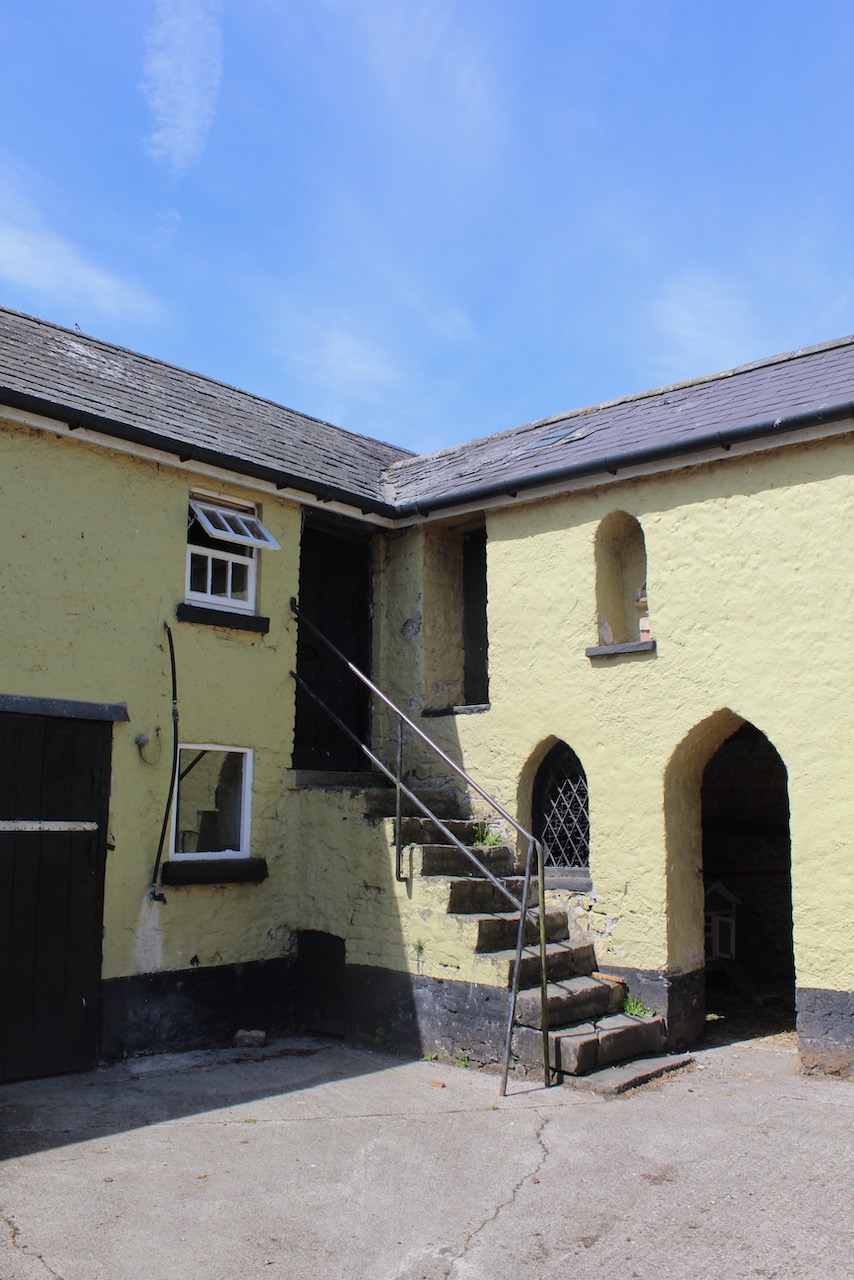
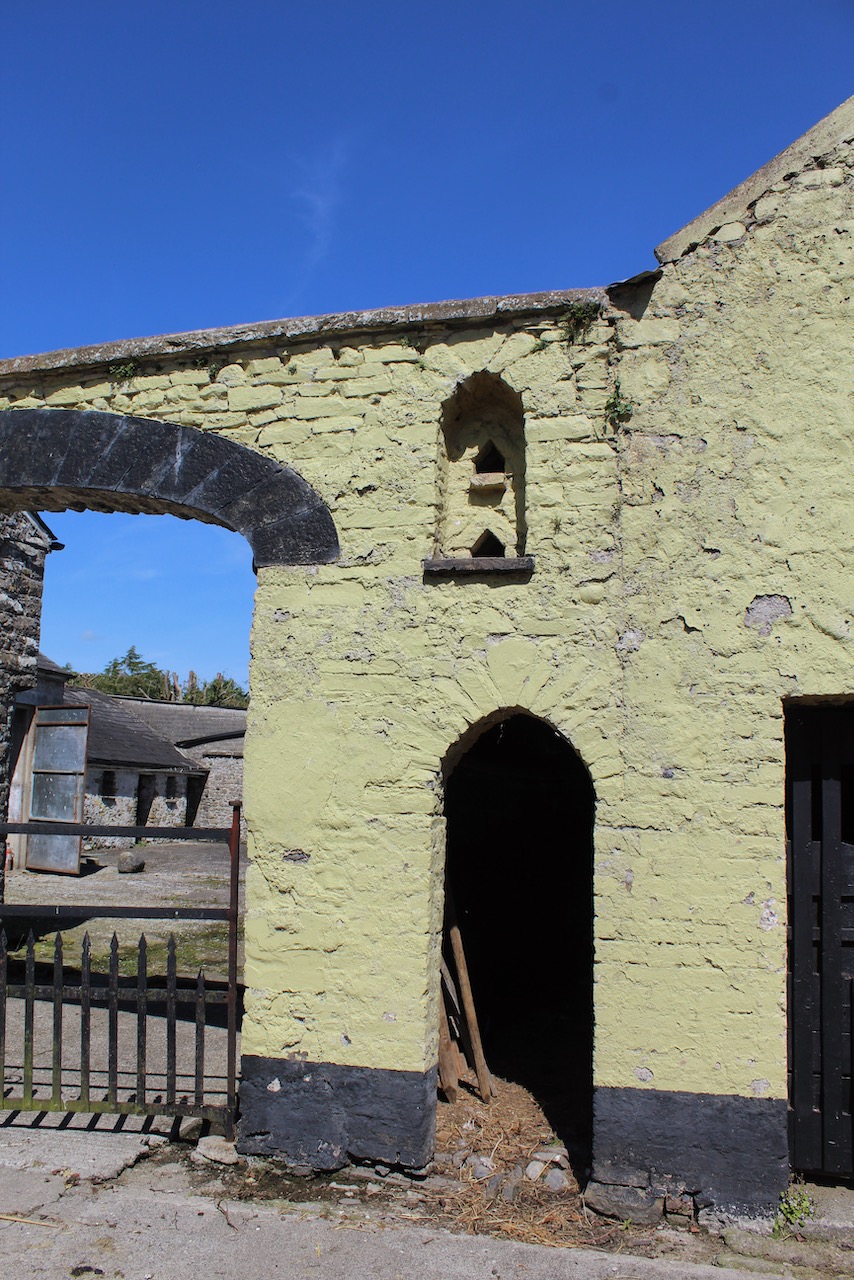
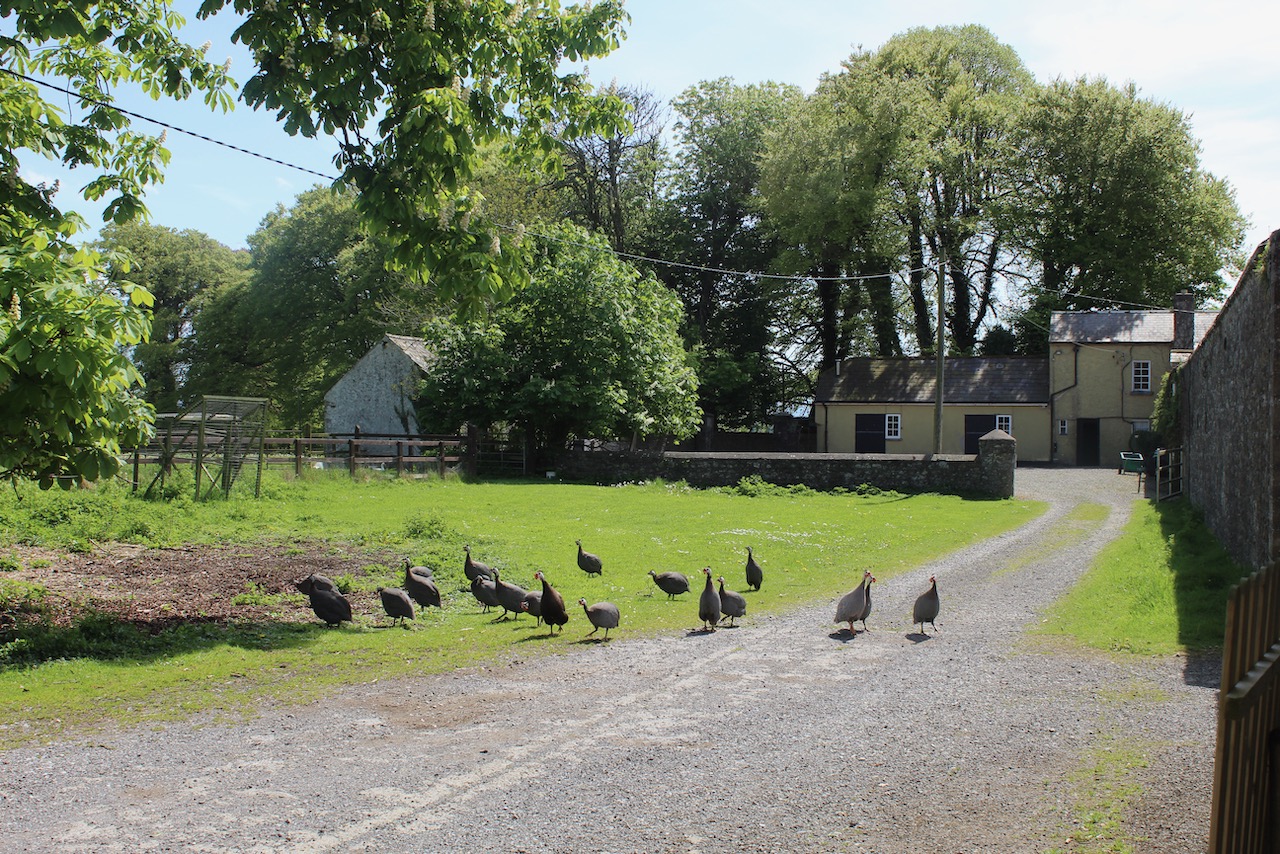
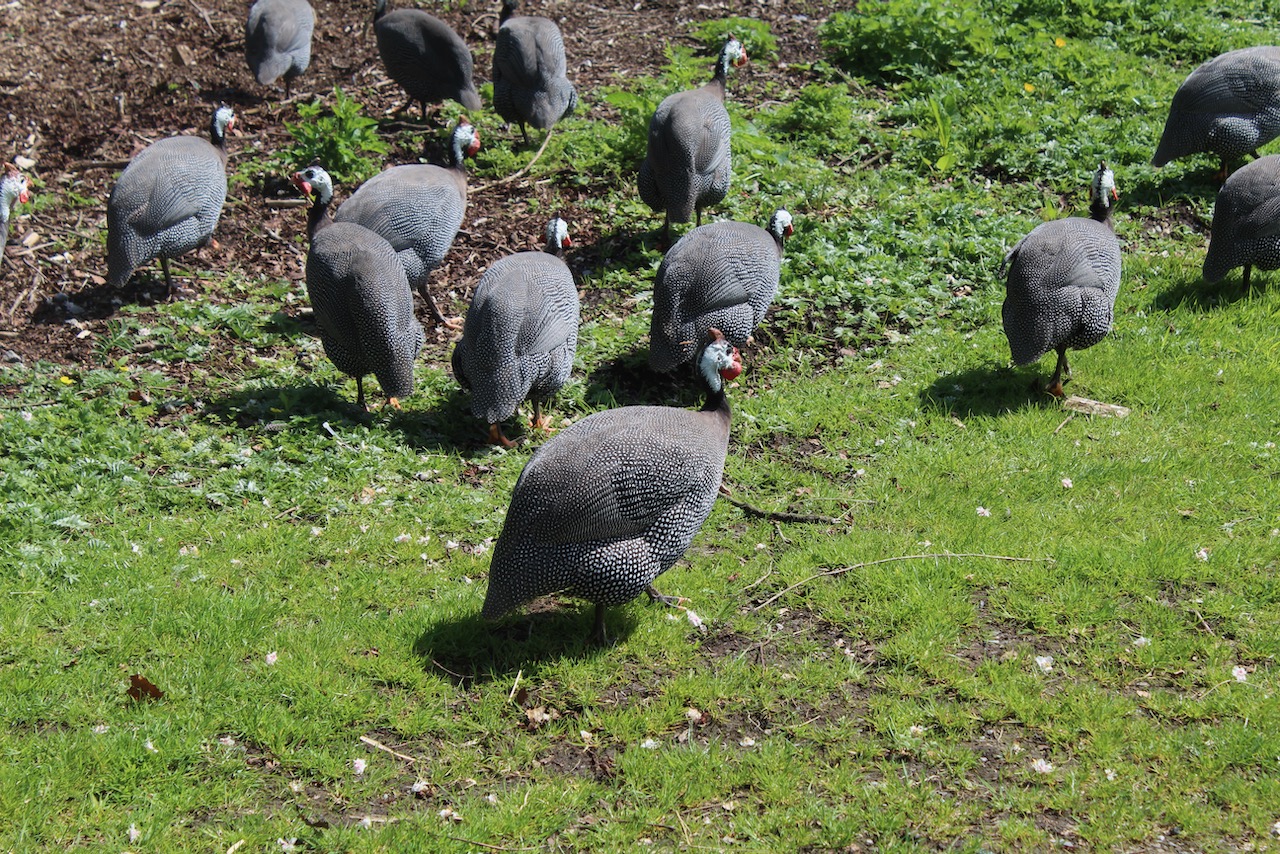
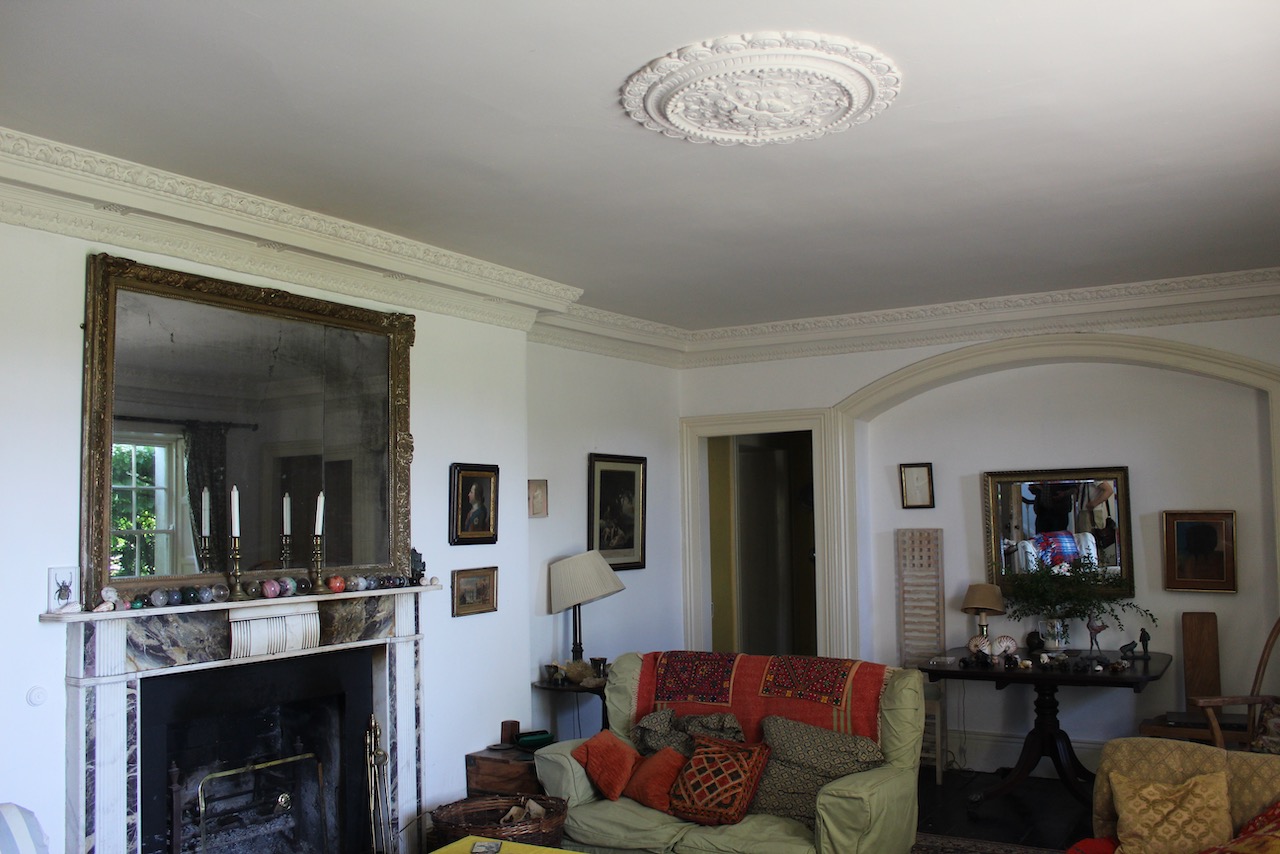
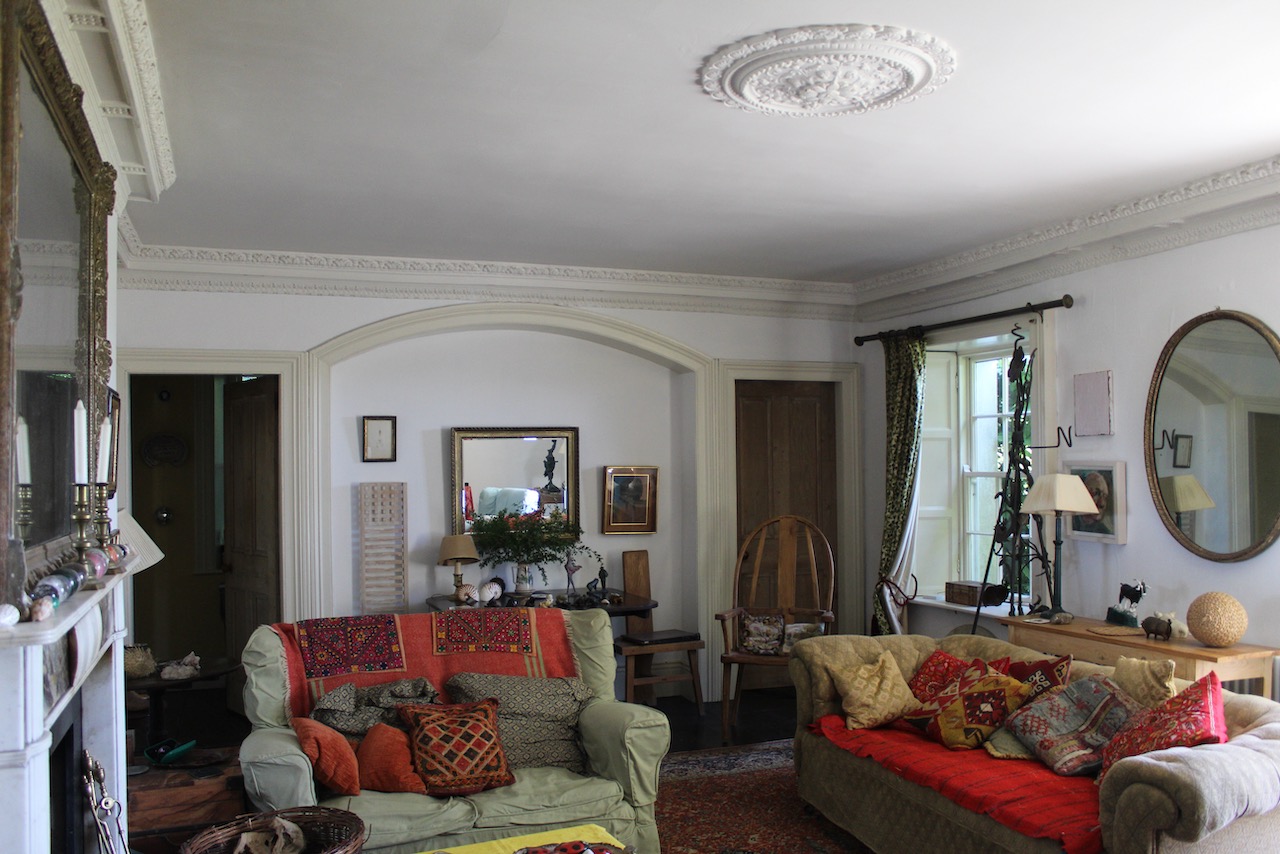
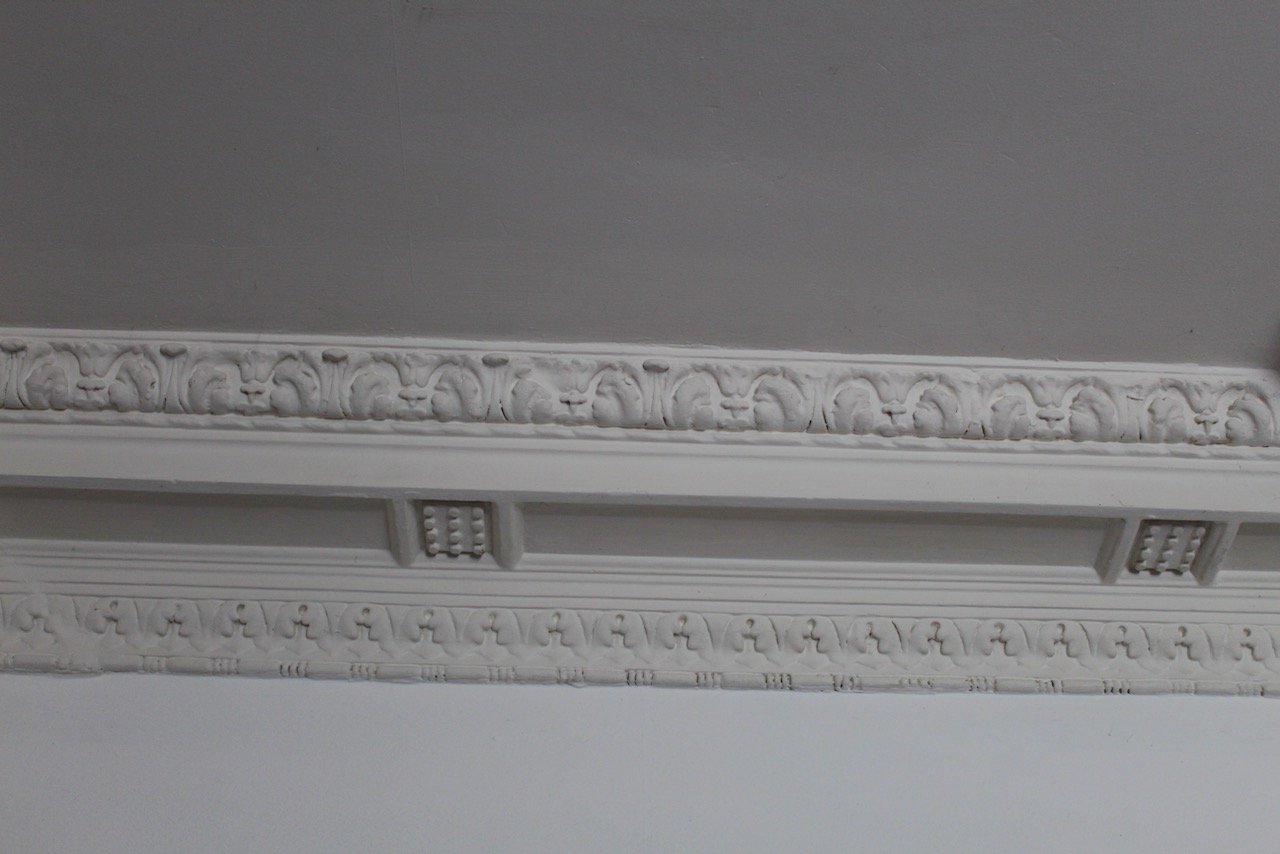
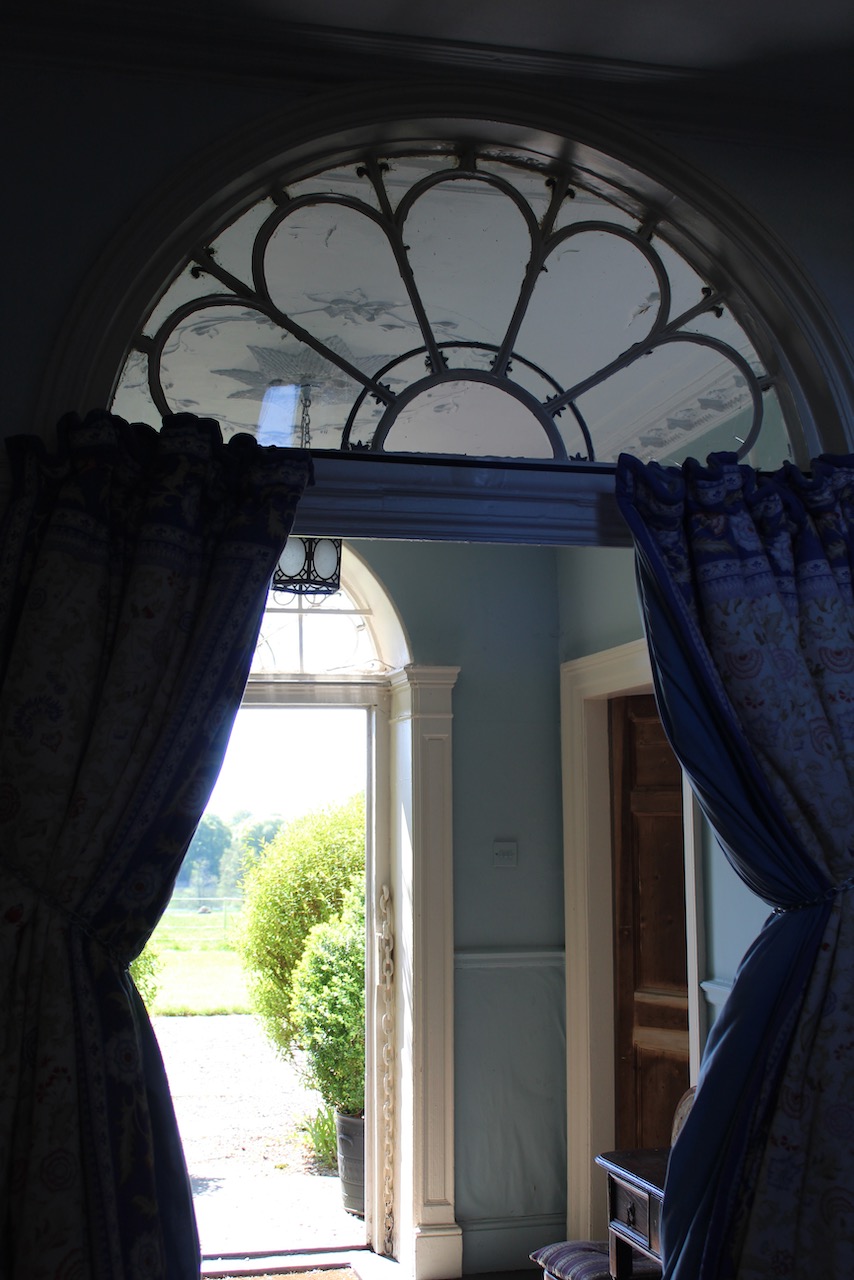
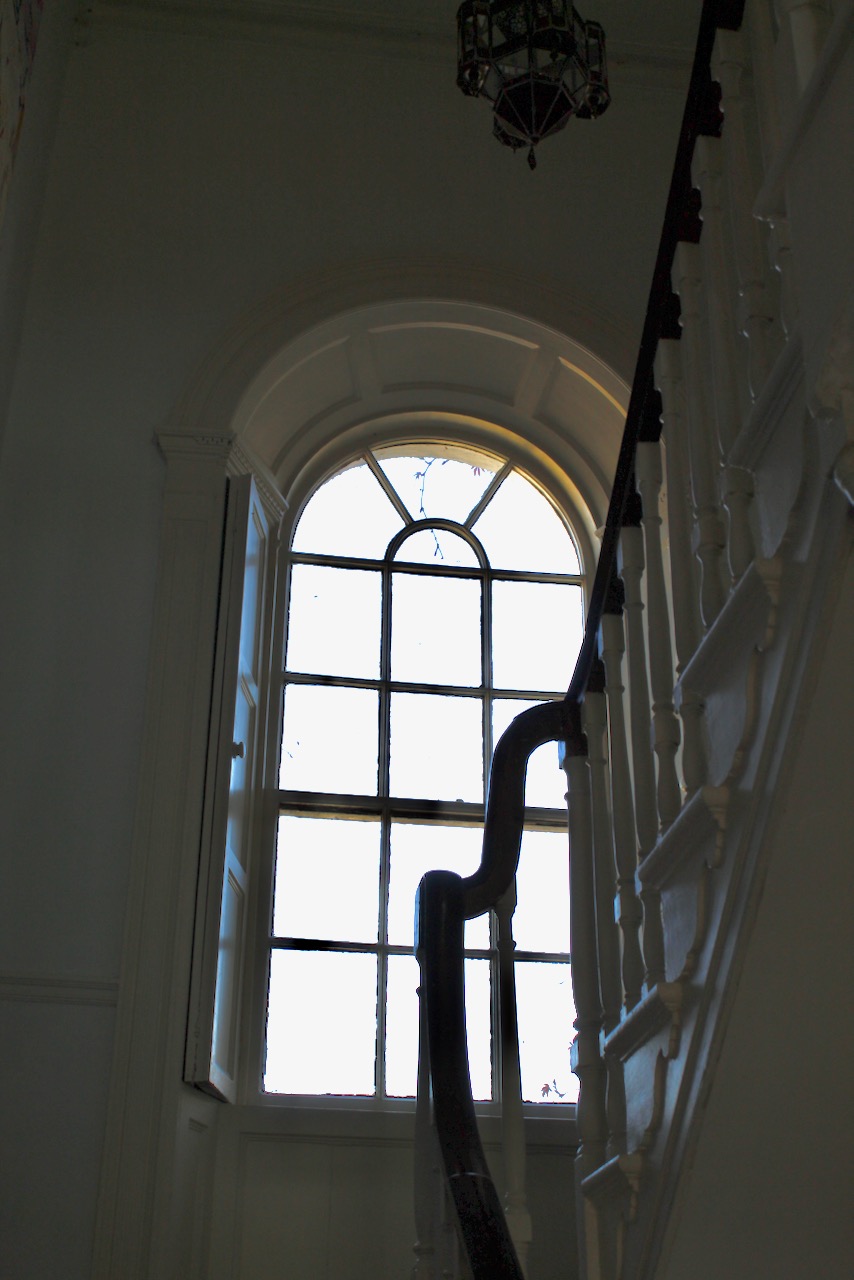
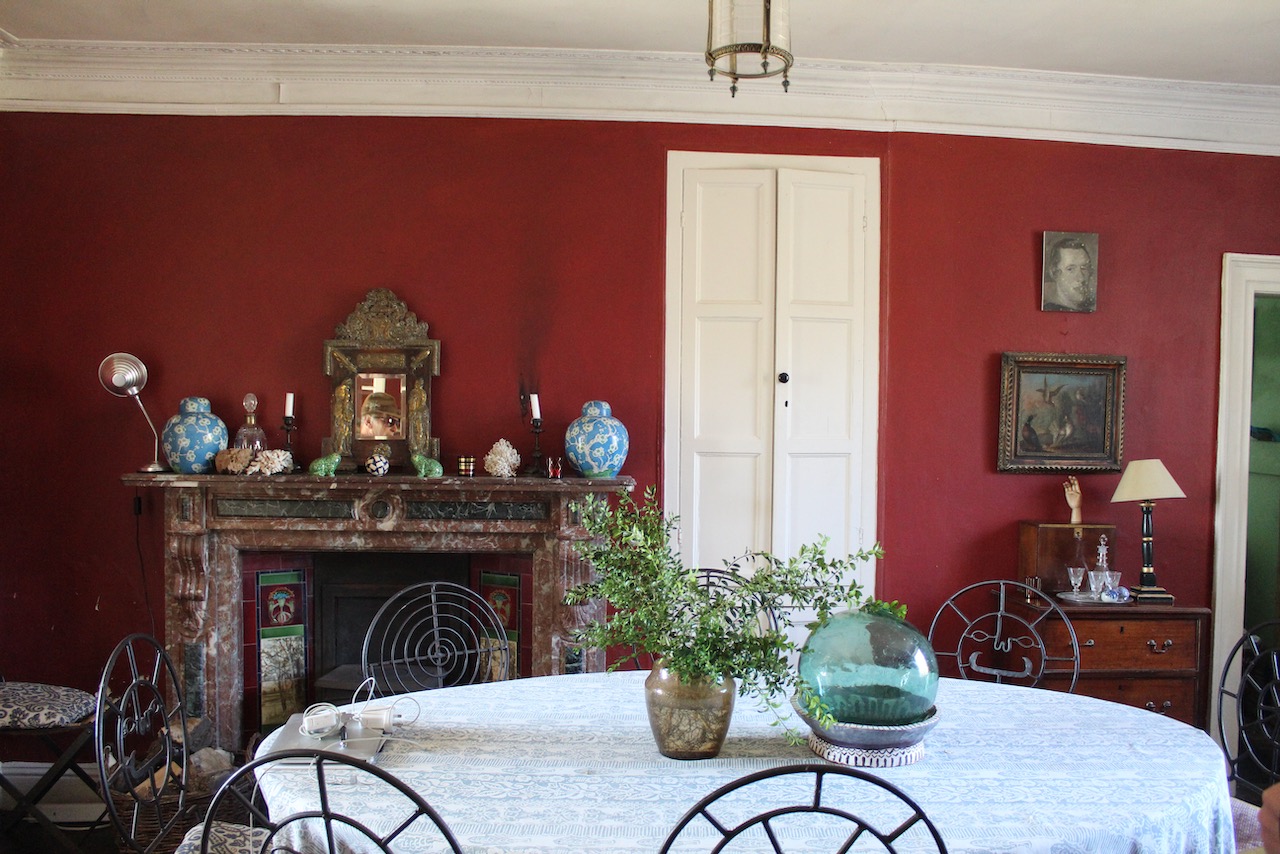
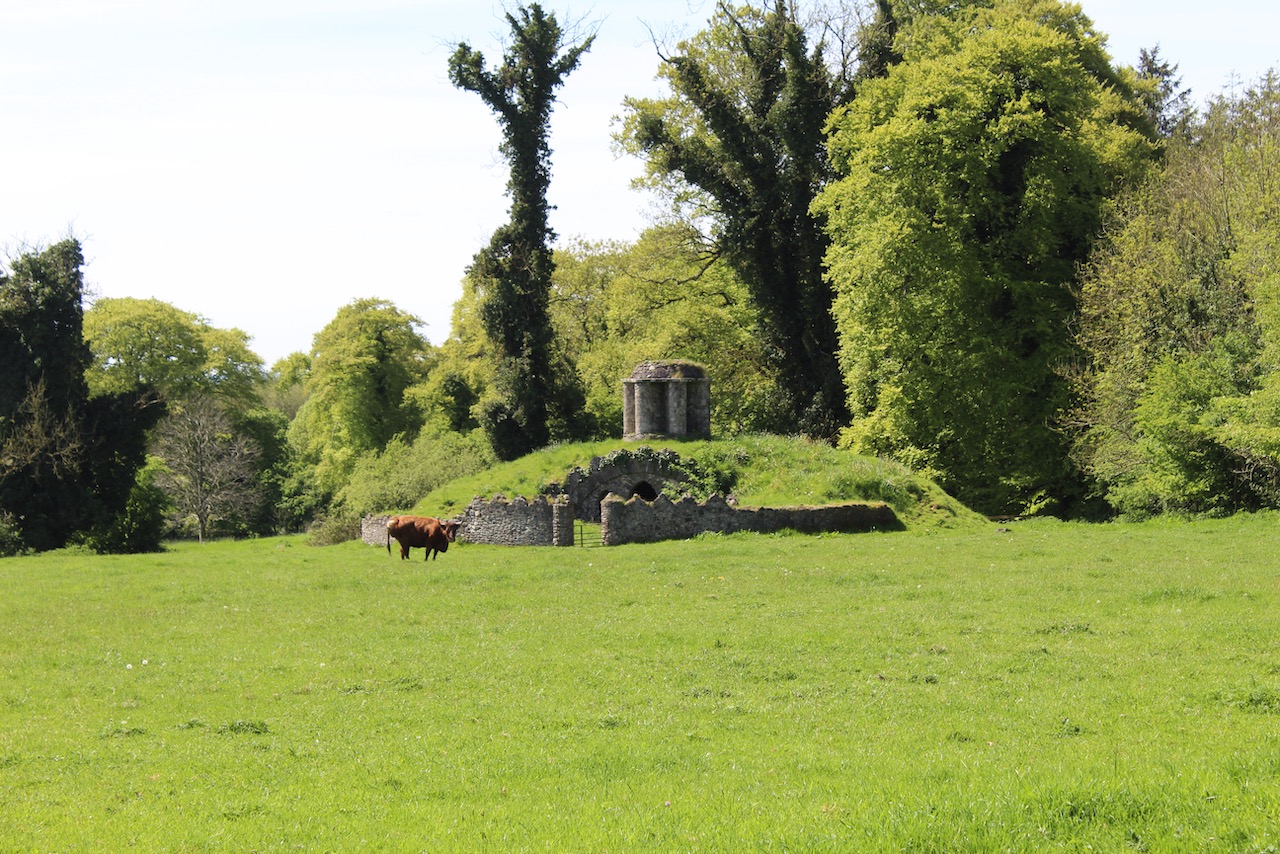
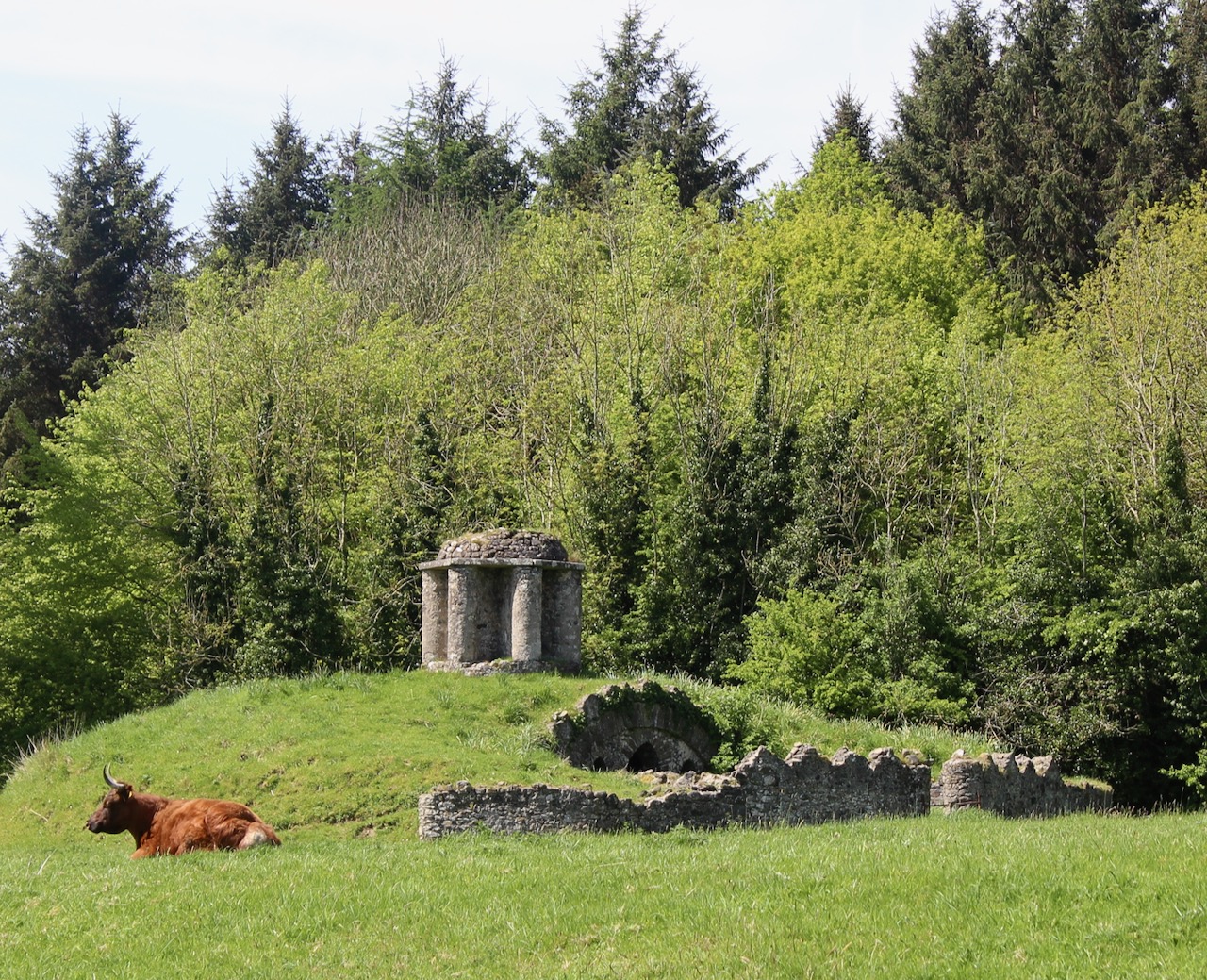
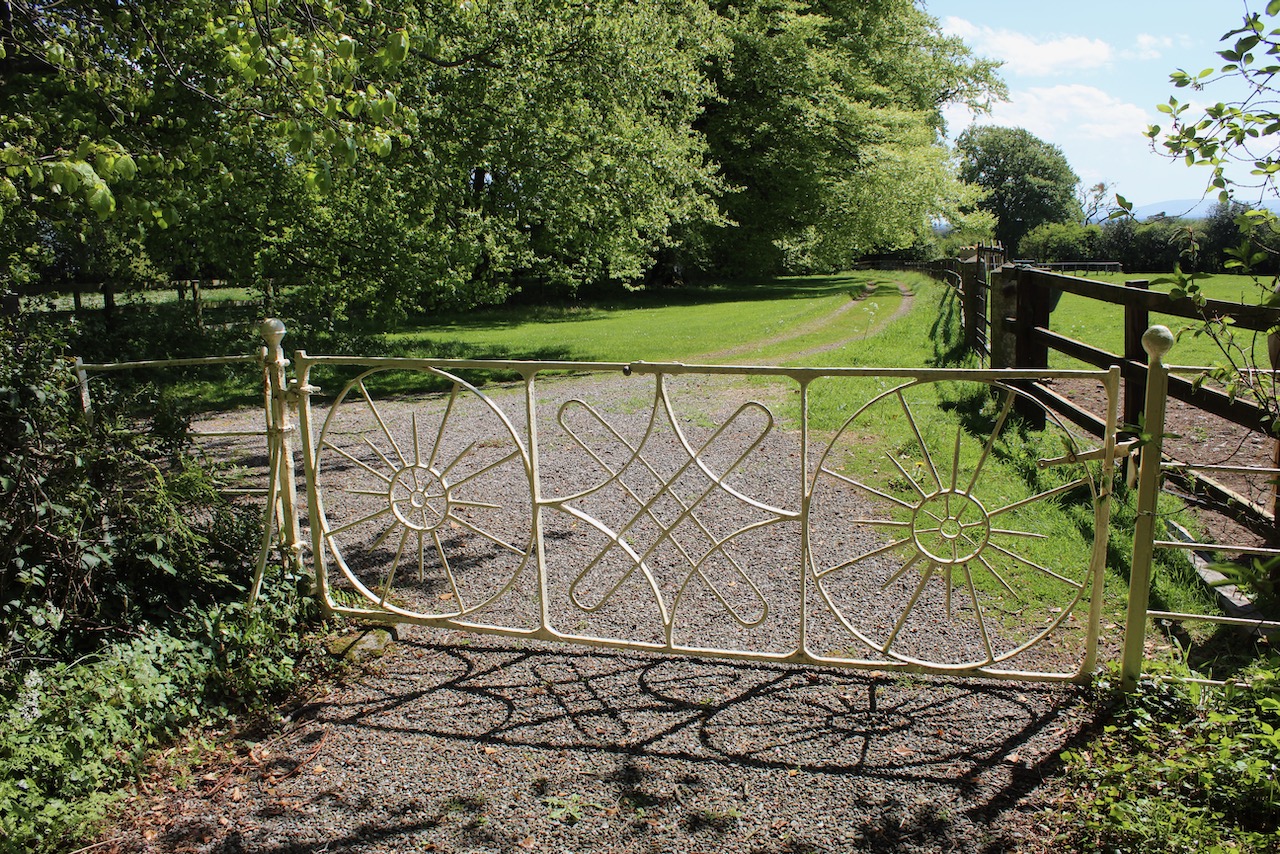
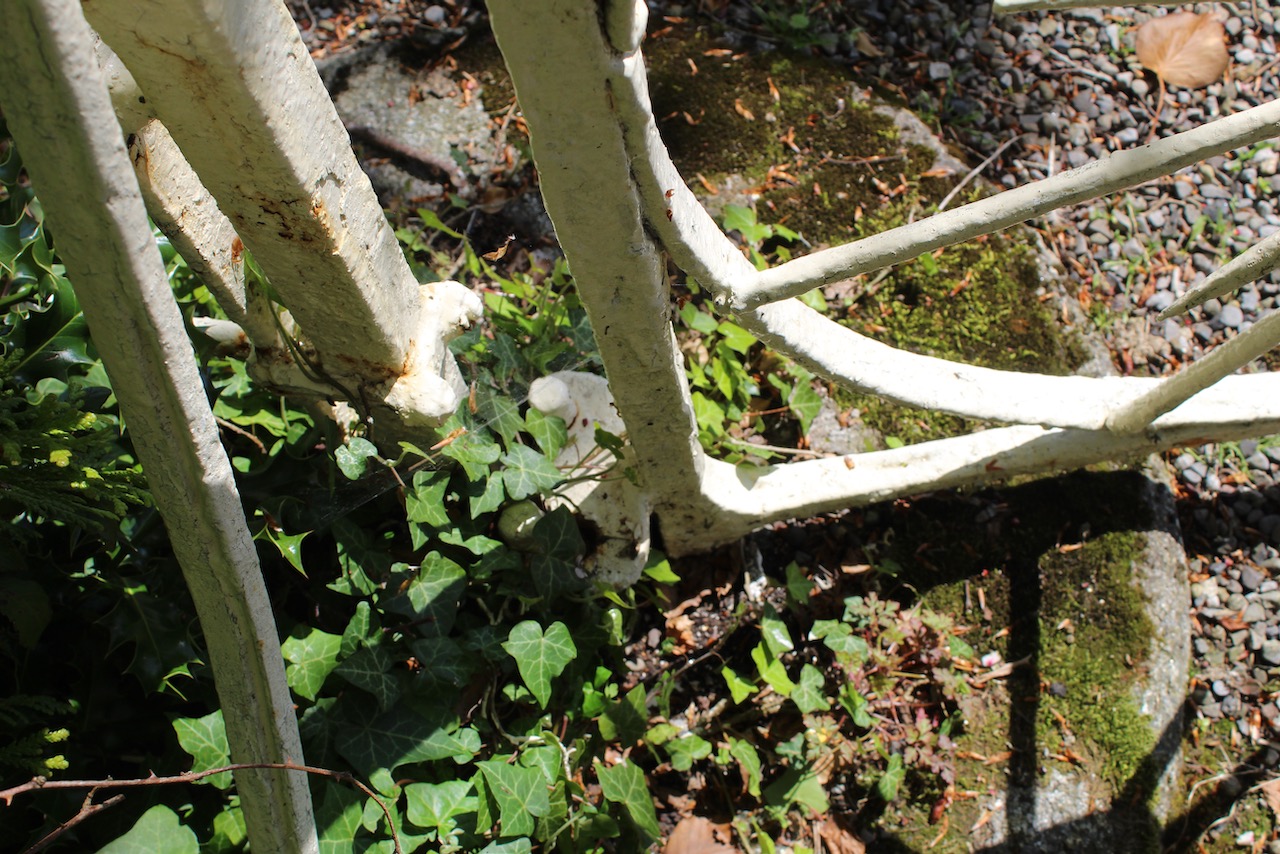
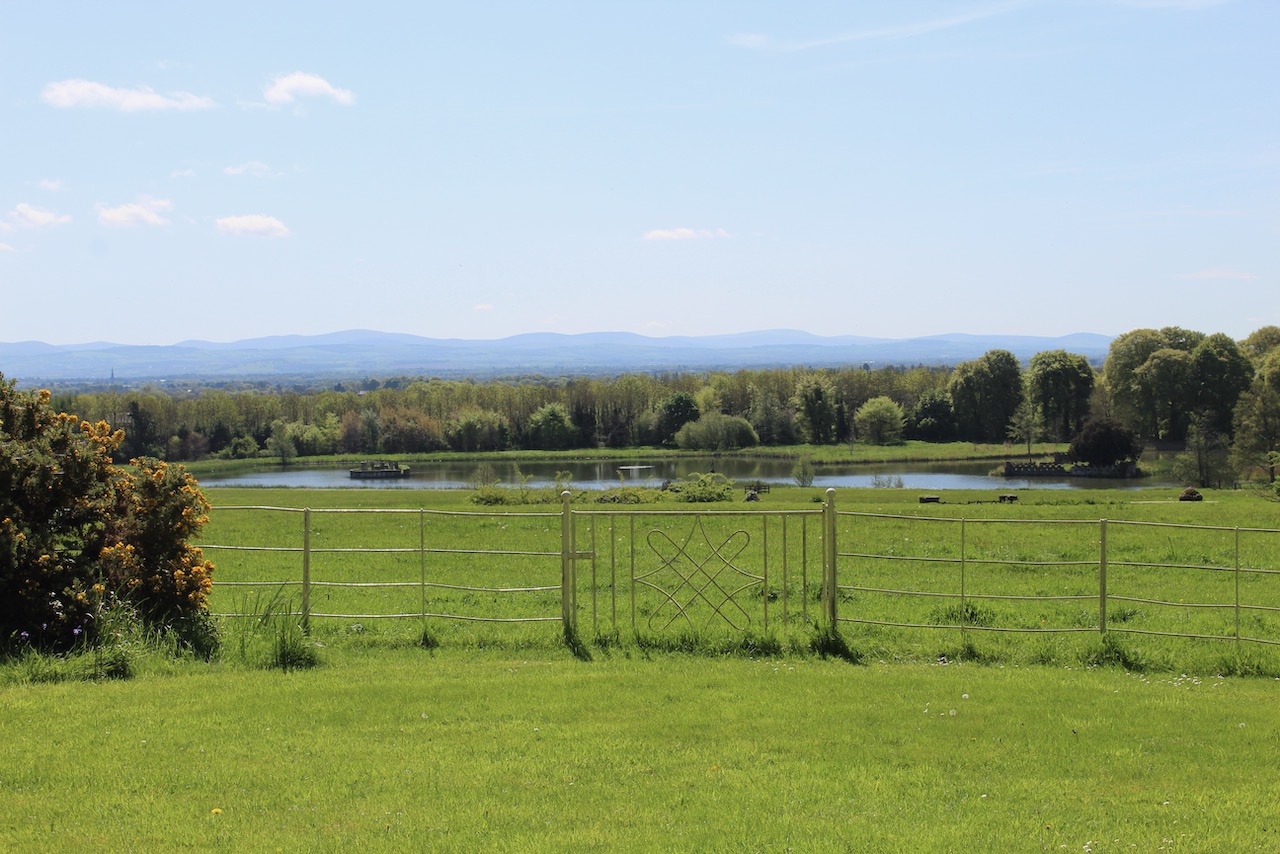
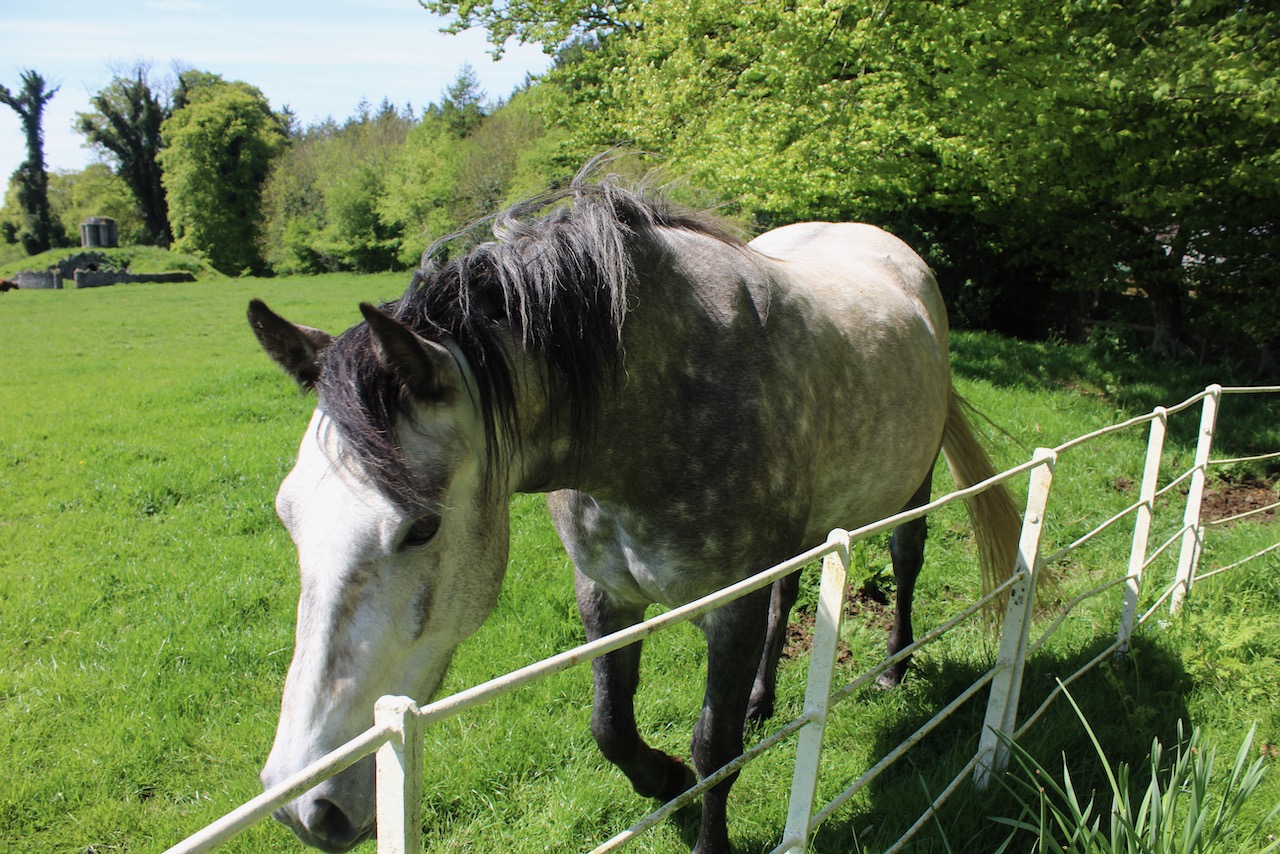
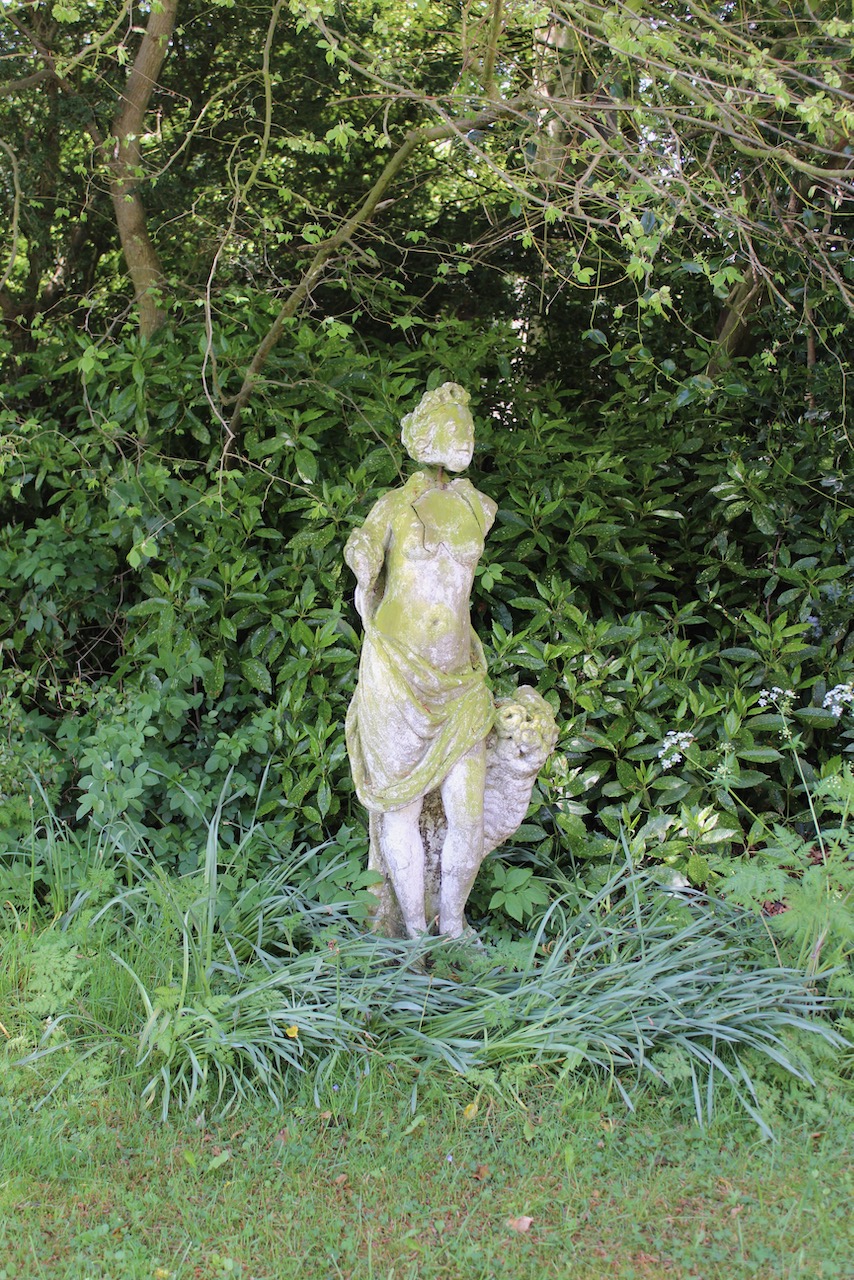
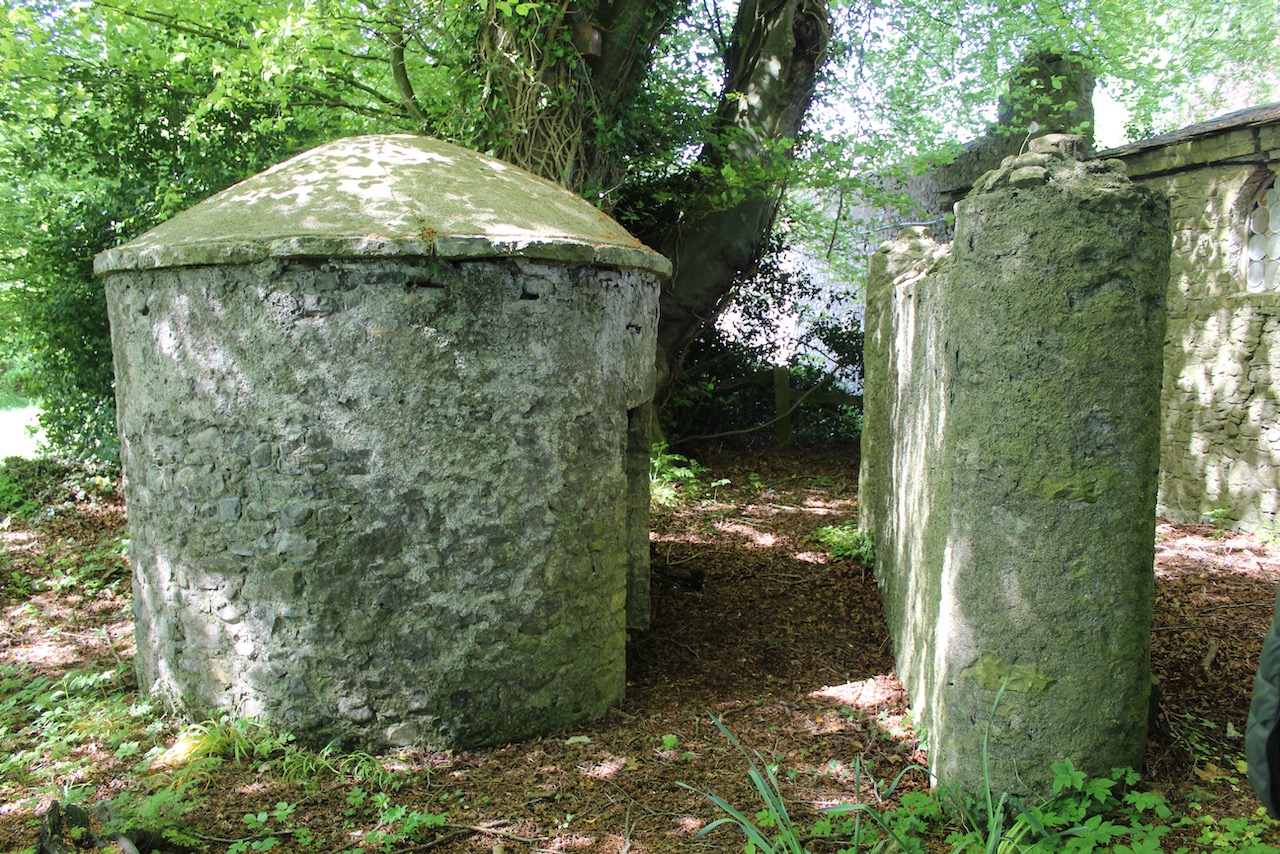
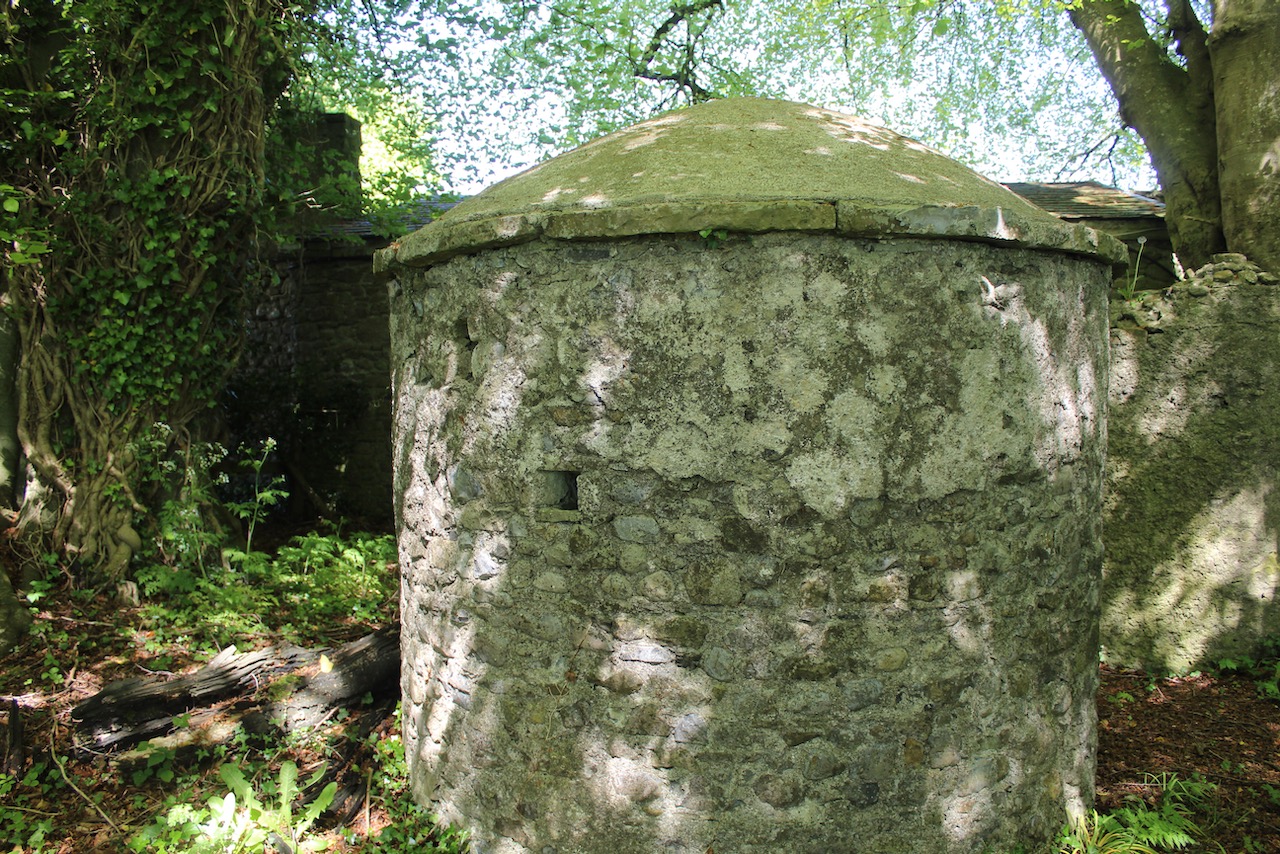
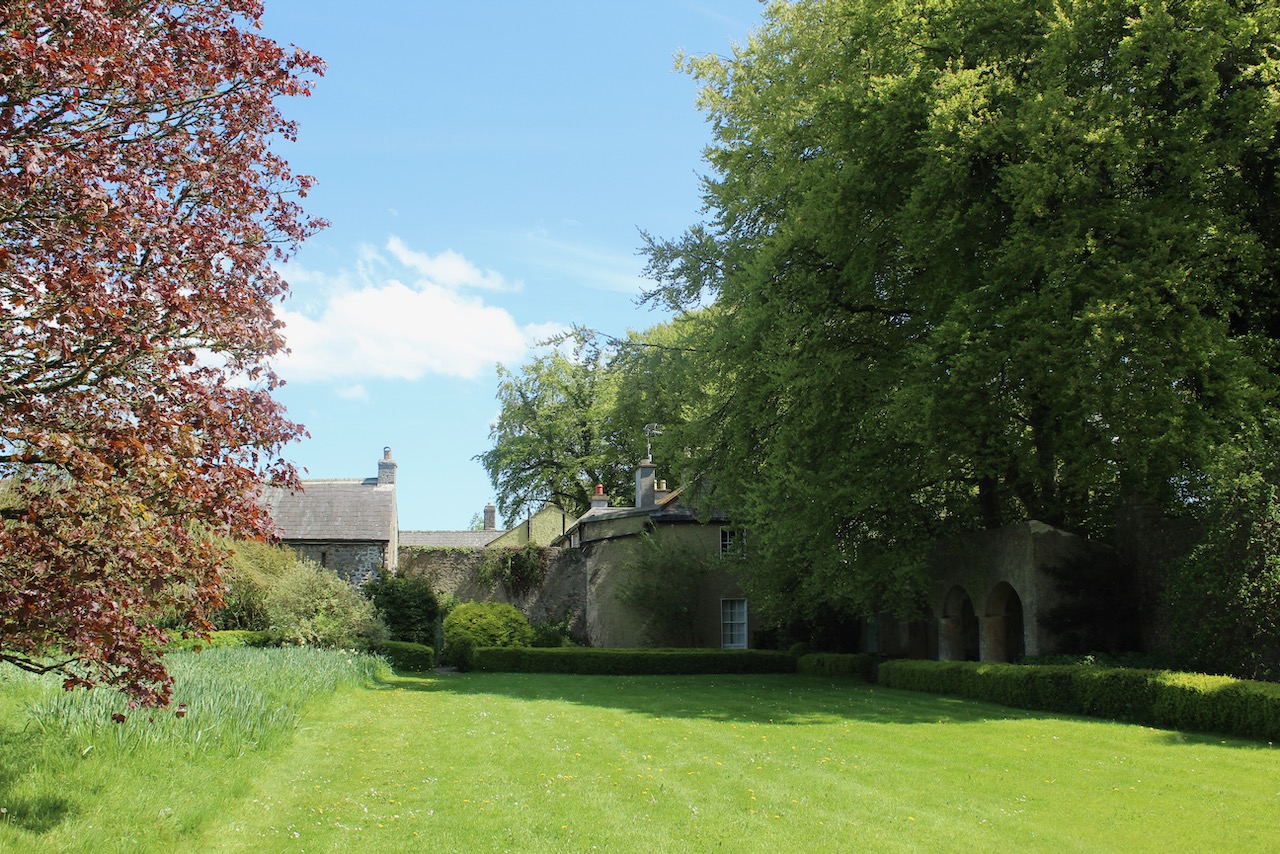
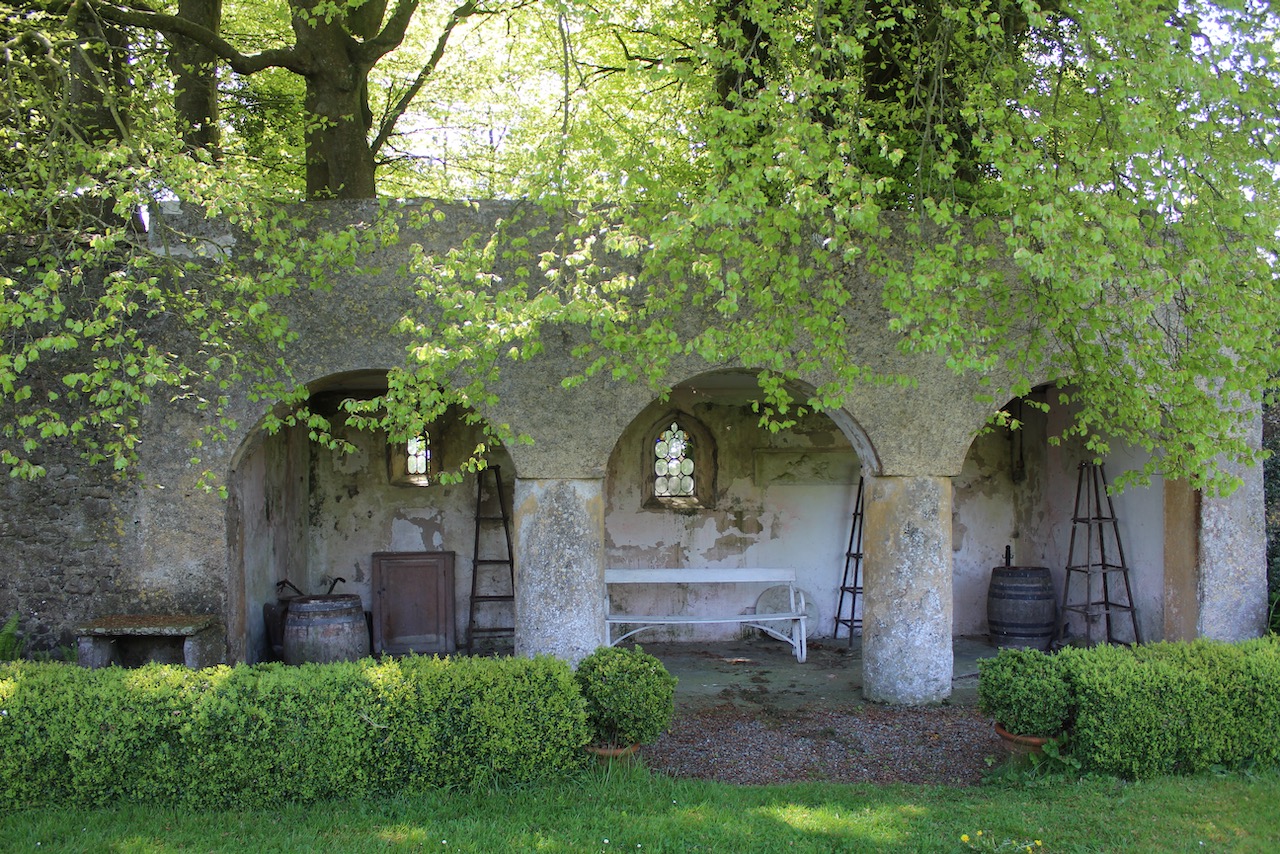
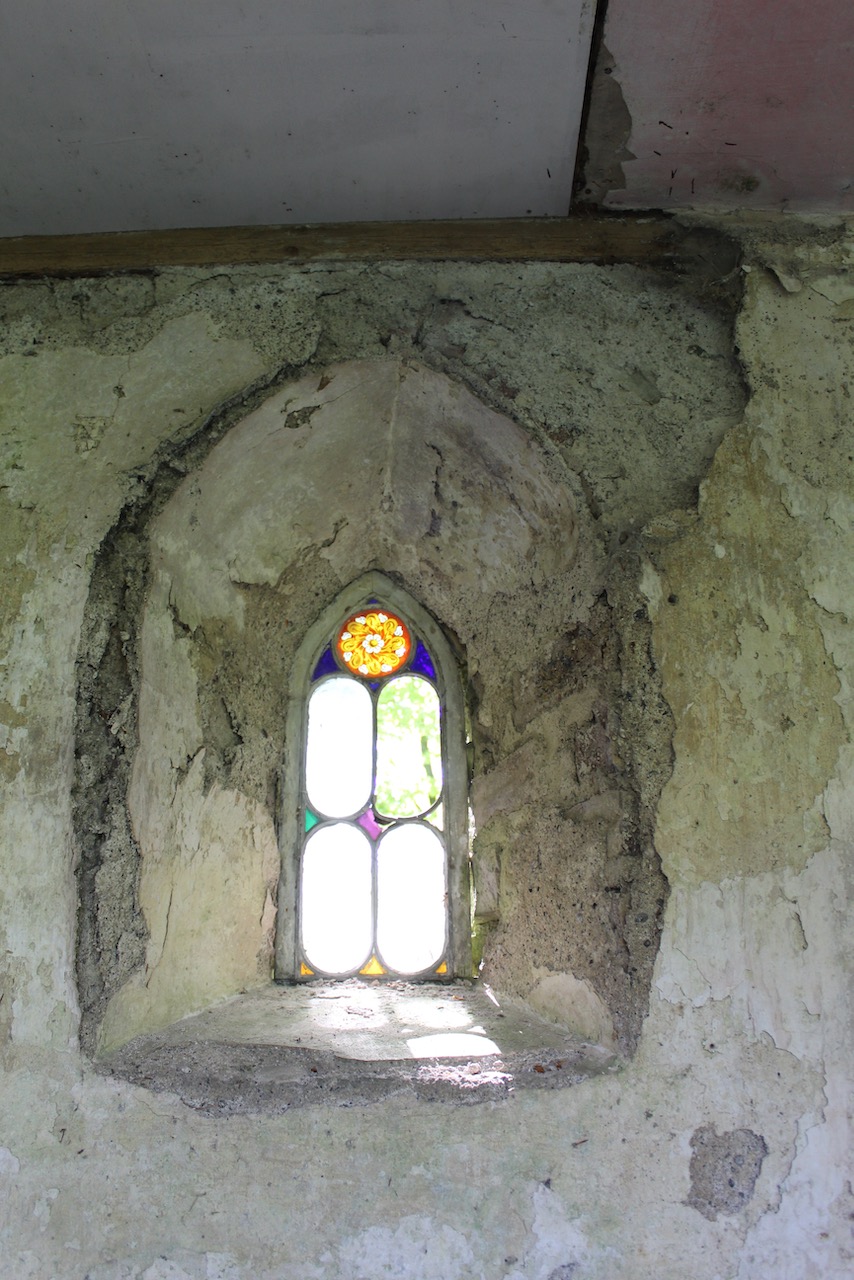
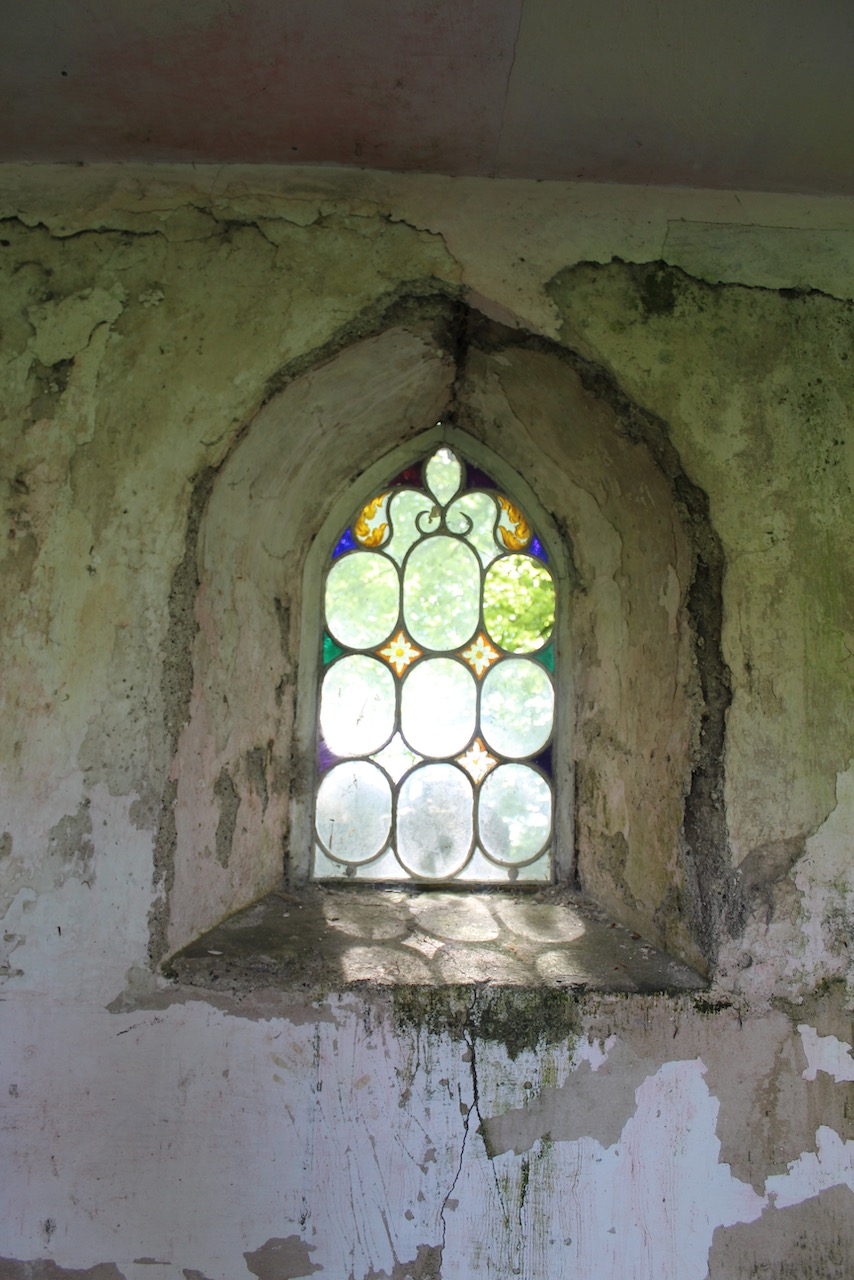
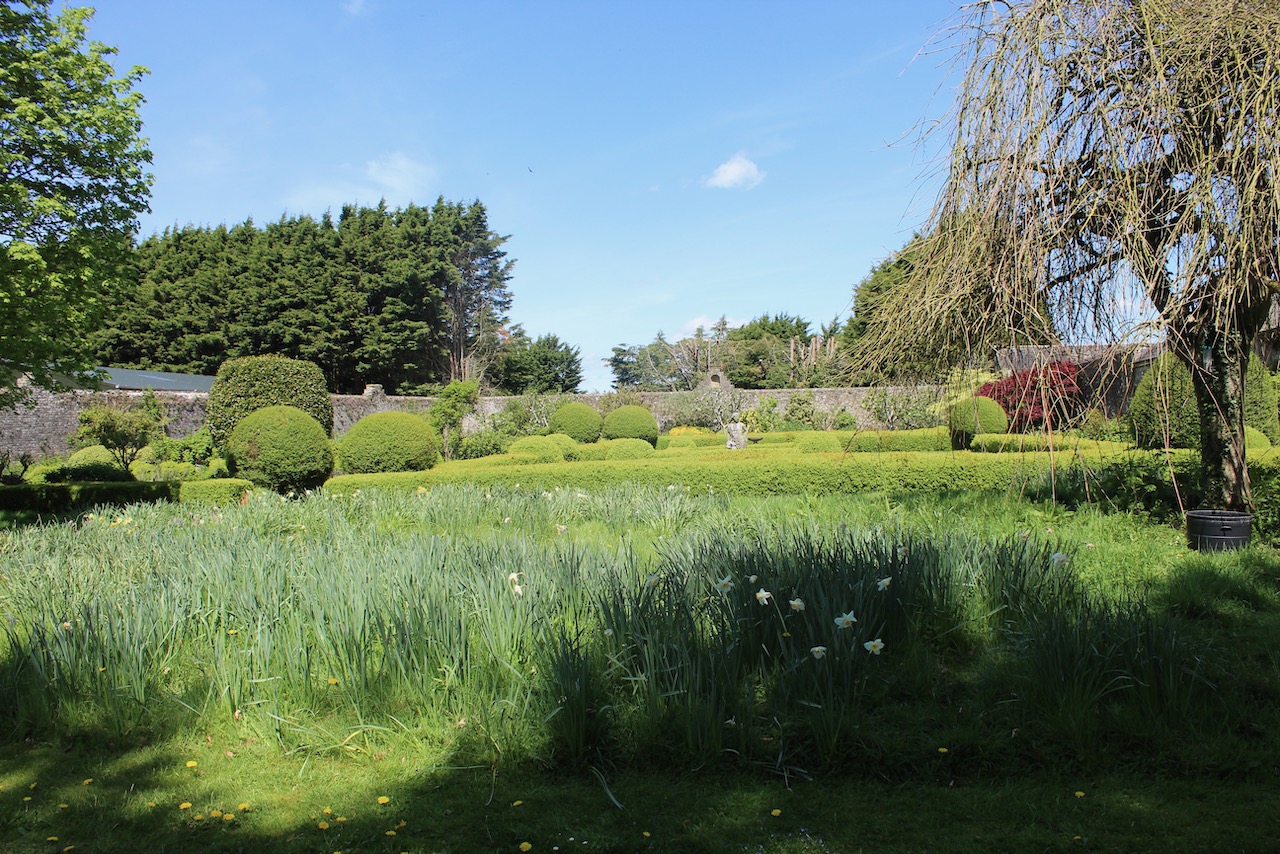
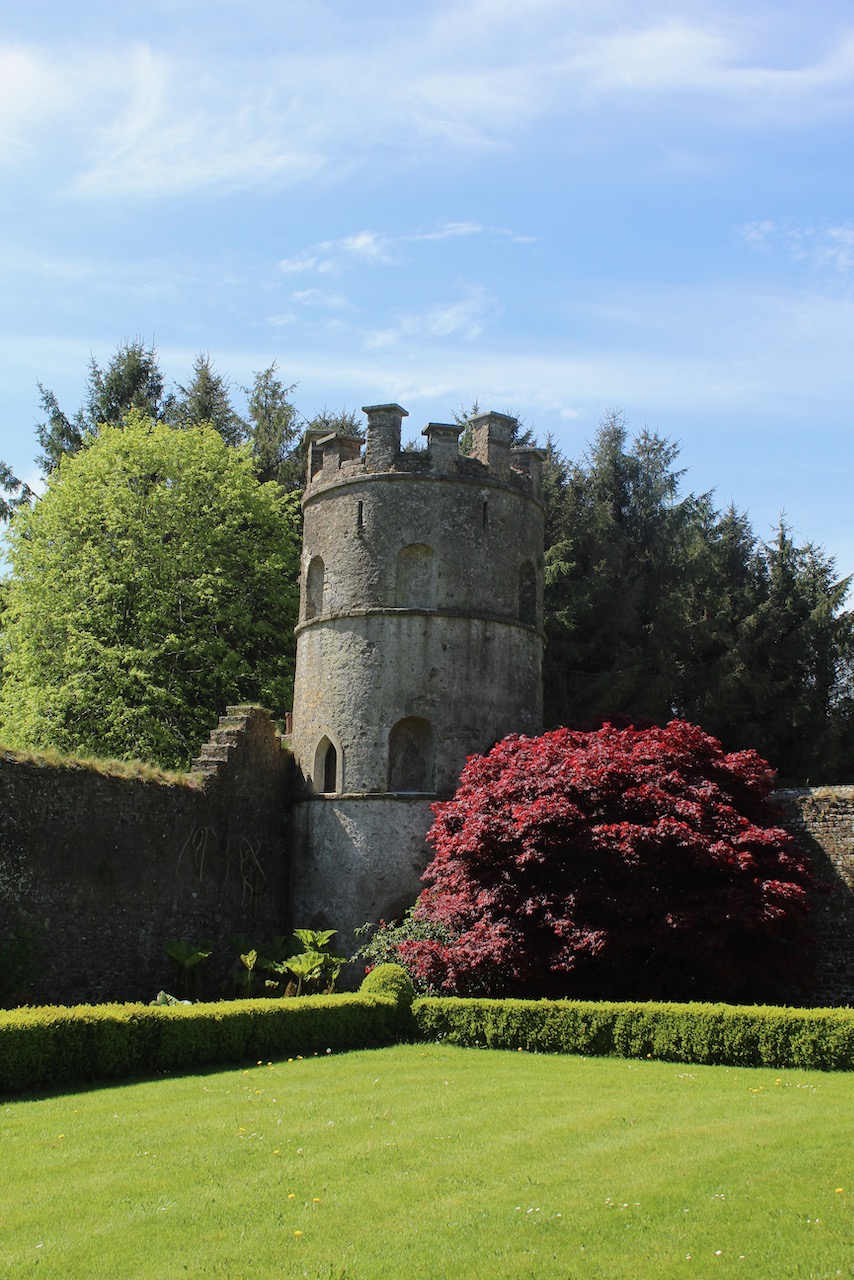
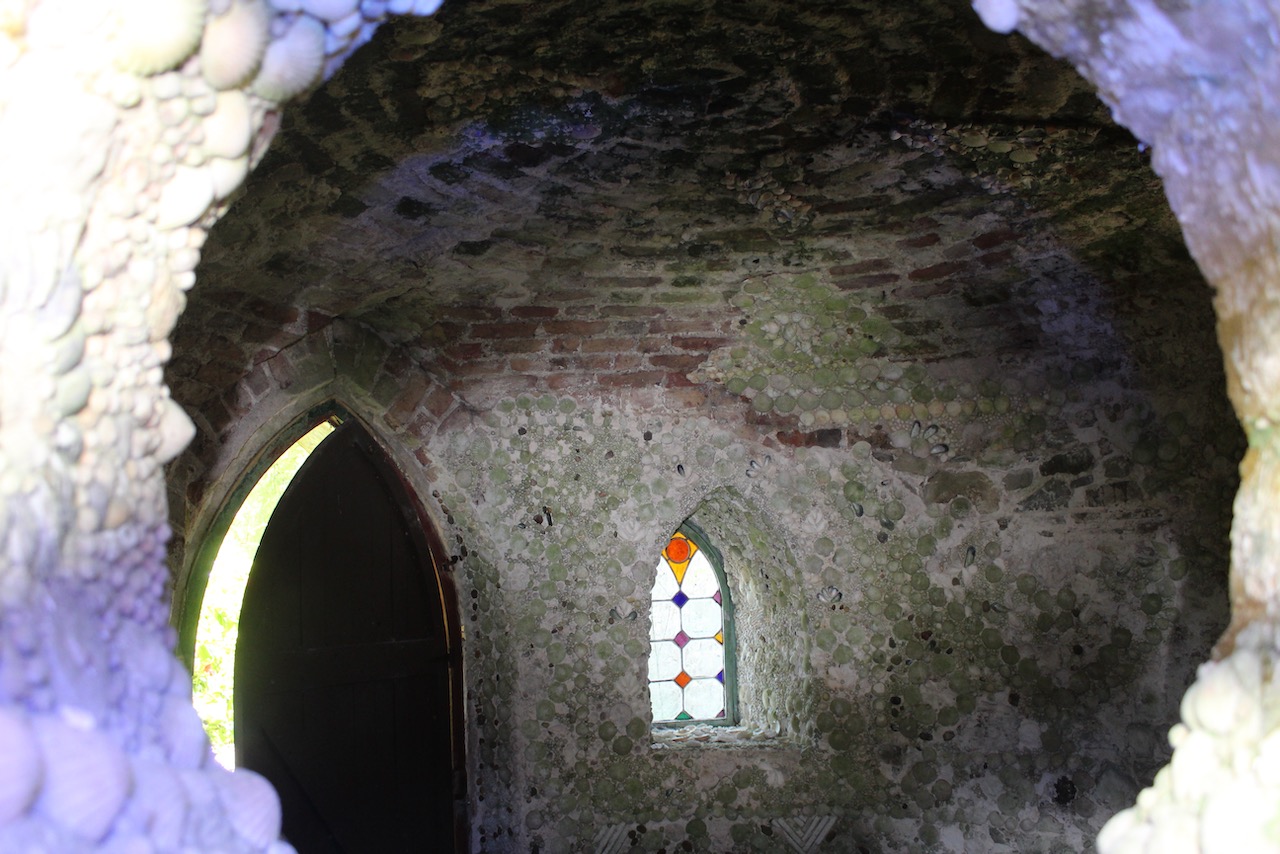
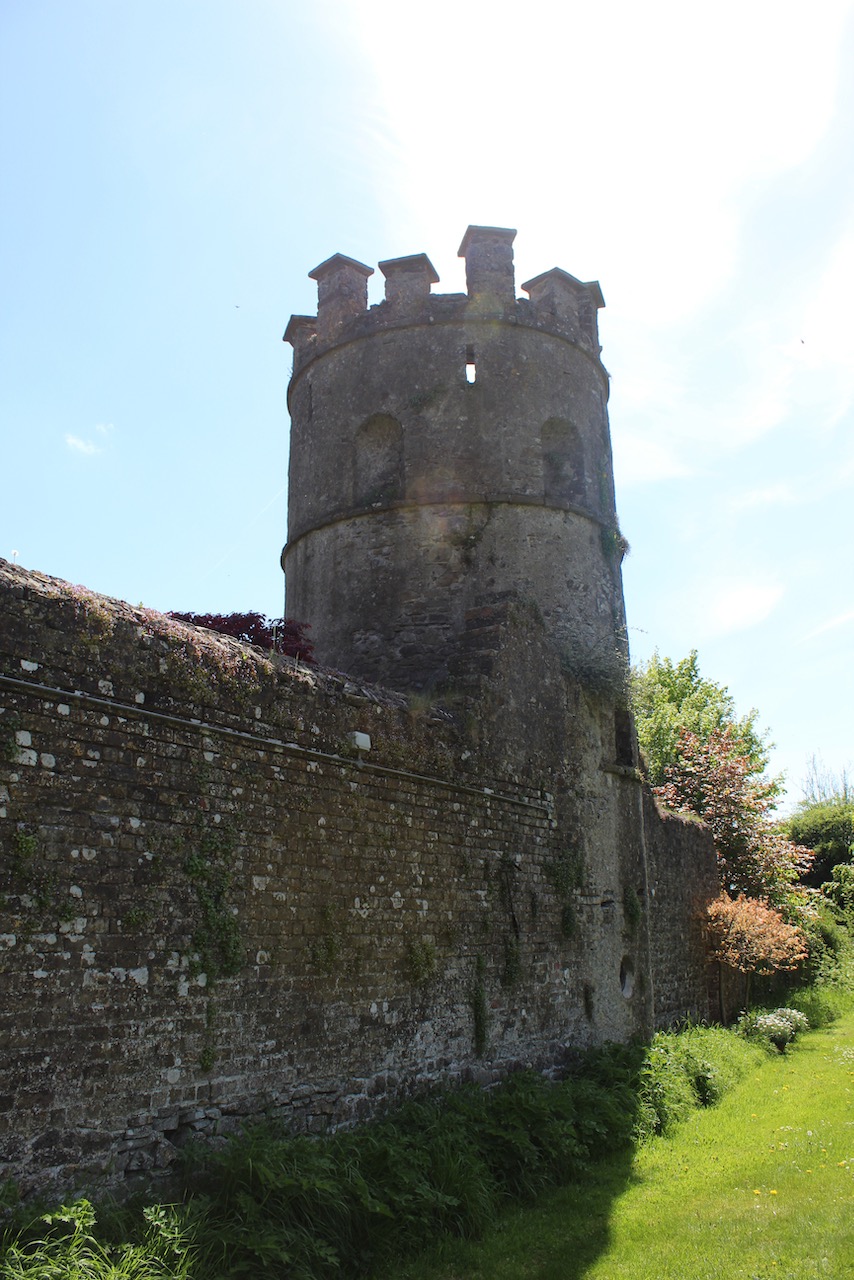
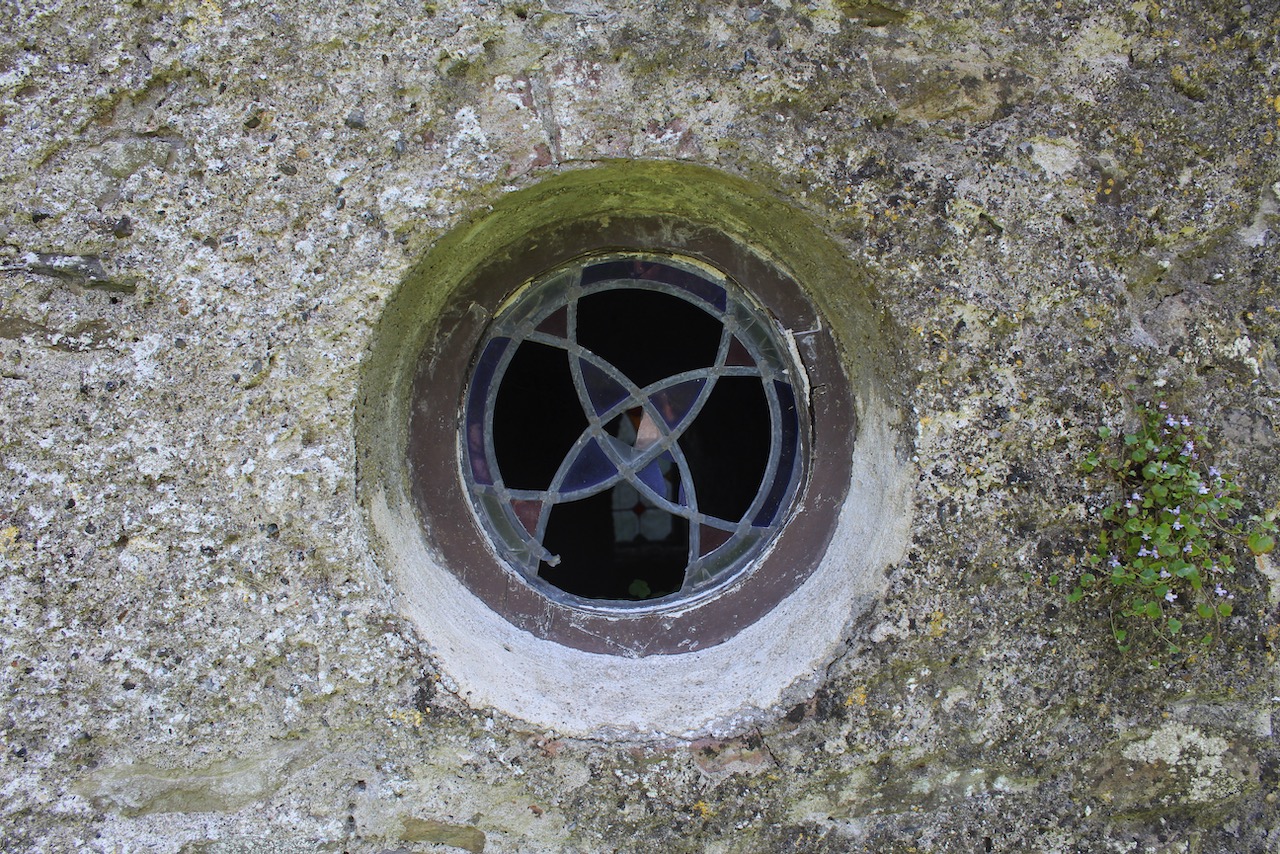
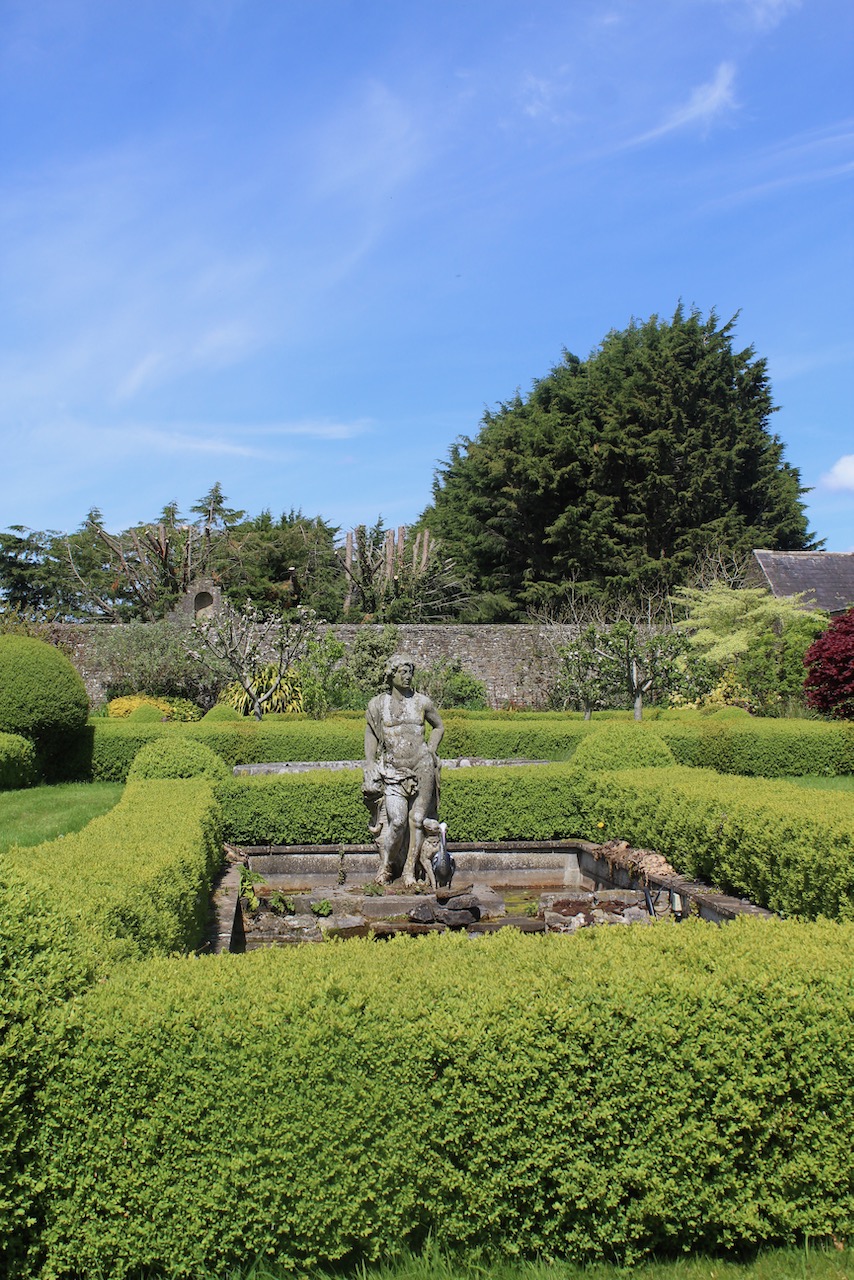
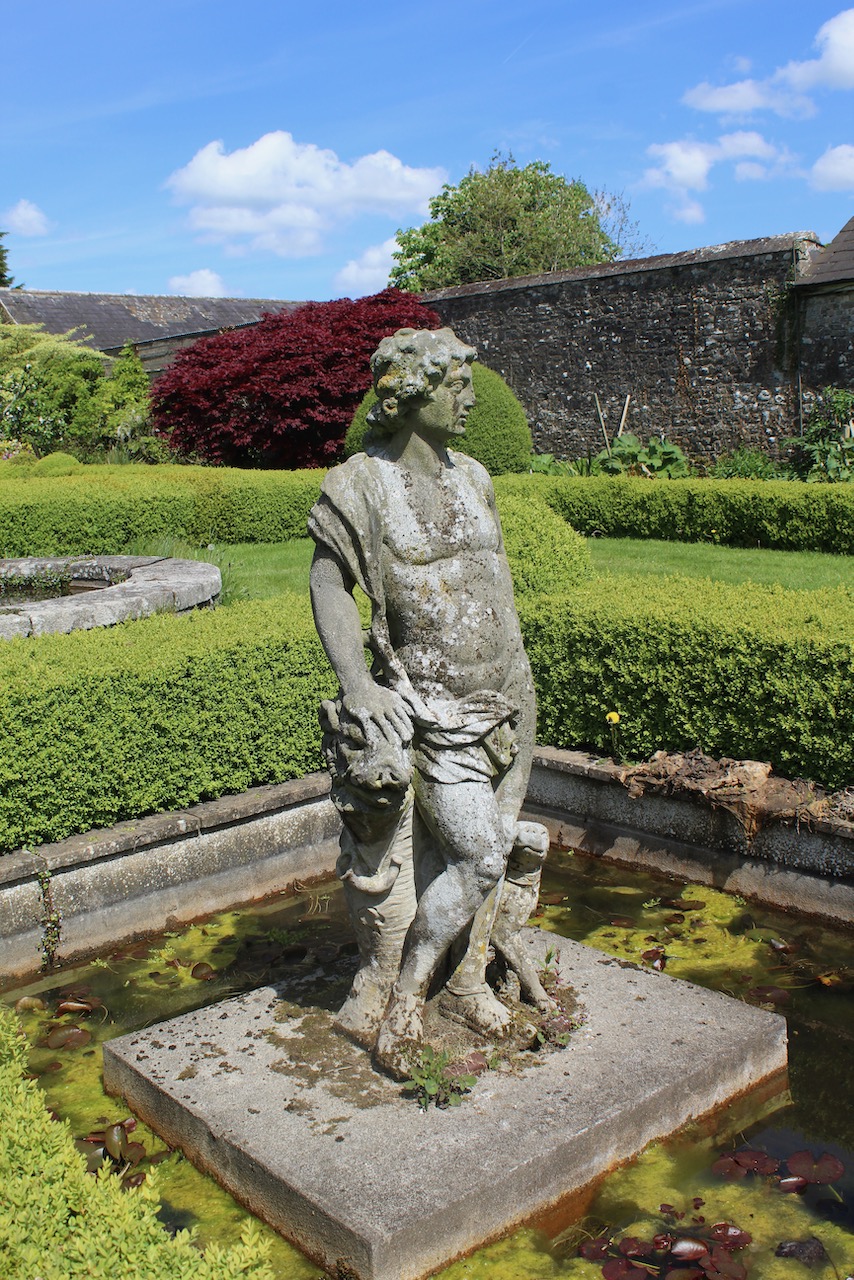
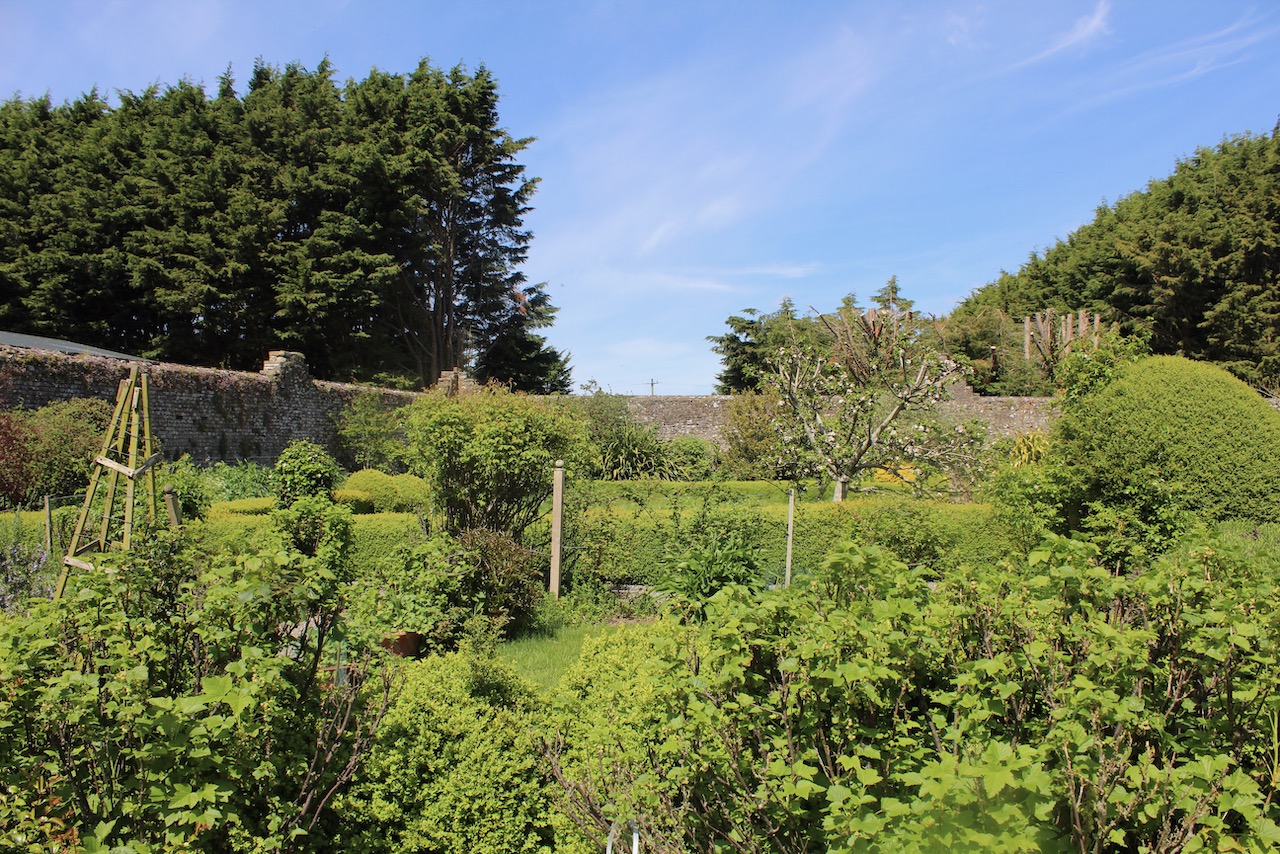
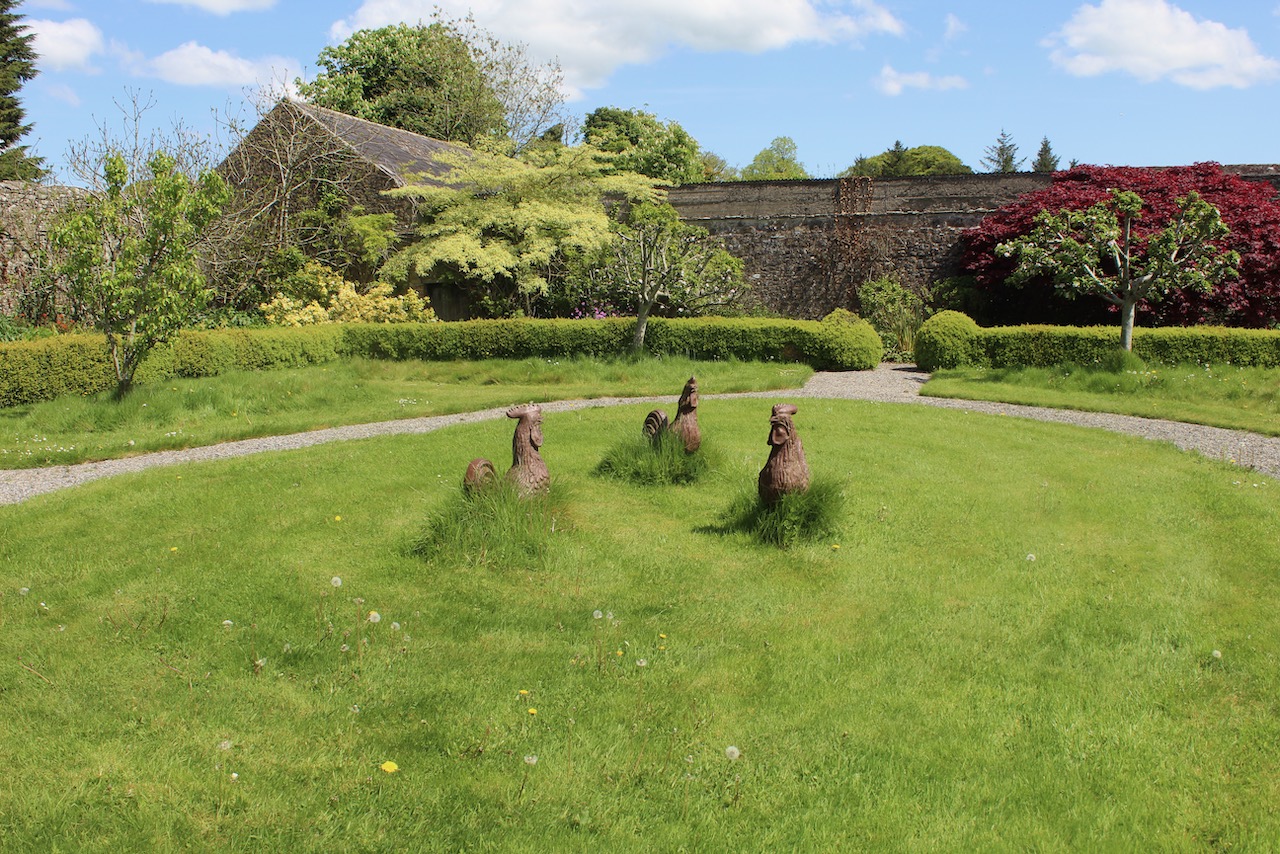
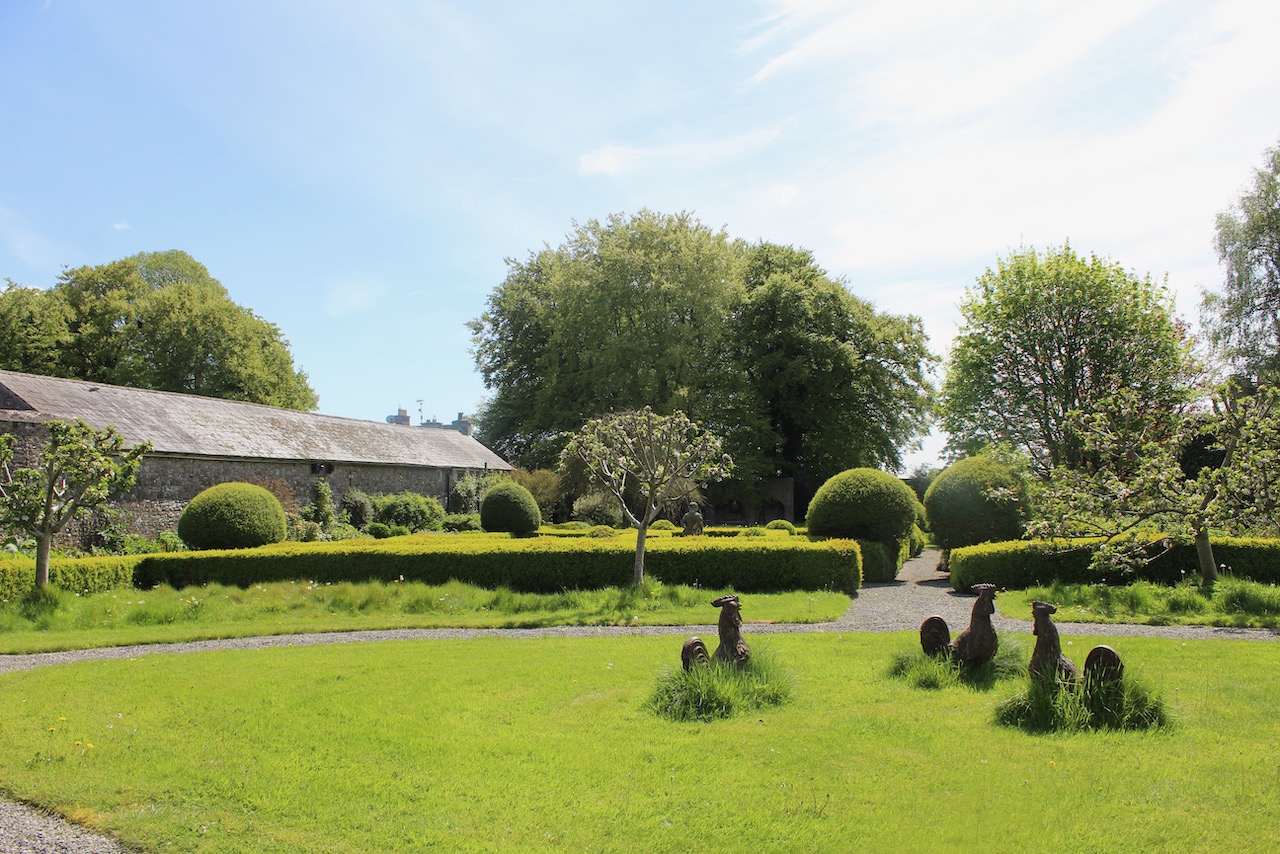
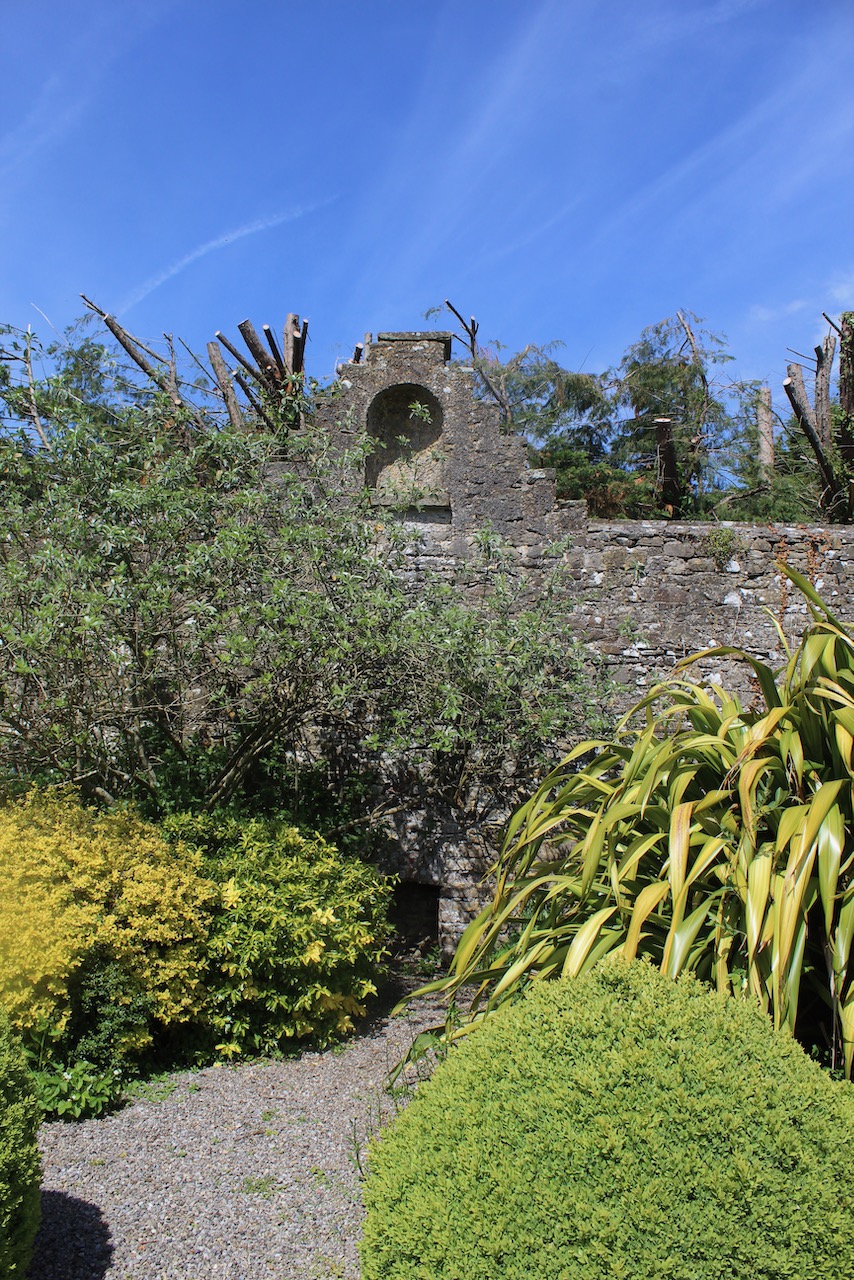
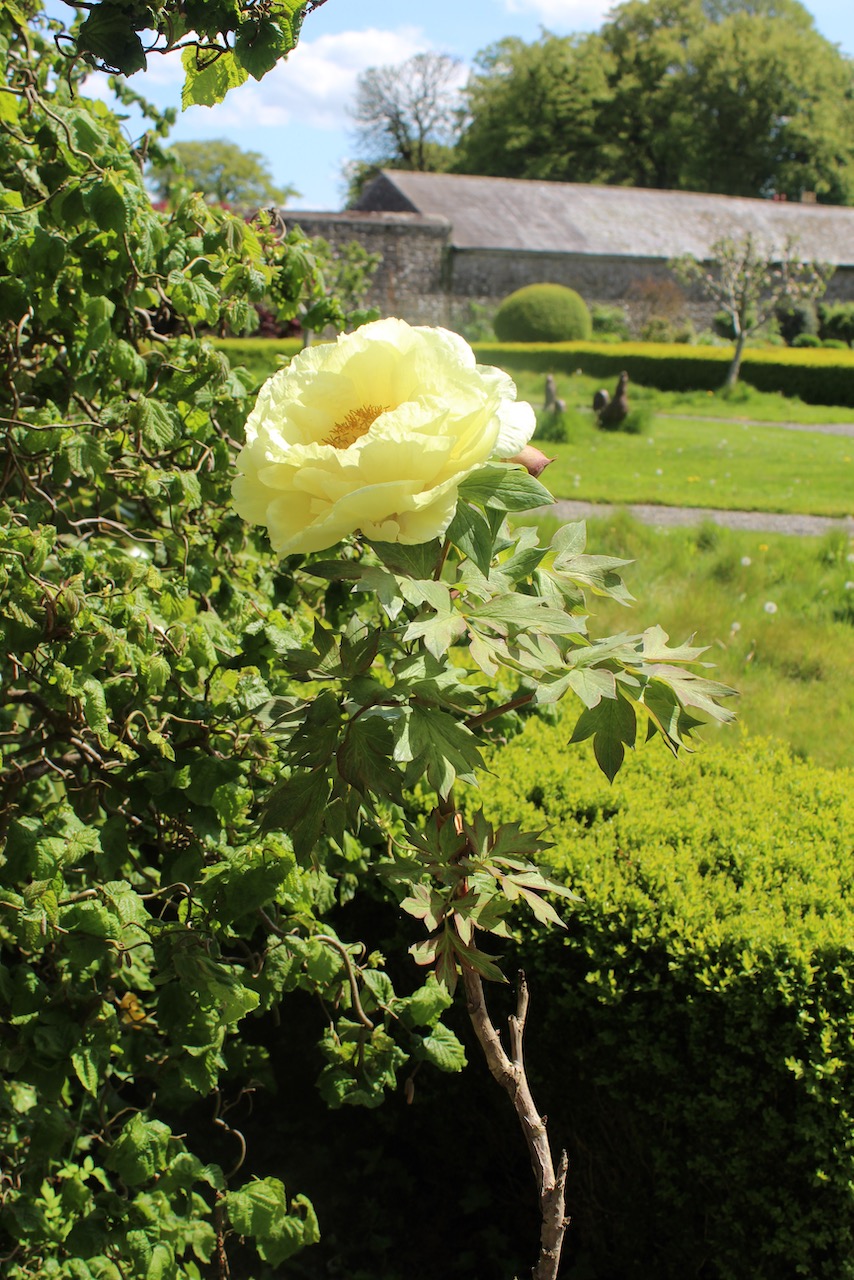
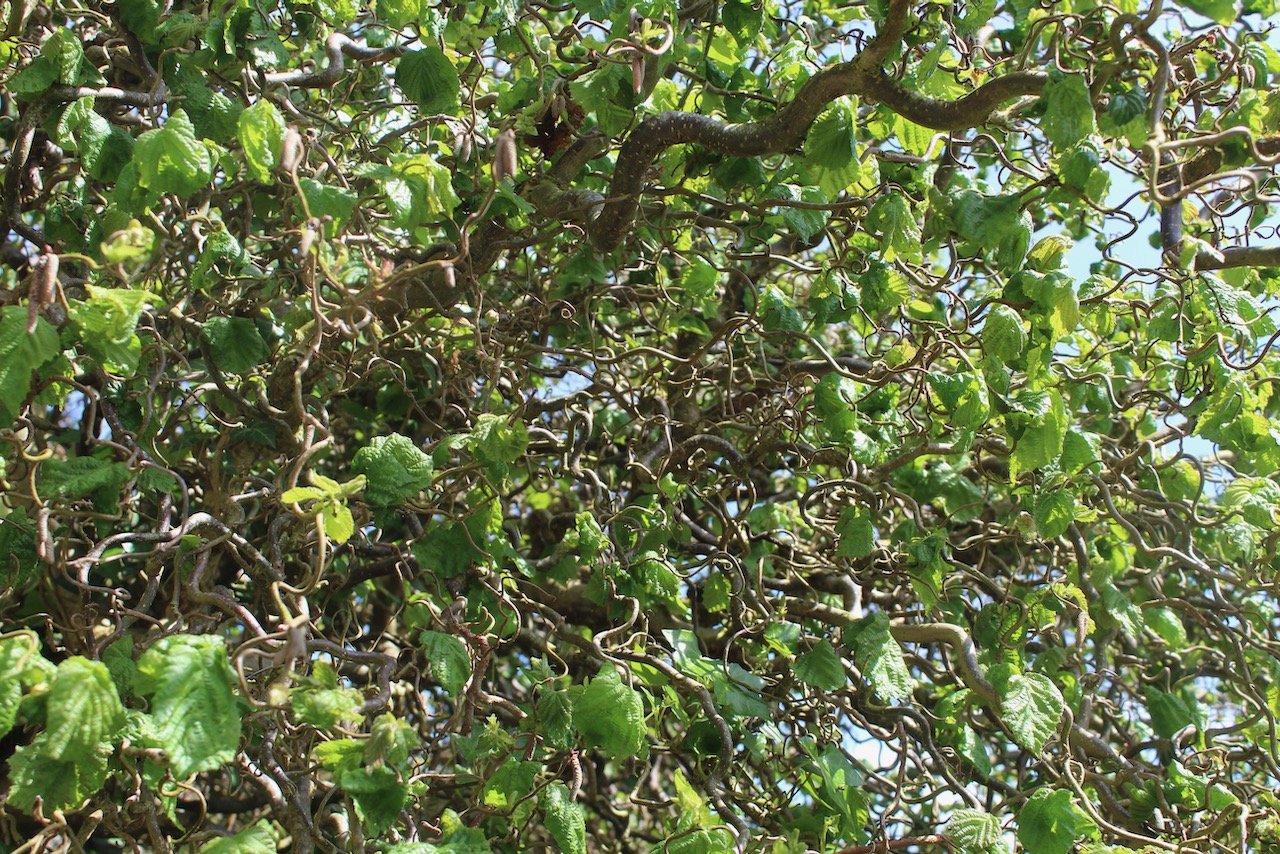
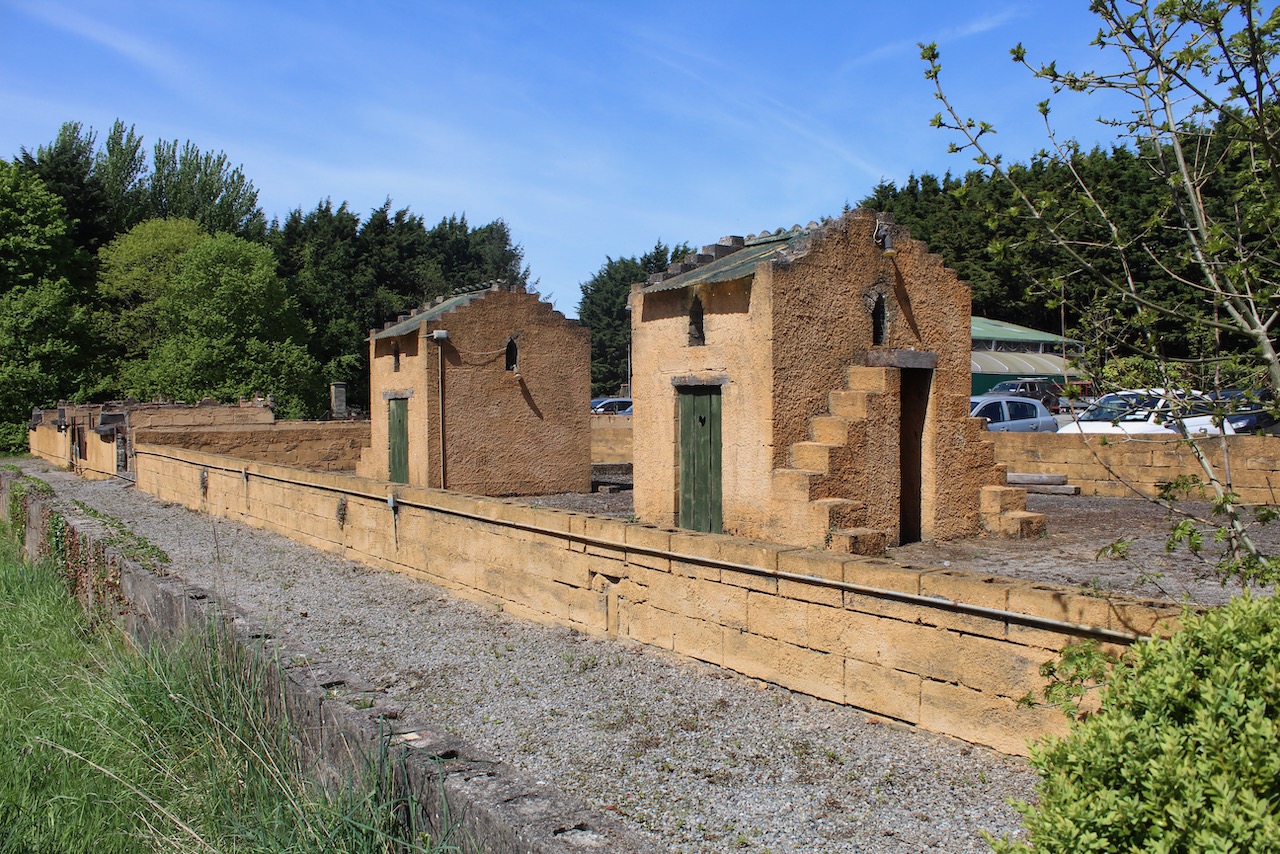
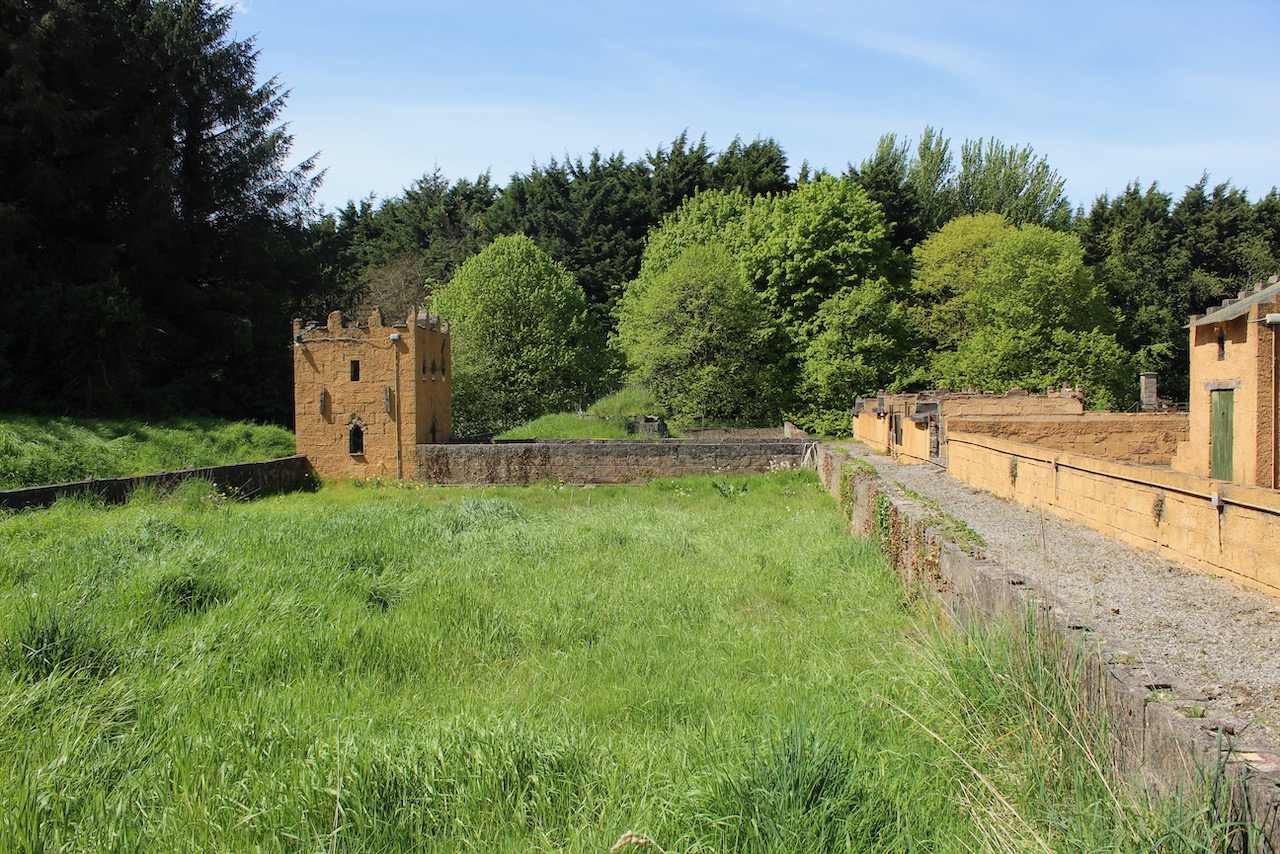
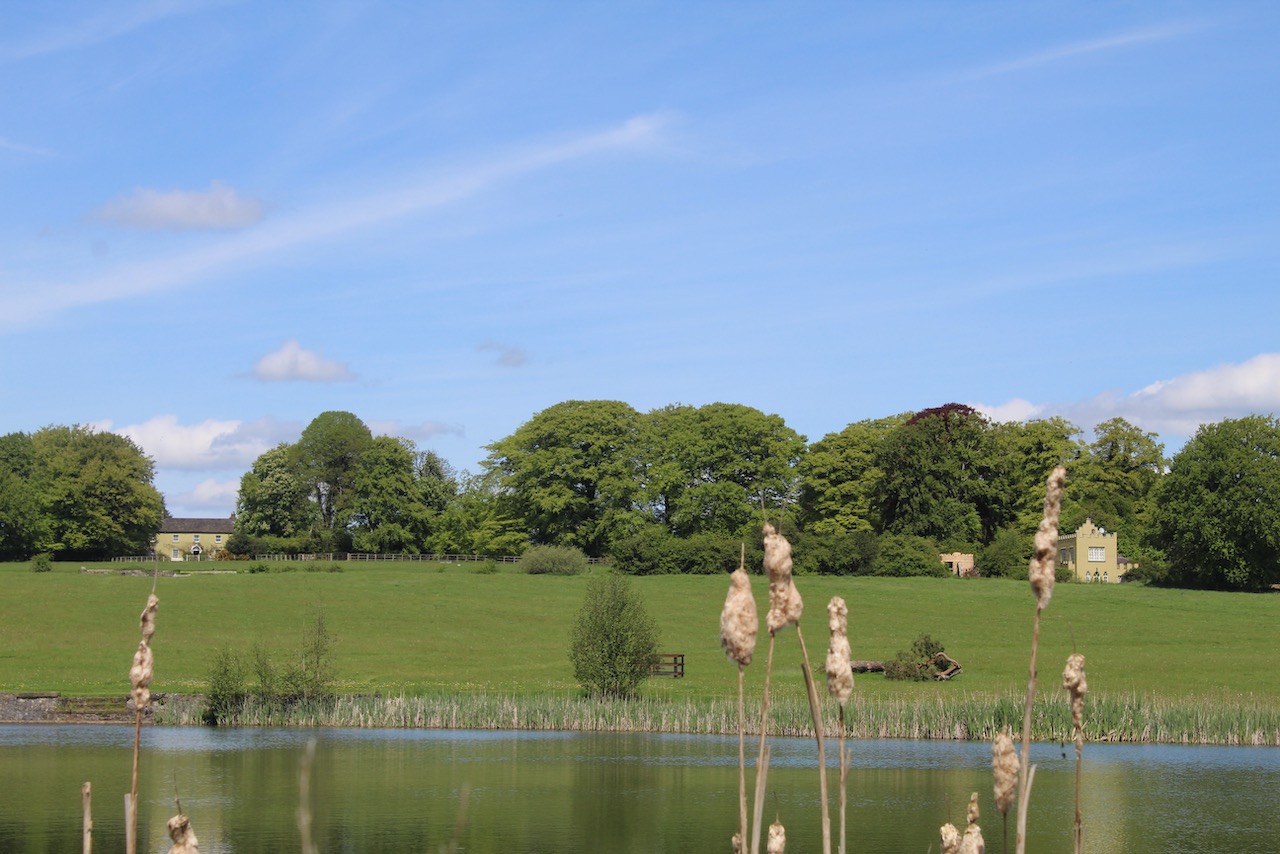
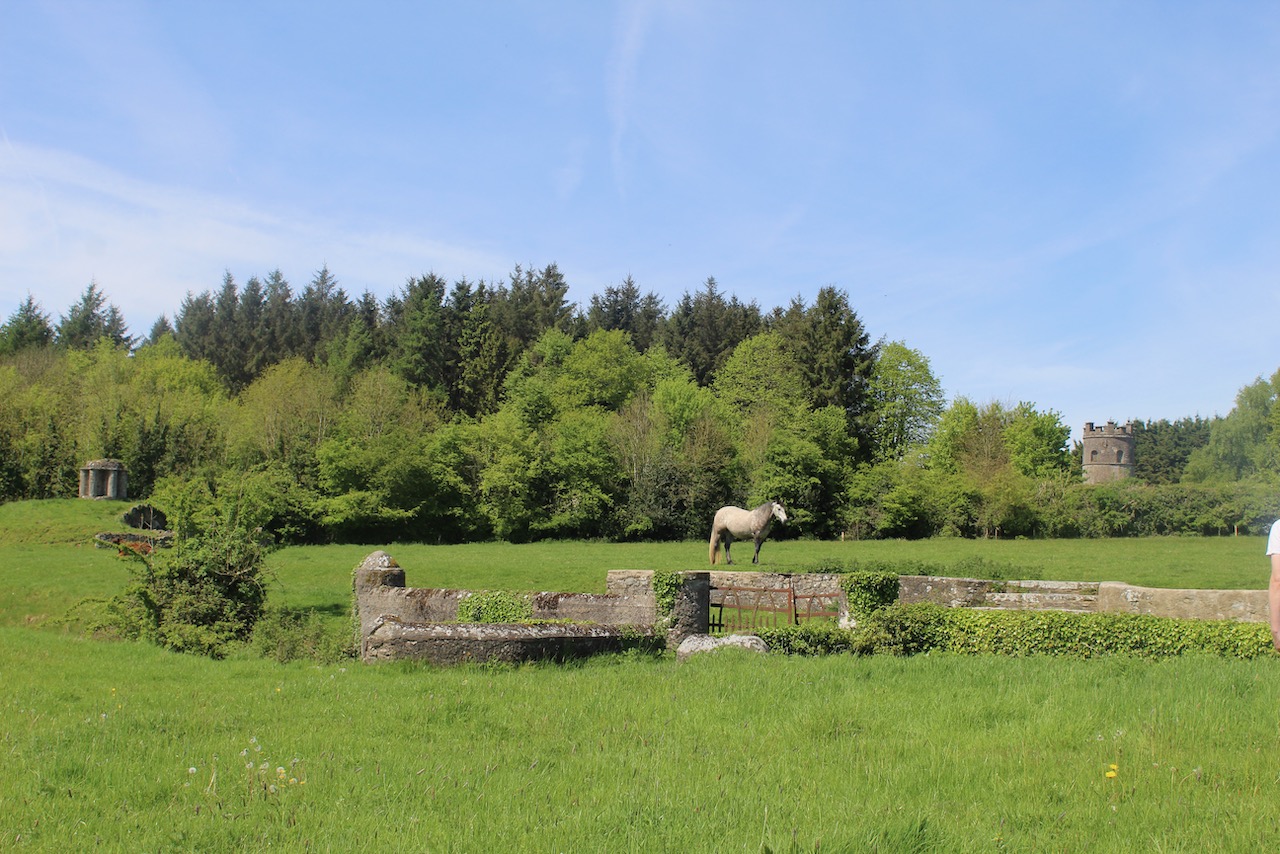
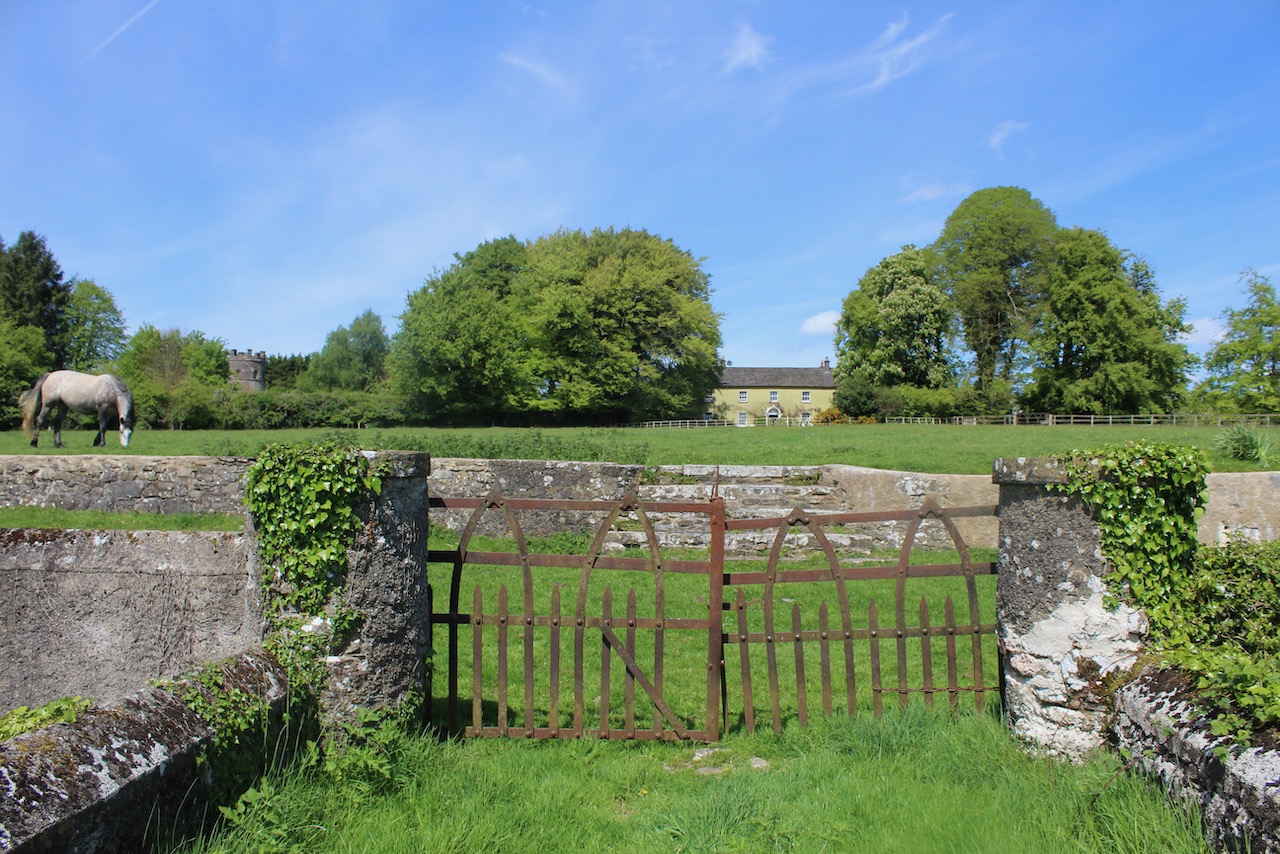
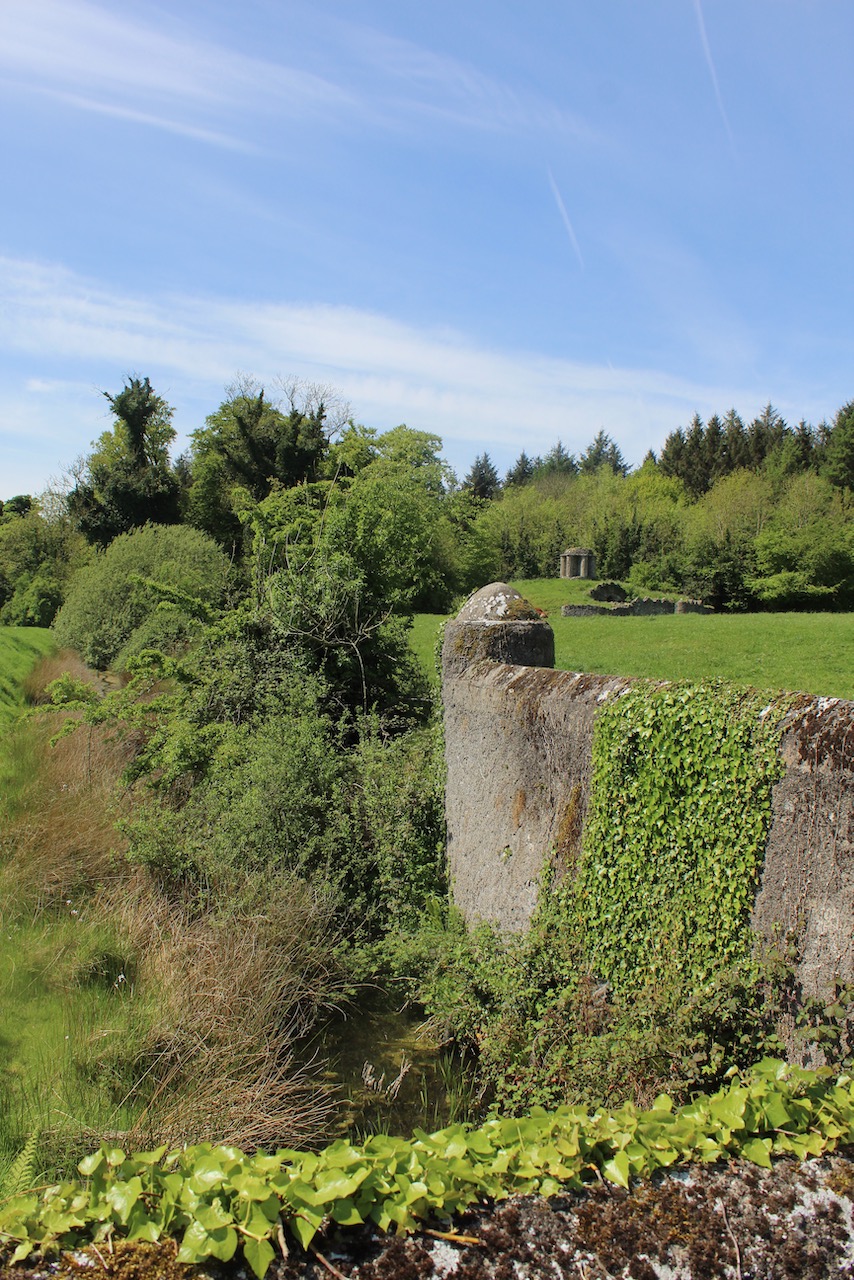
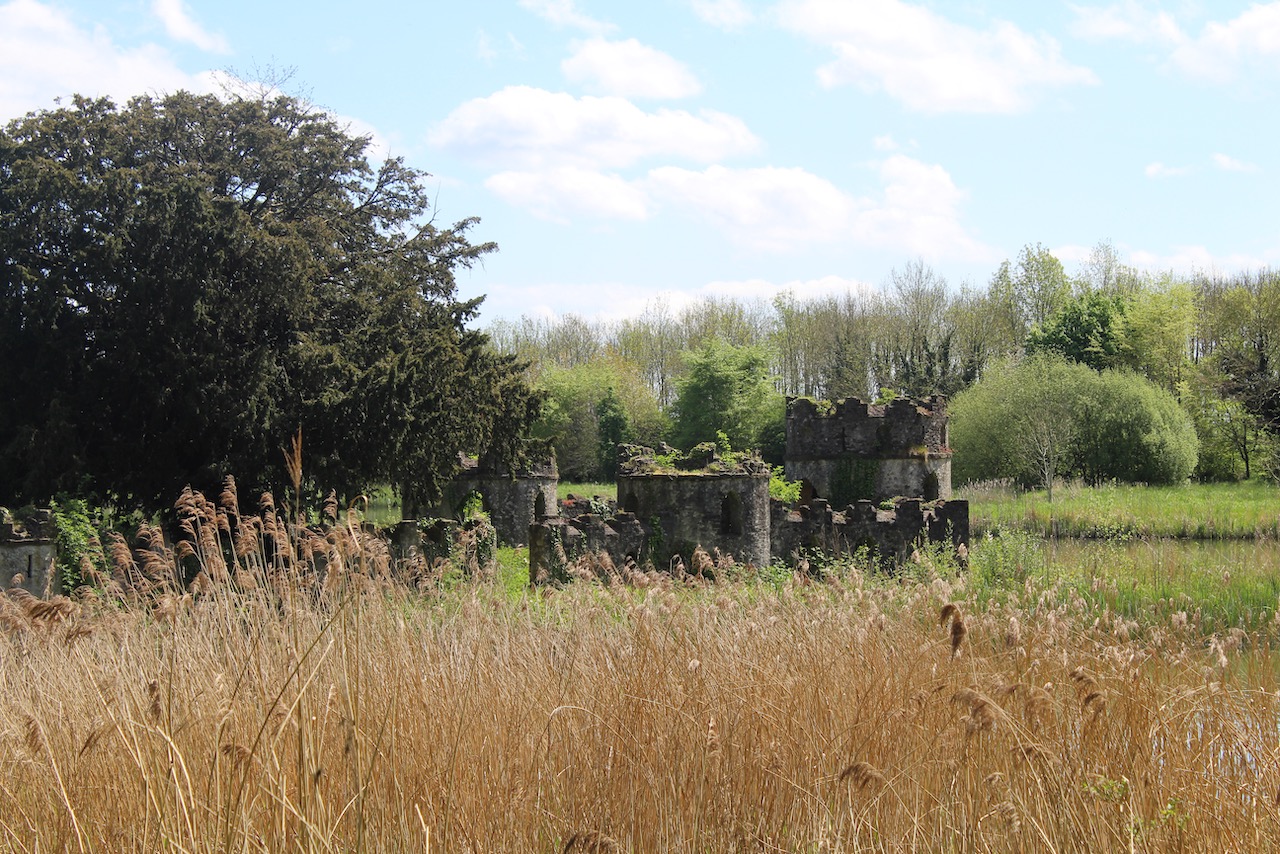
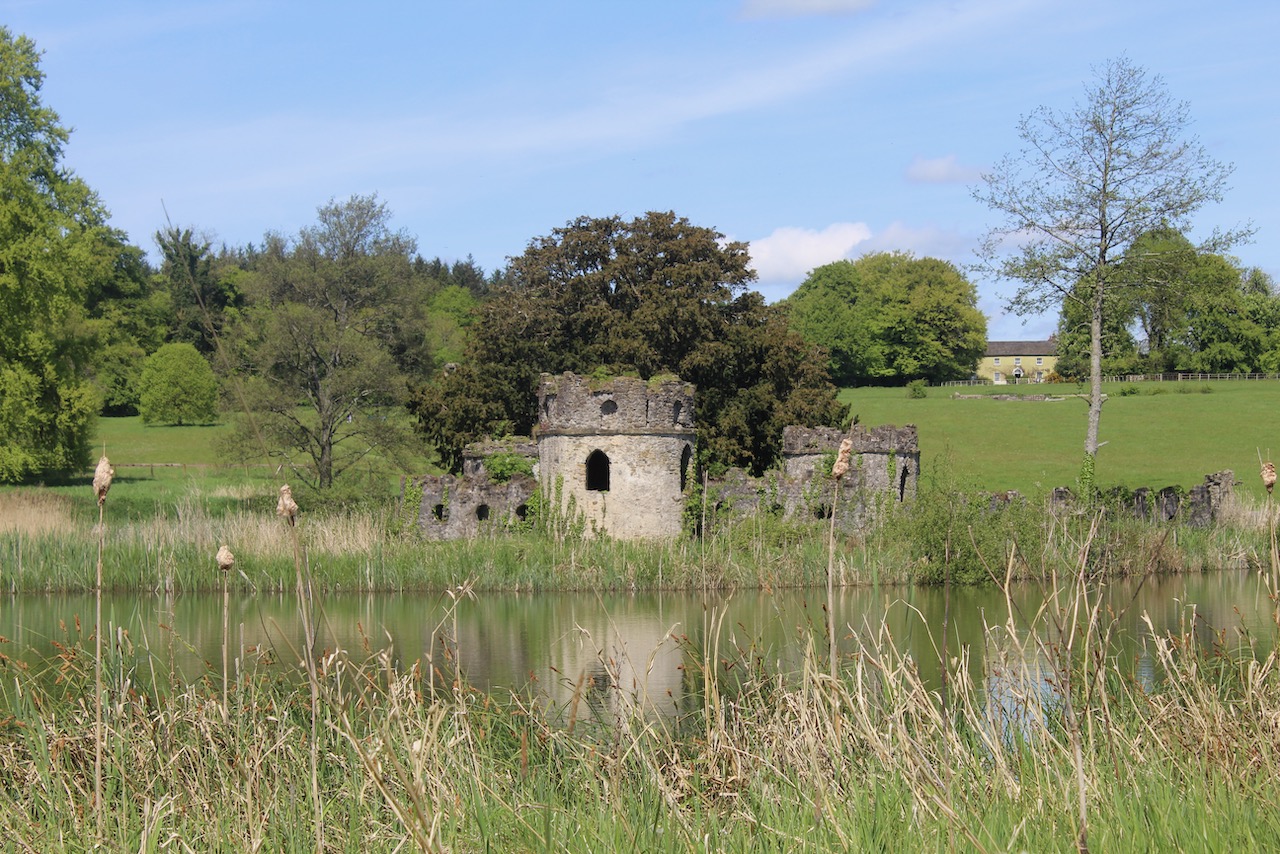
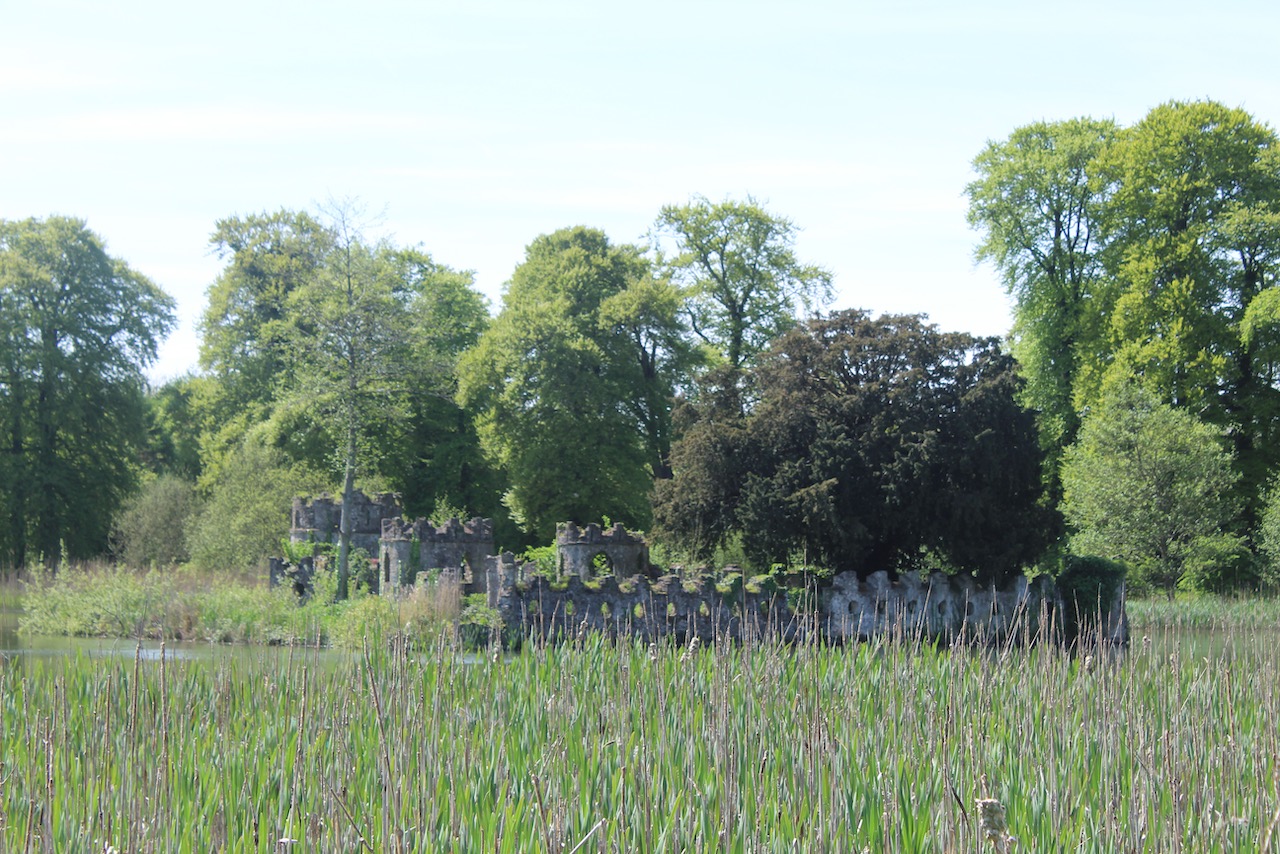
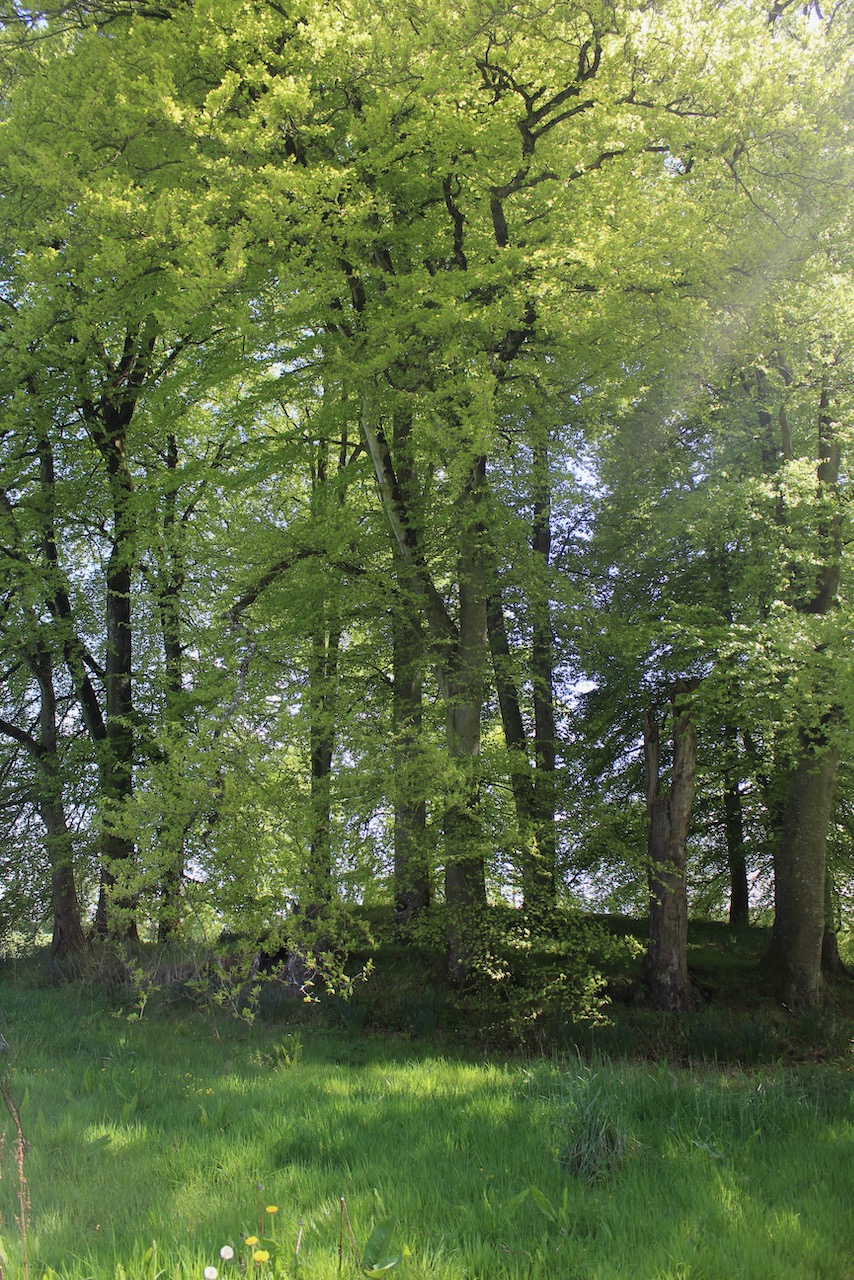
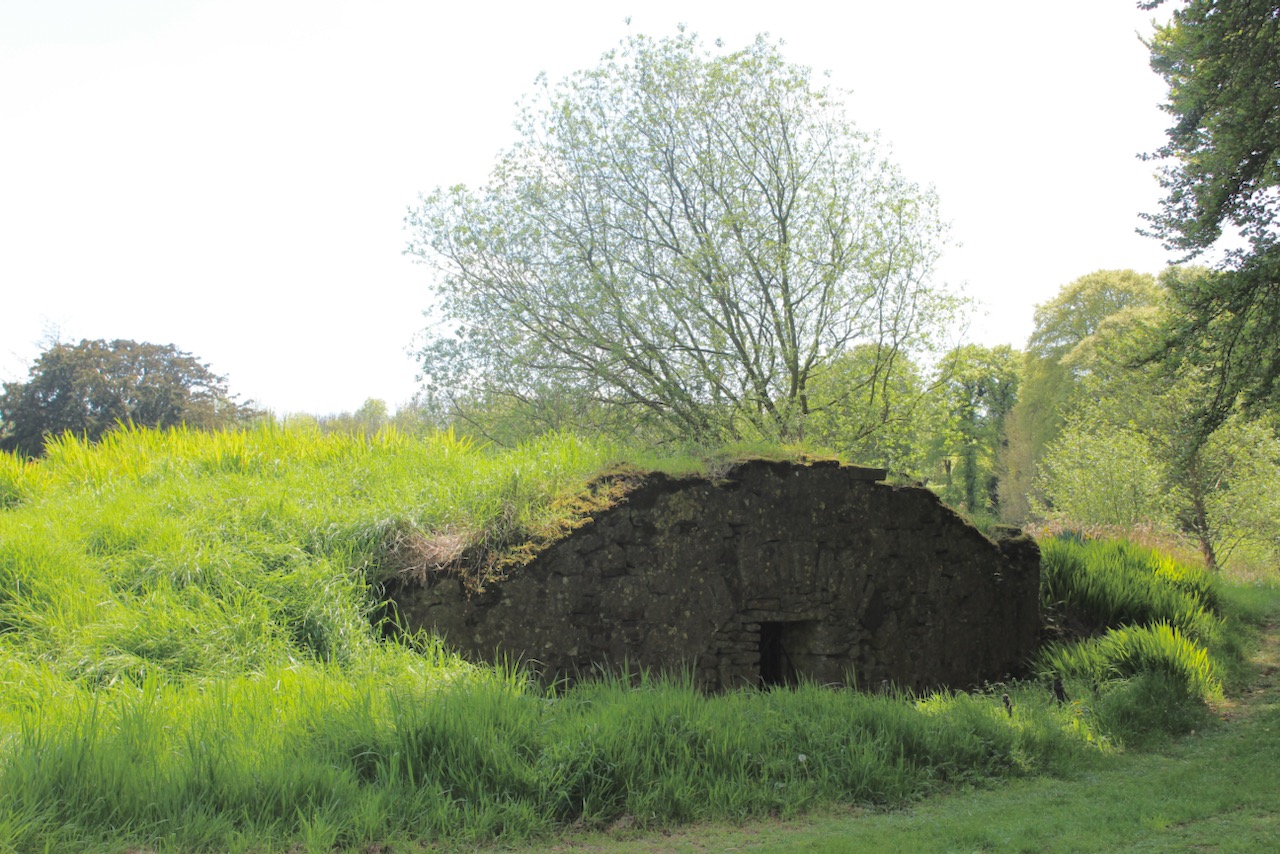
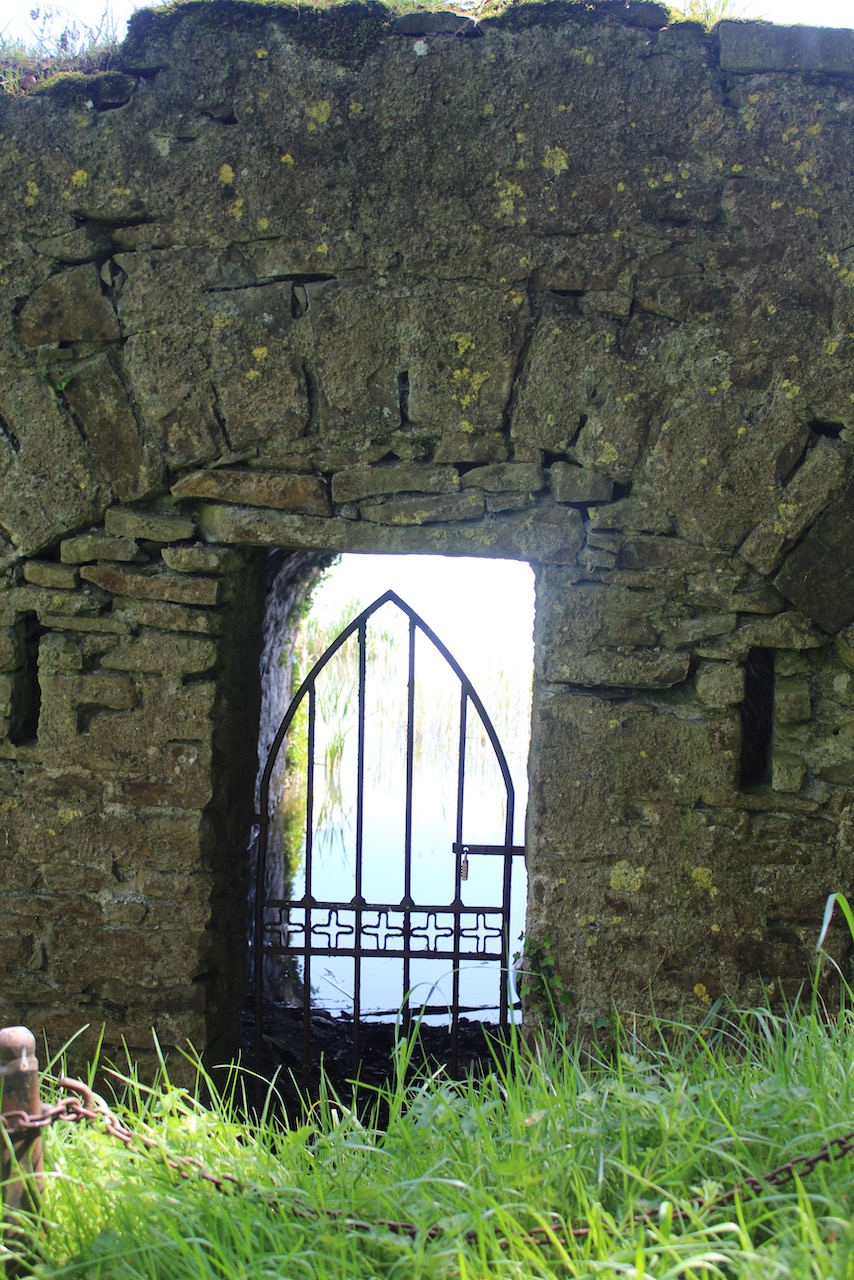
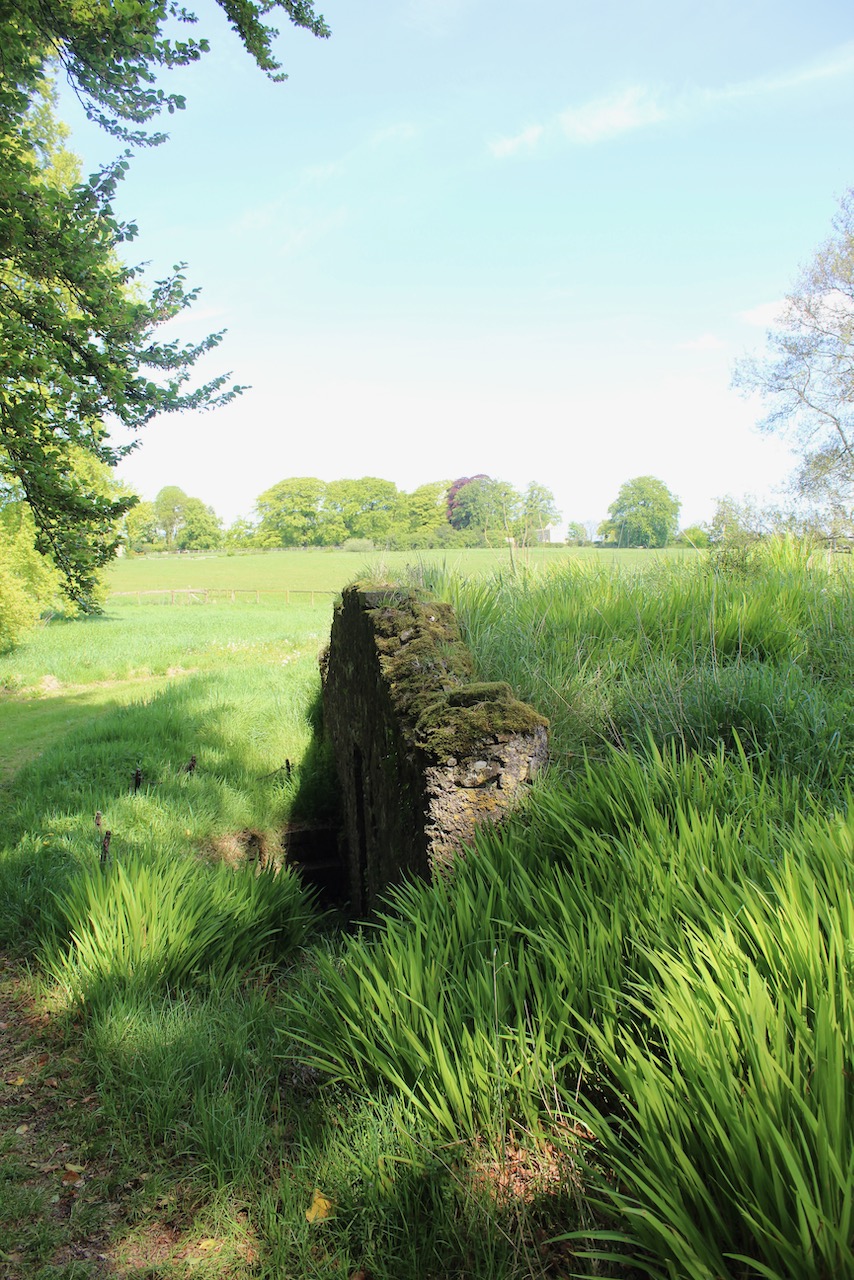
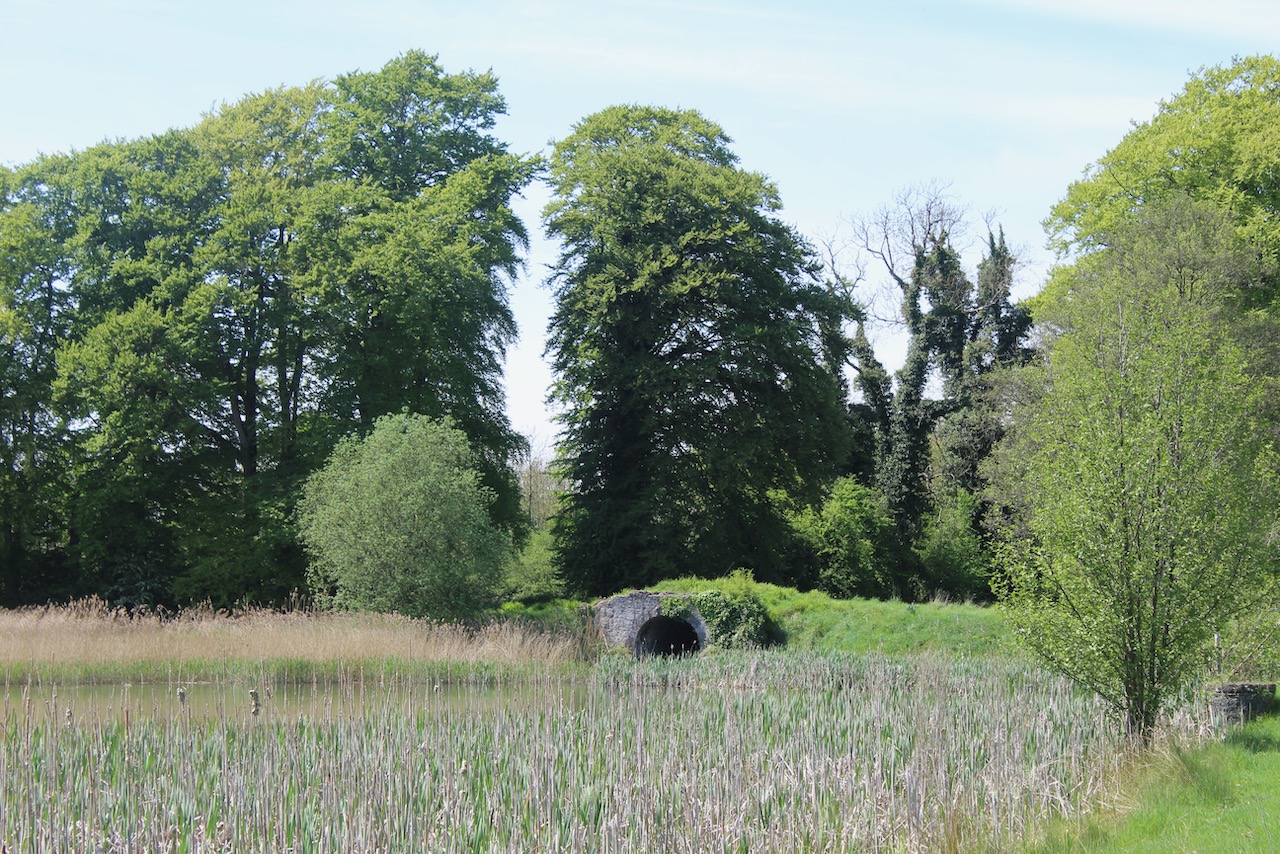
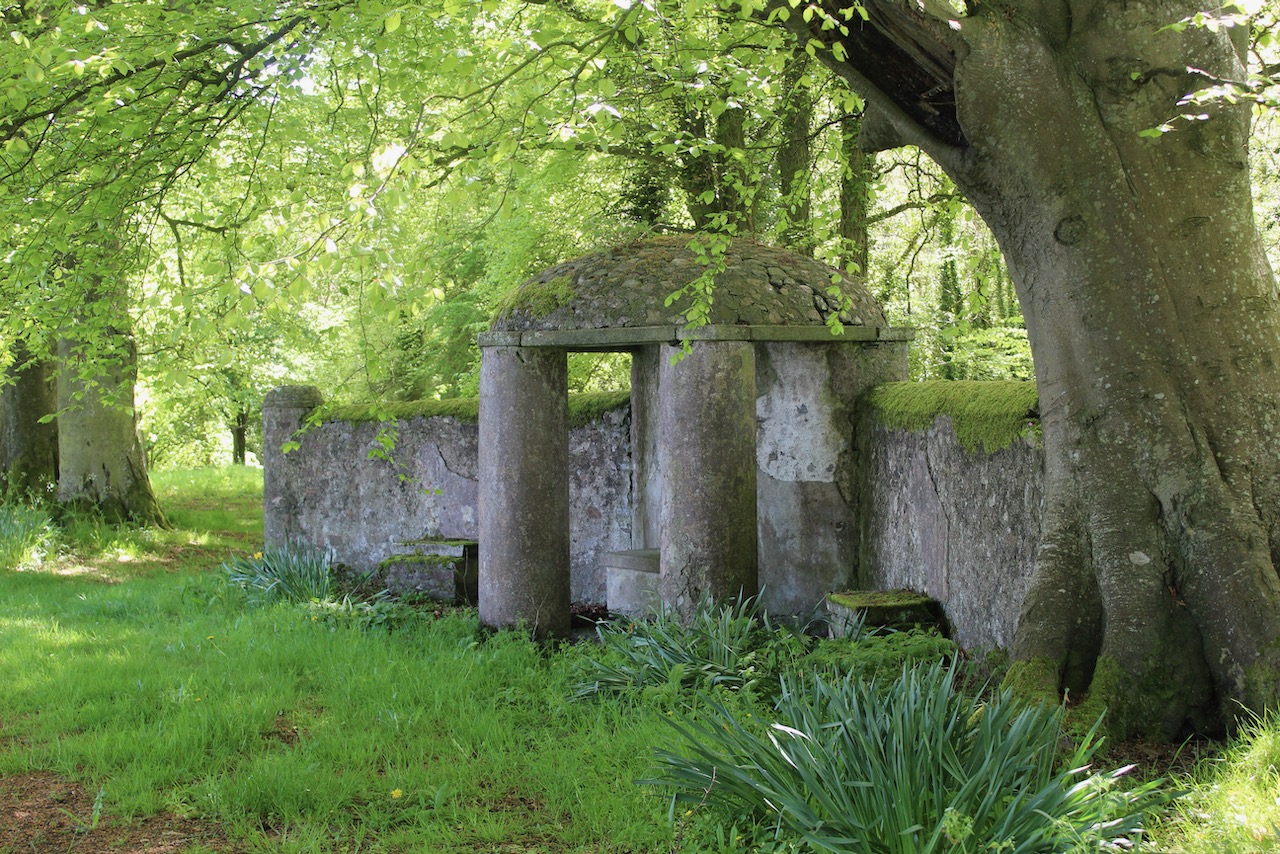
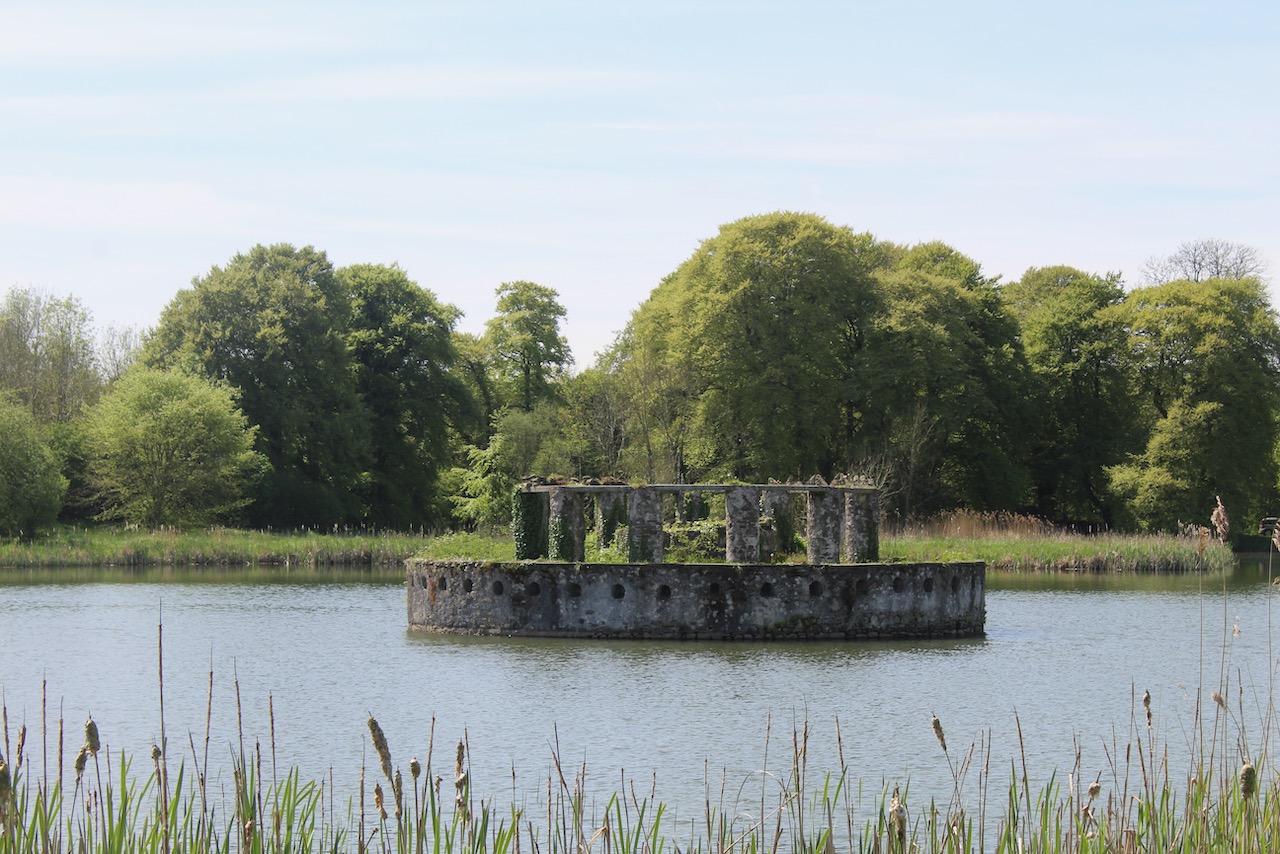
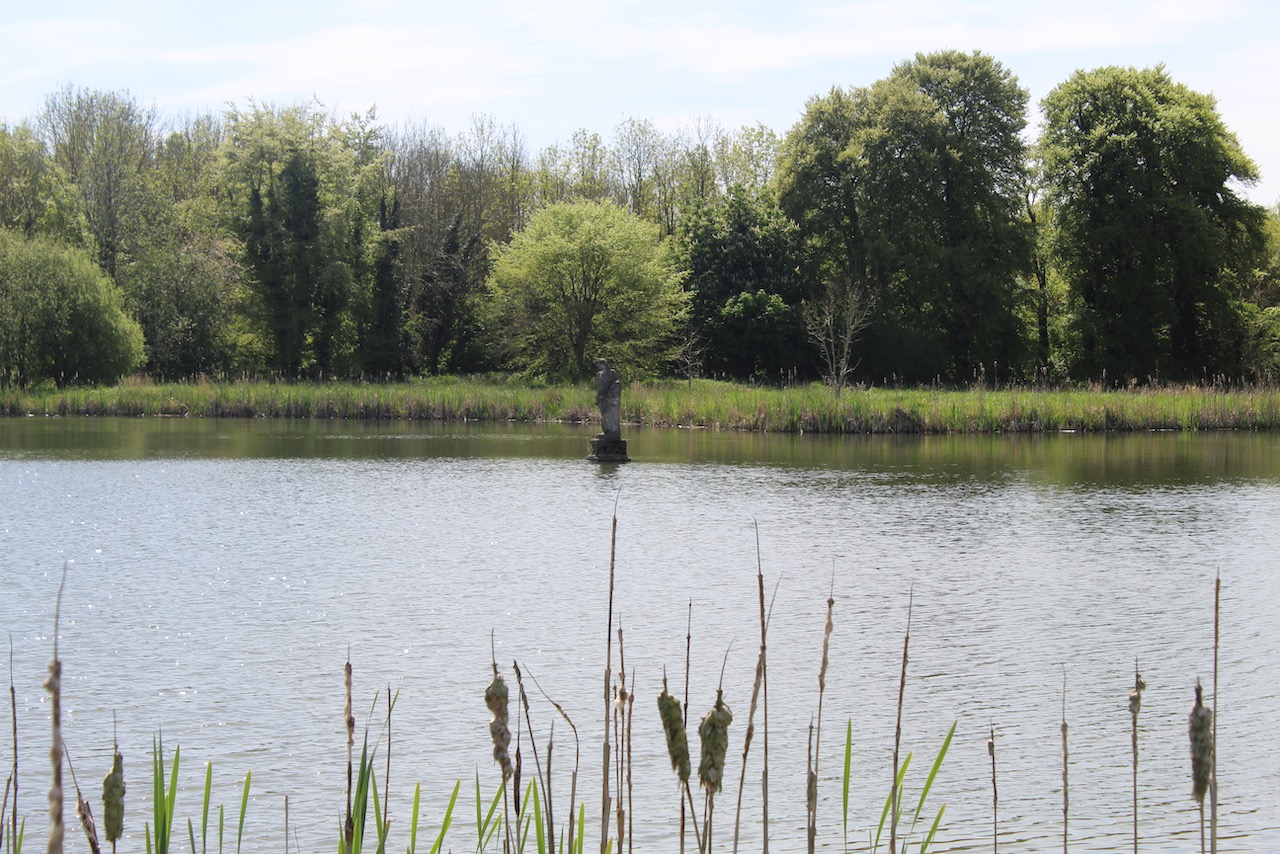
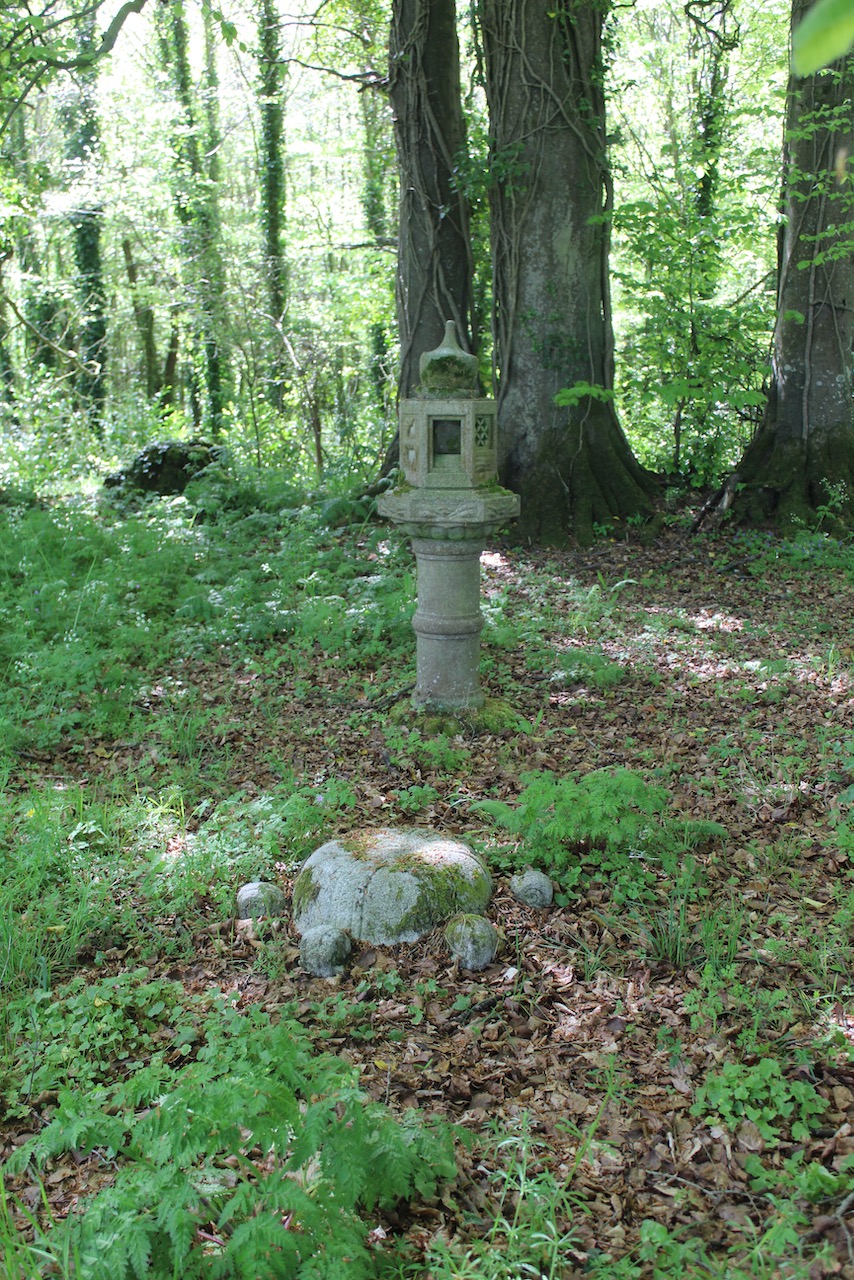
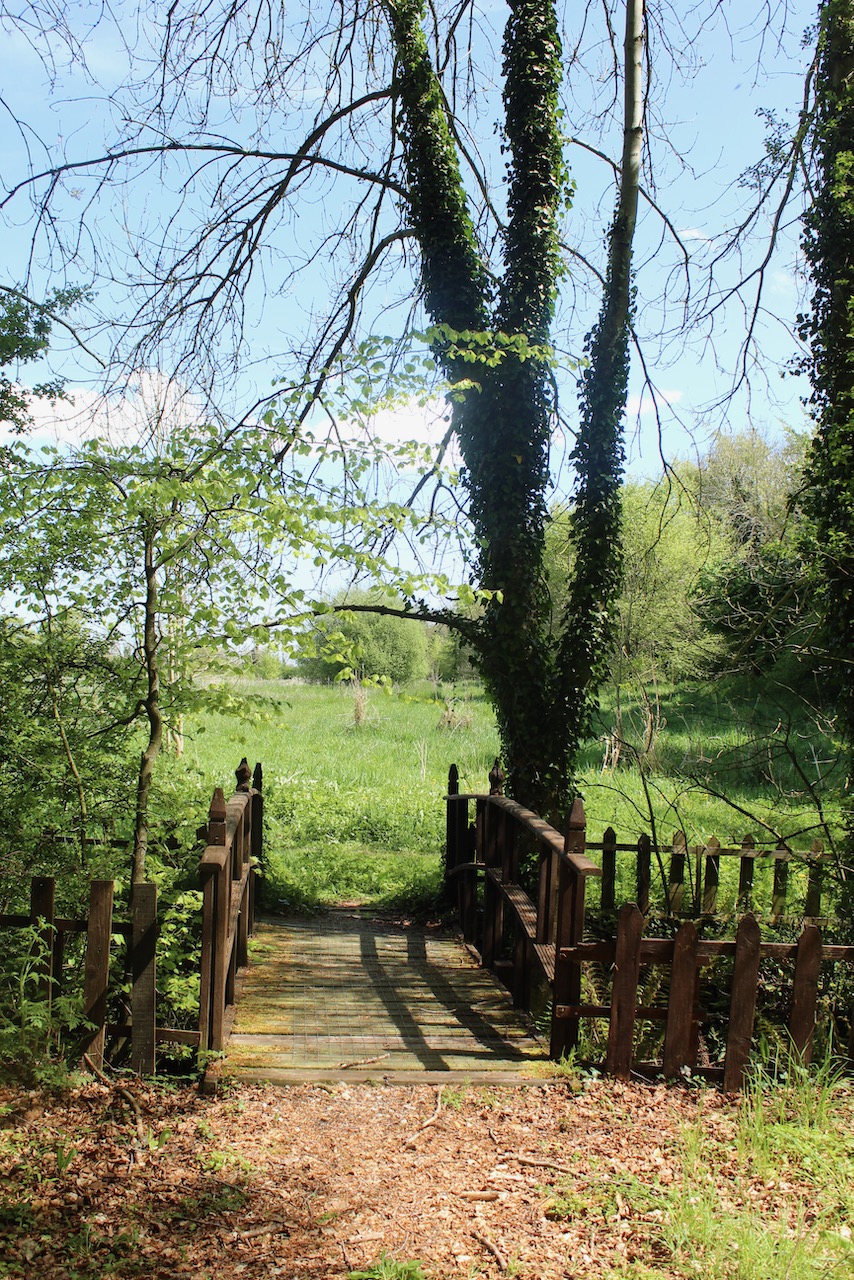
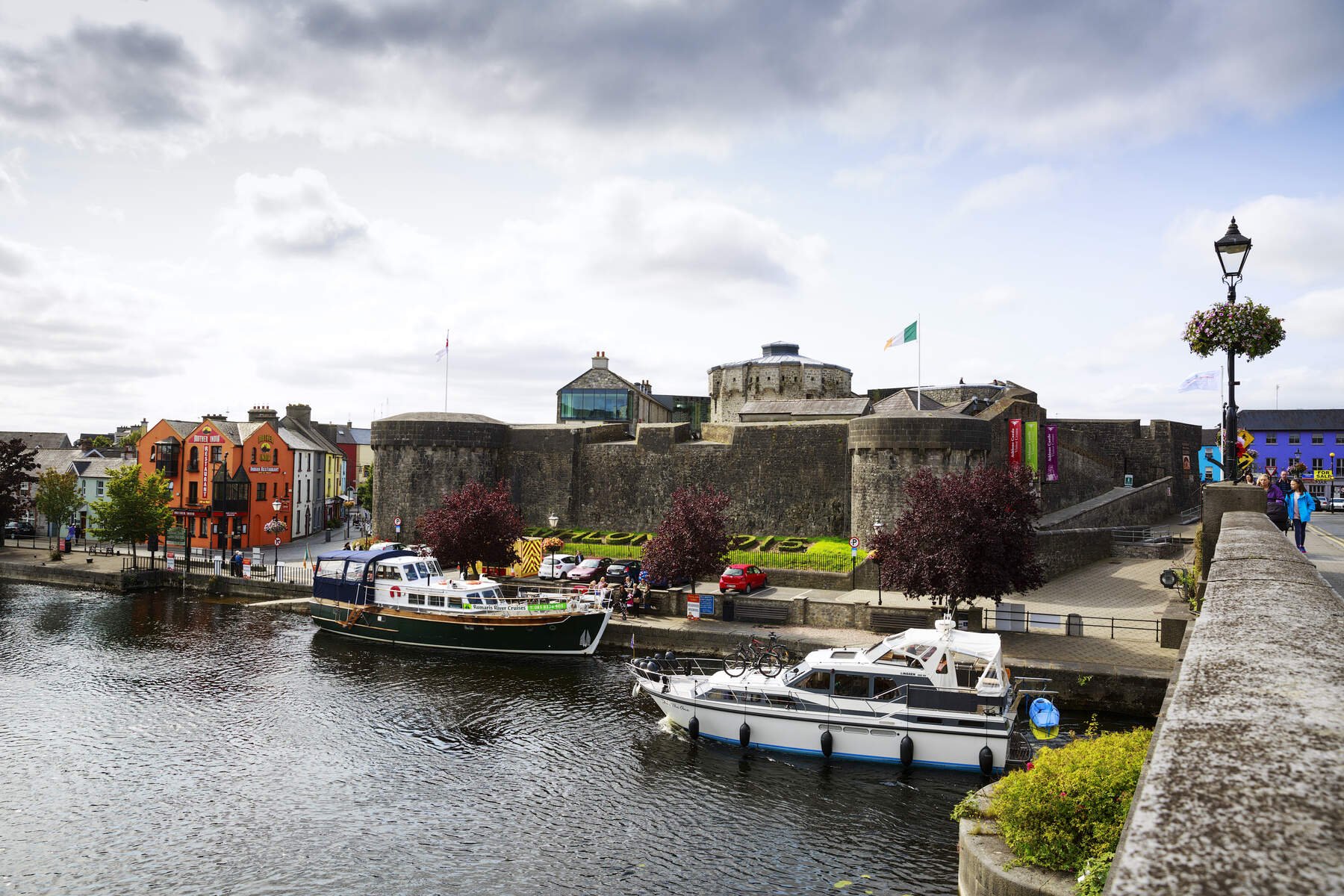
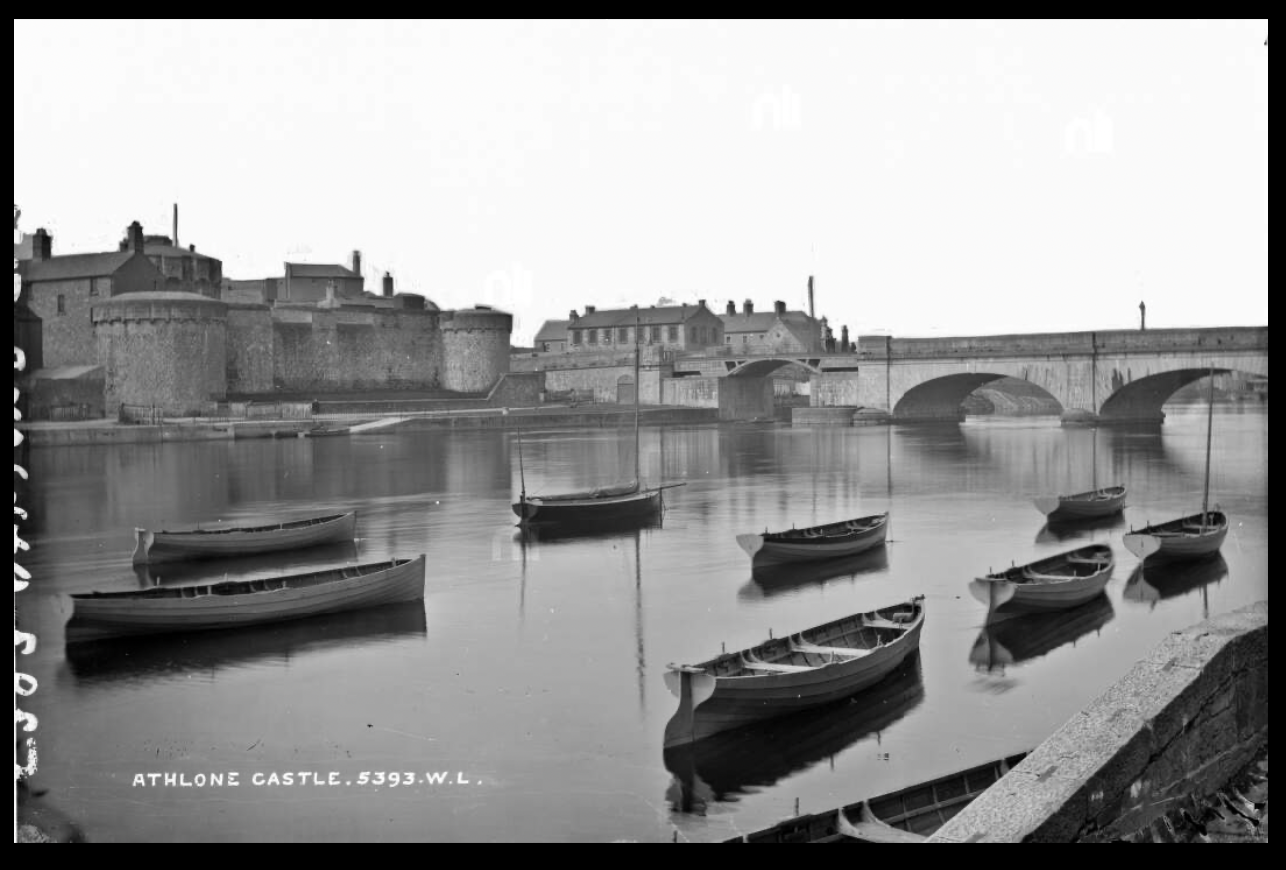

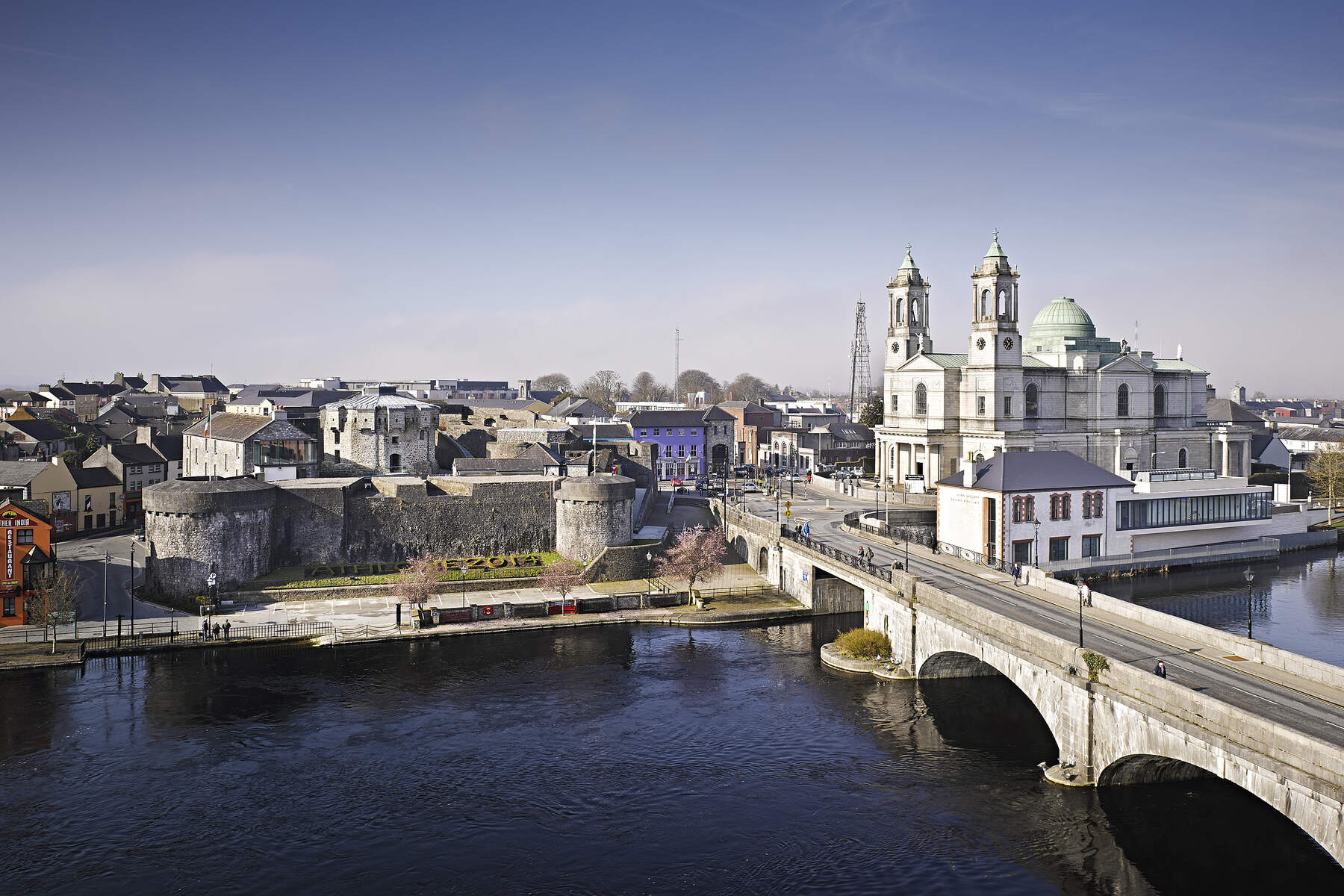
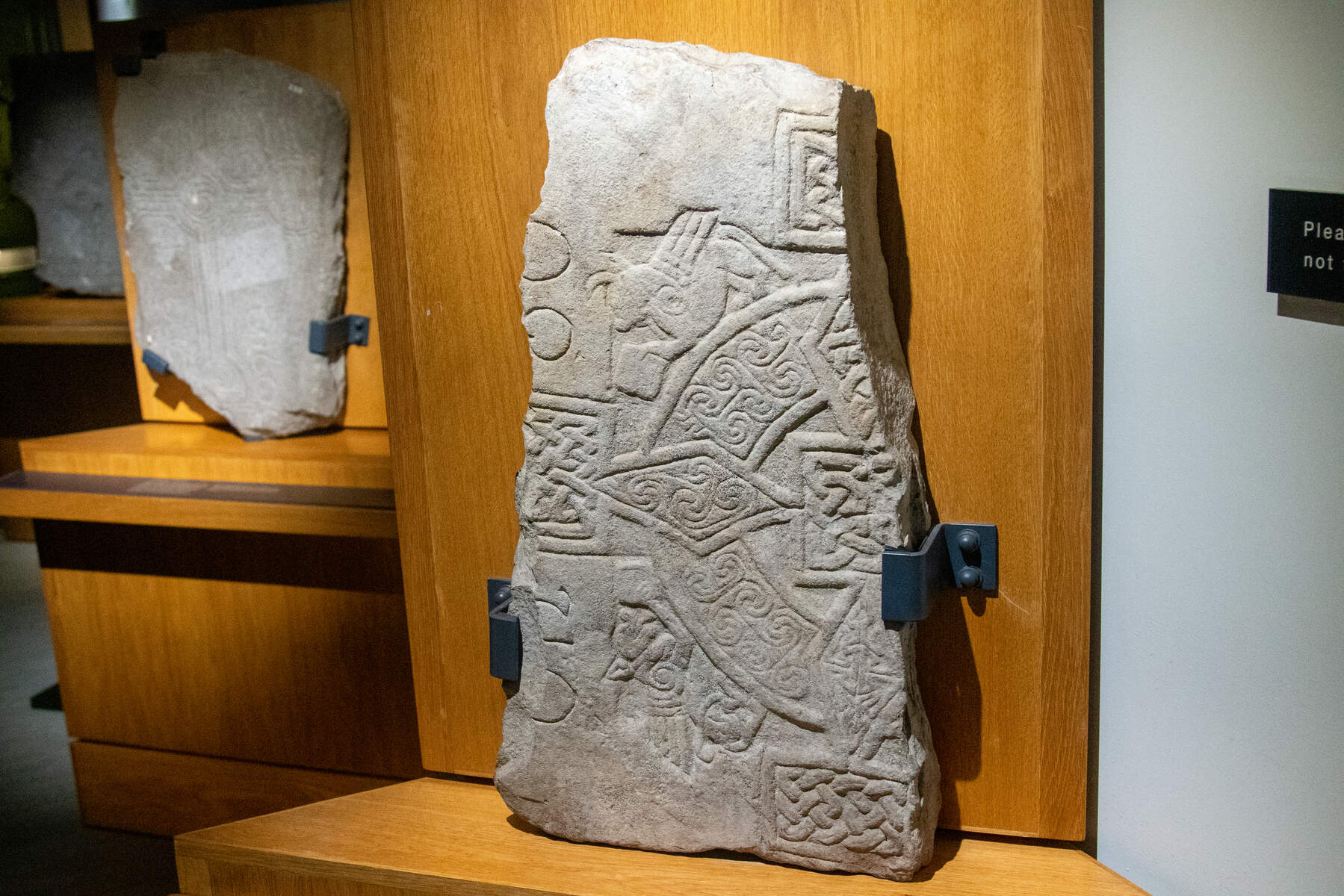
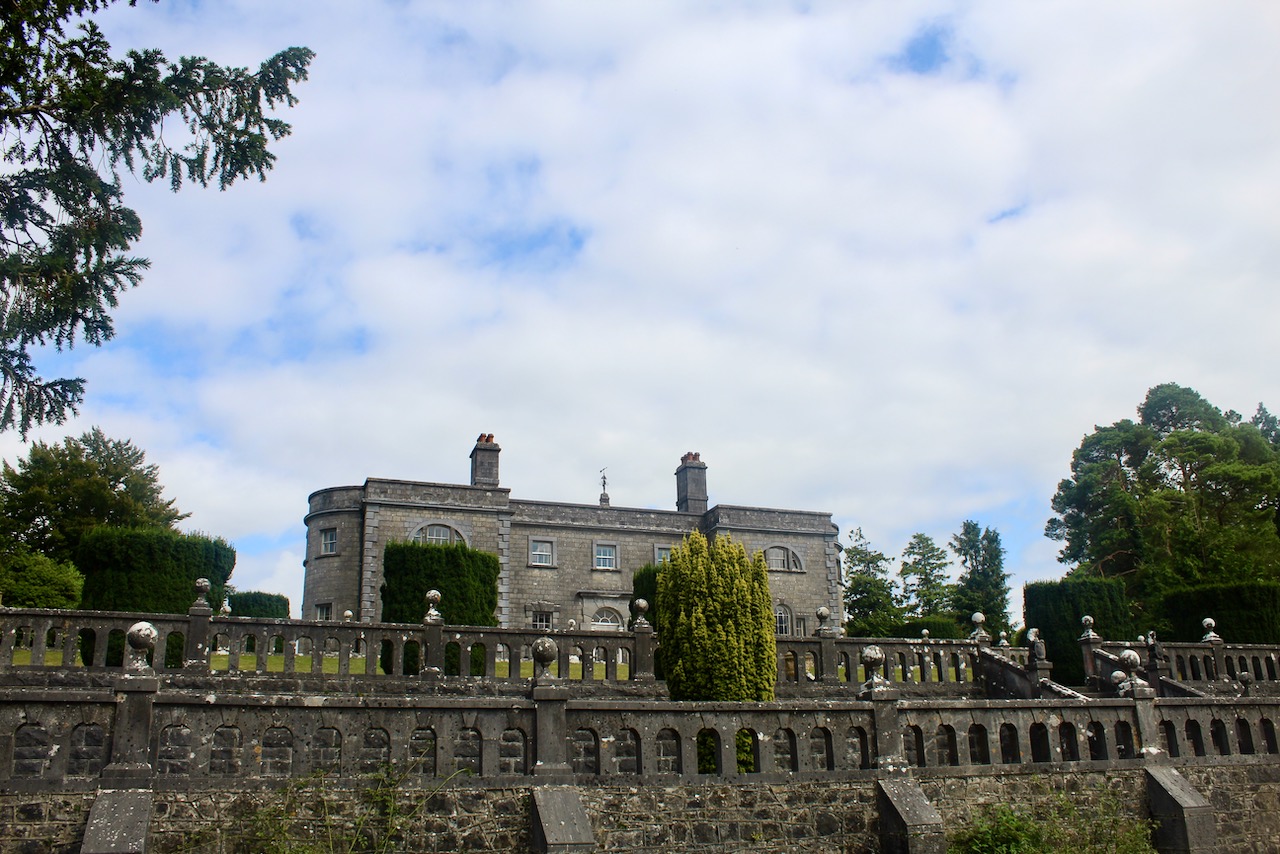
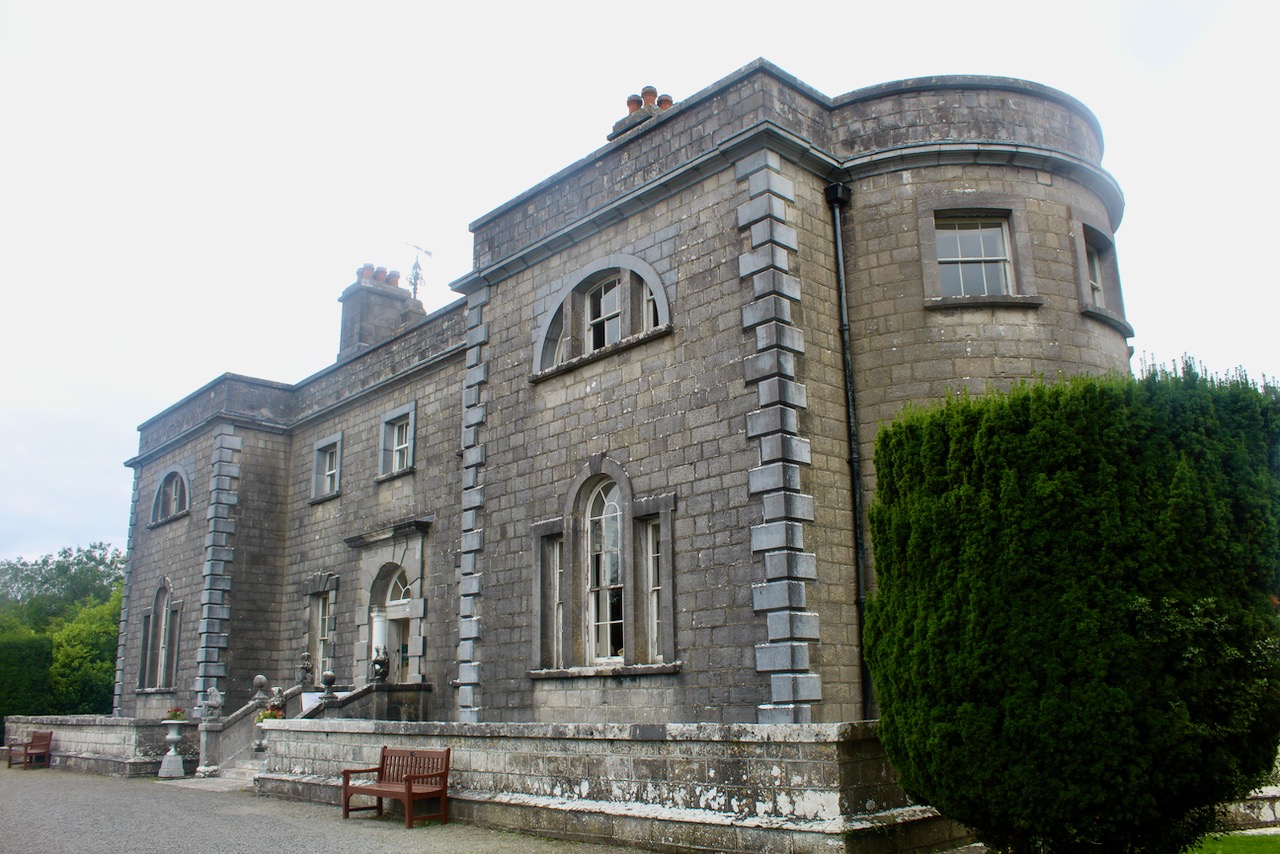

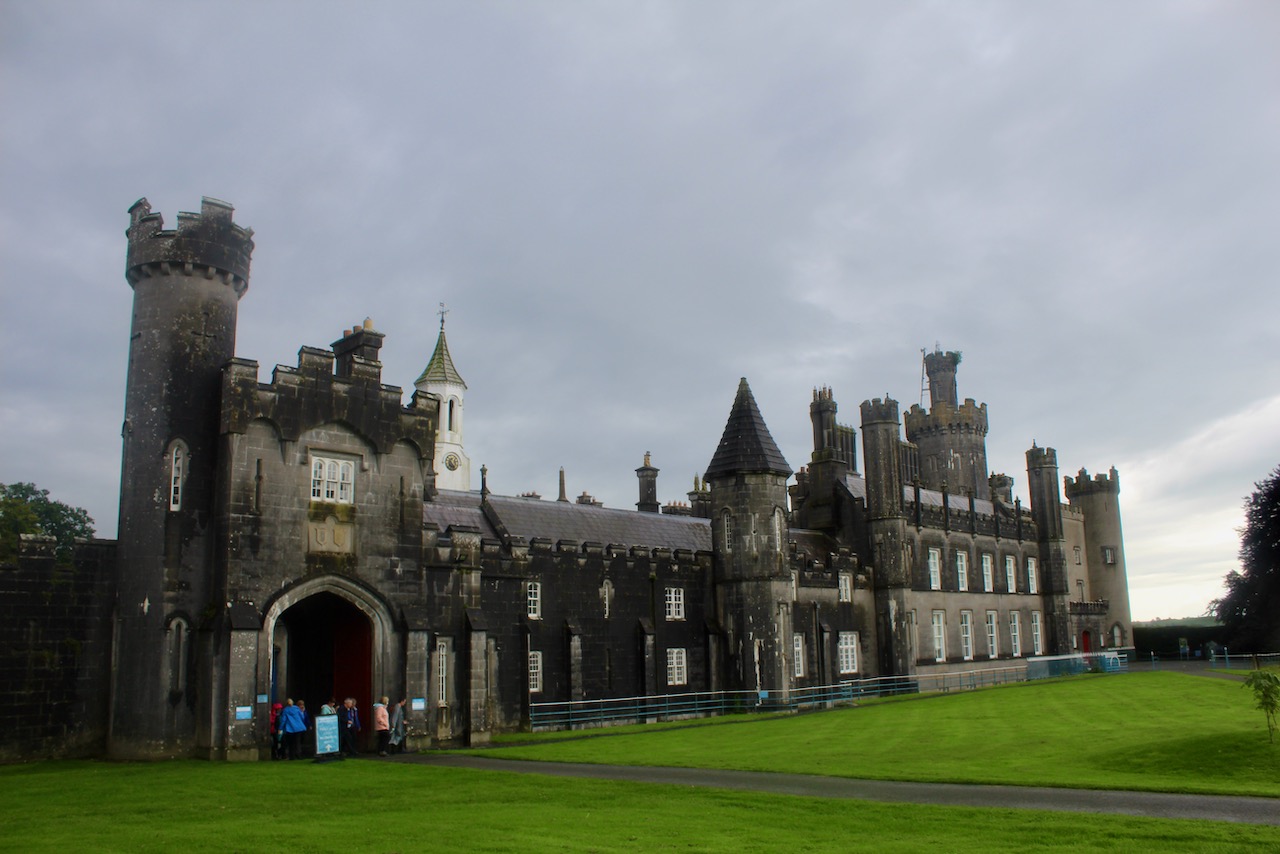

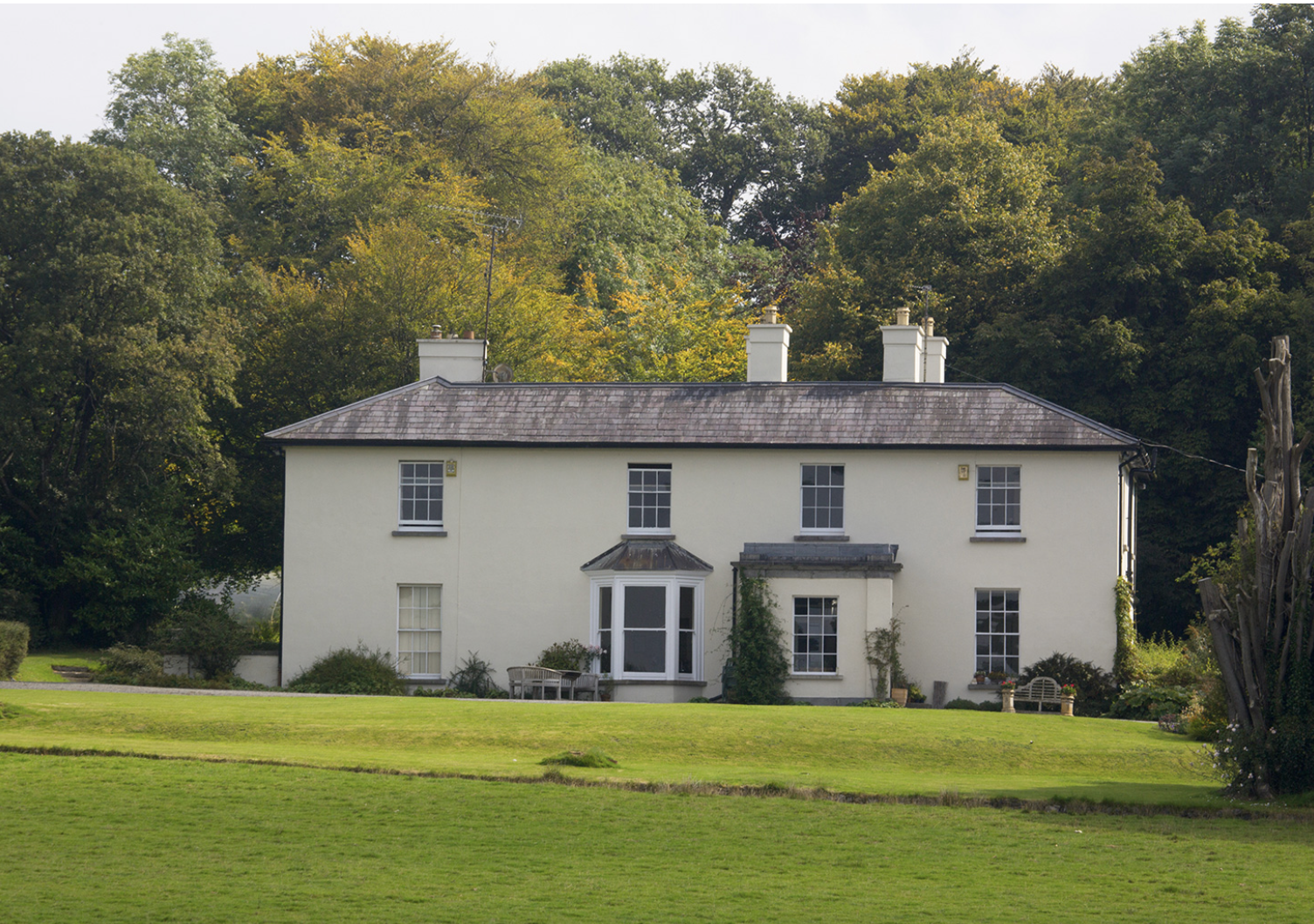
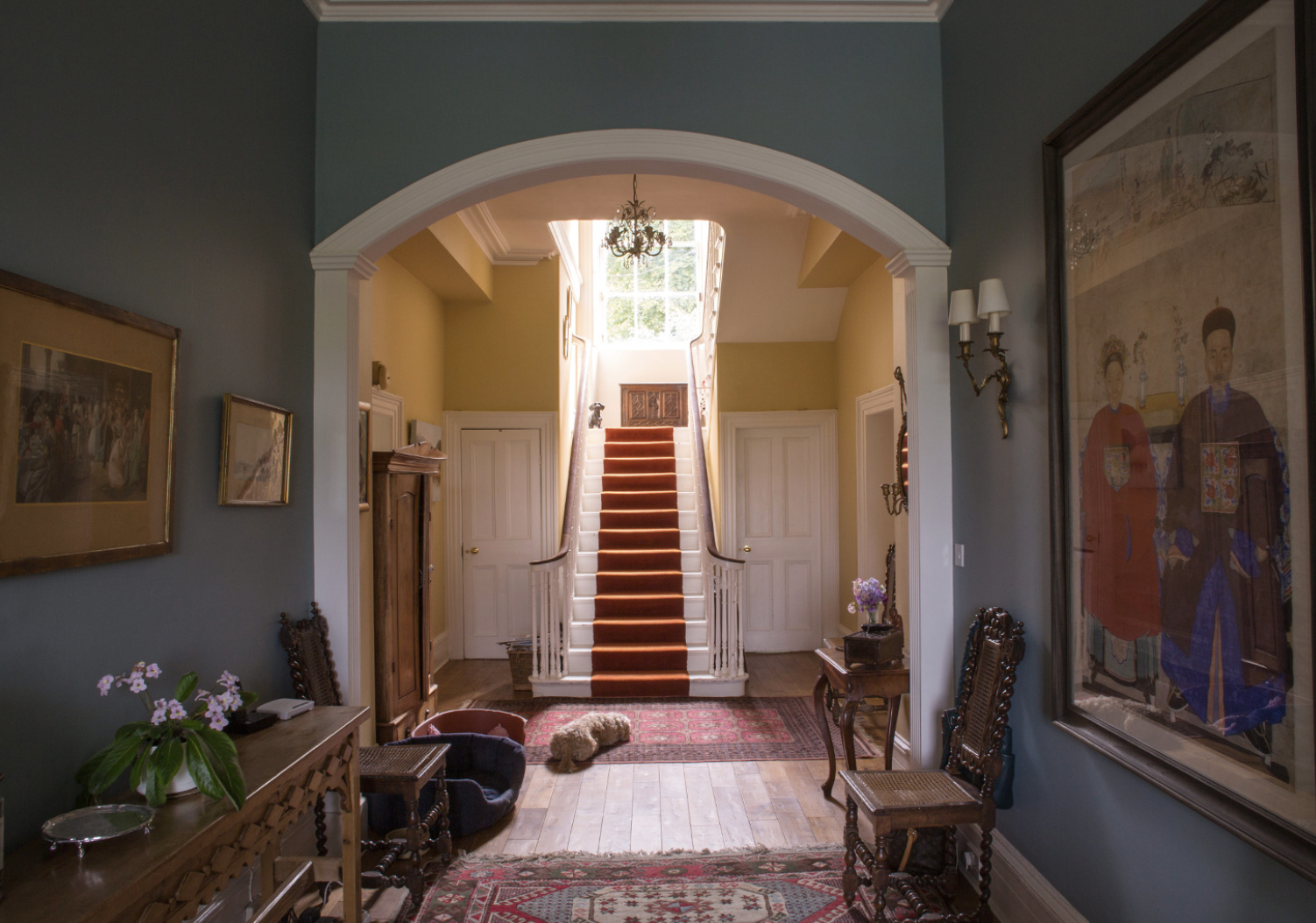

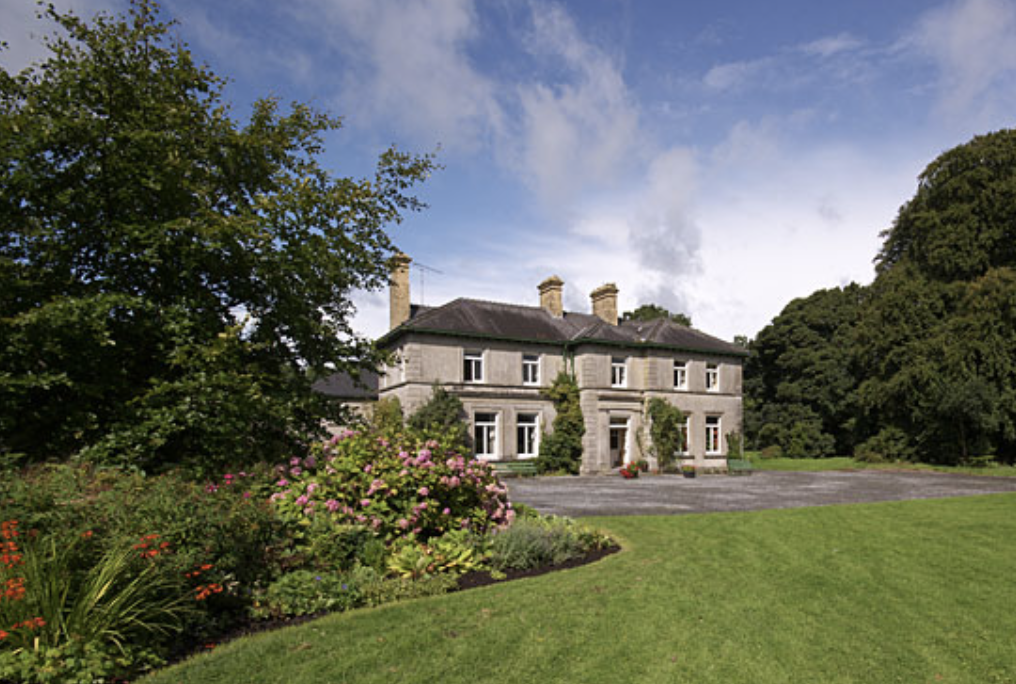
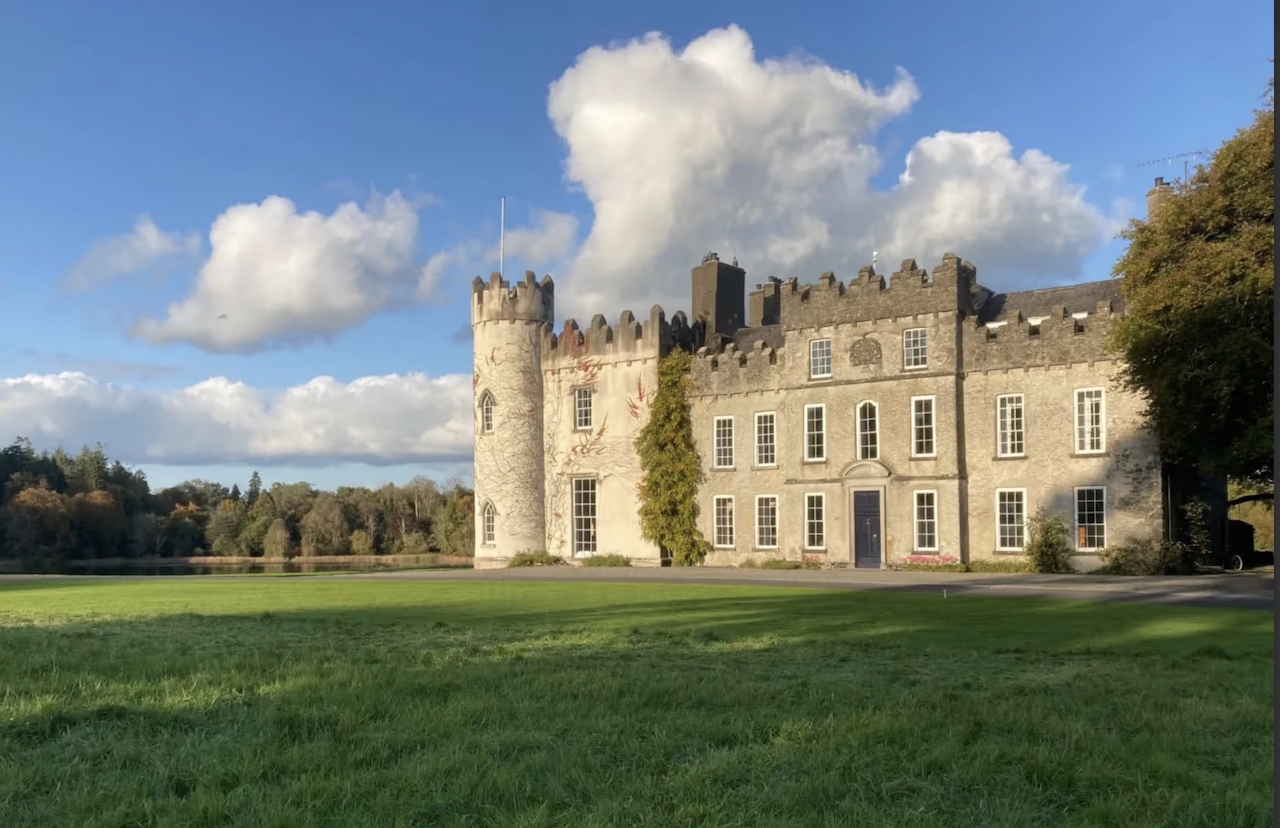
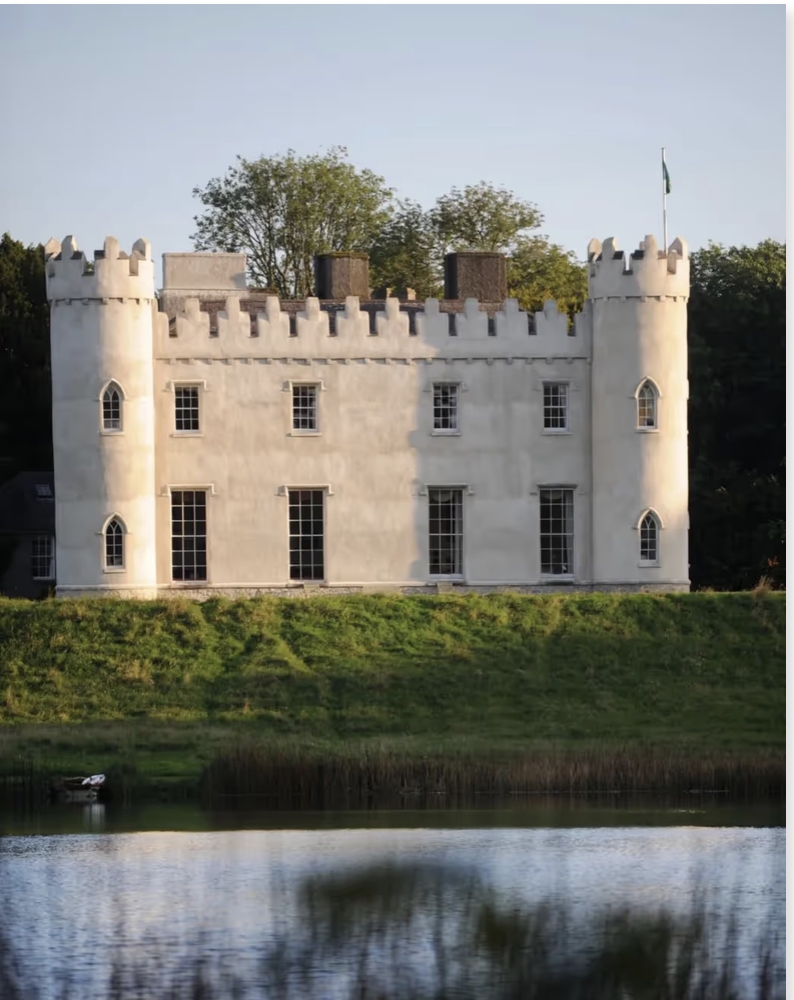
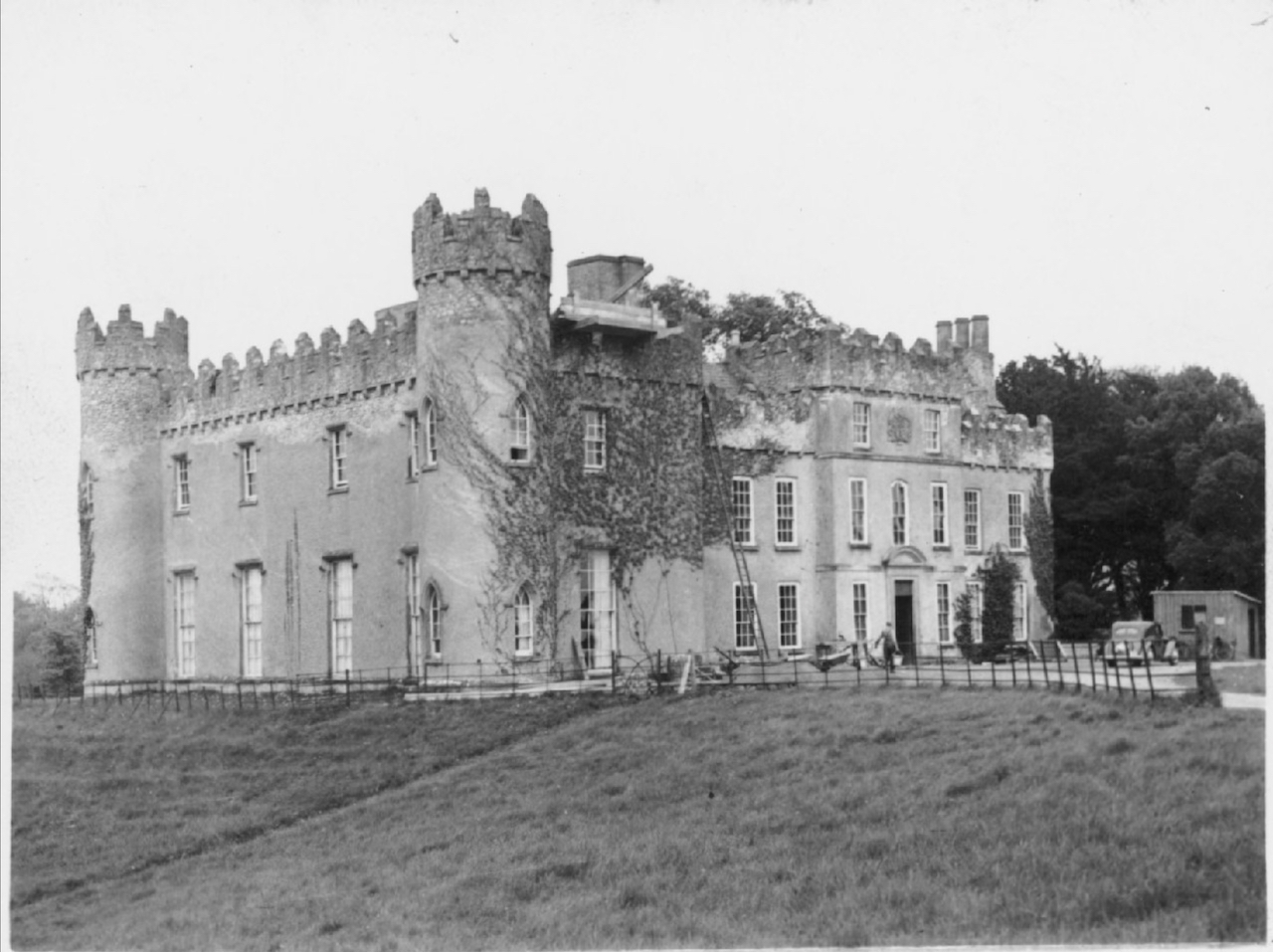
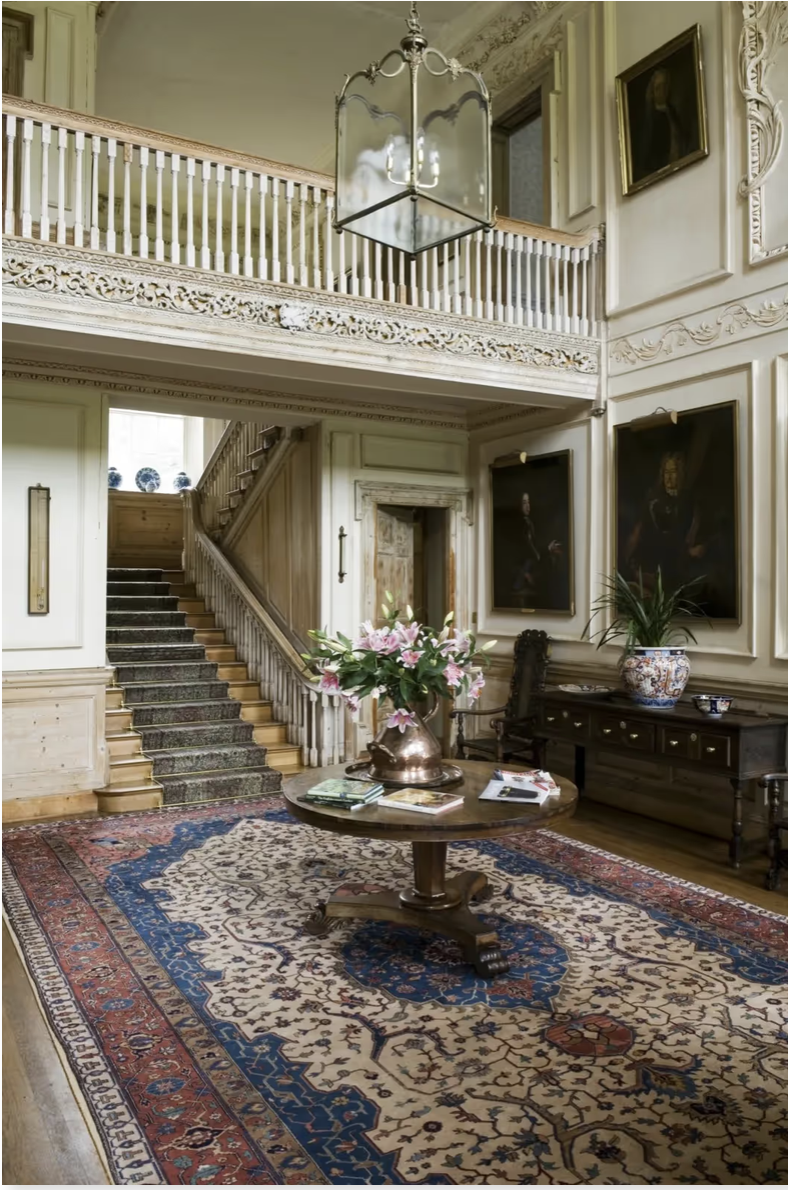
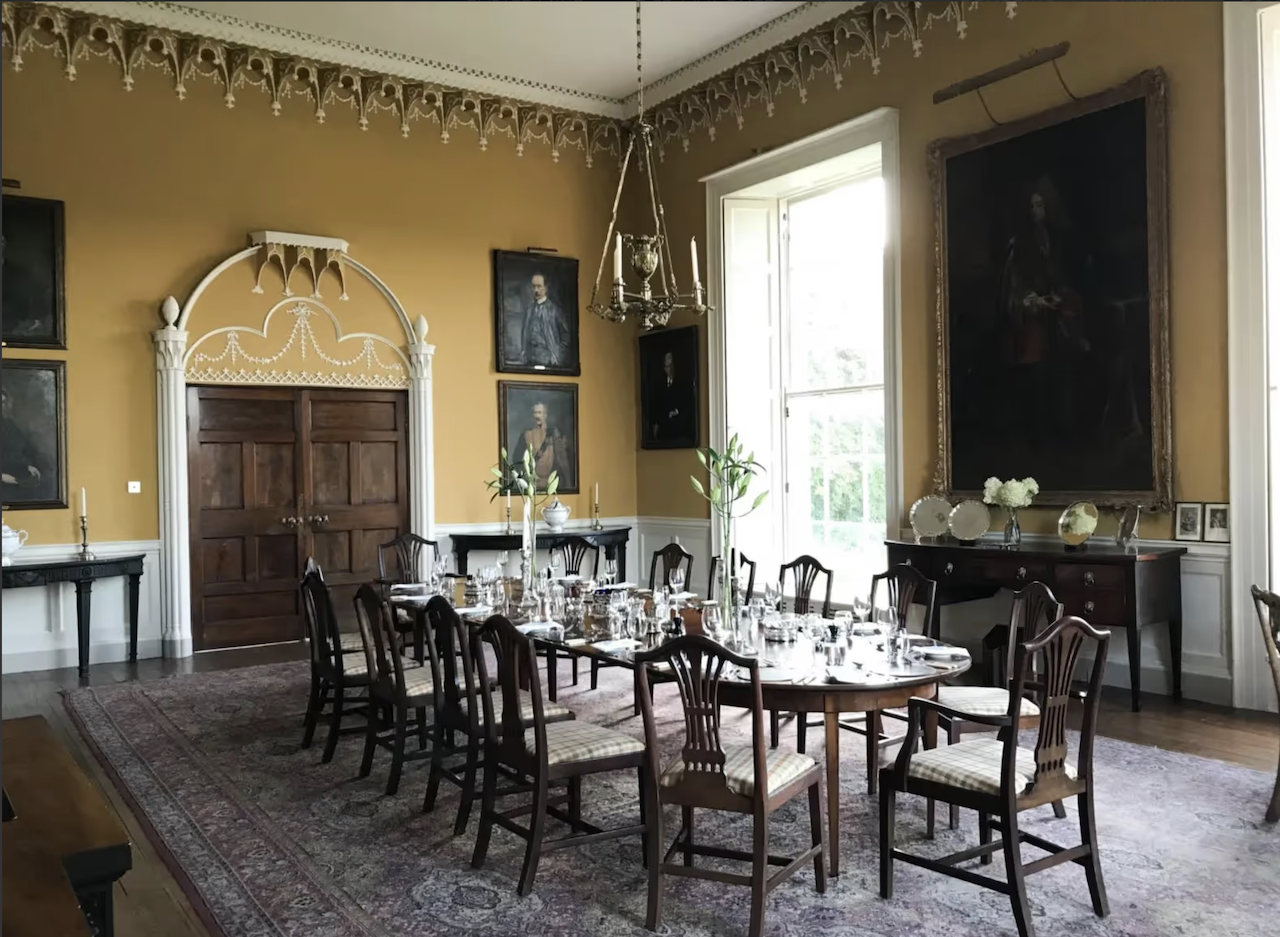
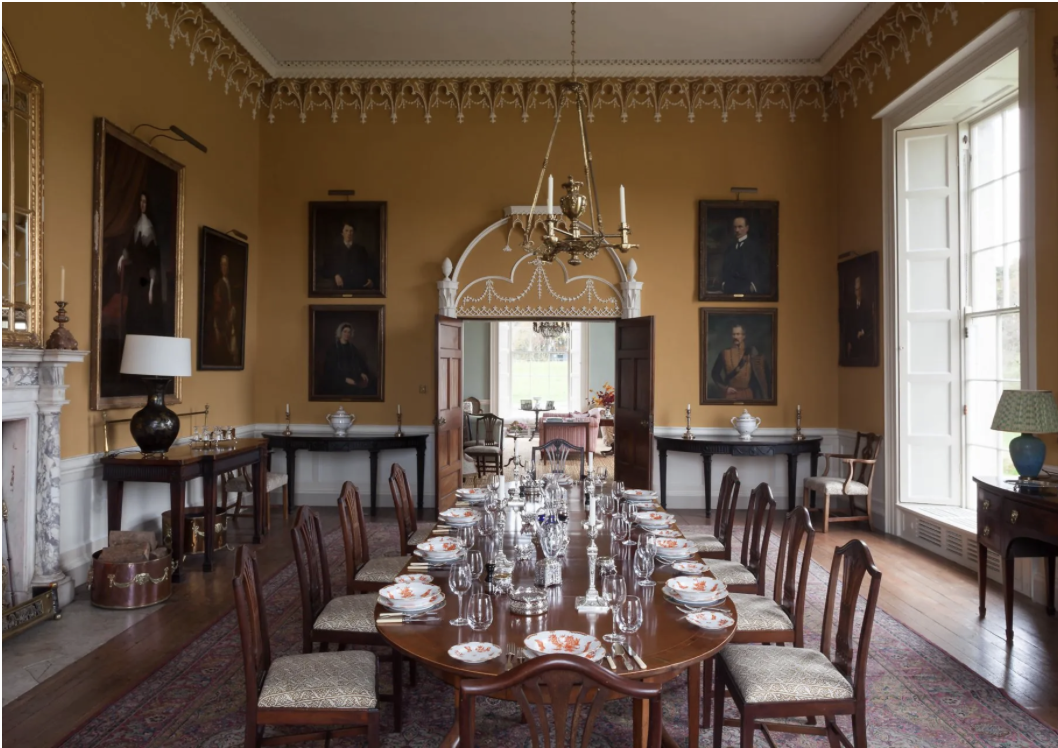
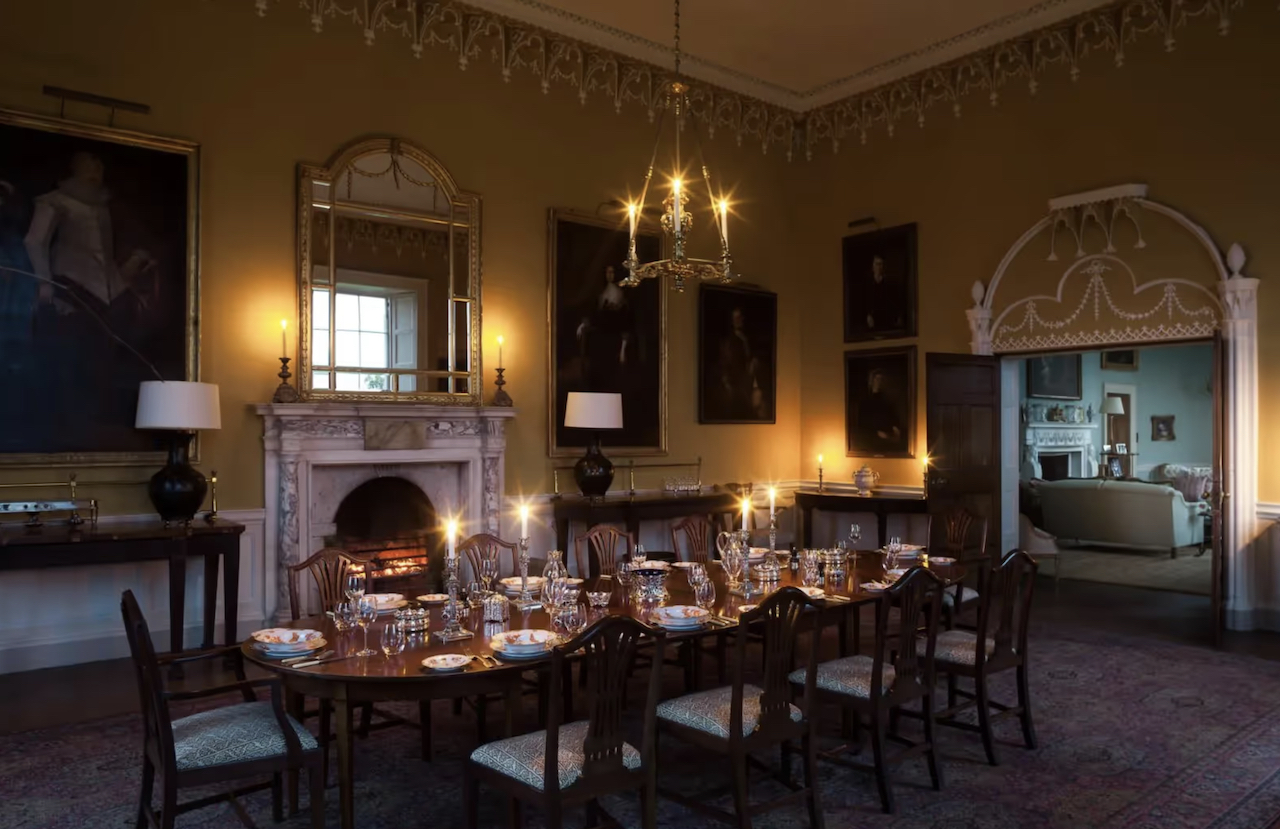
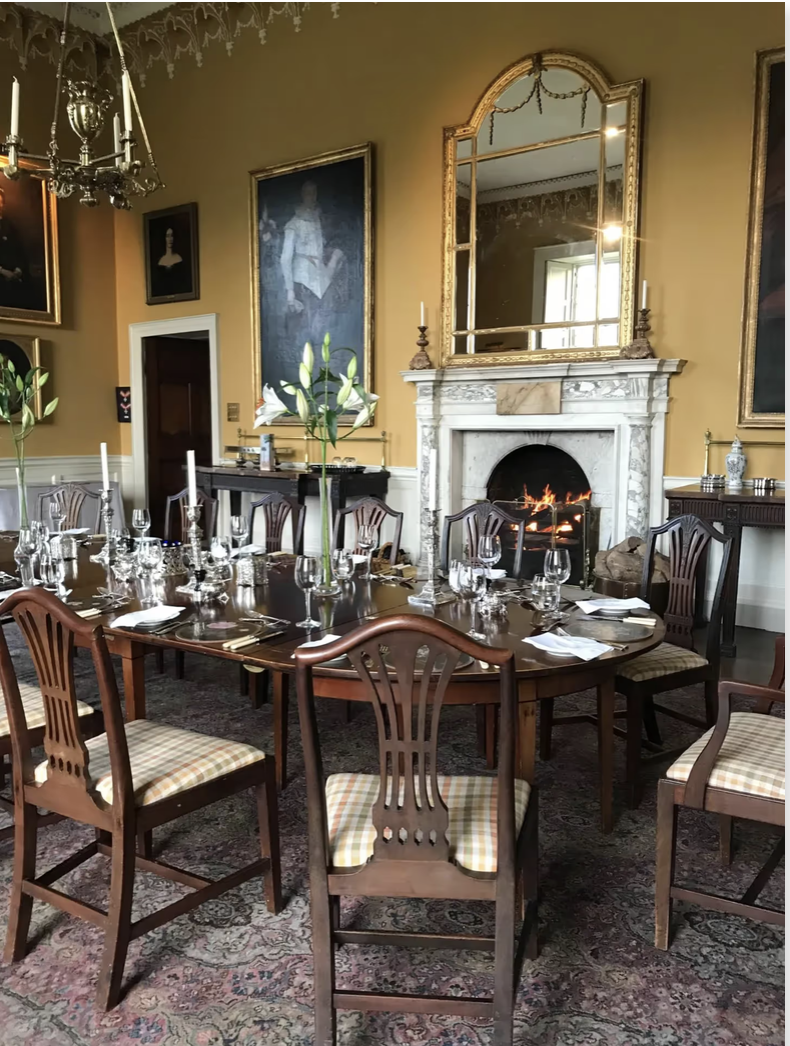
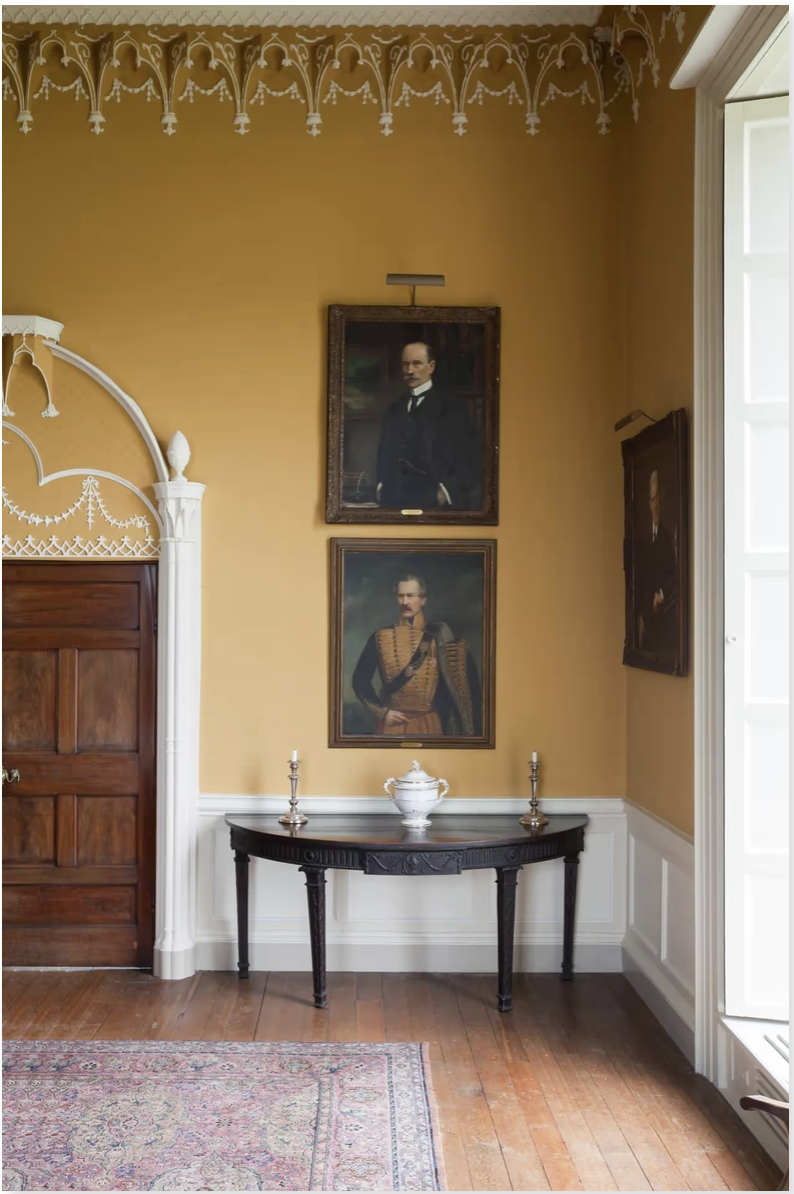
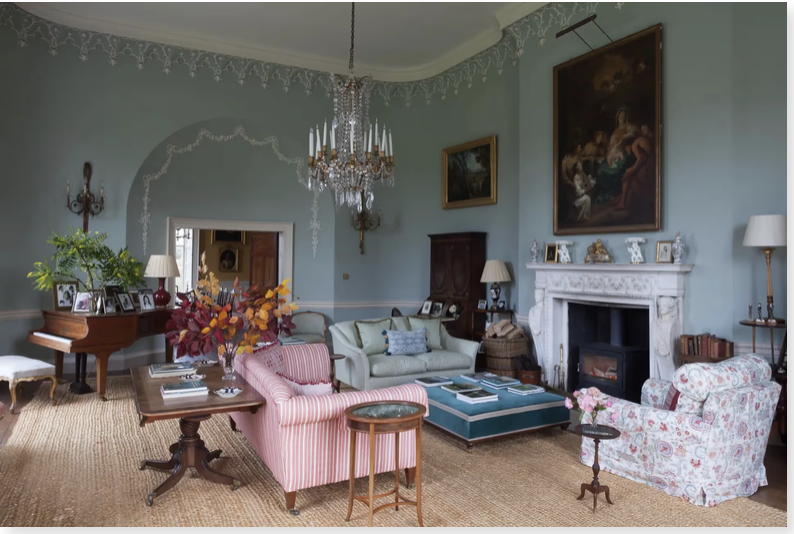
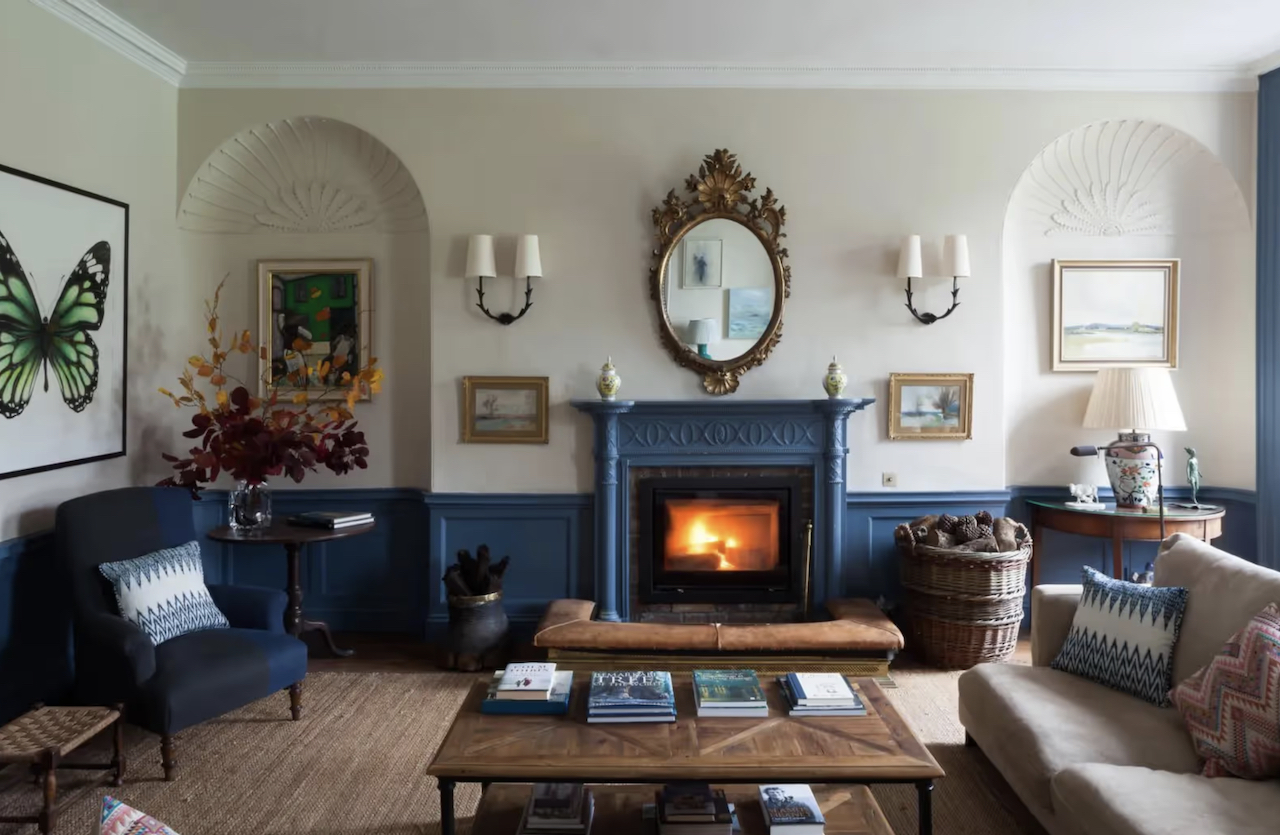
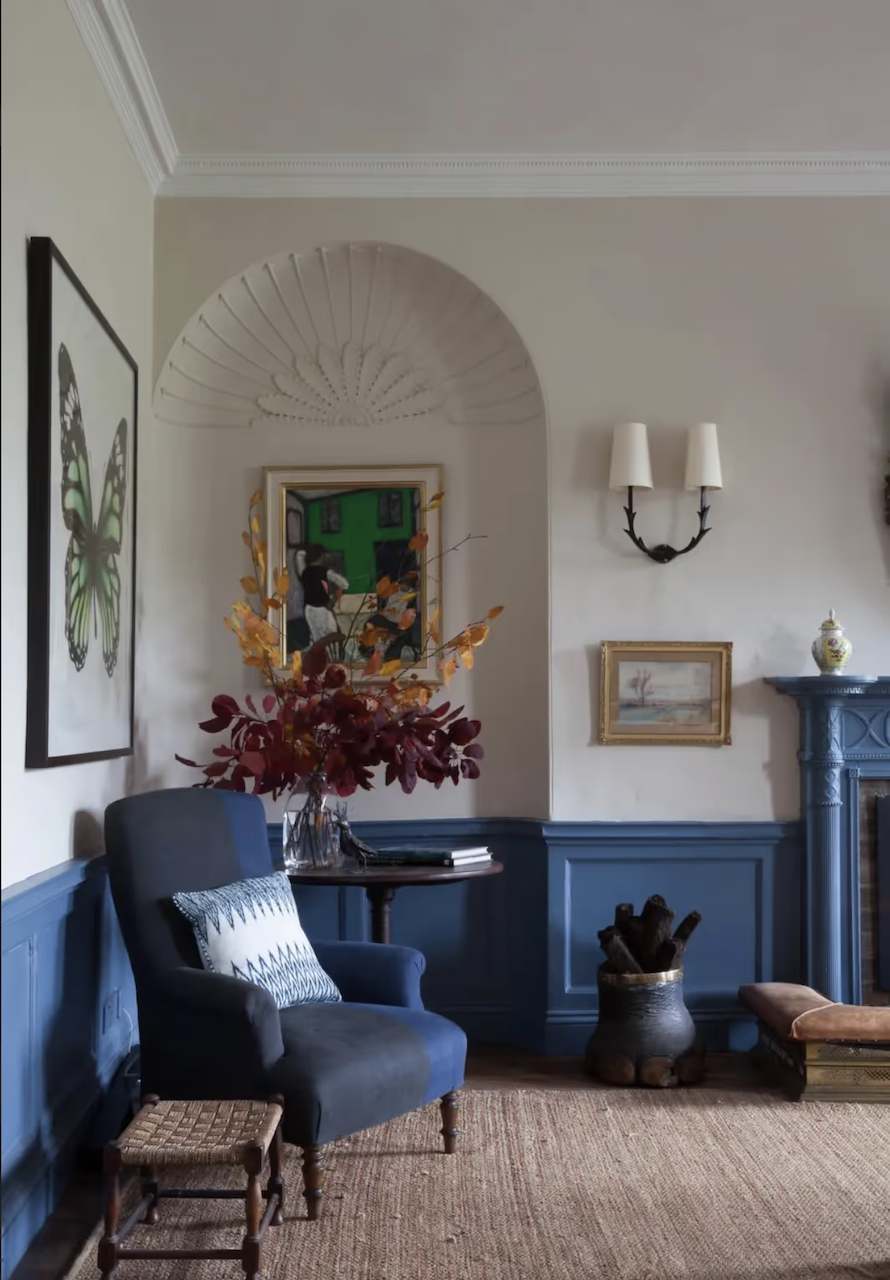
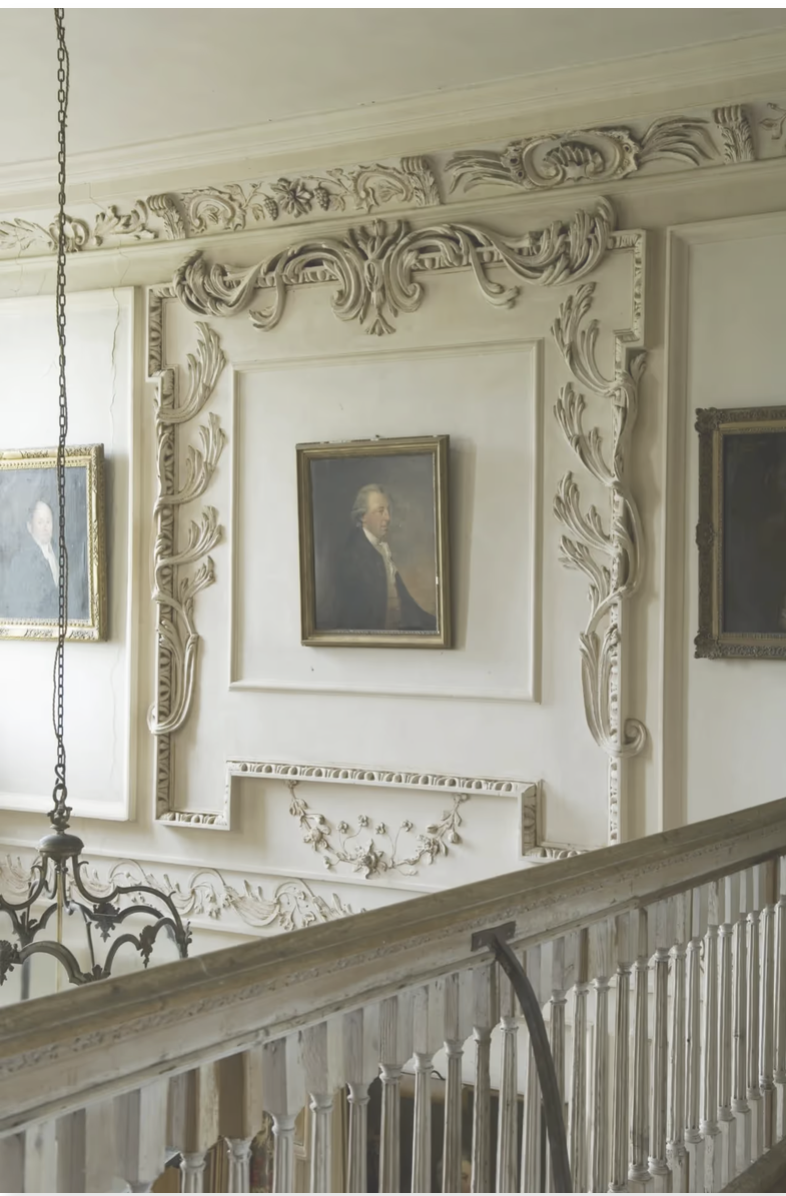
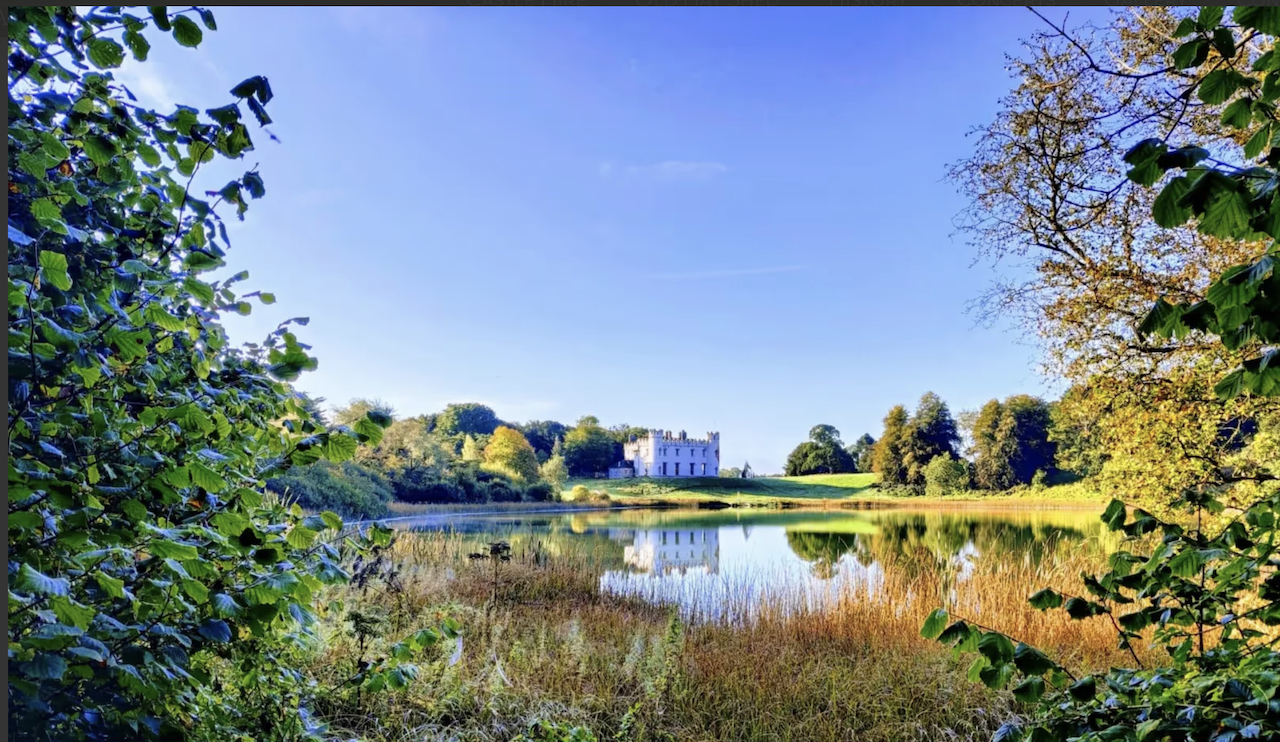


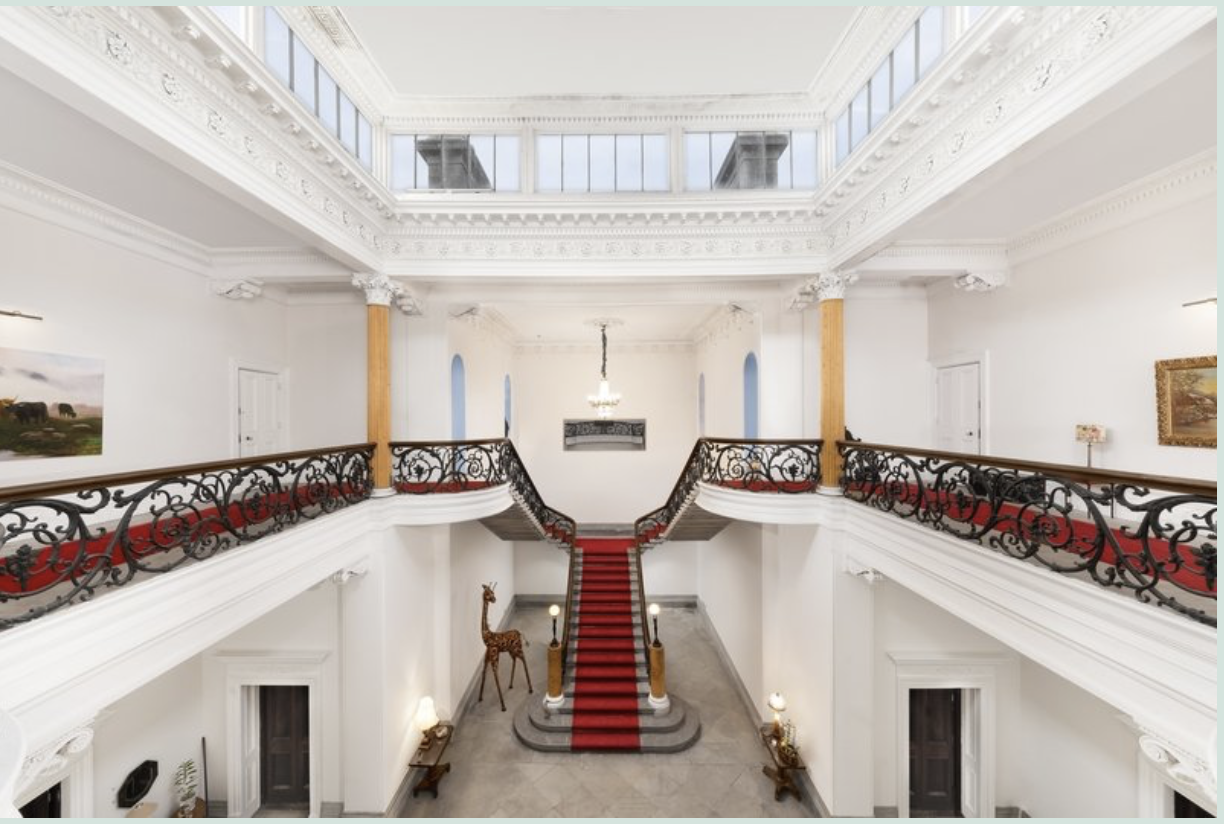

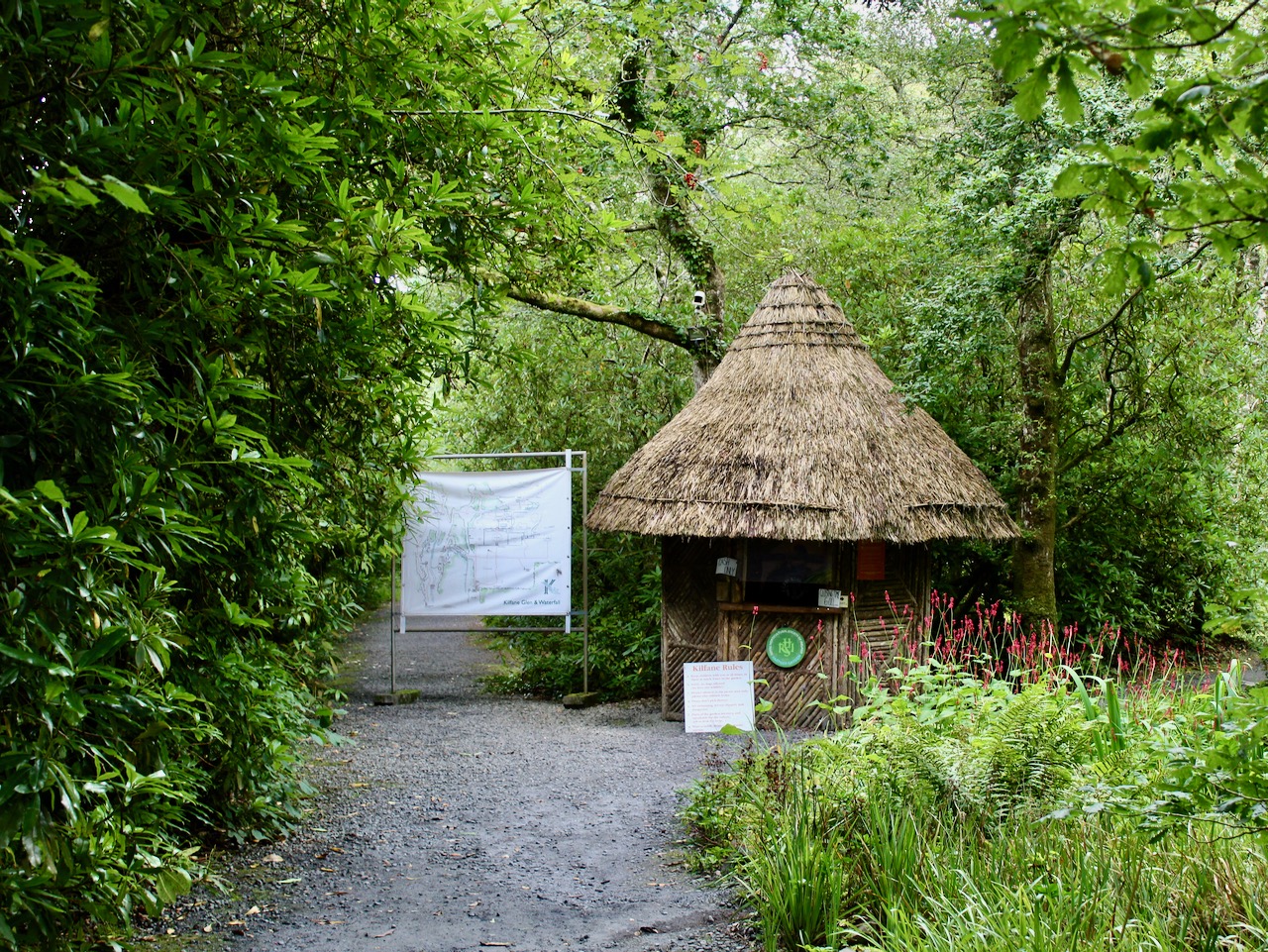


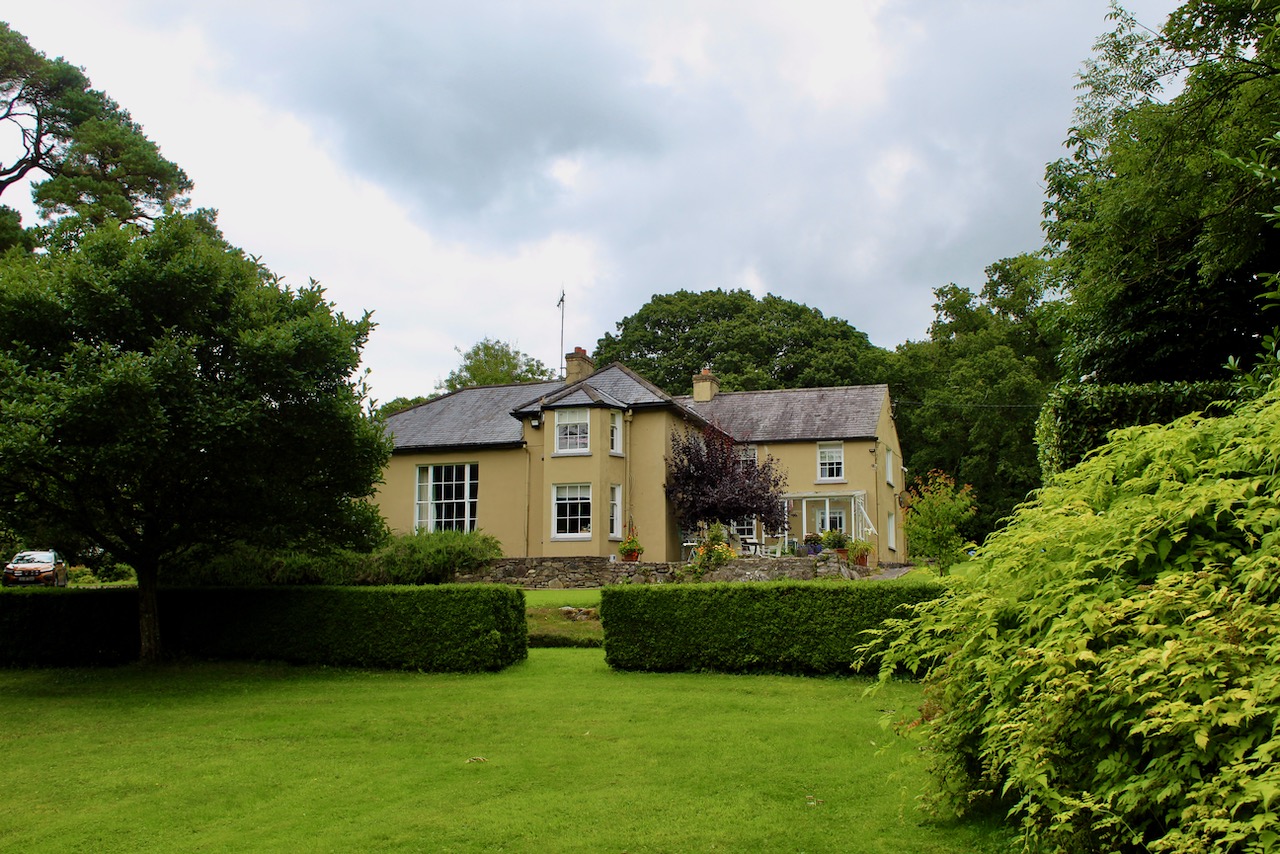


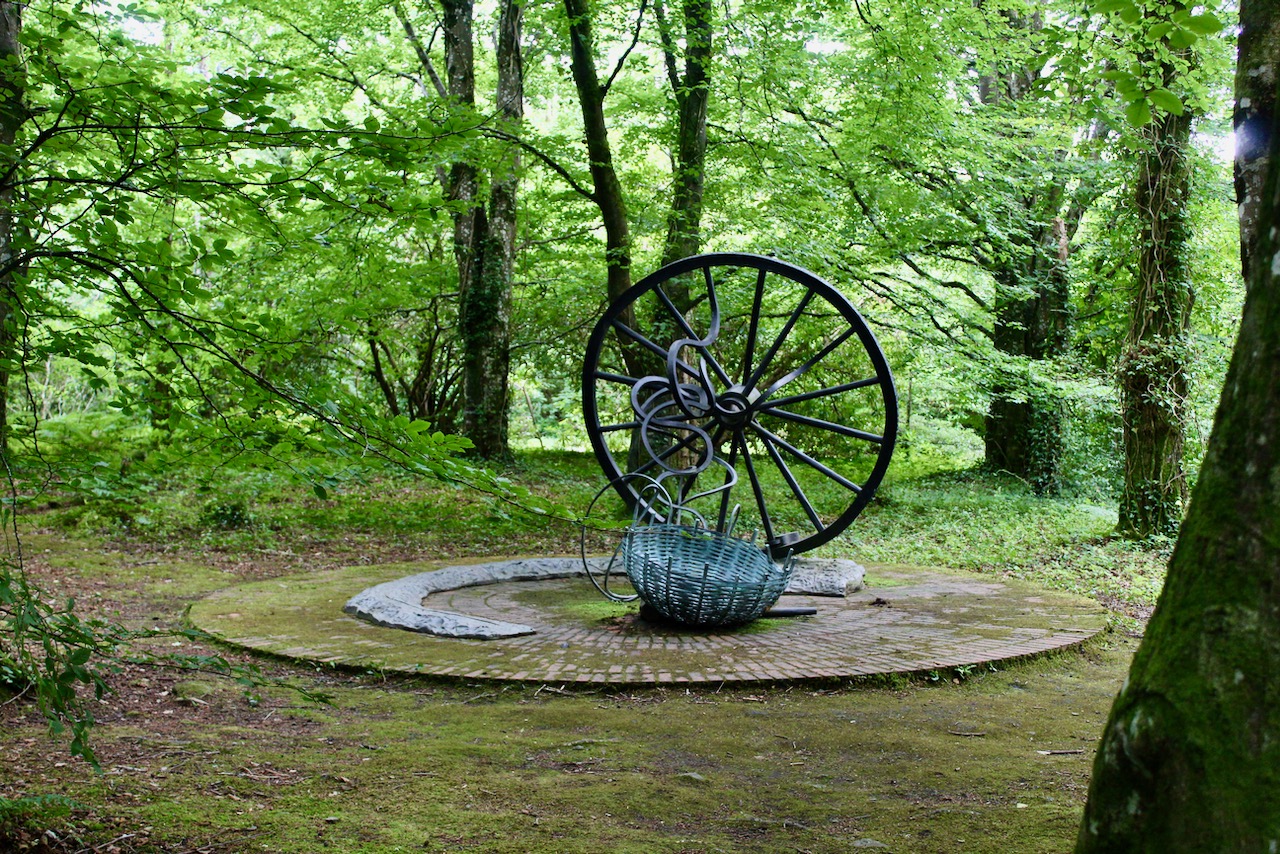

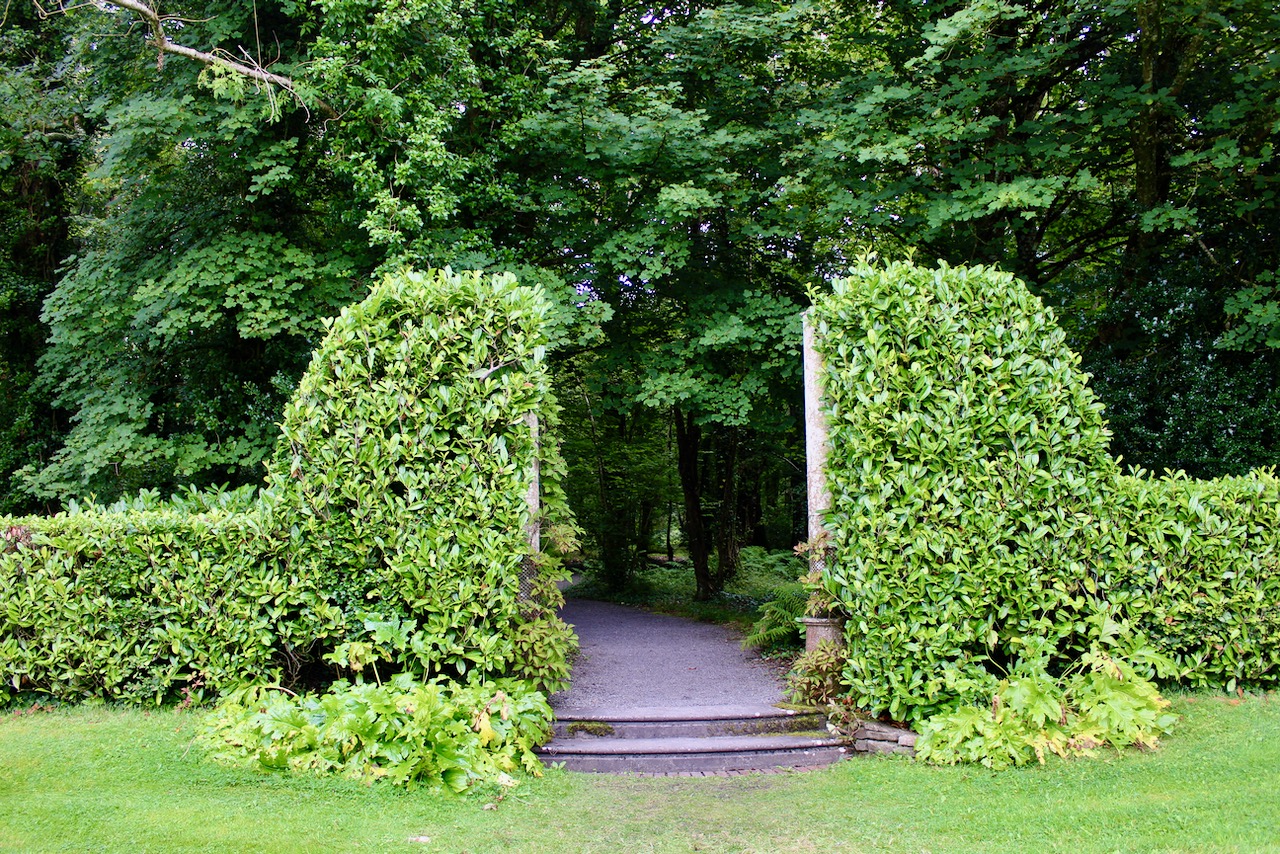
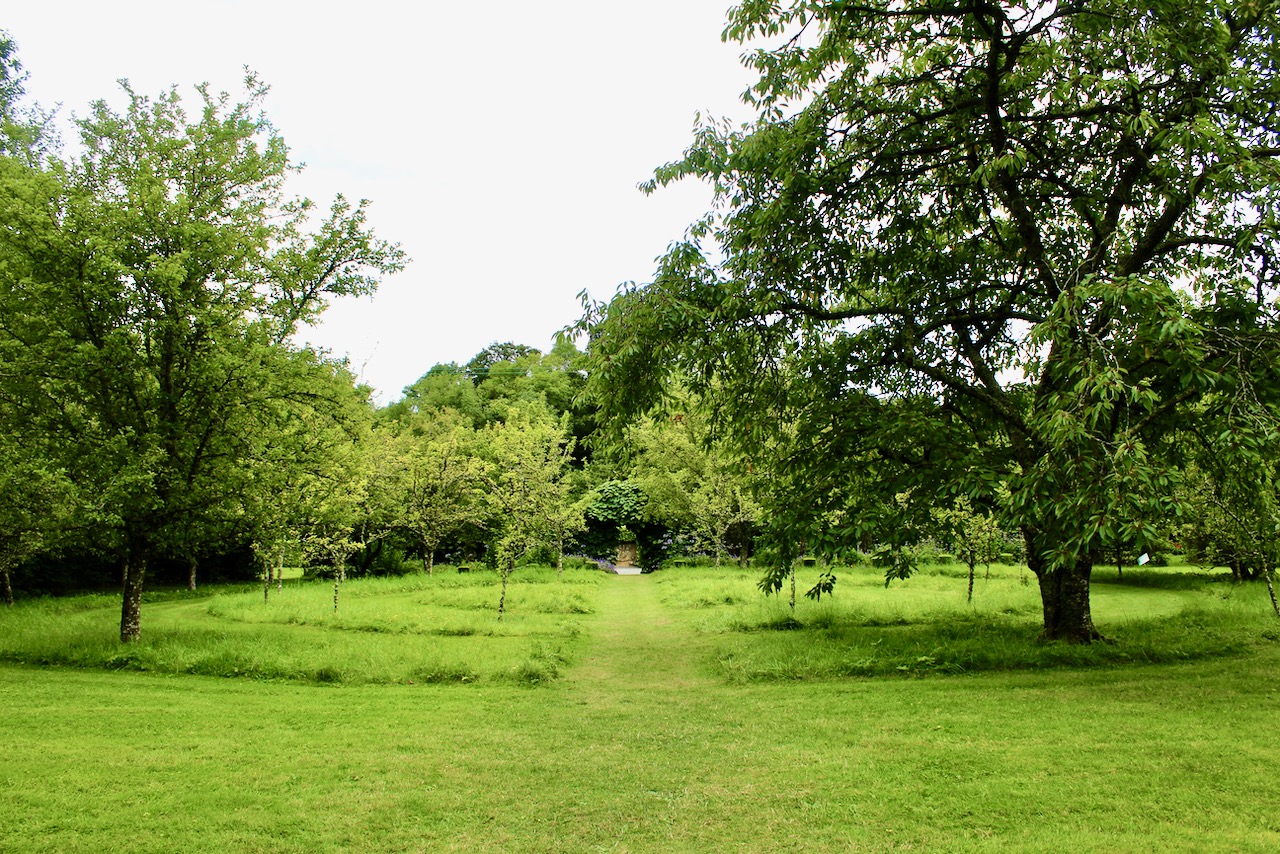
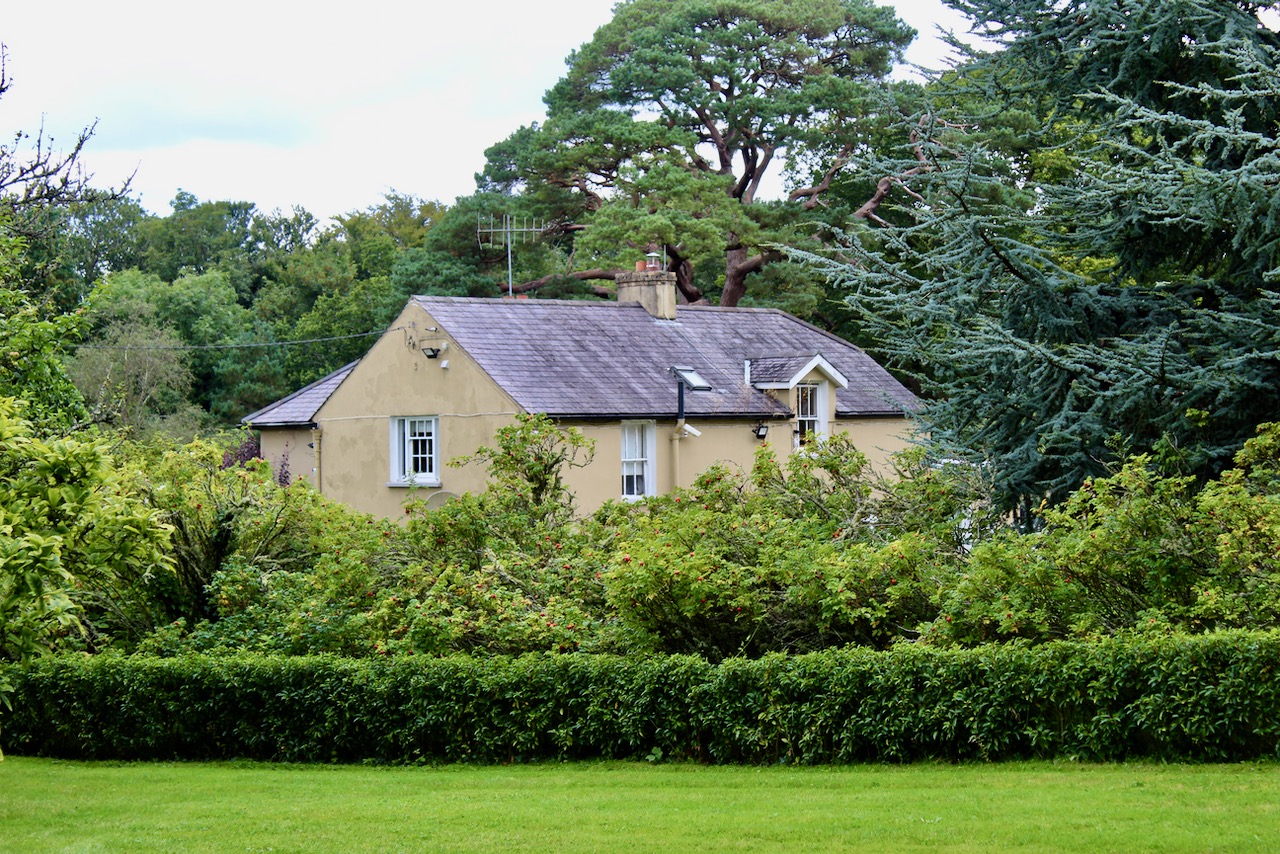

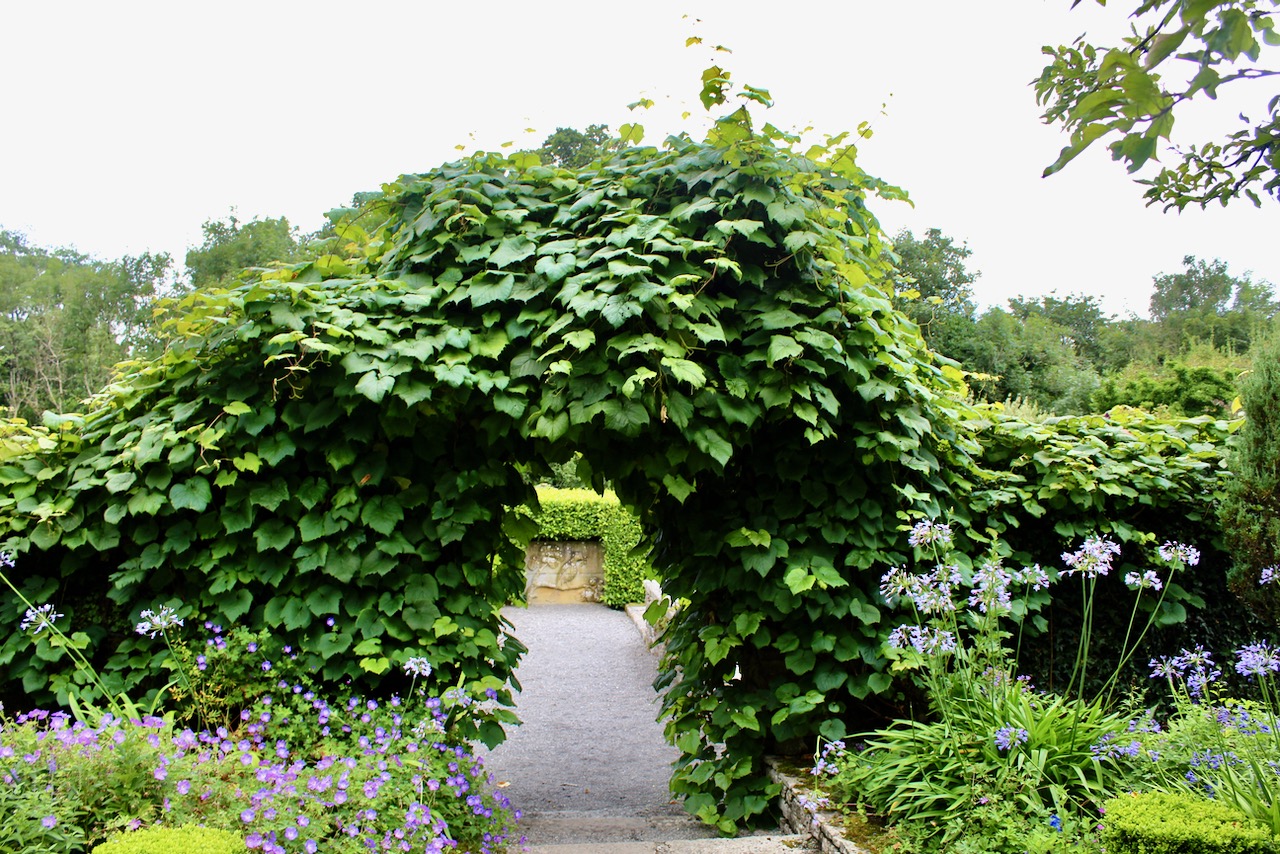
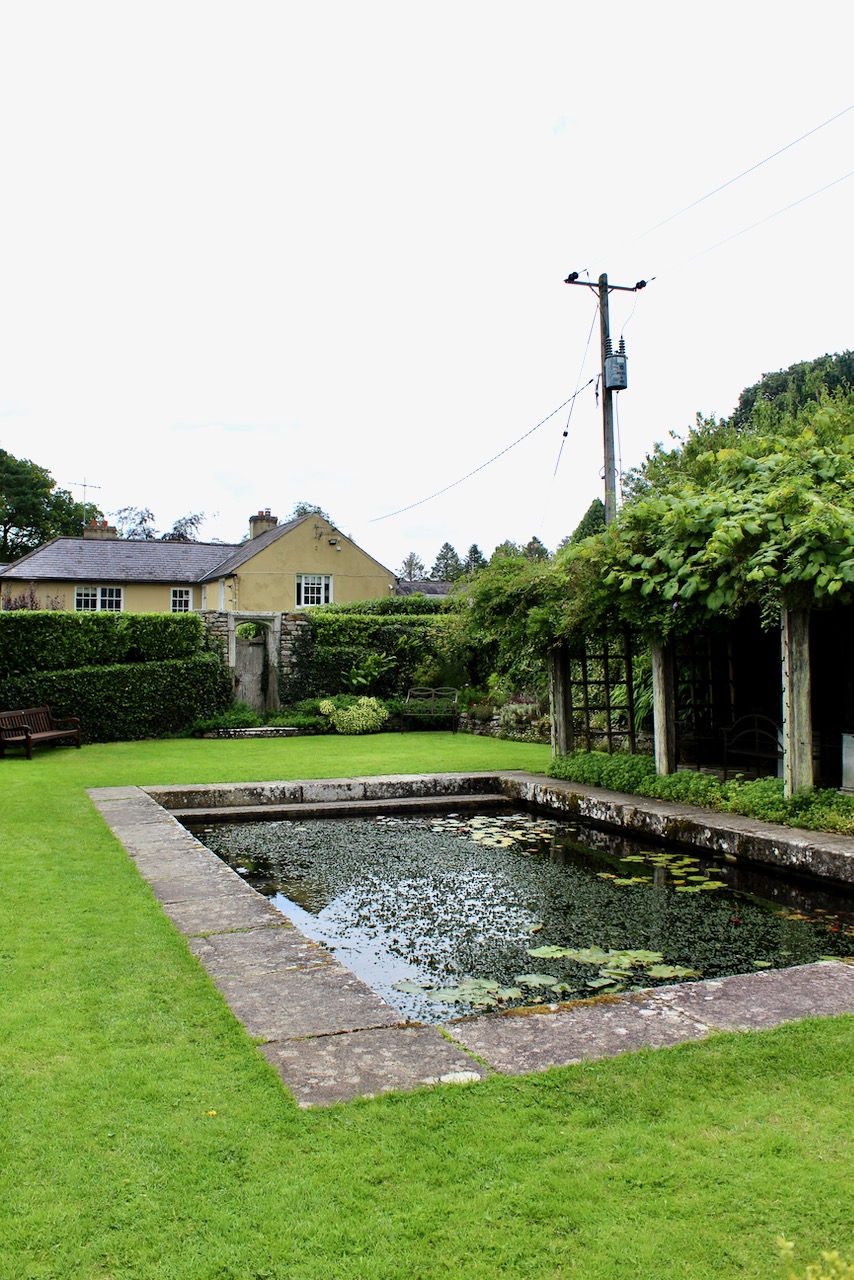
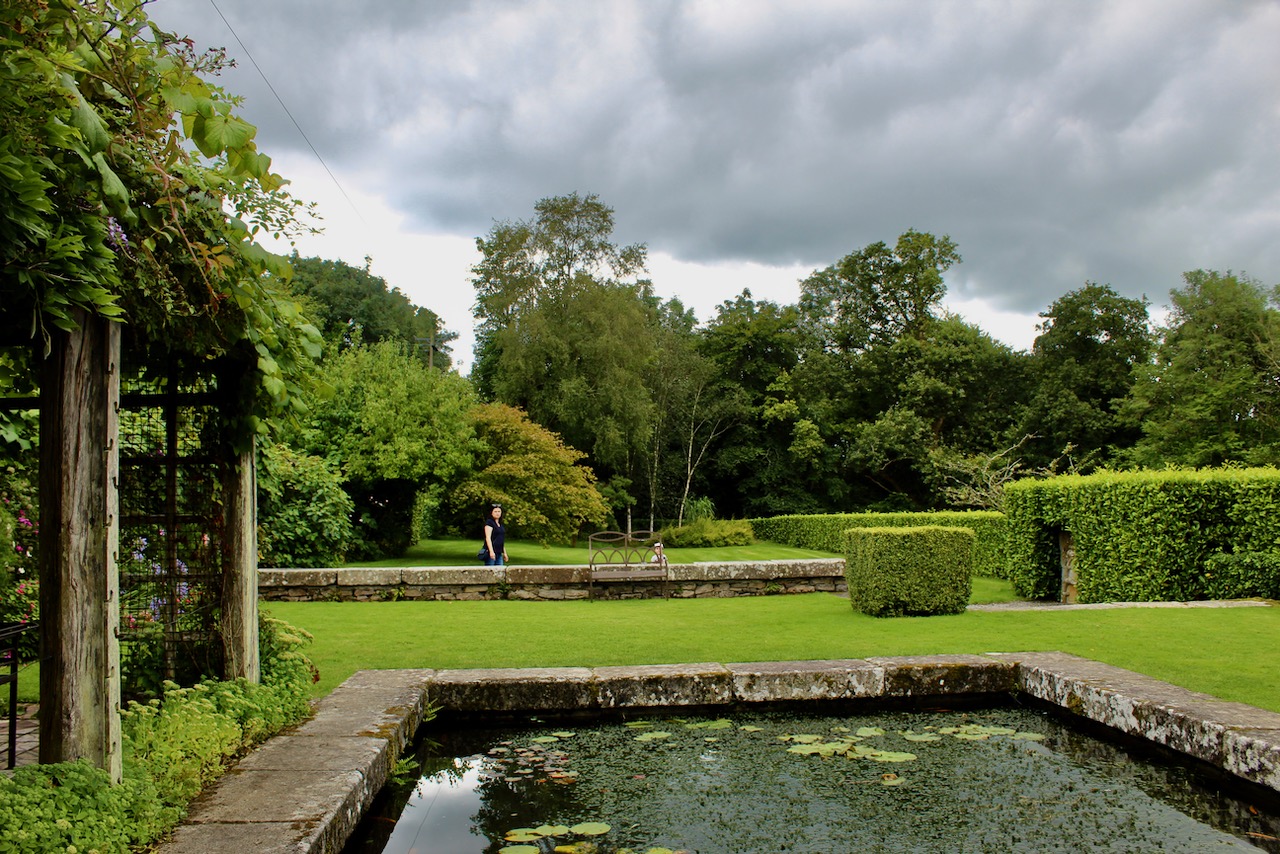

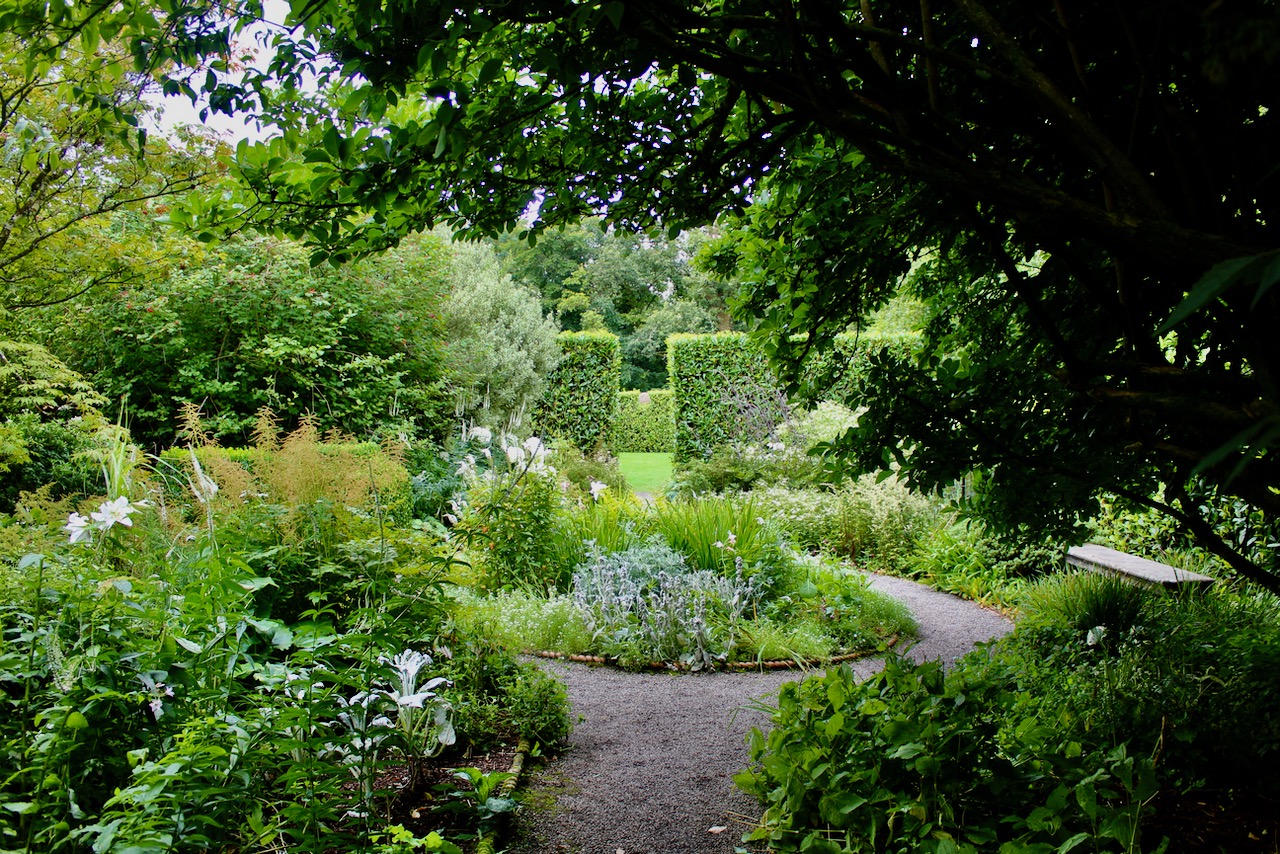
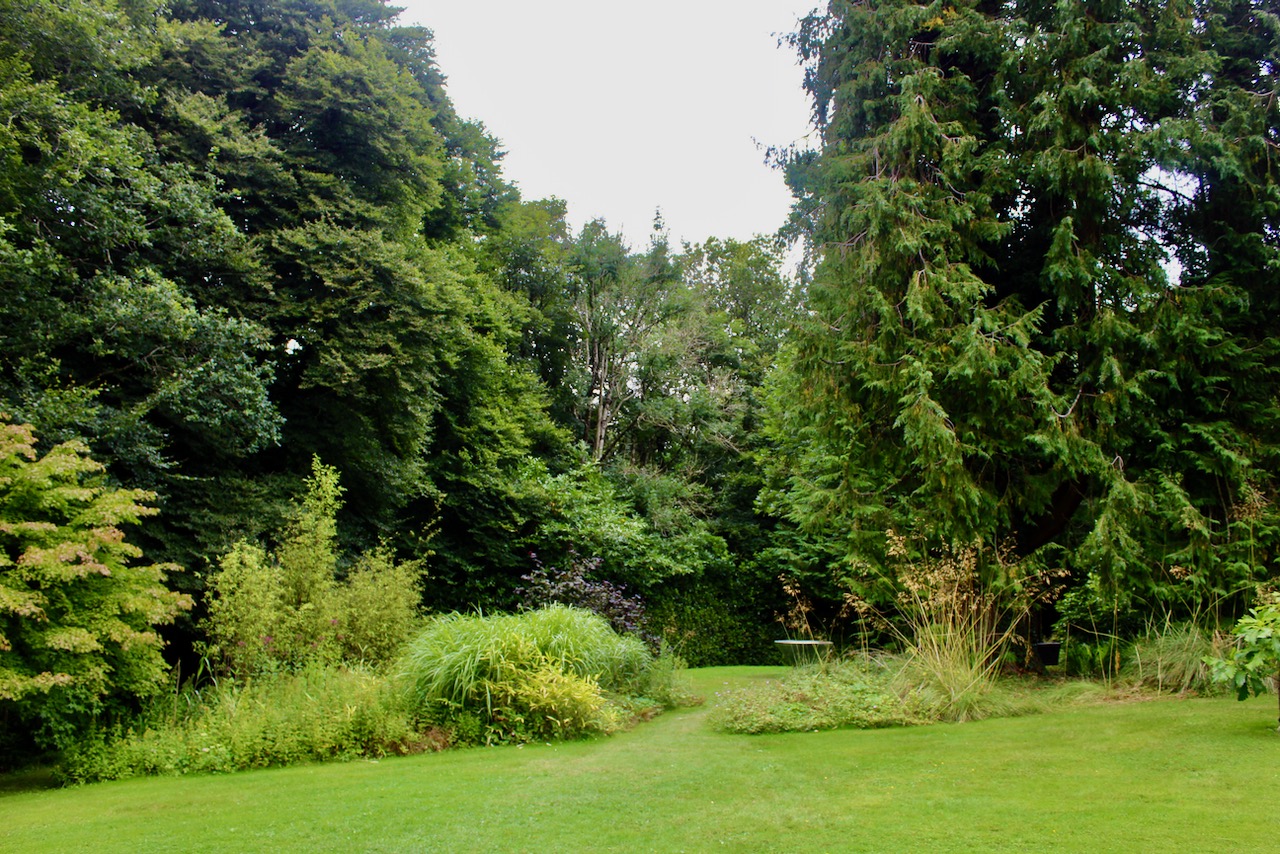

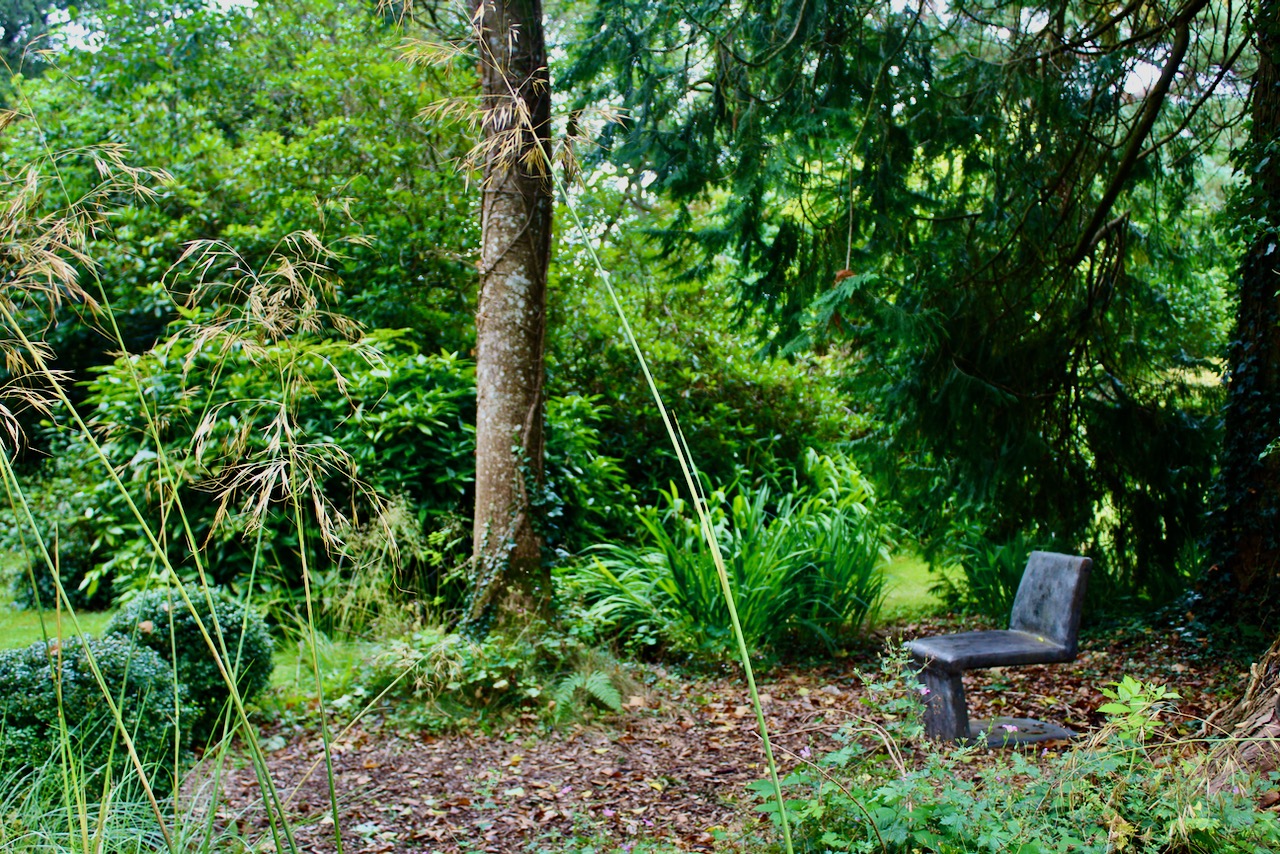


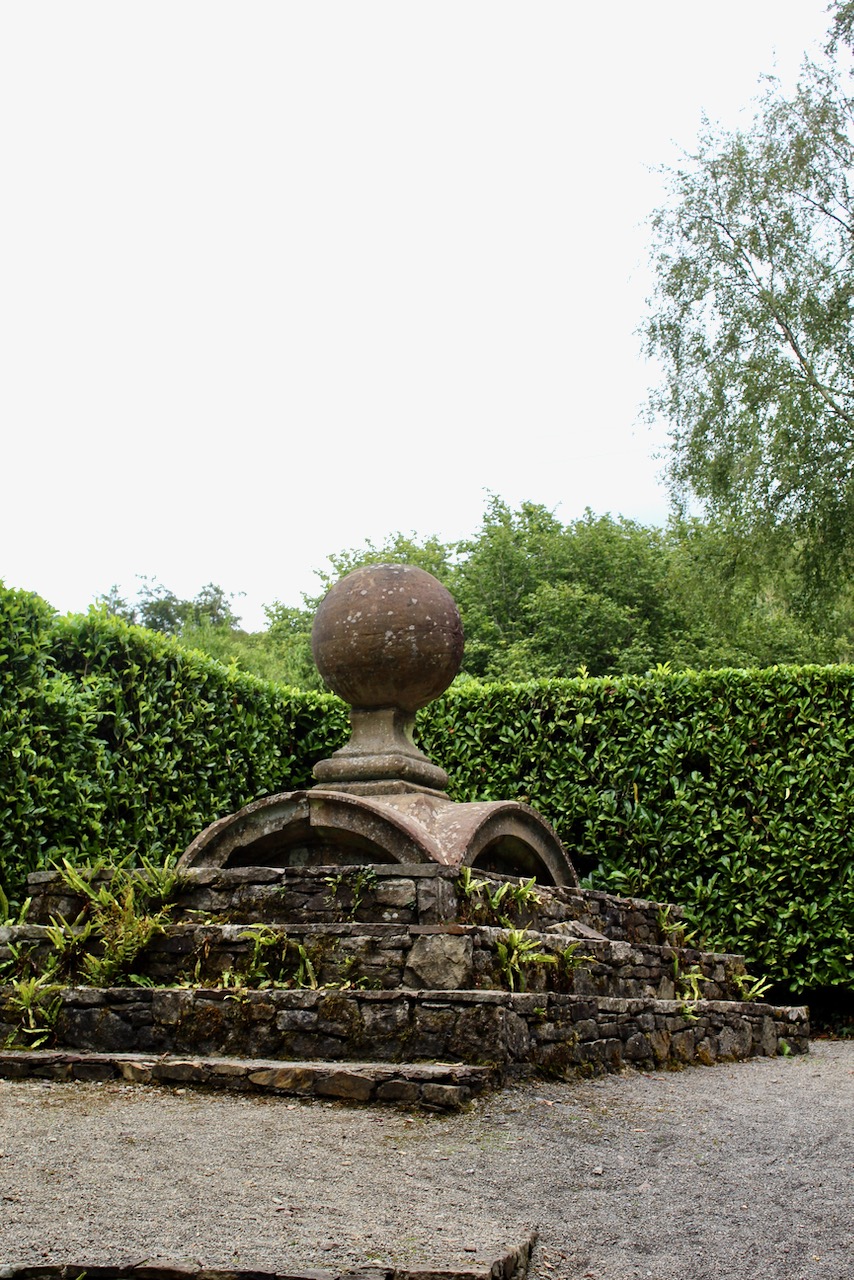
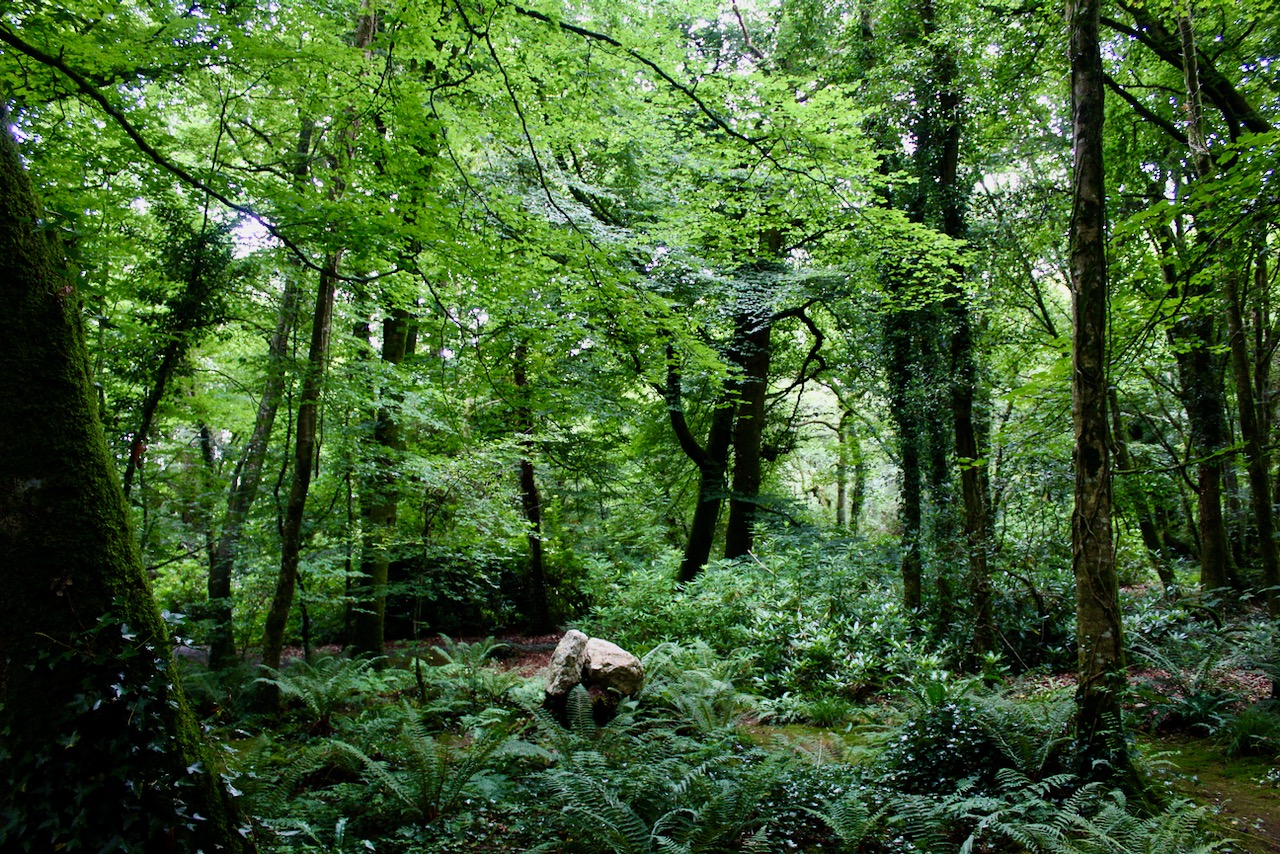
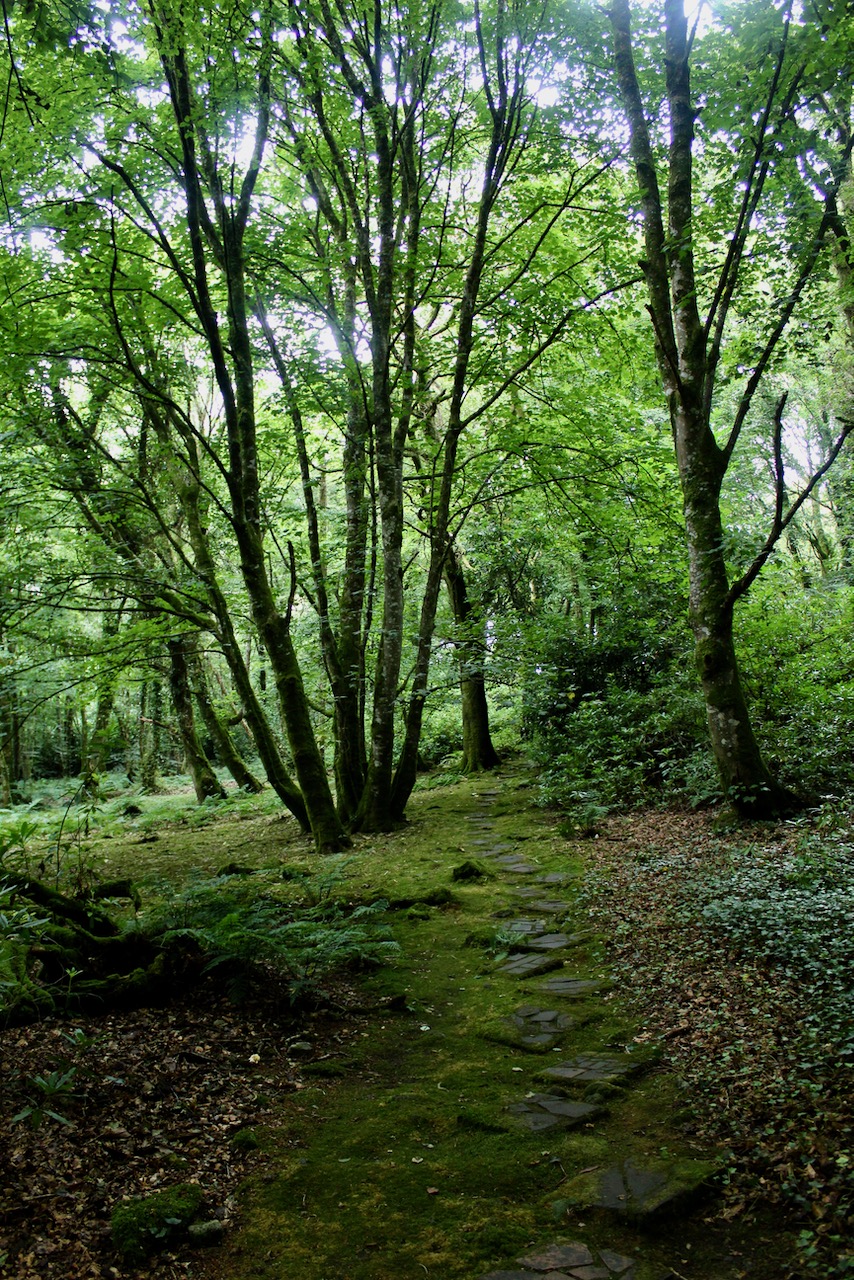
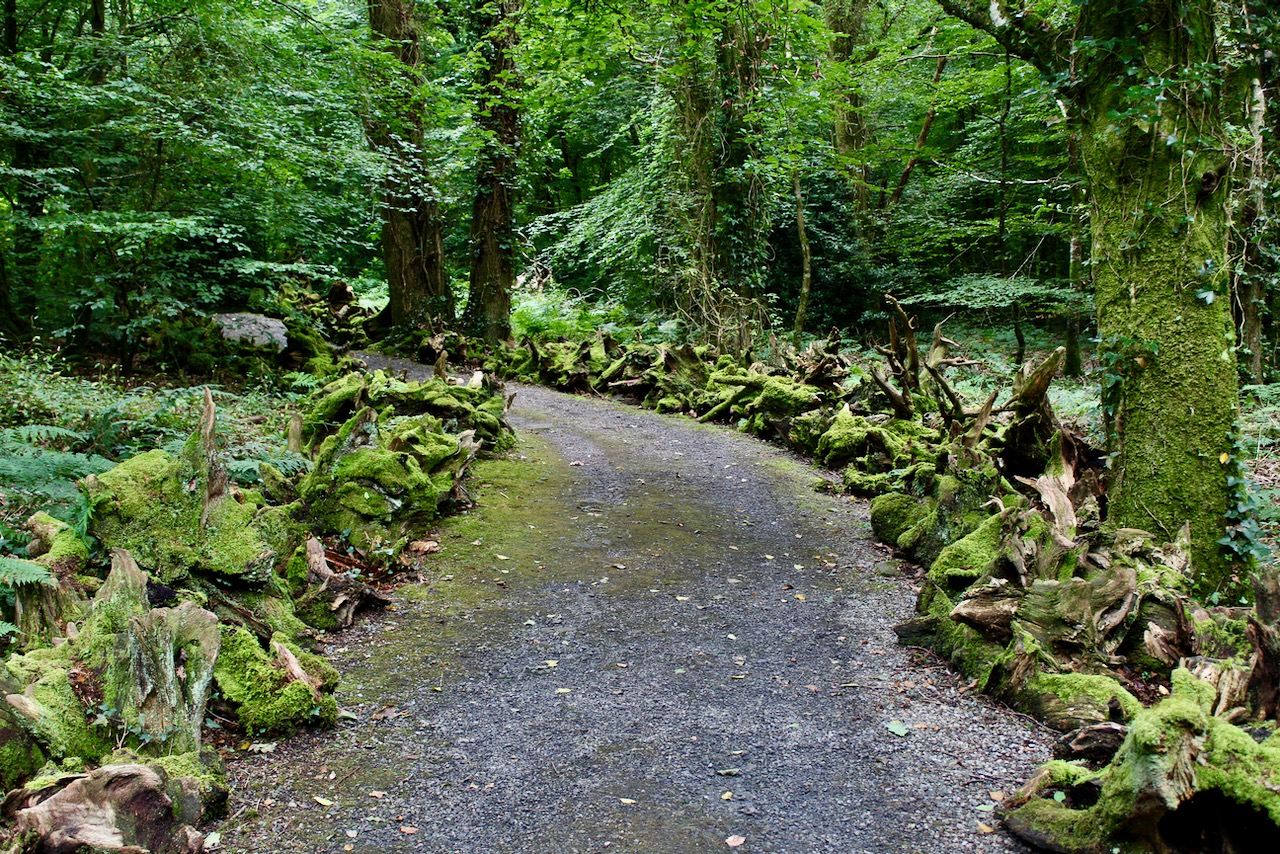


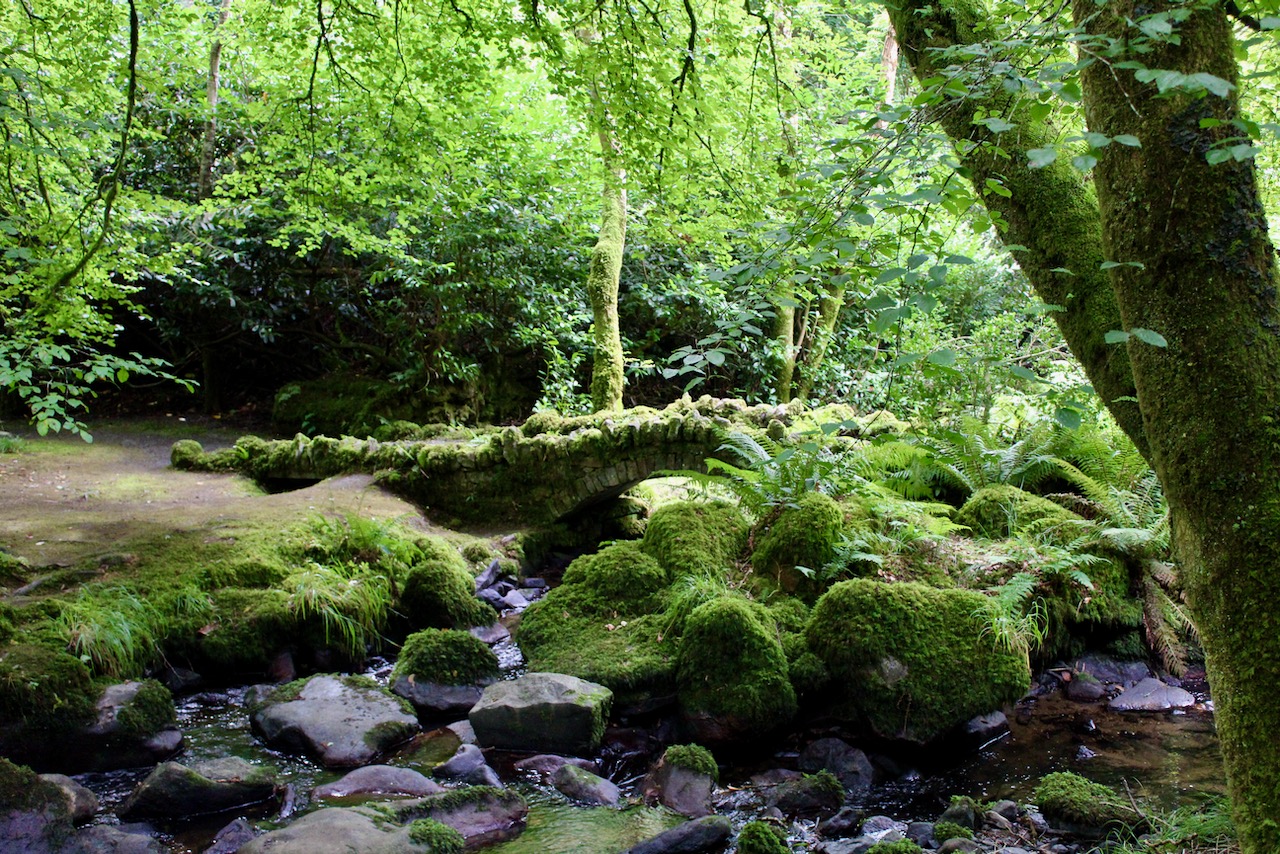

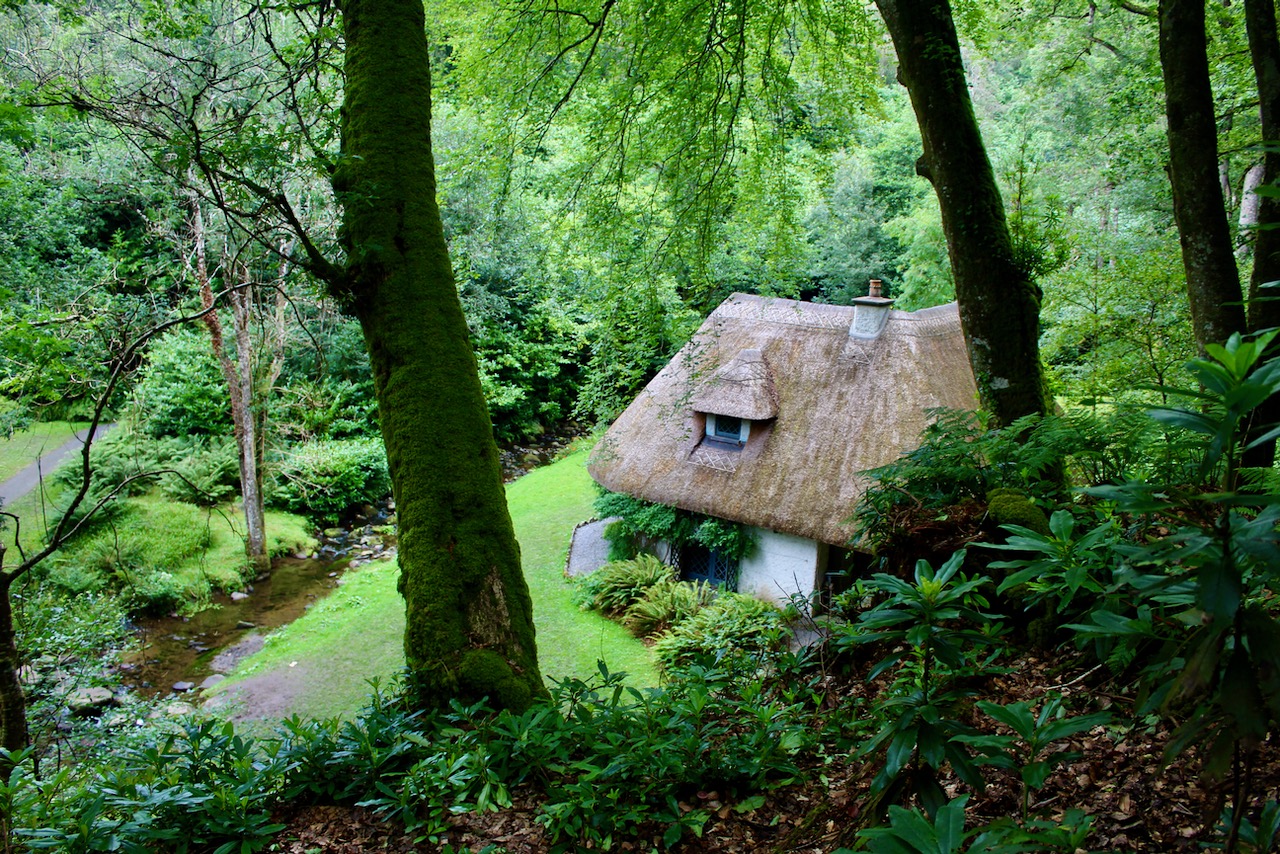


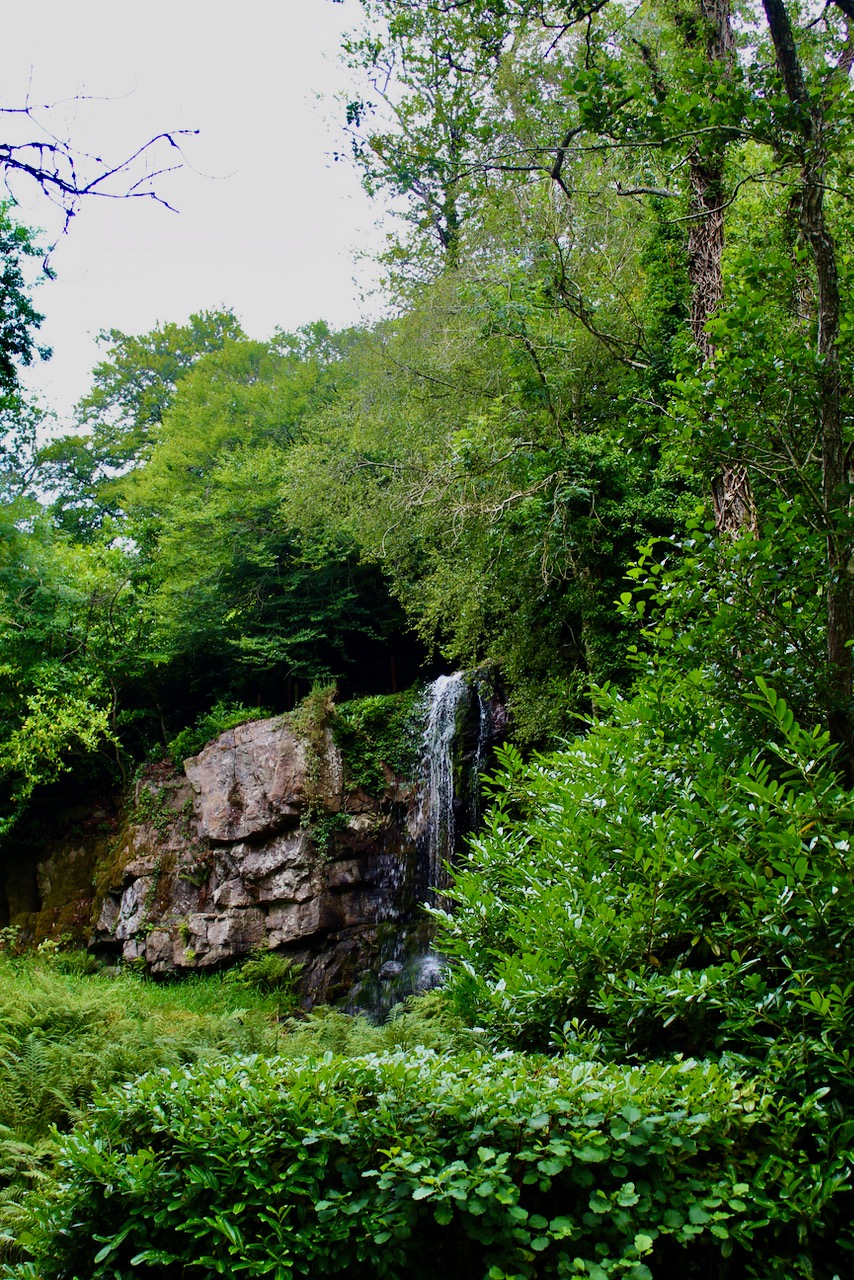
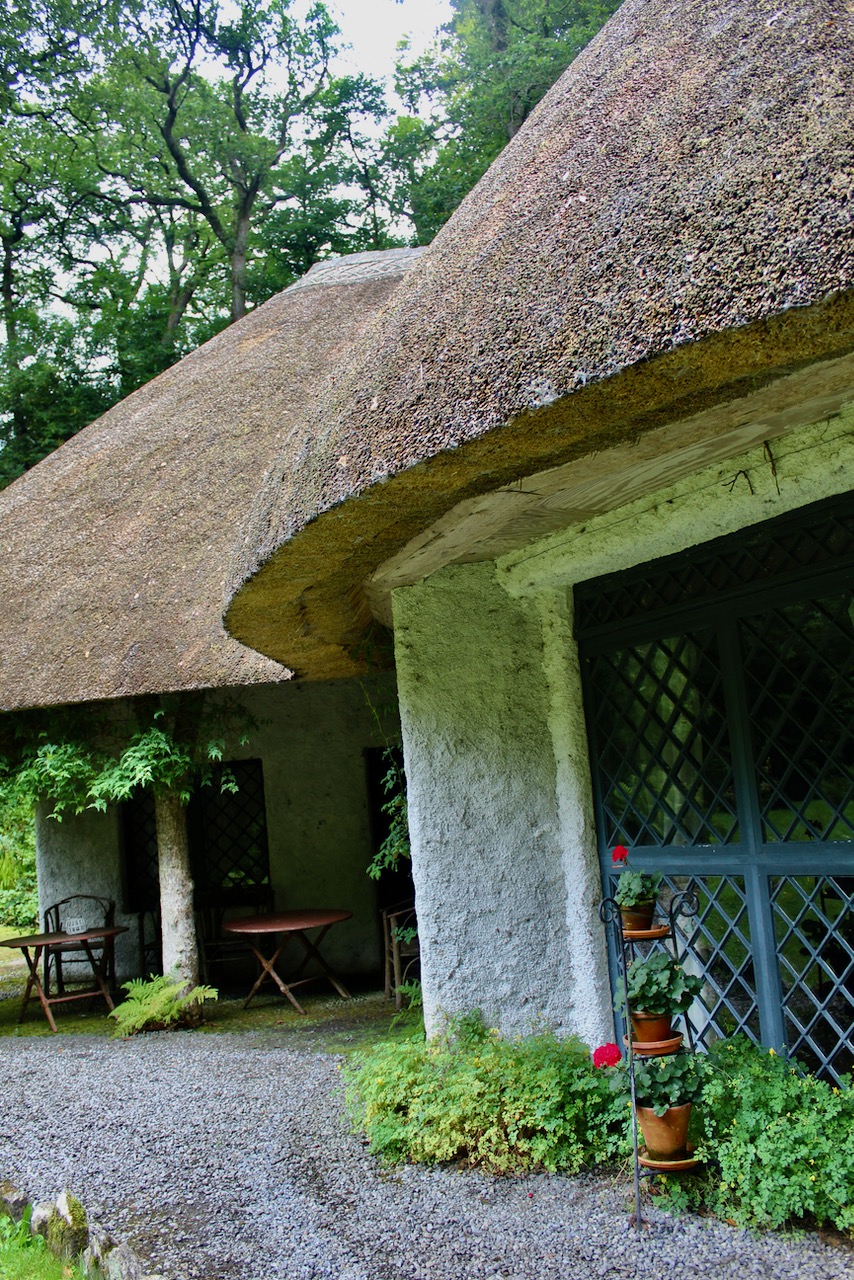
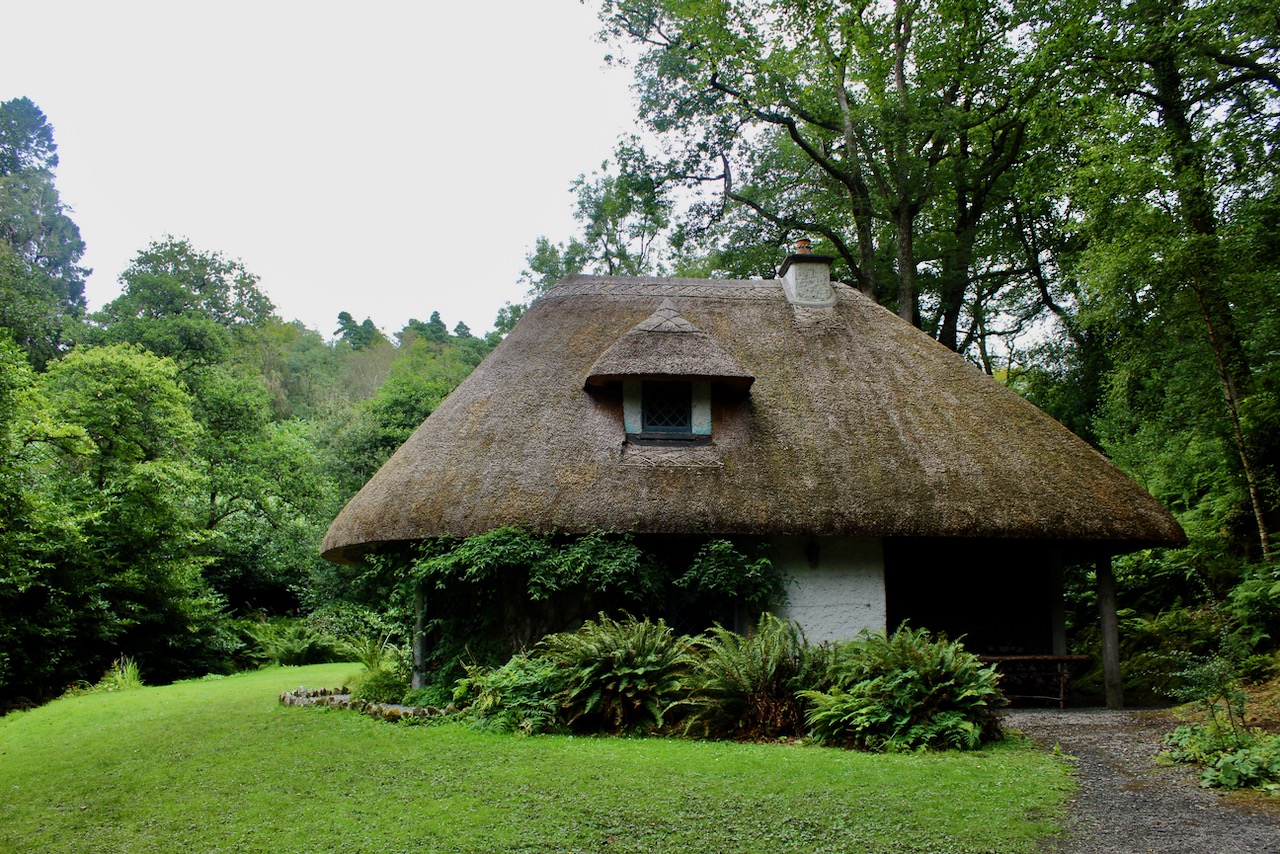
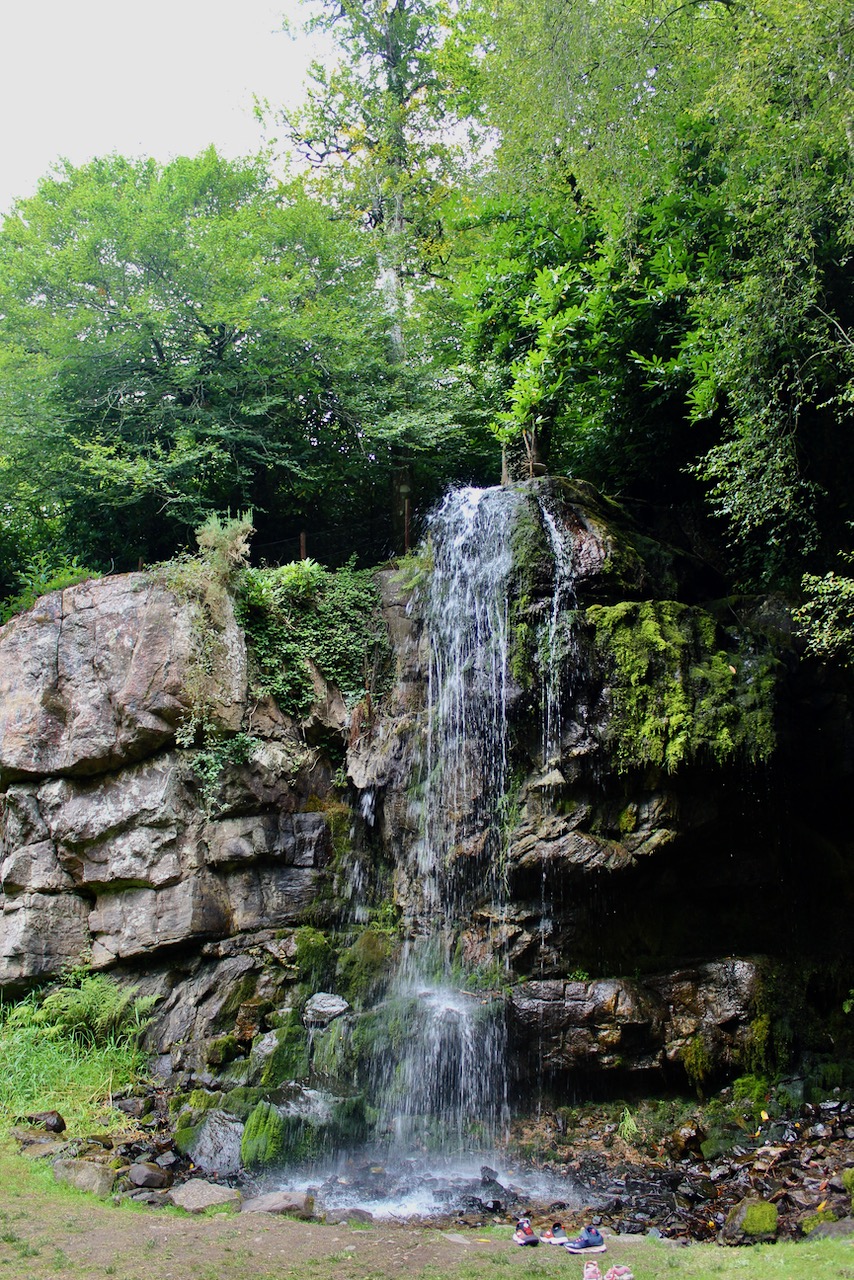
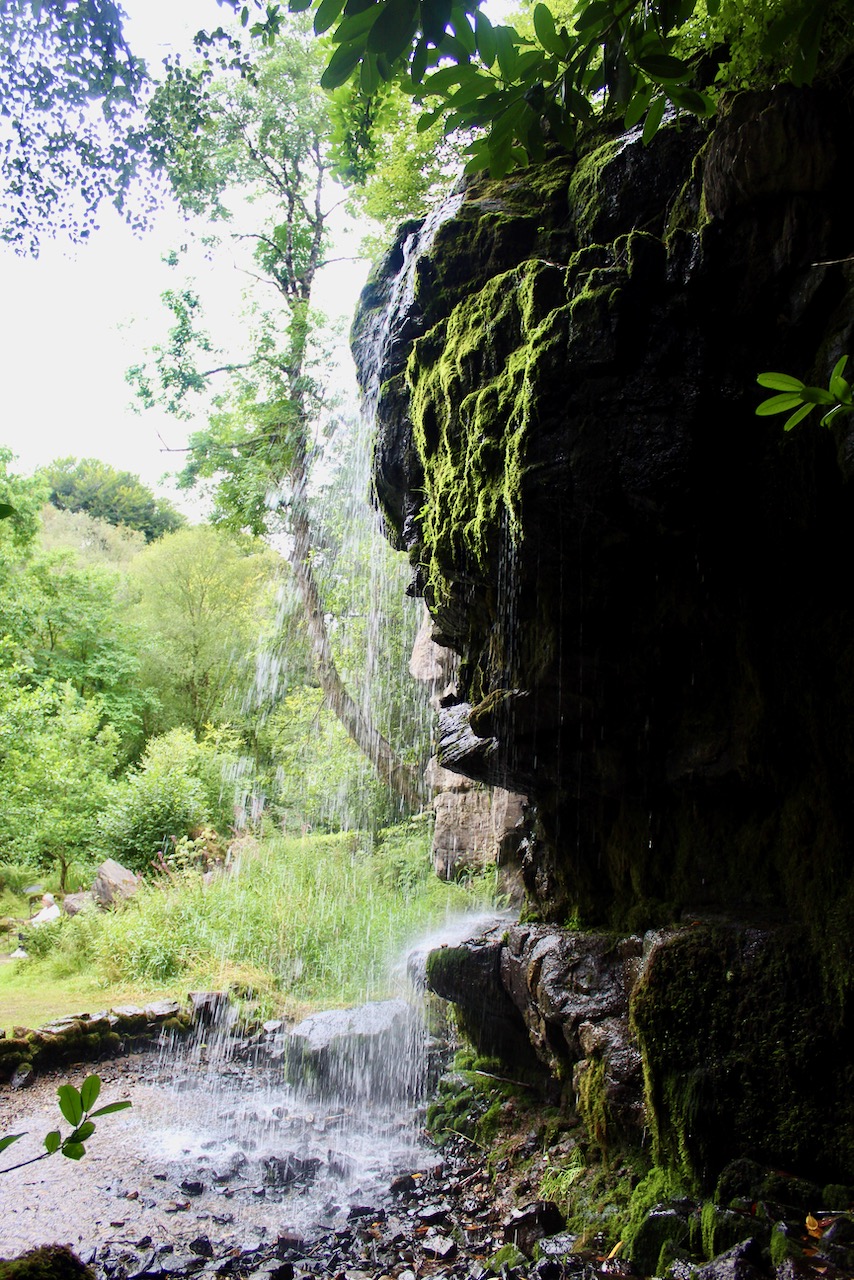
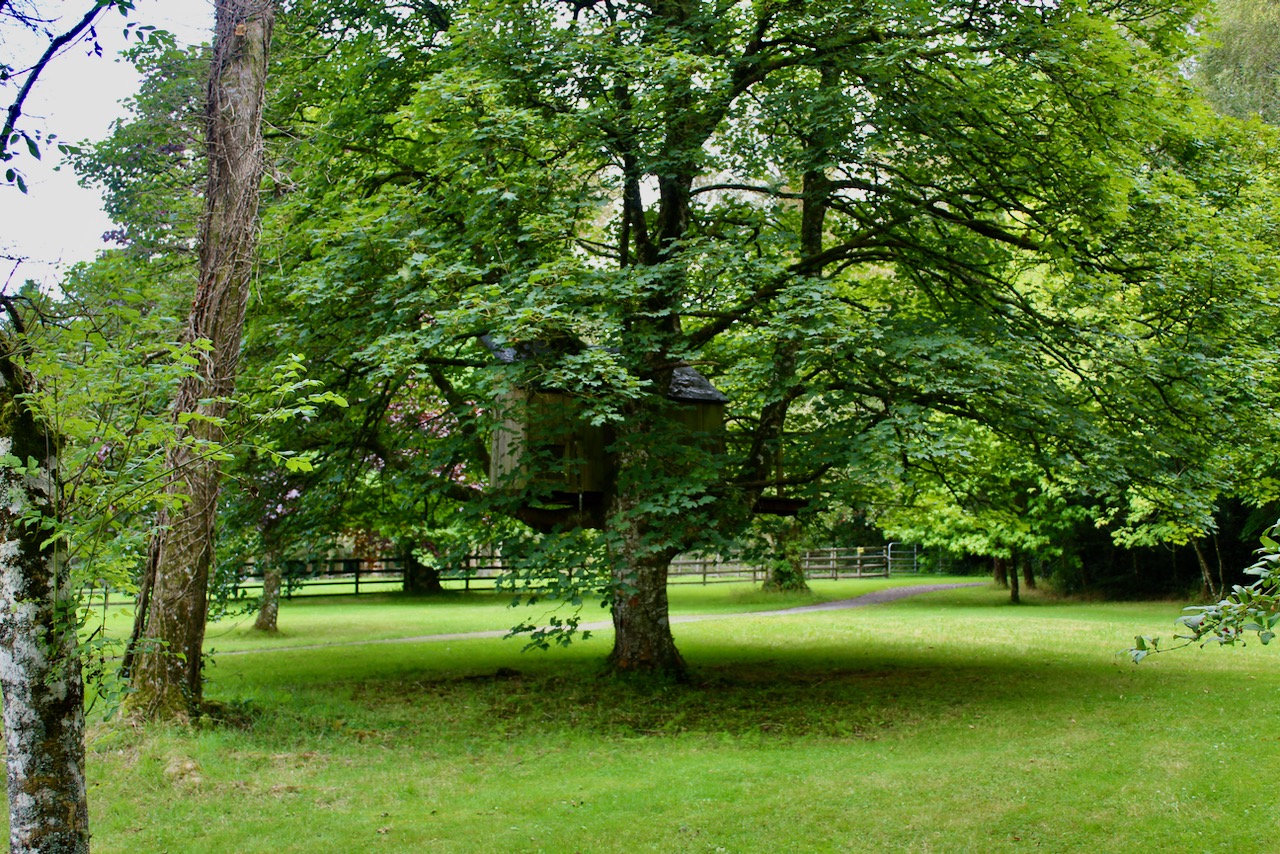

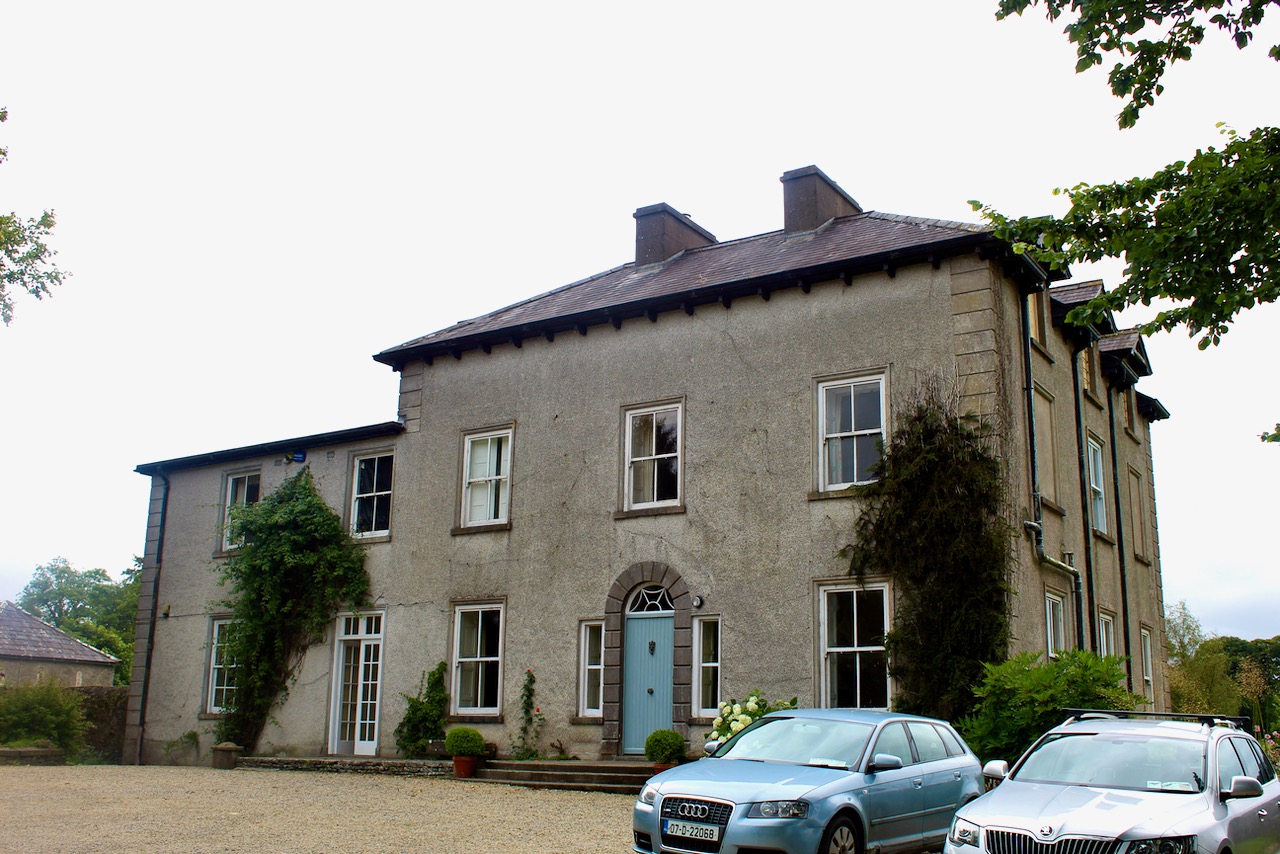
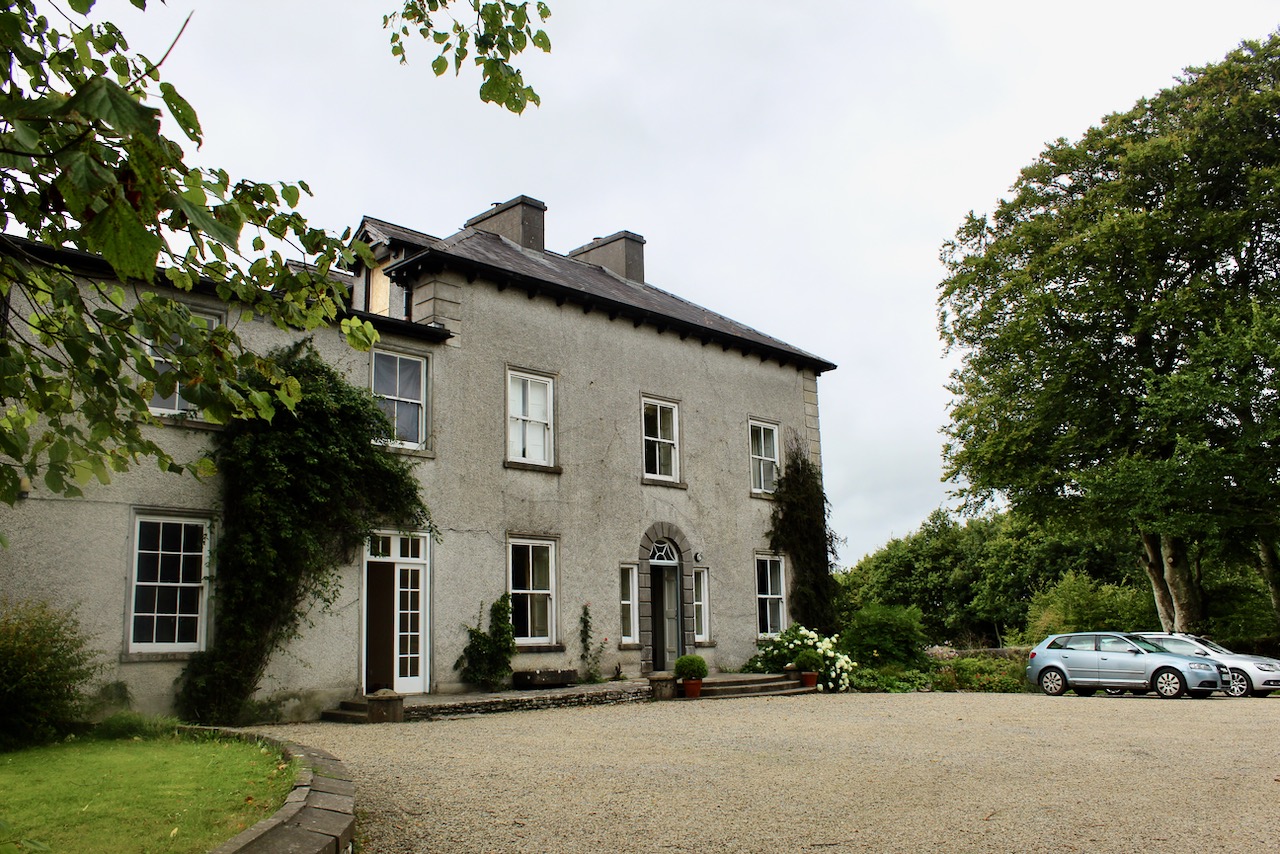
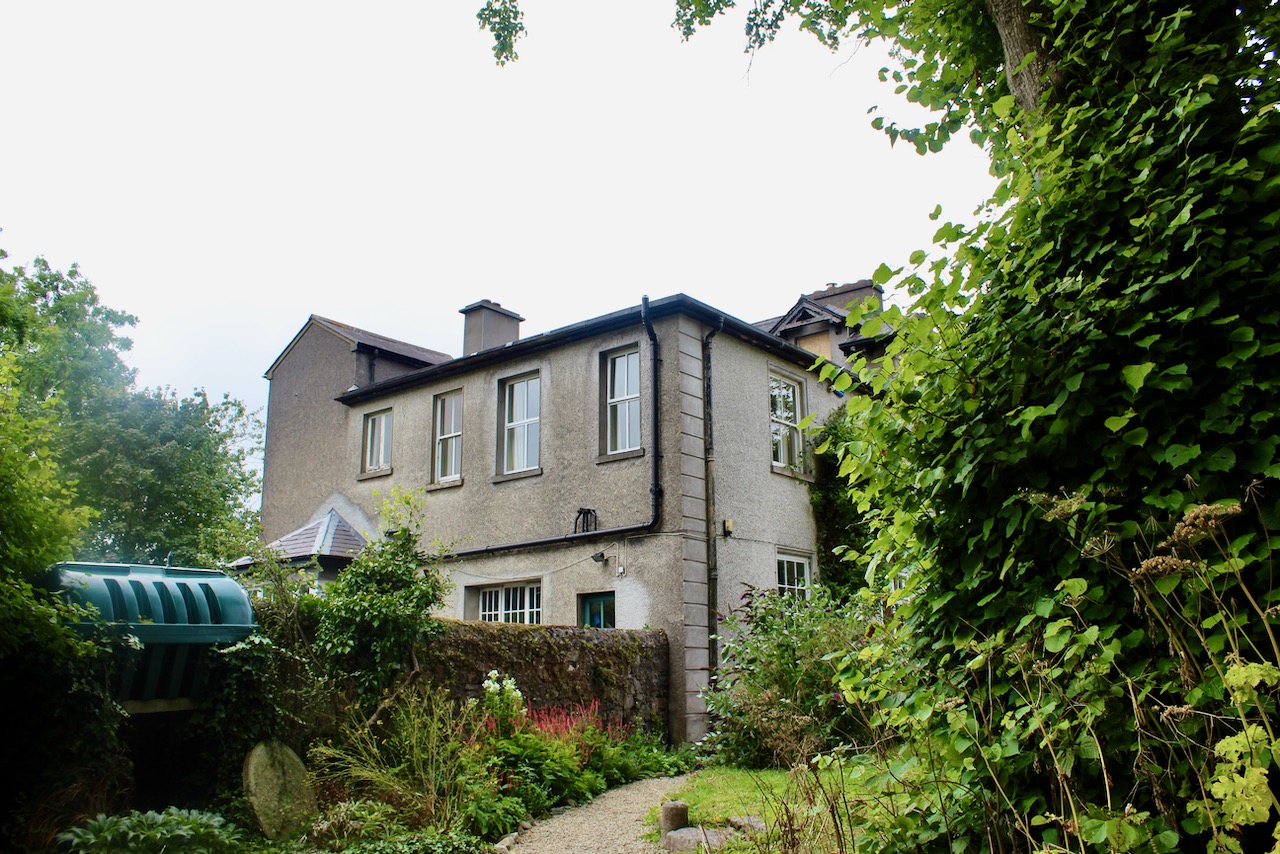
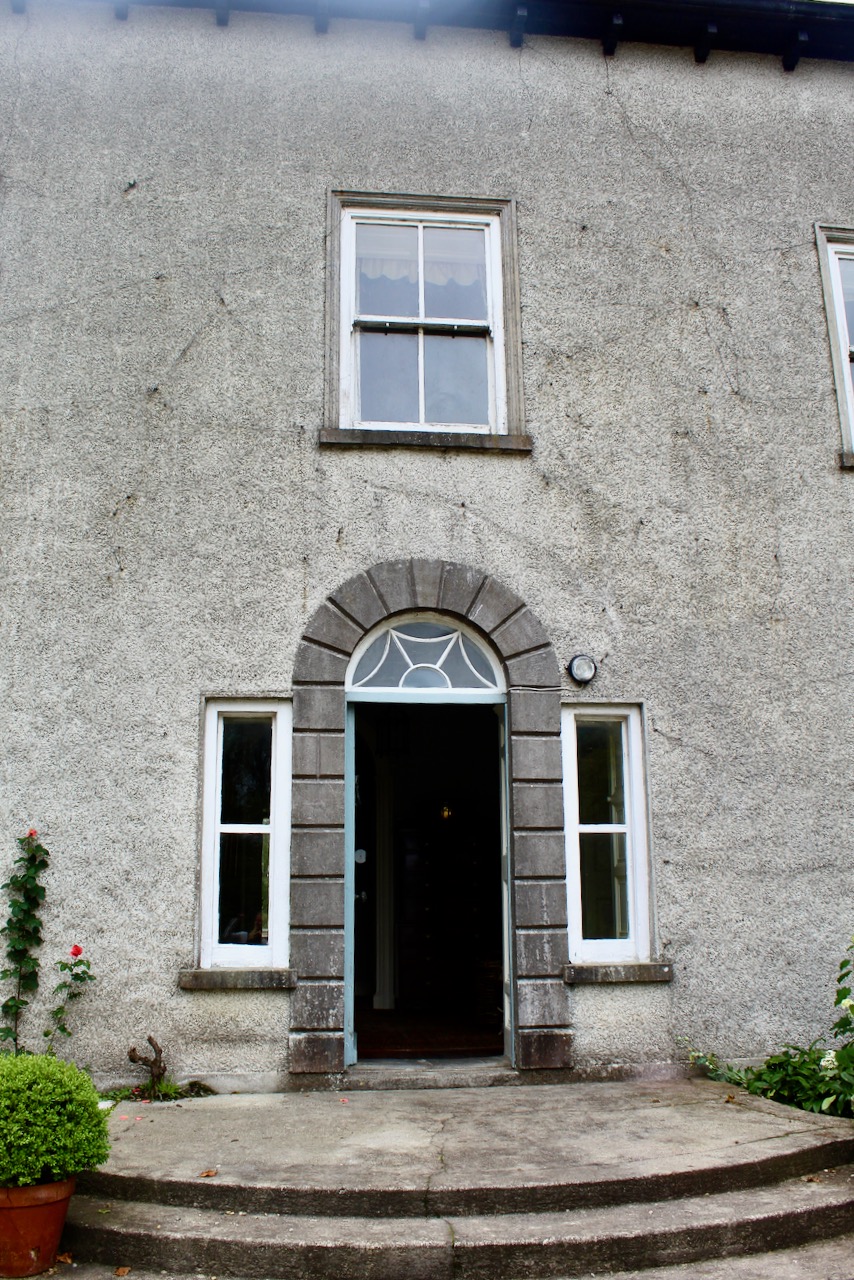
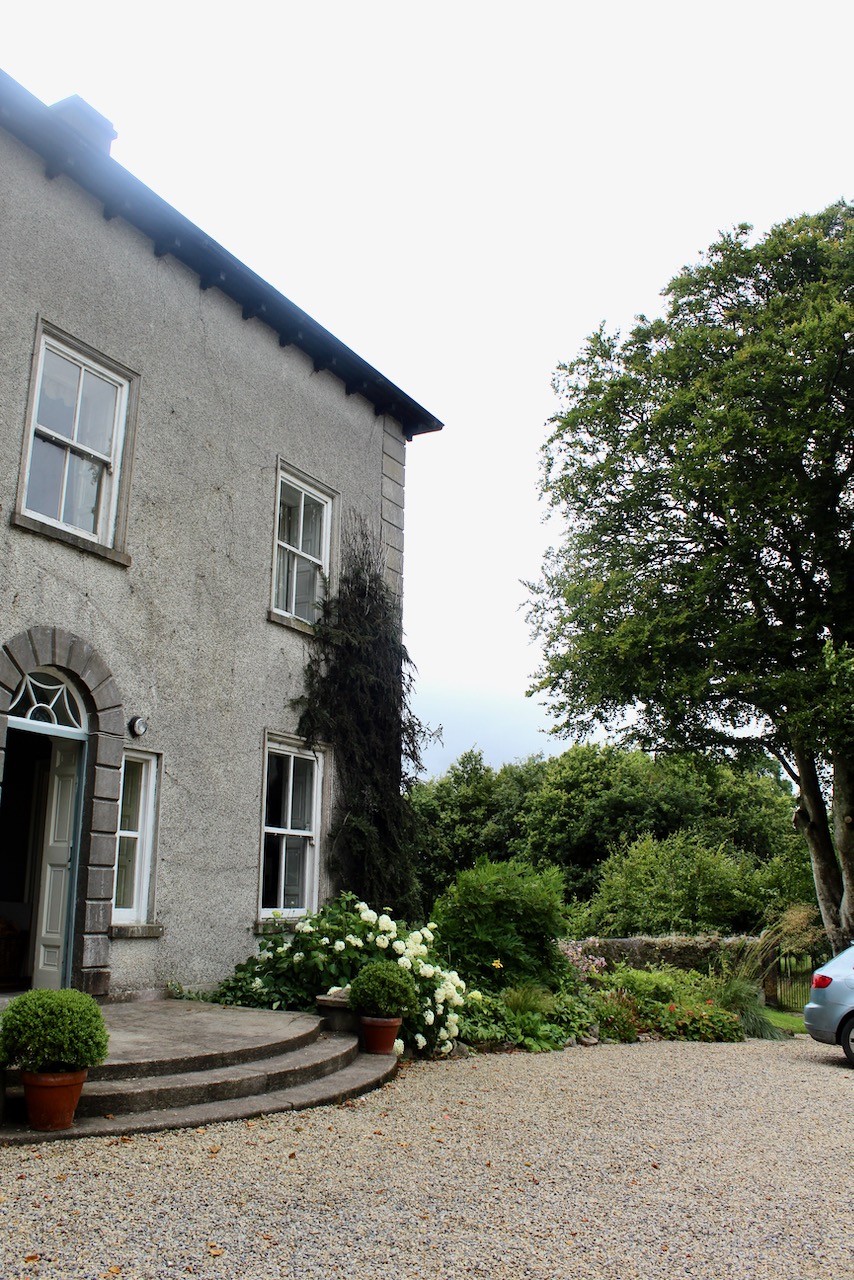
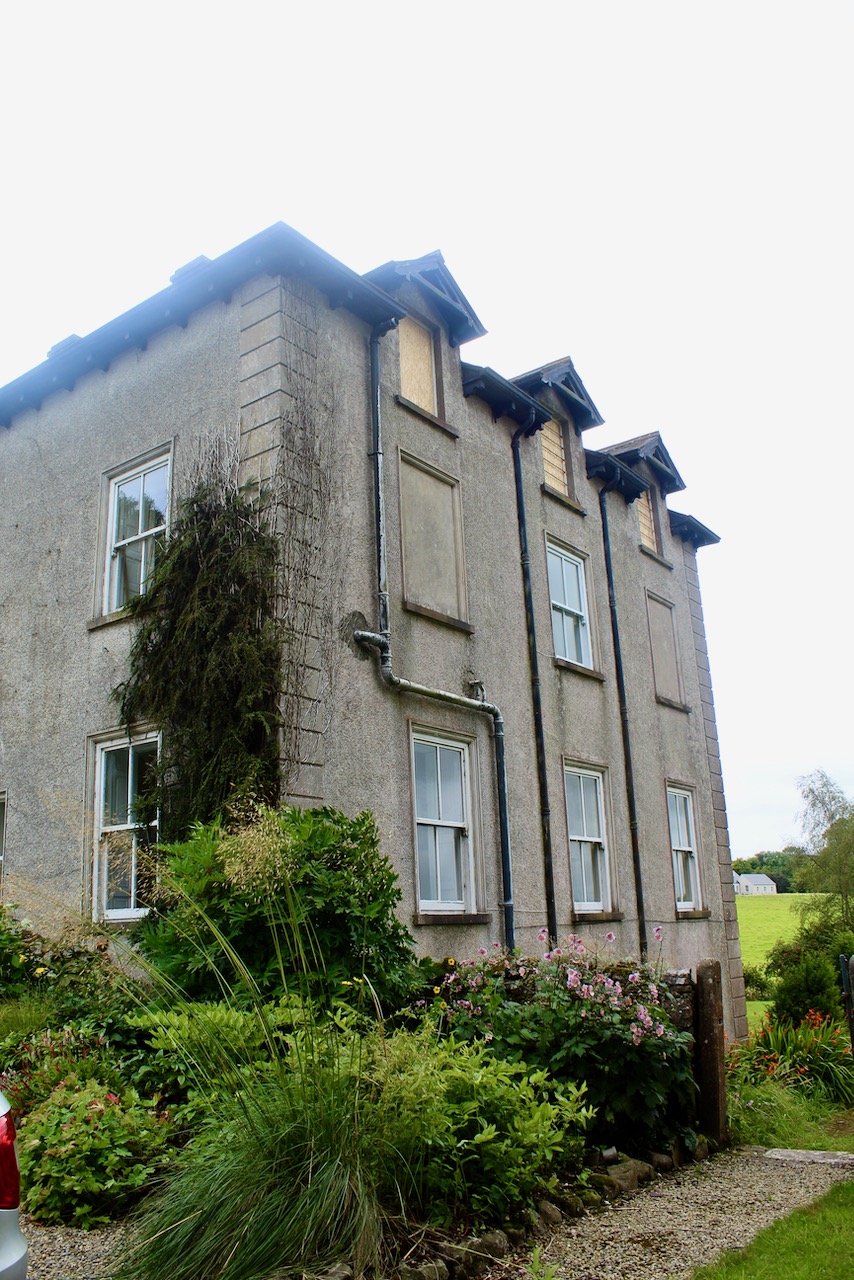
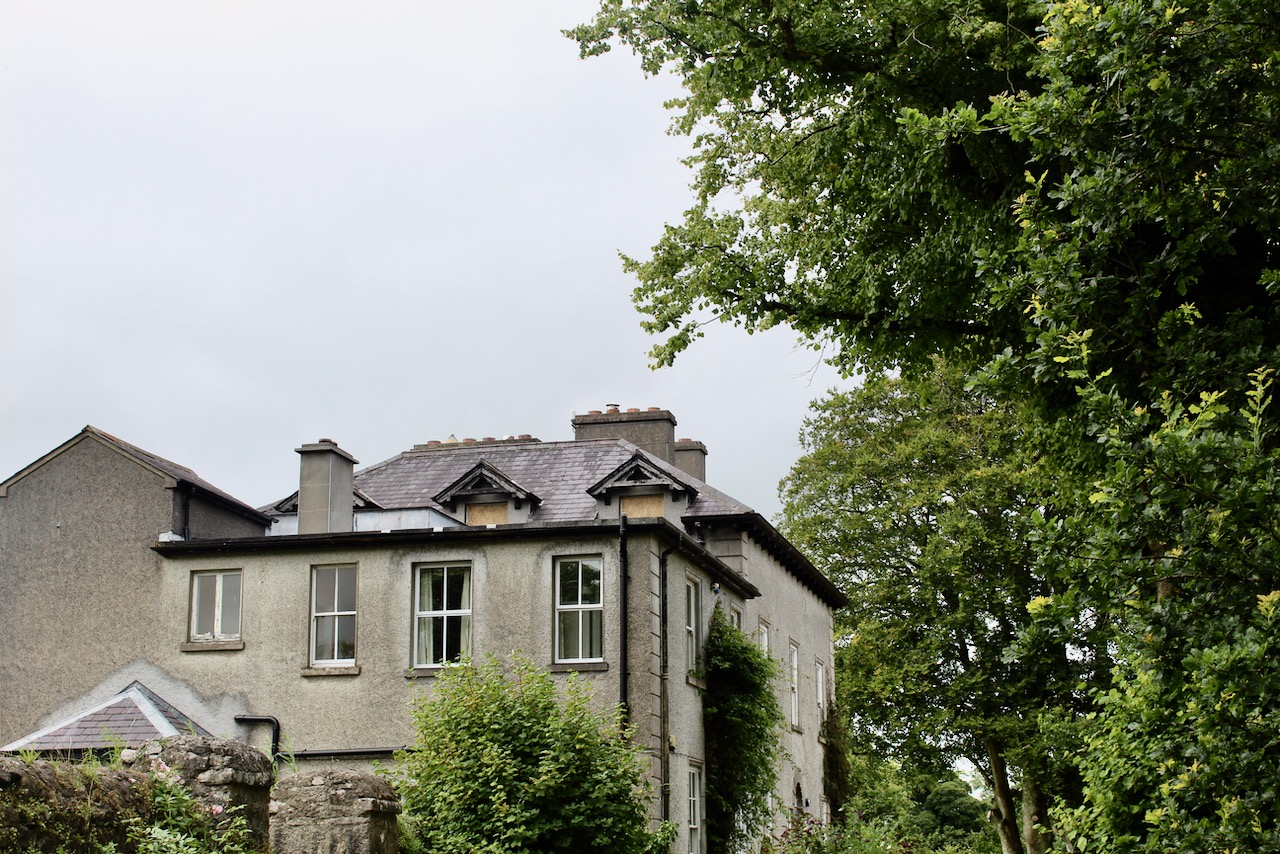
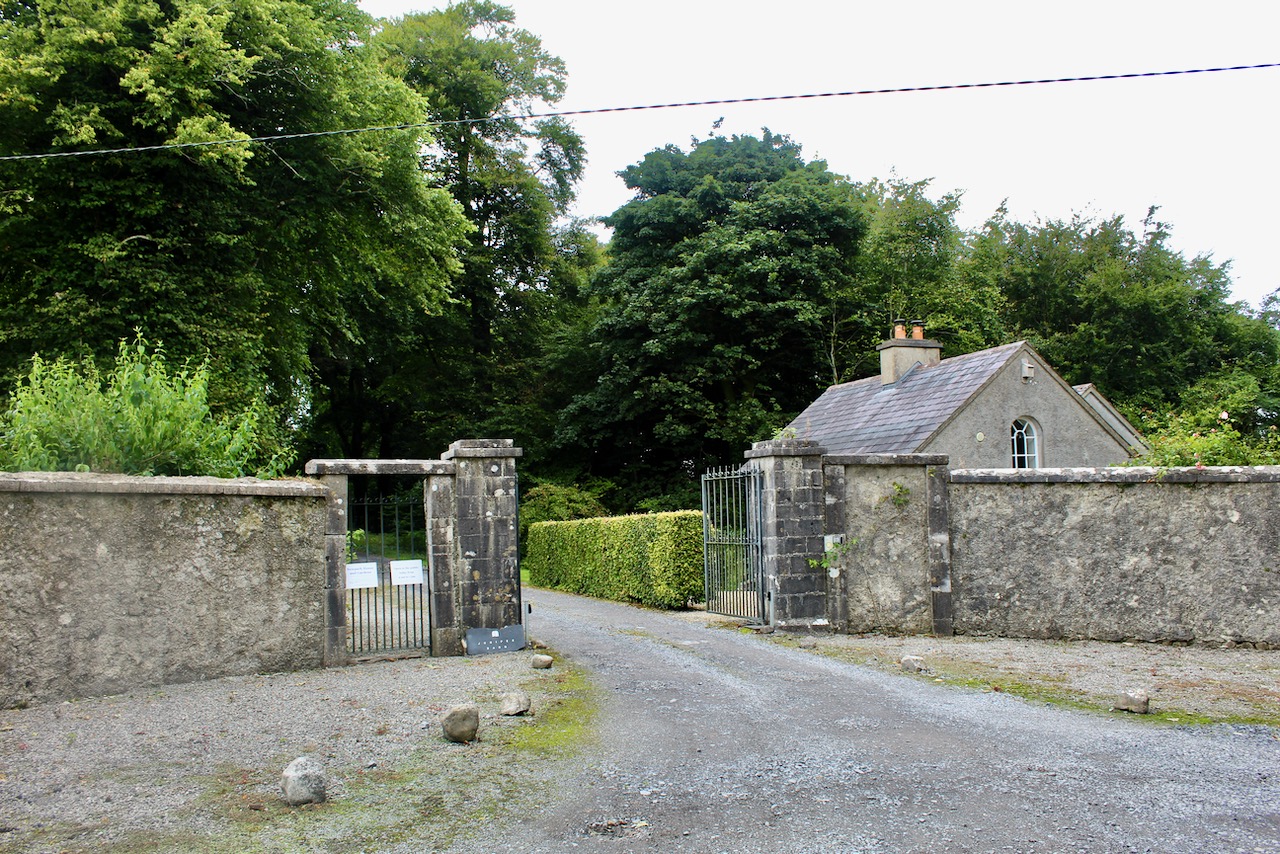
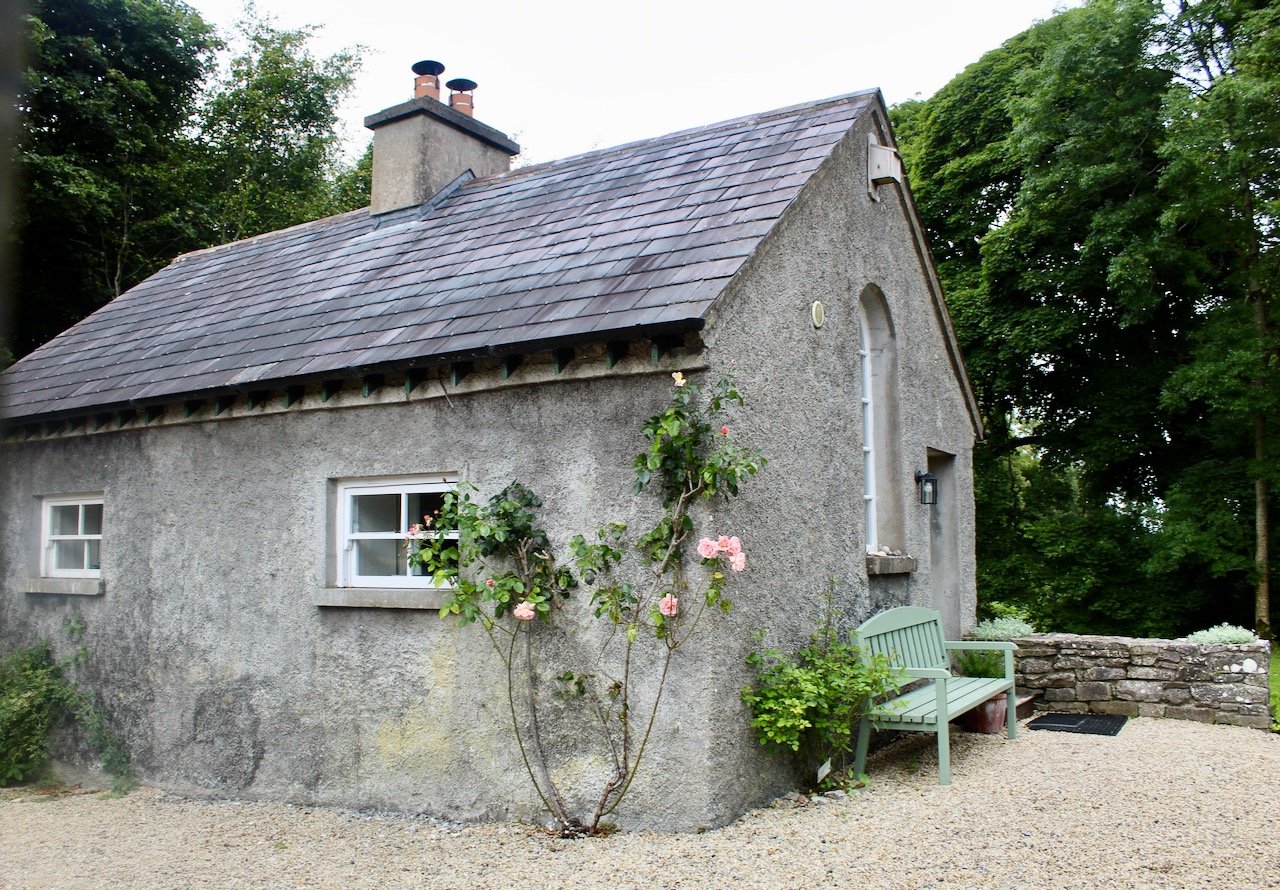
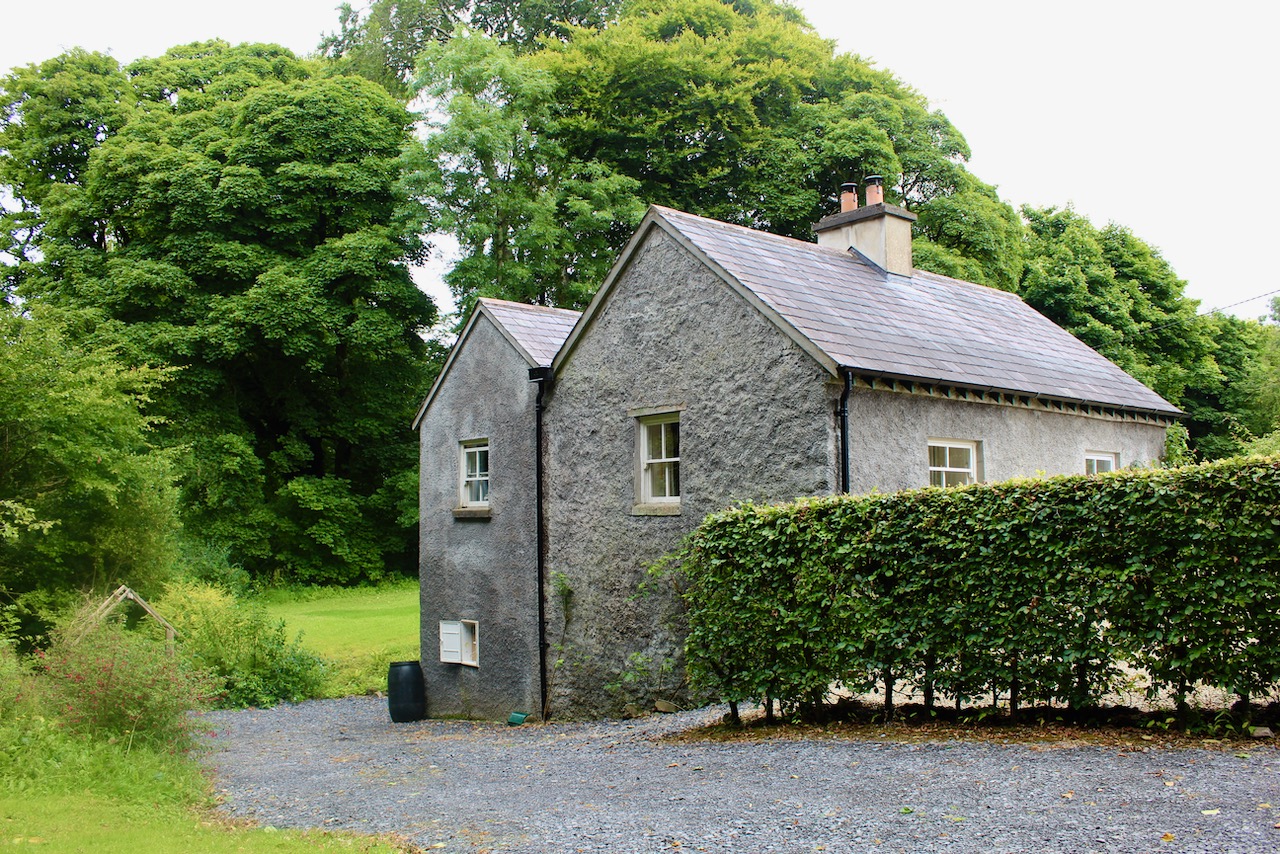
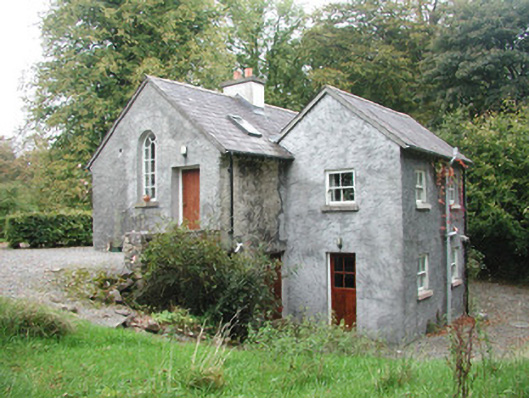
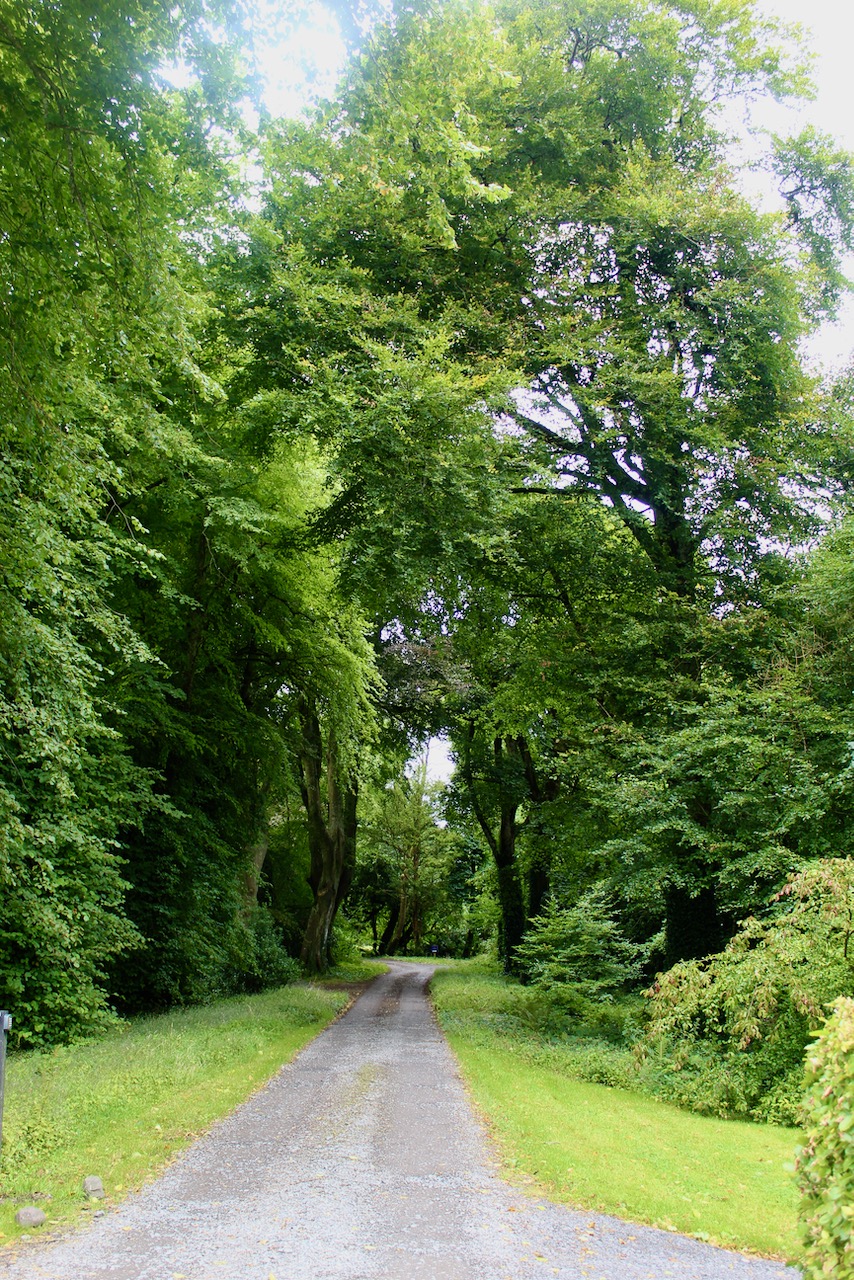
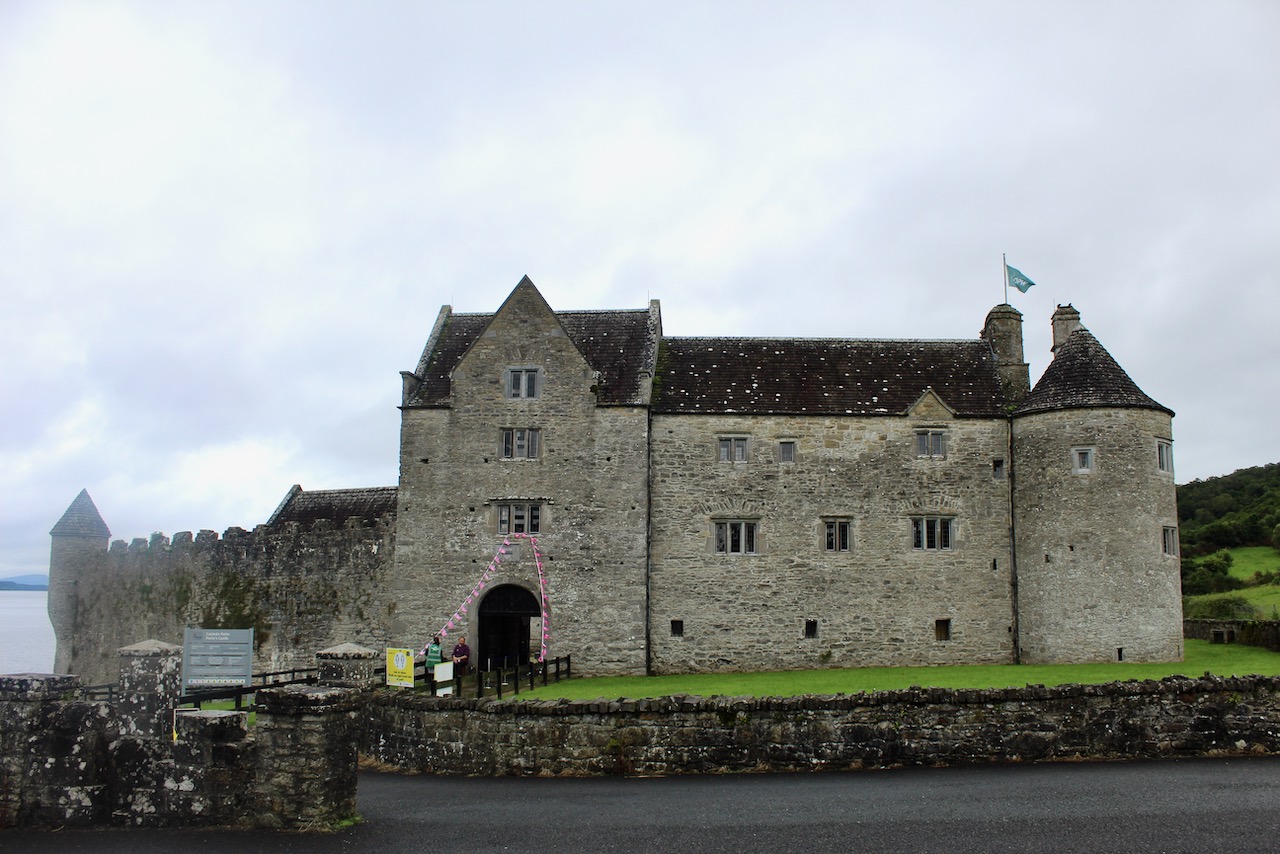
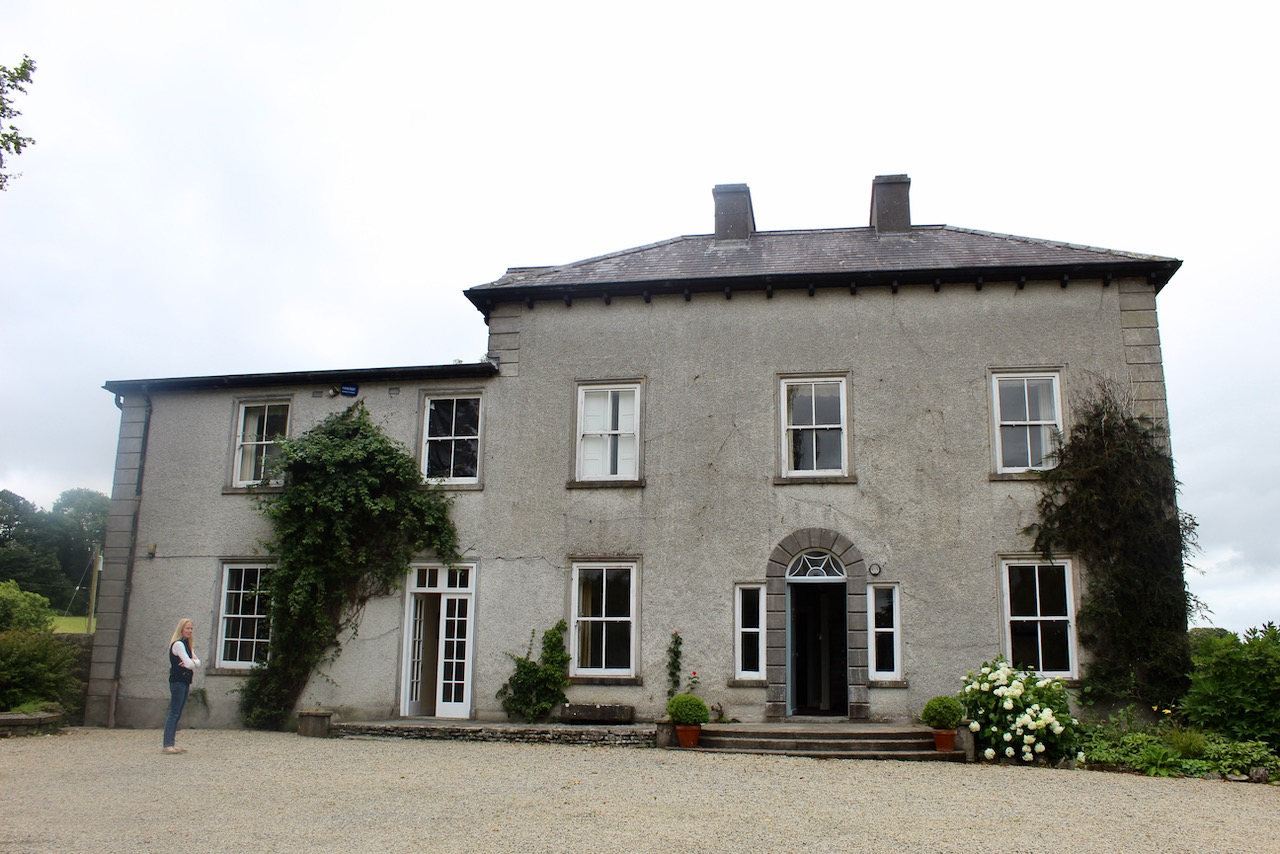
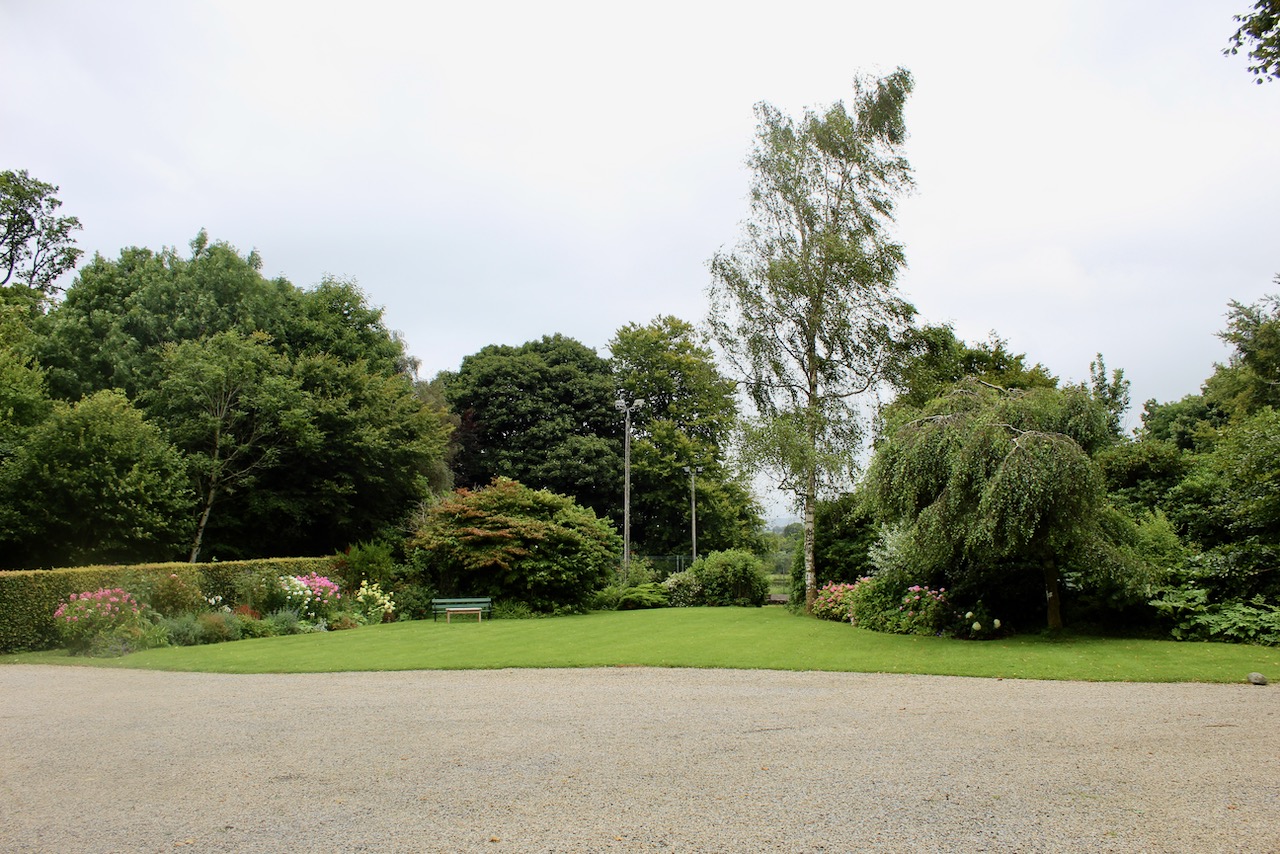
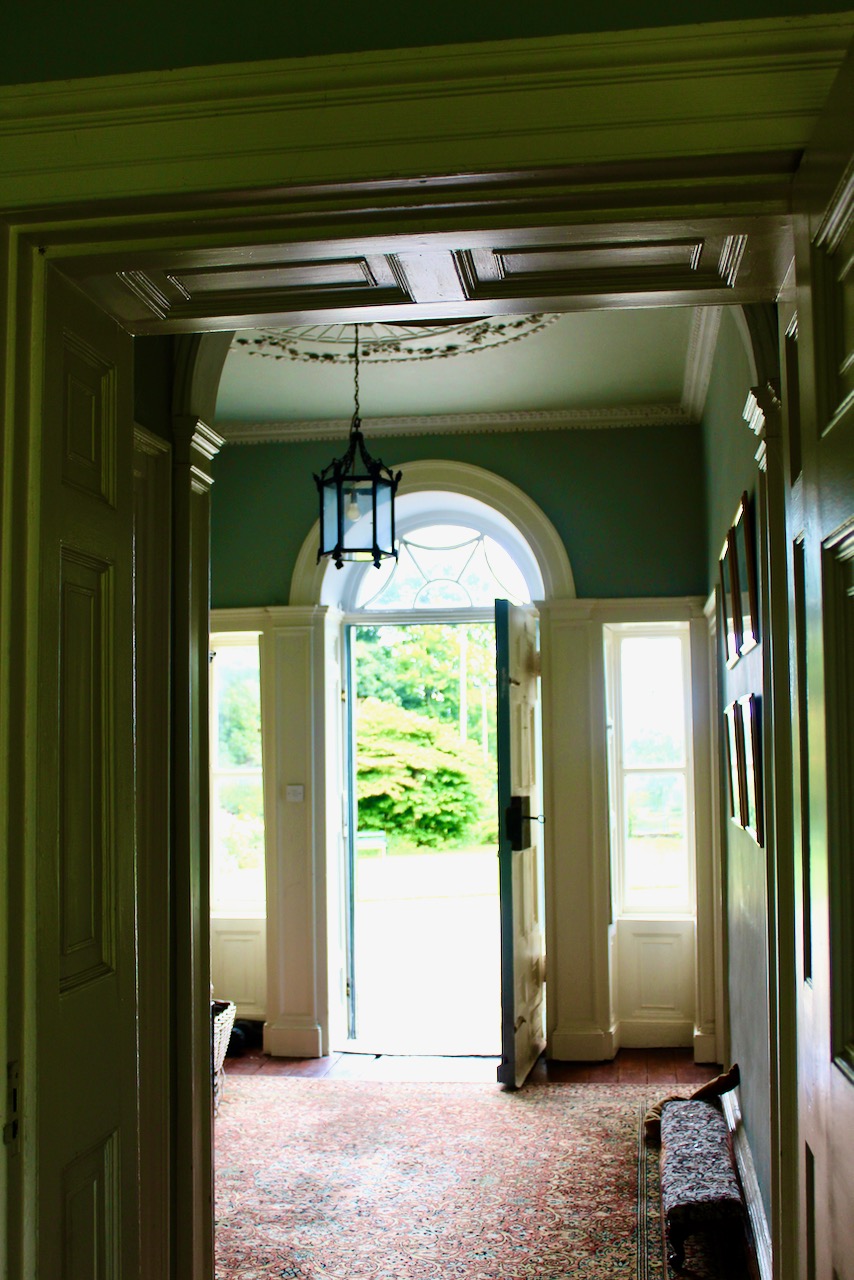
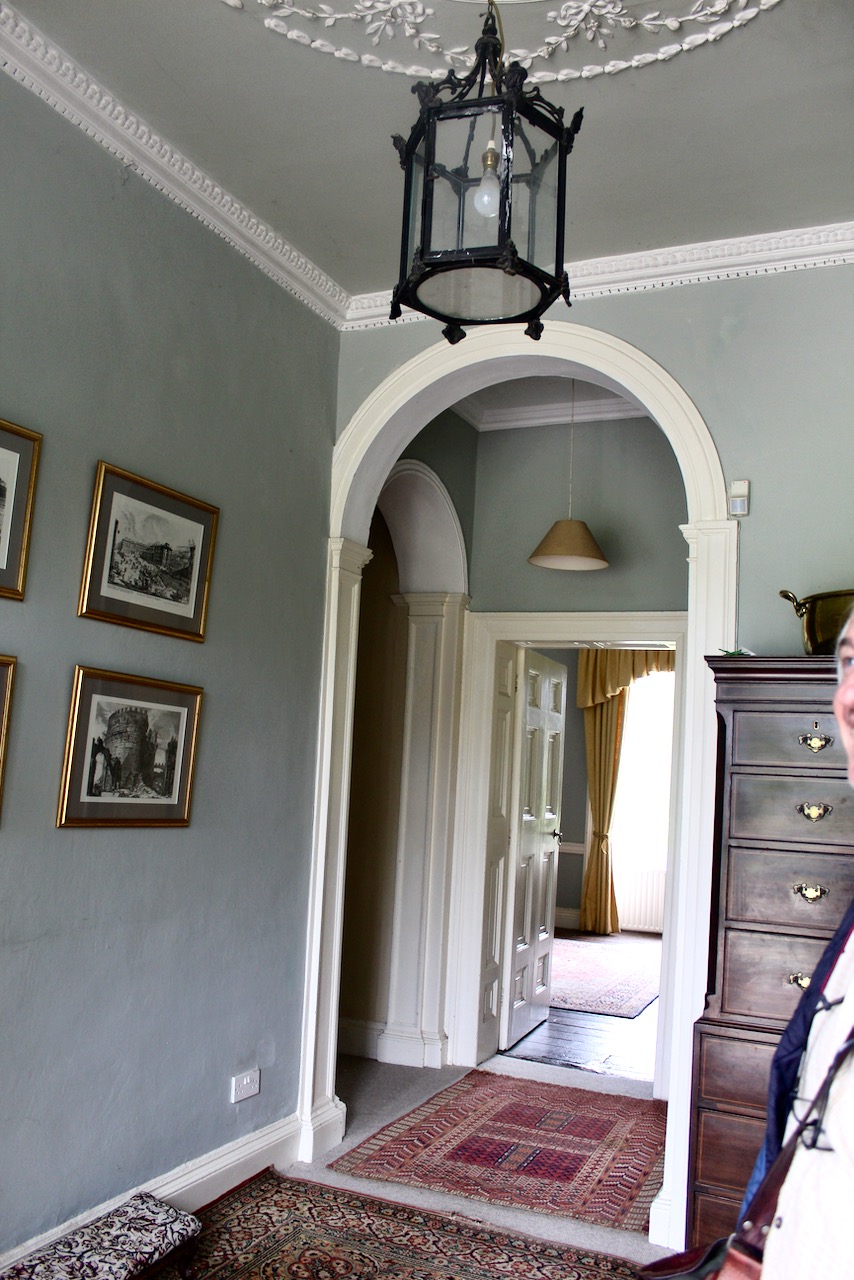
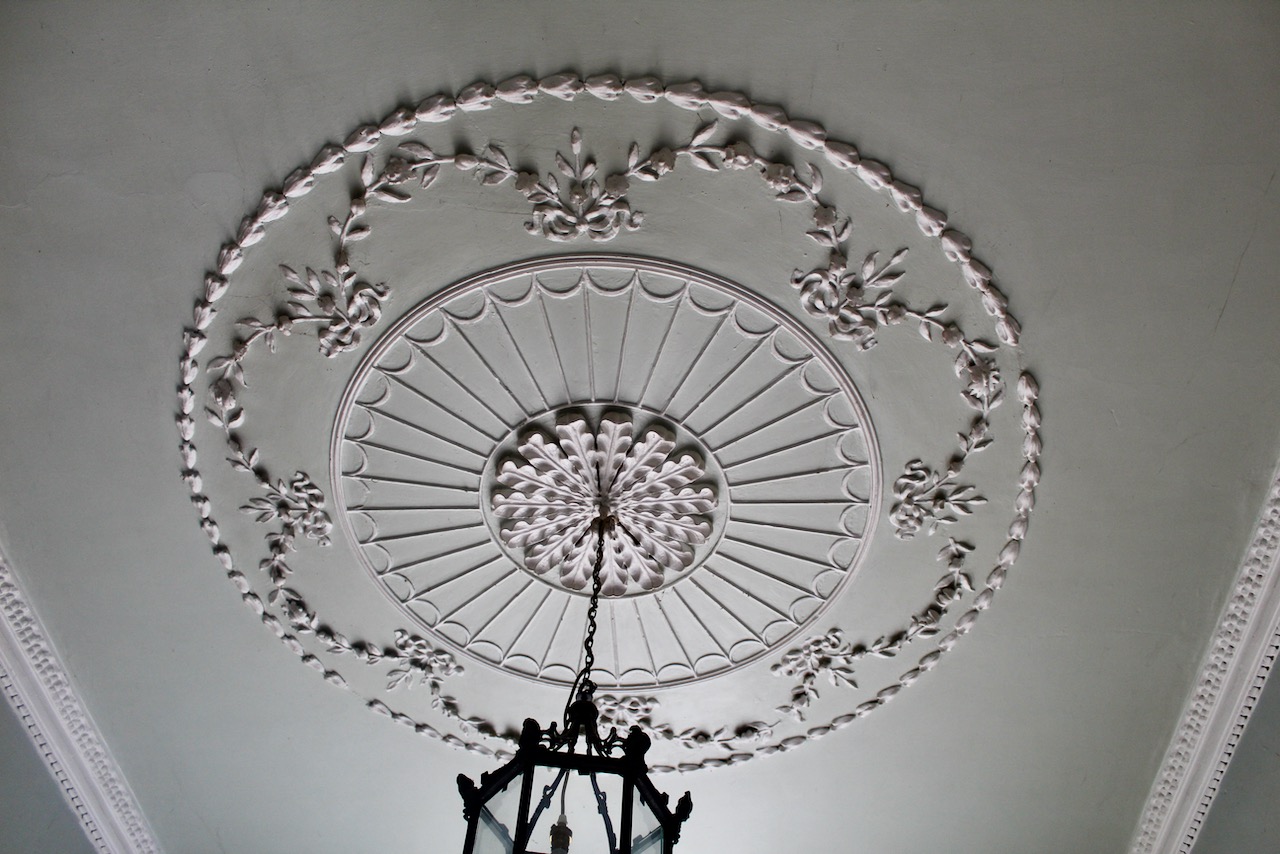
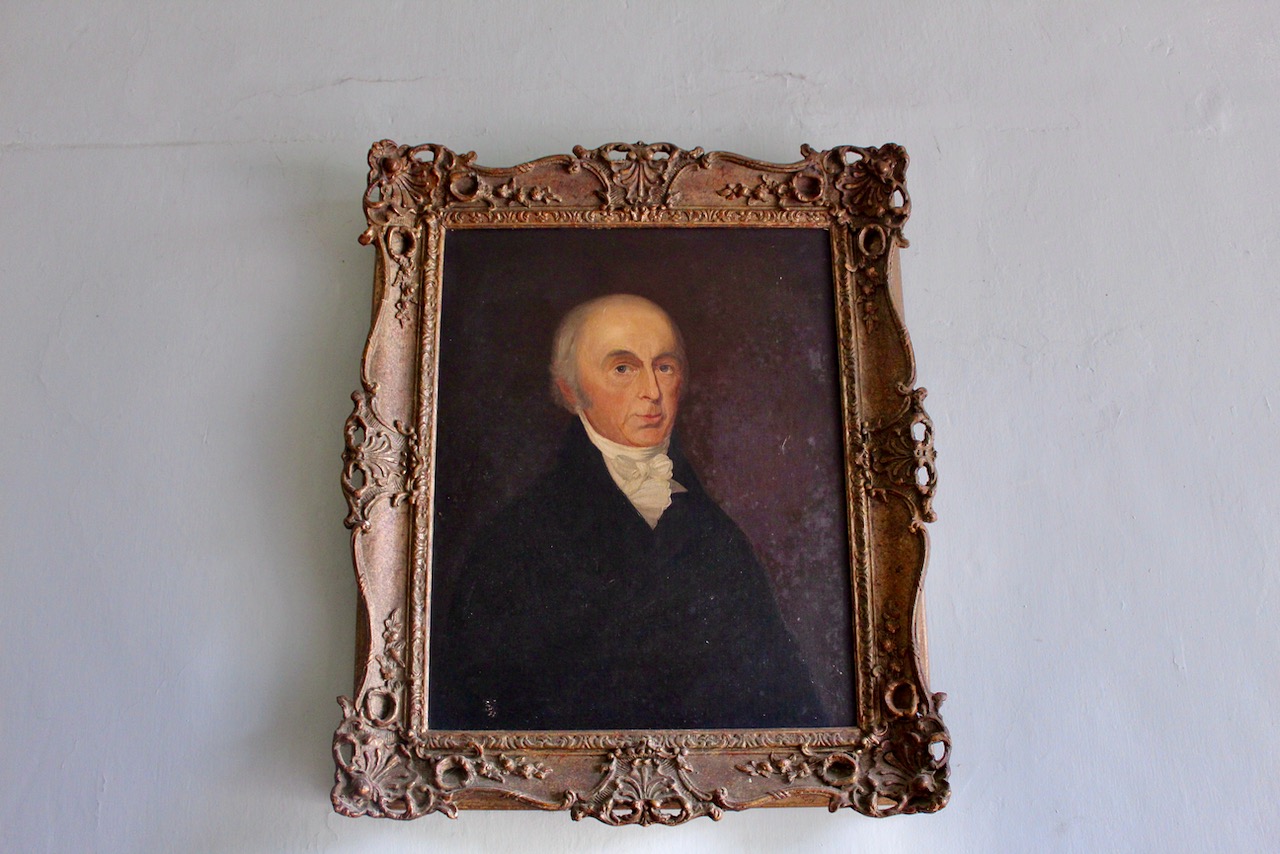
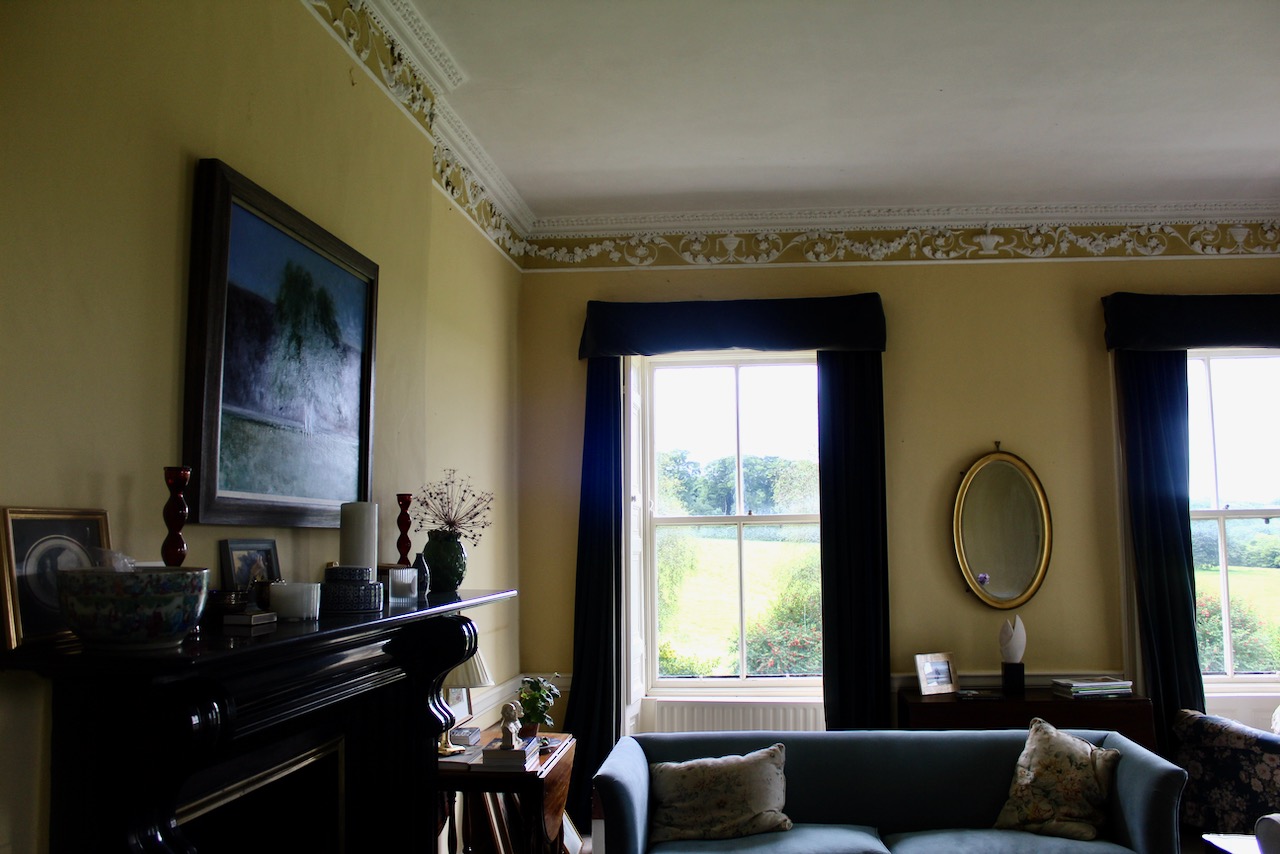
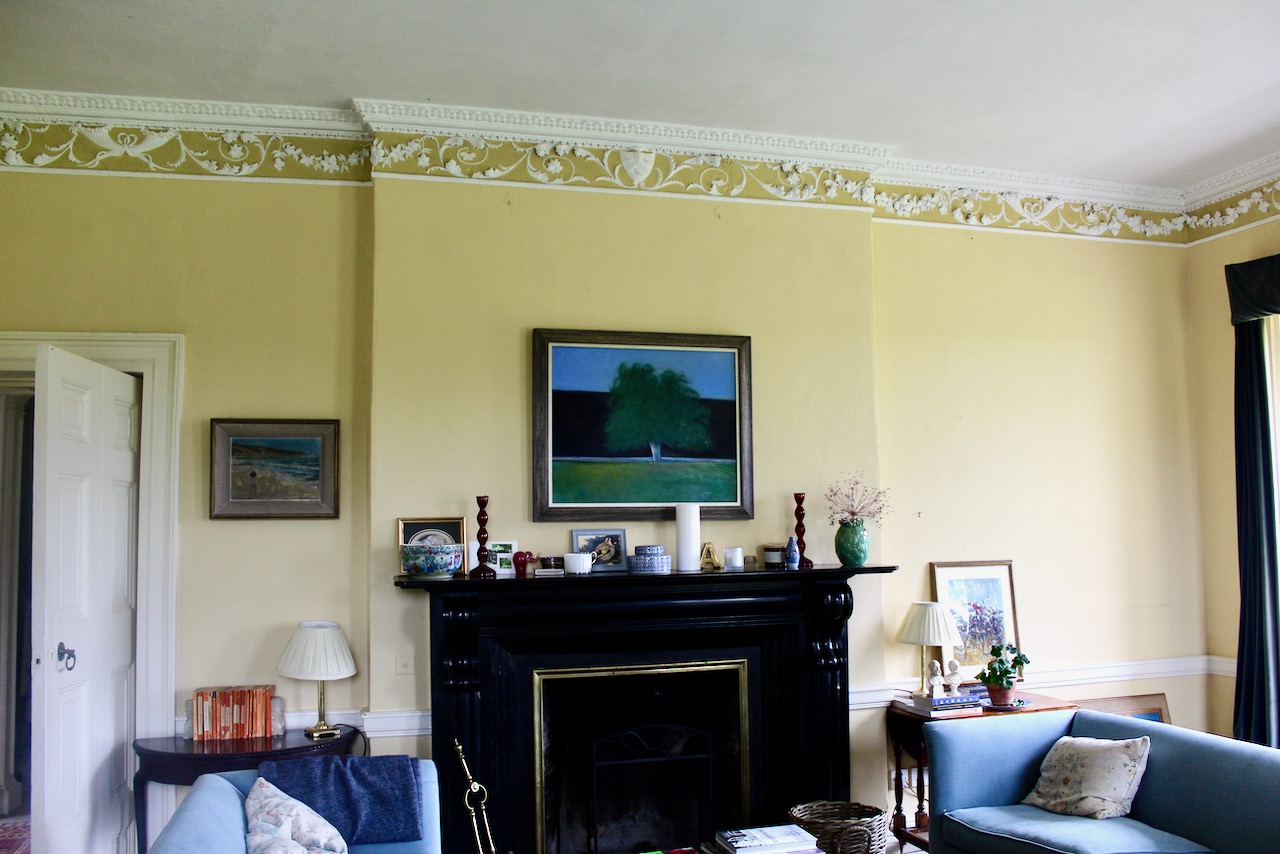
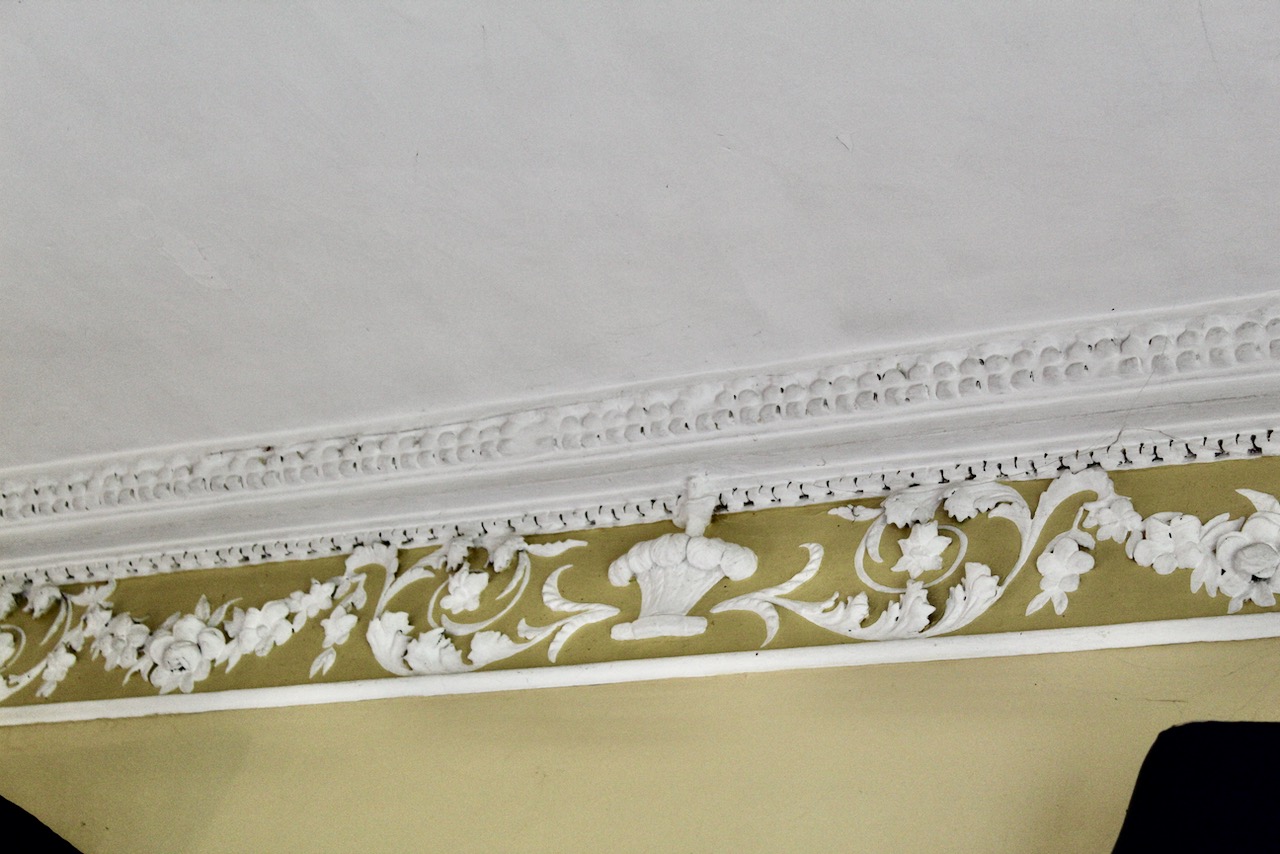
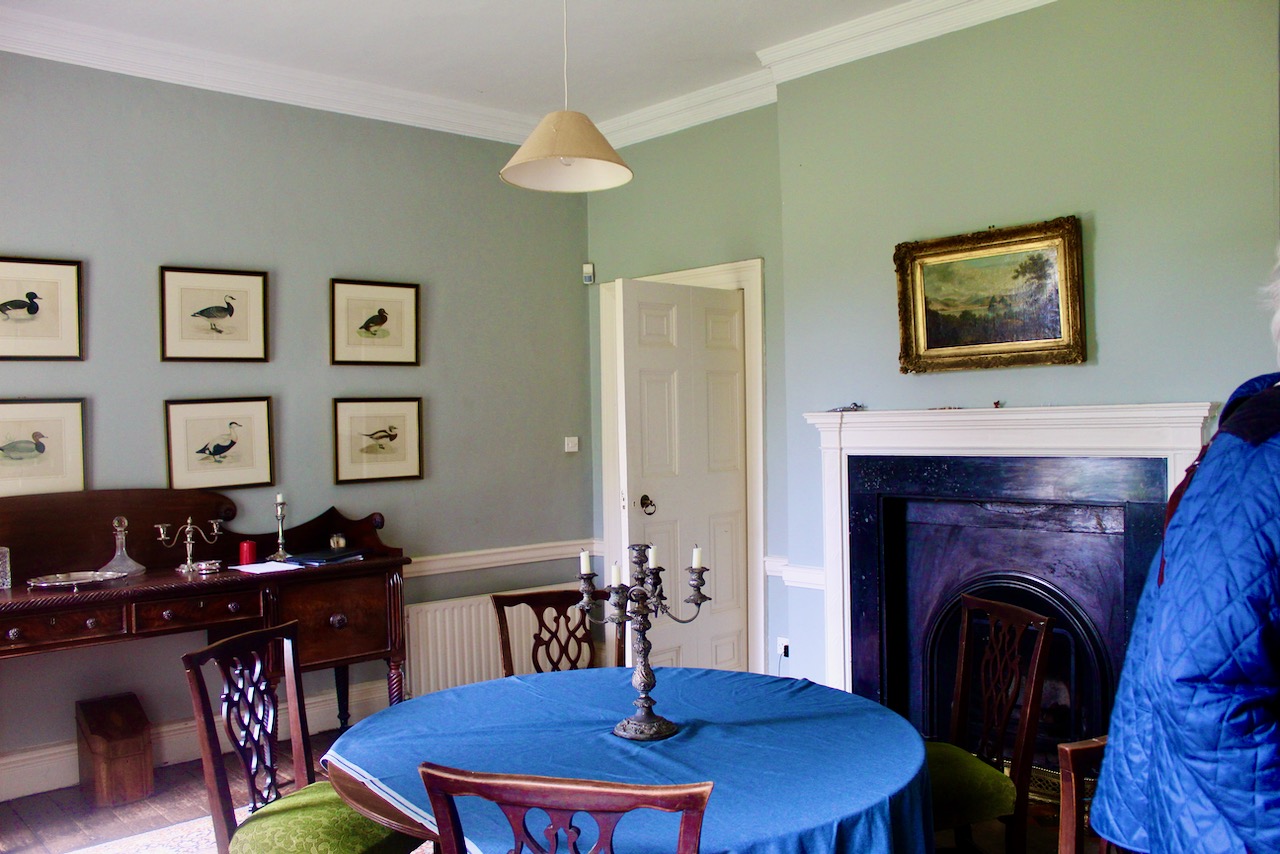
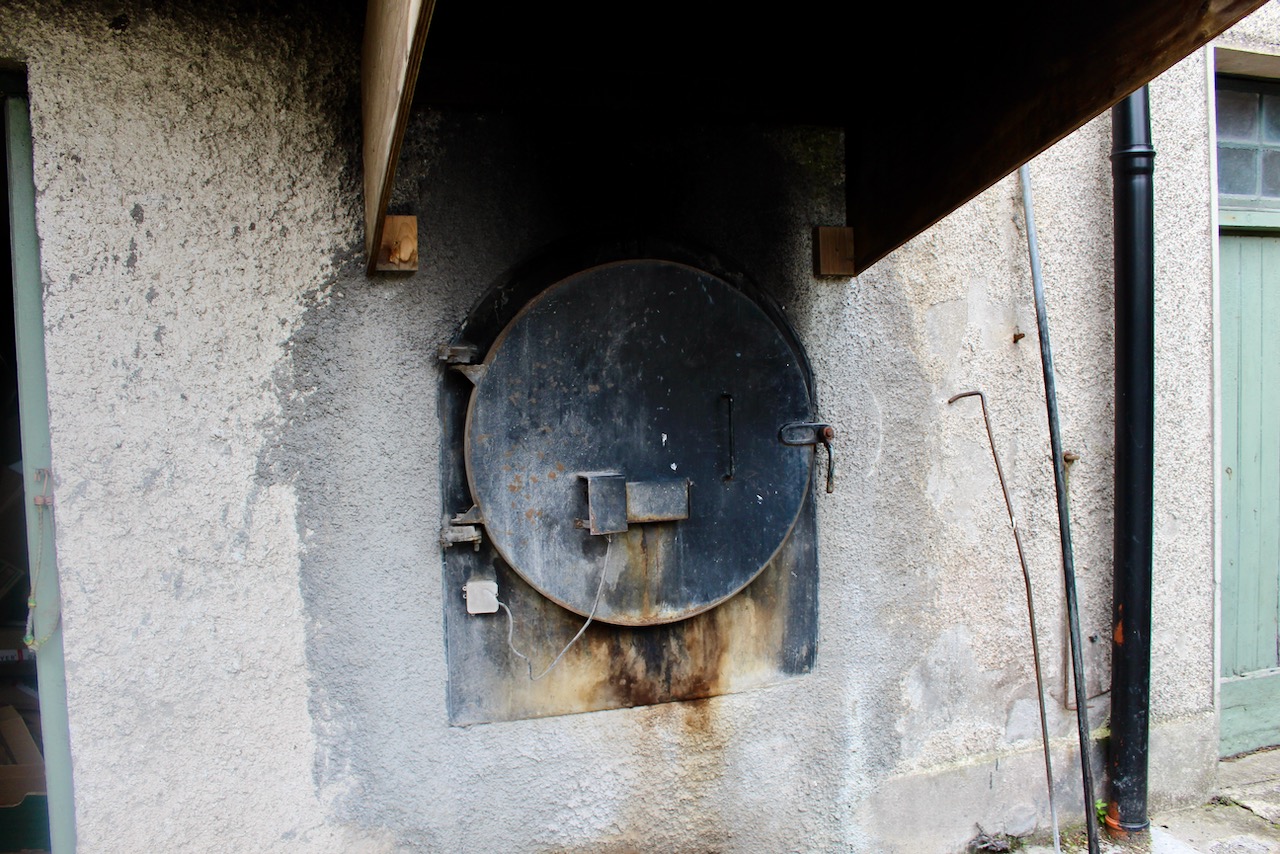
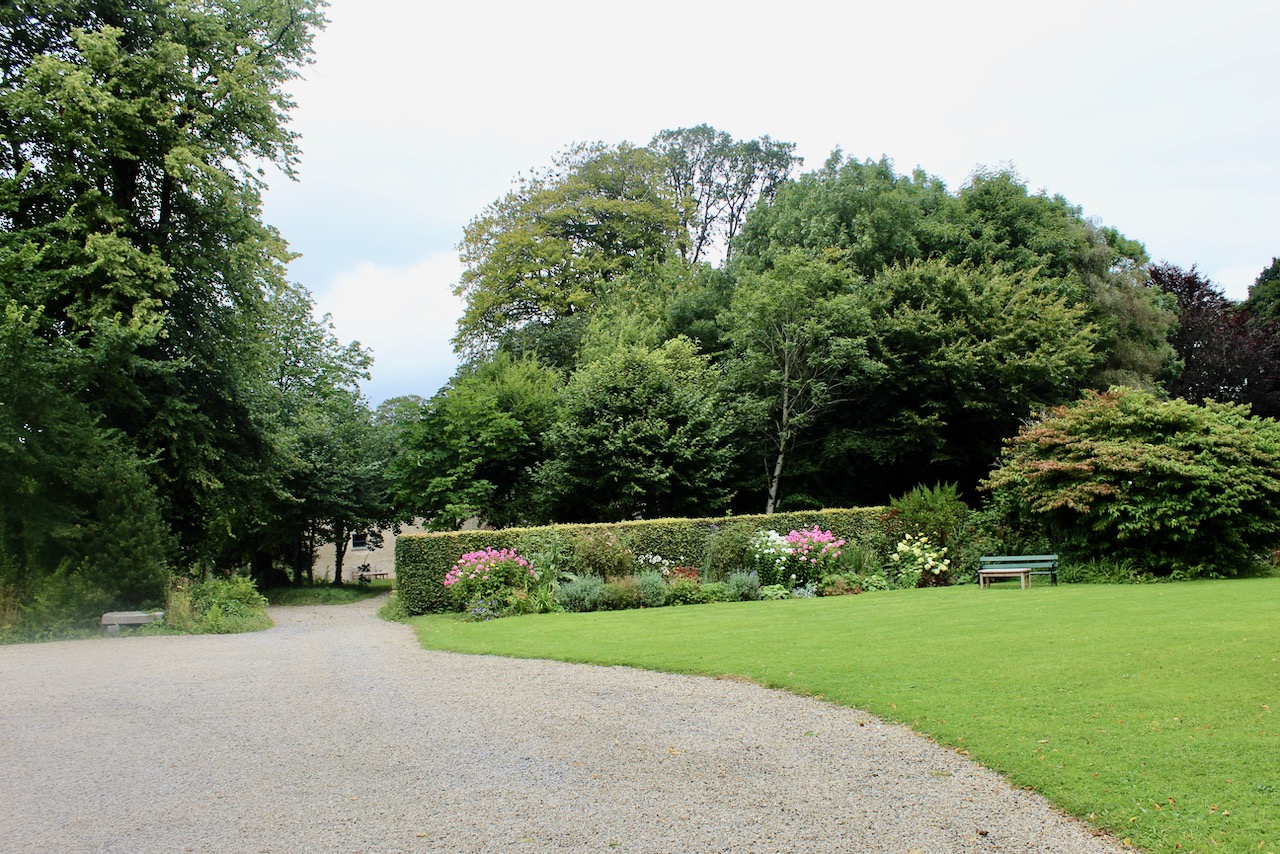
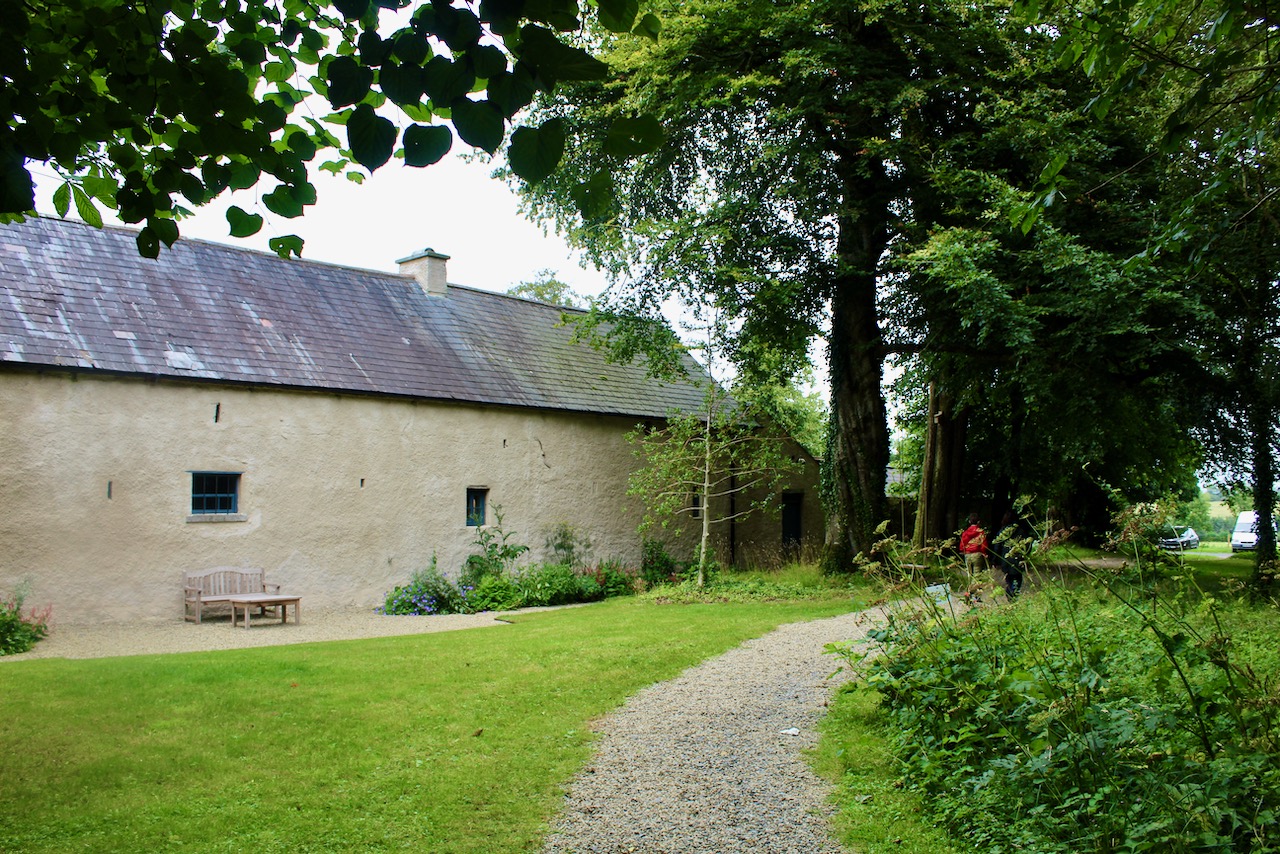
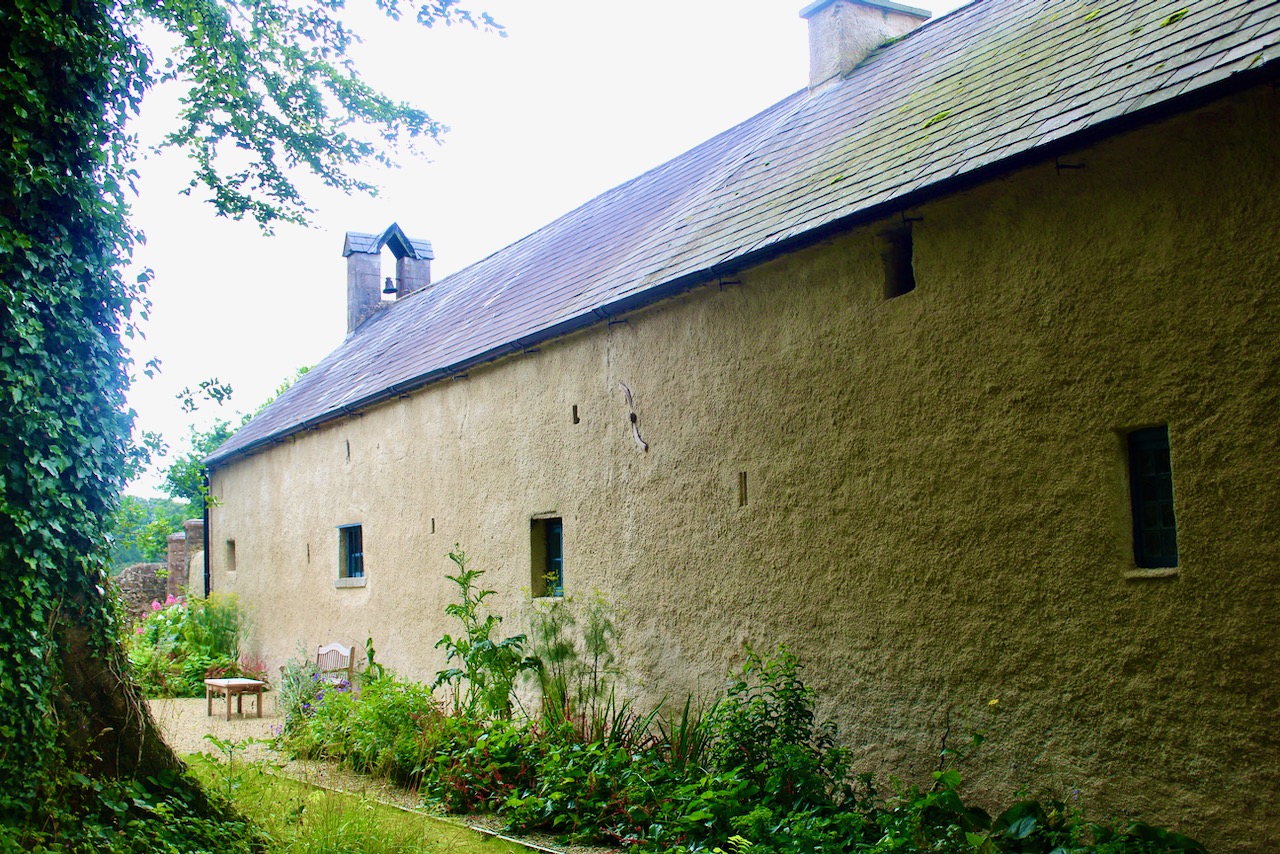
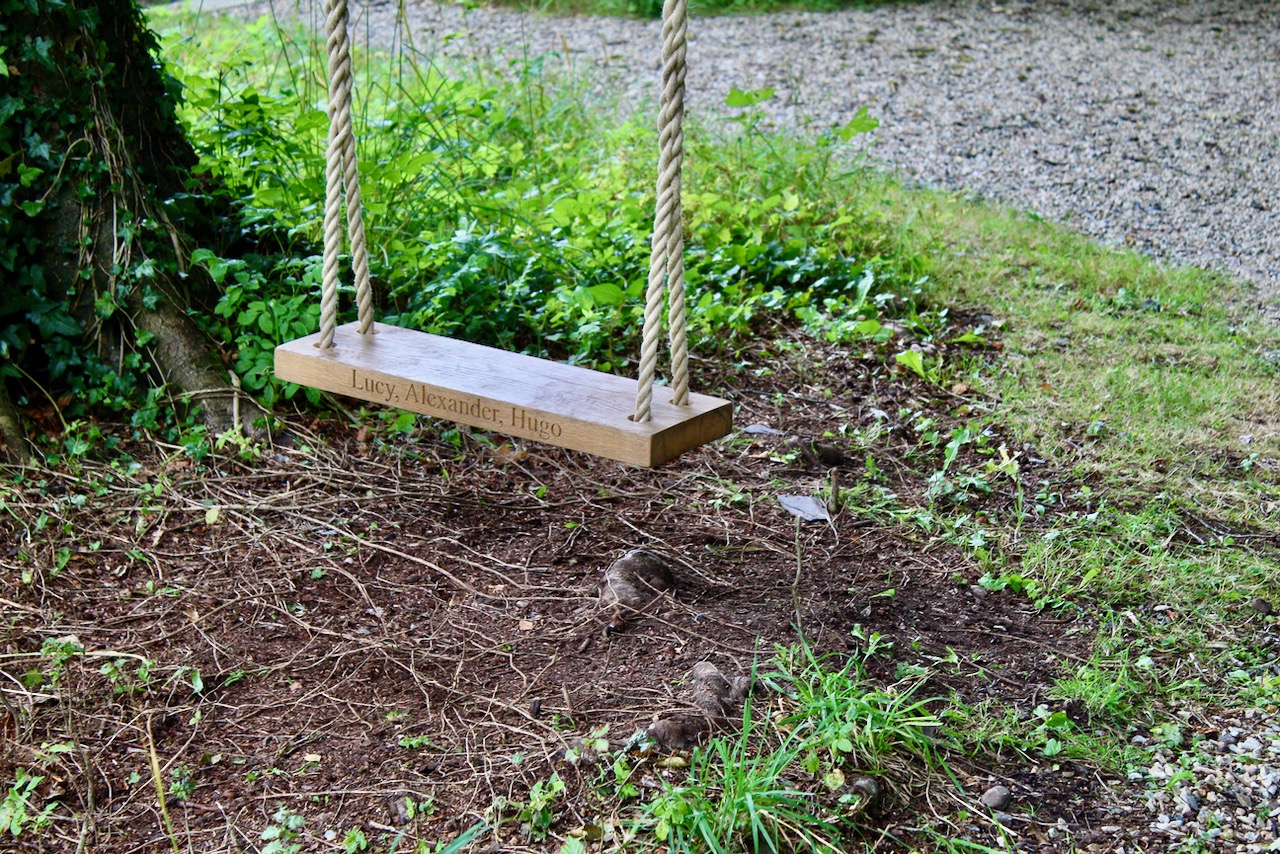
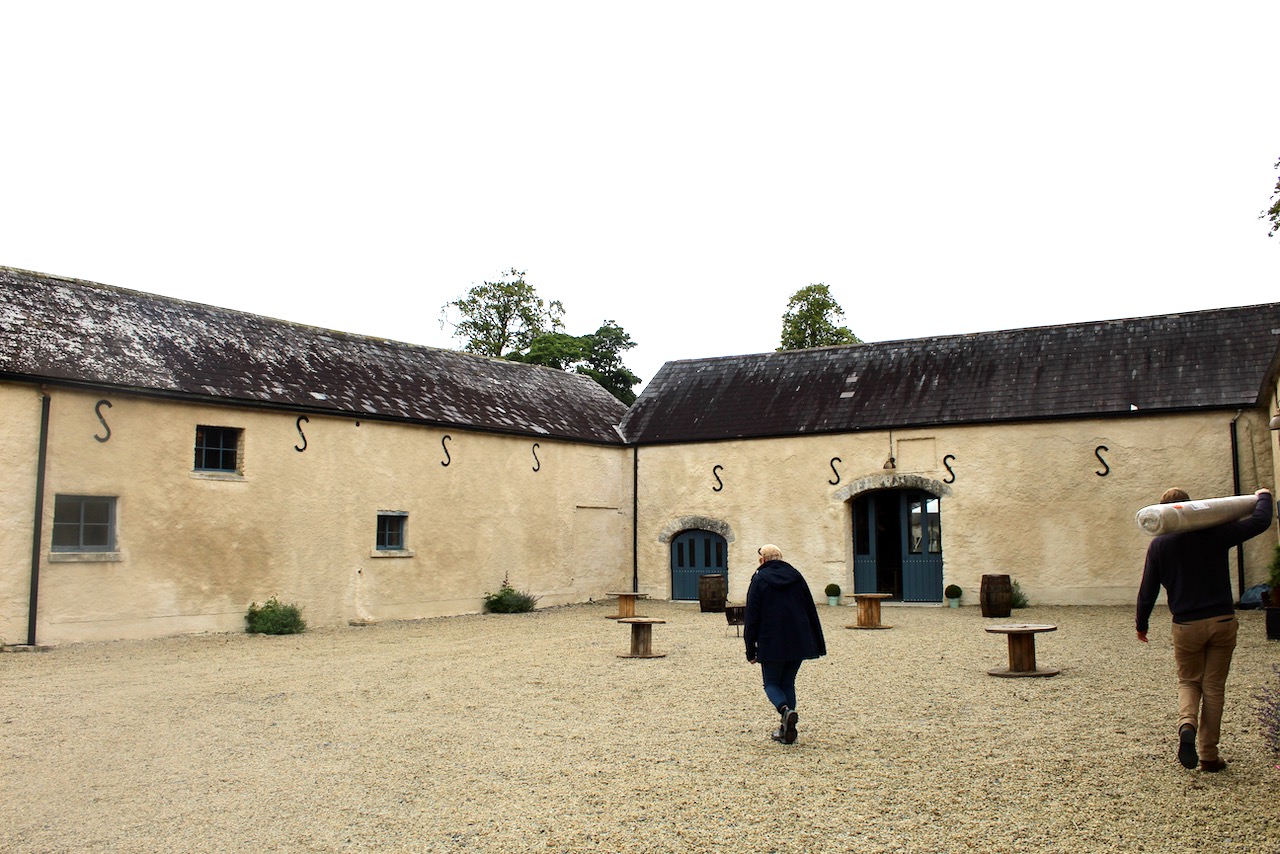
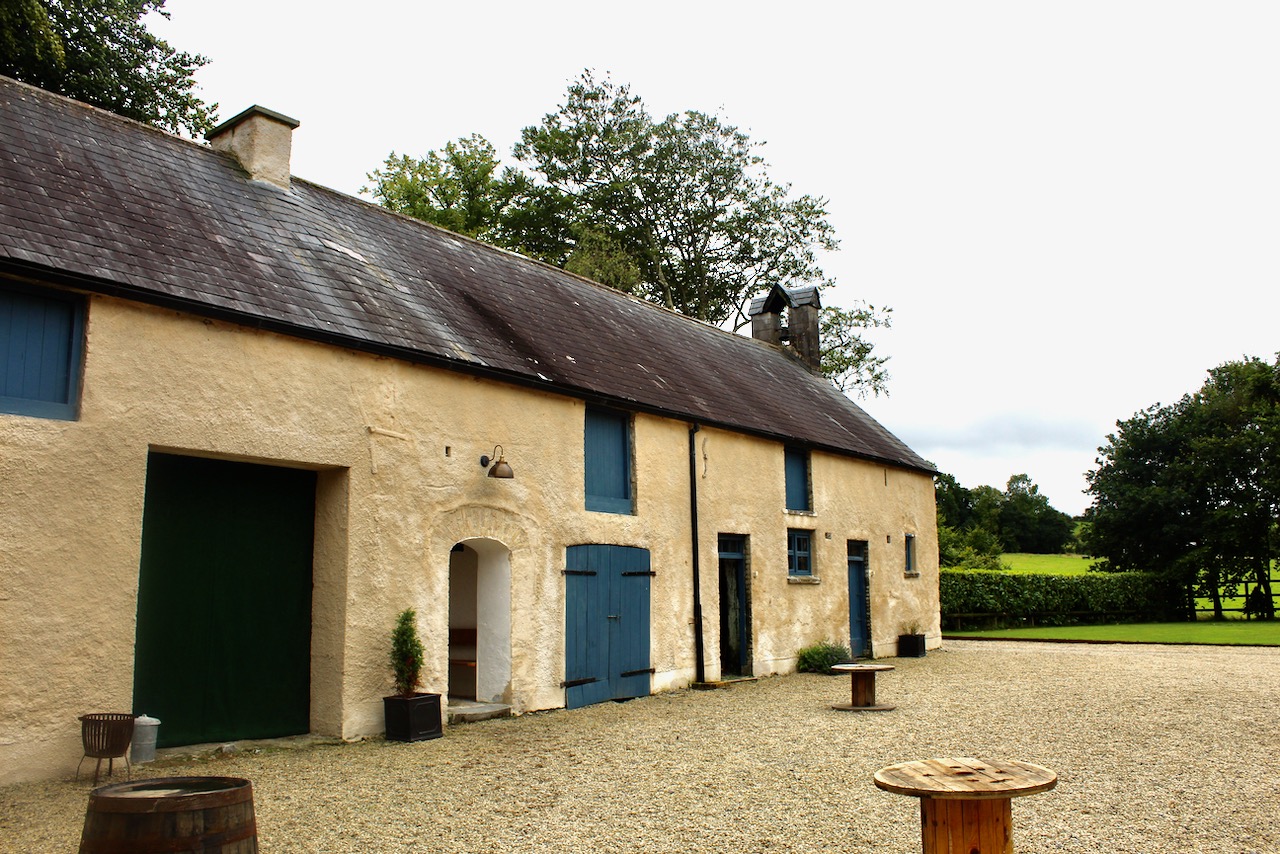

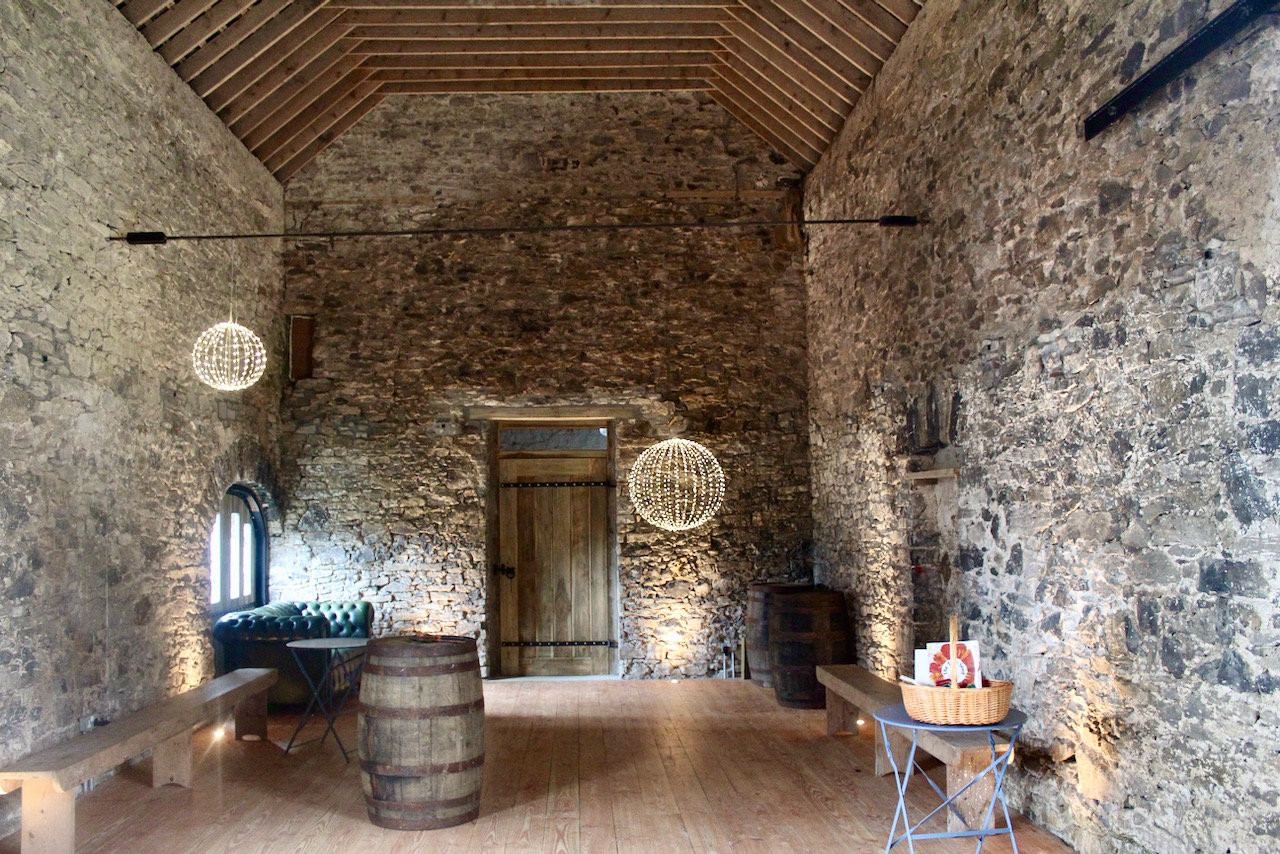
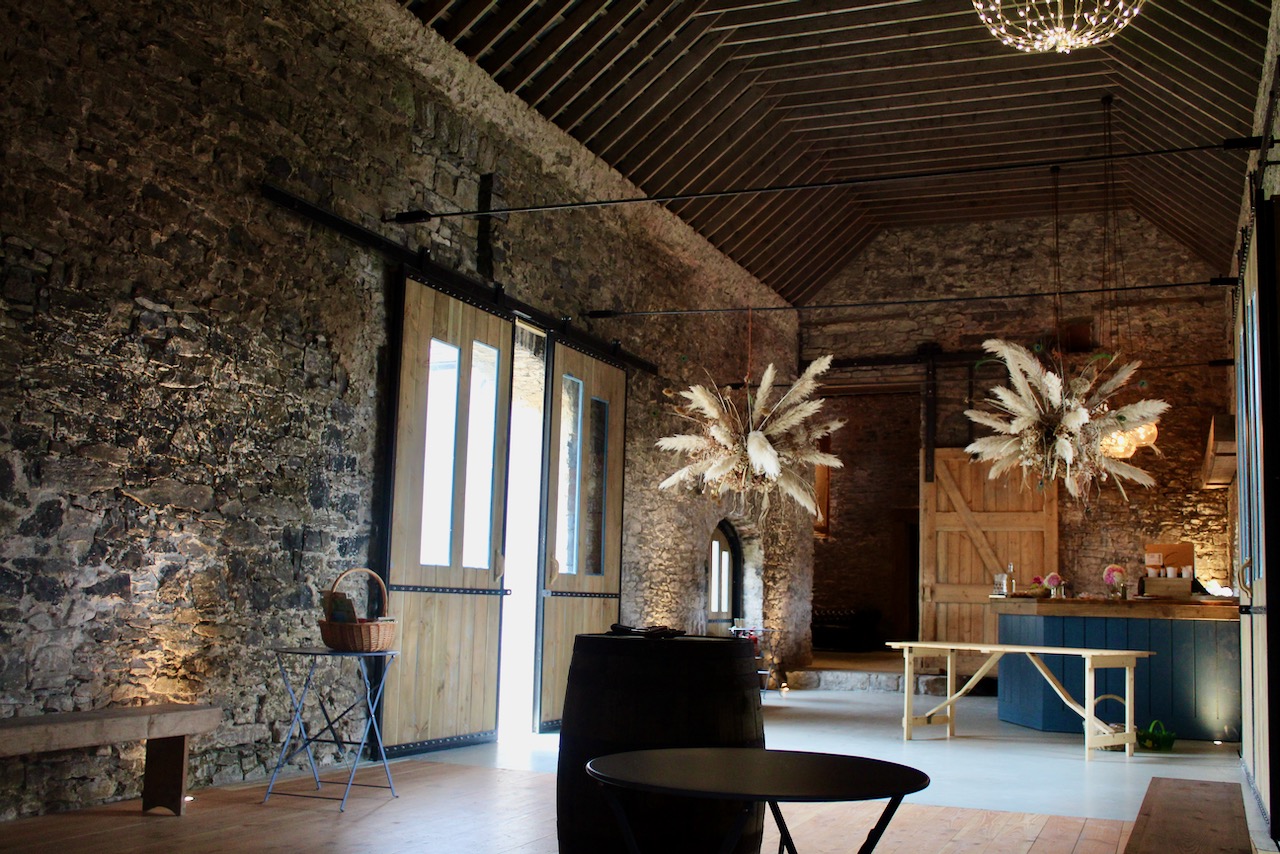
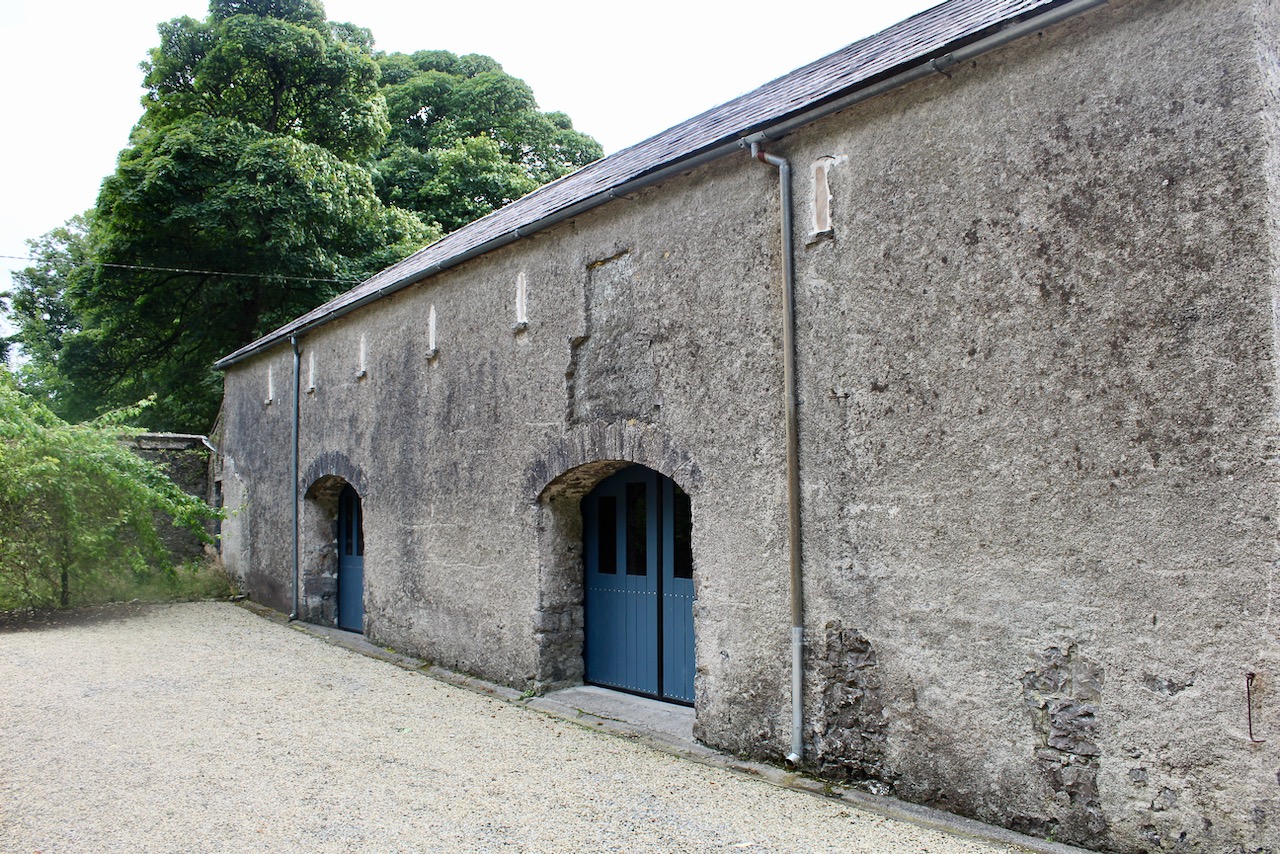
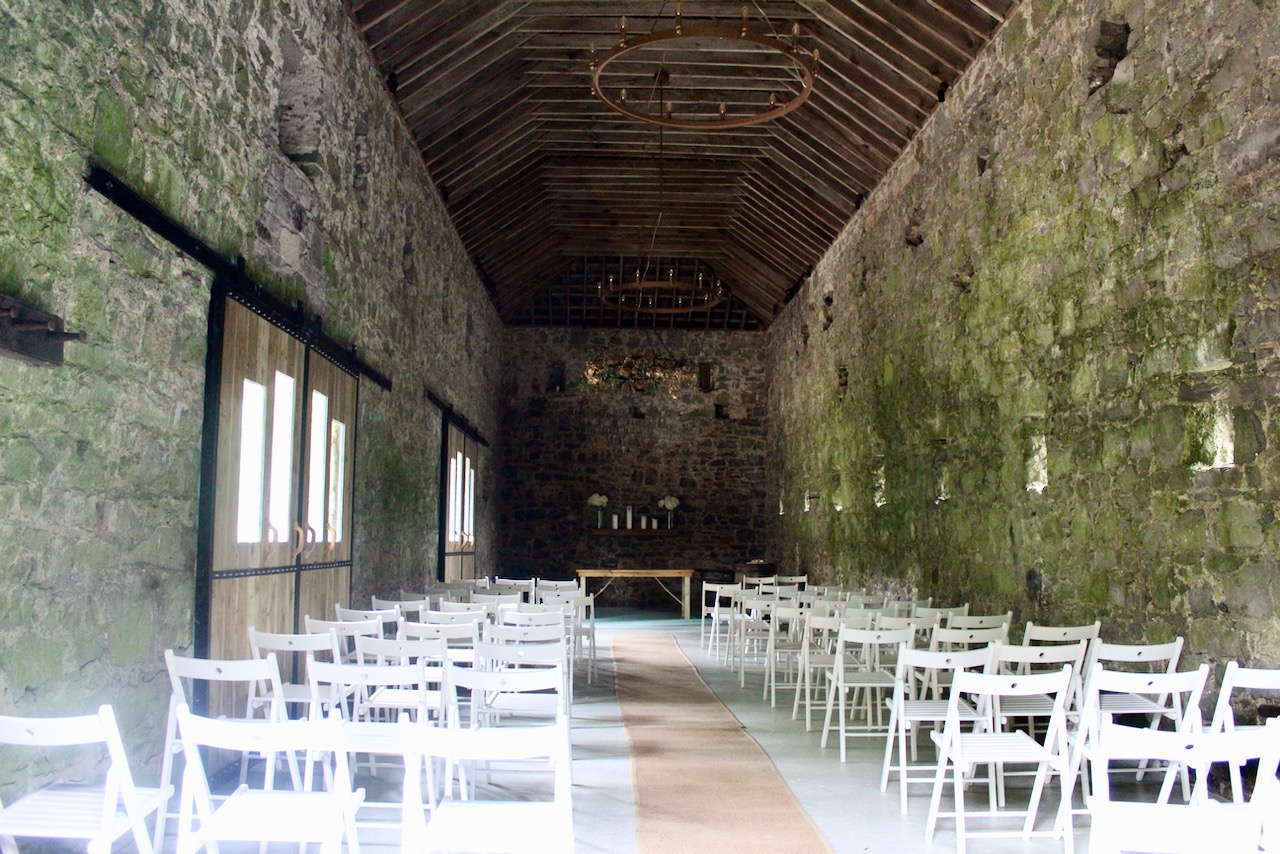
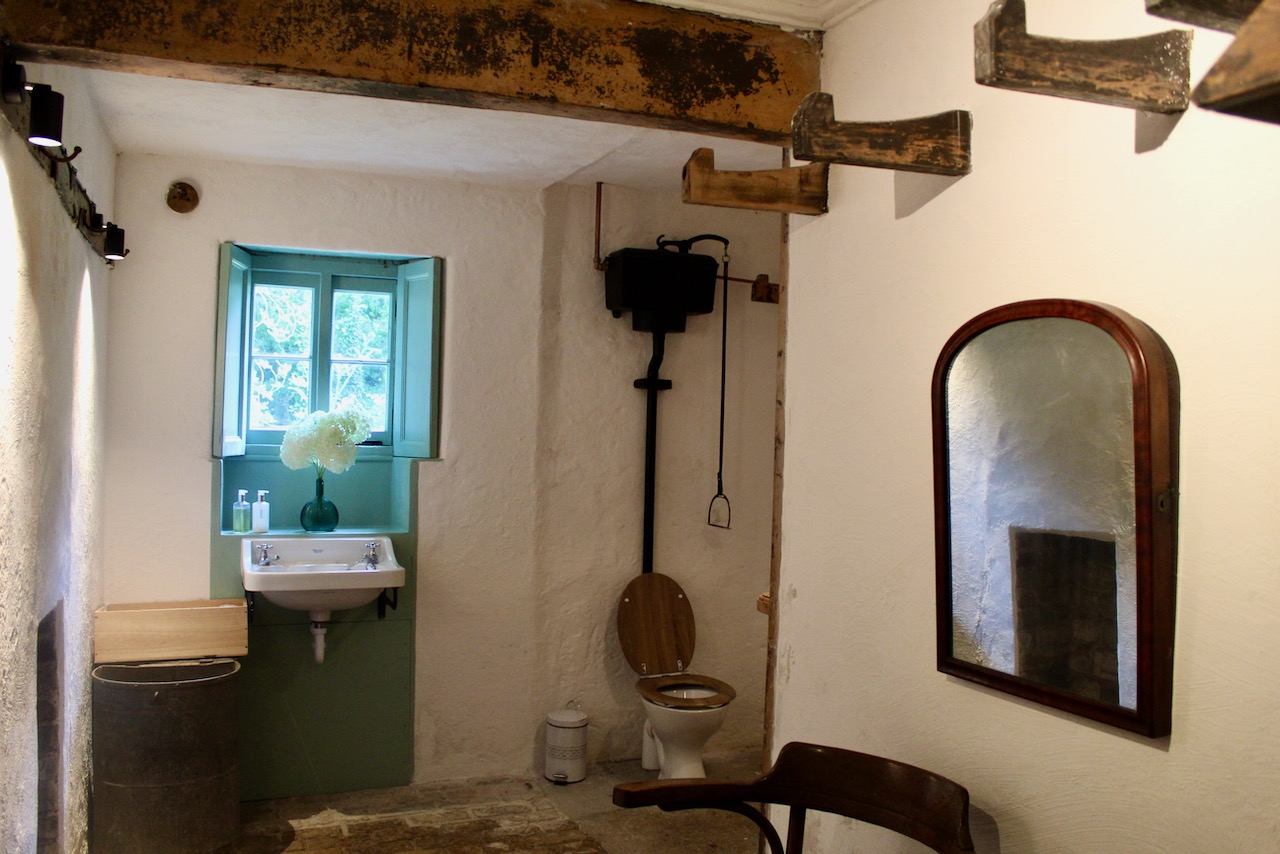
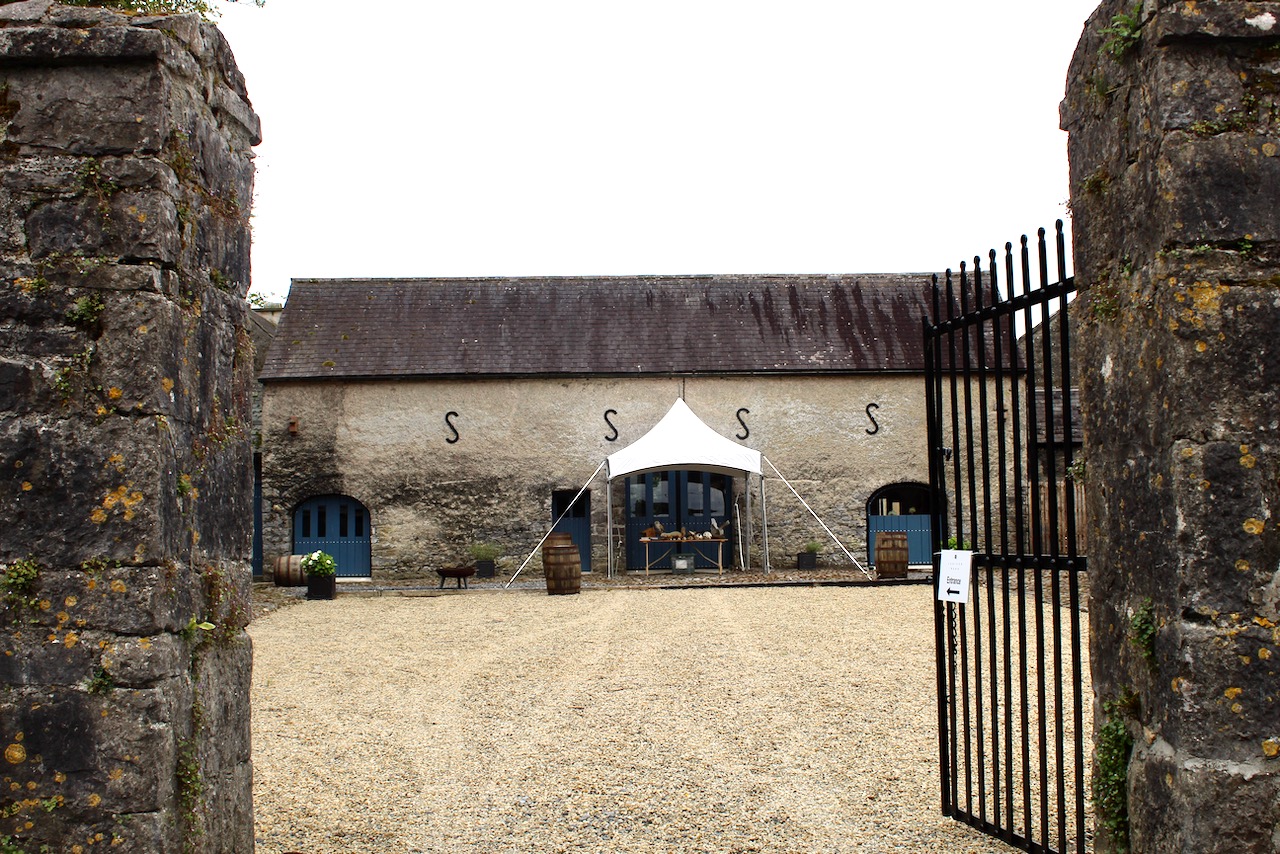
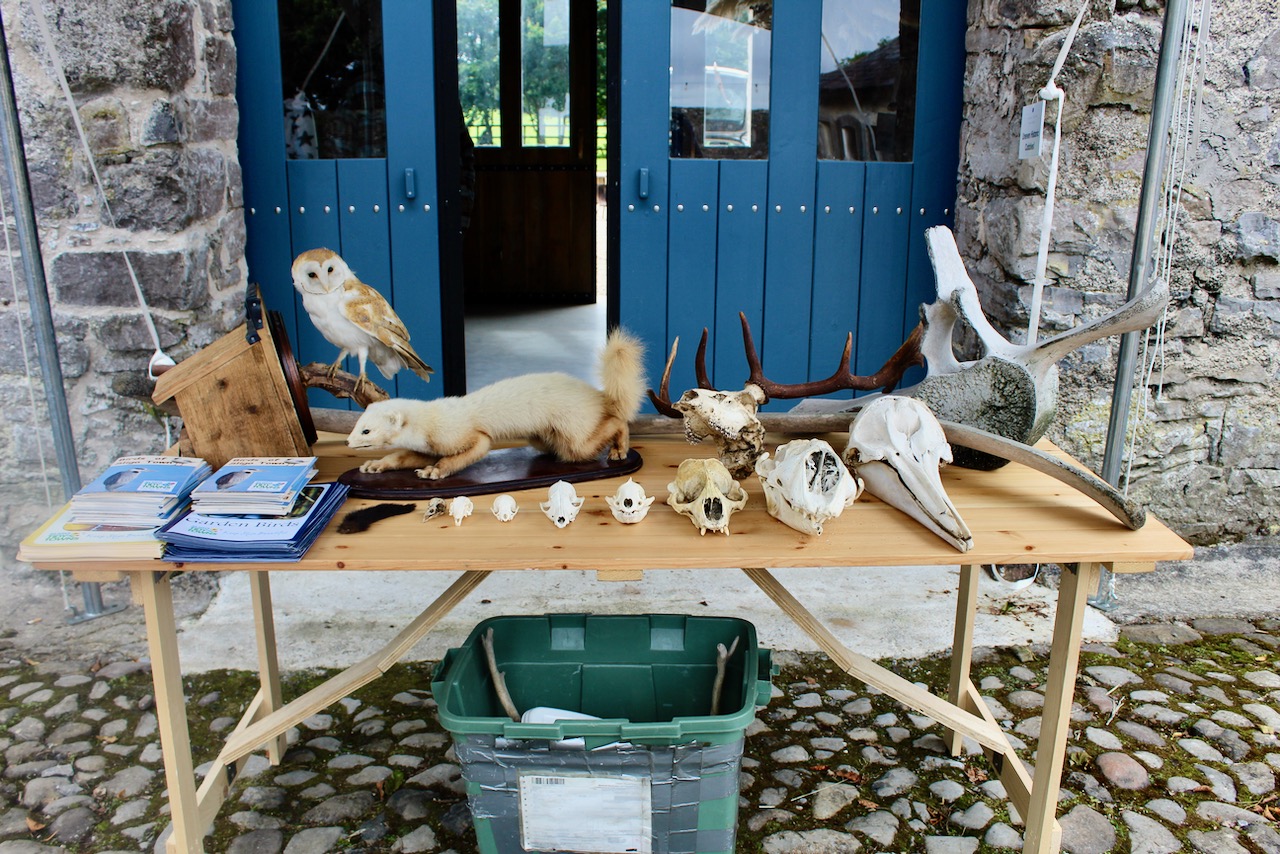
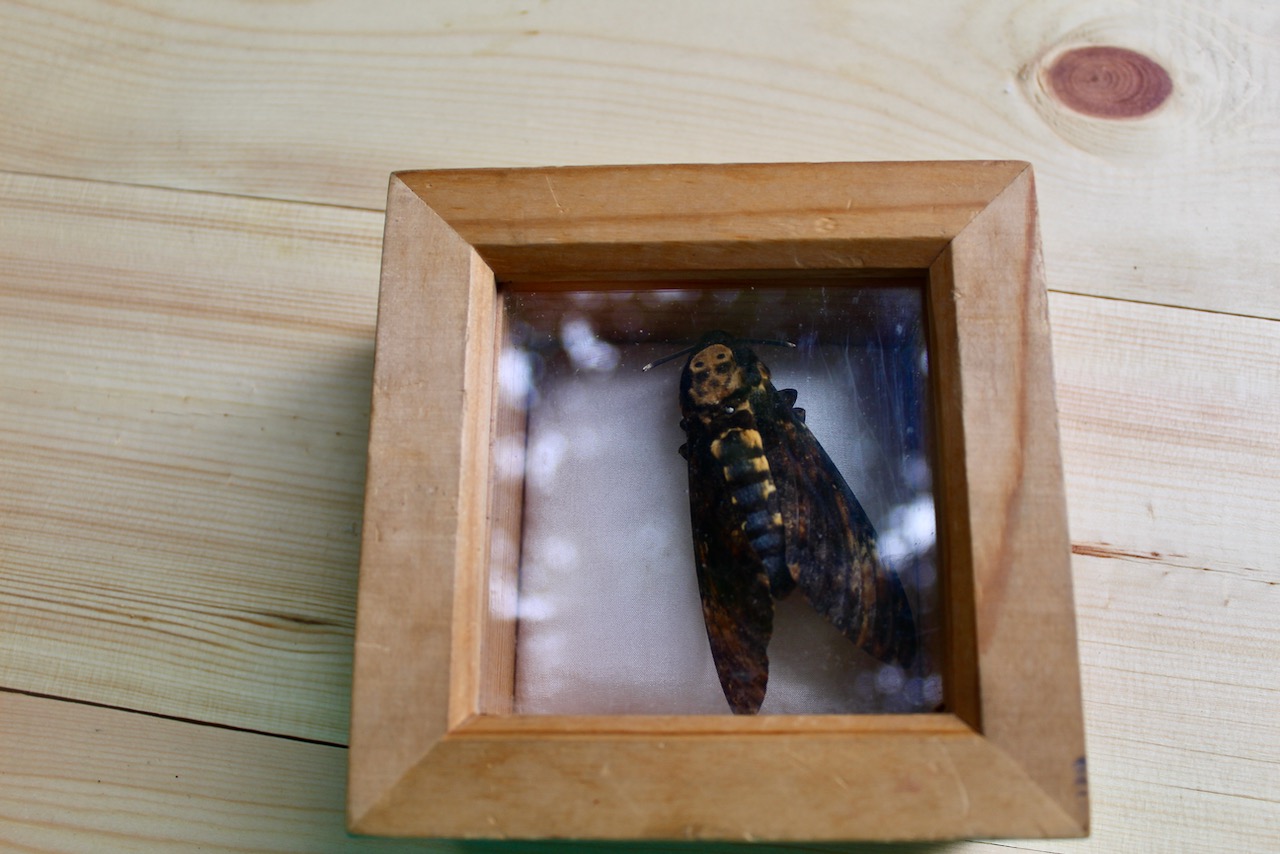
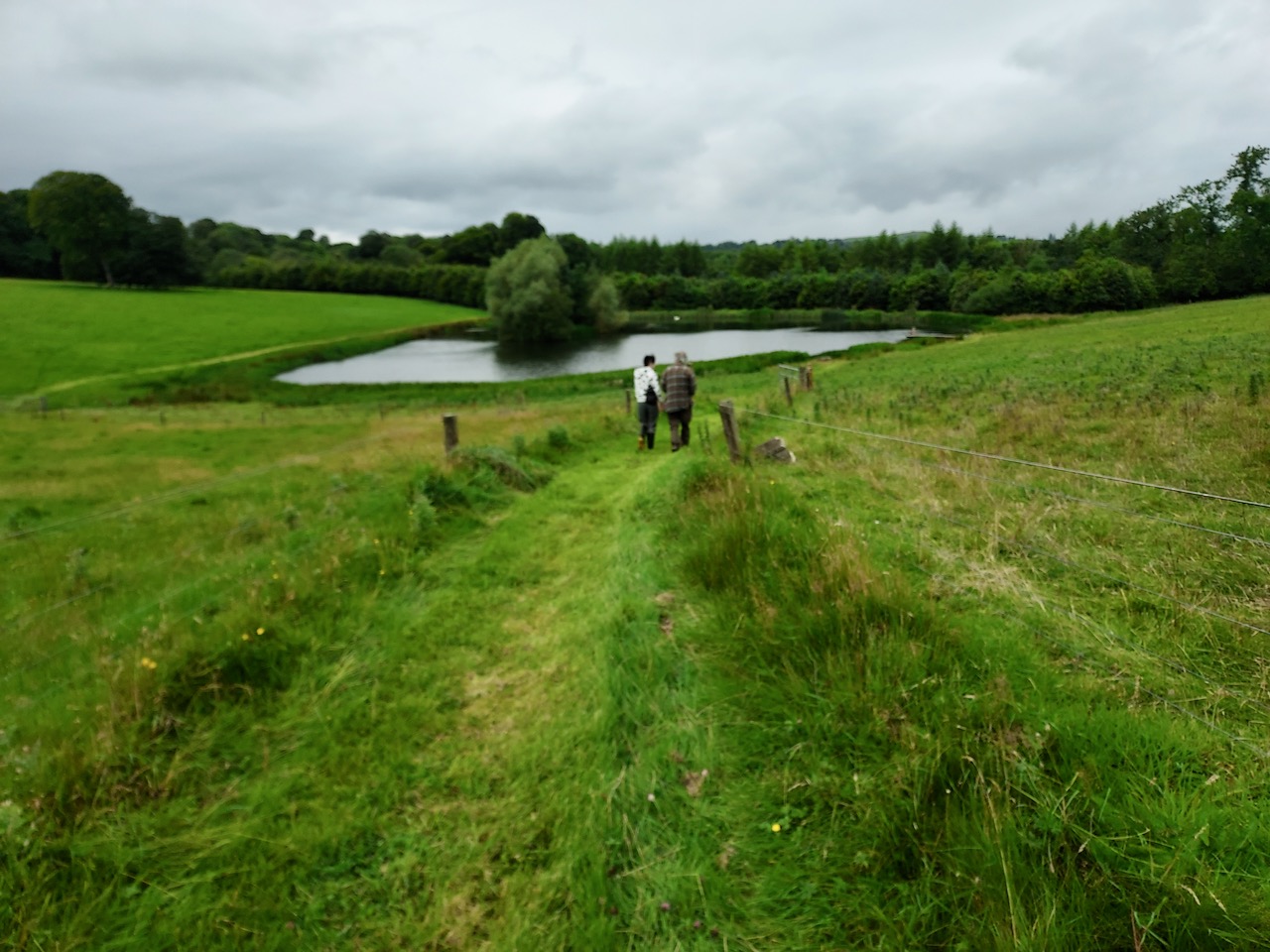
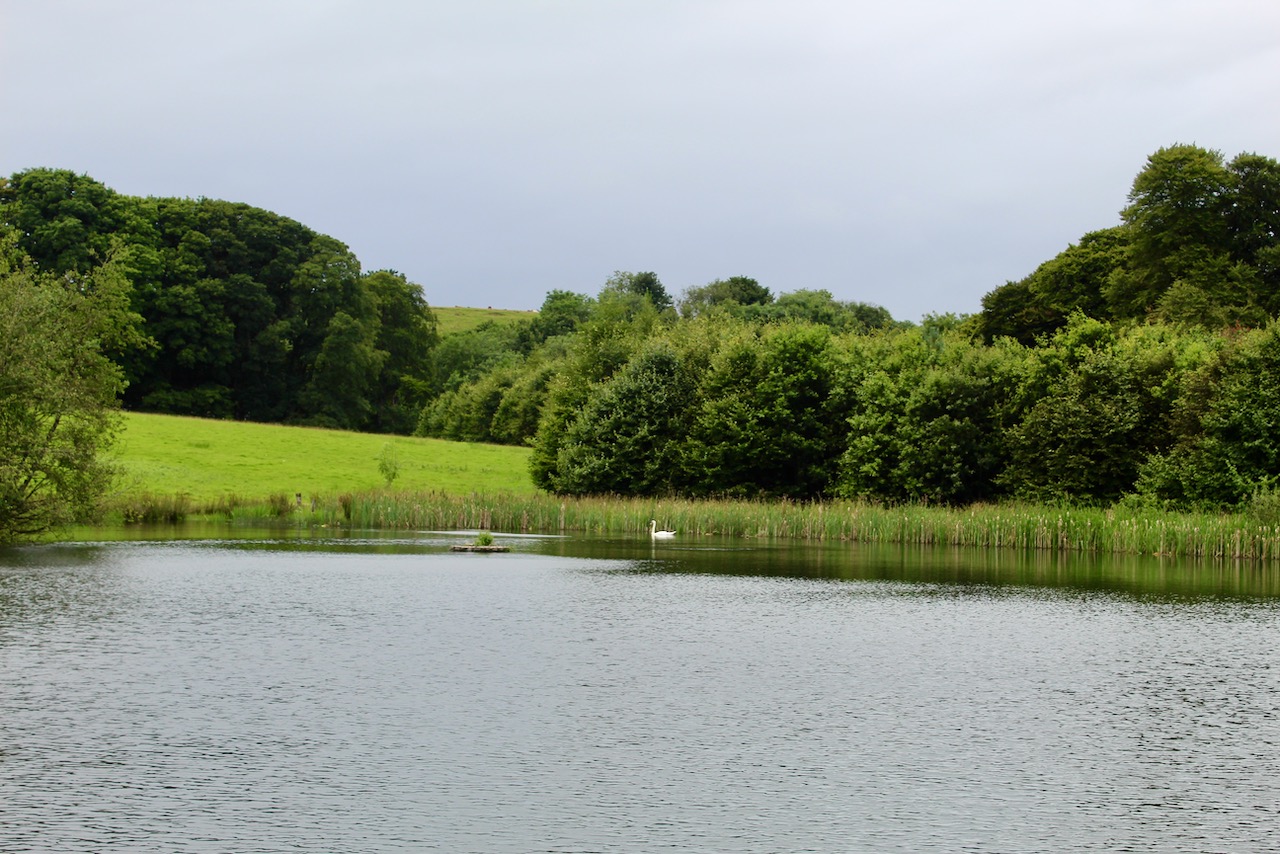
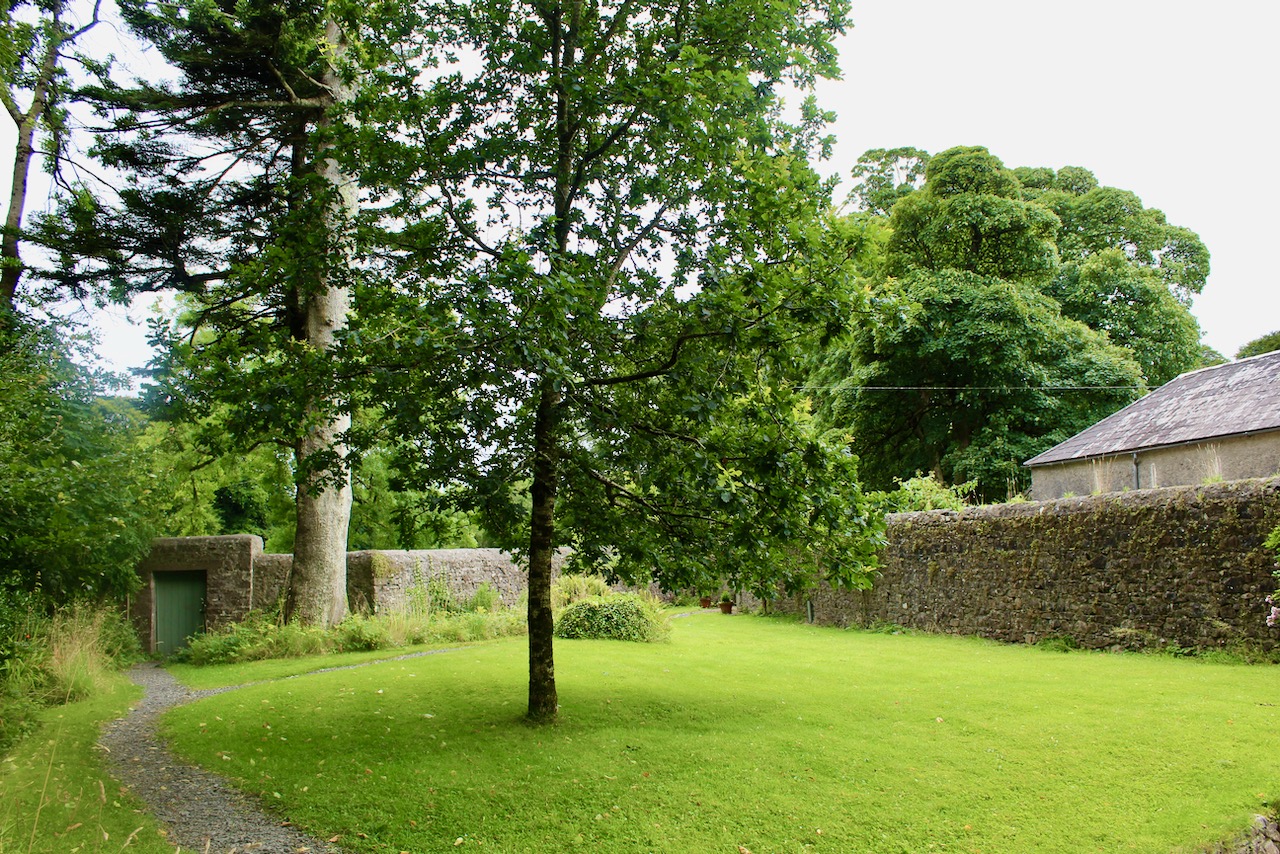
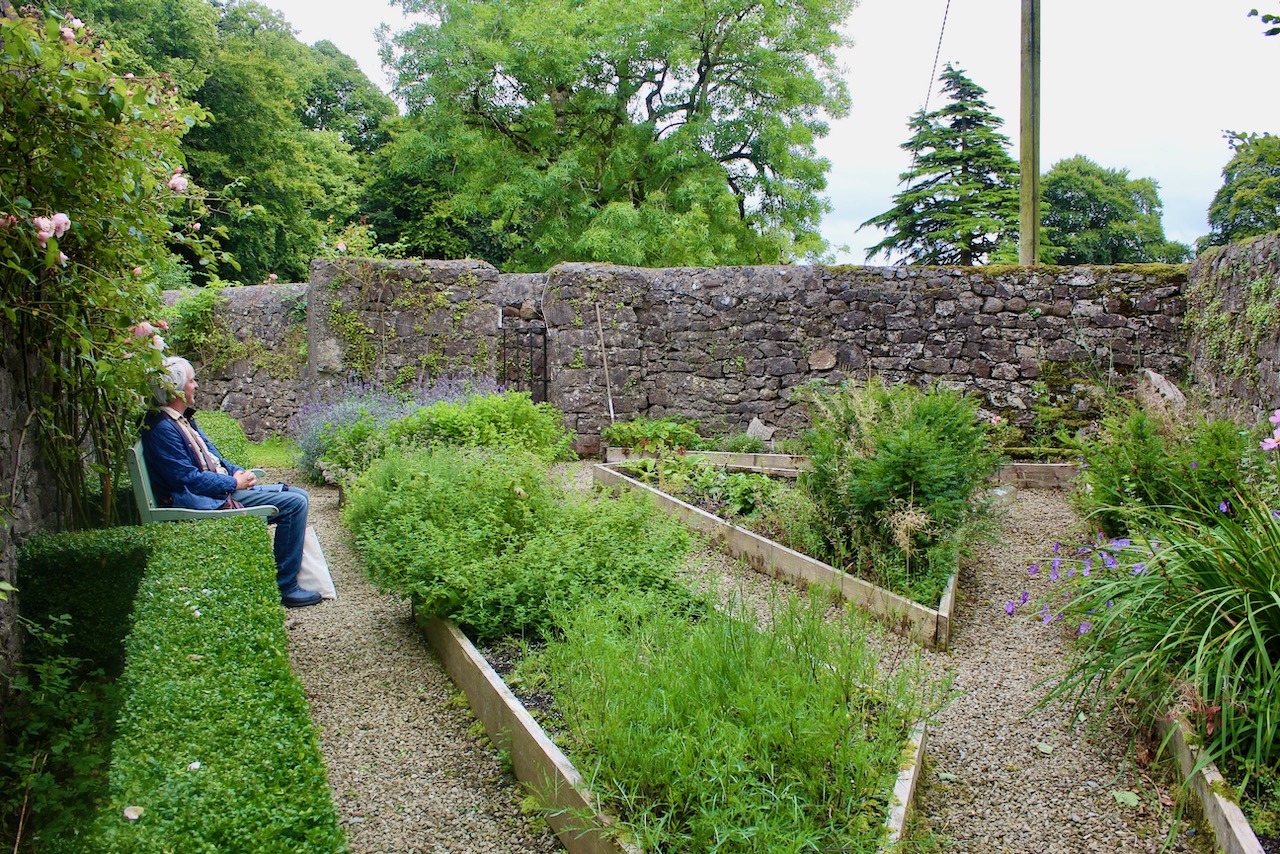
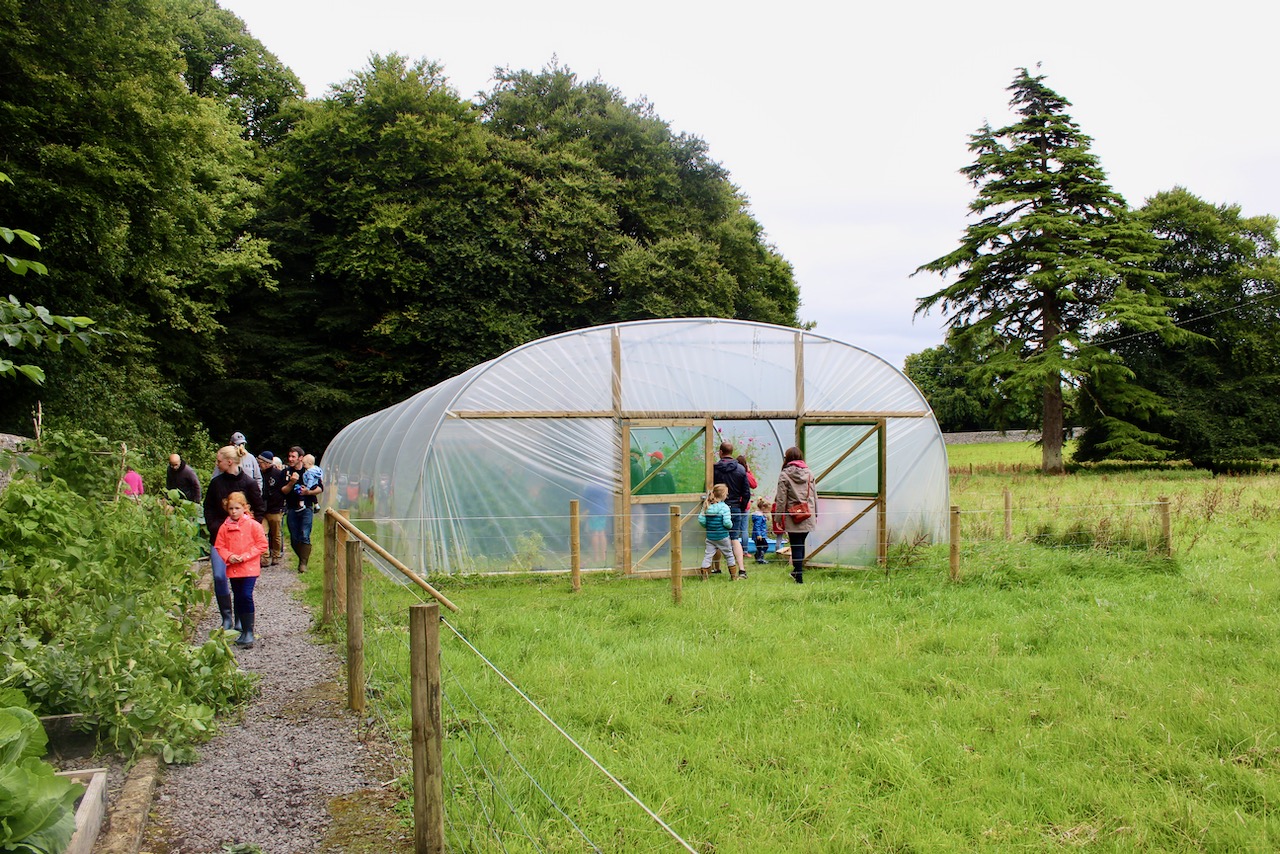
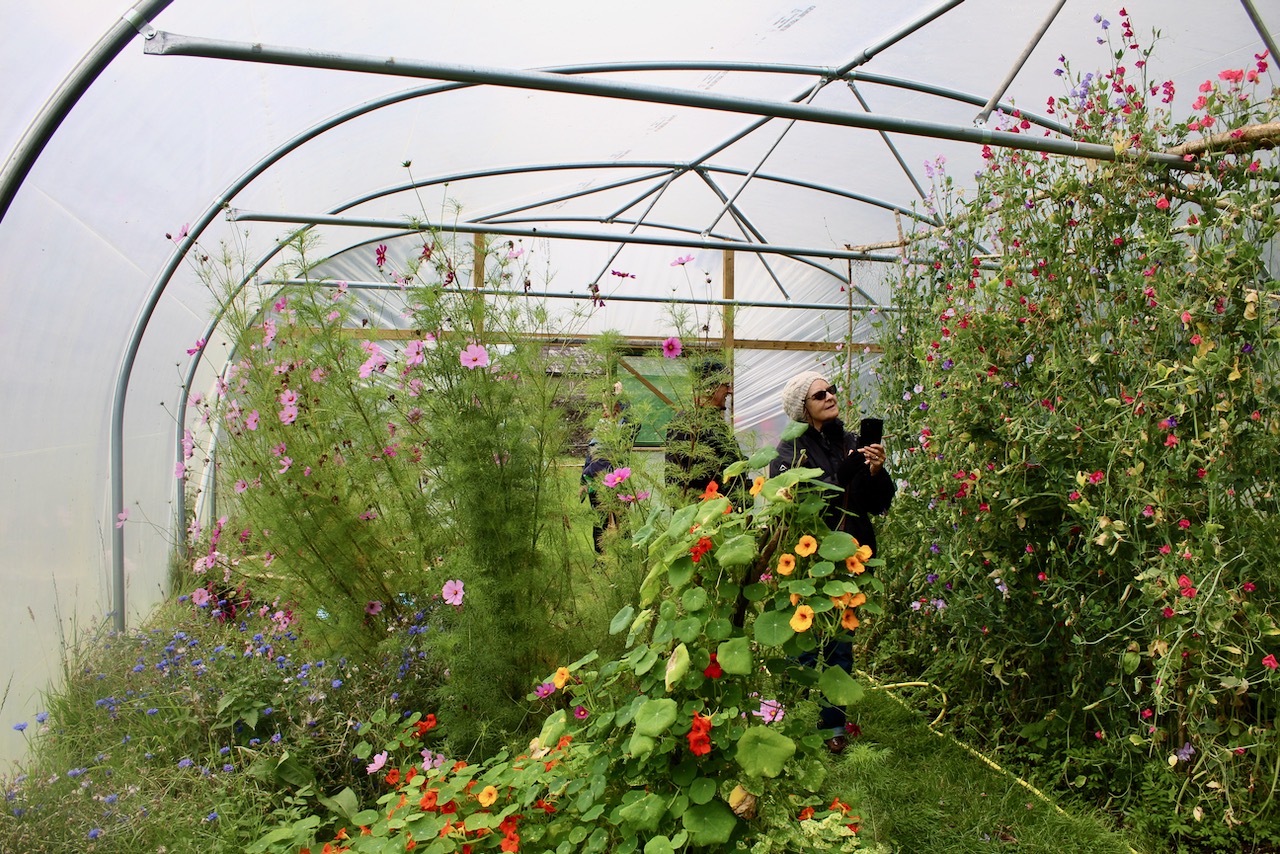
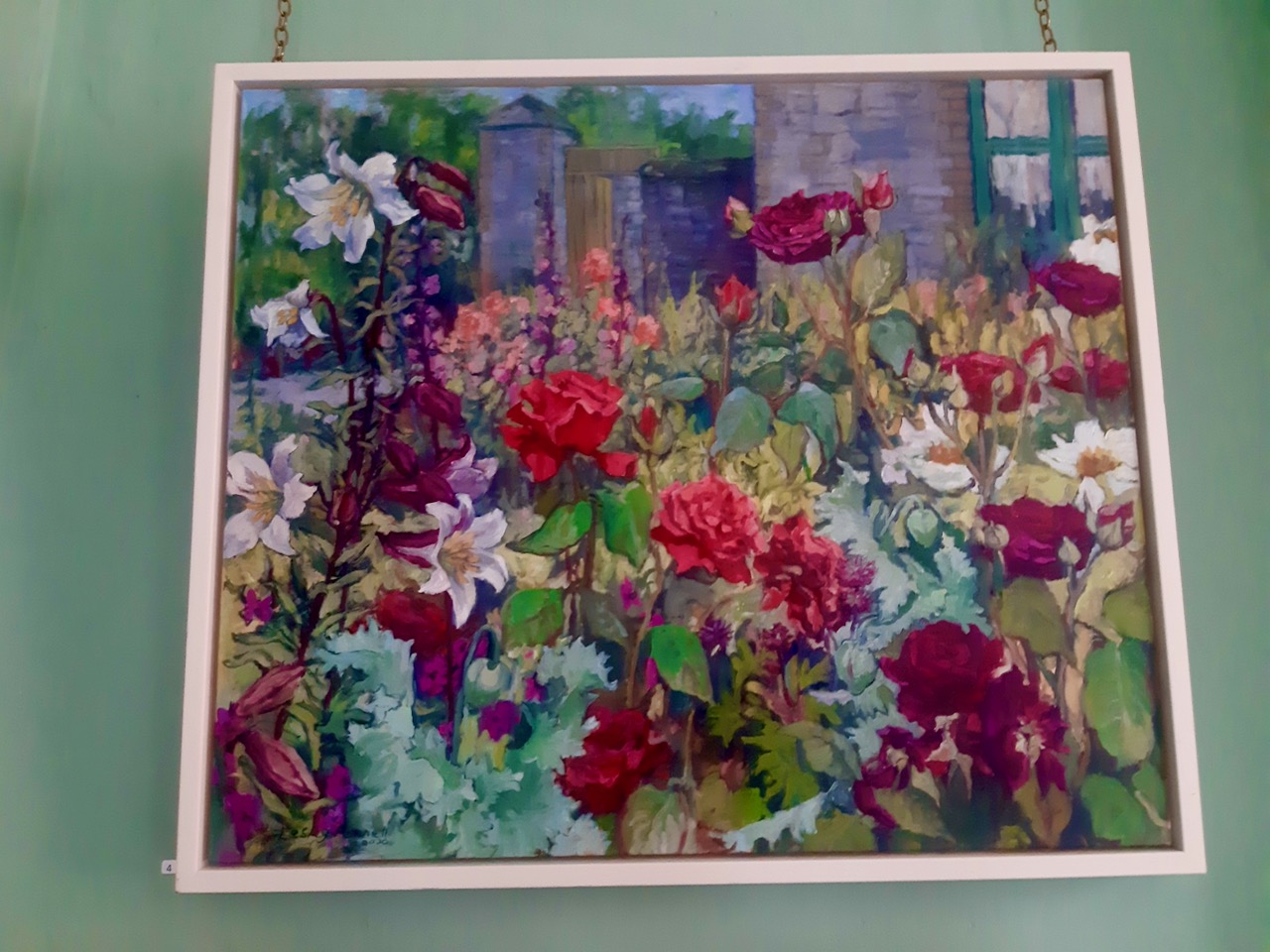


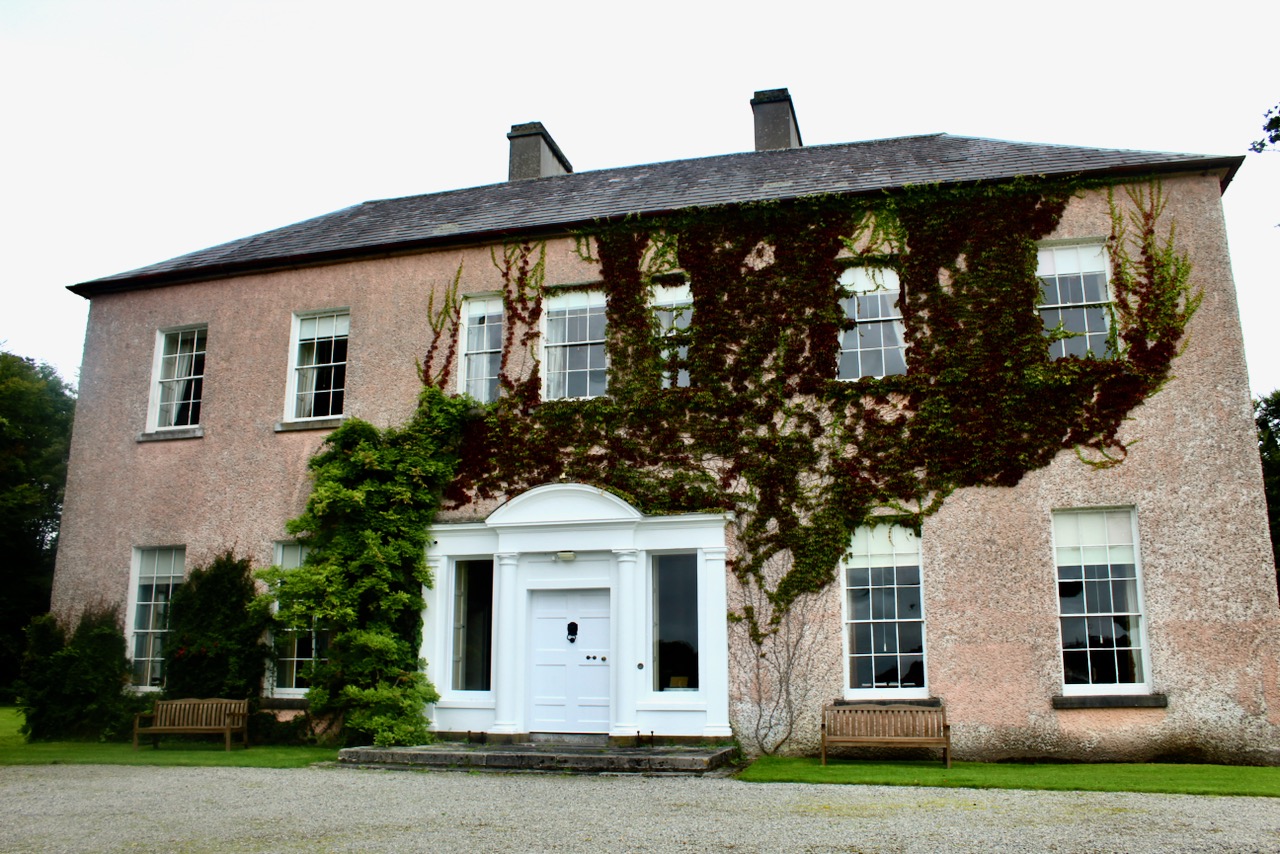
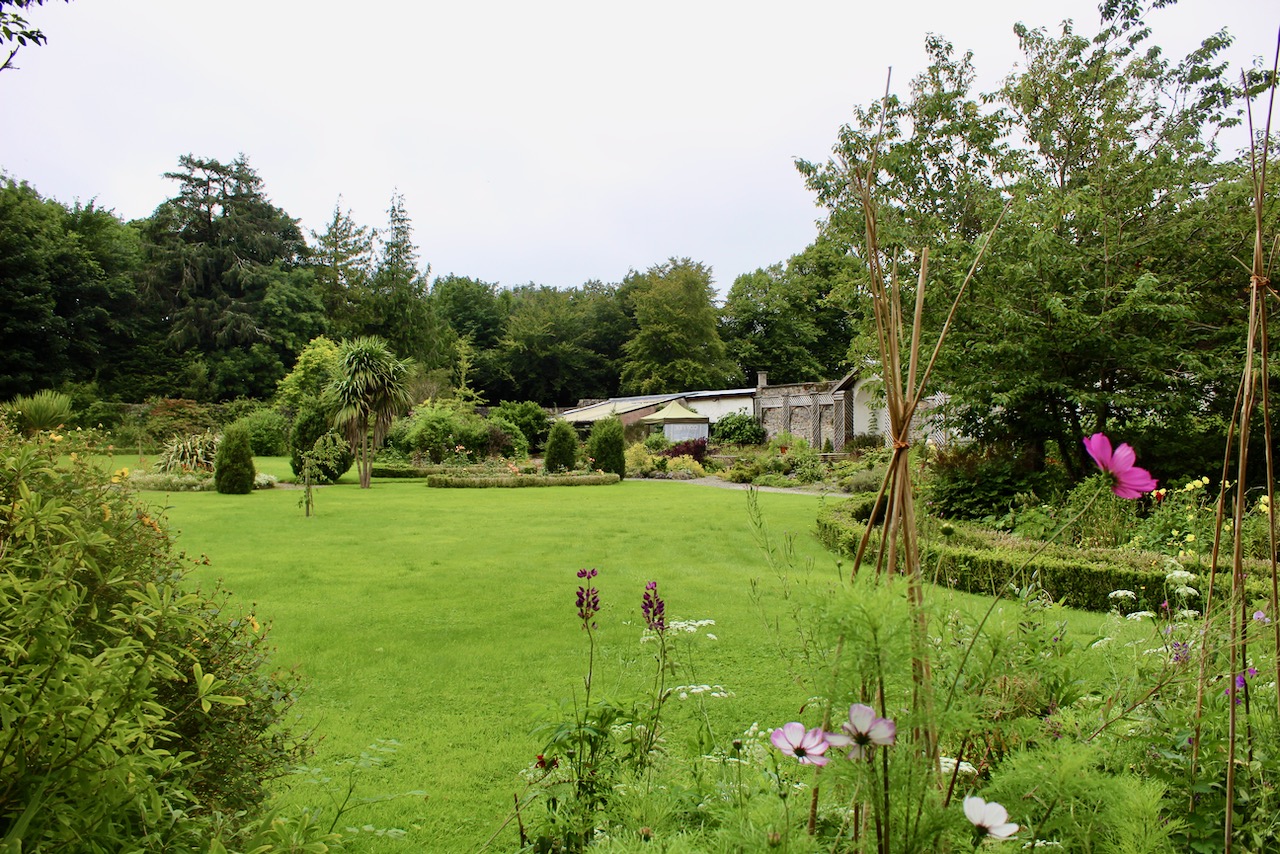
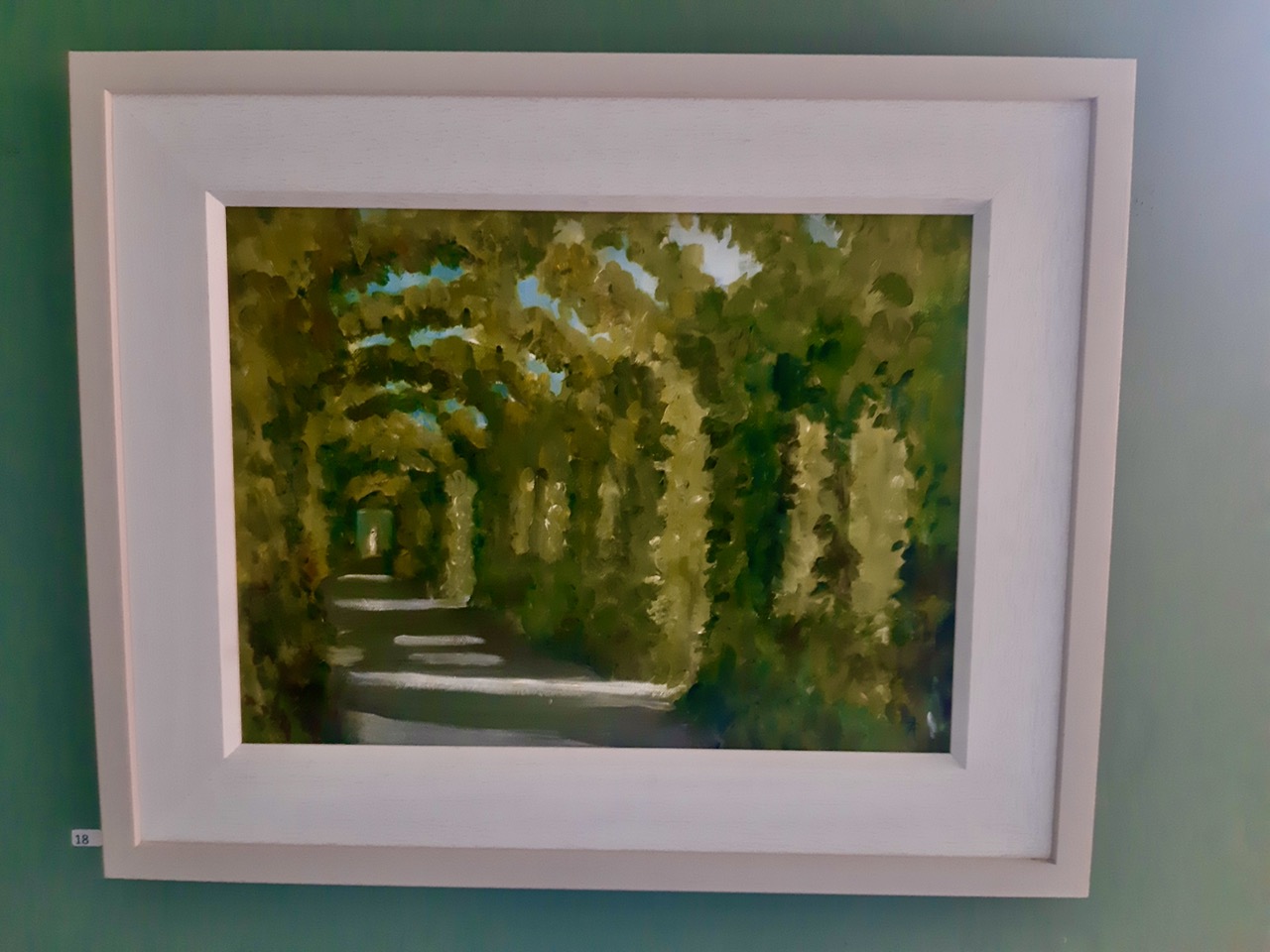
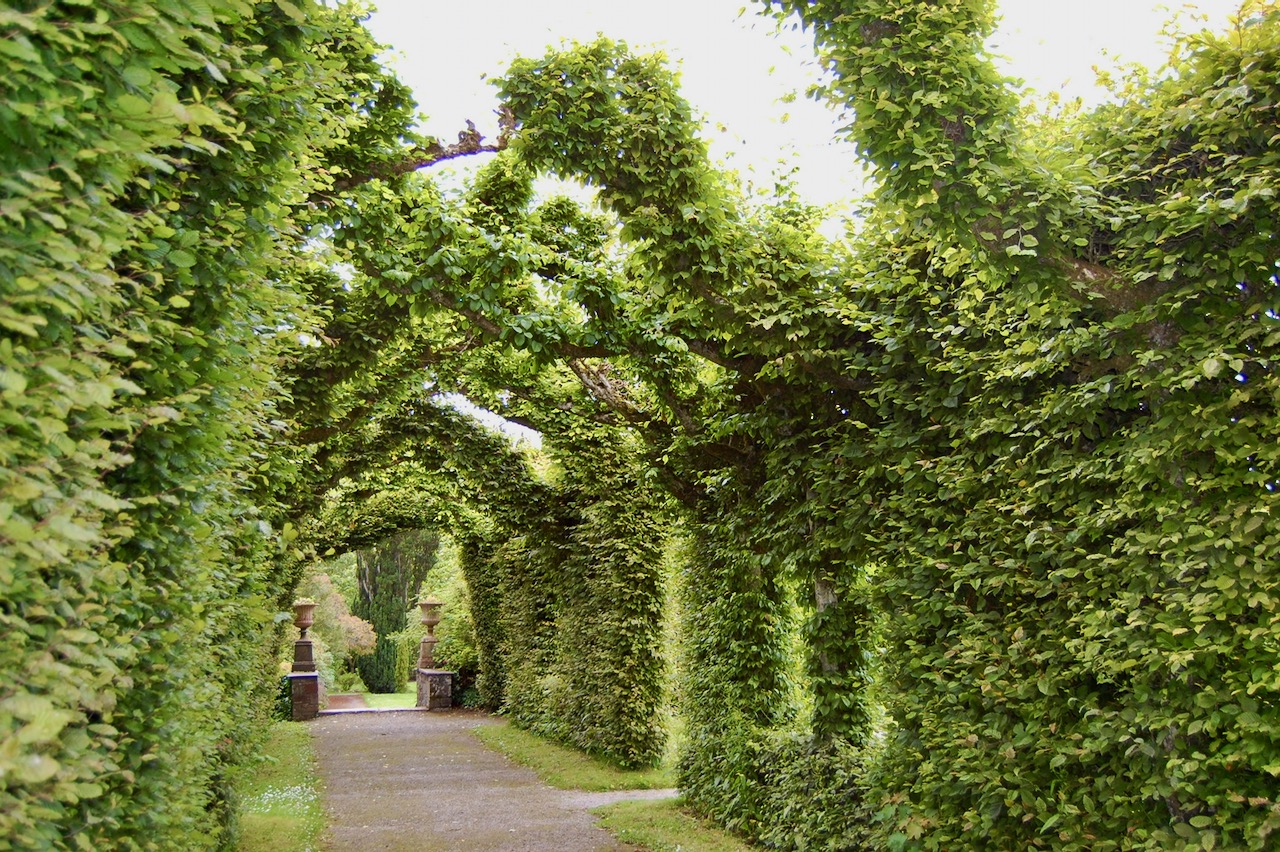
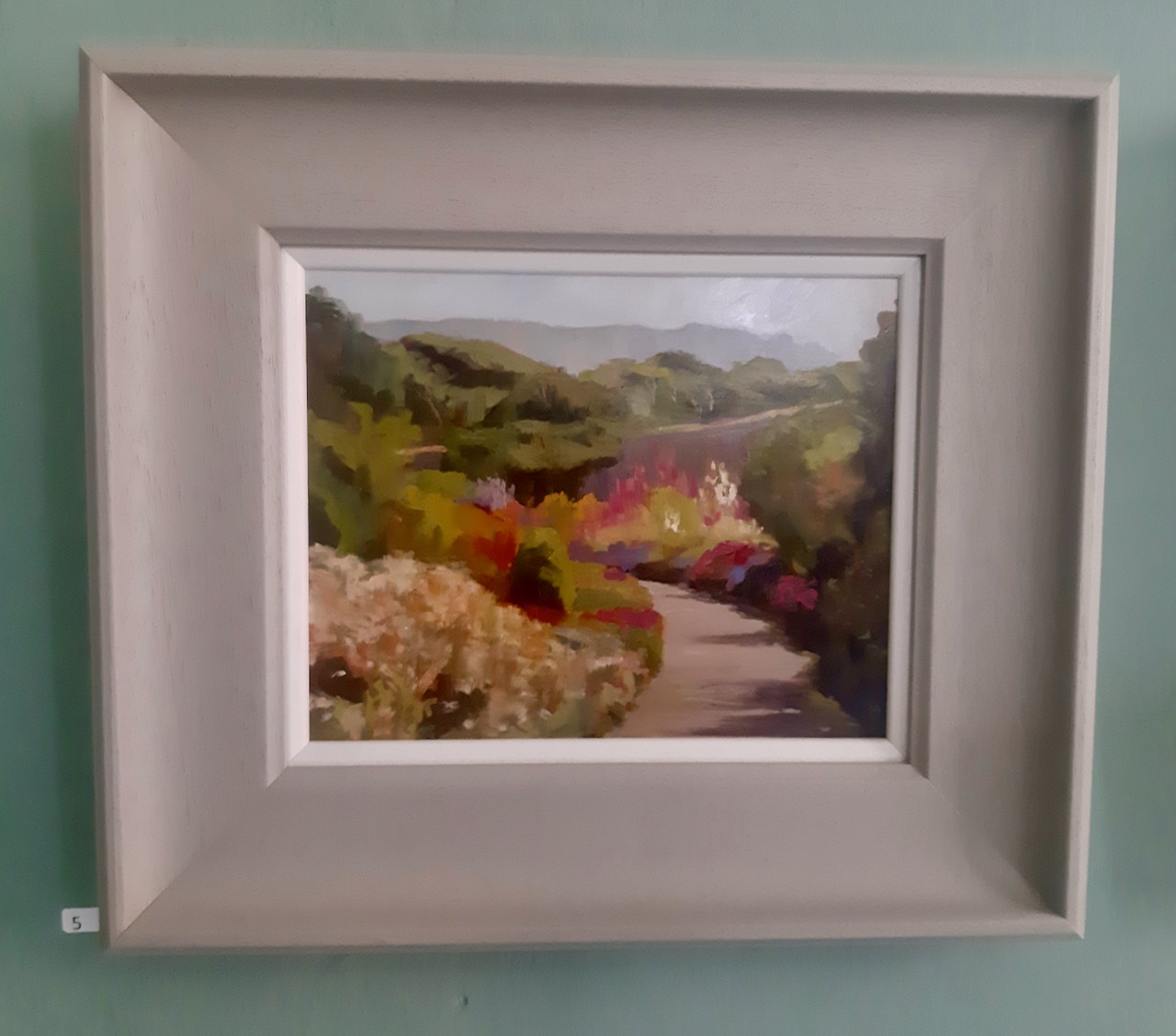

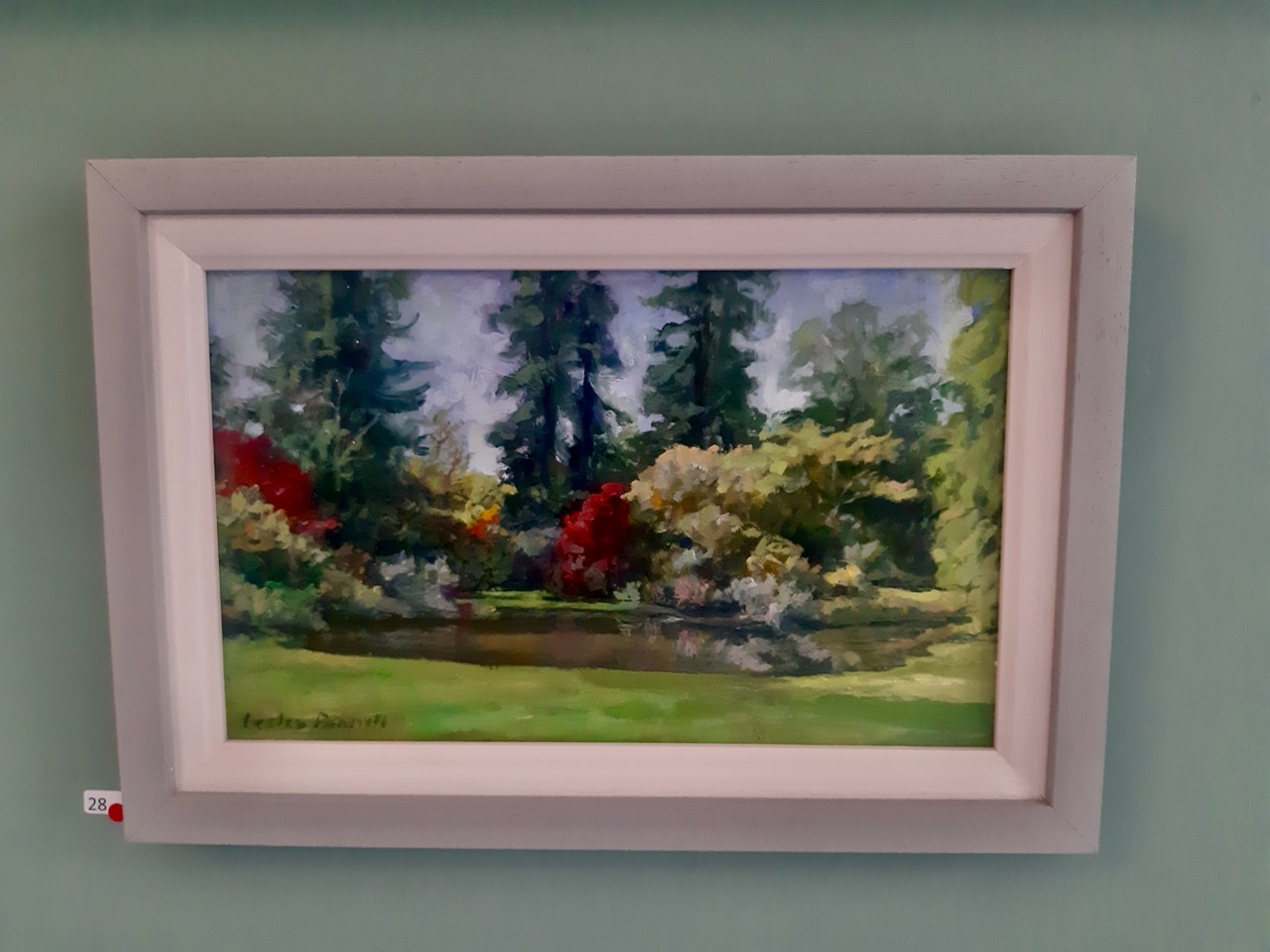
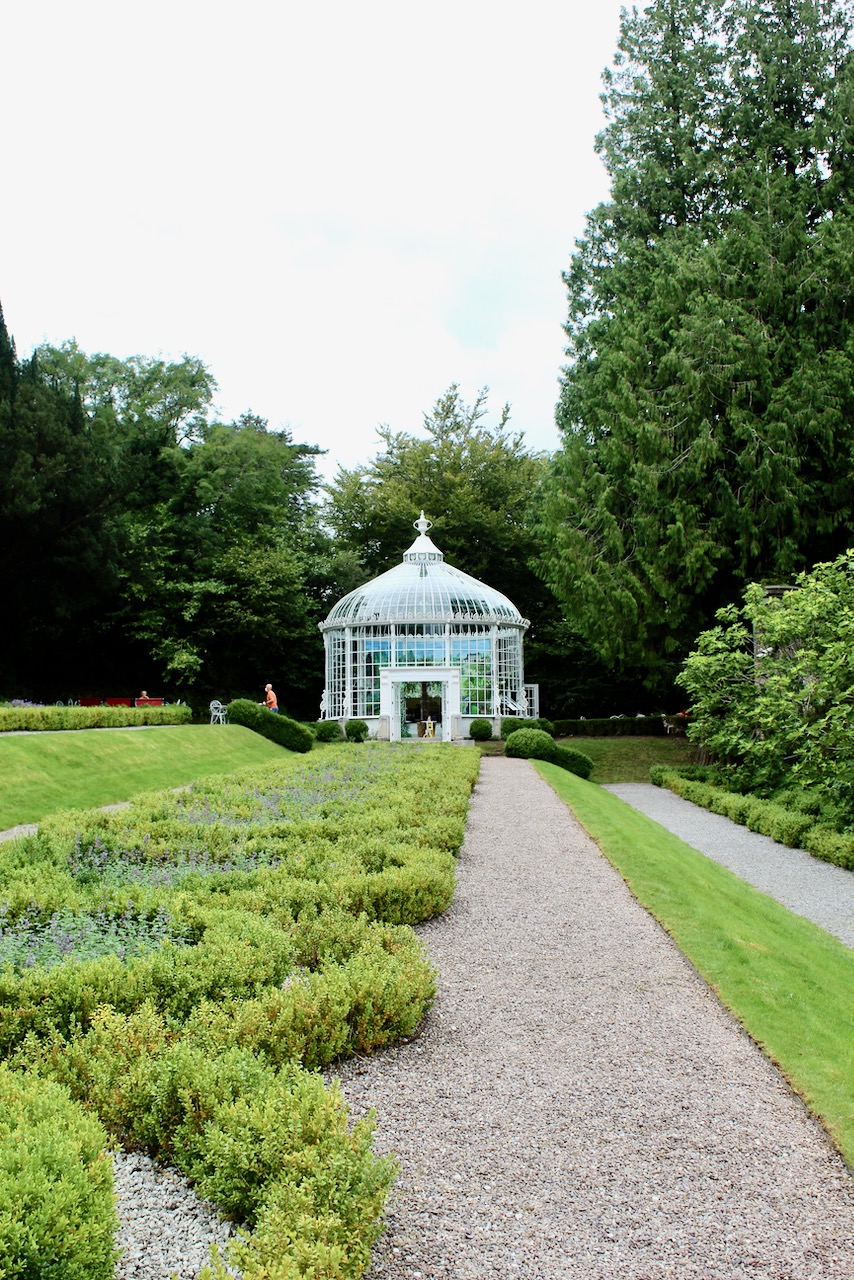
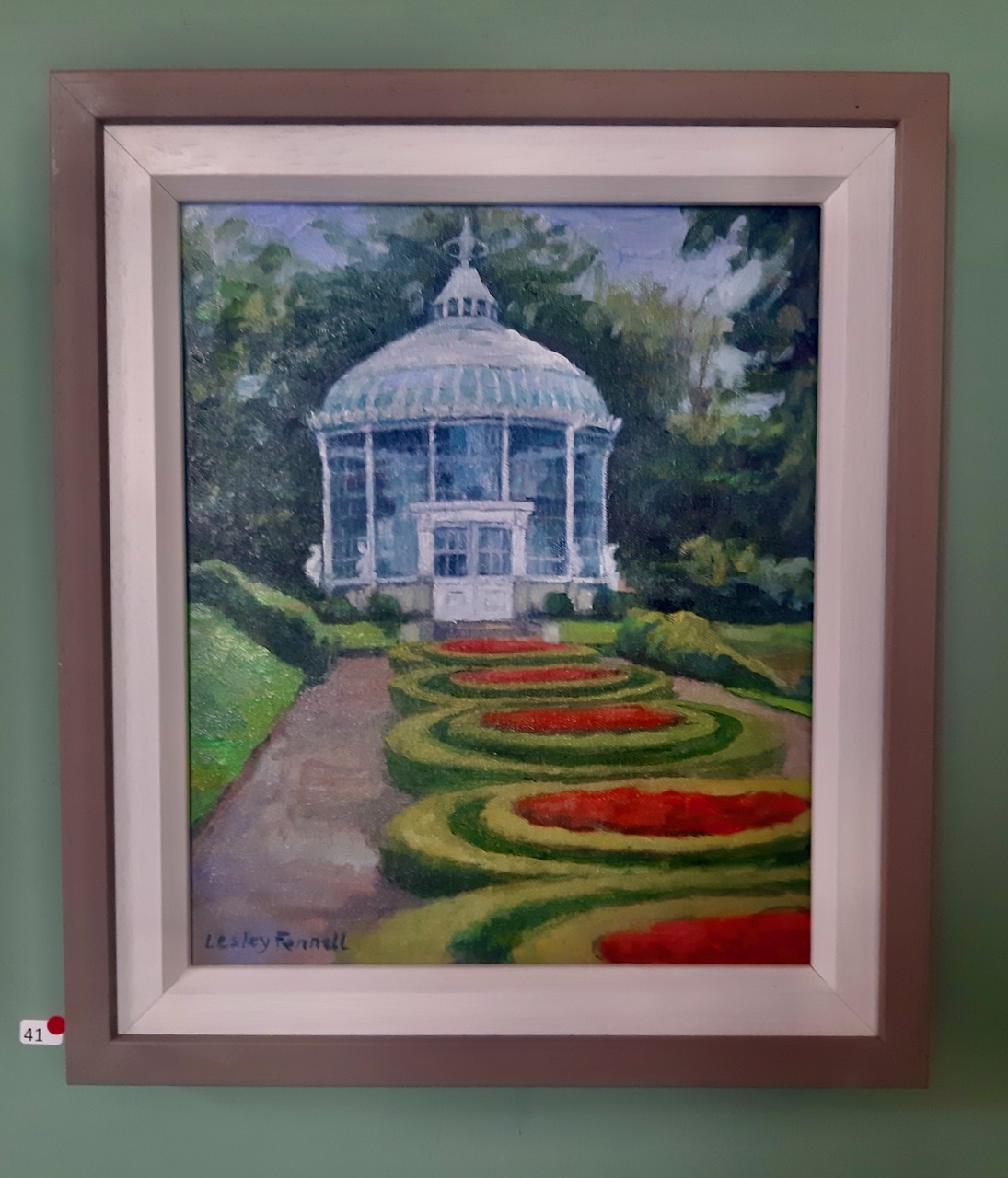
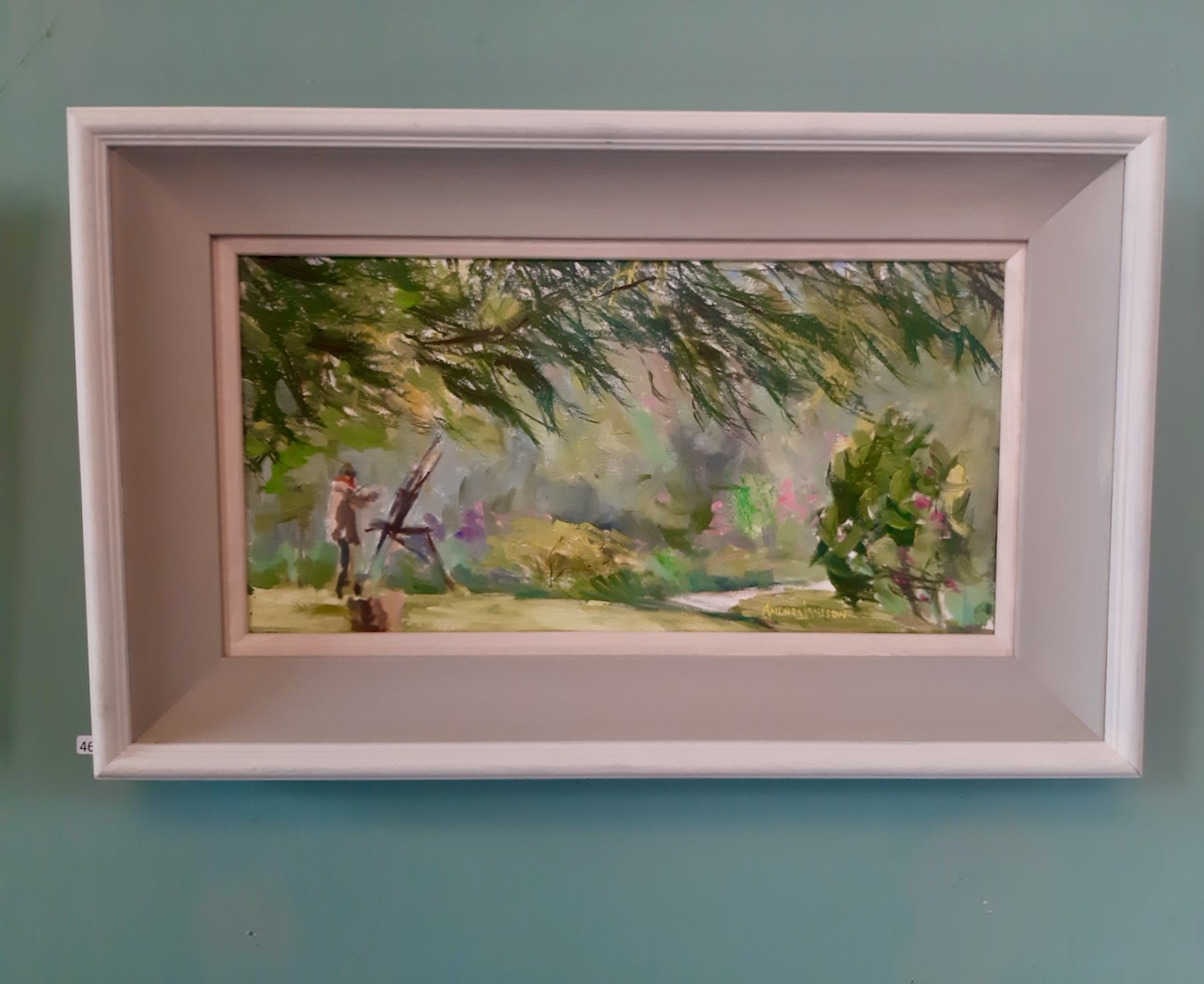
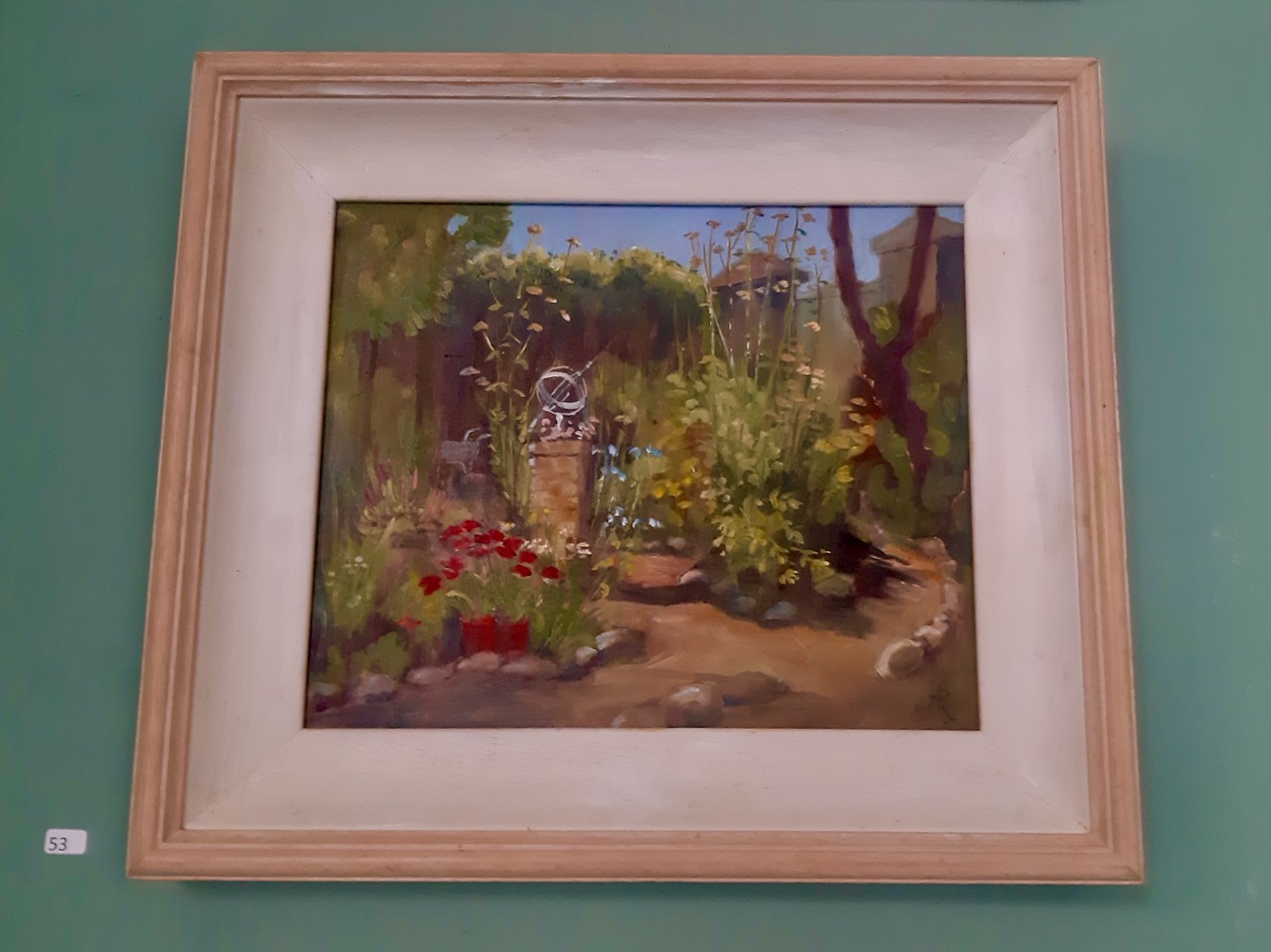
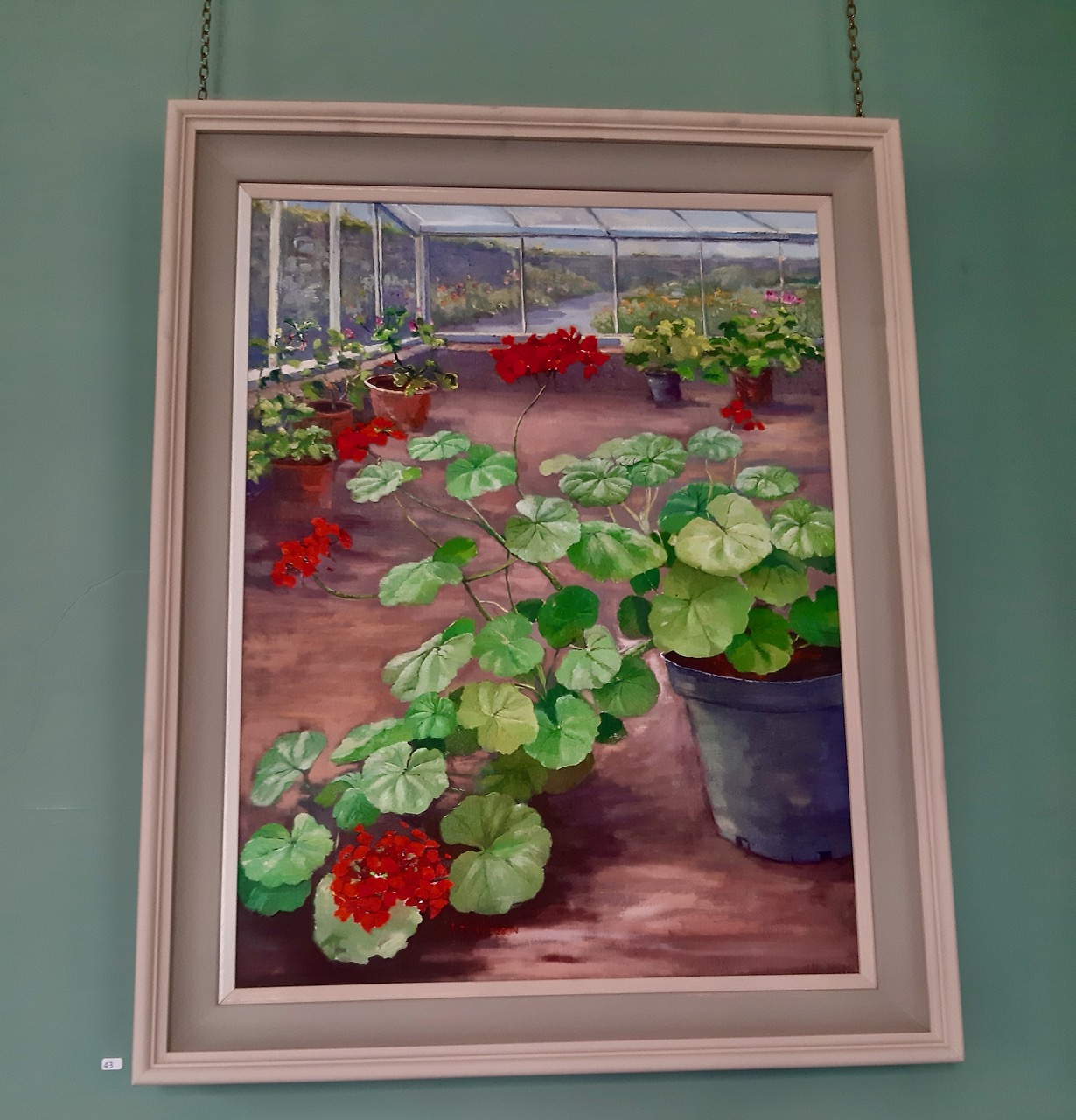


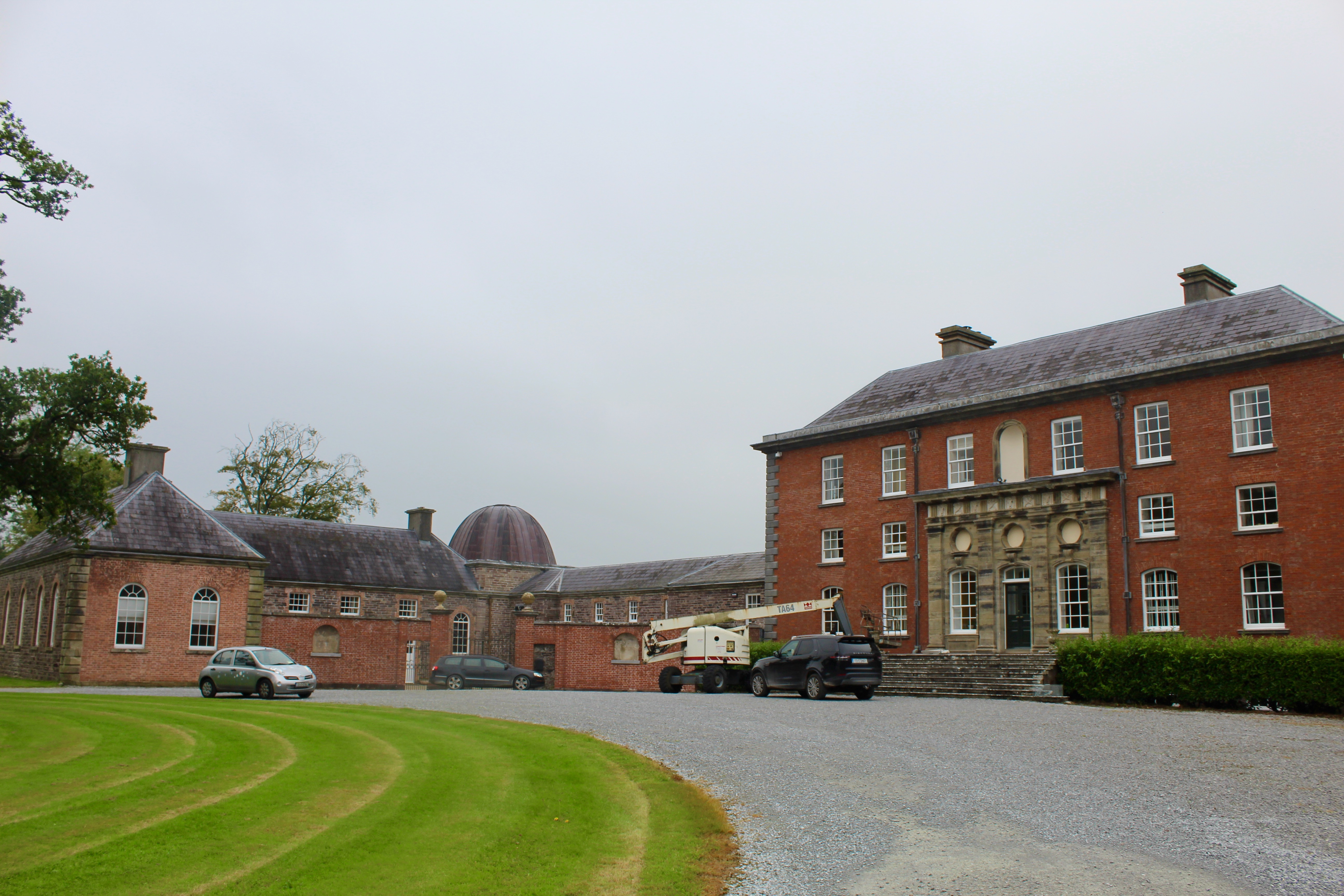

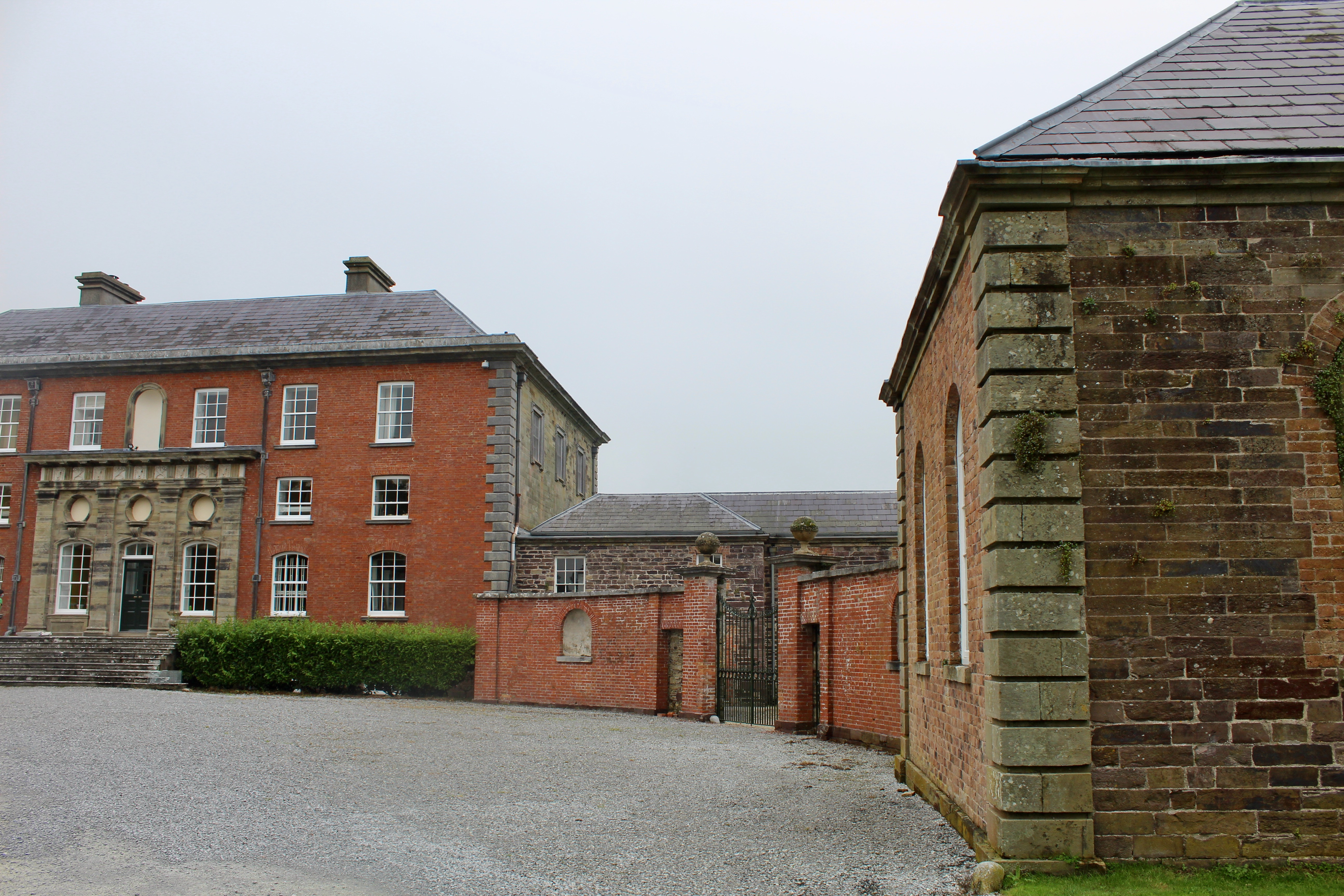
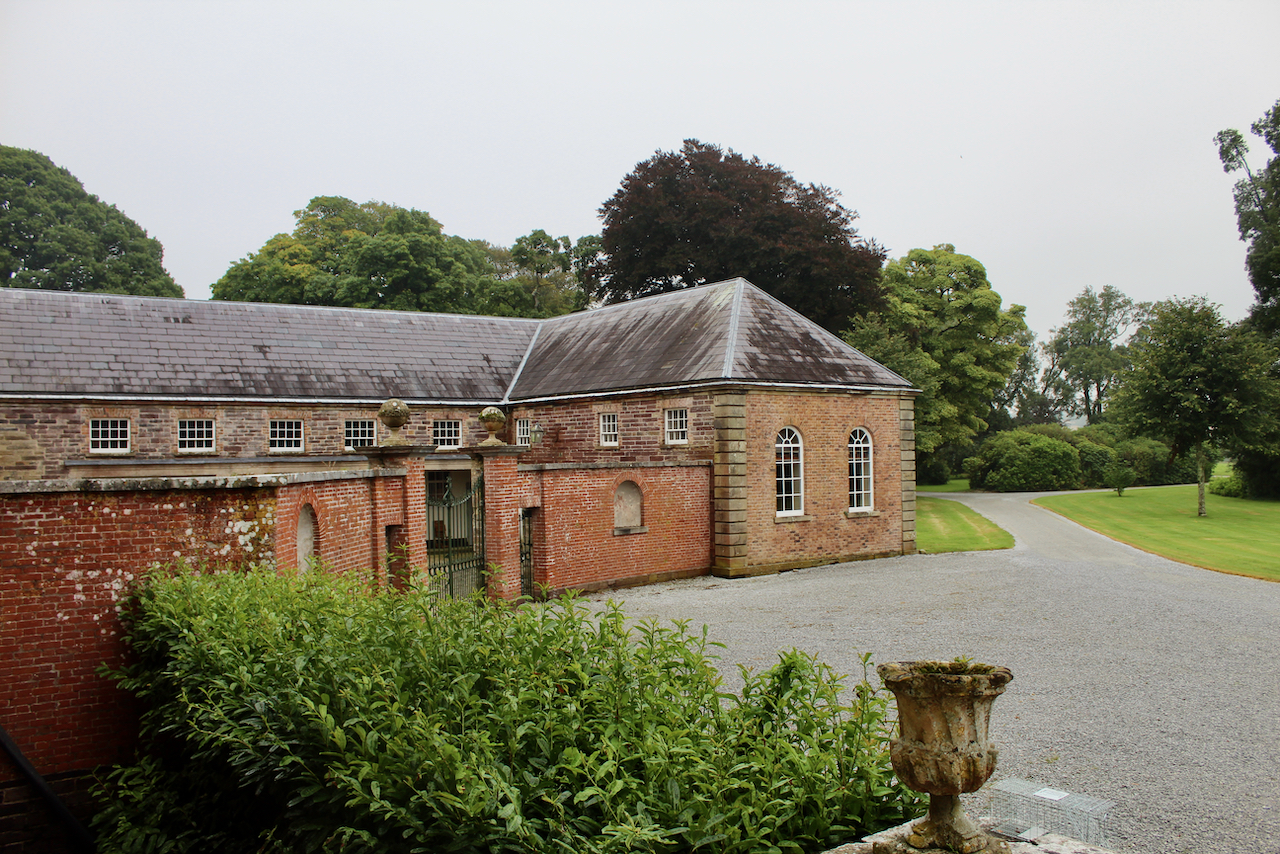
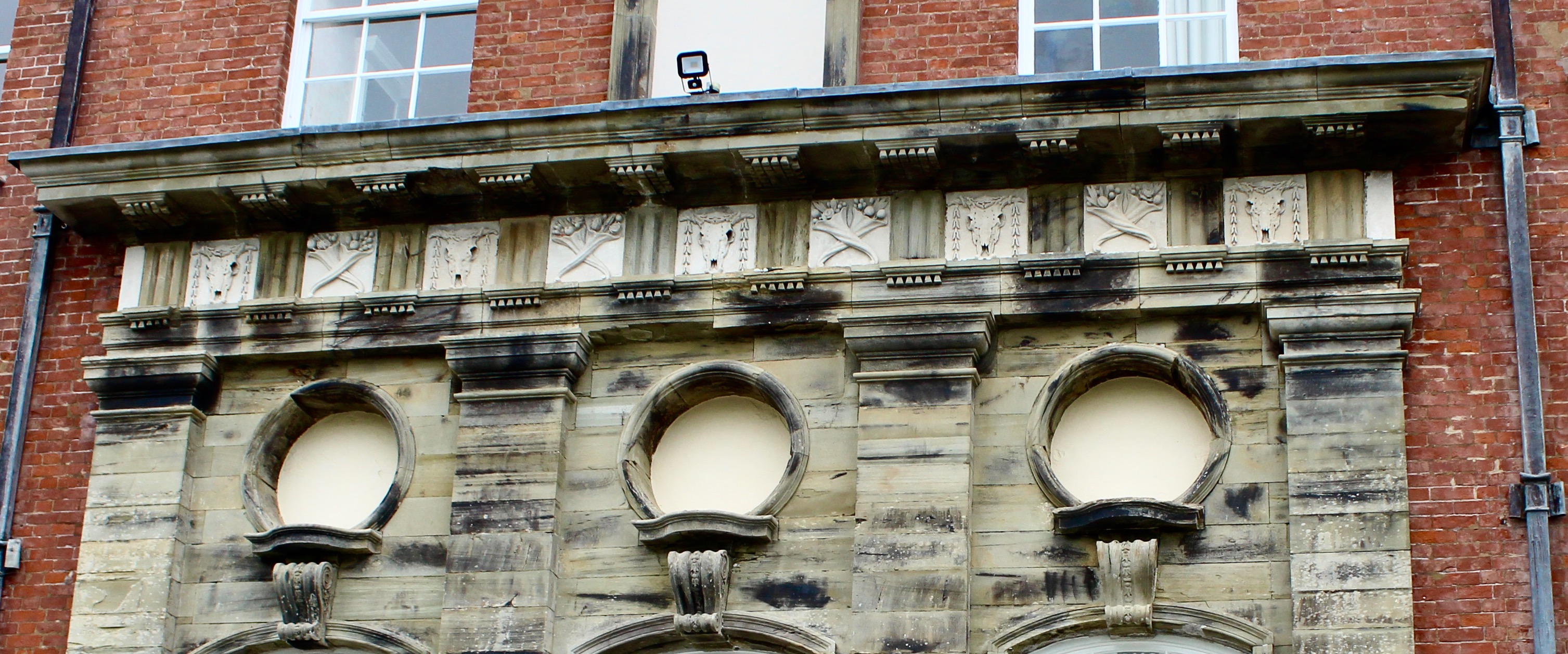
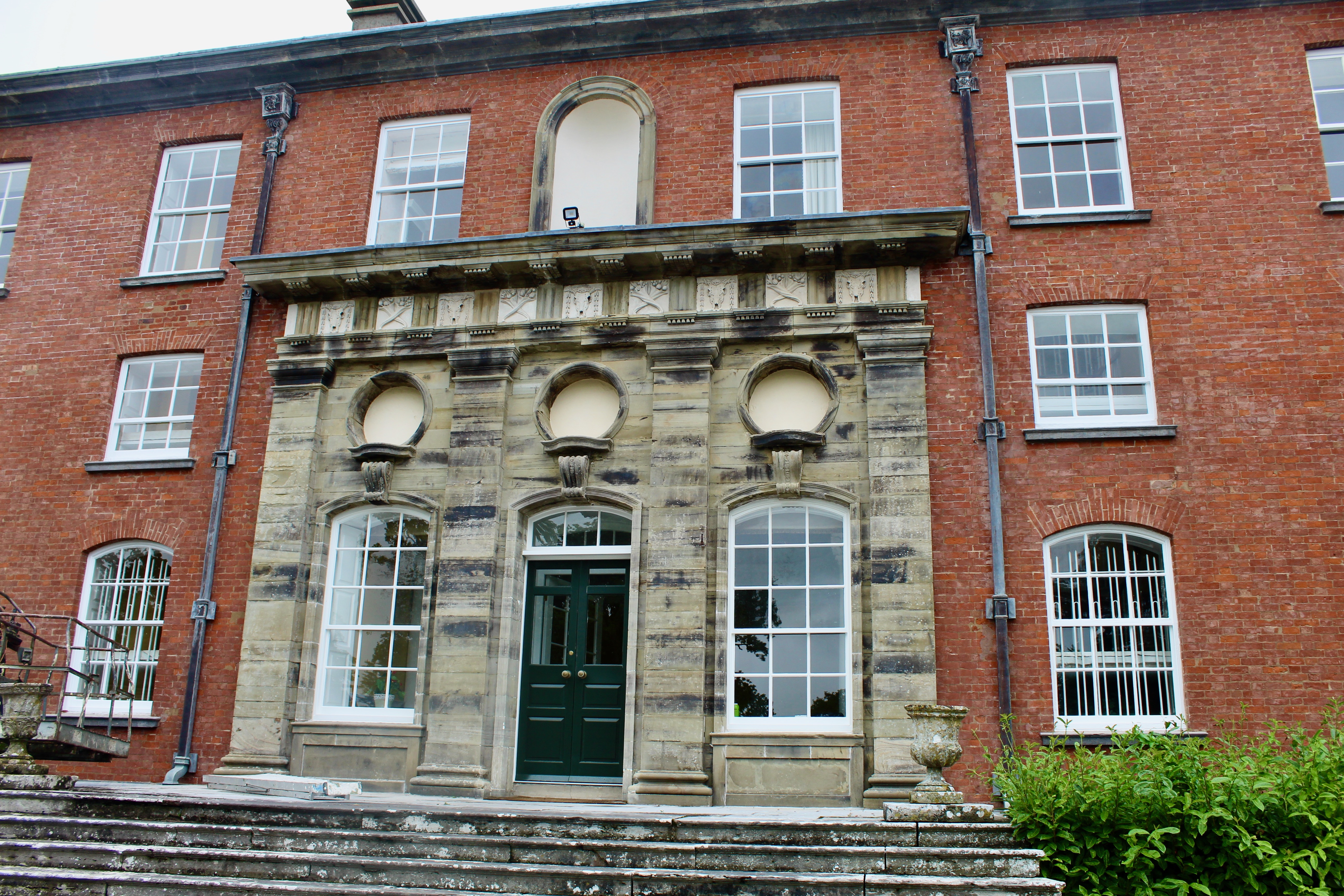
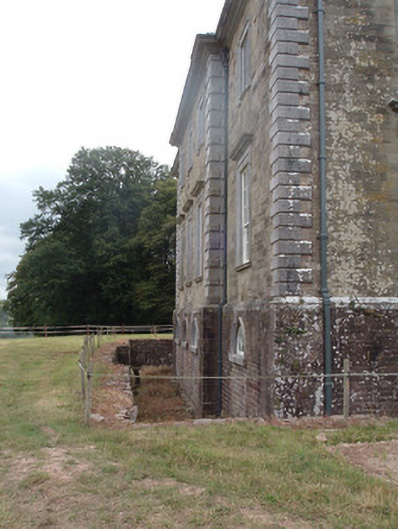
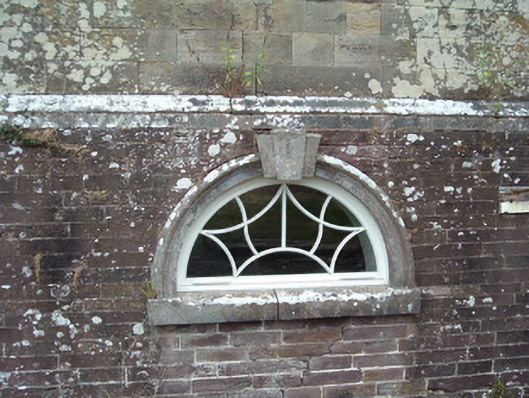

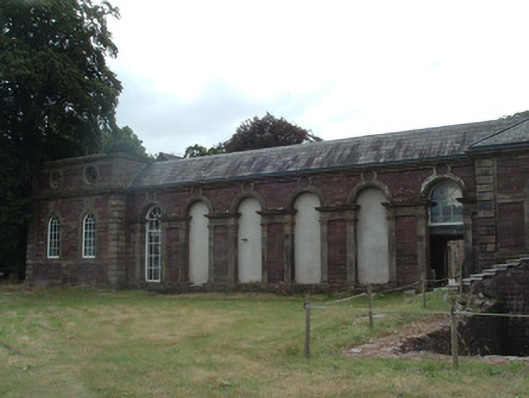
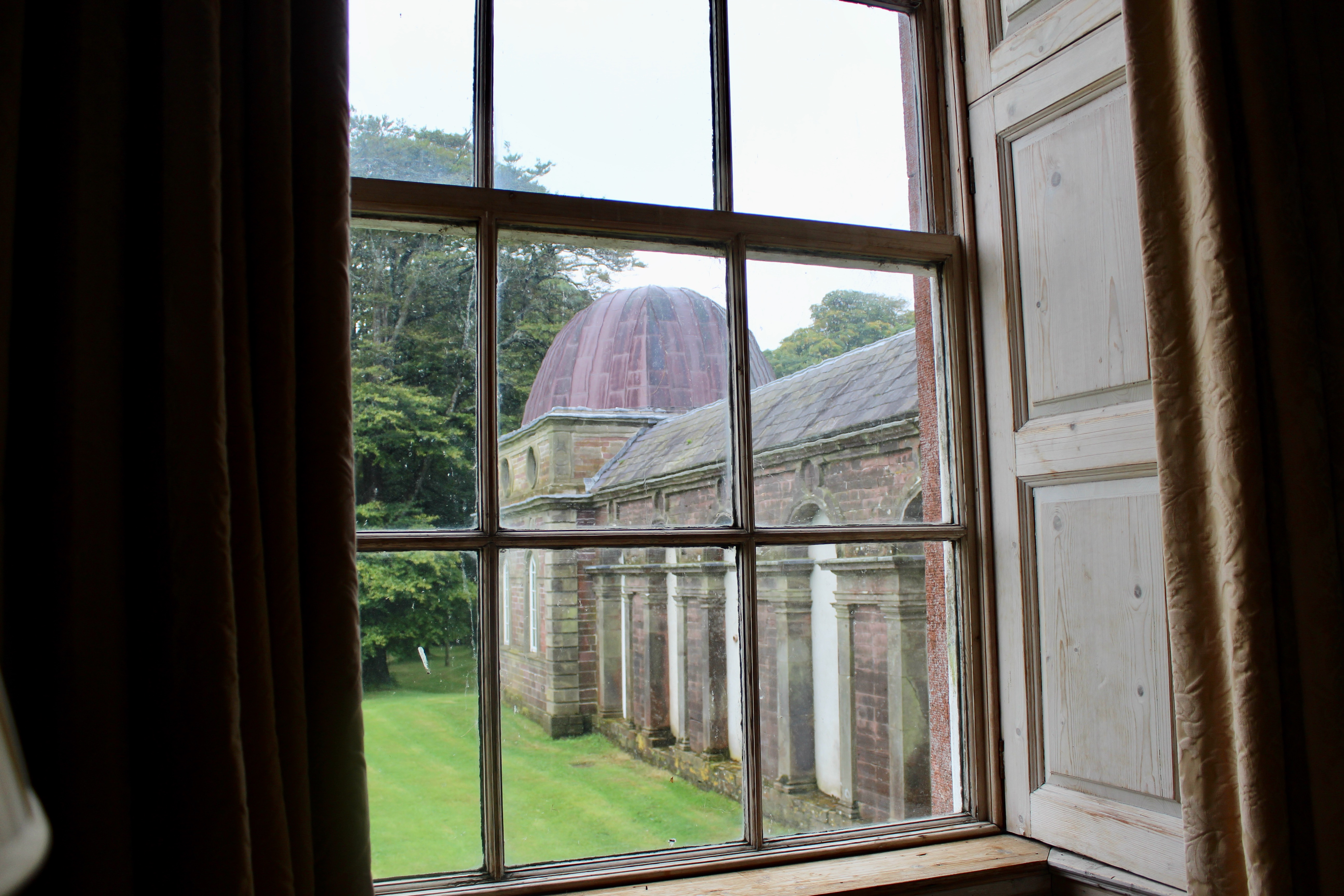
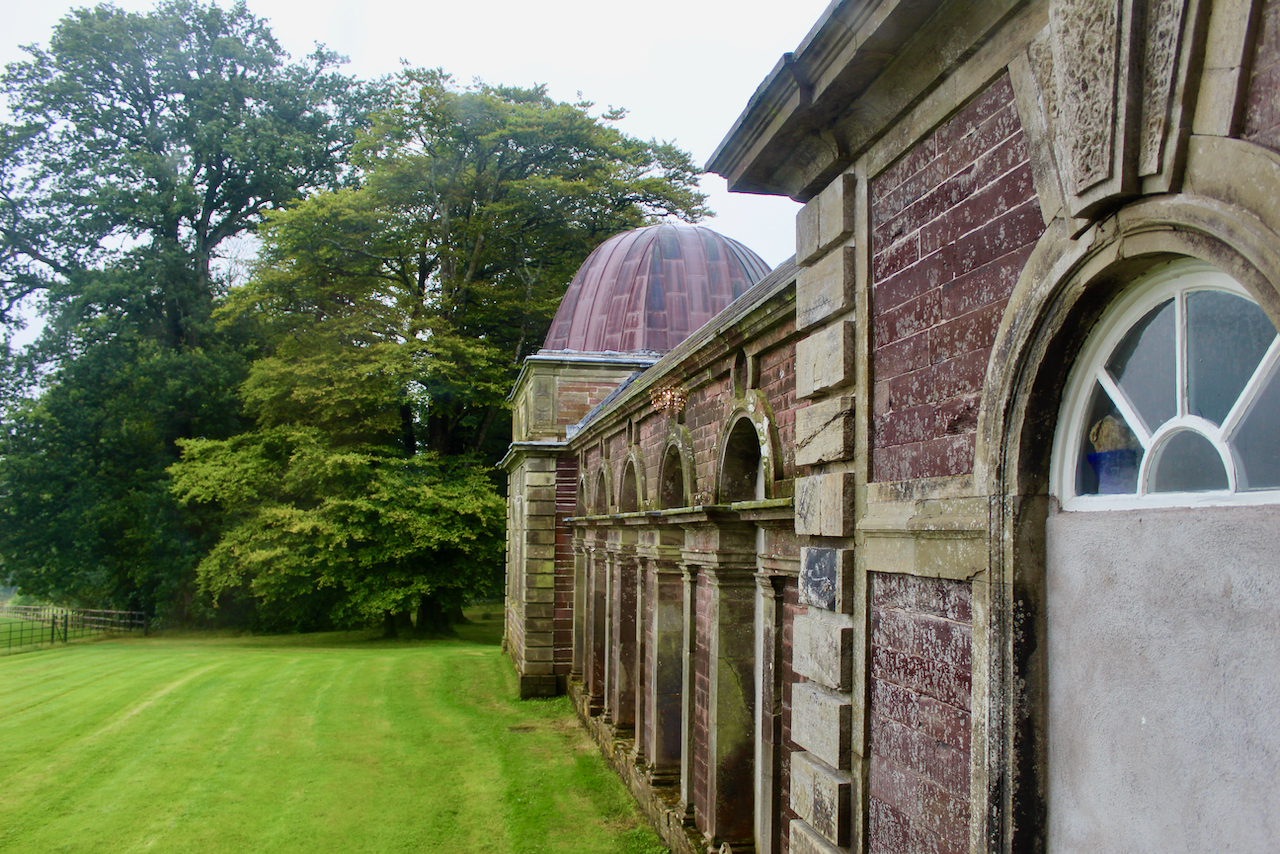
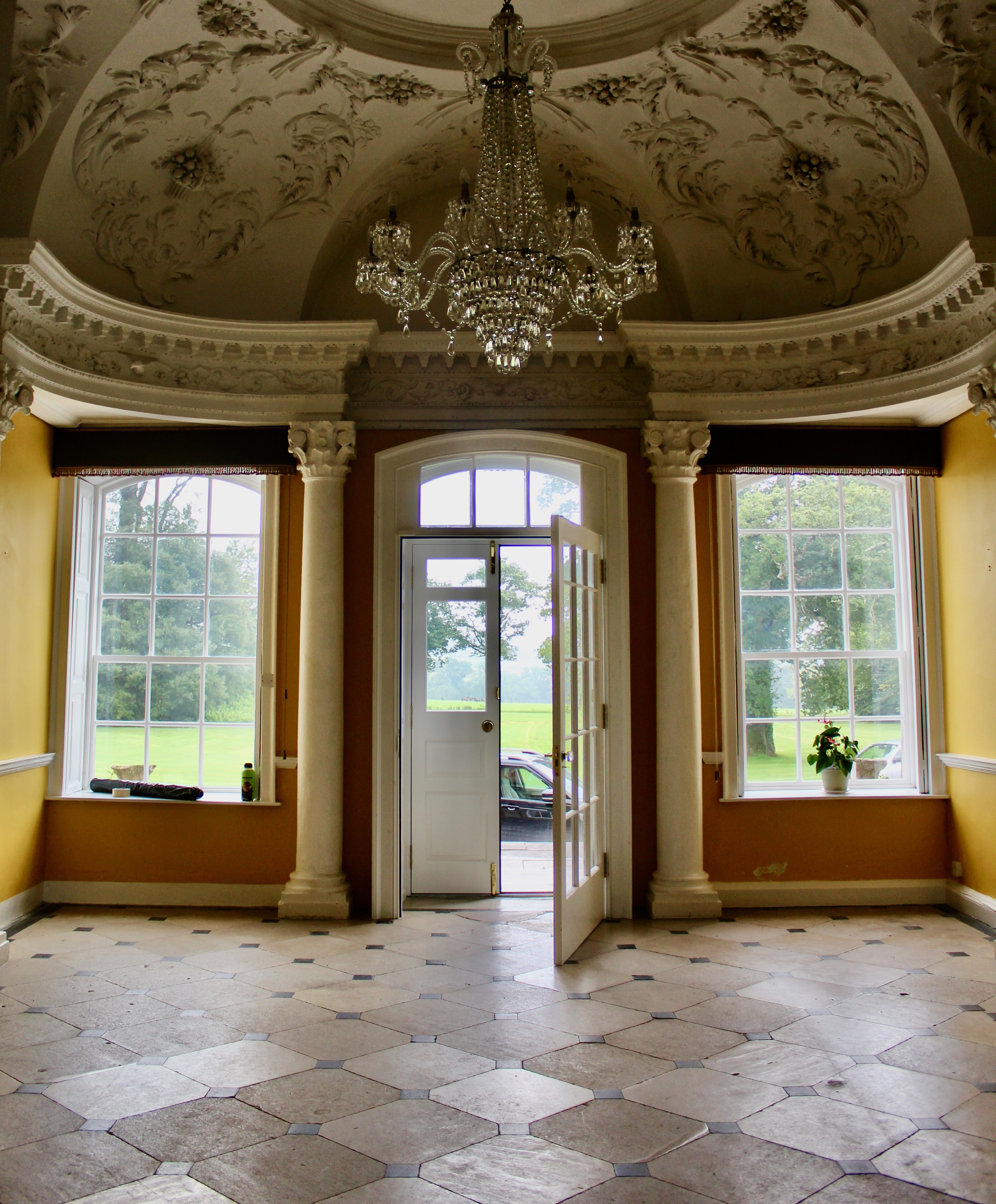

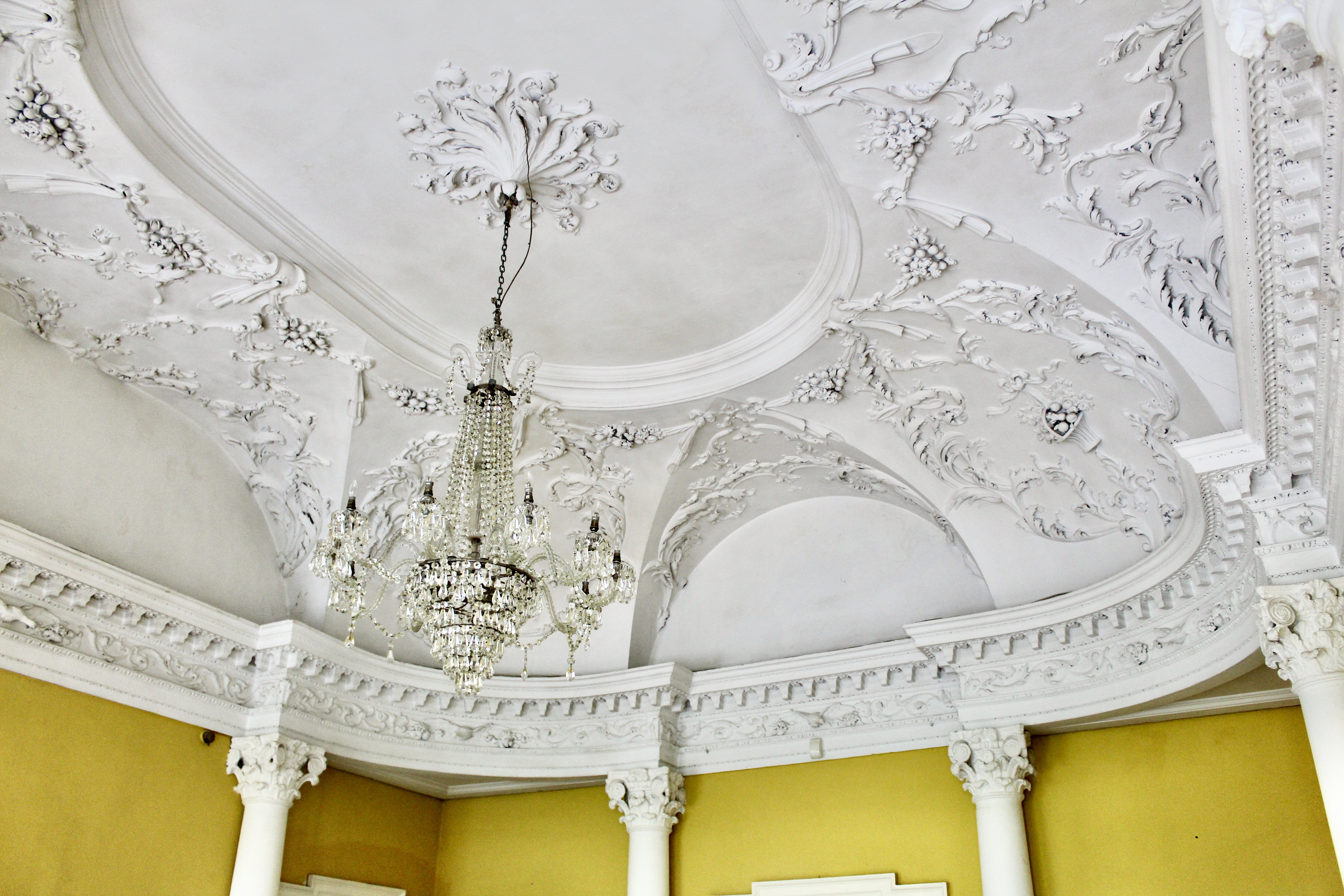
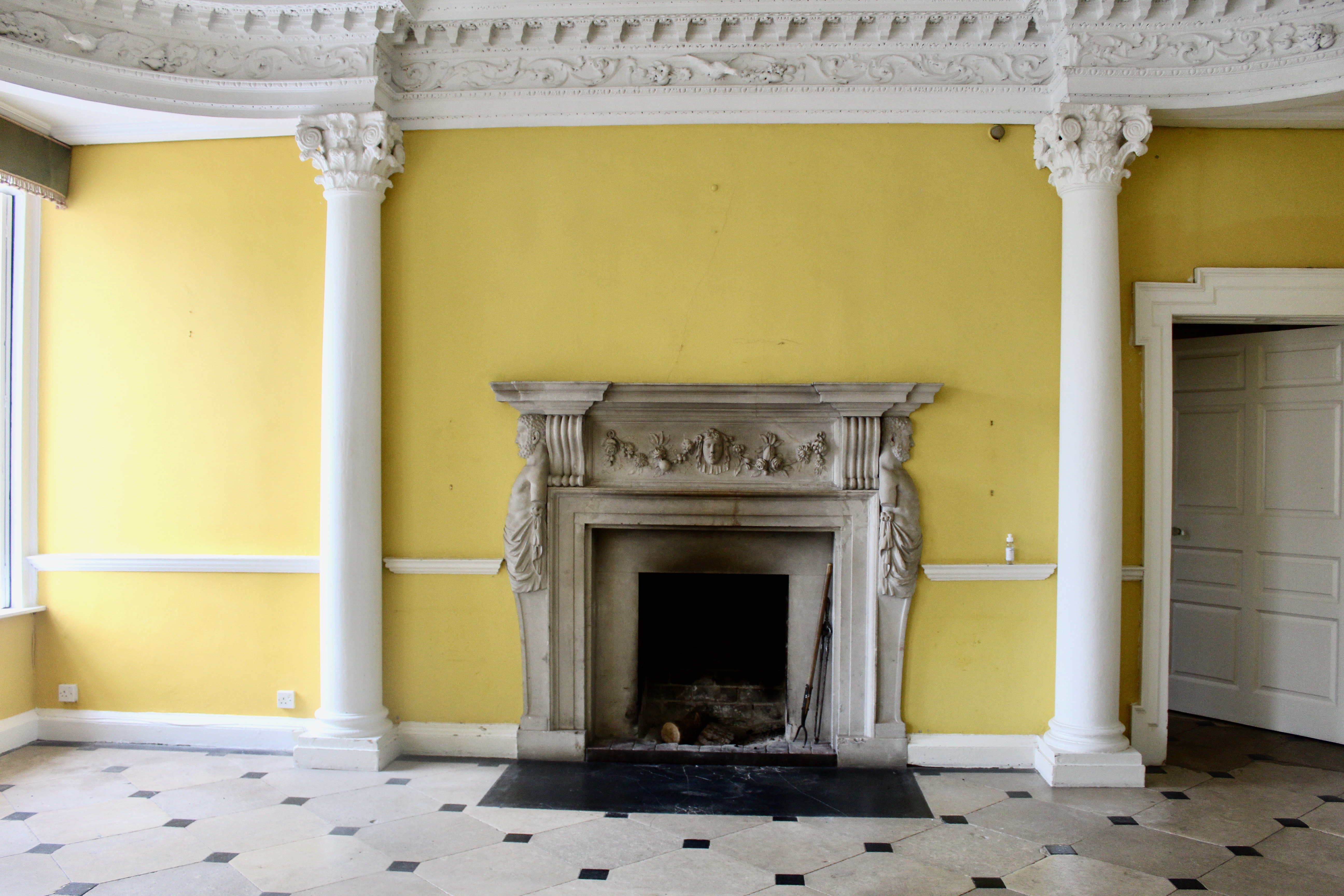

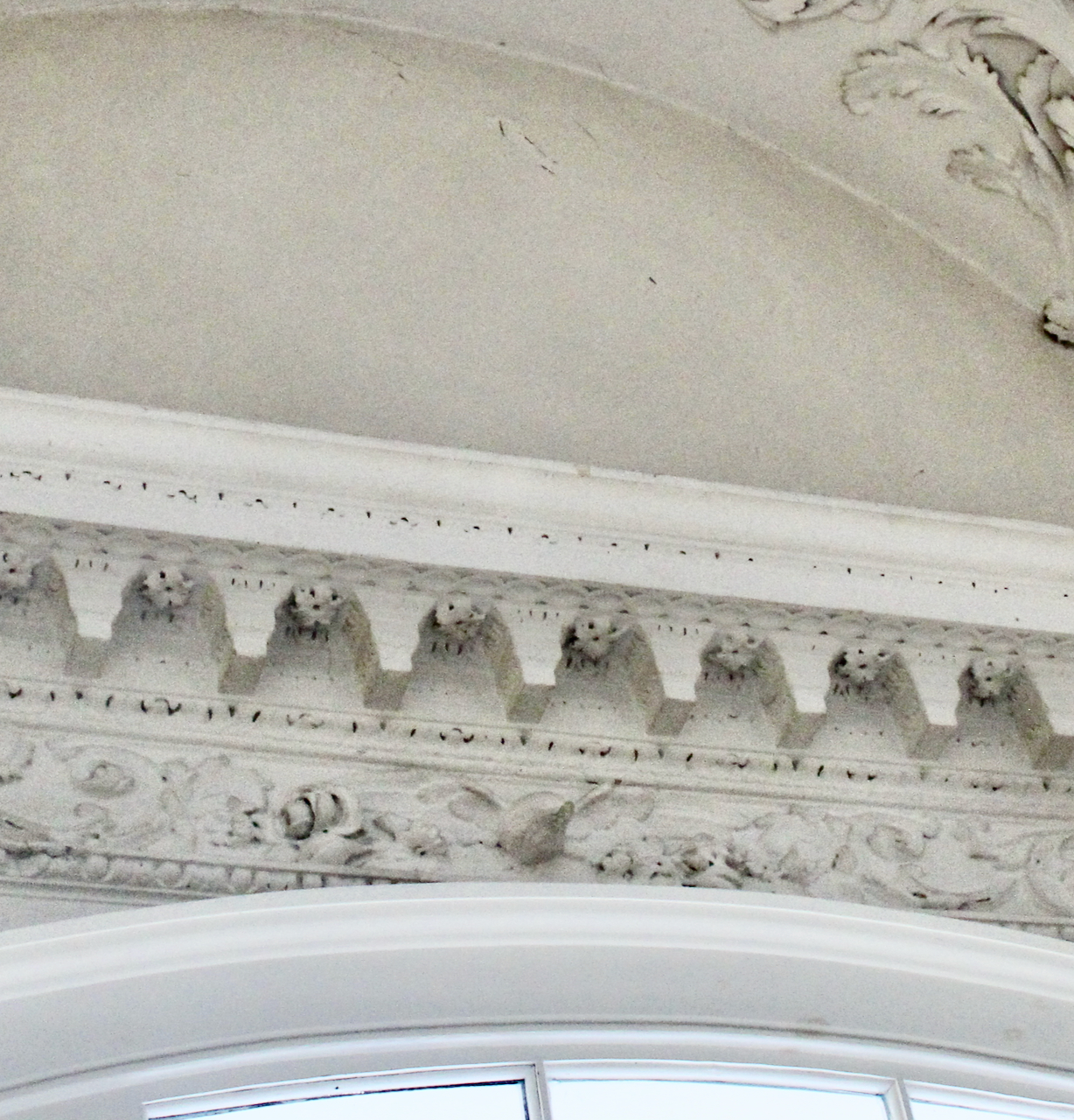


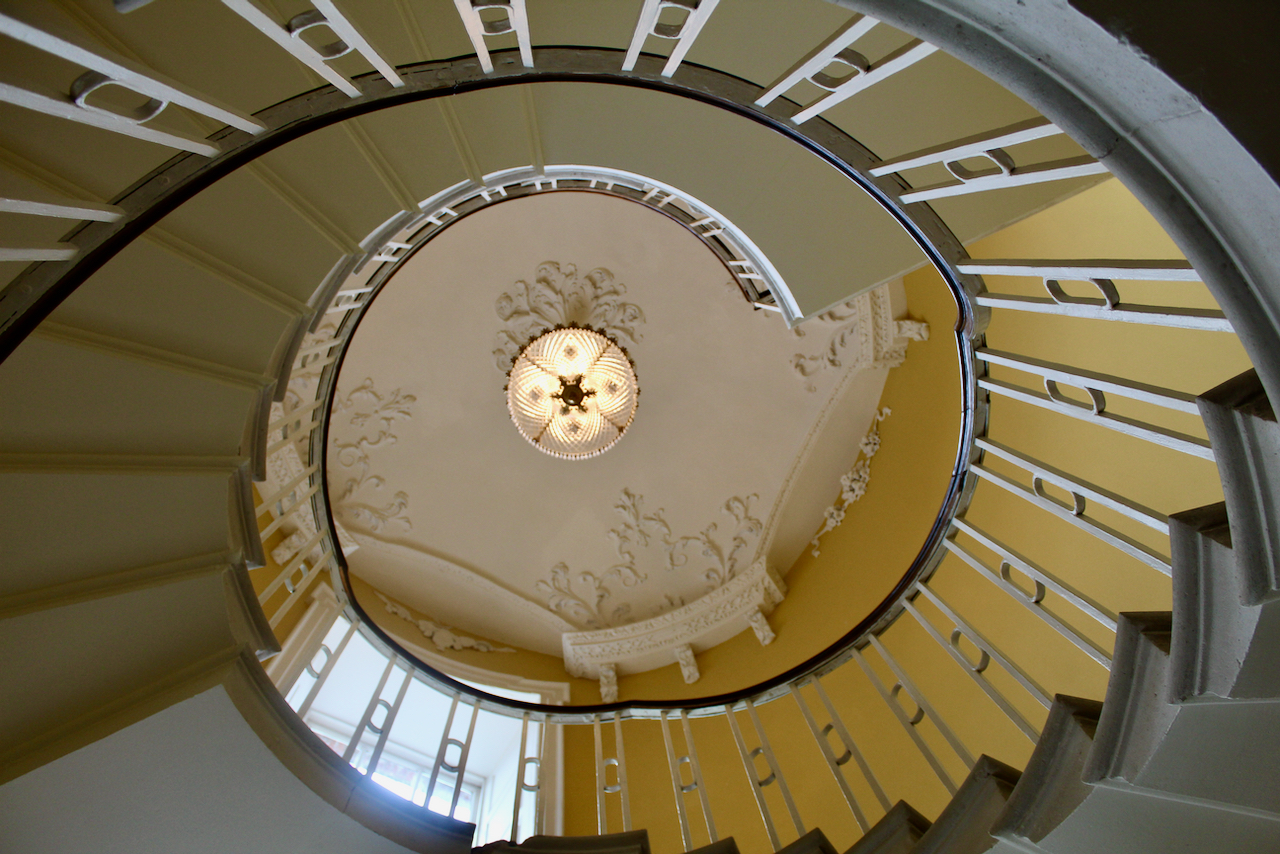
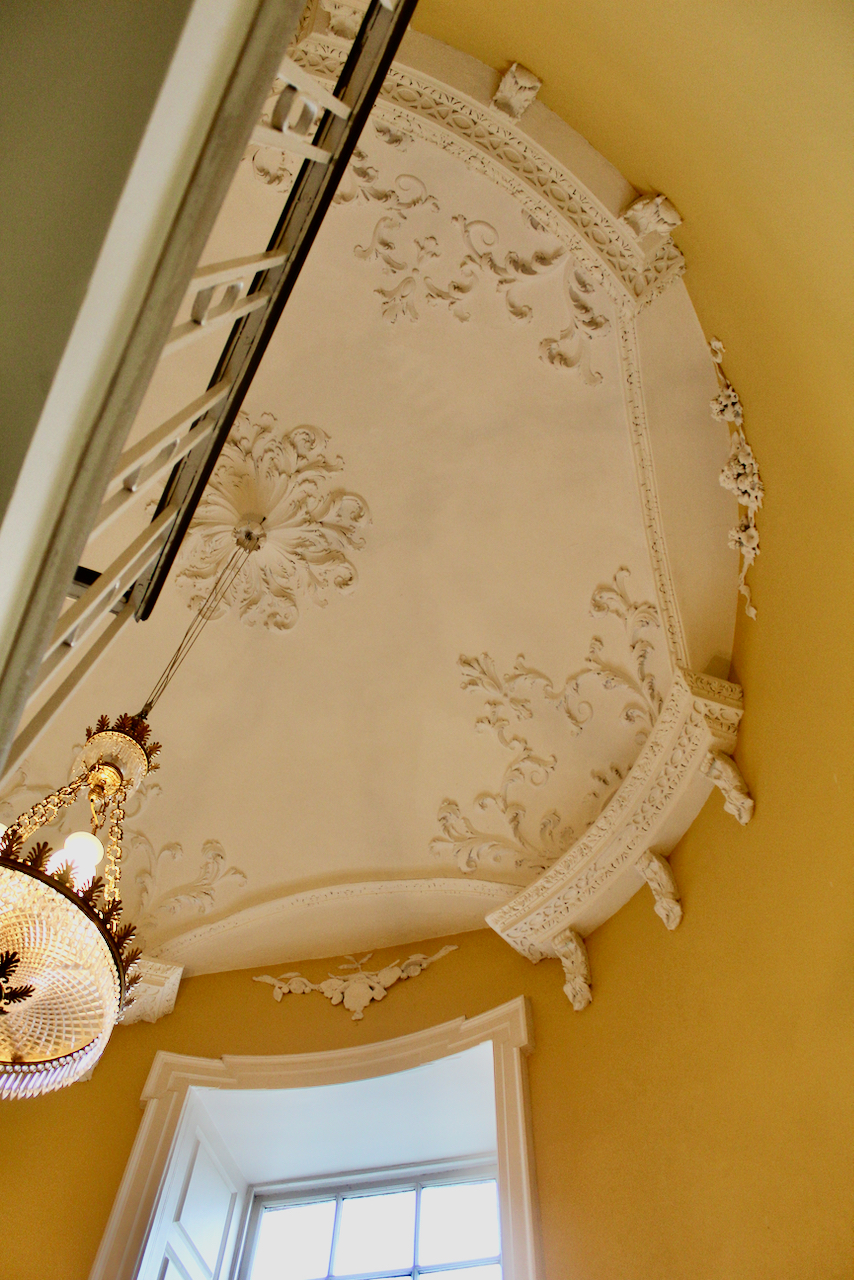
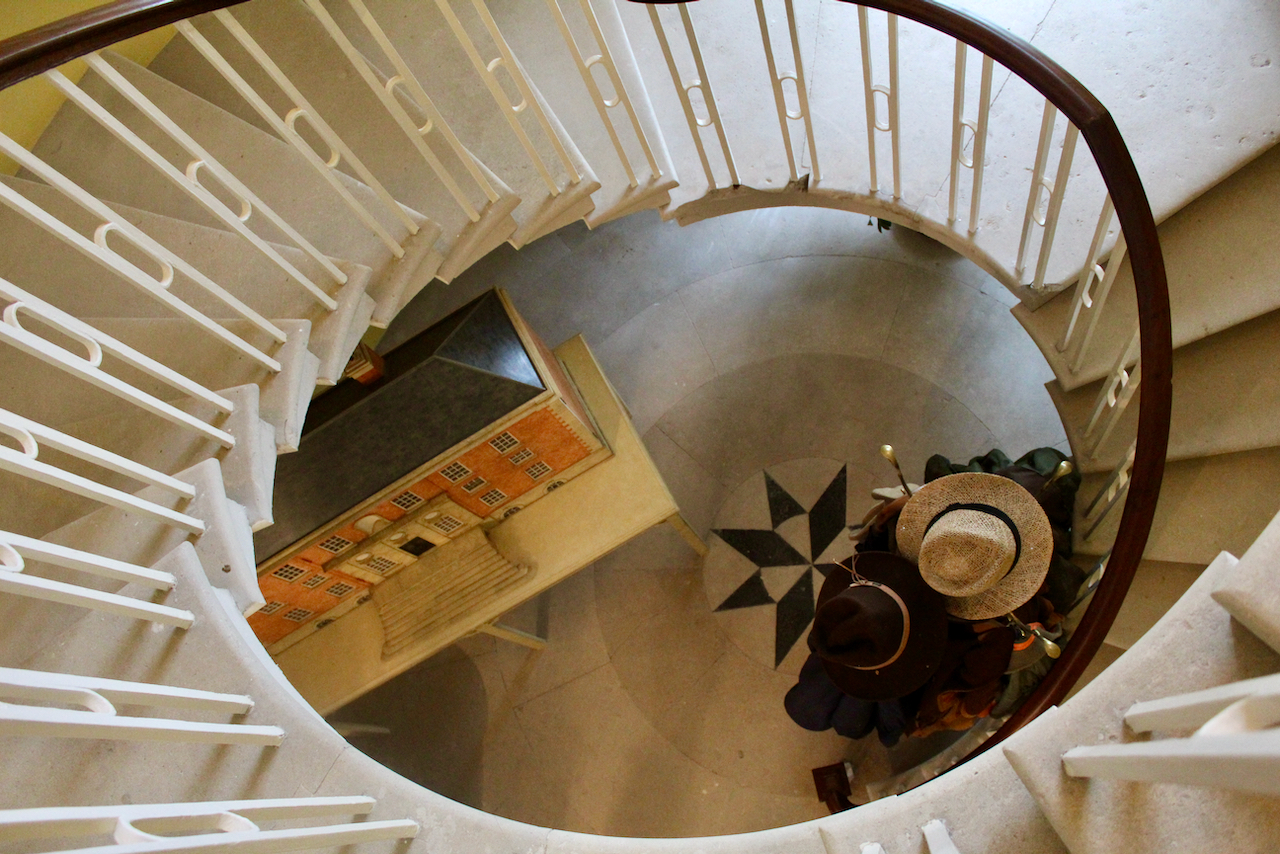
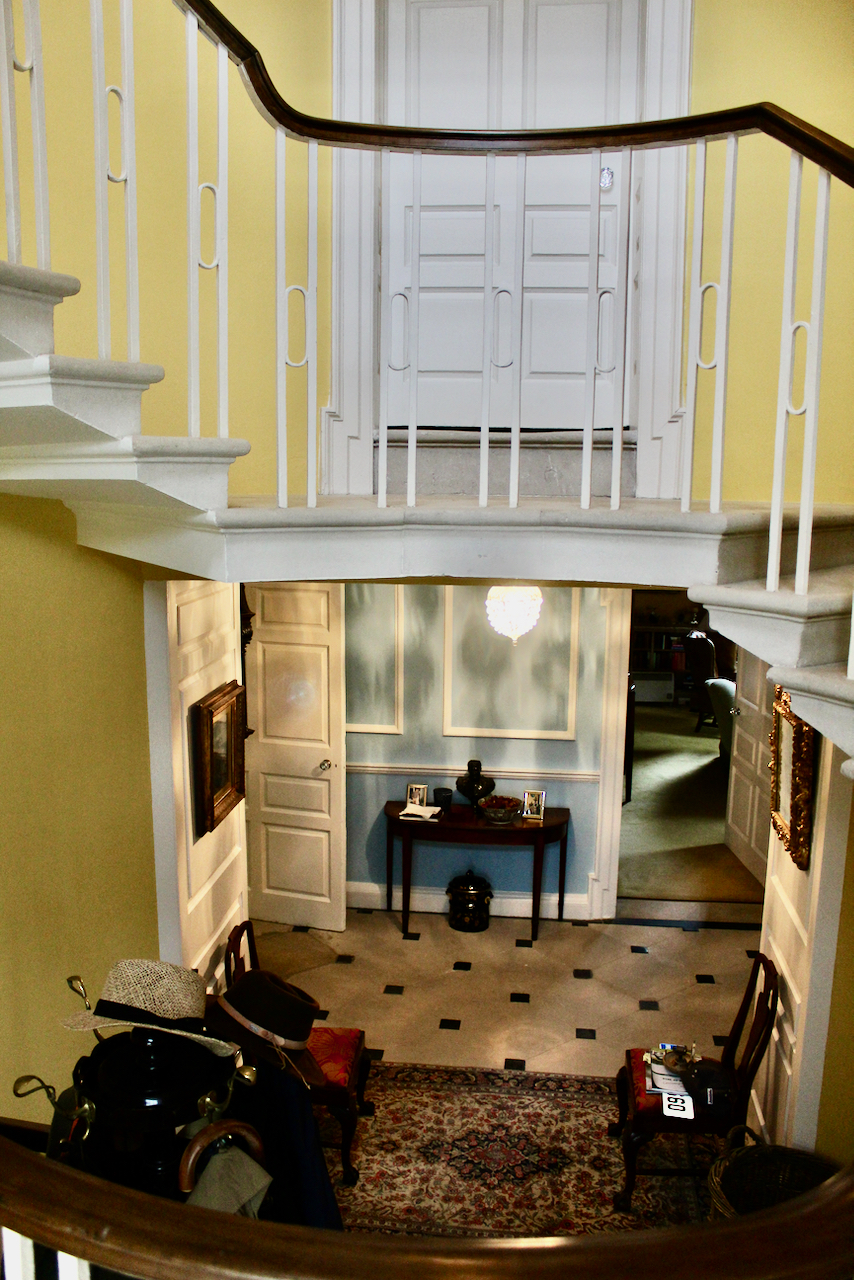
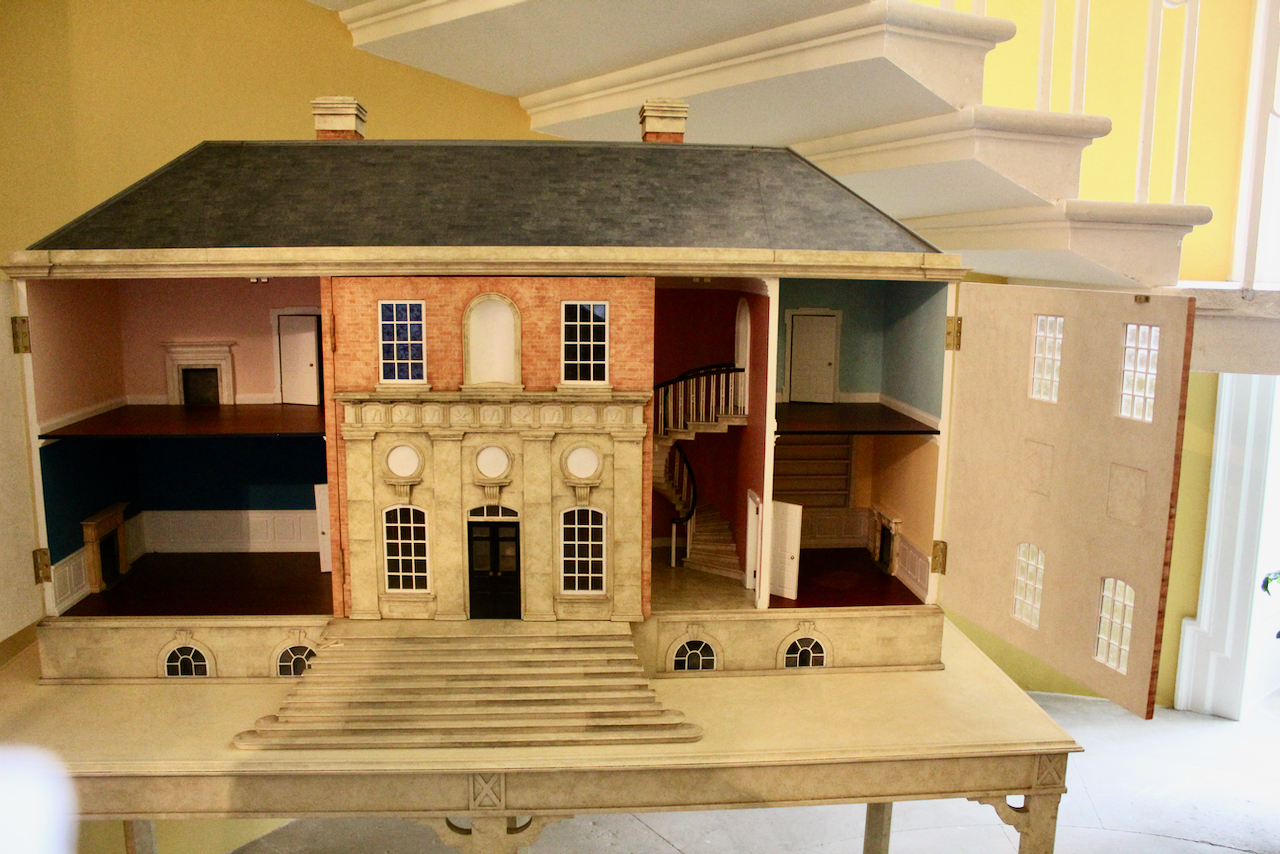
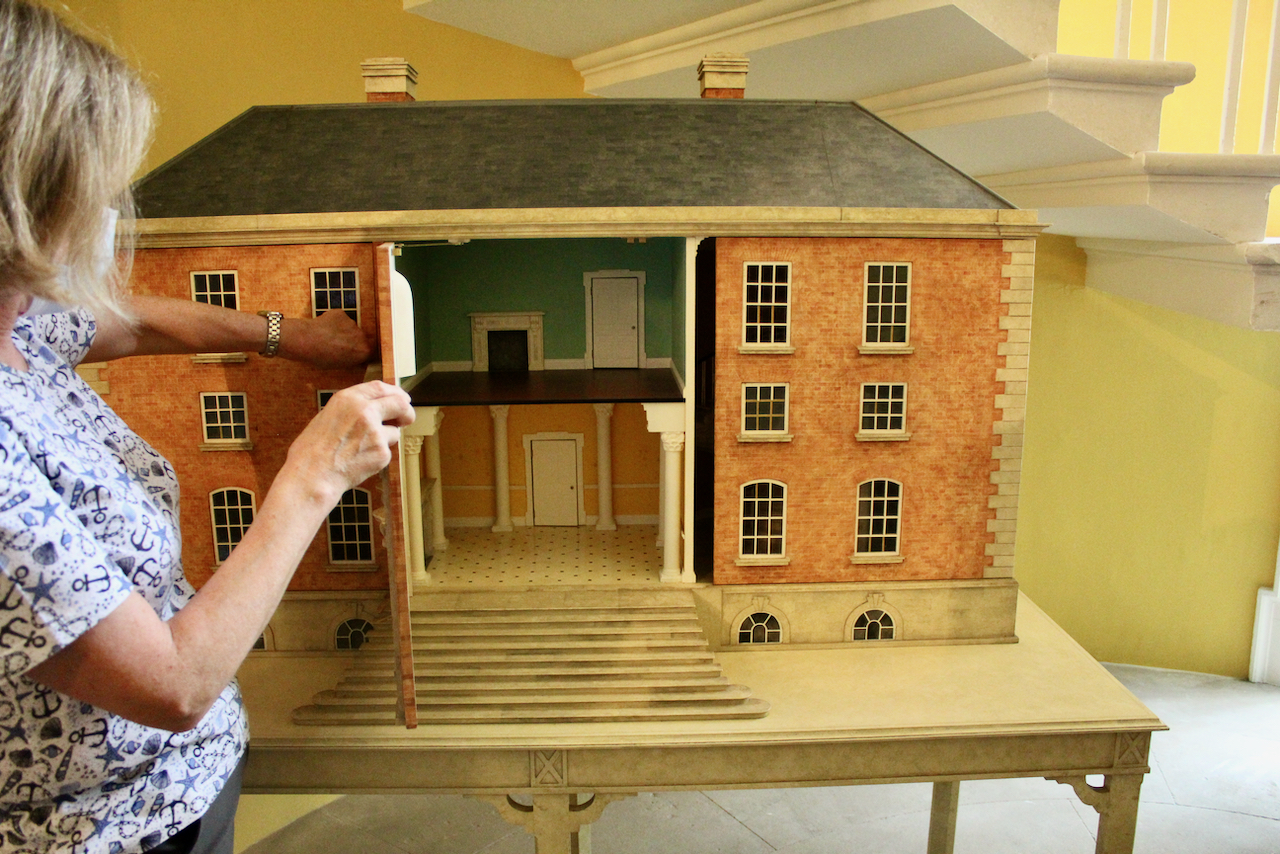
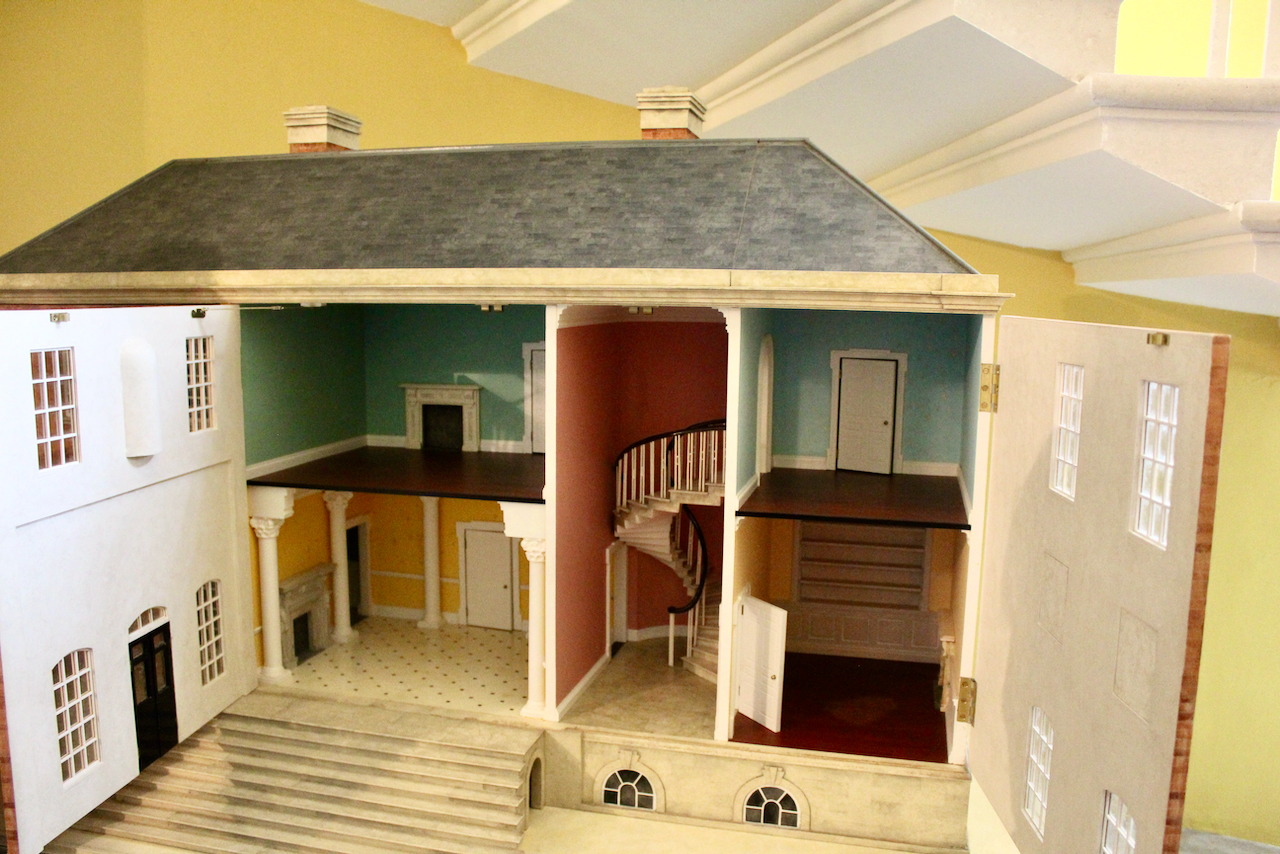
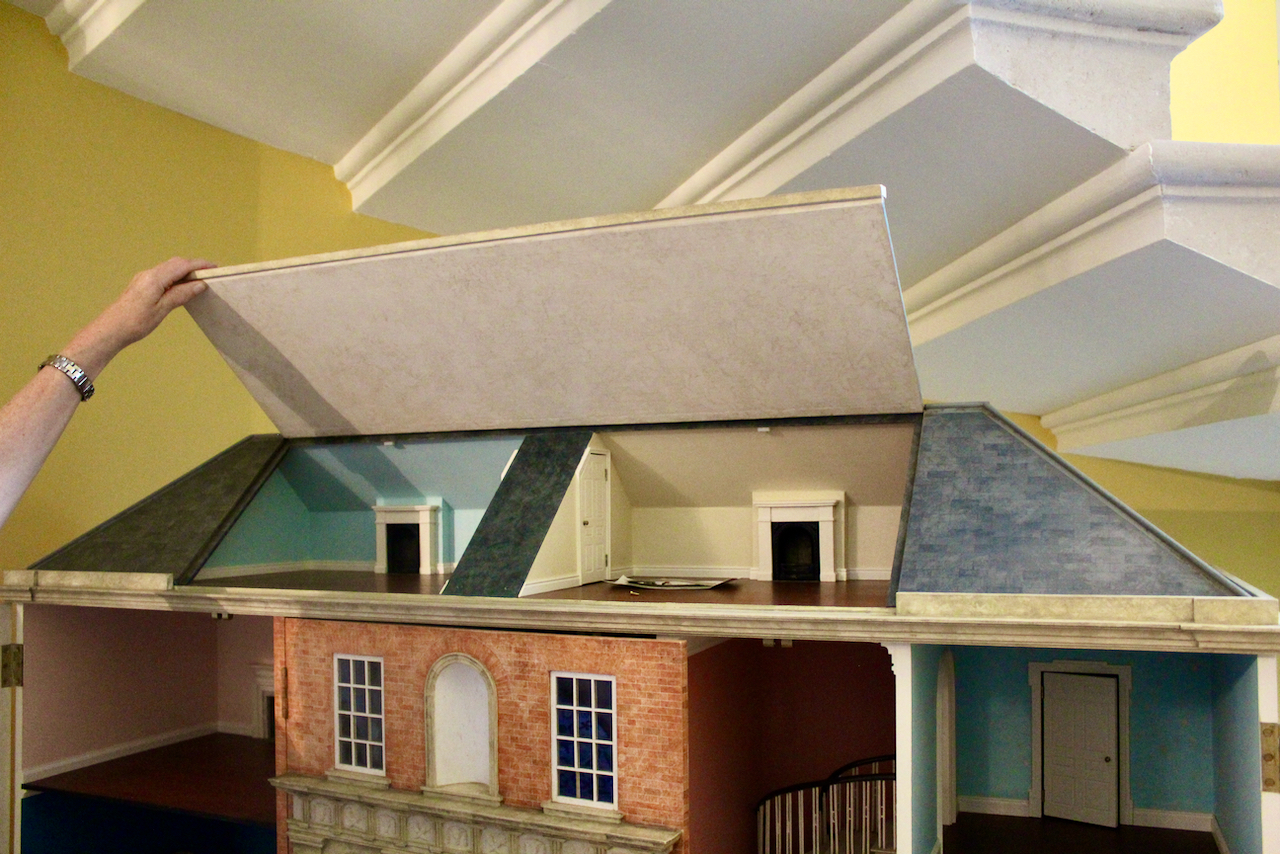

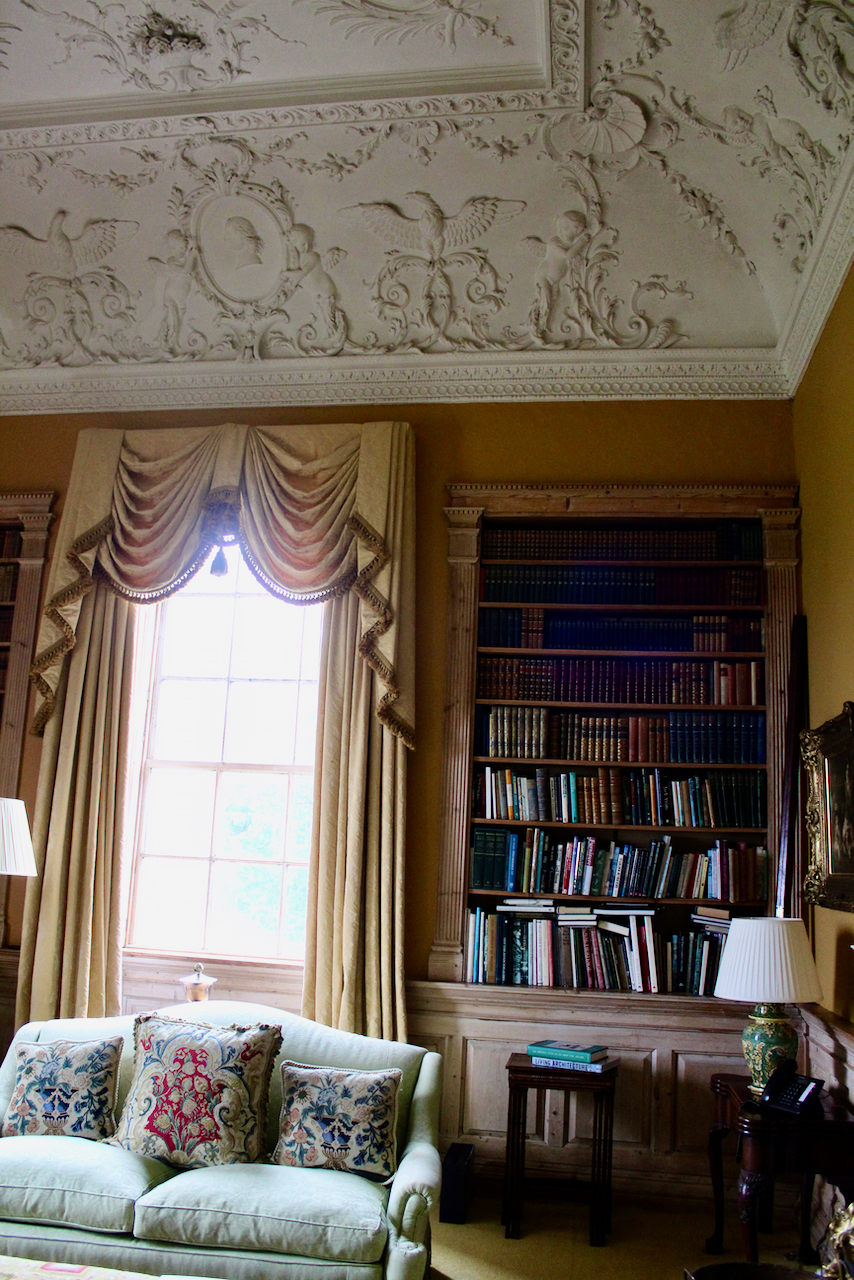


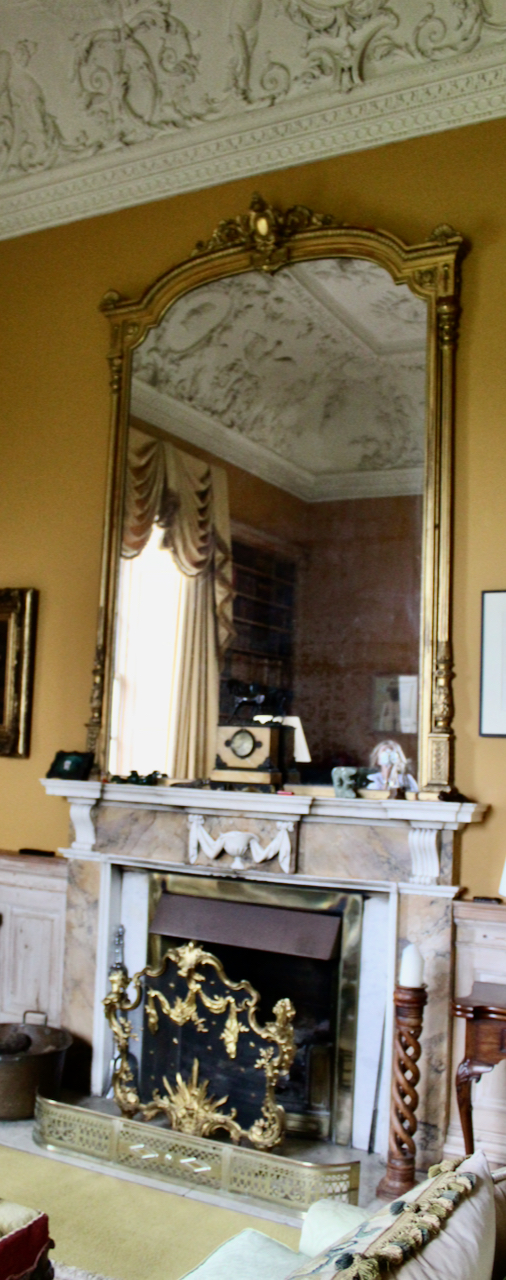

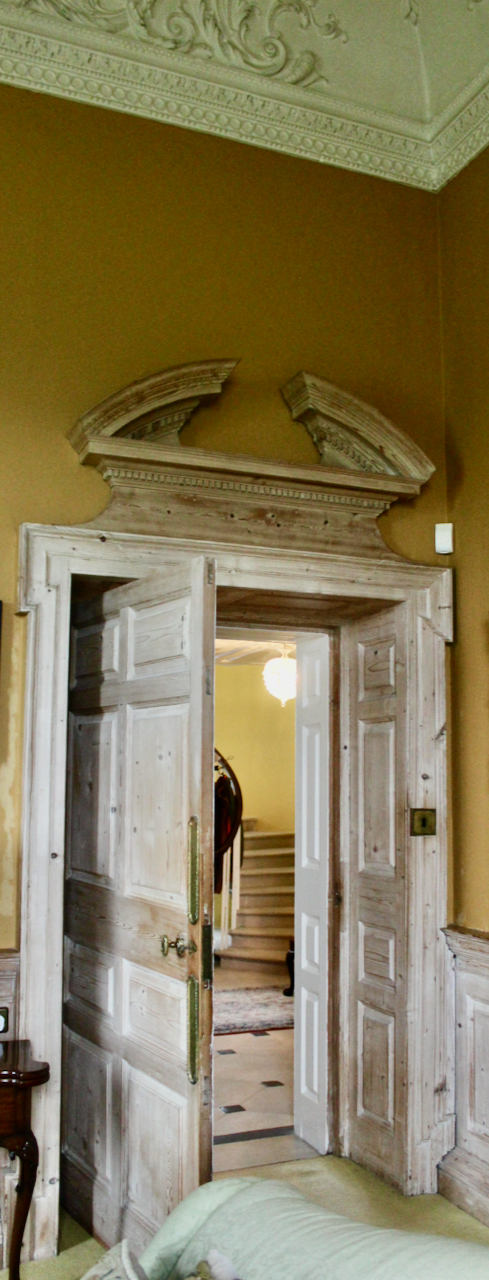
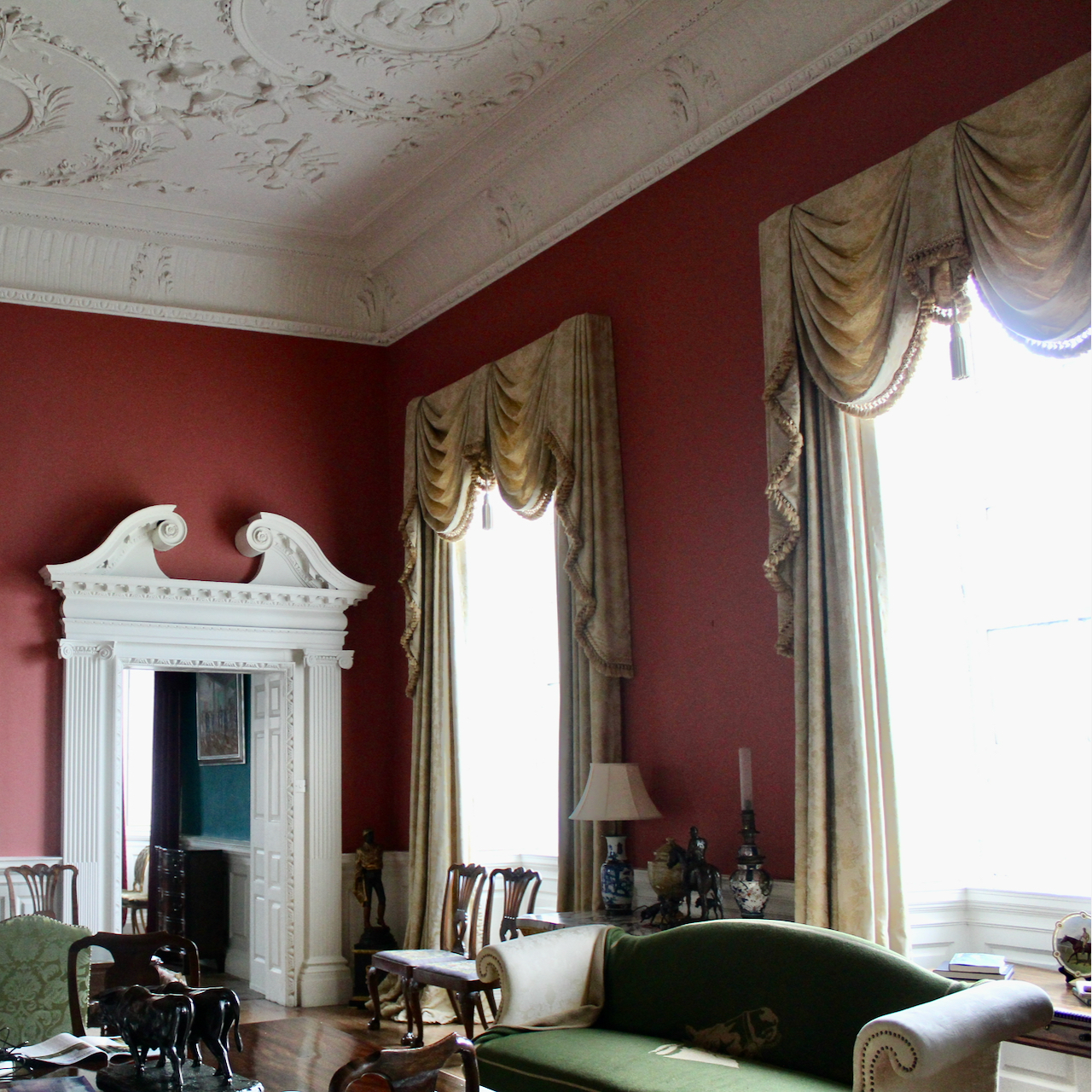


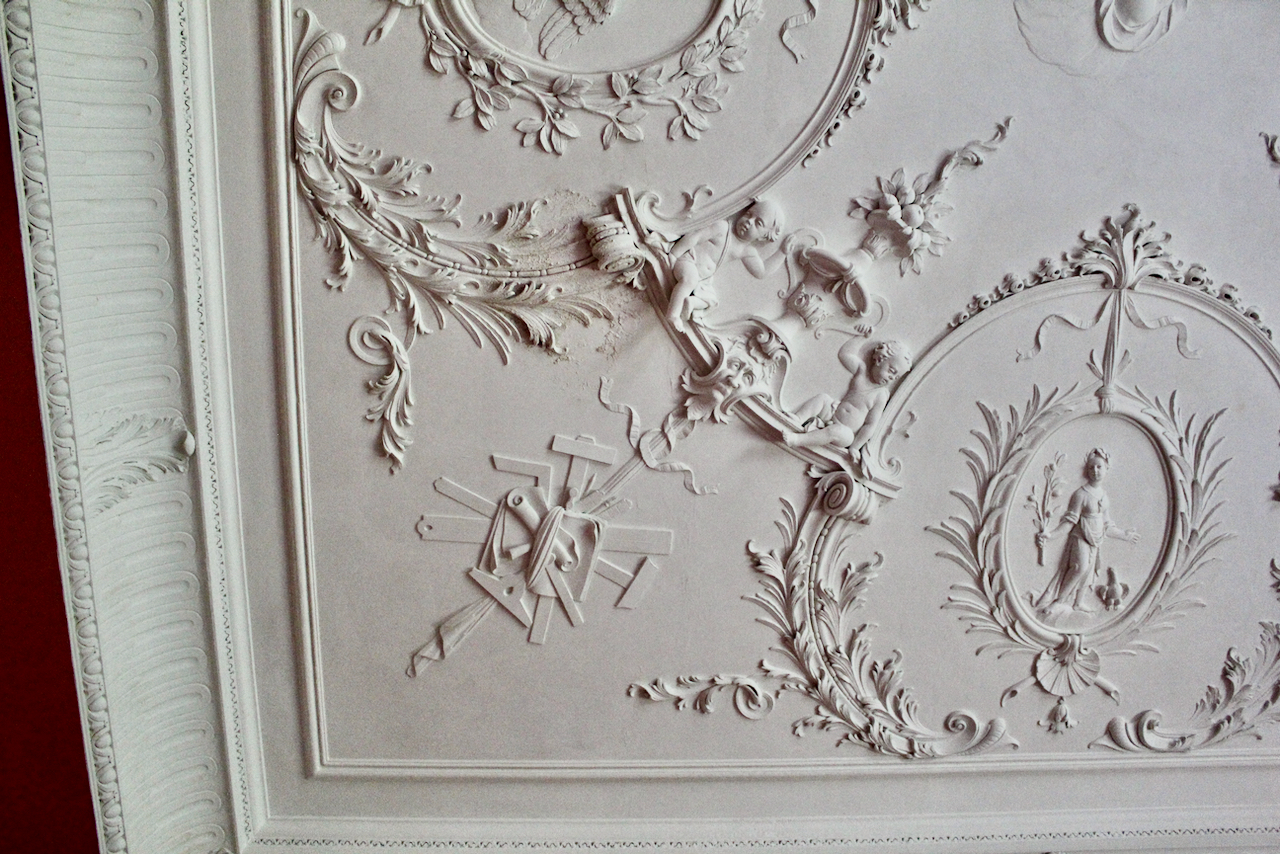
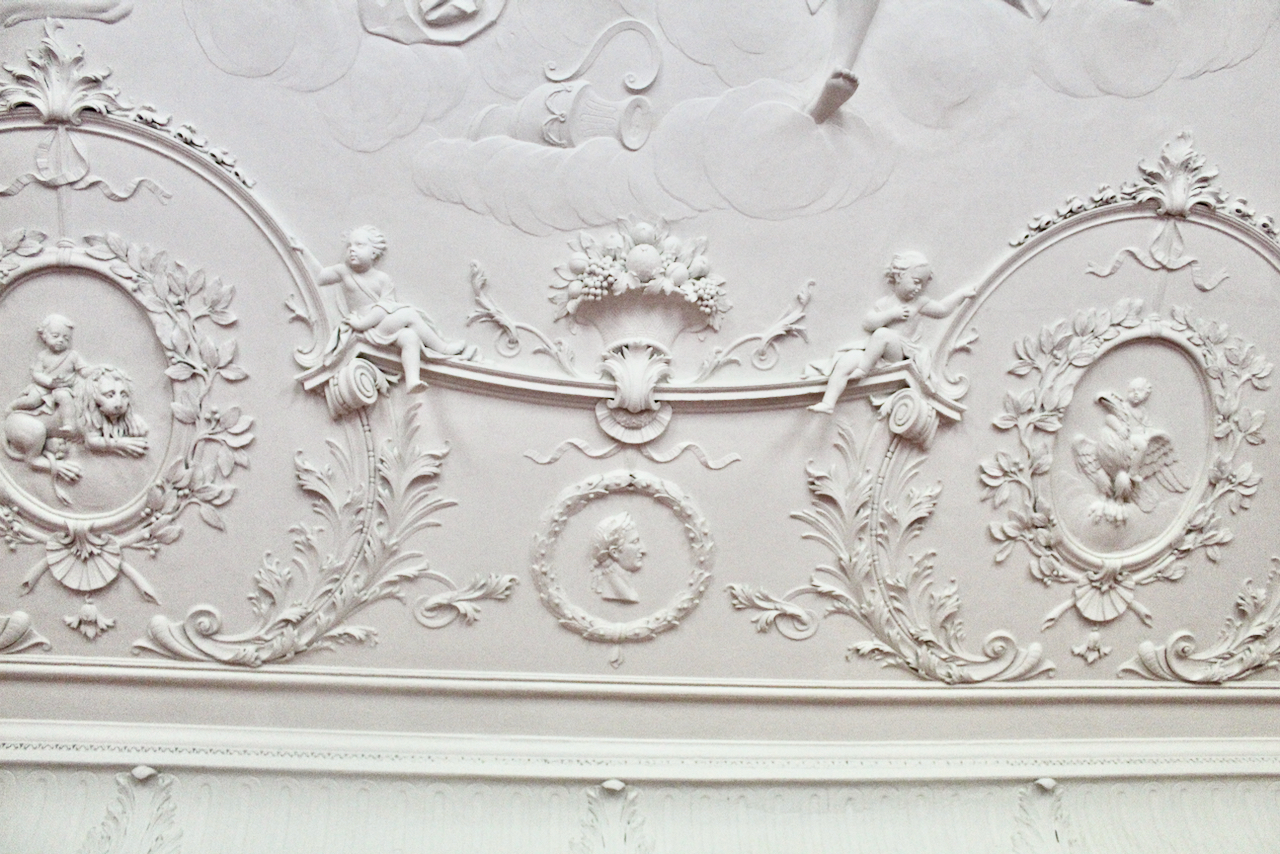


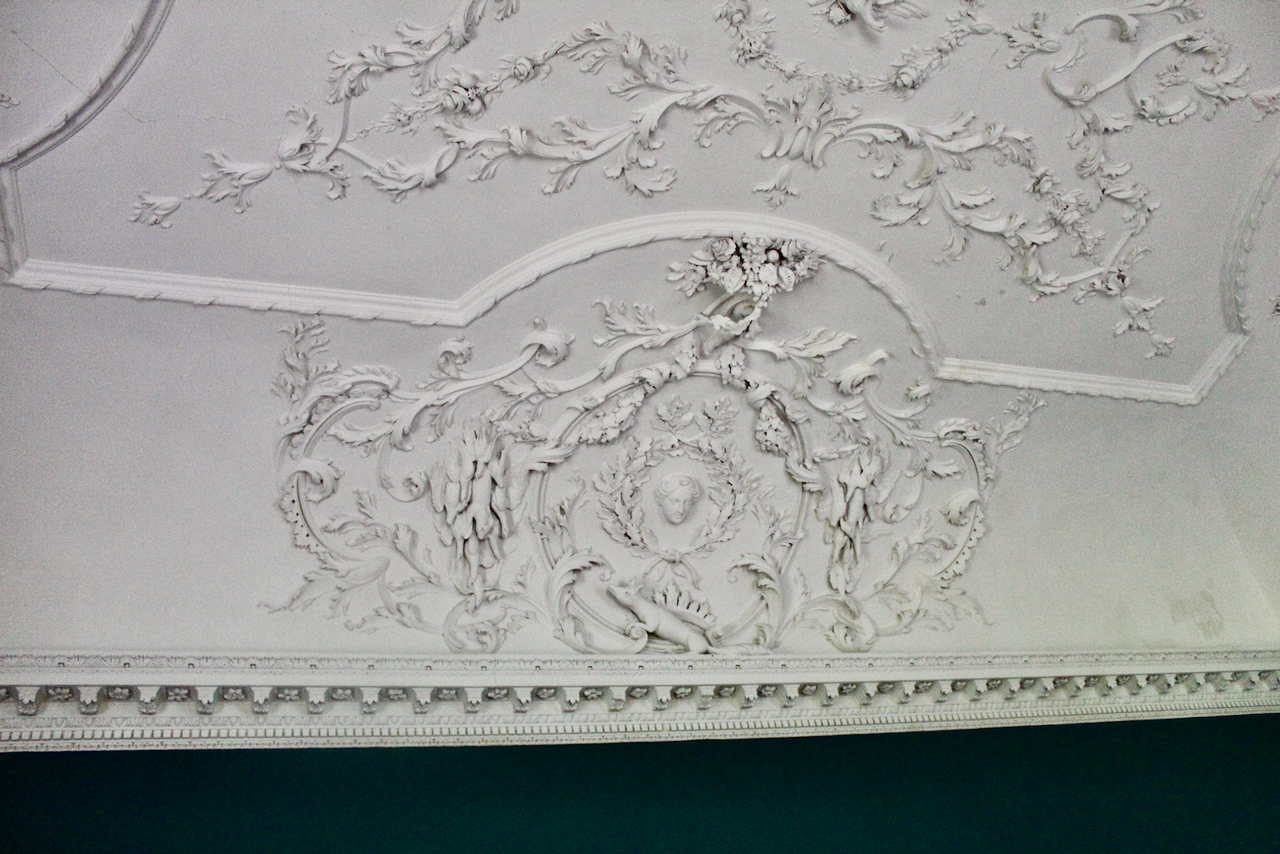
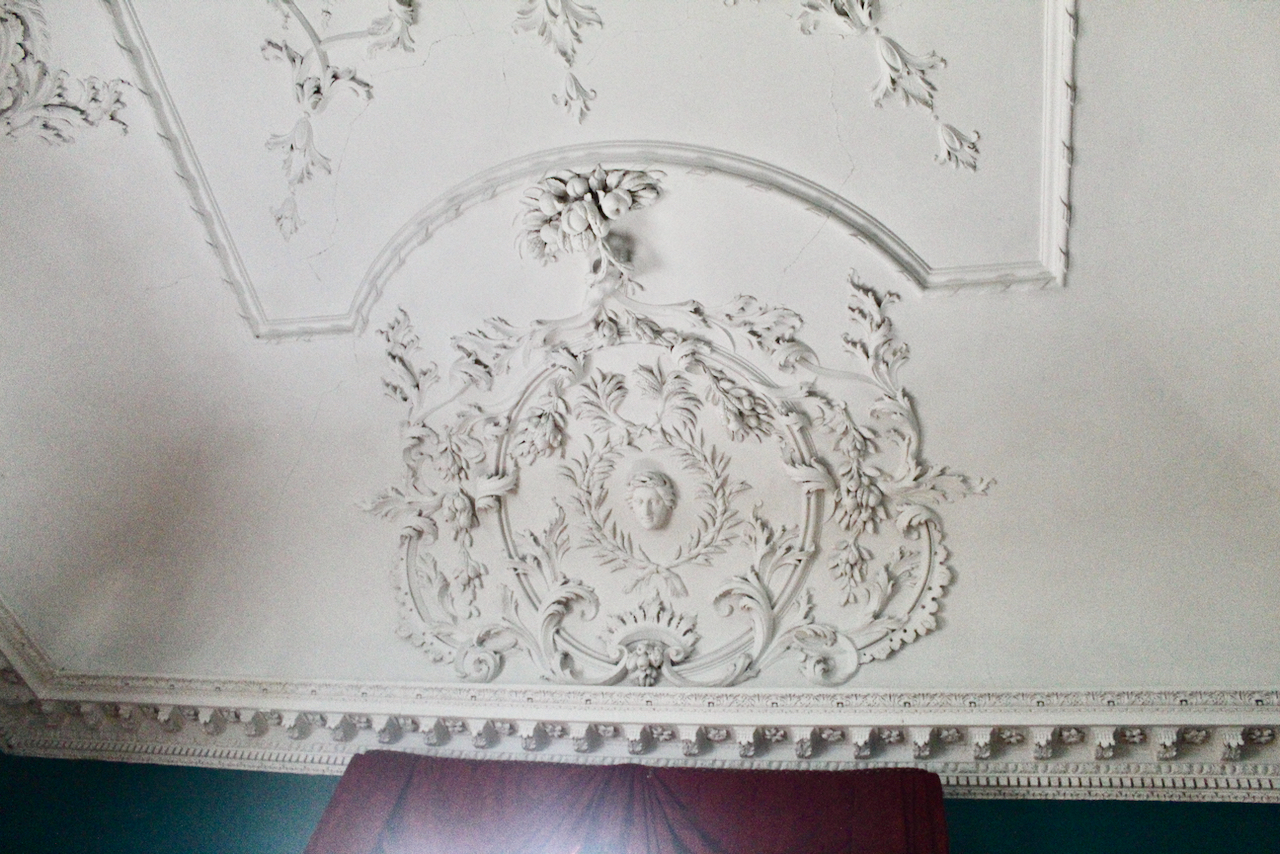
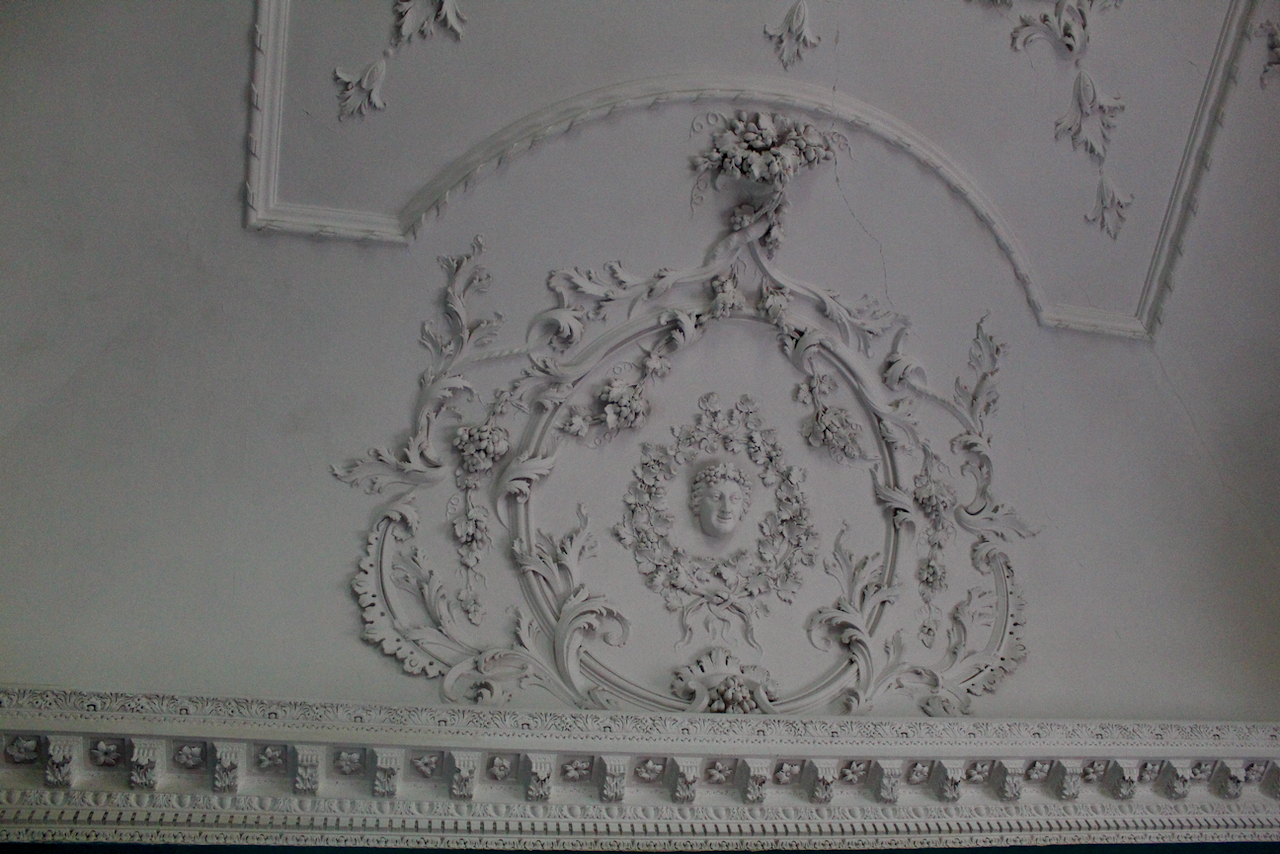

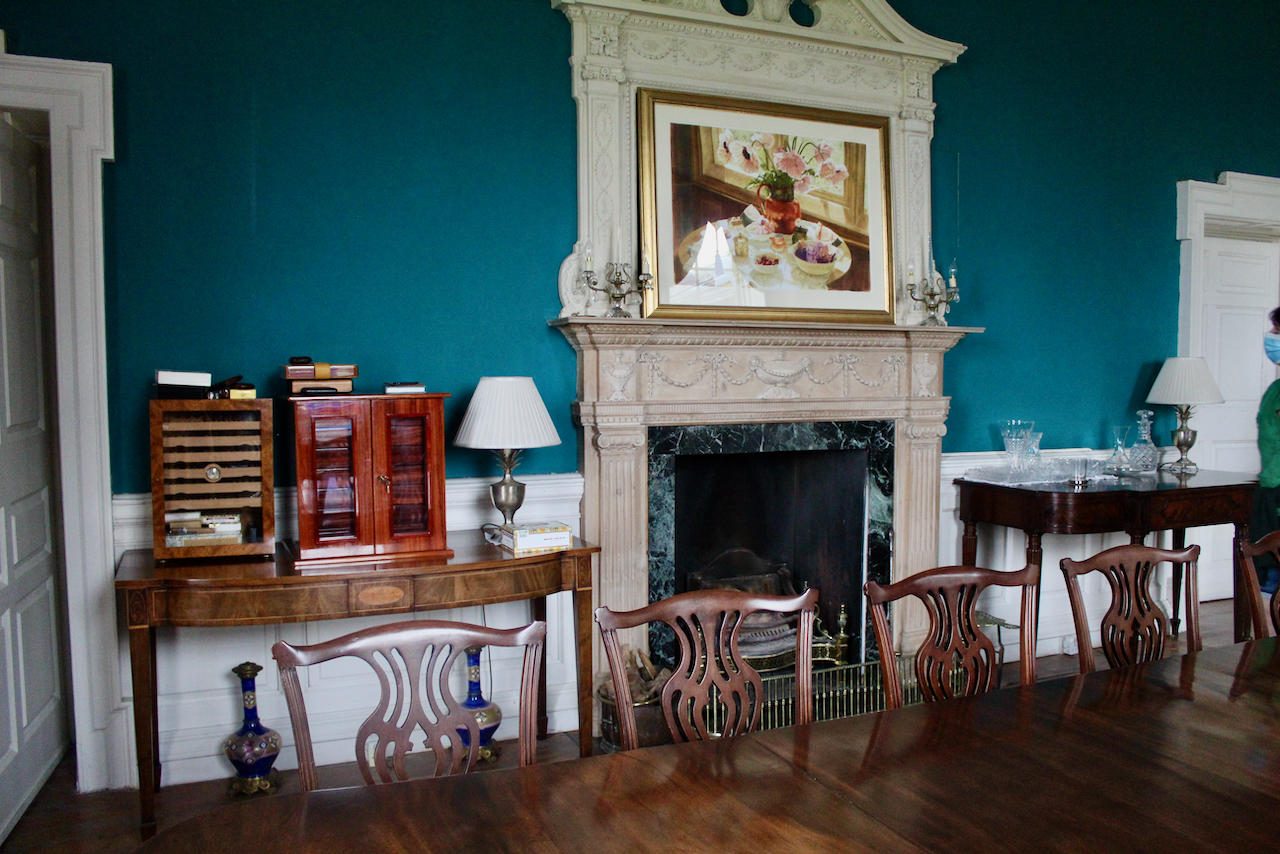
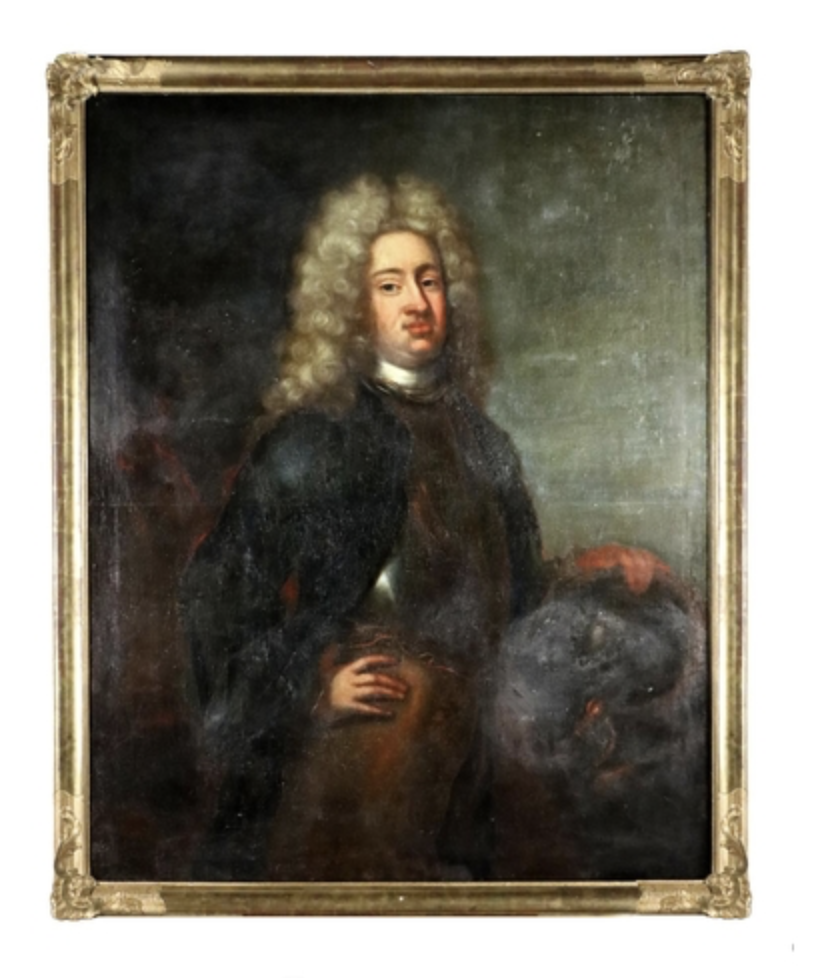
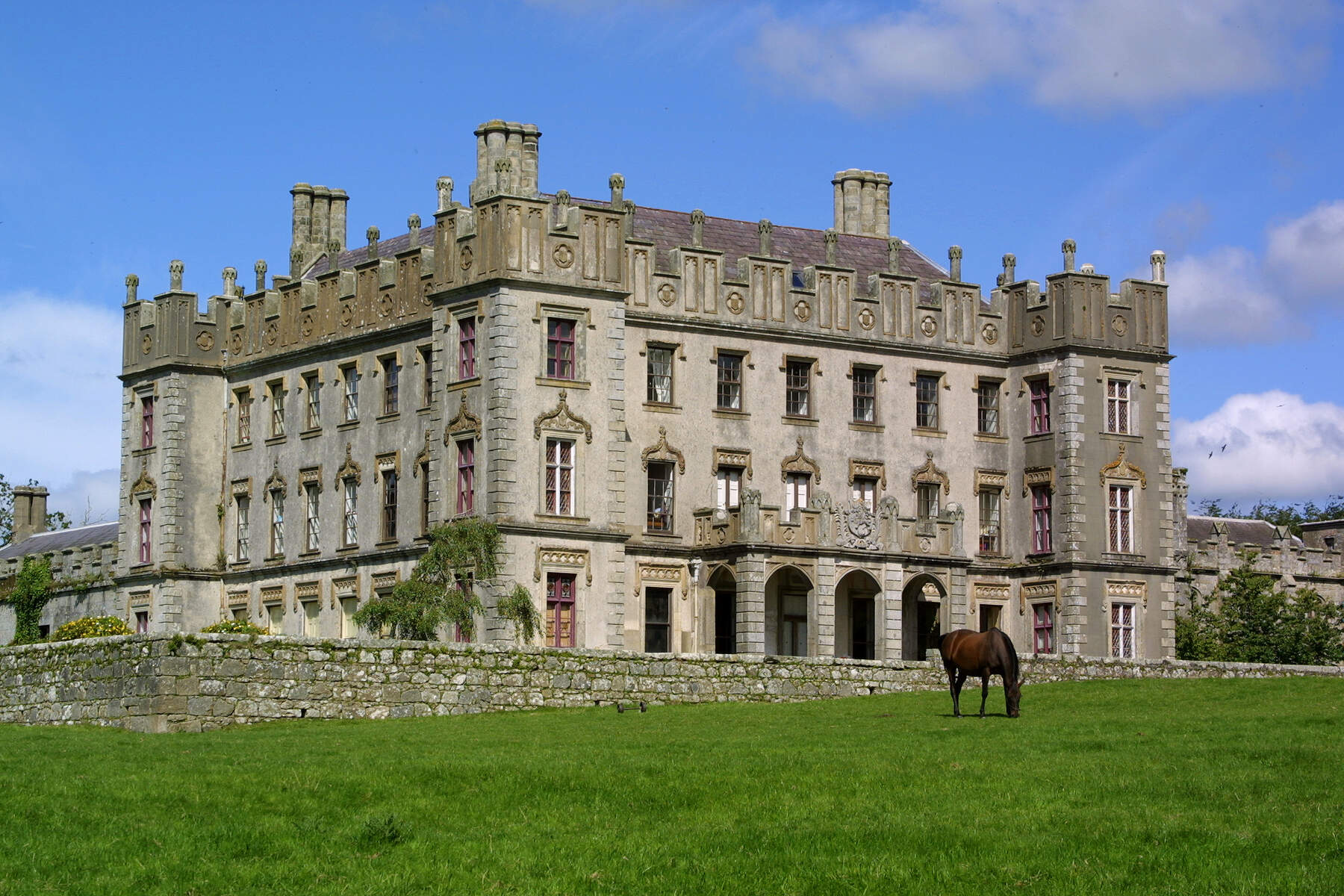


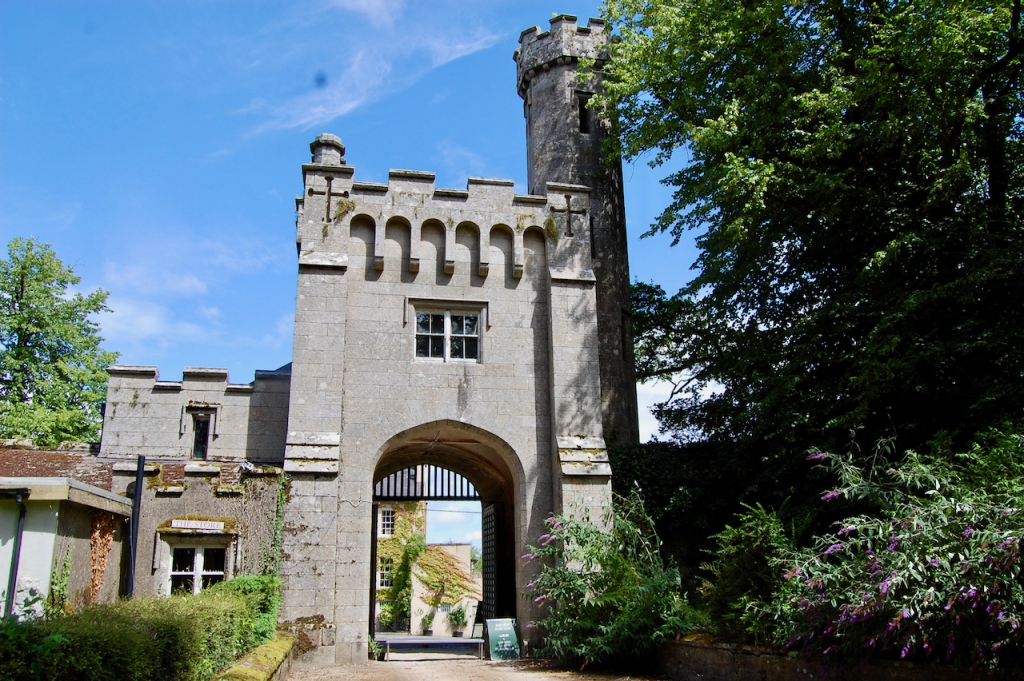

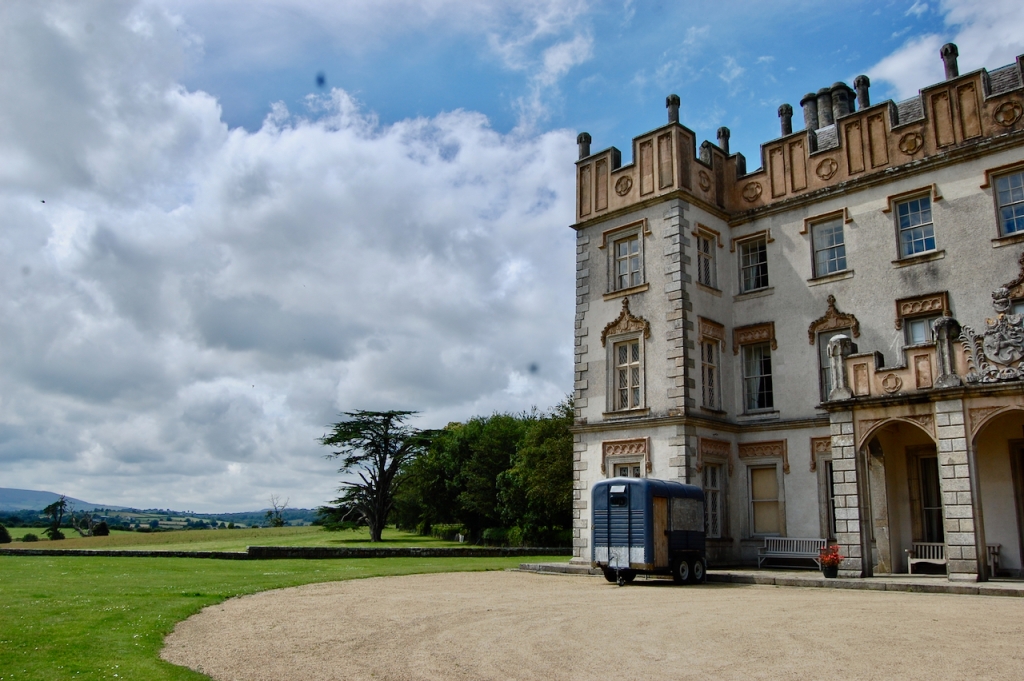
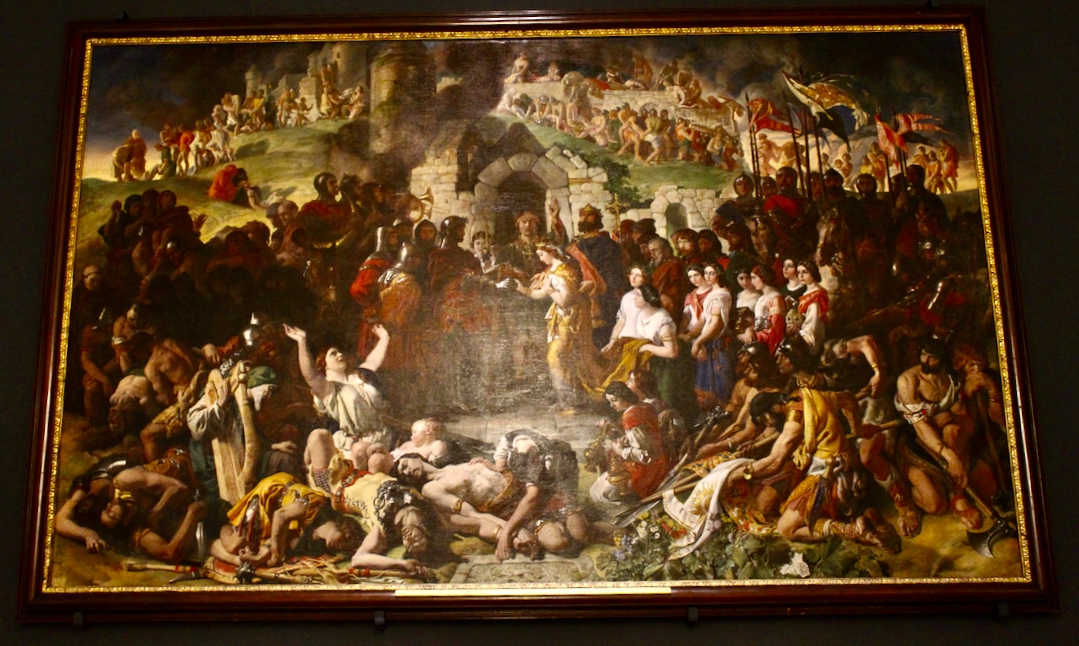
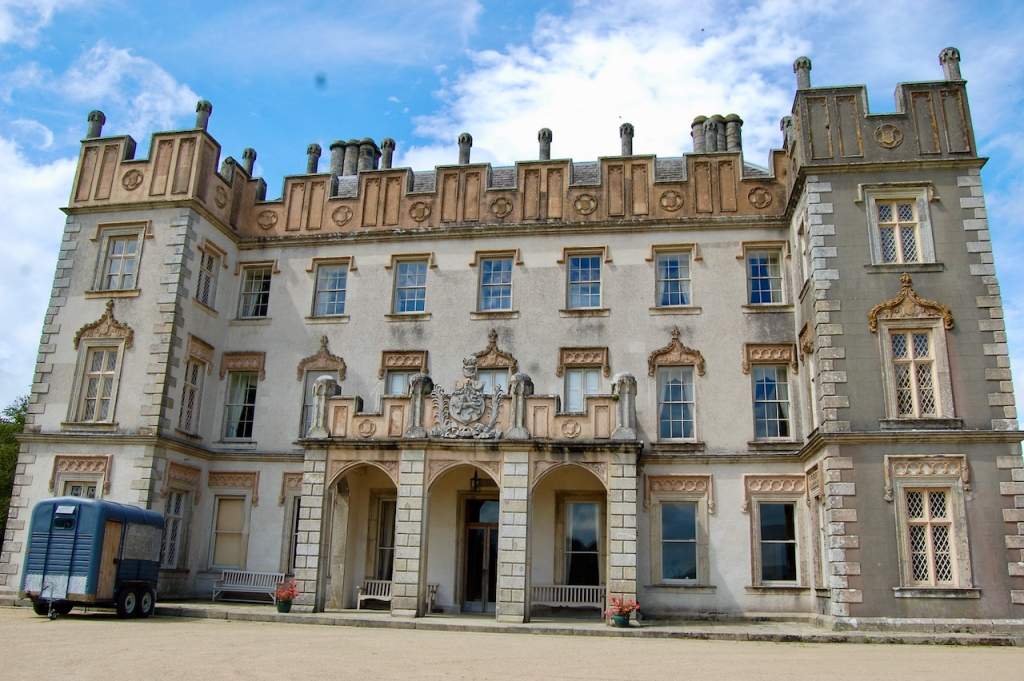

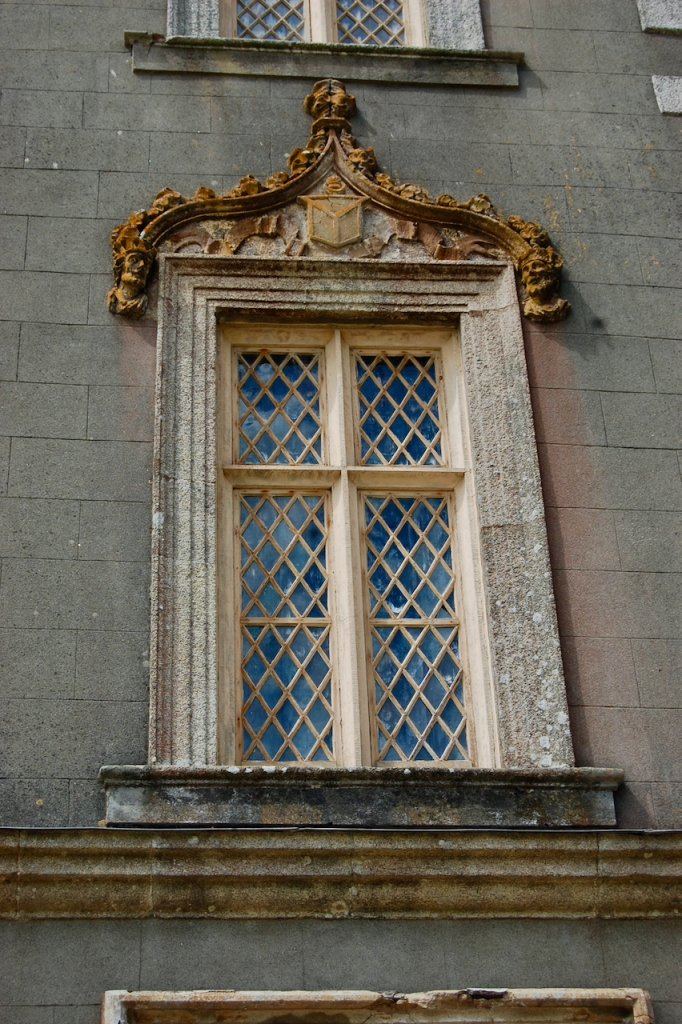
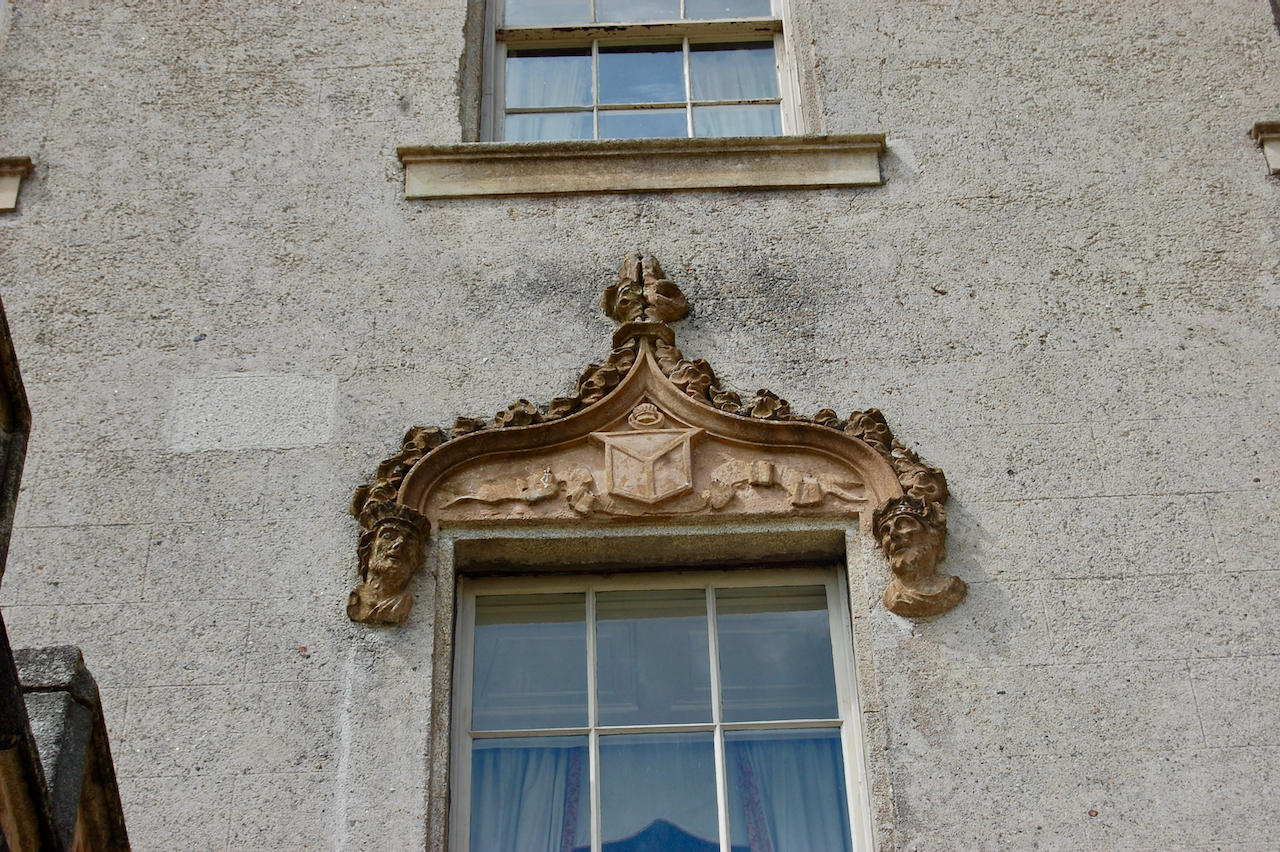
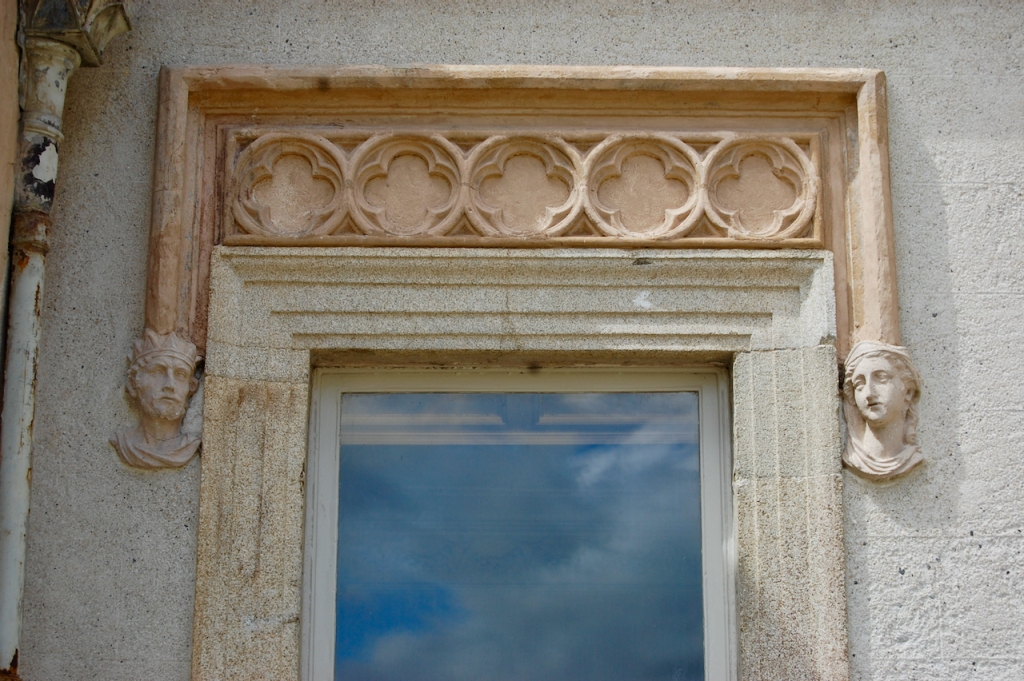
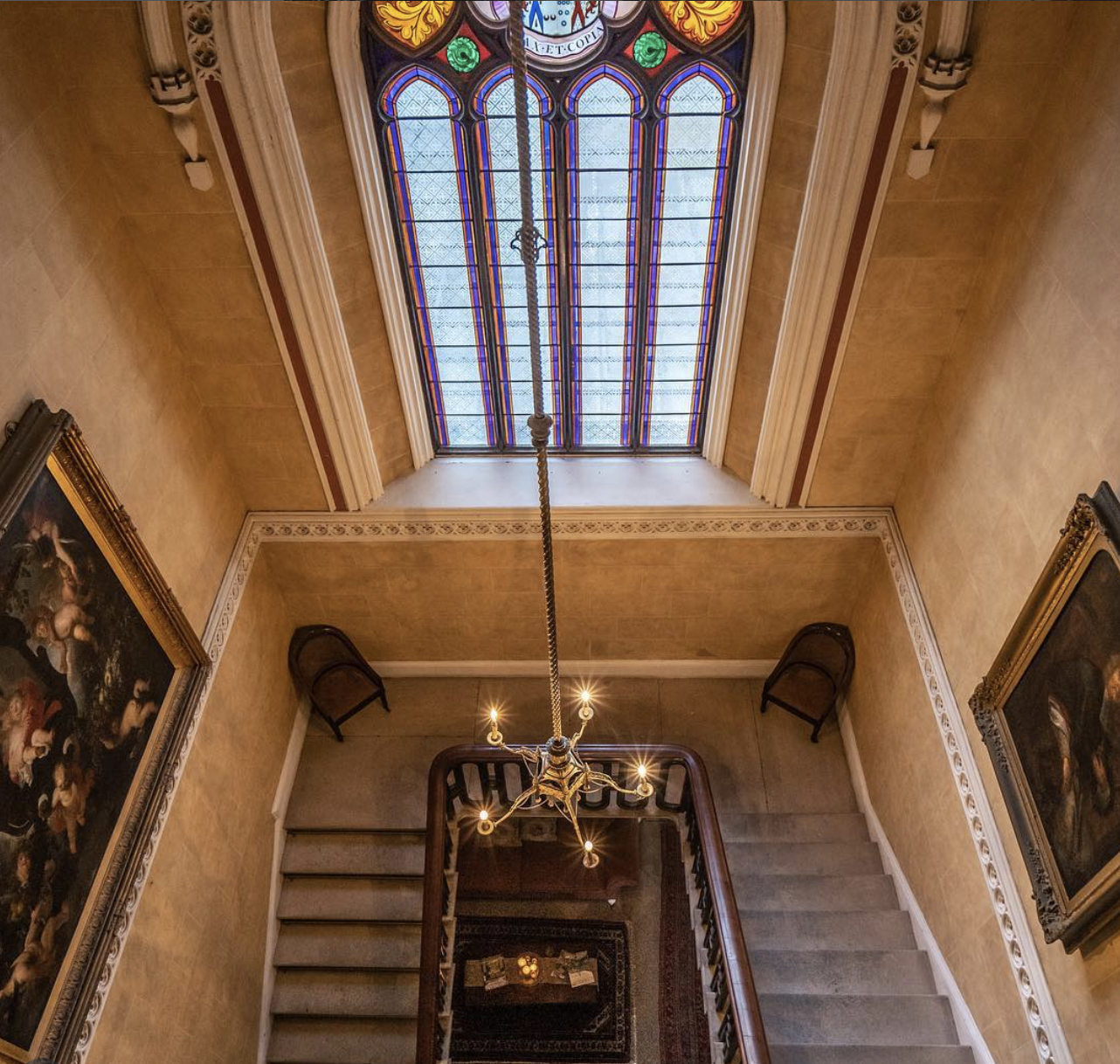
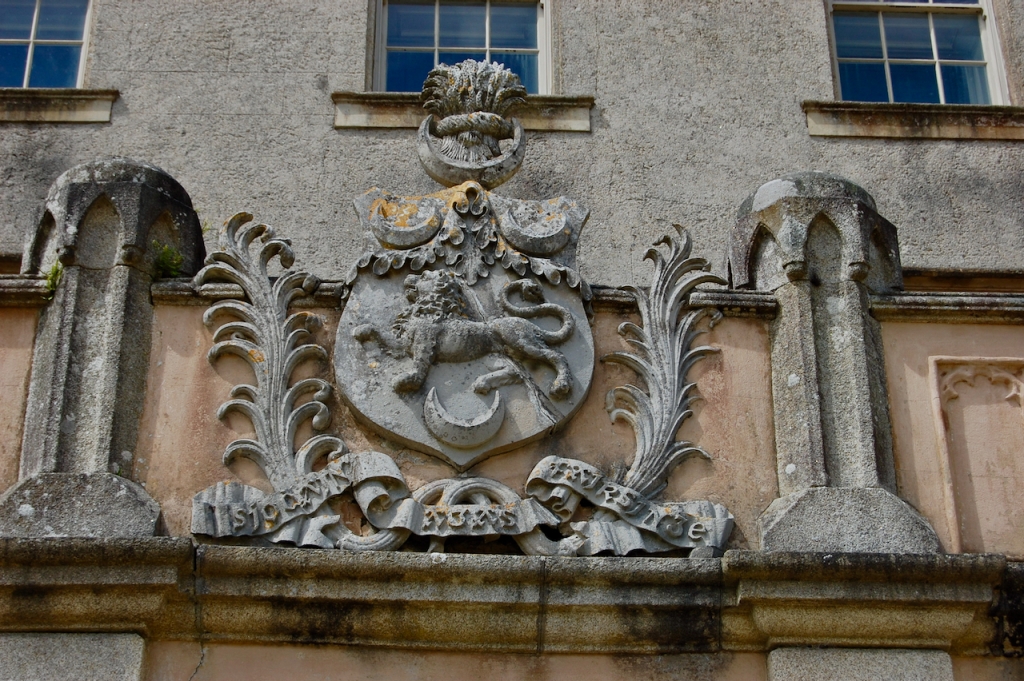
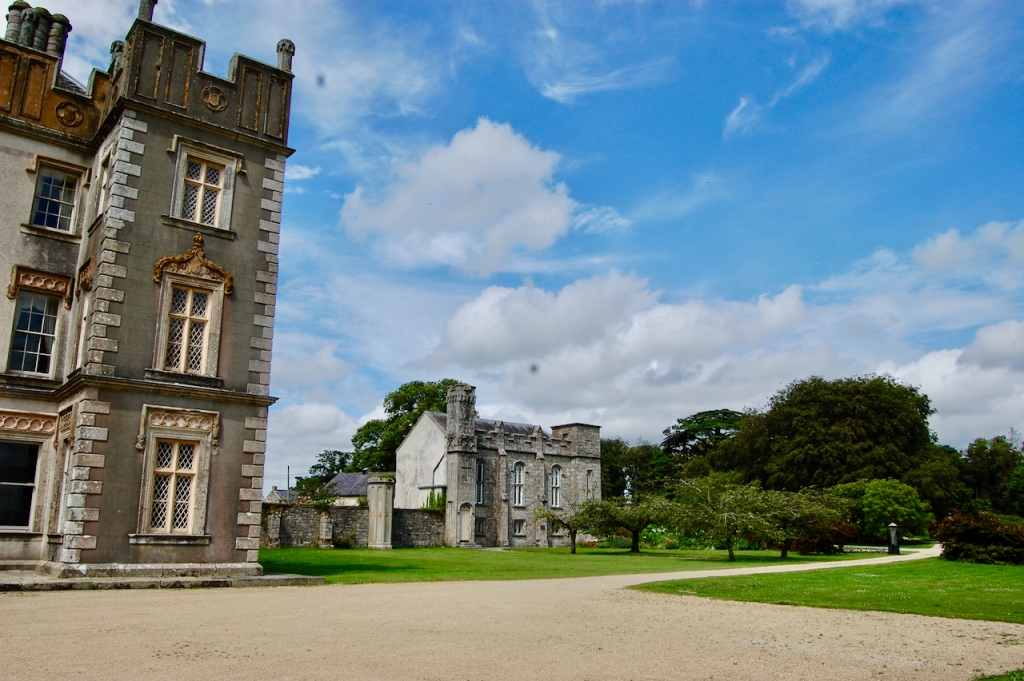
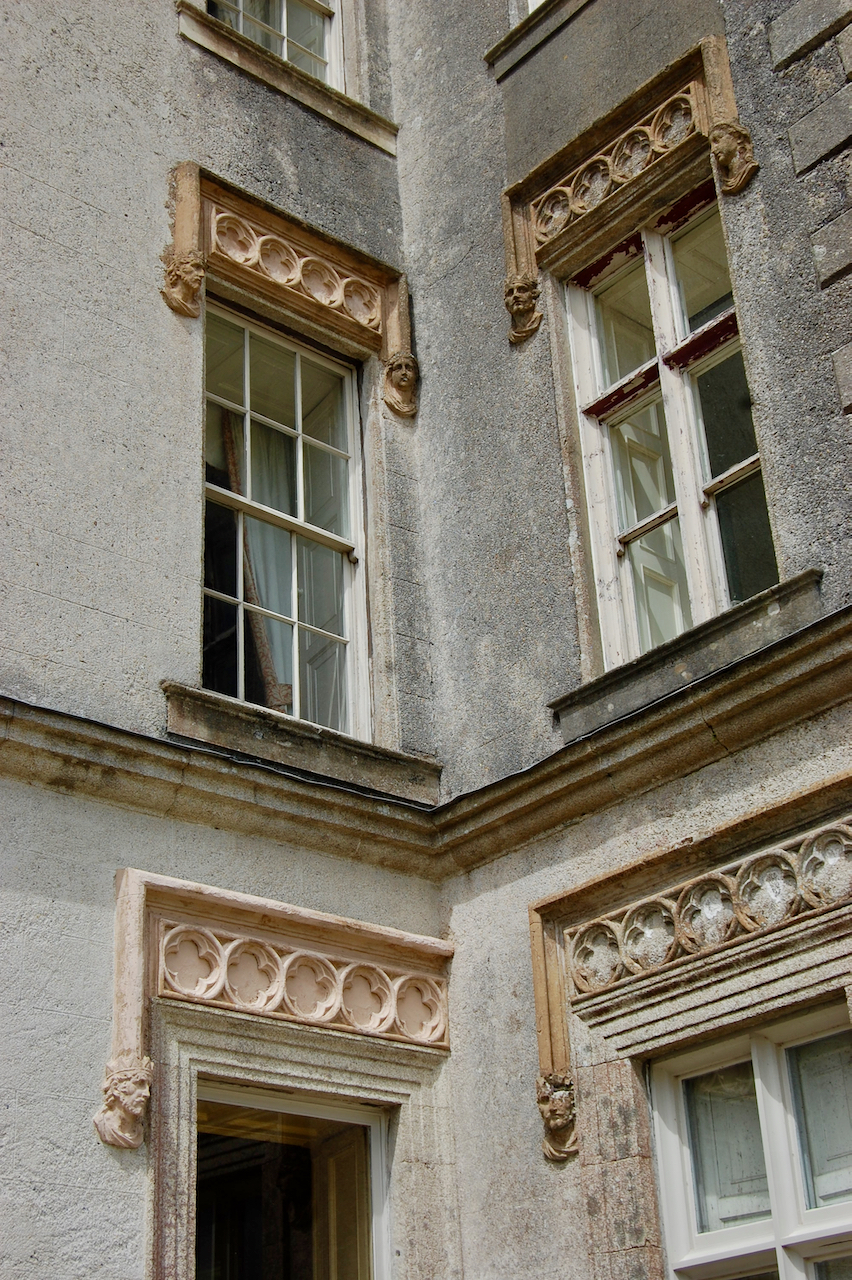

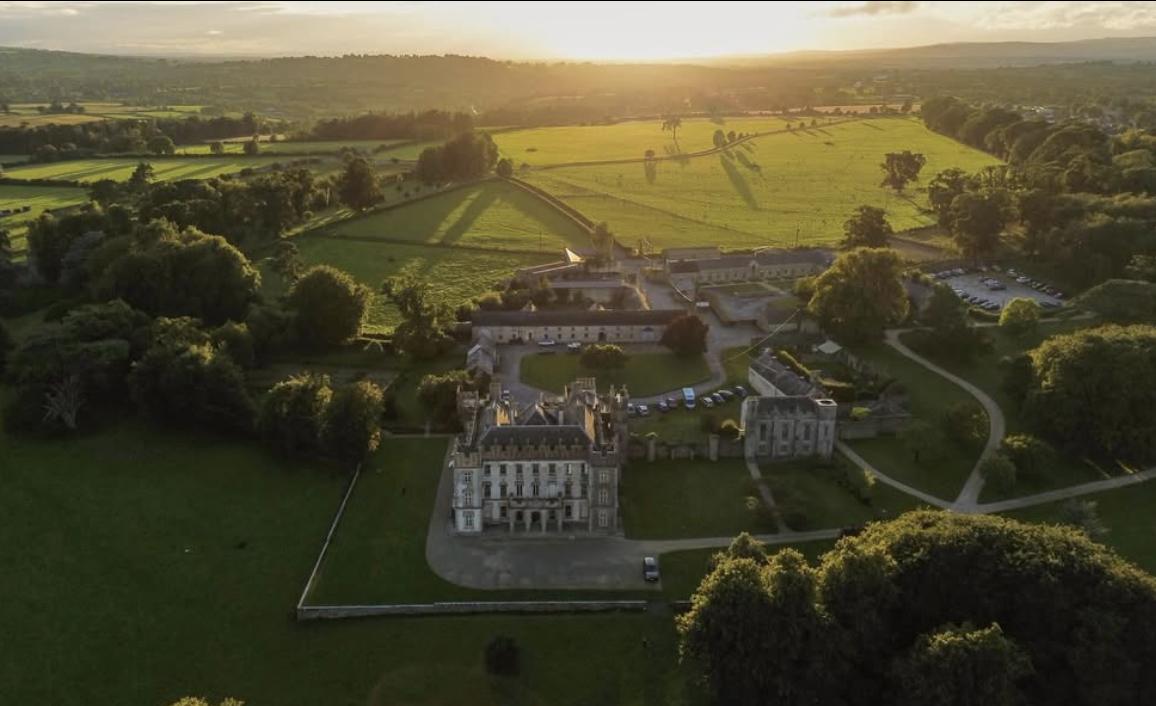
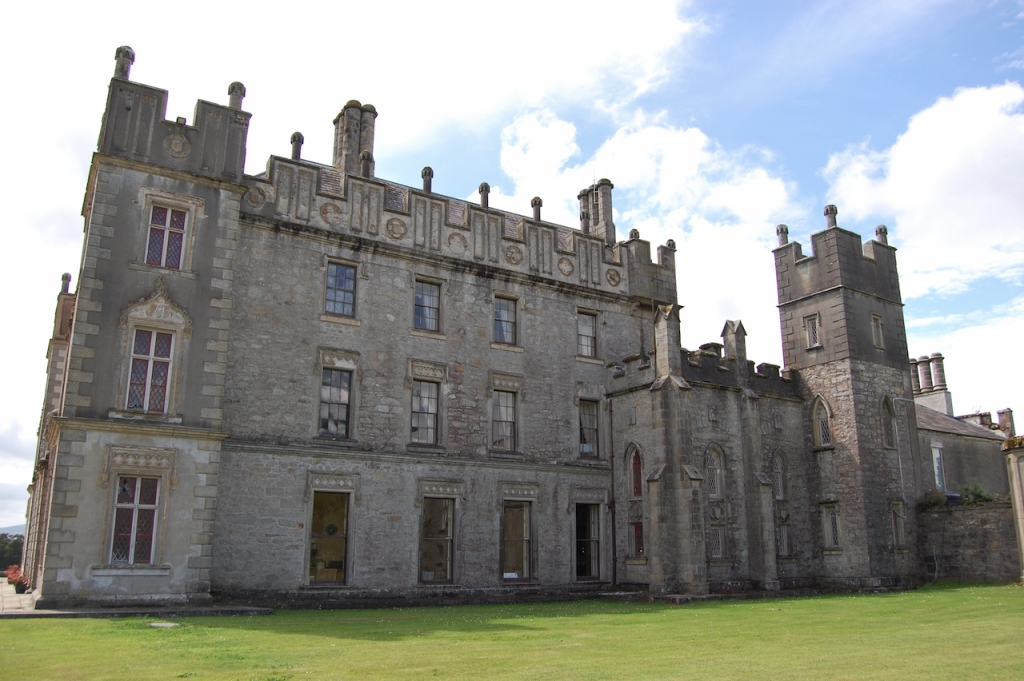
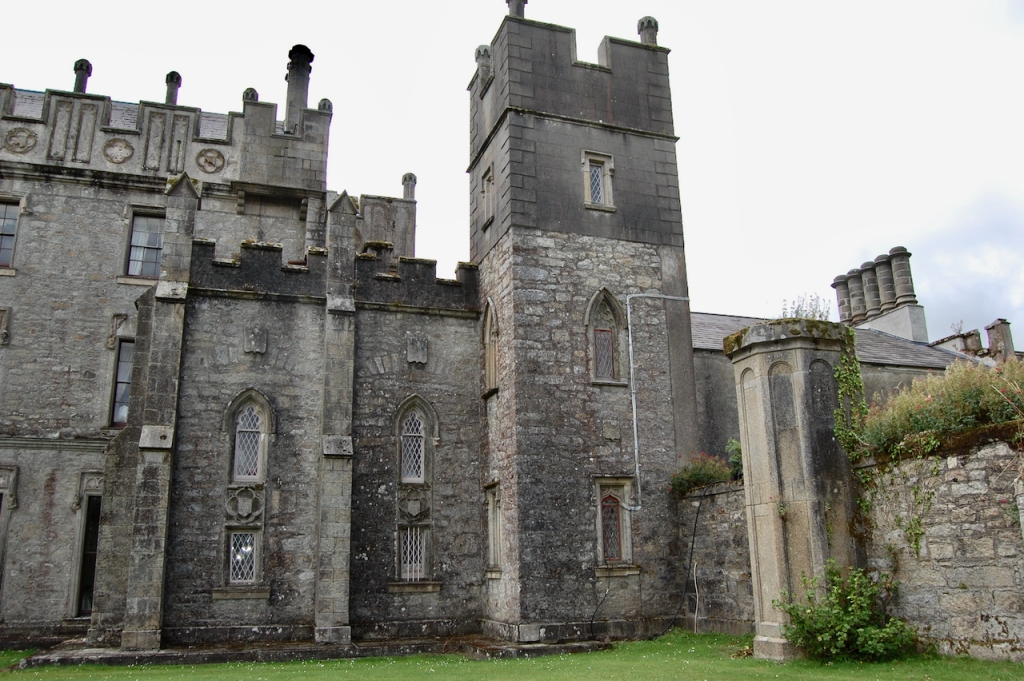
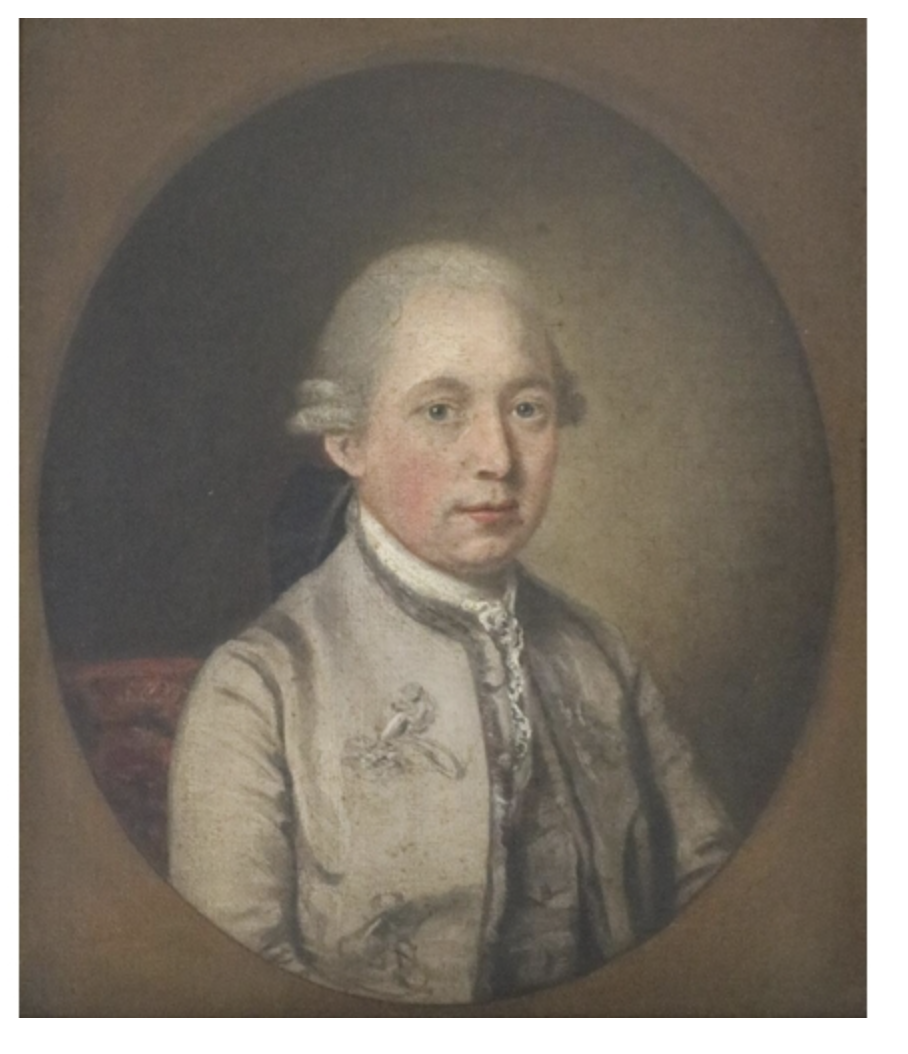
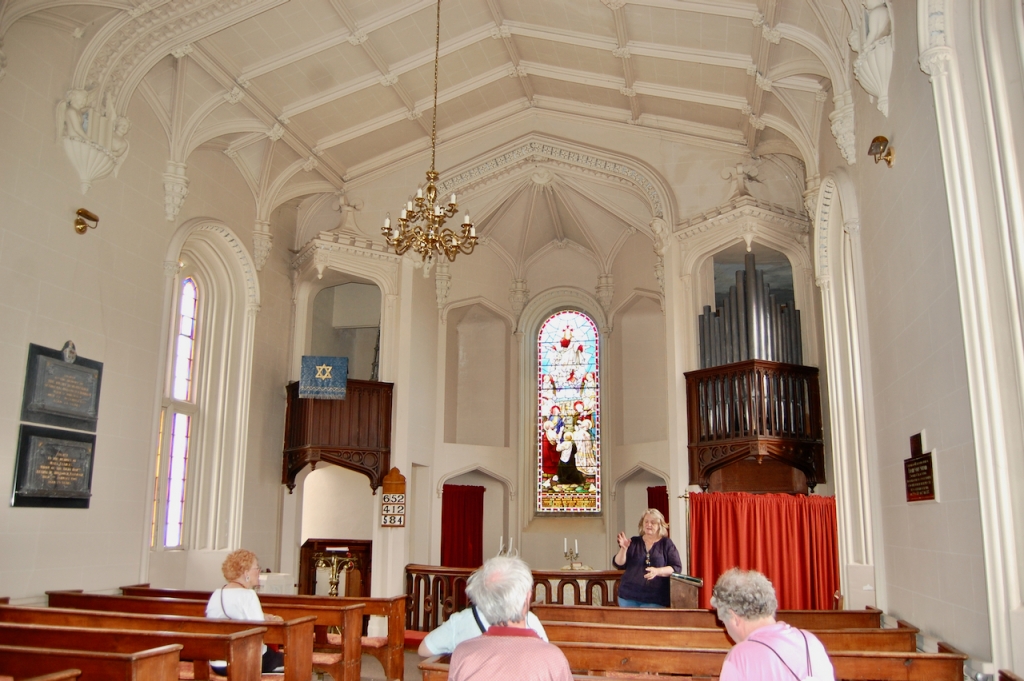


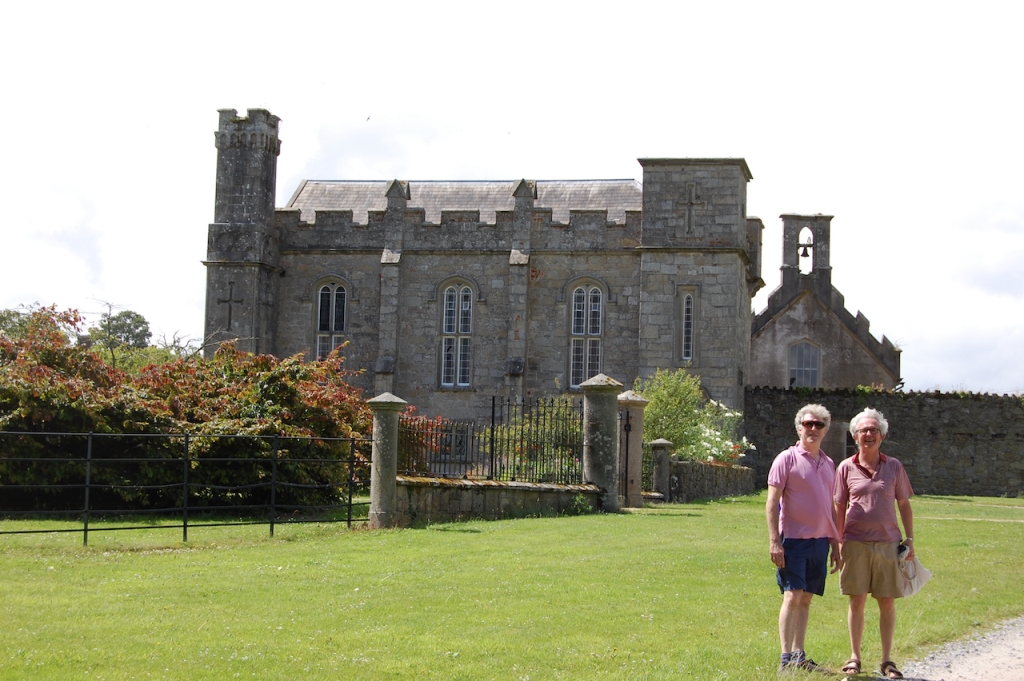

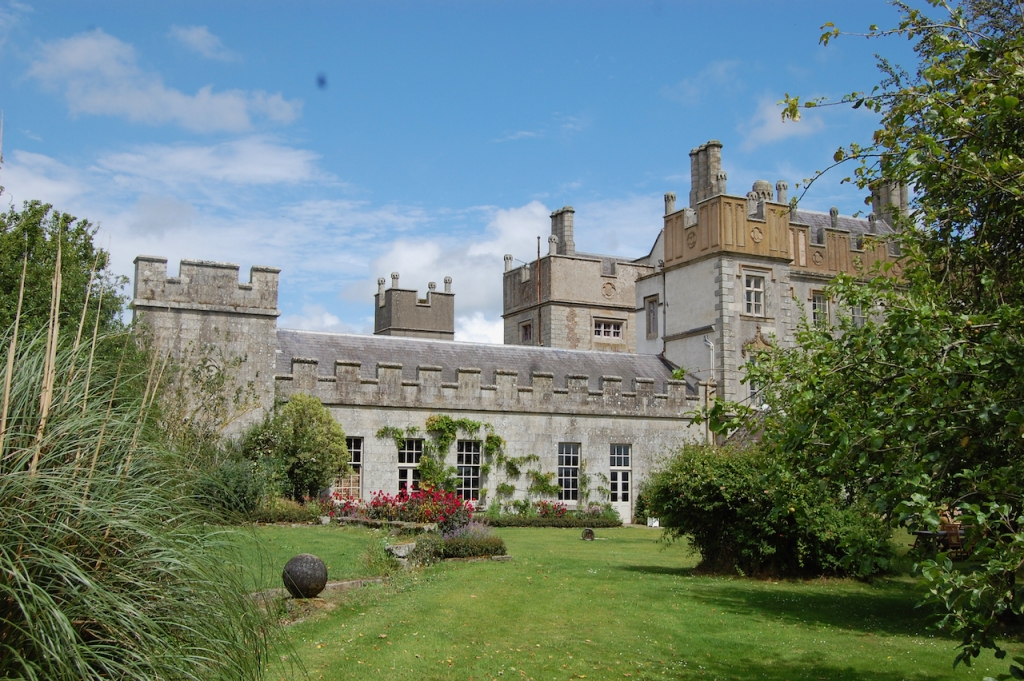
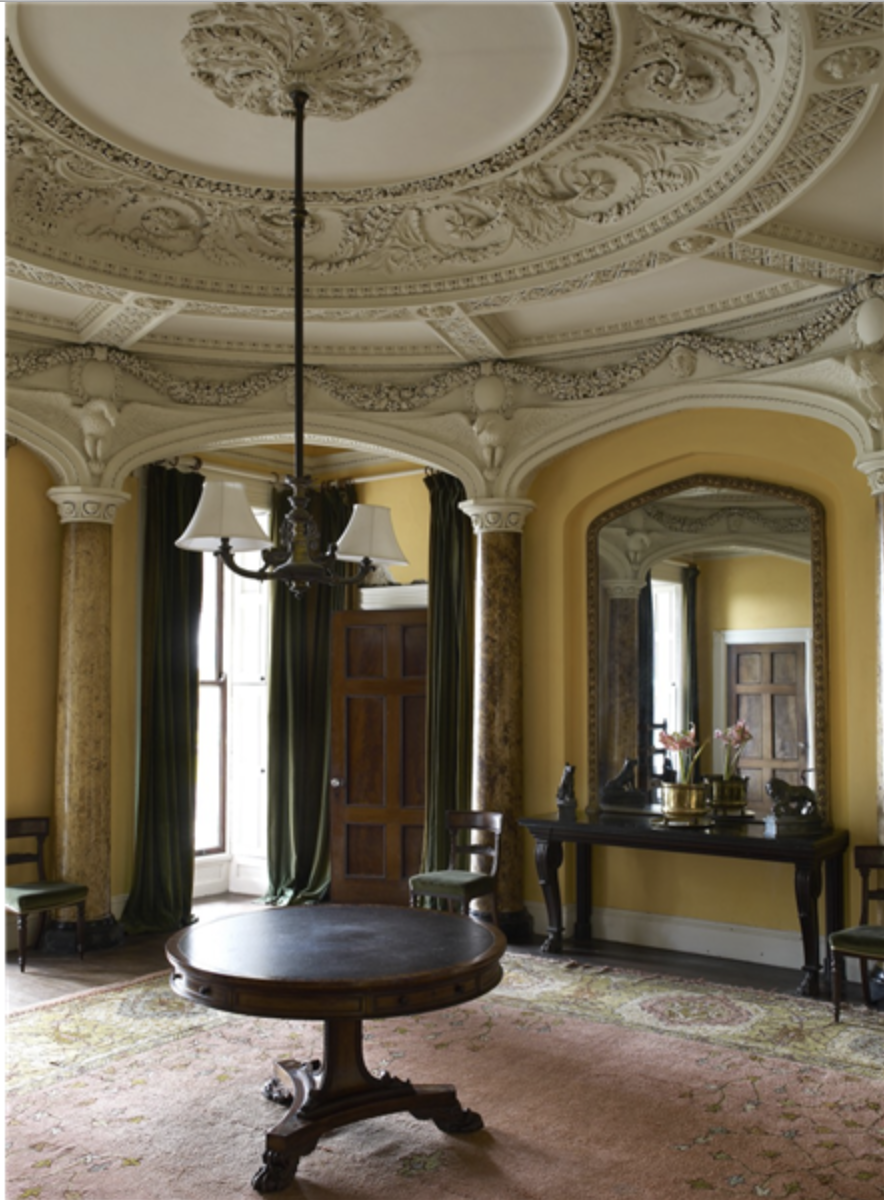
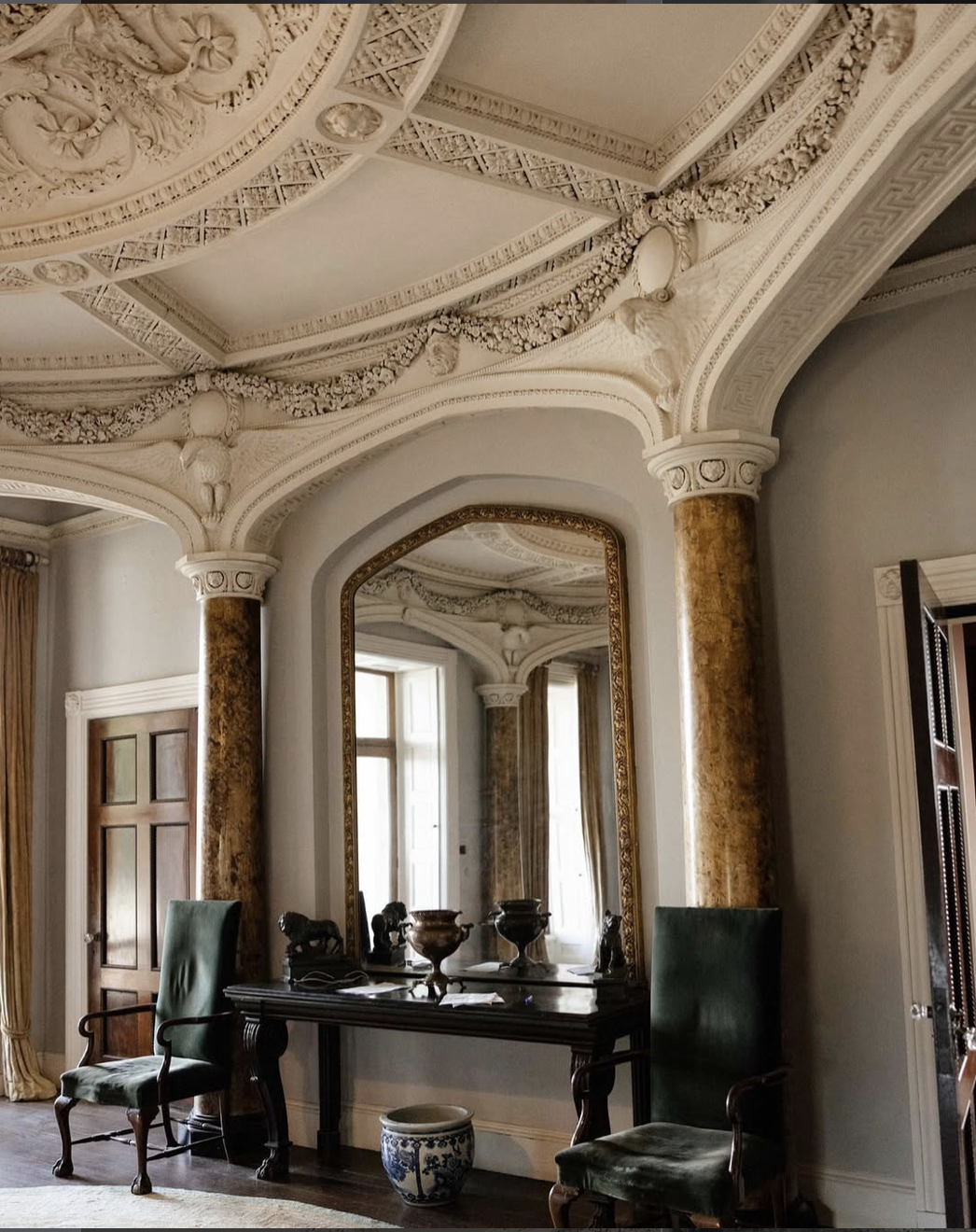
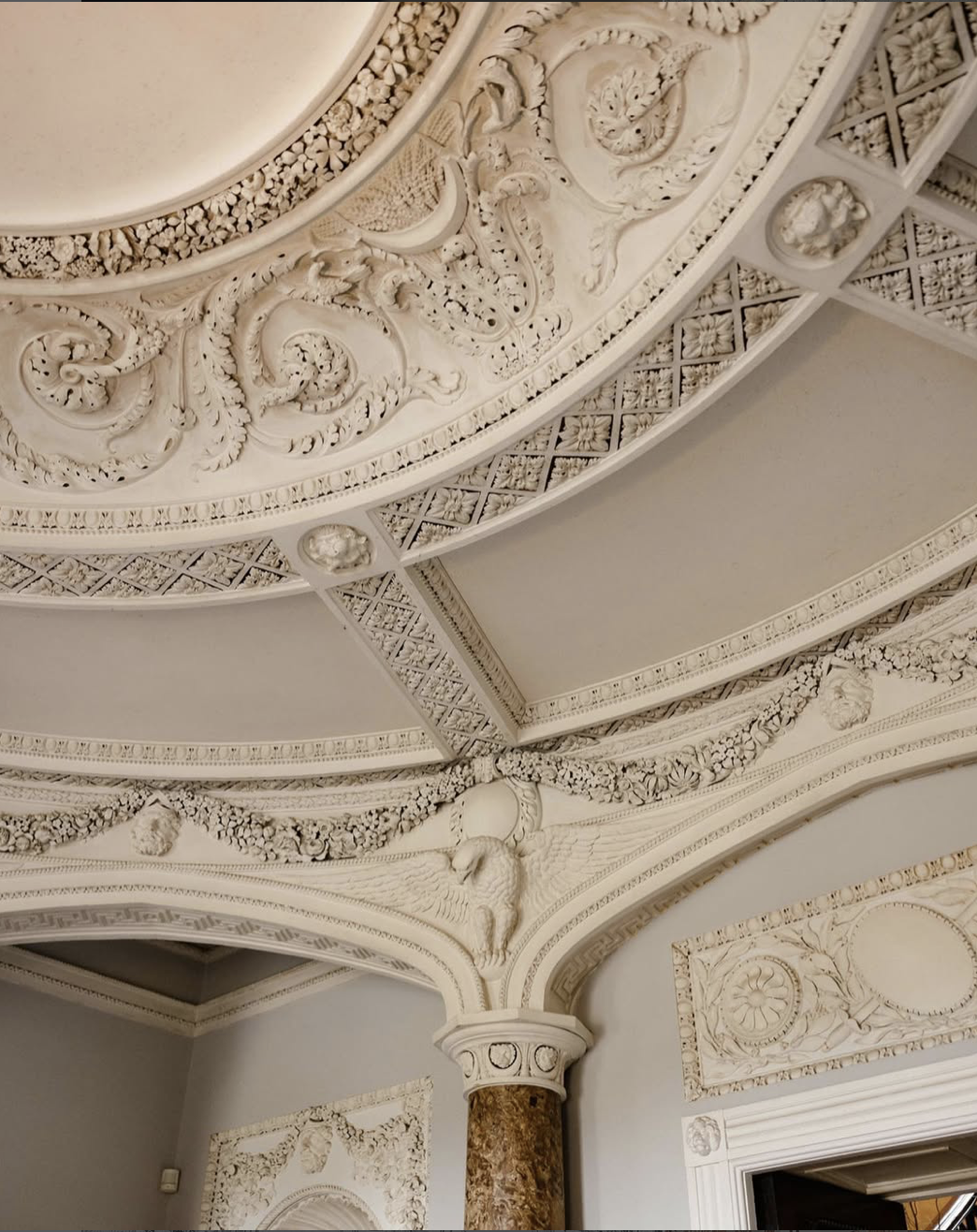
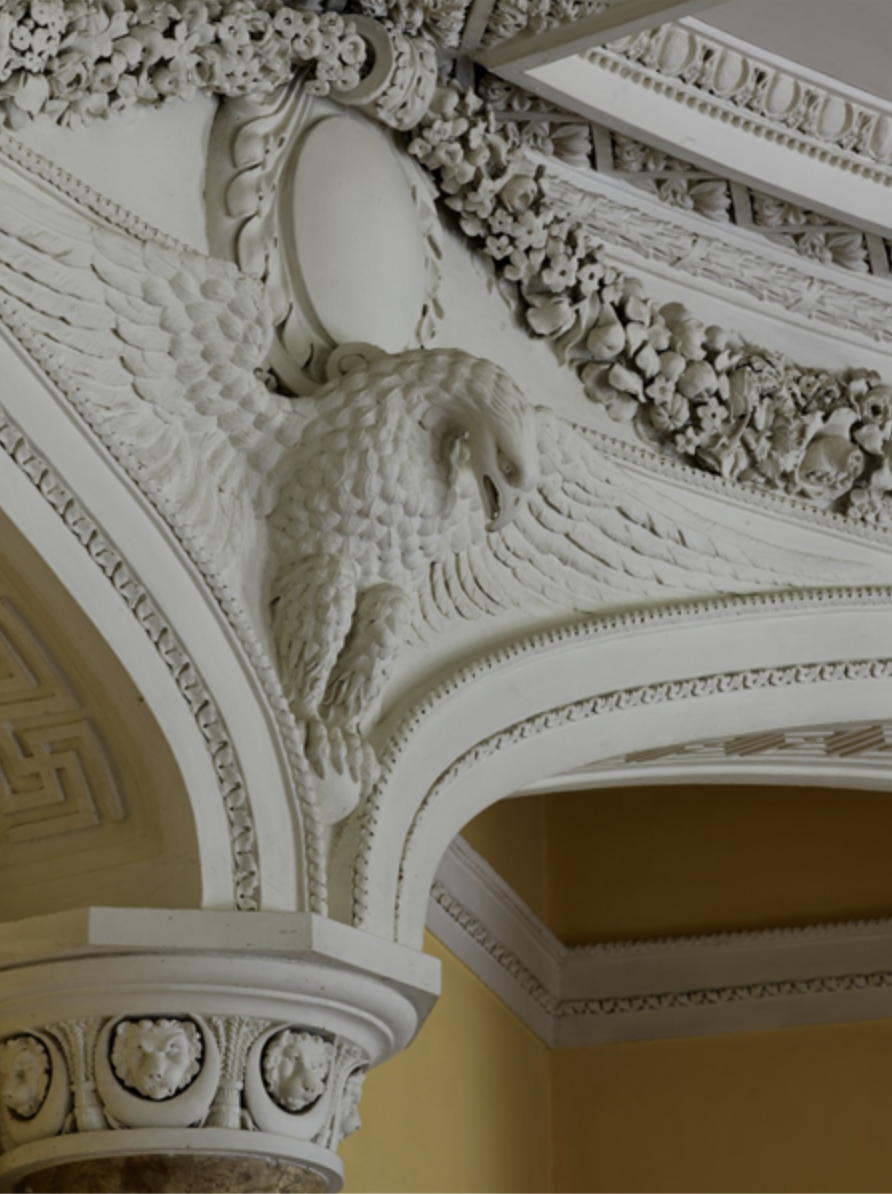
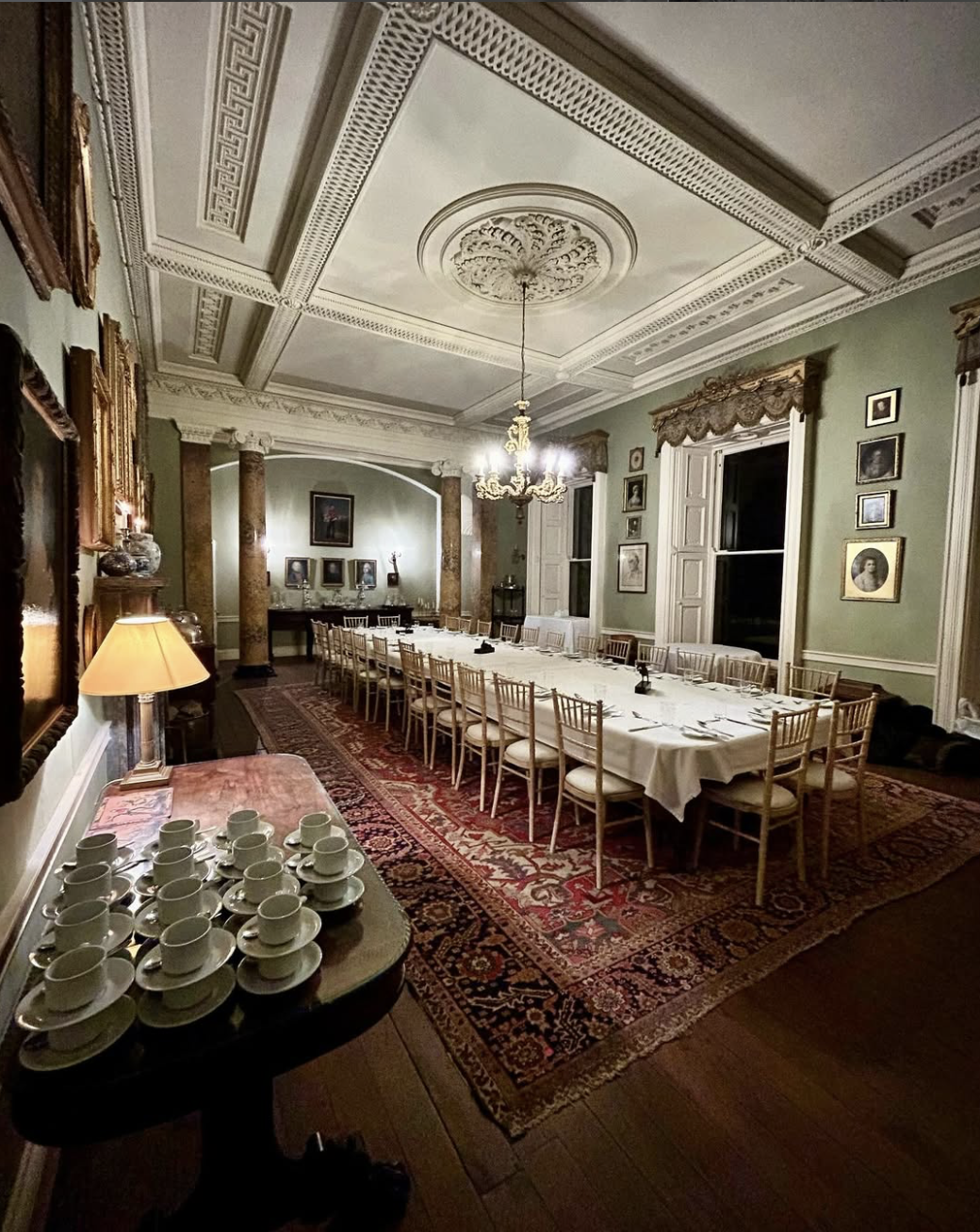

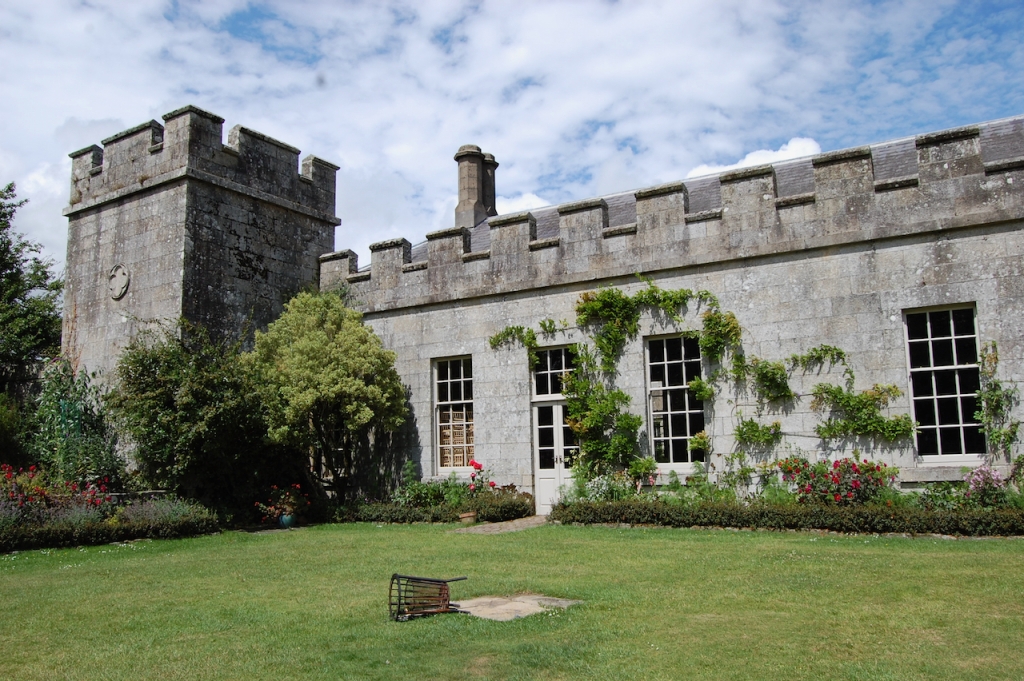
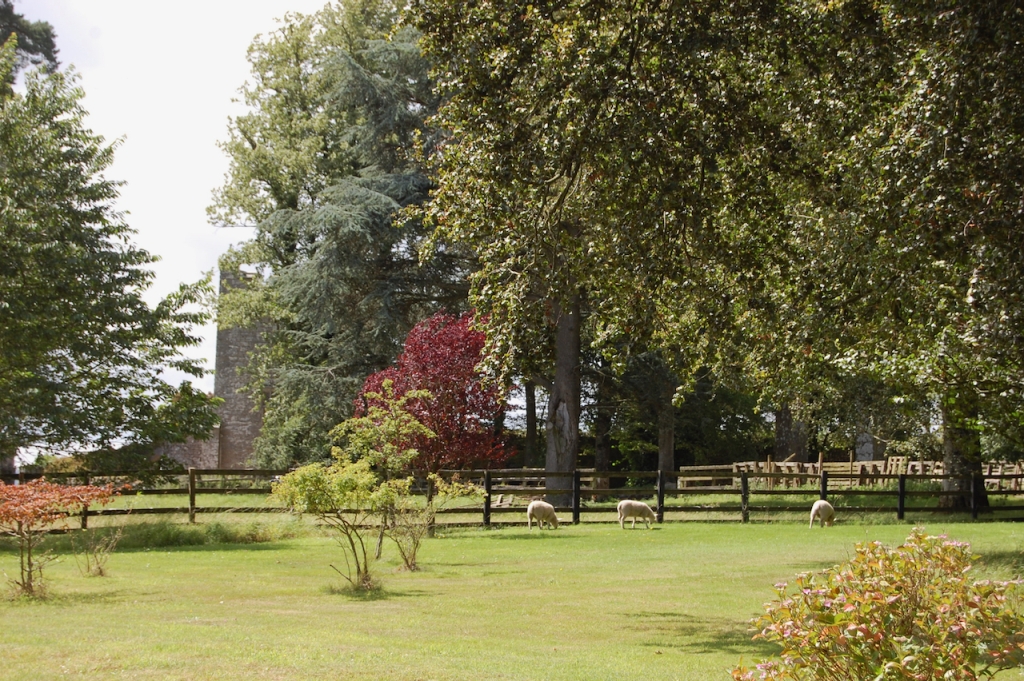

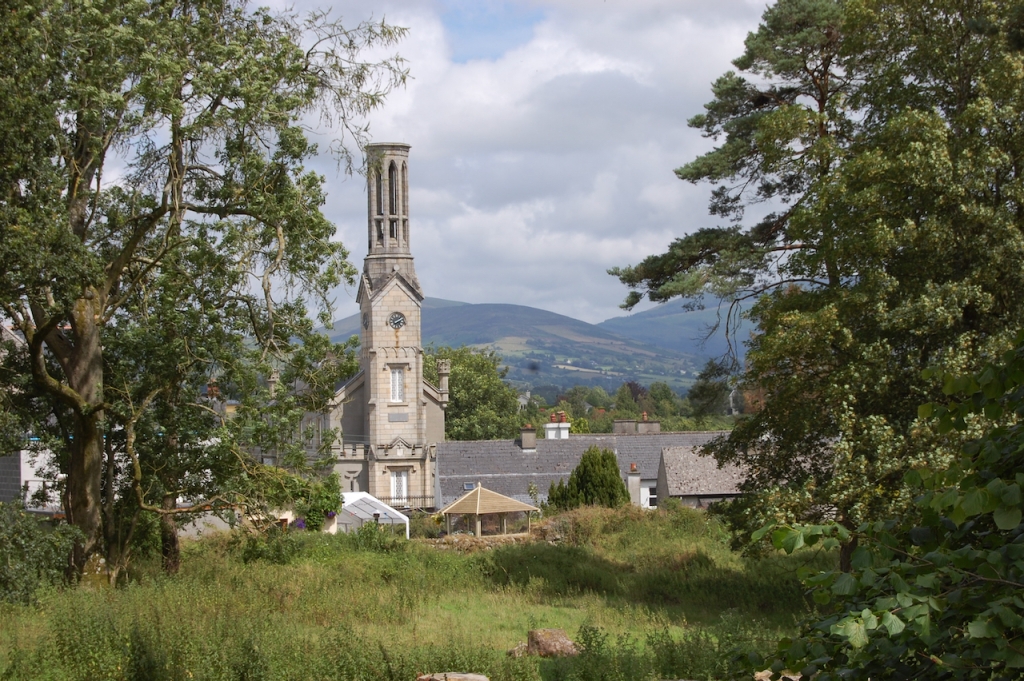
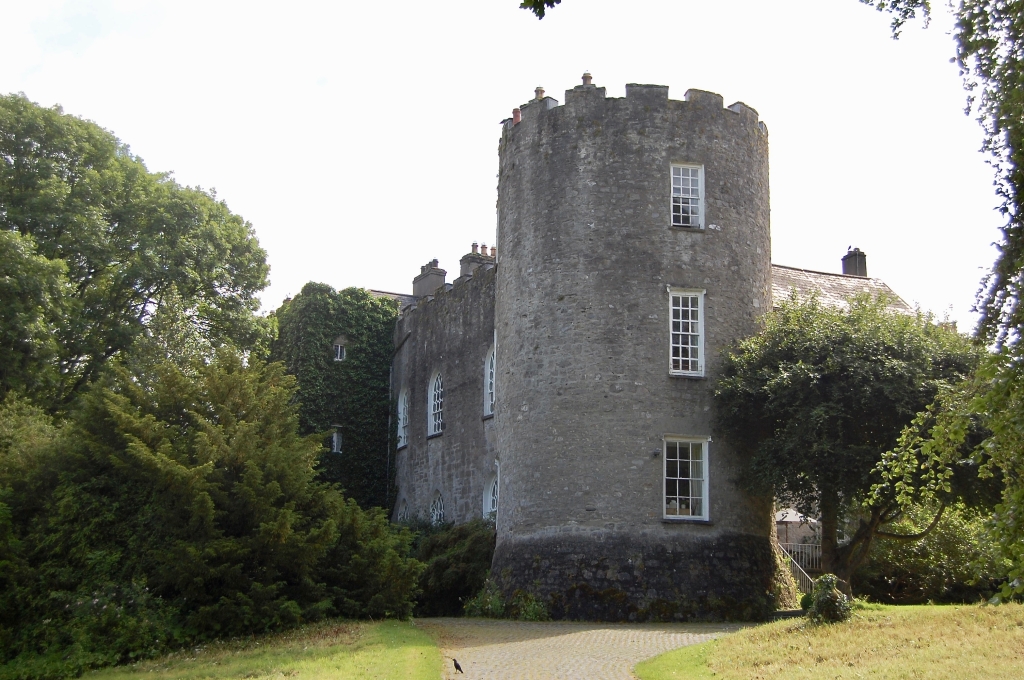
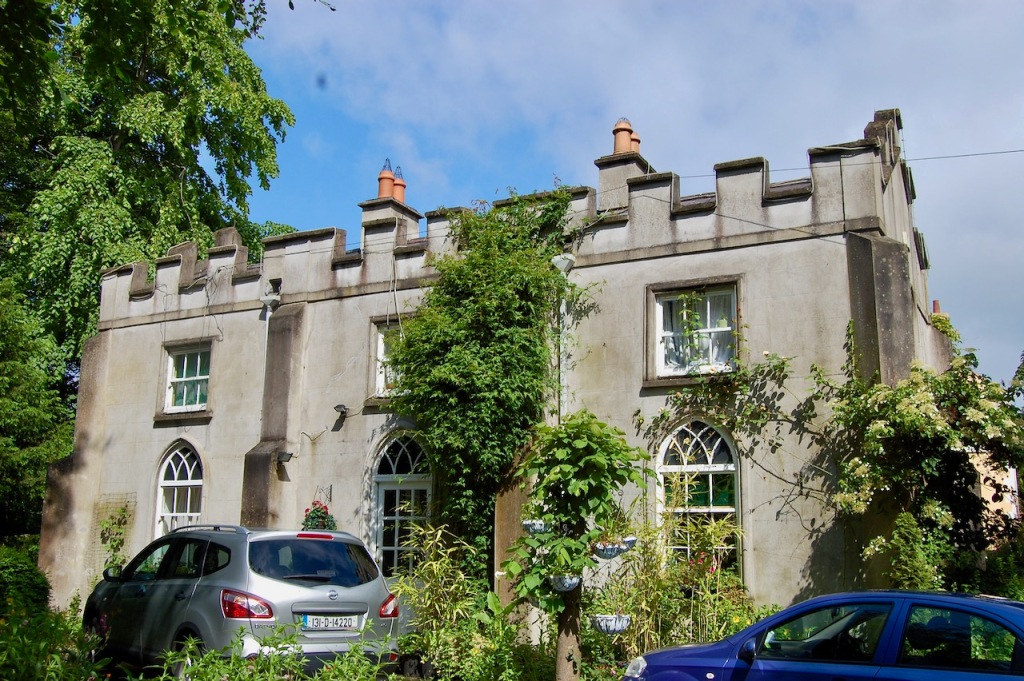

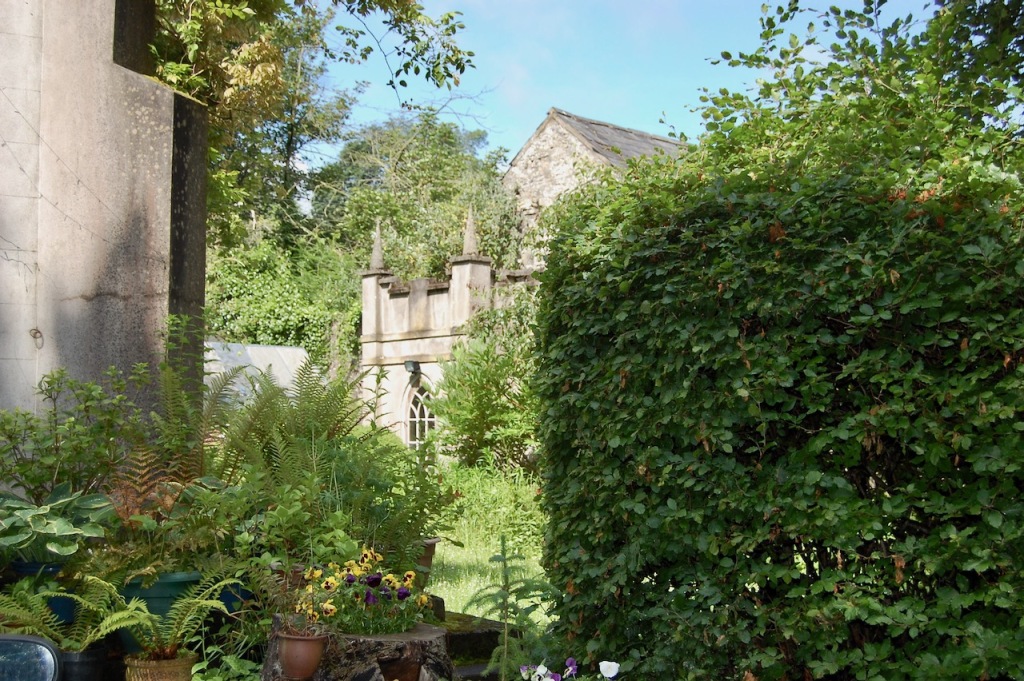

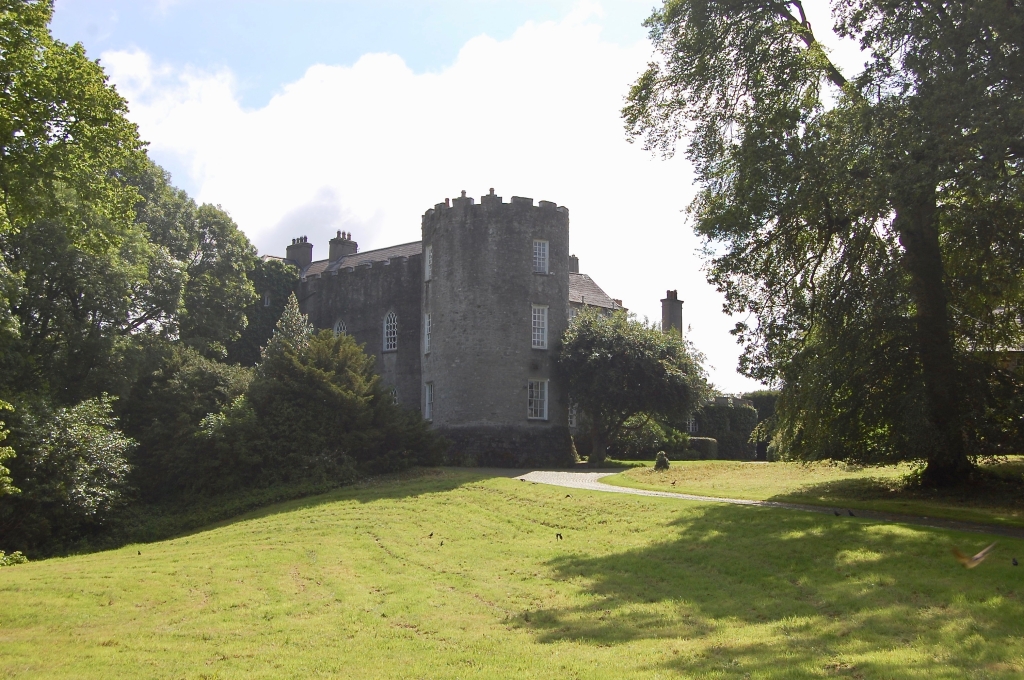
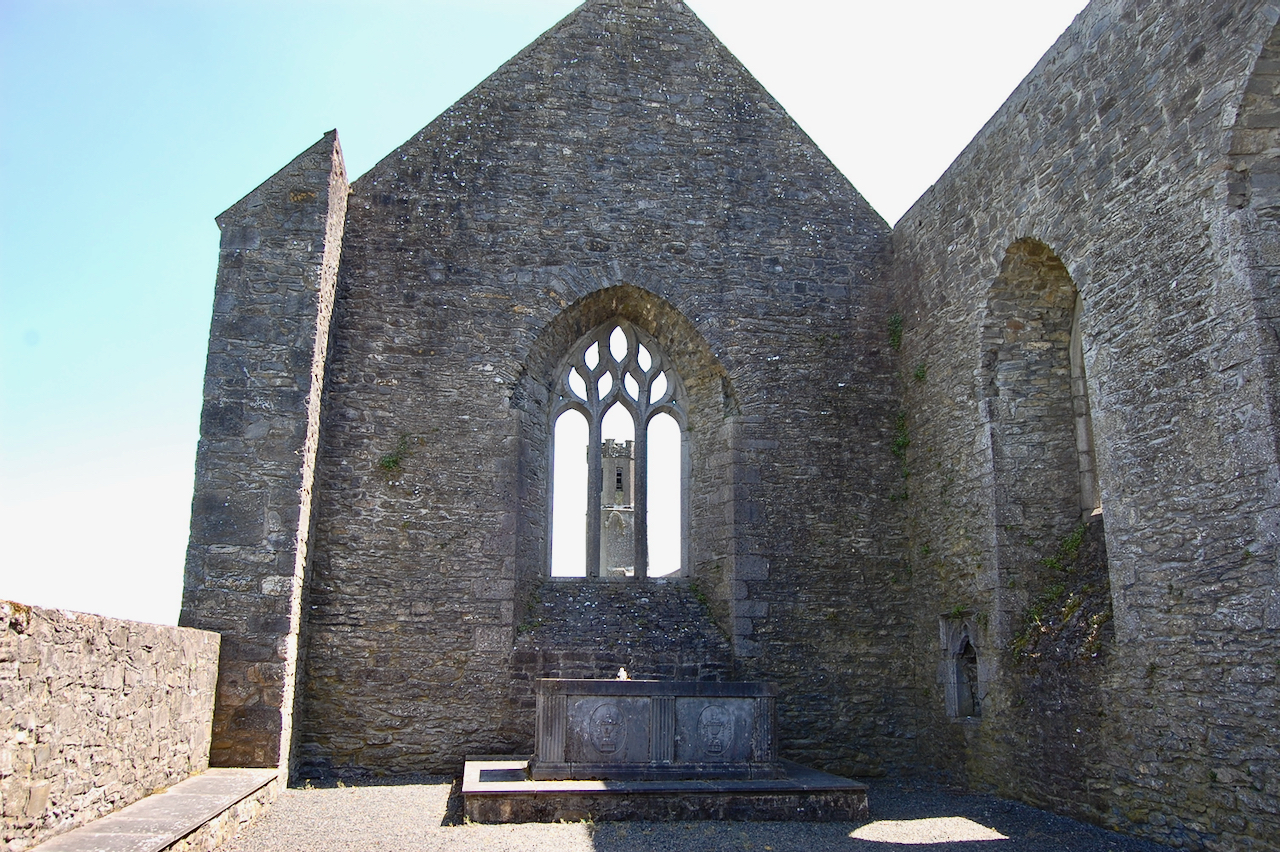
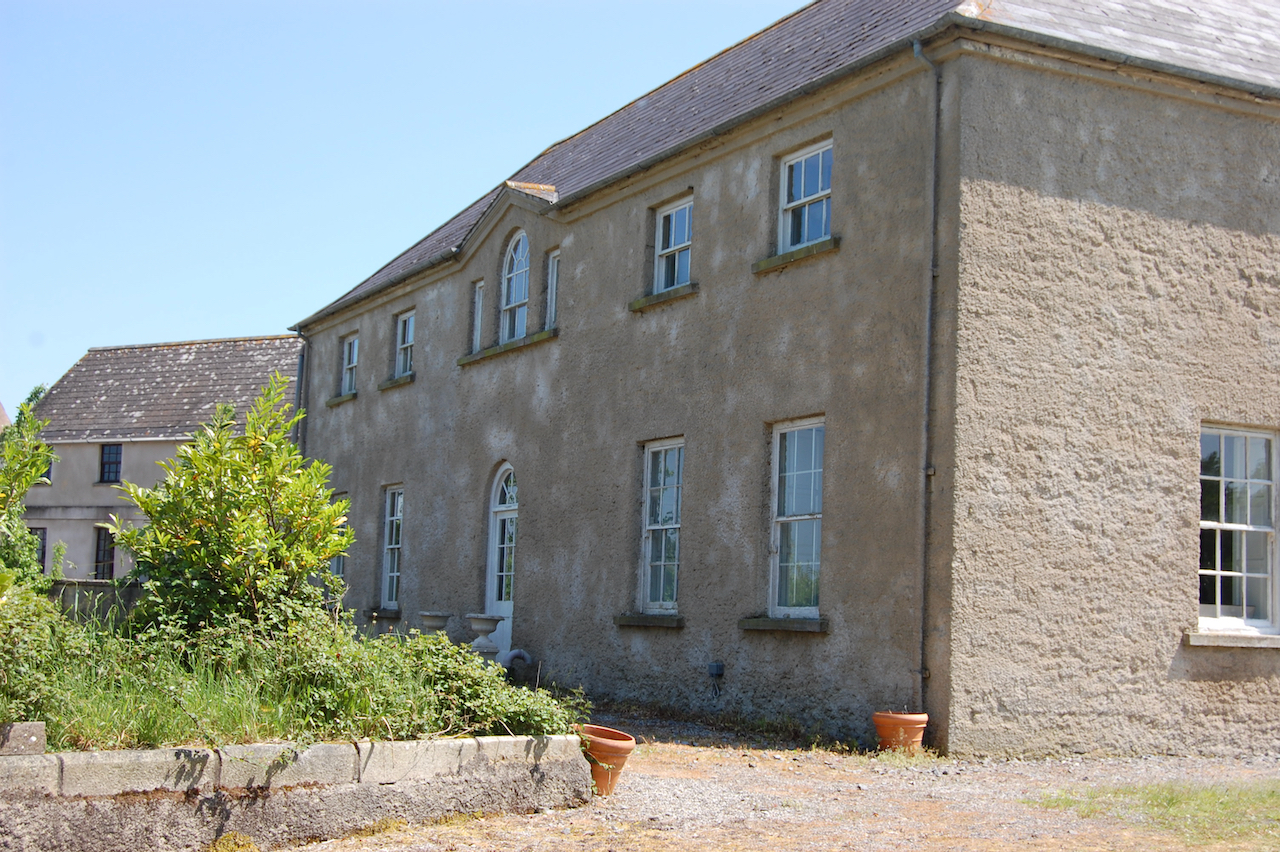

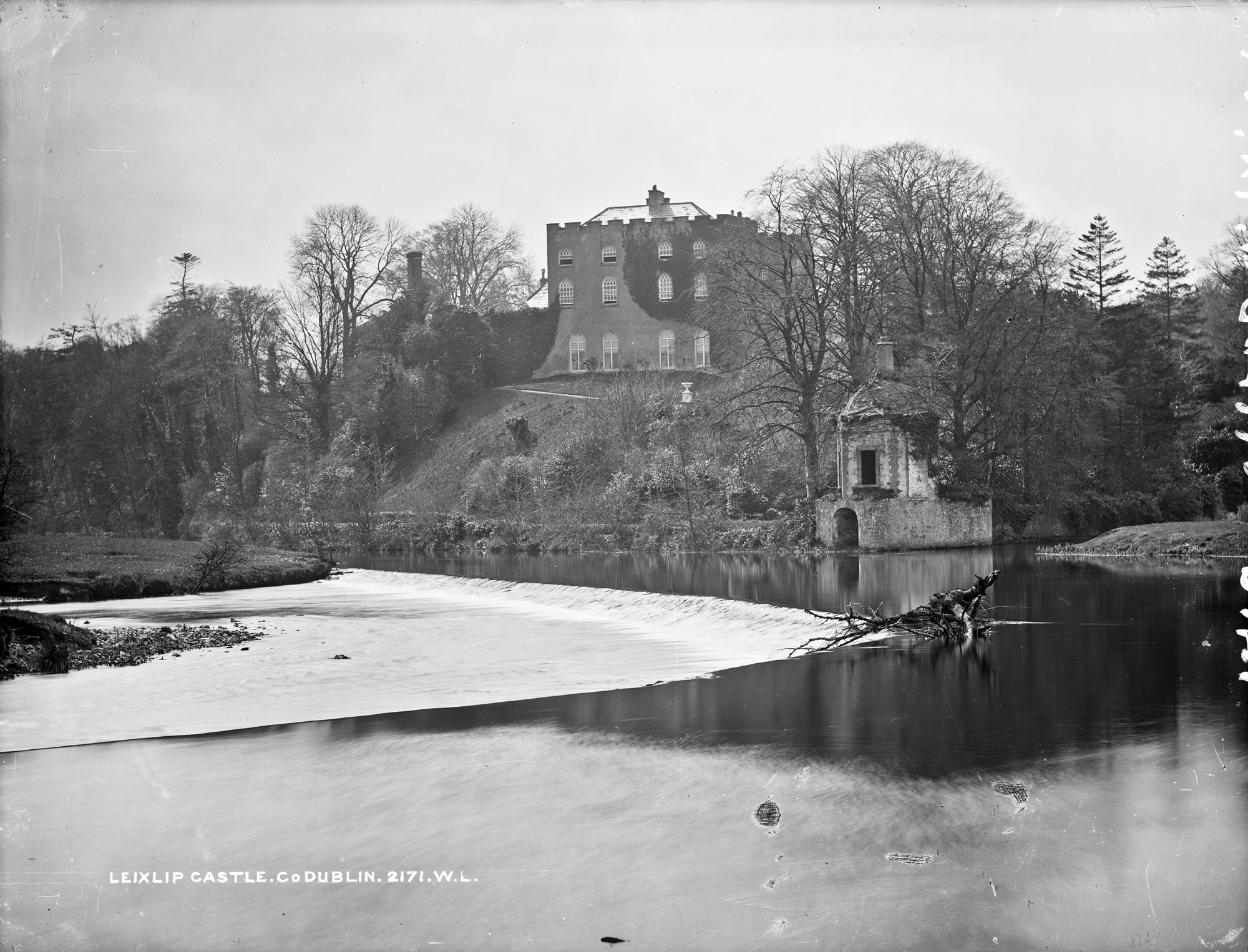
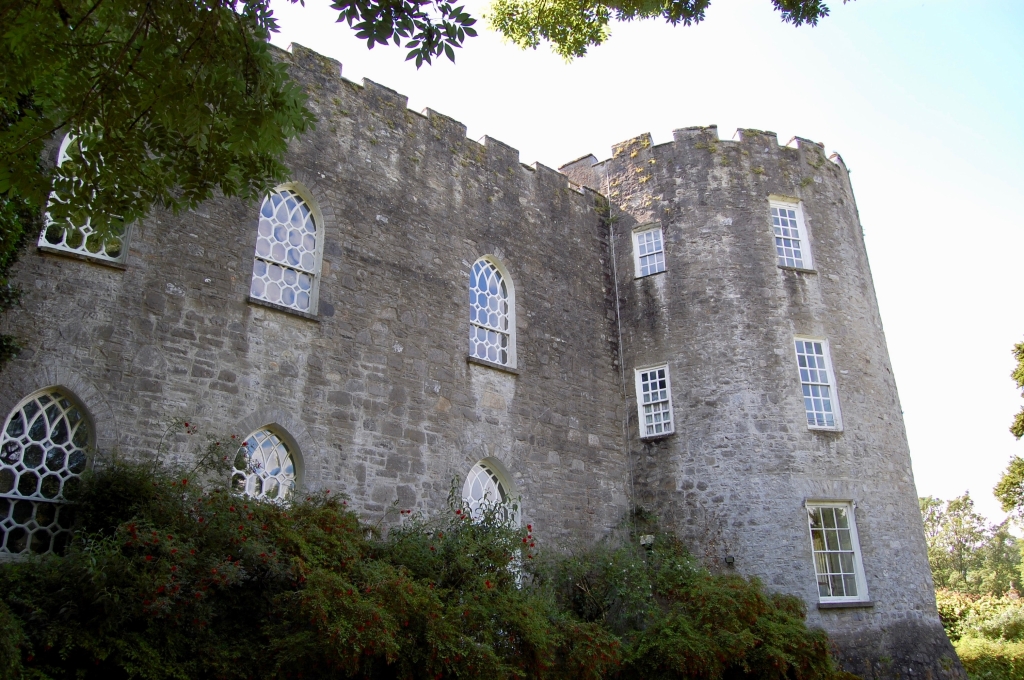
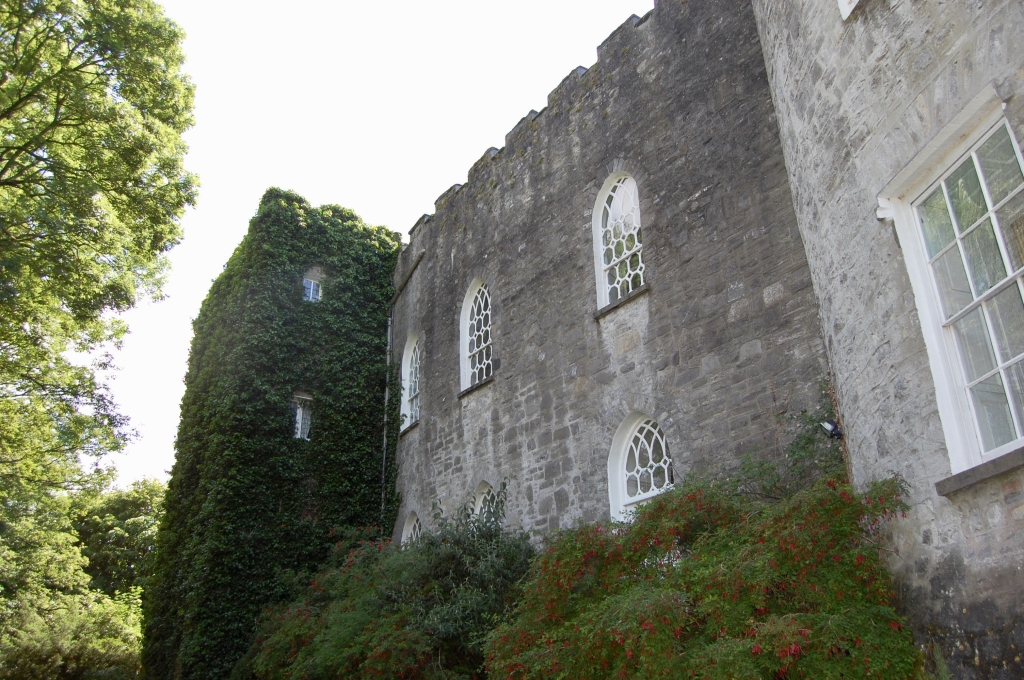


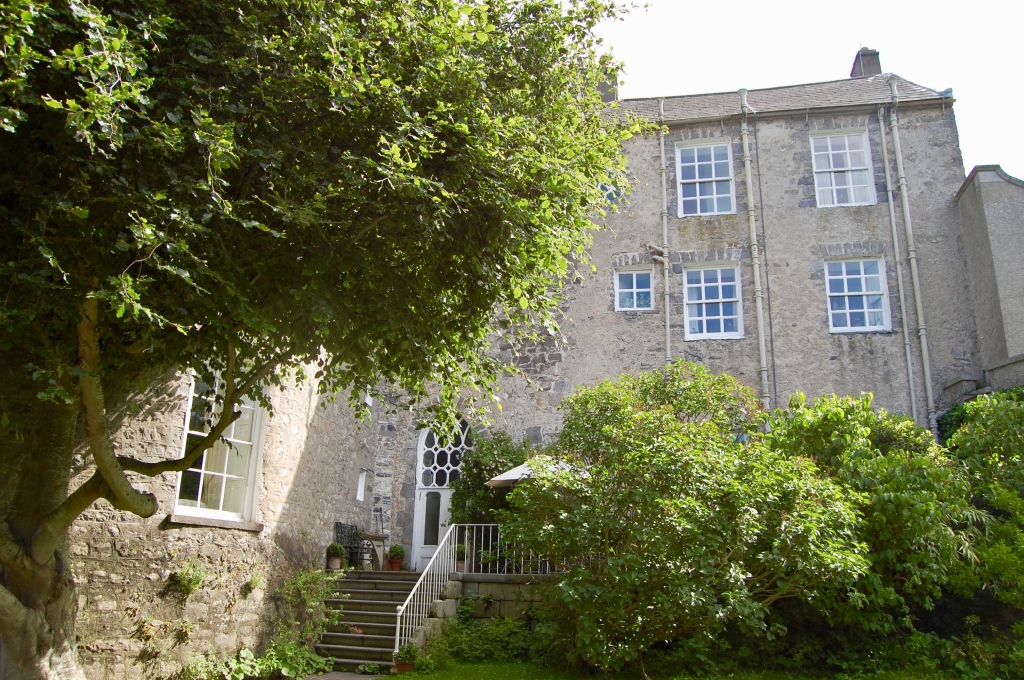
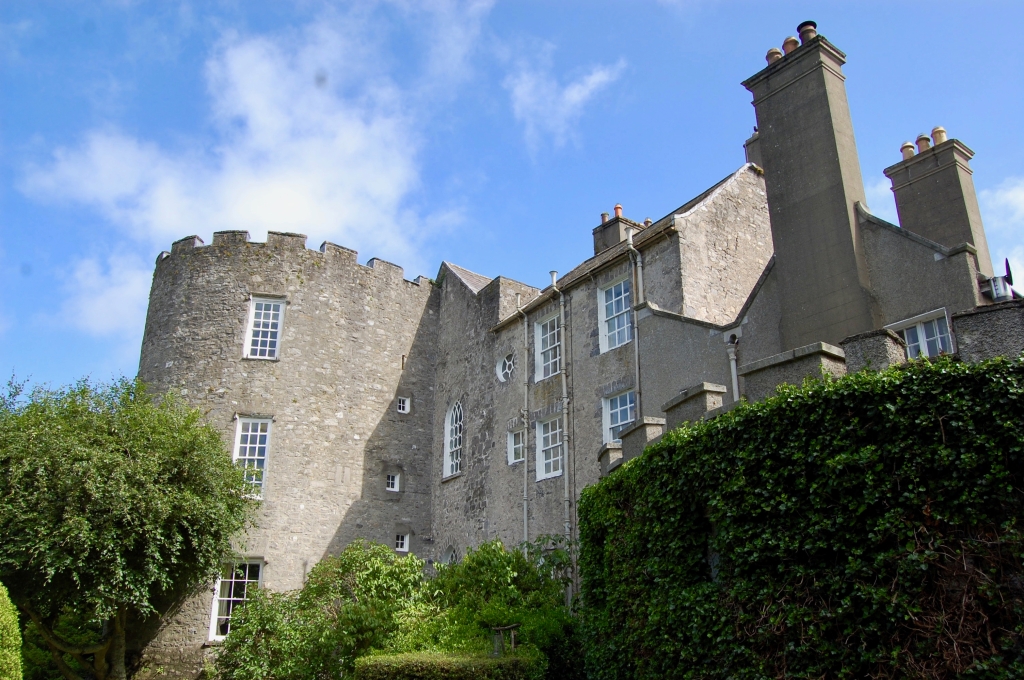

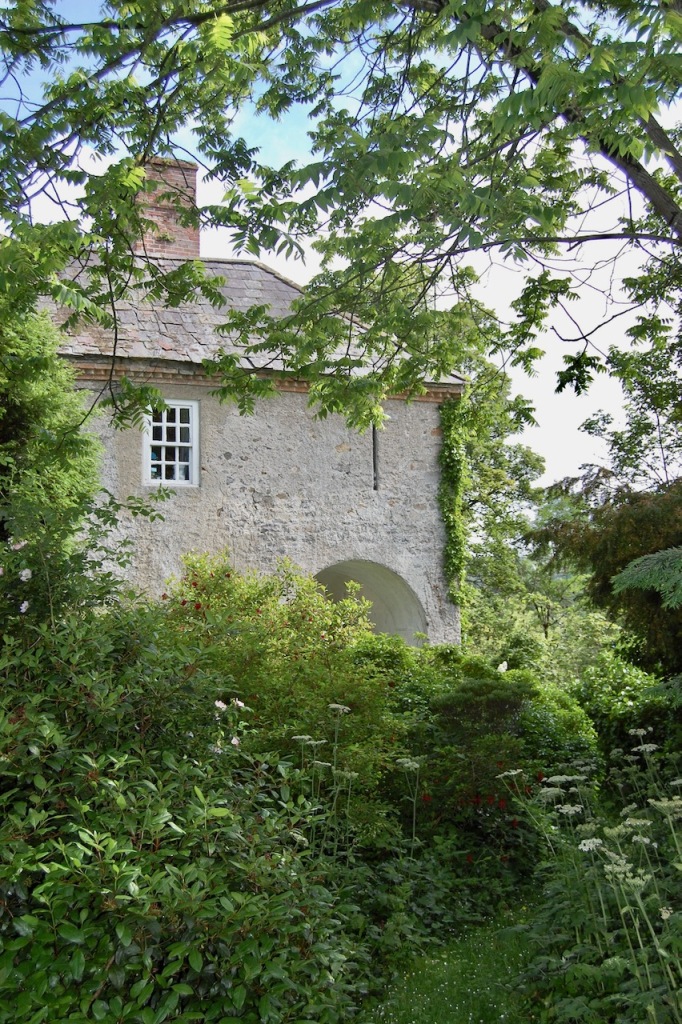
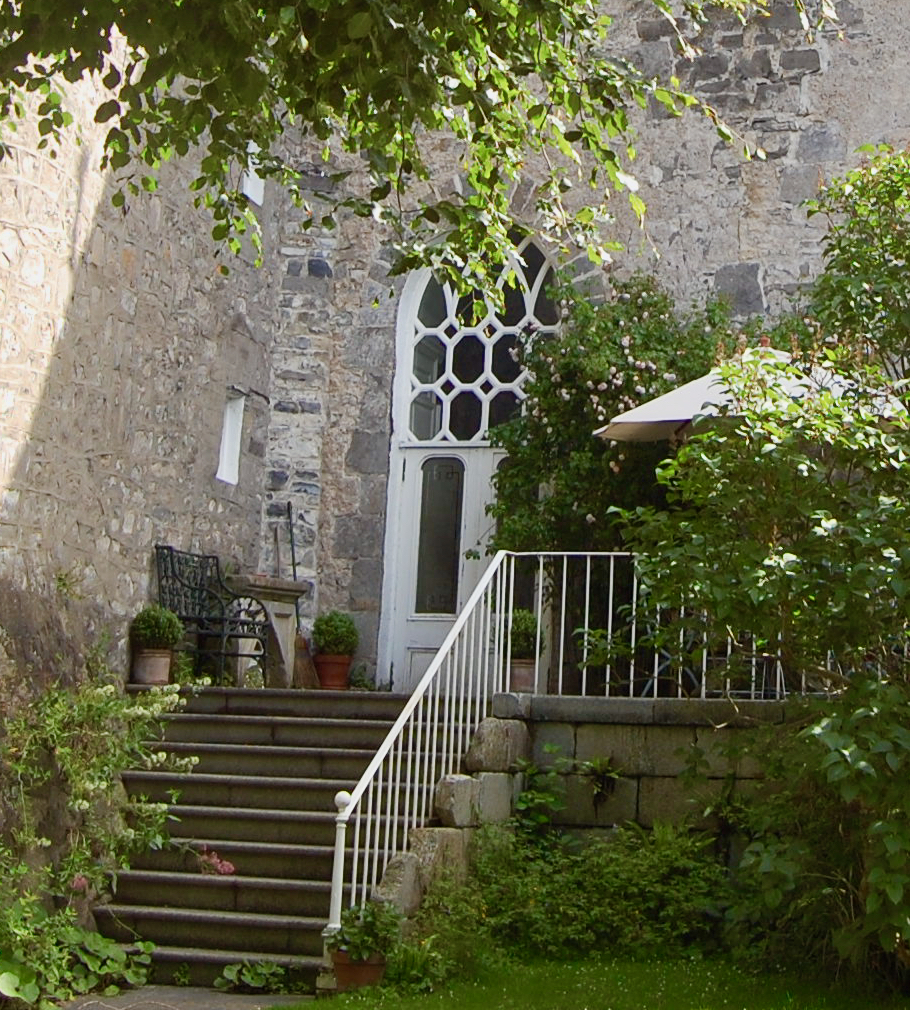
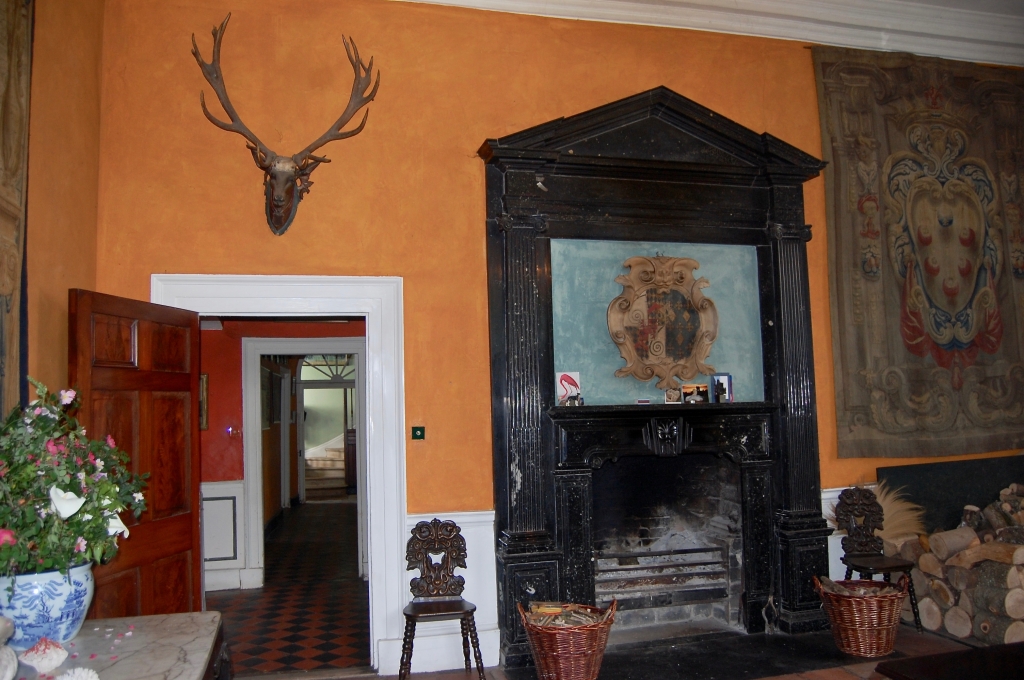
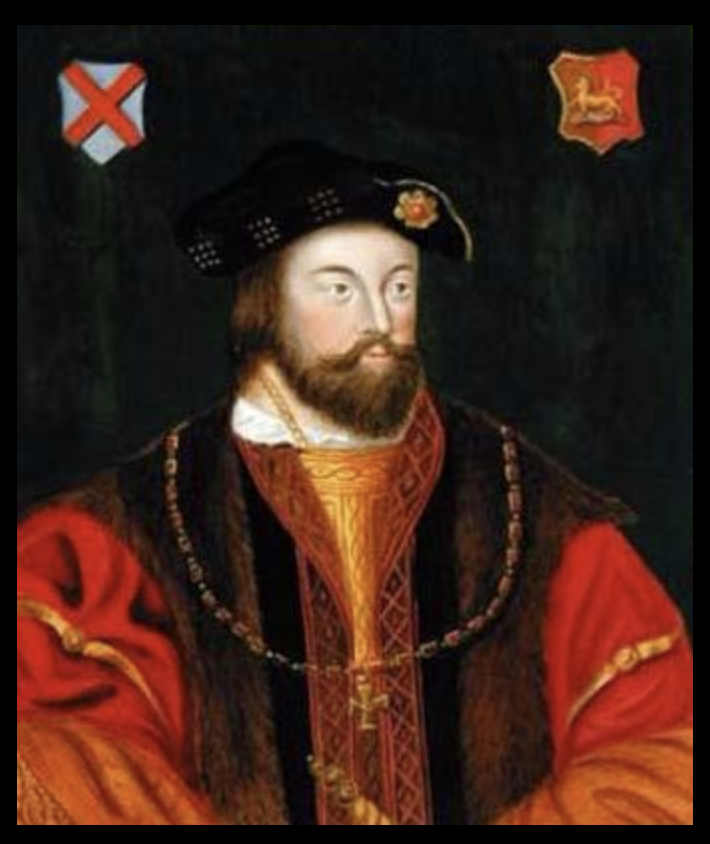
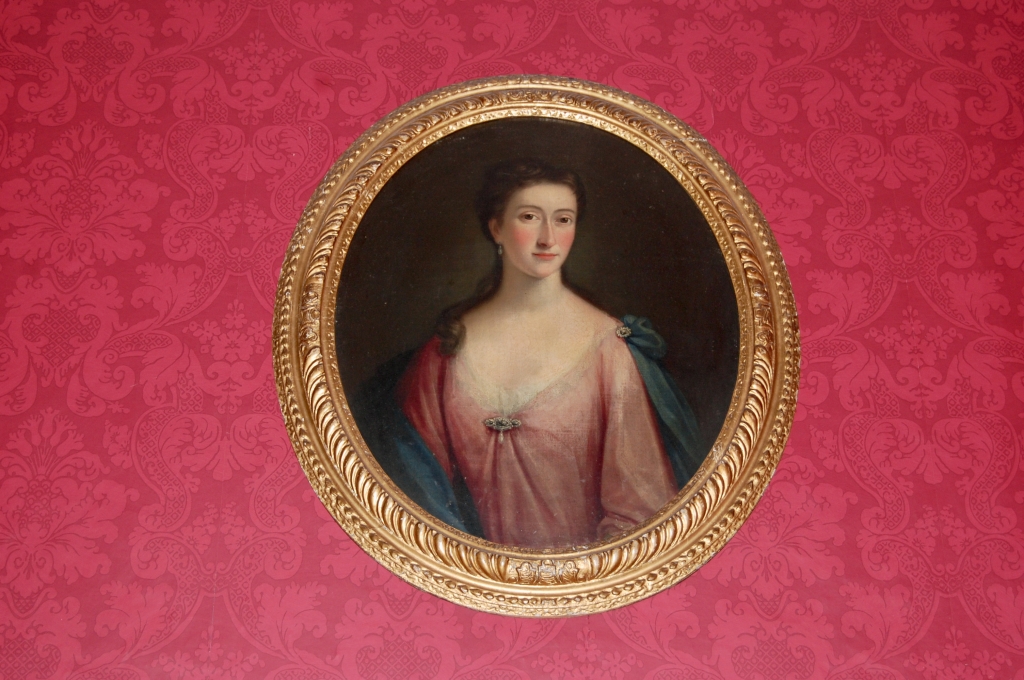
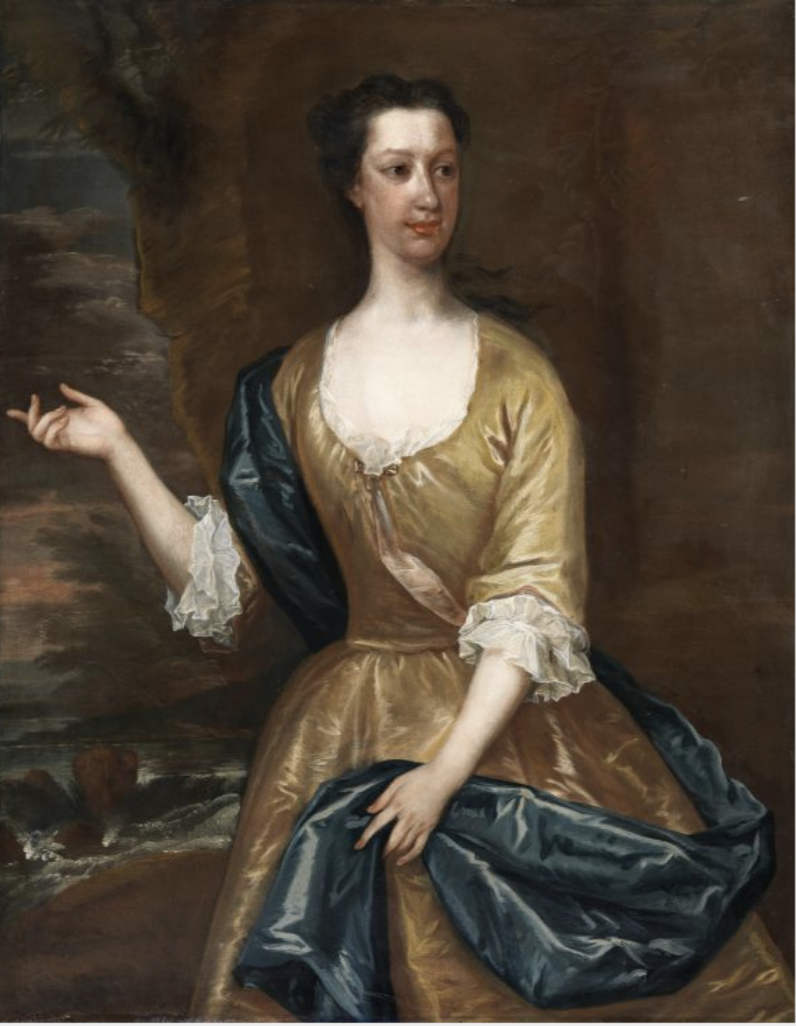


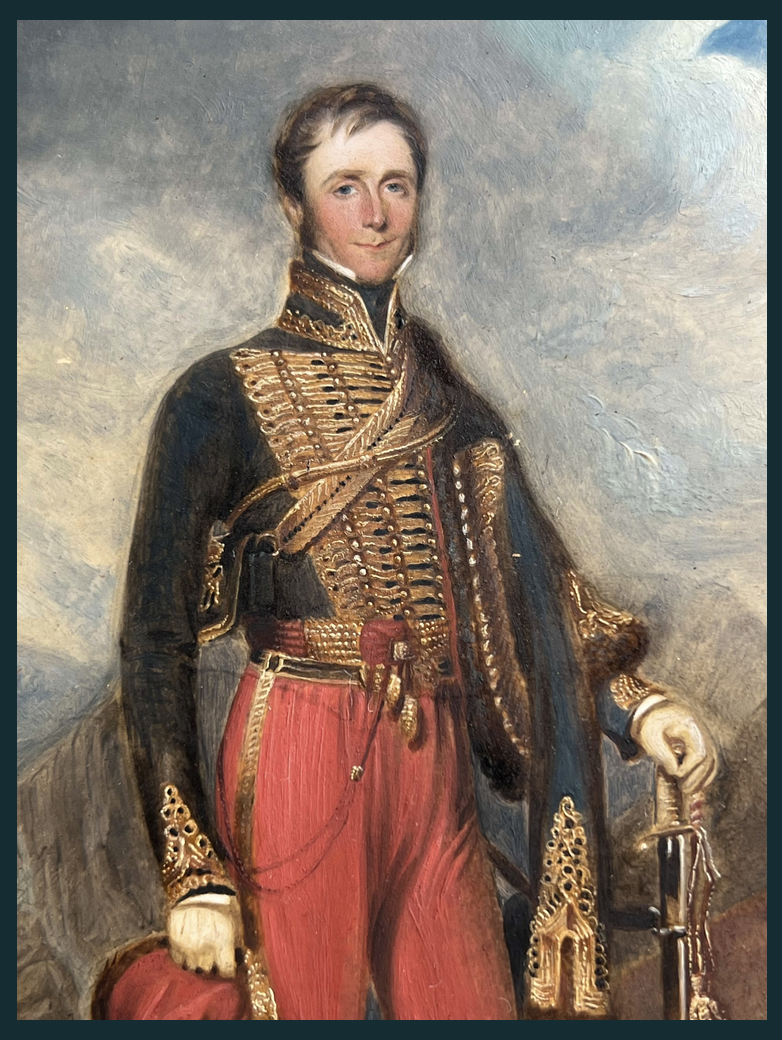
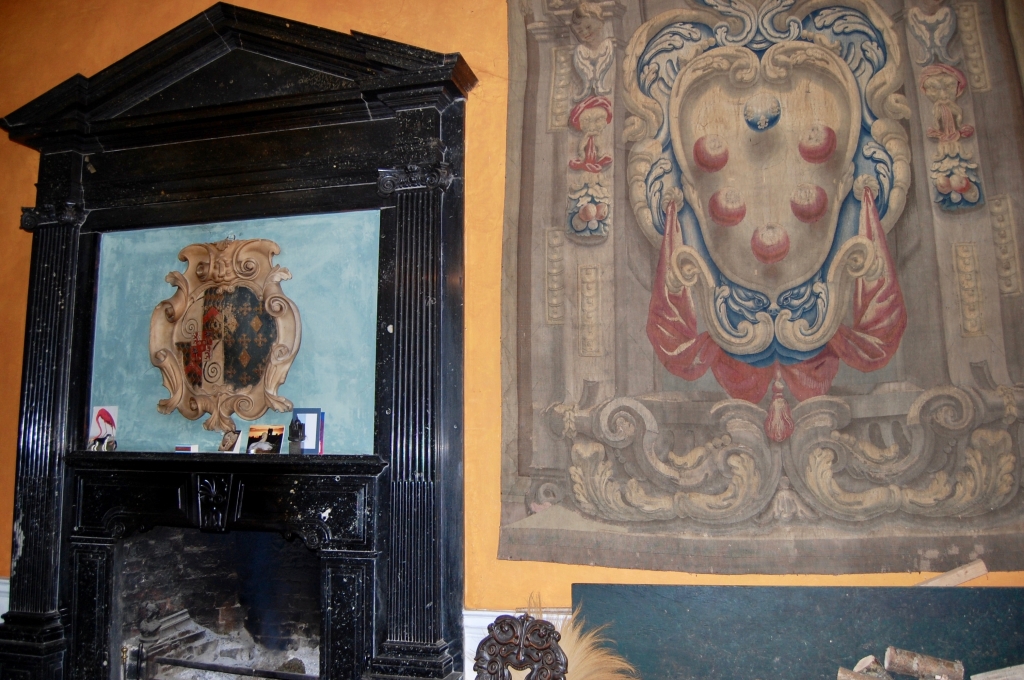

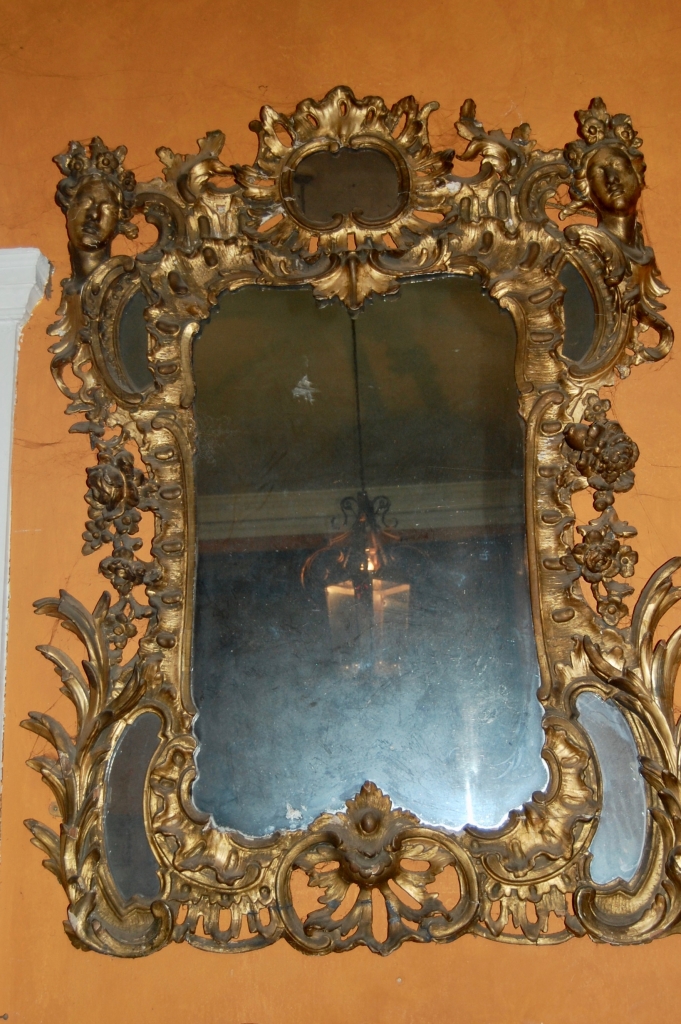
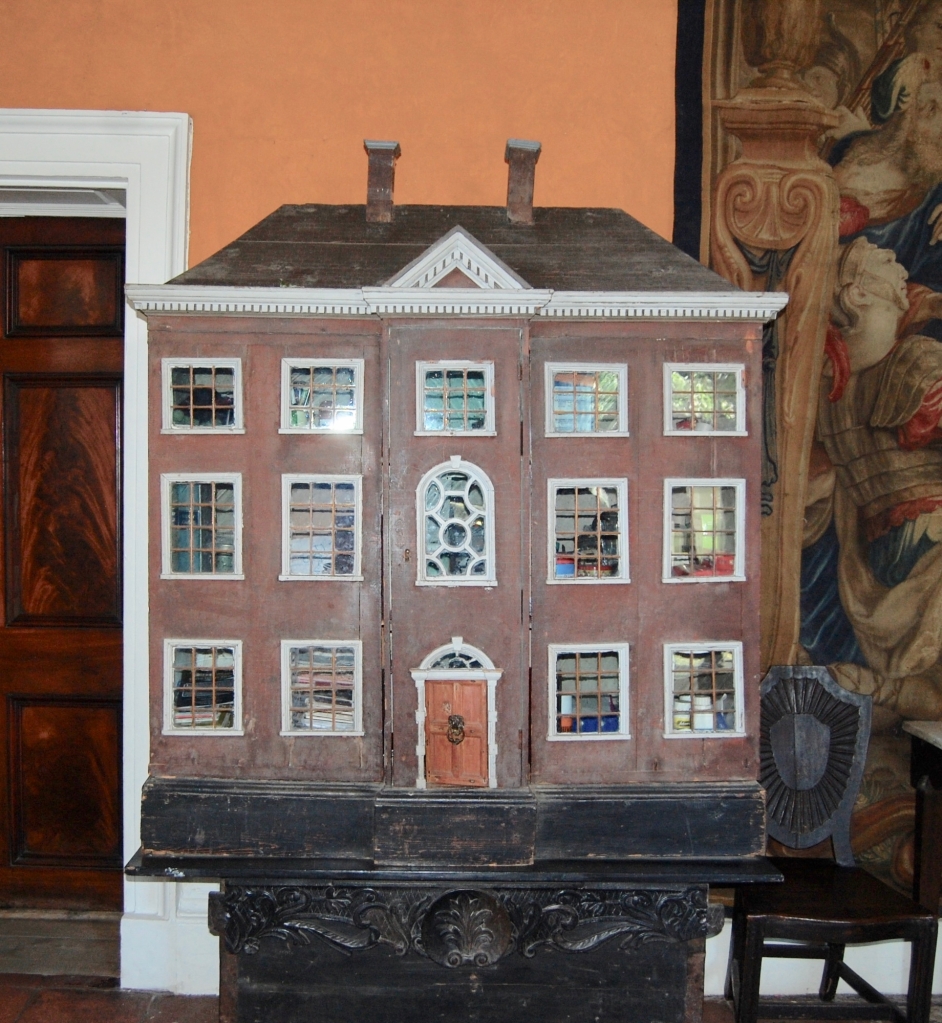

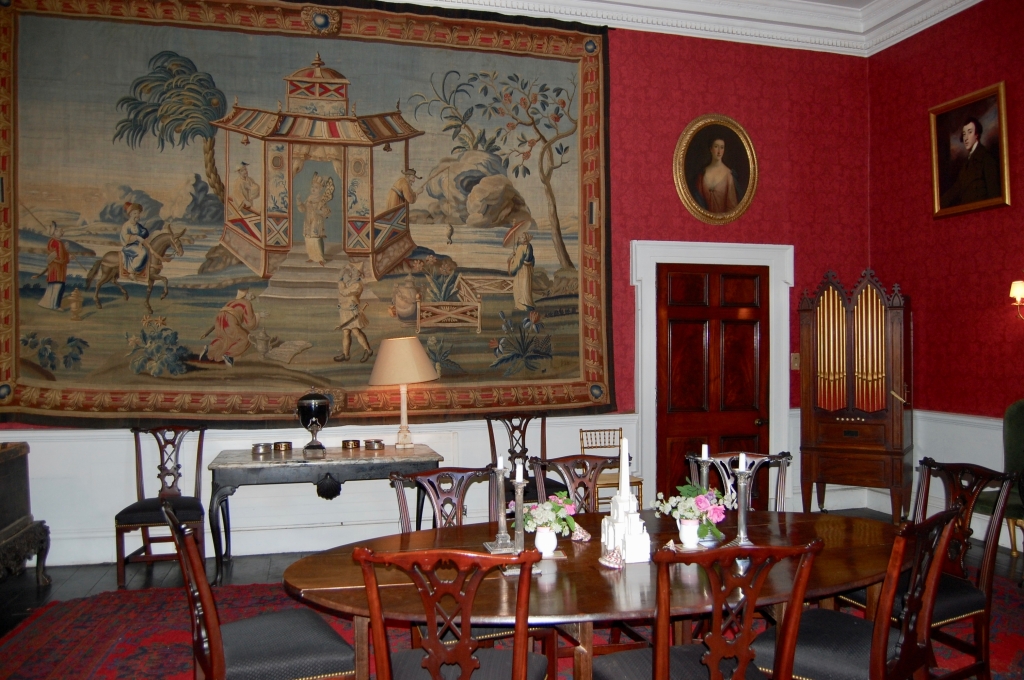
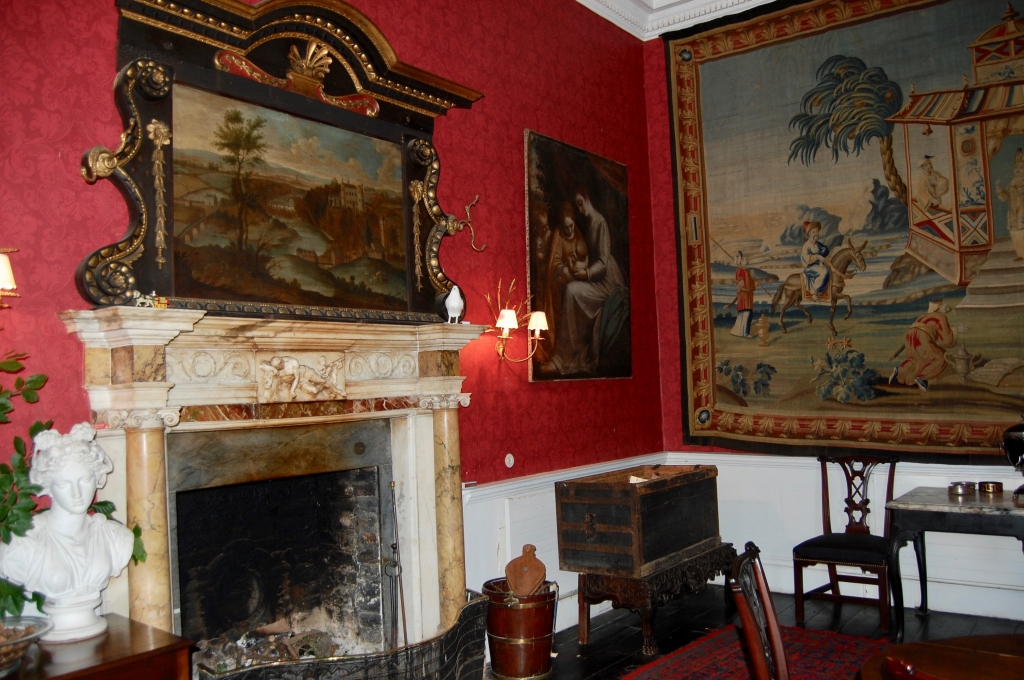


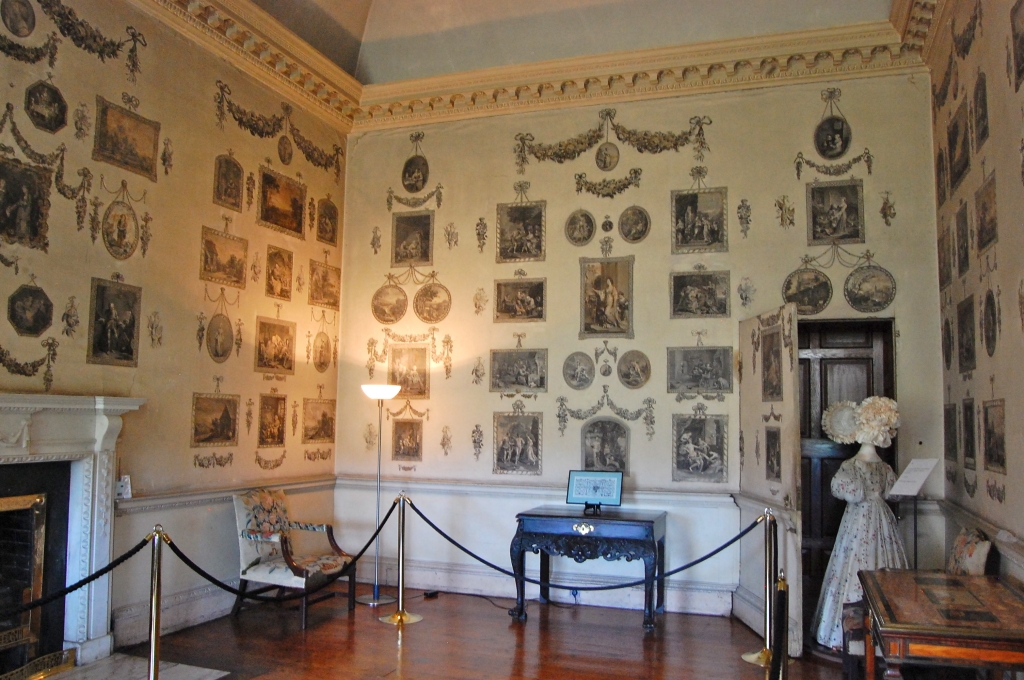
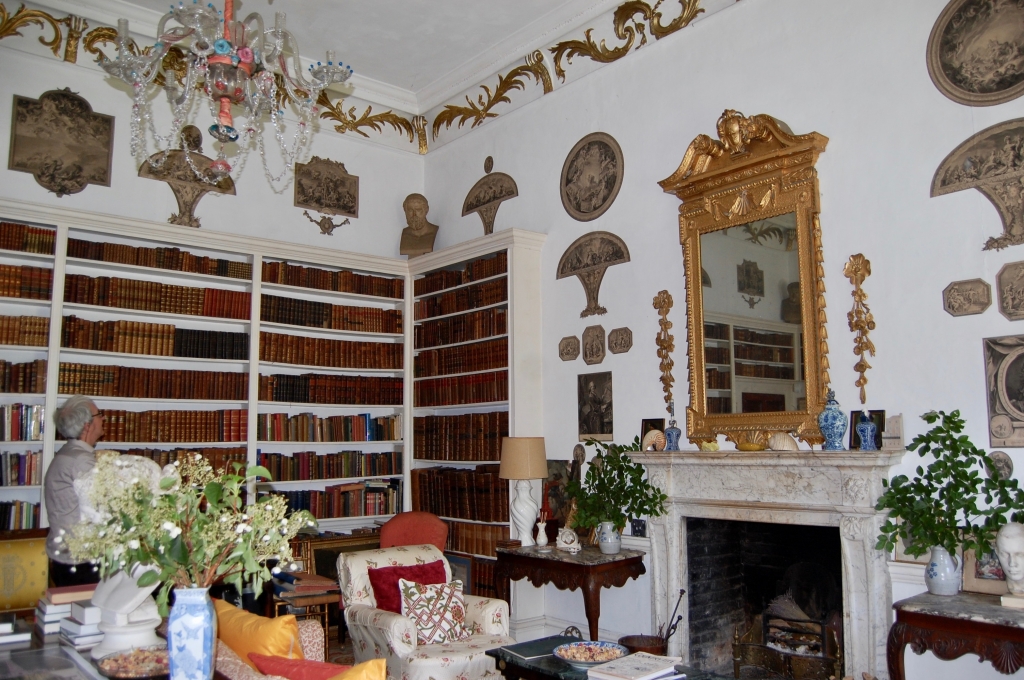


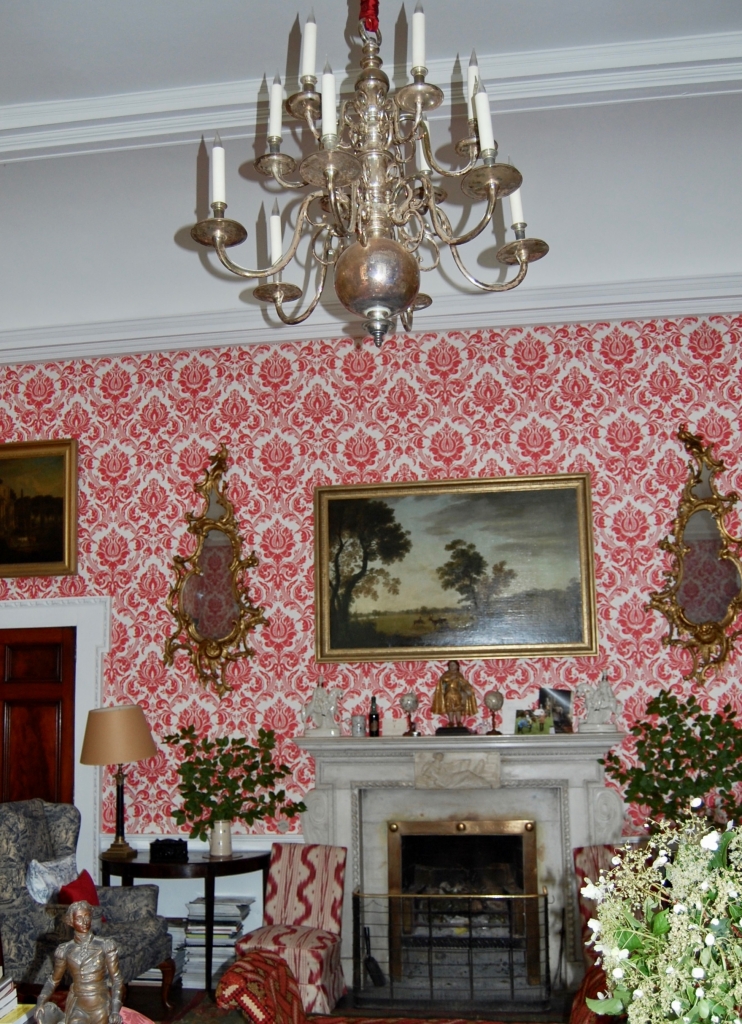
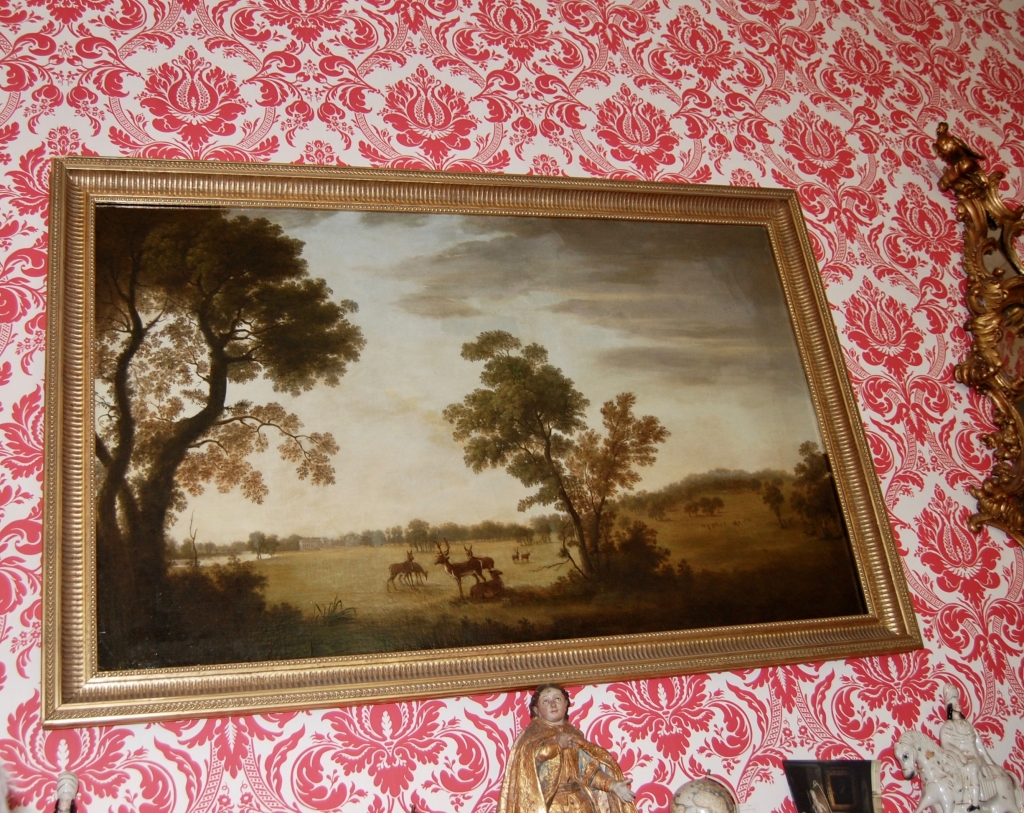

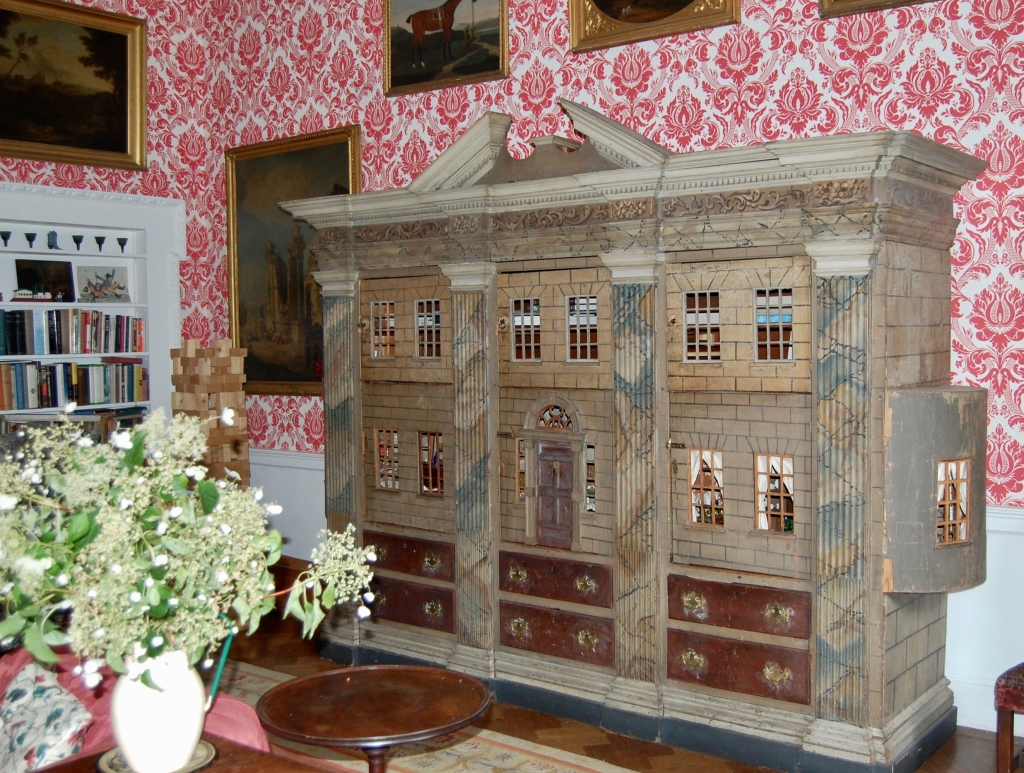

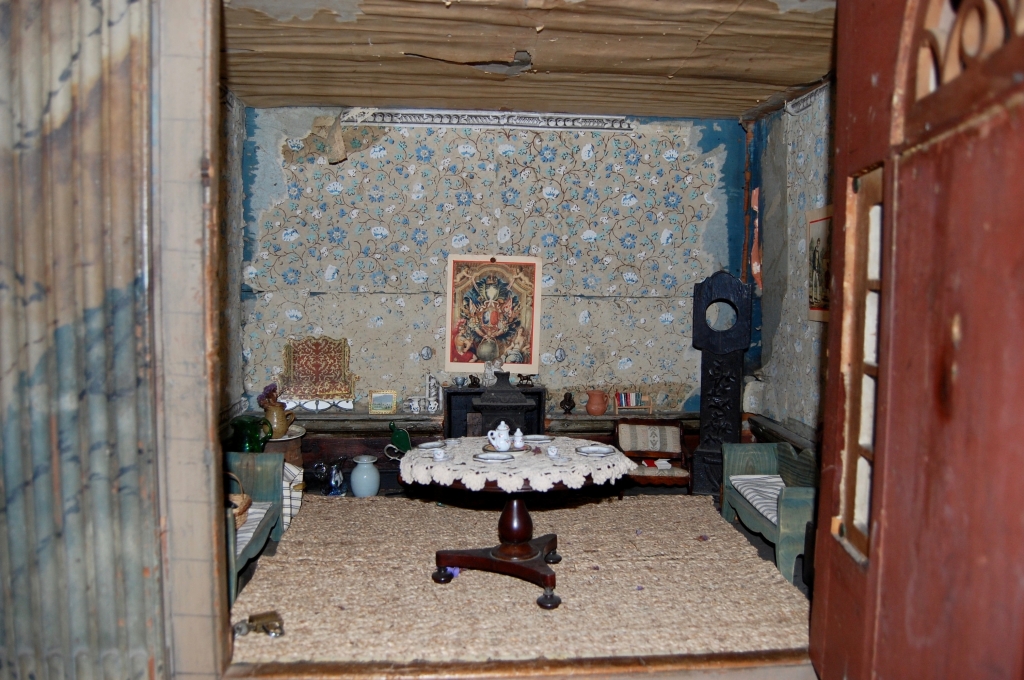

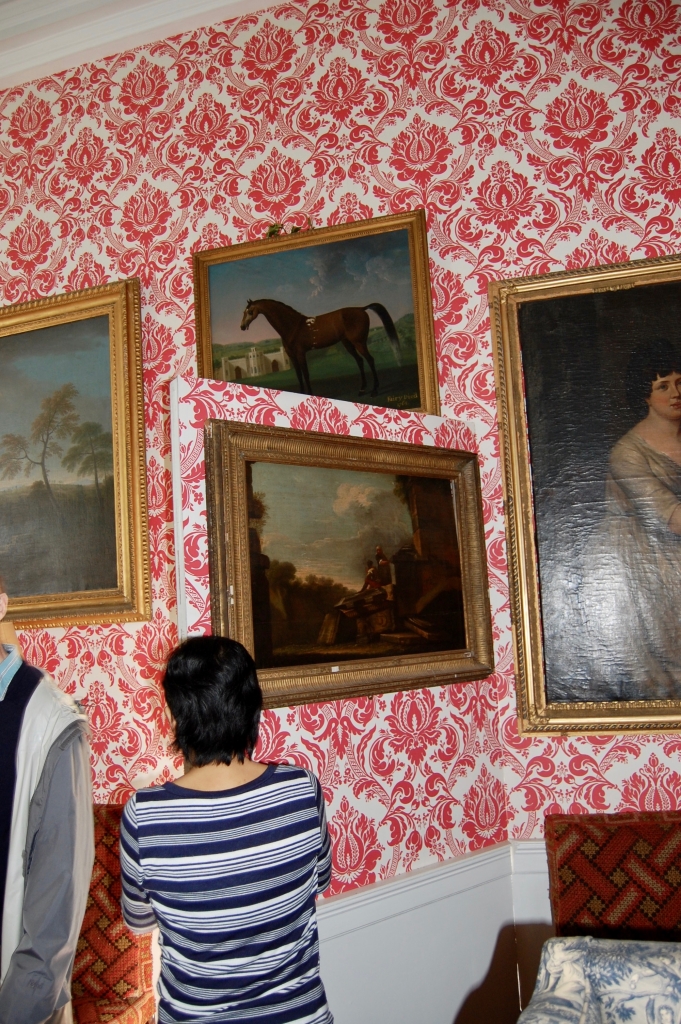

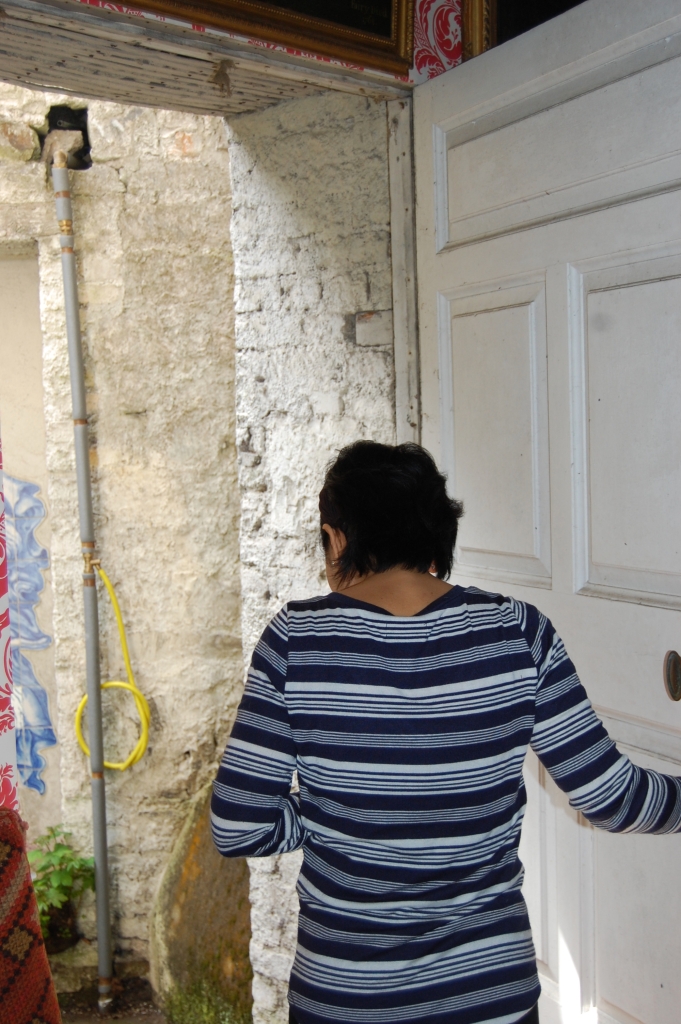
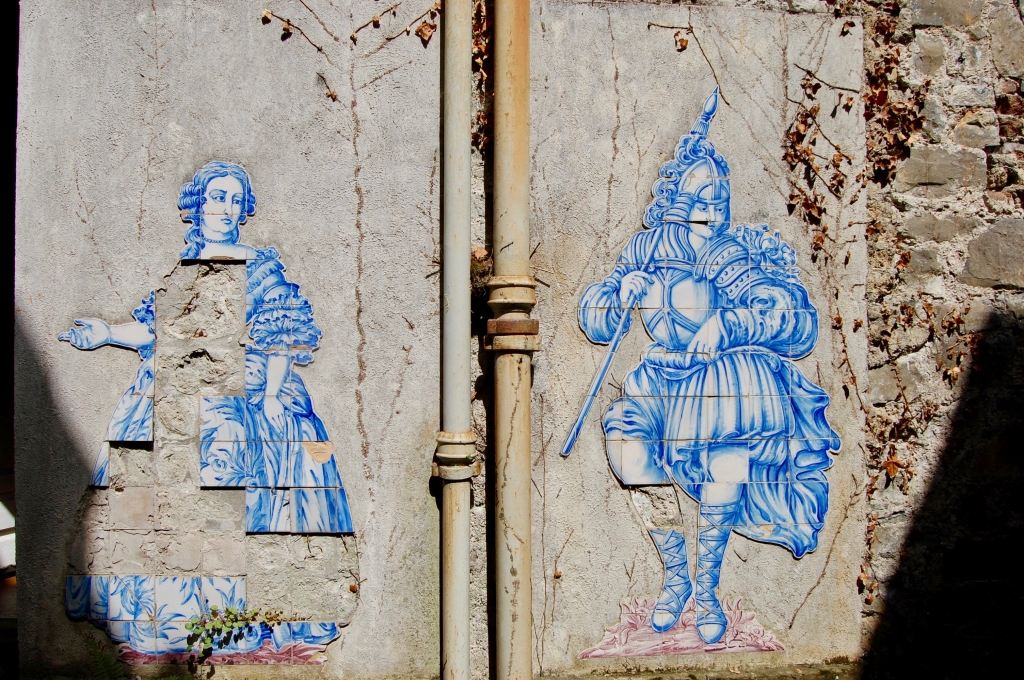

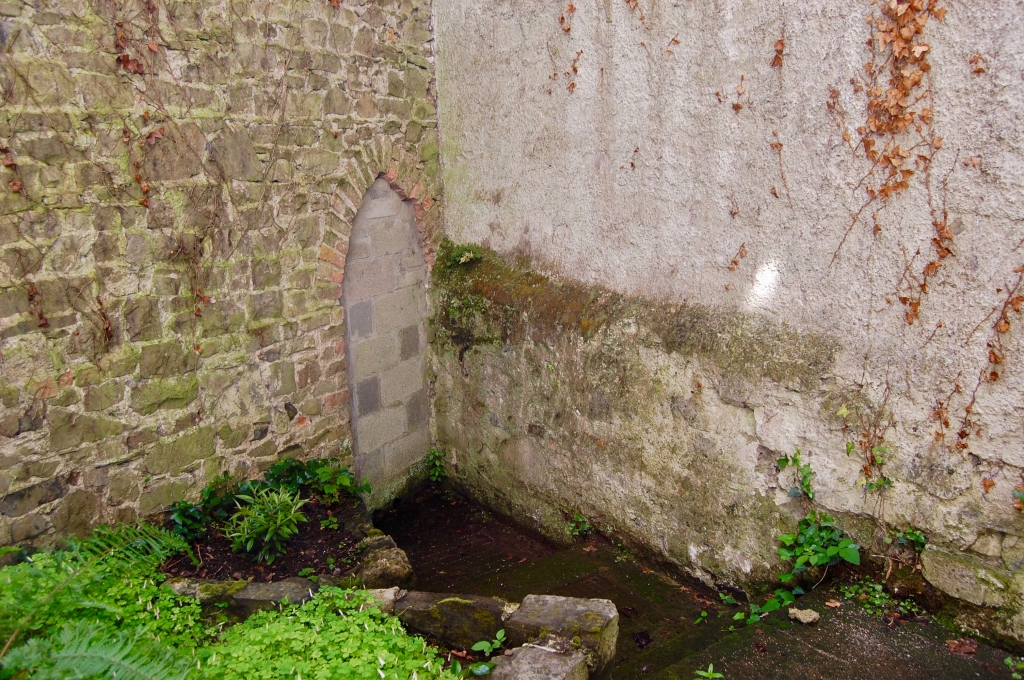
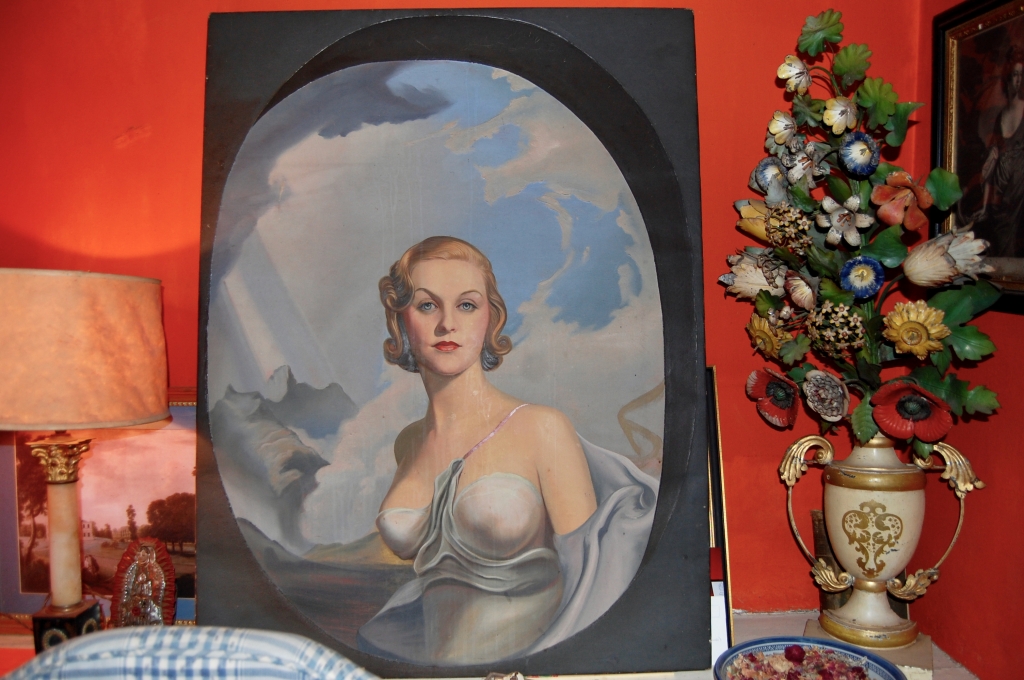

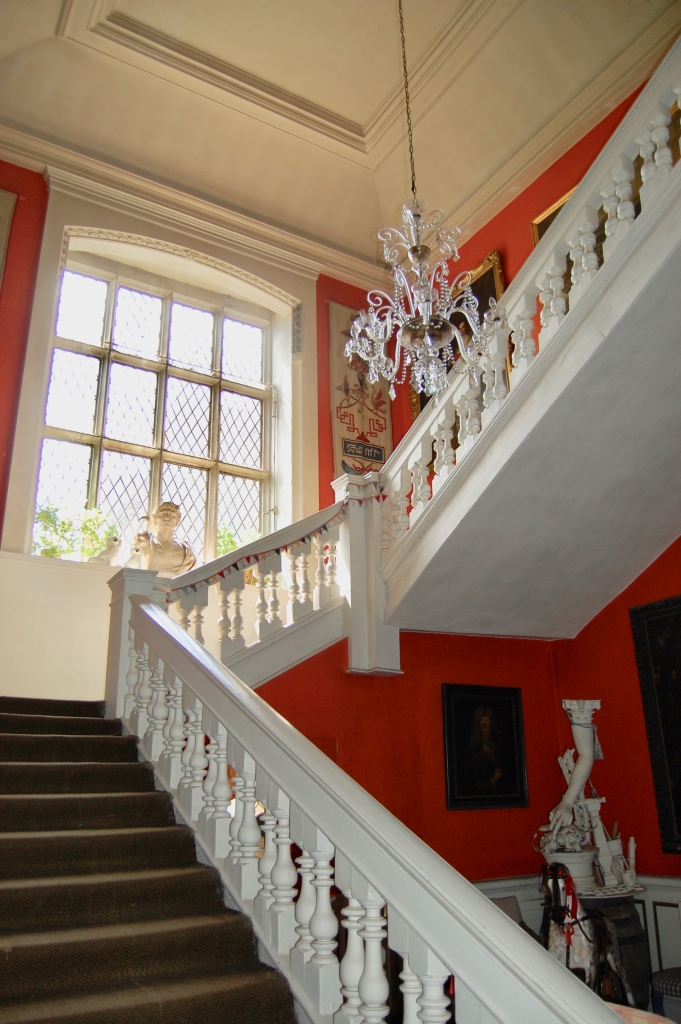


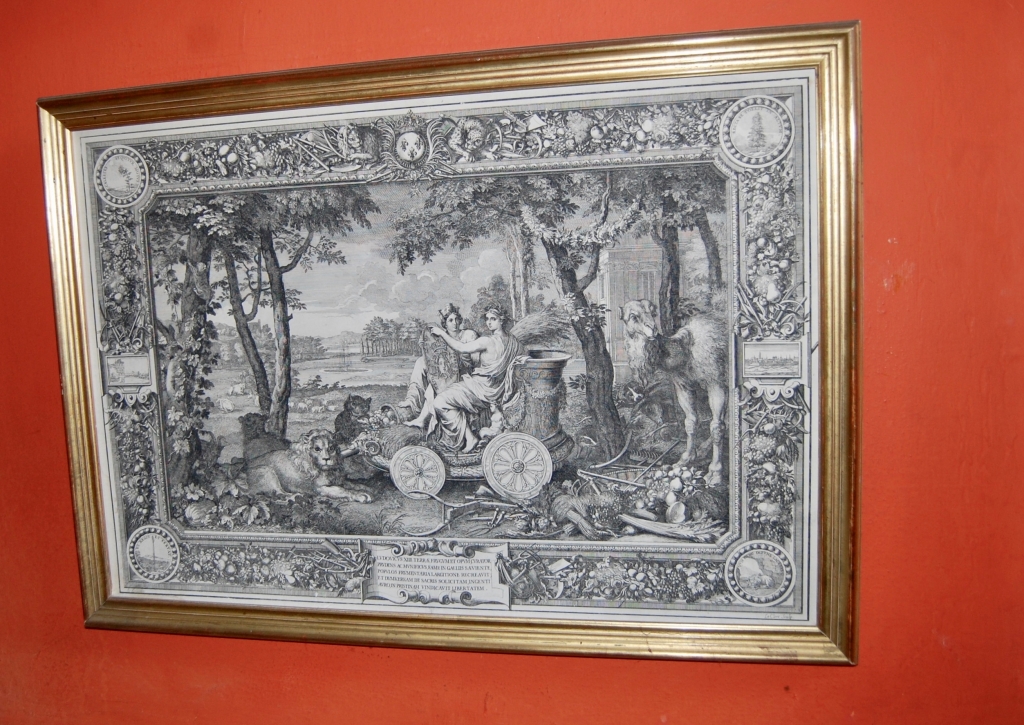
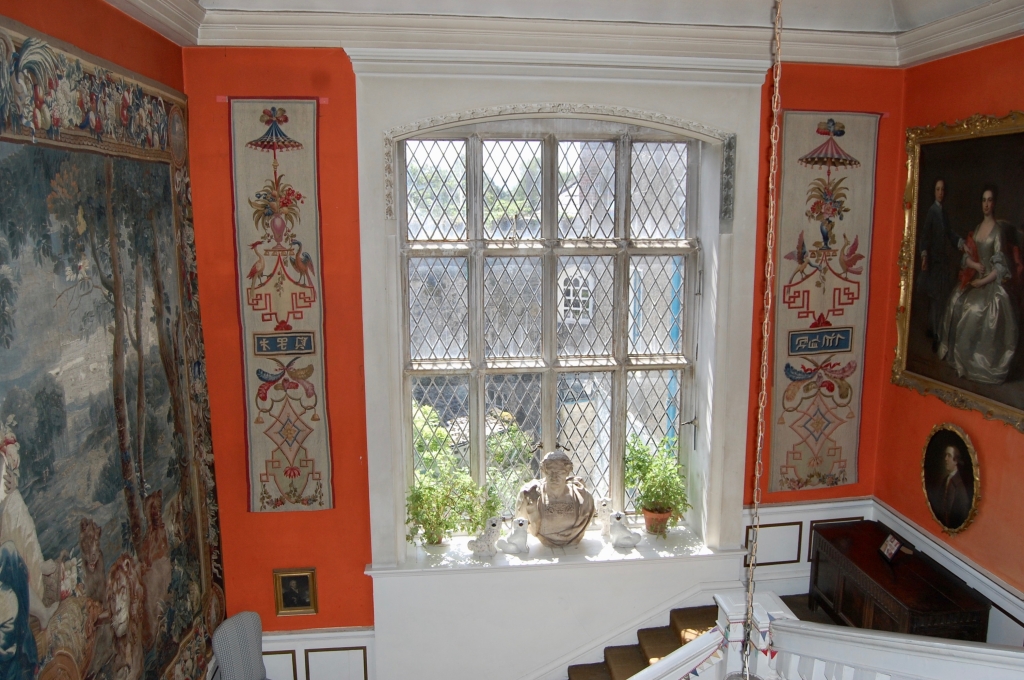
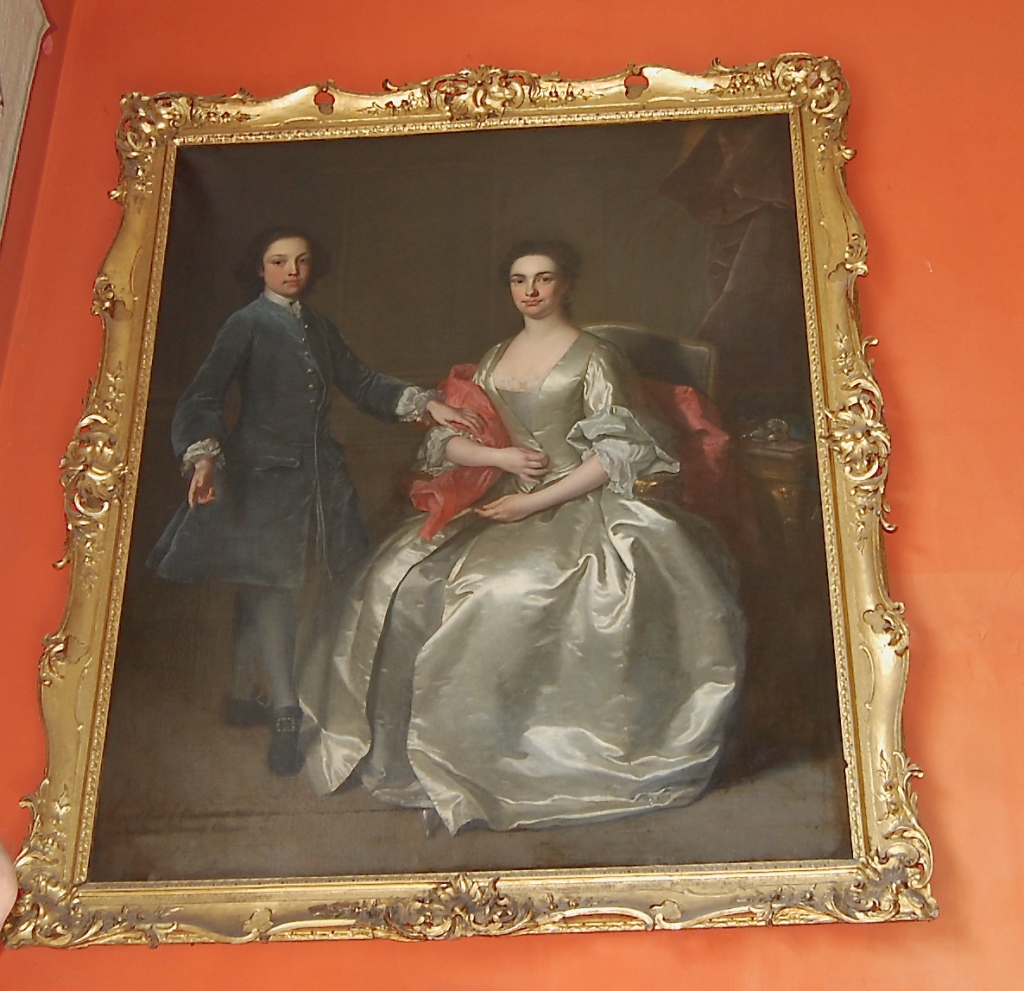

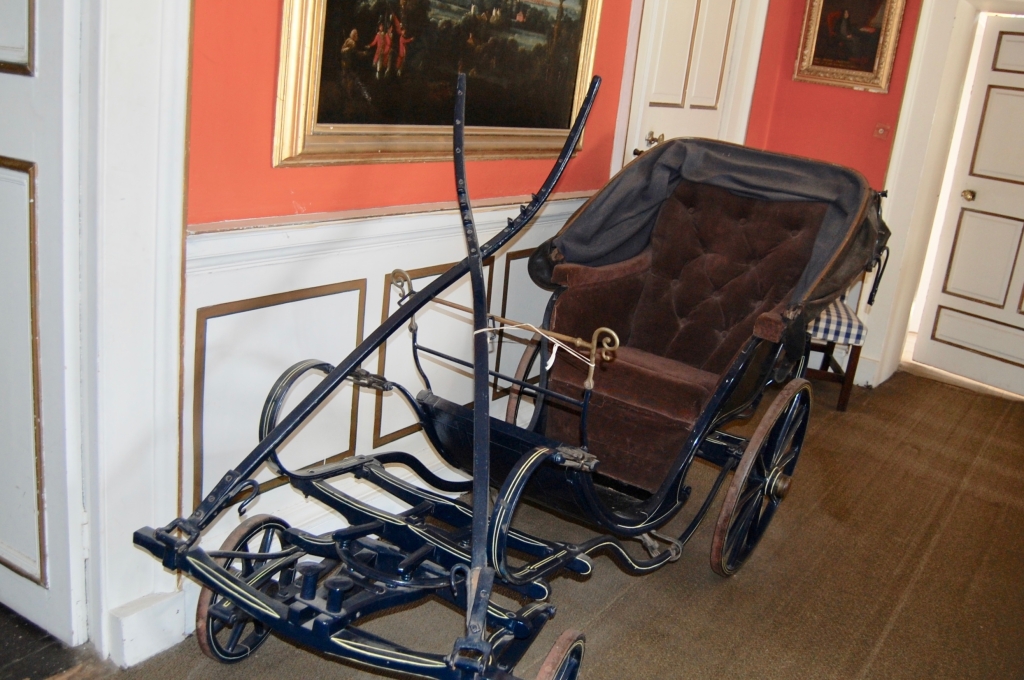
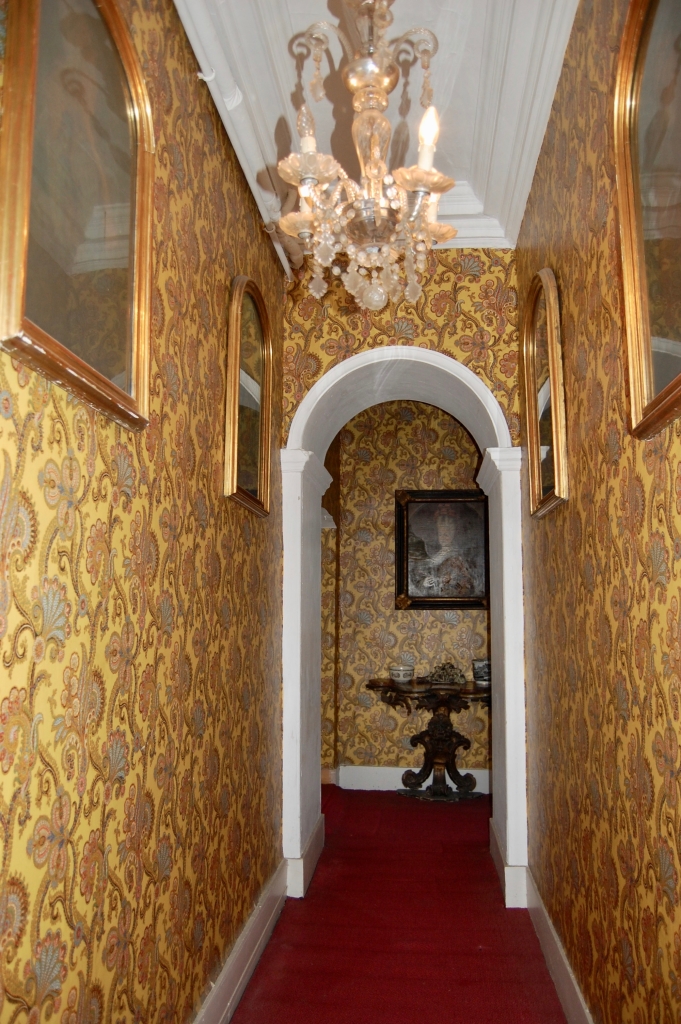
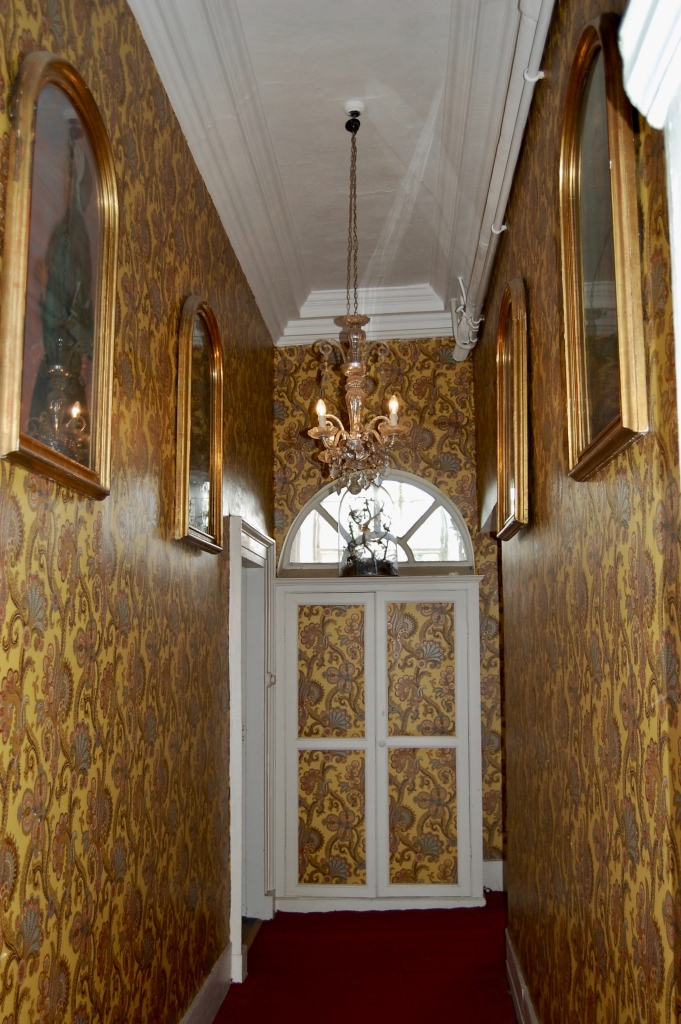
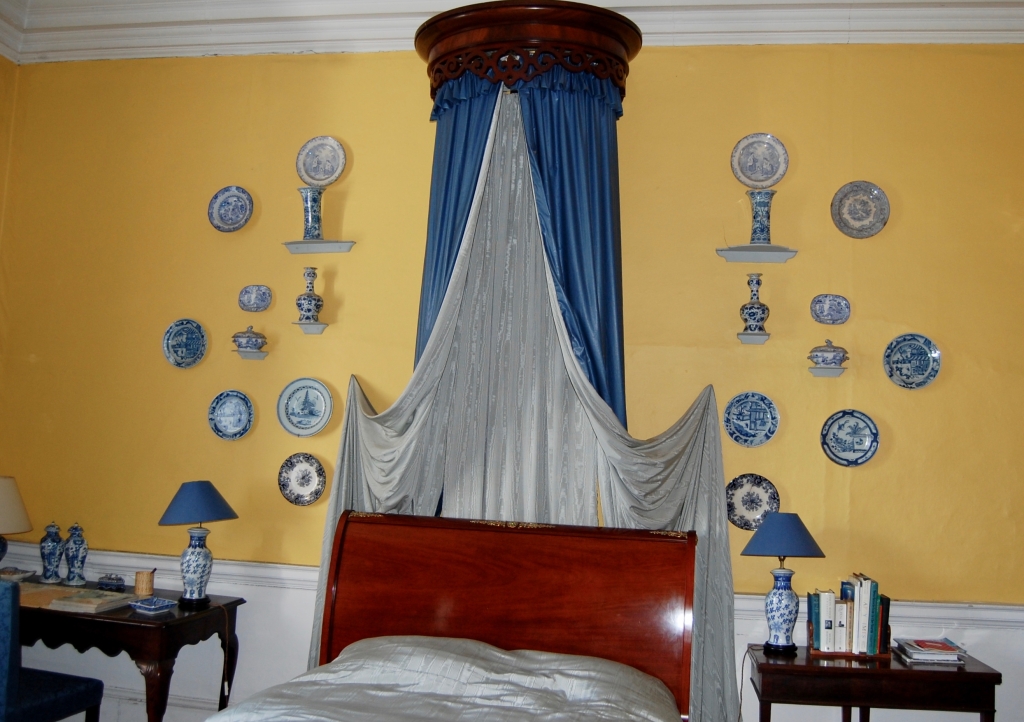

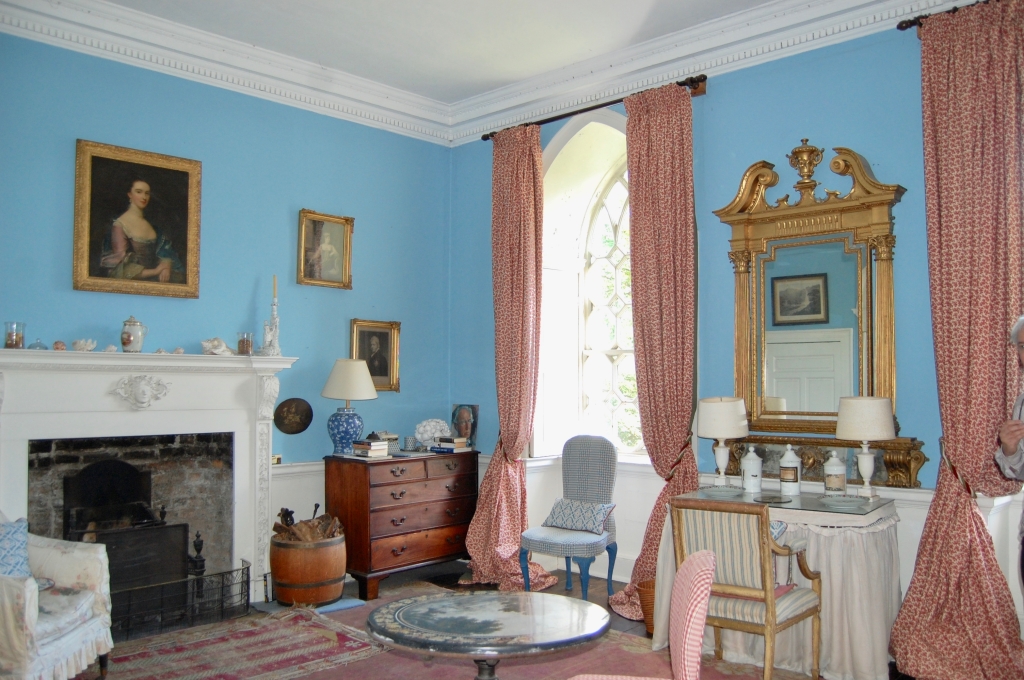
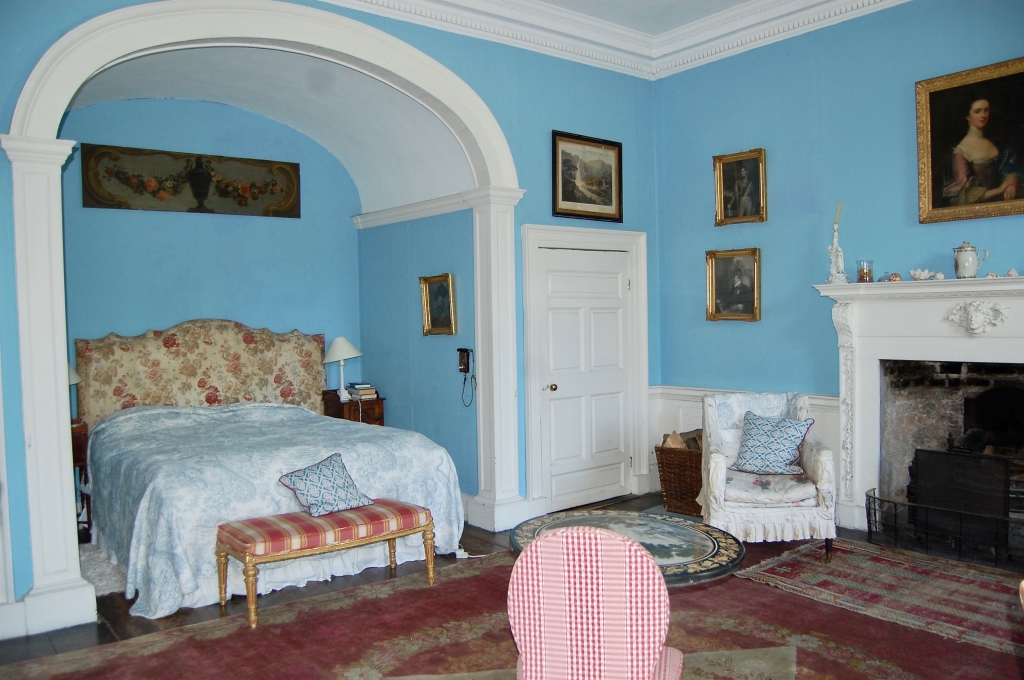
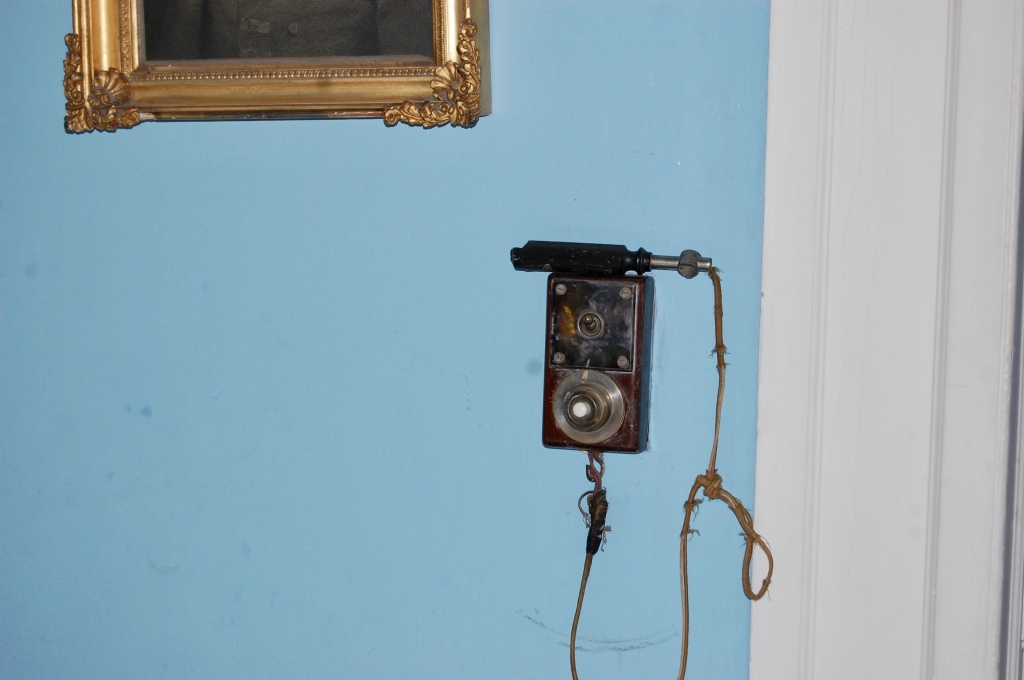
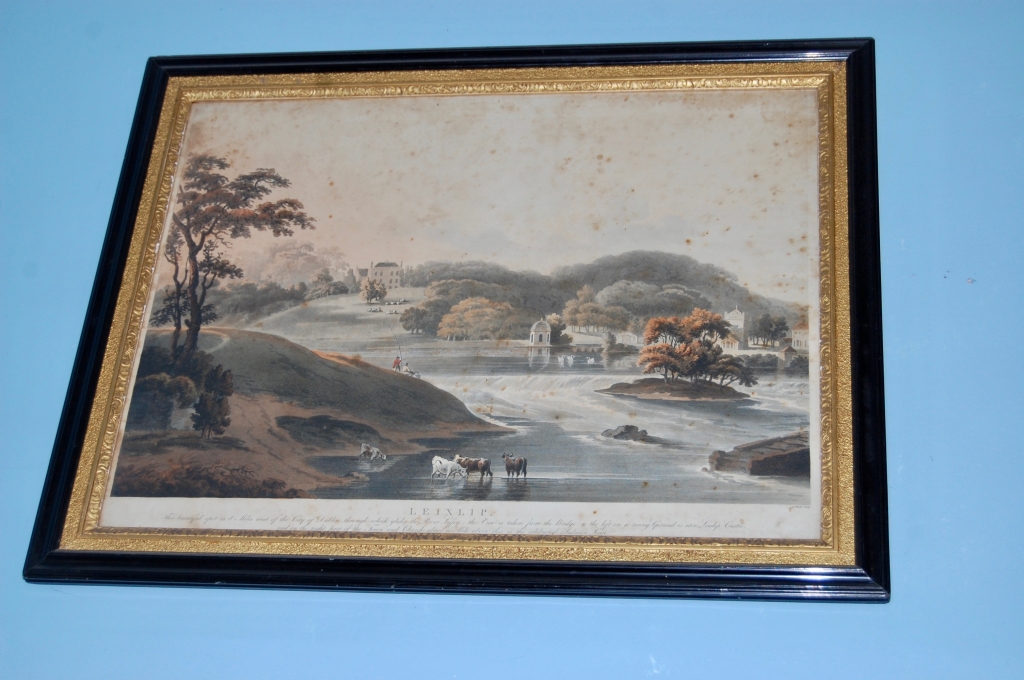

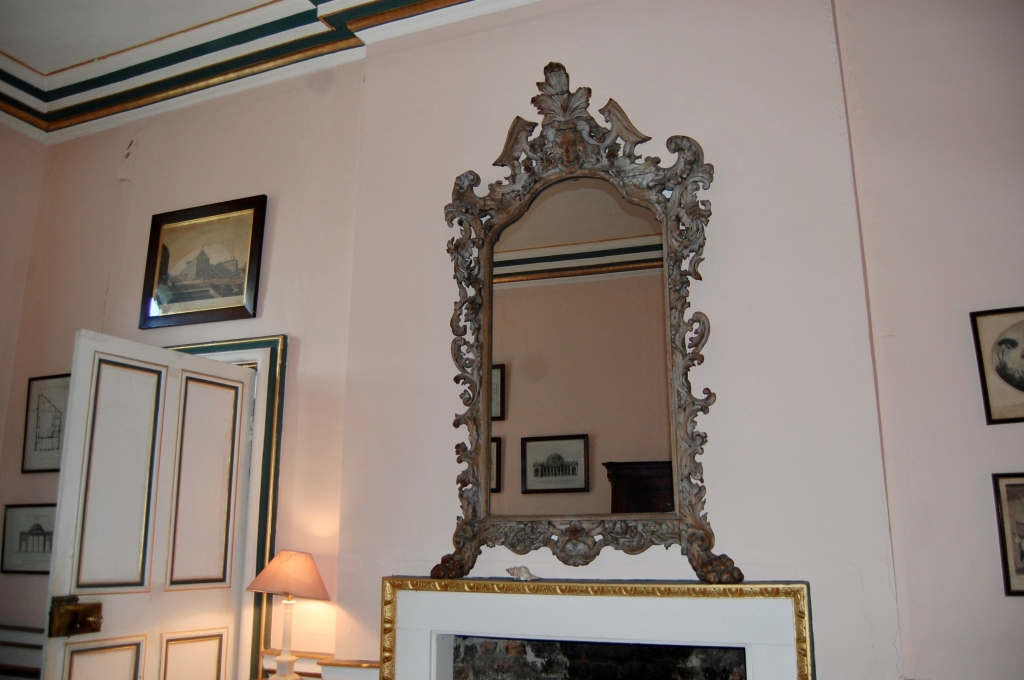


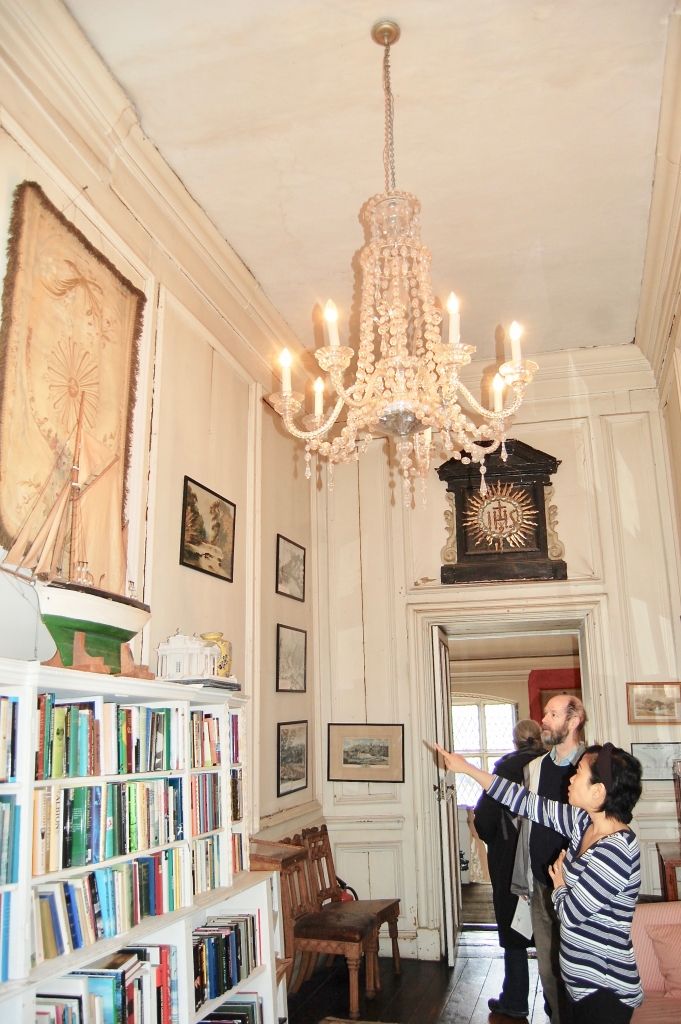
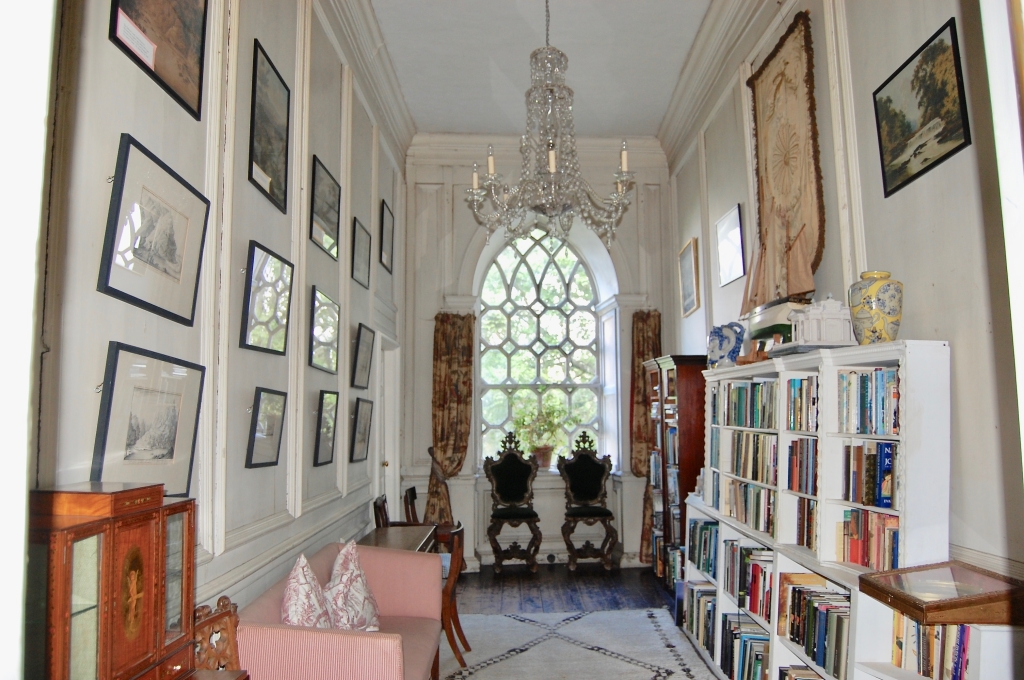


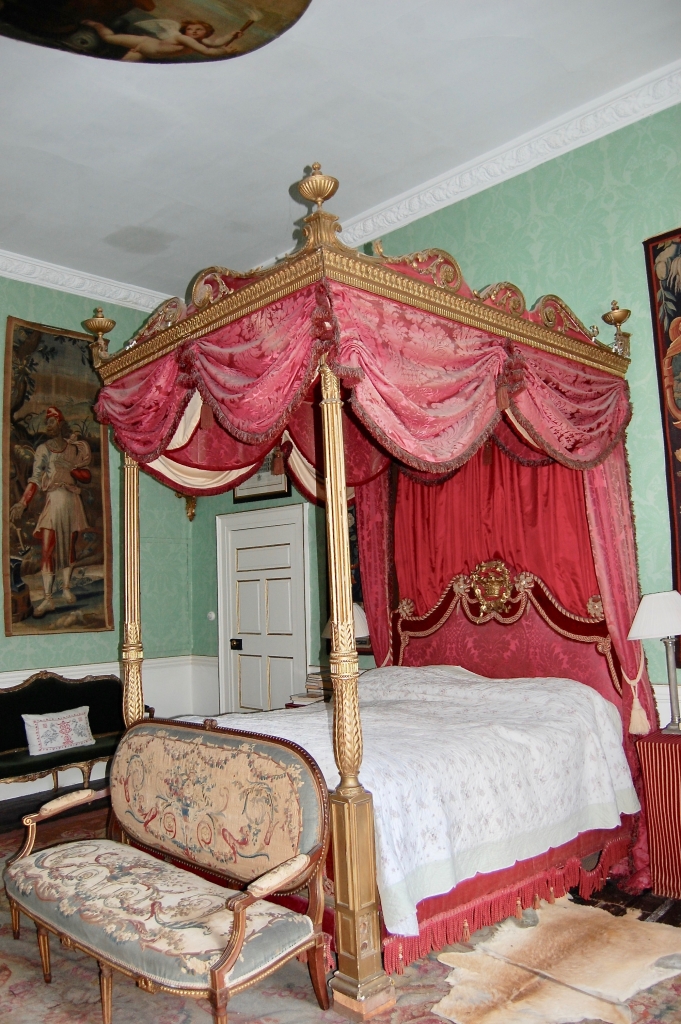
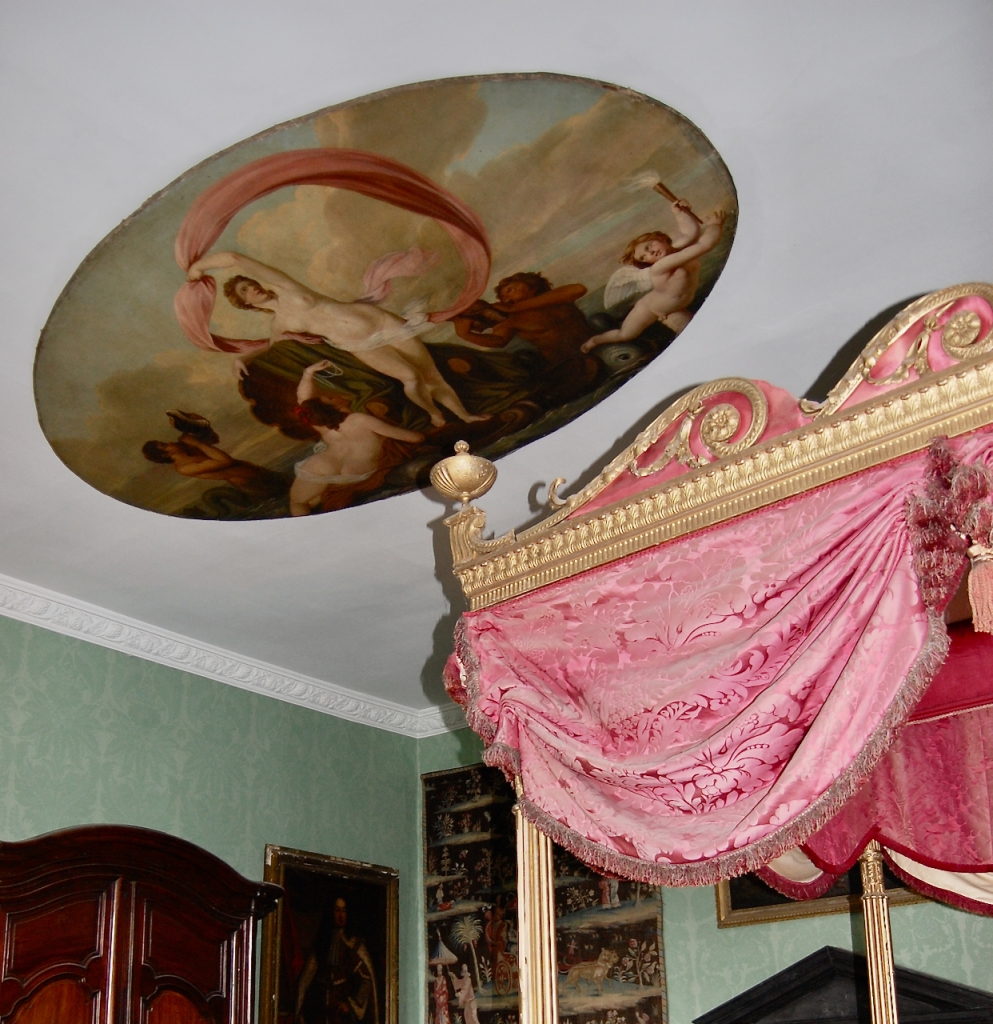
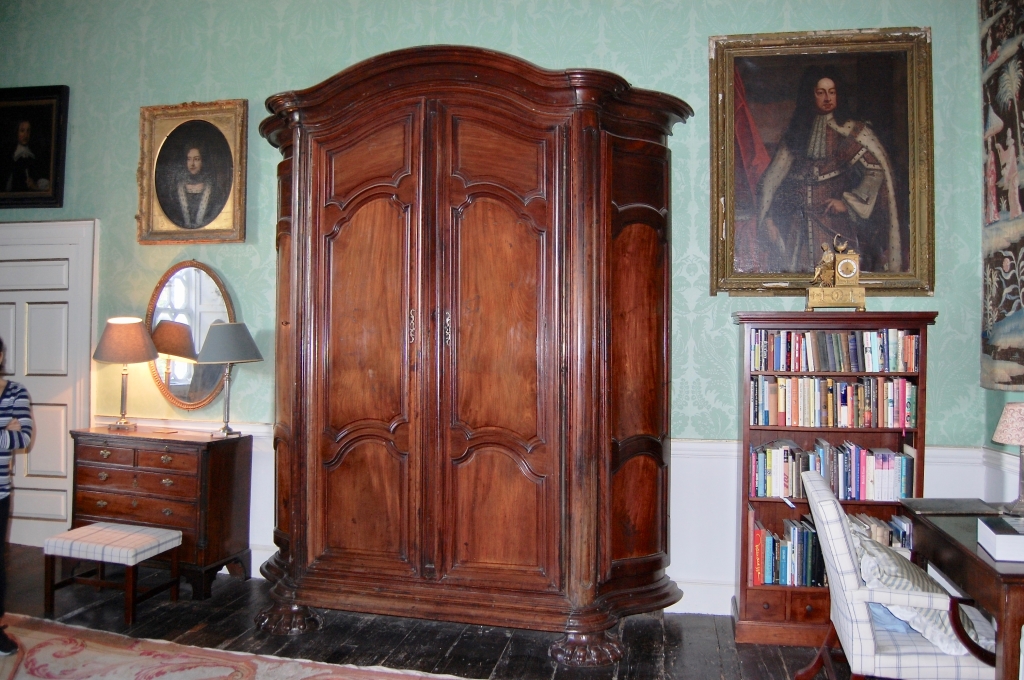

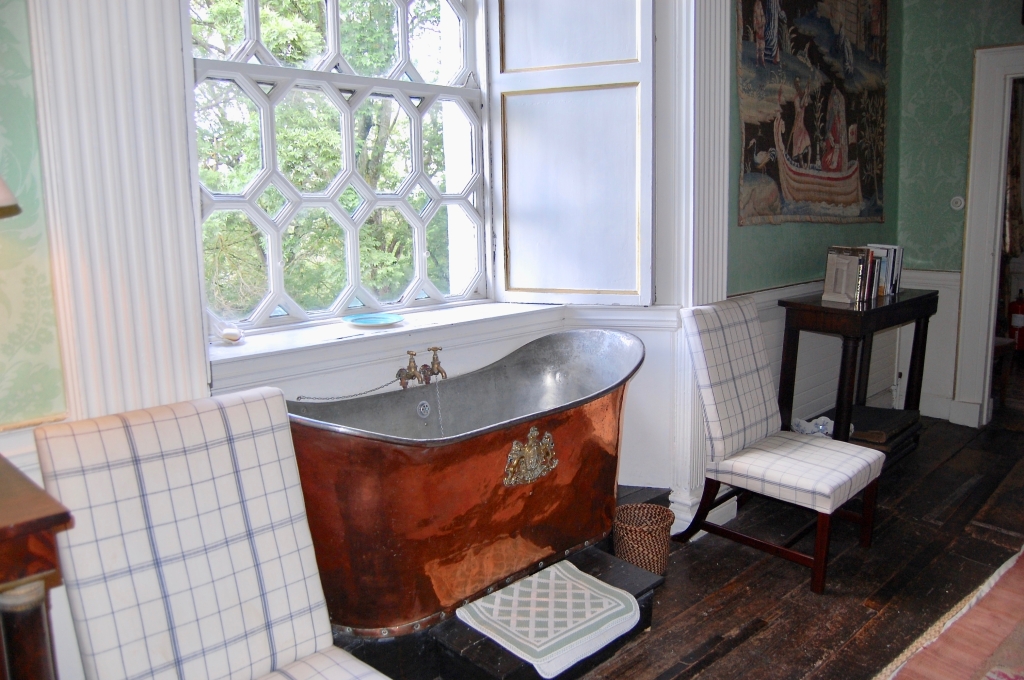

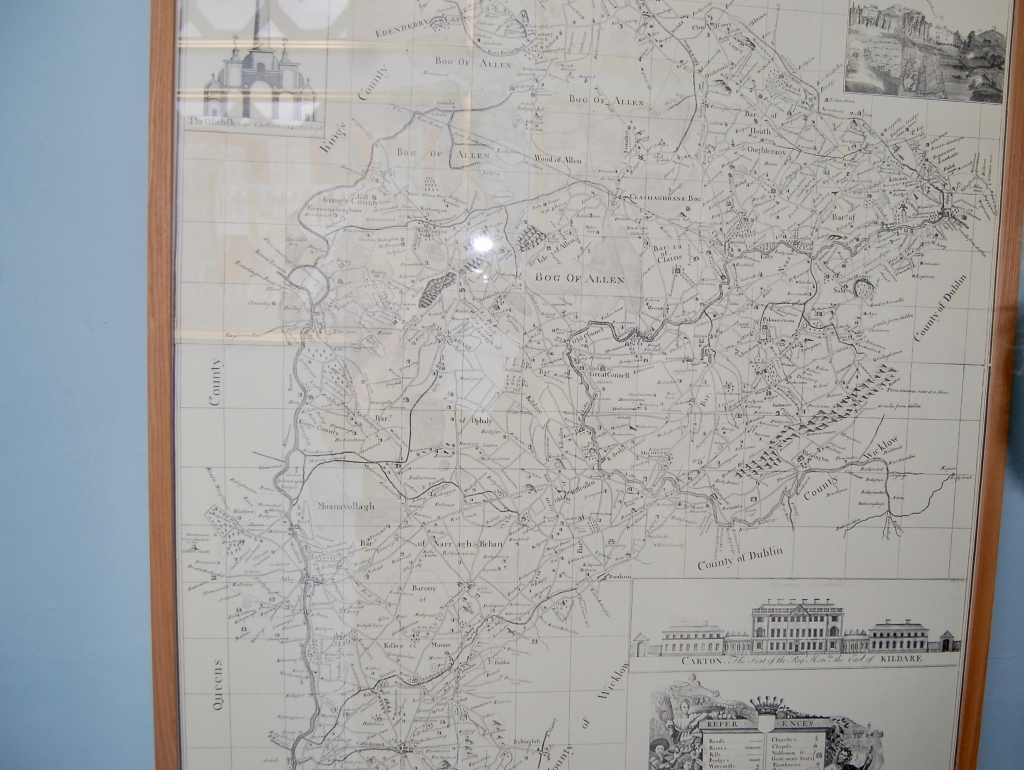

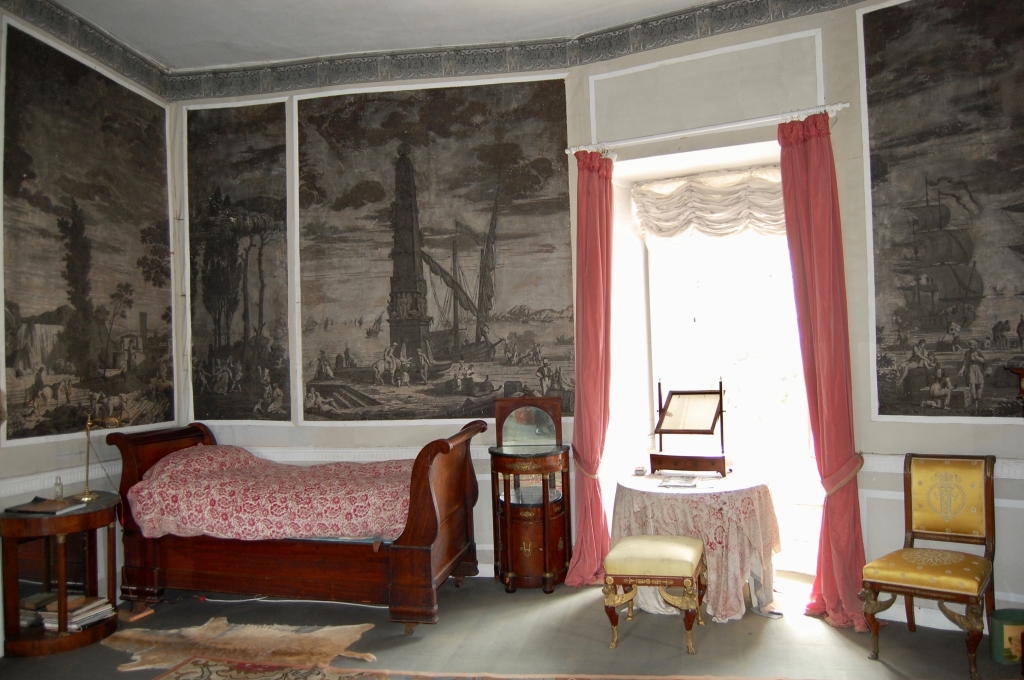
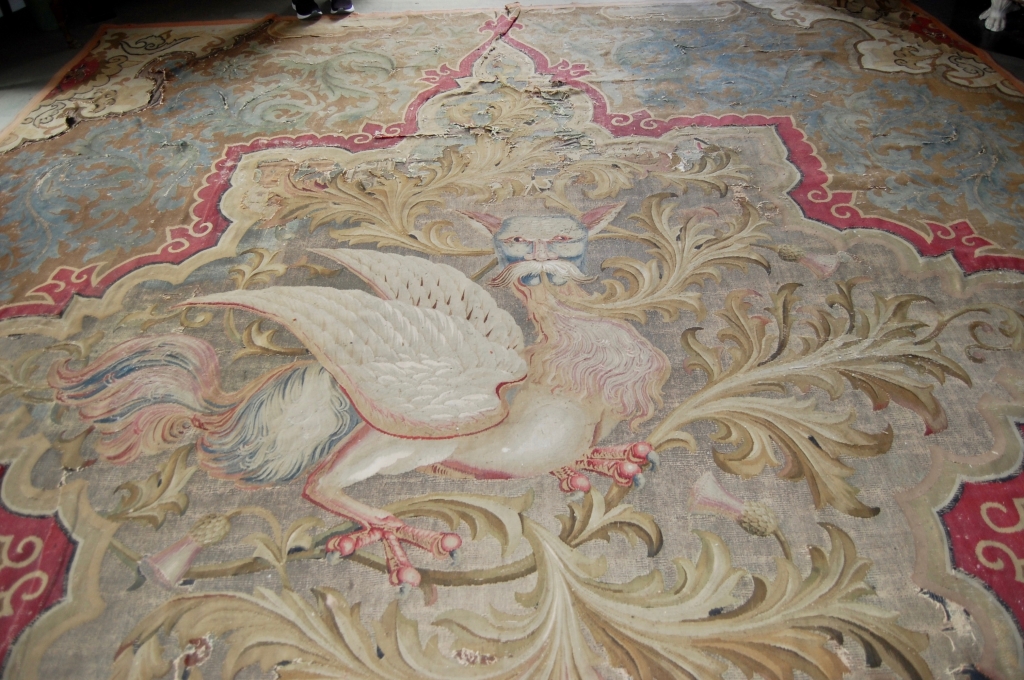
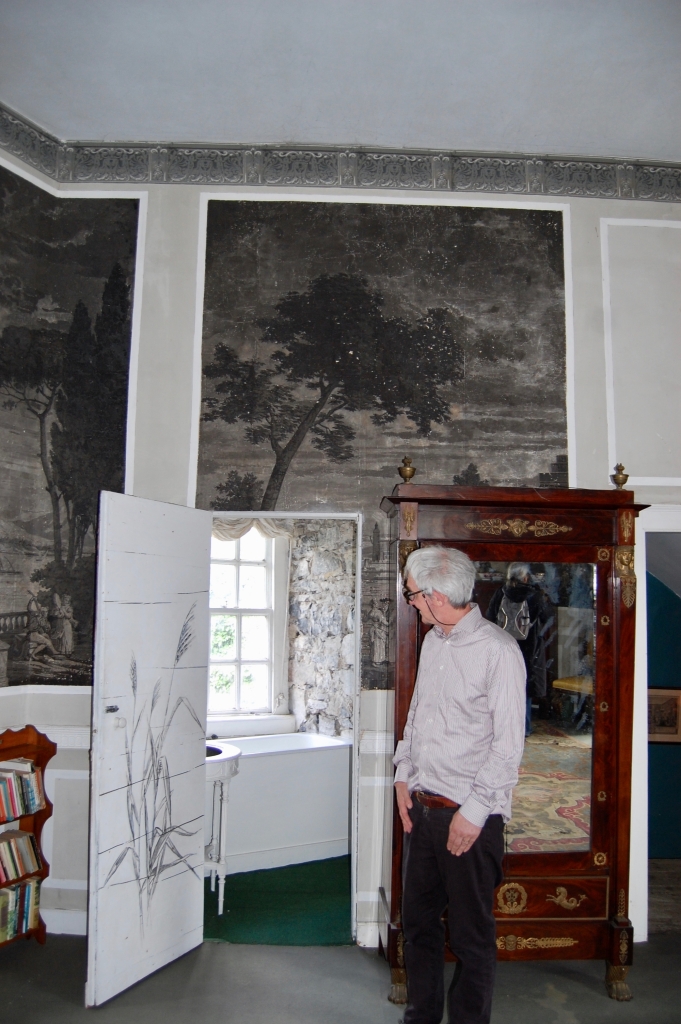
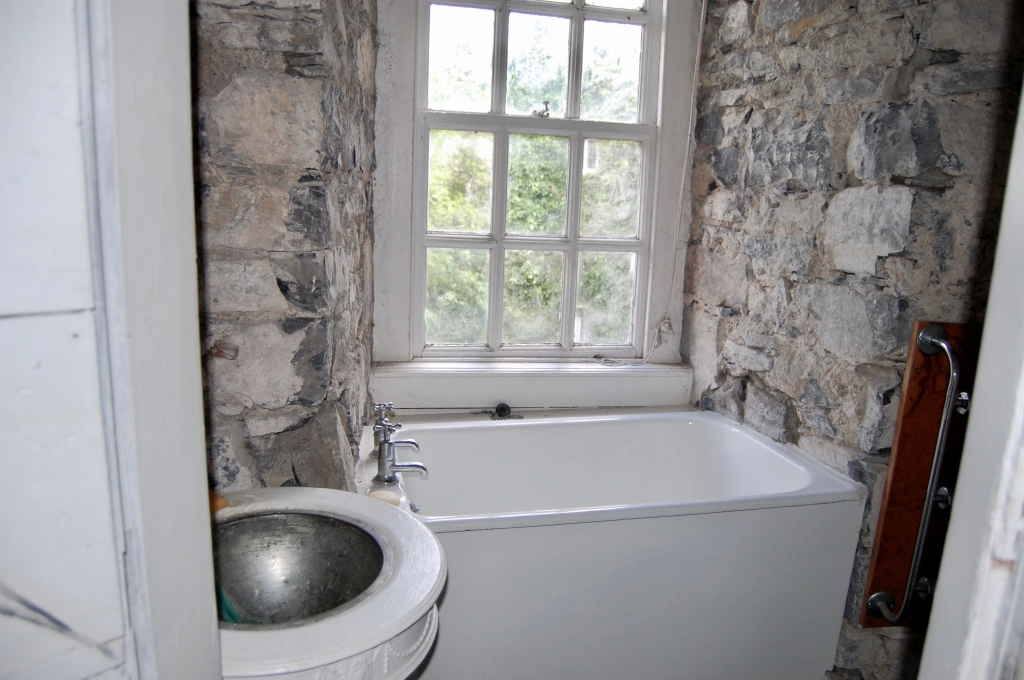
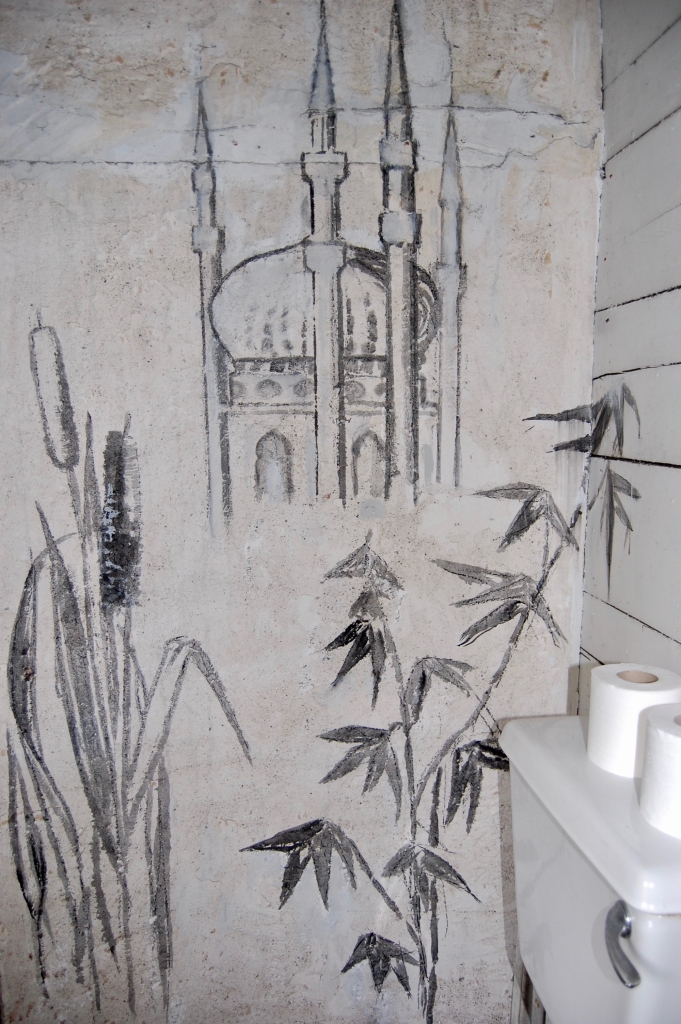
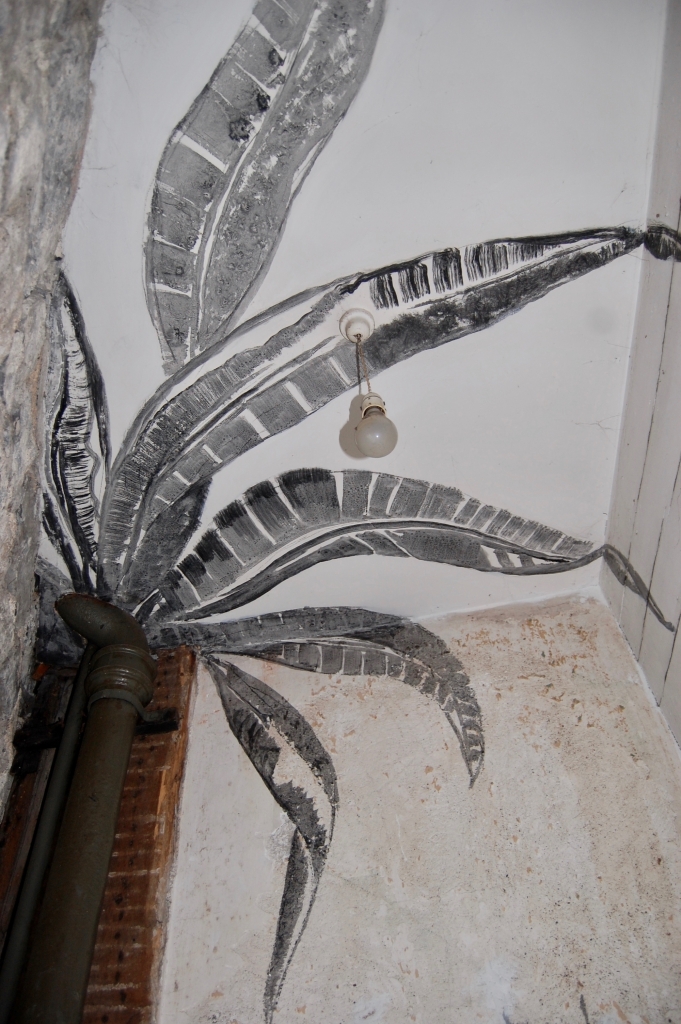
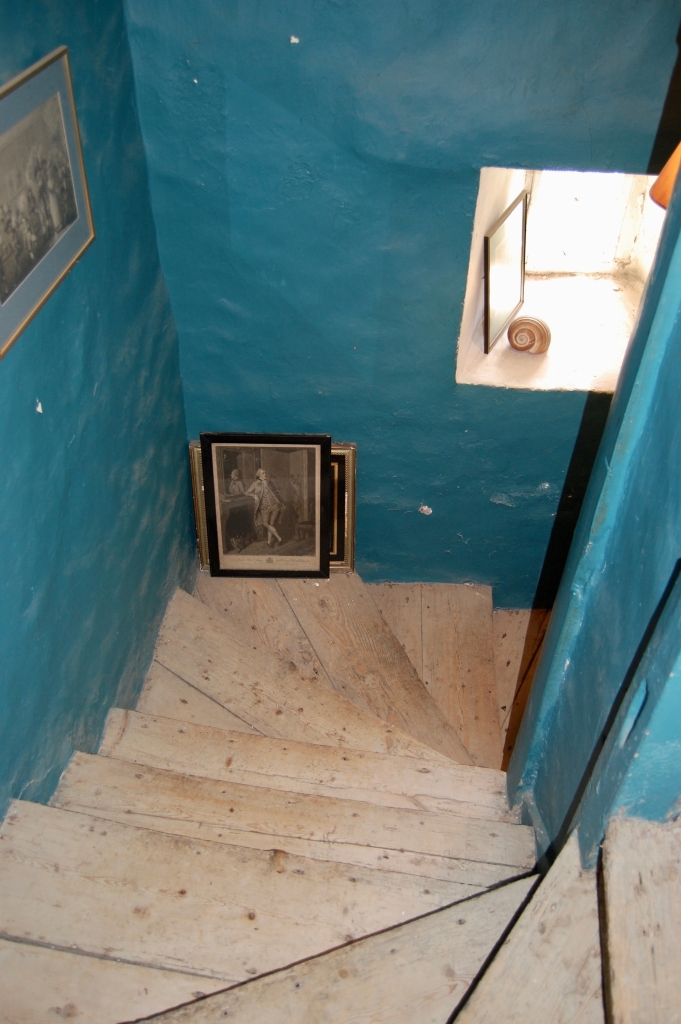


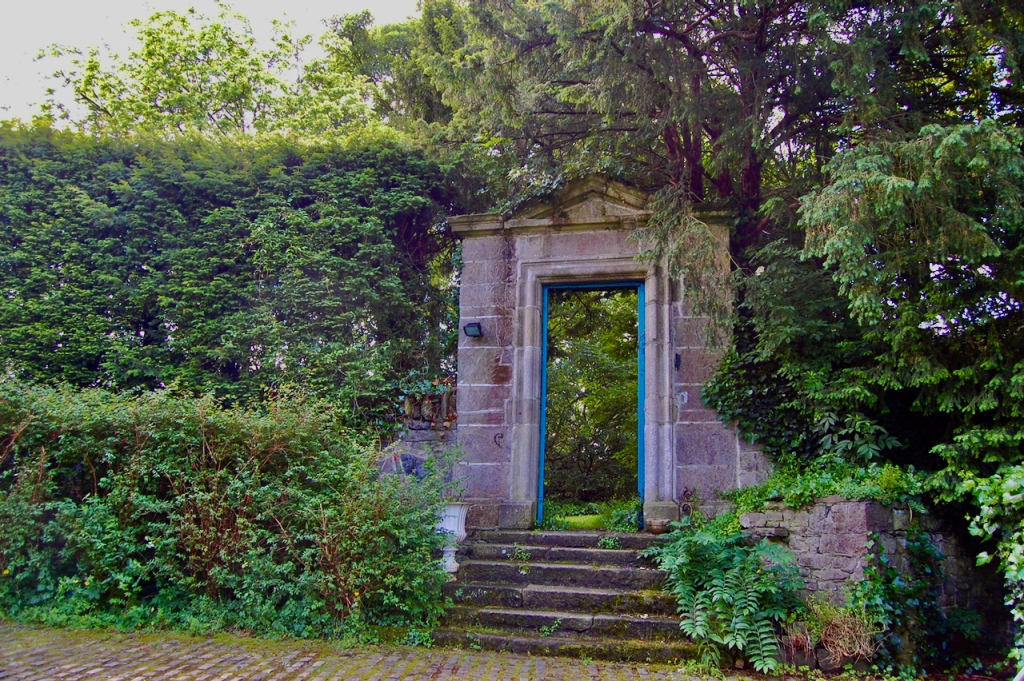
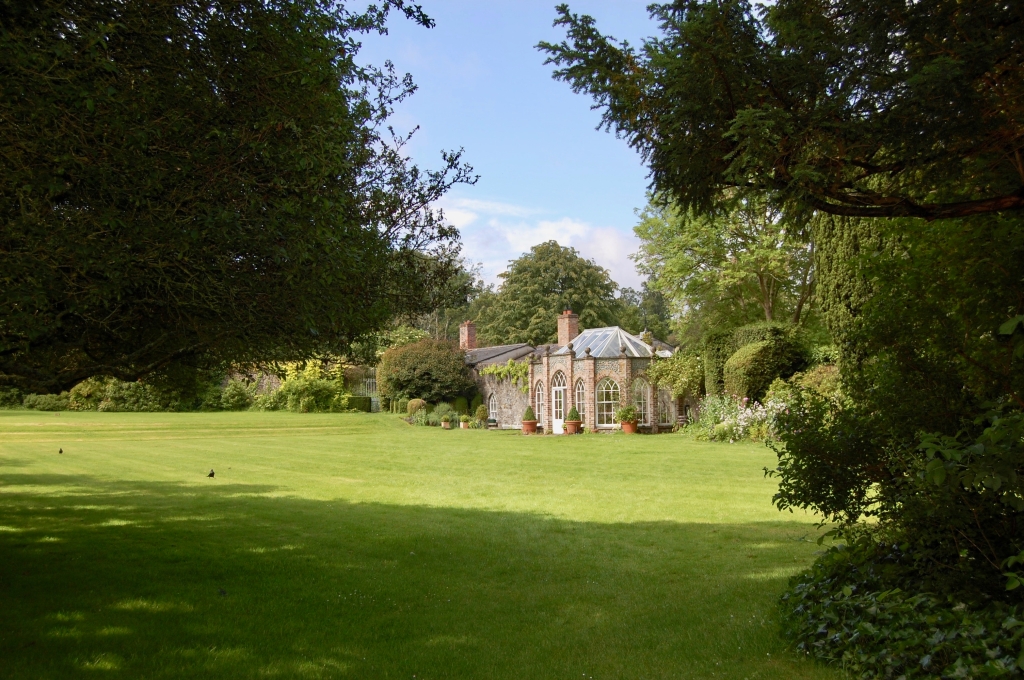
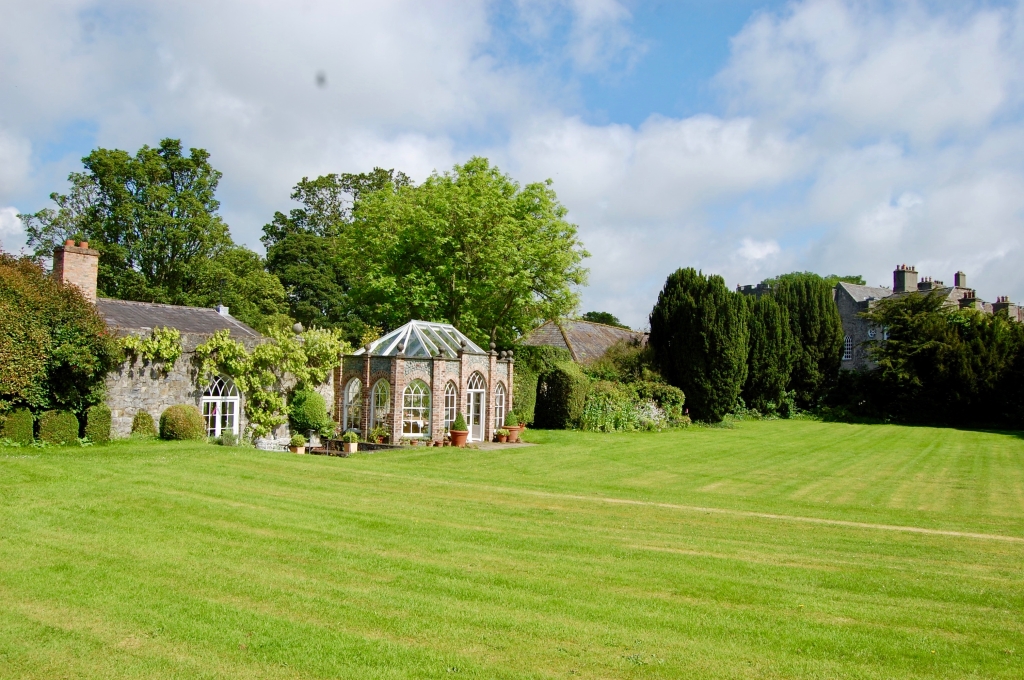
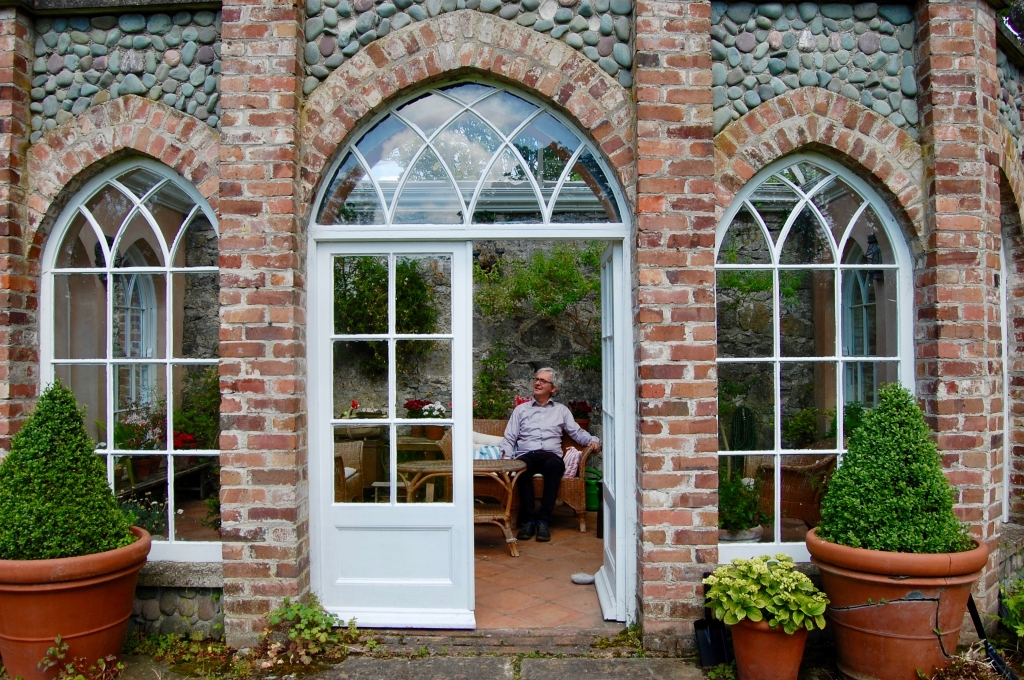
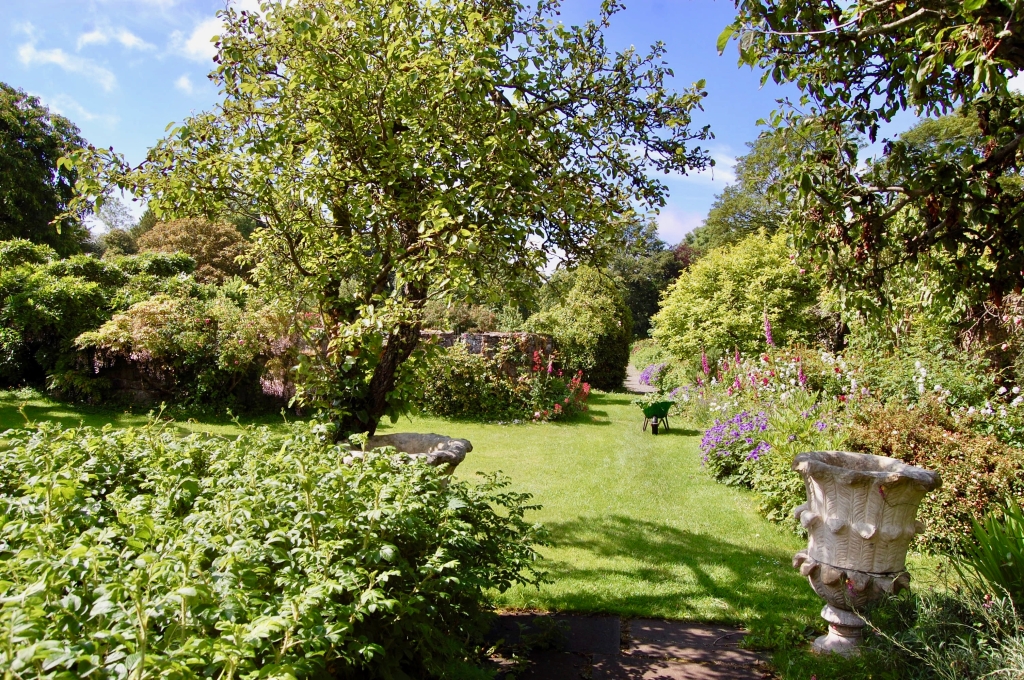
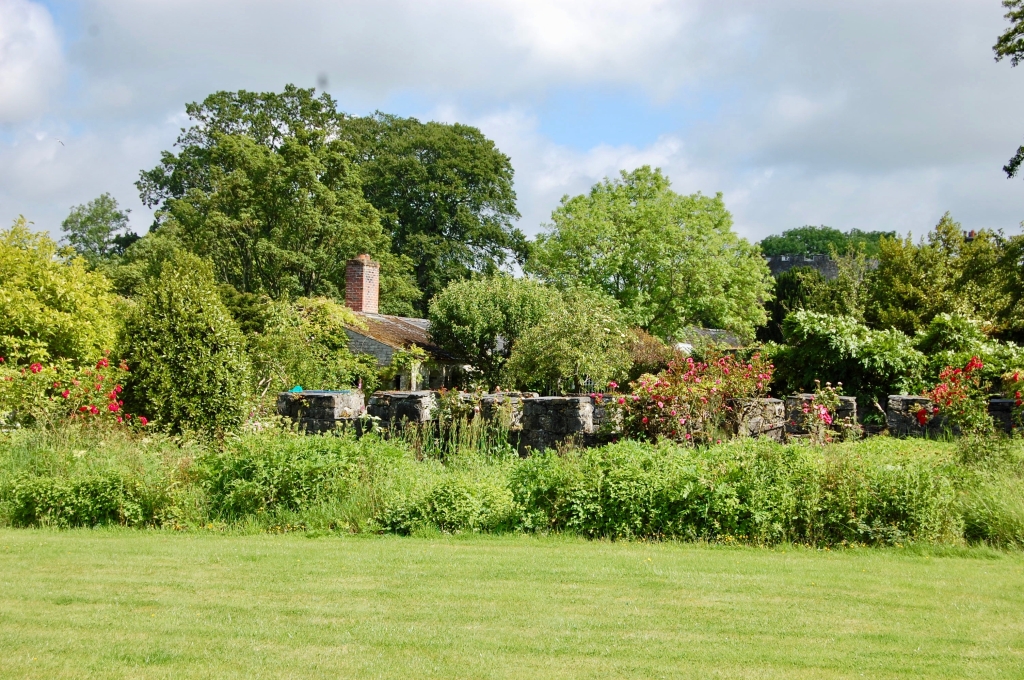

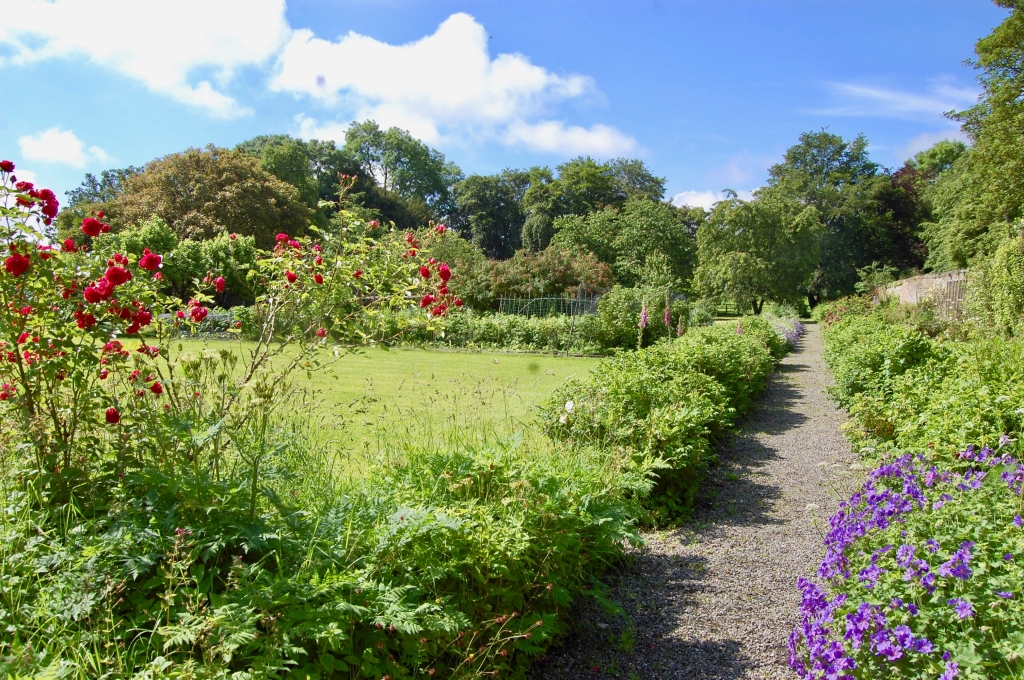
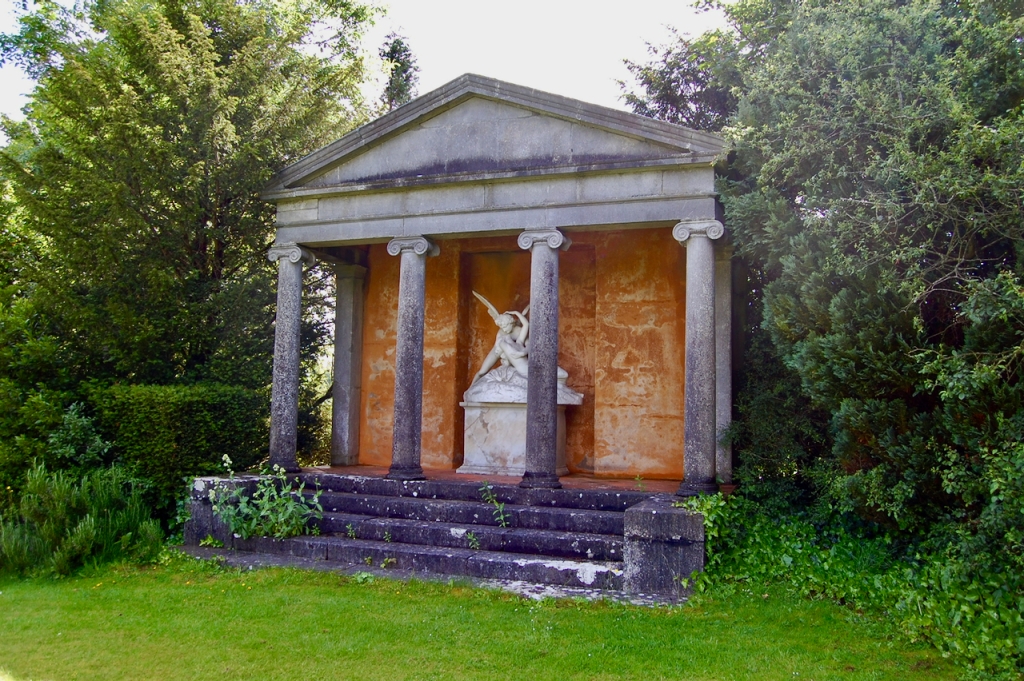
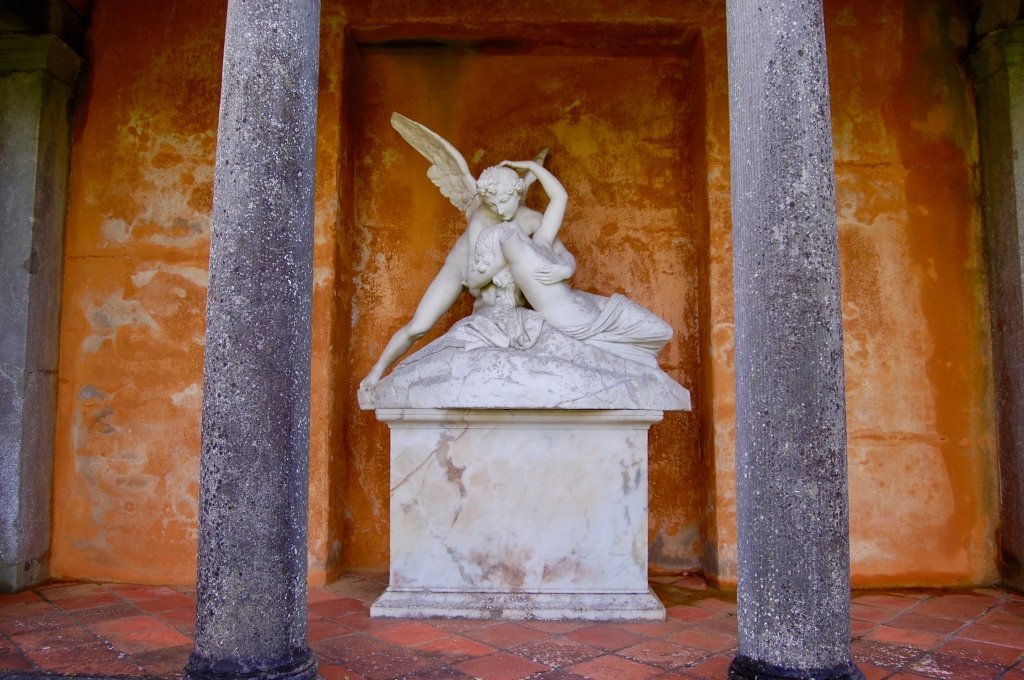
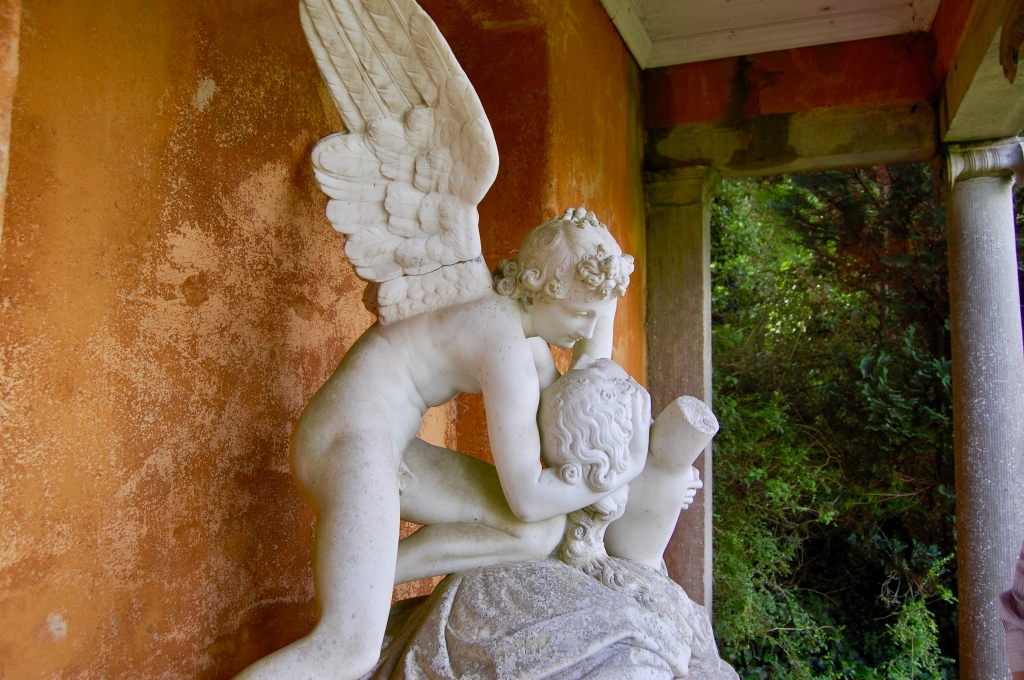
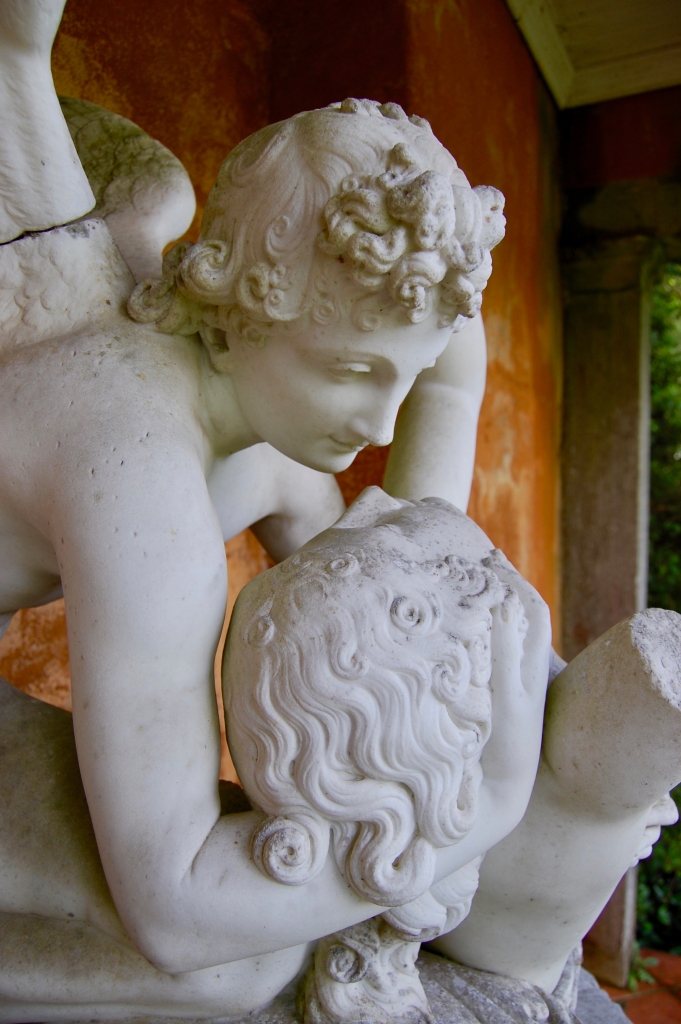

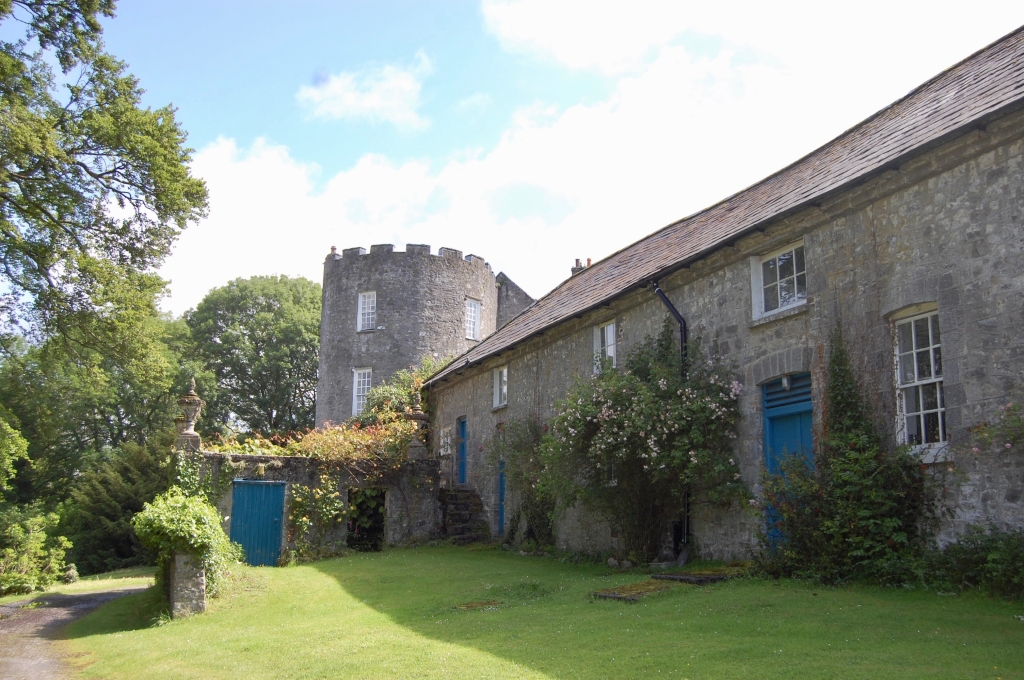

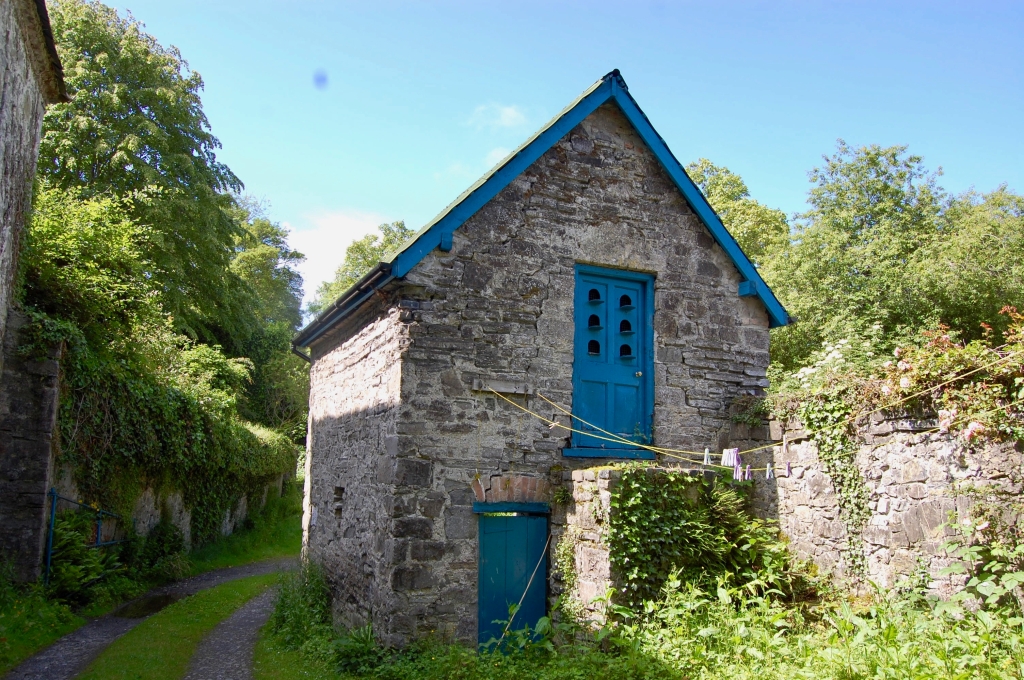
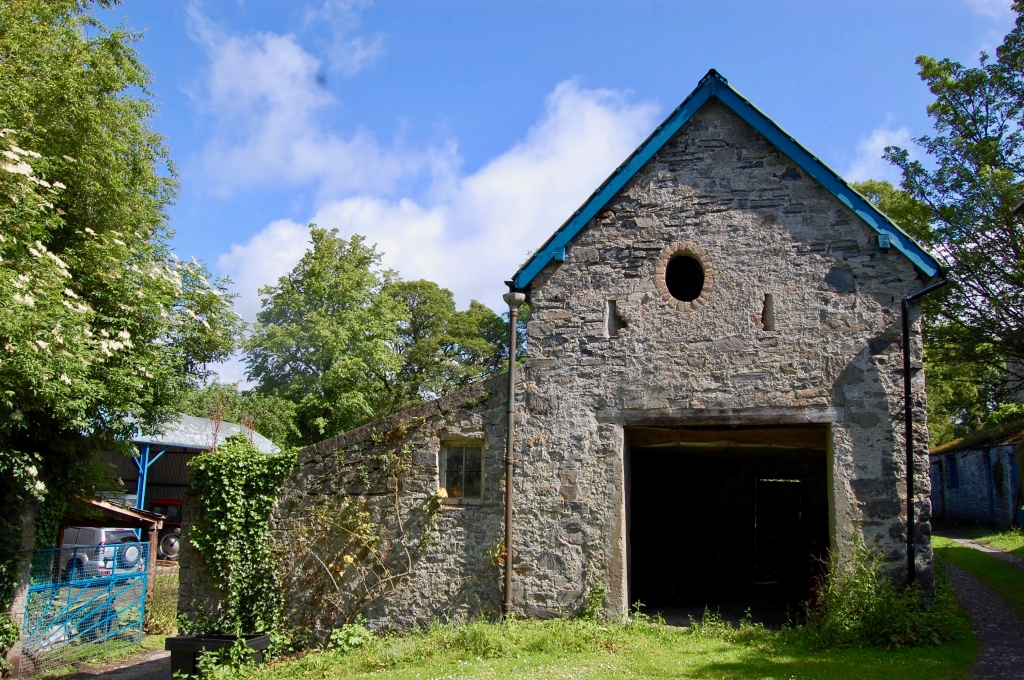

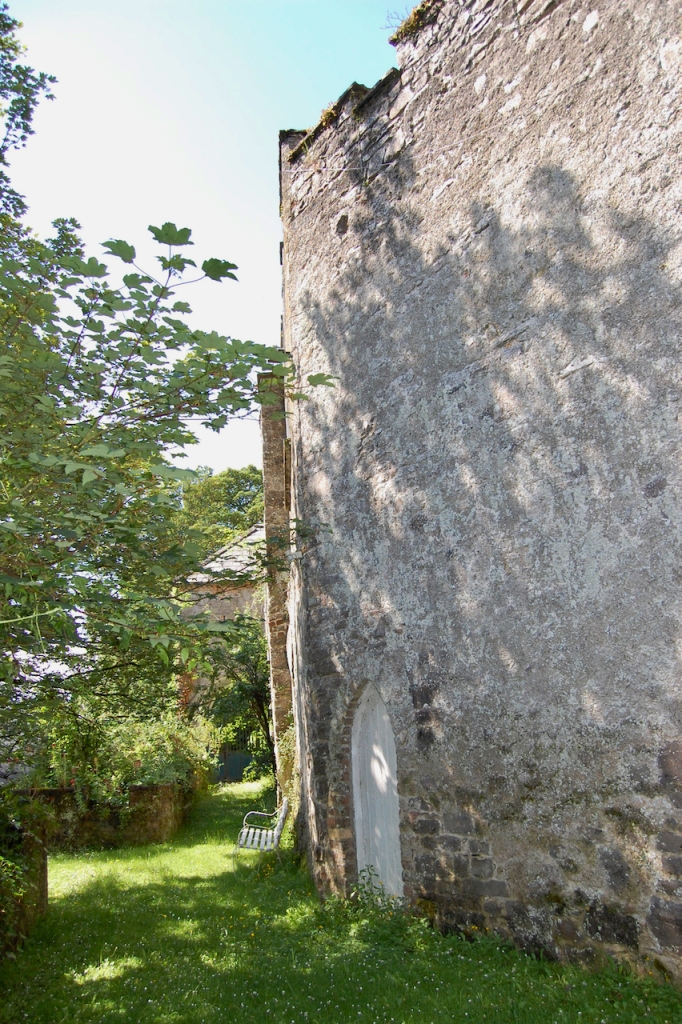

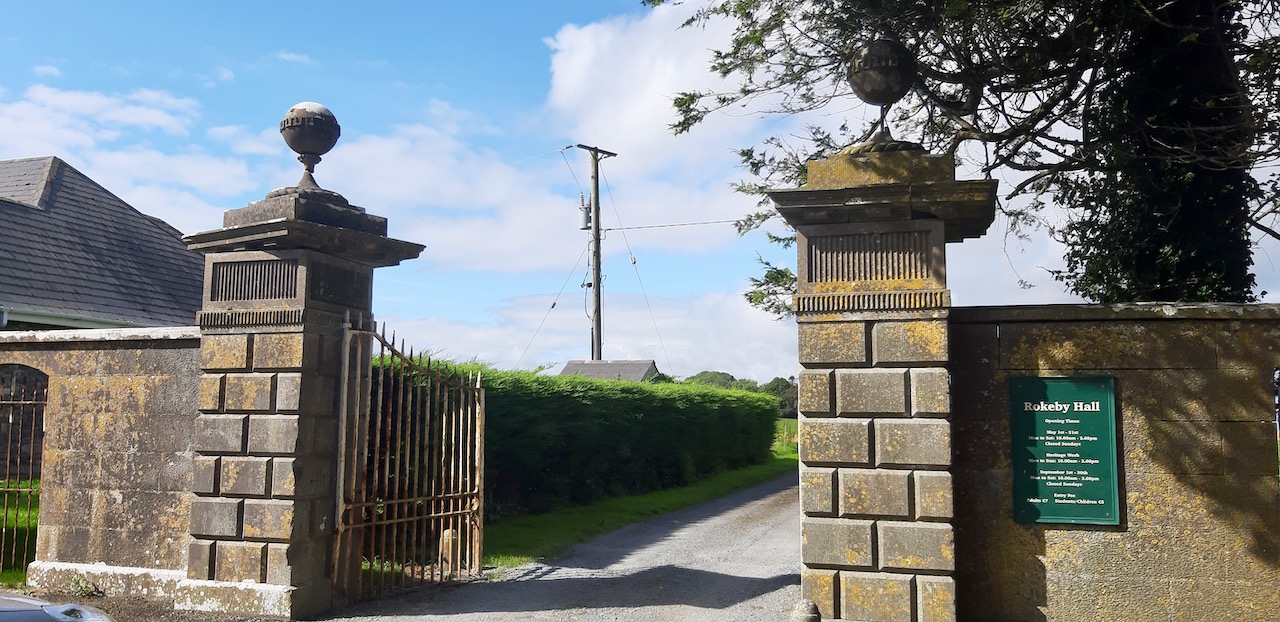
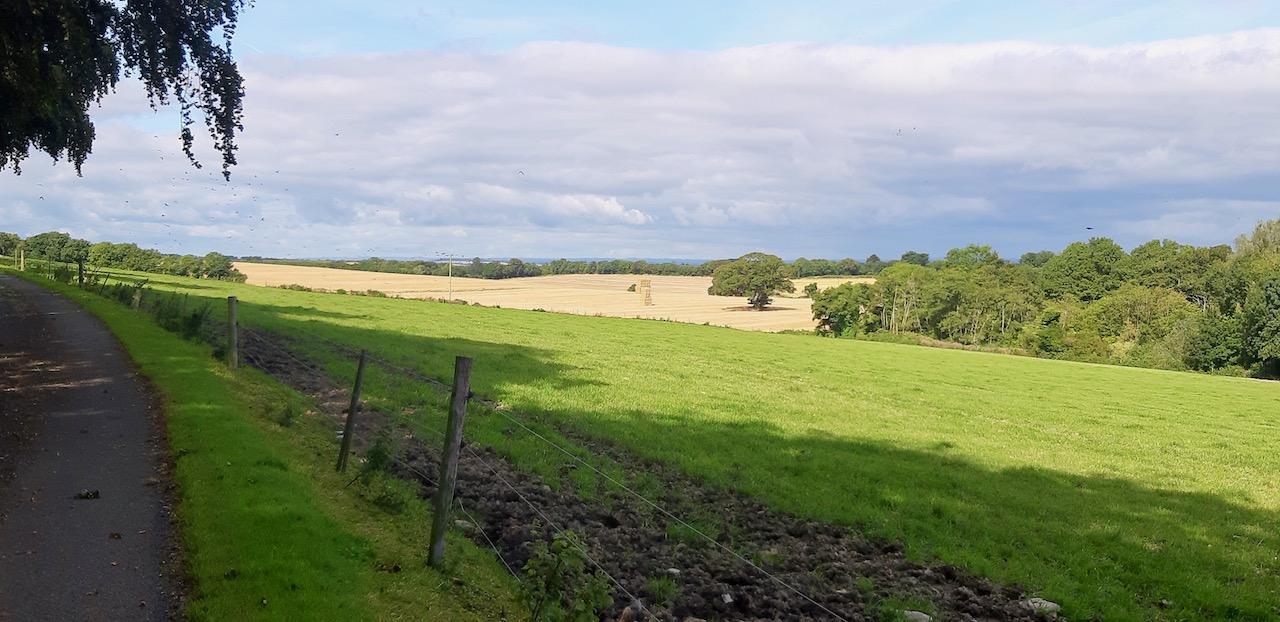


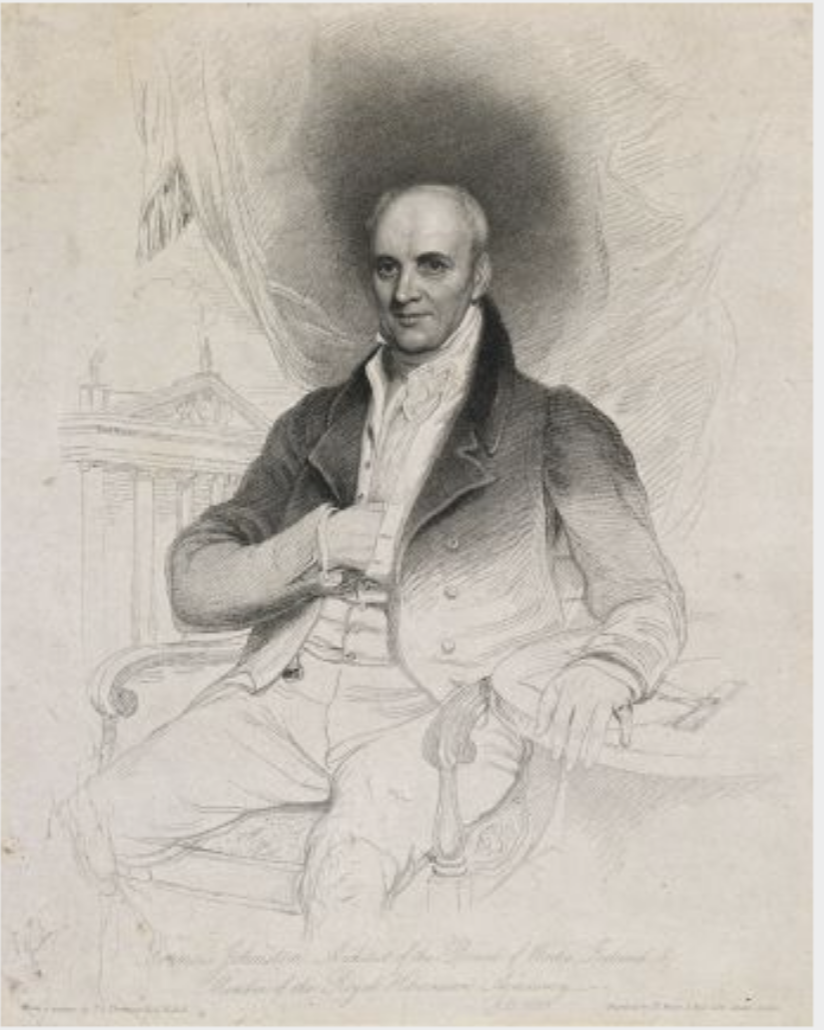


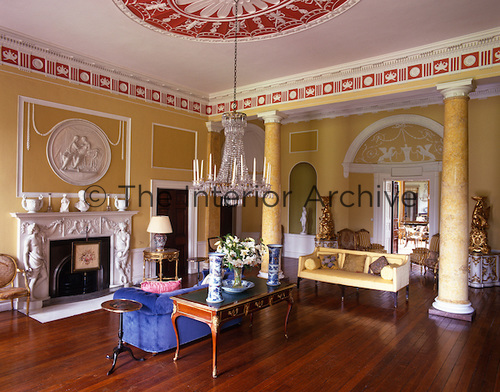


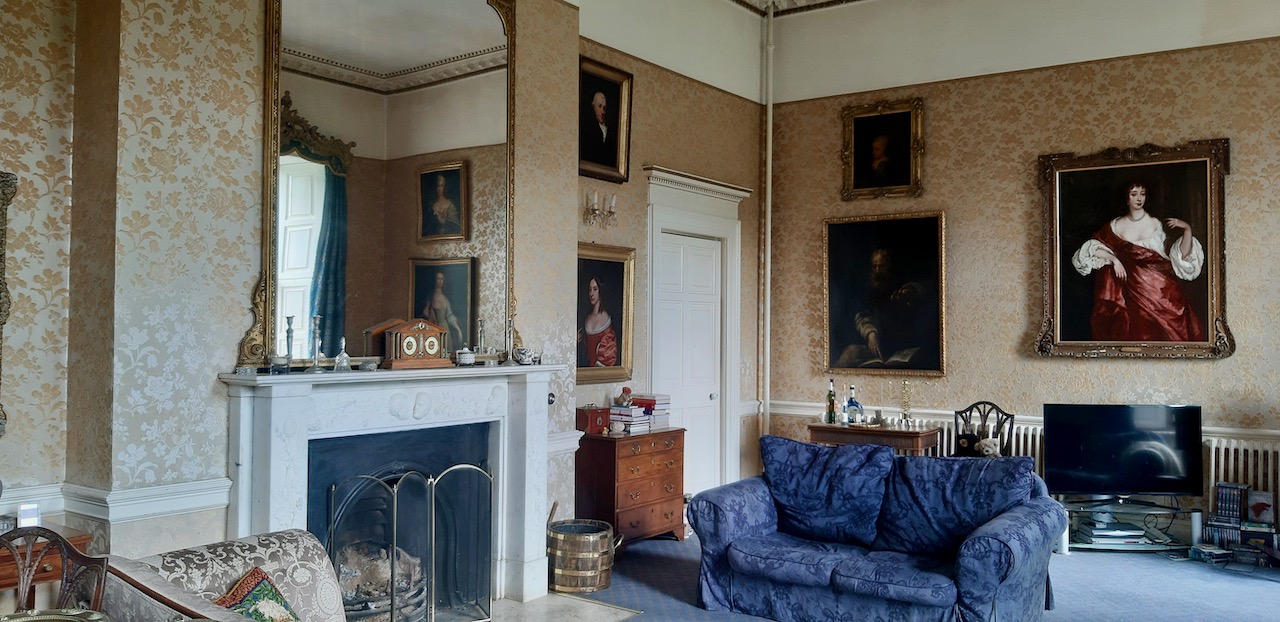

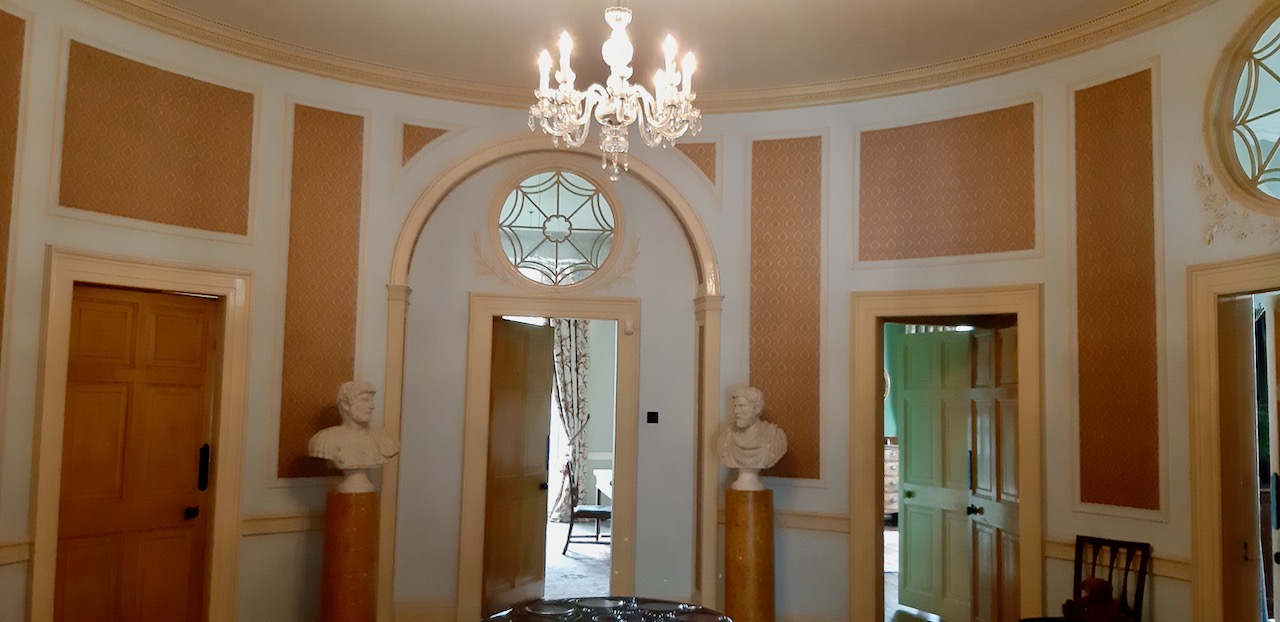
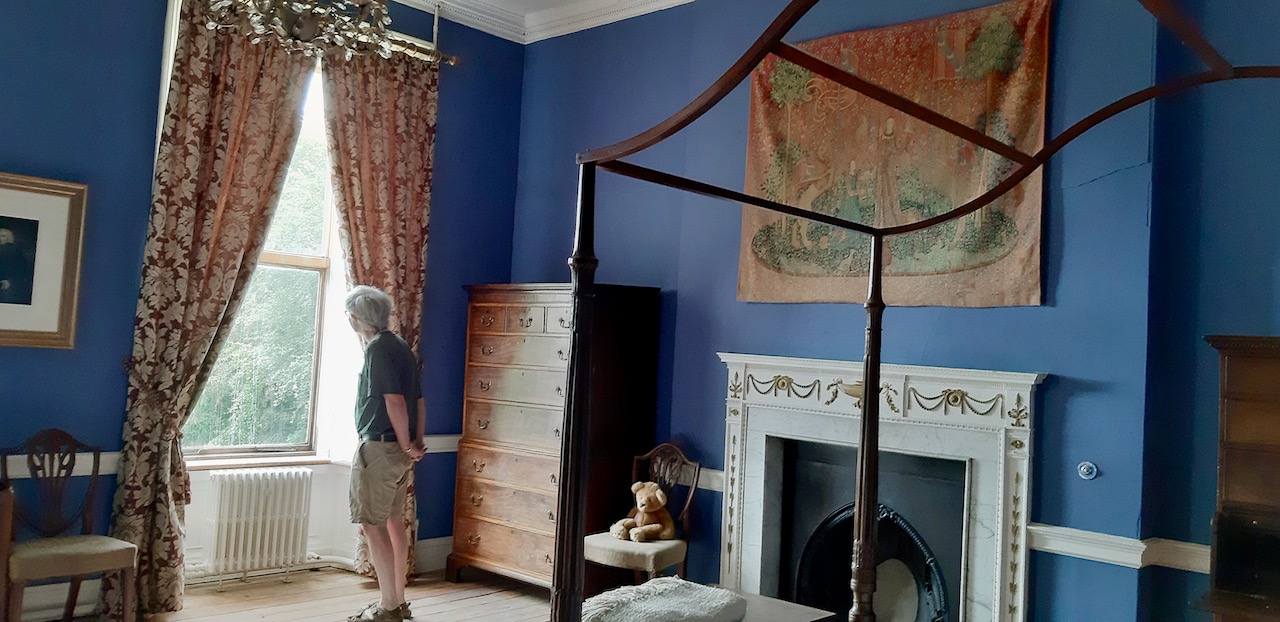
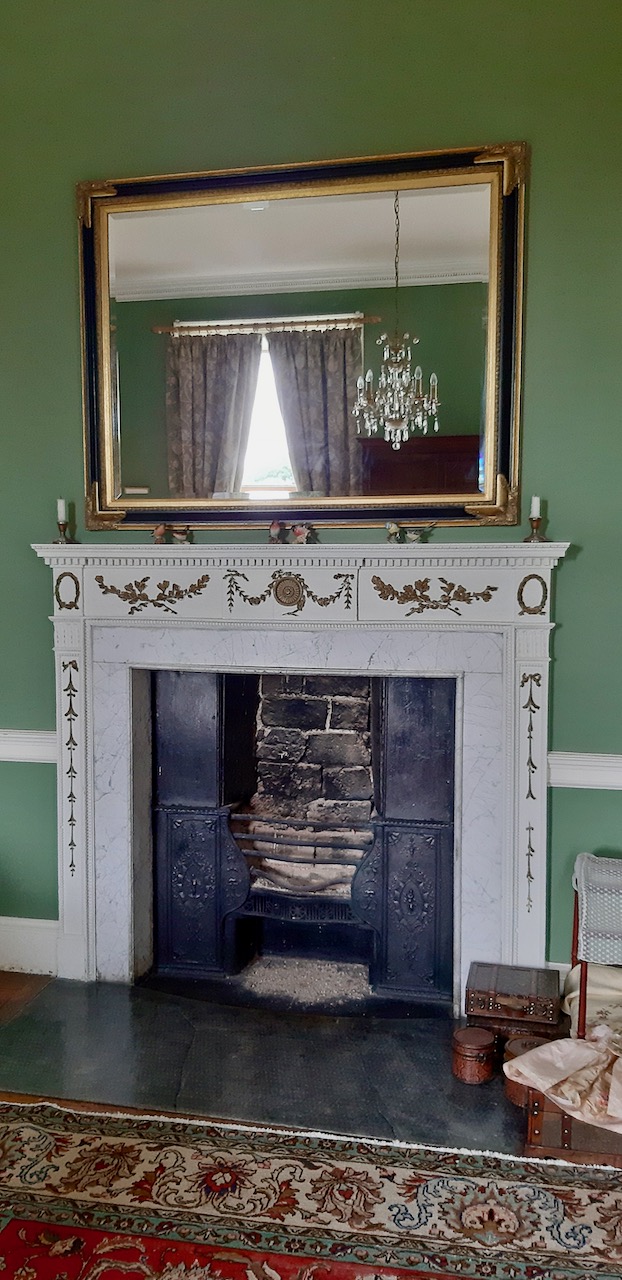
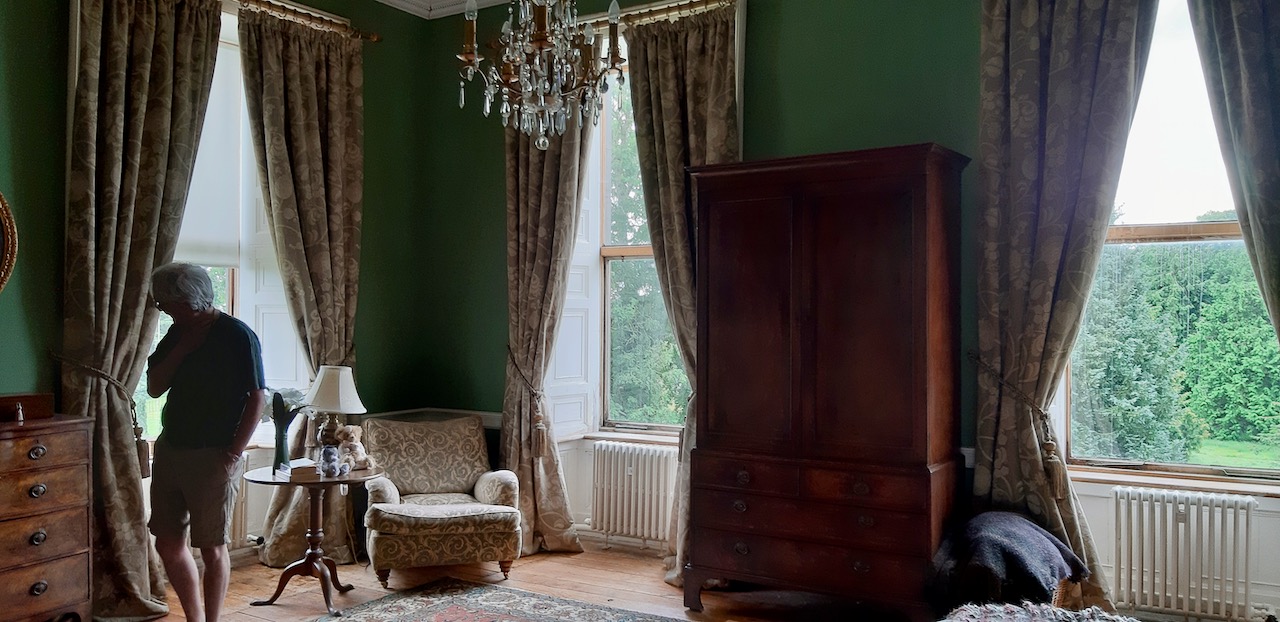
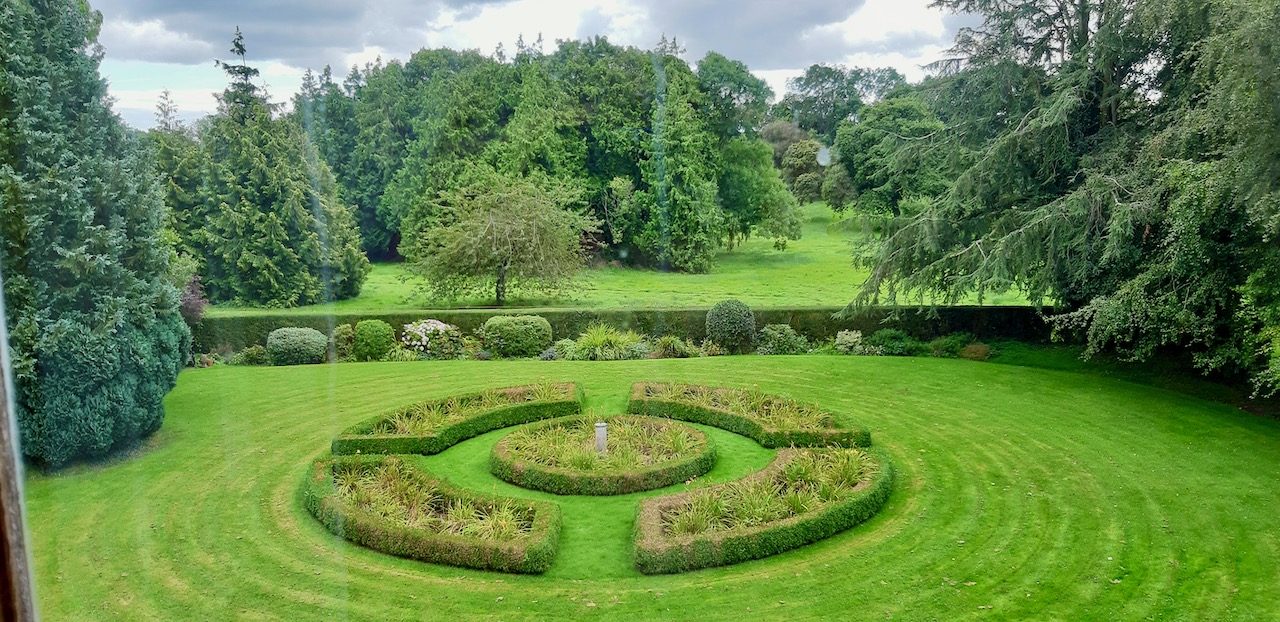

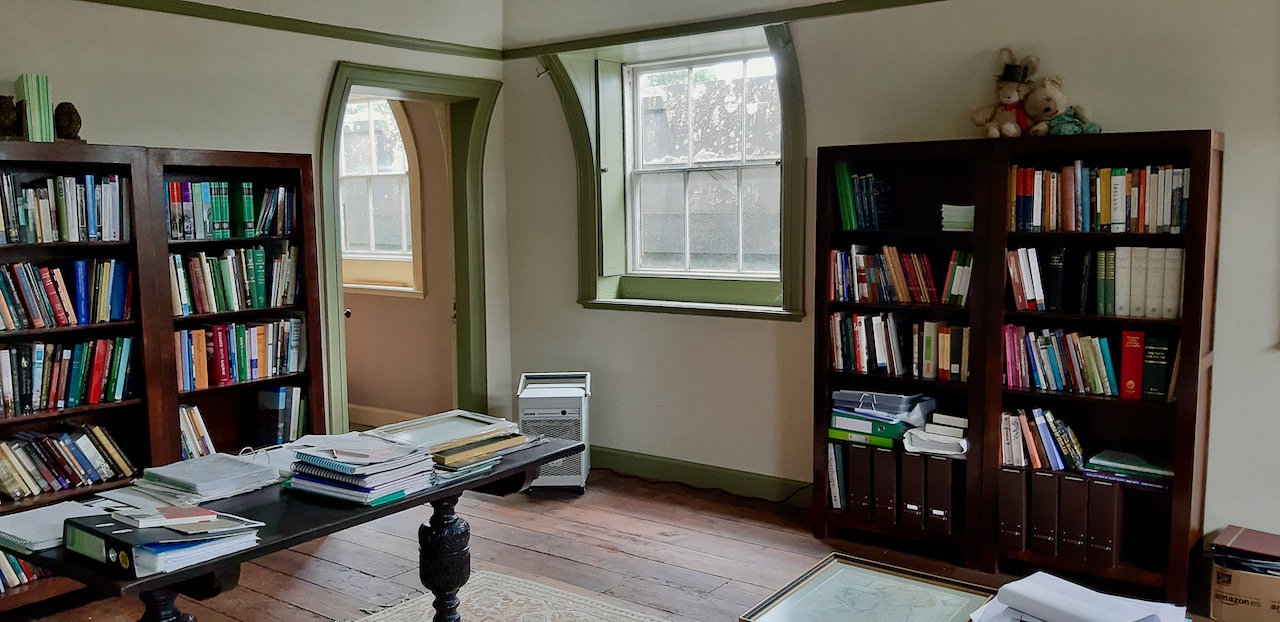
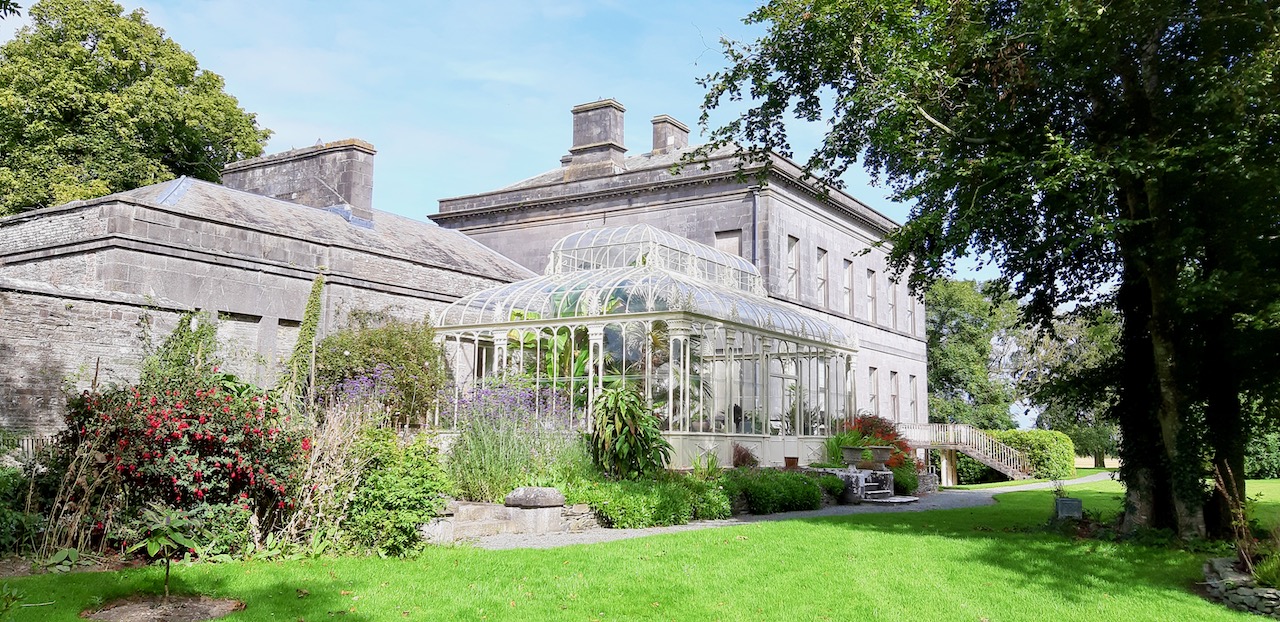

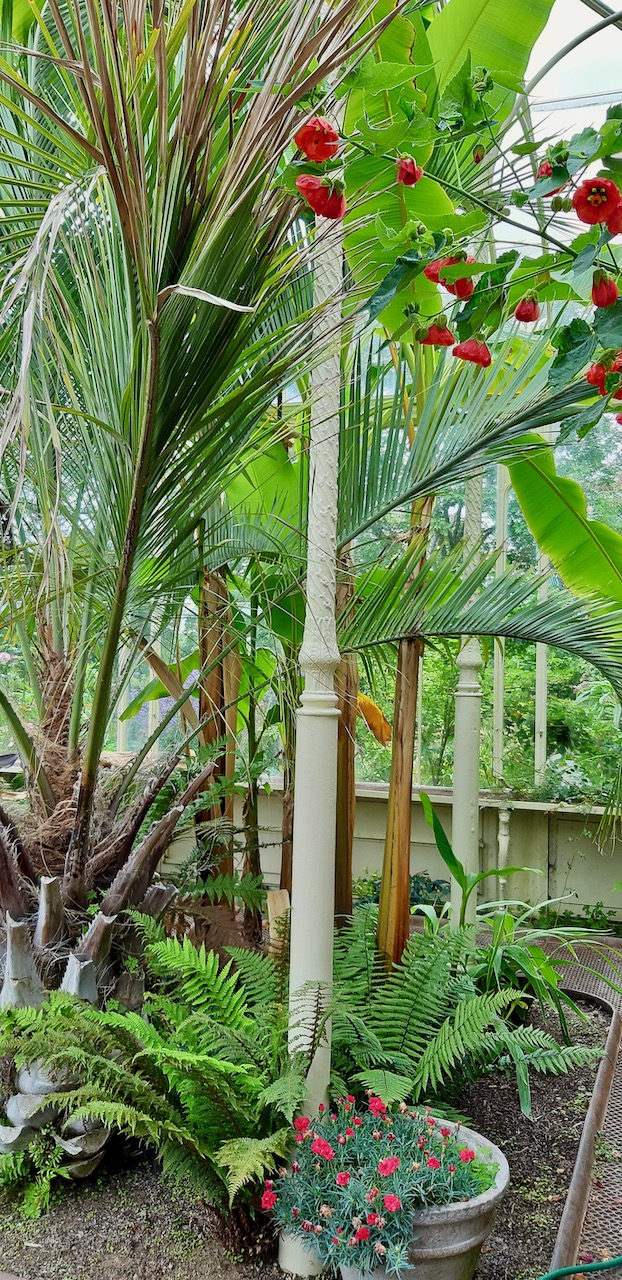
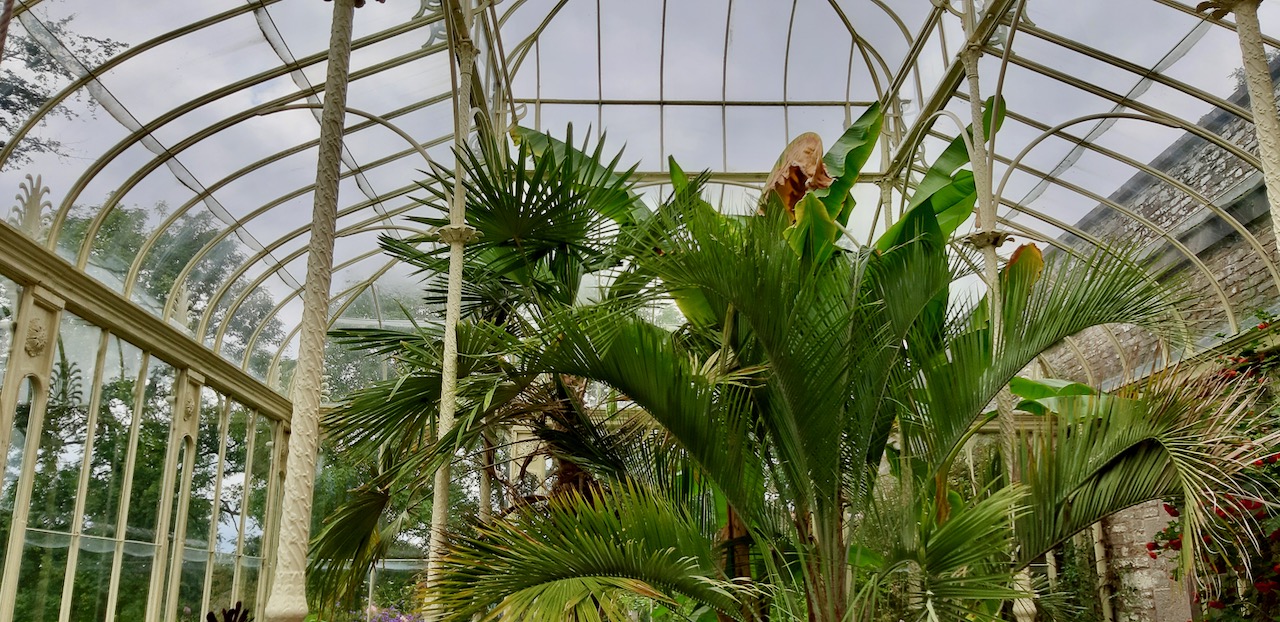
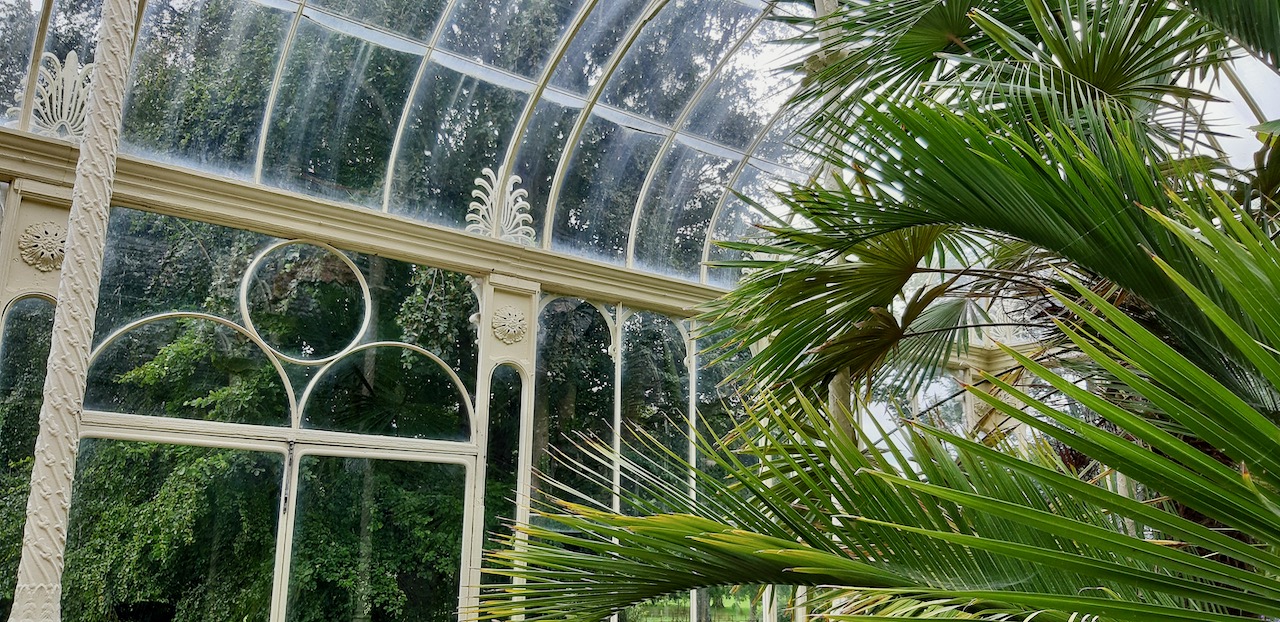
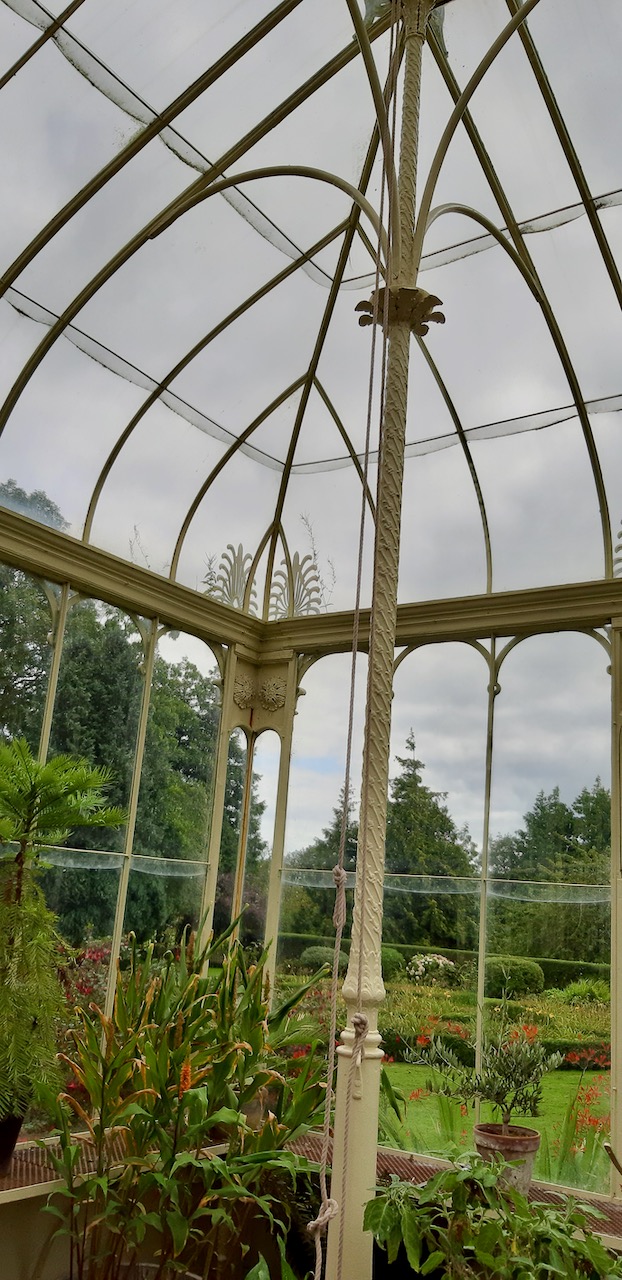
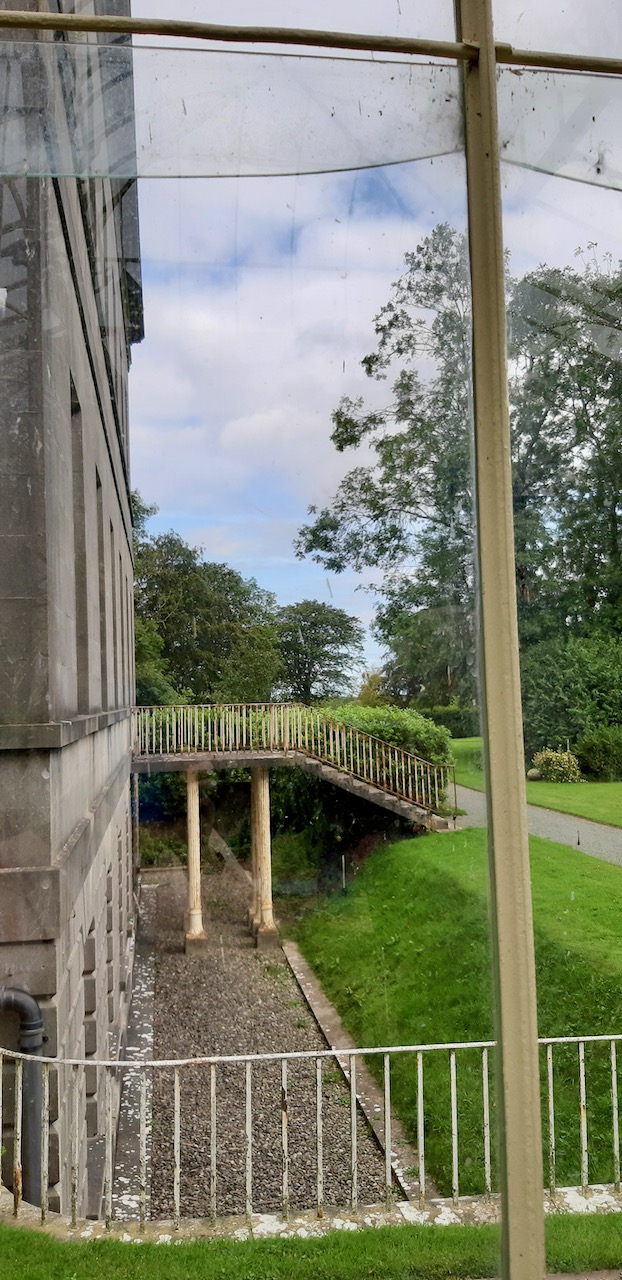
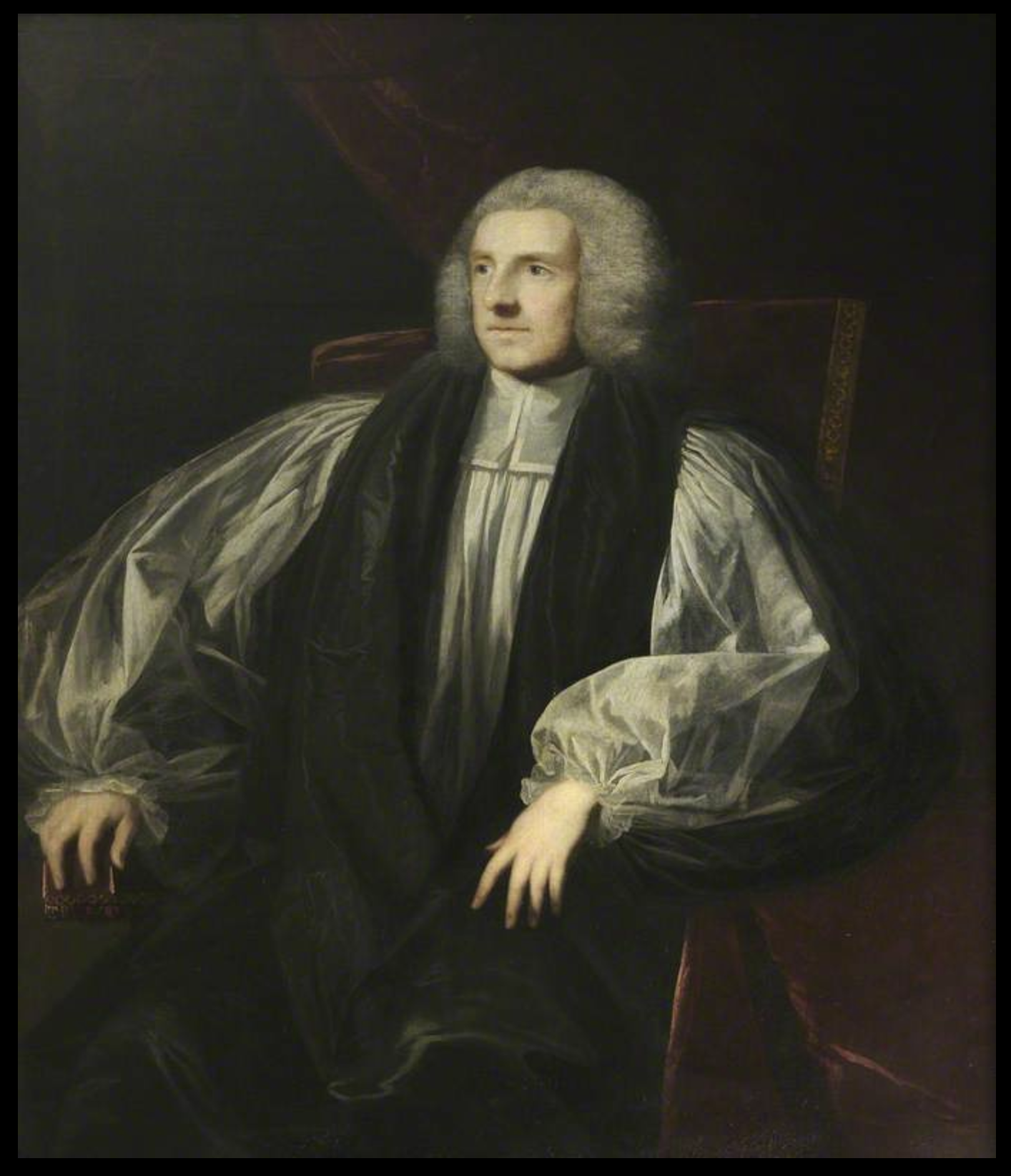

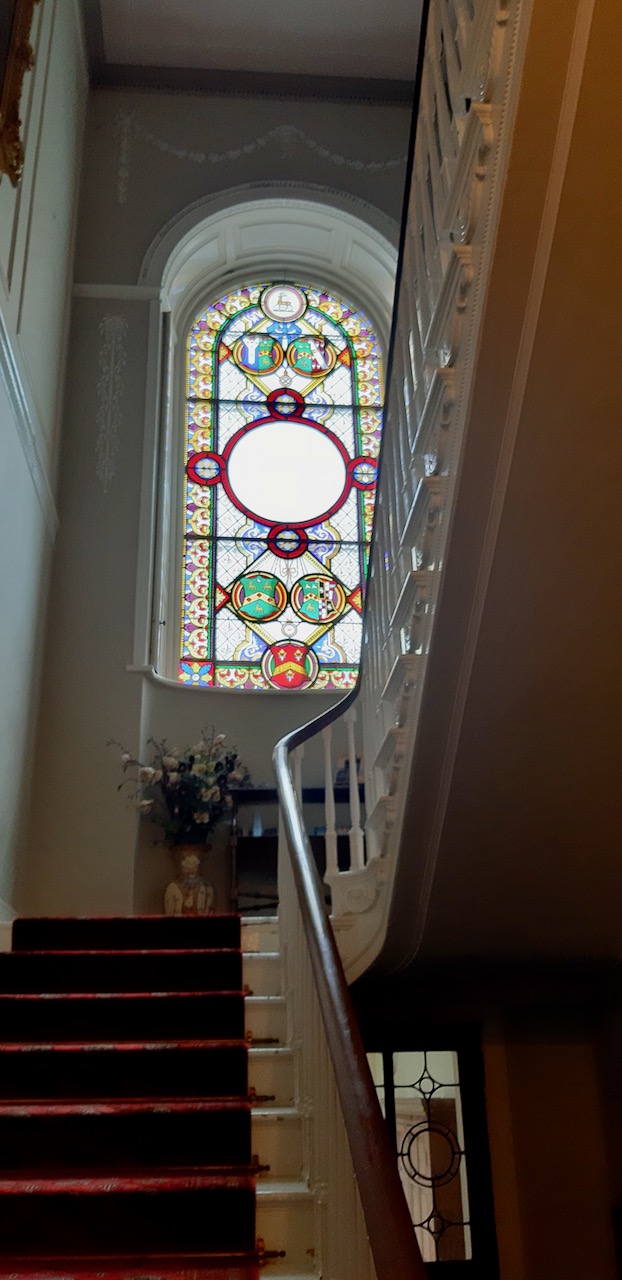
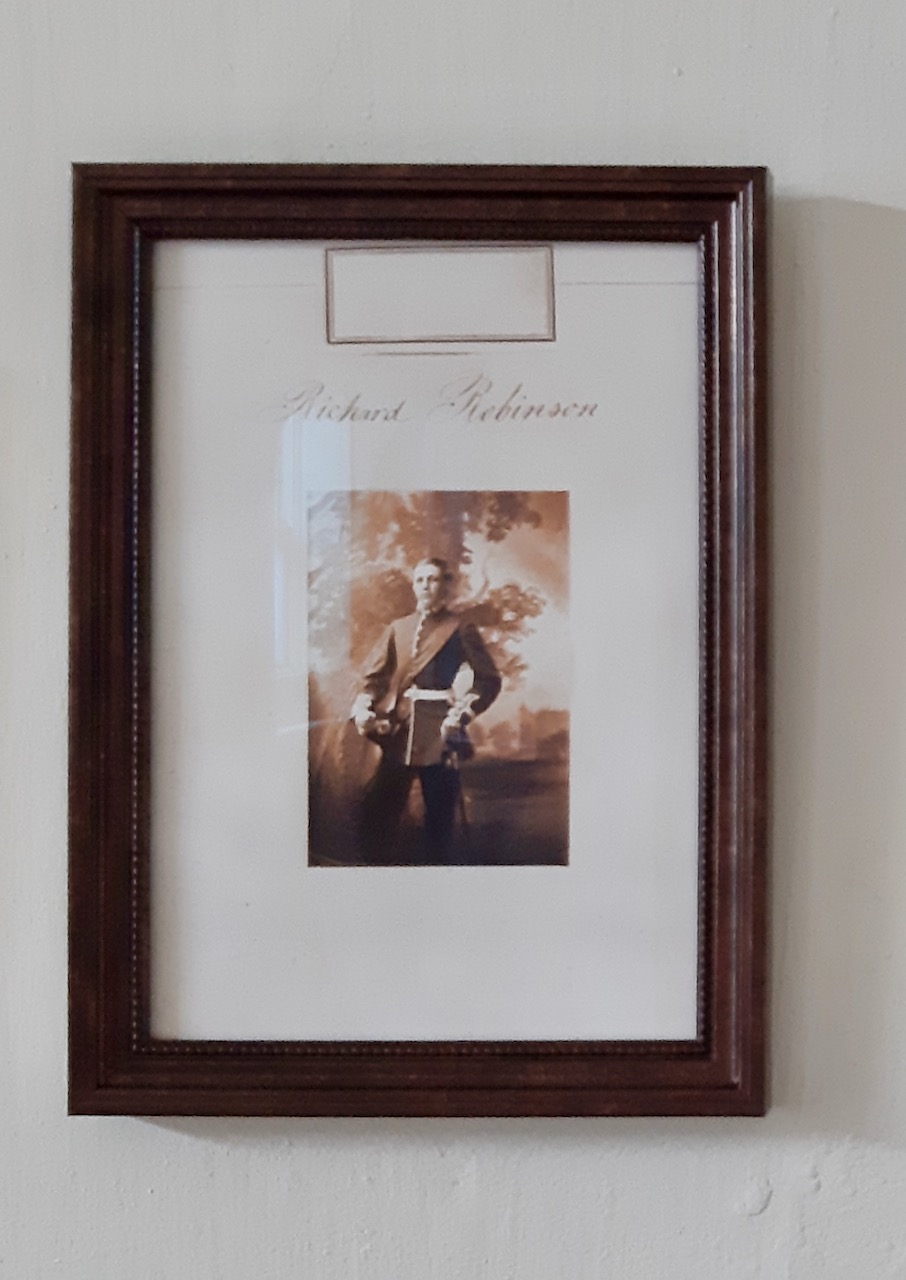
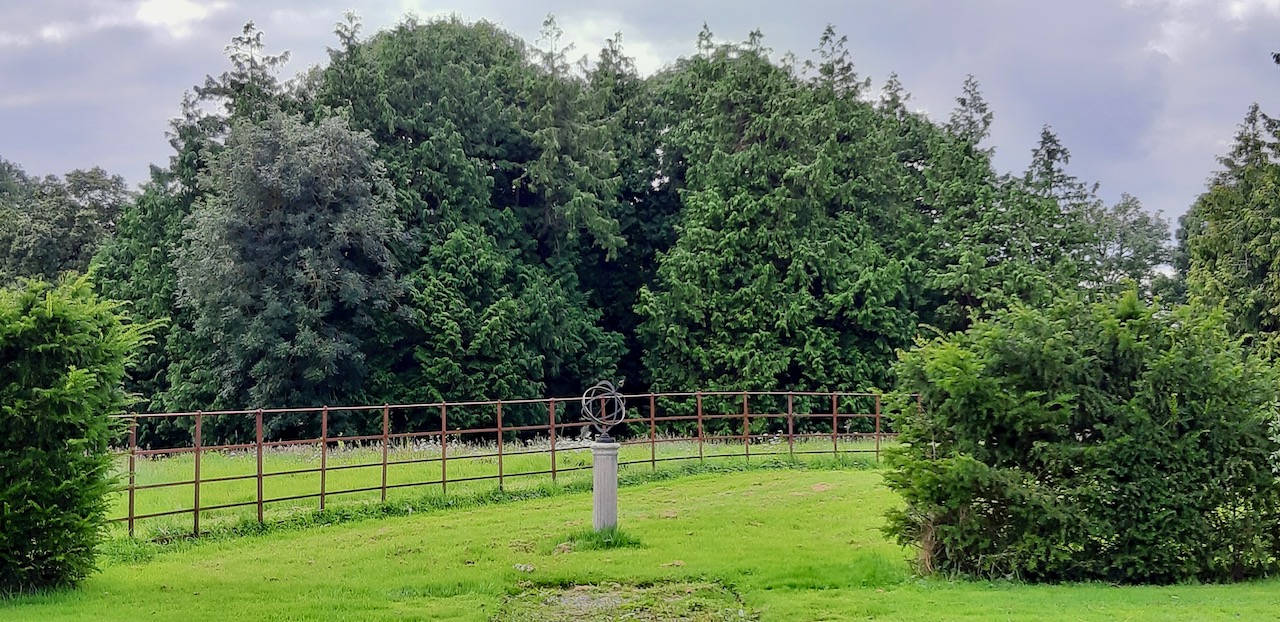
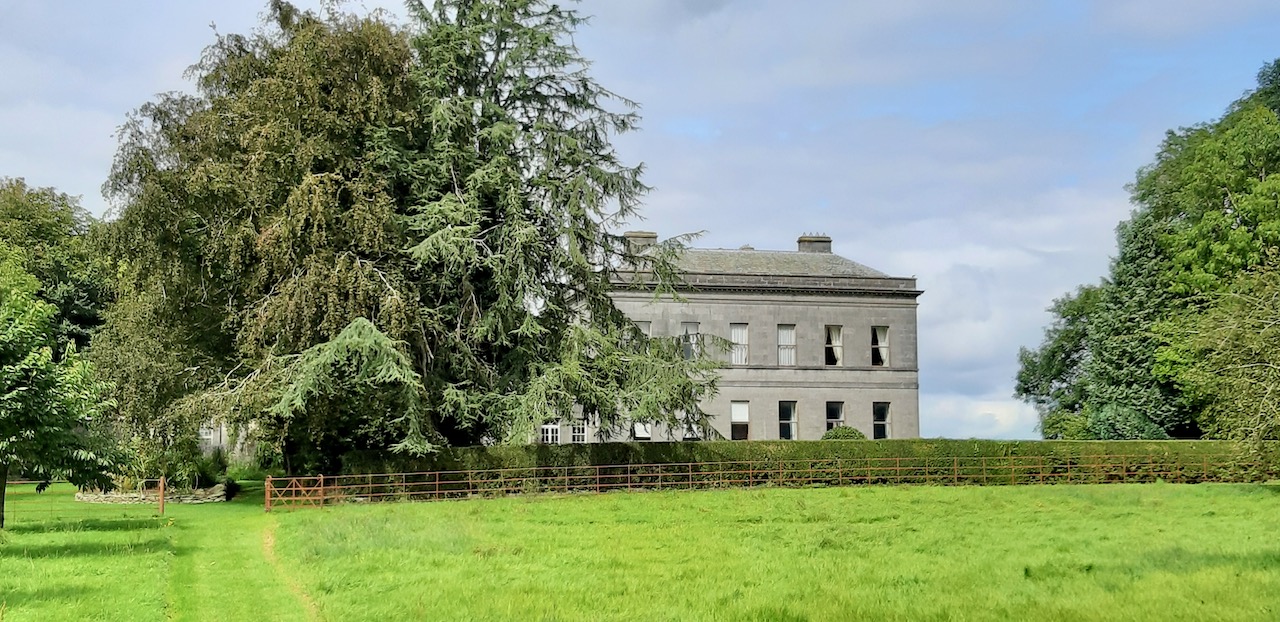

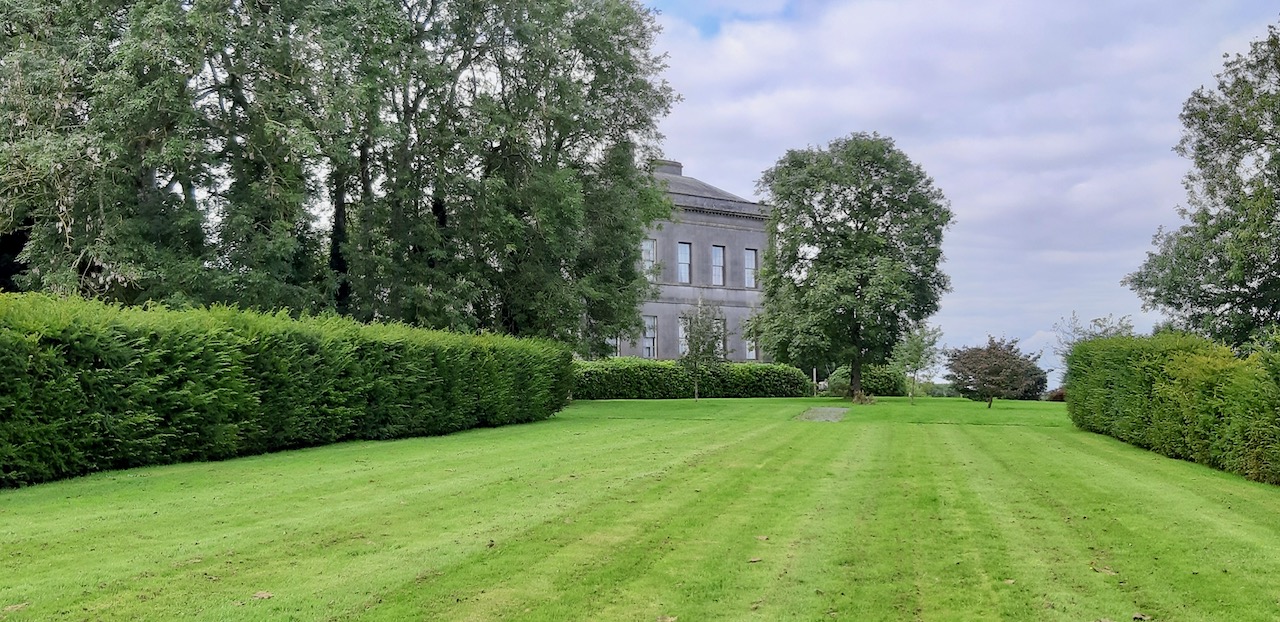
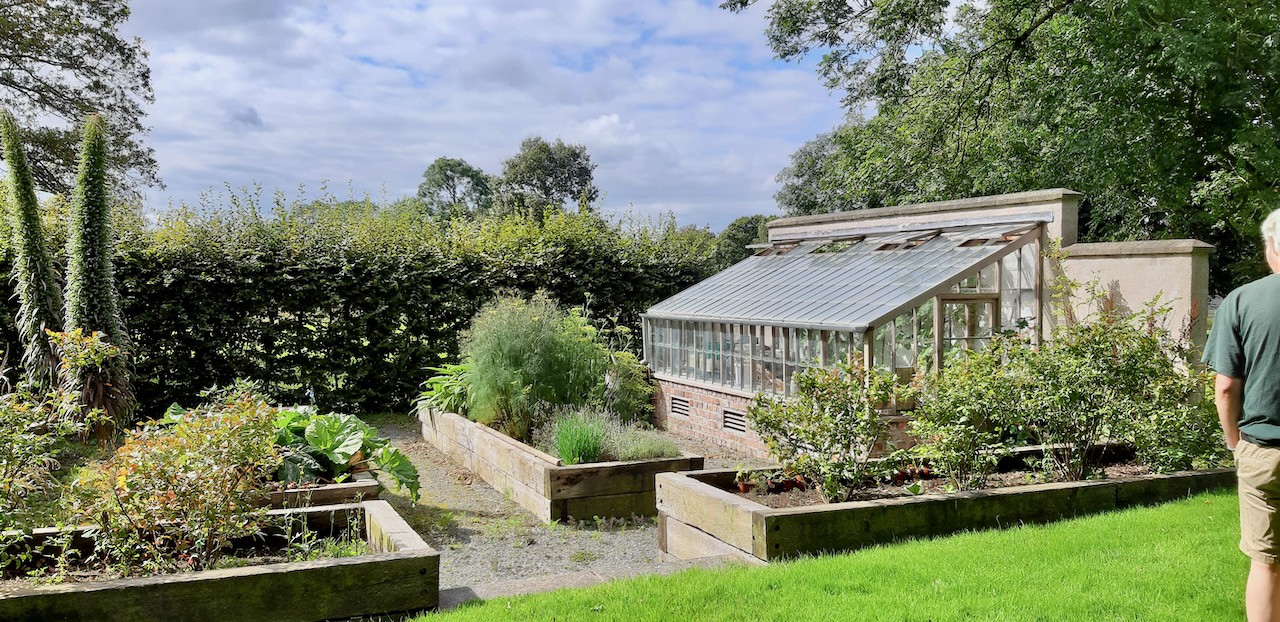

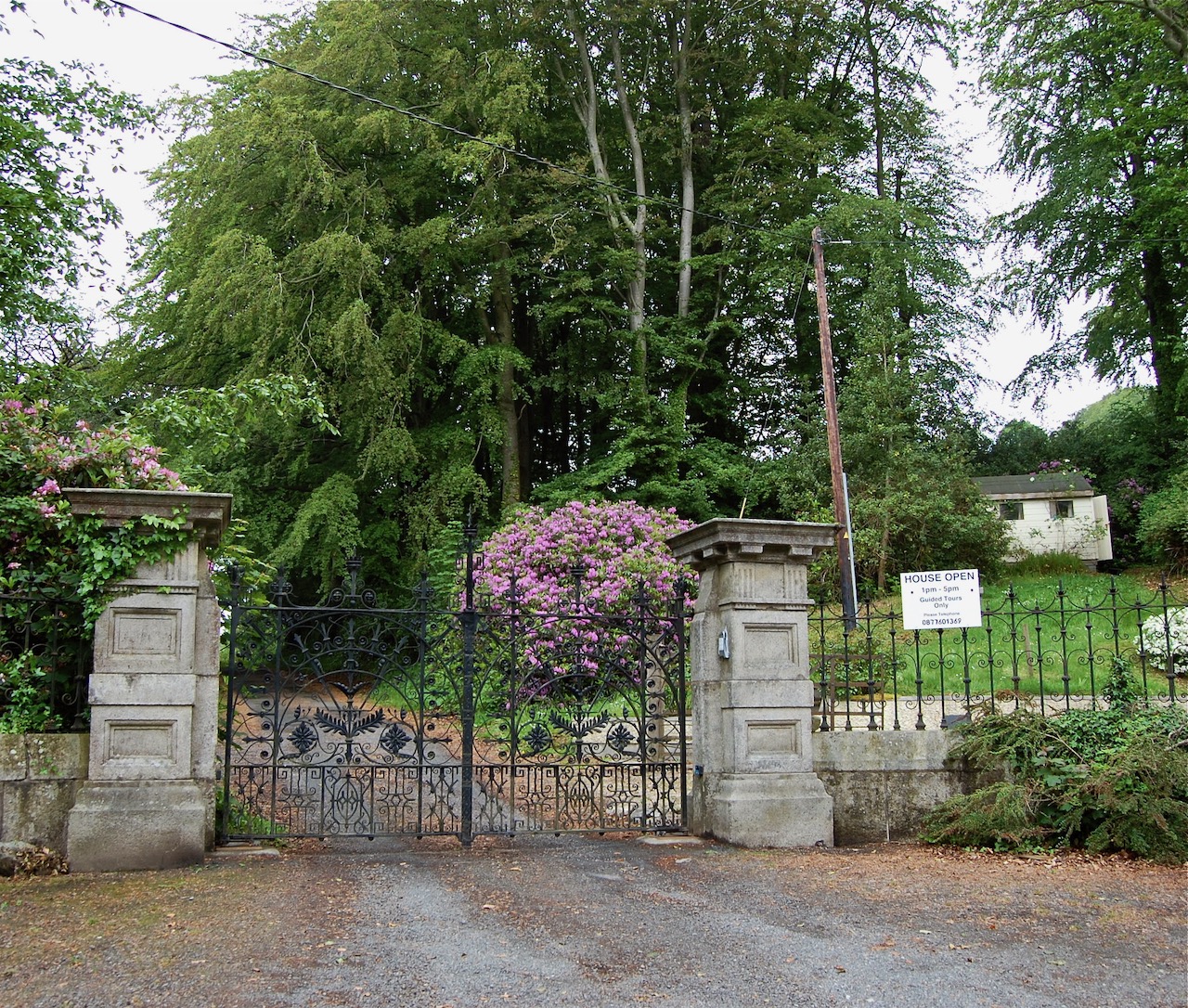
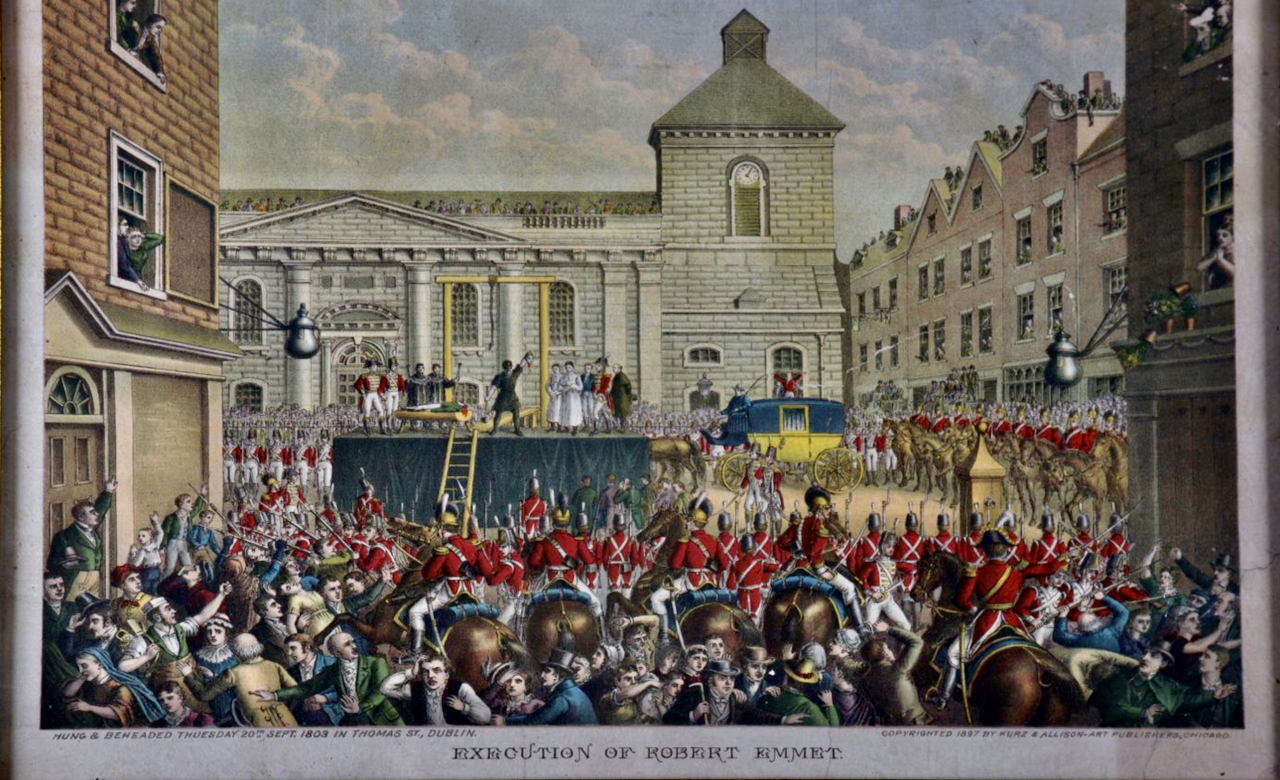
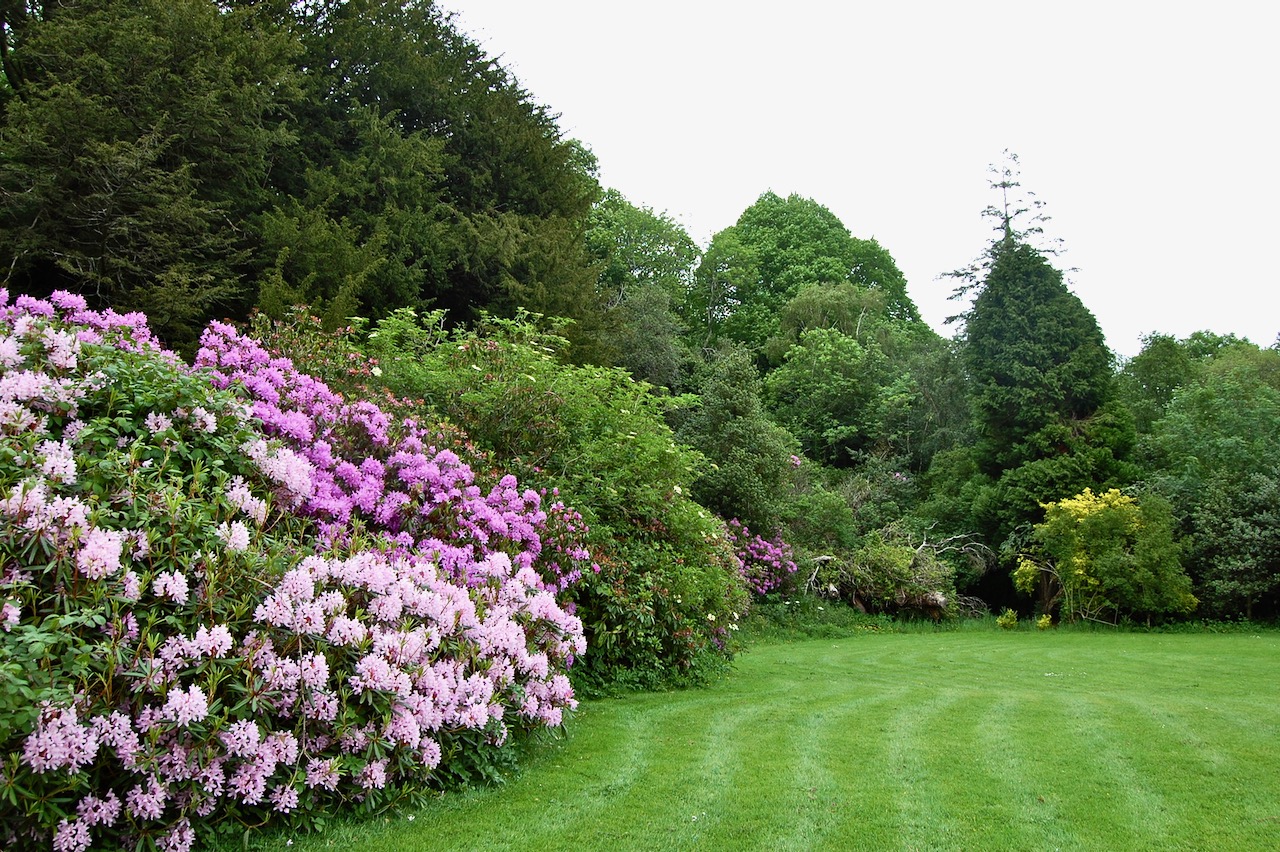
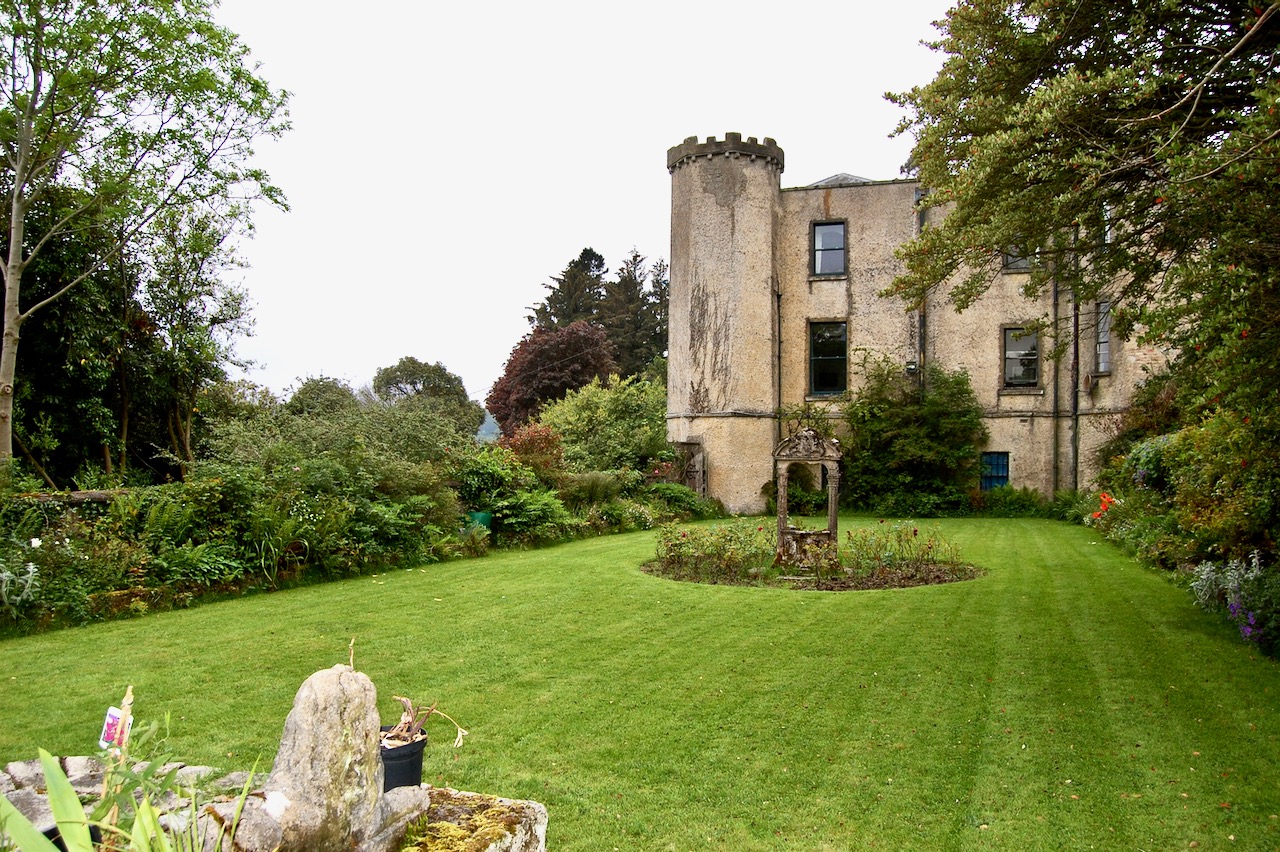
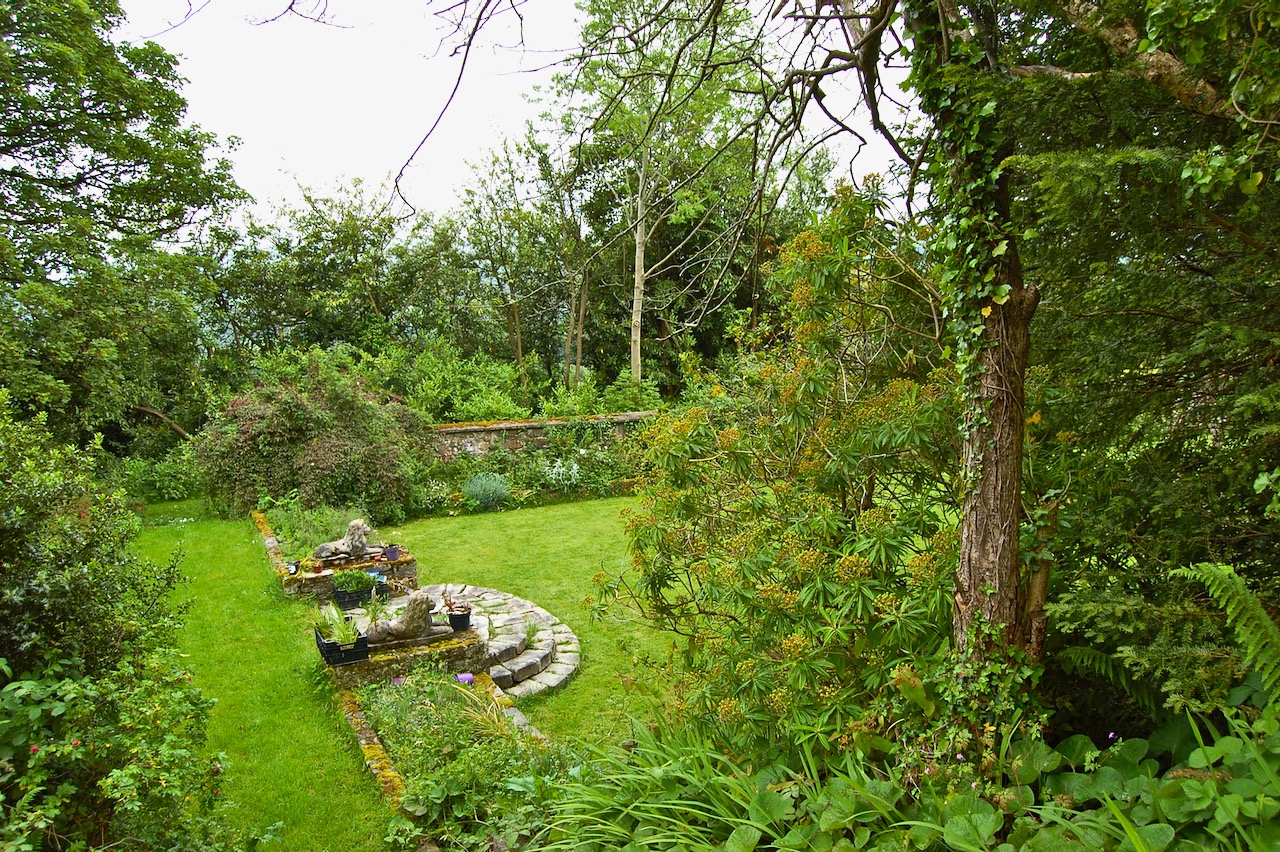
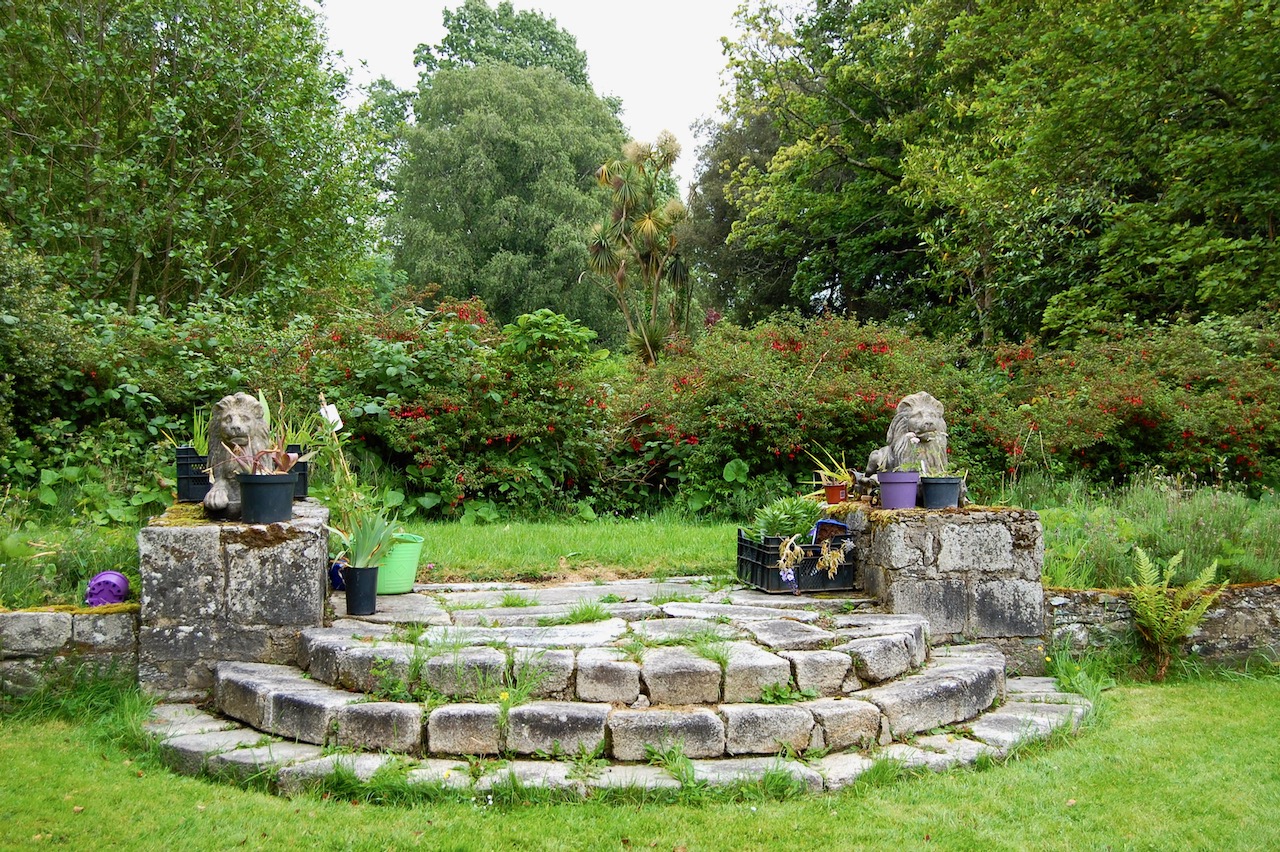


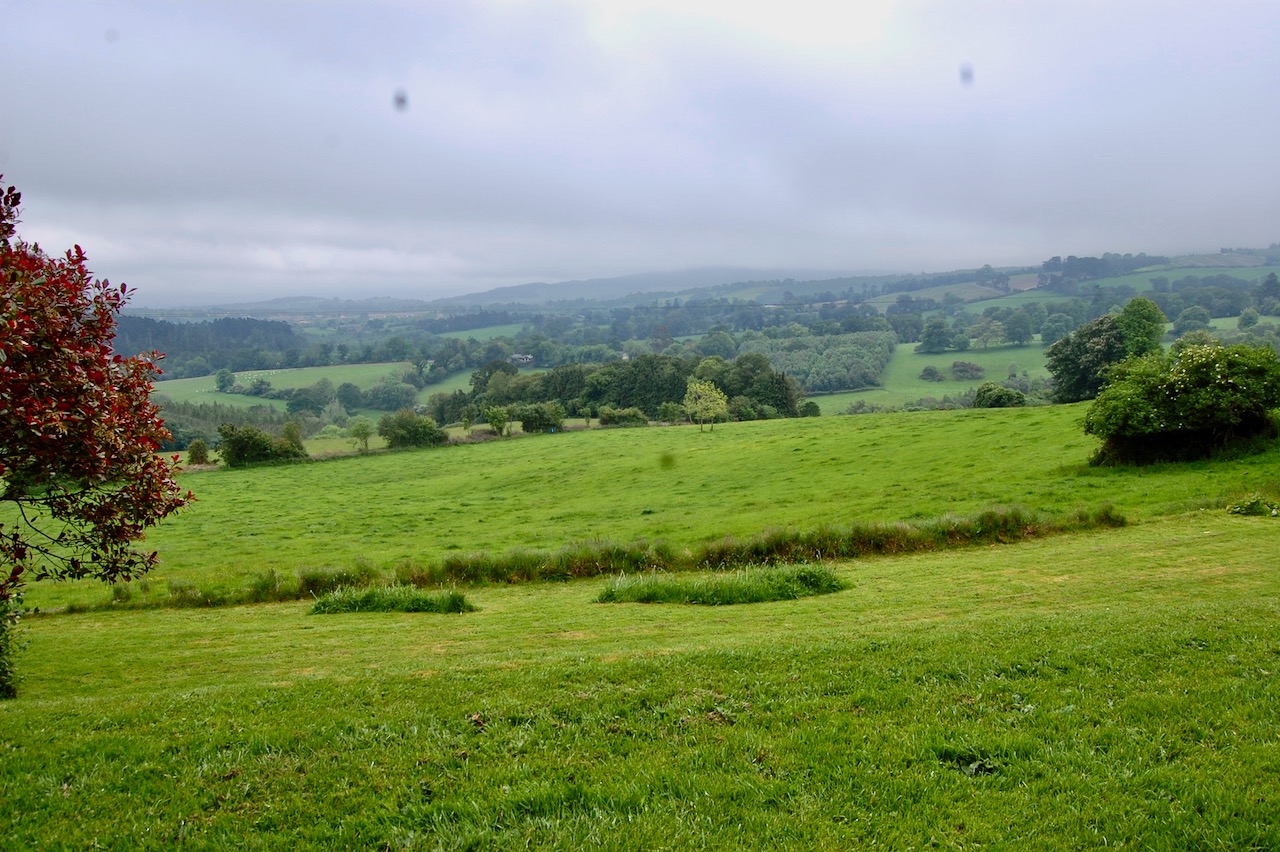
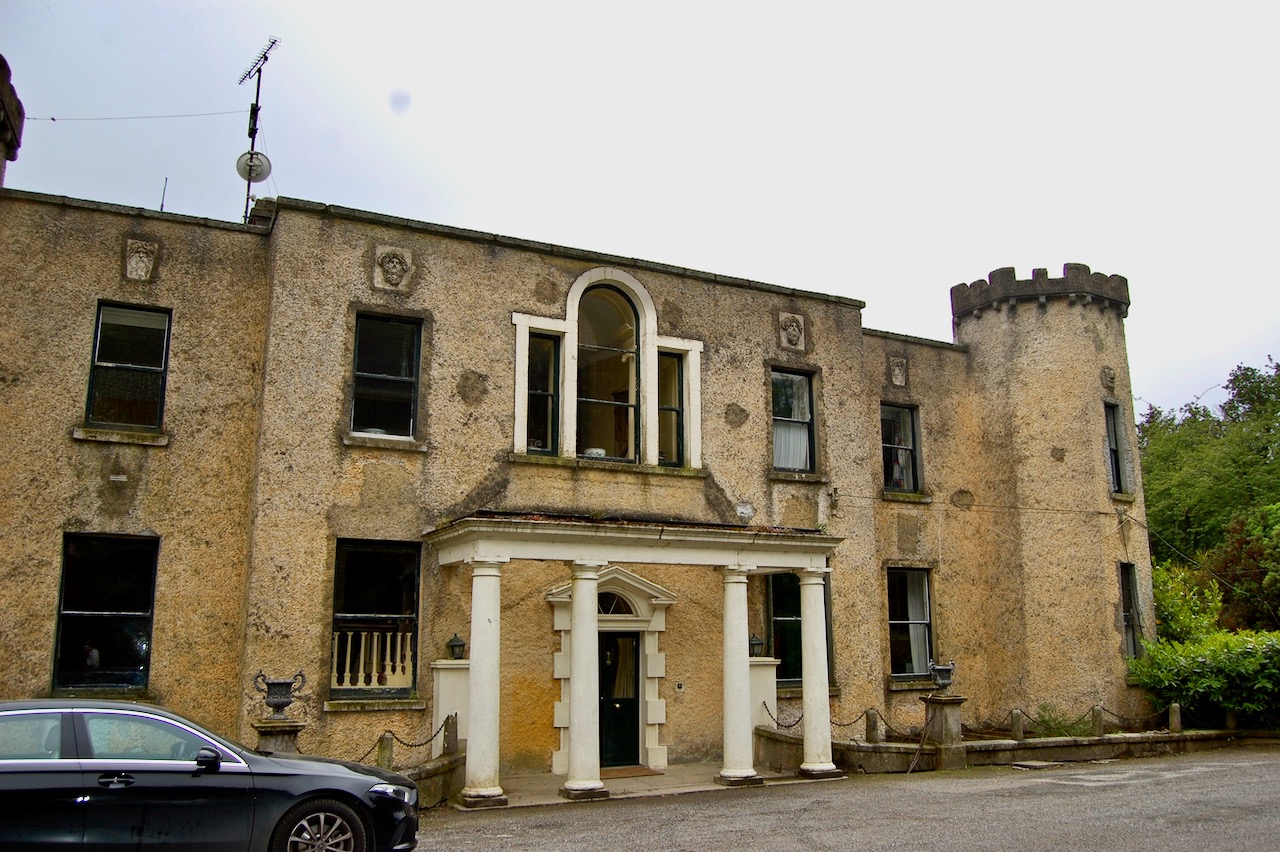
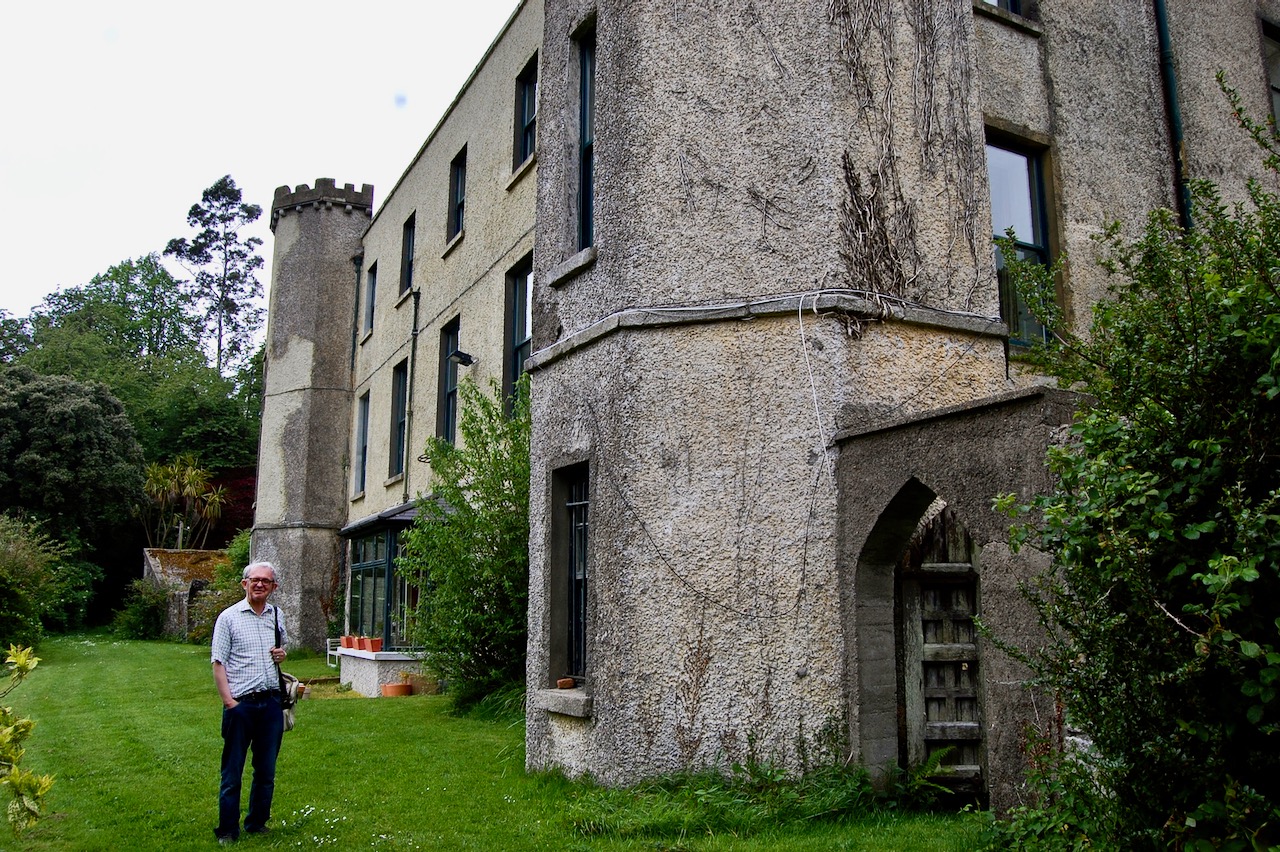
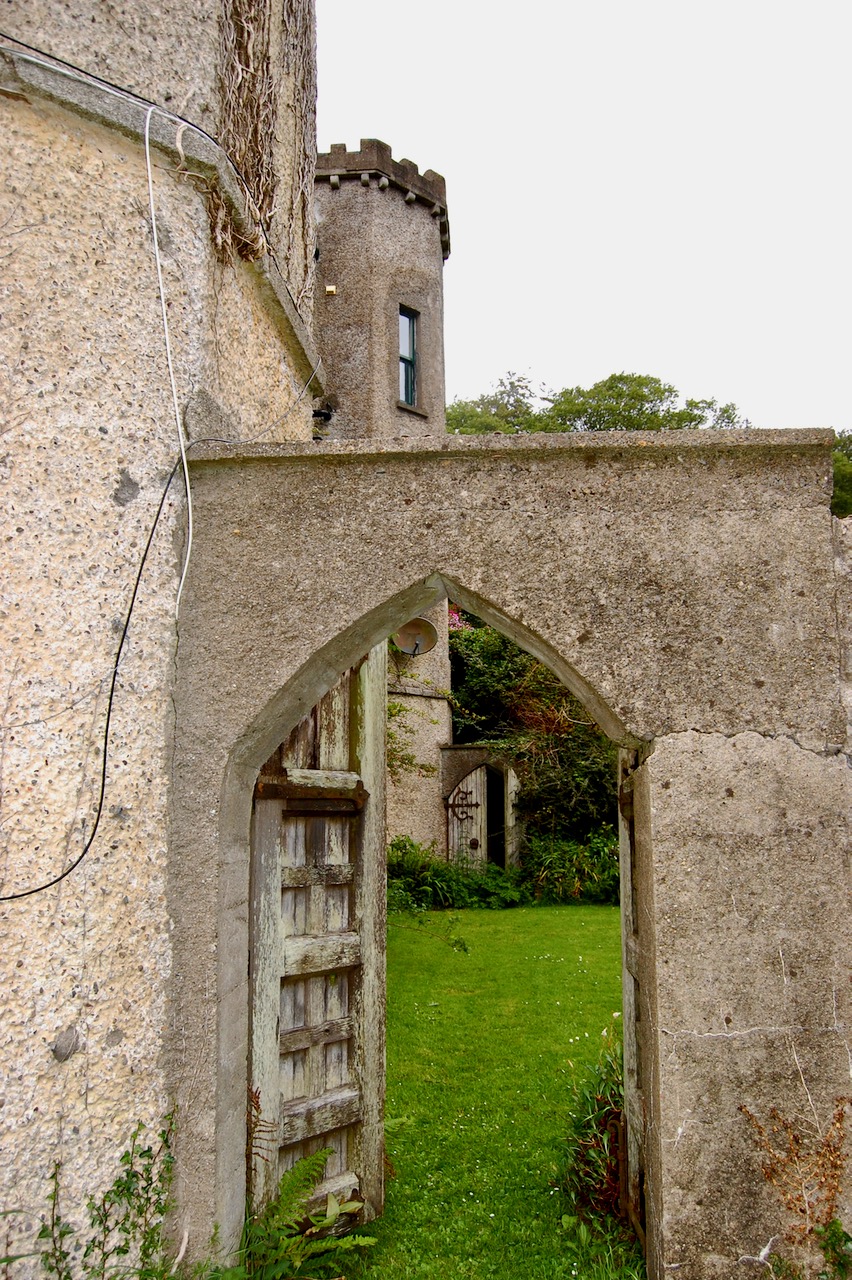
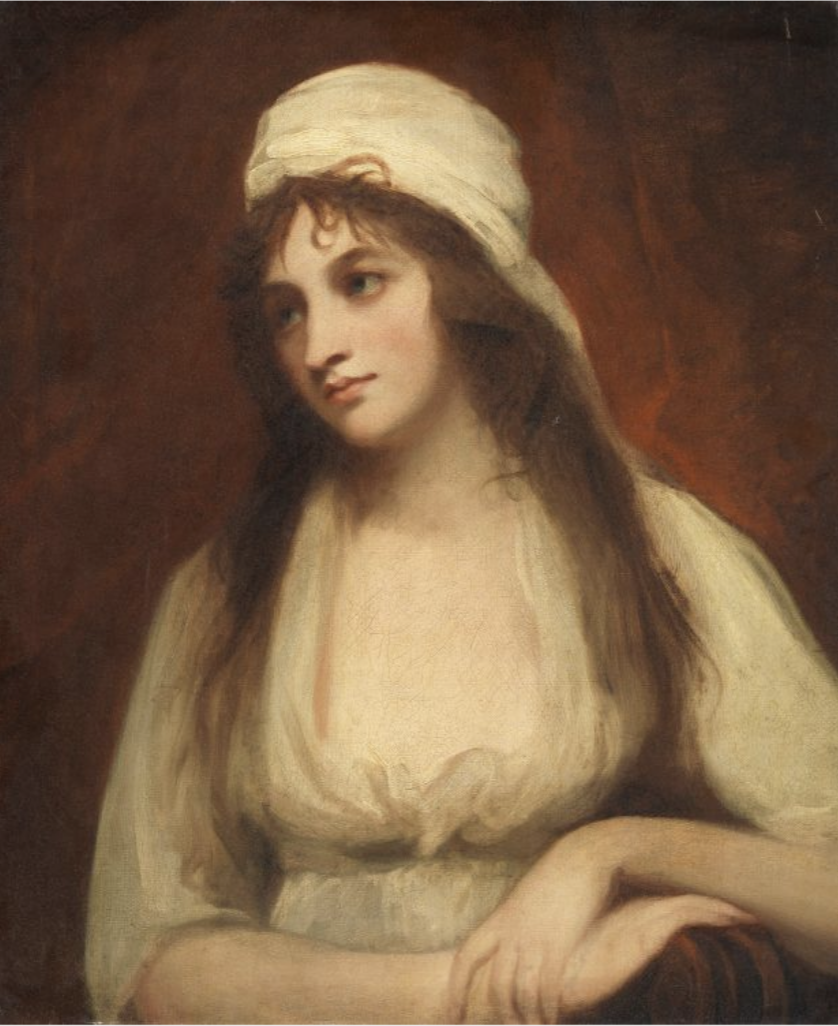
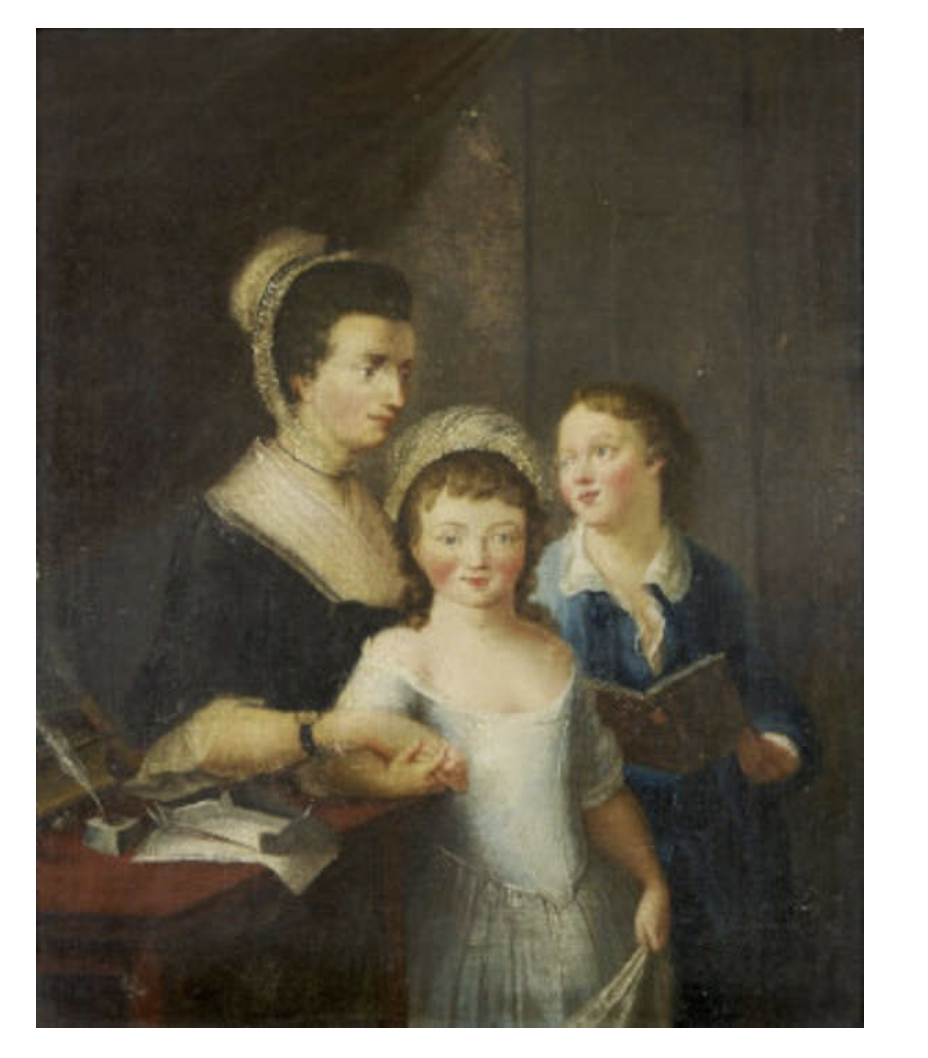

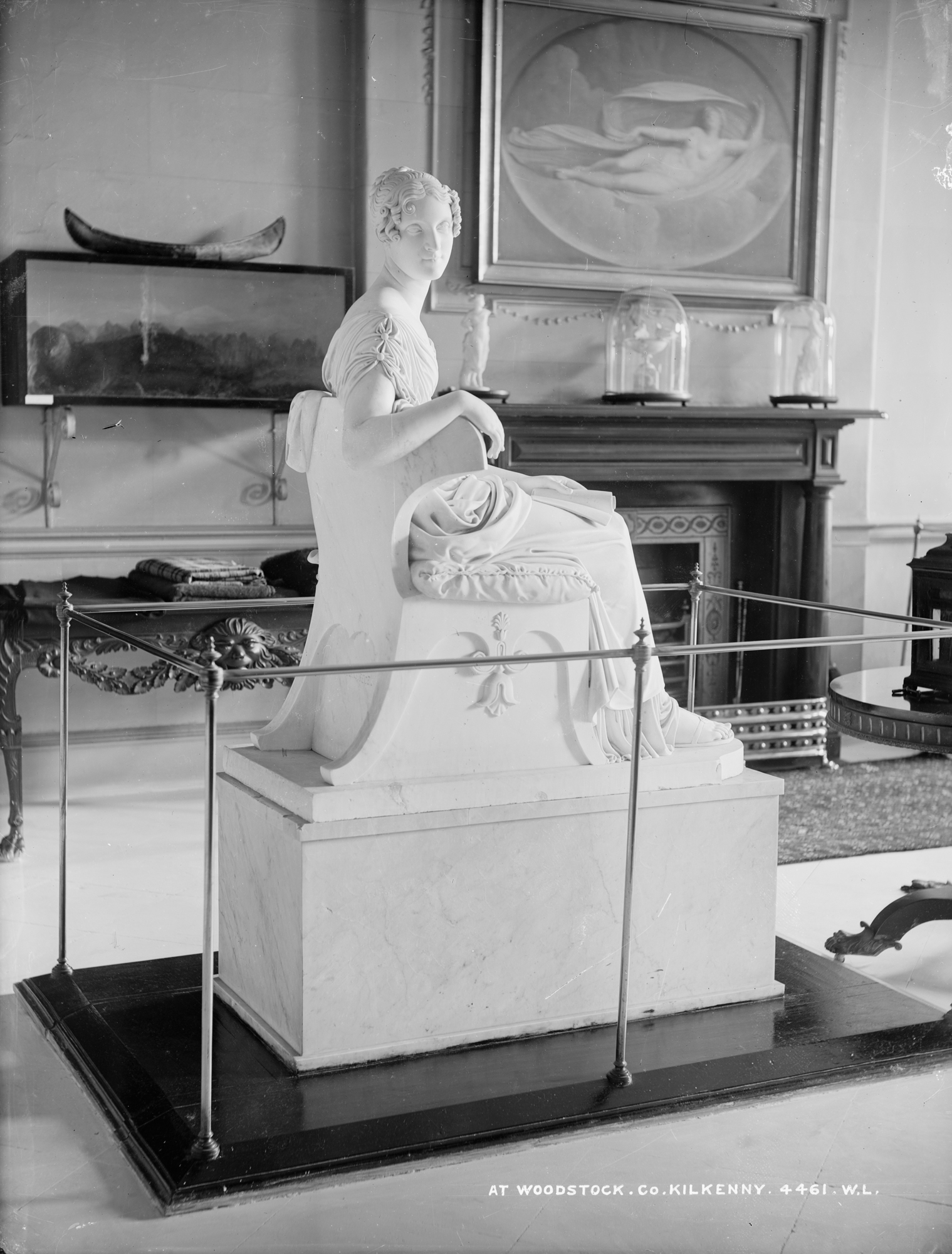
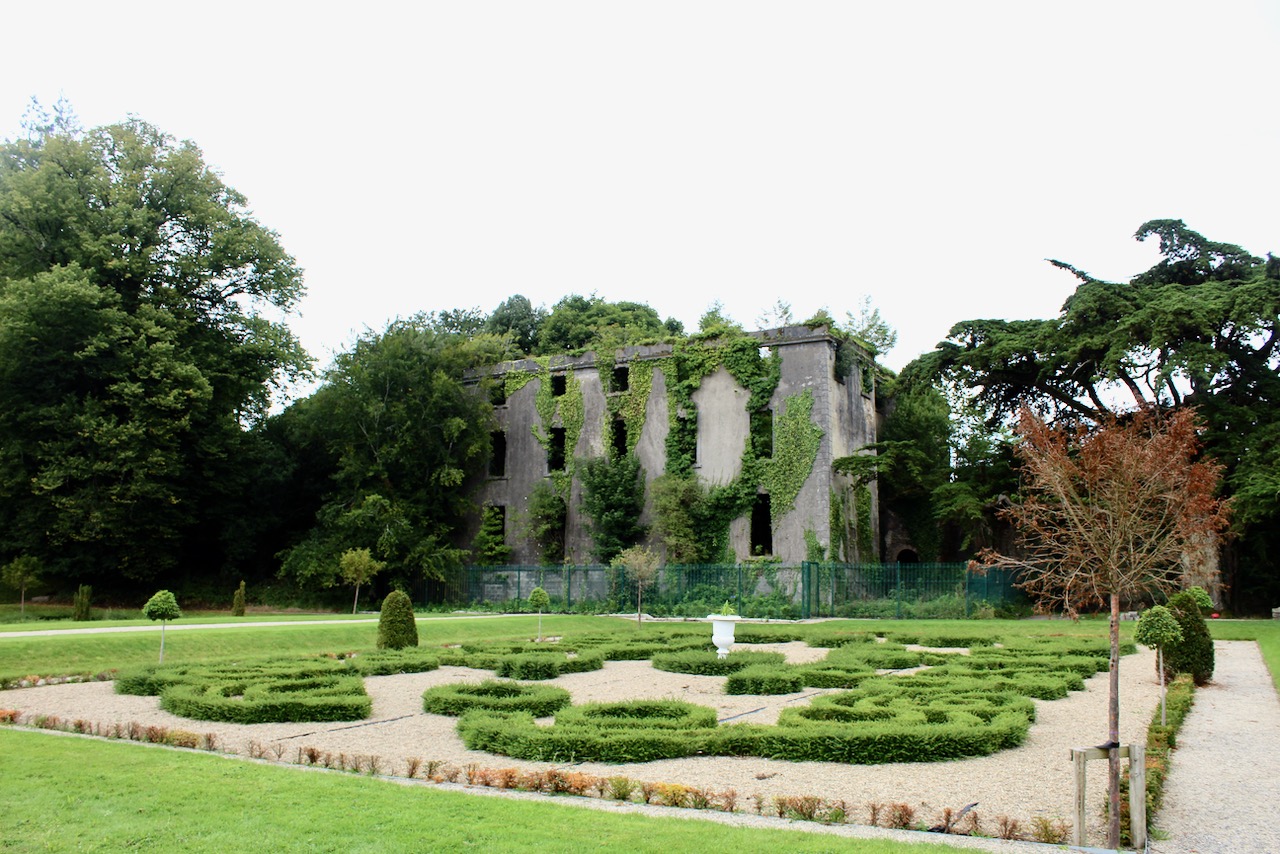
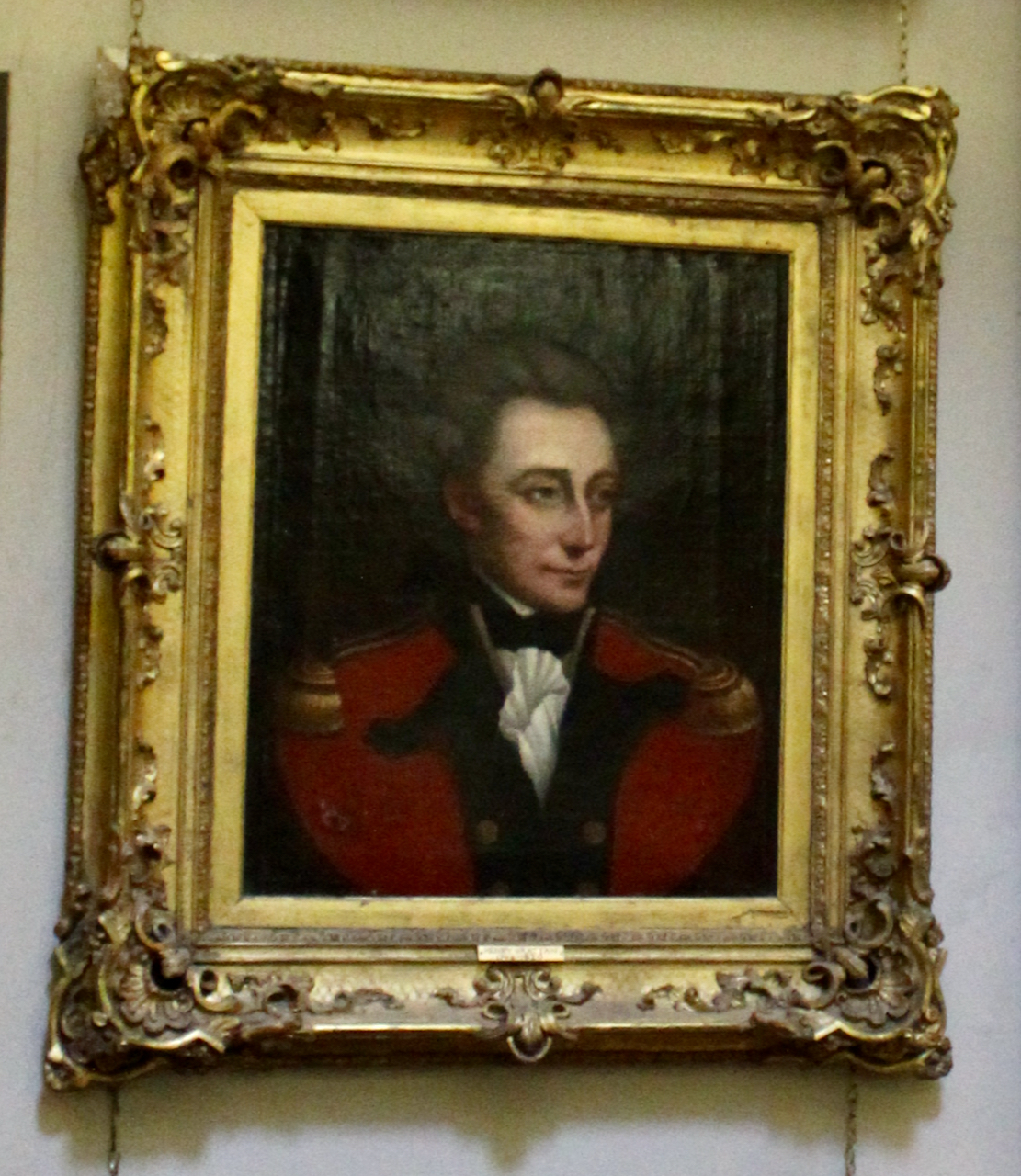


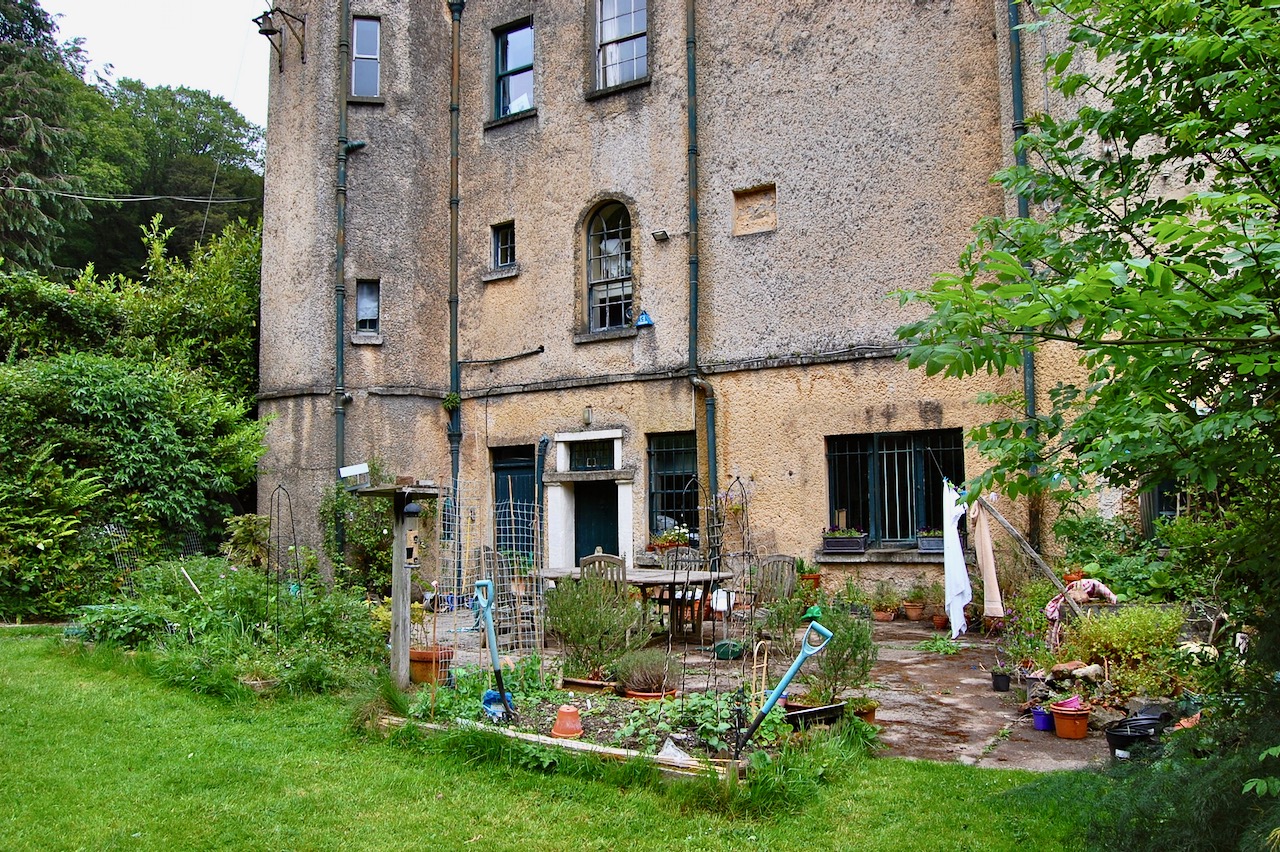



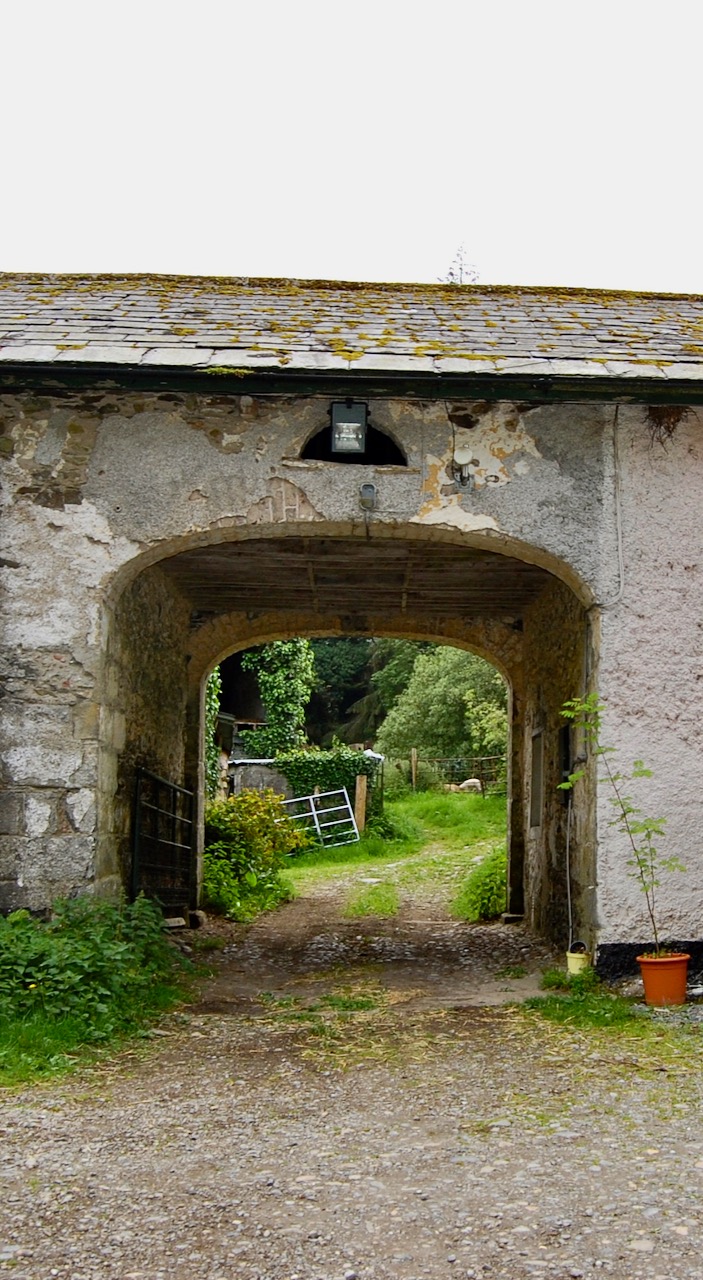
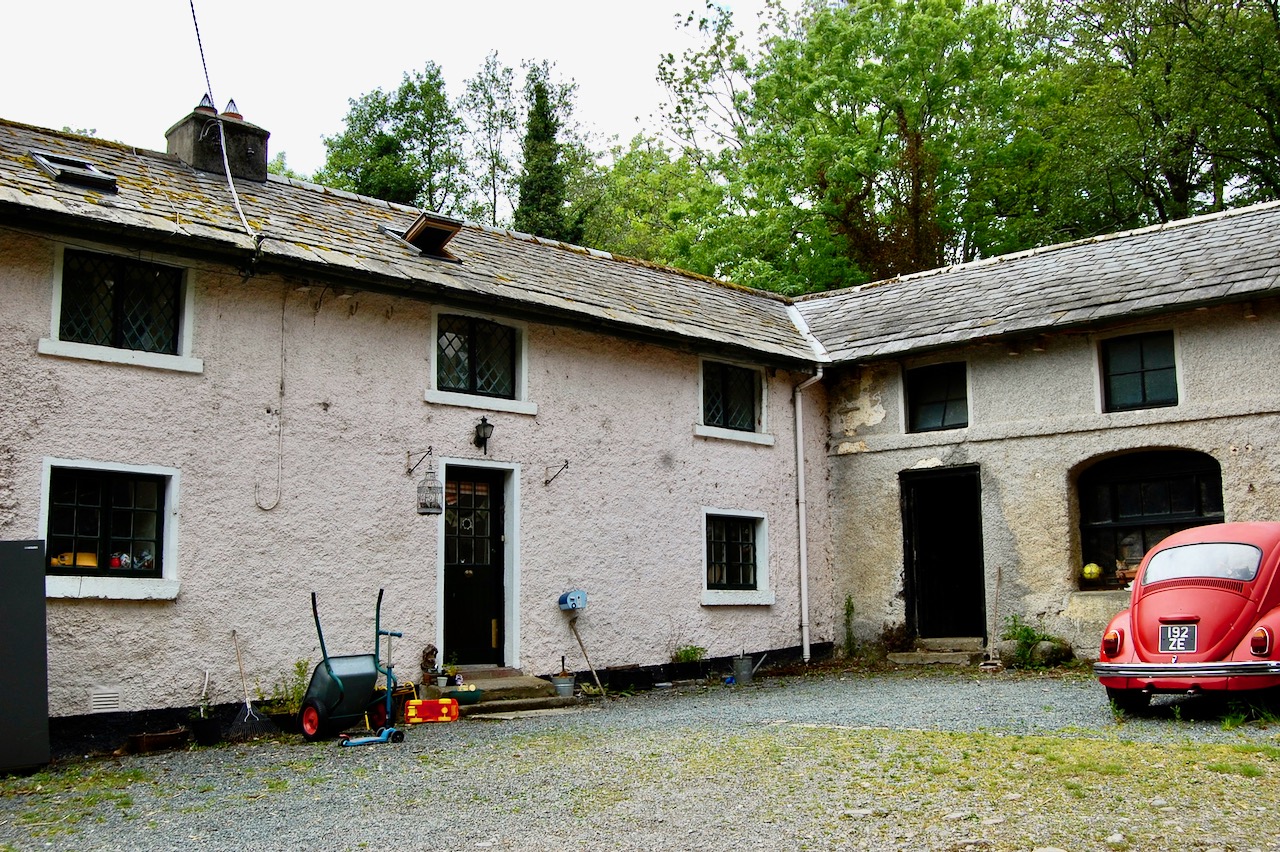

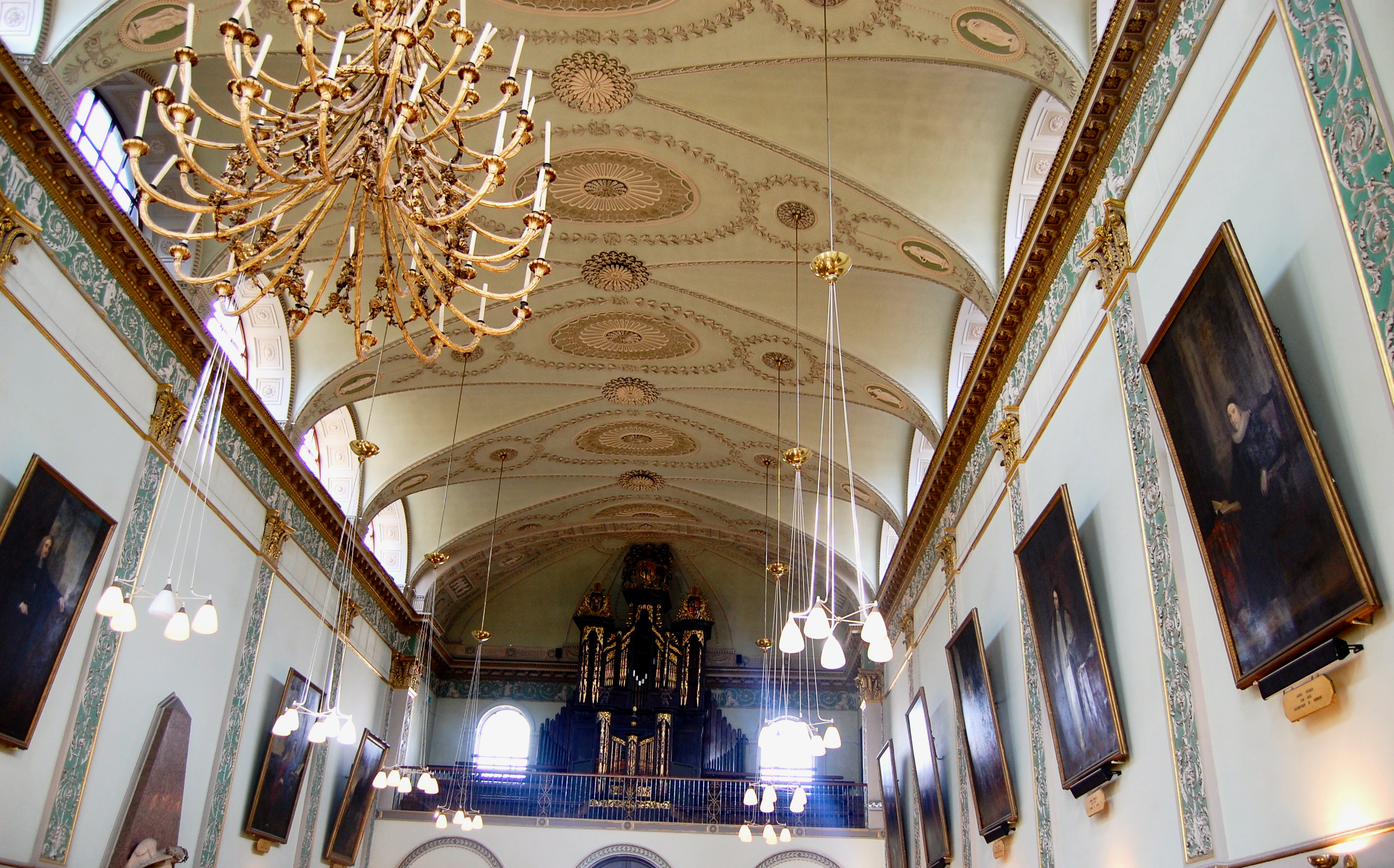
 Irish Historic Houses
