Thomas Fitzmaurice (1668-1741) 1st Earl of Kerry (21st Baron of Kerry), Viscount Clanmorris was the father of John Fitzmaurice Petty (1706-1761) 1st Earl of Shelburne, who added Petty to his name after his mother, Anne Petty (d. 1737). Another son of the 1st Earl of Kerry was his heir William FitzMaurice (1694-1747) who succeeded as 2nd Earl of Kerry.
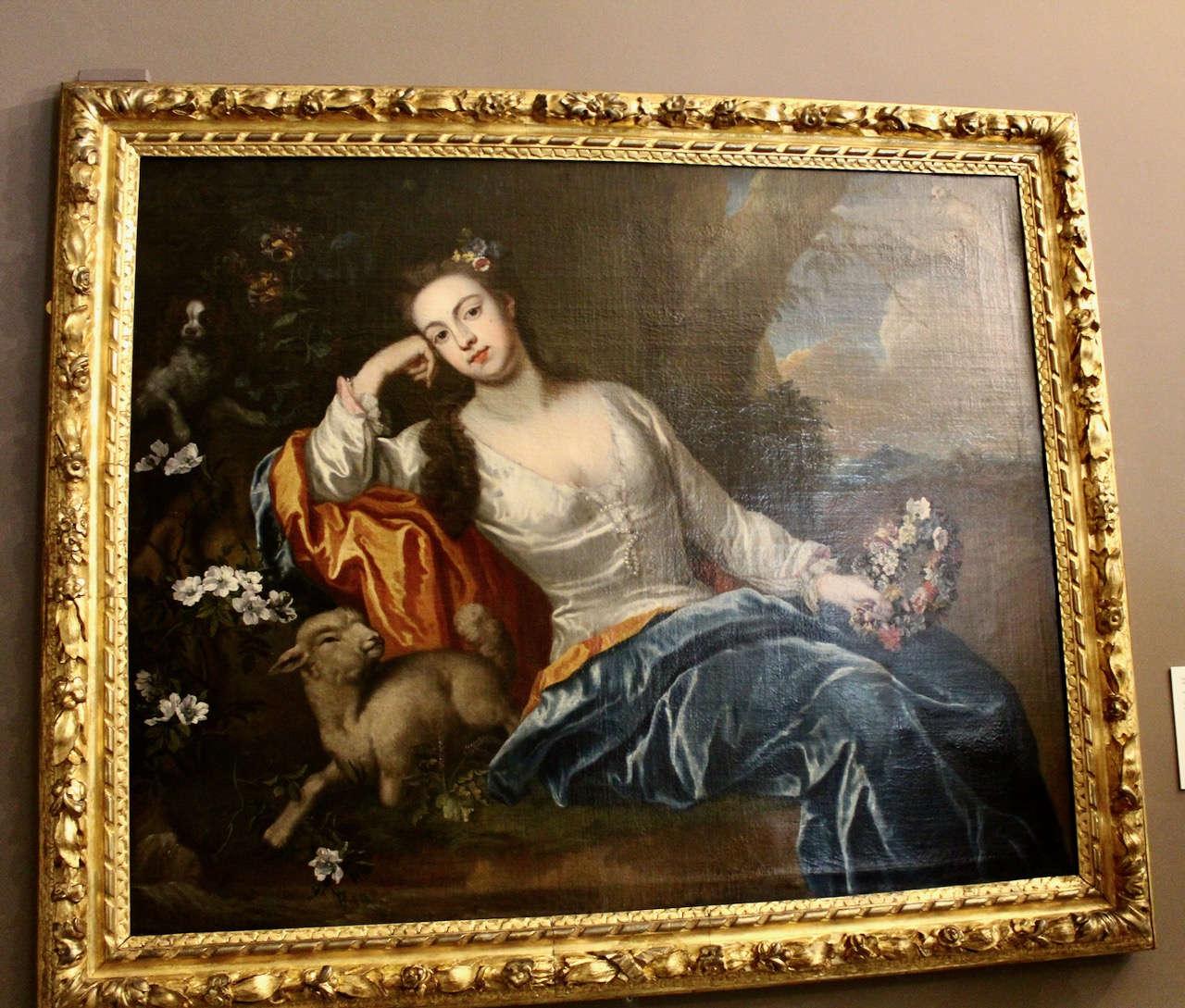
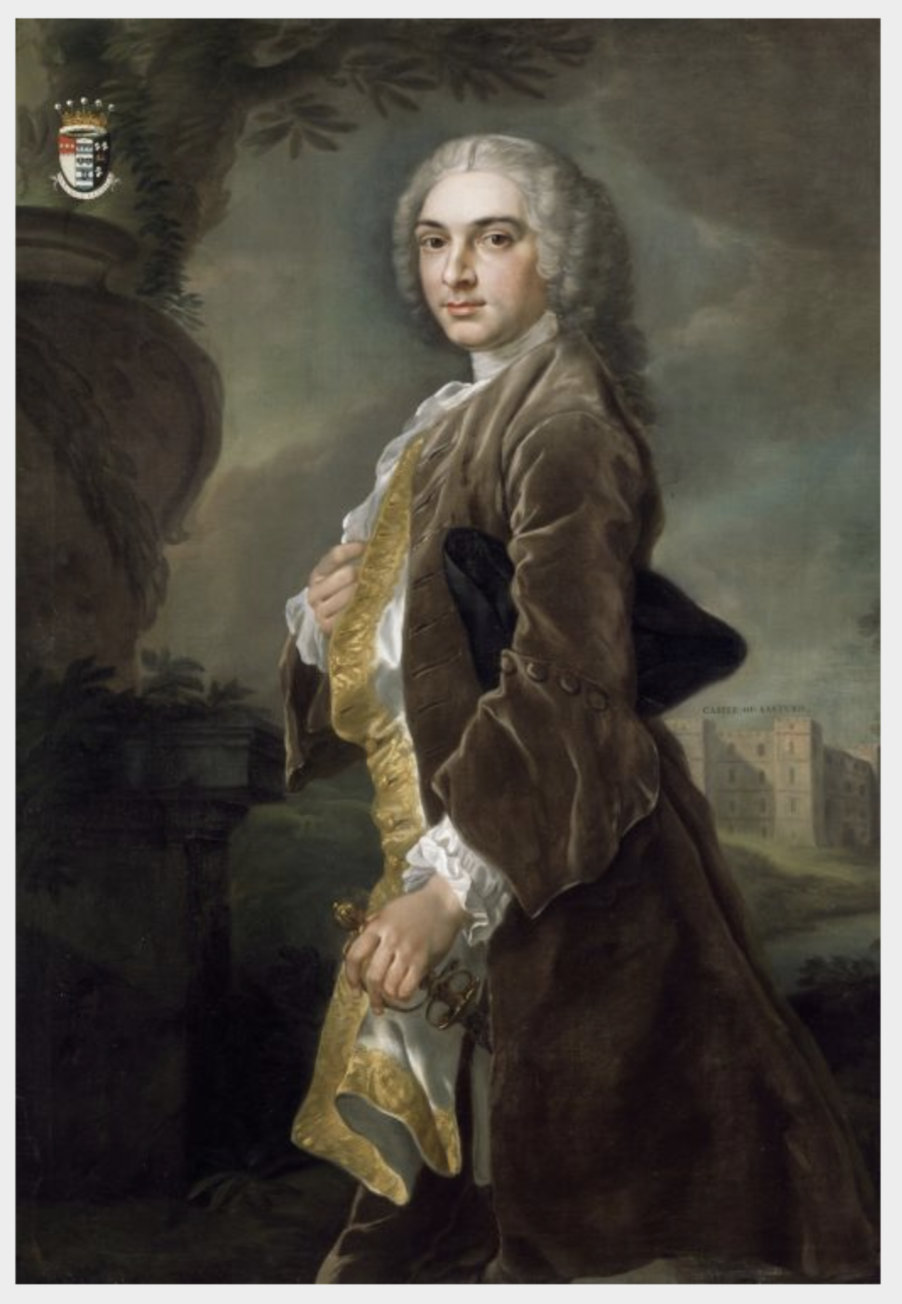
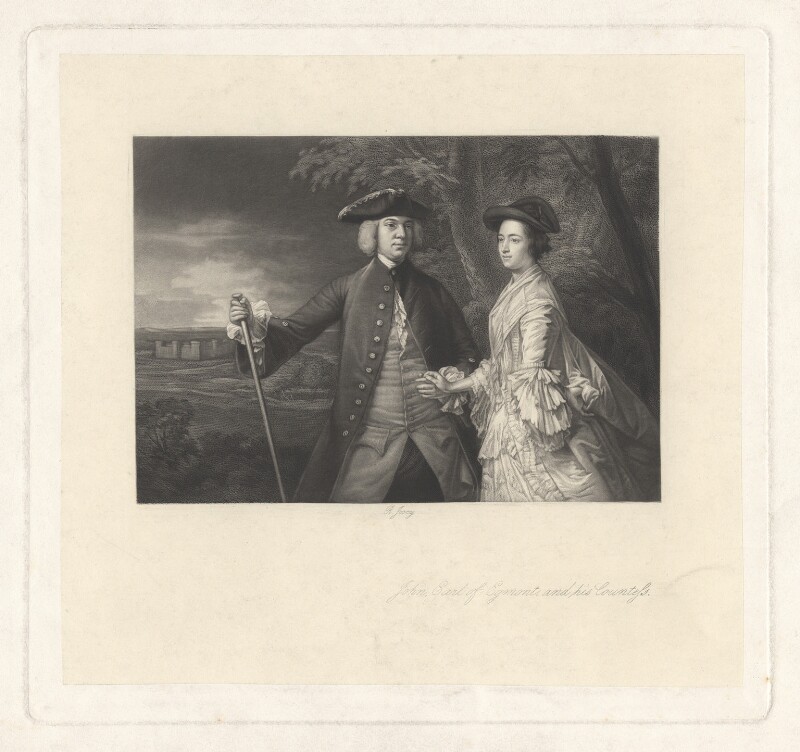
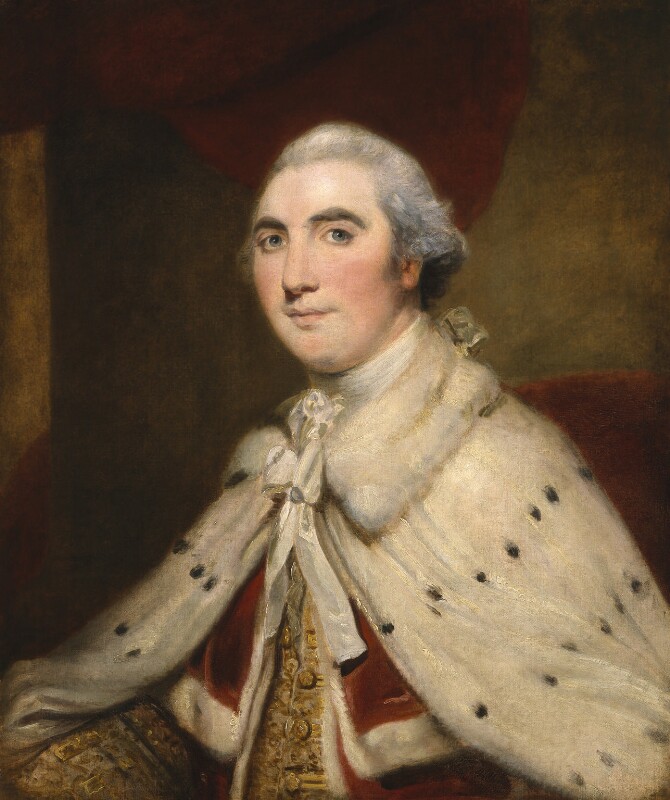
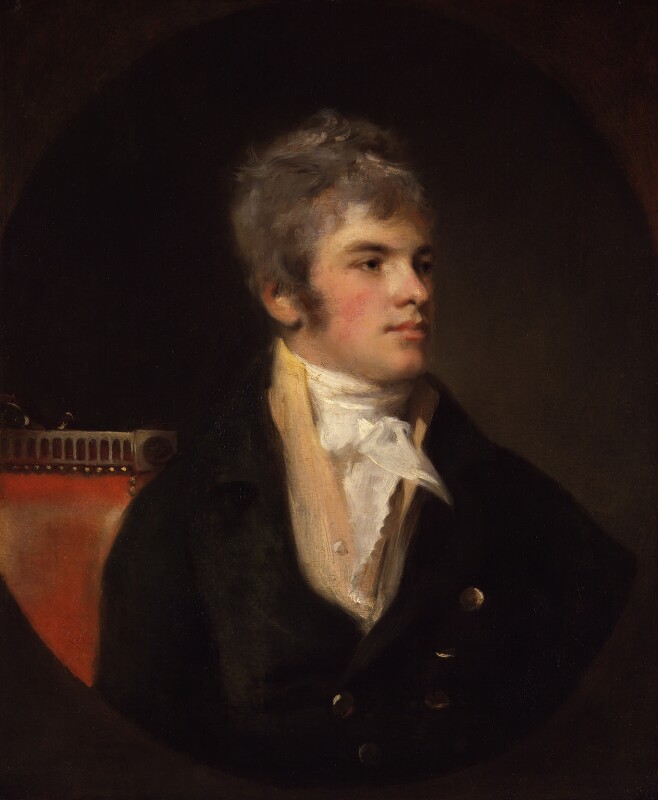
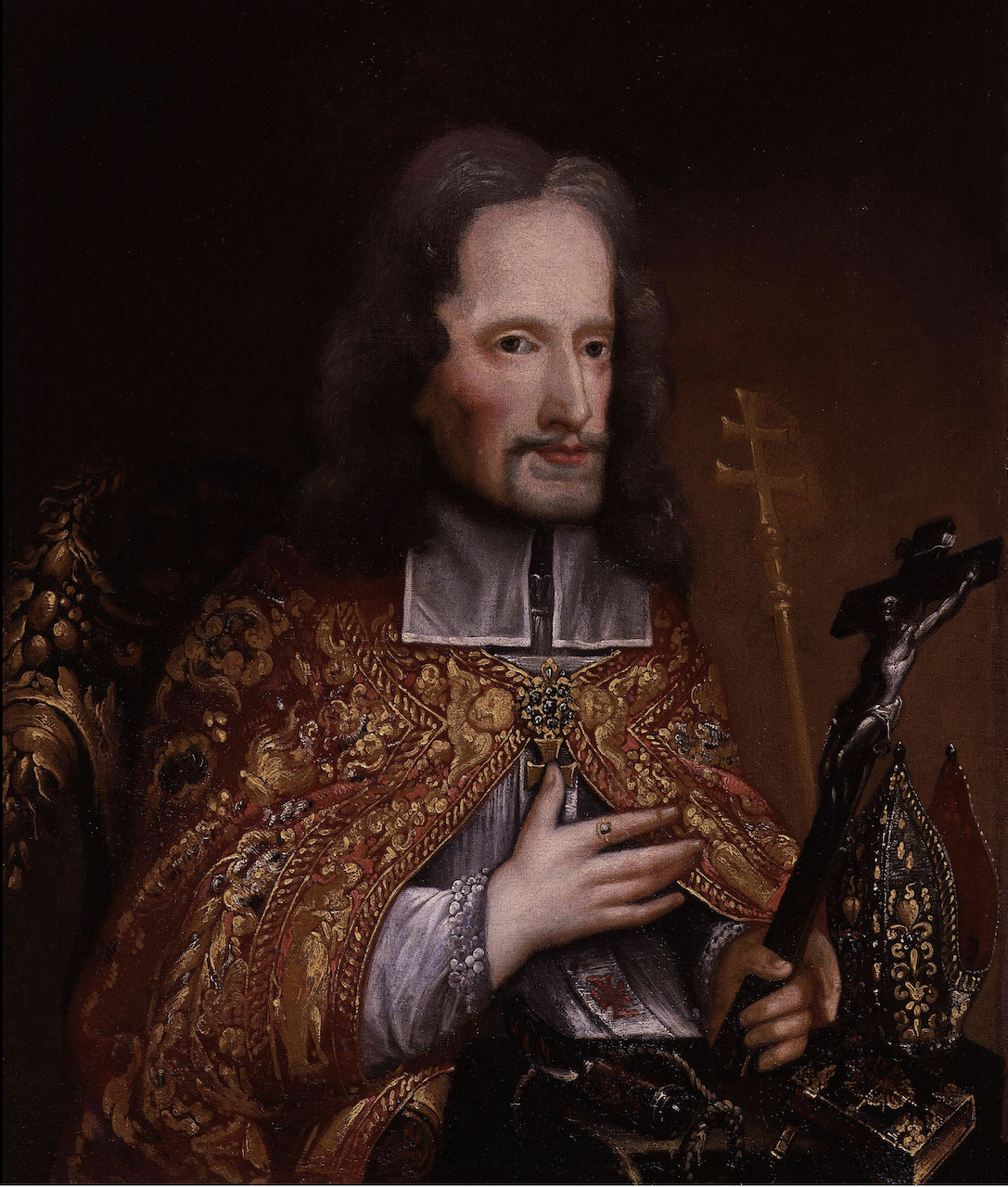
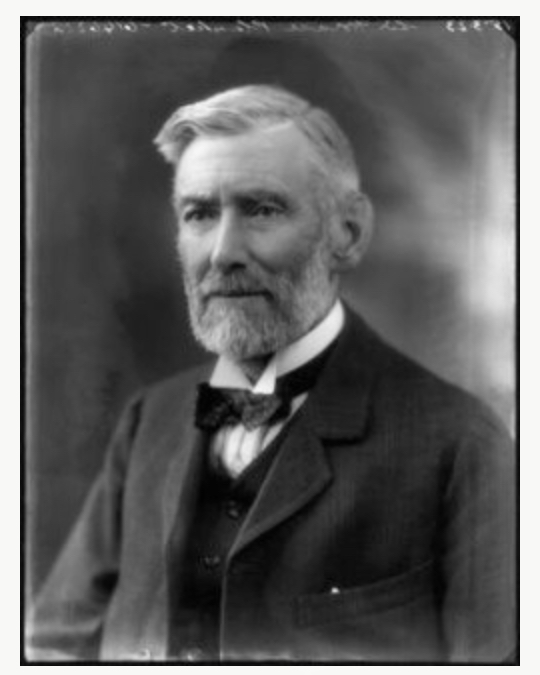
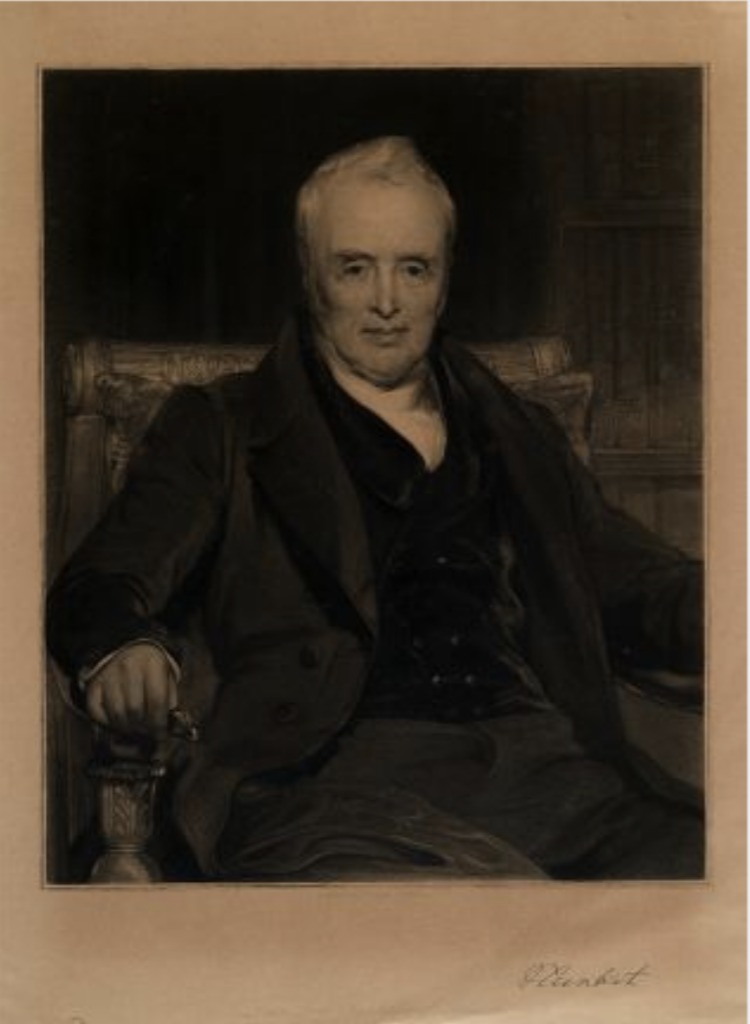
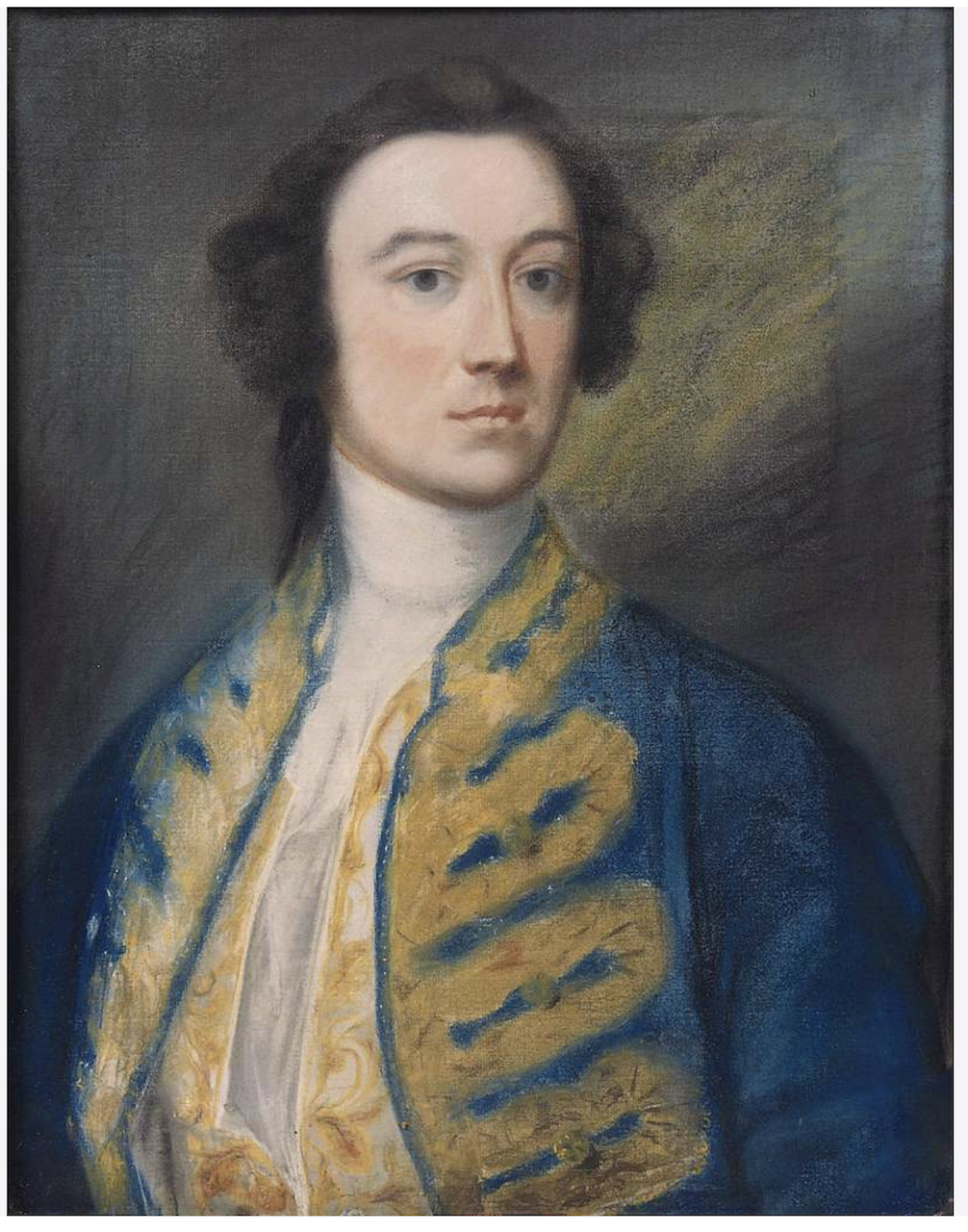
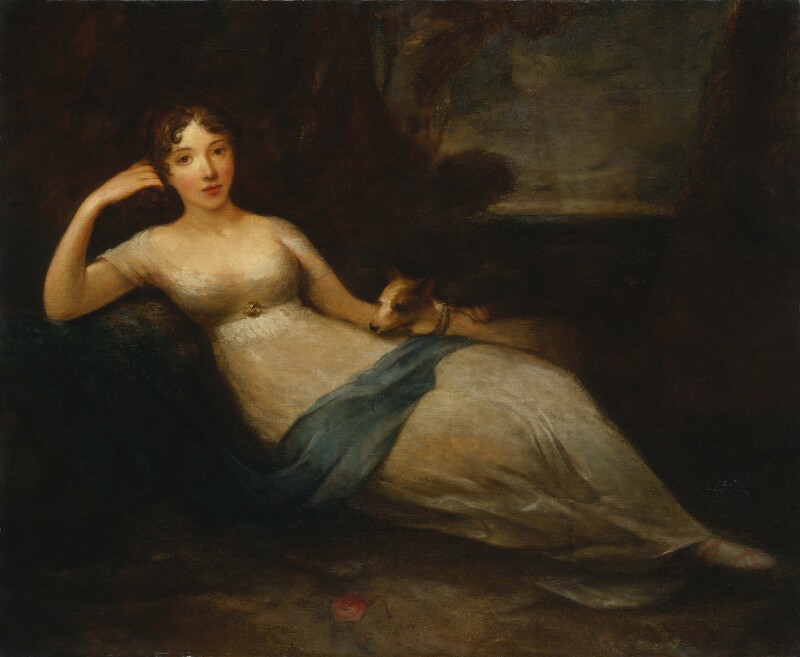
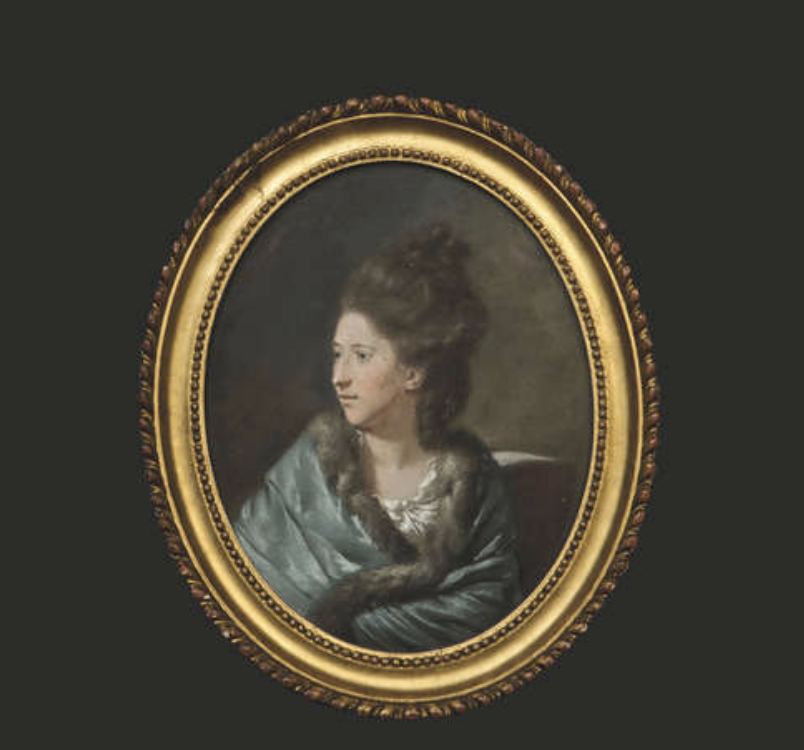
William Petty (1737-1805) 1st Marquess of Lansdowne Lord Shelburne, Prime Minister, after Sir Joshua Reynolds based on a work of 1766, National Portrait Gallery of London 43.He was the son of John Fitzmaurice Petty (1706-1761) 1st Earl of Shelburne, who was the son of Thomas Fitzmaurice 1st Earl of Kerry (21st Baron of Kerry), Viscount ClanmorrisLouisa Lansdowne née Fitzpatrick, wife of William Petty 1st Marquess of Lansdowne by Joshua Reynolds from Catalogue of the pictures and drawings in the National loan exhibition, in aid of National gallery funds, Grafton Galleries, London. She was a daughter of John FitzPatrick 1st Earl of Upper Ossory.John Henry Petty (1765-1809) 2nd Marquess of Lansdowne National Portrait Gallery of London ref. D37171.John Henry Petty (1765-1809), 2nd Marquis of Lansdowne by Francois-Xavier Fabre, 1795.Henry Petty-Fitzmaurice (1780-1863) 3rd Marquess of Lansdowne, Trustee of the National Portrait Gallery, by Henry Walton circa 1805 courtesy of National Portrait Gallery, NPG 178.Henry Thomas Petty-Fitzmaurice (1816-1866) 4th Marquess of Lansdowne, Politician and railway company chairman, photograph by by John & Charles Watkins circa early 1860s, courtesy of National Portrait Gallery NPG Ax16422.Henry Charles Keith Petty-Fitzmaurice 5th Marquess of Lansdowne by Philip Alexius de László.Beatrix Frances Duchess of St Albans, Maud Evelyn Petty-Fitzmaurice, Marchioness of Lansdowne (wife of 5th Marquess), Theresa Susey Helen Vane-Tempest-Stewart, Marchioness of Londonderry and Evelyn Emily Mary Cavendish, Duchess of Devonshire, by Frederick & Richard Speaight.Mrs Letitia Pilkington (née Van Lewen), (1712-1750), “Adventuress” and Author Date: c.1760 Engraver: Richard Purcell, Irish, c.1736-c.1766 After Nathaniel Hone the Elder, Irish, 1718-1784.Oliver Plunket, by Edward Luttrell courtesy of National Portrait Gallery London.Called Frances Hales, Countess of Fingall, possibly Margaret MacCarty later Countess of Fingall, wife of Luke Plunkett (1639-1685) 3rd Earl of Fingall, by Simon Pietersz Verelst courtesy of National Trust Hatchlands. Margaret was daughter of Donough MacCarty (or MacCarthy) 1st Earl of Clancarty; 2nd Viscount Muskerry. Frances Hales married Peter Plunkett (1678-1717) 4th Earl of Fingall.Arthur James Plunkett (1759-1836) 8th Earl of Fingall by Charles Turner after Joseph Del Vechio NPG D36923.Horace Plunkett by photographer Bassano Ltd, 1923, courtesy of National Portrait Gallery of London, reference NPGx12783.William Conyngham Plunket, 1st Baron Plunket, (1764-1854), Orator and former Lord Chancellor of Ireland Engraver David Lucas, British, 1802-1881 After Richard Rothwell, Irish, 1800-1868.Marble bust of William Plunket, 1st Baron Plunket (1764-1854), Lord Chancellor of Ireland, by CHRISTOPHER MOORE RHA (1790 – 1863), courtesy of Adams auction 19 Oct 2021.William Pole of Ballyfin (d. 1781), English school of 18th century, pastel, courtesy of Christies auction, wikimedia commons. He married Sarah Moore, daughter of the 5th Earl of Drogheda.
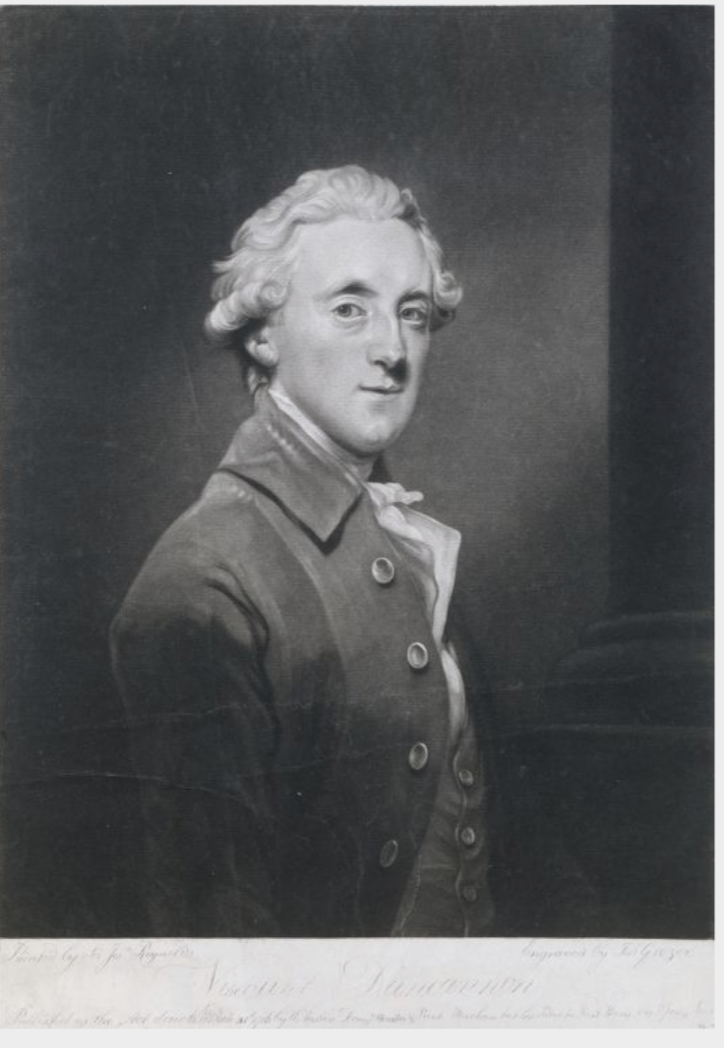
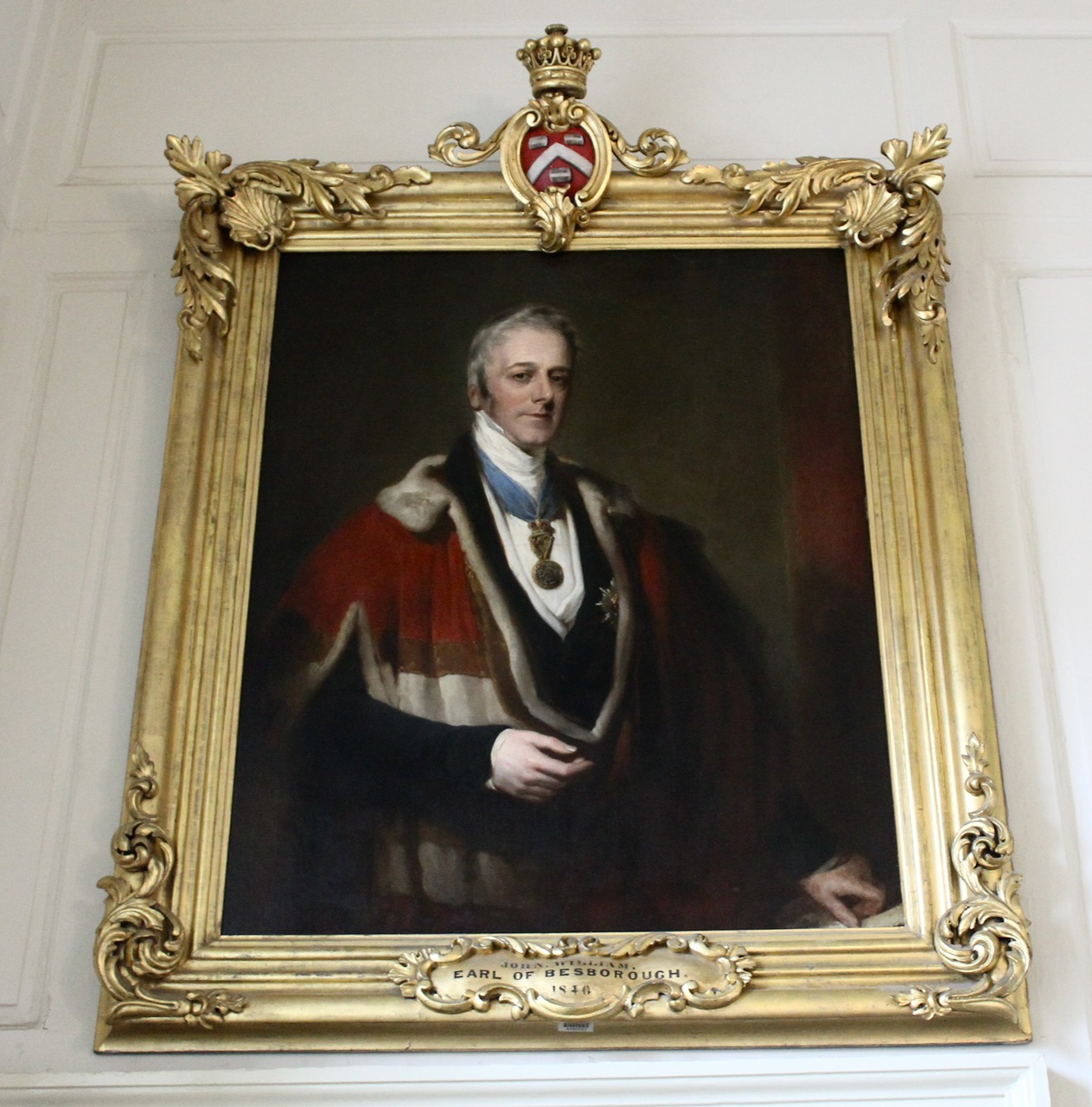
Brabazon Ponsonby (1679-1758) 1st Earl of Bessborough, 2nd Viscount Duncannon, of the fort of Duncannon, Co. Wexford married Sarah Margetson. Their daughter Sarah (d. 1736/37) married Edward Moore, 5th Earl of Drogheda. Their daughter Anne married Benjamin Burton of Burton Hall, County Carlow. Their daughter Letitia (d. 1754) married Hervey Morres, 1st Viscount Mountmorres. Their son William Ponsonby (1704-1793) succeeded as 2nd Earl of Bessborough and a younger son, John (1713-1787) married Elizabeth, daughter of William Cavendish 3rd Duke of Devonshire.
1. Castlecor House, County Longford – accommodation
2. Newcastle House Hotel, Ballymahon, County Longford
3. Viewmount House, Longford – accommodation and weddings
donation
Help me to pay the entrance fee to one of the houses on this website. This site is created purely out of love for the subject and I receive no payment so any donation is appreciated!
€15.00
Places to visit in County Longford:
1. Castlecor House, County Longford, open by previous arrangement:
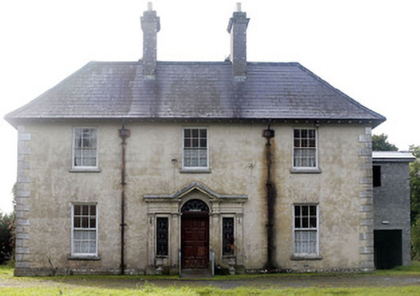
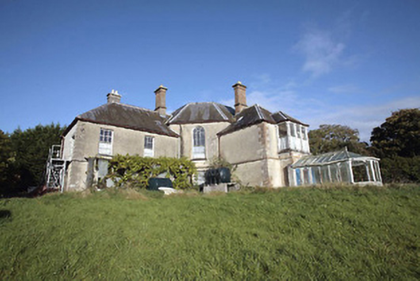
Castlecor House, County Longford, photograph from the National Inventory of Architectural Heritage [1]
I’ve been looking forward to staying in Castlecor house, after seeing a photograph of its incredible octagonal room.
Castlecor House, County Longford, photograph from the National Inventory of Architectural Heritage [1]
The website tells us:
“The construction of this magnificent residence, as it stands today, spanned 300 years, originally built in the mid 1700’s as a Hunting Lodge with additions in the 19th & 20th century.“
The website continues: “It was built by the Very Revd. Cutts Harman (1706 – 1784), son of the important Harman family of nearby Newcastle House [which offers accommodation]. He was Dean of Waterford cathedral from 1759 and was married to Bridget Gore (1723-1762) from Tashinny [Tennalick, now a ruin, which passed from the Sankey family to the Gore family by the marriage of Bridget’s mother Bridget Sankey to George Gore, son of Sir Arthur Gore, 1st Baronet of Newtown Gore, County Mayo] in c. 1740.“
The National Inventory of Architectural Heritage (www.buildingsofIreland.ie) gives the building an unusually long appraisal which explains the unusual building:
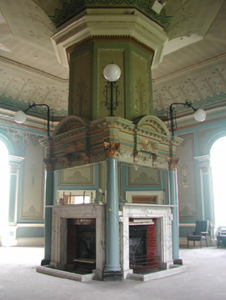
“It was originally built as a symmetrical two-storey block on octagonal-plan with short (single-room) projecting wings to four sides (in cross pattern on alternating sides), and with tall round-headed window openings between to the remaining four walls. The single wide room to the octagon at first floor level has an extraordinary central chimneypiece (on square-plan) with marble fireplaces to its four faces; which are framed by Corinthian columns that support richly-detailed marble entablatures over. The marble fireplaces themselves are delicately detailed with egg-and-dart mouldings and are probably original. This room must rank as one of the most unusual and interesting rooms built anywhere in Ireland during the eighteenth-century.“
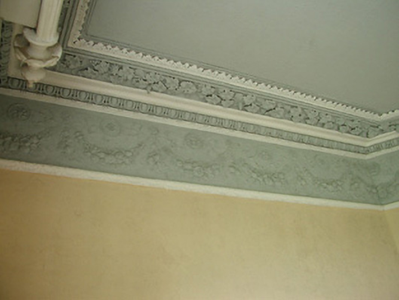
Castlecor House, County Longford, photograph from the National Inventory of Architectural Heritage: “The single wide room to the octagon at first floor level has an extraordinary central chimneypiece (on square-plan) with marble fireplaces to its four faces; which are framed by Corinthian columns that support richly-detailed marble entablatures over. The marble fireplaces themselves are delicately detailed with egg-and-dart mouldings and are probably original.” [1]Castlecor House, County Longford, photograph from the National Inventory of Architectural Heritage: “The walls of the octagonal room are decorated with Neo-Egyptian artwork.” [1]Castlecor House, County Longford, photograph from the National Inventory of Architectural Heritage [1]
The National Inventory continues: “The walls of the octagonal room are decorated with Neo-Egyptian artwork, which may have been inspired by illustrations in Owen Jones’ book ‘Decoration’, published in 1856. The inspiration for this distinctive octagonal block is not known. Some sources suggest an Italian inspiration, such as the pattern books of the noted architect Sebastiano Serlio (1475 – 1554) [Mark Bence-Jones suggests this [2]], or that it was based on the designs of the much larger hunting lodge (Palazzina di caccia of Stupinigi) that was built for the Duke of Savoy, near Turin, between 1729 and c. 1731 (The later seems a highly fanciful idea but there are some similarities in plan, albeit on a much larger scale at Stupinigi); while Craig (1977, 15) suggests that the ‘inspiration is clearly the hunting lodge at Clemenswerth in Lower Saxony, Germany’, which was constructed between 1737 – 1747 to designs by Johann Conrad Schlaun for Prince Clemens August, a structure that Castlecor resembles in terms of scale and plan. However, it may be that the plan of this building was inspired by William Halfpenny (died 1755), an English Palladian architect who created a number of unexecuted designs for Waterford Church of Ireland cathedral and for an associated bishop’s palace from c. 1739. Interestingly, a number of these unexecuted plans for the bishop’s palace included a central octagonal block with projecting wings, while a number of the church plans included an unusual separate baptismal building attached to the nave, which is also on an octagonal-plan. The Very Revd. Cutts Harman may well have been aware of Halfpenny’s unexecuted designs, being Dean of the cathedral from 1759 and was probably associated with the diocese from an earlier date, and perhaps he used these as his inspiration for the designs of Castlecor. The central four-sided chimneypiece is reminiscent of the centerpiece of the Rotunda of Ranelagh Gardens, London, (built to designs by William Jones 1741 – 2; demolished c. 1803) albeit on a much reduced scale at Castlecor. The plan of Castlecor is also similar to a number of buildings (some not executed) in Scotland, including Hamilton Parish Church (built c. 1733 to designs by William Adam (1698 – 1748) and the designs for a small Neoclassical villa prepared by James Adam (1732 – 92), c. 1765, for Sir Thomas Kennedy. The exact construction date of Castlecor is not known, however the traditional building date is usual given as c. 1765. The architectural detailing to the interior of the original block, and perhaps the personal life of Very Revd. Cutts Harman (married in 1751 to a daughter of Lord Annaly of Tennalick 13402348; his duties at Waterford cathedral from 1759; Cutts Harmon leased out a number of plots of land in Longford from c. 1768) would suggest an earlier date of, perhaps, the 1740s. The architect is also unknown although it is possible that Harman designed the house himself (perhaps inspired by a pattern book or by Halfpenny’s unexecuted designs); while Craig (1977) suggest that the architect may have been Davis Ducart (Daviso de Arcort; died 1780/1), an Italian or French architect and engineer who worked extensively in Ireland (particularly the southern half of the island) during the 1760s and 1770s.” We saw Ducart’s work at Kilshannig in County Cork, another section 482 property, see my entry [3].
Castlecor House, County Longford, see the octagonal Great Hall in the centre of the house. photograph from the National Inventory of Architectural Heritage [1]. Castlecor House, County Longford, photograph from the National Inventory of Architectural Heritage [1]Castlecor House, County Longford, photograph from the National Inventory of Architectural Heritage [1]
The website tells us:”The Rev. Cutts Harman who had Castlecor built died without issue, it was inherited by his niece’s son [or was it his sister Anne’s son? If so, it was her son Lawrence Harman Parsons (1749-1807); she married Laurence Parsons, 3rd Baronet of Birr Castle. Her son added Harman to his surname when he inherited Castlecor from his uncle], Laurence Harman- Harman, later Lord Oxmantown, and finally Earl of Rosse. Peyton Johnston, the Earl’s nephew, rented the house during this time. Captain Thomas Hussey, Royal Marines; purchased Castlecor in c.I820. There is very little documentary evidence relative to Captain Hussey’s occupancy. He resided there from 1832/3 to 1856 and was High Sheriff of Longford.“
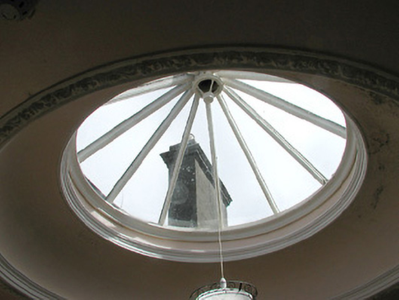
Mark Bence-Jones adds: “To make the house more habitable, a conventional two storey front was built onto it early in C19, either by Peyton Johnston, who rented the house after it had been inherited by the Earl of Rosse, or by Thomas Hussey, the subsequent tenant who bought the property ante 1825. This front joins two of the wings so that its ends and theirs form obtuse angles. In the space between it and the octagon is a top-lit stair. Early in the present century, a wider front of two storeys and three bays in C18 manner, with a tripartite pedimented doorway, was built onto the front of the early C19 front. Castlecor subsequently passed to a branch of the Bonds, and was eventually inherited by Mrs C. J. Clerk (nee Bond).”
Castlecor House, County Longford, photograph from the National Inventory of Architectural Heritage [1]
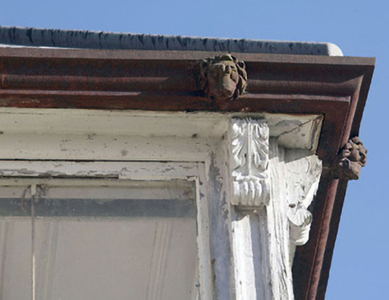
The National Inventory continues to tell us the history of the house: “The building was extended c. 1850 (the house appears on its original plan on the Ordnance Survey first edition six-inch map 1838) by the construction of a two-storey block to the northeast corner of the house, between two of the wings of the original structure. The earlier wing to the west may have been extended at this time also. The lion’s head motifs to the rainwater goods throughout the building (built around and before c. 1850) are very similar to those found at the gate lodge serving Castlecor to the northwest, built c. 1855, suggesting that the house was altered at this time, possibly as part of wider program of works at the estate.”
The lion’s head motifs to the rainwater goods throughout the building: Castlecor House, County Longford, photograph from the National Inventory of Architectural Heritage [1]
The National Inventory continues: “The projection to the south wing having the box bay window also looks of mid-to-late nineteenth century date and may also have been added at this time. The Castlecor estate was bought by the Hussey family during the late-eighteenth century following the death of Cutts Harman, and the first series of works may have been carried out when Capt. Thomas Hussey (1777 – 1866), High Sheriff of Longford from 1840 – 44, was in residence. However, the Castlecor estate was offered for sale by Commissioners of Incumbered Estates in 1855 when it was bought by a branch of the Bond family and, perhaps, the house was extended just after this date by the new owners. The Bonds were an important landed family in Longford at the time, and owned a number of estates to the centre of the county, to the north of Castlecor, and a branch also lived at adjacent Moygh/Moigh House (13402606) [still standing and in private hands] during the second half of the nineteenth century. Thomas Bond (1786 – 1869) [of Edgeworthstown] was probably the first Bond in residence at Castlecor. A John Bond, later of Castlecor, was High Sheriff of Longford in 1856. The last Bond owner/resident was probably a Mrs Clerk (nee Bond) [Emily Constance Smyth Bond] who was in residence in 1920. She married a Charles James Clerk (J.P. and High Sheriff of Longford in 1906) in 1901/2, and he was responsible for the three-bay two-storey block that now forms the main entrance, built c. 1913. This block was built to designs by A. G. C. Millar, an architect based on Kildare Street, Dublin. This block is built in a style that is reminiscent of a mid-eighteenth century house, having a central pedimented tripartite doorcase and a rigid symmetry to the front elevation. The house became a convent (Ladies of Mary) sometime after 1925 until c. 1980, and was later in use as a nursing home until c. 2007. This building, particularly the original block, is one of the more eccentric and interesting elements of the built heritage of Longford, and forms the centrepiece of a group of related structures.” [1]
The website tells us thatthe four wings adjoining the original octagonal hunting lodge align with the four cardinal compass points.
In 2009, the current owners Loretta Grogan and Brian Ginty set about purchasing the house, with the aspiration to restore Castlecor House, its grounds, native woodland and walled garden with pond and orchard to its former glory, opening it to the public by appointment and also welcoming guests.
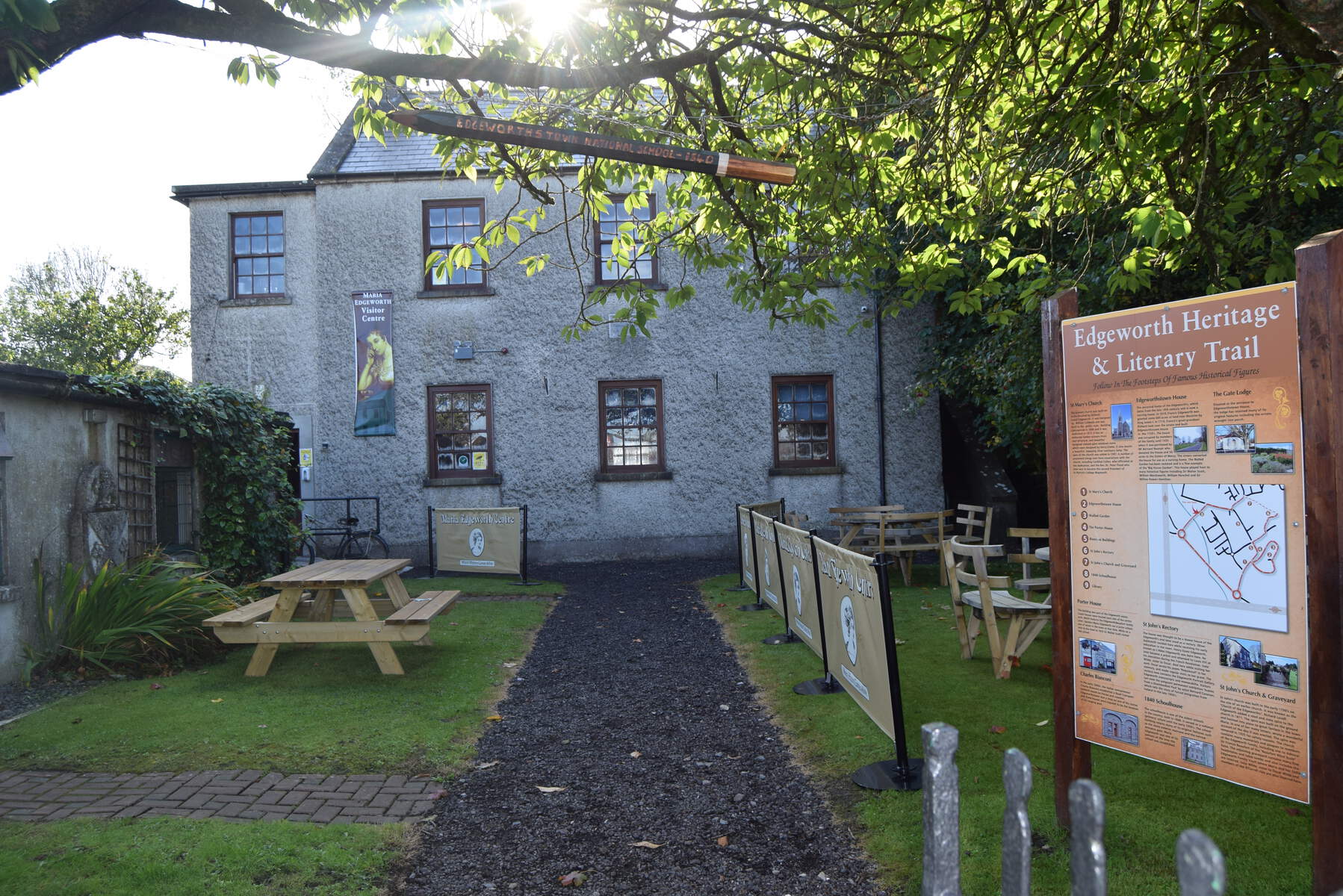
2. Maria Edgeworth Visitor Centre, Longford, County Longford.
“The Maria Edgeworth Centre, in County Longford, is located in one of Ireland’s oldest school buildings that opened in 1841. Using a combination of audio, imagery and interactive displays, the centre tells the story of the Edgeworth family and the origins of the National School system. You will also learn about the role the family played in the educational, scientific, political and cultural life in Ireland. Maria Edgeworth was a notable pioneer of literature and education, a feminist and a social commentator of her time. Audios and displays are available in seven languages.”
Open dates in 2026: Aug 1-31, Sept 1-29, 9.30am-1.30pm Fee: adult/OAP/student/child €8
Moorhill House, photograph from the National Inventory of Architectural Heritage.[4]
The National Inventory describes it:
“Detached three-bay two-storey over basement house on L-shaped plan, built c. 1815, having two-storey-storey return to rear (northwest) with pitched slate roof. Two-storey extension attached to the northwest end of rear return. Recently renovated. Possibly incorporating fabric of earlier building/structure. …This appealing and well-proportioned middle-sized house, of early nineteenth-century appearance, retains its early form, character and fabric. Its form is typical of houses of its type and date in rural Ireland, with a three-bay two-storey main elevation, hipped natural slate roof with a pair of centralised chimneystacks, and central round-headed door opening with fanlight. The influence of classicism can be seen in the tall ground floor window openings and the rigid symmetry to the front facade. The simple doorcase with the delicate petal fanlight over provides a central focus and enlivens the plain front elevation. The return to the rear has unusually thick walls and a relative dearth of openings, possibly indicating that it contains earlier fabric. This house forms an interesting group with the entrance gates to the southeast, the outbuildings (13401509) and walled garden to the rear, and the highly ornate railings to the southwest side featuring a sinuous vine leaf motif. The quality of these railings is such that their appearance is equally fine from both sides, the vine leaves being cast in three dimensions. They are notable examples of their type and date, and add substantial to the setting of this fine composition, which is an important element of the built heritage of the local area. Moorhill was the home of a R. (Robert or Richard) Blackall, Esq. in 1837 (Lewis). The Blackalls were an important family in the locality and built nearby Coolamber Manor c. 1837 [built for Major Samuel Wesley Blackhall (1809 – 1871)…to designs by the eminent architect John Hargrave (c. 1788 – 1833). Hargrave worked extensively in County Longford during the 1820s and was responsible for the designs for the governor’s house at Longford Town Jail in 1824; works at Ardagh House in 1826; the rebuilding of St. Paul’s Church of Ireland church at Newtown-Forbes; the remodelling of Castle Forbes, nearby Farragh/Farraghroe House (demolished); Doory Hall now ruinous; St. Paul’s Church of Ireland church, Ballinalee; and possibly for the designs of St. Catherine’s Church of Ireland church at nearby Killoe. …and [Coolamber Manor] may have replaced an earlier house associated with the Blackall family at Coolamber (a Robert Blackall (1764 – 1855), father of the above, lived in Longford in the late-eighteenth century)].
Moorhill House “was possibly the home of Robert Blackall, the father of Samuel Wensley, who was responsible for the construction of Coolamber Manor and later served as M.P. (1847 – 51) for the county before serving as Governor of Queensland, Australia from 1868 until his death in 1871. Moorhill may have been the residence of a Francis Taylor in 1894 (Slater’s Directory).”
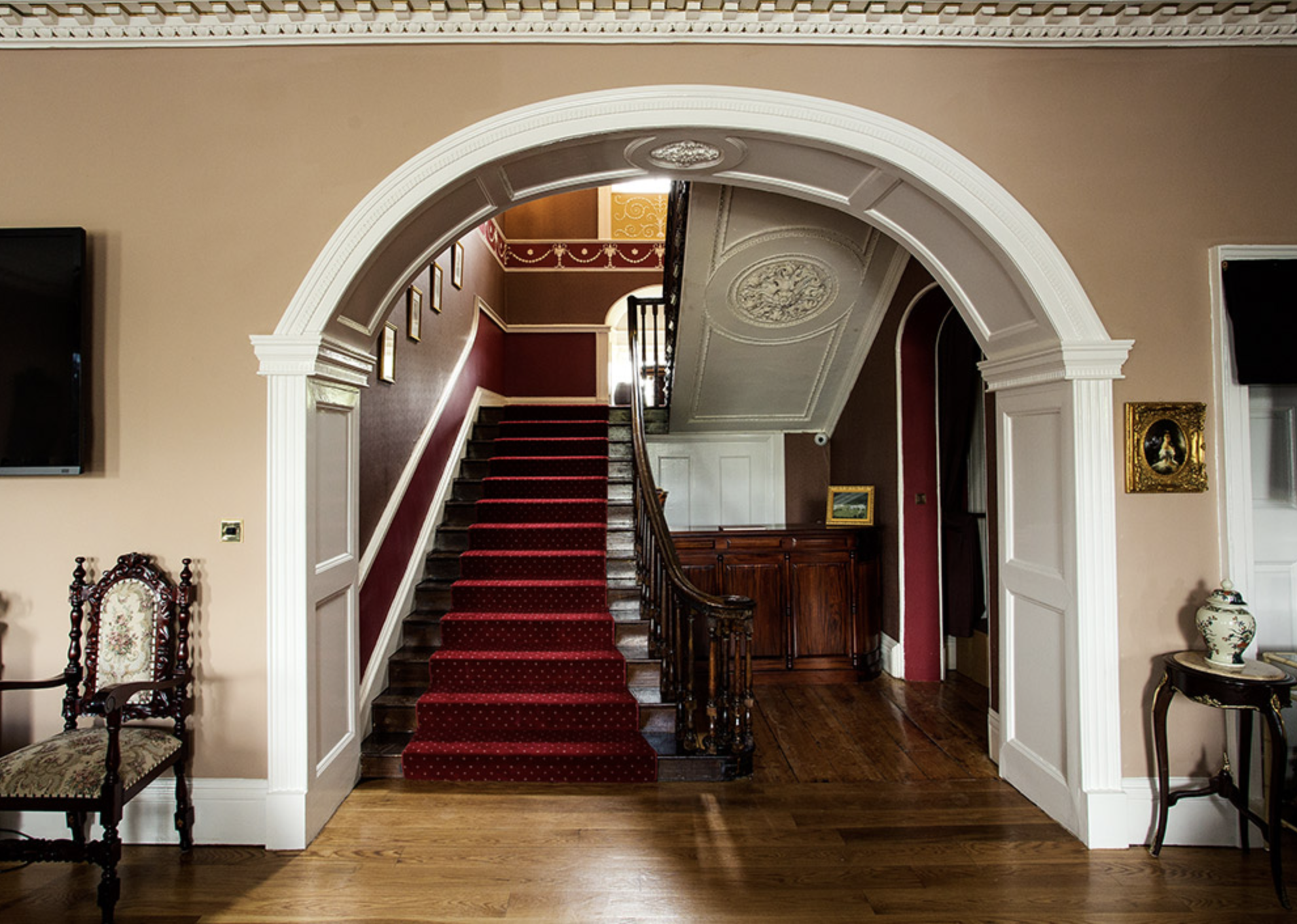
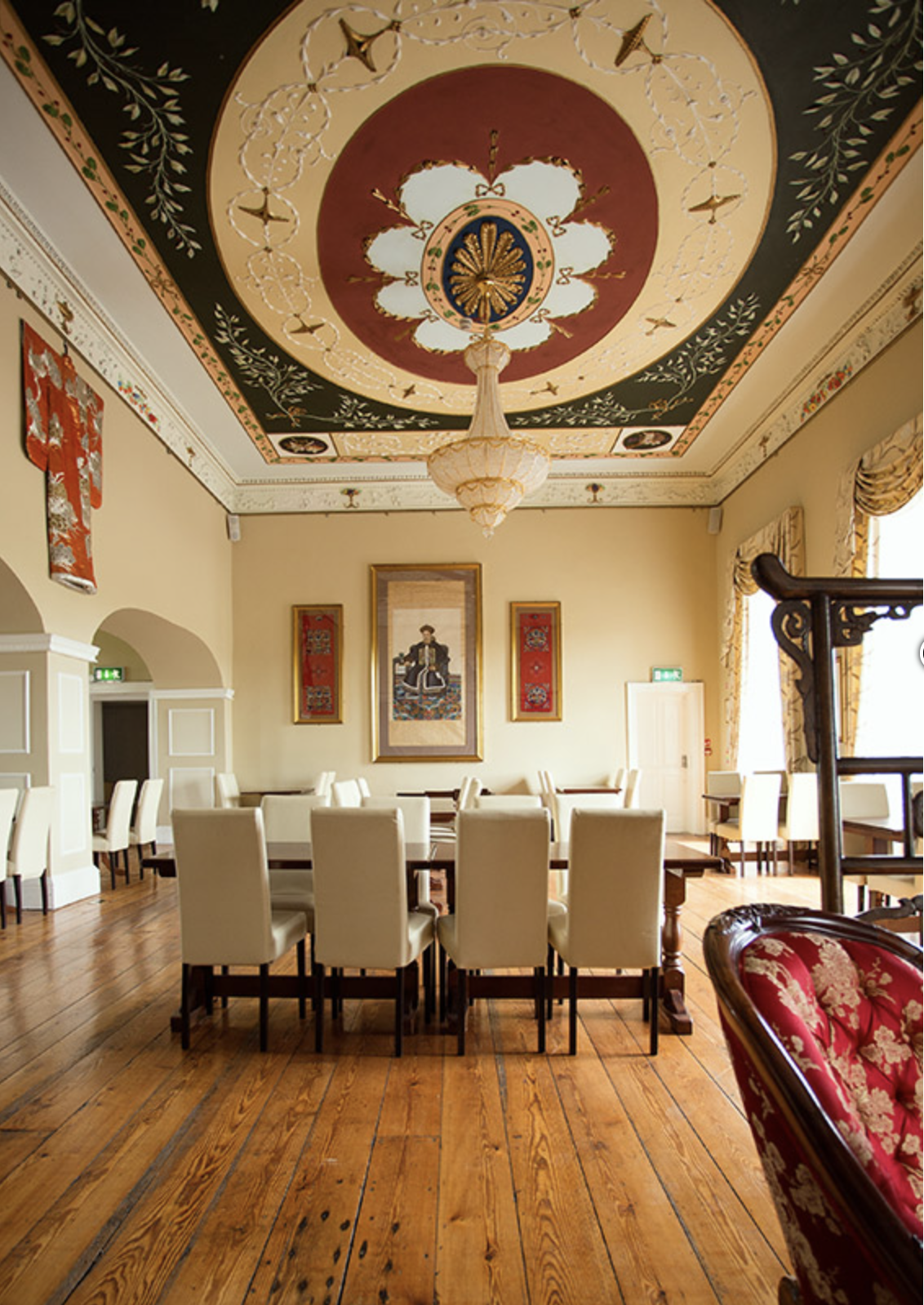
Newcastle House (now a hotel), County Longford, photograph from Newcastlehousehotel.iephotograph from the Newcastlehousehotel.ie
Newcastle House is a 300-year-old manor house, set on the banks of the River Inny near Ballymahon, in Co. Longford.
The website tells us; “Standing on 44 acres of mature parkland and surrounded by 900 acres of forest, Newcastle House is only one and half hour’s drive from Dublin, making it an excellent base to see, explore and enjoy the natural wonders of Ireland. So whether you are looking for a peaceful place to stay (to get away from it all) or perhaps need a location to hold an event, or that most important wedding, give us a call.”
Newcastle House (now a hotel), County Longford, photograph from the National Inventory of Architectural Heritage. [5]
The website previously included a brief history of the inhabitants of Newcastle:
“Newcastle Wood was once part of Newcastle Demesne, an estate of some 11,000 hectares run by the King- Harman family in the 1800’s. The beautiful, historic nearby Newcastle House was where the King- Harmans lived and there are many features and place names in the woodland which refer back to that time.“
We came across Lawrence Harman Parsons (1749-1807) who became the 1st Earl of Rosse, and who added Harman to his surname to become Lawrence Harman Parsons Harman, when he inherited Castlecor in County Longford. He married Jane King, daughter of Edward Thomas King, 1st Earl of Kingston, from Boyle, County Roscommon. They had a daughter, Frances Parsons-Harmon, who married Robert Edward King (1773-1854), 1st Viscount Lorton of Boyle, County Roscommon. Their second son, Lawrence Harman King assumed the additional name of Harman to become Lawrence Harman King-Harman (1816-1875). It was his family who lived at Newcastle Wood.
The old website continued: “The King- Harmans were generally regarded as good landlords by the local populace. They employed many local people in all sorts of trades. The last of the King- Harmans died in 1949. King- Harman sold lands to the Forestry Department in 1934 and over the following two years it was planted with a mixture of coniferous and broadleaf trees.“
Then National Inventory describes the house:
“Detached double-pile seven-bay three-storey over basement former country house, built c. 1730 and altered and extended at various dates throughout the eighteenth and nineteenth century, having curvilinear Dutch-type gable to the central bay and later gable-fronted single-bay single-storey entrance porch with matching curvilinear Dutch-type gable to the centre of the main block (southeast elevation), built c. 1820. Advanced three-bay single-storey over basement wing flanking main block to northeast, and advanced four-bay two-storey over basement wing flanking main block to southwest, both built c. 1785. Recessed single-bay single-storey over basement Tudor Gothic style addition attached to northeast elevation having gable-fronted rear elevation and chamfered corners at ground floor level having dressed ashlar limestone masonry , built c. 1850, and two-storey extension to southwest, built c. 1880. Possibly incorporating the fabric of earlier house(s) to site c. 1660. Later in use as a convent and now in use as a hotel…Round-headed door opening to front face of porch (southeast) having carved limestone surround with architrave, square-headed timber battened door with decorative cast-iron hinge motifs, wrought-iron overlight, and having moulded render label moulding over.…Painted stuccoed ceilings and ceiling cornices, some with a neoclassical character, a number of early panelled timber doors and marble fireplaces survive to interior...” [5]
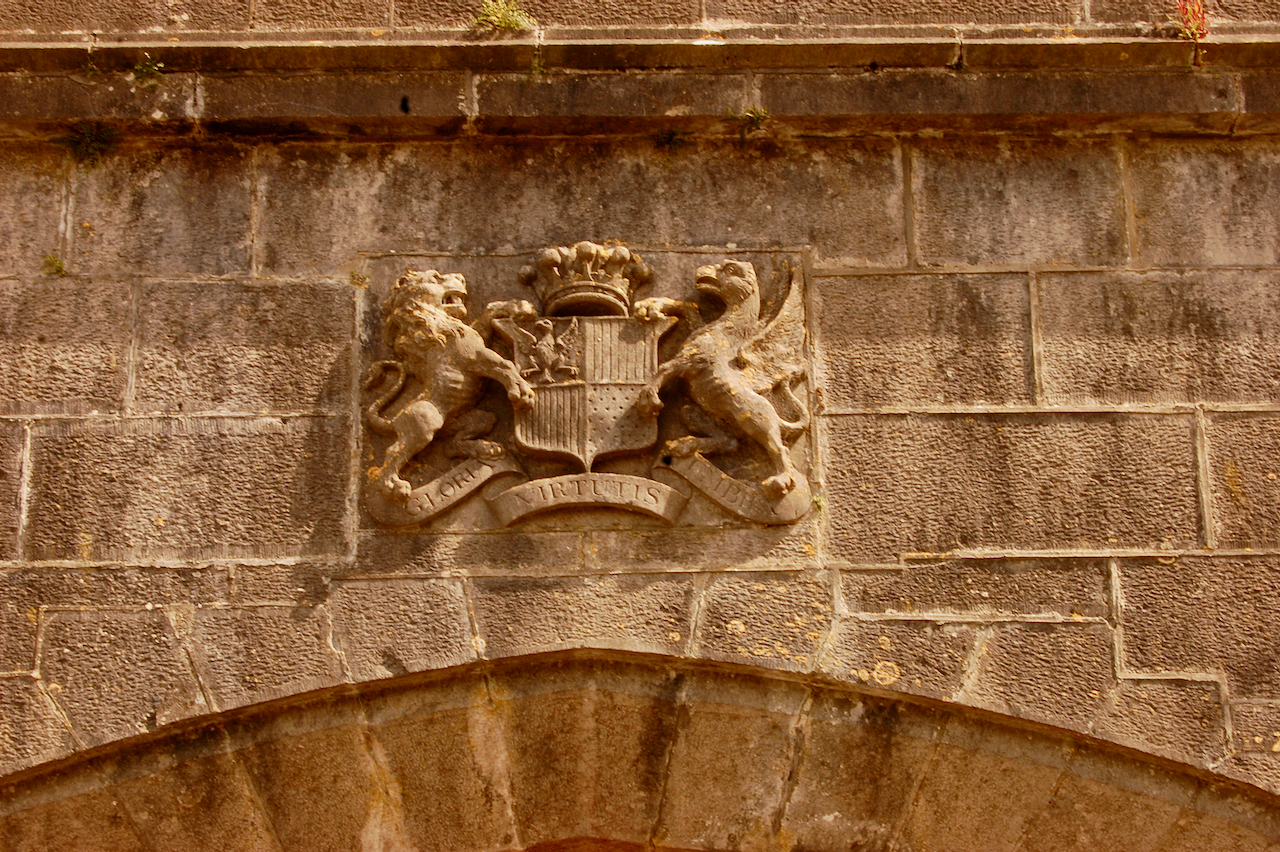
Newcastle House, photograph from National Inventory of Architectural Heritage: “Round-headed door opening to front face of porch (southeast) having carved limestone surround with architrave, square-headed timber battened door with decorative cast-iron hinge motifs, wrought-iron overlight, and having moulded render label moulding over.” The Inventory tells us that the carved coat of arms is probably of the King family. [5]Newcastle House, photograph from Newcastlehousehotel.ie: “Painted stuccoed ceilings and ceiling cornices, some with a neoclassical character.” [5]photograph from the Newcastlehousehotel.ie
Before belonging to the King-Harman family, Newcastle belonged to the Sheppard family. It came to the King-Harman family through the marriage of Frances Sheppard (d. 1766) daughter of Anthony Sheppard of Newcastle to Wentworth Harman (d. 1714) of Moyle, County Longford.
The National Inventory adds:
“The lands and house at Newcastle were successively in the possession of the Chappoyne/Chappayne/Choppin, the Sheppard, the Harman and the King-Harman families. The earliest mention of the estate is references to an Anthony Chappoyne at Newcastle in 1660, although this may have been the site of an earlier ‘castle’ from as early as the fourteenth century (as the placename suggests). In 1680 a Robert Choppayne appears to have purchased/consolidated the lands of Newcastle from Gerald Fitzgerald, 17th Earl of Kildare. Dowdall (1682) describes the site as ‘..on the southside of the river is Newcastle, the antient Estate of the Earl of Kildare now the estate and habitation of Robert Choppin Esqr where he hath lately built a fair house and a wooden bridge over said river’. The estate passed into the ownership of Anthony Sheppard (born 1668 – 1738), heir (son?) of Robert Chappoyne, c. 1693, who served as High Sheriff of County Longford in 1698. His son, also Anthony, was M.P. for Longford in 1727. The estate later passed by marriage into the ownership into the Harman family at the very end of the seventeenth century. Robert Harman (1699 – 1765; M.P. for Longford c. 1760 -5) [son of Wentworth Harman and Frances Sheppard] was in possession of the estate of much of the middle of the eighteenth century and it is likely that he was responsible for much of the early work on the house. The Very Revd. Cutts Harman, who built the quirky hunting/fishing lodge at nearby Castlecor, inherited the house c. 1765 following the death of his brother Robert. The estate later passed into the ownership of Lawrence Parsons-Harman (1749 – 1807) in 1784 (M.P. for Longford 1776 – 1792; Baron Oxmantown in 1792; Viscount Oxmantown in 1795; Earl of Rosse 1806; sat was one of the original Irish Representative Peers in the British House of Lords) and he greatly increased the Newcastle estate, and by his death (1807) its size had doubled to approximately 31,000 acres in size. It is likely that he was responsible for the construction of the side wings to the main block and general improvements to the house from 1784. The estate passed into the ownership of his wife Jane, Countess of Rosse (who partially funded the construction of a number of Church of Ireland churches and funded a number of schools in County Longford during the first half of the nineteenth century), who left the estate to her grandson Laurence King-Harman (1816 – 1878) after falling out with her son.Laurence King-Harman has probably responsible for the vaguely Tudor Gothic extension to the northeast elevation. The brick chimneystacks also look of mid-nineteenth century date and may have been added around the same time this wing was constructed. The King family had extensive estates in Ireland during the nineteenth century, owning the magnificent Rockingham House (demolished) and King House [also a Section 482 property which I hope to visit later this year], Boyle, both in County Roscommon;as well as Mitchelstown Castle in County Cork, burnt in 1922 (memorial plaques and carved stone heads from Mitchelstown Castle were built into the northeast elevation of Newcastle House c. 1925, but have been removed and returned to Cork in recent years). The estate reached its largest extent in 1888, some 38,616 acres in size, when Wentworth Henry King-Harman was in residence. The estate was described in 1900 as ‘a master-piece of smooth and intricate organisation, with walled gardens and glasshouses, its diary, its laundry, its carpenters, masons and handymen of all estate crafts, the home farm, the gamekeepers and retrievers kennels, its saw-mill and paint shop and deer park for the provision of venison. The place is self supporting to a much greater degree than most country houses in England’. The estate went in to decline during the first decades of the twentieth century, and with dwindled in size to 800 acres by 1911. The house and estate remained in the ownership of the King-Harman family until c. 1951, when Capt. Robert Douglas King-Harman sold the house to an order of African Missionary nuns (house and contents sold for £11,000). It was later in use as a hotel from c. 1980.” [5]
Viewmount House, photograph from National Inventory of Architectural Heritage. [6]
The website tells us:
“Discover this boutique gem, a secret tucked away in the heart of Ireland. This magnificent 17th century manor is complemented by its incredible countryside surroundings, and by the four acres of meticulously-maintained garden that surround it. Within the manor you’ll find a place of character, with open fires, beautiful furniture, fresh flowers and Irish literature. The manor retains its stately, historic charm, and blends it with thoughtful renovation that incorporates modern comfort.
“Here, you will unwind into the exceptionally relaxing atmosphere, a restful world where all you hear is peace, quiet and birdsong.“
This house was advertised for sale in recent years. The National Inventory describes it:
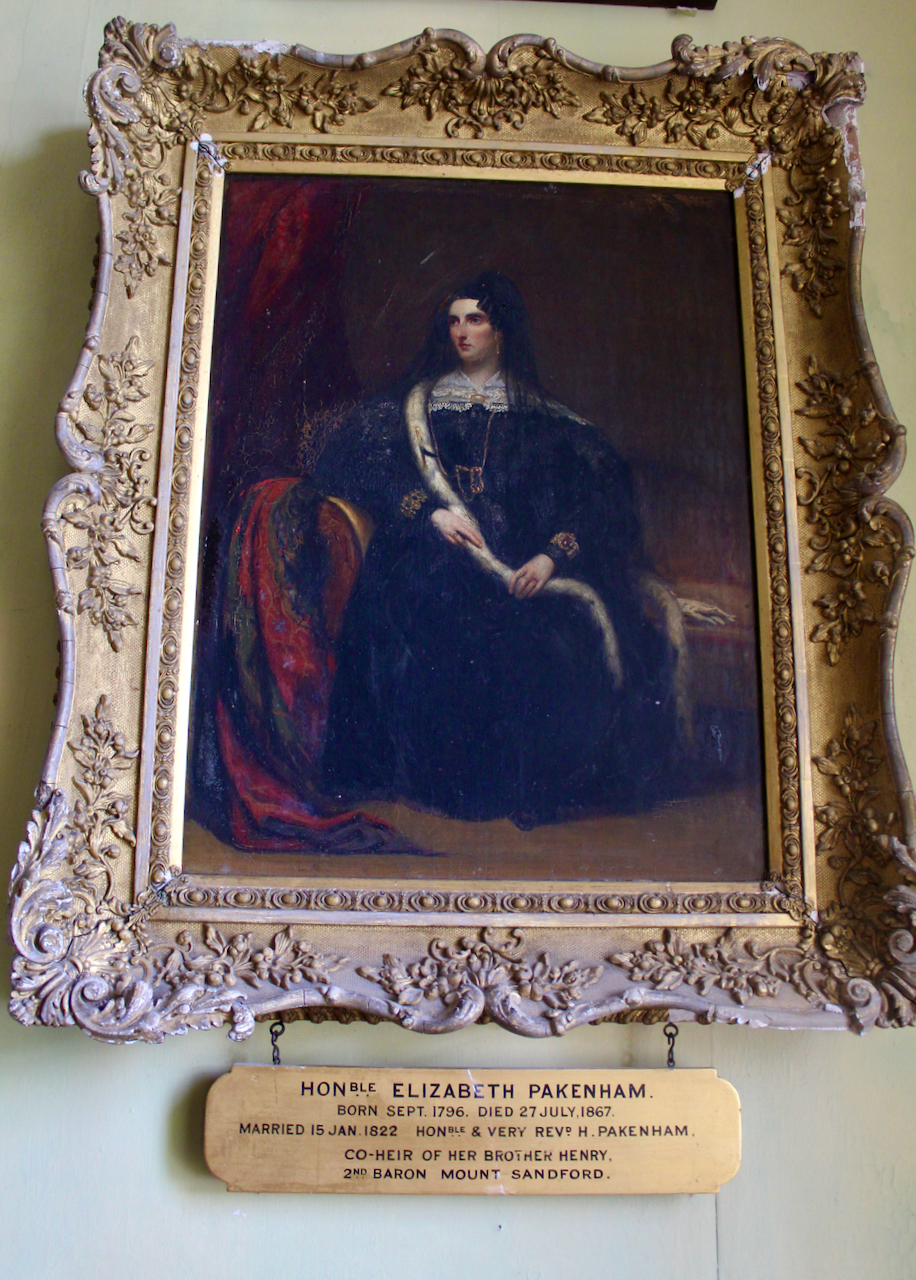
“Detached three-bay three-storey house, built c. 1750 and remodeled c. 1860, having single-bay single-storey porch with flat roof to the centre of the front elevation (north). Renovated c. 1994. Formerly in use as a Church of Ireland charter school (c. 1753 – 1826)…This elegant mid-sized Georgian house is a fine example of the language of classical architecture reduced to its essential elements. It retains its early character and form despite recent alterations….Set in extensive mature grounds, this fine structure is a worthy addition to the architectural heritage of County Longford….This house was the home of the Cuffe family during the first half of the eighteenth century. It was later inherited by Thomas Pakenham (later [1st] Baron Longford [of Pakenham Hall, or Tullynally, County Westmeath, another section 482 property, see my entry]) following his marriage to Elizabeth Cuffe (1714-94) in 1739 or 1740. It is possible that Viewmount House was constructed shortly after this date and it may have replaced an earlier Cuffe family house on or close to the present site. The house was never lived in by the Pakenham family but it was used by their agent to administer the Longford estate, c. 1860. It was apparently in use as a charter school from 1753 until 1826, originally founded under the patronage of Thomas Pakenham. There is a ‘charter school’ indicated here (or close to here) on the Taylor and Skinner map (from Maps of the Roads of Ireland) of the area, dated between 1777 – 1783. A ‘free charter school’ at Knockahaw, Longford Town, with 32 boys, is mentioned in an Irish Education Board Report, dated 1826 – 7 (Ir. Educ. Rept 2, 692 – 3).” [6]
[2] p. 66. Bence-Jones, Mark. A Guide to Irish Country Houses (originally published as Burke’s Guide to Country Houses volume 1 Ireland by Burke’s Peerage Ltd. 1978); Revised edition 1988 Constable and Company Ltd, London.
Castle – April 30, May 1-2, 7-9, 14-16, 21-23, 28-30, June 4-6, 11-13, 18-20, 25-27, July 2-4, 9-11, 16-18, 23-25, 30-31, Aug 1, 13-23, 27-29, Sept 3-5, 10-12, 17-19, 11am-3pm
Garden – Mar 19-22, 26-29, Apr 2-6, 9-12, 16-19, 23-26, 30, May 1-4, 7-10, 14-17, 21-24, 28-31, June 1, 4-7, 1-14, 18-21, 25-28, July 2-5, 9-12, 16-19, 23-26, 30-31, Aug 1-3, 6-9, 13-23, 27-30, Sept 3-6, 10-13, 17-20, 24-27,9am-5pm
Fee: castle fee – adult €17, child entry allowed for over 8 years €9, garden fee – adult €9, child €4, family ticket (2 adults + 2 children) €24, adult season ticket €60, family season ticket €73.50, special needs visitor with support carer €4, child 5 years or under is free
2026 Diary of Irish Historic Houses (section 482 properties)
To purchase an A5 size 2026 Diary of Historic Houses (opening times and days are not listed so the calendar is for use for recording appointments and not as a reference for opening times) send your postal address to jennifer.baggot@gmail.com along with €20 via this payment button. The calendar of 84 pages includes space for writing your appointments as well as photographs of the historic houses. The price includes postage within Ireland. Postage to U.S. is a further €10 for the A5 size calendar, so I would appreciate a donation toward the postage – you can click on the donation link.
€20.00
donation
Help me to pay the entrance fee to one of the houses on this website. This site is created purely out of love for the subject and I receive no payment so any donation is appreciated!
We visited Tullynally Castle and Gardens when we were staying near Castlepollard with friends for the August bank holiday weekend in 2020. Unfortunately the house tour is only given during Heritage Week, but we were able to go on the Below Stairs tour, which is really excellent and well worth the price.
In 2021 I prioritised seeing Tullynally during Heritage Week, and we went on the upstairs tour!
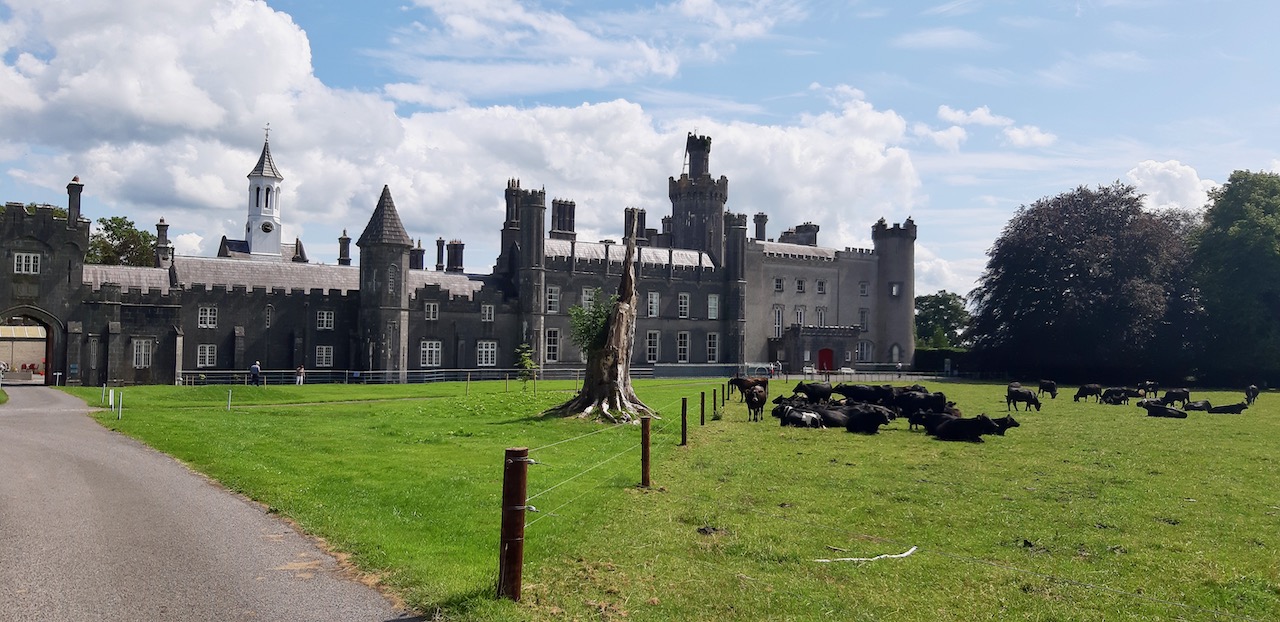
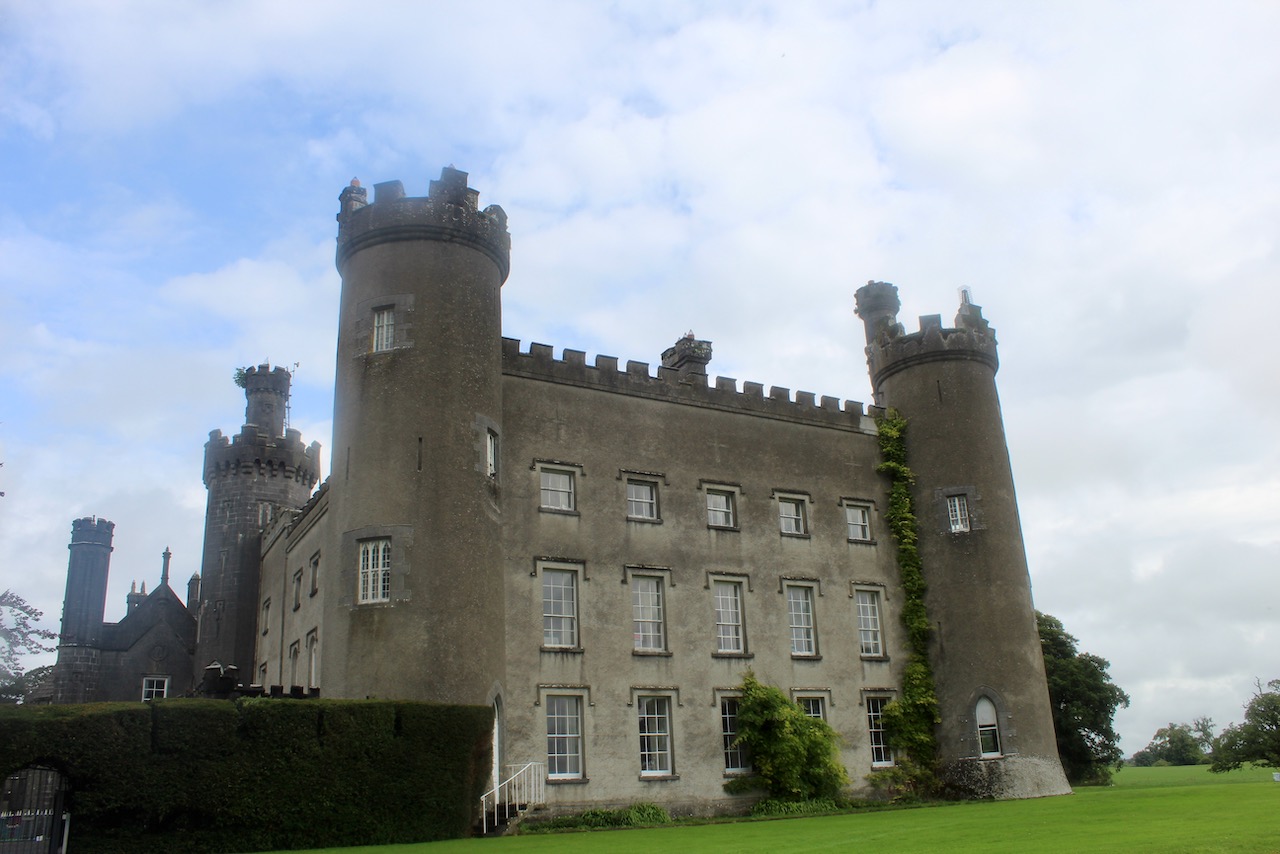
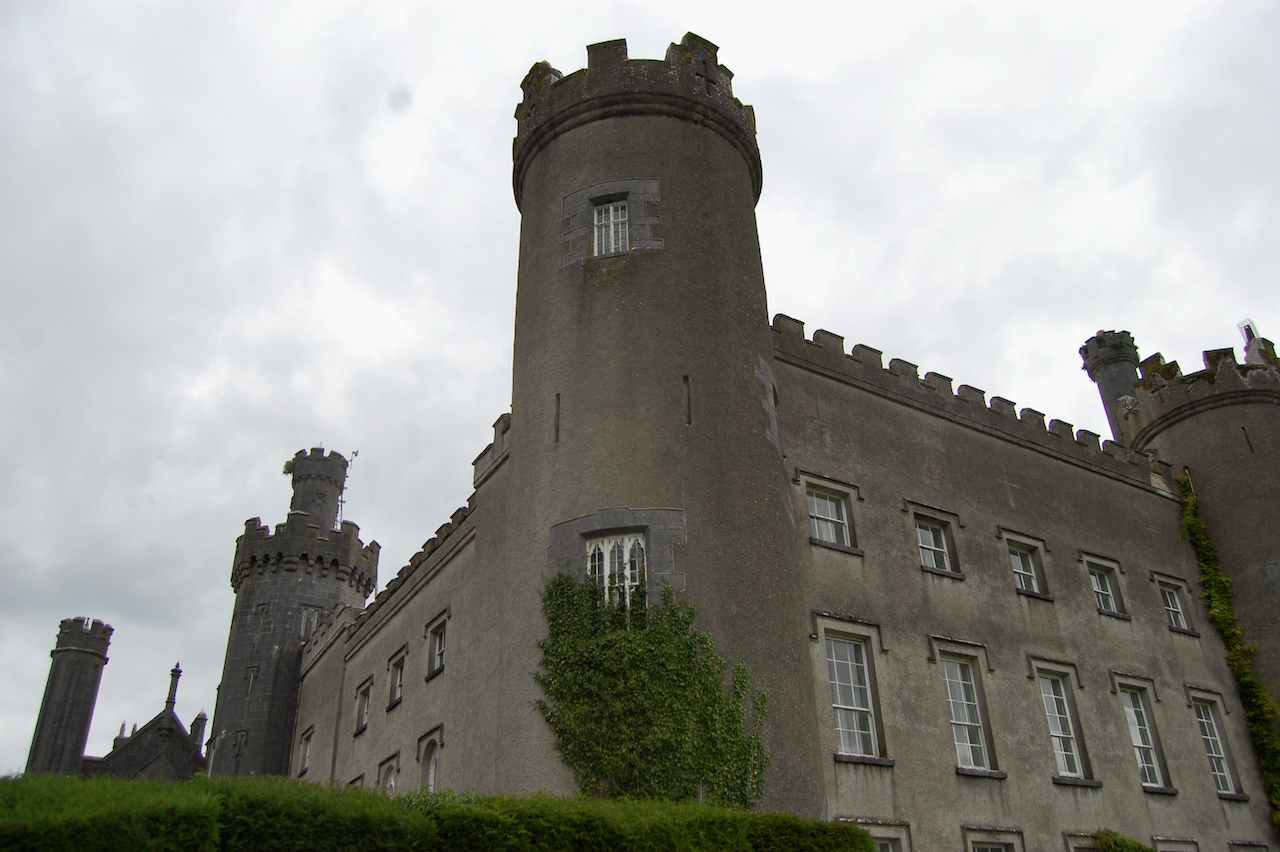
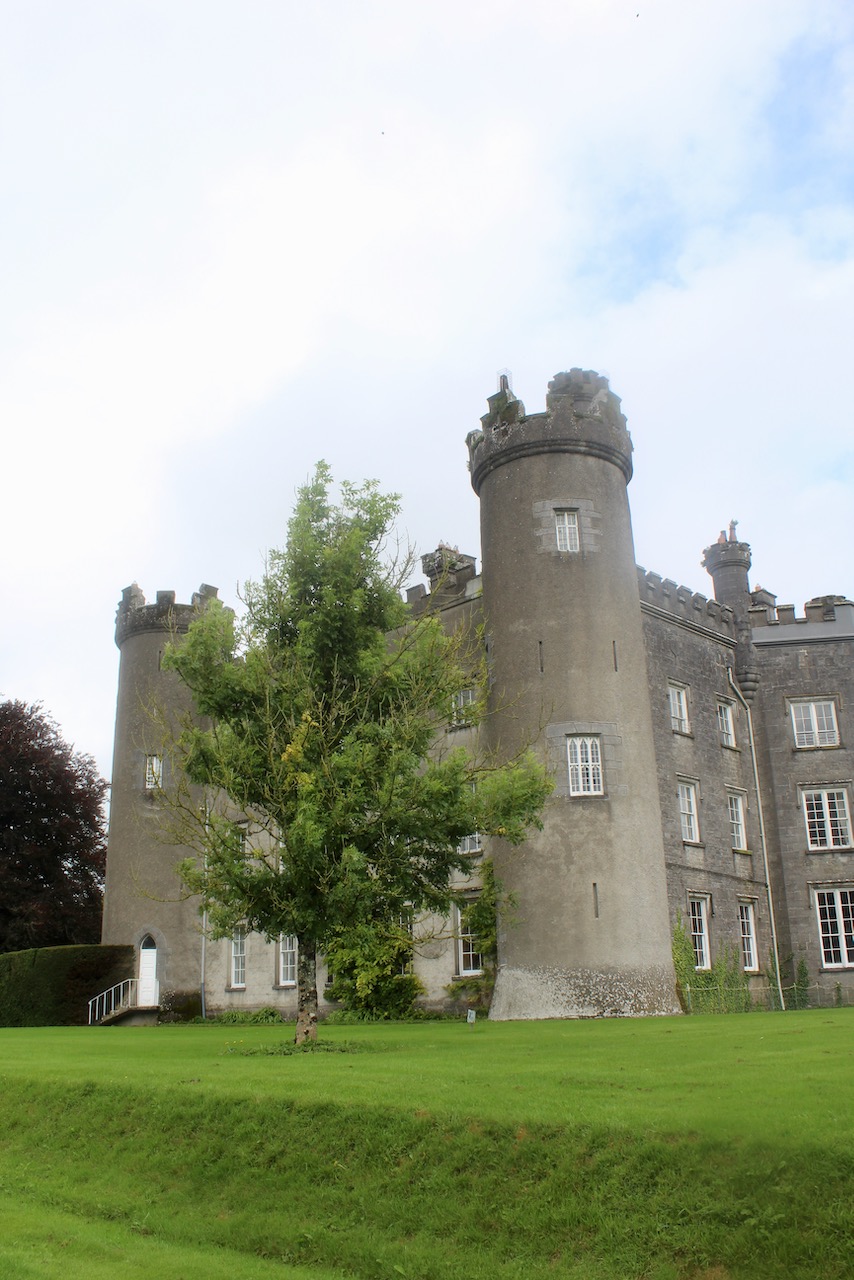
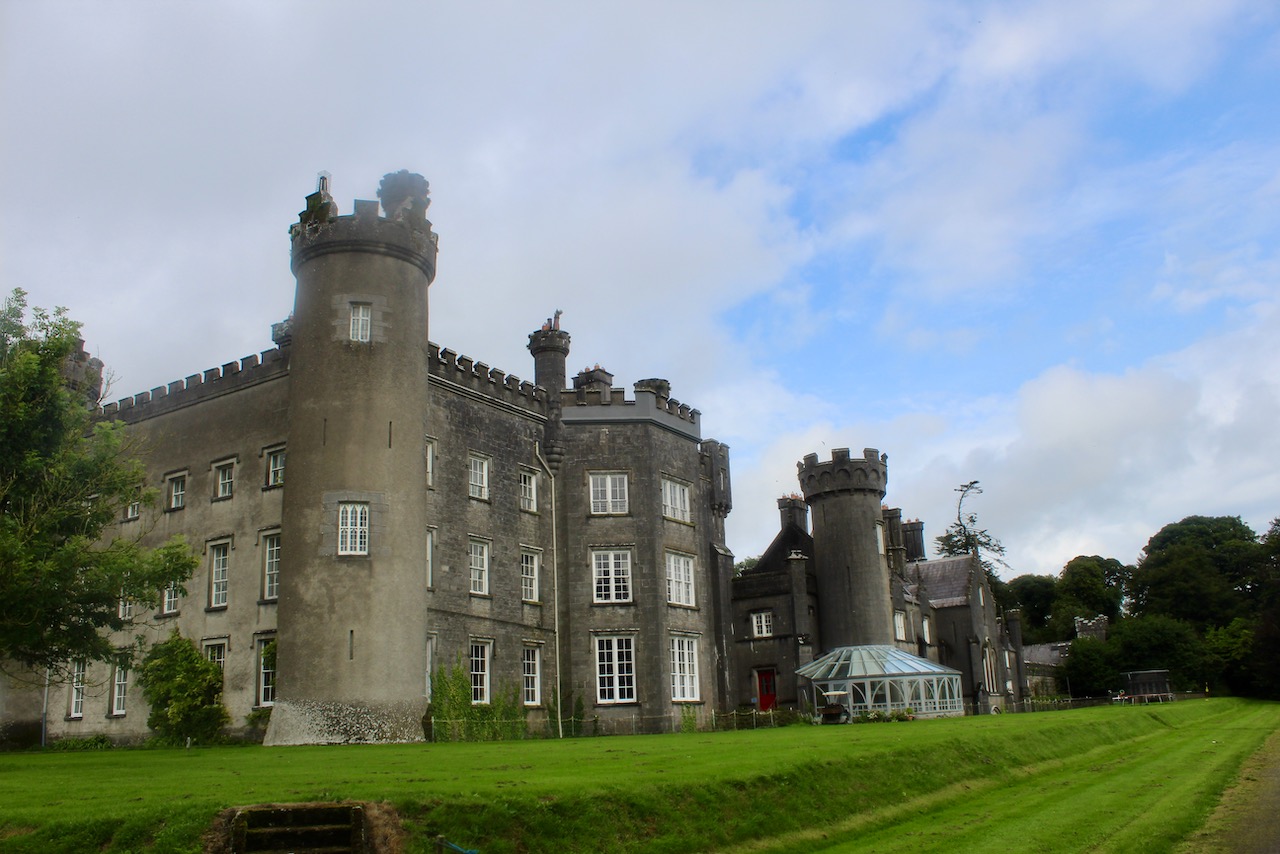
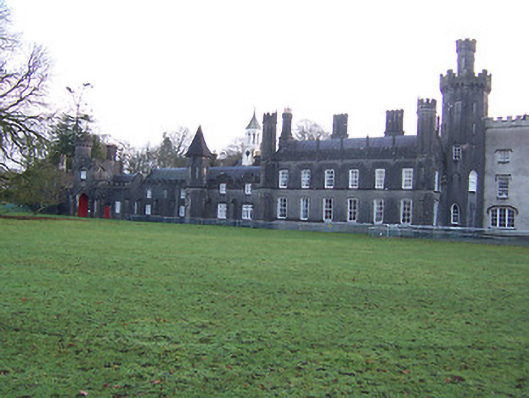
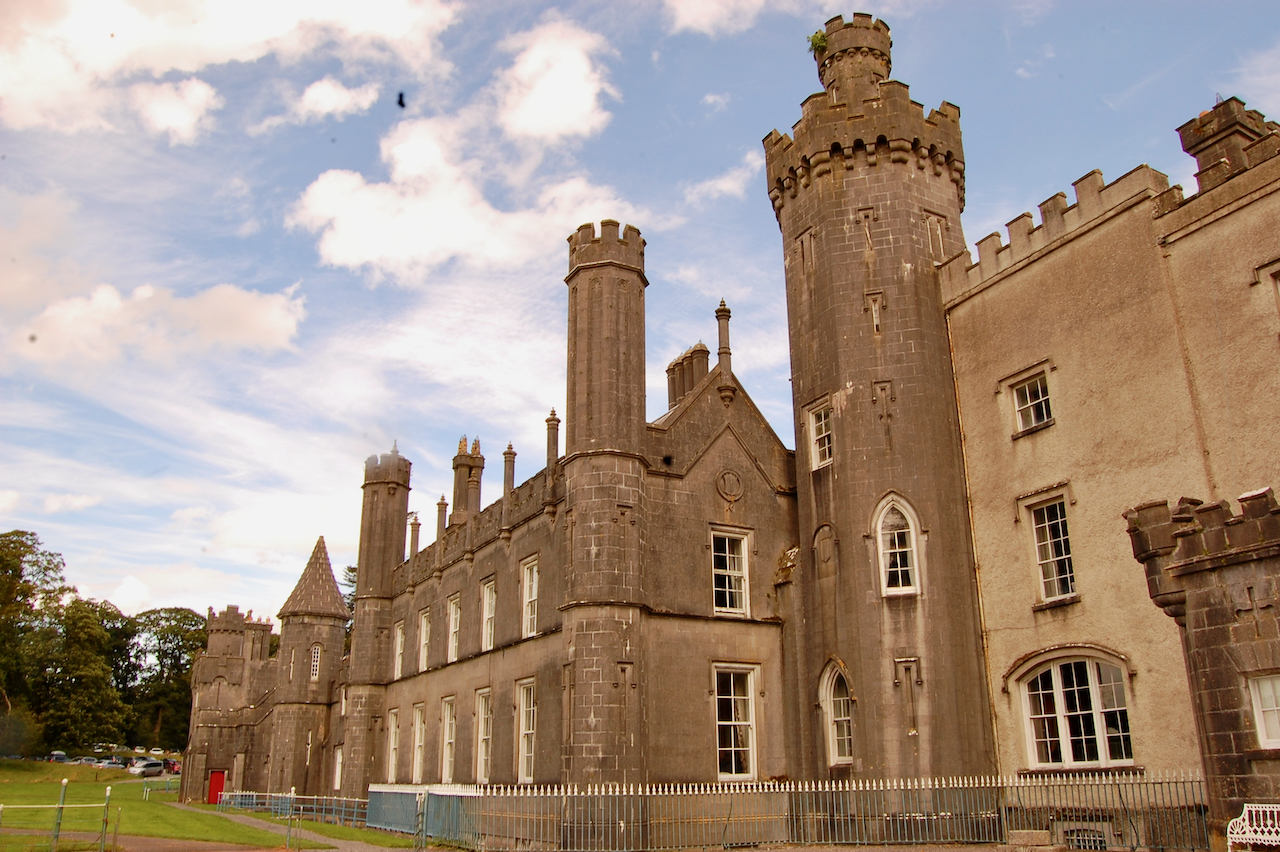
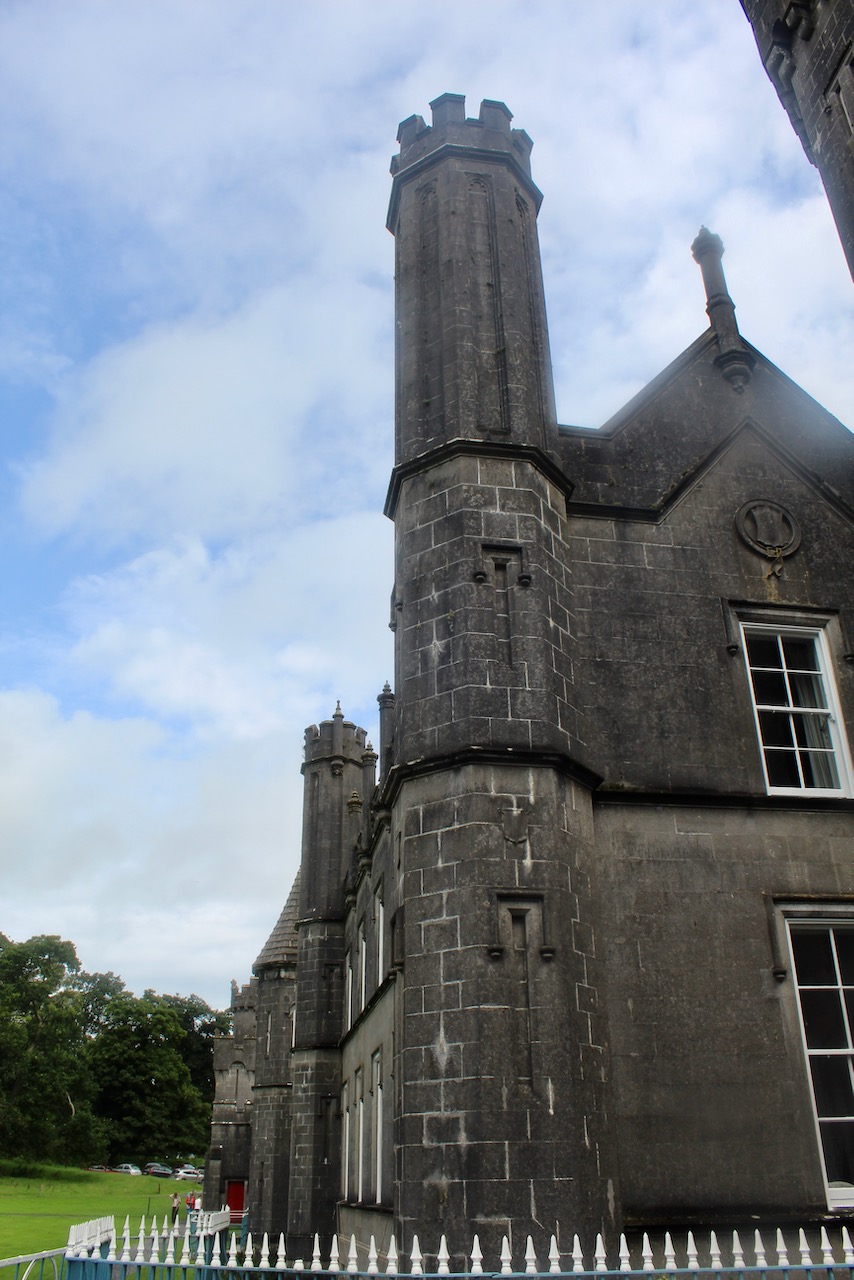
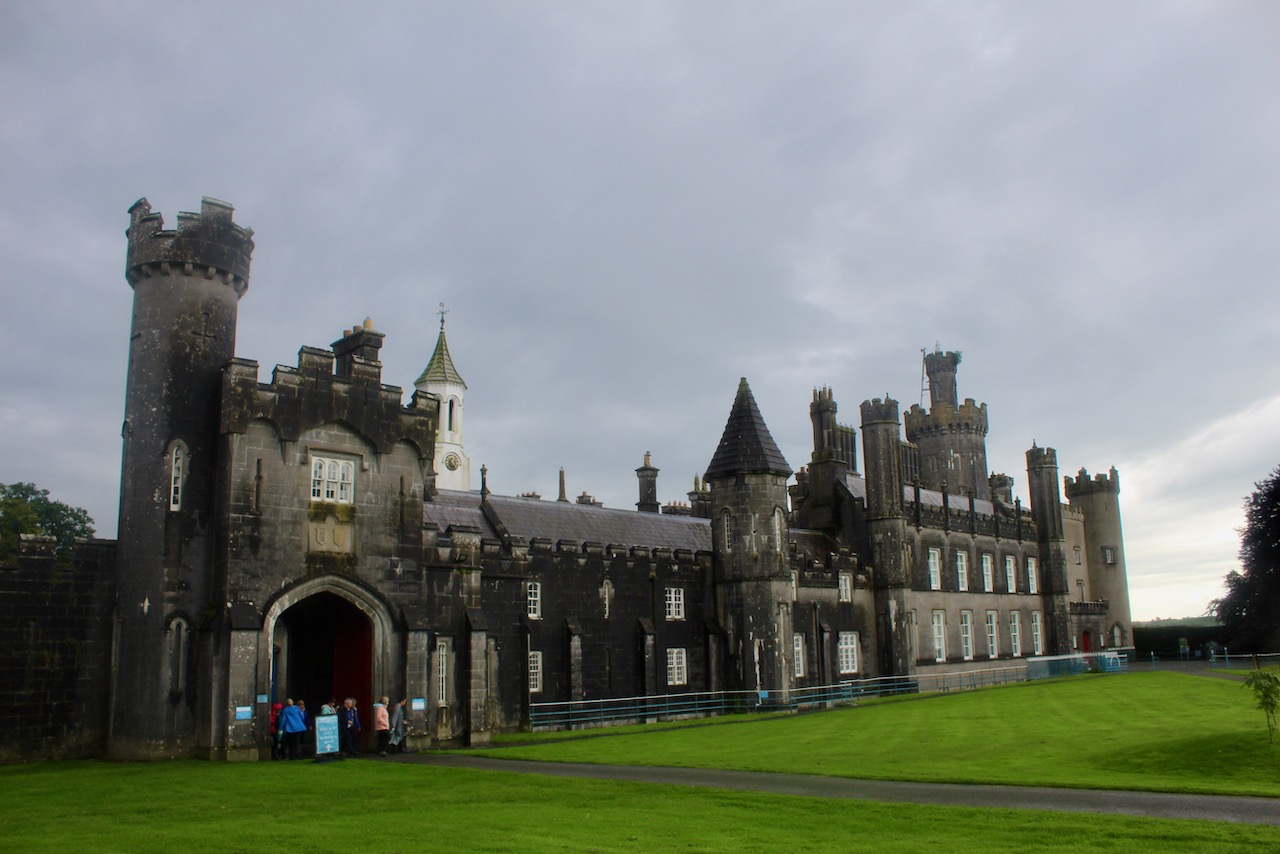
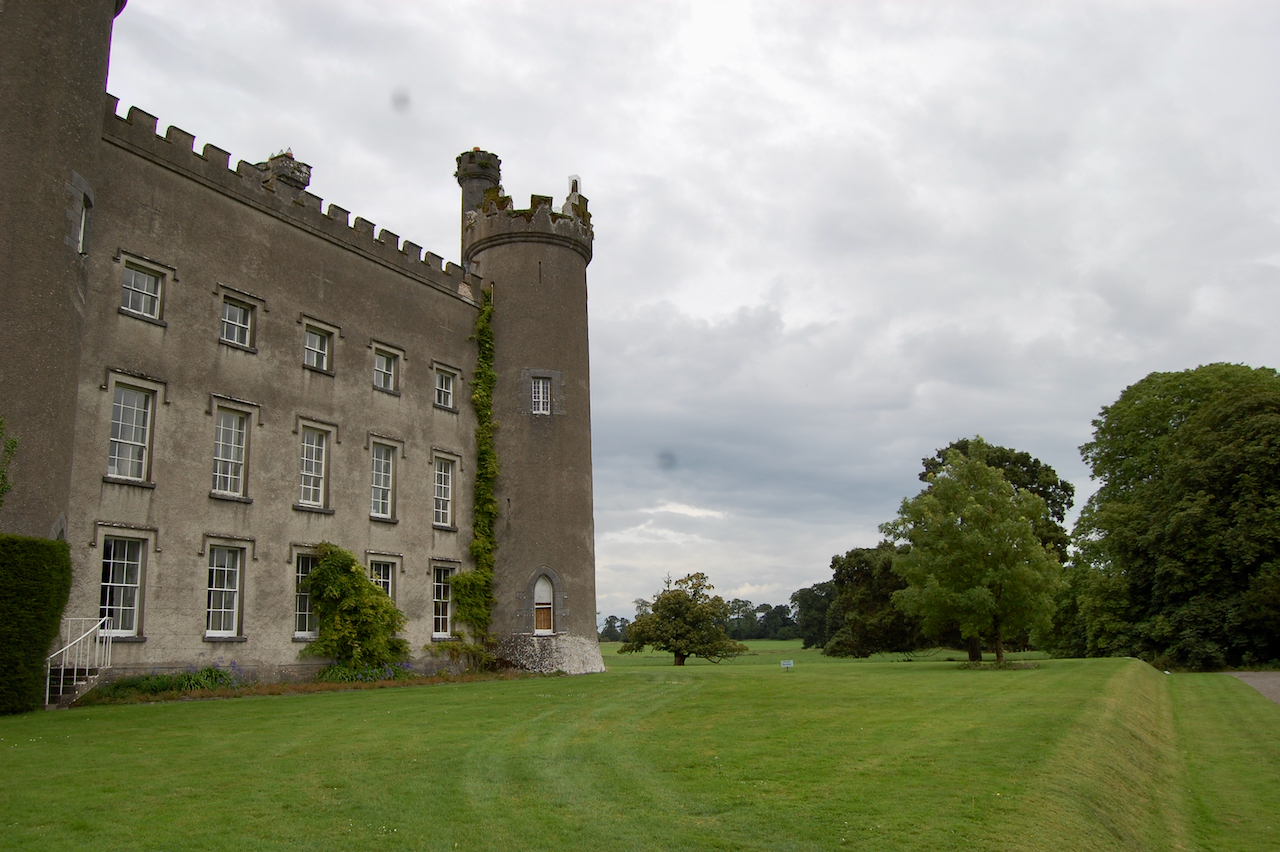
According to Irish Historic Houses, by Kevin O’Connor, Tullynally Castle stretches for nearly a quarter of a mile: “a forest of towers and turrets pierced by a multitude of windows,” and is the largest castle still lived in by a family in Ireland [1]. It has nearly an acre of roof! It has been the seat of the Pakenham family since 1655. I love that it has stayed within the same family, and that they still live there. I was sad to hear of Valerie Pakenham’s death recently – she wrote wonderful books of history and on Irish historic houses.
The current incarnation of the Castle is in the romantic Gothic Revival style, and it stands in a large wooded demesne near Lake Derravaragh in County Westmeath.
We stayed for the weekend even closer to Lake Derravaragh, and I swam in it!
The lands of Tullynally, along with land in County Wexford, were granted to Henry Pakenham in 1655 in lieu of pay for his position as Captain of a troop of horse for Oliver Cromwell. [2] [3] His grandfather, Edward (or Edmund) Pakenham, had accompanied Sir Henry Sidney from England to Ireland when Sir Sidney, a cousin of Edward Pakenham, was appointed Lord Deputy of Ireland. [4]
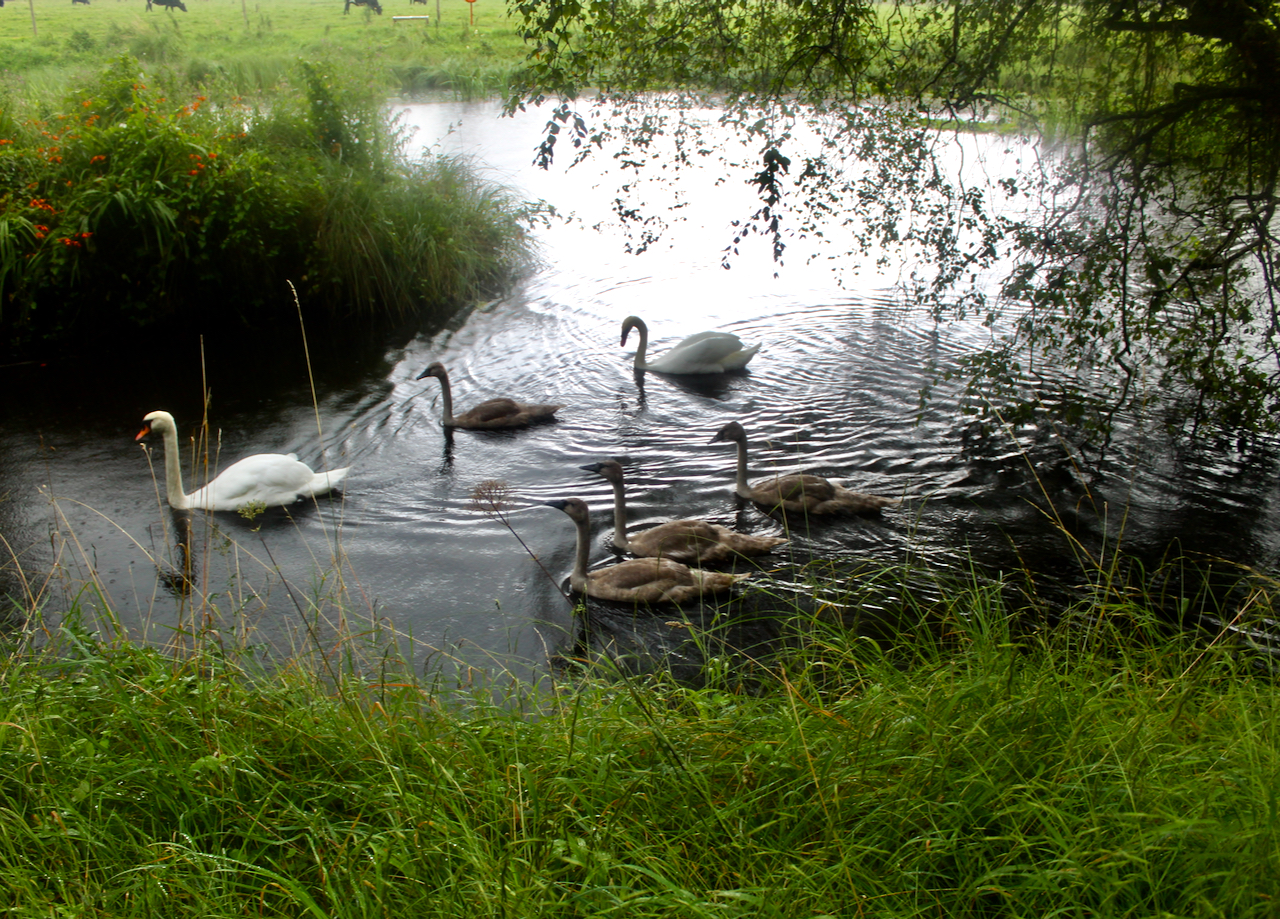
A house existed on the site at the time and parts still exist in the current castle. It was originally a semi-fortified Plantation house. When Henry Pakenham moved to Tullynally the house became known as Pakenham Hall. It is only relatively recently that it reverted to its former name, Tullynally, which means “hill of the swans.”
Henry was an MP for Navan in 1667. He settled at Tullynally. He married Mary Lill, the daughter of a Justice of the Peace in County Meath and left the property to his oldest son by this marriage, Thomas (1649-1706) who became a member of Parliament and an eminent lawyer. Henry remarried after his first wife died, this time to Anne Pigot and he had at least two more children with her.
Thomas, who held the office of Prime Sergeant-at-law in 1695, married first Mary Nelmes, daughter of an alderman in London. Thomas married a second time in 1696 after his first wife died, Mary Bellingham, daughter of Daniel, 1st Baronet Bellingham, of Dubber, Co. Dublin. His oldest son, by his first wife, Edward (1683-1721), became an MP for County Westmeath between 1714 and 1721. A younger son, Thomas (d. 1722) lived at Craddenstown, County Westmeath.
Edward (1683-1721) married Margaret Bradeston and was succeeded by his son, Thomas Pakenham (1713-1766) [see 3]. After her husband died in 1721, Margaret married Reverend Ossory Medlicott. Edward’s younger son George Edward (1717-1768) became a merchant in Hamburg.
Thomas (1713-1766) married Elizabeth Cuffe (1719-1794), the daughter of Michael Cuffe (1694-1744) of Ballinrobe, County Mayo. Her father was heir to Ambrose Aungier (d. 1704), 2nd and last Earl of Longford (1st creation). Michael Cuffe sat as a Member of Parliament for County Mayo and the Borough of Longford. In 1756 the Longford title held by his wife’s ancestors was revived when Thomas was raised to the peerage as Baron Longford. After his death, his wife Elizabeth was created Countess of Longford in her own right, or “suo jure,” in 1785.
Michael Cuffe had another daughter, Catherine Anne Cuffe, by the way, who married a Bagot, Captain John Lloyd Bagot (d. 1798). I haven’t found whether my Baggots are related to these Bagots but it would be nice to have such ancestry! Even nicer because his mother, Mary Herbert, came from Durrow Abbey near Tullamore, a very interesting looking house currently standing empty and unloved.
Thomas’s son, Edward Michael Pakenham, 2nd Baron Longford (1743-92) had Pakenham Hall enlarged in 1780 to designs by Graham Myers who in 1789 was appointed architect to Trinity College, Dublin. Myers created a Georgian house. The Buildings of Ireland website tells us that the original five bay house had a third floor added at this time. [5]
The oldest parts still surviving from the improvements carried out around 1780 are some doorcases in the upper rooms and a small study in the northwest corner of the house. We did not see these rooms, but Christine Casey and Alistair Rowan tell us that the study has a dentil cornice and a marble chimneypiece with a keystone of around 1740. [see 2] The oldest part of the castle is at the south end, and still holds the principal rooms.
Edward Michael Pakenham, 2nd Baron Longford, married Catherine Rowley, daughter of Hercules Langford Rowley of Summerhill, County Kilkenny, in 1768. He was in the Royal Navy but retired from the military in 1766, when he succeeded as 2nd Baron Longford. He was appointed Privy Counsellor in Ireland in 1777.
Admiral Thomas Pakenham (1757-1836), a younger brother of Edward Michael Pakenham, the 2nd Baron Longford, built another house on the Tullynally estate, Coolure House, around 1775, when he married Louisa Anne Staples, daughter of John Staples (1736-1820), MP for County Tyrone and owner of Lissan House in County Tyrone – which can now be visited, https://www.lissanhouse.com/ . Their son Edward Michael Pakenham (1786-1848) inherited Castletown in County Kildare and he legally changed his name to Edward Michael Conolly. Louisa Anne Staples’s mother was Harriet Conolly, daughter of William Conolly (1712-1754) of Castletown, County Kildare.
Coolure House, on the Tullynally estate, built for Admiral Thomas Pakenham around 1775. Photograph from the National Inventory of Architectural Heritage.
Edward Michael Pakenham 2nd Baron Longford and his wife Catherine née Rowley had many children. Their daughter Catherine (1773-1831) married Arthur Wellesley, Duke of Wellington, but it was an unhappy marriage. The daughter of the current occupant of Tullynally Thomas Pakenham and his wife Valerie, Eliza Pakenham, published Tom, Ned and Kitty: An Intimate History of an Irish Family, about the Duke of Wellington and the family’s relation to him. Kitty fell for the local naval man, Arthur Wellesley, but the family refused to let her marry him. He promised her that he would return and marry her. He went off to sea, and she was brokenhearted. He returned as the Duke of Wellington and did indeed marry her. He, however, was not a very nice man, and is reported to have said loudly as she walked up the aisle of the church to marry him, “Goodness, the years have not been kind.”
When Edward died in 1792 his son Thomas (1774-1835) inherited, and became the 3rd Baron Longford. When his grandmother Elizabeth née Cuffe, who had been made the Countess of Longford in her own right, died in 1794, Thomas became 2nd Earl of Longford.
Tullynally was gothicized by Francis Johnston to become a castle.
We came across Francis Johnson (1760-1829) the architect when I learned that he had been a pupil of Thomas Cooley, the architect for Richard Robinson, Archbishop of Armagh (who had Rokeby Hall in County Louth built as his home). Johnston took over Cooley’s projects when Cooley died and went on to become an illustrious architect, who designed the beautiful Townley Hall in County Louth which we visited recently. He also enlarged and gothicized Markree Castle for the Coopers, and Slane Castle for the Conynghams. His best known building is the General Post Office on O’Connell Street in Dublin. We recently saw his house in Dublin on Eccles Street, on a tour with Aaran Henderson of Dublin Decoded.
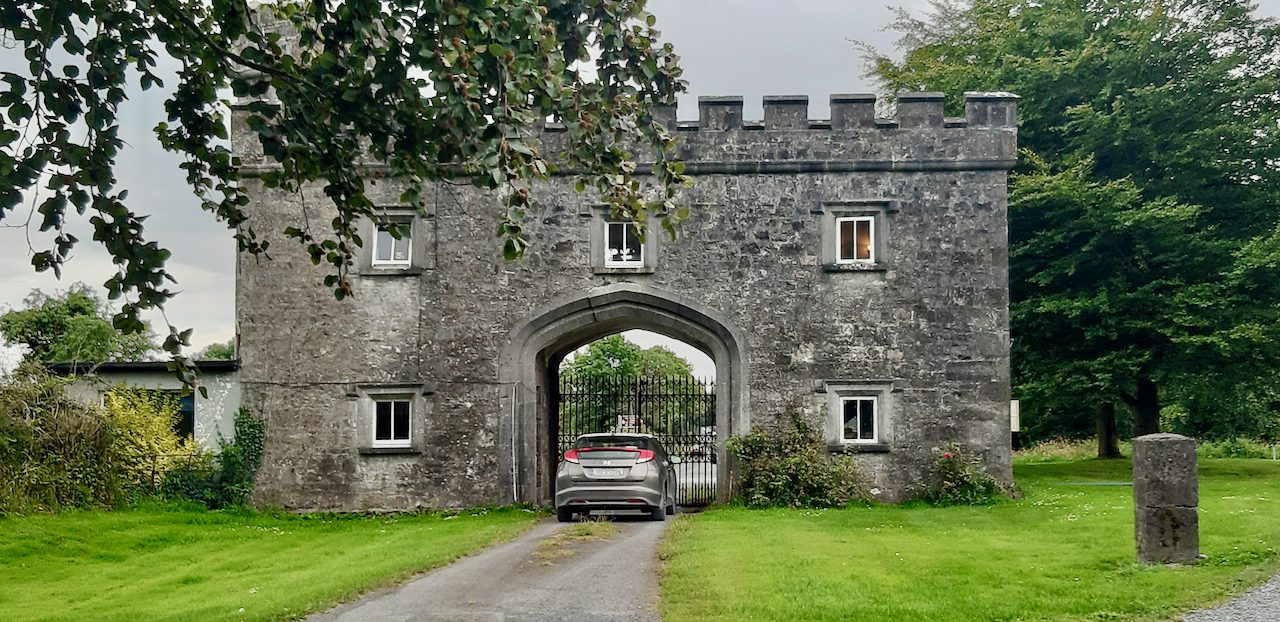
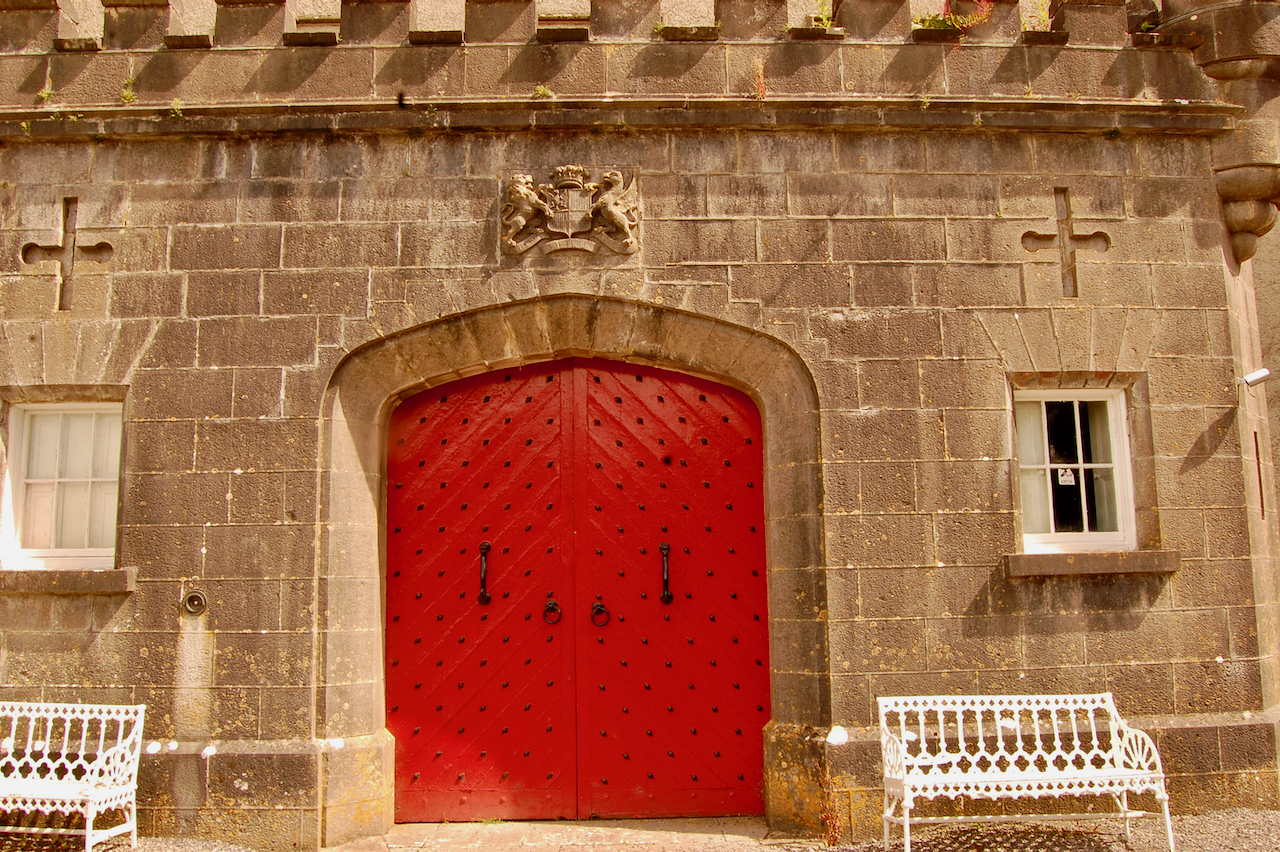
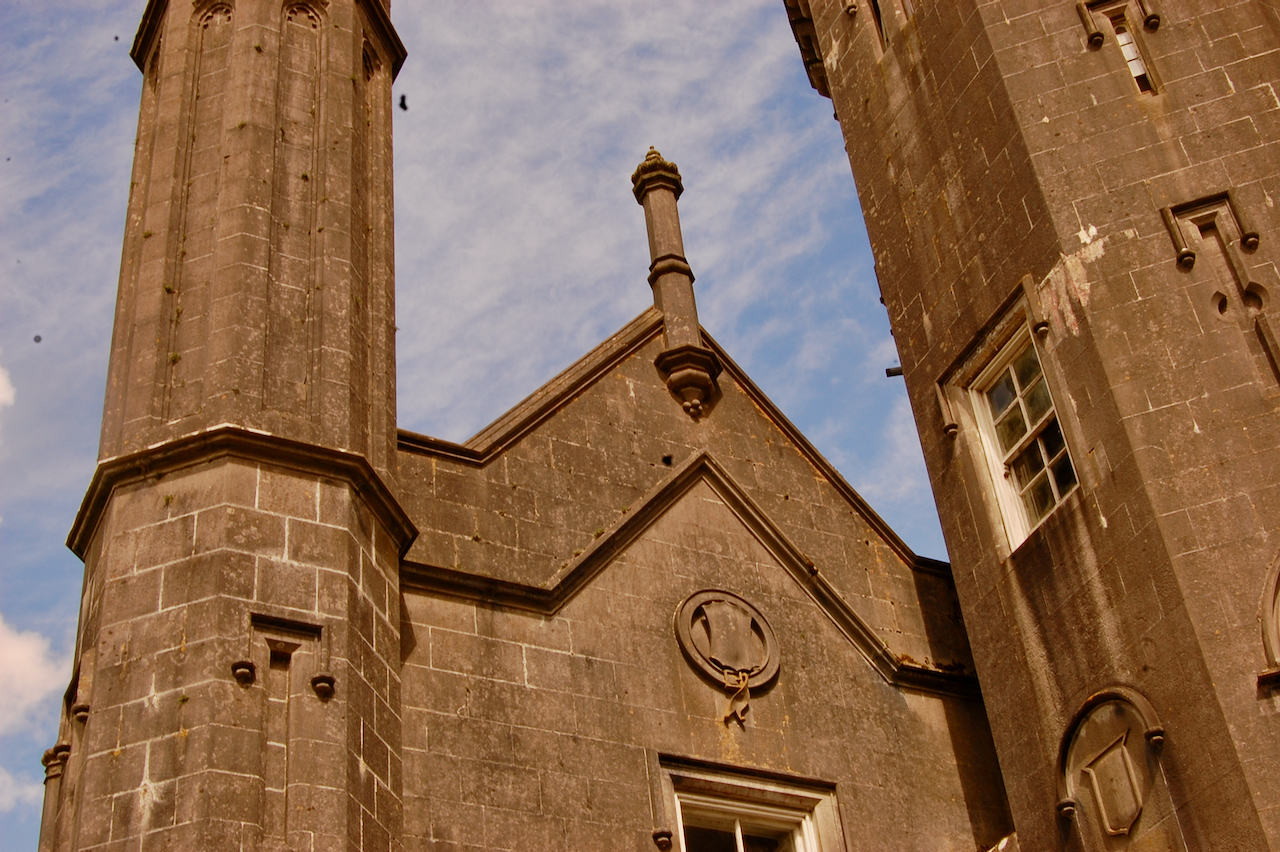
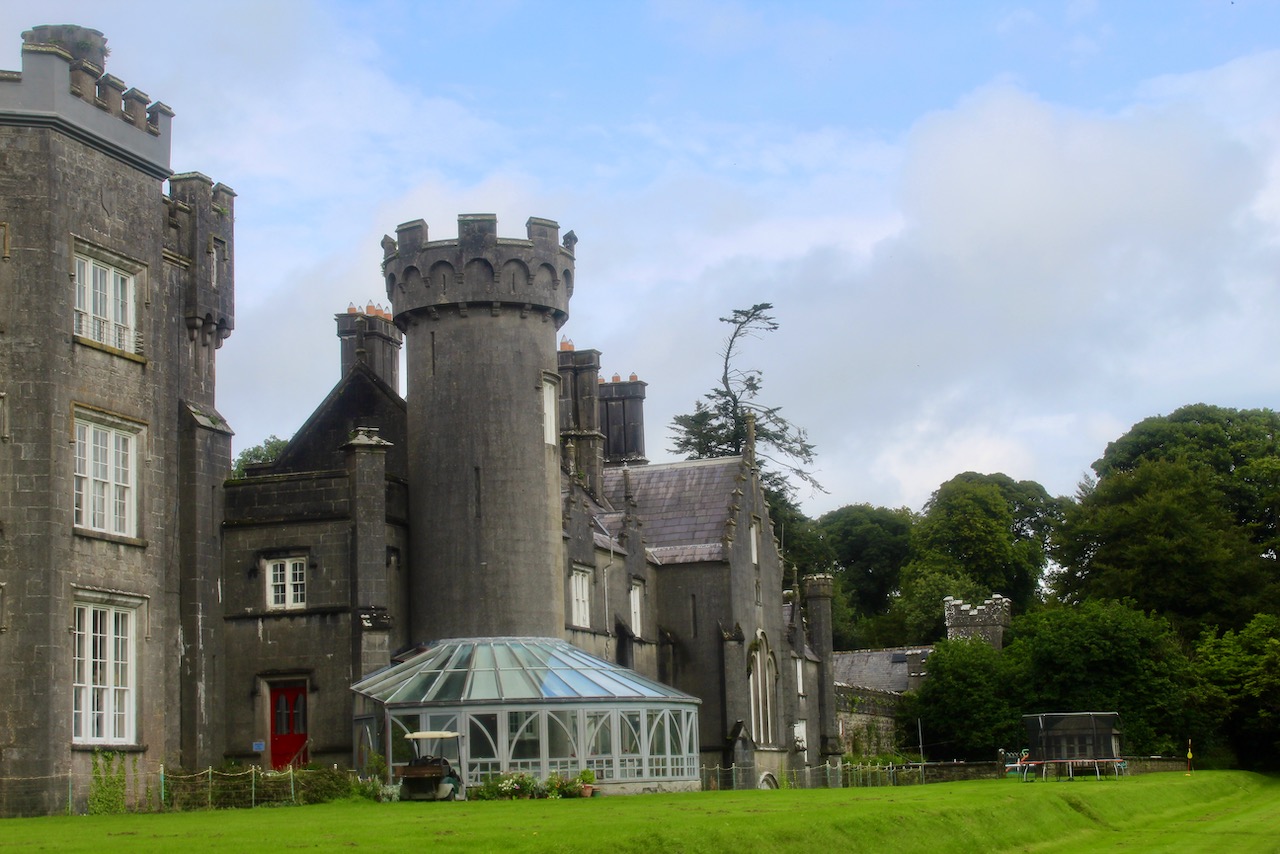
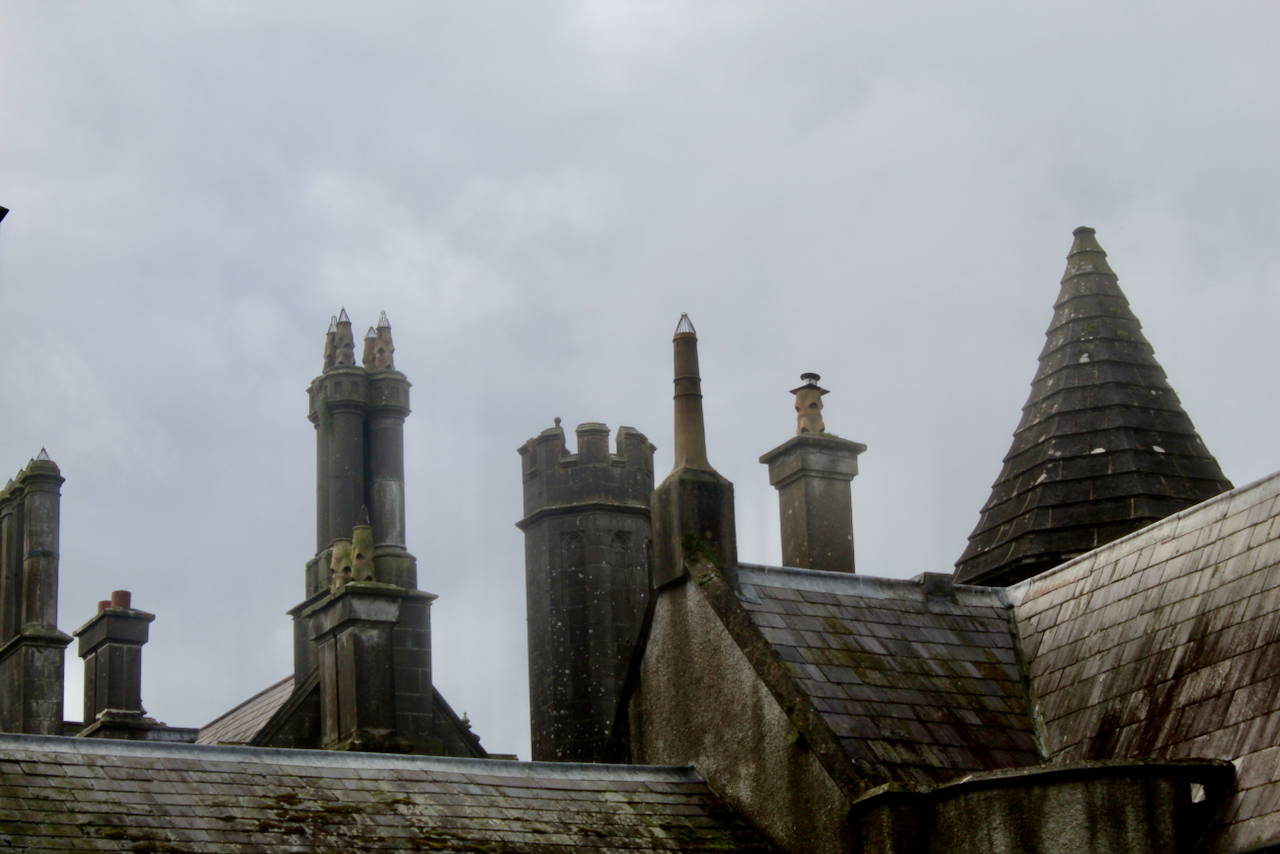
Thomas the 2nd Earl sat in the British House of Lords as one of the 28 original Irish Representative Peers. Casey and Rowan call Francis Johnston’s work on the house “little more than a Gothic face-lift for the earlier house.” He produced designs for the house from 1794 until 1806. On the south front he added two round towers projecting from the corners of the main block, and battlemented parapets. He added the central porch. To the north, he built a rectangular stable court, behind low battlemented walls. He added thin mouldings over the windows, and added the arched windows on either side of the entrance porch.
Terence Reeves-Smyth details the enlargement of Tullynally in his Big Irish Houses:
“Johnson designed battlements and label mouldings over the windows, but as work progressed it was felt this treatment was too tame, so between 1805 and 1806 more dramatic features were added, notably round corner turrets and a portcullis entrance, transforming the house with characteristic Irish nomenclature from Pakenham Hall House to Pakenham Hall Castle.”
“During the early nineteenth century, a craze for building sham castles spread across Ireland with remarkable speed, undoubtedly provoked by a sense of unease in the aftermath of the 1798 rebellion. Security was certainly a factor in Johnson’s 1801 to 1806 remodelling of Tullynally, otherwise known as Pakenham Hall, where practical defensive features such as a portcullis entrance were included in addition to romantic looking battlements and turrets. Later enlargements during the 1820s and 1830s were also fashioned in the castle style and made Tullynally into one of the largest castellated houses in Ireland – so vast, indeed, that it has been compared to a small fortified town.”
Thomas married Georgiana Emma Charlotte Lygon, daughter of William Lygon, 1st Earl Beauchamp (UK) in 1817. He was created 1st Baron Silchester, County Southampton [U.K.] on 17 July 1821, which gave him and his descendants an automatic seat in the House of Lords.
According to Rowan and Casey it may have been his wife Georgiana Lygon’s “advanced tastes” that led to the decision to make further enlargements in 1820. They chose James Sheil, a former clerk of Francis Johnston, who also did similar work at Killua Castle in County Westmeath, Knockdrin Castle (near Mullingar) and Killeen Castle (near Dunshaughlin, Co. Meath).
At Tullynally Sheil added a broad canted bay window (a bay with a straight front and angled sides) towards the north end of the east front, with bartizan turrets (round or square turrets that are corbelled out from a wall or tower), and wide mullioned windows under label mouldings (or hoodmouldings) in the new bay.
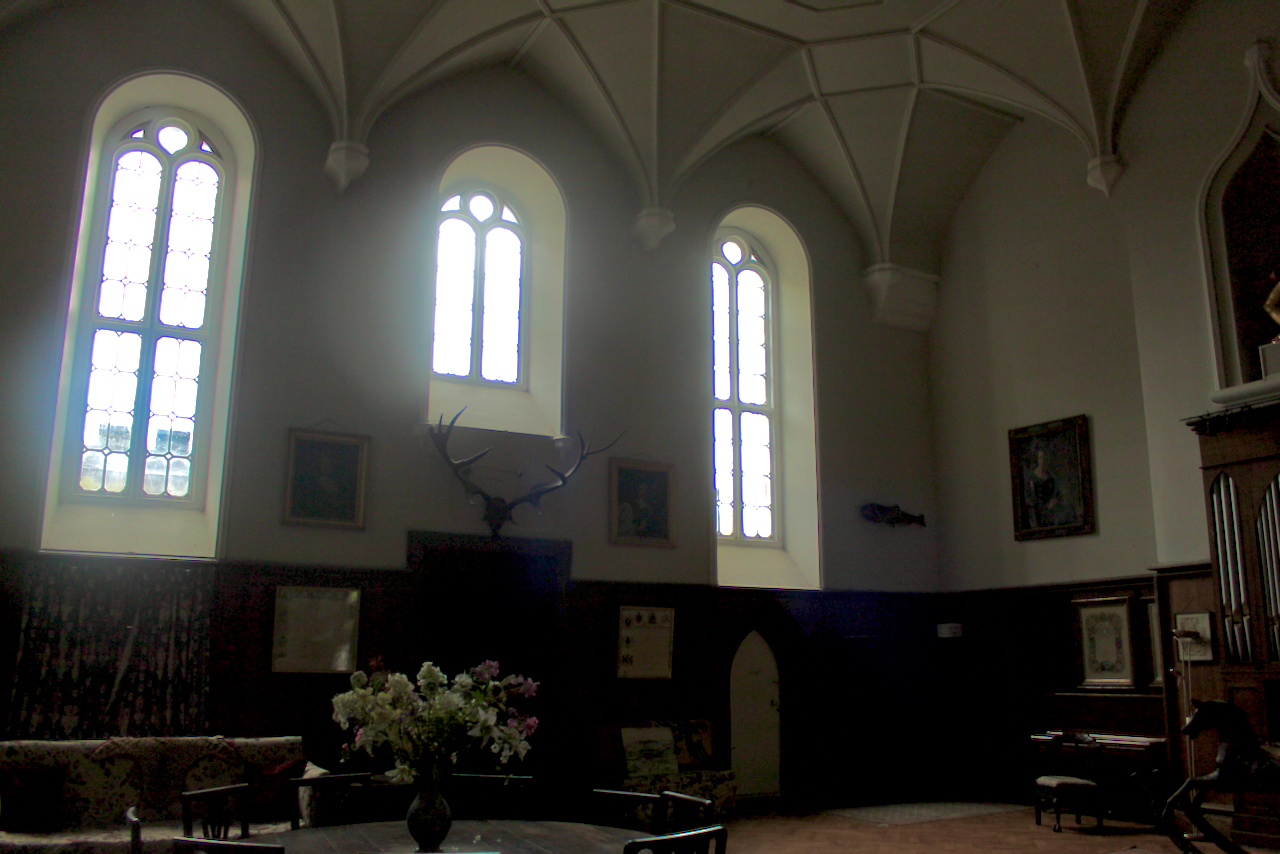
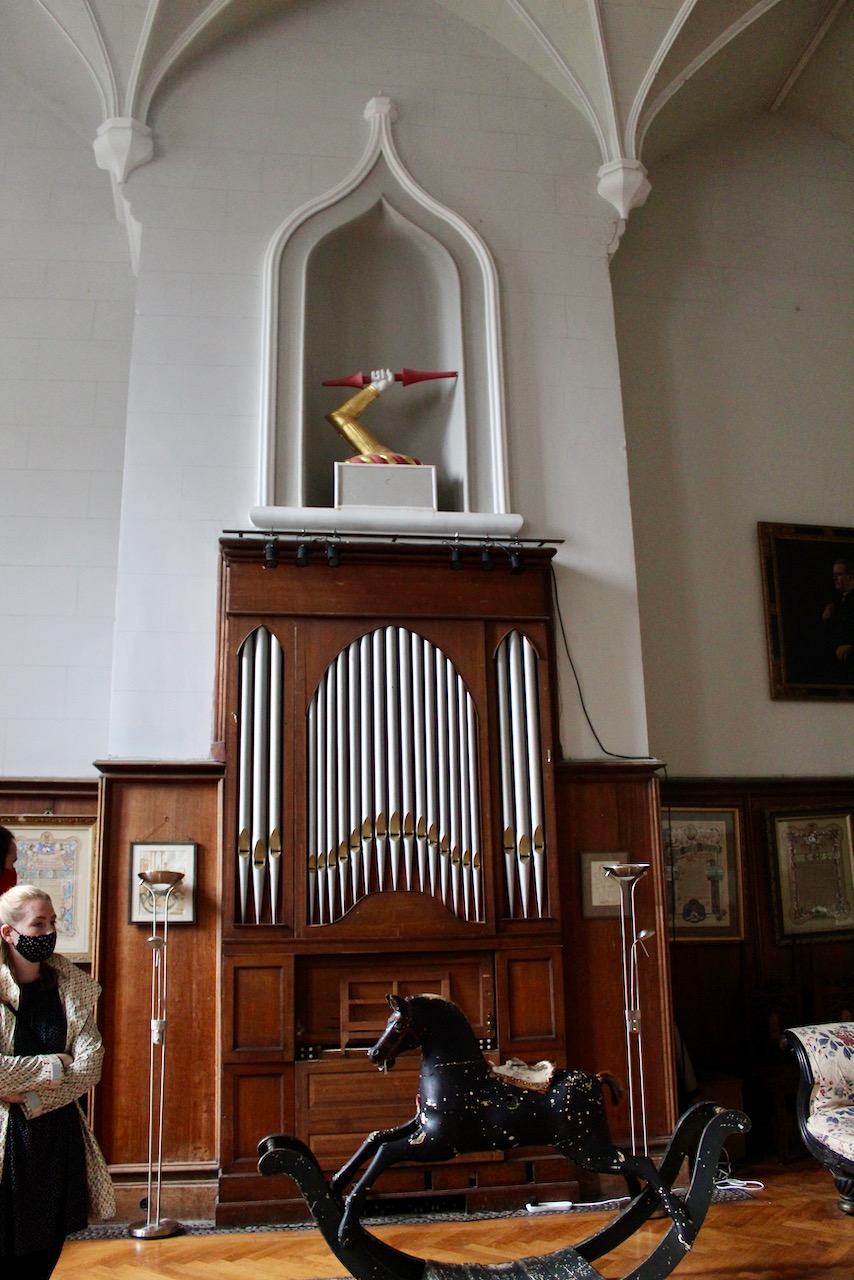
One enters into a large double height hall. It is, Terence Reeves-Smyth tells us, 40 feet square and 30 feet high. I found it impossible to capture in a photograph. It has a Gothic fan vaulted ceiling, and is wood panelled all around, with a fireplace on one side and an organ in place of a fireplace on the other side.
The hall, Casey and Rowan tell us, has a ceiling of “prismatic fan-vaults, angular and overscaled, with the same dowel-like mouldings marking the intersection of the different planes…The hall is indeed in a very curious taste, theatrical like an Italian Gothick stage set, and rendered especially strange by the smooth wooden wainscot which completely encloses the space and originally masked all the doors which opened off it.” [6] As this smooth wainscot and Gothic panelled doors are used throughout the other main rooms of the house and are unusual for Sheil, this is probably a later treatment.
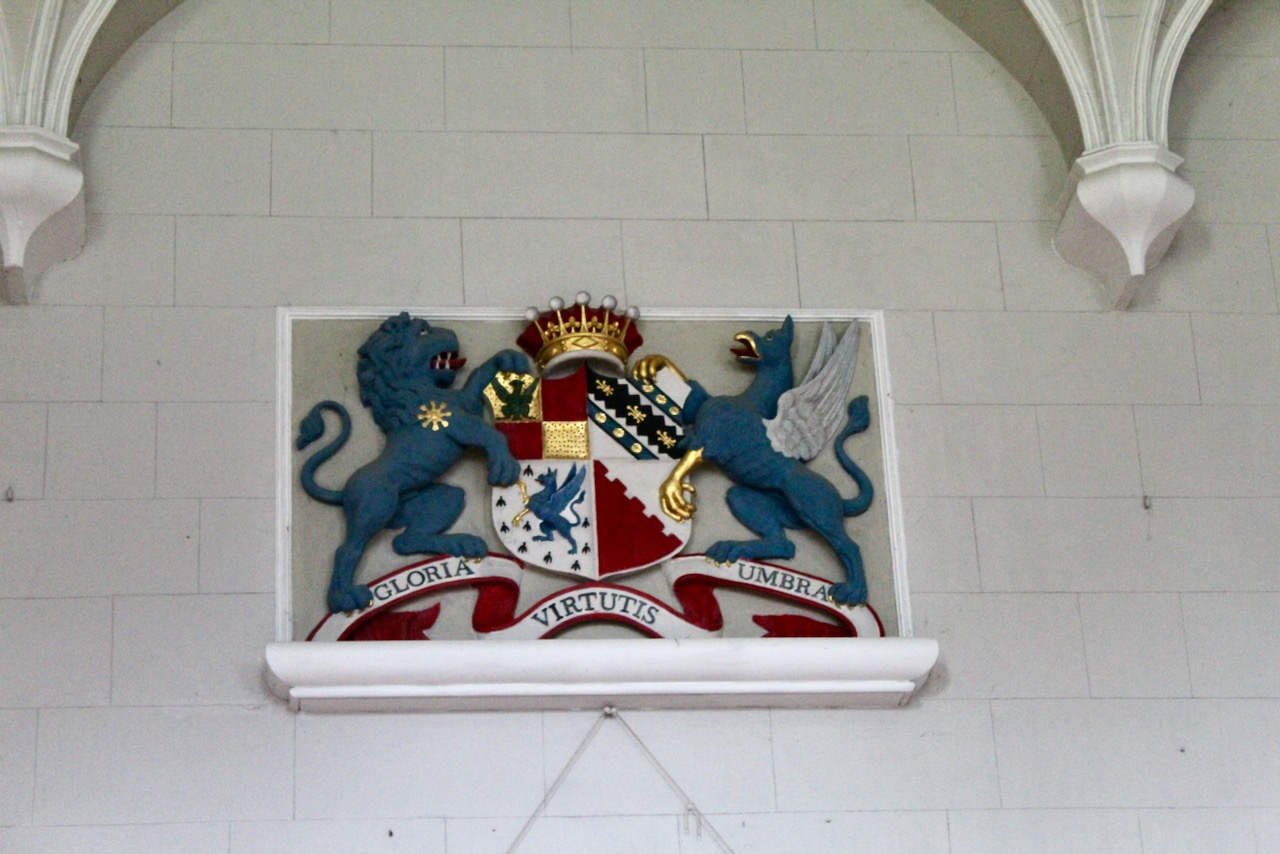
“Visitors entering the castle will first arrive in the great hall – an enormous room forty-feet square and thirty feet high with no gallery to take away from its impressive sense of space. A central-heating system was designed for this room by Richard Lovell Edgeworth, who earlier in 1794 had fitted up the first semaphore telegraph system in Ireland between Edgeworthstown and Pakenham Hall, a distance of twelve miles. In a letter written in December 1807, his daughter Maria Edgeworth, a frequent visitor to Pakenham Hall, wrote that “the immense hall is so well warmed by hot air that the children play in it from morning to night. Lord L. seemed to take great pleasure in repeating twenty times that he was to thank Mr. Edgeworth for this.” Edgeworth’s heating system was, in fact, so effective that when Sheil remodelled the hall in 1820 he replaced one of the two fireplaces with a built-in organ that visitors can still see. James Sheil was also responsible for the Gothic vaulting of the ceiling, the Gothic niches containing the family crests, the high wood panelling around the base of the walls and the massive cast-iron Gothic fireplace. Other features of the room include a number of attractive early nineteenth century drawings of the castle, a collection of old weapons, family portraits and an Irish elk’s head dug up out of a bog once a familiar feature of Irish country house halls.” [see 1]
There is a long vaulted corridor that runs through the house at first-floor level which Rowan and Casey write is probably attributable to Sheil.
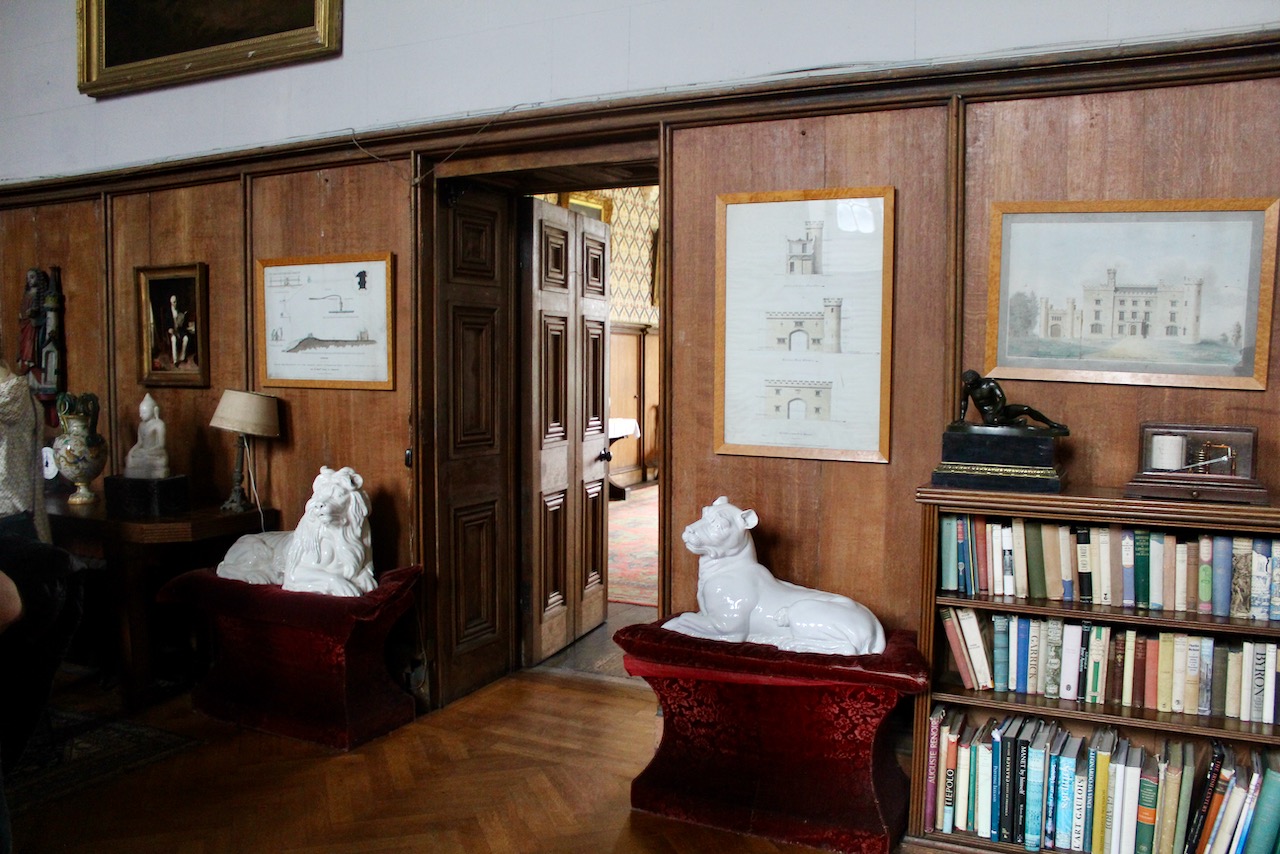
The ground floor of the main house contains Lord Longford’s study, the dining room, library, drawing room, Great Hall, Lady Longford’s sitting room, Plate room and Servant’s Library.
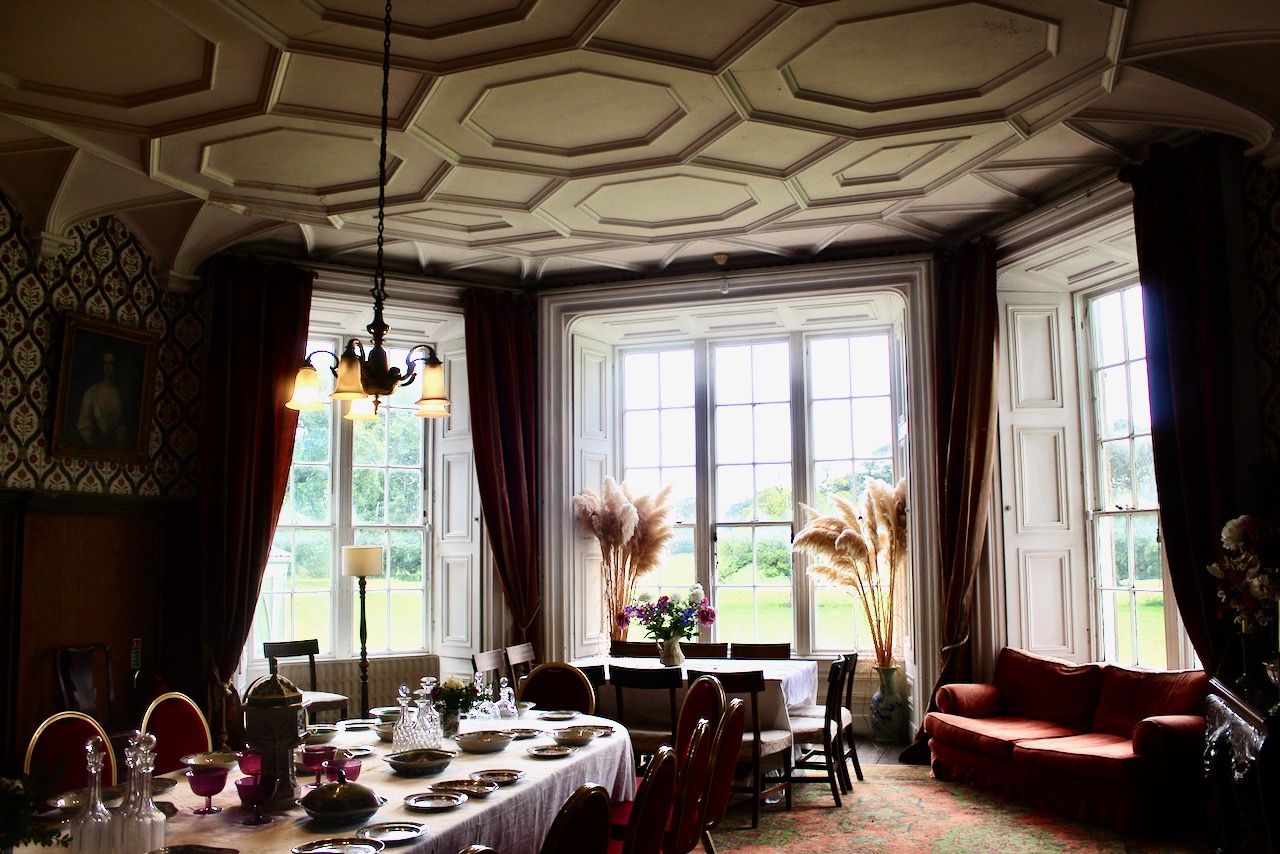
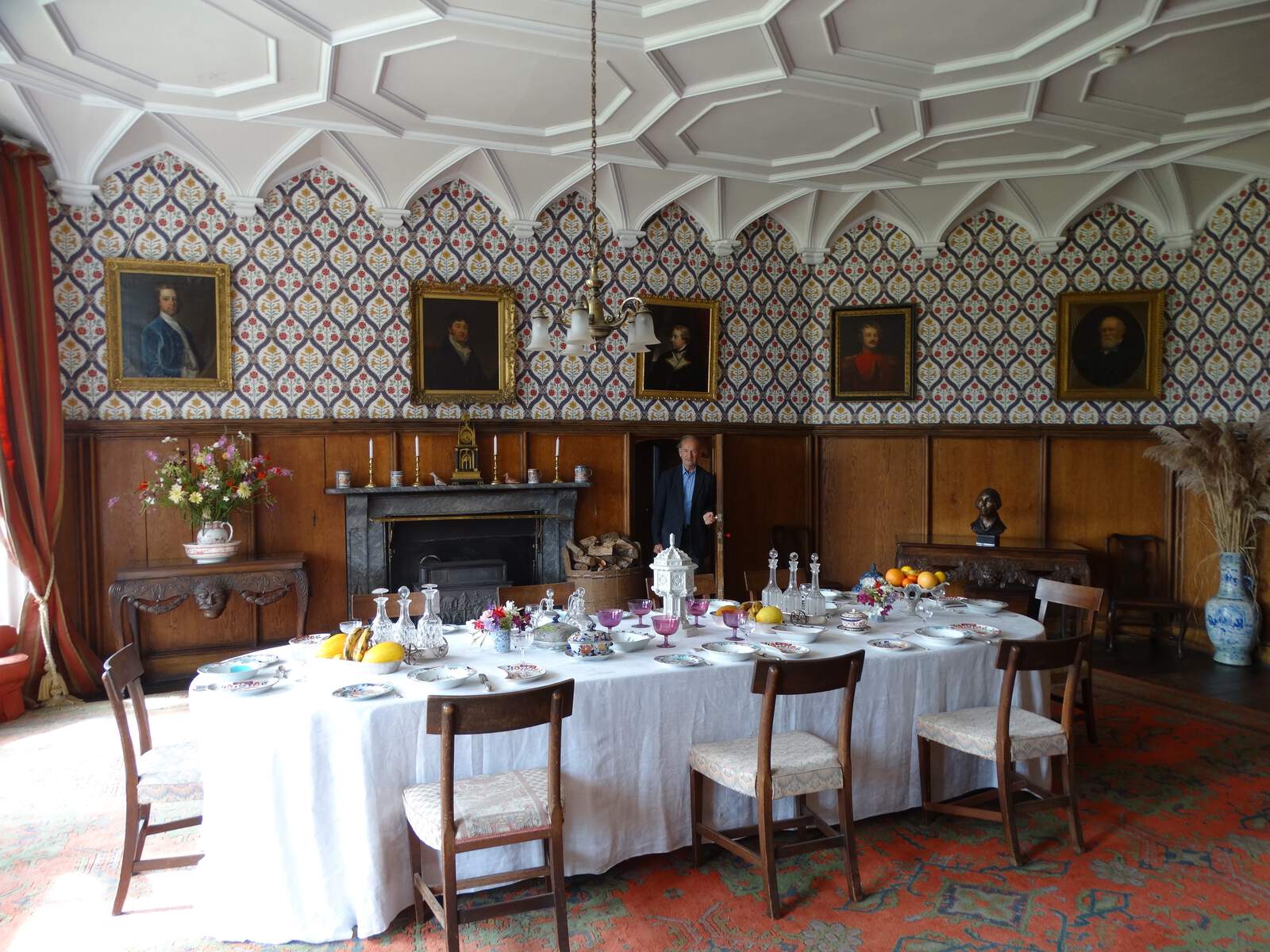
From the Great Hall we entered the dining room, which used to be the staircase room.
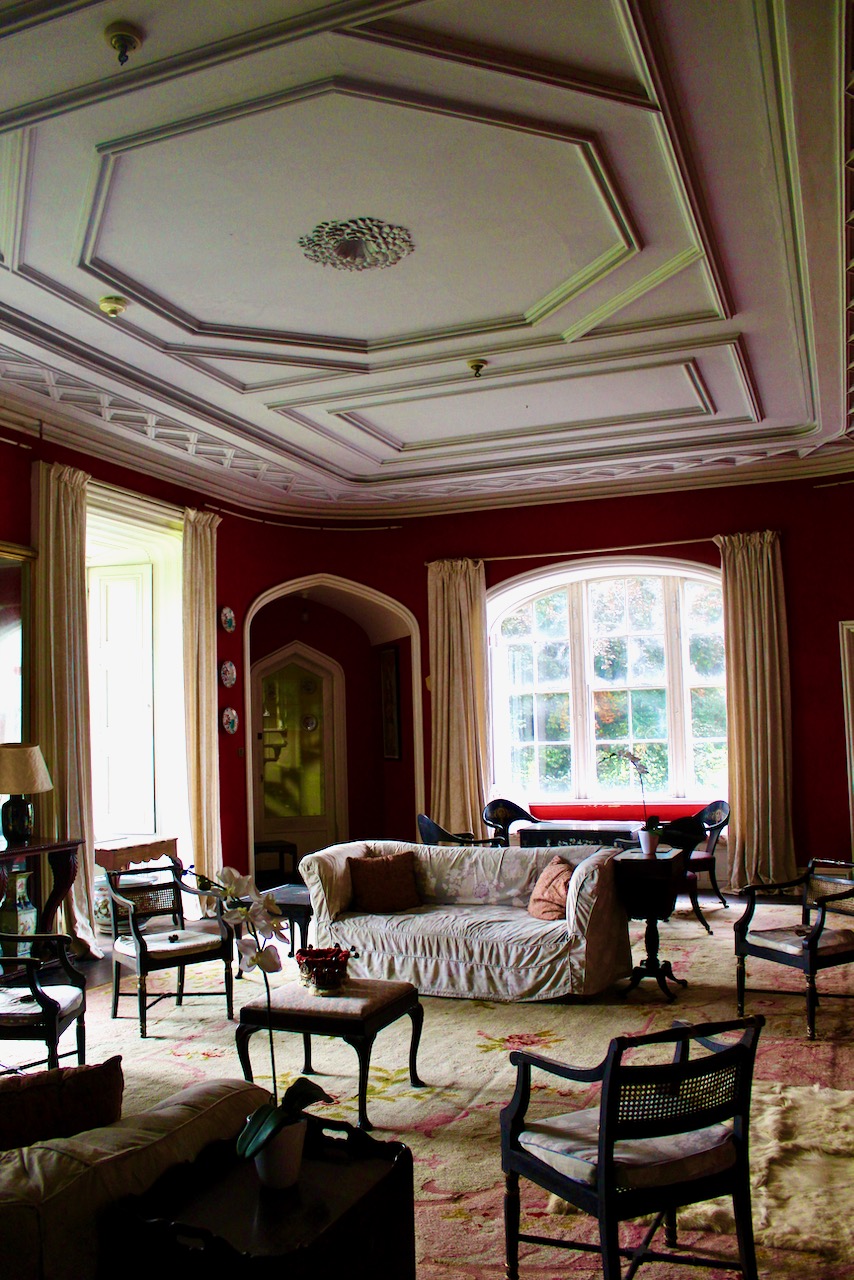
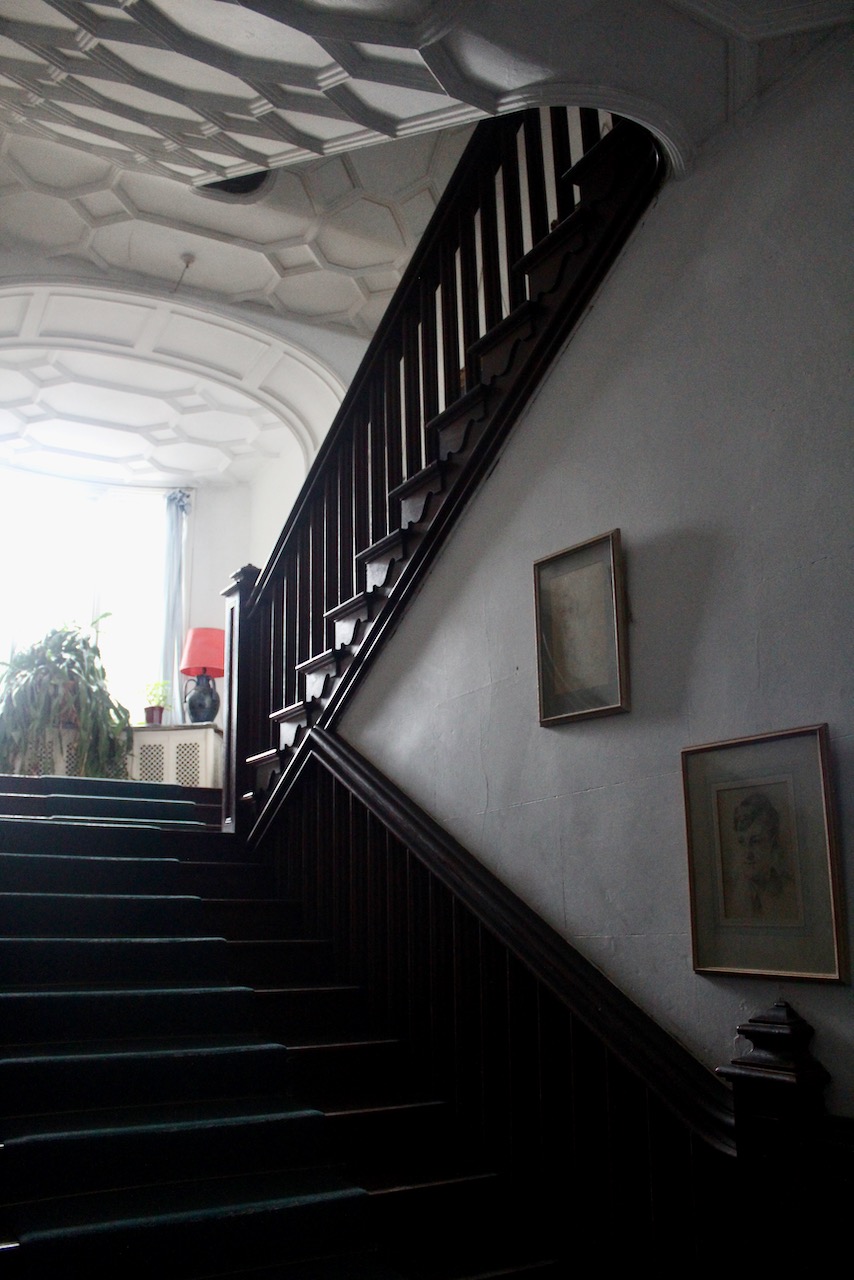
The dining room, drawing room and library were all decorated in Sheil’s favoured simple geometrical shaped plasterwork of squares and octagons on the ceiling. [6]
We can see that the windows in the dining room are in the canted bow which was added by James Shiel. The room is hung with portraits of family members. The ceiling drops at the walls into Gothic decoration ofprismatic fan-vaults with dowels similar to those in the Hall, though less detailed.
Tullynally Castle, Castlepollard, Co Westmeath, photograph by Thomas Pakenham for Failte Ireland, 2015.
Georgina née Lygon, wife of the 2nd Earl, was well-read and wealthy. She and her husband were friendly with the Edgeworths of nearby Edgeworthstown. She was responsible for developing the gardens, planting the trees which are now mature, and creating a formal garden. Her husband died in 1835 but she lived another forty-five years, until 1880. She and her husband had at least eight children. Their son Edward Michael Pakenham (1817-1860) succeeded to become 3rd Earl of Longford in 1835 while still a minor.
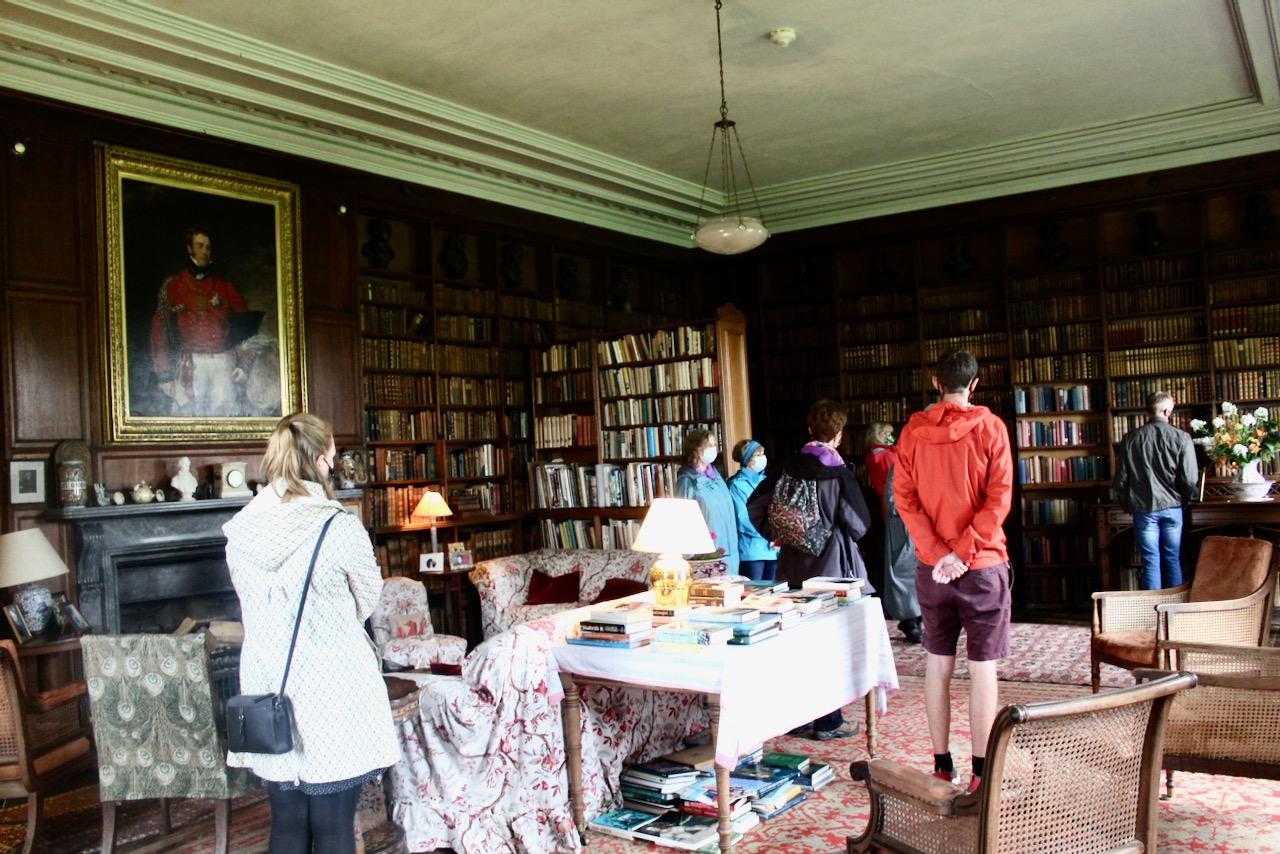
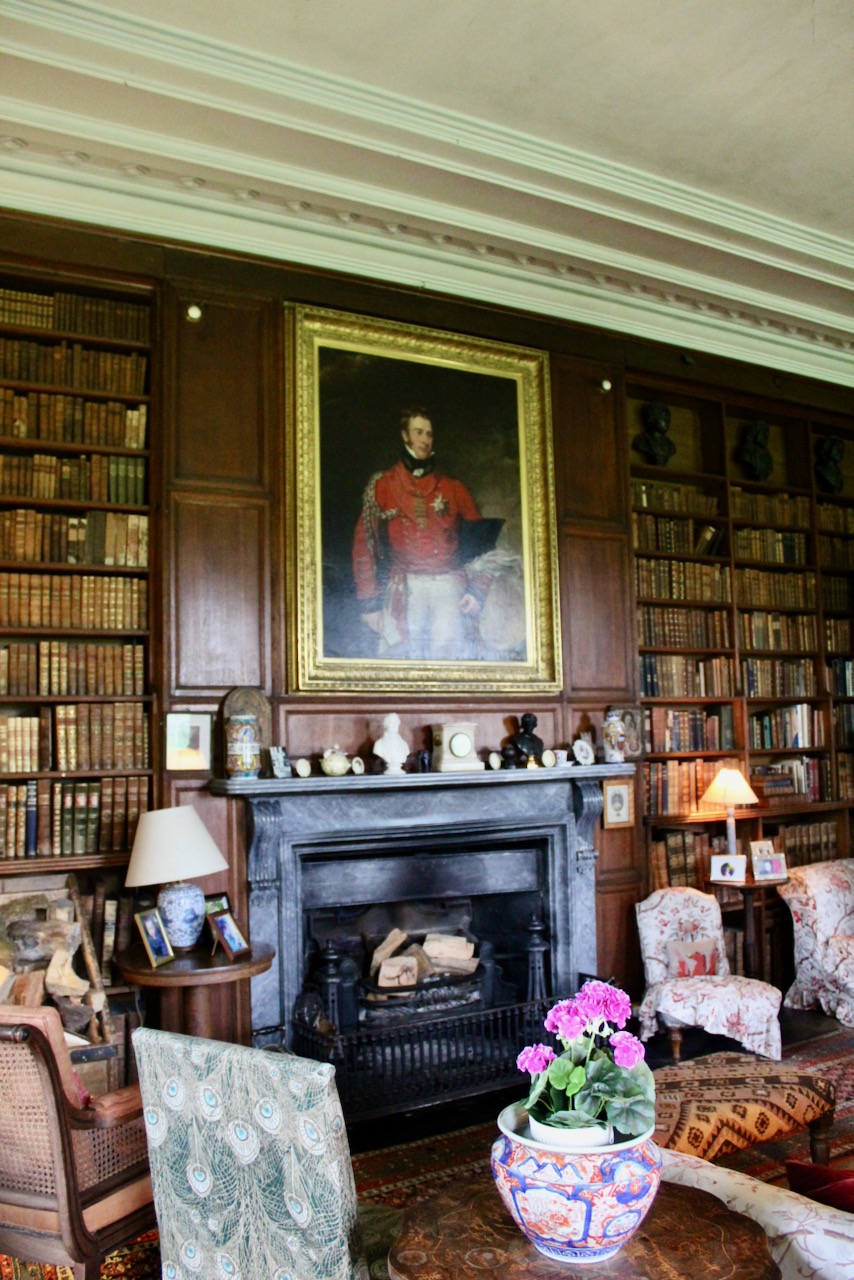
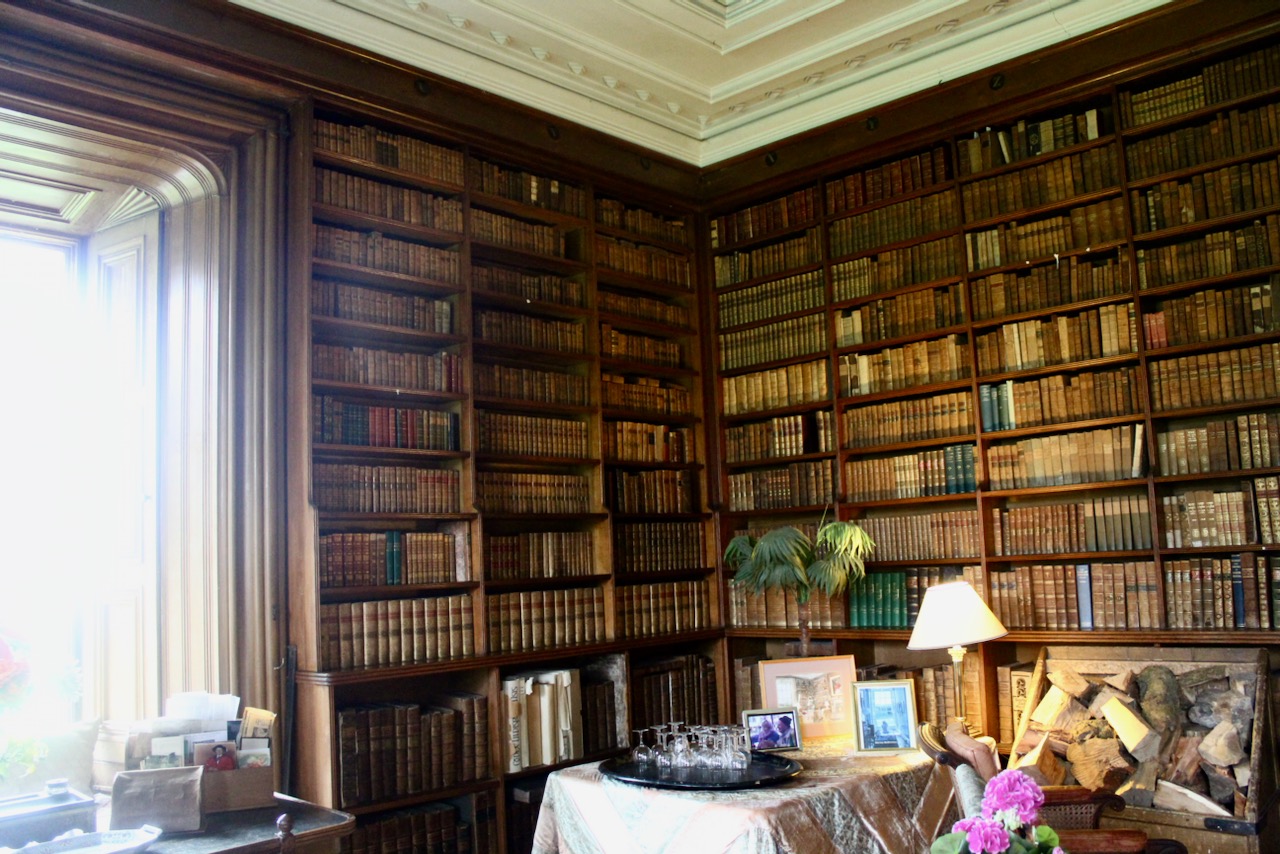
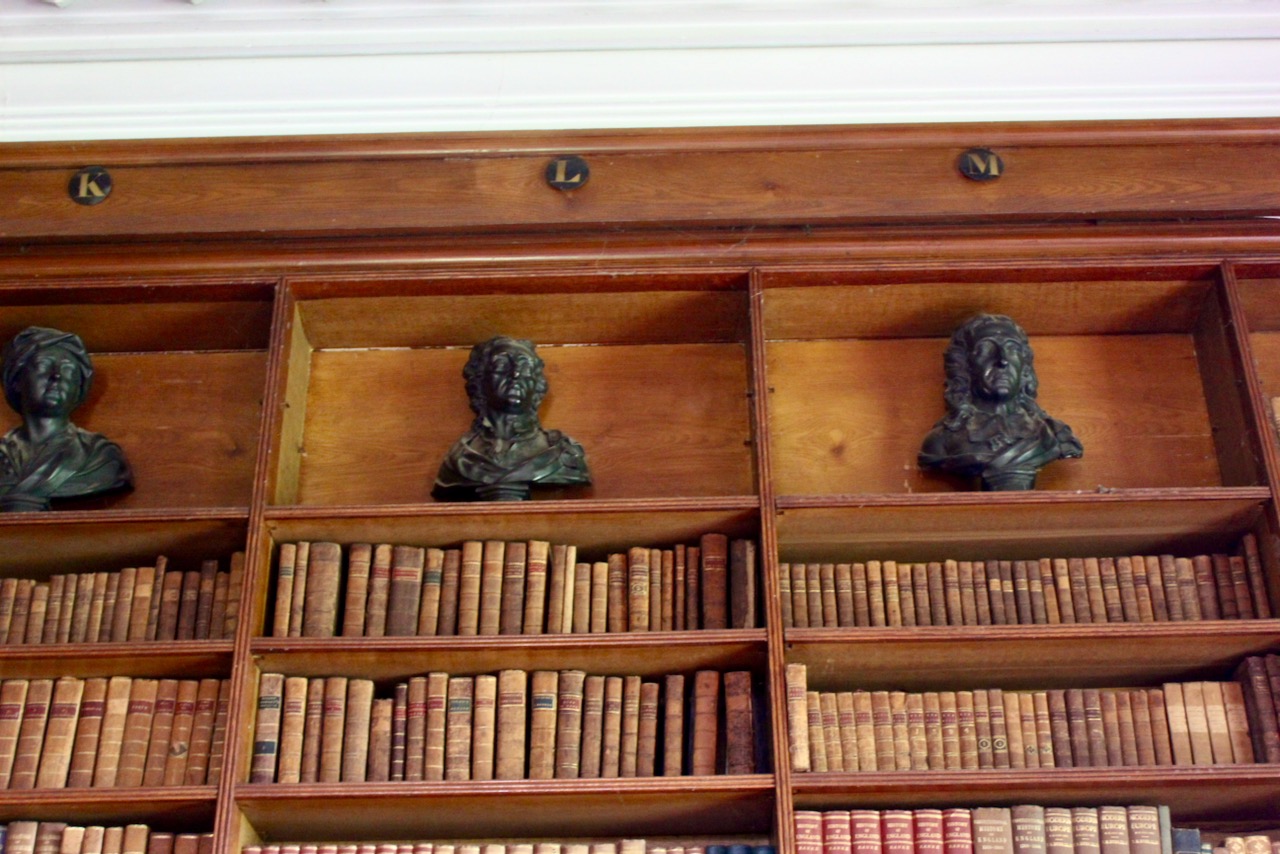
We then went to the library. The library was started by Elizabeth Cuffe, wife of the the 1st Baron Longford, and continued by Georgiana, wife if the 2nd Earl. Again, it’s hard to capture in a photograph, while also being on a tour.
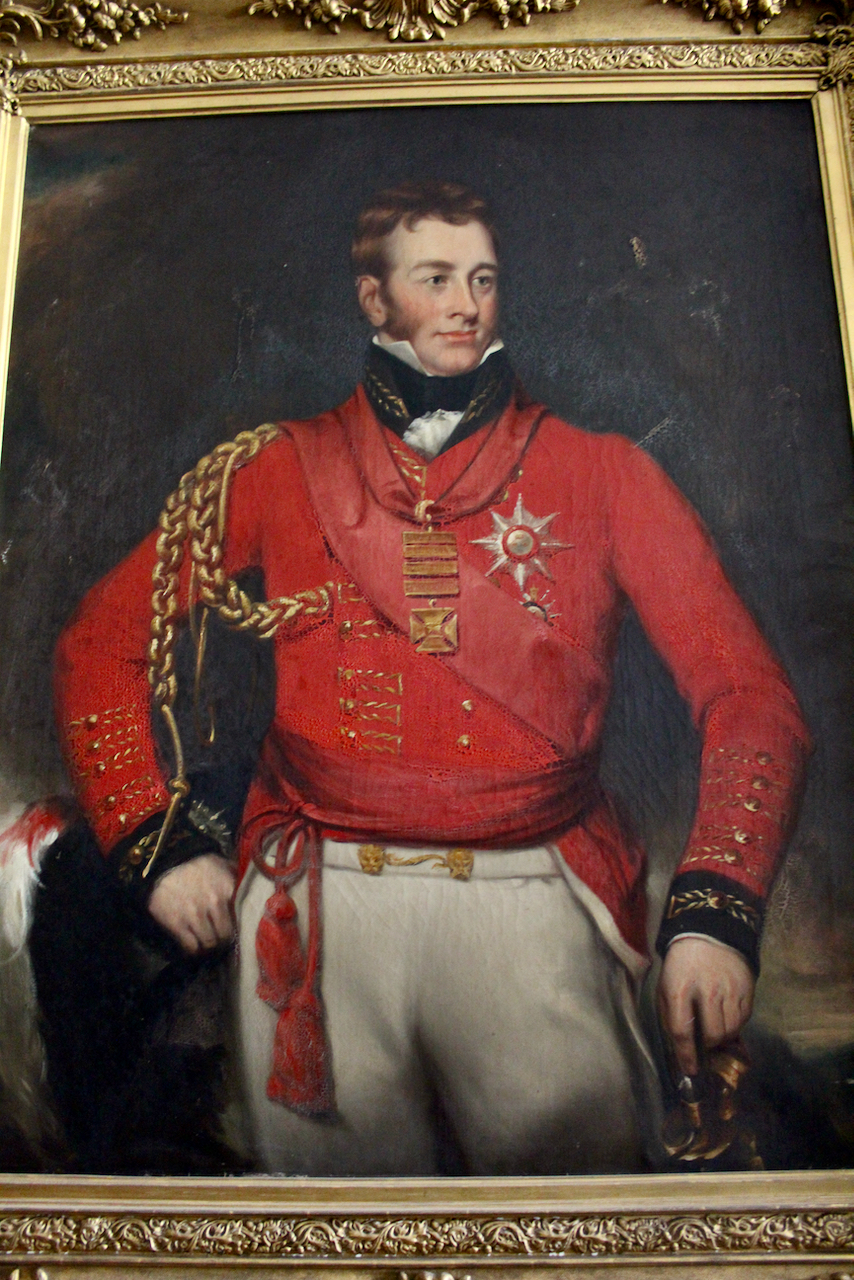
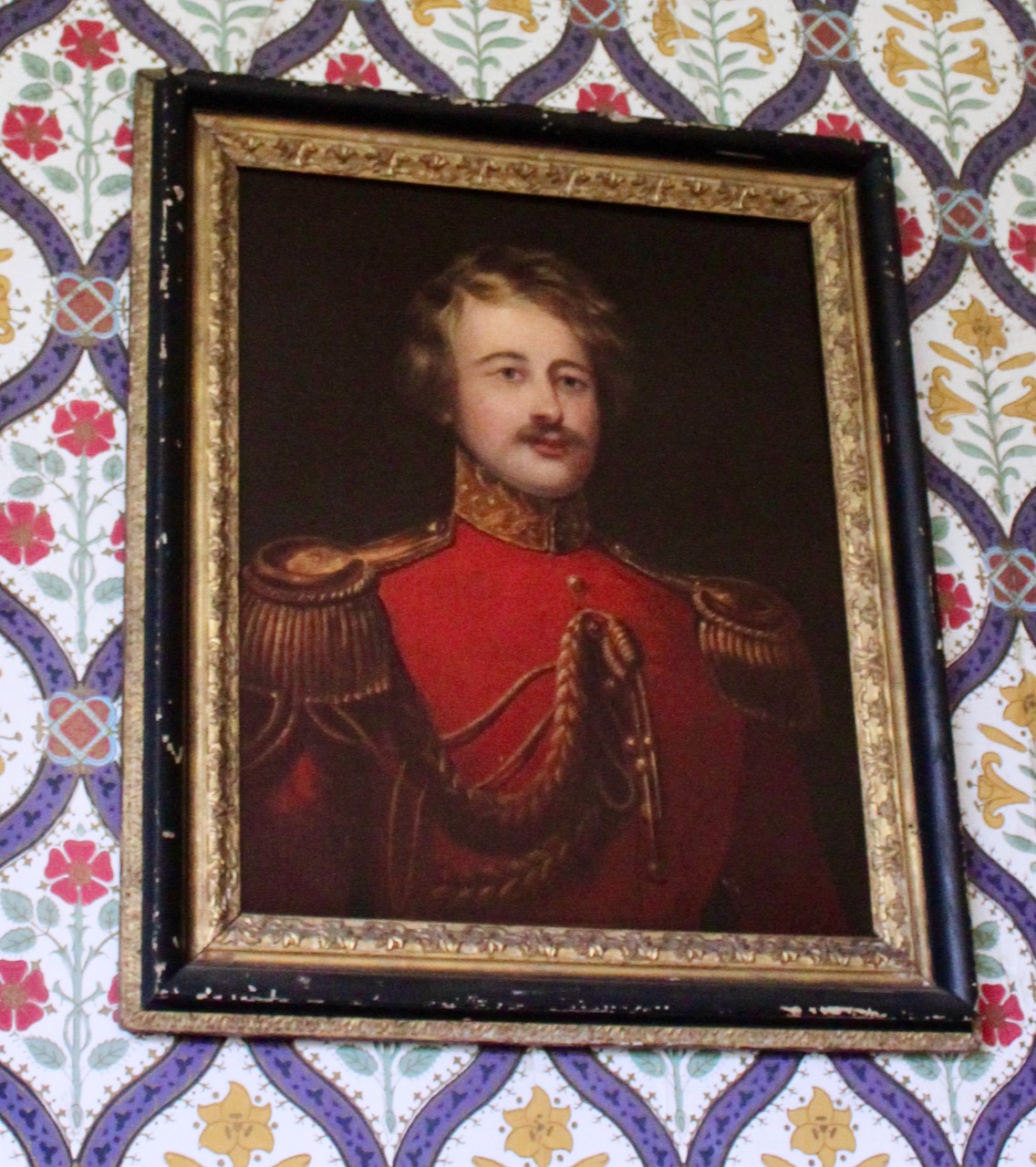
The portrait over the fireplace in the library is Major General Edward Michael Pakenham (1778-1815), brother of the 2nd Earl of Longford. Major General Pakenham (whose sword in the red sheath is in the front Hall) was killed in the Battle of New Orleans in 1815, between Britain and the United States of America, in the “War of 1812.”
Another brother of the 2nd Earl of Longford was Lieutenant General Hercules Pakenham (1781-1850). He married Emily Stapleton, daughter of Thomas Stapleton, 13th Lord le Despenser, 6th Baronet Stapleton, of the Leeward Islands in the Caribbean. Hercules inherited Langford Lodge in County Antrim, from his mother Catherine Rowley (it no longer exists). Hercules served as MP for Westmeath.
When he reached his majority, the third Earl, Edward Michael, who was called “Fluffy,” along with his mother, made further enlargements from 1839-45 with two enormous wings and a central tower by another fashionable Irish architect, Sir Richard Morrison. The wings linked the house to the stable court which had been built by Francis Johnston. The addition included the large telescoping octagonal tower.
“Fluffy” Edward Michael Pakenham, 3rd Earl of Longford (1817-1860).A description of the castle, at Tullynally.
Terence Reeves-Smyth writes:
“More substantial additions followed between 1839 and 1846 when Richard Morrison, that other stalwart of the Irish architectural scene, was employed by the Dowager Countess to bring the house up to improved Victorian standards of convenience. Under Morrison’s direction the main house and Johnson’s stable court were linked by two parallel wings both of which were elaborately castellated and faced externally with grey limestone. Following the fashion recently made popular by the great Scottish architect William Burn, one of the new wings contained a private apartment for the family, while the other on the east side of the courtyard contained larger and more exactly differentiated servants’ quarters with elaborate laundries and a splendid kitchen.”
Casey and Rowan describe Morrison’s work: “On the entrance front the new work appears as a Tudoresque family wing, six bays by two storeys, marked off by tall octagonal turrets, with a lower section ending in an octagonal stair tower which joins the stable court. This was refaced and gained a battlemented gateway in the manner of the towers that Morrison had previously built as gatehouses at Borris House, County Carlow [see my entry on Borris House] and Glenarm Castle, County Antrim. The entrance porch, a wide archway in ashlar stonework, with miniature bartizans rising from the corners, was also rebuilt at this time. Though Morrison provided a link between the old house and the family wing by building a tall octagonal tower, very much in the manner of Johnston’s work at Charleville Forest, County Offaly [see my entry Places to visit and stay in County Offaly], the succession of facades from south to north hardly adds up to a coherent whole. The kitchen wing, which forms an extension of the east front, is much more convincingly massed, with a variety of stepped and pointed gables breaking the skyline and a large triple-light, round-headed window to light the kitchen in the middle of the facade.“
On the tour, our guide told us of the various additions. She told us that “Fluffy” lived with his mother and chose to follow the fashion of living in an apartment in a wing of the house.
On the “downstairs tour” we toured the wings of the castle that had been added by Fluffy and his mother. A wing was built for the staff, and it was state of the art in the 1840s when Richard Morrison built these additions. Fluffy never married, and unfortunately died in “mysterious circumstances” in a hotel in London.
When Fluffy died his brother William (1819-1887), an army general in the Crimean War and long-serving military man, became the 4th Earl of Longford.
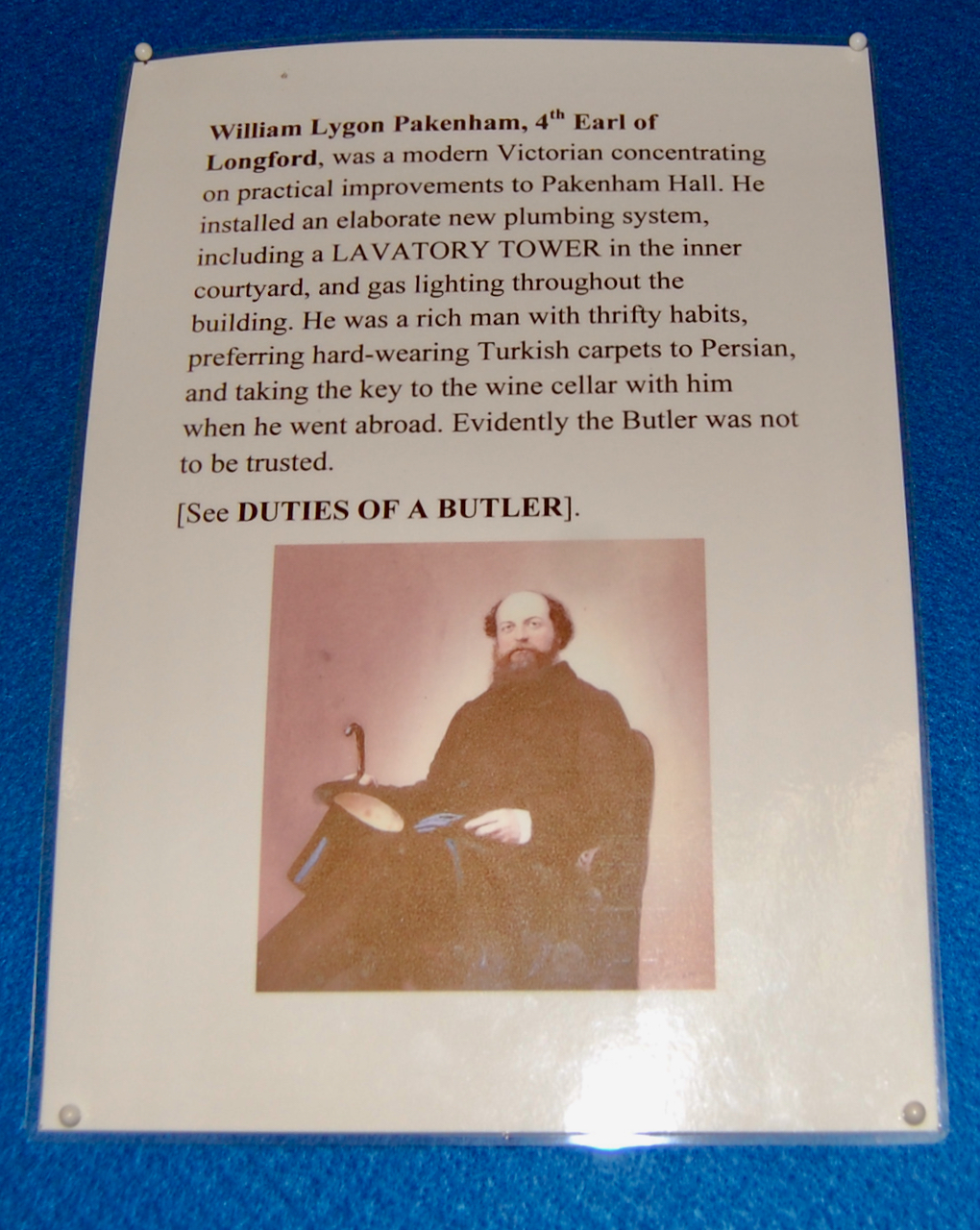
Terence Reeves-Smyth continues:“After the third Earl’s death in 1860 his brother succeeded to the title and property and proceeded to modernise the castle with all the latest equipment for supplying water, heat and lighting. Except for a water tower erected in the stable court by the Dublin architect J. Rawson Carroll in the 1860s, these modifications did not involve altering the fabric of the building, which has remained remarkably unchanged to the present day.”
The further additions in 1860 are by James Rawson Carroll (d.1911), architect of Classiebawn, Co Sligo, built for Lord Palmerston and eventually Lord Mountbatten’s Irish holiday home in the 1860s.
The 4th Earl married Selina Rice-Trevor from Wales in 1862. Her family, our guide told us, “owned most of Wales.” His letters and a copy of his diary from when he arrived home from the Crimean War are all kept in Tullynally.
Tullynally, County Westmeath.Tullynally, County Westmeath.
We can even read his proposal to Selina:
Tullynally, County Westmeath.Tullynally, County Westmeath.
William the 4th Earl installed a new plumbing system. He also developed a gas system, generating gas to light the main hall. The gas was limited, so the rest of the light was provided by candles, and coal and peat fires. His neighbour Richard Lovell Edgeworth provided the heating system.
The next generation was the 5th Earl, son of the 4th Earl, Thomas Pakenham (1864-1915). He was also a military man. He married Mary Julia Child-Villiers, daughter of Victor Albert George Child-Villiers, 7th Earl of Island of Jersey and they had six children.
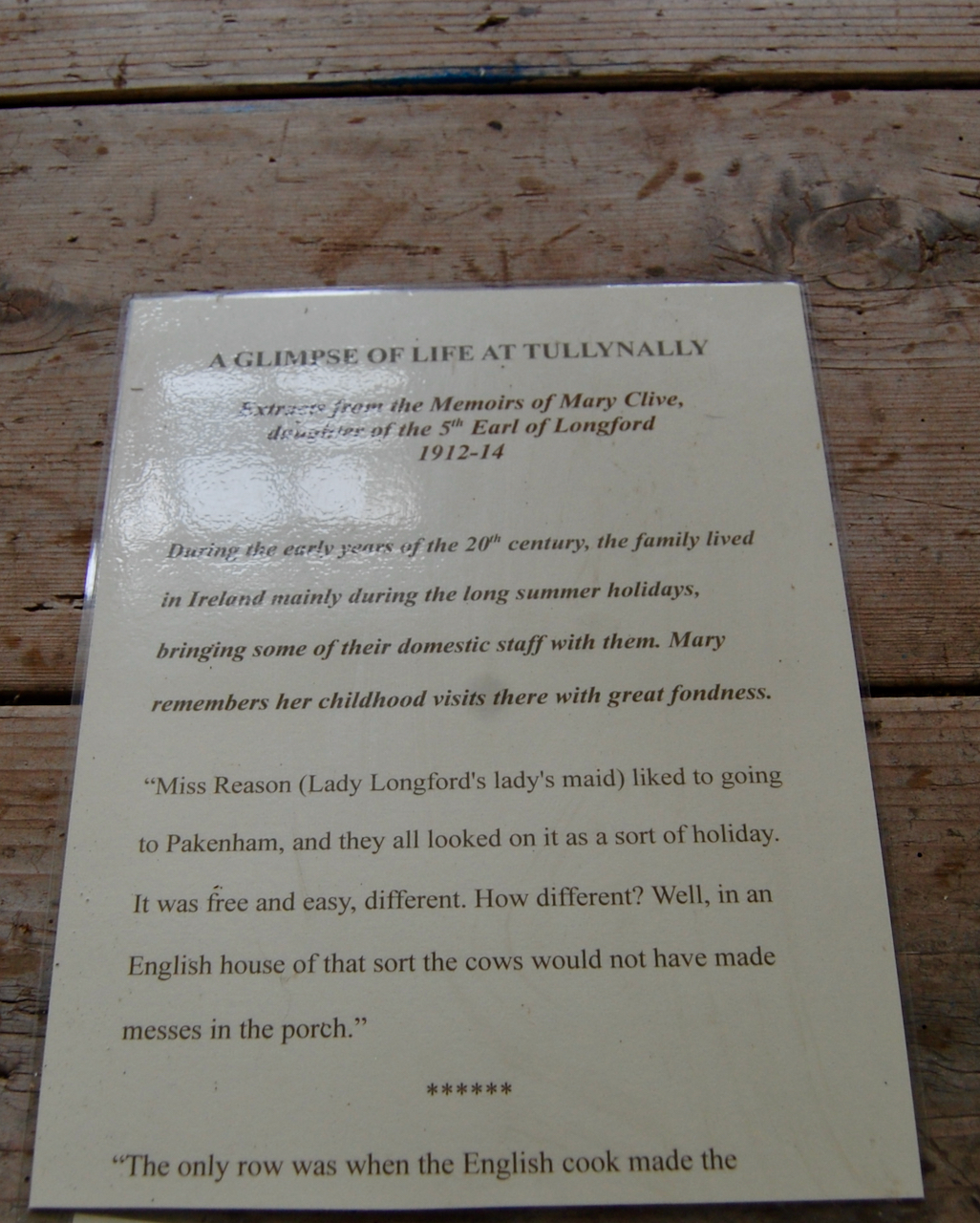
The family are lucky to have wonderful archives and diaries. Mary Julia Child-Villiers was left a widow with six children when her husband died during World War I in Gallipoli. The downstairs tour shows extracts from the Memoir of Mary Clive, daughter of the 5th Earl of Longford.
Tullynally, County Westmeath.Tullynally, County Westmeath.
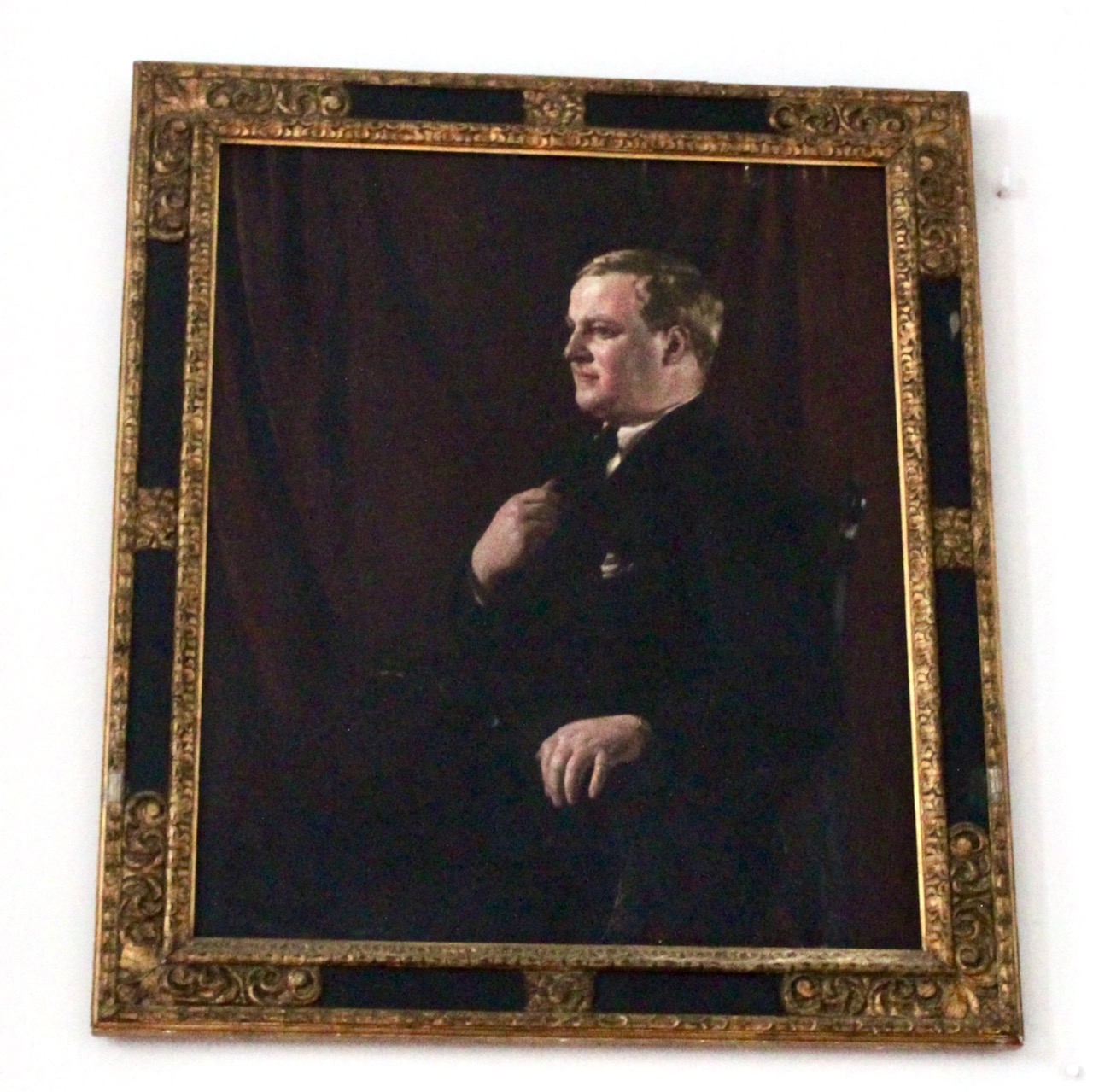
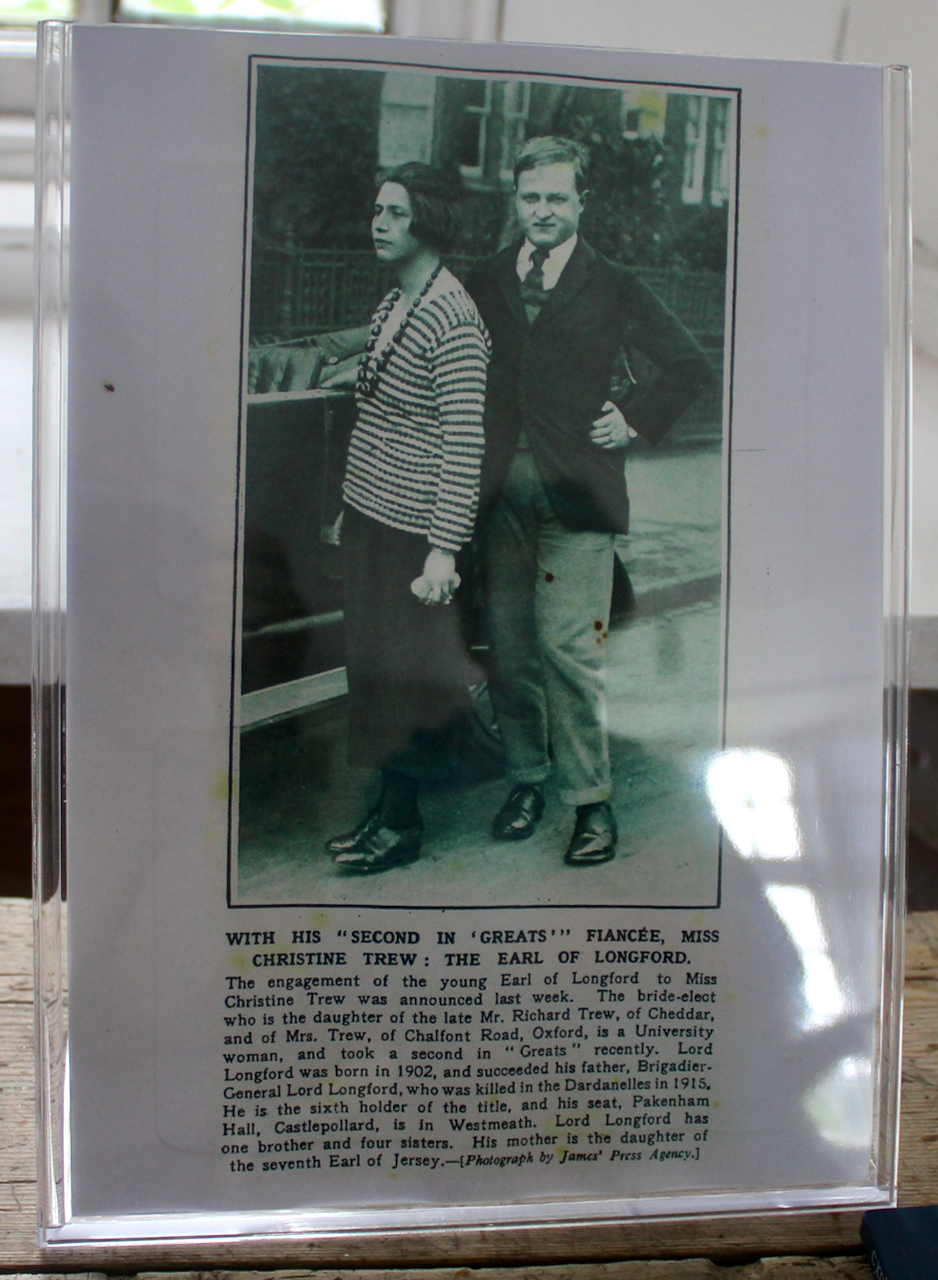
Since 1915 the family have been writers (before that, they were mostly military). Edward the 6th Earl (1902-1961) was a prolific playwright who restored the Gate Theatre in Dublin and taught himself Irish, and with his wife Christine, created the Longford Players theatrical company which toured Ireland in the 30s and 40s. He served as a Senator for the Irish state between 1946 and 1948.
His sister Violet Georgiana, who married Anthony Dymoke Powell, wrote many books, and her husband was a published writer as well. Another sister, Mary Katherine, who married Major Meysey George Dallas Clive, also wrote and published. Their sister Margaret Pansy Felicia married a painter, Henry Taylor Lamb, and she wrote a biography of King Charles I.
A brother of Edward, Frank (1905-2001), who became the 7th Earl after Edward died in 1961, and his wife Elizabeth née Harman, wrote biographies, as did their children, Antonia Fraser, Rachel Billington and Thomas Pakenham the 8th Earl of Longford. Antonia Fraser, who wrote amongst other things a terrific biography of Marie Antoinette and another wonderful one of King Charles II of England, is one of my favourite writers. She is a sister of the current Earl of Longford, Thomas, who lives in the house. They did not grow up in Tullynally, but in England. Thomas’s wife Valerie has published amongst other books, The Big House in Ireland.
There was a handy chart of the recent family on the wall in the courtyard café:
Tullynally, County Westmeath.
Stephen noted with satisfaction that Thomas Pakenham does not use his title, the 8th Earl of Longford. That makes sense of course since such titles are not recognised in the Republic of Ireland! In fact Stephen’s almost sure that it is against the Irish Constitution to use such titles. This fact corresponds well with the castle’s change in name – it was renamed Tullynally in 1963 to sound more Irish.
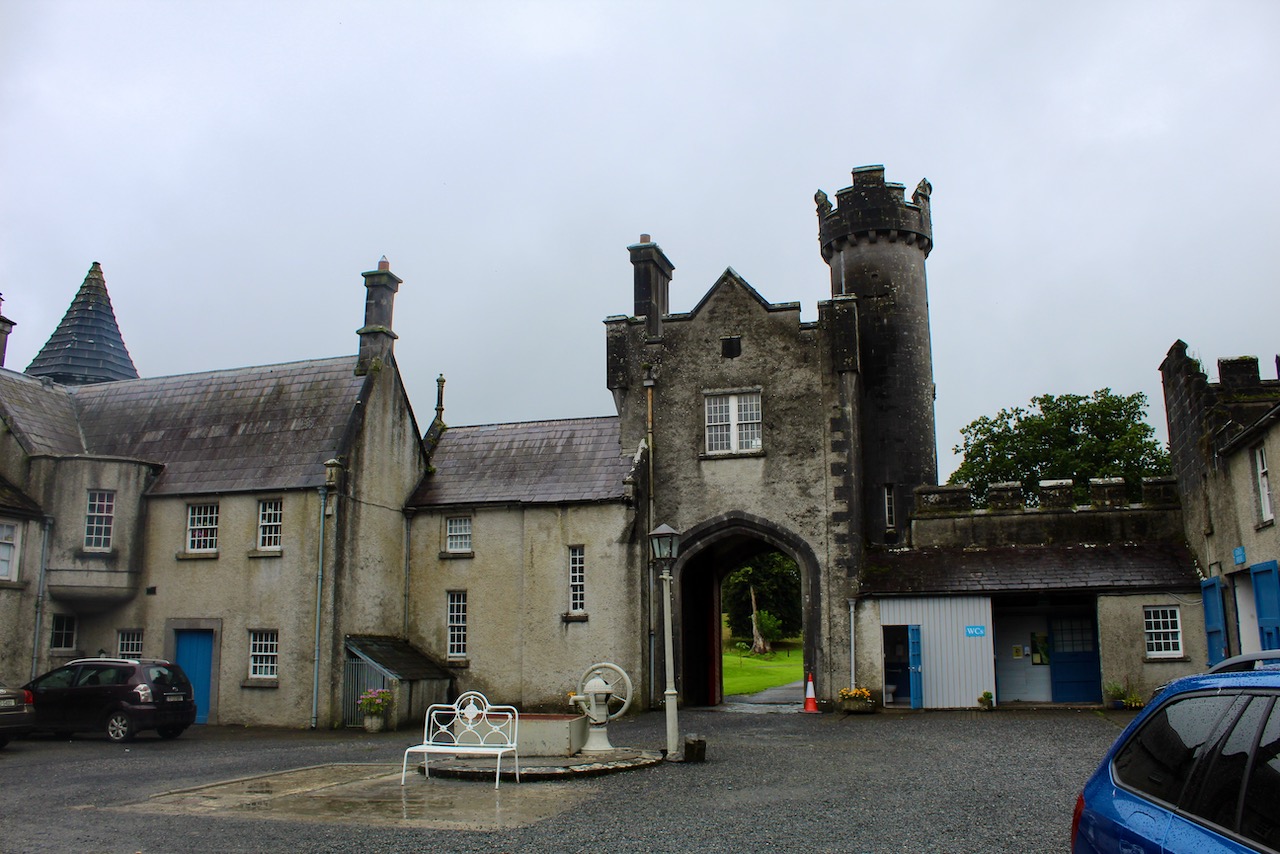
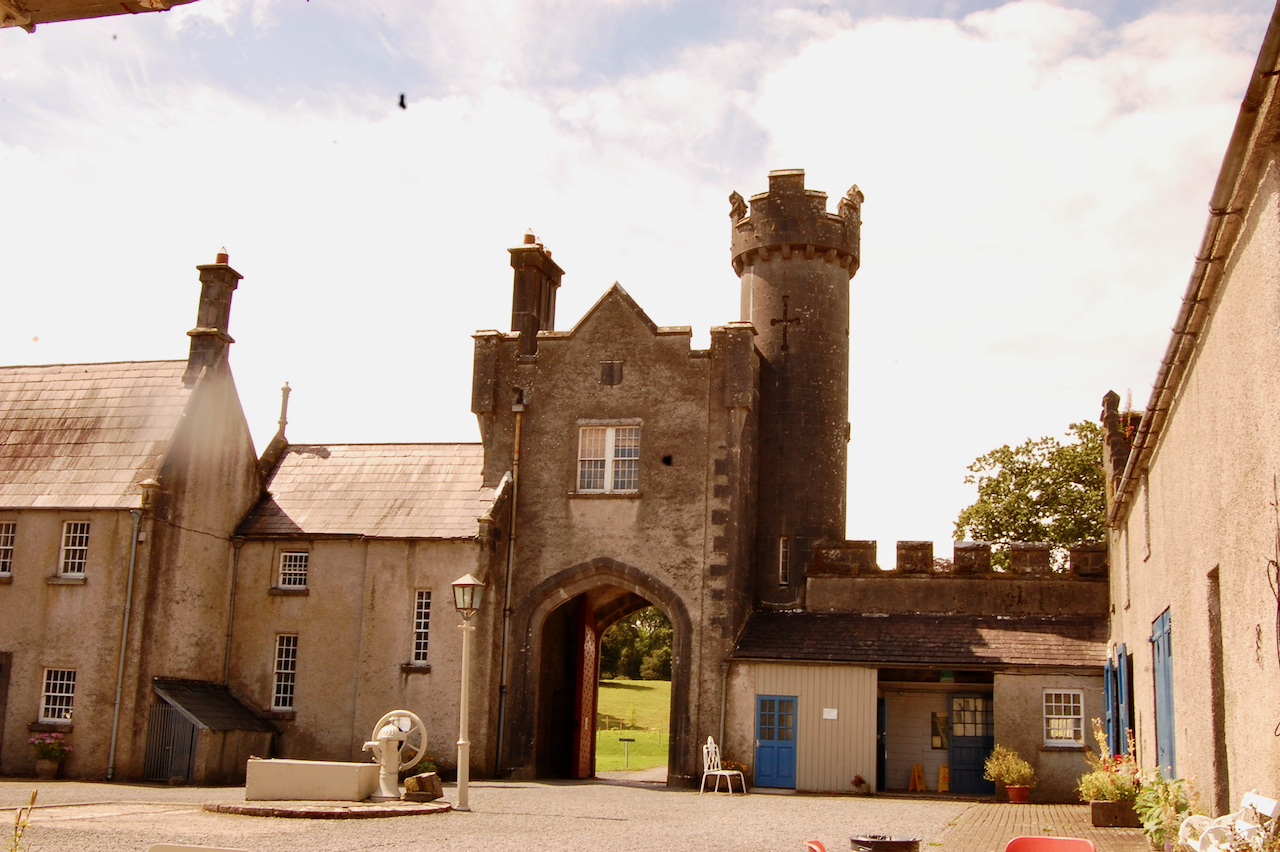
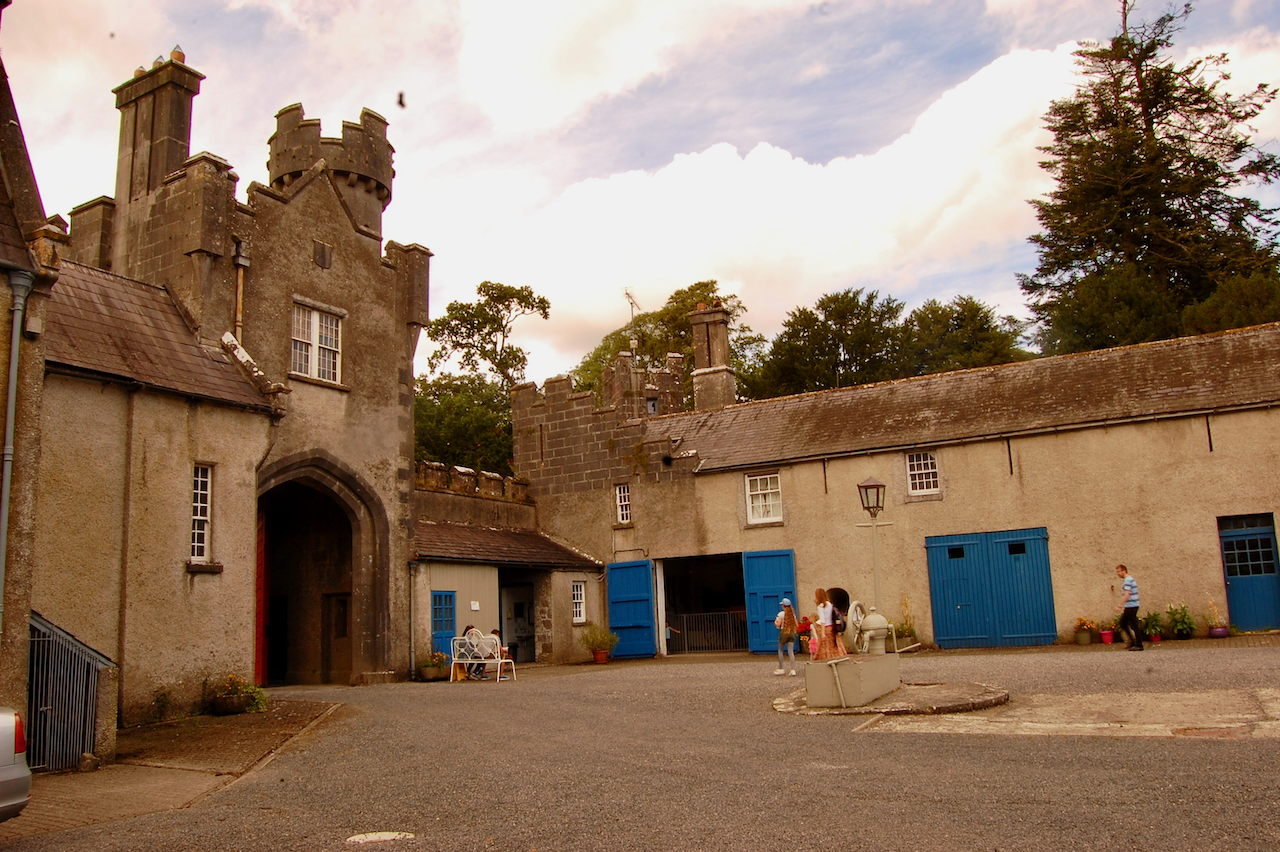
When we visited in 2020 we purchased our tickets in the café and had time for some coffee and cake and then a small wander around the courtyard and front of the Castle. One enters the stable courtyard, designed by Francis Johnston, to find the café and ticket office.
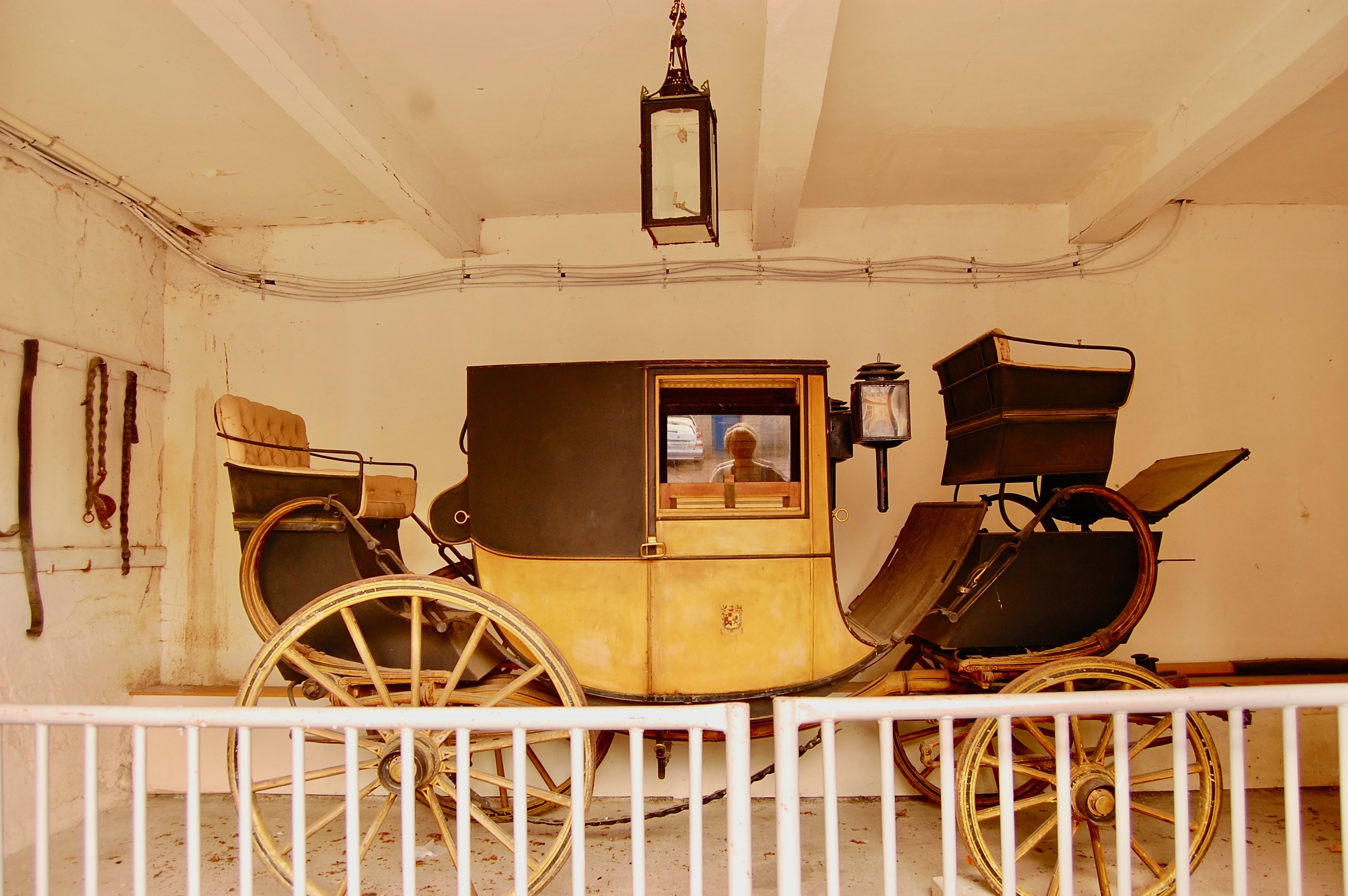
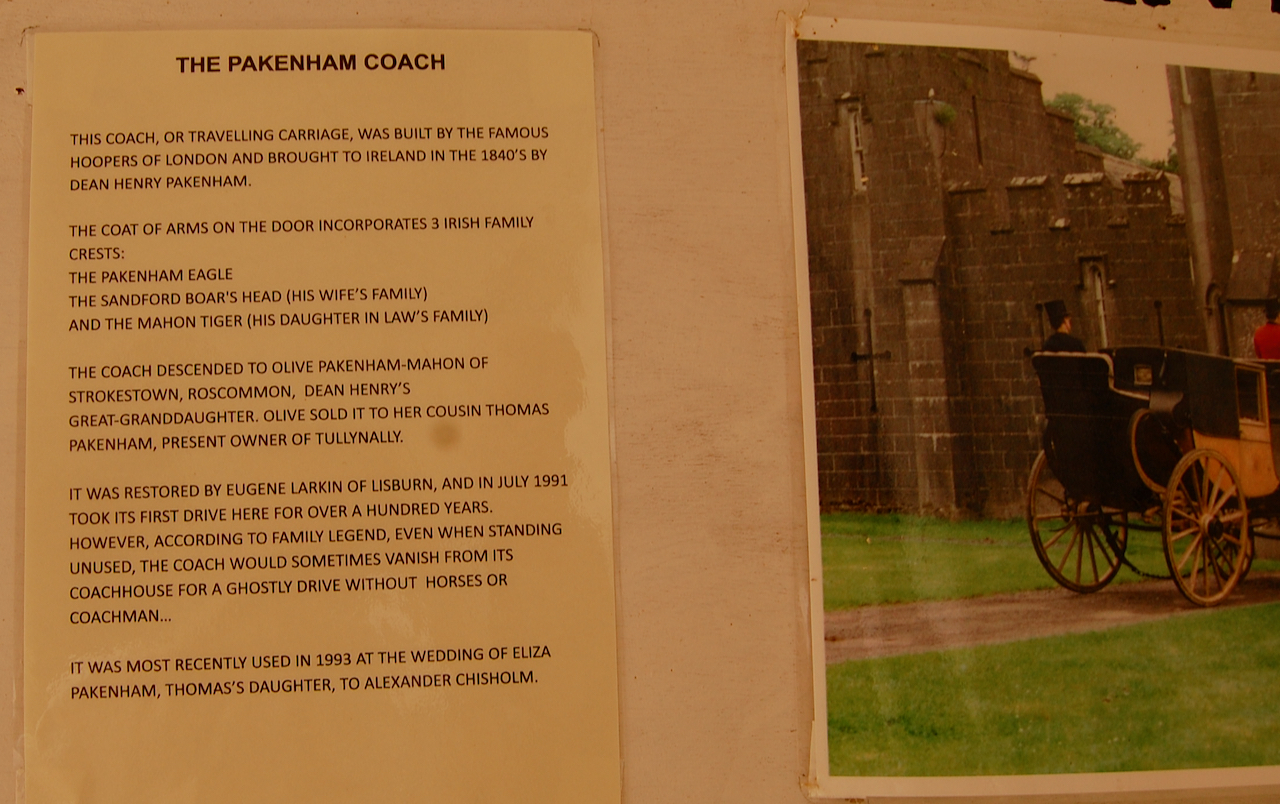
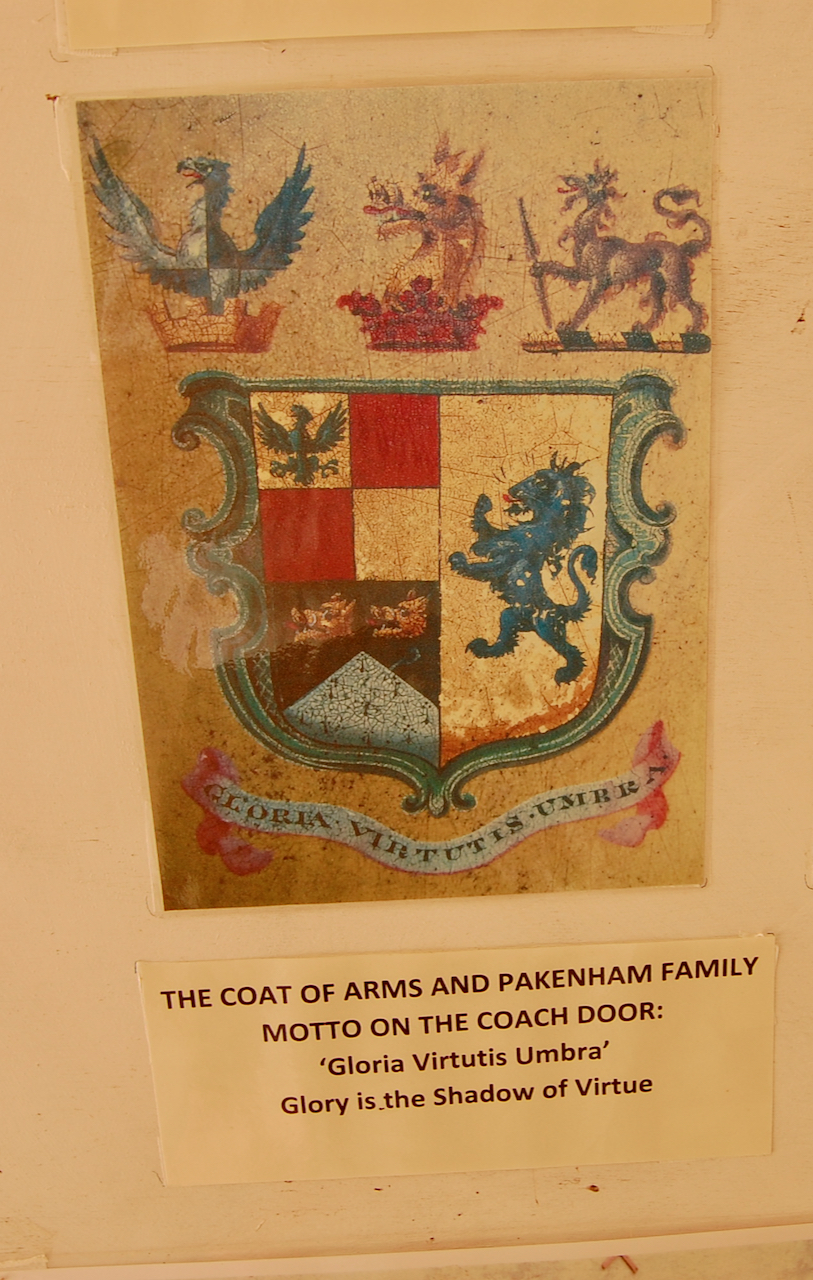
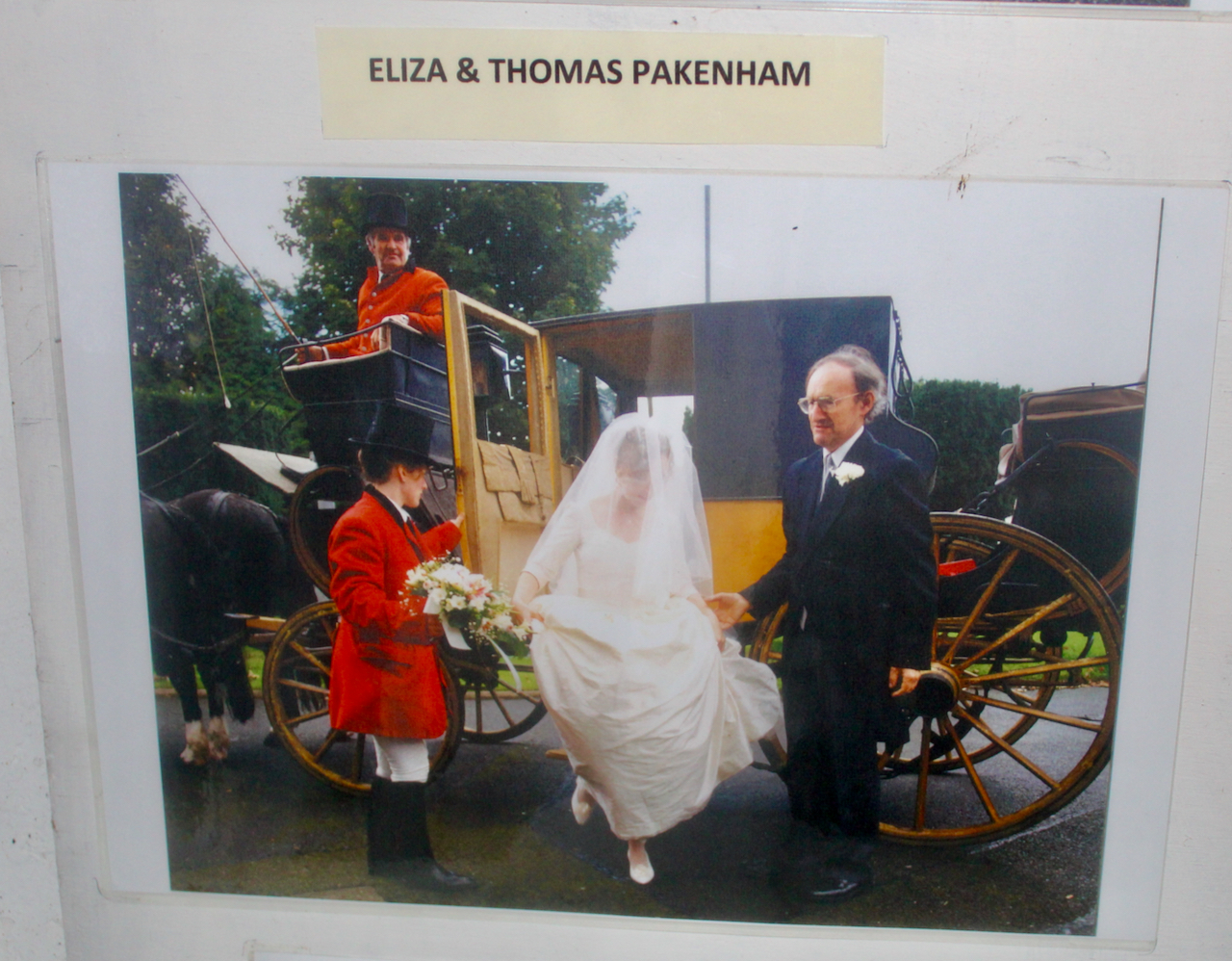
The coach was passed down to Olive Pakenham-Mahon of Strokestown, Roscommon (another section 482 property, see my entry), who was Dean Henry’s great granddaughter. Olive sold it to her cousin Thomas Pakenham, the present owner of Tullynally. It was restored by Eugene Larkin of Lisburn, and in July 1991 took its first drive in Tullynally for over a hundred years. Family legend has it that the coach would sometimes disappear from the coachhouse for a ghostly drive without horses or coachman! It was most recently used in 1993 for the wedding of Eliza Pakenham, Thomas’s daughter, to Alexander Chisholm.
Tullynally, County Westmeath.
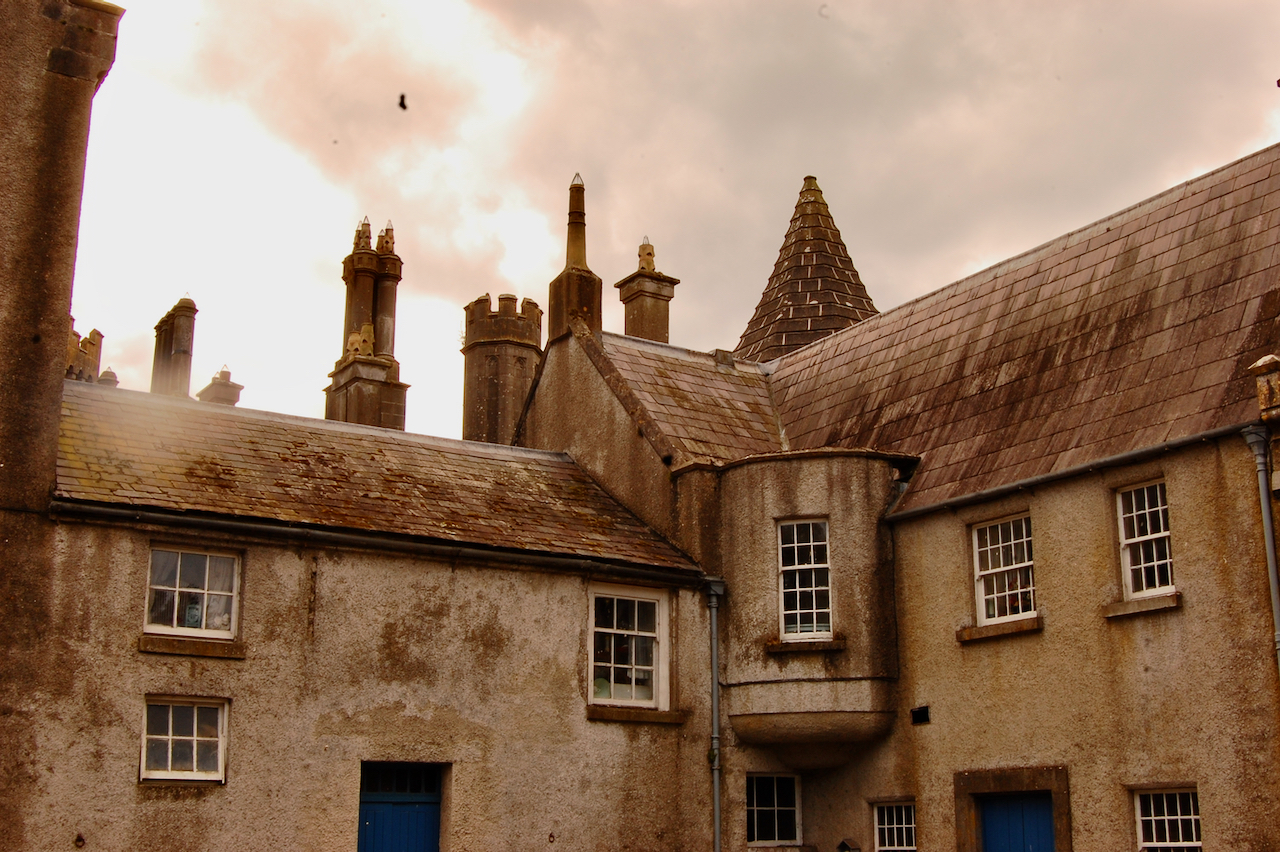
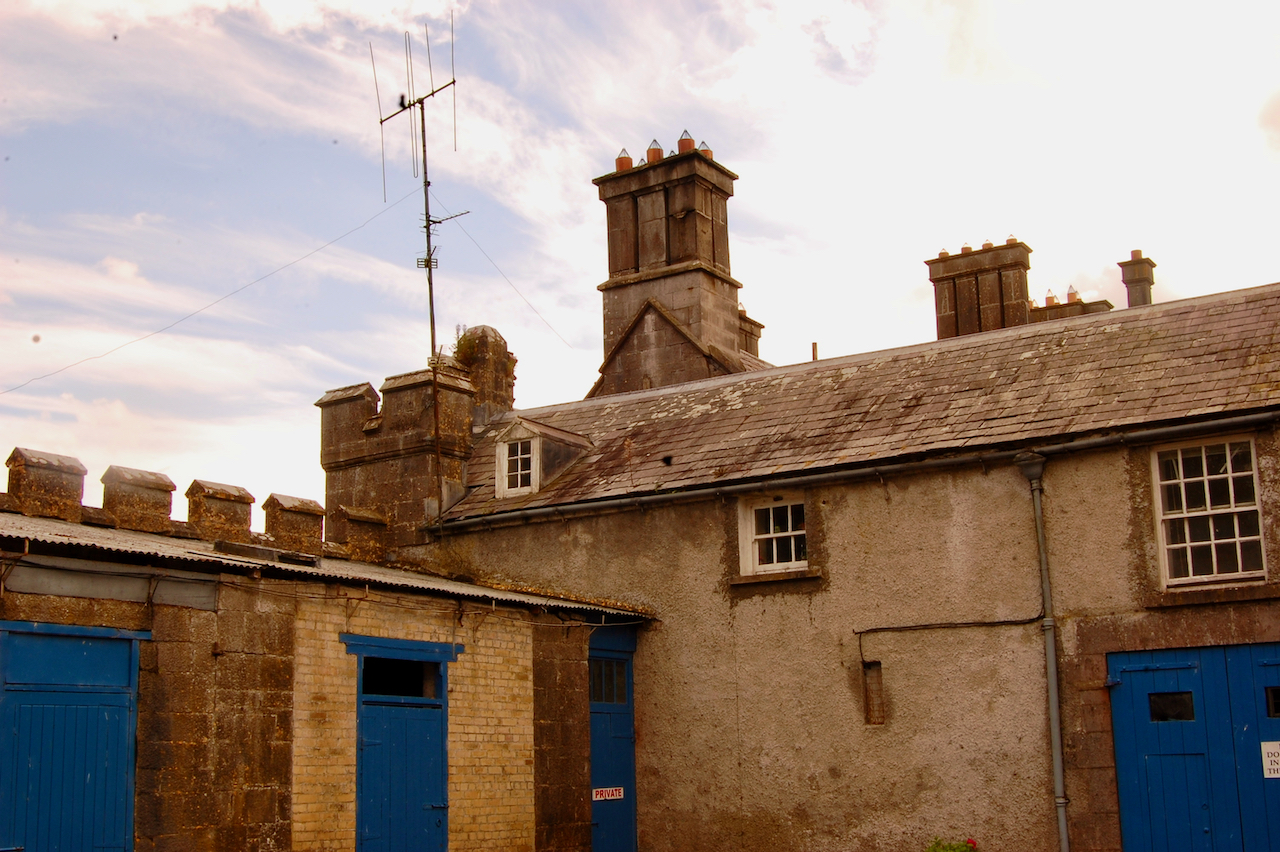
The tour brought us through the arch from the first courtyard containing the café, into a smaller, Morrison courtyard.
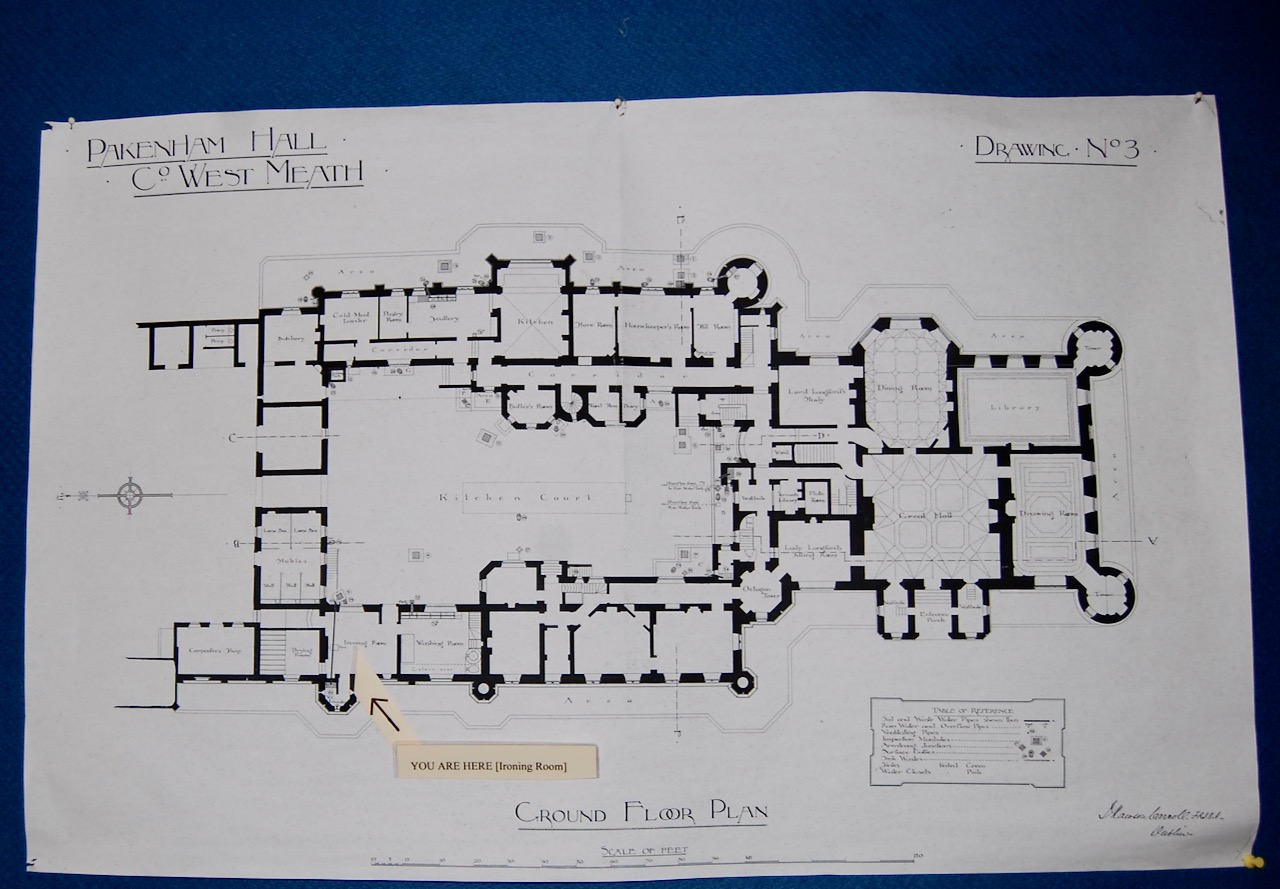
Richard Morrison spent more time working on the laundry room than on any other part of the house.
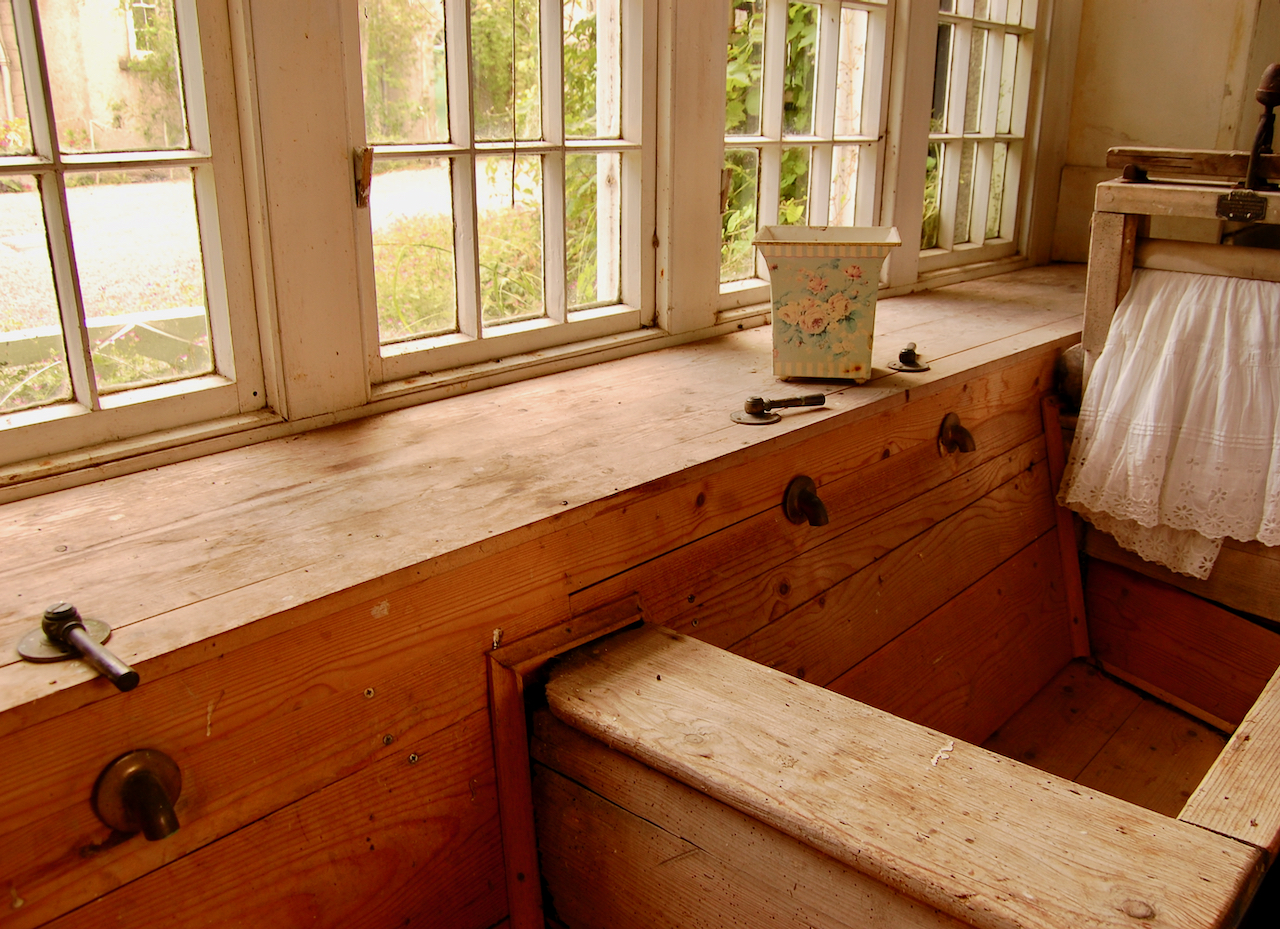
Our guide described the life of a laundress. After the installation of the new laundry, water was collected in a large watertank, and water was piped into the sinks into the laundry.
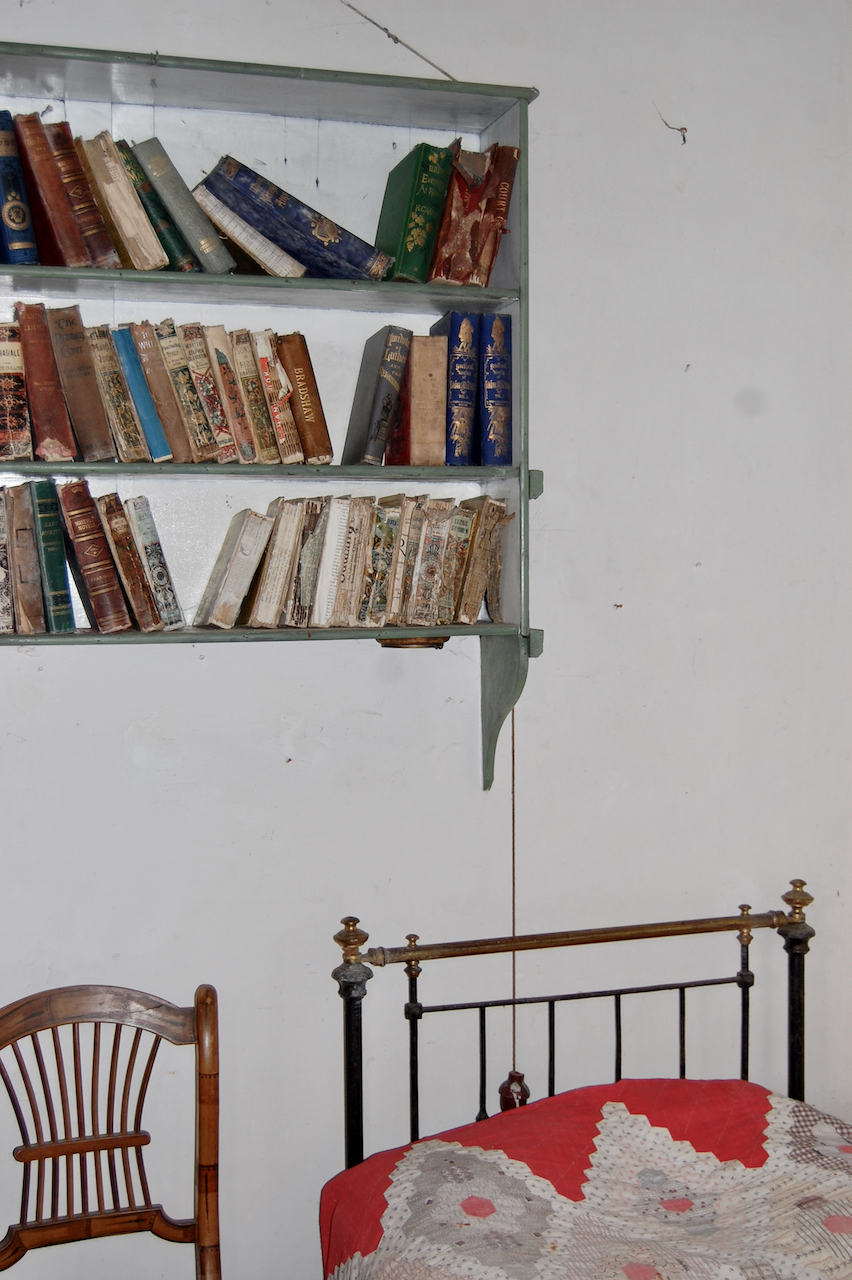
A laundry girl would earn, in the 1840s (which is during famine time), €12/year for a six day week, and start at about fourteen years of age. A governess would teach those who wanted to learn, to read and write, so that the girls could progress up in the hierarchy of household staff. There was even a servants’ library. This was separate of course from the Pakenham’s library, which is one of the oldest in Ireland. There was status in the village to be working for Lord Longford, as he was considered to be a good employer. His employees were fed, clothed in a uniform, housed, and if they remained long enough, even their funeral was funded. There was a full time carpenter employed on the estate and he made the coffins.
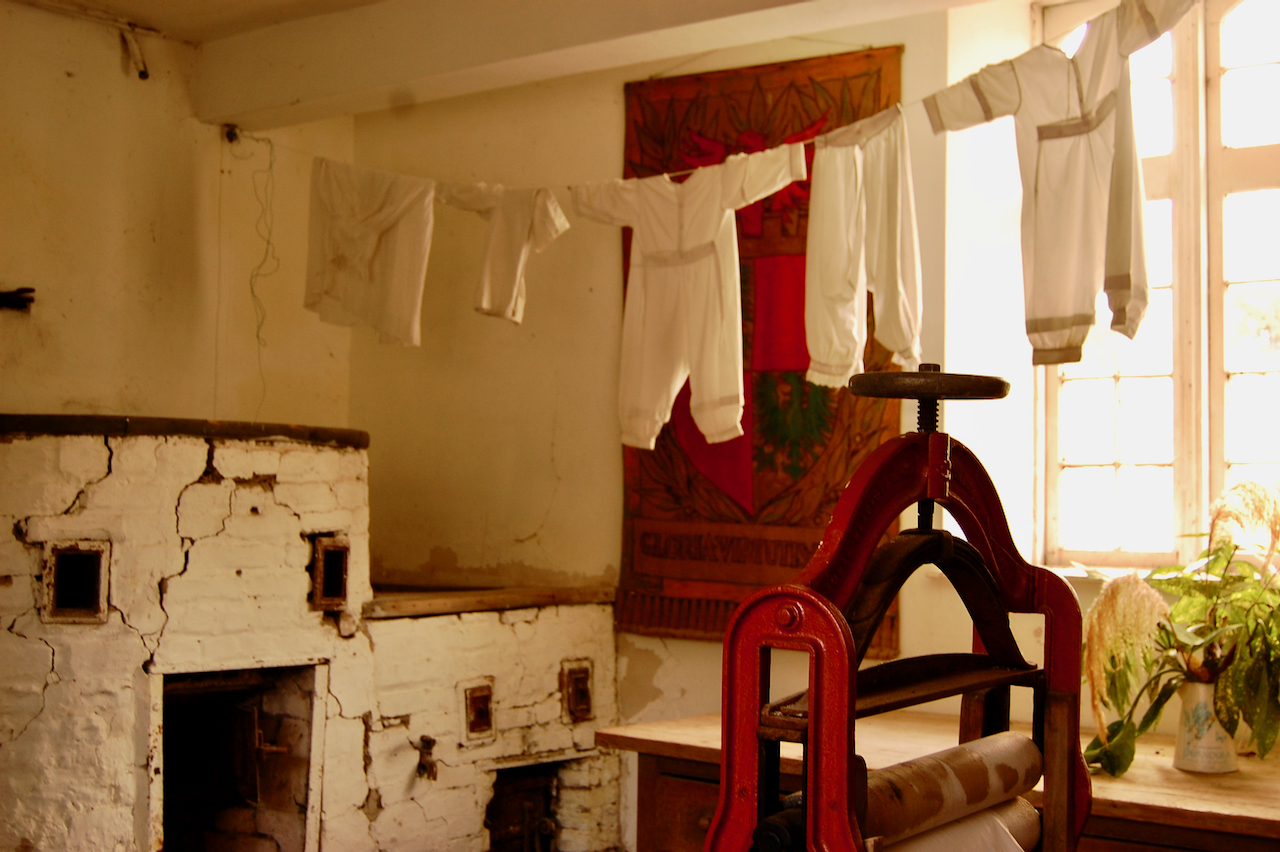
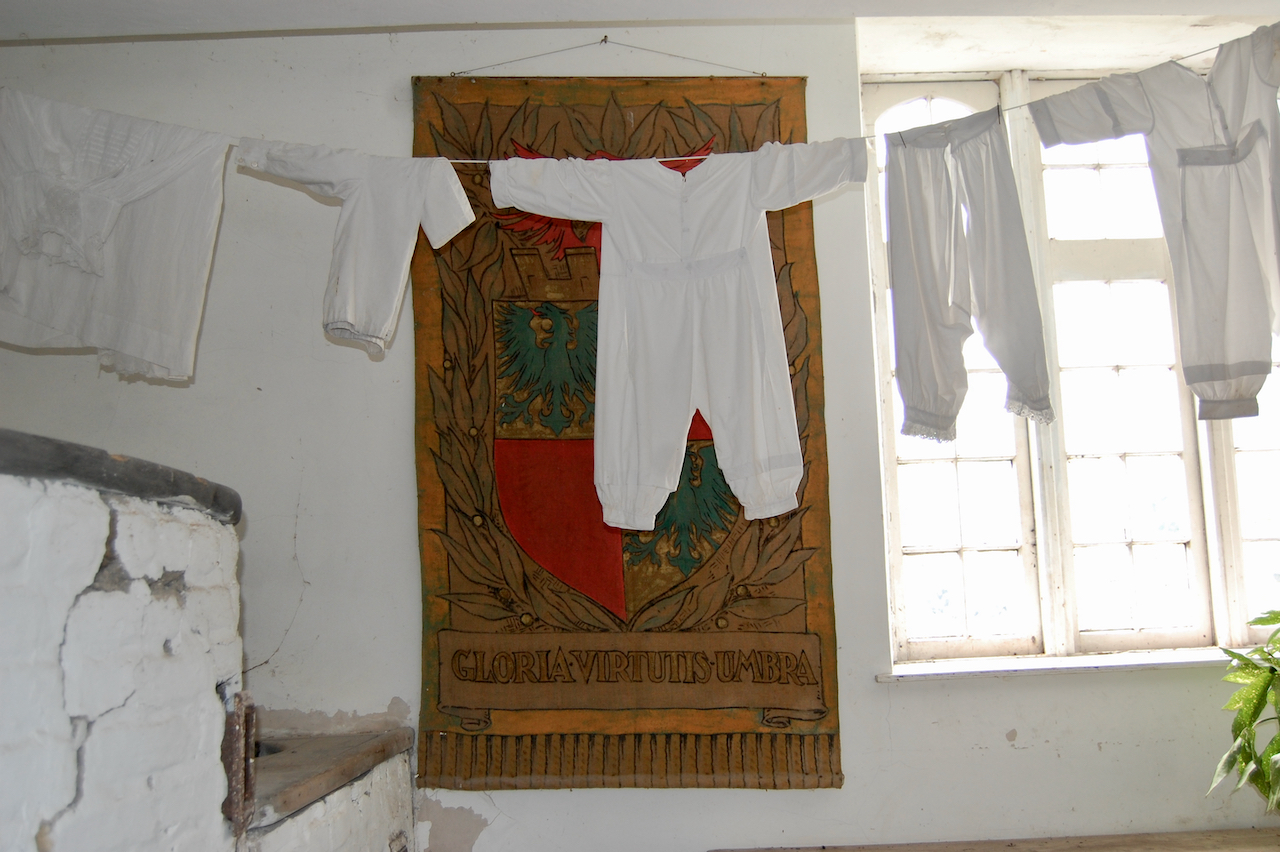
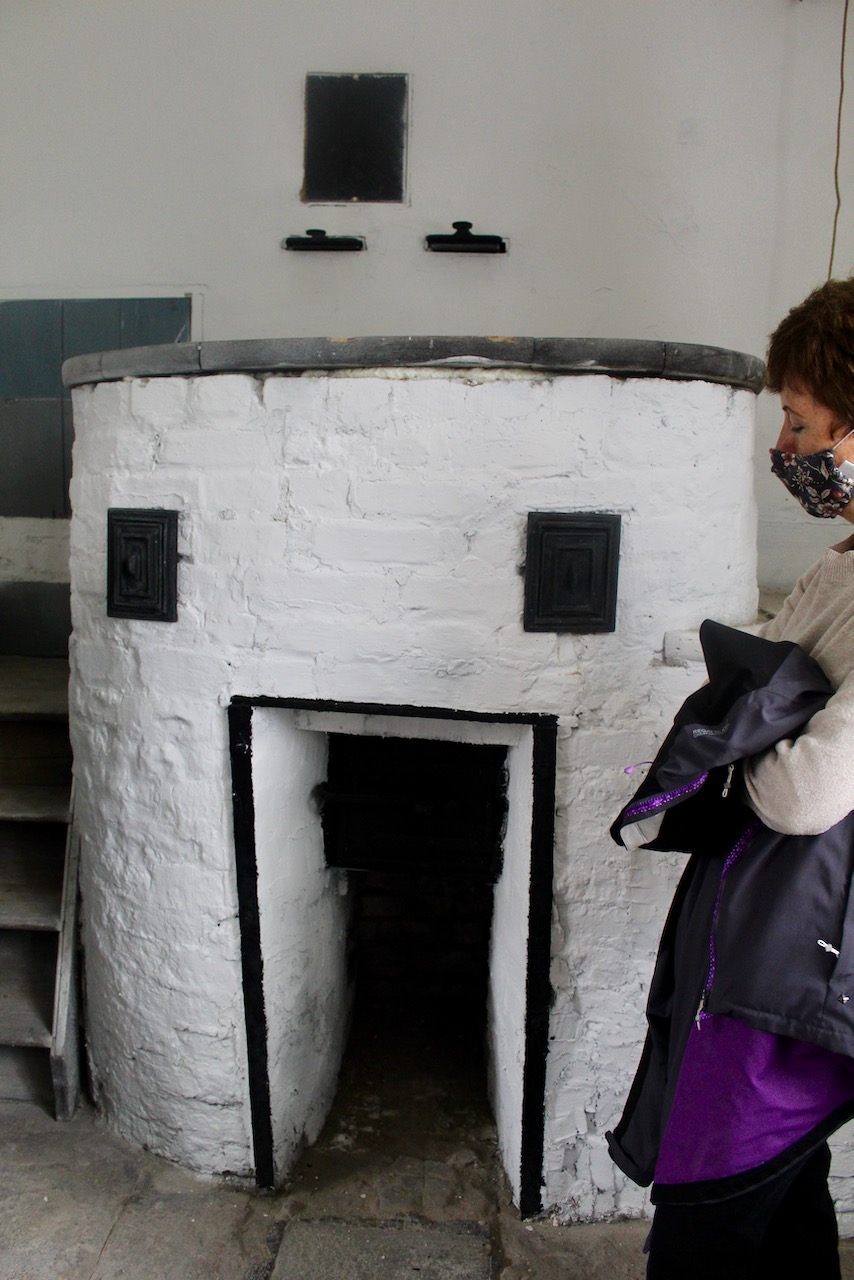
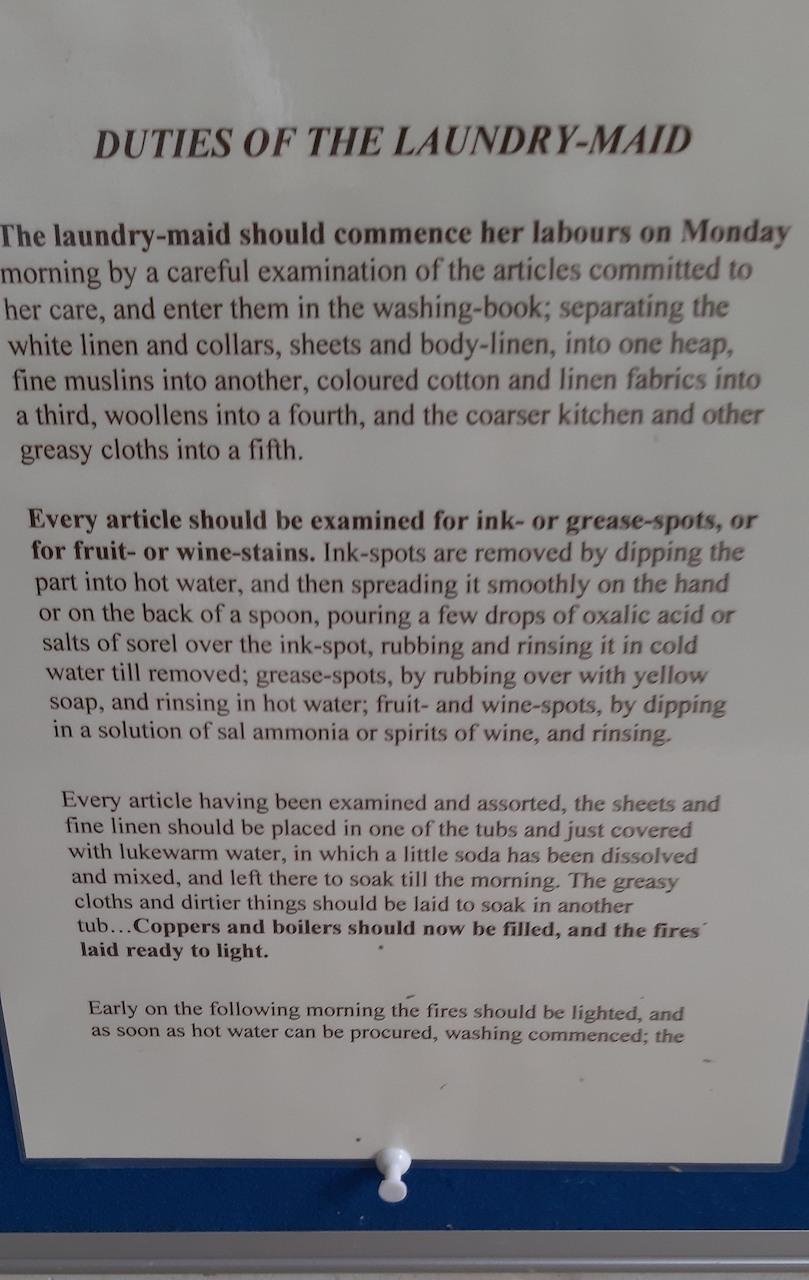
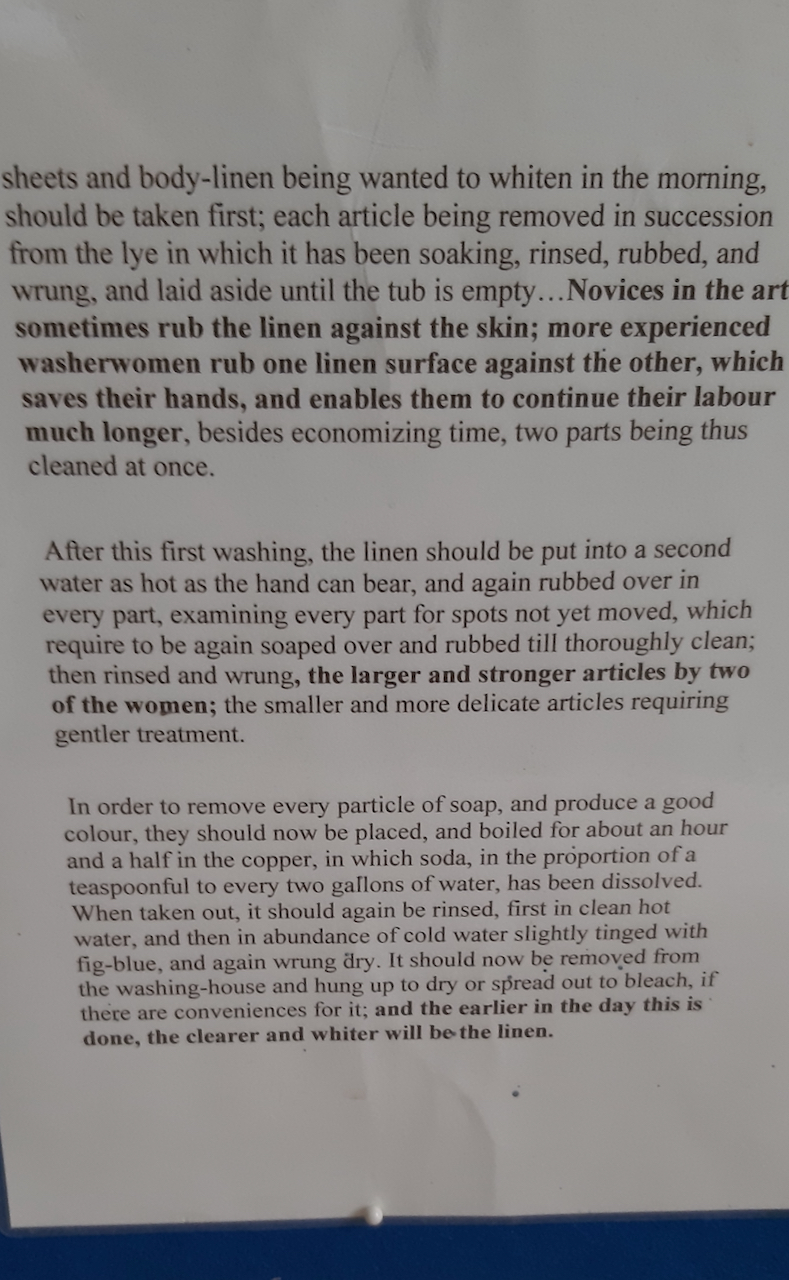
The laundry girls lived in a world apart from household staff. They ate in the laundry. Their first job in the morning would be to light the fire – you can see the brick fireplace in the first laundry picture above. A massive copper pot would be filled with water, heated, and soap flakes would be grated into the pot. The laundry girls would do the washing not only for their employers but also for all of the household staff – there were about forty staff in 1840. As well as soap they would use lemon juice, boiled milk and ivy leaf to clean – ivy leaves made clothes more black. The Countess managed the staff, with the head housekeeper and butler serving as go-between.
William, the 4th Earl of Longford, had a hunting lodge in England and since he had installed such a modern laundry in Tullynally, he would ship his laundry home to Pakenham Hall be washed!
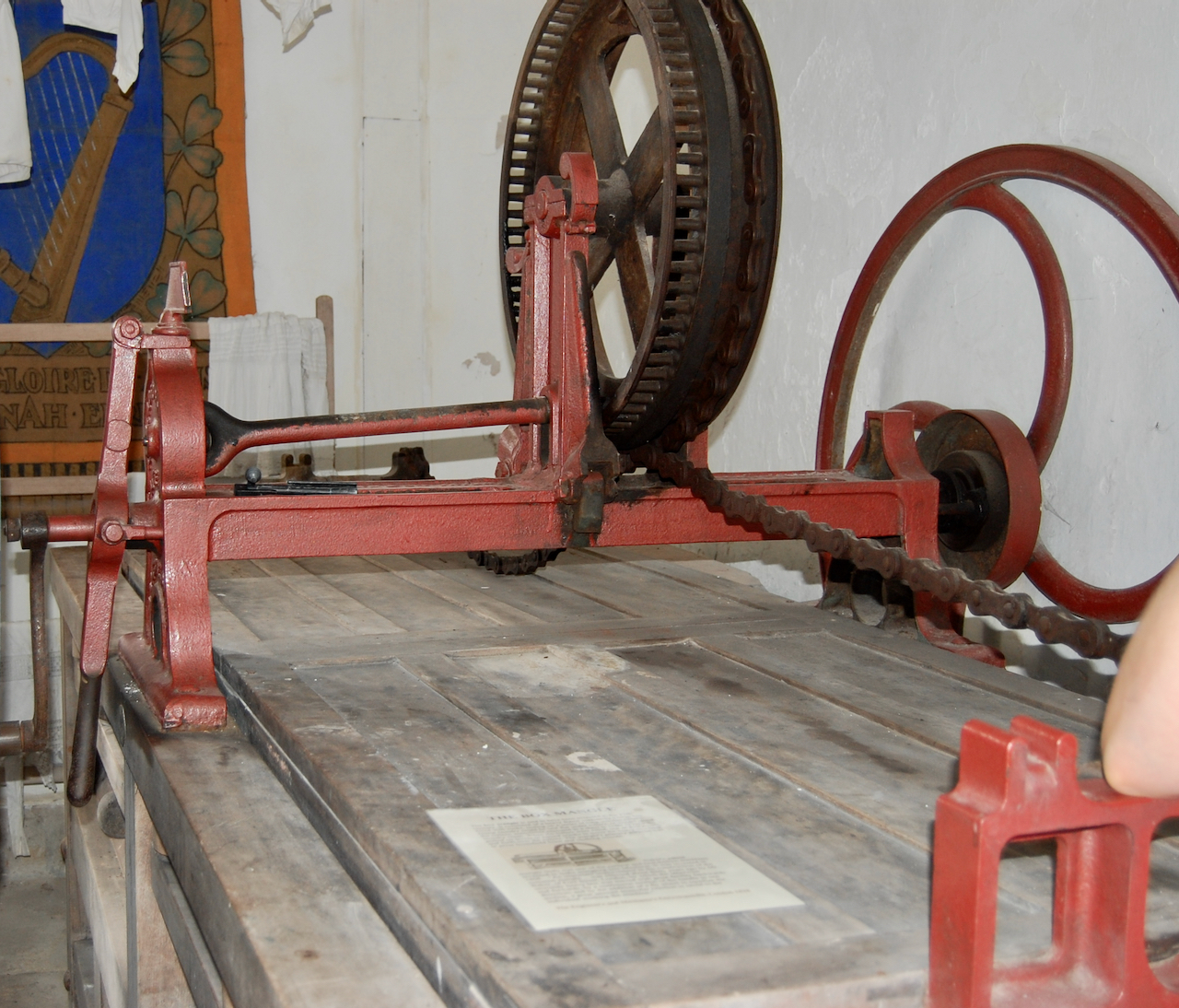
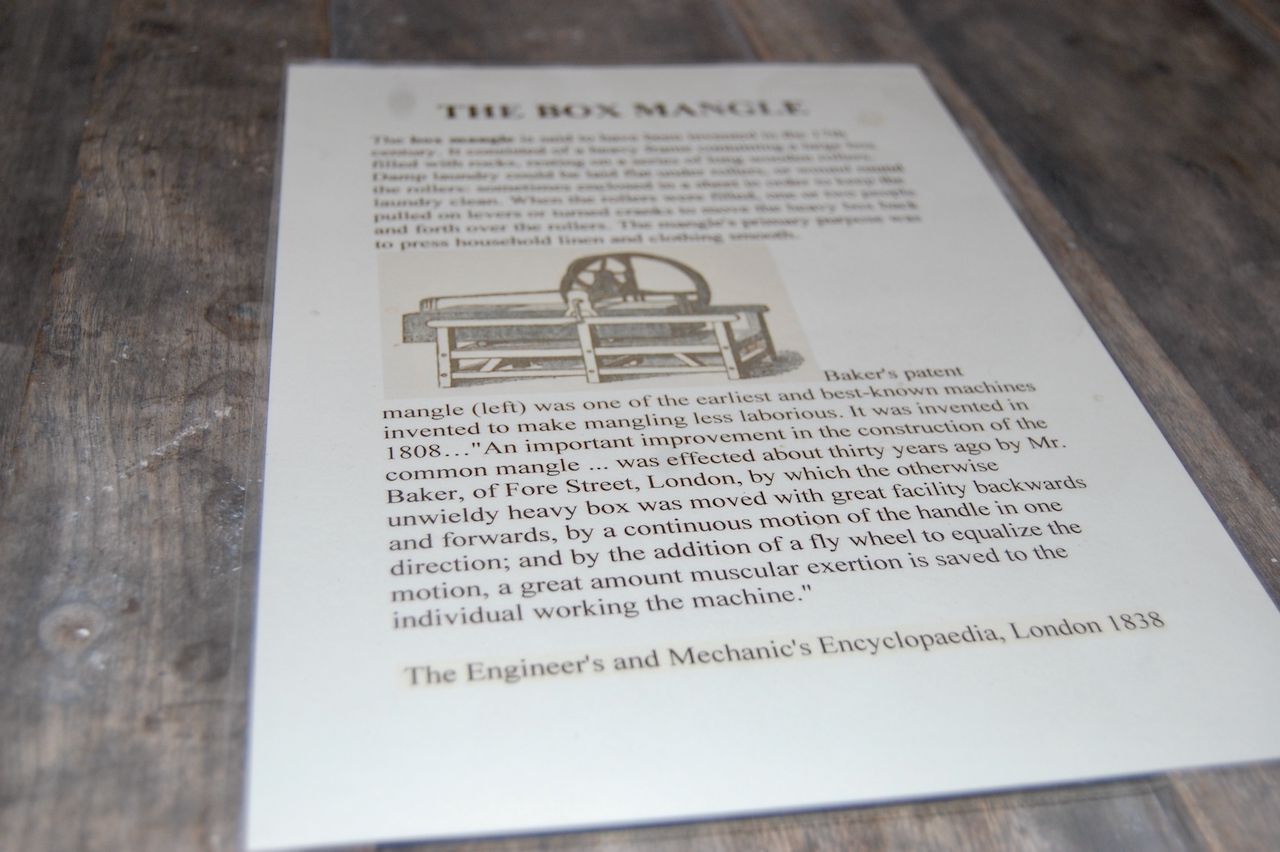
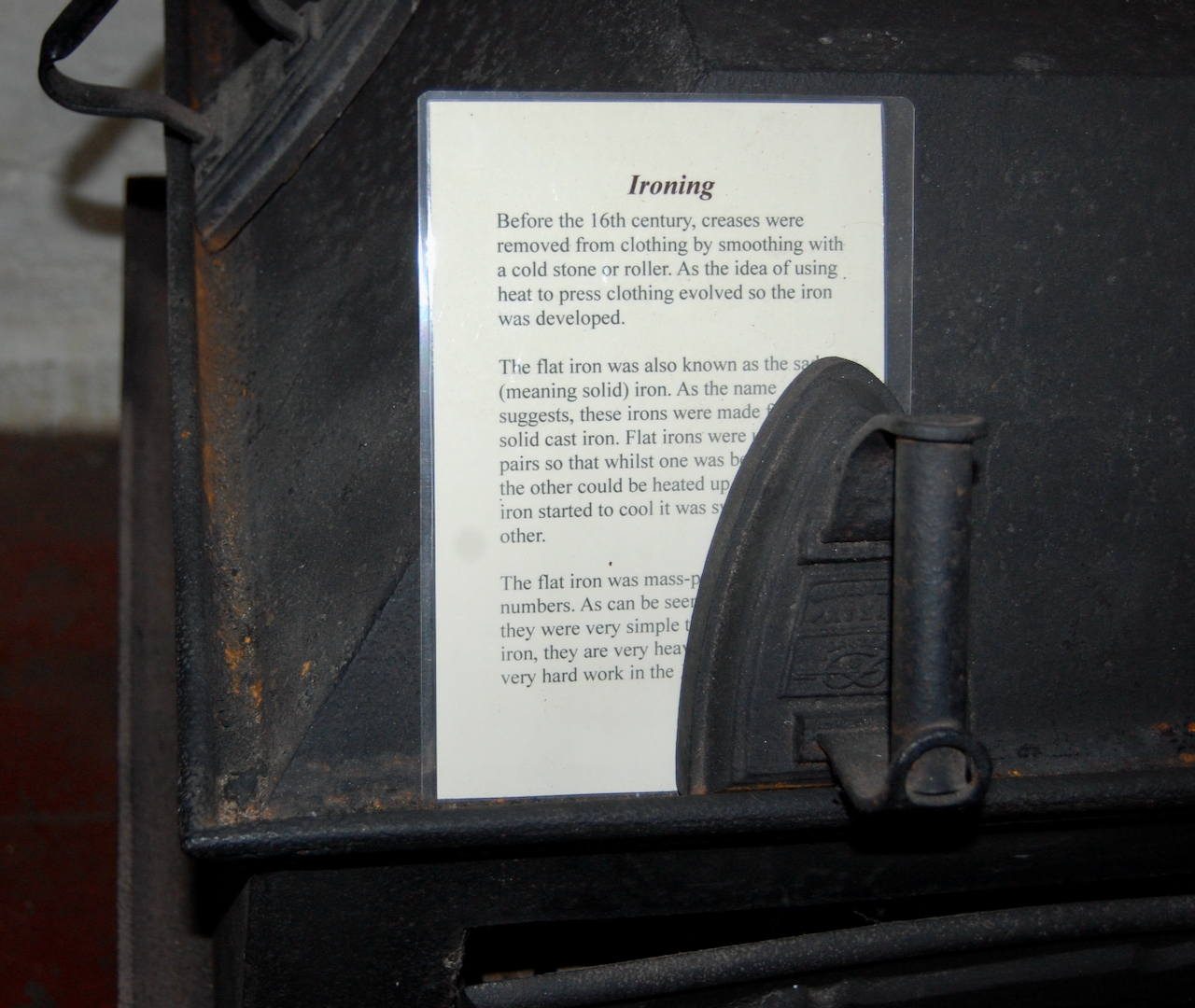
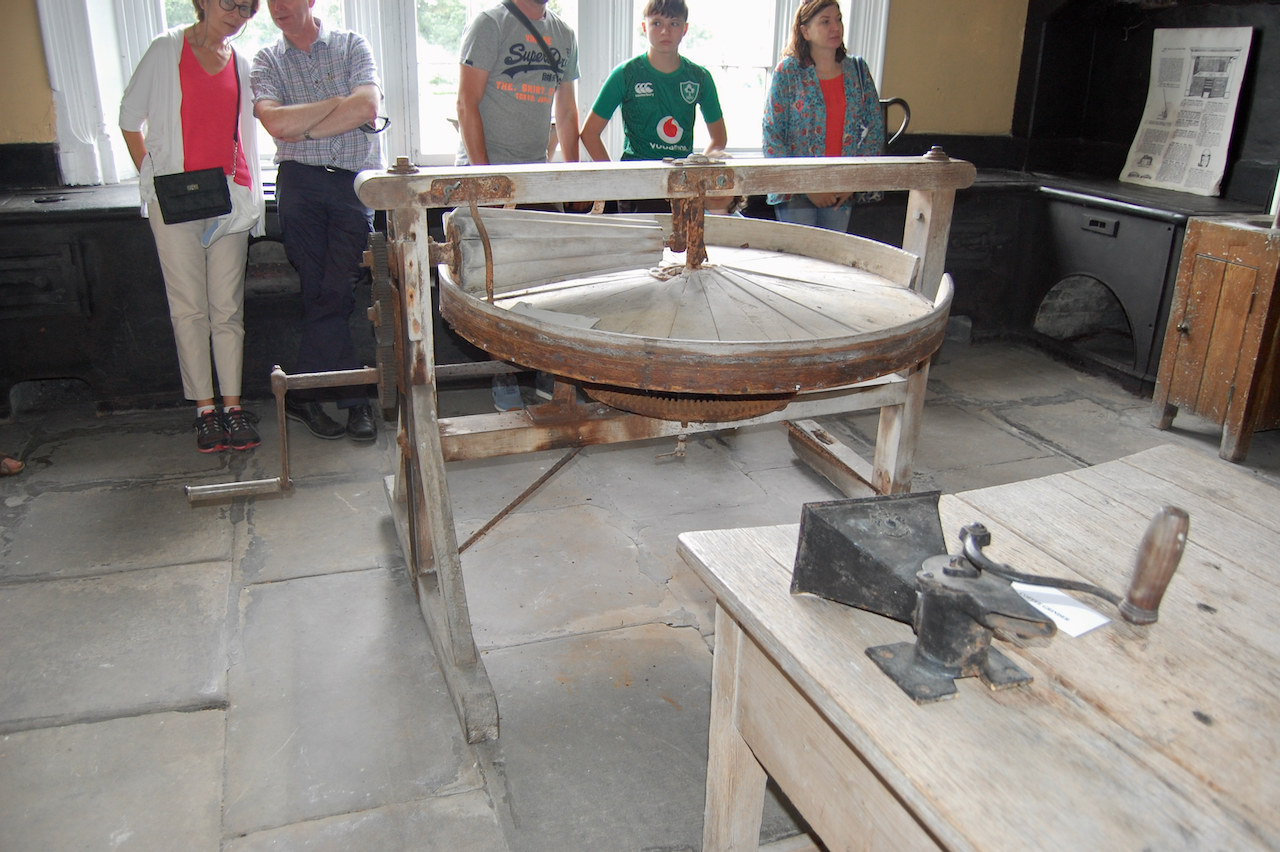
Next, the washing would be put through the mangle.
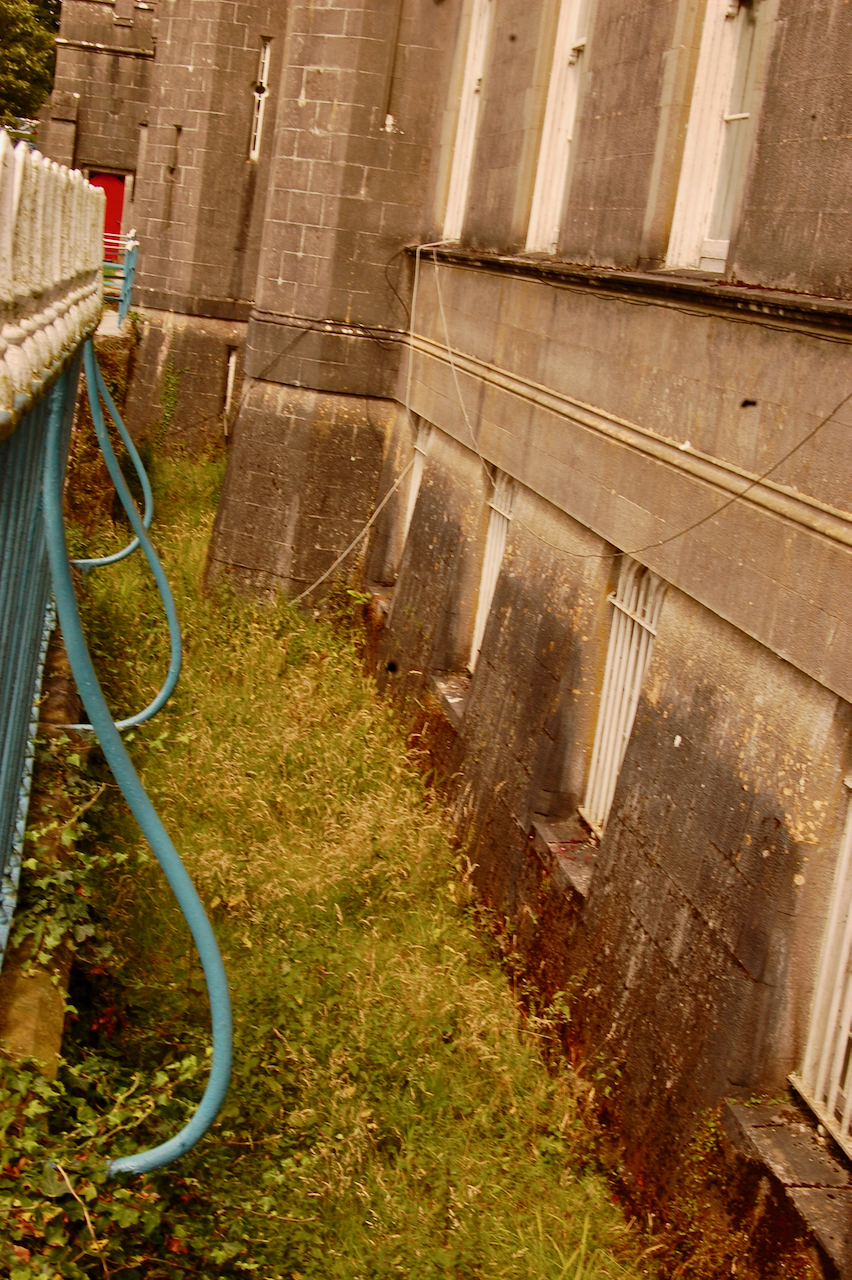
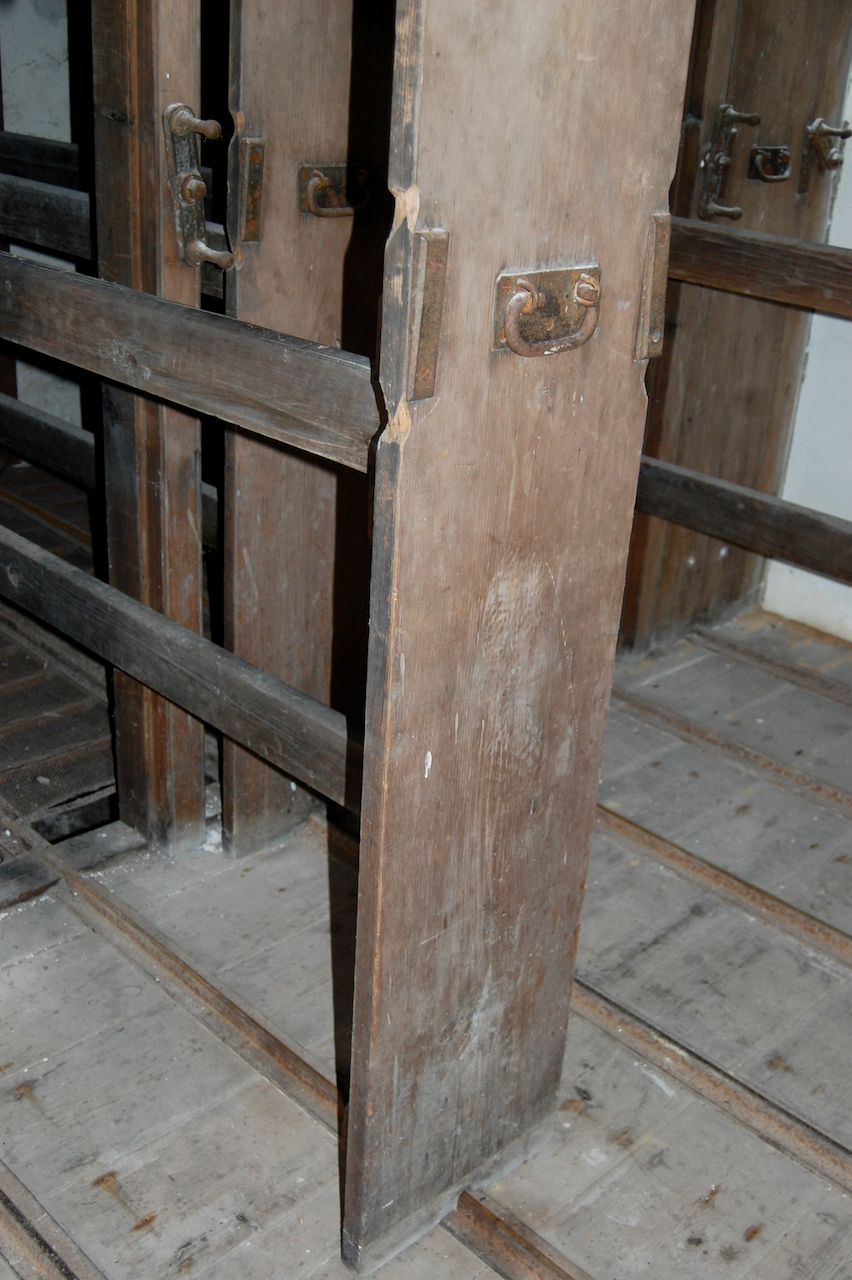
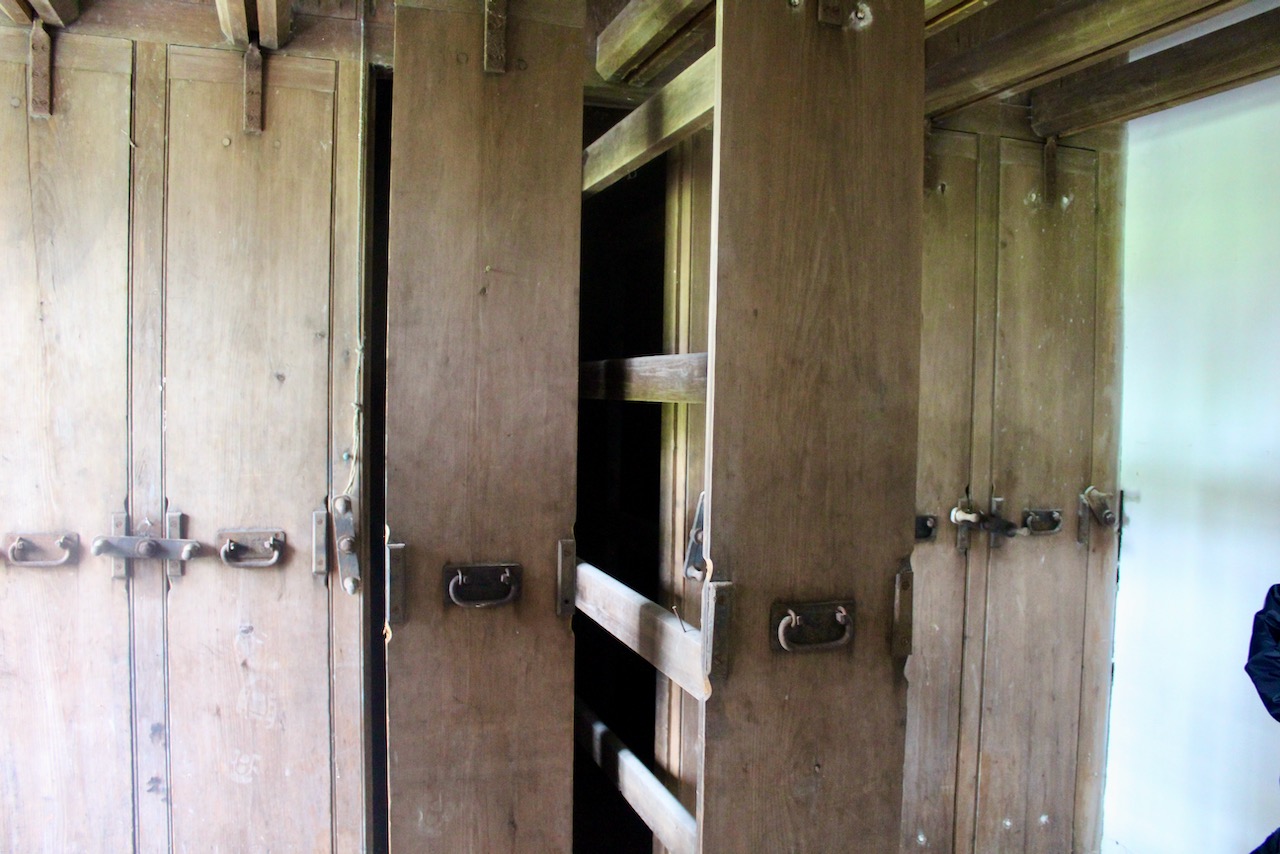
The girls might have to bring laundry out to the bleaching green. A tunnel was installed so that the girls avoided the looks and chat of the stable boys, or being seen by the gentry. William also developed a drying room. Hot water ran through pipes to heat the room to dry the clothes.
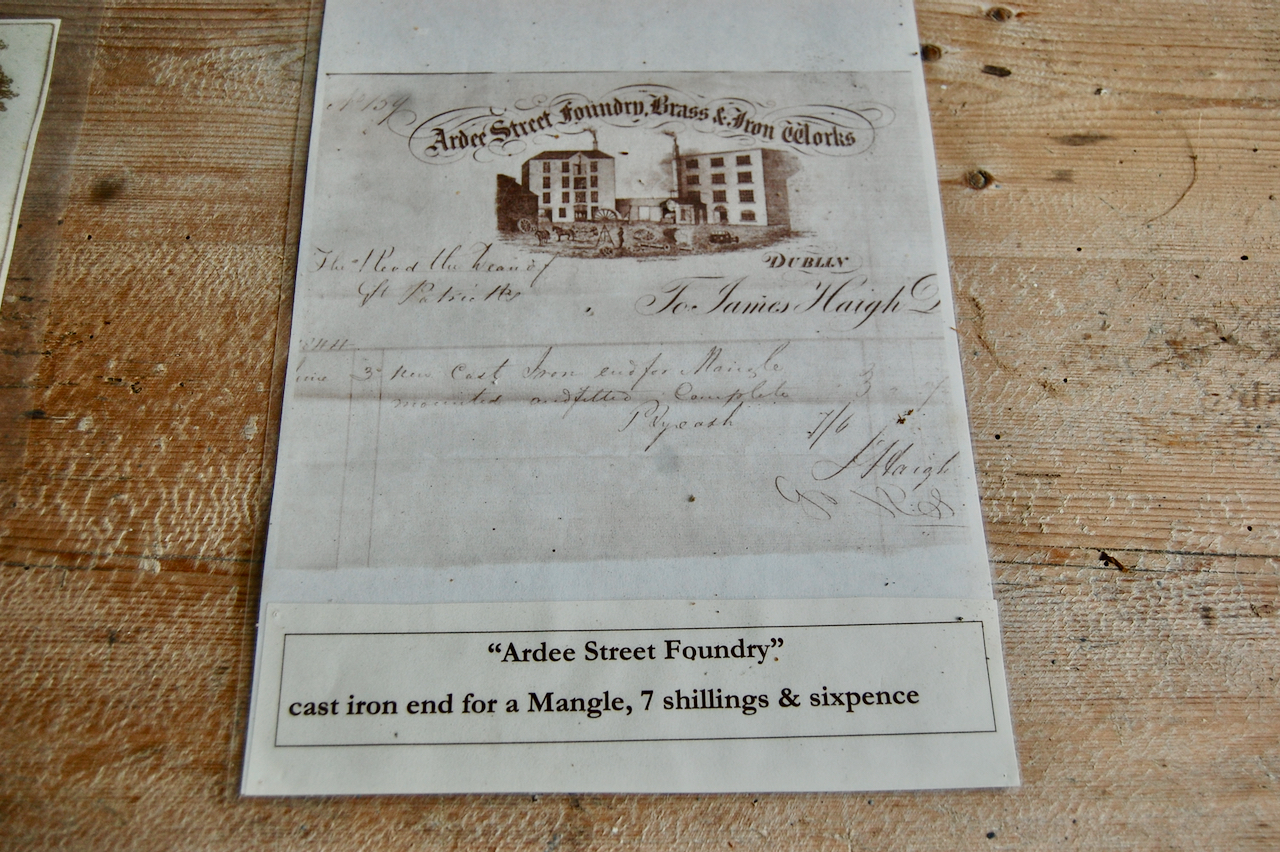
The next room was a small museum with more information about the castle and family, and included a receipt for the iron end of a mangle, purchased from Ardee Street Foundry, Brass and Iron Works, Dublin. We live near Ardee Street!
Tullynally, County Westmeath.
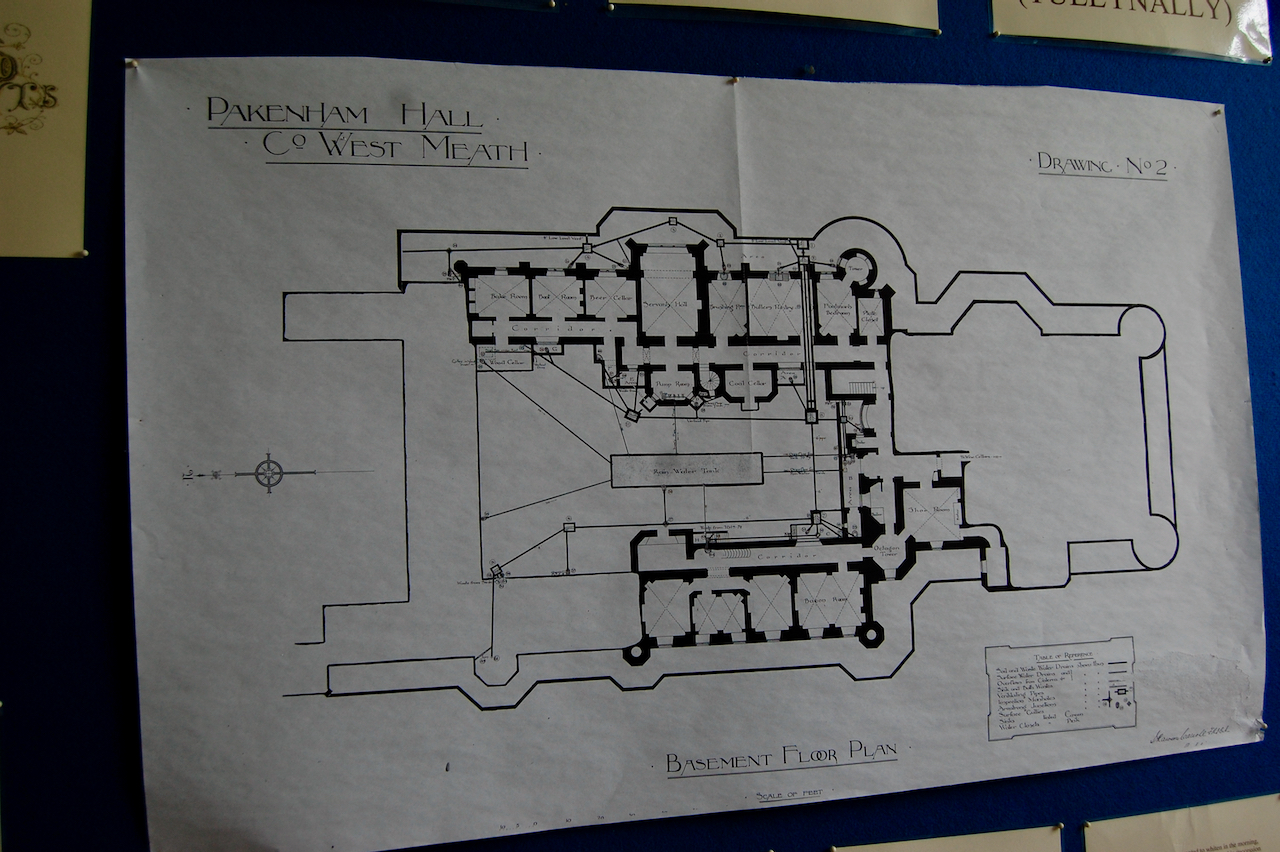
This information board tells us details about the staff, as well as giving the layout of the basement:
The basement contained the Bake room, boot room, beer cellar, servant’s hall, brushing room, butler’s pantry, footman’s bedroom, and across the courtyard, the bacon room.
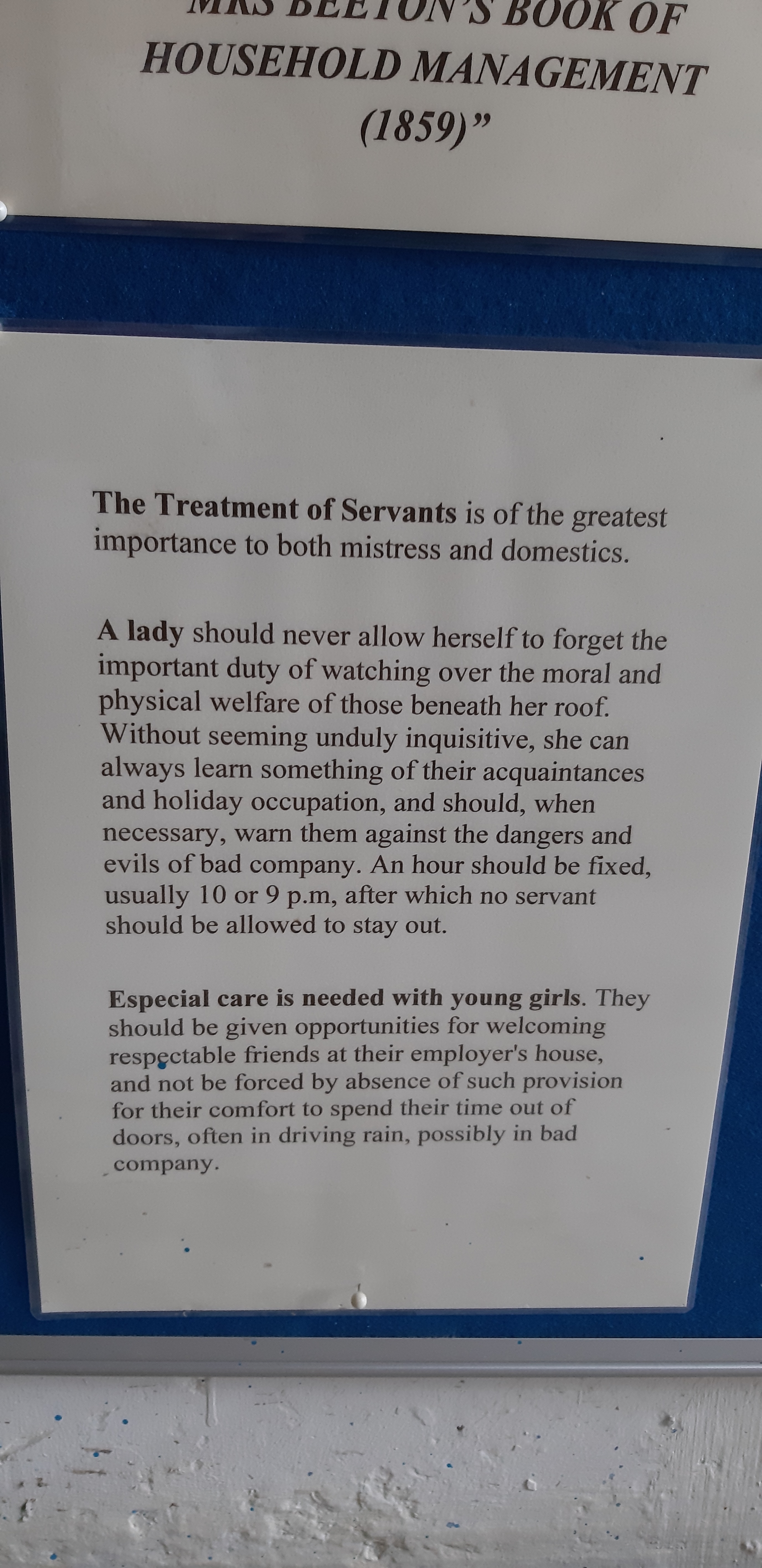
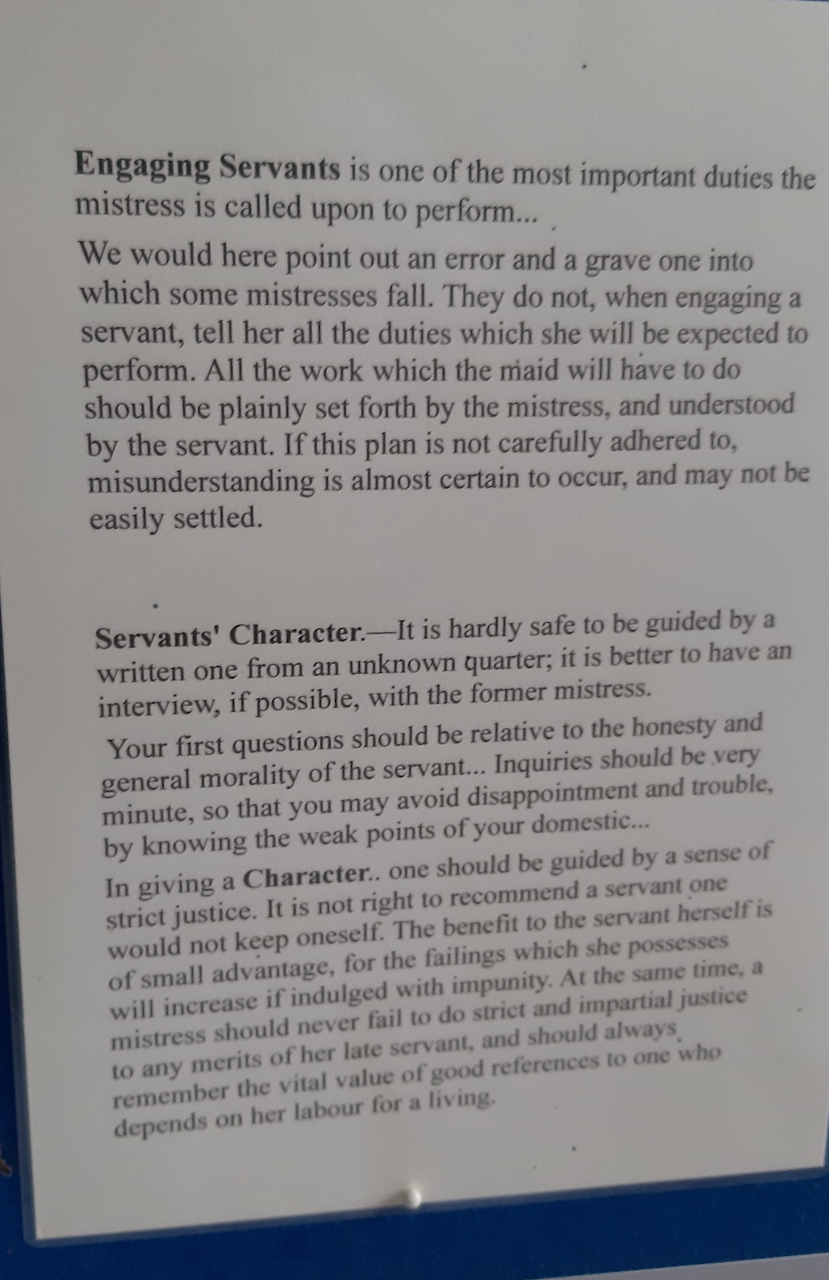
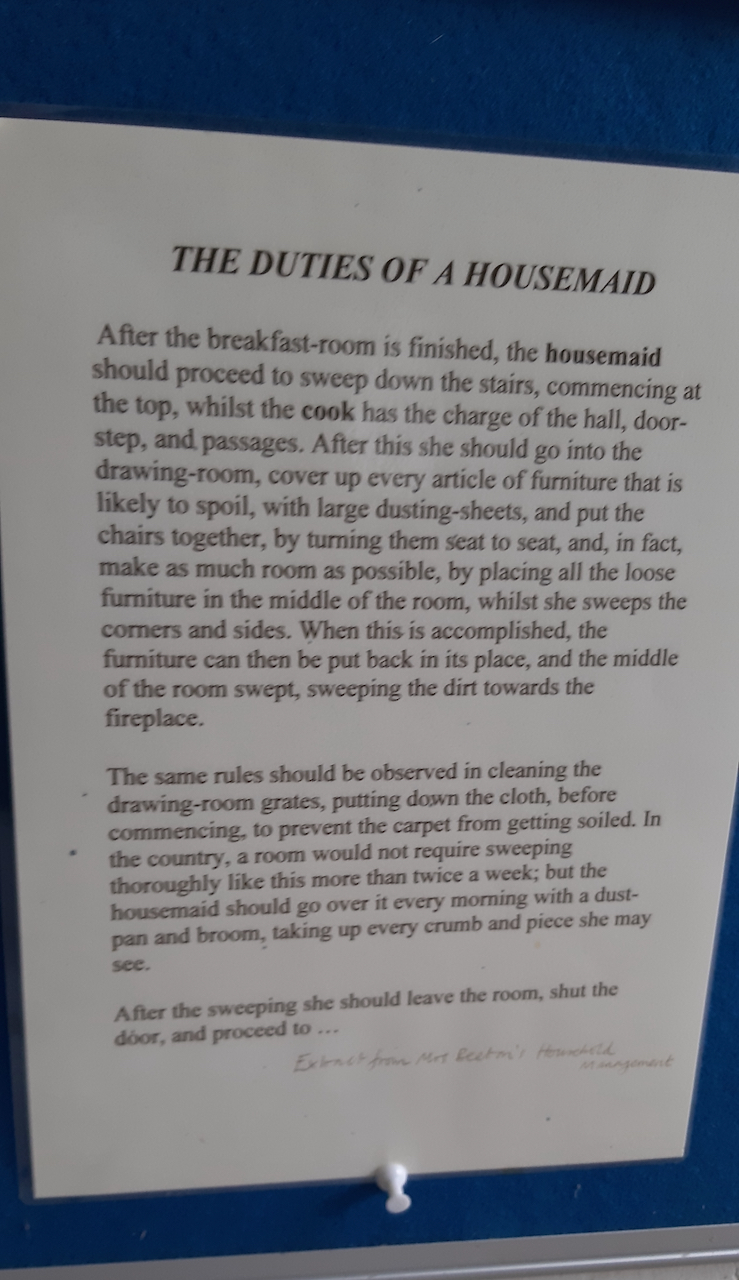
By 1860 Pakenham Castle was run in the high Victorian manner. The Butler and Housekeeper managed a team of footmen, valets, housemaids and laundry maids, whilst Cook controlled kitchen maids, stillroom maid and scullery maids. A stillroom maid was in a distillery room, which was used for distilling potions and medicines, and where she also made jams, chutneys etc. There was also a dairy, brewery and wine cellar. The Coachman supervised grooms and stable boys, while a carpenter worked in the outer yard and a blacksmith in the farmyard. Further information contains extracts from Mrs. Beeton’s Book of Household Management (1859), detailed duties of a housemaid, a laundry-maid, and treatment of servants. The estate was self-sufficient. Staff lived across the courtyard, with separate areas for men and women. There were also farm cottages on the estate. Servants for the higher positions were often recruited by word of mouth, from other gentry houses, and often servants came from Scotland or England, and chefs from France.
Tullynally, County Westmeath.Tullynally, County Westmeath.Tullynally, County Westmeath.Tullynally, County Westmeath.Tullynally, County Westmeath.
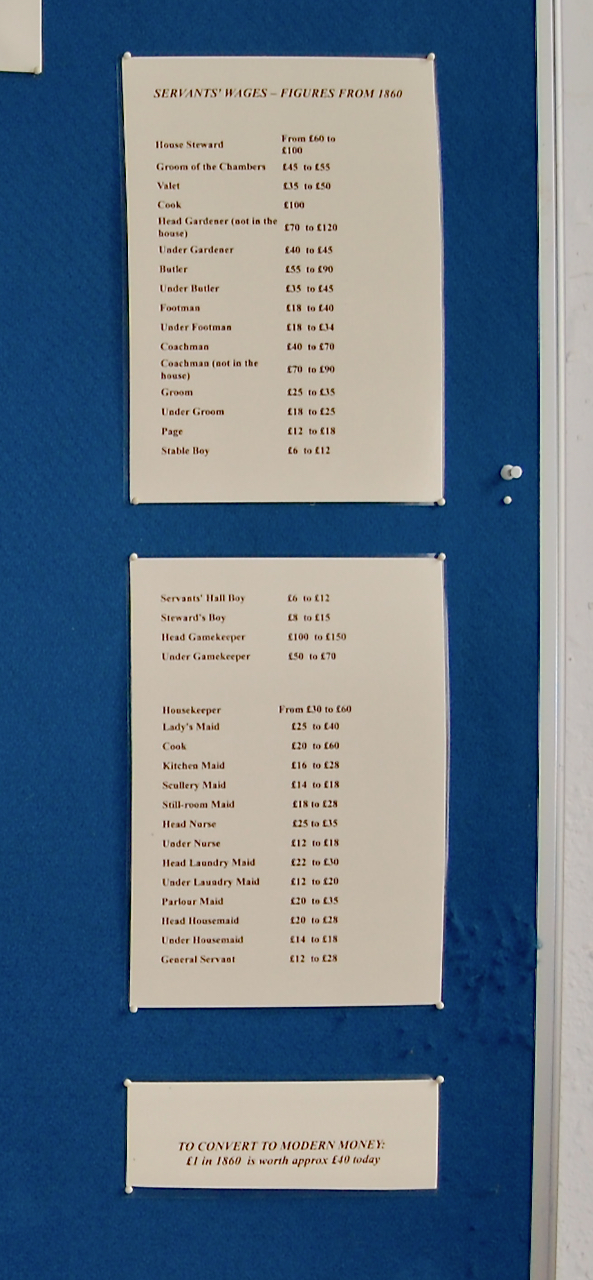
We are also given the figures for servants’ wages in 1860.
Tullynally, County Westmeath.
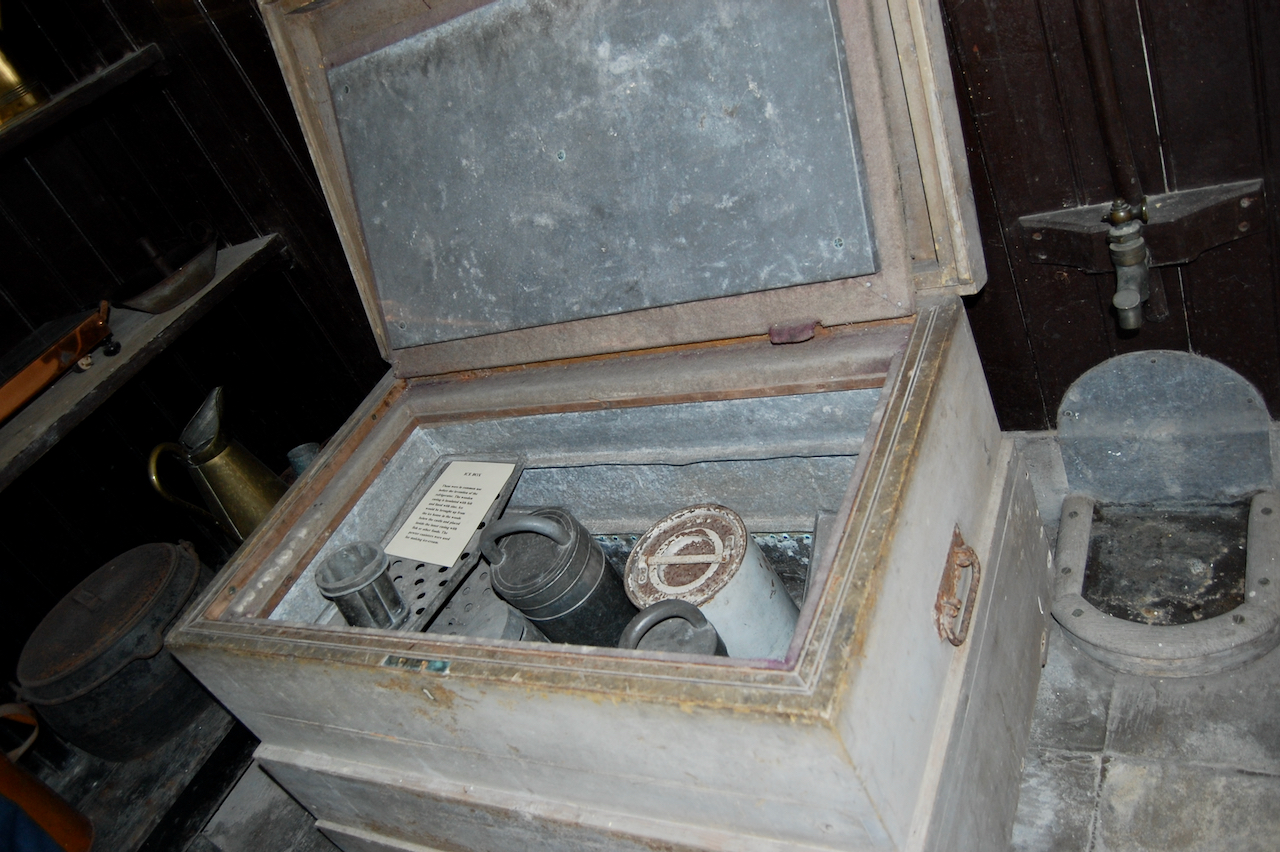
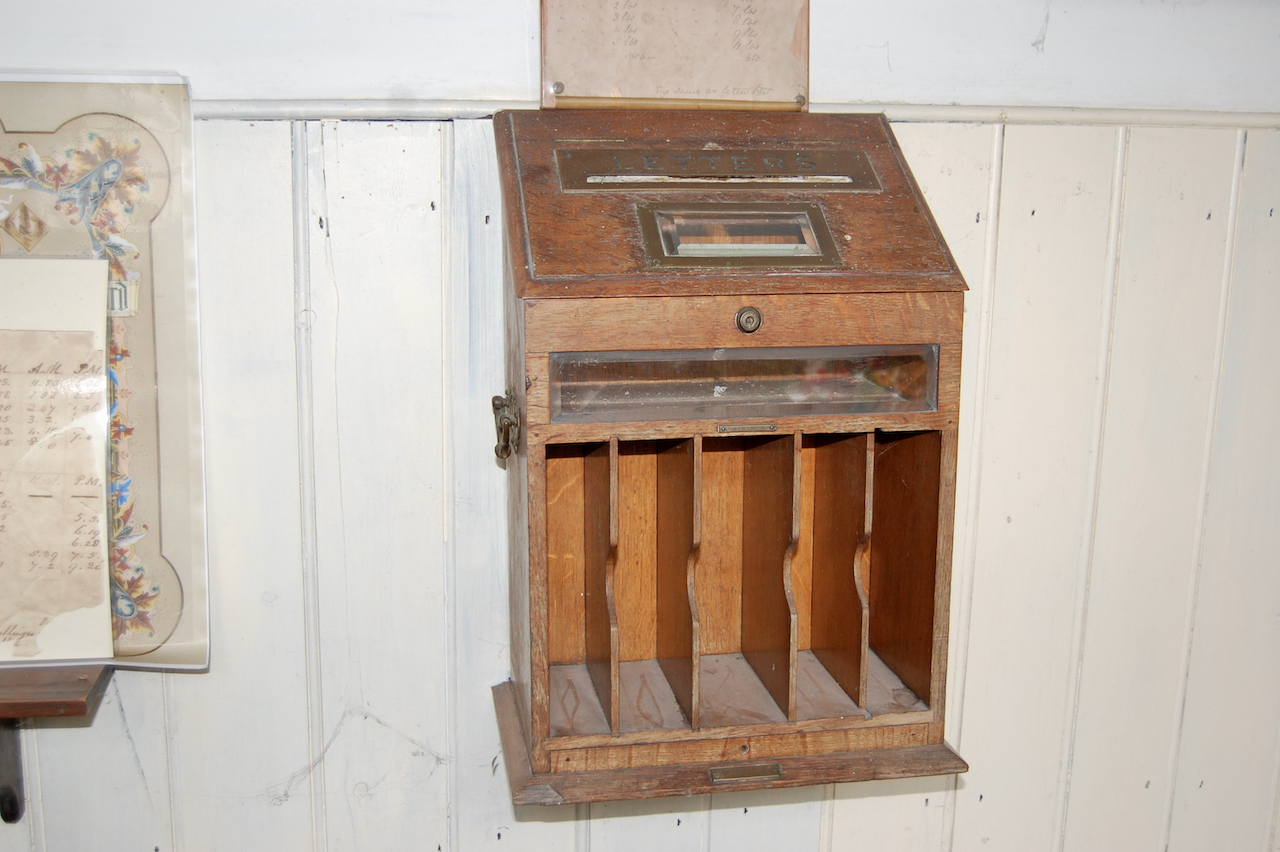
Next, we headed over toward the kitchen. On the way we passed a water filter system, which was a ceramic jar containing an asbestos and charcoal filter system. However, staff were given beer to drink as it was safer at the time than water. We saw a container used to bring food out to staff in the fields – the food would be wrapped in hay inside the container, which would hold in the heat and even continue to cook the food. We stopped to learn about an ice chest:
The ice chest would be filled with ice from the icehouse. We were also shown the coat of a serving boy, which our tour guide had a boy on the tour don – which just goes to show how young the serving boys were:
A serving boy wearing this uniform would carry dishes from the kitchen to the dining room, which was as far from the kitchen as possible to prevent the various smells emanating from the kitchen from reaching the delicate nostrils of the gentry. The serving boy would turn his back to the table, and watch mirrors to see when his service was needed at the table, under the management of the butler. Later, when the ladies had withdrawn to the Drawing Room, to leave the men to drink their port and talk politics, the serving boy would produce “pee pots” from a sideboard cupboard, and place a pot under each gentleman! Our guide told us that perhaps, though she is not sure about this, men used their cane to direct the stream of urine into the pot. The poor serving boy would then have to collect the used pots to empty them. Women would relieve themselves behind a screen in the Drawing Room.
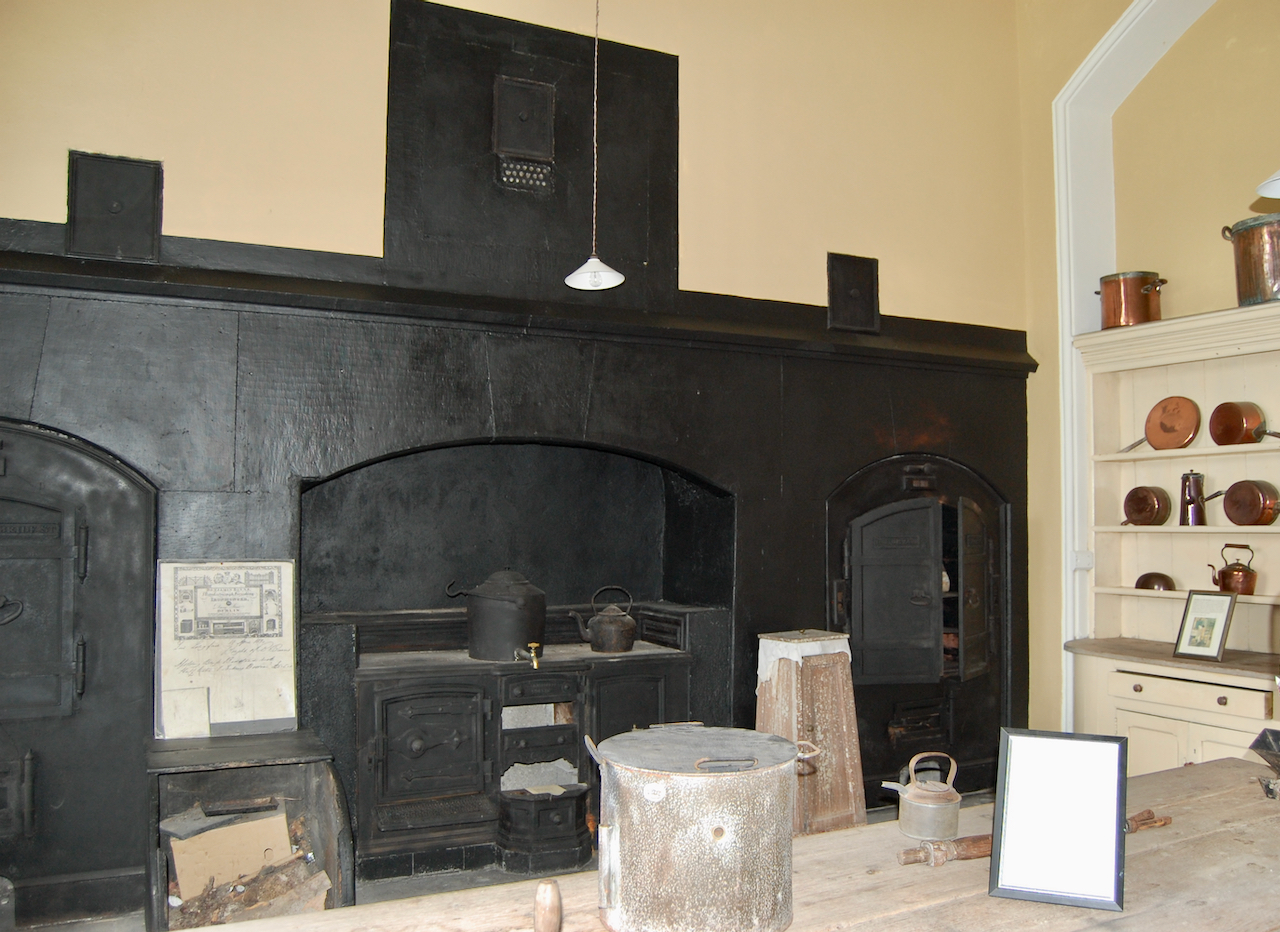
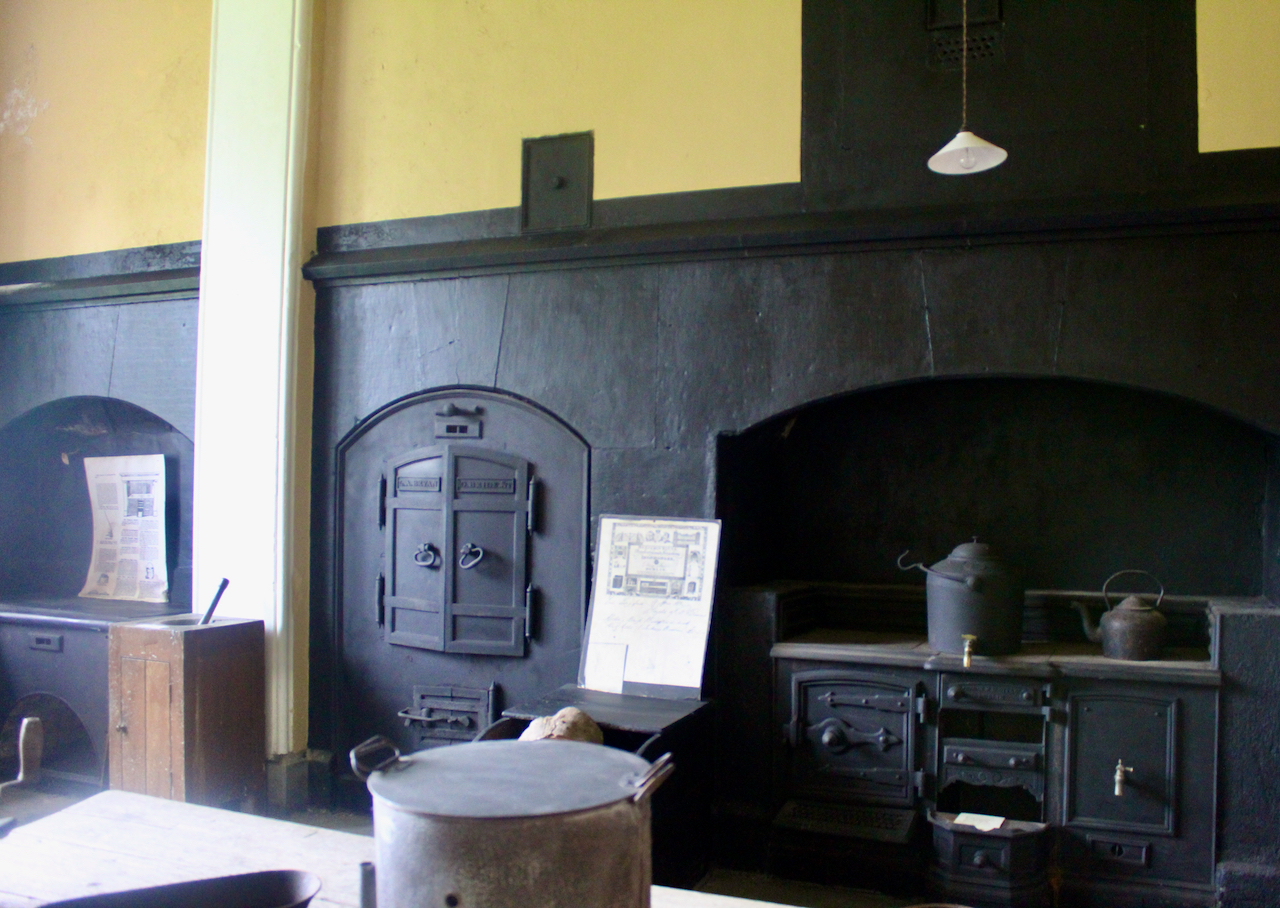
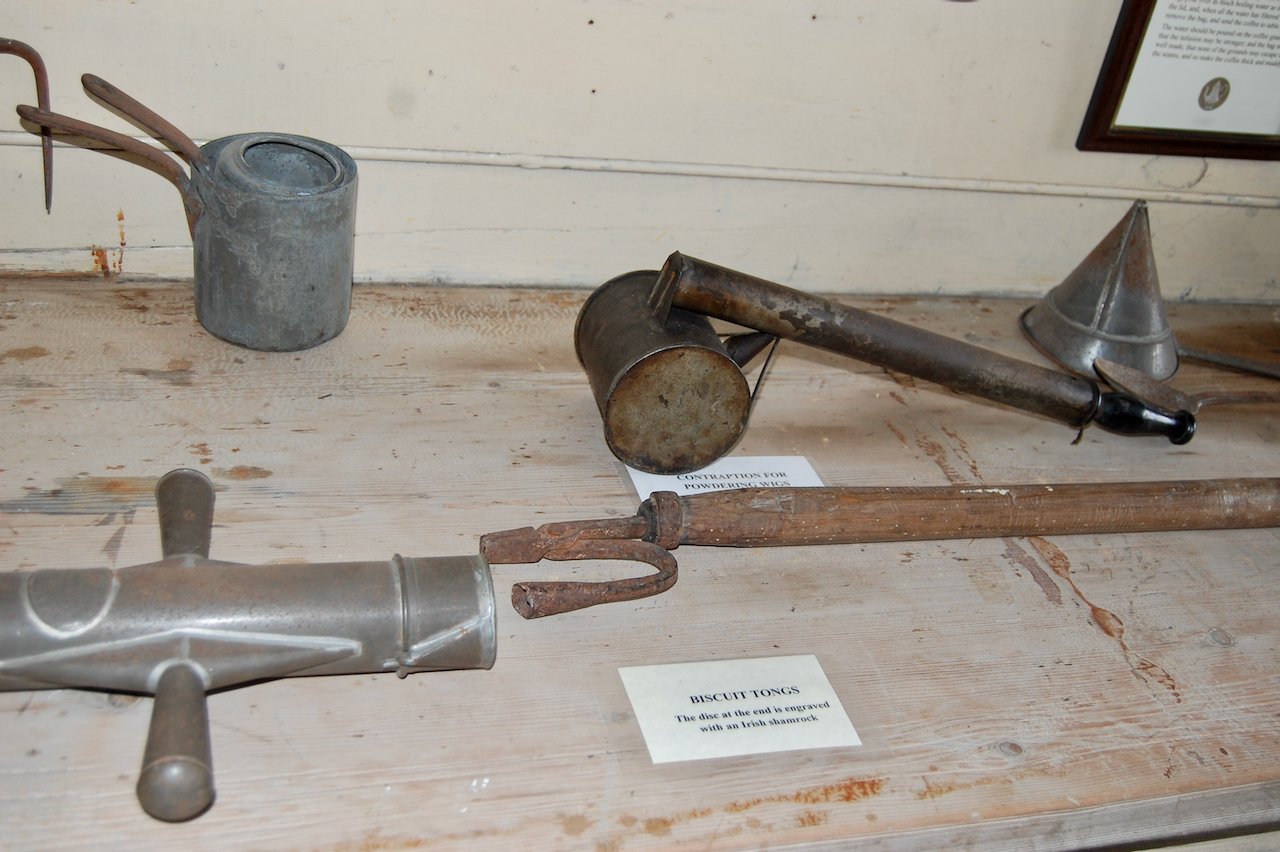
In the large impressively stocked kitchen, we saw many tools and implements used by the cooks. Richard Morrison ensured that the kitchen was filled with light from a large window.
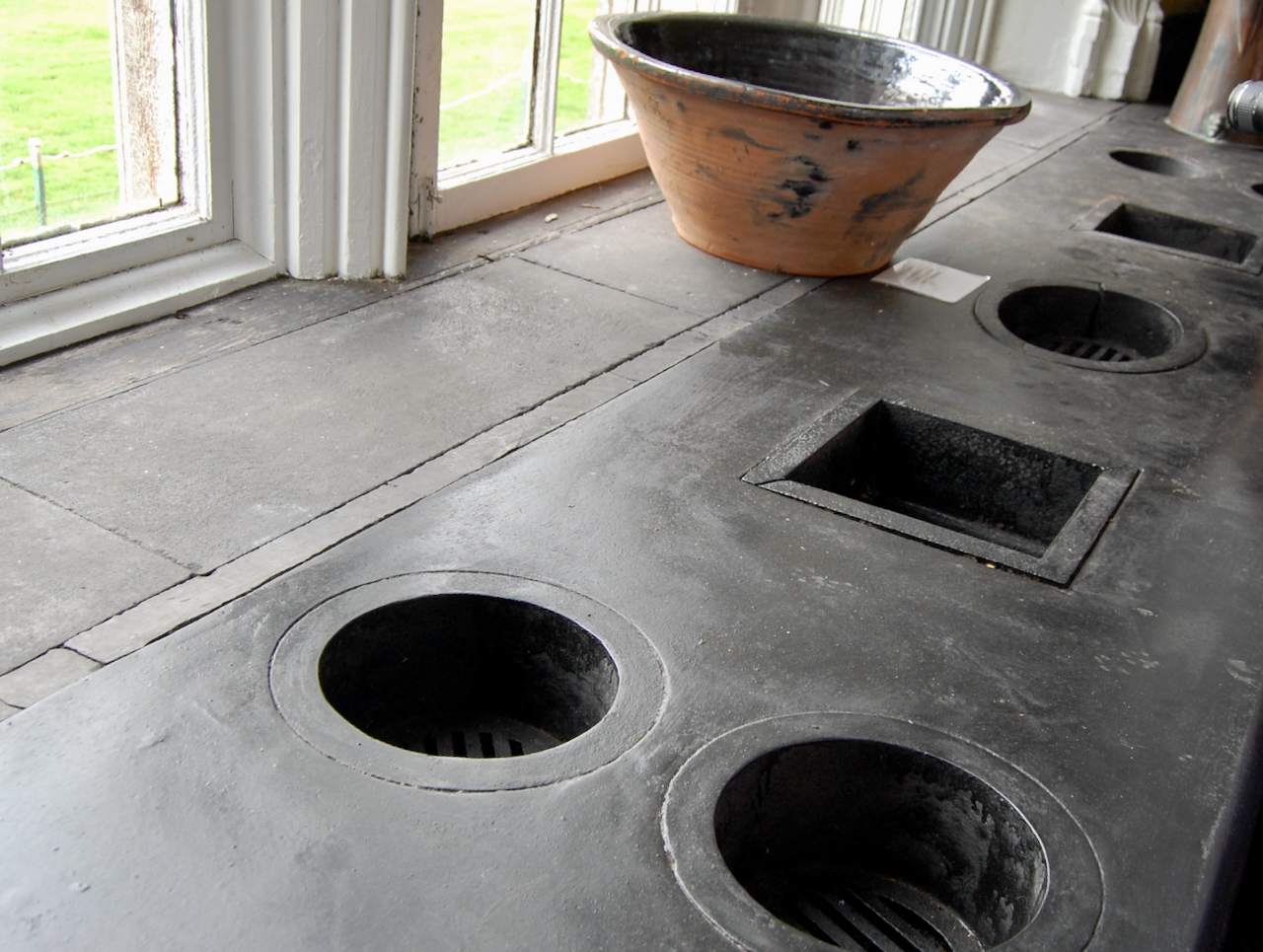
This kitchen was used until around 1965. The yellow colour on the walls is meant to deter flies. Often a kitchen is painted in blue either, called “Cook’s blue,” also reputed to deter flies. Because this kitchen remained in continuous use its huge 1875 range was replaced by an Aga in the 1940s.
Candles were made from whale blubber. Candles made from blubber closer to the whale’s head were of better quality.
The housekeeper would have her own room, which our guide told us, was called the “pug room” due to the, apparently, sour face of of the housekeeper, but also because she often kept a pug dog!
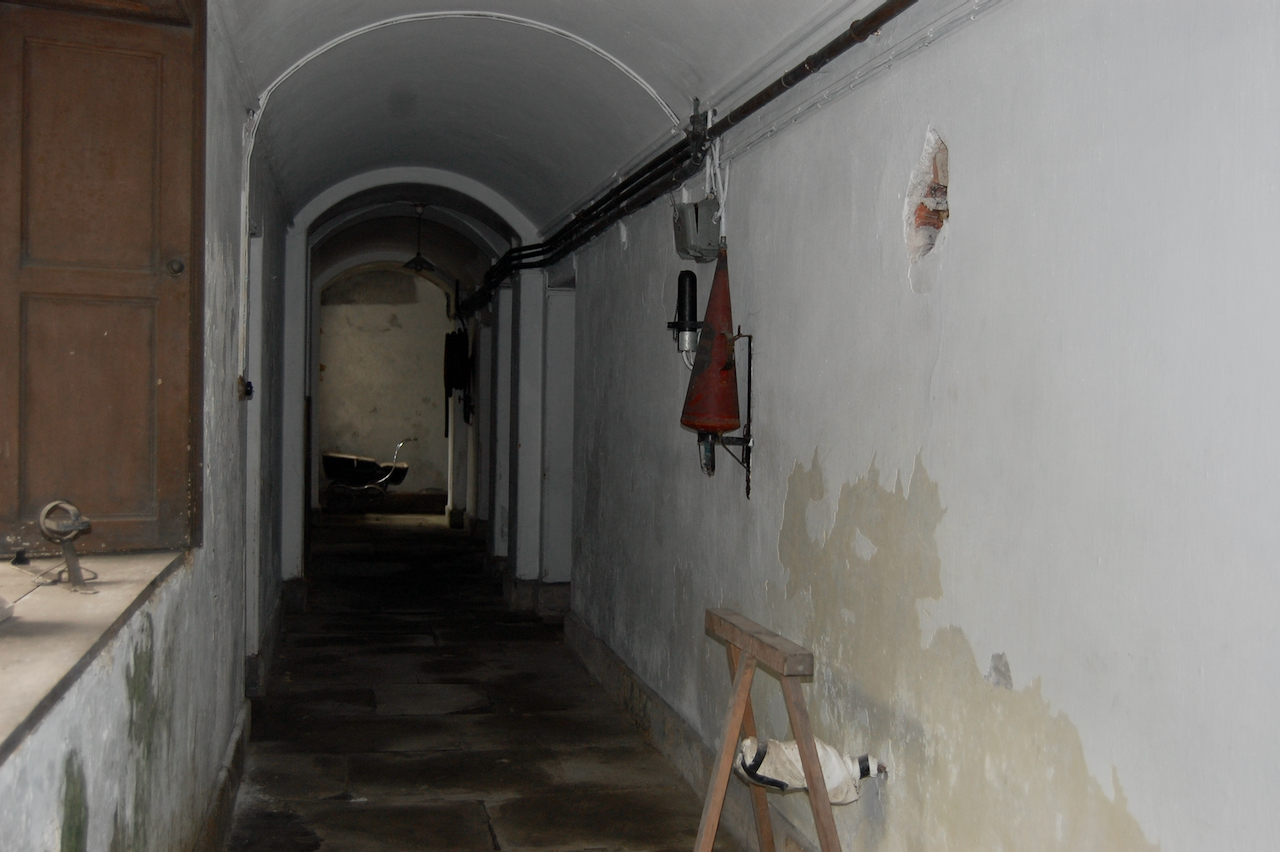
Next we were taken to see Taylor’s room. Taylor was the last Butler of the house. We passed an interesting fire-quenching system on the way.
This would normally be the end of the tour, but since we were such a fascinated, attentive group, the guide took us into the basement to see the old servants’ dining hall.
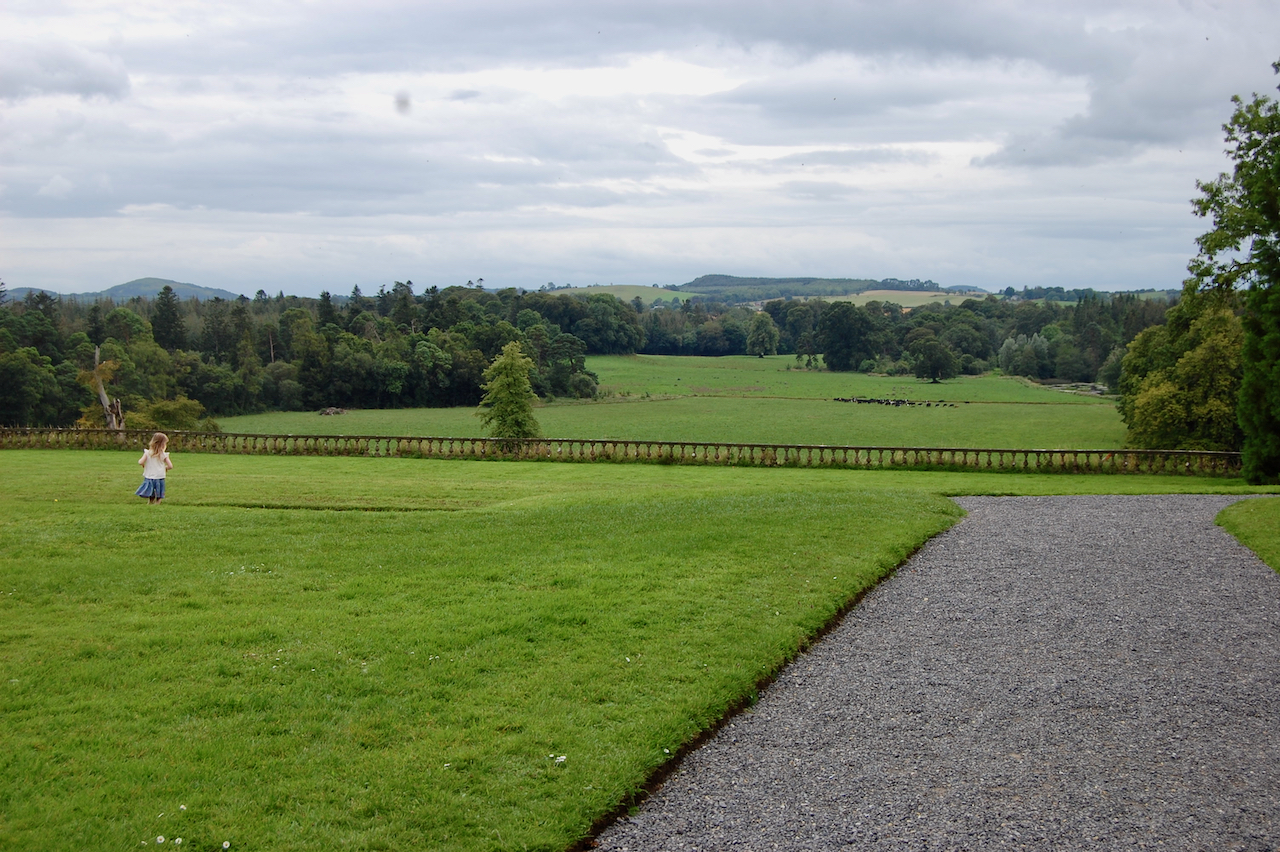
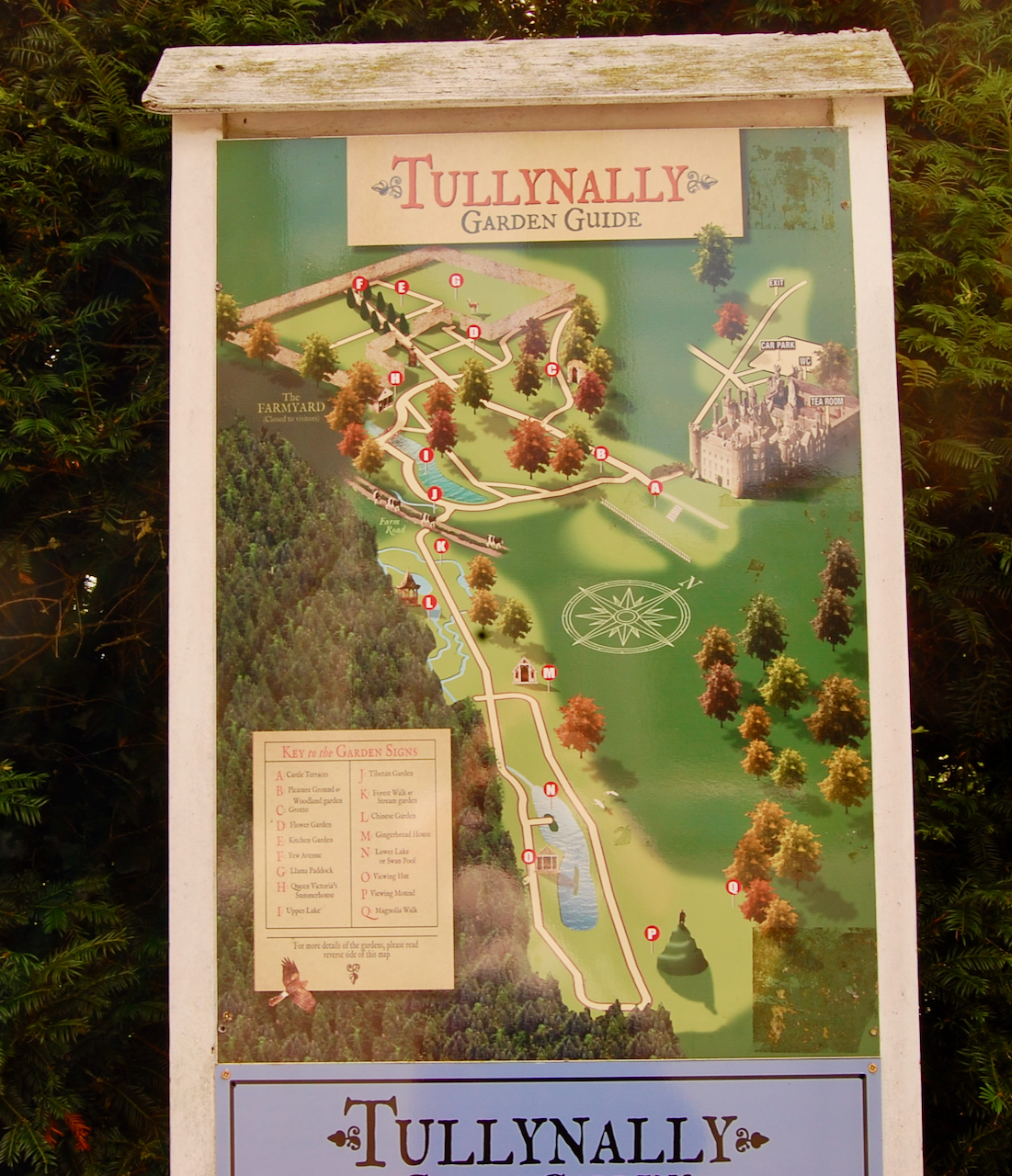
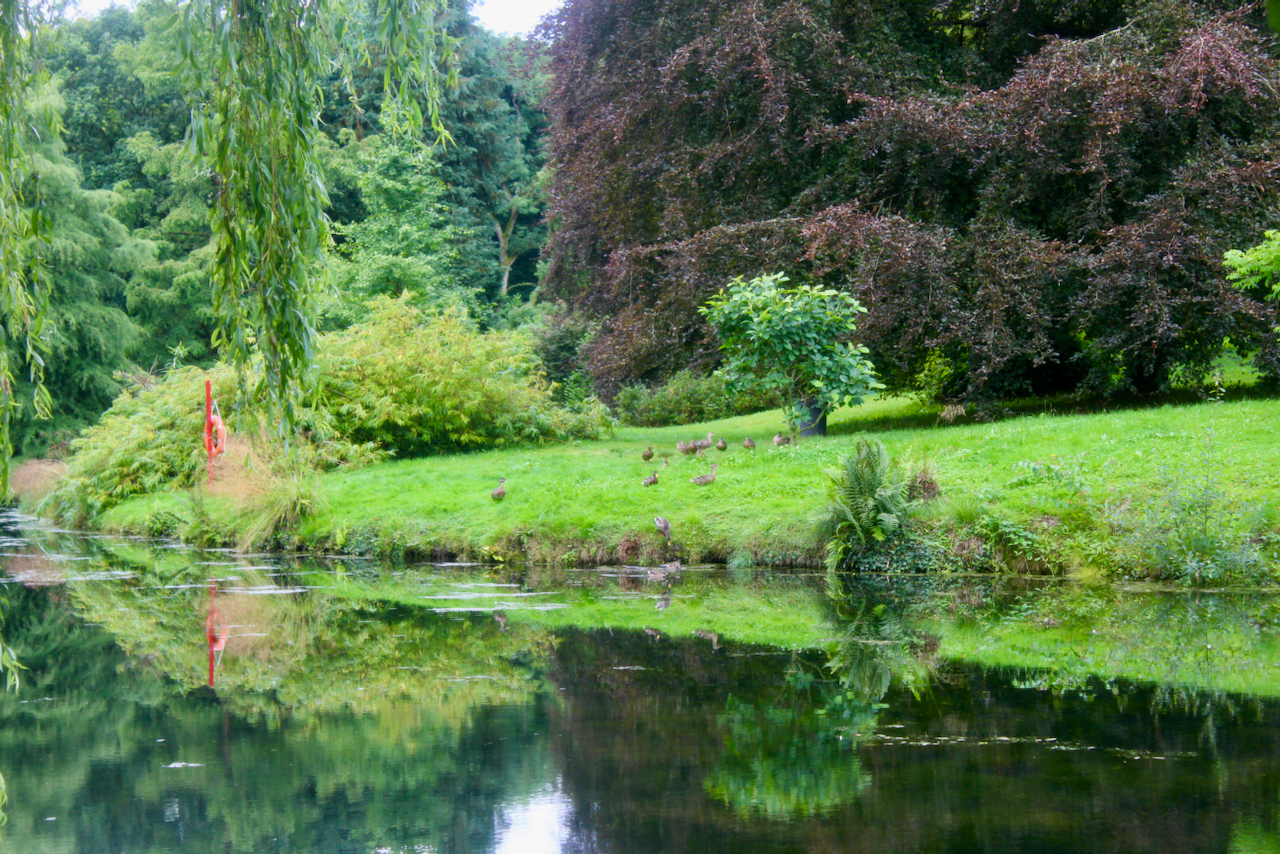
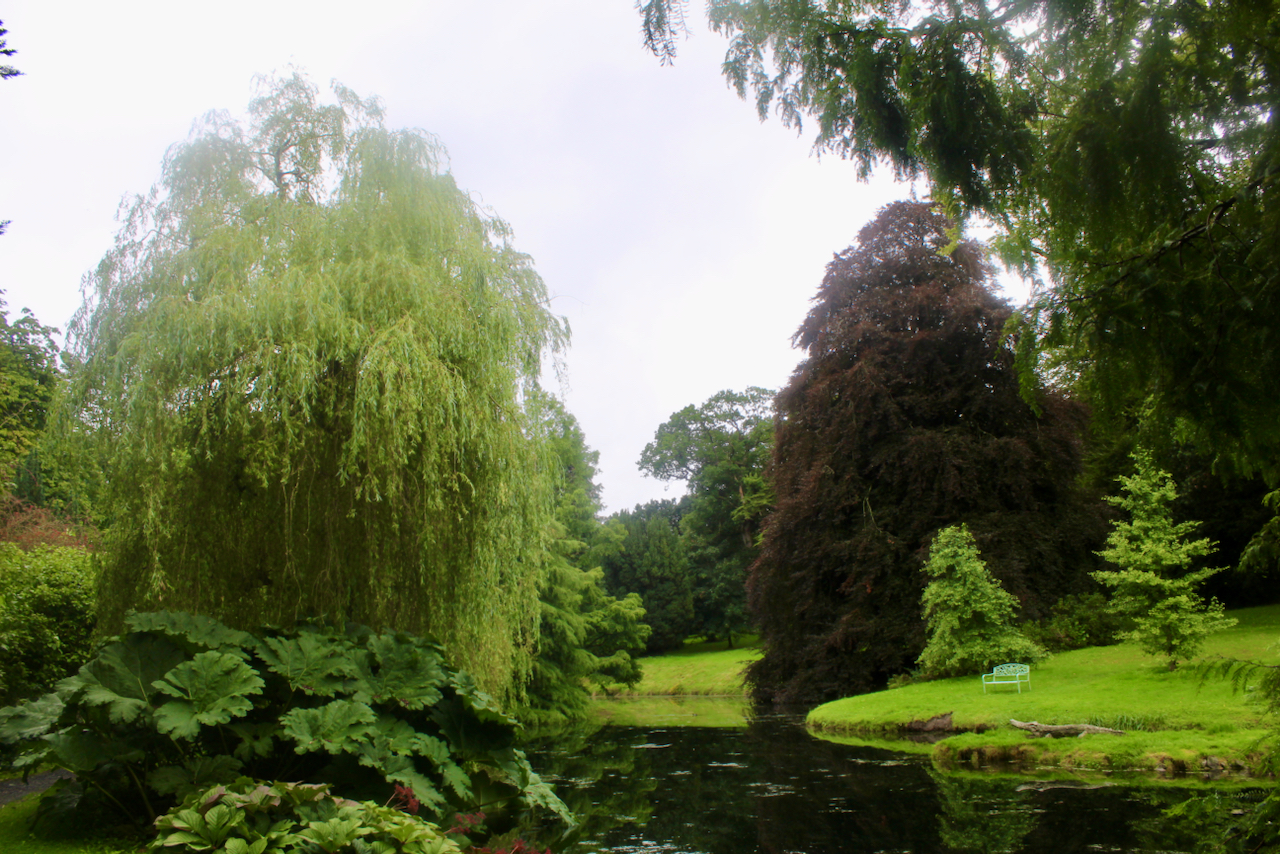
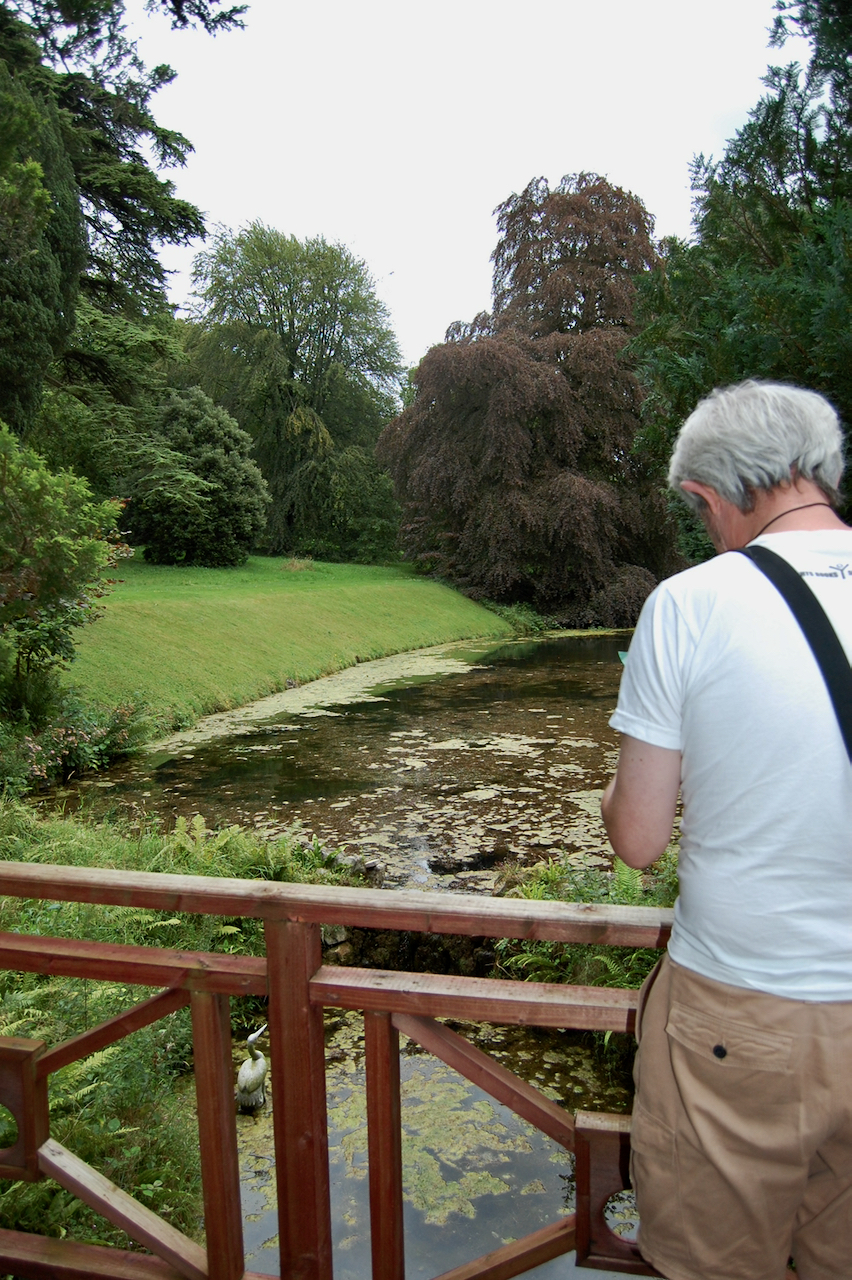
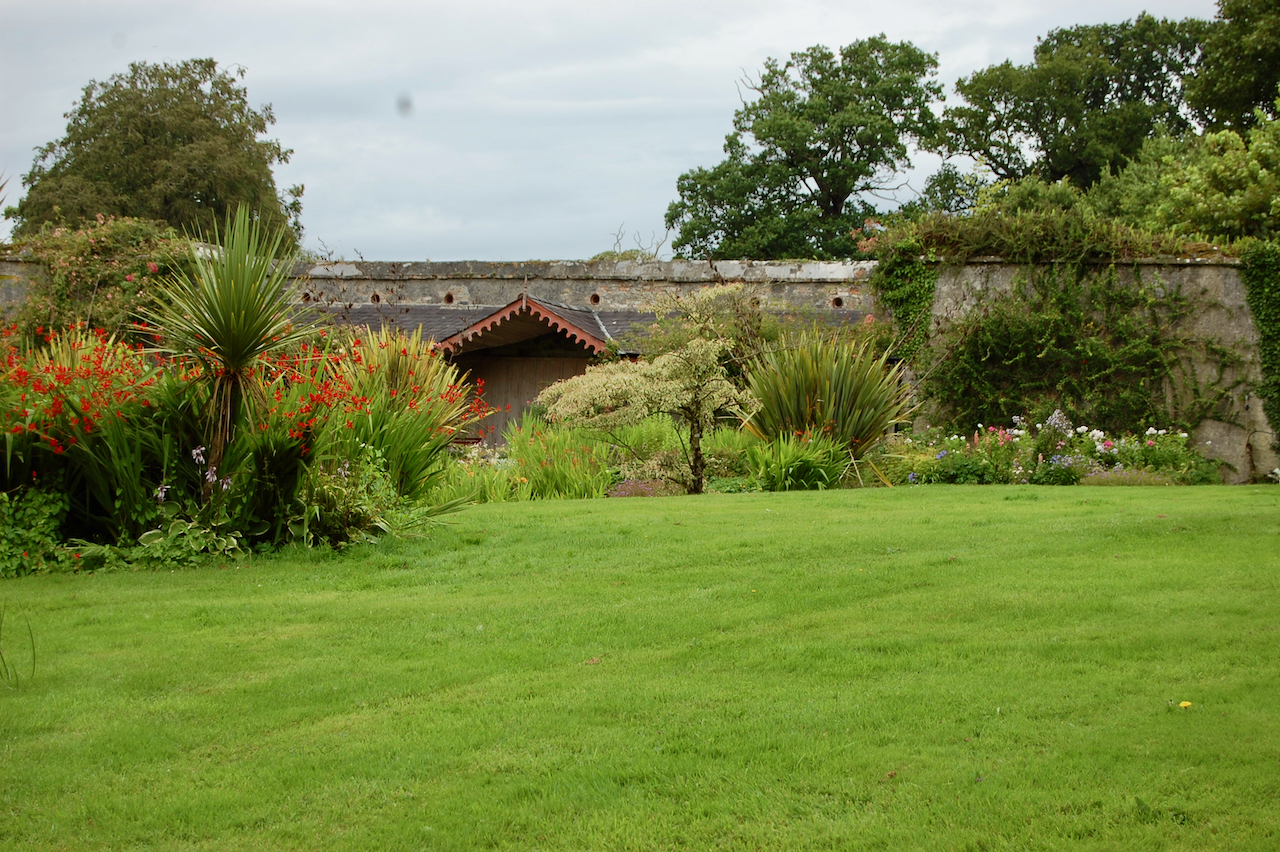
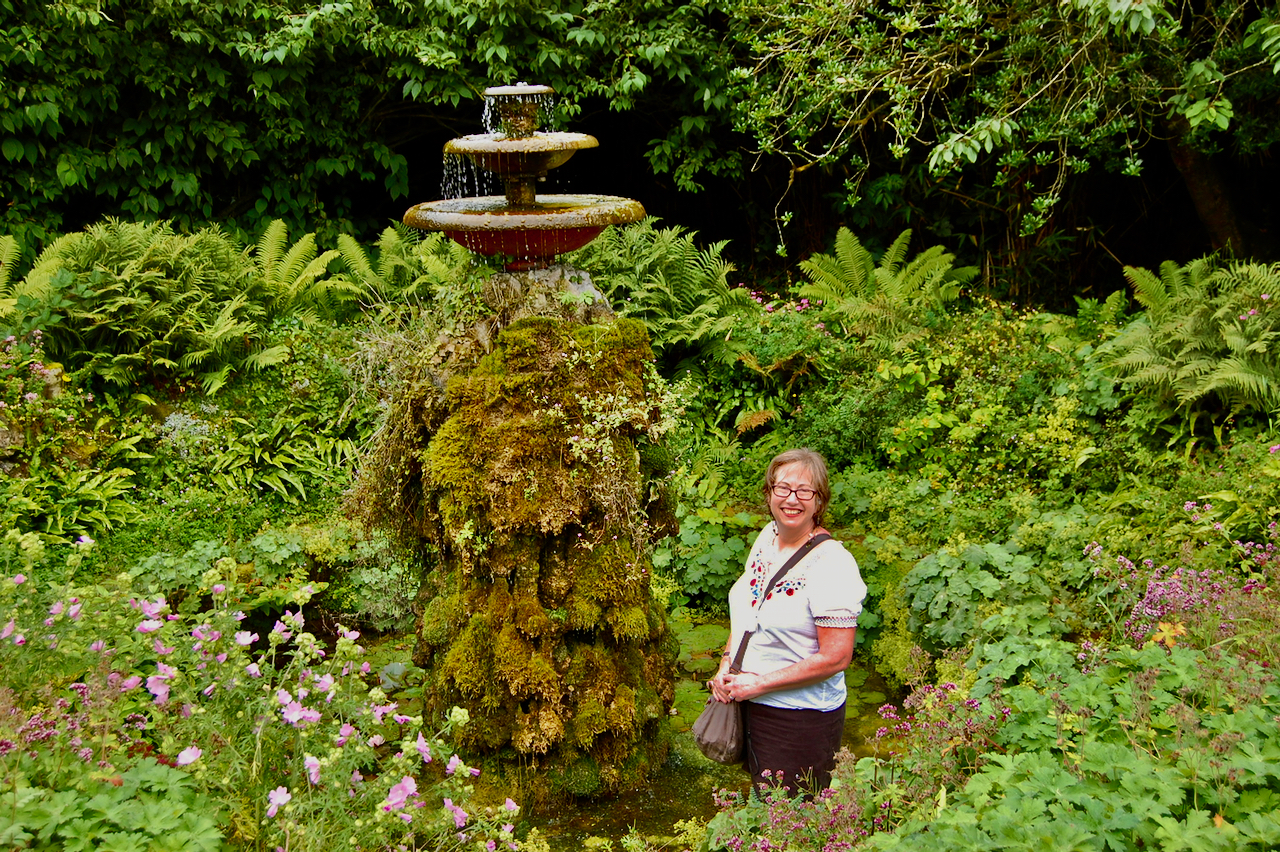
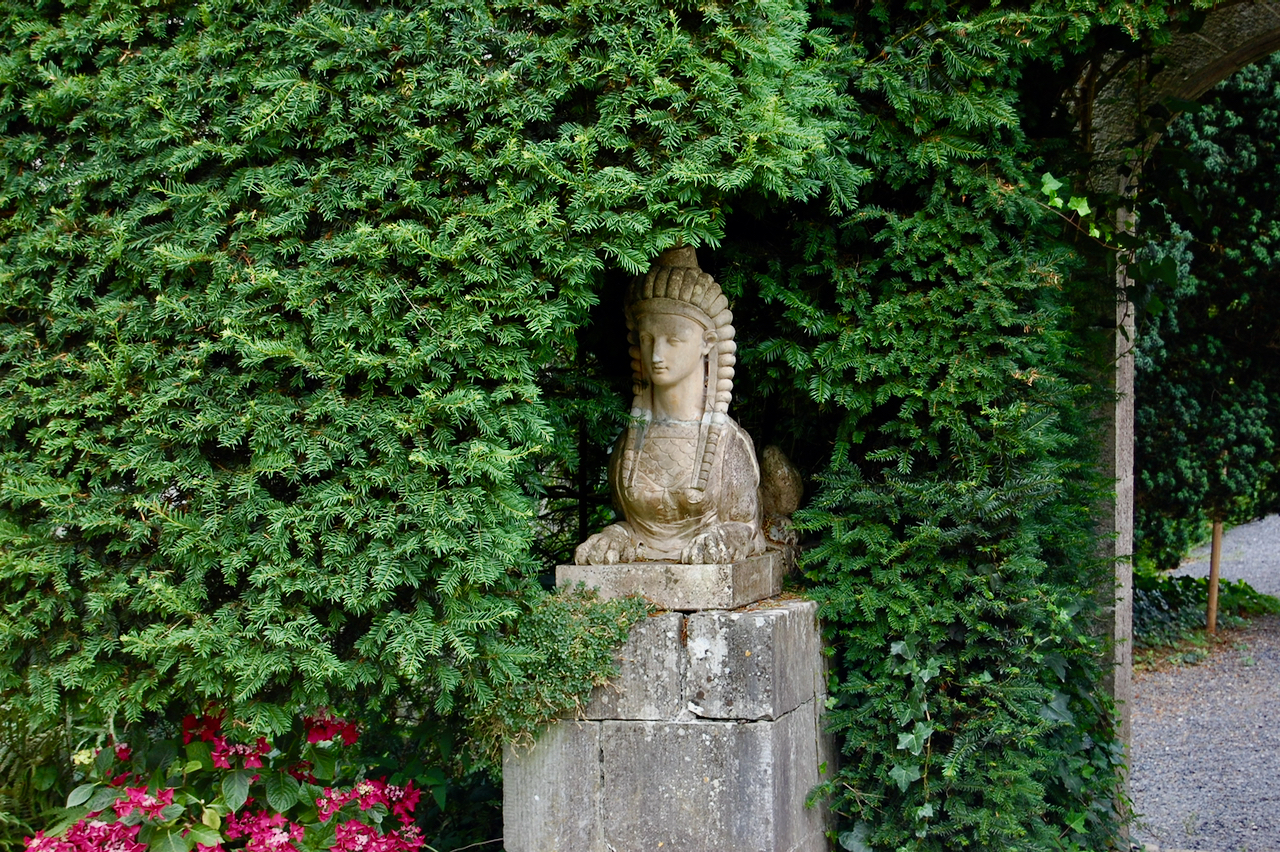
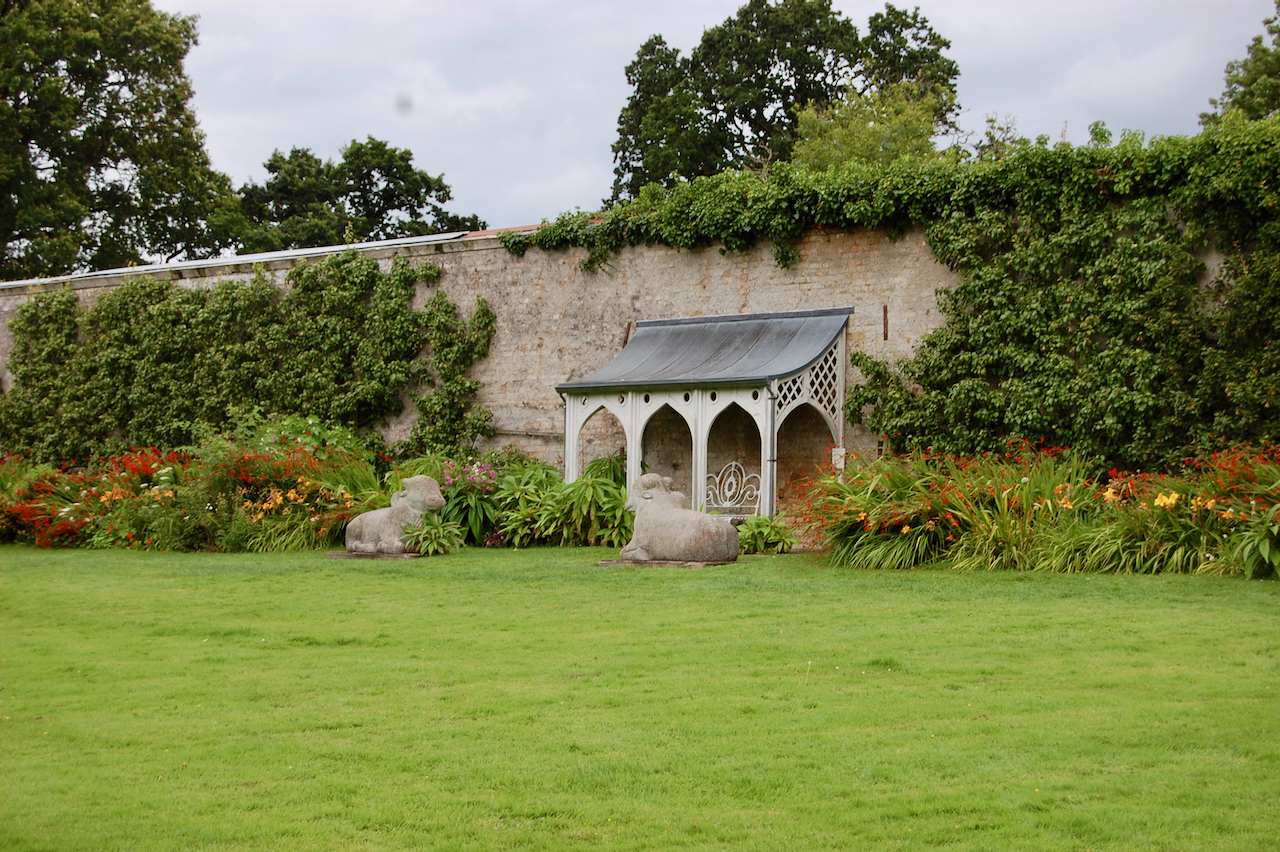
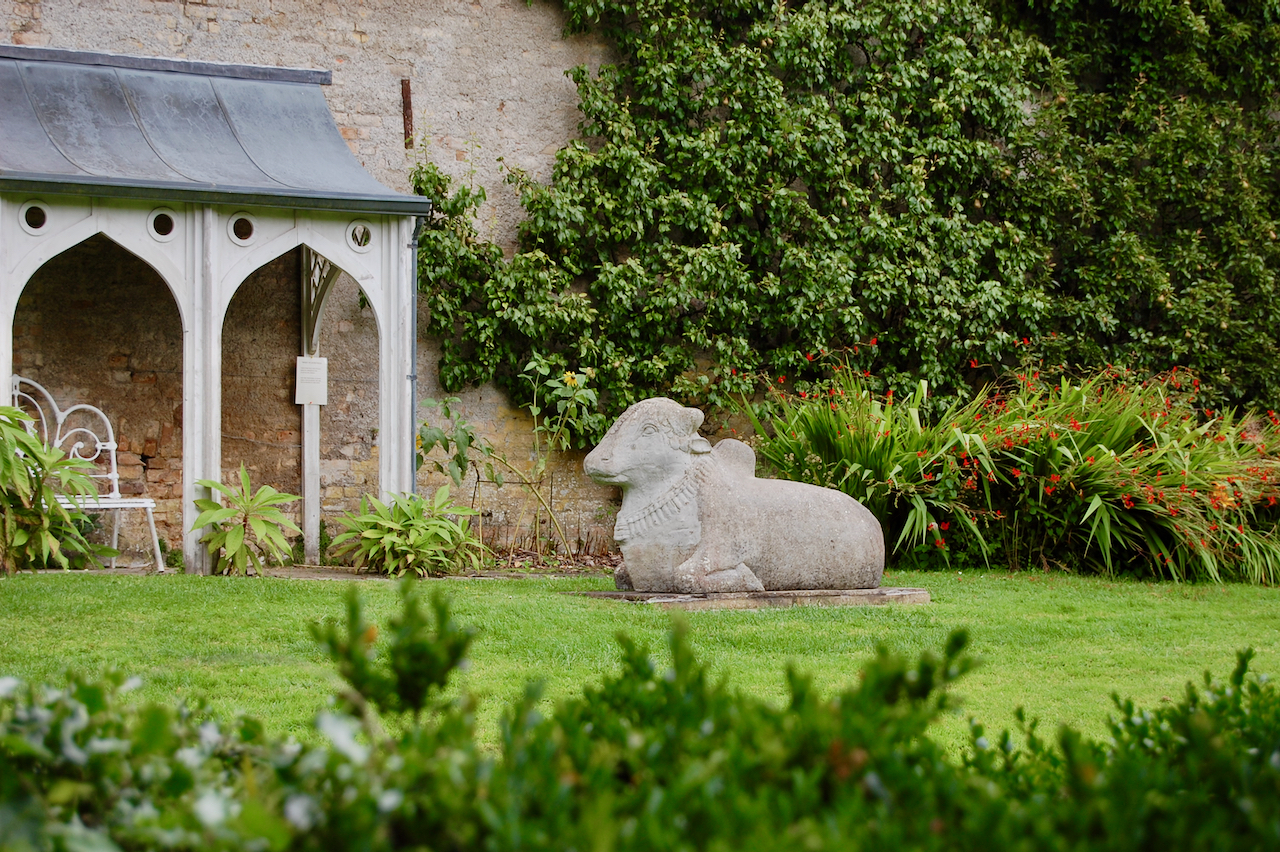
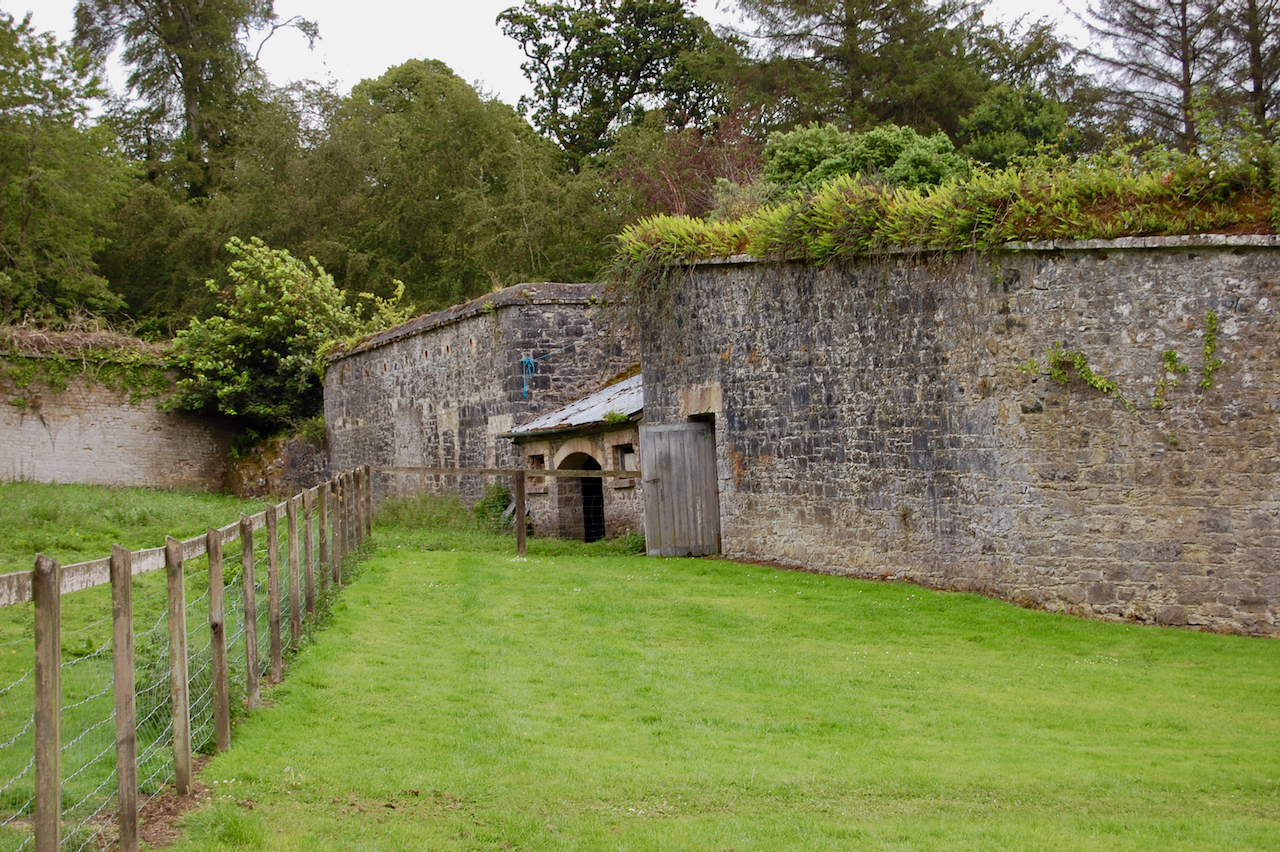
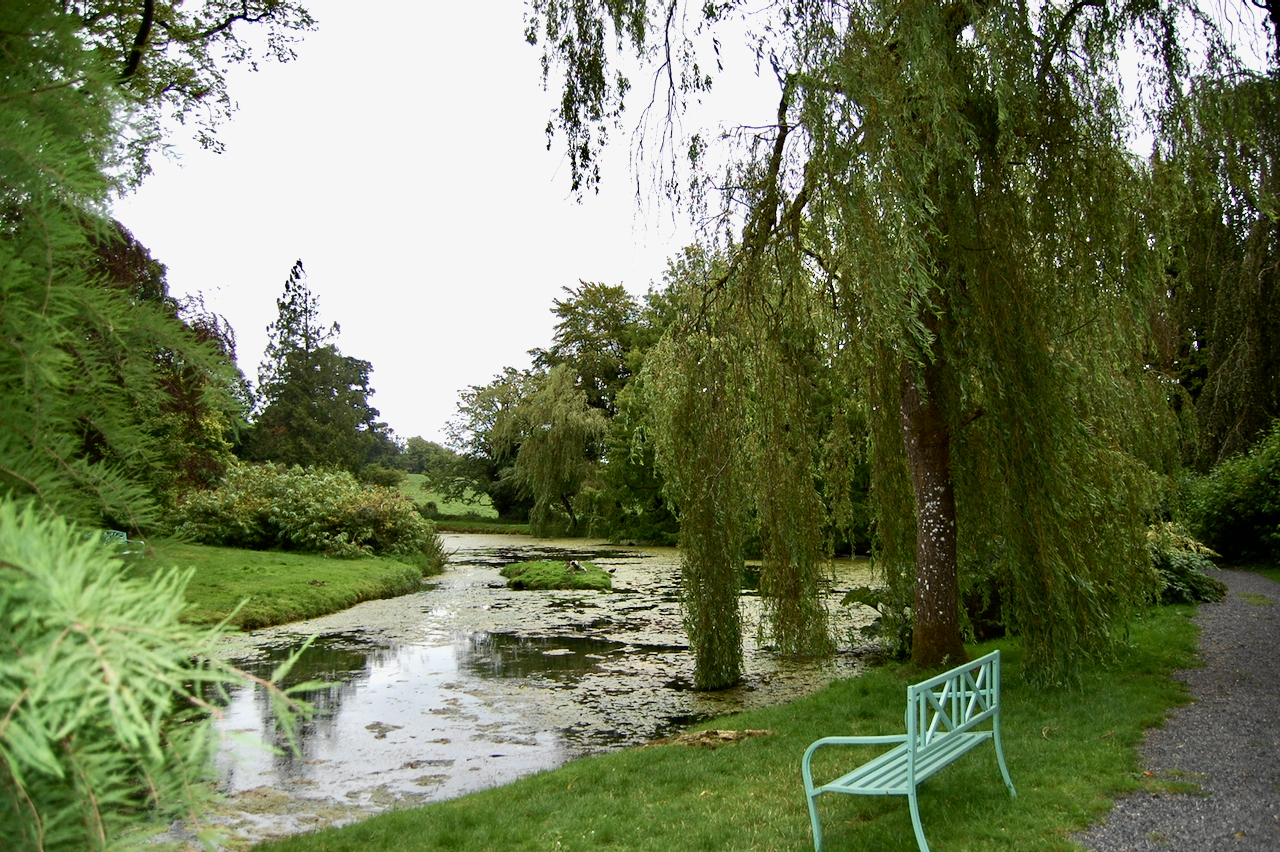
The gardens, covering nearly 30 acres, were laid out in the early 19th century and have been restored. They include a walled flower garden, a grotto and two ornamental lakes.
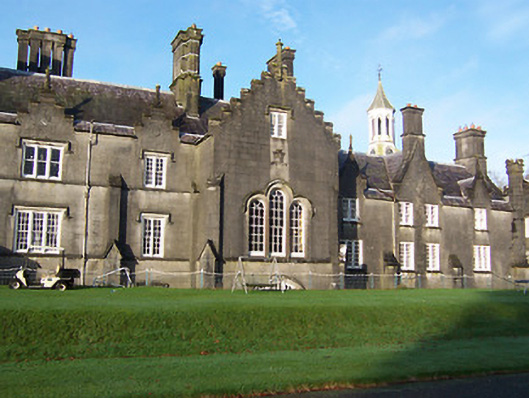
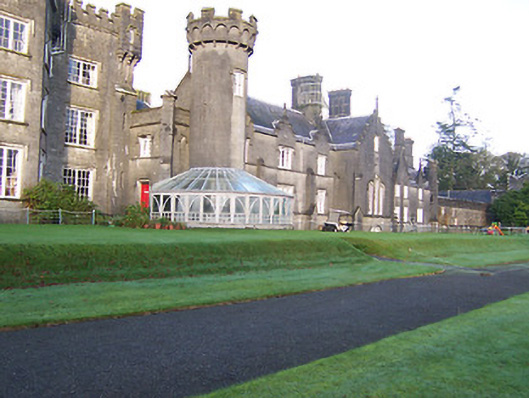
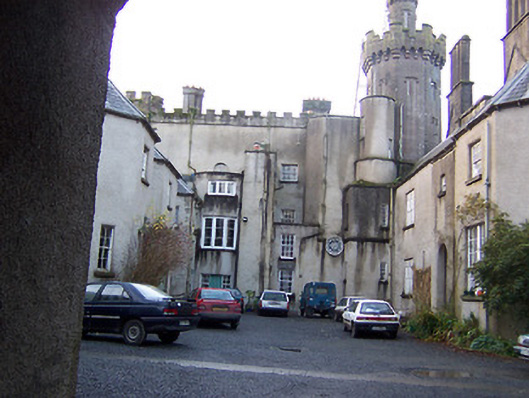
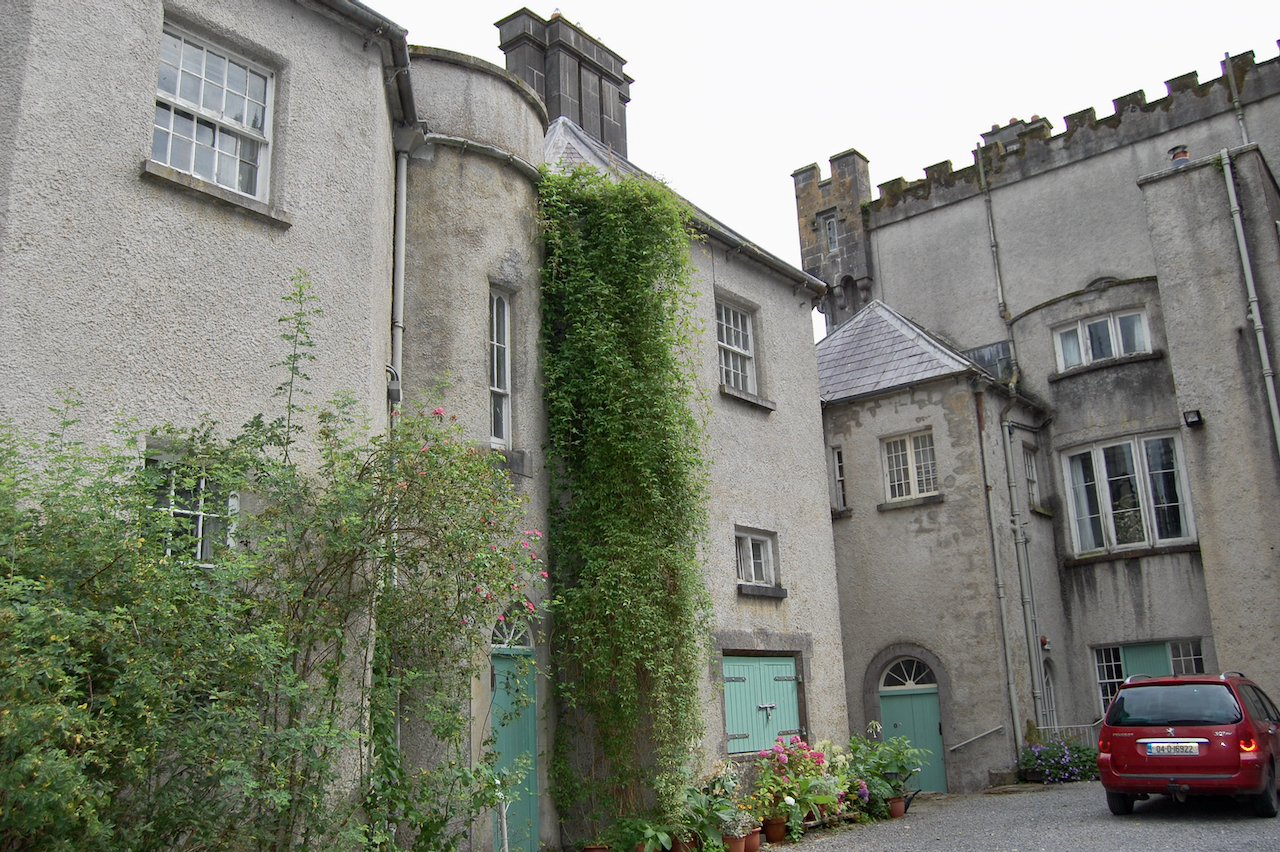
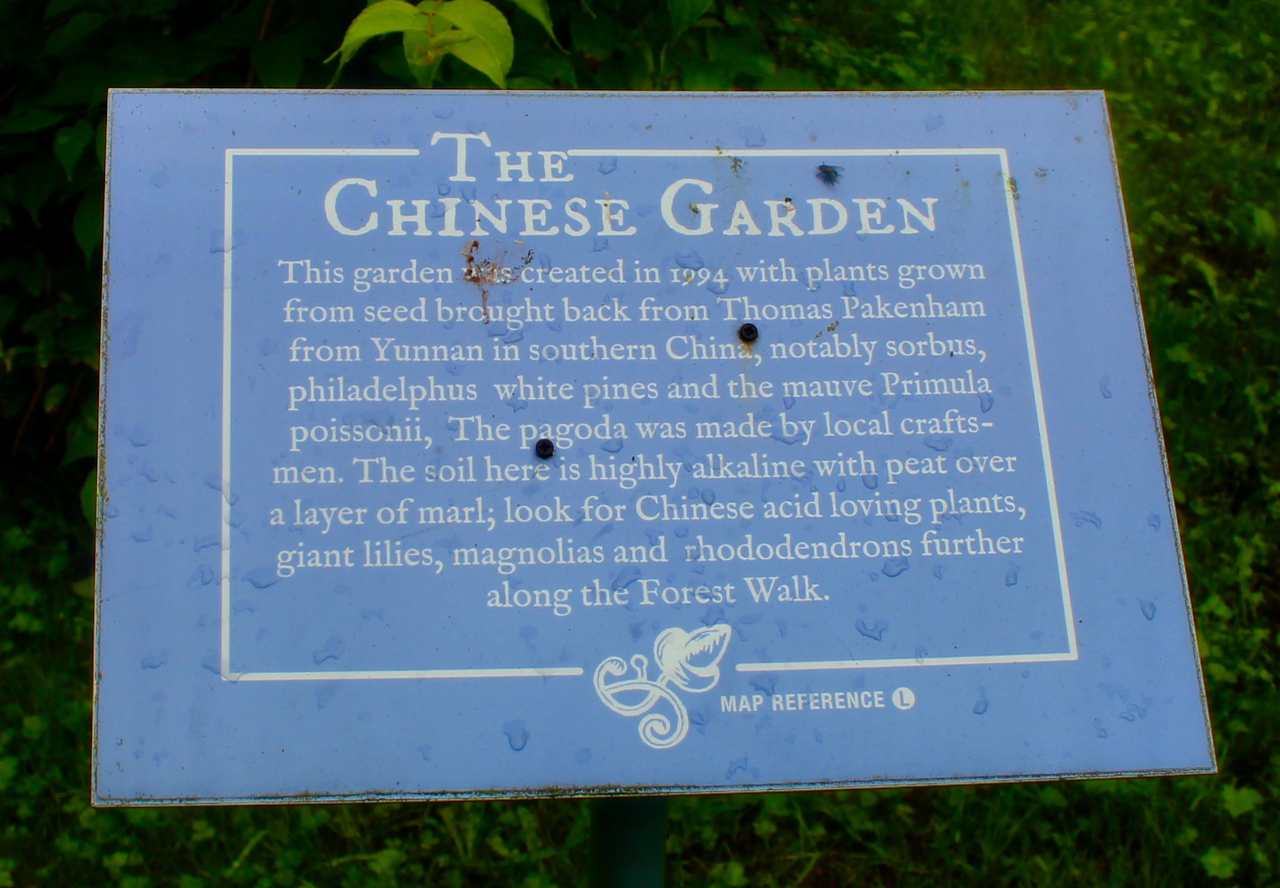
Here is the description of the gardens, from the Irish Historic Houses website:“The gardens, illustrated by a younger son in the early eighteenth century, originally consisted of a series of cascades and formal avenues to the south of the house. These were later romanticised in the Loudonesque style, with lakes, grottoes and winding paths, by the second Earl and his wife [Thomas (1774-1835) and Georgiana Lygon (1774-1880)]. They have been extensively restored and adapted by the present owners, Thomas and Valerie Pakenham, with flower borders in the old walled gardens and new plantings of magnolias, rhododendron and giant lilies in the woodland gardens, many collected as seed by Thomas while travelling in China and Tibet. He has recently added a Chinese garden, complete with pagoda, while the surrounding park contains a huge collection of fine specimen trees.” [7]



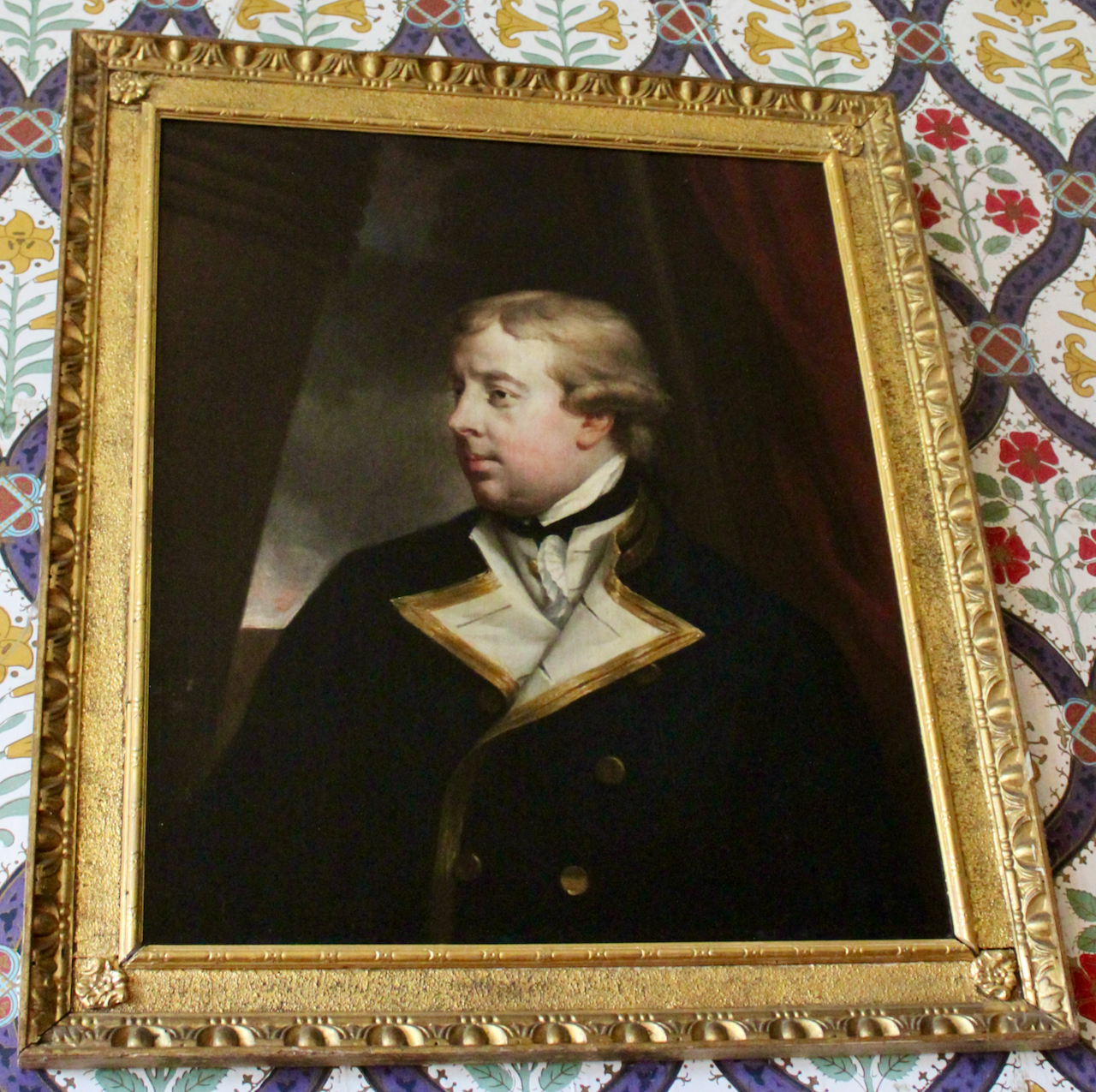

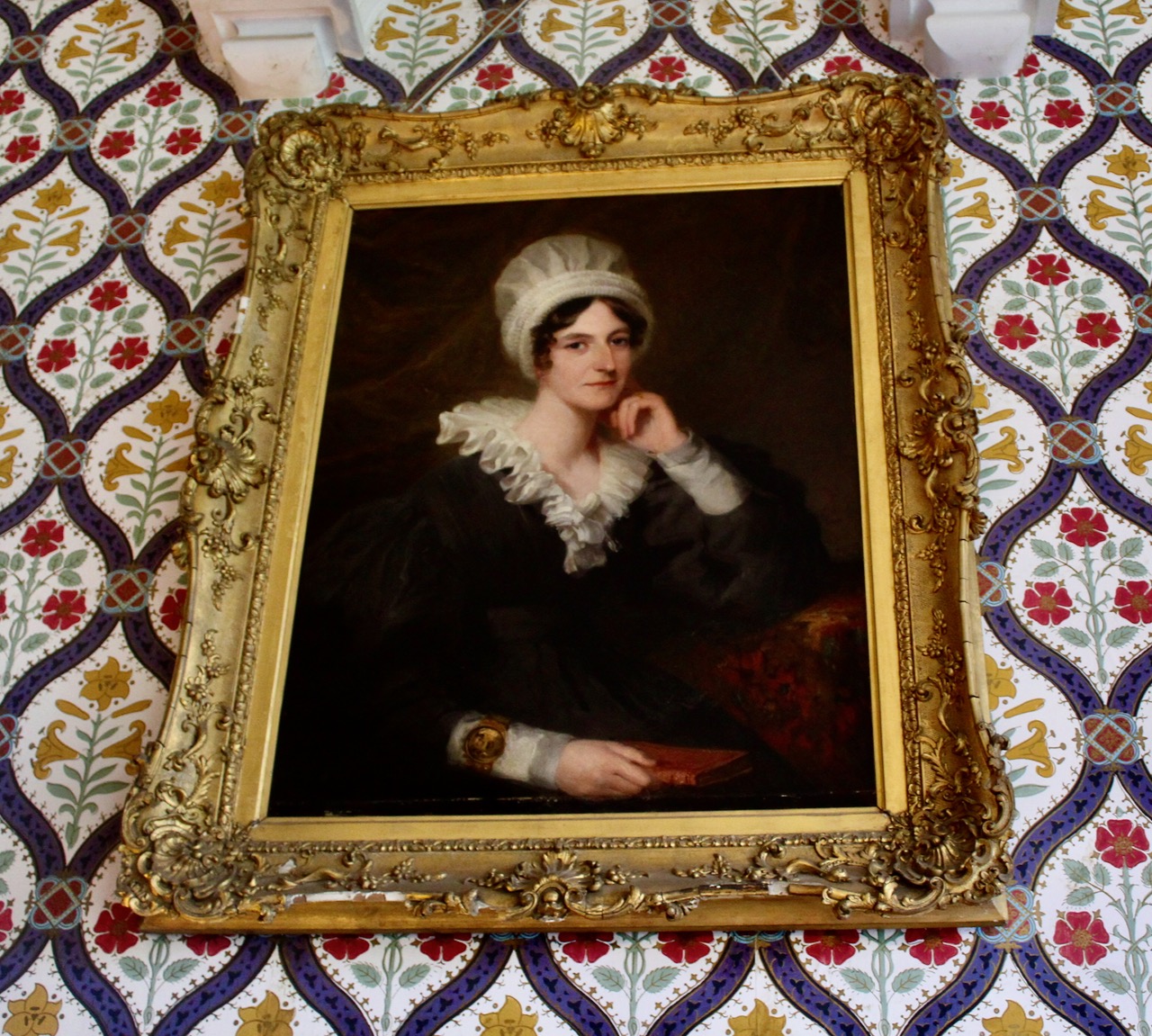
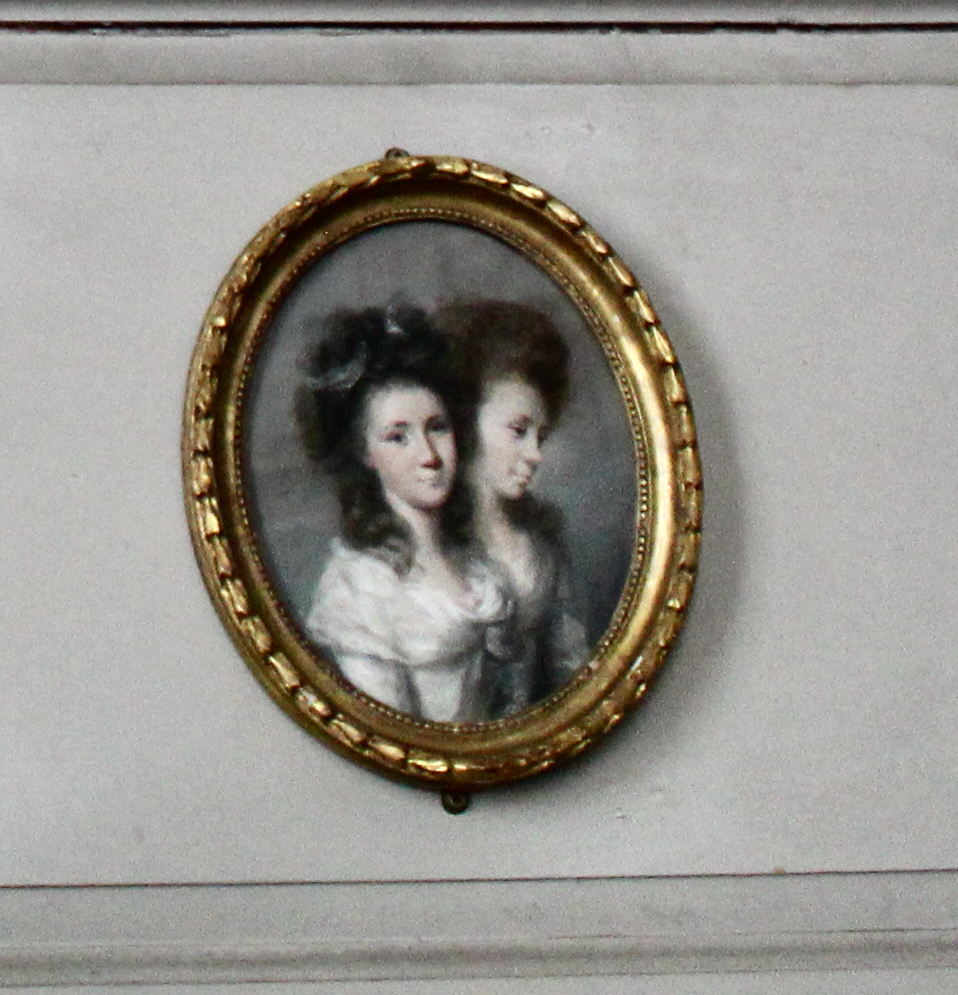
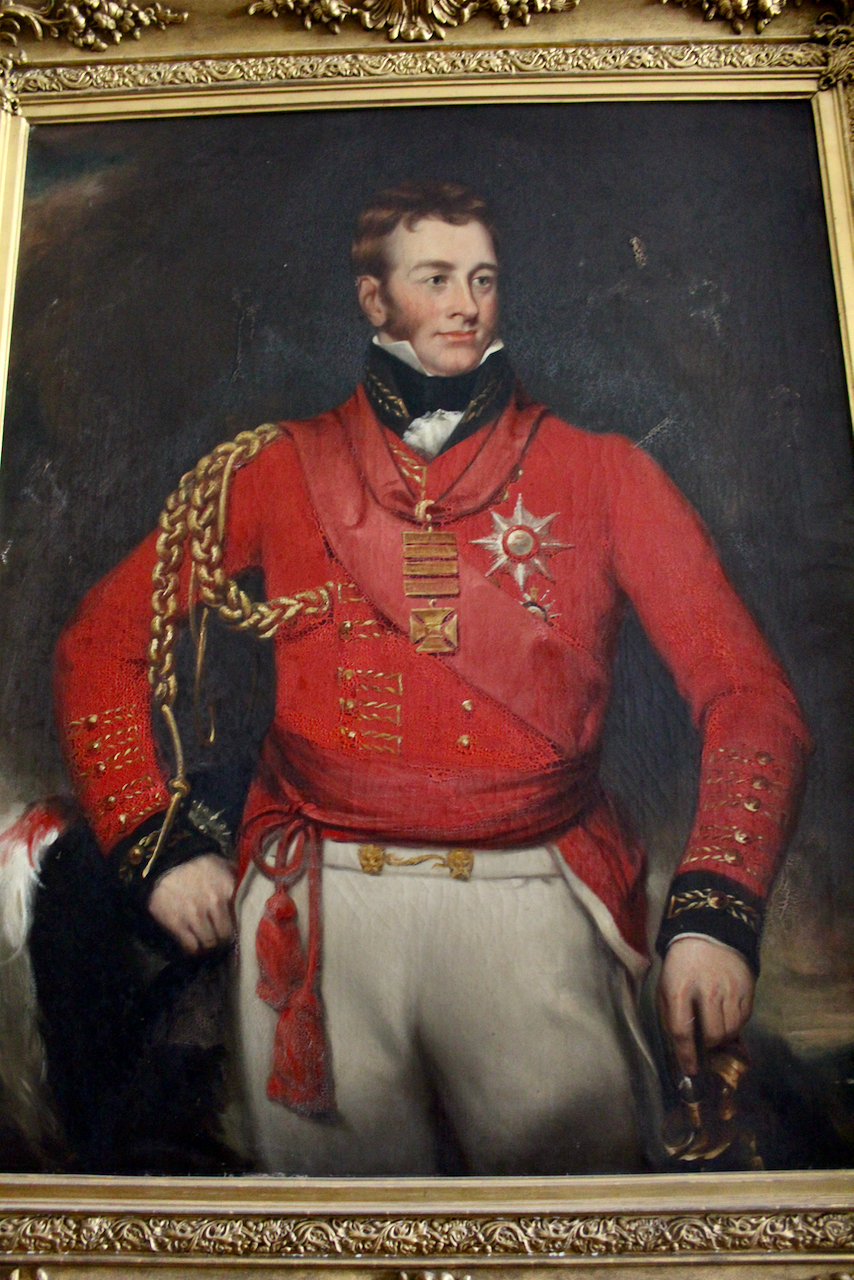


































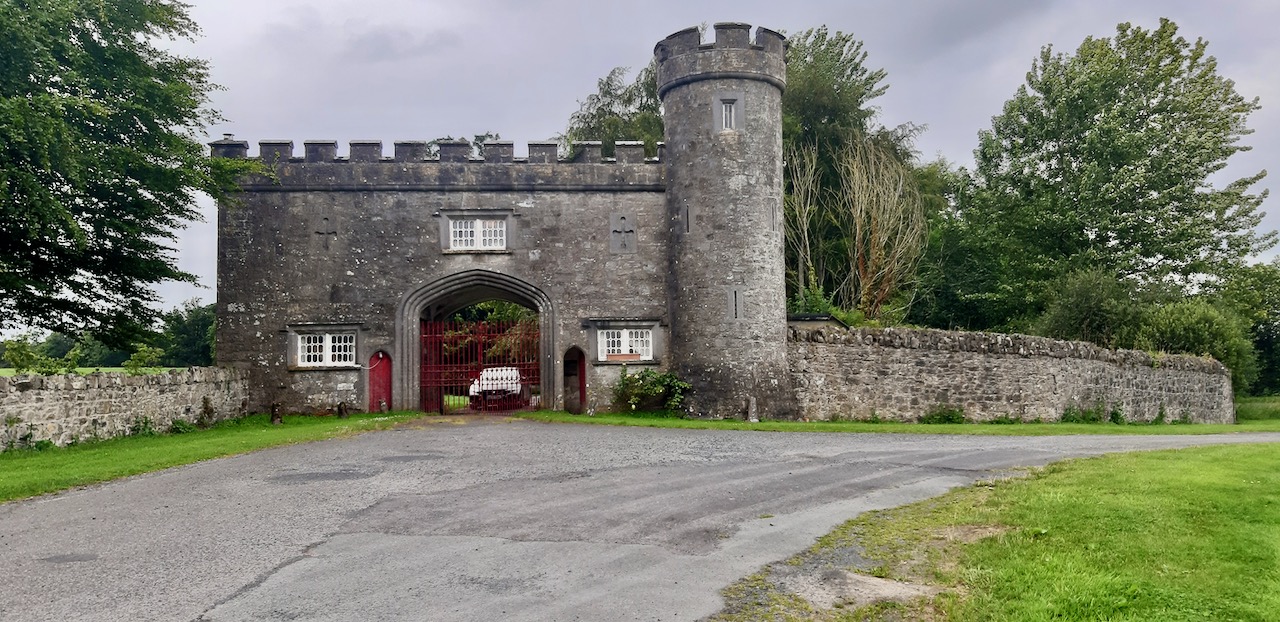


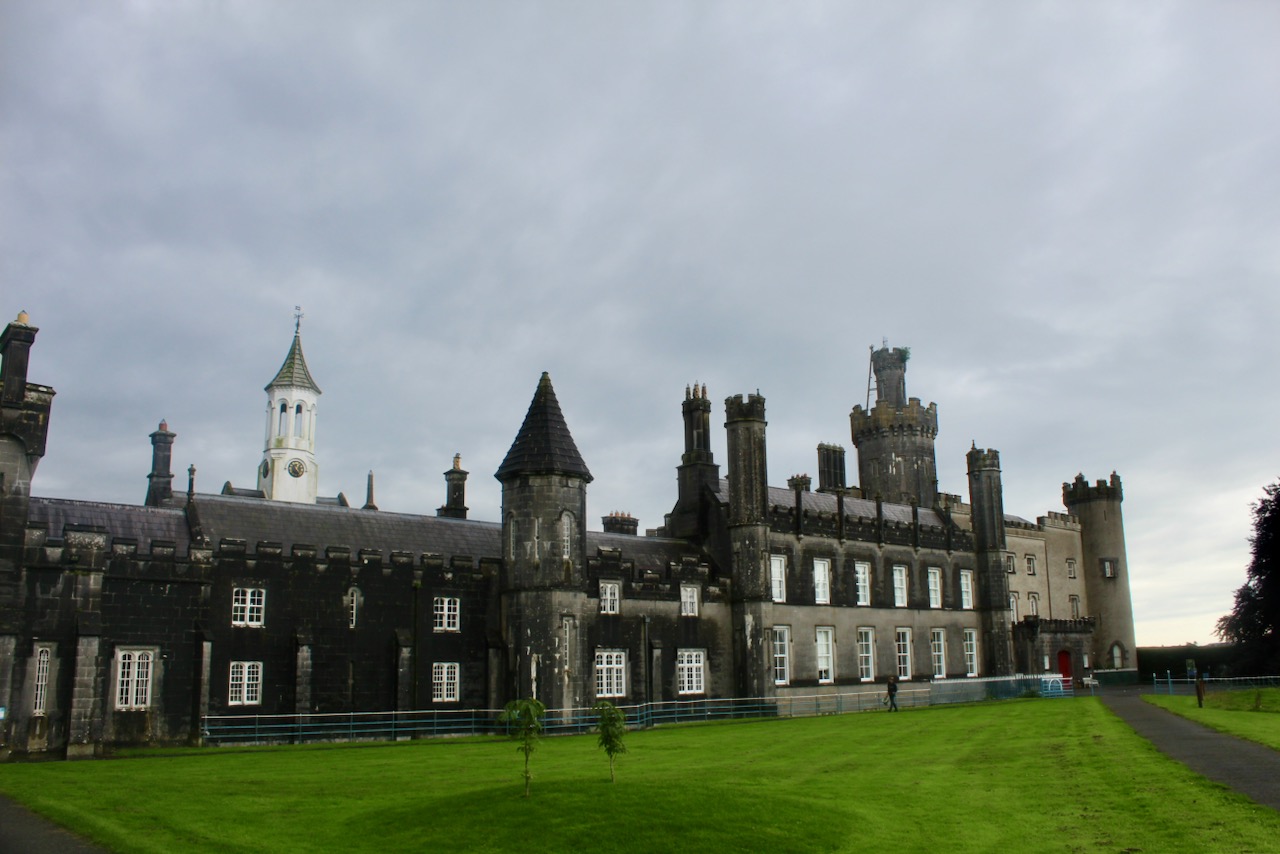

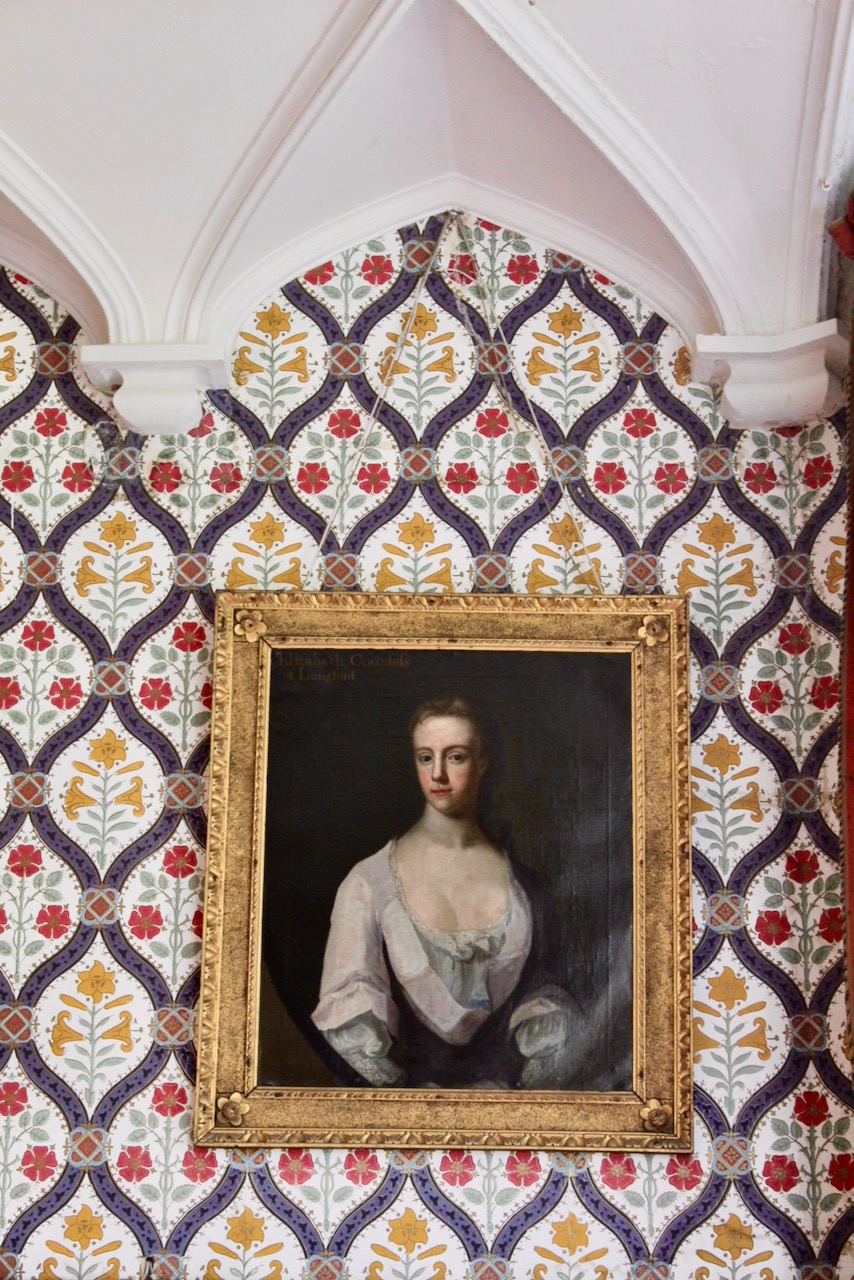




















































 Irish Historic Houses