2026 Diary of Irish Historic Houses (section 482 properties)
To purchase an A5 size 2026 Diary of Historic Houses (opening times and days are not listed so the calendar is for use for recording appointments and not as a reference for opening times) send your postal address to jennifer.baggot@gmail.com along with €20 via this payment button. The calendar of 84 pages includes space for writing your appointments as well as photographs of the historic houses. The price includes postage within Ireland. Postage to U.S. is a further €10 for the A5 size calendar, so I would appreciate a donation toward the postage – you can click on the donation link.
€20.00
donation
Help me to pay the entrance fee to one of the houses on this website. This site is created purely out of love for the subject and I receive no payment so any donation is appreciated!
Clashleigh House is a three bay two storey over basement Georgian home, built in around 1810. The National Inventory claims that it was built on the site of an earlier 18th century dwelling, but Judith Hill writes that there is no evidence from historical study that there was a significant structure on the site prior to the building of the main block, although some features of the house point to the existence and remnants of an earlier structure. The house was built in conjunction with a mill and brewery, the ruins of which remain at the top of the lane. It was built by Samuel Grubb. The house sits in a fourteen acre walled estate nestled in a tranquil valley near the Knockmealdown Mountains.
Another house in Clogheen also belonged to the Grubb family, Cooleville House, built around 1805.
The 1840 Ordnance Survey map, Judith Hill tells us, reveals that 40-50 years after the main house was built, the extensions and outhouses attached to the house were built. More extensions were added in the 1930s, according to the National Inventory. The house has a render and timber entrance porch with thin Doric columns and decorative consoles, which was added around 1840-1866, Judith Hill concludes, as the door with its pilasters and limestone steps date to this period, but the windows of the porch are early 20th century.
A beautiful long curved driveway leads to the house. Judith Hill identifies a fern-leafed beech which is about two hundred years old and may have been one of the earliest in Ireland, as the species was introduced to Ireland in 1804. There is also a magnificent mature cedar.
The house is situated in the town of Clogheen, just off the main street on a laneway called Brewery Lane. The stables and coachhouse are on the other side of the lane.
The current owners commissioned Judith Hill to write a summary about Clashleigh house in 2006, and I obtained my information from this. Samuel Grubb (1750-1815) was the son of a Quaker, Joseph (1709-1782) and his wife Sarah née Greer (1717-1788). As a young man, Joseph worked in a mill in Clonmel in County Tipperary, and by the end of his life he owned several mills on the Clonmel bank of the River Suir and the River Anner. [1]
Samuel was one of many children. He attended the Quaker school in Ballitore, County Kildare. At the age of 26 he married the headmaster’s daughter, Margaret Shackleton (1751-1829), of Ballitore. The headmaster was Richard Shackleton (1726-1792) and Margaret’s mother was his first wife, Elizabeth Fuller, also from Ballitore. In Clogheen, Samuel set up the milling business and a brewery.
The town of Clogheen was owned at that time by the Cornelius O’Callaghan, 1st Viscount Lismore.. They had taken over the land from the Everards of Fethard, who had received the grant of land early in the seventeenth century, Judith Hill tells us. By 1837, Clogheen was a thriving town.
Samuel and Margaret Grubb had many children. According to Hugh Montgomery-Massingberd’s Burke’s Irish Family Records, their oldest son, Abraham, became a corn and butter merchant and an insurance agent and lived in Clonmel. Their second son, Richard (1780-1859) ran a corn mill in Clogheen and lived in Cooleville, and in 1833 built Cahir Abbey to live in. [2]
Built by Samuel Grubb’s son Richard (1780-1859) in the 1830s, Cahir Abbey House, courtesy of National Inventory of Architectural Heritage.
Samuel’s third son, also called Samuel (1787-1859) purchased Castle Grace in Clogheen around 1820. Judith Hill speculates that he may have lived in Clashleigh while Castle Grace was being renovated.
Castle Grace house, County Tipperary, photograph courtesy of myhome.ieCastle Grace manager’s house, built around 1800, and Castlegrace mill, built around 1790, according to the National Inventory of Architectural Heritage. Photograph courtesy of myhome.ie.
Another son, Robert, emigrated to British Columbia in Canada. Another son, Thomas Samuel, was a boat-builder, iron, oils and colour merchant, and built Richmond Mills in Clonmel.
Richmond Mills, Clonmel, County Tipperary, built by Thomas Samuel Grubb (1792-1885) around 1830, photograph courtesy of National Inventory of Architectural Heritage.
The O’Callaghans led much of the development in Clogheen, which Judith Hill tells us included new houses, enlarged and newly paved streets, a new market house and barracks. Other millers were attracted to the area and by 1850 there were seven flour mills worked by fourteen water wheels, as well as Samuel Grubb’s large brewery. One of the biggest businesses was the corn merchant and milling business Samuel Grubb and Son, which was listed in local directories until at least 1870. [3]
The first Samuel Grubb died in 1815 but in the Tithe Applotment books of 1830 a Samuel Grubb is listed as occupying Clashleigh so it must have been the son. His mother died in 1829 so he may have moved back into Clashleigh after she died. In 1847 a Mrs. Grubb, probably Samuel’s wife Deborah née Davis, ran a soup kitchen from Clashleigh for those suffering from the famine. [4]
The second Samuel and Deborah née Davis had many children. The oldest, Richard Davis Grubb (1820-1865), lived at Castle Grace. It was their son Henry Samuel Grubb (1825-1891) who lived at Clashleigh. He held the office of High Sheriff of County Tipperary in 1887, according to Burke’s Peerage, but by this time he had moved from Clashleigh.
With a drop in the amount of tillage in Ireland, milling became less profitable and by the late nineteenth century the number of mills in Clogheen had fallen. By 1893 the only mill included in Guy’s Directory of Munster for Clogheen was John Ward’s Sawing and Flour Mill on Main Street.
In 1874 George Ponsonby O’Callaghan, 2nd Viscount Lismore and his son George Cornelius Gerald O’Callaghan leased Clashleigh house and its gardens to the Representative Church Body for use as a rectory. It was used as a rectory for the next sixty-five years, for the nearby church which had been erected by Viscount Lismore by 1856. [5]
The house contains many of its original features. One enters from the porch under a wide timber panelled arch. The front hall has a double door with a decorative fanlight leading off into the dining room and a reeded timber doorframe to the drawing room. The hall has a plaster ceiling rose and dentillated cornice. The front porch also has a dentillated cornice.
Off the main hall is the double height stair hall with an impressive cantilevered staircase that rises up and curves around in a rectangular manner up to the top storey.
The drawing room has an original reeded cornice and rose detail. Judith Hill writes that some of the most impressive of the original features of the house are the timber sash windows and their associated joinery in the main house, the staircase, the reeded cornice with rose detail and the slate fireplaces in the drawing and reception rooms, as well as the ceiling rose in the drawing room. The main house, she tells us, has two spine walls that divide the plan into three and which contain the chimneys. She also mentions the impressive large stone slabs to the basement.
In 1939 the Representative Body sold the house to Thomas and Ruth Jessop Davis. Thomas died in 1954 and in 1959 Ruth sold Clashleigh to Michael Law, a retired major in the British Army. It passed through several owners until purchased by the present owners in 2006.
The crowning glory of the house is its garden. We were lucky to visit on a beautiful sunny day. To the south side of the front lawn was a field with donkeys.
Hill writes that there is a walnut grove which was planted in the 1980s, accessible from the walled garden, which leads down to the river. The gardens to the east of the house are in pasture and are surrounded by stone walls and contain two specimen lime trees.
The current owners have furnished and maintained the house splendidly, showing it in all its glory. They have created a beautiful home.
[1] Kavanagh, Art and William Hayes. The Tipperary Gentry, 2003. Published by Irish Family Names, c/o Eneclann, Unit 1, The Trinity Enterprise Centre, Pearse St, Dublin 2, 11 Emerald Cottages, Grand Canal St, Dublin 4 and Market Square, Bunclody, Co Wexford, Ireland. 2003.
[2] Montgomery-Massingberd, Hugh. Burke’s Irish Family Records. London, U.K.: Burkes Peerage Ltd, 1976.
[3] Judith Hill references William Hogg, who compiled The Millers and the Mills of Ireland of about 1850, rev. ed. 2000.
[4] Judith Hill references Patrick Power’s History of South Tipperary, Mercier Press, 1989, p. 146.
[5] Judith Hill references Slater’s Directory 1856.
Open dates in 2026: Apr 1-Oct 10, Sat-Sun, National Heritage Week, Aug 15-23, 2pm-6pm
Fee: adult €9
2026 Diary of Irish Historic Houses (section 482 properties)
To purchase an A5 size 2026 Diary of Historic Houses (opening times and days are not listed so the calendar is for use for recording appointments and not as a reference for opening times) send your postal address to jennifer.baggot@gmail.com along with €20 via this payment button. The calendar of 84 pages includes space for writing your appointments as well as photographs of the historic houses. The price includes postage within Ireland. Postage to U.S. is a further €10 for the A5 size calendar, so I would appreciate a donation toward the postage – you can click on the donation link.
€20.00
donation
Help me to pay the entrance fee to one of the houses on this website. This site is created purely out of love for the subject and I receive no payment so any donation is appreciated!
A house was first built at Burton Park around 1665 for John Perceval (1629–1665), 1st Baronet. However, this was destroyed and a later house built on its footprint. The house, which was not completed until 1709, was three times the size of the present building, which was remodelled in the late 1800s.
John Perceval, 1st Baronet (1629–1665) engraved by J. Faber (1743).From Anderson, James (1742), Whiston, William, ed., A genealogical history of the house of Yvery, in its different branches of Yvery, Luvel, Perceval and GournayGournay volume 2, London: H. Woodfall.
The house has been in the ownership of only two families: the Percevals and the Purcells. It now houses Slí Eile, and the website tells us:
“In the Irish language, slí eile means ‘another way’ and Slí Eile was set up to provide an alternative recovery option for those who might otherwise have to spend time in psychiatric hospital…People who come to Slí Eile spend a period of 6-18 months in a residential community in which support is available from both professional staff and from peers. Participating in the Slí Eile community provides an opportunity for a fresh start in a safe, nurturing environment. It also serves to restore a structured pattern to life. It helps in the development of both interpersonal skills and the practical skills that are required for daily living.” [1]
You can read more about Slí Eile on their website.
The website tells us that the original dwelling was fortified with high walls around the house, with four turrets, one at each corner. There are a number of underground passages, recently discovered, which correspond with the sites of the turrets as they would have appeared in the original design.
Philip Perceval (1605-1647), father of John, came to Ireland where he served as registrar of the Irish court of wards, along with his brother Walter. When Walter died in 1624, Philip inherited the family estates in England and Ireland. The land at Burton Park was named after his estate in Somerset, Burton. He settled in Ireland, and by means of his interest at court he gradually obtained a large number of additional offices. In 1625 he was made keeper of the records in the Birmingham Tower at Dublin Castle.
Perceval was close to the Lord Deputy of Ireland, Thomas Wentworth, 1st Earl of Strafford. With the fall and execution of Wentworth in May 1641, Perceval lost his major patron and protector. In September 1641 Perceval narrowly avoided prosecution in England when his part in a shady land transaction was revealed. By that time, Perceval owned over 100,000 acres in Ireland, which he obtained partly through forfeited lands.
Philip Perceval married Catherine Ussher, daughter of Arthur Ussher and Judith Newcomen. She gave birth to their heir, John (1629–1665), who was created 1st Baronet in 1661. A younger son, George (1635-1675) lived at Temple House in County Sligo, another Section 482 property which we have yet to visit.
In 1665 the officer-architect Captain William Kenn, then engaged on Charleville Manor for Roger Boyle, 1st Earl of Orrery, proposed a design, and building work on Burton Park started for the 1st Baronet Perceval. [2]
John Perceval served in Oliver Cromwell’s Commonwealth. He was involved in sending the opponents of Cromwell from their sequestered lands to Connaught. However, he began to distance himself from the Parliament and declined Cromwell’s invitation to sit in Cromwell’s Parliament.
After the Restoration of King Charles II, John Perceval was pardoned for his part in Cromwell’s government, and was granted a Baronetcy (of Kanturk) and made a Privy Councillor to Charles II. He married Catherine Southwell of Kinsale, County Cork.
Catherine (1637 – 1679) the only daughter of Sir Robert Southwell of Kinsale, wife of Sir John Perceval, 1st Baronet. Engraved by J. Faber (1743).From Anderson, James (1742), Whiston, William, ed., A genealogical history of the house of Yvery, in its different branches of Yvery, Luvel, Perceval and GournayGournay volume 2, London: H. Woodfall, p. 360
Catherine and John’s son eldest son and heir died at the age of 24 and he was succeeded by his brother, John (c. 1660-1686), who became 3rd Baronet of Kanturk.
Sir Philip Perceval, 2nd Bt (1656-1680) by Thomas Pooley c. 1670-74, courtesy of National Gallery of Ireland NGI 4626.John Perceval, 3rd Bt (1660-1686) by Thomas Pooley, c. 1670-74, courtesy of National Gallery of Ireland NGI 4627.John Perceval 3rd Bt, by John Faber Jr, National Portrait Gallery of London D29835.
John the 3rd Baronet married Catherine Dering, daughter of Edward 2nd Baronet Dering, of Surrenden Dering, Co. Kent. Their son Edward became 4th Baronet at the age of just four years old but he died aged 9. The next son, John, succeeded as 5th Baronet in 1691 on the death of his brother, and in 1733 was created 1st Earl of Egmont.
John Perceval (1683-1748) 1st Earl of Egmont by and published by John Smith, after Sir Godfrey Kneller 1704, National Portrait Gallery of London, D11553.
In 1690 Burton Park house was burnt by Duke of Berwick’s Jacobite forces as they retreated south after the Battle of the Boyne. The Duke of Berwick, James Fitzjames, was the illegitimate son of King James II. The village of Churchtown and fifty other big houses were destroyed.
James Fitzjames, 1st Duke of Berwick (1670–1734), three-quarter-length, wearing a suit of armour, a white jabot and holding a baton, by the circle of Godfrey Kneller, courtesy of Sothebys auction Old Master Paintings 6 April 2022.
The 1st Earl of Egmont rebuilt the house. Frank Keohane writes:
“After being burnt, the house’s rebuilding was delayed by a second long minority until the first decade of C18. The stables were commenced first, and unknown Italian architect was recorded at work in 1707 by the steward. [fn. A proto-Palladian plan dated 1709 shows a colonnaded hall and a portico before the door. Its designer was perhaps James Gibbs, whom Perceval had befriended in Italy when Gibbs was a student of Carlo Fontana.] In 1710 Rudolph Corneille, a Huguenot military engineer, proposed to rebuild the house for £2000. William Kidwell was paid for a chimneypiece in 1712. The house does not appear to have been completed, however, and the demesne was leased in 1716. A drawing of 1737 records the house standing as a shell, while in 1750 Smith described the ruin as ‘a large elegant building, mostly of hewn stone.’ ” [3]
Burton Park, County Cork, August 17th 2023: an artist’s impression of how the original house may have looked.
Jane O’Hea O’Keeffe writes in Voices from the Great Houses: Cork and Kerry that Perceval is believed to have commissioned Italian architects to submit designs for a new house in 1703, incorporating many Palladian features, to be built on the foundations of the original house. She writes that the mansion was completed in 1709 and was remodelled in the late nineteenth century. [4]
The Percevals didn’t live in Ireland, however, as they served as politicians in the British government.
John Perceval the 1st Earl was elected for the British parliament to represent Harwich in England from 1728 to 1734. The Dictionary of Irish Biography tells us “He was a regular attender at court, and sat (1727–34) for Harwich in the British house of commons, where he had some success in promoting trade concessions for Ireland. Other interests included prison conditions and the Georgia colony [in the United States], of which he was a co-founder in 1732.“
John Perceval, 1st Earl of Egmont (1683-1748) by Hans Hysing.
It’s fascinating that he was a founder of Georgia in the United States! He supported James Oglethorpe’s scheme to establish a new colony. He was acquainted with Oglethorpe from their work on the Gaols Committee of the House of Commons, which was painted by William Hogarth. The National Portrait Gallery of London tells us he played a crucial role in securing the funding that was essential for the support and defence of Georgia.
The Gaols Committee of the House of Commons by William Hogarth circa 1729 courtesy of National Portrait Gallery of London NPG 926.
Oglethorpe gained a reputation as the champion of the oppressed. He pressed for the elimination of English prison abuses and, in 1732, defended the North American colonies’ right to trade freely with Britain and the other colonies. [5] The prison reforms Oglethorpe had championed inspired him to propose a charity colony in America. On June 9, 1732, the crown granted a charter to the Trustees for Establishing the Colony of Georgia. Oglethorpe himself led the first group of 114 colonists on the frigate Anne, landing at the site of today’s Savannah on February 1, 1733. The original charter banned slavery and granted religious freedom, leading to the foundation of a Jewish community in Savannah.
In 1742, Oglethorpe called upon his military experience and Georgia’s fledgling militia to defend the colony from a Spanish invasion on St. Simons Island. Oglethorpe and his militia defeated the invaders in the Battle of Bloody Marsh, which is credited as the turning point between England and Spain’s fight for control of southeastern North America. [5]
John Perceval was a friend of Bishop George Berkeley, Church of Ireland Bishop of Cloyne. The philosopher-bishop was chaplain to John Perceval and tutor to his son. Papers relating to Burton House tell us that during his stay at Burton, Berkeley enjoyed long walks through its wooded demesne and may have slept on a hammock strung in the barn!
George Berkeley (1685-1753), Philosopher and Bishop of Cloyne, by John Smibert 1730 courtesy of National Portrait Gallery NPG 653.
Extracts from the correspondence between Berkeley and Perceval (Ryan-Purcell papers) reveal the special affection the bishop reserved for Burton:
“Trinity College, 17th May 1712: … Burton I find pleases beyond expectation; and I imagine it myself at this time one of the finest places in the world …
“Trinity College, 5th June 1712: Dan Dering (Perceval’s cousin) and I deign to visit your Paradise, and are sure of finding angels there, notwithstanding what you say of their vanity. In plain English, we are agreed to go down to Burton together and rejoice with the good company there. I give you timely warning that you may hang up two hammocks in the barn against our coming. I never lie in a feather bed in the college and before now have made a very comfortable shift with a hammock.
“London, 27th August 1713: Last night I came hither from Oxford. I could not without some regret leave a place which I had found so entertaining, on account of the pleasant situation, healthy air, magnificent buildings, and goodcompany, all which I enjoyed the last fortnight of my being there with much better relish than I had done before, the weather having been during that time very fair, without which I find nothing can be agreeable to me. But the far greater affliction that I sustained about this time twelvemonth in leaving Burton made this seem a small misfortune …” [6]
John Perceval’s son John Perceval (1711–70), sat for Dingle in the Irish commons from 1731 to 1748, when he succeeded to his father’s peerage after his father’s death and became 2nd Earl of Egmont. He was a member of the British Commons, 1741–62, and was a close adviser to Frederick, Prince of Wales. [6]
John Perceval (1711-1770) 2nd Earl of Egmont by Thomas Hudson.John Percival, later 2nd Earl of Egmont (1711-1770) by Francis Hayman c. 1740, courtesy of National Gallery of Ireland NGI 4489.
John 2nd Earl’s sister Helena married John Rawdon, 1st Earl of Moira.
John 2nd Earl married Catherine, daughter of James Cecil 5th Earl of Salisbury. She gave birth to the next in line, John James Perceval (1738-1822) 3rd Earl of Egmont, along with several other children.
John Perceval, 2nd Earl of Egmont with Catherine Perceval (née Cecil), Countess of Egmont by Richard Josey, after Sir Joshua Reynolds mezzotint, 1876 (1756) National Portrait Gallery of London D1855.
When she died, John the 2nd Earl remarried, this time to Catherine Compton, granddaughter of the 4th Earl of Northampton in England. They had several more children.
Catherine Perceval (née Compton), Countess of Egmont; Charles George Perceval, 2nd Baron Arden by James Macardell, after Thomas Hudson mezzotint, published 1765, National Portrait Gallery of London D1829.
From 1751-1759 the 2nd Earl created a house in England, Enmore Castle. He served as First Lord of the Admiralty from 1763-1766 and a port in the Falkland Islands, Port Egmont, was named after him, as well as Mount Egmont in New Zealand.
The 2nd Earl of Egmont was created Baron Lovel and Holland of Enmore, Co. Somerset in 1762, which gave him an automatic seat in the House of Lords.
Following his death, his widow was created Baroness Arden of Lohort Castle, County Cork in the peerage of Ireland, with remainder to her heirs male. This gave the oldest son of his second wife a title.
His third son, Spencer Perceval (1762–1812), became Prime Minister of the United Kingdom and is the only British prime minister to have been assassinated, and the only solicitor-general or attorney-general to have become prime minister.
Spencer Perceval, by George Francis Joseph (died 1846), given to the National Portrait Gallery, London in 1857.
A son of the first marriage, John James Perceval (1737-1822) became 3rd Earl of Egmont when his father died in 1770, as well as 2nd Baron Lovel and Holland of Enmore, Co. Somerset. He also entered politics in England and served in the British House of Lords.
He did not live at Burton Park and in 1800 he rented it to John Purcell, a member of the family of the Barons of Loughmoe (see my entry on Ballysallagh, County Kilkenny, for more of this branch of the family). He rented the property for his newly married eldest son, Matthew (1773-1845), Rector of Churchtown (1795-1845) and of Dungourney (1808-45).
John James Perceval the 3rd Earl Egmont married Isabella Powlett, granddaughter of the 2nd Duke of Bolton, and they had a son, John (1767-1835) who became 3rd Baron Lovel and Holland, of Enmore, County Somerset and 4th Earl of Egmont. The 4th Earl of Egmont followed in his father’s footsteps and served in the House of Lords. He married Bridget Wynn, daughter of an MP for Caernarvon in Wales and they had a son, Henry Frederick John James Perceval (1796-1841) who became 5th Earl of Egmont after his father’s death, as well as 4th Baron Lovel and Holland of Enmore, Co. Somerset.
The 5th Earl of Egmont inherited large debts. The History of Parliament website tells us:
“Debts of some £300,000 had accumulated on the estate at Churchtown, county Cork, and the property at Enmore, Somerset, was also heavily encumbered. The barrister engaged to defend Perceval’s will claimed that he was ‘a man of education and refinement’ whose ‘feeling of disappointment … on account of the enormous embarrassments on his property, led him to drink, and at an early period of his life he acquired habits of dissipation’; the opposing counsel blamed this fall from grace on neglect by his mother, who was portrayed as a scheming courtesan.” [7]
The Parliament website continues the sorry tale:
“Having thus compounded his financial difficulties, Perceval was declared an outlaw at some point in 1828 and fled abroad. Later that year he married the daughter of a French count in Paris, but evidently not under the auspices of the British consulate. The son born to them about four months after the marriage was apparently living in 1835, but predeceased his father; the fate of the mother has not been discovered. On his father’s death in 1835 Perceval inherited all his property, but the will was not proved until 1857, when the personalty was sworn under £16,000. Enmore had been sold in 1834 for £134,000 to pay off creditors, but no takers had been found for the Cork estates, which comprised 11,250 acres, because of the burden of debt on them. Egmont took his seat in the Lords in February 1836, but afterwards lived under the alias of ‘Mr. Lovell’ at Burderop Park, Wiltshire. This property was purchased in the name of his companion, a Mrs. Cleese, with whom it seems he had previously resided at Hythe, Kent and whom he passed off as his sister.” [7]
The website tells us the nature of his regular pursuits can be inferred from a letter supposedly sent to him on 28 April 1826 by Edward Tierney, the family’s Dublin solicitor and land agent, entreating him to ‘abandon his evil courses and his associates’.
“He decamped to Portugal in 1840, but after Mrs. Cleese’s death he returned to England, where he died in December 1841. Tierney was made sole executor and residuary legatee of the estate, exciting some comment, but it was not until 1857 that the will was finally proved (under £20,000) by Tierney’s son-in-law and heir, the Rev. Sir William Lionel Darell. In 1863 the will was belatedly contested by George James Perceval (1794-1874), Egmont’s cousin and successor in the peerage. It was alleged that alcoholism had rendered Egmont completely dependent on Tierney, whose misleading valuation of the estates had induced him to draw up his will as he did. The evidence was inconclusive and an out of court settlement was reached, by which the Irish property was returned to the Egmont family on payment of £125,000 to Darell. It was estimated that Tierney and his heirs had realized at least £300,000 from their stewardship of the estates, which were eventually sold by the 7th earl in 1889. The 8th earl (1856-1910), a former sailor turned London fireman, upheld family tradition by being arrested for drunkenness in Piccadilly, 16 May 1902.“
In 1814 Rev. Matthew Purcell (1773-1845) was resident. He lived there with his wife Elizabeth Leader. His father John passed his Highfort home in County Cork to his youngest son, Dr. Richard Purcell, and spent his latter years with his eldest son Matthew at Burton House, where he died in 1830.
The Annals of Churchtown (see [6]) tell us:
“John Purcell earned the sobriquet ‘the Knight of the Knife’ (occasionally the ‘Blood-red Knight’) for the spirited manner in which he, at some 80 years of age and, armed only with a knife, had repulsed a number of armed intruders at his Highfort home in Liscarroll [County Cork] on the 18th March 1811, killing three of their number and wounding others before the attackers fled. The attack not only earned a knighthood for Purcell. It also heralded a change in English law: it was determined henceforth that an octogenarian could kill in self-defence.“
The Landed Estates database tells us that the invaders were “Whiteboys.” Whiteboys were members of a secret agrarian organisation who defended tenant farmer land rights. Their members were called “whiteboys” after the white smocks they wore on their night time raids. Their activity began around 1760 when land which had previously been commonage was enclosed by landlords to farm cattle. [9]
The house bears the Purcell coat of arms on the central gable. The crest represents the encounter between Sir John Purcell the Octagenarian and the intruders he fought off.
Reverend Matthew Purcell was succeeded by his son John Purcell in 1845, at a time when the house was valued at £34. Reverend Matthew also had eight daughters.
The Sli Eile website tells us:
“Proceeding up the avenue, we can see the very fine parkland. On the right hand side is the new forestry plantation, started in 1997, which now covers a large part of the estate, and contains a very fine forest walk with much to interest both the arboriculturist and the casual walker. Further up, also on the right-hand side, may be seen a group of five mature oak trees, (one of which is unfortunately dead). These trees, of which there were once eight, were planted in the 1800’s to commemorate the birth of eight daughters of the Rev. Matthew Purcell, owner of Burton Park, and Rector of Churchtown. These trees are known as the eight sisters.“
John married Anna More Dempsey and they had two children: Matthew John (1852-1904) and Elizabeth Mary (believed to have been a nun, died unmarried, 1867). Matthew John, who inherited the property as a juvenile, was made a Ward of Court until he came of age.
Matthew Purcell bought Burton Park from the 7th Earl of Egmont in 1889. The 6th Earl of Egmont (John, 1794-1874) was the grandson of the 2nd Earl of Egmont and his second wife, Catherine Compton. His father was Charles George Perceval, who became 2nd Baron Arden after his mother’s death. The 6th Earl did not have any children, and it was a son of his brother Reverend Charles George Perceval who became the 7th Earl of Egmont (Charles George Perceval 1845-1897) and sold Burton Park.
In 1889 the Purcells undertook major renovations and alterations. [see 4]. Mark Bence Jones tells us that the Purcells refaced it in Victorian cement and gave it a high roof with curvilinear dormer-gables. [8] Frank Keohane tells us:
“Today the façade is rather more ornate, owing to a remodelling by William H. Hill c. 1899. Hill faced the house in rough plaster with smooth banded quoins, string courses and a cornice topped with a balustrade. The style is loosely Renaissance, with curvilinear gables and grotesque panels to the pedimented ground floor windows.“
William Henry Hill (1837-1911) was an architect from Cork. He was architect for the Dioceses of Down, Connor & Dromore under the Ecclesiastical Commissioners in 1860 until the disestablishment of the Church of Ireland in 1870, when he set up in private practice in Cork. [10] The Dictionary of Irish Architects tells us that in addition to his privately commissioned work, he was diocesan architect for the Dioceses of Cork, Cloyne and Ross from 1872 until circa 1878.
On a website about Churchtown, Jim McCarthy writes about Burton Park and tells us more about the 1889 update:
“In the 1890s, through his agent Robert Sanders and in conjunction with the Board of Works, the Purcells embarked on imaginative (and expensive) alterations and improvements to the house and estate: bedroom floors were renewed, ceilings remoulded, chimney shafts rebuilt, a kitchen was added, pantries were provided, a porch built, slating and skylights were repaired and renewed, staircases removed or altered, and windows and shuttering replaced. Extensive work on the coach house, gate lodge, sheds and stables was also undertaken.” [11]
The website tells us that the roof was raised to accommodate the dormer windows, and the ornate architraves over the windows were also added at that time.
The gate lodge, built around 1890, was inhabited until fairly recently, and has one room on each side. It has a central section with Tudor arched carriageway straddling entrance road, and flanking lower single-bay screen walls.
There was nobody to greet us when we arrived to the house, despite my contacting the contact person listed for the property, the Manager for Slí Eile. However, the front door was open, so we entered and had a little wander around. We did not venture far, as we felt like intruders.
The porch has lovely tiling, and the front hall has good plasterwork ceiling and cornice.
The entrance leads into a large hall with beautiful plasterwork ceiling and sweeping staircase with thin balusters. Mark Bence-Jones tells us that the pedimented doorcases were added later.
The Slí Eile website tells us that about the Hall:
“The heavy oak carving of the fireplace and over mantel are of typical Edwardian style, as is the glass panelled door from the porch. In a glass-fronted bookcase at the back of the hall is an artefact with a very strange history. It is a carving knife carefully stored in a glass topped box. This knife has a curse on it, in that anyone who opens the box will die within the year. Needless to say, no-one has attempted this to date! The knife was the property of one John Purcell, of Highfort, Liscarroll, who received a knighthood in 1811 for defending himself, single-handedly, as a very old man against a number of burglars. He killed three of them with this knife, the rest fled. He is known as “The Knight of the Knife” as a result of this feat. At the time, it was made a rule in law that an octogenarian could kill in self defence.“
Matthew John Purcell married Anne Daly, daughter of Peter Paul Daly of Daly’s Grove, County Galway. He converted to Catholicism upon his marriage.
They had nine children. It was the son, John, of their daughter Anita, who in 1919 married John Ryan of Scarteen, Knocklong, County Limerick, who inherited Burton Park, and took the name Ryan-Purcell.
Scarteen House, County Limerick, courtesy of National Inventory of Architectural Heritage.
Jane O’Hea O’Keeffe interviewed Rosemary Ryan-Purcell, eldest daughter of John Ronan, The Grove, Rushbrooke, County Cork, who along with her husband John came to live at Burton Park with their two eldest children in the early 1960s. Rosemary explains the Ryan-Purcell connection to the old house. “This was the home of my husband John’s mother, whose name was Anita Purcell. He was the younger son, and his elder brother inherited the Ryan family home at Scarteen in Knocklong, County Limerick. When we were first married, we lived at Scarteen, which was John’s childhood home. Later, he inherited Rich Hill near Annacotty, County Limerick, from his godfather, Dicky Howley, and we lived there for a short while. When John’s aunt, Louisa Purcell, died in the early 1960s, she left Burton Park to John, so we then came to live here and have been here ever since.“
They now lease the property to Slí Eile. The Slí Eile website tells us of the drawing room:
“Decorated and furnished in the Louis Quinze style, in 1906, the furniture, carpet and wallpaper are all French. Note the very fine plasterwork on the ceiling and cornice. The architraves around the windows are all mid 18th century, as is most of the woodwork in this room. Over the small bureau by the far window is an artist’s impression of how the original house may have looked. It was originally thought that the house had never been built to this plan, but recent research shows that it is much more accurate than formerly imagined. This room also has a sprung floor, and in earlier days would have been used as a ballroom as well as a drawing room.“
“The three-bay drawing room has an Edwardian Louis XVI overlay of wallpaper framed in panels. The room and the hall have decent Neoclassical ceilings with especially wispy acanthus S-scrolls. The joinery in contrast is heavy and mid-Georgian in character, with cambered and lugged architraves, fielded panels and waterleaf carving, all no doubt the product of a provincial joiner not conversant with Neoclassical trends.”
John Ryan’s family also owned Edermine House in County Wexford.
Rosemary continues: “John’s Auntie Louise, “Lulu,” was the youngest of the Purcell daughters. She was unmarried and she lived here at Burton Park. She suffered from arthritis, and was confined to a wheelchair. She was a very brave woman indeed and she ran the place here on her own for years. When she died, John and I took over, we were asked to take on the Purcell name, and that’s why we are now the Ryan-Purcell family.”
O’Hea O’Keeffe tells us that before they moved to Burton Park, Rosemary was already quite familiar with the house from her many earlier visits there, as John had been farming there before their marriage. “He had to come here to Burton Park straight after school. They used to say in the family that before he opened his eyes as an infant, he had been told by his mother than he would be coming here. This was her home, which she had visited with John almost every week during his childhood. John had two Purcell uncles who were born at Burton Park, both of whom were to lose their lives as a result of the First World War. Raymond, the older brother, tragically took his own life after his return from the war. His brother died at the Battle of the Somme.”
The Oratory is dedicated to the memory of the two Purcell sons who lost their lives as a result of the First World War.
When the Raymond Purcell was a young man, his mother purchased Curraghmount, near Buttevant, for use as a Dower House. His sisters Maisie and Louise moved there with their mother and stayed there for the remainder of Raymond’s lifetime. Following his tragic death after WWI, they returned to live in Burton Park.
Curraghmount, County Cork, courtesy of National Inventory of Architectural Heritage.
While living at Burton Park, Raymond carried out large-scale improvements to the house, including the installation of a generator and electric light in 1912. Thus, the manor became one of the earliest properties in the parish to use electricity.
Residents of Burton House were quite self-sufficient: in addition to the game, meats, vegetables and fruits supplied by its farm, it had a cider press and two limekilns. They manufactured their own bricks, examples of which can be seen in the orchard walls. Thirty-five gardeners once laboured to maintain the bowling green, croquet lawn, tennis courts and parkland. [see 6]
John Ryan-Purcell was ‘a bit of a genius’ says his widow. He was able to keep the house in good repair, including electricity and plumbing, and he also milked his cattle. He had a Jersey herd at Burton Park.
Rosemary continues: “When John and I first came, there were thirty acres of woodland here, mostly scrub, and my husband cleared it and reclaimed the land. We also planted a great amount of woodland, to make ends meet really. Over four or five phases, we planted ninety acres. We also have fifty acres of pasture, and we are now involved in Rural Environmental Protection Scheme, and in organic farming.”
Jane O’Hea O’Keeffe writes: “The pleasure grounds at Burton Park were designed by Decimus Burton, who also designed Kew Gardens in London and Dublin’s Phoenix Park. Indigenous trees, such as beech and oak, grow very well here, and seed has been collected over the years.“
O’Hea O’Keeffe tells us that the copper beech tree on the front lawn was planted by John Ryan-Purcell’s grandmother. The original entrance consisted of a straight avenue down from the front door to the little church and graveyard where the Purcell family vault stands. Matthew Purcell, who bought Burton Park from the Earl of Egmont in 1889, was Church of Ireland rector here.
Unfortunately since there was nobody to show us around, we did not get to see the organic farm or the outbuildings, nor the swimming pool. We also didn’t see the stable range, of which Keohane writes: “The long stable range in the adjoining yard may contain the shell of the C18 stables, which were fitted up as a house for the rector by 1739.”
[8] Bence-Jones, Mark. A Guide to Irish Country Houses, originally published as Burke’s Guide to Country Houses volume 1 Ireland by Burke’s Peerage Ltd. 1978; Revised edition 1988 Constable and Company Ltd, London.
[12] https://www.purcellfamily.org/photographs Note that The castle at the Little Island, Co. Waterford was the seat of the Purcell-FitzGerald family (descendants of Lieutenant-Colonel John Purcell and his wife Mary FitzGerald) from circa 1818 to 1966. It is now the Waterford Castle Hotel. The Purcell-FitzGeralds were descendants of the Purcells of Ballyfoyle, Co. Kilkenny, an offshoot of the Purcells of Loughmoe.
Nicola Hamilton (1666-1713) by 17th century Irish portraitist, Garrett Morphy, courtesy of Howth Castle instagram.
The excellent site of Timothy William Ferres tells us of the Hamiltons, of Stackallen in County Meath:
GUSTAVUS HAMILTON (1642-1723), having abandoned the fortunes of JAMES II, to whom he was a privy counsellor, and distinguished himself as a military officer in the service of WILLIAM III, particularly at the battle of the Boyne, and the siege of Derry, was sworn of the Privy Council of the latter monarch, appointed Brigadier-General of his armies, and further rewarded with a grant of forfeited lands. General Hamilton was MP for County Donegal, 1692-1713, and for Strabane, 1713-15. He was elevated to the peerage, 1715, in the dignity of Baron Hamilton of Stackallan, County Meath. His lordship was advanced to a viscountcy, in 1717, as VISCOUNT BOYNE.
Gustavus Hamilton (1642-1723) 1st Viscount Boyne, c. 1680 unknown artist.
He married Elizabeth, second daughter of SIR HENRY BROOKE, Knight, of Brookeborough, County Fermanagh. They had issue:
FREDERICK (c. 1663-1715), father of GUSTAVUS, 2nd Viscount; Gustavus, father of 3rd and 4th Viscounts; Henry, MP for Donegal, 1725-43; Elizabeth.
Mary Preston youngest daughter of the Hon. Henry Hamilton, MP for Donegal, 1725-43, by Hugh Douglas Hamilton, courtesy of Adam’s auction 20 Sept 2015. Mary Hamilton married in 1764 (as his second wife) the second Nathaniel Preston (1724-1796), Reverend, of Swainstown, Co. Meath. Her father was a younger son of Gustavus Hamilton 1st Viscount Boyne of Stackallan, Co. Meath and her parents were intimate with Mrs Delaney who of them said – “I never saw a couple better suited than Mr Hamilton and his wife, their house like themselves looks cheerful and neat…., they have four children, whose behaviour shows the sense of their parents”. Mary’s brother, Sackville Hamilton became a competent and respected Civil Servant.
The 1st Viscount was succeeded by his grandson, GUSTAVUS, 2nd Viscount (1710-46).
Gustavus Hamilton (1710-46) 2nd Viscount Boyne with a “bauta masque” i.e. the Venetian type supposedly worn by Cassanova, on his ear, by Rosalba Carriera around 1730. He was a founder member of The Society of Dilettanti (founded 1734), a British society of noblemen and scholars that sponsored the study of ancient Greek and Roman art, and the creation of new work in the style.Gustavus Hamilton, 2nd Viscount Boyne, (1710-1746) Engraver Andrew Miller, English, fl.1737-1763 After William Hogarth, English, 1697-1764, courtesy of National Gallery of Ireland.Gustavus Hamilton, 2nd Viscount Boyne, (1710-1746)courtesy of National Trust Castle Ward.
Gustavus 2nd Viscount died unmarried, and the honours devolved upon his cousin, Frederick, 3rd Viscount (1718-72).
James Hamilton (1559/1560 or 1568-1643) 1st Viscount Clandeboye, courtesy of National Trust Castle Ward.
James Hamilton (1559/1560 or 1568-1643) 1st Viscount Clandeboye married Ursula, daughter of Edward Brabazon, 1st Lord Brabazon, Baron of Ardee. They had no children and after her death he married Jane Philipps, who gave birth to their heir James Hamilton (1617/18-1643) 1st Earl of Clanbrassil, County Armagh.
James Hamilton (1617/1618-1659) 1st Earl of Clanbrassil and 2nd Viscount Clandeboye, courtesy of National Trust Castle Ward.
James Hamilton (1617/18-1643) 1st Earl of Clanbrassil married Anne Carey (d. 1688/89), who gave birth to their heir Henry Hamilton (1647-1675), 2nd Earl of Clanbrassil. They had no children and after his death the title became extinct. The name Claneboye was revived in a title in 1800 when his great-great-grandniece Dorcas Blackwood was made 1st Baroness Dufferin and Claneboye.
There were lots of creations of Earls of Clanbrassil! There was James Hamilton (1697-1758) 1st Earl of Clanbrassill, Co. Armagh. He was the son of James Hamilton (d. 1693) and Anne Mordaunt.
James Hamilton (1575-1618) 1st Earl of Abercorn, Co. Linlithgow [Scotland] was Member of the Council of the province of Munster on 20 May 1615. His son Claud Hamilton (d. 1638) was created 2nd Lord Hamilton, Baron of Strabane, County Tyrone. Another son was the heir, James Hamilton, 2nd Earl of Abercorn. The 2nd Earl had a son, George Hamilton who became 3rd Earl of Abercorn but had no children.
Claud Hamilton (d. 1638) 2nd Lord Hamilton, Baron of Strabane, County Tyrone was succeeded by his son James Hamilton (1633-1655) 3rd Lord Hamilton, Baron of Strabane but he died without issue and was succeeded by his brother, George Hamilton (d. 1668) 4th Lord Hamilton, Baron of Strabane.
George’s son Claud Hamilton (1659-1691) succeeded as 5th Lord Hamilton, Baron of Strabane, Co. Tyrone and 4th Earl of Abercorn. He held the office of Lord of the Bedchamber to King James II. He fought in the Battle of the Boyne on 1 July 1690. On 11 May 1691 he was outlawed in Ireland, and his Irish titles were forfeited. He fought in the Battle of Aughrim on 12 July 1691, where he commanded a regiment of horse. [1]
Claud Hamilton (1659–1691) 4th Earl of Abercorn didn’t have offspring and was succeeded by his brother, Charles (d. 1701) who became 5th Earl of Abercorn. His brother John (1713/4-1755) had a son, John James Hamilton, who succeeded as 5th Baronet Hamilton, of Donalong, Co. Tyrone and of Nenagh, Co. Tipperary, 9th Earl of Abercorn, and was later created 1st Marquess of Abercorn.
With his death, the senior line of the Abercorns and the Strabanes failed as he had no surviving offspring. With regard to the Abercorns, the succession reverted to the next of the cadet branches descending from the five sons of the 1st Earl of Abercorn as it already had done in about 1650 when George, the 3rd Earl, died unmarried in Padua. As the 1st Earl’s third son, William, 1st Baronet of Westport, had no children, the succession passed to the descendants of the fourth son, Sir George Hamilton (d. 1679) 1st Baronet, of Donalong, County Tyrone and his wife Mary Butler (d. 1680) daughter of Thomas Butler Viscount Thurles. The 5th Earl was therefore succeeded as Earl of Abercorn by his second cousin, James Hamilton (d. 1734) the grandson of Sir George. James Hamilton would thus become the 6th Earl of Abercorn.
James Hamilton, 6th Earl of Abercorn, also 2nd Baronet Hamilton, of Donalong, Co. Tyrone and of Nenagh, Co. Tipperary and 1st Baron Mountcastle, Co. Tyrone was succeeded by his son, James Hamilton, (1685/6-1743/4) 7th Earl of Abercorn, who was succeeded by his son, James Hamilton (1712-1789) 8th Earl of Abercorn, who died unmarried.
James Hamilton, 8th Earl of Abercorn (1712-1789) Engraver John Dean, British, c.1750-1798 After Thomas Gainsborough, English, 1727-1788, courtesy of National Gallery of Ireland.
The next in line was John James Hamilton (1756-1818) who succeed as 5th Baronet Hamilton, of Donalong, Co. Tyrone and of Nenagh, Co. Tipperary, 9th Earl of Abercorn and was later created 1st Marquess of Abercorn. He was the posthumous son of Captain Hon. John Hamilton and his wife Harriet, and grandson of James Hamilton, 7th Earl of Abercorn
John James Hamilton (1756-1818) 1st Marquess of Abercorn married first Catherine Copley and they had several children including a son James (1786-1814), called Viscount Hamilton. He married Harriet Douglas who gave birth to their heir James Hamilton (1811-1885), who was to become 1st Duke of Abercorn.
Cecil Frances Howard née Hamilton, Countess of Wicklow (1795-1860), Wife of William Howard (1788-1869) 4th Earl of Wicklow; After George Henry Harlow, British, 1787-1819,courtesy of National Gallery of Ireland.She was the daughter of John James Hamilton 1st Marquess and 9th Earl of Abercorn.James Hamilton (1811-1885) 1st Duke of Abercorn, Landowner and politician; Lord Lieutenant of Ireland, possibly by John Watkins 1860s courtesy of National Portrait Gallery NPG Ax21858.
John James Hamilton (1756-1818) 1st Marquess of Abercorn married secondly a cousin, Cecil Hamilton, but they later divorced. He then married Anne Jane Gore, daughter of Arthur Saunders Gore, 2nd Earl of Arran of the Arran Islands.
[1] G.E. Cokayne; with Vicary Gibbs, H.A. Doubleday, Geoffrey H. White, Duncan Warrand and Lord Howard de Walden, editors, The Complete Peerage of England, Scotland, Ireland, Great Britain and the United Kingdom, Extant, Extinct or Dormant, new ed., 13 volumes in 14 (1910-1959; reprint in 6 volumes, Gloucester, U.K.: Alan Sutton Publishing, 2000), volume I, page 4. Hereinafter cited as The Complete Peerage.
I have to split my portraits into one letter per entry as the entries are becoming too long! So here’s a start.
I am sorry not to have a Section 482 property to publish today – I have a few out with owners for review before posting, so hopefully I will have something to post next week. I didn’t post last week, as I have been busy beginning to look for my own country house to buy! Unfortunately it won’t be a big one, just a small place with room to grow my vegetables, hopefully within 1.5 hours of Dublin. Let me know if you have a property you think would suit! I’ll be selling my Dad’s two bedroom townhouse in Donnybrook in Dublin, if you want to do a trade!
I’m excited for the 2024 Revenue Section 482 list to be published. The new list has not been published yet.
I have been going through my previous posts and adding portraits when I can find them for the various home owners. This means I have to split my previous portrait entries as they are too long!
A new year means a new Section 482 list, but unfortunately the list is not usually published until late February. However, some of the properties that were open last January may be open this month, as properties often list similar dates year after year, so you may want to try a visit! I hope we will get to visit somewhere later in the month, maybe Moyglare Glebe, Moyglare, Maynooth, Co. Kildare or Templemills House, Newtown Road, Celbridge, Co. Kildare, W23 YK26, or Meander, Westminister Road, Foxrock, Dublin 18, D18 E2T9 if it is still on the list, or Ballaghmore Castle, Borris in Ossory, Co. Laois, www.castleballaghmore.com
2025 Diary of Irish Historic Houses (section 482 properties)
To purchase an A5 size 2025 Diary of Historic Houses (opening times and days are not listed so the calendar is for use for recording appointments and not as a reference for opening times) send your postal address to jennifer.baggot@gmail.com along with €20 via this payment button. The calendar of 84 pages includes space for writing your appointments as well as photographs of the historic houses. The price includes postage within Ireland. Postage to U.S. is a further €10 for the A5 size calendar, so I would appreciate a donation toward the postage – you can click on the donation link.
€20.00
donation
Help me to pay the entrance fee to one of the houses on this website. This site is created purely out of love for the subject and I receive no payment so any donation is appreciated!
€10.00
Donation towards accommodation
I receive no funding nor aid to create and maintain this website, it is a labour of love. I travel all over Ireland to visit Section 482 properties and sometimes this entails an overnight stay. A donation would help to fund my accommodation.
My page of portraits for C and D is too long so I am splitting into two pages.
2025 Diary of Irish Historic Houses (section 482 properties)
To purchase an A5 size 2025 Diary of Historic Houses (opening times and days are not listed so the calendar is for use for recording appointments and not as a reference for opening times) send your postal address to jennifer.baggot@gmail.com along with €20 via this payment button. The calendar of 84 pages includes space for writing your appointments as well as photographs of the historic houses. The price includes postage within Ireland. Postage to U.S. is a further €10 for the A5 size calendar, so I would appreciate a donation toward the postage – you can click on the donation link.
€20.00
donation
Help me to pay the entrance fee to one of the houses on this website. This site is created purely out of love for the subject and I receive no payment so any donation is appreciated!
€10.00
Donation towards accommodation
I receive no funding nor aid to create and maintain this website, it is a labour of love. I travel all over Ireland to visit Section 482 properties and sometimes this entails an overnight stay. A donation would help to fund my accommodation.
€150.00
D
I have some editorial decisions to make here – let me know if you have an opinion on it. There are names such as “De Burgh” and “De la Poer.” Do I put them under the letter “D”? I am doing so. It gets more confusing, however, when someone can be called, interchangeably, “De Burgh” or “Bourke.” In this case, I’m putting them under both names! I’m more confused about the De La Poer Beresfords. Do I put them under “D” or “B” for Beresford? I’m not sure if “De la Poer” is actually part of the surname. Let me know if you know! For now, I am counting it as part of the surname.
Richard Bourke (d. 1635) was 4th Earl of Clanricarde and he married Frances Walsingham.
They had a son, Ulick de Burgo or Bourke, 5th Earl of Clanricarde (d. 1657) who was created 1st Marquess of Clanricarde. He was succeeded by his cousin, Richard Bourke (d. 1666) 6th Earl of Clanricarde.
Richard Bourke (d. 1666) 6th Earl of Clanricarde married Elizabeth Butler, daughter of Walter Butler, 11th Earl of Ormond. They had daughters so his brother William (d. 1687) succeeded as 7th Earl of Clanricarde.
William the 7th Earl married Lettice Shirley who gave birth to Richard Bourke (d. 1709) 8th Earl of Clanricarde, who had only daughters, and then John Bourke (1642-1722) who became 9th Earl of Clanricarde.
The 7th Earl married a second time, to Helen MacCarty (d. 1732) who was daughter of Donough MacCarty 1st Earl of Clancarty. They had a daughter, Honora Bourke (d. 1697/8) who married James FitzJames, 1st Duke of Berwick-upon-Tweed, illegitimate son of King James II.
The 9th Earl married and had many children, including Michael Bourke (d. 1726) 10th Earl of Clanricarde. He married Anne Smith, daughter of John Smith, Chancellor of the Exchequer, widow of Hugh Parker of Meldford Hall, Sussex, whose income helped to restore the family fortunes, and she gave birth to John Smith de Burgh (1720-1782) who became 11th Earl of Clanricarde. In 1752 his name was legally changed to John Smith de Burgh by Royal License.
John Smith de Burgh (1720-1782) 11th Earl of Clanricarde married Hester Amelia Vincent. He changed his surname from Bourke to De Burgh. They had a son, Henry de Burgh (1742-1797) who was created 1st (and last, as he had no children) Marquess of Clanricarde.
Henry de Burgh, 12th Earl and 1st Marquess of Clanricarde (1742 – 1797), Attributed to John Smart (British, 1741-1811) courtesy of https://www.christies.com/en/lot/lot-6249637Henry de Burgh, (1743-1797) 1st Marquess of Clanricarde (2nd creation), as Knight of St. Patrick, by Robert Hunter.
When he died his brother earned the title, as General John Thomas de Burgh (1744-1808) 13th Earl of Clanricarde. He was created 1st Earl of Clanricarde, co. Galway [Ireland] in 1800, with special remainder to his daughters. His daughter Hester Catherine de Burgh married Howe Peter Browne, 2nd Marquess of Sligo. His daughter Emily married Thomas St. Lawrence, 3rd Earl of Howth.
John Thomas De Burgh (1744-1808) 13th Earl of Clanricarde was created 1st Earl of Clanricarde, Co. Galway.
His son Ulick John de Burgh (1802-1874) was created 1st Marquess of Clanricarde. He married Harriet Canning, daughter of Prime Minister George Canning. Ulick was described as being immensely rich.
Thomas Swift (d. 1803) of Lynn, County Westmeath married Frances Dennis. She was the sister of James Dennis (d. 1782) Baron Tracton of Tracton Abbey, Co. Cork. Lord Tracton bequeathed his estates in County Kerry to his eldest nephew and heir-at-law, Reverend Meade Swift, and those in counties Cork and Dublin to his other nephew John Swift. They both took the surname “Dennis” then.
Reverend Meade Swift, now Dennis (1753-1837) married Delia Sophia Saunders, daughter of Reverend Morley Pendred Saunders and Martha, daughter of John Stratford, 1st Earl of Aldborough and Martha O’Neale.
John Stratford (1698-1777) 1st Earl of Aldborough, courtesy of Fonsie Mealy sale, Fortgranite.Martha Stratford née O’Neale (d. 1796), 1st Countess of Aldborough, courtesy of Fonsie Mealy Fortgranite auction.
Reverend Meade Swift, now Dennis (1753-1837) and Delia Sophia Saunders had a son, Thomas Stratford Dennis (1781-1870).
Portrait of Thomas Stratford Dennis Esq. (1781-1870), of Fortgranite, by Ethel Dennis, Irish 19th Century School, courtesy of Fonsie Mealy Fortgranite auction.Portrait of Katherine Martha Maria Dennis (1781-1825) daughter of Morley Saunders Esq. of Saundersgrove, Co. Wicklow, and wife of Thomas Stratford Dennis Esq. of Fortgranite, by Ethel Dennis, 19th Century Irish School, courtesy Fonsie Mealy Fortgranite auction.Her father Morley Saunders was the brother of Delia Sophia Saunders who married Reverend Meade Swift Dennis (1753-1837).Portrait of Ellen Louisa Sandes née Dennis, daughter of Thomas Stratford Dennis Esq. (1781-1870), of Fortgranite, by Ethel Dennis, 19th Century Irish School, courtesy Fonsie Mealy Fortgranite auction.Morley Stratford Tynte Dennis, Lieutenant Colonel of the 76th F. Duke of Wellingtons Regiment, he married in 1866 to Anne Baker, daughter of Hugh Baker of Lismacue, courtesy Fonsie Mealy Fortgranite.He was son of of Thomas Stratford Dennis Esq. (1781-1870), of Fortgranite.“Mrs. M.C. Dennis” courtesy of Fortgranite Fonsie Mealy auction.I think this must be Margaret Catherine Crosbie, daughter of Pierce Crosbie (b. 1792) of Ballyheigue, County Kerry, and his wife Elizabeth Sandes. Margaret Catherine was married to Meade Caulfield Dennis (1810-1891) of Fortgranite, son of Thomas Stratford Dennis(1781-1870).Edward Denny (1547-1600), who was granted land in Tralee County Kerry after the Desmond Rebellions photograph courtesy of the Roaringwaterjournal website.Edward Denny (1796-1889) 4th Bt , Poet and hymn writer, by Camille Silvy, 1862, National Portrait Gallery of London, Ax57667.Walter Devereux (1541-1576), 1st Earl of Essex.Robert Devereux (1565-1601), 2nd Earl of Essex.Oil painting on panel, Robert Devereux, 2nd Earl of Essex (1566-1601) by Marcus Geeraerts the younger (Bruges 1561/2 – London 1635/6) and Studio, dated, top left: 1599.. From a full-length portrait at Woburn Abbey (Duke of Bedford), courtesy of National Trust.Portrait of Frances Walsingham (1567-1633), along with her husband Robert Devereux (1566-1601) 2nd Earl of Essex, and in the small picture, Sir Philip Sydney(1554-1586), her first husband. Her third husband was Richard Bourke (1572-1635) 4th Earl of Clanricarde.Simon Digby, Bishop of Elphin and Adare, Irish School 18th C courtesy Chrisites Irish Sale.Frances (nee Savage) wife of John Doyle of Ushers Island, Dublin, attributed to Thomas Pope-Stevens c.1780, courtesy of Adam’s auction 11 Oct 2011.
Fee: adult/OAP/student €6, child free with an adult
2026 Diary of Irish Historic Houses (section 482 properties)
To purchase an A5 size 2026 Diary of Historic Houses (opening times and days are not listed so the calendar is for use for recording appointments and not as a reference for opening times) send your postal address to jennifer.baggot@gmail.com along with €20 via this payment button. The calendar of 84 pages includes space for writing your appointments as well as photographs of the historic houses. The price includes postage within Ireland. Postage to U.S. is a further €10 for the A5 size calendar, so I would appreciate a donation toward the postage – you can click on the donation link.
€20.00
donation
Help me to pay the entrance fee to one of the houses on this website. This site is created purely out of love for the subject and I receive no payment so any donation is appreciated!
The website tells us that the site of Dún na séad Castle has been fortified for a very long time. The first fortification might have been a ring fort. After that an Anglo-Norman castle was built here in 1215. In 1305 that castle was taken and destroyed by the MacCarthys. Subsequently the O’Driscolls took possession of the site and built a castle.
Baltimore Castle, April 2021.
The website tells us that the present Dún na séad Castle was built in the 1620s by the O’Driscolls, but Frank Keohane writes that it was built by Thomas Crooke before 1610 near an earlier O’Driscoll castle. Frank Keohane writes in his The Buildings of Ireland: Cork City and County:
“Baltimore or Dunasead Castle. Early C17 two-storey gable-ended block with an attic, set on a rock overlooking Baltimore Harbour. An O’Driscoll castle NE of the present building was occupied by an English force in 1602 after the Battle of Kinsale, during which it was substantially demolished. Sir Fineen O’Driscoll then leased Baltimore and its ‘castle’ to Thomas Crooke and William Coppinger. Crooke, who established an English settlement, appears to have built the present castle before 1610, possibly incorporating features such as the window surrounds from the O’Driscoll castle.” [1]
Keohane tells us: “[Baltimore is] a small pretty village… overlooking a broad deep bay sheltered from the Atlantic by Sherkin Island. An English settlement was first established here in the early C17 by Sir Thomas Crooke, later passing to Sir Walter Coppinger. By 1629 English settlers had built sixty houses here.“
Between 1997 and 2005 the ruined castle was rebuilt as a private residence. At present it is a small museum. The owners, the McCarthys, have done an amazing job restoring the castle and it is also their home.
Keohane continues: “Restored as a dwelling in 1997-2003. The contemporary interventions are well considered, with minimal conjecture and cleanly distinct materials….The castle is approached across a small enclosed bawn on the east or landward side. The lower floor served as stores, with living quarters above. Wall-walks behind parapets are provided on the long sides. These give access to a square bartizan over the SW corner; another bartizan was probably provided on the opposing NE corner. The West side is blind at the ground level but has generous two and three light first floor windows (all now missing mullions and transoms), with ogee heads, sunken spandrels and curious curved hoodmould terminals similar to those at Clodagh Castle (Crookstown). On the east side, two great reconstructed chimneystacks sit on corbels at first-floor level. Here, small rectangular lights serve the ground-floor rooms, while the first-floor rooms have wider windows. A narrow first-floor door at the south end led to a now destroyed garderobe turret. The upper rooms were approached by an internal stair rather than a forestair. Markings in the plaster suggest that there were three major rooms, divided by partitions, with attics at each end. The central “hall” had good sandstone window dressings with neat roll mouldings, and a fireplace with remains of a moulded and chamfered limestone jamb. A solar or parlour was provided to the south. The north room has a bread oven and a slop stone in addition to its fireplace, indicating use as a kitchen.”
But let us backtrack to the Castle’s fascinating history.
Information board in Baltimore Castle.
The information boards tell us that in 1215 Robert de Carew, Lord Sleynie, built the castle, and that his mother was a daughter of the chieftain Dermod MacCarthy of Cork.
Information board in Baltimore Castle.
After the Battle of Callan, the O’Driscoll family took possession of the castle at Baltimore. The O’Driscolls were fishermen and pirates.
Information board in Baltimore Castle.Information board in Baltimore Castle.Information board in Baltimore Castle.
The website tells us that the O’Driscolls were constantly under pressure from encroachments by Anglo-Norman settlers and rival Gaelic clans on their territory and trade interests, which resulted in the castle being attacked and destroyed numerous times in the following centuries.
The O’Driscolls imposed taxes on harbour trade and traffic in order to support their opulent lifestyle. They had no authority from the crown to impose such taxes, so in 1381 King Richard II appointed admirals for the ports of county Cork in an attempt to deal with the pirate menace to merchant shipping in the area. The admirals were commissioned to deal in particular with the O’Driscolls of Baltimore “who constantly remained upon the western ocean, preying in passing ships.” [2]
Information board in Baltimore Castle.Information board in Baltimore Castle.Information board in Baltimore Castle.
In the early 1600s Fineen O’Driscoll of Dún na Séad castle pledged loyalty to the Crown of England. He was knighted by Queen Elizabeth I.
In 1606 Thomas Crooke (b. 1574) was granted Baltimore Castle and the town of Baltimore as well as lands and islands formerly belonging to the O’Driscolls, in order to secure the area for the Crown and establish a Protestant colony. Bernie McCarthy tells us in her book that there is no evidence of the relationship between Fineen O’Driscoll and Thomas Crooke, and we do not know if the O’Driscolls stood aside willingly or whether Crooke had to engage in force to obtain the property. The portrait in the information board is not of Thomas Crooke but is of typical attire of an English planter at the time.
Crooke was meant to represent the Crown but he became involved in piracy, co-operating with English and Flemish pirates and profiting from their spoils.
There was, however, a system the Crown used for legitimising piracy by a system of “privateering” which was sanctioned by the State. A Privateer obtained a license, or letter of “Marque” to use their ships as a man-o-war against the State’s enemies in times of war. The marque permitted vessel owners to seize Crown enemies, acquire their cargo and make a profit. The captured ships were taken before the Prize Court and the captured cargo was referred to as the “prize,” and the privateer was awarded 90% of the prize, with 10% of the value going to the National Prize Fund. [3] Privateers took advantage of this legitimacy to capture illegitimate bounty, but in the case of Crooke, his work establishing a colony made the Crown turn a blind eye to his piracy.
Pirates would dock in Baltimore to repair ships or gather supplies, and this led to proliferation of taverns and brothels in Baltimore. A list of goods brought to Baltimore around 1615 by the pirate Campane includes wax, pepper, 100 Barbary hides, a chest of camphor, tobacco, cloves, elephants’ teeth (probably tusks), Muscovy hides, a chest of chenery roots and canopies of beds from the Canary Islands. [4]
In 1613, Baltimore was enabled by charter to send two MPs to the Dublin Parliament. Thomas Crooke was elected MP. Ironically, it was this parliament which introduced the Irish Statue against piracy.
Information board in Baltimore Castle.
By 1626, Crooke feared the consequences of foreign pirates, and he petitioned the House of Lords for protection of Baltimore. Unfortunately, any protection proved inadequate.
In 1631 a band of pirates from Algiers took 107 captives to a life of slavery in North Africa. Bernie McCarthy of Baltimore Castle has written a book called Pirates of Baltimore from the Middle Ages to the Seventeenth Century, Baltimore Castle Publications, 2012, which informs the educational material in the museum. [see 2]
Information board in Baltimore Castle.Information board in Baltimore Castle.Information board in Baltimore Castle.Information board in Baltimore Castle.Information board in Baltimore Castle.Information board in Baltimore Castle.Information board in Baltimore Castle.
At the time of the raid, Baltimore Castle was occupied by Thomas Bennett. He wrote to James Salmon of Castlehaven, County Cork, in an effort to send a ship from there to try to intercept the captives, and the Lord President of Munster ordered two of the king’s ships of war, the Lions Whelps, which were in Kinsale at the time, to go to the rescue, but none of the attempts were successful. [5]
In 1624 the House of Lords in London instructed the House of Commons to grant Letters Patent for a collection to be made for the redemption of English captives, and an “Algerian Duty” was set aside from Customs tax. There were also ransom charities, but at the same time, it was feared that paying ransoms would encourage the taking of captives. An account of Barbary pirates was written by a French priest who worked in Algeria trying to negotiate the release of captives, Pierre Dan, “Histoire de Barbarie et de ses corsairs.” He worked for the Catholic charity the Order of the Holy Trinity and Redemption of Slaves.
Courtesy of DePaul University, Chicago [6]
The website tells us that in the 1640s the castle was surrendered to Oliver Cromwell’s forces and passed to the Coppingers. In 1642 the O’Driscolls attempted to recover the castle by force. In the 1690s the Coppingers had to forfeit their property. After the 17th century the castle fell to ruin.
According to the information board in the castle, Percy Freke obtained the castle in 1703 from the investment company the Hollow Sword Blade Company. This company also owned Blarney Castle in County Cork for a period.
The Landed Estates database tells us:
“The Hollow Sword Blades Company was set up in England in 1691 to make sword blades. In 1703 the company purchased some of the Irish estates forfeited under the Williamite settlement in counties Mayo, Sligo, Galway, and Roscommon. They also bought the forfeited estates of the Earl of Clancarty in counties Cork and Kerry and of Sir Patrick Trant in counties Kerry, Limerick, Kildare, Dublin, King and Queen’s counties (Offaly and Laois). Further lands in counties Limerick, Tipperary, Cork and other counties, formerly the estate of James II were also purchased, also part of the estate of Lord Cahir in county Tipperary. In June 1703 the company bought a large estate in county Cork, confiscated from a number of attainted persons and other lands in counties Waterford and Clare. However within about 10 years the company had sold most of its Irish estates. Francis Edwards, a London merchant, was one of the main purchasers.” [7]
As well as her work on the Pirates of Baltimore, Bernie McCarthy has published a book about Baltimore Castle which we did not purchase, unfortunately. Called Baltimore Castle, An 800 Year History, I would love to read it, as I’d love to know more about how the McCarthys rebuilt the ruin. I will purchase a copy next time we are in the area!
Percy Freke’s son Ralph (1675-1718) gained the title of 1st Baronet Freke, of Rathbarry, County Cork. The property then passed to Ralph’s daughter Grace who married John Evans, and their son was John Evans-Freke (1743-1777), who became 1st Baronet Freke of Castle Freke, County Cork. He married Elizabeth Gore, daughter of Arthur Gore (1703-1773) 1st Earl of Arran, 3rd Baronet of Newtown, Viscount Sudley.
John and Elizabeth had a son named also named John Evans-Freke (1765-1845), who succeeded as 6th Baron Carbery. This John Evans-Freke married Catherine Charlotte Gore, daughter of Arthur Saunders Gore, 2nd Earl of Arran of the Arran Islands. John Evans-Freke was MP for Donegal from 1784-1790 and MP for Baltimore 1790-1800. He had Catherine Charlotte did not have surviving children and the title passed down to his nephew, son of his brother Percy Evans-Freke. I don’t think the castle was inhabited after Cromwell’s time, however. The 6th and 7th Barons of Carbery (George Patrick Percy Evans-Freke) did make some improvements to the town, Frank Keohane tells us.
Finally the castle was purchased by Patrick and Bernadette McCarthy, who restored it.
The castle now houses the museum and it contains wonderful artefacts and pieces of furniture. You can also go up to the ramparts and outside for beautiful views of the sea and of Baltimore.
Finally, I always assumed that Baltimore in Maryland was named after Baltimore in Cork. It turns out that this is not the case! It is indeed named after a Lord Baltimore who had ties with Ireland, but his title was for a property in County Longford!
Baltimore Castle 16 August 2023.The 1st Lord Baltimore was George Calvert (1582-1632).I lived on Calvert Street in Baltimore, Maryland, from 2003-2005!He was granted an Irish peerage but it was named not after Baltimore in Cork but Baltimore Manor in County Longford.George Calvert (1582-1632), 1st Baron Baltimore, Baltimore Castle 16 August 2023.
[1] p. 243. Keohane, Frank. The Buildings of Ireland. Cork City and County. Yale University Press: New Haven and London. 2020.
[2] p. 5, McCarthy, Bernie. Pirates of Baltimore from the Middle Ages to the Seventeenth Century, Baltimore Castle Publications, 2012. Footnoted reference is to Timothy O’Neill, Merchants and Mariners in Medieval Ireland, p. 30.
“Legend has it that from 1605 to 1607 when St. Vincent de Paul was a young priest he was captured by Algerian corsairs and sold to different masters before making a daring escape with one of his captors, a French renegade who wished to be reconciled with the Church. Although the account of Vincent’s captivity came from letters he wrote at the time to explain his two year disappearance, most historians today doubt the veracity of the account and speculate that the young Vincent had dropped out of sight because of his heavy debts, and the failure of his attempts to gain an ecclesiastical benefice. Nonetheless, the Vincentian (Lazarist) order also had missions in Algiers and Tunis to bring relief or freedom to captured Christians.
Fast fact: Between 1575 and 1869, there were 82 redemption missions where friars bought the freedom of an estimated 15,500 captives.“
2025 Diary of Irish Historic Houses (section 482 properties)
To purchase an A5 size 2025 Diary of Historic Houses (opening times and days are not listed so the calendar is for use for recording appointments and not as a reference for opening times) send your postal address to jennifer.baggot@gmail.com along with €20 via this payment button. The calendar of 84 pages includes space for writing your appointments as well as photographs of the historic houses. The price includes postage within Ireland. Postage to U.S. is a further €10 for the A5 size calendar, so I would appreciate a donation toward the postage – you can click on the donation link.
€20.00
Donation towards accommodation
I receive no funding nor aid to create and maintain this website, it is a labour of love. I travel all over Ireland to visit Section 482 properties and sometimes this entails an overnight stay. A donation would help to fund my accommodation.
€150.00
Happy holiday season to all my readers!
Even before I embarked upon this project, I loved visiting historic houses and kept an eye out for Big Houses open to the public, places to visit during Heritage Week and Open House. See the entry that I wrote at the end of 2022 summarising our travels thus far, https://irishhistorichouses.com/2022/12/09/a-summary-of-2022-and-previous-years/
In 2019 I read an article in the Irish Times about the Section 482 scheme, and with the support of my husband, we began to visit Section 482 properties and I began to write about it.
There are generally about 180 properties on the Revenue Section 482 list every year and the properties stay on the list for at least five years in order to obtain state aid by subtracting a percentage of maintenance costs from income tax.
I have been working out a rough schedule at the beginning of each year in order to maximise efficiency of visiting! I plan our holidays around visits to properties that are open.
In 2019 we visited 27 properties. We stayed in County Waterford in May and in Castle Leslie in November for Stephen’s birthday. [1]
In 2021 we visited 14 properties. We visited Stephen’s mum in County Donegal in July and headed to County Sligo and Mayo for Heritage Week then over to Counties Westmeath, Kilkenny and Carlow. In November 2021 we treated ourselves to a stay in Wilton Castle in County Wexford. [3]
In 2022 we visited an impressive 26 properties, making up for the slowing down during the Covid pandemic. We took a holiday in May to Cork, travelled to County Donegal in July then during Heritage Week travelled to Counties Limerick, Galway and on up to Roscommon, Sligo and Leitrim and home via County Monaghan! [4]
This year, 2023, continuing the pace, we visited 25 more Section 482 properties. In February for my 2022 Christmas present we treated ourselves to a stay in Kinnitty Castle hotel in County Offaly and visited some Section 482 properties from there, and the following month, in March, we drove down to County Kerry to visit Section 482 gardens during a month in which not many Section 482 properties are open. In May we travelled to County Clare and then to County Wexford. Finally in 2023 during Heritage Week we visited Counties Waterford, Tipperary, and Cork.
2023 Gloster House, Brosna, Birr, Co. Offaly – 9th Feb 2023 Corolanty House, Shinrone, Birr, Co. Offaly – 10th Feb 2023 Huntington Castle, County Carlow – 9th Aug 2016 and 25th March 2023 Ballyseede Castle, Ballyseede, Tralee, Co. Kerry – 28 to 30 March 2023 Derreen Gardens, Kenmare, Co. Kerry (garden) – 29th March 2023 Kells Bay House & Garden, Caherciveen, Co. Kerry (garden) – 30th March 2023 Loughcrew House, Co. Meath (accommodation) – 21st May 2010 and 15th April 2023 Killruddery House & Gardens, Co. Wicklow – 24th May 2013 and 18th June 2015 and 12th July 2020 and 24th April 2021 and 30th April 2023 Barntick House, Clarecastle Co. Clare – 6 May 2023 Kilmokea Country Manor & Gardens, Co. Wexford (accommodation) – 10th and 11th May 2023 Sigginstown Castle, Co. Wexford – 12th May 2023 Woodville House, New Ross, Co. Wexford – 19th May 2023 Shankill Castle, Paulstown, Co. Kilkenny – 3rd June 2023 Turbotstown, Coole, Co. Westmeath – 29th July 2023
Cappagh House (Old and New), Dungarvan, Co. Waterford – 14th Aug 2023
Ballynatray Estate, Co. Waterford (garden) – 19th Aug 2023
Kilcascan Castle, County Cork – 15th Aug 2023
Bantry House, County Cork – 15 and 16th Aug 2023
Dún Na Séad Castle, Baltimore, Co. Cork – 16th Aug 2023
Drishane Castle & Gardens, Co. Cork – 17th Aug 2023
Burton Park, Churchtown, Mallow, Co. Cork – 17th Aug 2023
Clashleigh House, Clogheen, Co. Tipperary – 19th Aug 2023
Grenane House, Tipperary, Co. Tipperary – 19th Aug 2023
Clonskeagh Castle, Clonskeagh, Dublin 14 – Monday 2nd Dec 2023 Gravelmount House, Navan, Co. Meath – Sat 14th Dec 2023
I am now working out our travel and visiting plans for 2024! We still have 64 properties to visit on the 2023 Revenue Section 482 list, and I assume the 2024 list will be much the same, and that does not include the properties listed as Tourist Accommodation: there are 11 properties we could stay in but some are only available as “whole house” rental so we will probably never get to see them, and most of the others are prohibitively expensive on our budget! [5]
With the properties scattered all over the country open at different times of year, we’d have to take a lot of holidays and drive quite a distance to see as many houses as I would like in 2024! I have worked out that to organise our trips away to see the most houses, assuming that 2024’s list will be similar to 2023, we would need at least six overnight holidays!
In reality, we may take one or two short breaks, which leaves us plenty of years ahead for more Section 482 property holidays. For my birthday this year Stephen has given me a few nights in Kilronan Castle in County Roscommon, so we can visit, or revisit, a few properties near there. For Heritage week I’d like to return to Counties Sligo and Mayo, although there are still several properties within an hour of Dublin so we could stay at home.
In an ideal world of unlimited resources, I have plotted a dream schedule of Tipperary in the beginning of May and Limerick toward the end of May, then Galway and Clare in July. There are still a couple of properties we haven’t visited in County Donegal, so another trip in September could take in a few more places, while the weather is still warm!
Below I am sharing my Ideal World schedule for seeing as many Section 482 properties in 2024, using the 2023 listing assuming that 2024 listings will be similar.
The Presentation Convent Waterford Healthpark, Slievekeel Road, Waterford www.rowecreavin.ie
Kilcarbry Mill Engine House, Sweetfarm, Enniscorthy, Co Wexford
December 2024
Cillghrian Glebe now known as Boyne House Slane – Chapel Street, Slane, Co. Meath C15 P657 www.boynehouseslane.ie
[1] 2019 Slane Castle, Slane, Co. Meath – 27th April 2019 Salterbridge, County Waterford – 3rd May 2019 – no longer 482 Tourin House & Gardens, Co. Waterford – 3rd May 2019 Curraghmore House, Portlaw, Co. Waterford – 5th May 2019 Dromana House, Cappoquin, Co. Waterford – 5th May 2019 and 15th Aug 2020 Charleville, Enniskerry, Co. Wicklow – 18th May 2019 Moone Abbey House & Tower, County Kildare – 18th May 2019 Loughton, Moneygall, Birr, Co. Offaly – 29th May 2019 Altidore Castle, Kilpeddar, Greystones, Co. Wicklow 31 May 2019 Leixlip Castle, Leixlip, Co. Kildare – 14th June 2019 Moyglare House, Moyglare, Co. Meath – 18th June 2019 Dunsany Castle, Dunsany, Co. Meath – 30th June 2019 and 16th July 2022 Dardistown Castle, Co. Meath – 13th July 2019 Borris House, Borris, Co. Carlow – 23 July 2019 Ballymurrin House, Kilbride, Co. Wicklow 27 July 2019 Clonalis House, Castlerea, Co. Roscommon (accommodation) – 3rd Aug 2019 Tullynally Castle & Gardens, Co. Westmeath – 4th Aug 2019 and 21st Aug 2021 Tankardstown House, Rathkenny, Slane, Co. Meath – 9th Aug 2019
Blackhall Castle, Calverstown, Kilcullen, Co.Kildare – 22 Aug 2019 Harristown House, Brannockstown, Co. Kildare – 22nd Aug 2019
Rokeby Hall, Grangebellew, Co. Louth – 7th Sept 2019 Coolcarrigan House & Gardens, Naas, Co. Kildare – 21st Sept 2019 Castle Howard, Avoca, Co. Wicklow – 28th Sept 2019 Barmeath Castle, Dunleer, Drogheda, Co. Louth – 15 Oct 2019 Colganstown House, Newcastle, Co. Dublin – 23rd Nov 2019 Castle Leslie, Co. Monaghan (accommodation) – 27 to 29 Nov 2019 Powerscourt Townhouse Centre, Dublin 2 – 8th Dec 2019 and 21st March 2020 and 3rd Nov 2022 and 24th Nov 2022
[2] 2020 Powerscourt Townhouse Centre, Dublin 2 – 8th Dec 2019 and 21st March 2020 and 3rd Nov 2022 and 24th Nov 2022 The Odeon, Dublin 2 – 13th April 2020 Killruddery House & Gardens, Co. Wicklow – 24th May 2013 and 18th June 2015 and 12th July 2020 and 24th April 2021 and 30th April 2023 The Old Rectory Killedmond, Borris, Co. Carlow – 1st July 2020 and 23rd Aug 2021 Corravahan House & Gardens, Co. Cavan – 24th July 2020
Kilshannig House, Rathcormac, Co. Cork – 14th Aug 2020 Cappoquin House & Gardens, Co. Waterford – 15 Aug 2020 Dromana House, Cappoquin, Co. Waterford – 5th May 2019 and 15th Aug 2020 Swainstown House, Kilmessan, Co. Meath – 19th Aug 2019 Drishane House, Castletownshend, Co. Cork – 20th Aug 2020
Cabra Castle (Hotel), Co. Cavan – 23 Dec 2020
[3] 2021 Killruddery House & Gardens, Co. Wicklow – 24th May 2013 and 18th June 2015 and 12th July 2020 and 24th April 2021 and 30th April 2023 Mount Usher Gardens, Ashford, Co. Wicklow (garden) – 6th June 2021 Stradbally Hall, Stradbally, Co. Laois – 7th June 2021 Birr Castle, Birr, Co. Offaly – 21 June 2021 Burtown House and Garden, Athy, Co. Kildare – 23 June 2021 Salthill Garden, Mountcharles, Co. Donegal – 30th July 2021
Markree Castle, Collooney, Co. Sligo – 16th Aug 2021 Newpark House and Demesne, Co. Sligo – 16th Aug 2021 Enniscoe House & Gardens, Ballina, Co. Mayo (accommodation) – 17th Aug 2021 Coopershill House, Riverstown, Co. Sligo (accommodation) – 18th Aug 2021 Tullynally Castle & Gardens, Co. Westmeath – 4th Aug 2019 and 21st Aug 2021 Kilfane Glen & Waterfall, Co. Kilkenny (garden) – 23rd Aug 2021 The Old Rectory Killedmond, Borris, Co. Carlow – 1st July 2020 and 23rd Aug 2021
Wilton Castle, Bree, Enniscorthy, Co. Wexford (accommodation) – 2nd and 3rd Nov 2021
[4] 2022 Springfield House, Co. Offaly – 8th January 2022 Ballysallagh House, Co. Kilkenny – 12 Feb 2022 Bewley’s, Grafton Street, Dublin 3 – 6 March 2022 Powerscourt House & Gardens, Enniskerry, Co. Wicklow – 11th Dec 2009 and 20th June 2012 and 12th March 2022 Beauparc House, Beau Parc, Navan, Co. Meath 15 March 2022 Martello Tower, Portrane, Co. Dublin – 23rd April 2022 Larchill, Kilcock, Co. Kildare – 8th May 2022 St. Mary’s Abbey, High Street, Trim, Co. Meath – 21st May 2022 Kildrought House, Celbridge Village, Co. Kildare – 28th May 2022 Hibernian/National Irish Bank, Dublin 2 – 25th June 2022 Blarney Castle & Rock Close, Blarney, Co. Cork – 7th June 2022 Blarney House & Gardens, Blarney, Co. Cork – 7th June 2022 Bantry House & Garden, Bantry, Co. Cork – 8th June 2022 Riverstown House, Riverstown, Glanmire, Co. Cork – 10th June 2022 The Church, Mary’s Street/Jervis Street, Dublin 1 – 25th June 2022 Oakfield Park, Oakfield Demesne, Raphoe, Co. Donegal (garden) – 2nd July 2022 Killineer House & Garden, Drogheda, Co. Louth – 16th July 2022 Dunsany Castle, Dunsany, Co. Meath – 30th June 2019 and 16th July 2022 St. George’s, Killiney, Co. Dublin – 6th Aug 2022
Ash Hill, Kilmallock, Co. Limerick (accommodation) – 12-15 Aug 2022 Beechwood House, Co. Tipperary – 13 Aug 2022 The Turret, Rylanes, Ballingarry, Co. Limerick – 13th Aug 2022 Glenville House, Glenville, Ardagh, Co. Limerick – 14th Aug 2022 Mount Trenchard House and Garden, Co. Limerick – 14th Aug 2022 Claregalway Castle, Claregalway, Co. Galway (accommodation) – 15th Aug 2022 Oranmore Castle, Oranmore, Co. Galway – 15th Aug 2022 Strokestown Park House, Co. Roscommon – 16 and 17th Aug 2022 King House, Boyle, Co. Roscommon – 18th Aug 2022 Lissadell House & Gardens, Co. Sligo – 19th Aug 2022 Manorhamilton Castle (Ruin), Co. Leitrim – 20th Aug 2022 Hilton Park House, Co. Monaghan (accommodation) – 21st Aug 2022
Fahanmura, 2 Knocksina, Foxrock, Dublin 18 – 11th Oct 2022 Powerscourt Townhouse Centre, Dublin 2 – 8th Dec 2019 and 21st March 2020 and 3rd Nov 2022 and 24th Nov 2022 39 North Great George’s Street, Dublin 1 – 10 Nov 2022 Hamwood House, Dunboyne, Co. Meath – 14th Nov 2022 Powerscourt Townhouse Centre, Dublin 2 – 8th Dec 2019 and 21st March 2020 and 3rd Nov 2022 and 24th Nov 2022
[5] ACCOMMODATION not yet visited: Unfortunately the accommodation is mostly too expensive for my budget! The Old Rectory Lorum, Co. Carlow (accommodation) Ballyvolane House, Castlelyons, Co. Cork (accommodation) Lambay Castle, Lambay Island, County Dublin (accommodation) Lisdonagh House, Caherlistrane, Co. Galway (accommodation) Owenmore, Garranard, Ballina, Co. Mayo (accommodation) Killeen Mill, Clavinstown, Drumree, Co. Meath (accommodation) The Maltings, Castle Street, Birr, Co. Offaly (accommodation) Temple House, Ballymote, Co. Sligo (accommodation) Lismacue House, Bansha, Co. Tipperary (accommodation) The Rectory, Cahir, Co. Tipperary (accommodation) Woodbrook House, Enniscorthy, Co. Wexford (accommodation)
Open dates in 2026: Aug 1-31, Sept 1-30, 9.30am-1.30pm Fee: Free
2026 Diary of Irish Historic Houses (section 482 properties)
To purchase an A5 size 2026 Diary of Historic Houses (opening times and days are not listed so the calendar is for use for recording appointments and not as a reference for opening times) send your postal address to jennifer.baggot@gmail.com along with €20 via this payment button. The calendar of 84 pages includes space for writing your appointments as well as photographs of the historic houses. The price includes postage within Ireland. Postage to U.S. is a further €10 for the A5 size calendar, so I would appreciate a donation toward the postage – you can click on the donation link.
€20.00
donation
Help me to pay the entrance fee to one of the houses on this website. This site is created purely out of love for the subject and I receive no payment so any donation is appreciated!
We contacted the owner of Kilcascan Castle, Alison Bailey, before heading across Cork during Heritage Week. She welcomed us to her home, which has been a work in progress for three decades for the family and is still undergoing a lot of renovation. Many family members have added their work to the process.
Kilcascan was built for the Daunt family and they owned it until it was sold to the current owners. Alison told us that members of the Daunt family fought with William the Conqueror at the Battle of Hastings in 1066 and held a large estate in Gloucestershire until modern times. Two of the younger descendant sons came to Ireland in the 16th century and ultimately established a large house (recently demolished) and estate at Gortnegrenane near Kinsale. A descendant came c. 1712 and built a residence at Kilcascan.
The current house, or castle, replaces an earlier house, and is thought to have been built in the early decades of the nineteenth century (around 1820) around the time of the second wedding of Joseph Daunt (1779-1826). Alison told us that there had been a Georgian house nearby, which was demolished in the 1960s.
According to Burke’s Irish Family Records Joseph Daunt (1702-1783) married Sarah Rashleigh in 1729. Their son William (1750-1809) inherited Kilcascan and married Jane Gumbleton (d. 1830), daughter of Richard (1721-1776) who was High Sheriff of County Waterford in 1772 and lived in Castlerichard, otherwise known as Glencairn Abbey in County Waterford. Jane’s mother was Elizabeth Conner.
William Daunt and Jane née Gumbleton had several children, including Richard, Robert and Joseph (1778-1826).
It was Joseph (1778-1826) who inherited Kilcascan, and who built the current house, at the time of his second marriage. His first marriage was to Jane Wilson, daughter of the Rev. Thomas Wilson, Rector of Ardstraw, County Tyrone, but she died in 1816, after giving birth to at least five children. Secondly he married Jane Gumbleton from Fort William in County Waterford, daughter of Robert Warren Gumbleton, in 1822.
It has been suggested that Kilcascan was designed by the Pain brothers, James and George Richard. We know that Kilcascan was under construction before 1819 because when a ground floor ceiling collapsed around 1990 a date of 1819 was discovered carved on a ceiling joist. This would make it, Alison told me, the earliest country house constructed to a design by the Pains.
James (1779–1877) and his brother George Richard Pain (ca. 1793-1838) worked in close partnership and together established a highly successful architectural practice in the south of Ireland. They were pupils of John Nash. They were commissioned to work for the Board of First Fruits in Ireland so designed many churches and glebe houses. A building they designed which has many similarities to Kilcascan is the larger Strancally Castle in County Waterford, built around 1830. The triple arch on the Kilcascan facade is repeated on the garden front at Strancally as a veranda.
Strancally Castle in County Waterford, by the Pain brothers.Lough Cutra castle, County Galway, courtesy of National Library of Ireland.Frank Keohane writes of Kilcascan that “At one end is a geometric stair with arcaded balustrading in a round tower which rises above the rest of the house; an arrangement similar to John Nash’s Lough Cutra castle, County Galway, as supervised by James and George R. Pain, whose work this may be.”
Frank Keohane writes that nearby Manche House in County Cork, built for a cousin of the Daunts, Daniel Conner, was designed around 1824 by George R. Pain. Keohane writes that the builder was Jeremiah Calnan of Enniskeane, who may have also worked on Kilcascan. [2]
Kilcascan is a five bay two storey house with the two end bays projecting and joined by a battlemented cloister, as Mark Bence-Jones describes it, or colonnade, of three Tudor-shaped arches. It was hard for me to make out the plan of the house as it nestles into its setting.
We approached the house from the side and were greeted at a side door in a one storey castellated hallway next to a three storey square tower and then a two-storey round tower. From this side the house looks very higgeldy piggeldy.
I admired the garden at this side of the house, a profusion of flowers, with a pond. Like the castle itself, the garden is laid out on different levels, with steps between.
We walked through the house, which is a maze of different floor levels and stairways. We then walked around the house to see the more symmetrical entrance front. The house has beautiful Gothic windows and stone mouldings over the windows. There’s a limestone stringcourse under the level of the eaves. The pilasters of the colonnade are topped with square bartizans.
Unfortunately, Joseph Daunt was killed in a duel in 1826, shot by his cousin Daniel Connor from Manch House. The duel was fought over a case brought to court by Joseph Daunt which Daniel Connor dismissed, saying it was ungentlemanly of Daunt to pursue a poor woman for the price of a cow. Enraged at the insult, Daunt wanted to challenge Connor to a duel.
However, duels were illegal and to kill a man in a duel would count as murder. Despite this, many cases against men who had killed their opponent in a duel did not result in harsh sentencing, because the jury consisted of gentry peers, and they often judged that the death was the unfortunate result of a “fair fight between gentlemen.” In other words, there had to be a good reason to kill someone in a duel, and if the jury felt that this was the case, punishment was extremely light. Daunt knew that if he challenged a judge to a duel over a judgement made by the judge in court, and he killed the judge, he would receive punishment as a murderer. Therefore, Alison told us, Daunt arranged the distribution of a scurrilous article defaming Connor’s wife, thus forcing Connor to issue the challenge.
Though Connor killed Daunt, he was judged not guilty of murder.
The house was inherited by Joseph’s son William Joseph O’Neill Daunt (1807-1894) when he was just 19 years old.
Young William O’Neill Daunt was raised Protestant, but he converted to Catholicism. The Dictionary of Irish Biography tells us that he was influenced by the Conners of Connerville, especially Feargus O’Connor (Feargus’s father Roger officially changed his name from Conner to O’Connor).
William O’Neill Daunt sought repeal of the Act of Union that had abolished the Irish Parliament. Together with Daniel O’Connell he was one of the founders of the Repeal Association and he was its director for Leinster. He was also opposed to tithes that all people had to pay to the Protestant church.
He served as MP for Mallow in 1832-33 but was unseated by a petition. He married Ellen Hickey in 1839.
Daniel O’Connell appointed him to be his secretary when O’Connell was elected Lord Mayor of Dublin in 1841.
Despite his active political work for the Home Rule movement, travelling around Ireland and to Scotland seeking support for repeal of the union, he managed to spend most of his time at Kilcascan.
Daunt kept a diary, which the National Biography describes “Though excessively gossipy, the diary reveals much of the life of an Irish country gentleman and of Irish politics viewed from County Cork.” He also wrote Catechism of the history of Ireland (1844), Ireland and her agitators (1845; new edition 1868), Eighty-five years of Irish history (1886) and Personal recollections of the late Daniel O’Connell (1848). Under the nom-de-plume Denis Ignatius Moriarty, he wrote five novels. One novel, The Wife Hunter, features a hero based on Feargus O’Connor.
William and Ellen had a son, Achilles Thomas, who inherited Kilcascan, and a daughter who edited Daunt’s diary and never married. [3]
Achilles Thomas Daunt (b. 1849) married Anna Maria Corballis, daughter of Bartholomew Corballis who was a proponent of Catholic Emancipation and Chair of the Catholic Association of Ireland between 1827 and 1832. Achilles Thomas served as Justice of the Peace.
Achilles and Anna Maria had two surviving sons and two daughters. The daughters did not have children. Both sons emigrated, Reginald to Africa and Achilles Thomas Wilson O’Neill (b. 1880) to Canada.
The son Achilles married Elizabeth Dey from Canada, and they had several children. Current owner Alison told us that Achilles wrote Boys Adventure books!
The Landed Estates database tells us that The Irish Tourist Association Survey of 1944 referred to Kilcascan as the residence of Miss M. O’Neill-Daunt, probably Mary Dorothea, born in 1910, the daughter of Achilles. Alison and her husband bought Kilcascan from a son of Achilles, Tom, in 1988. A second son, also named Achilles, was killed in WW2.
The house has not yet been completely renovated, but some rooms are finished, including a lovely drawing room.
A lateral corridor at the back of the house has a surprisingly ornate groin-vaulted ceiling with foliate bosses.
Upstairs has interesting Gothic decorative carving in the hallway, and one bedroom has lovely wood panelling on the ceiling and an impressive Gothic window.
The east side of the house, including the staircase, is still a work-in-progress. The work is, excuse the pun, “daunting”! The house sits in one hundred acres of farmland with sixty acres of woodland. Alison told us that descendants of the Kilcascan Daunts have visited the house. It’s great to see the house being preserved.
Open dates in 2026: April 1-30 Mon-Fri, May 1-31 Mon -Sat, 25-30, June 1-6, Aug 15-23,
9.30am-1.30pm
Fee: adult €10, OAP/student €5, child free
2026 Diary of Irish Historic Houses (section 482 properties)
To purchase an A5 size 2026 Diary of Historic Houses (opening times and days are not listed so the calendar is for use for recording appointments and not as a reference for opening times) send your postal address to jennifer.baggot@gmail.com along with €20 via this payment button. The calendar of 84 pages includes space for writing your appointments as well as photographs of the historic houses. The price includes postage within Ireland. Postage to U.S. is a further €10 for the A5 size calendar, so I would appreciate a donation toward the postage – you can click on the donation link.
€20.00
donation
Help me to pay the entrance fee to one of the houses on this website. This site is created purely out of love for the subject and I receive no payment so any donation is appreciated!
The present Cappagh House, the “new” house, was built in 1874 for Richard John Ussher (1841-1913). Anyone who went to Trinity College in Dublin will be familiar with the name of Ussher as one of the lecture theatres is named after one of the family. Archbishop James Ussher (1581-1656) famously but incorrectly calculated the moment of the Earth’s creation: around 6pm on 22 October 4004 BC. He was from a different branch of the Ussher family.
Cappagh House, photograph courtesy of Claire Chavasse.Richard John Ussher (1841-1913), who built “new” Cappagh House, courtesy of The Irish Naturalist volume 22 (1913). [1] Archbishop James Ussher (1581-1656), from a different branch of the Ussher family.
A previous, “Old Cappagh” house, still stands, albeit currently derelict, by the stable yards, with a view overlooking a lake. Current owners attribute it to Richard John’s father Richard (1778-1854).
The lands were originally acquired by the Ussher family in the early eighteenth century through a marriage settlement. Beverly Ussher (d. 1683), son of Arthur Ussher and Judith Newcomen, married first Joan Smyth, daughter of Percy Smyth of Ballynatray in County Waterford (another section 482 property – write up coming soon!). Joan Smyth’s mother was a sister of Beverly’s so he seems to have married his niece!
Beverly and Joan had a daughter Mary, and then Joan died and Beverly remarried. It was through his second marriage that the land at Cappagh and also Camphire came into the Ussher family. He married Grace Osborne, daughter of Richard, 2nd Baronet Osborne, of Ballintaylor and Ballylemon, County Waterford. The Osbornes originally had their family seat in Cappagh in County Tyrone, which explains the name.
It was one of Beverly Ussher’s younger sons, Arthur (1683-1768), who came into ownership of Cappagh in County Waterford. He married Lucy Taylor of Askeaton, County Limerick.
The lake is part of an area called “The American Grounds.” The lake was dug around 1840, and formal grounds were laid out around the lake, and ruins of an early sixteenth century fortified house were partially restored as a folly. The work was reputedly overseen by an American which led to the unusual name for the area.
The American Grounds at Cappagh House, County Waterford August 14, 2023.
Arthur and Lucy’s son John (1743-1787) inherited Cappagh.
John married Elizabeth Musgrave, daughter of Christoper Musgrave (1715-1787) of Tourin, County Waterford, another section 482 property. Elizabeth’s mother was Susannah Ussher, a granddaughter of aforementioned Beverly Ussher (d. 1683)! A son of John and Elizabeth, Arthur (1764-1820) inherited Camphire, County Waterford. Elizabeth née Musgrave died and John married Elizabeth Paul. Richard (1778-1854) who inherited Cappagh and built Old Cappagh house in the early 1800s was a son of the second marriage.
The family increased the size of the Cappagh estate to around 5,000 acres, most of which was farmed by tenant farmers and about 300 acres of which was farm and woodland managed by the Ussher family. The family held the estate for six generations, although it was much reduced in size after the land acts of the late nineteenth and early 20th century.
The Ussher Memoirs by Reverend William Ball Wright, published in Dublin and London in 1889, tells us more about Richard Ussher:
“Richard Keily Ussher, born 4th Feb, 1778, of Cappagh, Freeman of Waterford. 1st Dec, 1800 he entered the Royal Navy at the age of twelve, and when only sixteen, while going out to the West Indies such storms were encountered that his senior officers were all incapacitated by over-work, and he had to take the command, and work the ship. He was engaged in the capture of St. Lucia and Martinique from the French; while in the West Indies he nearly died of yellow fever.
“On his brother William’s death in 1796 (Thomas Paul Ussher having died in 1794), Richard succeeded to his estate, and left the Navy.“
“When Richard Ussher came into possession of the Cappagh estate, the old castle or house that his grandfather, Arthur, had lived in sixty years before was a ruin, and there was no house fit for him to live in, the property being held by a large number of small tenants. No trees stood on it, all the timber having been previously cut down. Where Cappagh Demesne now exists there were bare furze-covered hills above, and an undrained morass in front, that gave rise annually to fever and ague, while the property was financially encumbered by the mortgage of 1786 and subsequent incumbrances, to so large an amount that, with the lawlessness prevailing among the lower classes, Richard Ussher could hardly realize more than agent’s fees on the nominal rental at first.
“He built a house at Ballynahemery where he lived for a time.“
“In the early part of this century there were no police in Co. Waterford, and it was abandoned to lawlessness, murderers and robbers keeping the population in a state of terrorism, the frequent outrages by day as well as by night being by no means exclusively or even generally of an agrarian character while those who denounced outrages to the authorities were visited by death. It was dangerous even to sit in one’s house without bullet-proof shutters. Faction fights on a large scale were customary at certain fairs. The gentry had all quitted the country and Richard Ussher, with his brother- in-law, George Hewetson, and one other were the only magistrates who could be got to execute the laws. They had to perform the functions of police, and made many an expedition by night to the houses of criminals in mountainous parts of the country, whom they brought prisoners to Cappagh, where they had to keep them until they could be sent for trial to Waterford. In the detection and apprehension of criminals Richard Ussher was indefatigable and successful. He was said by his poorer neighbours to have been ” the friend of every honest man,” while he inspired a terror in criminals that seemed to render them powerless when in his hands.
“While he lived at Ballynahemery his out-offices were burned and his cows ripped open with reaping-hooks. He subsequently left it, and built the older house at Cappagh, which with its offices formed a quadrangle closed by two strong gates in archways. For some time he and his wife inhabited the upper rooms, the lower windows being built up and loop-holed for defence.
“Richard Ussher throughout his life at Cappagh continued to improve it. He built extensive farm-offices in connection with the house he had erected, reclaimed upland tracts of the property and made plantations along the hills, as well as about the demesne and lakes. These he excavated gradually by raising turf with boats in the morass, which being thereby drained ceased to produce ague. He consolidated the holdings and encouraged a more substantial tenantry.
“At the same time, while continually entertaining his numerous relations and those of his wife (to all of whom his house was open) he gradually paid off all the incumbrances on the estate which at his death was left perfectly clear, his 2nd wife’s fortune having enabled him to do this.” [2]
Richard married first Martha Hewetson but she died and he married Isabella Grant, daughter of Colonel Jasper Grant who had been Lieutenant Governor of Canada, and of Isabella Odell.
The Memoir tells us: “His first wife was a herbalist, and in the absence of medical charities she effected innumerable cures among the peasantry, carried on various household arts, such as weaving and spinning, candle making, etc., now not thought of in private homes. She, as well as Elizabeth Ussher, his mother, and all his sisters joined the Society of Friends who carried on an intense religious movement in the South of Ireland, the Church being then in a very dead state… Richard Ussher, though he did not conform to the Society of Friends, imbibed their conscientious objections to take or administer oaths, and accordingly ceased to act as a magistrate.” [2]
Richard and Isabella had a son, Richard John Ussher (1841-1913). It is he who built the newer Cappagh House, in 1874.
The newer Cappagh house was built on an elevated site near the older house. It is a two storey Victorian house with basement, built to the design of James Otway (1843-1906) and Robert Graeme Watt, who constructed the railway from Cork to Rosslare. Otway and Watt also prepared drawings for the building of Corbally More, Summerville in County Waterford for Dudley Fortescue, built few years later than the new Cappagh house, in 1878. They are not the first engineers whom we have come across who also designed houses.
The older house was subsequently used as outbuildings. The windows on the upper storey are “camber-headed” i.e. they form an arch, these ones have a keystone, and the windows interrupt the string course at this level. [3] The front has a one storey curved porch with pilasters and a balustrade. The front and back doors look unusually tall.
The south side has a double height bow, and a doorframe with stone arched pediment and carved corbels and decorative frieze over the fluted architrave.
A biography of Richard John Ussher by William Fraher, from the Waterford County Museum website tells us:
“In 1863 Richard John Ussher (1841-1913) was appointed a Justice of the Peace for Co. Waterford. On 20 January 1866 he married Elizabeth, daughter of John William Finlay of Corkagh House, Co Dublin. They had four boys and a girl.
“In 1875 he built a new house at Cappagh just above the old one which still survives. The new house was designed by James Otway and Robert Watt, railway engineers. He developed an interest in ornithology and became obsessed with collecting bird’s eggs. He later joined the Irish Society for the Protection of Birds. He began to study rare bird species and also explored caves for fossil remains of birds. He is said to have found remains of the Great Auk in the sand dunes at Tramore. In 1906 he was the co-author of an important book – Birds of Ireland. Towards the end of his life he spent much time excavating caves in Waterford, Cork, Sligo and Clare. His excavation results were published in various archaeological and natural history journals.” [3]
He was also High Sheriff and Deputy Lieutenant of County Waterford.
The house was occupied by three generations of Usshers before Arland Ussher sold it to Oonah and Kendal Chavasse in 1944. The house passed to Beverley Grant Ussher (1867-1956) and then to his son Percival Arnold “Arland” Ussher (1899-1980).
Beverley Ussher worked as a schools inspector for the Board of Education in England. The family lived in England until he retired in 1914, and they then moved to Ireland and lived at Cappagh House.
Arland Ussher wrote the books Postscript on Existentialism, The Face and Mind of Ireland, and Three Great Irishmen, a comparative study of Bernard Shaw, W.B. Yeats and James Joyce. He also taught himself Irish and translated The midnight court (1926), by Brian Merriman. With his interest in Existentialism, he wrote A journey through dread (1955), an account of Kierkegaard, Heidegger, and Sartre. He farmed at Cappagh until he sold it, claiming, according to the Dictionary of Irish Biography, that farming bored him. [4]
A collection of photographs (August 1922) illustrates the occupation of Cappagh House by the West Waterford Flying Column of the Irish Republican Army during “The Troubles” (1919-23). [5]
Claire told us that Oonah Chavasse, daughter of Henry Spencer Perceval-Maxwell of Moore Hill, Tallow, County Waterford, dreamed for three nights in a row that she would live at Cappagh House. She contacted her sister-in-law in Tallow who told her that indeed the house was for sale! The following week Oonah caught the train from West Cork and arrived at Cappagh train station just in time for the auction.
Oonah’s husband Kendal (“the Colonel”) was from Castletownshend in West Cork. He took up farming after he returned from the second world war, and was a founder member of the Irish Farmers’ Association. He was also secretary of the West Waterford Hunt. Kendal’s grandmother Anna Georgiana née Coghill’s husband died young and she took her children to live in Castletownshend. Her sister married Thomas Henry Somerville of Drishane, Castletownshend (another section 482 property).
The current owners Charlie and Claire are the third generation of Chavasses to live at Cappagh.
The spacious front hall of Cappagh House, photograph courtesy of Claire Chavasse.
The front door leads into a spacious hallway. Ahead lies the drawing room and beside that, the dining room, which was formerly the “morning room.” The original dining room was in the northeast corner facing the front of the house, and is now the kitchen. Previously the kitchen would have been in the basement.
Claire then brought us down to the basement. She showed us the service bells, which unfortunately no longer work although one can see the bell-pulls on either side of the fireplaces upstairs.
We then walked over to Old Cappagh and the stable yards. The Chavasses have some self-catering options, it would be a lovely base from which to explore more of County Waterford!
Access to the stable yards at both ends is through sandstone carriage arches. Claire and her husband renovated living quarters in the red barn and there’s also a small cottage next to the old mill. At the mill a mill wheel remains. A “leet” or channel of water travels from a stream over a mile away and was used to power the mill wheel and to provide water for the house. Over the mill wheel you can see a bell tower, the bell would have called farm workers from the fields at the end of the day.
Old Cappagh is situated by the stableyard. It must have been started but not completed, as the end bays are taller than the house attached! The end bays are two storeys, one bay across and two bays deep, and the middle section of the house is one storey, five bays across. It is split-level however, as the back of the house rises to two storeys and the staircase is in a bow visible at the back of the house.
Old Cappagh house has a fine central doorcase with fanlight and sidelights. The back of the house has a central rounded bow, visible from the stableyard.
[3] p. 56, Bence-Jones, Mark. A Guide to Irish Country Houses published by Constable and Company Limited, London, 1988, previously published by Burke’s Peerage Ltd as Burke’s Guide to Country Houses, vol. 1 Ireland, 1978.


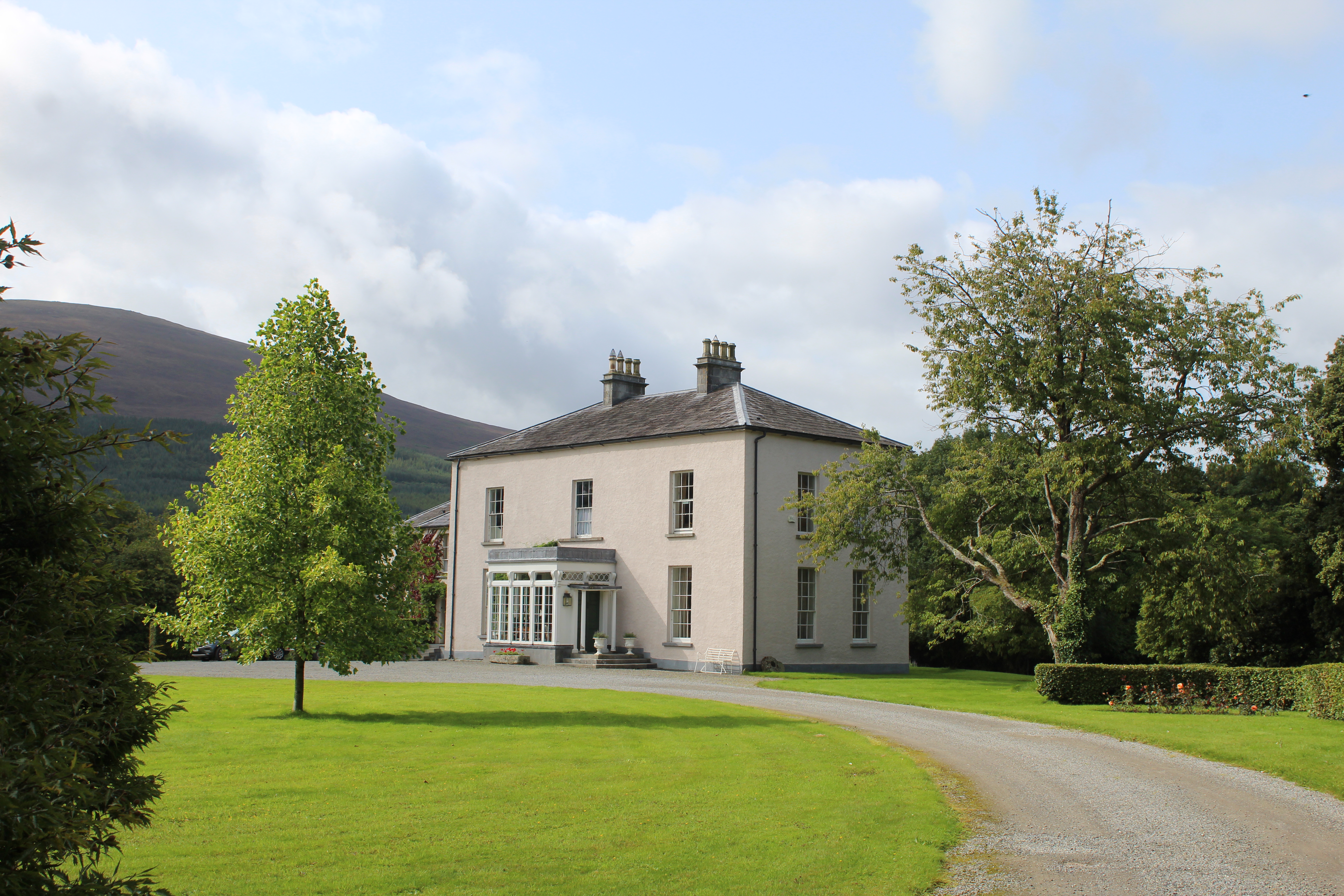
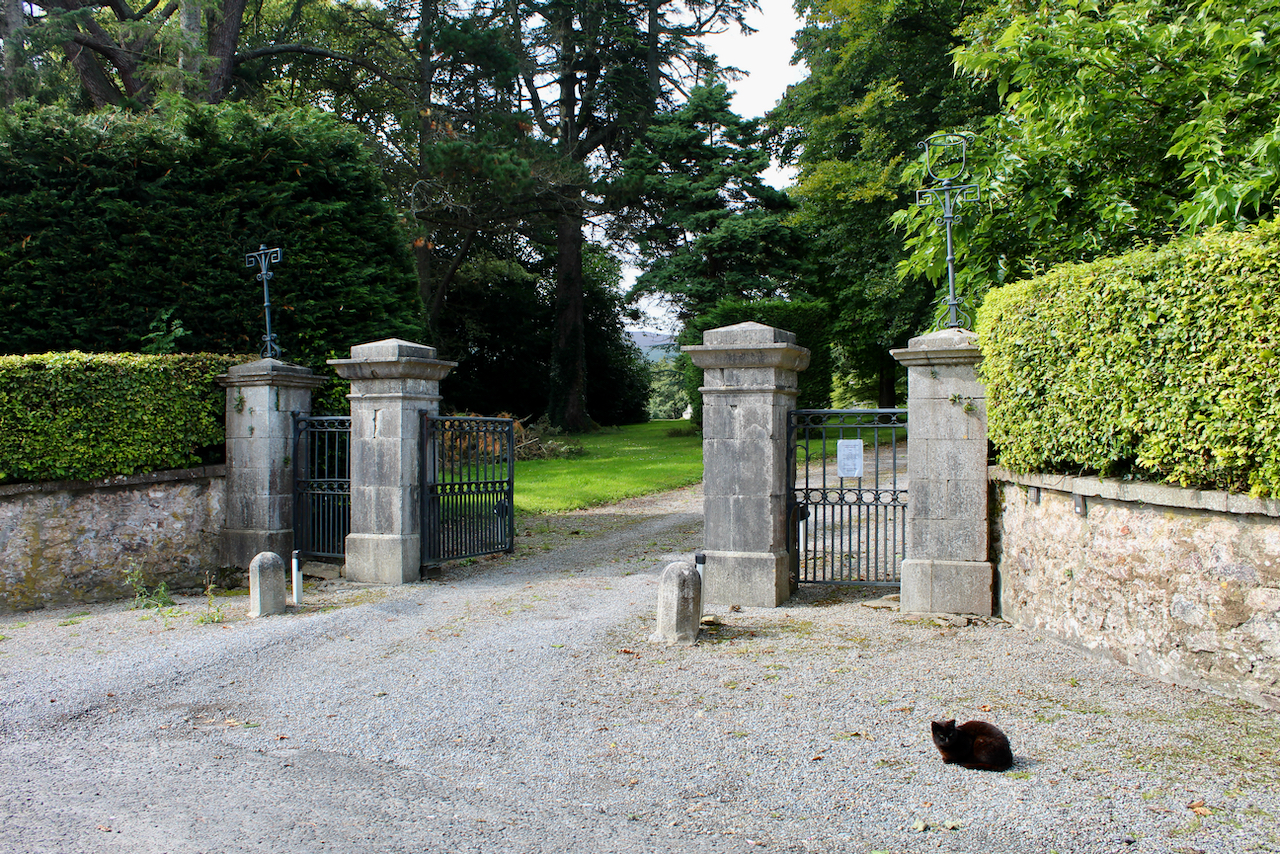
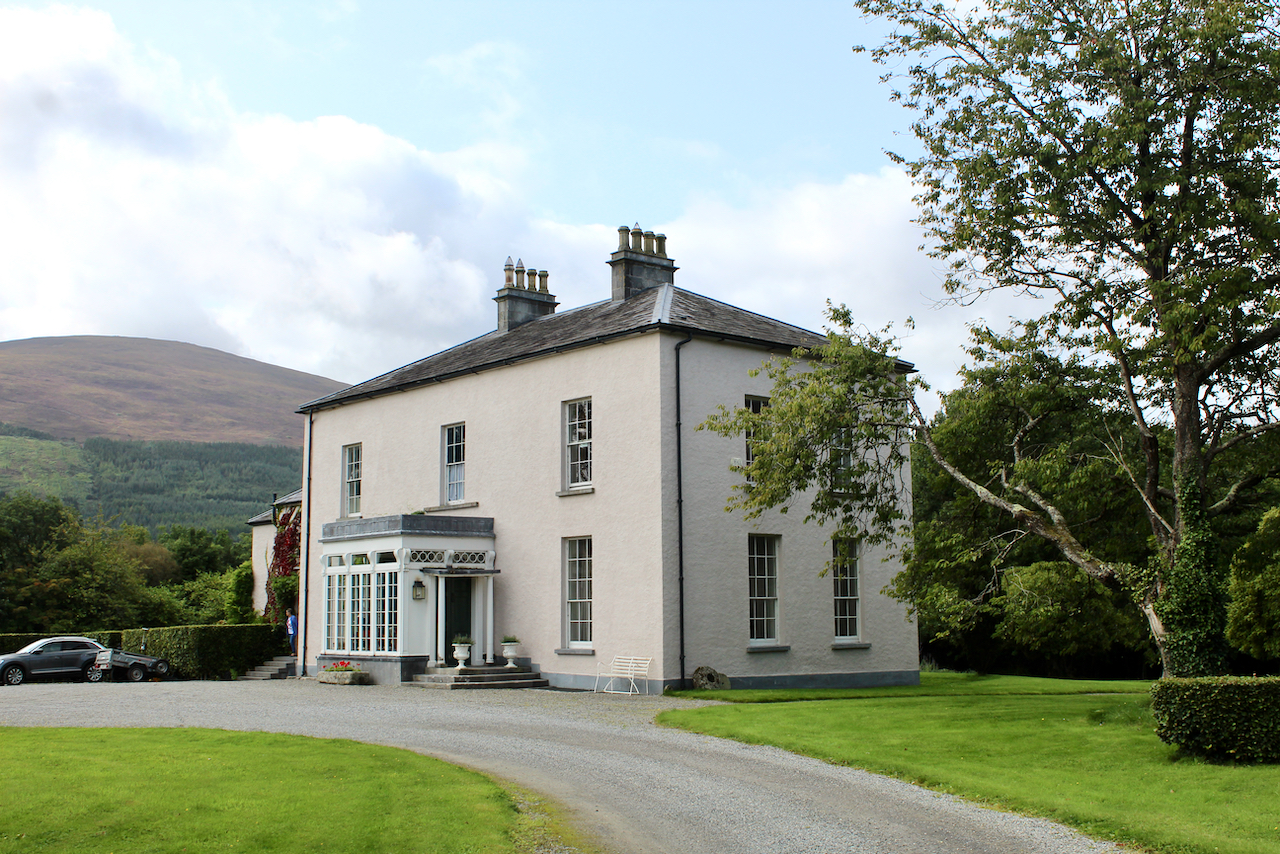
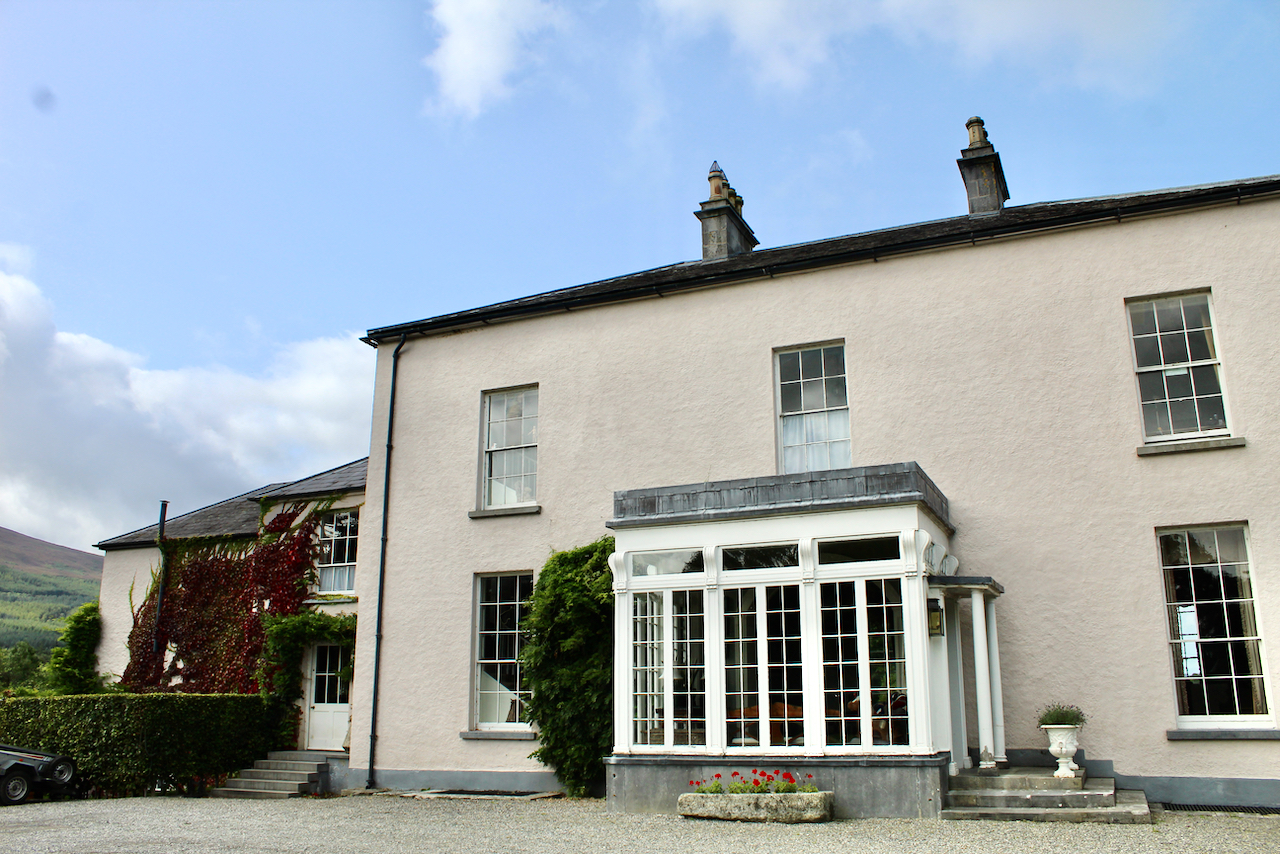
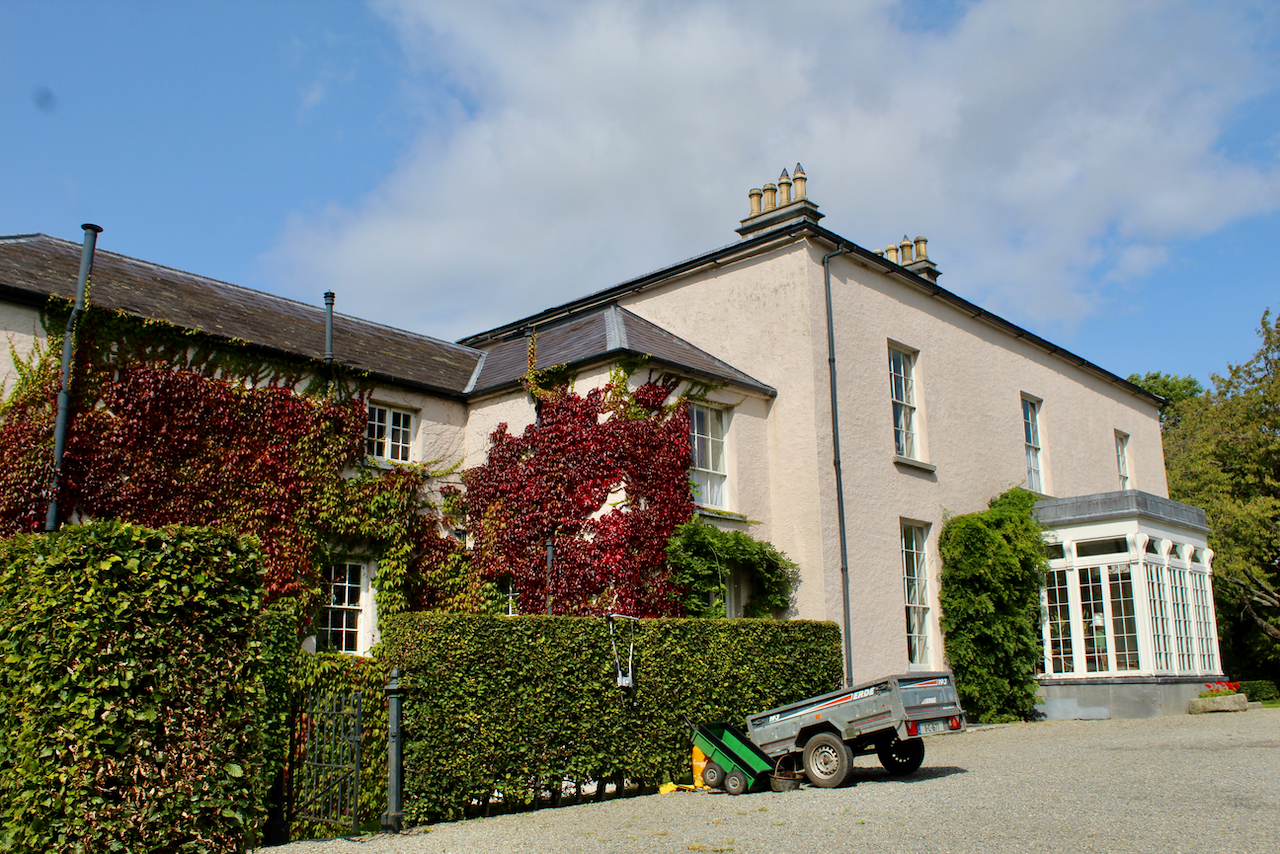

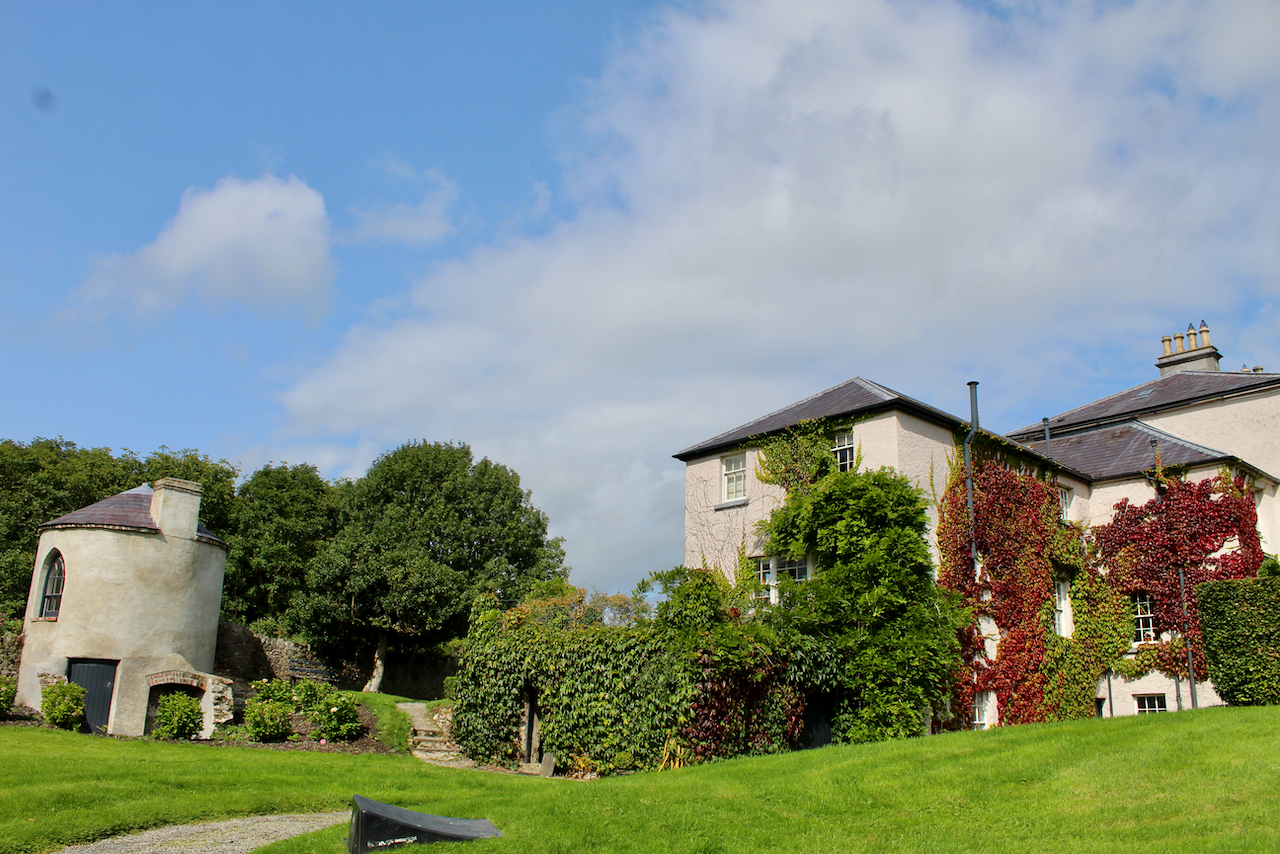
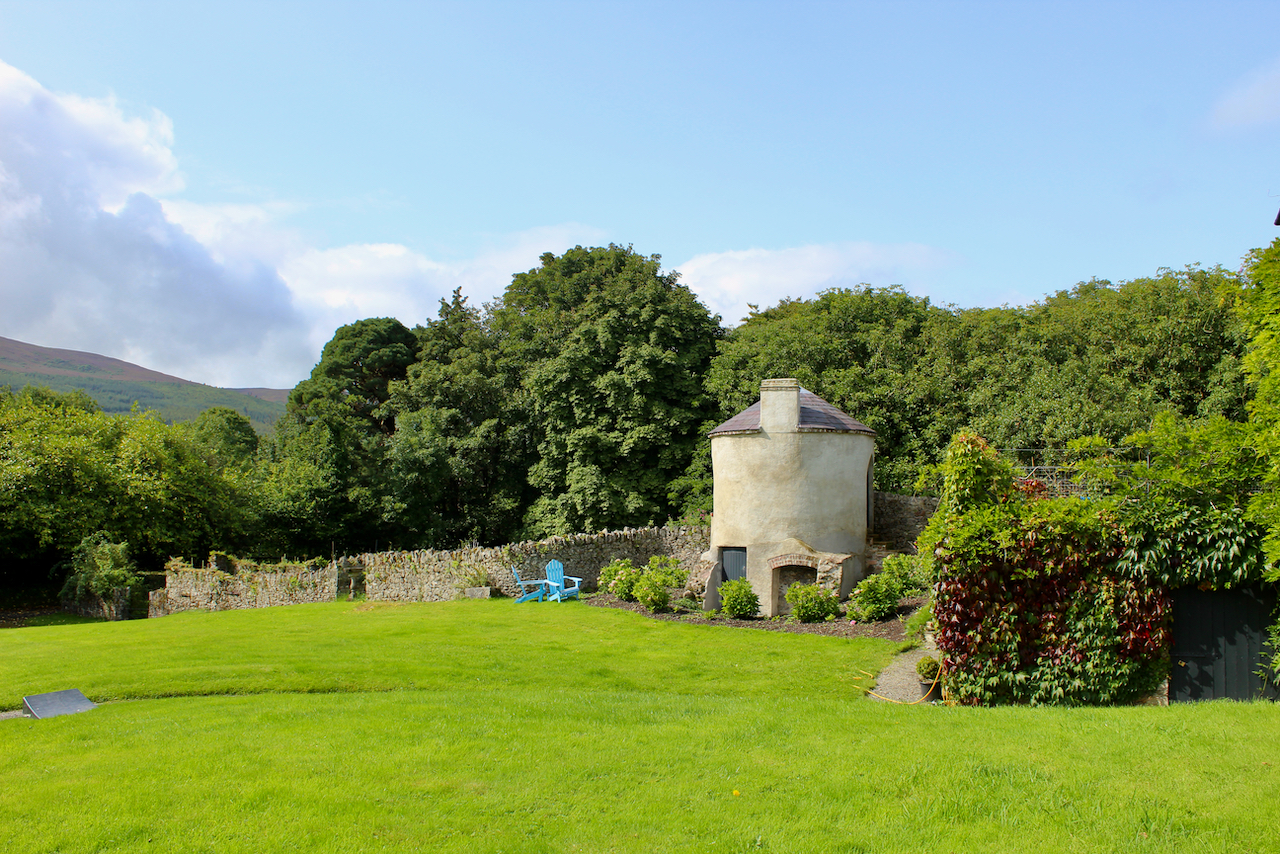

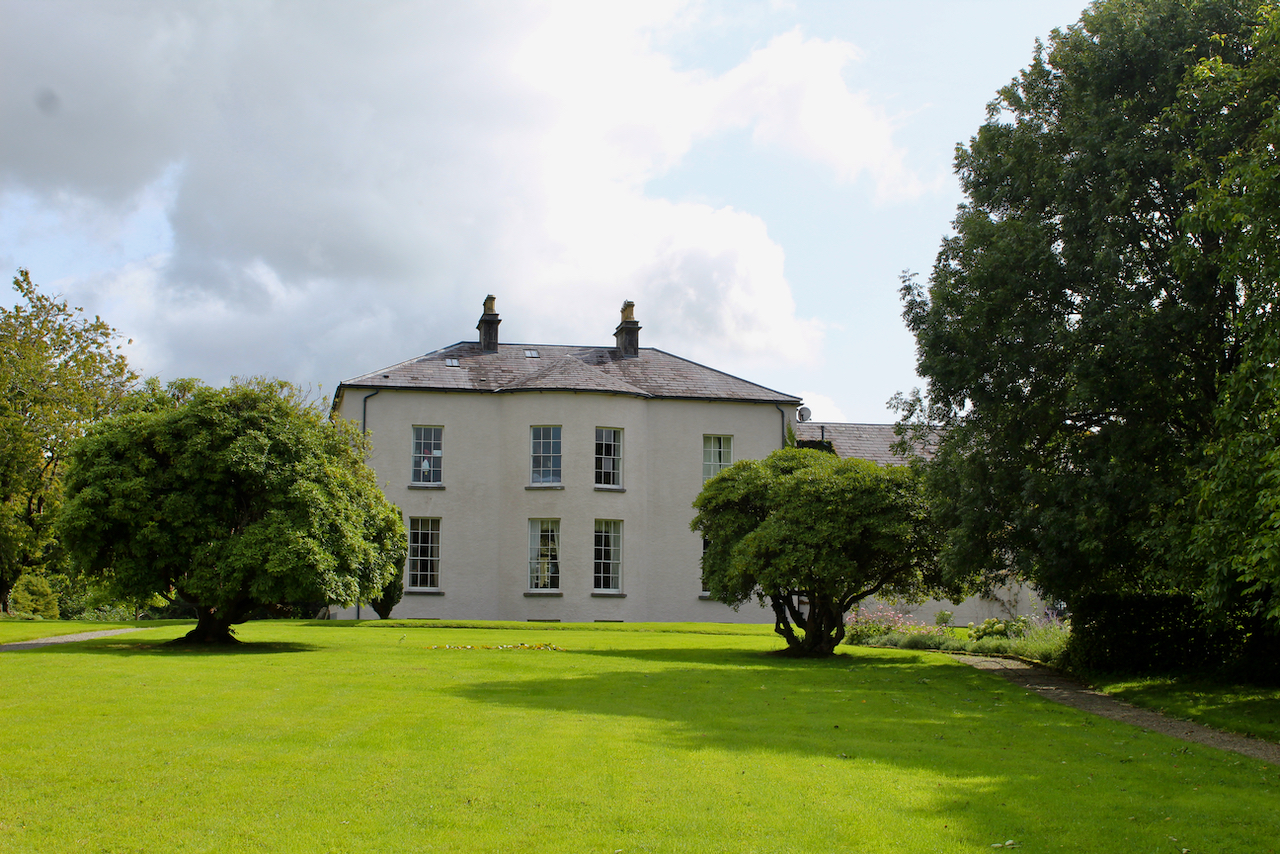
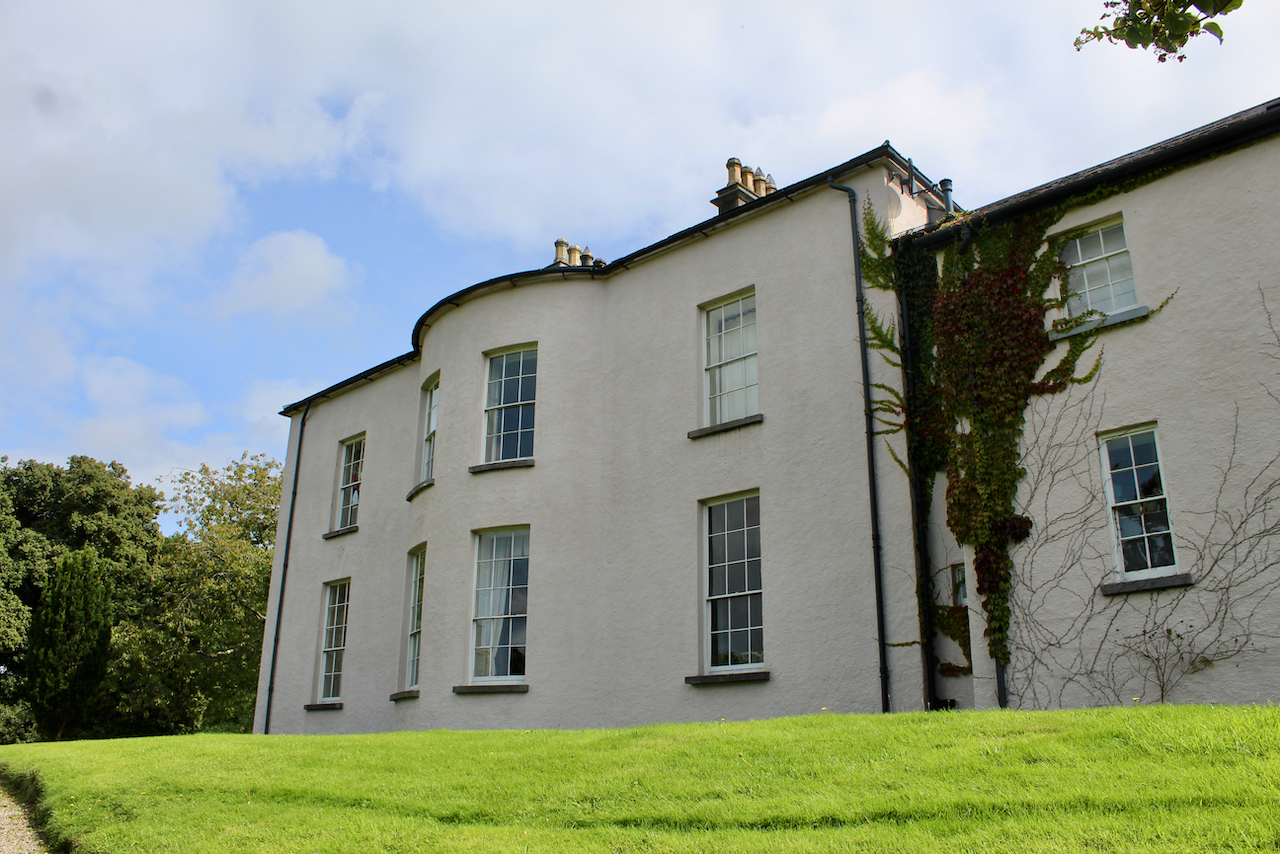
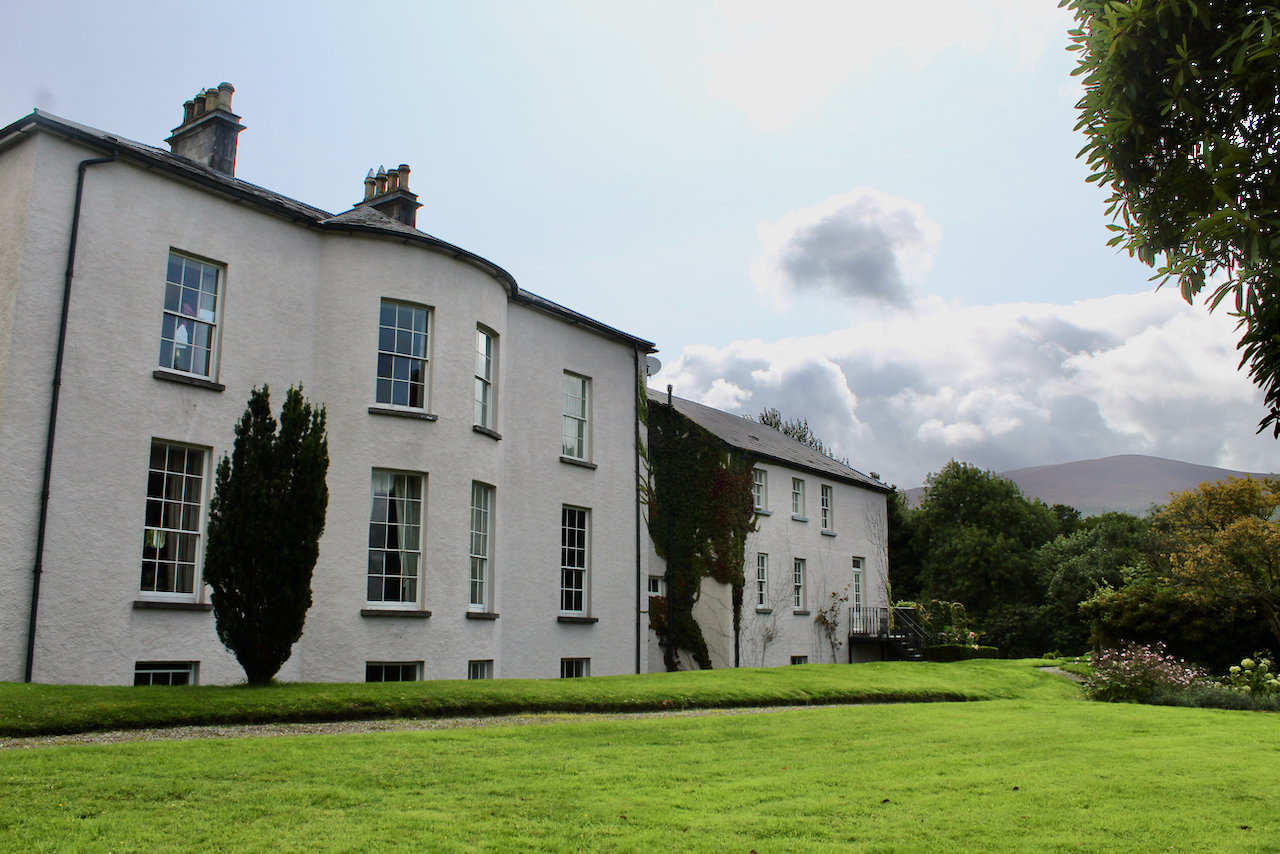
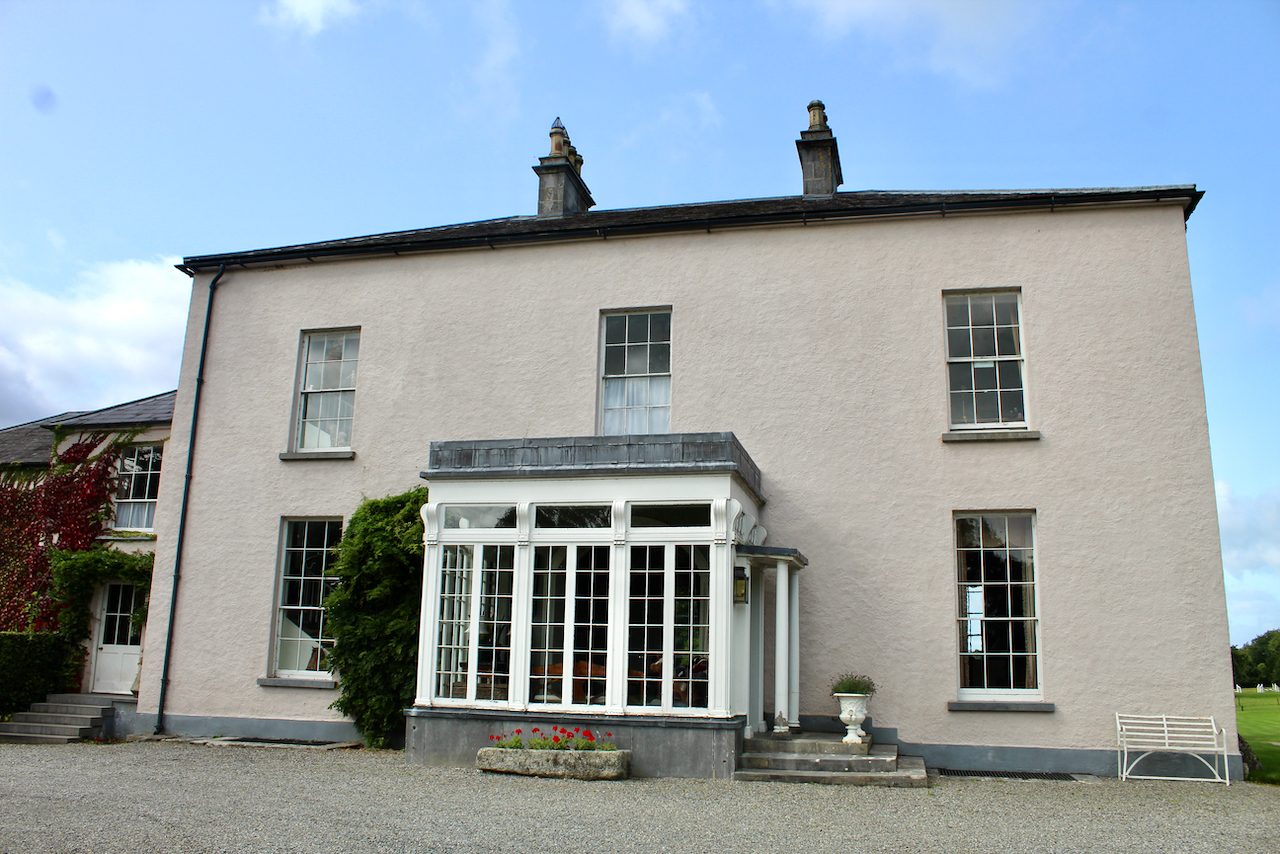

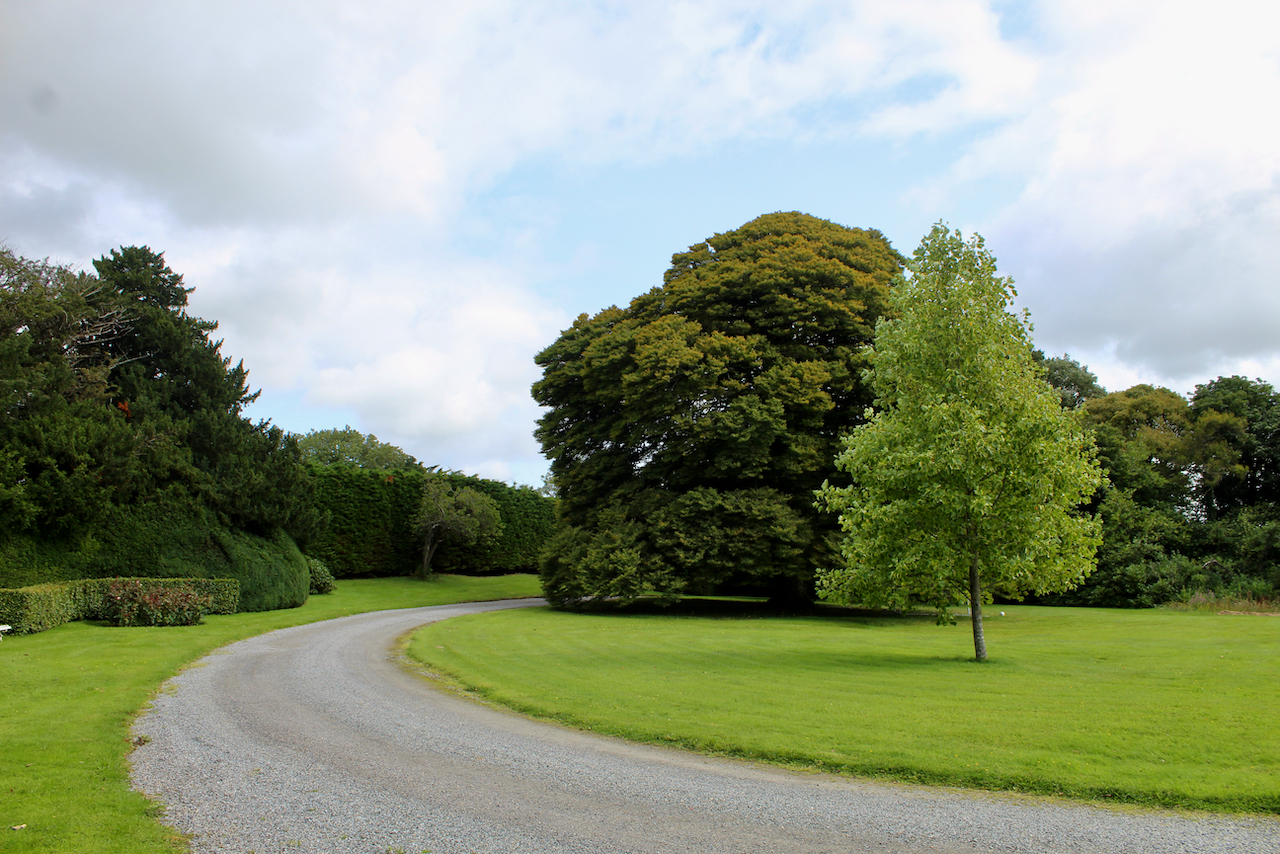
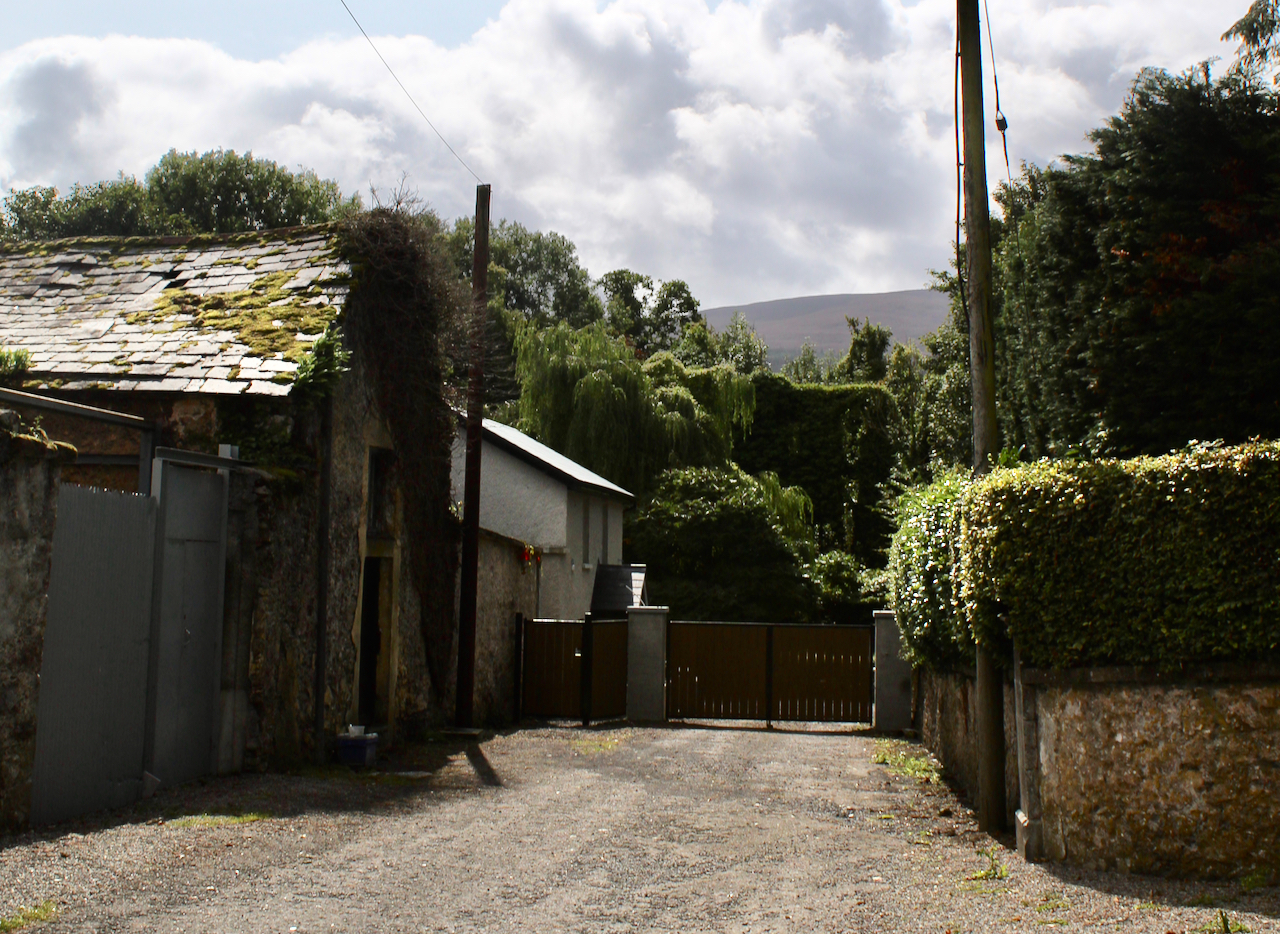
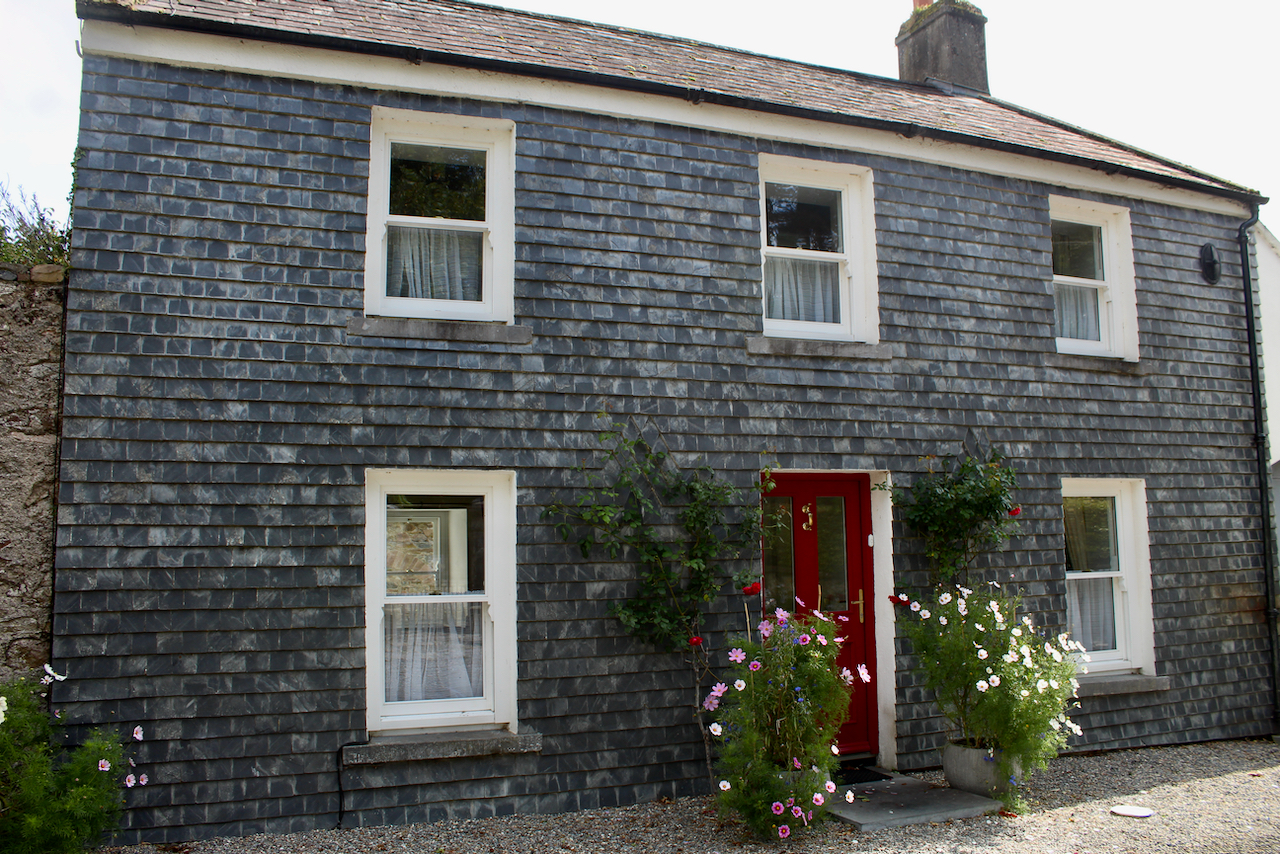
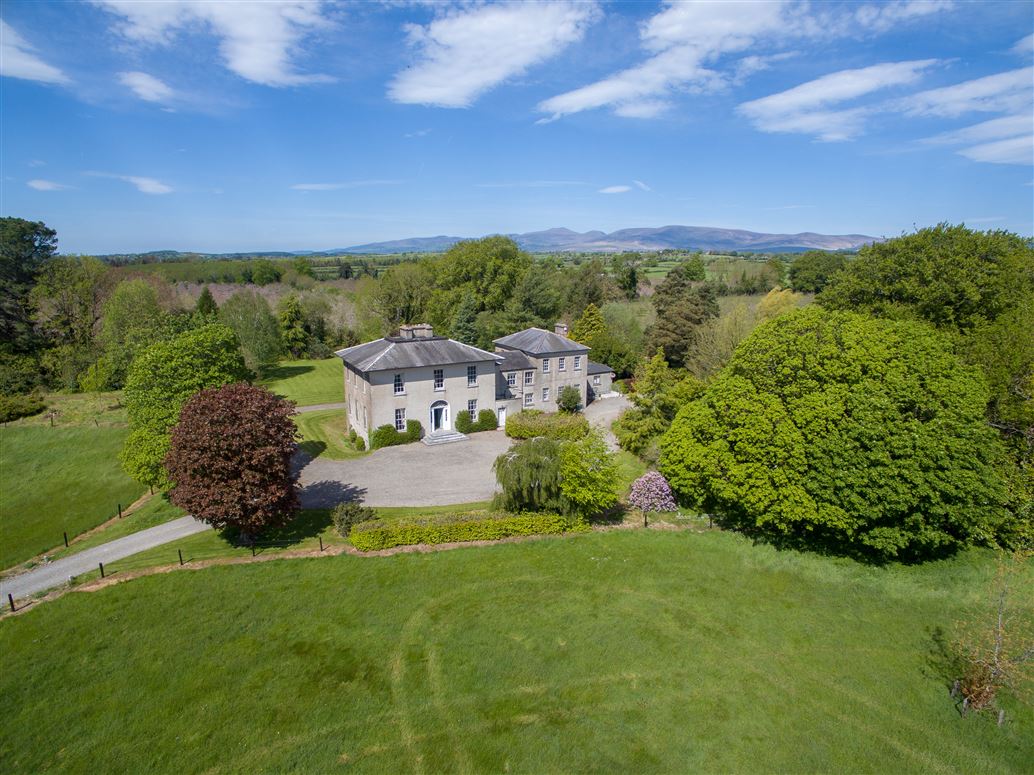

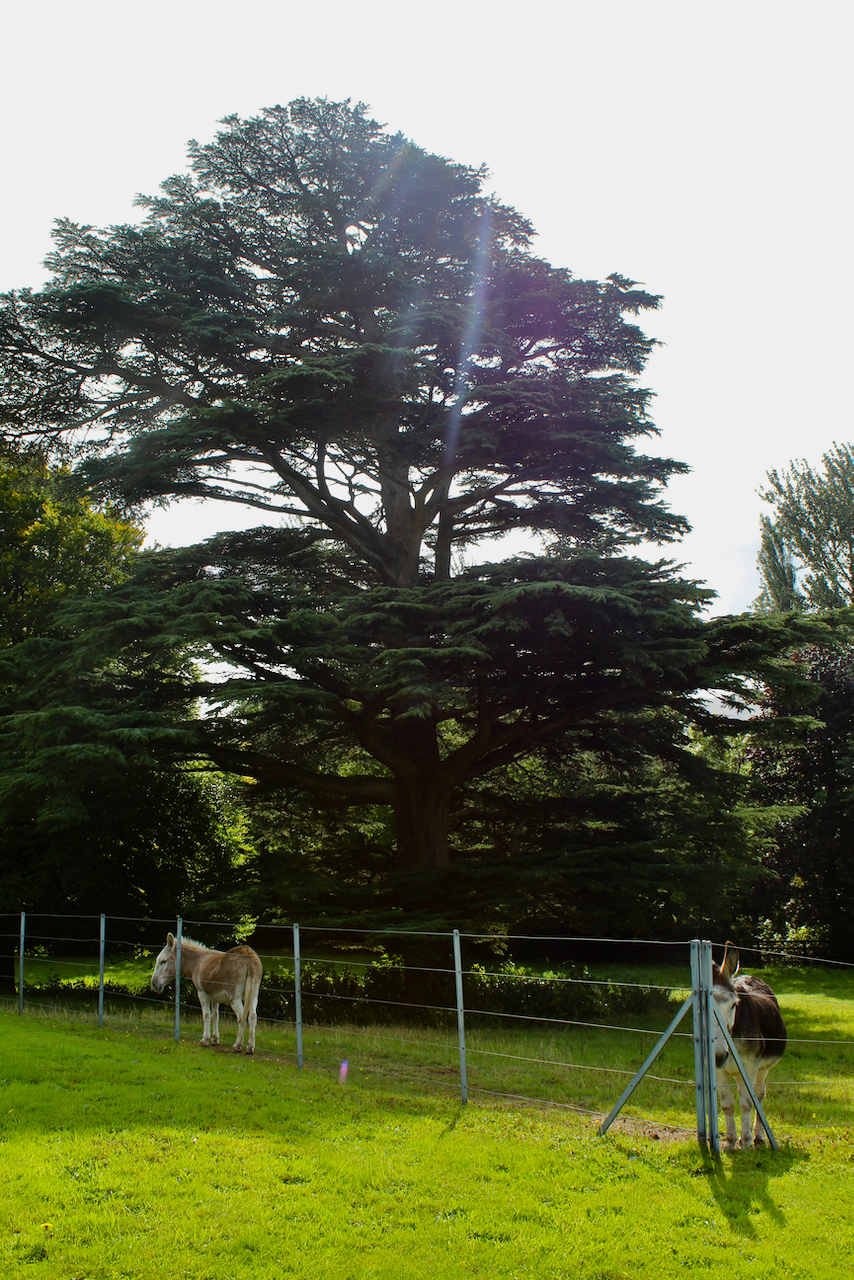
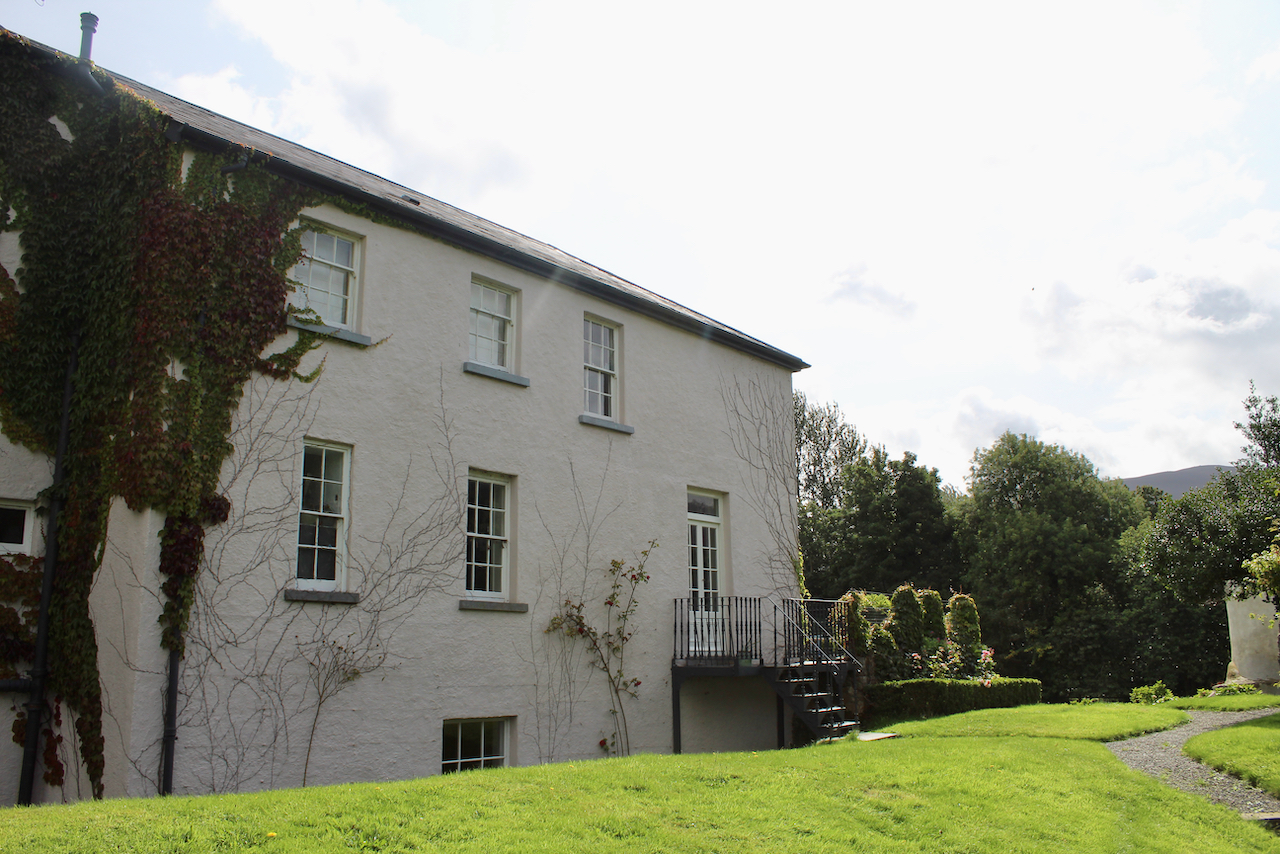
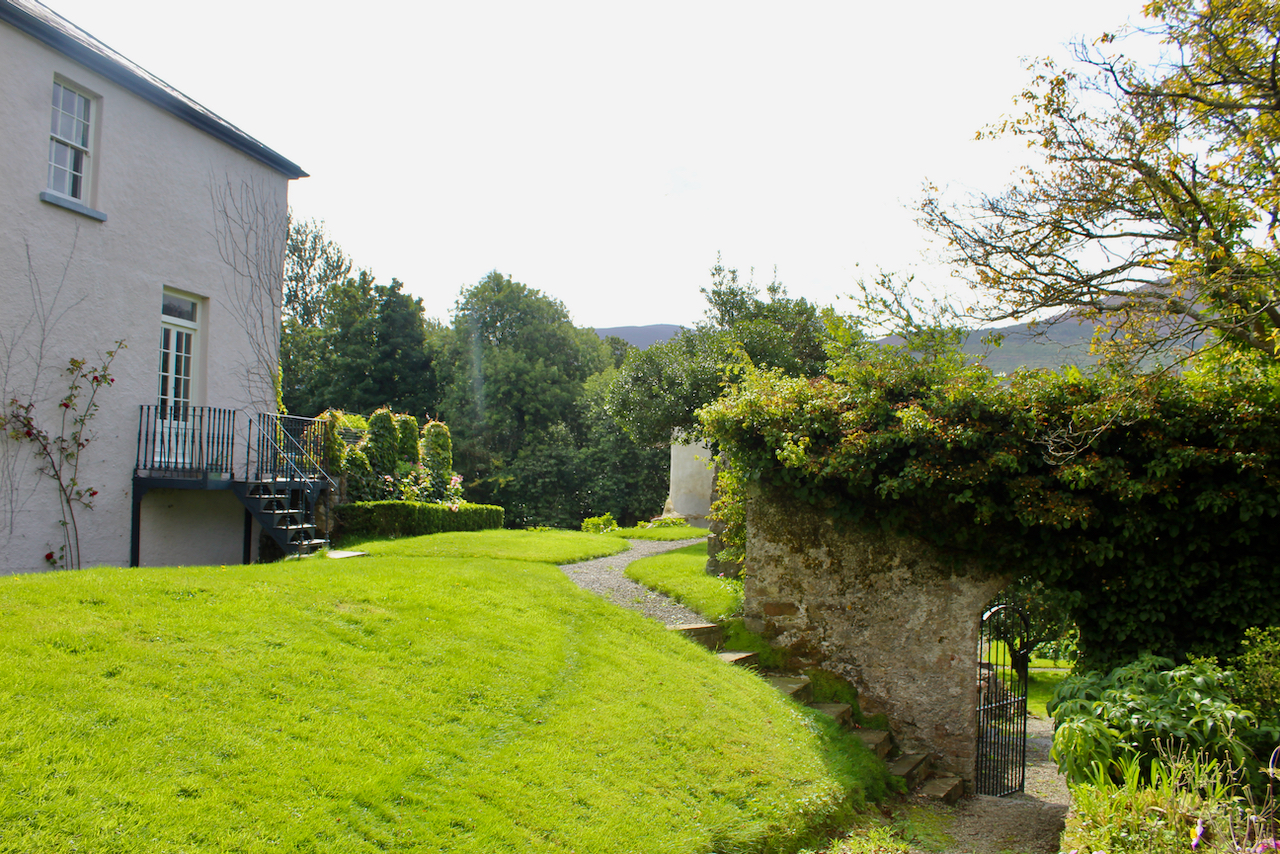
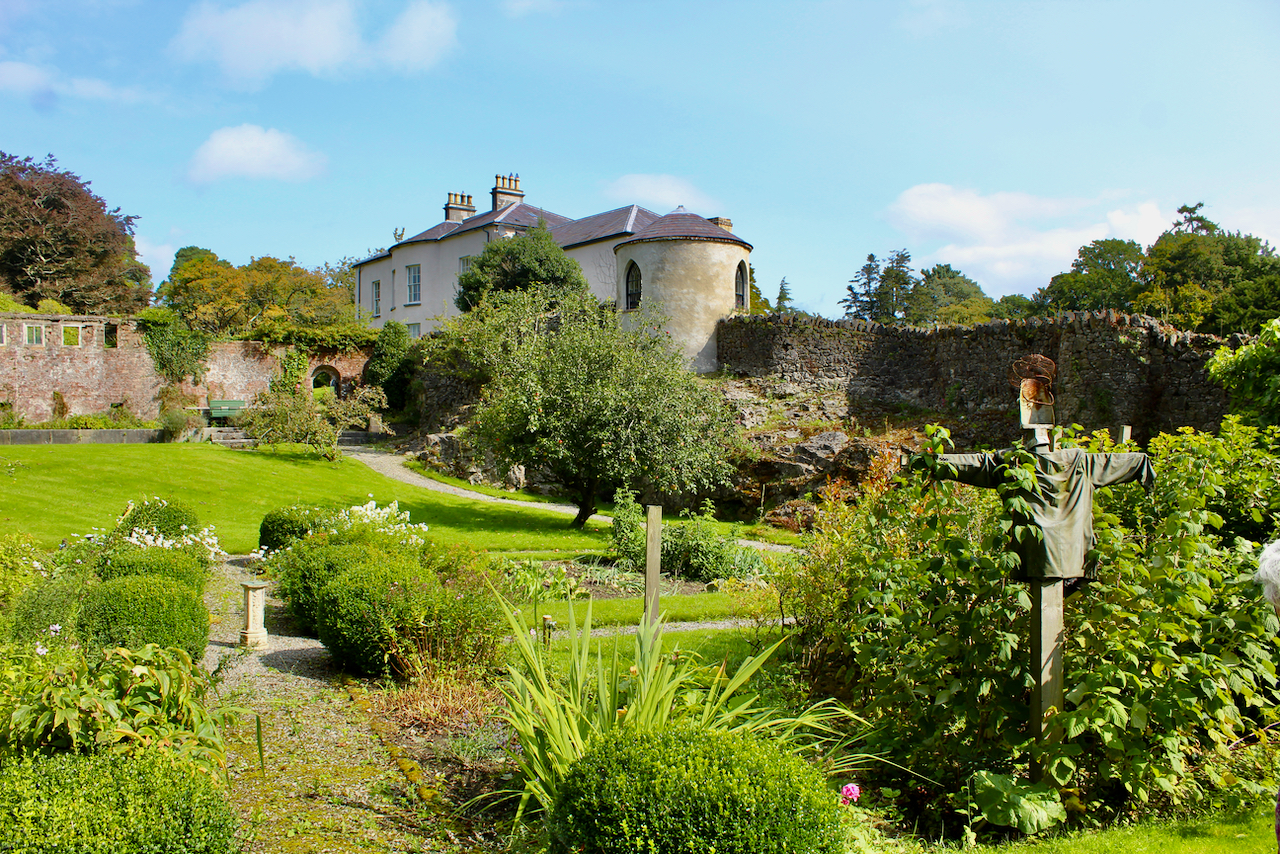

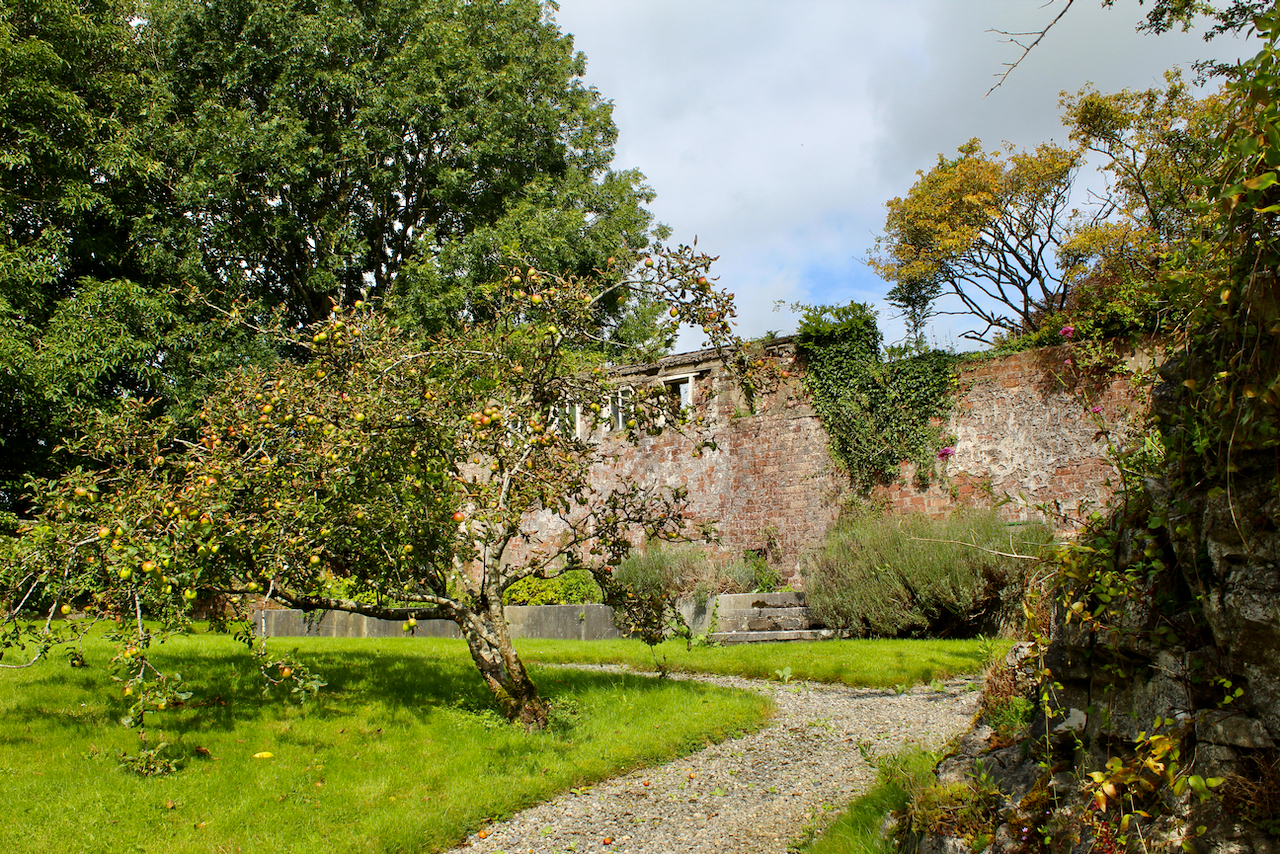

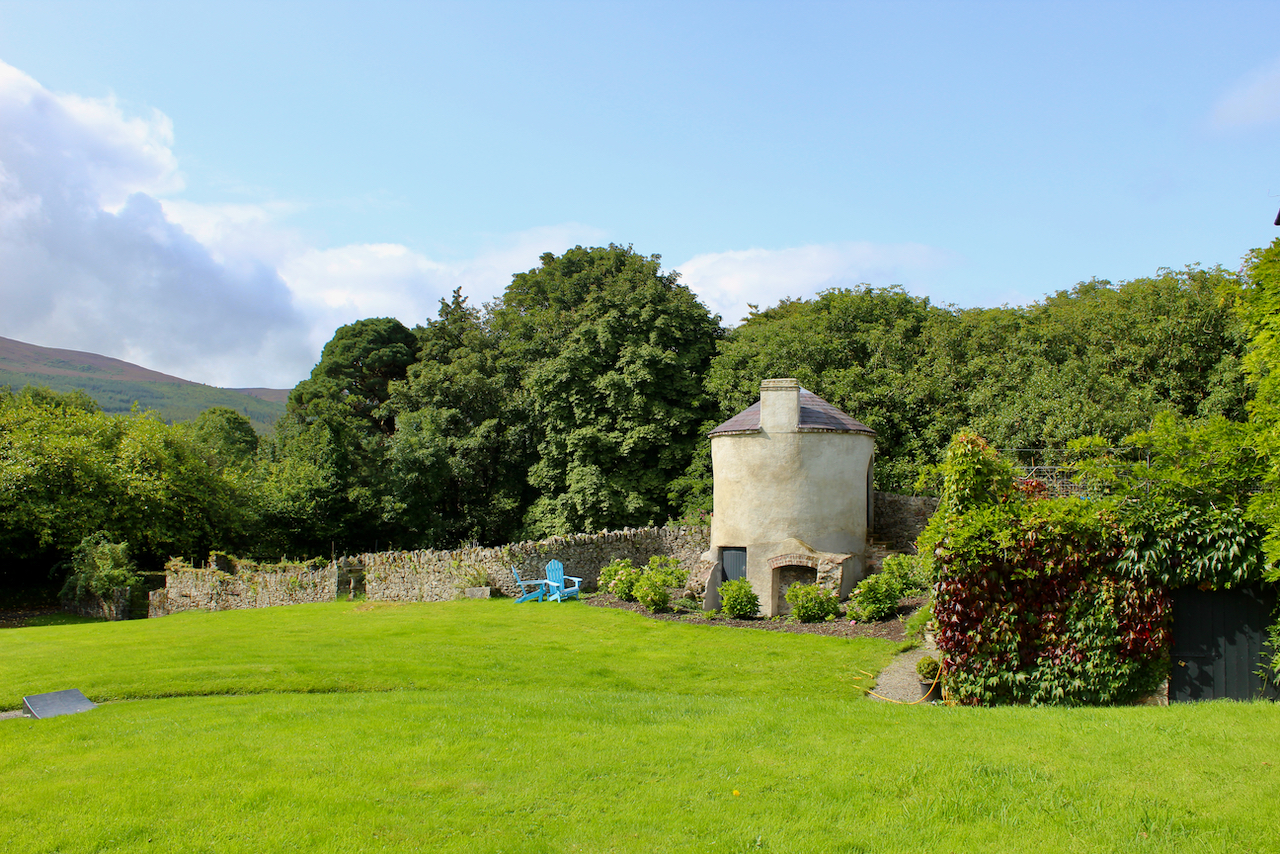
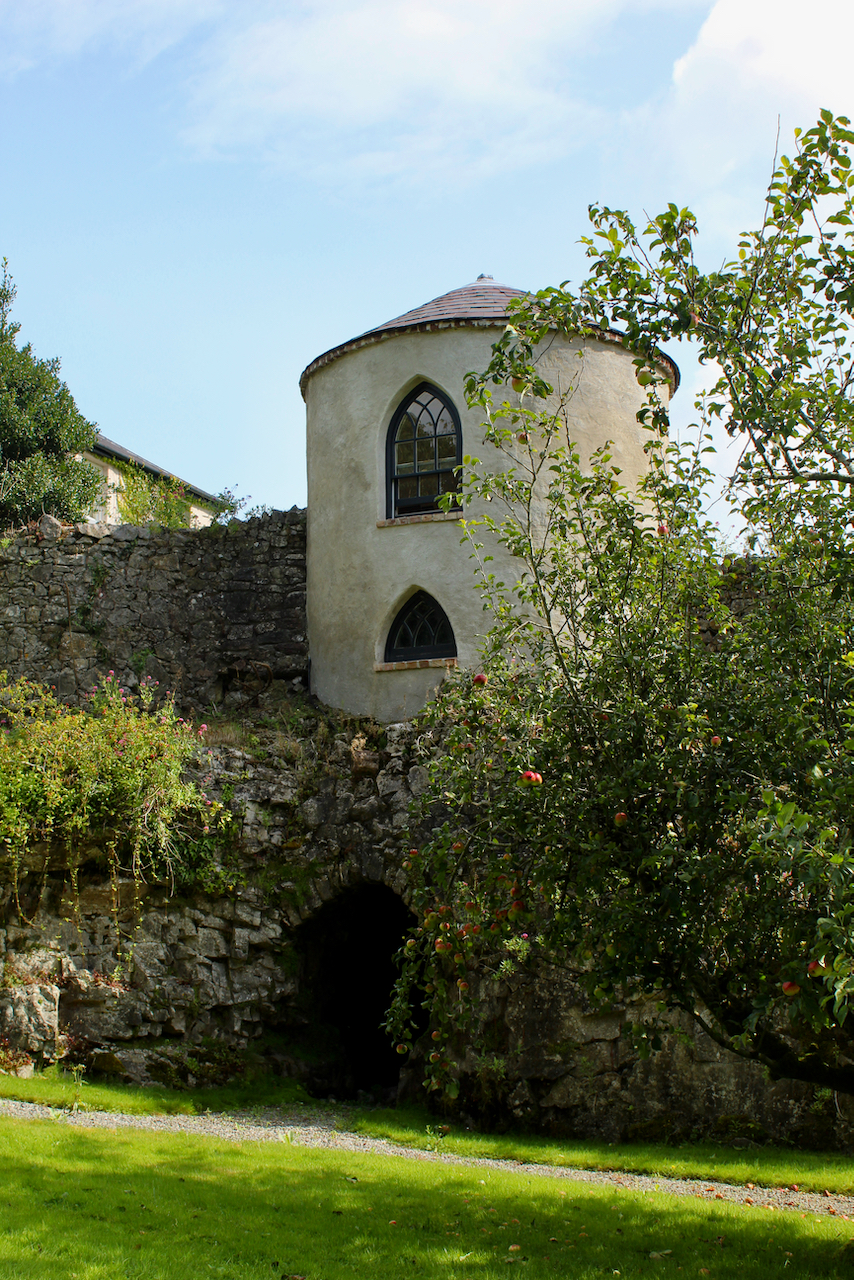
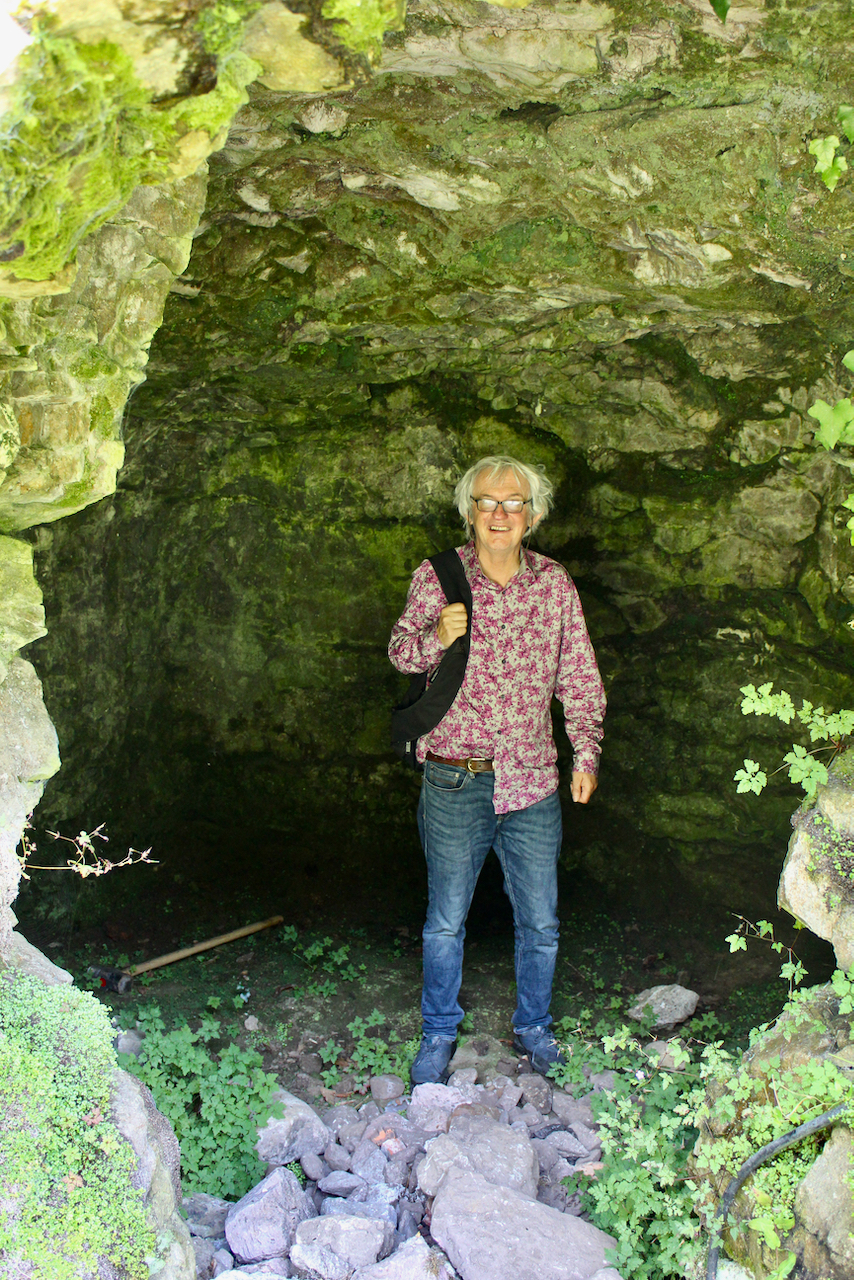


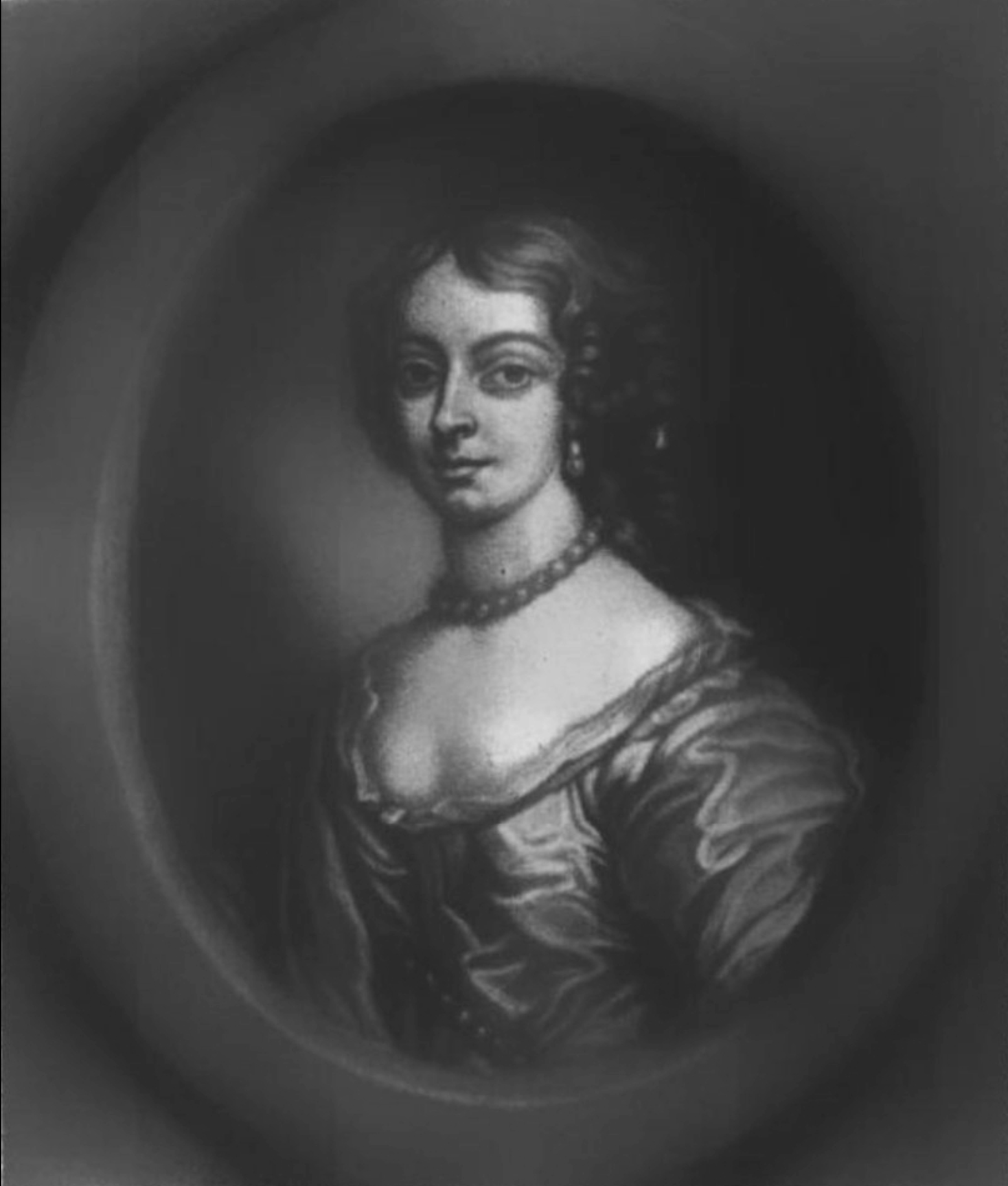
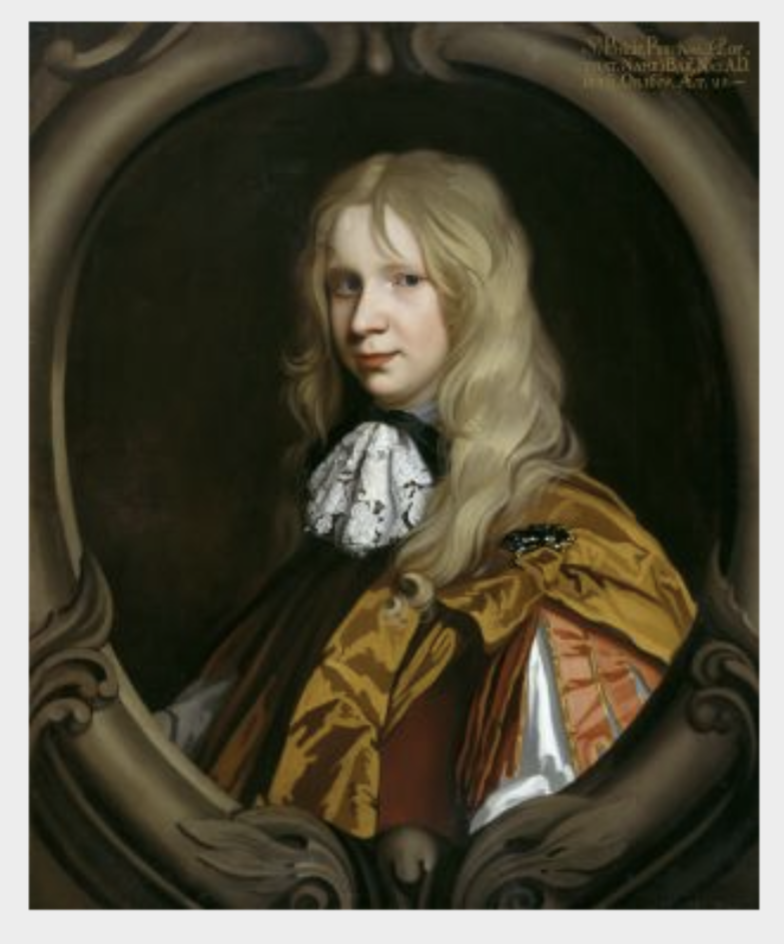
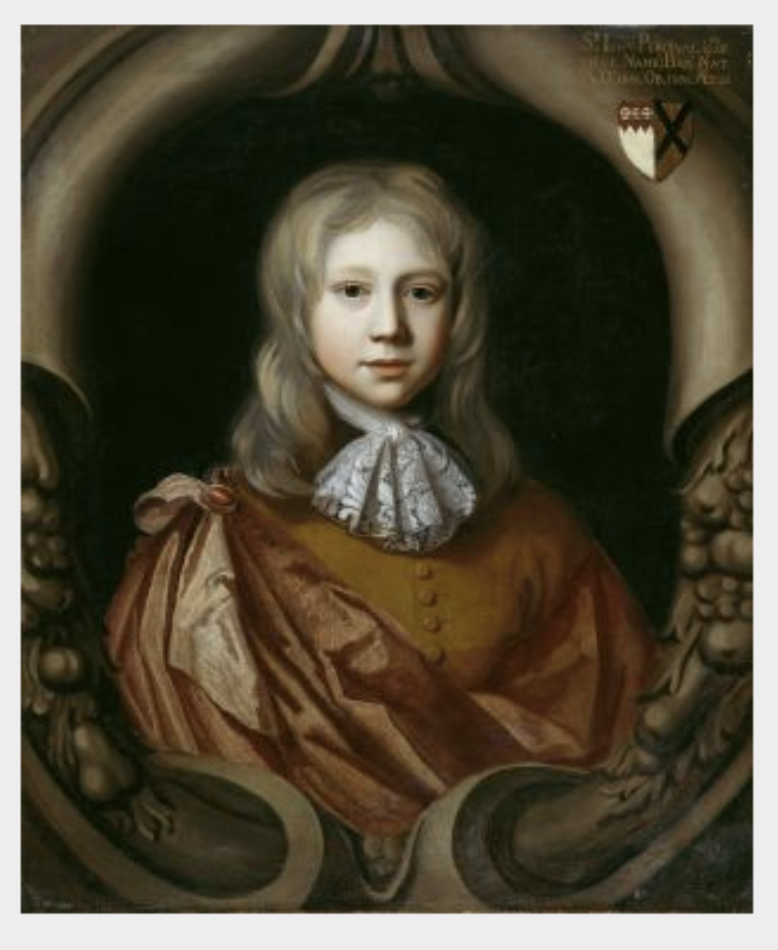

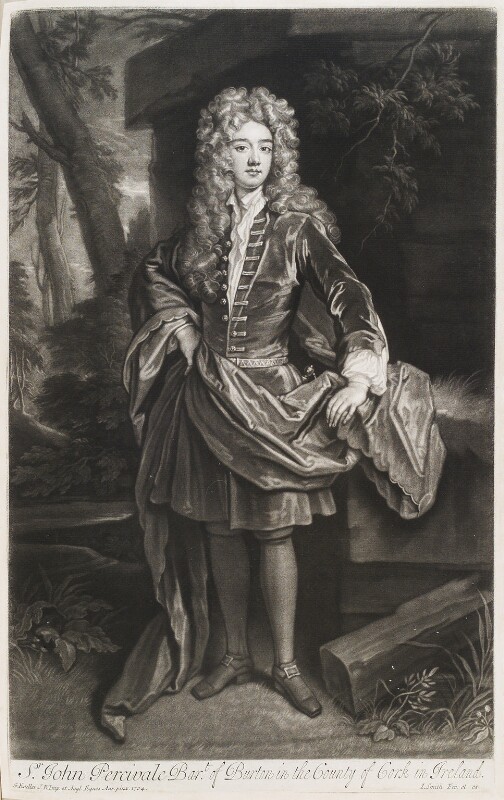


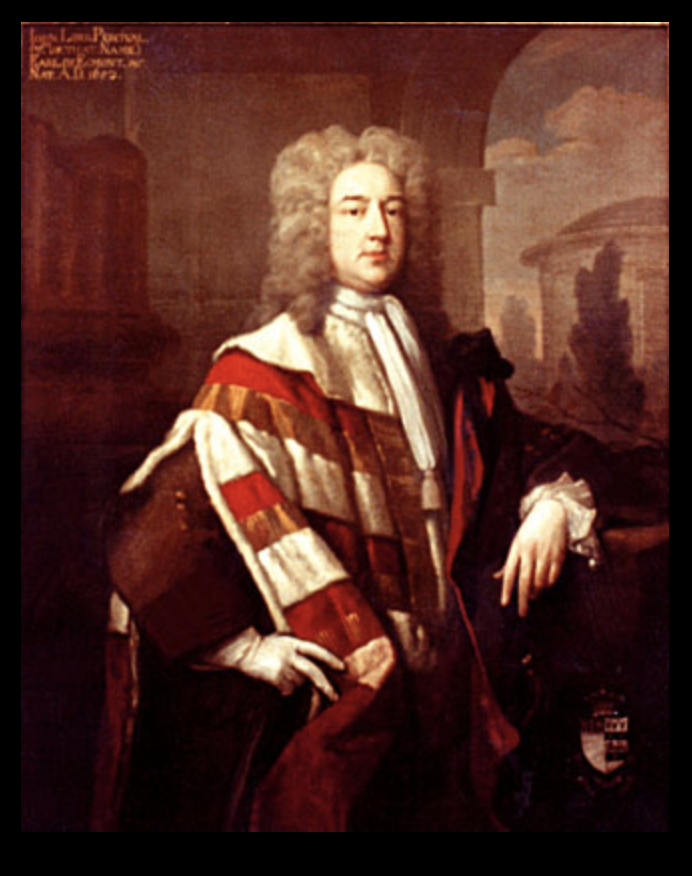

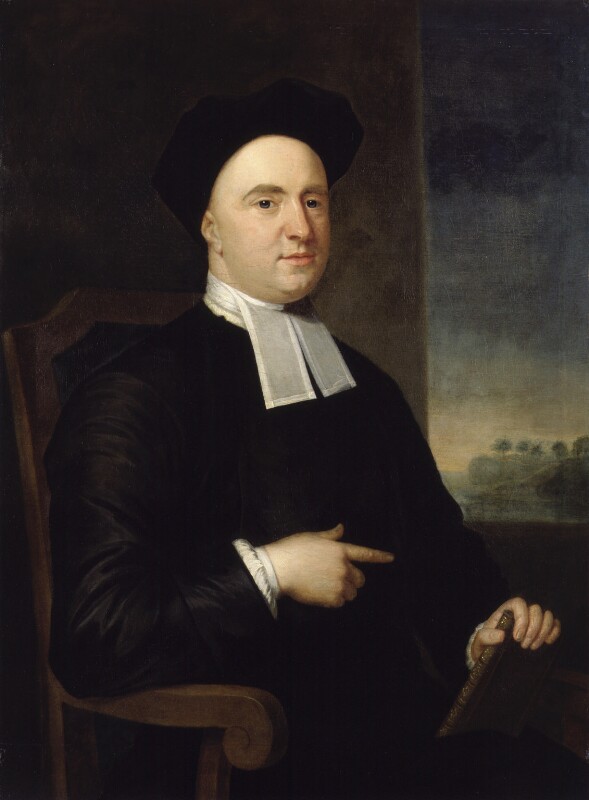
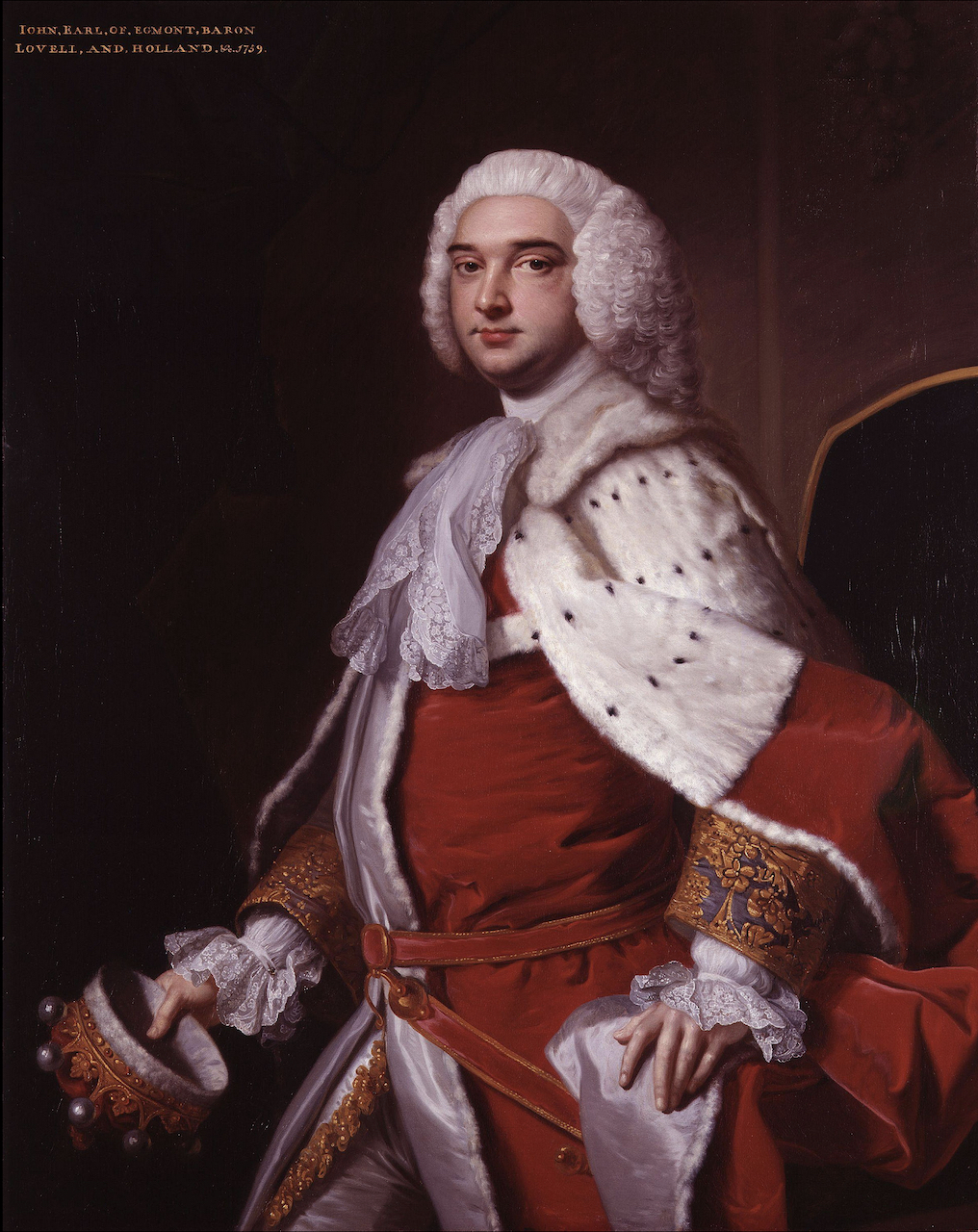
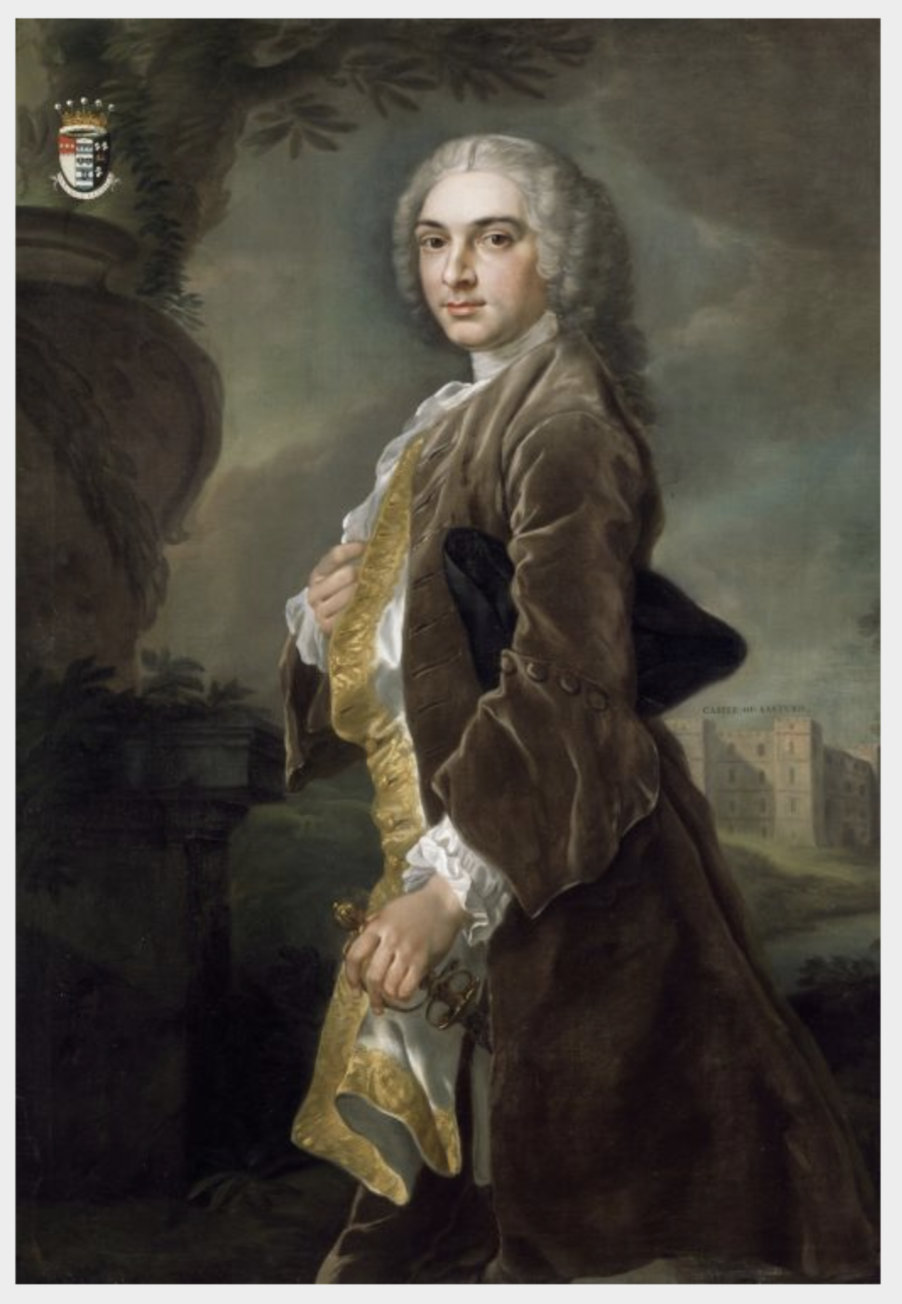
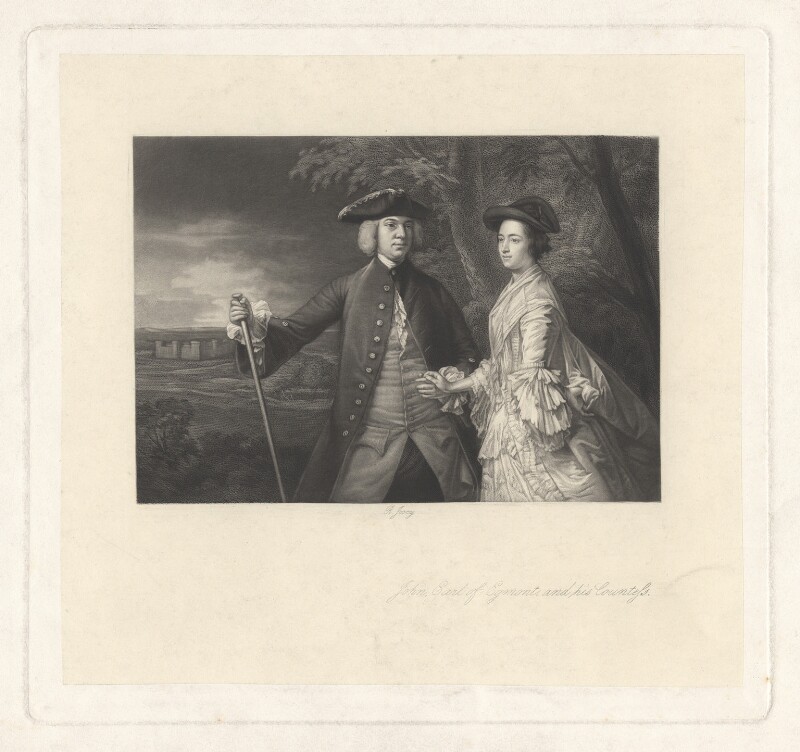

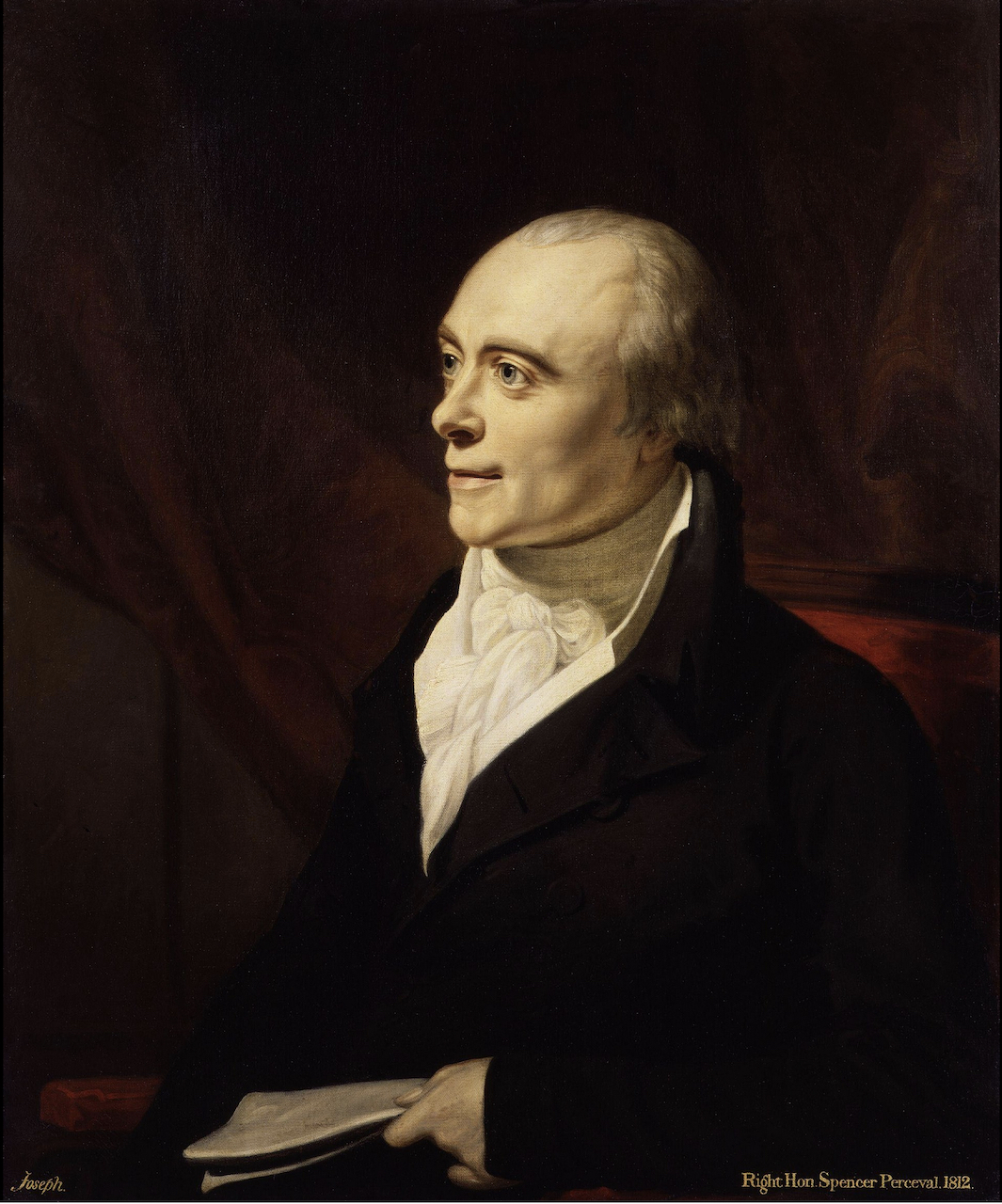

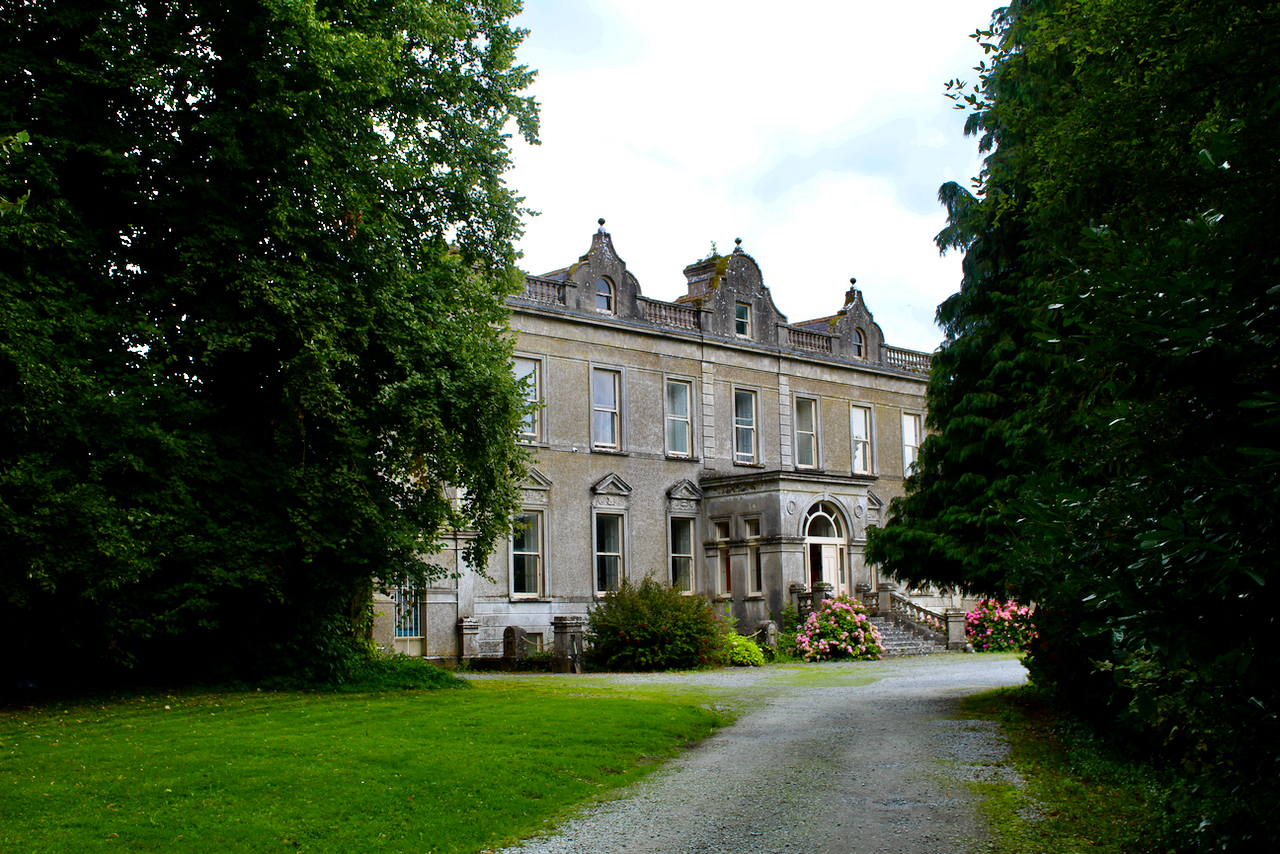

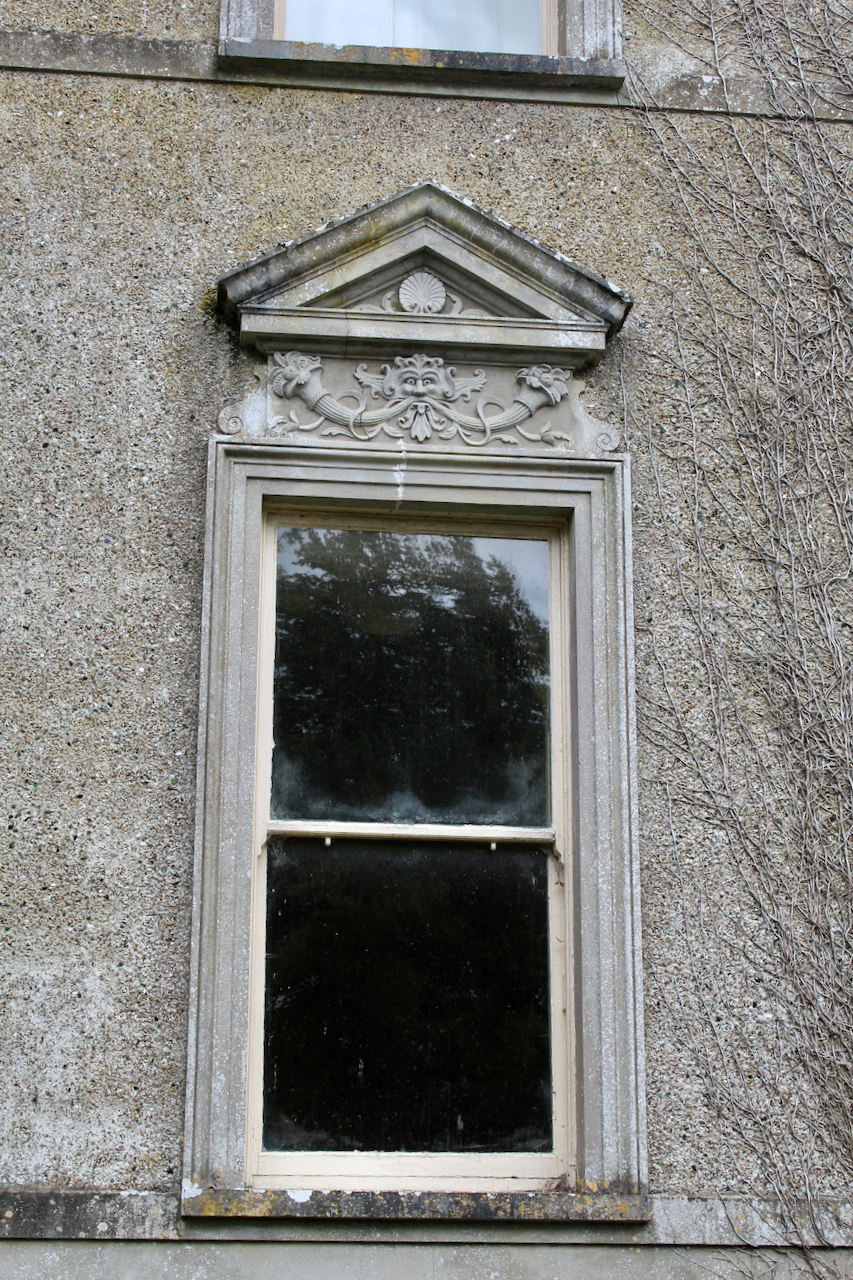
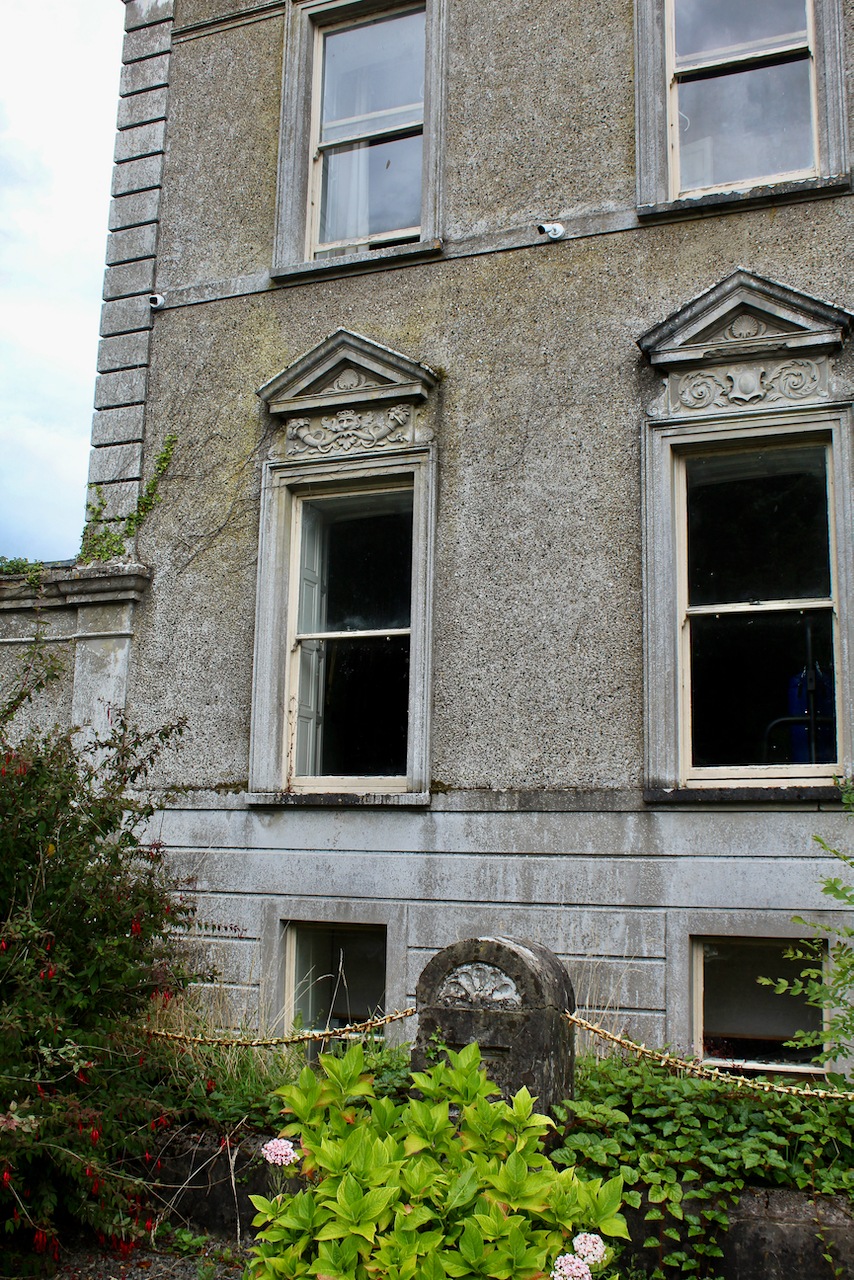


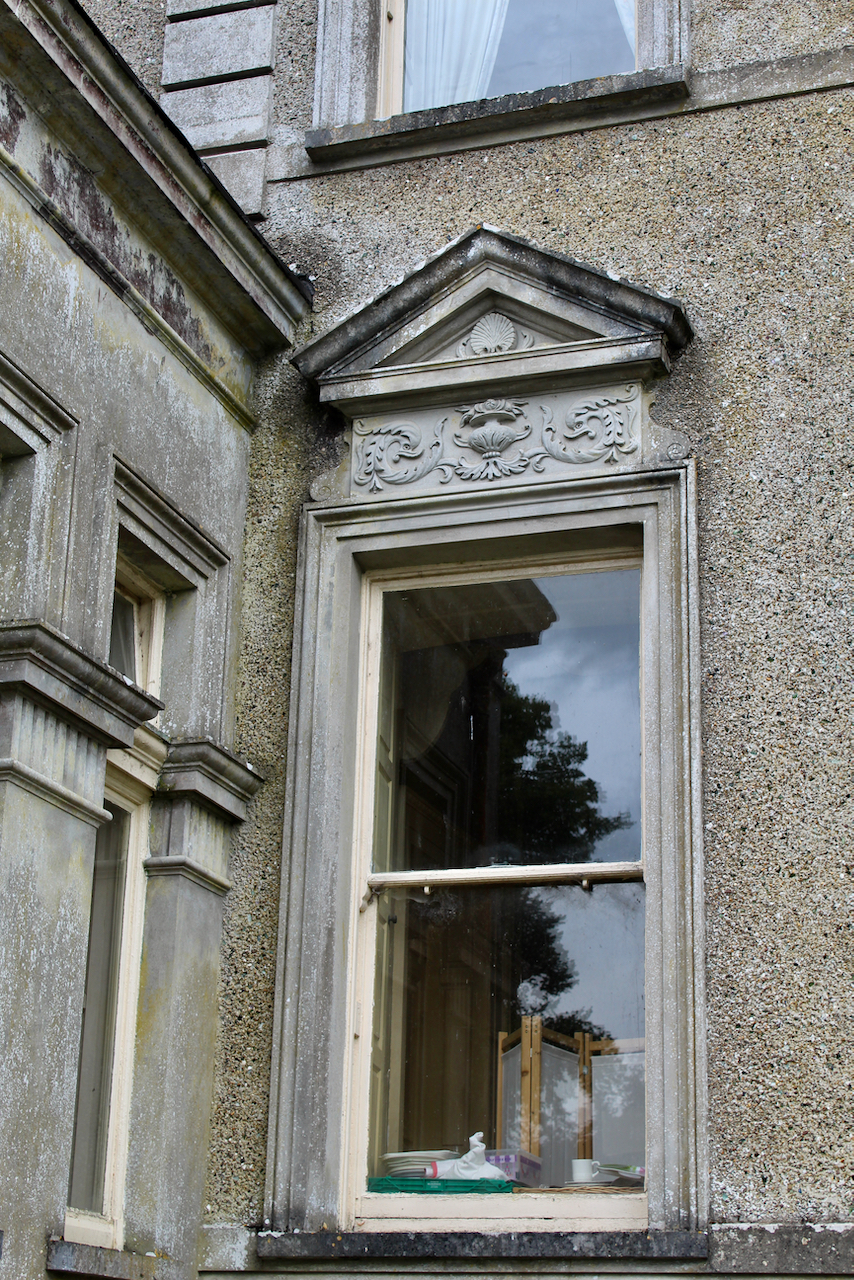
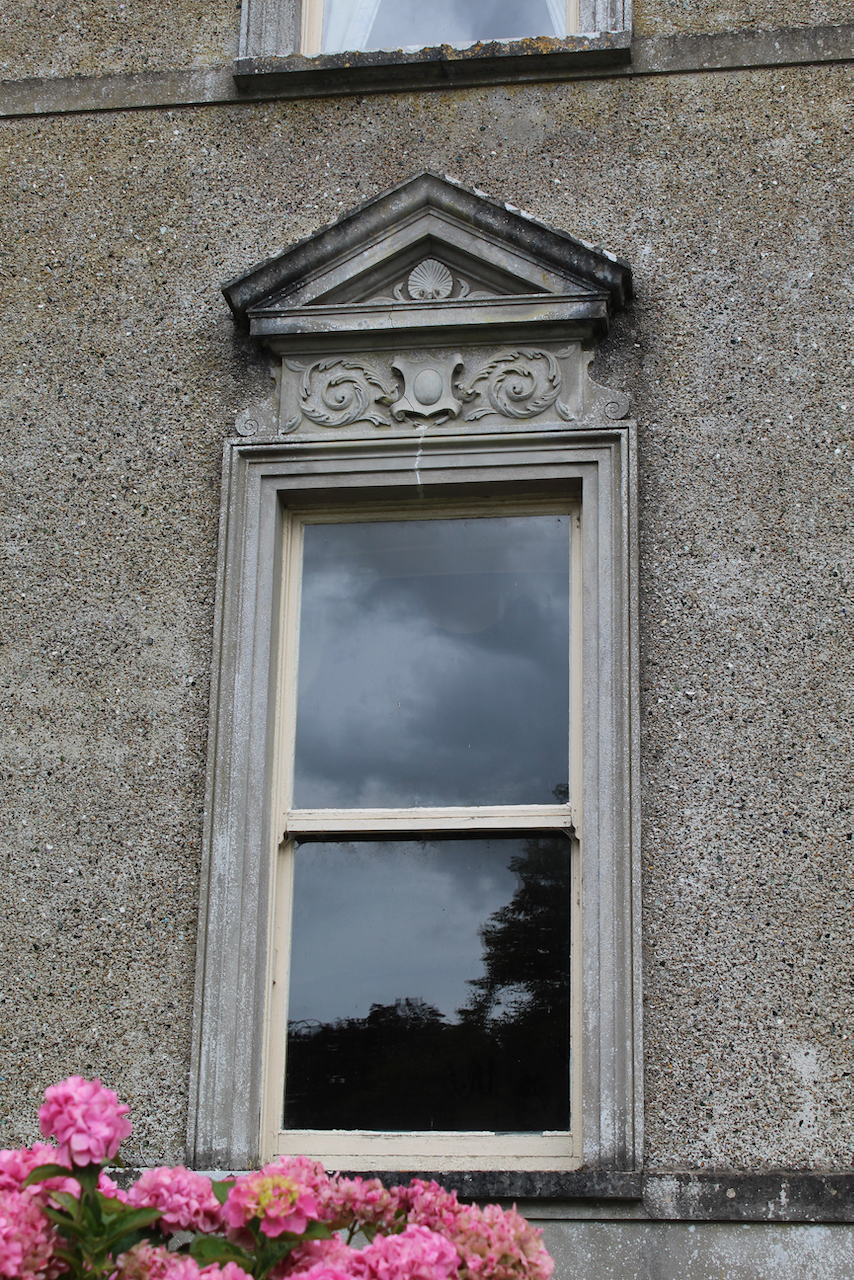
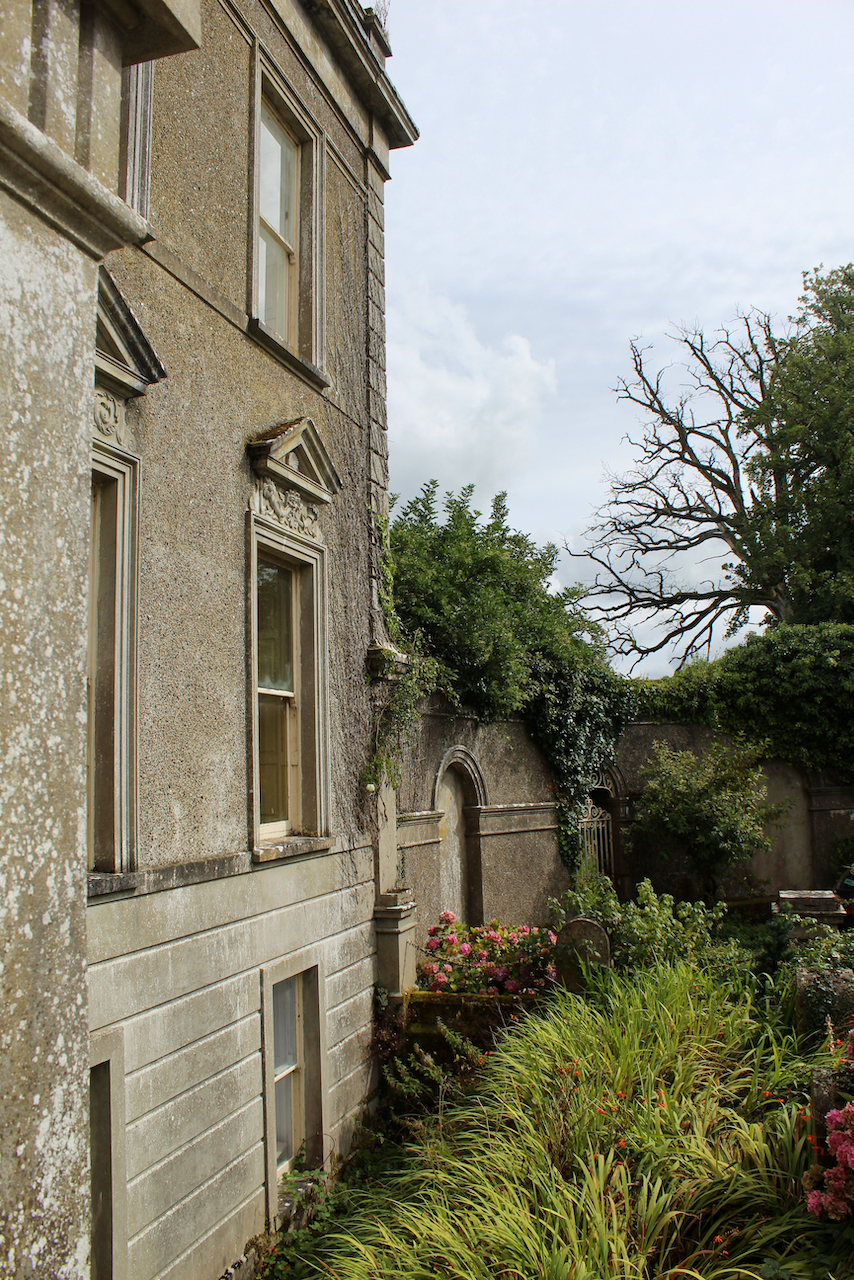

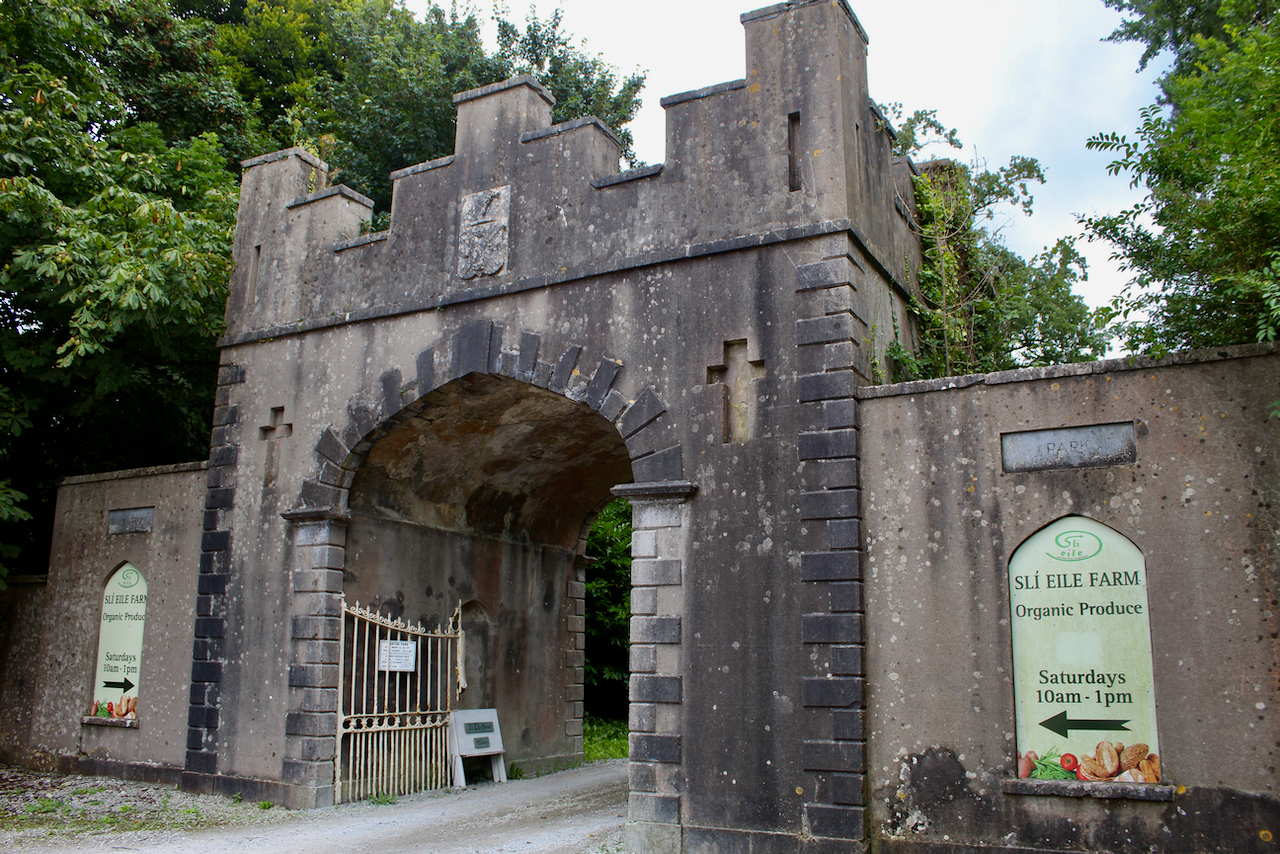
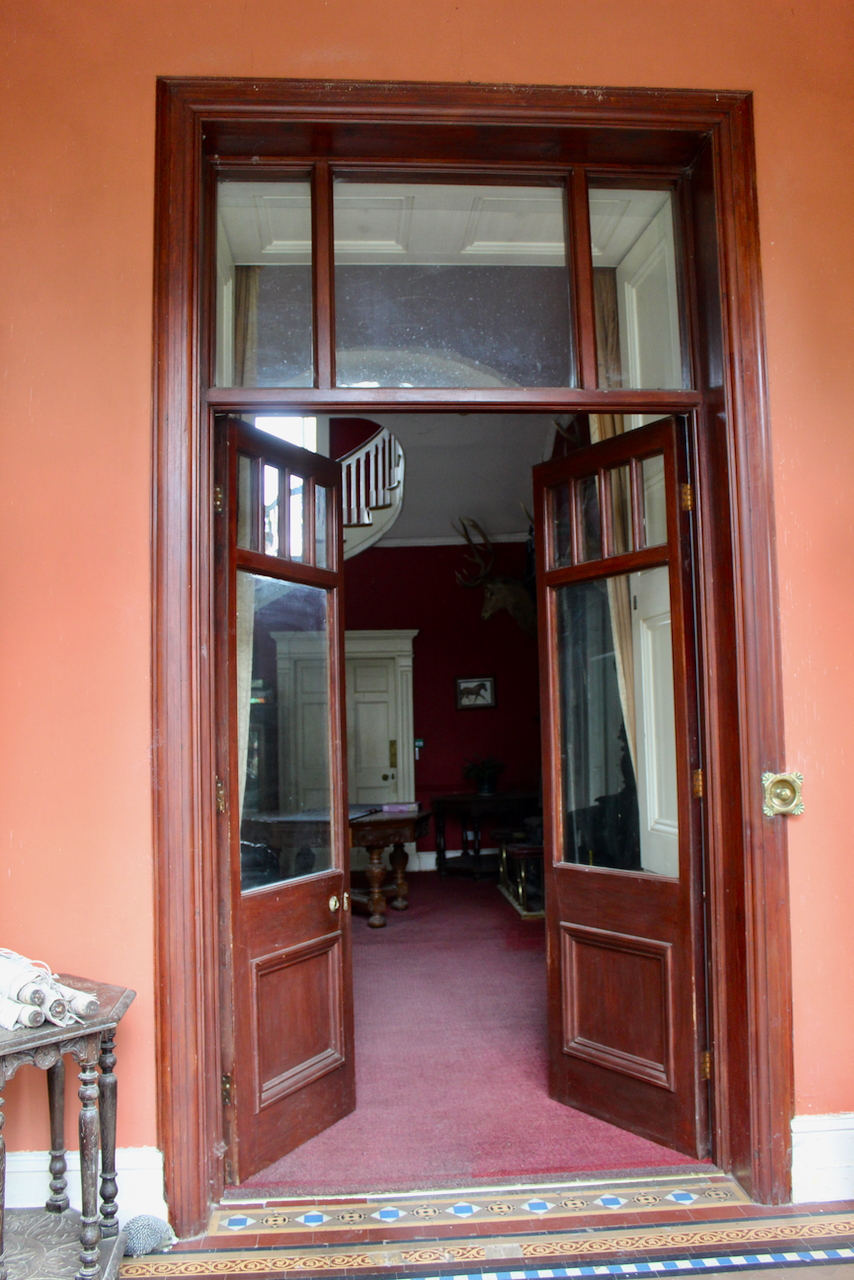


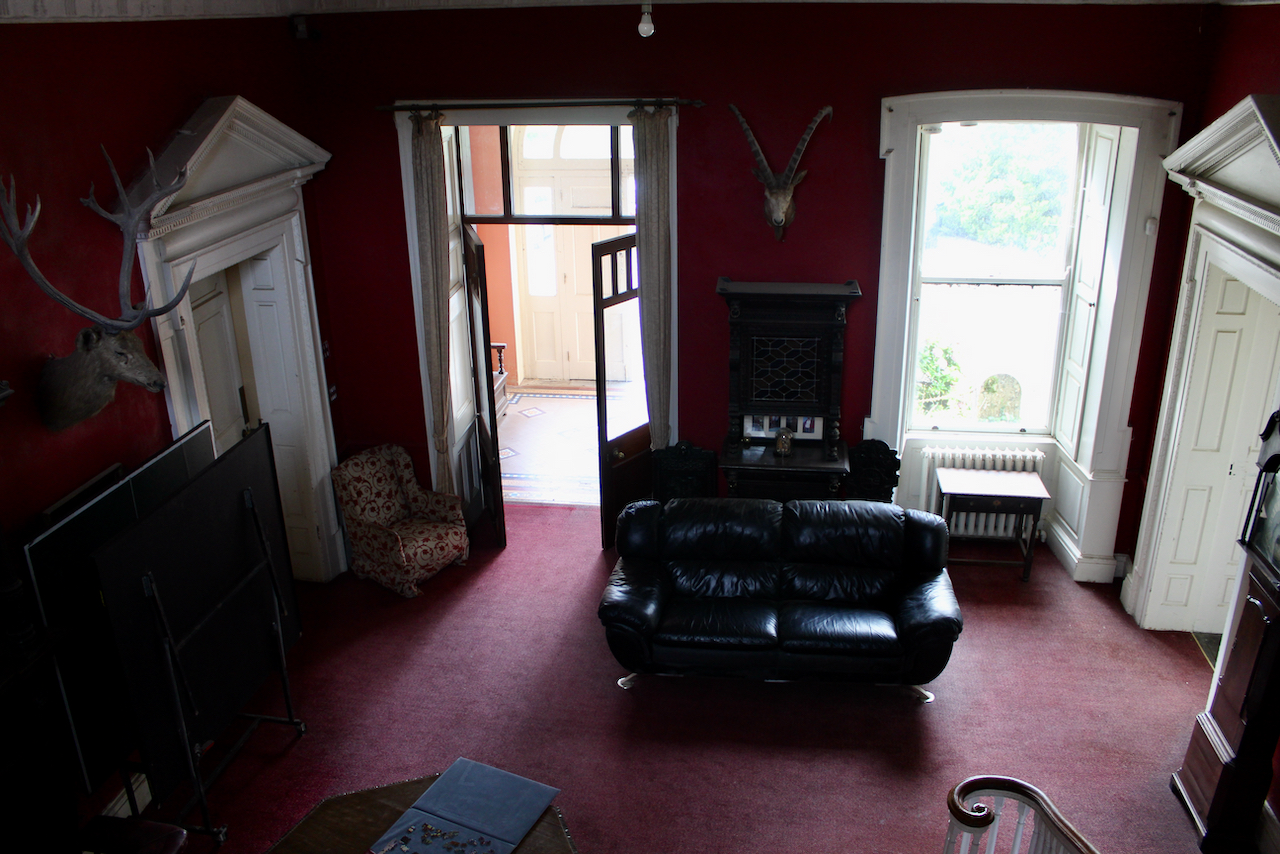
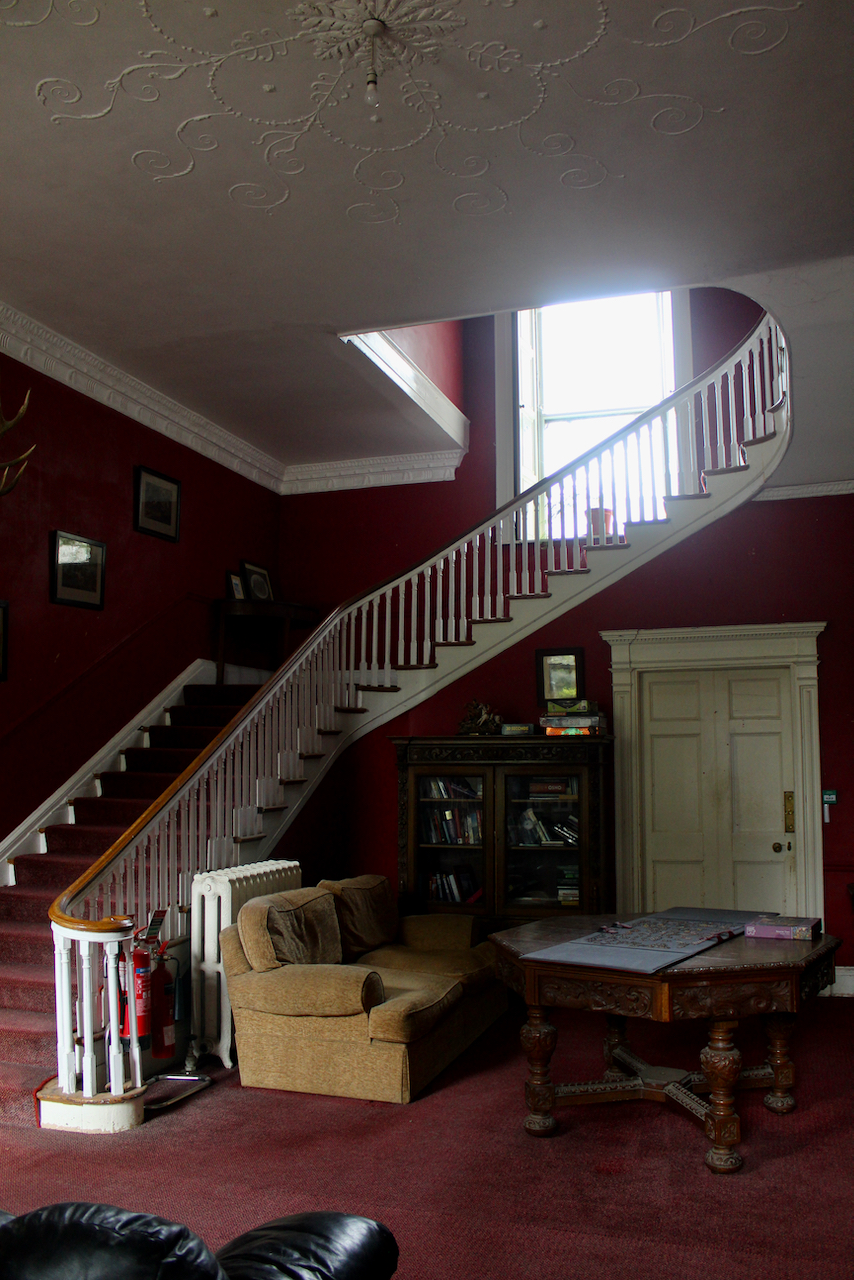
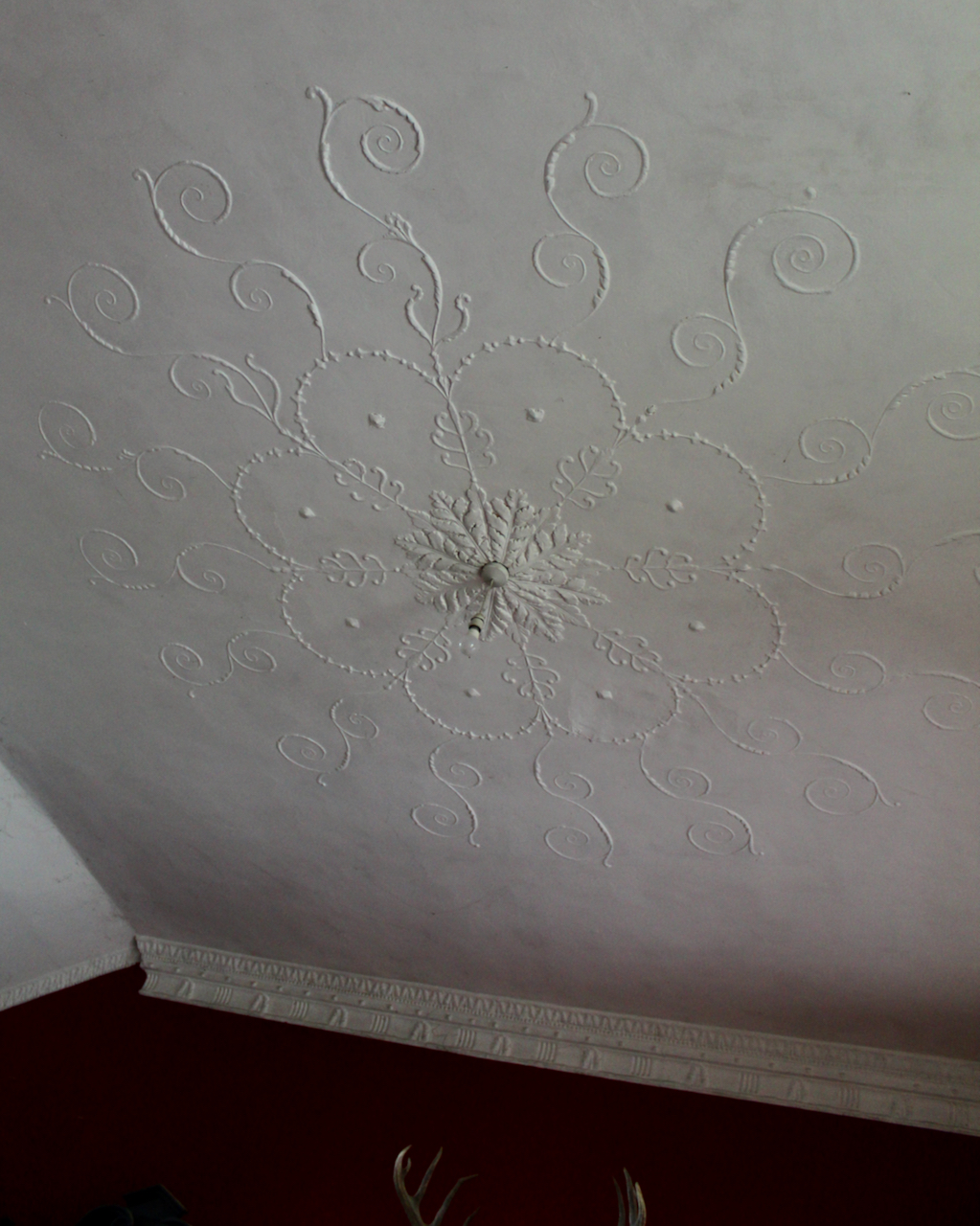
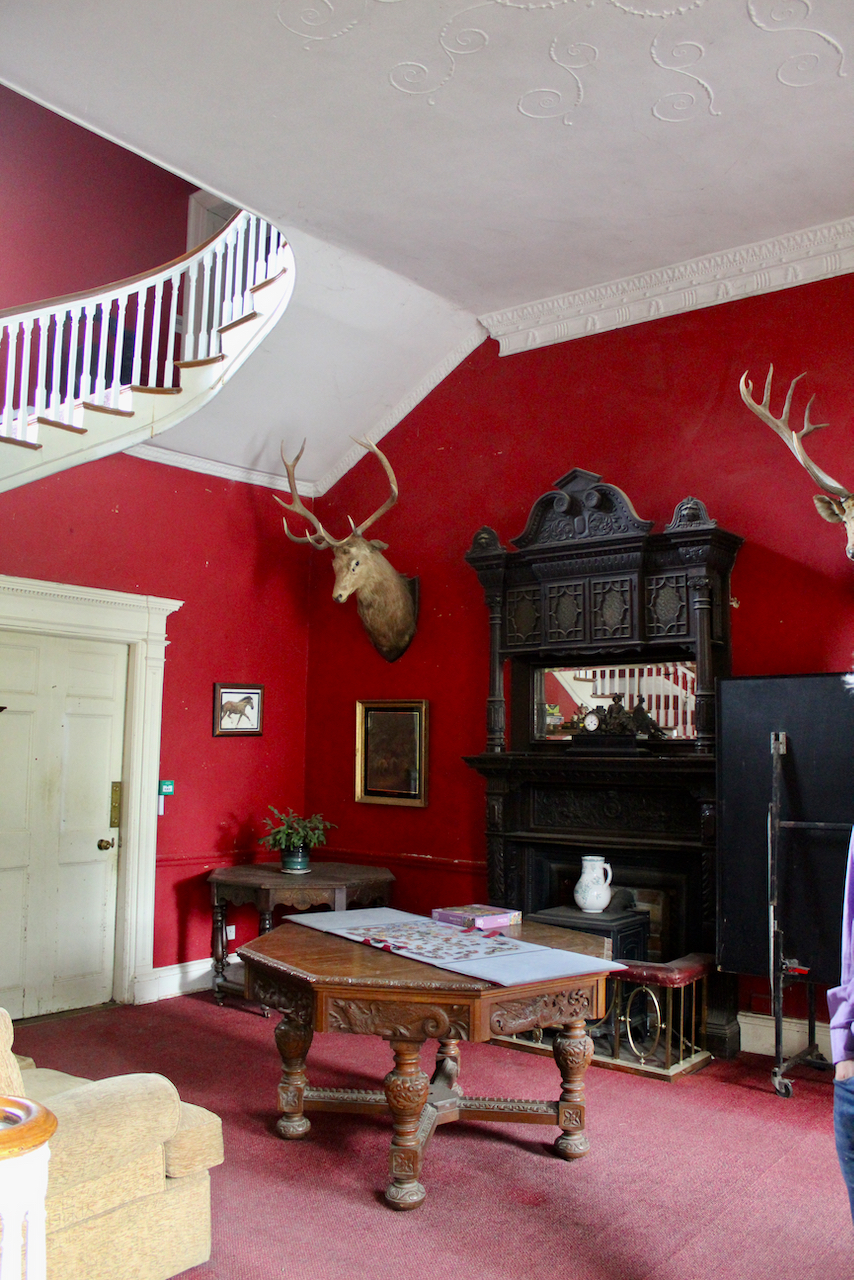

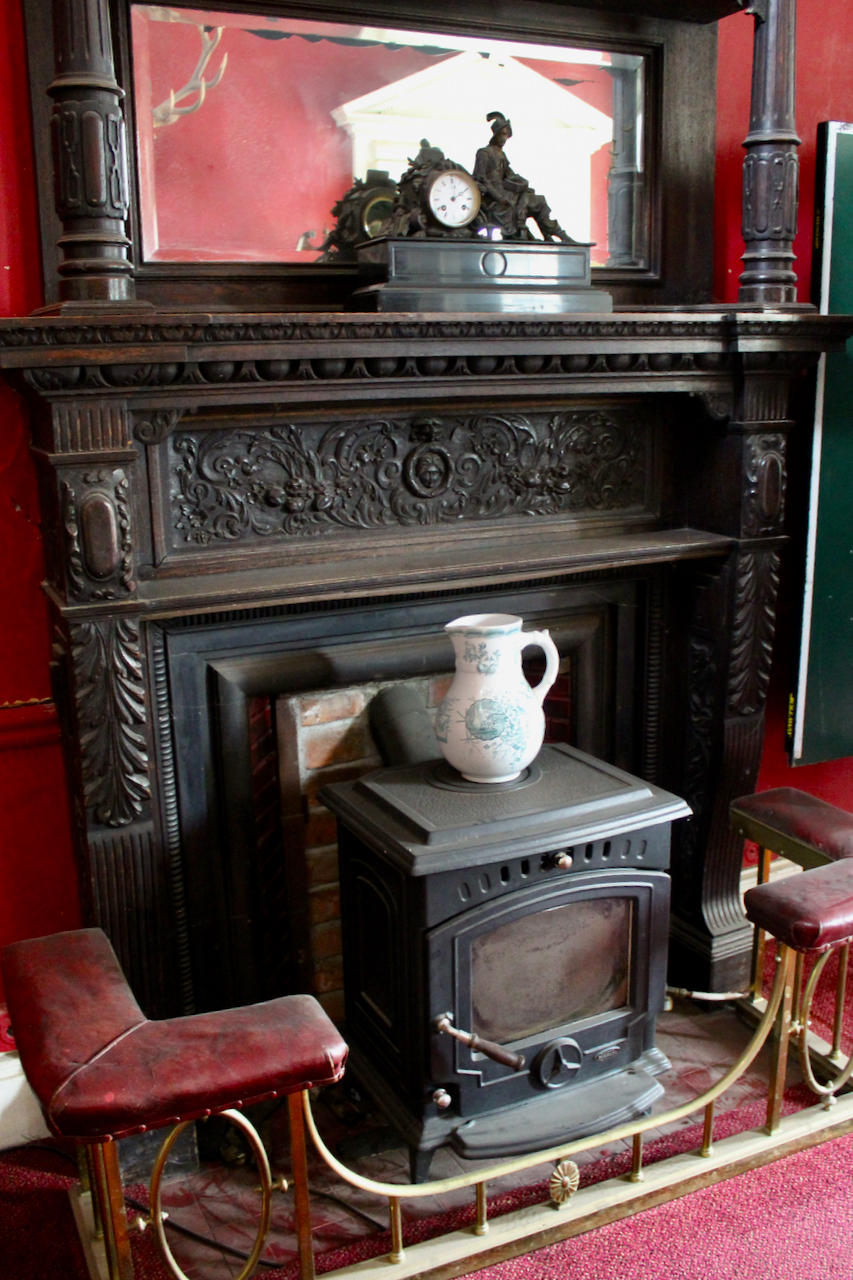
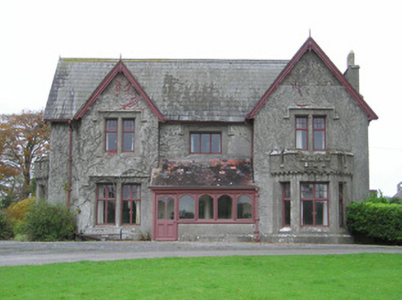

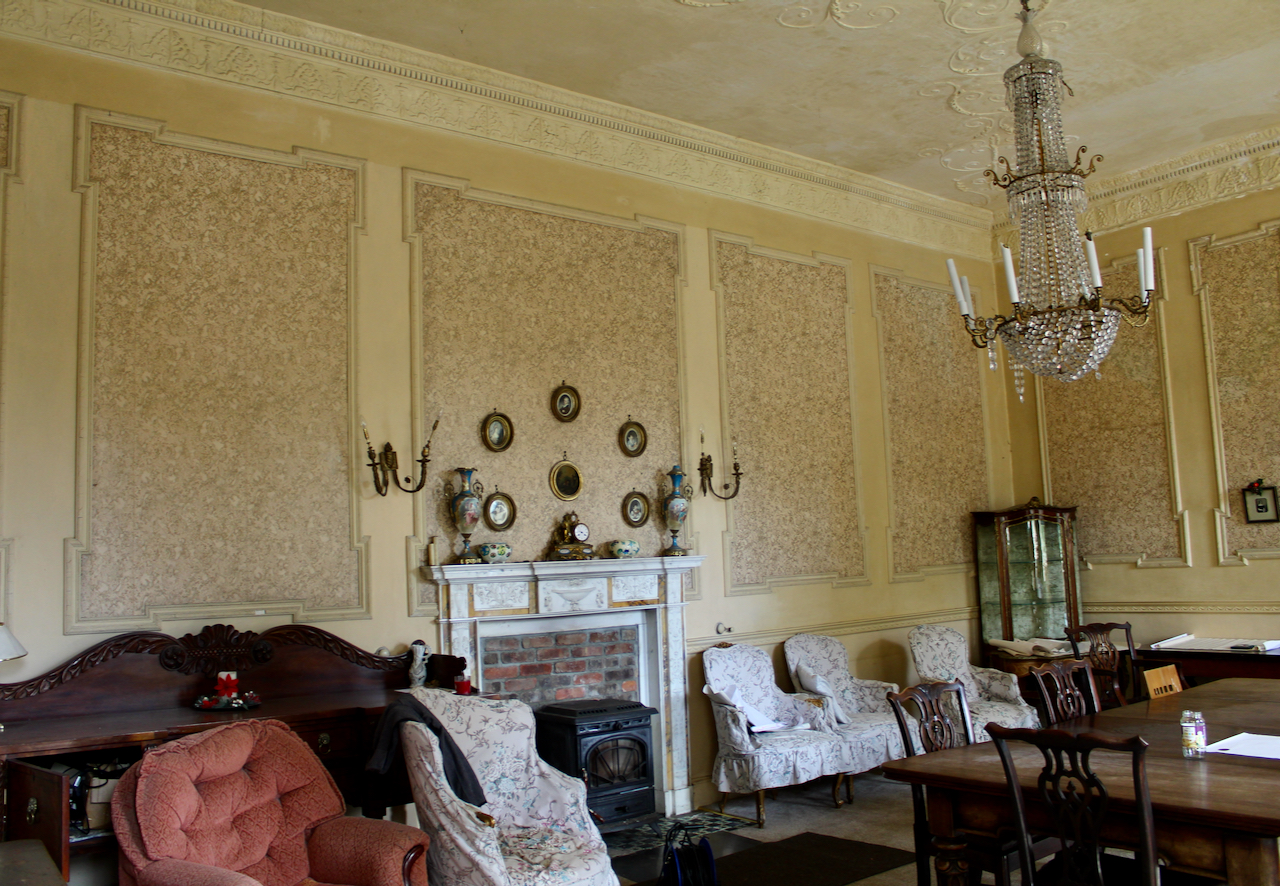
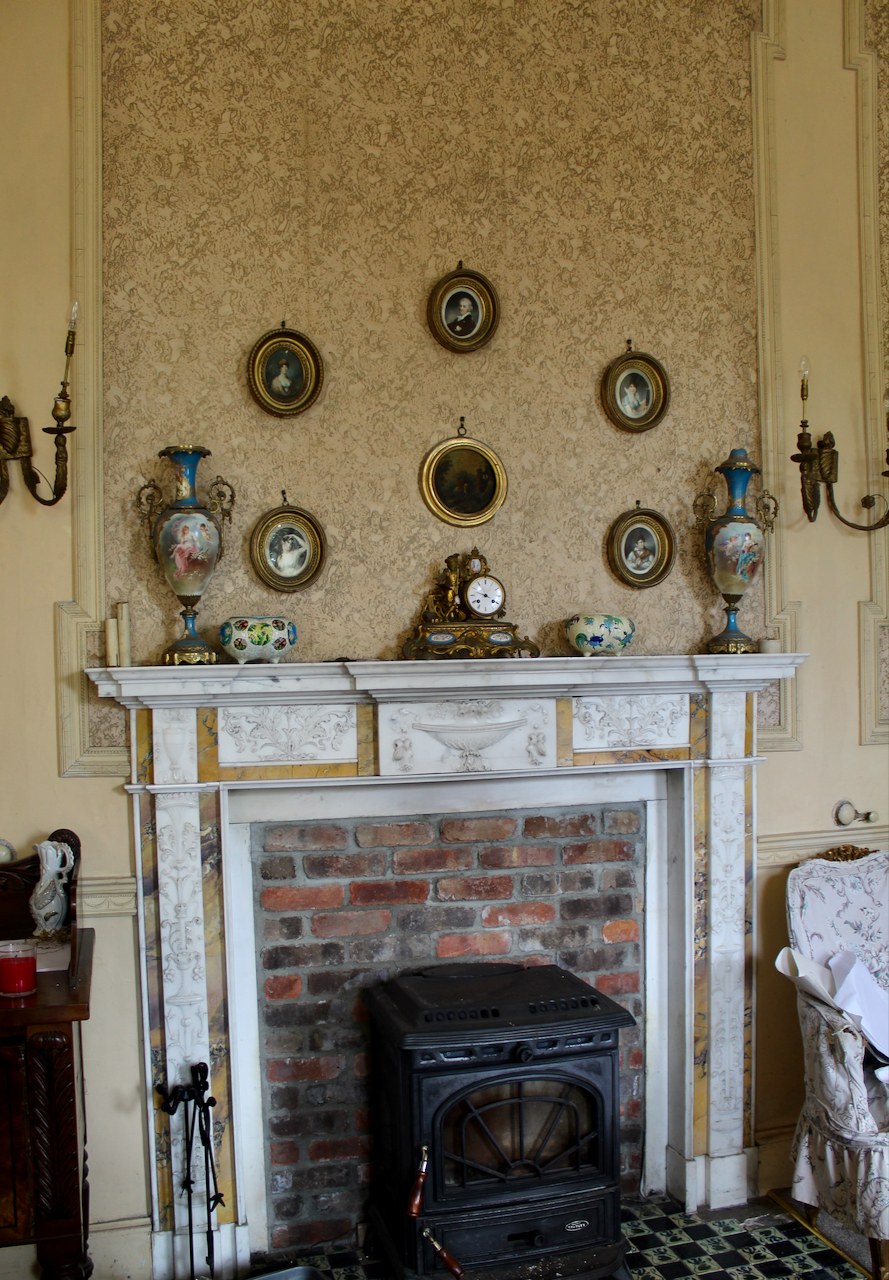
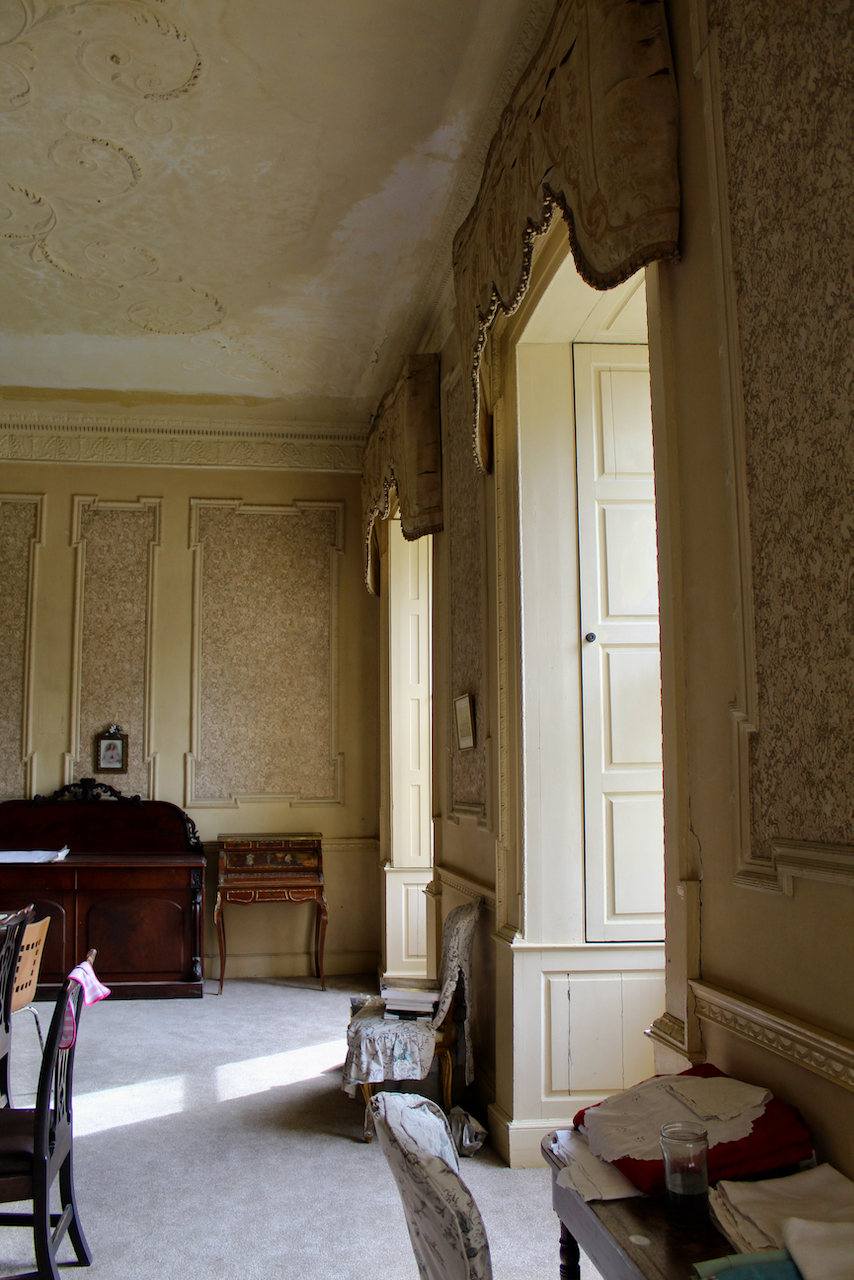
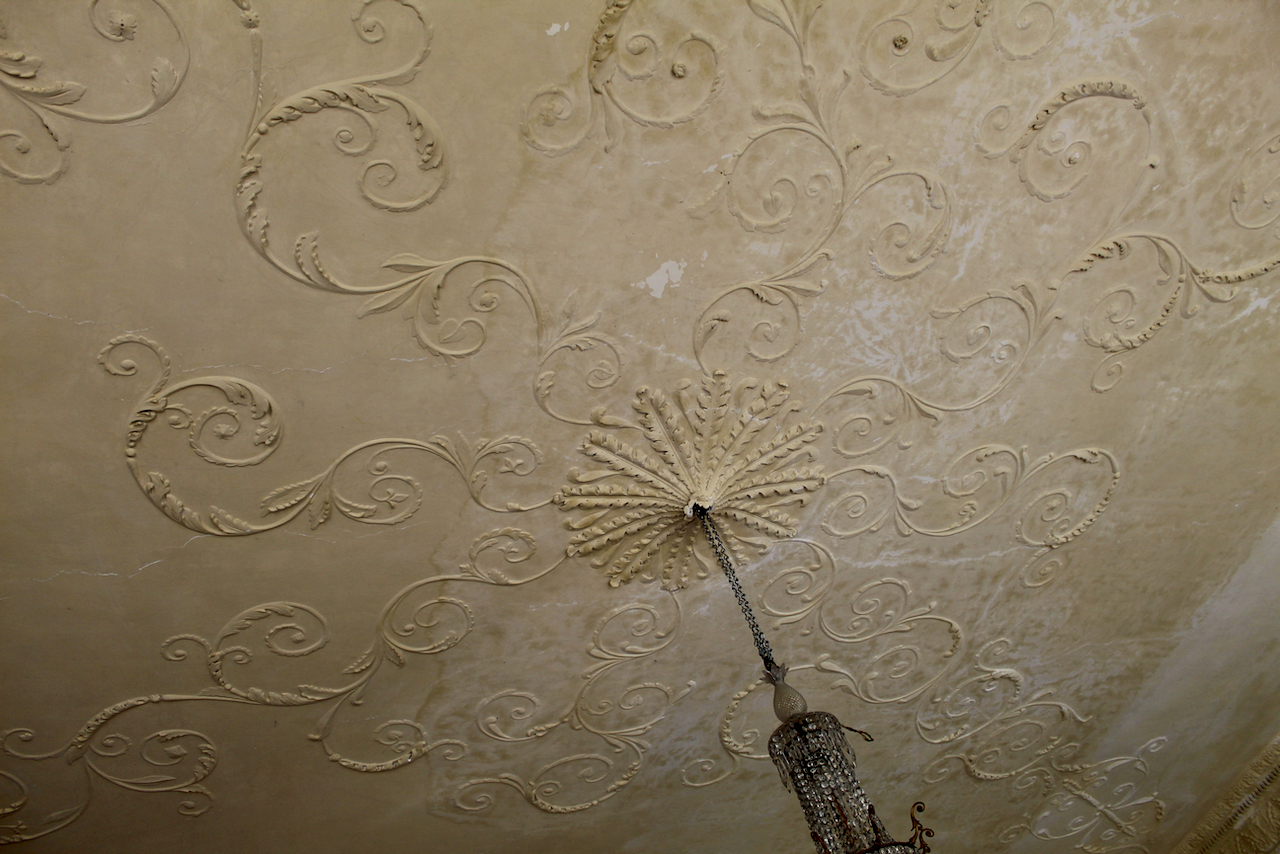
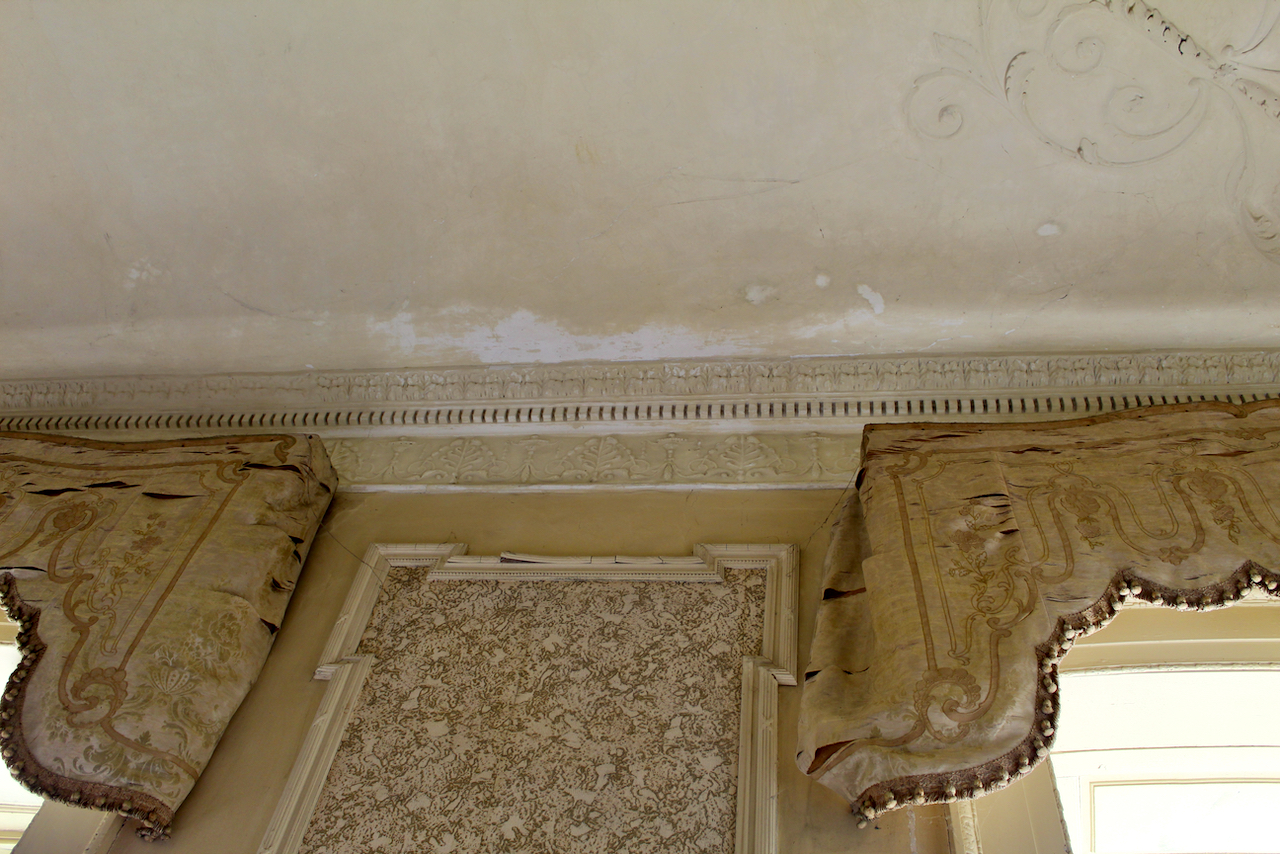
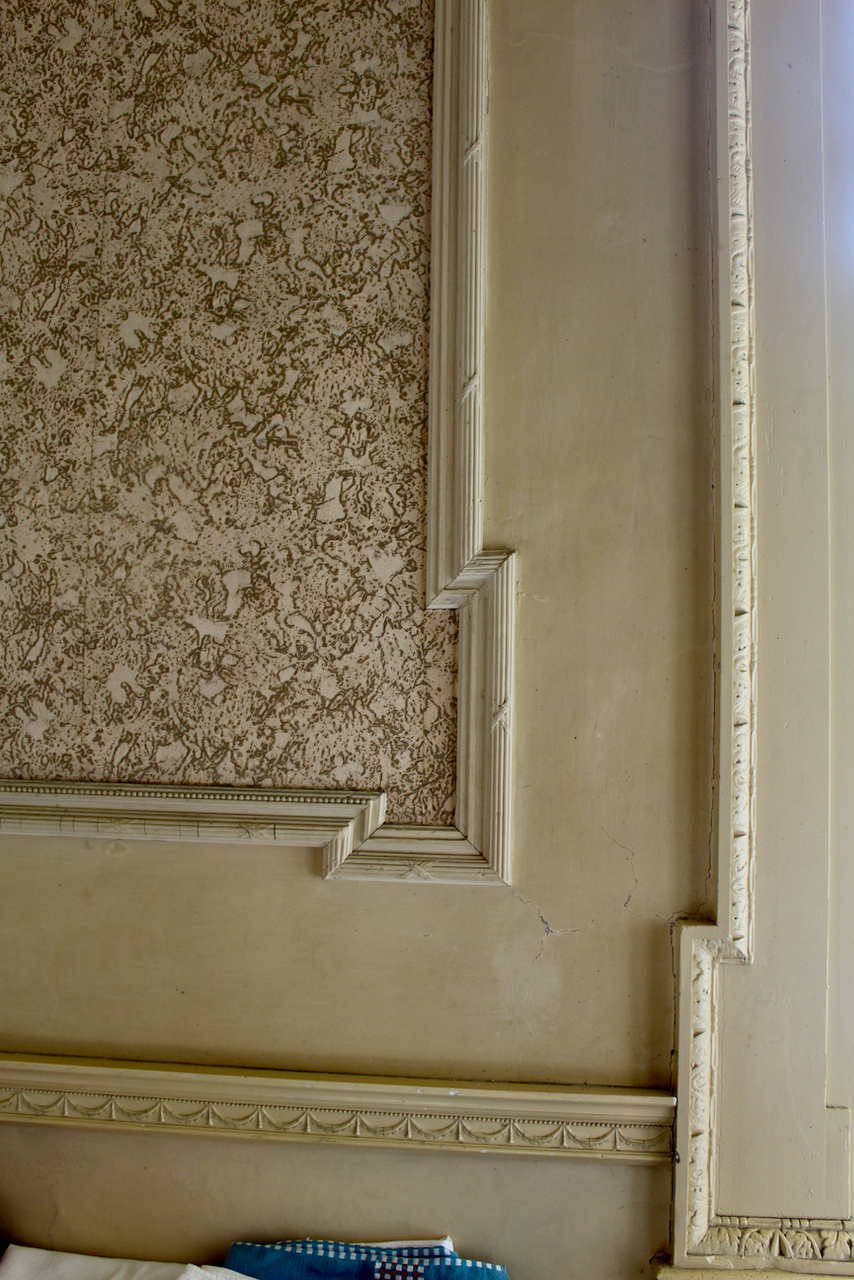
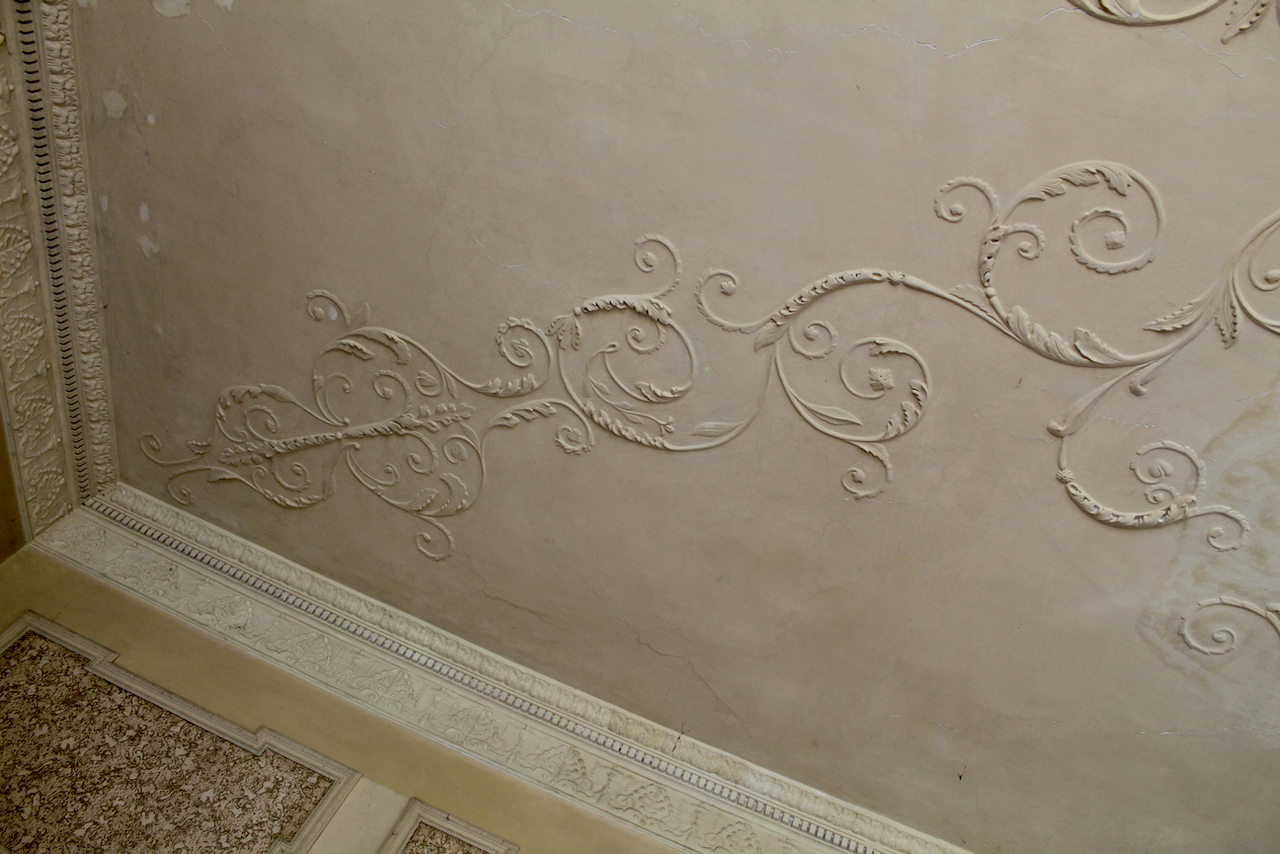
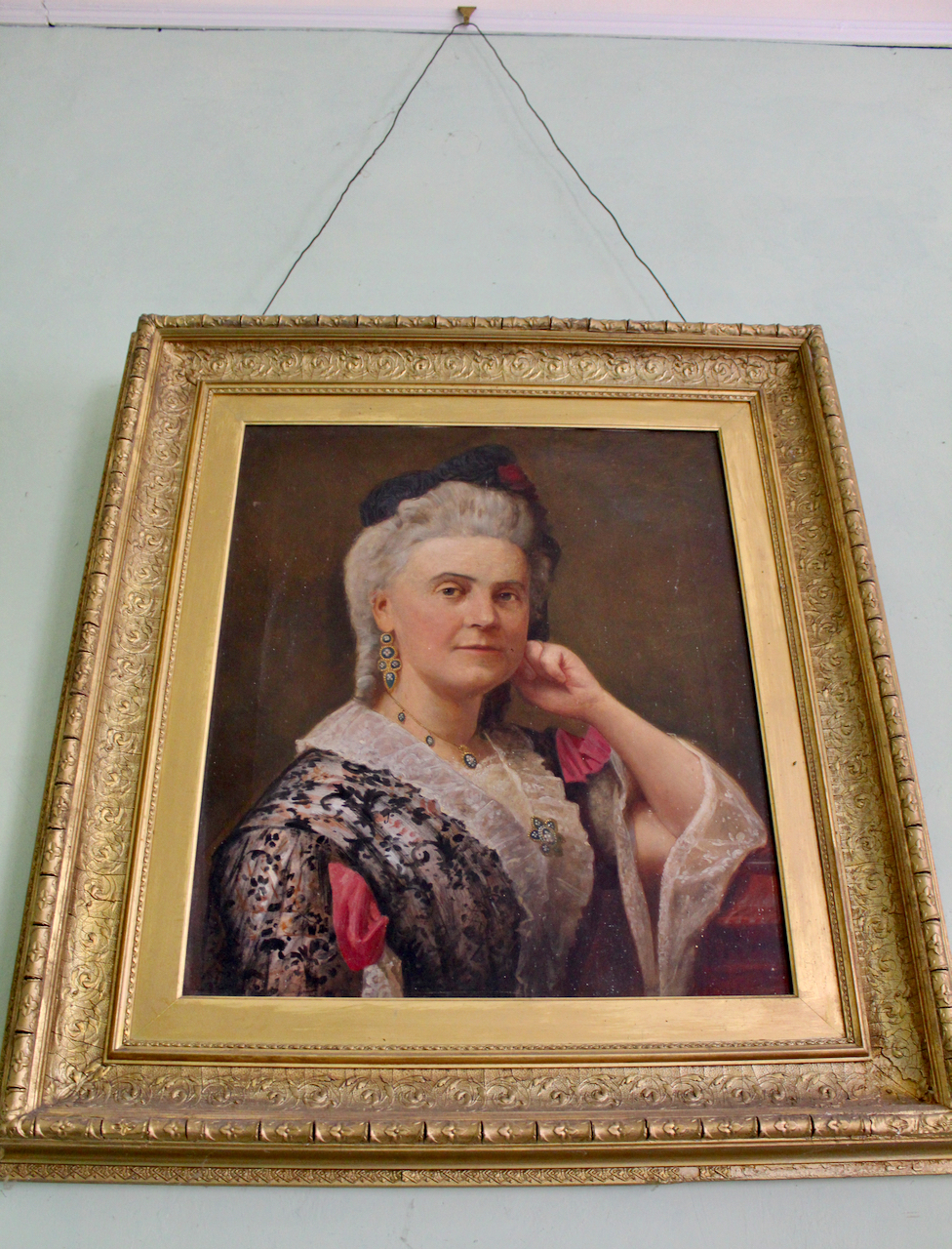
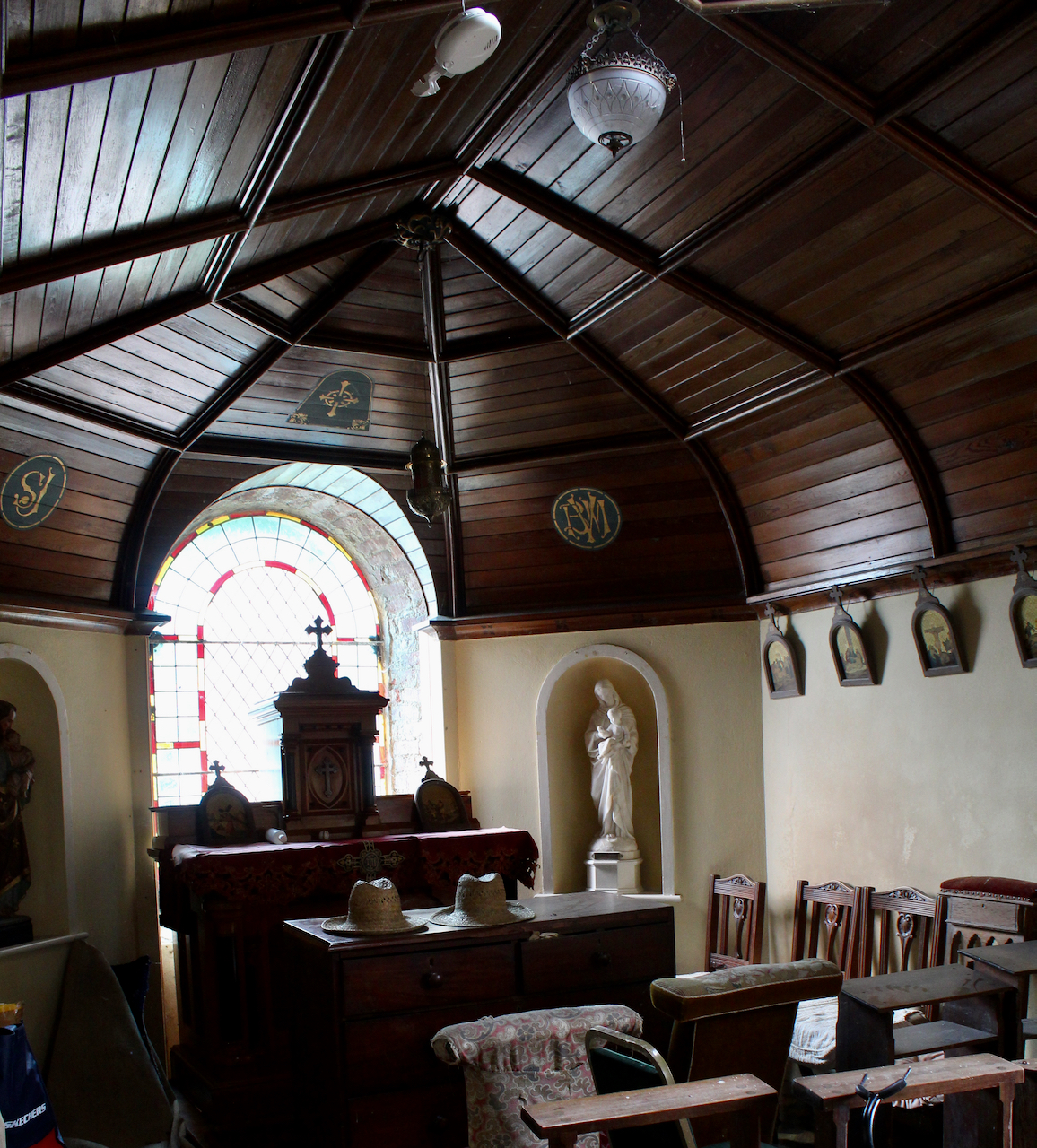


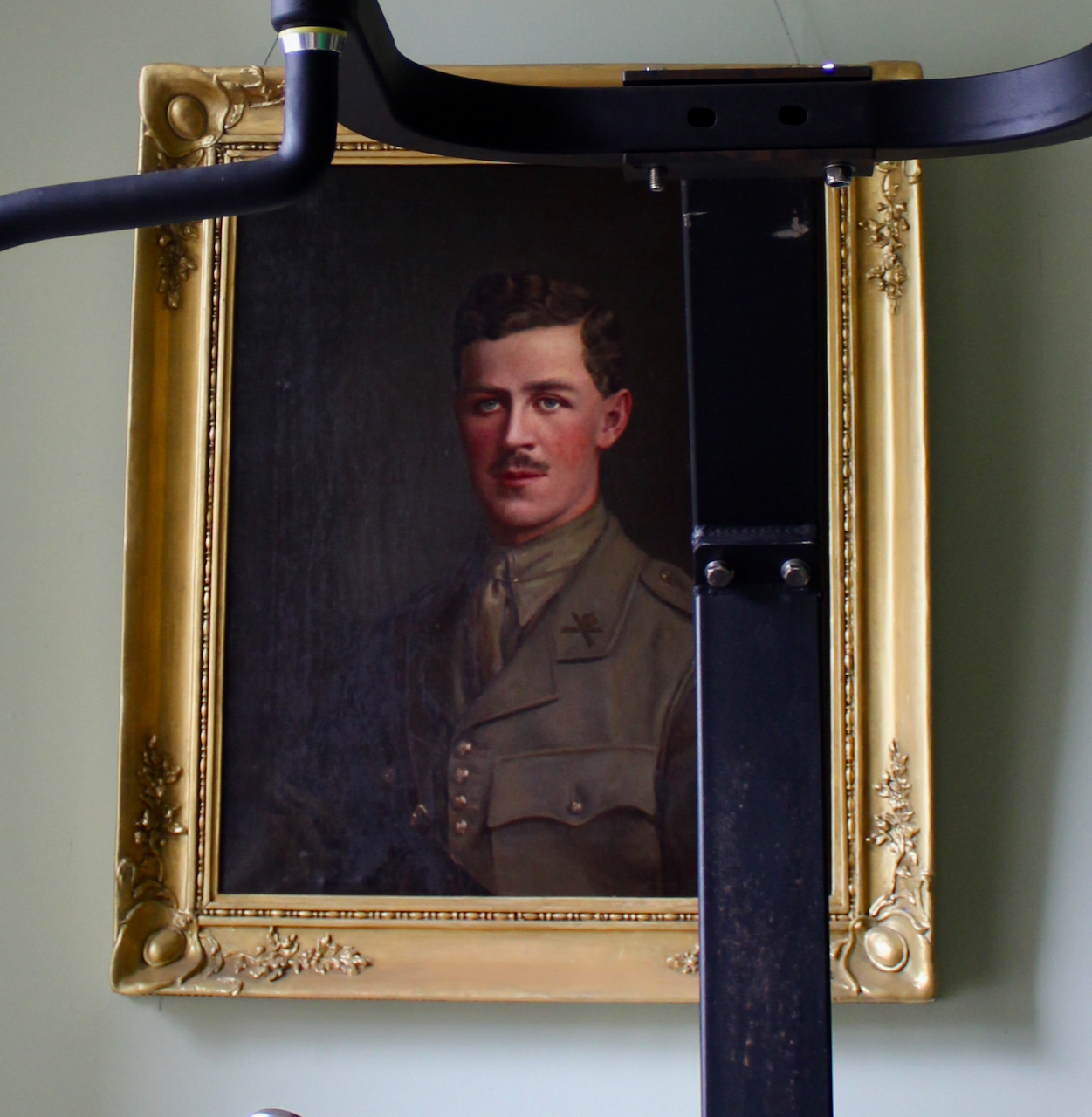

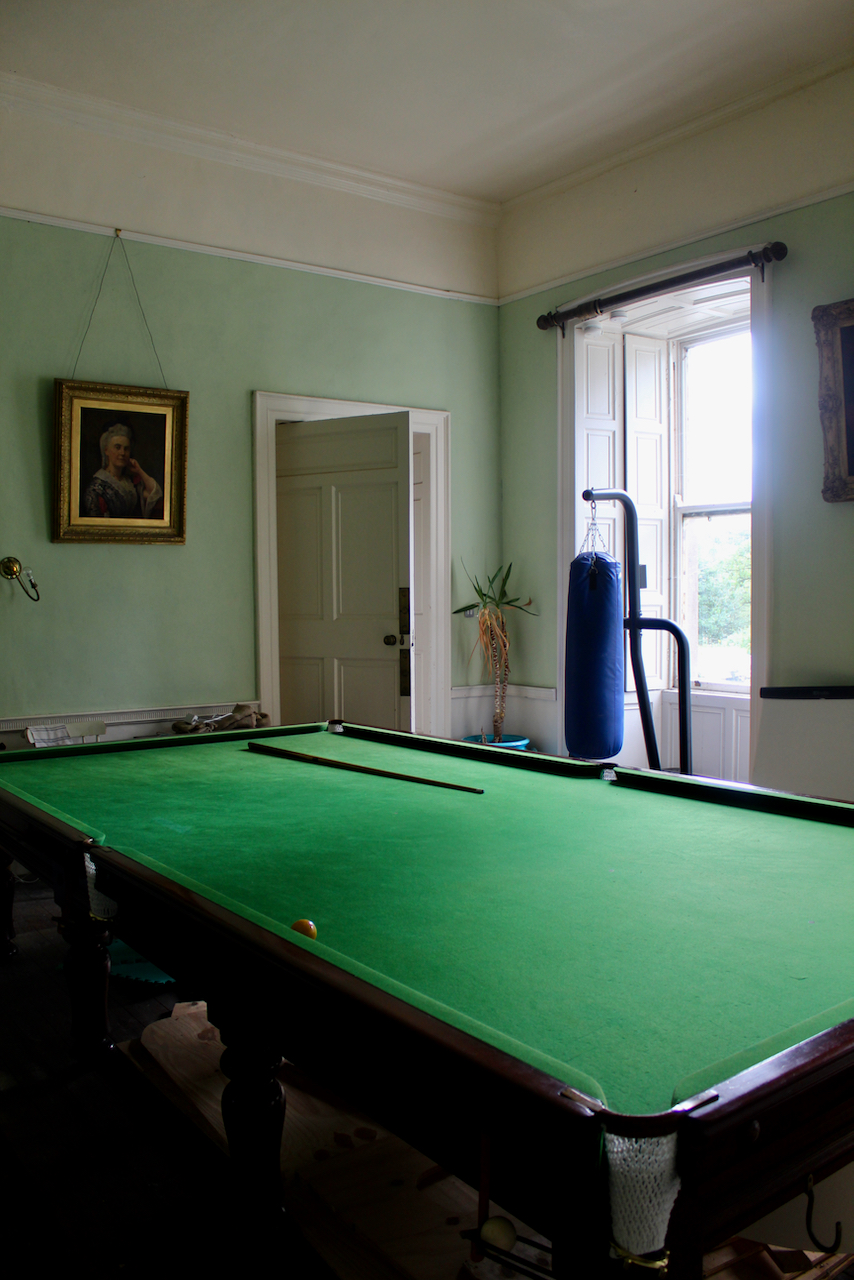


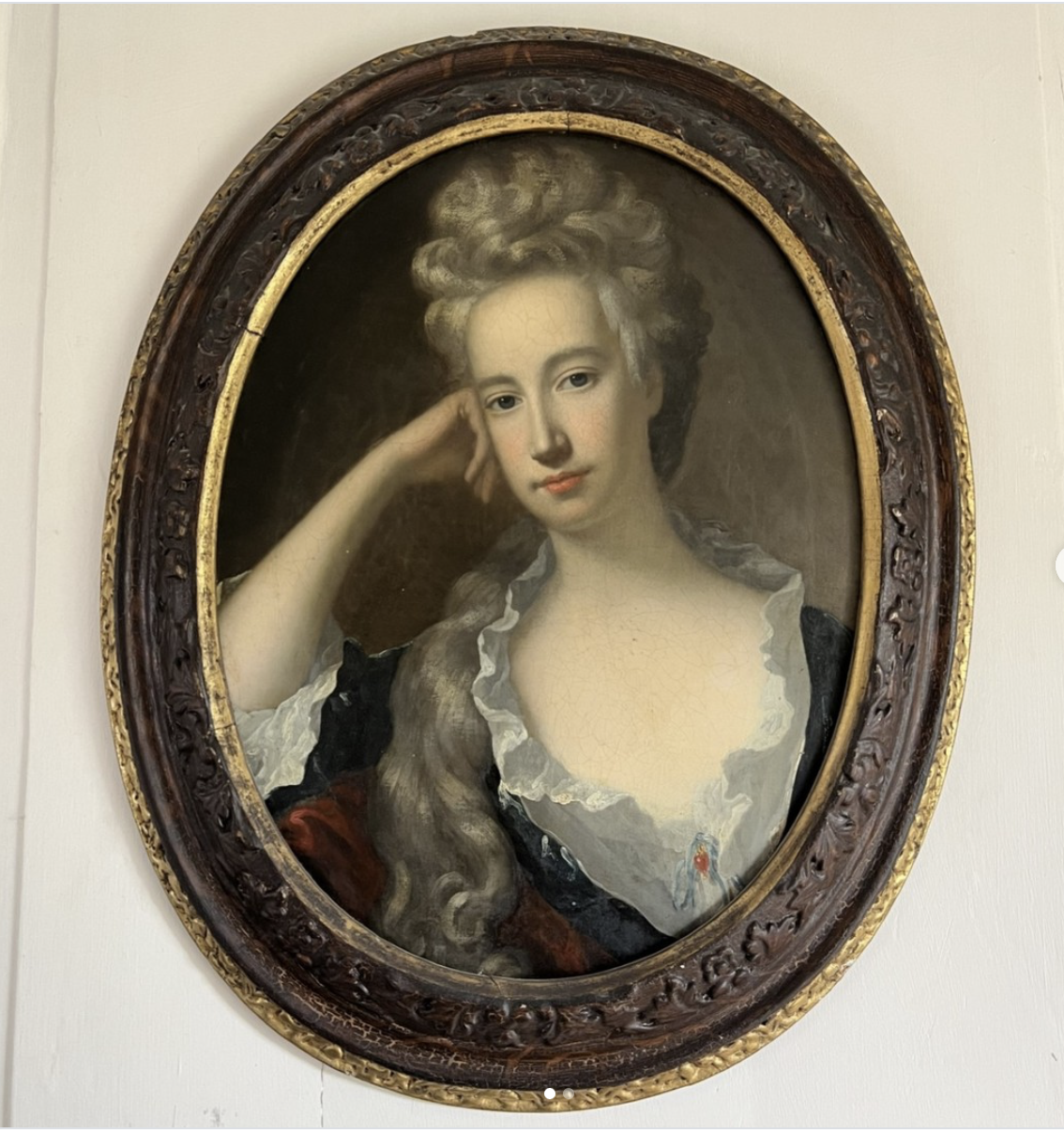

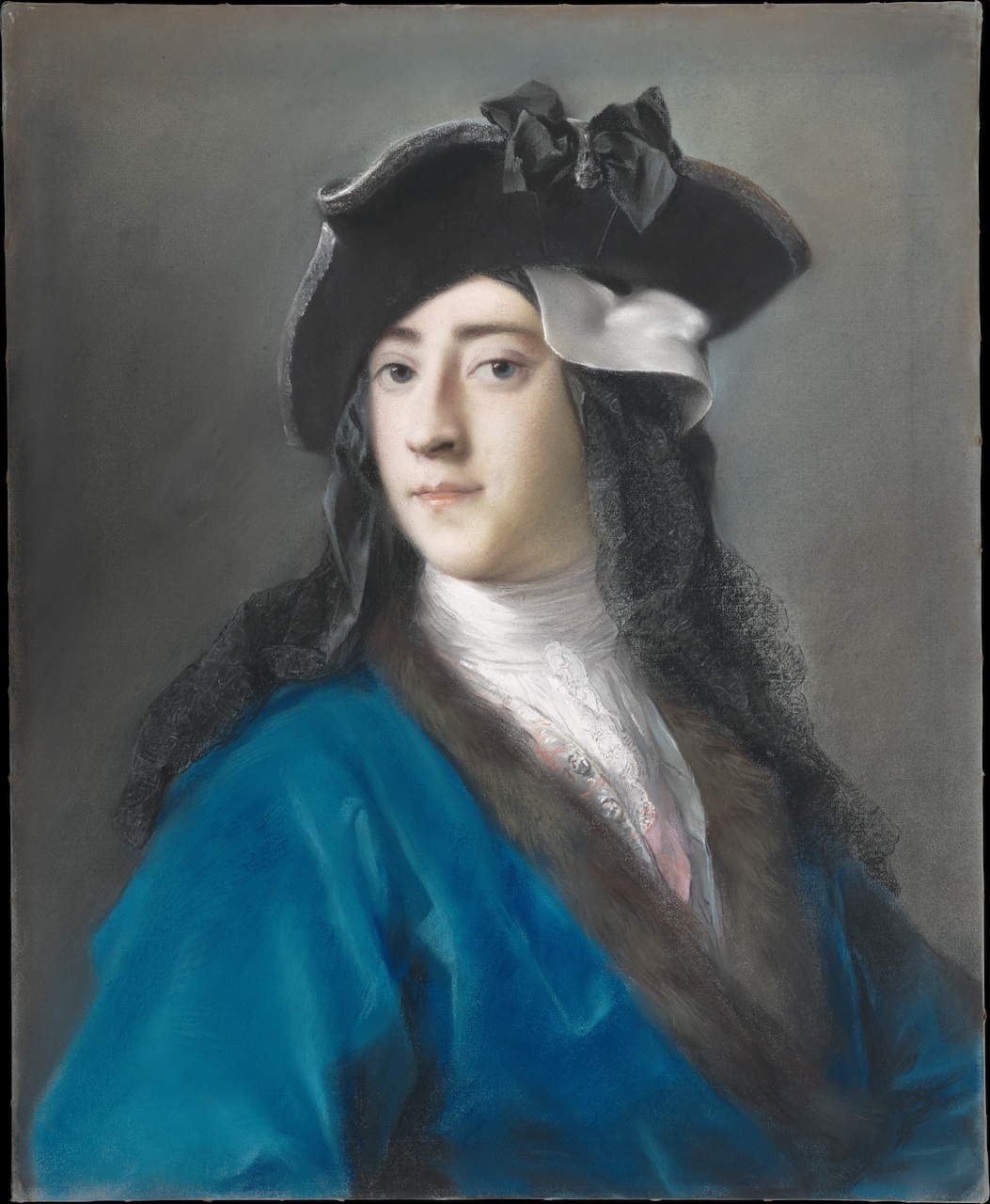
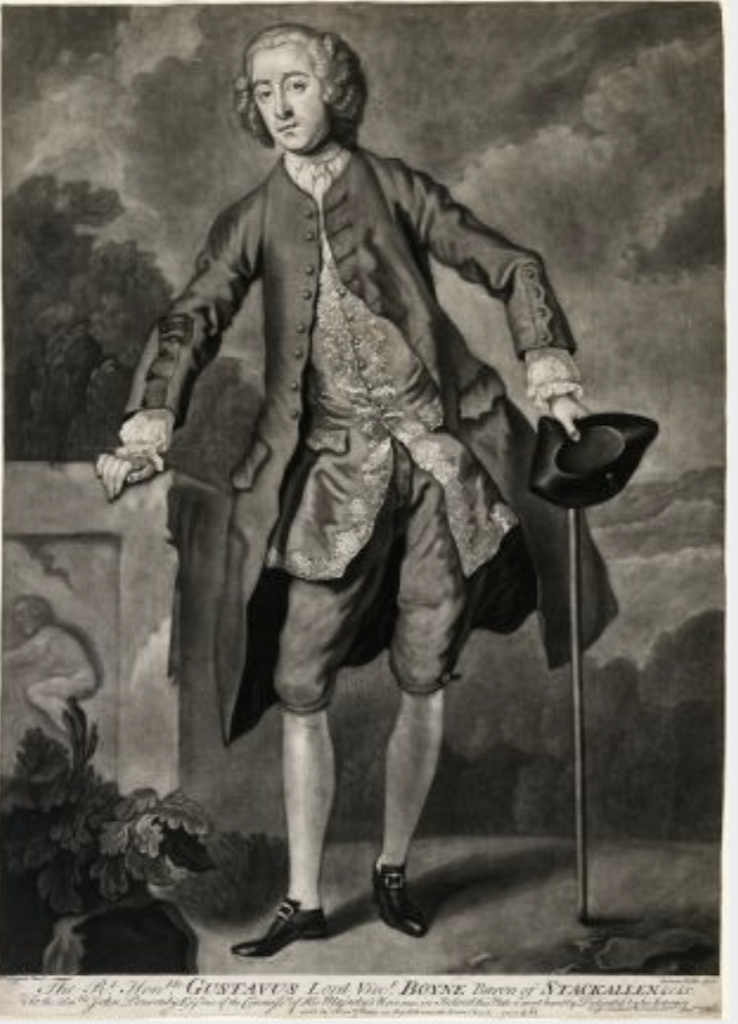
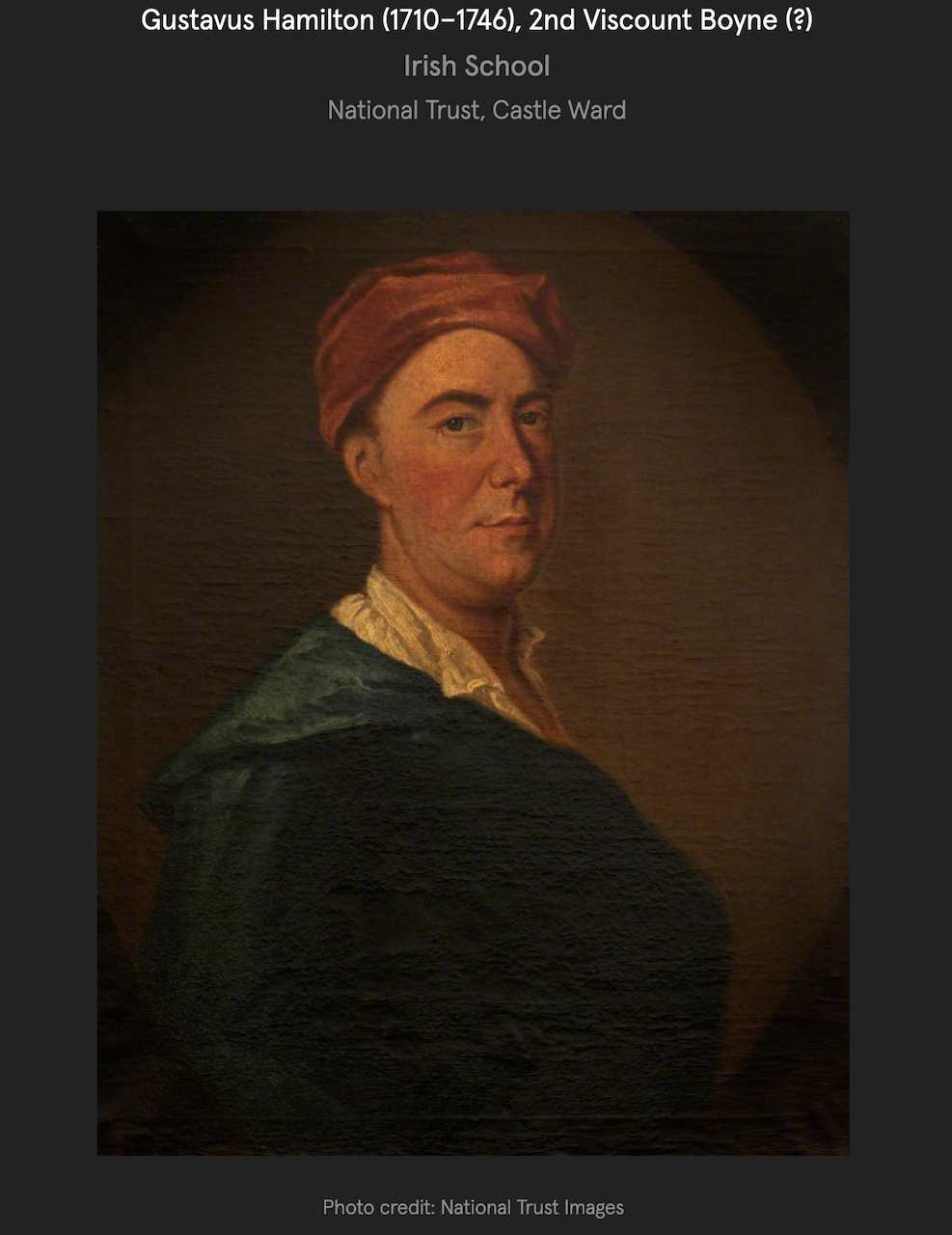
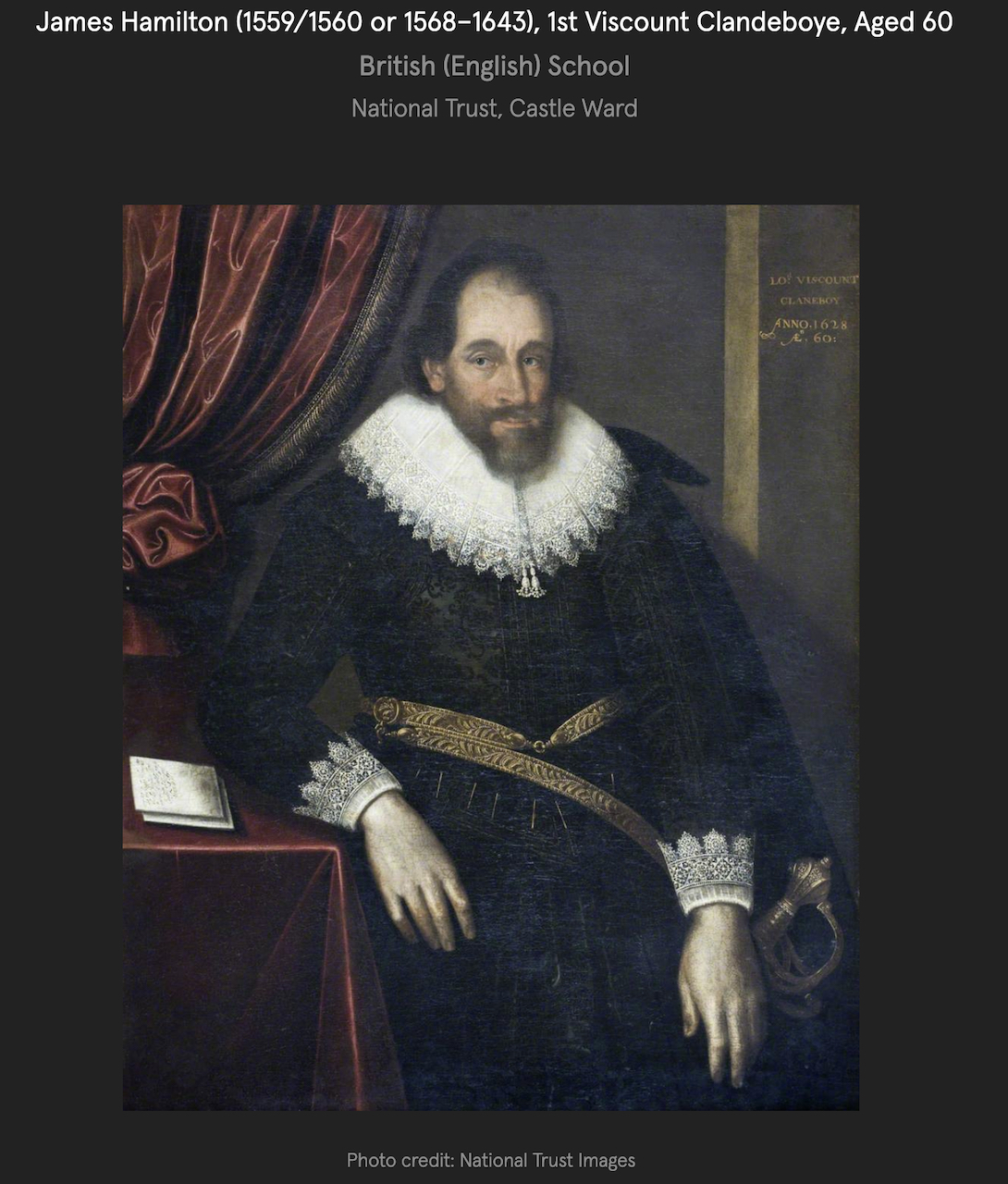
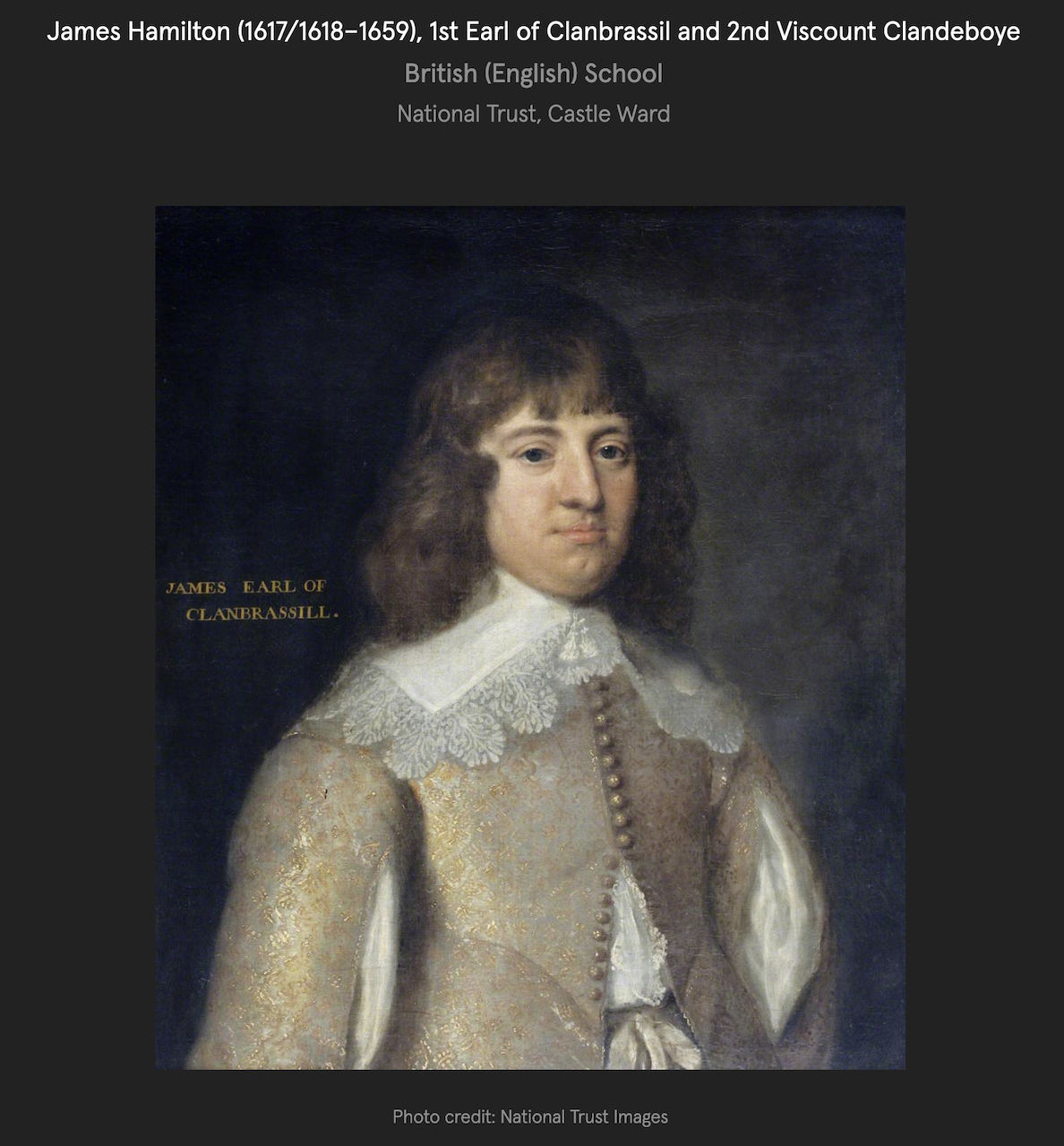

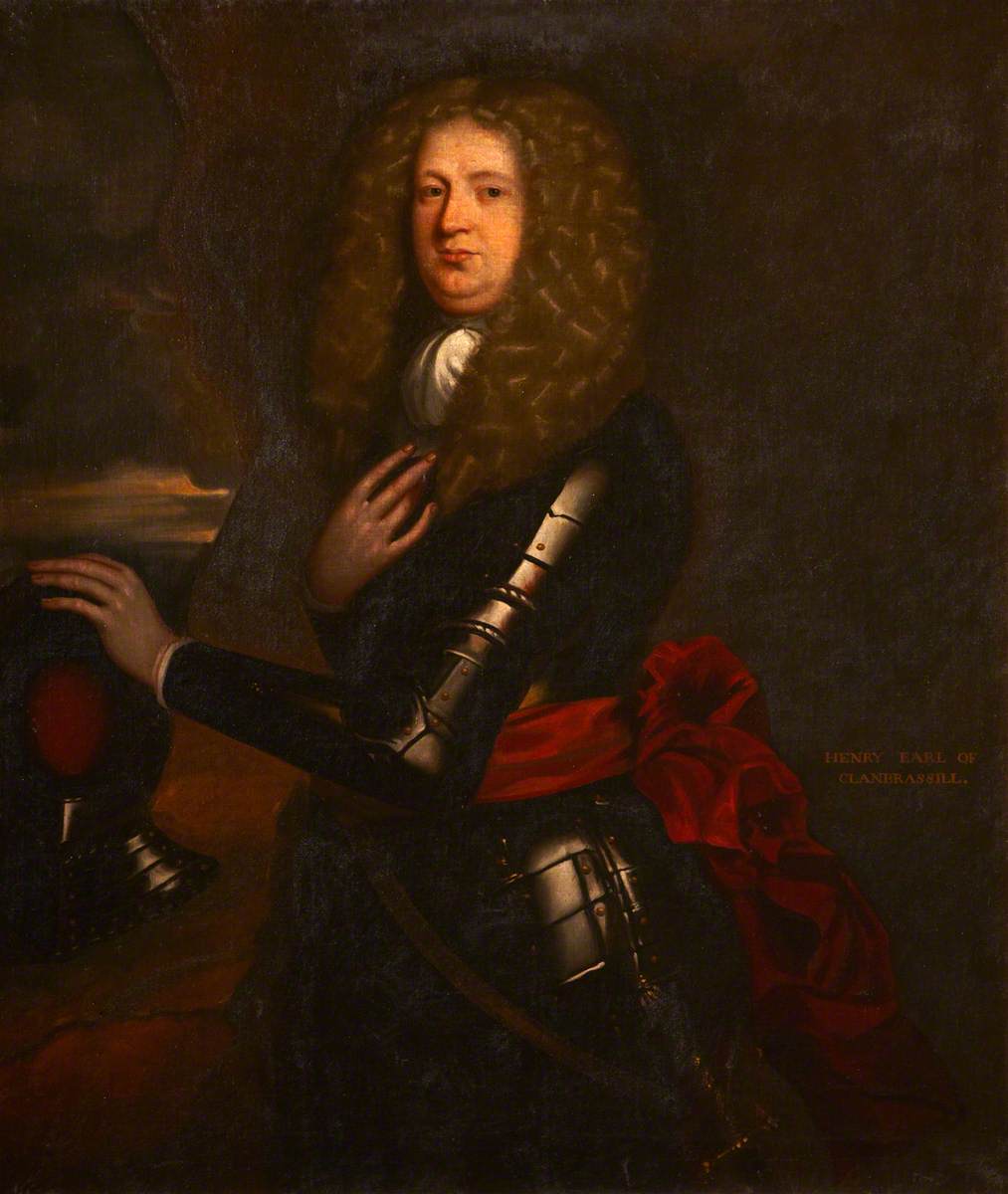


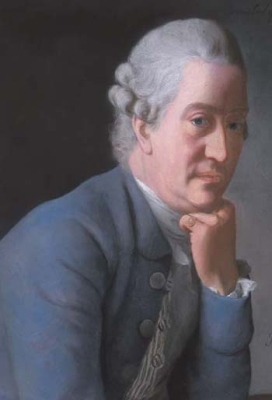
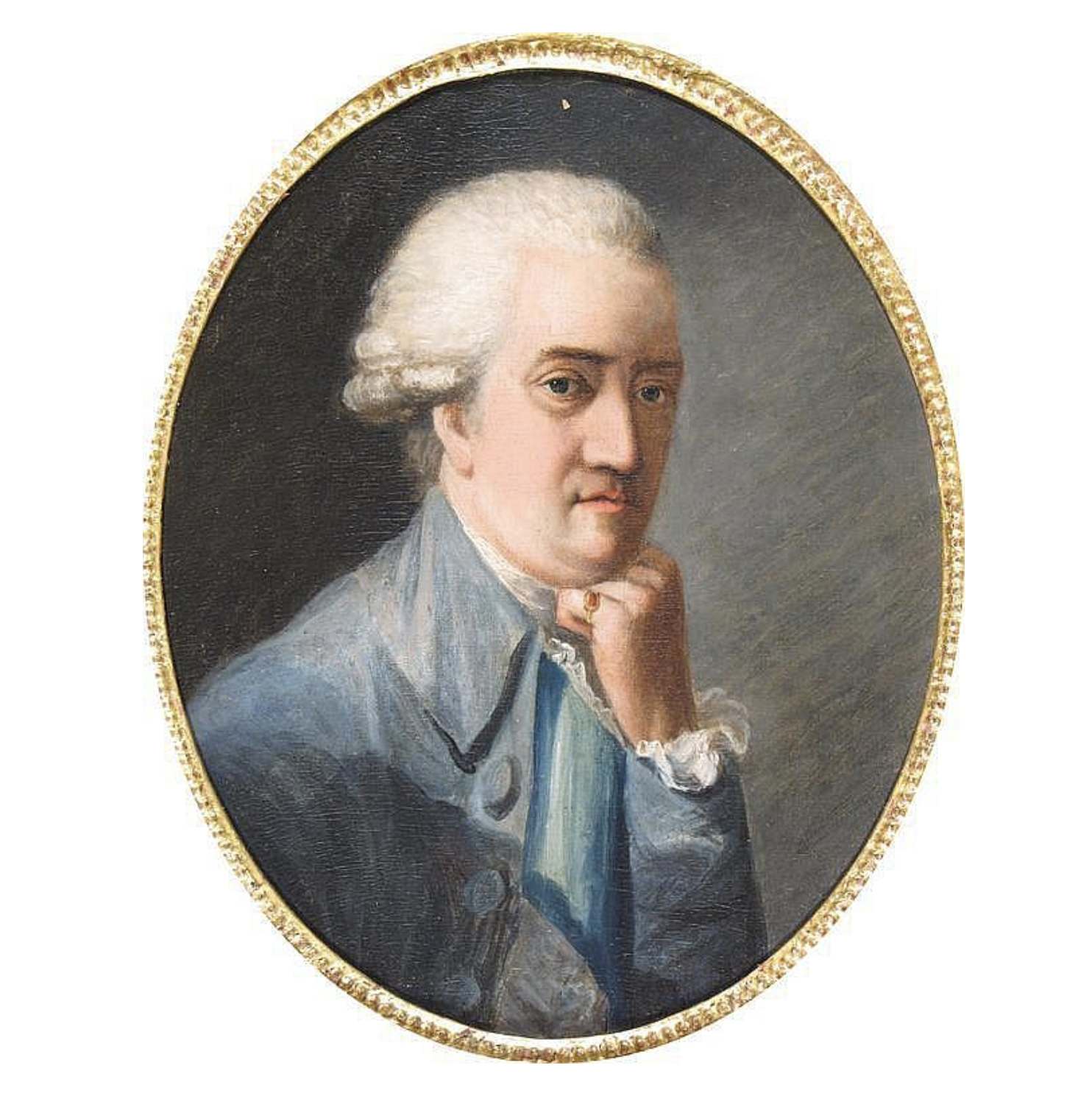


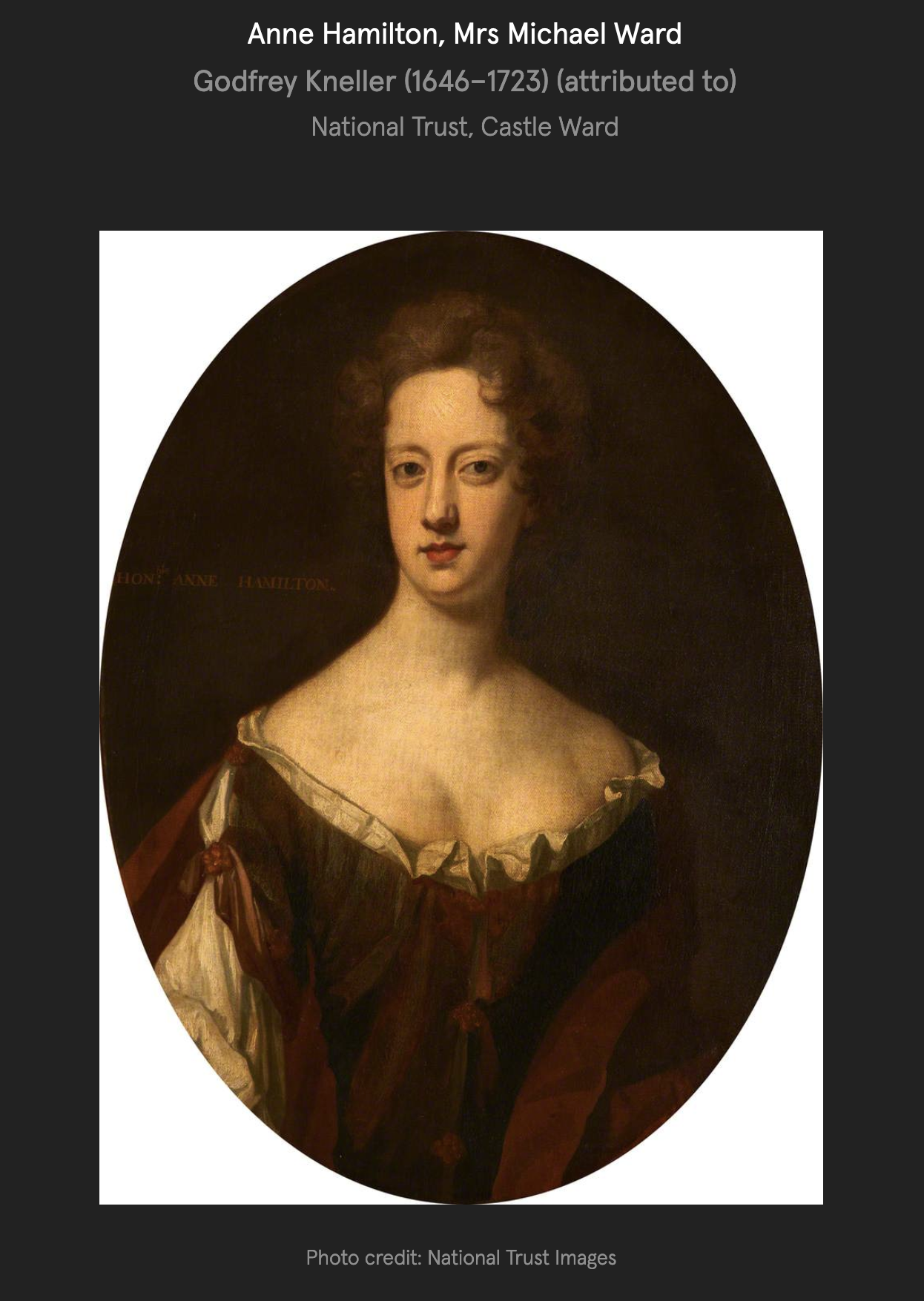


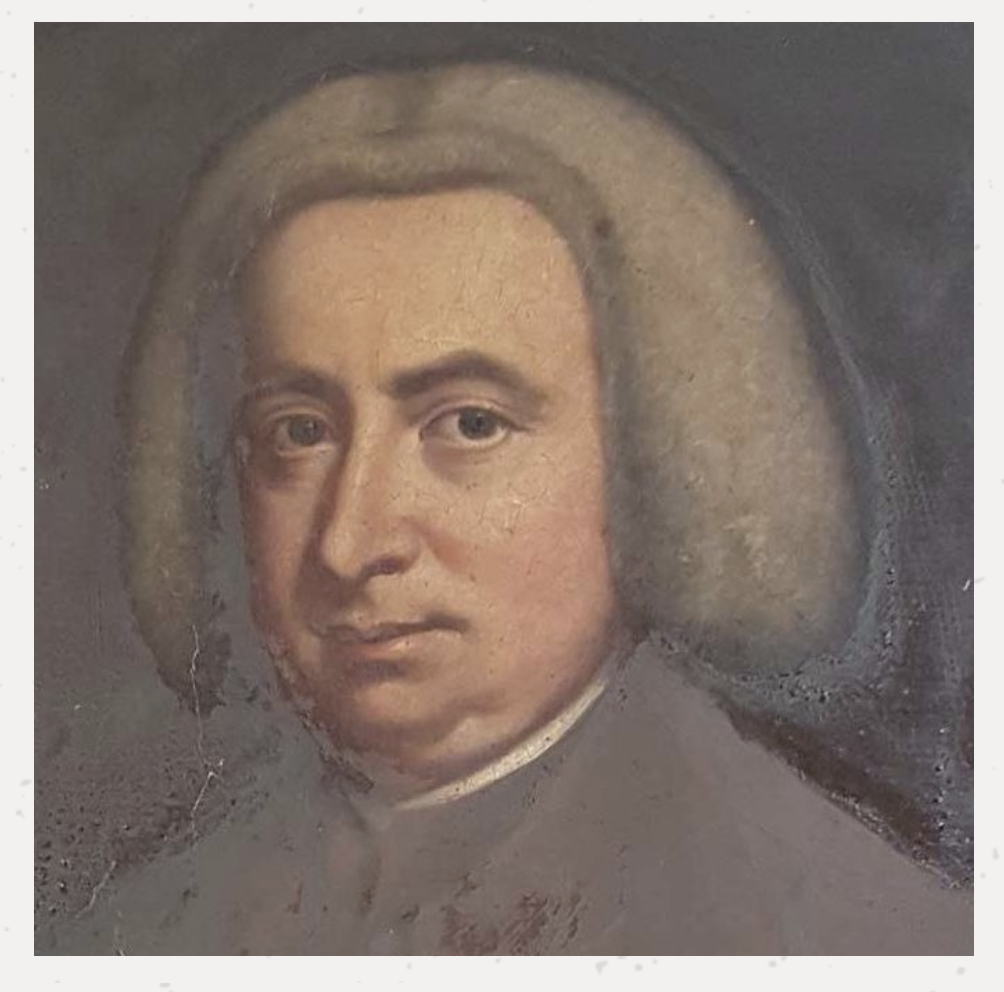
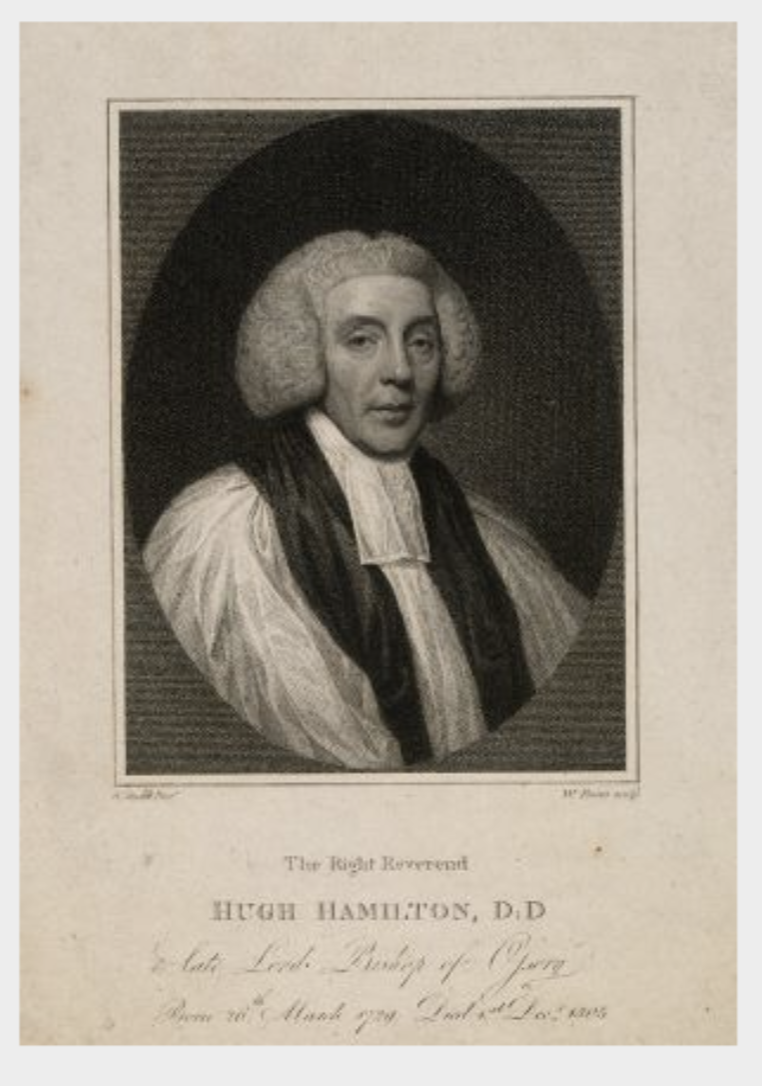

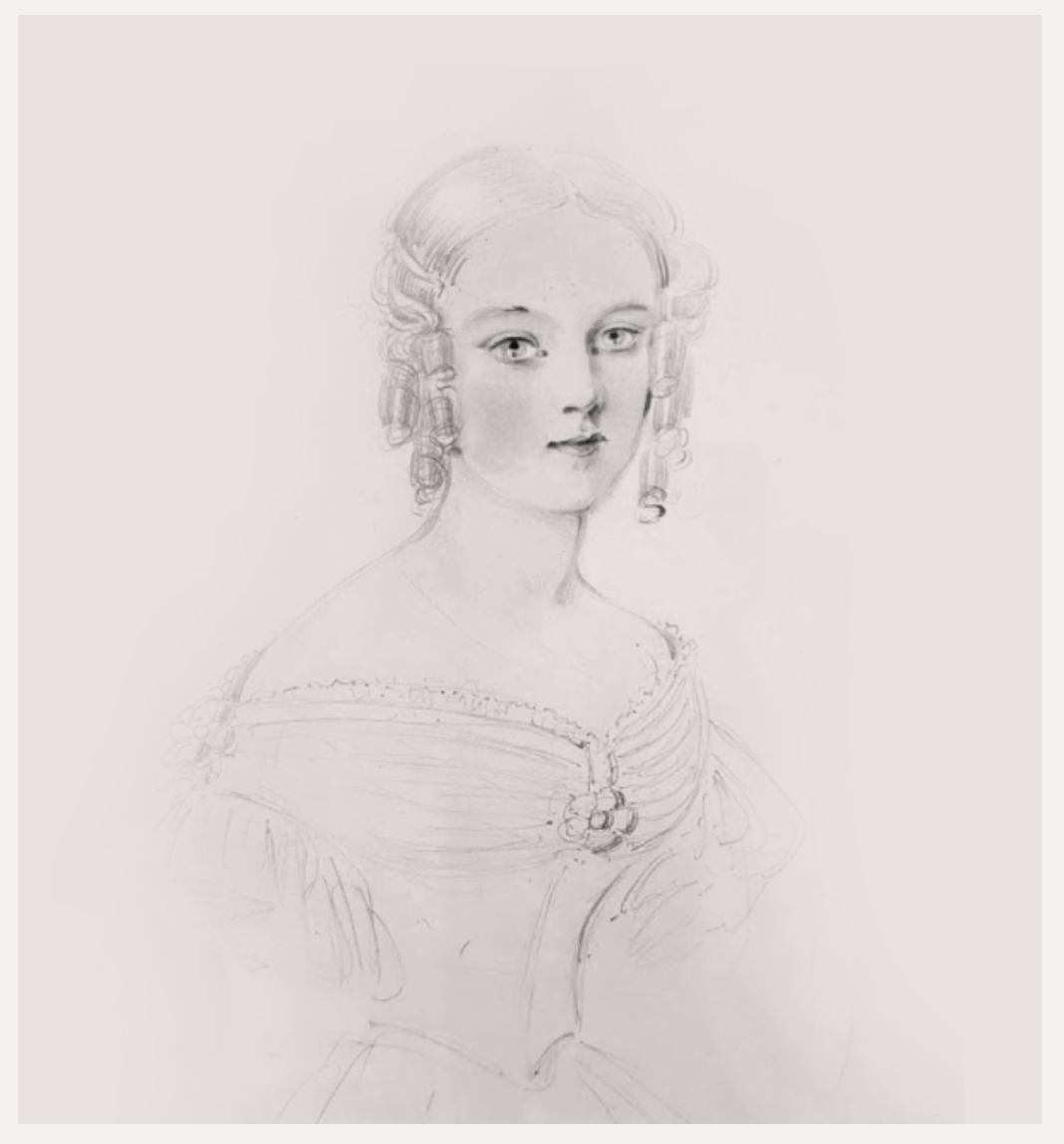
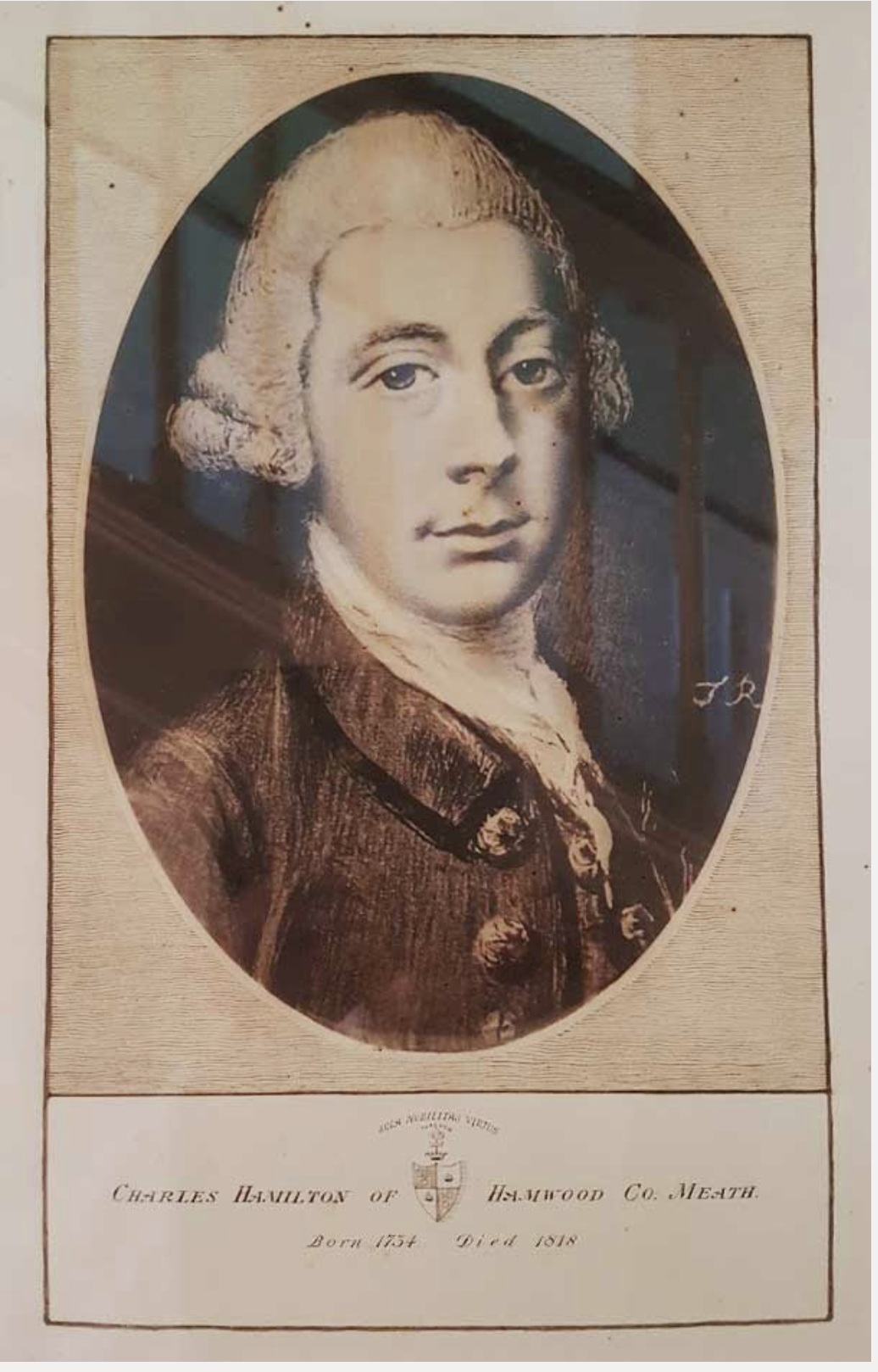
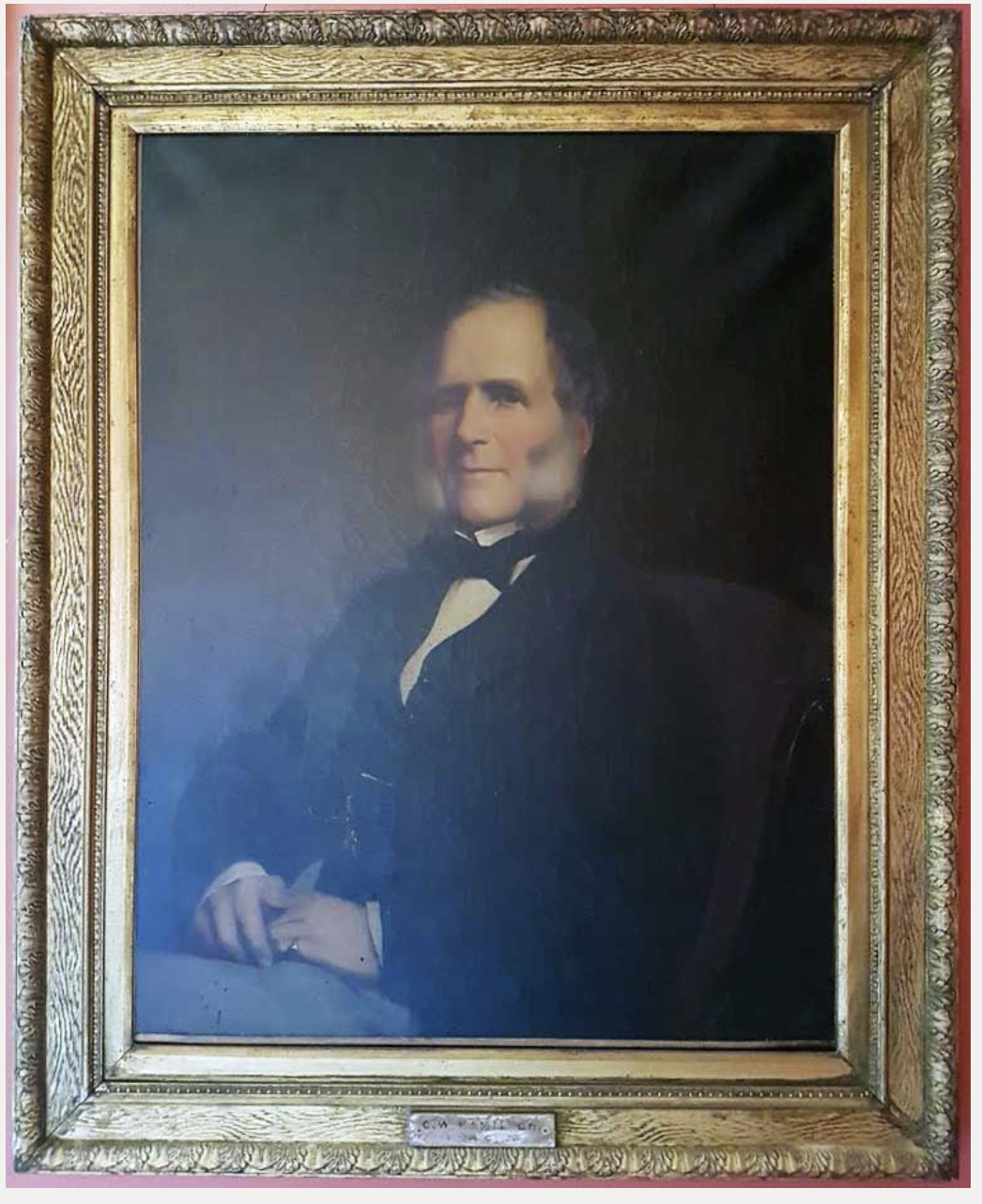


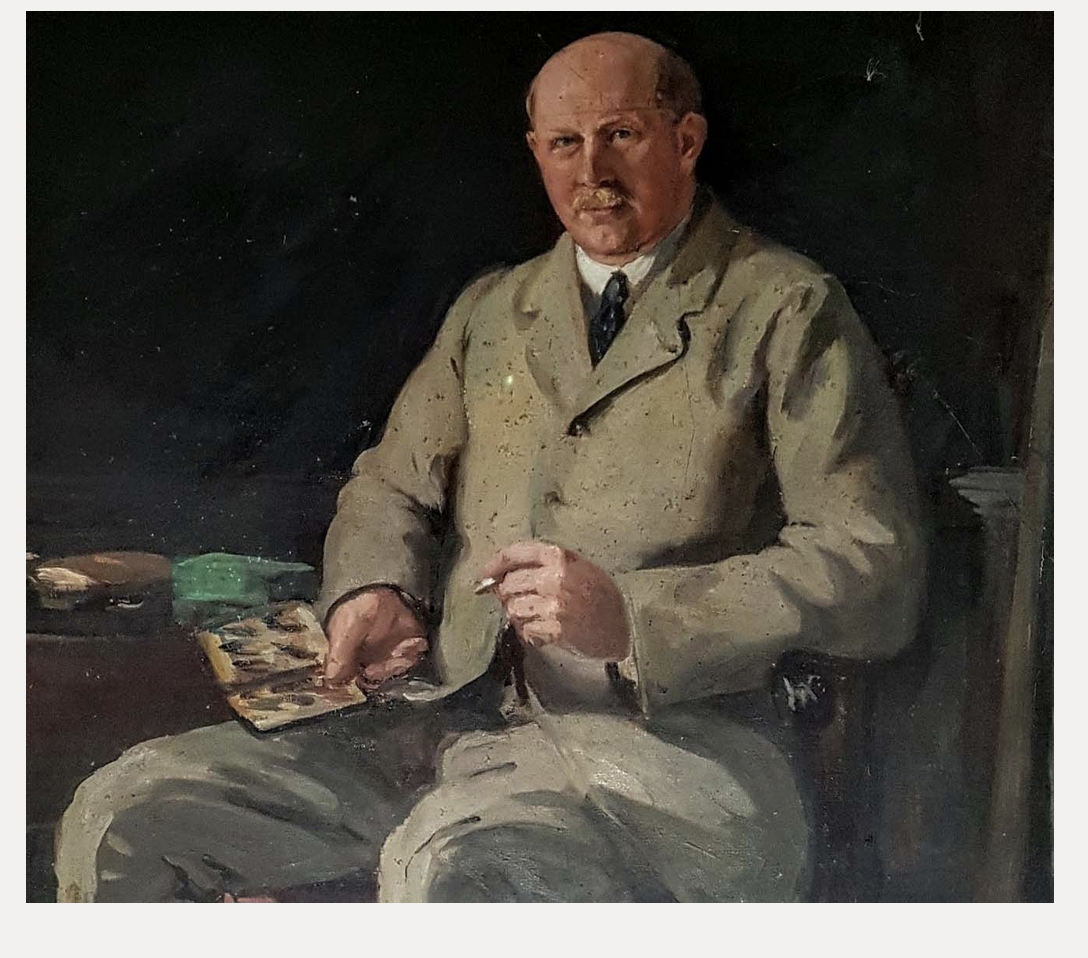
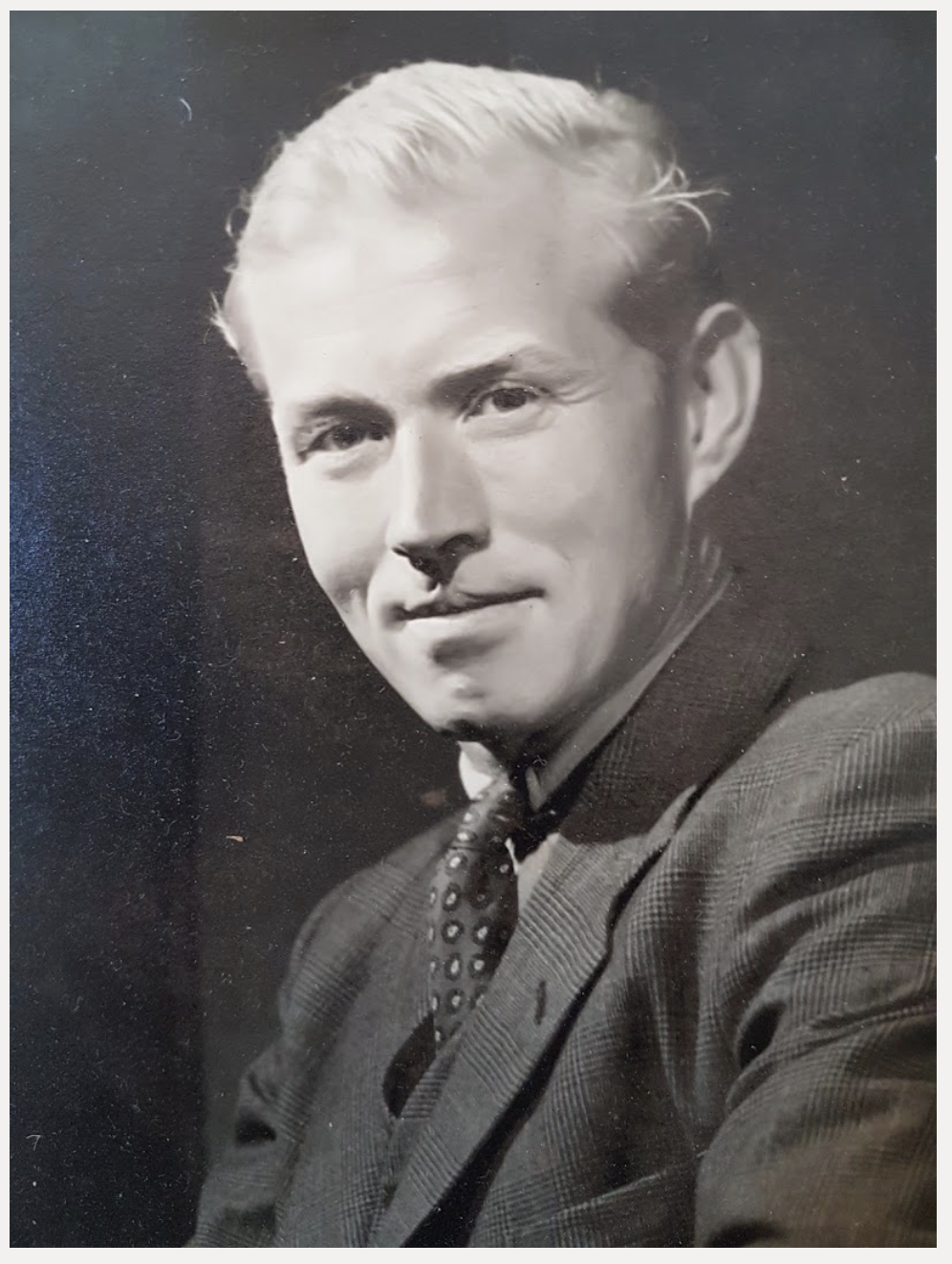

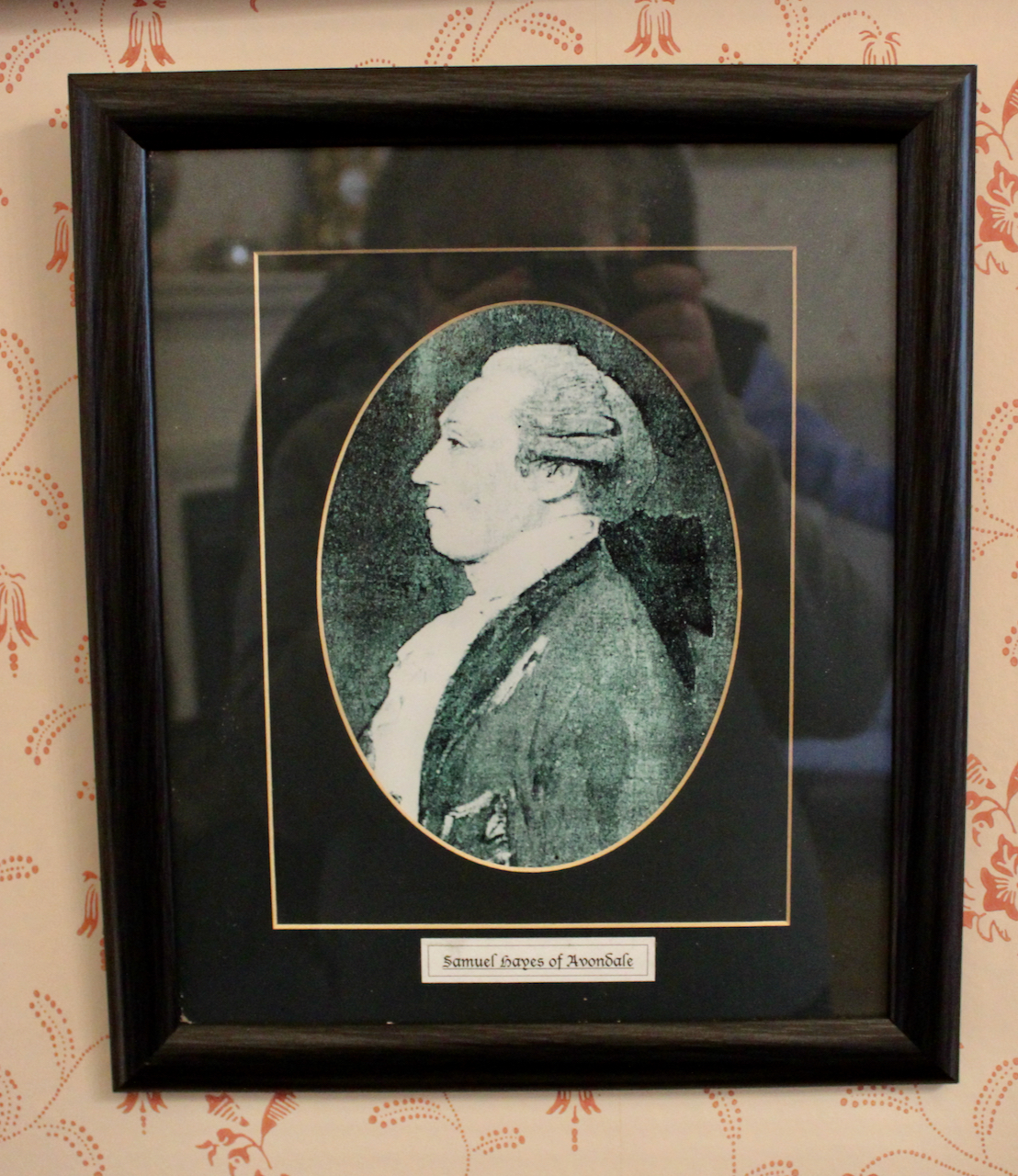
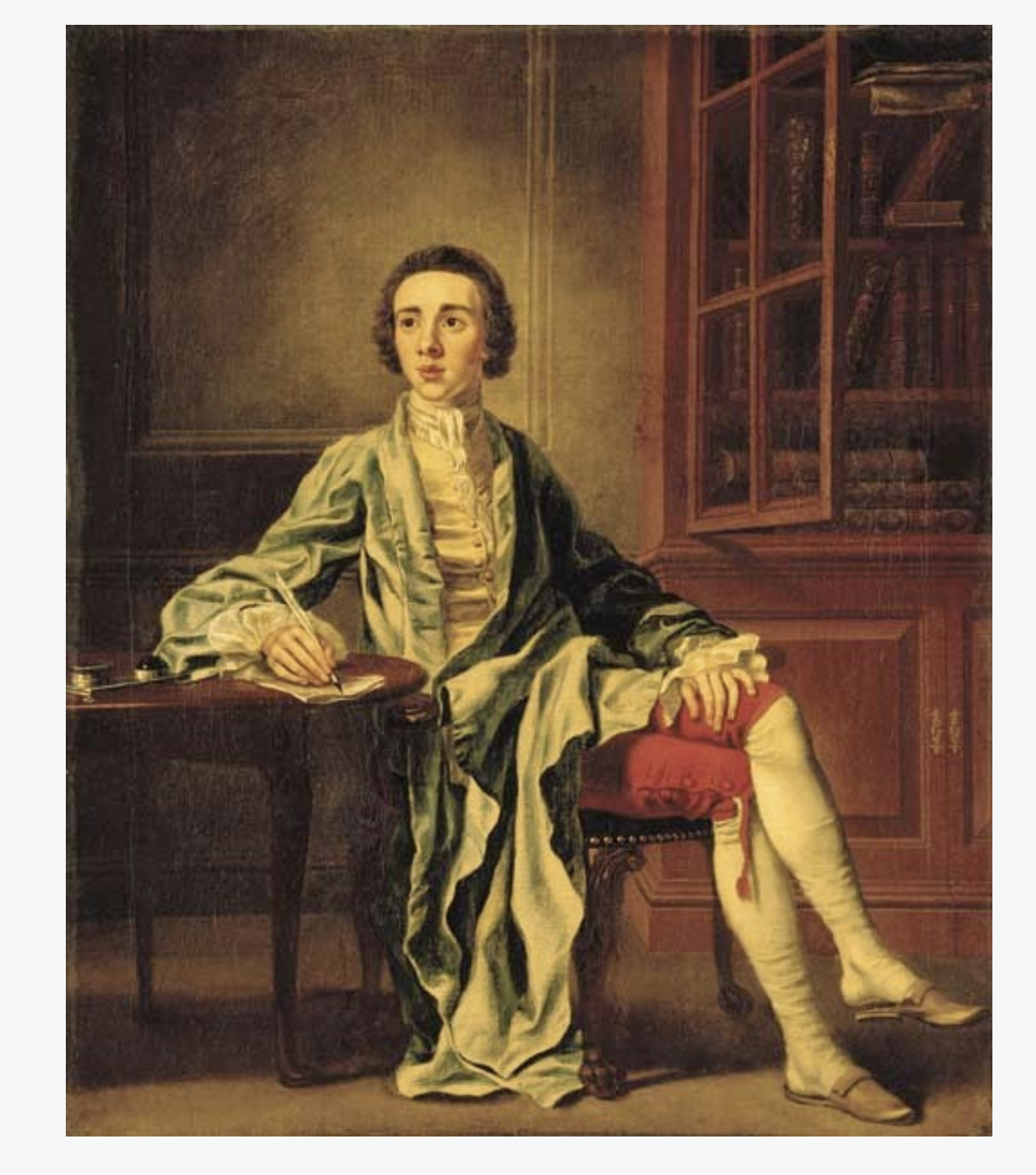
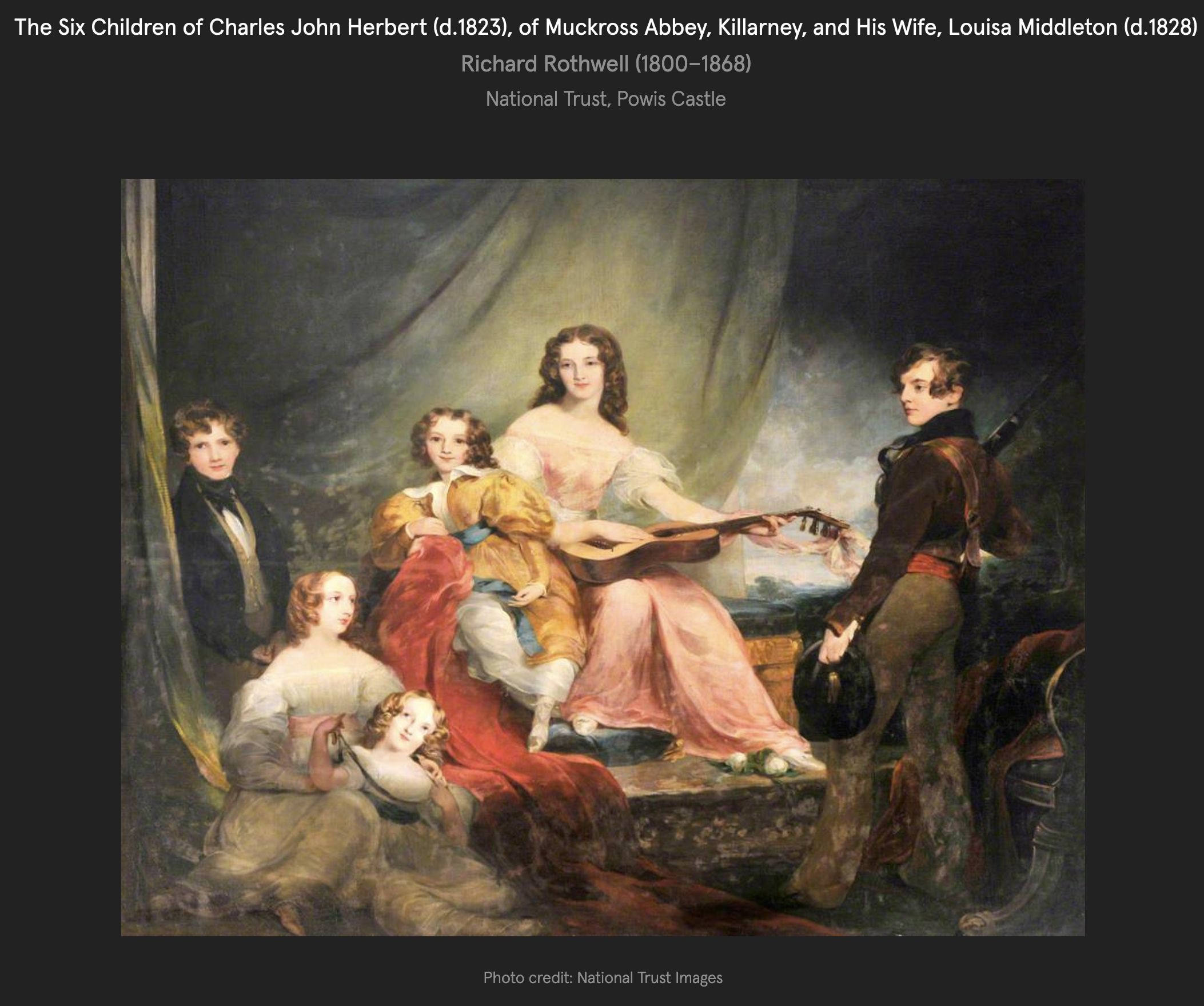
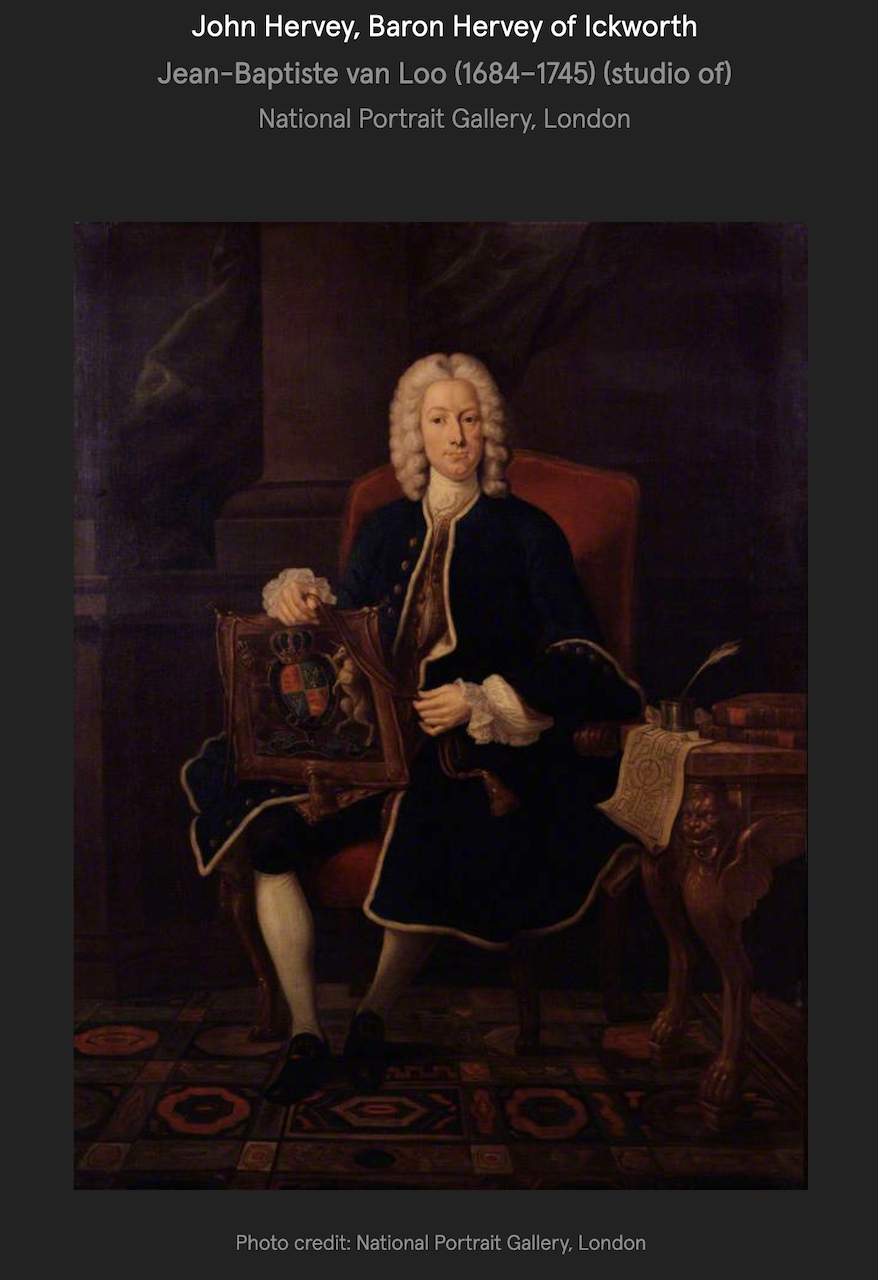

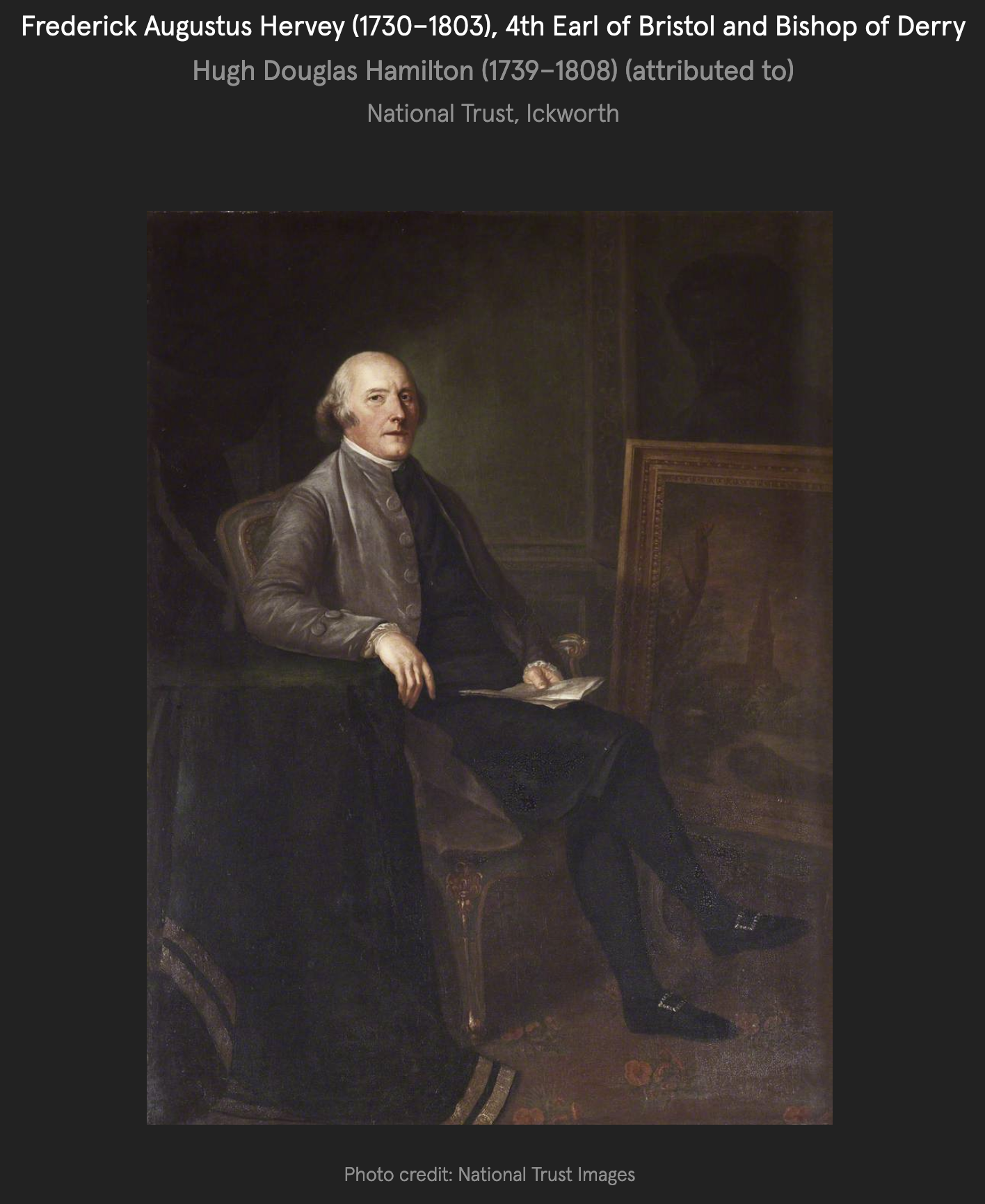
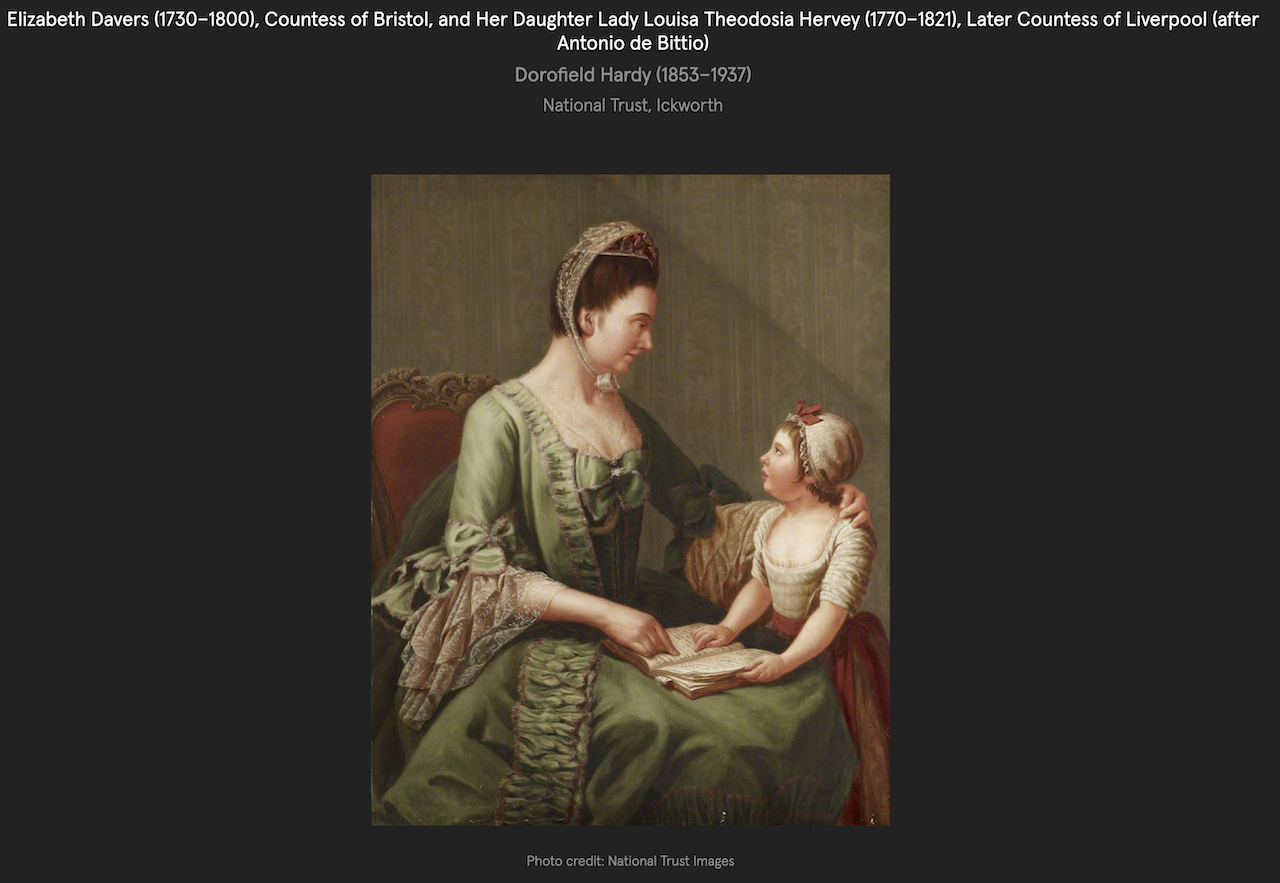

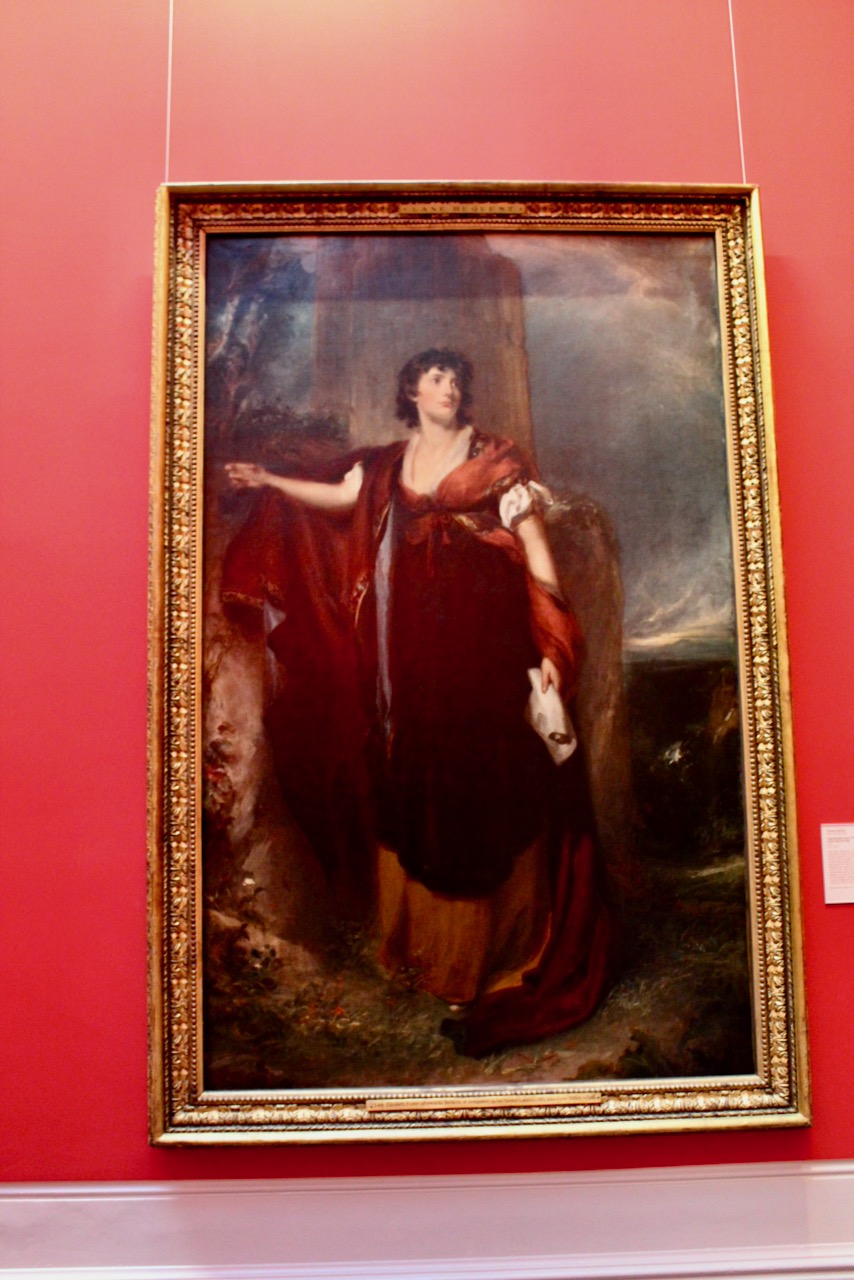

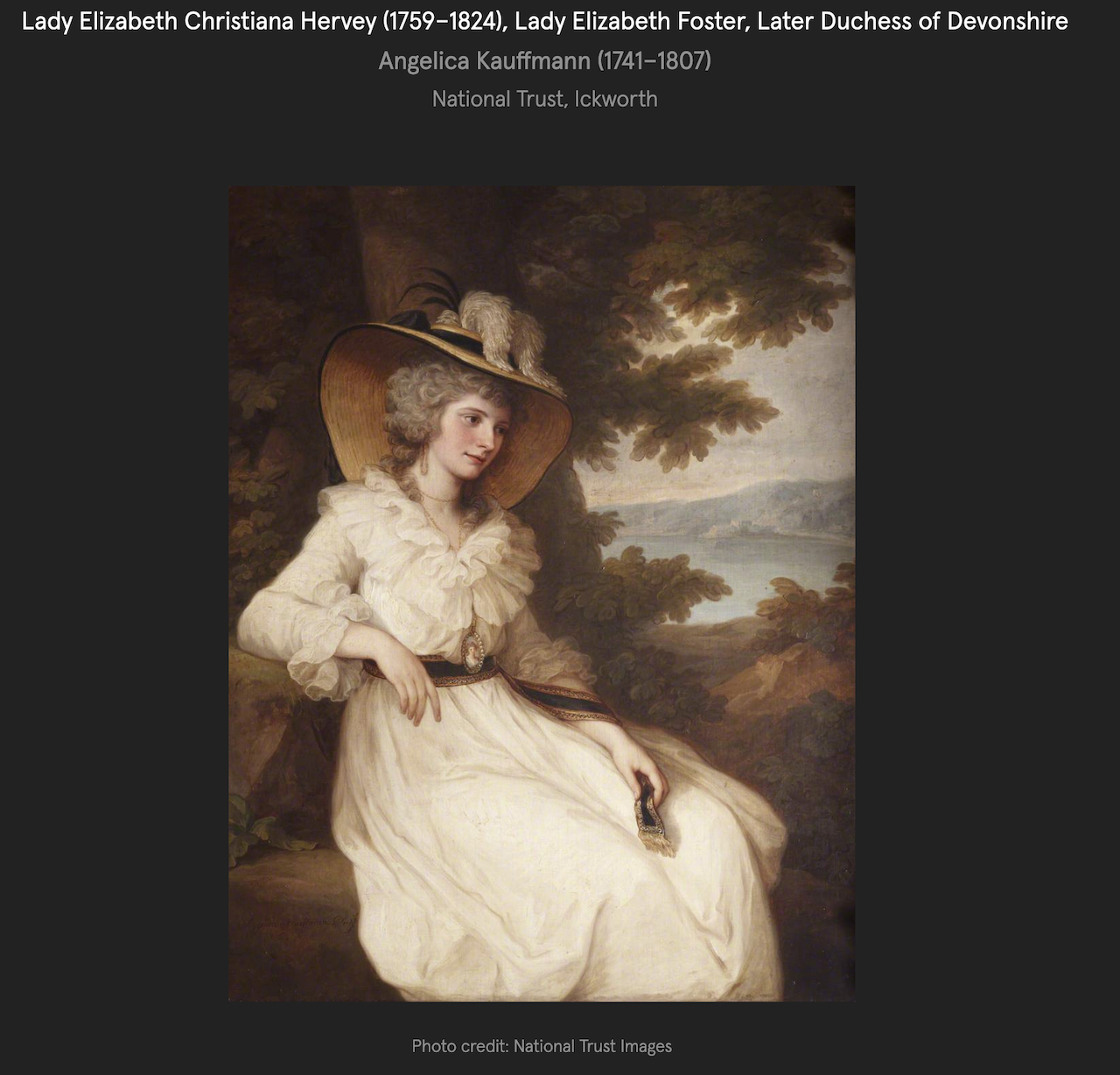
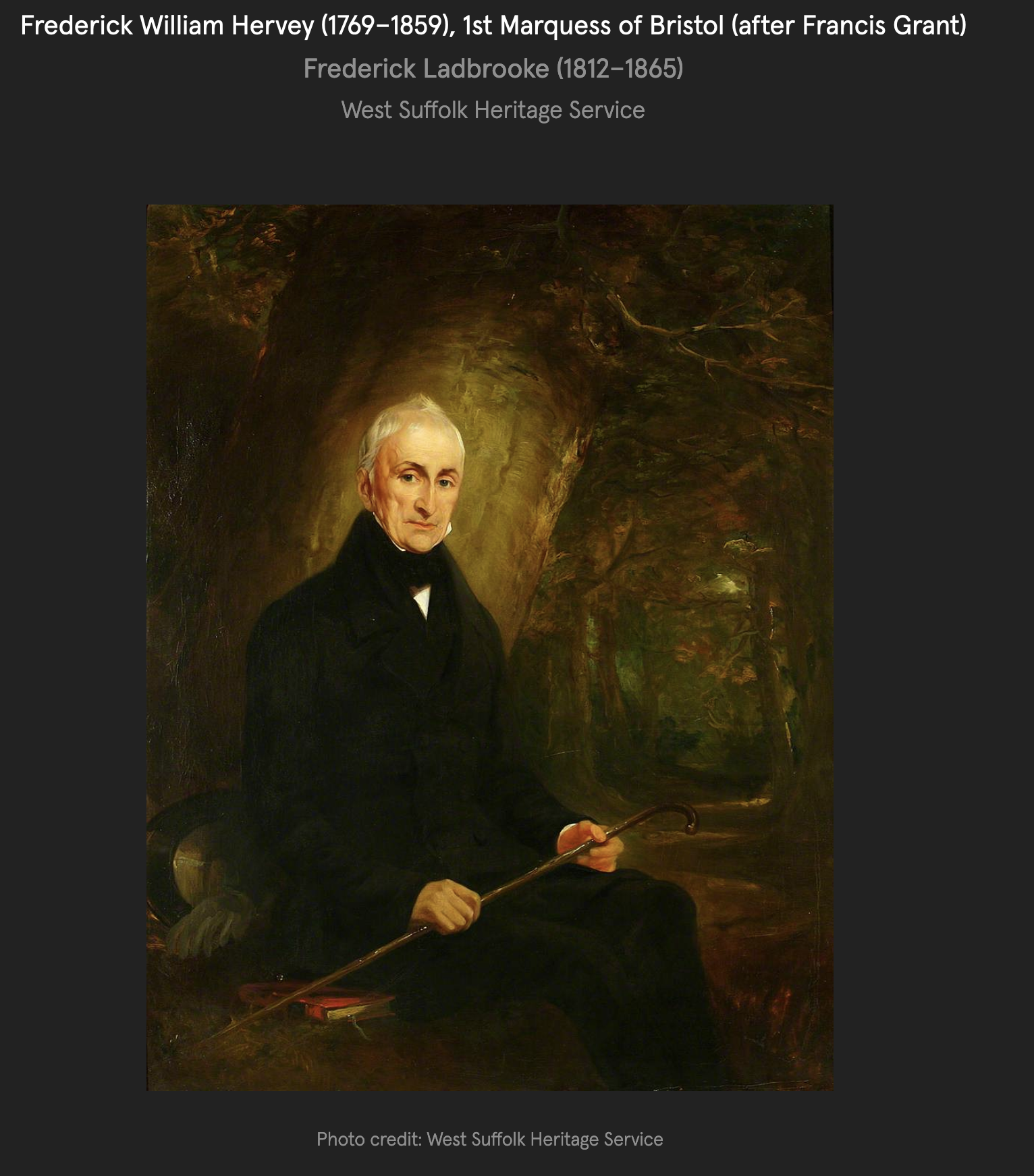

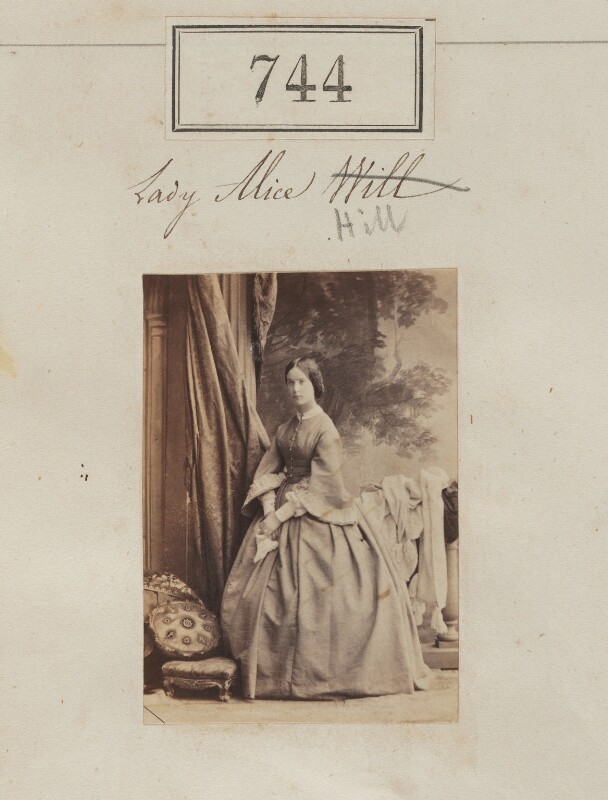
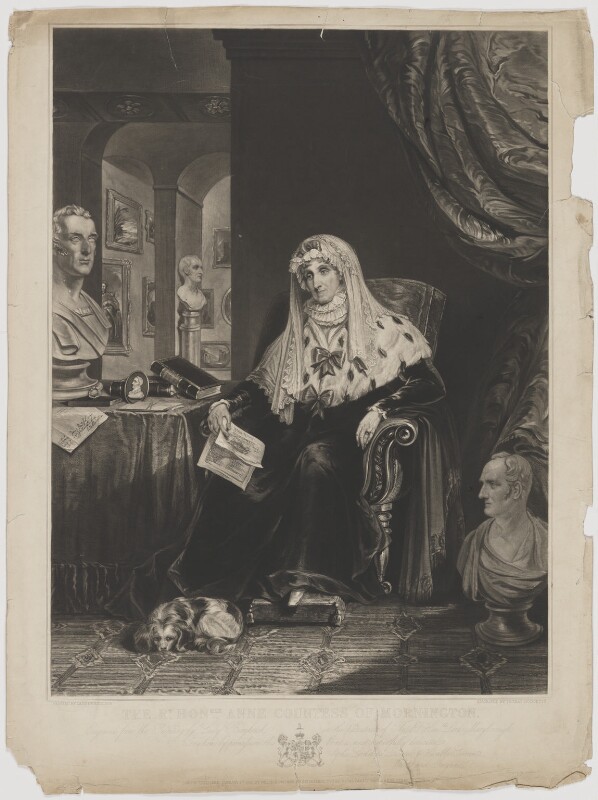
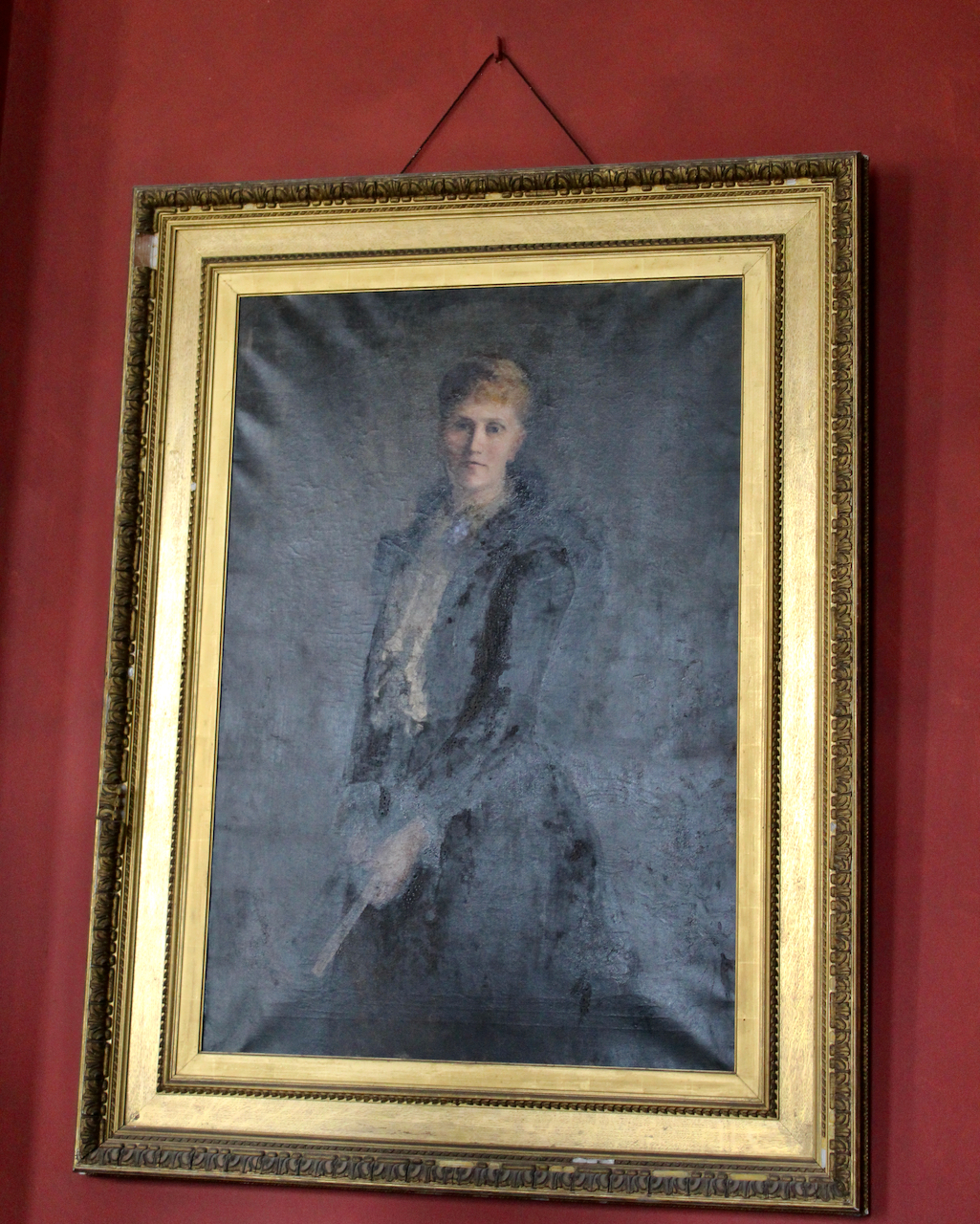

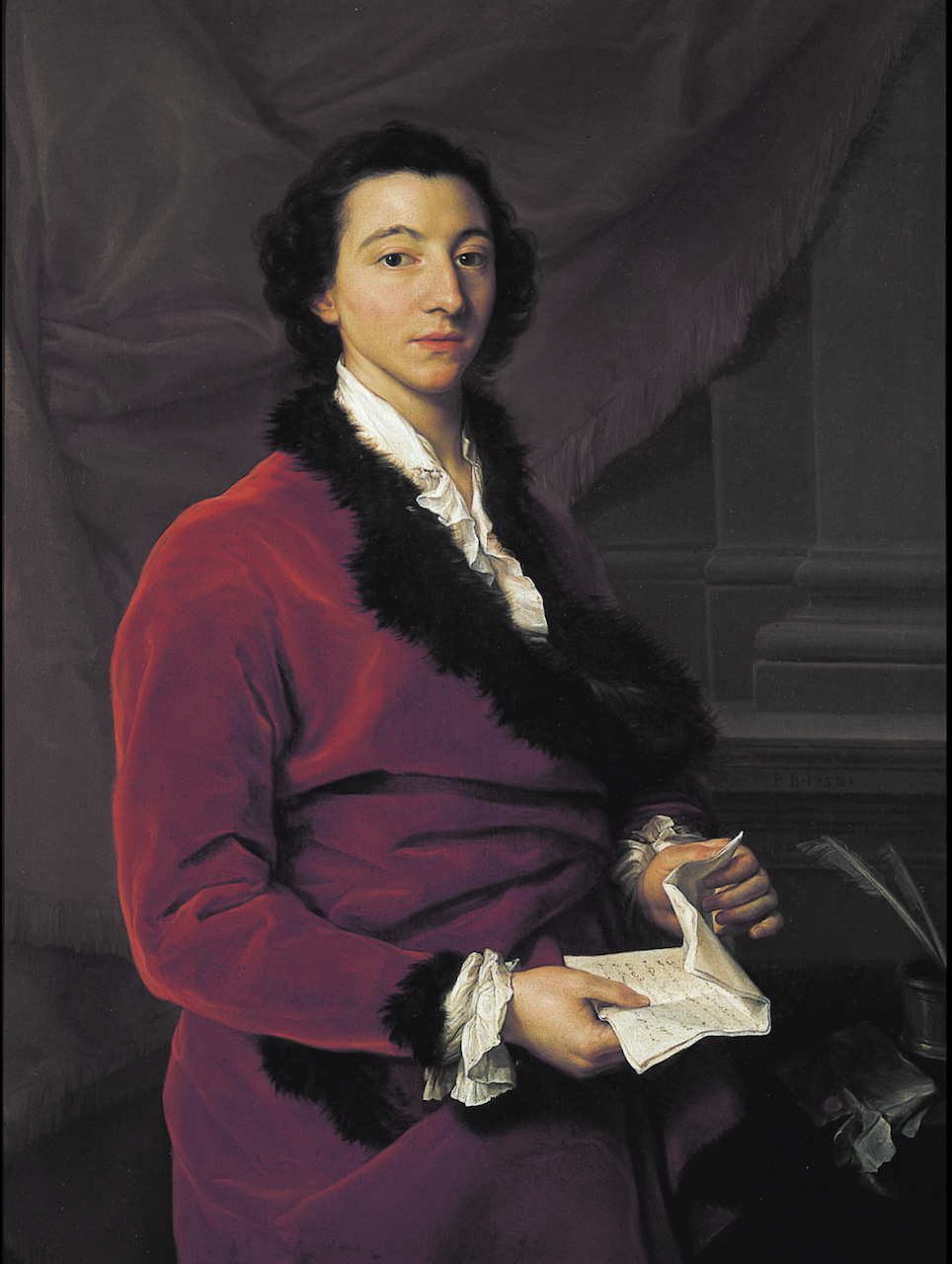
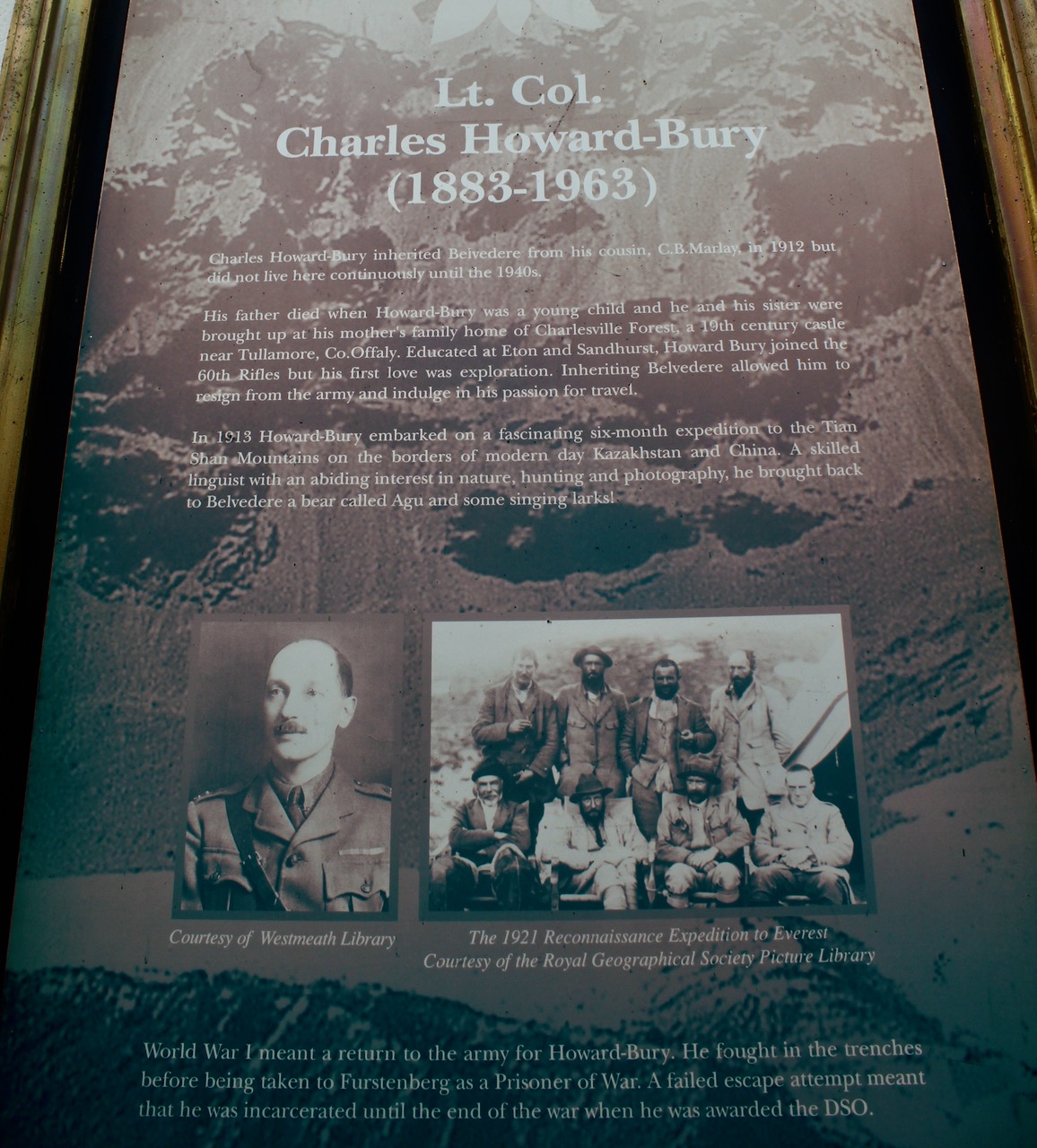


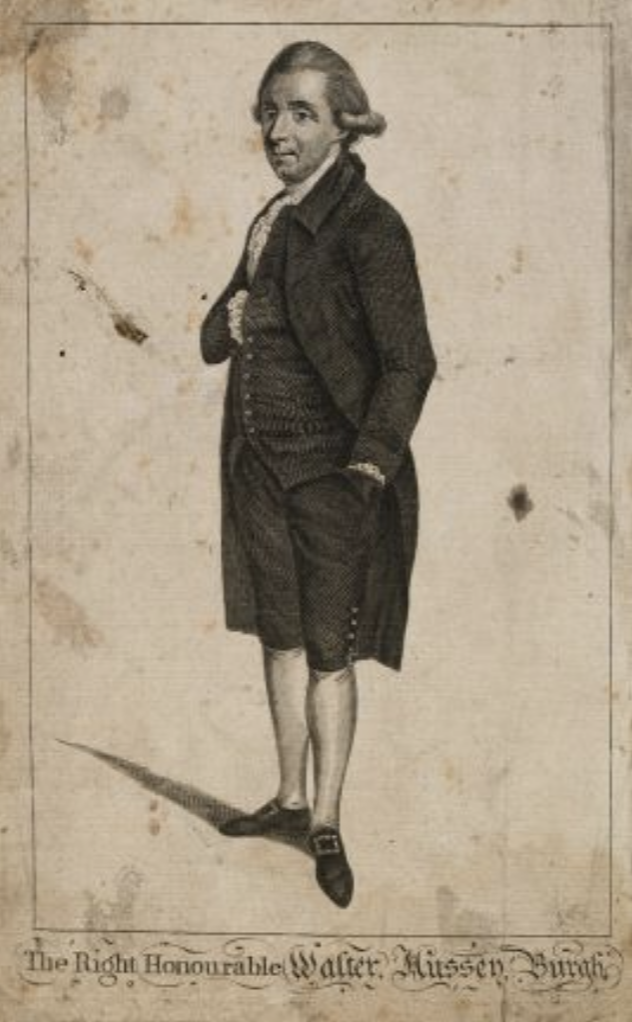


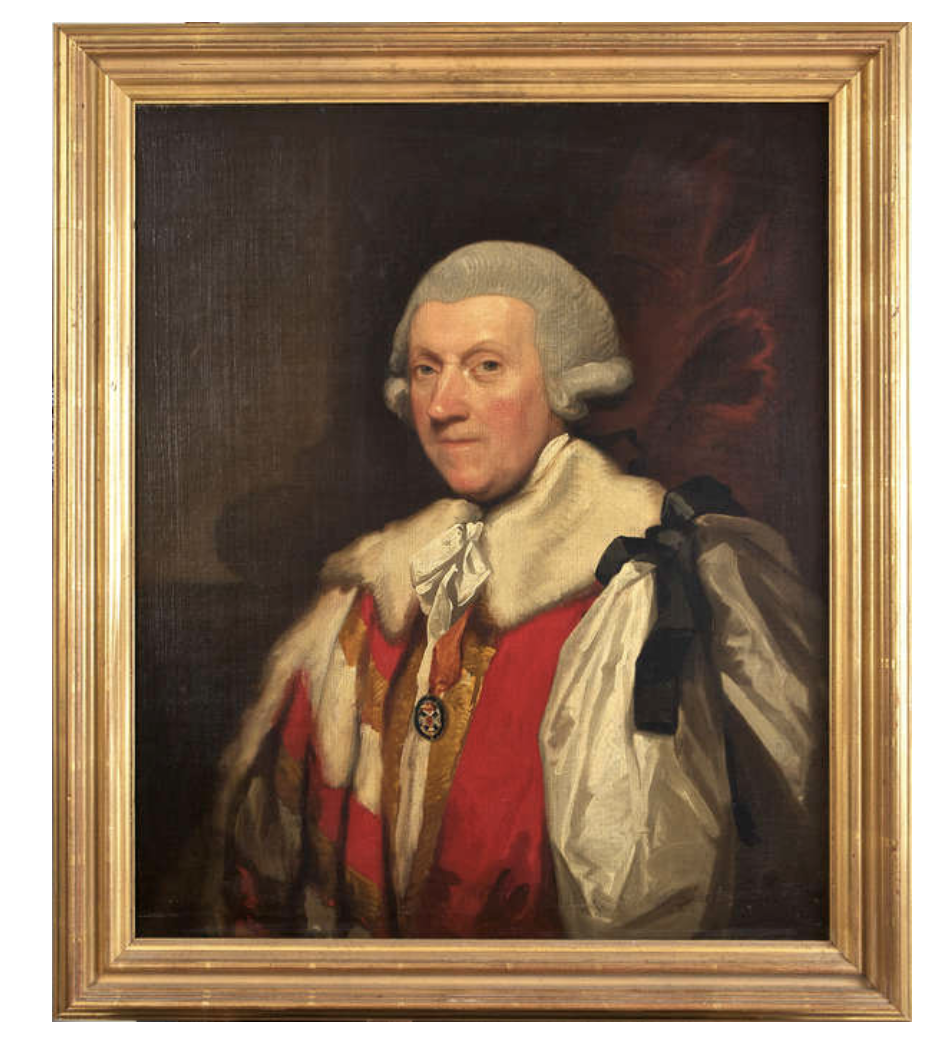
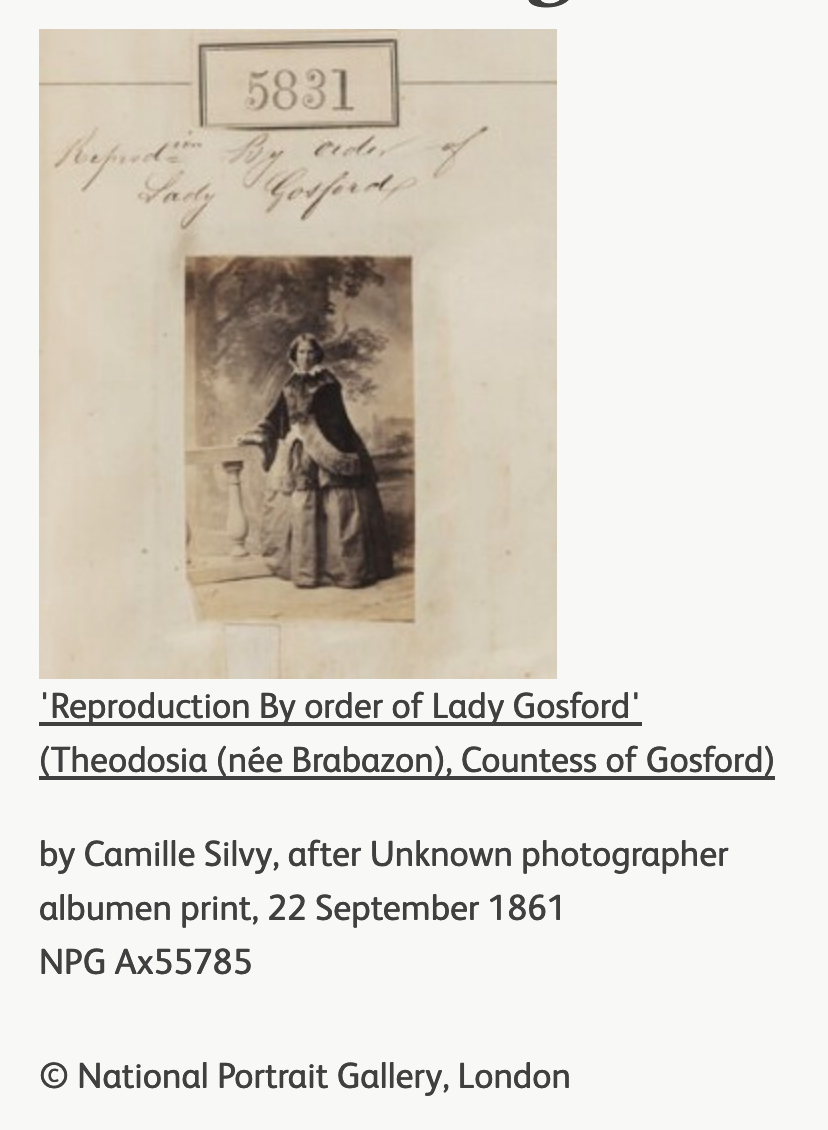
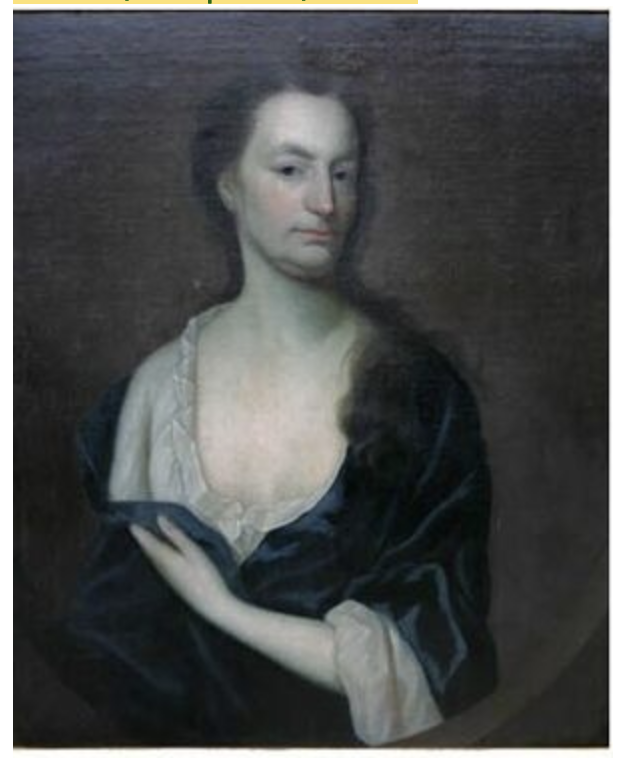
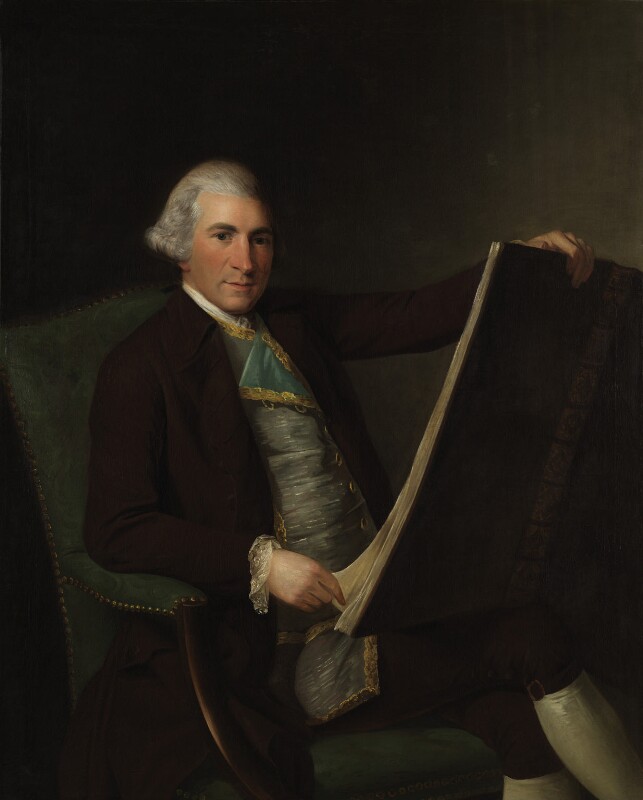


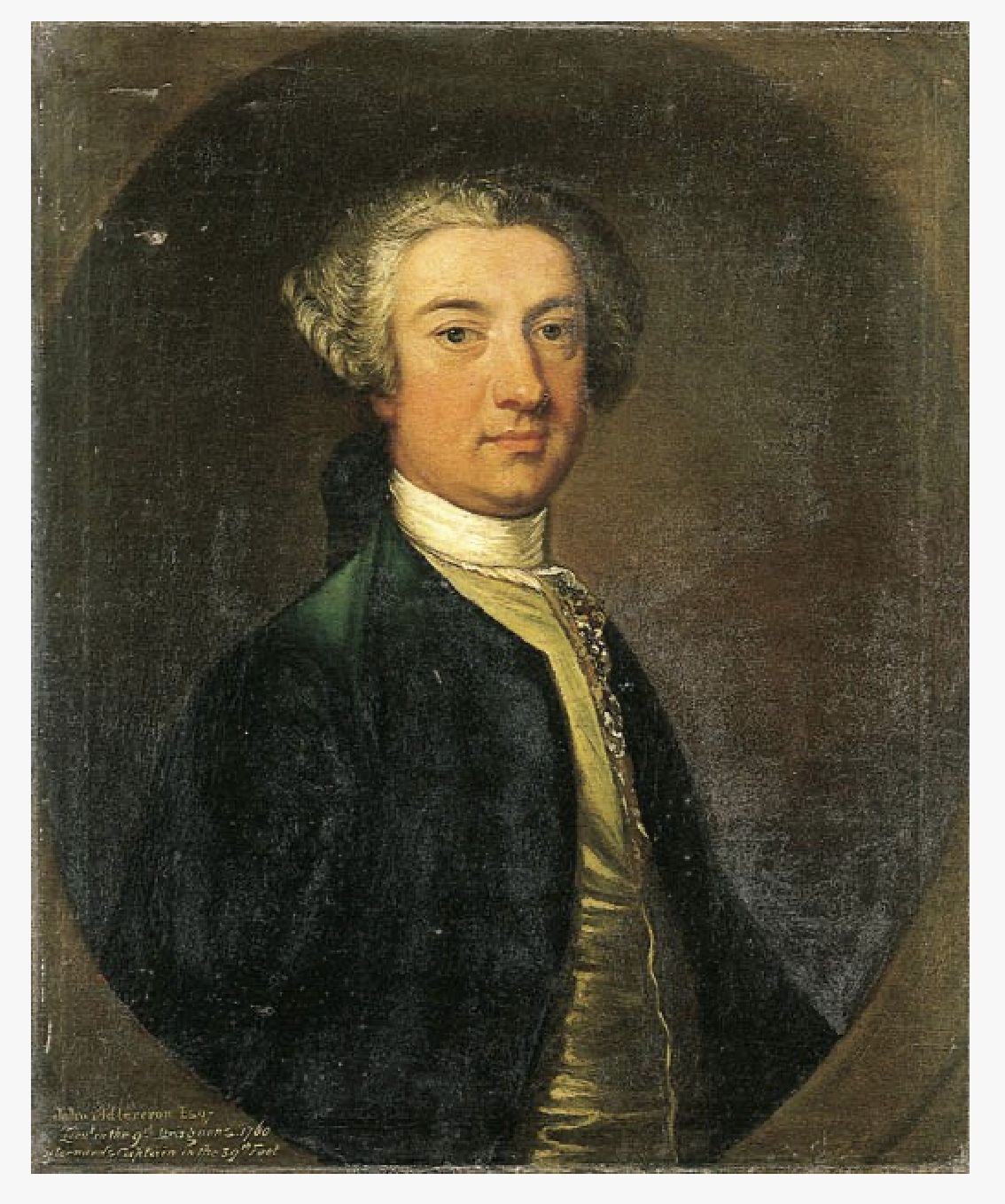

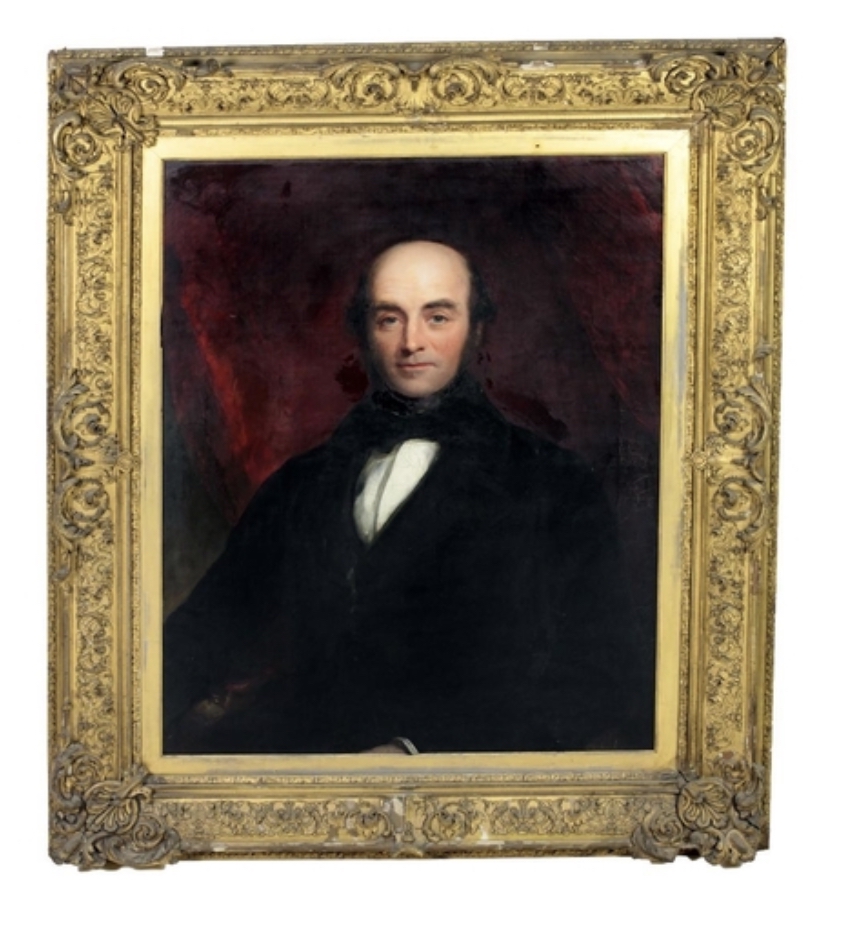
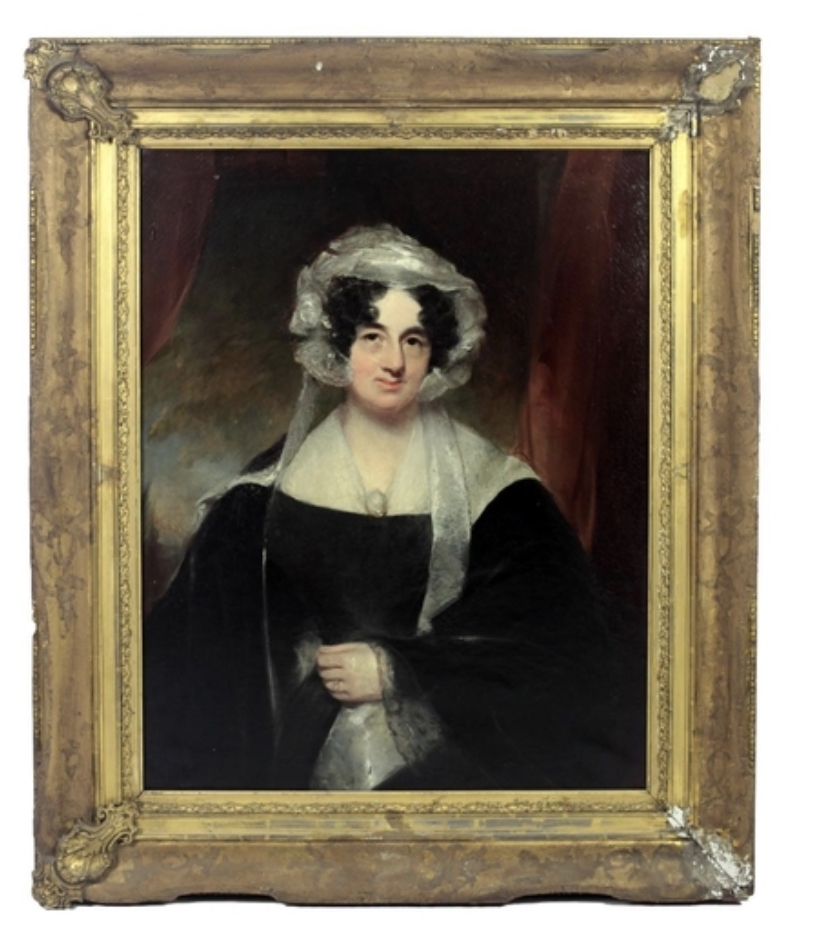
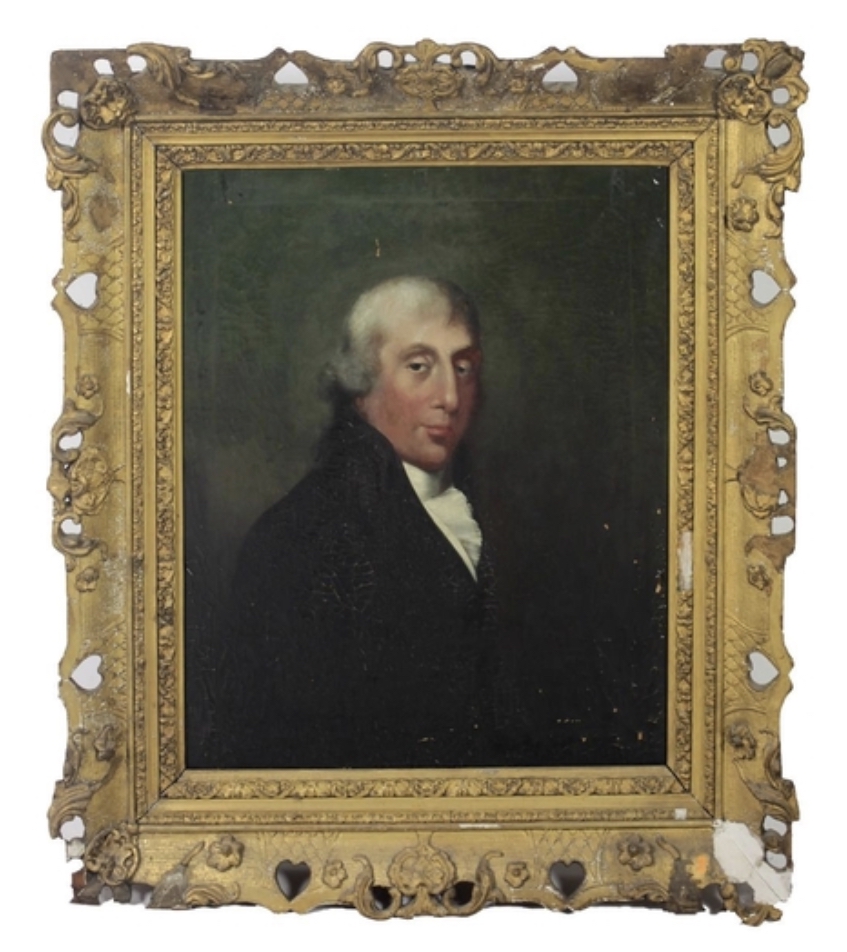
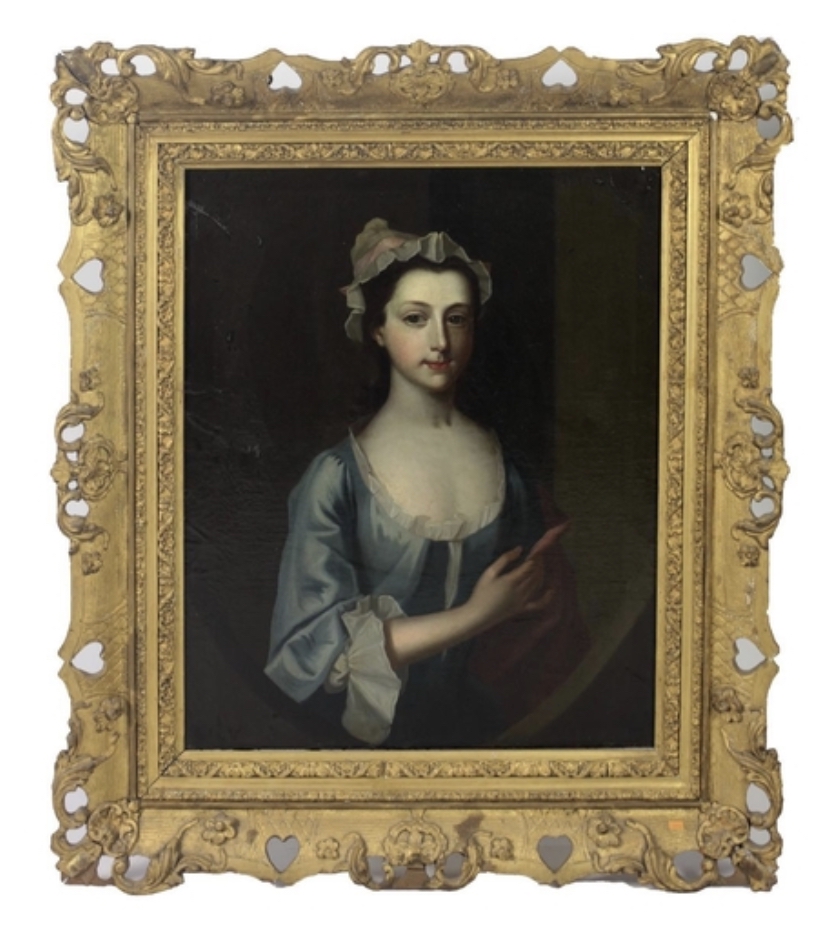
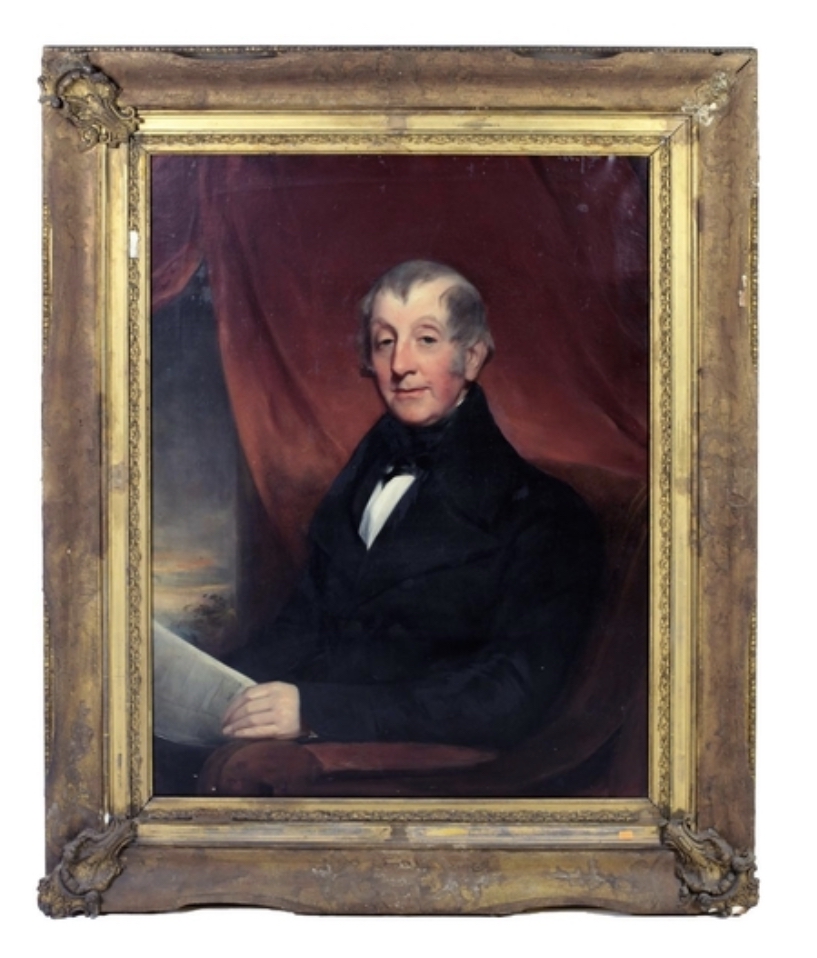
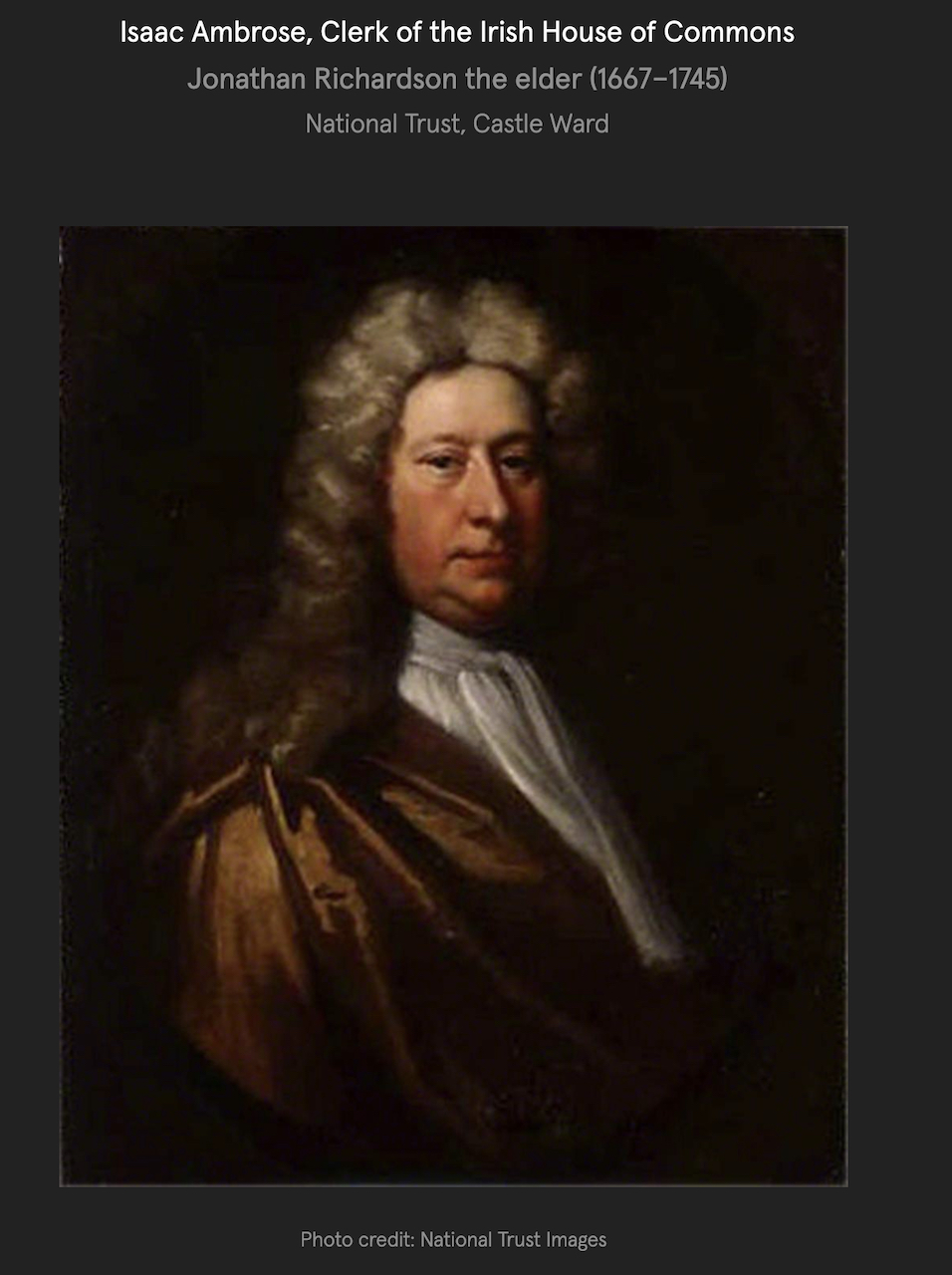
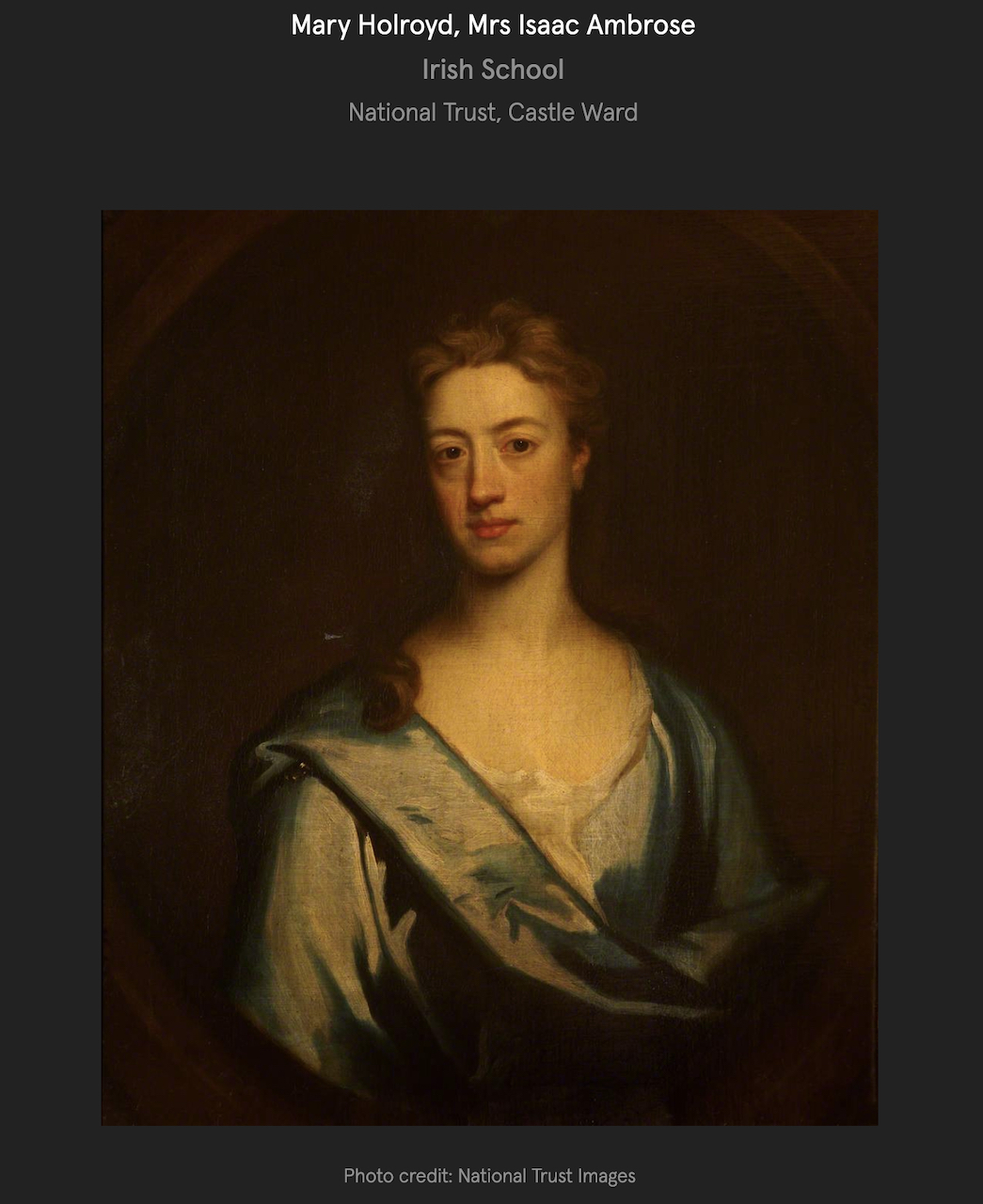
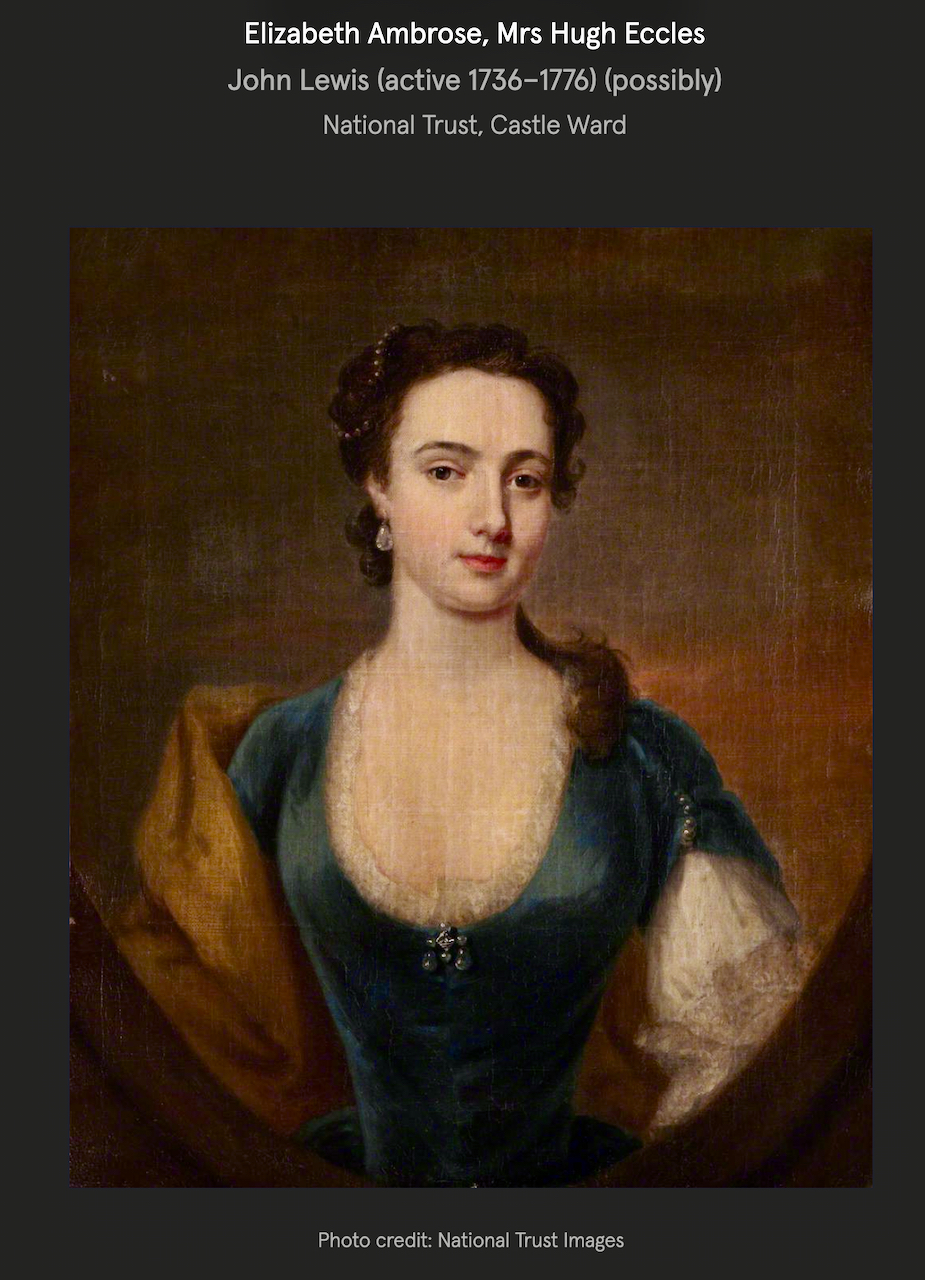
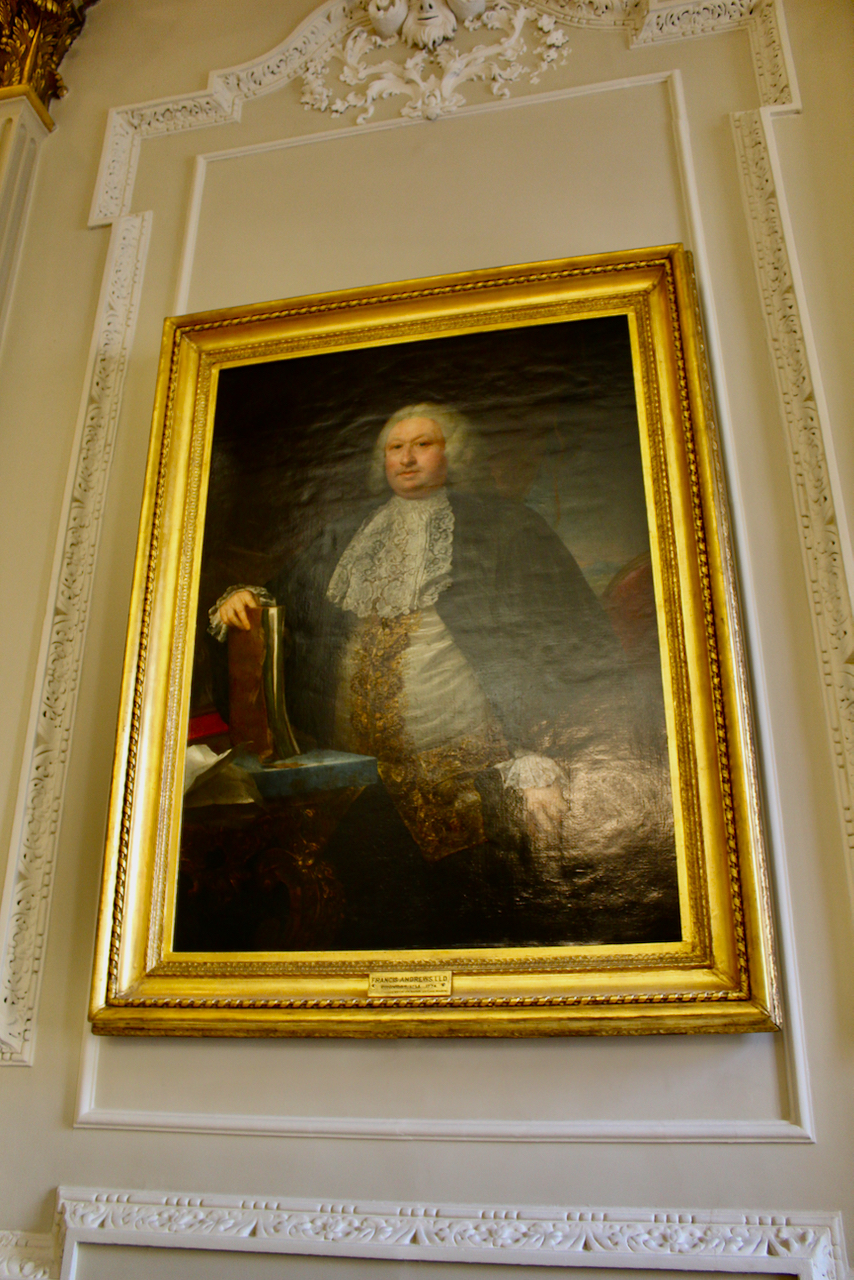


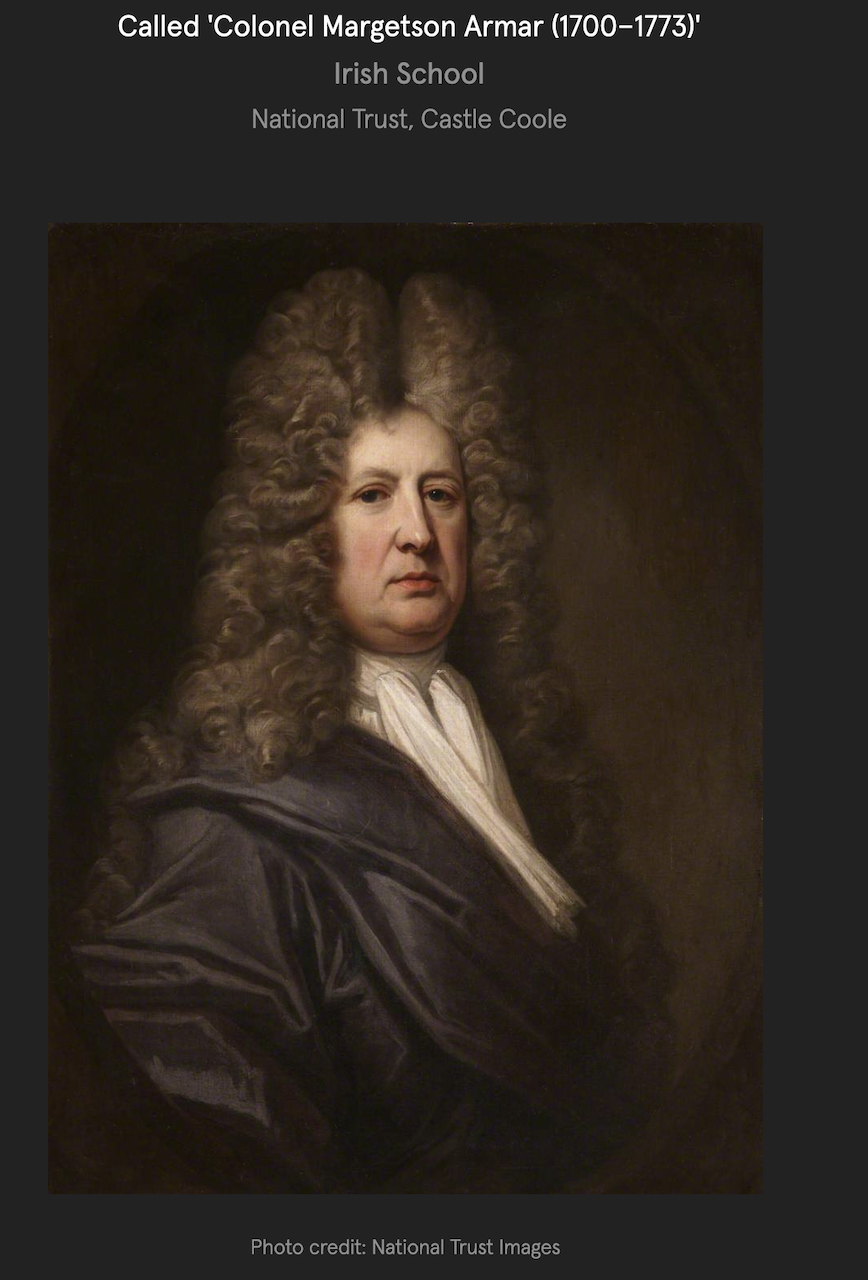
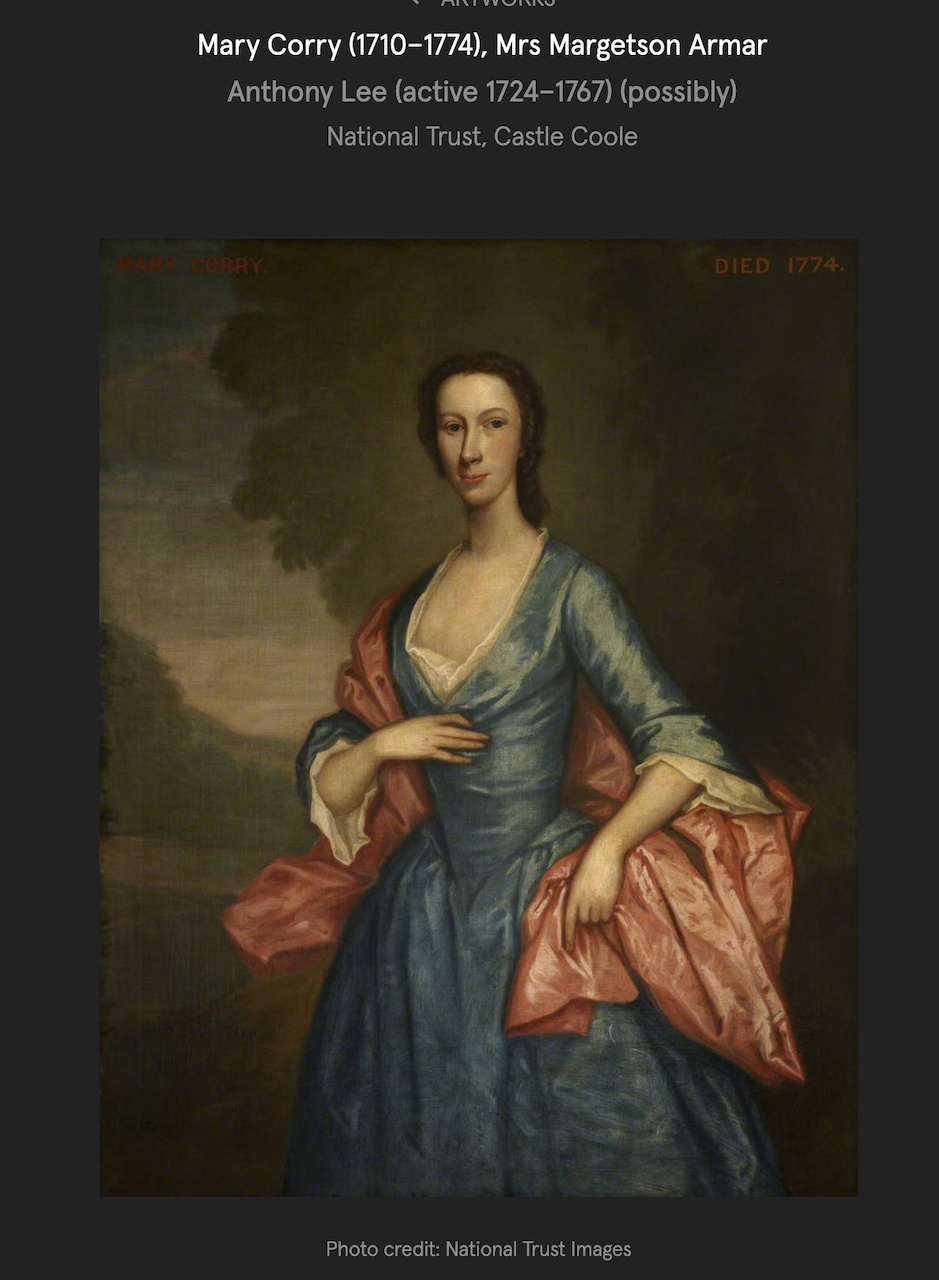

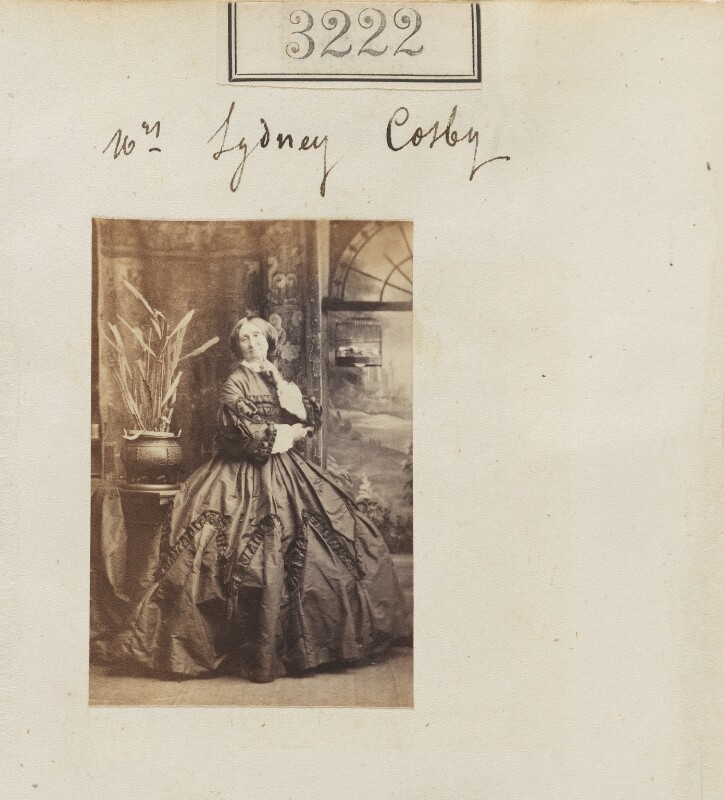
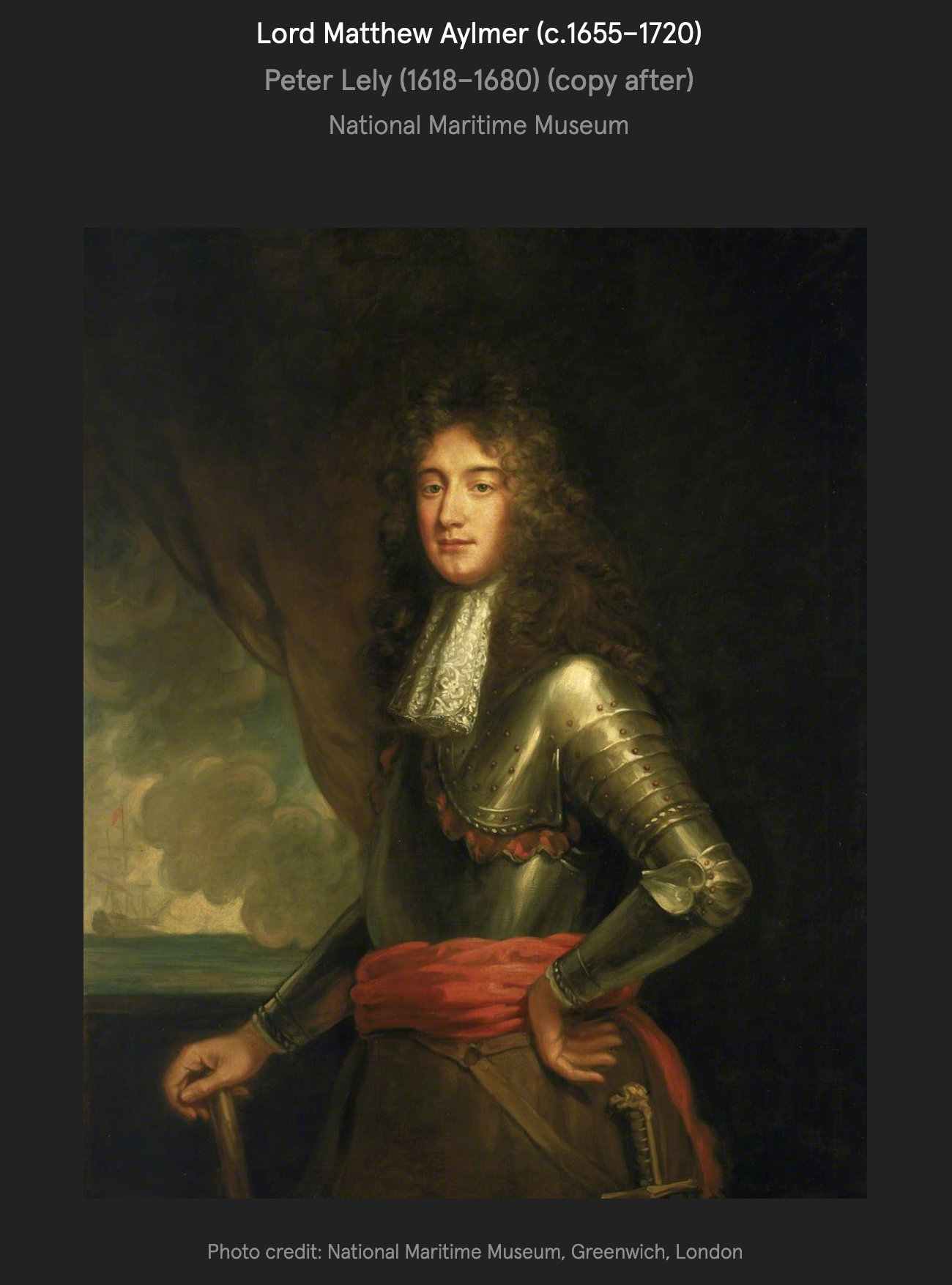
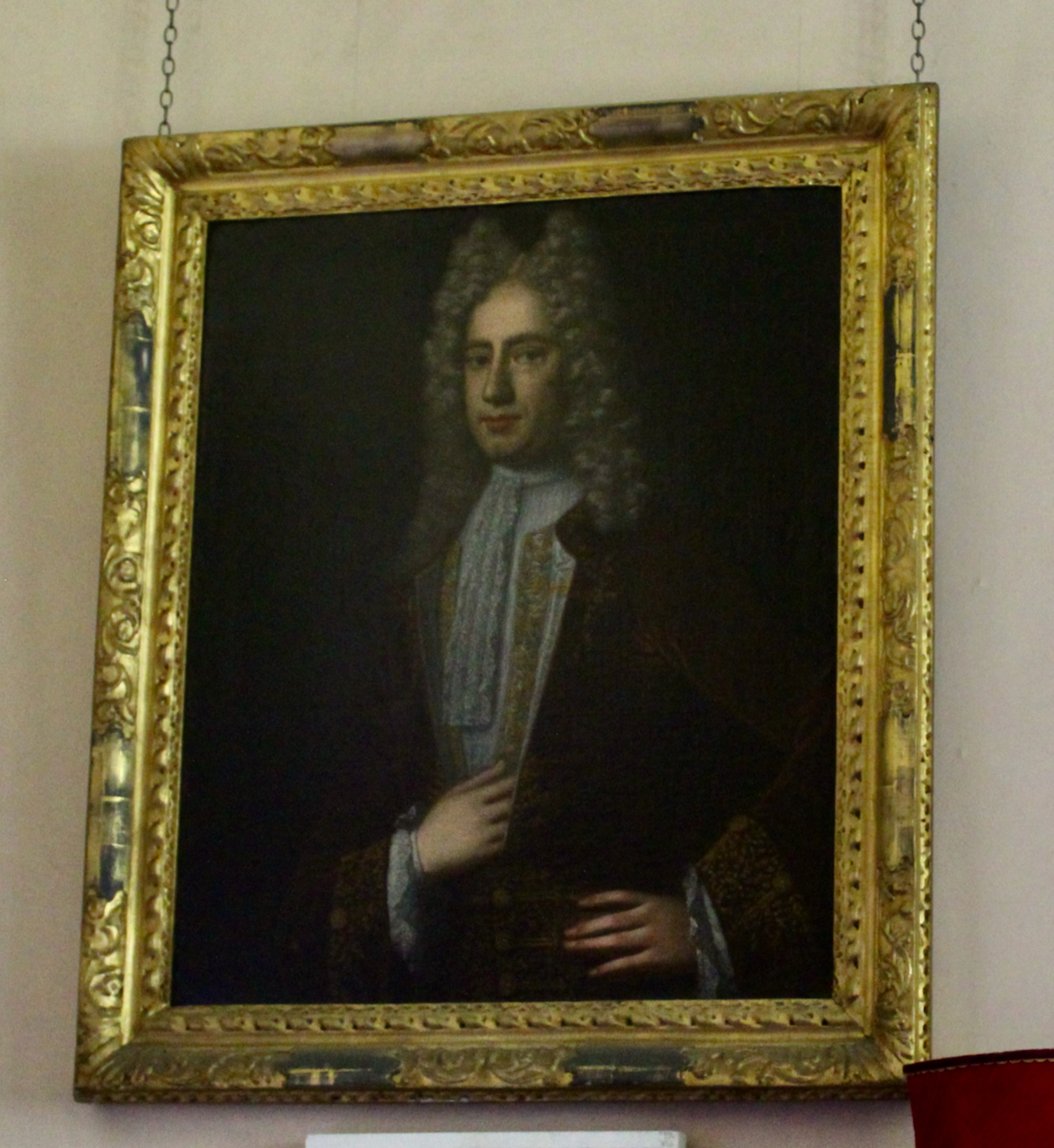
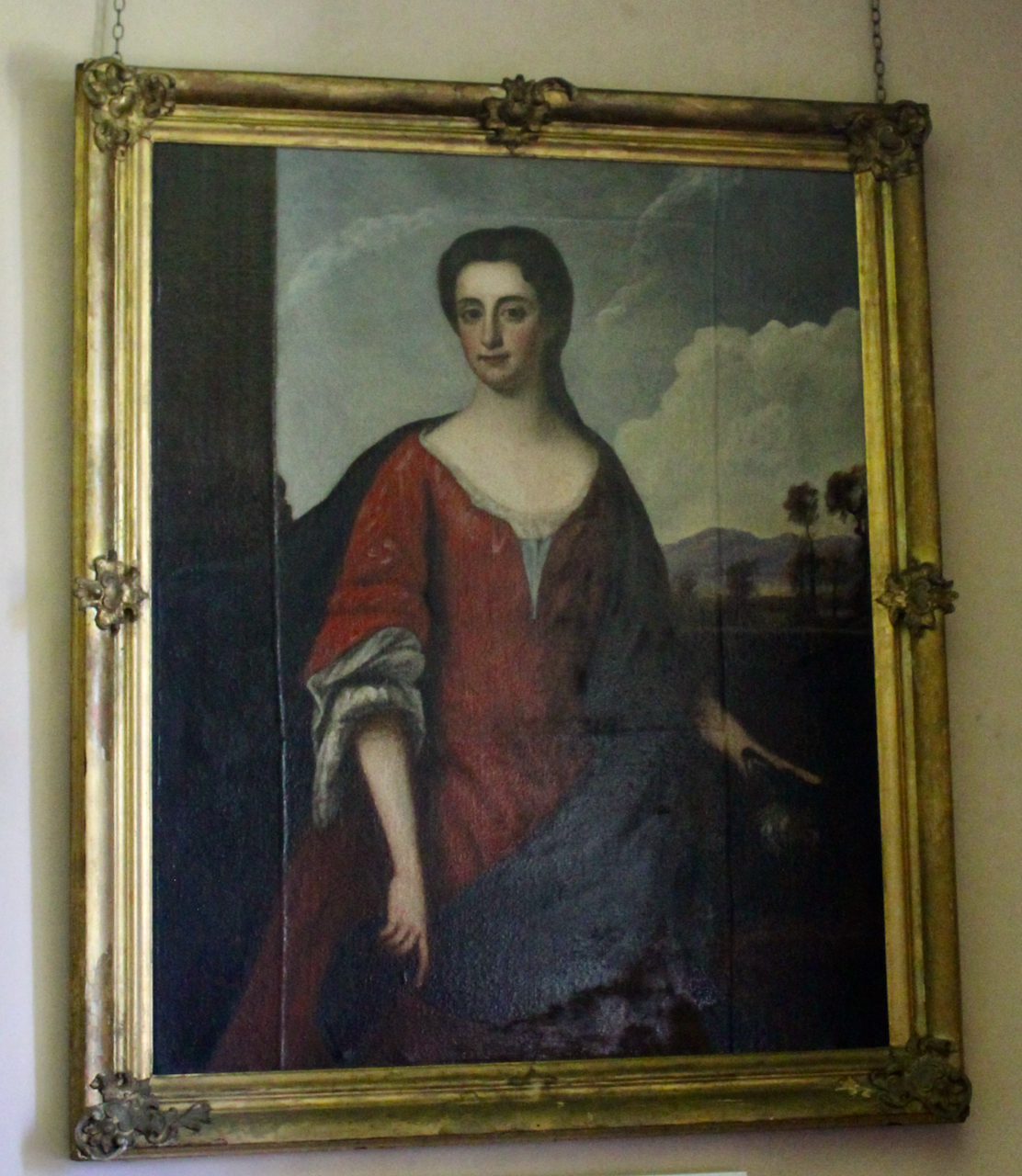
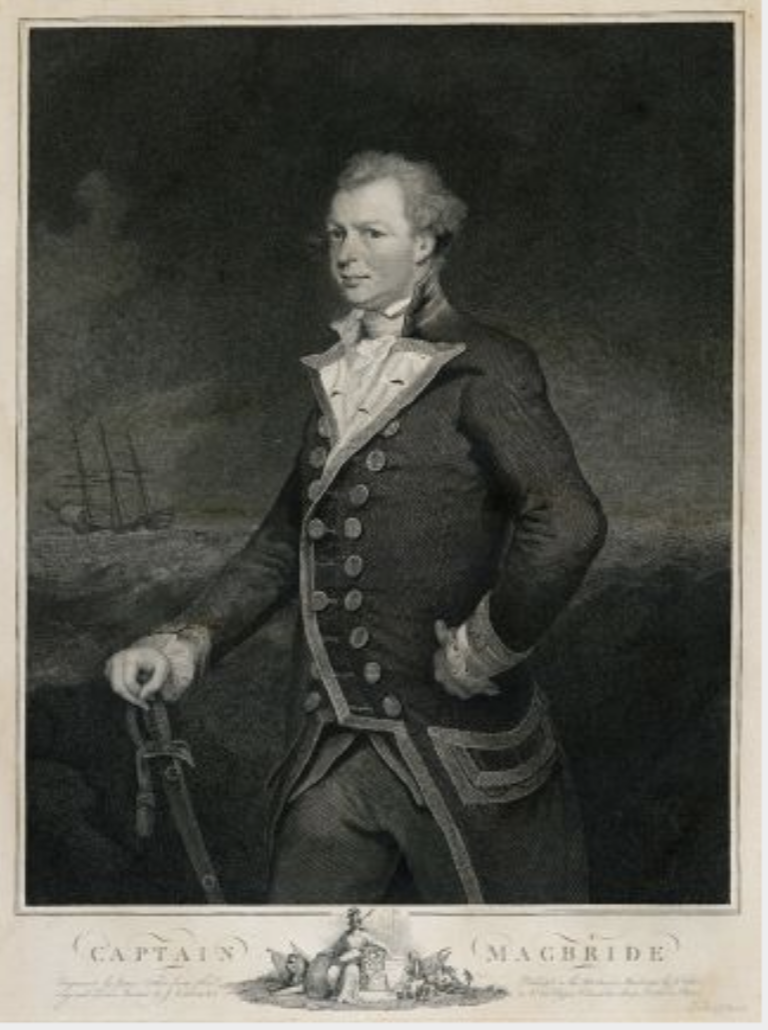
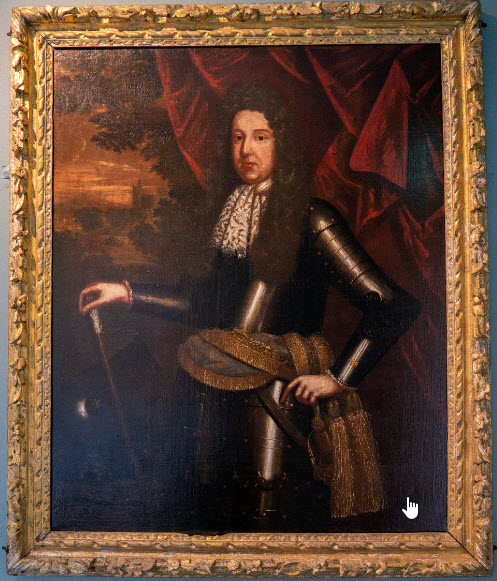

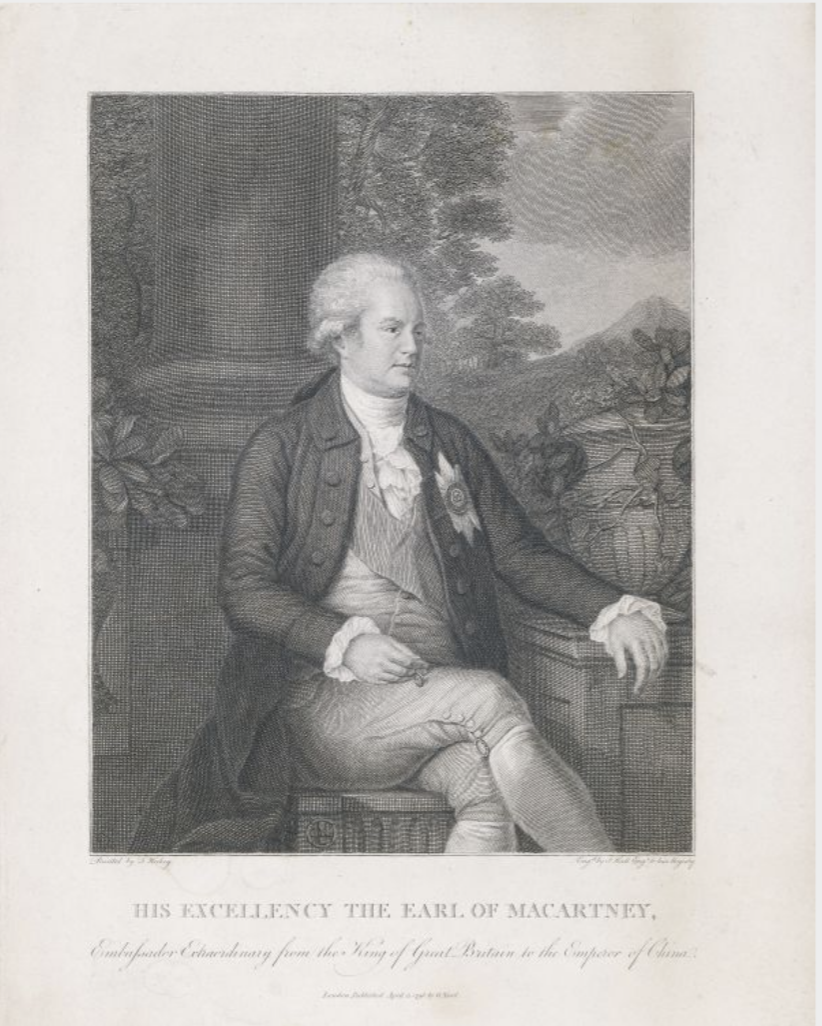

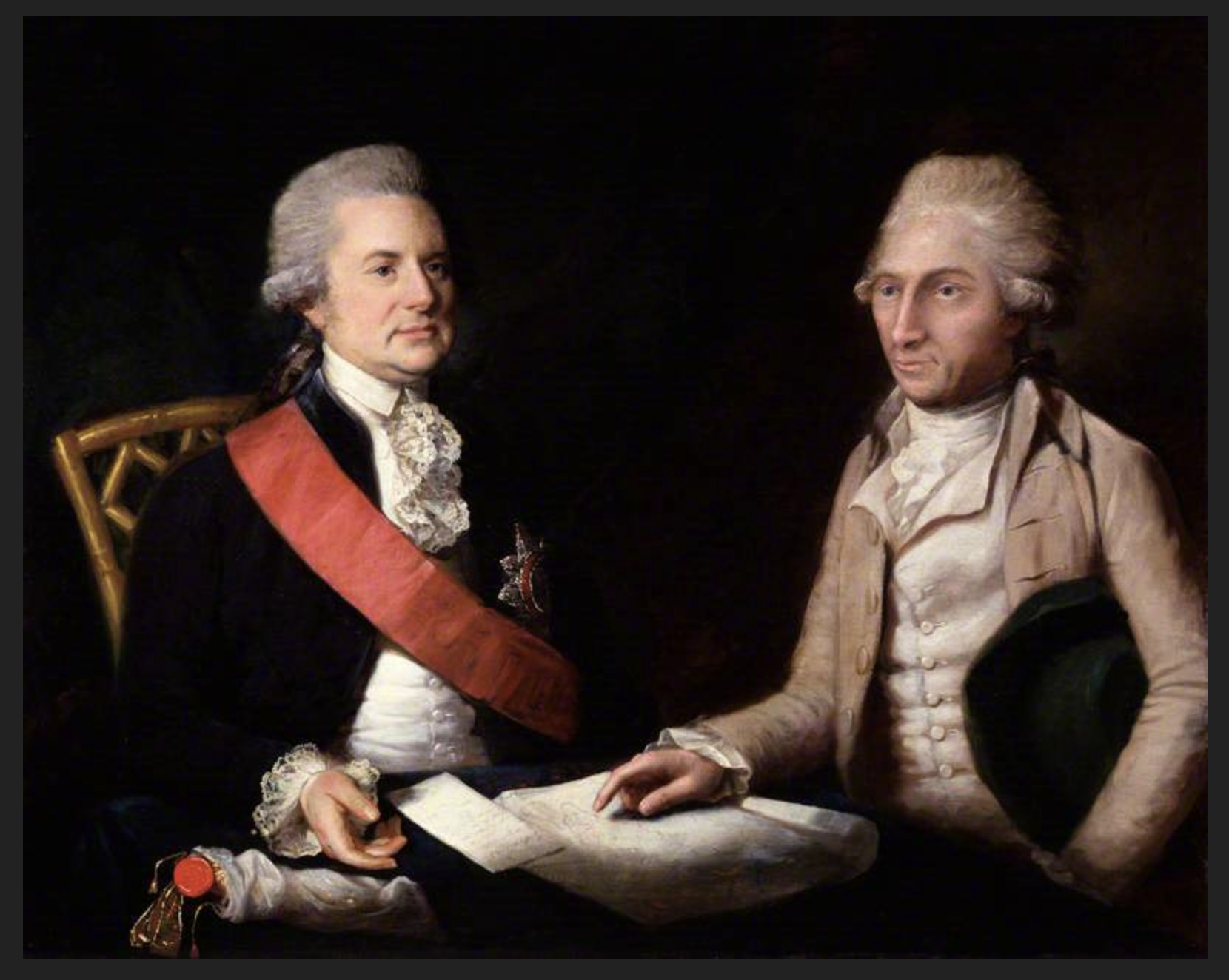
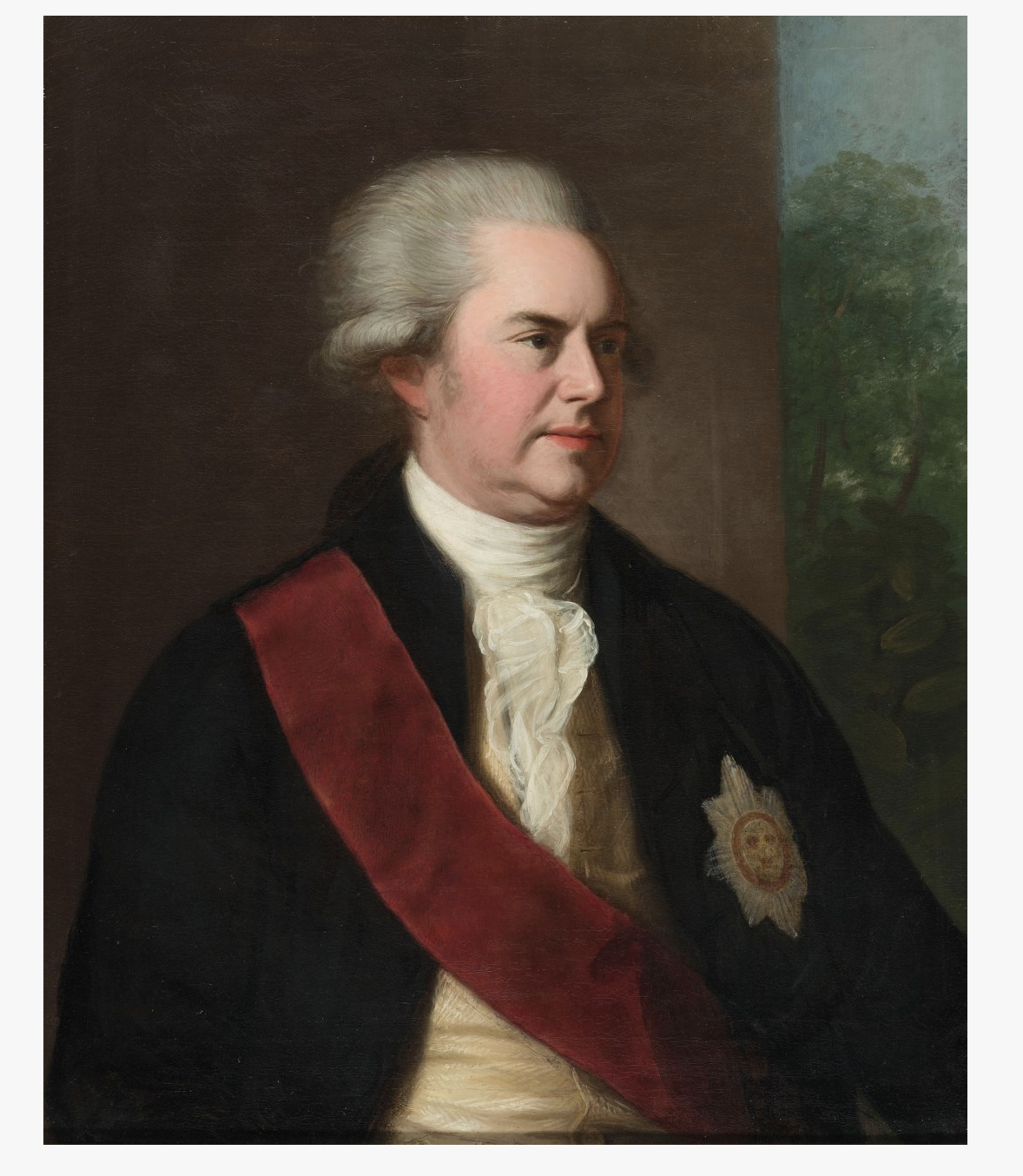
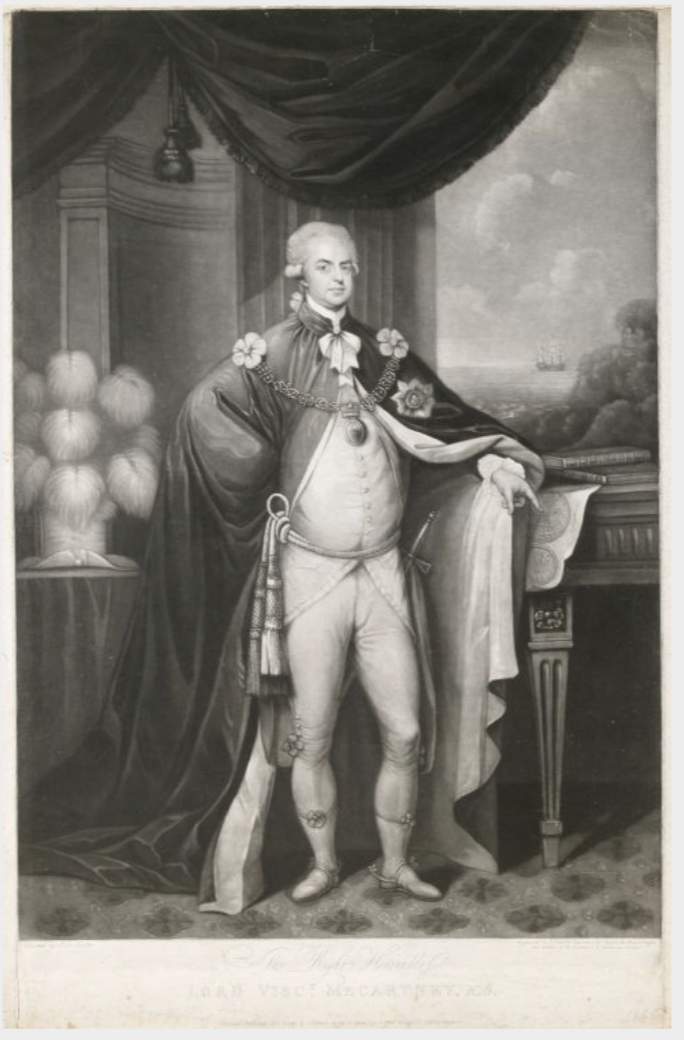
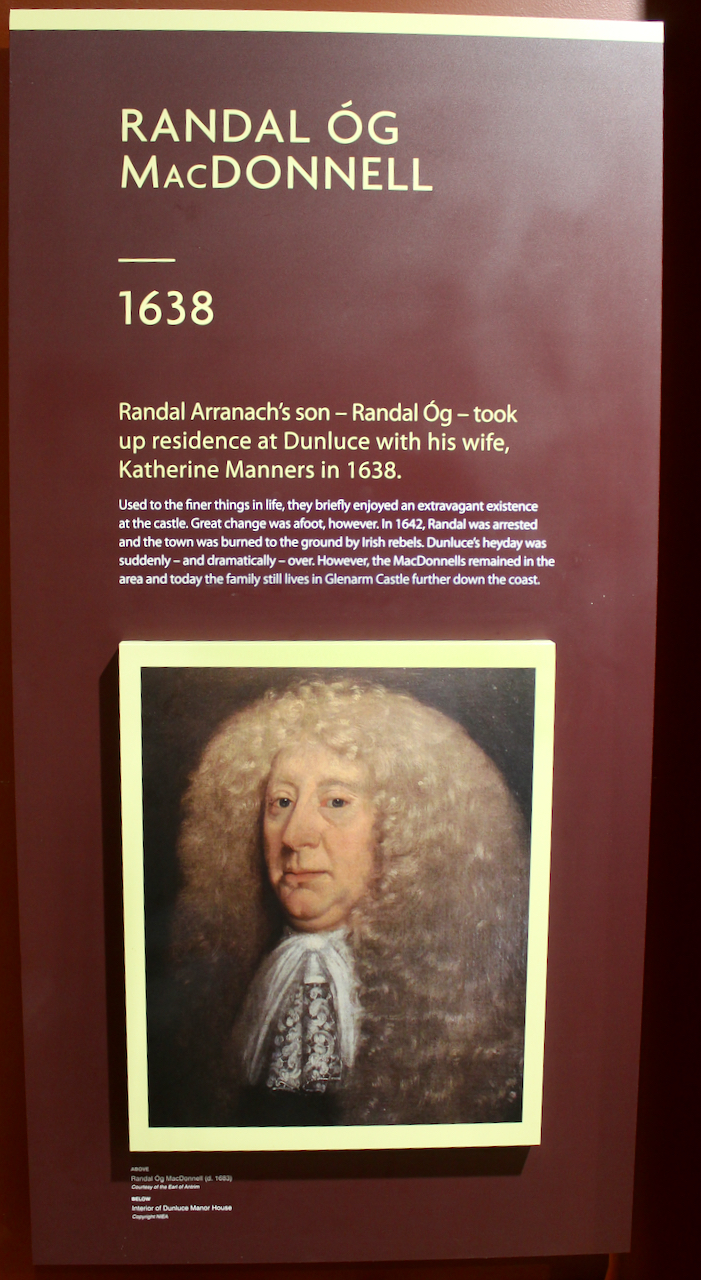
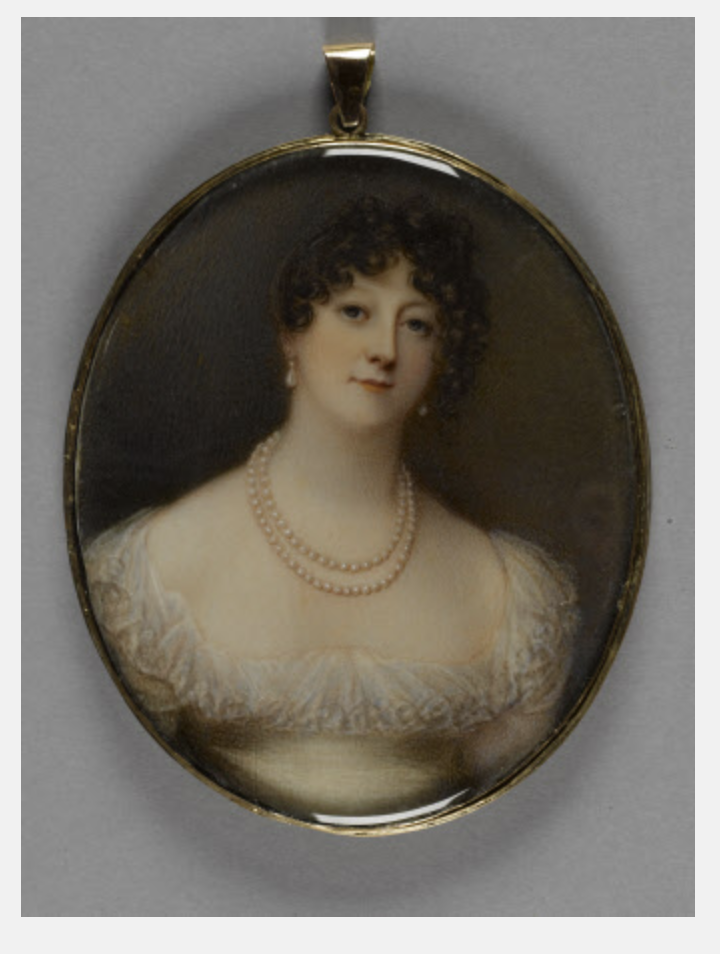
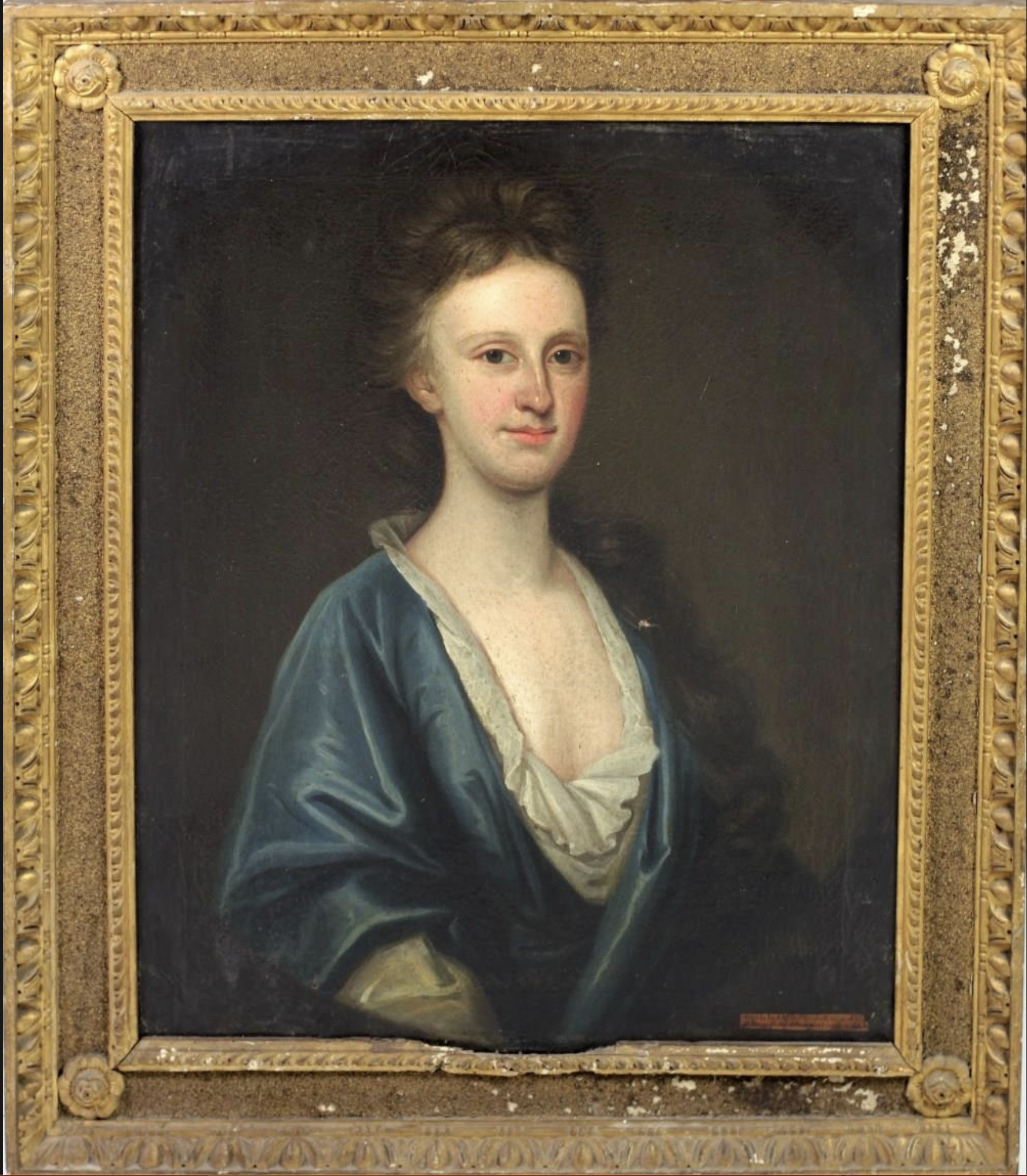
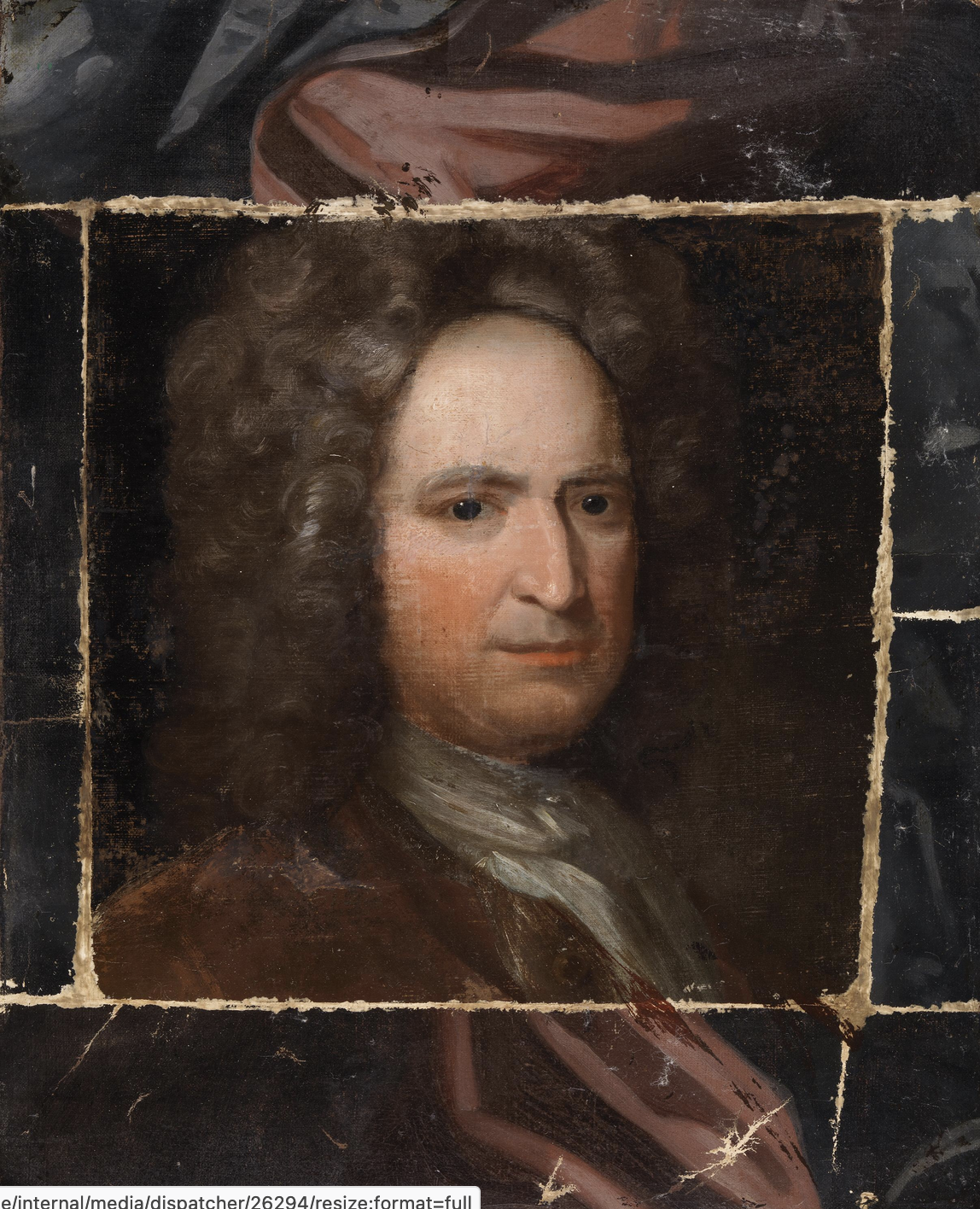
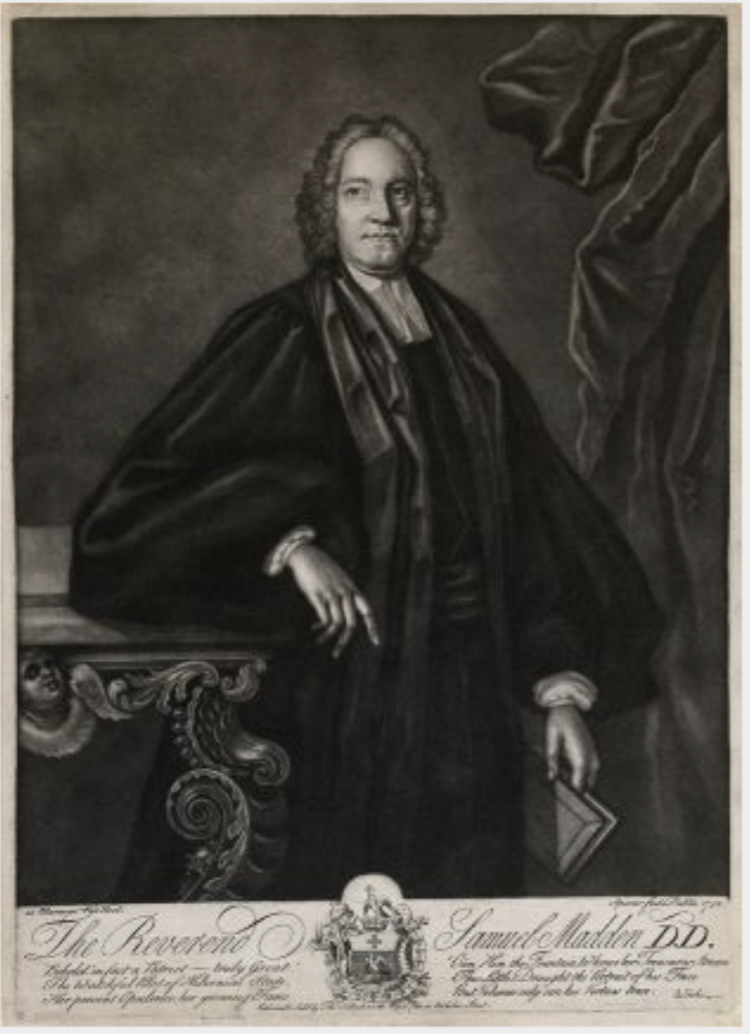
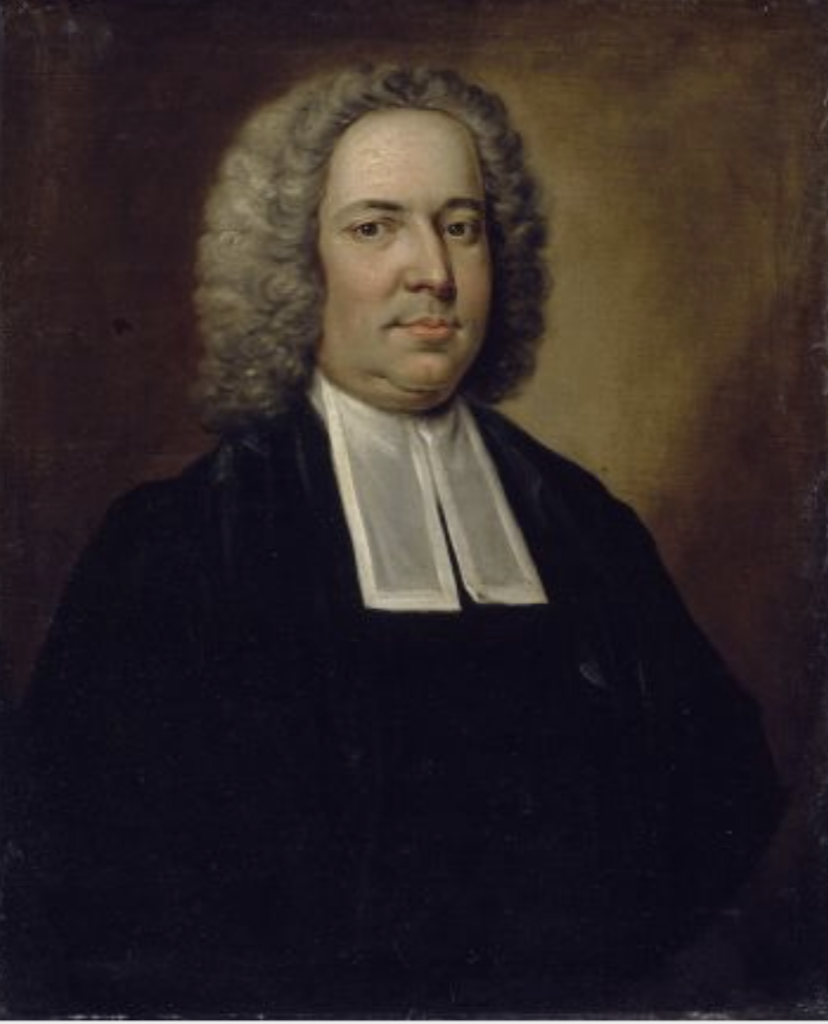
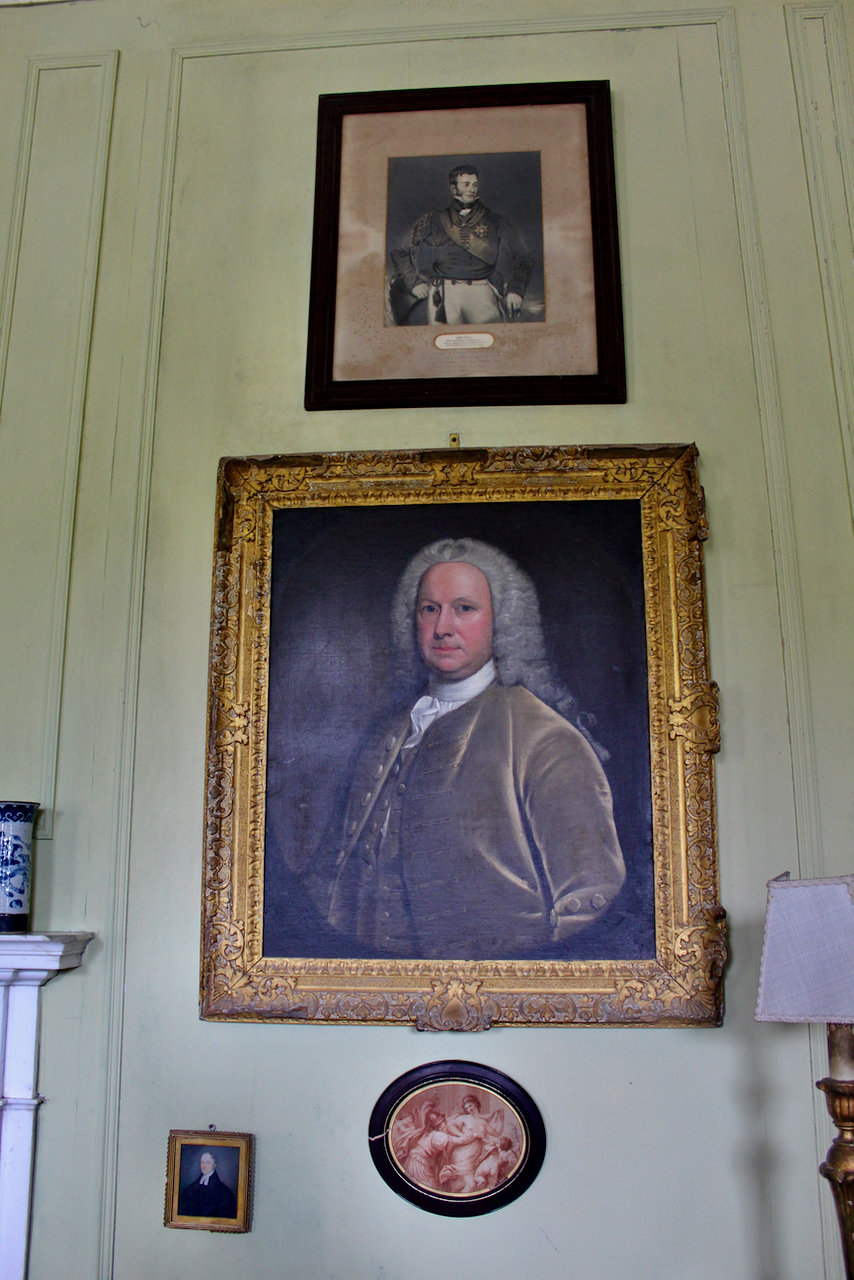
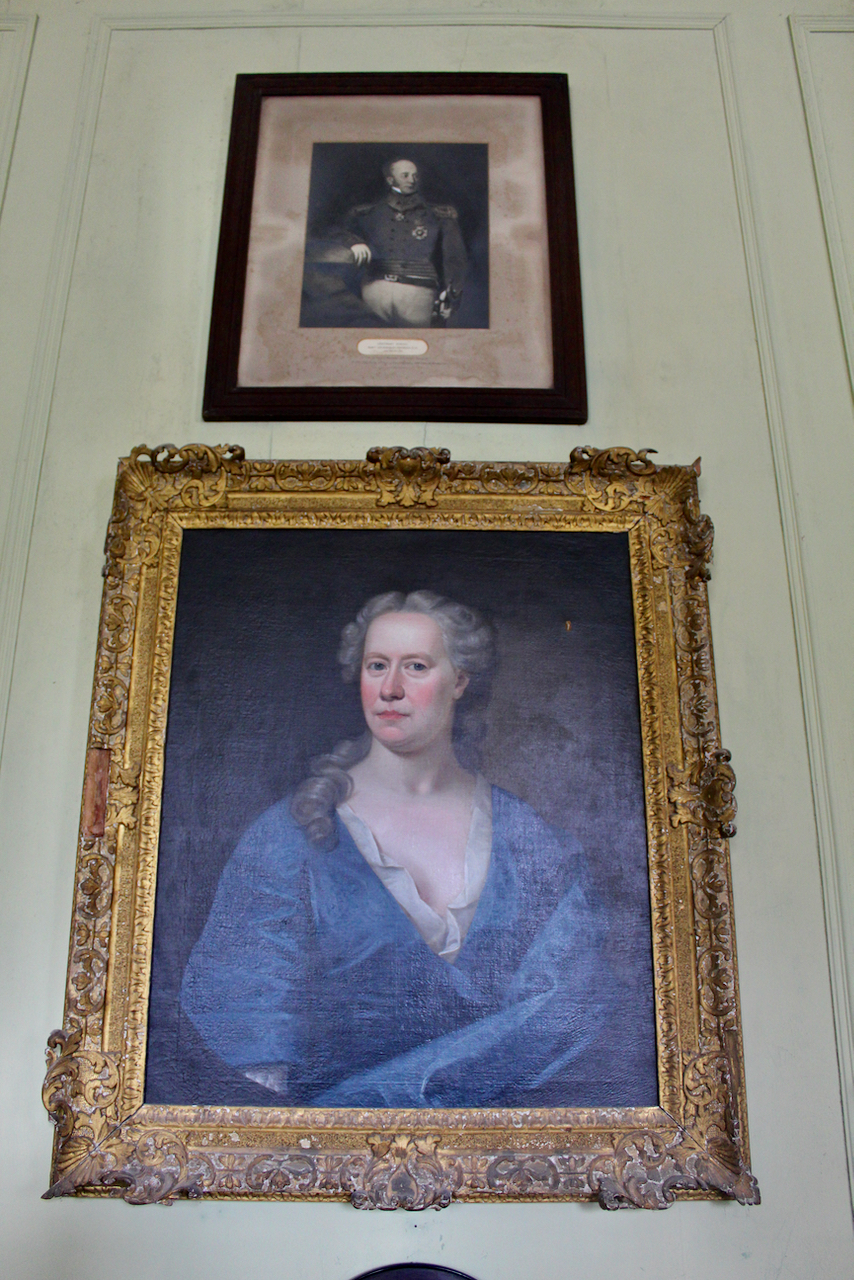
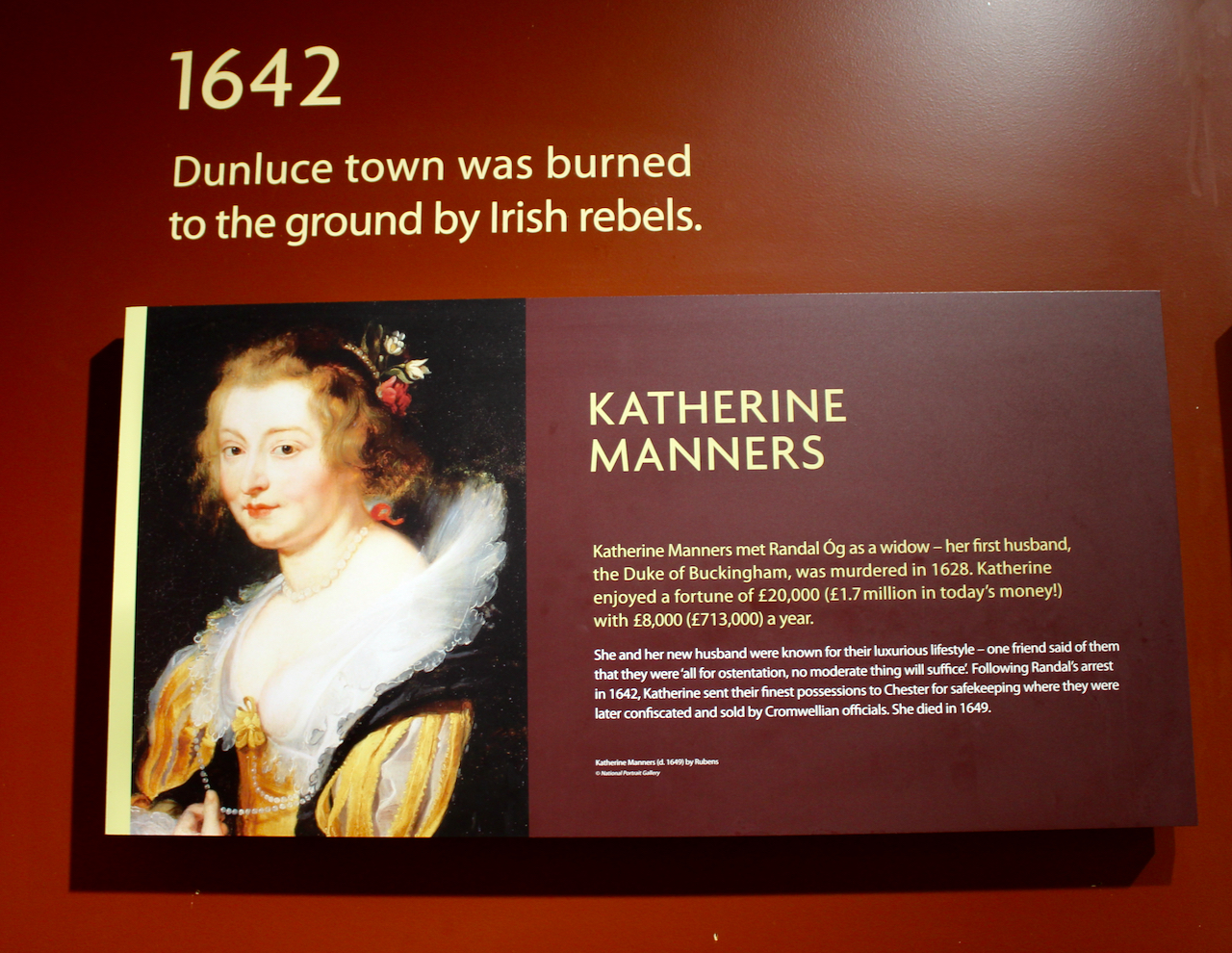
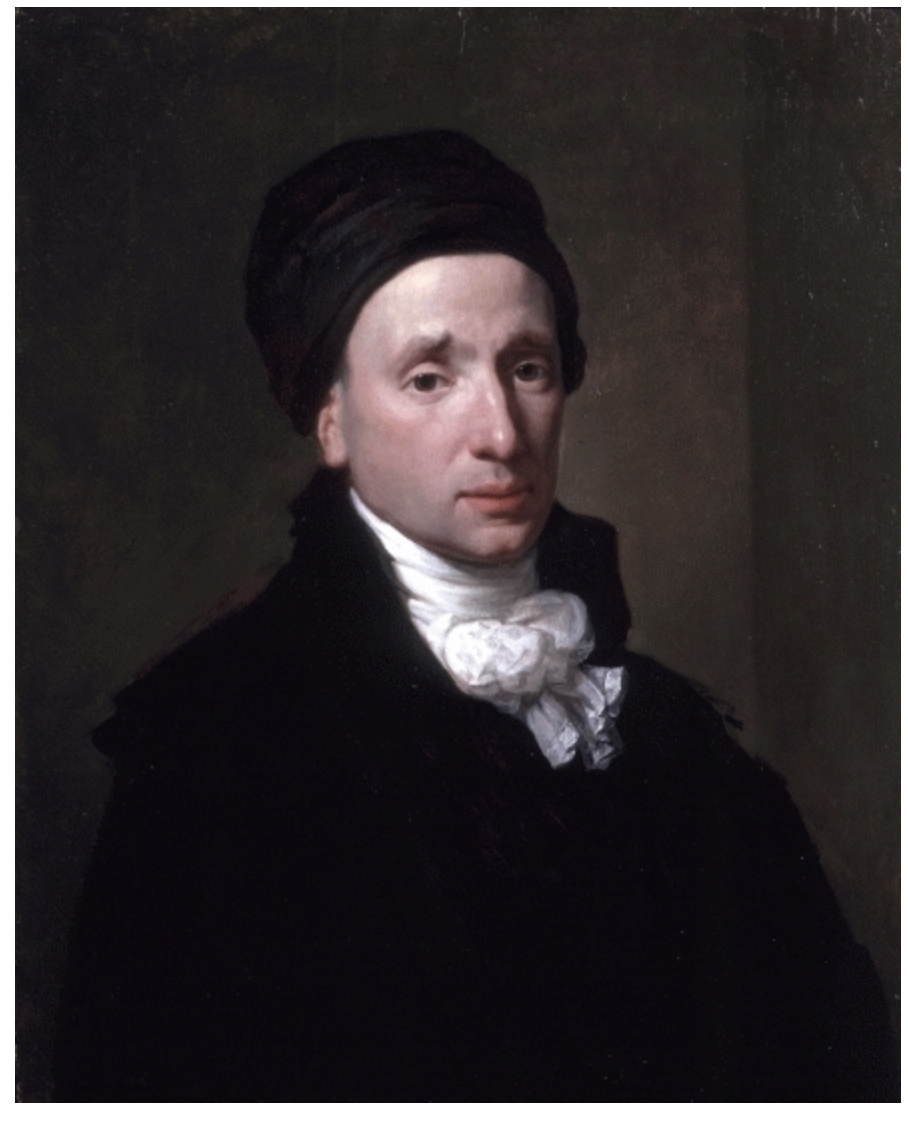
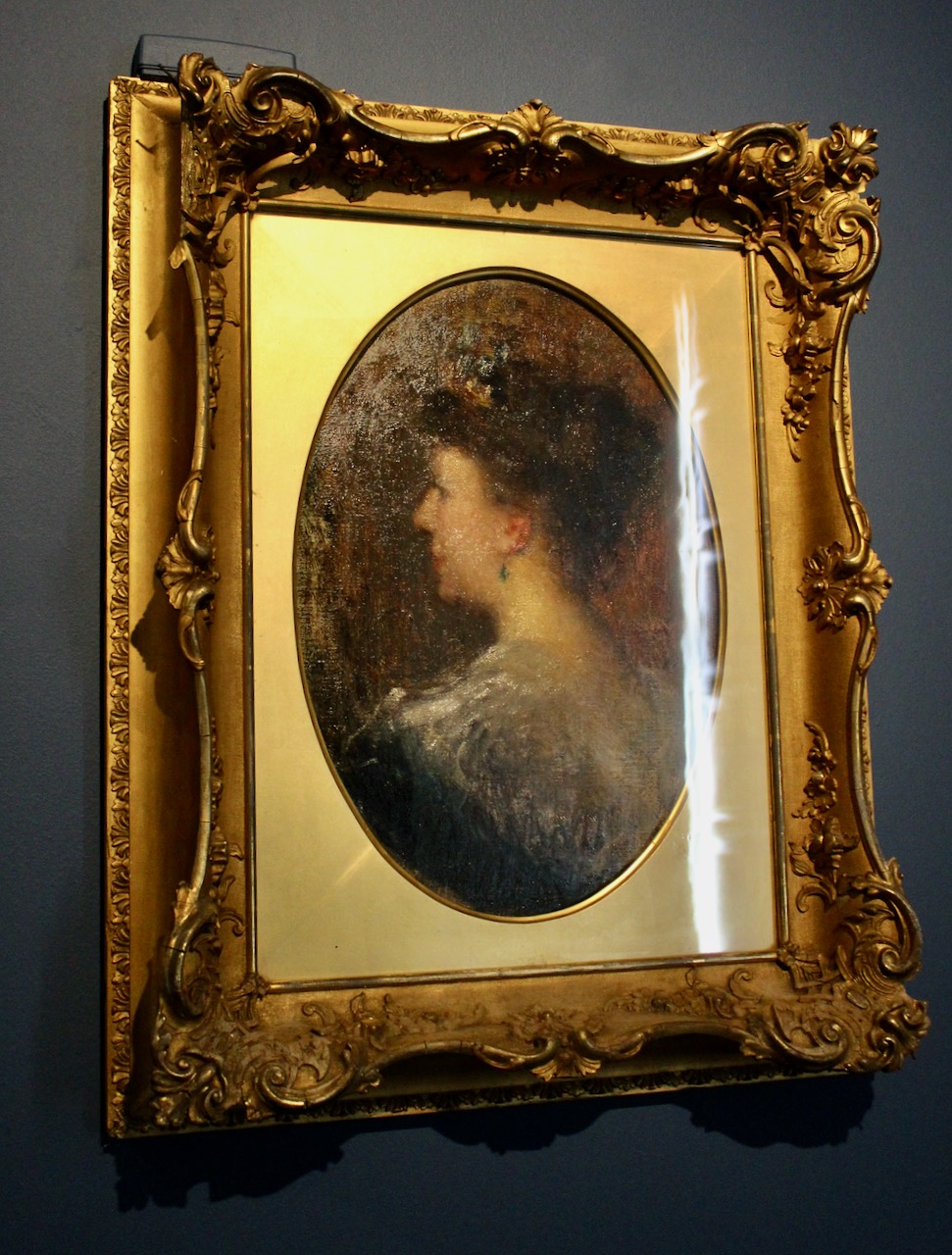
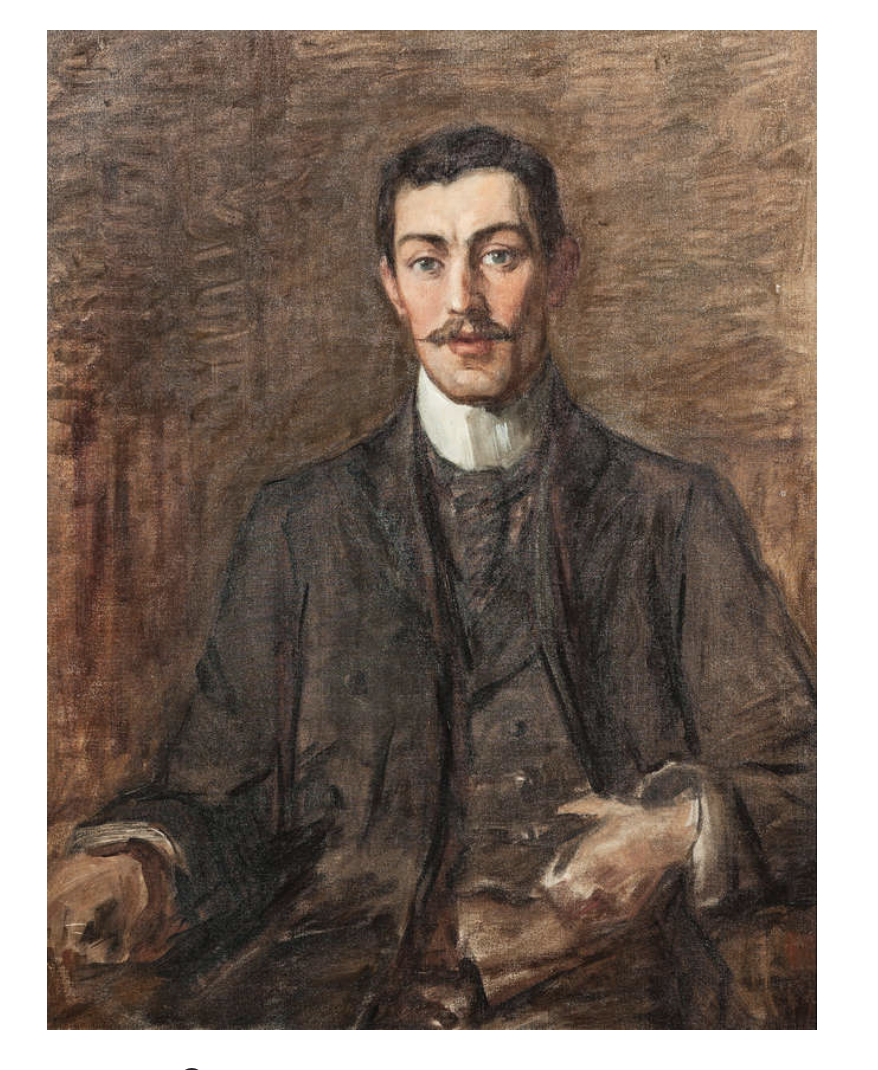
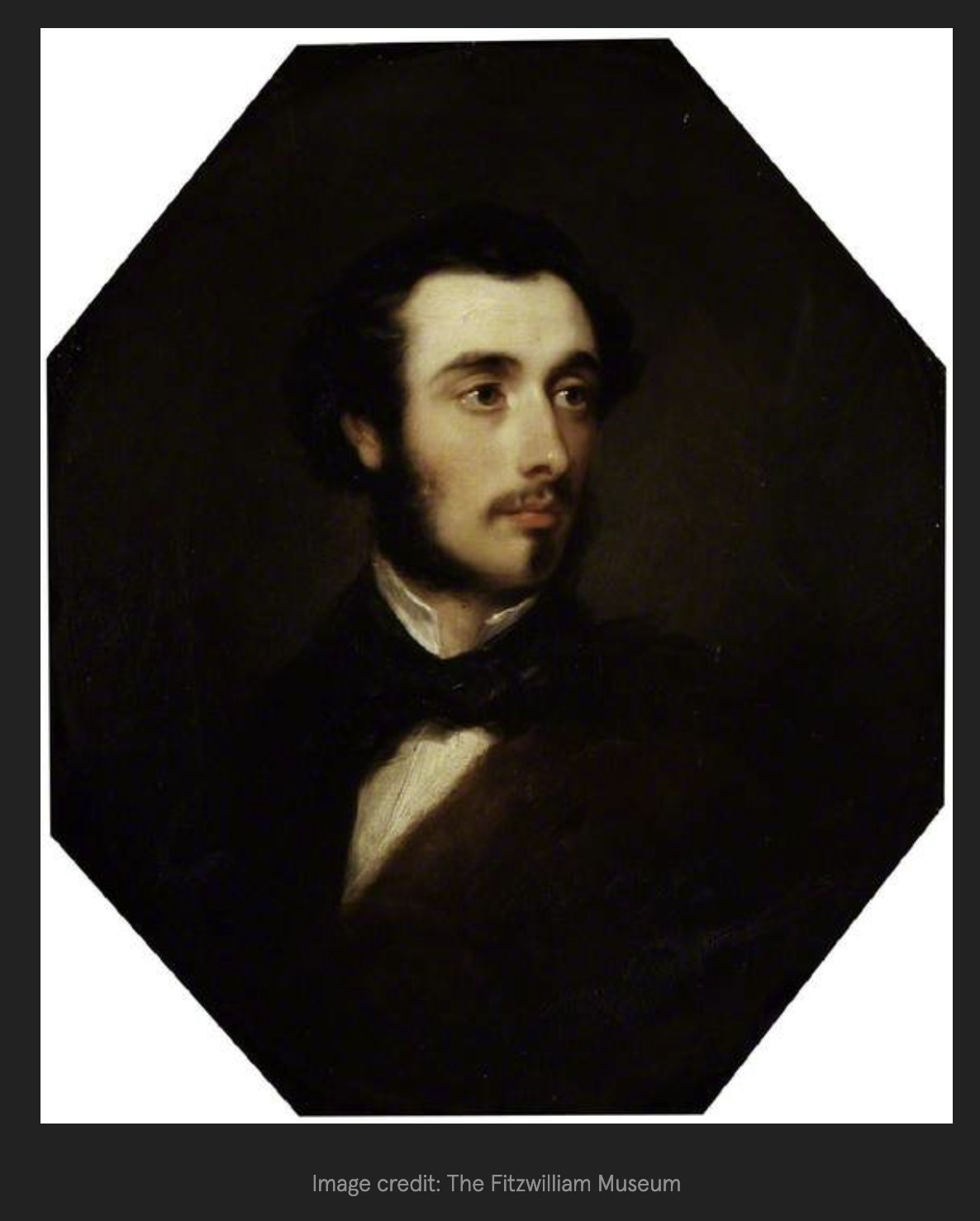

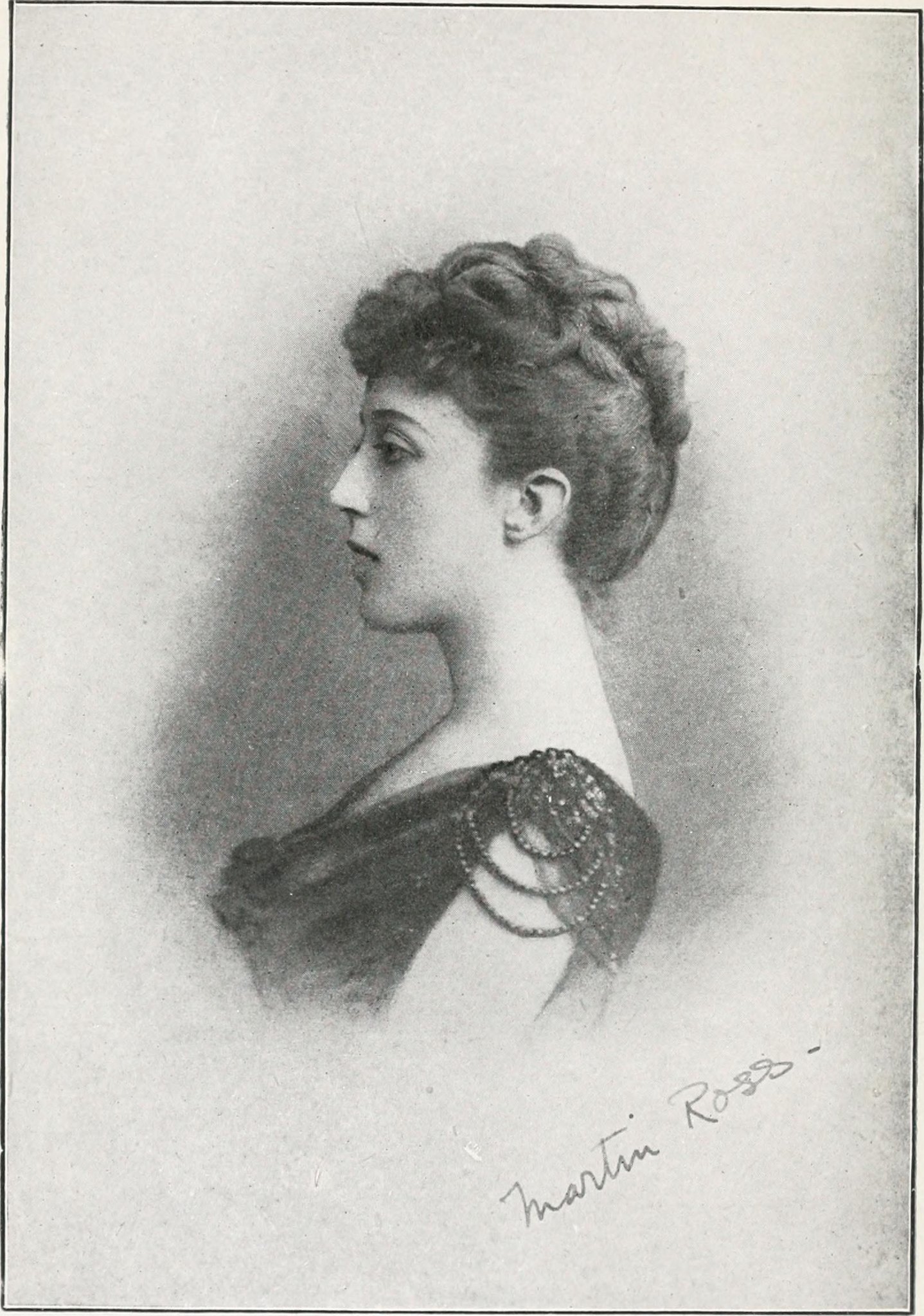
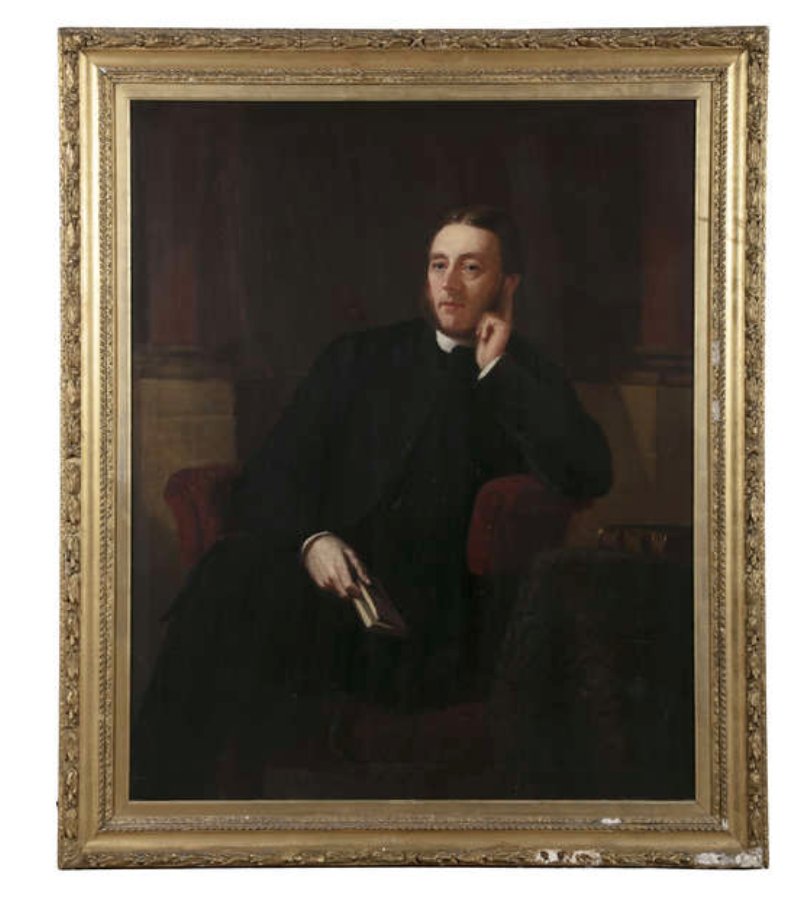
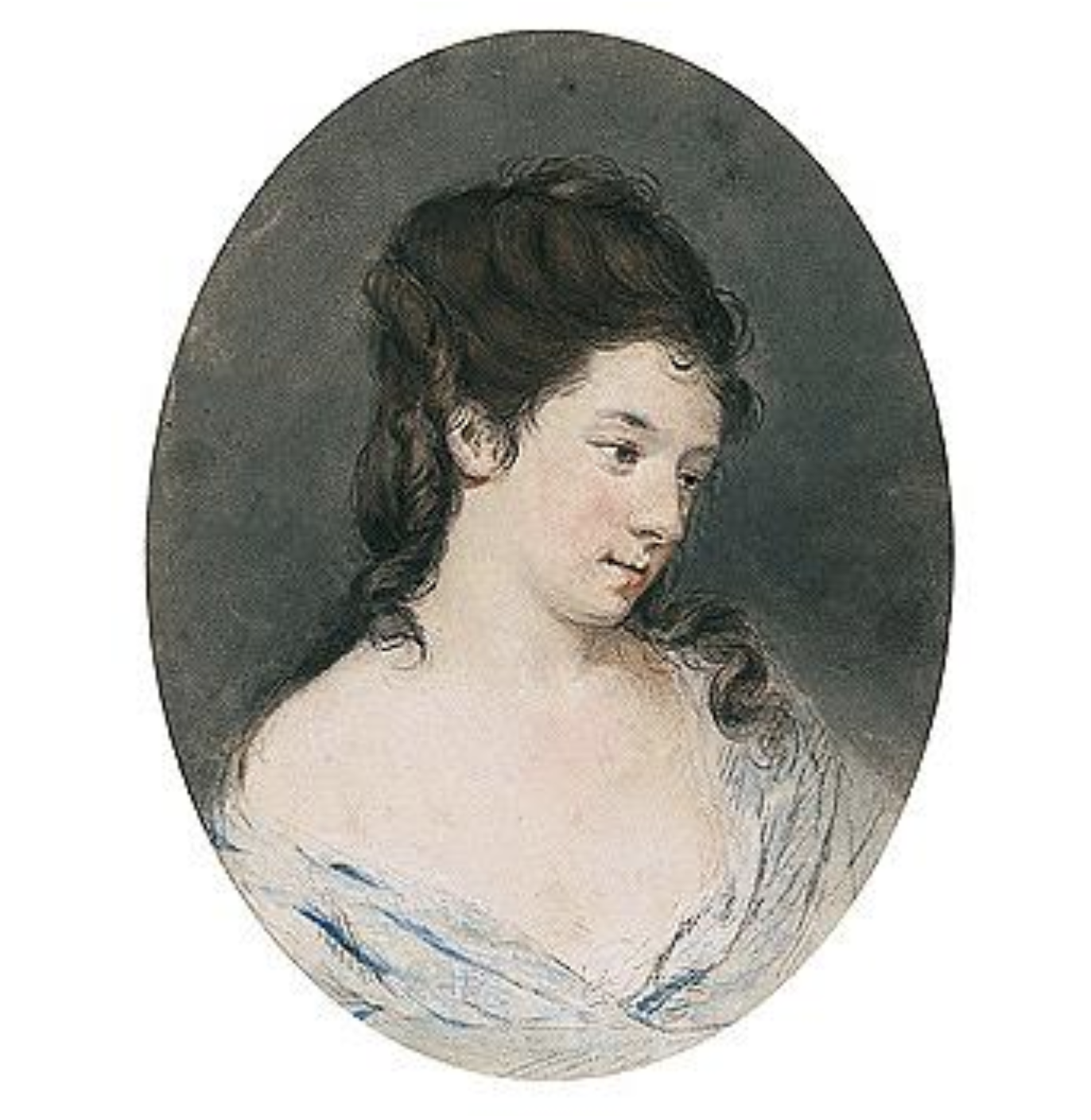
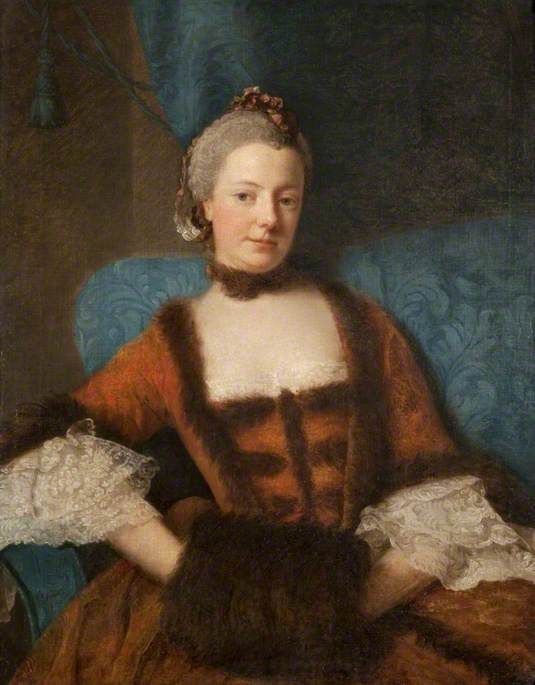
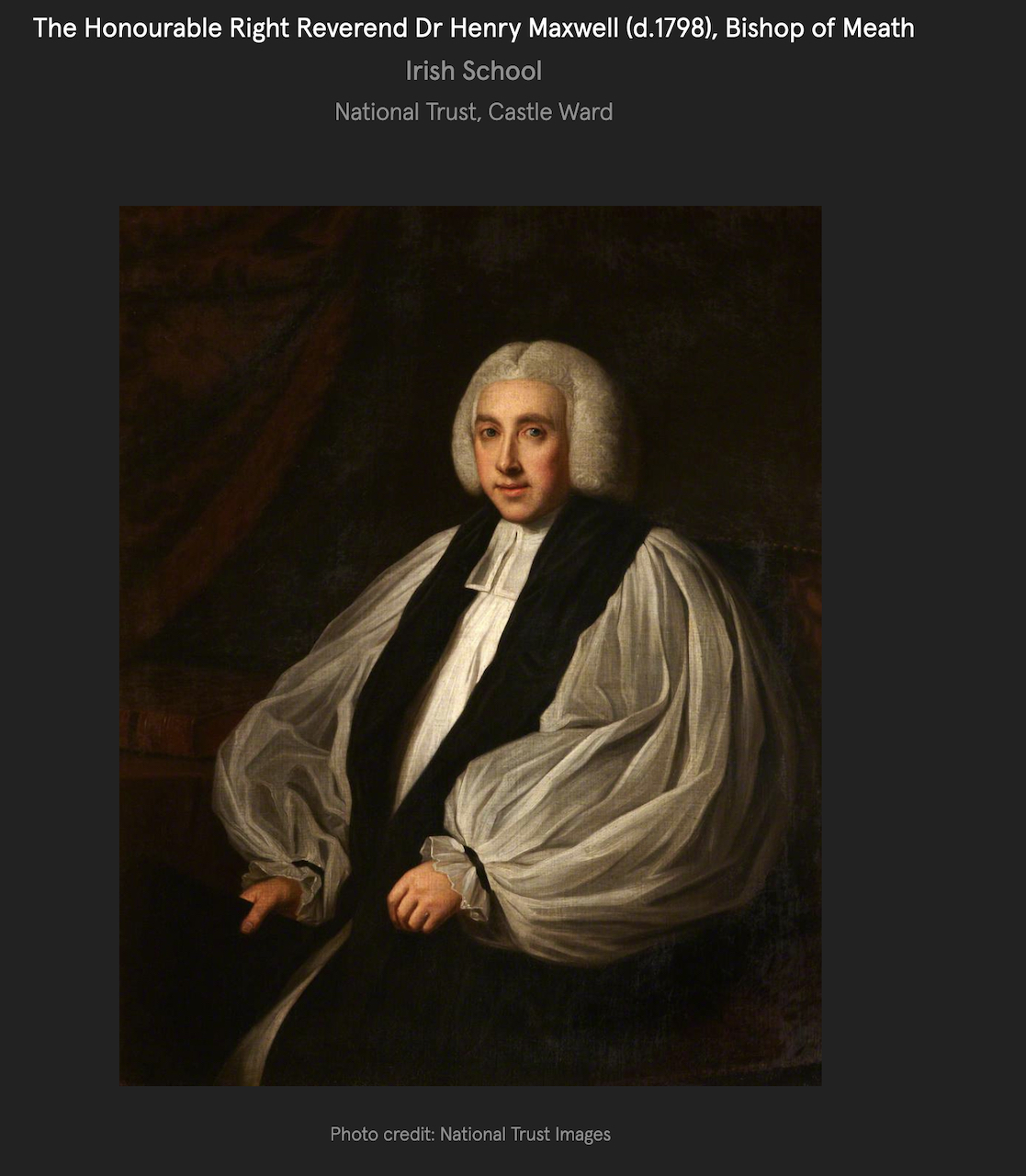
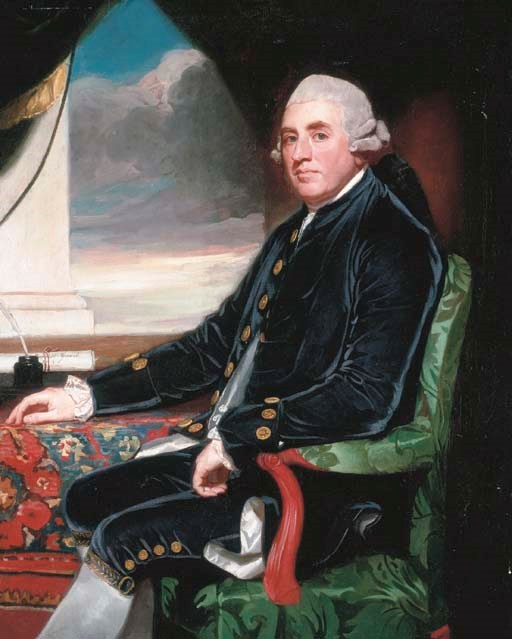
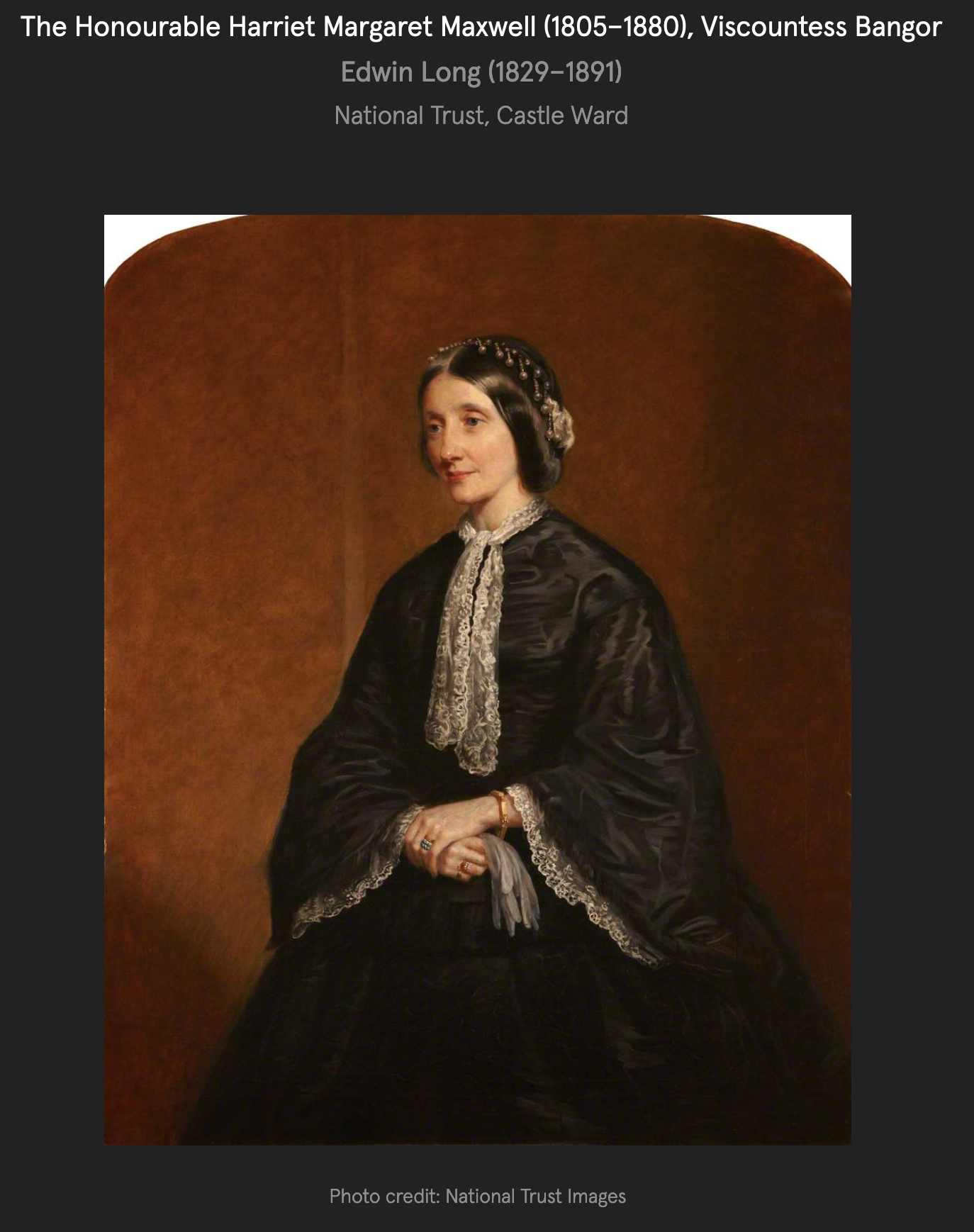

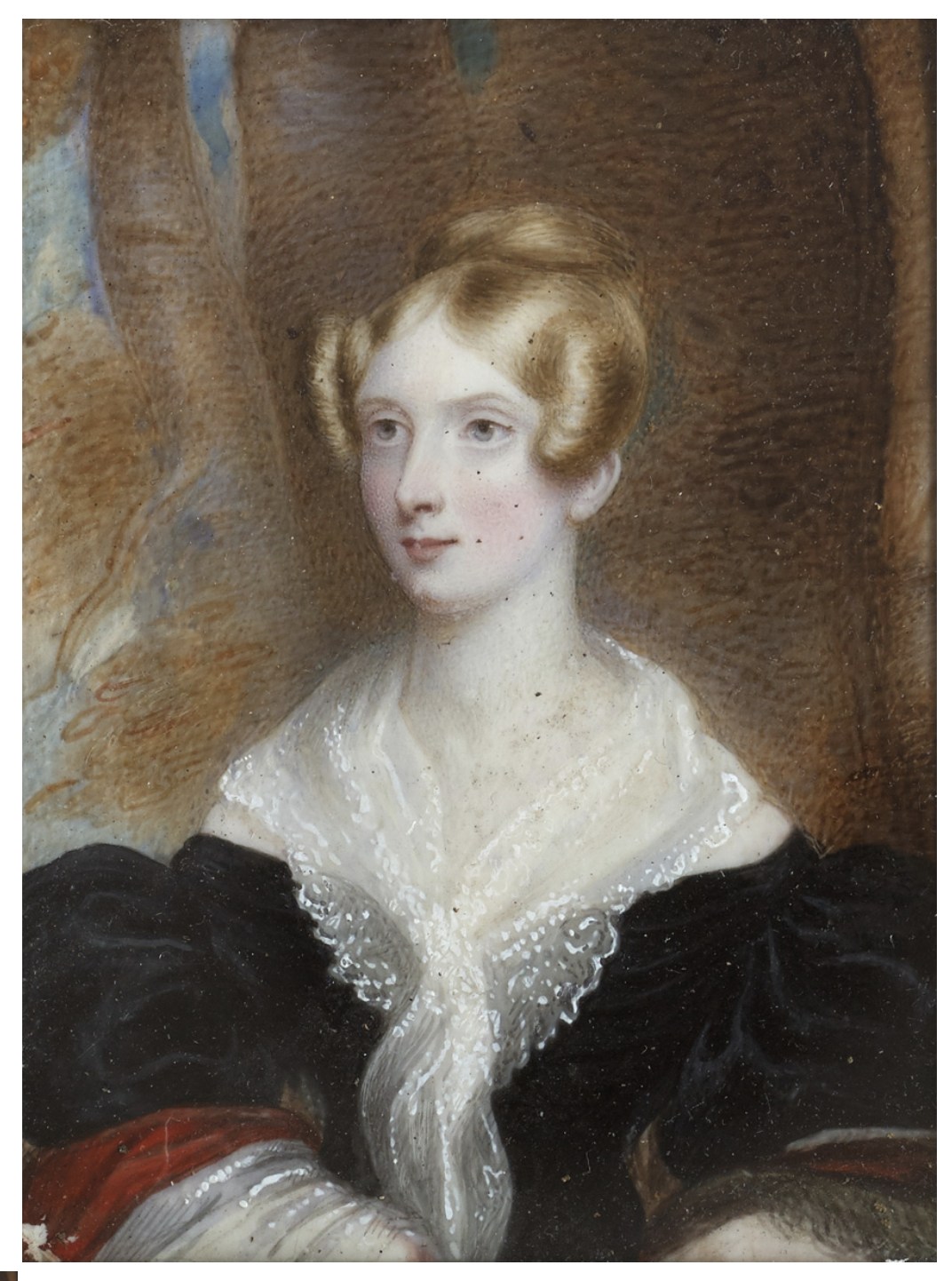
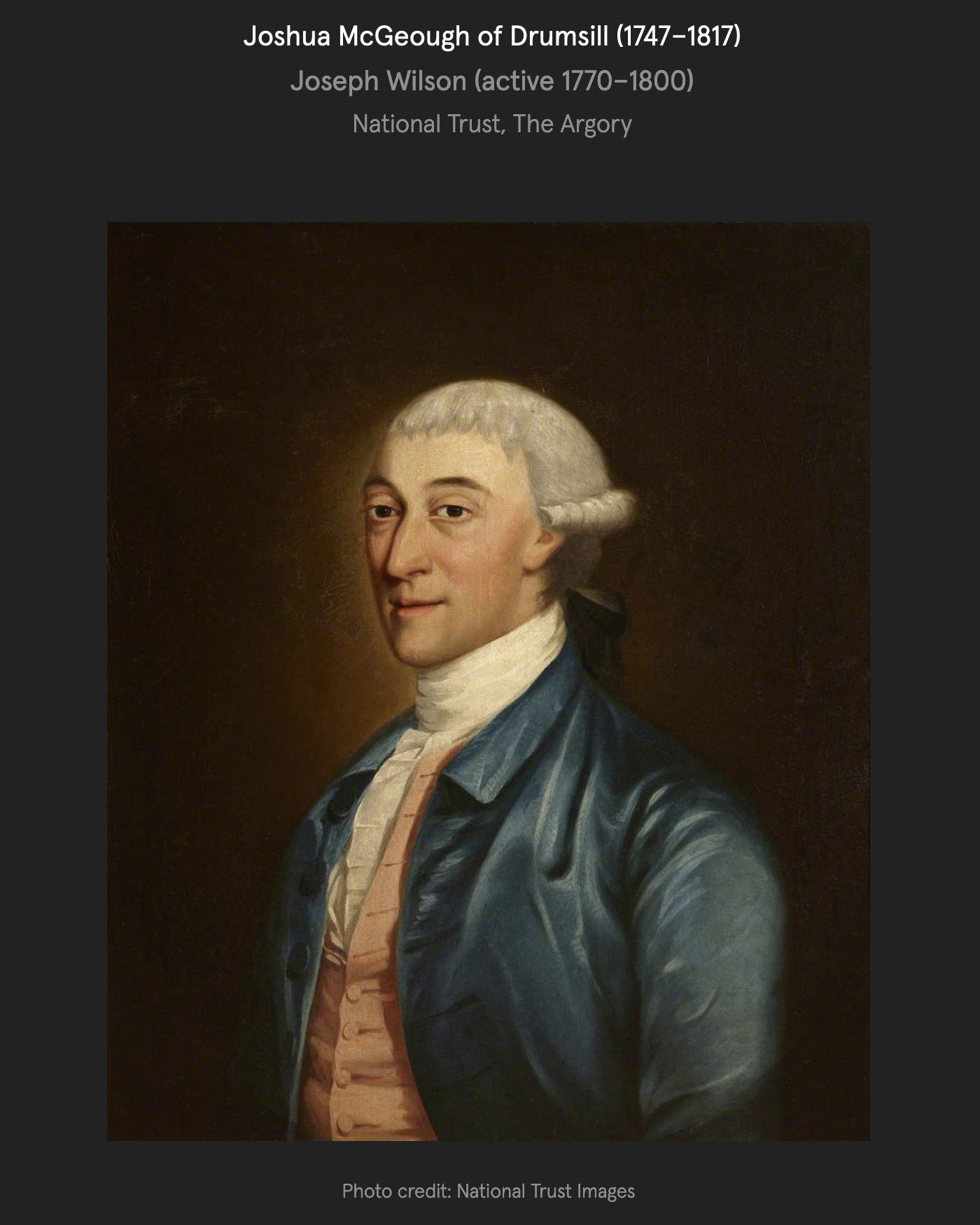
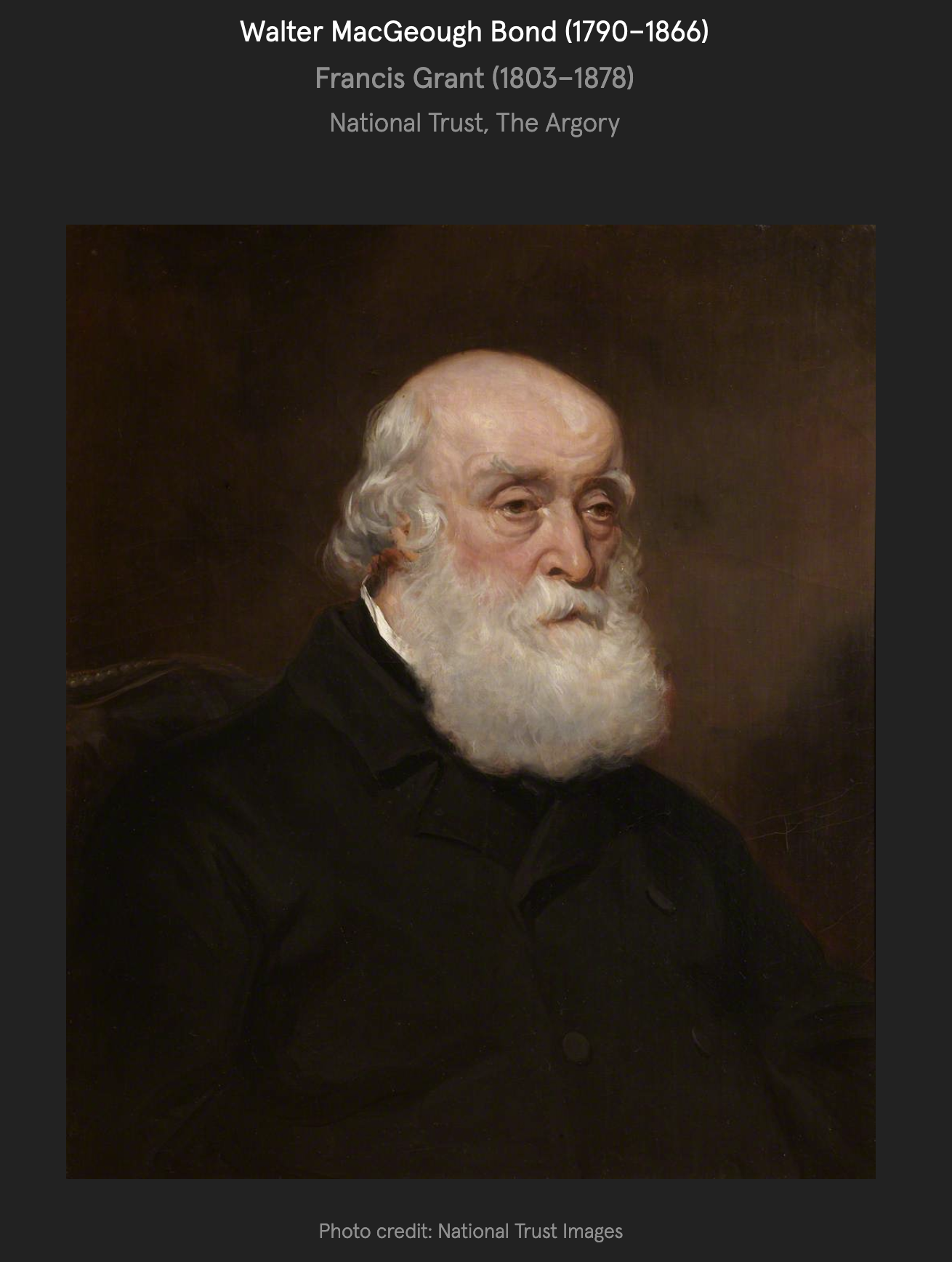
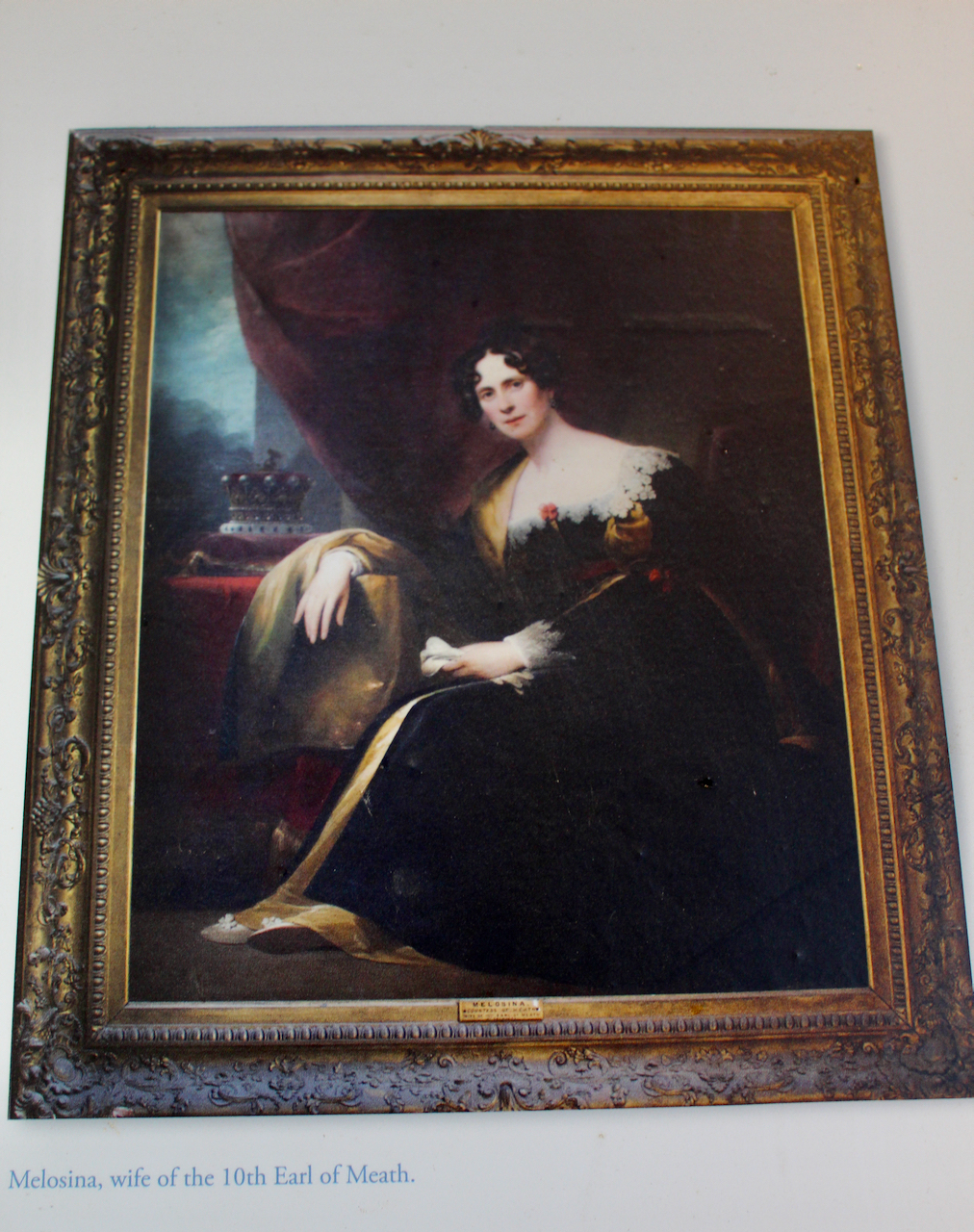

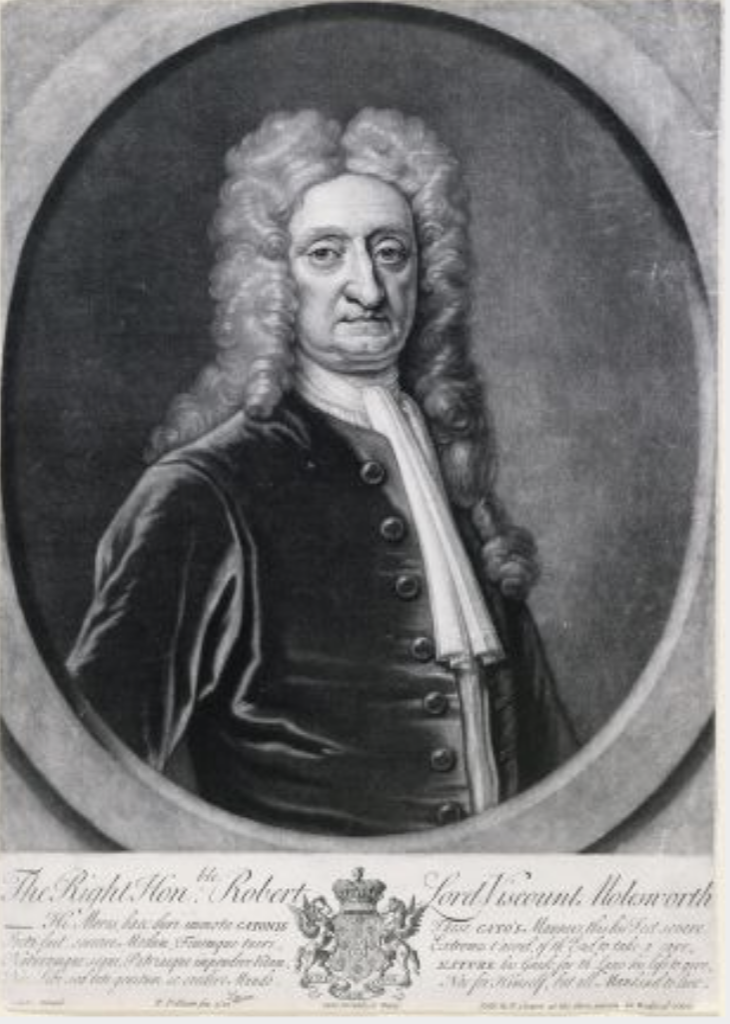

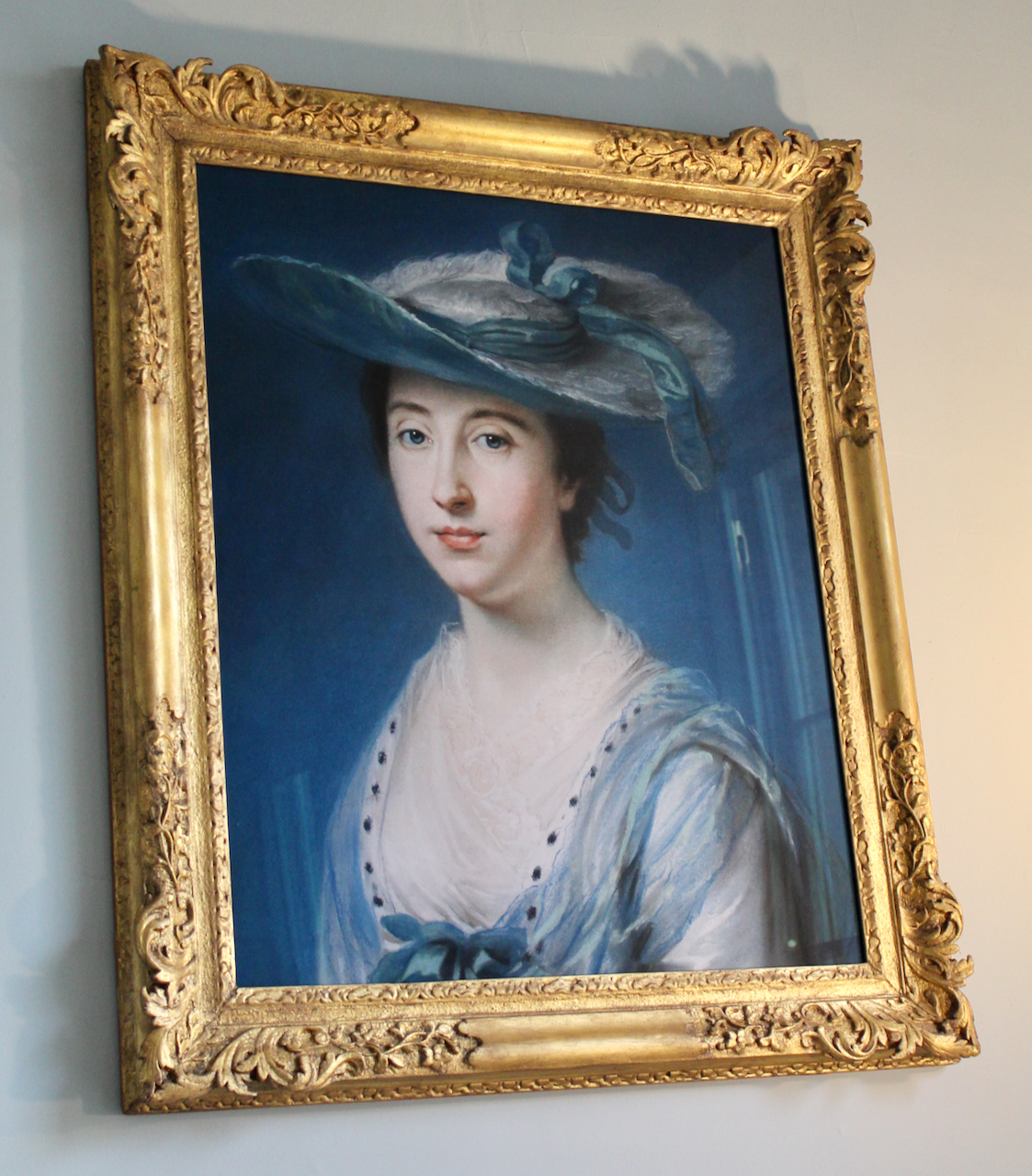
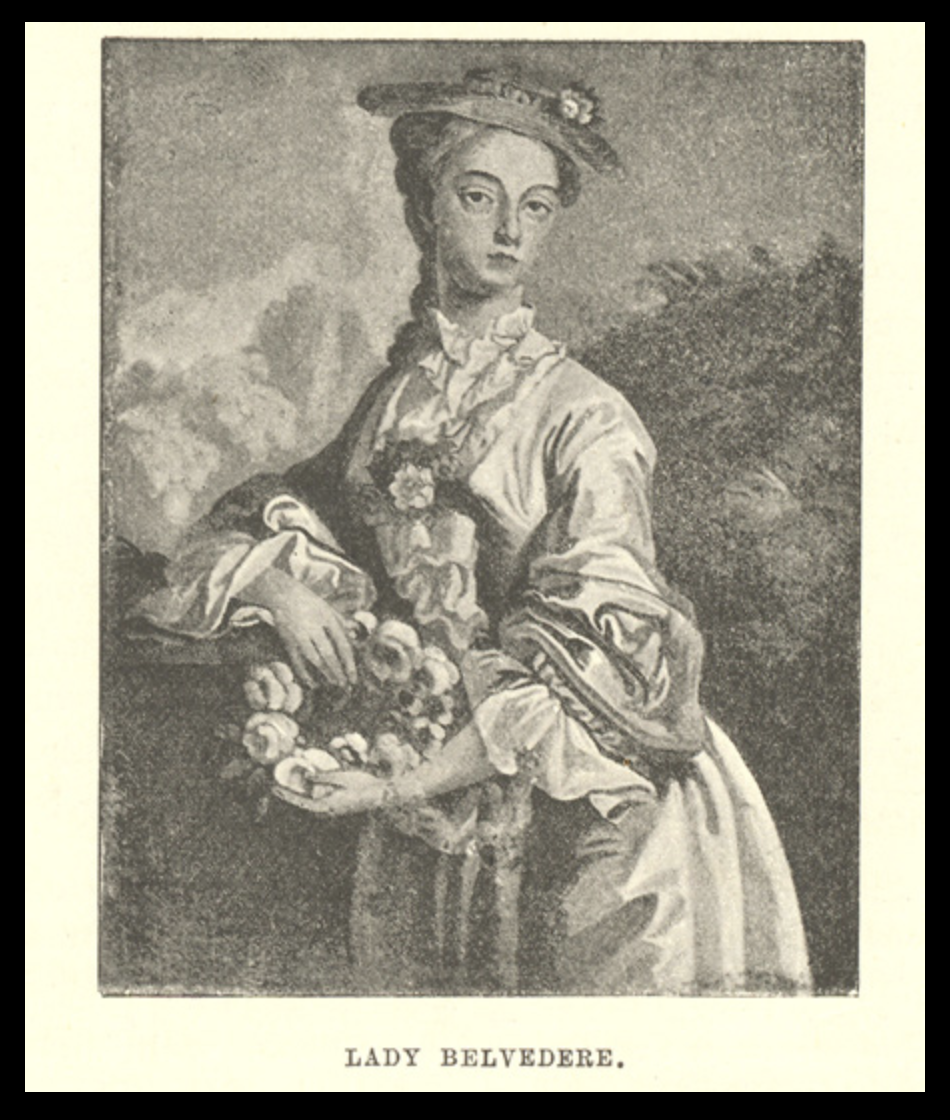
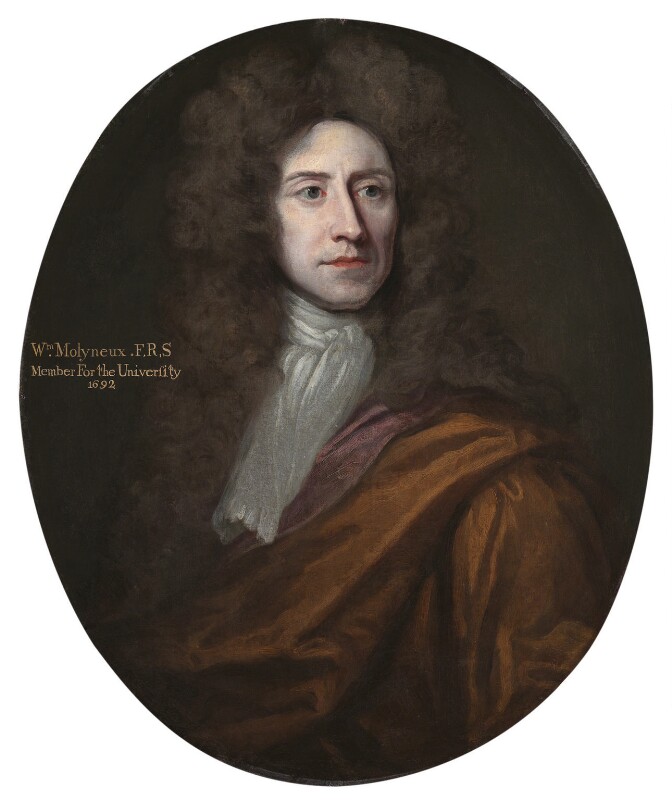
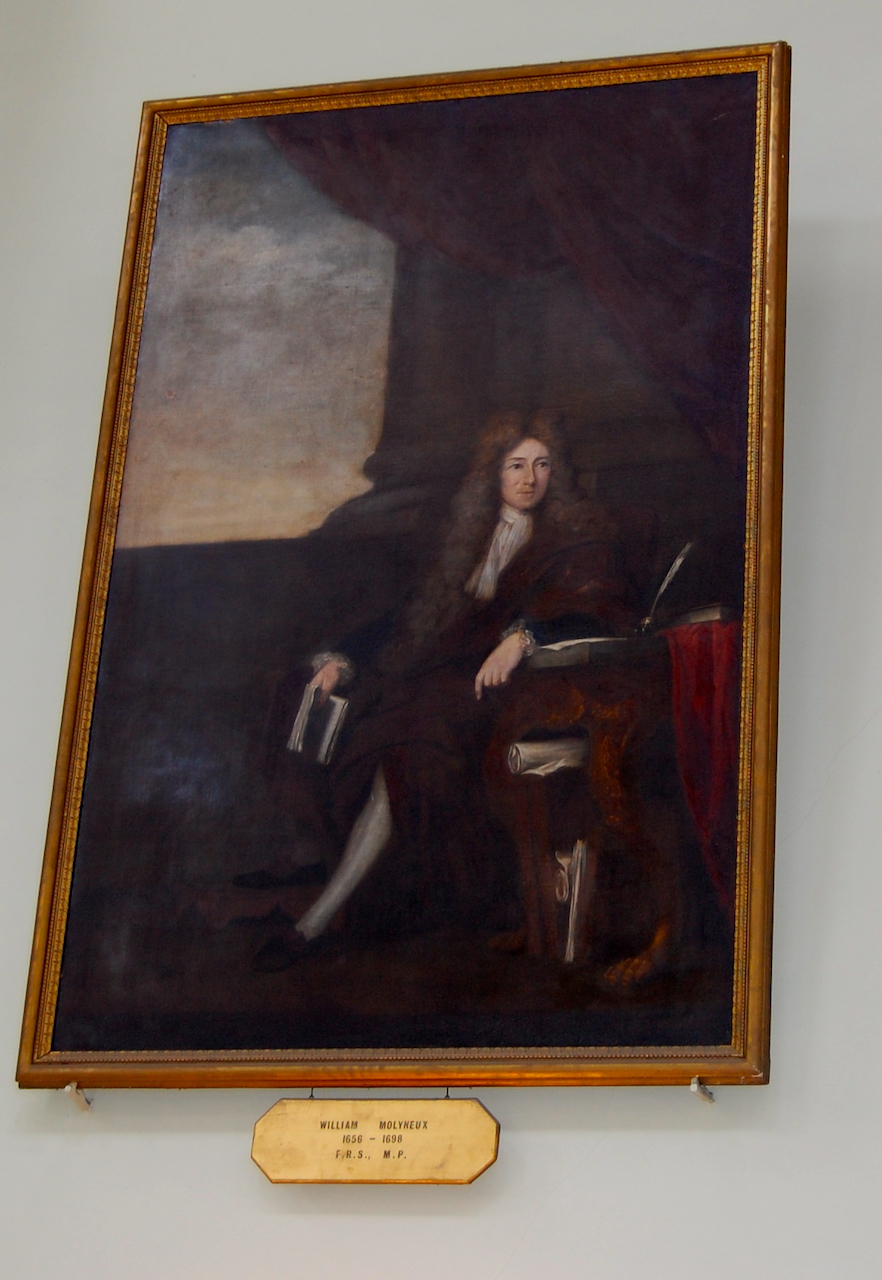
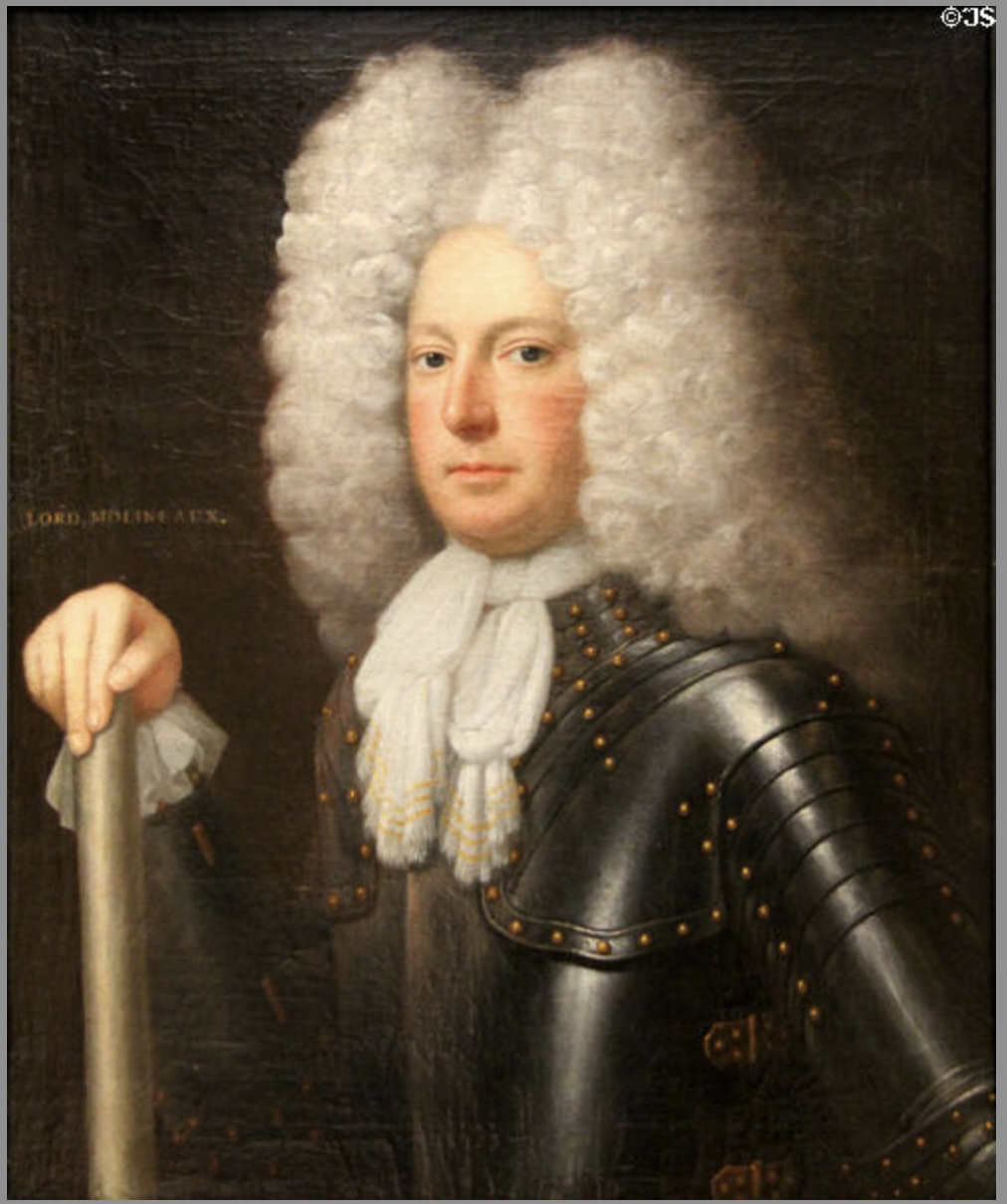
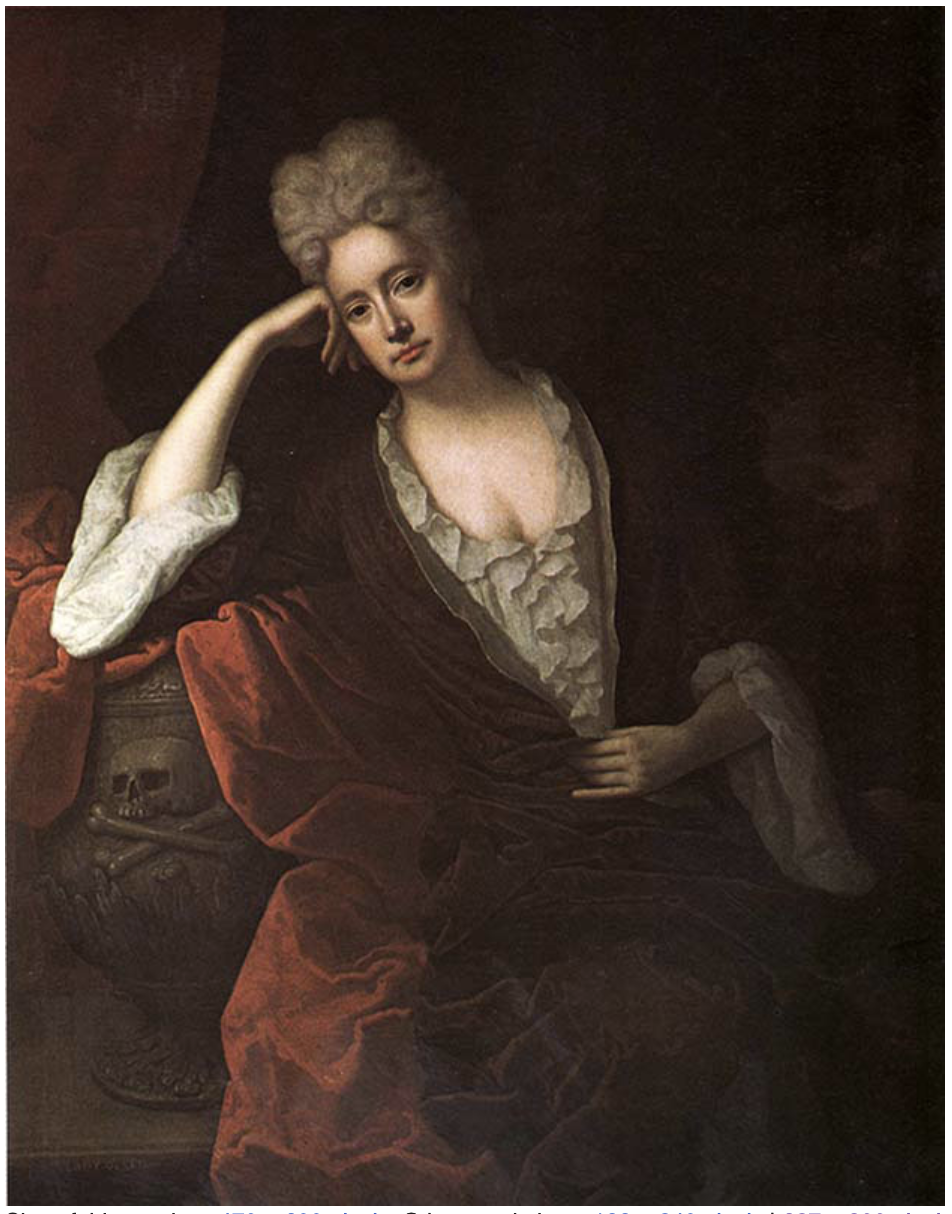
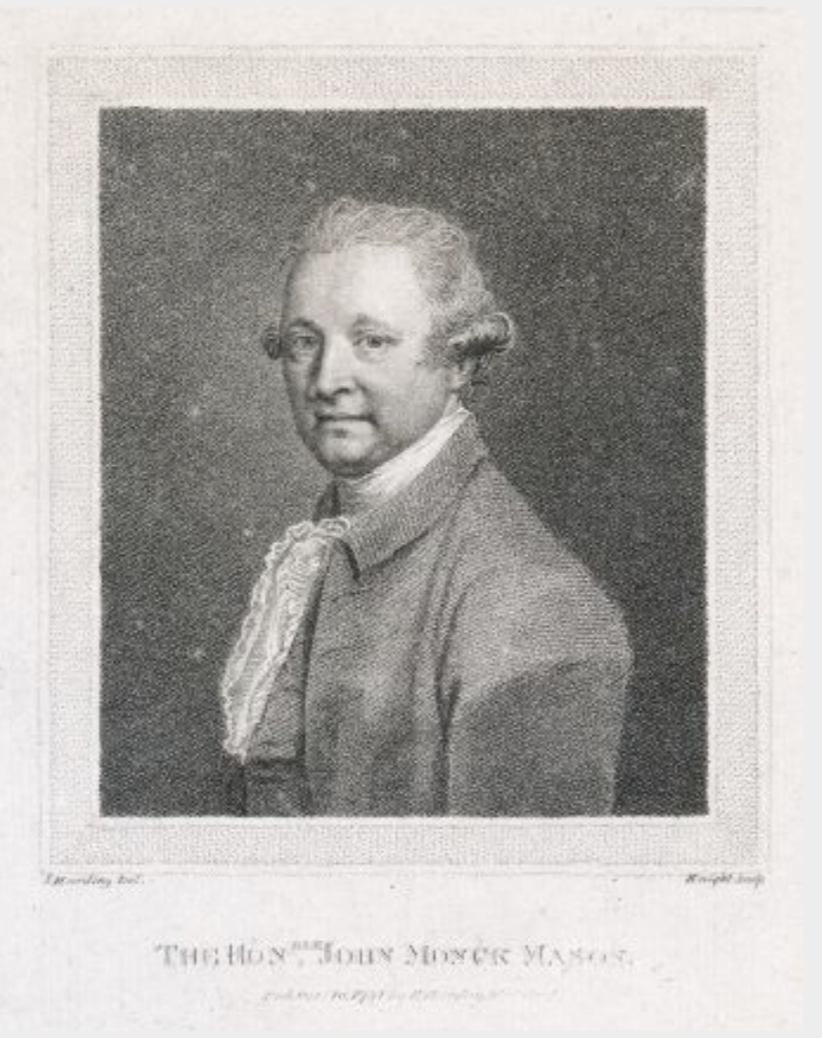

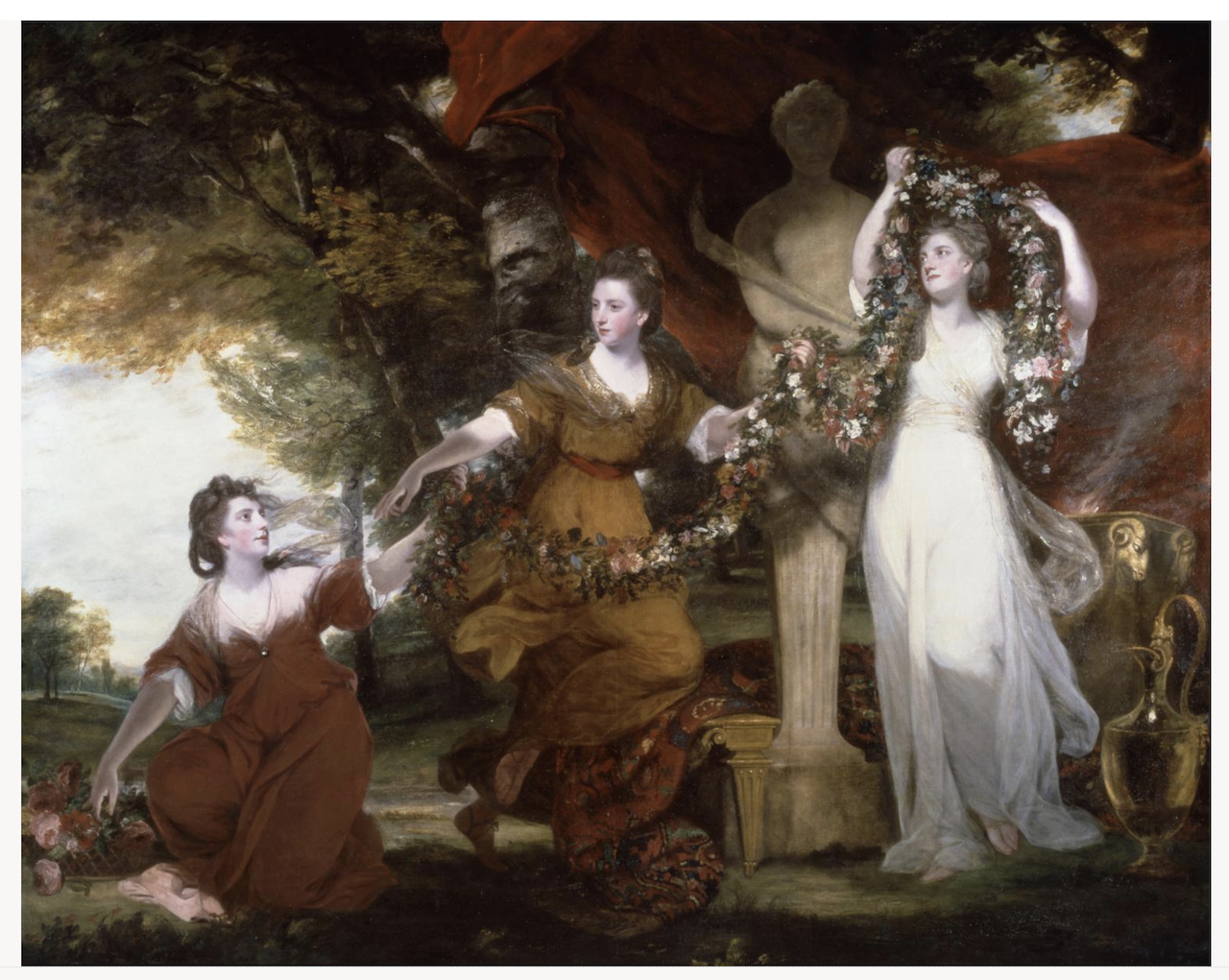
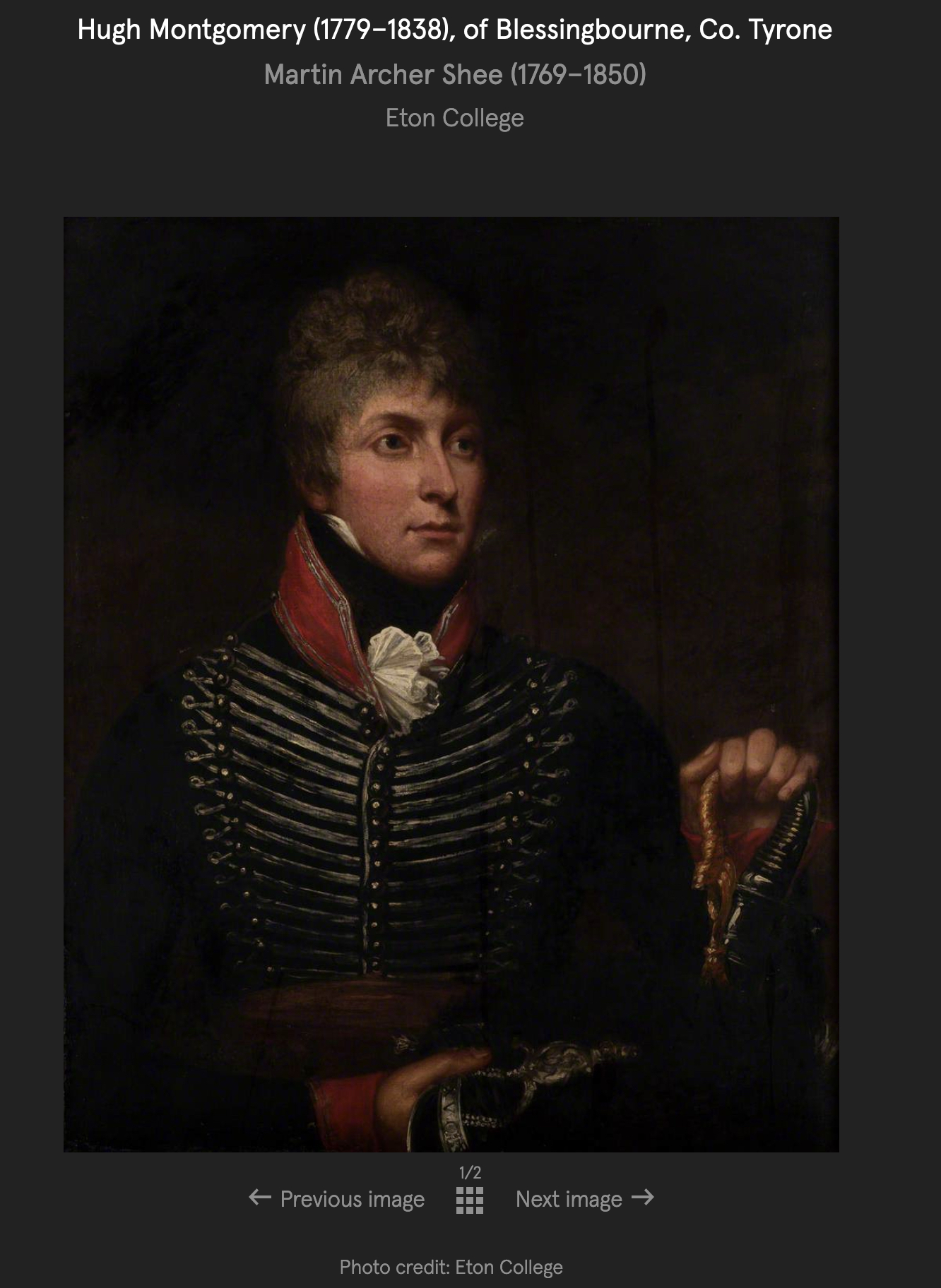
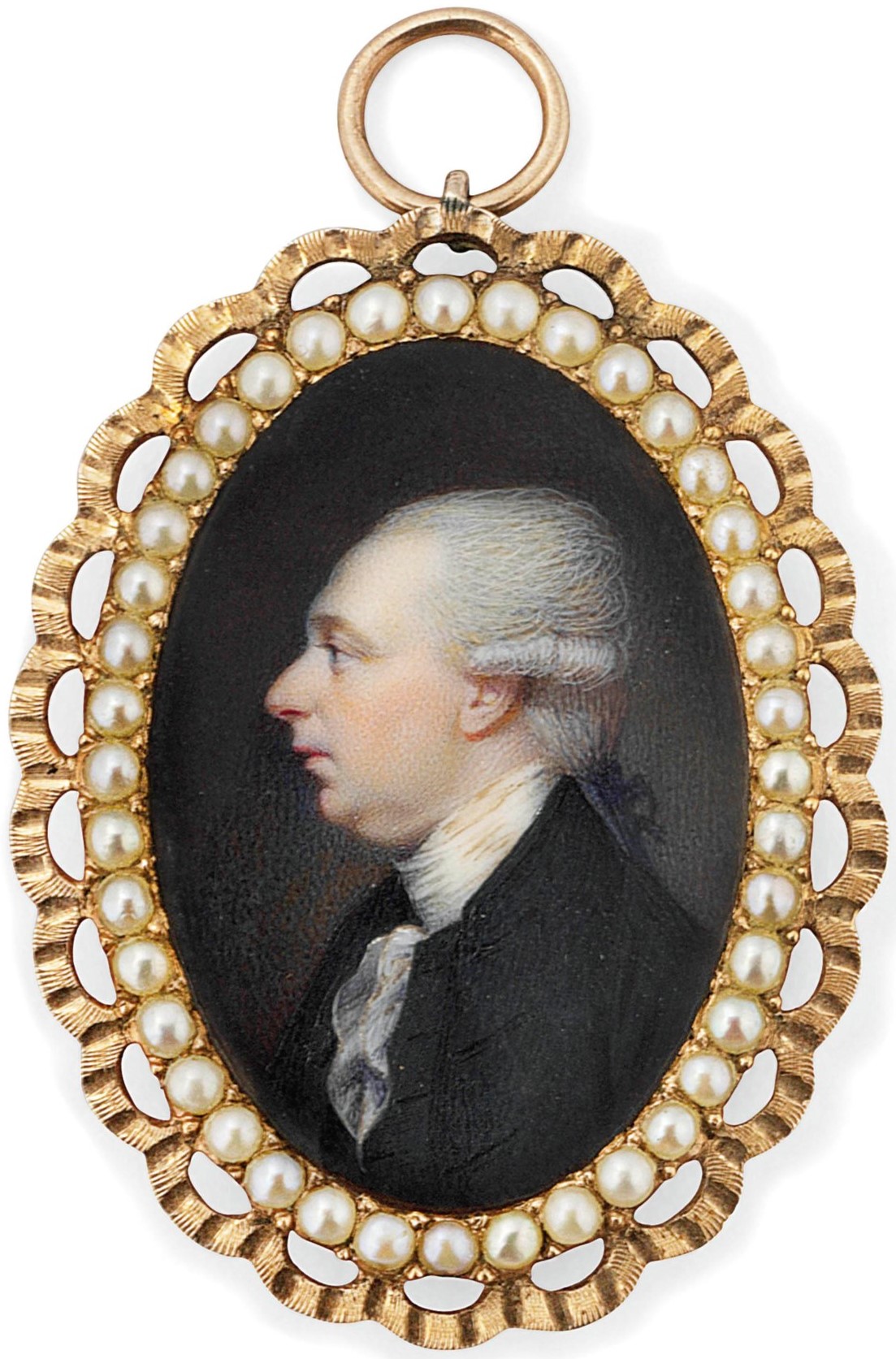
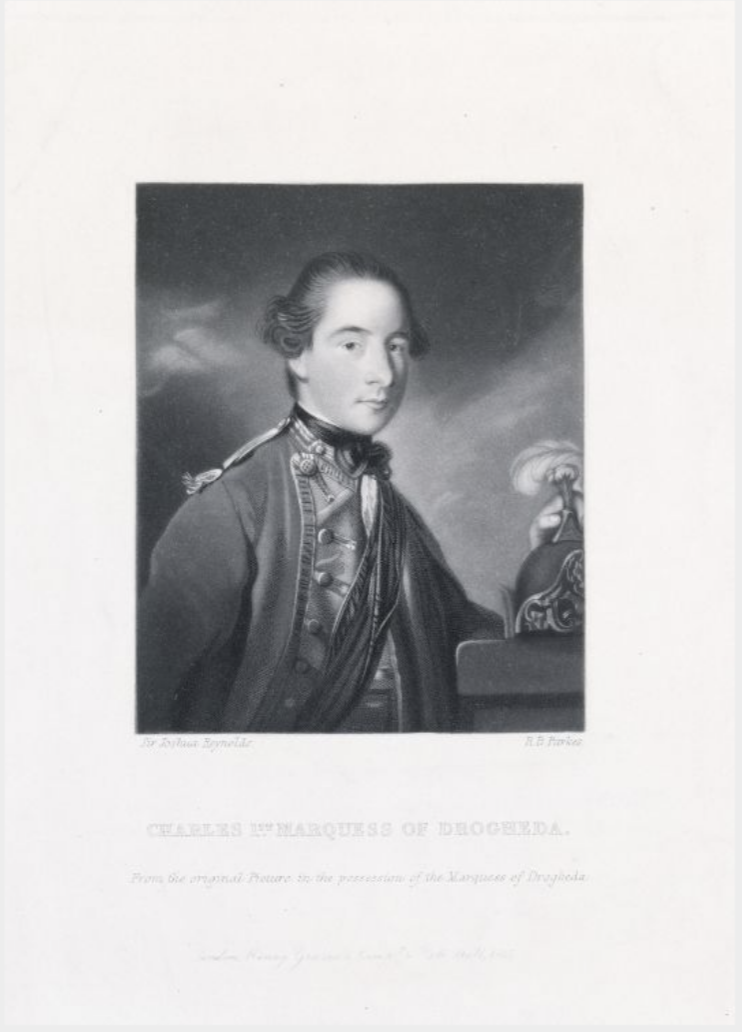
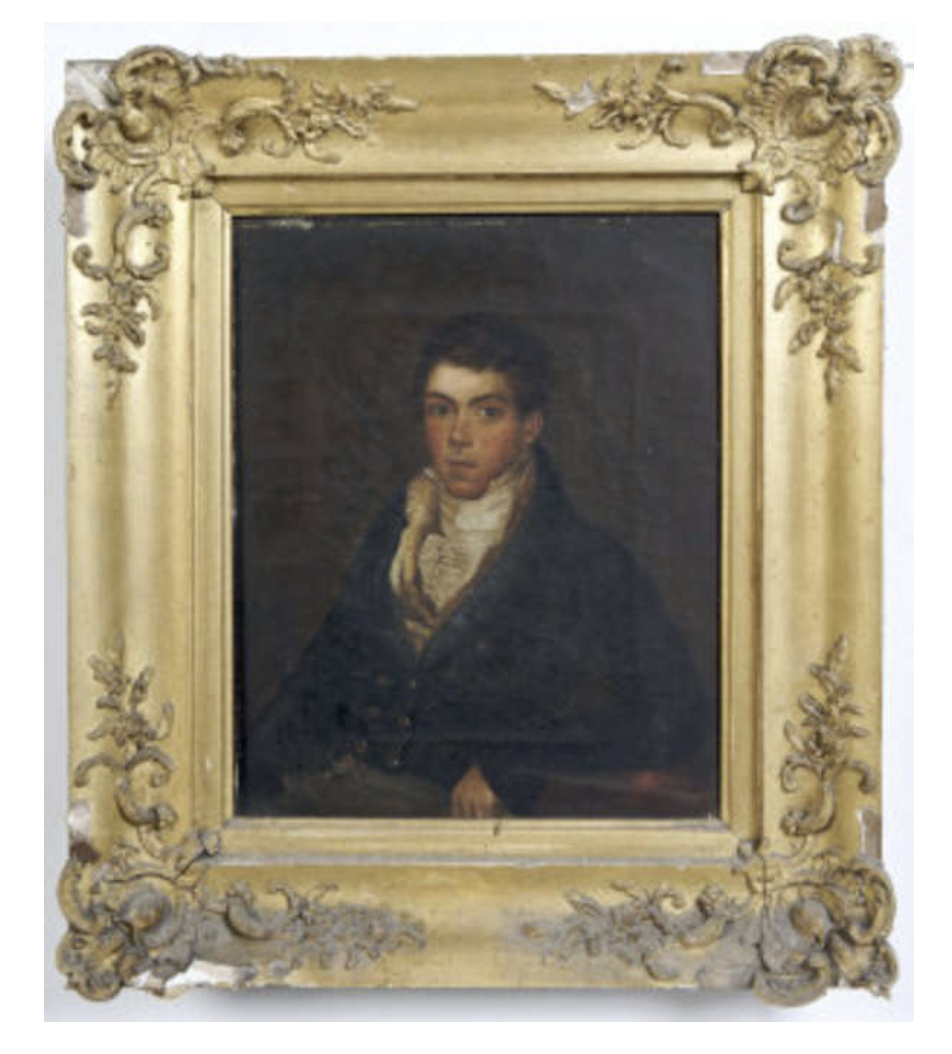
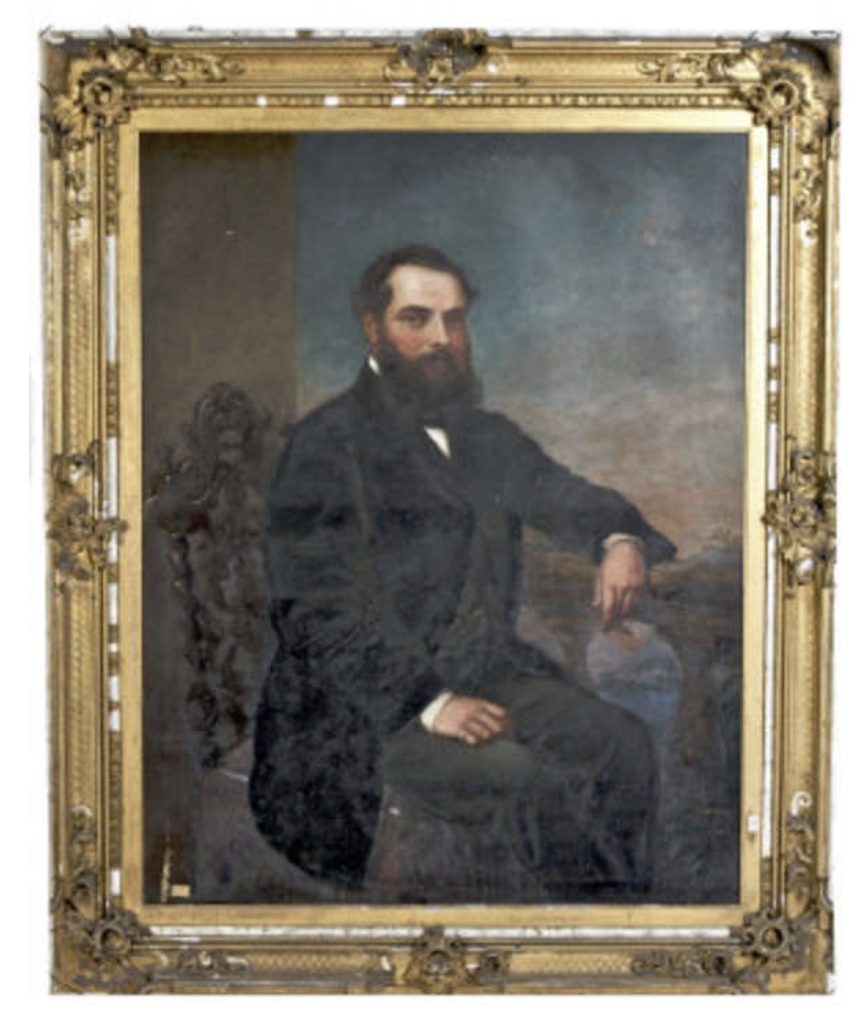
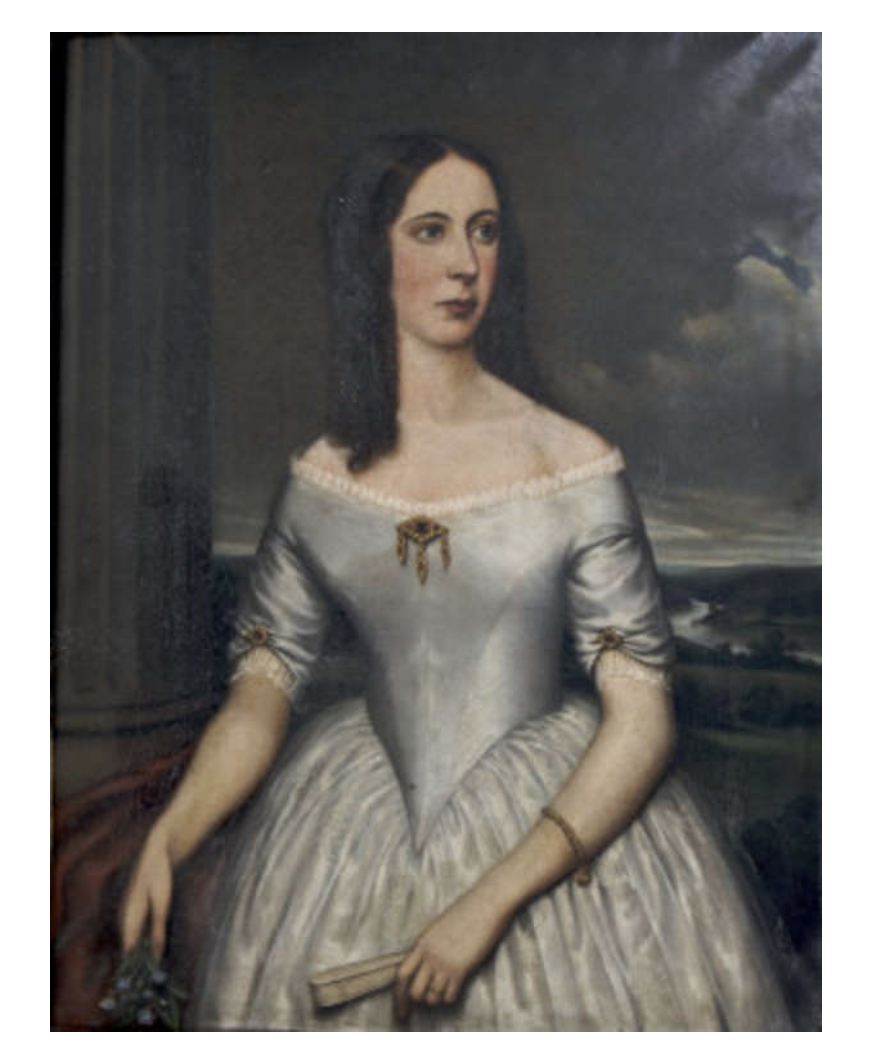
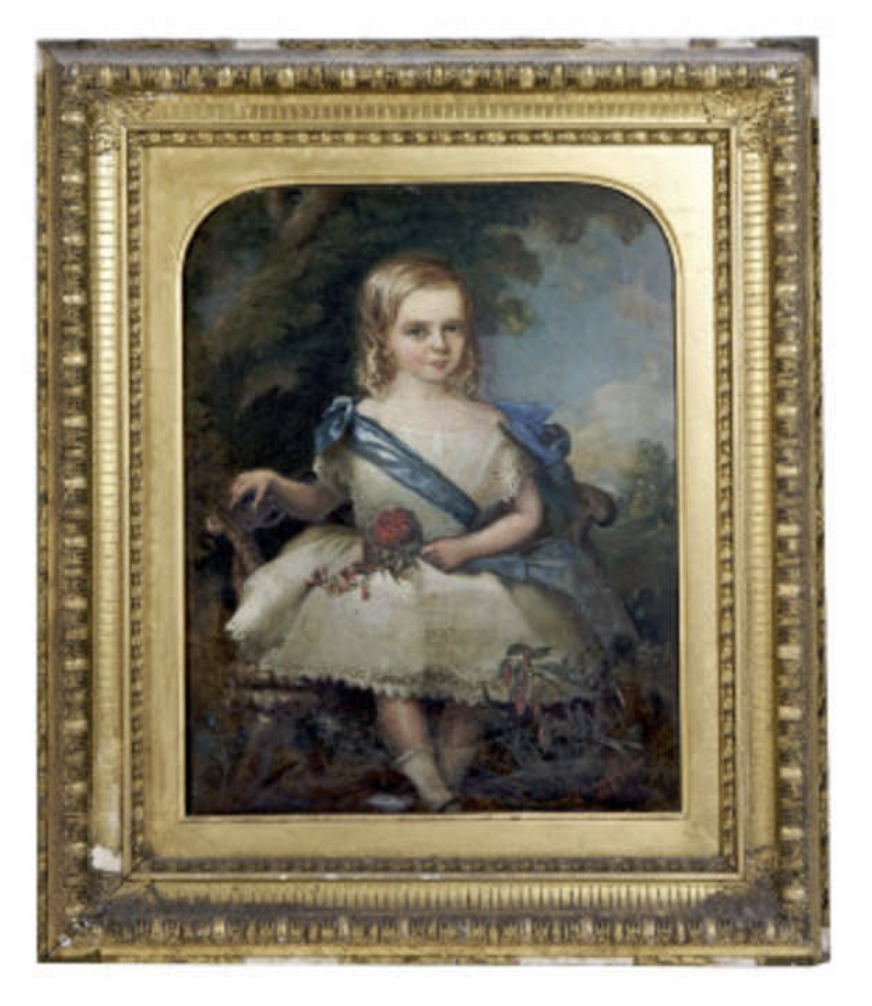
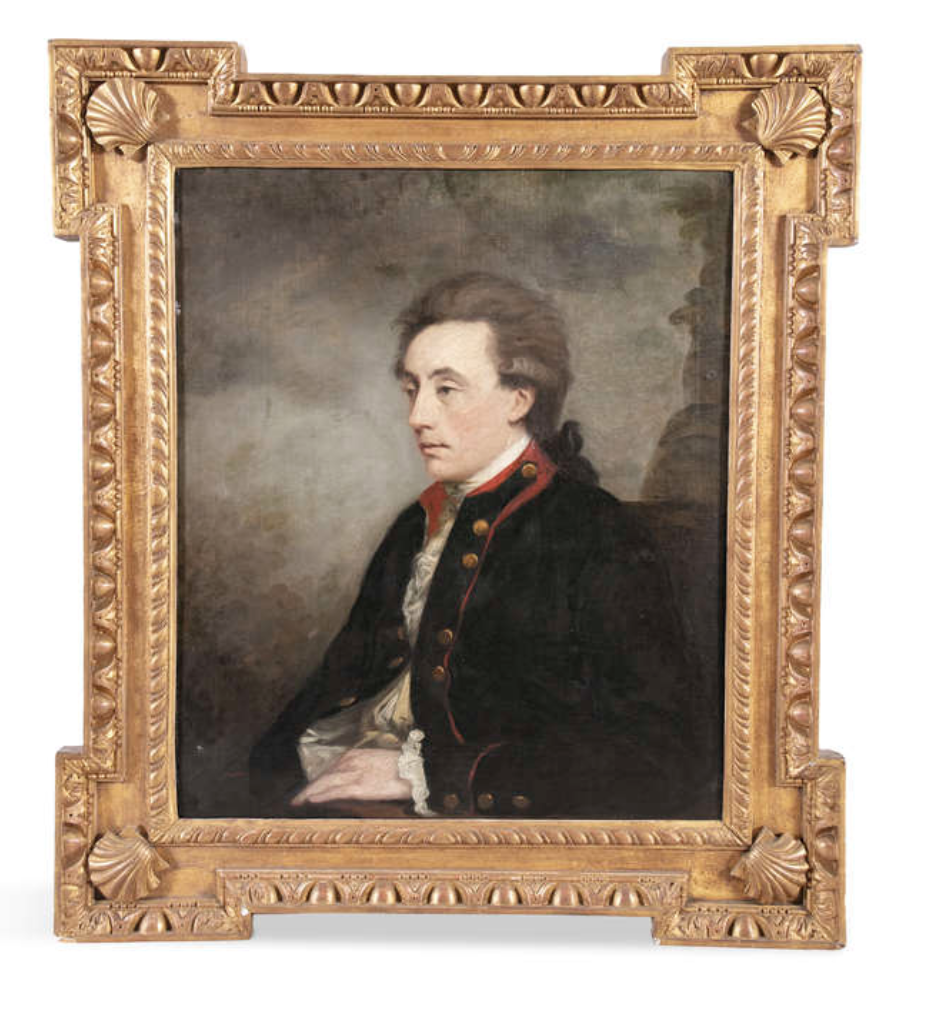
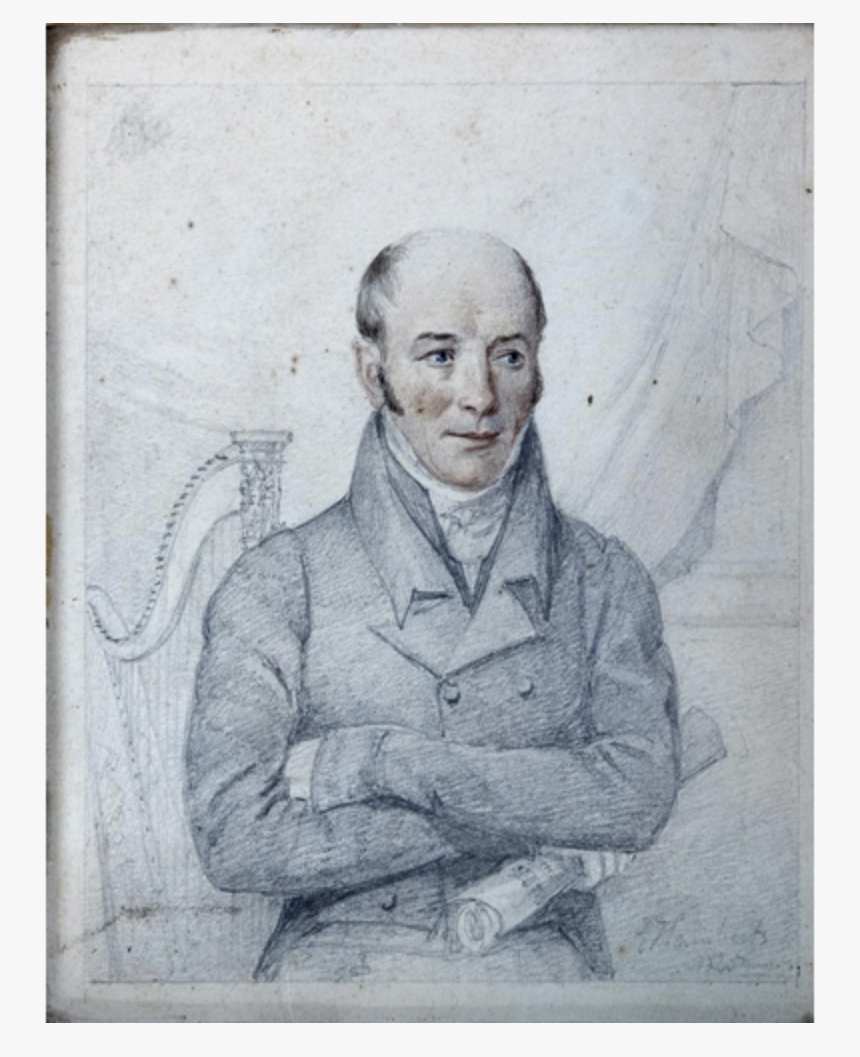
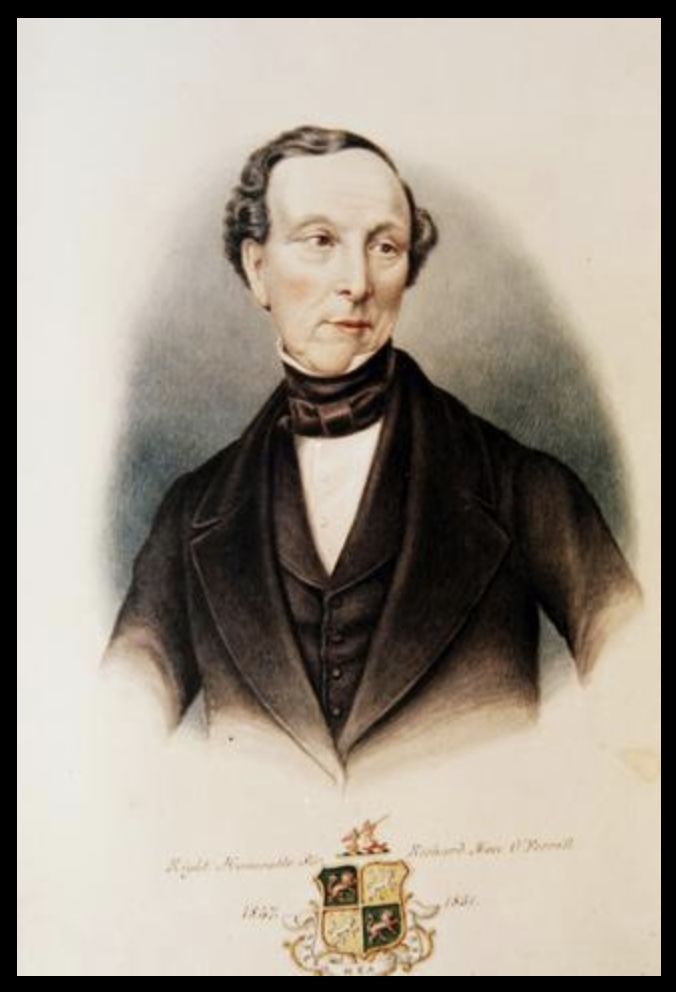
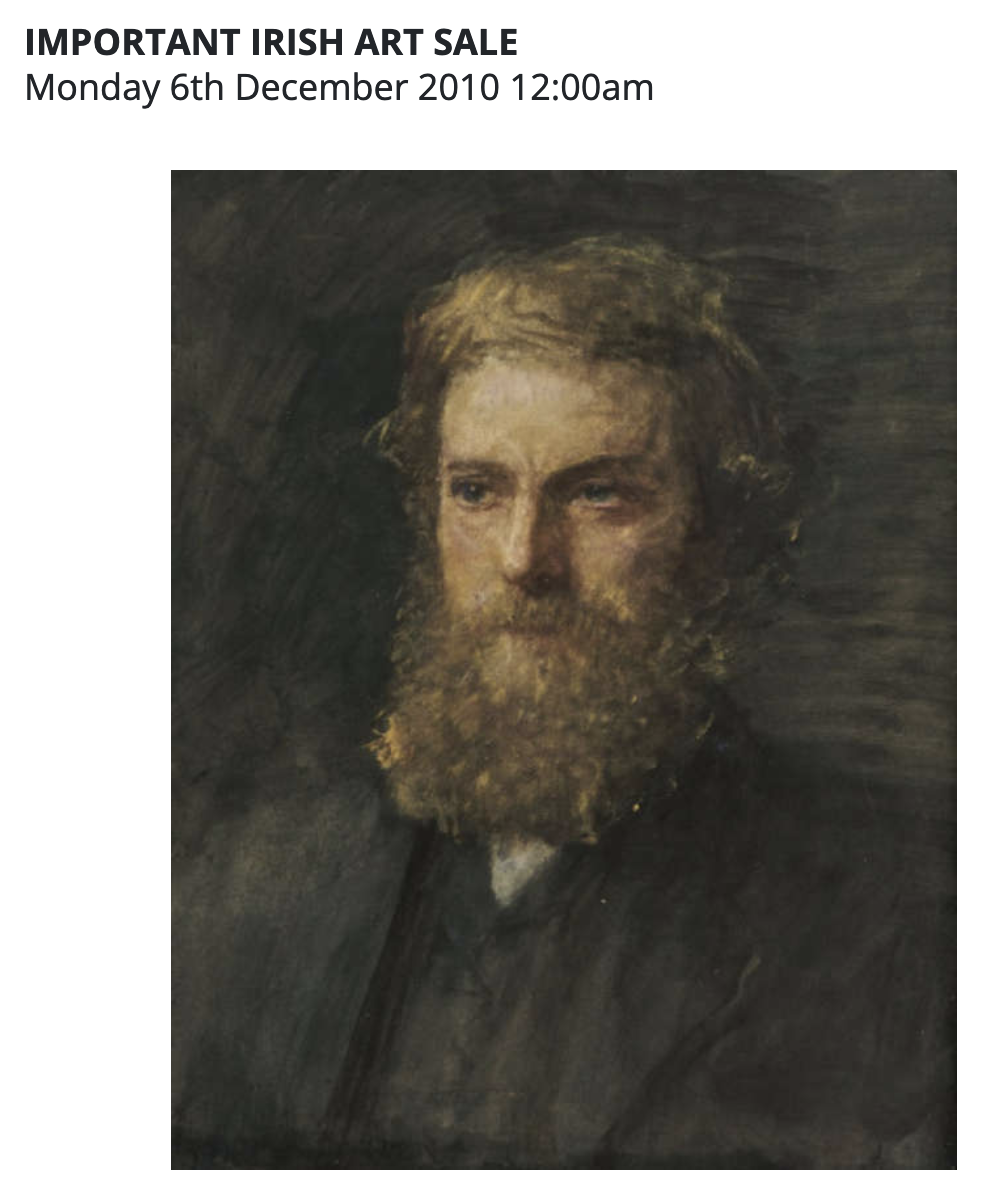
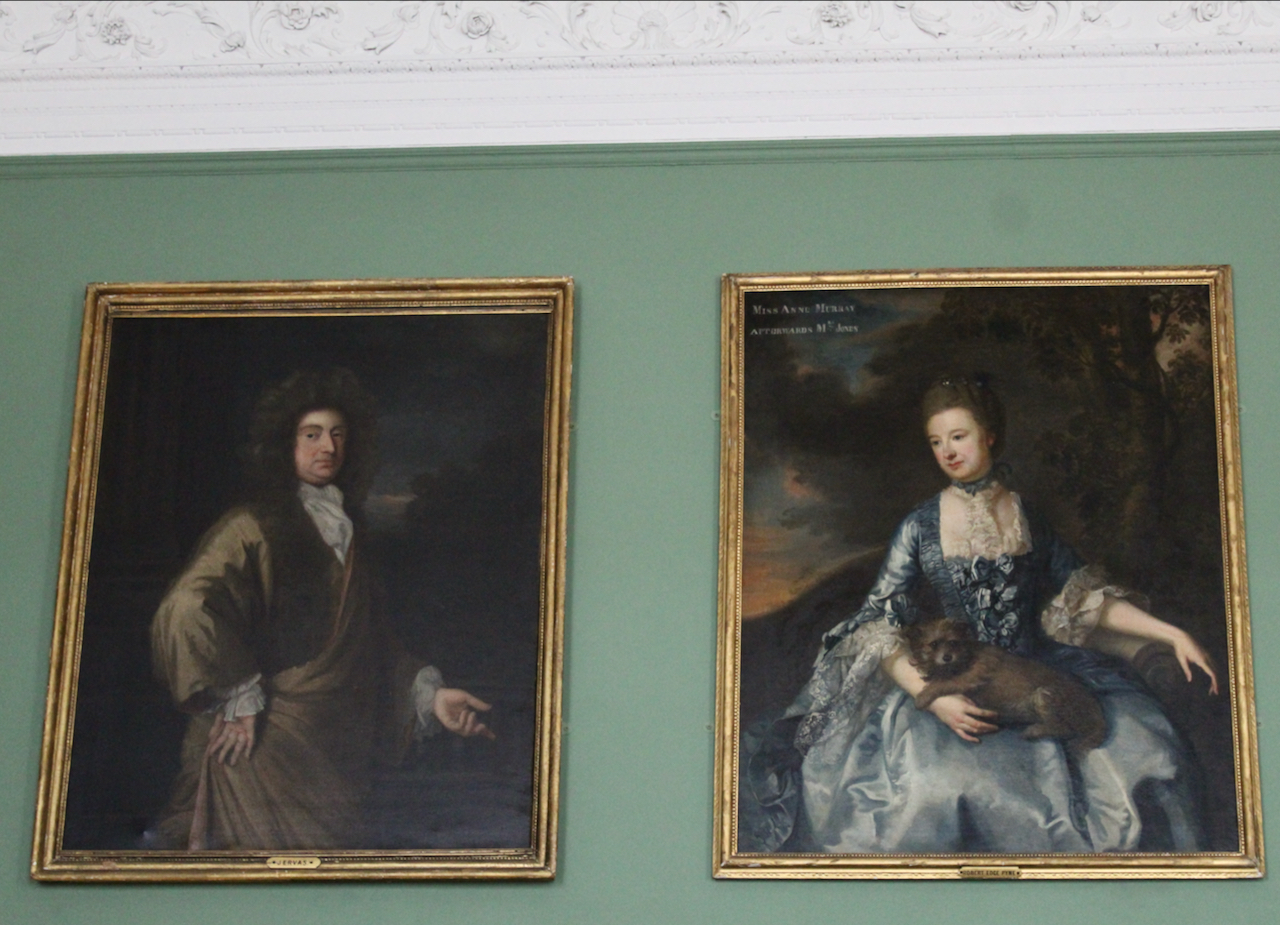

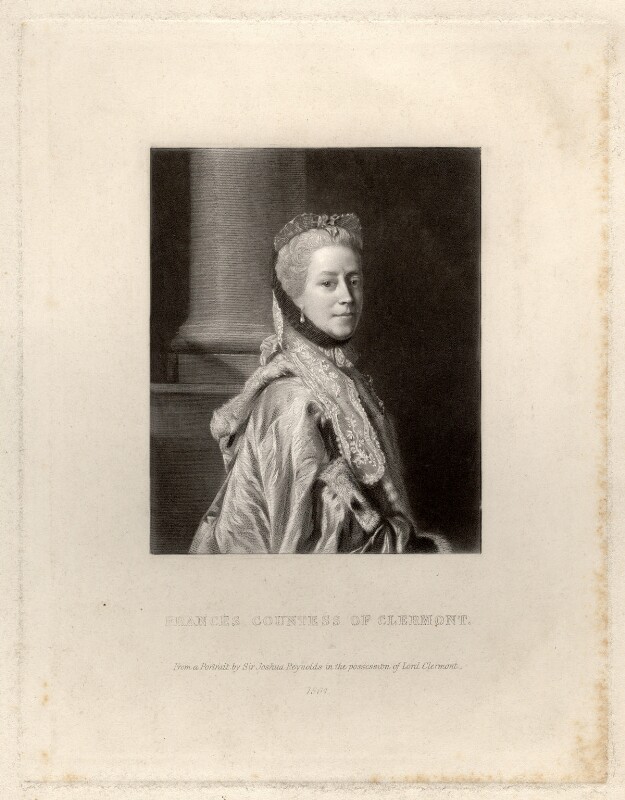
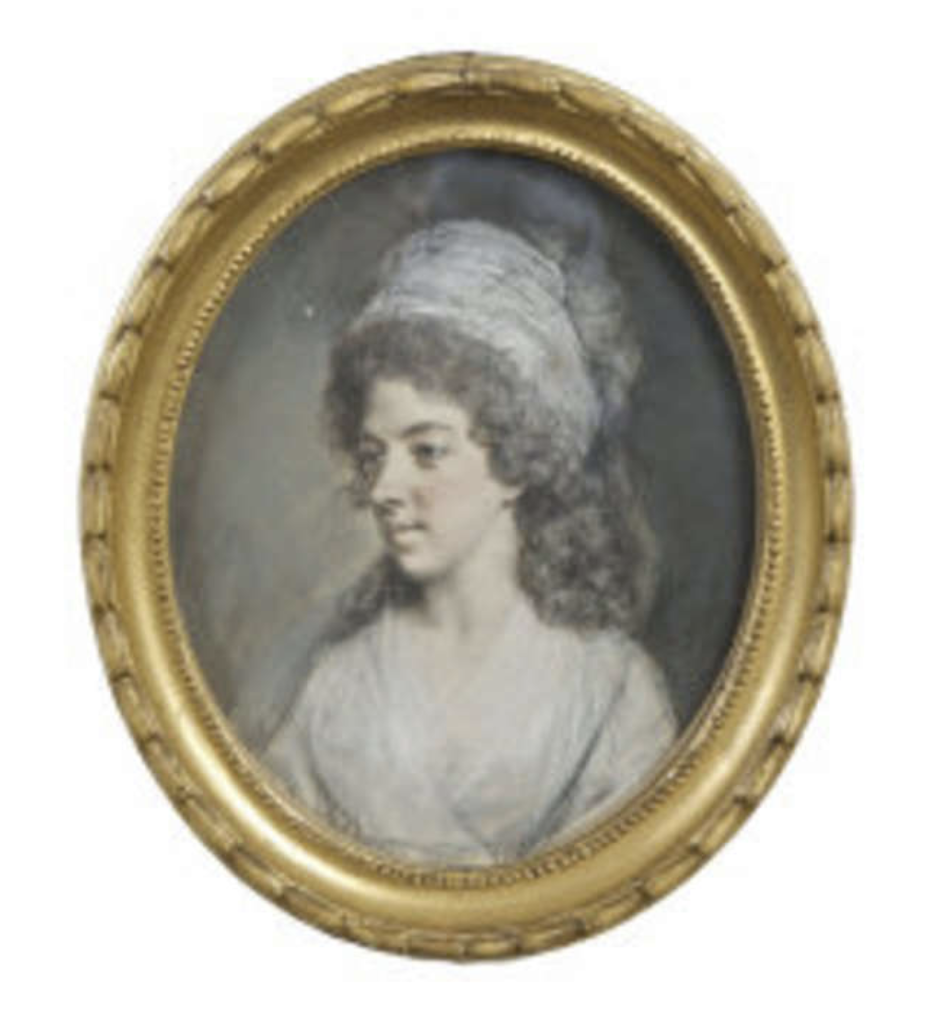
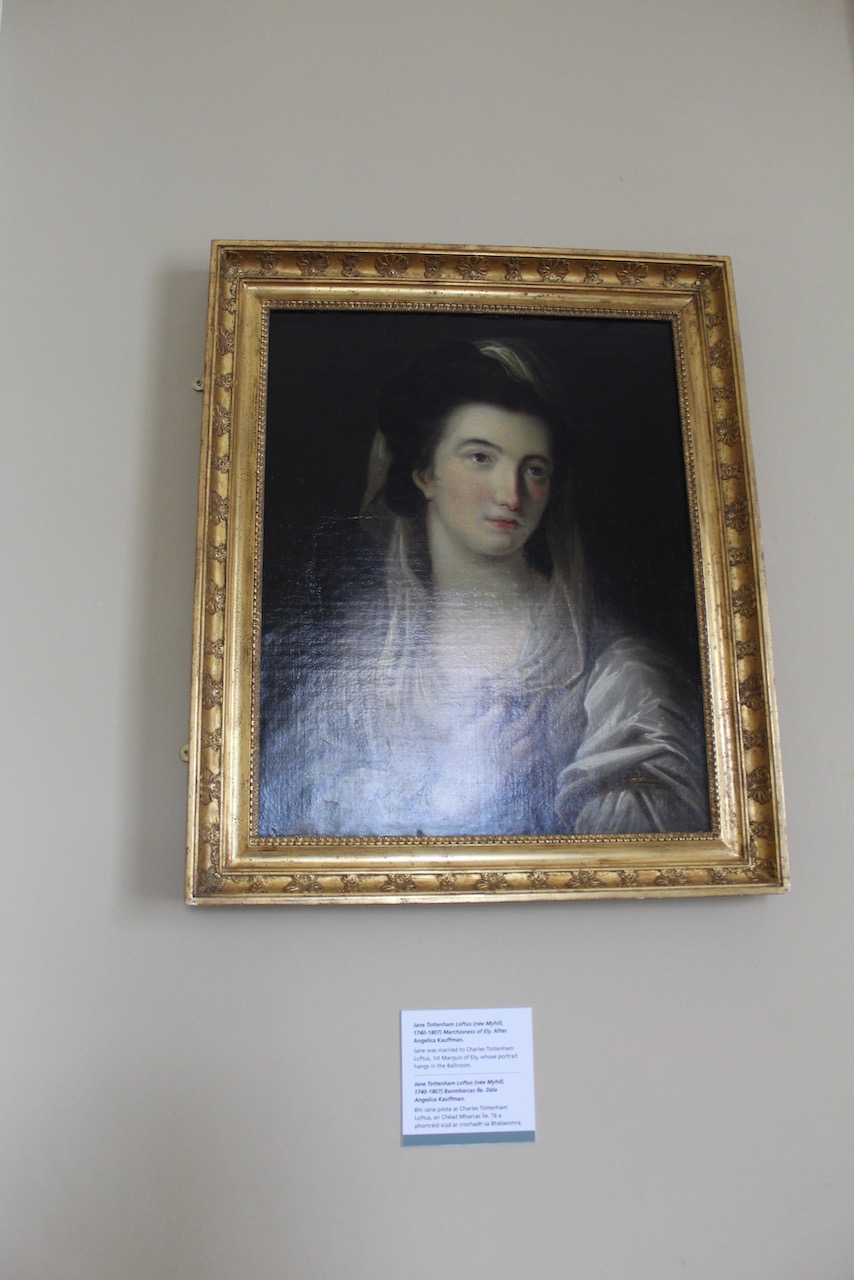
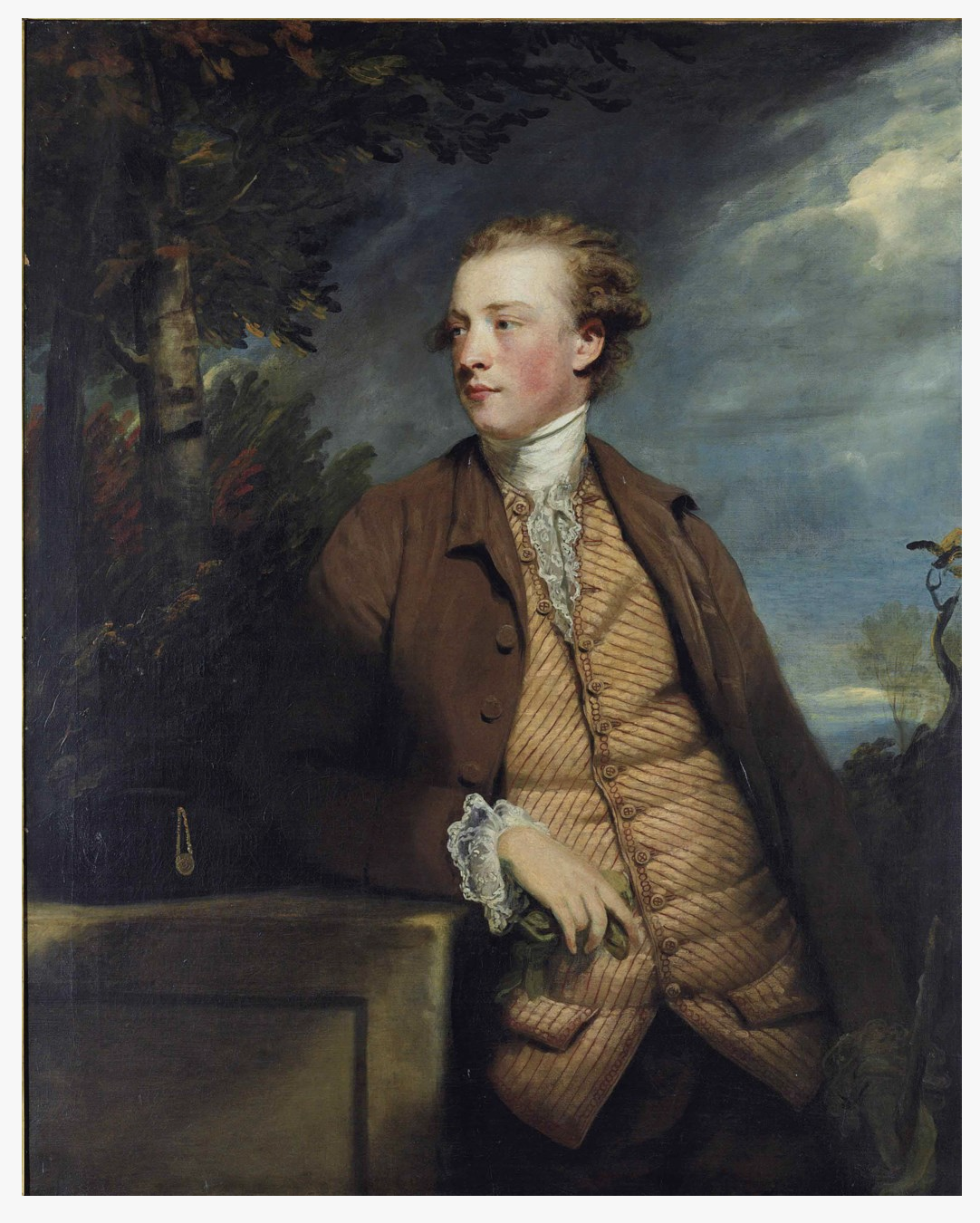
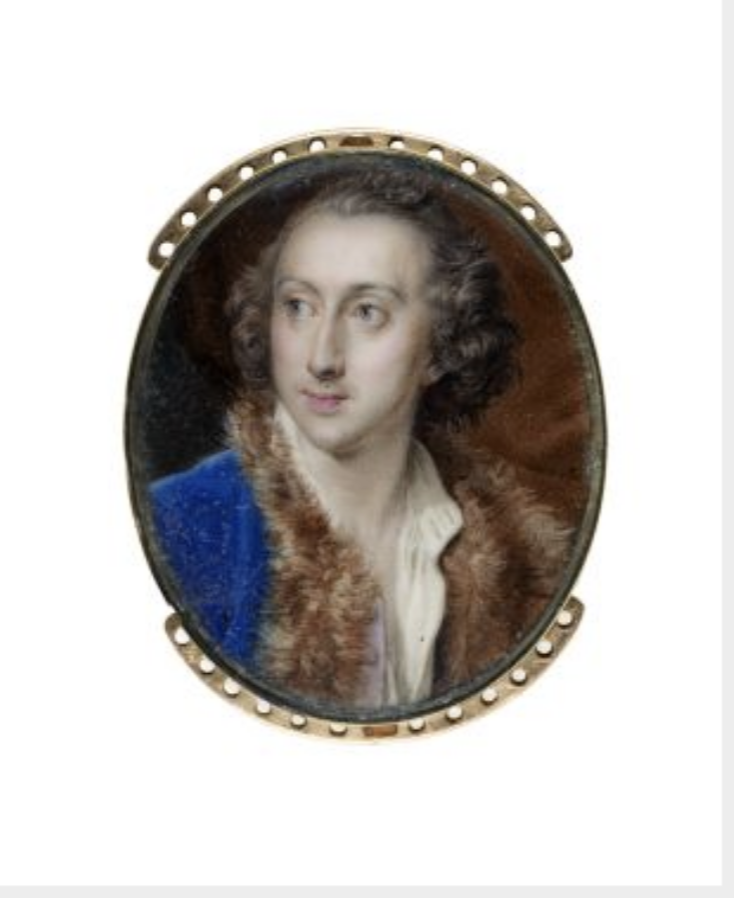
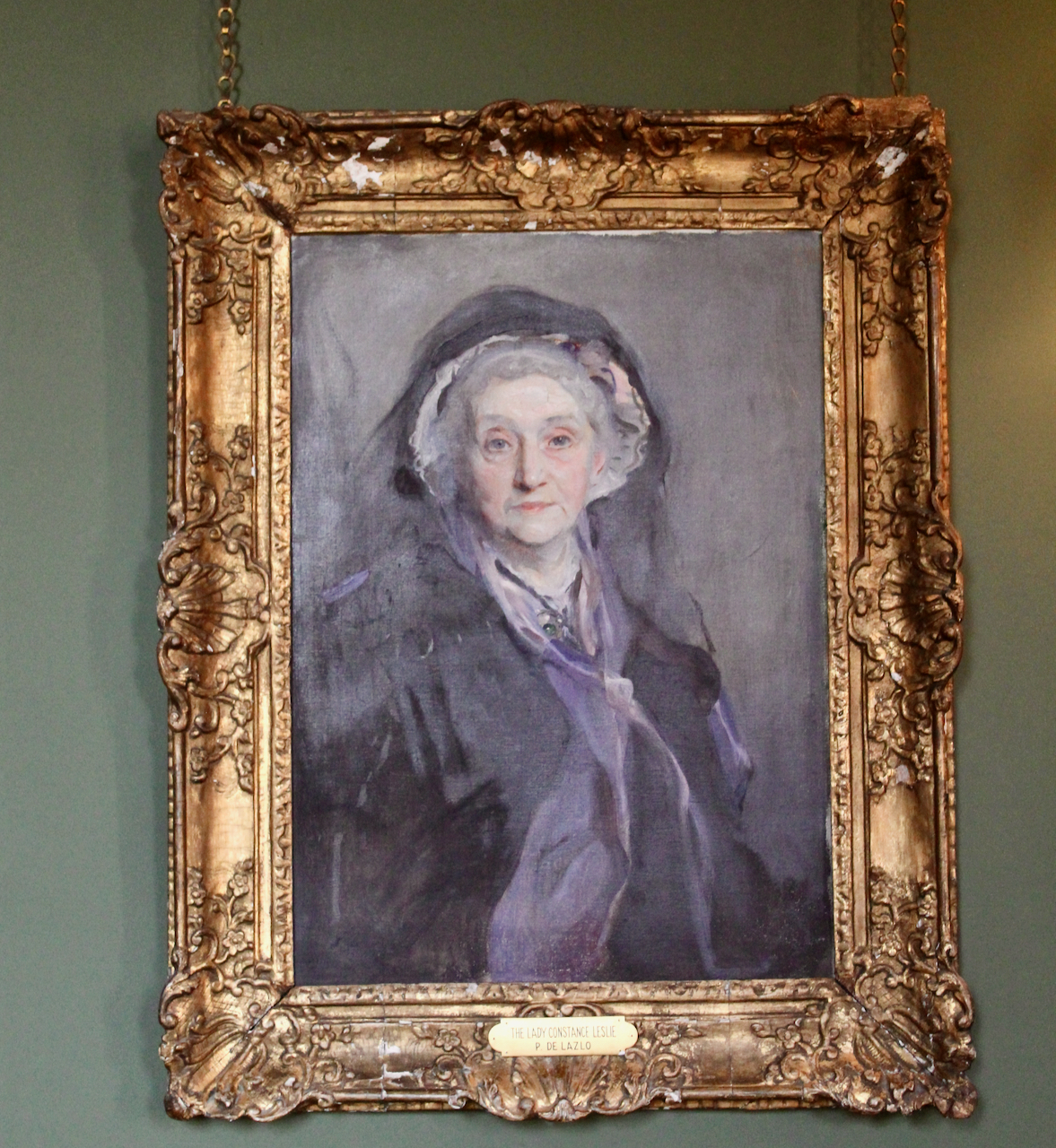
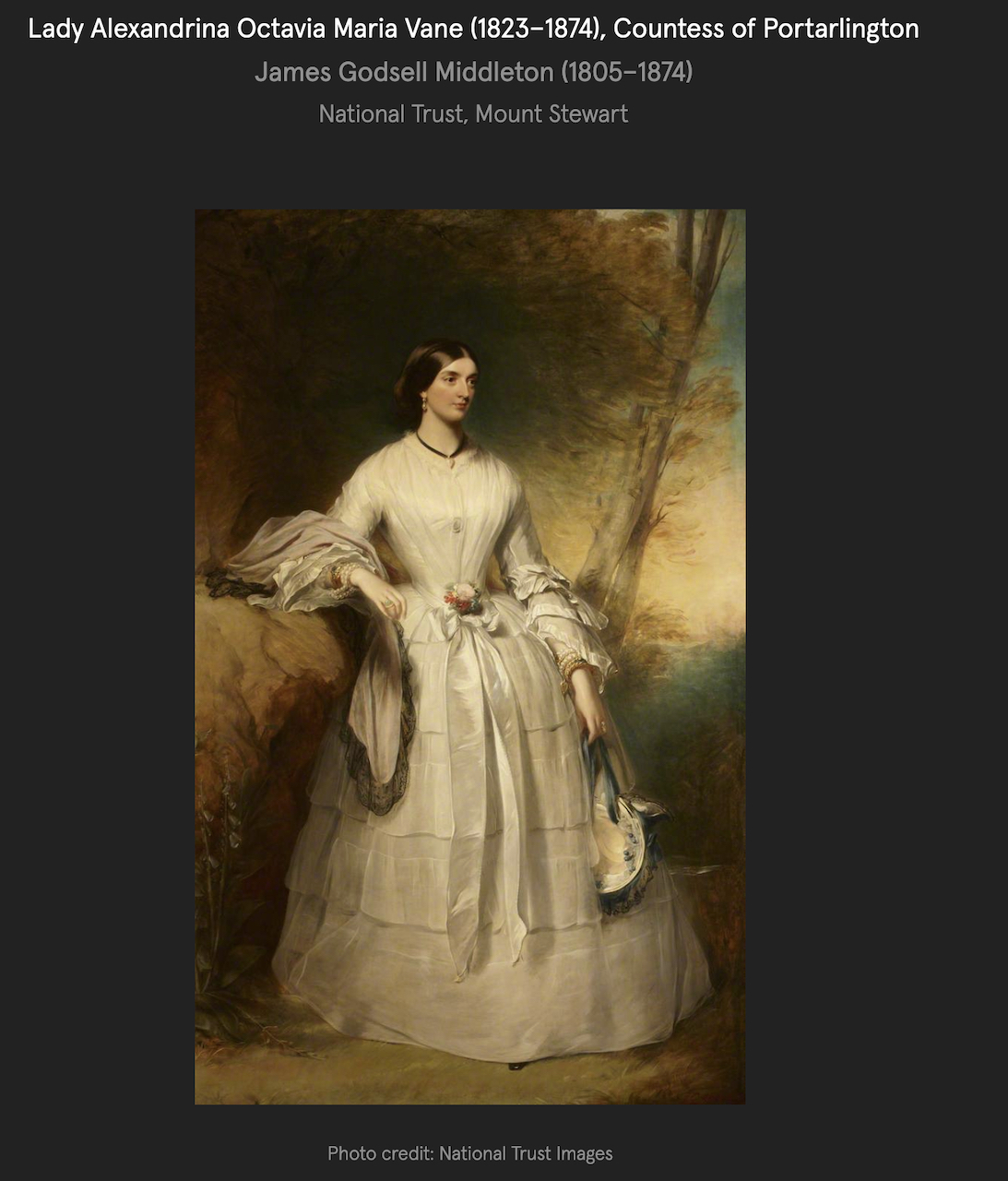

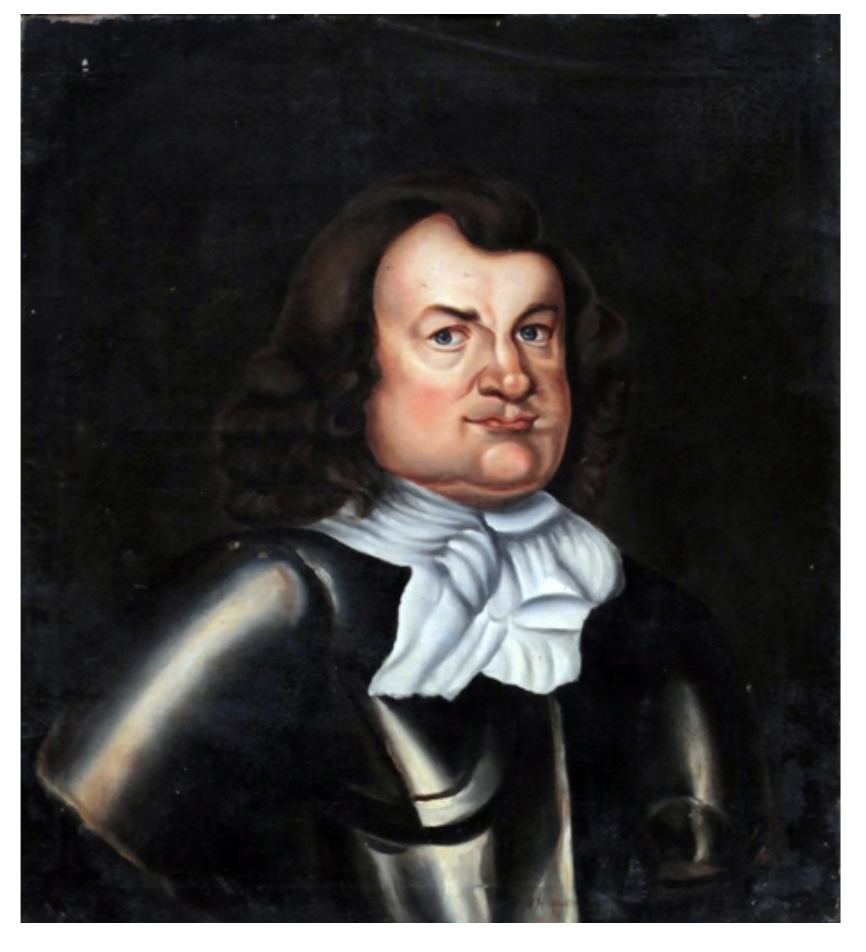
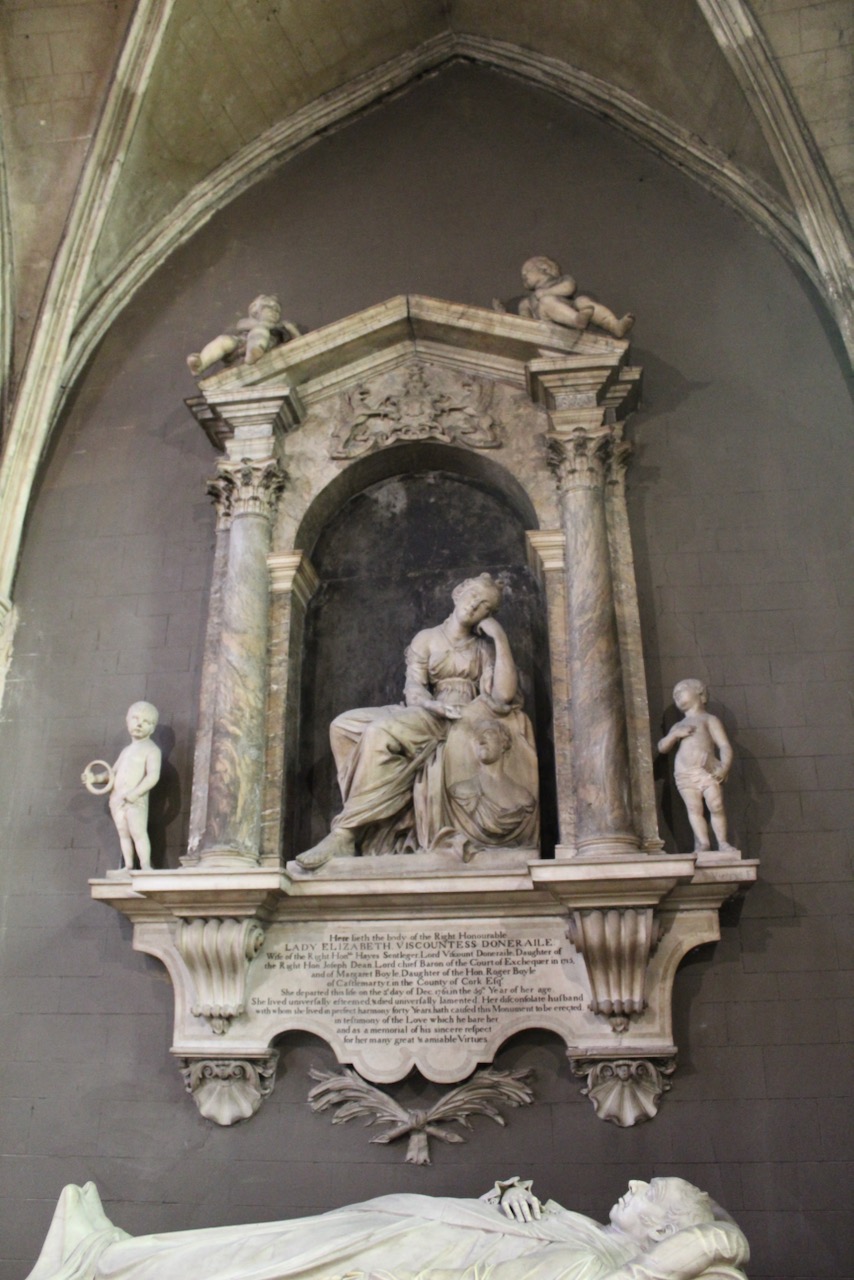


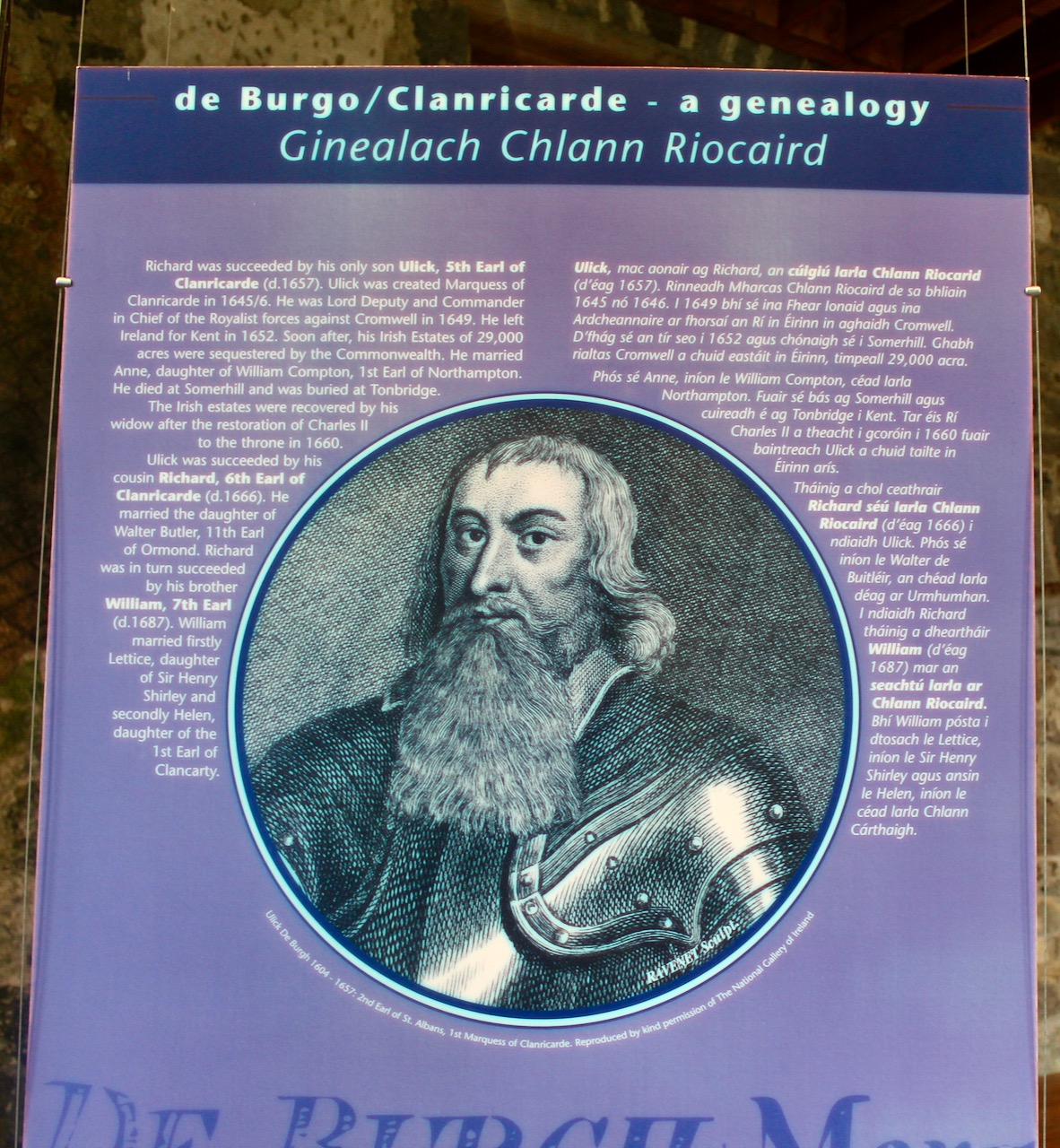
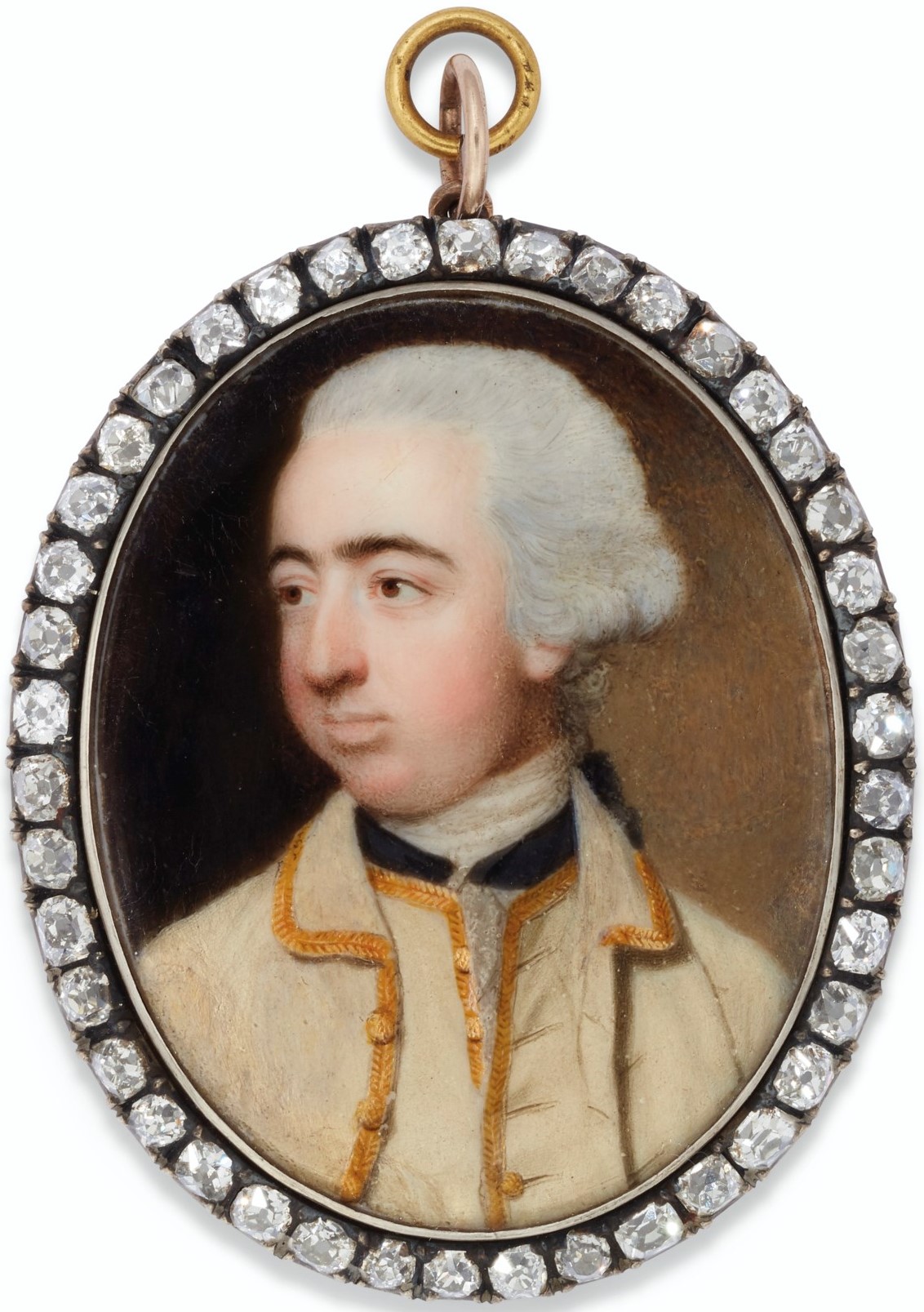
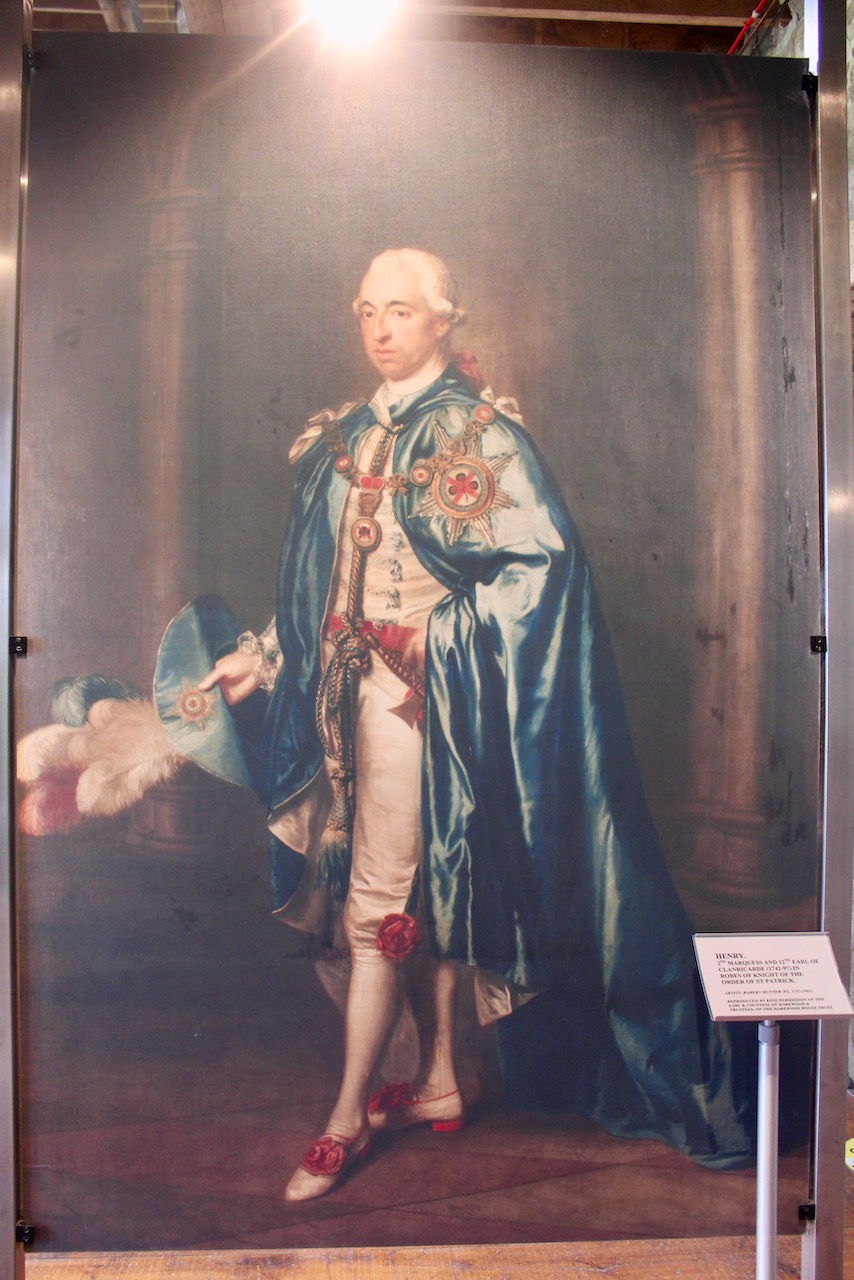
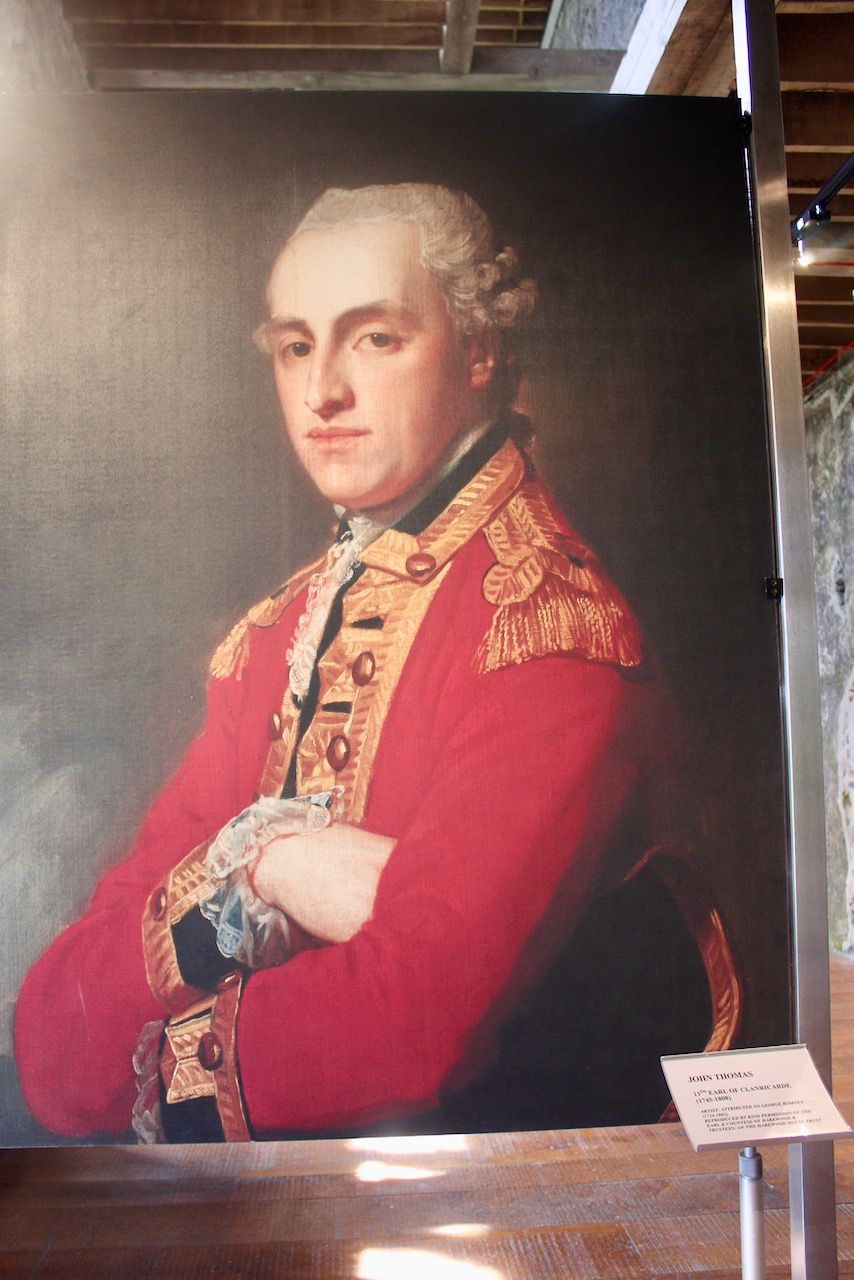
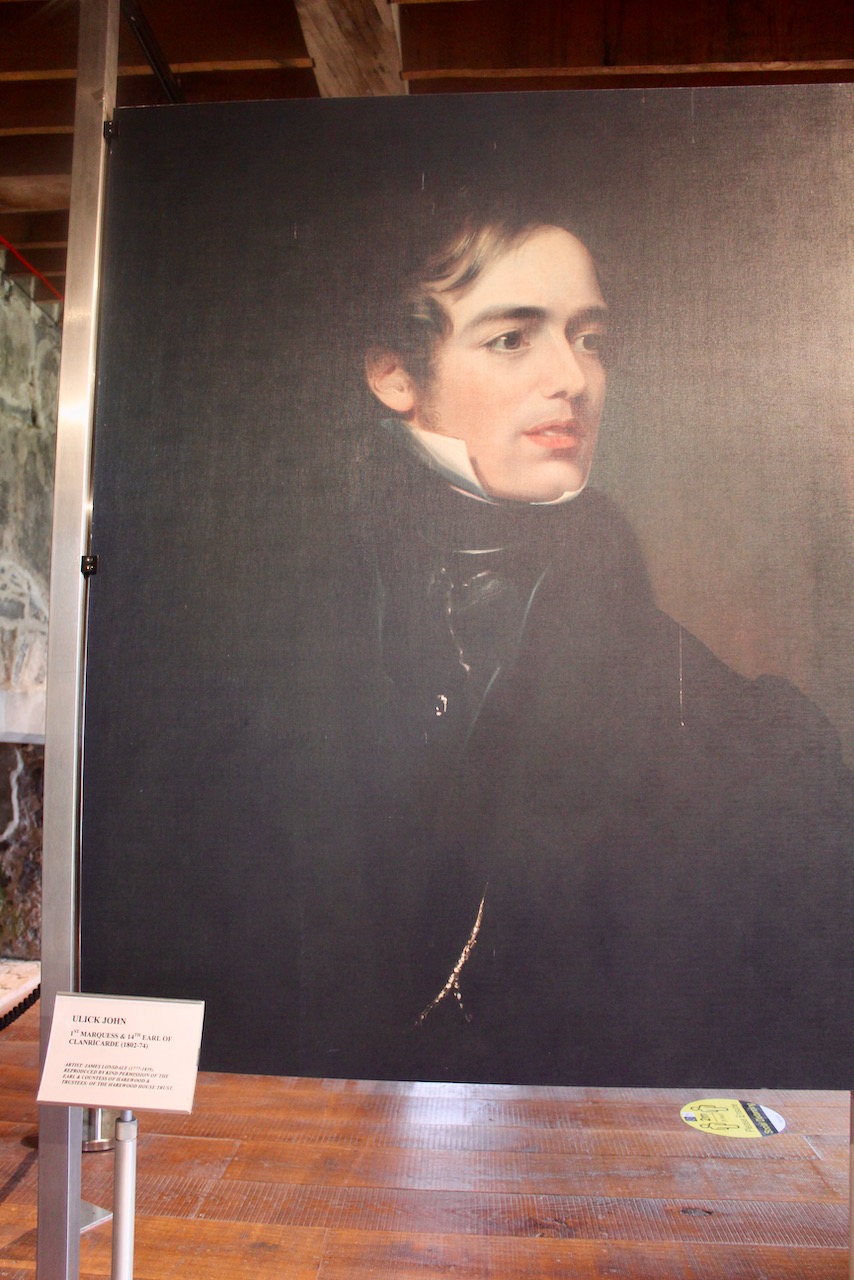

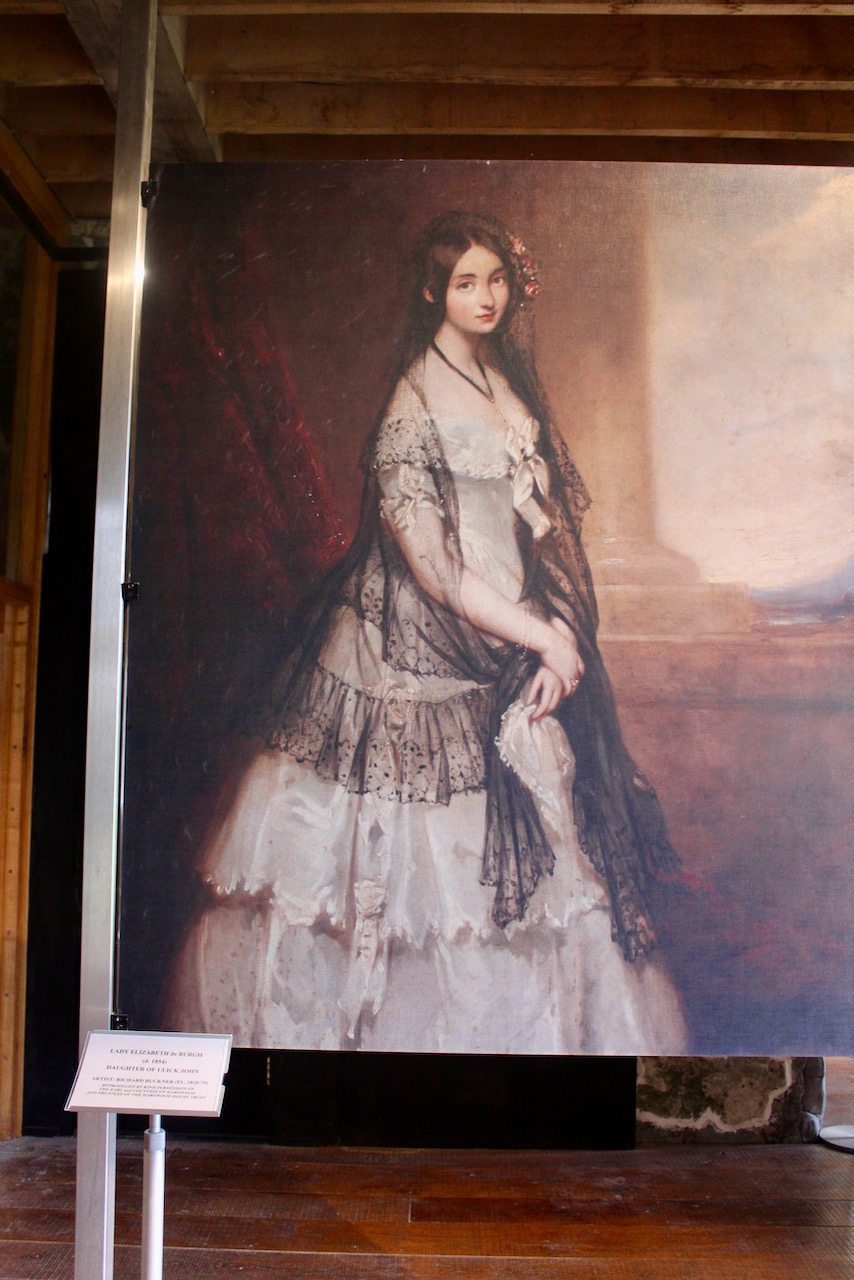


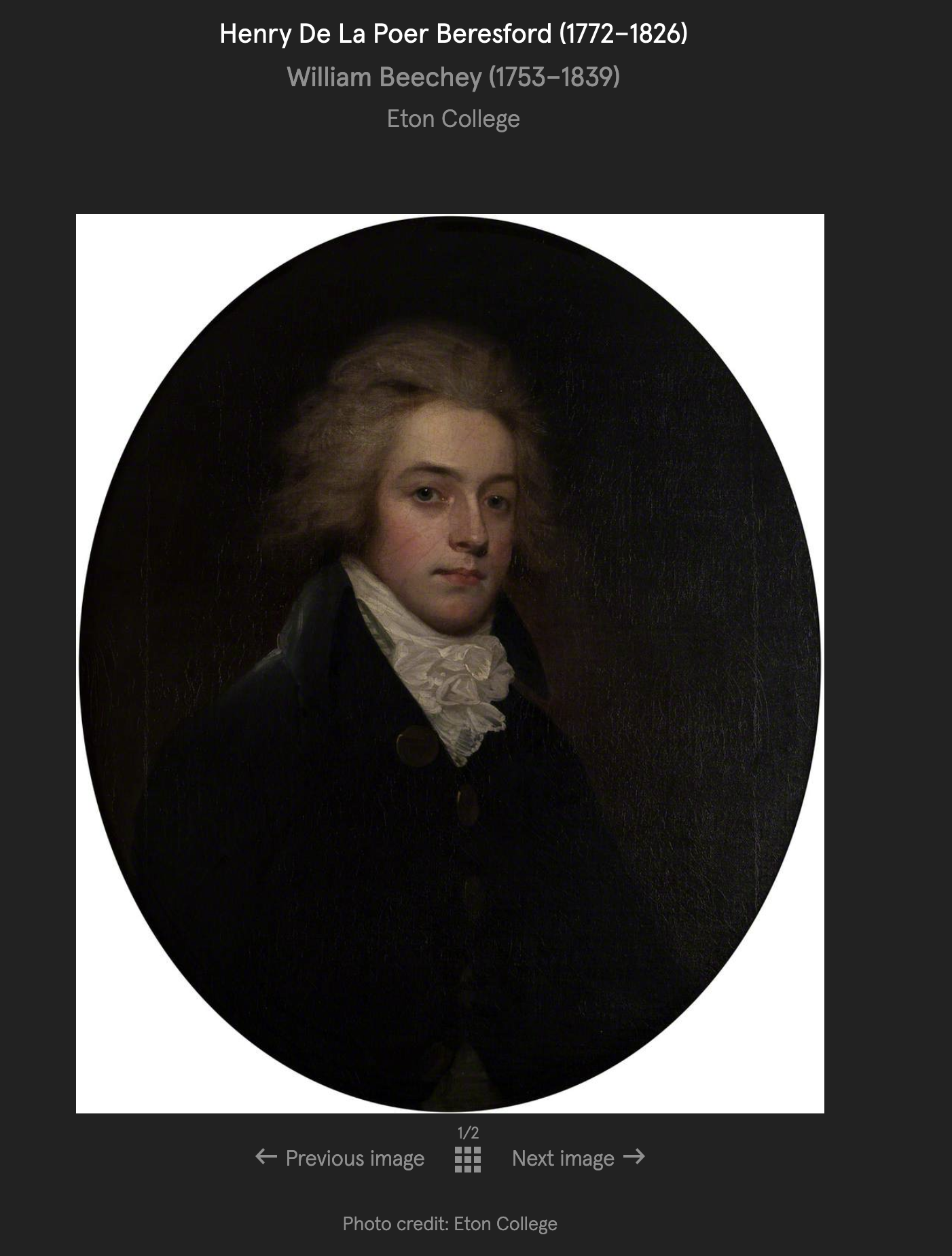

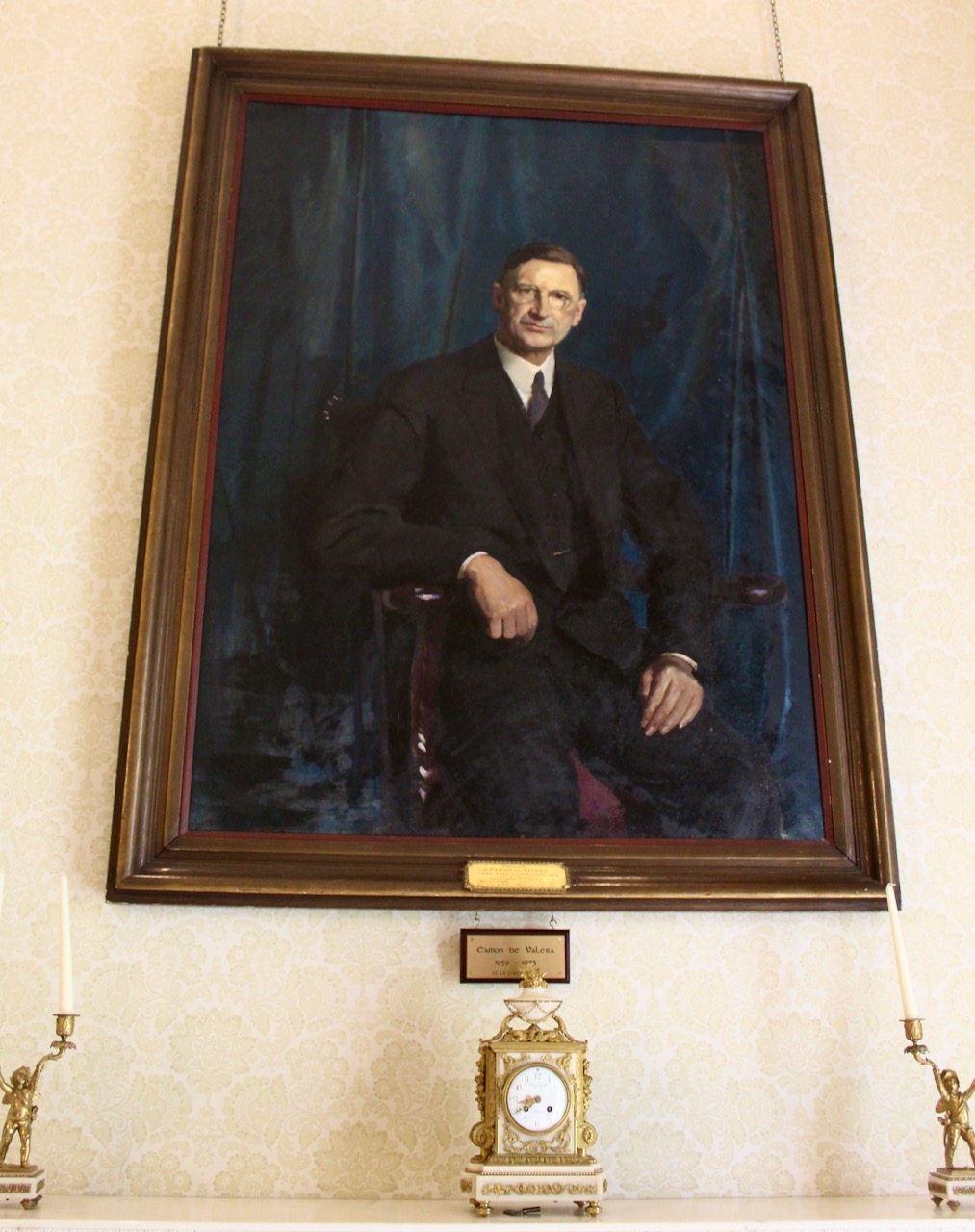
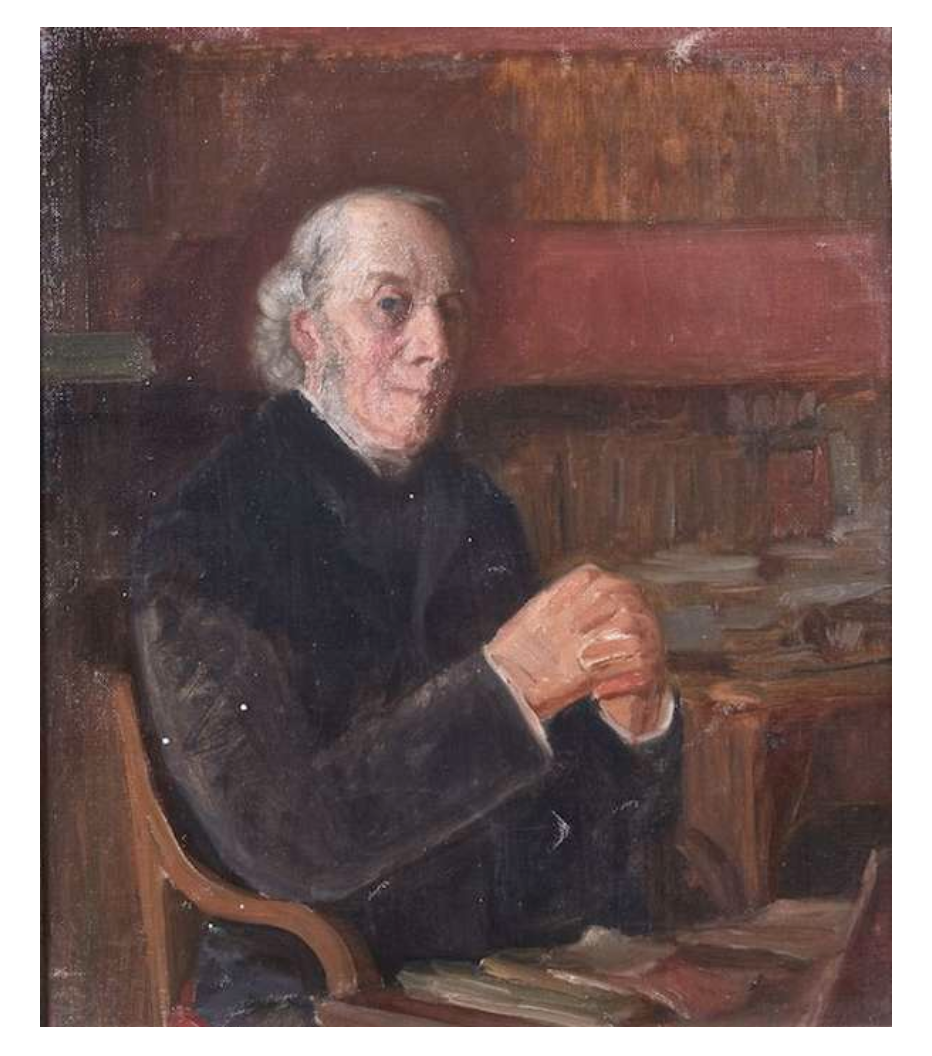
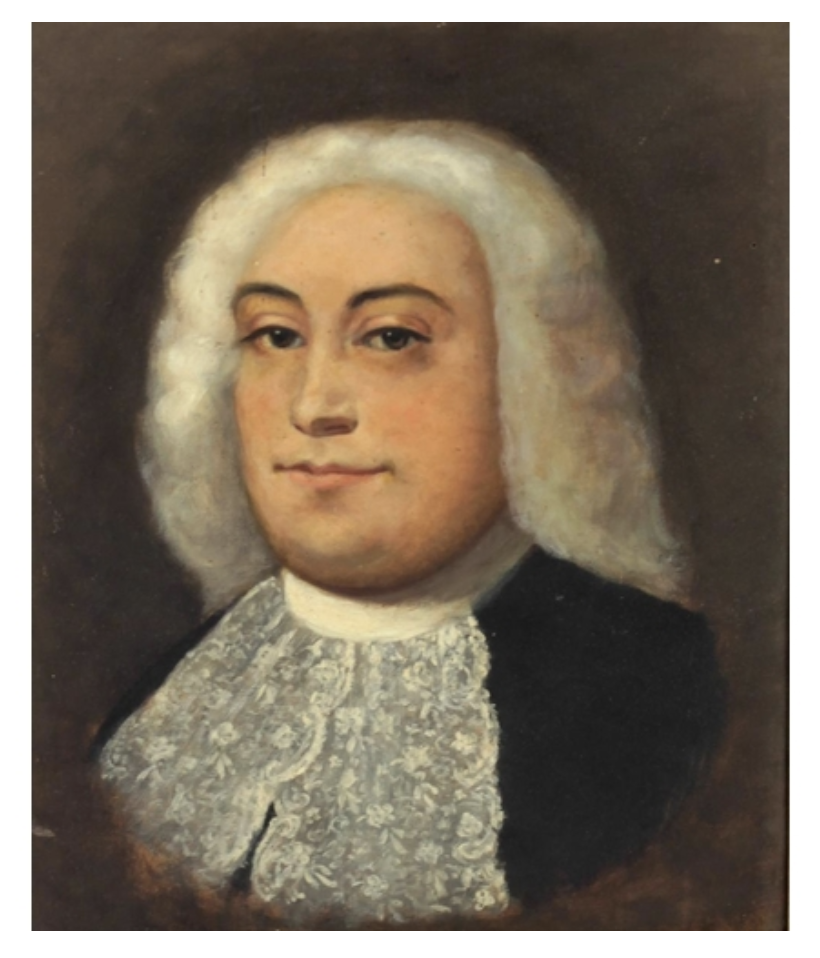
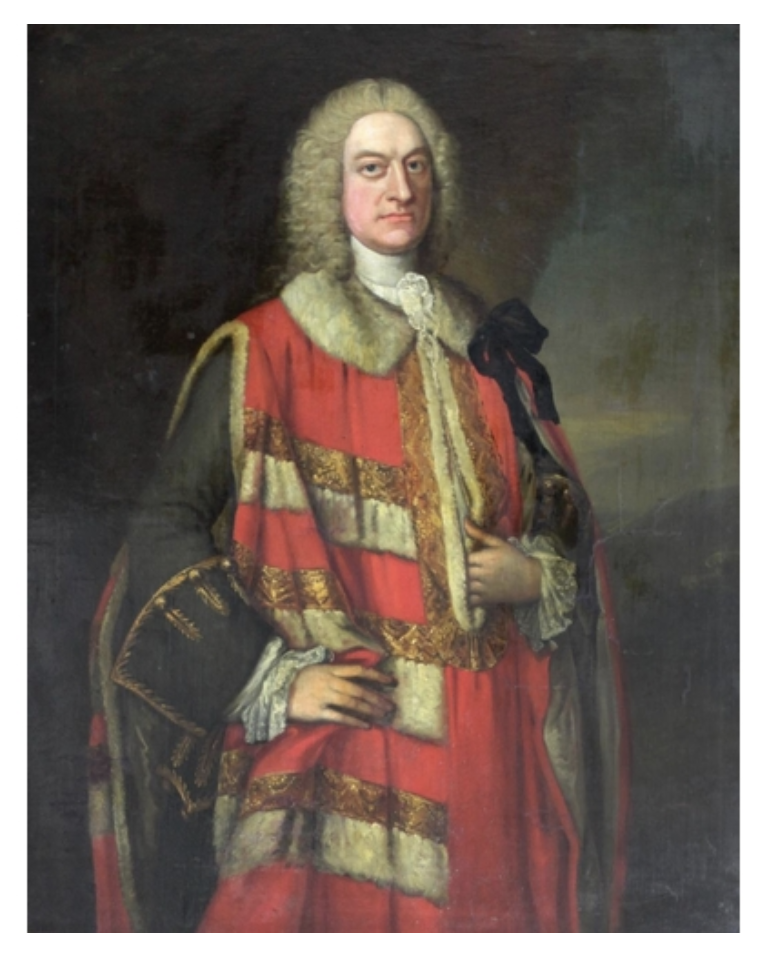
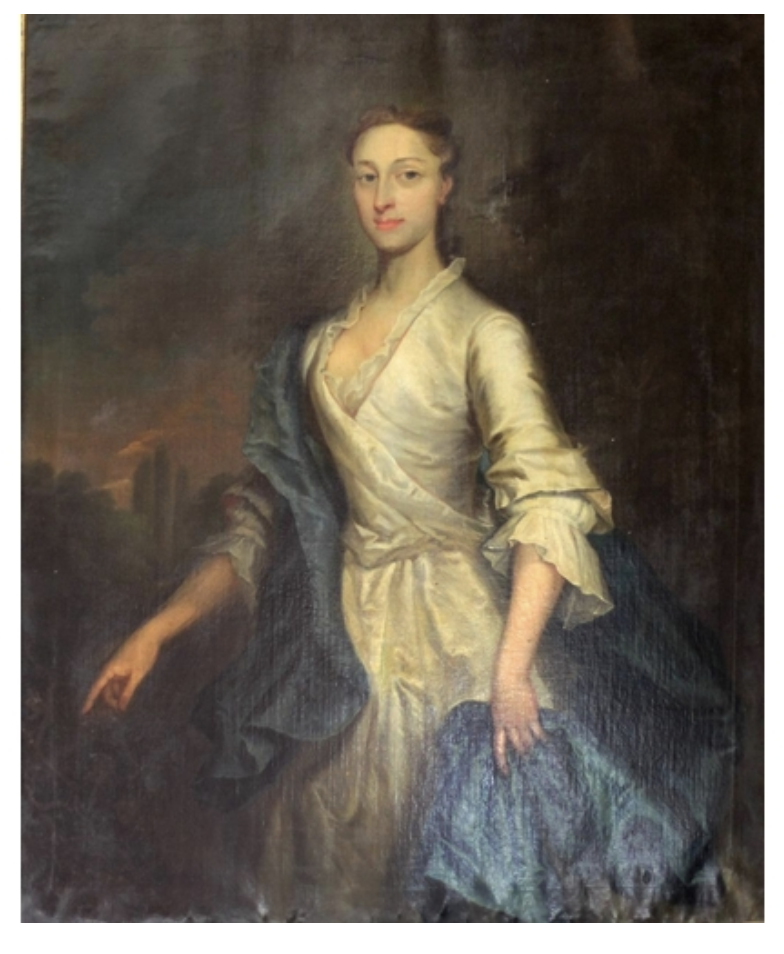
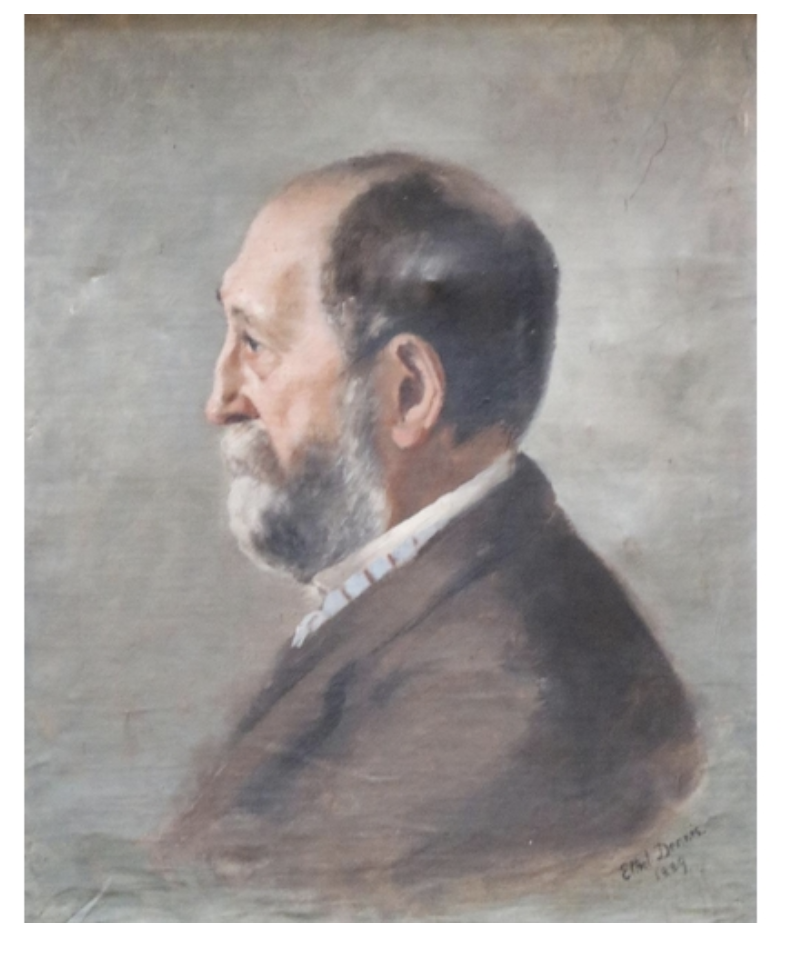
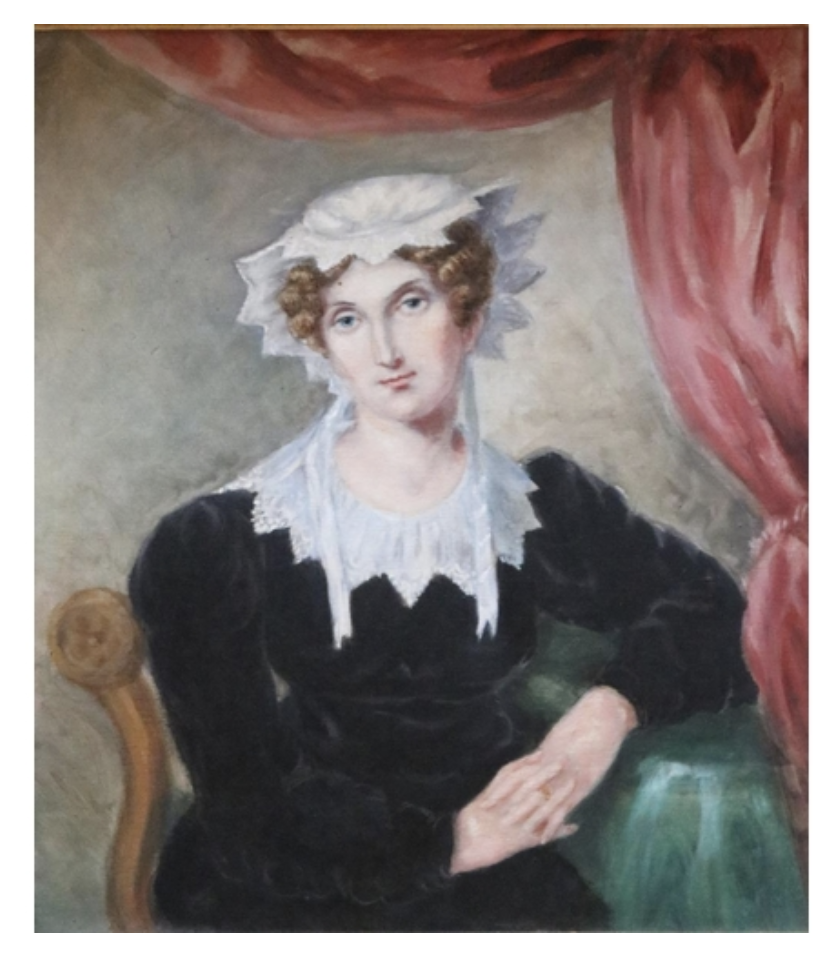
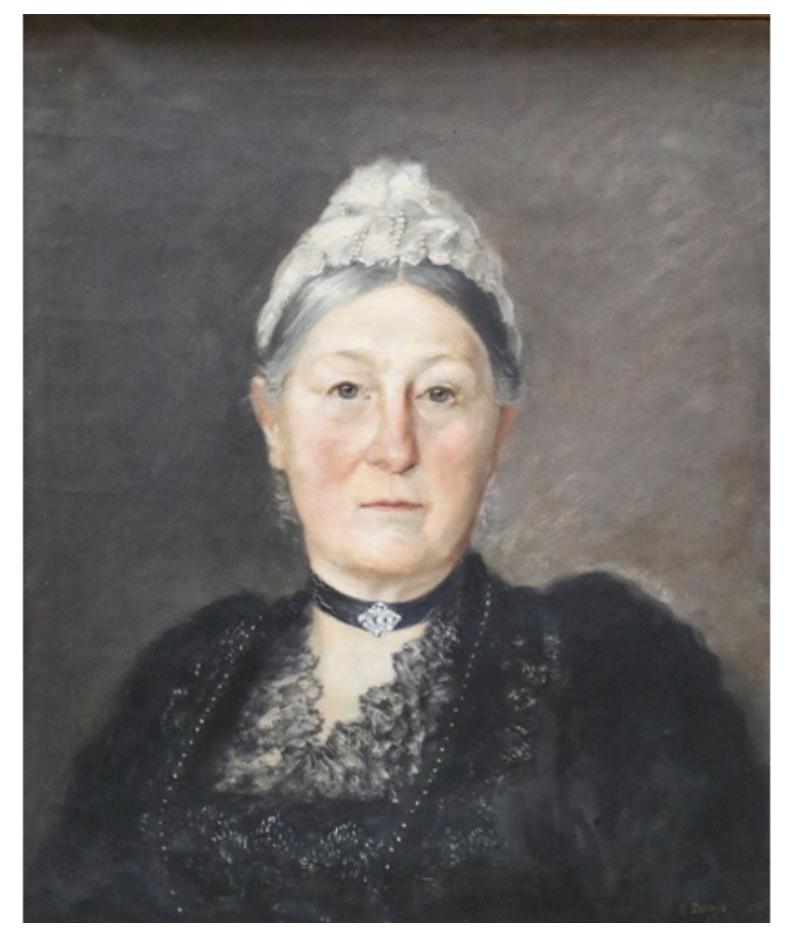
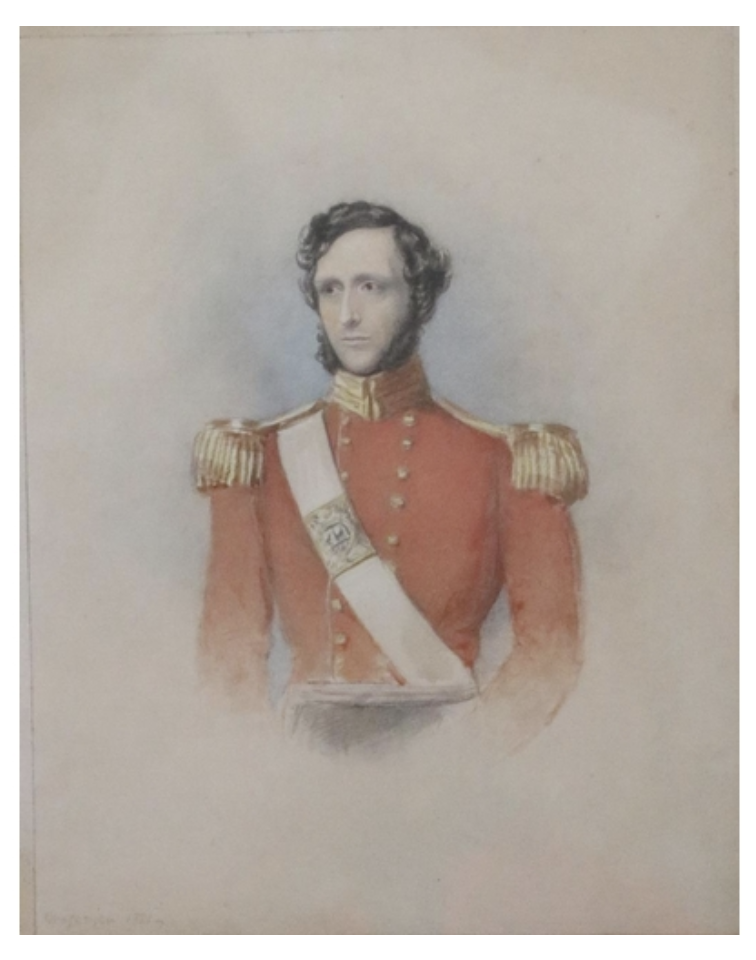
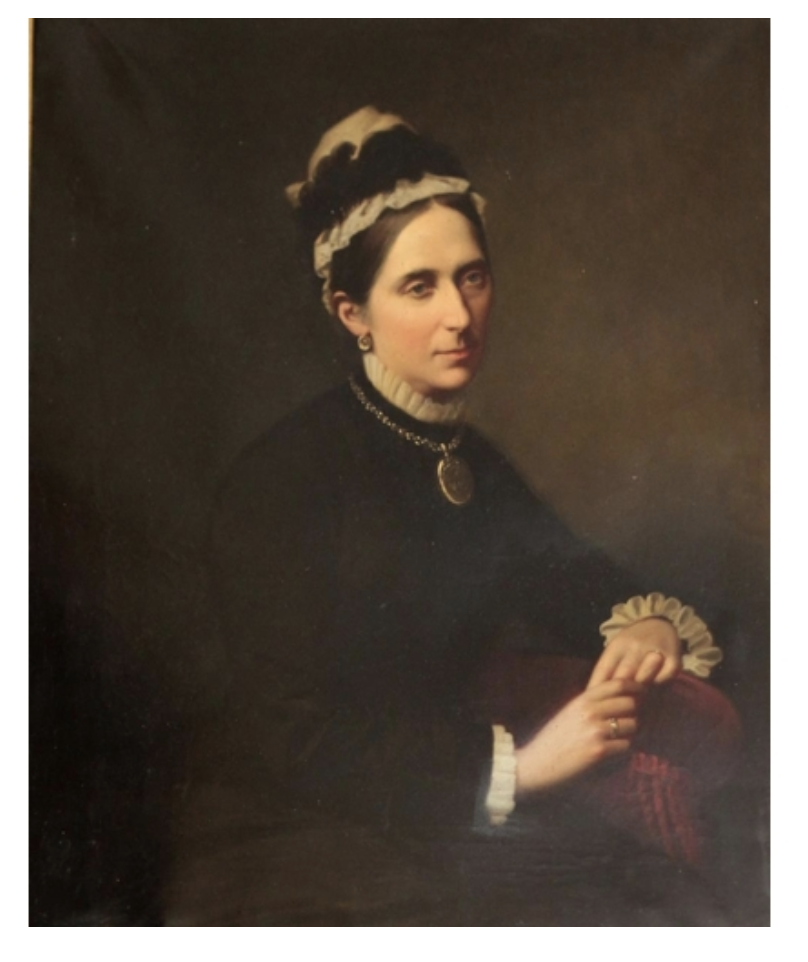

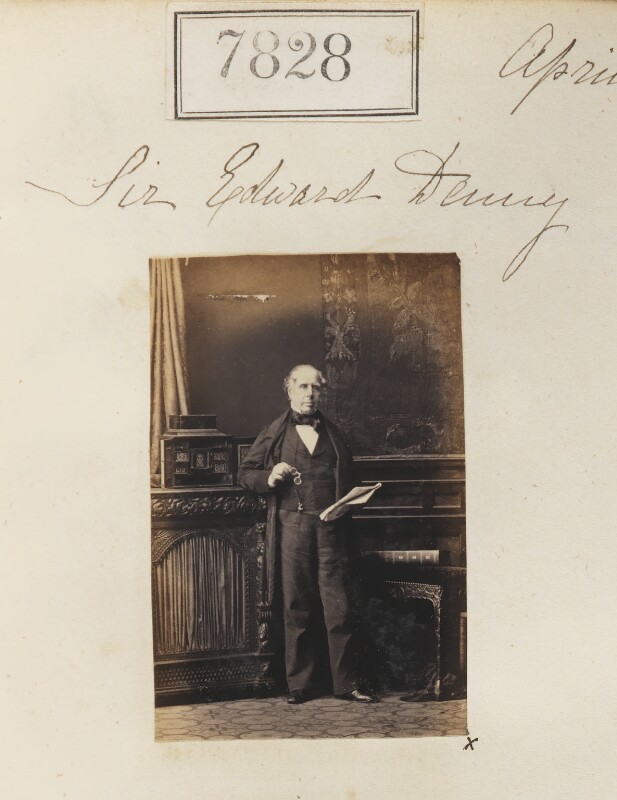
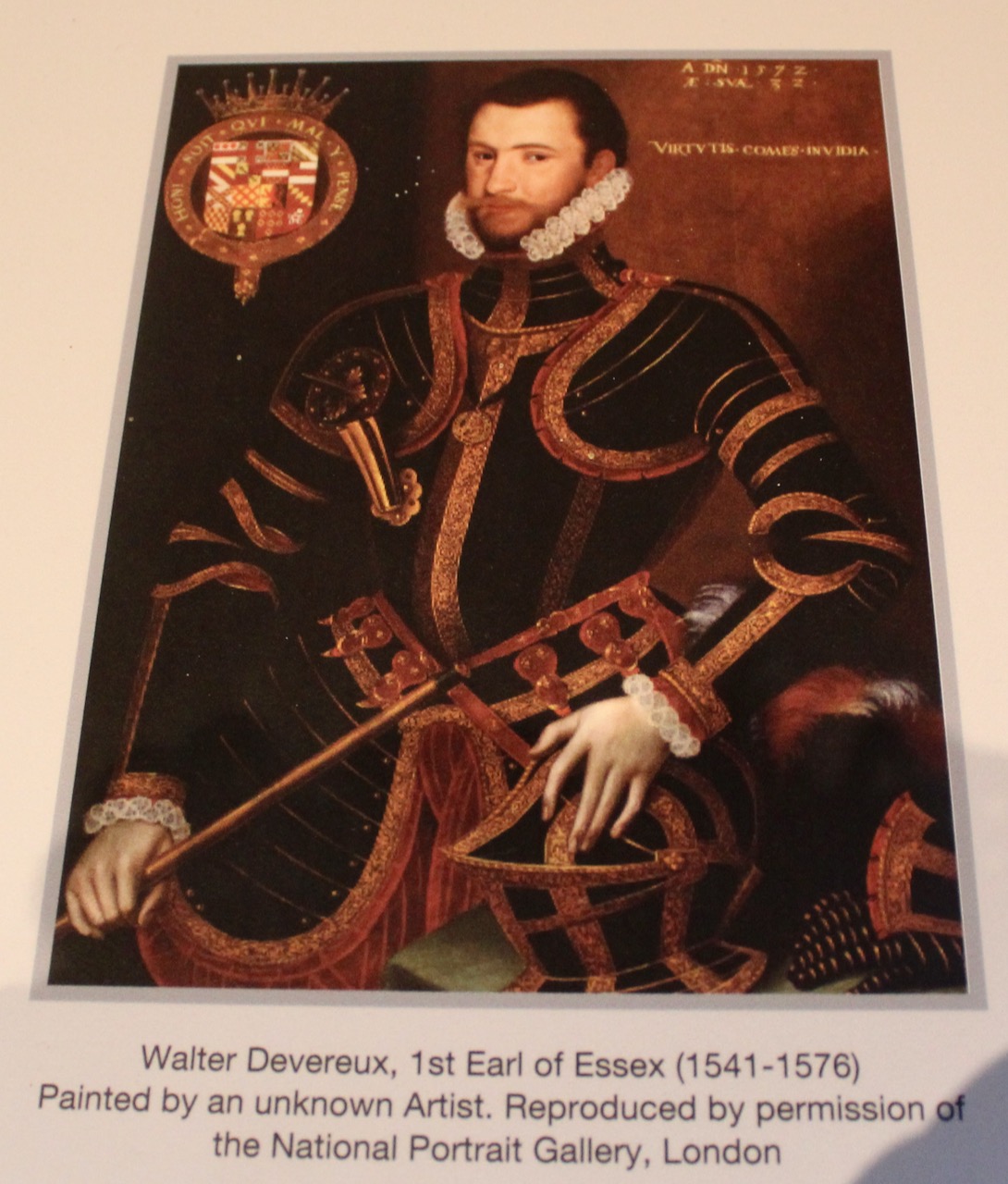
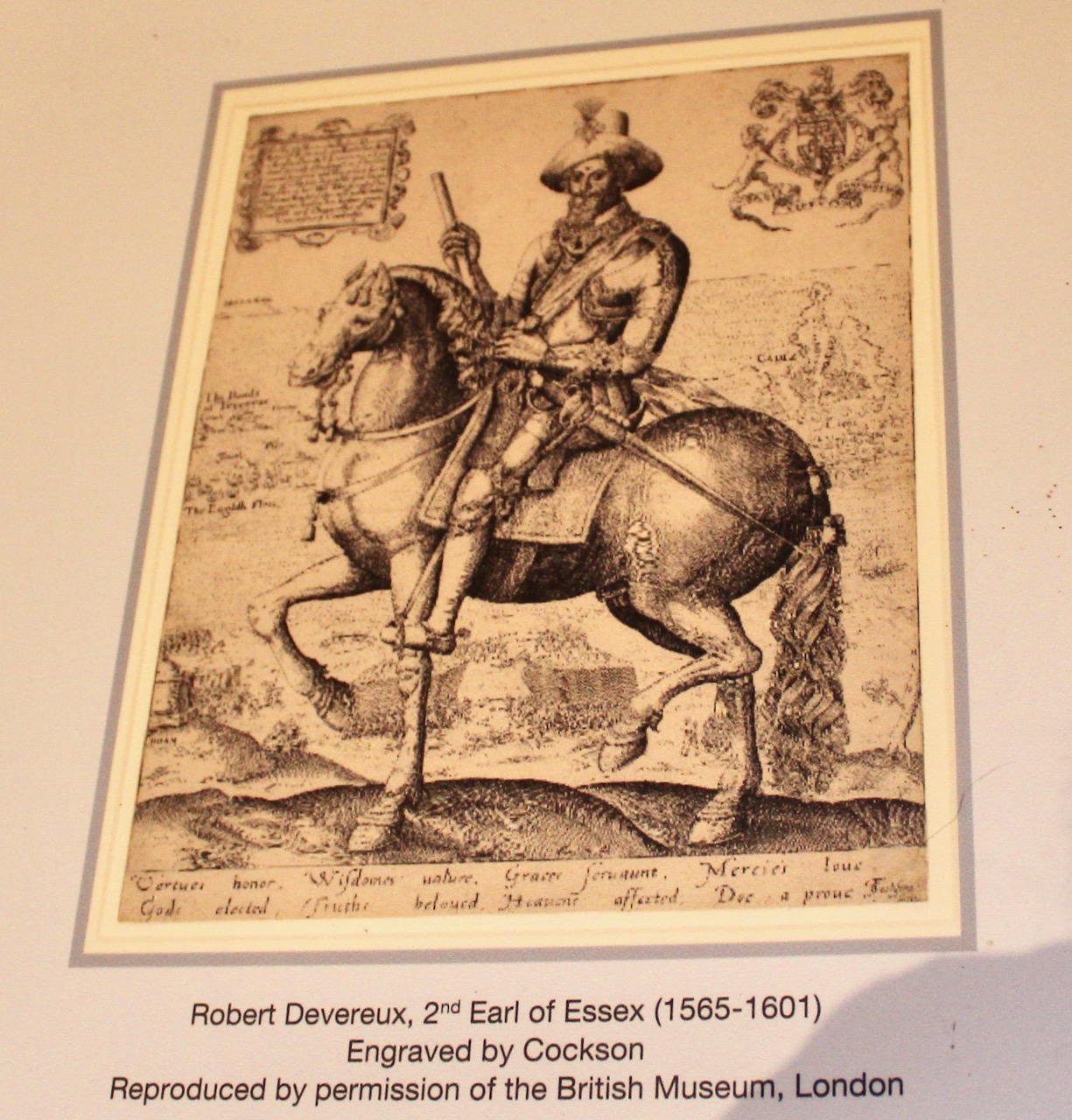
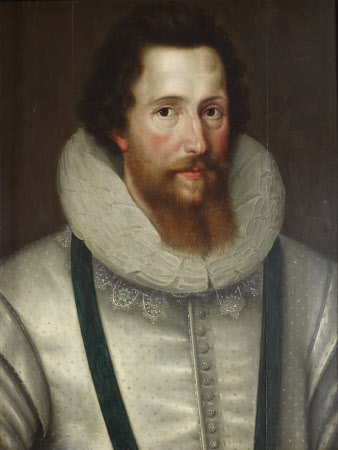
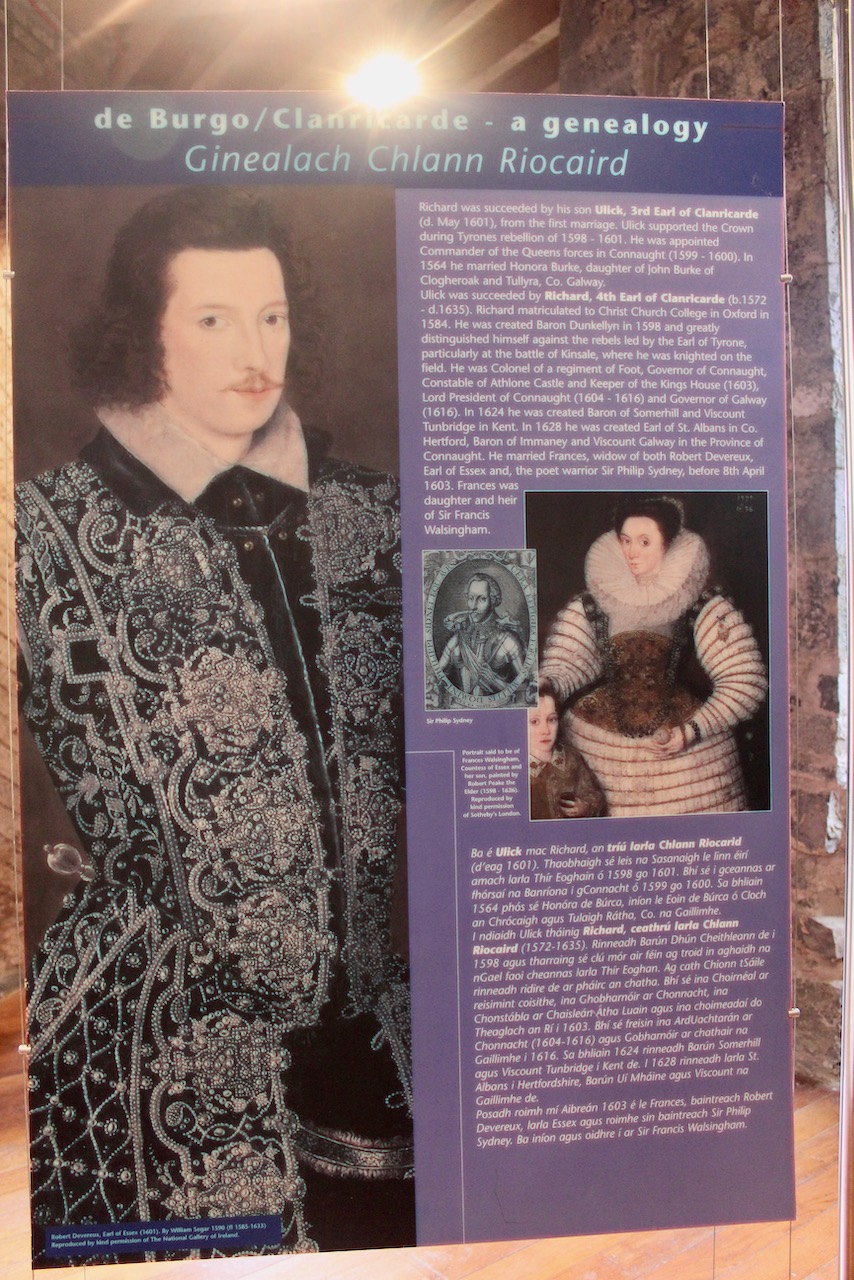
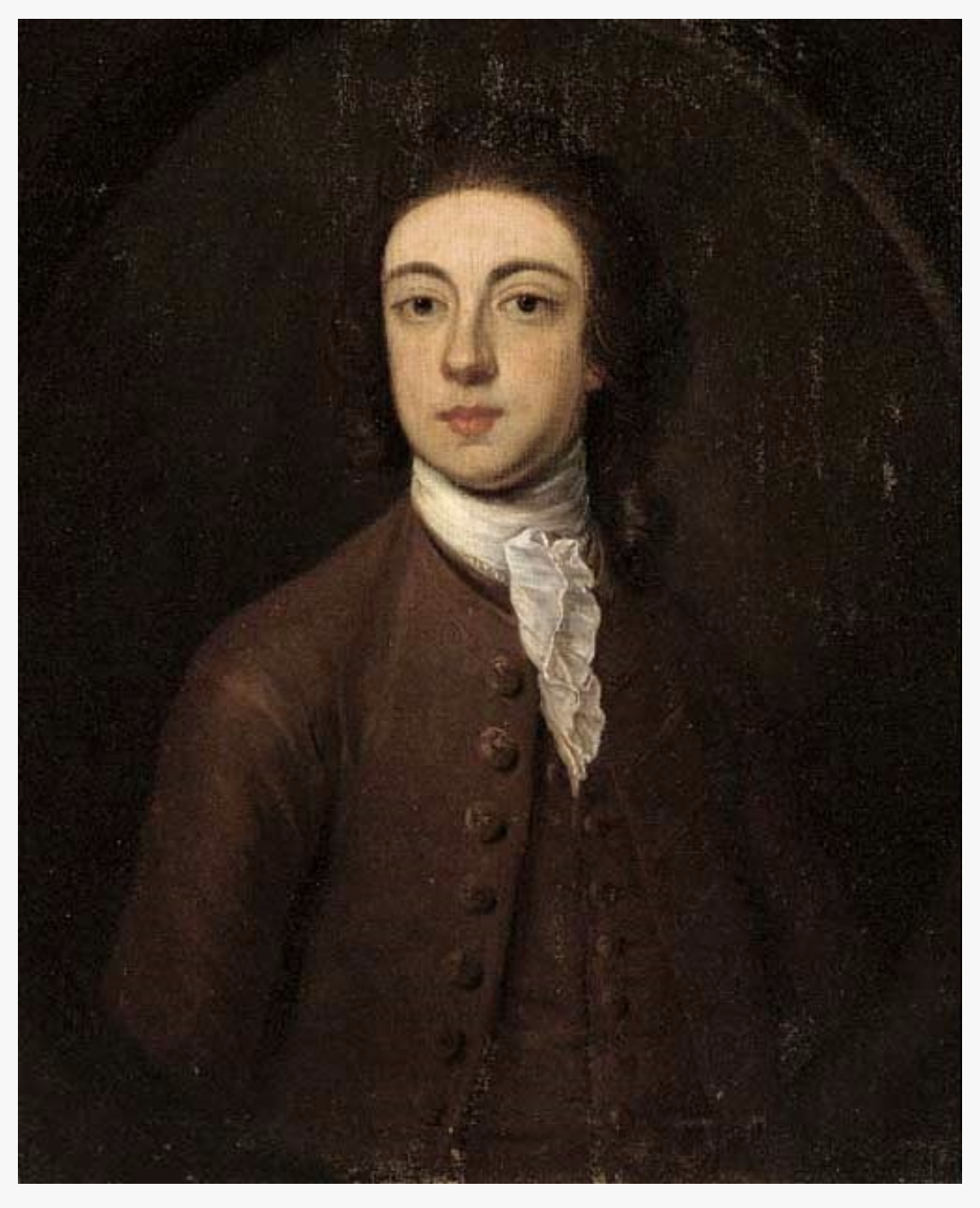
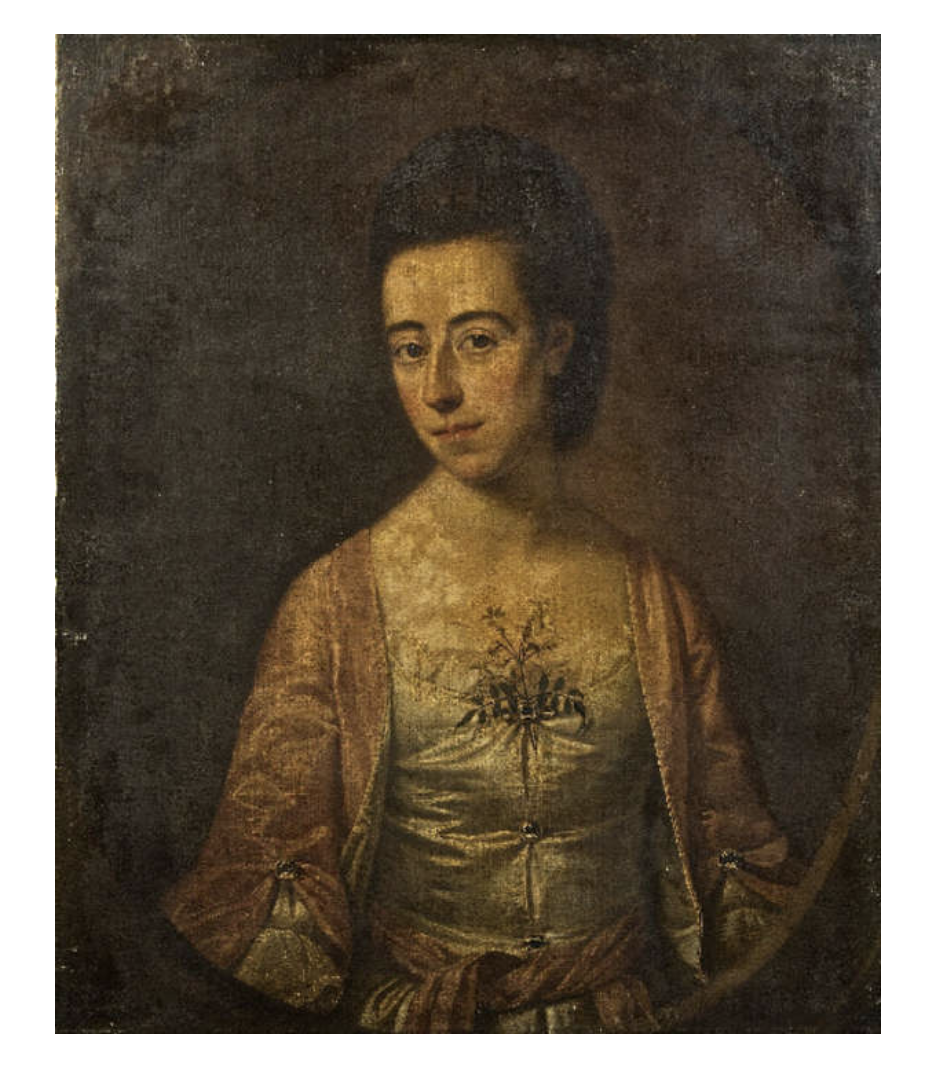

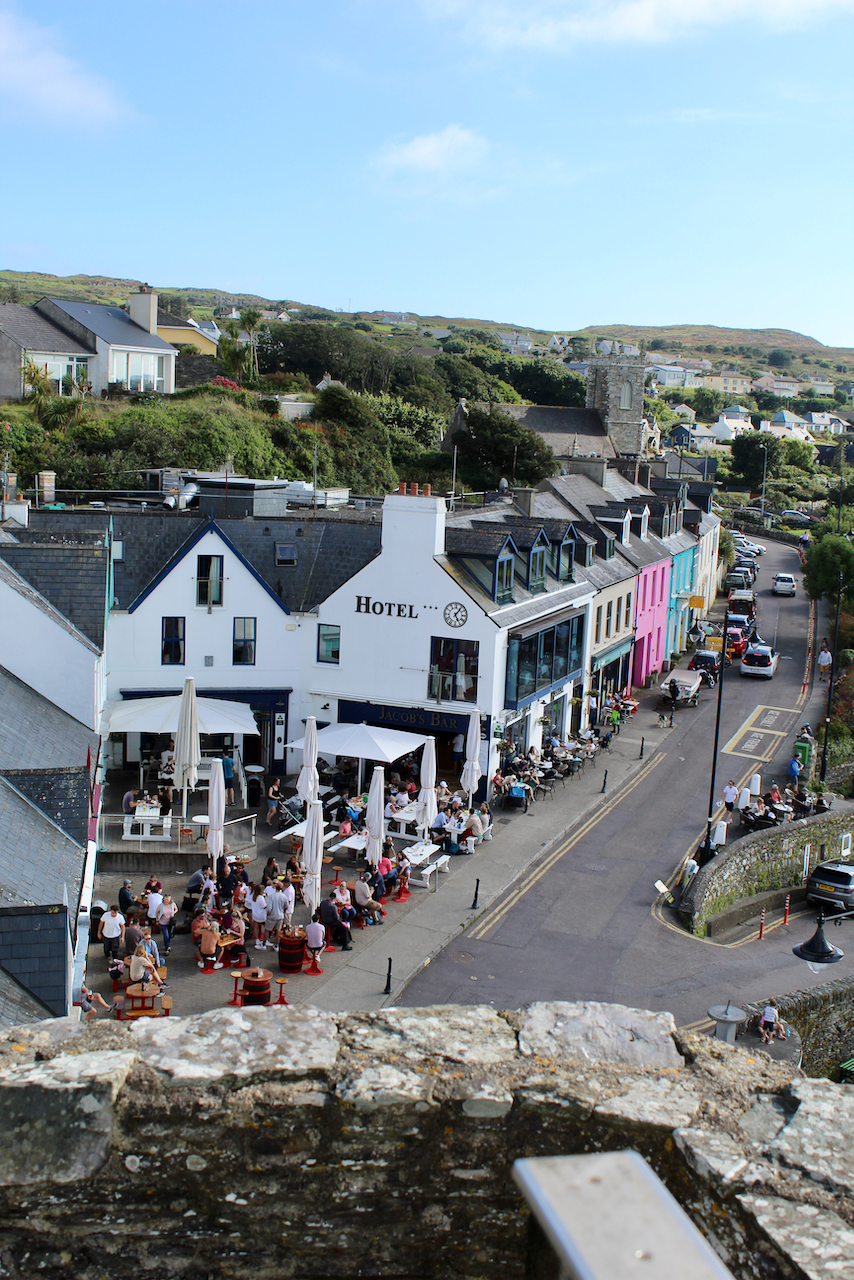

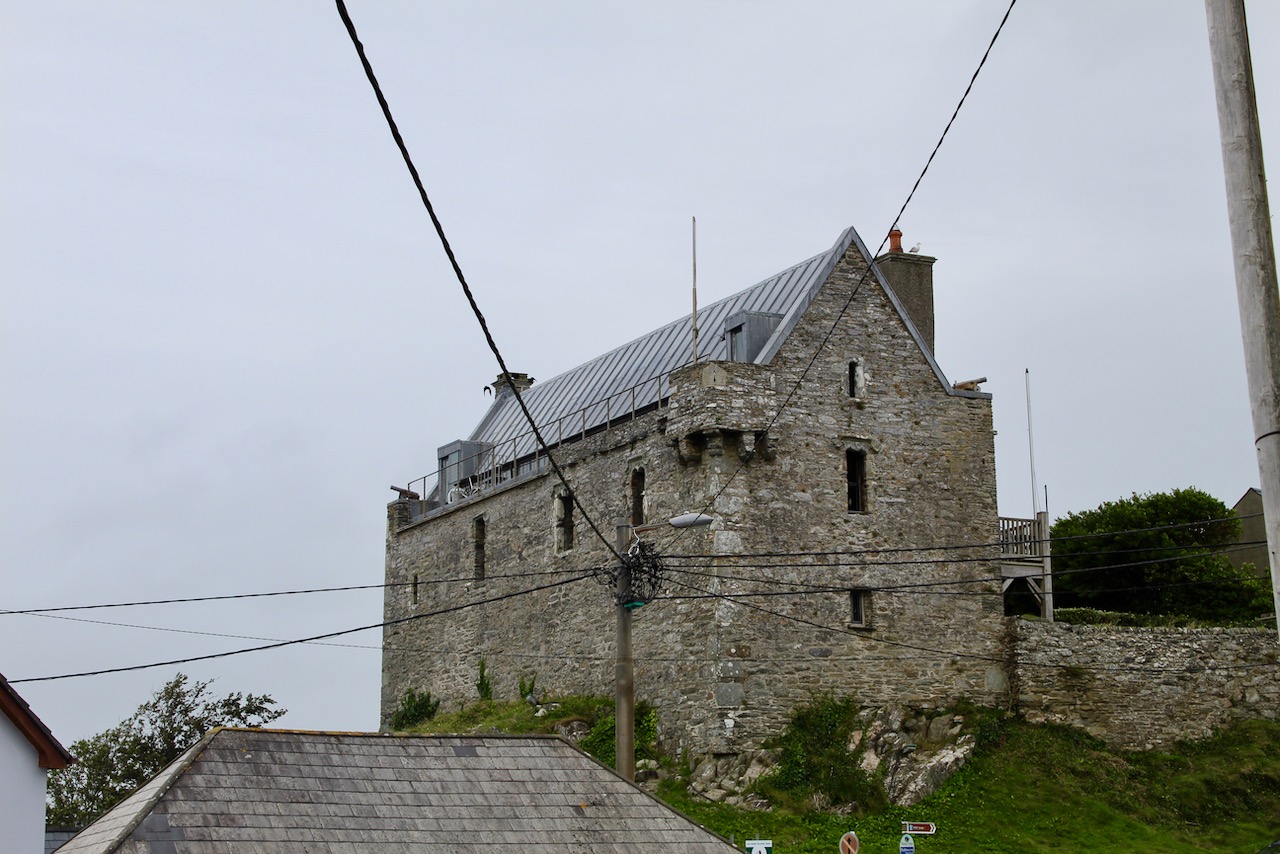

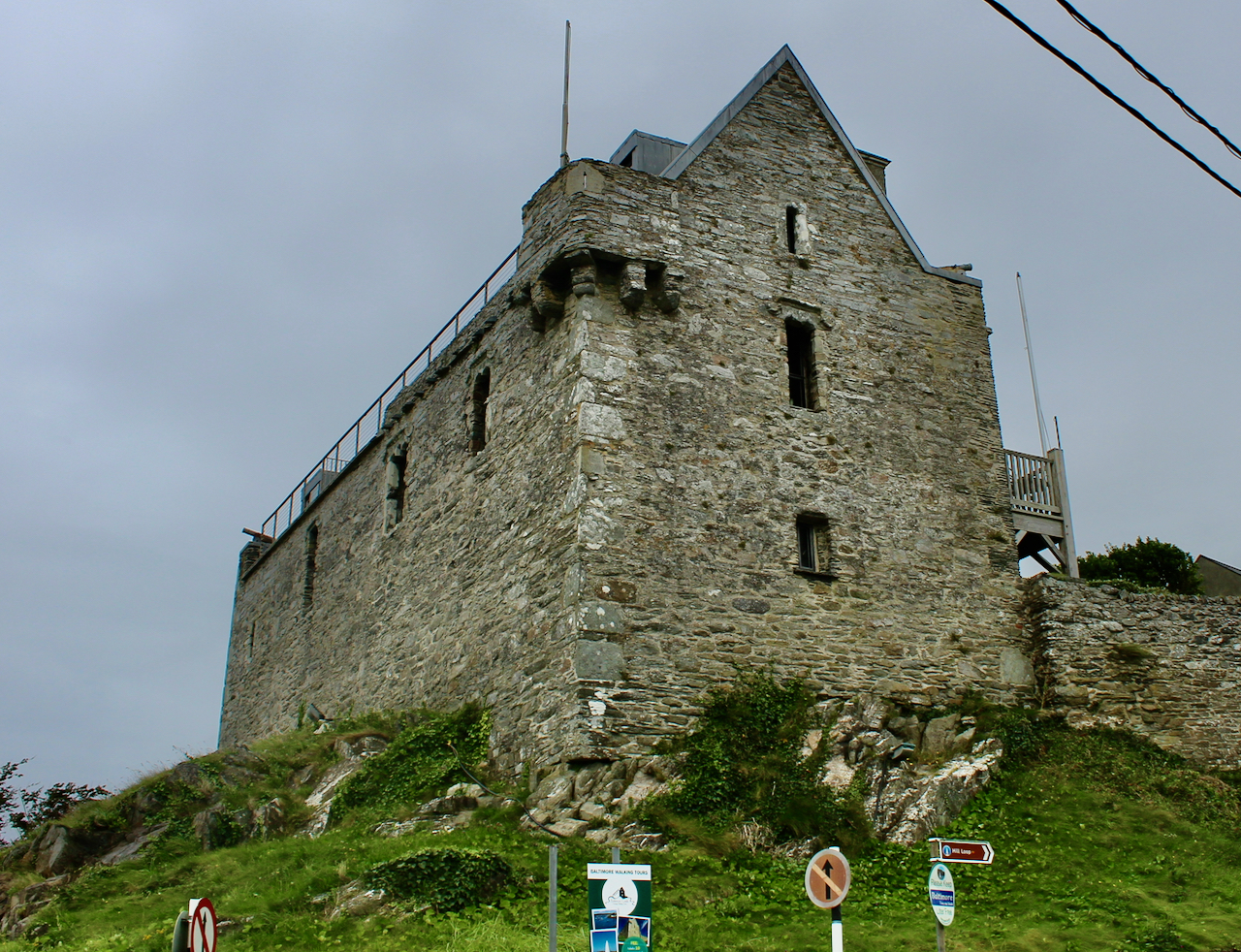
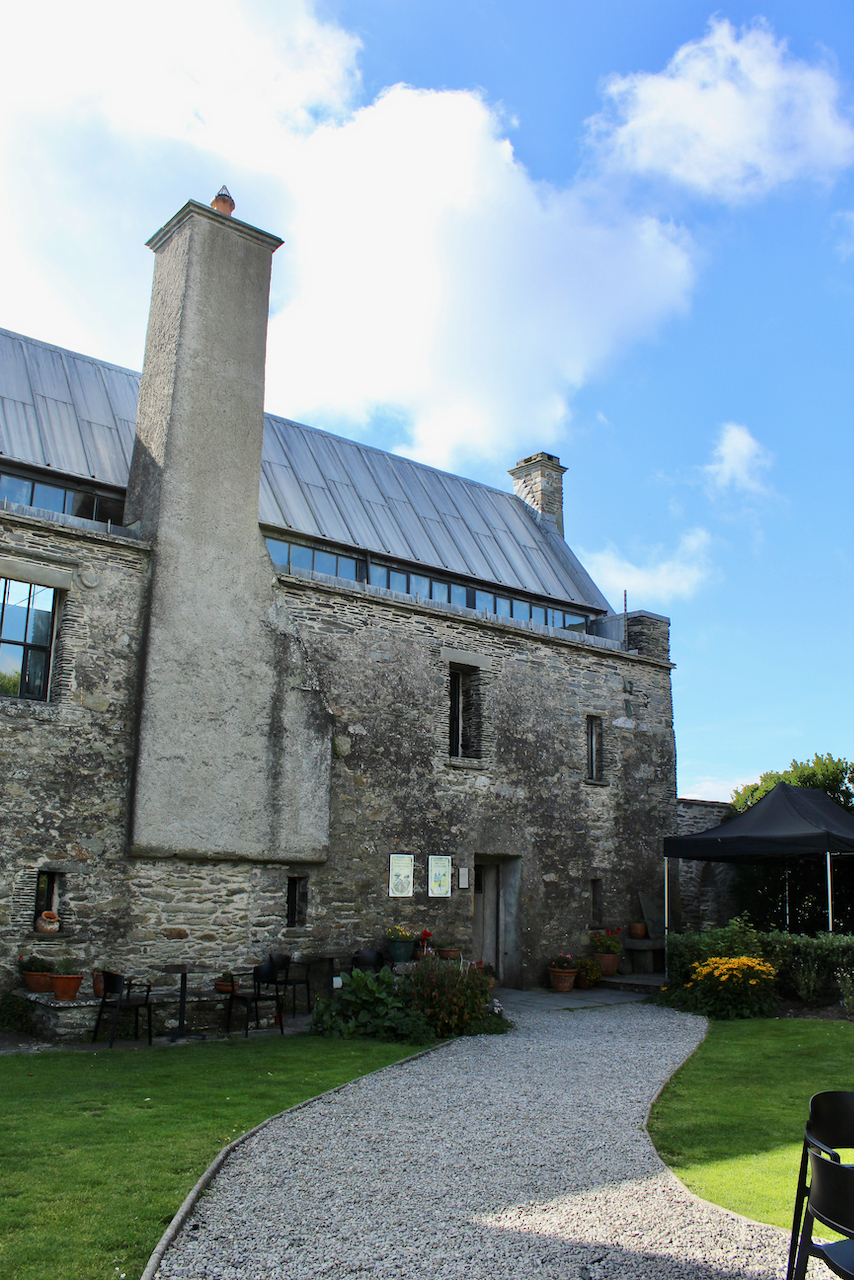
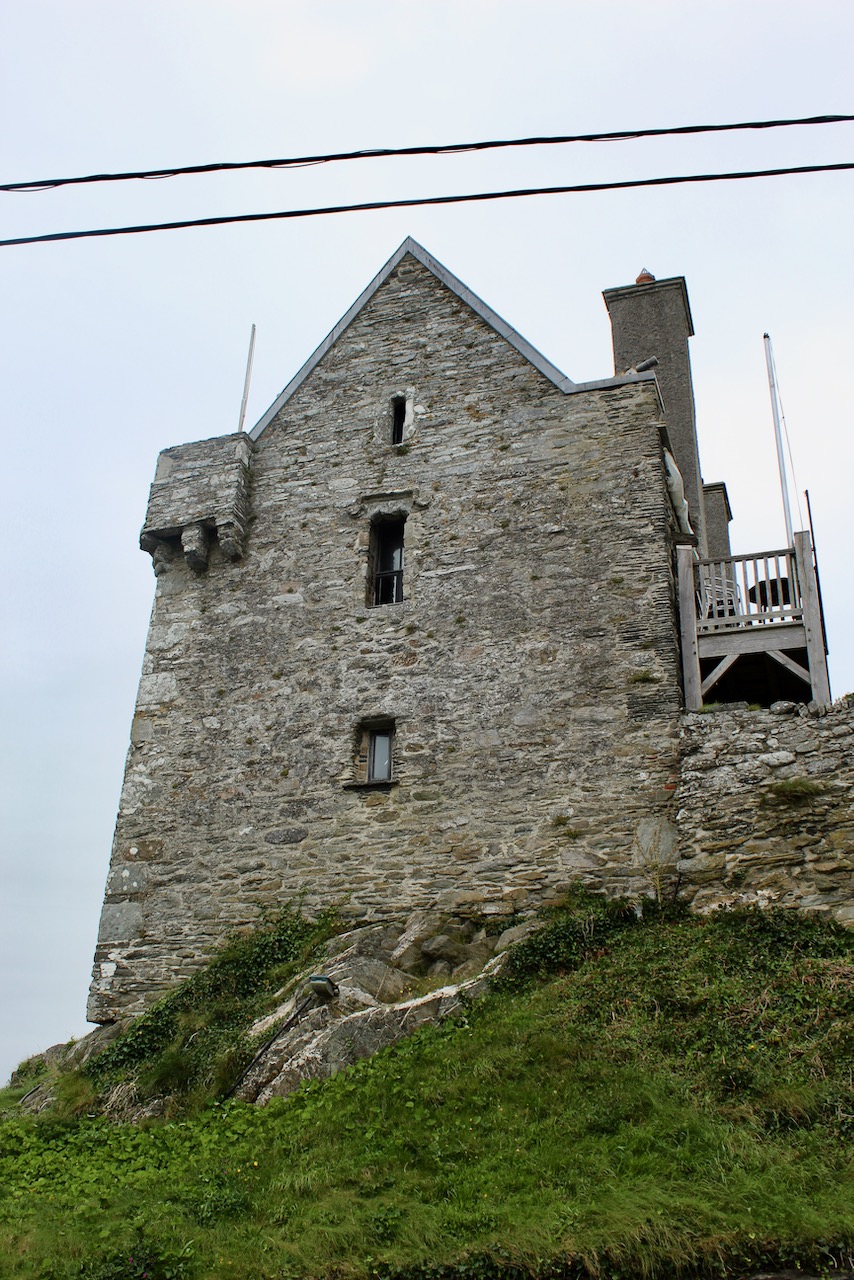

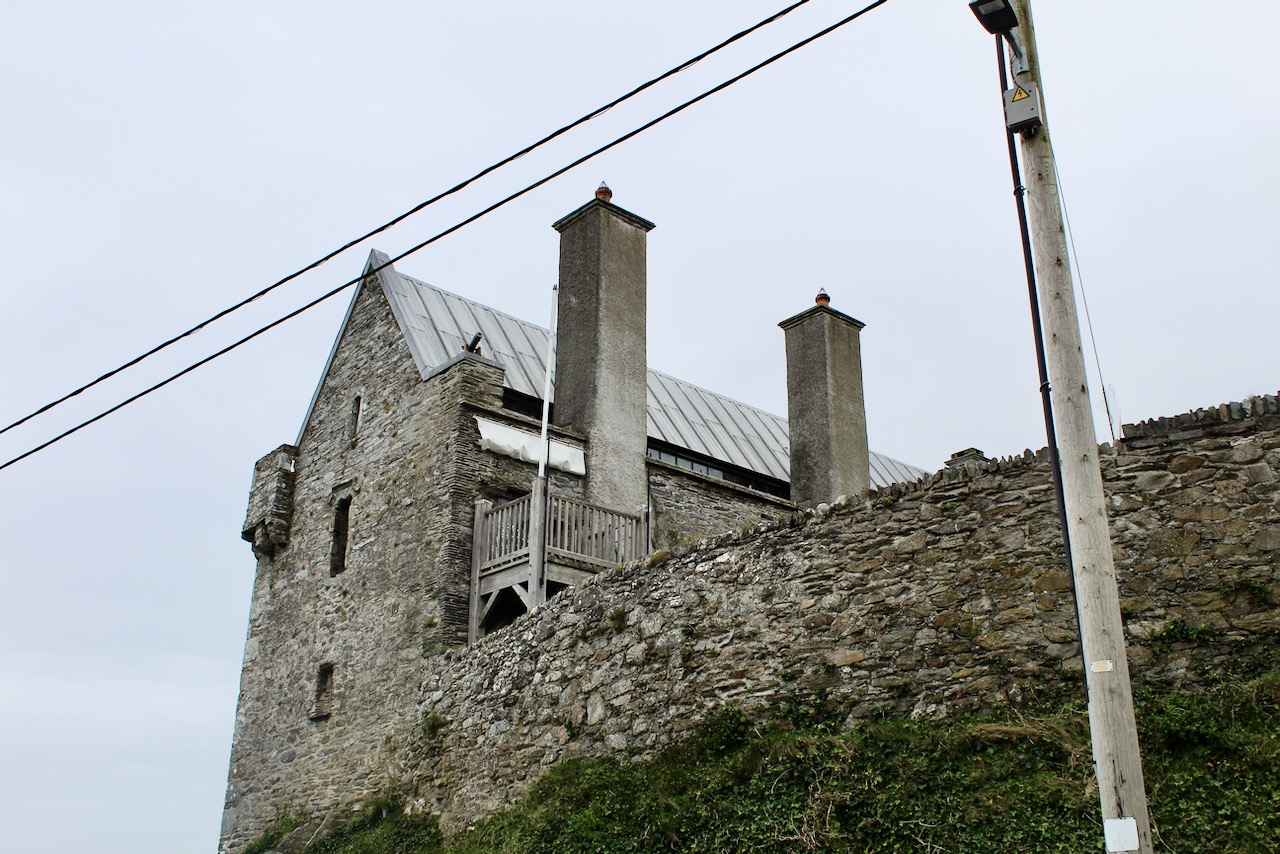
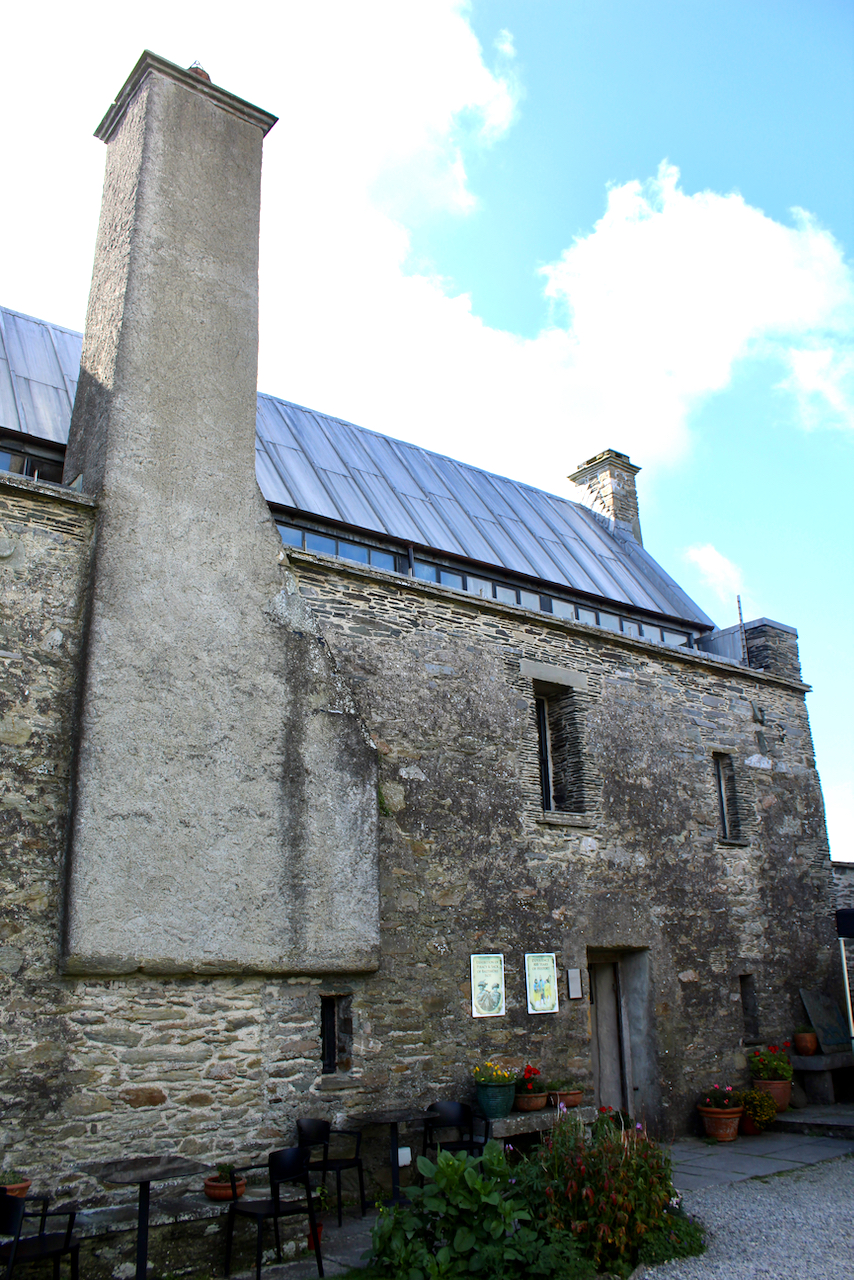
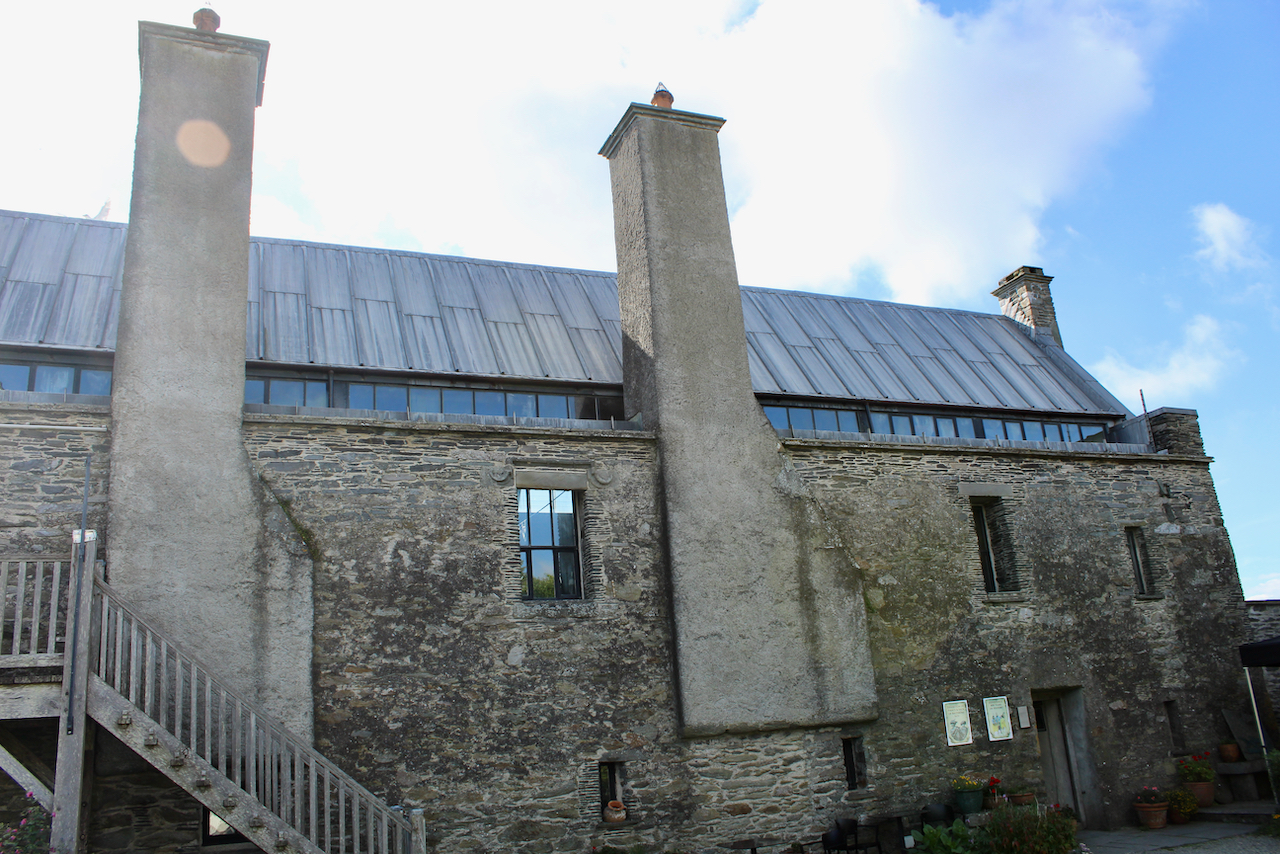


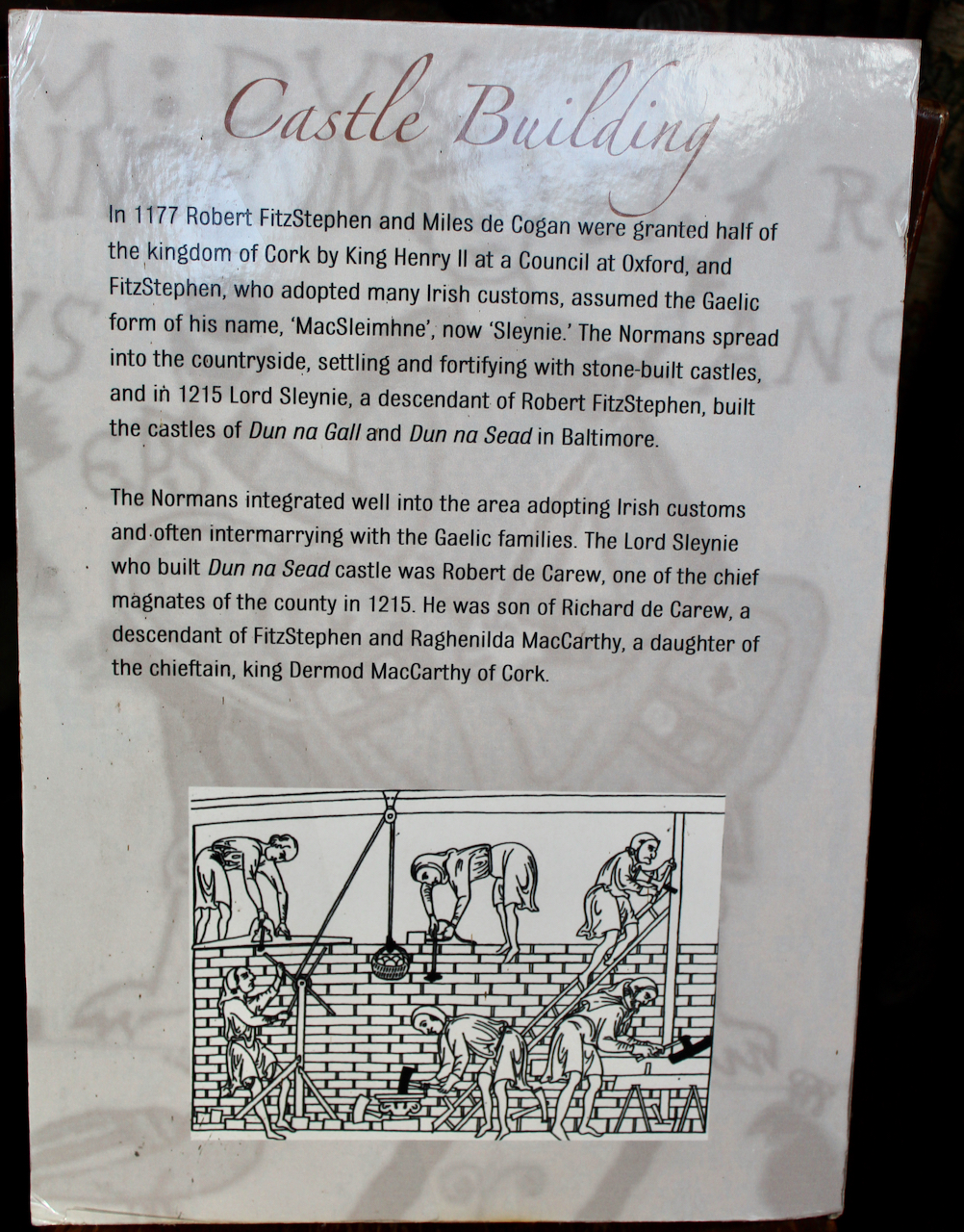
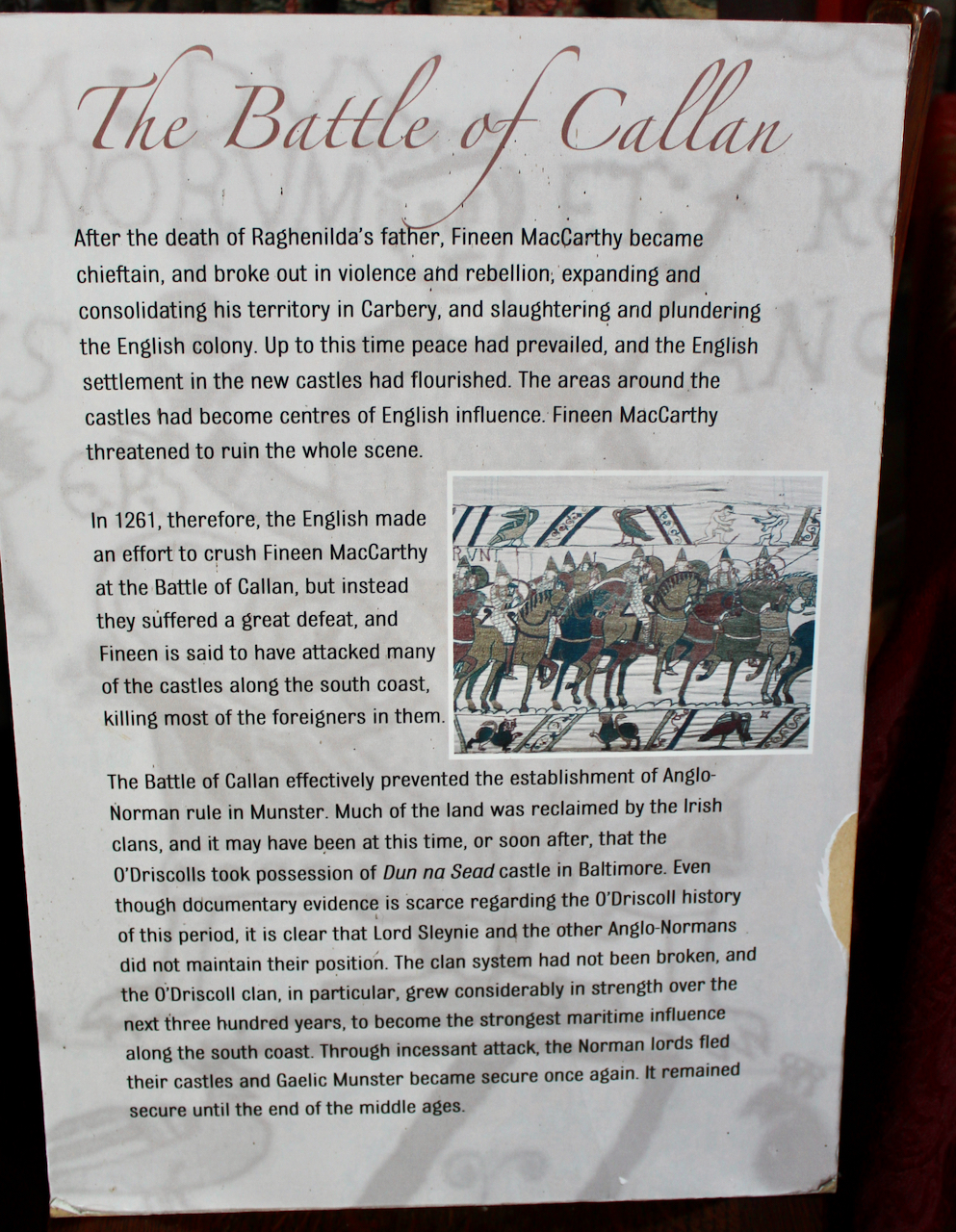
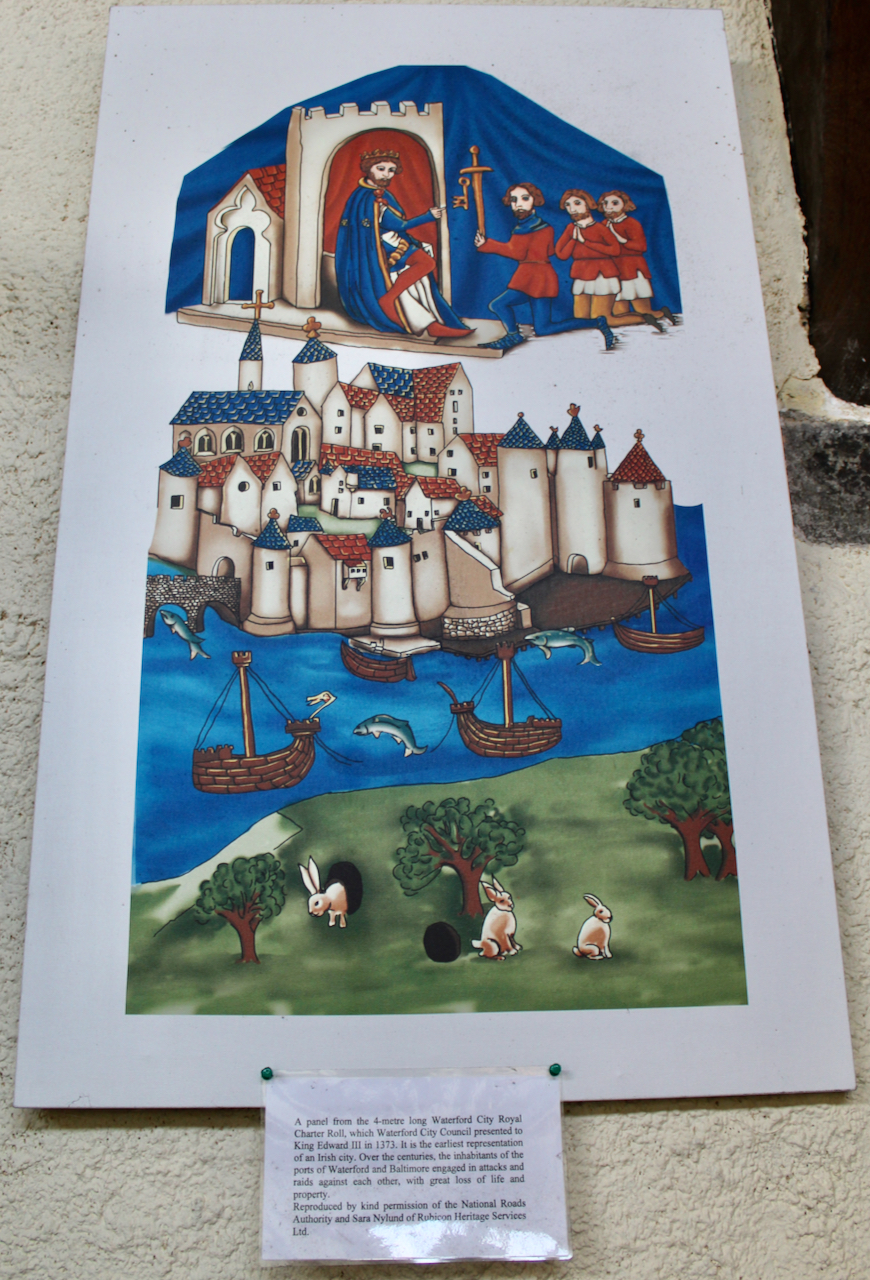

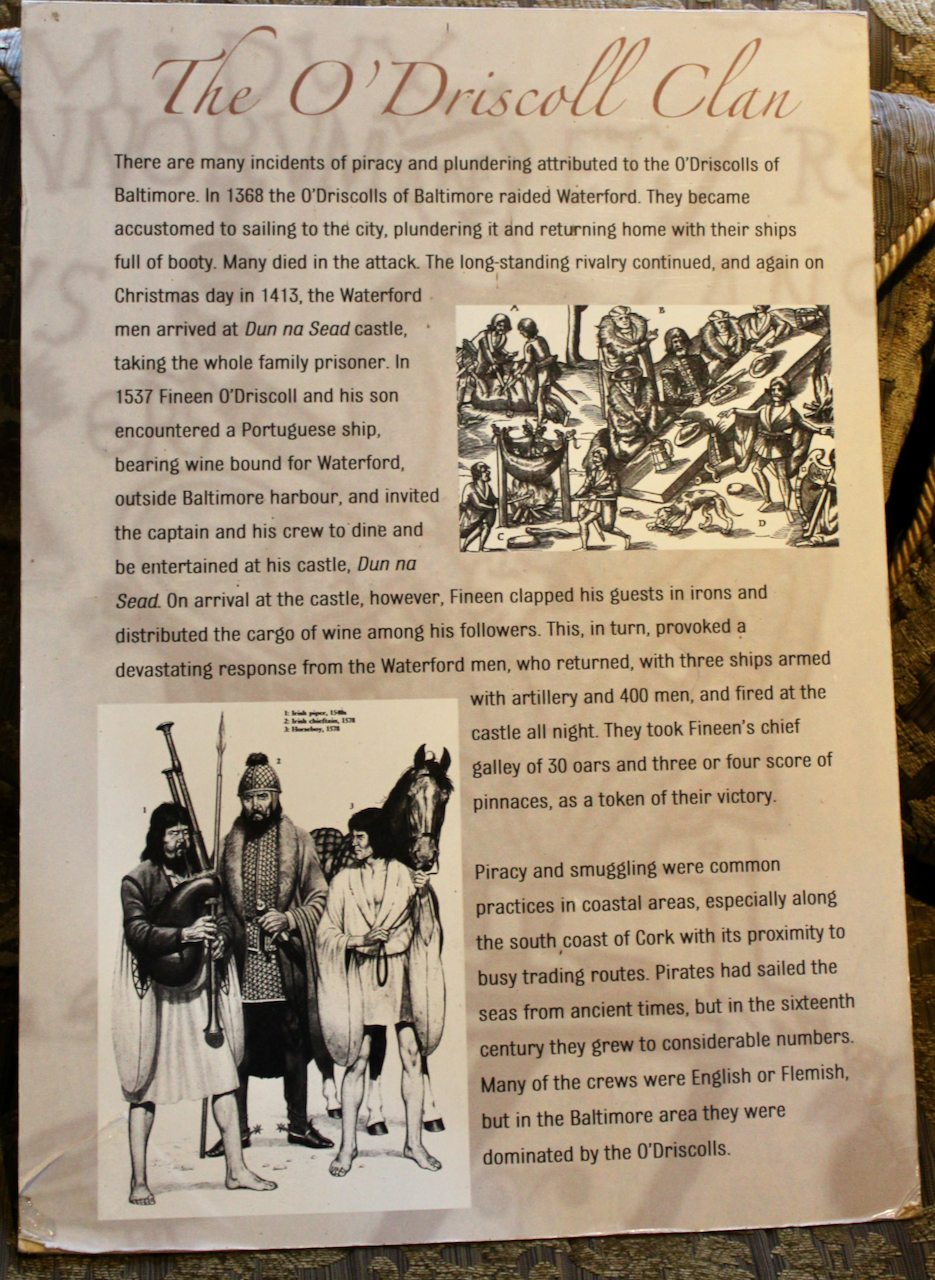
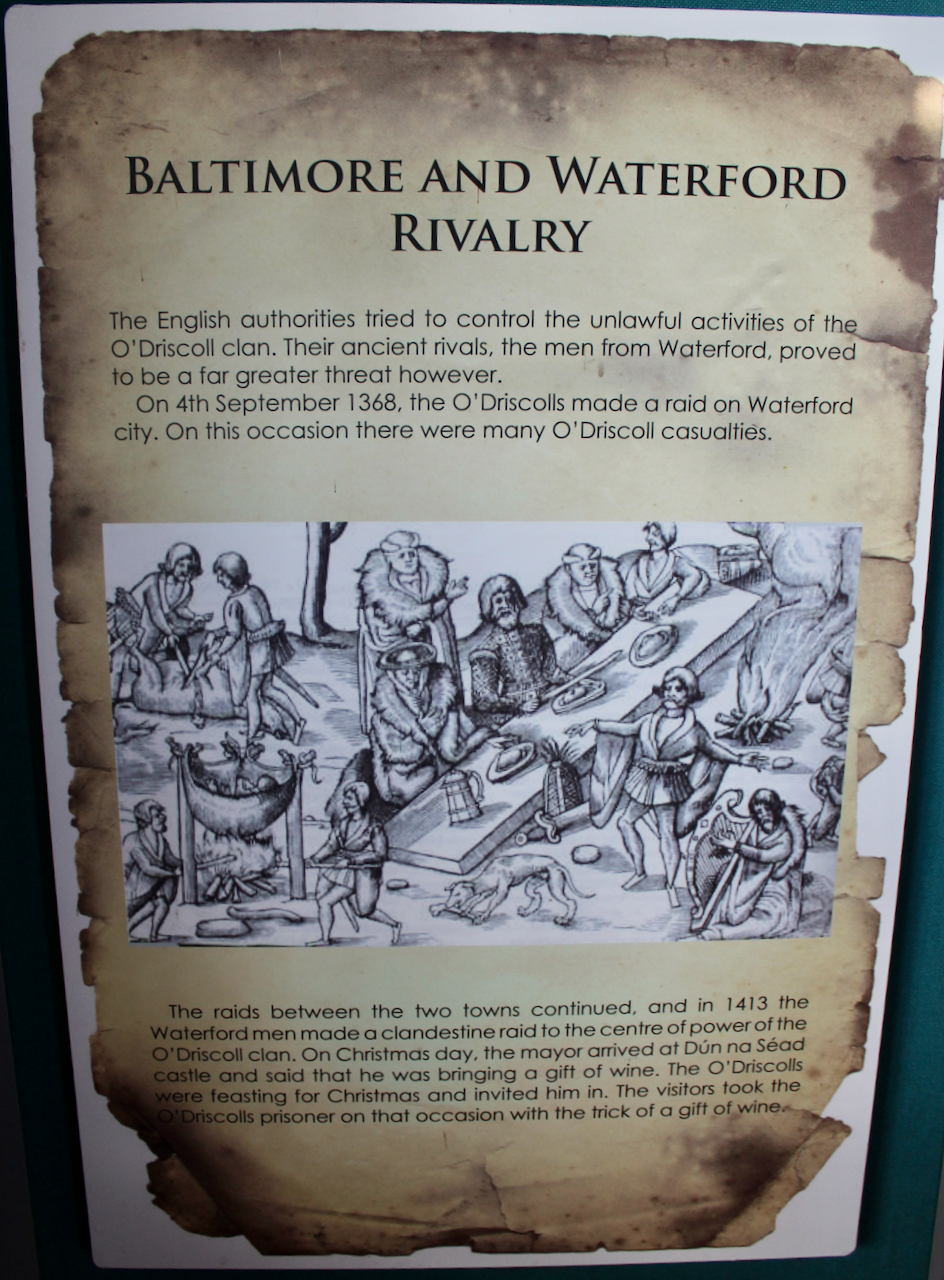
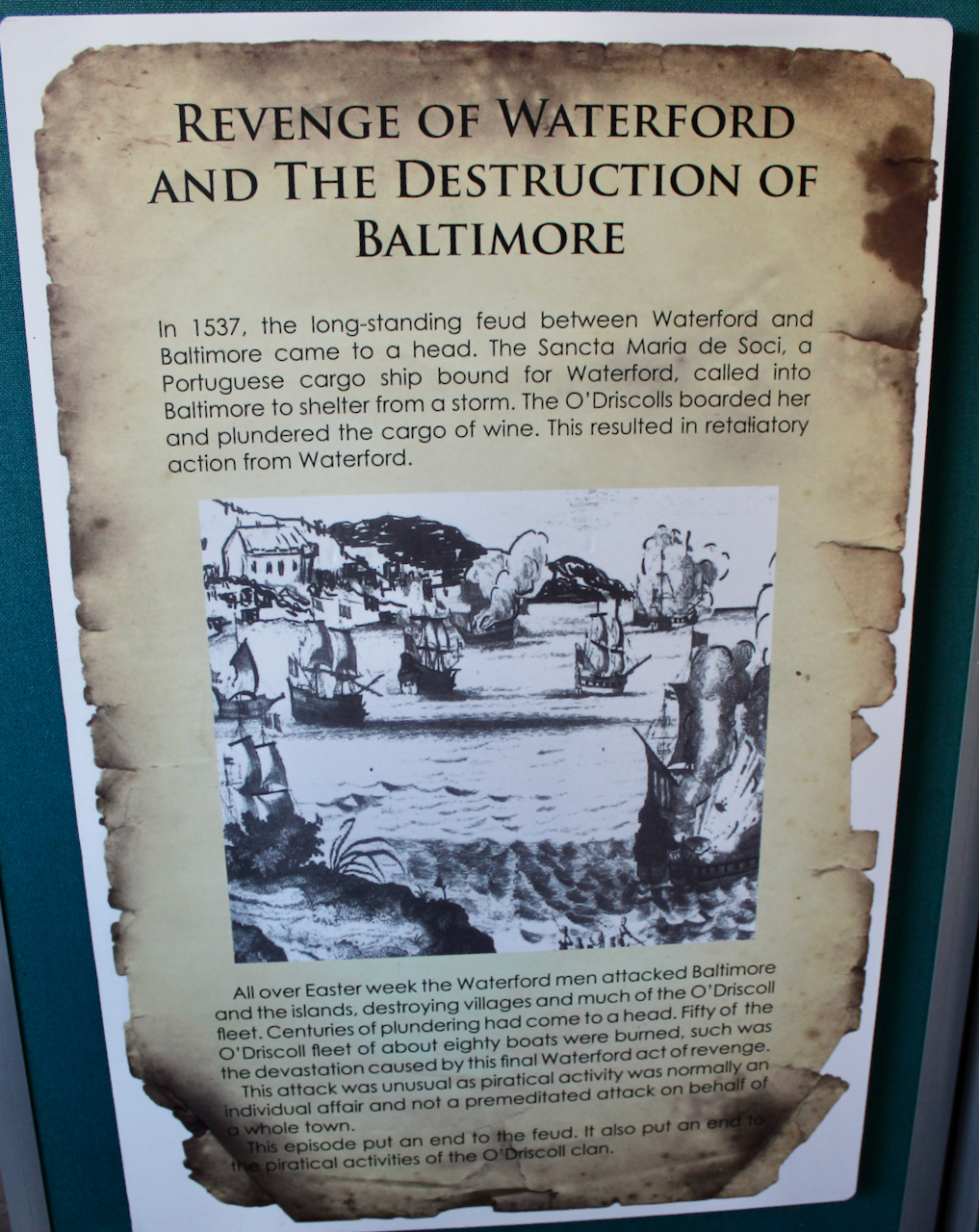


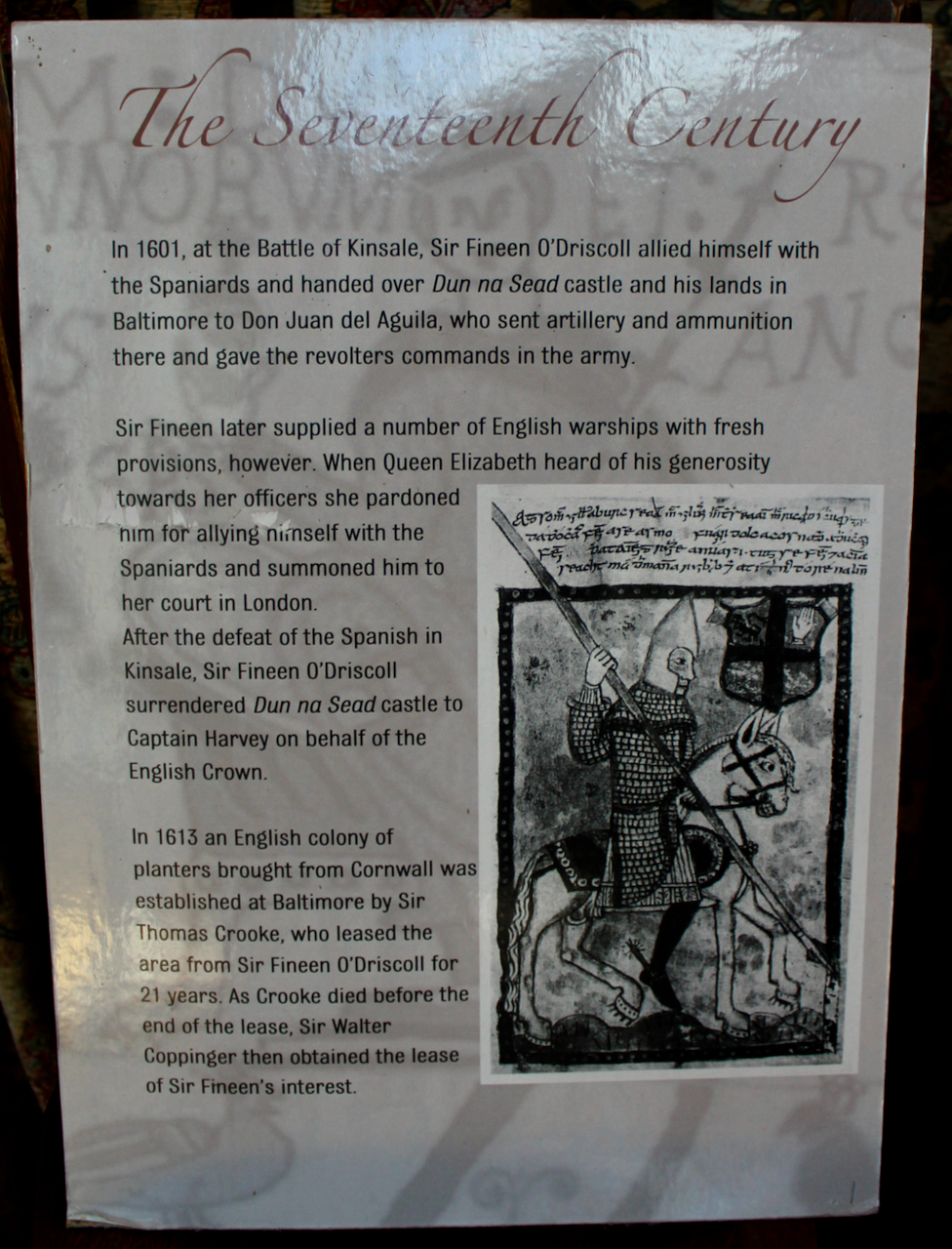
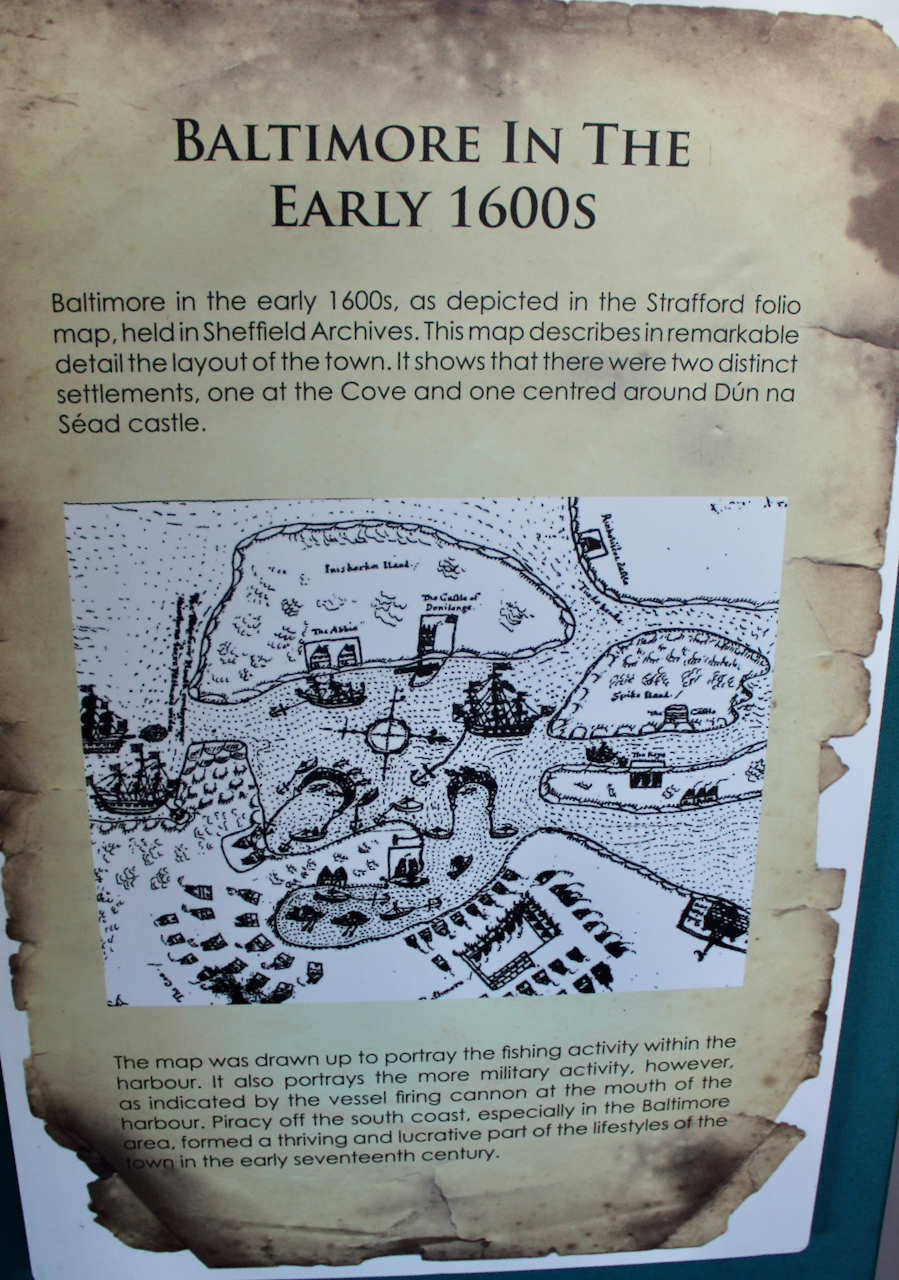
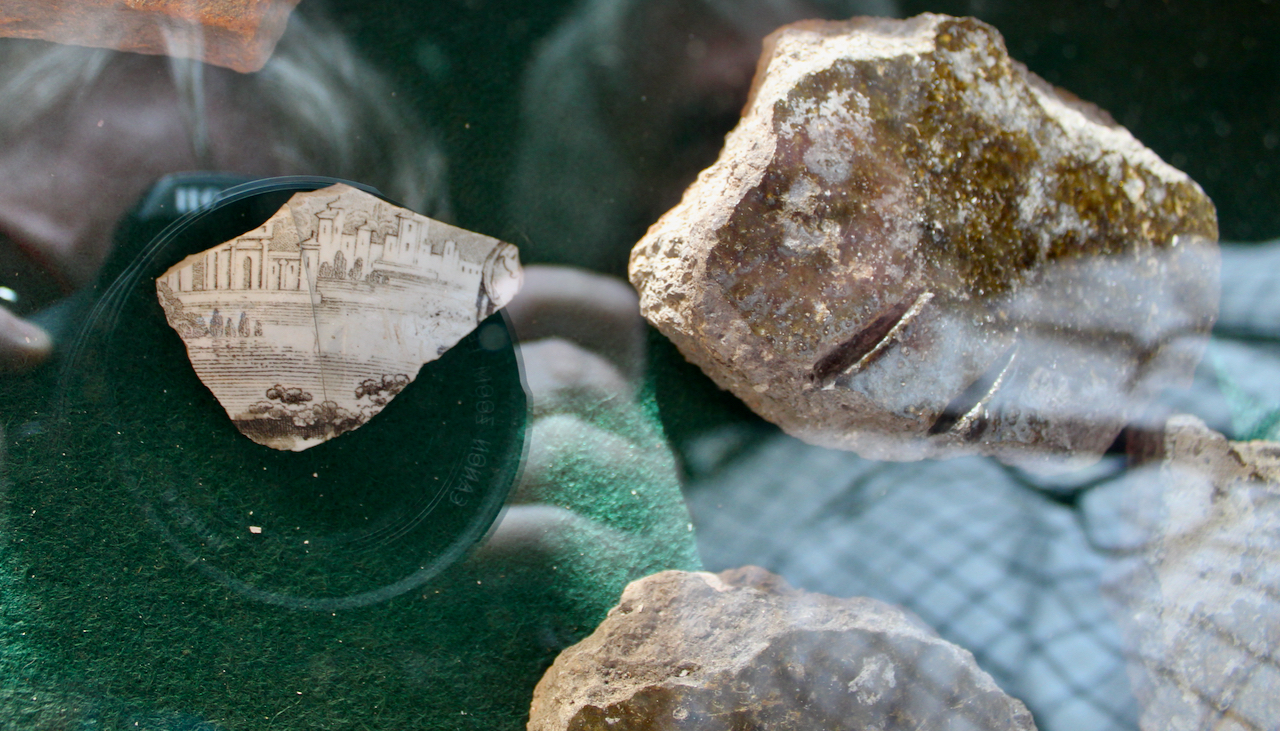


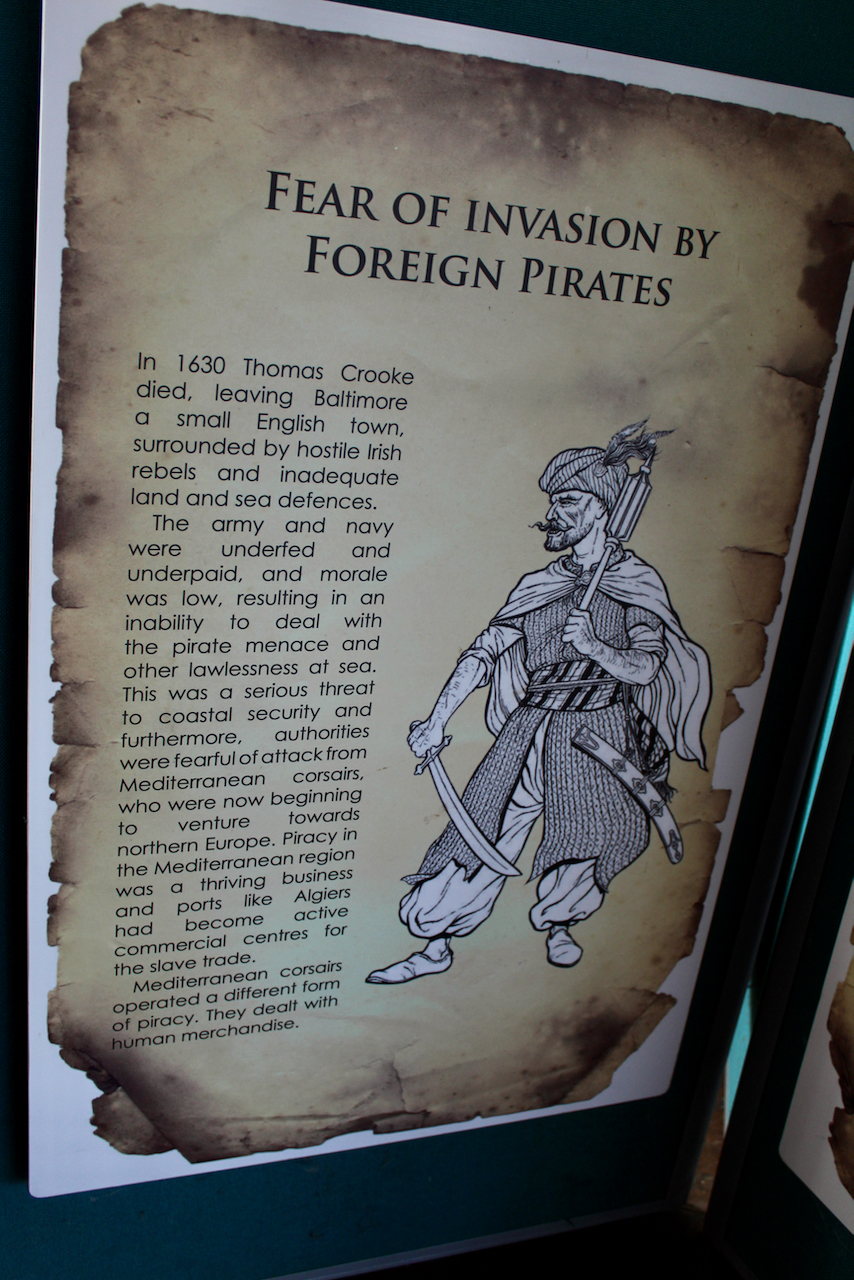
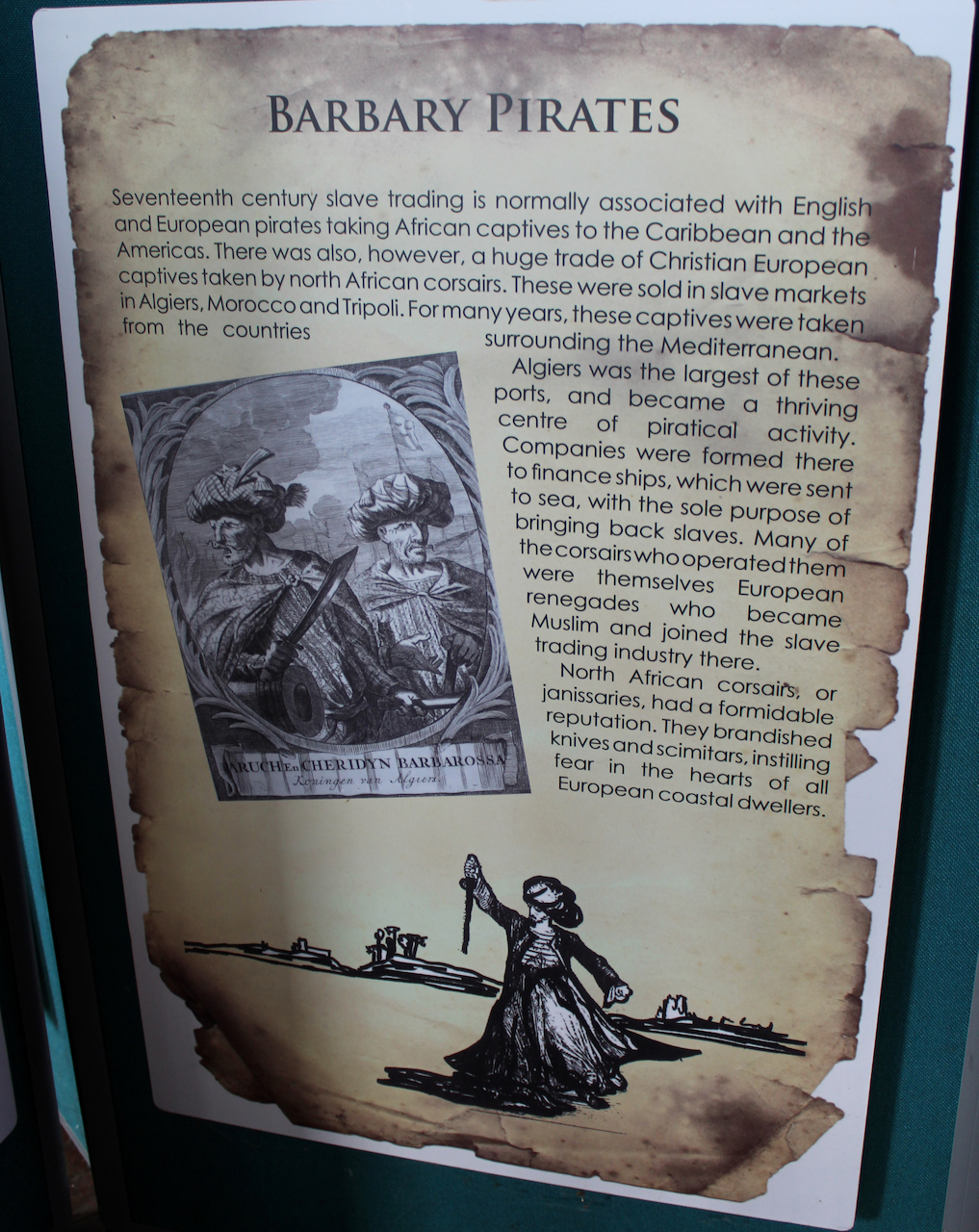

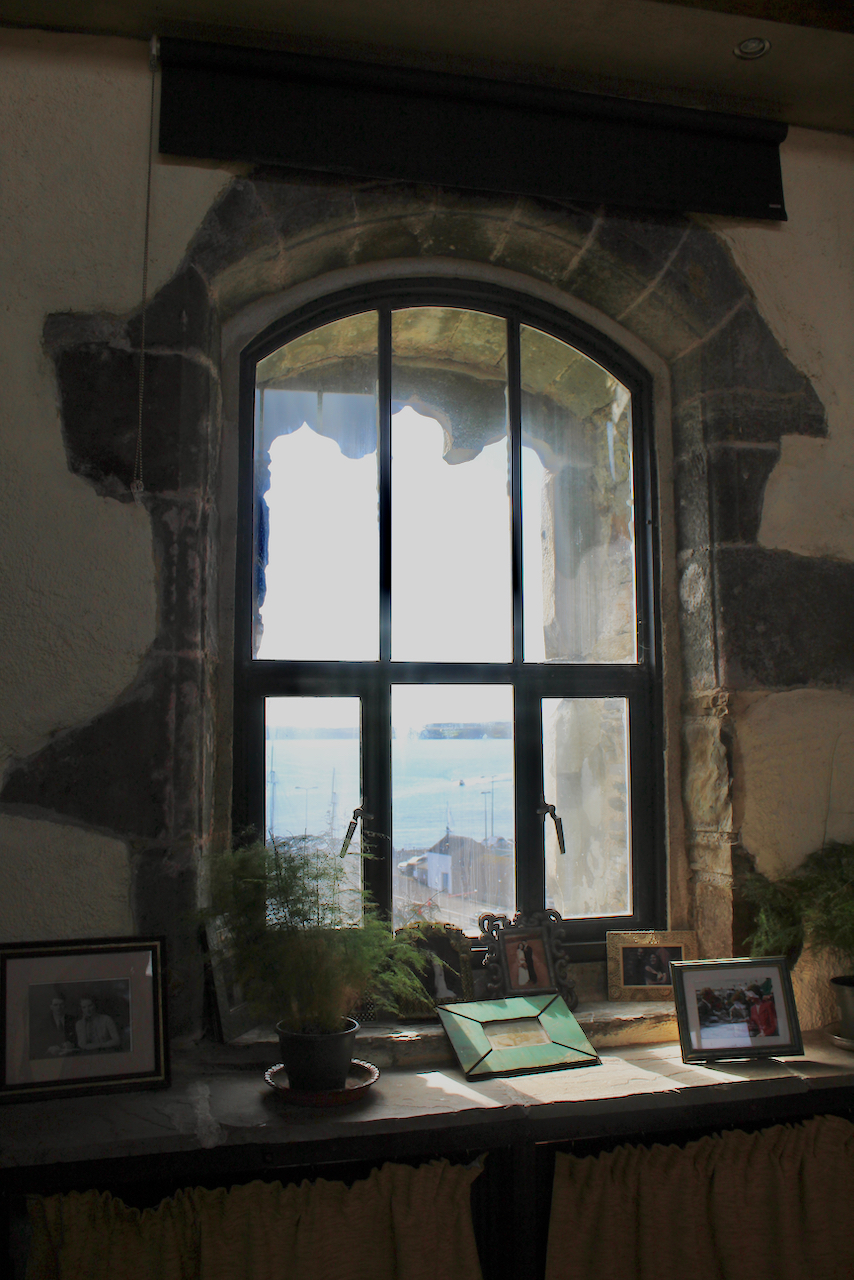
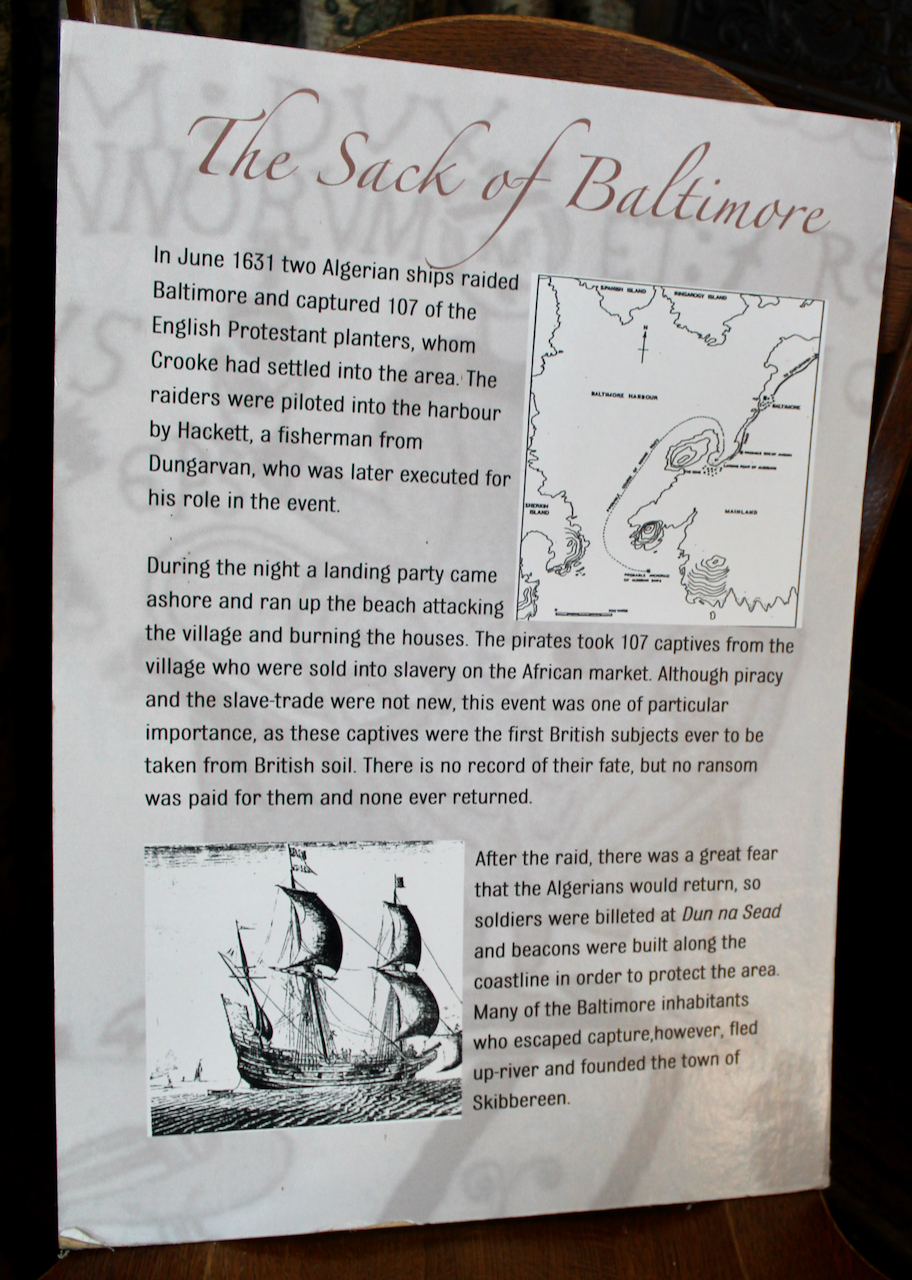
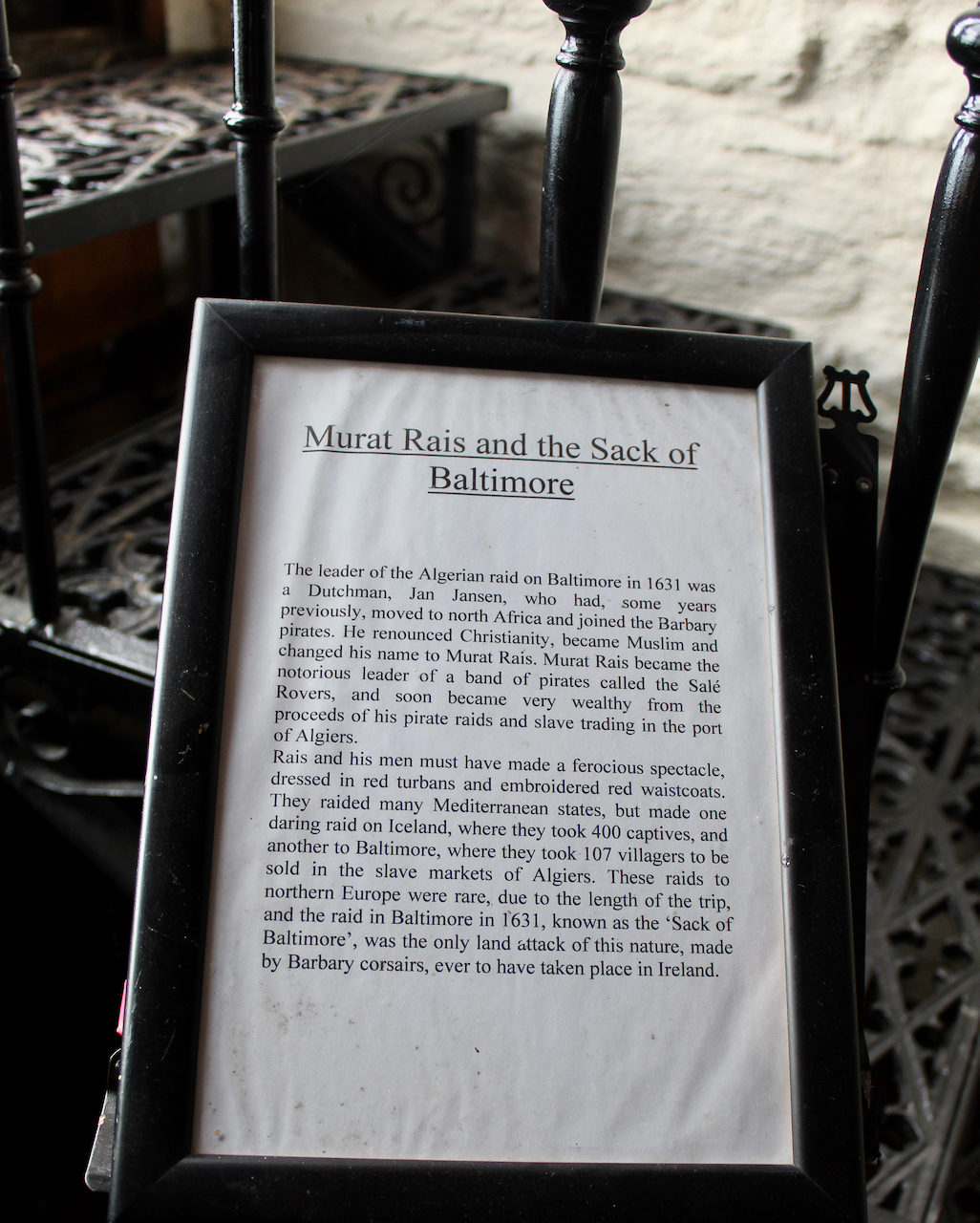
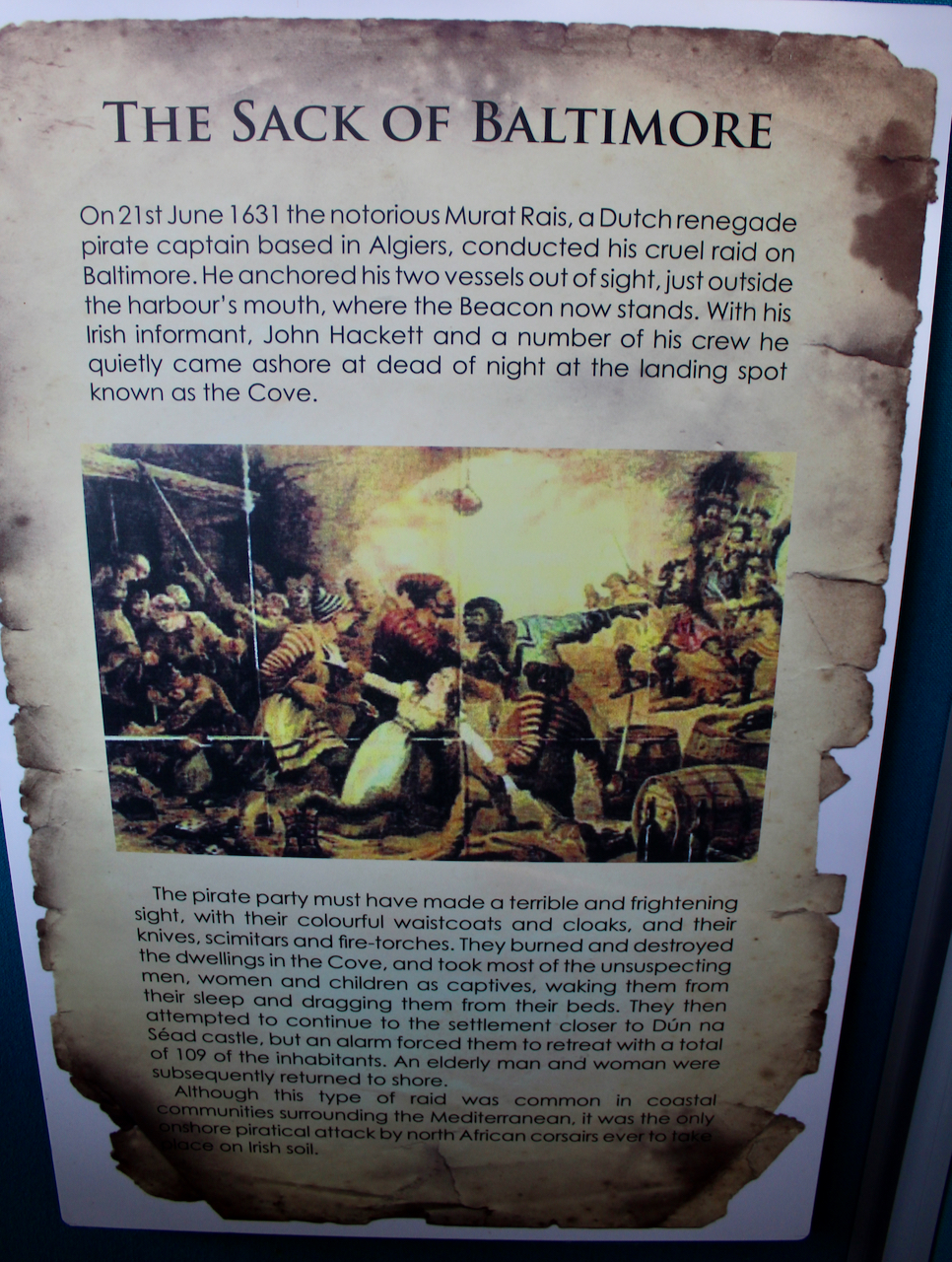


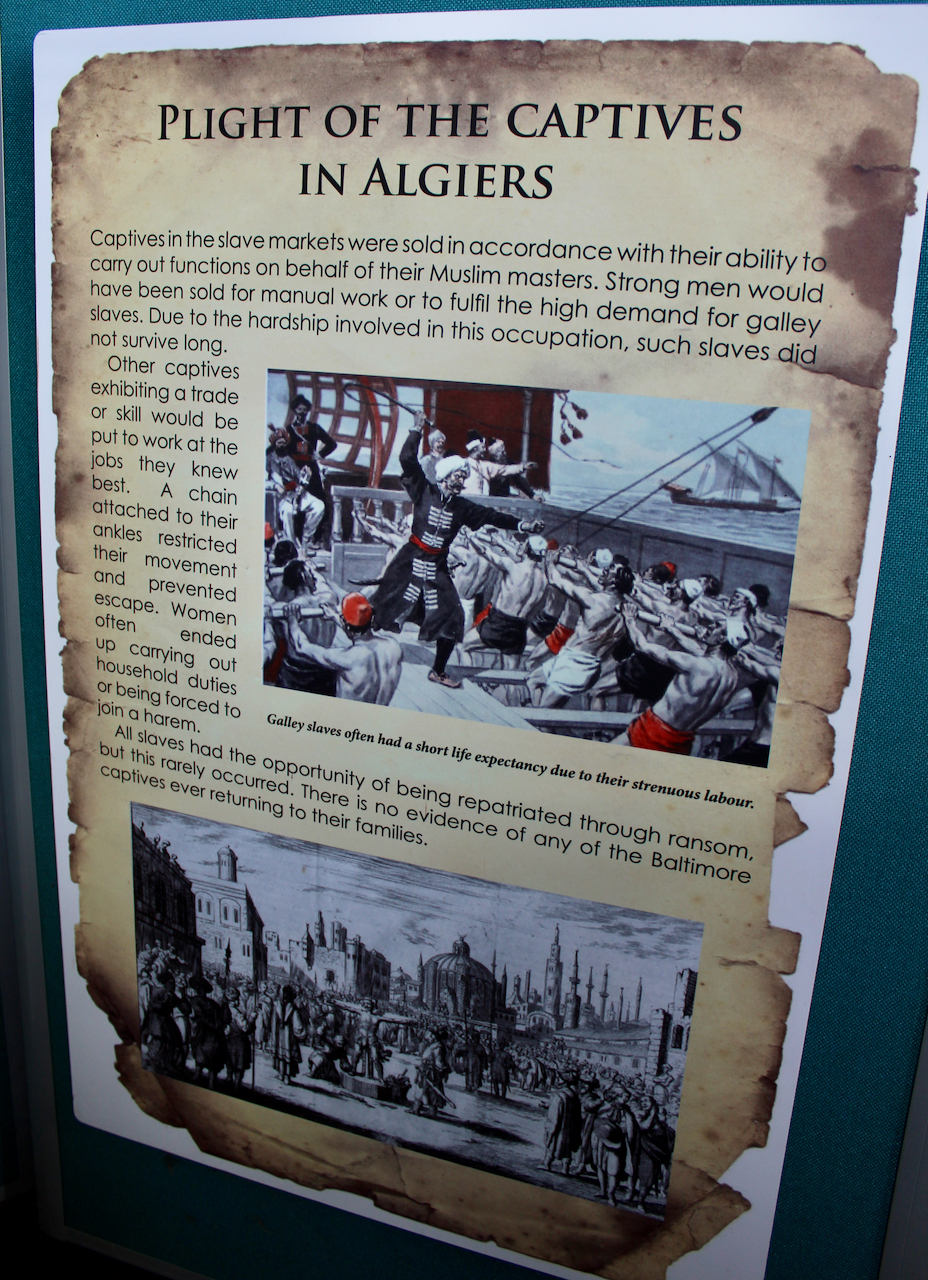
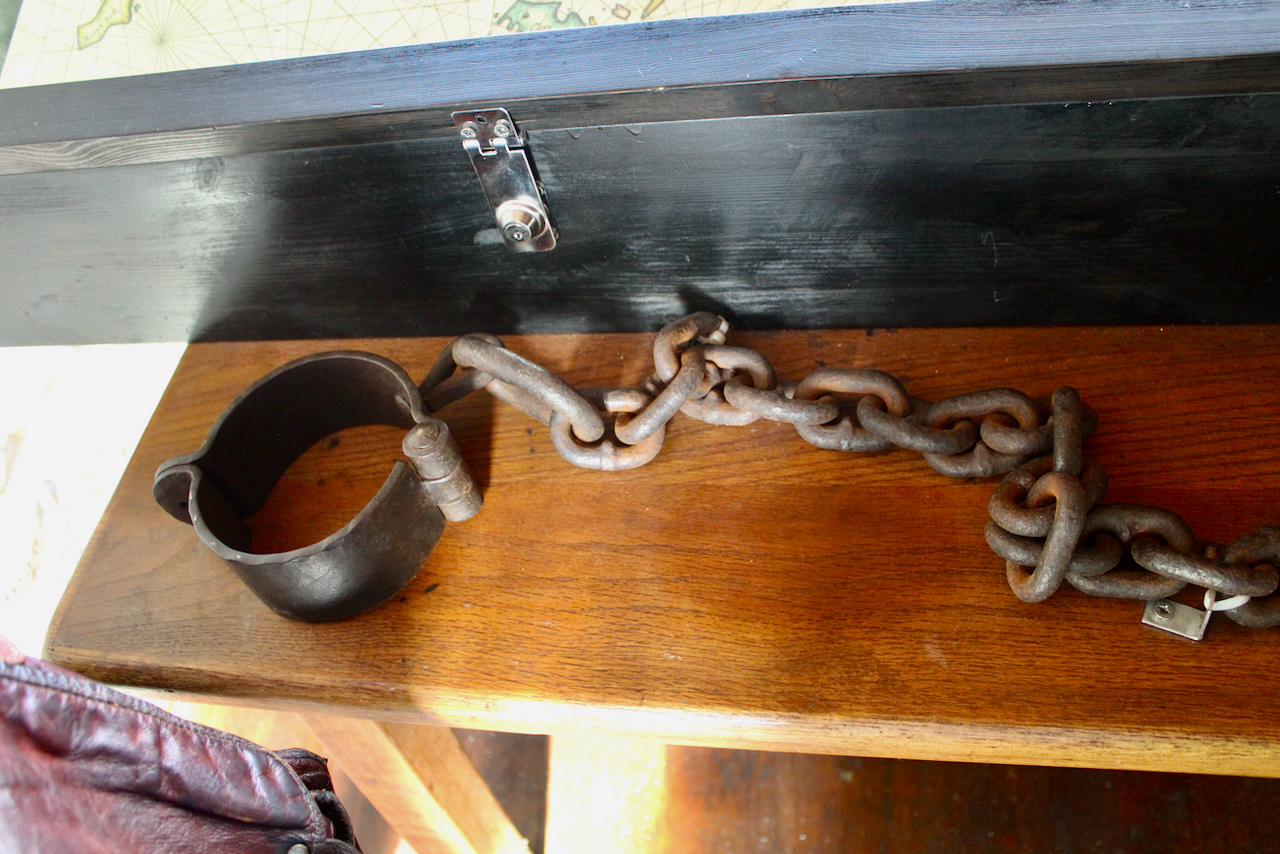
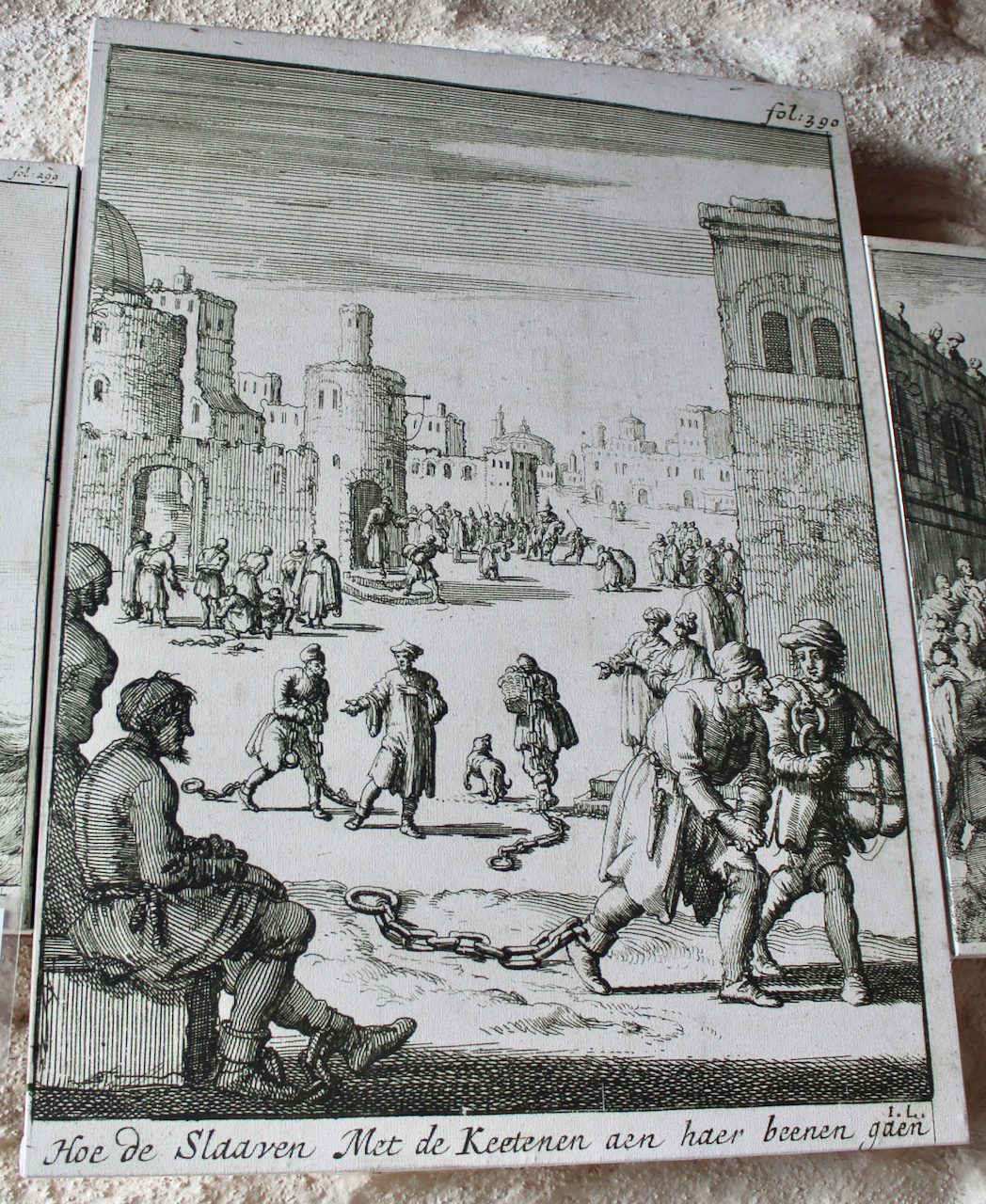
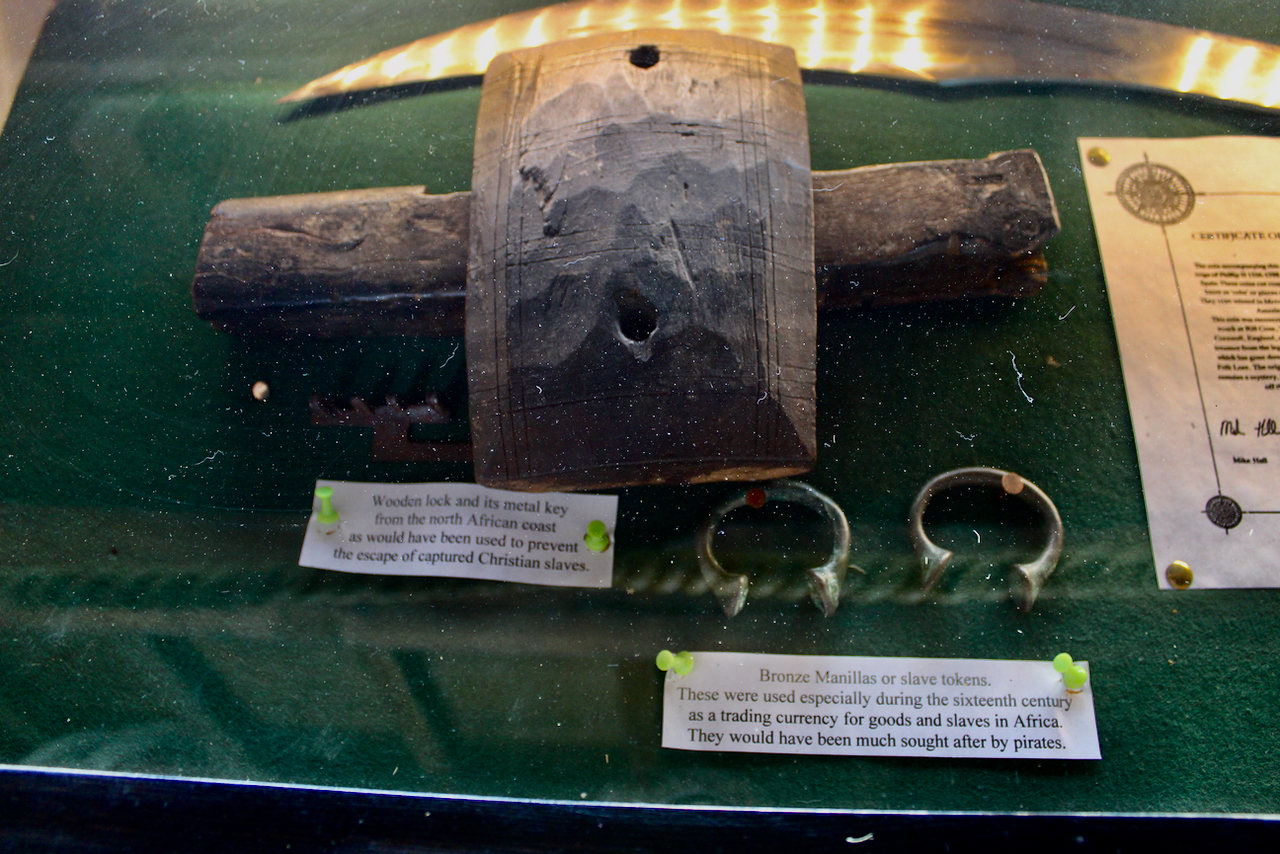
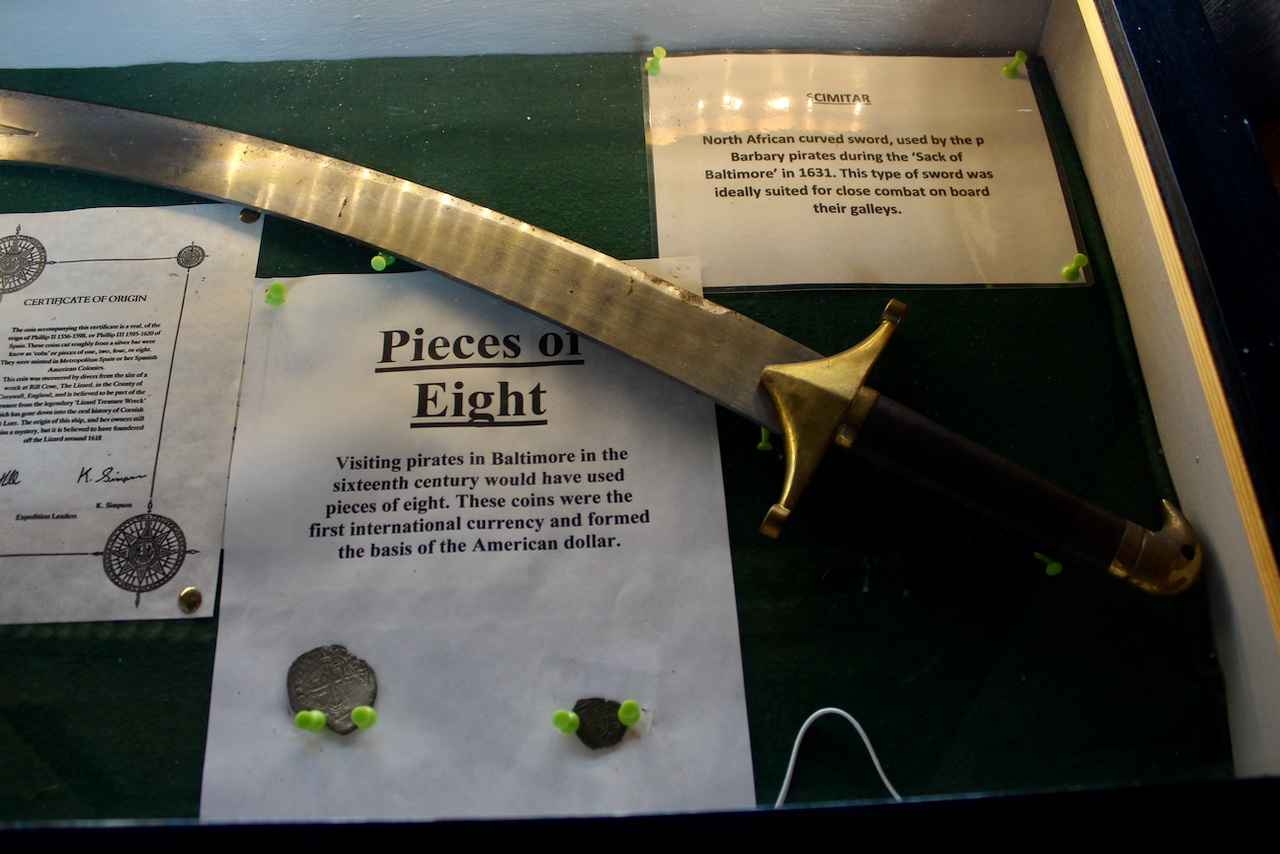
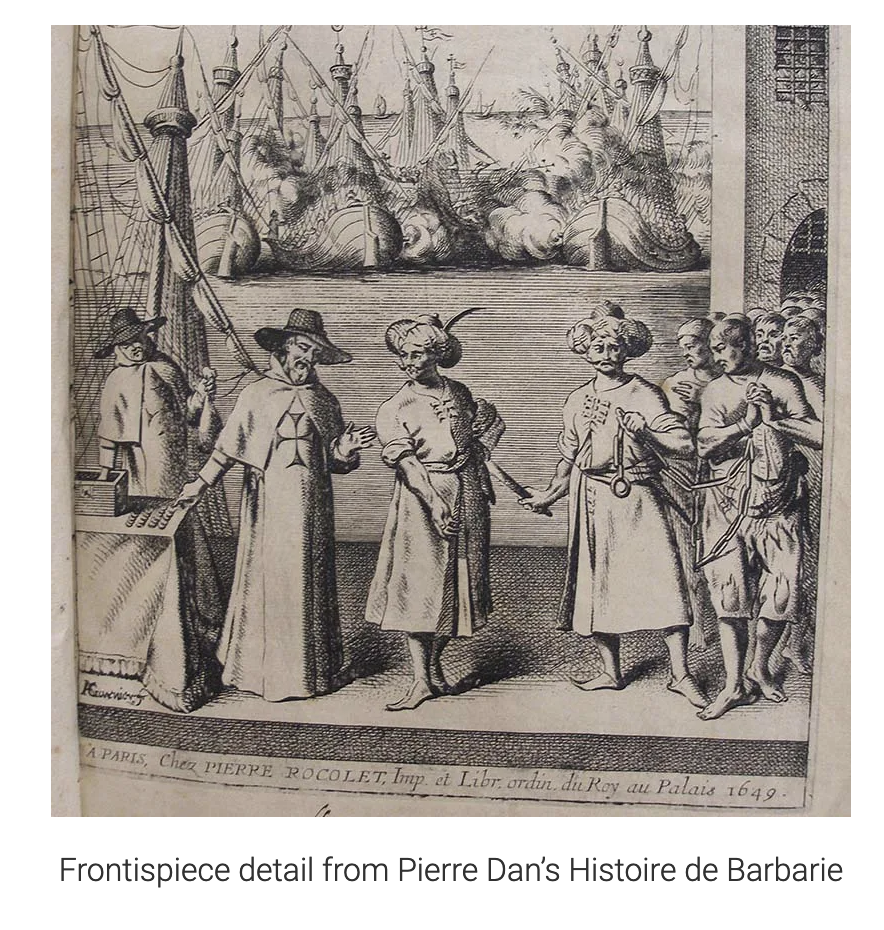
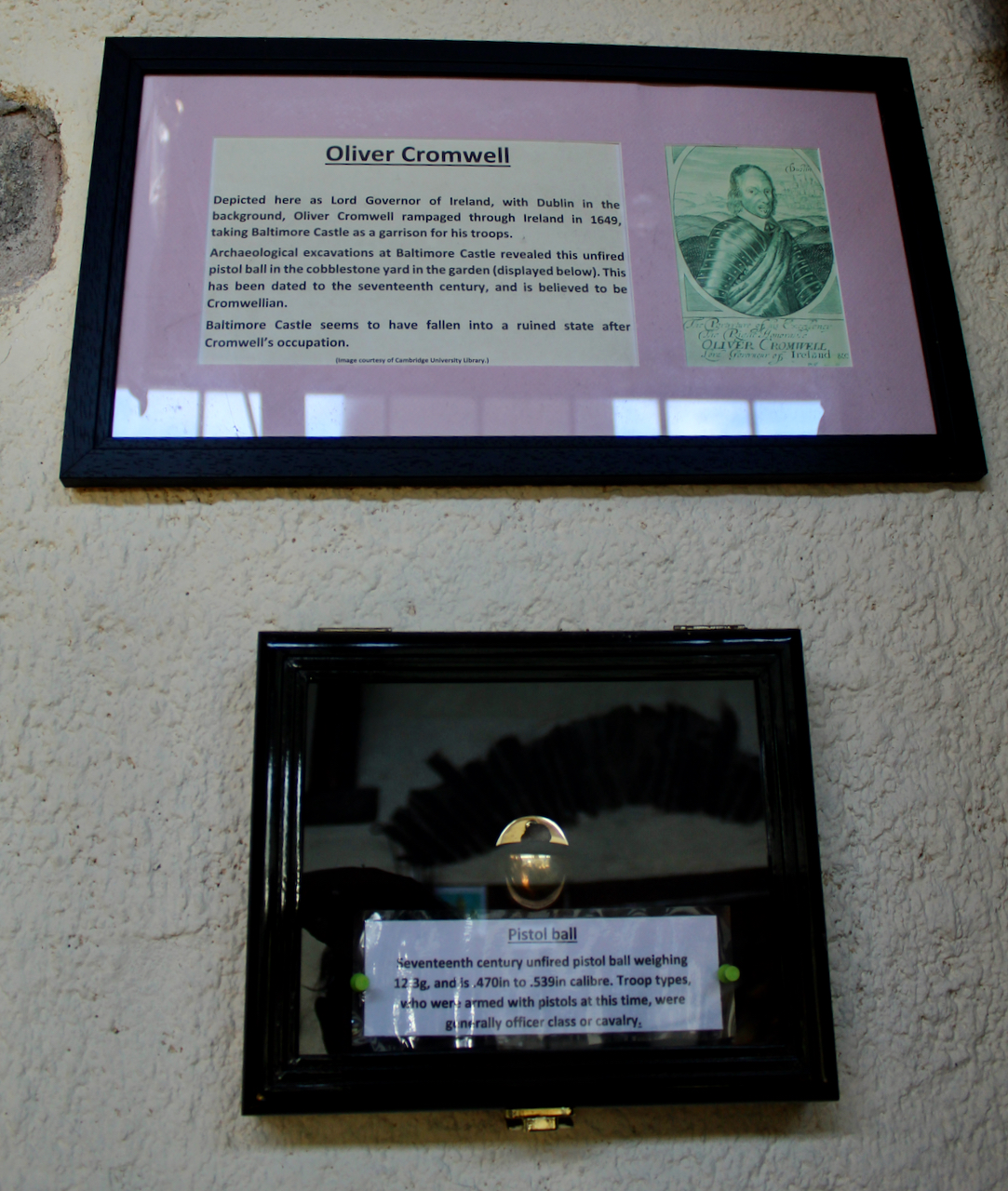


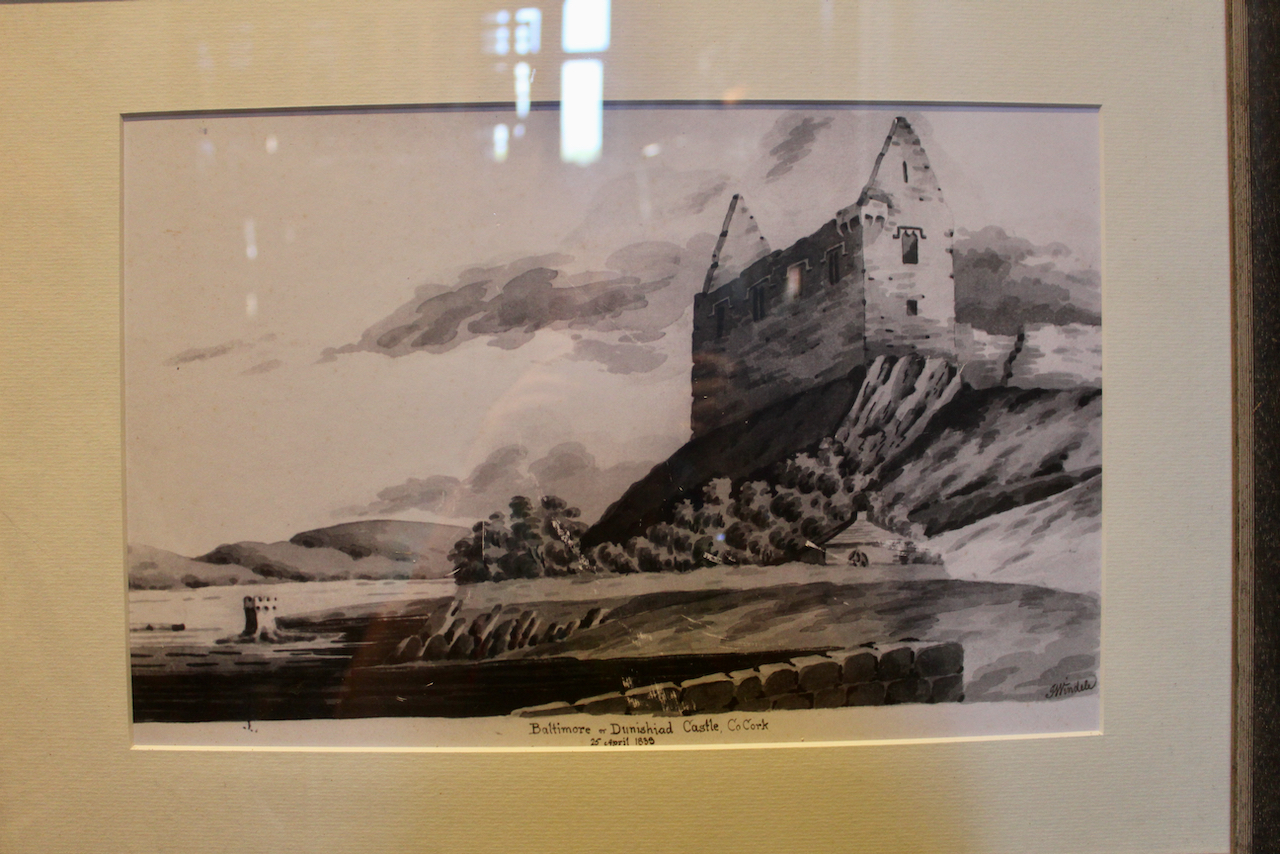
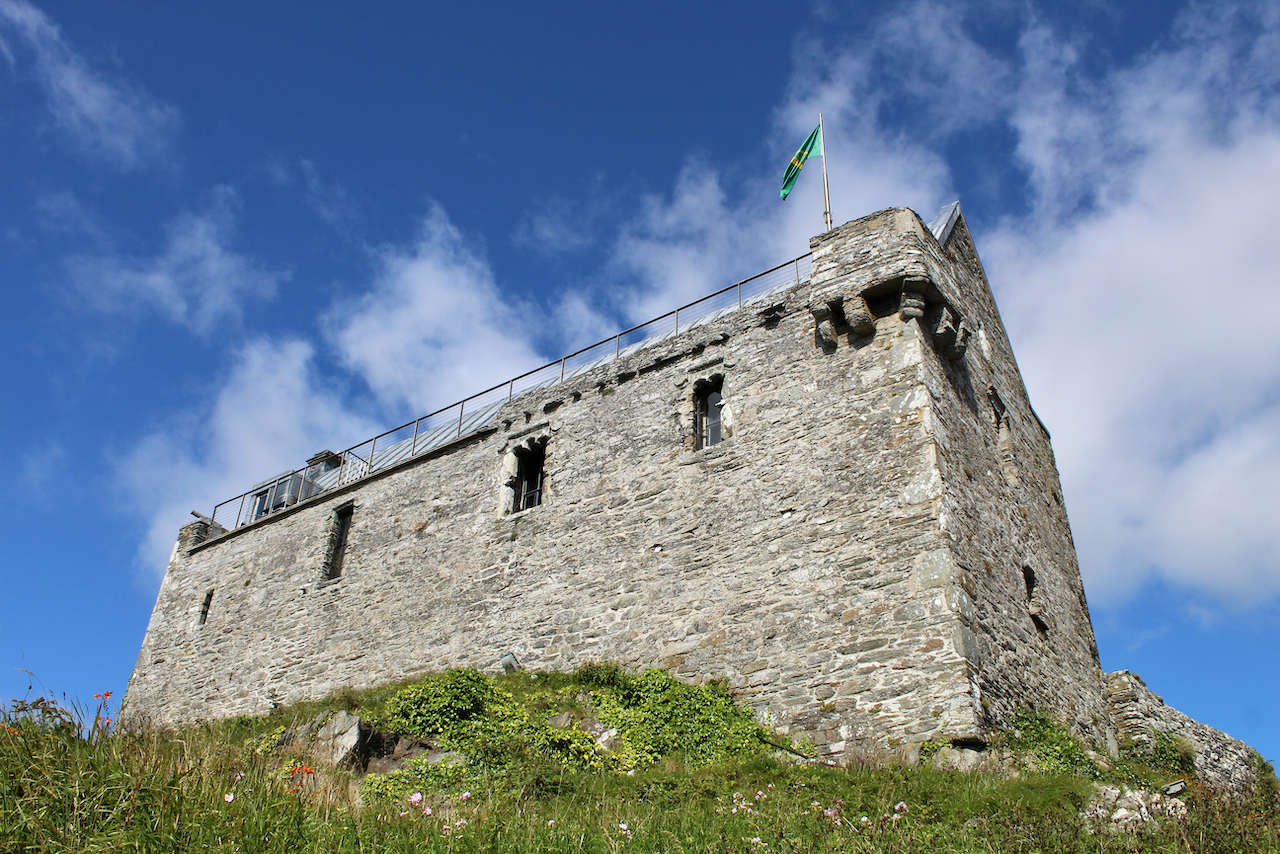
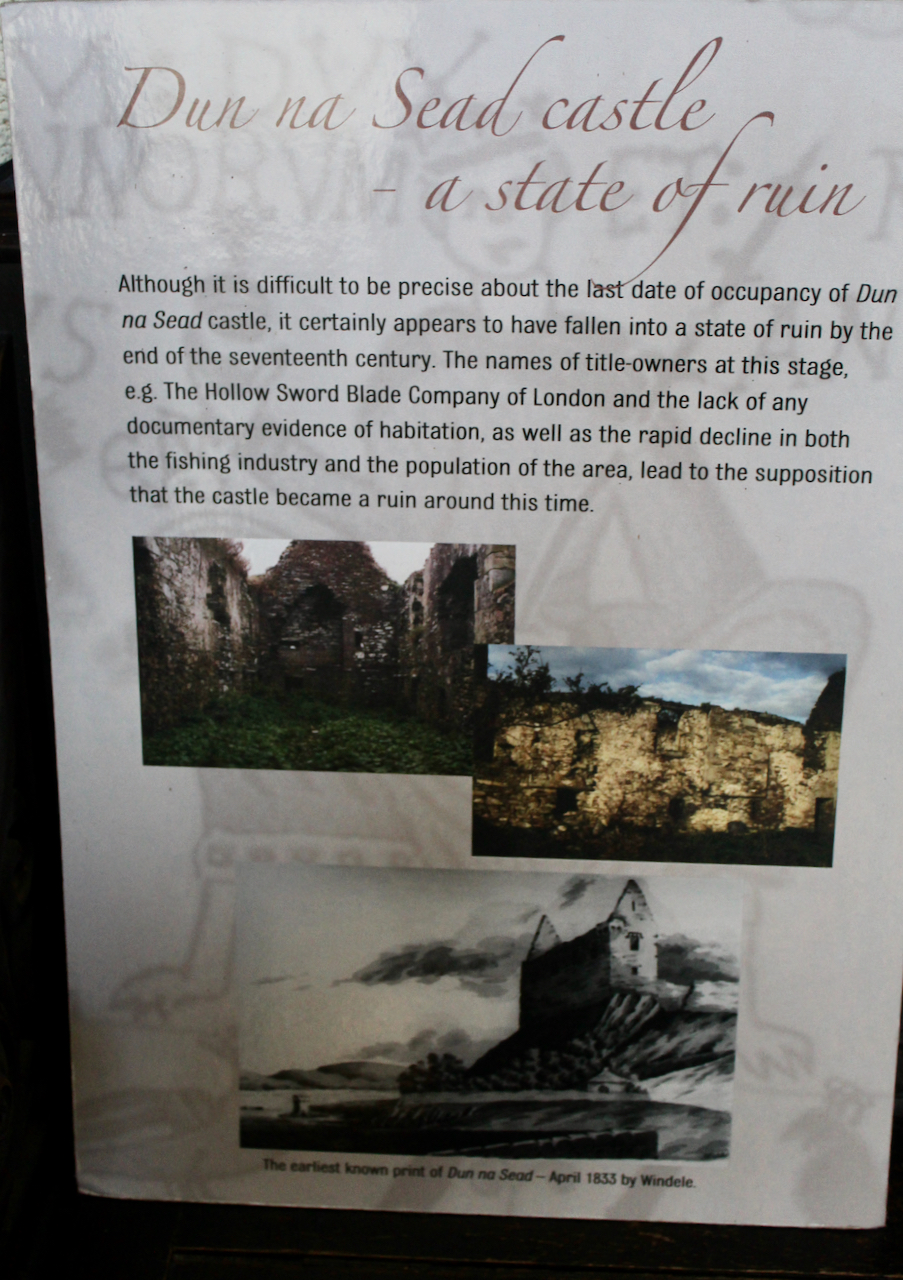
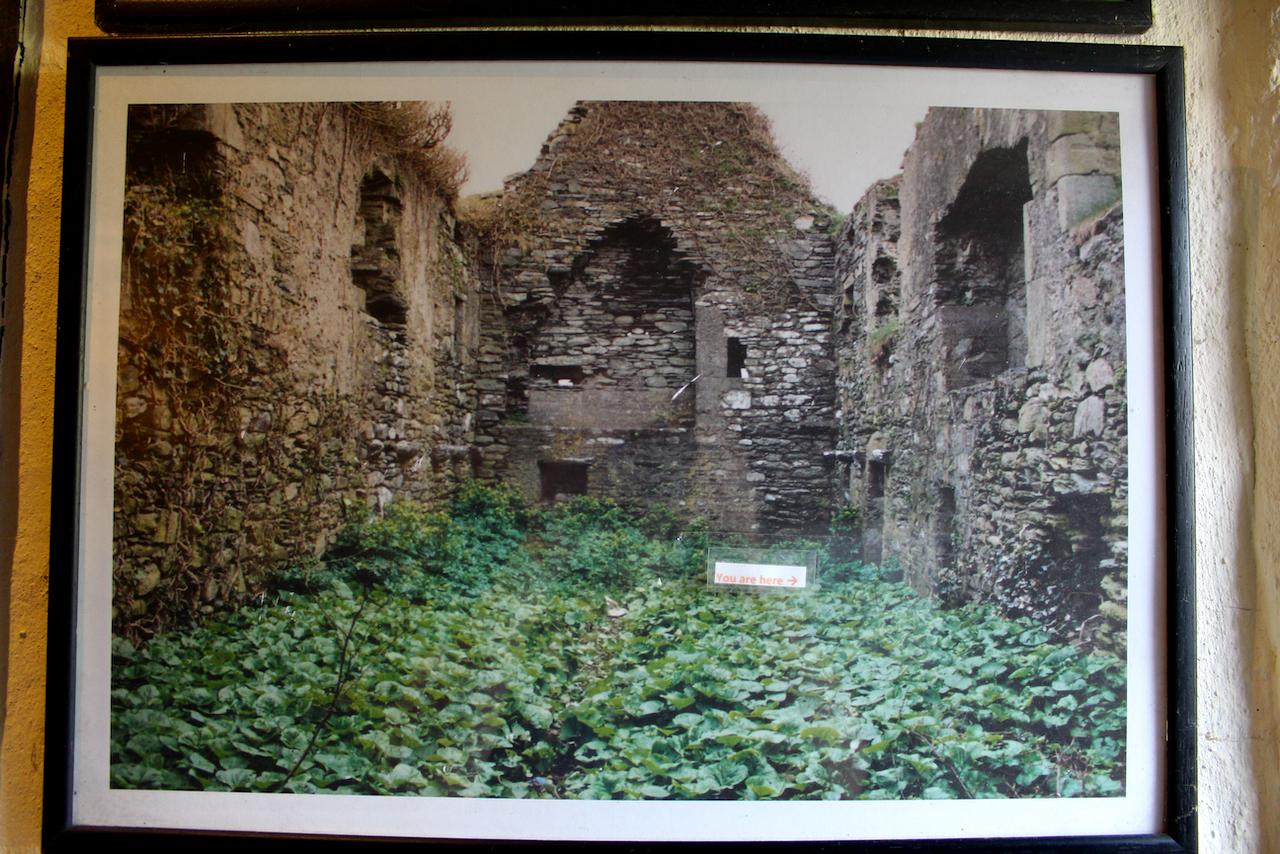
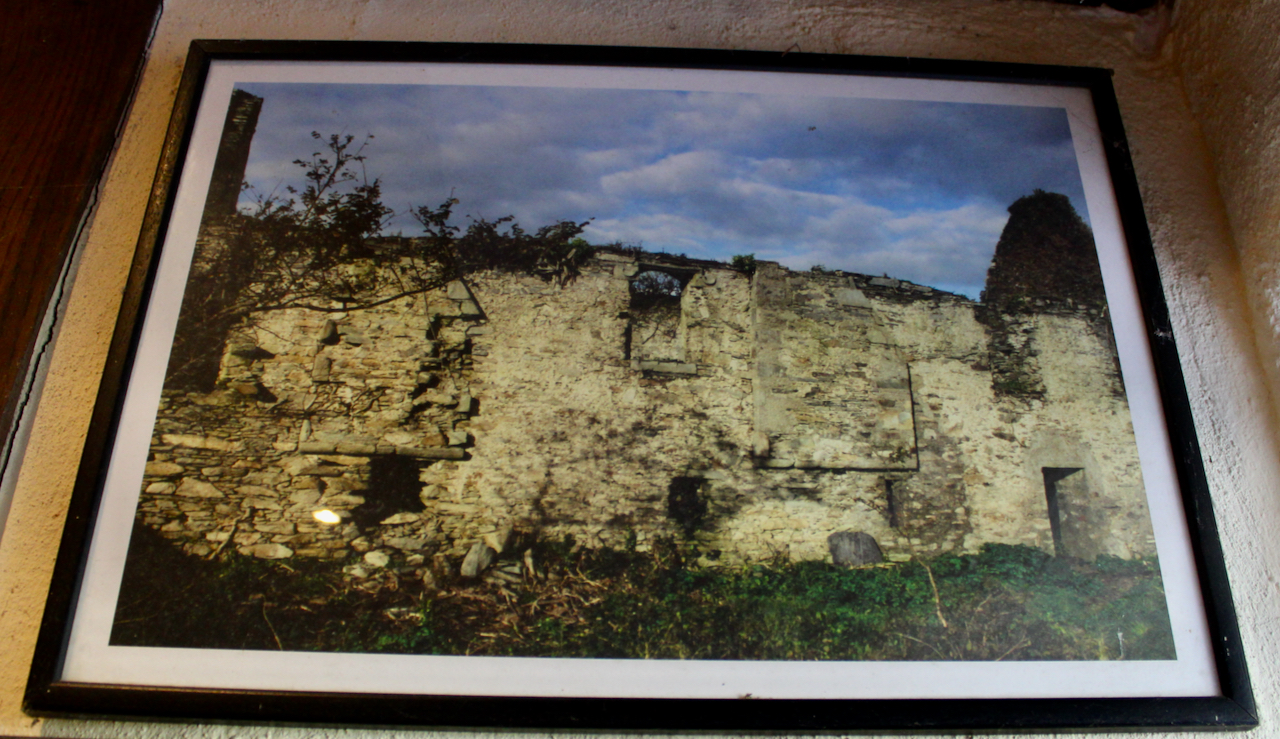
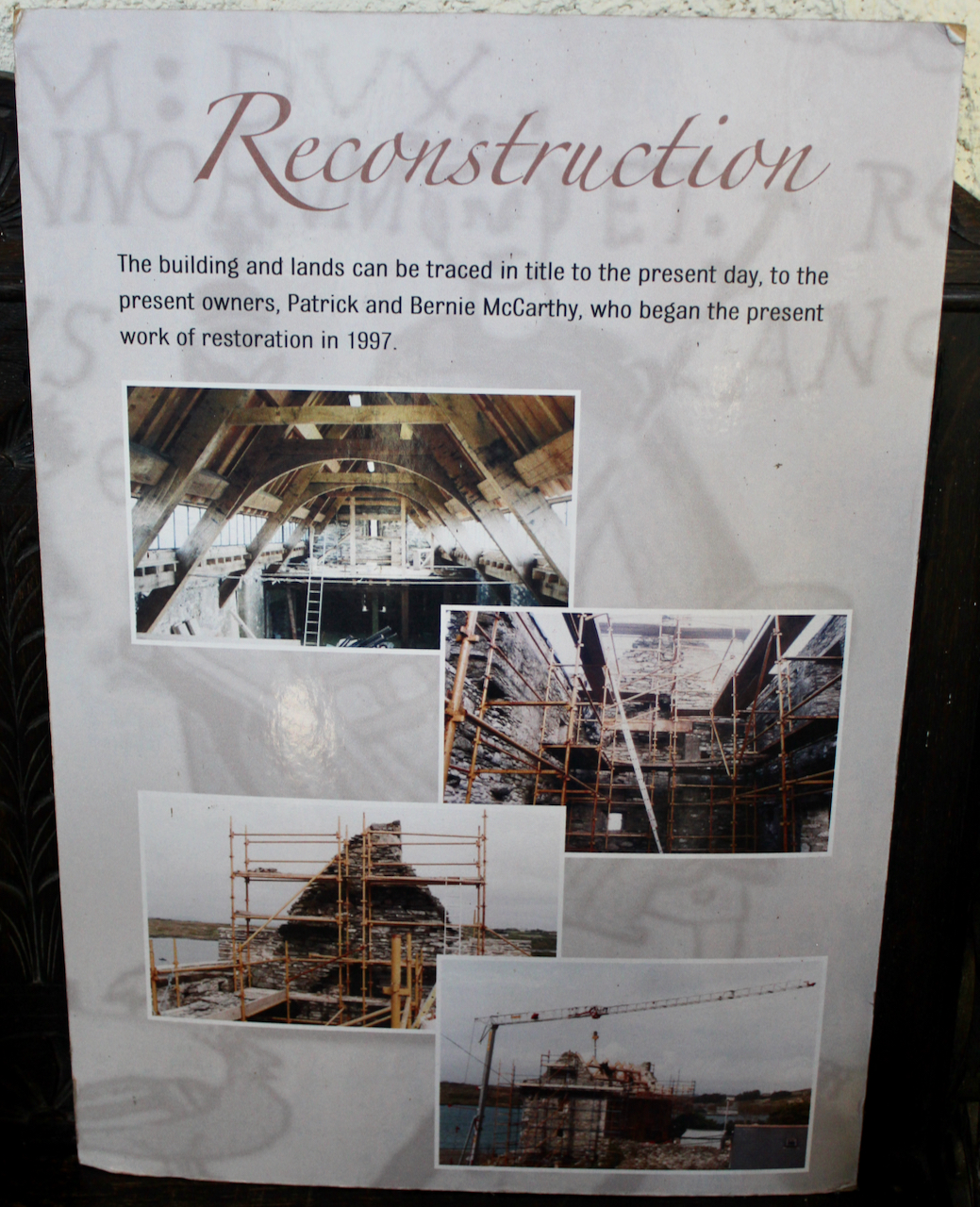
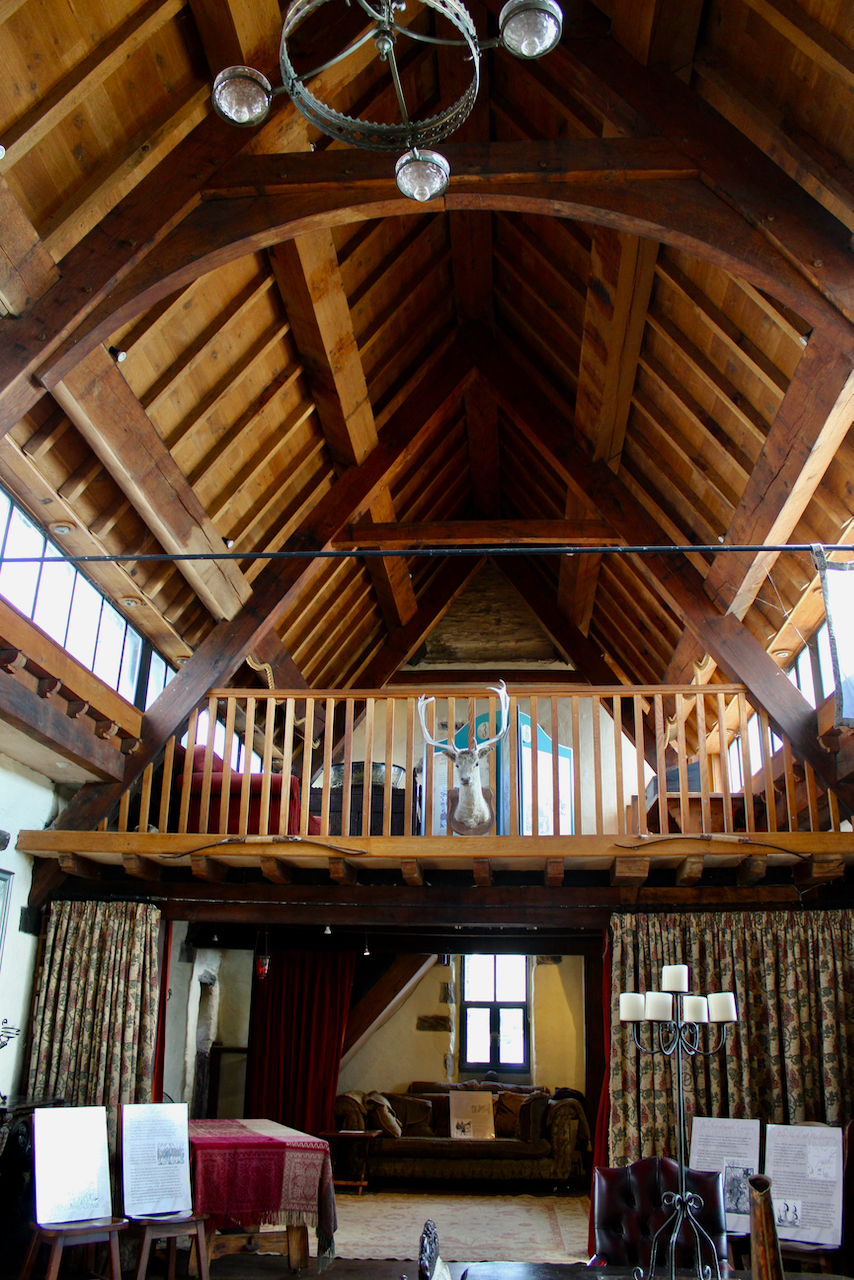
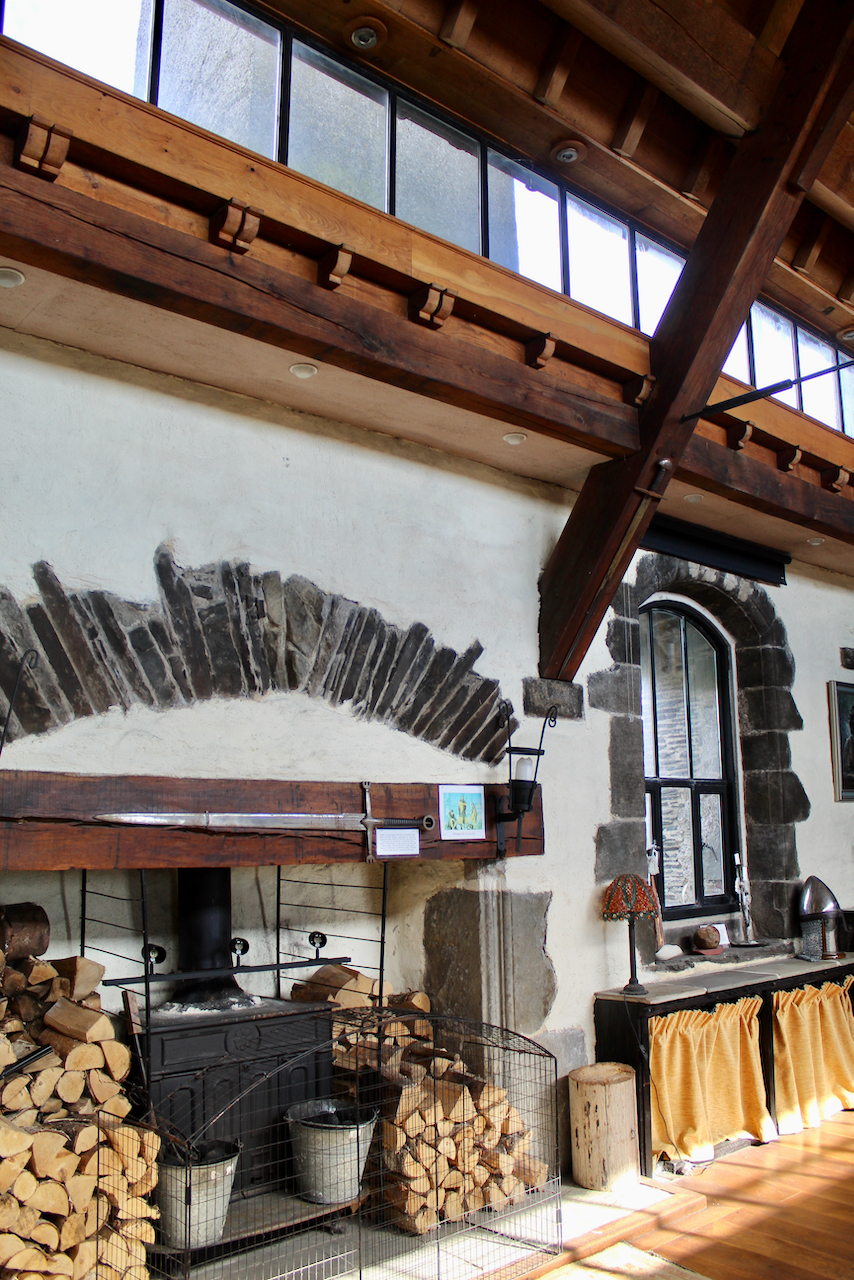


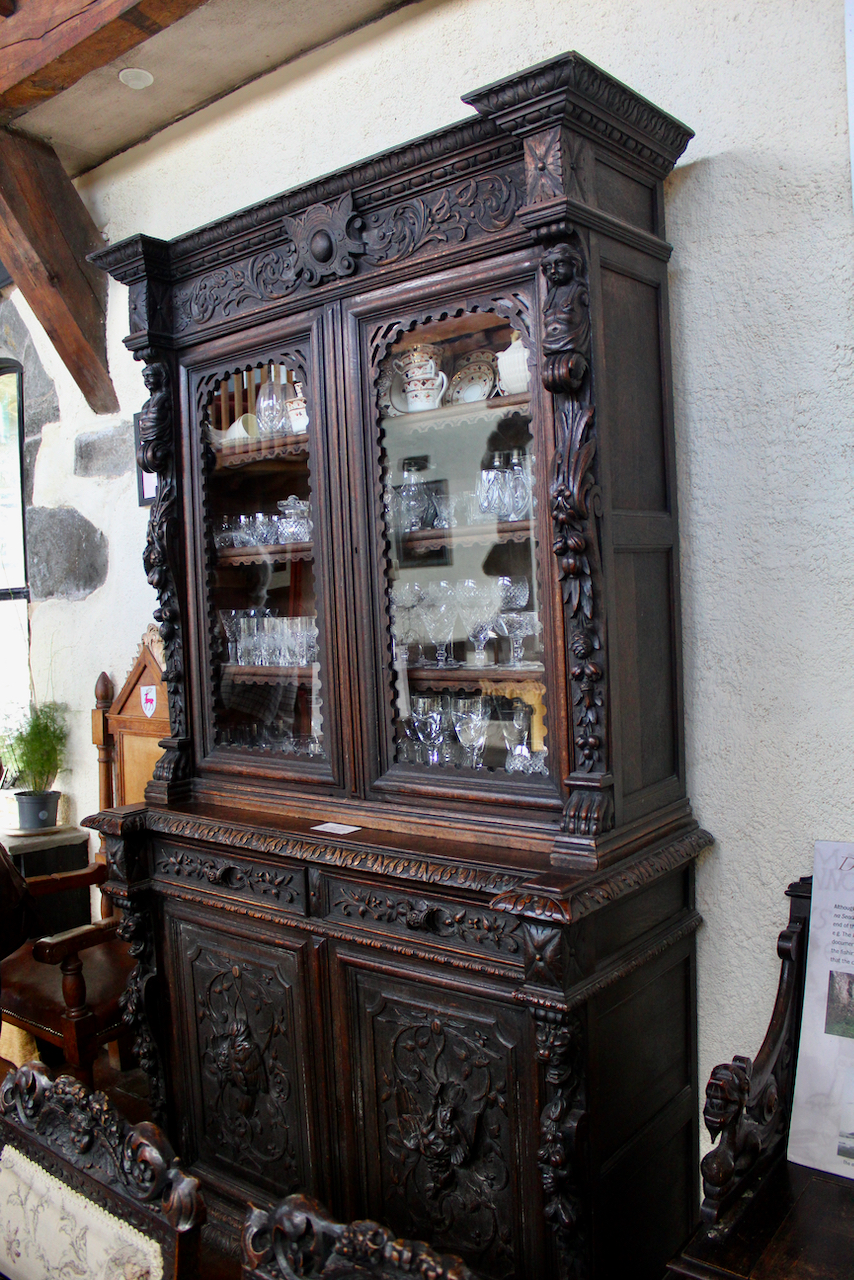
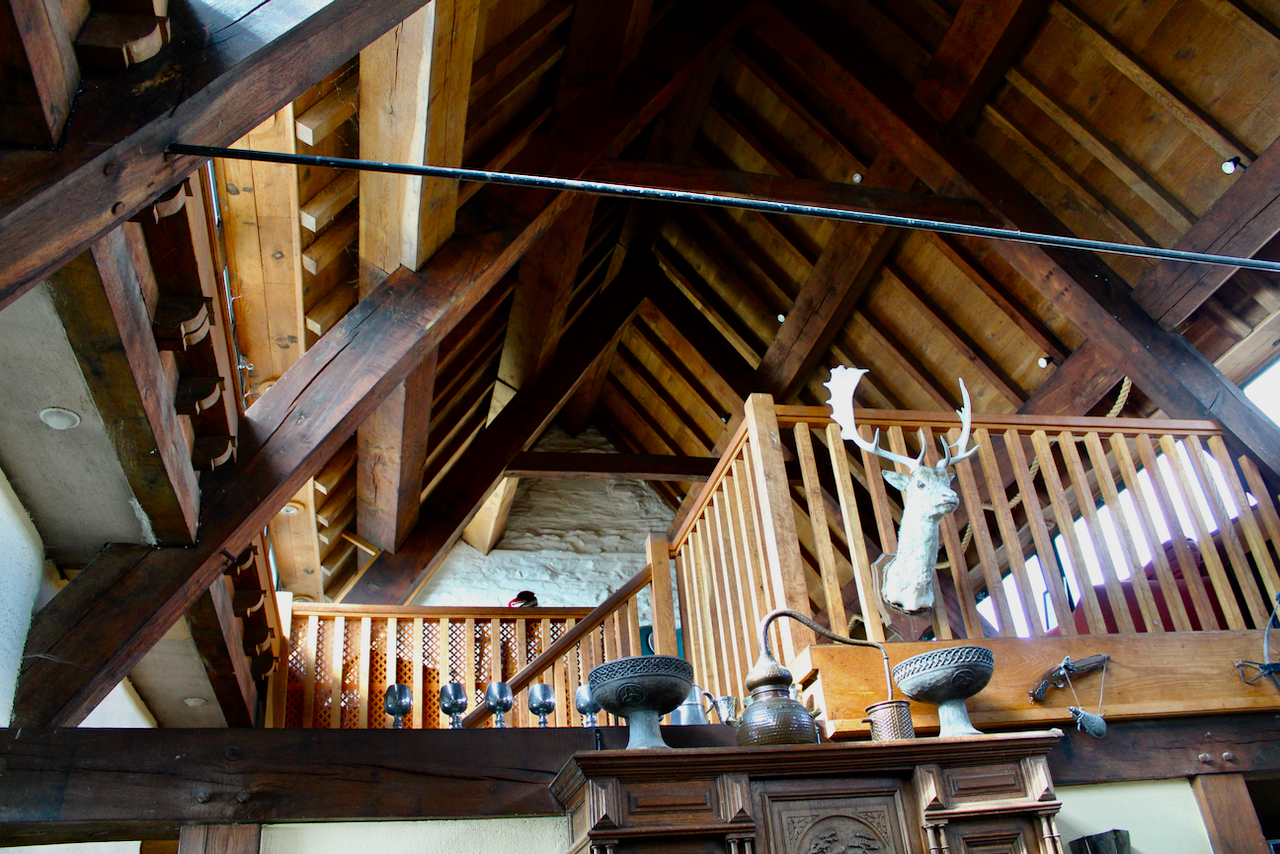

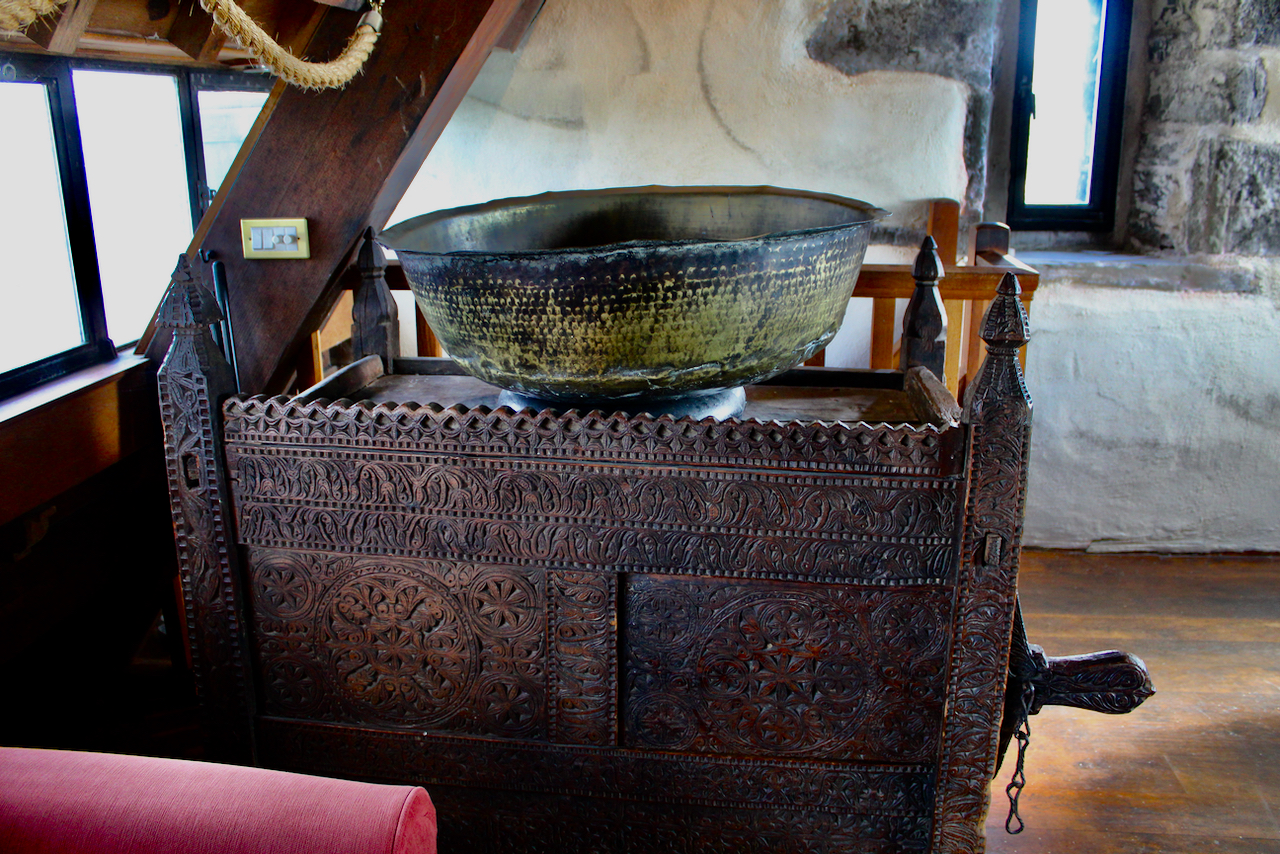

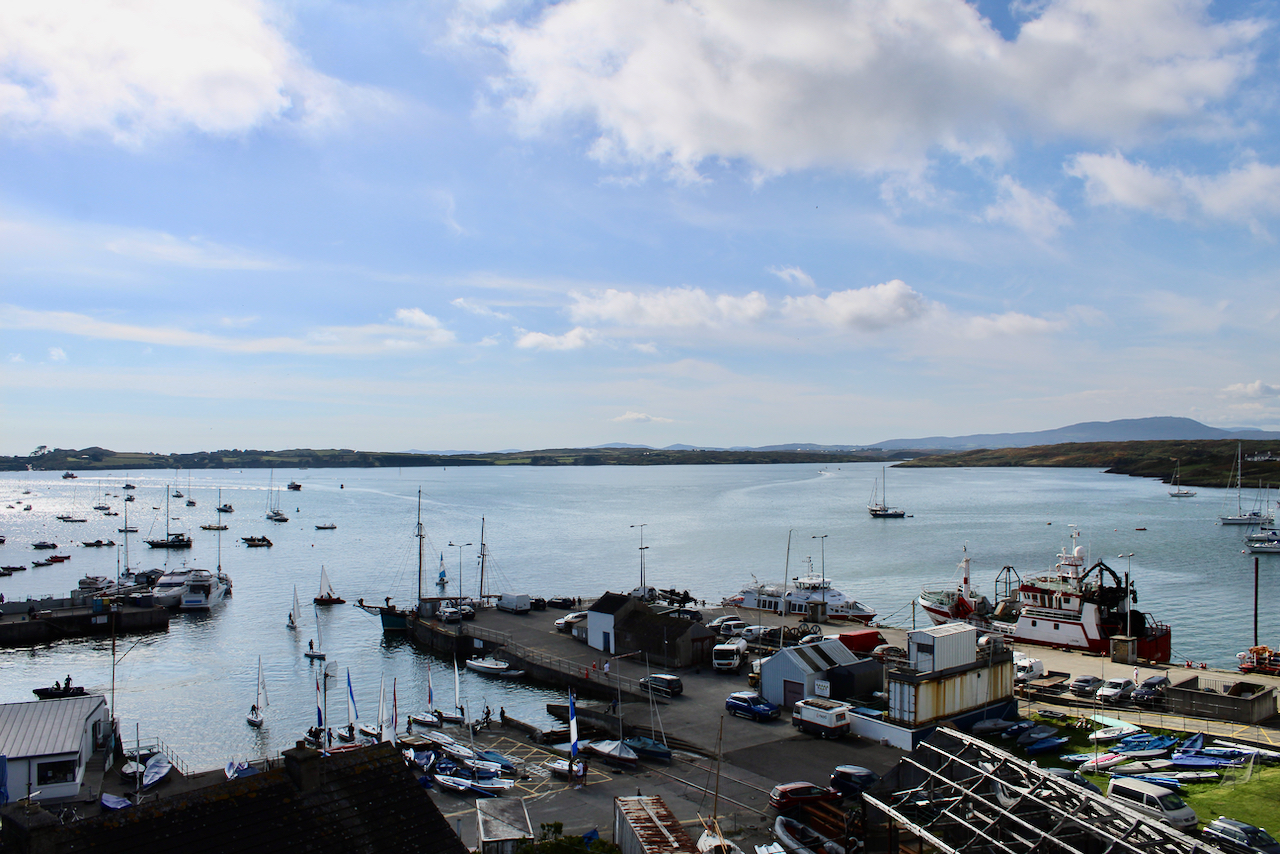
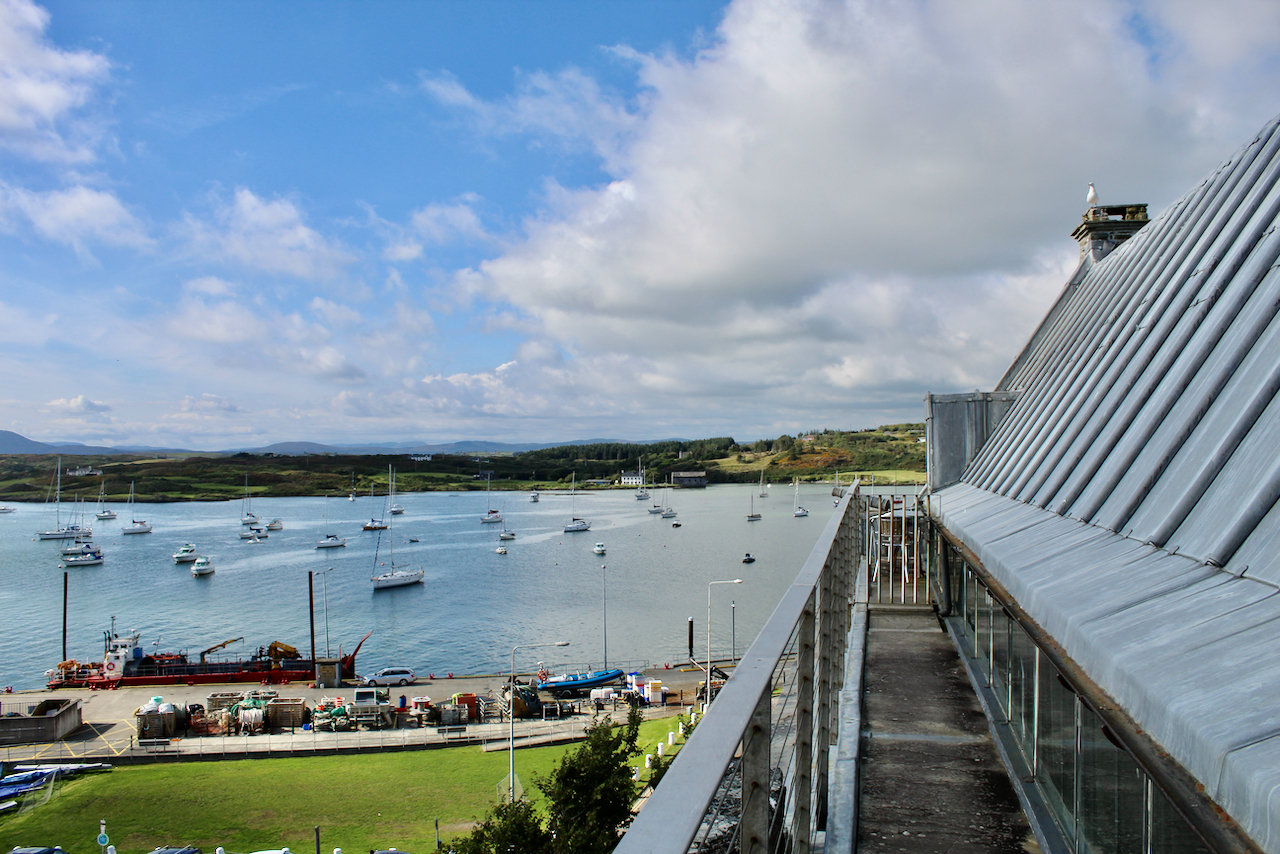
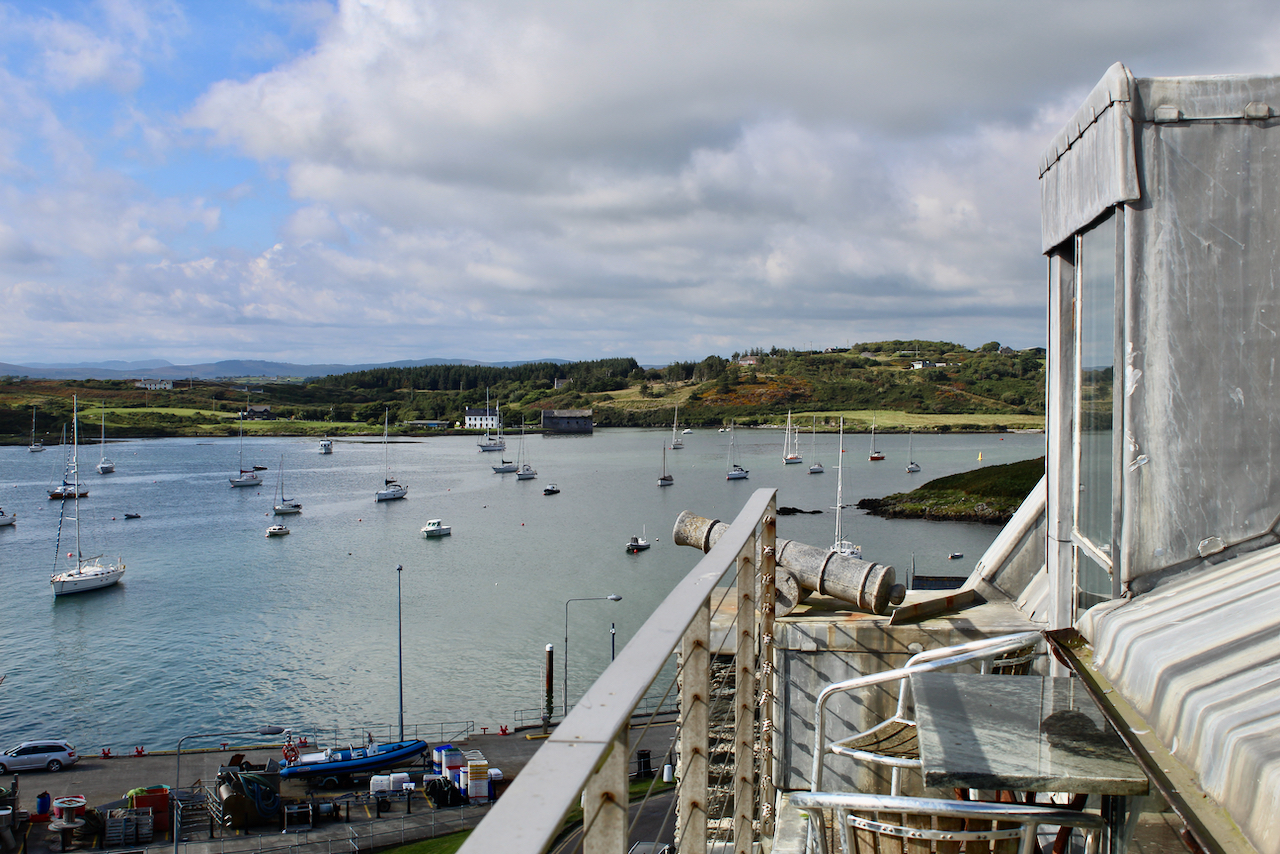

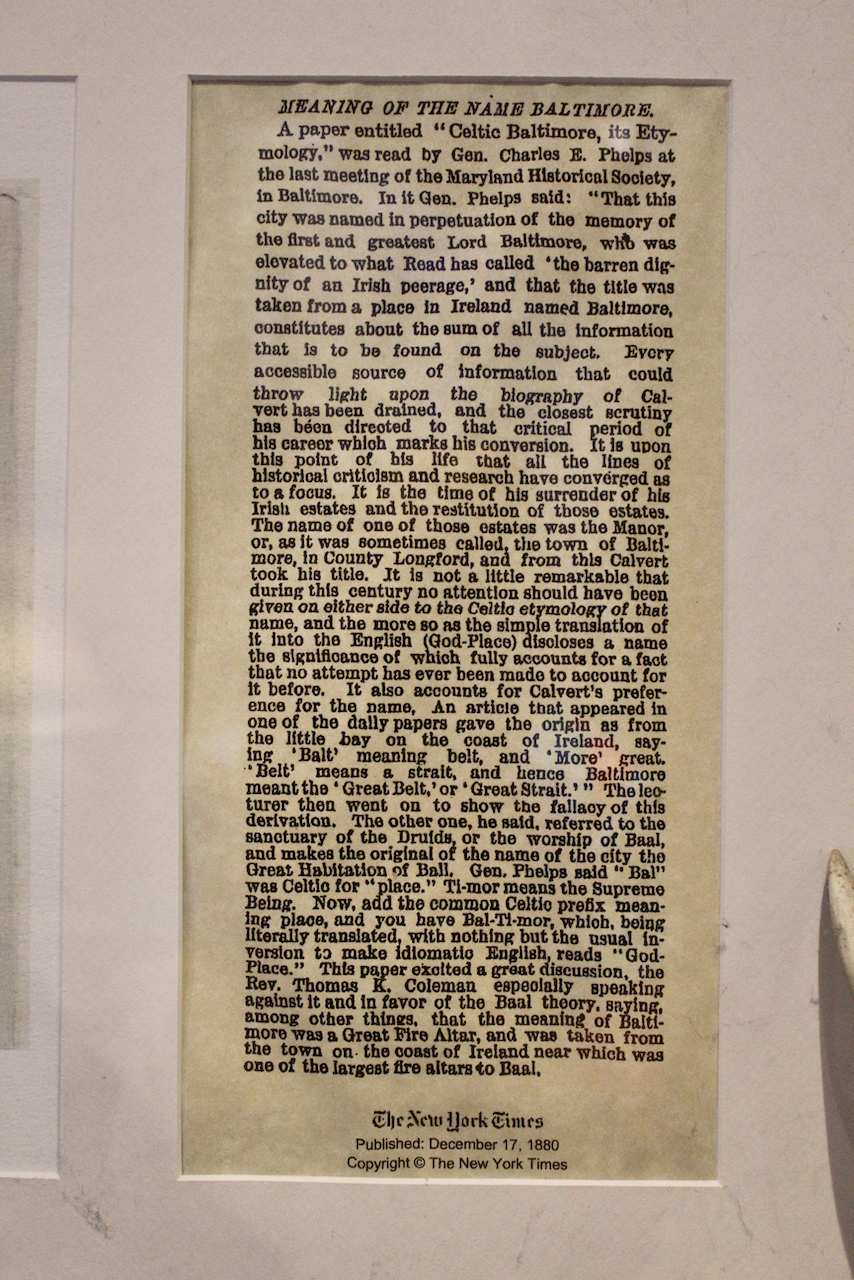

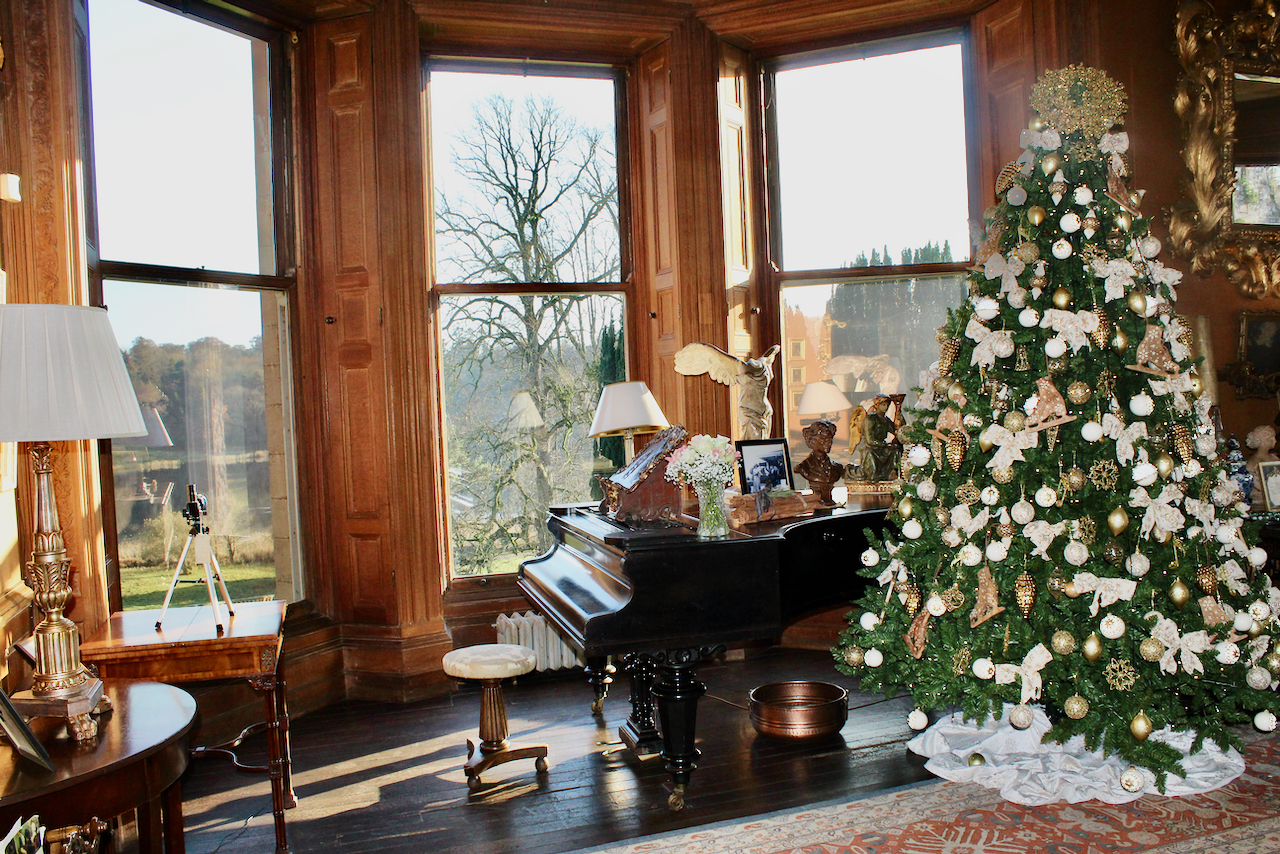
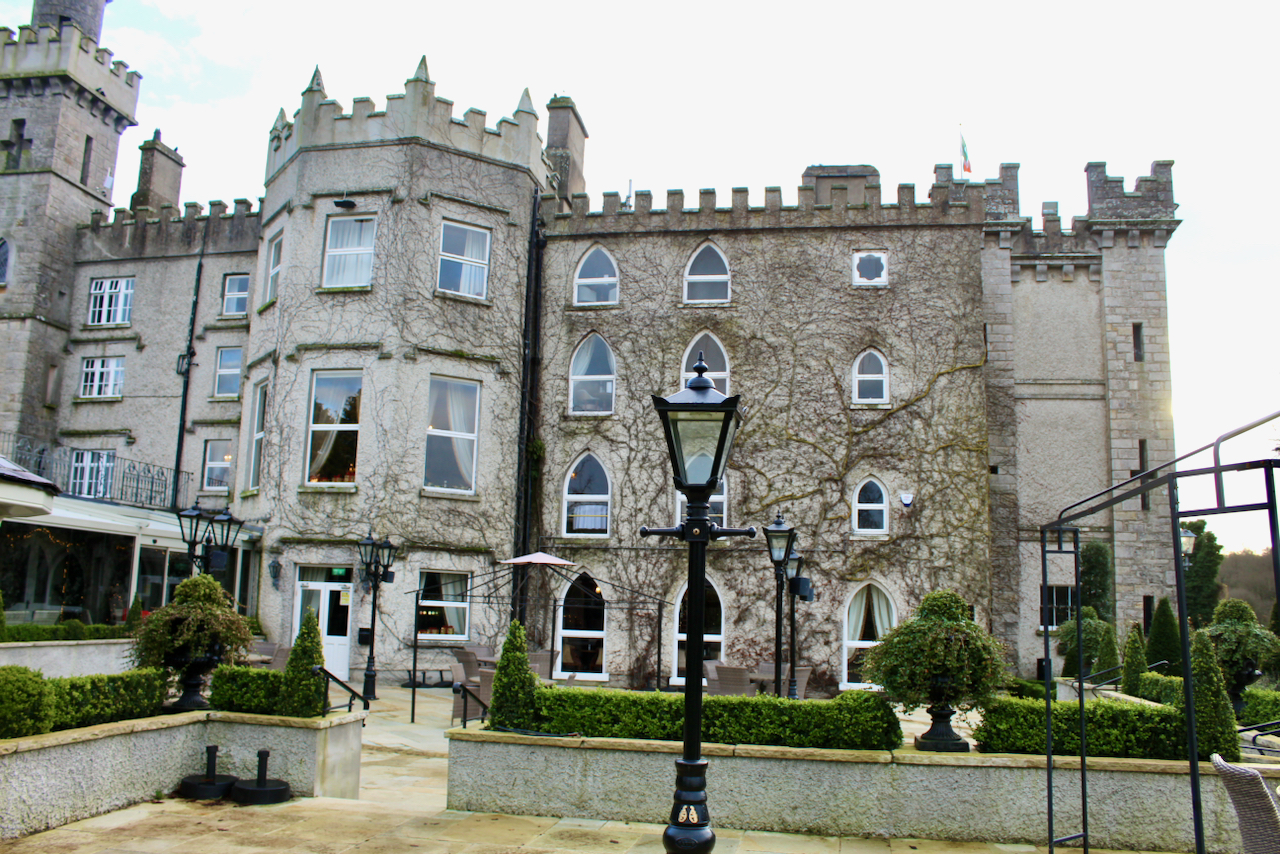

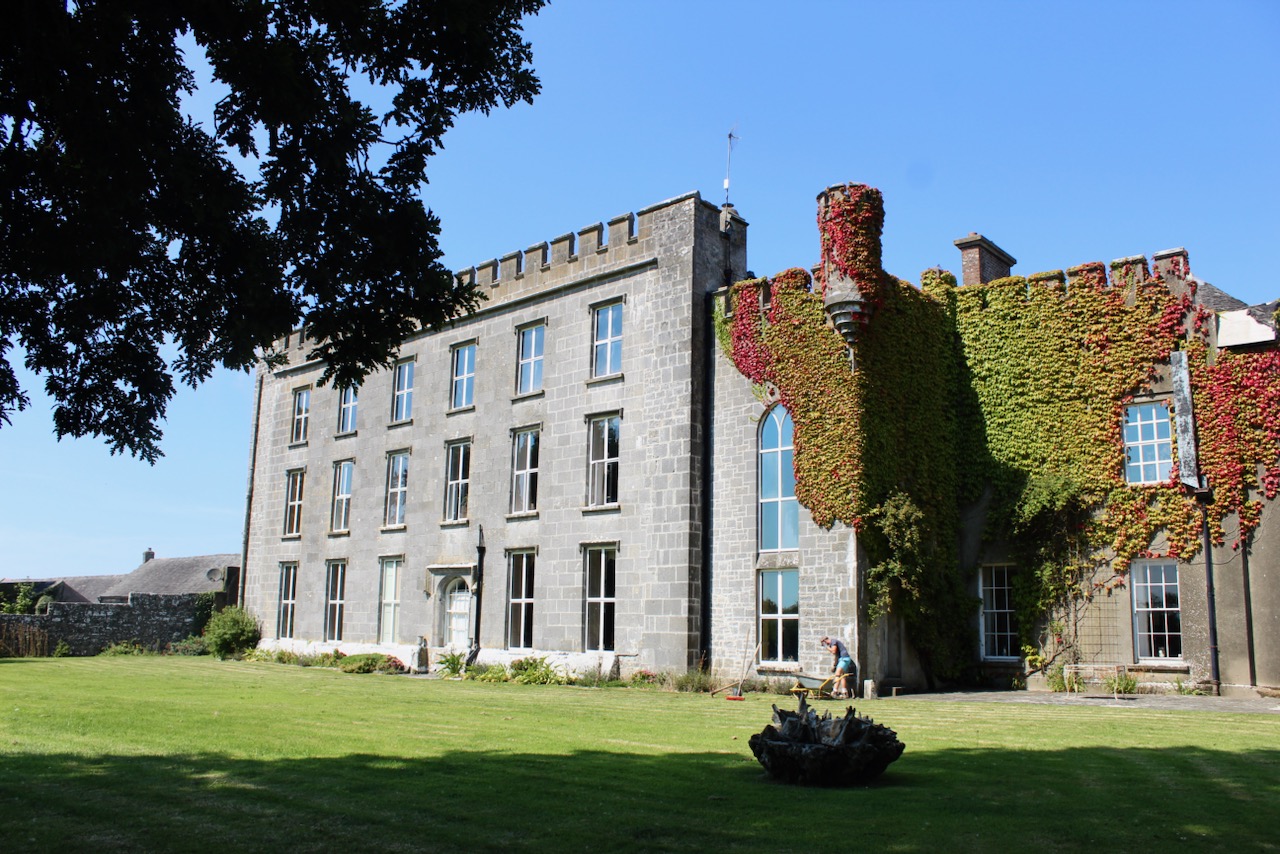


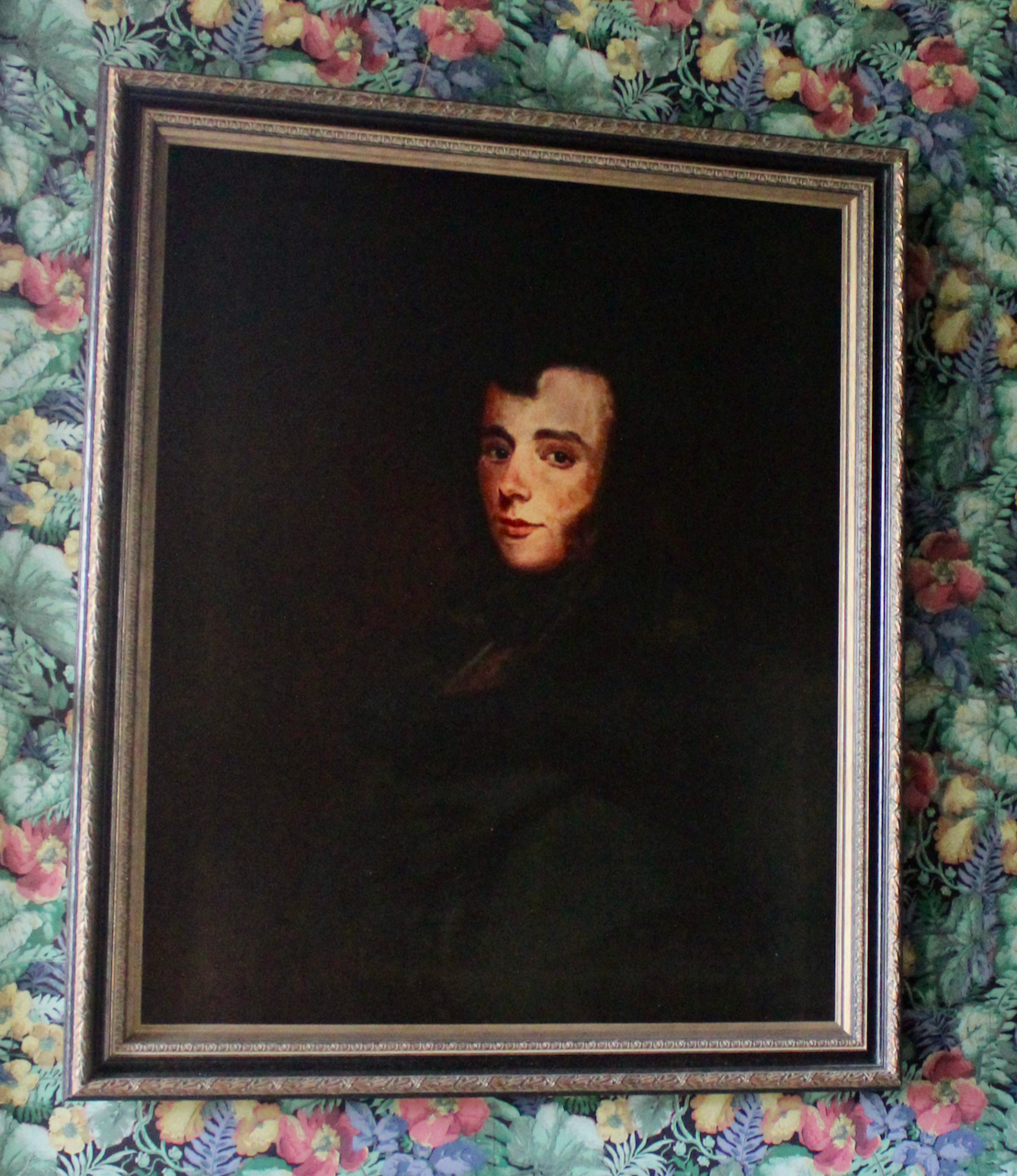

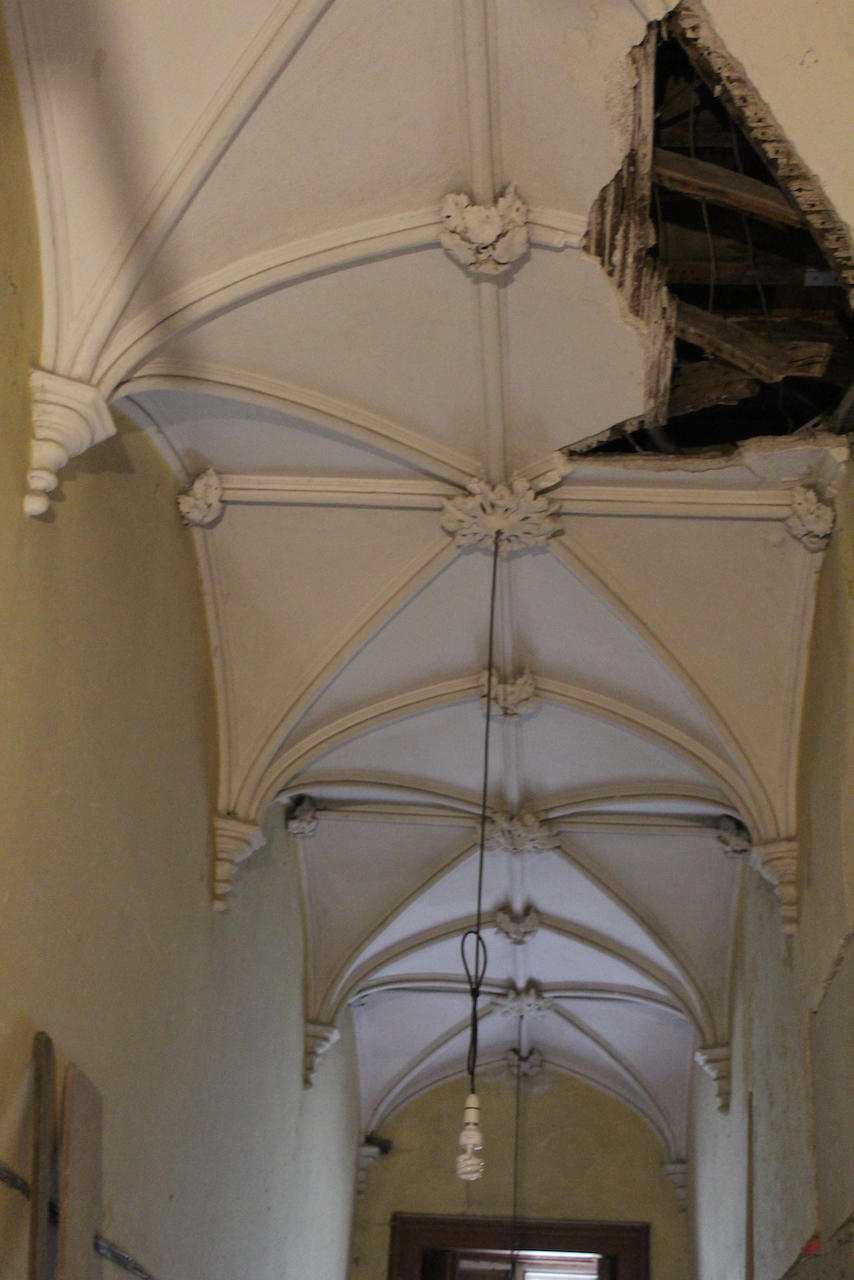
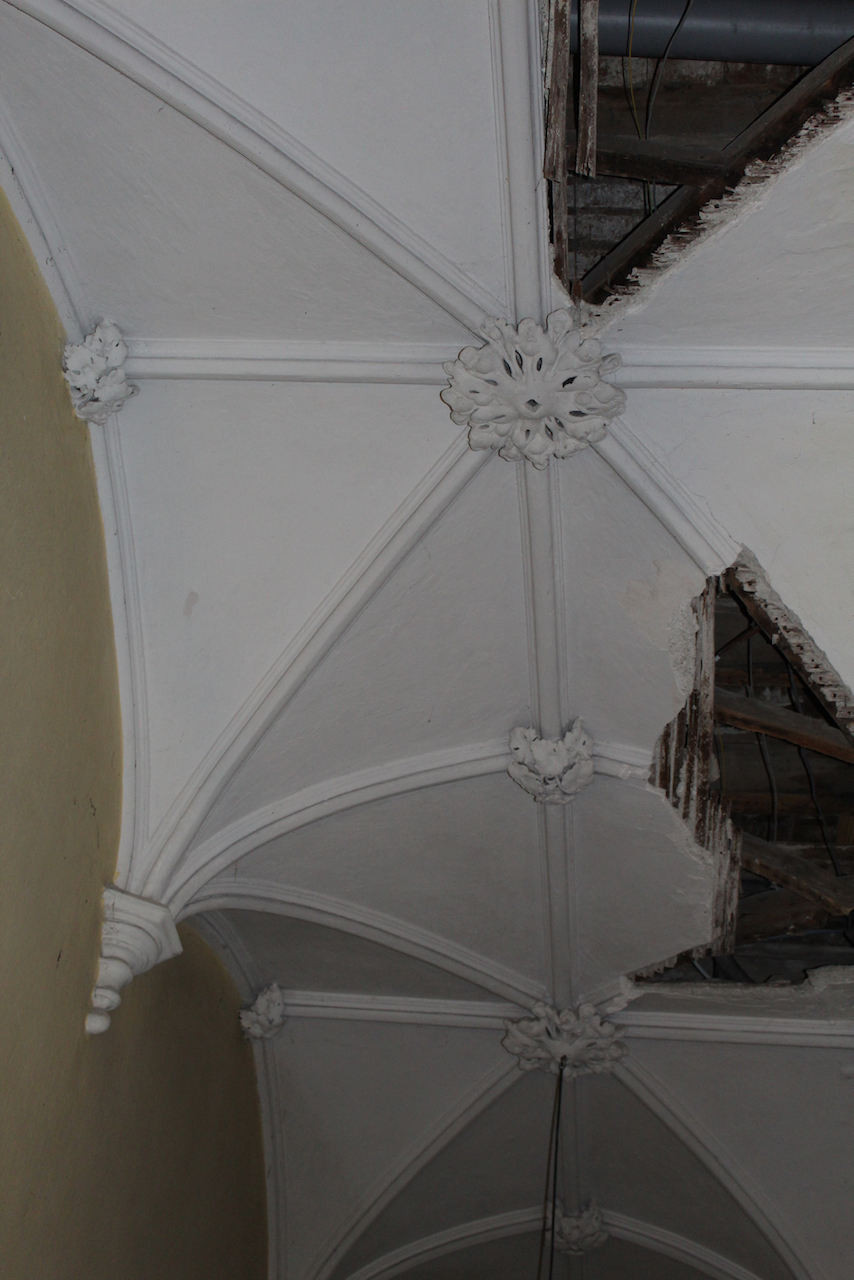
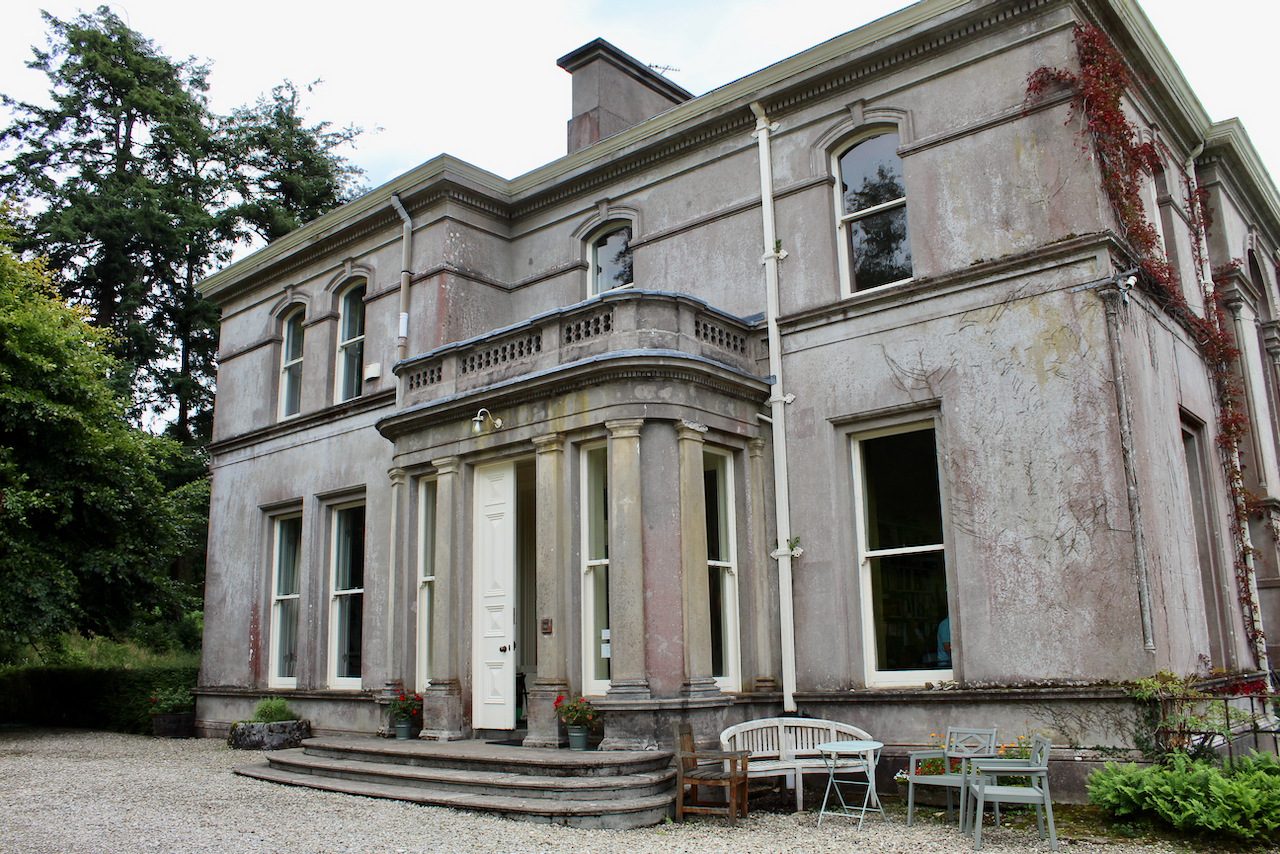
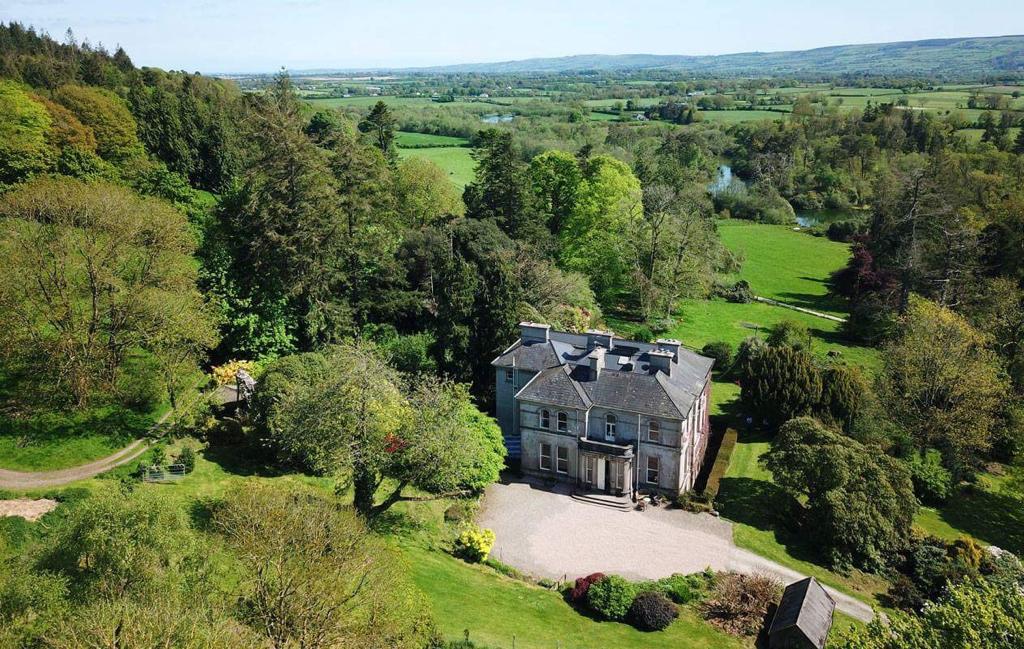
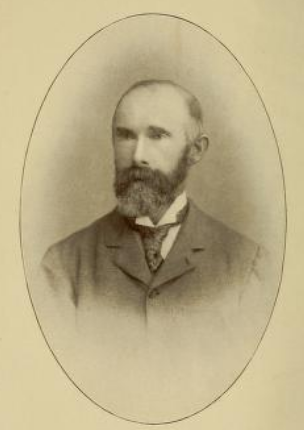


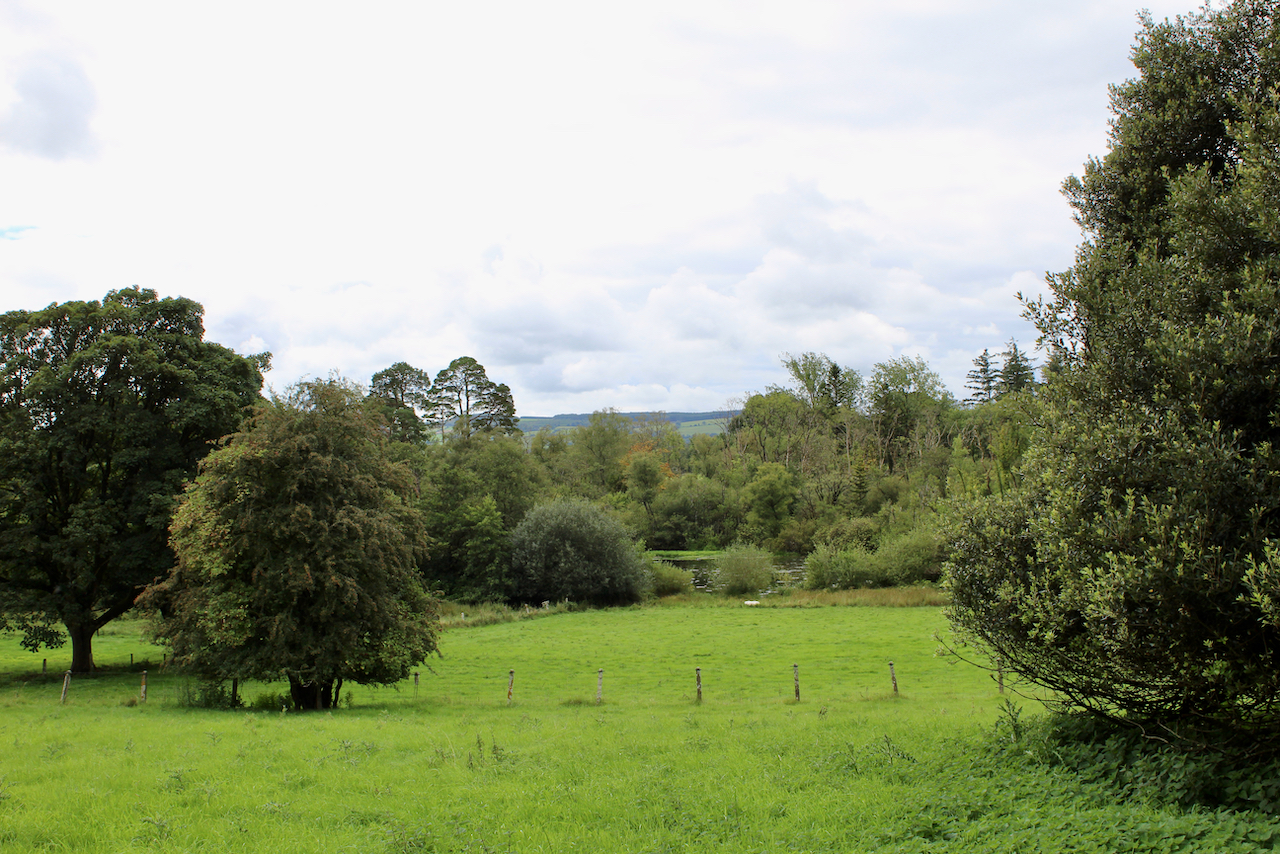
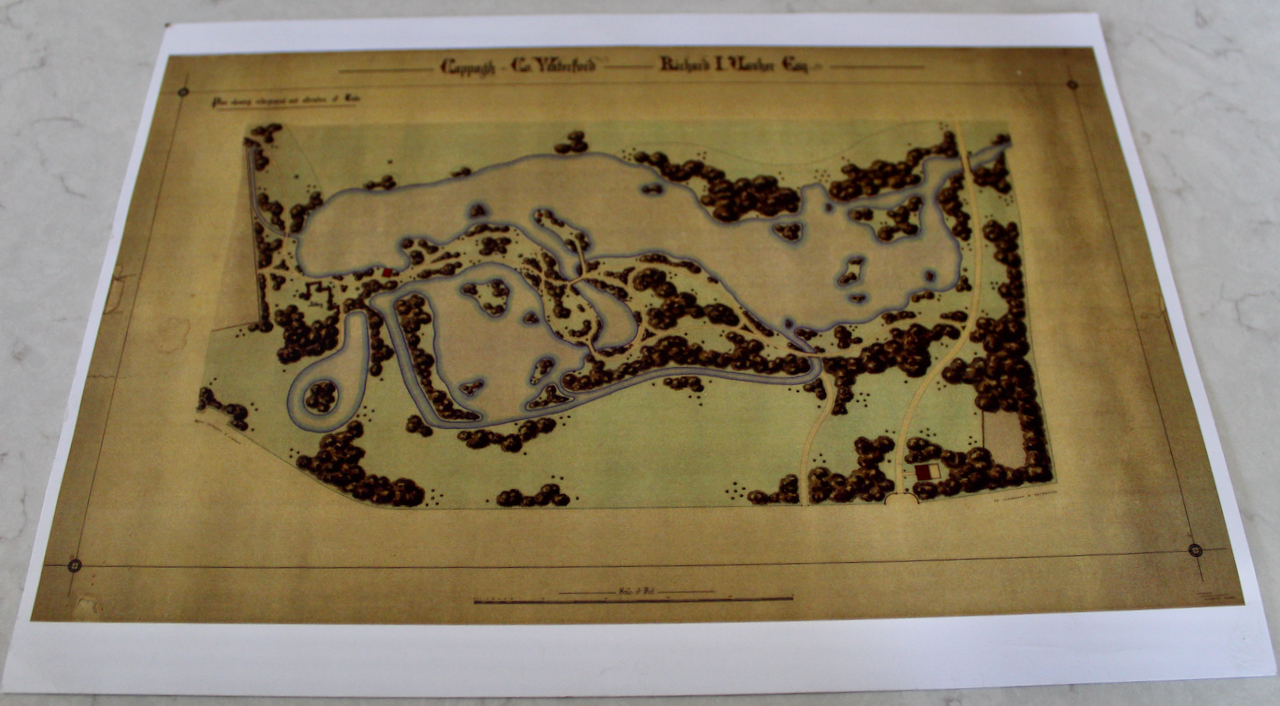

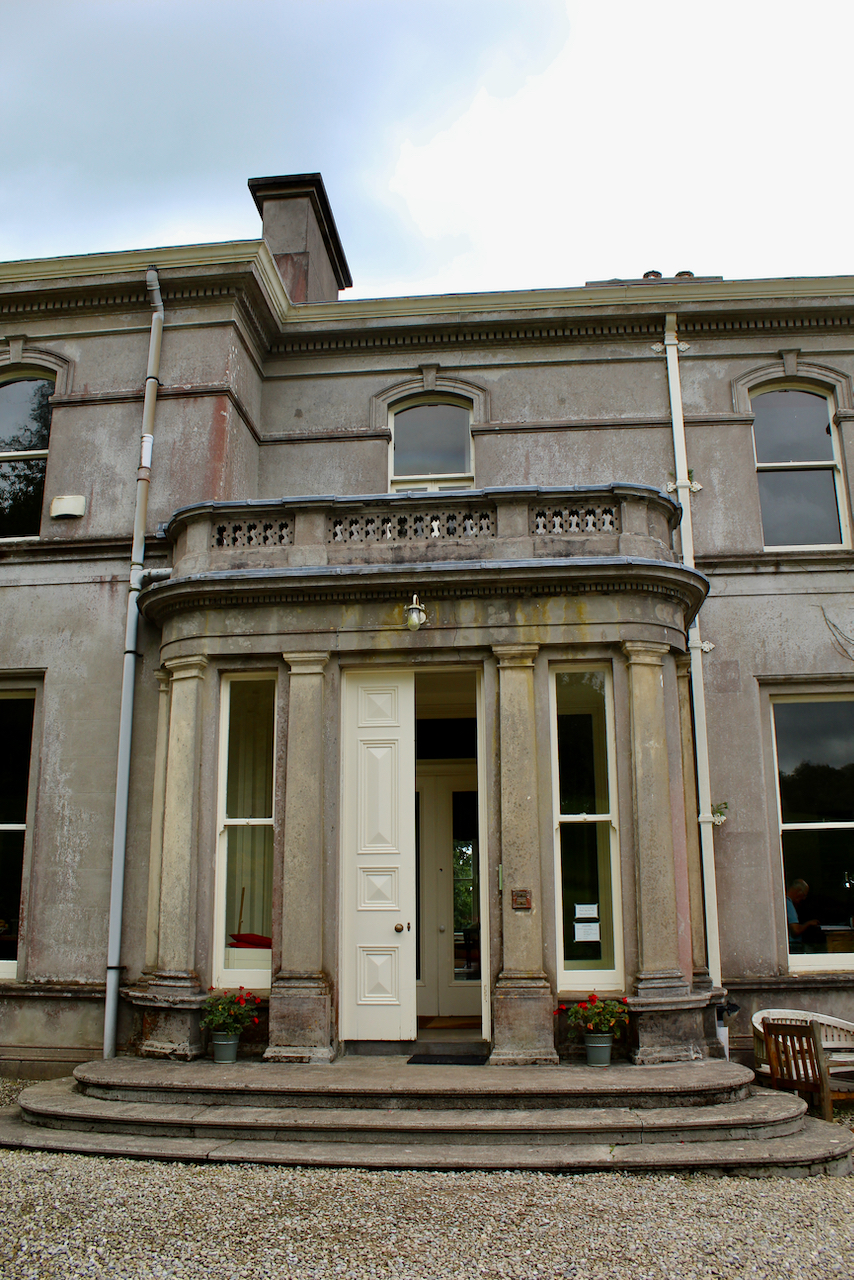
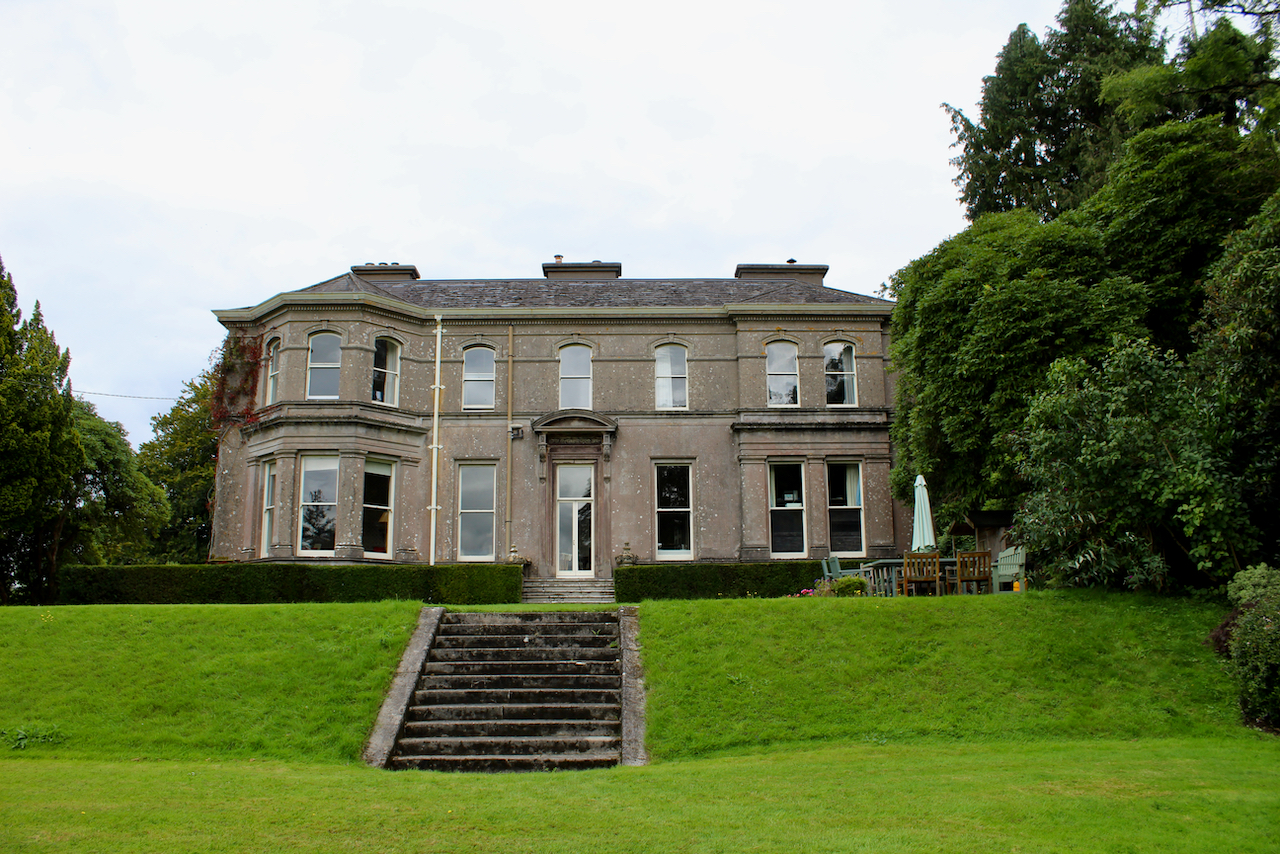
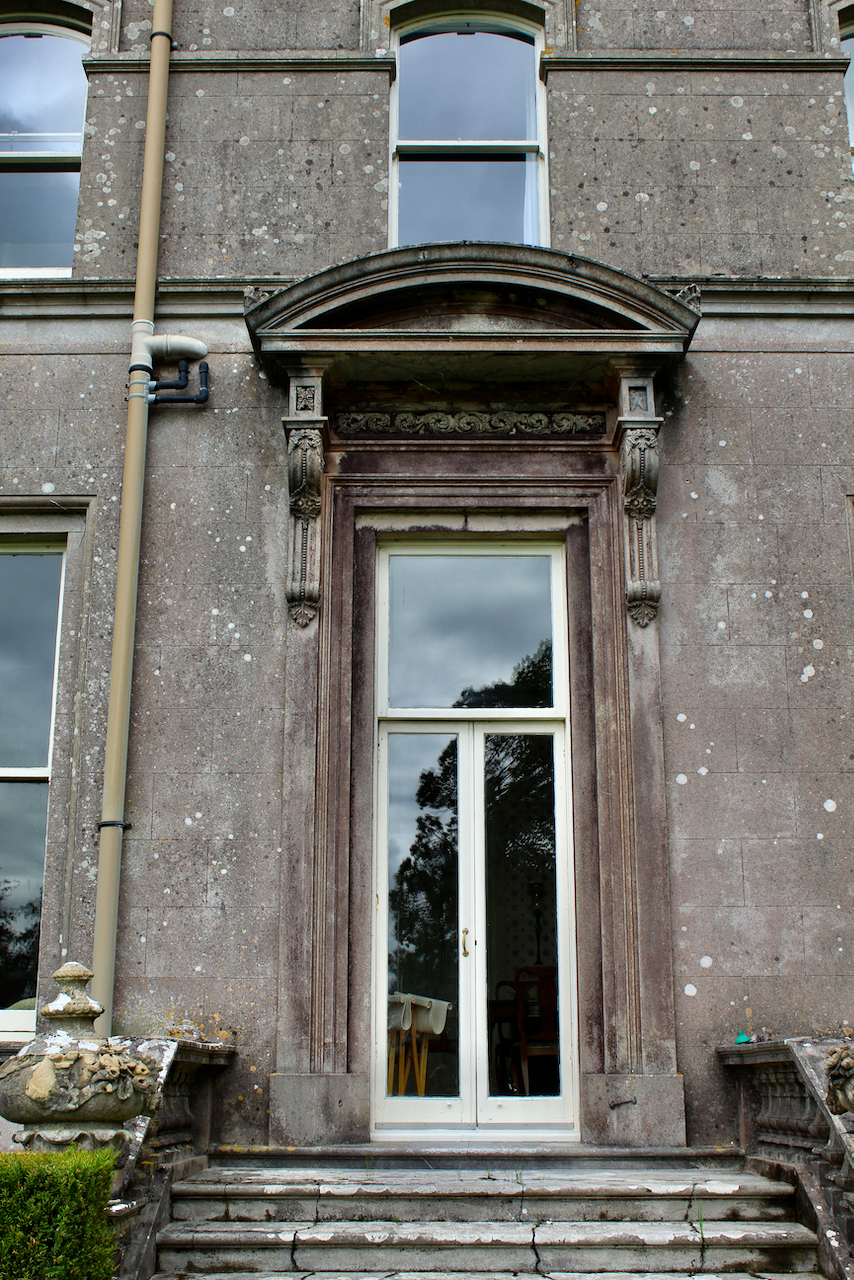
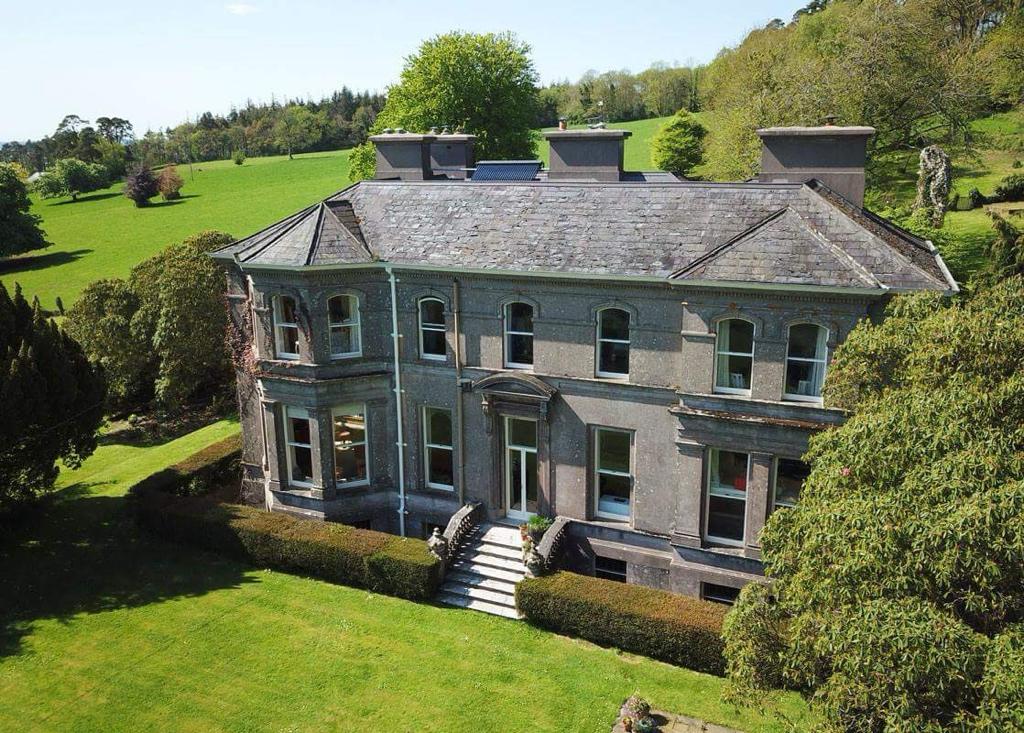
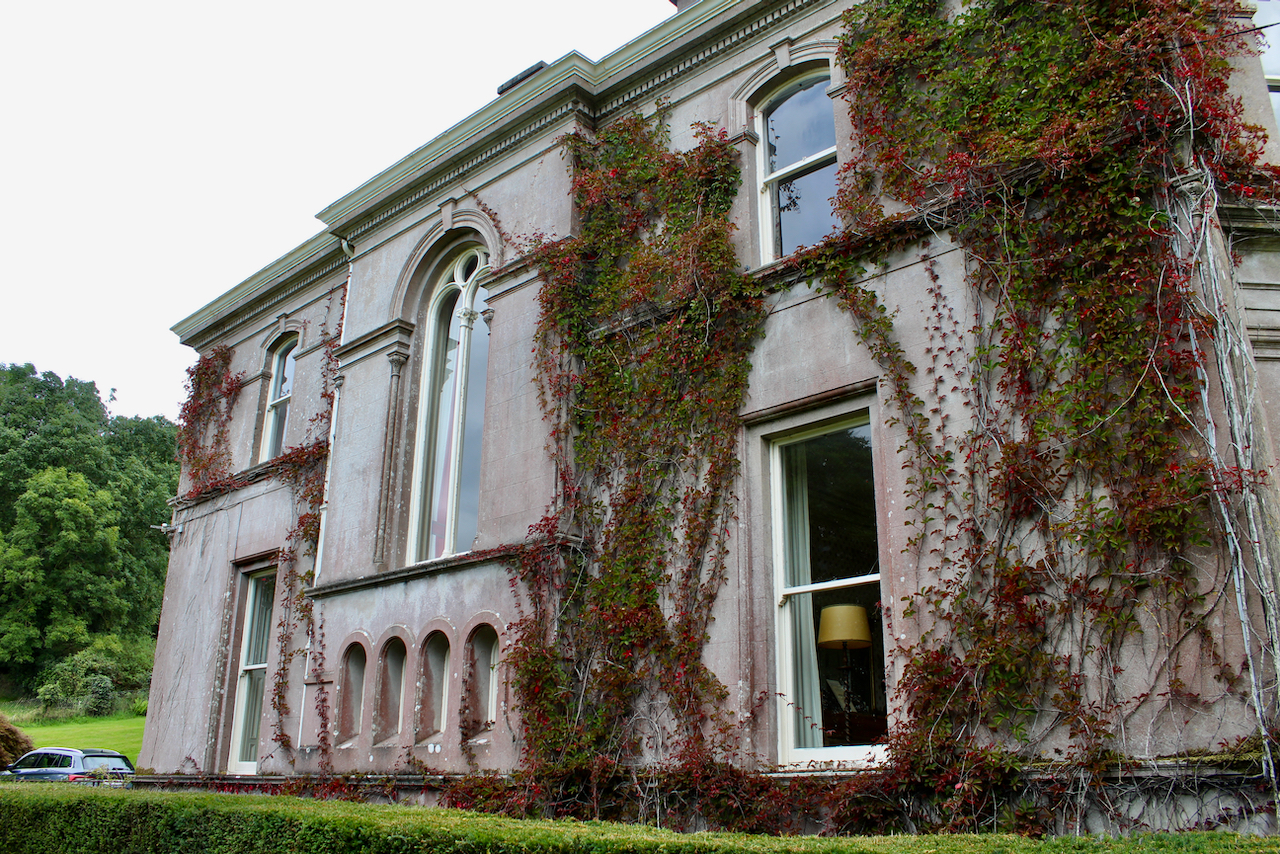
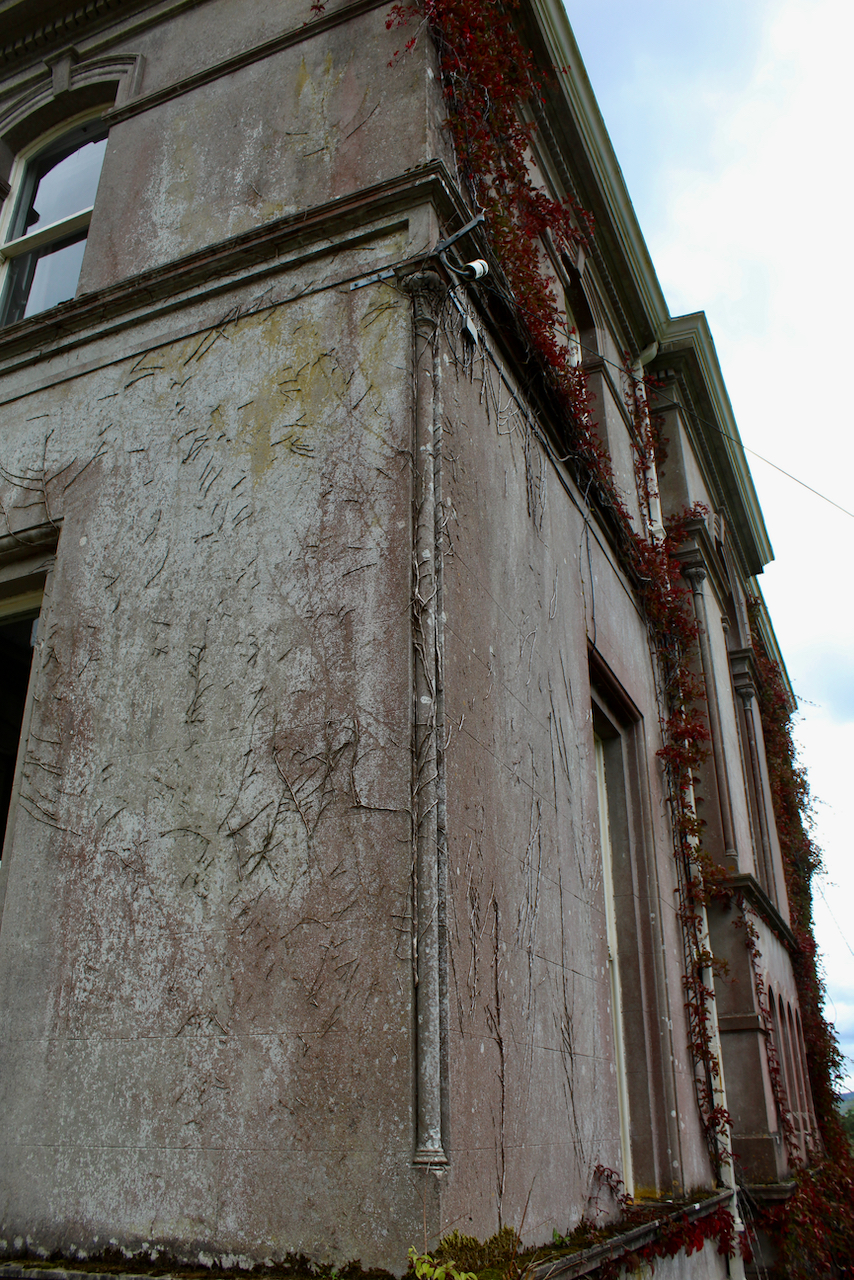
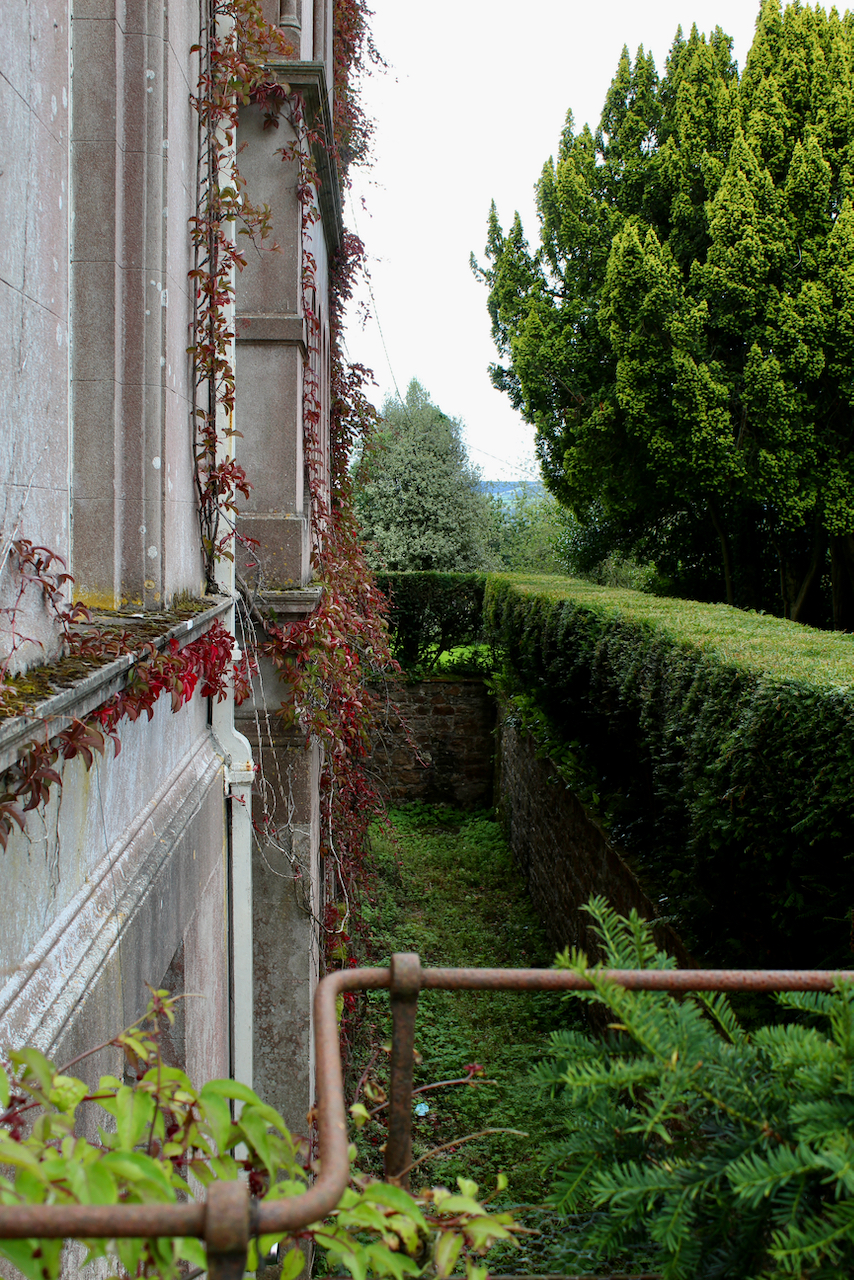
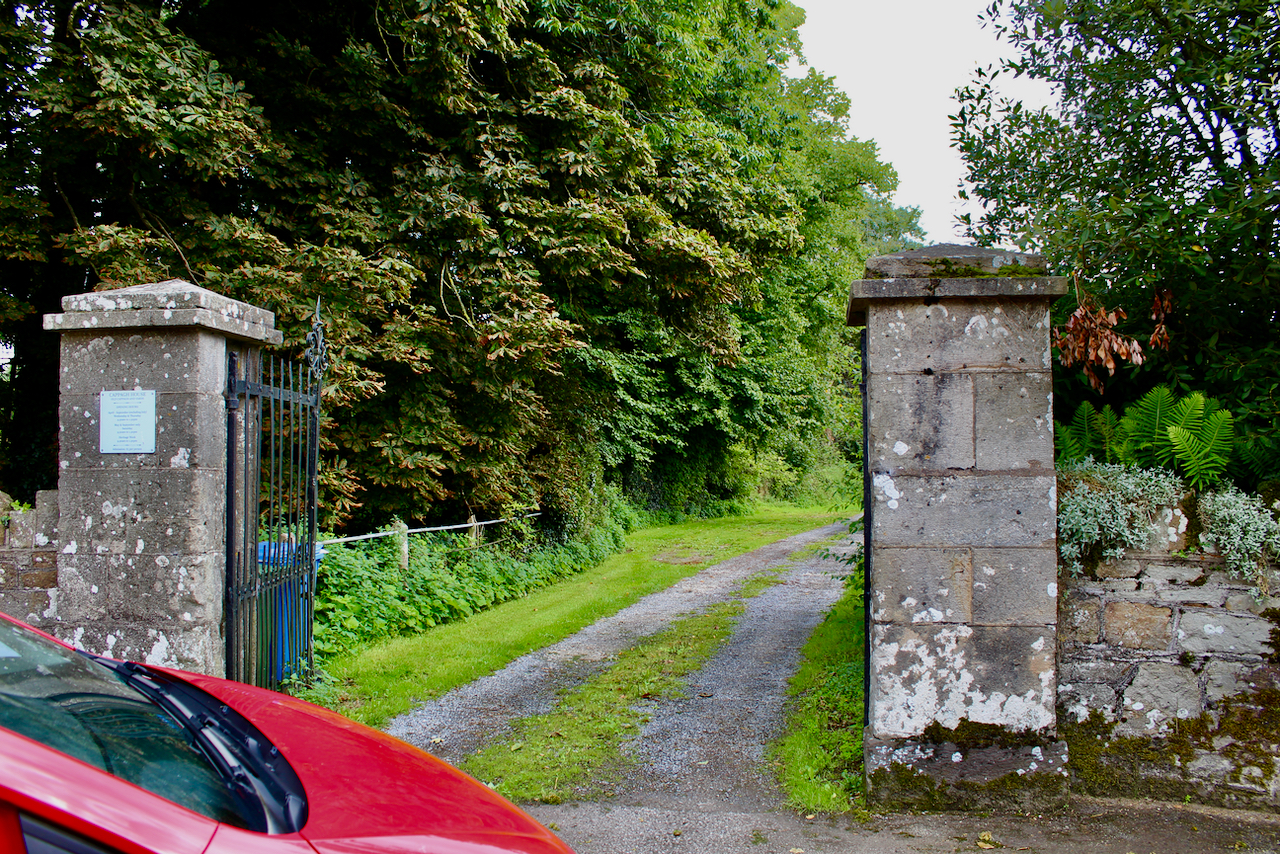
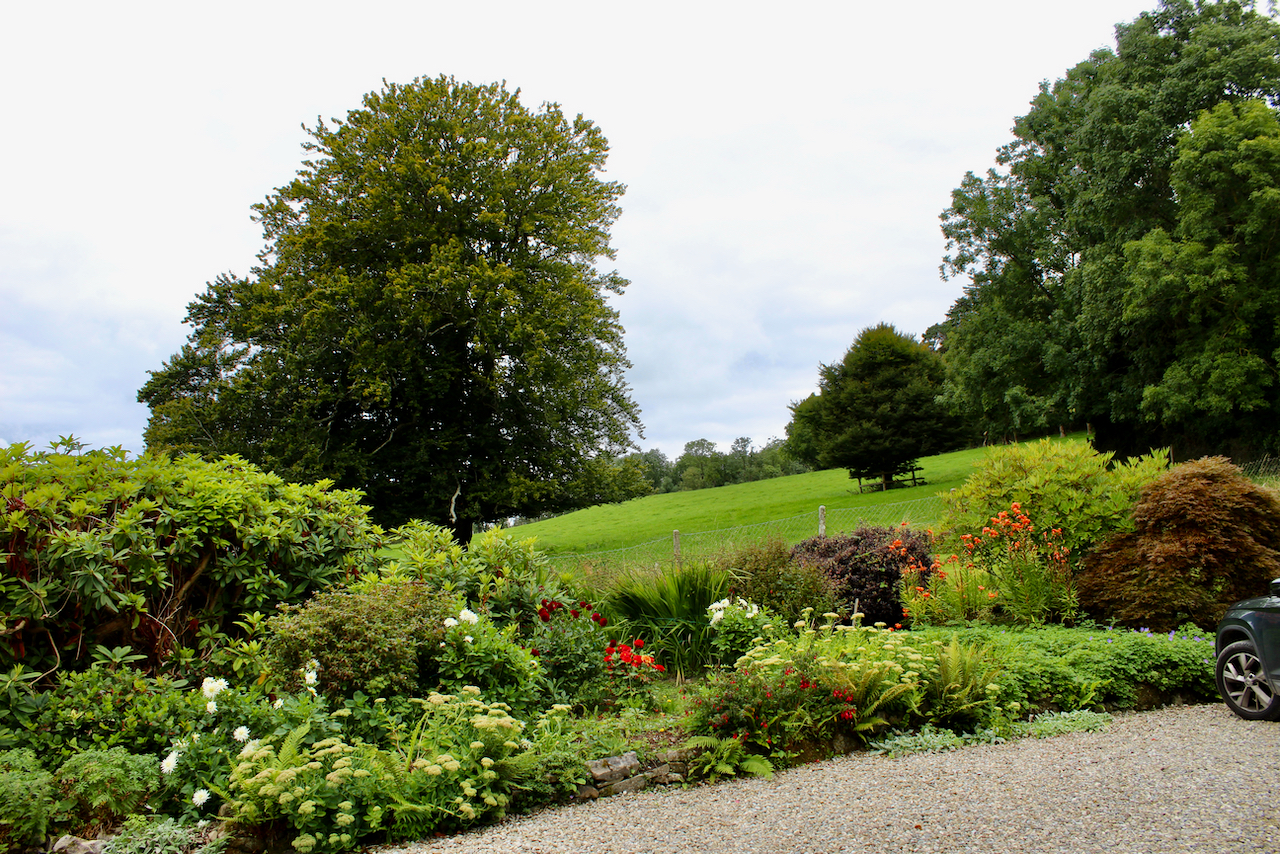
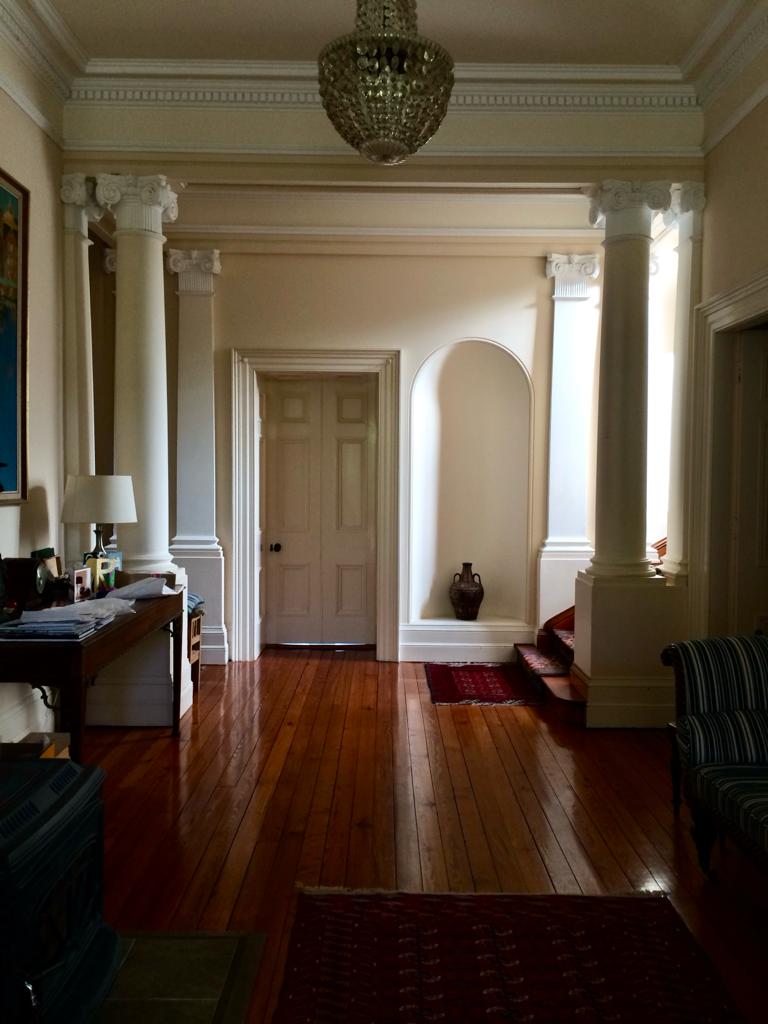
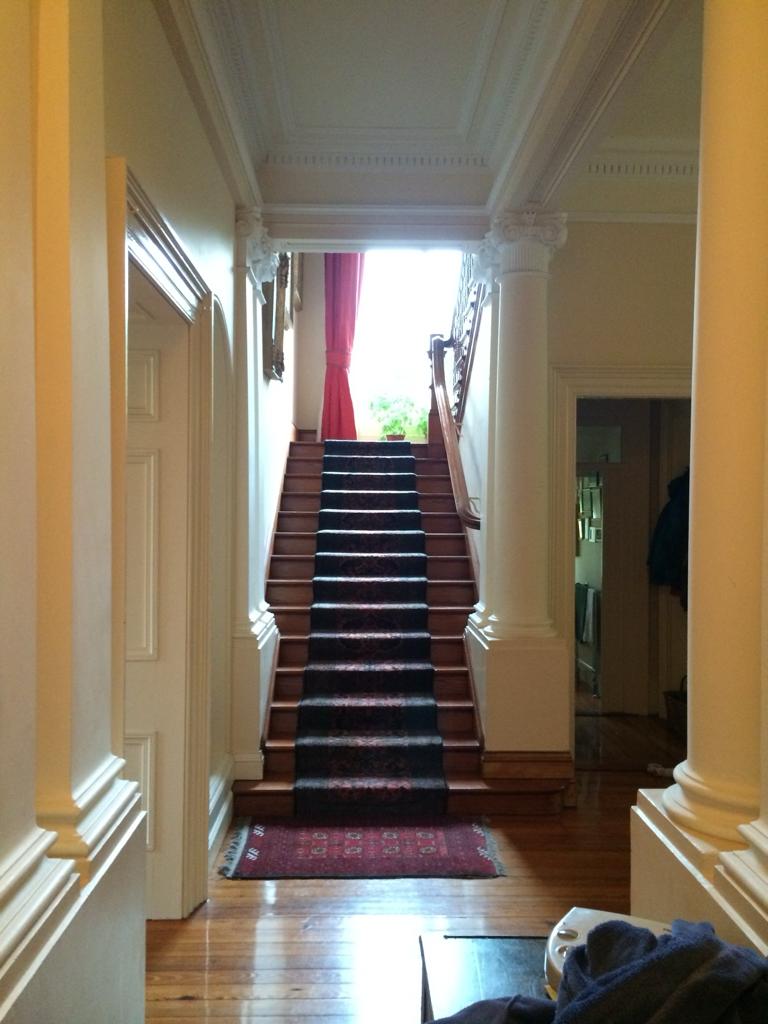
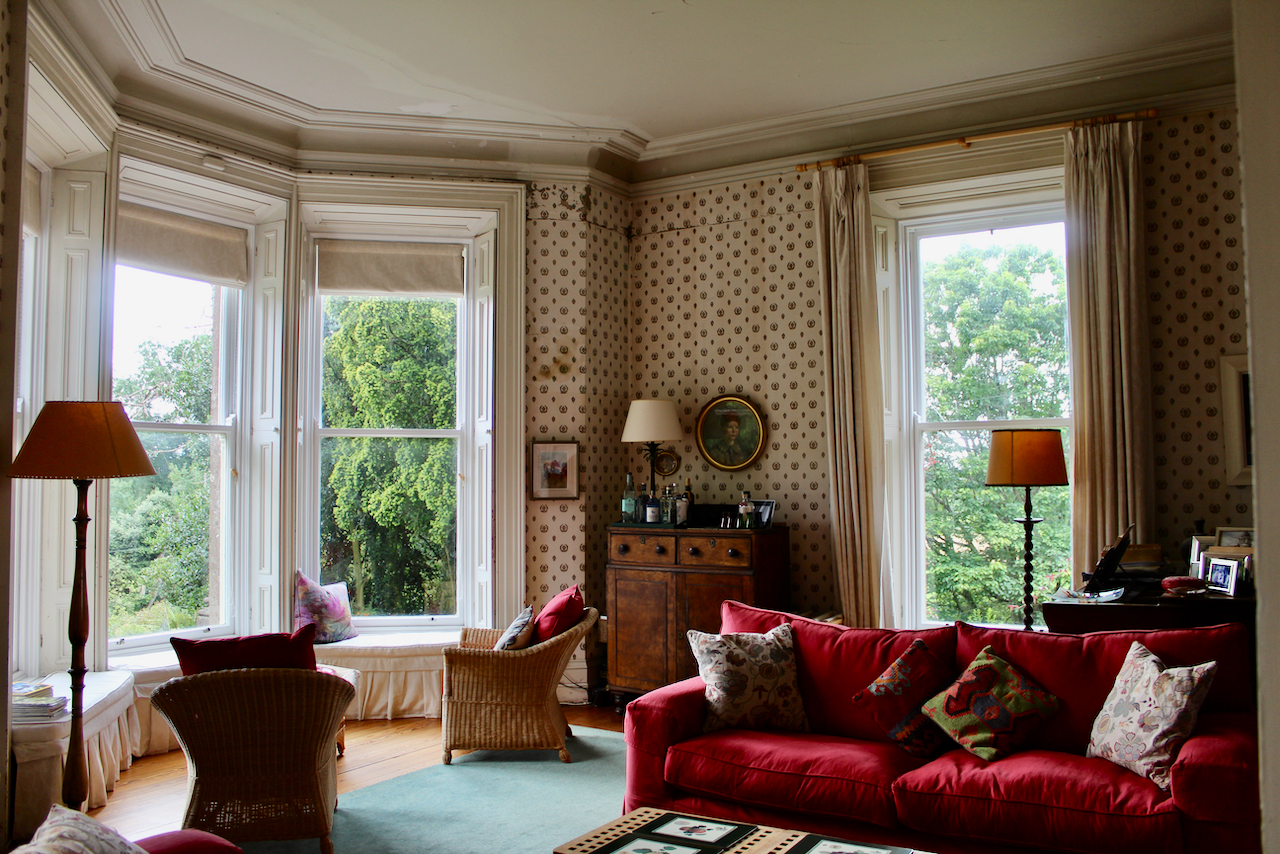
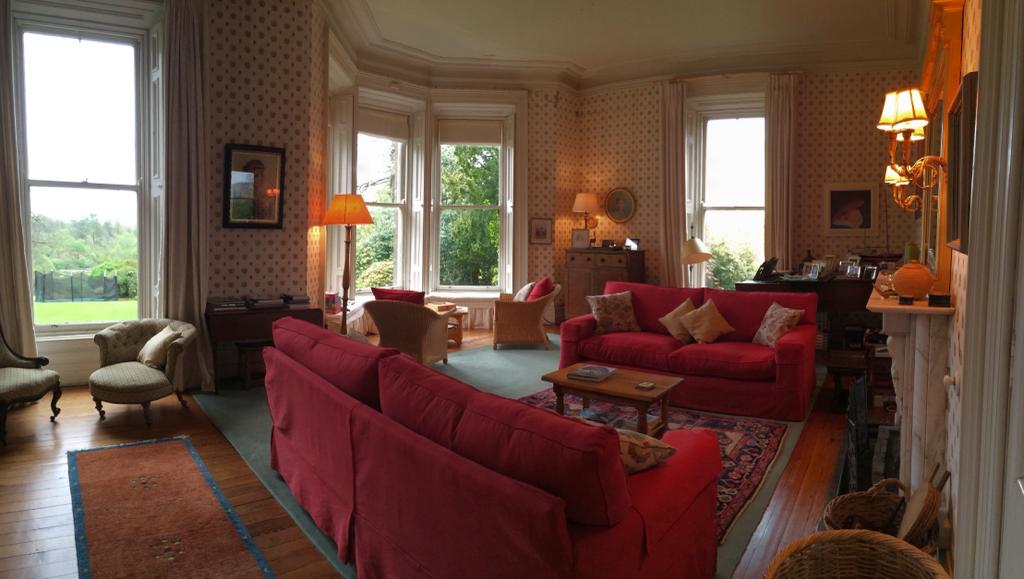

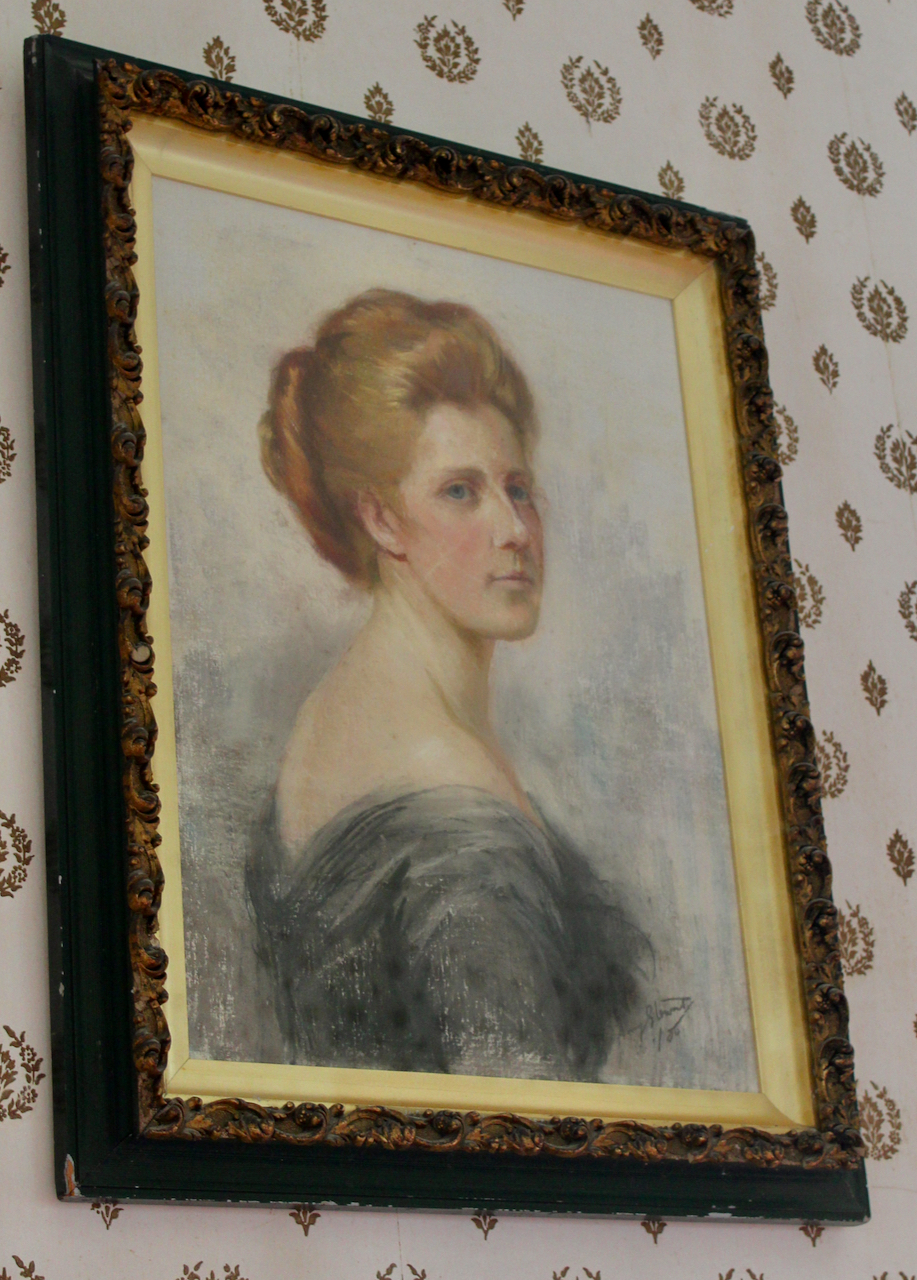
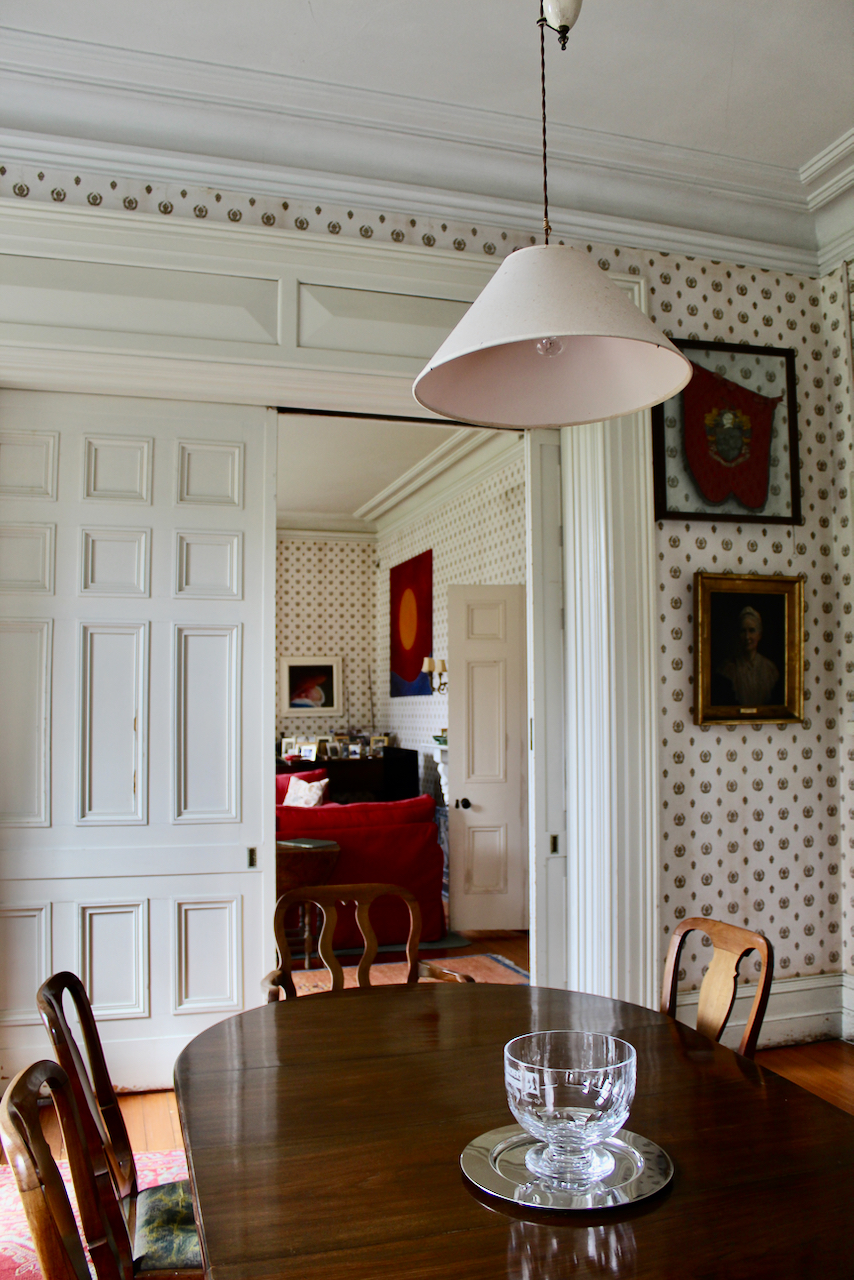
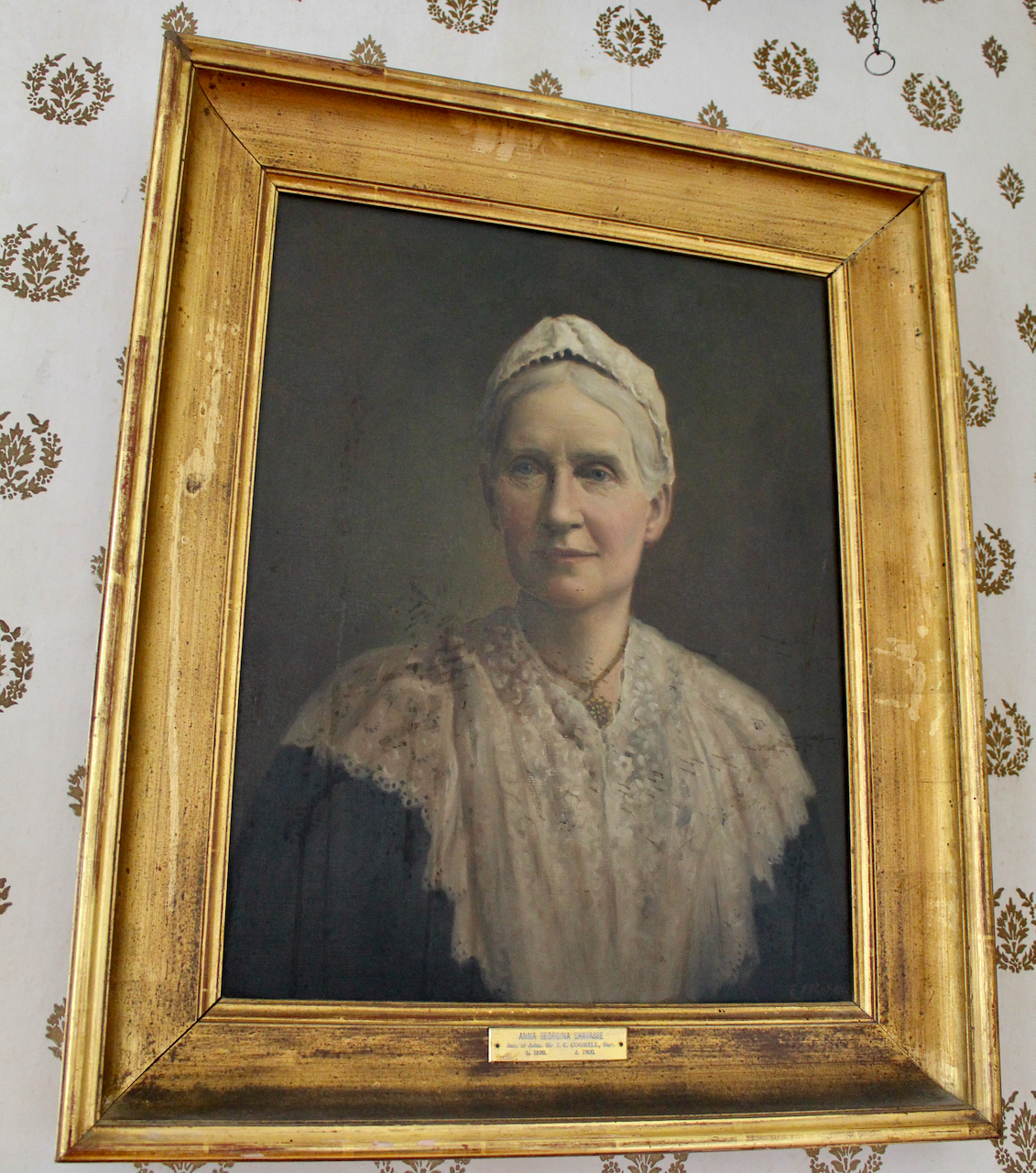
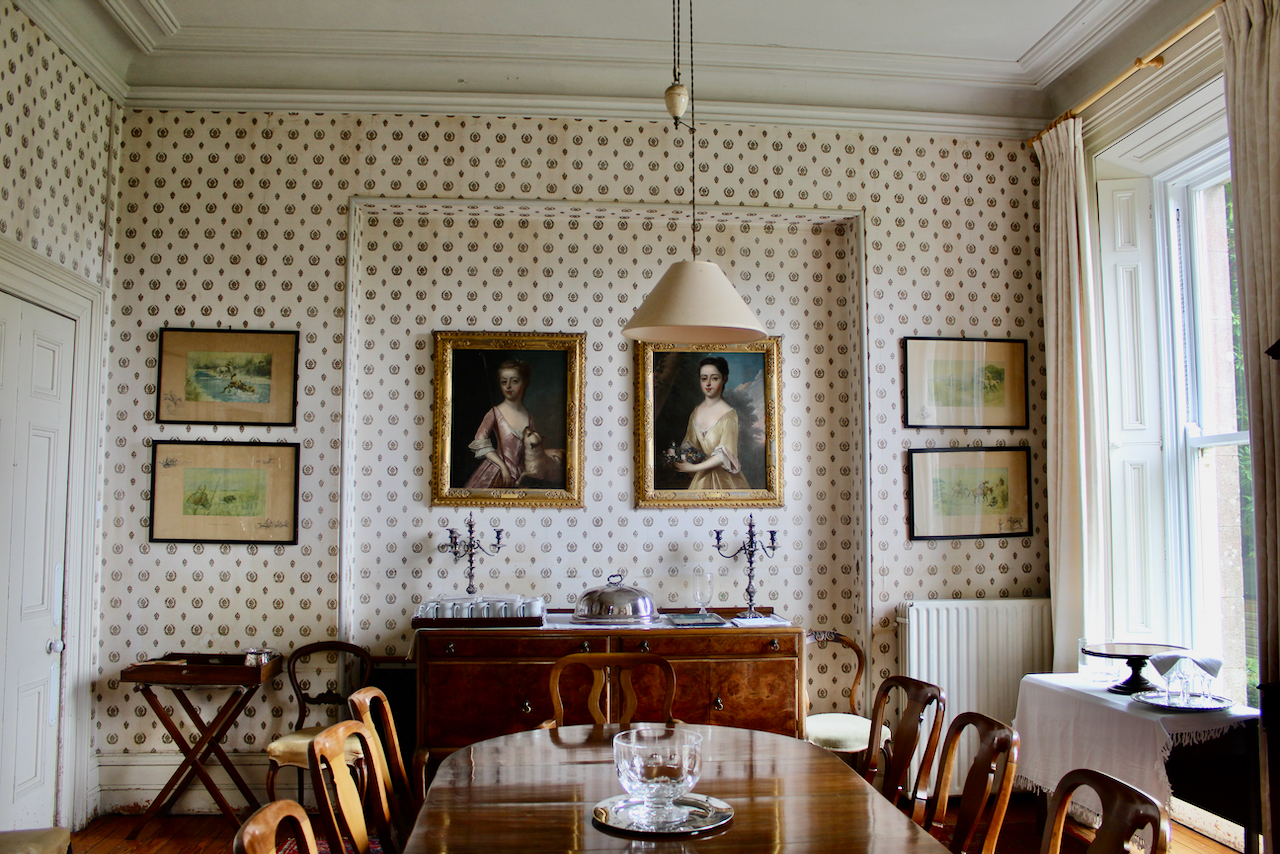

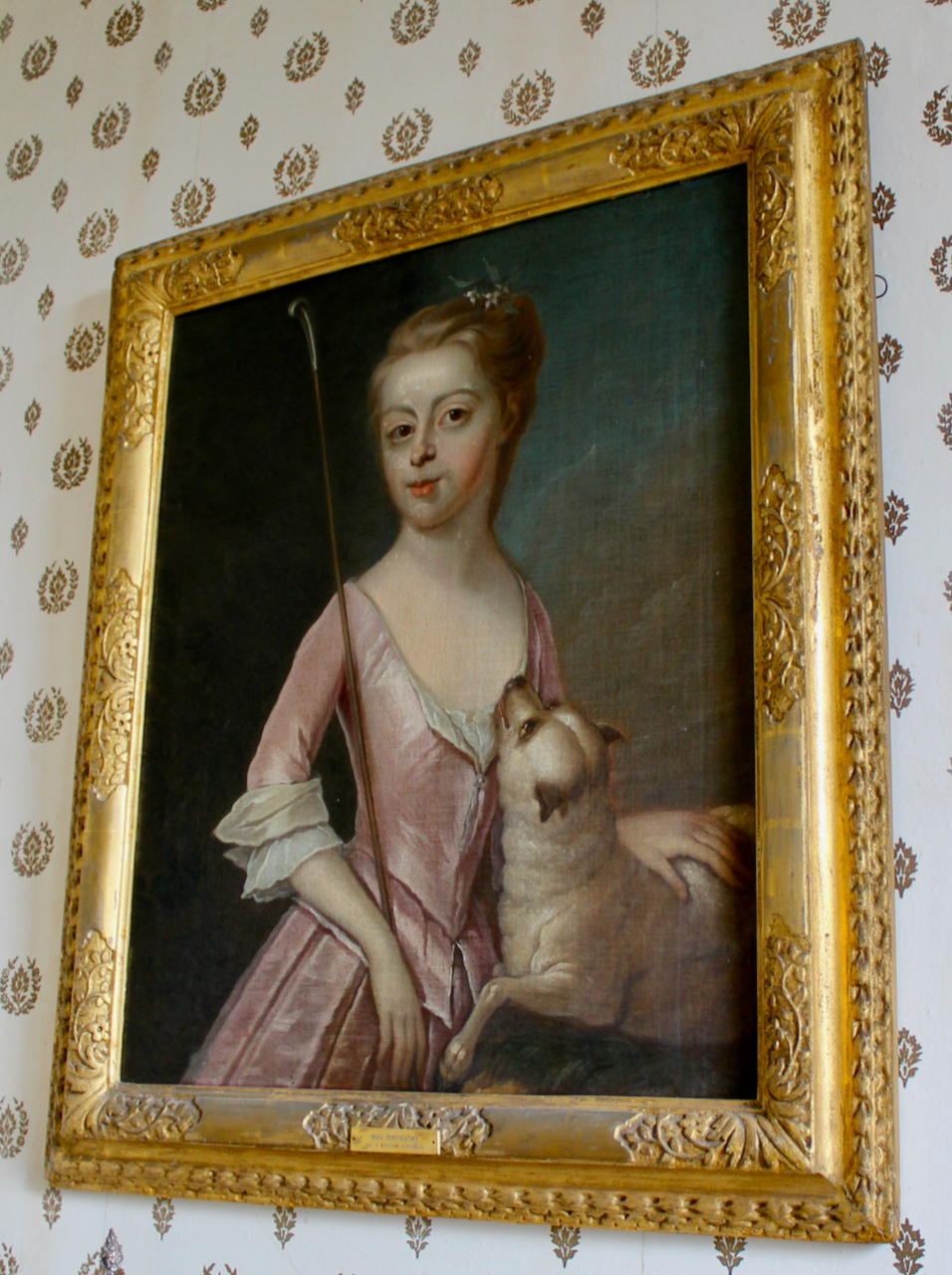
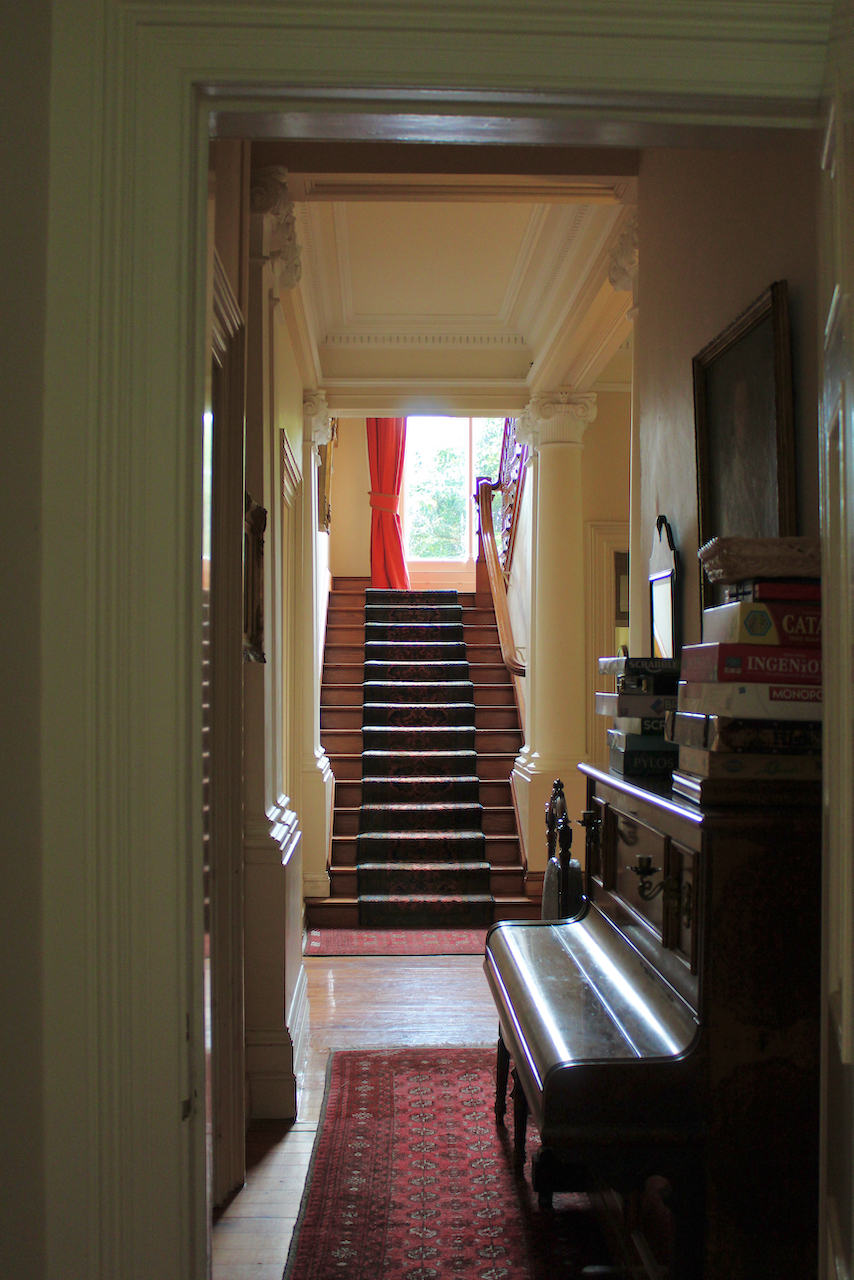
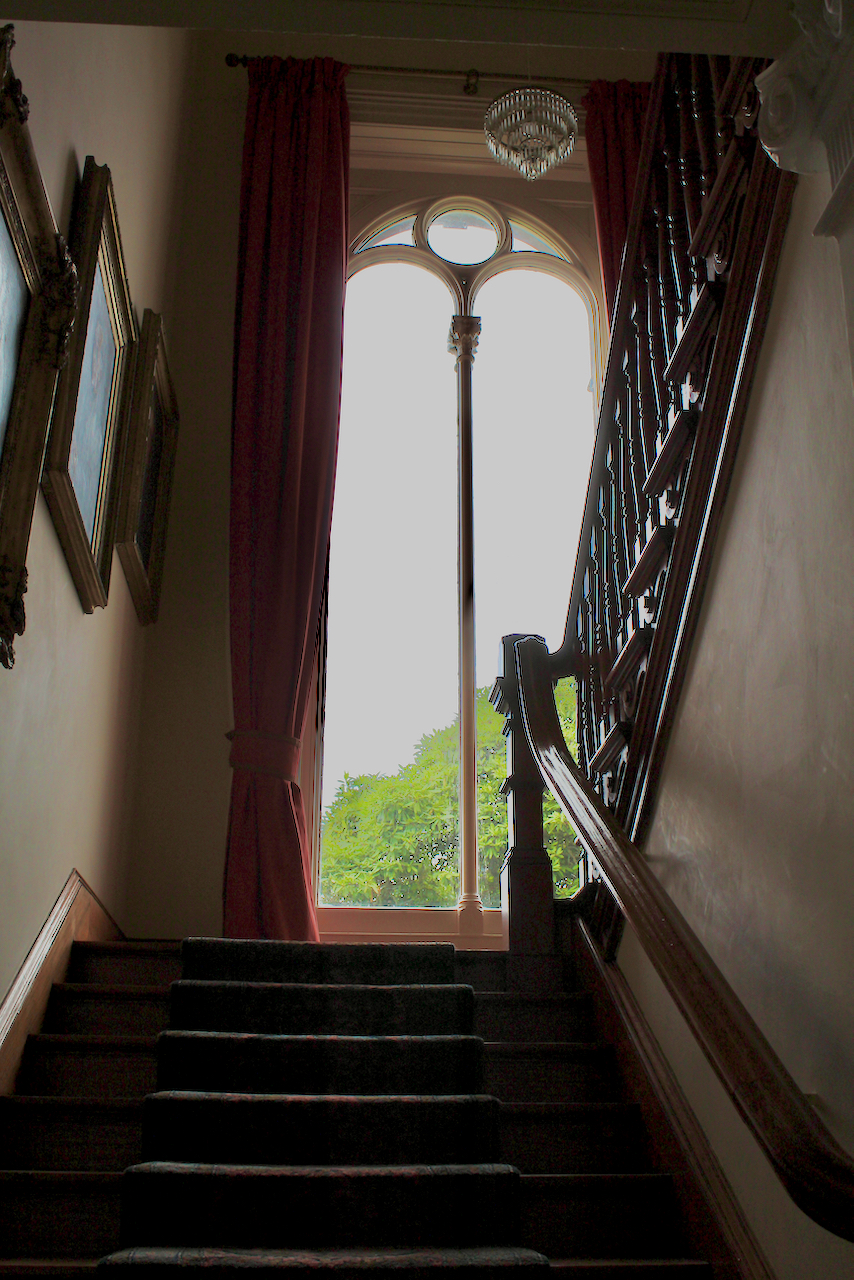

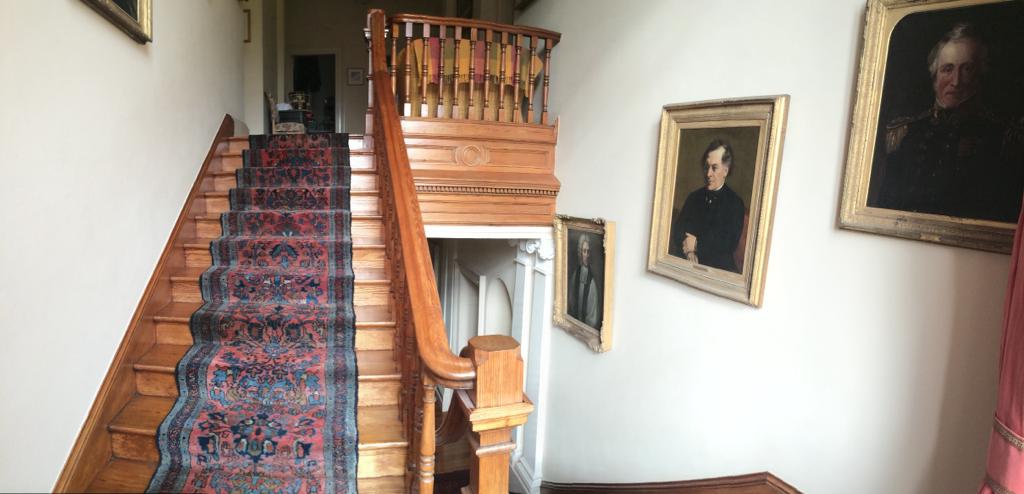


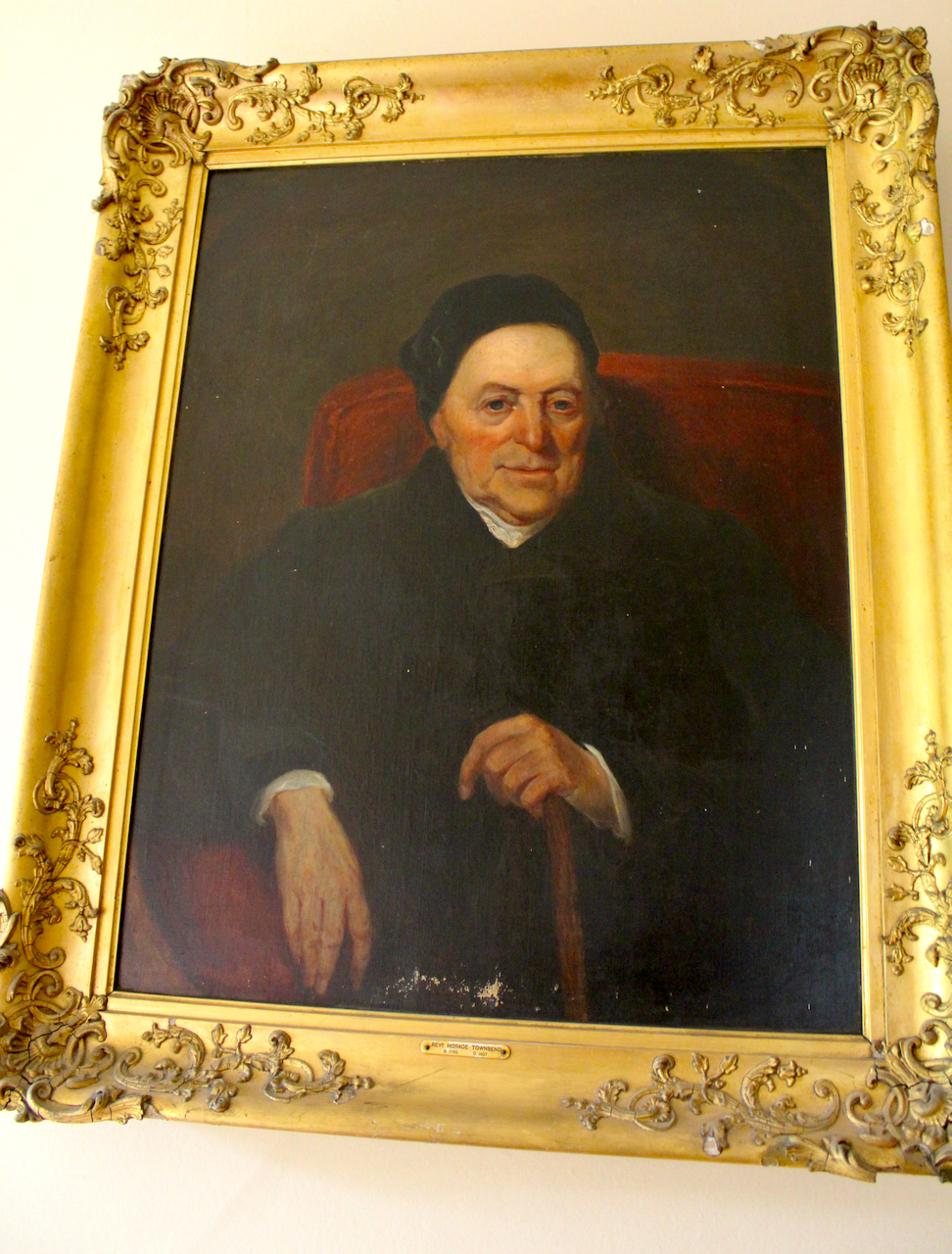
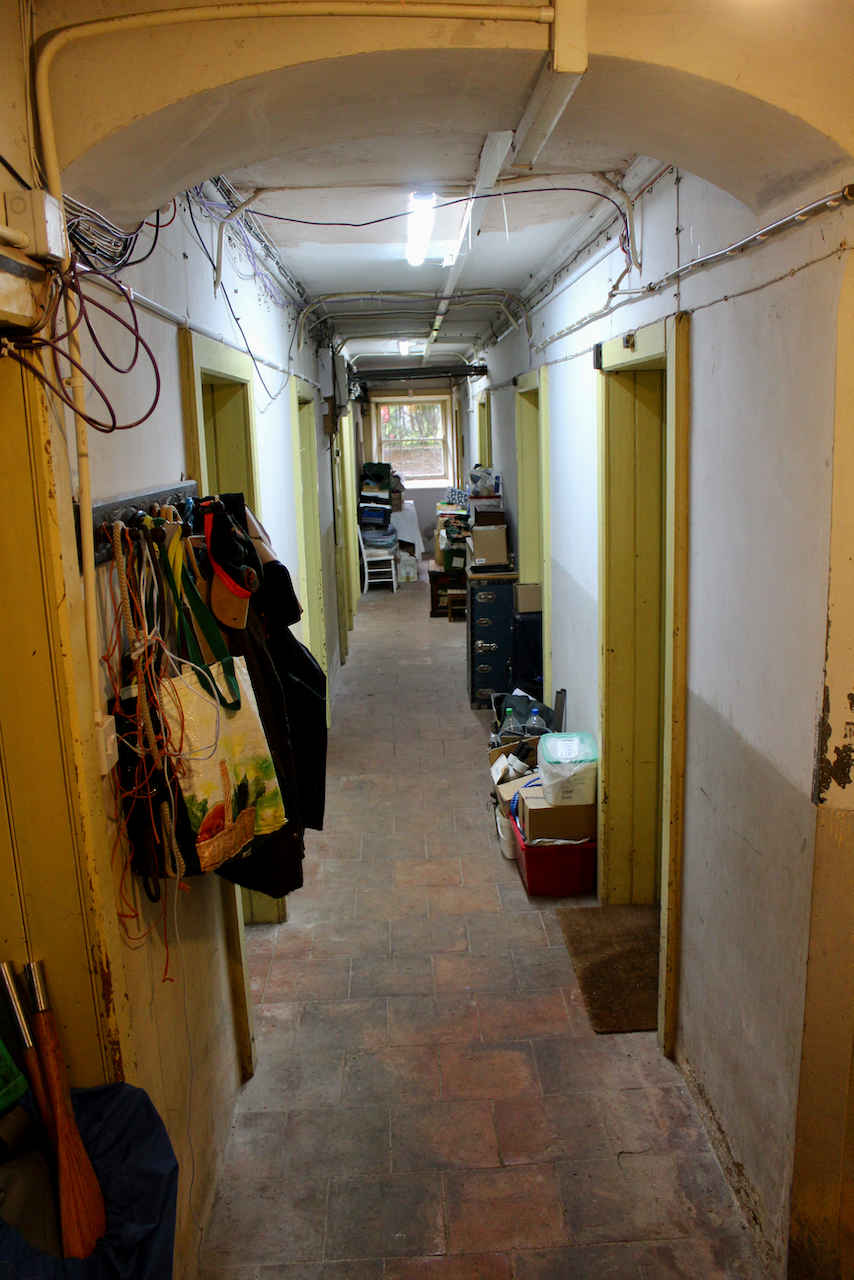
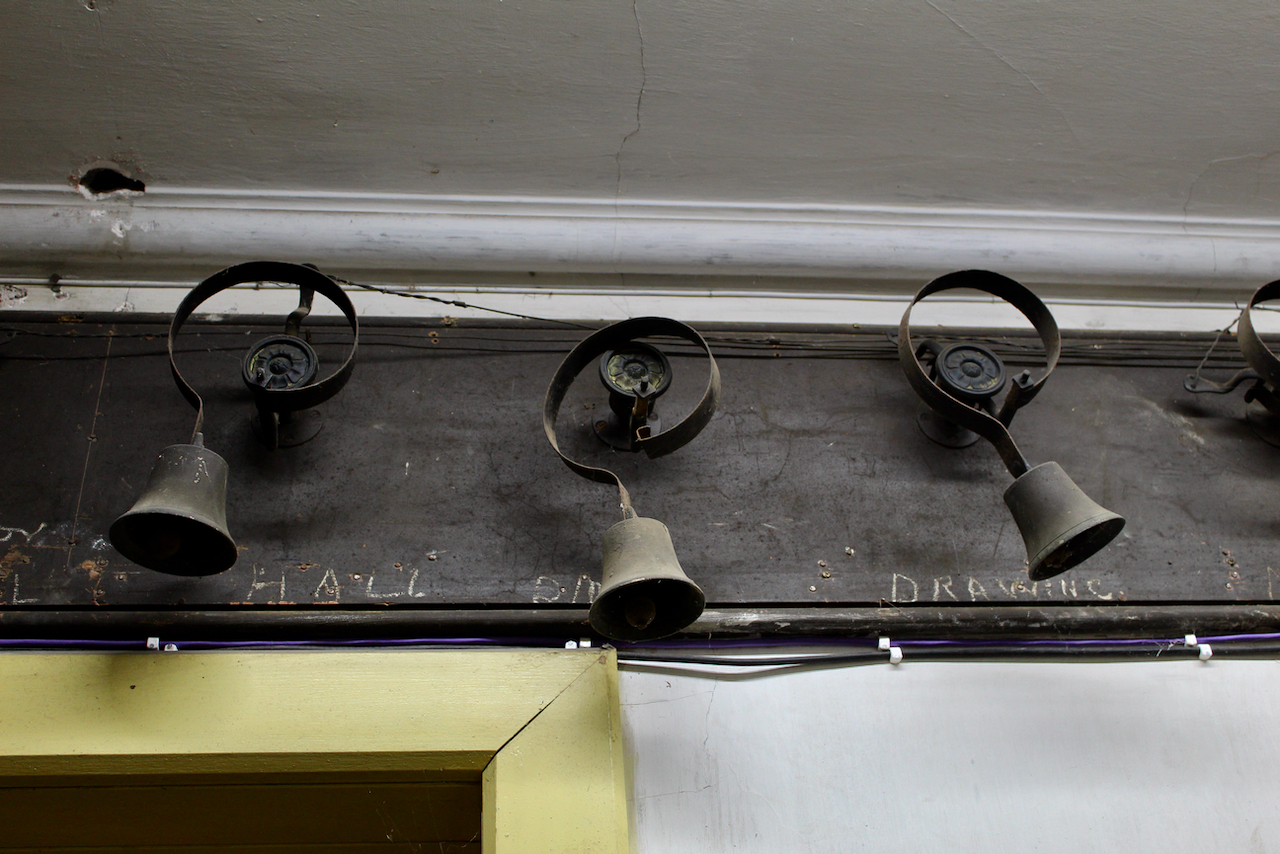
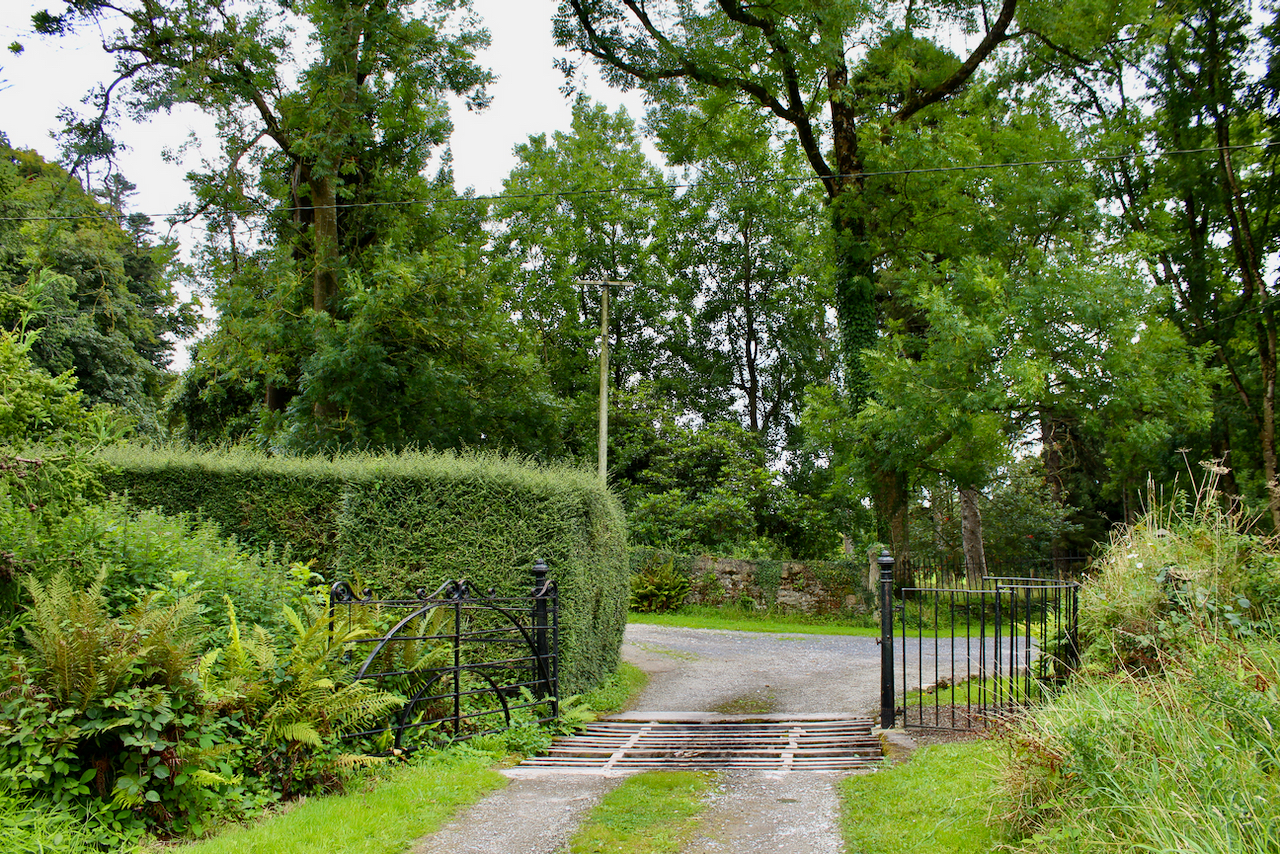
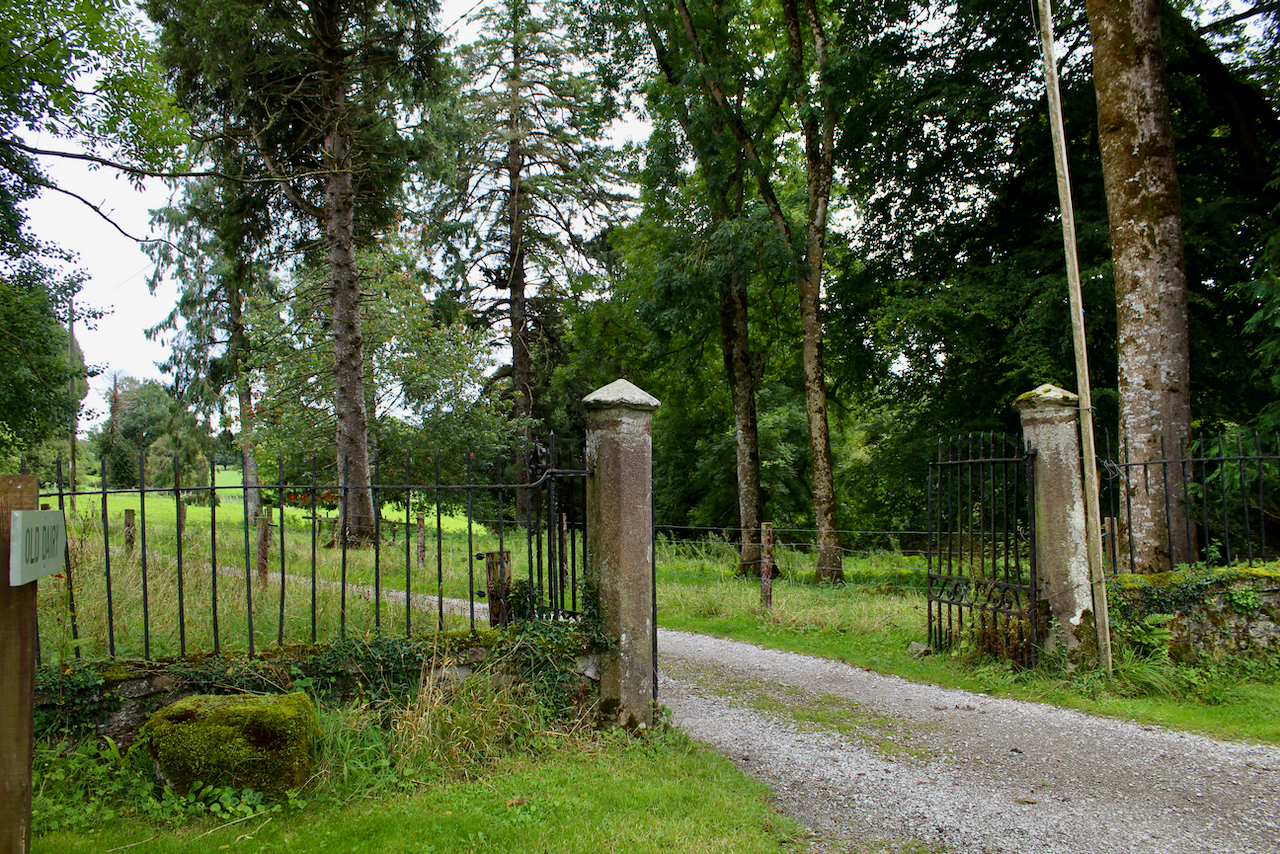
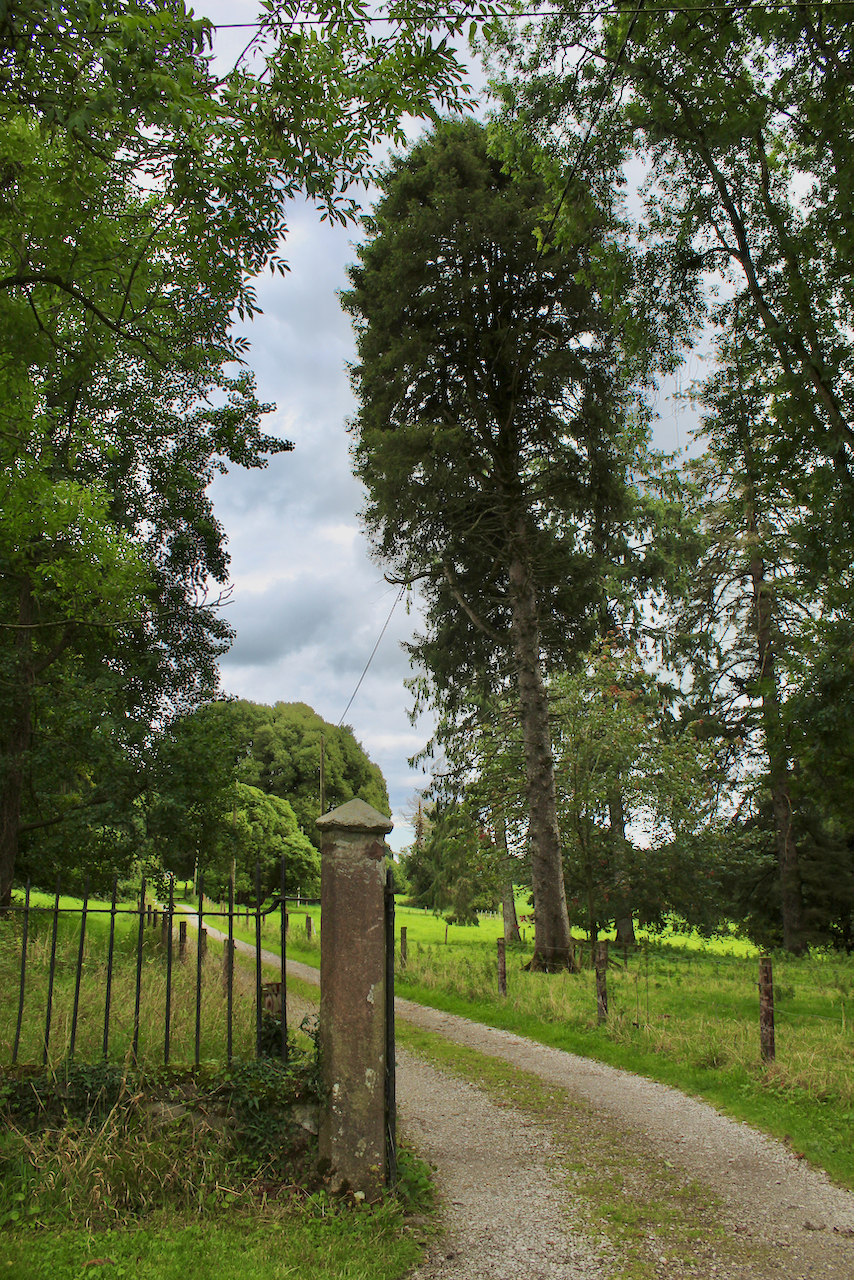

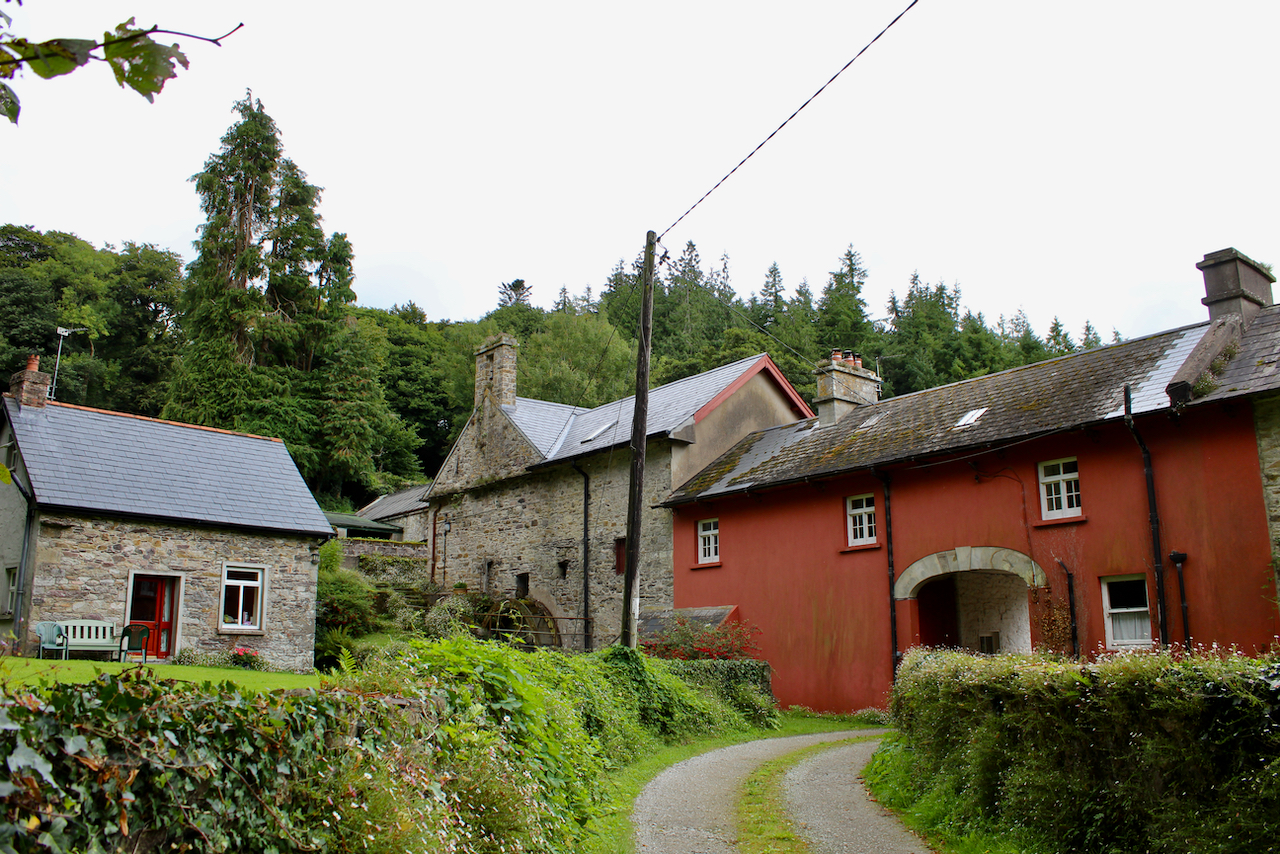
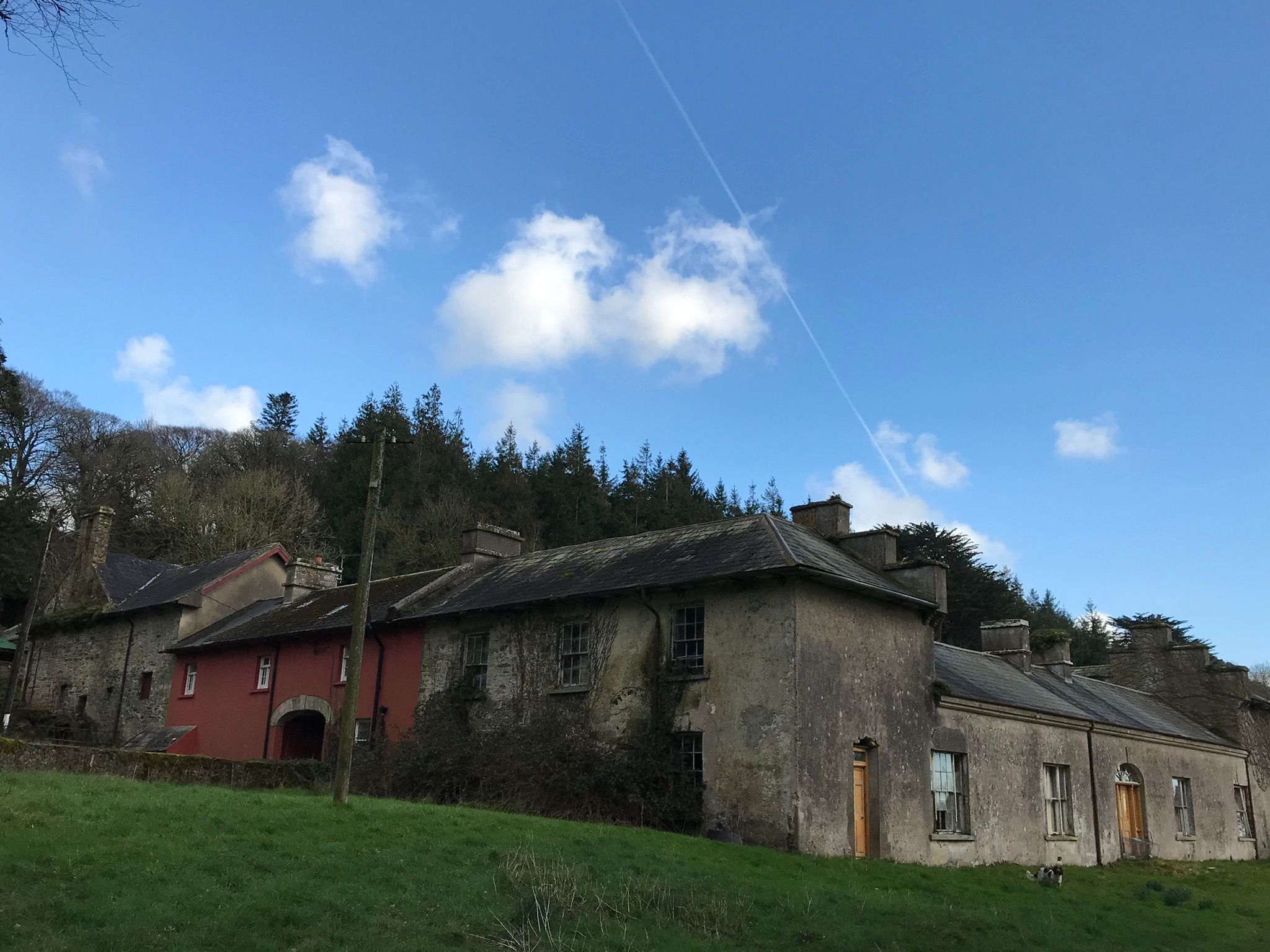
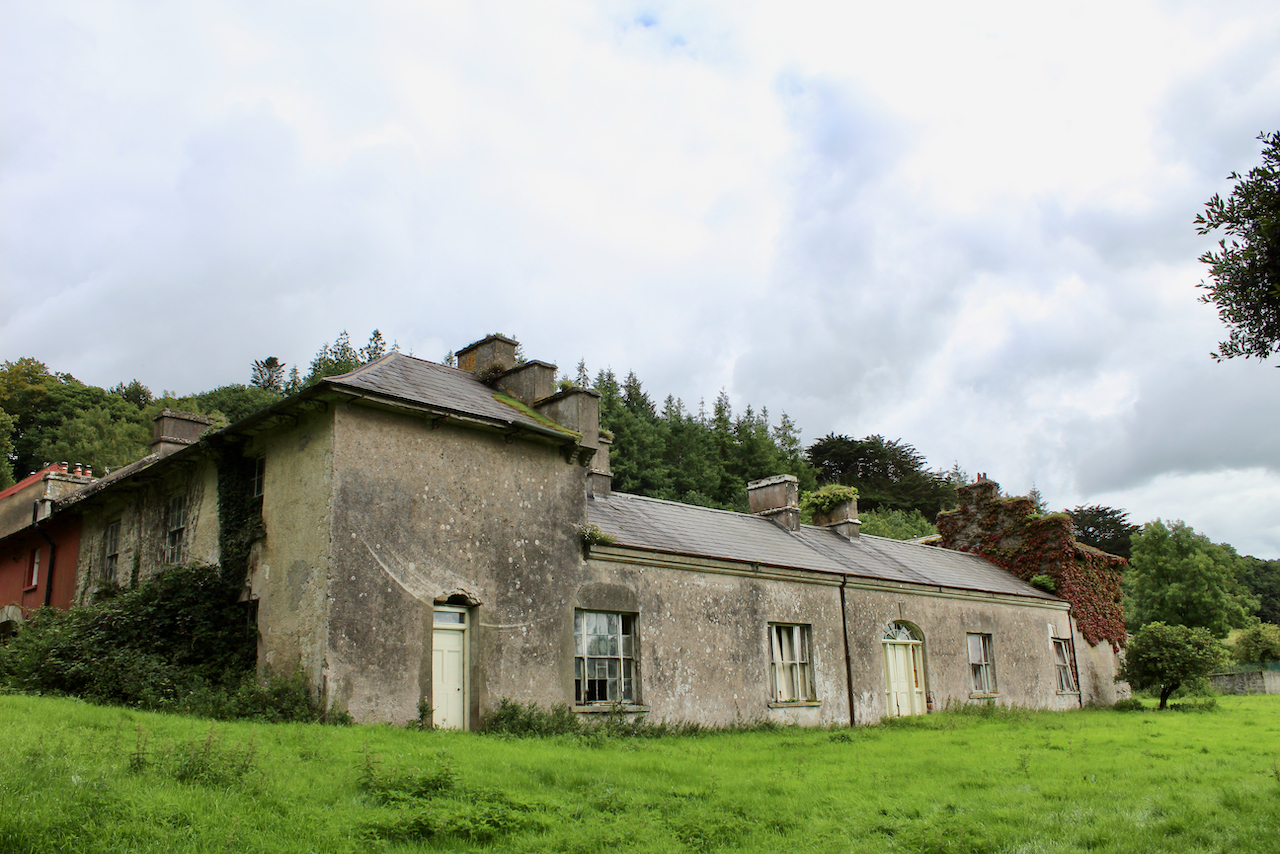
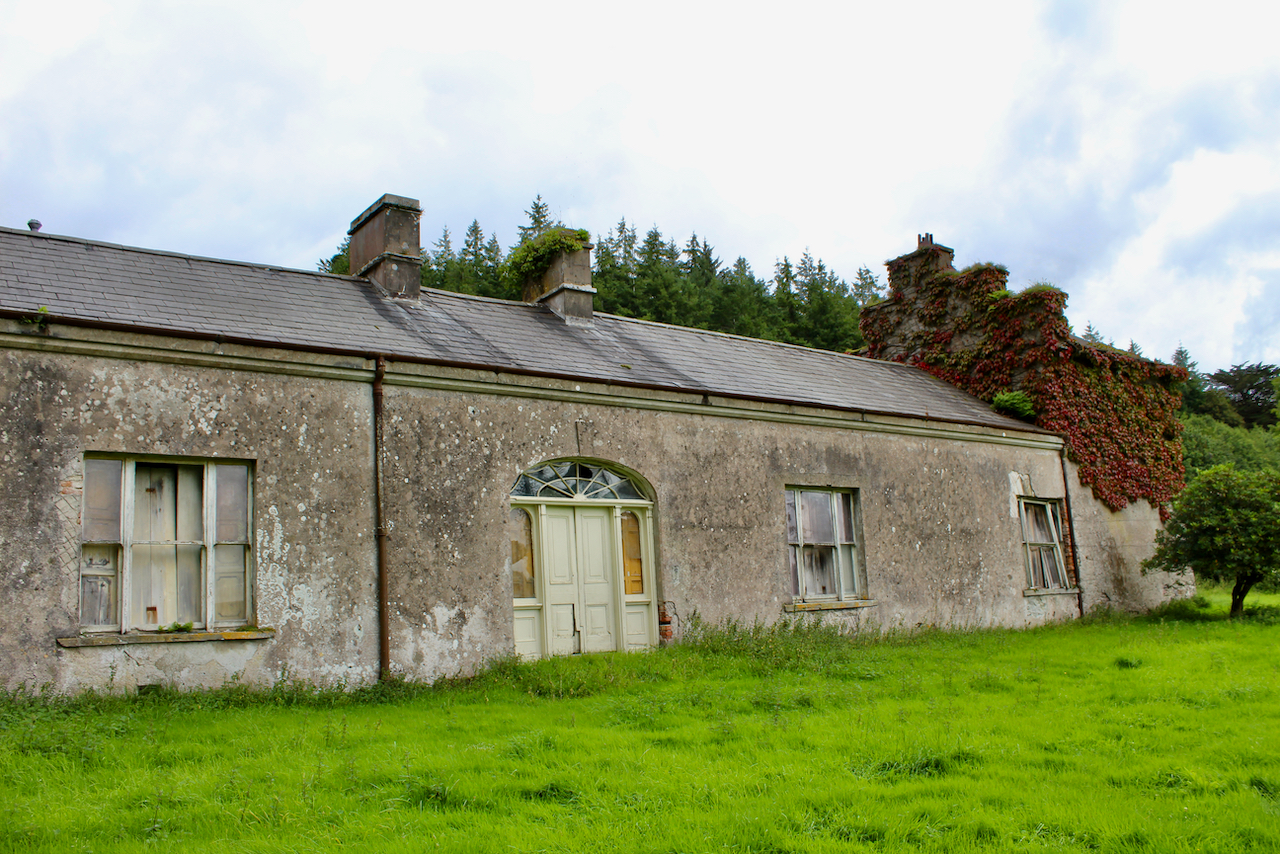
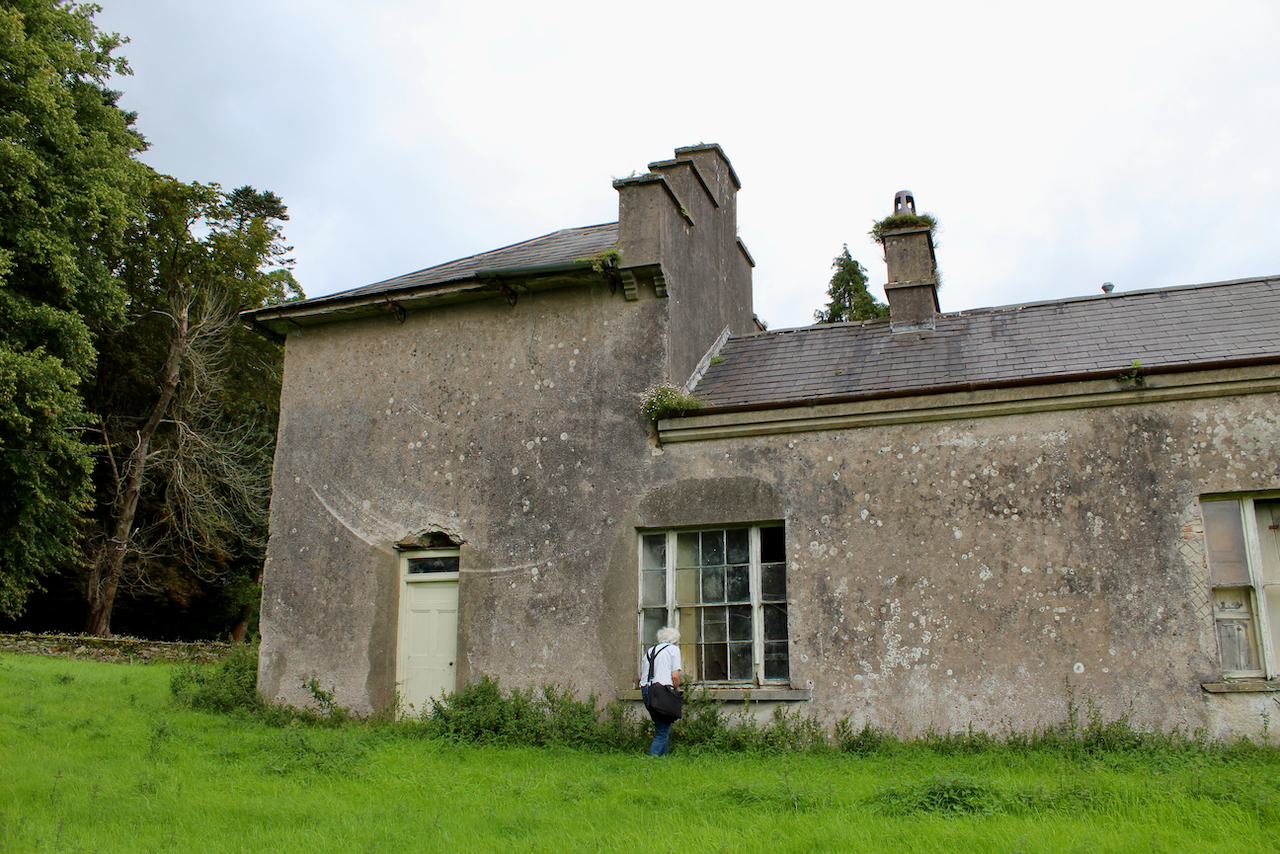
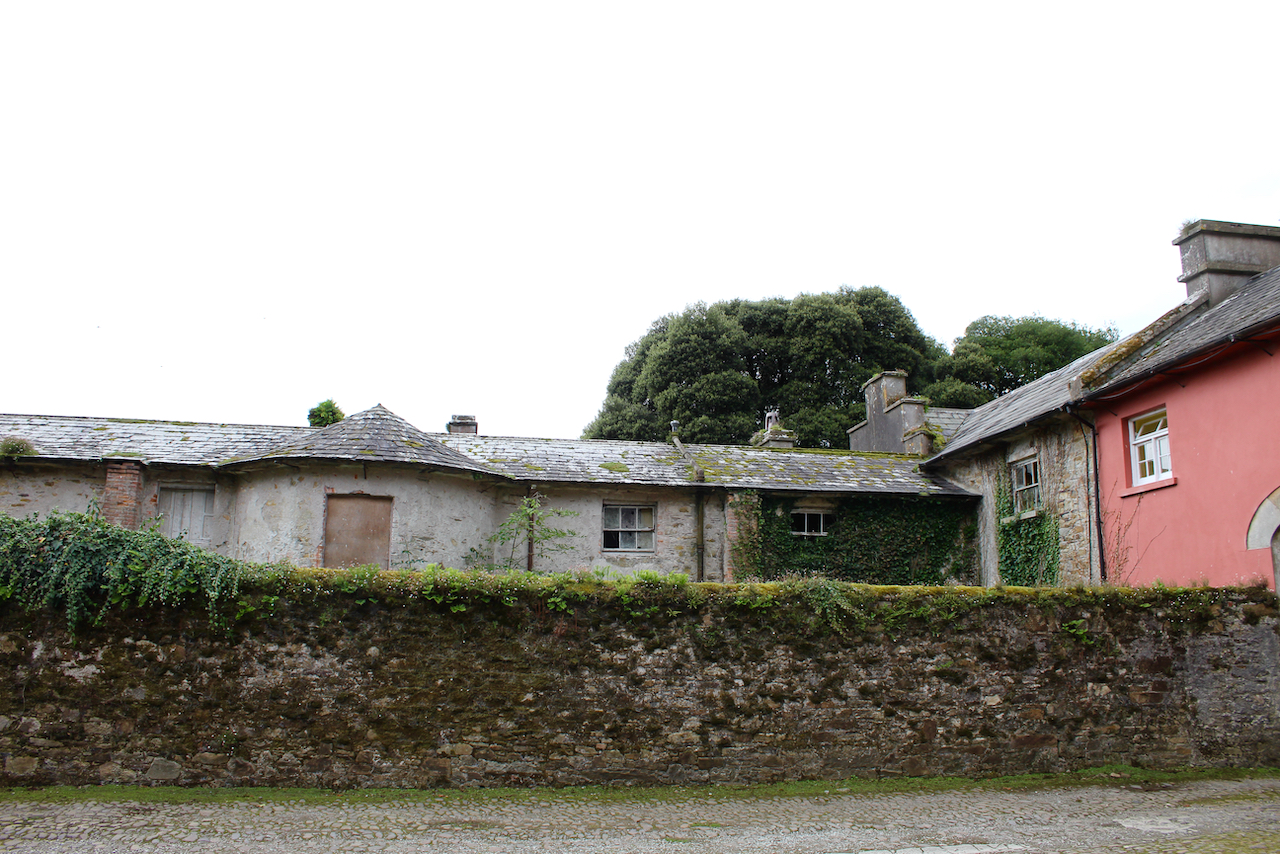
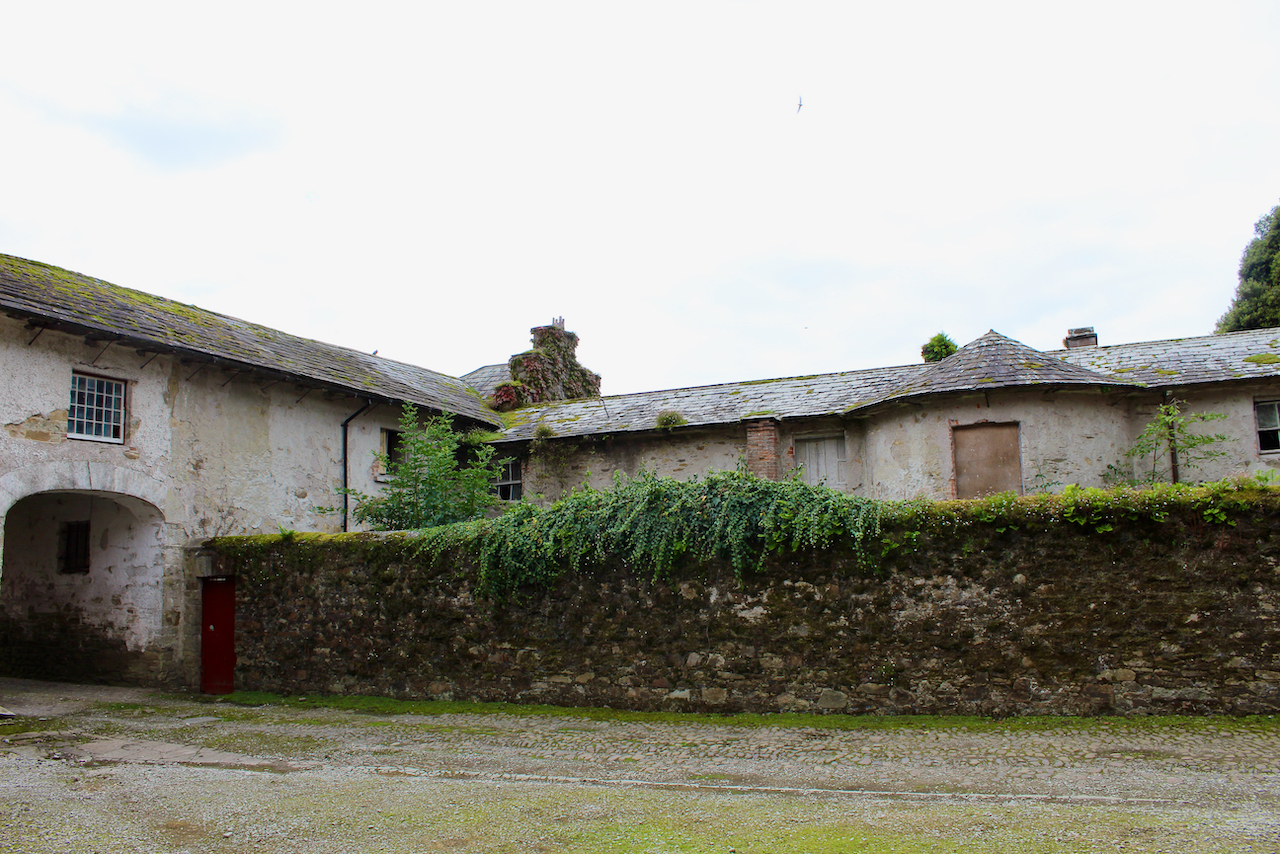
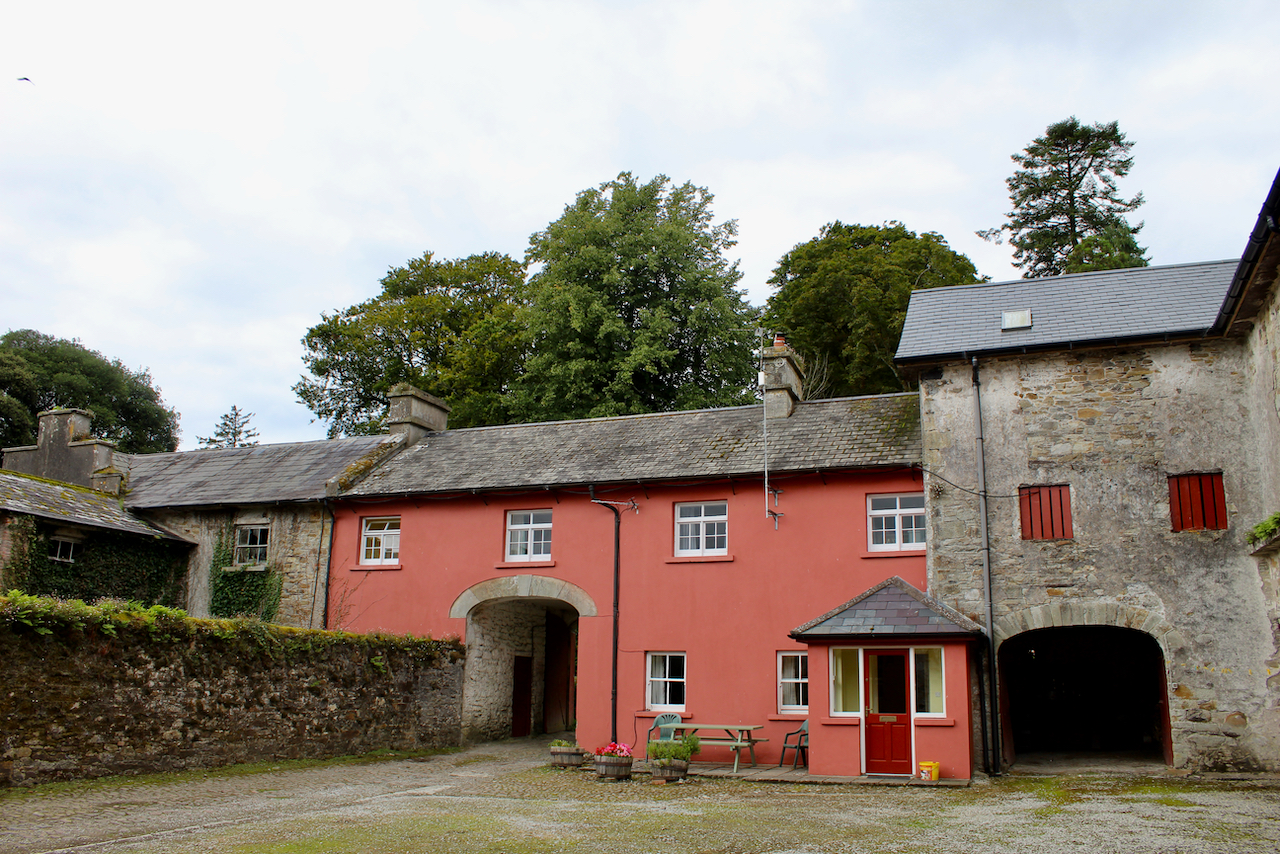
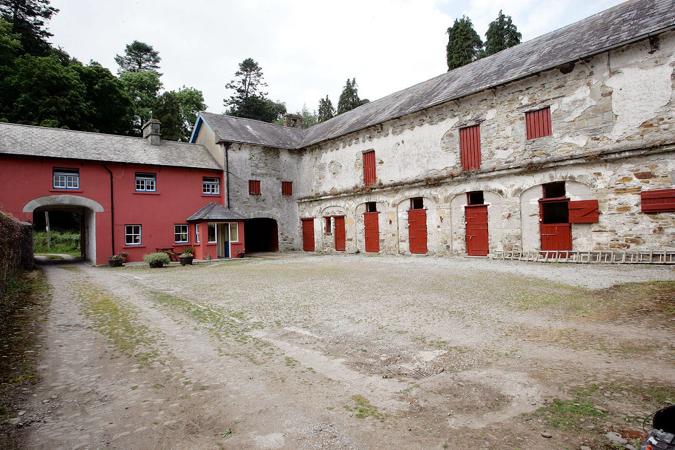
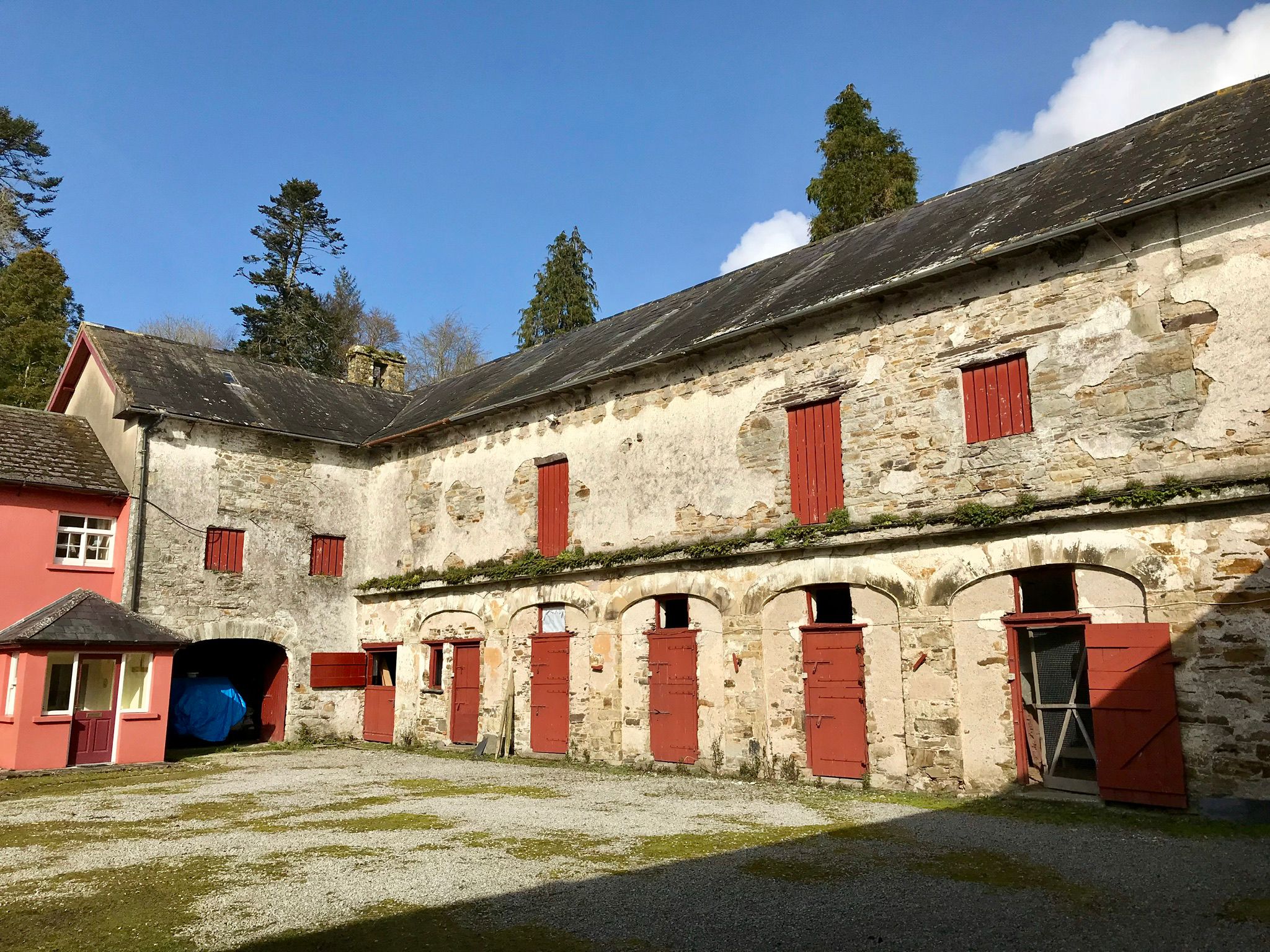
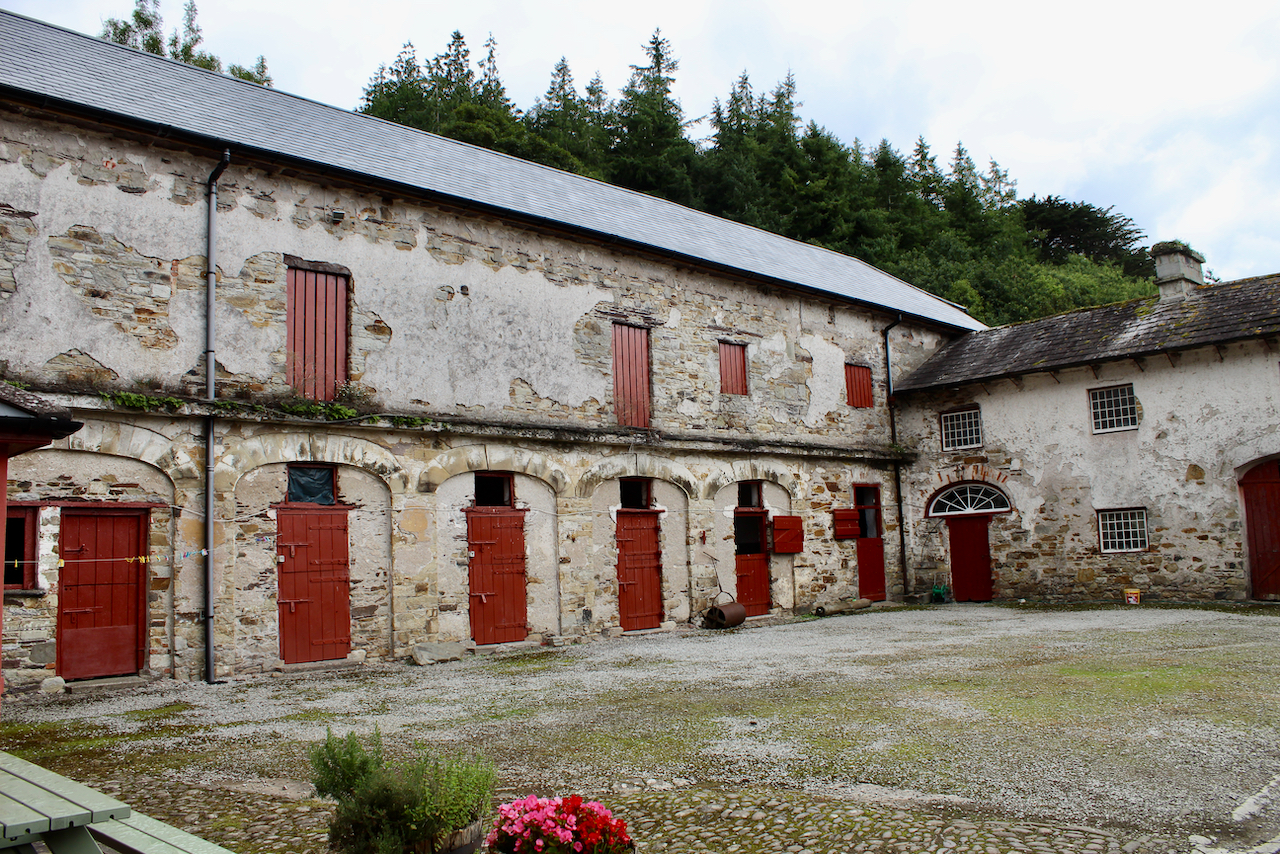
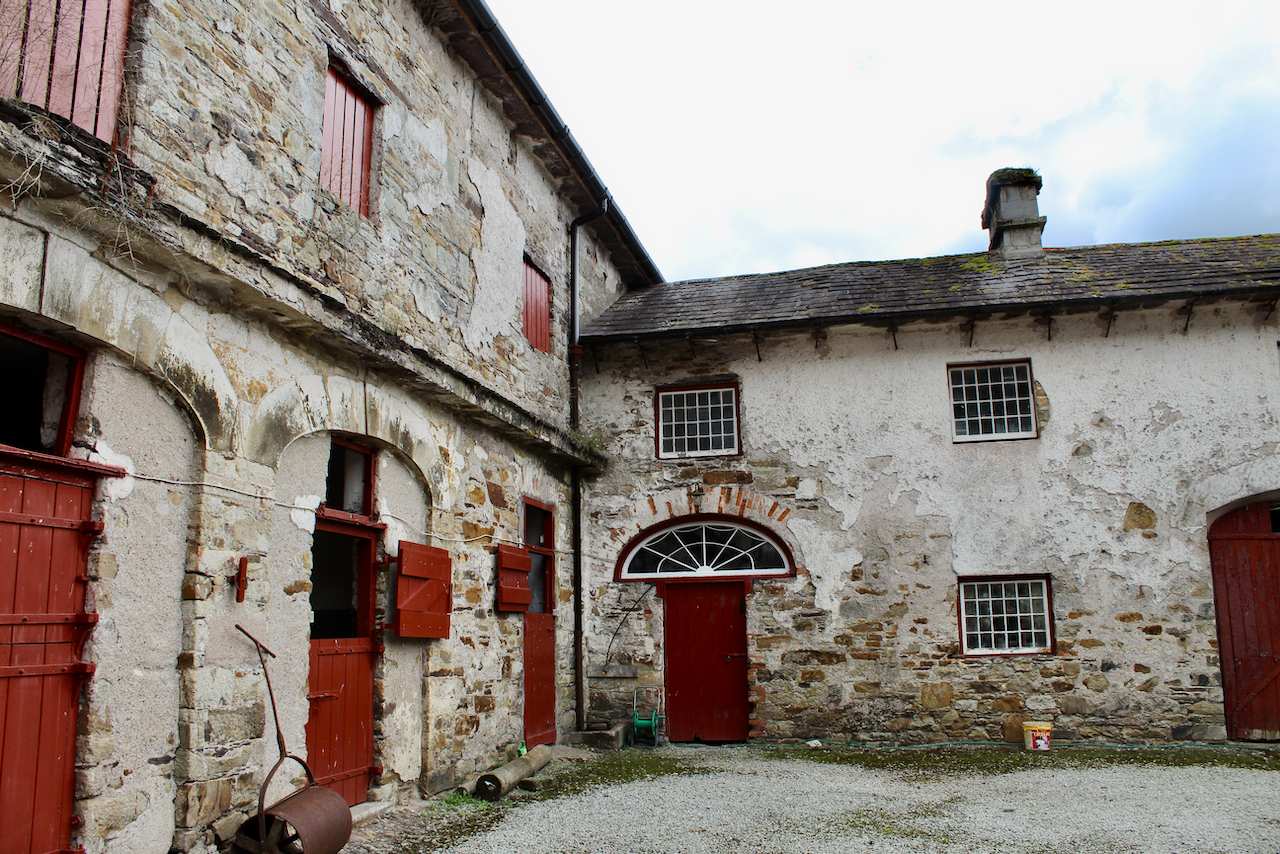
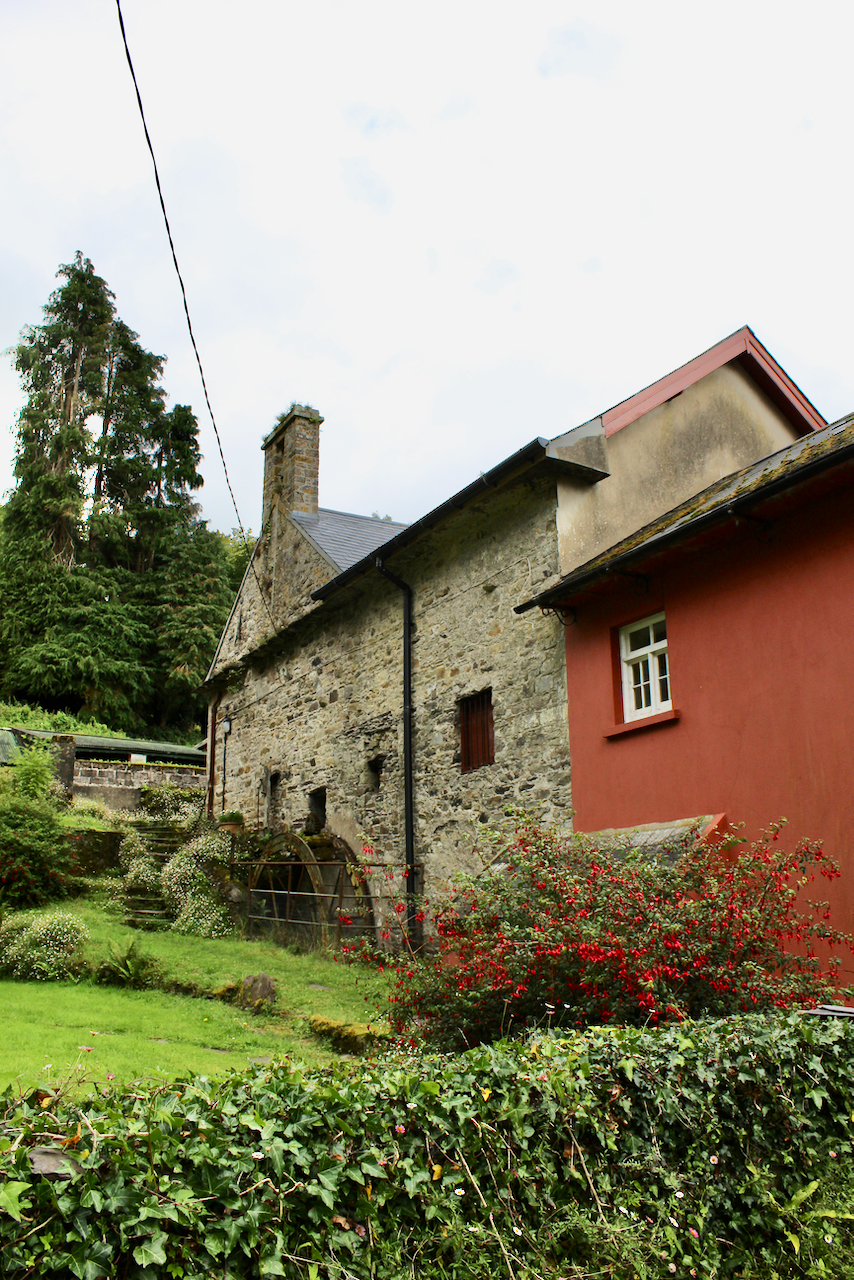
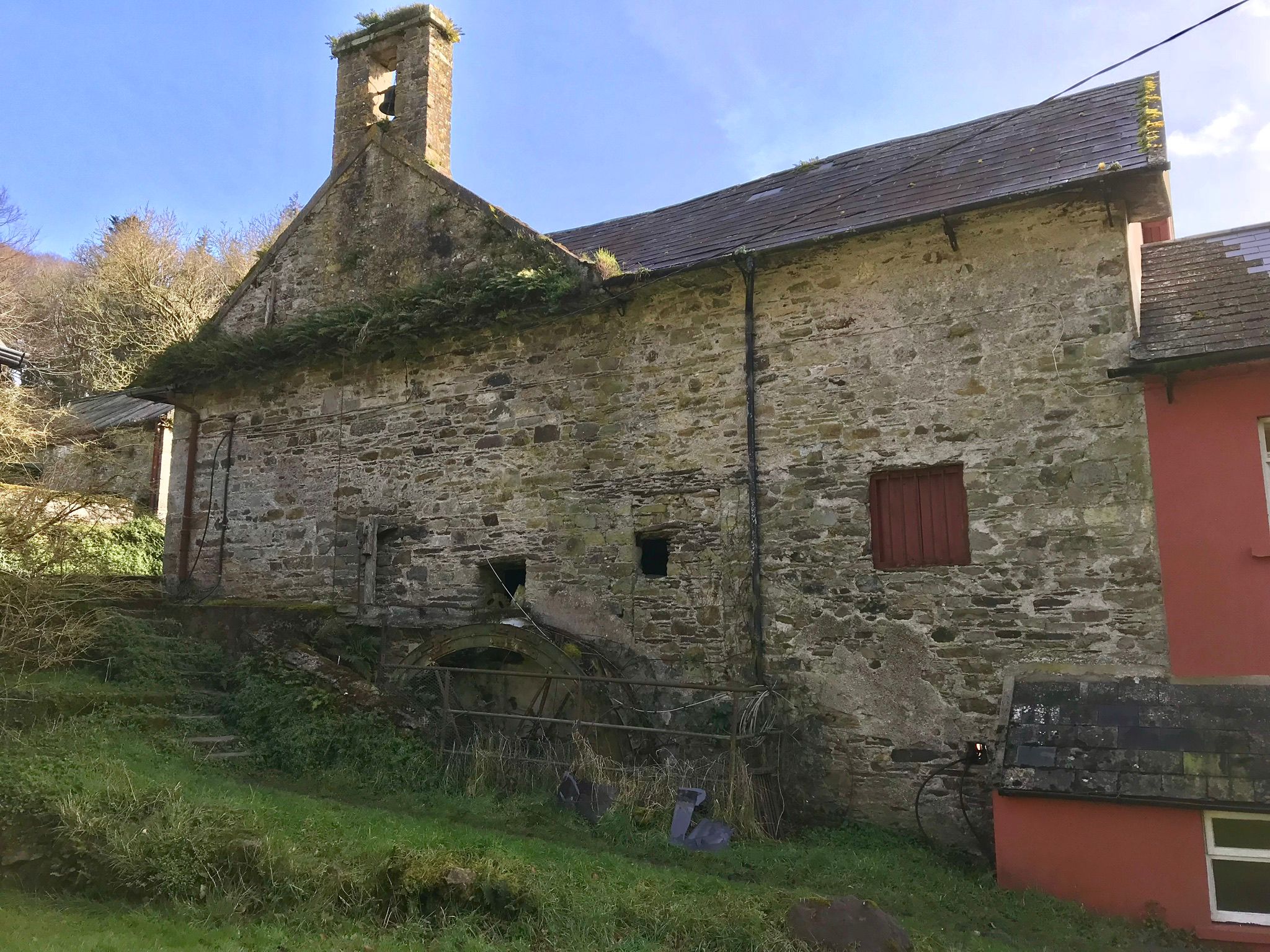
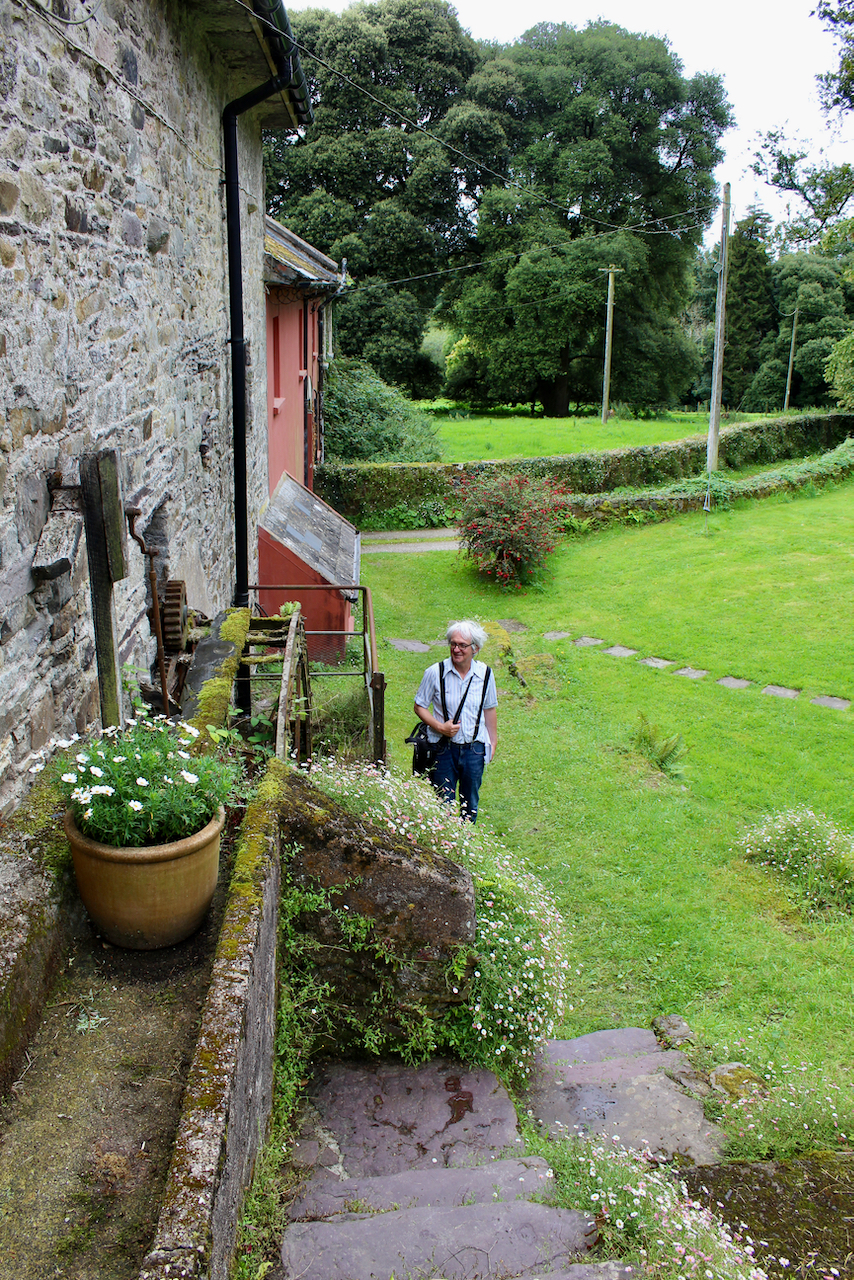
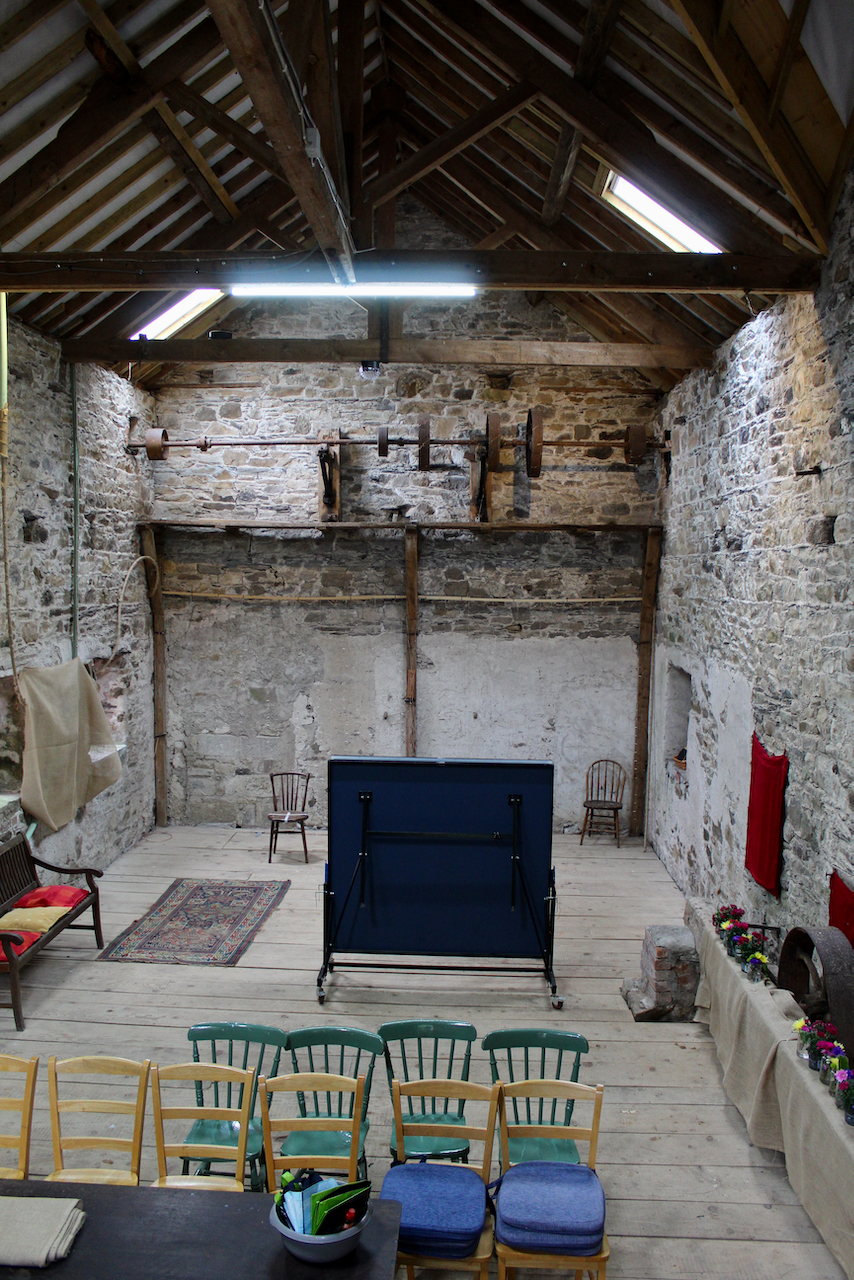
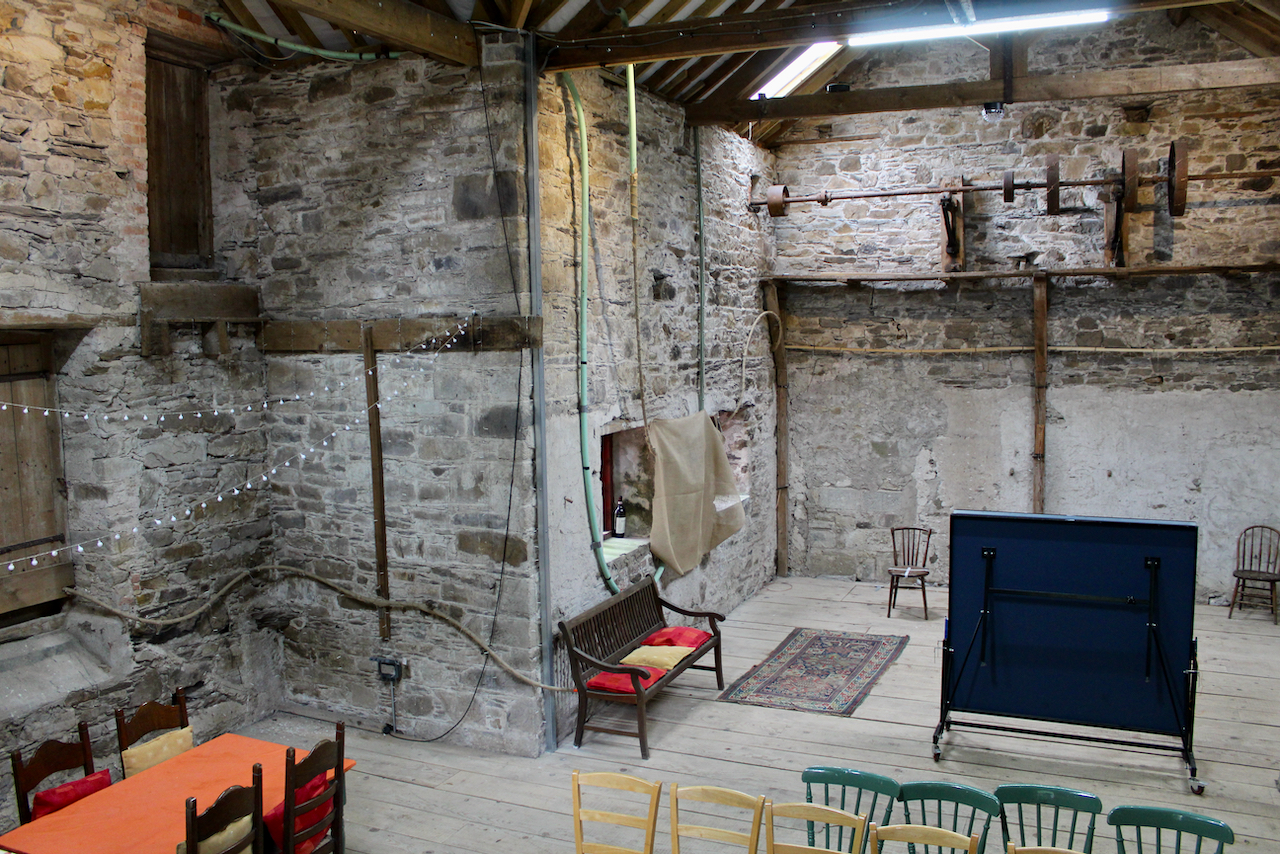
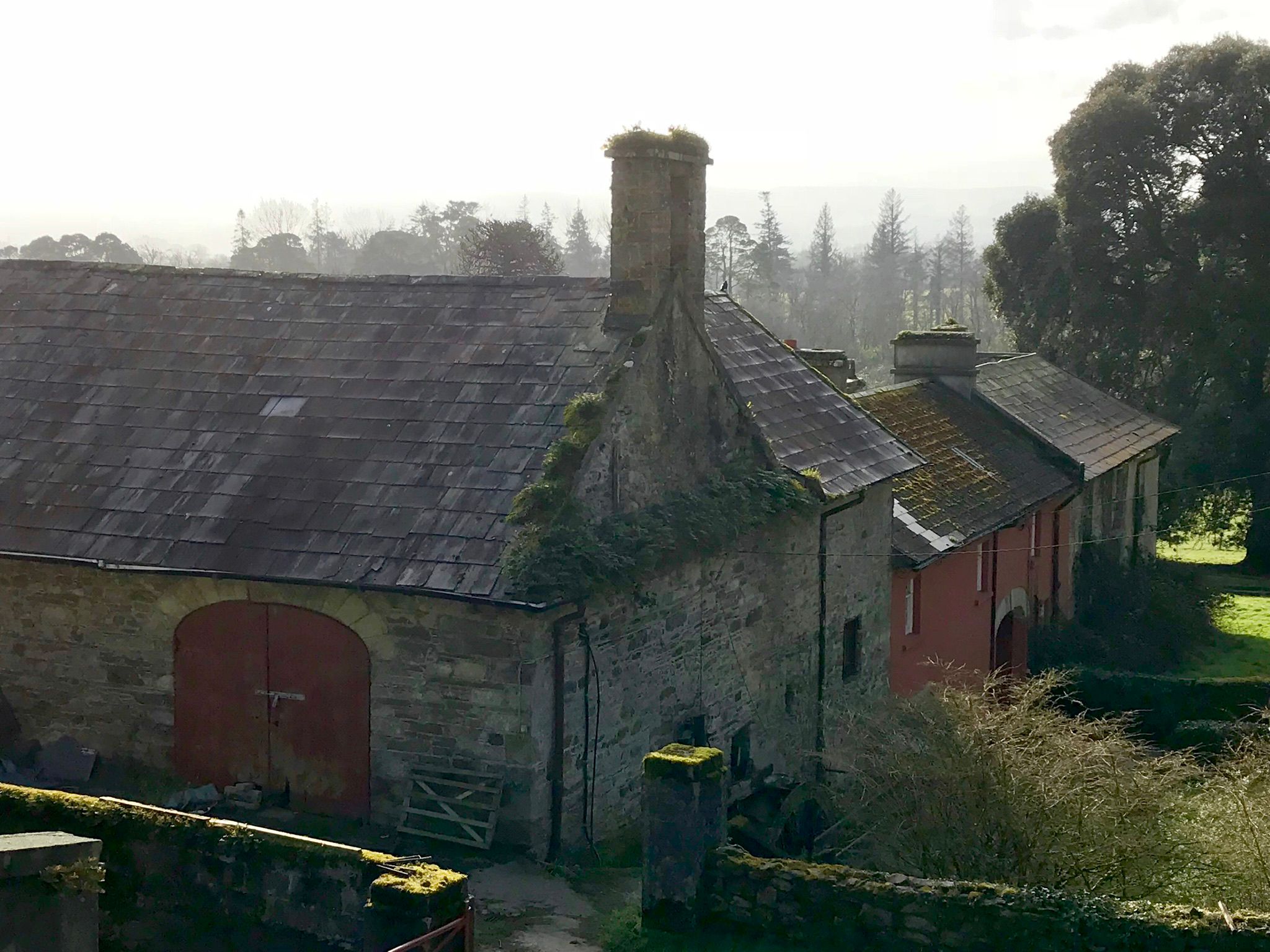
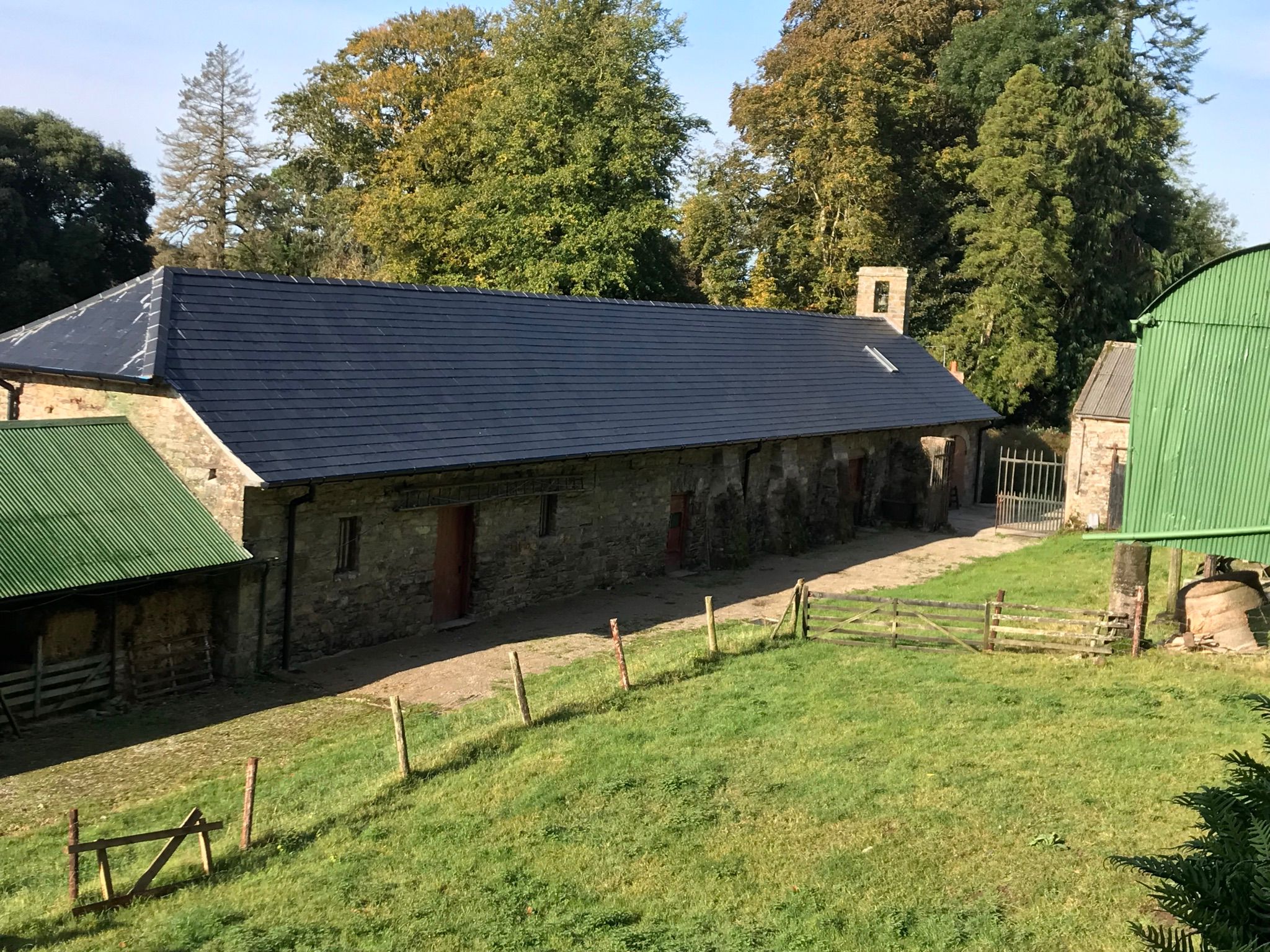
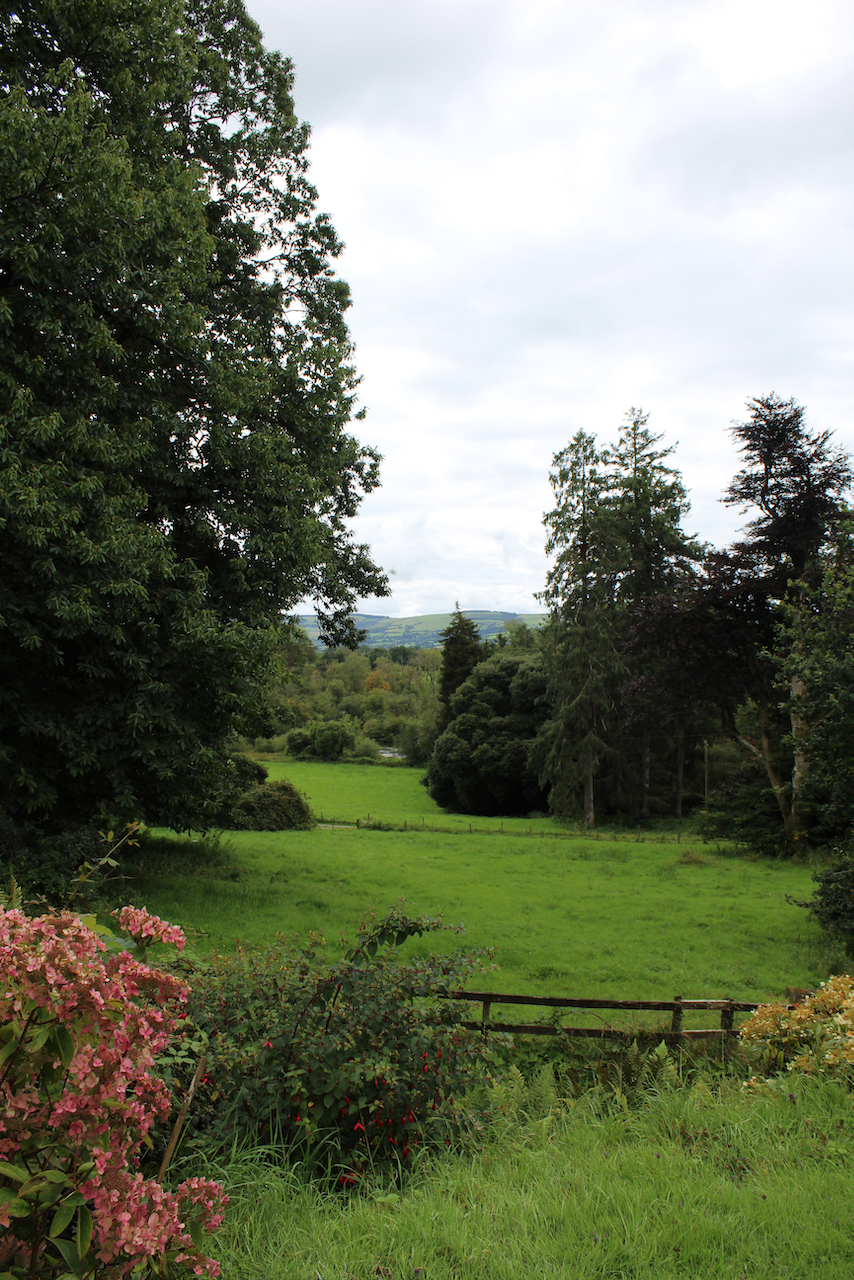
 Irish Historic Houses