Ballyseede Castle, Ballyseede, Tralee, Co. Kerry – section 482 Accommodation

www.ballyseedecastle.com

Open dates in 2026: Mar 14-Dec 31, 9am-11pm
Fee: Free to visit
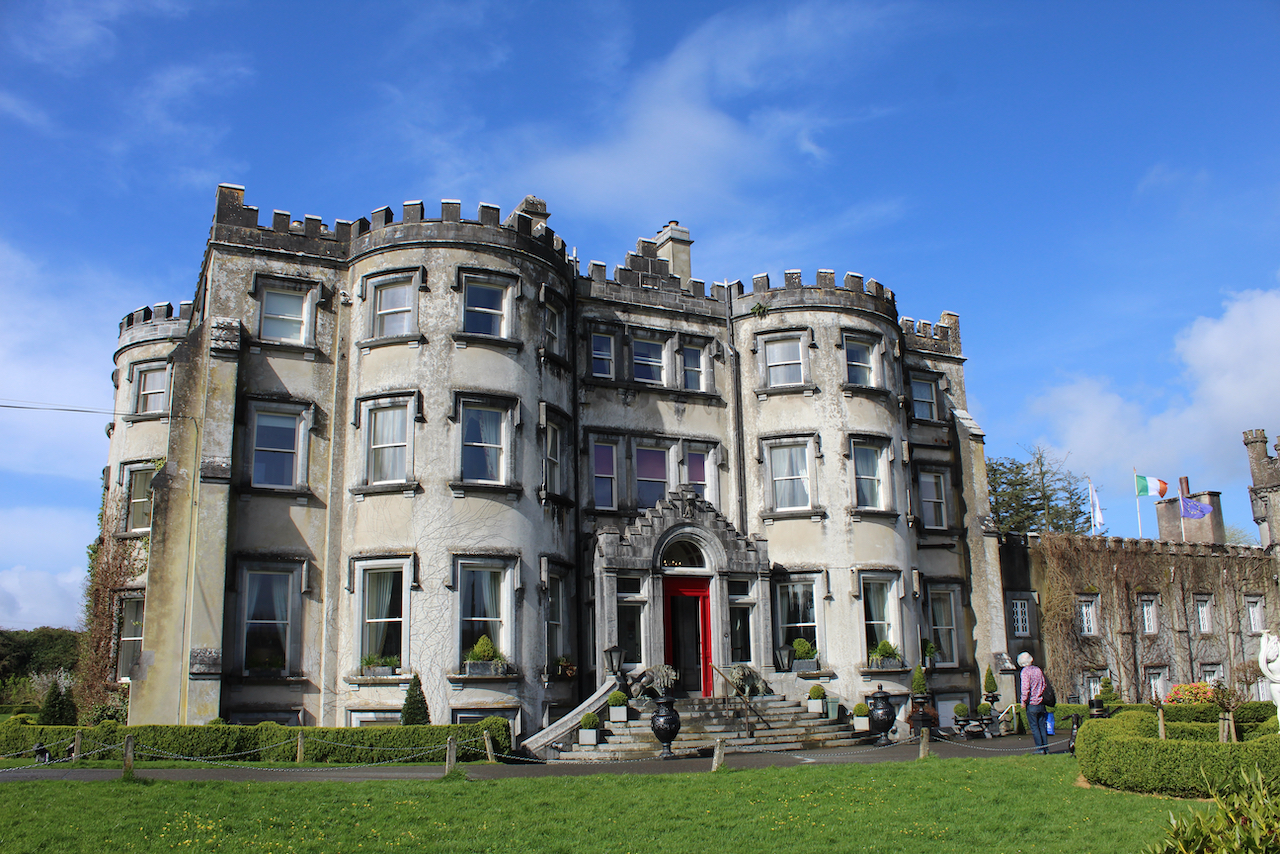
Ballyseede Castle, March 2023. © Jennifer Winder-Baggot, www.irishhistorichouses.com

Ballyseede castle (pronounced Ballyseedy) is now a hotel, and Stephen and I treated ourselves to a stay in March 2023. The house was built in around 1760 for the Blennerhassett family, and parts were added and gothicized over time. Gothic revival additions may have been designed by William and Richard Morrison. Later renovations were carried out by James Franklin Fuller.

The castle is now one of four owned by the Corscadden family. We have visited the other properties: Cabra Castle in County Cavan and Markree in County Sligo, both of which are also section 482 properties (see my entries). We also visited the fourth, Castle Bellingham in County Louth, kindly welcomed by Patrick, who showed us around and I told him of my website. I am in the process of writing about that in my “Places to visit and stay in County Louth” page, still a work in progress.
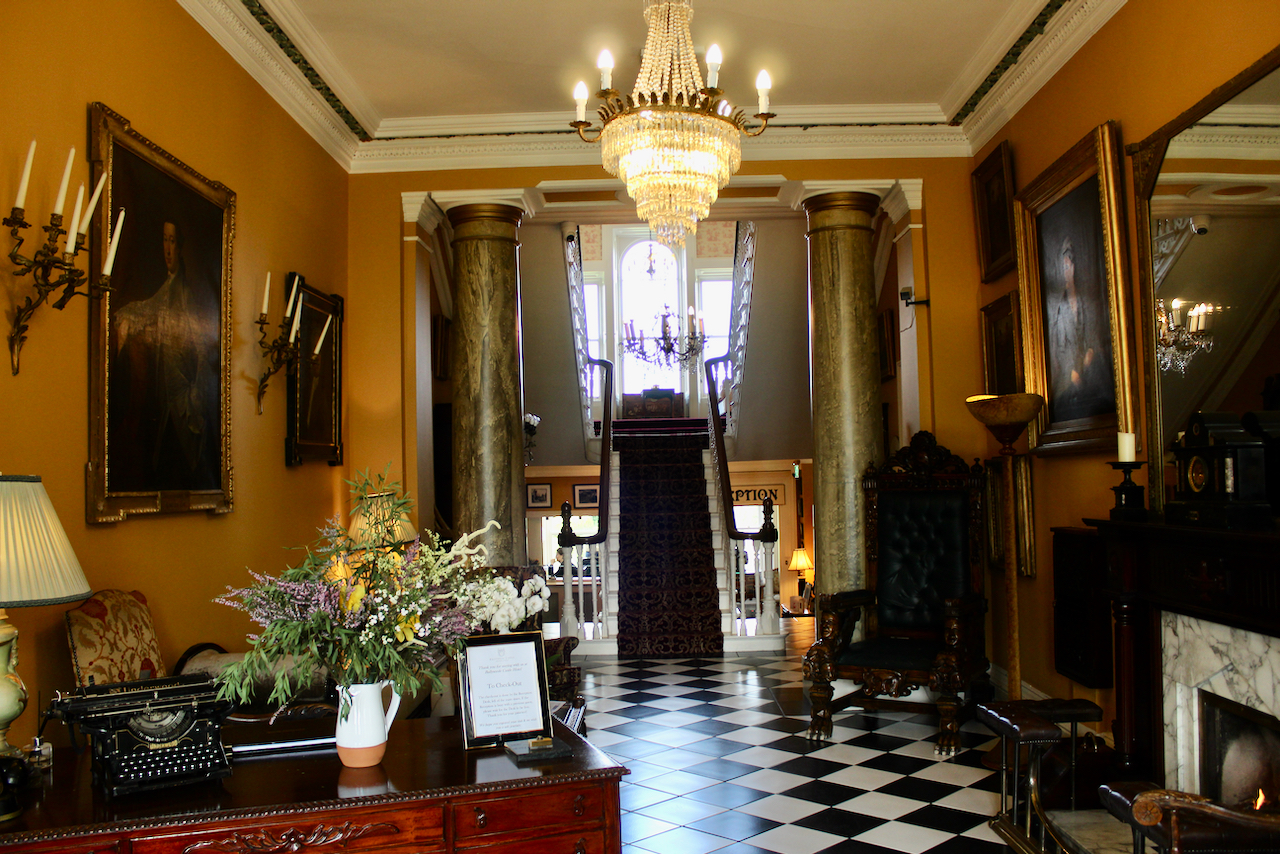
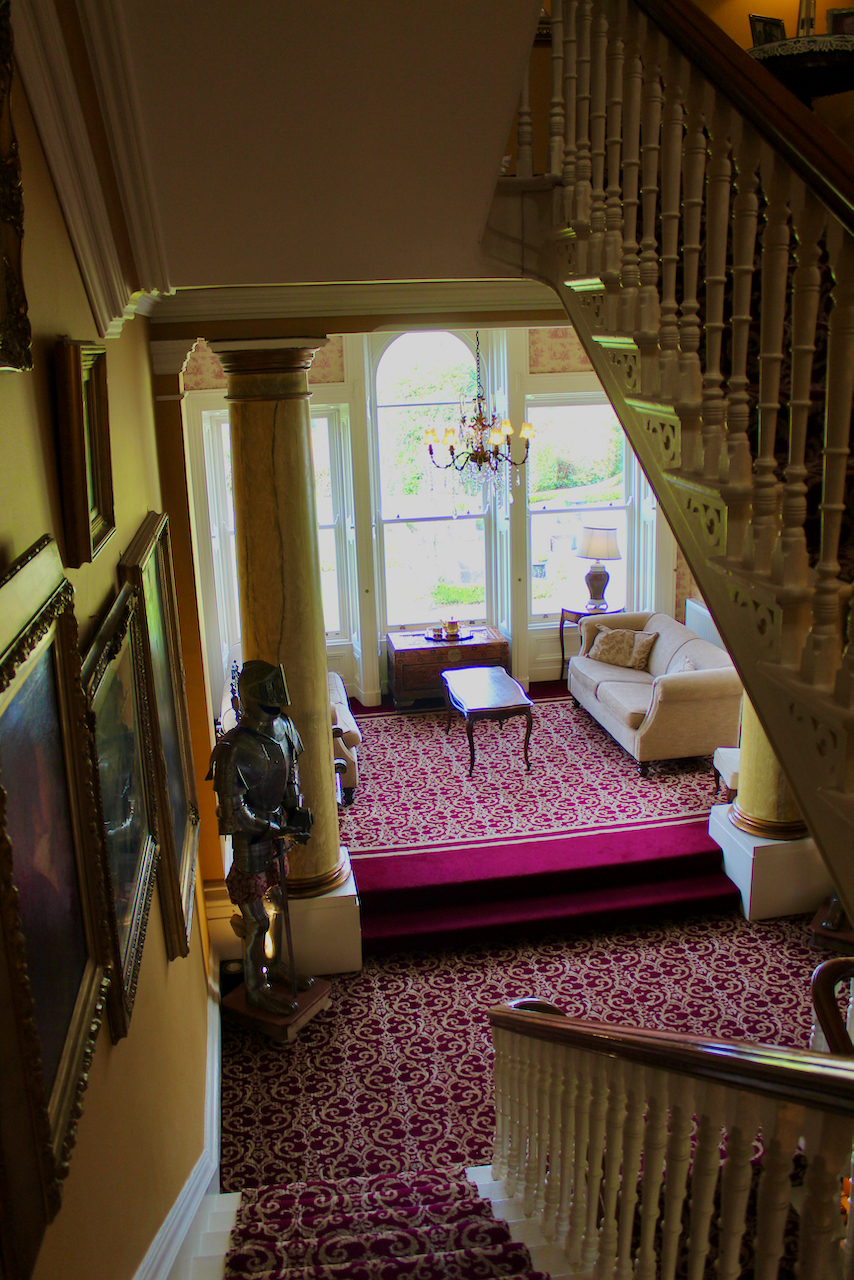
Ballyseede Castle, March 2023: bifurcating staircase rising behind a screen of Doric columns at one end of the hall. © Jennifer Winder-Baggot, www.irishhistorichouses.com

The website tells us:

Take a step back in time with a hotel steeped in history that offers luxurious surroundings within 30 acres of private gardens and woodland.

The Doric columns that lead to an elegant oak staircase in the lobby are indicative of the grand decoration throughout the hotel. Impressive drawing rooms with ornate cornices, adorned with marble fireplaces provide an ideal setting for afternoon tea or morning coffee.

Elegant accommodation, fine dining with traditional Irish cuisine, rooms that tell a story and the picturesque natural setting, will all comprise to make your stay at Ballyseede Castle an unforgettable one.”
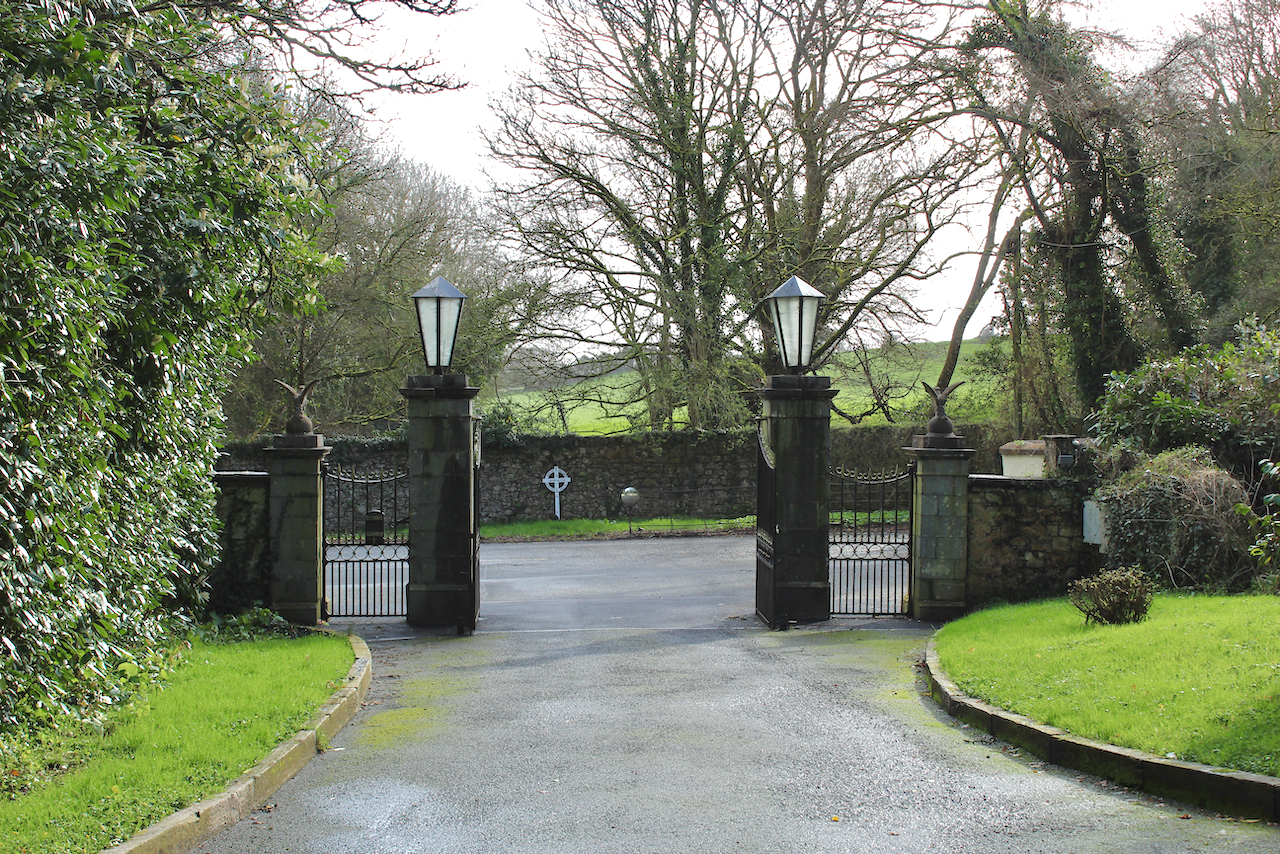
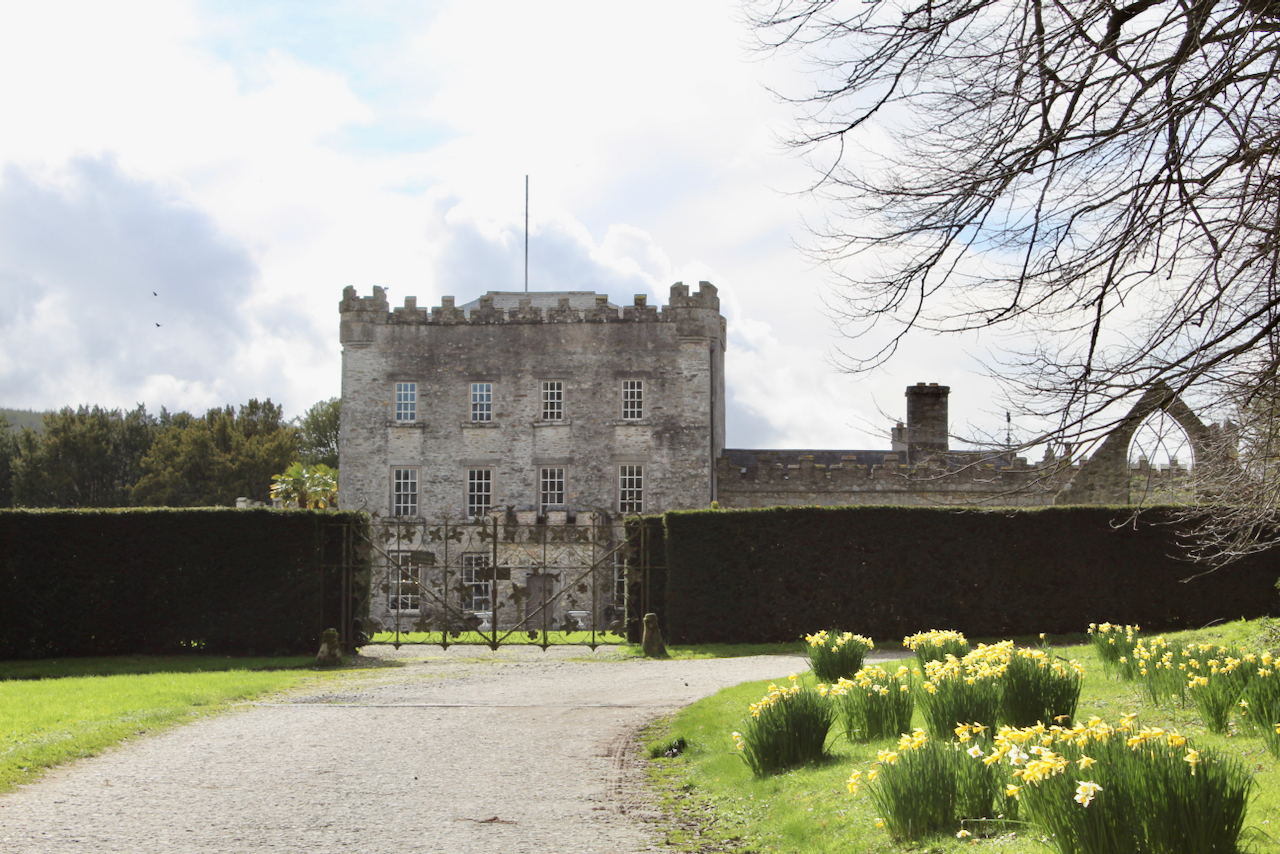
The entrance gates are described in the National Inventory: “Gateway, built c. 1825, comprising four limestone ashlar piers with wrought-iron double gates, flanking pedestrian gates and curved quadrant walls with half-round projecting bays having blind pointed arches. Painted and rendered walls with stone copings and having arched blind openings with painted sills.” © Jennifer Winder-Baggot, www.irishhistorichouses.com
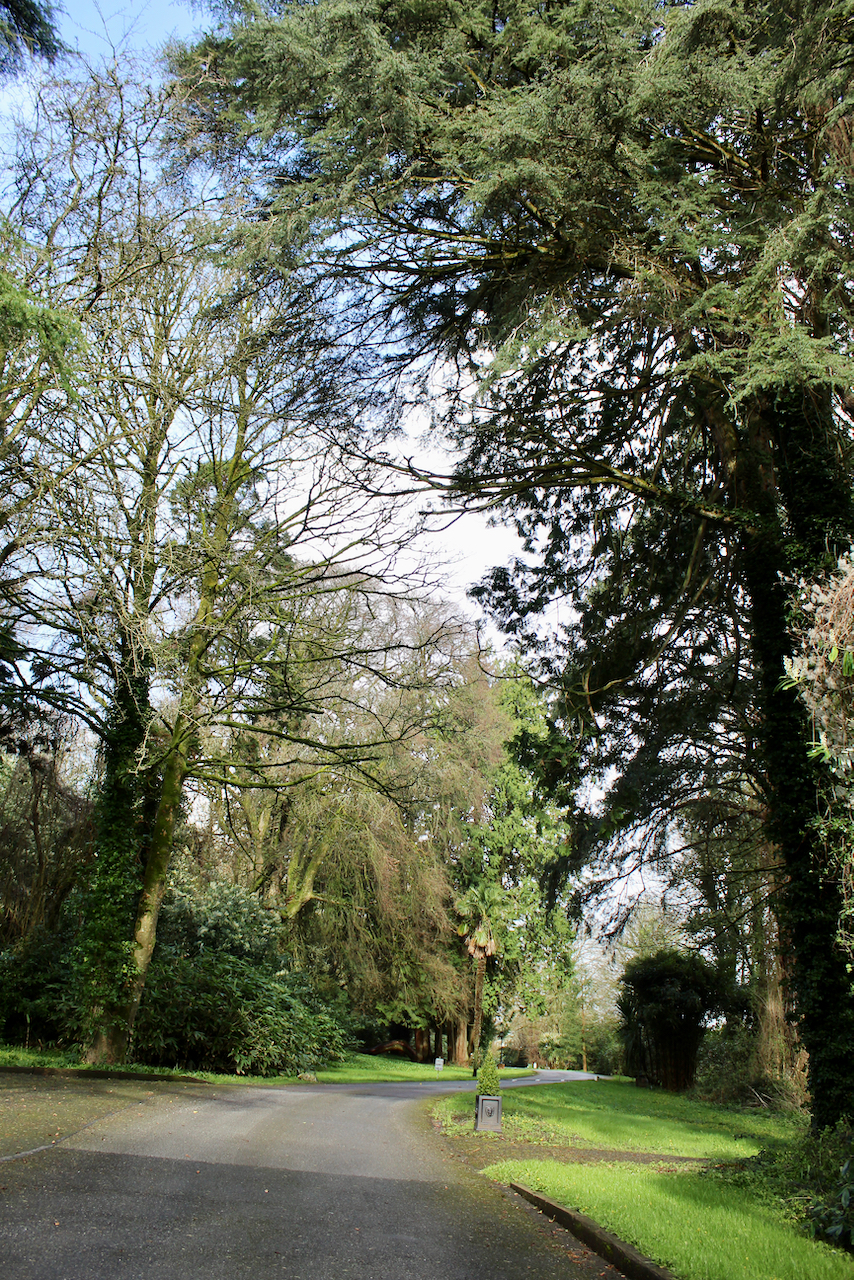
The lovely drive up to the castle. © Jennifer Winder-Baggot, www.irishhistorichouses.com
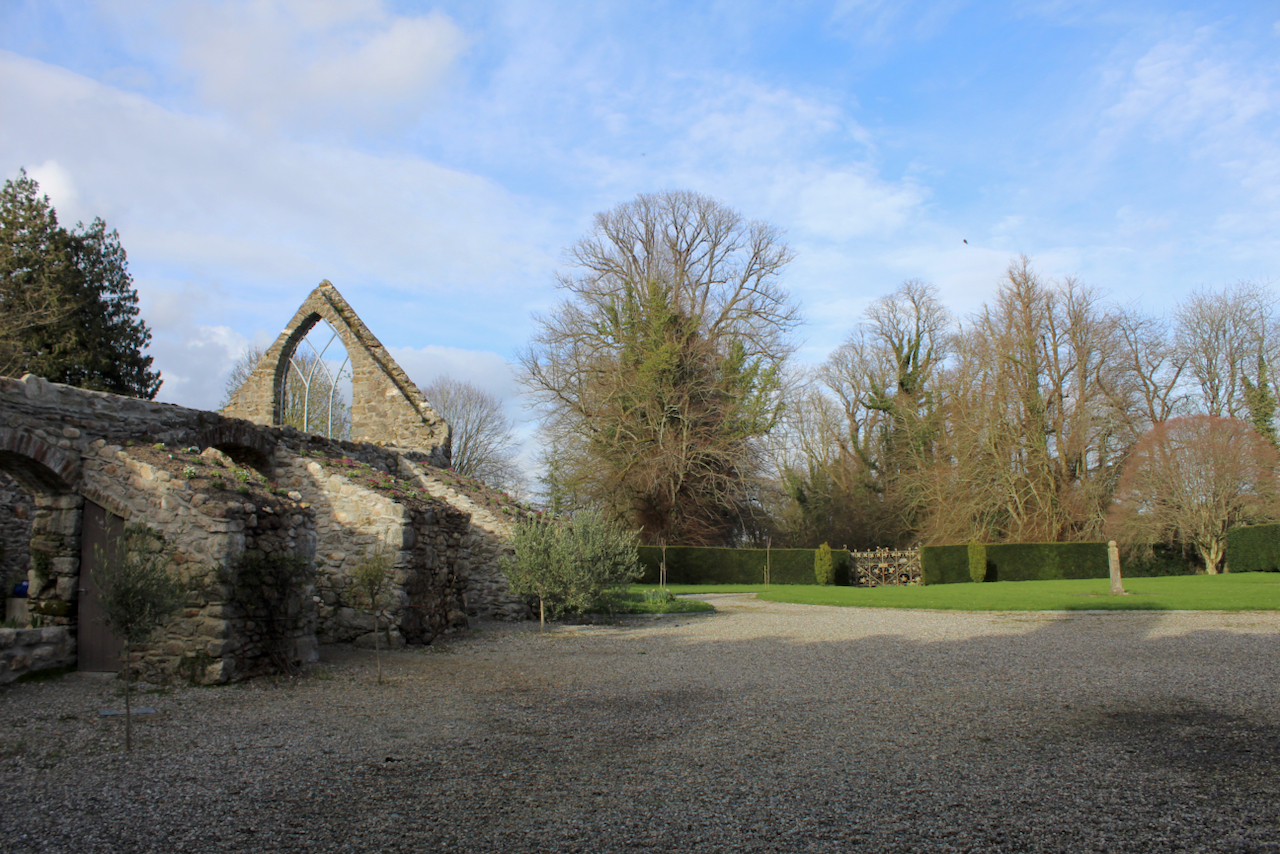
Ballyseede, March 2023. © Jennifer Winder-Baggot, www.irishhistorichouses.com
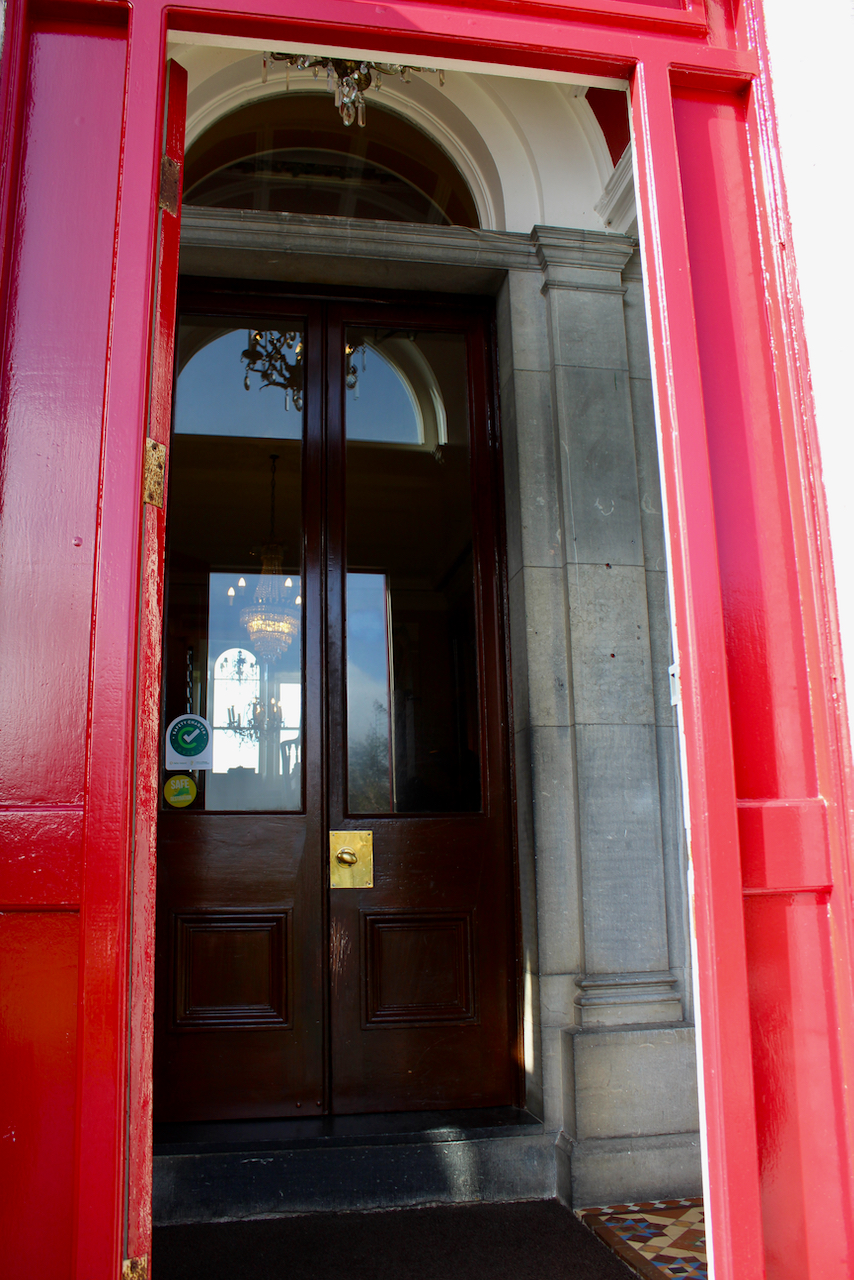
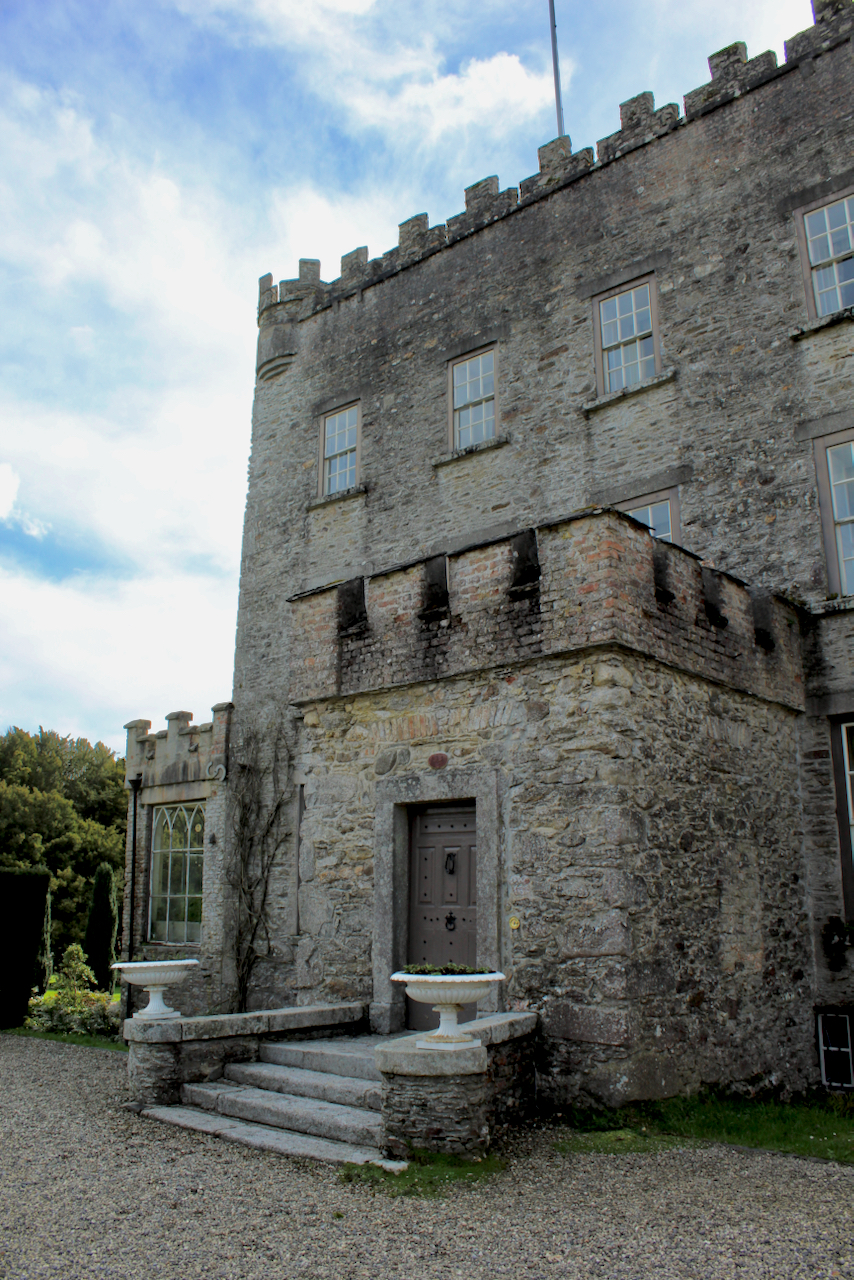
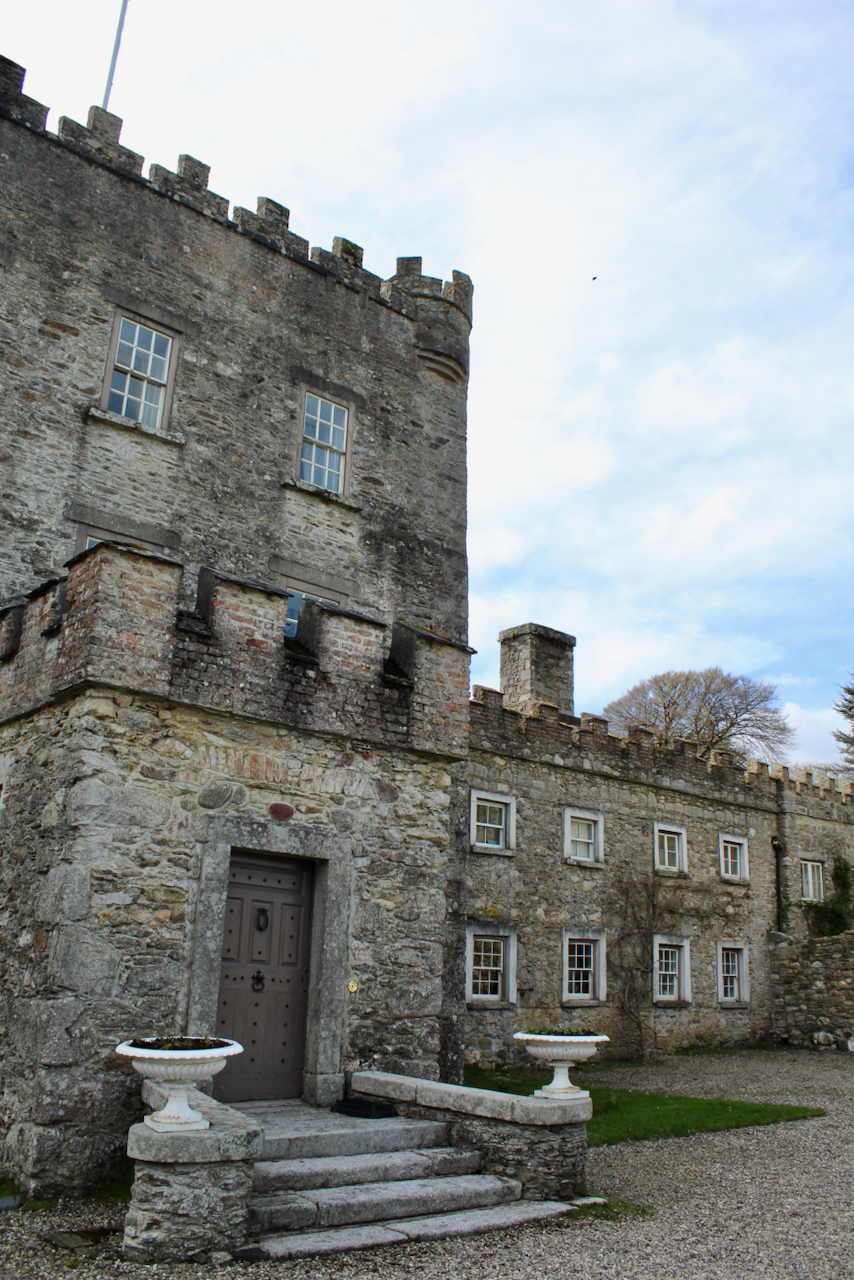
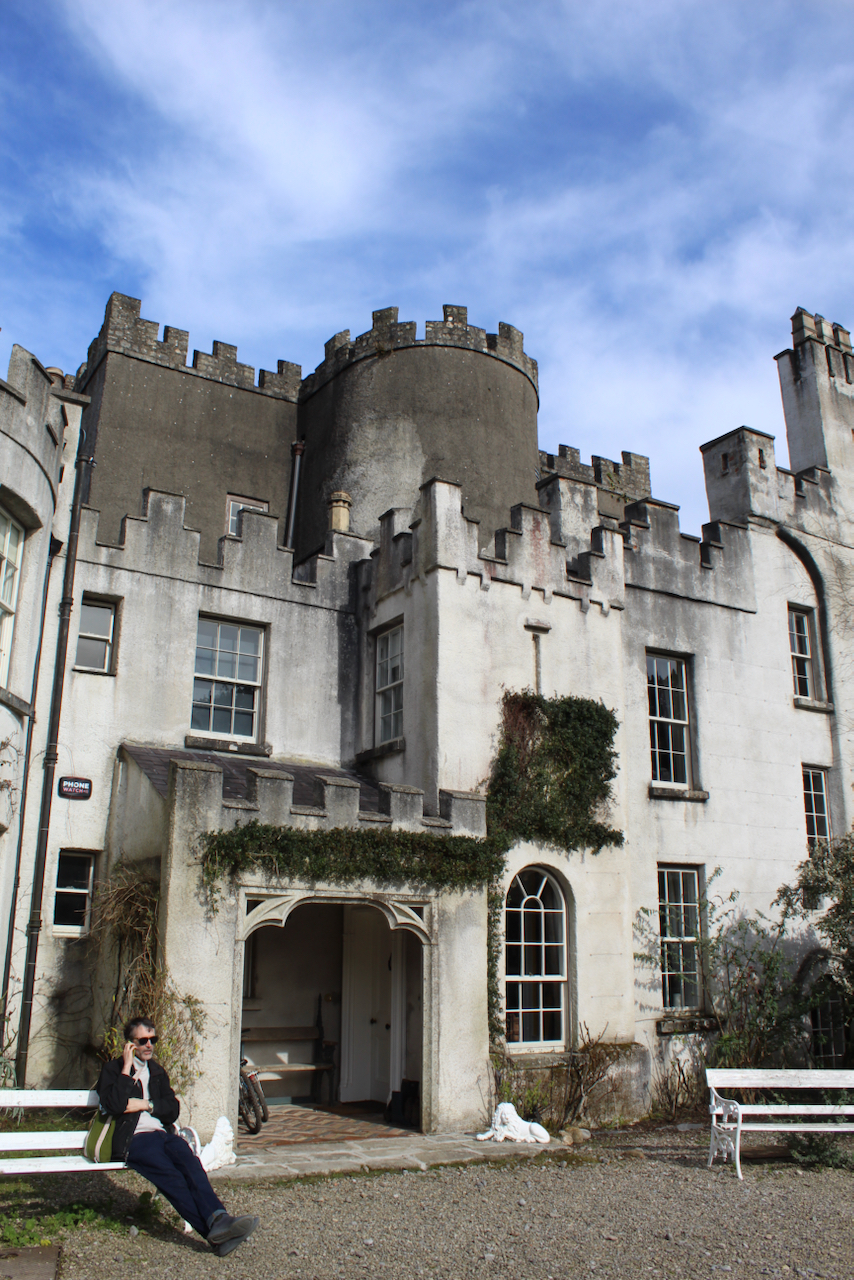
Ballyseede Castle, March 2023: Limestone ashlar porch with crow-step gable and arched doorway with double-leaf panelled door. This porch was added in around 1880. © Jennifer Winder-Baggot, www.irishhistorichouses.com
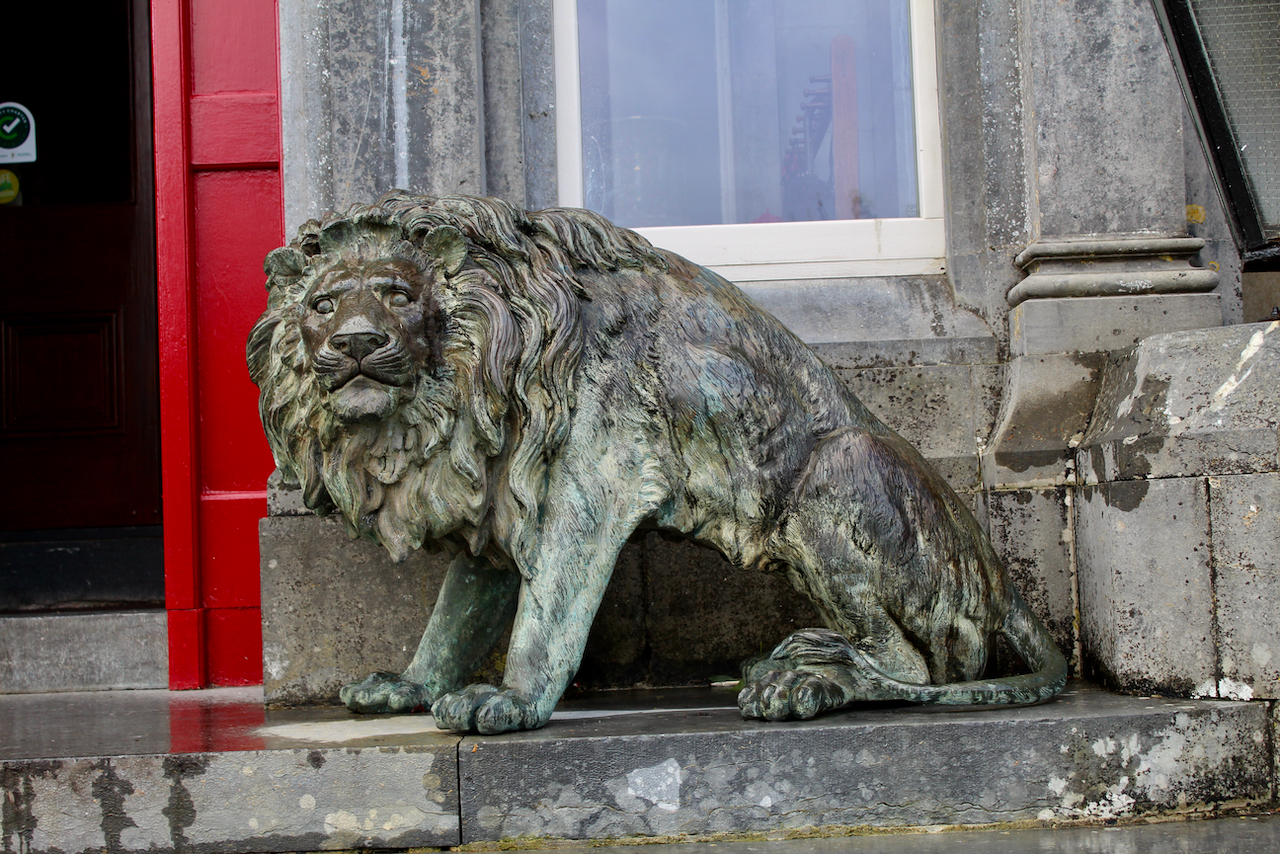
Ballyseede Castle, County Kerry. Impressive lions flank the door. © Jennifer Winder-Baggot, www.irishhistorichouses.com
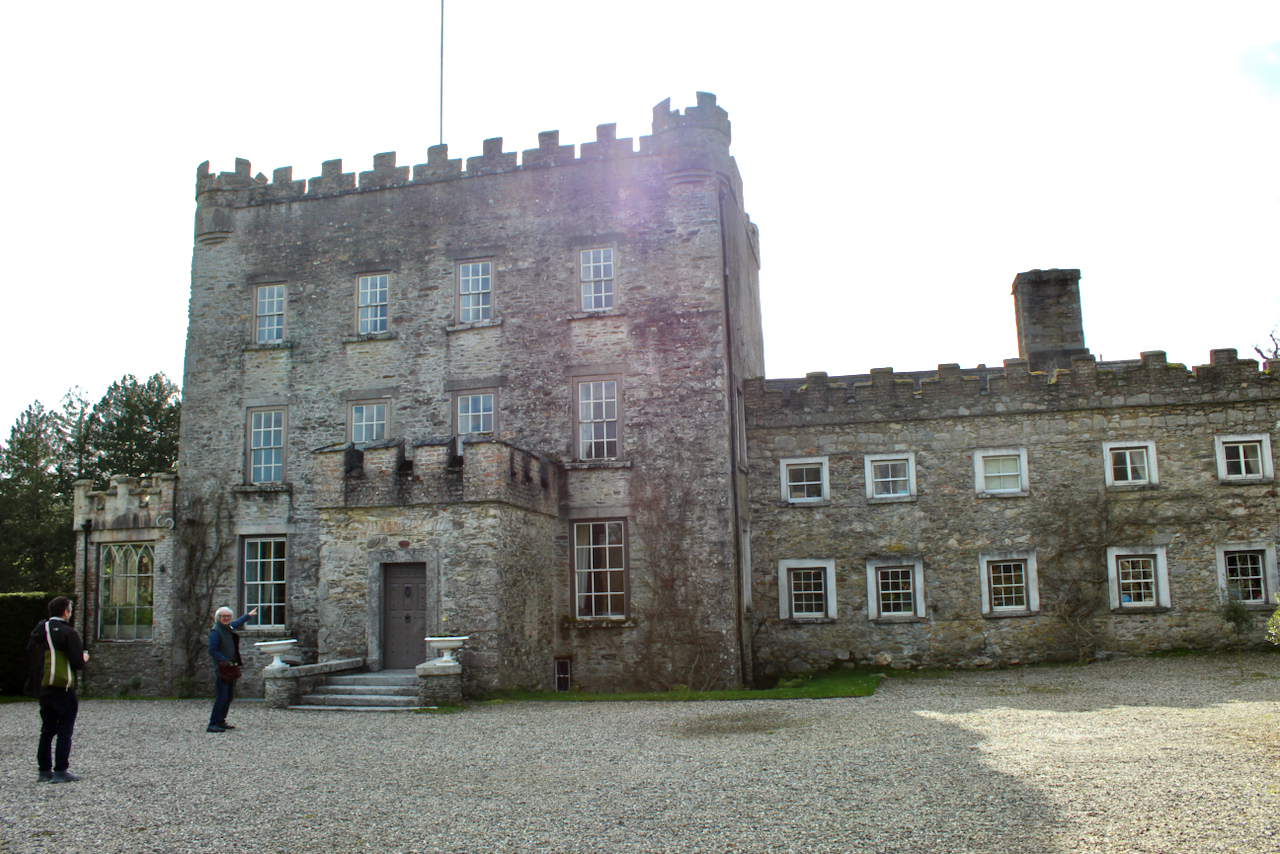
Ballyseede Castle, March 2023. © Jennifer Winder-Baggot, www.irishhistorichouses.com

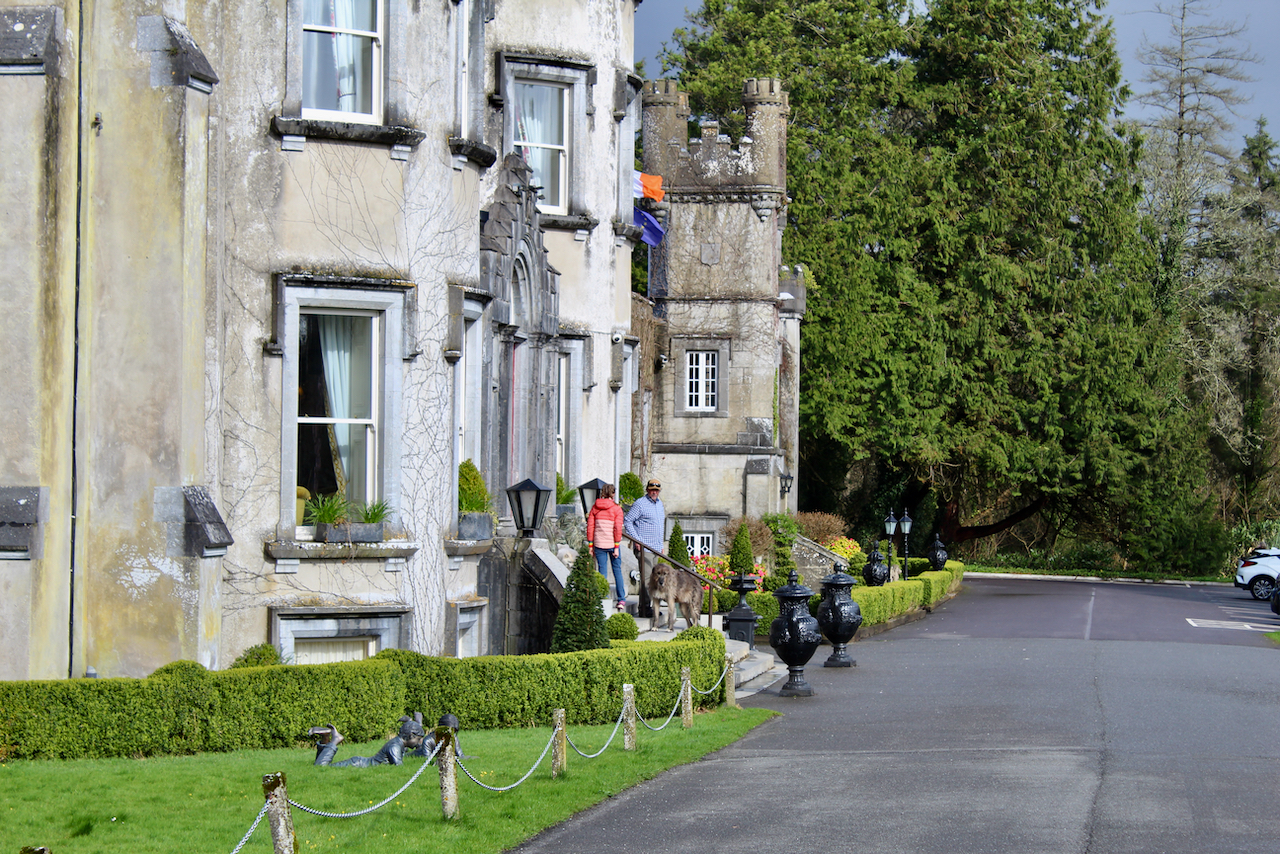
The castle comes complete with dogs, a trademark of the Corscadden hotels. The Irish wolfhounds add elegance to wedding photographs.
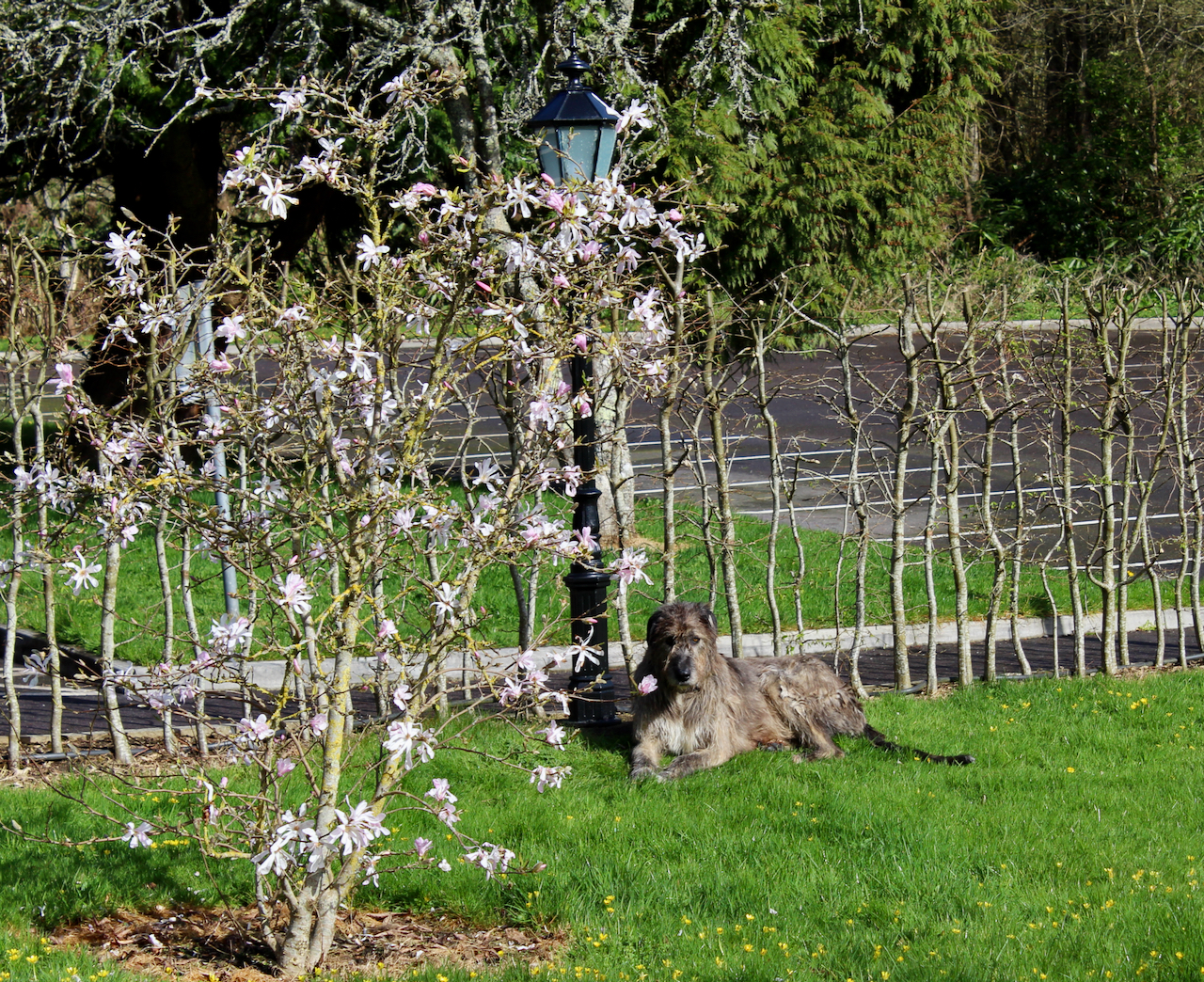
The castle comes complete with dogs, a trademark of the Corscadden hotels. © Jennifer Winder-Baggot, www.irishhistorichouses.com
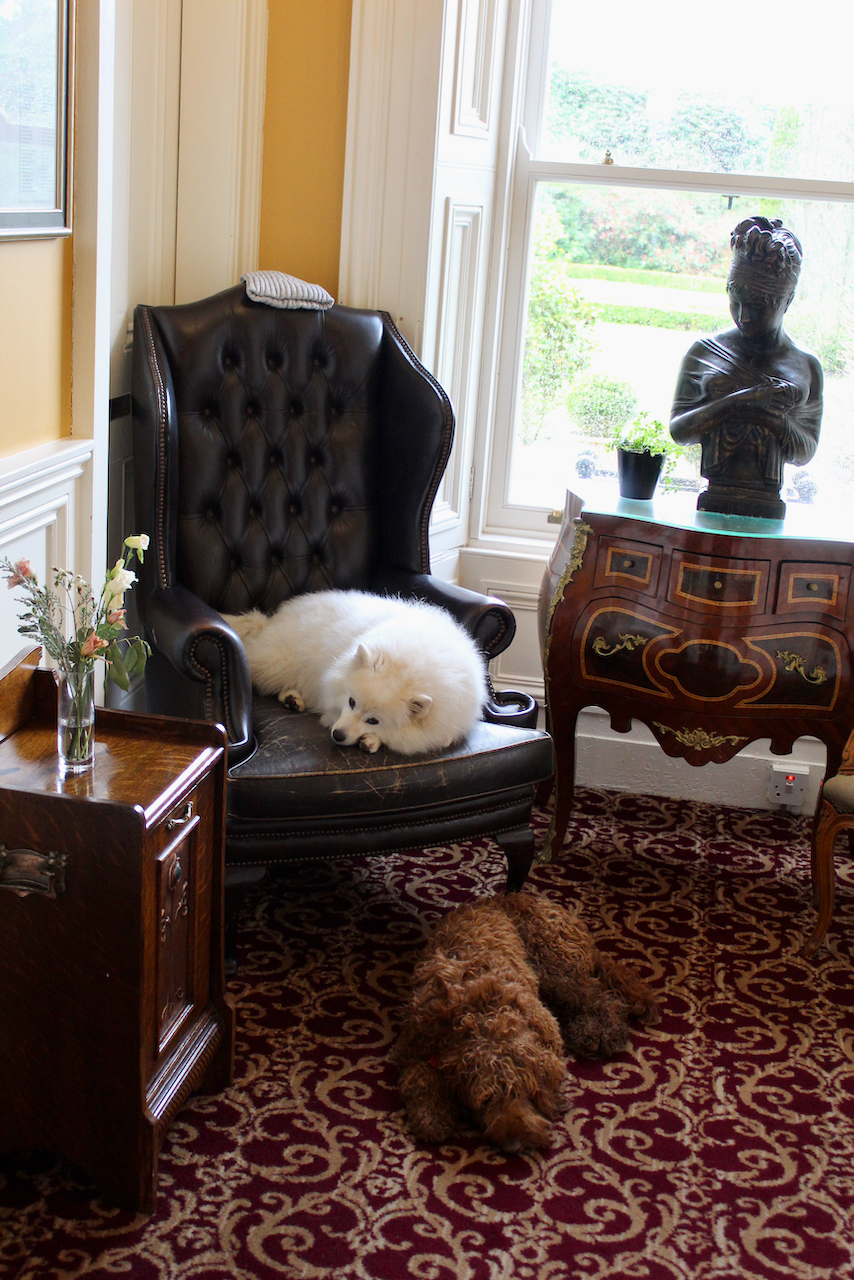
I fell in love with this affectionate little doggie, who had a particularly thick soft coat. © Jennifer Winder-Baggot, www.irishhistorichouses.com
Her brown shaggy friend was adorable too and they vied for attention, full of excitement every time I stopped to pet them. © Jennifer Winder-Baggot, www.irishhistorichouses.com

The Landed Estates database tells us that the Blennerhassett family was originally from Cumbria in the north of England. Robert Blennerhassett was the first to settle in Kerry. He married Elizabeth, daughter of Captain Jenkin Conway of Castle Conway, Killorglin, County Kerry, formerly known as Killorglin Castle (now a ruin). He was originally from Pembrokeshire in Wales.

Between 1611 and 1618 Robert acquired lands in Ireland. He held the office of Member of Parliament (M.P.) for Tralee in 1613 and between 1635 and 1639. He lived in an old castle named Ballycarty Castle and also owned the old Ballyseedy Castle. The current Ballyseede Castle is different from the original Ballyseedy Castle, a castle that had belonged to the Fitzgeralds, located at the west end of Ballyseedy Wood.

The Landed Estates database tells us that a John Blennerhassett was granted an estate of 2,787 acres in the barony of Trughanacmy, County Kerry (where Ballyseede Castle and Ballyseedy woods are located) and 2,039 acres in the barony of Fermoy, County Cork under the Acts of Settlement in 1666. [1] This John is probably son of Robert.
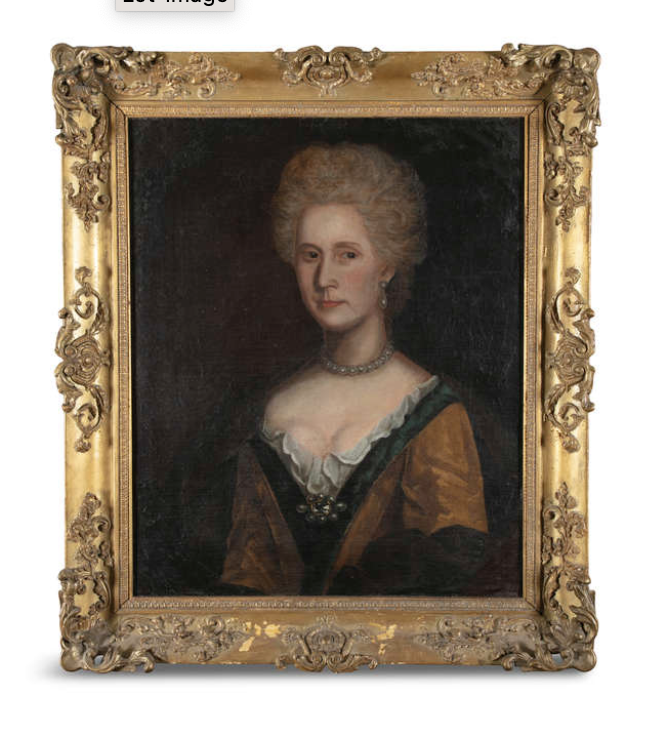
Lady Blennerhassett (I’m not sure which one), Ballyseedy Castle, Tralee, Co. Kerry, Irish school 18th century, Adams auction 19 Oct 2021

John Blennerhassett, son of Robert and Elizabeth, was, following his father’s footsteps, MP for Tralee [2]. He too lived in Ballycarty Castle, now a ruin. He married Martha Lynn, daughter of George from Southwick Hall, Northamptonshire, England. They had several children and he died in 1676.

His younger brothers Edward and Arthur married and lived nearby.

The lawn in front of the castle. © Jennifer Winder-Baggot, www.irishhistorichouses.com

John and Martha’s son John was also MP for Tralee and high sheriff, but died only a year after his father, in 1677. He had married Elizabeth Denny in 1654, whose family lived in Tralee Castle (it no longer exists). She was the daughter of Edward Denny (1605-1646) who was also an MP and High Sheriff for County Kerry. [see 2] The Denny and Blennerhassett families intermarried over generations.

Edward Denny (1547-1600), who was granted land in Tralee County Kerry after the Desmond Rebellions photograph courtesy of the Roaringwaterjournal website.

In her Voices from the Great Houses: Cork and Kerry (2013) Jane O’Hea O’Keeffe tells us about the grandfather of Edward Denny (1605-1646), Edward Denny (1547-1599/1600), who moved to Kerry:

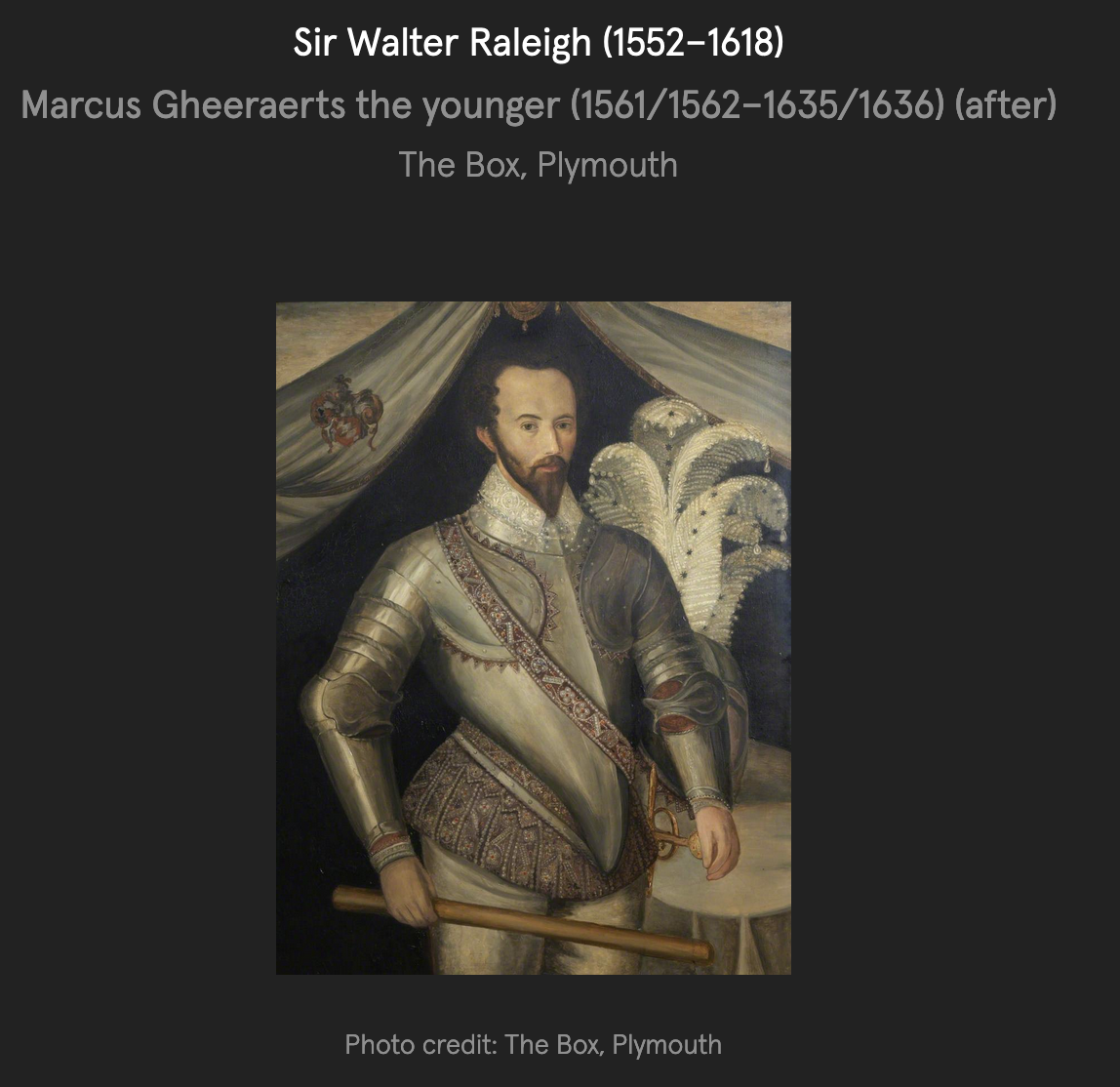
Following the Desmond rebellions of 1569-73 and 1579-83, Sir Edward Denny of Waltham Abbey, Herefordshire, who was born in 1547, was granted 6,000 acres of land around Tralee, County Kerry. The ruined thirteenth century Tralee Castle, formerly a Desmond property, was included in the grant. Sir Edward Denny was a relative of Sir Walter Raleigh, who was also granted 42,000 acres in Cork and Waterford at this time.” [3]
John Blennserhassett and Martha had other children beside John who died in 1677. Their son Robert also held the office of MP for Tralee and High Sheriff of County Kerry in 1682. He married Avice Conway (d. 1663), a daughter of Edward Conway of Castle Conway, County Kerry. Their son John (d. circa 1738) inherited Castle Conway from his mother.

John (d. 1677) and Elizabeth née Denny’s son John (d. 1709) was MP for Tralee, Dingle and County Kerry at various times. He married Margaret Crosbie (1670-1759) of Tubrid, County Kerry (Tubrid House no longer exists, and should not be confused with Tubbrid Castle in County Kilkenny). Her father Patrick held the office of High Sheriff of County Kerry in 1660.

Margaret née Crosbie and John Blennerhassett had several children. After John’s death in 1709 Margaret married David John Barry in the same year, son of Richard Barry (1630-1694) 2nd Earl of Barrymore but they had no children together.

Margaret and John’s heir was Colonel John (1691-1775), who was called “Great Colonel John” thanks to his hospitality. He followed in his forebears’ footsteps, becoming an MP. In 1727 he signed a family compact with Maurice Crosbie of Ardfert and Arthur Denny of Tralee, partitioning the county representation among the three families [see 2].

Colonel John married Jane Denny, daughter of Colonel Edward Denny (1652-1709) of Tralee Castle.

A website about the Blennerhassett family tells us that in 1721 the first “Ballyseedy House” was built among ruins of the Geraldine Ballyseedy Castle at the west end of Ballyseedy Wood. Colonel John lived here with his family. [4]

The foundation stone dated 1721 over the seventeenth century fireplace. The foundation stone is from the earlier Blennerhassett home called “Ballyseedy Castle,” built in 1721, and the fireplace may be from the earlier Ballycarty Castle or the Desmond Ballyseedy Castle. This fireplace is now in Ballyseede Castle (built c. 1780). © Jennifer Winder-Baggot, www.irishhistorichouses.com

It was Margaret and John Blennerhassett’s younger son William (1705-1785) who built the house which has become the hotel Ballyseede Castle. It was built around 1780 (the National Inventory says c. 1760) and named “Elm Grove.” [4] William died during its construction and the work was completed around 1788 by his son William Blennerhassett Jr. (c. 1735-1797).

We will return to William and his family later. First, let’s look at the older son Colonel John and his offspring.

Colonel John’s son John Blennerhassett (1715-1763) would have succeeded his father and lived in the original Ballyseedy House, if he had not predeceased him in 1763. This John was admitted to the Middle Temple in London to train for the legal profession, and he also held the office of High Sheriff of County Kerry, in 1740, and M.P. for County Kerry between 1751 and 1760. He married Anne Crosbie, daughter of William Crosbie of Tubrid, County Kerry, who was MP for Ardfert between 1713 and 1743. Her mother was Isabella Smyth from Ballynatray, County Waterford, another Section 482 property – gardens only – that I’ll be writing about soon. Anne Crosbie had been previously married to John Leslie of Tarbert, County Kerry (another section 482 property which I hope to visit soon), but he died in 1736.

Anne died and John Blennerhassett remarried in 1753, this time wedding Frances Herbert, daughter of Edward Herbert (1693-1770) of Muckross, County Kerry. For more on Muckross House, see my entry on places to visit and stay in County Kerry.

Muckross House Killarney Co. Kerry, photograph by Chris Hill 2014 for Tourism Ireland, Ireland’s Content Pool.

Neither of John’s sons married and one died young. His house, Ballyseedy House, fell into disuse.

John’s daughter Frances married Reverend Jemmett Browne (d. 1797) of Riverstown, County Cork, another Section 482 property (see my entry).

Colonel John and Jane née Denny had a younger son, Arthur (1719-1799), who served as MP for Tralee between 1743 and 1760. He married Jane Giradot and had two daughters but no sons. His daughter Jane married George Allanson-Winn, 1st Lord Headley, Baron Allanson and Winn of Aghadoe, County Kerry. She was heiress of her father’s unentailed Ballyseedy estates – this would have been land that did not include what is now Ballyseede Castle. She died in 1825.

Colonel John and Jane née Denny also had several daughters. Agnes, born in 1722, married neighbour Thomas Denny (d. 1761) of Tralee Castle, son of Colonel Edward Denny (1728). Another daughter, Arabella (1725-1795), married Richard Ponsonby of Crotto, County Kerry (now demolished), MP for Kinsale, County Kerry, and then secondly Colonel Arthur Blennerhassett (1731-1810), a grandson of John who died in 1709 and Margaret née Crosbie. A third daughter of Jane and John Blennerhassett, Mary, married Lancelot Crosbie, who lived at Tubrid, County Kerry. Lancelot was MP for County Kerry between 1759 and 1760 and for Ardfert in County Kerry between 1762 and 1768 [see 2].
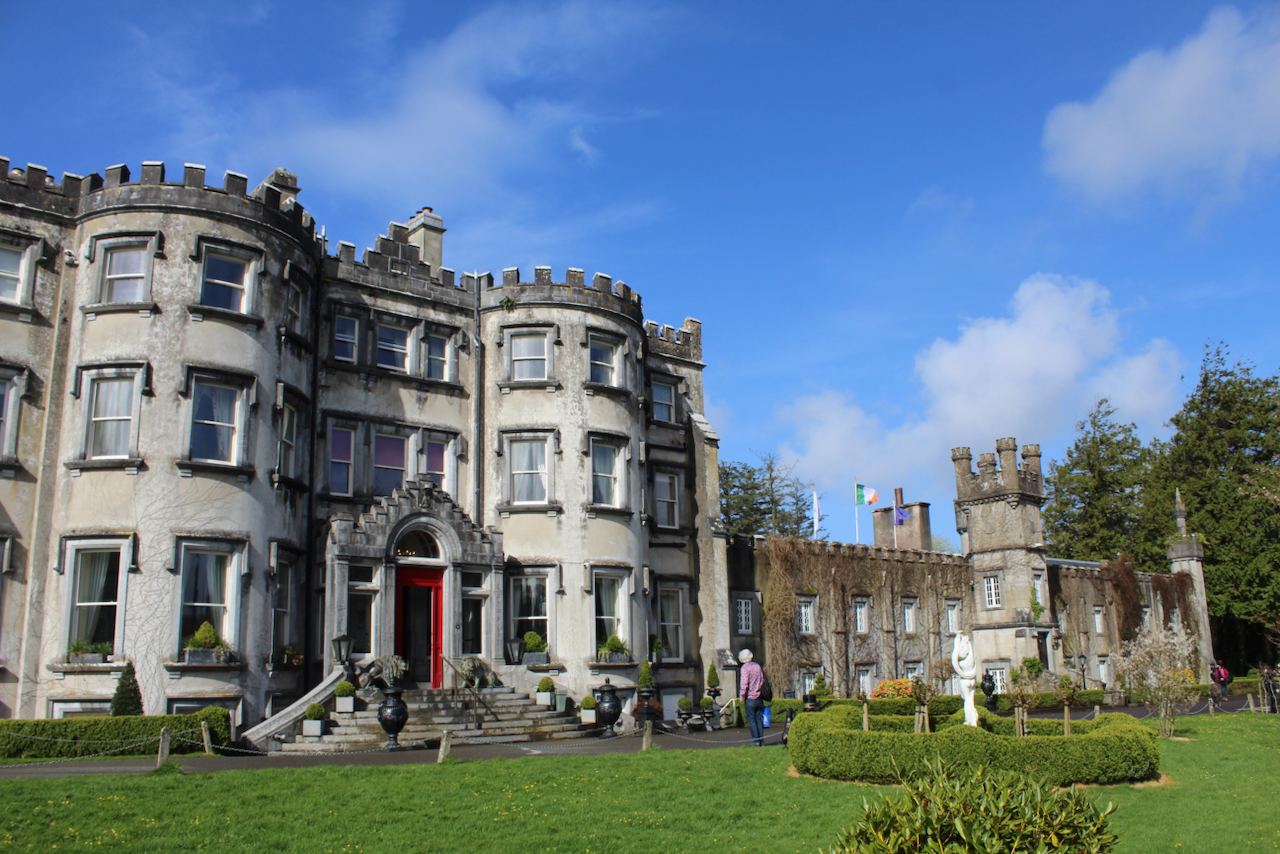
Ballyseede Castle, March 2023. © Jennifer Winder-Baggot, www.irishhistorichouses.com

Let us return now to Elm Grove, now called Ballyseede castle. It is an eleven-bay three-storey over part-raised basement house, comprising a three-bay entrance bay to the centre with door opening approached by flight of steps, and a pair of three-bay full-height flanking bow bay windows and single-bay end bays. It has five-bay side elevations with three-bay full-height bow bay window to south elevation and eight-bay west elevation with two-bay breakfront. [5]
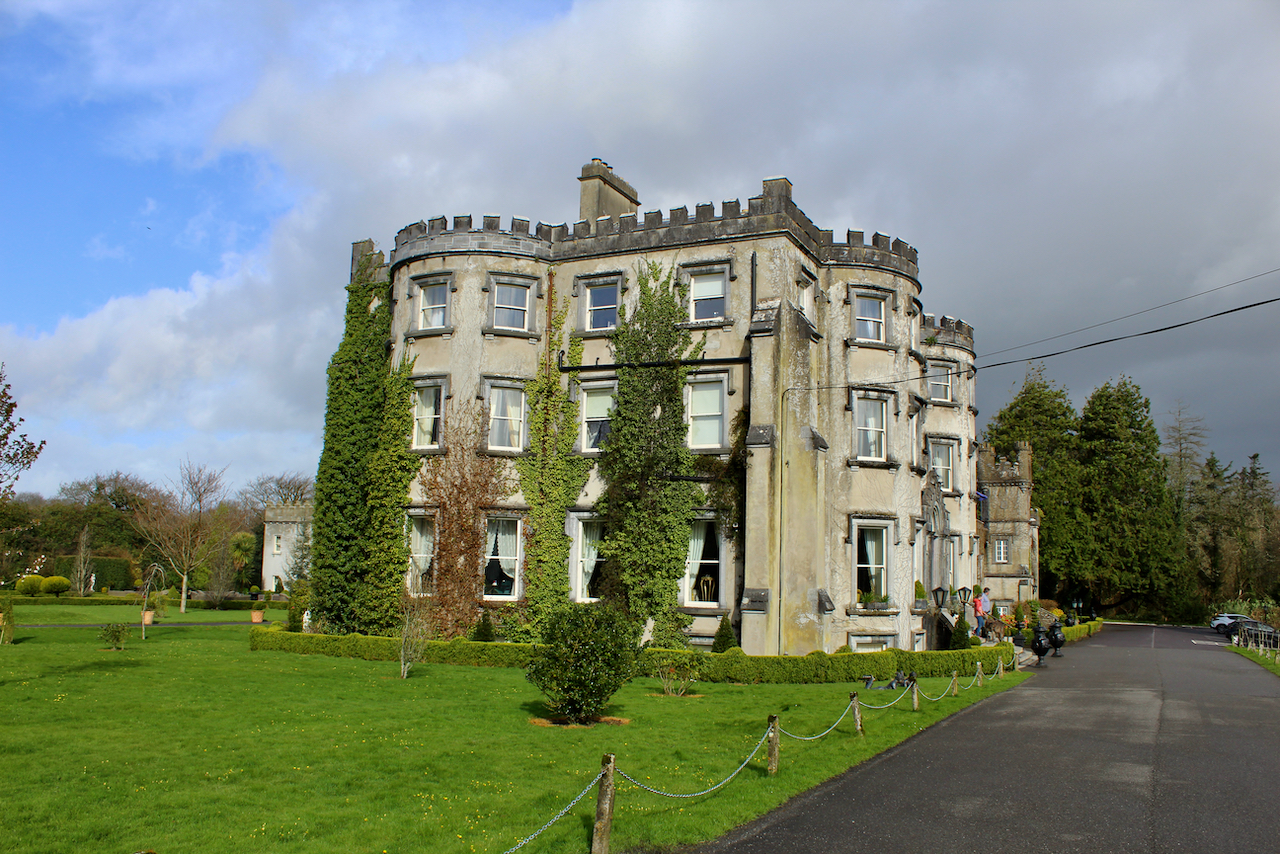
Ballyseede Castle, March 2023: Five-bay side elevations with three-bay full-height bow bay window to south elevation. © Jennifer Winder-Baggot, www.irishhistorichouses.com

William Blennerhassett Senior (1705-1785), son of John Blennerhassett (d. 1709) of Ballyseedy and Margaret Crosbie married Mary, daughter of John Morley, Mayor of Cork. Their son William (c.1735-1797) inherited Elm Grove.

Their daughter Agnes, born in 1740, married William Godfrey (c. 1738-1817) 1st Baronet of Bushfield, County Kerry, later called Kilcolman Abbey (renovated by William Vitruvius Morrison in 1818, demolished in 1977).

William (c.1735-1797) held the office of High Sheriff of County Kerry in 1761 and was the Collector of Customs at Tralee, which could have been a lucrative post.

William married Catherine daughter of the interestingly named Noble Johnson of County Cork. William and Catherine’s son Arthur (1779-1815) lived in Elm Grove with his wife Dorcas (1775/7-1822) daughter of George Twiss from Cordell House, County Kerry. Arthur died in 1815, but it seems that before he died he began plans to renovate the house. As was the case with his father and grandfather, Arthur’s son, another Arthur (1800-1843), continued the renovations.
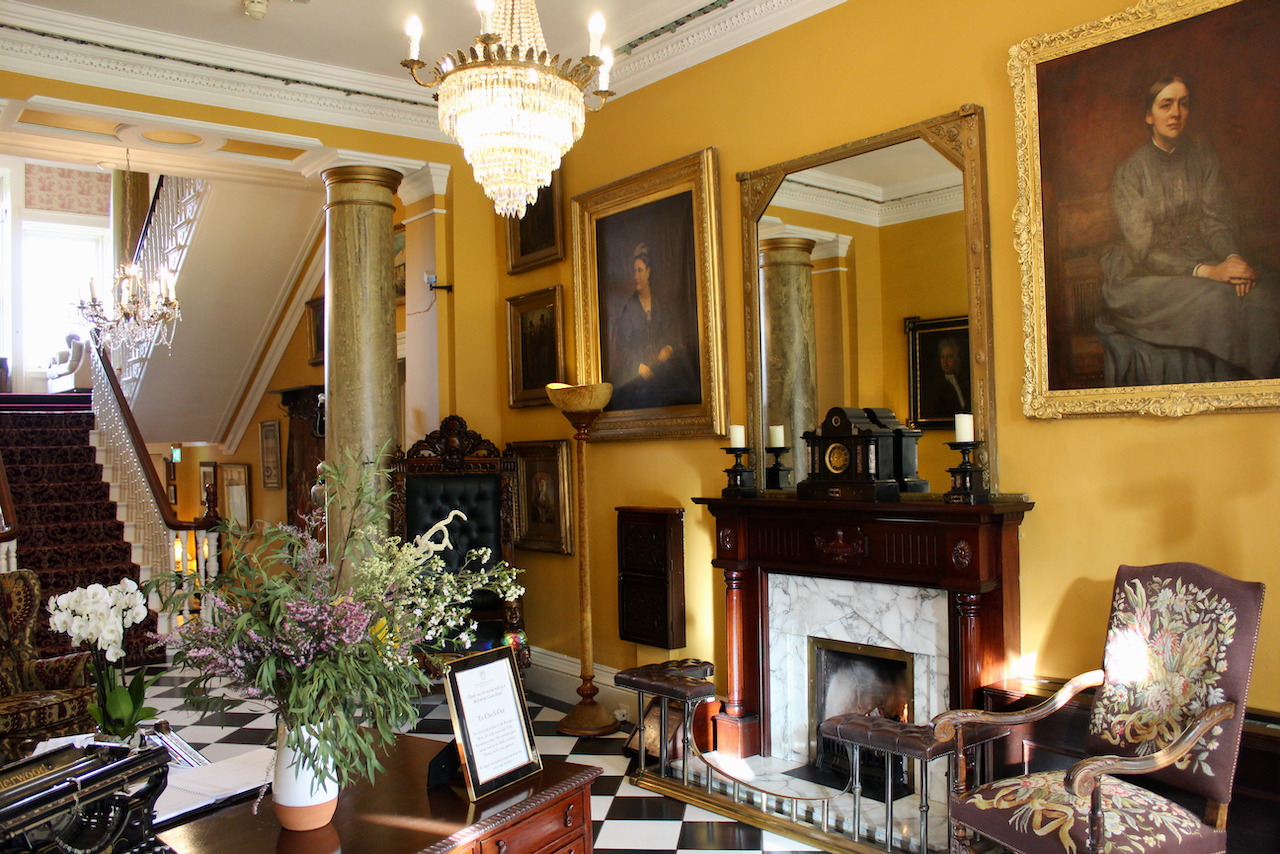
Ballyseede Castle, March 2023. © Jennifer Winder-Baggot, www.irishhistorichouses.com

William and Catherine’s daughter Catherine (b. 1777) married Colonel John Gustavus Crosbie (d. 1797), a son of Lancelot Crosbie and Mary née Blennerhassett. He was M.P. for County Kerry between 1795 and 1797. In 1794 he killed Barry Denny, 2nd Bt. in an election duel at Oak Park (now Collis-Sandes House) and was subsequently poisoned, it is said, by the Denny family, which resulted in him falling from his horse as he was riding home from Churchill to his home in Tubrid. Catherine then married George Rowan of Rathanny, County Kerry (a beautiful Georgian house, still occupied). Rowan ordered the militia to fire into the crowd at an election rally killing five people. He was tried for murder but not convicted. [6]

Another daughter, Mary, married another cousin, Captain Nevinson Blennerhassett de Courcy (1789-1845). He was the son of Anne Blennerhassett of the Castle Conway branch of the family.

A younger son of William and Catherine née Johnson, John (circa 1769-1794), served as MP for Kerry between 1790 and 1794. He died unmarried.

Mark Bence-Jones tells us that the Gothic Revival renovation dates from 1816 and may be designed by Richard Morrison (1767– 1849). [7] The work was completed in 1821, and the house renamed “Ballyseedy House” because the original old “Ballyseedy” of Colonel John Blennerhassett at the west end of Ballyseedy Wood had by then fallen into disrepair and disuse.

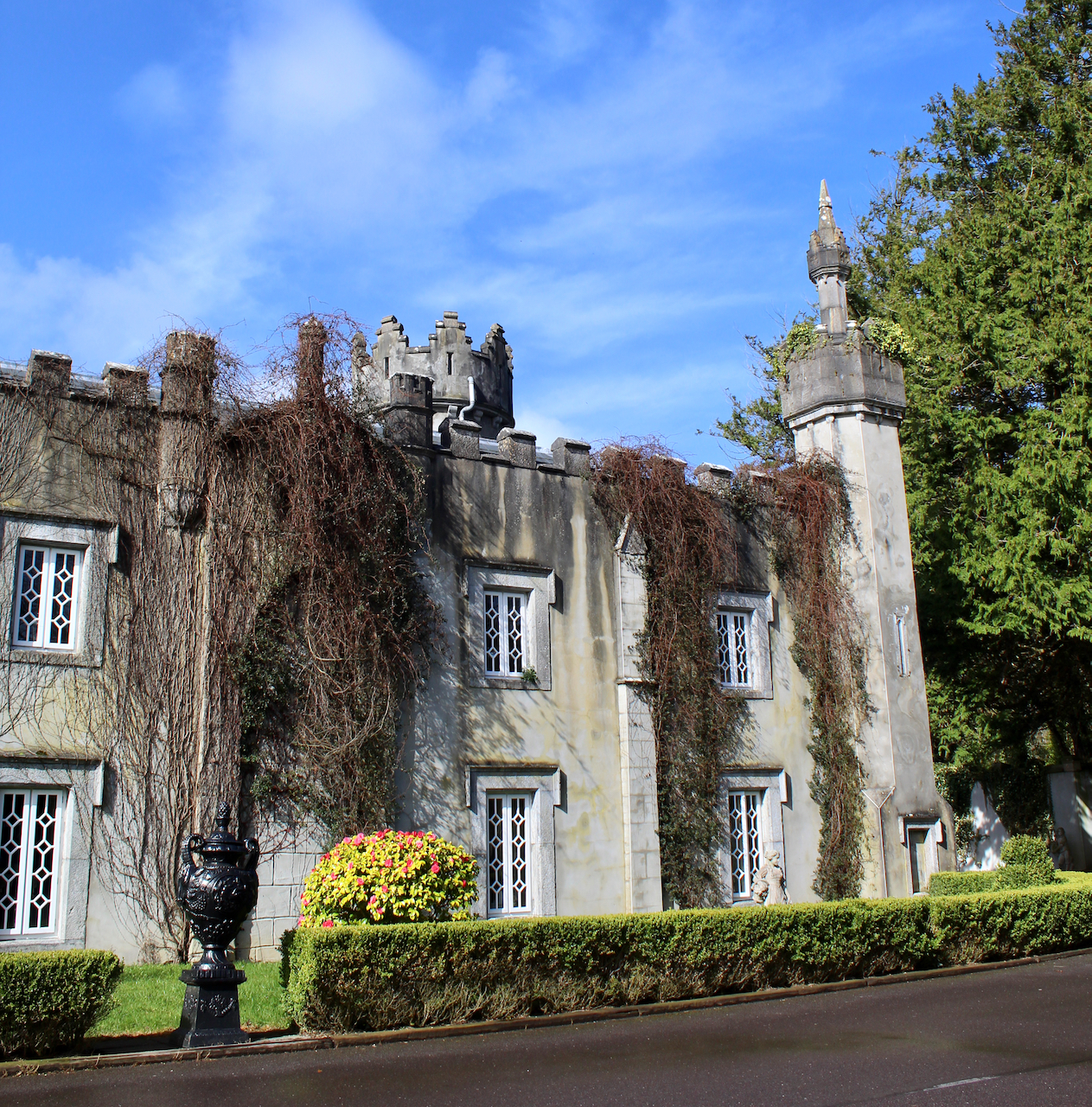
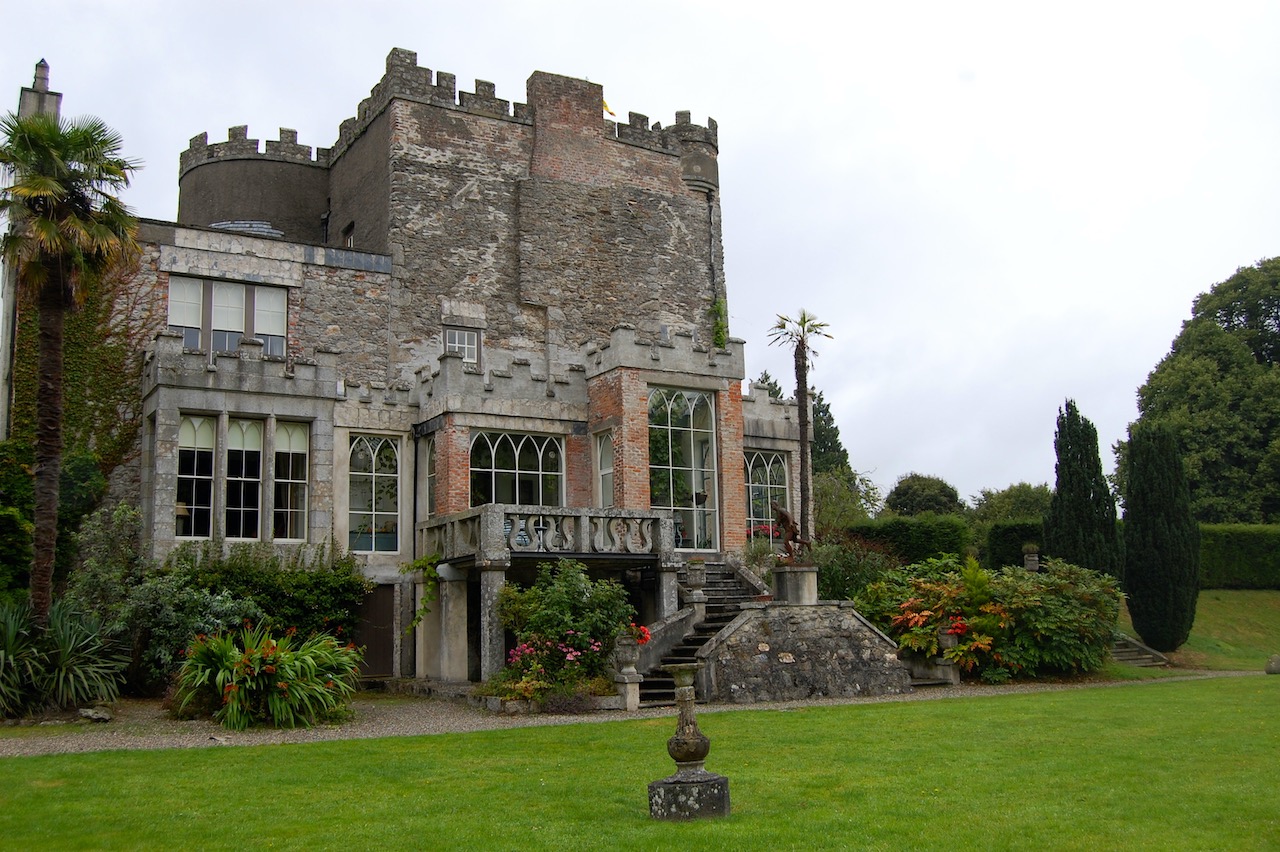
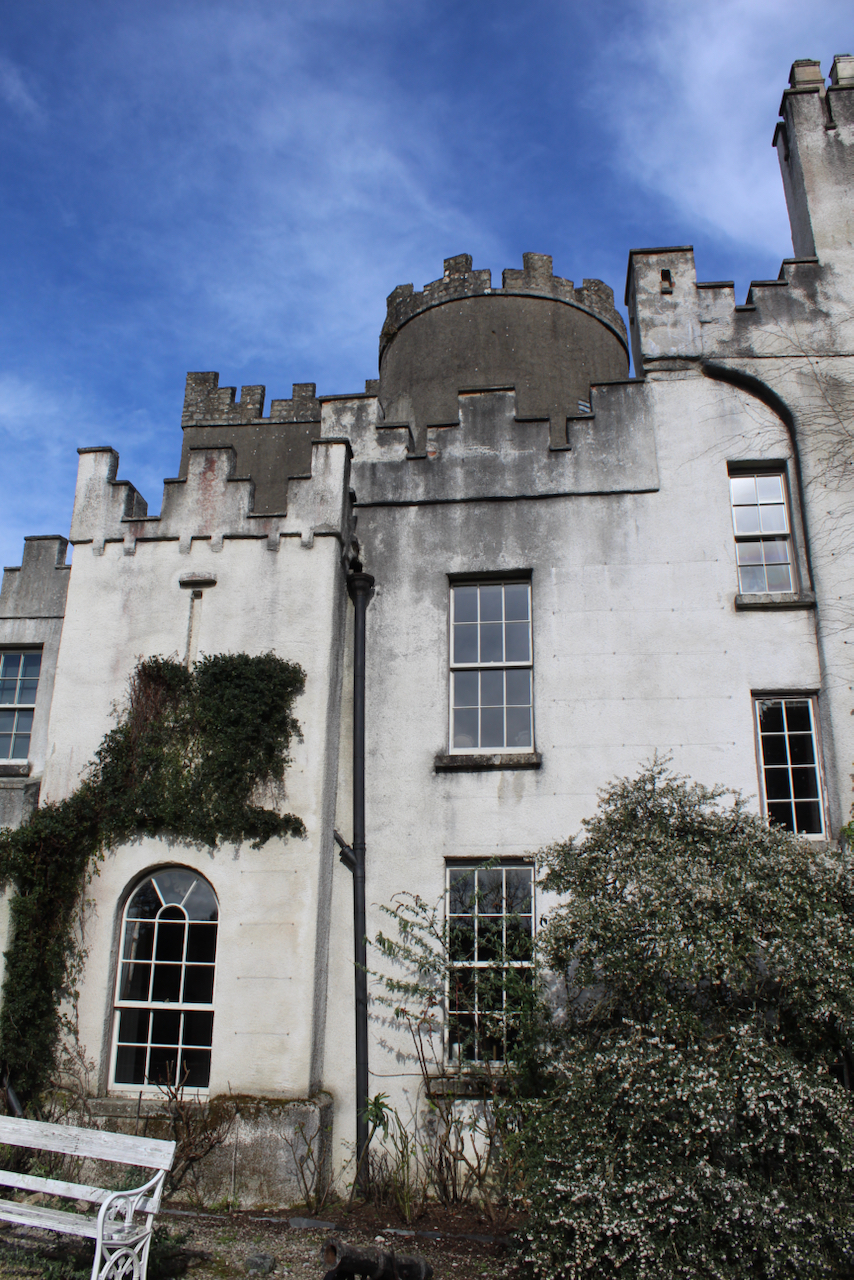
The house was extended, adding a seven-bay two-storey wing to the north. This wing has a pair of single-bay three-storey turrets to the east elevation. These turrets have battlemented roof parapets and pinnacles. The ten-bay rear elevation to the west has hood mouldings to the openings and a single-bay three-storey corner turret on a circular plan to north-west. [see 5]
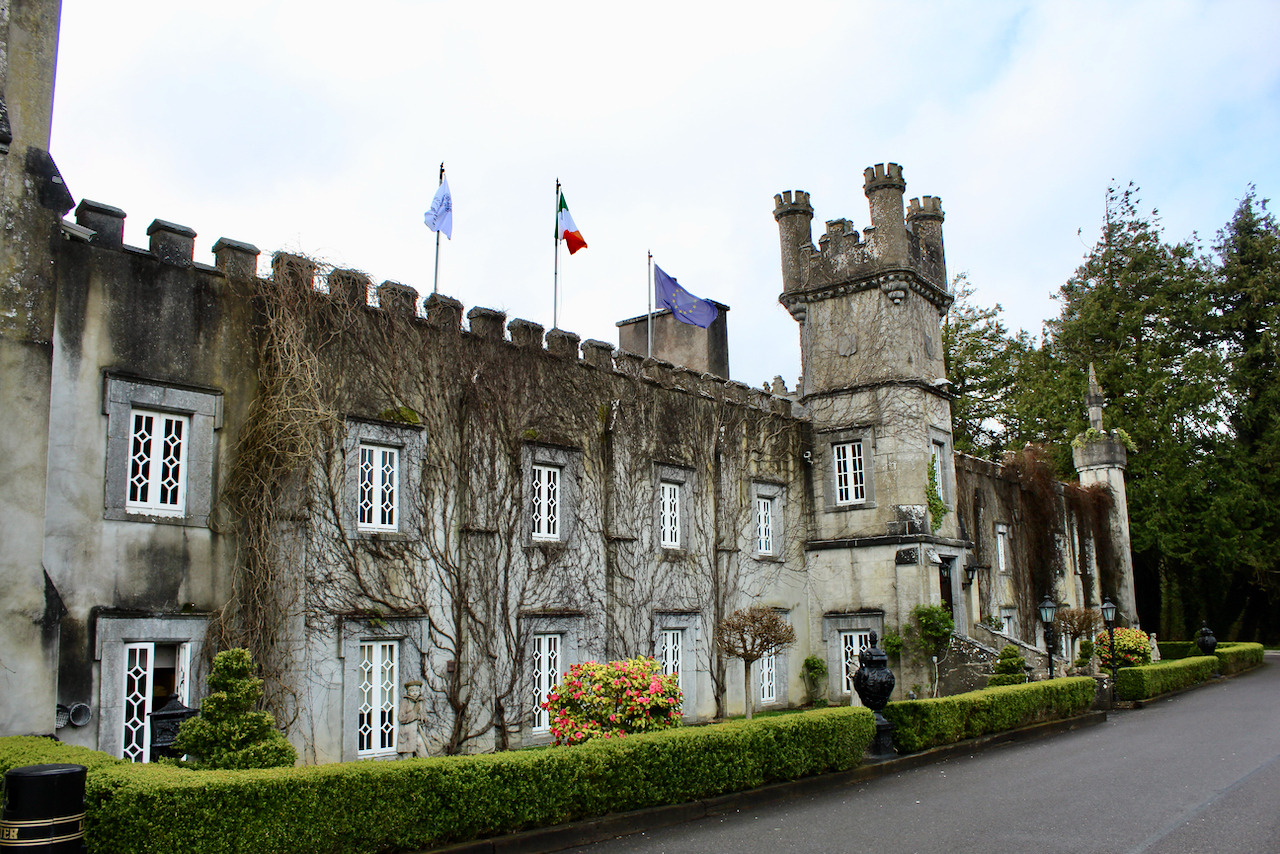
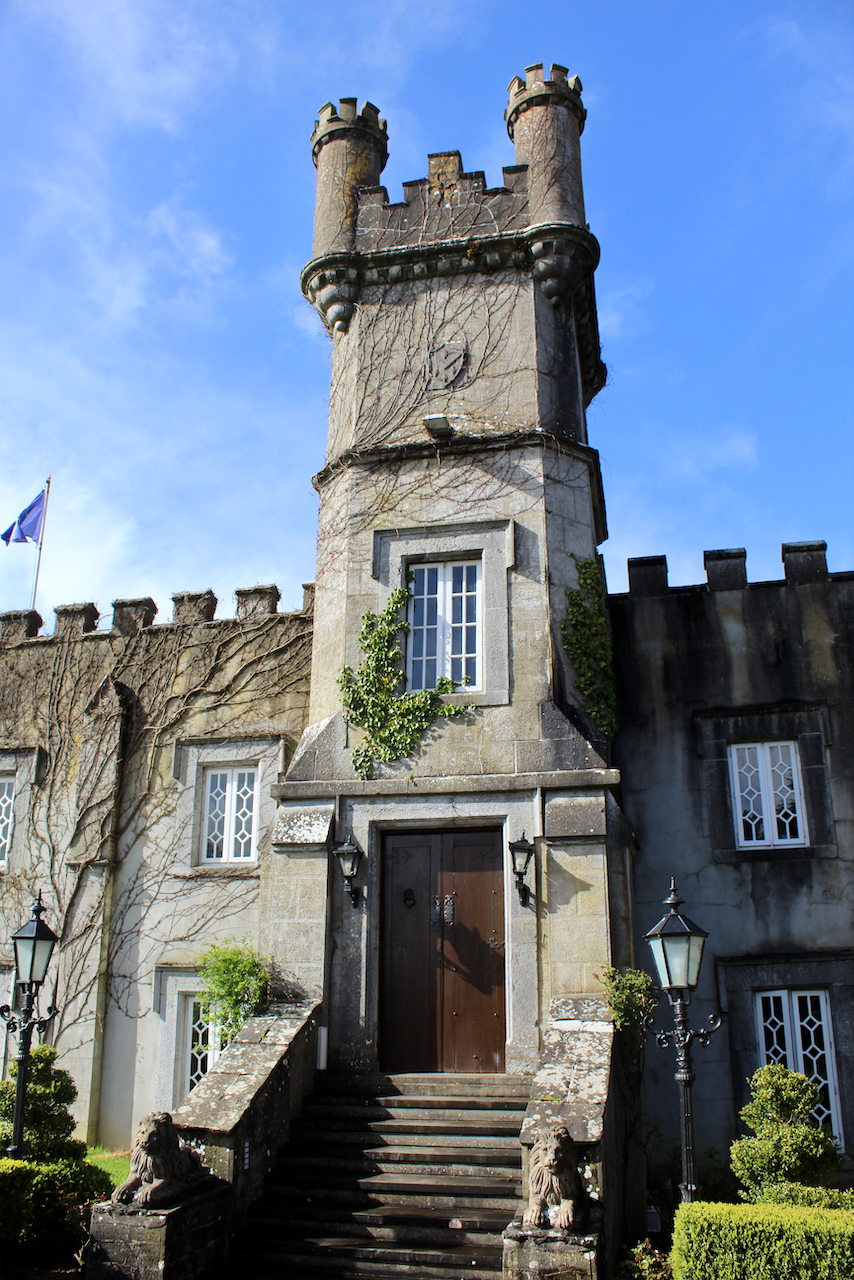
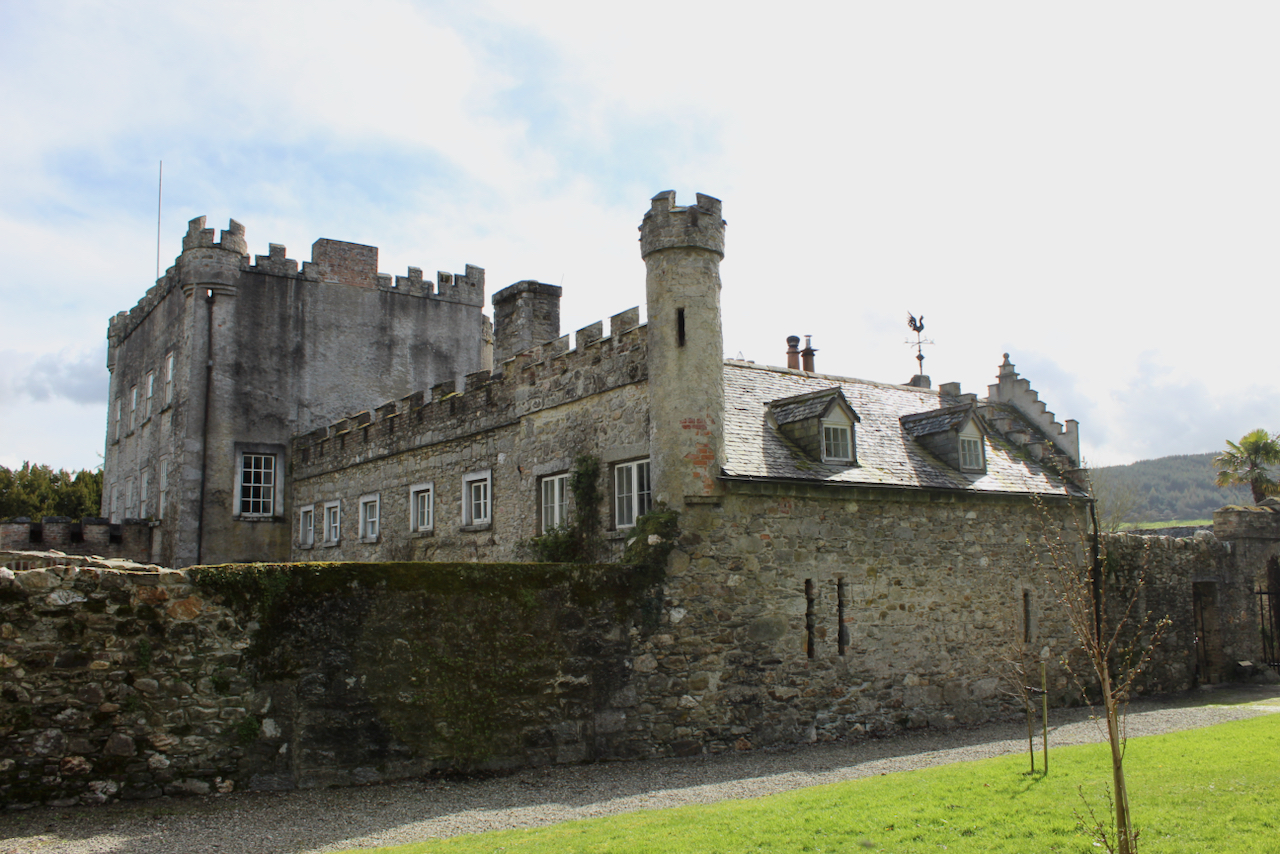
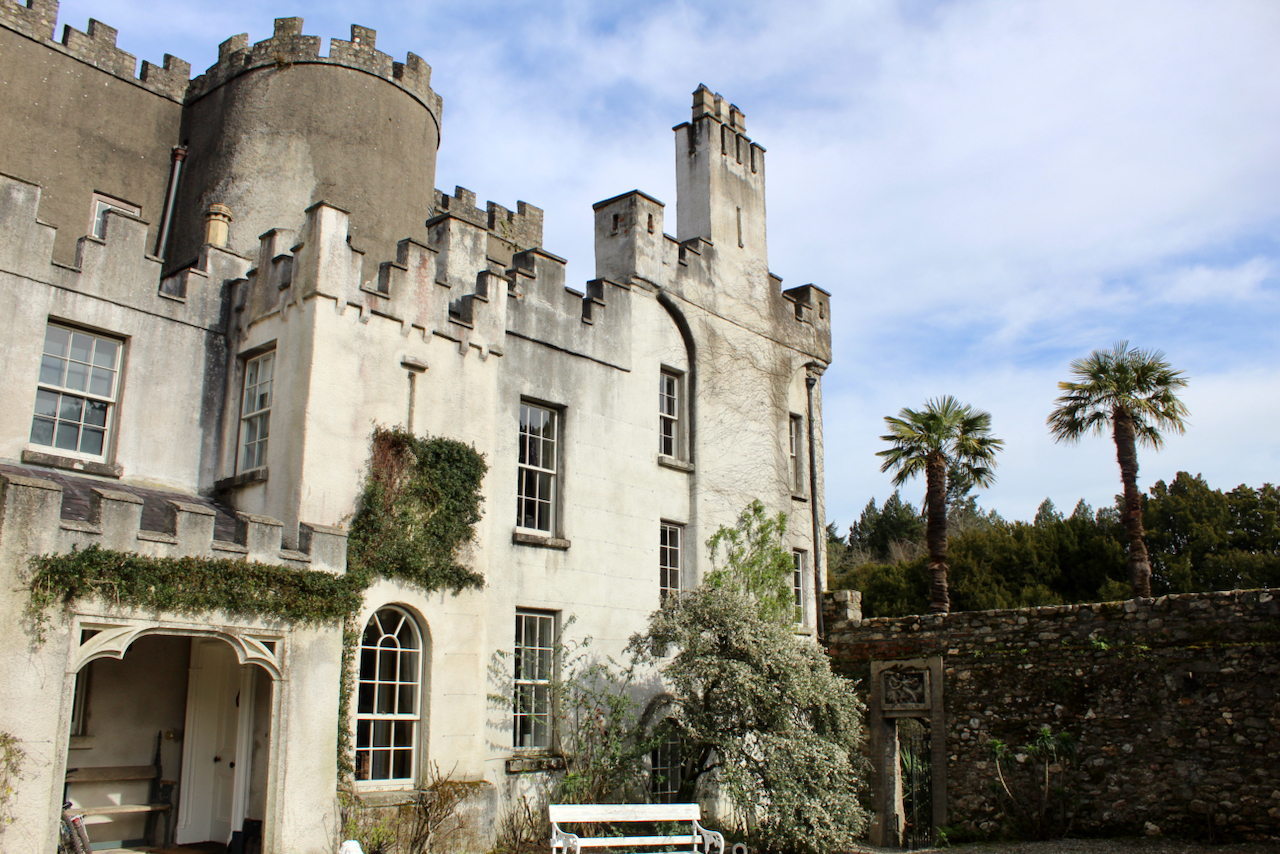
The seven bay two-storey Gothic-Revival addition, perhaps designed by Richard Morrison. © Jennifer Winder-Baggot, www.irishhistorichouses.com
This wing has two single bay three storey turrets. © Jennifer Winder-Baggot, www.irishhistorichouses.com
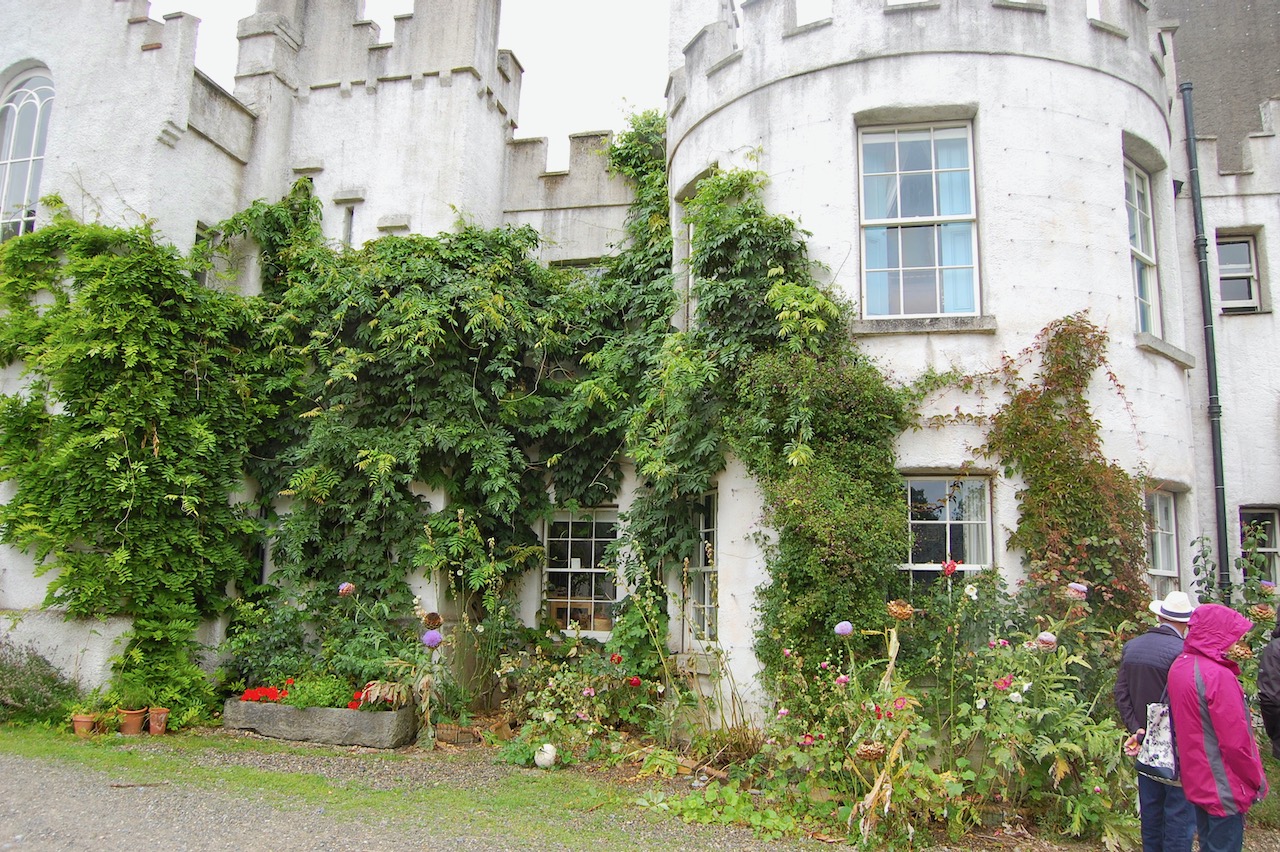
The Gothic addition has battlemented parapet and hood mouldings over the windows. © Jennifer Winder-Baggot, www.irishhistorichouses.com

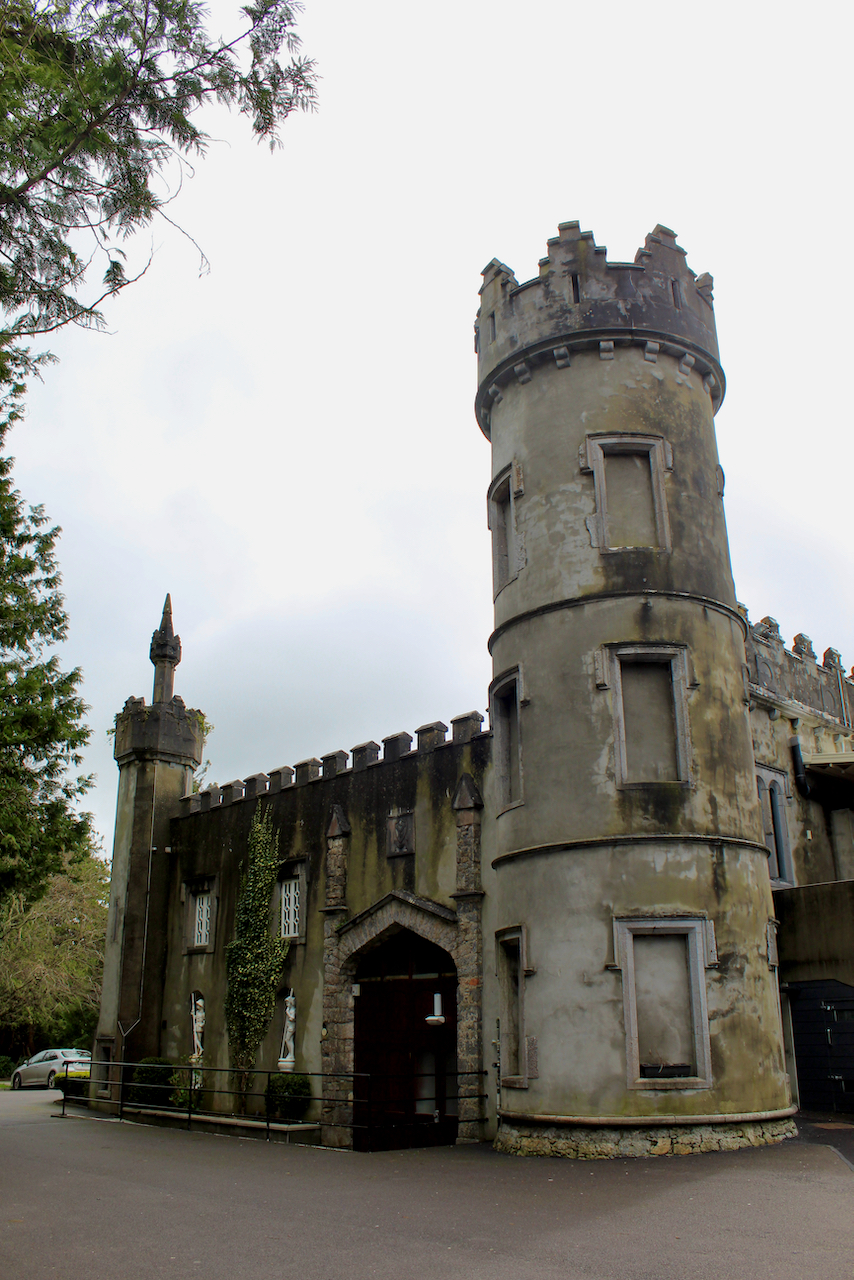
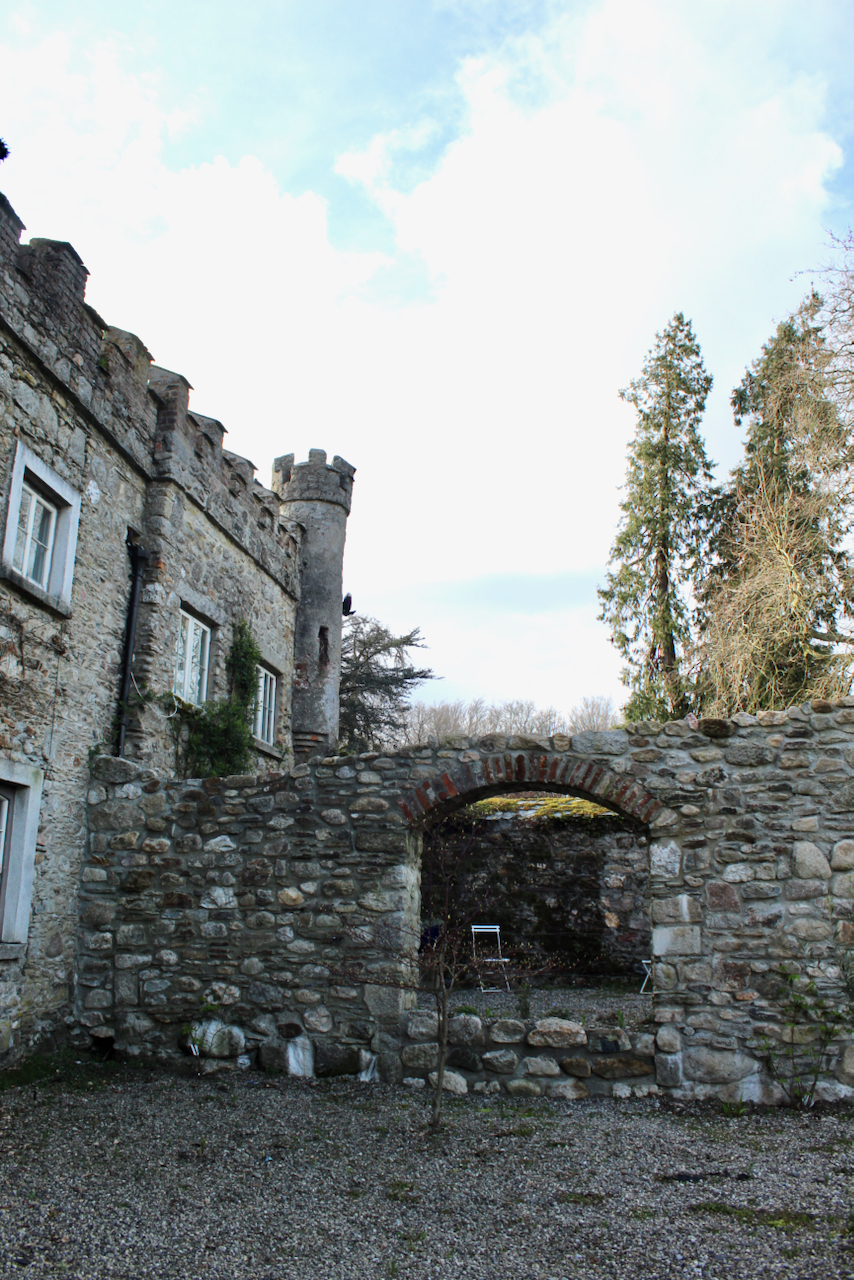
The Blennerhassett site tells us: “It was William Blennerhassett Jr’s son Arthur (1779-1815) and his wife Dorcas Twiss (1775/7-1822) who commenced addition of the long north wing, something of a “folly” with the stable yard surrounded by a great wall of false windows, with two carriage entrances and a round tower of medieval appearance at the north-west corner. The work of architect Sir William Morrison [From 1809 onward Richard Morrison collaborated increasingly with his second son, William Vitruvius Morrison (1794–1838)], this remodelling was completed in 1821, exactly 100 years after the older “Ballyseedy House” house had been built, by his son Arthur Blennerhassett (b. 1799 d.1843) then only 22 years of age.” [8]

Mark Bence-Jones describes: “At one side of the front is a long and low castellated service wing, with round and square turrets, the other side of which has a sham wall, consisting of a long range of false windows.”

I couldn’t work out where this sham wall of false windows was – perhaps later renovations changed this folly.

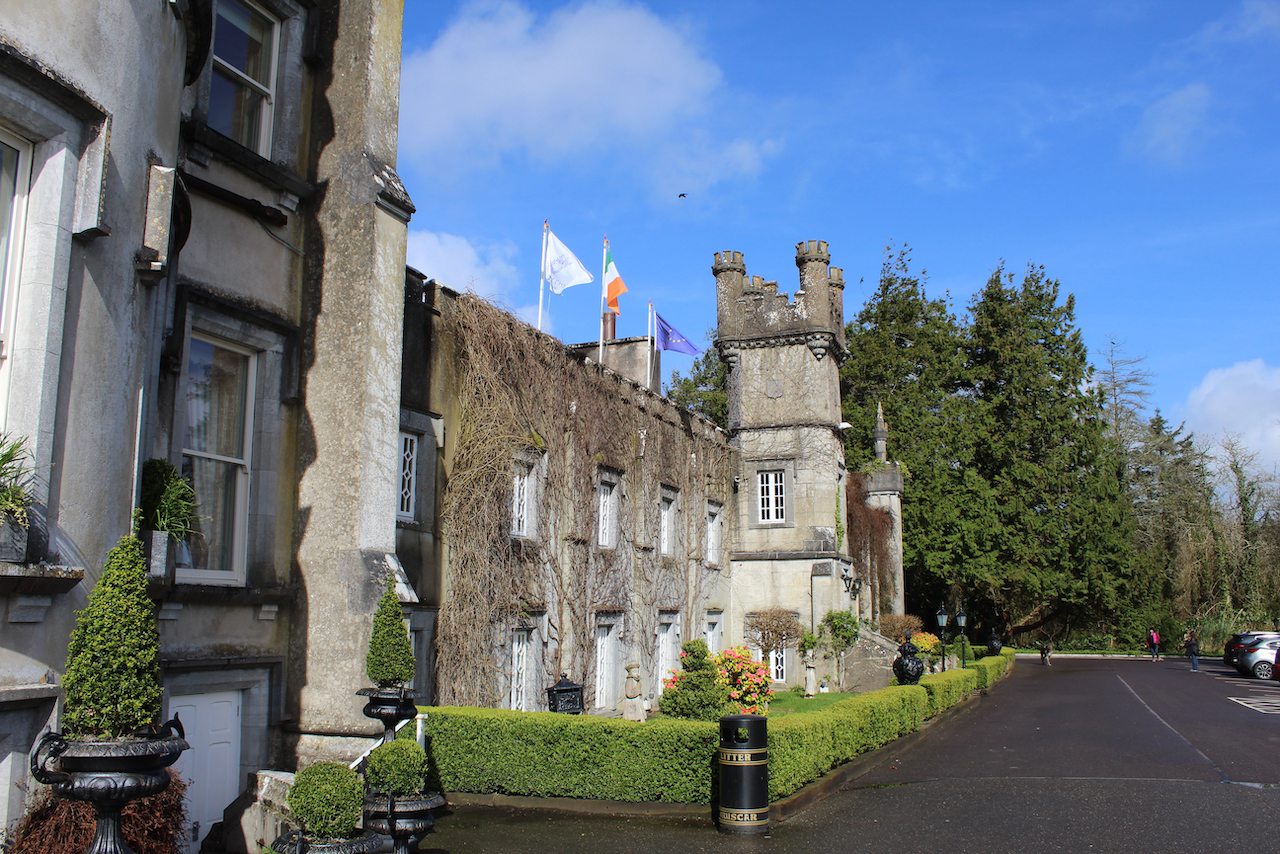
Ballyseede Castle, March 2023. © Jennifer Winder-Baggot, www.irishhistorichouses.com
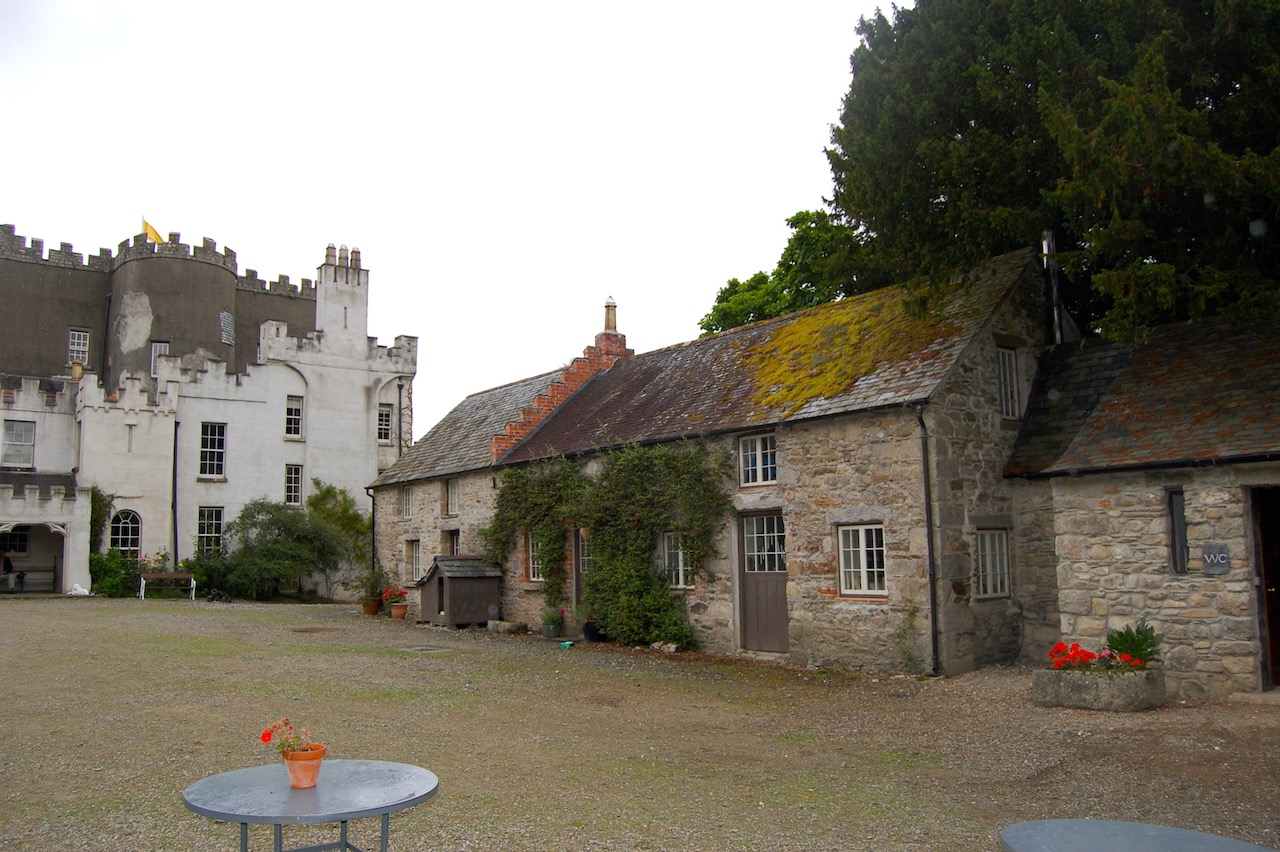
This is the far end of the wing, with what must be the round tower mentioned in the description on the Blennerhassett website: “addition of the long north wing, something of a “folly” with the stable yard surrounded by a great wall of false windows, with two carriage entrances and a round tower of medieval appearance at the north-west corner.” © Jennifer Winder-Baggot, www.irishhistorichouses.com
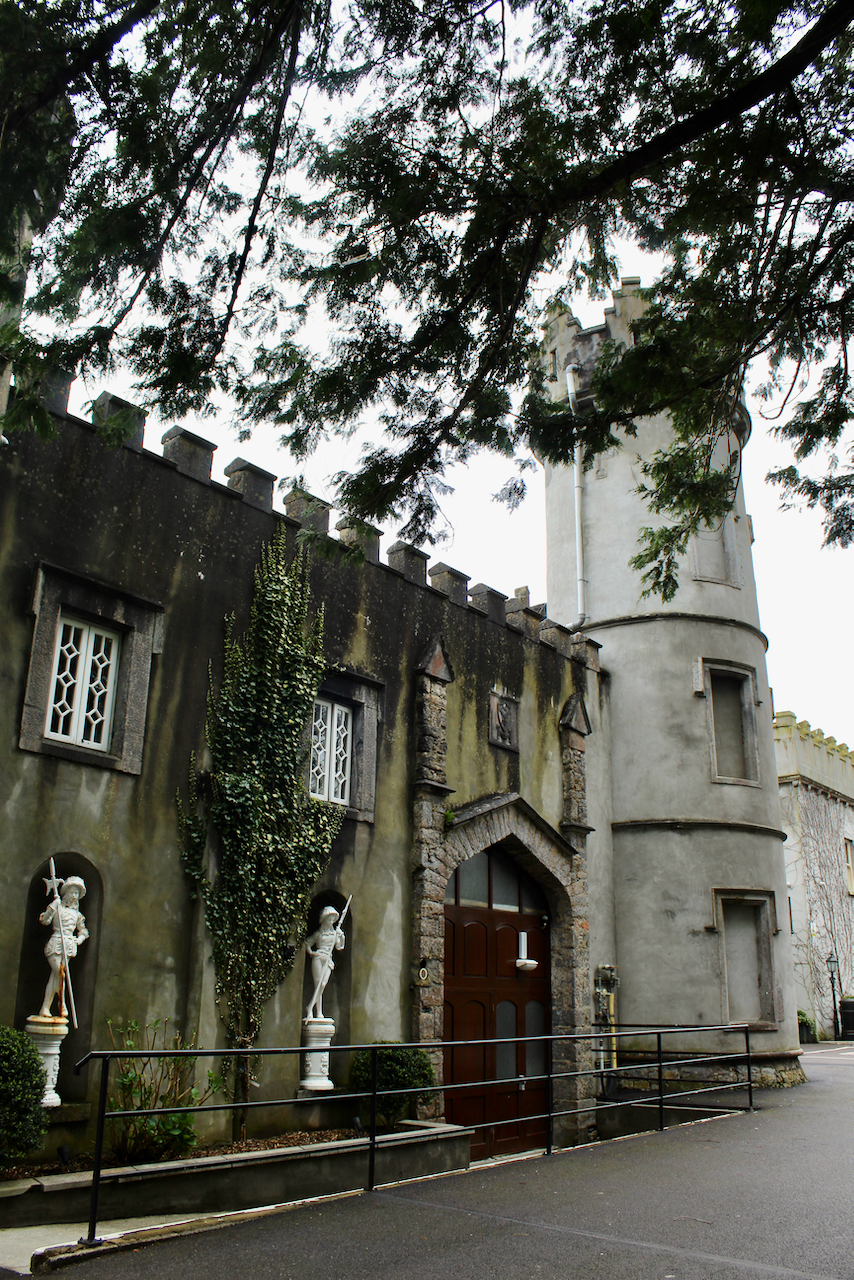
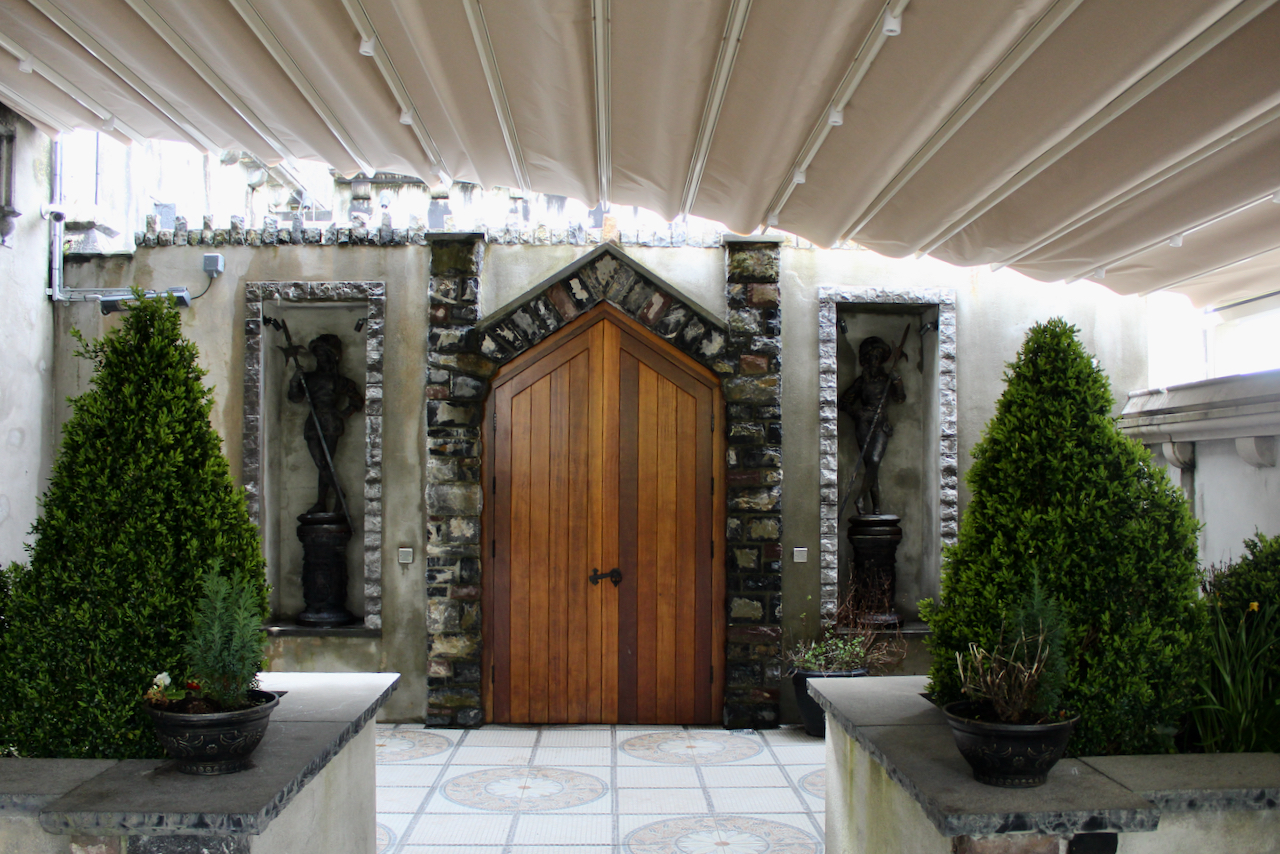
Stephen liked the pike-wielding statues. © Jennifer Winder-Baggot, www.irishhistorichouses.com
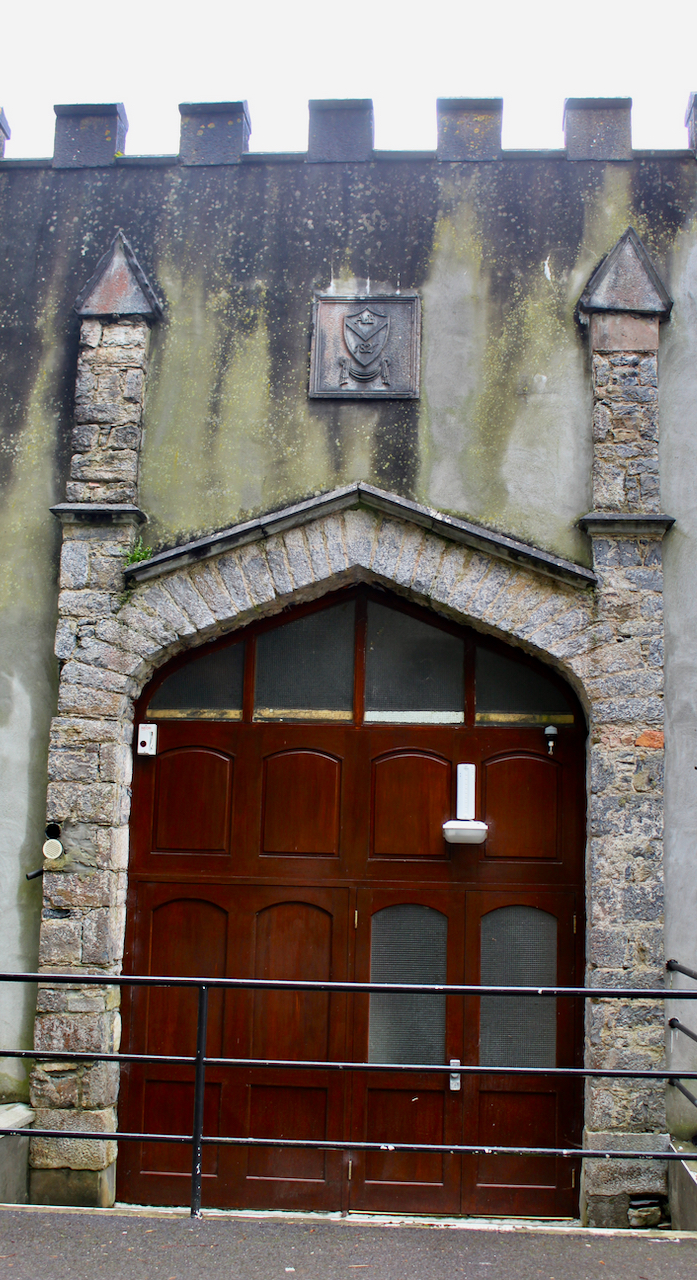
This must be one of the carriage entrances. © Jennifer Winder-Baggot, www.irishhistorichouses.com
You can see in this photograph that the carriage entrance is open.

At the time of renovations, the son of Arthur and Dorcas, Arthur (1800-1843), was High Sheriff for County Kerry.

The Blennerhassett website tells us:

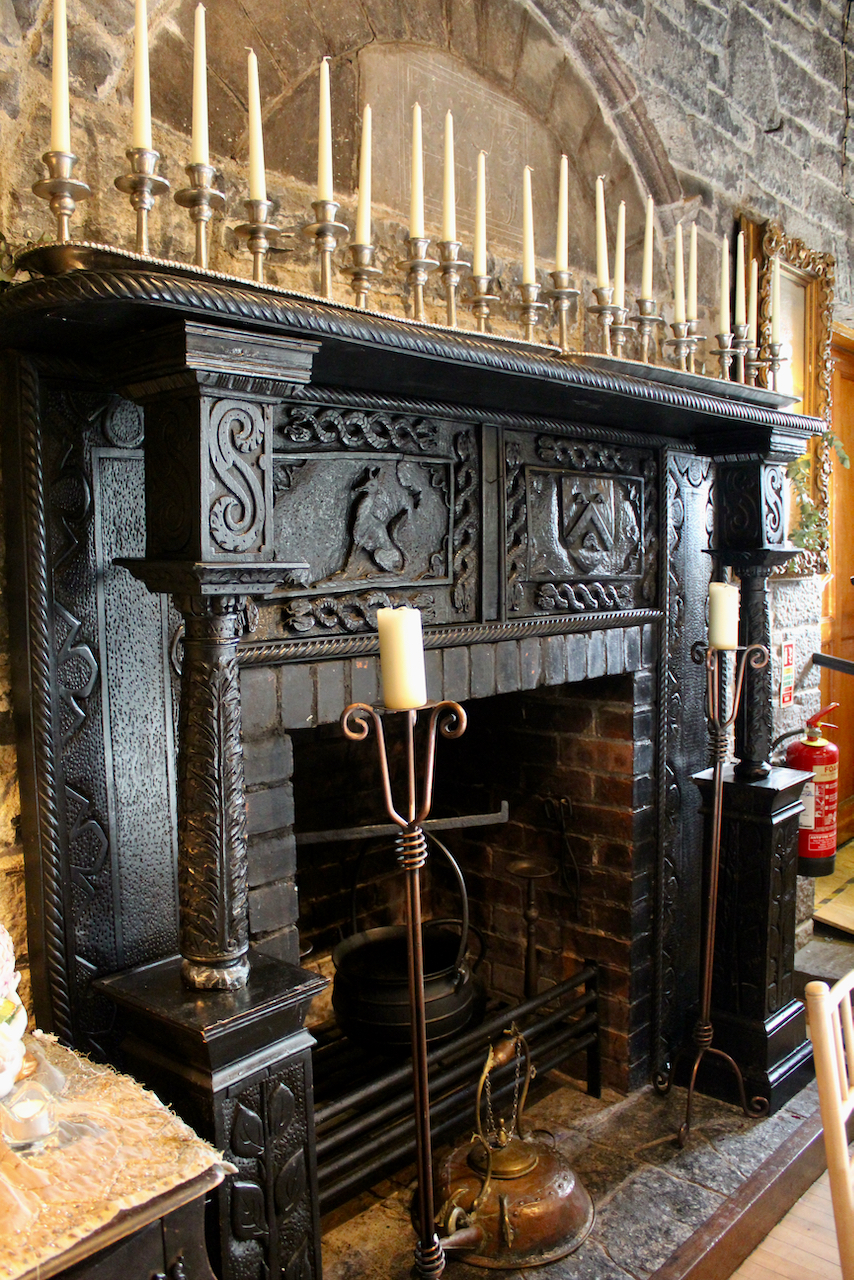
In the north wing is a “Banqueting Hall” which features a foundation stone dated 1721, set into the wall over primitive 17th century black oak fireplace surround.

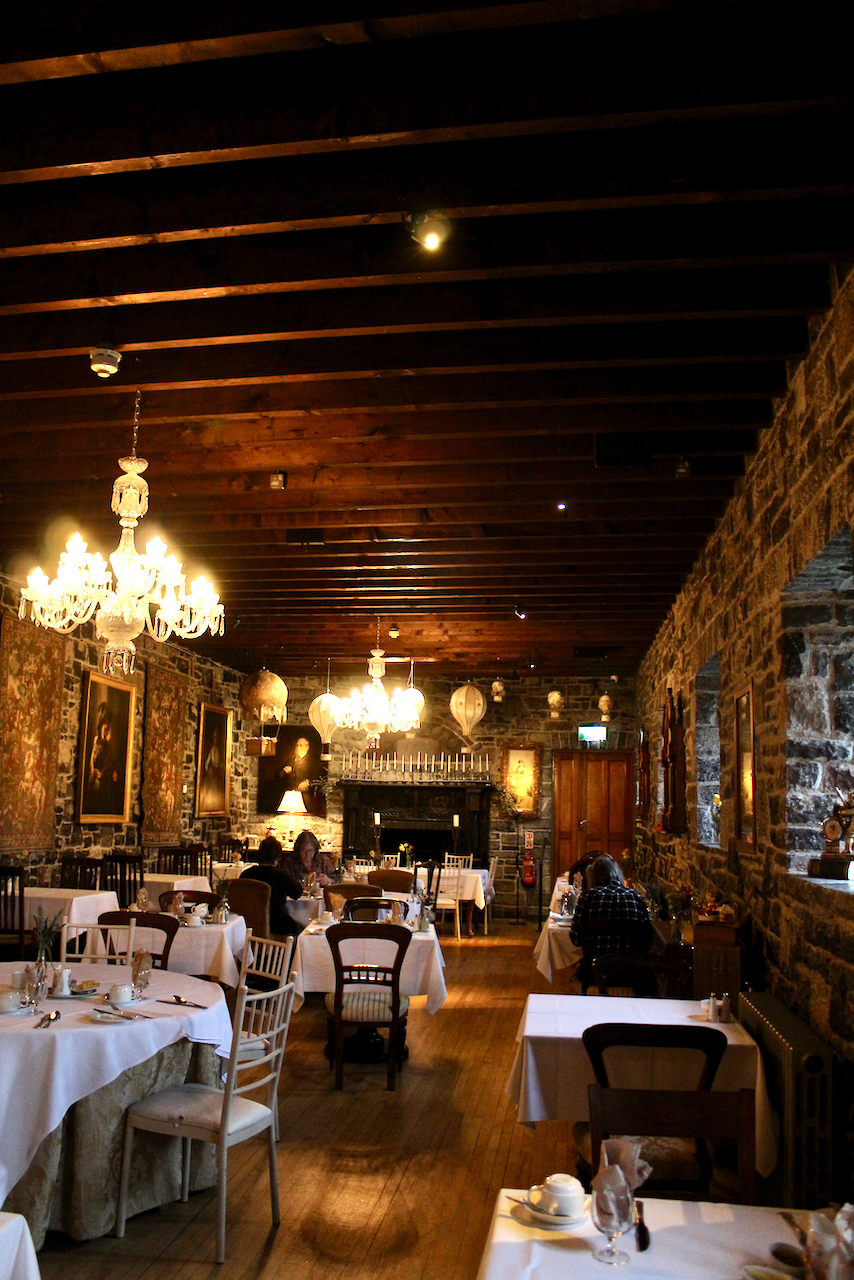
In the north wing is a “Banqueting Hall.” © Jennifer Winder-Baggot, www.irishhistorichouses.com
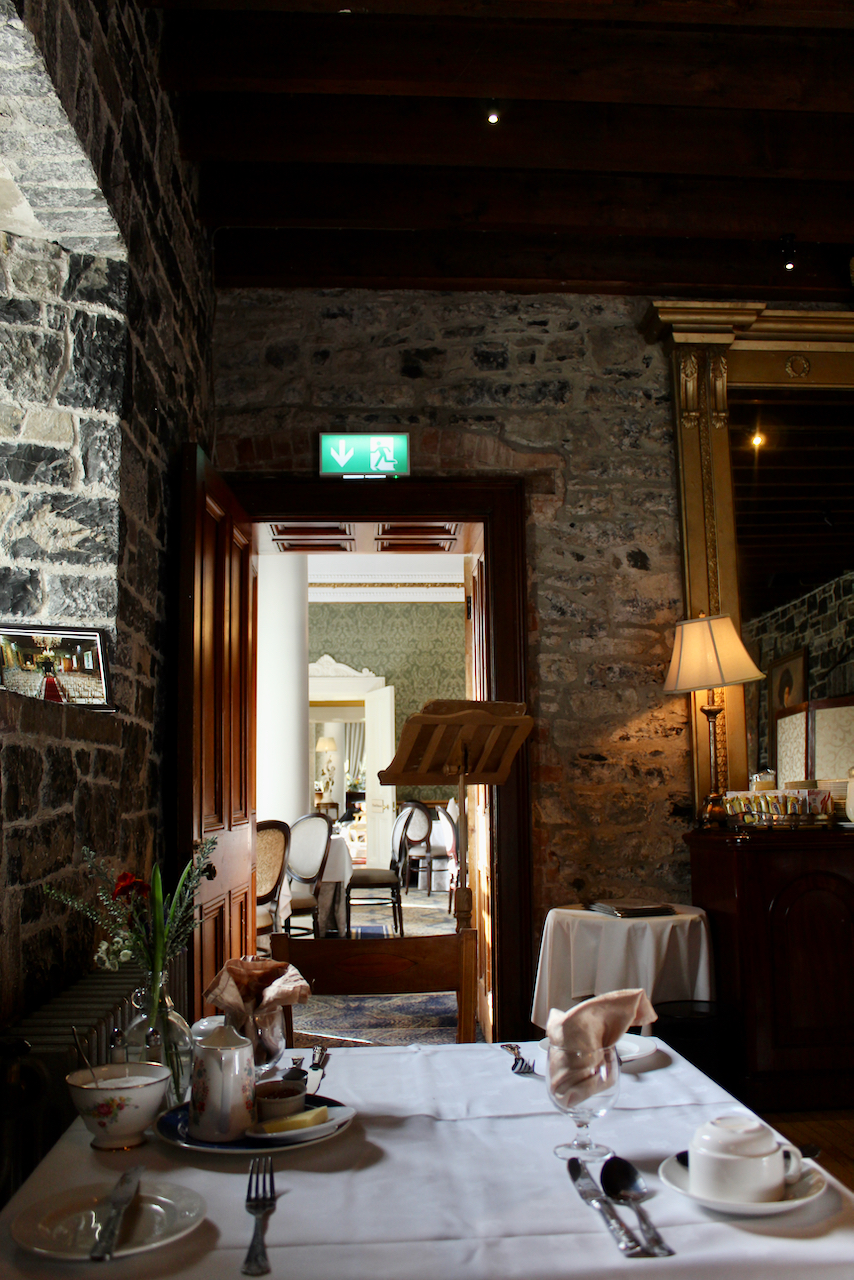
We ate our breakfast here every day. © Jennifer Winder-Baggot, www.irishhistorichouses.com
The 17th century oak fireplace in the banqueting hall. © Jennifer Winder-Baggot, www.irishhistorichouses.com
Detail of the seventeenth century fireplace in Ballyseede. © Jennifer Winder-Baggot, www.irishhistorichouses.com
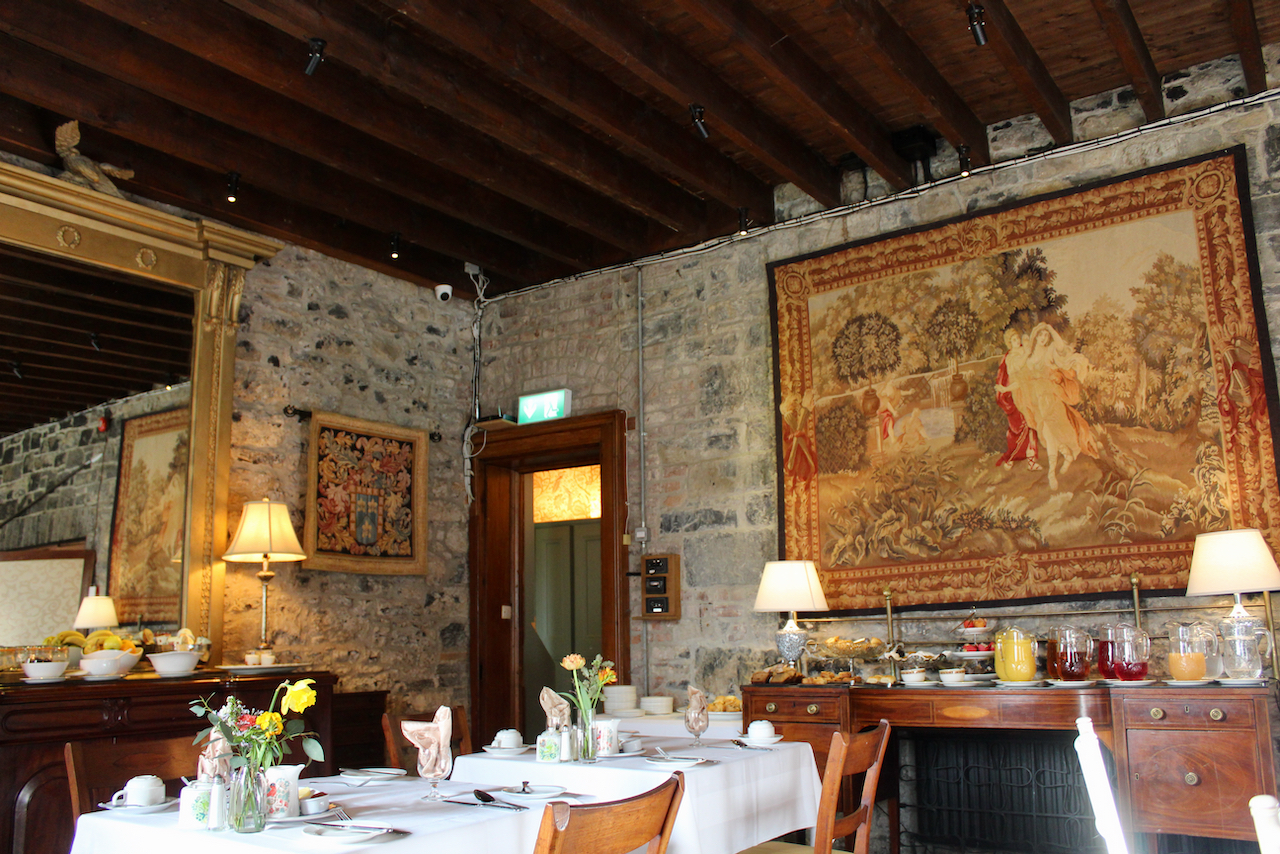
We were treated to a delicious breakfast every day. © Jennifer Winder-Baggot, www.irishhistorichouses.com
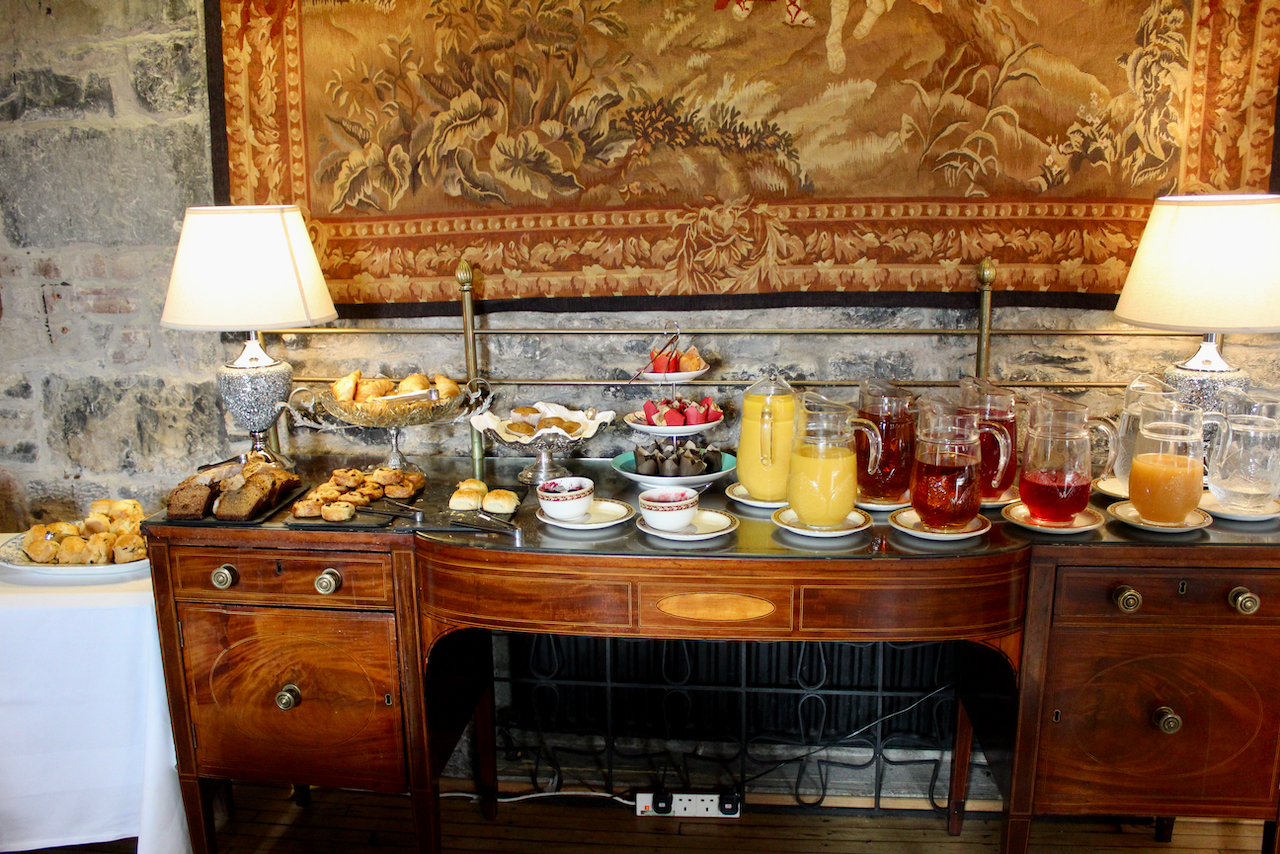
Breakfast includes lovely pastries and I confess Stephen and I sneaked a couple into our bag for lunch! © Jennifer Winder-Baggot, www.irishhistorichouses.com
Ballyseede Castle, March 2023. © Jennifer Winder-Baggot, www.irishhistorichouses.com

The Blennerhassett website tells us that another 17th century wooden fireplace surround of finer workmanship was installed in what was the library of the main house (now the hotel bar). The two fireplaces are believed to have been moved with other free-standing oak furniture from “Old” Ballyseedy” as it fell into ruin.

This is the fireplace in the bar believed to have been moved with other free-standing oak furniture from “Old” Ballyseedy” as it fell into ruin. My apologies for the quality of the photographs – the bar is used as a restaurant and I found it impossible to get a good photograph when people were eating in the room! © Jennifer Winder-Baggot, www.irishhistorichouses.com
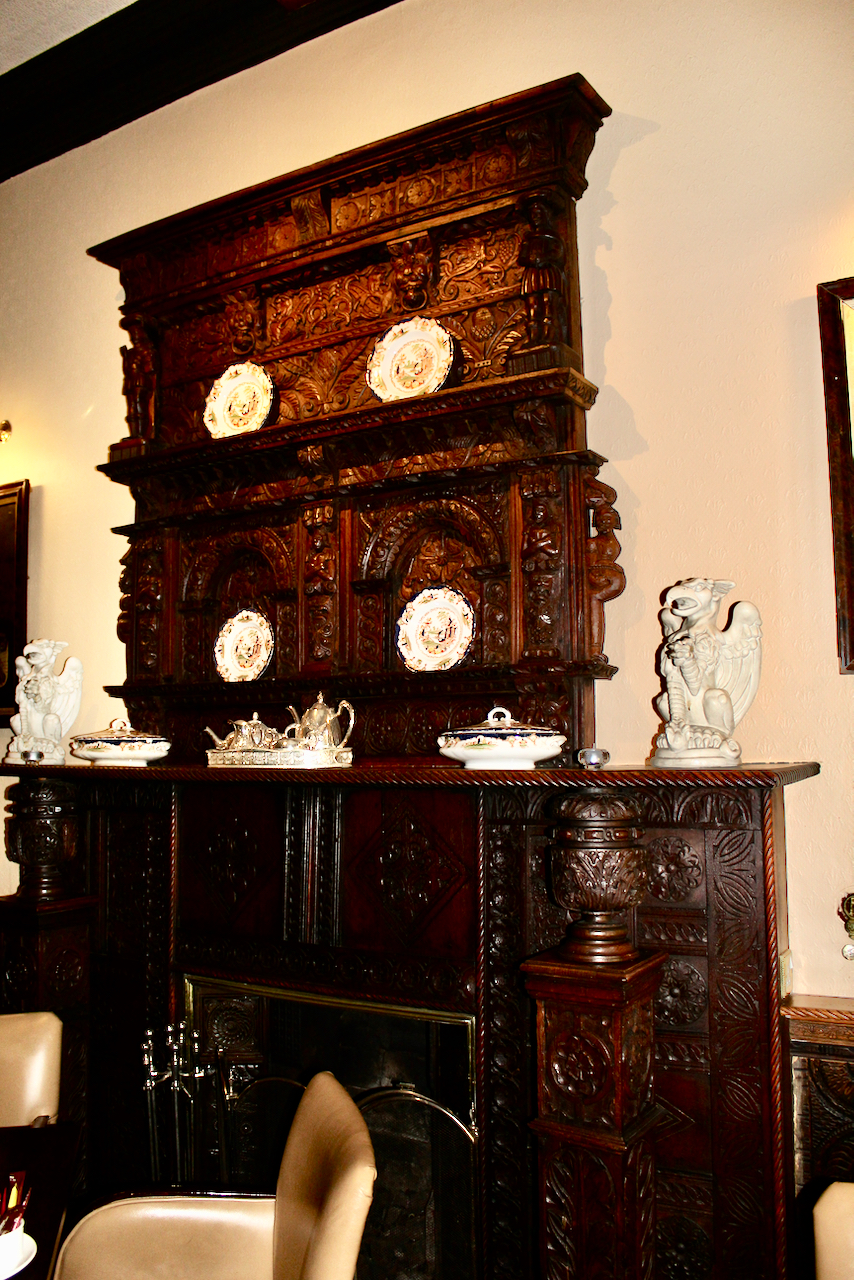
17th century wooden fireplace in the former library of Ballyseede Castle. © Jennifer Winder-Baggot, www.irishhistorichouses.com
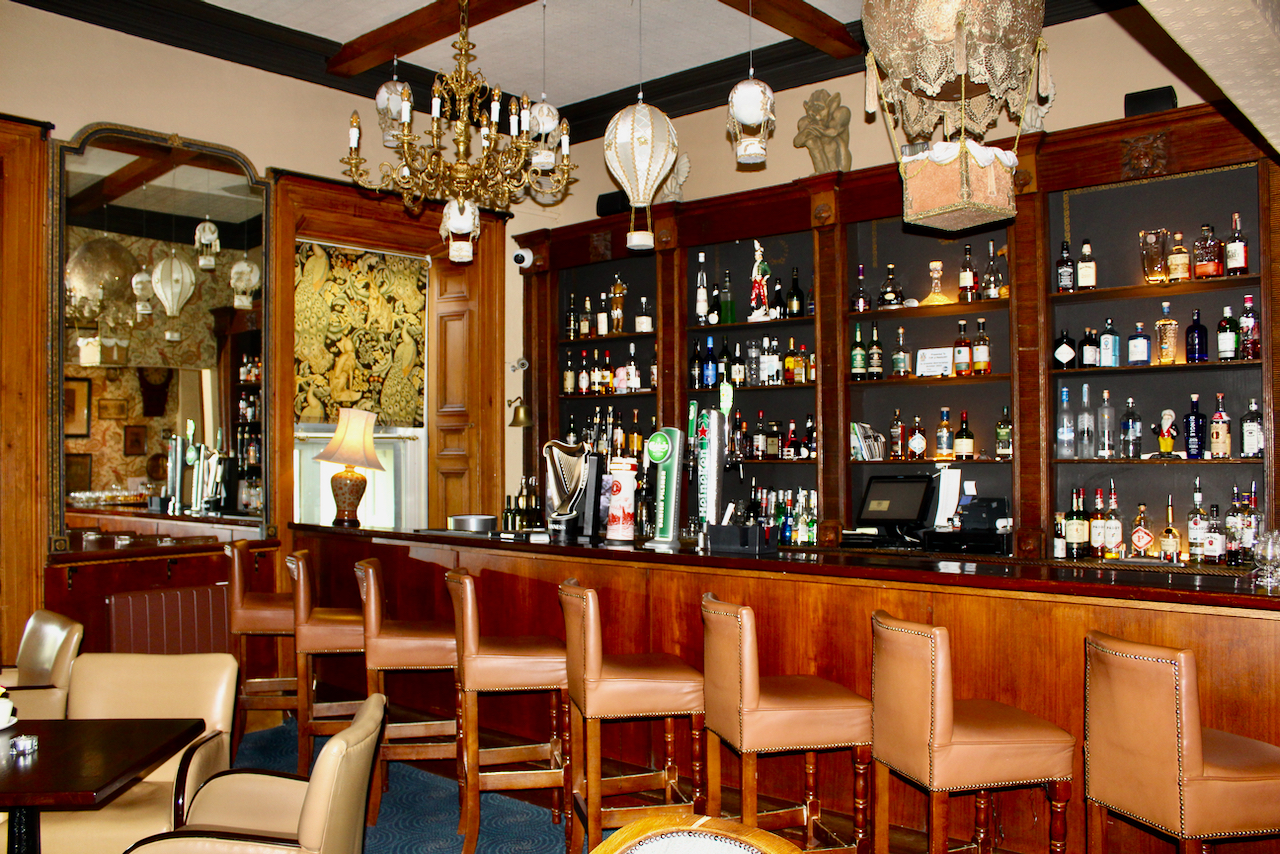
The former library of Ballyseede Castle is now the bar, where casual meals are also served. Stephen and I ate here every evening of our stay. © Jennifer Winder-Baggot, www.irishhistorichouses.com

Arthur Jr. (1800-1843) married Frances Deane O’Grady (1800-1834), daughter of Henry Deane O’Grady (1765-1847). This would have been a prestigious marriage. Her sisters married, respectively, Edward Chichester, 4th Marquess of Donegal (Amelia); David Roche (1791-1865), 1st Baronet of Carass, Co. Limerick (Cecilia); John Skeffington (1812-1863), 10th Viscount Massereene (Olivia); and Matthew Fitzmaurice Deane (1795-1868), 3rd Baron Muskerry (Louisa). Thus Arthur would have been very well connected. He served as M.P. for County Kerry between 1837 and 1841.
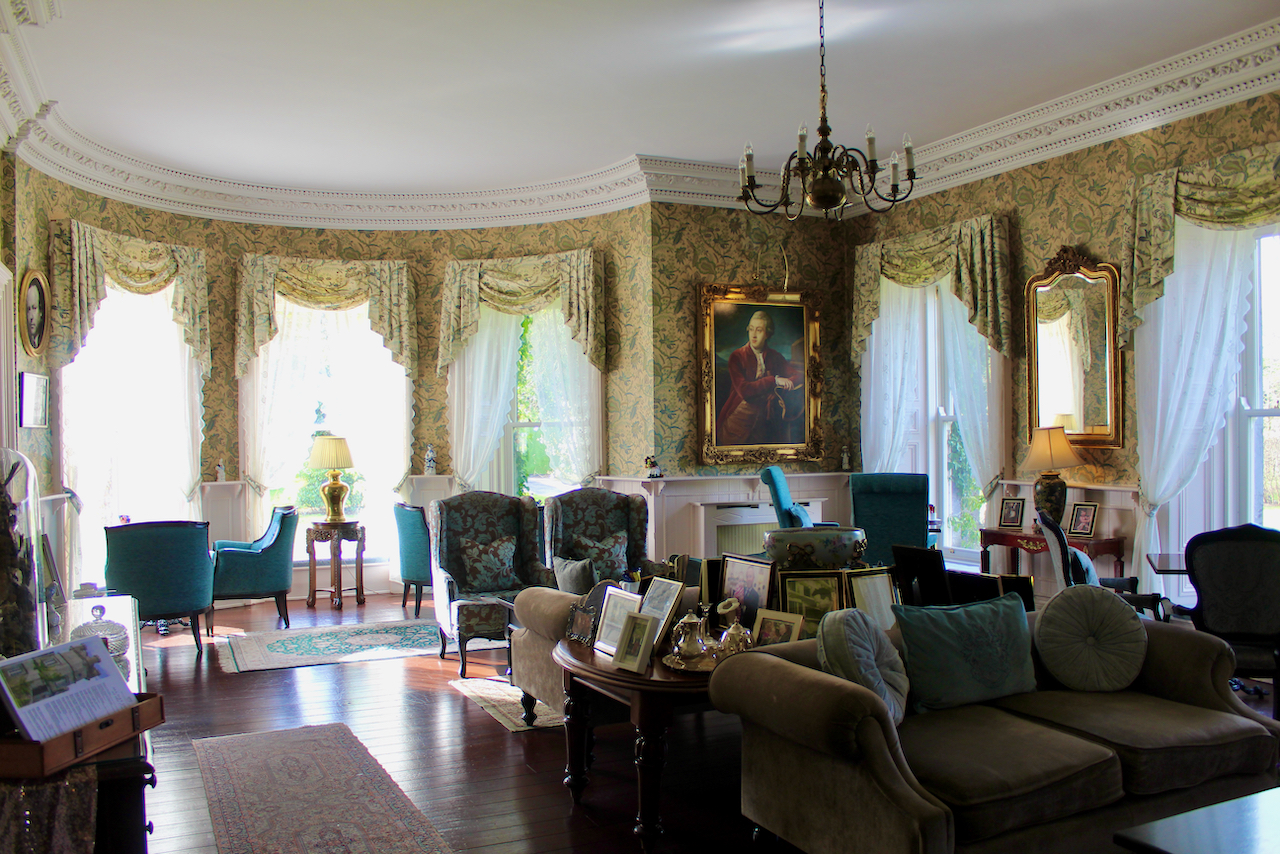
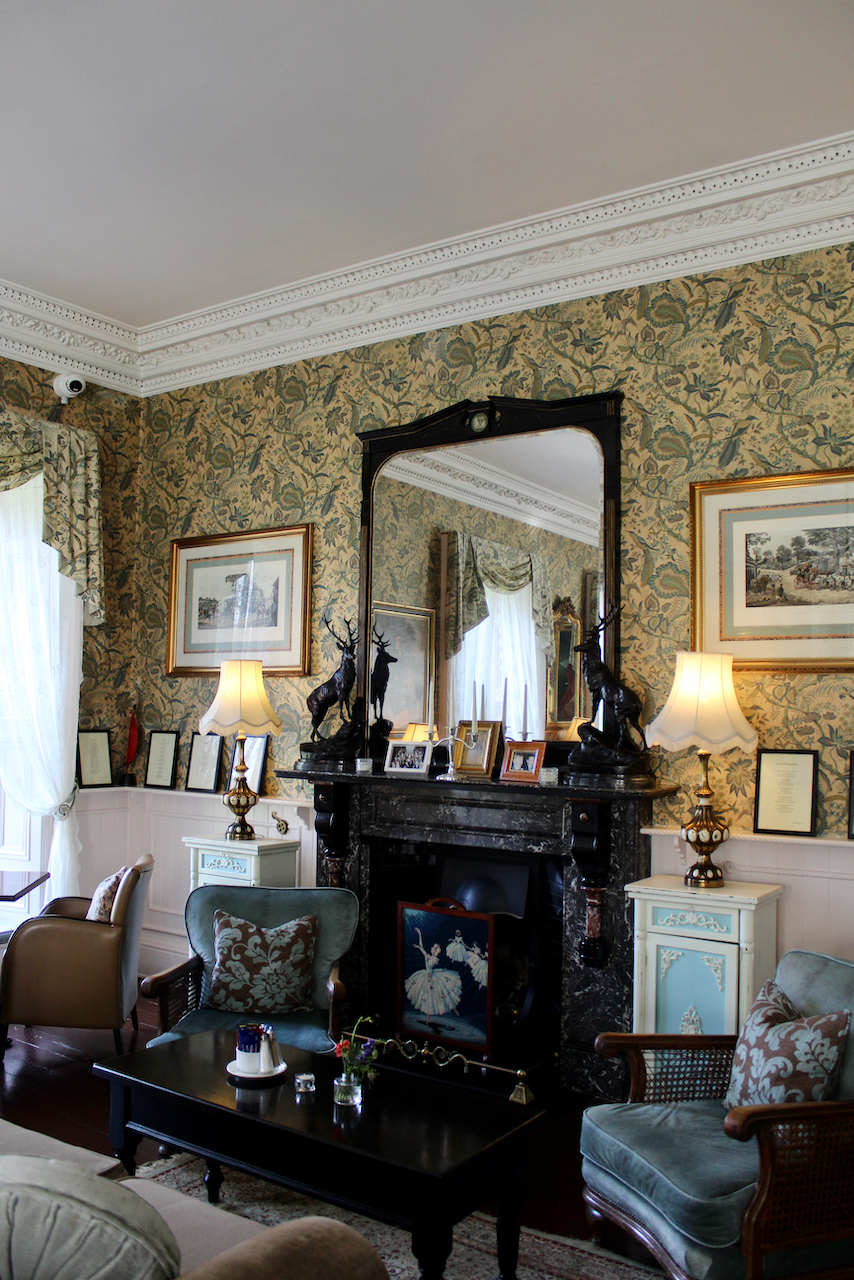
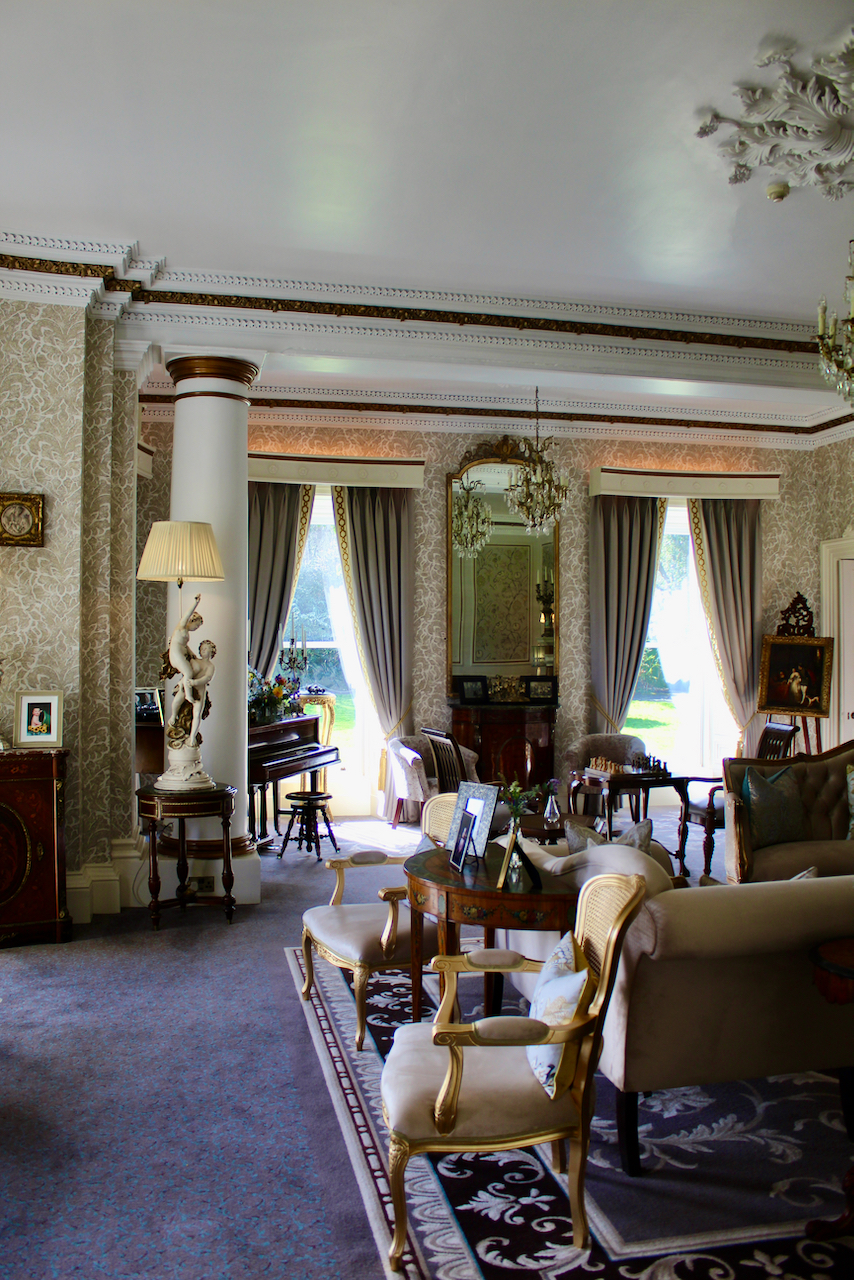
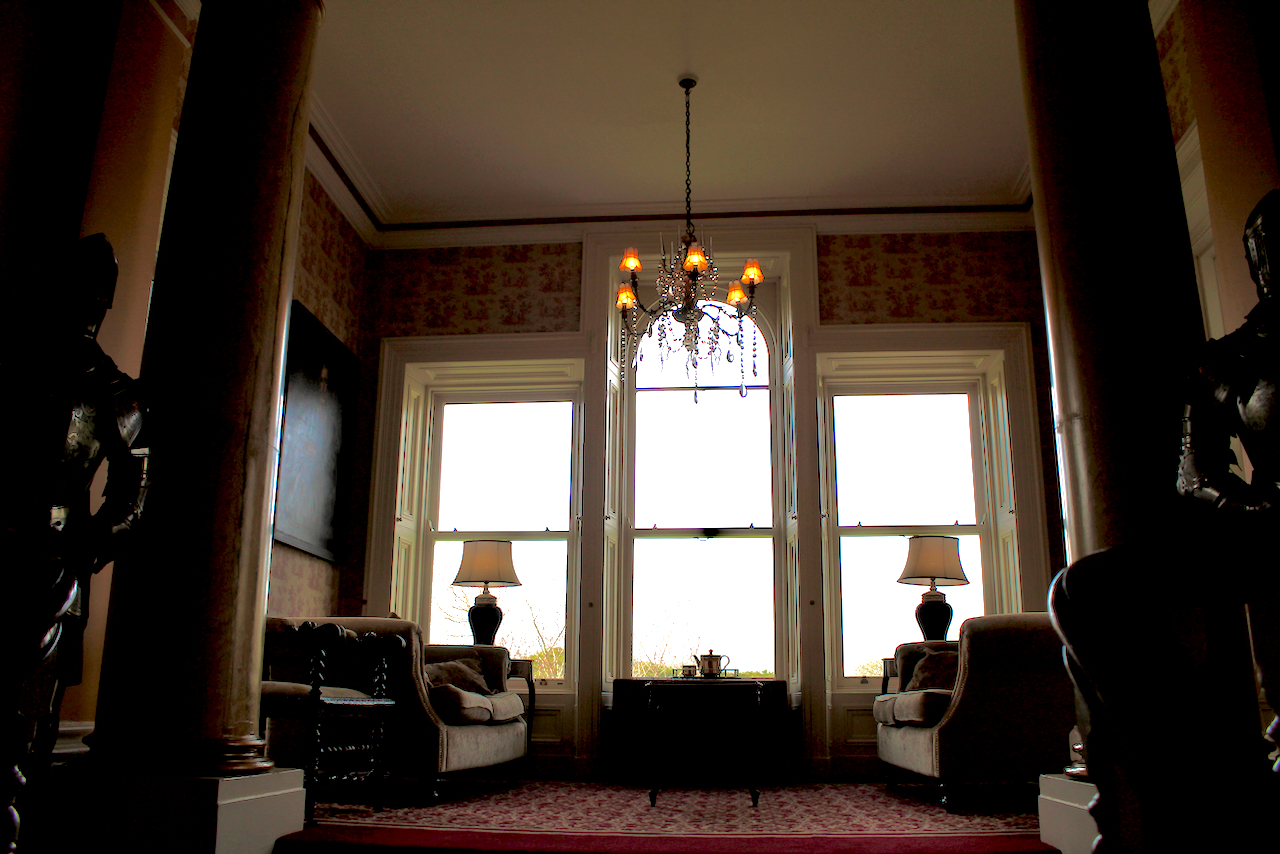
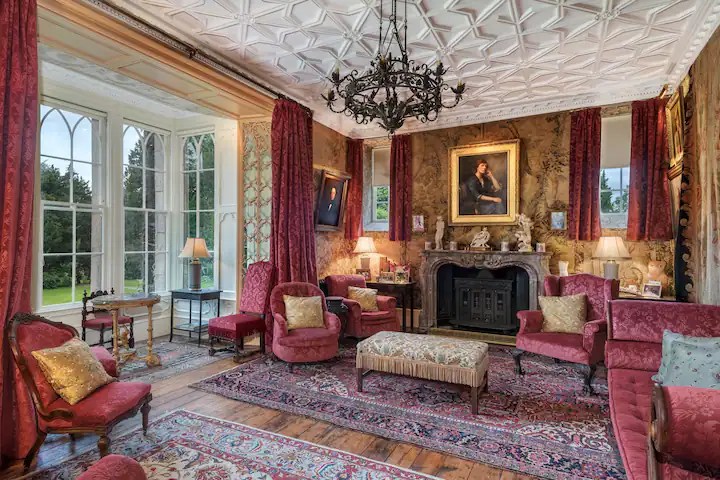
One of the formal rooms of Ballyseede Castle. © Jennifer Winder-Baggot, www.irishhistorichouses.com
The room has a lovely marble fireplace. © Jennifer Winder-Baggot, www.irishhistorichouses.com
Another of the formal rooms of Ballyseede Castle. © Jennifer Winder-Baggot, www.irishhistorichouses.com
Stephen and I particularly enjoyed the chess set and availed of it on two evenings, imagining ourselves in a drawing room in the eighteenth century. © Jennifer Winder-Baggot, www.irishhistorichouses.com
Ballyseede Castle. © Jennifer Winder-Baggot, www.irishhistorichouses.com
One of the bay windows of Ballyseede. © Jennifer Winder-Baggot, www.irishhistorichouses.com

It must have been during this Arthur’s time in the 1830s that Ballyseede was leased to Edward Denny (1796-1889), 4th Baronet.
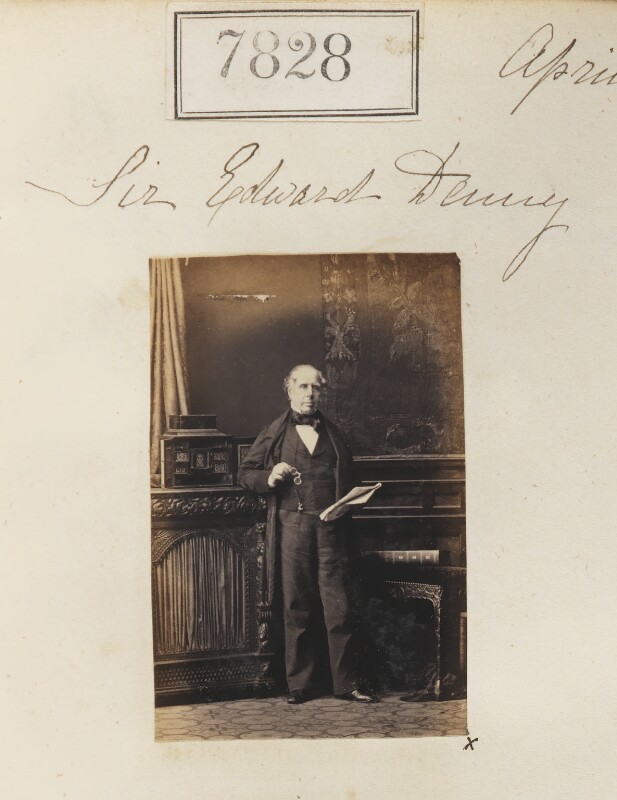
Edward Denny (1796-1889) 4th Bt , Poet and hymn writer, by Camille Silvy, 1862, National Portrait Gallery of London, Ax57667.

In Voices from the Great Houses: Cork and Kerry (2013) Jane O’Hea O’Keeffe tells us:

p. 160. “Several generations of the Denny family occupied the ancient castle in Tralee. They ran the estate through both peaceful and turbulent times until 1826, when Sir Edward Denny, 3rd Baronet [1773-1831, of Castle Moyle, Co. Kerry], decided to demolish the castle. Tom Denny ruefully remarks, “The demolition of Tralee Castle by Sir Edward Denny was a crime, and much resented in Tralee at that time. People felt angry that part of the town’s history was being destroyed. Sir Edward was really quite a muddled character. As a younger man, when he inherited the estate, he promptly set about enlarging the castle, something which is powerful father-in-law Judge Day found very irritating, and which created enormous problems for Sir Edward’s finances. He subsequently went to live in Worcester. He remained fascinated by genealogy and artefacts from the family’s past and continued to acquire Tudor portraits long after he had pulled down the Tudor remains of the Denny house. 

In the 1830s the Worcestershire Dennys came back to Tralee, and Sir Edward Denny, 4th Baronet, rented Ballyseedy Castle outside the town for a number of years. His younger brother William [1811-1871] became his agent, and he lived at Princes Quay in Tralee in a house when the Dominican church now stands. Sir Edward Denny planned to rebuild the [Tralee] castle, and he replanted the park and also built lodges on the estate. His plans came to an end in 1840 when he joined the conservative Plymouth Brethren movement and he lived thereafter in poverty in London, leaving the management of the estate to his family. 

The indebted Denny estate in Tralee was run by members of the family, or their agents, until 1892, when it was taken over by an insurance company; this severed a family link to the area which had remained strong for over 300 years. 

The Denny estates at one time, stretched to around 29,000 acres, extending from Fenit to Tralee and around the other side of the bay to Derrymore,” explains Tom Denny. “Sir Arthur Denny, 5th Baronet (1838-1921), was a notorious gambler who managed to lose the entire estate by around 1892.” 
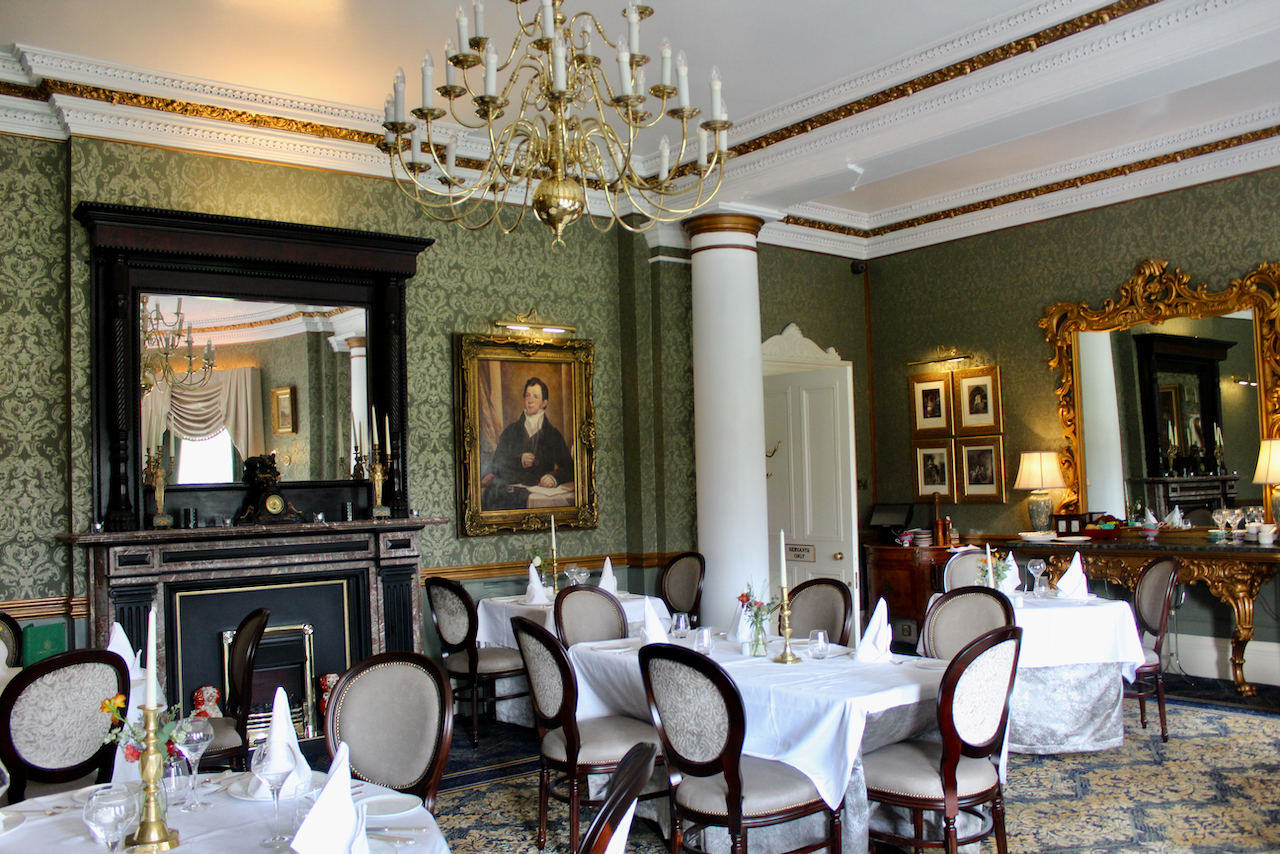
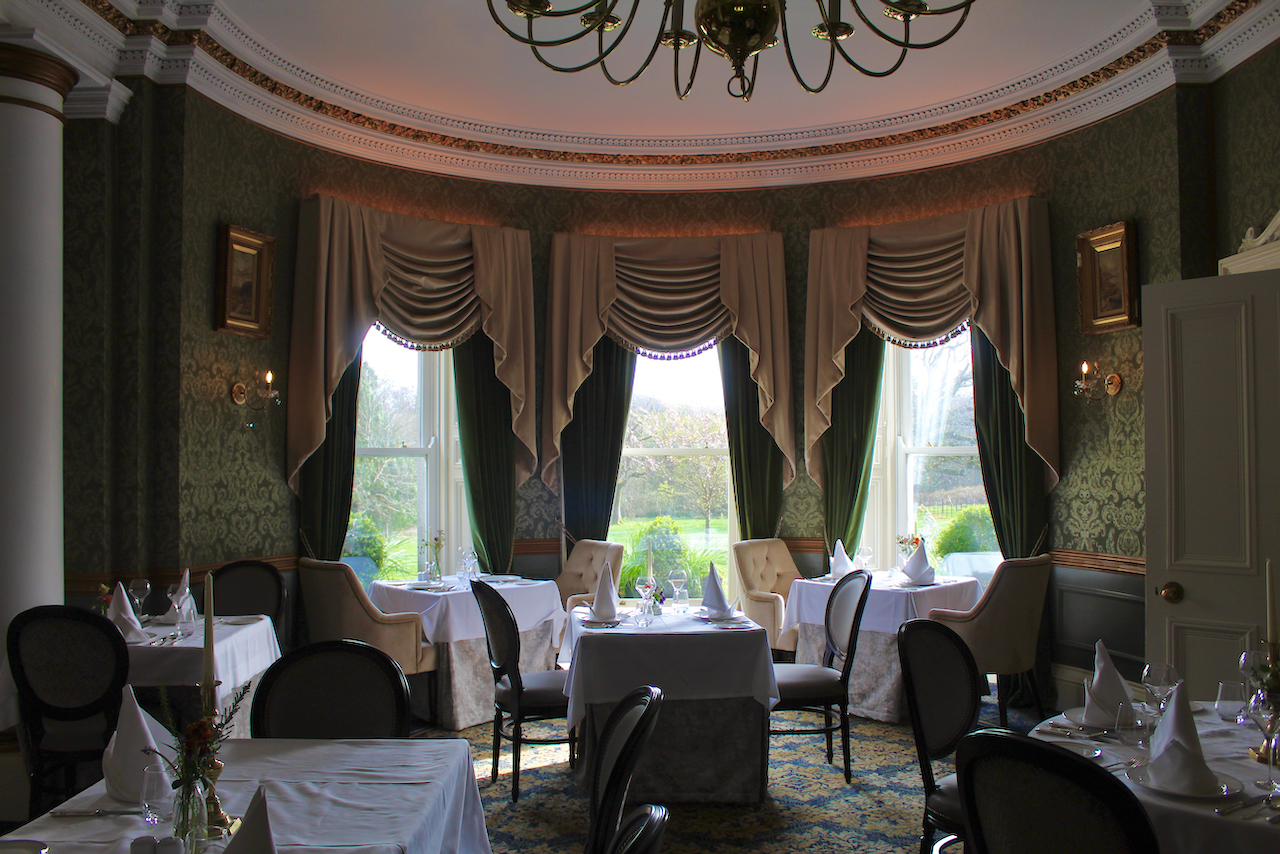
The dining room of Ballyseede Castle. © Jennifer Winder-Baggot, www.irishhistorichouses.com
Ballyseede Castle, March 2023. © Jennifer Winder-Baggot, www.irishhistorichouses.com

Arthur Blennerhassett died in 1843 when his son, Charles John Allanson Winn Blennerhassett (1830-1859) was only thirteen years old. By this time, Ballyseedy was probably back in the hands of the Blennerhassetts. Charles’s mother has died when he was only four. I am not sure who raised him. A few of his uncles still lived in County Kerry: His uncle Thomas (1806-1878) remained unmarried and lived in Kerry, and uncle Lt.-Col. Francis Barry Blennerhassett (1815-1877) lived in Blennerville, County Kerry, also unmarried.

Charles John Allanson Winn married Marianne Hickson of Dingle, County Kerry, in 1855. He held the office of High Sheriff in 1858 and was a Justice of the Peace. He died at the young age of 29 and his wife remarried, this time to Captain William Walker. Before Charles died, his wife had two children: Barbara, who died at the age of ten, and Arthur (1856-1939). Young Arthur was only three years old when his father died. He was sent away to school in Harrow in England.

Charles John Allanson Winn Blennerhassett (1830-1859) had several siblings. His sister Adelaide married Standish O’Grady (1832-1860) 3rd Viscount Guillamore, County Limerick. His sister Dorcas married Robert Conway Hurly of Glenduffe, County Kerry. His sister Amelia married Chichester Thomas Skeffington, son of Thomas Henry Skeffington, 2nd Viscount Ferrard, County Louth. Frances Annabella married John Richard Wolseley, 6th Bt of Mount Wolseley, County Carlow. His only brother, Henry Deane, died unmarried in 1850.

Young Arthur Blennerhassett (1856-1939) was the owner of 12,621 acres in 1876 [see 2]. He held the office of High Sheriff in 1878. In 1882 he married Clara Nesta Richarda FitzGerald, daughter of Desmond John Edmund FitzGerald, 26th Knight of Glin.

The house was further remodelled during the 1880s for the Blennerhassett family by James Franklin Fuller (1835–1924), after which it was then known as “Ballyseedy Castle.” Fuller added a battlemented parapet, hood mouldings and other mildly baronial touches. The three-bay single-storey flat-roofed limestone ashlar projecting porch was added to the entrance bay. The Blennerhassett website tells us that the back of the castle became the front at this time.
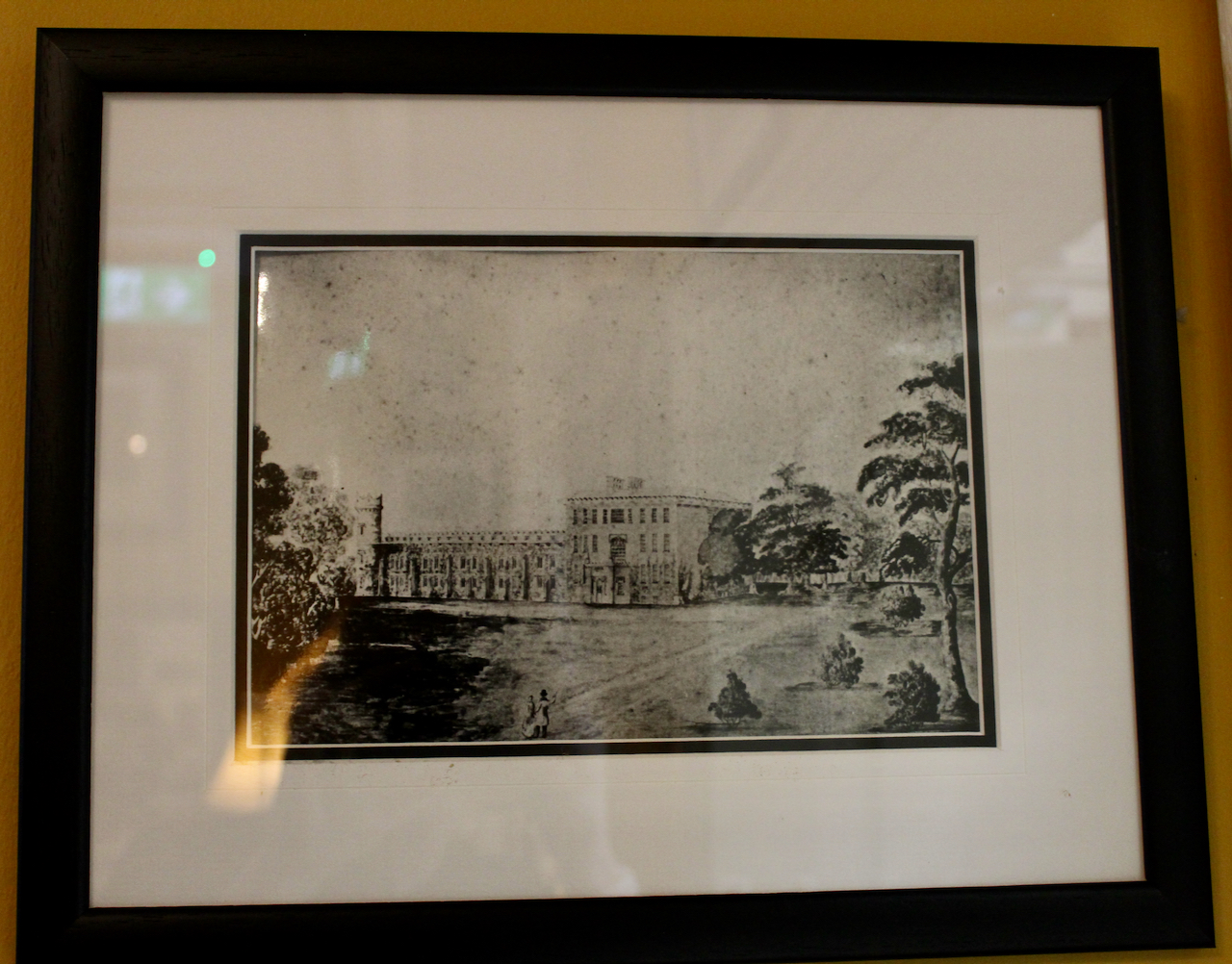
Older pictures of Ballyseedy. It looks like this could be the original front of the castle. It is identified on the Blennerhassett family website as Ballyseedy c.1837-1841 and their version is titled “The Seat of Arthur Blennerhassett Esq MP, Co Kerry.”

The Blennerhassett family website [8] tells us more about the history:

During the 1880s Arthur’s grandson, Maj. Arthur Blennerhassett (b.1856 d.1939), commissioned a “mock castle” refacing of the house, as was popular during the late Victorian period, these changes causing what had previously been the front elevation and west facing main entrance to become the rear of the house. This work, executed by Kerry architect, historian and Blennerhassett descendant James Franklin Fuller, caused the house to lose its Georgian elegance and simplicity but resulted in the more impressive building we see today. Following these changes the house began to be referred to as “Ballyseedy Castle” and is named as such on the family headed writing paper of the time.” [8]

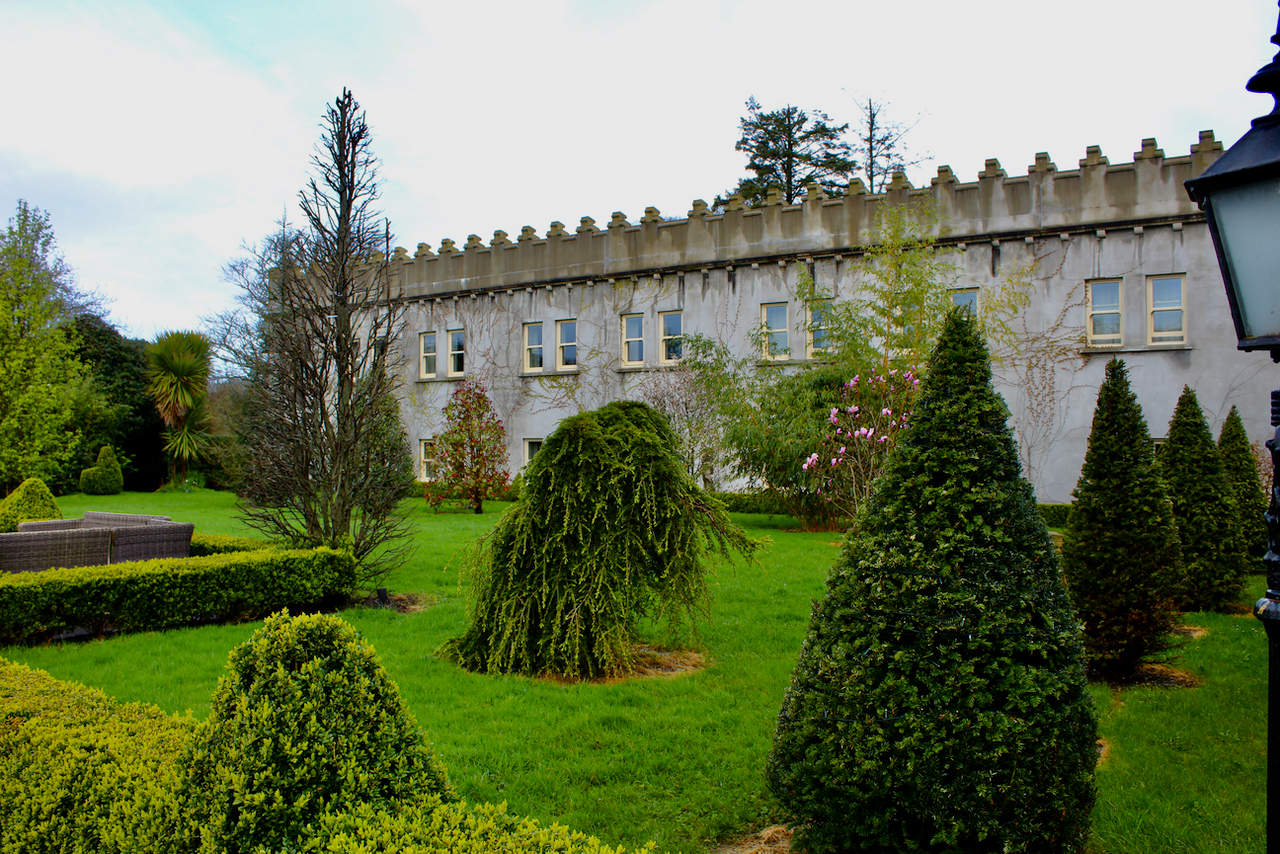
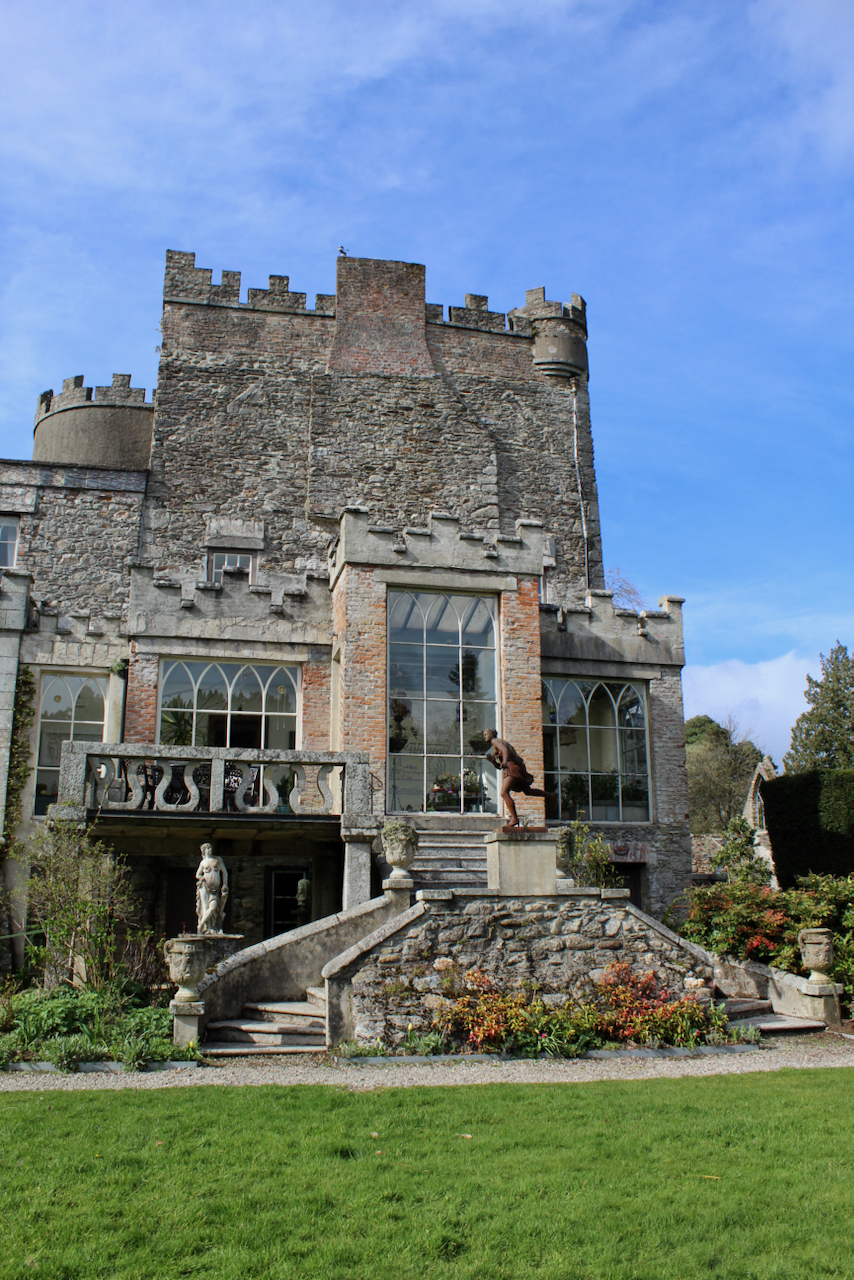
Unfortunately not having read this fully in advance of our visit, I didn’t take a proper picture of the back of the hotel, not knowing that it had originally been the front!

The back of the hotel. © Jennifer Winder-Baggot, www.irishhistorichouses.com
An early aerial shot of Ballyseede.

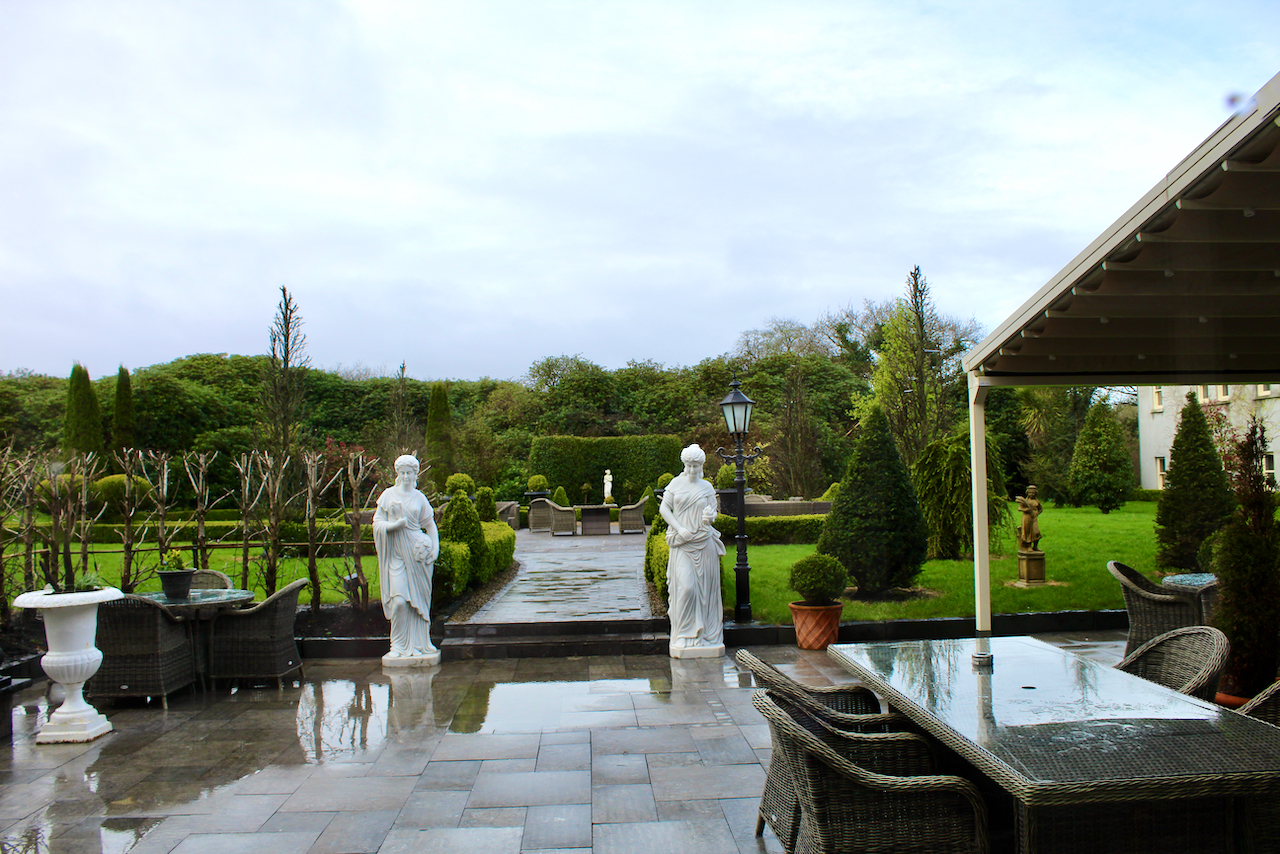
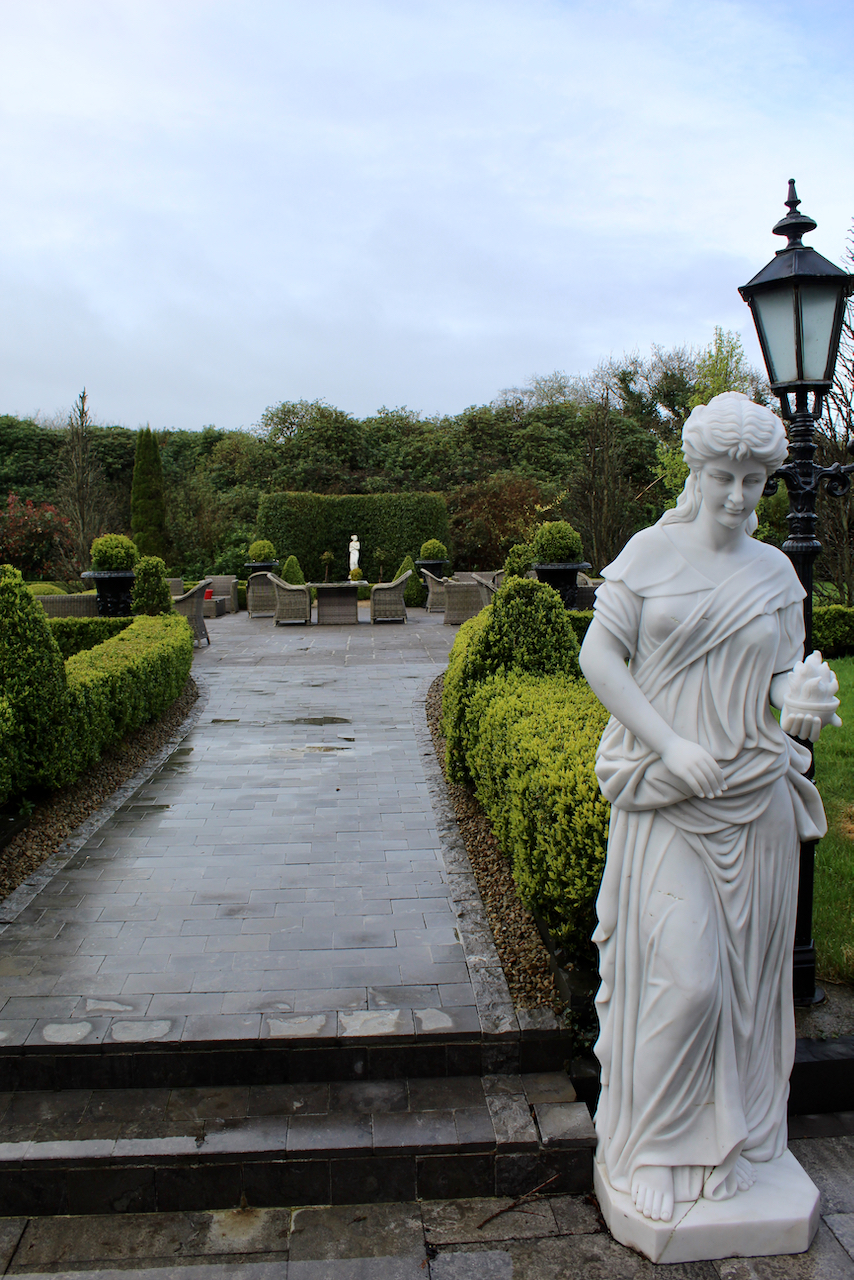
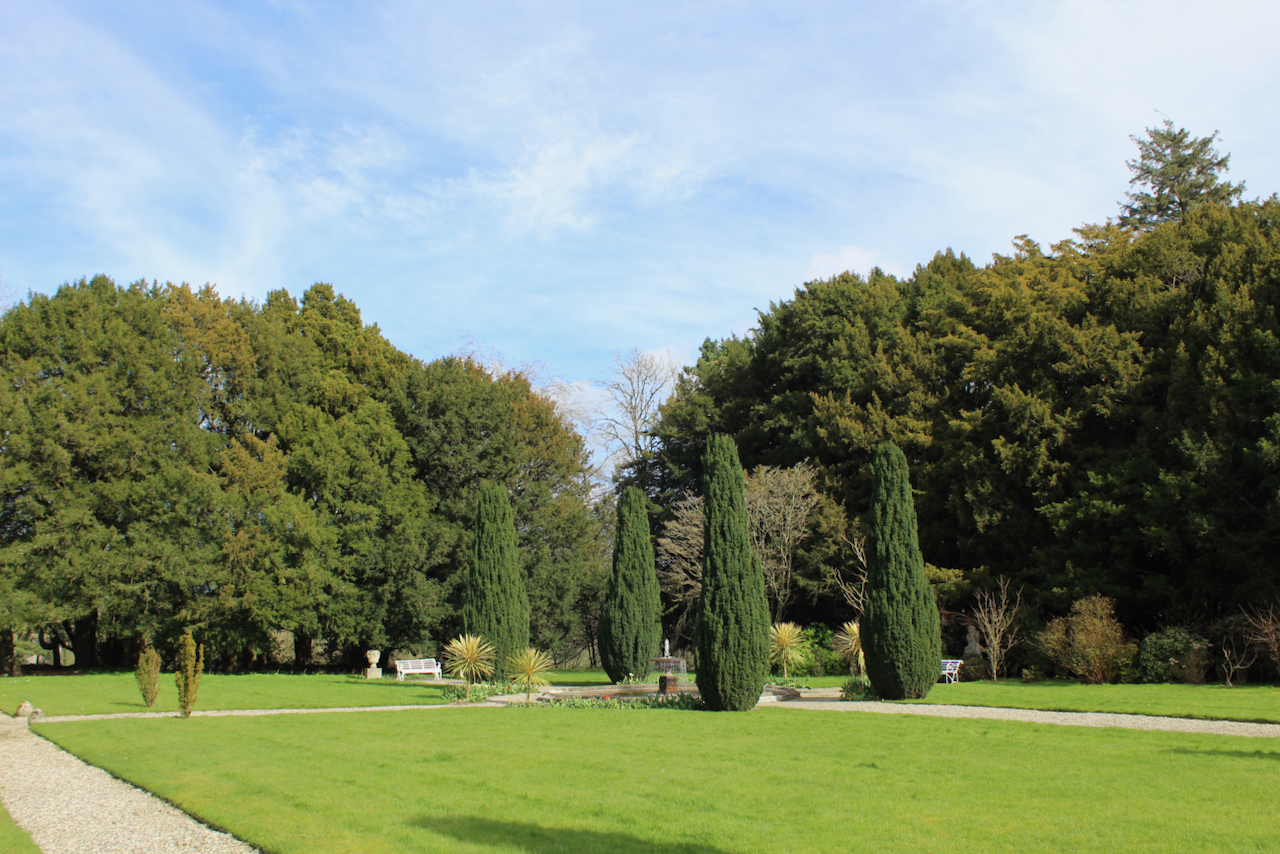
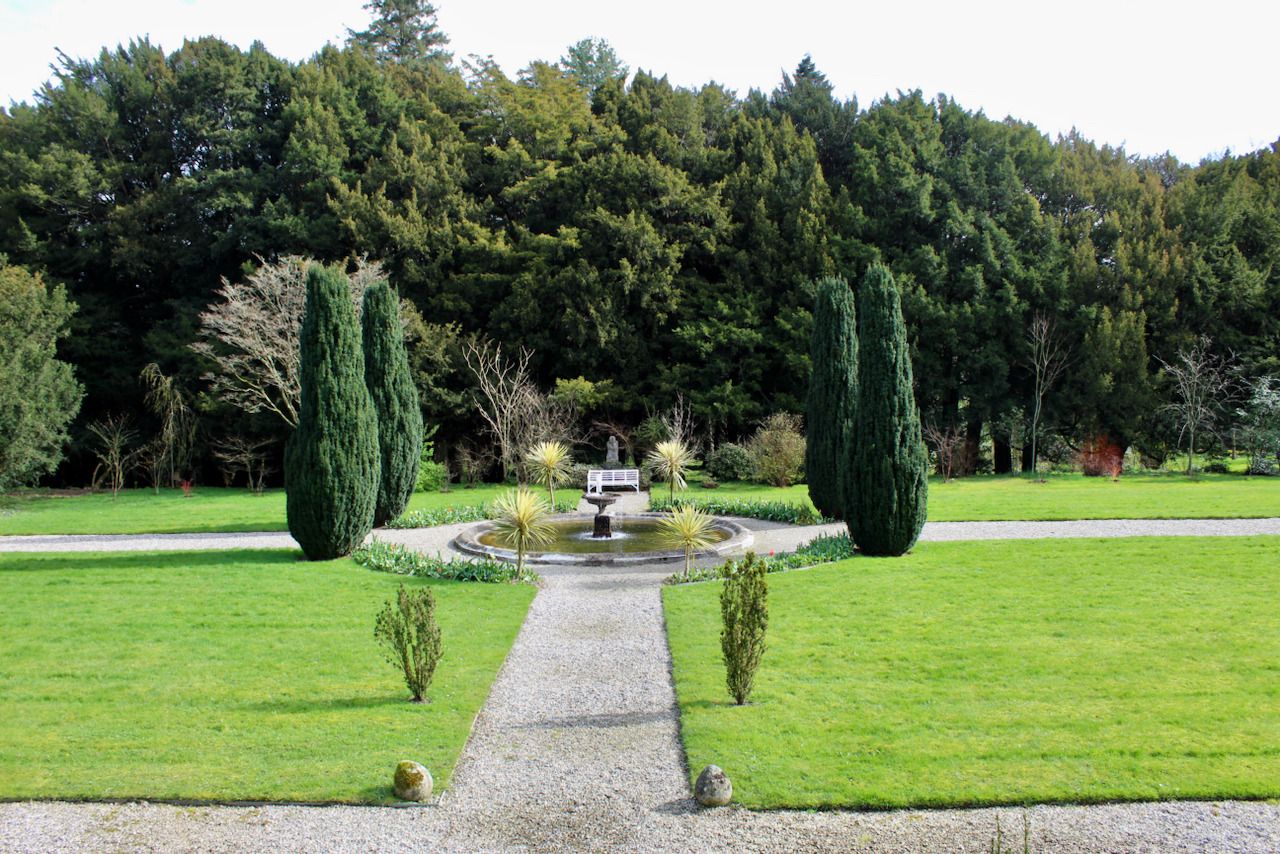
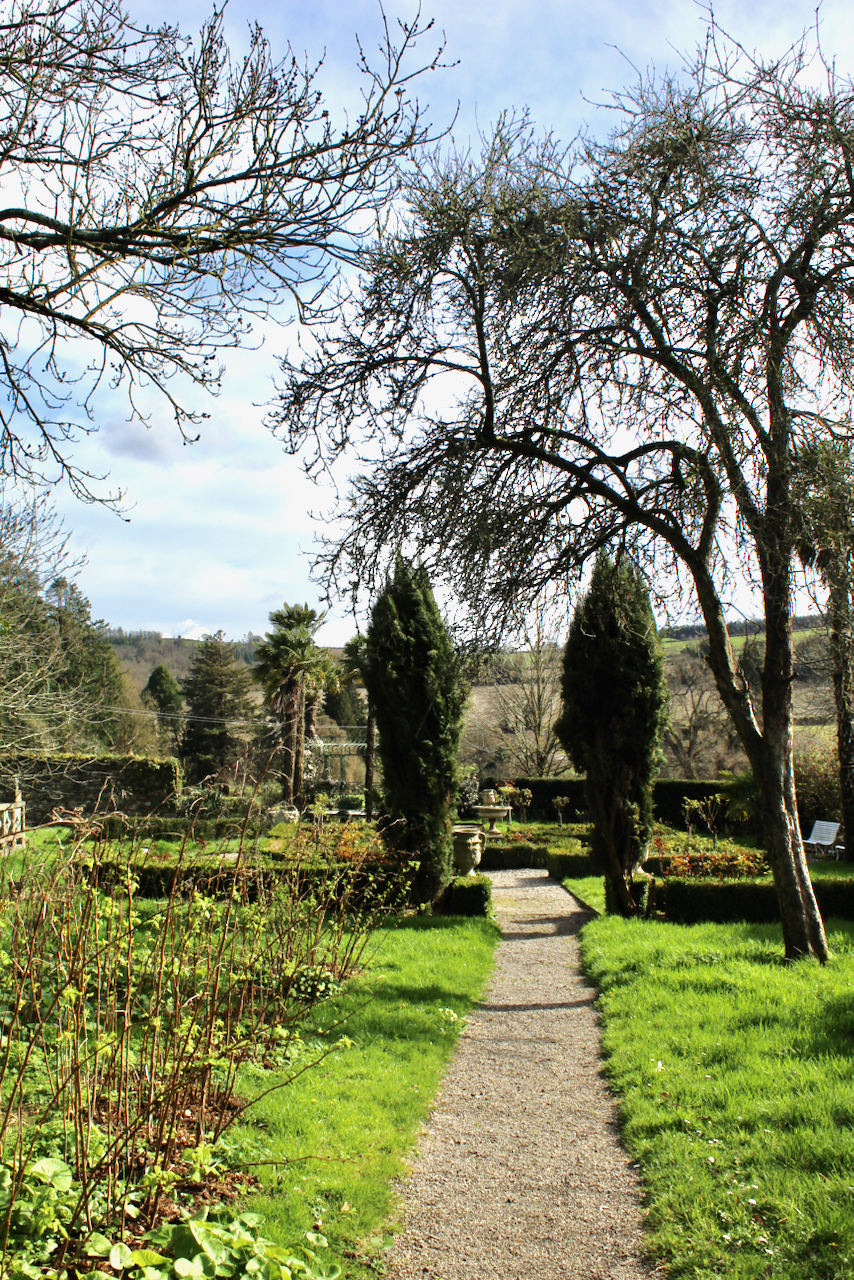
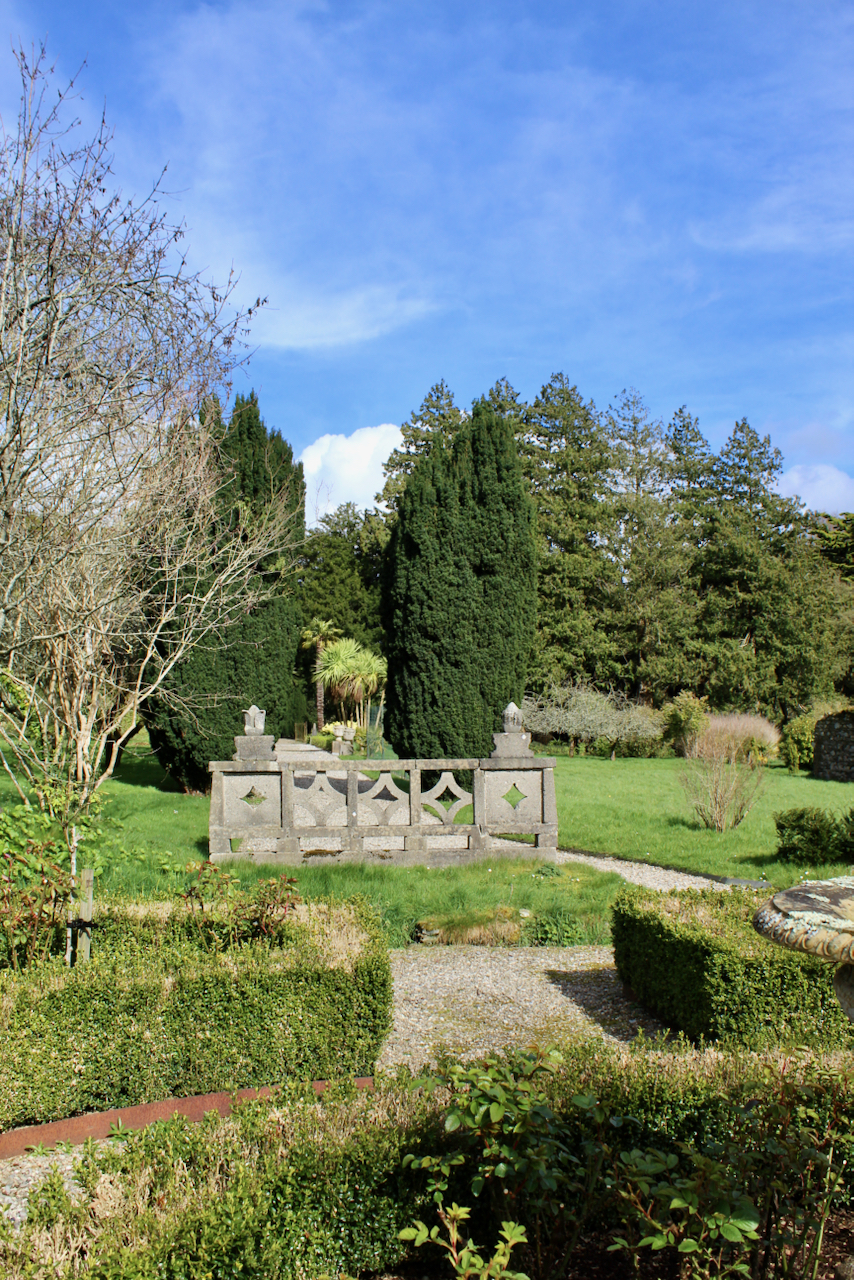
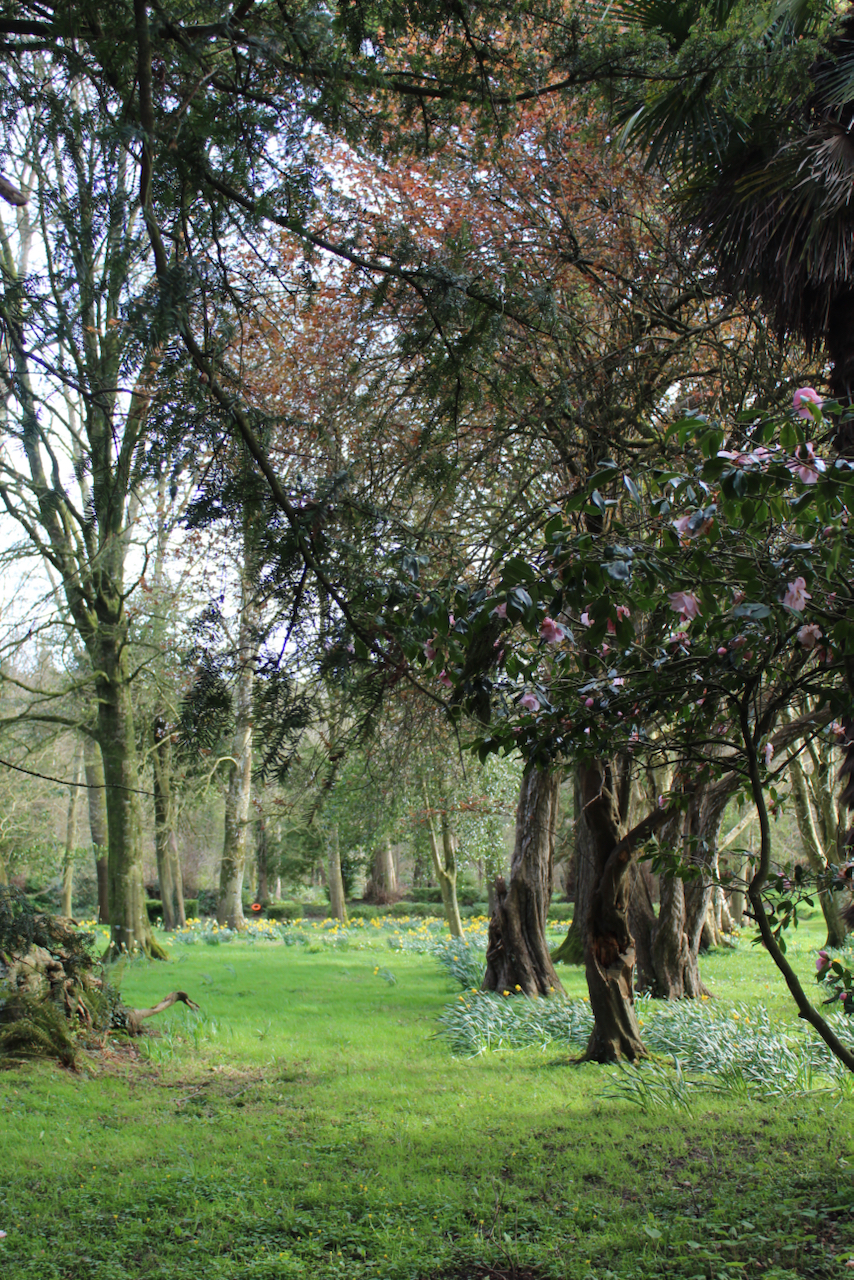
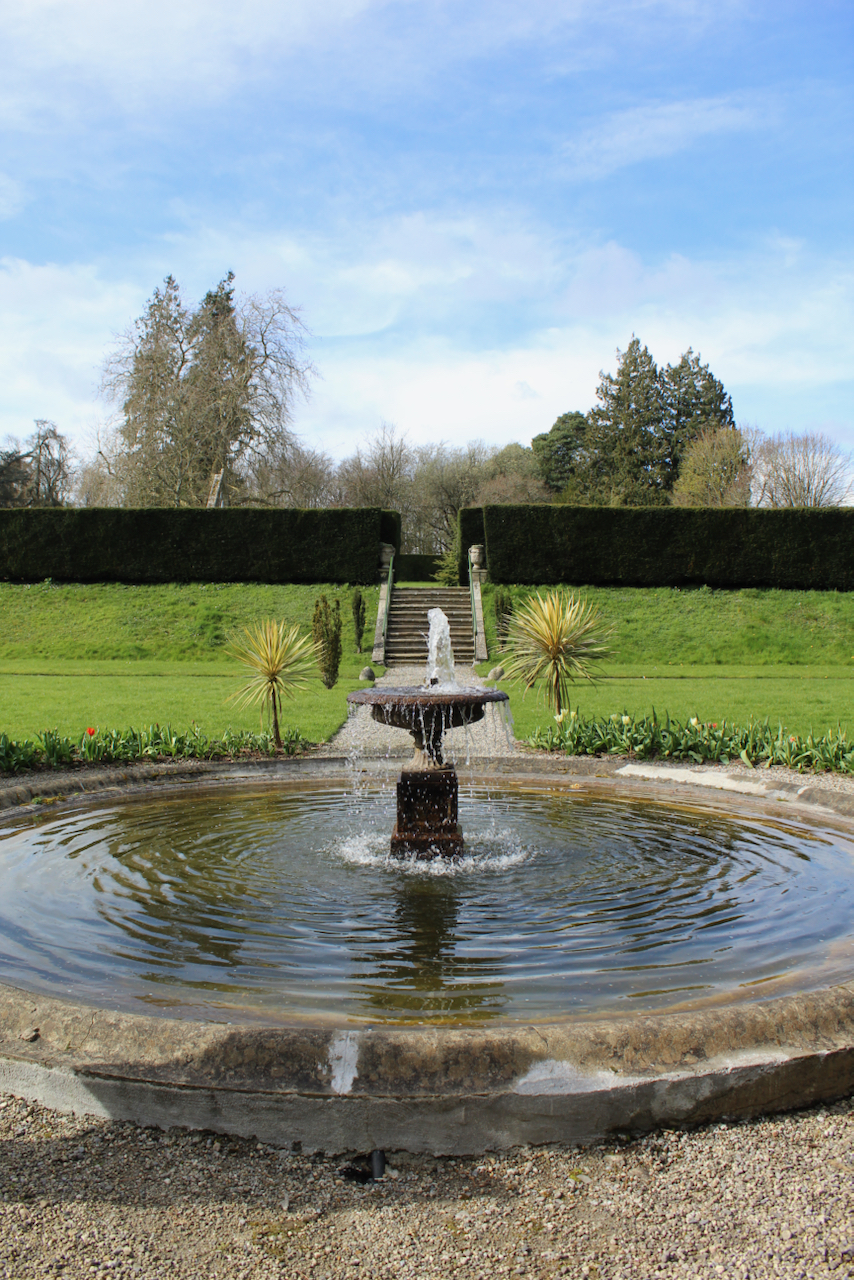
Out the back there is a lovely garden with statues, small hedges, trees and a gazebo perfect for wedding photographs. Unfortunately it rained during most of our visit, so we didn’t get to explore much outside.
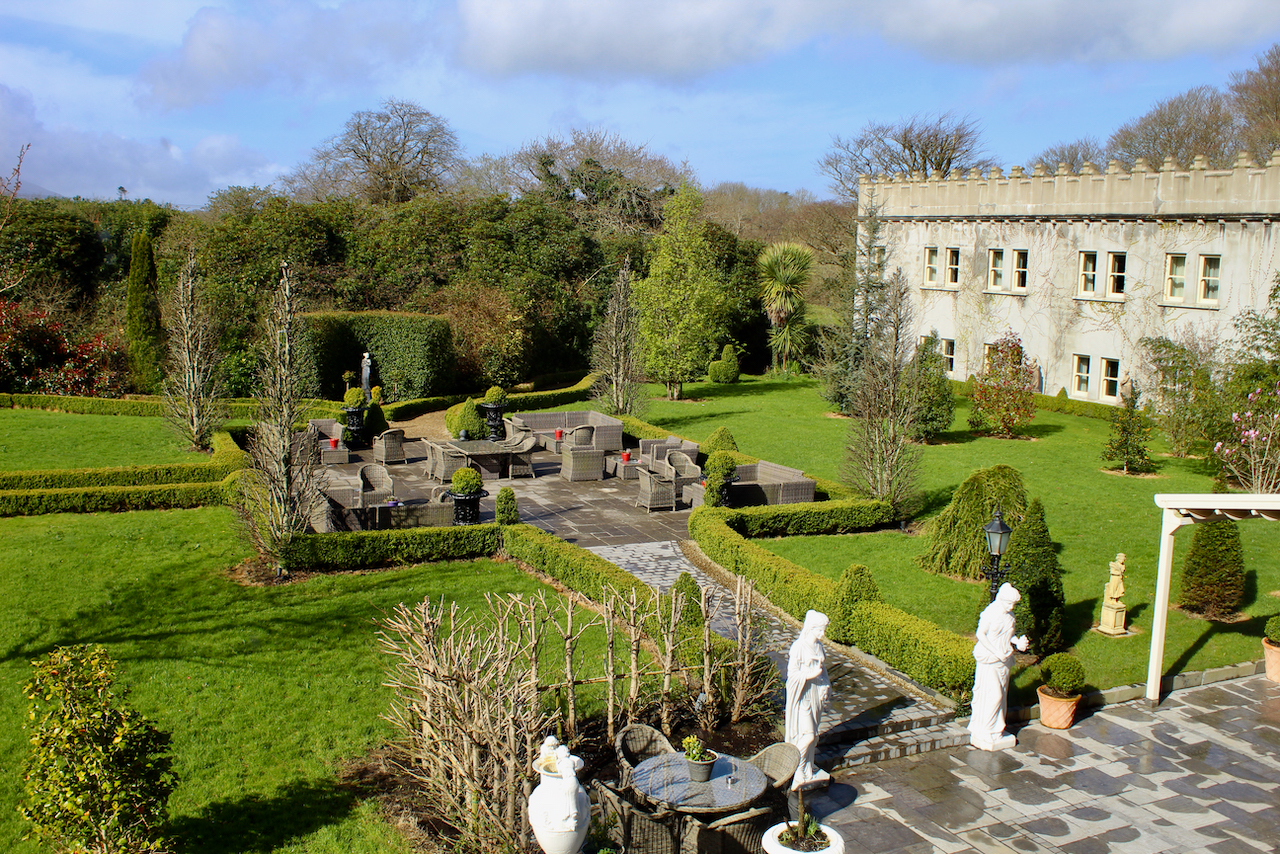
The gardens at Ballyseede Castle. © Jennifer Winder-Baggot, www.irishhistorichouses.com
A later addition to the castle, a sixteen bedroom extension. © Jennifer Winder-Baggot, www.irishhistorichouses.com

Arthur served as Deputy Lieutenant and Justice of the Peace. He fought in the first World War and gained the rank of Major in the 4th Battalion, Munster Fusiliers. In 1918, both he and Clara Nesta (known as Nesta) were appointed as Members of the Order of the British Empire (M.B.E.) for their services: Nesta because during WWI she and her younger daughters Hilda and Vera served as Voluntary Aid Detachment nurses caring for the wounded, first behind the battlefields of France, and later on Lord Dunraven’s hospital ship “Grianaig” in the Mediterranean. 

Arthur and Nesta had three daughters. Hilda and Vera lived at Ballyseedy. Hilda bequeathed the estate in 1965 to her kinsman Sir (Marmaduke) Adrian Francis William Blennerhassett, 7th Bt of Blennerville, County Kerry, who sold it 1967. [see 5] This branch of Blennerhassetts are descendants of Robert Blennerhassett of Ballycarty Castle and his wife Elizabeth Conway also, from their grandson Robert, younger brother of John from whom the Ballyseedy Blennerhassetts descended.

The Blennerhassett website has a copy of the auction of the contents of the house, held by Hamilton and Hamilton in 1967.
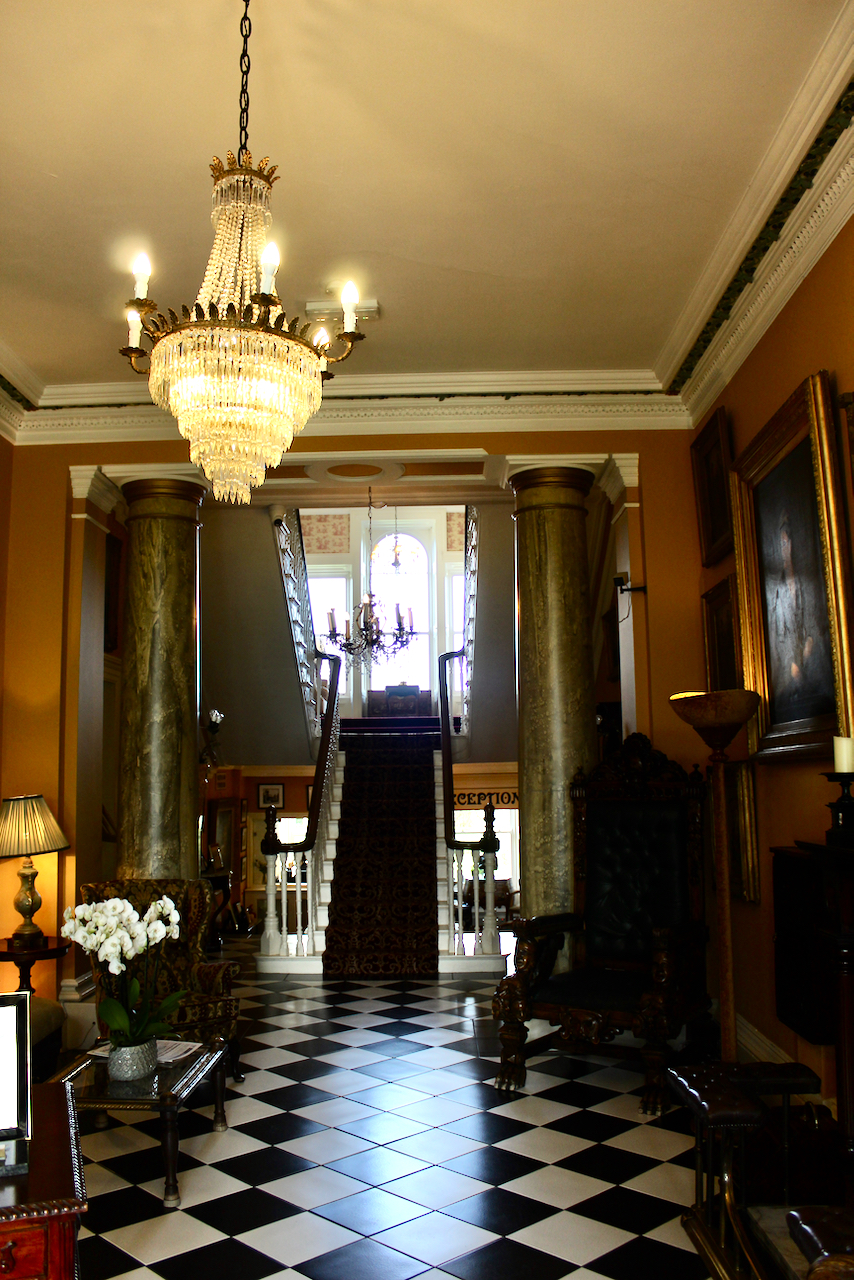
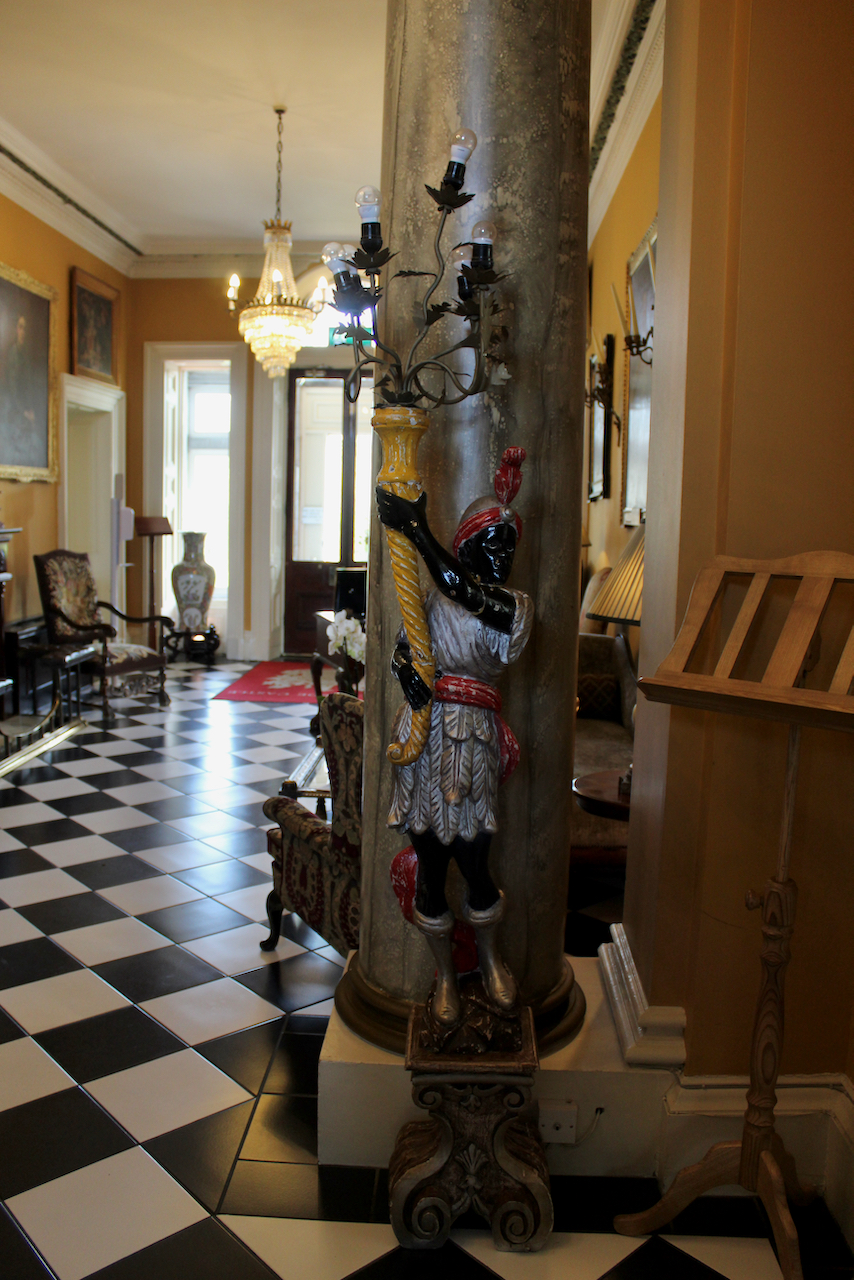
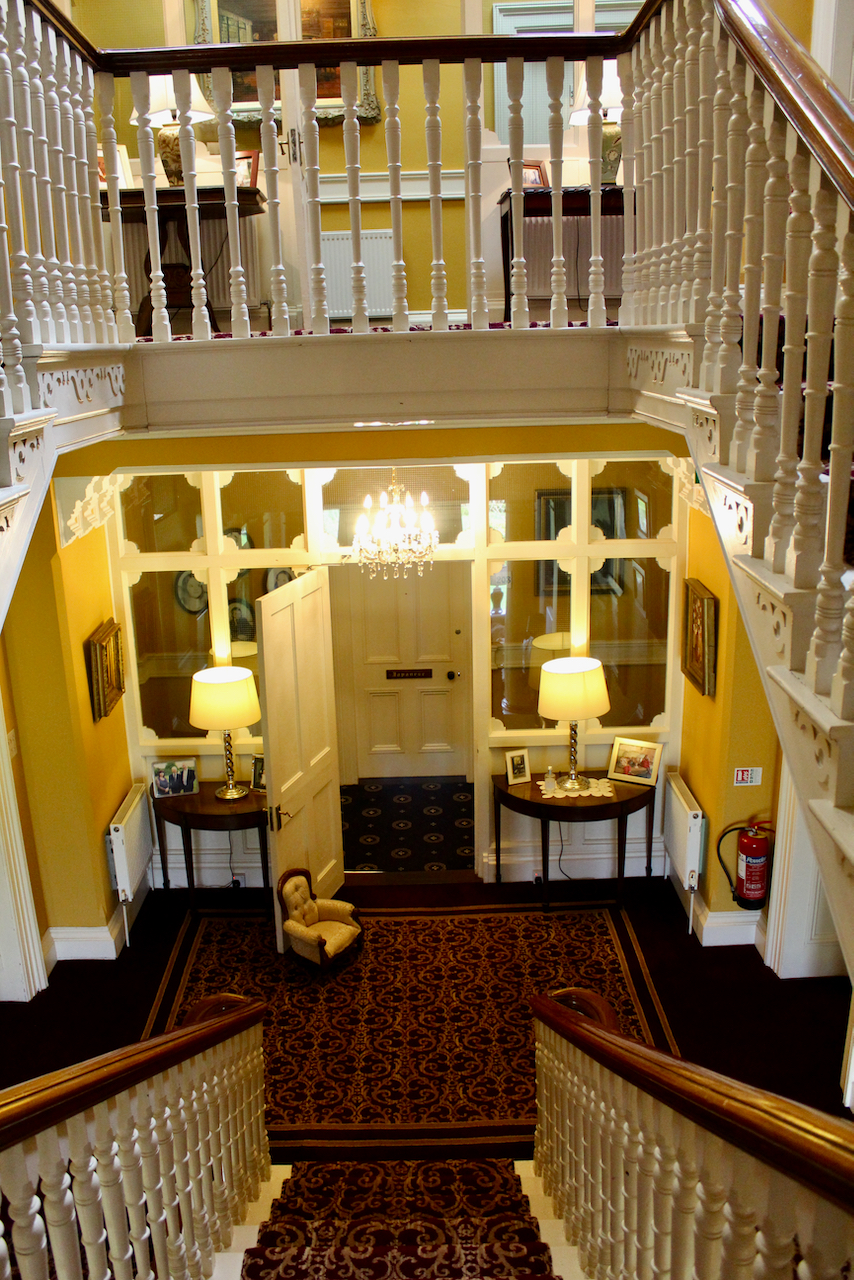
The stair hall of Ballyseede Castle. © Jennifer Winder-Baggot, www.irishhistorichouses.com
Everywhere there are little touches and treasures. © Jennifer Winder-Baggot, www.irishhistorichouses.com
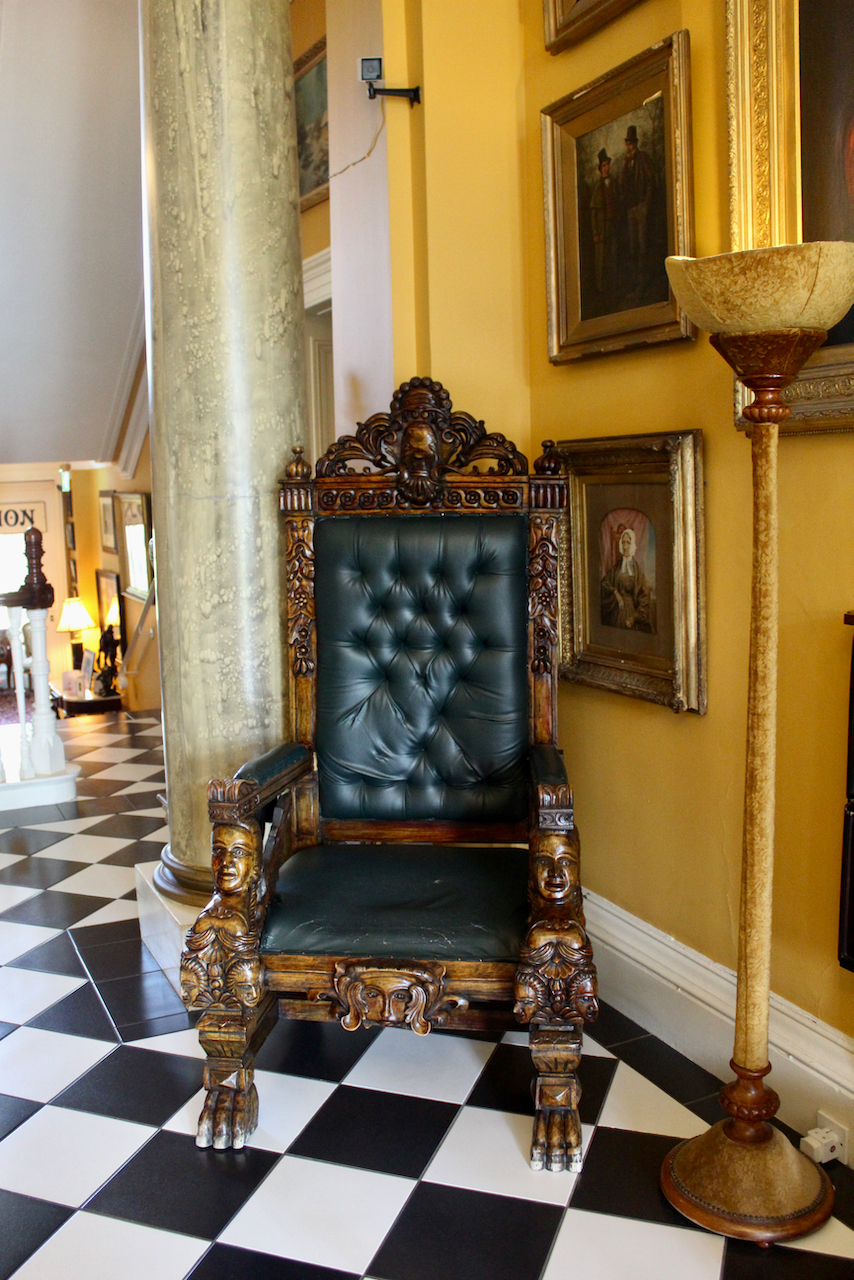
Stephen and I loved this carved chair in the front hall. © Jennifer Winder-Baggot, www.irishhistorichouses.com
The halfway landing at Ballyseede Castle, March 2023. © Jennifer Winder-Baggot, www.irishhistorichouses.com
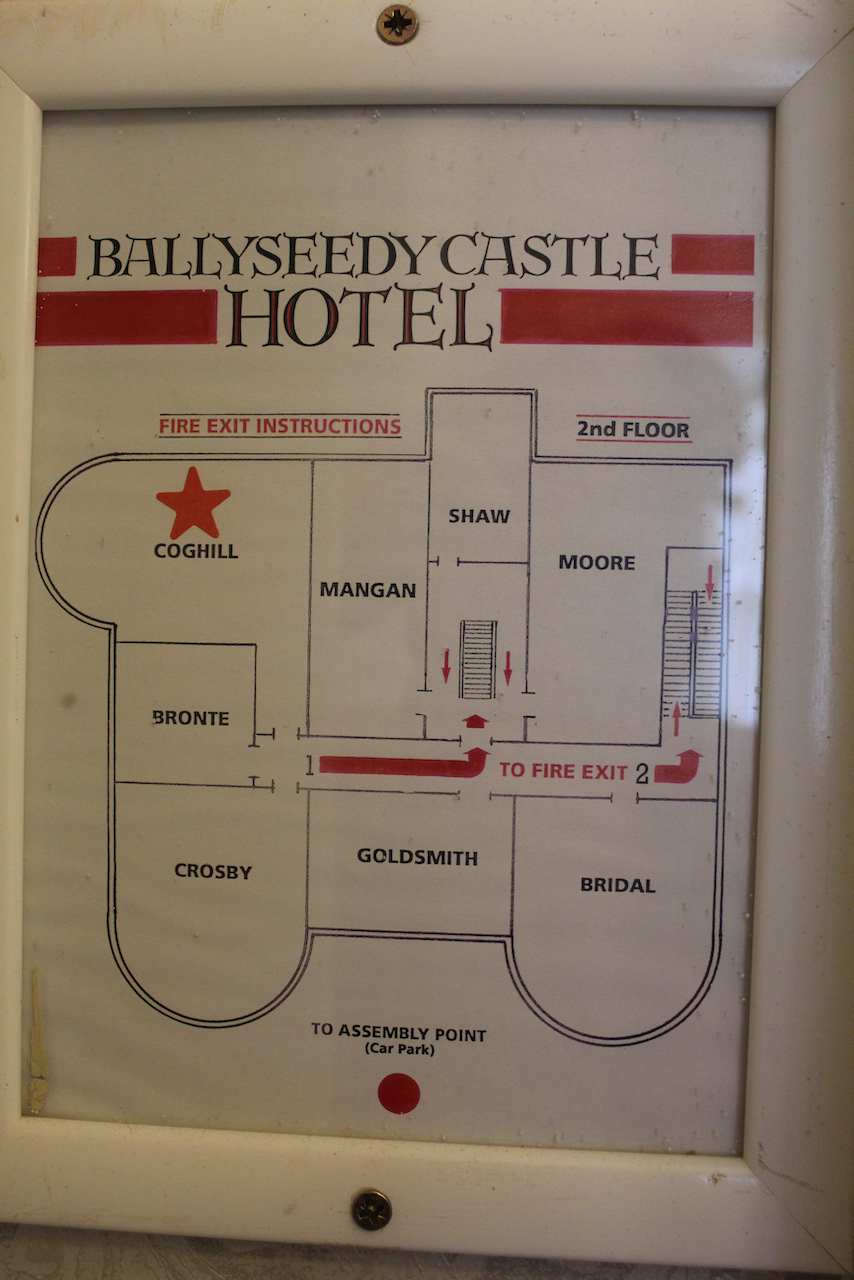
The first and second floors of Ballyseede Castle, March 2023. © Jennifer Winder-Baggot, www.irishhistorichouses.com

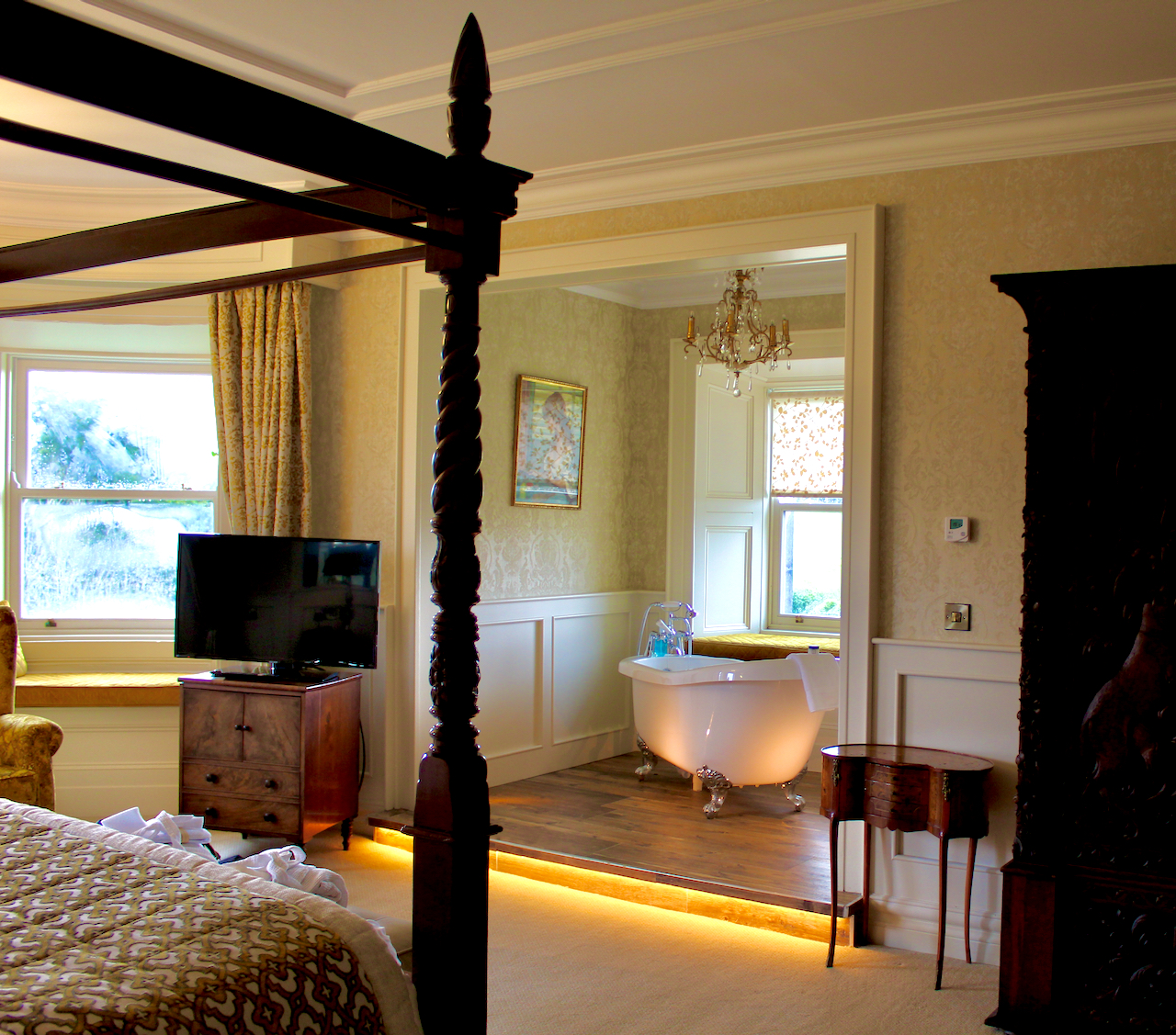
Marnie Corscadden was kind enough to upgrade us to a beautiful suite, complete with stand alone clawfoot bath! We had a wonderful stay.
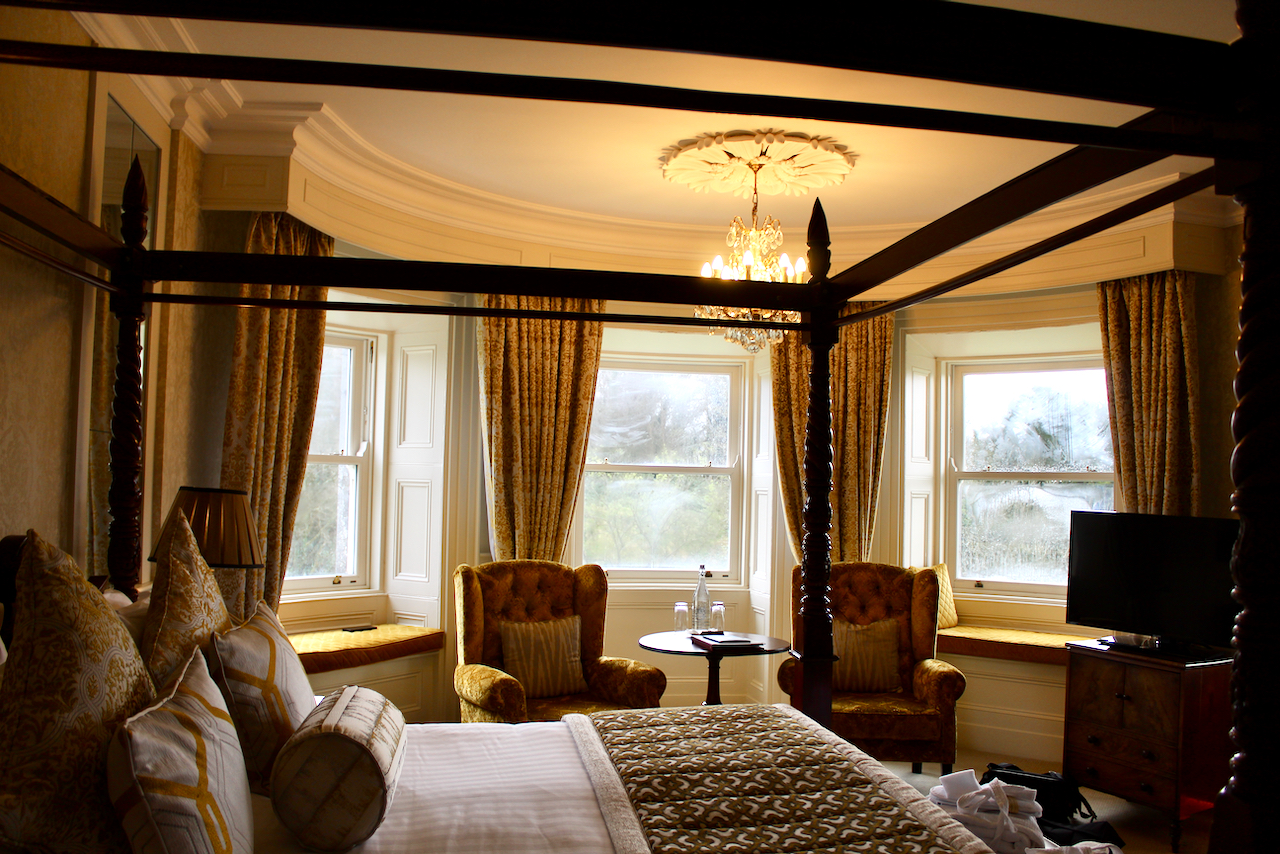
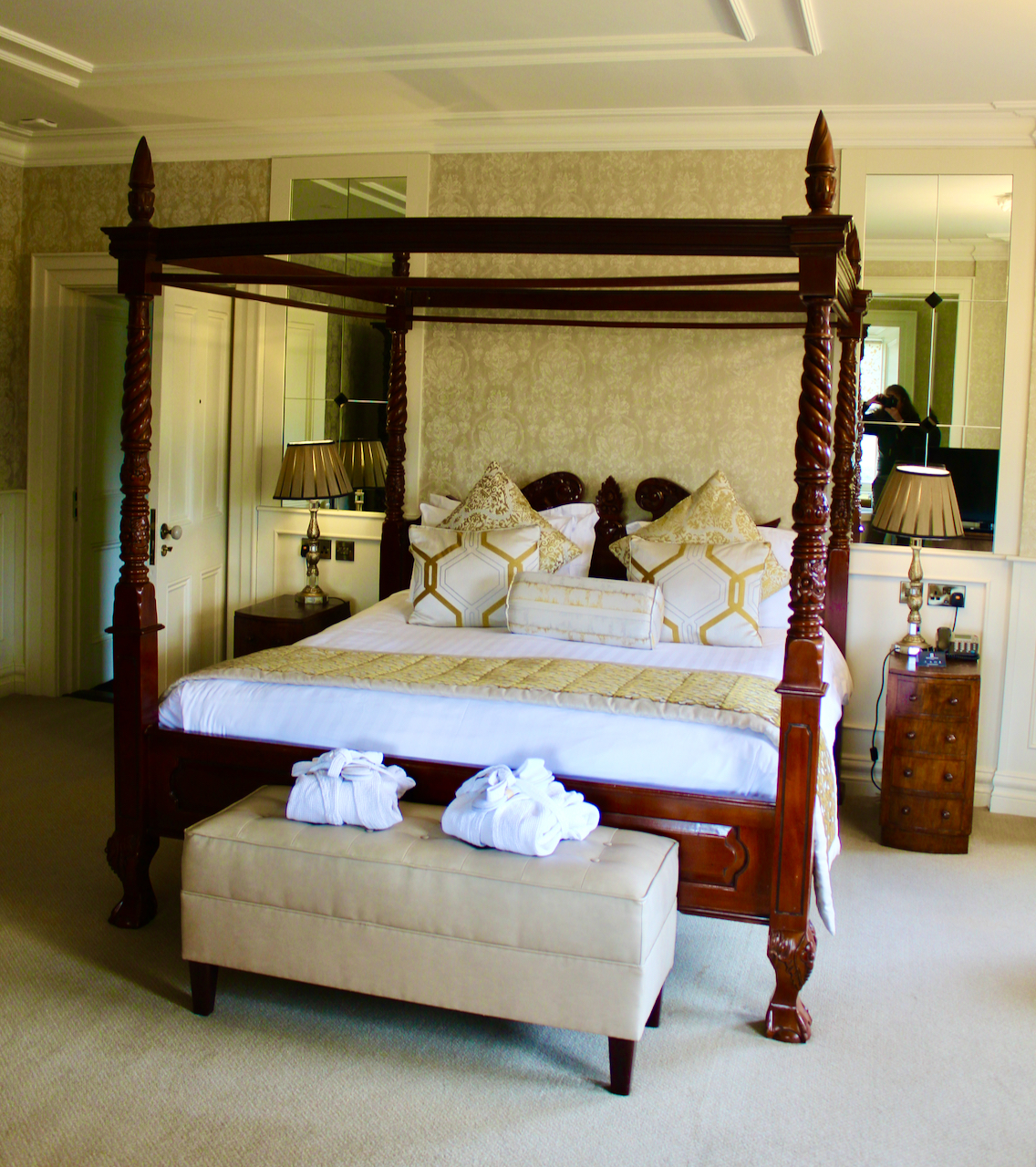
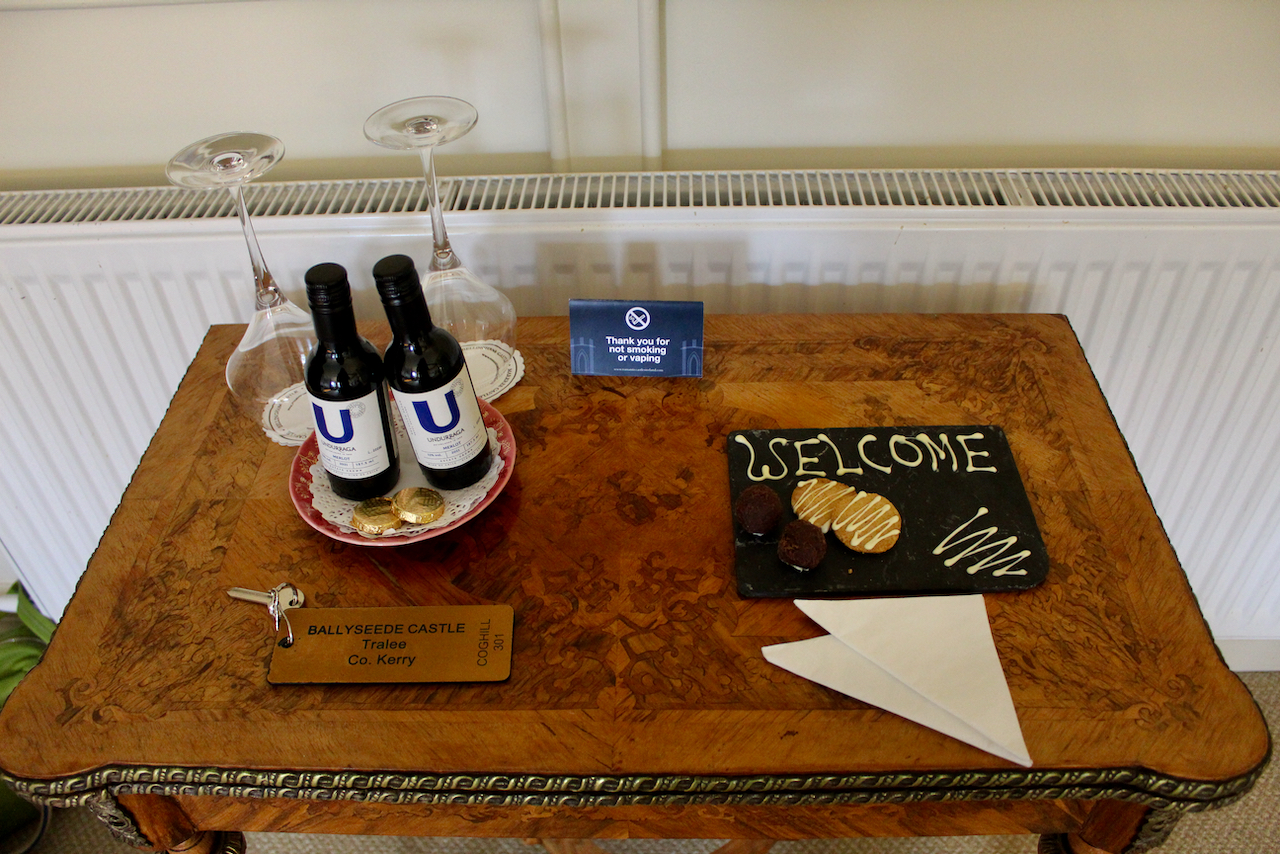
Our impressive bedroom, the Coghill suite. © Jennifer Winder-Baggot, www.irishhistorichouses.com
Our room in Ballyseede Castle, County Kerry, with a stand alone clawfoot bath. © Jennifer Winder-Baggot, www.irishhistorichouses.com
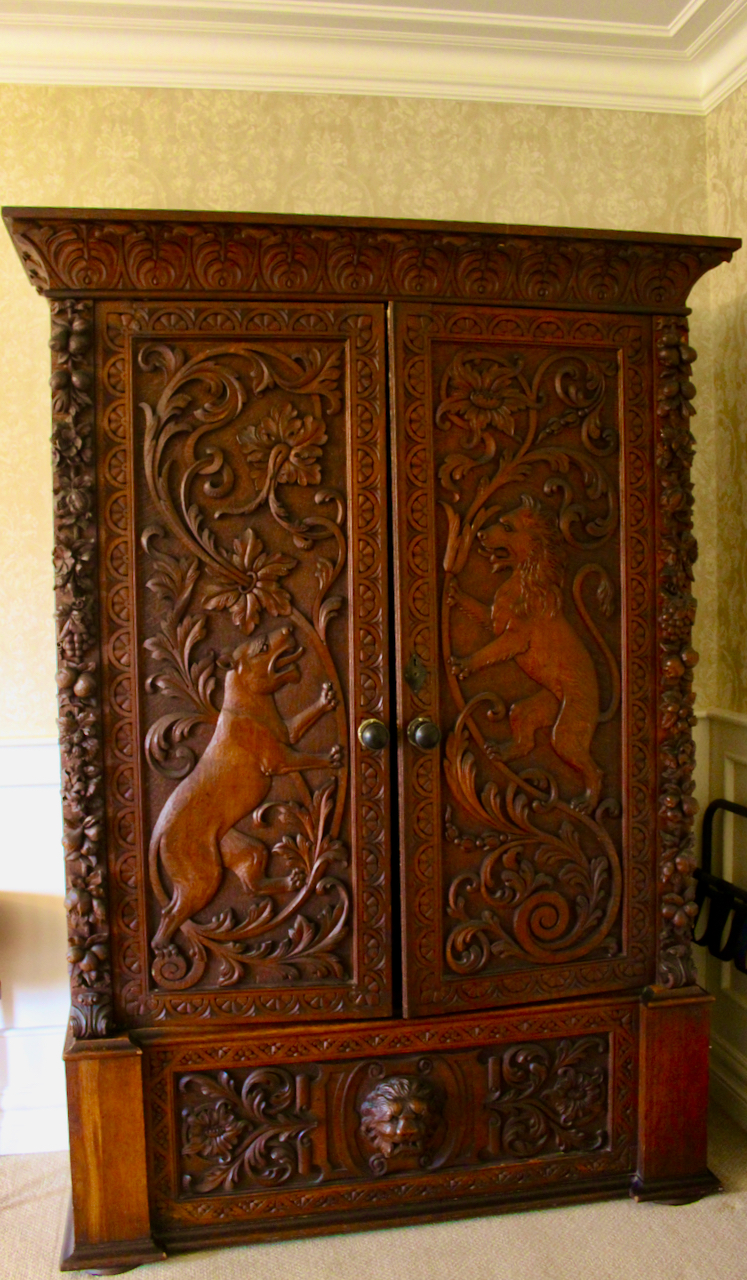
Our bedroom had an amazing carved wooden wardrobe. © Jennifer Winder-Baggot, www.irishhistorichouses.com
The carved wardrobe in our room. © Jennifer Winder-Baggot, www.irishhistorichouses.com
The rooms are named after various families associated with the Blennerhassetts. We stayed in the Coghill Room.
Busy at “work.” © Jennifer Winder-Baggot, www.irishhistorichouses.com
The bed was a work of art also. © Jennifer Winder-Baggot, www.irishhistorichouses.com
I can’t wait to go back sometime! © Jennifer Winder-Baggot, www.irishhistorichouses.com
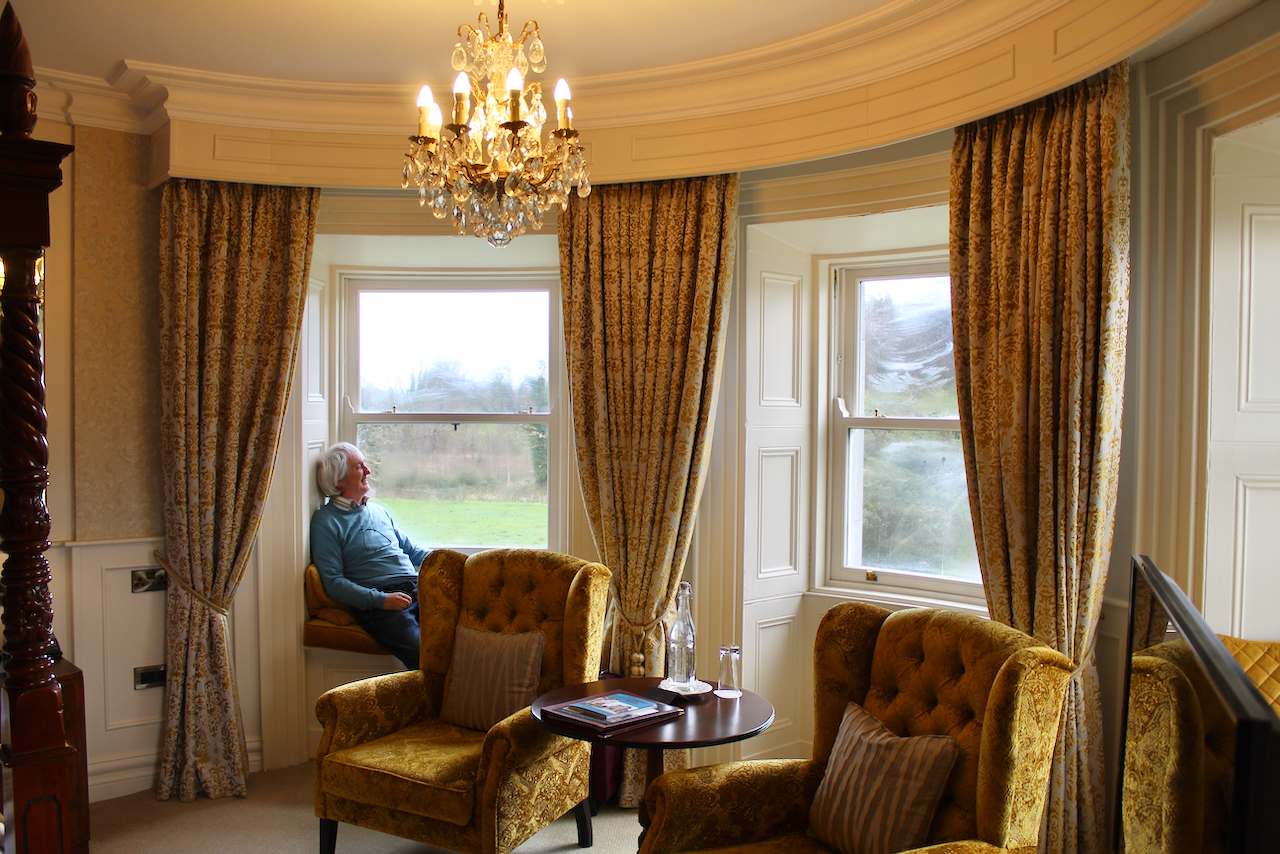
Stephen admiring the view. © Jennifer Winder-Baggot, www.irishhistorichouses.com

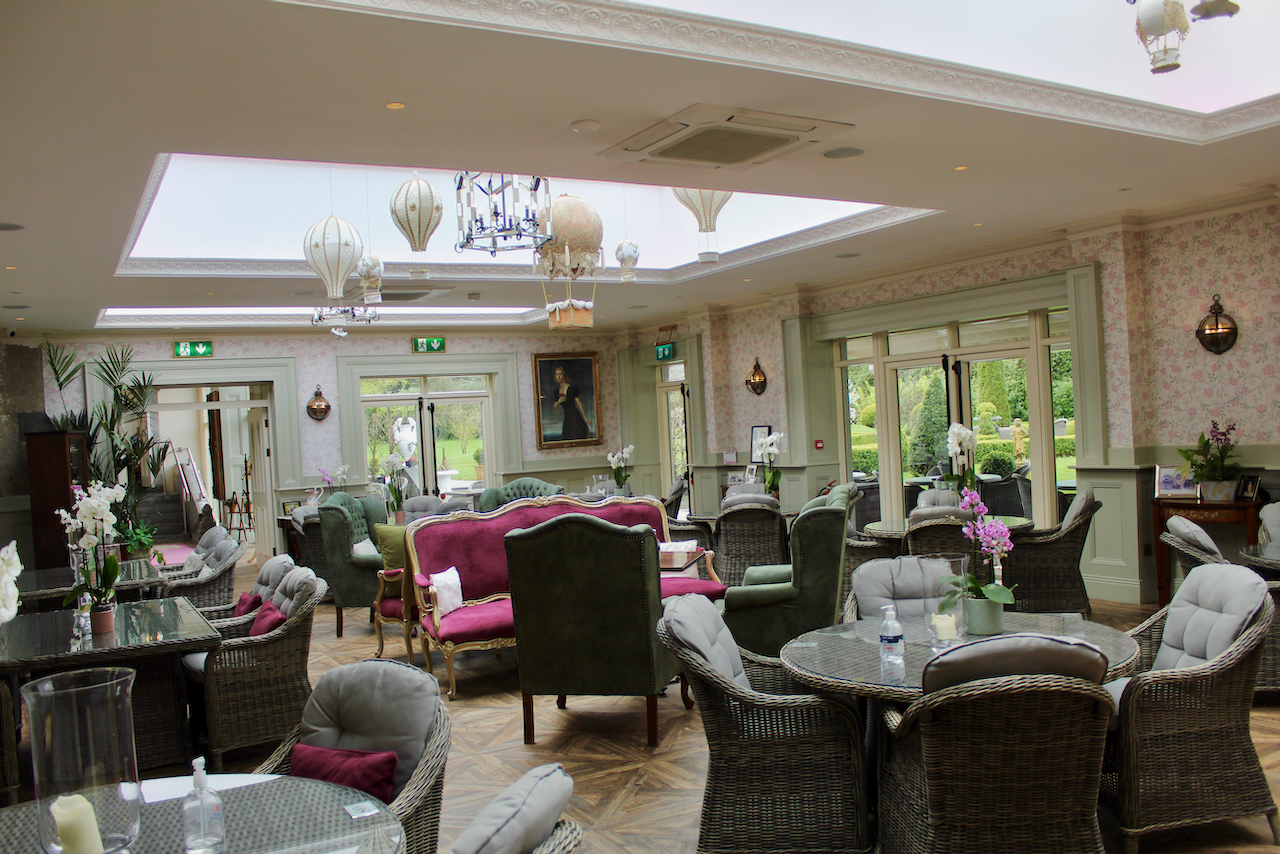
We explored the other rooms of the castle. The back gardens open into another function room, the Orangerie, which was built in 2017.
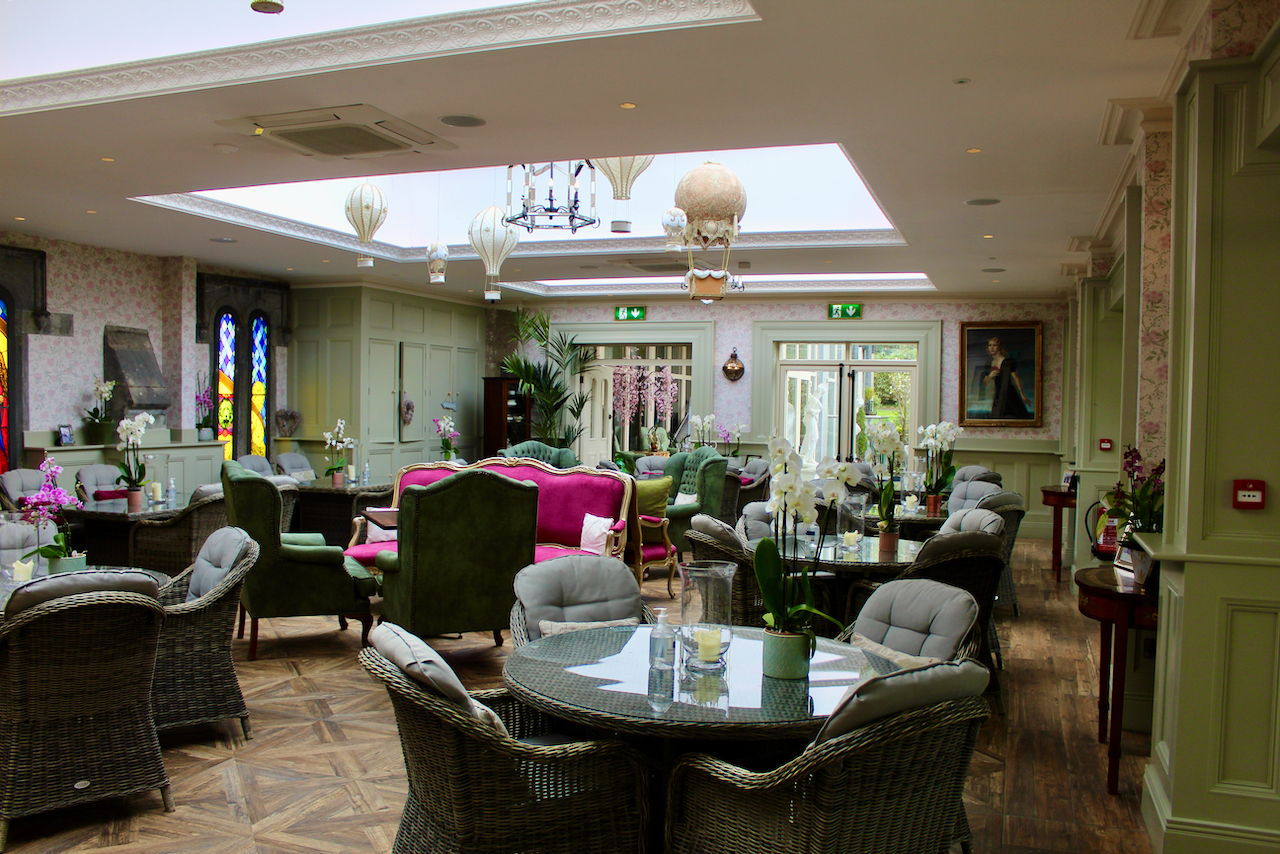
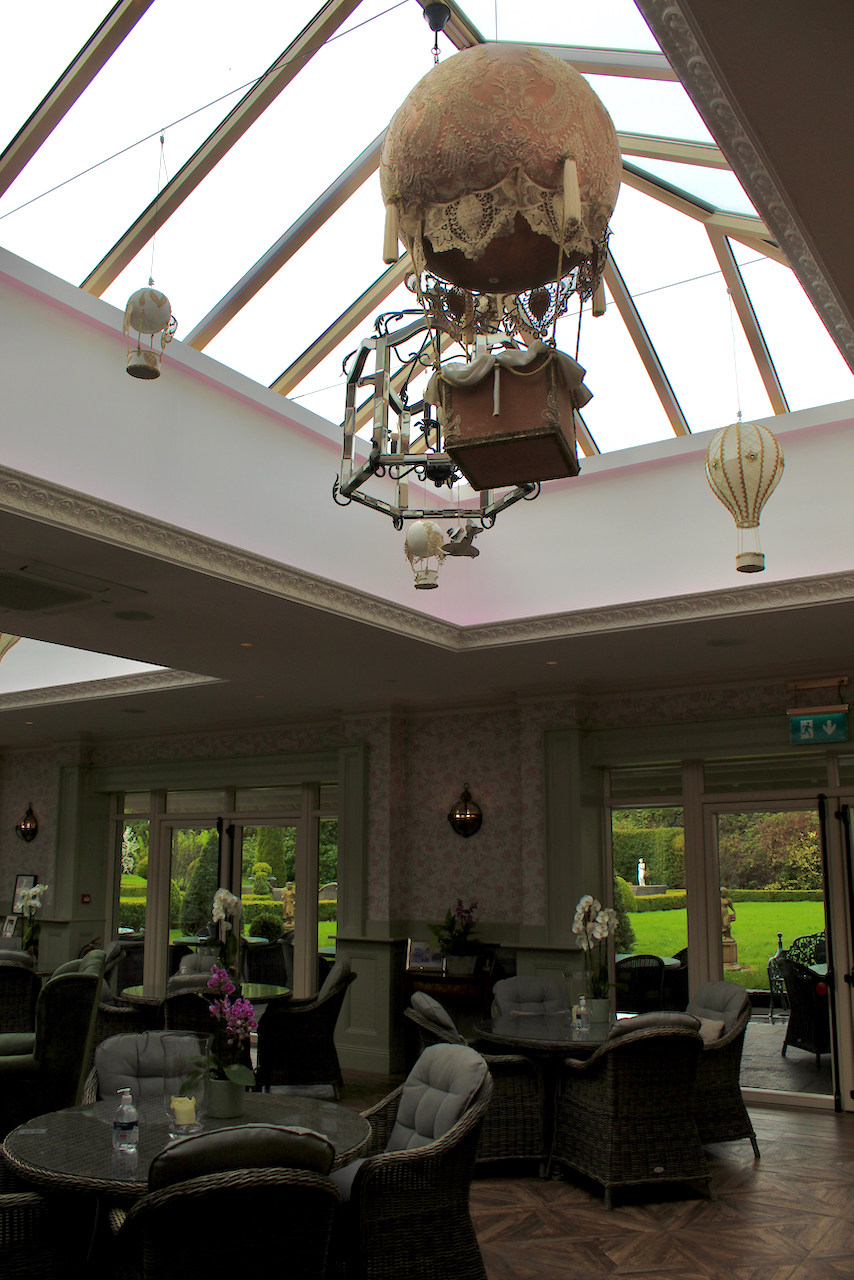
The Orangerie, built in 2017. © Jennifer Winder-Baggot, www.irishhistorichouses.com
I love the balloons! © Jennifer Winder-Baggot, www.irishhistorichouses.com
This rooms is very bright and comfortable. © Jennifer Winder-Baggot, www.irishhistorichouses.com
The Orangerie has some stained glass windows. © Jennifer Winder-Baggot, www.irishhistorichouses.com
A hallway along the back garden leads back to the reception area. © Jennifer Winder-Baggot, www.irishhistorichouses.com

There’s also a large reception room.
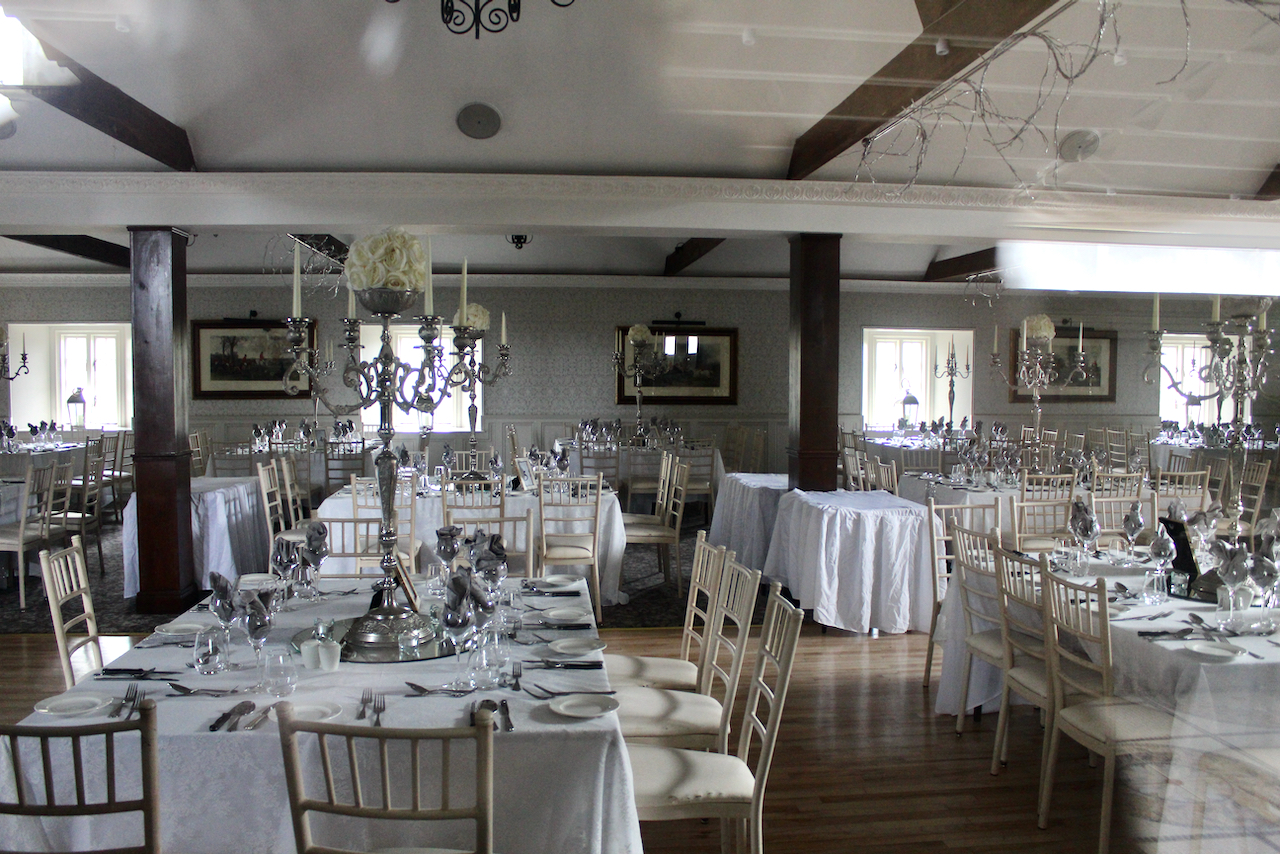
The banqueting hall in the north wing. We didn’t get to go into this room but I peered through the window to take a photograph. © Jennifer Winder-Baggot, www.irishhistorichouses.com
Ballyseede Castle, County Kerry. This leads to the large reception rooms. © Jennifer Winder-Baggot, www.irishhistorichouses.com
I noticed an old service bell in the hallway. © Jennifer Winder-Baggot, www.irishhistorichouses.com
We sneaked into another room to see it while it was open for cleaning – I love the Oriental decor. © Jennifer Winder-Baggot, www.irishhistorichouses.com

[1] https://landedestates.ie/family/1834

[2] Montgomery-Massingberd, Hugh. Burke’s Irish Family Records. London, U.K.: Burkes Peerage Ltd, 1976.

List of M.P.s for County Kerry:

1692: Edward Denny (1652-1709 or 1712) of Tralee Castle; Thomas Fitzmaurice (1668-1741) 1st Earl of Kerry

1697: Edward Denny (1652-1709 or 1712) of Tralee Castle; William Sandes

1703: Edward Denny (d. 1727/8, son of Edward Denny (1652-1709 or 1712) of Tralee Castle); John Blennerhassett (d. 1709)

1709: Edward Denny (1676–1727/8); John Blennerhassett (1691-1775)

1715: John Blennerhassett (1691-1775); Maurice Crosbie (c. 1689 –1762) 1st Baron Brandon, of Ardfert, County Kerry

1727: Maurice Crosbie (c. 1689 –1762) 1st Baron Brandon; Arthur Denny (1704-1742), son of Edward Denny (1676–1727/8)

1743: Maurice Crosbie (c. 1689 –1762) 1st Baron Brandon; John Petty-Fitzmaurice (1706-1761) 1st Earl of Shelburne, son of Thomas Fitzmaurice (1668-1741) 1st Earl of Kerry

1751: Maurice Crosbie (c. 1689 –1762) 1st Baron Brandon; John Blennerhassett (1715-1763), son of John Blennerhassett (1691-1775)

1759: John Blennerhassett (1715-1753); Lancelot Crosbie (1723-1780)

1761: William Petty-Fitzmaurice (1737-1805) 1st Marquess of Lansdowne; Lancelot Crosbie (1723-1780)

1762: John Blennerhassett (1715-1763)

1763: John Blennerhassett (1691-1775); Thomas Fitzmaurice

1768: John Blennerhassett (1691-1775); Barry Denny (c. 1744-1794), 1st Baronet

1775: Barry Denny (c. 1744-1794), 1st Baronet; Arthur Blennerhassett (1719-1799) son of John Blennerhassett (1691-1775)

1776: Arthur Blennerhassett (1719-1799); Rowland Bateman (c. 1737-1803)

1783: Barry Denny (c. 1744-1794) 1st Bt; Richard Townsend Herbert (1755-1832)

1790: Barry Denny (c. 1744-1794) 1st Bt; John Blennerhassett (1769-1794)

1794: Barry Denny (d. 1794 in in dual with John Gustavus Crosbie) 2nd Bt; John Gustavus Crosbie (c. 1749-1797) son of Lancelot Crosbie (1723-1780)

1795: Maurice Fitzgerald (1774-1849) 18th Knight of Kerry; John Gustavus Crosbie (c. 1749-1797)

1798: Maurice Fitzgerald (1774-1849) 18th Knight of Kerry; James Crosbie (c. 1760-1836)

[3] p. 157. O’Hea O’Keeffe, Jane. Voices from the Great Houses: Cork and Kerry. Mercier Press, Cork, 2013.

[4] http://www.blennerhassettfamilytree.com/Ballyseedy-Castle.php

[5] National Inventory: https://www.buildingsofireland.ie/buildings-search/building/21302913/ballyseede-castle-ballyseedy-co-kerry

[6] http://www.thepeerage.com/p27968.htm#i279679

[7] p. 28. Bence-Jones, Mark. A Guide to Irish Country Houses (1988)

[8] http://www.blennerhassettfamilytree.com/Ballyseedy-Castle.php
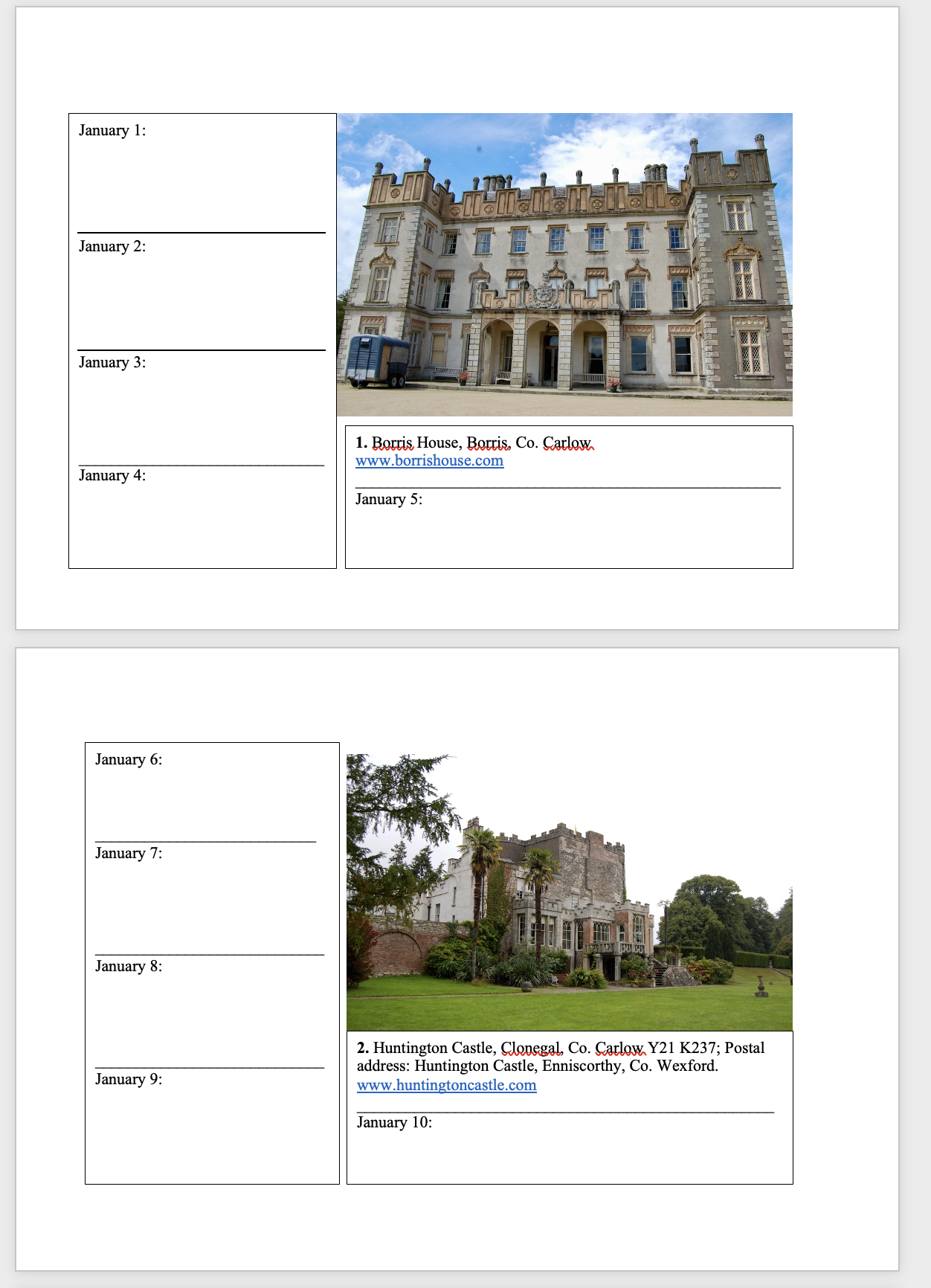
Huntington Castle, County Carlow Y21 K237 – section 482

In the past, in August 2016, I visited Huntington Castle in Clonegal, County Carlow.
www.huntingtoncastle.com
Open dates in 2026, but check website as sometimes closed for special events:

Jan 31, Feb 1, 7-8, 14-15, 21-22, 28, Mar 1, 7-8, 14-15, 21-22, 28-31, Apr 1-6, 11-12, 18-19, 25-26, May 1-31, June 1-30, July 1-31, Aug 1-31, Sept 1-30, Oct 3-4, 10-11, 17-18, 24-31, Nov 1, 7-8, 14-15, 21-22, 28-29, Dec 5-6, 12-13, 19-20, 11am-5pm

Fee: house and garden, adult €13.95, garden only €6.95, OAP/student, house and garden €12.50, garden only €6, child, house and garden €6.50, garden €3.50, group and family discounts available
2026 Diary of Irish Historic Houses (section 482 properties)

To purchase an A5 size 2026 Diary of Historic Houses (opening times and days are not listed so the calendar is for use for recording appointments and not as a reference for opening times) send your postal address to jennifer.baggot@gmail.com along with €20 via this payment button. The calendar of 84 pages includes space for writing your appointments as well as photographs of the historic houses. The price includes postage within Ireland. Postage to U.S. is a further €10 for the A5 size calendar, so I would appreciate a donation toward the postage – you can click on the donation link.

€20.00

Donation

Help me to fund my creation and update of this website. It is created purely out of love for the subject and I receive no payment so any donation is appreciated!

€15.00

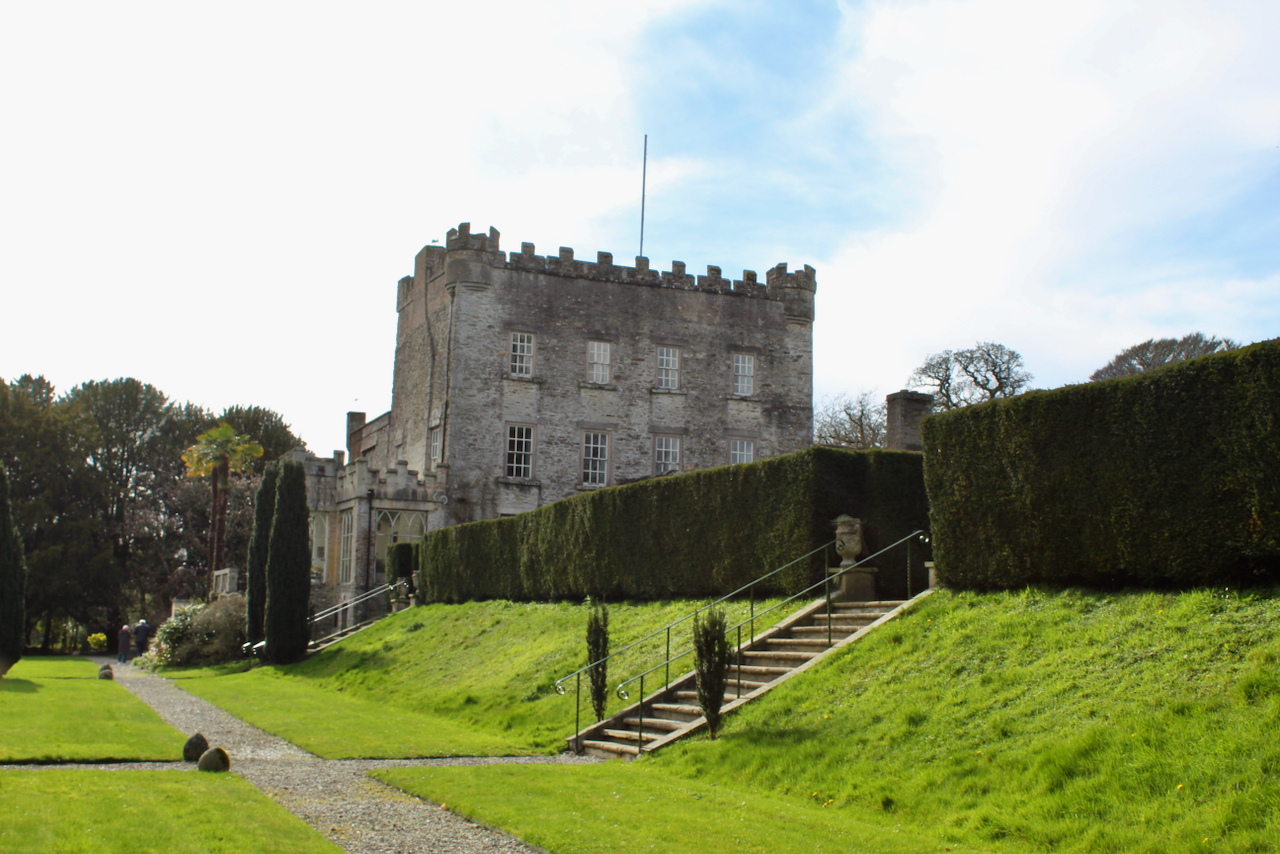
Huntington Castle, County Carlow, 2016. Photograph © Jennifer Winder-Baggot, www.irishhistorichouses.com

It’s magical! And note that you can stay at this castle – see their website! [1]

Huntington Castle stands in the valley of the River Derry, a tributary of the River Slaney, on the borders of Counties Carlow and Wexford, near the village of Clonegal. Built in 1625, it is the ancient seat of the Esmonde family, and is presently lived in by the Durdin-Robertsons. It passed into the Durdin family from the Esmonde family by marriage in the nineteenth century, so actually still belongs to the original family.

It was built as a garrison on the strategically important Dublin-Wexford route to protect a pass in the Blackstairs Mountains, on the site of a 14th century stronghold and abbey. It was also a coach stop on the Dublin travel route to Wexford. There was a brewery and a distillery in the area at the time. After fifty years, the soldiers moved out and the family began to convert it into a family home. [2]

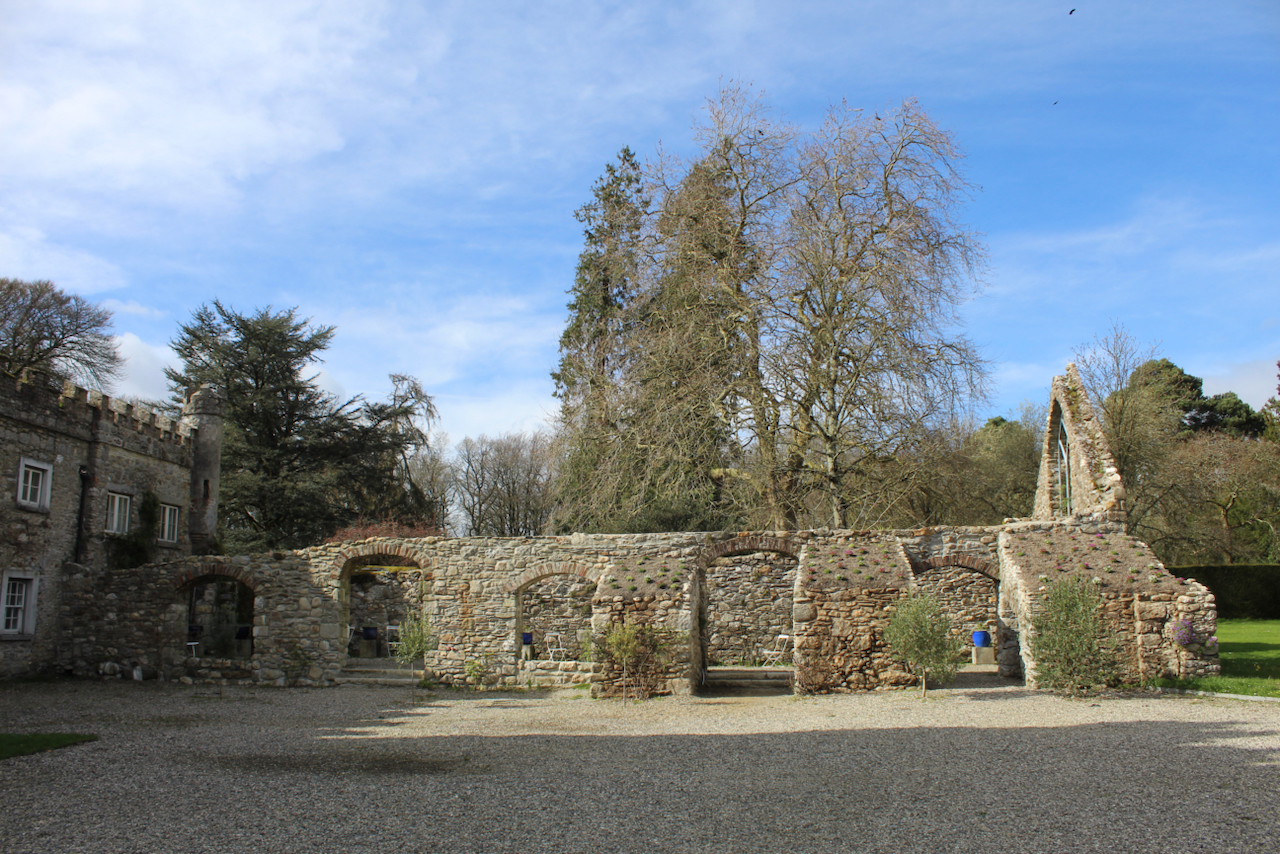
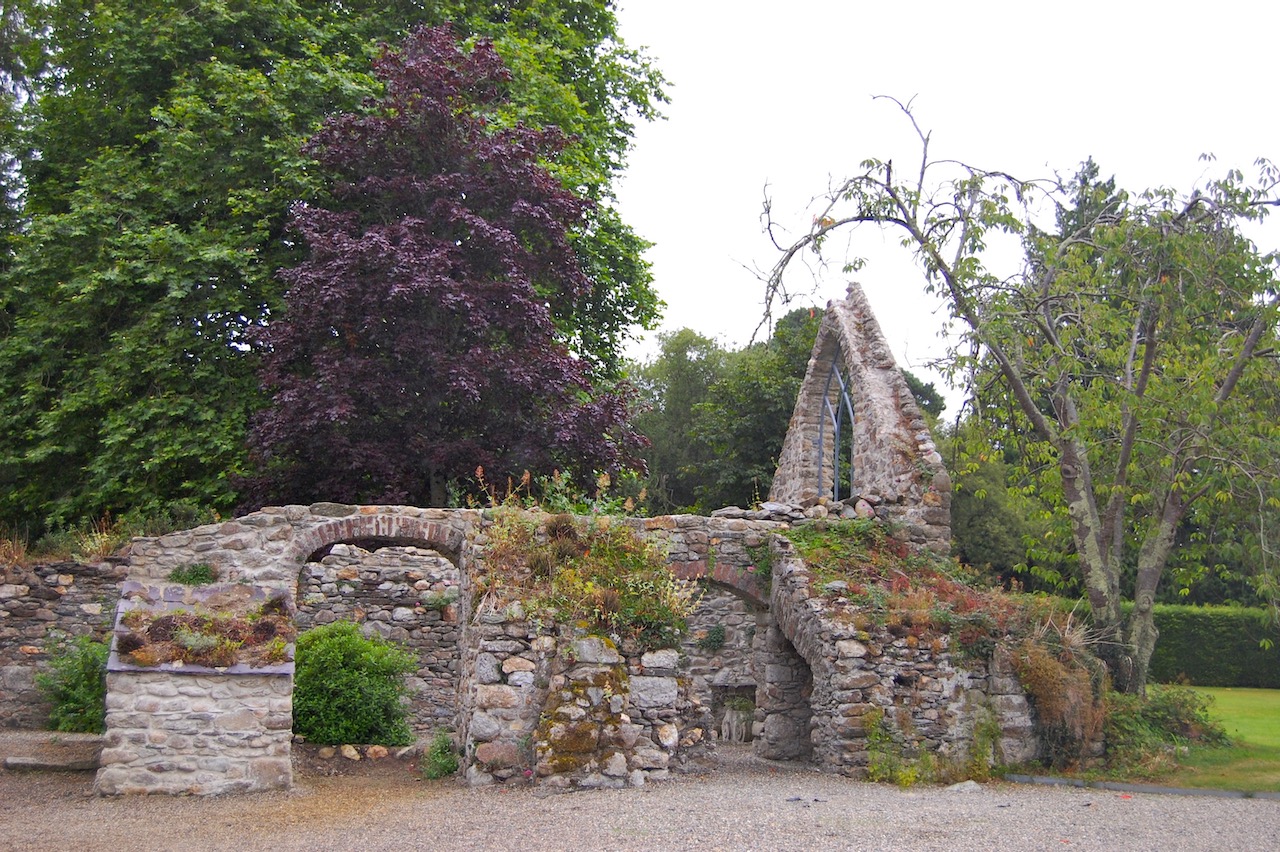
The fourteenth century abbey at Huntington Castle. Photograph © Jennifer Winder-Baggot, www.irishhistorichouses.com
The Abbey, 2023. Photograph © Jennifer Winder-Baggot, www.irishhistorichouses.com

A History of the house and its residents

The castle website tells us that the Esmondes (note that I have found the name spelled as both ‘Esmond’ and ‘Edmonde’) moved to Ireland in 1192 and were involved in building other castles such as Duncannon Fort in Wexford and Johnstown Castle in Wexford (see my entry https://irishhistorichouses.com/2023/09/30/a-heritage-trust-property-johnstown-castle-county-wexford/).

There is a chapter on the Esmonds of Ballynastragh in The Wexford Gentry by Art Kavanagh and Rory Murphy. They tell us that it is believed that Geoffrey de Estmont was one of the thirty knights who accompanied Robert FitzStephen to Ireland in 1169 when the latter led the advance force that landed at Bannow that year.

Sir Geoffrey built a motte and baily at Lymbrick in the Barony of Forth in Wexford, and his son Sir Maurice built a castle on the same site. After Maurice’s death in 1225 the castle was abandoned and his son John built a castle on a new site which was called Johnstown Castle. John died in 1261. [3]

After the Cromwellian Confiscations, since the Johnstown Esmondes were Catholic, their lands were granted to Colonel Overstreet, and later came into the possession of the Grogan family. The Ballynastragh/Lymbrick lands were also confiscated and the Ballytramont property was granted to the Duke of Ablemarle (General Monck). The Esmondes later regained Ballynastragh.

The 12-14th century abbey at Huntington Castle, 2016. Photograph © Jennifer Winder-Baggot, www.irishhistorichouses.com
Inside the Abbey, on our visit in 2023. Photograph © Jennifer Winder-Baggot, www.irishhistorichouses.com

A descendant, Laurence Esmonde (about 1570-1645) converted to Anglicanism and served in the armies of British Queen Elizabeth I and then James I.

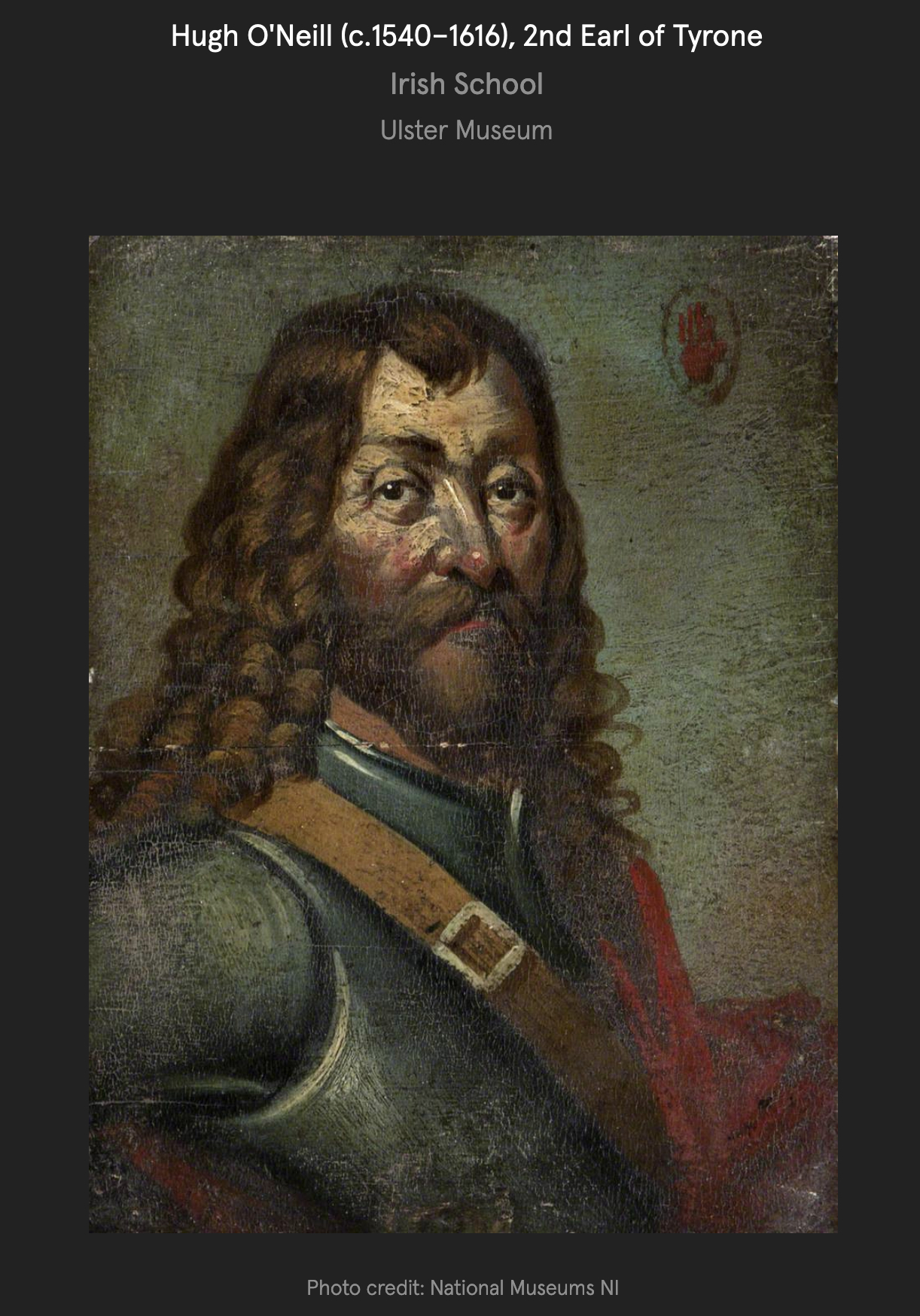
He fought in the Dutch Wars against Spain, and later, in 1599, he commanded 150 foot soldiers in the Nine Years War, the battle led by an Irish alliance led mainly by Hugh O’Neill 2nd Earl of Tyrone and Hugh Roe O’Donnell against the British rule in Ireland.

Hugh O’Neill (c. 1540-1616) 2nd Earl of Tyrone, courtesy of the Ulster Museum. He was one of the rebels in the Nine Years War, who fought against Laurence Esmonde (b. about 1570, d. 1645).

In 1602 Lawrence Esmonde built a castle and a church at Luimneach near the modern village of Killinerin and near Ballynastragh, which he named Lymbrick after the original Norman motte and bailey in the Barony of Forth. [see 3]

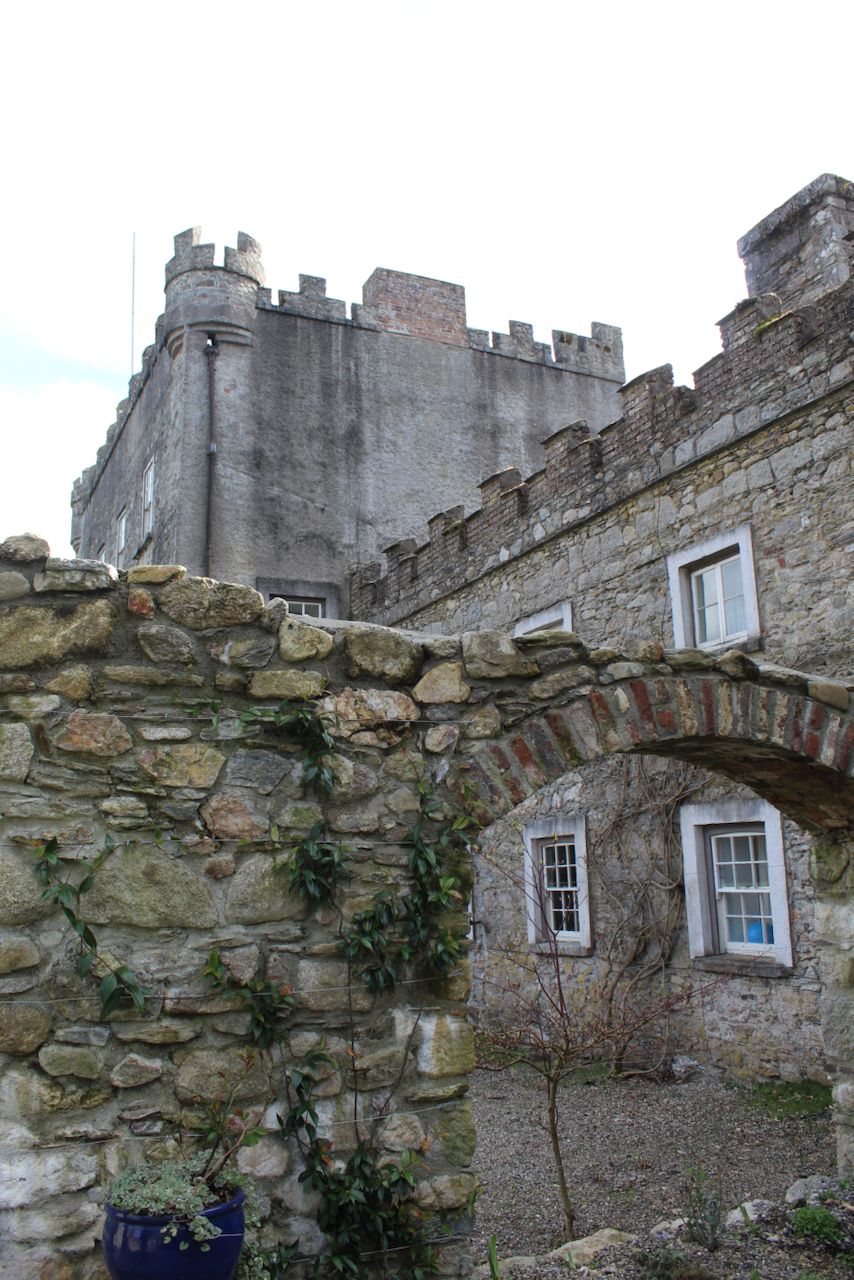
View of the castle from the Abbey, 2023. Photograph © Jennifer Winder-Baggot, www.irishhistorichouses.com
Abbey ruins at Huntington Castle. Photograph © Jennifer Winder-Baggot, www.irishhistorichouses.com

He governed the fort of Duncannon from 1606-1646. In reward for his services, he was raised to the peerage in 1622 as Baron of Lymbrick in County Wexford and it seems that a few years after receiving this honour he built the core of the present Huntington Castle on the site of an earlier military keep. He built a three-storey fortified tower house, which forms the front facing down the avenue, according to Mark Bence-Jones in A Guide to Irish Country Houses. [4]

1622 core of Huntington Castle. Photograph © Jennifer Winder-Baggot, www.irishhistorichouses.com
Huntington Castle, 2023. Photograph © Jennifer Winder-Baggot, www.irishhistorichouses.com
Note the Egyptian style decorative motif over the entrance door – it makes more sense once one discovers what is inside the basement of the castle. Photograph © Jennifer Winder-Baggot, www.irishhistorichouses.com

This original tower-house is made of rough-hewn granite. In her discussion of marriage in Making Ireland English, Jane Ohlmeyer writes that for the Irish, legitimacy of children didn’t determine inheritance, and so attitudes toward marriage, including cohabitation and desertion, were very different than in England. She writes that the first Baron Esmonde behaved in a way reminiscent of medieval Gaelic practices when he repudiated his first wife and remarried without a formal divorce. Laurence met Ailish, the sister of Morrough O’Flaherty (note that Turtle Bunbury tells us that she was a granddaughter of the pirate queen Grace O’Malley!) on one of his expeditions to Ulster, and married her. However, after the birth of their son, Thomas, she returned to her family, fearing that her son would be raised as a Protestant. [5]

Esmonde went on to marry Elizabeth Butler, a granddaughter of the ninth earl of Ormond (daughter of Walter Butler, and she was already twice widowed). He had no children by his second marriage and despite acknowledging Thomas to be his son, he did not admit that his first marriage was lawful and consequently had no official heir and his title Baron of Lymbrick became extinct after his death.

Baron Esmonde died after a siege of Duncannon fort by General Thomas Preston, 1st Viscount Tara, of the Confederates, who considered Esmonde a defender of the Parliamentarians (i.e. Oliver Cromwell’s men, the “roundheads”). Although his son did not inherit his title, he did inherit his property. [6]

After Lawrence’s death the Huntington estate and castle was occupied as a military station by Dudley Colclough from 1649-1674. [see 3]

Lawrence’s son Thomas Esmonde started his military career as an officer in the continental army of King Charles I. For his service at the siege of La Rochelle he was made a baronet of Ireland while his father still lived, and became 1st Baronet Esmonde of Ballynastragh, County Wexford, in 1629. He did not return to Ireland, however, until 1646 after his father’s death. He joined the rebels, the Confederate forces, who were fighting against the British forts which his father held. Taking after his mother, he was a resolute Catholic.

He married well, into other prominent Catholic families: first to a daughter of the Lord of Decies, Ellice Fitzgerald. She was the widow of another Catholic, Thomas Butler, 2nd Baron Caher, and with him had one daughter, Margaret, who had married Edmond Butler, 3rd/13th Baron Dunboyne a couple of years before her mother remarried in around 1629. Thomas and Ellice had two sons. Ellice died in 1644/45 and Thomas married secondly Joanne, a daughter of Walter Butler 11th Earl of Ormond. She too had been married before, to George Bagenal who built Dunleckney Manor in County Carlow. Her sons by Bagenal were also prominent Confederate Colonels. She was also the widow of Theobald Purcell of Loughmoe, County Tipperary. We came across the Purcells of Loughmoe on our visit to Ballysallagh in County Kilkenny (see my entry).

Thomas served as Member of Parliament for Enniscorthy, County Wexford from 1641 to 1642, during the reign of King James II.

His son Laurence succeeded as 2nd Baronet, and reoccupied Huntington Castle in 1682. [see 3]

Laurence made additions to Huntington Castle around 1680, and named it “Huntington” after the Esmonde’s “ancestral pile” in Lincolnshire, England [7]. He is probably responsible for some of the formal garden planting. The Irish Aesthete Robert O’Byrne discusses this garden in another blog entry [8]. He tells us that the yew walk, which stretches 130 yards, dates from the time of the Franciscan friary in the Middle Ages!

Huntington Castle, photograph by Daniel O’Connor, 2021 for Tourism Ireland, Ireland’s Content Pool. [9]
Huntington Castle, 2023. Photograph © Jennifer Winder-Baggot, www.irishhistorichouses.com
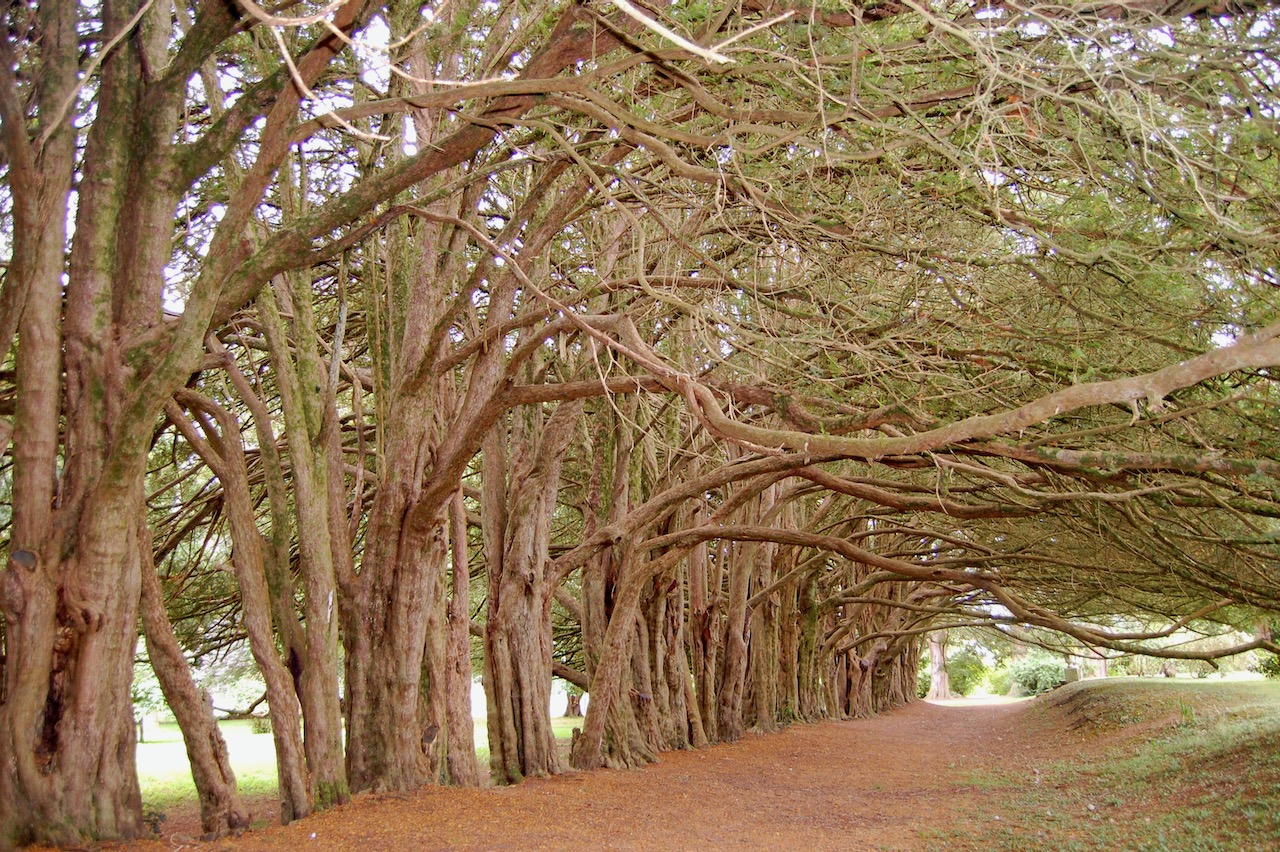
The over 500 year old yew walk. Photograph © Jennifer Winder-Baggot, www.irishhistorichouses.com
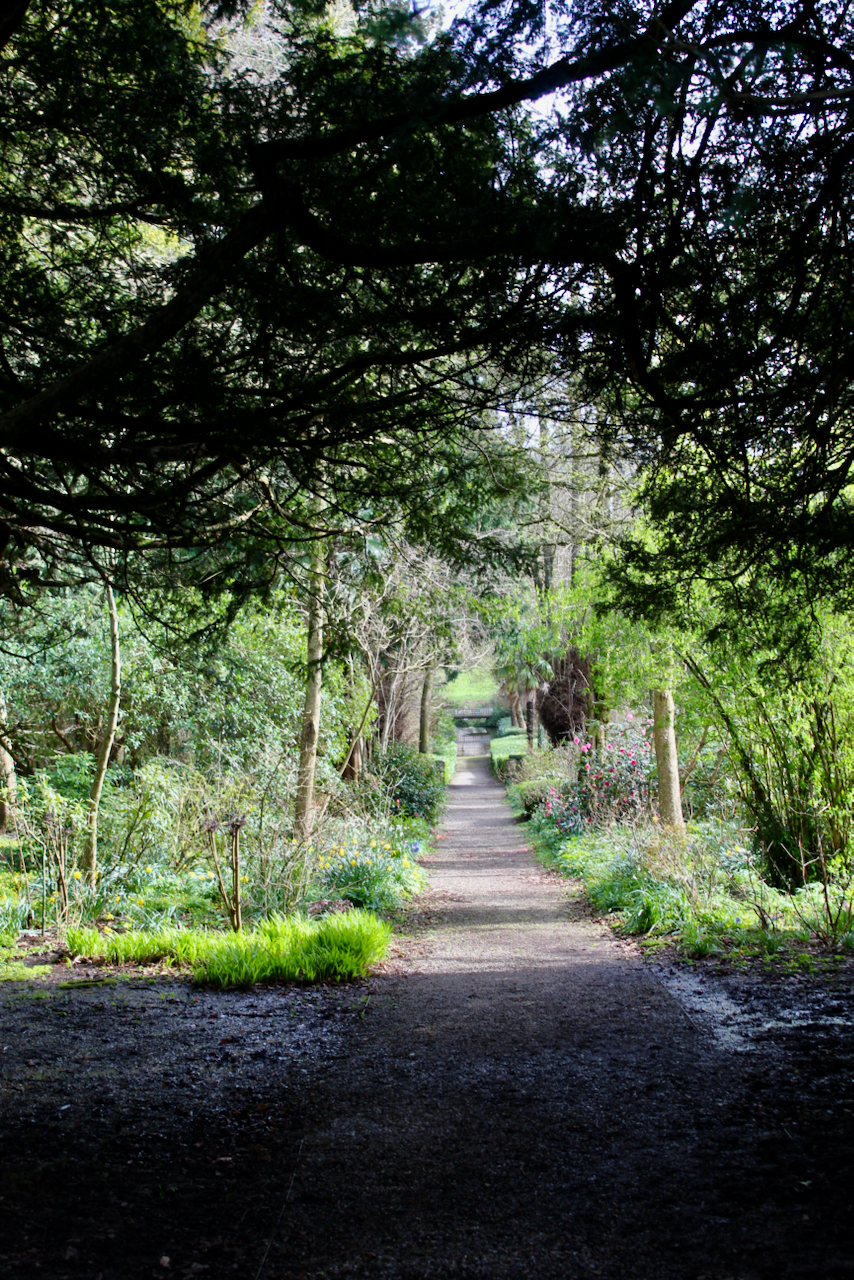
The formal gardens, 2023. Photograph © Jennifer Winder-Baggot, www.irishhistorichouses.com
The grounds of Huntington Castle. Photograph © Jennifer Winder-Baggot, www.irishhistorichouses.com

Laurence 2nd Baronet married Lucia Butler, daughter of another Colonel who fought in the 1641 uprising, Richard Butler (d. 1701) of Garryricken. Their daughter Frances married Morgan Kavanagh, “The MacMorrough” of the powerful Irish Kavanagh family.

The 3rd Baronet, another Laurence, served for a while in the French army.

A wing was constructed by yet another Sir Laurence, 4th Baronet, in 1720. The castle, as you can see, is very higgeldy piggedly, reflecting the history of its additions. The 4th Baronet had no heir so his brother John became the 5th Baronet. He had a daughter, Helen, who married Richard Durdin of Shanagarry, County Cork. The went out to the United States and founded Huntington, Pennsylvania. He had no sons, and died before his brother, Walter, who became the 6th Baronet. Walter married Joan Butler, daughter of Theobald, 4th Baron Caher. Walter and Joan also had no sons, only daughters.

Huntington Castle. Photograph © Jennifer Winder-Baggot, www.irishhistorichouses.com

In The Wexford Gentry we are told that the widow of the 6th Baronet was left in “straitened circumstances” after her husband Walter died in 1767, and sold the estate of Huntington to Sir James Leslie (1704-1770), the Church of Ireland Bishop of Limerick, in 1751. He was from the Tarbert House branch of the Leslie family in County Kerry. Huntington remained in his family until 1825 when it was leased to Alexander Durdin (1821-1892) and later bought by his descendants. [see 3, p. 106].

The line of inheritance looks very convoluted. I have consulted Burke’s Peerage. John Durdin migrated from England to Cork in around 1639. His descendant Alexander Durdin, born in 1712, of Shanagarry, County Cork, married four times! His second wife, Mary Duncan of Kilmoon House, County Meath, died shortly after giving birth to her son Richard, born in 1747. Alexander then married Anne née Vaux, widow of the grandson of William Penn the founder of Pennsylvania. Finally, he married Barbara St. Leger, with whom he had seven more sons and several daughters.

It was Alexander’s son Richard who married Helen Esmonde, daughter of the 4th Baronet, according to Burke’s Peerage. Richard then married Frances Esmonde, daughter of the 7th Baronet.

The 6th Baronet had only daughter so the title went to a cousin. This cousin was a descendant of Thomas Esmonde 1st Baronet of Ballynastragh, Thomas’s son James. James had a son Laurence (1670-1760), and it was his son, James (1701-1767) who became the 7th Baronet of Ballynastragh. It was his daughter Frances who married Richard Durdin of Huntington Pennsylvania, who had been previously married to Helen Esmonde.

Despite his two marriages, Richard had no son. His brother William Leader Durdin (1778-1849) married Mary Anne Drury of Ballinderry, County Wicklow and it was their son Alexander (1821-1892) who either inherited Huntington, or at least, according to The Wexford Gentry, leased and later purchased Huntington, the home of his ancestors.

Alexander also had only daughters. In 1880, his daughter Helen married Herbert Robertson, Baron Strathloch (a Scots feudal barony) and MP for a London borough. She inherited Huntington Castle when her father died. Together they made a number of late Victorian additions at the rear of the castle while their professional architect son, Manning Durdin-Robertson, an early devotee of concrete, carried out yet further alterations in the 1920s. Manning also created W. B. Yeats’s grave, and social housing in Dublin.

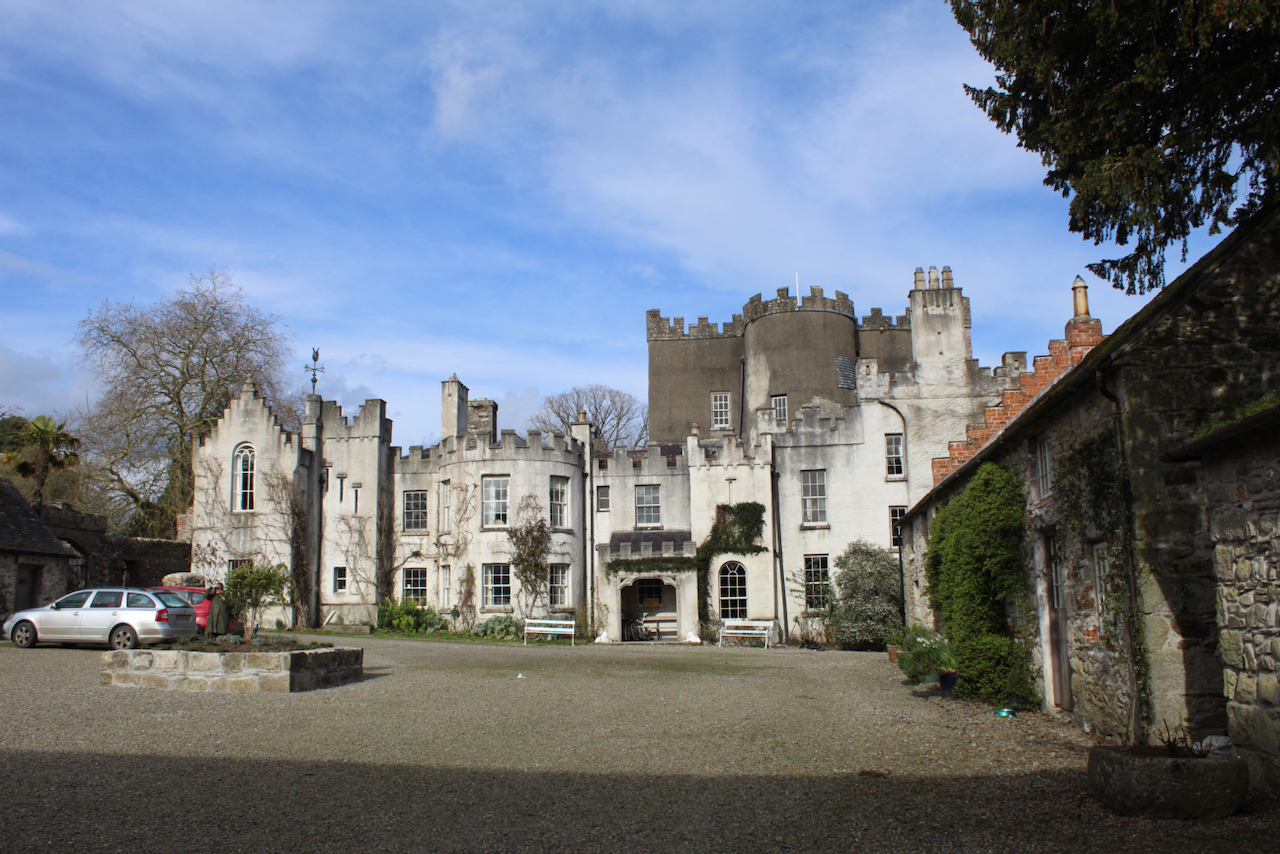
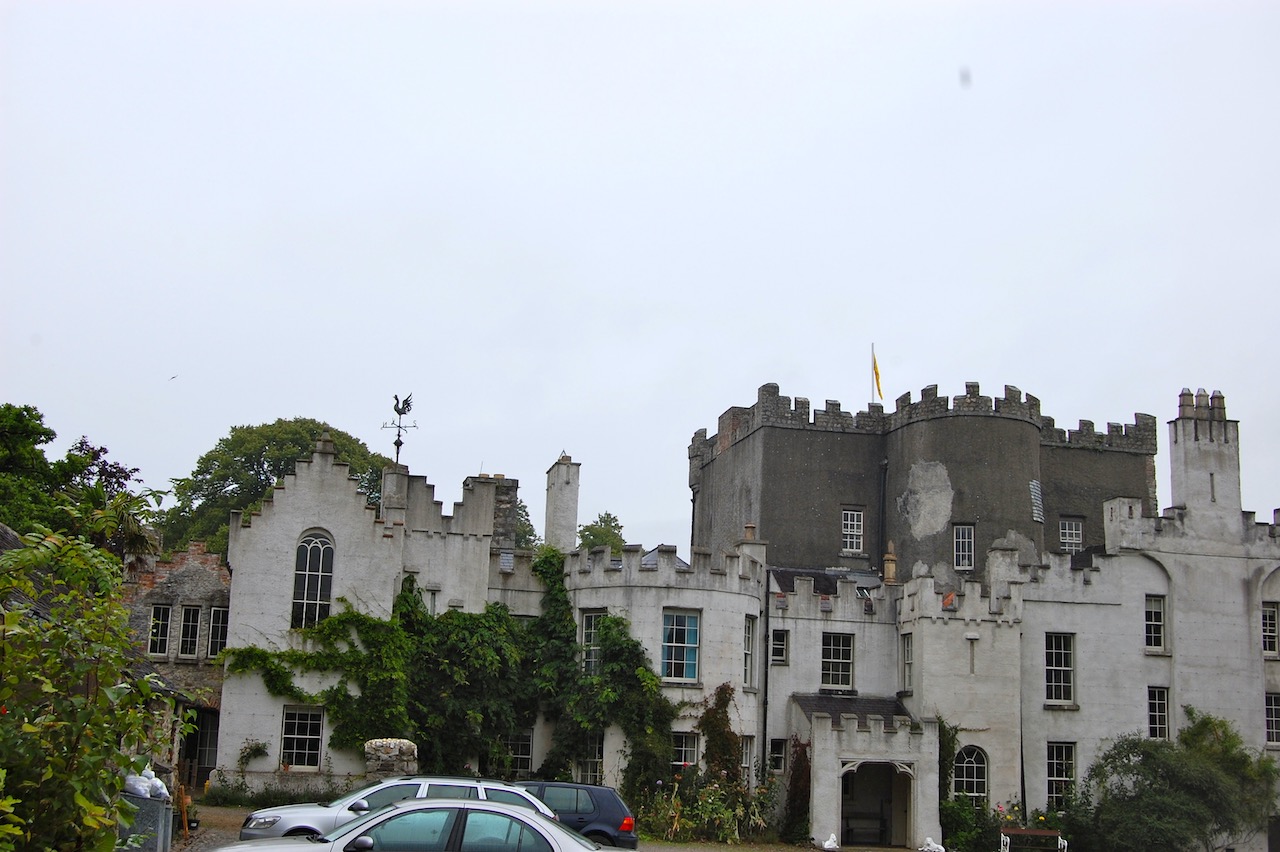
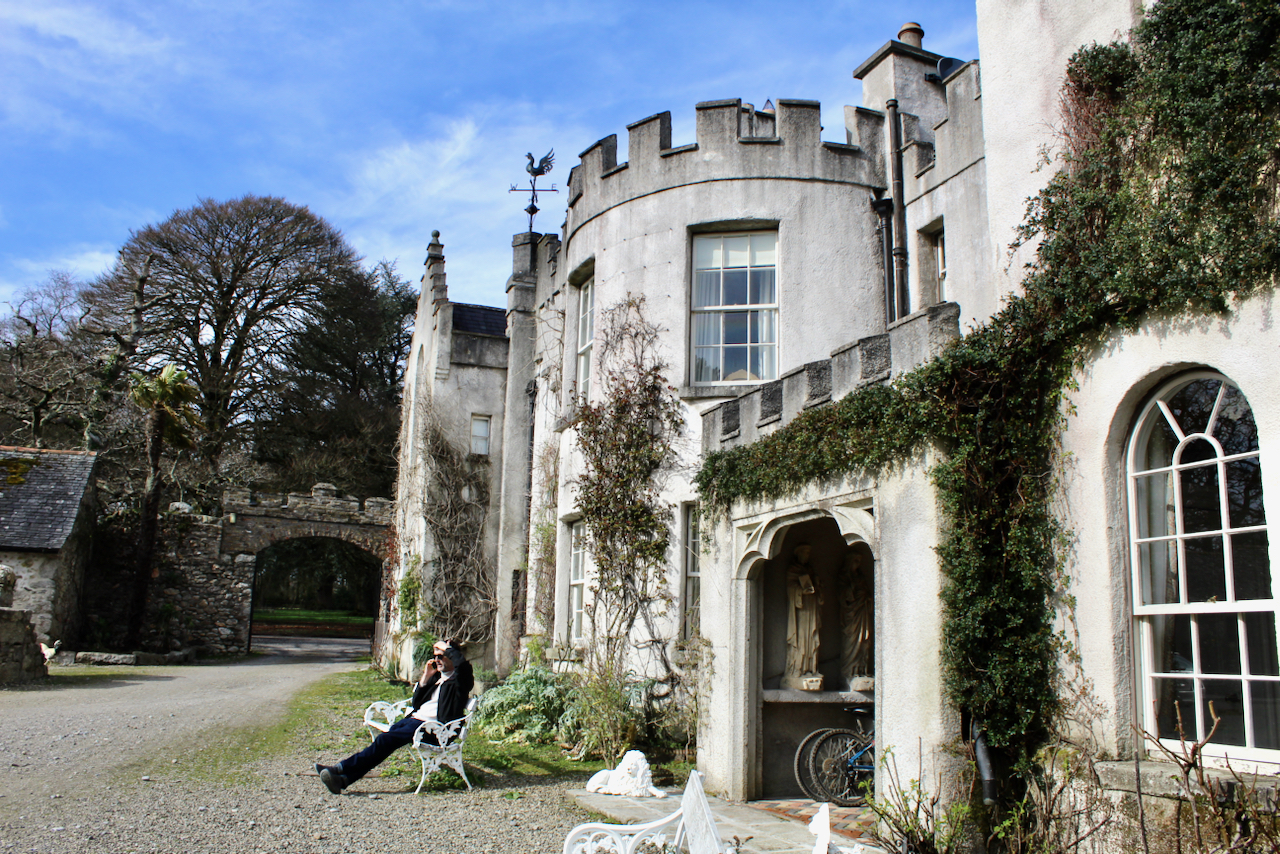
Huntington Castle, Clonegal, County Carlow, the view when one enters the courtyard from the avenue. Photograph © Jennifer Winder-Baggot, www.irishhistorichouses.com

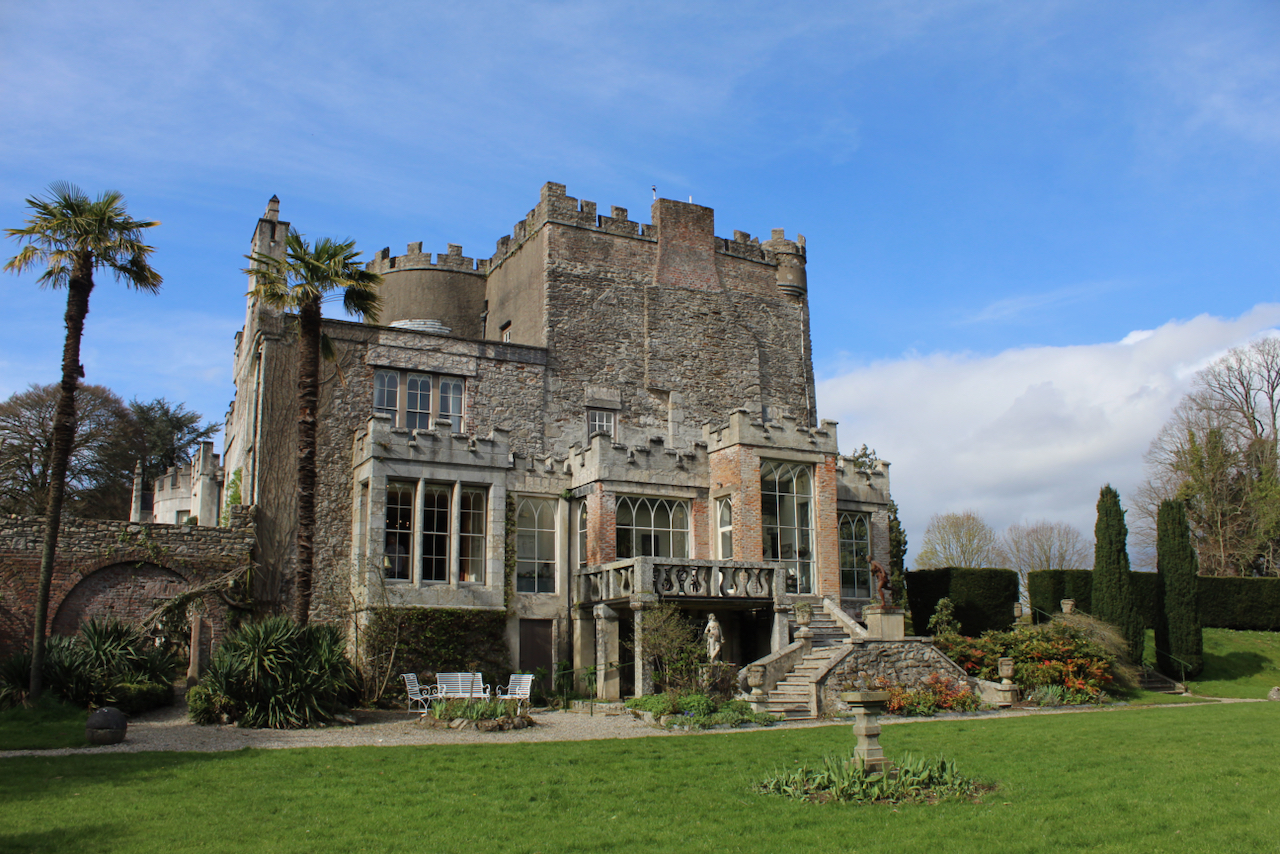
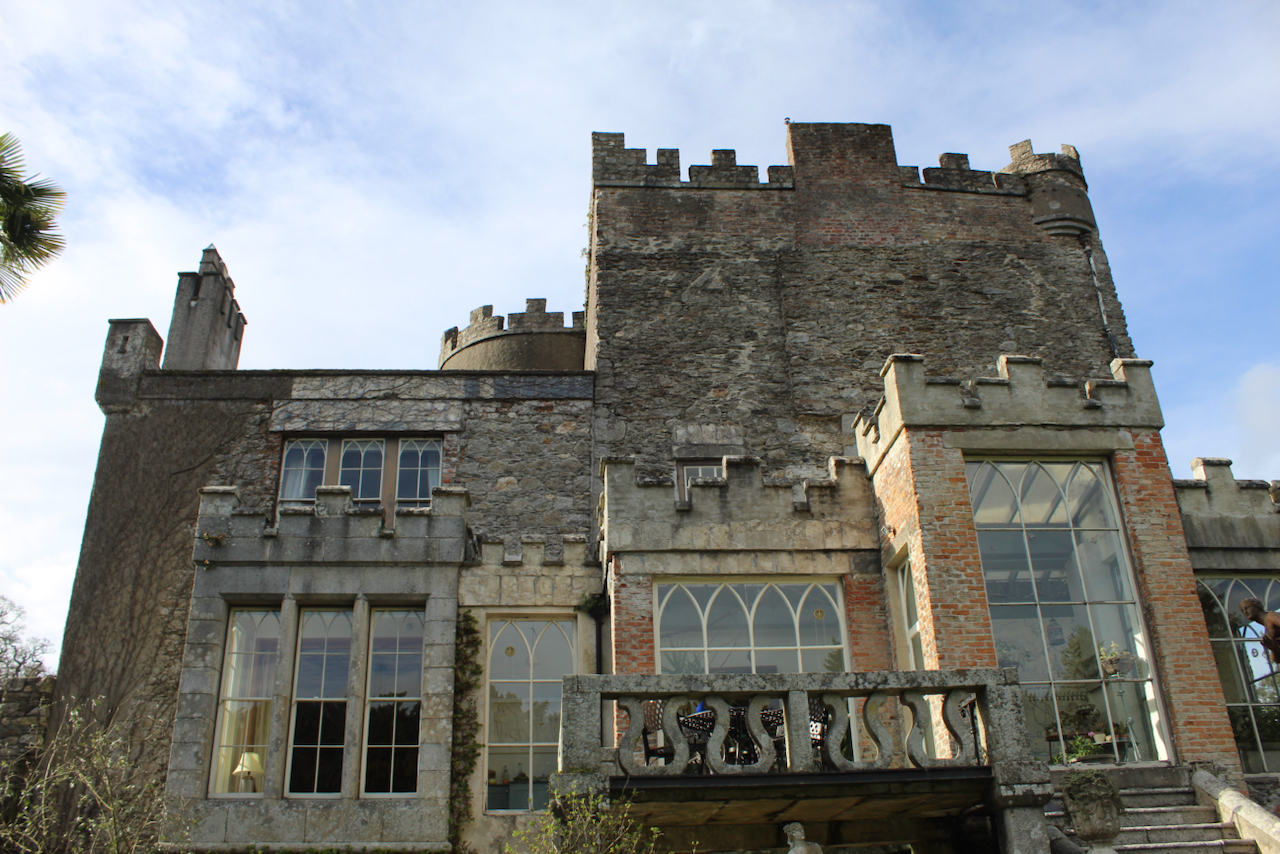
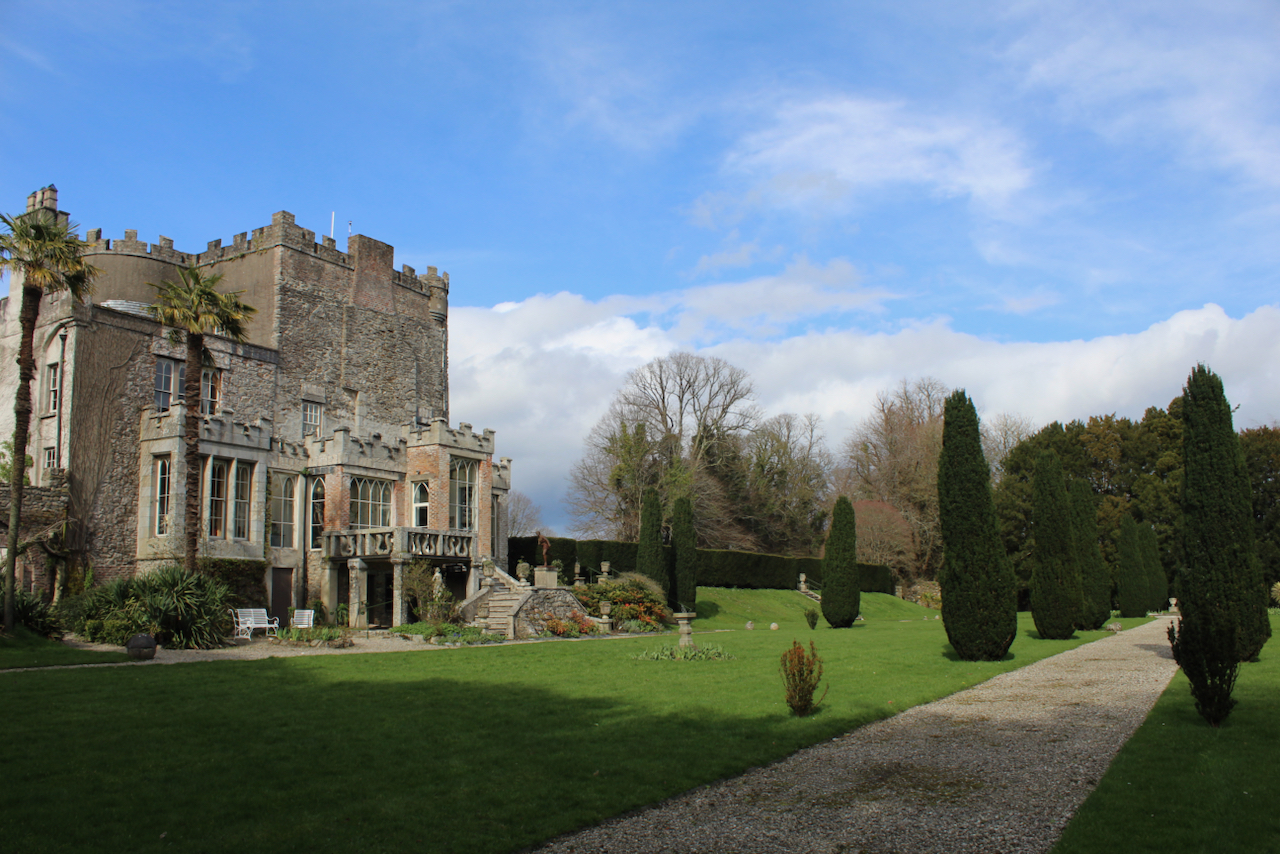
There is an irregular two storey range with castellated battlements and a curved bow and battlemented gable in front of the earlier building, which rises above them. The front battlemented range was added in the mid 1890s.

The older part of the castle includes a full height semicircular tower. Inside, when one enters through the portico facing onto the stable yard, one can see the outside of this full height semicircular tower, curving into the room to one’s right hand side, where there is even a little stone window set in the curved wall, and the round tower bulges into the stairway hall, clad with timber and covered in armour.

Huntington Castle, 2023, facing into stable yard. Photograph © Jennifer Winder-Baggot, www.irishhistorichouses.com
Detail of Huntington Castle, 2023. Photograph © Jennifer Winder-Baggot, www.irishhistorichouses.com
The stable yard, 2023. Photograph © Jennifer Winder-Baggot, www.irishhistorichouses.com
Huntington Castle, 2023. Photograph © Jennifer Winder-Baggot, www.irishhistorichouses.com

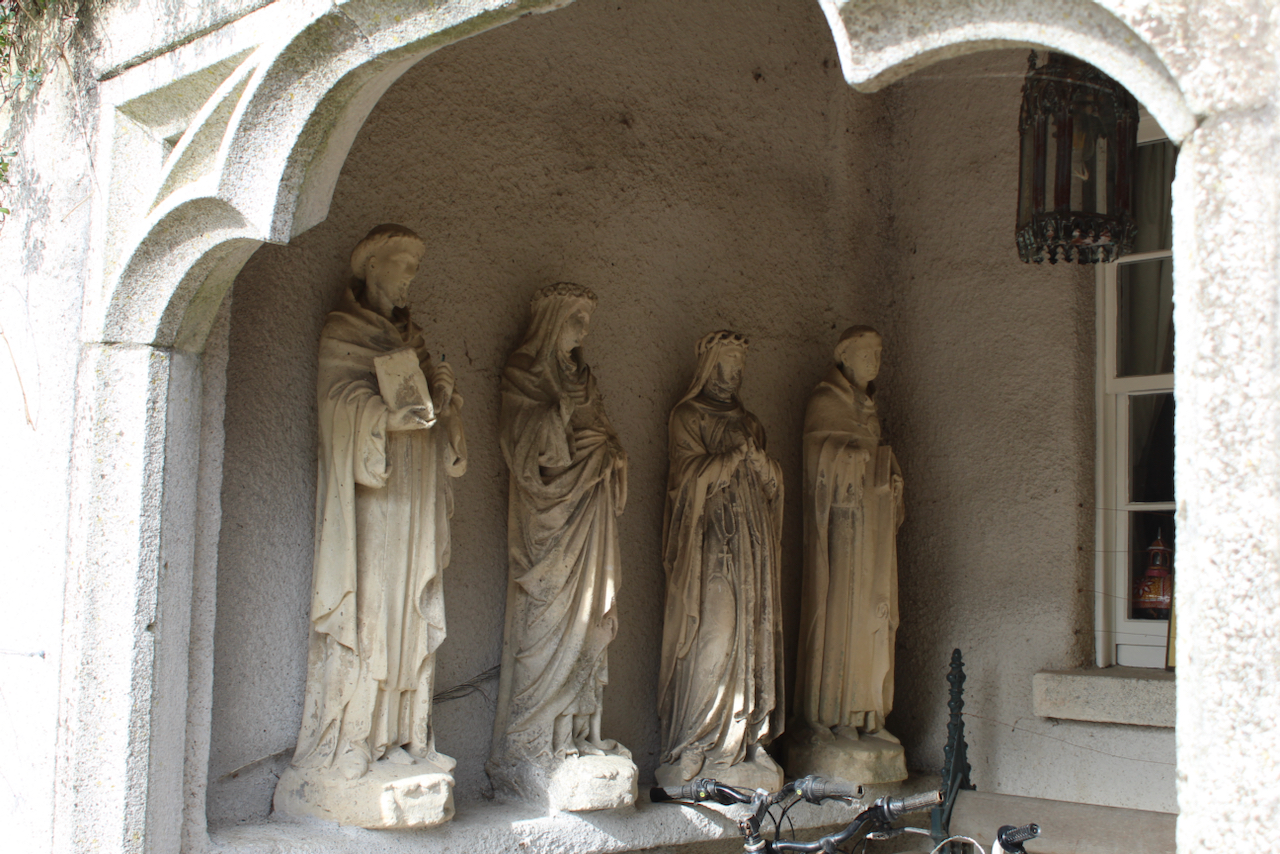
We entered the castle through a door in the battlemented porticon next to the double height bow facing onto the stableyard and courtyard. Inside the portico are statues which may have been from the Abbey – I forgot to ask our tour guide, as there was just so much to see and learn about.

Huntington Castle, 2023. Photograph © Jennifer Winder-Baggot, www.irishhistorichouses.com

We were not allowed to take photos inside, except for in the basement, but you can see some pictures on the official website [1] and also on the wonderful blog of the Irish Aesthete [10].

Gary waits for the tour, at the entrance. Photograph © Jennifer Winder-Baggot, www.irishhistorichouses.com
The entrance to the tour is through the door under the battlemented portico. Photograph © Jennifer Winder-Baggot, www.irishhistorichouses.com
Huntington Castle, 2023. Photograph © Jennifer Winder-Baggot, www.irishhistorichouses.com
Huntington Castle, 2016. Photograph © Jennifer Winder-Baggot, www.irishhistorichouses.com
Huntington Castle, 2023. Photograph © Jennifer Winder-Baggot, www.irishhistorichouses.com

There were wonderful old treasures in the house including armour chest protections in the hallway along the stairs, which was one of the first things to catch my attention as we entered. Our guide let us hold it – it was terribly heavy, and so a soldier must have been weighed down by his armour – wearing chain mail underneath his shielding armour. The chest protection piece we held was made of cast iron! She showed us the “proof mark” on the inside. Cast iron could shatter, our guide told us, so a piece of armour would be tested, leaving a little hole, which proved that it would not shatter when worn and hit by a projectile or sword. This piece dates all the way back to Oliver Cromwell’s time!

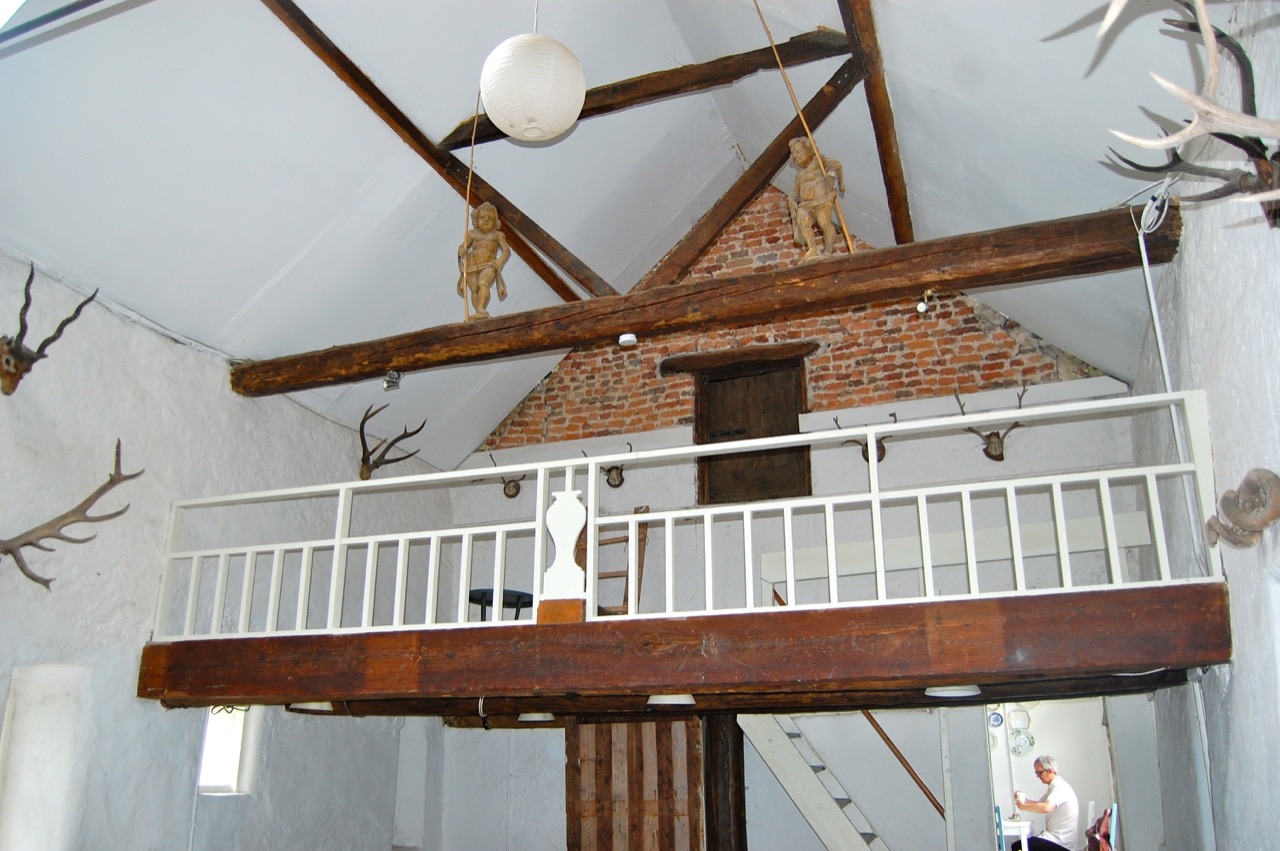
To the right when one enters is a room full of animal heads and weapons. There is a huge bison head from India and a black buck, and a sawfish from the Caribbean. A gharial crocodile hanging on the wall was killed by Nora Parsons at the age of seventeen in India! There is also the shell of an armadillo. The room also has a lovely wooden chimneypiece and there is another in the hallway, which has a Tudor style stucco ceiling. We went up a narrow stairway lined as Bence-Jones describes “with wainscot or half-timbered studding.”

Manning Durdin-Robertson married Nora Kathleen Parsons, from Birr Castle. She wrote The Crowned Harp. Memories of the Last Years of the Crown in Ireland, an important memorial of the last years of English rule in Ireland [11]. I ordered a copy of the book from my local library! It’s a lovely book and an enjoyable rather “chatty” read. She writes a bit about her heritage, which you can see in my entry on another section 482 castle, Birr Castle. She tells us about life at the time, which seems to have been very sociable! She writes a great description of social rank:

The hierarchy of Irish social order was not defined, it did not need to be, it was deeply implicit. In England the nobility were fewer and markedly more important than over here and they were seated in the mansions considered appropriate….
The top social rows were then too well-known and accepted to be written down but, because a new generation may be interested and amused, I will have a shot at defining an order so unreal and preposterous as to be like theatricals in fancy dress. Although breeding was essential it still had to be buttressed by money.

Row A: peers who were Lord or Deputy Lieutenants, High Sheriffs and Knights of St. Patrick. If married adequately their entrenchment was secure and their sons joined the Guards, the 10th Hussars or the R.N. [Royal Navy, I assume]
Row B: Other peers with smaller seats, ditto baronets, solvent country gentry and young sons of Row A, (sons Green Jackets, Highland regiments, certain cavalry, gunners and R.N.).
Row A used them for marrying their younger children.
Row C: Less solvent country gentry, who could only allow their sons about £100 a year. These joined the Irish Regiments which were cheap; or transferred to the Indian army. They were recognised and respected by A and B and belonged to the Kildare Street Club.
Row D: Loyal professional people, gentlemen professional farmers, trade, large retail or small wholesale, they could often afford more expensive Regiments than Row C managed. Such rarely cohabited with Rows A and B but formed useful cannon fodder at Protestant Bazaars and could, if they were really liked, achieve Kildare Street.

Absurd and irritating as it may seem today, this social hierarchy dominated our acceptances.

I had the benefit of always meeting a social cross section by playing a good deal of match tennis…. The top Rows rarely joined clubs and their play suffered….There were perhaps a dozen (also very loyal) Roman Catholic families who qualified for the first two Rows; many more, equally loyal but less distinguished, moved freely with the last two.

Amongst these “Row A” Roman Catholics were the Kenmares, living in a long gracious house at Killarney. Like Bantry House, in an equally lovely situation.…”

There are some notable structures inside the building, as Robert O’Byrne notes. “The drawing room has 18th century classical plaster panelled walls beneath a 19th century Perpendicular-Gothic ceiling. Some passages on the ground floor retain their original oak panelling, a number of bedrooms above being panelled in painted pine. The dining room has an immense granite chimneypiece bearing the date 1625, while those in other rooms are clearly from a century later.” [10]

The dining room, the original hall of the castle, is hung with Bedouin tents, brought back from Tunisia in the 1870s by Herbert Robertson, Helen Durdin’s husband. The large stone fireplace has the date stone 1625, and a stained glass window traces out the Esmonde and Durdin genealogy. We know that the room is very old by the thickness of the walls. The room has an Elizabethan ceiling, and portraits of family members hang on the walls. You can see a photograph of the room on the Castle Tours page of the website. There is a portrait of Barbara St. Leger, from Doneraile in Cork, who married Alexander Durdin (1712-1807), the one who also married the two Esmonde daughters. It is said that Barbara wore a set of keys at her waist, and that sometimes ghostly jingling can be heard in the castle.

Next to the dining room is a ladies drawing room with white panelled walls and a stucco ceiling with Gothic drop decoration and compartments. I think it was in this room the guide told us that the panelling is made of plaster, created to look like wood panelling. You can see some photographs of these rooms on the castle’s facebook page. The ceiling may seem low for an elegant room but we must remember that it originally housed a barracks! This room also is part of the original structure – the doorway into the next room shows how thick the wall is – about the length of two arms.

Another drawing room is hung with tapestry, which would have kept the residents a bit warmer in winter. There are beautiful stuccoed ceilings, which you can see on the website, and a deep bay window with Gothic arches in the bars of the window.

The Tapestry Room, Huntington Castle, photograph courtesy of Huntington Castle website. The portrait over the fireplace is, I believe, Helen Durdin who married Herbert Robertson. I think this room was added to the castle in 1760.

Huntington was one of the first country houses in Ireland to have electricity, and in order to satisfy local interest a light was kept burning on the front lawn so that the curious could come up and inspect it.

The turbine house is at the end of this row of trees. Photograph © Jennifer Winder-Baggot, www.irishhistorichouses.com

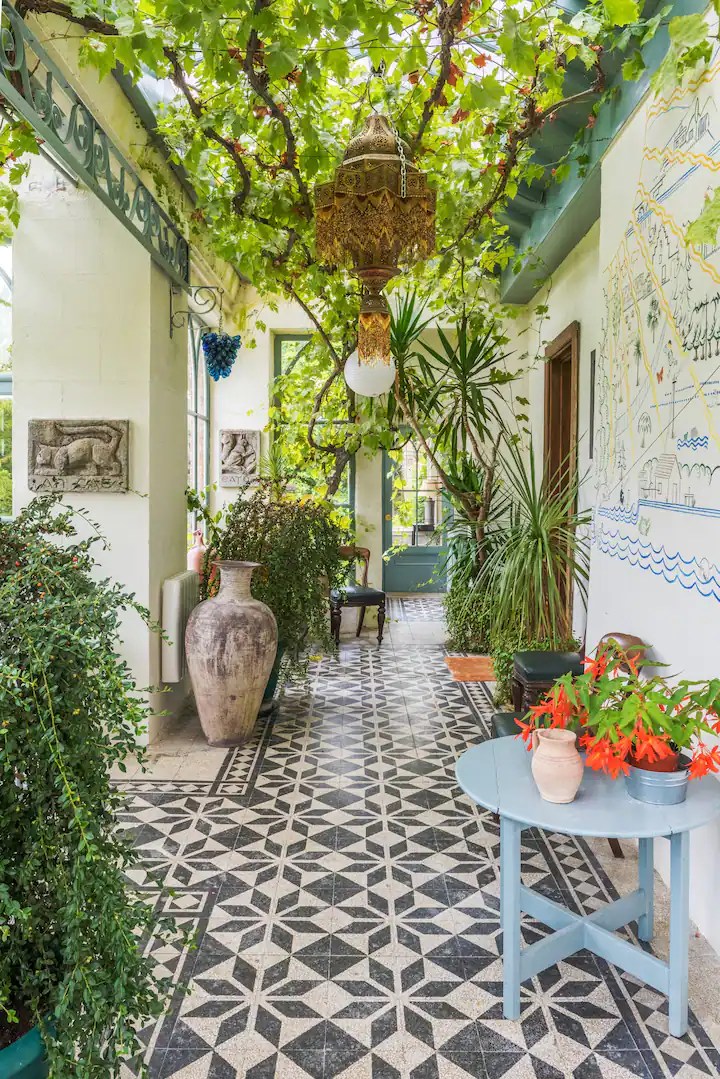
I loved the light and plant filled conservatory area, with a childish drawing on one wall. The glass ceiling is draped in grape vines. The picture is of the estate, drawn by the four children of the house in 1928, Olivia Durdin-Robertson and her brother Derry and sister Barbara, children of Manning and Nora. I loved the pictures of the children themselves swimming in the river, wearing little swimming hats! The picture even has the telephone wires in it. The conservatory area is part of an addition on the back of the castle, added around 1860.

Huntington Castle, photograph courtesy of Huntington Castle website, with the vine that was taken in 1860 from Hampton Court in London.
Huntington Castle, 2023. Photograph © Jennifer Winder-Baggot, www.irishhistorichouses.com

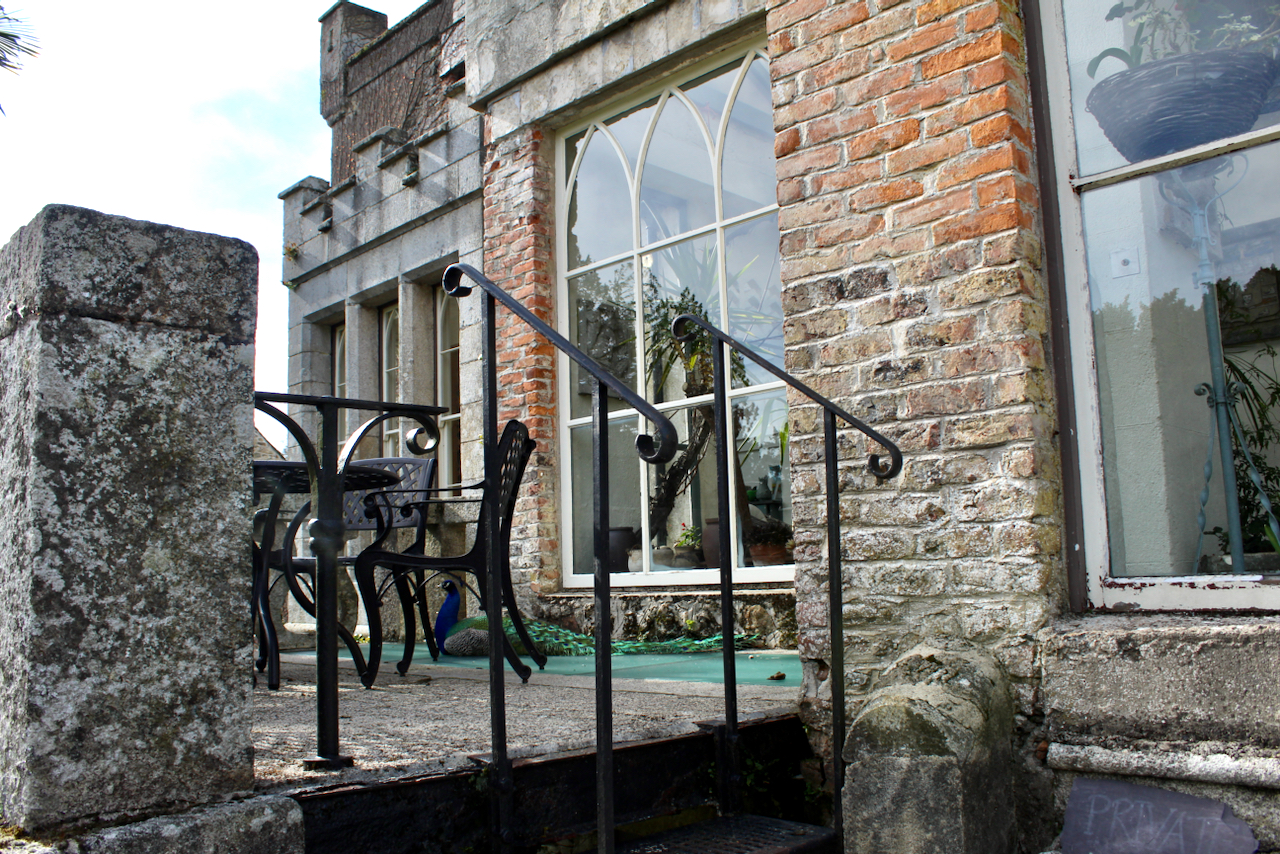
The conservatory is in the brick and battlemented addition to one side of the castle. From the formal gardens to the side of the castle a different vantage shows more of the castle and one can see the original tower house, and the additions.

1960s addition to the castle. Photograph © Jennifer Winder-Baggot, www.irishhistorichouses.com
The Conservatory. Photograph © Jennifer Winder-Baggot, www.irishhistorichouses.com
The formal garden was probably laid out by Laurence Esmonde, 2nd Baronet of Ballynastragh, County Wexford, from the 1680s. Photograph © Jennifer Winder-Baggot, www.irishhistorichouses.com
This shows the addition which houses the light filled conservatory. Photograph © Jennifer Winder-Baggot, www.irishhistorichouses.com
Huntington Castle, 2023. Photograph © Jennifer Winder-Baggot, www.irishhistorichouses.com

The conservatory contains a vine that is a cutting taken in the 1860s of a great vine in Hampton Court.

Percy the Peacock had a seat on the balcony off the conservatory. Photograph © Jennifer Winder-Baggot, www.irishhistorichouses.com
Huntington Castle, 2023. Photograph © Jennifer Winder-Baggot, www.irishhistorichouses.com
A door under the conservatory which leads into the basement has another Egyptian plaque over the door. Photograph © Jennifer Winder-Baggot, www.irishhistorichouses.com

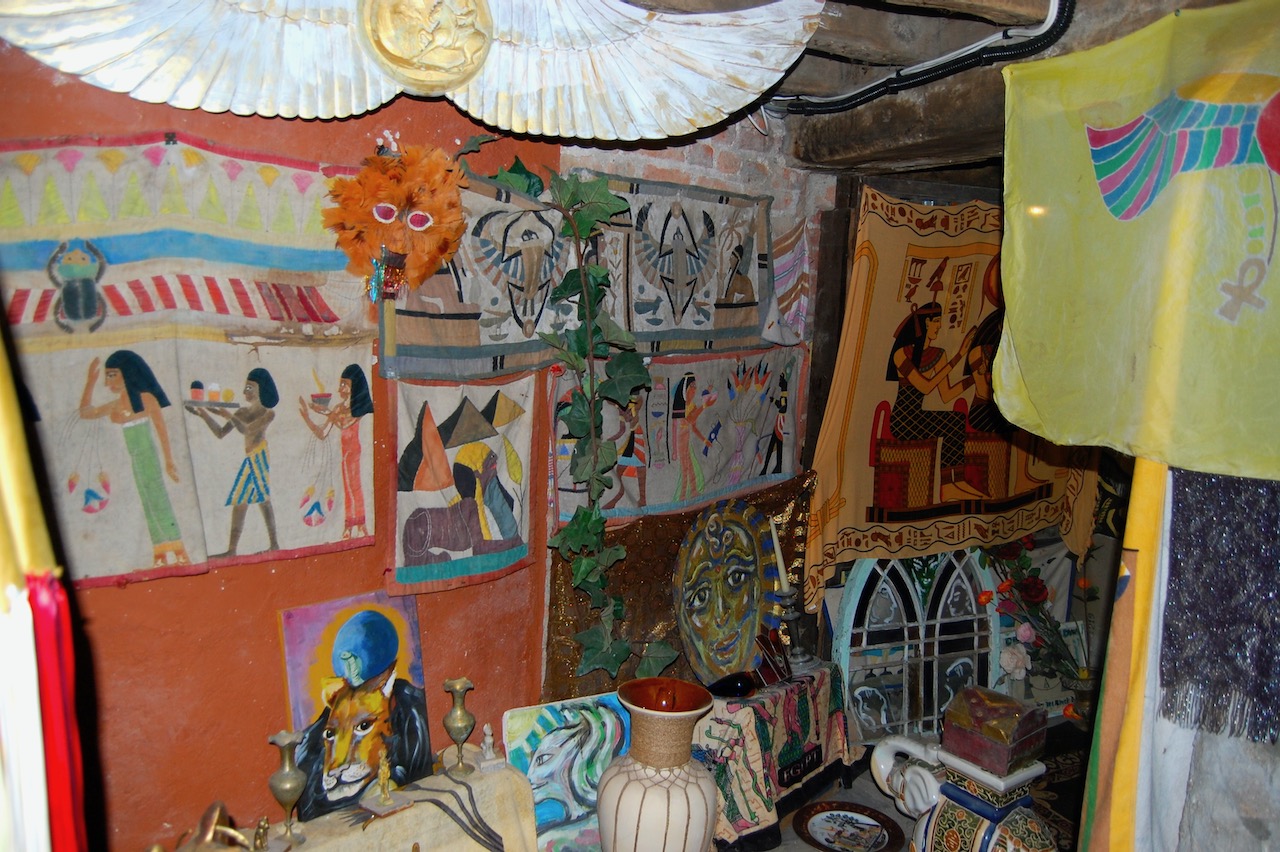
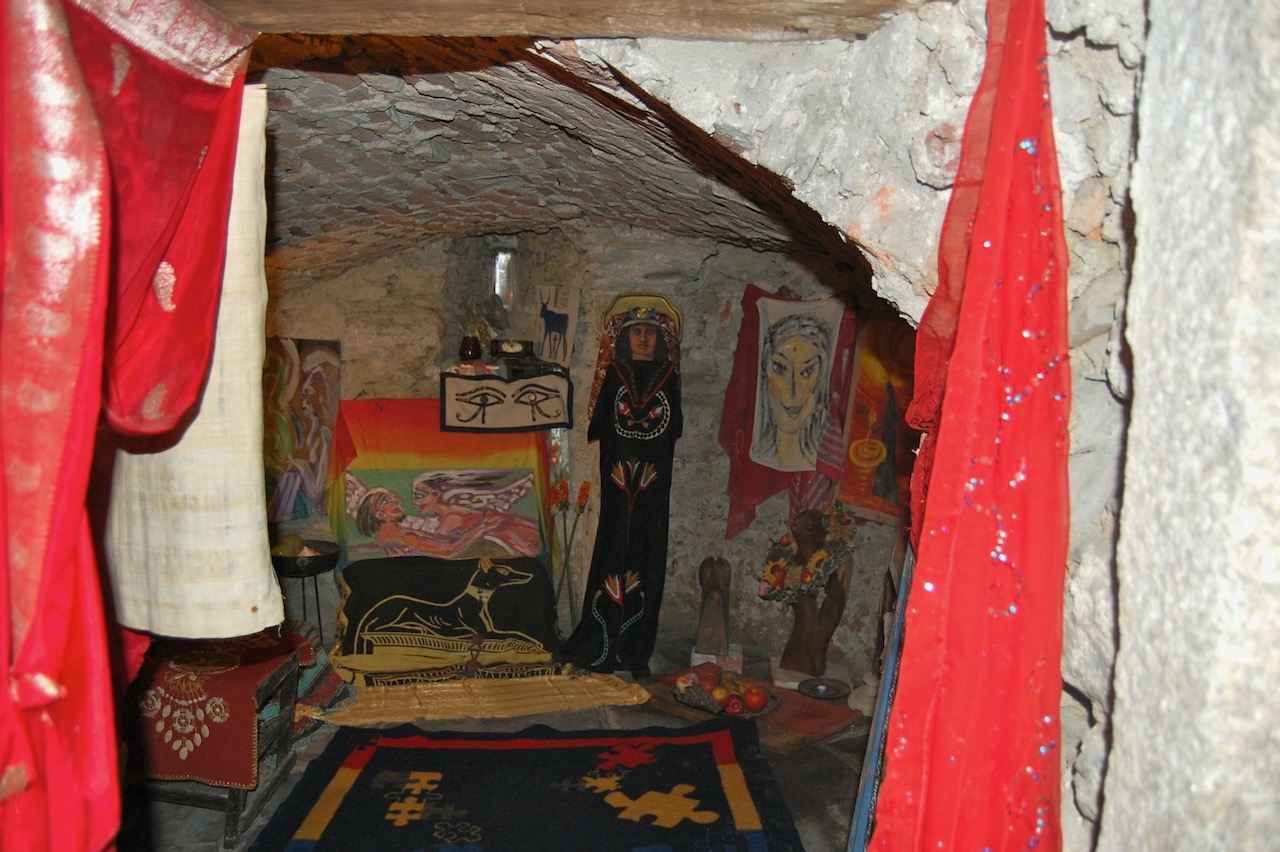
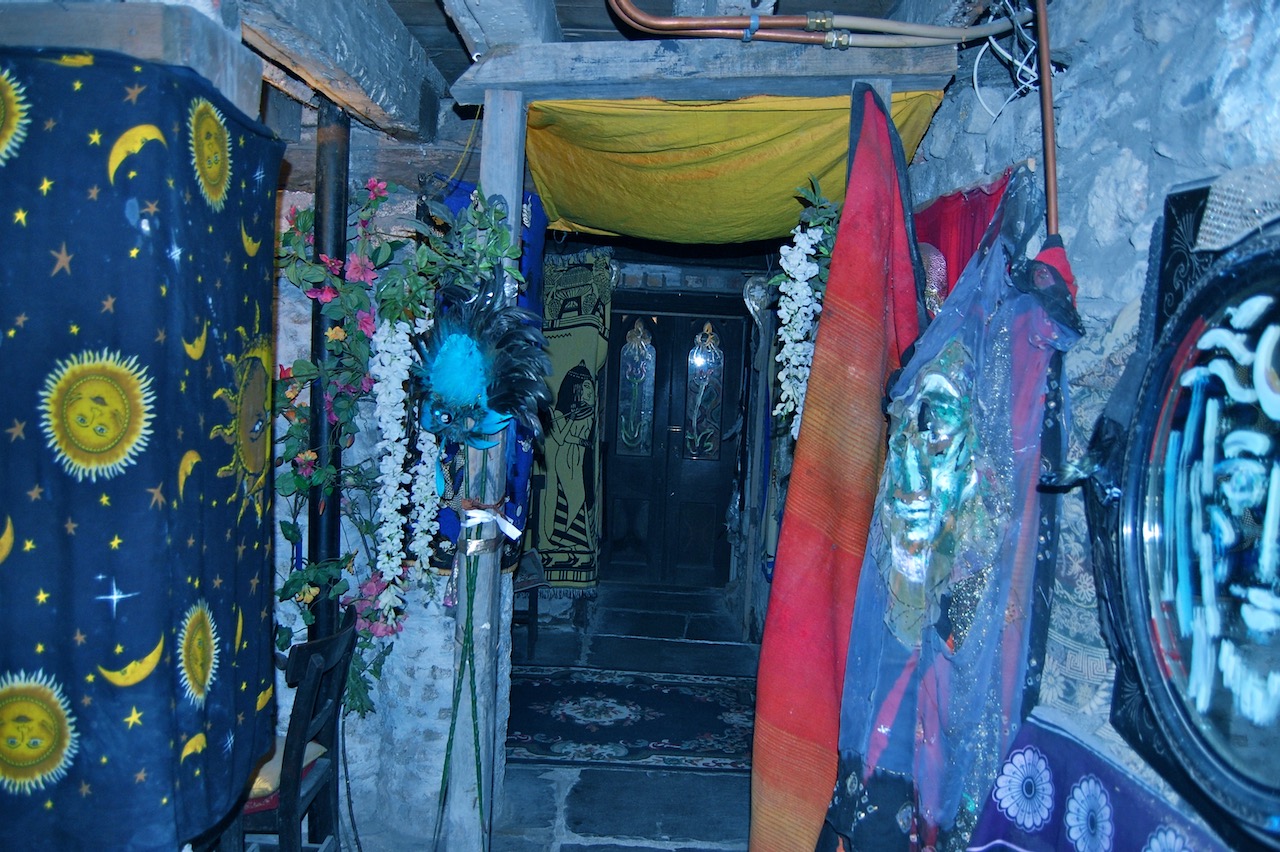
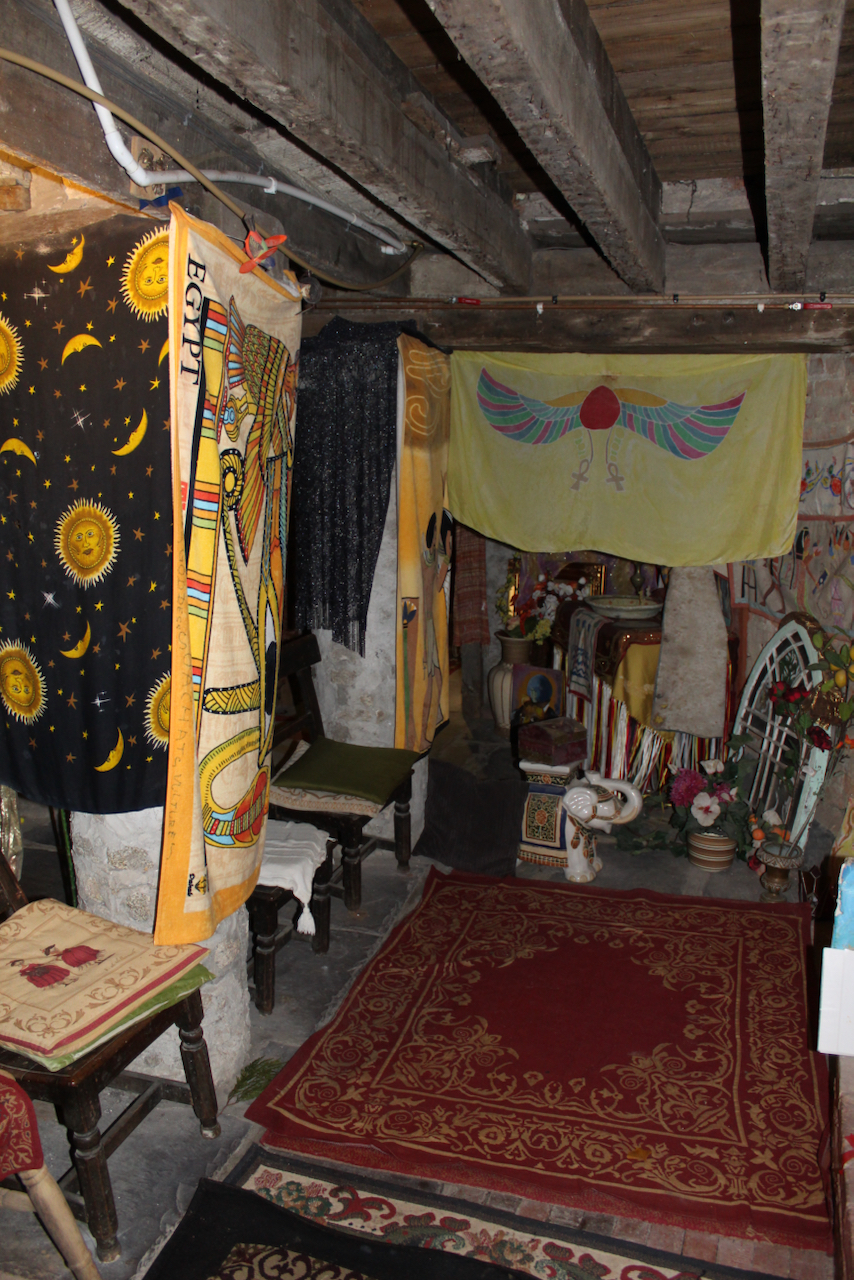
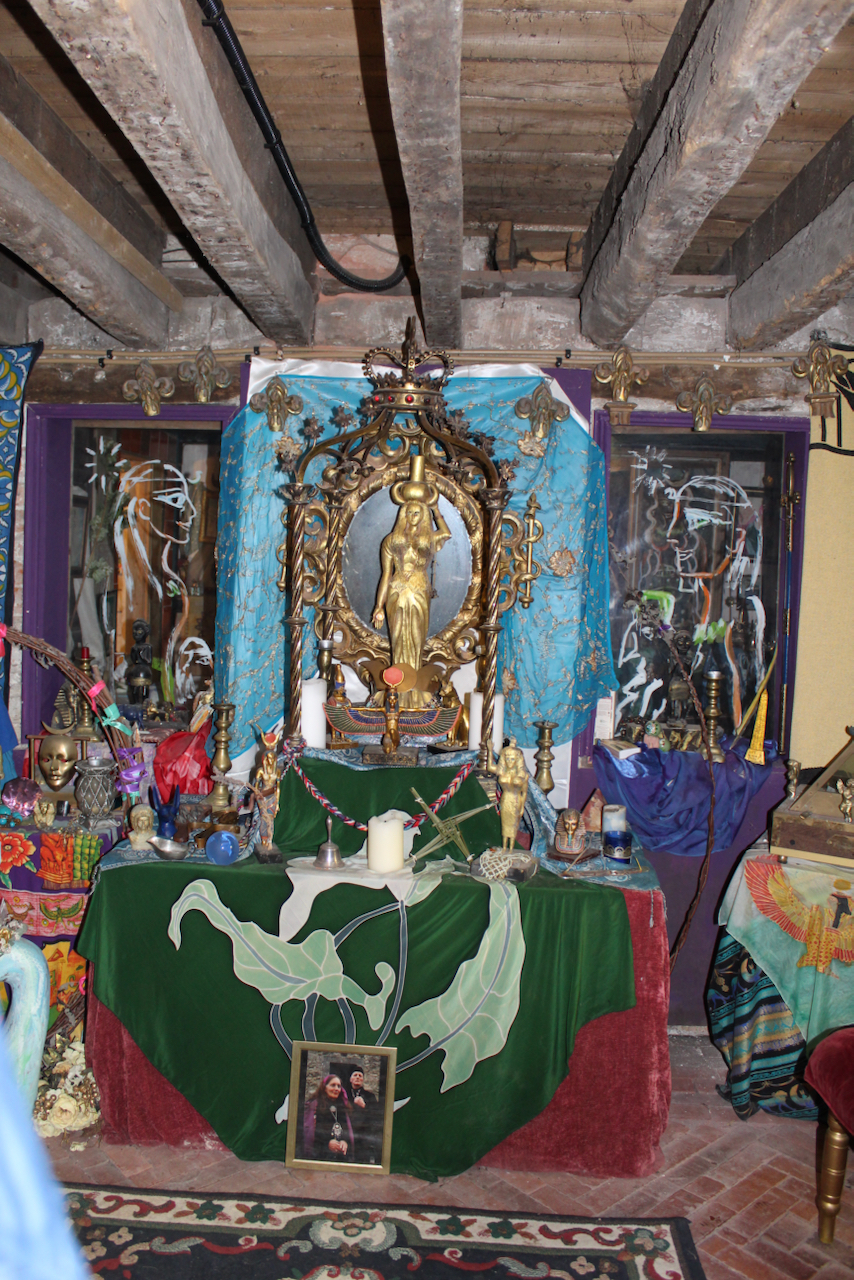
We were allowed to take photos in the basement, which used to house dungeons, and now holds the “Temple of Isis.” It also contains a well, which was the reason the castle was situated on this spot.

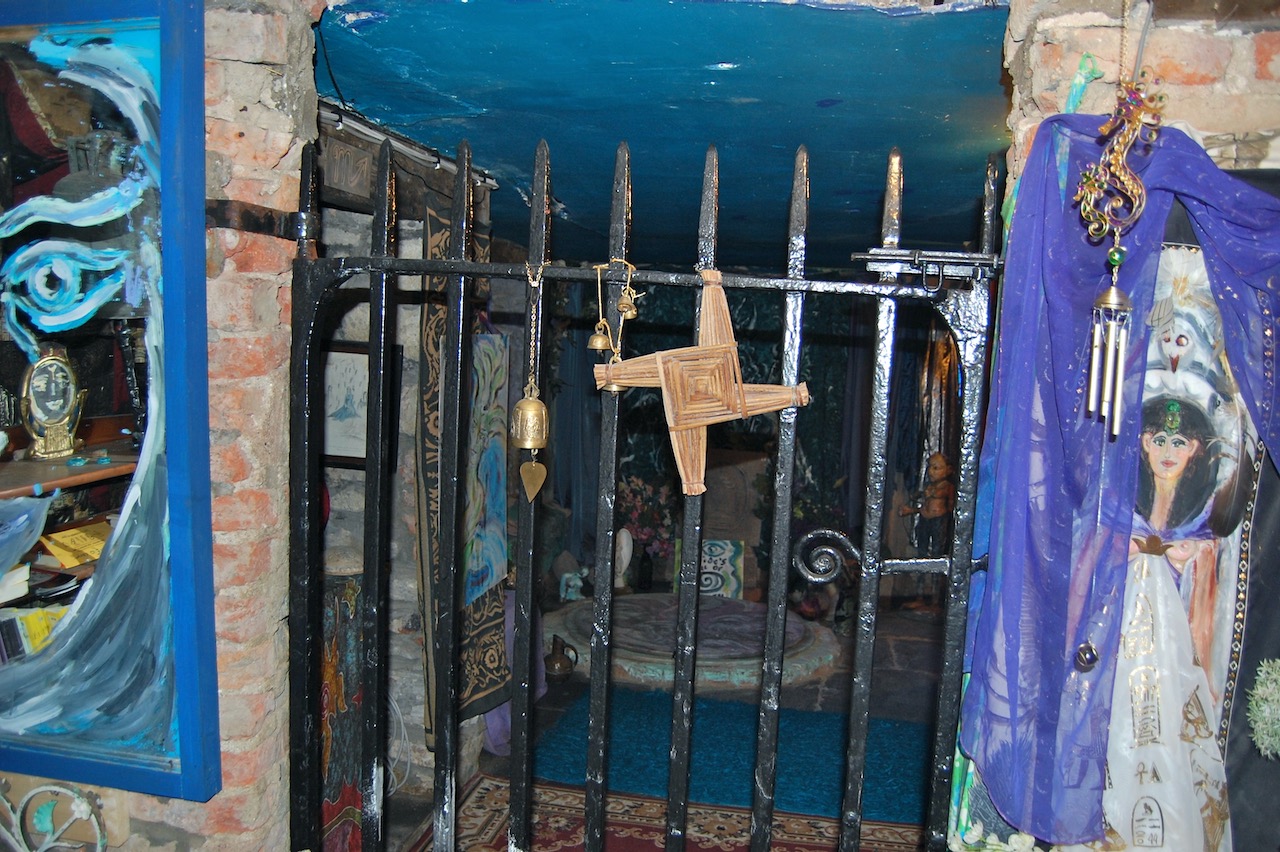
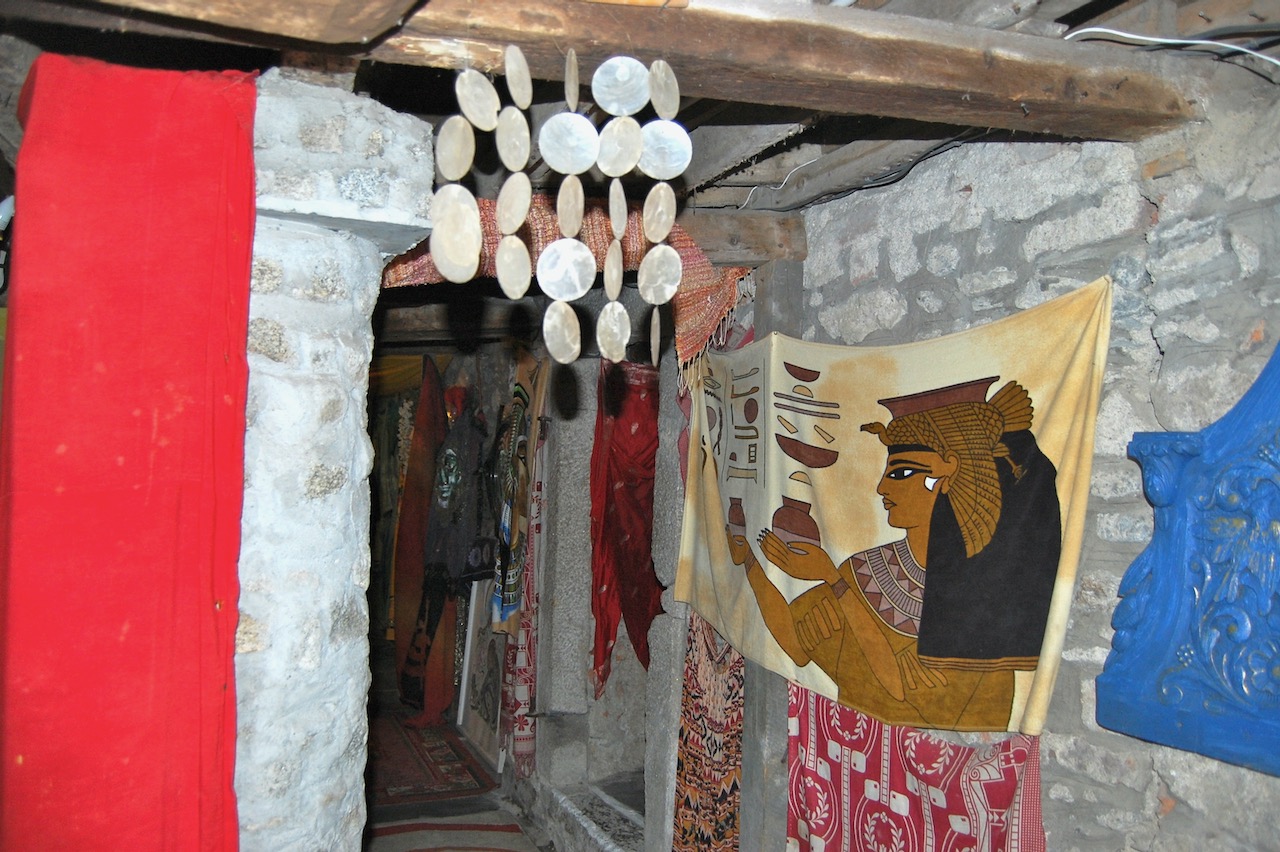
In the 1970s two of the four children of Manning Durdin-Robertson, the writer and mystic Olivia Durdin-Robertson, who was a friend of W.B. Yeats and A.E. Moore, and her brother Laurence (nicknamed Derry), and his wife Bobby, converted the undercroft into a temple to the Egyptian Goddess Isis, founding a new religion. In 1976 the temple became the foundation centre for the Fellowship of Isis [11]. I love the notion of a religion that celebrates the earthy aspects of womanhood, and I purchased a copy of Olivia Durdin-Robertson’s book in the coffee shop. The religion takes symbols from Egyptian religion, as you can see in my photos of this marvellous space:

Entrance to the basement. Photograph © Jennifer Winder-Baggot, www.irishhistorichouses.com
Temple of Isis in Huntington Castle. This room houses the well. Photograph © Jennifer Winder-Baggot, www.irishhistorichouses.com
Temple of Isis in Huntington Castle. Photograph © Jennifer Winder-Baggot, www.irishhistorichouses.com
You can see the old vaulted brick ceilings of the basement. Photograph © Jennifer Winder-Baggot, www.irishhistorichouses.com
Temple of Isis in Huntington Castle. Photograph © Jennifer Winder-Baggot, www.irishhistorichouses.com
The basement still has its wooden beam ceilings. Photograph © Jennifer Winder-Baggot, www.irishhistorichouses.com
Huntington Castle, Temple of Isis. Photograph © Jennifer Winder-Baggot, www.irishhistorichouses.com

Turtle Bunbury has a video of the Fellowship of Isis on his website [12]! You can get a flavour of what their rituals were like initially. Perhaps they are similar today. The religion celebrates the Divine Feminine.

Huntington Castle, 2023. Photograph © Jennifer Winder-Baggot, www.irishhistorichouses.com

After a tour of the castle, we then went to the back garden, coming out from the basement by a door under the stone balcony. According to its website:

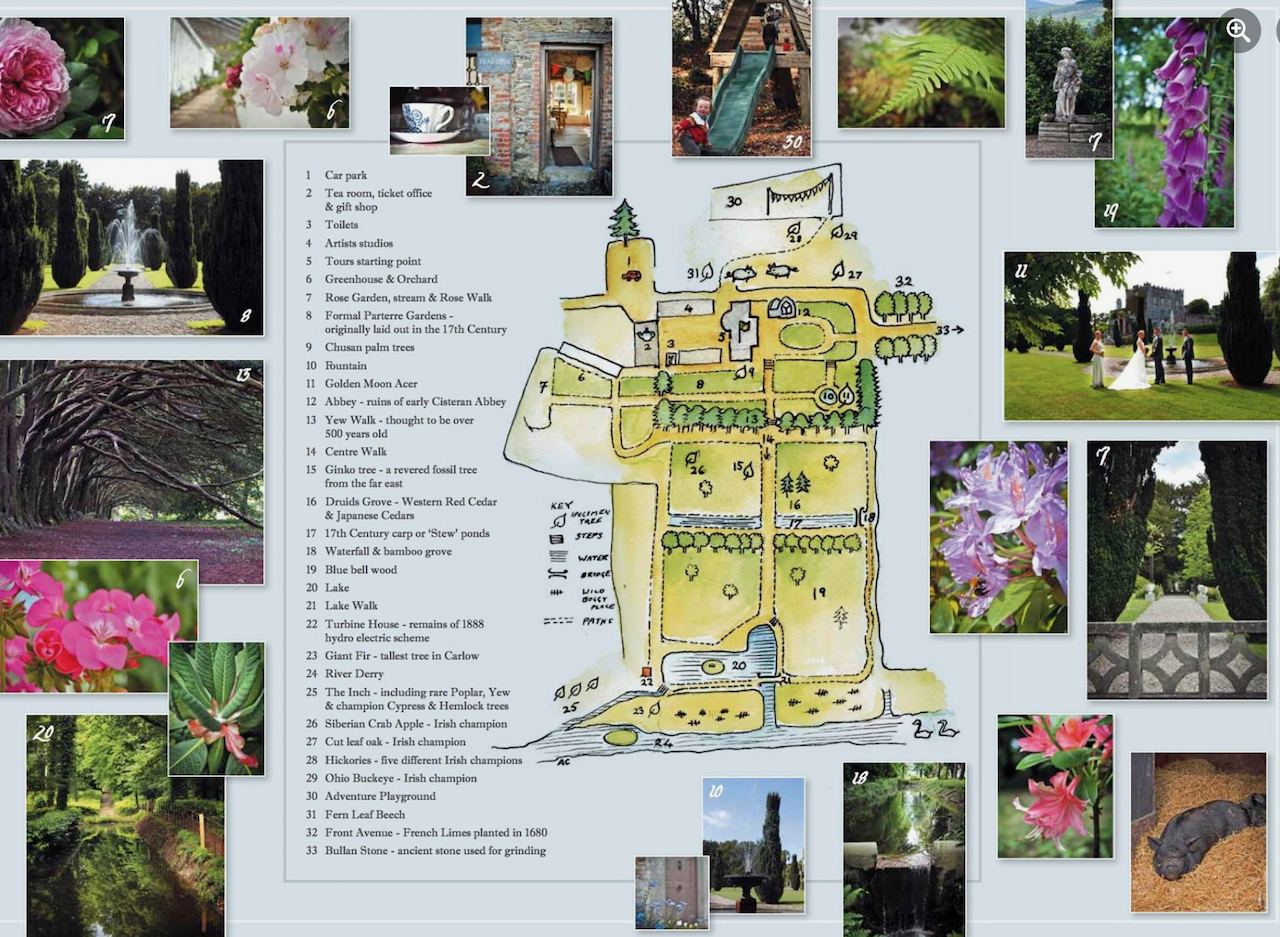
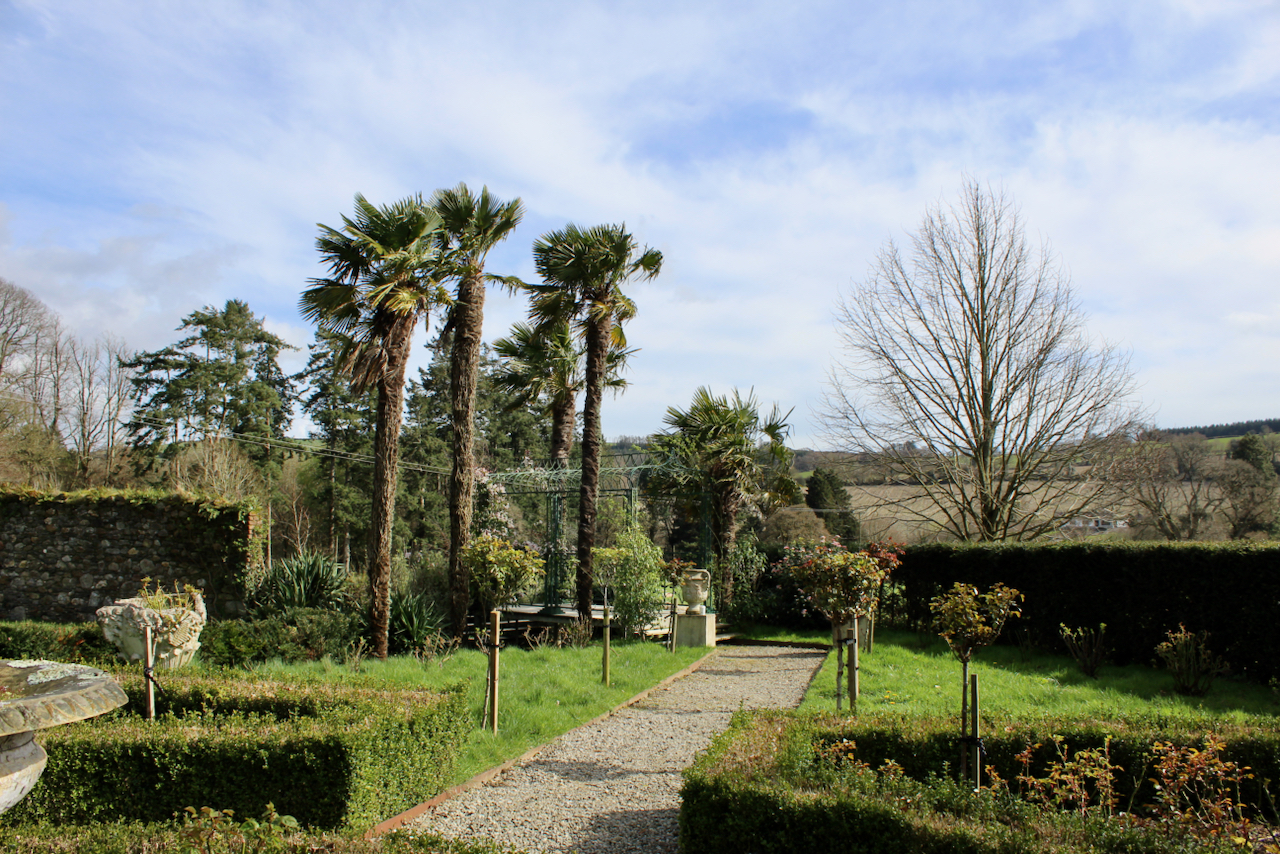
The Gardens were mainly laid out in the 1680s by the Esmondes. They feature impressive formal plantings and layouts including the Italian style ‘Parterre’ or formal gardens, as well the French lime Avenue (planted in 1680). The world famous yew walk is a significant feature which is thought to date to over 500 years old and should not be missed.

Later plantings resulted in Huntington gaining a number of Champion trees including more than ten National Champions. The gardens also feature early water features such as stew ponds and an ornamental lake as well as plenty to see in the greenhouse and lots of unusual and exotic plants and shrubs.“”Later plantings resulted in Huntington gaining a number of Champion trees including more than ten National Champions. The gardens also feature early water features such as stew ponds and an ornamental lake as well as plenty to see in the greenhouse and lots of unusual and exotic plants and shrubs.

Huntington Castle, 2023. Photograph © Jennifer Winder-Baggot, www.irishhistorichouses.com
Huntington Castle, 2023.
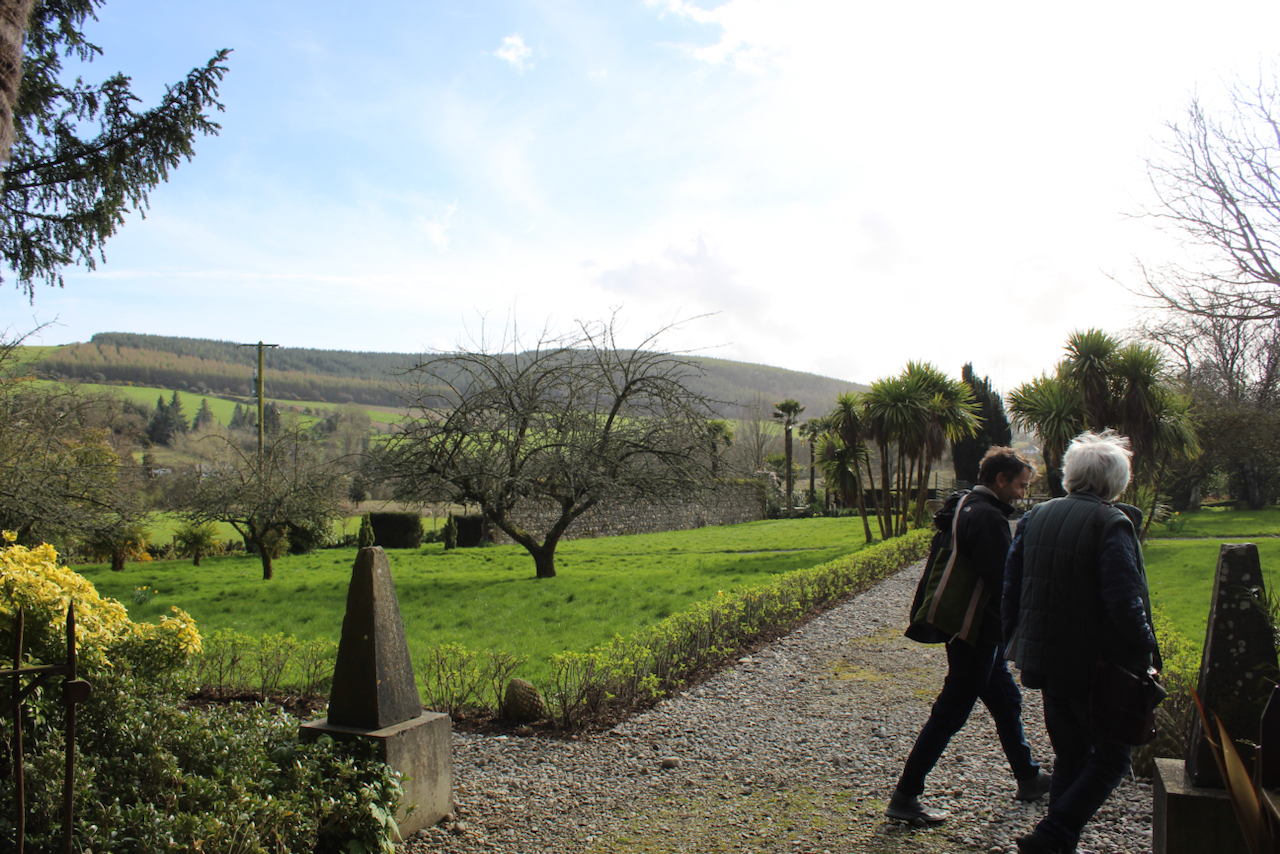
One exits the stable yard through a small gate in the wall, to the garden, and the orchard and greenhouses are to the right. Photograph © Jennifer Winder-Baggot, www.irishhistorichouses.com
The orchard. Photograph © Jennifer Winder-Baggot, www.irishhistorichouses.com
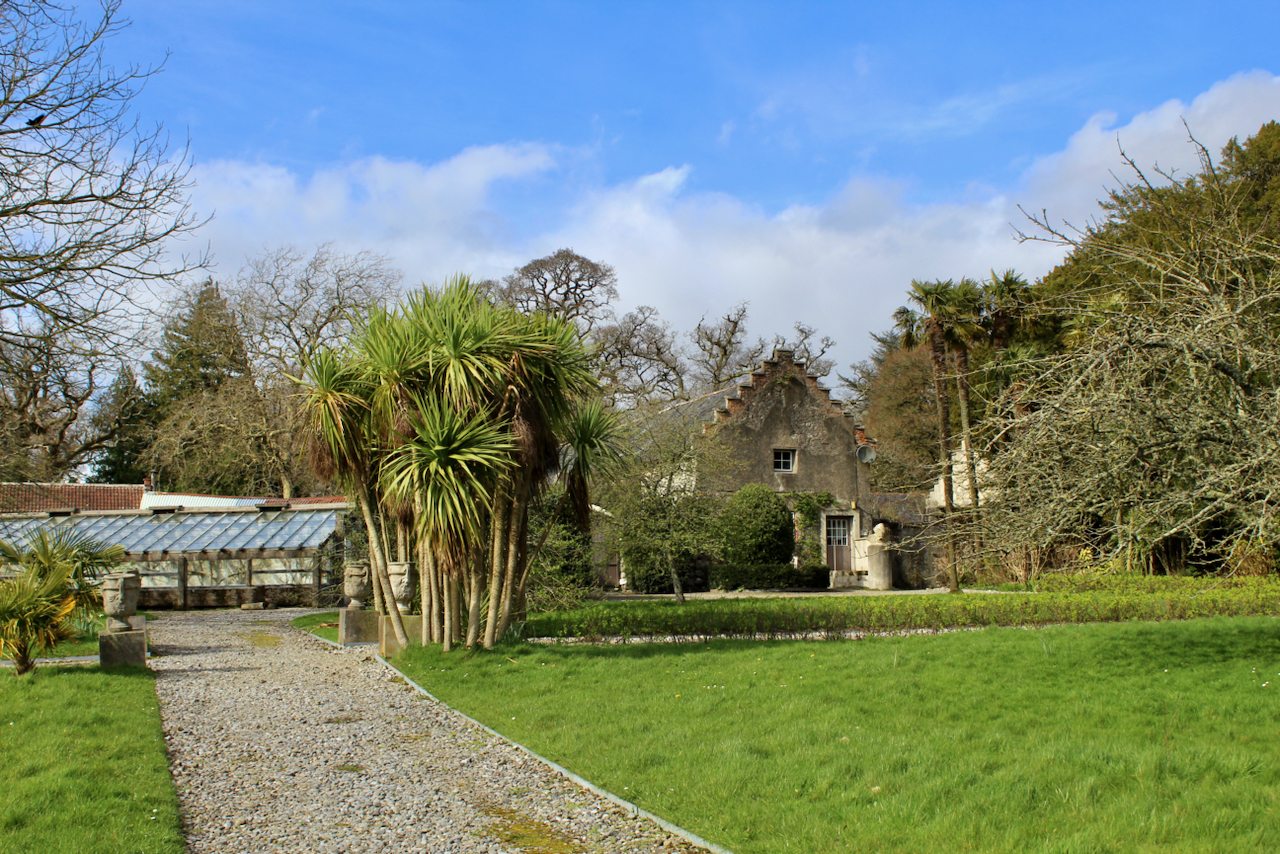
Even the auxiliary buildings have stepped gables. Photograph © Jennifer Winder-Baggot, www.irishhistorichouses.com
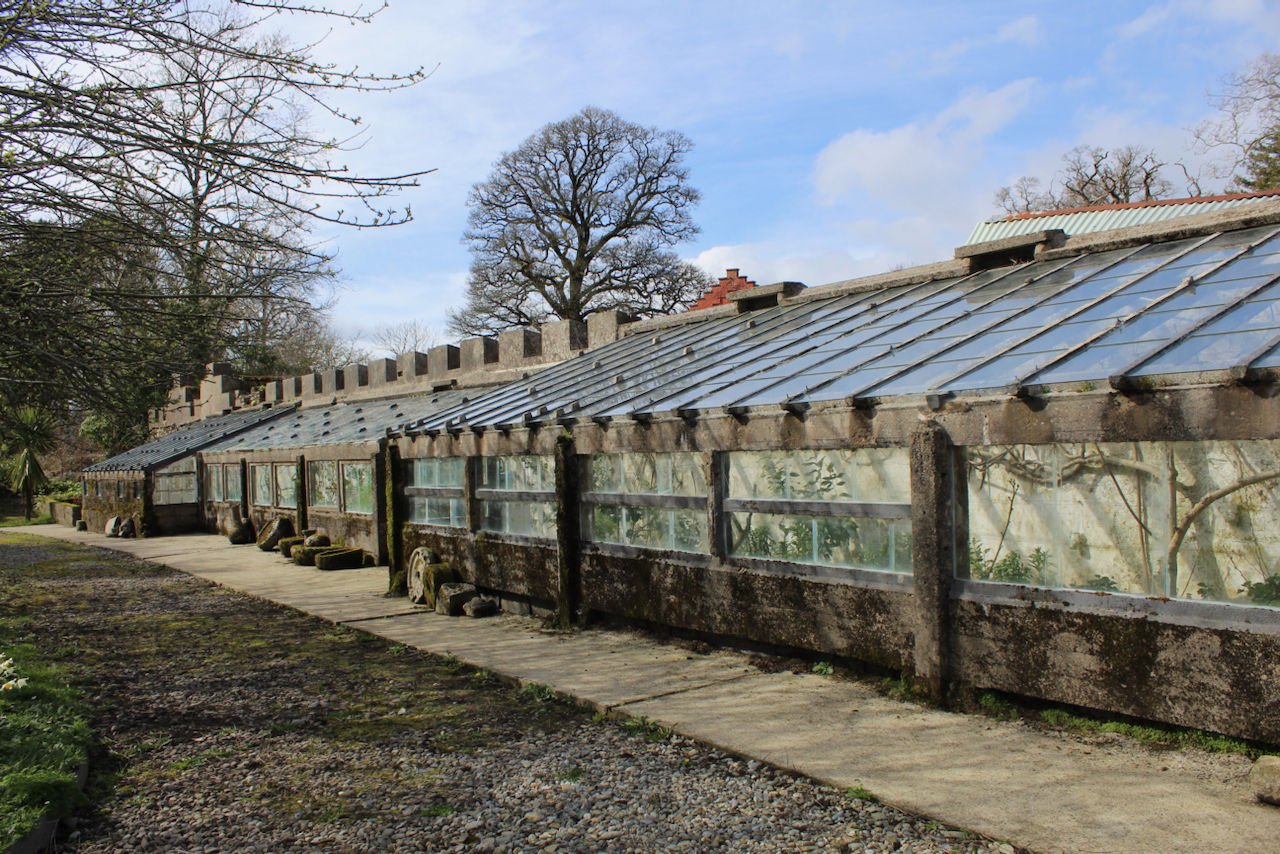
The greenhouses were built by Manning Durdin-Robertson and are made of concrete. Photograph © Jennifer Winder-Baggot, www.irishhistorichouses.com
Huntington Castle, 2023. Photograph © Jennifer Winder-Baggot, www.irishhistorichouses.com
The Rose Walk and stream. Photograph © Jennifer Winder-Baggot, www.irishhistorichouses.com
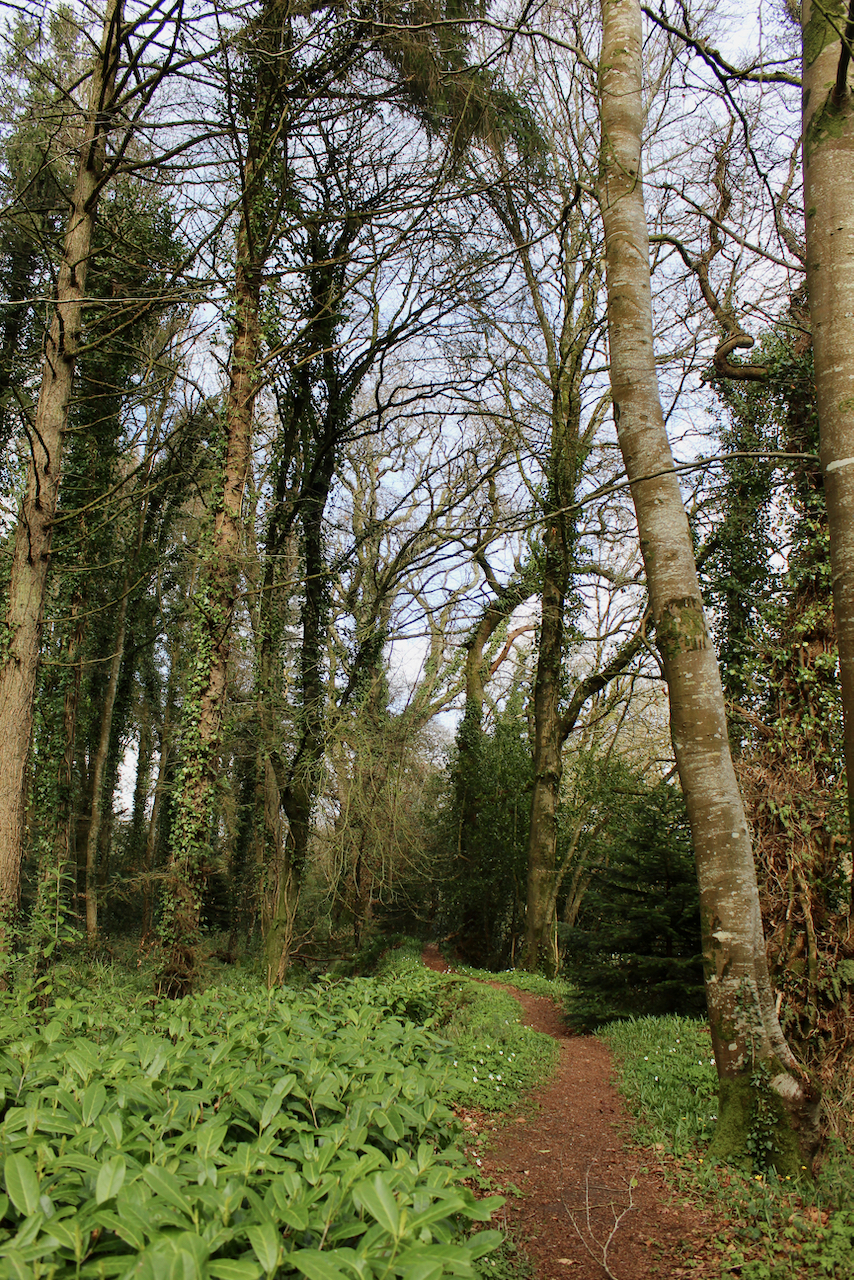
The Bluebell woods. Photograph © Jennifer Winder-Baggot, www.irishhistorichouses.com
Our 2023 visit, Stephen and Gary. Photograph © Jennifer Winder-Baggot, www.irishhistorichouses.com
Huntington Castle, 2023. Photograph © Jennifer Winder-Baggot, www.irishhistorichouses.com

The “stew ponds” would have held fish that could be caught for dinner.

The Stew Ponds, 2023. Photograph © Jennifer Winder-Baggot, www.irishhistorichouses.com
The lake, 2023. Photograph © Jennifer Winder-Baggot, www.irishhistorichouses.com
DSC_1369
The lake, in 2016. Photograph © Jennifer Winder-Baggot, www.irishhistorichouses.com
The wilderness near the River. Photograph © Jennifer Winder-Baggot, www.irishhistorichouses.com
The river Derry, at the end of the property, and an old mill building beyond. Photograph © Jennifer Winder-Baggot, www.irishhistorichouses.com

After the garden, we needed a rest in the Cafe.

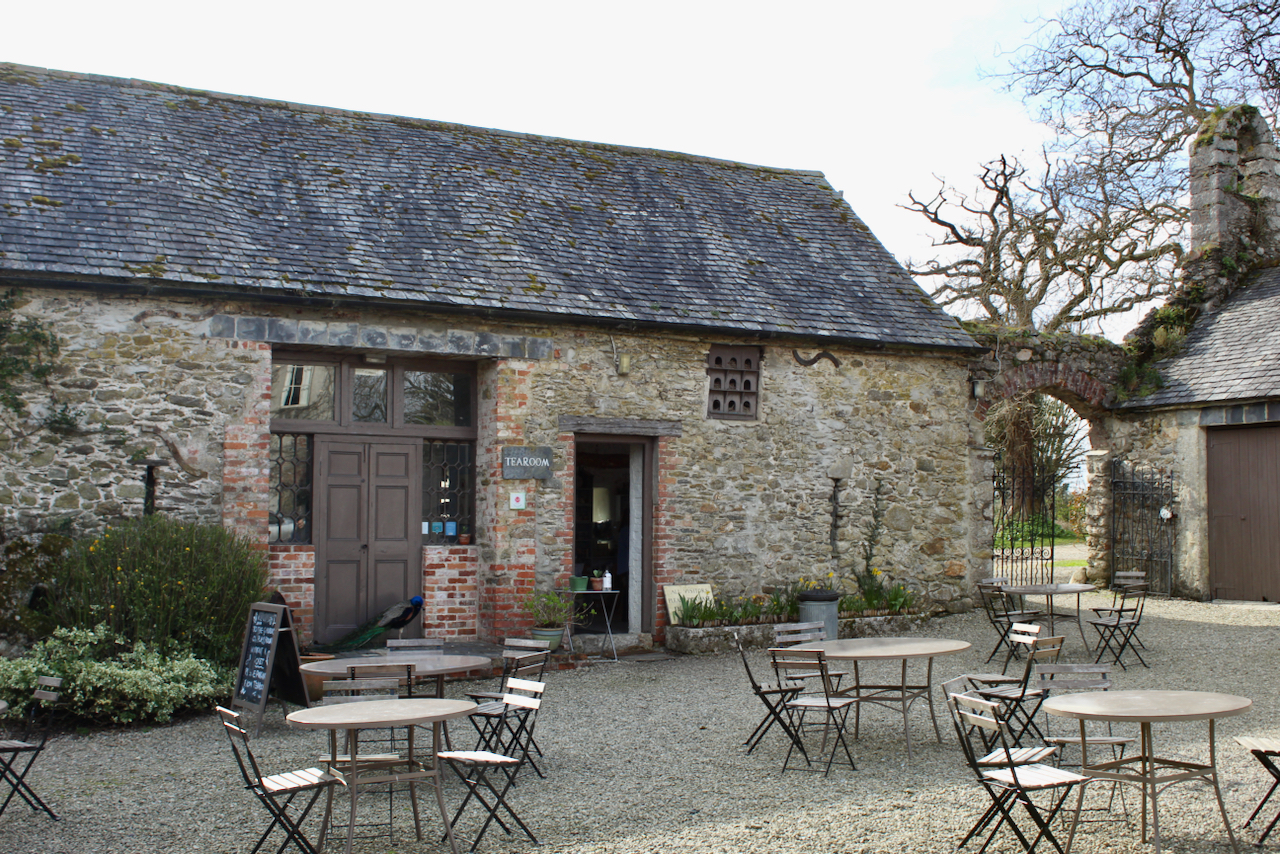
The tearoom has some built-in pigeon boxes. Photograph © Jennifer Winder-Baggot, www.irishhistorichouses.com
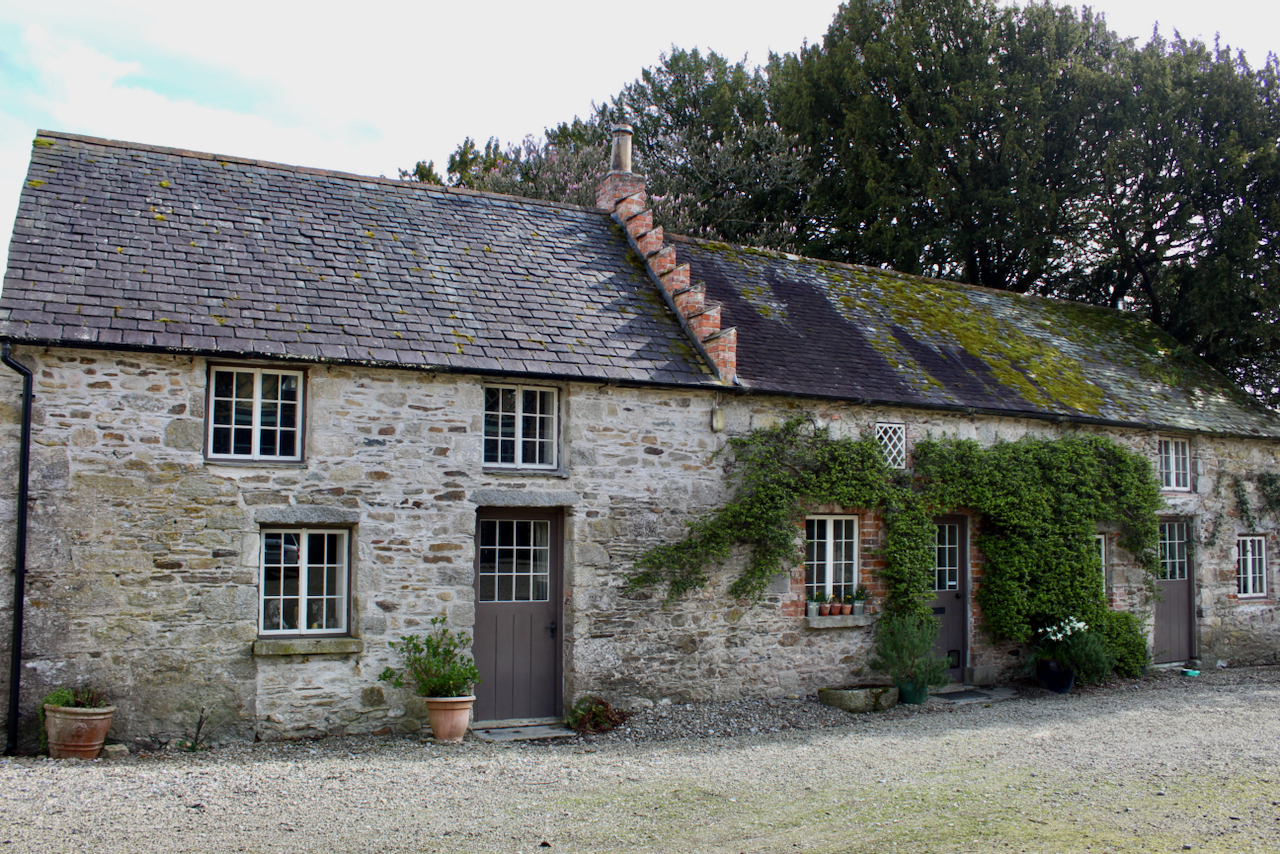
One of the auxiliary buildings in the stable yard has been renovated into a “Granny flat.” Photograph © Jennifer Winder-Baggot, www.irishhistorichouses.com
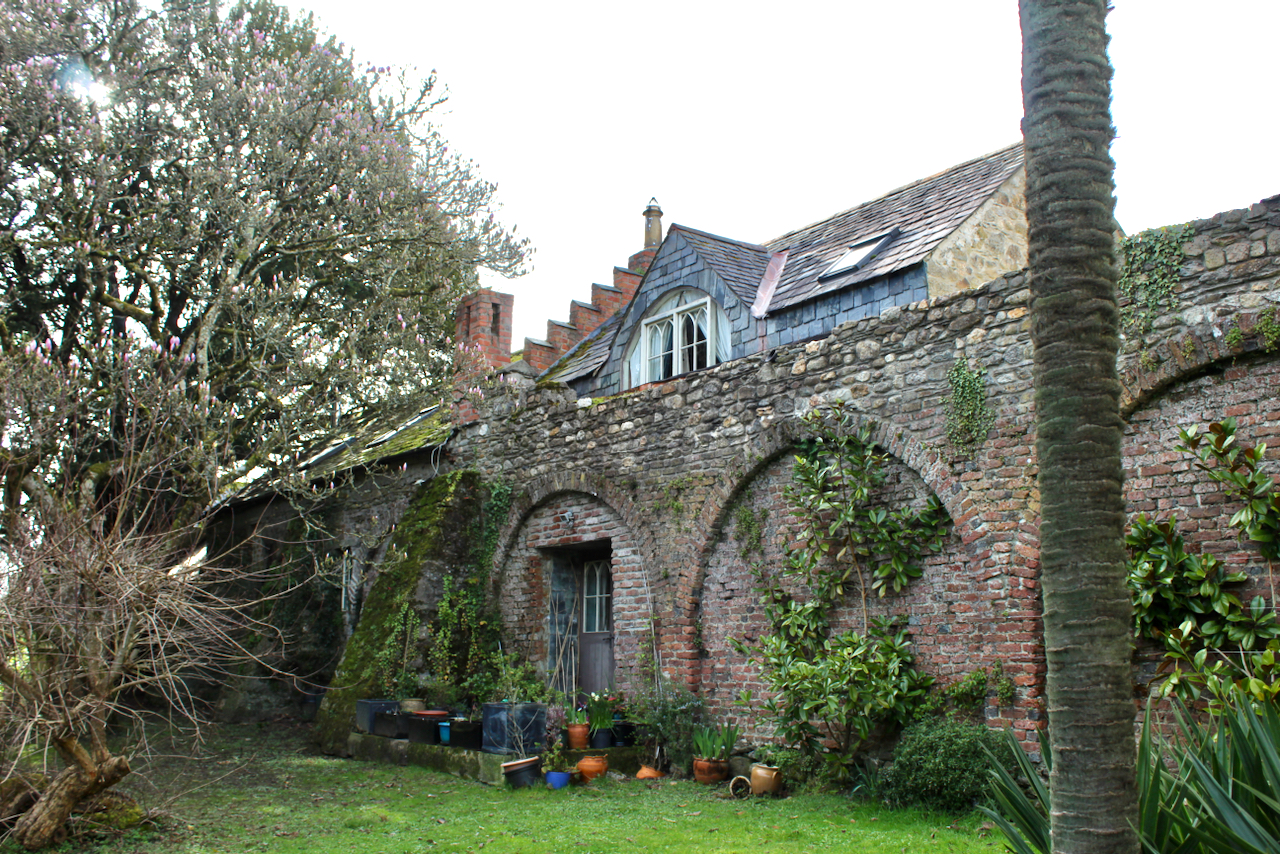
The garden side of the granny flat. Photograph © Jennifer Winder-Baggot, www.irishhistorichouses.com
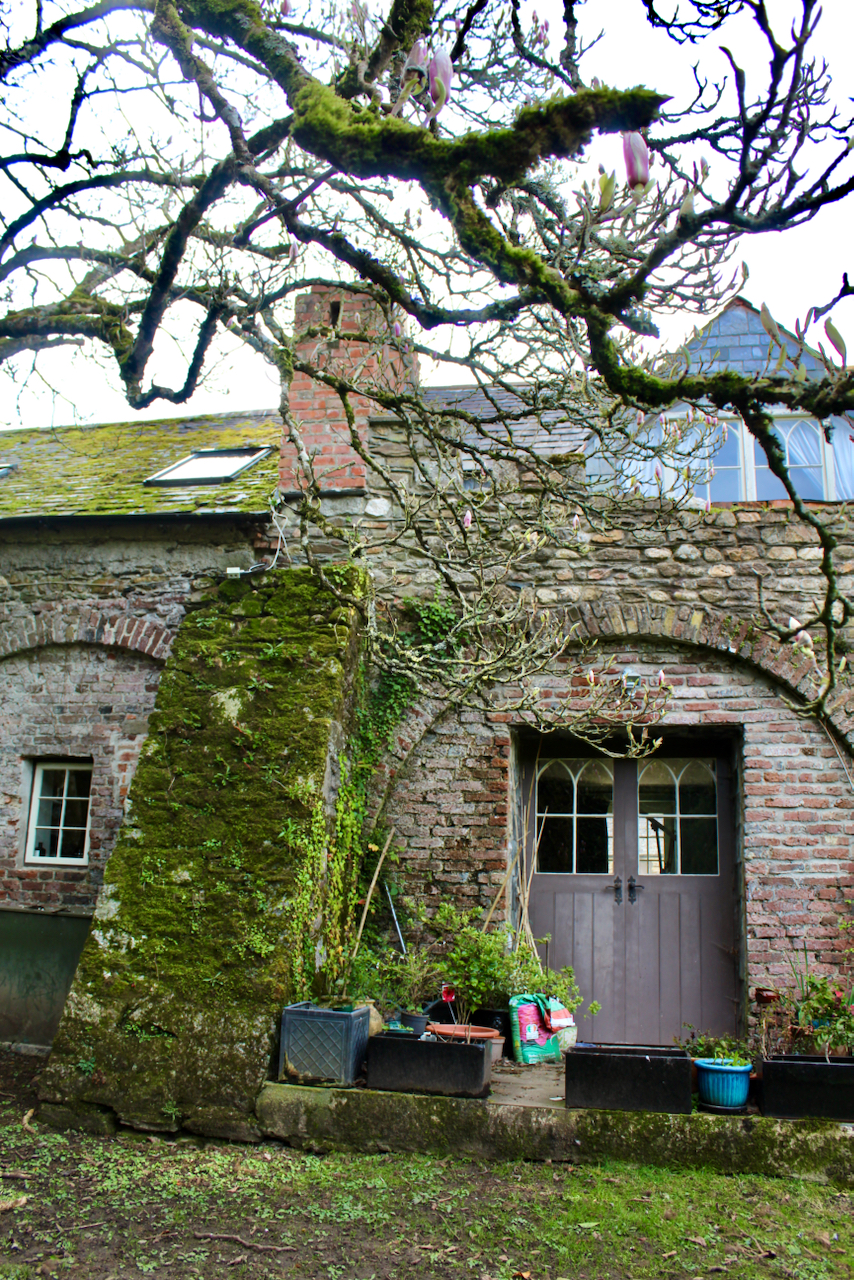
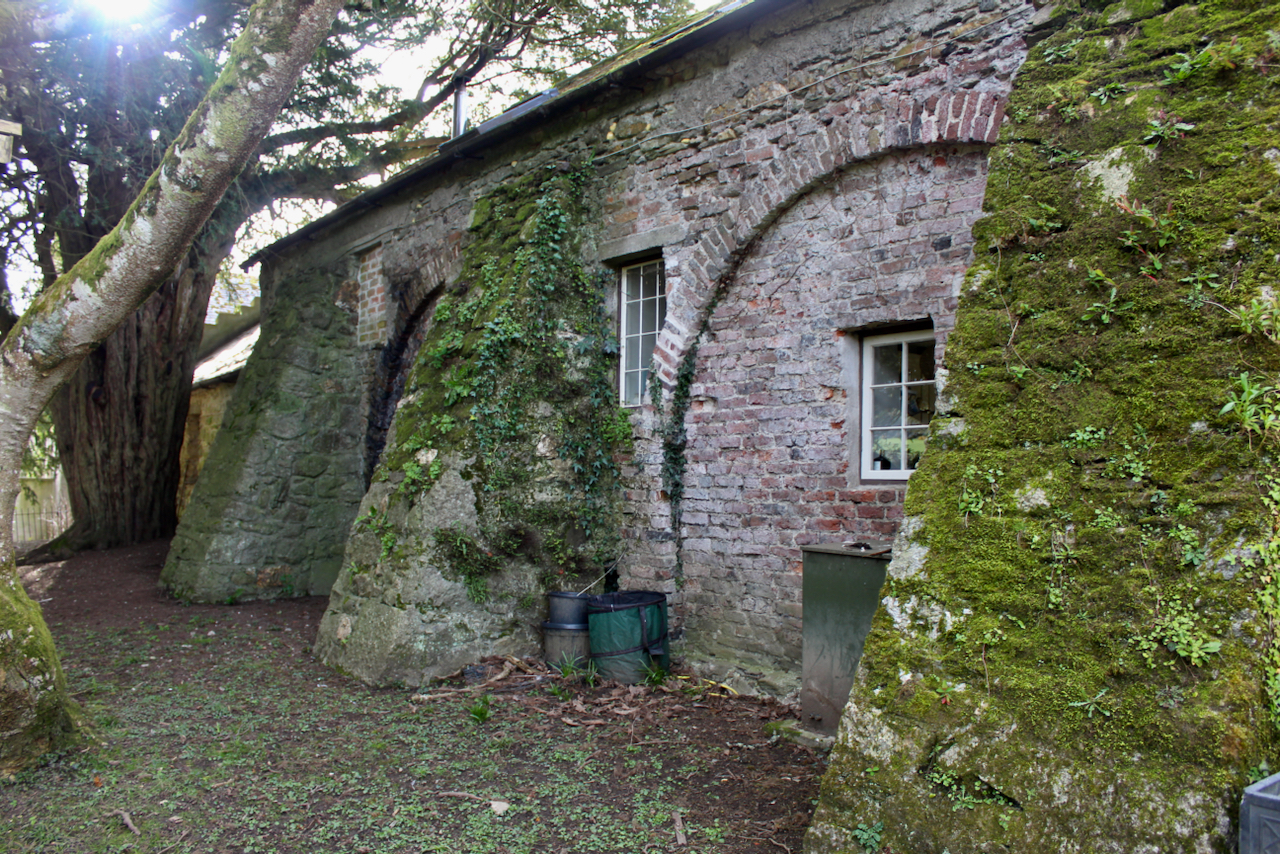
The wall must be very old, with this enormously thick supporting buttress. Photograph © Jennifer Winder-Baggot, www.irishhistorichouses.com
Back of the “granny flat.” Photograph © Jennifer Winder-Baggot, www.irishhistorichouses.com
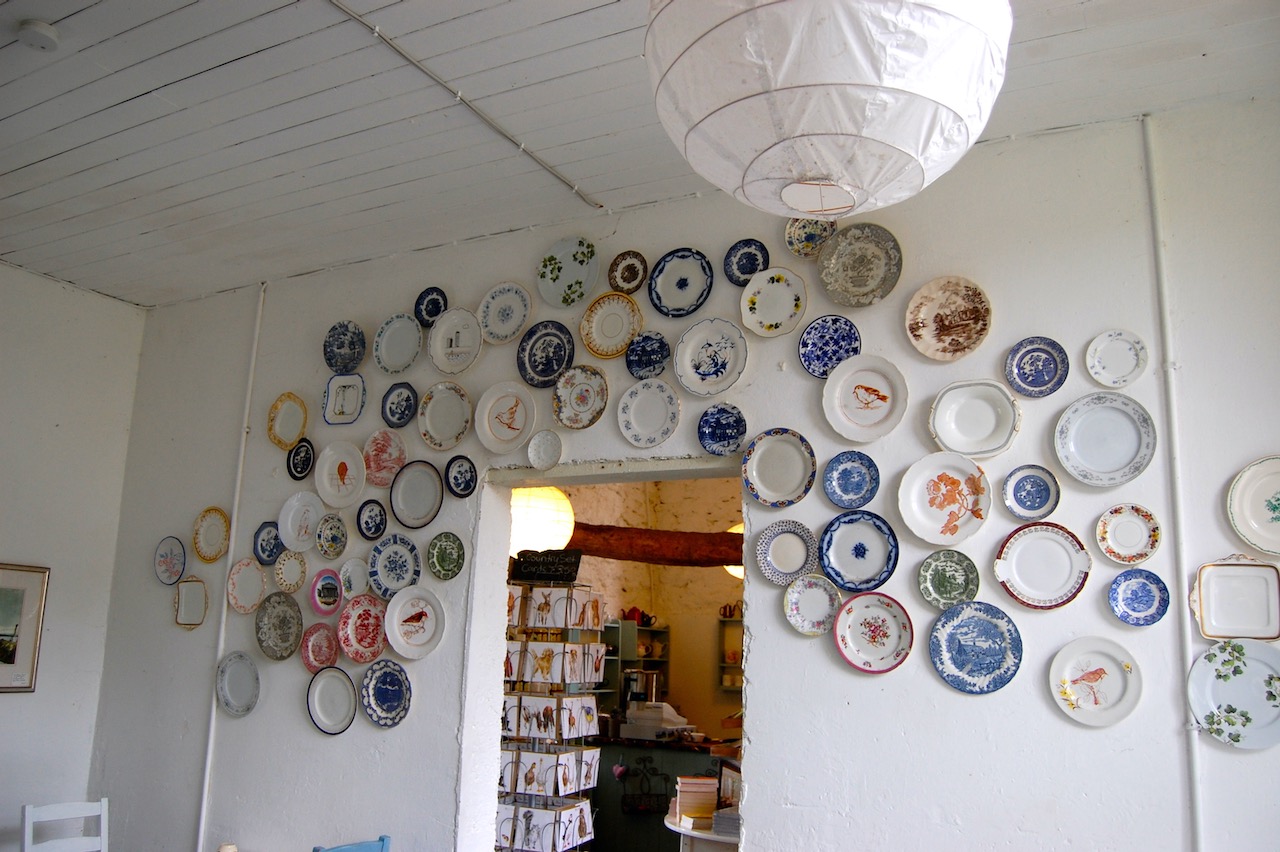
I loved the arrangement of plates on the walls of the cafe! Photograph © Jennifer Winder-Baggot, www.irishhistorichouses.com

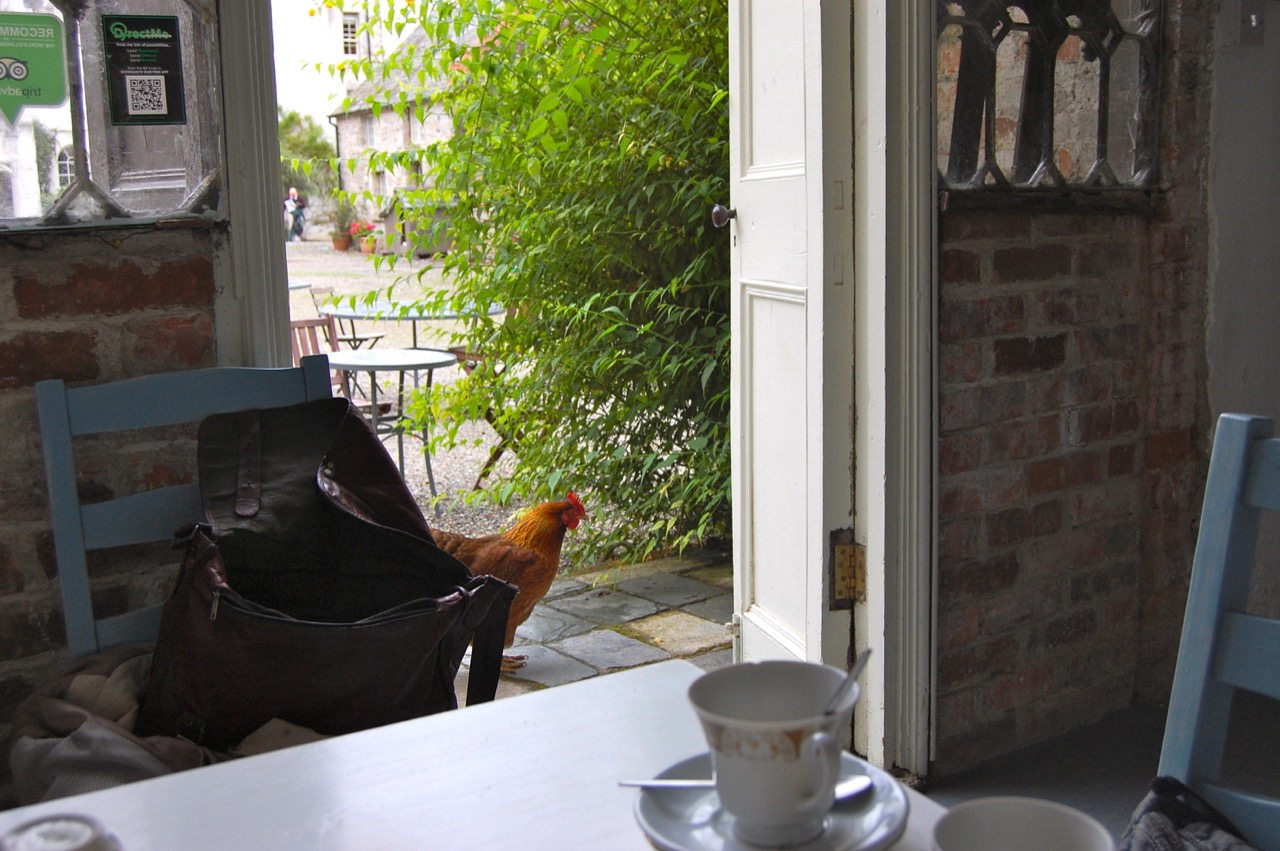
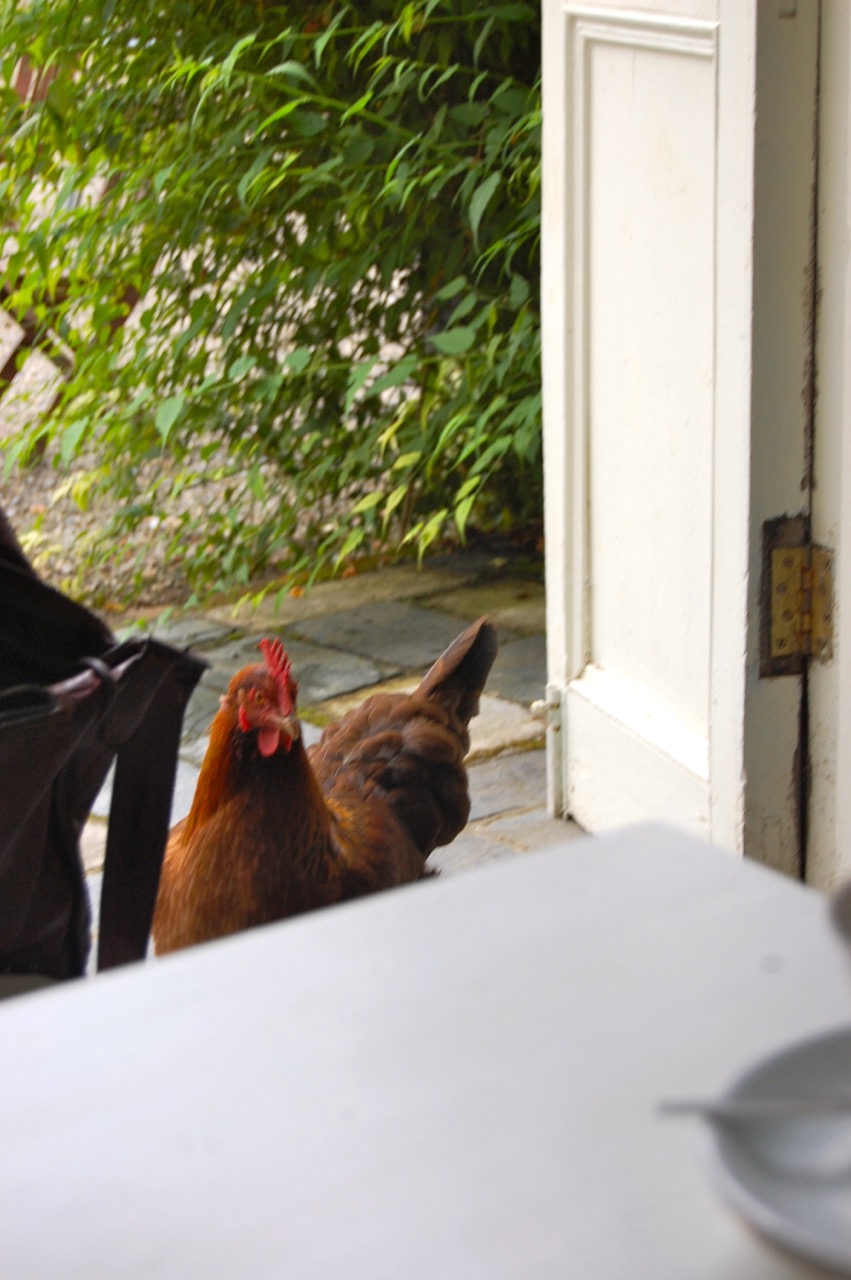
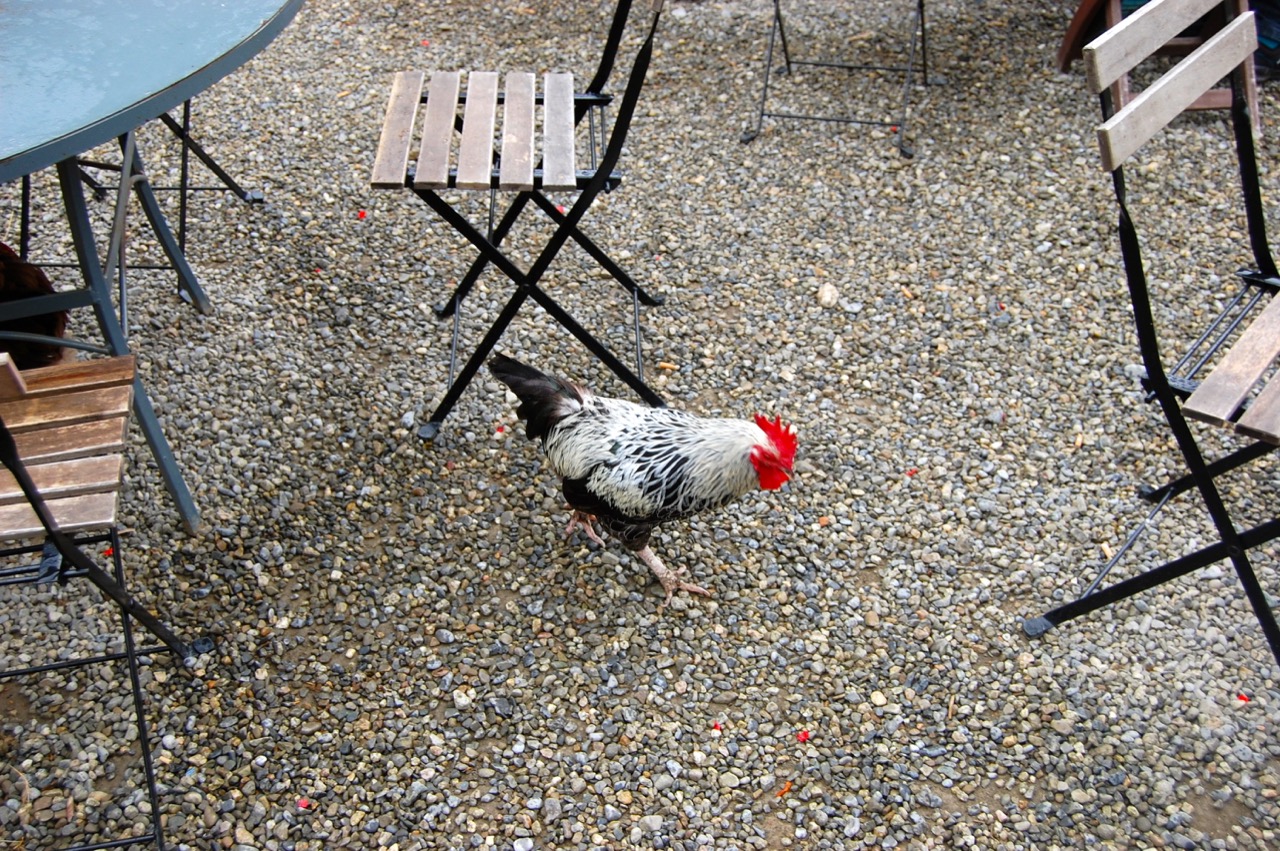
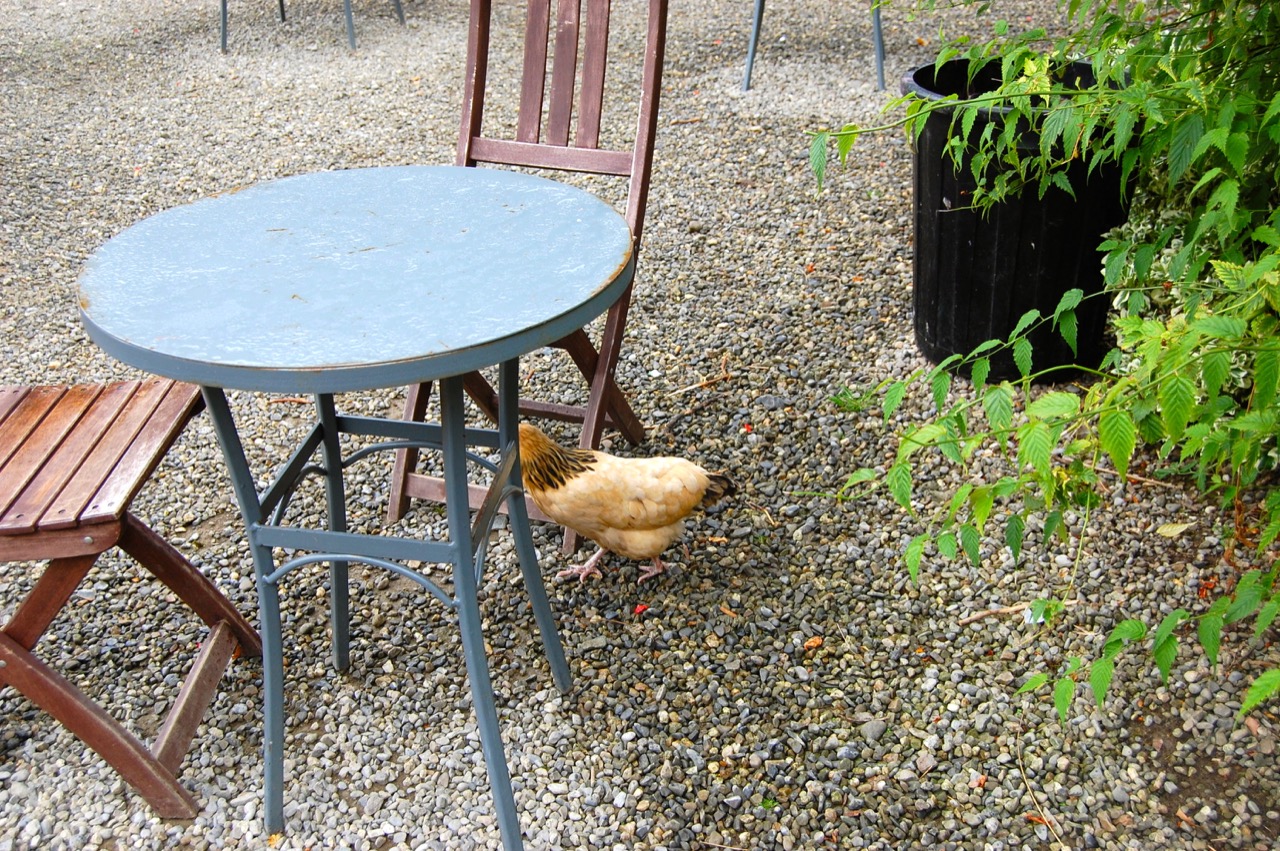
I was also thrilled by the hens who roamed the yard and even tried to enter the cafe:

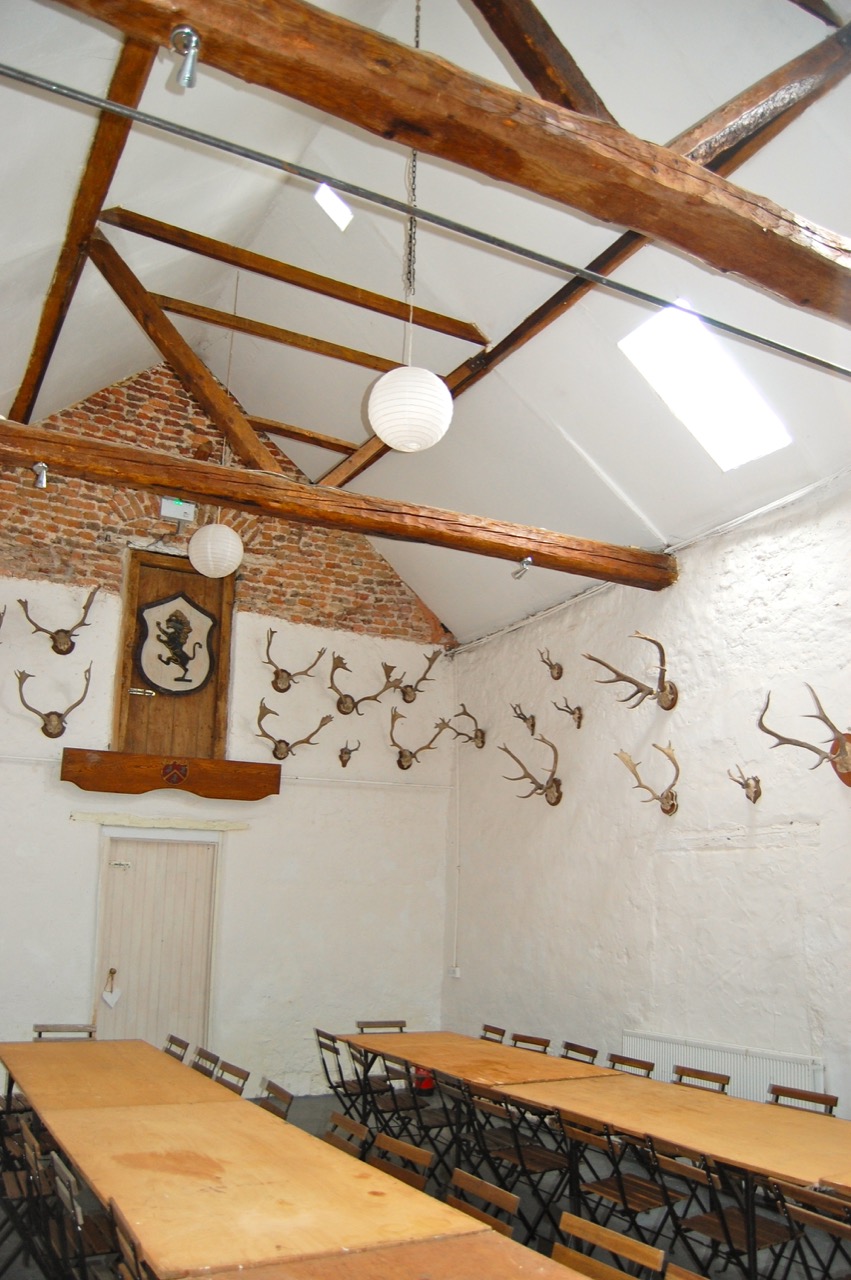
There is space next to the cafe that can be rented out for events:

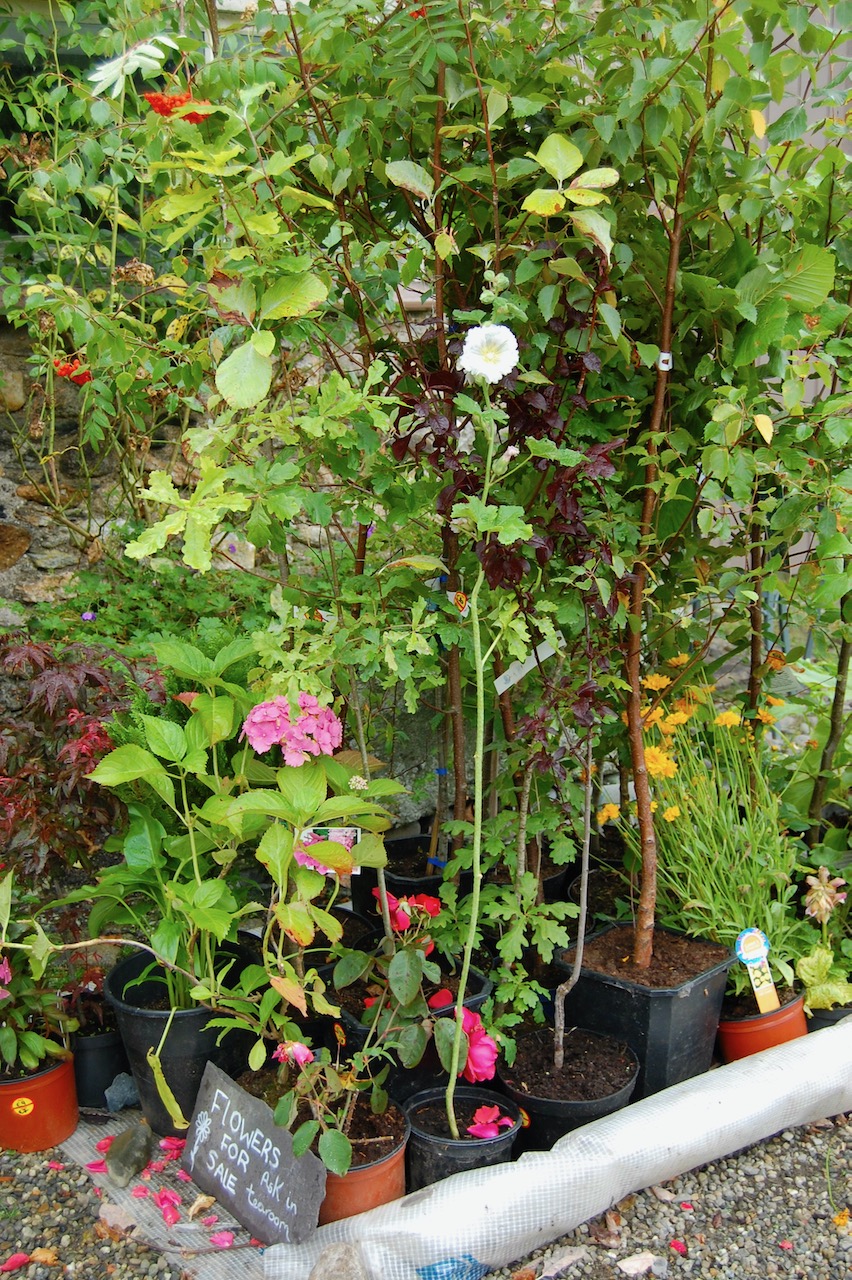
A few plants were for sale in the yard. A shop off the cafe sells local made craft, pottery, and books. The stables and farmyard buildings are kept in good condition and buzzed with with the business of upkeep of the house and gardens.

Ancilliary building in the stable yard. Photograph © Jennifer Winder-Baggot, www.irishhistorichouses.com
The stable yard has a very handy mounting block, to get on to your horse. Photograph © Jennifer Winder-Baggot, www.irishhistorichouses.com
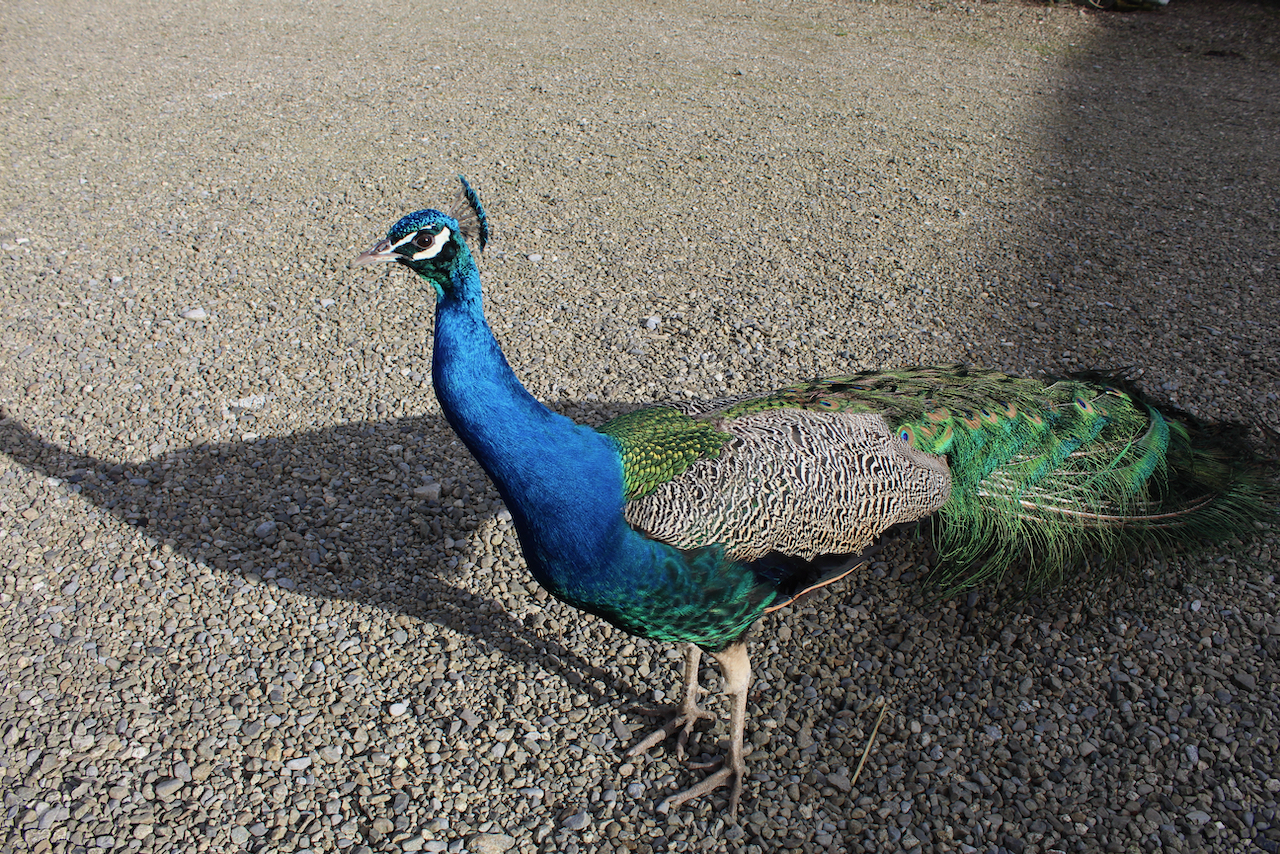
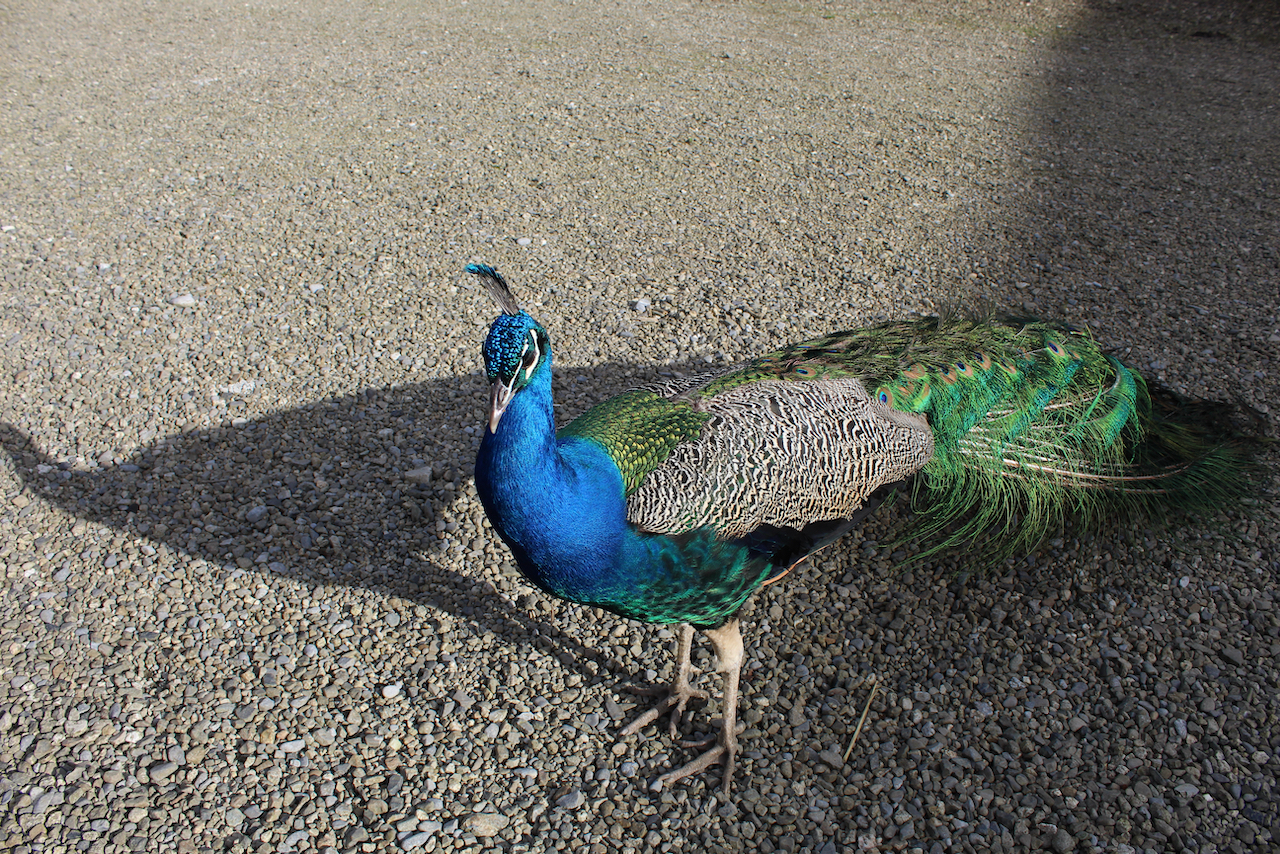
Last time we visited, I was amused by the hens wandering around the yard. This time, we were accompanied in our coffee and delicious coffee cake by an inquisitive peacock, and there were some more retiring peahens. Photograph © Jennifer Winder-Baggot, www.irishhistorichouses.com
The inquisitive – and acquisitive! – peacock. Photograph © Jennifer Winder-Baggot, www.irishhistorichouses.com
I’ll never tire of admiring the vibrant “art nouveau” colours of the peacock. Photograph © Jennifer Winder-Baggot, www.irishhistorichouses.com
The stables house art studios, I believe. Photograph © Jennifer Winder-Baggot, www.irishhistorichouses.com
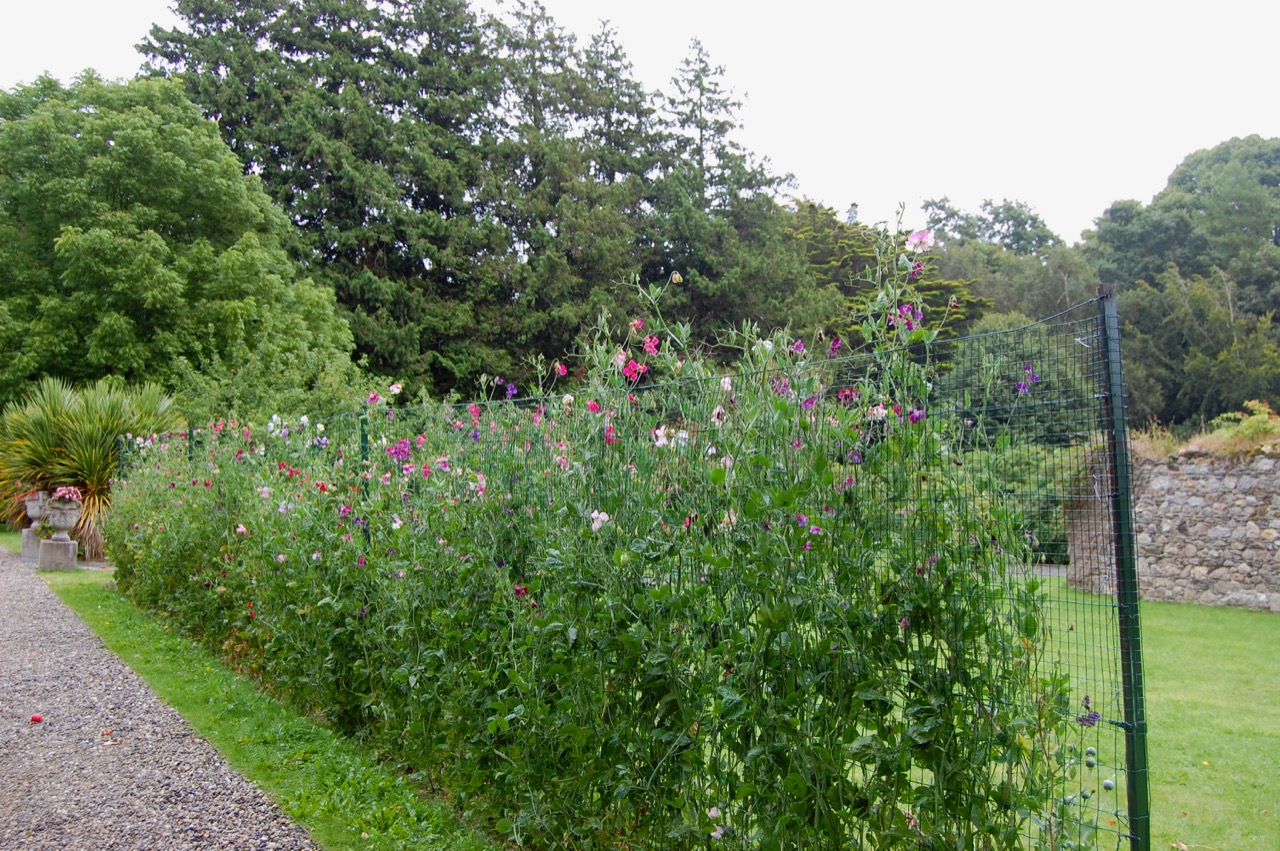
what is this tall flower? Photograph © Jennifer Winder-Baggot, www.irishhistorichouses.com

[1] https://www.huntingtoncastle.com/

[2] The website http://www.ihh.ie/index.cfm/houses/house/name/Huntington%20Castle says it was built on the site of a 14th century stronghold and abbey, whereas the Irish Aesthete says it was built on the site of a 13th century Franciscan monastery.

[3] Kavanagh, Art and Rory Murphy, The Wexford Gentry. Published by Irish Family Names, Bunclody, Co Wexford, Ireland, 1994. 

[4]  Bence-Jones, Mark. A Guide to Irish Country Houses (originally published as Burke’s Guide to Country Houses volume 1 Ireland by Burke’s Peerage Ltd. 1978); Revised edition 1988 Constable and Company Ltd, London.

[5] p. 171, Ohlmeyer, Jane. Making Ireland English. The Irish Aristocracy in the Seventeenth Century. Yale University Press, New Haven and London, 2012. See also pages 43, 273, 444 and 451.

[6] Dunlop, Robert. ‘Edmonde, Laurence.’ Oxford Dictionary of National Biography, online edition volume 18, accessed February 2020. https://en.wikisource.org/wiki/Esmonde,_Laurence_(DNB00)

[7] http://www.turtlebunbury.com/history/history_houses/hist_hse_huntington.html

[8] https://theirishaesthete.com/2016/11/14/light-and-shade/

[9] https://www.irelandscontentpool.com/en

[10] https://theirishaesthete.com/2017/01/23/huntington/

[11] Robertson, Nora. The Crowned Harp. Memories of the Last Years of the Crown in Ireland. published by Allen Figgis & Co. Ltd., Dublin, 1960.

[12] http://www.turtlebunbury.com/history/history_houses/hist_hse_huntington.html

http://www.fellowshipofisis.com/

Irish Historic Homes

Text © Jennifer Winder-Baggot, www.irishhistorichouses.com

Donation

Help me to fund my creation and update of this website. It is created purely out of love for the subject and I receive no payment so any donation is appreciated!

€15.00