Carlow, Dublin, Kildare, Kilkenny, Laois, Longford, Louth, Meath, Offaly, Westmeath, Wexford and Wicklow are the counties that make up the Leinster region.
I have noticed that an inordinate amount of OPW sites are closed ever since Covid restrictions, if not even before that (as in Emo, which seems to be perpetually closed) [these sites are marked in orange here]. I must write to our Minister for Culture and Heritage to complain.
Laois:
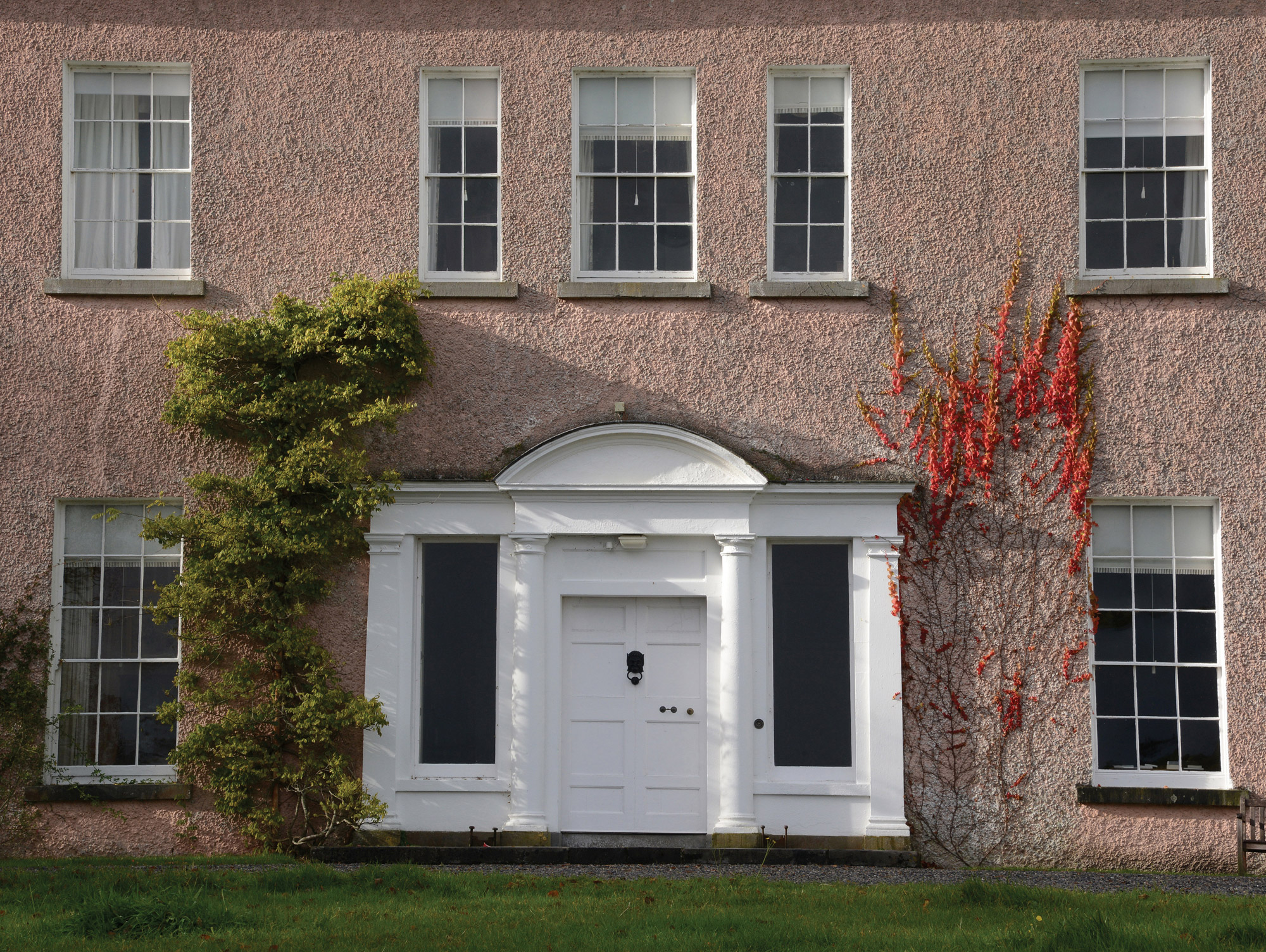
1. Emo Court, County Laois – house closed at present
2. Heywood Gardens, County Laois
Longford:
3. Corlea Trackway Visitor Centre, County Longford
Louth:
4. Carlingford Castle, County Louth
5. Old Mellifont Abbey, County Louth – closed at present
Meath:
6. Battle of the Boyne site, Oldbridge House, County Meath
7. Hill of Tara, County Meath
8. Loughcrew Cairns, County Meath – guides on site from June 16th 2022
9. Newgrange, County Meath
10. Trim Castle, County Meath
Offaly:
11. Clonmacnoise, County Offaly
donation
Help me to pay the entrance fee to one of the houses on this website. This site is created purely out of love for the subject and I receive no payment so any donation is appreciated!
“Emo Court is a quintessential neo-classical mansion, set in the midst of the ancient Slieve Bloom Mountains. The famous architect James Gandon, fresh from his work on the Custom House and the Four Courts in Dublin, set to work on Emo Court in 1790. However, the building that stands now was not completed until some 70 years later [with work by Lewis Vulliamy, a fashionable London architect, who had worked on the Dorchester Hotel in London and Arthur & John Williamson, from Dublin, and later, William Caldbeck].
“The estate was home to the earls of Portarlington until the War of Independence forced them to abandon Ireland for good. The Jesuits moved in some years later [1920] and, as the Novitiate of the Irish Province, the mansion played host to some 500 of the order’s trainees.
“Major Cholmeley-Harrison took over Emo Court in the 1960s and fully restored it [to designs by Sir Albert Richardson]. He opened the beautiful gardens and parkland to the public before finally presenting the entire estate to the people of Ireland in 1994.
“You can now enjoy a tour of the house before relaxing in its charming tearoom. The gardens are a model of neo-classical landscape design, with formal lawns, a lake and woodland walks just waiting to be explored.” [2]
[1] p. 336. Tierney, Andrew. The Buildings of Ireland: Central Leinster: Kildare, Laois and Offaly. Yale University Press, New Haven and London, 2019.
“The entrancing eighteenth-century landscape at Heywood Gardens, near Ballinakill, County Laois, consists of gardens, lakes, woodland and some exciting architectural features. The park is set into a sweeping hillside. The vista to the south-east takes in seven counties.
“The architect Sir Edwin Lutyens designed the formal gardens [around 1906], which are the centrepiece of the property. It is likely that renowned designer Gertrude Jekyll landscaped them.
“The gardens are composed of elements linked by a terrace that originally ran along the front of the house. (Sadly, the house is no more.) One of the site’s most unusual features is a sunken garden containing an elongated pool, at whose centre stands a grand fountain.
“The Heywood experience starts beside the Gate Lodge. Information panels and signage will guide you around the magical Lutyens gardens and the surrounding romantic landscape.“
Longford:
3.Corlea Trackway Visitor Centre, Kenagh, County Longford:
Corlea Trackway Visitor Centre, Co. Longford, photograph by Chris Hill 2018 for Tourism Ireland, Ireland’s Content Pool. [see 6]Corlea Trackway Visitor Centre, Co. Longford, photograph by Chris Hill 2018 for Tourism Ireland, Ireland’s Content Pool. [see 6]
“Hidden away in the boglands of Longford, not far from Kenagh village, is an inspiring relic of prehistory: a togher – an Iron Age road – built in 148 BC. Known locally as the Danes’ Road, it is the largest of its kind to have been uncovered in Europe.
“Historians agree that it was part of a routeway of great importance. It may have been a section of a ceremonial highway connecting the Hill of Uisneach, the ritual centre of Ireland, and the royal site of Rathcroghan.
“The trackway was built from heavy planks of oak, which sank into the peat after a short time. This made it unusable, of course, but also ensured it remained perfectly preserved in the bog for the next two millennia.
“Inside the interpretive centre, an 18-metre stretch of the ancient wooden structure is on permanent display in a hall specially designed to preserve it. Don’t miss this amazing remnant of our ancient past.“
Carlingford Castle, also known as King John’s Castle (not to be confused with the one in Limerick), County Louth, photograph by Brenda Harris 2021 for Fáilte Ireland, Ireland’s Content Pool. [see 6]
“Carlingford lies in the shade of Slieve Foye, a mountain that in legend takes its form from the body of the sleeping giant Finn MacCumhaill. The castle dominates the town and overlooks the lough harbour. It was a vital point of defence for the area for centuries.
“Carlingford Castle was built around 1190, most likely by the Norman baron Hugh de Lacy. By this time Hugh’s family had grown powerful enough to make King John of England uneasy. John forced them into rebellion and seized their property in 1210. He reputedly stayed in his new castle himself. It is still known as King John’s Castle.“
Carlingford Castle, County Louth
“The Jacobites fired on the castle in 1689; William of Orange is said to have accommodated his wounded soldiers there following the Battle of the Boyne.
“Carlingford Lough Heritage Trust provides excellent guided tours of this historic Castle from March to October.“
By 1778 the building was ruinous. The task of repair and preservation was begun by the Henry Paget the 1st Marquess of Anglesey in the later nineteenth century (he served as Lord Lieutenant of Ireland from 1848, and as Master General of the Ordinance), and has been continued by the OPW. [13]
Carlingford Castle Co Louth National Library of Ireland by Robert French, Lawrence Photograph Collection.Henry Paget, 1st Marquess of Anglesey (1768-1854), Viceroy in 1828 and 1830.
5. Old Mellifont Abbey, Tullyallen, Drogheda, County Louth:
Old Mellifont Abbey, photograph by Eilish Tierney, 2020 for Fáilte Ireland, Ireland’s Content Pool. [see 6]Mellifont Abbey from National Library of Ireland Lawrence photograph collection, flickr constant commons.
General enquiries: 041 982 6459, mellifontabbey@opw.ie. Mellifont means “fountain of honey.”
“Mellifont Abbey was the first Cistercian monastery in Ireland. St Malachy of Armagh created it in 1142 with the help of a small number of monks sent by St Bernard from Clairvaux [and with the aid of Donough O’Carroll, King of Oriel – see 14]. The monks did not take well to Ireland and soon returned to France, but the abbey was completed anyway and duly consecrated with great pomp.
“It has several extraordinary architectural features, the foremost of which is the two-storey octagonal lavabo [the monk’s washroom].
“The monks at Mellifont hosted a critical synod in 1152. The abbey was central to the history of later centuries, too, even though it was in private hands by then. The Treaty of Mellifont, which ended the Nine Years War, was signed here in 1603, and William of Orange used the abbey as his headquarters during the momentous Battle of the Boyne.“
Mellifont Abbey ruins, the octagonal lavabo, built in around 1200, photograph by Brian Harte, 2015 for Tourism Ireland, Ireland’s Content Pool. [see 6]
The ruins contain the medieval gatehouse, parish church, chapter house and lavabo. The octagonal lavabo was designed as a freestanding structure of two storeys, with an octagonal cistern to supply the water located at the upper level over the wash room. Wash basins were arranged around a central pier, now gone, which supported the weight of the water above. [14] The entire monastery was surrounded by a defensive wall. After the dissolution of the monasteries, Mellifont was acquired in 1540 by William Brabazon (died 1552), Vice Treasurer of Ireland, and passed later to Edward Moore (Brabazon’s wife Elizabeth Clifford remarried three times after Brabazon’s death, and one of her husbands was Edward Moore), who established a fortified house within the ruins around 1560. His descendents (Viscounts of Drogheda) lived there until 1727 (until the time of Edward Moore, 5th Earl of Drogheda), after which the house, like the abbey, fell into disrepair.
Garret Moore, 1st Viscount of Drogheda, hosted the negotiations which led to the Treaty of Mellifont in 1603.
Mellifont Abbey ruins, photograph by Chris Hill, 2014 for Tourism Ireland, Ireland’s Content Pool. [see 6]
“The Loughcrew cairns, also known as the Hills of the Witch, are a group of Neolithic passage tombs near Oldcastle in County Meath. Spread over four undulating peaks, the tombs are of great antiquity, dating to 3000 BC.
“Cairn T is one of the largest tombs in the complex. Inside it lies a cruciform chamber, a corbelled roof and some of the most beautiful examples of Neolithic art in Ireland. The cairn is aligned to sunrise at the spring and autumn equinoxes and at these times people gather there to greet the first rays of the sun.“
8. Brú na Bóinne Visitor Centre, Newgrange and Knowth, County Meath.
Newgrange, seen from the top of another nearby tumulus, Dowth. Newgrange is a UNESCO World Heritage Site, and dates to some 5,000 years ago…Photograph by Dave Walsh, 2004 for Tourism Ireland. [see 6]
General Information: 041 988 0300, brunaboinne@opw.ie
“The World Heritage Site of Brú na Bóinne is Ireland’s richest archaeological landscape and is situated within a bend in the River Boyne. Brú na Bóinne is famous for the spectacular prehistoric passage tombs of Knowth, Newgrange and Dowth which were built circa 3200BC. These ceremonial structures are among the most important Neolithic sites in the world and contain the largest collection of megalithic art in Western Europe.“
Hill of Tara, County Meath, photograph by macmillan media 2015 for Tourism Ireland, Ireland’s Content Pool. [see 6]Diorama of Tara in the National Museum of Ireland, Kildare Street, Dublin, 2022.Key: 2. Rath/Fort of the Kings, a hilltop enclosure; 3: Royal Seat, a barrow; 4. Cormac’s House, a ringfort; 5. Stone of Destiny, Liah Fail, a standing stone; 6. Mound of the Hostages, a passage tomb; 7. Rath of the Synods, an enclosure; 8. Banqueting Hall, a linear earthwork.
General information: 046 902 5903, hilloftara@opw.ie
From the OPW website:
“The Hill of Tara has been important since the late Stone Age, when a passage tomb was built there. However, the site became truly significant in the Iron Age (600 BC to 400 AD) and into the Early Christian Period when it rose to supreme prominence – as the seat of the high kings of Ireland. All old Irish roads lead to this critical site.
“St Patrick himself went there in the fifth century. As Christianity achieved dominance over the following centuries, Tara’s importance became symbolic. Its halls and palaces have now disappeared and only earthworks remain.
“There are still remarkable sights to be seen, however. Just one example is the Lia Fáil – the great coronation stone and one of the four legendary treasures of the Tuatha Dé Danann – which stands proudly on the monument known as An Forradh.
“Guided tours of the site will help you understand the regal history of this exceptional place and imagine its former splendour.“
Trim Castle and the River Boyne, photograph by Brian Morrison, 2015 for Tourism Ireland, Ireland’s Content Pool. [see 6]Trim Castle and the River Boyne, photograph by macmillan media, 2015 for Tourism Ireland, Ireland’s Content Pool. [see 6]
General information: 046 943 8619, trimcastle@opw.ie
“Few places in Ireland contain more medieval buildings than the heritage town of Trim. Trim Castle is foremost among those buildings.
“In fact, the castle is the largest Anglo-Norman fortification in Ireland. Hugh de Lacy and his successors took 30 years to build it.
“The central fortification is a monumental three-storey keep. This massive 20-sided tower, which is cruciform in shape, was all but impregnable in its day. It was protected by a ditch, curtain wall and water-filled moat.
“Modern walkways now allow you to look down over the interior of the keep – a chance to appreciate the sheer size and thickness of the mighty castle walls.
“The castle is often called King John’s Castle although when he visited the town he preferred to stay in his tent on the other side of the river. Richard II visited Trim in 1399 and left Prince Hal later Henry V as a prisoner in the castle.” I never knew we had such a link to King Henry V and Shakespeare’s play, Henry IV!
Trim Castle and the River Boyne, photograph by Brian Morrison, 2006 for Tourism Ireland, Ireland’s Content Pool. [see 6]
Patrick Comerford gives an excellent history of Trim Castle in his blog. [18] The castle stands within a three acre bailey, surrounded by a defensive perimeter wall. The curtain wall of the castle is fortified by a series of semicircular open-back towers. There were two entrances to Trim Castle, one, beside the car park, is flanked by a gatehouse, and the second is a barbican gate and tower. [19]
We visited in May 2022, after visiting St. Mary’s Abbey (also called Talbot’s Castle) – more on that soon. We were late entering so the entry to inside the castle was closed, unfortunately – we shall have to visit again!
The information board tells us that in 1182 when Hugh de Lacy was granted the Liberty of Meath, he occupied this site bounded by the River Boyne to the north and marshy ground to the south. By 1175 his original wooden fortification had been replaced by this unusual keep, later surrounded by curtain walls with a simple gate to the north and a bridge across the moat. The south curtain wall with its D shaped buildings was completed by 1200, when new siege tactics forced a change in the design of castles. Later, the forebuildings and plinth were built, protecting the entrance and base of the keep.
Trim Castle, May 2022.
Sometime before 1180, Hugh de Lacy replaced the timber palisade fence enclosing the keep with a stone enclosure. The fore-court enclosed stables and stores and protected the stairway and door to the keep. The new entrance was on the north side of the enclosure and had a drawbridge over the deepened ditch.
With the development of the curtain walls, the inner enclosure became obsolete.
The ditch was filled and three defensive towers – two survive – were built on its site. The drawbridge was replaced by a stone causeway leading to an arched gate and entrance stairway. A reception hall was built to accommodate visitors before they entered the Keep.
As the town and approach roads developed, the barbican gate provided a new entrance from the south. After the siege of 1224, the north curtain walls, towers and Trim gate required major repairs. During a period of prosperity in the second half of the 13th century, the great hall and solar were constructed on the site of the north curtain wall and tower. Trim and its abbeys and the Cathedral and borough of Newtown developed in the security of the castle.
The Boyne was used for transport of goods to the river gate. Stores, workshops and kitchens were built in the castle yard.
Though the castle buildings were often adapted to suit changing military and domestic needs, much of the fabric of Trim Castle has remained unchanged since the height of Anglo-Norman power in Ireland.
The information board tells us that courts, parliaments, feasts and all issues relating to the management of the Lordship were discussed at meetings in the Great Hall. After 1250, the great public rooms in the Keep were considered unsuitable for such gatherings, so this hall was built, lit by large windows with a view of the harbour and the Abbey of St. Mary’s across the river. The hall had a high seat at the west end, with kitchens and undercroft cellars to the east. Ornate oak columns rising from stone bases supported the great span of the roof.
The hall was heated from a central hearth and vented by a lantern-like louvre in the roof.
Early in the 13th century the weirs were completed on the Boyne, allowing the moat to be flooded, and the Leper River was channelled along the south curtain wall. A new gate was constructed guarding the southern approaches to the castle. This gatehouse, of a rare design, was built as a single cylindrical tower with a “barbican,” defences of a forward tower adn bridge. An elaborate system of lifting bridges, gates and overhead traps gave the garrison great control over those entering the castle. The arrangement of plunging loops demonstrates the builders’ knowledge of the military requirements of defending archers.
By the middle of the 13th century, the design of castle gates was further developed and a twin tower gatehouse with a passage between the two towers became standard.
“St Ciarán founded his monastery on the banks of the River Shannon in the 6th Century. The monastery flourished and became a great seat of learning, a University of its time with students from all over Europe.
“The ruins include a Cathedral, two round Towers, three high crosses, nine Churches and over 700 Early Christian graveslabs.
“The original high crosses, including the magnificent 10th century Cross of the Scriptures area on display in a purpose built visitor centre adjacent the monastic enclosure.
“An audiovisual presentation will give you an insight into the history of this hallowed space.“
[3] p. 119. Bence-Jones, Mark. A Guide to Irish Country Houses (originally published as Burke’s Guide to Country Houses volume 1 Ireland by Burke’s Peerage Ltd. 1978); Revised edition 1988, Constable and Company Ltd, London.
Canonbrook, Lucan: “Detached multiple-bay two-storey over basement house, c.1800, on an L-plan. A handsome, substantial rural Georgian house which, though altered, retains its imposing form and feel, and is situated in mature grounds. Historically important as the former home of James Gandon.”Gandon is also said to have designed Primrose Hill House in Lucan, which is a section 482 property.
[9] p. 96. Sadleir, Thomas U. and Page L. Dickinson. Georgian Mansions in Ireland with some account of the evolution af Georgian Architecture and Decoration. Dublin University Press, 1915.
[10] p. 356. Tierney, Andrew. The Buildings of Ireland: Central Leinster: Kildare, Laois and Offaly. Yale University Press, New Haven and London, 2019.
[11] p. 61. O’Reilly, Sean. Irish Houses and Gardens. From the Archives of Country Life. Aurum Press Ltd, London, 1998.
[13] p. 175, Casey, Christine and Alistair Rowan. The Buildings of Ireland: North Leinster: the counties of Longford, Louth, Meath and Westmeath. Penguin Books, London, 1993.
[14] p. 387, Casey, Christine and Alistair Rowan. The Buildings of Ireland: North Leinster: the counties of Longford, Louth, Meath and Westmeath. Penguin Books, London, 1993.
[19] p. 511, Casey, Christine and Alistair Rowan. The Buildings of Ireland: North Leinster: the counties of Longford, Louth, Meath and Westmeath. Penguin Books, London, 1993.
We treated ourselves to a stay in Wilton Castle in November in 2021. Having been gutted in a fire in 1923, it stood as a dramatic ruin until the Windsors purchased and began to refurbish it into luxurious accommodation. The current restoration was completed in 2014. So far just half of it has been rebuilt, the rest has been stabilised but remains empty and without a roof. The work which has been done by the Windsors is incredible – it seems to have been rebuilt to a very high standard. I’m not sure if they intend to continue to rebuild the rest of the castle.
Wilton Castle was designed for Harry Alcock (1792-1840) by Daniel Robertson (d. 1849) in 1836-38, subsuming parts of an earlier castle and house.
The area was previously known as Clogh na Kayer (The Castle of the Sheep). Herbert Hore writes in History of the Town and County of Wexford that an ancient Castle of Cloghnakayer was built in the fourteenth century. The De Dene family owned the land until 1354, when an only daughter married Philip Furlong whose descendant, Sir Fulke Furlong, knight, of Horetown, built a castle around 1410.
The land then passed to the Butlers of Mountgarret. Edward Butler, Baron of Kayer (eldest son of Pierce, second son of Richard 1st Viscount Mountgarret) rebuilt and restored the ancient Castle, and added a mansion house to it in 1599. [1]
Edward Butler’s son, Pierce, inherited. Pierce Butler was a Catholic and a supporter of the monarchy and his land was confiscated by the Cromwellian parliament in 1655 and granted to a Cromwellian soldier, Captain Robert Thornhill. Captain Robert’s son sold the estate in 1695 to William Alcock (d. 1705) of Downpatrick, County Down. [2]
Miss Jane Alcock (1674-1764), daughter of William Alcock (d. 1705) of Wilton Castle in County Wexford, she married Pat Lattin (1668-1732), she died aged 90, courtesy Fonsie Mealy July 2018.
Herbert Hore tells us that William Alcock rebuilt the castle, and called it Wilton. It was this castle that was subsumed in Daniel Robertson’s design for Harry Alcock. Herbert Hore writes that “the late Colonel Alcock [Harry, (1821-93)] told me that some of the walls of the ancient Castle of the Butlers are incorporated in the present building.”
Robert O’Byrne writes: “William Alcock built a new residence for himself on the site of an old castle, and this was occupied by his descendants for several generations. A handsome classical doorcase of granite with segmental pediment above fluted pilasters survives on the façade of the former steward’s house at Wilton to indicate the appearance of the original Alcock house, dismissed by Martin Doyle in his 1868 book on the county as being ‘in the dull style of William and Mary.’ ” [3]
A daughter of William and his wife Jane nee Bamber of Bamber Hall of Lancaster, England, married Patrick Lattin and was the mother of the famous Jack Lattin of Morristown Lattin, County Kildare, who danced himself to death!
The estate passed to William Alcock’s son, another William Alcock (1681-1739), then to his son, Col. William Alcock (d. 1779) (Colonel in the Waterford Militia). He married Mary Loftus of Loftus Hall, County Wexford, daughter of Nicholas Loftus, 1st Viscount Loftus of Ely and his wife Anne Ponsonby, daughter of William Ponsonby, 1st Viscount Duncannon.
Loftus Hall, the home of Mary Loftus, wife of William Alcock (d. 1779). Photograph from the National Inventory of Architectural Heritage.
Wilton then passed to his son, Henry Alcock (d. 1811). Henry Alcock married Elizabeth Katherine Ussher, daughter of Beverly Ussher of Kilmeadon, County Waterford, who was a long term MP for County Waterford. Henry Alcock also served as an MP for Waterford. Elizabeth Katherine’s sister Mary also married an MP, John Congreve of Mount Congreve in Waterford (which has beautiful gardens open to the public, although temporarily closed – I wonder if the house is to be opened also?).
The estate then passed to his son, William Congreve Alcock (1771-1812). William competed in the general election of 1807 against John Colclough of Tintern Abbey (son of Vesey Colclough, MP for County Wexford). Unfortunately they decided to settle a dispute by a duel, and William shot and killed John. John had been engaged to a sister of William’s. William was tried for murder but acquitted. He never got over the incident however and it affected his mental health and he died five years later. [4] Thus Wilton Castle passed to his brother, Harry Alcock (1792-1840).
In 1818 Harry Alcock married Margaret Elinor Savage, daughter of James Savage of Kilgibbon, County Wexford (this house is now a ruin). He then engaged Daniel Robertson in 1837 to renovate Wilton House, which became Wilton Castle. The newer house was built in front of the older Wilton House.
The details of Daniel Robertson’s training are not known. He struggled with bankruptcy for a large part of his life and moved from working in Oxford in England to Ireland, at the urging of his father-in-law. The Dictionary of Irish Architects tells us:
“From the early 1830s he did no further work in Britain but received a series of commissions in Ireland, mainly for country house work in the south eastern counties. Most of these houses or additions were in the Tudor style, which, he asserted in a letter to a client, Henry Faulkner, of Castletown, Co. Carlow, was ‘still so new and so little understood in Ireland’. For some of them he used Martin Day as his executant architect. In spite of his success in attracting commissions, when he was working at Powerscourt in the early 1840s he was, in the words of Lord Powerscourt, ‘always in debt and…used to hide in the domes of the roof of the house’ to escape the Sheriff’s officers who pursued him. By then he was crippled with gout and in an advanced state of alcoholism; at Powerscourt he ‘used to be wheeled out on the terrace in a wheelbarrow with a bottle of sherry, and as long as that lasted he was able to design and direct the workmen, but when the sherry was finished he collapsed and was incapable of working till the drunken fit had evaporated.’ In at least two instances – at Powerscourt and at Lisnavagh – he lived on the premises while work was in progress, and it seems that from the 1830s until the year of his death his wife and family never settled for any time in Ireland… Robertson was overseeing the completion of Lisnavagh, Co. Carlow, where he had been living intermittently since the start of building in 1846, when he fell seriously ill in the spring of 1849” and died in September of that year. [5]
Ballydarton House, County Carlow, also designed by Daniel Robertson, in 1830.Photograph from the National Inventory of Architectural Heritage.Dunleckney Manor, County Carlow, by Daniel Robertson, 1835.Photograph from the National Inventory of Architectural Heritage.
Daniel Robertson also designed the nearby Johnstown Castle in County Wexford. We visited Johnstown Castle also but unfortunately it was closed the only day we were in Wexford, as they were taking down Hallowe’en decorations from a special event! Such a pity we weren’t able to see the inside of the castle yet, but we shall certainly visit again.
Johnstown Castle is described in the National Inventory of Architectural Heritage: “the construction in a blue-green rubble stone offset by glimmering Mount Leinster granite dressings not only demonstrating good quality workmanship, but also producing a sober two-tone palette.” [6] Wilton Castle also has Mount Leinster granite dressings. It was covered however in white lime plaster – which has been reinstated on the renovated part of the castle.
Harry’s daughter Henrietta married William Russell Farmar who also had a house built by Daniel Robertson: Bloomfield in County Wexford.
Bloomfield, a country house erected for William Russell Farmar JP (1802-71) to a design by Daniel Robertson. Photograph from National Inventory of Architectural Heritage.
Another daughter, Sarah, married Thomas John Fetherston, 5th Baronet, of Ardagh, County Longford (the house is now in use as training college, St. Brigid’s Training College, by the Sisters of Mercy).
Harry’s son, another Harry Alcock (1821-93), inherited Wilton Castle and the estate. He served as High Sheriff of Wexford in 1846 and was Lt-Col. of the Wexford Militia. He continued the building work, which finished in 1844, adding the large square four storey tower with its elaborate balconies. He also improved the surrounding estate. He increased the plantation of trees and implemented a programme of road construction, fence building and draining of land which was carried out as Famine relief work. [8]
Wilton Castle, when designed by Daniel Robertson, consisted of a three-storey main block and two-storey wing, all dominated by a tall square tower at one end and a tall polygonal tower and turret at the other, and it is heavily machicolated and battlemented. It is the two storey wing which has been renovated for accommodation.
Harry Alcock died unmarried in 1893 and the estate (some 7,000 acres in the 1870s) passed to his nephew, Philip Clayton Alcock (1861-1949), son of Harry’s brother Philip Savage Alcock (1828-86) of Park House on the Wilton estate and his wife Katherine Annette Browne-Clayton of Carrickbyrne Lodge in County Wexford. Philip Clayton Alcock was a Captain in the Gloucestershire Regiment, and in 1900 High Sheriff of Wexford, but by 1922 he felt it was too dangerous to remain at Wilton and moved to England. In 1923 his fears about his Irish property were justified when Wilton Castle was burned by arsonists. [9]
A contemporary account in the Irish Times, 7 March 1923 tells us about the burning: “Wilton Castle, the residence of Captain P.C. Alcock, about three miles from Enniscorthy, was burned by armed men on Monday night. Nothing remains of the beautiful building but smoke-begrimed, roofless walls, broken windows, and a heap of smouldering debris. The Castle was occupied by a caretaker – Mr. James Stynes – the owner, with his wife and family, having gone to England about a year ago. Shortly after 9 o’clock on Monday night the caretaker was at the Steward’s residence…when he was approached by armed men, who demanded the keys to the Castle. When he asked why they wanted the keys, one of the armed men said: “We have come to burn the place. We are sorry”. The raiders told the caretaker that he could remove his personal belongings from the part of the Castle that he occupied, but they would not allow him to remove the furniture. Fearing that the Castle might be burned, however, Captain Alcock had removed the most valuable portion of his furniture some weeks ago, but a good many rooms were left furnished. When the caretaker had removed his property he was ordered back to the Steward’s house. Soon the noise of breaking glass was heard. It appears that the armed men broke all the windows on the ground floor, and having sprinkled the floors with petrol, set them alight. They did not hurry over their work of destruction, and they did not leave the Castle until near 12 o’clock, when the building was enveloped in flames. About thirty men took part in the raid. After the raiders left, the caretaker and Steward, with what help they could procure, tried to extinguish the flames, but their effort was hopeless”. [10]
In the three storey section of the castle, there is a beautiful carved doorcase, and an oriel window over it with delicate stone tracery and crenellations on top of the windowframe. Mark Bence-Jones defines an oriel window as “a large projecting window in Gothic, Tudor, Gothic-Revival and Tudor-Revival architecture; sometimes rising through two or more storeys, sometimes in an upper storey only and carried on corbelling.” [12] There is a similar oriel window at Johnstown Castle, which is only one storey high.
I was most excited to discover that we could explore the ruined part of the castle as it has been stabilised securely. It was wonderful to explore the detail.
We kept discovering more. Pictures from the front of the castle do not do it justice. The land drops down behind the castle to the River Boro, to reveal beautiful pastoral views from the back windows of the castle.
One can walk down to the river and more of the detail of the castle is revealed from behind. We found a warren of tunnels to one side on a level below the castle.
The tunnels provided quick access for servants to different parts of the castle, stable yard and grounds. There were cellars for wine and storage areas for food. Cast iron grilles let natural light and air into the tunnels. [13]
After the fire, the Alcocks were unable to rebuild as the house had not been insured. The lands were redistributed by the Irish Lands Commission, and the castle and land was purchased by local farmer, Sean Windsor.
When we arrived we were welcomed and brought inside the renovated section of the castle. It opens into a nicely tiled hallway.
The accommodation consists of four suites, one of which has a large entertaining space. Two suites are upstairs and two downstairs, with the large one being downstairs. Our accommodation was upstairs.
Our accommodation was a suite, with sitting room, fully stocked kitchen, bathroom with walk-in shower, and bedroom. The sitting room and bedroom have beautiful wallpaper.
Our host showed us the larger suite downstairs that has room for a party. The double doors in the room open up to the view of the river below, onto a fine sweep of steps.
The accommodation is more pricey than we can usually afford but for a romantic getaway it is hard to beat! It’s very quiet. There seemed to be one other suite occupied when we were there, but we never saw or heard the inhabitants. The Windsors live in a house next door. We chose to have breakfast provided, which was brought to us on a tray in the morning. We used the kitchen facilities one evening to make our dinner, and the next night, ordered a delivery from nearby Enniscorthy, which was delivered to the castle!
donation
Help me to pay the entrance fee to one of the houses on this website. This site is created purely out of love for the subject and I receive no payment so any donation is appreciated!
[4] For more on this, see the chapter in The Wexford Gentry by Art Kavanagh and Rory Murphy. Published by Irish Family Names, Bunclody, Co Wexford, Ireland, 1994.
[12] Bence-Jones, Mark. A Guide to Irish Country Houses (originally published as Burke’s Guide to Country Houses volume 1 Ireland by Burke’s Peerage Ltd. 1978); Revised edition 1988, Constable and Company Ltd, London.
[13] p. 130, Hicks, David. Irish Country Houses: A Chronicle of Change. The Collins Press, Cork, 2012.
Here are more photographs from our visit to Johnstown Castle, also designed by Daniel Robertson.
I have noticed that an inordinate amount of OPW sites are closed ever since Covid restrictions, if not even before that (as in Emo, which seems to be perpetually closed) [these sites are marked in orange here]. I must write to our Minister for Culture and Heritage to complain.
I have written to Minister for Tourism Catherine Martin and received a response in June 2022:
“I wish to acknowledge receipt of your recent correspondence to Catherine Martin, TD. Minister for Tourism, Culture, Arts, Gaeltacht, Sport and Media in connection with OPW Sites.
OPW Sites would fall under the remit of Minister of State Patrick O’Donovan and the Department of Office of Public Works. Minister of State O’Donovan’s office can be reached at ministersoffice@opw.ie and should be able to assist you with your query.“
Well, I have another email to write! I’ll keep you posted…
Dublin:
1. Aras an Uachtarain, Phoenix Park, Dublin
2. Arbour Hill Cemetery, Dublin
3. Ashtown Castle, Phoenix Park, Dublin
4. The Casino at Marino, Dublin
5. Customs House, Dublin
6. Dublin Castle
7. Farmleigh House, Dublin
8. Garden of Remembrance, Dublin
9. Government Buildings Dublin
10. Grangegorman Military Cemetery, Dublin
11. Irish National War Memorial Gardens, Dublin
12. Iveagh Gardens, Dublin
13. Kilmainham Gaol, Dublin
14. National Botanic Gardens, Dublin
15. Phoenix Park, Dublin
16. Rathfarnham Castle, Dublin
17. Royal Hospital Kilmainham in Dublin – historic rooms closed
18. St. Audoen’s, Dublin
19. St. Enda’s Park and Pearse Museum, Dublin
20. St. Stephen’s Green, Dublin
donation
Help me to pay the entrance fee to one of the houses on this website. This site is created purely out of love for the subject and I receive no payment so any donation is appreciated!
“Áras an Uachtaráin started life as a modest brick house, built in 1751 for the Phoenix Park chief ranger. It was later an occasional residence for the lords lieutenant. During that period it evolved into a sizeable and elegant mansion.
“It has been claimed that Irish architect James Hoban used the garden front portico as the model for the façade of the White House.
“After independence, the governors general occupied the building. The first president of the Republic of Ireland, Douglas Hyde, took up residence here in 1938. It has been home to every president since then.” [1]
General enquiries: (01) 821 3021, superintendent.park@opw.ie
From the OPW website:
“The military cemetery at Arbour Hill is the last resting place of 14 of the executed leaders of the 1916 Rising. It is therefore a place of pilgrimage for students and aficionados of this tempestuous moment in Irish history.
“There is an adjoining church, the chapel for Arbour Hill Prison. At the rear of the church lies the old cemetery, containing fascinating memorials to British military personnel.
“The clear focus of Arbour Hill, however, is the legend of the rising. Among those buried here are Patrick Pearse, James Connolly and Major John MacBride. Their bodies were put into an unmarked pit and covered with quicklime, but their grave has now been saved from obscurity with an impressive memorial inscribed in English and Irish.
“Arbour Hill Cemetery is at the rear of the National Museum of Ireland, Collins Barracks, where you can currently find a large display of 1916-related material.“
3. Ashtown Castle, Phoenix Park, Dublin:
Ashtown Castle is in the Phoenix Park. The OPW are currently running one tour per day. From the OPW website:
“Ashtown Castle is a tower house that probably dates from the seventeenth century, but may be as early as the fifteenth.
“For years it was completely hidden within the walls of a Georgian mansion once occupied by the under-secretary for Ireland. When that house was demolished in the late 1980s, the castle was rediscovered. It has since been fully restored and now welcomes visitors.”
General enquiries (01) 833 1618, casinomarino@opw.ie
From the website:
“The Casino is a remarkable building, both in terms of structure and history. Sir William Chambers designed it as a pleasure-house for James Caulfeild, first earl of Charlemont, beside his residence in what was then the countryside. It is a gem of eighteenth-century neo-classical architecture. In fact, it is one of the finest buildings of that style in Europe.
“The term ‘casino’ in this case means ‘little house’, and from the outside it gives an impression of compactness. However, it contains 16 rooms, each of which is finely decorated and endlessly rich in subtle and rare design. The Zodiac Room, for example, has a domed ceiling which represents the sky with astrological symbols modelled around its base.“
Custom House, Dublin, by James Gandon, 1781-91. Photograph by Chris Hill, 2014, for Tourism Ireland. Ireland’s Content Pool. [2]
General enquiries: 086 606 2729, customhousevc@opw.ie
From the website:
“This architectural icon stands on the Liffey quays, which were once Ireland’s major trade route to the wider world. The architect James Gandon completed the building, a masterpiece of European neoclassicism, in 1791. Admire the decorative detail of Edward Smyth’s beautifully executed stonework carvings on the exterior and the famous carved keystones depicting the terrible heads of the river gods. There are 14 of these – one for every major river of Ireland.
“The Custom House witnessed not only the development of a great city, but also some of the most turbulent milestones in its history. The building was destroyed by burning in 1921 and later restored to its former splendour.
“The stories of the building, burning and restoration of Dublin’s Custom House are now brought to life in a new and fascinating exhibition, revealing a rich, many-layered story that spans over 200 years.“
A previous Custom House was located further up the river at Essex Quay, built in 1707. By 1780 it was judged to be unsafe for ships to come all the way up the river to that point, where the Clarence Hotel is now located, and a new building was required. John Beresford (1738-1805) determined position for the new Custom House against much objection as its position affected property prices – raising prices in the area and lowering the value of properties nearer the previous Custom House. Beresford sought to move the city centre eastwards from the Capel Street-Parliament Street axis towards College Green. The new Custom House was built on land reclaimed from the estuary of the Liffey. He wanted to shift the city near to his developer brother-in-law’s estate, the Gardiner estate, where Luke Gardiner Ist Viscount Mountjoy had developed an exclusive area for the gentry to inhabit. Both Luke Gardiner and John Beresford married sisters, daughters of William Montgomery of Magbiehill, 1st Baronet of England, who served as an MP in Ireland.
John Beresford, (1738-1805), First Commissioner of Revenue in Ireland G. Cowen, Dublin and at T. Macklin’s, London, 1st November 1790, Engraver Charles Howard Hodges, English, 1764-1837 After Gilbert Stuart, American, 1755-1828. Photograph courtesy of National Gallery of Ireland.Barbara Montgomery (?1757-1788), second wife of John Beresford (1738-1805) by Hugh Douglas Hamilton, courtesy of National Gallery of Ireland P5547. His first wife was Anne Constantia Ligondes.Montgomery sisters, Barbara, Elizabeth and Anne, as Three Ladies Adorning a Term of Hymen, 1773 by Joshua Reynolds courtesy of Tate Gallery, London. Elizabeth married Luke Gardiner 1st Viscount Mountjoy.John Beresford was related to Luke Gardiner who developed the Gardiner estate.
John Beresford was the son of Marcus Beresford 1st Earl of Tyrone and Catherine De la Poer of Curraghmore in County Waterford.
James Gandon was an English-born architect who settled in Dublin in 1781 and was responsible for three major public buildings there – the Custom House, the Four Courts, and the King’s Inns – as well as for Carlisle Bridge and for extensions to the Parliament House. He also designed Emo in County Laois for John Dawson, 1st Earl of Portarlington (formerly 2nd Viscount Carlow). He was apprenticed to William Chambers, who designed on the Casino at Marino.
James Gandon, (1743-1823), Architect, against the Custom House, Dublin, photograph courtesy of National Gallery of Ireland.
The Custom House has four different but consistent facades, linked by corner pavilions. The south facade is of Portland stone, the others of mountain granite. The exterior is adorned with sculptures by Thomas Banks, Agnostino Carlini and Edward Smyth. Smyth carved the series of sculpted keystones symbolising the rivers of Ireland: the Bann, Barrow, Blackwater, Boyne, Erne, Foyle, Lagan, Lee, Liffey, Nore, Shannon, Slaney and Suir. On the north face are personifications of the four continents of world trade: Africa, America, Asia and Europe. [4]
During the Irish Civil War, the buildings was engulfed in flames and the interior destroyed. The dome was rebuilt with Ardbraccan limestone instead of Portland stone.
Custom House photograph taken 1971, Dublin City Library archives. [see 5]
General Enquiries: 01 645 8813, dublincastle@opw.ie
From the website:
“Just a short walk from Trinity College, on the way to Christchurch, Dublin Castle is well situated for visiting on foot. The history of this city-centre site stretches back to the Viking Age and the castle itself was built in the thirteenth century.
“The building served as a military fortress, a prison, a treasury and courts of law. For 700 years, from 1204 until independence, it was the seat of English (and then British) rule in Ireland.
“Rebuilt as the castle we now know in the seventeenth, eighteenth, nineteenth and twentieth centuries, Dublin Castle is now a government complex and an arena of state ceremony.
“The state apartments, undercroft, chapel royal, heritage centre and restaurant are now open to visitors.“
What is called “Dublin Castle” is a jumble of buildings from different periods and of different styles. The castle was founded in 1204 by order of King John who wanted a fortress constructed for the administration of the city. By the beginning of the seventeenth century, the castle contained law courts, meeting of Parliament, the residence of the Viceroy and a council chamber, as well as a chapel.
The oldest parts remaining are the medieval Record Tower from the thirteenth century and the tenth century stone bank visible in the Castle’s underground excavation.
The Chapel Royal, renamed the Church of the Most Holy Trinity in 1943, was designed by Francis Johnston in 1807. It is built on the site of an earlier church which was built around 1700.
The Drawing room was largely destroyed in a fire in 1941, and was reconstructed in 1968 in 18th century style. It is heavily mirrored with five large Waterford crystal chandeliers.
The Throne Room, originally known as Battleaxe Hall, has a throne created for the visit of King George IV in 1821. The walls are decorated with roundels painted by Gaetano Gandolfi, depicting Jupiter, Juno, Mars and Venus. The Throne Room was created by George Nugent-Temple-Grenville, 1st Marquess of Buckingham, the viceroy of the day.
General enquiries: (01) 821 3021, superintendent.park@opw.ie
From the OPW website:
“This beautiful garden in the centre of the city was designed by architect Dáithí Hanly and dedicated to the memory of ‘all those who gave their lives in the cause of Irish freedom’.
“The garden was officially opened on the fiftieth anniversary of the 1916 Rising.
“The focus point is a magnificent sculpture by Oisín Kelly, based on the legend of the Children of Lir, in which four children are transformed into swans and remain so for 900 years before becoming human again. A poem by Liam Mac Uistin is inscribed on the wall behind the sculpture. It concludes: ‘O generations of freedom remember us, the generations of the vision.’
“The garden is intended as a place of quiet remembrance. It is a perfect place to enjoy some respite from the clamour of the city.“
Garden of Remembrance, Dublin, photo by Anthony Woods, 2021 for Failte Ireland, Ireland’s Content Pool.
and
“In the eighteenth century, it was the location of pleasure gardens which were intended to raise funds for the maternity hospital to the front of Rutland (now Parnell) Square. In the late nineteenth century, thesegardens contained a large temporary building which was used as a hall, and called Rotunda Rink.
“It was at Rotunda Rink in 1913 that the Irish Volunteers were formed, at a meeting reportedly attended by around 7,000 people. In 1916, the Rotunda gardens were also where many of the leaders of the Easter Rising were held, before being taken to Kilmainham Gaol for execution. The site for the Garden of Remembrance was bought from the hospital in 1939, and a competition for its design was announced the year after.” [15]
“Architect Daithí Hanly (1917-2003) was responsible for the design of the Garden. The centre of the plan contains a large cross-shaped pool, with a tiled mosaic pattern as its base. The tiles show a picture of swords, shields, and spears thrown beneath waves; this is a nod to the Celtic custom of casting weapons into water once a battle had ended. Important objects from the history of prehistoric and medieval Ireland were woven into the structure of the Garden elsewhere; in the railings can be seen the shapes of the Trinity College (Brian Boru) harp, the Loughnashade trumpet, and the Ballinderry sword.” [15]
Commemorated by the Garden of Remembrance are:
the 1798 rebellion of the Society of United Irishmen
Irish Government Buildings, Dublin, housing the office of the Prime Minister or Taoiseach, as well as the Department of Finance. Photograph by Dave Walsh, 2009, for Tourism Ireland, Ireland’s Content Pool. (see [2])Government buildings, Photograph by Jeremy Hylton, June 2022.
General Inquiries: 01 645 8813
From the OPW website:
“The imposing complex of Government Buildings on Upper Merrion Street, next door to Leinster House, was the last major public building the British constructed in Ireland. It was intended as accommodation for the Royal College of Science and various departments of the administration.
“Fortuitously, it was complete by 1922. When independence dawned, the new Free State government moved in.
“In more recent times, Taoiseach Charles Haughey converted and entirely refurbished the building to form state-of-the-art accommodation for a number of departments, including the Department of the Taoiseach, the Department of Finance and the Office of the Attorney General. Despite criticism of the expenditure involved, the renovated building won awards for its architectural design when it opened in the 1990s.
“There are free guided tours every Saturday, although they are subject to occasional cancellation for urgent government business.“
The building was constructed between 1904 and 1922 as a combination of Government offices and Royal College of Science, which occupied the centre block. My father went to college there! The function is represented by statues of William Rowan Hamilton, a mathematician, and Richard Boyle, the scientist, in niches flanking the entrance. The architects were Sir Aston Webb of London (who also designed Admiralty Arch in London’s Trafalgar Square) and Sir Thomas Manley Dean, from Cork. 1,000 people were at the opening ceremony. George V knighted the Architects on the day.
Internally the building was one of the most modern of its day. The floors were made of concrete and all the corridors were paved with marble tiles. Many rooms were fitted with fireplaces but it was mainly central heating that was used. Electricity was installed throughout and there was also a lift. Fans ventilated the rooms. It was one of the first colleges to admit women to its privileges.
The College was taken over by University College Dublin in 1926. In 1989 U.C.D. vacated the premises and moved to Belfield. Between January December 1990 and December 1991 the building was renovated by architects of the Office of Public Works to house the Department of the Taoiseach which had previously occupied as side wing. It was occupied by the Department in January 1991.
Stephen and I took the tour of the buildings in 2020 but one is not allowed to take photographs. We were excited to stand in the Office of the Taoiseach – who was Leo Varadkar at the time.
1947, photograph from Digital Repository, Dublin City Archives and Library, for Failte Ireland. [see 5]
10. Grangegorman Military Cemetery, Blackhorse Avenue, Dublin 7:
General enquiries: (01) 821 3021, superintendent.park@opw.ie
From the OPW website:
“The largest military cemetery in Ireland, Grangegorman is a stone’s throw from the landmark Phoenix Park.
“The graveyard was opened in 1876 as a resting place for service personnel of the British Empire and their families. It contains war graves from both world wars, as well as the graves of some of the British soldiers who lost their lives during the 1916 Rising.
“A simply designed screen-wall memorial, built of Irish limestone and standing nearly 2 metres high, commemorates those war casualties whose graves lie elsewhere in Ireland and can no longer be maintained.
“Mature trees and well-maintained lawns cast a sombre and reflective atmosphere over this restful place.” [16]
The cemetery adopts the “garden cemetery” styple promoted by J.C. Louden, the Victorian botanist and garden designer.
11. Irish National War Memorial Gardens, Islandbridge, Dublin:
General enquiries: (01) 475 7816, parkmanager@opw.ie
From the OPW website:
“These gardens in Islandbridge, a Dublin suburb, are one of the most famous memorial gardens in Europe. They are dedicated to the memory of the 49,400 Irish soldiers who died in the First World War. The name of every single soldier is contained in the sumptuously illustrated Harry Clarke manuscripts in the granite bookrooms.” They were created in the 1930s, with the stipulation that labour would be divided with fifty percent coming from ex-soldiers of the British army and fifty percent from ex-soldiers of the Irish army.
“These gardens are not only a place of remembrance; they are also of great architectural interest and beauty. The great Sir Edwin Lutyens (1869-1944) designed them. Lutyens was a prolific garden designer, especially of war memorials, but nonetheless lent his expertise to only four gardens in Ireland.
“Sunken rose gardens, herbaceous borders and extensive tree-planting make for an enjoyable visit in any season. The solemn, serene atmosphere of this elegant garden makes it a perfect place in which to relax and reflect.“
“The site chosen for the Gardens lies on the banks of the River Liffey, and was known as Longmeadows. It is around fifty acres in size. Its location next to this section of the Liffey meant that it was an important ancient and medieval fording point. The earliest Viking burials were discovered in the vicinity in the early nineteenth century. The most recent excavations in 2008 uncovered a grave which contained a sword, spearhead, and ringed pin. In an era when the Liffey was unconstrained by its modern quays, and spread far wider than it does today, Islandbridge was the first navigable point. The Irish National War Memorial Gardens therefore occupy a space that was important at many different points in Irish history.
“Today, the location of the Gardens mean that they are a popular recreational destination for both the local community and international visitors alike. The pathways between the rose gardens, tree avenues, and herbaceous borders allow for pleasant walking. The presence of many boatclubs, mainly along the north side of the Liffey, mean that the park is a significant hub for rowing, and other water sports, in Dublin. The 250m-long weir, dating to the 13th century, attracts a steady stream of anglers who fish its salmon and trout.” [17]
12.Iveagh Gardens, Clonmel Street, Dublin 2:
Iveagh Gardens, Dublin, October 2021.
General Enquiries: 01 475 7816, parkmanager@opw.ie
From the OPW website:
“Tucked away behind the National Concert Hall, the Iveagh Gardens are among the finest, but least known, of Dublin’s parks and gardens.
“They were designed by Ninian Niven in 1865 as the grounds for the Dublin Exhibition Palace – a space ‘where the citizens might meet for the purposes of rational amusement blended with instruction’.
“The gardens contain a unique collection of features, which include rustic grottos, sunken formal panels of lawn with fountain centrepieces, woodlands, a maze, a rosarium, the American garden, rockeries and archery grounds.
“This oasis of tranquillity and beauty, just a stone’s throw from the city centre, can justly claim to be the capital’s best-kept secret.“
The website gives us a wonderfully informative history of the garden:
“In 1777, Harcourt Street was built southwards from the south-west corner of St Stephen’s Green. The following year, its first residence was completed – Clonmel House – now number 17 Harcourt street. The proprietor was John Scott (1739 – 1798), 1st Earl of Clonmell, whose country estate was Temple Hill House in Blackrock, Co Dublin. A lawyer by profession, Scott was a friend, collaborator, and fellow-scoundrel of the infamous ‘Buck’ Whaley (whose house at number 85 St Stephen’s Green backed onto Leeson’s Fields).” John Scott, or “Jack,” was the original “Copper Faced Jack,” so called because of his face red from alcohol.
John Scott, 1st Earl of Clonmel, (1739-1798), Chief Justice of the King’s Bench in Ireland Date after 1798 by Engraver Pierre Condé, French, fl.1806-after 1840 After Richard Cosway, English, 1742-1821, photograph courtesy of National Gallery of Ireland.
“Scott bought eleven acres of Leeson’s Fields as a garden for Clonmel House. Because Harcourt Street separated the two, a subterranean passage was built (believed to be extant), from one of the now-demolished wings of Clonmel House, with two entrances in the garden. In a map of 1789 this site is named ‘Lord Earlsfort’s Lawn’ after Scott’s first title Baron Earlsfort. In the 1790s he became Earl of Clonmell, to which he added an ‘L’ (Clonmell).
“In 1817 this private land was leased, made public, and renamed the ‘Cobourg Gardens’, a name probably suggested by recent events on the Continent. For a brief period the Cobourg Gardens, barely altered from their time as the lawn of Clonmell House, enjoyed a very fashionable position among Dublin’s upper-class society…“
Iveagh Gardens 2014, photograph by James Fennell for Tourism Ireland, Ireland’s Content Pool. (see [2])
“By the 1830s the popularity of the Cobourg Gardens had declined sharply. In 1836, the ground reverted to Thomas, Earl of Clonmell, who seems to have encouraged plans to build a new street across the Garden, parallel to St Stephen’s Green to be called Clonmel Street.
“The gardens … were badly neglected until bought by Benjamin Lee Guinness from John Henry, [3rd] Earl of Clonmell, in 1862.
“Benjamin Lee Guinness acquired the land to act as a garden for his town house mansion Iveagh House (numbers 80 and 81 St Stephen’s Green), which he acquired in 1856. Being characteristic of his conscientious and philanthropic family, he became a trustee of the Dublin Exhibition Palace and Winter Garden Company, established in 1862.
“He sold the land bordered by Harcourt Street, St Stephens Green south, Earlsfort Terrace and Hatch Street, to the Company for the price he had paid for it. This was to be the location of the Company’s planned recreational and cultural centre for Dublin’s citizens…
“Meanwhile, considerable labour was required in the pleasure grounds of the Exhibition Palace. Ninian Niven, famed landscape gardener and former Director of the Botanic Gardens Glasnevin (1834 – 1838), designed the layout…” [you can see a picture of the Exhibition building on the OPW website]. The gardens combined the “French formal” style with “English landscape.” Niven also designed the gardens at a Section 482 property, Hilton Park in County Monaghan, as well as the National Botanic Gardens at Glasnevin at gardens at Aras an Uachtarain.
Iveagh Gardens 2014, photograph by James Fennell for Tourism Ireland, Ireland’s Content Pool. (see [2])
“The heir to the throne, Albert Edward, Prince of Wales, to rapturous enthusiasm, performed the grand opening, on 9 May 1865. In all a huge 930,000 visitors attended the Exhibition between 9 May and 9 November. The Company arranged special railway and other concessions and the Palace was equipped with a telegraph centre, post office branch, railway office, and facilities for a large number of international newspapers.“
The gardens remained open to the public until the exhibition building was sold and then, the land made private again in 1883. They opened again to the public in 1941, first as part of University College Dublin.
“The Gardens feature a unique collection of landscape features, which include a Rustic Grotto and Cascade, sunken formal panels of lawn with Fountain Centre Pieces, Wilderness Woodlands, a Maze, Rosariurn, American Garden, Archery grounds, Rockeries and Rookeries. Happily, many of these features were still visible when the gardens transferred into State care in 1991.
“Accordingly, a plan was put in place immediately to undertake restoration and conservation works to the gardens. Looking around the gardens the fruits of this work are visible, in features such as the Yew maze and the Rosarium with its period collection of roses pre-dating 1865. The two fountains, restored in 1994, form a magnificent centerpiece in the gardens.” [18]
Legend tell us that an elephant is buried near the sunken lawn. It may have been used for dissection in the medical school or by a veterinarian, or else could have died in Dublin zoo. However, no remains have ever been found so its presence may be an urban myth.
General Enquiries: 01 453 5984, kilmainhamgaol@opw.ie
from OPW website:
“Kilmainham Gaol is one of the largest unoccupied gaols in Europe. It opened in 1796 as the new county gaol for Dublin and finally shut its doors as such in 1924. During that period it witnessed some of the most heroic and tragic events in Ireland’s emergence as a modern nation.
“Among those detained – and in some cases executed – here were leaders of the rebellions of 1798, 1803, 1848, 1867 and 1916, as well as members of the Irish republican movement during the War of Independence and Civil War.
“Names like Henry Joy McCracken [founder of the United Irishmen. He entered the Gaol on the 11th of October 1796 and was hanged two years later], Robert Emmet [United Irishman, hung in 1803], Anne Devlin [friend of Robert Emmet, spent two years in Kilmainham Gaol] and Charles Stewart Parnell [leader of the Irish Parliamentary Party at Westminster, and many of his fellow MPs were detained in Kilmainham after their open rejection of the Land Act introduced by the British government in 1881. Parnell was imprisoned in Kilmainham from October 1881 to May 1882] will always be associated with the building. Not to be forgotten, however, are the thousands of men, women and children that Kilmainham held in its capacity as county gaol.
“Kilmainham Gaol is now a major museum. The tour of the prison includes an audio-visual presentation.“
The Gaol was closed as a convict prison in 1910 and handed over to the British Army. It was closed for good as a prison in 1924.
“The Easter Rising of 1916 was devised to take place at a time when the British were distracted by fighting the Great War on the continent. Led by members of the Military Council of the Irish Republican Brotherhood, with support from the Irish Citizen Army, the Irish Volunteers, and Cumann na mBan, the rebels seized key sites in Dublin on the 24th of April 1916. It began with a reading of the Proclamation of the Republic by Patrick Pearse. Fighting lasted for six days, until the British Army suppressed the rebellion and Pearse surrendered.
“James Connolly was badly wounded and brought to Dublin Castle. Patrick Pearse was brought to Arbour Hill, before transferring to where the rest of the leaders were located, in Richmond Barracks. There they were court-martialled and sentenced to death. They were transferred to Kilmainham Gaol. Here, they were visited by loved ones, and wrote their final goodbyes. It was also here that another leader, Joseph Plunkett, married Grace Gifford in the Gaol chapel the night before he was shot. Between the 3rd and 12th of May 1916, fourteen men were executed by firing squad in the Stonebreakers’ Yard of Kilmainham Gaol. Seven of them had been the signatories of the Proclamation. These were Thomas Clarke, Seán Mac Diarmada, Thomas MacDonagh, Patrick Pearse, Éamonn Ceannt, James Connolly, and Joseph Plunkett.” [23]
General enquiries: (01) 804 0300, botanicgardens@opw.ie
From the OPW website:
“The National Botanic Gardens in Glasnevin, just 3 kilometres from Dublin city centre, are renowned for the exquisite plant collections held there. They are home to over 15,000 plant species and cultivars from a variety of habitats from all around the world.
“The jewel in the gardens’ crown is a set of exquisitely restored and planted historic glasshouses. Most notable among these are Richard Turner’s Curvilinear Range and the Great Palm House, both winners of an award for excellence in conservation architecture.
“Conservation plays an important role in the life of the gardens and Glasnevin is home to over 300 endangered plant species, 6 of which are already extinct in the wild.
“The gardens have been closely associated with their counterpart in Kilmacurragh, County Wicklow, since 1854. Unlike the Wicklow branch, though, they provide a calm and beautiful green space in the midst of the nation’s capital.“
“In 1790, the Irish Parliament, with the active support of the Speaker of the House, John Foster, granted funds to the Dublin Society (now the Royal Dublin Society), to establish a public botanic garden.
“In 1795, the Gardens were founded on lands at Glasnevin…The original purpose of the Gardens was to promote a scientific approach to the study of agriculture. In its early years the Gardens demonstrated plants that were useful for animal and human food and medicine and for dyeing but it also grew plants that promoted an understanding of systematic botany or were simply beautiful or interesting in themselves.
By the 1830s, the agricultural purpose of the Gardens had been overtaken by the pursuit of botanical knowledge.
“This was facilitated by the arrival of plants from around the world and by closer contact with the great gardens in Britain, notably Kew and Edinburgh and plant importers such as Messrs. Veitch. By 1838, the basic shape of the Gardens had been established. Ninian Niven as Curator had, in four years, laid out the system of roads and paths, and located many of the garden features that are present today. [Niven had formerly been head gardener at the Chief Secretary’s Lodge in the Phoenix Park, now the residence of the American Ambassador to Ireland).
“The ever increasing plant collection, and especially plants from tropical areas, demanded more and more protected growing conditions and it was left to Niven’s successor, David Moore, to develop the glasshouse accommodation. Richard Turner the great Dublin iron-master, had already supplied an iron house to Belfast Gardens, and he persuaded the Royal Dublin Society that such a house would be a better investment than a wooden house. So indeed it has proved.
“…Moore used the great interest in plants that existed among the estate owners and owners of large gardens in Ireland to expand trial grounds for rare plants not expected to thrive at Glasnevin. The collections at Kilmacurragh, Headford, and Fota, for example, attest to this.
“It was David Moore who first noted potato blight in Ireland at Glasnevin on 20th August 1845, and predicted that the impact on the potato crop would lead to famine in Ireland….
A development plan for the Gardens, published in 1992, led to a dramatic programme of restoration and renewal.
“Primary amongst these was the magnificent restoration of the Turner Curvilinear Range of glasshouses completed for the bicentenary of the Garden in 1995. A new purpose-built herbarium/library was opened in 1997. The 18th century Director’s House and the Curator’s House have been refurbished. New service glasshouses and compost storage bays have been built. Additional lecture rooms for the Teagasc Course in Amenity Horticulture were opened in 1999. Improved visitor and education facilities have been provided in a new Visitor Centre. In tandem with the restoration and expansion of the buildings, upgrading of the collections and displays has also been in progress. The work of plant identification and classification, of documenting, labelling and publishing continues, as does that of education and service to the visiting public.
“The Botanic Gardens came into state care in 1878 and since then have been administered variously by the Department of Art and Industry, the Department of Agriculture, Dúchas the Heritage Service of the Department of Arts, Heritage the Gaeltacht and the Islands, and the Office of Public Works (OPW), which currently has responsibility for the Gardens.” [20]
The gardens include an extensive arboretum as well as rockery, herbaceous border, alpine house, rose garden and woodland garden.
Phoenix Park in snow, 1969, photograph from Dublin City Library archive. [see 5]
General Enquiries: 01 821 3021, superintendent.park@opw.ie
One would think it was named for the bird that rose from the flames, but in fact its name comes from the Irish phrase “Fionn Uisce” meaning “clear water.”
A neolithic burial chamber was discovered in the park in 1838, and the grave of a Viking woman.
“It was originally formed as a royal hunting Park in the 1660s [by James Butler, 1st Duke of Ormond, for King Charles II] and opened to the public in 1747. A large herd of fallow deer still remain to this day. The Park is also home to the Zoological Gardens, Áras an Uachtaráin, and Victorian flower gardens. The Phoenix Park is only a mile and a half from O’Connell Street. Both passive and active recreational pursuits may be viewed or pursued such as walking, running, polo, cricket, hurling, and many more. The Glen Pond is set in very scenic surrounds in the Furry Glen. There are many walks and cycle trails available to the public.“
“The Phoenix Park is open 24 hrs a day, 7 days a week, all year round.”
“The 4th Earl of Chesterfield [Philip Stanhope] was appointed Lord Lieutenant of Ireland in January 1745, and is credited with initiating a series of landscape works, many of which were probably not completed until after his short tenure, having been recalled to London more than a year later. These included considerable replanting of the Park as well as planting of trees on either side of the main avenue and the erection of the Phoenix Column in 1747. He is also credited with opening the Park to the public.
“The dominant eighteenth-century managerial and infrastructural characteristics of the Phoenix Park were reflected in the extensive use of the Park by the military and the number of lodges used by government officers and other lesser officials involved in Park management. Apart from the use of the Park for military manoeuvres and practices, there were also a number of military institutions which included the Royal Hibernian Military School (1766) for children who were orphaned, or whose father was on active military service abroad. The Magazine Fort, constructed in 1736 with additions in 1756, was a major military institution from which small arms, munitions and gunpowder were distributed to other military barracks in the Dublin area. Mountjoy Cavalry Barracks (formerly the home of Luke Gardiner, one of the Keepers of the Park) and the Royal Military Infirmary were two further buildings constructed during the eighteenth century, in 1725 and 1786 respectively. The role of the Salute Battery (for firing cannon on Royal and other special occasions), situated in the environs of the Wellington Testimonial, was discontinued, and the lands it occupied within the Park subsequently became known as the Wellington Fields, and on which the Wellington Testimonial was erected.
“All the important lodges and accompanying demesnes, which were originally occupied by Park Rangers or Keepers, were purchased for Government use as private dwellings for the chief officers of state. These included the Viceregal Lodge for the Lord Lieutenant (now Áras an Uachtaráin), the Chief Secretary’s Residence (now the residence of the U.S. Ambassador to Ireland [called Deerfield]) and the Under-Secretary’s Residence (subsequently the Papal Nunciature and now the Phoenix Park Visitor Centre [Ashtown Castle, next to a Victorian walled kitchen garden]).
“The beginning of the nineteenth century saw the Park in a much-neglected state with poor drainage, the roads in bad order, and most of the trees very old and/or in a state of decay. However with the Commissioners of Woods and Forests taking over the management of the public areas of the Park and the employment of the renowned architect/landscape architect, Decimus Burton, all this was about to change. Burton produced a master plan for the Park which included the building of new gate lodges, the removal and levelling of old hedgerows and shooting butts, tree planting in strategic locations, drainage, the restoration of the boundary wall, creation and realignment of the Park roads, which included Chesterfield Avenue. This latter project involved the relocation of the Phoenix Column on the main avenue. Burton’s involvement for nearly two decades represents the greatest period of landscape change since the Park’s creation by the Duke of Ormond.
“…From the 1830s and particularly after the 1860s, sporting and recreational activities became prominent. The Royal Dublin Zoological Society opened Dublin Zoo in 1830. The Promenade Grounds opened in 1840 (later to be known as the People’s Garden) and were considerably improved in the 1860s with the addition of a Head Gardener’s House, rock garden, and horticultural facilities to allow for flower production for planting in the Gardens. Between the People’s Garden and Dublin Zoo, a bandstand and tearooms were built in the final decade of the nineteenth century.” [21]
Phoenix Park People’s Garden, 1971, photograph from Dublin City Library archive. [see 5]
Next to the visitor’s centre is a Victorian Walled Garden.
An area in the park is designated as People’s Flower Garden:
“A 9-hectare section of the massive Phoenix Park is given over to this enclosed and immaculately manicured Victorian flower garden.
“The garden was laid out and opened in the mid-nineteenth century as the Promenade Grounds. It provides an opportunity to enjoy the horticulture of that era at its best. A large ornamental lake with various fowl, a children’s playground, picnic areas and Victorian bedding schemes are just some of the attractions you will come across here.
“Whether you’re looking to relax in the sun, have a picnic or simply take a pleasant walk, don’t miss this enchanting portion of the capital’s largest green space.“
Phoenix Park People’s Garden, 1959, photograph from Dublin City Library archive. [see 5]
General Enquiries: 01 493 9462, rathfarnhamcastle@opw.ie
From the OPW website:
“The castle at Rathfarnham dates back to the Elizabethan period. It was built [around 1583] for Adam Loftus, a Yorkshire clergyman and politician [1533-1605]. Loftus was ambitious and eventually rose to become Archbishop of Dublin and Lord Chancellor of Ireland.
“Loftus’s castle, with its four flanker towers, is an excellent example of the Elizabethan fortified house in Ireland. In the late eighteenth century, the house was remodelled on a splendid scale employing some of the finest architects of the day including Sir William Chambers and James ‘Athenian’ Stuart. The collection includes family portraits by Angelica Kauffman, Sir Peter Lely, and Hugh Douglas Hamilton.“
In Irish, ‘Kil Maignenn’ means Maignenn’s church, and the area takes its name from that saint, who established a church and monastery here around AD 606. After Strongbow’s arrival in Ireland, the land was granted to the Knights Hospitaller of St John of Jerusalem, who established a priory here.
From the OPW website:
“The building as we know it today was begun in 1680. Leading architects such as William Robinson, Thomas Burgh and Francis Johnson made it the starting point for Dublin’s development into a city of European standing.
“Inspired by Les Invalides in Paris, the building was to be a retirement home for old soldiers. Over the next 247 years, thousands of army pensioners lived out their final days within its walls.
“In 1991, the Royal Hospital Kilmainham became home to the Irish Museum of Modern Art.” [22]
General Enquiries: 01 677 0088, staudoenschurch@opw.ie
From the OPW website:
“Nestled in the heart of the walled medieval city of Dublin, St Audoen’s Church is the only remaining medieval parish church in the capital. It is dedicated to the seventh-century bishop of Rouen and patron saint of Normandy.
“St Audoen’s Church was crucial to the life of the medieval city. Here papal bulls were pronounced and public penances carried out. The Guild Chapel of St Ann houses an award-winning exhibition on the importance of St Audoen’s to medieval Dublin.
“Visitors to St Audoen’s can examine the part of the church still in use by the Church of Ireland. They can also view the stunning fifteenth-century tomb to Baron Portlester and his wife.“
The church is dedicated to St Ouen the 7th century bishop of Rouen and patron saint of Normandy, and was built in 1190 to replace an earlier structure. It is said to have the oldest bells in Ireland with three bells dating from 1423 hanging in the tower. In the main porch is stored an early Christian gravestone known as the Lucky Stone which has been kept here since 1309.
The OPW restored and re-roofed St Anne’s Guild Chapel, which had been without a roof since 1826. This chapel dates back to the time of Henry VI of England, who in 1430 authorised the erection of a chantry here, to be dedicated to St. Anne. The story of this Guild is fascinating as it had most of Dublin’s most important businessmen as its members. After Henry VIII made Protestantism the state religion, the Catholic members of St Anne’s Guild had to have meetings and Catholic masses in secret. They held much property, as wealthy patrons gave land to the church and guild as a way to curry favour in heaven, and so Guild members took to hiding the property deeds to the St Anne’s Guild.
An article written for the OPW tells us more about St. Anne’s Guild:
“Medieval Christians believed that only the truly saintly would enter heaven after death. Others had to spend time in purgatory to purify their souls. The idea of purgatory became widely accepted after 1290, when a chantry house or lay religious guild was established after the death of Queen Eleanor of Castile to pray for her soul. Masses sung or said for a person after death, especially on the anniversary of their death, would speed the journey through purgatory and into heaven. People regularly left money in their wills to provide for these masses.
“Christians came together in sodalities and fraternities to support each other in praying for their dead relatives. St Anne’s Guild, based in St Audoen’s Church, grew out of this movement. There were about six religious guilds in medieval Dublin. St Anne’s is the most well known and probably the most long lived of these.The guild was formally established by charter in 1430, but property deeds relating to the work of the guild go back as far as 1285. The purpose of the guild was to fund chaplains in St Audoen’s church to pray for dead guild members’ souls. Financial support for St Anne’s guild during a person’s lifetime or in their will, was a form of spiritual insurance; your soul would be cared for after your death...
“…All masters and wardens were drawn from the elite of medieval Dublin; Mayors of Dublin, Alderman of Dublin Corporation, Recorders of Dublin (chief magistrates), freemen, citizens, chaplains, knights or merchants. This connection to powerful people was one of the factors that enabled the guild to survive and thrive even through the Reformation.
“…Some of the wealthier members of the guild paid fees to St Audoen’s church so that they could be buried within the walls of the church.
“…Perhaps the most well know endowment at St Audoen’s church was from Sir Roland FitzEustace, Lord of Portlester in 1482. He funded a private chapel to the south east of the church, which was named the Portlester Chapel. FitzEustace was Lord Chancellor of Ireland and it is said he made the donation in thanks for being saved during a perilous sea journey. He also bequeathed a life size cenotaph of himself and his wife Margaret, least anyone forget his generosity. Probably as a gesture of appreciation, St Anne’s guild granted him a messuage; this medieval term referred to a property with buildings, outbuildings, a garden and an orchard. It was located close to St Audoen’s Church and was granted for his and his son’s lifetime.” [23]
The roof of the Portlester Chapel was removed in the 17th century, and the tomb was removed and can be seen in the main porch. The church still holds a weekly Church of Ireland service.
“In 1534, the guild acquired Blakeney’s Inn, located to the east of St Audoen’s Church. The guild purchased the Inn from James Blakeney of Rykynhore in exchange for cash and lands at Saucereston, near Rykynhore in the parish of Swords. The Inn is described as having a garden and a turret. It had been the home of the Blakeney family whose ancestors John and James Blakeney had been among the founders of the guild over a hundred years before. The building was renamed the College of St Anne and was used as accommodation for the guild chaplains. Parts of the College were also rented out to raise income.
“The building is long gone and St Audoen’s Catholic church stands in its place today.
“…From 1541, the new Protestant religion was promoted in Ireland. Henry VIII abolished lay religious guilds across England. Many in Ireland, including St Anne’s Guild, managed to survive. The new Protestant religion, with King Henry VIII at its head, rejected the doctrine of purgatory. This had been a core part of the existence of St Anne’s Guild. Many of the rituals at the core of St Anne’s Guild, such as veneration of shrines, were called into question by the new religion. With the dissolution of the monasteries (1536-41), St Anne’s guild lost some of its properties, such as the lands rented from St Mary’s Abbey. However, they did manage to salvage some lands in Kilmainham that were leased out to the prior of the Hospital of St John.
“Wealthy parishioners continued to support St Anne’s guild and leave money and property in their wills. Chaplains continue to be appointed each year and the property portfolio continued to grow. Affiliation to St Anne’s guild was initially able to transcend the differences between Catholics and Protestants; the guild was able to accommodate both. St Audoen’s Church had been appropriated for Anglican services after 1540s and Catholic services were fully transferred to St Anne’s College by 1611. St Anne’s College was later appropriated by the St Audoen’s Protestant parish clergy and renamed St Audoen’s College.“
“..Conscious that they were coming under attack from the state and established church, the guild recorded the minutes of their meetings meticulously. From 1591, measures were taken to secure all the property deeds of the guild. They were put in a stout chest locked with three keys. The keys were held by the wardens and a senior guild member; all three needed to be present to open it...
“There were many Catholics and recusants, those who refused to adopt the new state Protestant religion, among the membership of the guild. Walter Sedgrave, guild master in 1593, had been arrested for supporting the rebellion of Viscount Baltinglass in the early 1580s and was known to protect priests in his home. Michael Chamberlain, guild master from 1598, and Matthew Handcock, guild warden in 1593, were imprisoned for their recusancy in 1605-6, having refused an order to accompany the governor to Protestant divine service. Catholics Edmund Malone and Nicholas Stephens held guild wardenships from 1605. Stephen’s execution was ordered in 1613 for his leading role in the riot in Dublin after the overturning of the parliamentary election. He was reprieved. Handcock, Malone and Stephens spent the early months of 1606 in prison in Dublin Castle. Guild member, William Talbot, lost his position as Recorder of Dublin because of his refusal to take the Oath of Supremacy. All of these attacks on guild members hindered the administration of the guild. As the guild came under attack, they employed the services of the Lawyer, Henry Burnell. Burnell was also recusant.
“…The decision to refurbish the guild altar in St Audoen’s in 1597 and again in 1605, shows that the shrine was still important to guild members. The hall of St Anne’s college was refurbished in the following years and in 1618 it was said that masses were conducted there – despite being outlawed by the state. Masses were also said in the houses of guild members. It is likely that money paid to Catholic priests was not recorded in the guild accounts. Members of the Sedgrave, Browne and Malone families worked as priests in the Dublin area from 1600-1630 and all had kinfolk in the guild.
“In 1611, the state brought proceedings against the continued existence of St Anne’s Guild, with a view to acquiring the guild’s extensive property portfolio. John Davis, the Attorney General, filed a case against Mathew Hancock, Master, and Nicholas Stephens and Edmond Malone, wardens of St Anne’s Guild. Davis was challenging the practices of St Anne’s Guild; demanding to know the legal basis on which they were founded and challenging their corporate status. The guild successfully relied on the original 1430 charter to defend its right to exist, arguing these rights had been exercised uninterrupted since 1430. The Attorney General argued that this was insufficient to protect their property being seized by the King. But the case seemed to rest there and no action was taken.
“…The argument that the guild was being used to support Catholic members, Catholic priests and ultimately a restoration of the Catholic religion was revived in 1634 when the Anglican Vicar of Christchurch, Reverend Thomas Lowe presented his case to the Archbishop of Dublin. Lowe claimed that a Papal Bull from Pope Pius V dating to 1568-9 was found in the papers of Richard and Christopher Fagan; directing the assets of St Anne’s guild be applied only to the benefit of Catholics. He revived the argument that the guild assets were being divided between its own members, Jesuit priests and popish friars. He also accused the guild of swallowing up all the church means to the detriment of the parish church that was in need of funds.
“Lowe delivered the documents as proof of wrong-doing to The Lord Deputy of Ireland, Thomas Wentworth, in Dublin Castle. Wentworth had already been involved in a wholesale attempt to seize the assets of Irish Catholics. He sought to have these ‘secret misappropriated livings’ returned to the Anglican church. He ordered that the records of the guild be inspected to investigate their expenditure since 1603. The records showed that St Anne’s guild had investments worth over 800 pounds and were only giving a small part of that to the parish church. They attempted to seize some of the guild property for use by the parish church and imposed thirty Protestant luminaries as members of the guild. They also seize the property of St Anne’s College for the use of Anglican priests and renamed it St Audoen’s College. This attempted coup of St Anne’s Guild failed, probably because of the religious upheaval throughout the country at the time. While this attempt to close the guild failed, the membership was now mostly Protestant.
“Lord Deputy Wentworth was recalled to London for ‘high misdemeanours’ and the charges against him specifically refer to his treatment of St Anne’s Guild. Within months, he was taken to the Tower of London where he was executed on the 12th May 1641. Despite the fate of Lord Deputy Wentworth, Reverend Lowe continued his persecution of St Anne’s Guild.“
Thomas Wentworth, the 1st Earl of Strafford (1593-1641).
“…After 1690, Catholics were excluded from holding the roles of master or warden of the guild. In 1695, the assets of the guild were handed over to four trustees; Archbishop Narcissus Marsh, Rev. John Finglass, William Molyneux and Christopher Usher. The trustees later sold a large part of the property portfolio to the Wide Streets Commission for clearance prior to the layout of new wider streets in Dublin.
“The Charitable work continued through this time with funds used for the relief of poverty, the upkeep of the Blue Coat school, the upkeep of the church and the freeing of Christian slaves in Algeria and the Turkish Empire.
Blackhall Place, Dublin, or The Blue Coat School, by Thomas Ivory, 2019.
“Throughout the 18th century, the guild continued its charitable works under the watchful eye of the prebend of St Audoen’s Church. They met every year on the 26th July for their members banquet. Membership remained principally Protestant, although some small number of Catholic families continued to be members. The bonds of friendship between the families still in the guild remained strong and they continued to dispense relief from poverty and distress in a spirit of civic welfare and solidarity.
“The Accounts of the Guild of St Anne shows that guild members continued to collect rents and pay out grants up to 1779. The final property transaction in their records dates to 1817, although some small number of their properties were retained by St Audoen’s Church right up to recent years. In 1773, the parish clergy ordered the removal of the roof at the east side of the chapel, including the Portlester Chapel; the cost of maintaining the building was beyond the means of the church. In 1820, they removed the roof from St Anne’s Chapel for the same reason. In 1835, an act of parliament abolished what remained of the medieval guilds but by then St Anne’s had already ceased operation.” [23]
Photograph from the National Library of Ireland.The arch and old city walls, St. Audoen’s, 1954 photograph from Dublin City Library and Archives. [see 5]
Pearse Museum, St Enda’s Park, Dublin, photograph 2021 by Aoife O’Neill_Aidona Photography for Fáilte Ireland, Ireland’s Content Pool. (see [2])
General Enquiries: 01 493 4208, pearsemuseum@opw.ie
From the OPW website:
“The Pearse Museum in St Enda’s Park is where the leader of the 1916 Rising, Patrick Pearse, lived and operated his pioneering Irish-speaking school from 1910 to 1916.
“Set in nearly 20 hectares of attractive parkland in Rathfarnham, Dublin, the museum tells the story of Patrick Pearse and his brother Willie, both of whom were executed for their part in the 1916 Rising. Here you can peruse a fascinating exhibition on Pearse’s life and wander through the historic rooms where he, his family and his students once lived and worked.
“The romantic landscape surrounding the museum contains a wild river valley, forested areas and some enchanting eighteenth- and nineteenth-century follies.” The follies were built by two generations of the Hudson family.
and
“Edward Hudson, the State Dentist and a Doctor of Physic, signed a lease on the lands known as the ‘Fields of Odin’ in Rathfarnham which were owned by Thomas Connolly of Castletown House in Co. Kildare on 2 April, 1786. He had a home and business premises on St. Stephen’s Green but he also built the house which now houses the Pearse Museum as a country retreat and appropriately named it ‘The Hermitage’.“
We stayed in the country house of Edward Hudson in Cork in 2020, Glenville Park, which later became the home of Mark Bence-Jones.
“Across the road was The Priory, the home of the famous lawyer John Philpot Curran. His daughter, Sarah, was the sweetheart of the rebel Robert Emmet. Legend has it that Hudson allowed the two young lovers to meet in the grounds of the Hermitage away from the disapproving stares of her father. It was this story which first drew Pearse to this area of Rathfarnham in the summer of 1910.
“Edward Hudson was a very learned man with a passionate interest in science and the ancient past. This interest is reflected in the garden monuments and follies which are dotted around the park, many of which were built in imitation of ancient Irish field monuments, including the ogham stone which bears his name. His son William Elliot shared his father’s fascination with Irish history, and in particular the Irish language. He was a founder of the Celtic Society and was a friend of Thomas Davis. He was a lawyer and was involved in the defence of the Young Irelanders, Thomas Francis Meagher and William Smith O’Brien, following their rebellion in 1848. He sold The Hermitage to a legal colleague, Justice Richard Moore, in 1847. Ironically it was Moore who eventually passed sentence on Meagher and Smith O’Brien.
“From Justice Moore the property came into the ownership of Major Richard Doyne, a veteran of the Crimean War, who purchased it in 1859. It was then inherited by his son, Lieutenant-Colonel Philip Kavanagh Doyne, who spent much of his life serving with the British Army in India. In 1898, two years before his death, he sold The Hermitage to William Woodbyrne who had made his fortune in the diamond mines of South Africa. Woodbyrne made many improvements to the grounds, including the creation of the ornamental lake. He never lived in the house as his wife contracted tuberculosis and they had to move to a warmer climate. Instead he rented the house to a series of tenants, including Pearse.
“One other tenant of particular note was Sir Neville Chamberlain, a former officer in the British army in India and the person credited with the invention of the game of snooker. He moved into The Hermitage in 1900 when he was appointed Chief Inspector of the Royal Irish Constabulary, the police force of Ireland at the time. In an amazing historic coincidence, Sir Neville was head of the RIC in 1916 when Pearse led the Rising against British rule in Ireland!
“Surrounded by fifty acres of landscaped parkland, the museum is located in the former home and school of Patrick Pearse, the leader of the 1916 Rising. He founded his school, Scoil Éanna, in 1908 in Cullenswood House, Ranelagh. His initial interest in education stemmed from his involvement in the Gaelic League and the Irish language movement. However he very quickly became passionate about education and its possibilities. His ideas were progressive and radical and he had little time for the exam-focused education system of the time. He felt that schools should nurture the talents of all their pupils, even if those talents lay outside the traditional school subjects.
“For Pearse the key to real learning was inspiration, and he felt that to be a success his school needed a suitably inspiring setting. He was anxious to find a home for his school which would allow his pupils direct access to the natural world. He discovered The Hermitage in Rathfarnham in 1910 while on a historical pilgrimage of sites associated with the revolutionary Robert Emmet. Nestled in the foothills of the Dublin Mountains, it was the ideal location for his school.
“The house was also Patrick Pearse’s family home. His mother, brother and sisters all assisted in the running of the school. In 1916 he and his brother William left to fight in the 1916 Rising, never to return. Pearse was the leader of the uprising and the author of the Proclamation of the Irish Republic. He also oversaw the surrender once all hope of victory was lost. While revolution was raging in Dublin, his mother and sisters waited for news in Rathfarnham. It was there that they heard that both brothers were to be executed. His mother and eldest sister lived on in the house and ran the school there until 1935. Following the death of Pearse’s last surviving sister in 1968, the house and grounds were handed over to the state with the provision that they be used as a memorial to the lives of Patrick and William Pearse. The Pearse Museum was then opened to the public in 1979.” [25]
General Enquiries: 01 475 7816, info@heritageireland.ie
from the OPW website:
“In the very centre of Dublin’s shopping district lies one of Ireland’s best-known public parks.
“Lord Ardilaun [Arthur Edward Guinness, 1st and last Baron Ardilaun of Ashford (1840-1915)] opened it for the citizens of the city in 1880. This 9-hectare green space has been maintained in its original Victorian layout, with extensive tree and shrub planting and spectacular spring and summer bedding. The herbaceous border provides vibrant colour from early spring to late autumn.
“It boasts over 3.5 kilometres of accessible pathways. The waterfall and Pulham rockwork on the western side of the green are well worth a visit. So is the ornamental lake, which provides a home for waterfowl. Several sculptures are located throughout the green, including the James Joyce Memorial Sculpture and a fine specimen by Henry Moore.
“A children’s playground in the park is always popular and, if you visit at lunchtime during the summer months, you might even catch a free concert.”
“The name St Stephen’s Green originates from a church called St Stephen’s in that area in the thirteenth century. Attached to the church was a leper hospital. Around this time the area was a marshy piece of common ground, which extended as far as the River Dodder and was used by the citizens of the city for grazing livestock.
“In 1663 the City Assembly decided that the plot of ground could be used to generate income for the city and a central area of twenty-seven acres was marked out which would define the park boundary, with the remaining ground being let out into ninety building lots. Rent generated was to be used to build walls and paving around the Green. Each tenant also had to plant six sycamore trees near the wall, in order to establish some privacy within the park. In 1670 the first paid gardeners were employed to tend to the park.“
“The Green became a particularly fashionable place during the eighteenth century, owing mainly to the opening of Grafton Street in 1708 and Dawson Street in 1723, and the construction of desirable properties in and around this area. The Beaux Walk situated along the northern perimeter of the park became a popular location for high society to promenade. Lewis’ Dublin Guide of 1787 describes the Beaux Walk as being a scene of elegance and taste. Other walks found in the park included the French Walk found along the western perimeter of the park, and Monk’s Walk and Leeson’s Walk located along the eastern and southern boundaries of the park respectively.
“By the nineteenth century the condition of the park had deteriorated to such an extent that the perimeter wall was broken, and many trees were to be found in bad condition around the park. In 1814 commissioners representing the local householders were handed control of the park. They replaced the broken wall with ornate Victorian railings and set about planting more trees and shrubs in the park. New walks were also constructed to replace the formal paths previously found in the park. However with these improvements, the Green then became a private park accessible only to those who rented keys to the park from the Commission, despite the 1635 law which decreed that the park was available for use by all citizens. This move was widely resented by the public.“
“Sir Arthur Guinness, later known as Lord Ardilaun, grew up in Iveagh House located on St Stephen’s Green, and came from a family well noted for its generosity to the Dublin public. In 1877 Sir Arthur offered to buy the Green from the commission and return it to the public. He paid off the park’s debts and secured an Act which ensured that the park would be managed by the Commissioners of Public Works, now the OPW.
“Sir Arthur’s next objective was to landscape the park, and provide an oasis of peace and tranquility in the city. He took an active part in the design of the redeveloped park, and many of the features in the park are said to have been his suggestions. The main features of the redeveloped park included a three-acre lake with a waterfall, picturesquely-arranged Pulham rockwork, and a bridge, as well as formal flower beds, and fountains. The superintendent’s lodge was designed with Swiss shelters. It is estimated the redevelopment of the park cost £20,000.
“After three long years of construction work, and without a formal ceremony the park reopened its gates on 27th of July 1880, to the delight of the public of Dublin.” [26]
[6] p. 8, Marnham, Niamh. An Introduction to the Architectural Heritage of Dublin South City. Published by the Department of Culture, Heritage and the Gaeltacht, 2017.
[8] p. 6, Marnham, Niamh. An Introduction to the Architectural Heritage of Dublin South City. Published by the Department of Culture, Heritage and the Gaeltacht, 2017.
[10] p. 9, Marnham, Niamh. An Introduction to the Architectural Heritage of Dublin South City. Published by the Department of Culture, Heritage and the Gaeltacht, 2017.
Bibliography: Berry, H. (1904) History of the Religious Guild of St Anne in St Audoen’s Church Dublin 1430- 1740, Taken from its records in the Haliday collection, R.I.A. Proceedings of the Royal Irish Academy: Archaeology, Culture, History, Literature. Volumn 25 (1904/1905) pp. 21- 106. Empey, A. (2002) The layperson in the parish: the medieval inheritance, 1169-1536 , in The Laity and the Church of Ireland 1000-2000 eds. Gillespie,R. and Neely, W.G. Four Court Press, Dublin Lennon, C. (2017) Charitable Property: The Manuscripts of St Anne’s Guild, Dublin. RIA lecture available: https://www.ria.ie/charitable-property-manuscripts-st-annes-guild-dublin Lennon, C. (2011) ‘The Fraternity of St Anne in St Audoen’s parish, Dublin’, in Salvador Ryan & Brendan Leahy (eds), Treasures of Irish Christianity: people and places, images and texts (Dublin: Veritas, 2012), pp 116–18. Lennon, C. (1990) The Chantries in the Irish Reformation: the case of St Anne’s Guild, Dublin, 1550-1630 in Comerford, R.V., Cullen, M, Hill, J and Lennon, C. Religious Conflict and Coexistence in Ireland, 1990 published by Gill and Macmillian Ltd. Dublin McMahon, M (2006) St Audoen’s Church, Cornmarket, Dublin: Archaeology and Architecture. The Stationary Office, Dublin ‘The Case of St Anne’s Guild’ from National Library of Ireland LO2337
Munster’s counties are Clare, Cork, Kerry, Limerick, Tipperary and Waterford.
I have noticed that an inordinate amount of OPW sites are closed ever since Covid restrictions, if not even before that (as in Emo, which seems to be perpetually closed).
Cork:
1. Annes Grove, County Cork
2. Barryscourt Castle, County Cork – currently closed (June 2022)
3. Charles Fort, County Cork
4. Desmond Castle, Kinsale, County Cork
5. Doneraile Court, County Cork
6. Fota House Arboretum and Gardens, County Cork (Fota House itself is maintained by the Heritage Trust)
7. Ilnacullin, Garanish Island, County Cork
donation
Help me to pay the entrance fee to one of the houses on this website. This site is created purely out of love for the subject and I receive no payment so any donation is appreciated!
€15.00
Cork:
1. Annes Grove, Castletownroche, County Cork:
Annes Grove, County Cork, 1981 from Dublin City Library and Archives. [1]
This is due to be open soon by the OPW. It does not have a website yet. In December 2015 Annes Grove House and Garden were donated to the state by the Annesley family.
“Nestled into an eighteenth century ornamental glen, adjacent to the River Awbeg, the demesne of Annes Grove in north County Cork is the setting for the most exquisite Robinsonian-style gardens in Ireland….
The Gardens at Annes Grove were largely the creation of Richard Grove Annesley in the first half of the twentieth century.” [2]
Annes Grove, County Cork, 1981 from Dublin City Library and Archives. [see 1]
The estate was previously known as Ballyhimmock, and it was acquired by William Grove around 1626.
In 1792 it was inherited by Arthur Grove Annesley (1774-1849) from an aunt by marriage, heiress to the Grove family, after which it was renamed by merging the two family names. [3] Arthur Grove Annesley’s uncle Francis Charles Annesley, 1st Earl Annesley of Castlewellan, County Down, married Mary Grove who inherited the estate from her father.
At the centre of the garden is a restored Gothic style summerhouse. The main house is of Queen Anne design, from the 18th century. Pergolas, a lily pond, Victorian stone fernery, a woodland walk and river garden, a rockery and wild water garden create an atmospheric setting.
From “In Harmony with Nature, The Irish Country House Garden 1600-1900” in the Irish Georgian Society, July 2022, curated by Robert O’Byrne.
2. Barryscourt Castle, County Cork:
Barryscourt Castle by Julia Delio, flickr constant commons, August 2009.
“Barryscourt Castle was the seat of the great Anglo-Norman Barry family and is one of the finest examples of a restored Irish Tower House. Dating from between 1392 and 1420, the Castle has an outer bawn wall and largely intact corner towers. The ground floor of the Tower House contains a dungeon into which prisoners were dropped via the ‘drop-hole’ located on the second floor.
“The Barrys supported the Fitzgeralds of Desmond during the Irish rebellions of the late sixteenth century. To prevent it being captured by Sir Walter Raleigh and his army, the Barrys [David Barry, 5th Viscount Barry (1550-1617)] partially destroyed the Castle.
Walter Raleigh (1552-1618) by Unknown English artist 1588, National Portrait Gallery of London ref. 7.
“During the Irish Confederate War of the seventeenth century Barryscourt Castle was once again successfully attacked. Cannon balls lodged in the wall above the Castle entrance bear witness to this conflict. The last head of the Barry family was Lord David Barry.
“Barryscourt Castle has been extensively restored. The Main Hall and Great Hall have been completed and fittings and furnishings reinstated. Within the Castle grounds, the herb and knot garden and the charming orchard have been restored to their original sixteenth century design.“
After David Barry’s death in 1617 the family made Castlelyons their principal seat (now a ruin). The castle was restored by the OPW and the Barryscourt Trust between 1987-1993, with reproduction furniture made by Victor Chinnery. [4]
An article in the Irish Examiner by Padraig Hoare published 22nd May 2021 tells us that the site is closed and will be for some time:
“A reopening date must be established for one of East Cork’s most historic landmarks after languishing in the midst of safety works for five years.
“That is according to Cork East TD Séan Sherlock, who said Barryscourt Castle in Carrigtwohill has to be a priority for the Government body in charge of the facility, the Office of Public Works (OPW).
“History enthusiasts and families alike were disappointed in the summer of 2020, when it emerged that Barryscourt Castle would remain closed for another 18 months.
“The latest update from the OPW given in response to a parliamentary question from Mr Sherlock suggests it may be even longer than the date anticipated a year ago.
“The Department of Public Expenditure said restrictions associated with the Covid-19 pandemic “has disrupted the good progress” of works being done to make the facility safe.
“It is not possible at this time to give a precise date for reopening to the public,” the department said.“
3. Charles Fort, Summer Cove, Kinsale, County Cork:
The Soldiers Quarters, the Hospital ward, the Lighthouse (by Robert Reading) and Magazine of the 17th Century Charles Fort, Kinsale, Co. Cork, Munster, Ireland. Photograph from Ireland’s Content Pool, photograph by Cahir Davitt, 2016, for Failte Ireland. [5]
General Enquiries: 021 477 2263, charlesfort@opw.ie
“As one of the country’s largest military installations, Charles Fort has been part of some of the most momentous events of Irish history. During the Williamite Wars, for example, it withstood a 13-day siege before it fell. Later, in the Civil War of the early 1920s, anti-Treaty forces on the retreat burned it out.
“Charles Fort is a massive star-shaped structure of the late seventeenth century, well preserved despite its history. William Robinson, architect of the Royal Hospital in Kilmainham, Dublin, is credited with designing it. Its dimensions are awe-inspiring – some of the outer defences are 16 metres high.
“The view from the ramparts looking out over Kinsale Harbour is spectacular.“
The Soldiers Quarters, and Magazine of the 17th Century Charles Fort, Kinsale, Co. Cork, Munster, Ireland.Photograph from Ireland’s Content Pool, photograph by Cahir Davitt, 2016, for Failte Ireland. [see 5]The seaward Devils Bastion and lighthouse of the 17th Century Charles Fort, with Kinsale boatyard in the background, Kinsale, Co. Cork, Munster, Ireland; Photograph from Ireland’s Content Pool, photograph by Cahir Davitt, 2016, for Failte Ireland. [see 5]
4. Desmond Castle (also known as the French Prison), Kinsale, County Cork:
Desmond Castle Kinsale 1941, photograph from Dublin City Library archives. [see 1]
General Enquiries: 021 477 4855, desmondcastle@opw.ie
“Desmond Castle in Kinsale dates from around 1500. It is a classic urban tower house, consisting of a three-storey keep with storehouses to the rear.
“Maurice Bacach Fitzgerald, the earl of Desmond, originally built the castle as the customs house for the town. [I think this must be the 9th Earl of Desmond – JWB] It served as a prison in the seventeenth and eighteenth centuries. Because it usually held French inmates, as well as Spaniards, Portuguese, Dutch and Americans, it became known locally as the French Prison and carries that name to this day. The building was co-opted as an ordnance store during the momentous Battle of Kinsale (1601) and served as a workhouse during the Great Famine.
“Desmond Castle certainly had a colourful history and this continued into the twentieth century. In the early 1900s it was used as a venue to host local Gaelic League meetings. Finally, in the 1930s, a thriving undertaking business operated from within the National Monument.“
The National Inventory of Architectural Heritage tells us:
“Freestanding three-bay three-storey tower house, commenced c.1500, abutting earthen terrace to rear. Attached cell blocks and exercise yards to rear (north-west) and platform to side (north-east). Historically used as magazine (1600-1601), as prison for foreign prisoners (1601-1790) and as borough jail (1791-1846). Restored in 1938 currently in use as museum.“
“Fota House was designed by 19th century architects Richard and William Morrison. From the beautifully proportioned rooms with exquisite plasterwork, to the preserved service wing and kitchens, Fota House offers visitors an intimate look at how life was lived in the past, for the cooks, butlers, footmen and maids who supported the lavish lifestyle of the gentry. Our painting collection is considered to be one of the finest collections of landscape painting outside the National Gallery of Ireland and includes works by William Ashford PRHA, Robert Carver, Jonathan Fisher and Thomas Roberts.” [9]
The arboretum and gardens on Fota Island, just 16 kilometres from Cork city centre, are an essential destination for any one of a horticultural bent.
The arboretum extends over 11 hectares and contains one of the finest collections of rare, tender trees and shrubs grown outdoors in Europe. The unique conditions at Fota – its warm soil and sheltered location – enable many excellent examples of exotics from the southern hemisphere to flourish.
The gardens include such stunning features as the ornamental pond, formal pleasure gardens, orangery and sun temple. James Hugh Smith-Barry laid them out in the first half of the nineteenth century. Fota House, the Smith-Barrys’ ancestral home, still stands. The house, arboretum and gardens share the island with a hotel and golf resort and a wildlife park. [10]
7. Ilnacullin, Garanish Island, Glengarriff, Bantry, County Cork:
Italian garden, Garnish Island, Glengarriff, Beara, Co. Cork, Photograph by Chris Hill 2014, Ireland’s Content Pool. [see 5]
general enquiries: (027) 63040
garanishisland@opw.ie
Ilnacullin is an island in the coastal harbour at Glengariff in Bantry Bay. It has an almost sub-tropical climate with mild winters and high levels of rainfall and humidity. These conditions favour the growth of exotic plants. The gardens were set out in the Arts and Crafts style and contain Italianate pavilions and follies, framed against a backdrop of beautiful views.
“Ilnacullin is an island garden of diminutive size and rare beauty. Nestled in the sheltered coastal harbour at Glengarriff in Bantry Bay, the gardens display a wealth of unique horticultural and architectural gems. Bryce House is a fitting memorial to the visionary creators of this unique place.
“The gardens of Ilnacullin owe their existence to the early twentieth-century creative partnership of John Annan and Violet Bryce, the island’s owners, and Harold Peto, an architect and garden designer. The area enjoys a mild and humid micro-climate that makes for spectacular and flourishing plant life all year round.
“Small ferry boats and 60-seater waterbuses take visitors to Ilnacullin regularly. The short crossing usually includes an extra treat – a visit to the nearby seal colony and an opportunity to glimpse majestic sea eagles.“
The Island was bequeathed to the Irish people by the Bryce’s son, Roland, in 1953 and is cared for by the OPW. Bryce House contains material from the Bryces’s lives, including John Annan Bryce’s collection of Burmese statues, Chinese ceramics, Japanese woodblock prints, metal works and rare exotic objects. There are also Old Master drawings by Salvator Rosa, Mauro Antonio Tesi and Giambattista Tiepolo. Over the years the Bryces hosted prominent cultural figures such as George (AE) Russell, George Bernard Shaw and Agatha Christie. [11] You can see a tour of the house and gardens on the website.
From “In Harmony with Nature, The Irish Country House Garden 1600-1900” in the Irish Georgian Society, July 2022, curated by Robert O’Byrne.From “In Harmony with Nature, The Irish Country House Garden 1600-1900” in the Irish Georgian Society, July 2022, curated by Robert O’Byrne.
[7] p. 377. Keohane, Frank. Buildings of Ireland: Cork City and County, Yale University Press, New Haven and London, 2020.
Another work Keohane identifies as being by Benjamin Crawley is Castle Bernard, now a ruin in County Cork:
Castle Bernard, County Cork, photograph from National Inventory of Architectural Heritage.
[8] p. 105. Mark Bence-Jones. A Guide to Irish Country Houses (originally published as Burke’s Guide to Country Houses volume 1 Ireland by Burke’s Peerage Ltd. 1978); Revised edition 1988 Constable and Company Ltd, London.
The province contains counties Antrim, Armagh, Cavan, Donegal, Down, Fermanagh, Derry, Monaghan and Tyrone. Since the OPW operates in the Republic of Ireland, the Ulster counties in the OPW are Cavan, Donegal and Monaghan. Only Donegal contains OPW properties, and so far, I have only visited one of them.
I have noticed that an inordinate amount of OPW sites are closed ever since Covid restrictions, if not even before that (as in Emo, which seems to be perpetually closed) I must write to our Minister for Culture and Heritage to complain.
Donegal:
1. Doe Castle, County Donegal – grounds only open.
2. Donegal Castle, County Donegal
3. Glebe Art Museum, County Donegal
4. Newmills Corn and Flax Mills, County Donegal – site closed at present
“Nestled in an inlet of Sheephaven Bay in County Donegal, skirting the wild waters of the Atlantic, stands Doe Castle – the medieval stronghold of the MacSweeneys.
The fortress was built in the 1420s. For almost 200 years it served as home, refuge and bastion for at least 13 MacSweeney chiefs – some of whom were party and witness to the most seismic events of Irish history.
For example, MacSweeney chief Eoghan Og II gave shelter to survivors of the 1588 Spanish Armada fleet at Doe. The last chief of the castle, Maolmhuire an Bhata Bhui, marched out with Red Hugh O’Donnell, lord of Tyrconnell, to the Battle of Kinsale in 1601.
An exquisite carved and ornamented Mac Sweeney grave-slab, dating from 1544, is on show inside the tower house. Display panels onsite chronicle the castle’s history in fascinating detail.” [2]
Doe Castle, Donegal, photograph from Ireland’s Content Pool, photograph by Chris Hill, 2017, for Tourism Ireland.
The MacSweeneys were originally Gallowglasses or mercenaries, from Scotland. The castle tower is believed to have been built in the 1420s; the bawn walls and two storey hall beside the tower in the 1620s. In the 1790s, the castle came into the possession of Retired General, George Vaughan Hart, who raised the bawn walls and built the new entrance beside the tower where his initials can still be seen. Doe was later purchased by a neighbouring landlord, Stewart of Ards, and was occupied until the 1890s. It came under government control in the 1930s. The deeply carved and highly ornamented Mac Sweeney grave-slab from the nearby Ballymacsweeney graveyard, now inside the tower house, dates from 1544. [3]
In 1761 the Court of Chancery confirmed George Vaughan of Buncrana to be the owner of Doe Castle. Towards the end of the 18th century General George Vaughan Hart (grandson of George Vaughan) acquired the castle and began to renovate it. He repaired the bawn wall and placed on the seaward section a number of cannon captured at Seringapatam, India. He erected a ground floor annex and a staircase against the southern wall of the keep and altered the interior of the keep by inserting arched recesses and fireplaces. The barbican across the trench at the western entrance is a nineteenth century Hart addition.
I found in the Dictionary of National Biography a George Vaughan Hart (1752-1832) who was fifth in descent from General Henry Hart, military governor of Londonderry and Culmore forts in the seventeenth century. He fought in the American War, West Indies and India. He represented Donegal county in parliament from 23 October 1812 till the dissolution of 1831. Hart died at his seat at Kilderry, Donegal, 14 June 1832. He married Charlotte, daughter of John Ellerker of Ellerker, in 1792, and by her had five sons and three daughters. [4]
General Hart’s descendants owned Doe Castle until 1864 when William Edward Hart sold Doe Castle in the Landed Estate Courts and the Stewart family of nearby Ards purchased it. From then on Doe Castle was rented to tenants. In 1932 Doe Castle was sold to the Irish Land Commission and is now a National Monument.
General Enquiries: 074 972 2405, donegalcastle@opw.ie
The OPW website states:
“In the very heart of the county town, towering over the River Eske, stands Donegal Castle. Red Hugh O’Donnell [Lord of Tyrconnell, died in 1602] himself built it as his personal fortress in the fifteenth century. It is said that, leaving to seek succour in Spain in the wake of the Battle of Kinsale [in the Flight of the Earls], Hugh determined to make sure his castle would never ever fall into English hands – by setting it on fire.
“But he was to be disappointed. English captain Sir Basil Brooke became the castle’s new lord in 1616. As part of a massive programme of improvements, Brooke built a handsome manor house beside the tower. He also commissioned the magnificent chimney-piece, finely decorated with carved fruit and his own imperious coat of arms.
“The building complex fell into ruin in the twentieth century, but was brought back to its former glory in the 1990s. Currently, a suite of information panels illuminates the chequered history of the castle and its disparate owners.“
The Brooke family had the castle until the 1670s, when they moved to Brookeborough, County Fermanagh, and sold it to the Gore family, who later became Earl of Arran. In 1898 the 5th Earl of Arran gave it to the state, and the OPW has partially restored it.
“This elegant Regency house, dating from 1828, is set in woodland gardens near the town of Letterkenny in County Donegal. The celebrated painter Derek Hill lived and worked here from the 1950s until the 1980s, when he presented the house to the Irish state – along with an extraordinary collection of art.
“Hill was a man of exquisite taste. The house itself, is as he left it – beautifully decorated with William Morris textiles and furniture of oriental design. His collection includes hundreds of works by some of the leading lights of the art world, such as Pablo Picasso, Georges Braque, Louis le Brocquy and Auguste Renoir. There are also choice pieces from further afield, including Japan and the Islamic world.
“Hill’s studio, which adjoins the house, has been transformed into a modern and stylish gallery, which now plays host to changing exhibitions.“
The Glebe House was originally known as St. Columb’s. The OPW website tells us:
“It was built in the Regency style in 1828 as the rectory to St Columba’s (Church of Ireland), Churchill, in the Parish of Gartan. The first Rector lived in the house for less than three years to be succeeded, in 1831, by the Rev. Henry Maturin.
“In 1861, Reverend Maturin was closely involved in the event that brought the names of Gartan and Church Hill to national prominence. John George Adair, owner of the Glenveagh Estate, believed that his tenants were stealing his sheep, had killed his steward, John Murray, and were even threatening his own life. Consequently, he was determined to evict them. Maturin acted as mediator and joined with Father Kerr, the Catholic Parish Priest, in sending an open letter to Adair appealing for clemency for the tenants. Their appeal fell on deaf ears and in April 1861, 244 people from 46 families were evicted. For his ecumenical action Reverend Maturin was censured by the Dublin Protestant press.
“Reverend Maturin died in 1880. Following this, the Glebe, now too large and expensive for the Church to keep up, was leased to tenants for some years before eventually being sold. After renovations, it opened in 1898 as St Columb’s Hotel, taking guests for the salmon and trout fishing in spring and summer and for the shooting in the autumn. Apart from the years 1916-1922, when the hotel was taken over for a short while by the IRA and later by the Royal Irish Constabulary, the hotel was open every year until the death of its Owner, Mrs Kitty Johnstone in 1950. It was then run by her daughter until it was acquired by Derek Hill.” [5]
“Take a short trip out of Letterkenny for a first-hand look at the technology that powered the Industrial Revolution.
“The oldest surviving building at Newmills is 400 years old and there have been mills at Newmills since the early nineteenth century. In Victorian times a flax mill lay at the core of the complex, providing crucial supplies to the linen industry, the backbone of Ulster’s economy at the time. A corn mill ground barley, oats and imported maize.
“Newmills steadily expanded to include a public house, a scutcher’s cottage and a forge. By the early 1900s Newmills was also exporting food – the earliest supplies of butter, bacon and eggs for Sir Thomas Lipton’s nascent grocery empire in Glasgow came from there.
“The waterwheel that drove the corn mill can still be seen in action. It is one of the largest working waterwheels in the country.“
While we stayed in Annaghmore [1] during Heritage Week in August 2021 with Durcan O’Hara and his wife Nicola, we first visited Durcan’s cousin in nearby Newpark [2], then another cousin, Simon O’Hara, at Coopershill.
The O’Haras were a Gaelic family who managed to keep their position of importance through changes in sovereignty, from the invasion of the Normans through the Tudor and Stuart monarchy, the Cromwellian Parliament and the overthrow of King James II. The O’Haras of Coopershill and Annaghmore are of descendants of the “O’Hara Boy” family – the other O’Hara family of Sligo is the O’Hara Reogh family.
An ancestor, Tadgh O’Hara, encouraged his sons, Tadgh and Kean, to convert to Protestantism in order to be better able to hold on to their land. On Tadgh’s death in 1616 his sons, still minors, became Wards of Court. The eldest son, Tadgh, was raised by Sir Charles Coote (1581-1642), 1st Baronet Coote of Castle Cuffe, Queen’s County, who was Provost Marshal of Connaught and had much land in the area. Edward Cooper of Markree, another property which we visited, was a cornet in Sir Charles Coote’s dragoons. Tadgh died in 1634 and his property passed to his brother Kean. Some of the O’Hara relatives were implicated in the Rebellion of 1641 but Kean, as an Irish Protestant, was able to hold on to his property [3]. Coopershill belonged to the Cooper family but passed by marriage to the O’Hara family, as we will see below.
According to the Historic Houses of Ireland website, Arthur Cooper (born around 1716) and his wife Sarah (born Carleton, from Enniskillen, County Fermanagh) lived in a sixteenth century fortified house on the River Unsin (or Unshin), near the village of Riverstown. This house still exists as a ruin on the property of Coopershill, and we passed it as we approached the main house.
The pre-1700s house is attached to a farm building which was built in about 1830, according to the National Inventory of Architectural Heritage. The ruin is evocative and may have been retained in order to embody the picturesque notion of nostalgic antiquity. The newer house was positioned to been seen from a bridge, in a deliberately created picturesque view. The grounds were landscaped with plantings of trees and a deerpark, which remains today.
Legend has it that in the early 1750s, Arthur and Sarah Cooper engaged an architect and placed two buckets of gold sovereigns on the ground, instructing him to build a suitable house on a hill in the middle of their County Sligo estate, Cooper’s Hill. [5] The architect’s plans overshot the budget and the sovereigns ran out even before the walls were built! Arthur Cooper was forced to sell some of his land to continue building, and the house was completed around twenty years after it was started, in 1774. The completion date is noted on the keystone over the front door.
The stone, a high quality local ashlar, took eight years to quarry. [6] One would assume that the Coopers of Markree Castle and the Coopers of Coopershill are related, but Durcan told us that he has not found the connection.
The house has been attributed by Desmond FitzGerald, the Knight of Glin, to Francis Bindon, who also designed Woodstock in County Kilkenny (1740), which we visited later in the week. [7] Bindon also painted portraits, including those of Jonathan Swift and Charles Cobbe, Archbishop of Dublin. FitzGerald writes:
“Perhaps Bindon’s very last mansion is Coopershill, County Sligo, although like most of these houses, no documentary evidence exists for it. Tower-like and stark, of similar proportions to Raford [County Galway], it is made up of two equivalent fronts composed with a central rusticated Venetian window and door, and a third floor three-light window. The fenestration is reminiscent of [Richard] Castle’s demolished Smyth mansion in Kildare Place, Dublin. Coopershill is sited particularly well and stands high above a river reminding one of the feudal strength of the 17th century towerhouse. As at Raford, the roof is overlapping and 19th century.” [8]
The front has two bays on either side of the Gibbsian doorcase (a Gibbsian doorcase usually has “blocking” where rectangular blocks stick out at intervals). A “Gibbsian surround” is an eighteenth century treatment of a door or window, seen particularly in the work of James Gibbs (1682-1754); it usually has columns or pilasters with an architrave, that is, a lintel resting on columns, and voussoirs (wedge shaped elements, usually stones, forming an arch), a keystone (wedge shaped stone at the top of an arch) and pediment (a formalized gable derived from that of a temple). [9] Above the doorcase of Coopershill is a rusticated Venetian window (which Bence-Jones describes as “a window with three openings, that in the centre being round-headed and wider than those on either side; a very familiar feature of Palladian architecture”), and a three-light window on the centre of the top storey. All of the other windows in the front have rusticated surrounds (that is, a particular treatment of joints or faces of masonry to give an effect of strength).
There is a hardwood door with fifteen raised-and-fielded panels, an interlaced fanlight, and sandstone steps with dressed limestone parapet walls bridging the basement area. [10]
To reach the house we drove across a lovely bridge, pictured above, which was built at the same time as the house, in 1771. The foundation stones kept sinking into the mud and eventually sheepskin was laid on the ground, which stopped the stones sinking. This same technique is being used nowadays in the bog to create paths for walking. One’s first view of the house is attained when crossing the bridge.
Simon welcomed us, the seventh generation of the family to live here. Arthur and Sarah Cooper’s son, Arthur Brooke Cooper (1775-1854) (“Brooke” was Sarah’s mother’s maiden name), inherited Coopershill and married Jane Frances O’Hara, the daughter of Charles Edward O’Hara (1746-1822) from nearby Annaghmore.
Their eldest son, also named Arthur Brooke Cooper, predeceased his father in 1845, so their second son, Charles William (1817-1898), inherited Coopershill on the death of his father in 1854. He also inherited Annaghmore on the death in 1860 of Jane Frances’s brother, Charles King O’Hara (1784-1860), on condition that Charles William take the name “O’Hara.”
Fortunately Charles William Cooper O’Hara married well by marrying Anne Charlotte Streatfeild, daughter of Richard Shuttleworth Streatfeild of the Rocks, Uckfield, Sussex. They moved to Annaghmore and Charles William’s sisters, Margaret Sarah and Mary Jane Caroline Cooper, remained living in Coopershill.
Stephen and I were excited to learn that an ancestor of Simon’s and Durcan’s who had lived at Annaghmore (albeit an earlier house), Charles O’Hara (c.1705-1776), was not only a friend of Edmund Burke, politician, writer and philosopher who wrote Reflections on the Revolution in France and A Philosophical Enquiry into the Origin of Our Ideas of the Sublime and Beautiful, but also of Stephen’s ancestor George Macartney (1737-1806).
Charles William and Anne Charlotte’s eldest son, Charles Kean O’Hara (1860-1947) inherited Annaghmore, and the second son, Arthur Cooper O’Hara (1862-1934), inherited Coopershill.
Charles Kean O’Hara of Annaghmore also did not marry and had no children, so when he died in 1947, Annaghmore passed to his nephew, Donal, eldest son of his brother, Frederick William O’Hara (1875-1949).
Charles Kean O’Hara had many brothers and sisters. His sister Charlotte Jane O’Hara married Alexander Perceval of Temple House, County Sligo, another section 482 property which unfortunately we did not visit on this trip to Sligo. Charles Kean’s brother Richard Edward had meanwhile purchased Newpark, another section 482 property which we visited. Another brother, Alexander, moved to the United States. Although his brother Frederick was not the next eldest, his son inherited Annaghmore because his older brother, Richard Edward, only had a daughter. As we were told when we visited Newpark, if Richard Edward’s daughter had been a son instead, that child would have inherited Annaghmore!
Arthur Cooper O’Hara (1862-1934) also did not have any children, so Coopershill passed to his nephew, Francis Cooper O’Hara (1906-1982), second son of his brother Frederick. Francis had married an English woman, Joan Bridgeman, during his career of tea planting in India. After his father’s death in 1947, Frank and Joan moved to Coopershill to start a new life in agriculture.
The front hall has decorative plasterwork and carved door surrounds, with two doorcases on either side and one leading to the stair hall, with niches on either side. There is a nice contrast in the yellow of the walls, darker in the niches and plasterwork for emphasis. The hall features a large portrait of Thomas Wentworth, 1st Earl of Strafford (1593-1641). From 1632 to 1640 he was Lord Deputy of Ireland. He was a loyal supporter of King Charles I and was condemned to death by the Parliament and like Charles I himself, executed. He is not to be confused with the later Thomas Wentworth, 1st Earl of Strafford of a later creation (1672-1739) whose daughter Anne married William James Conolly, father of Thomas Conolly of Castletown, County Kildare.
After Frank and Joan’s family of six children had grown up, they began to take paying guests into their home. The website tells us some families came year after year for the childrens’ riding as the stables had several ponies. Frank died in 1982, and Joan continued for another four years on her own, joining a growing group of owners of large manor houses from all over Ireland who could only keep their houses in shape with the aid of income generated by taking paying guests.
Frank and Joan’s son Brian Cooper O’Hara and his wife Lindy took over the Country House Hotel in early 1987, and continued until their retirement in 2007. They now live in a new stone house beside the stables and their son Simon lives in Coopershill continues the business.
The Historic Houses of Ireland entry about Coopershill points out that the service staircase is of stone but the principal staircase is constructed from timber in a reversal of the usual fashion. There is good decorative plasterwork of the 1770s in the reception rooms and especially over the main staircase.
The staircase hall has another niche, and portraits of William and Mary hang either side of the door. It’s unusual to have the Royalist Wentworth as well as William and Mary – Stephen says the family are keeping in with both sides! (normally a monarchist supporter of Charles I would be a supporter of King James II, who was overthrown by William). In fact the O’Hara ancestor, Kean O’Hara, was careful to keep in with both the Jacobites and the Williamites.
Upstairs are the bedrooms, available for accommodation. All are en suite and several have canopied beds. You can see photographs of all of the bedrooms on the website.
After our tour upstairs, Simon took us down to the basement. Here he showed us some wonderful leather ammunition pouches that must be very old as they bear the initials of Arthur Brooke Cooper.
He also showed us the laundry, which still contains an beautiful old washing unit as well as the new ones. There is also a working, certified abbatoir, for processing the deer in the deer park for venison, which can be purchased (along with Coopershill honey, from their own bees).
Help me to pay the entrance fee to one of the houses on this website. This site is created purely out of love for the subject and I receive no payment so any donation is appreciated!
[6] Mark Bence-Jones. A Guide to Irish Country Houses (originally published as Burke’s Guide to Country Houses volume 1 Ireland by Burke’s Peerage Ltd. 1978); Revised edition 1988, Constable and Company Ltd, London.
[7] FitzGerald, Desmond, “Francis Bindon (c. 1690-1765) His Life and Works,” Quarterly Bulletin of the Irish Georgian Society April-Sept 1967.
I love starting a new year. The new listing for Section 482 properties won’t be published until February or March, so at the moment we will have to rely on 2021 listings (January listings below).
I had an amazing 2021 and visited lots of properties! As well as those I’ve written about so far, I am hoping to hear back for approval for a few more write-ups. Last year Stephen and I visited thirteen section 482 properties, thirteen OPW properties, and some other properties maintained by various groups.
The Section 482 properties we visited were Mount Usher gardens and Killruddery in County Wicklow; Killineer House and gardens in County Louth; Salthill Gardens in County Donegal; Stradbally Hall in County Laois; Enniscoe in County Mayo; Tullynally in County Westmeath; Kilfane Glen and Waterfall in County Kilkenny; Killedmond Rectory in County Carlow; Coopershill, Newpark and Markree Castle in County Sligo and Wilton Castle in County Wexford.
The OPW properties we visited were Dublin Castle, the Irish National War Memorial Gardens, National Botanic Gardens, Rathfarnham Castle, St. Stephen’s Green, Iveagh Gardens, Phoenix Park and Royal Hospital Kilmainham in Dublin; Emo Court, County Laois; Portumna Castle, County Galway; Fore Abbey in County Westmeath; Parke’s Castle, County Leitrim; and Ballymote Castle, County Sligo.
We also visited Duckett’s Grove, maintained by Carlow County Council; Woodstock Gardens and Arbortetum maintained by Kilkenny County Council; Johnstown Castle, County Wexford maintained by the Irish Heritage Trust (which also maintains Strokestown Park, which we have yet to visit – hopefully this year! it’s a Section 482 property – and Fota House, Arboretum and Gardens, which we visited in 2020); Dunguaire Castle, County Clare, which is maintained by Shannon Heritage, as well as Newbridge House, which we also visited in 2021. Shannon Heritage also maintains Bunratty Castle, Knappogue Castle and Cragganowen Castle in County Clare, King John’s Castle in Limerick, which we visited in 2019, Malahide Castle in Dublin which I visited in 2018, GPO museum, and the Casino model railway museum. We also visited Belvedere House, Gardens and Park – I’m not sure who maintains it (can’t see it on the website).
Open dates in 2021: Jan 4-5, 11-12, 18-19, 25-26, Feb 1-2, 8-9, 15-16, 22-23, Mar 1-2, 8-9, May 4- 5, 9-12, 16-19, 23-26, 30-31, June 1-4, Aug 14-31, Sept 1-2, 9am-1pm, Sundays 2pm- 6pm Fee: adult €10, OAP/student/child €5
Open dates in 2021: all year except Christmas Eve, Christmas Day, 1pm-11pm
Fee: Free
Donegal
Portnason House
Portnason, Ballyshannon, Co. Donegal Madge Sharkey Tel: 086-3846843 Open dates in 2021: Jan 18-22, 25-29, Feb 1-5, 8-12, Aug 14-30, Sept 1-17, 20-23, 27-28, Nov 15- 19, 22-26, Dec 1-3 6-10, 13-14, 9am-1pm
Open dates in 2021: all year, except Dec 25, Wed-Fri 9.30am-8pm, Sun 11am-7pm, Sat, Mon, Tue, 9.30-7pm
Fee: Free
Powerscourt Townhouse Centre
59 South William Street, Dublin 2
Mary Larkin
Tel: 01-6717000
Open dates in 2021: All year except New Year’s Day, Easter Sunday, Easter Monday, Christmas Day, St. Stephen’s Day & Bank Holidays, Mon-Sat, 10am-6pm, Thurs, 10am-8pm, Sundays, 12 noon-6pm
Open dates in 2021: Jan 14-17, 23-24, 28-29, Feb 4-7, 11-12, 19-21, 26-28, May 3-13,16, 18-20, 23-27, June 2-4, 8-10, 14-16, 19-20, Aug 14-22, weekdays 2.30pm-6.30pm, weekends 10.30am-2.30pm Fee: adult/OAP €8 student €5, child free, Members of An Taisce the The Irish Georgian Society (with membership card) €5
Galway
Woodville House Dovecote & Walls of Walled Garden
Craughwell, Co. Galway Margarita and Michael Donoghue Tel: 087-9069191 www.woodvillewalledgarden.com Open dates in 2021: Jan 29-31, Feb 1-28, Apr 1-13, 11am- 4.30pm, June 1, 6-8, 13-15, 21-22, 27- 29, July 10-11, 17-18, 24-25, 31, Aug 1-2, 6-8, 13-22, 27-29, Sept 4-5, 11am-5pm Fee: adult/OAP €6, child €3, student, €5, family €20, guided tours €10
Castletown, Kilpatrick, Navan, Co. Meath Brian McKenna Tel: 087-2520523 Open dates in 2021: Jan 1-13, May 10-30, June 1-20, Aug 14-22, 9am-1pm Fee: adult €6, OAP/student/child €3
Open dates in 2021: Jan 3-4, 10-11, 17-18, 23-24, 30-31, Feb 6-7, 13-14, 20-21, 27-28, Mar 6-7,13- 14, 20-21, 27-28, May 1-2, 8-9, 15-16, 22-23, June 12-13,19-20, 26-27, July 3-4,10- 11,17-18, 24-25, 31, Aug 14-22, Sept 4-14, 2pm-6pm.
Fee: free – except in case of large groups a fee of €5 p.p.
Corolanty House
Shinrone, Birr, Co. Offaly
Siobhan Webb
Tel: 086-1209984
Open dates in 2021: Jan, Feb, July, Aug, Sept, daily 2pm-6pm
Fee: Free
Crotty Church
Castle Street, Birr, Co. Offaly
Brendan Garry
Tel: 086-8236452
Open dates in 2021: All year, except Dec 25, 9am-5pm
Open dates in 2021: Jan 2-Dec 20, Jan, Feb, Mar 1-16, Nov, Dec,10.30am-4pm, March 17-Oct 31, 10.30am-5.30pm, Fee: adult €14, €12.50, €9.25, OAP/student €12.50, child €6, family €29, groups €11.50
Tipperary
Beechwood House
Ballbrunoge, Cullen, Co. Tipperary
Maura & Patrick McCormack
Tel: 083-1486736
Open dates in 2021: Jan 4-8, 18-22, Feb 1-5, 8-12, May 1-3, 14-17, 21-24, June 11-14, 18-21, Aug 14-22, Sept 3-6, 10-13, 17-20, 24-27, 10.15am-2.15pm
Open dates in 2021: Jan 11-13, Feb 1-5, Mar 1-3, 22-24, June 10-12, 14-15, 19, 21-26, 28, July 5-9, 19-22, Aug 13-22, Sept 6-11, 18, 25, Oct 4-6, 11-13, 9am-1pm
Open dates in 2026: July 1-31, Aug 1-31, 11am-6pm Fee: adult €9, OAP/student €7, child €6
donation
Help me to pay the entrance fee to one of the houses on this website. This site is created purely out of love for the subject and I receive no payment so any donation is appreciated!
Some section 482 properties are “garden only.” I have marked these in the listings on my home page. In the listings it is not always obvious whether the house or just the gardens are open according to the Section 482 rules, so I contacted the Business Taxes Policy & Legislation Division of Revenue, who clarified for me which properties are garden only. Kilfane is one of the properties which is genuinely “garden only.”
The yellow house next to the gardens looks gorgeous but it is a private residence. It is not the main house at Kilfane. The main house was built in 1798 for the Power family (it may have been added on to a previously existing house, owned by the Bushe family, who owned the land before the Powers married into it [1]) and has a three storey five bay centre block with three bay wings, which are single-storey at the front and two storey at the back. This house is located a distance from Kilfane Glen and Waterfall, and we did not see it. For more on the life in that big house, see the chapter on Kilfane in Mark Bence Jones, Life in an Irish Country House. Constable, London (1996), and for more on the old main house at Kilfane, see Robert O’Byrne’s entry about it on his Irish Aesthete website. [2]
Kilfane House (built 1798), County Kilkenny, photograph taken from the National Inventory of Architectural Heritage.
The house which we saw at Kilfane was originally a worker’s cottage or woodsman’s house. built around 1850, probably incorporating fabric of earlier ranges. It was altered to become a dwelling in 1830, probably incorporating fabric of earlier ranges, for Thomas Seigne, who was the land agent for Kilfane. [3] Susan Mosse tells me that according to Jeremy Williams, it was designed by an architect who then emigrated to the US and went on to design the heating system in Washington DC. The White House was designed by a Kilkenny man, James Hoban, in 1792, so he may well have known the designer of the heating system for his building, if he was a fellow Irishman from Kilkenny! The design of Hoban’s White House was greatly influenced by that of Leinster House, designed by Richard Castle in 1750 for the Duke of Leinster.
There is plenty to see, however, in the grounds of Kilfane.
Kilfane, August 2021.
We drove through the woods to reach the car park for Kilfane Glen and Waterfall. The current owners have opened the gardens to the public and restored the key attraction, a romantic glen, waterfall, and cottage ornée in the style of Marie Antoinette’s Petit Trianon, a country-style cottage where she used to play at being a regular person. There is more to the gardens, however, than the glen. The glen, as Robert O’Byrne describes it, is on the edge of the estate: “there existed an area of woodland where the land dropped away to reveal a rock face thirty feet high descending to an open vale dramatically strewn with boulders.” The Powers added a mile-long canal leading to the glen, which spills down as a waterfall. A thatched cottage ornée was added – Robert O’Byrne tells us that advocates of the Picturesque argued that such landscapes needed a humanising focus in the same way as the paintings which had inspired them. There had to be a central point to which the eye was drawn. [4]
We followed the map, provided on paper from the entrance kiosk, and reproduced on a large canvas next to the kiosk. We entered the oak wood, next to a frog pond.
The gardens themselves are an example of a romantic era garden, and date from the 1790s. The gardens embody the theory of the Picturesque. Robert O’Byrne tells us that “the picturesque is associated with painting (it derives from the Italian term ‘pittoresco’ meaning ‘in the manner of a painter’). It was thus used by a key figure in the evolution of the concept William Gilpin who in his 1768 Essay on Prints defined picturesque as being ‘expressive of that peculiar kind of beauty, which is agreeable in a picture.’ Essentially the picturesque as proposed by Gilpin and others offers an aesthetic experience between the extremes of the sublime (which induces an emotion akin to terror [as theorized by Edmond Burke, whom we came across at Annaghmore in County Sligo]) and the beautiful which relies on symmetry and a calm-inducing order. The inspiration for landscapes that might be classified as picturesque came from artists of the previous century, most notably Claude Lorrain and Gaspard Poussin. In Ireland one of the most perfect expressions of this kind of landscape design can be found at Kilfane, County Kilkenny where theories of the picturesque were put into practice with enchanting results.“
Robert O’Byrne writes: “we do not know the precise date for the site’s creation or indeed who was responsible for its design (perhaps the Powers themselves, since the main house contained a famed library and they were likely to be familiar with the theories of Gilpin, along with those of other proponents of the picturesque such as Sir Uvedale Price and Richard Payne Knight).” Susan Mosse, current owner of the gardens and woodsman’s cottage, adds that “in the Royal Society of Antiquaries photos, the drawings specifically refer to MRS POWER, and I believe she must be included as the gardening force in Kilfane. She is known to have helped various others in their gardens (Grattan, et al).” [note that Harriet Bushe’s mother was Mary Grattan.]. The website adds that Sir John’s twin brother Richard, founder of the Kilkenny Theatre, also had a hand in the garden.
The Kilfane website adds to this description: “Under the influence of Rousseau and the Romantic movement, a trend had begun in the final days of the 18th century for the improvement of parks, demesnes and gardens in a new style: more rugged and wild, expressionistic landscapes became the preferred mode, away from the earlier arcadian, pastoral, sublime fashions of the early 18th century. The use of water (cascades and waterfalls) for most dramatic effect, the exploitation of more savage and withdrawn places (ravines and valleys), and the introduction of architectural caprices (caves and grottoes), combined to create and heighten a series of picturesque scenes which might embody the perfect Romantic attitude and transport the soul in a sweet and tender melancholy.“
By the faeries’ gate, we entered more luscious woodland. This included spots tantalizingly named “hell” and “heaven.” We didn’t work out which was which, though there was a path that looked as if it was made of moss-covered bones, so I decided that this must be “hell.”
There are two ways then to reach the cottage and waterfall – we chose to take the longer Cliff Walk. I’m glad we did, as we approached the glen from above, which gave us lovely views of the cottage. To get down to the glen, we had to climb down a spiral staircase!
Robert O’Byrne tells us more about the garden, and about the enormous amount of work the current owners have put into the property: “Gradually the whole place fell into decay, the cottage becoming a ruin, the grassy lawn and surrounding paths overgrown, the woodlands surrendered to laurel and rhododendron (with consequent loss of more delicate ground cover) and the waterfall dried up as the canal was breached and broken. Such might have remained the case to the present but for the discovery and rescue of this delightful spot by its present owners who more than twenty years ago embarked on a complete restoration of the place. Thanks to their admirable diligence the grounds today look much as they did when first created over two centuries ago.”
The National Inventory of Architectural Heritage describes the cottage, which has been called Potter’s Cottage: “Detached two-bay single-storey cottage orné with dormer attic, c.1800, with single-bay single-storey recess to right. Restored, 1989. Hipped roof (hipped to dormer attic windows) with reed thatch in English style having rope work to ridge, rendered chimney stack, and overhanging eaves (on timber post to recess).” [5]
We headed back to the house and picnic area, and noticed a tree house in the garden. All together, it makes for a lovely day out. I envy those who live nearby, who can visit such beauty often!
[1] Kilfane passed through the marriage of Harriet Bushe to John Power (1771-1844), later 1st Bt Power of Kilfane, from the Bushe family to the Power family. Robert O’Byrne tells us: “The land here had originally belonged to the Cantwells, prior to the family being banished to Connaught in the 17th century. It then passed into the ownership of Colonel John Bushe who was granted Kilfane in 1670, and his descendants remained on the estate for most of the following century. In the late 1700s, John Power married Harriet Bushe whose brother Henry Amias Bushe then lived at Kilfane. Power was the son of a County Tipperary landowner who had served with the British army in India where he had been aide-de-camp to Clive during the Battle of Plassey. Eventually he took a lease in perpetuity on Kilfane from his brother-in-law, and carried out many improvements on the estate.”
Open dates in 2026: Jan 12-16, 26-30, Feb 9-13, 23-27, May 1-2, 5-9, 11-15, 17, 25-29, June 2-7, 15-21, Aug 15-23 9.30am-1.30pm
Fee: adult €7, OAP/student €5, child free
donation
Help me to pay the entrance fee to one of the houses on this website. This site is created purely out of love for the subject and I receive no payment so any donation is appreciated!
We visited Newpark House during Heritage Week, when we went on holidays to Sligo. We were delighted to discover that the owner, Christopher, is a cousin of Durcan O’Hara, with whom we were staying at Annaghmore in nearby Collooney.
Burke’s A Genealogical and Heraldic History of the Landed Gentry of Ireland tells us that Newpark was built for Robert King Duke (1770-1836), Justice of the Peace and Deputy Governor of Sligo, but the Historic Houses of Ireland website points out that he was only a boy of ten in 1780 when the house was built, so it was probably built for his father Robert (1732-1792). The Duke family descends from John Duke, who came to Sligo at the time of Oliver Cromwell and was granted land in Sligo in 1662. One can still see traces of their presence in the decorative plasterwork in the house. [1]
In 1910, the In 1910, the Duke family left Newpark, and it was purchased by Richard O’Hara, a younger son from nearby Annaghmore and Coopershill.
The house may have been designed by John Roberts of Waterford, who also may have designed Enniscoe in County Mayo, another house we visited during Heritage Week [2].
The house has a main rectangular block of three bays and two storeys, with a basement and dormer attic, built in 1780. The house was extended in the 1870s and lost some of its original features, but the original staircase remains.
A two-bay two-storey over basement wing was added around 1920.
The house is lime rendered with a tripartite entrance: a round-headed door-case flanked by narrow rectangular sidelights. There is another door in the front in the newer section of the house.
The Historic Houses of Ireland website tells us that architect and writer Jeremy Williams observed of Newtown: “What strikes one is the harmony of the whole ensemble. Entrance gates and lodge, lime avenue, house, carriage-house, farm yard and partly walled demesne are all proportionate to each other and reveal the unpretentious lifestyle of a typical west of Ireland squireen, a rare survival today.”
The gate lodge is available for hired accommodation. [3]
Robert Duke (1732-1792) of Newtown married Lucinda Parke, daughter of William Parke of Dunally, County Sligo. The Parkes of Dunally were a branch of the Parkes who owned Parkes Castle in County Leitrim, which we also visited during Heritage Week.
Robert King Duke (1770-1836) also married a Parke from Dunally, Anne. Newpark passed down through the family and it must have been his great-grandson, Roger Philip Duke (1874-1944), who sold Newpark.
Richard Edward O’Hara (1863-1948) who purchased Newpark in 1913 was the son of Charles William Cooper (1817-1898) of Coopershill, who took the name O’Hara when he inherited Annaghmore from his uncle, Charles King O’Hara (1784-1860) (the “King” may have been from Charles King O’Hara’s mother’s mother, whose maiden name was King). Charles William Cooper O’Hara married Anne Charlotte Streatfield, a wealthy heiress, and they lived in Annaghmore. They had many children, one of whom, Richard Edward O’Hara (1863-1948), purchased Newpark. He moved to Queensland, Australia, where he farmed, and married Ethel Fisken in 1911. They returned to live in Ireland and he purchased Newpark.
They had a daughter, Sheela, who married Finlay Kitchin, grandfather of the current owner, Christopher. Christopher’s parents moved out of Newpark only a few years ago to a house built on the property, yielding the house to their son and his wife, Dorothy-Ellen. Our week took a serendipitous turn when we learned that Dorothy-Ellen is the daughter of Mary White of The Old Rectory, Killedmond in Carlow, where we were going to be staying later that week! [5]
Dorothy and Christopher had arranged for a special event for Heritage Week, so Stephen and I purchased tickets for this: a nature talk and walk by Michael Bell of Naturelearn [6]. Christopher told us that the house would be open to visitors during the event.
Christopher greeted us and was kind enough to take time from his busy preparations for the Heritage Week event to give us a tour of the house. He pointed out that the geometrical plan is most unusual, and reminded the architectural historian Maurice Craig of a swastika, with four principal rooms of unequal size arranged around a small central hall. Another Section 482 property, Oakfield Park in County Donegal, also has this arrangement.
Above the fireplace the frieze of plasterwork has a shield with the arms of the Duke family, a chevron between three terns. The frieze also features the crest of the Dukes, a sword plunged in a plume of nine ostrich feathers. Robert O’Byrne points out that there is a cornet with plumes rising from it, and that this may represent the coat of arms of Lucinda Parke, wife of Robert Duke. [7]
Dorothy and Christopher have converted their barns into a beautiful event space which they call the Juniper Barn. [8] They run it according to eco-conscious principals very like those of Dorothy-Ellen’s mother, a former Green party TD. We headed over to the barns to attend the nature talk.
Help me to pay the entrance fee to one of the houses on this website. This site is created purely out of love for the subject and I receive no payment so any donation is appreciated!
We visited Enniscoe House in August, during Heritage Week. I was delighted that the owner, Susan Kellett, had heard of and likes my website! She gave us a lovely tour of her home, which she also runs as an upmarket guest house. One can stay in the beautiful bedrooms in the house where breakfast is provided and dinner is also an option, or in self-catering accommodation in converted stables.
Enniscoe house is a two storey house with a five bay entrance front, with a central window in the upper storey above the pedimented tripartite doorway. The doorway has Doric columns and pilasters, and sidelights. The side elevation has five bays. [1]
Susan’s father inherited the property from his cousin, Mervyn Pratt (1873-1950). Mervyn’s grandfather, another Mervyn Pratt (1807-1890) married Madeline Eglantine Jackson, heiress, from Enniscoe. We came across Mervyn Pratt before, when we visited Cabra Castle. [2]
Mervyn and Madeline Eglantine’s daughter Louisa Catherine Hannah Pratt, the sister of Joseph, the second Mervyn’s father, married Thomas Rothwell from Rockfield, County Meath (which is currently for sale for €1.75 million [3]), and Susan’s father was their descendant. [4]
An informative booklet about Enniscoe which Susan gave me tells us that in ancient times, there was a castle at “Inniscoe,” one of the chief residences of the Kings of Hy-Fiachrach (who claimed descent from Fiachrae, brother of Niall of the Nine Hostages). The booklet tells us that traces of early earthworks can still be found. “Innis Cua” means the island of the hound. The O’Dowda, a Hy-Fiachrach family, ruled in the area and were famous for their greyhounds, which probably led to the Anglicised name Enniscoe. From the time of the Normans coming to Ireland, the land was fought over by the Bourkes, Barretts, Lynotts and Cusacks, and eventually owned by the Bourkes. At one stage Theobald Bourke, “Tibbot ne Long” (Theobald of the Ships), 1st Viscount of Mayo (1567-1629) owned the land around Enniscoe.
The information booklet tells us that the Patent Rolls of James I state that Enniscoe was possessed by the sons of John McOliverus Bourke in 1603 (this Patent Roll sounds like a great source of information! Copies are available in the National Library, and the information is gathered from 1603-1619). In the Strafford Inquisition of 1625, which gathered information about the landowners of County Mayo for Thomas Wentworth, the Earl of Strafford (who had plans for a Plantation), Richard Roe Bourke was recorded as having one third of the castle, town and lands of Enniscoe, and Thomas Roe Bourke had the other two thirds.
By 1641, the Bourkes no longer lived at Enniscoe. Susan’s booklet tells us that a Roger William Palmer owned the lands at one point – perhaps related to Roger Palmer, 1st Earl of Castlemaine (1634-1705), who was married to Barbara Villiers, who later became a favourite of King Charles II.
In the 1660s, a soldier in Cromwell’s army, Francis Jackson, was granted the lands at Enniscoe. This was confirmed by Charles II in 1669. He settled down to live in Ireland and to farm the land.
In the mid-eighteenth century George Jackson (1717-1789), great grandson of Francis, built a large farmhouse, using stones of the old castle of “Inniscoe” and oak trees recovered from nearby bogland. This house was a tall single gabled building of five bays, and it has been incorporated into the current house – Susan pointed out to us where the newer house joins to the old. George married Jane Cuffe, daughter of James Cuffe of Ballinrobe, County Mayo, and sister of James, the 1st and last Baron Tyrawley of County Mayo [of the second creation – the first creation of Baron Tyrawley was for Charles O’Hara in 1706].
George Jackson’s son, George “Two” (as he is called by the family) (1761-1805), became a Member of Parliament for County Mayo in the Irish House of Commons, with the aid of Baron Tyrawley.
George Two expanded the house into what it is today. The old house was three storey but the new front was two storey. He built on two large reception rooms and a grand staircase. The architect Jeremy Williams attributes the design of the enlargement of the house to John Roberts (1712-1796) of Waterford, who also designed Christ Church Cathedral in Waterford, and may have built Moore Hall in County Mayo. [5] The stucco work in the Stairway Hall is similar to some in Deel Castle done in the 1790s, which is situated across the lake from Enniscoe, for James Cuffe, Baron Tyrawley.
James Cuffe bought the life interest of Deel Castle, which had also originally been a Bourke castle, from his uncle (the brother of his mother, Elizabeth Gore) Arthur Gore, 1st Earl of Arran. James Cuffe built a new house a short distance from the castle. Deel Castle reverted to the Earls of Arran after James Cuffe’s death, but is now a ruin, and the house was burnt in 1921 and not rebuilt. David Hicks has written about Deel Castle and the neighbouring house, Castle Gore, on his website. [6]
The large entrance hall of Enniscoe has a frieze of foliage, and Adamesque decoration in the centre of the ceiling.
The portrait in the Front Hall of the man in wonderful frilled pantaloons is an ancestor, Sir Audley Mervyn (about 1603-1675), Speaker in the Irish House of Commons. His parents Henry Mervyn and Christian Touchet purchased lands in County County Tyrone from Mervyn Touchet, the 2nd Earl of Castlehaven, which Audley Mervyn (who was named after the Touchet estate in Staffordshire, Audley) inherited. [7] The heads of Indian deer were shot by the brothers Audley and Mervyn Pratt while fighting with the British army in the early 1900s. The carved hall chairs picture the Bourke family crest of a chained cat; Susan’s mother was a Bourke from Heathfield House, Ballycastle, County Mayo. [8] The pike was caught in Lough Conn in 1896 and weighs 37 lbs!
The front hall leads into the staircase hall, which is built on the exterior wall of the old house. The staircase hall has a frieze of urns and foliage and a glazed dome surrounded by foliage and oval medallions of classical figures.
One can see the division between older original house and the newer part clearly. Behind the staircase hall is a lobby with a delicate interior fanlight opening onto the staircase of the earlier house.
The Rising of 1798, which had been inspired by the French Revolution, came to Enniscoe, in the form of French soldiers under General Jean Joseph Amable Humbert, who landed at Killala in County Mayo on August 23, 1798. George Jackson was a Colonel in the North Mayo Militia and so would have opposed the 1798 Rebellion and the incoming French troops – although he was stationed further south as militia regiments were never stationed in their own county. The French soldiers stopped at the house at Enniscoe and Susan told us that the troops drank his wine, later declaring that it was “the only good wine in Ireland”! The scaffolding from the enlargement of the house was still lying in front of the house when the troops arrived and they used it for firewood for their campfire. George’s regiment were summoned back from the south, and Colonel Jackson was made Military Governor of the Crossmolina area. He was responsible for killing or imprisoning many of the defeated rebels in the surrounding countryside, and it is said that he lined the road from Crossmolina to Gortnor Abbey with severed heads on pikes. General Humbert and his troops were defeated by the British Army in the Battle of Ballinamuck. [9]
One result of the 1798 Rebellion was that the Irish Parliament was abolished by the Act of Union in 1800, which was supported by George Jackson. George was promoted to Colonel of the Carabineers, a dragoon in the British Army, and the position was inherited by his son, William.
William married Jane Louise Blair, daughter of Colonel William Blair of Scotland, and moved to England, and died young. He died in 1822 and his wife predeceased him in 1817 so their only daughter, Madeline Eglantine Jackson, was left an orphan at the age of six. She was raised by her aunt at Stephenstown in County Louth. Her mother’s sister was Catherine Eglantine Blair, who married Matthew Fortescue, whose father had built Stephenstown. They arranged a good marriage for Madeline when she turned 18, to a cousin of the family, Mervyn Pratt of Cabra Castle. They married in 1834.
Madeline and Mervyn settled in Enniscoe and Mervyn had the estate surveyed in order to set to work on an enormous scheme of draining land and building roads. The booklet Susan gave me tells us that during the famine, the Pratts did their best for those in the area and they gained a reputation for good management and fairness.
Madeline and Mervyn had five children. Their only son Joseph joined the army and served in India, and when he came home, took over the running of Enniscoe. He married his cousin Ina Hamilton of Cornacassa, County Monaghan (this house has been partly demolished. It was built around 1800 for Dacre Hamilton). [10]
Joseph Pratt was one of the first landlords to start selling his land to his tenants under the Wyndham Land Acts of 1903. Joseph and Ina did much to improve their estate, farming and creating the garden within the old walled garden. The Heritage Centre gives us an idea of what life on the farm was like for both the home owners and the many people employed on the estate.
Joseph’s elder son Mervyn was injured in the wars and the younger Audley was killed in the First World War. The Heritage Centre located in the walled garden at Enniscoe displays a hippo skull which Audley brought home from Africa when he fought in the Boer War (1899-1902).
Major Mervyn lived all his life in Enniscoe, and was particularly interested in gardening and fishing. His rock garden and greenhouses were well-known. He never married, and left Enniscoe to his cousin Jack Nicholson, Susan’s father (Jack was a great-grandson of Madeline Jackson). Mervyn did not spend much time in Cabra Castle in County Cavan which he also inherited, and he left it to another cousin, Mervyn Sheppard.
Jack Nicholson married Patita Bourke, daughter of Captain Bertrim Bourke of Heathfield, County Mayo. In his blog, David Hicks tells us that Heathfield was purchased by the Land Commission and the family were allocated a farm at Beauparc, County Meath. He adds that former President of Ireland Mary Robinson was from the Bourke family of Heathfield.
Jack was a Professor of Veterinary Medicine, so I felt a bond with Susan, as my father, Desmond Baggot, was also a Professor of Veterinary Medicine! Jack was head of the Veterinary College of Ireland, so perhaps their paths crossed as my father was studying there at the time of my birth, before we moved to the United States where my father did his PhD in Ohio State University. Jack died in 1972 and Enniscoe house and lands passed to his children. In 1984 Susan Kellett took over the property from her brother.
The house is full of Patita’s creative and sometimes cheeky paintings.
The dining room was originally the library. The side nook was created by Susan’s parents. It has a simple early nineteenth century cornice of reeding and acanthus leaves.
Next we went up to the bedrooms. Susan’s son DJ and his wife Colette help to run the guest house. The main bedrooms open off the oval top-lit landing. They are classically proportioned large rooms with canopy or four poster beds, all with en suite bathrooms.
After our wonderful tour, we headed over to the walled garden and the North Mayo Heritage Centre, which also provides a genealogy service. [11] It is a member of the Irish Family History Foundation, which provides a country wide service through the website RootsIreland. North Mayo Heritage Centre covers the northern half of County Mayo, and the Centre in Ballinrobe covers the southern half.
The walled garden was restored in 1996-9 under the Great Gardens of Ireland Restoration Programme. The head gardener at Enniscoe from 1872 to 1912 was William Gray, who moved to Enniscoe from St. Anne’s in Clontarf, where he had worked on Benjamin Lee Guinness’s estate. Much of the present ornamental garden is much as it was in William’s day.
[8] p. 151. Great Irish Houses. Forward by Desmond FitzGerald and Desmond Guinness. IMAGE Publications, 2008.
[9] Guy Beiner’s book entitled Remembering the Year of the French (University of Wisconsin Press, 2007) discusses folk history and how this French incursion and the 1798 Rebellion in Mayo is remembered.


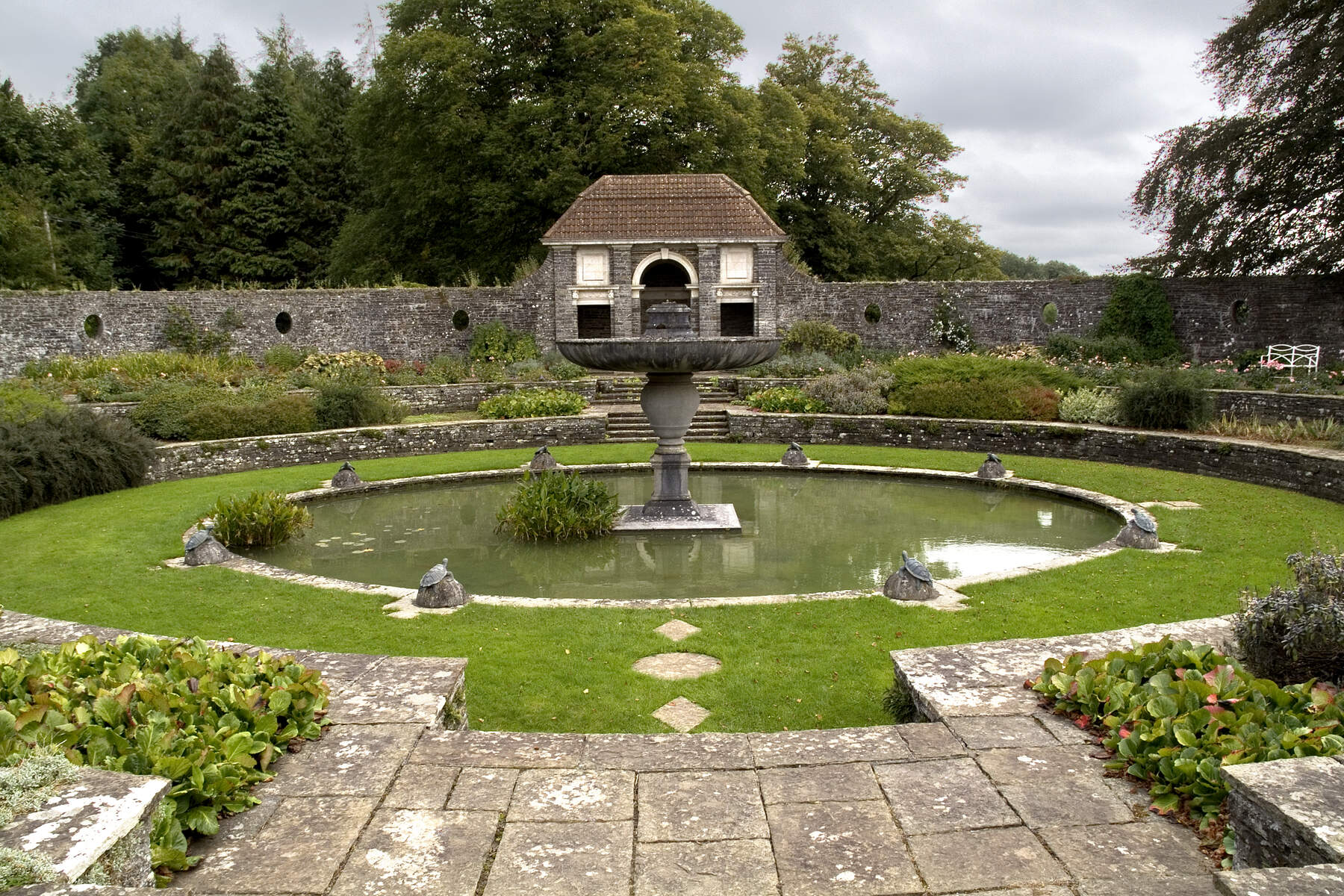


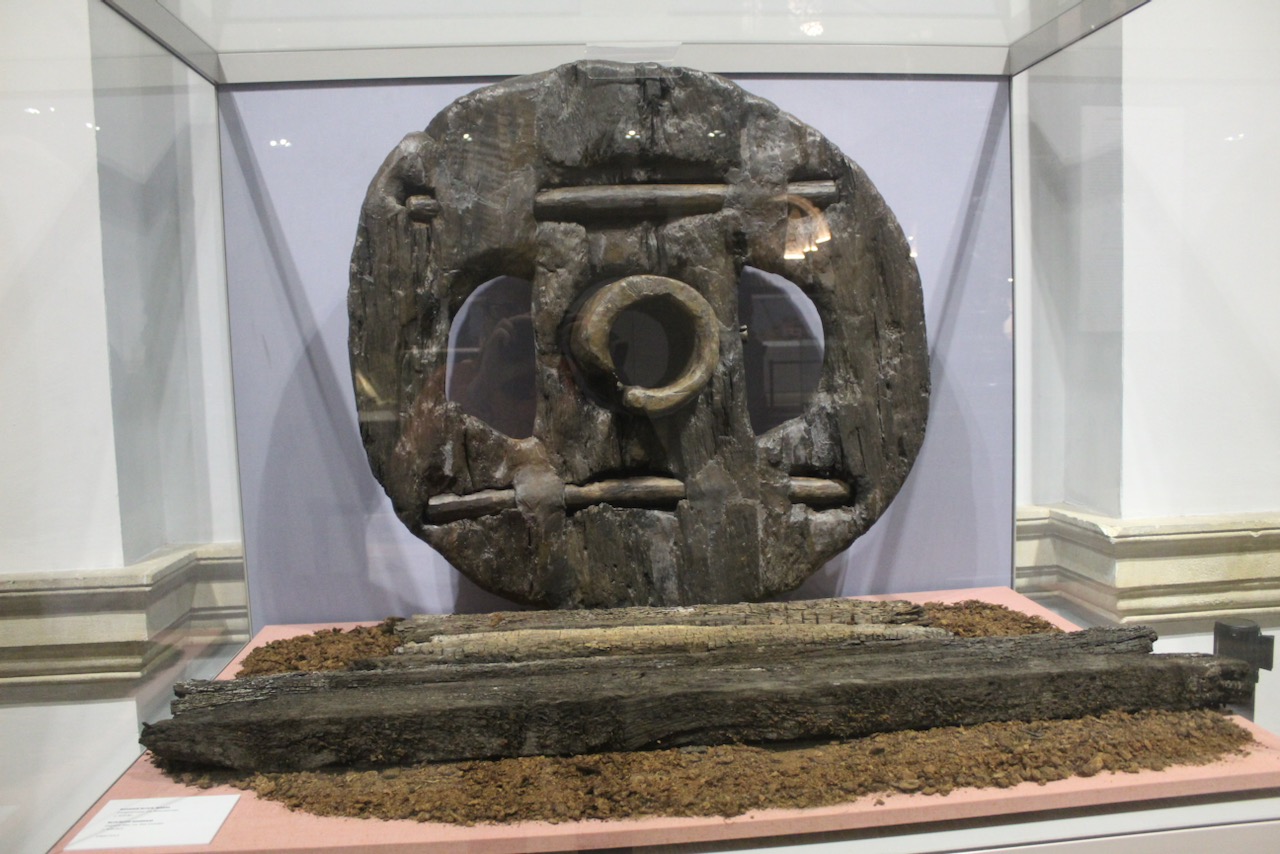
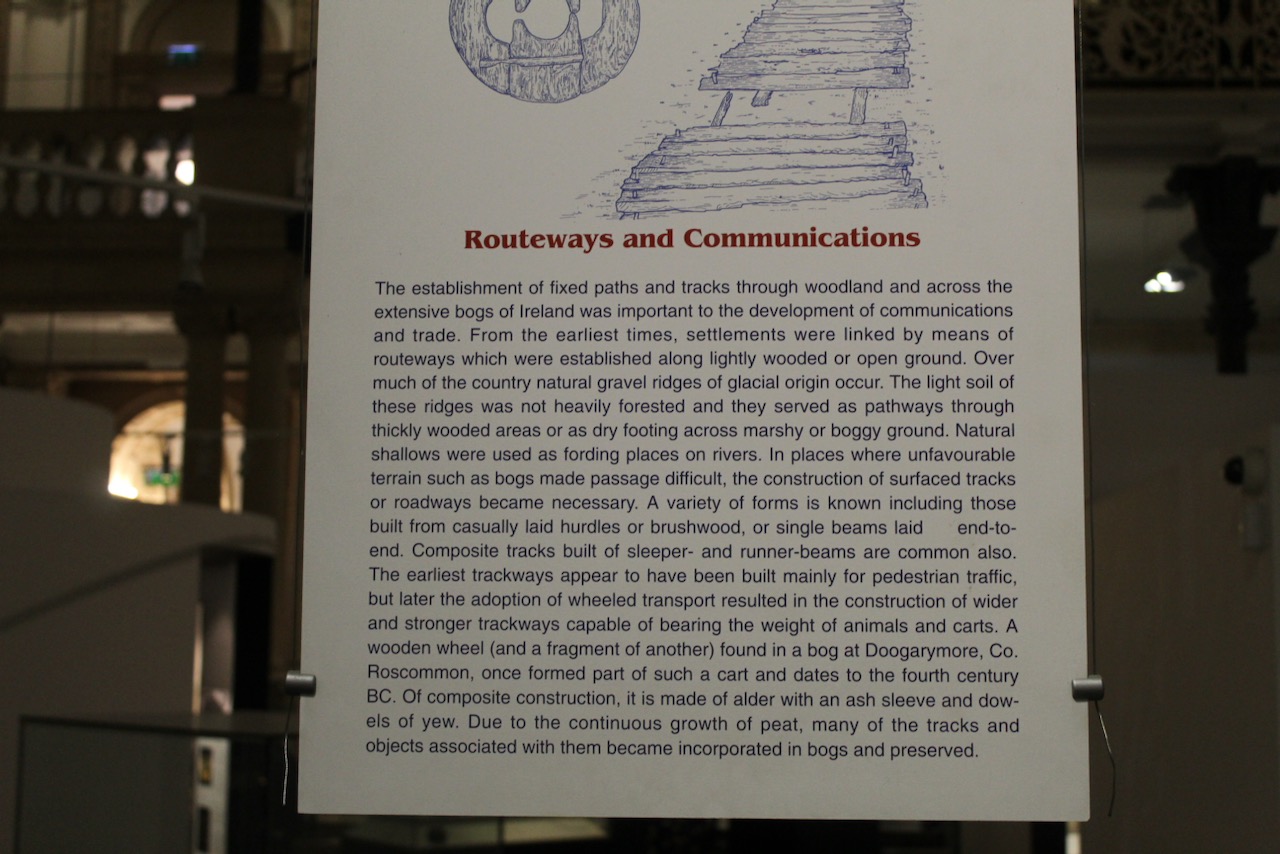

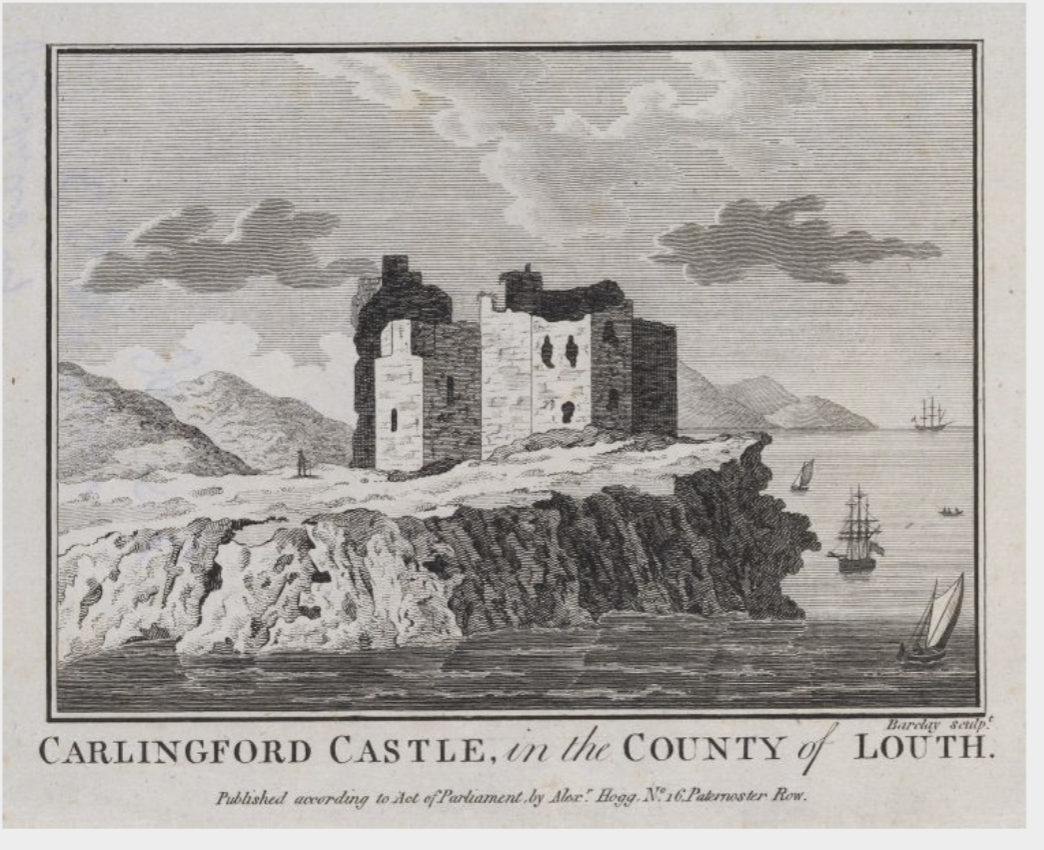
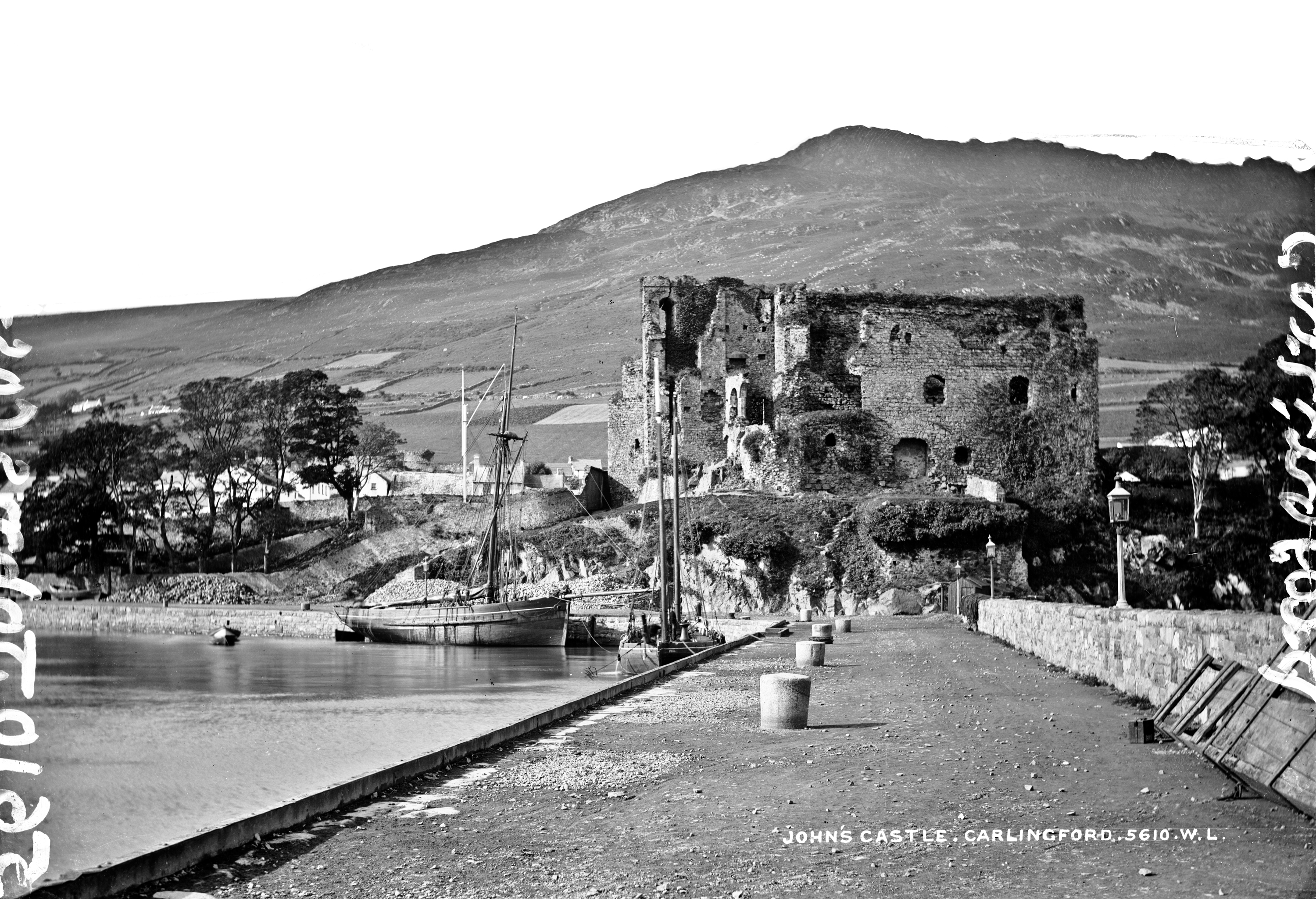
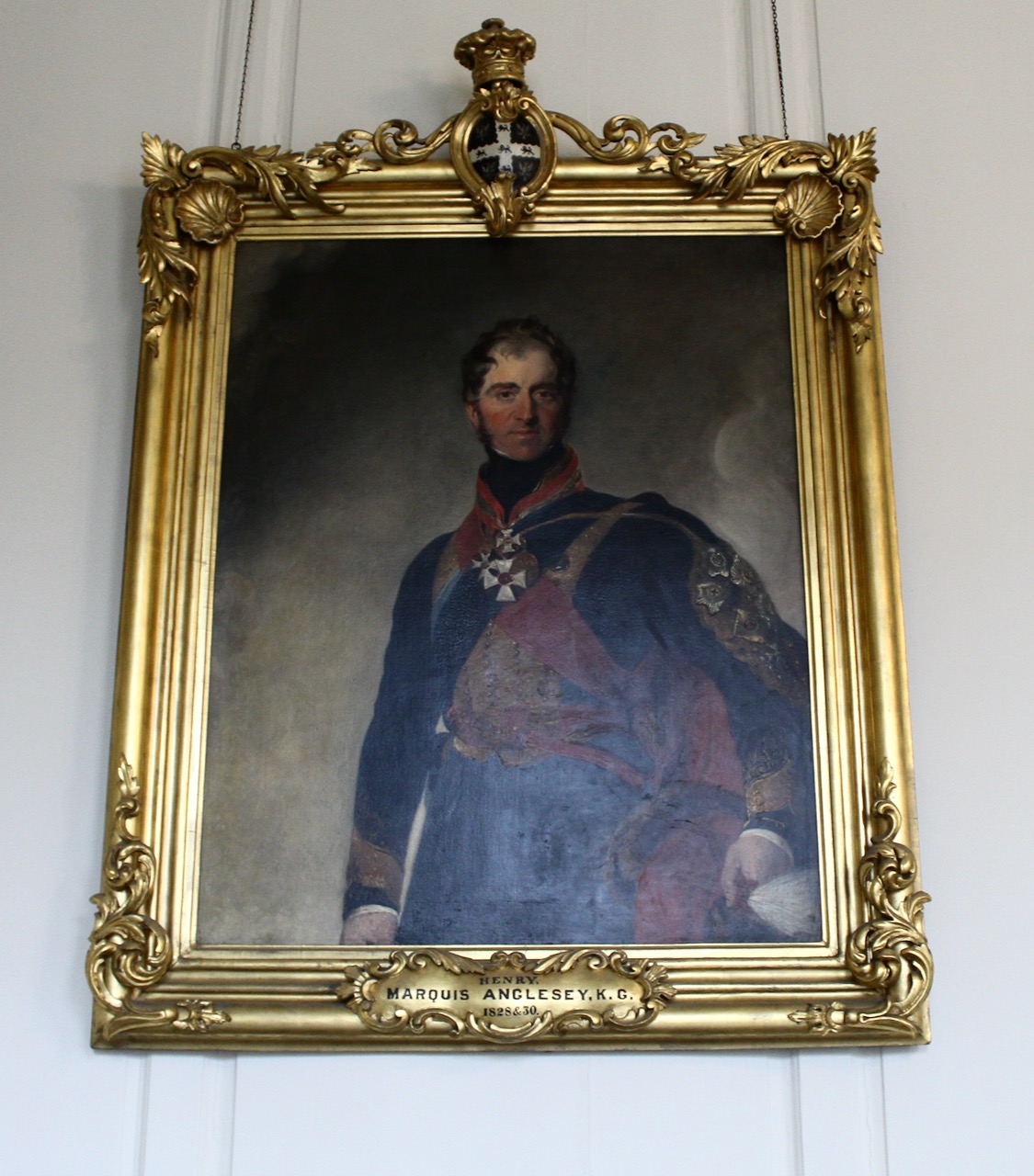

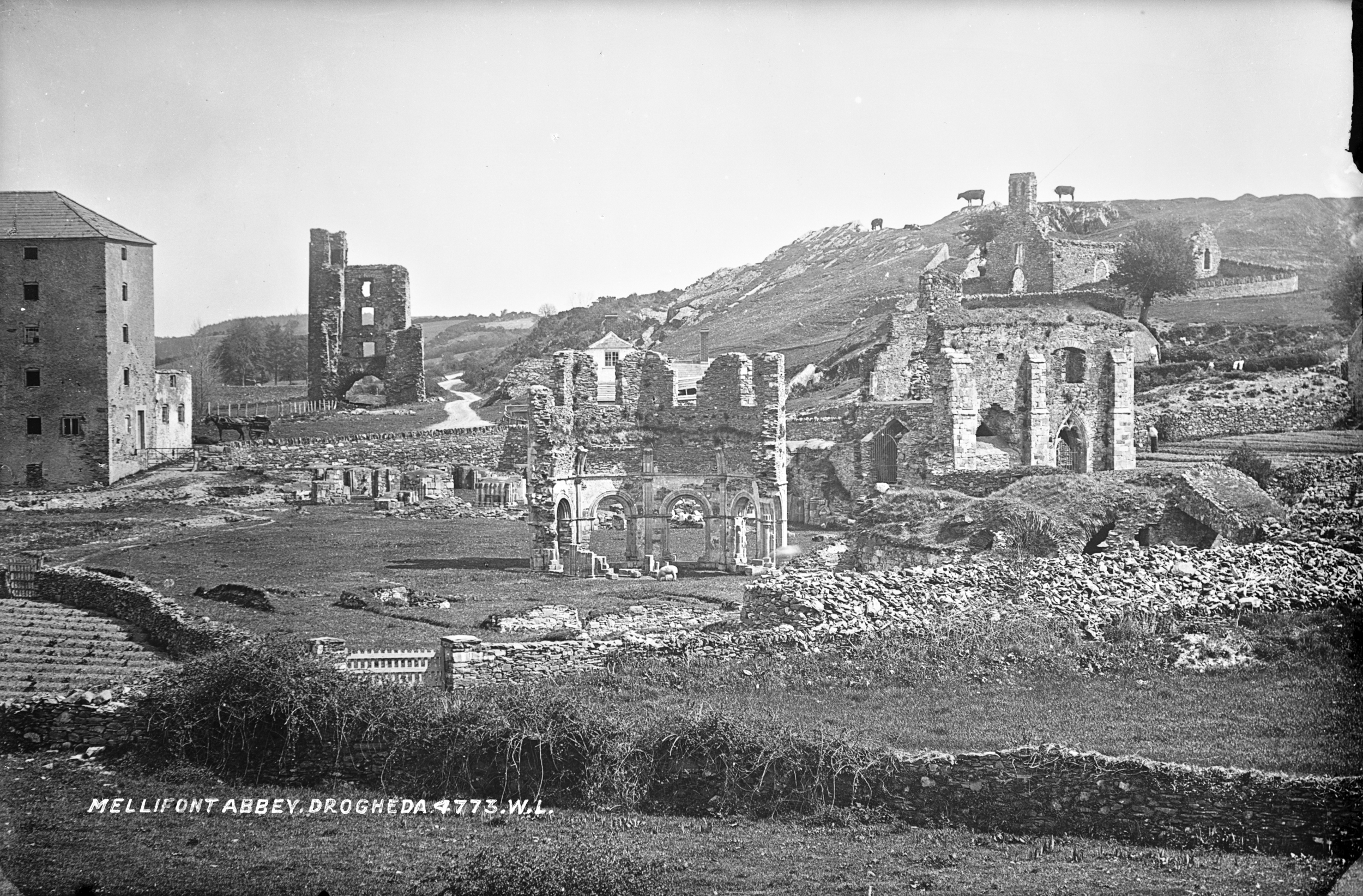
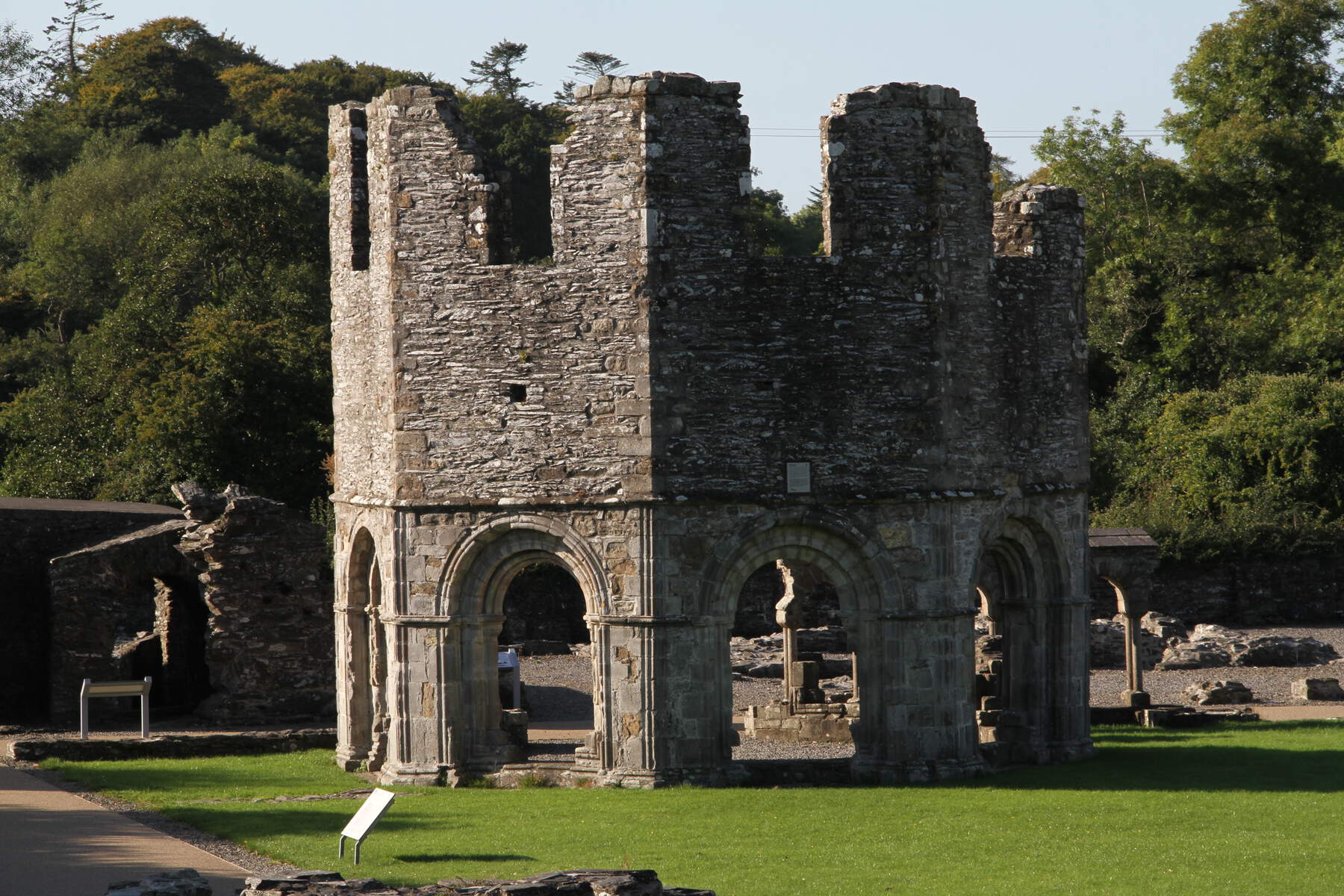
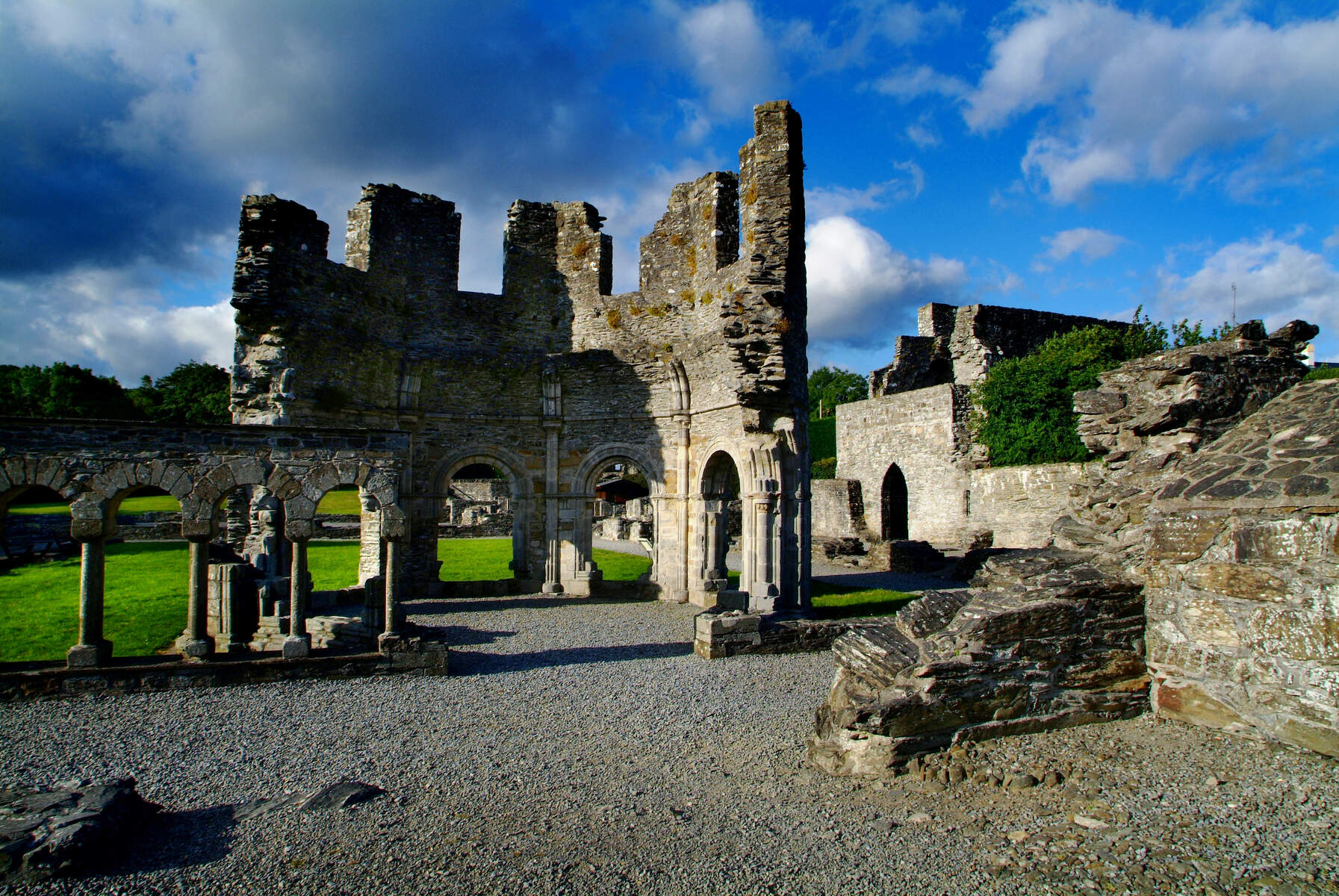

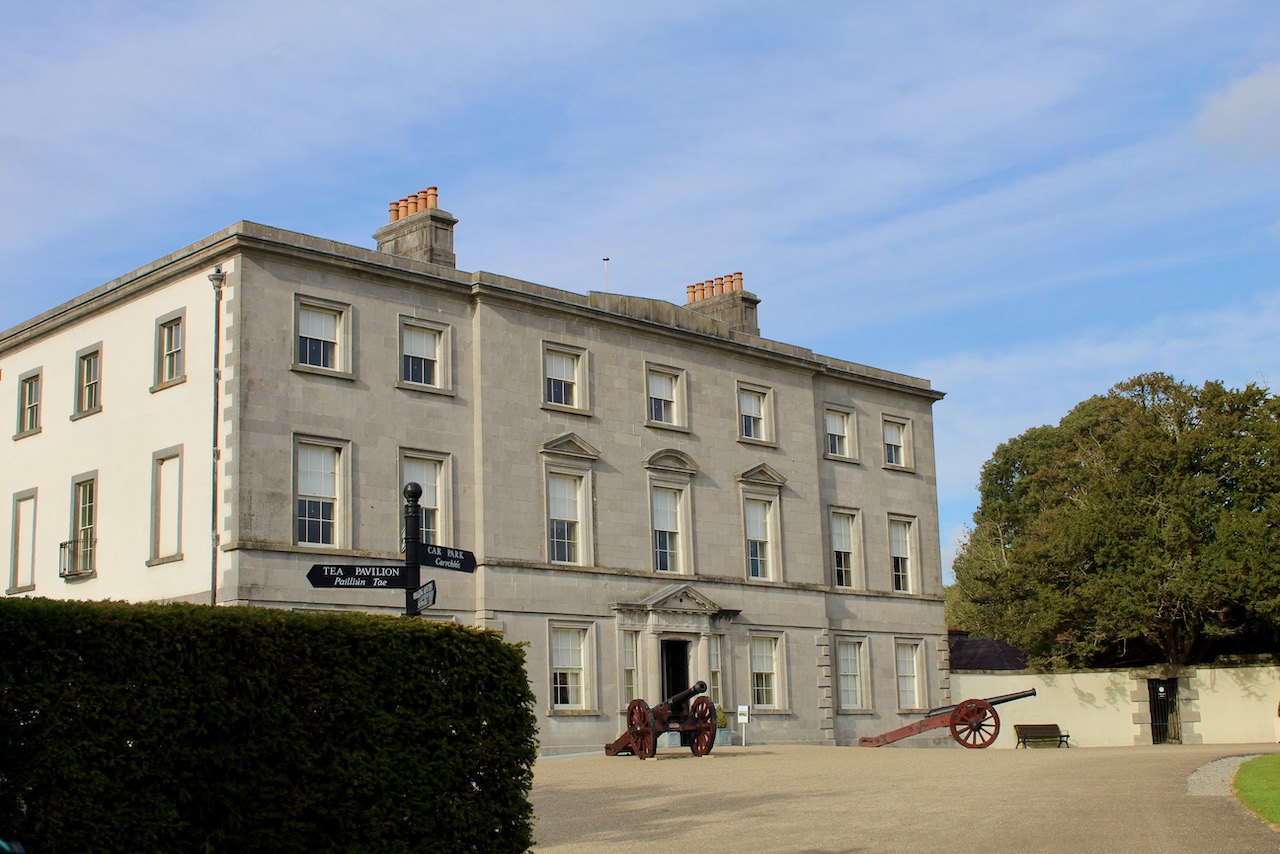
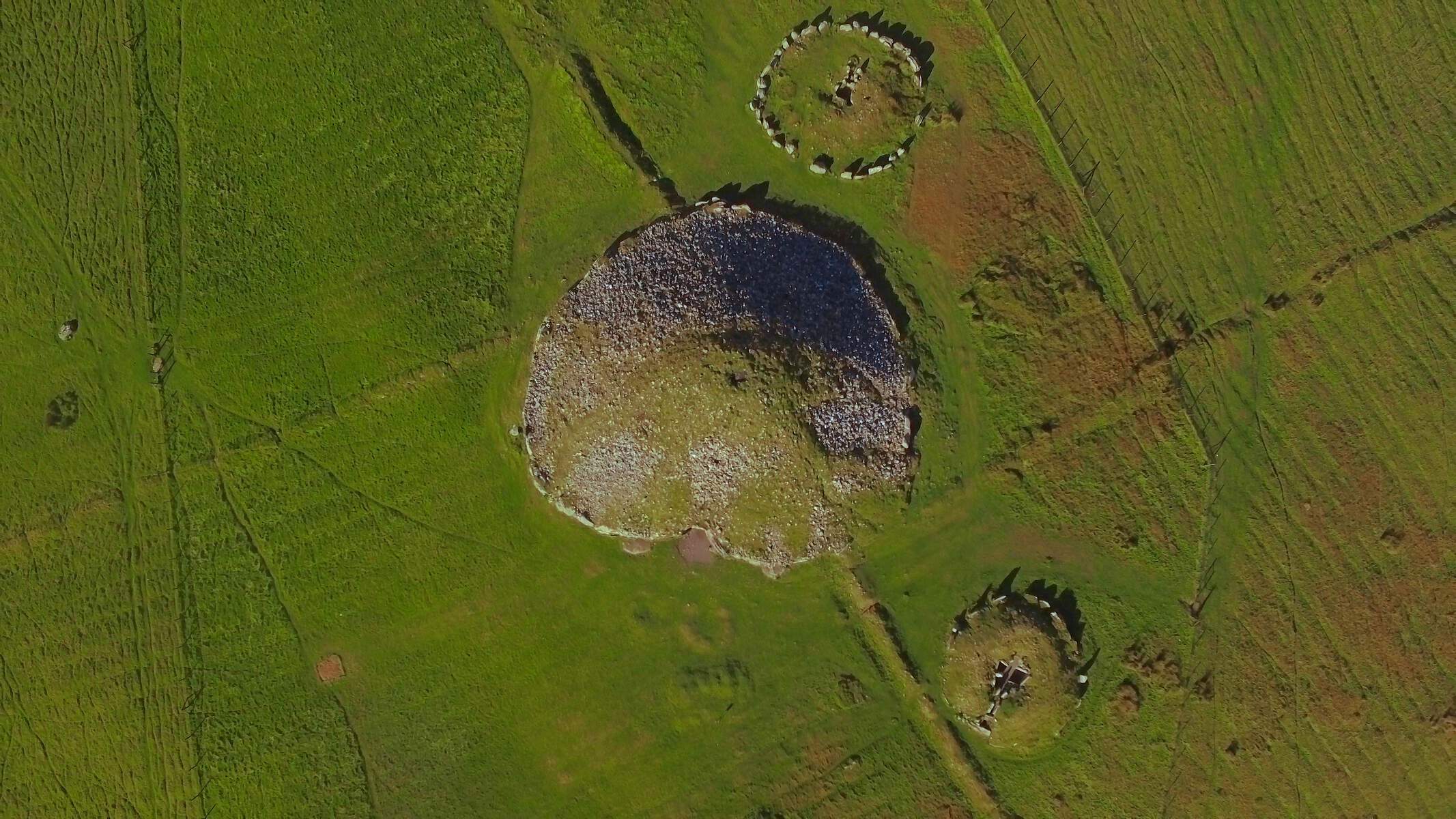
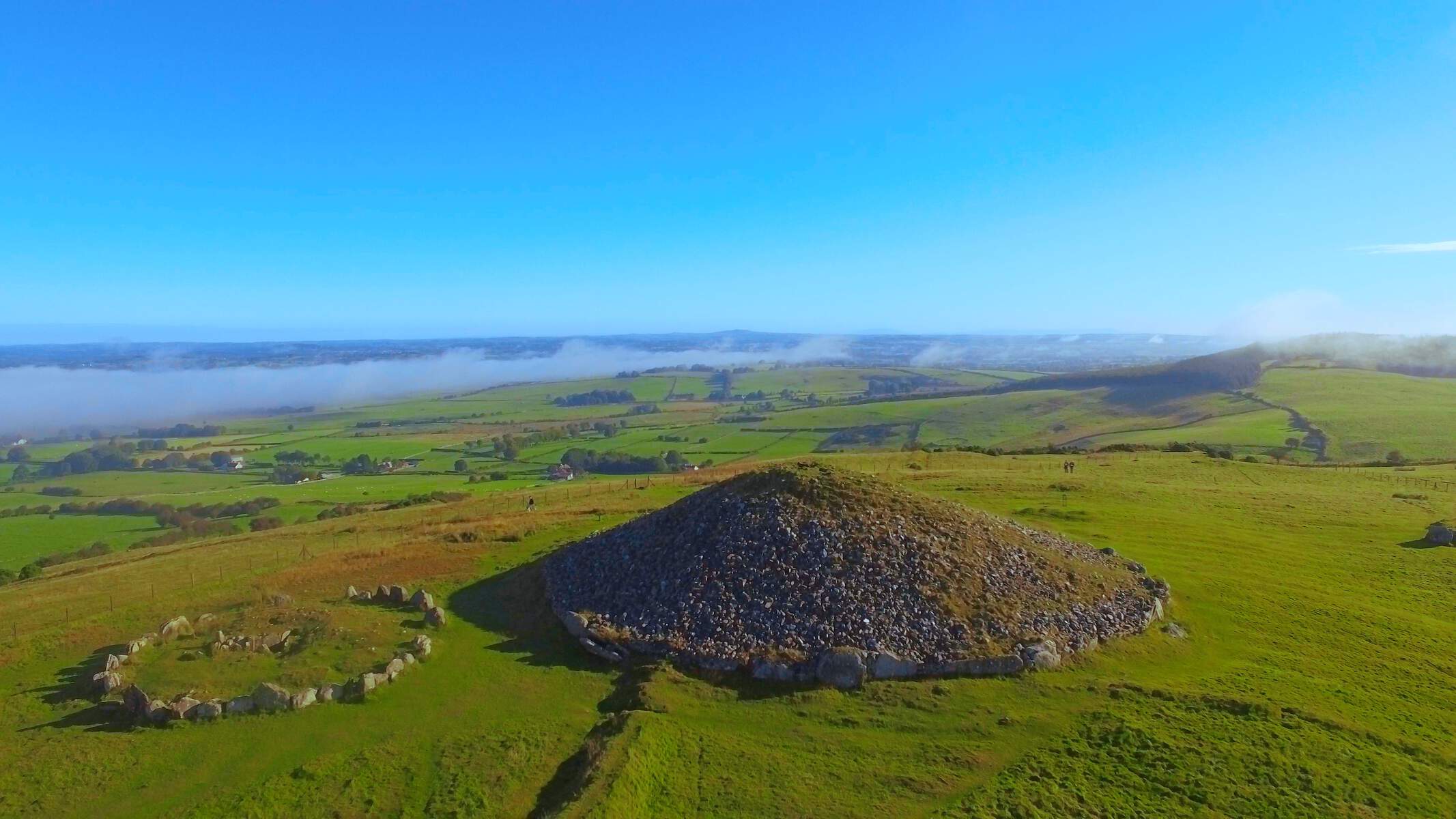
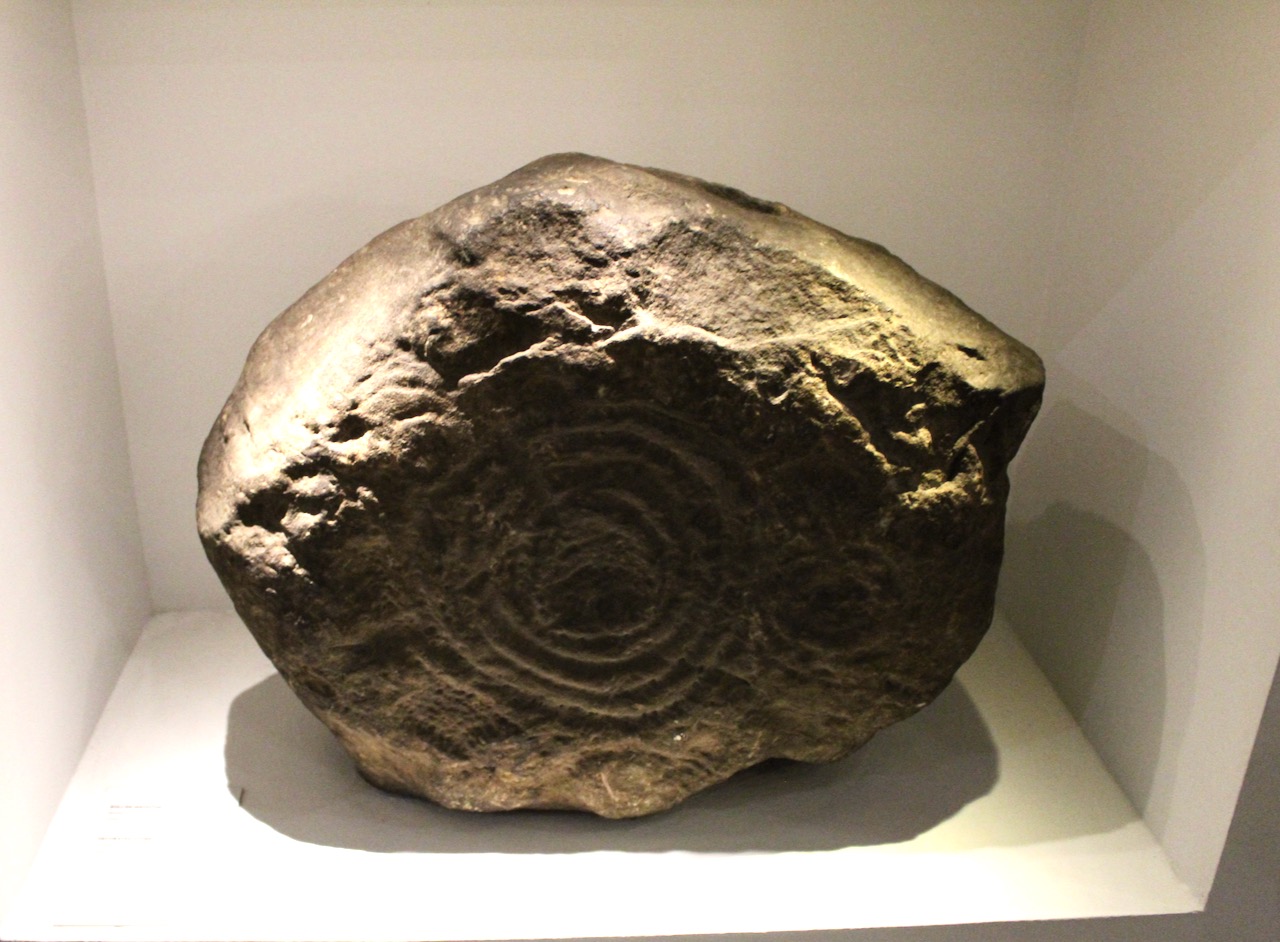
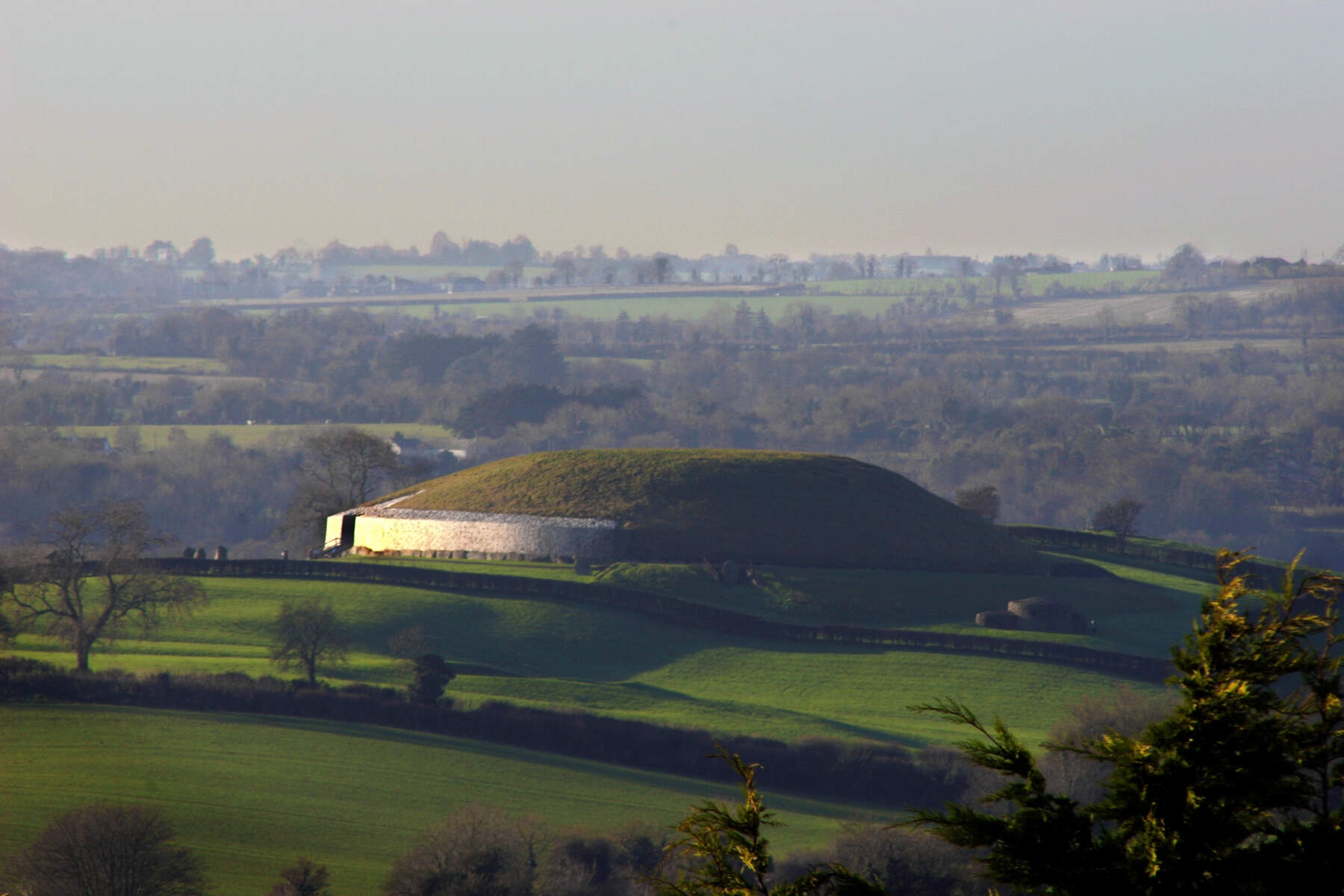

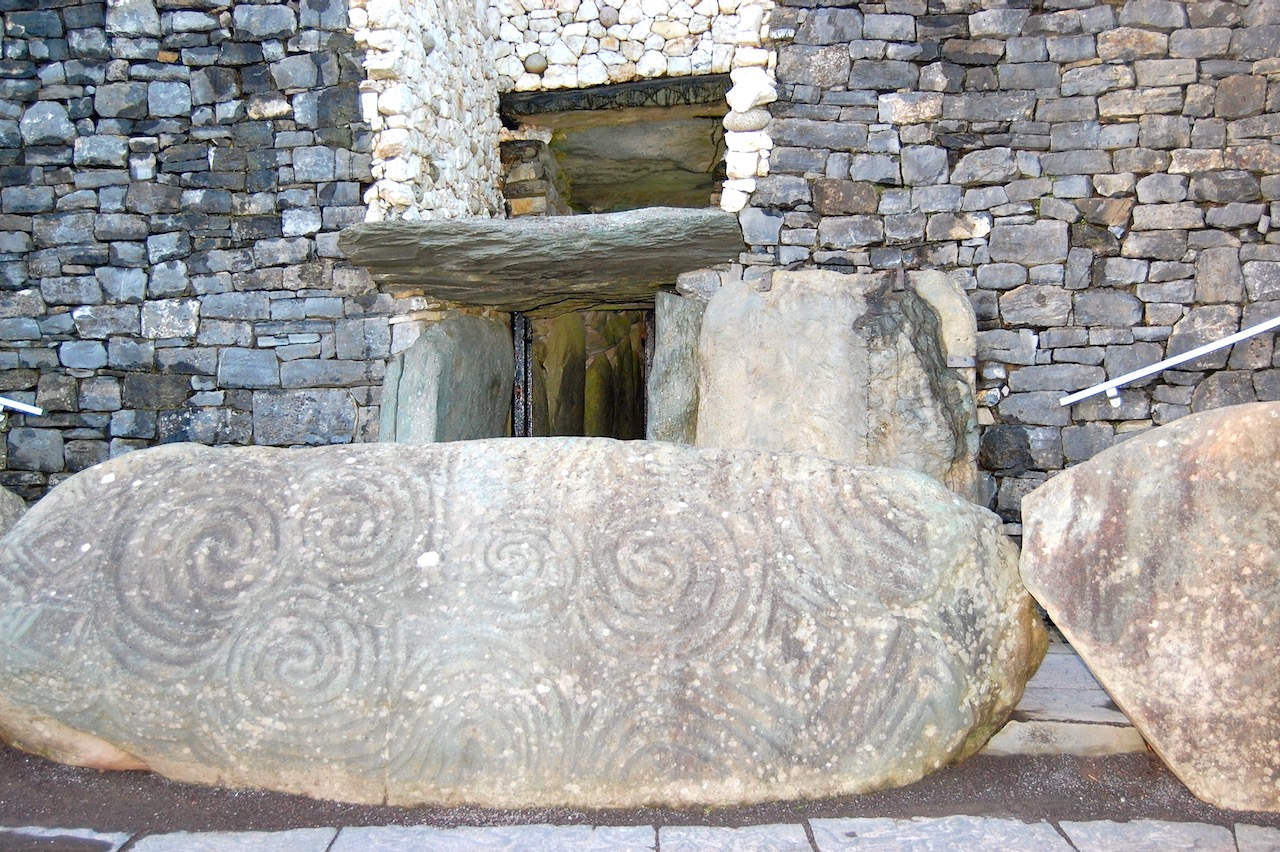


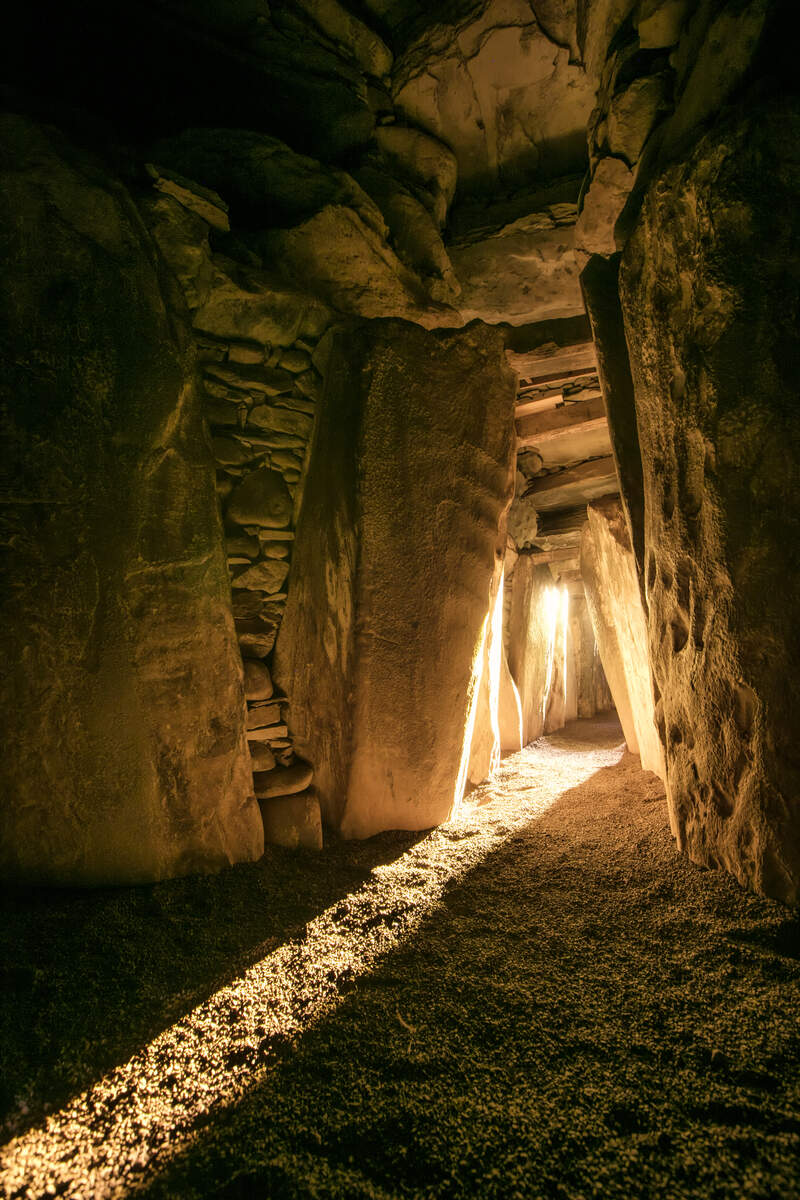
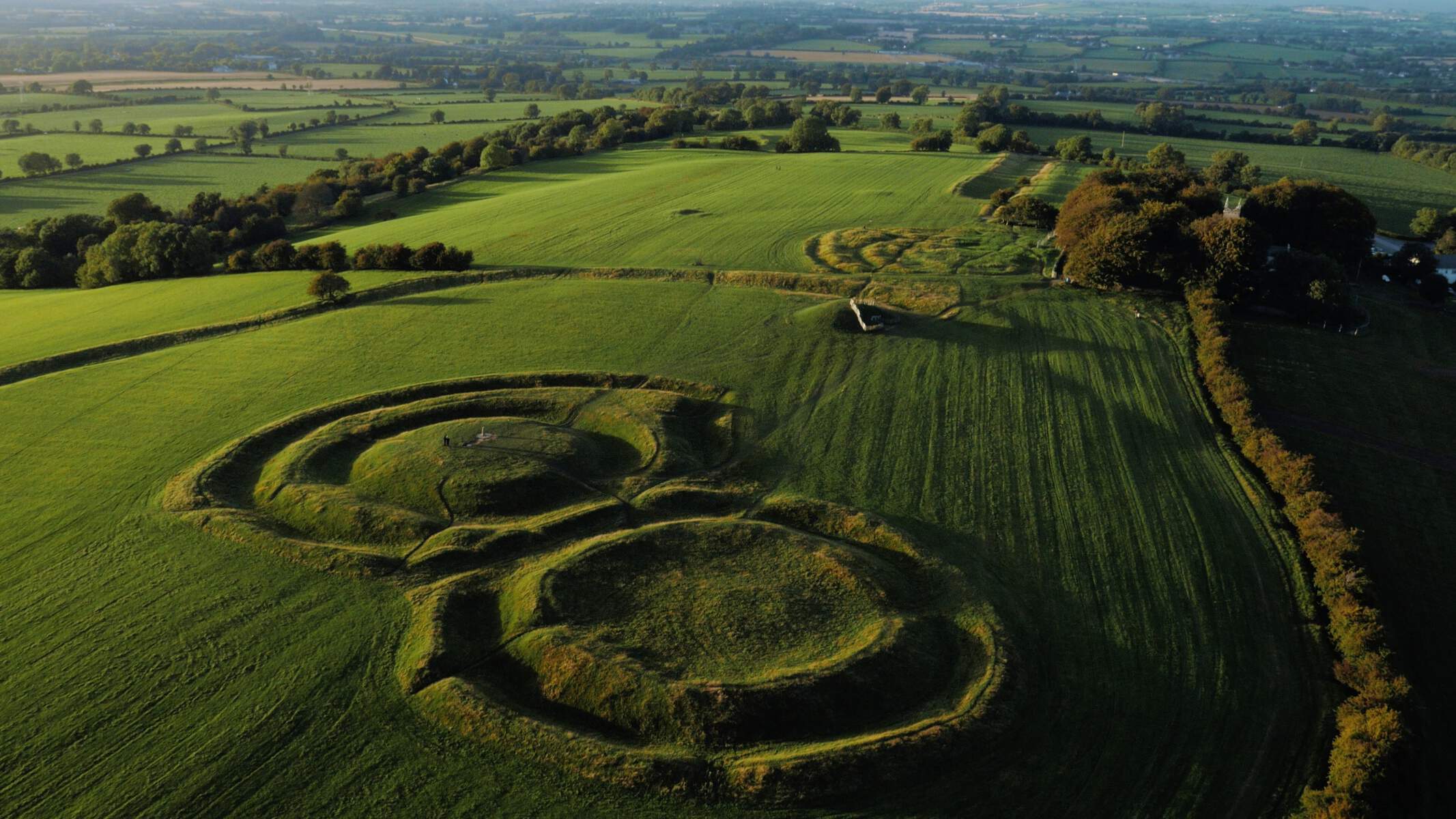

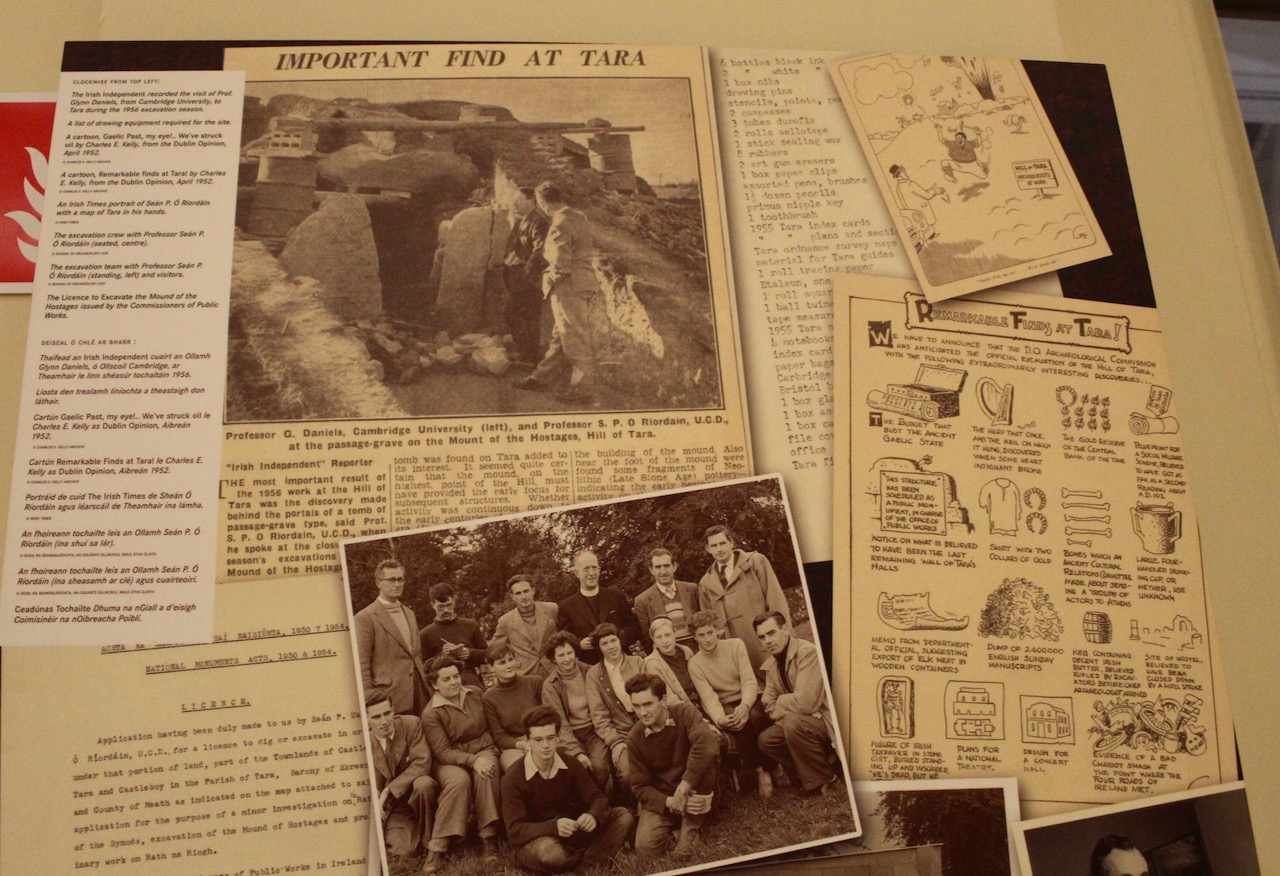
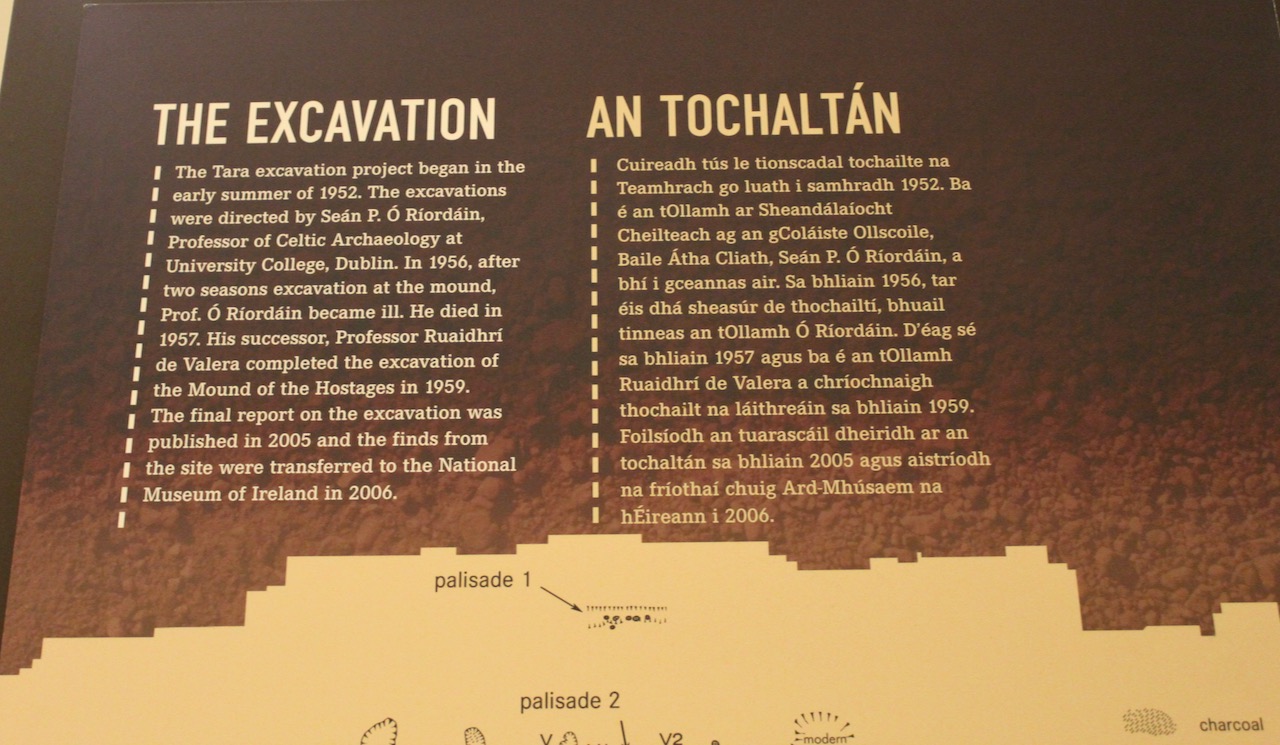


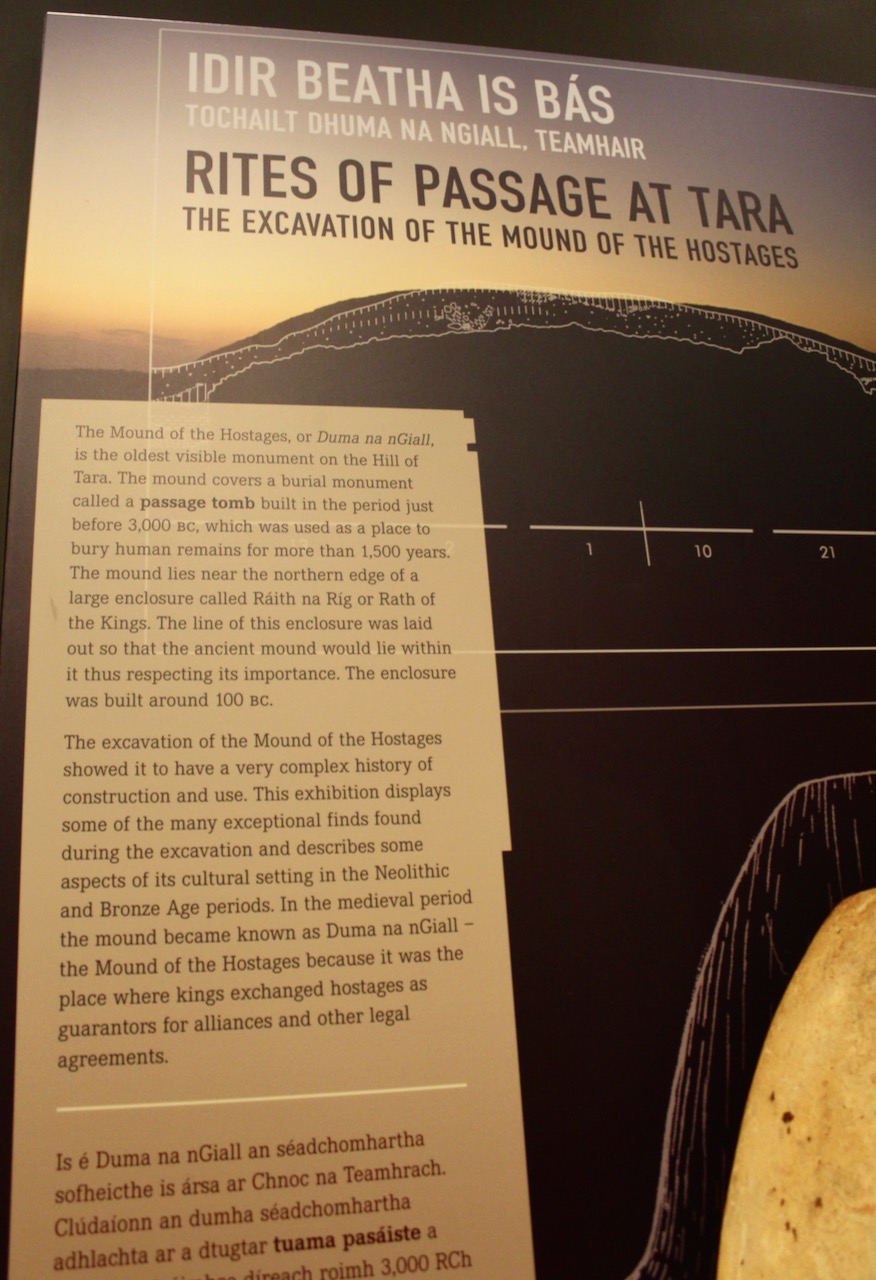


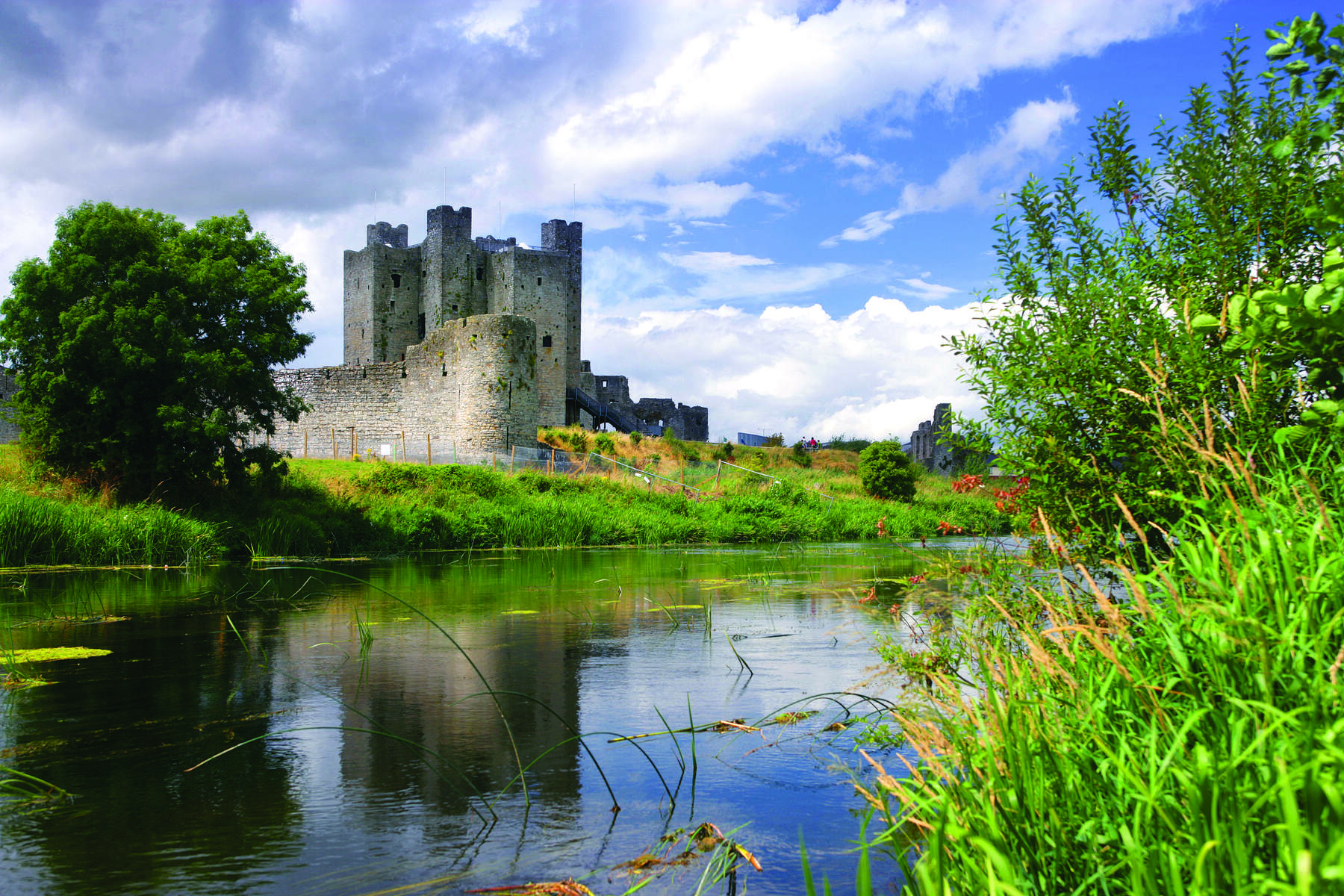
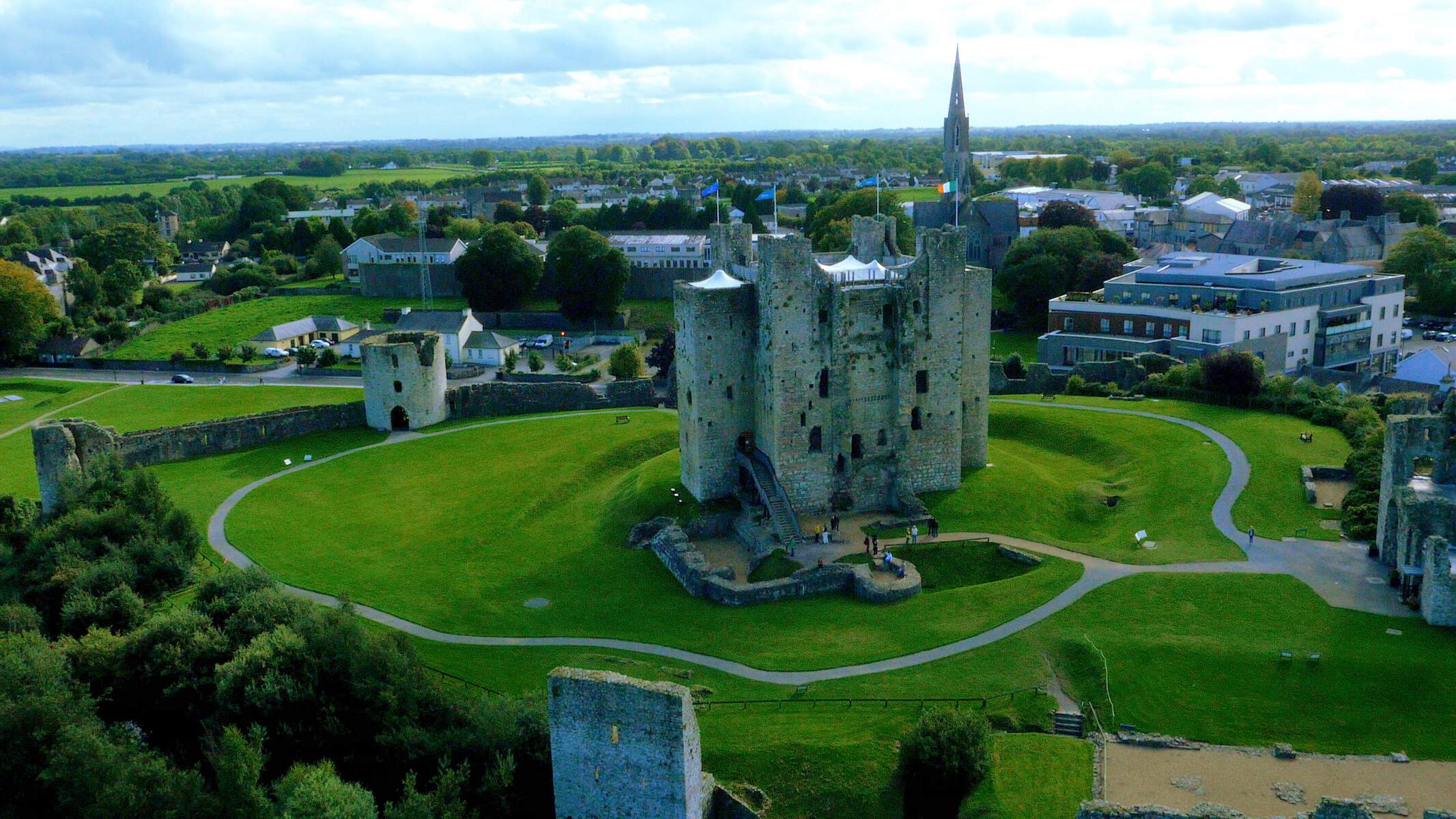


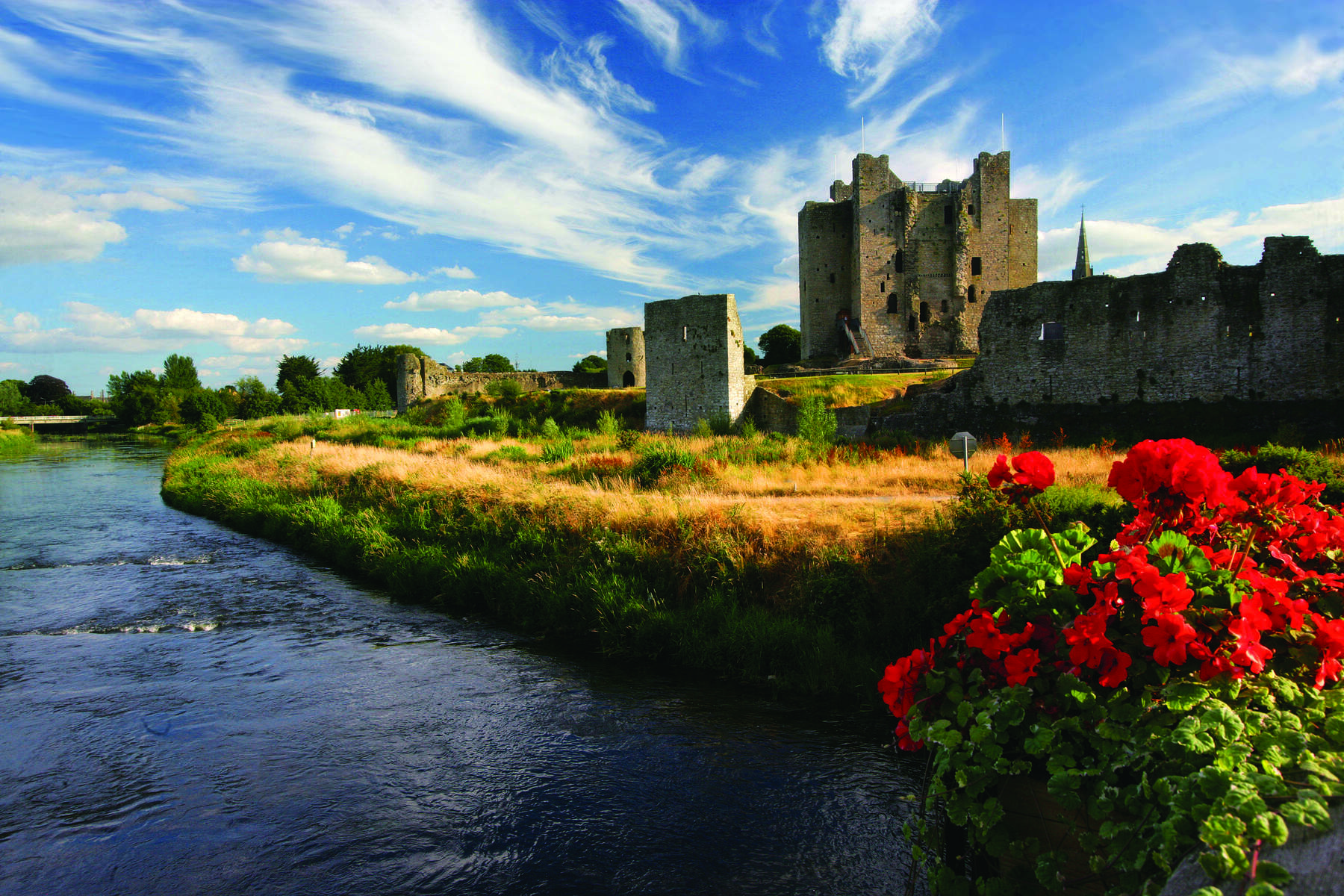
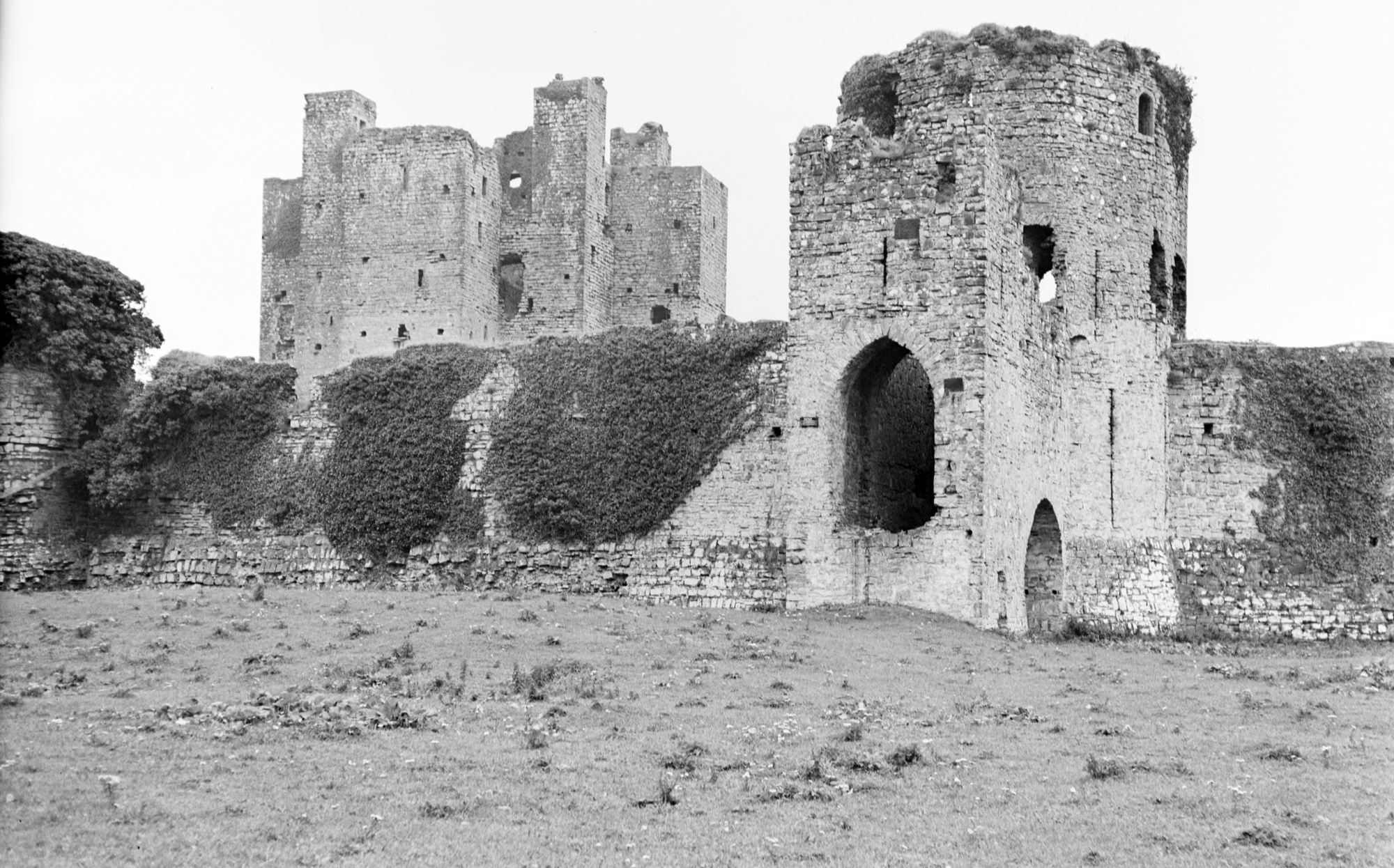
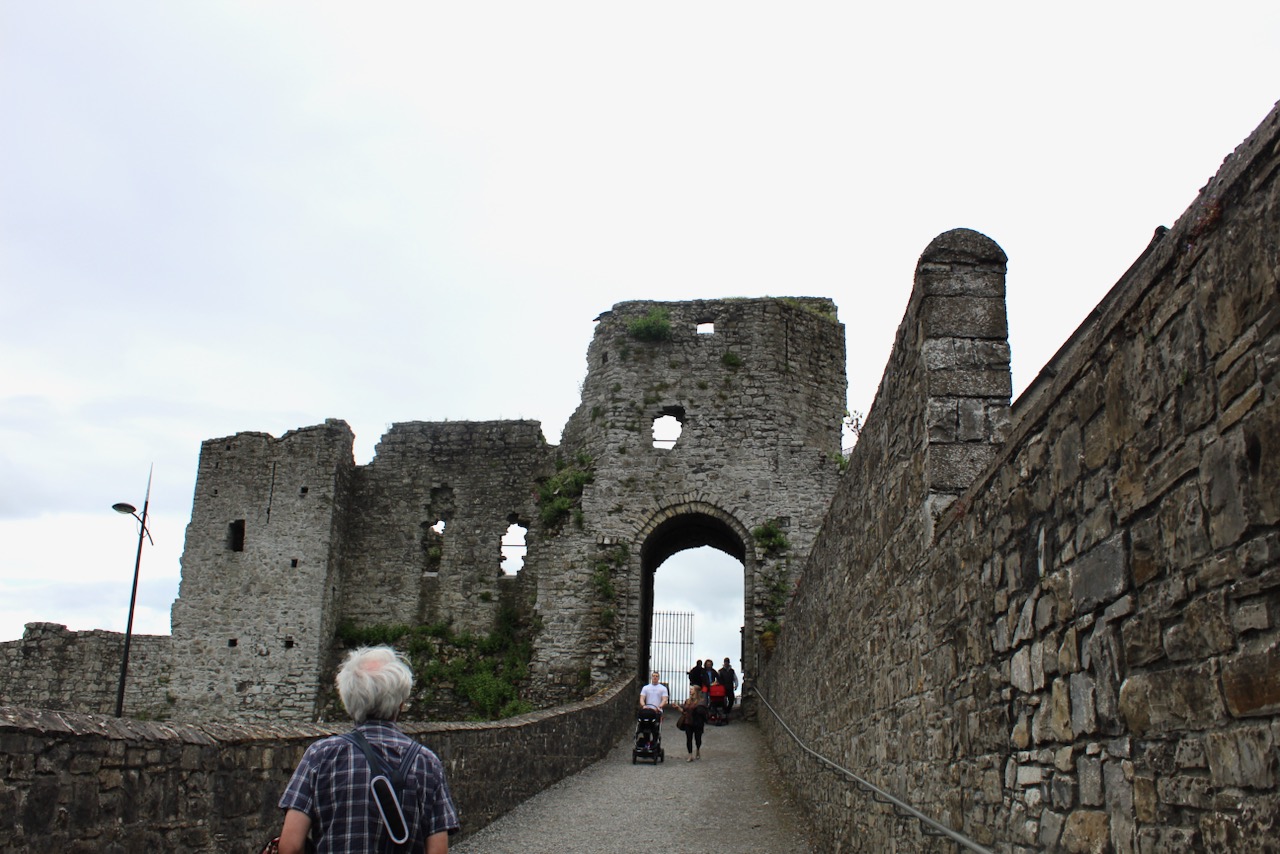
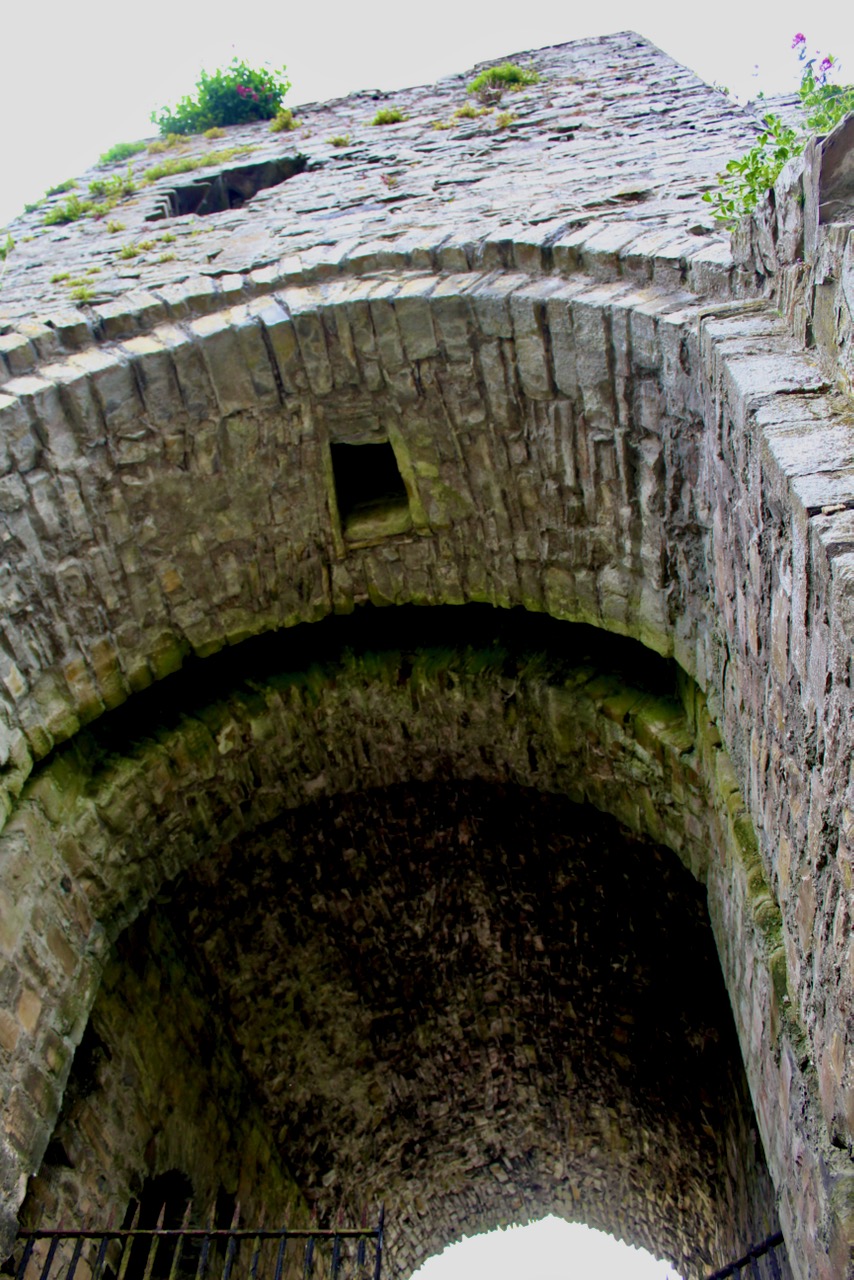
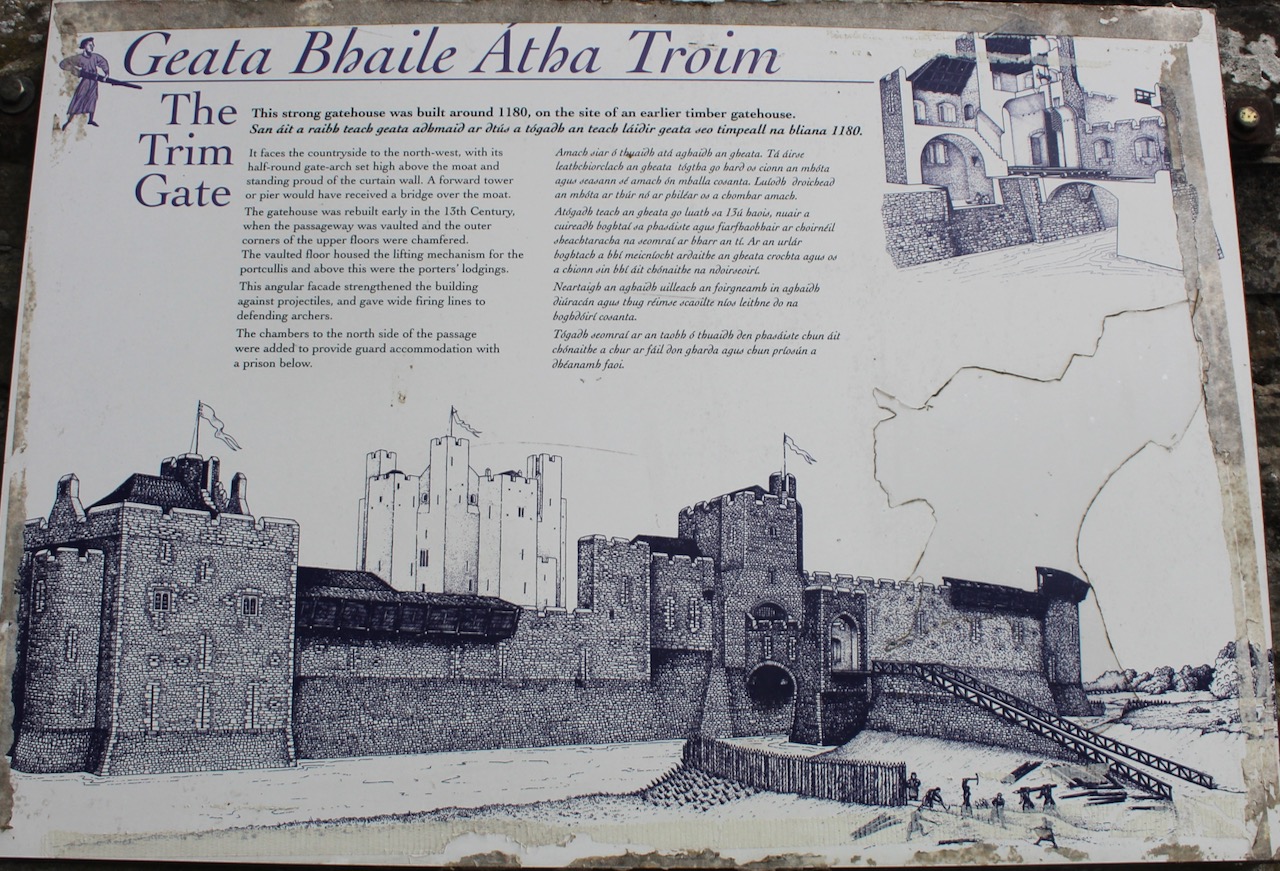
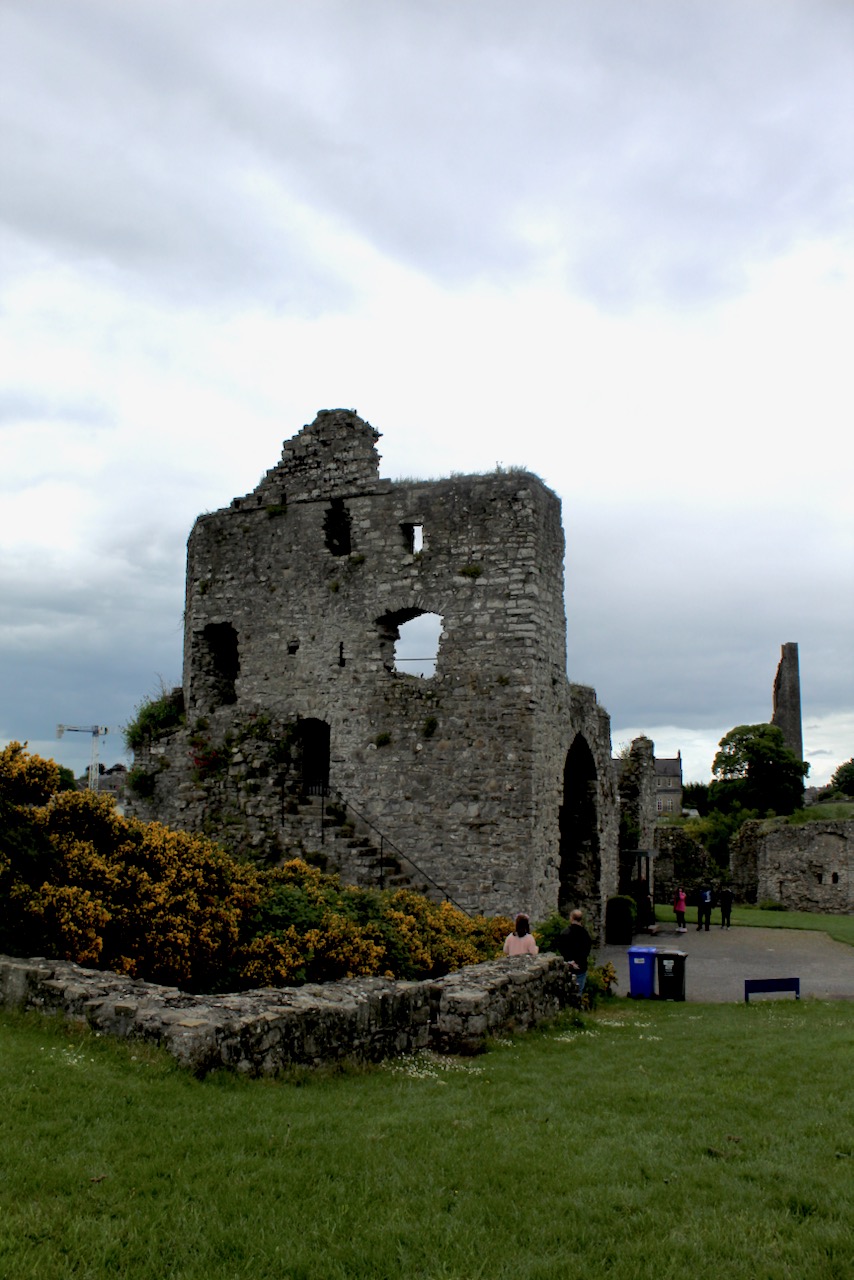

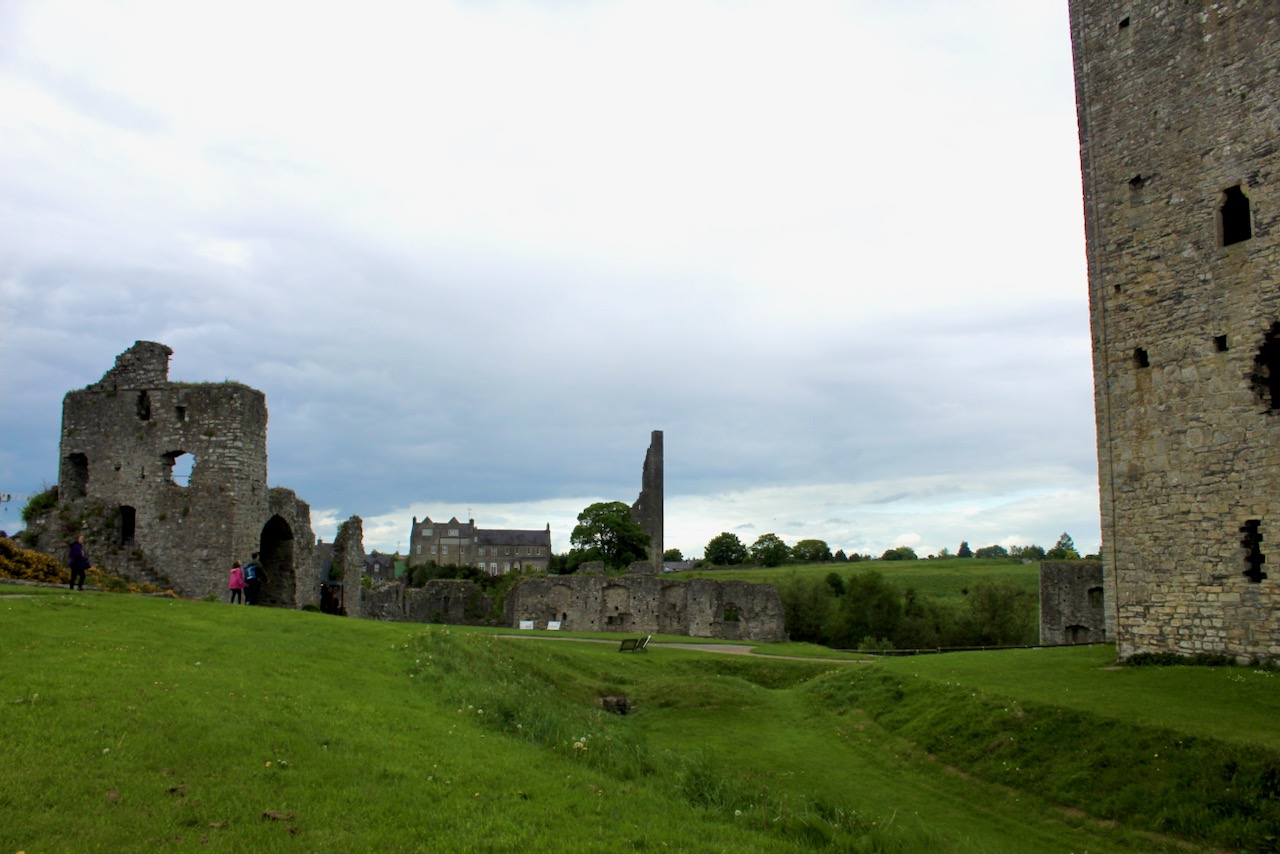
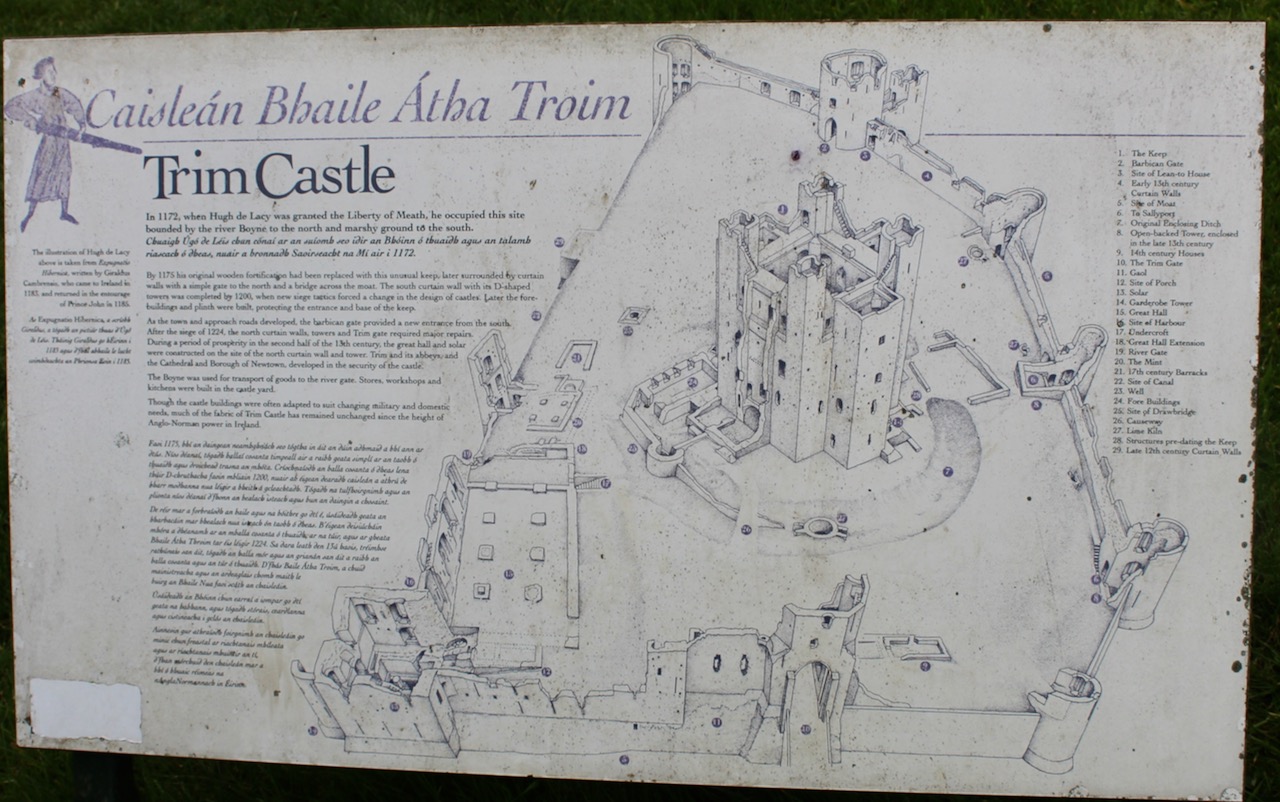

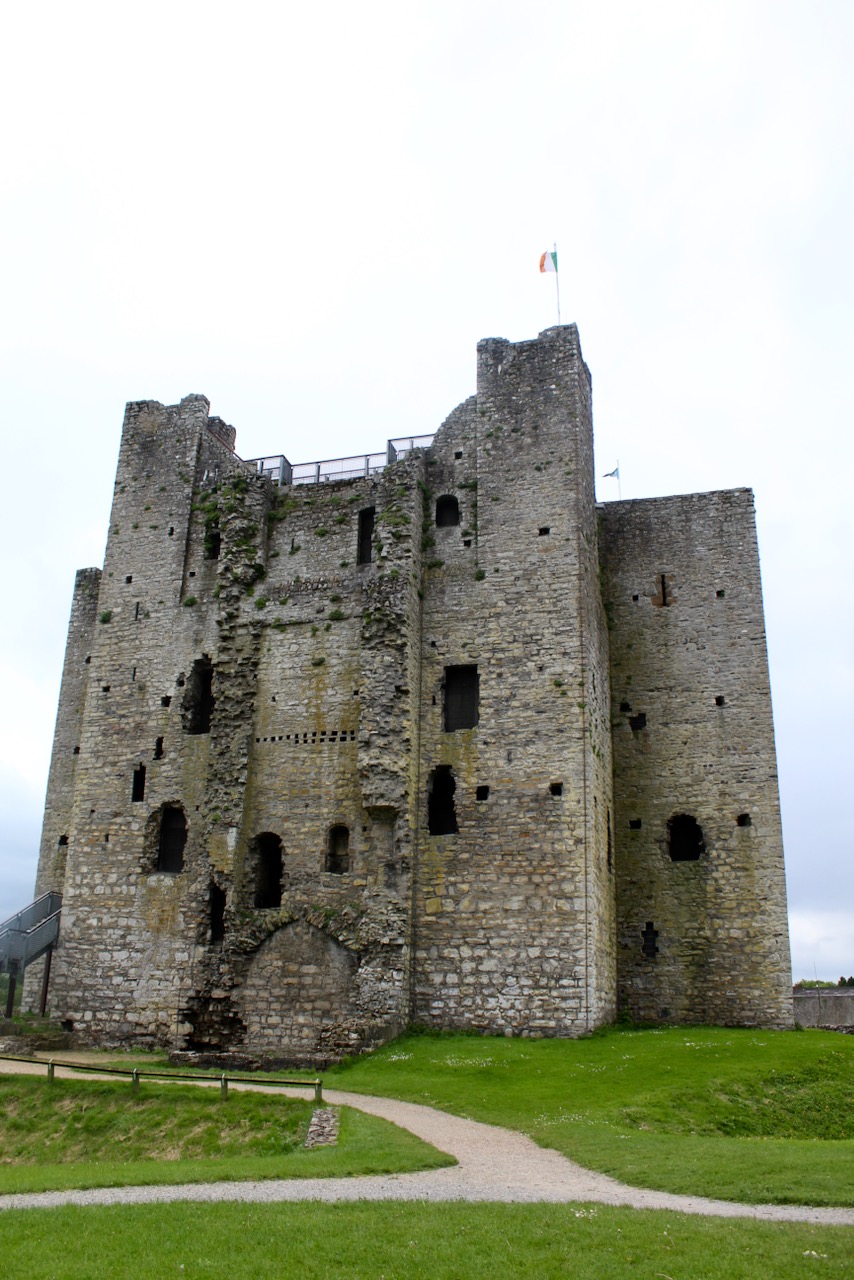
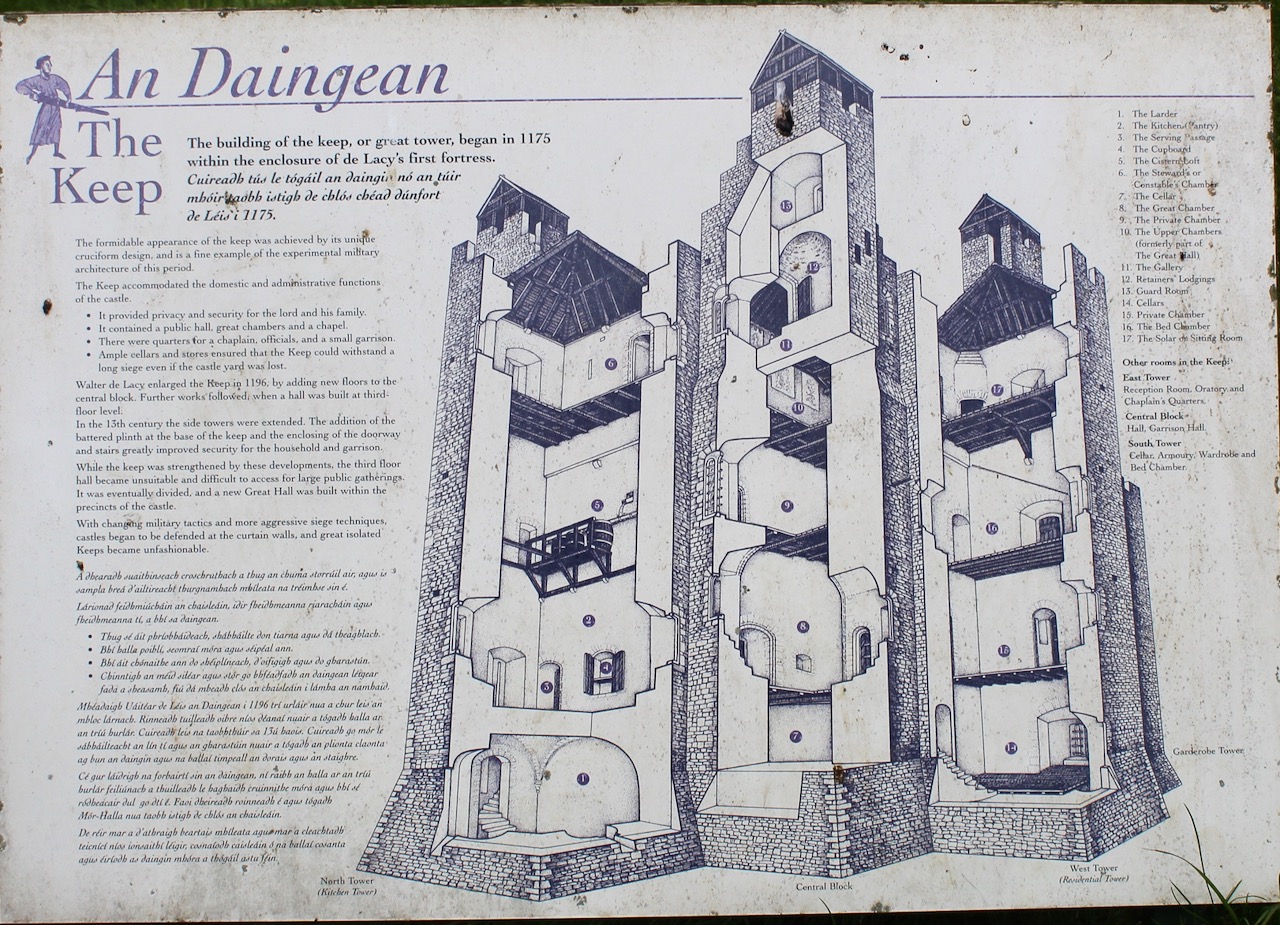
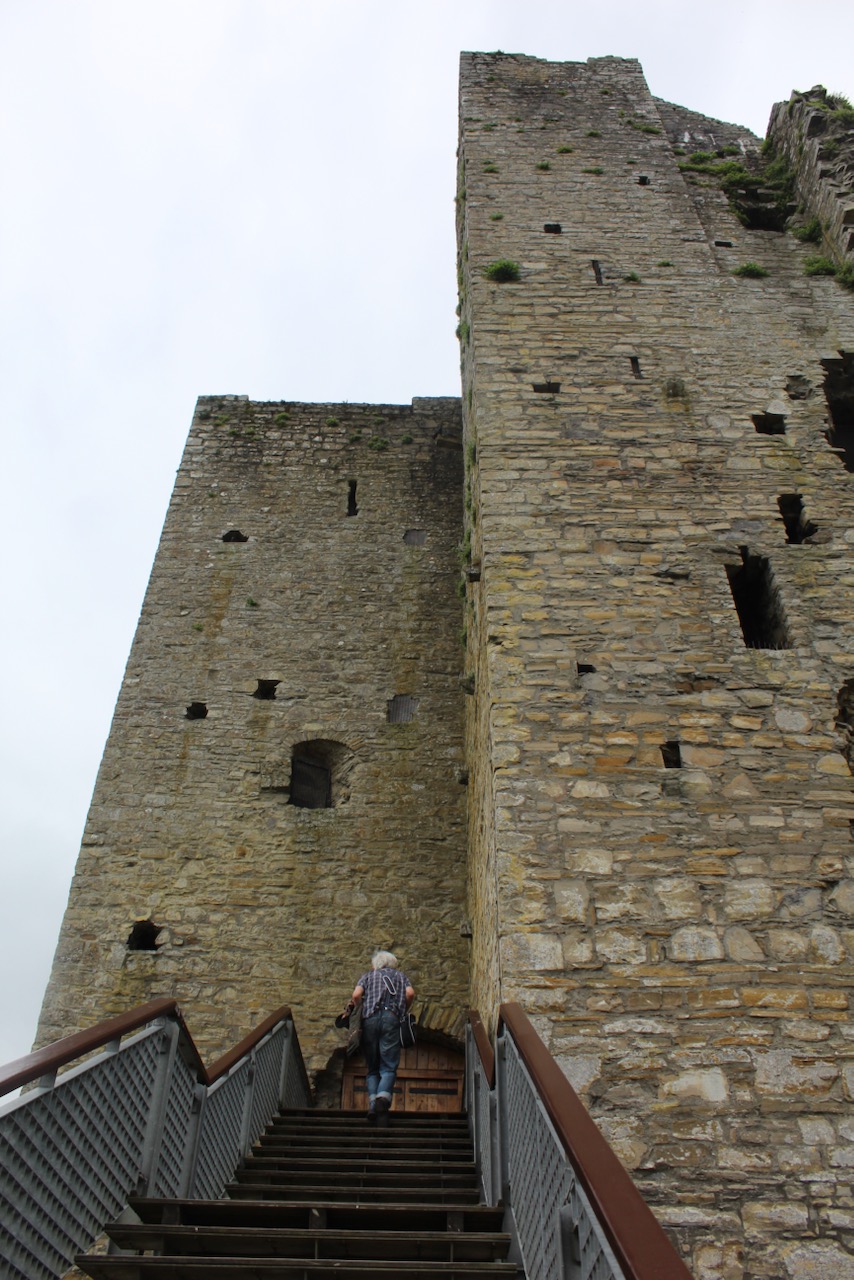

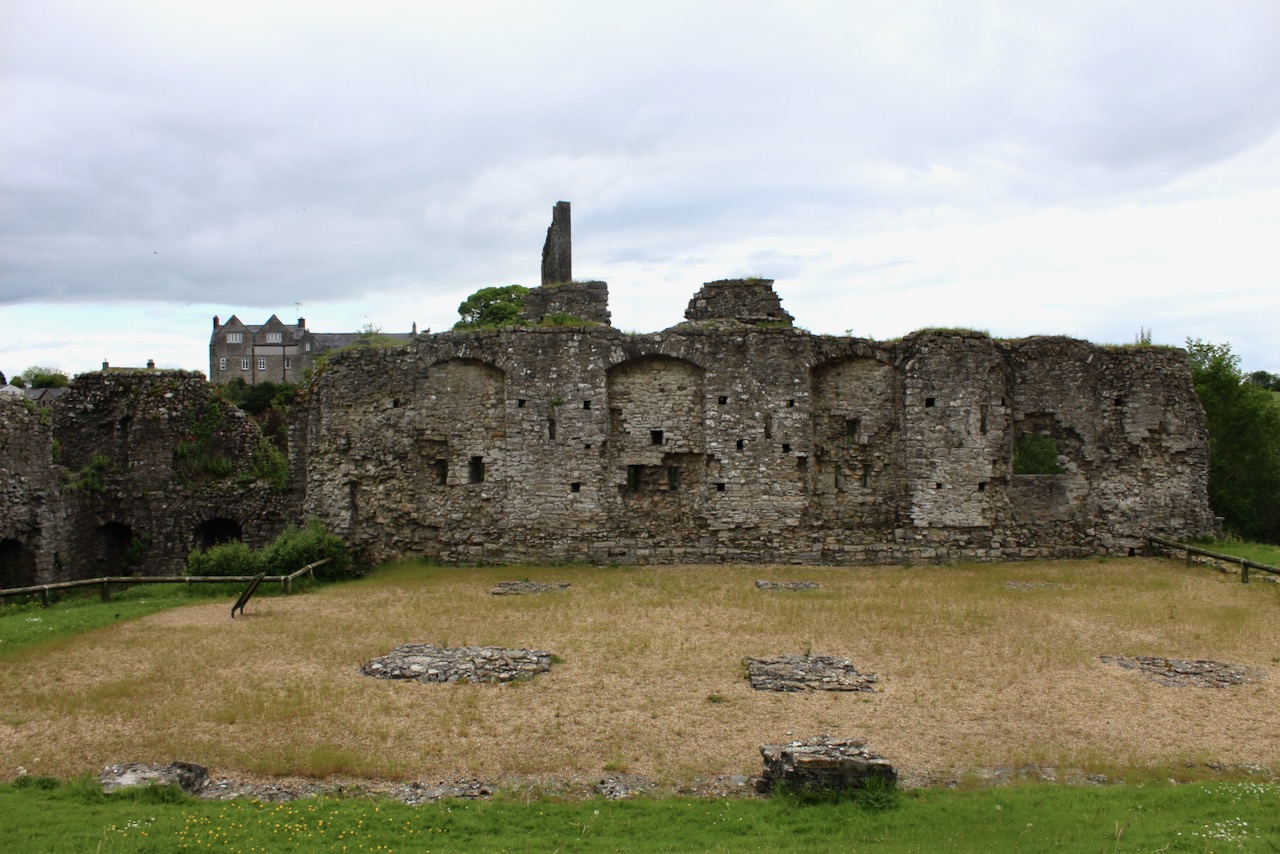
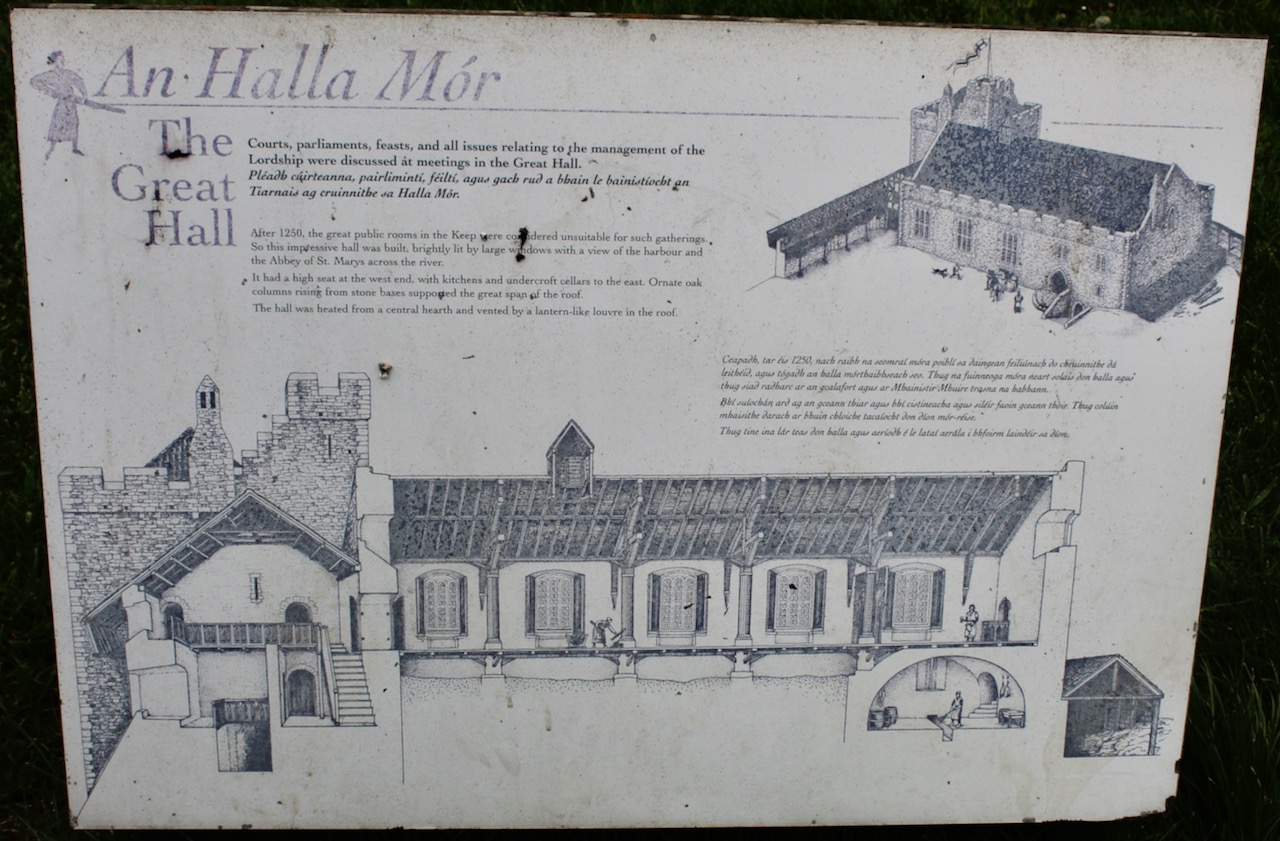
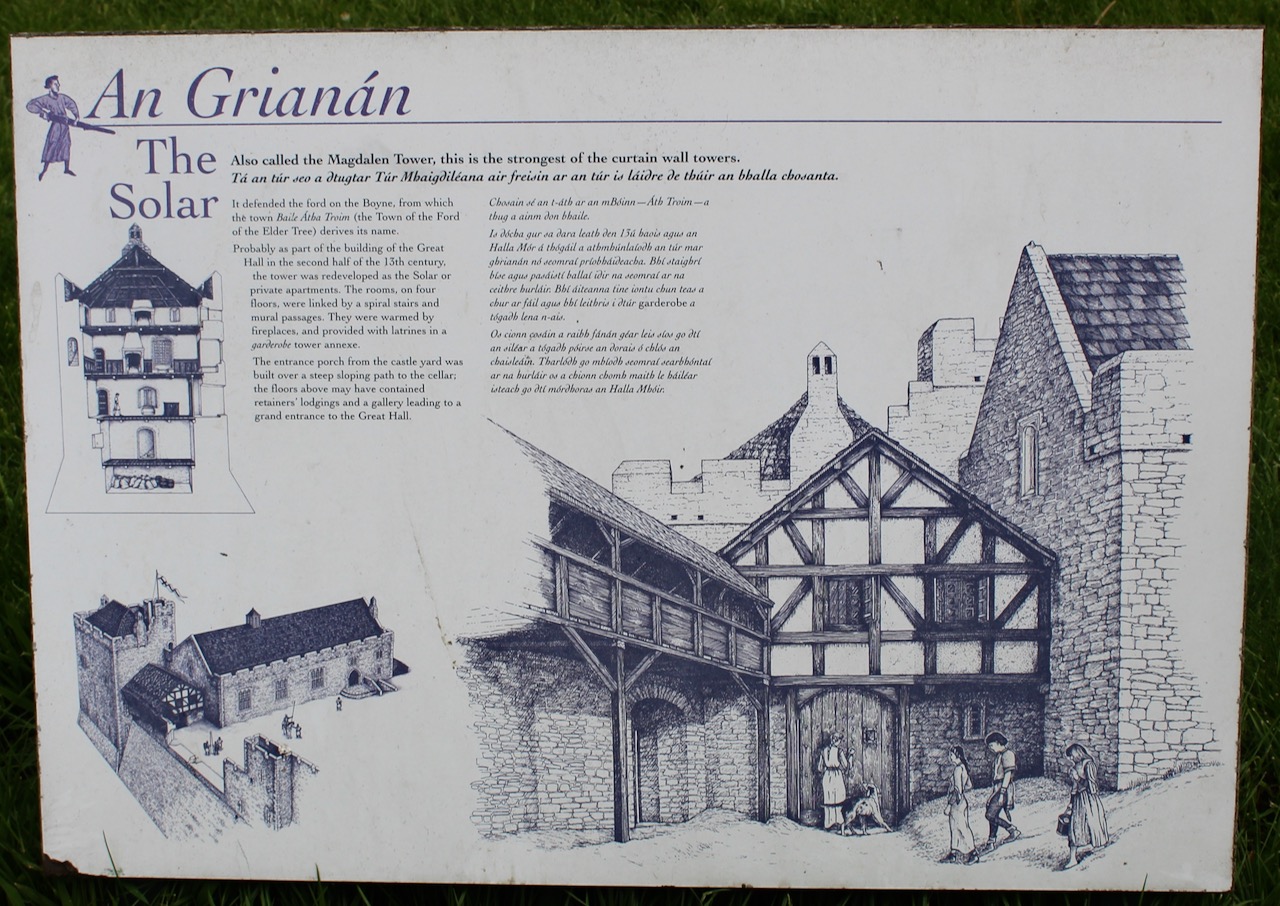
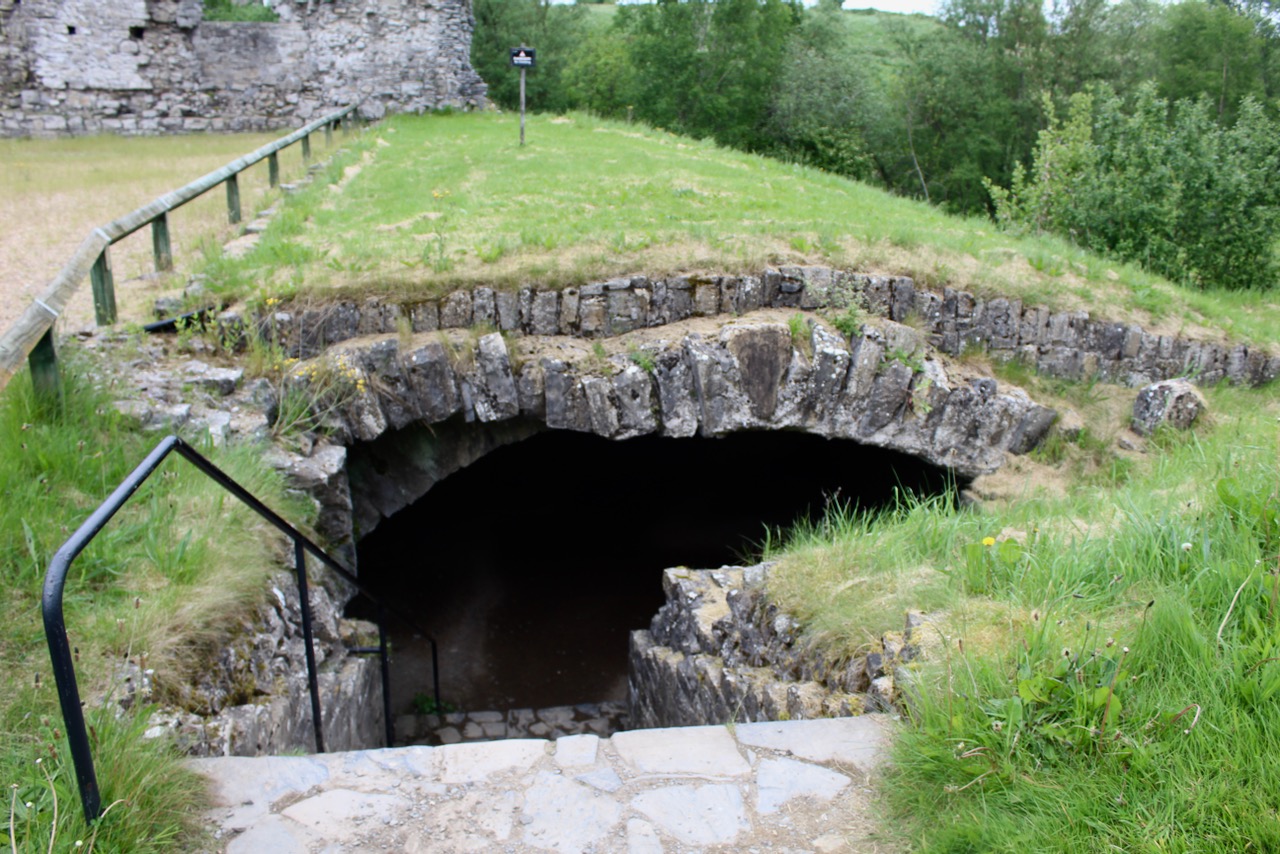



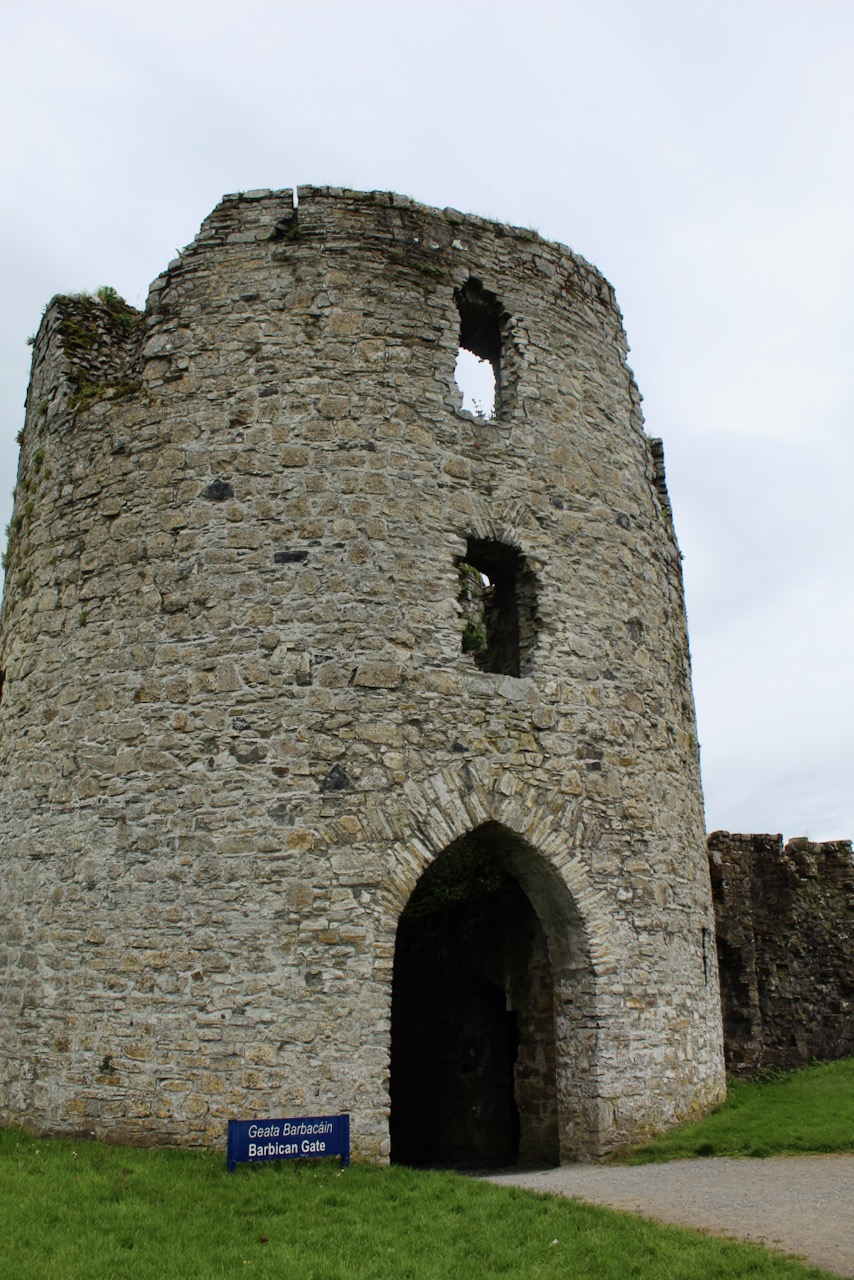
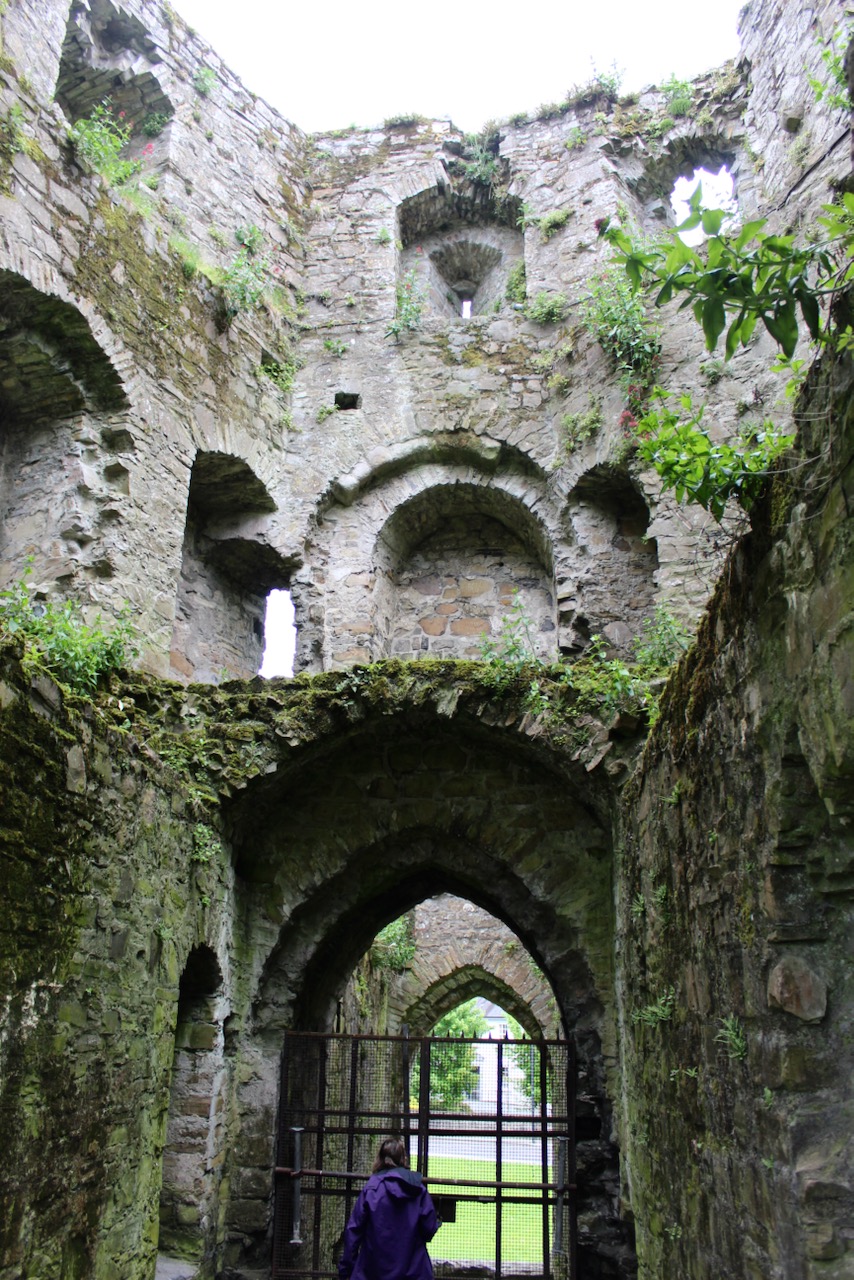


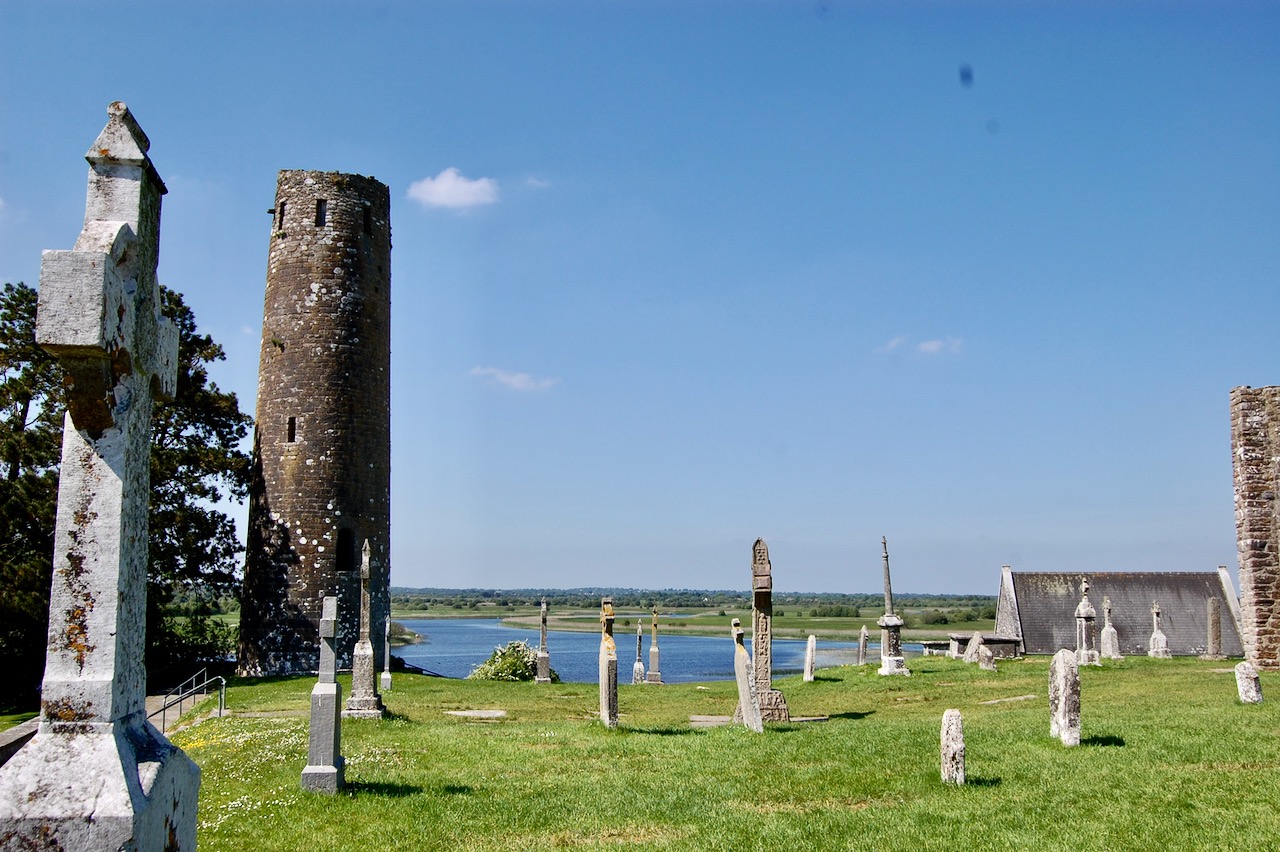
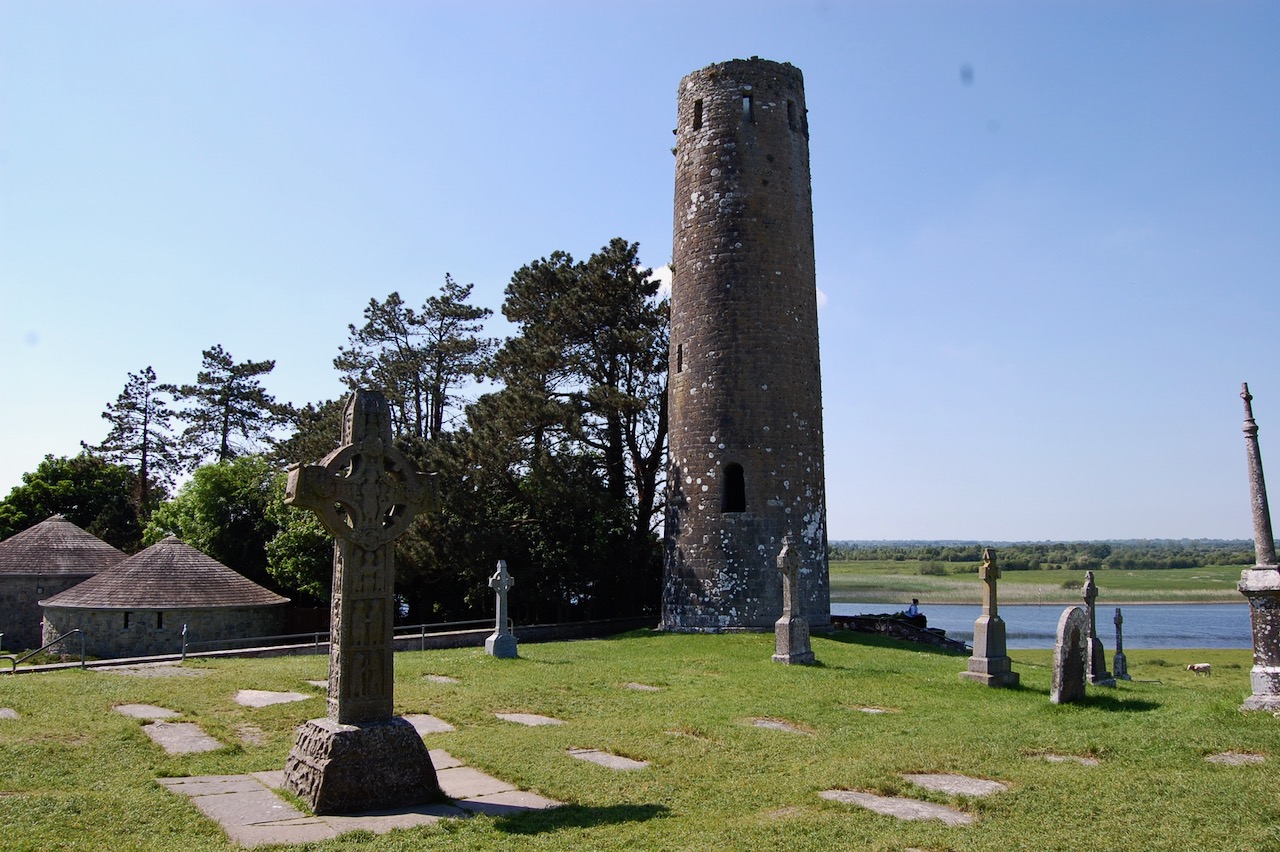
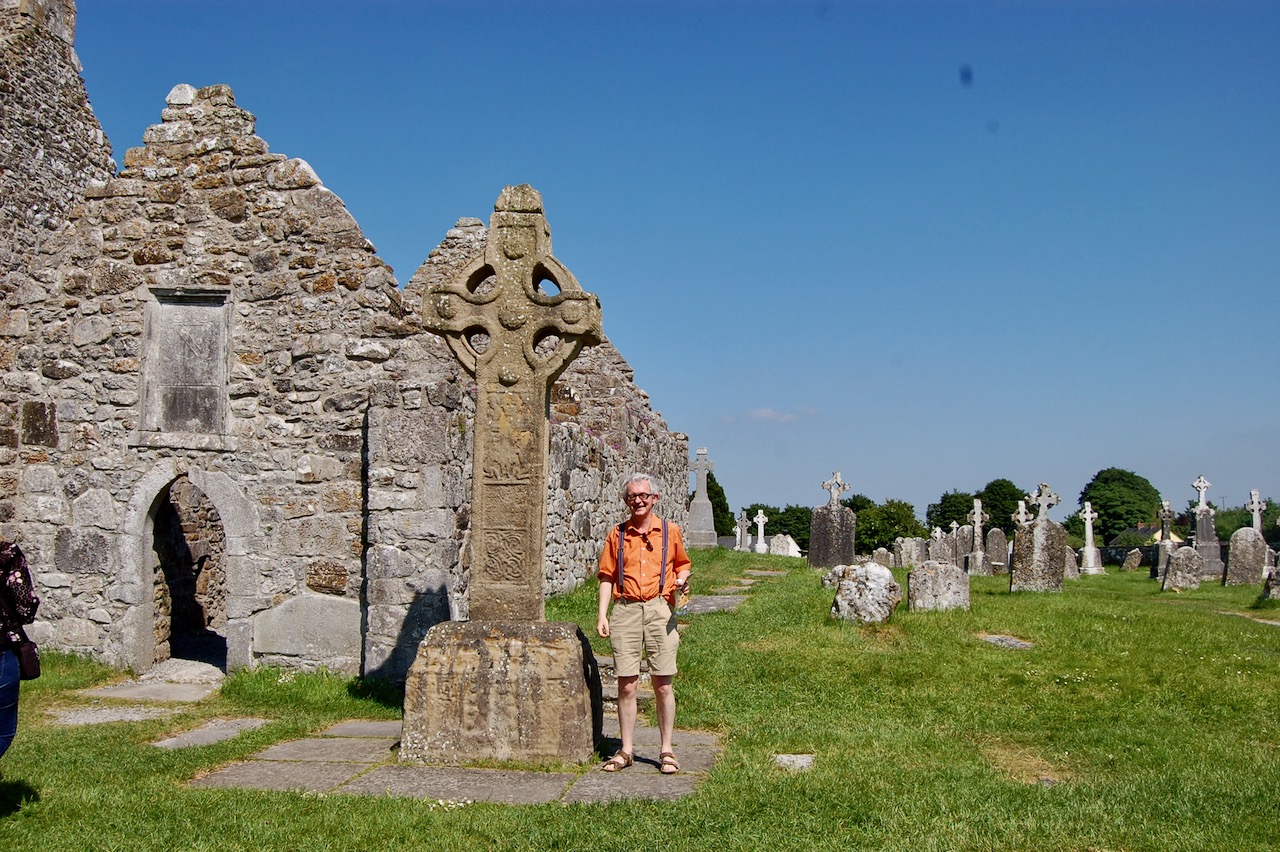


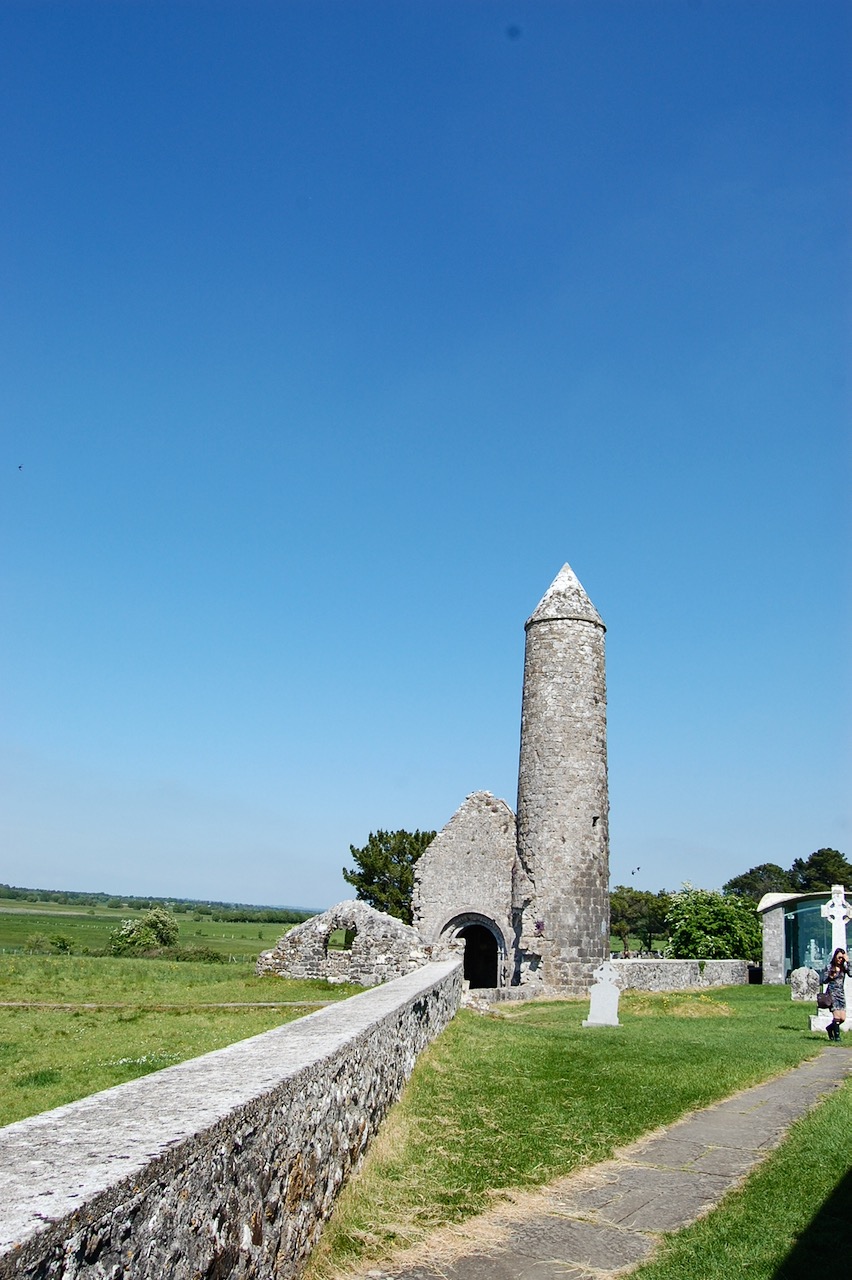


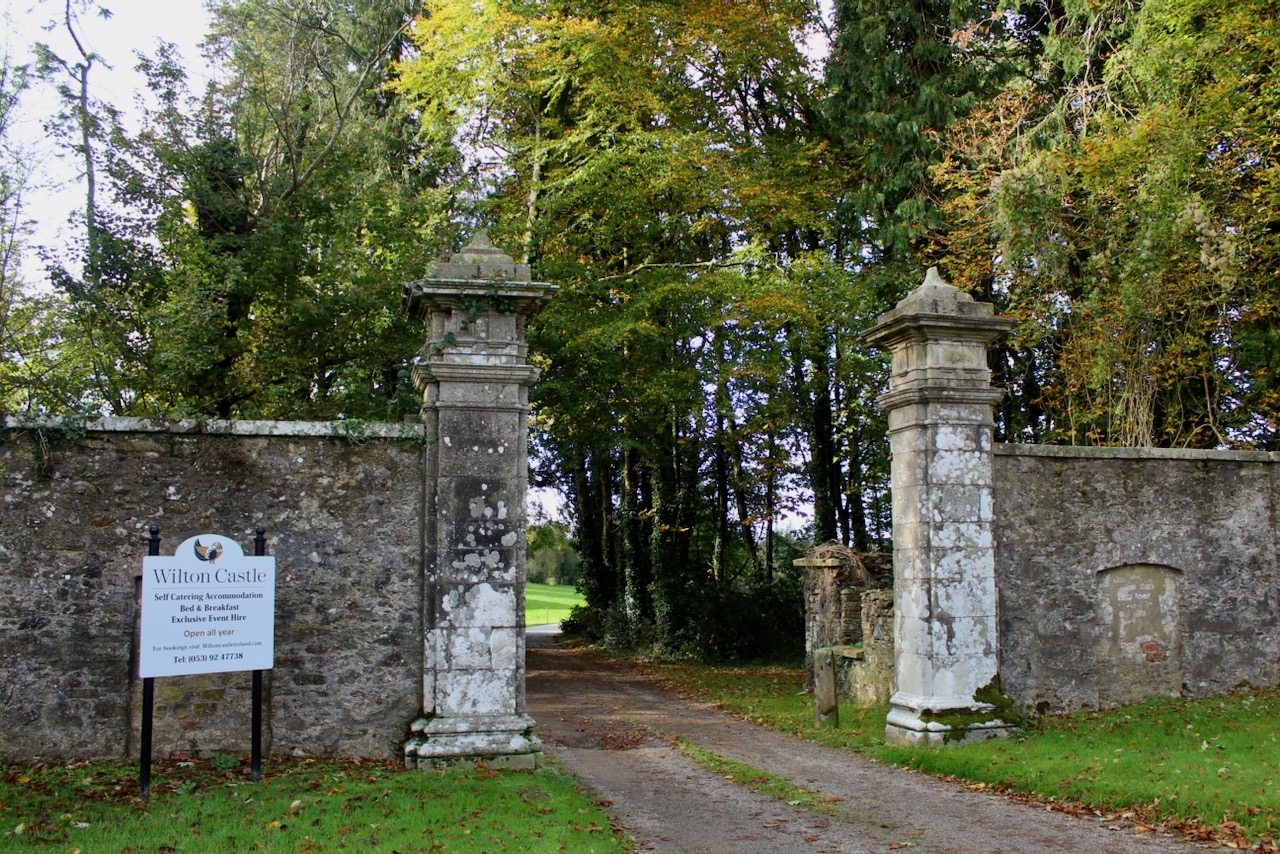

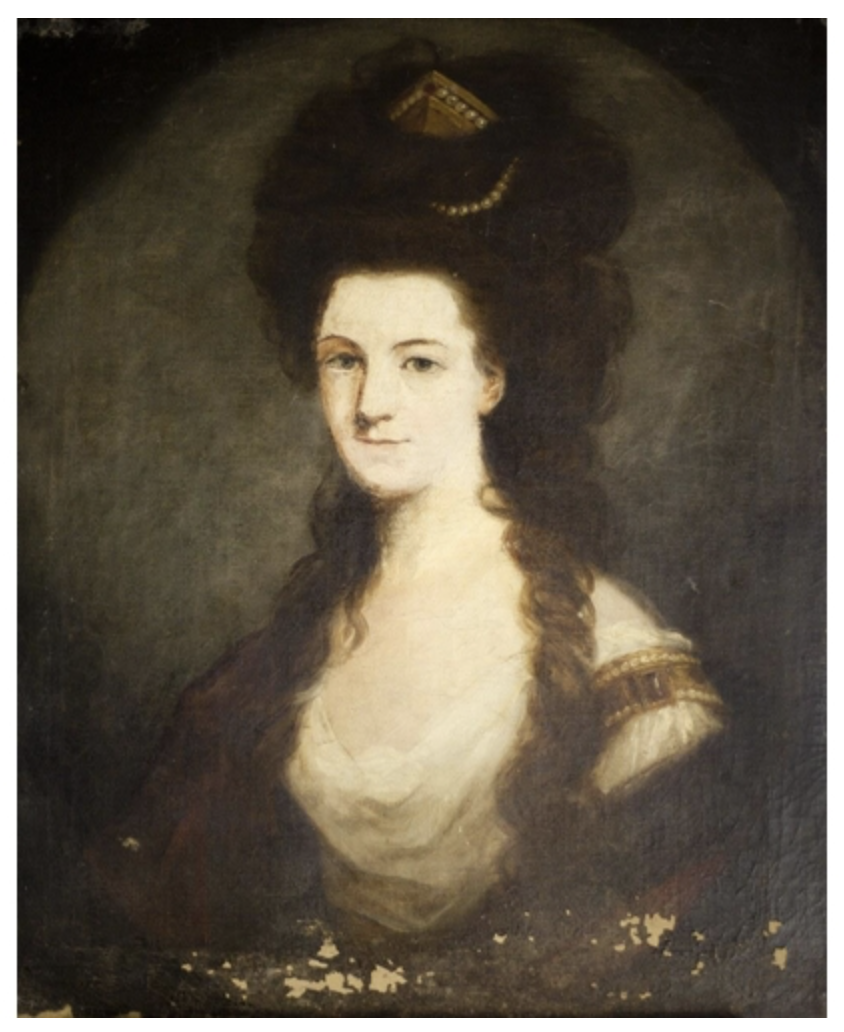
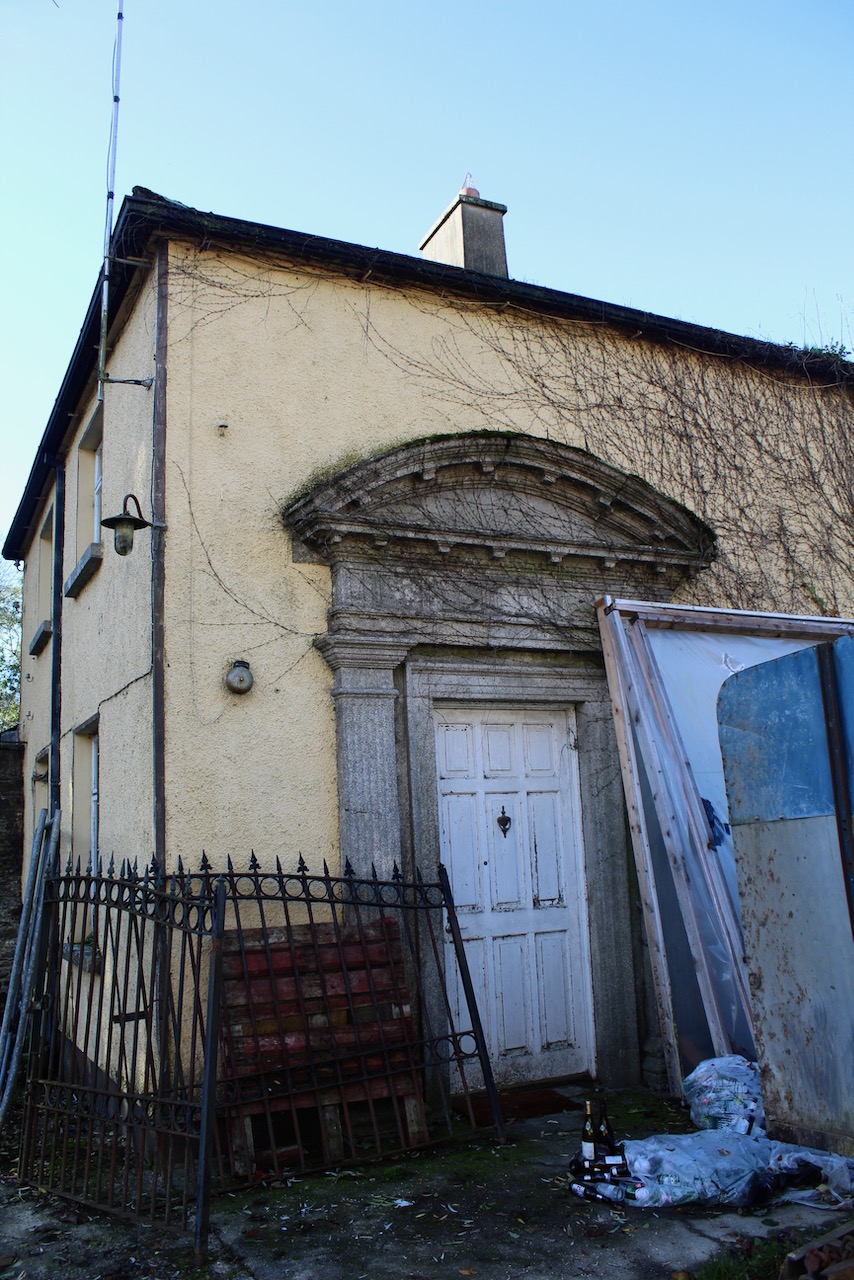

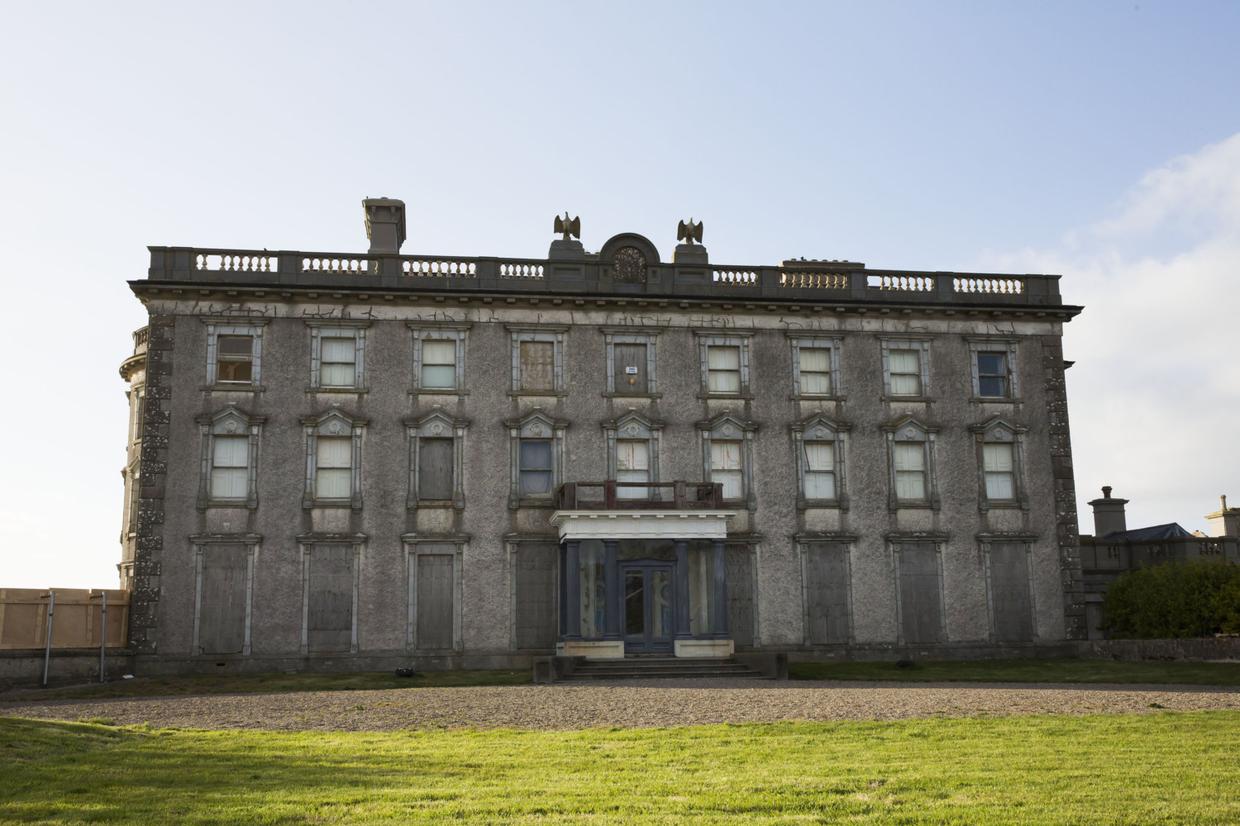





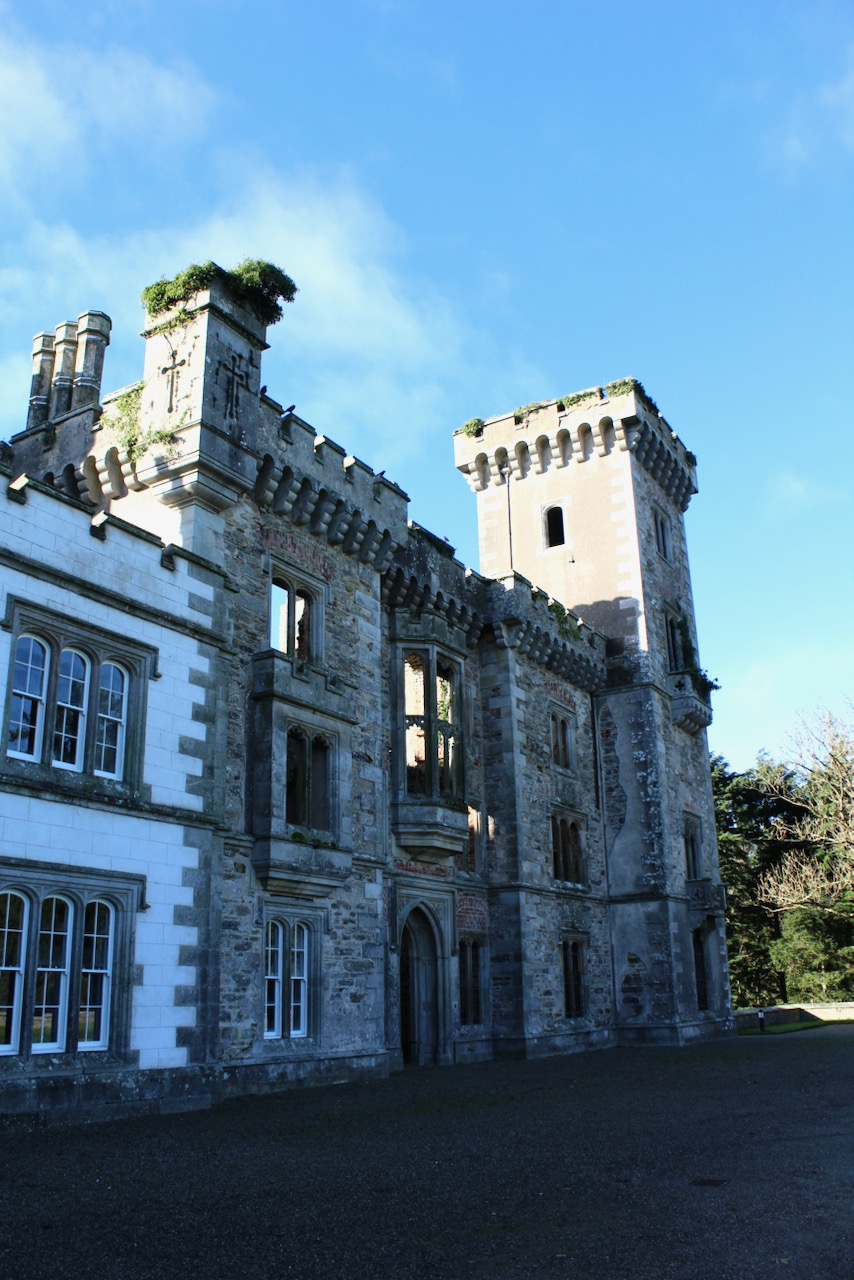
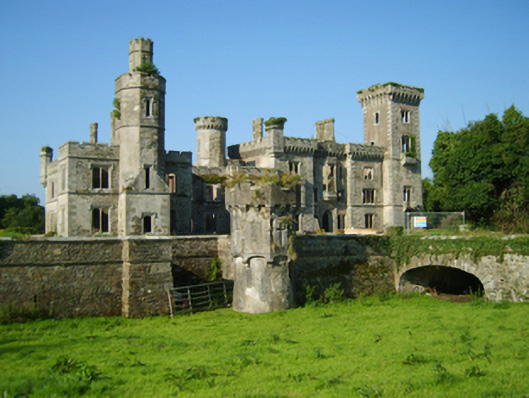


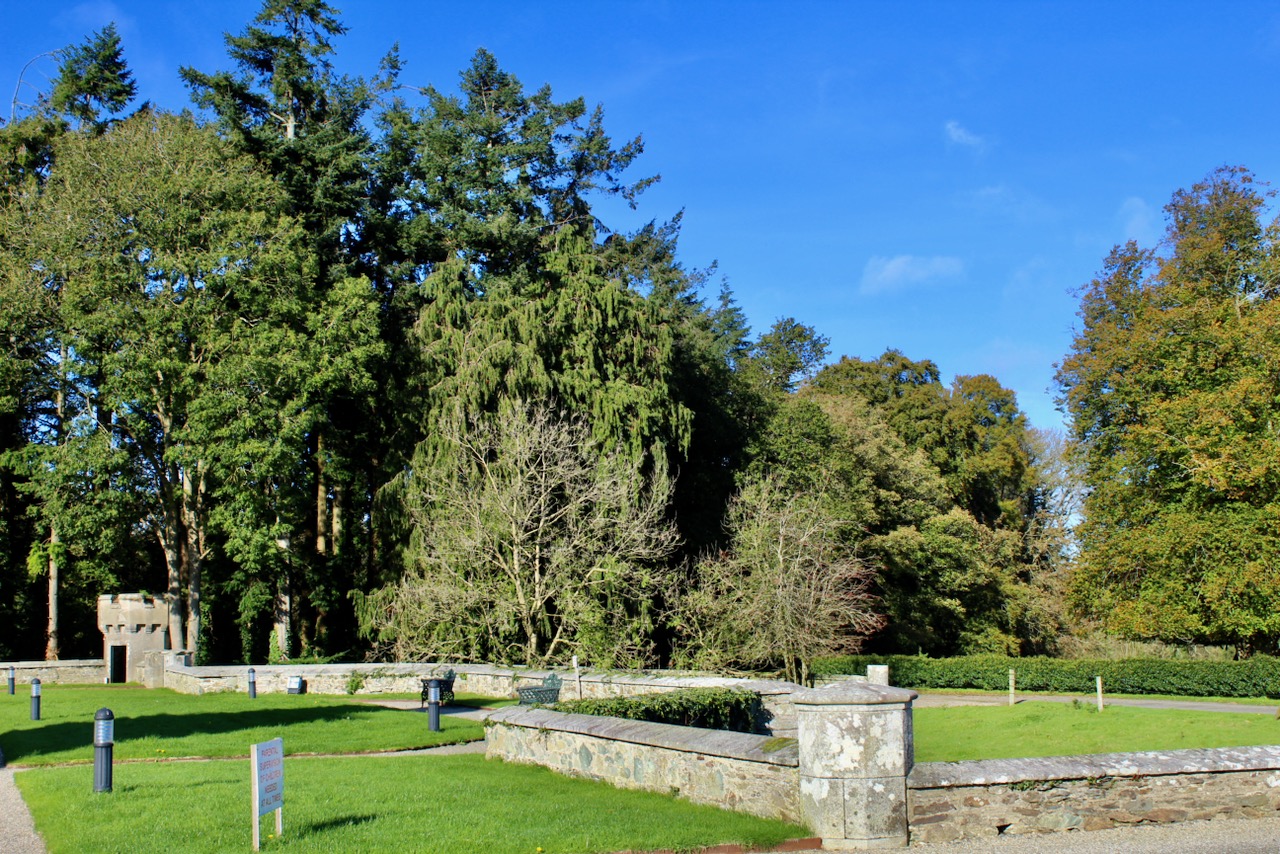


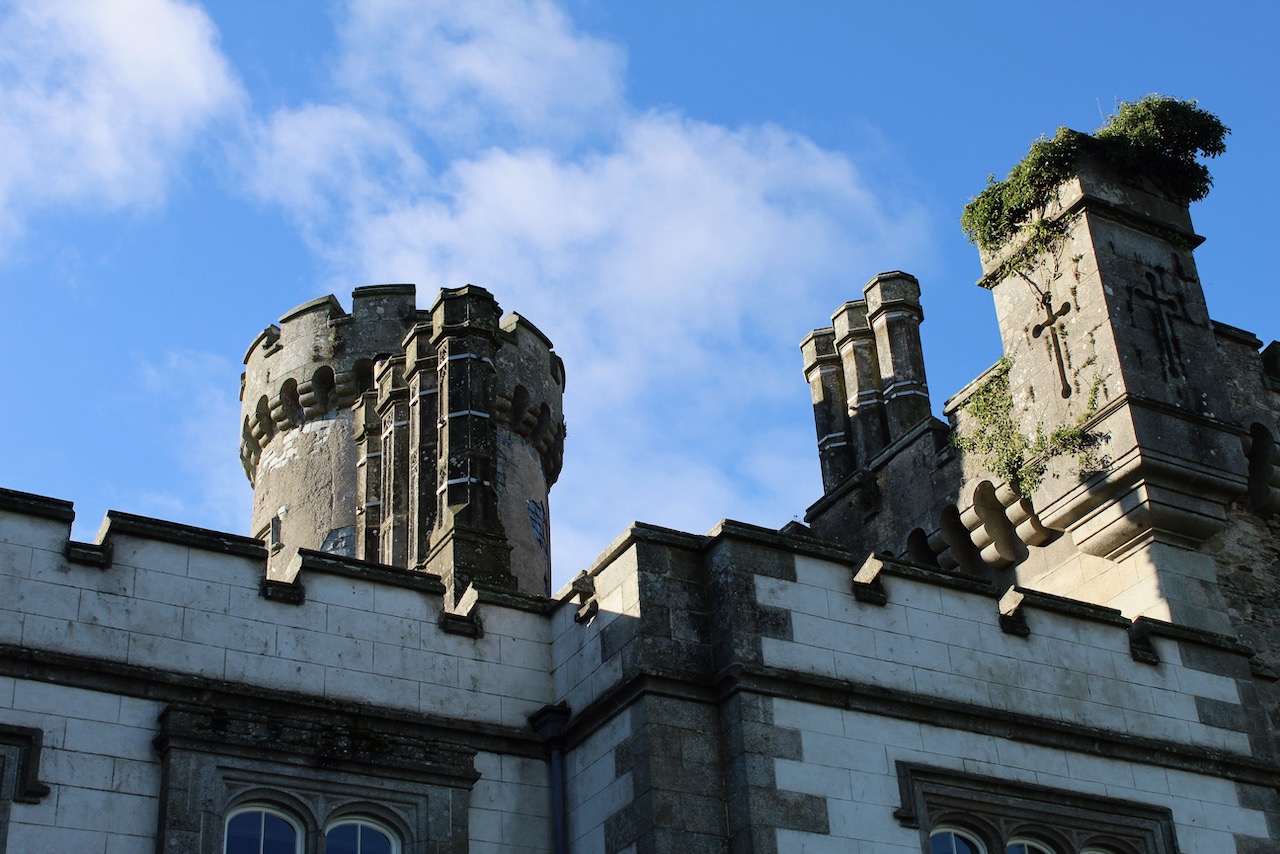
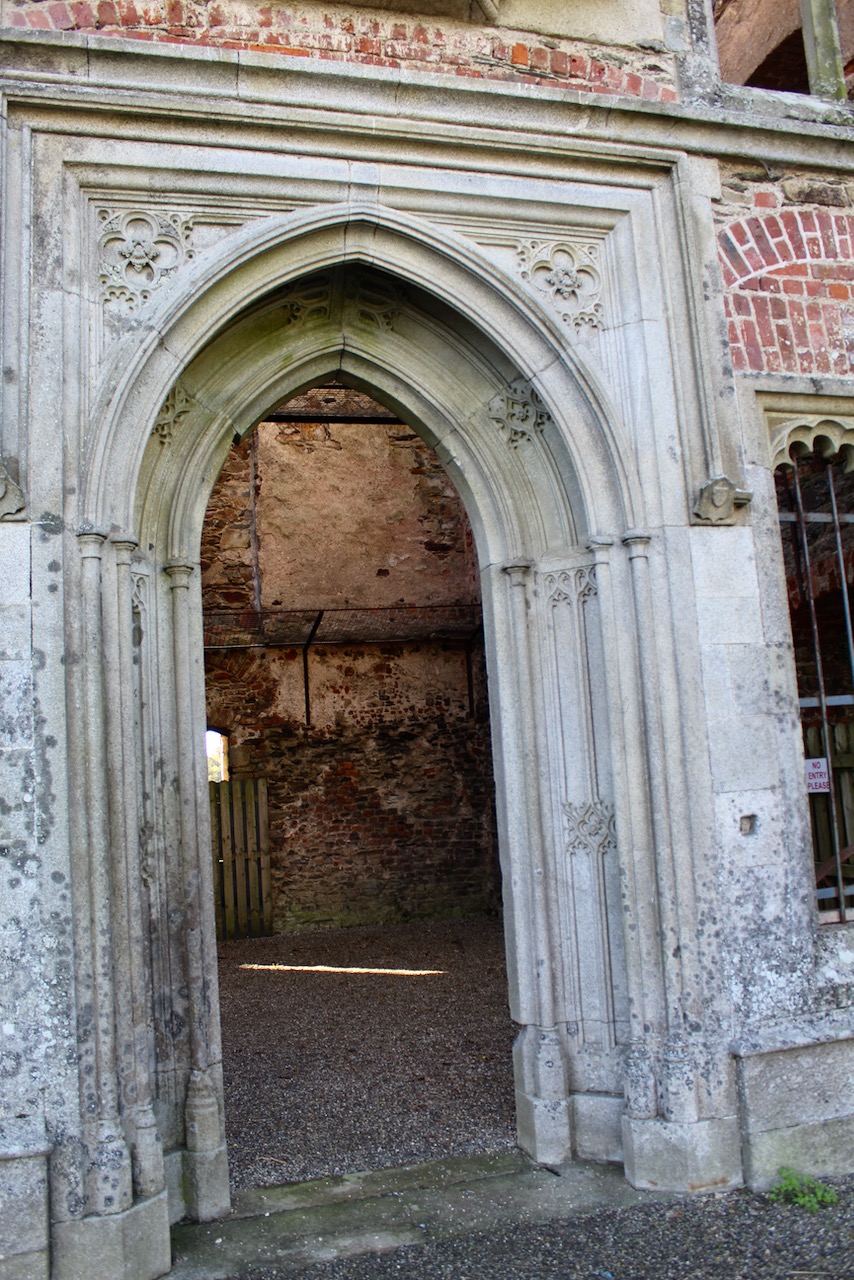


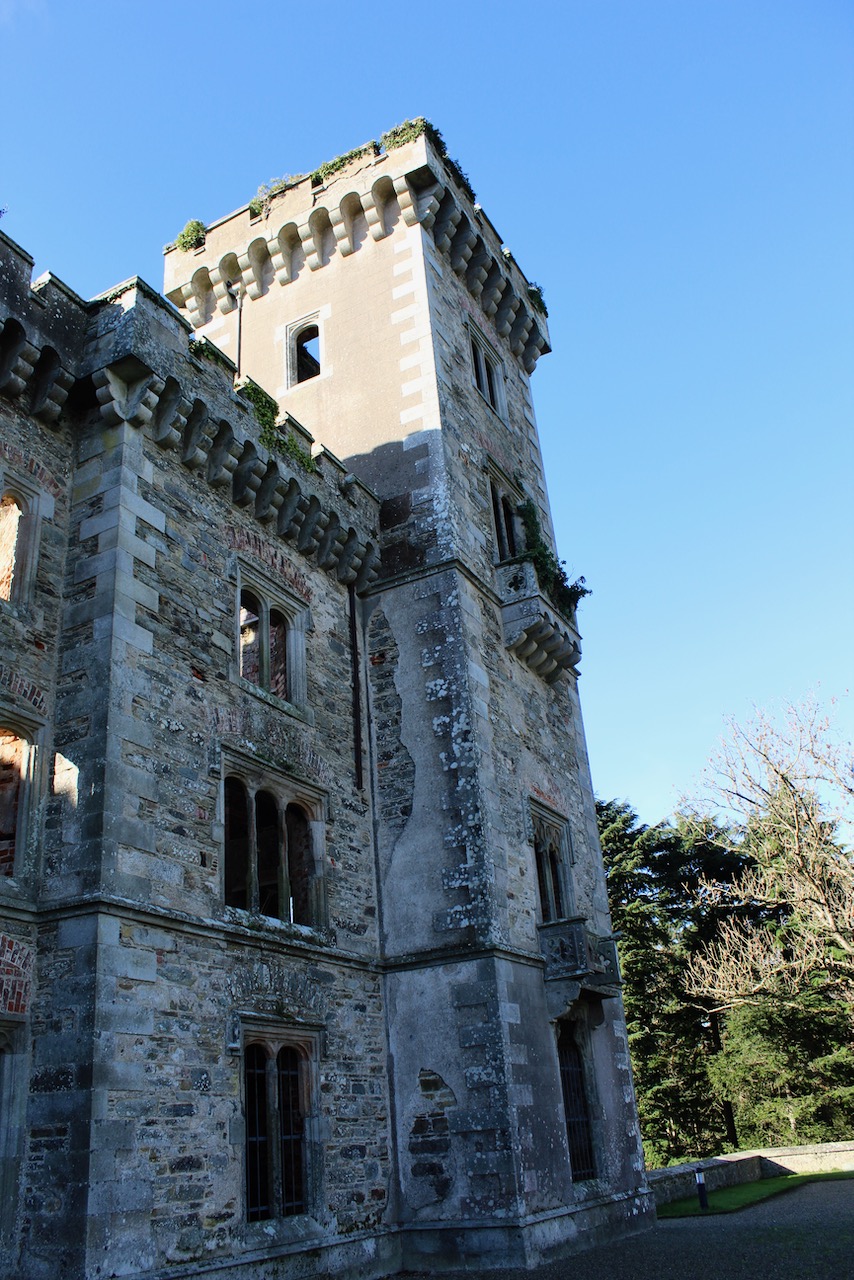


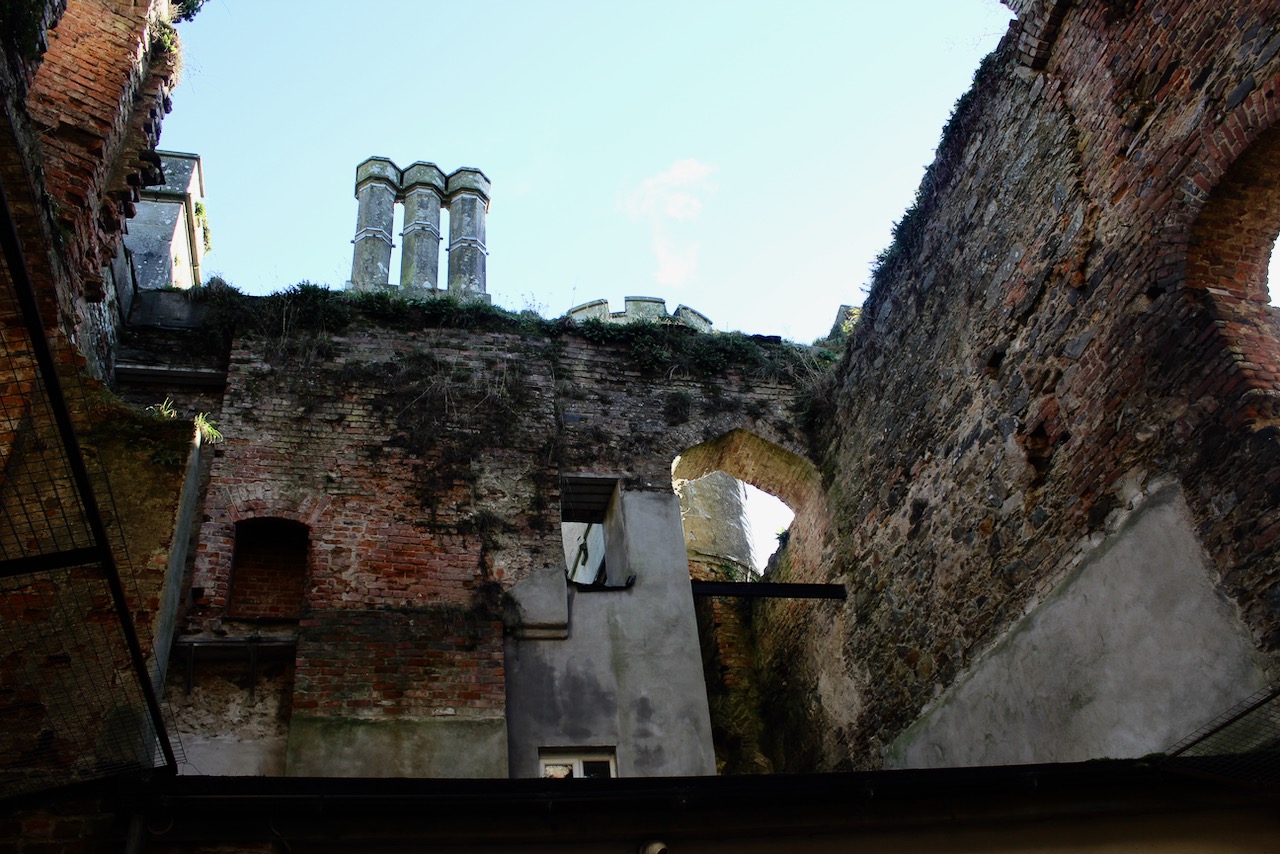


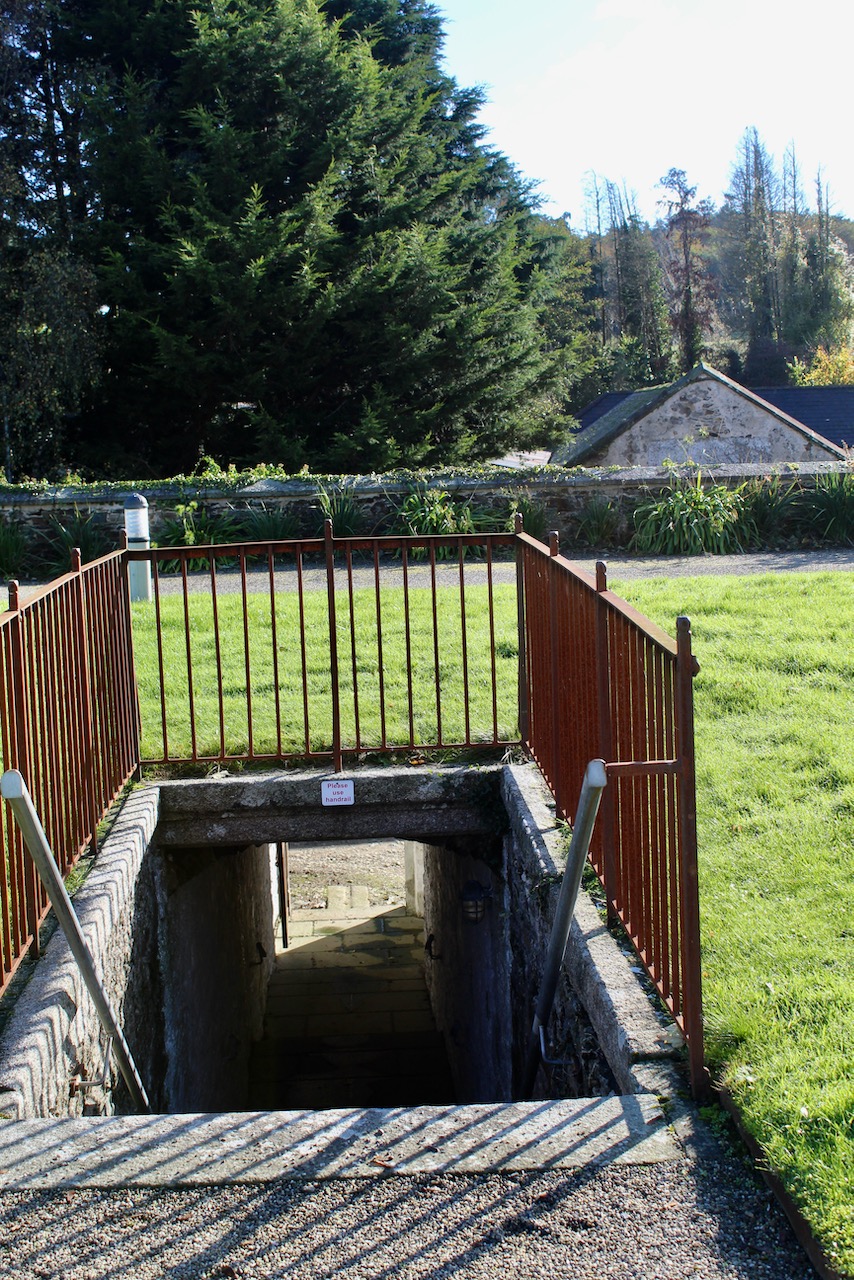
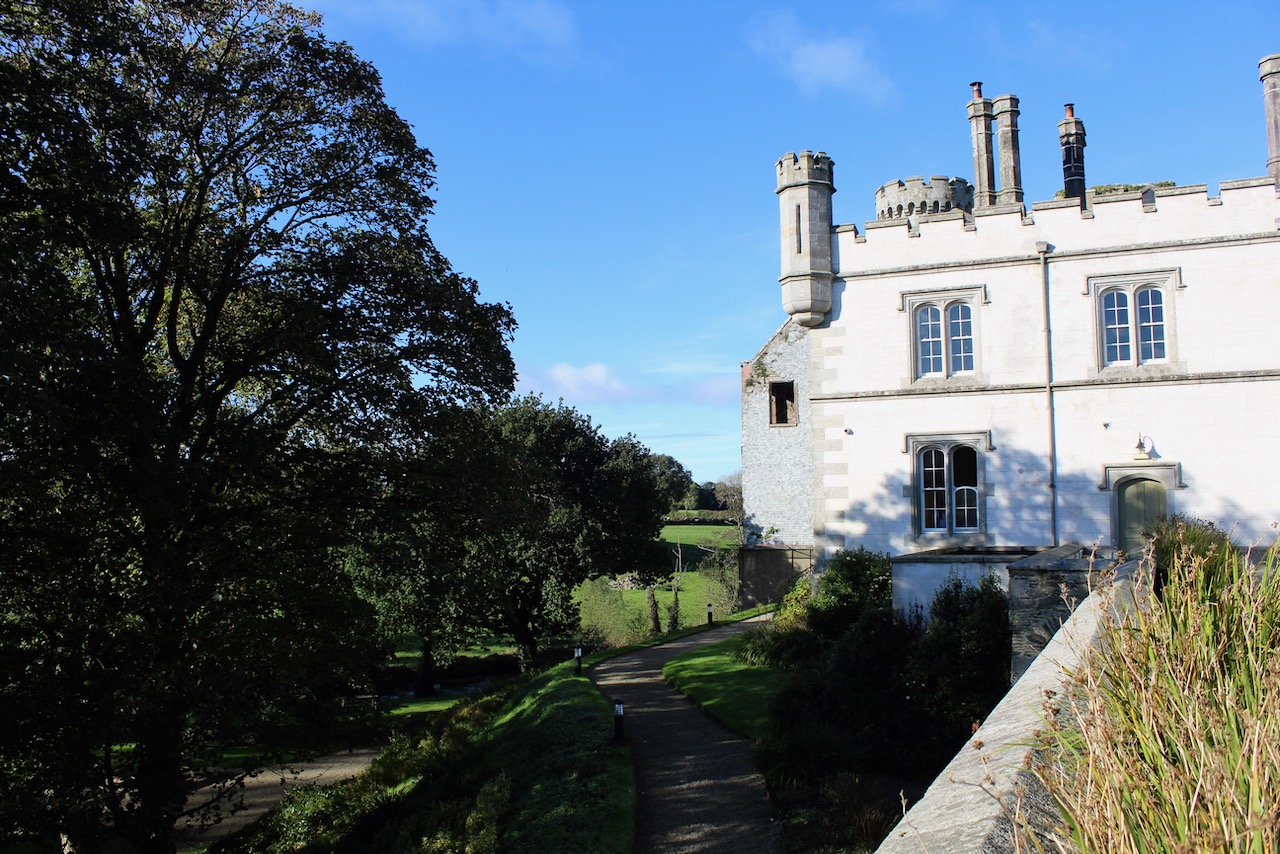
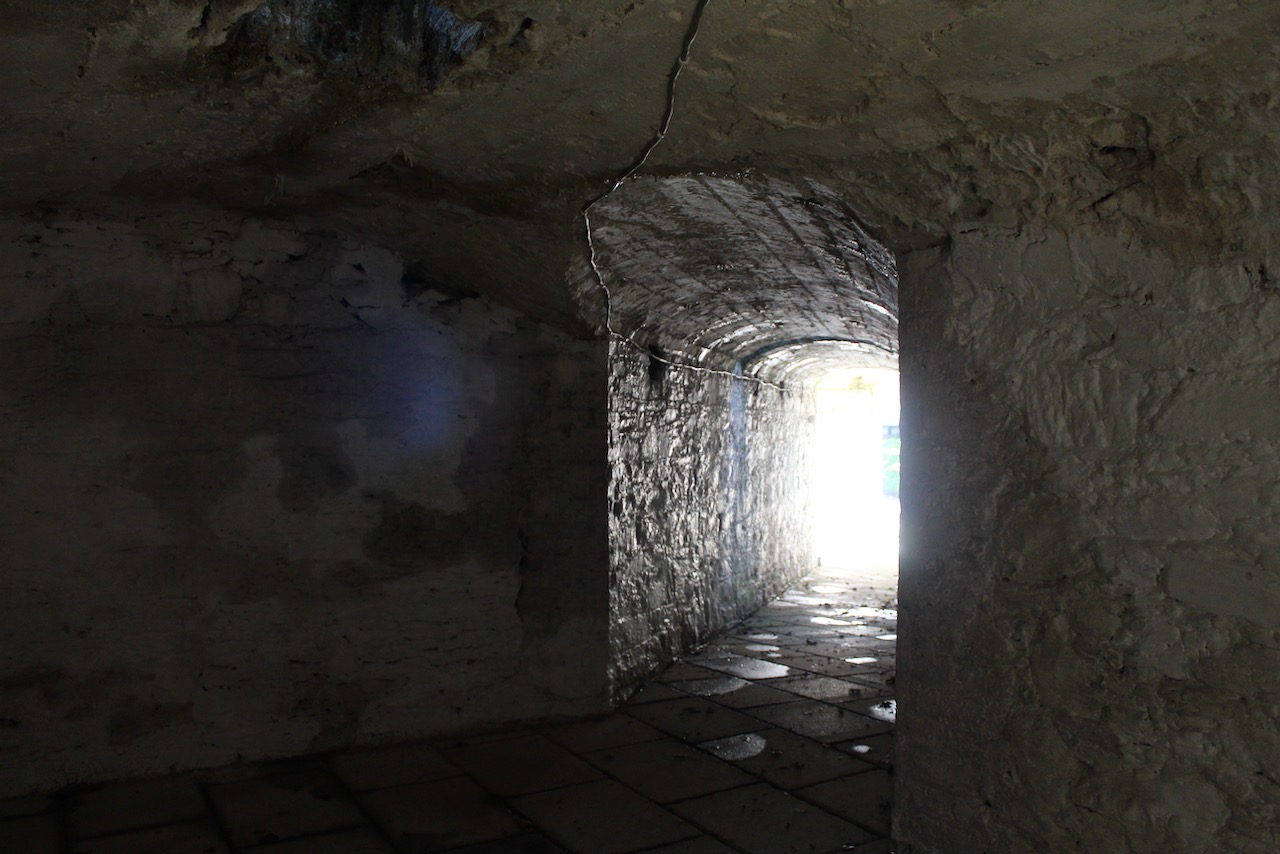

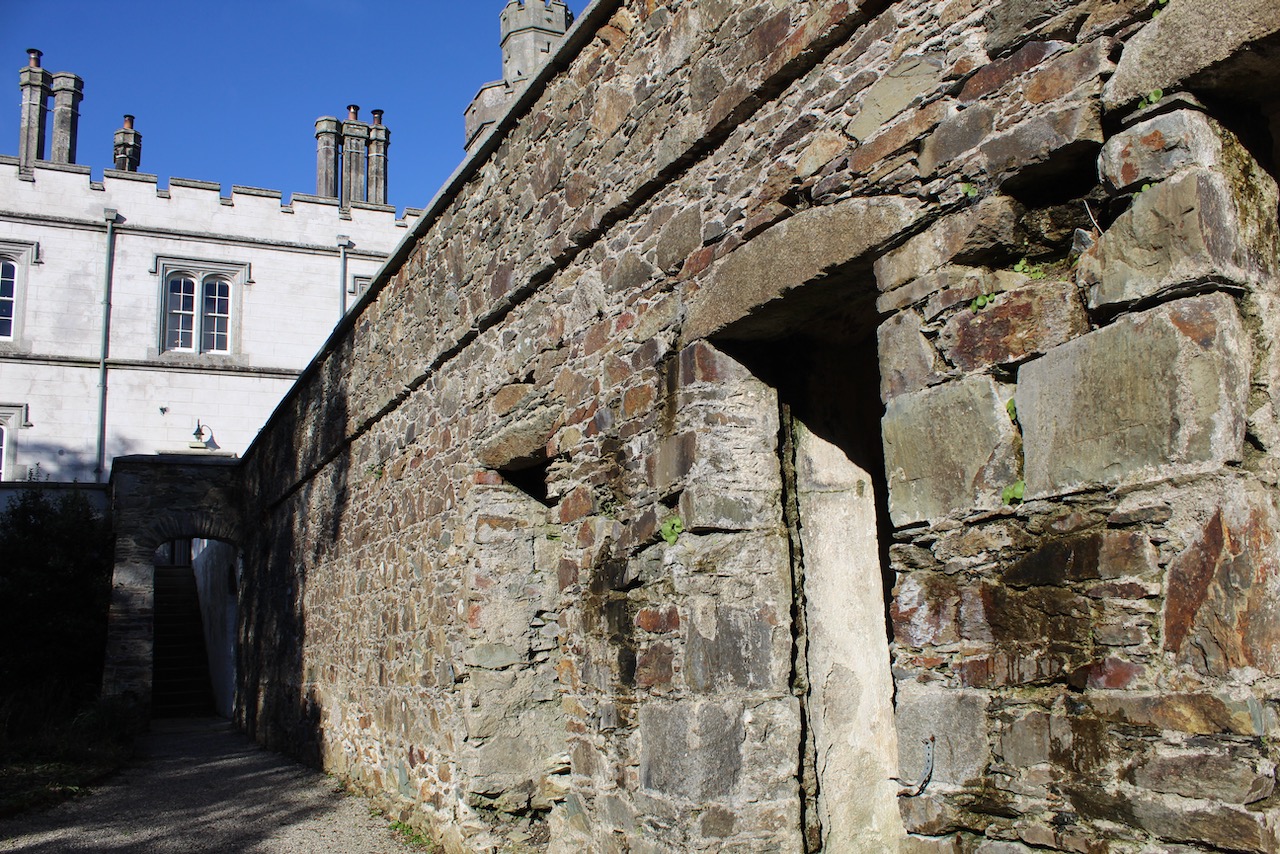
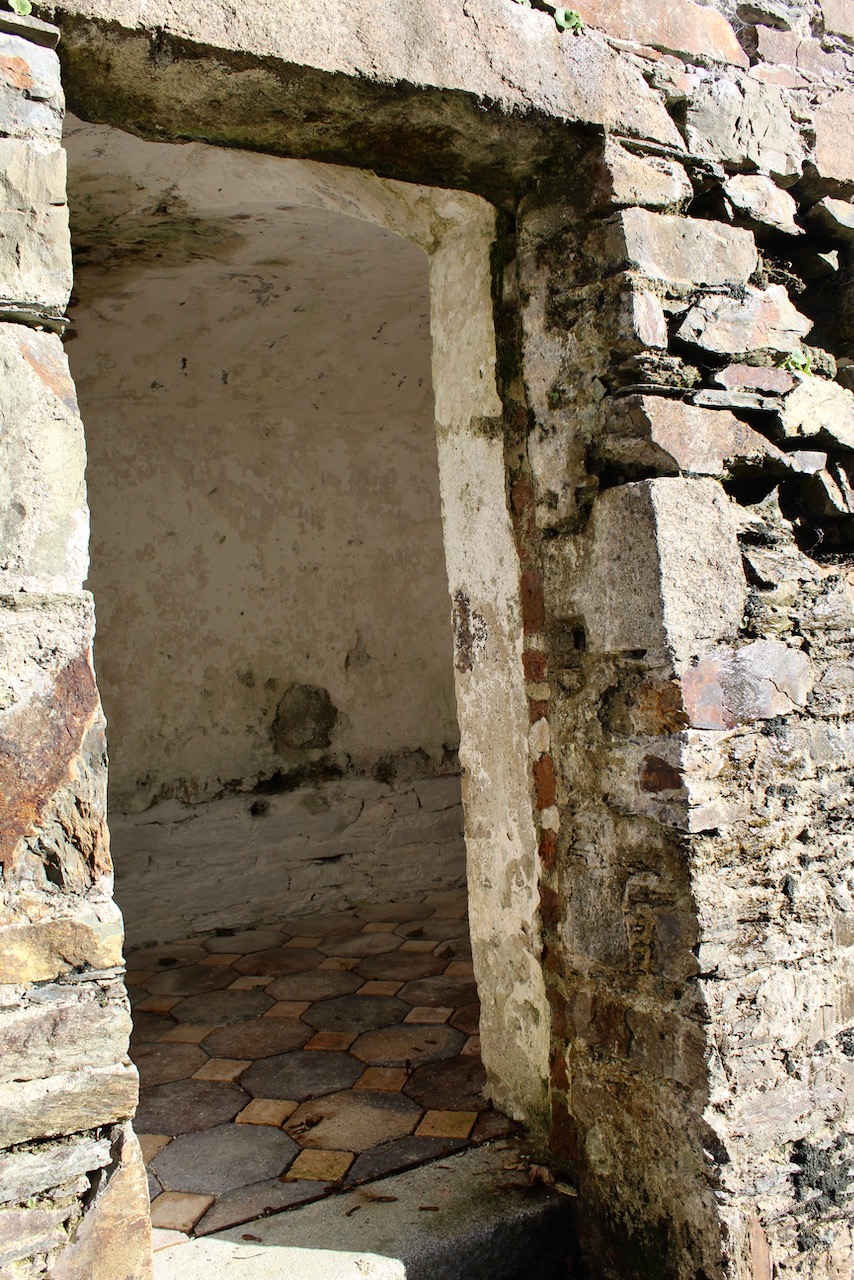


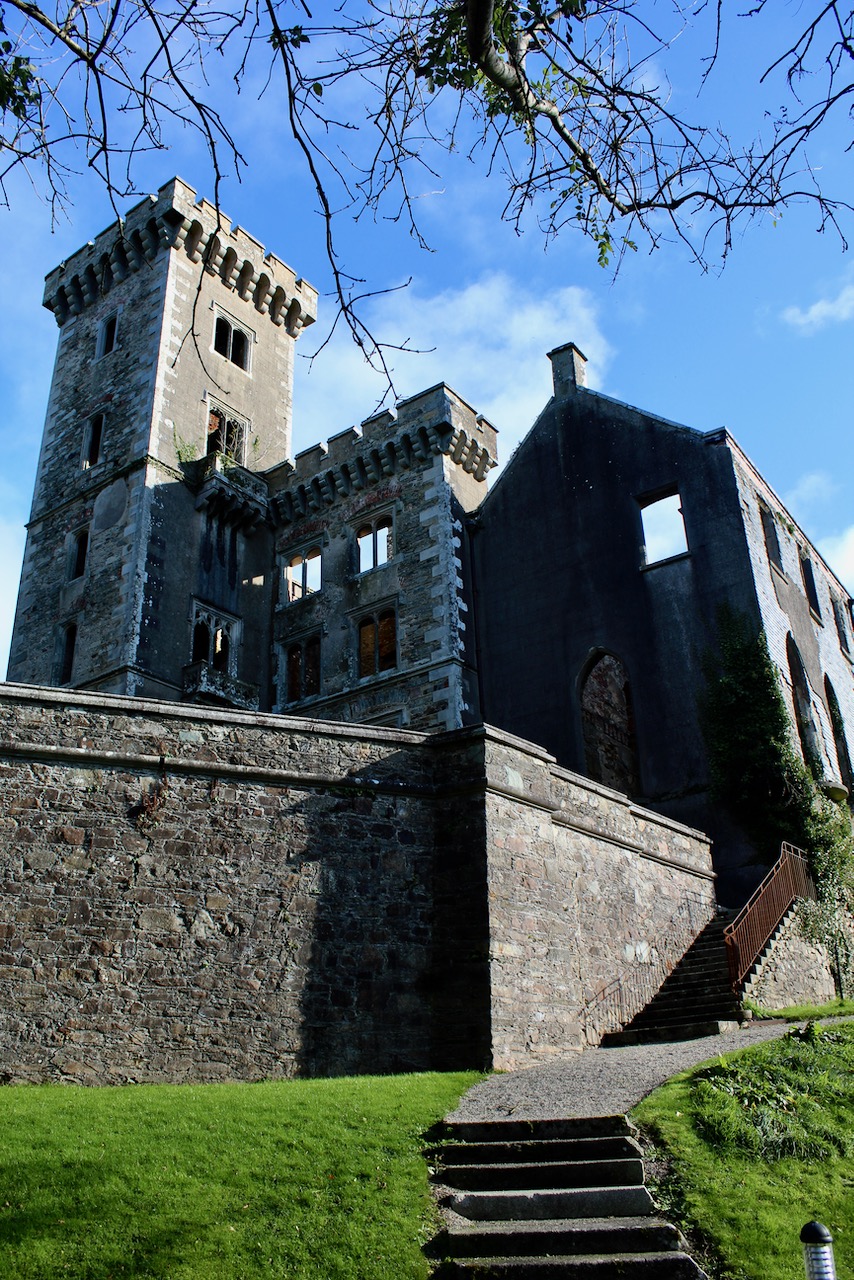

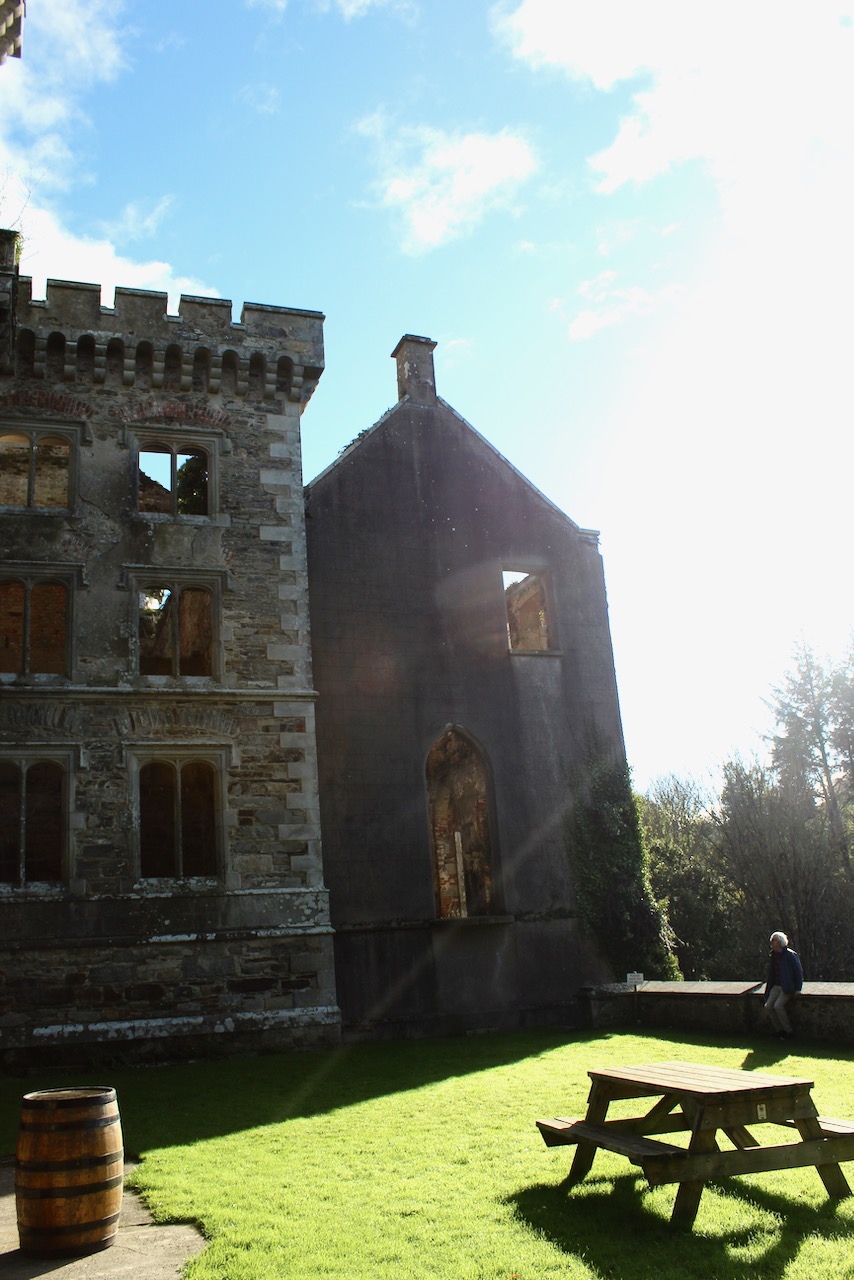
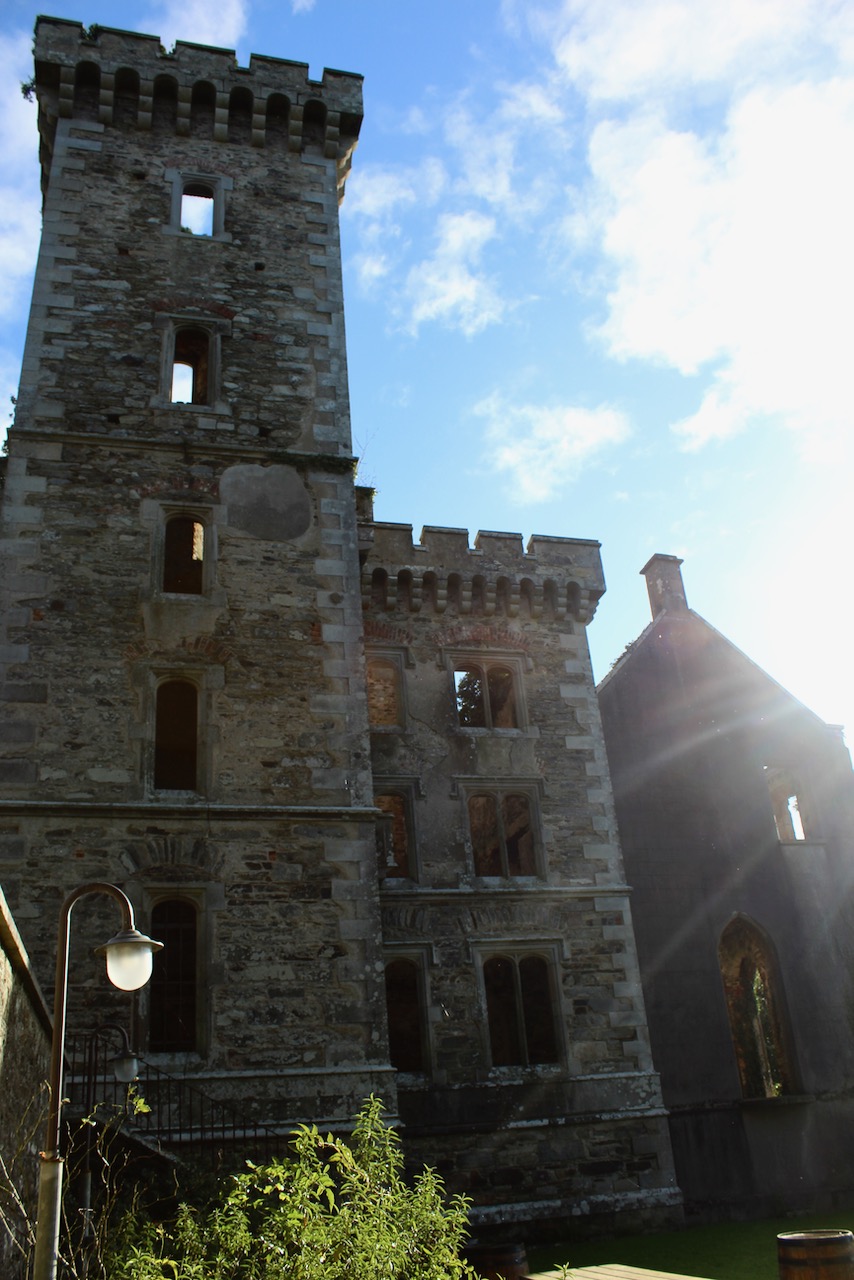
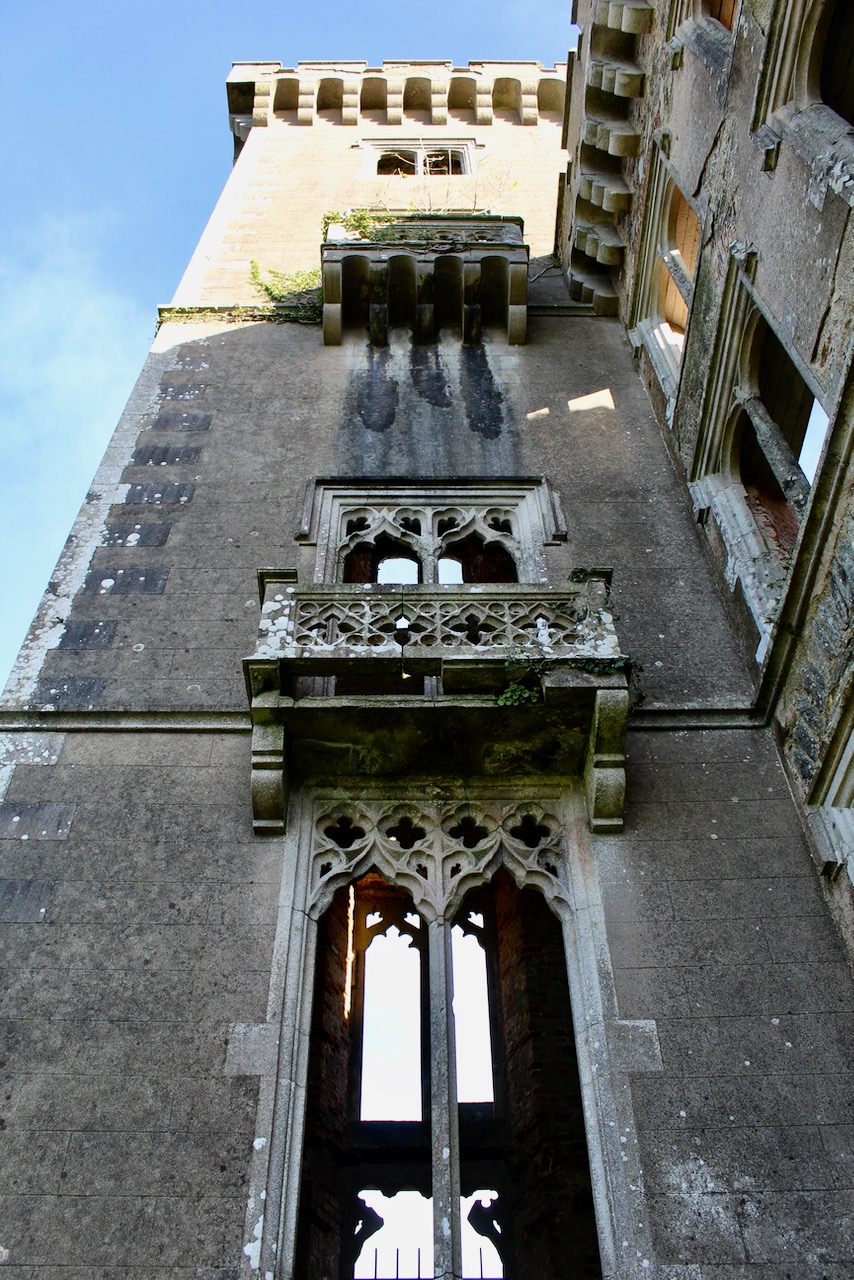
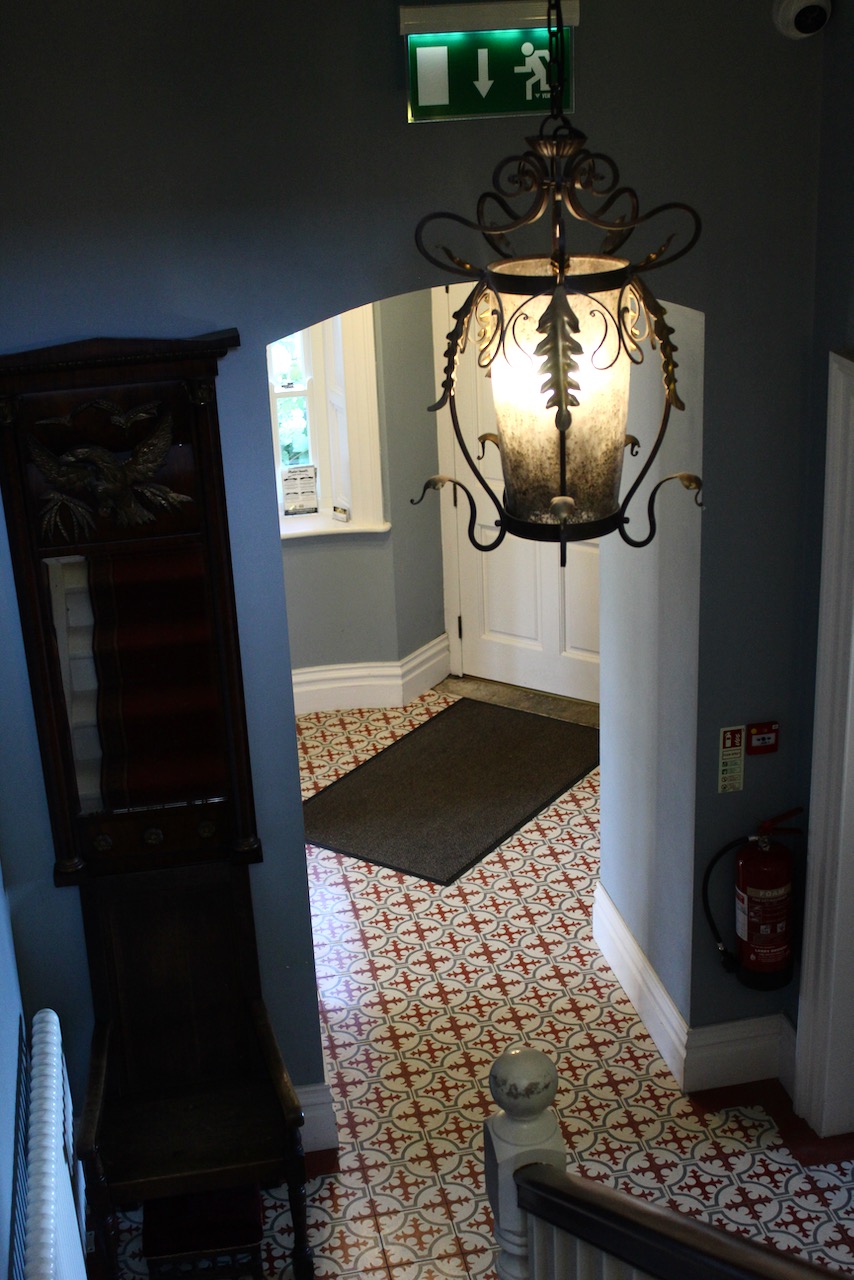
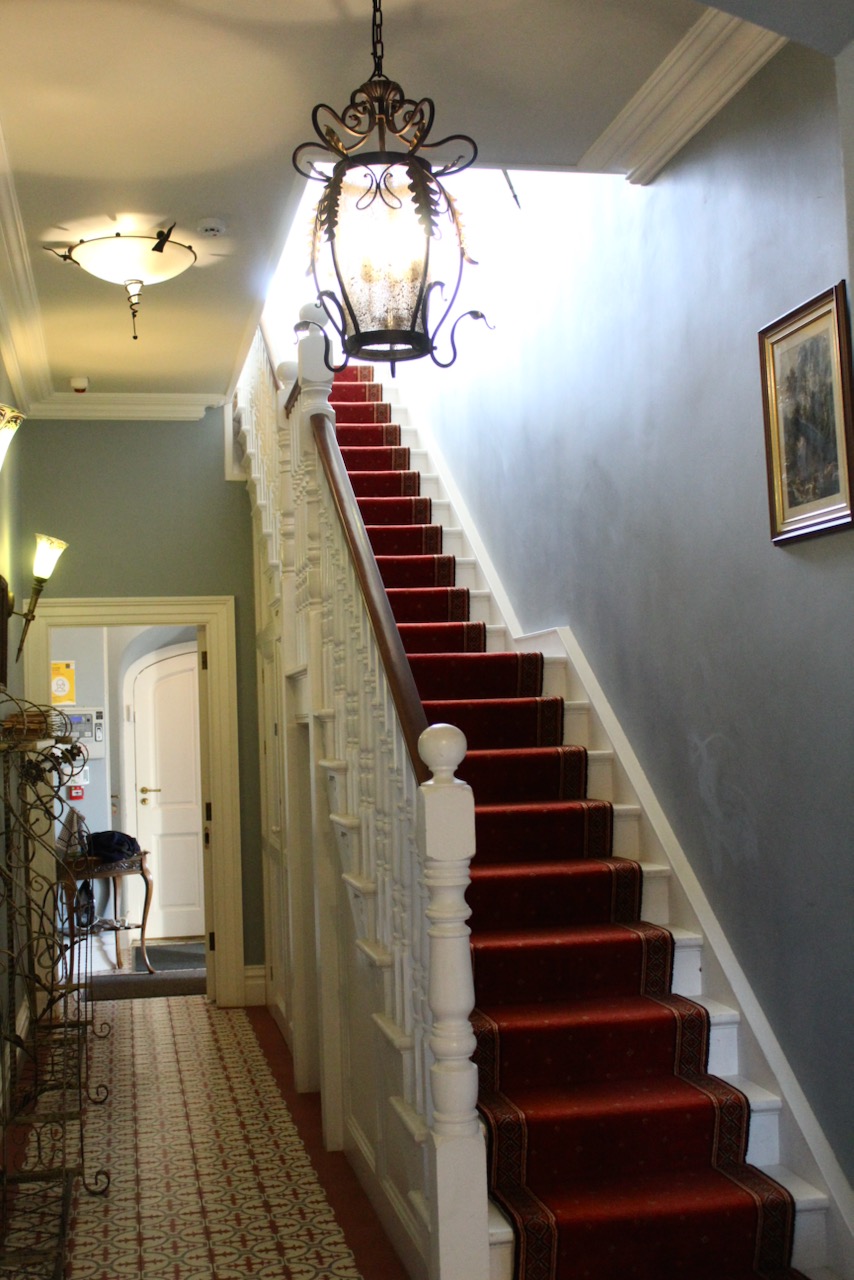


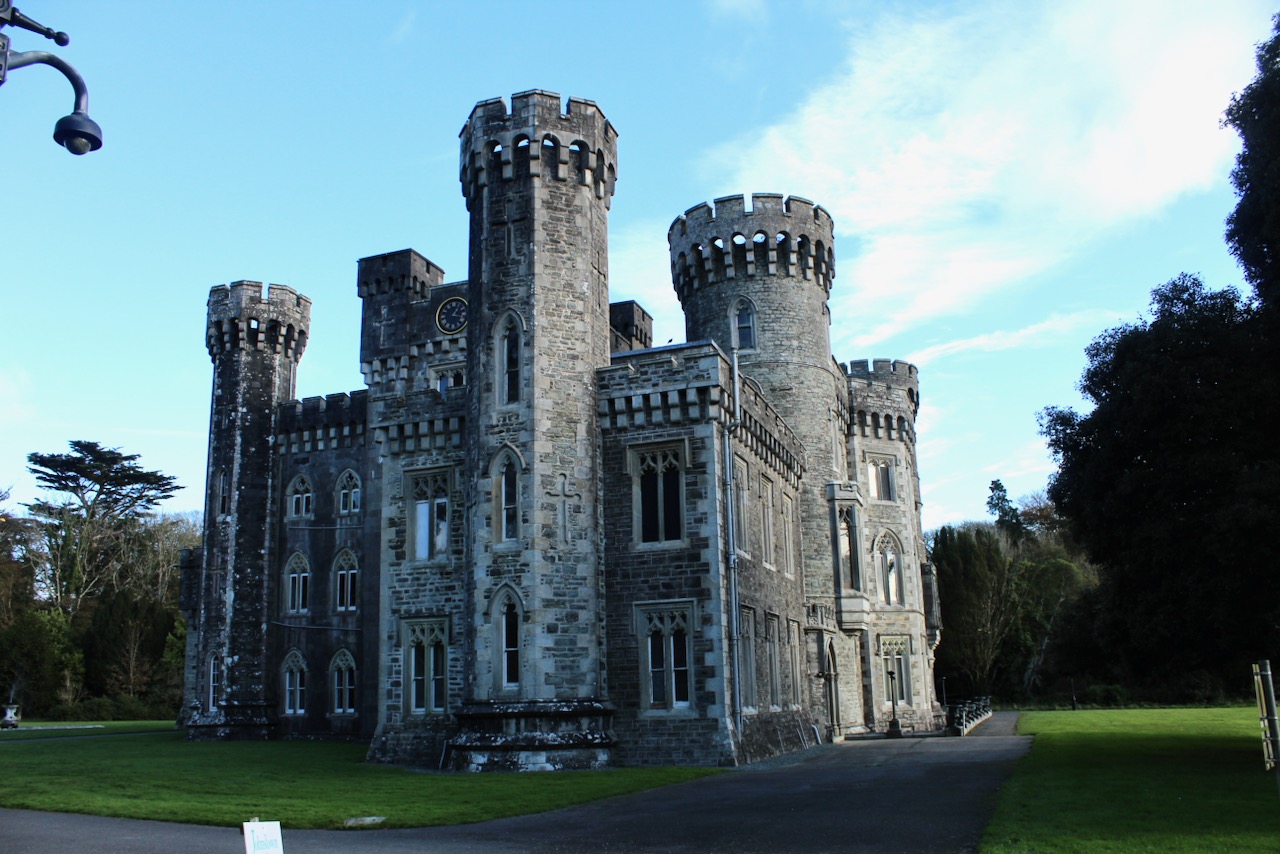
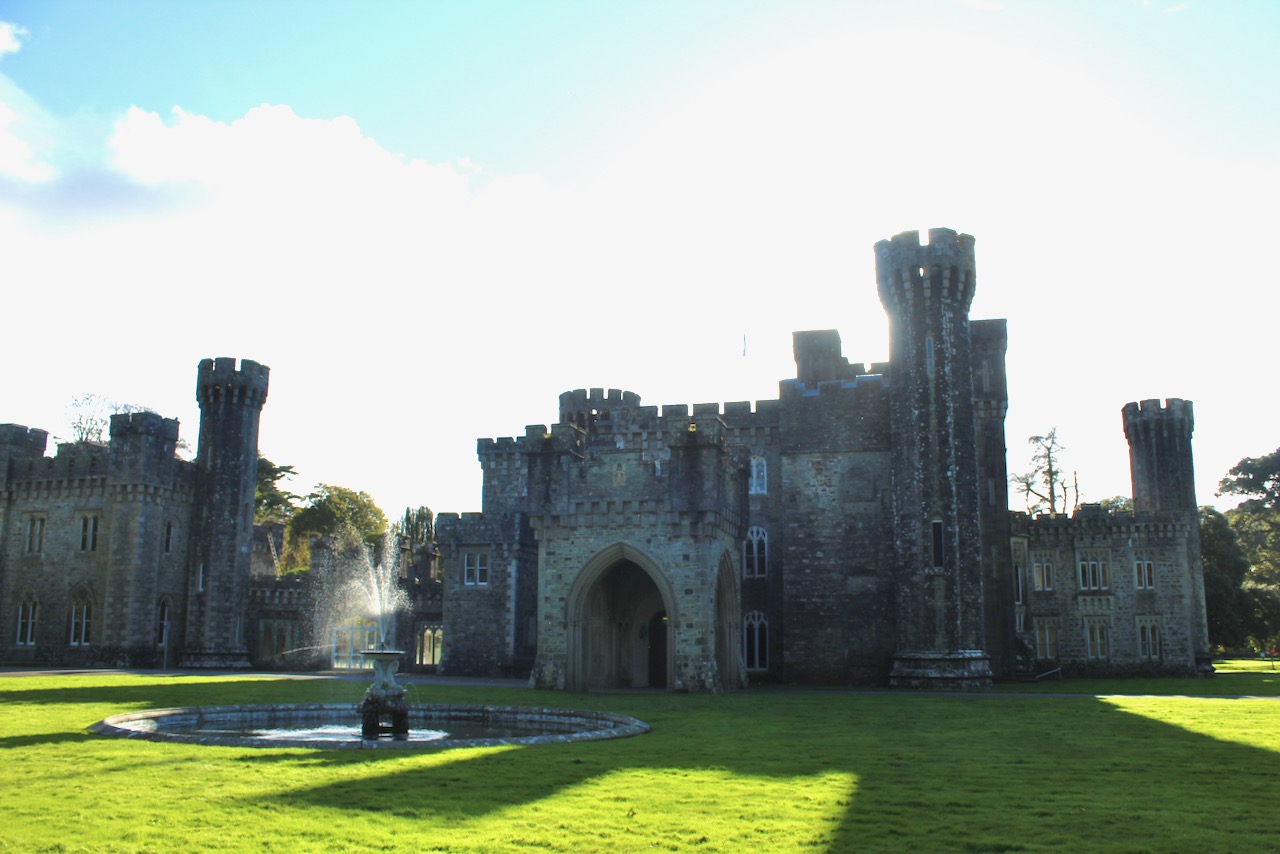
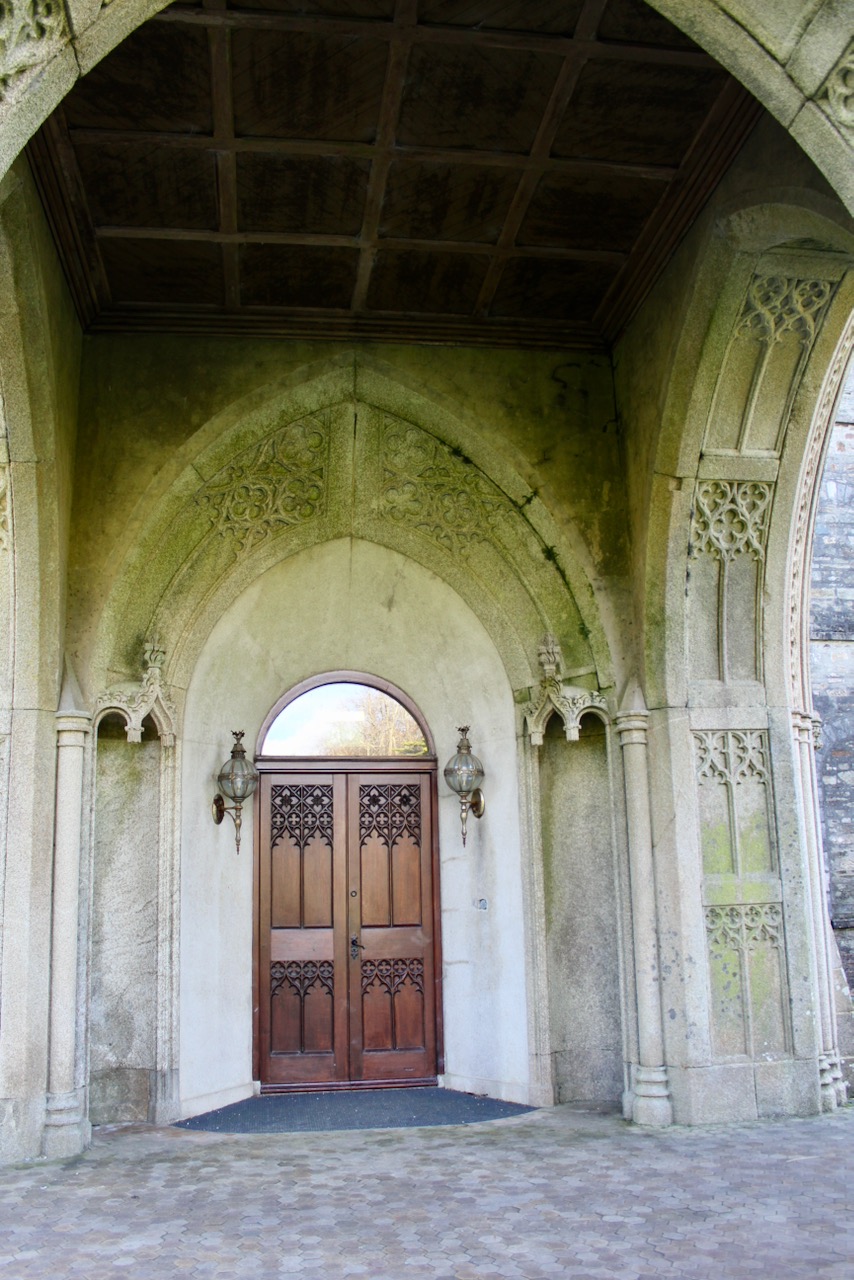
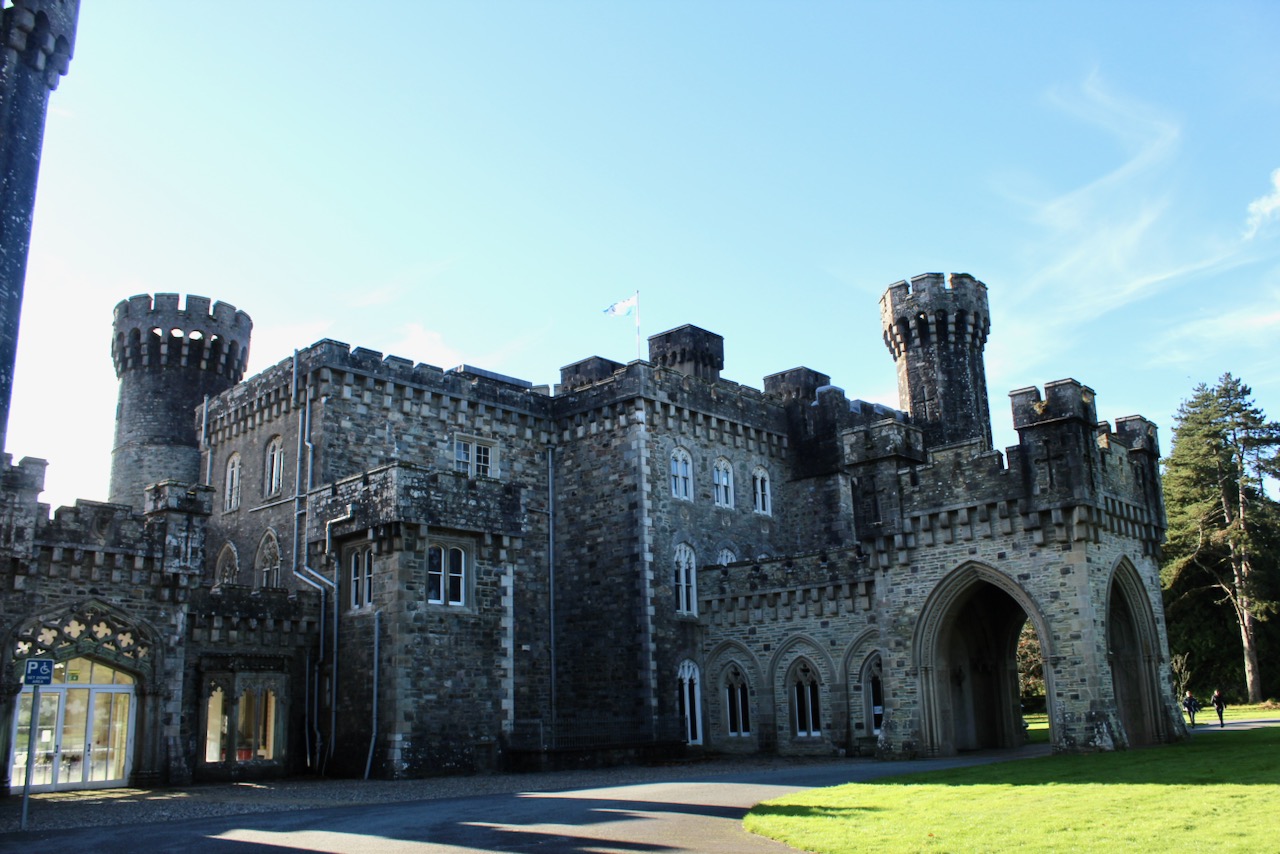

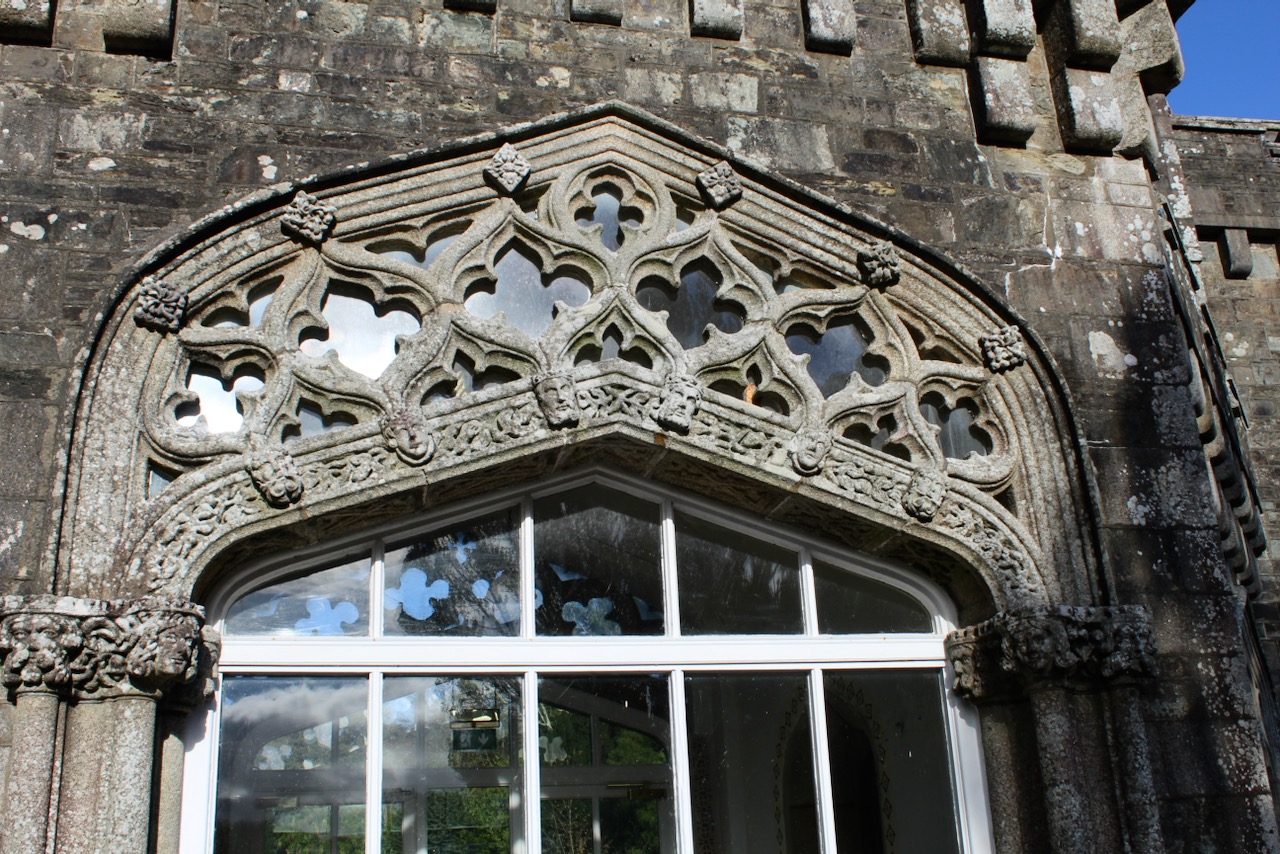


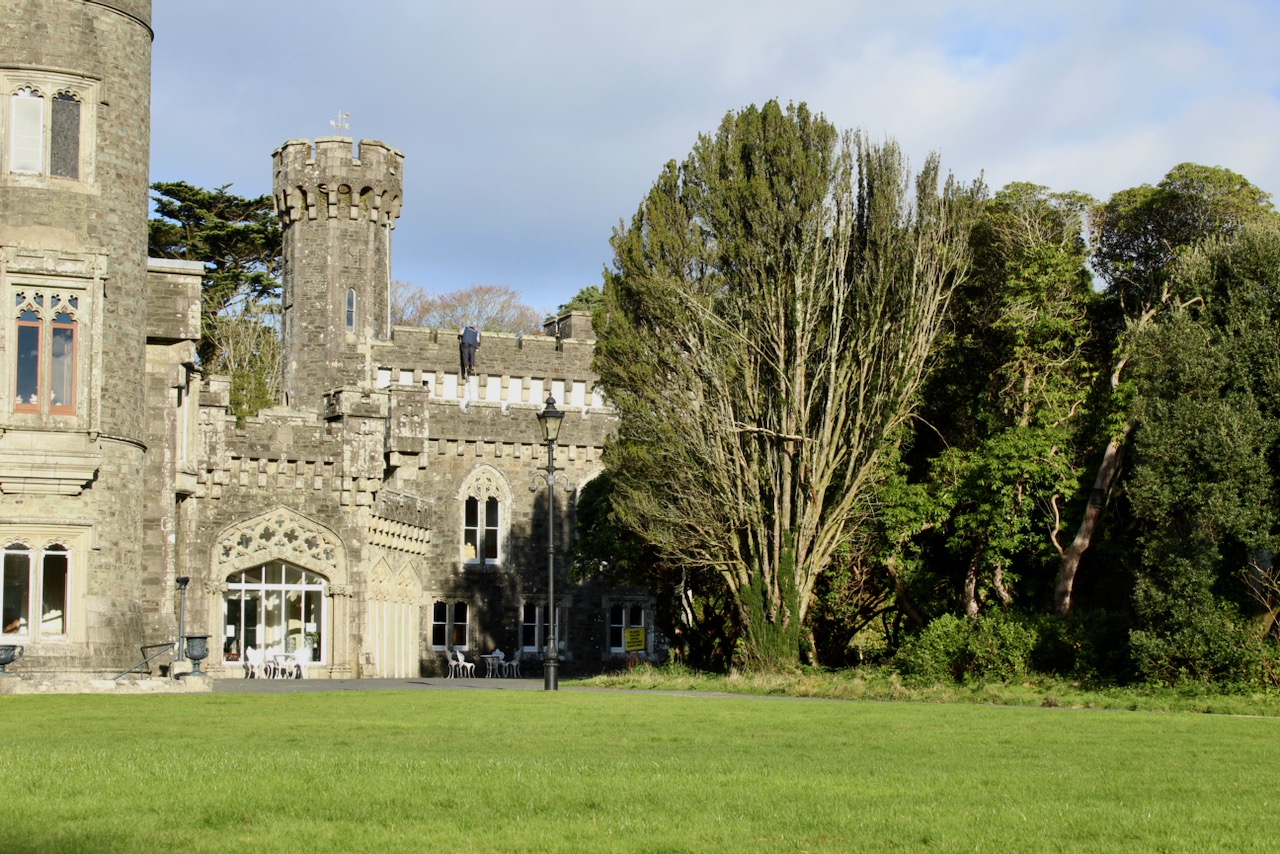
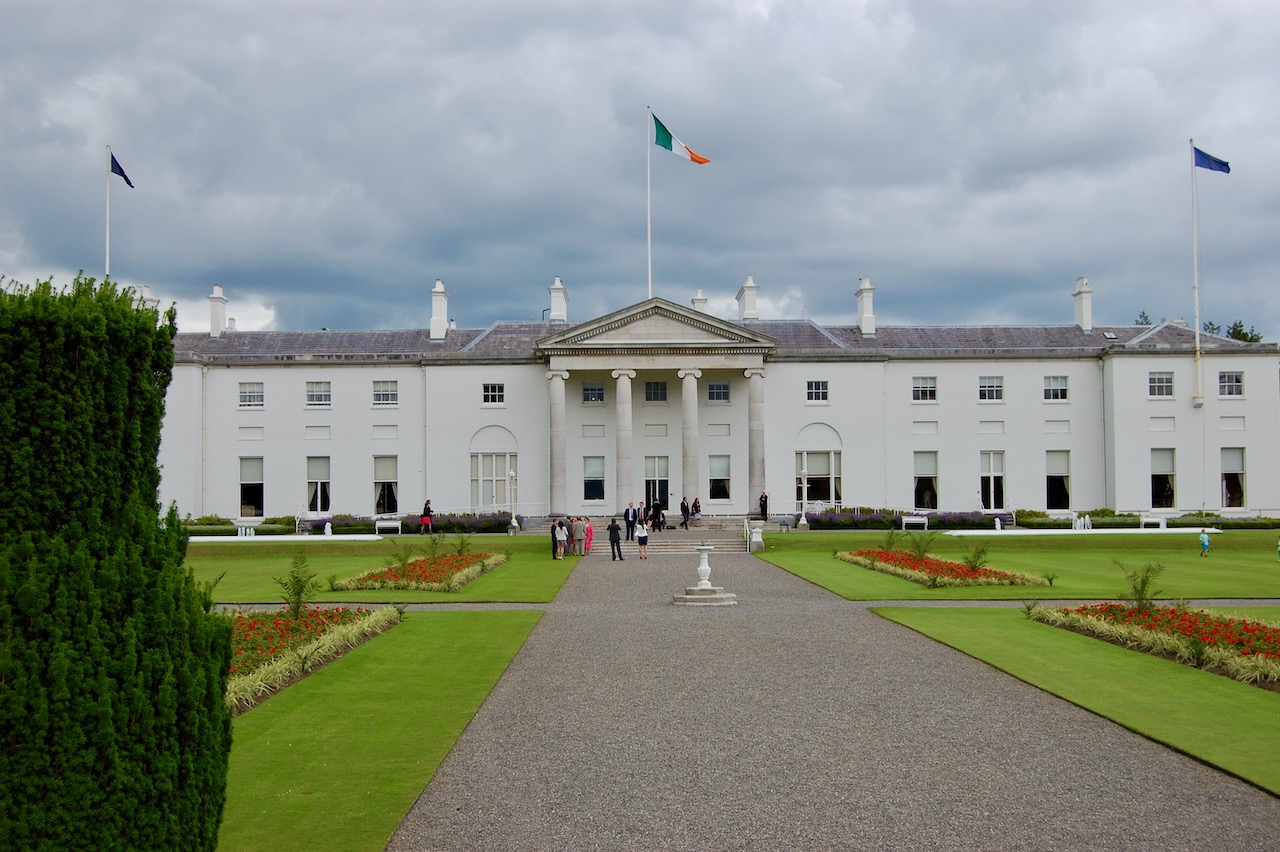
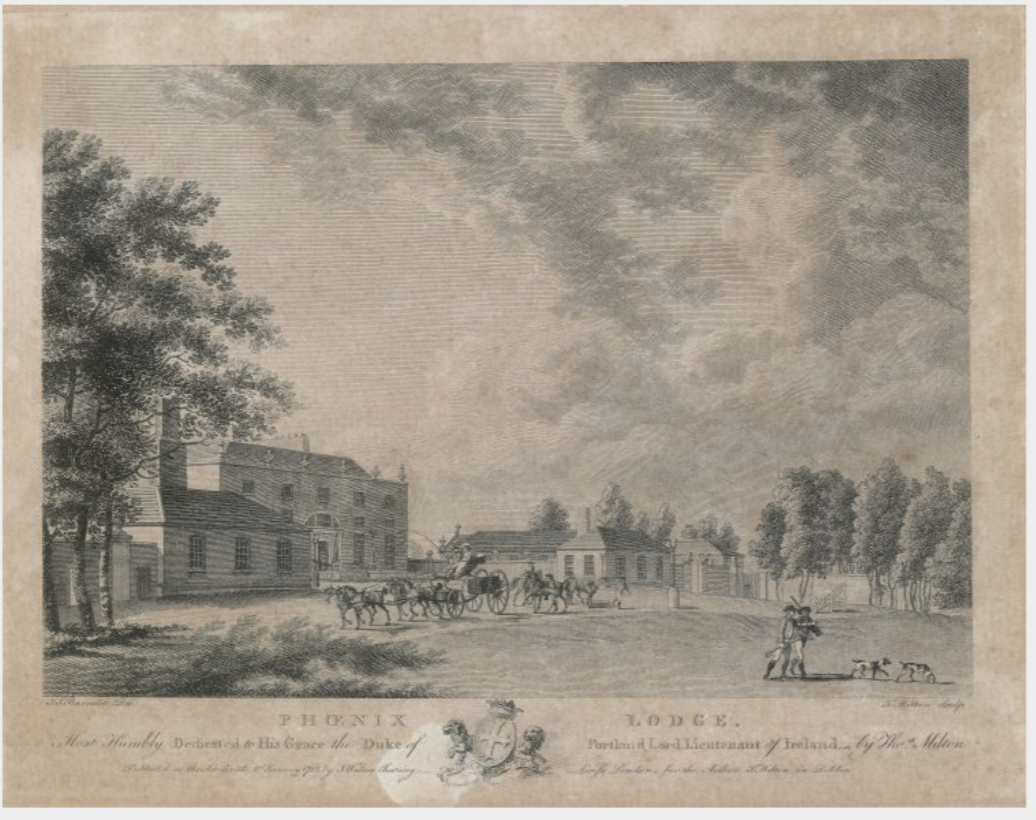
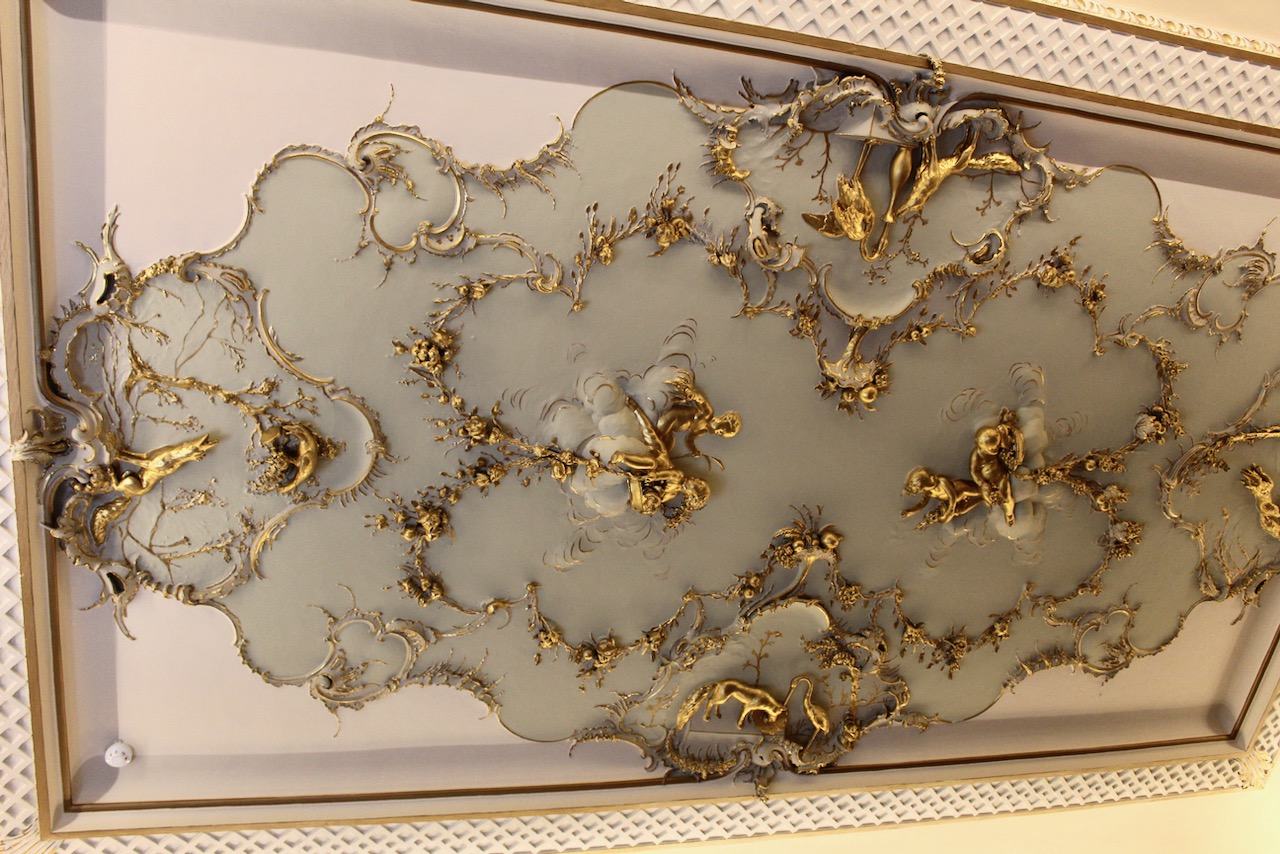
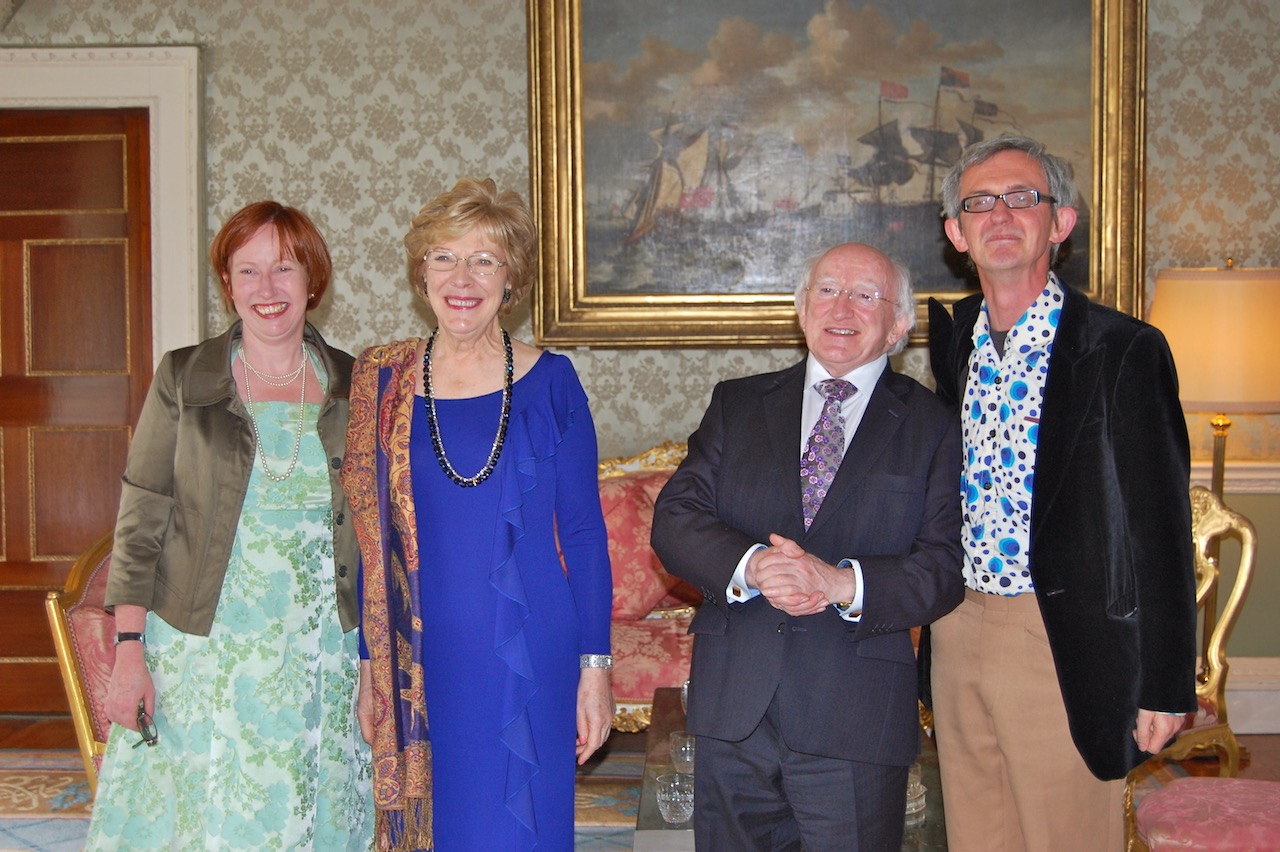
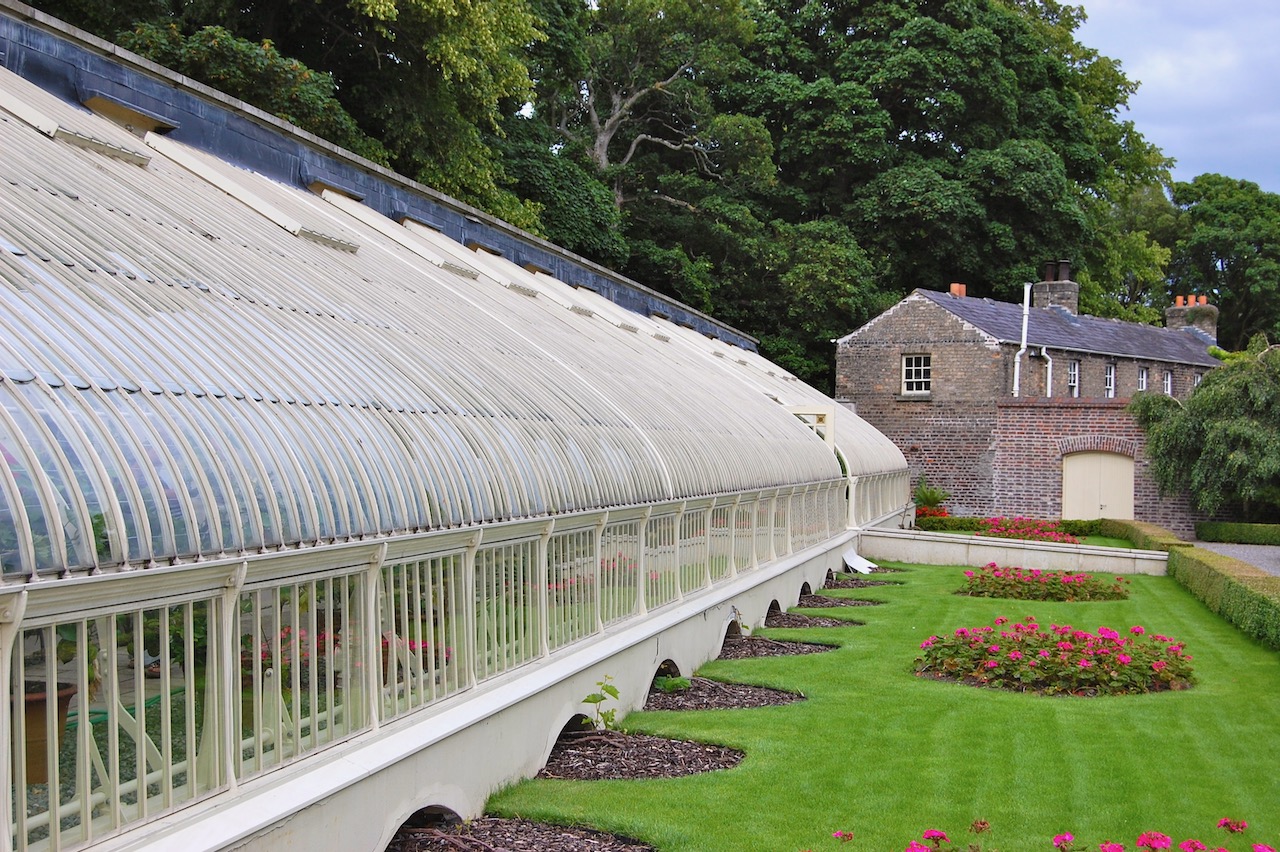
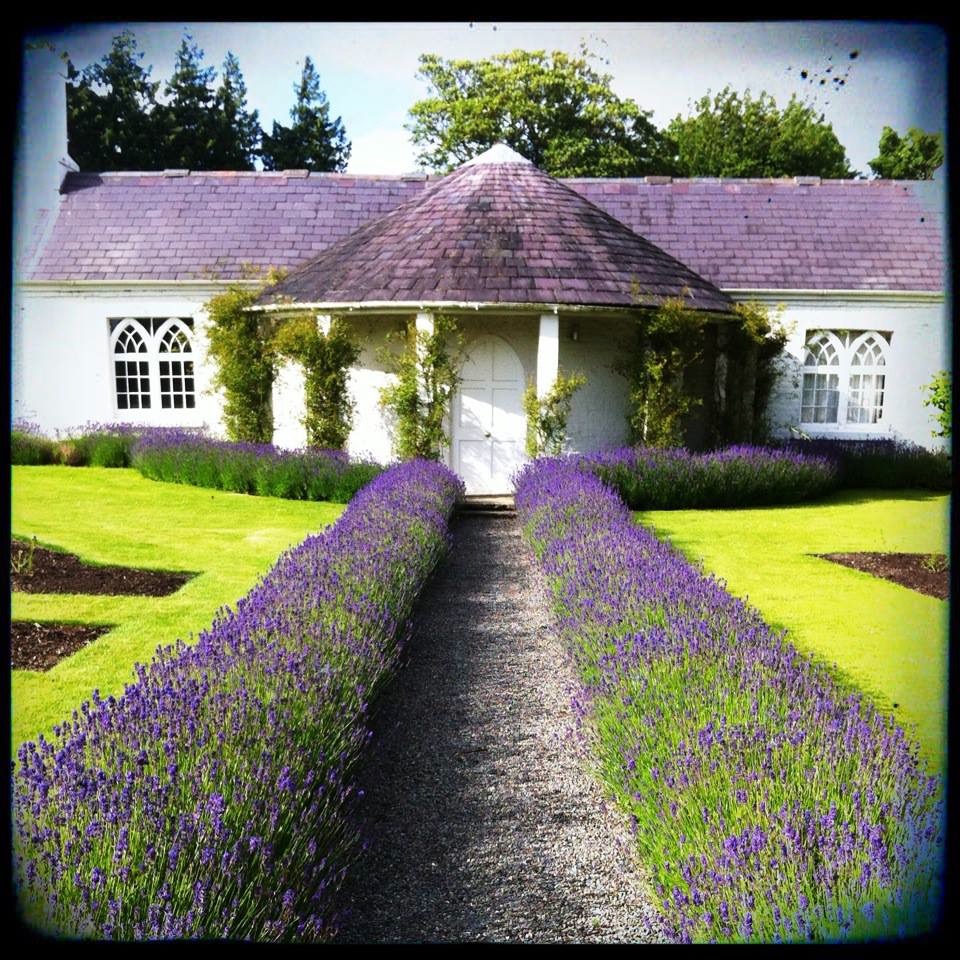
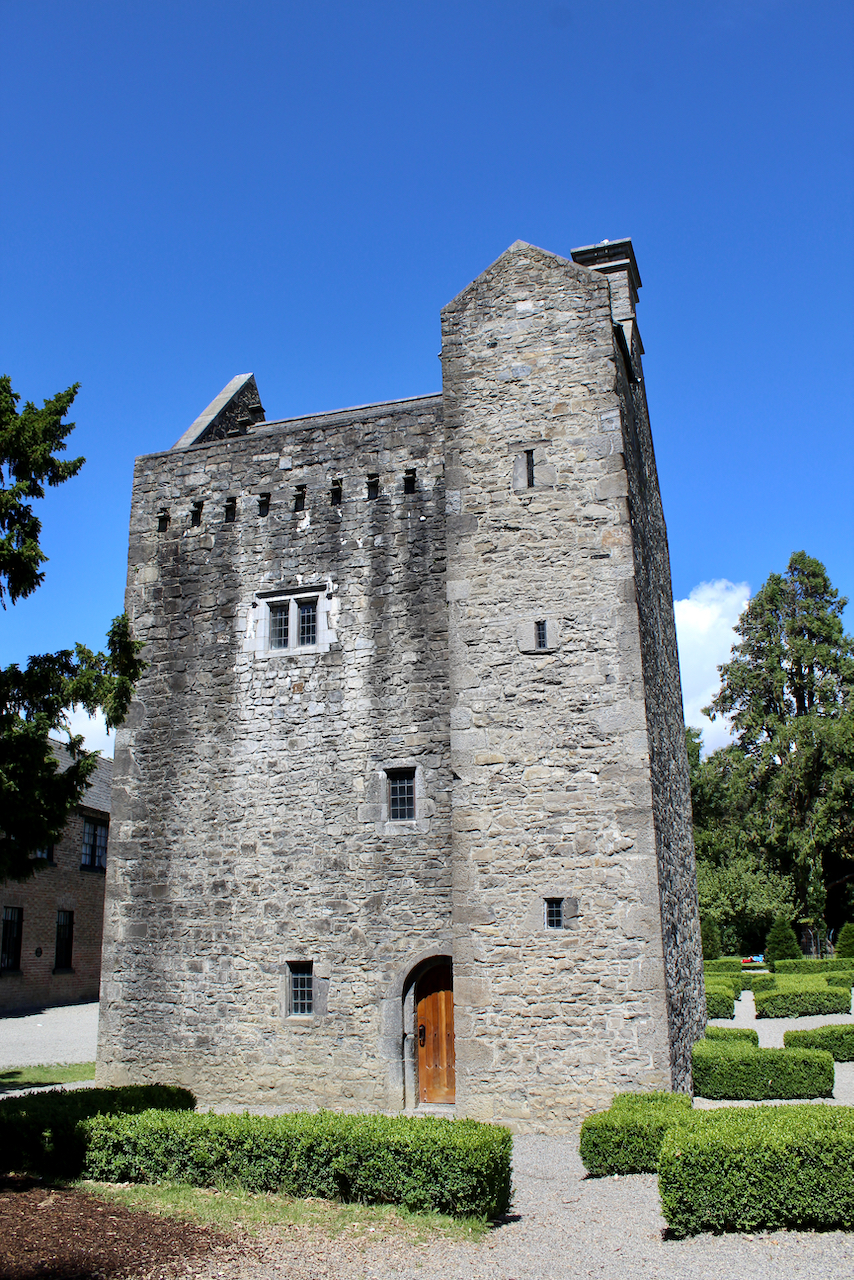
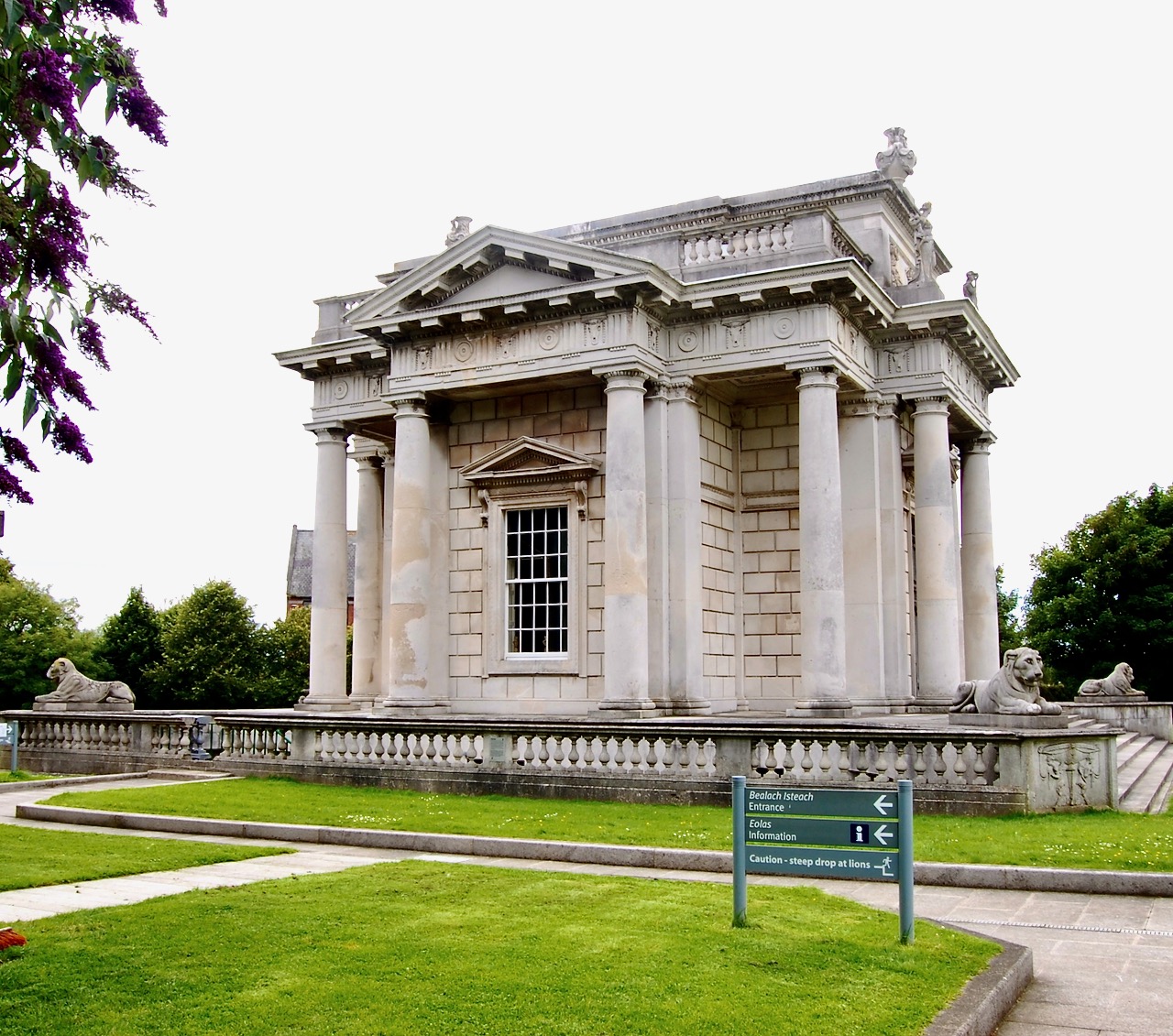
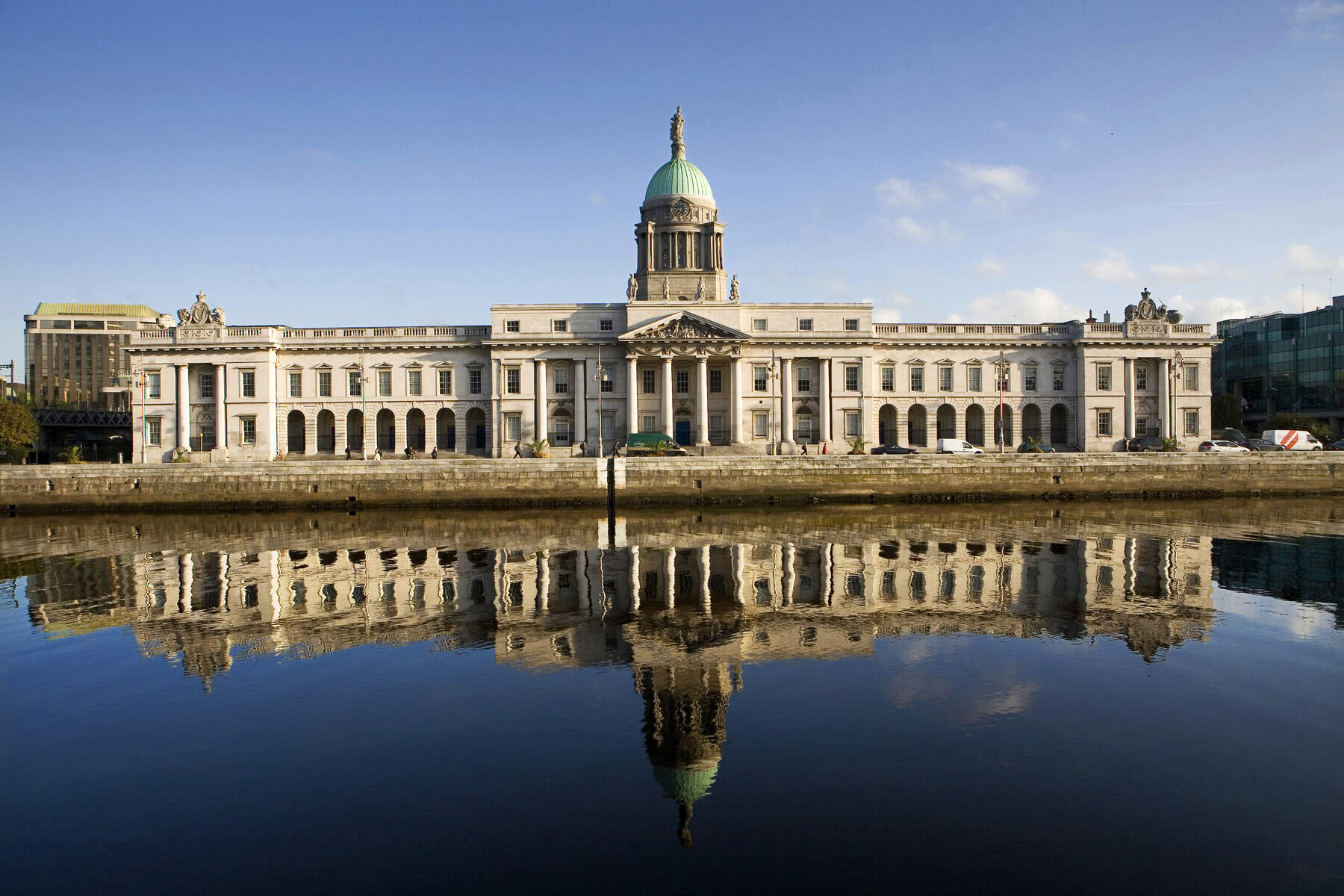

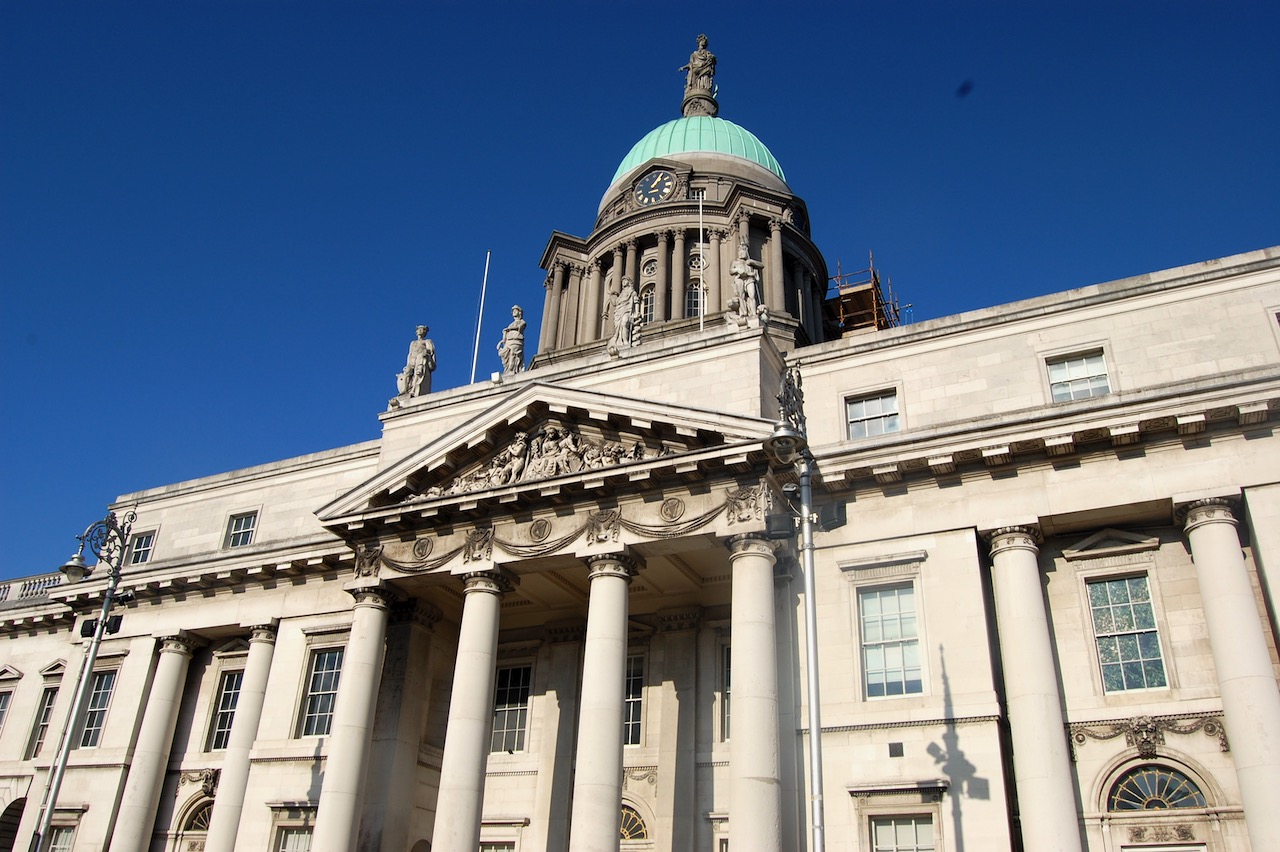
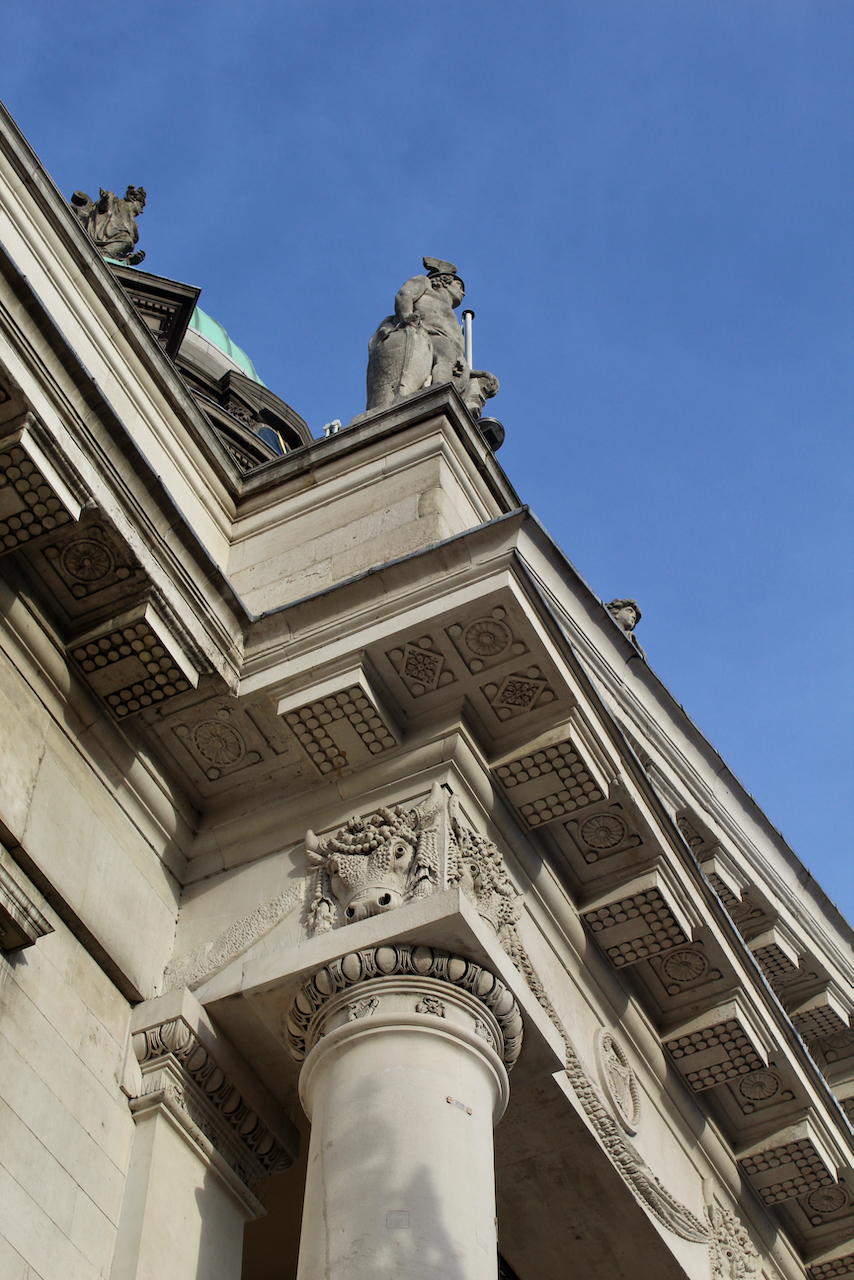

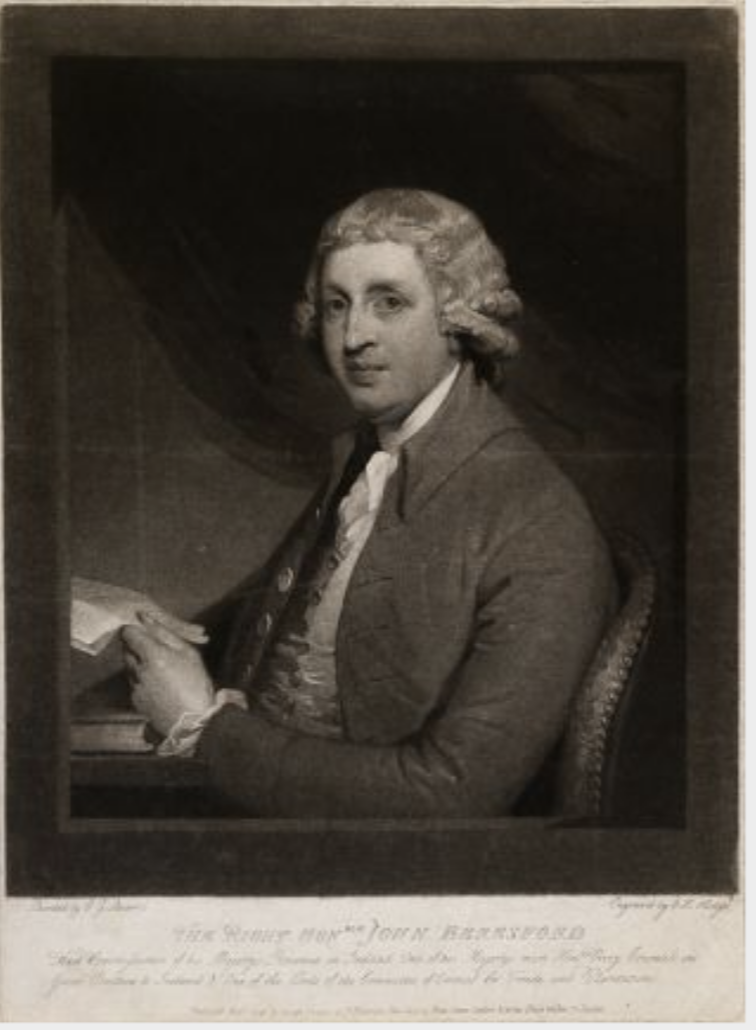

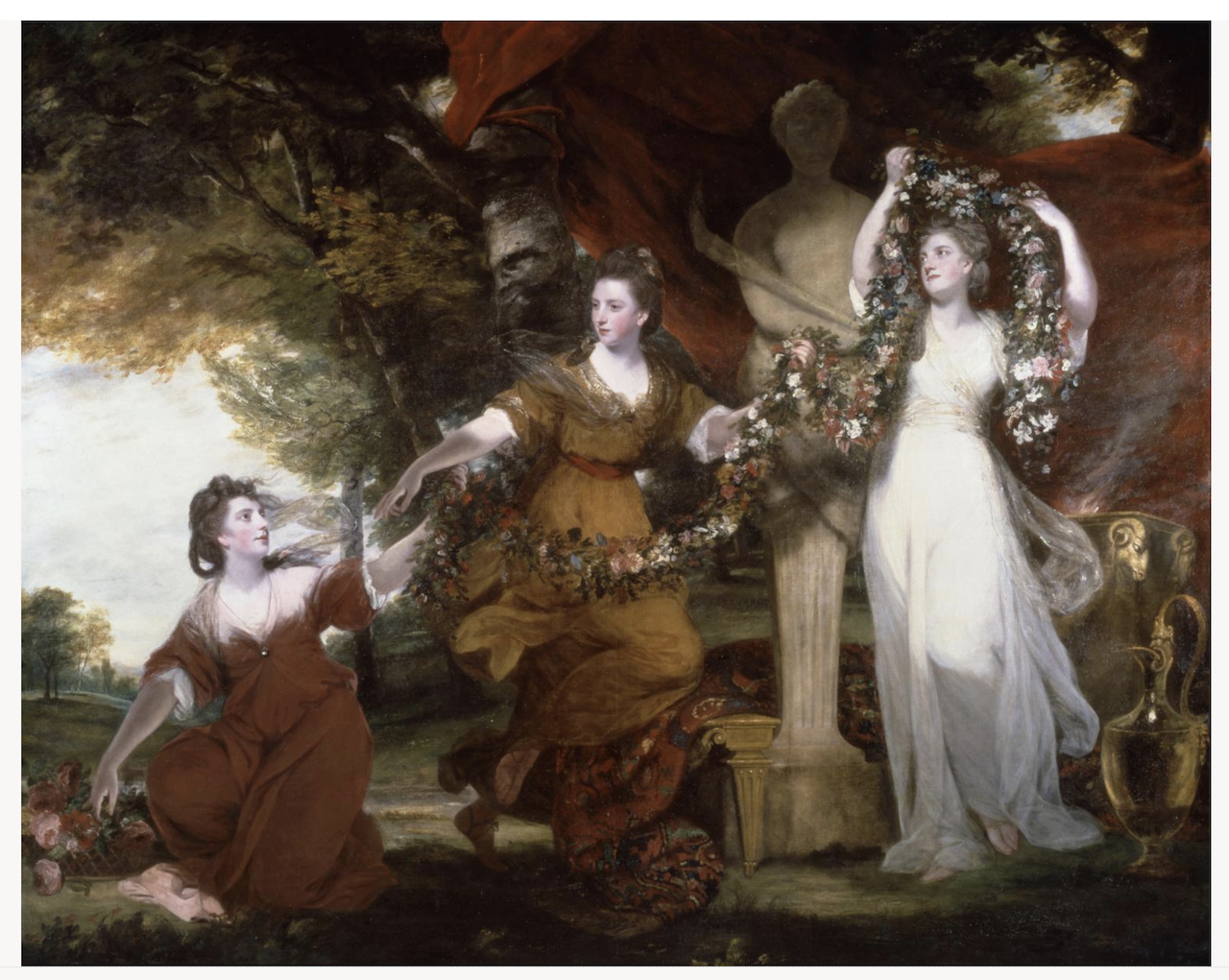


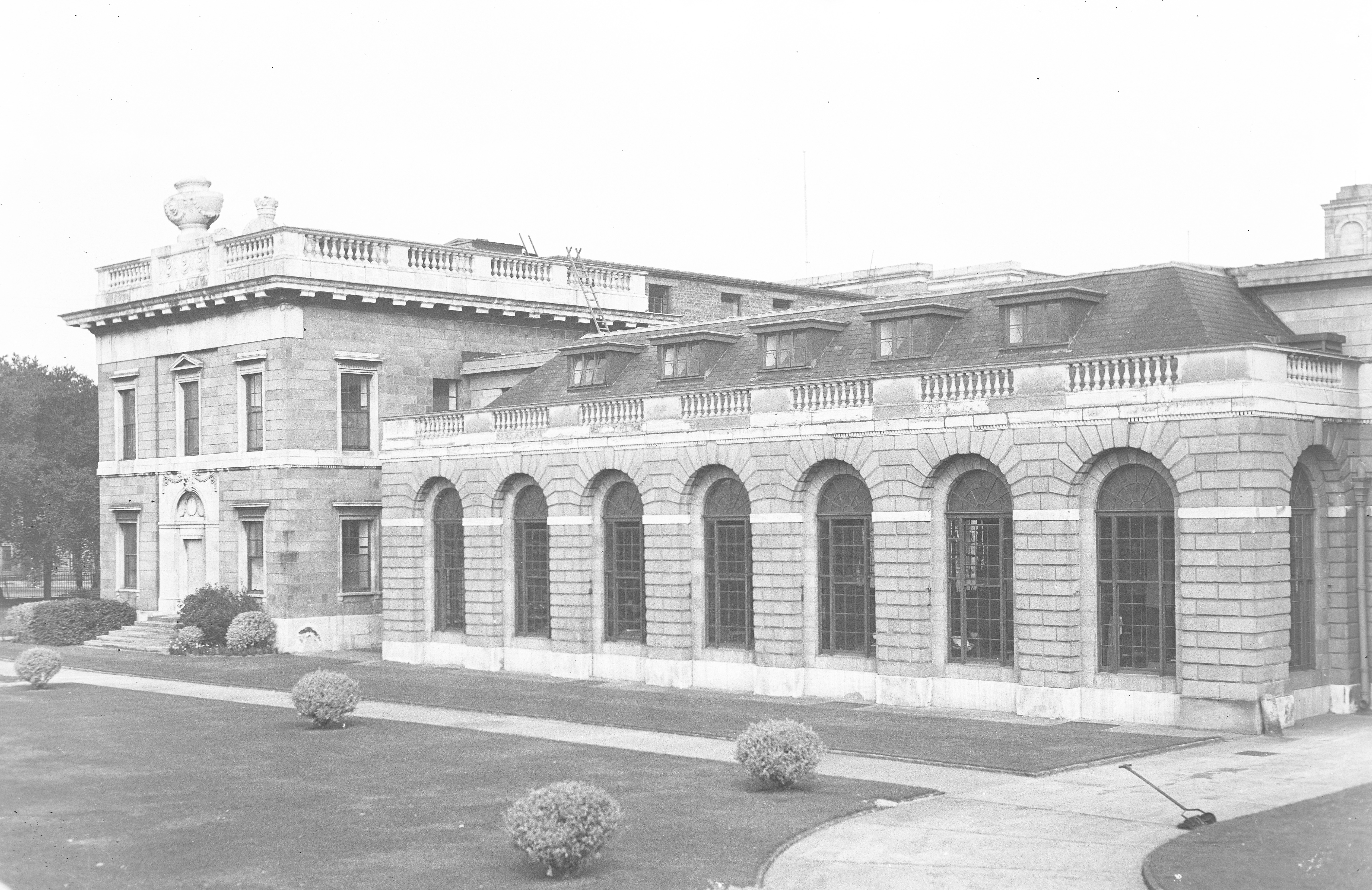

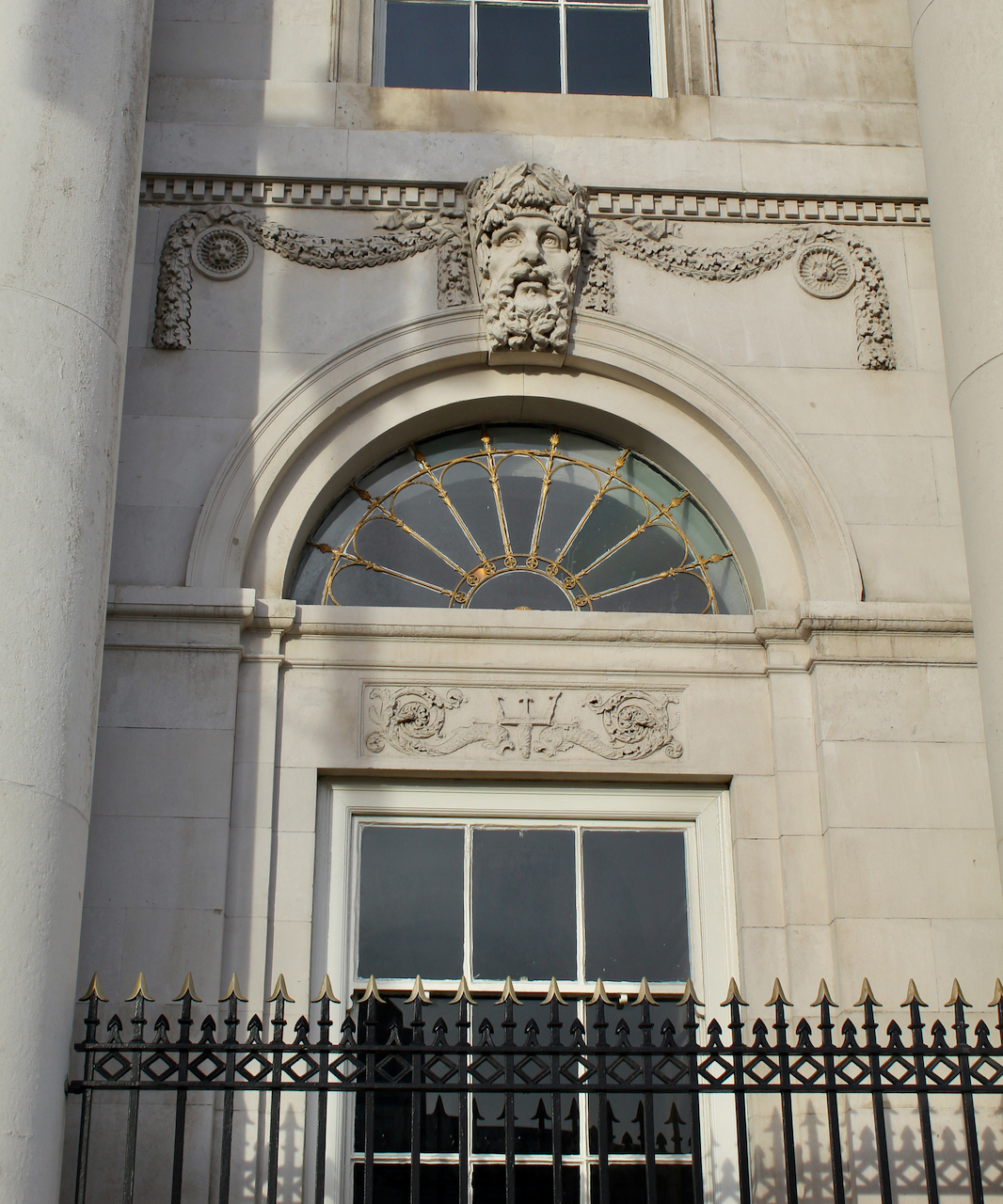
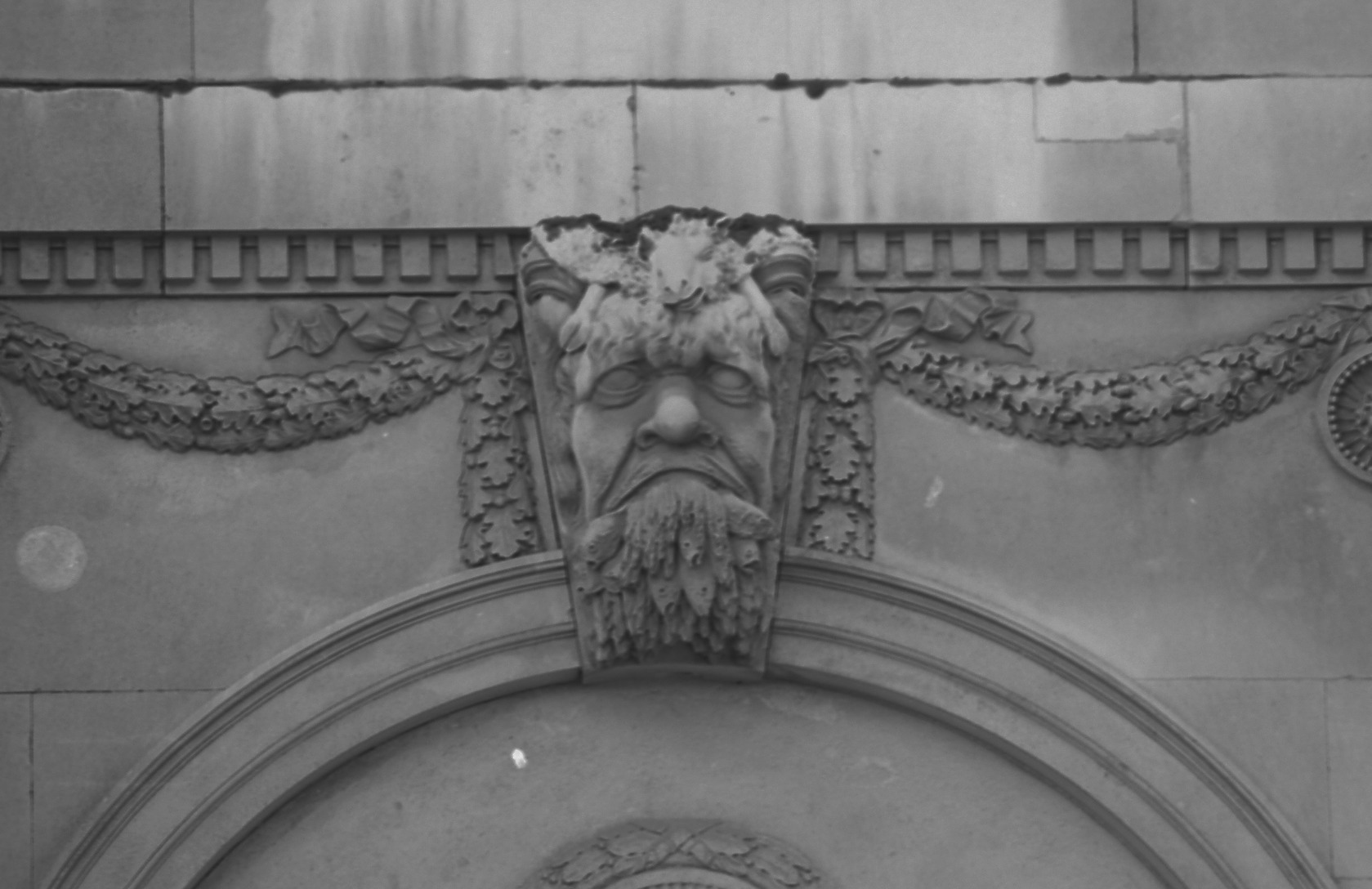

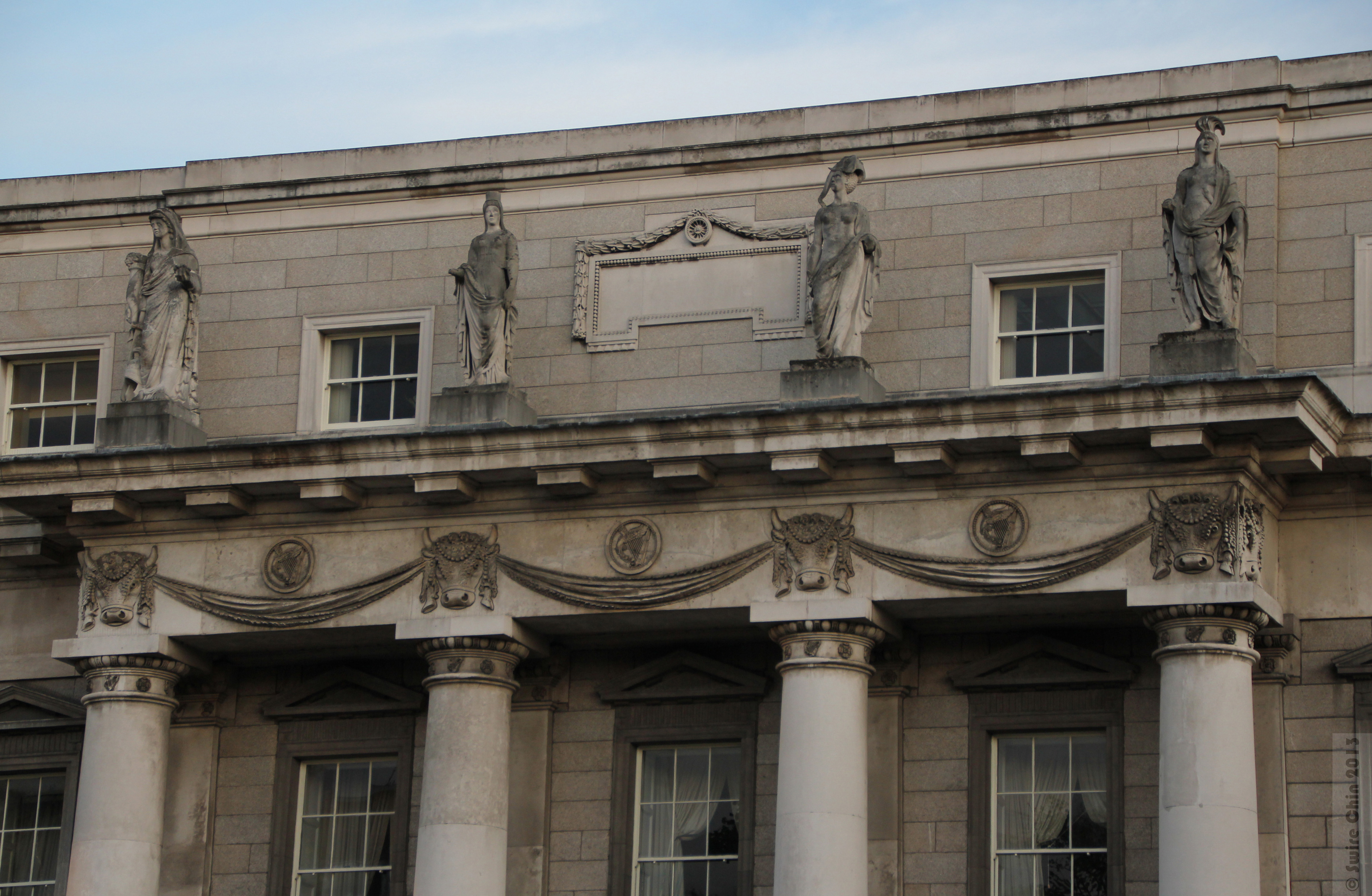
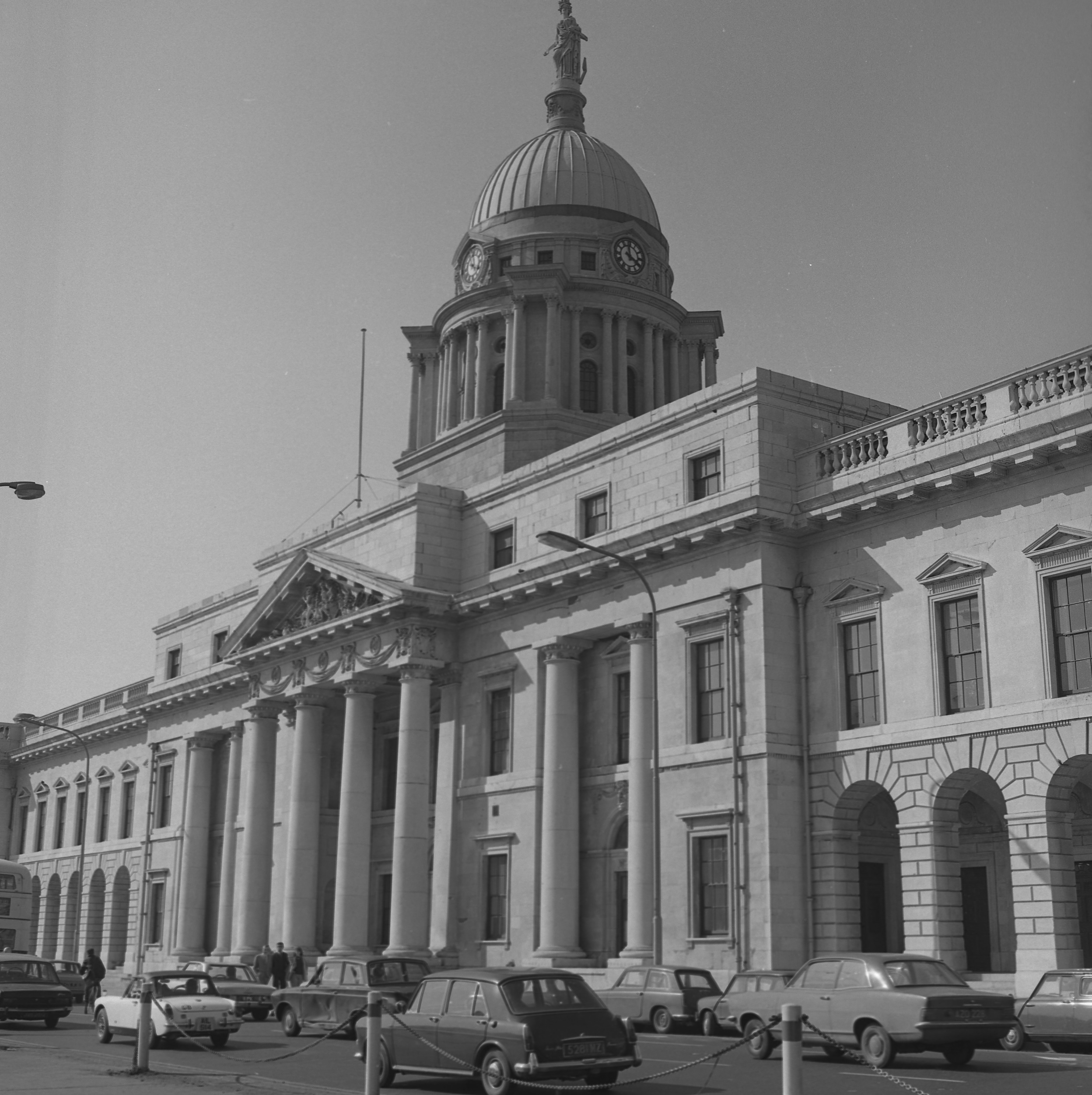


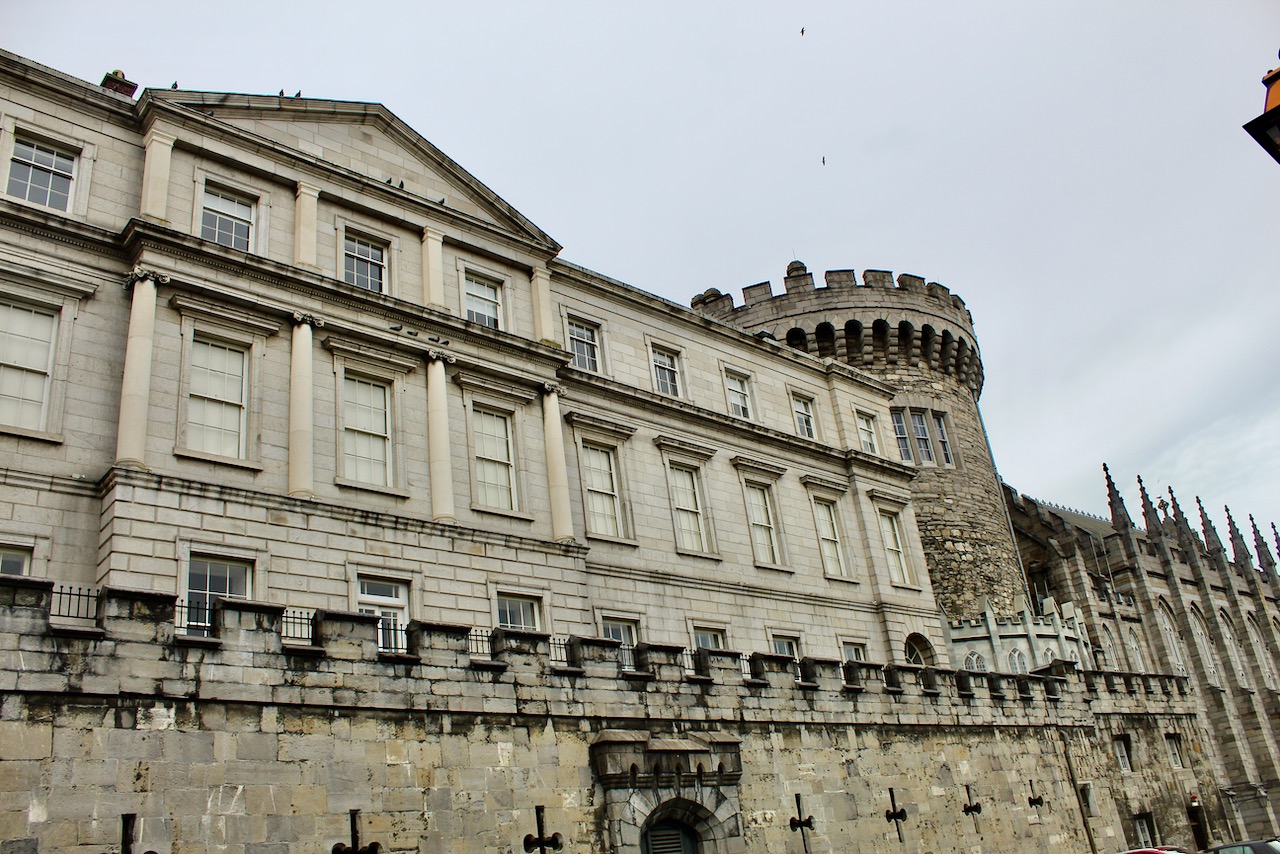

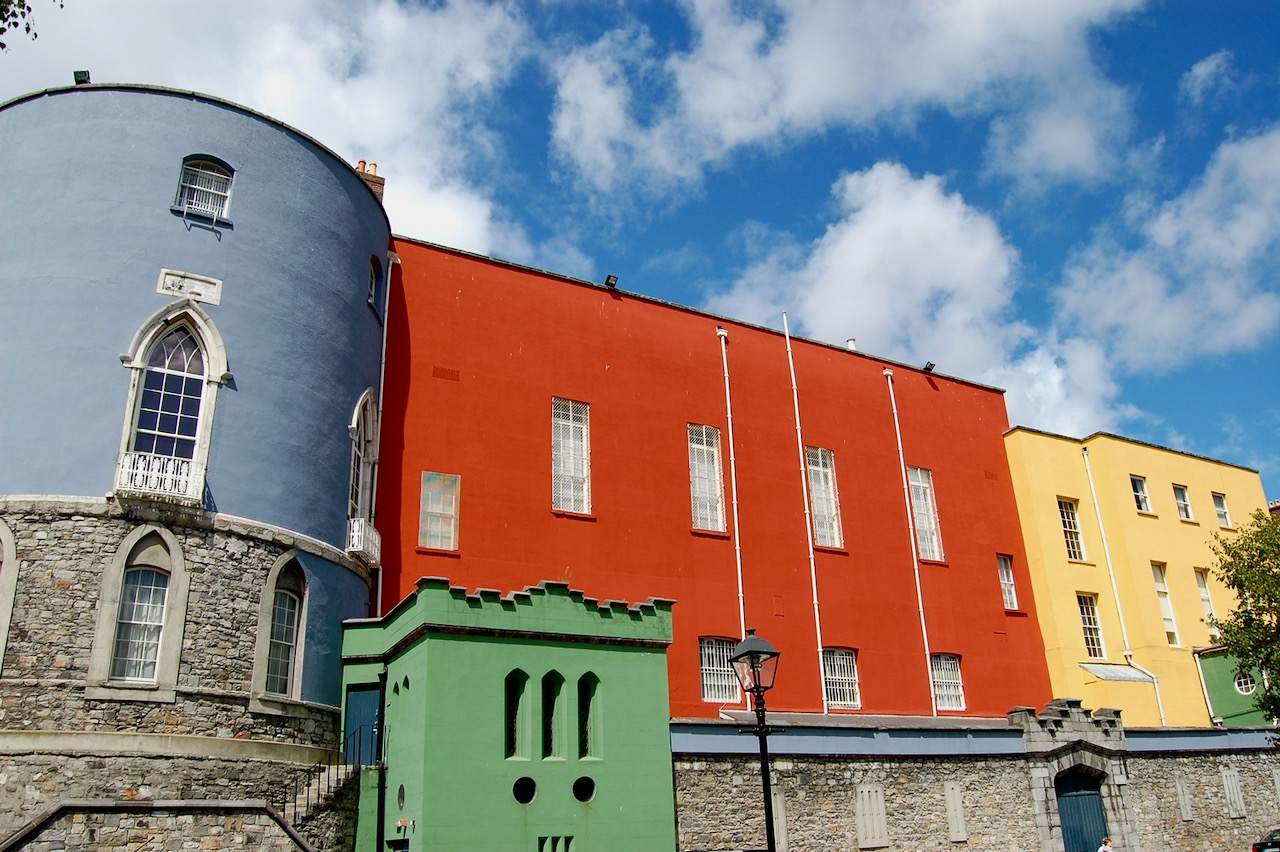
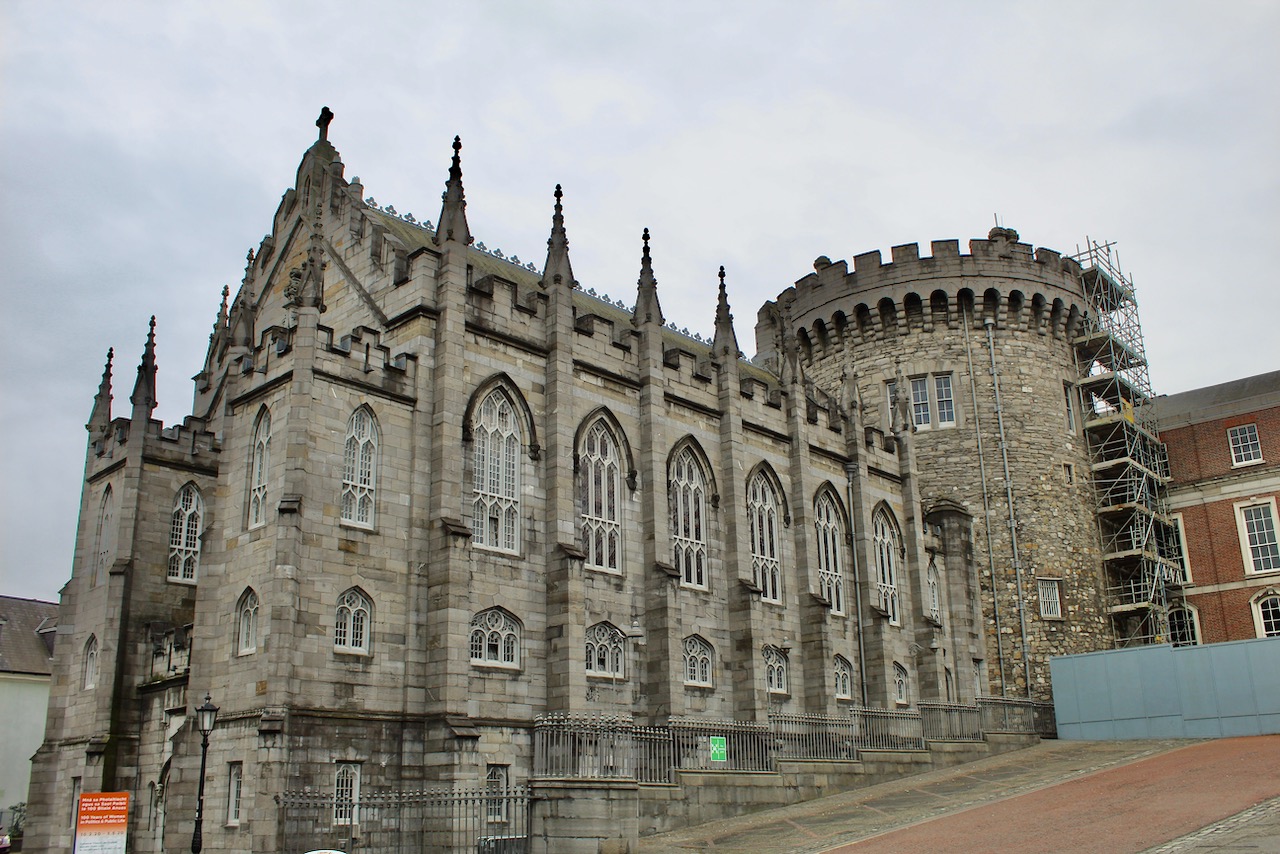
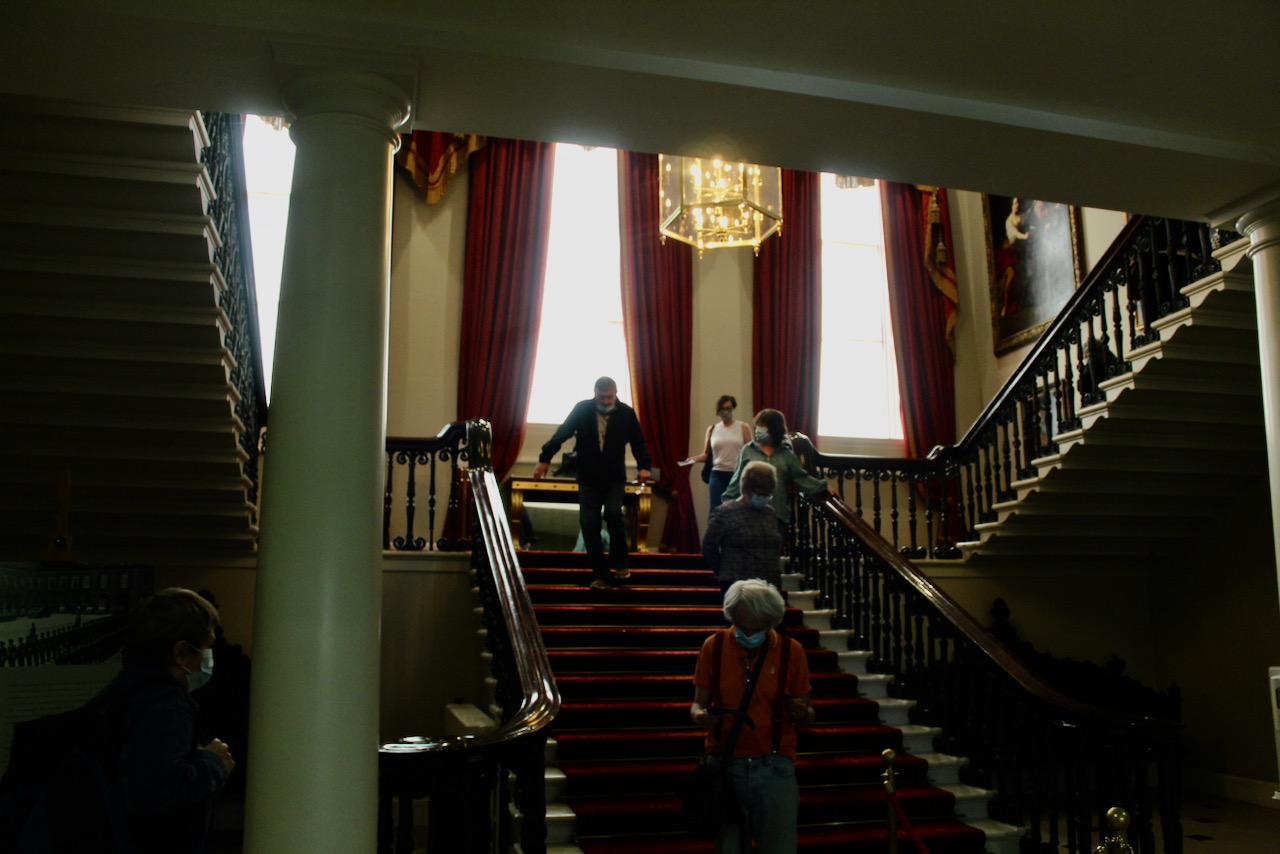


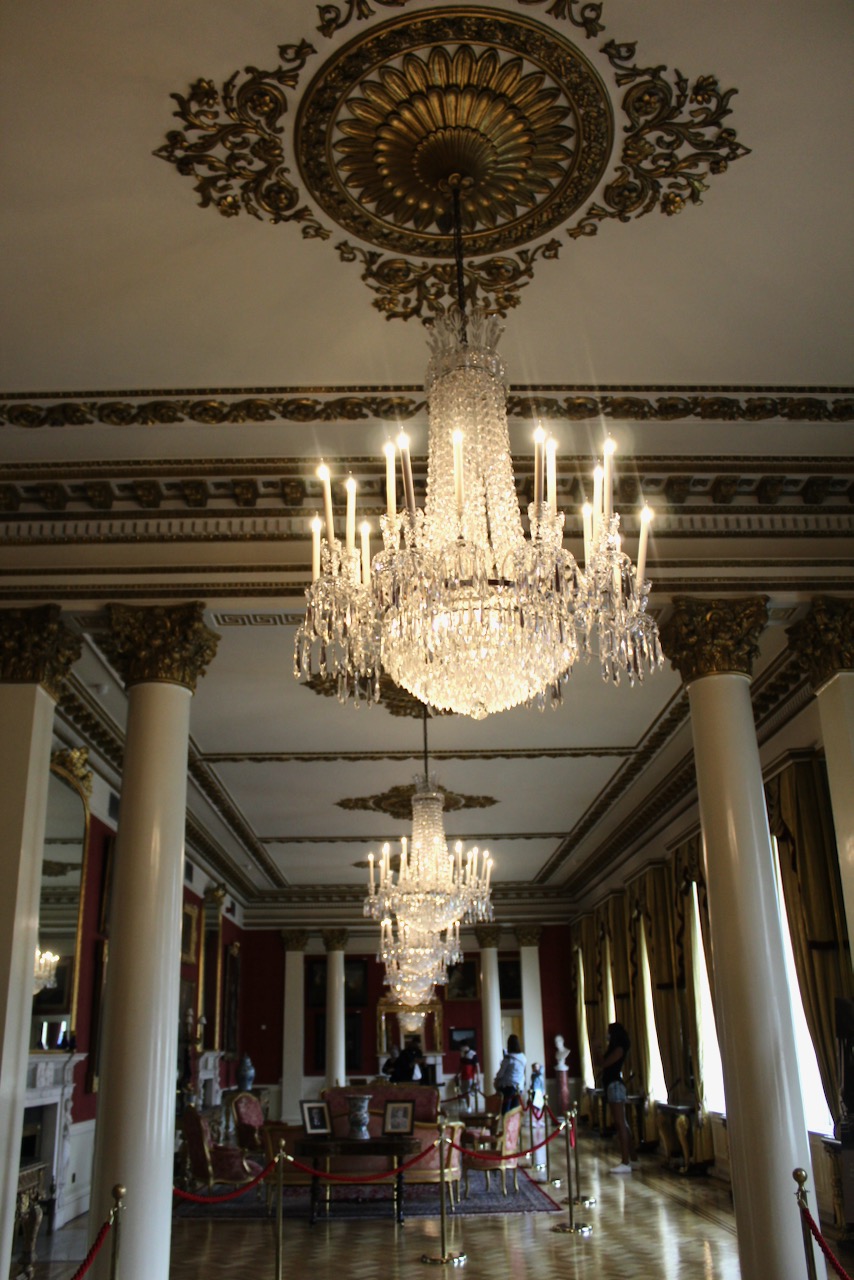

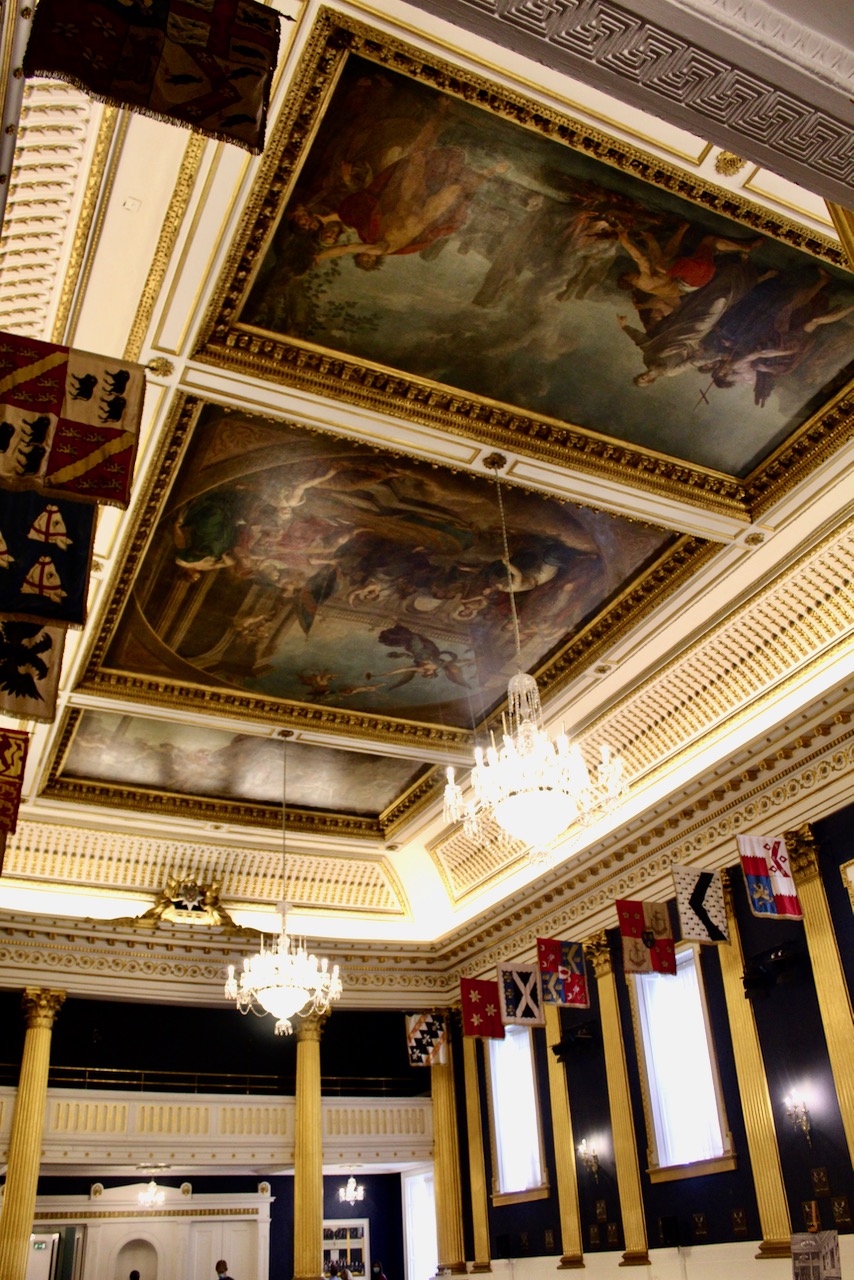
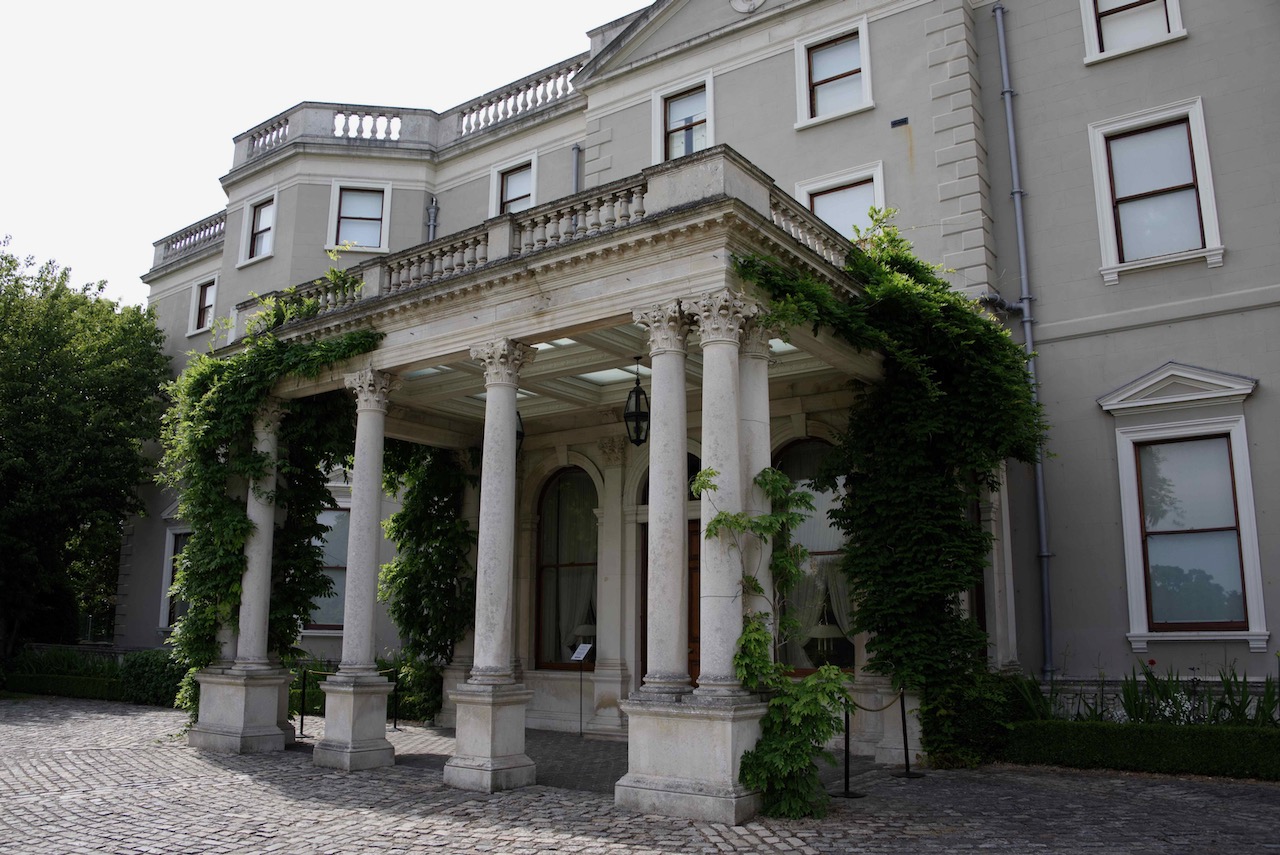
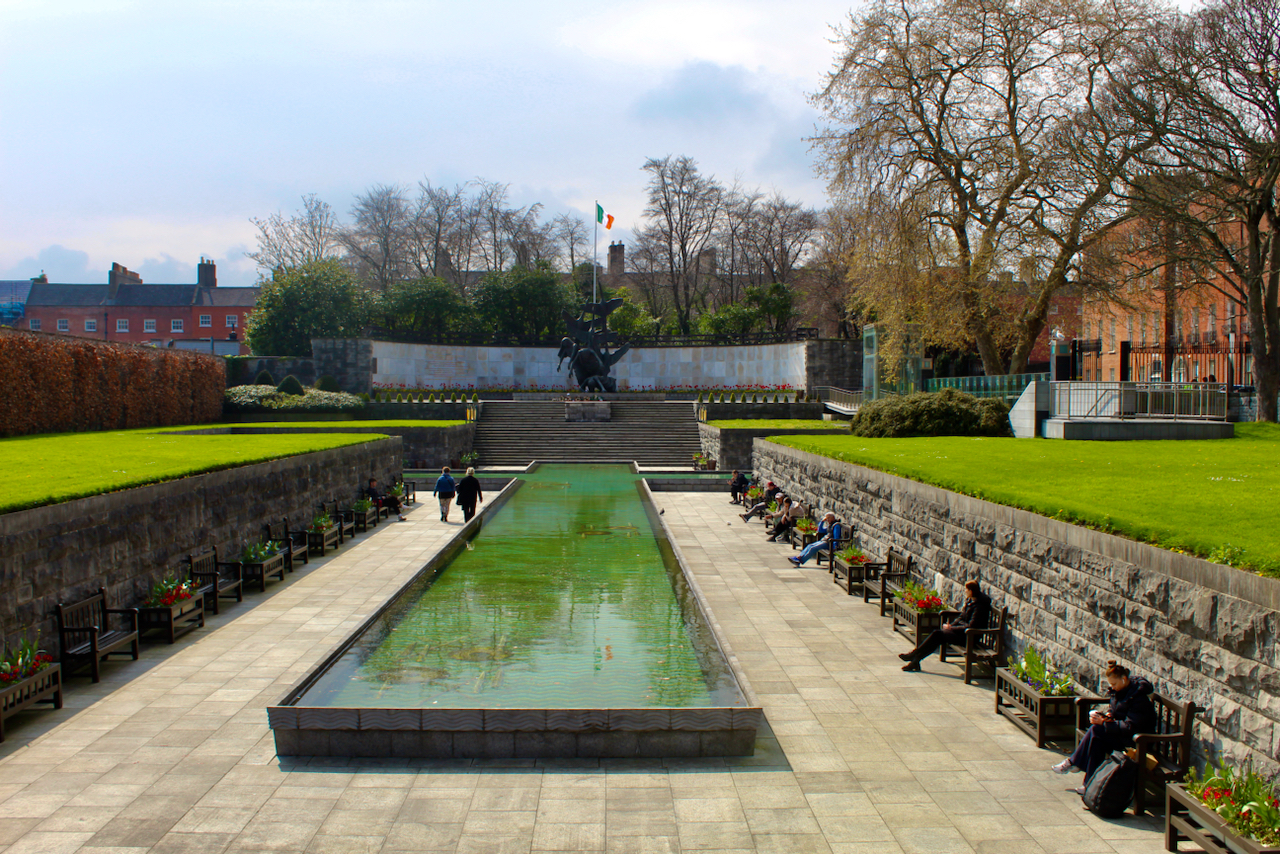
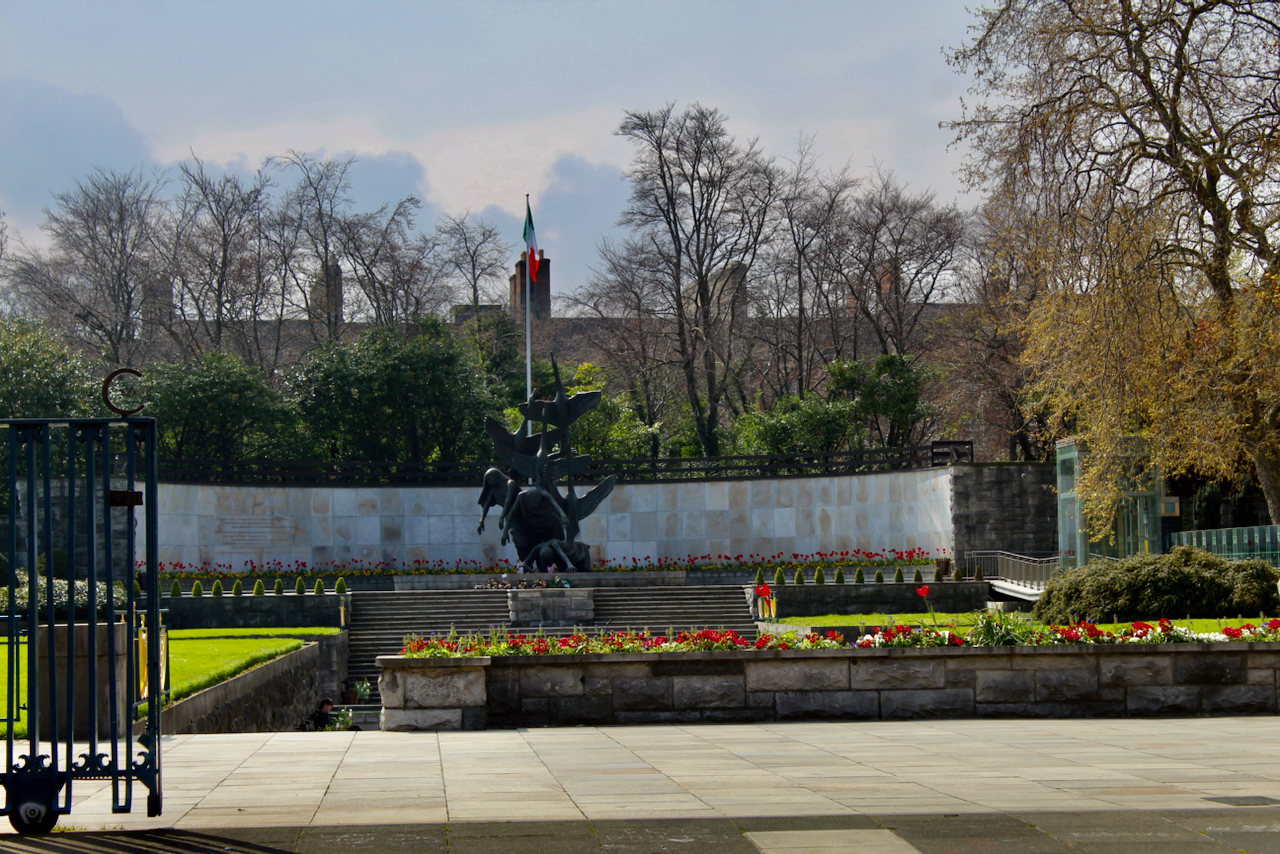


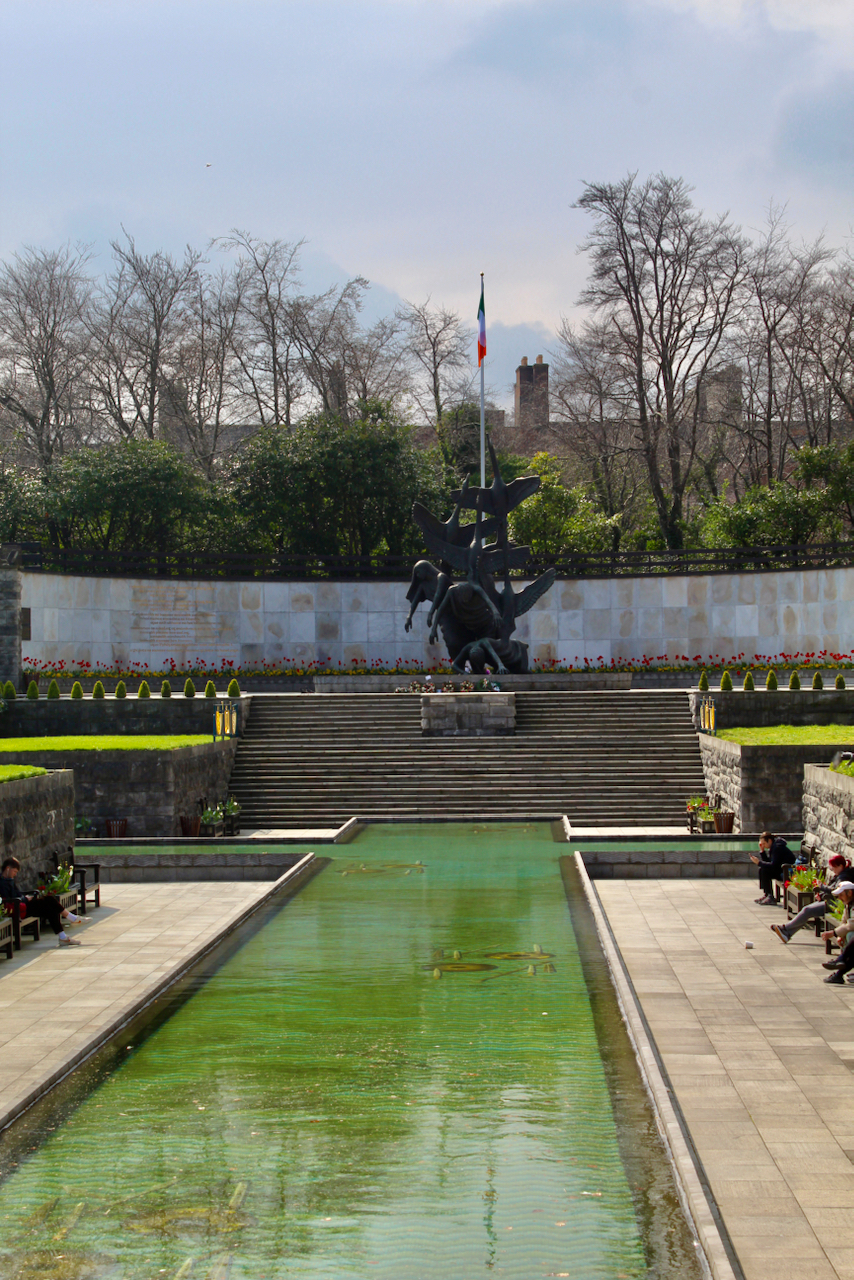
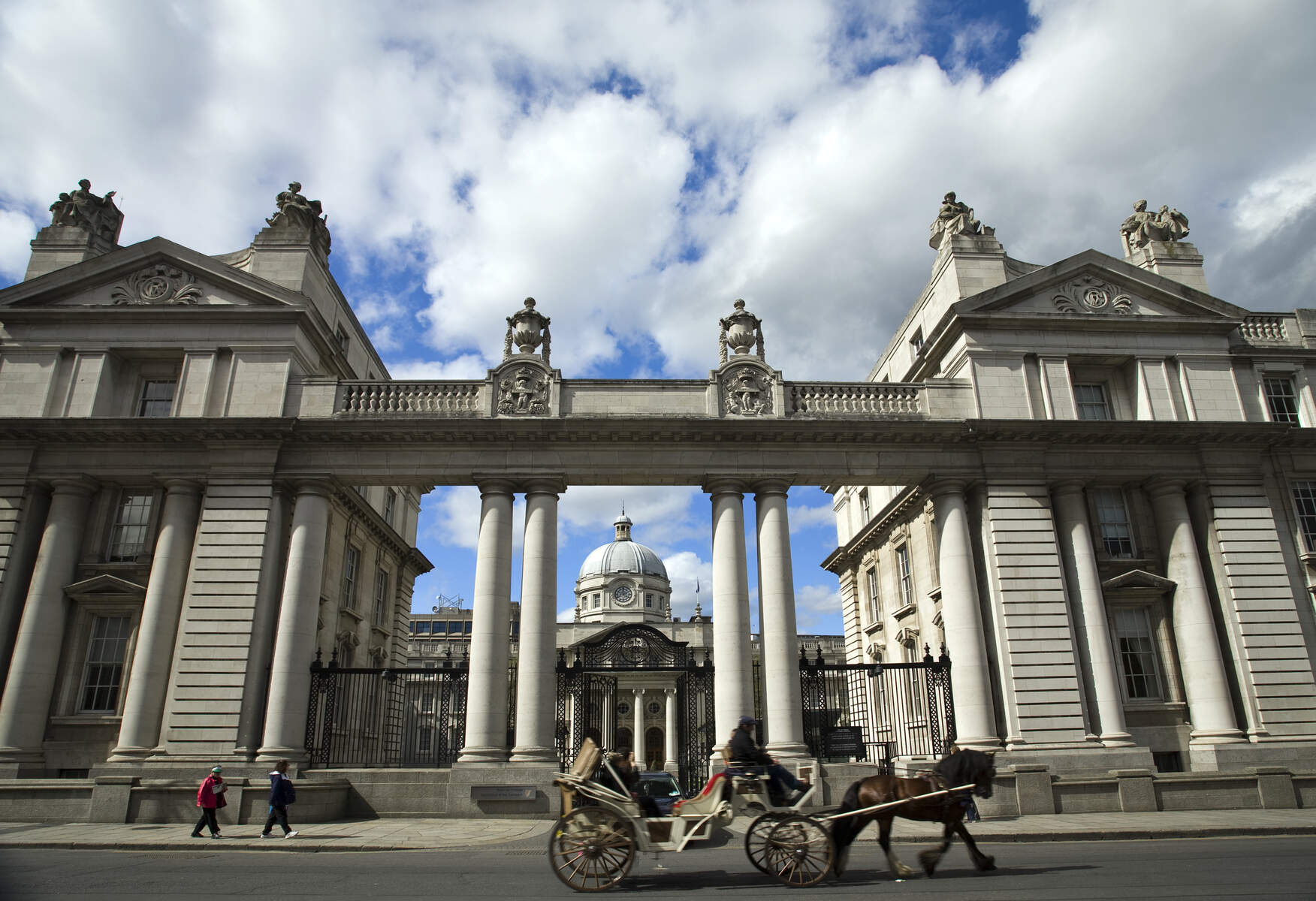
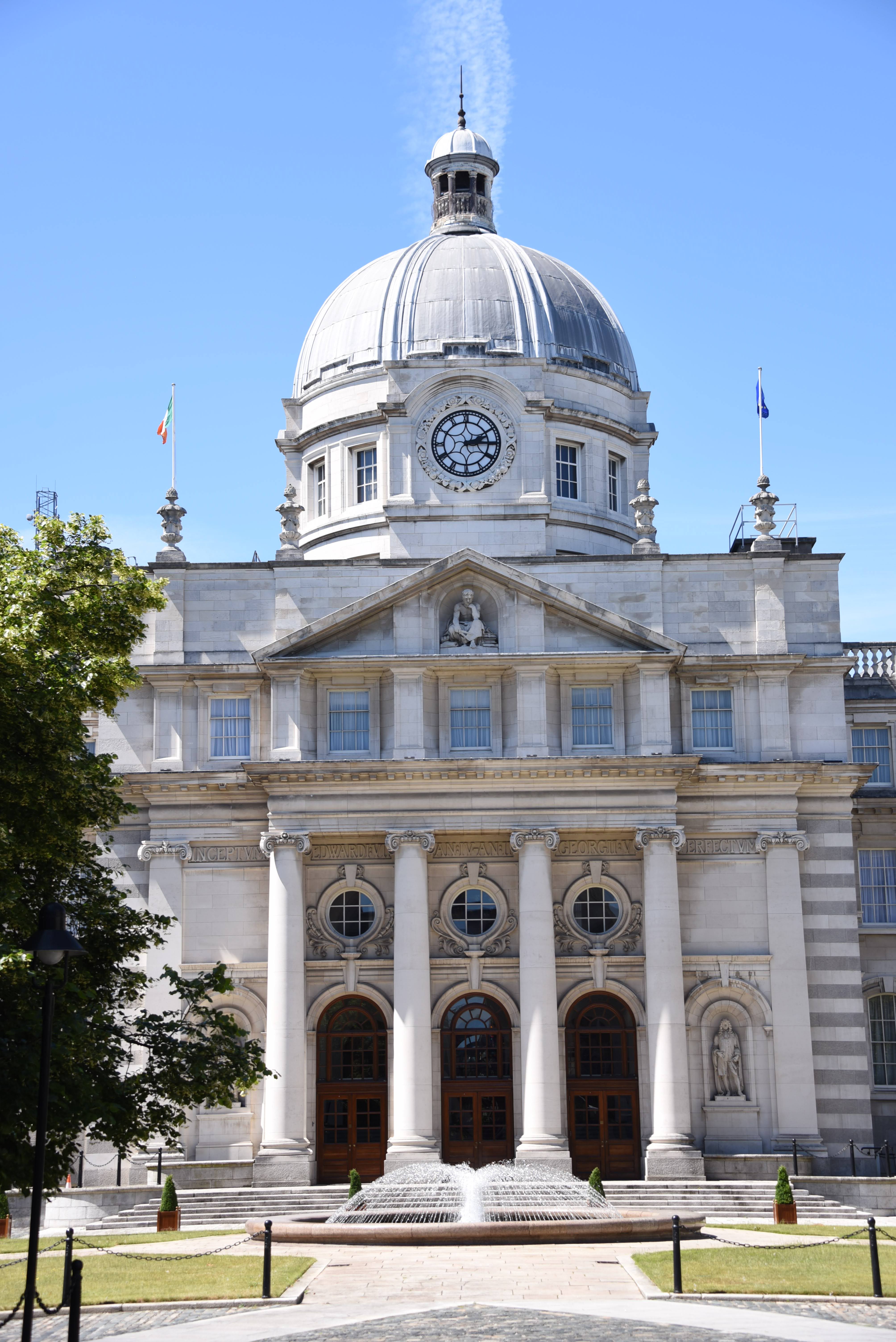
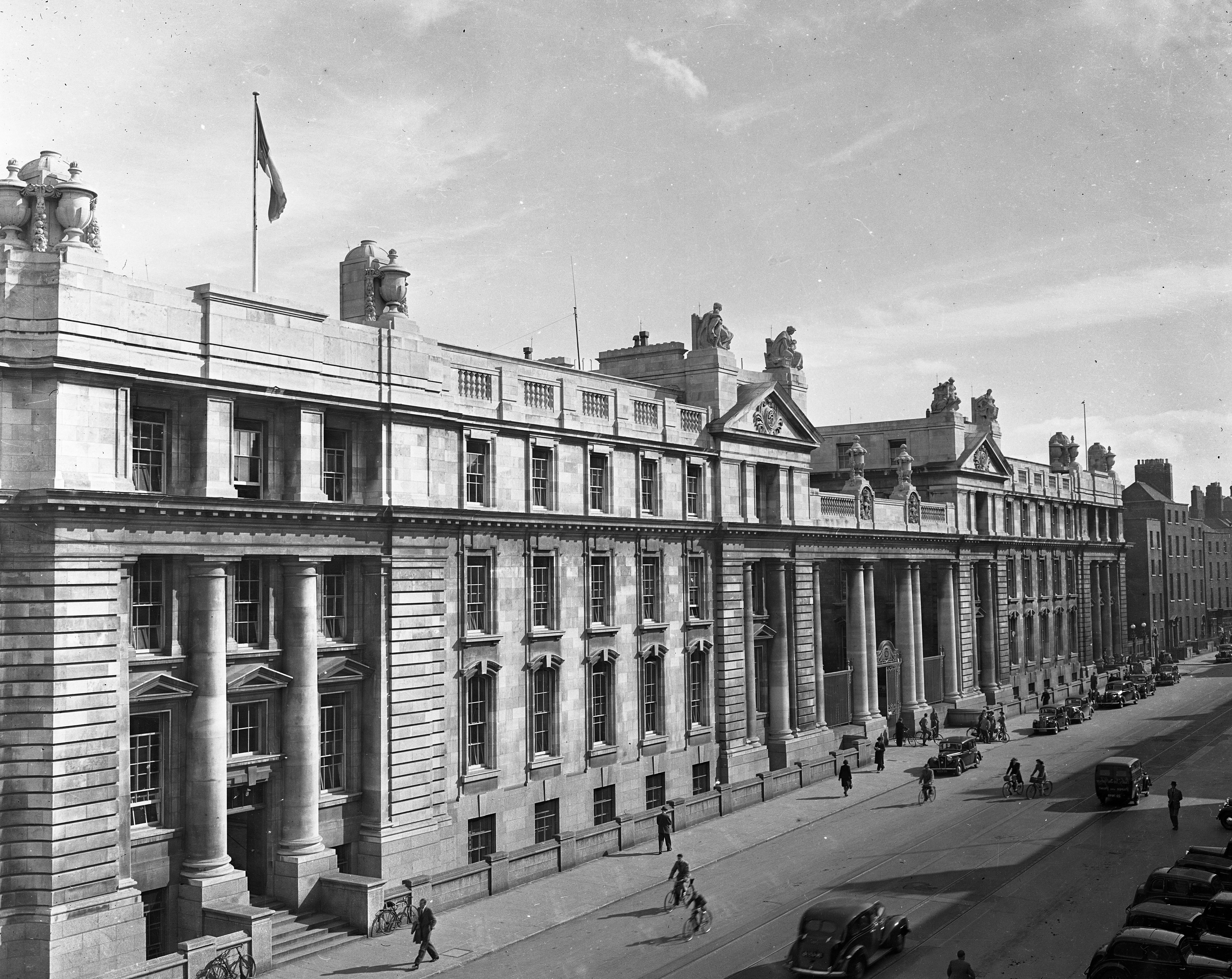
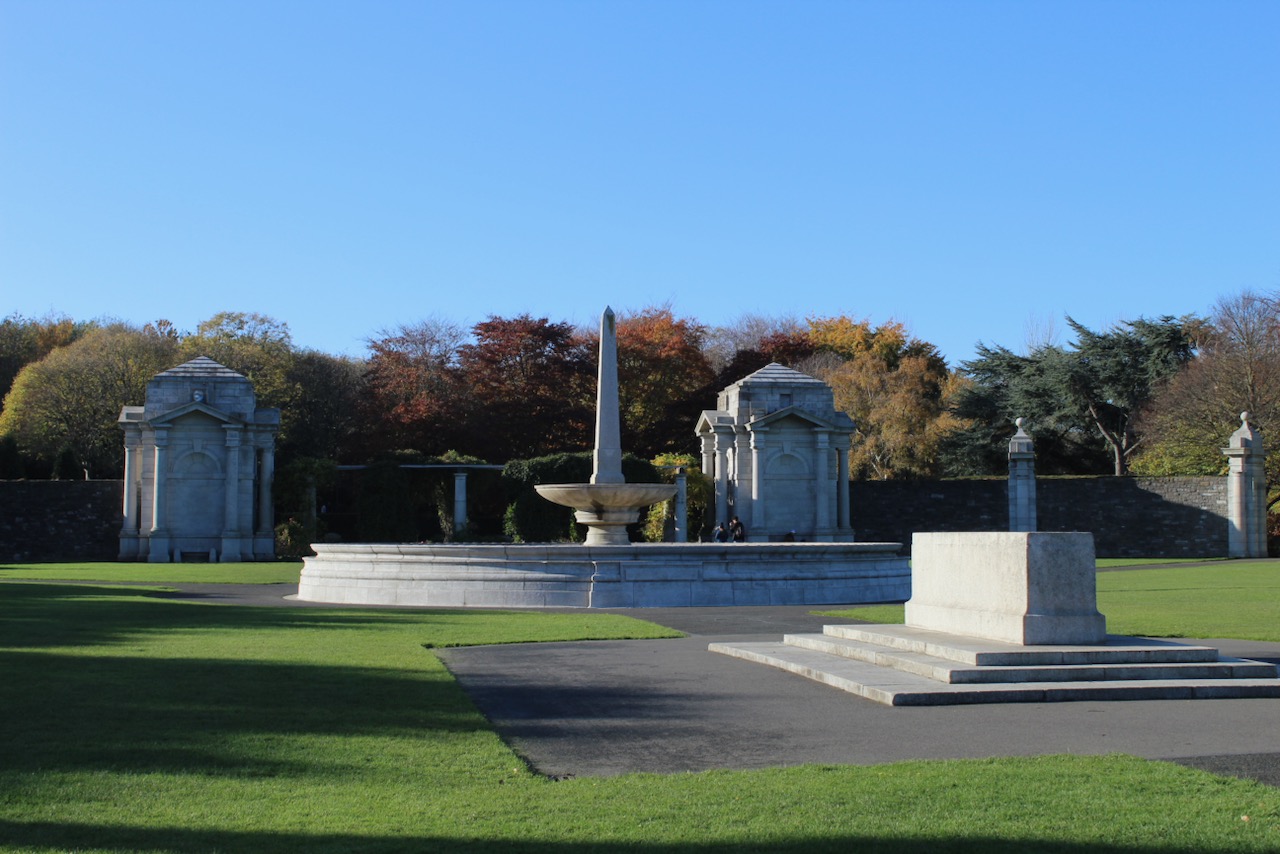

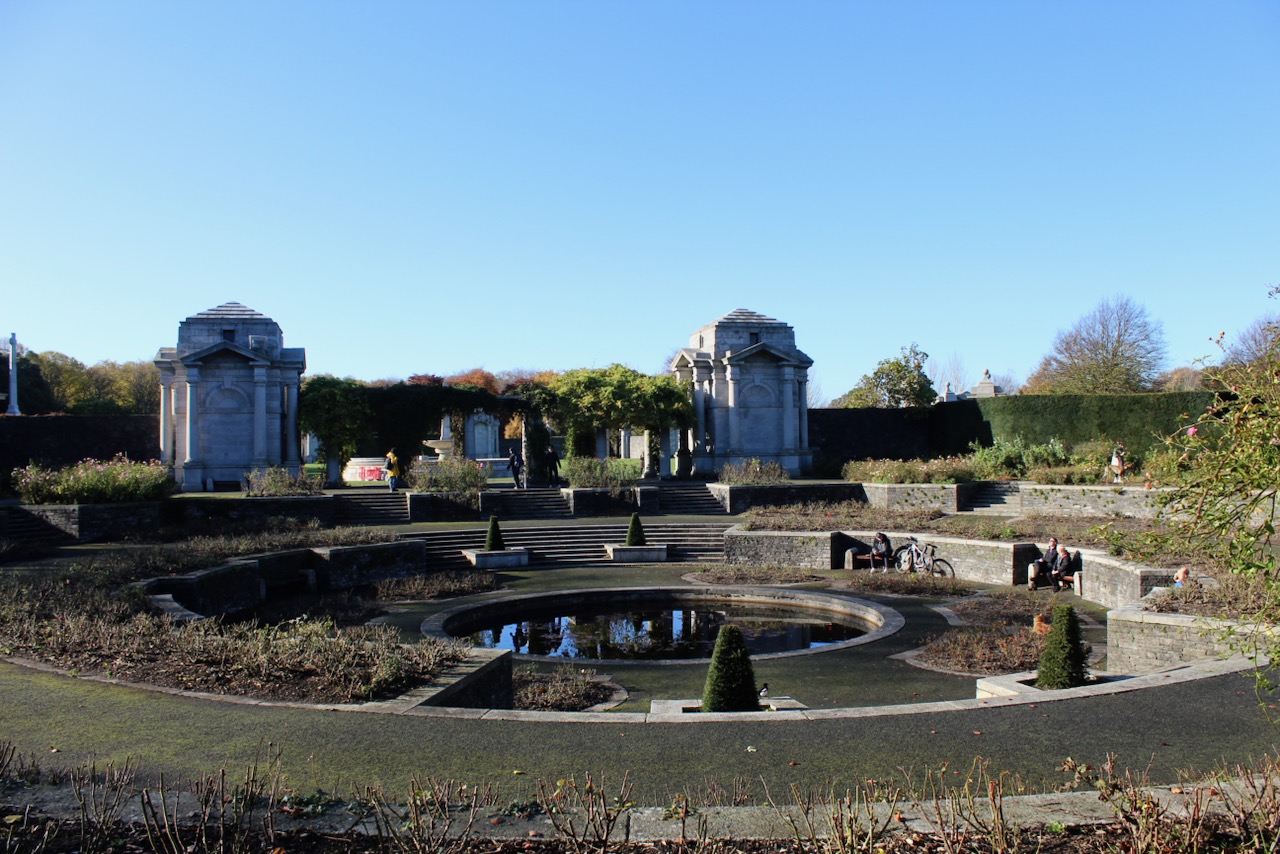
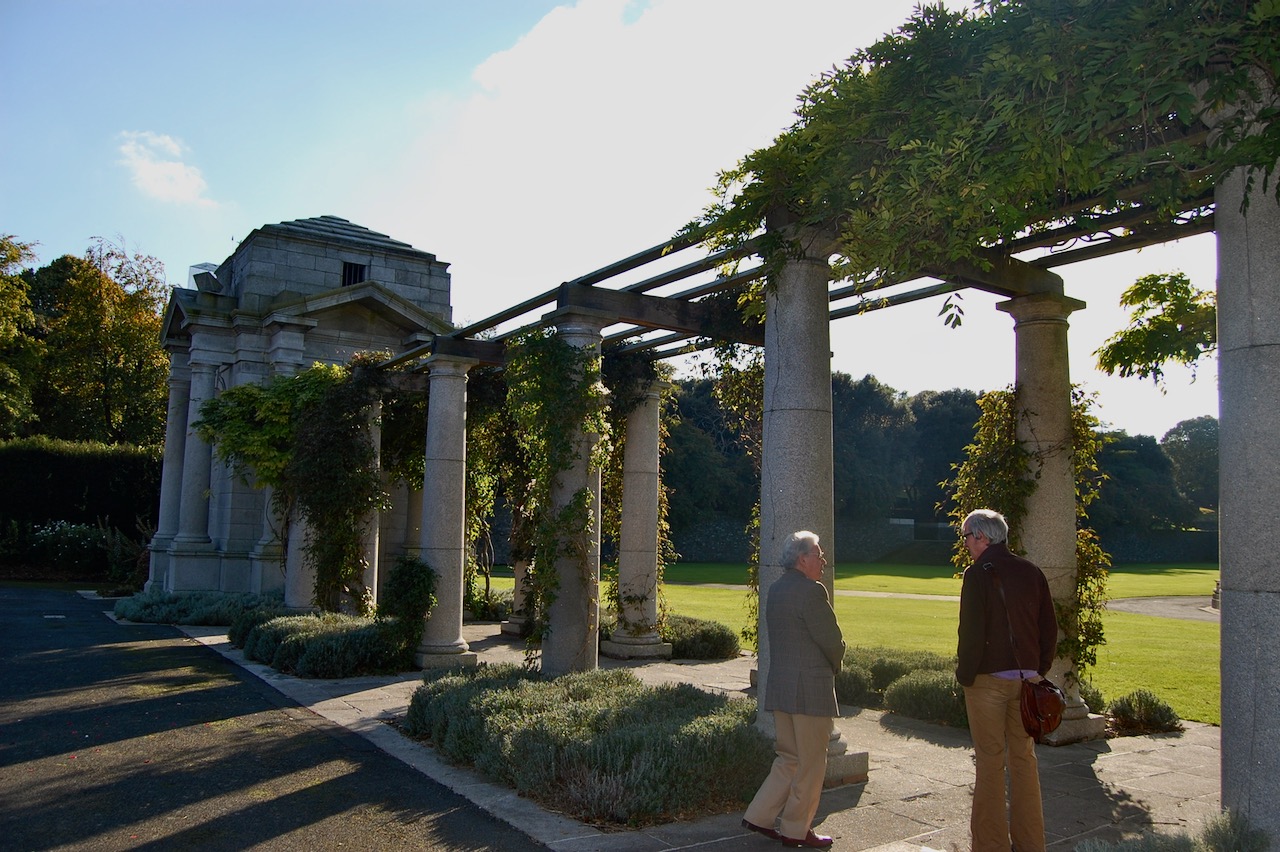
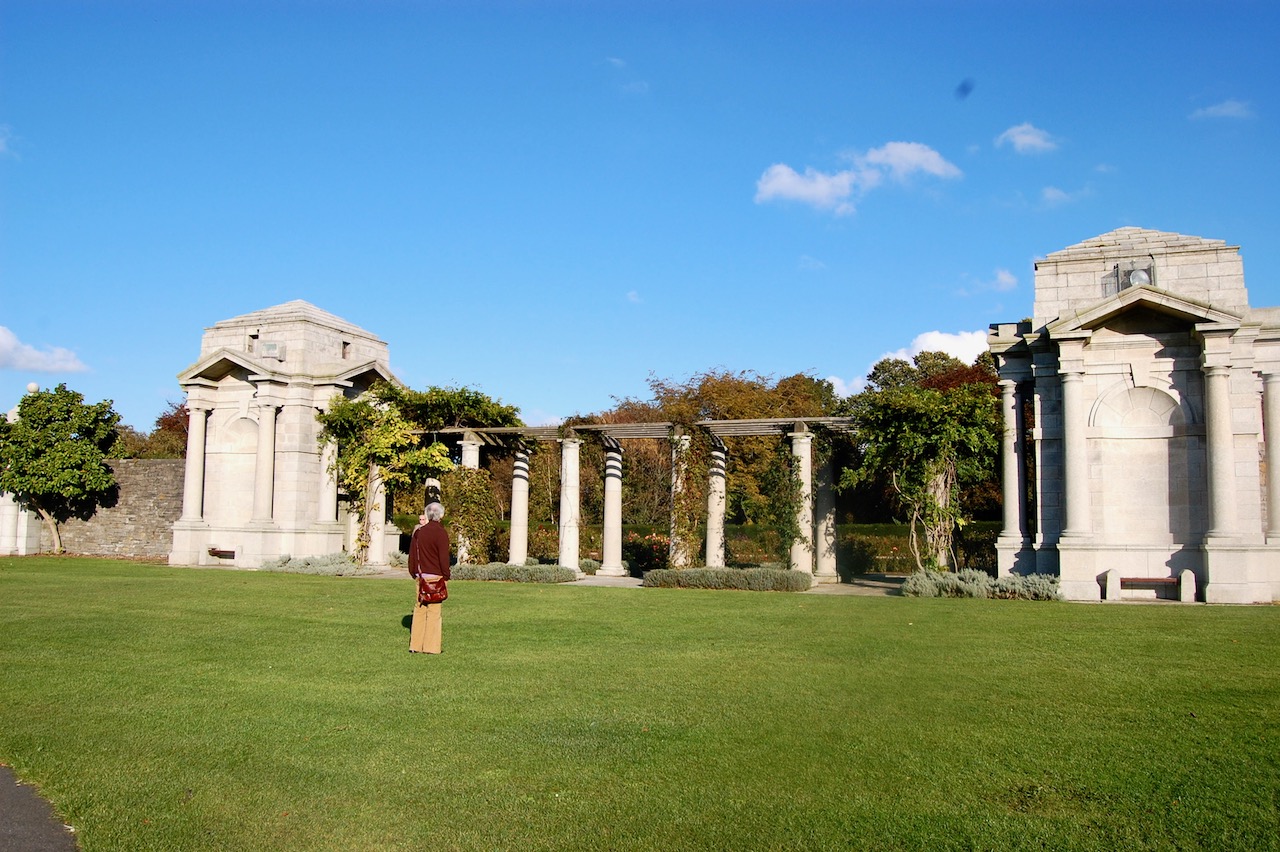

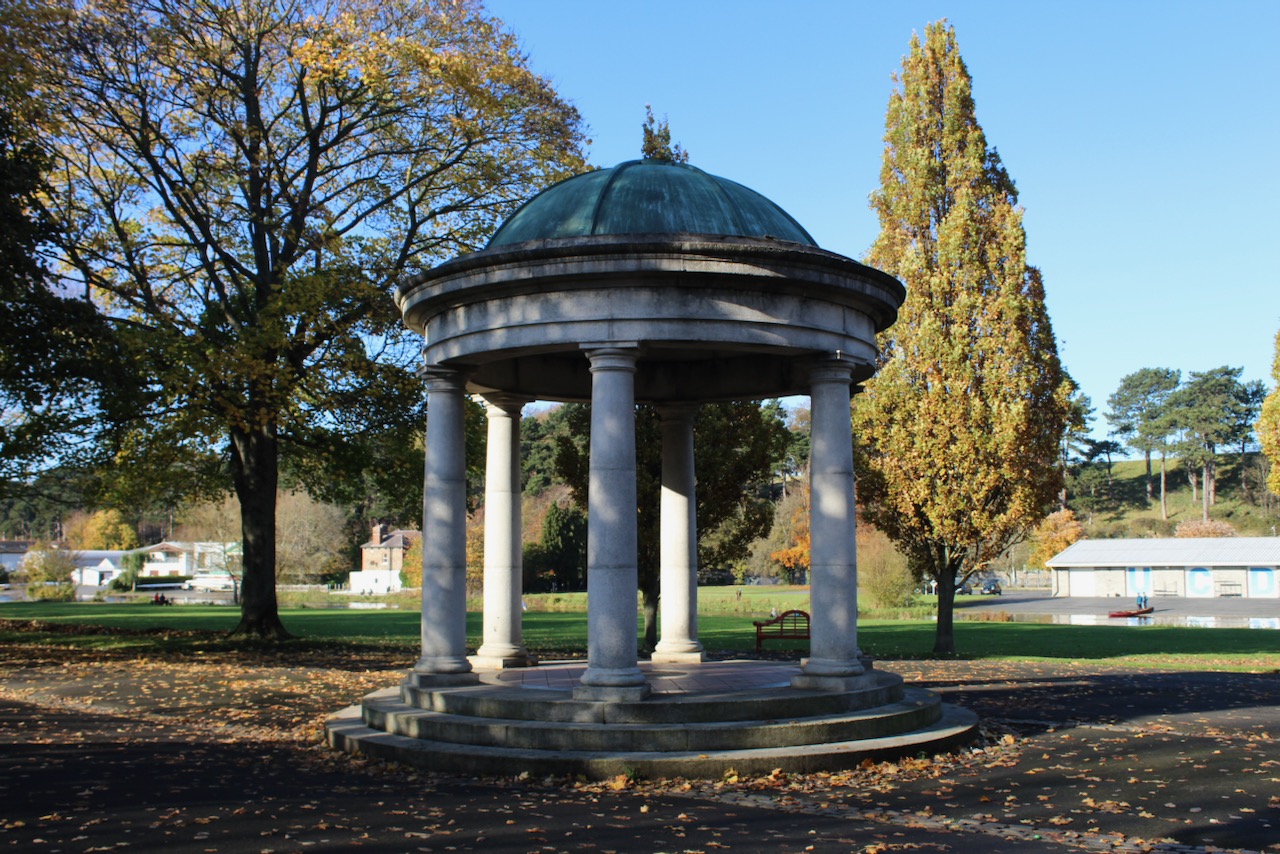
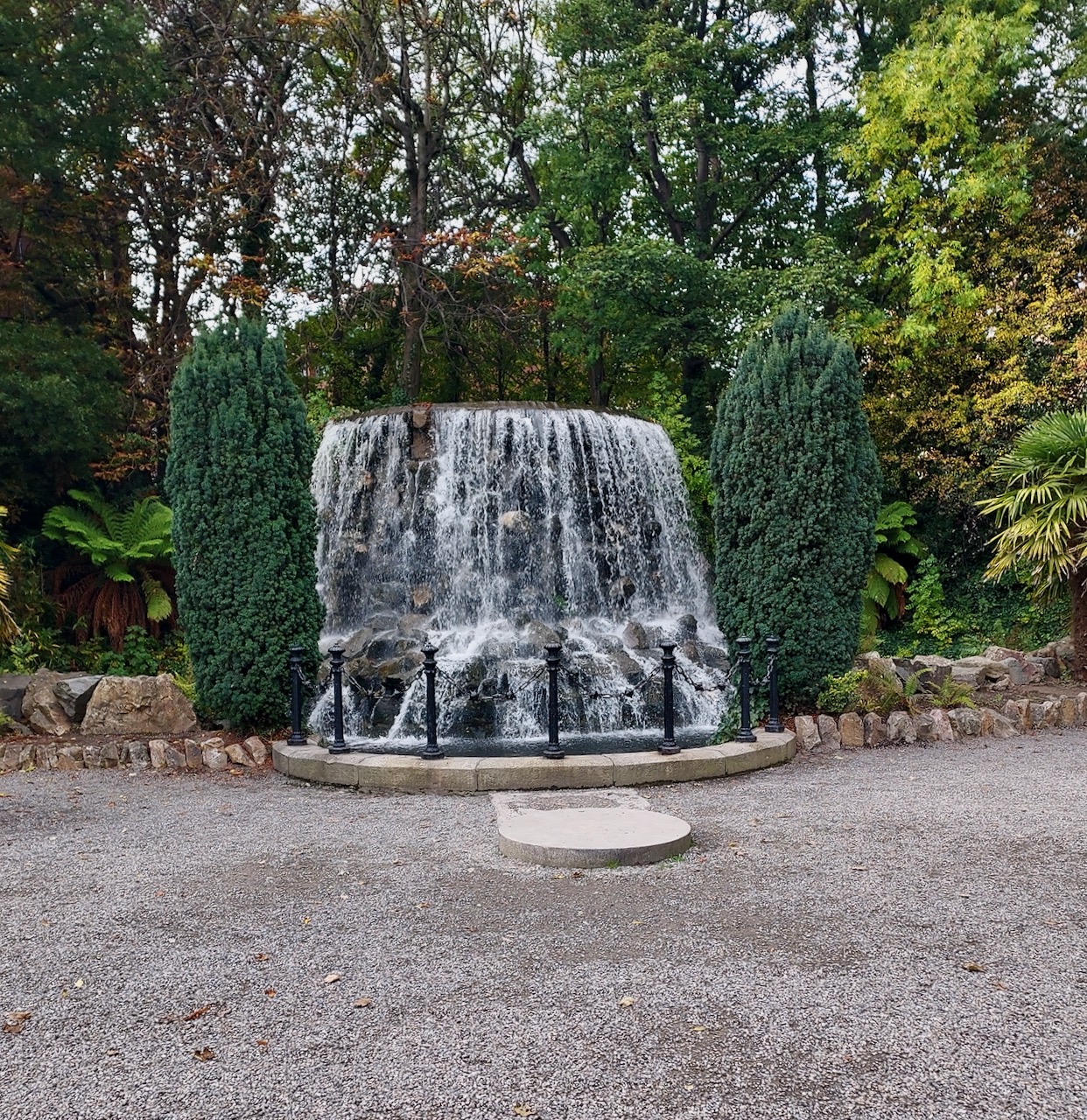
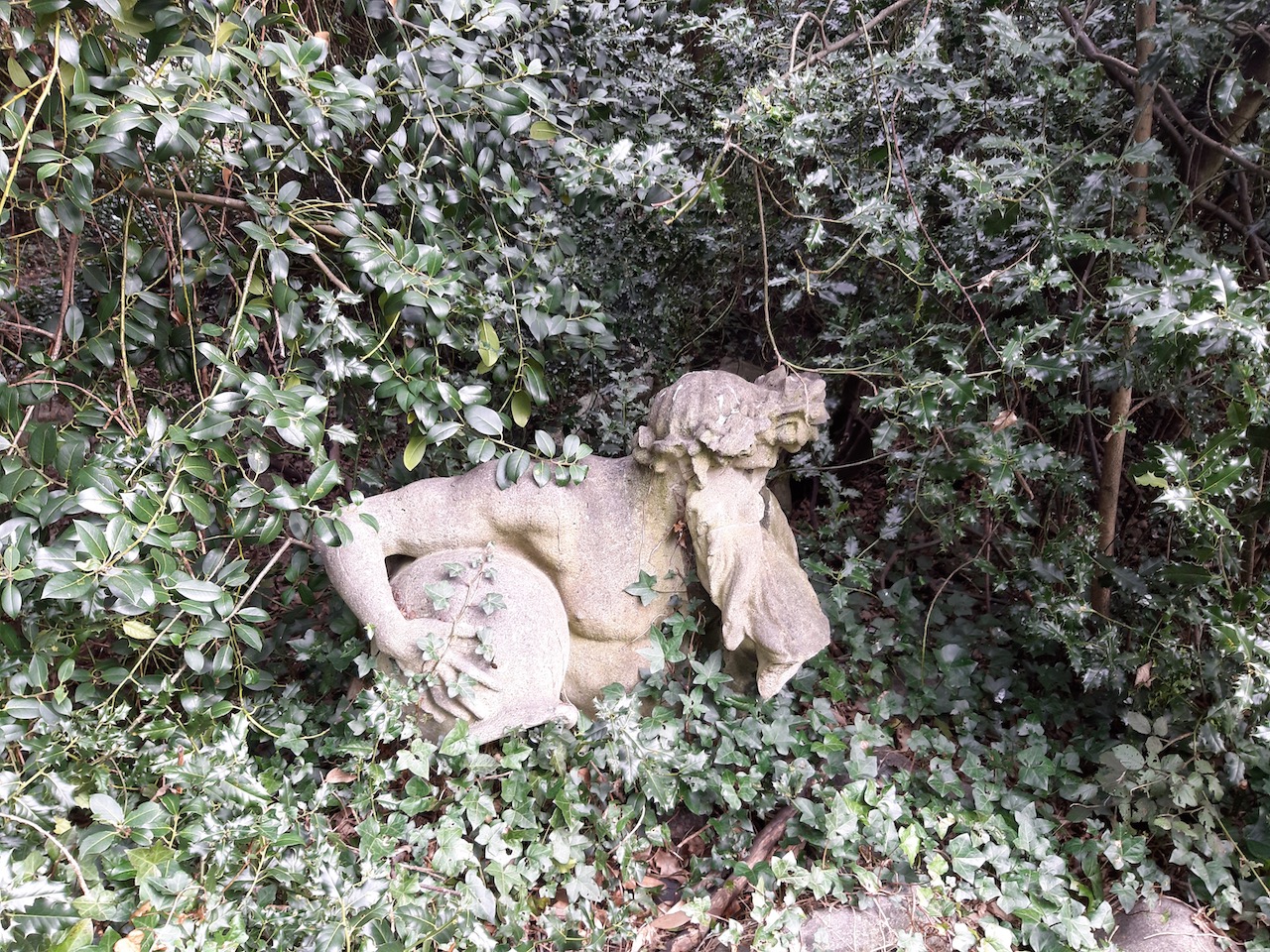

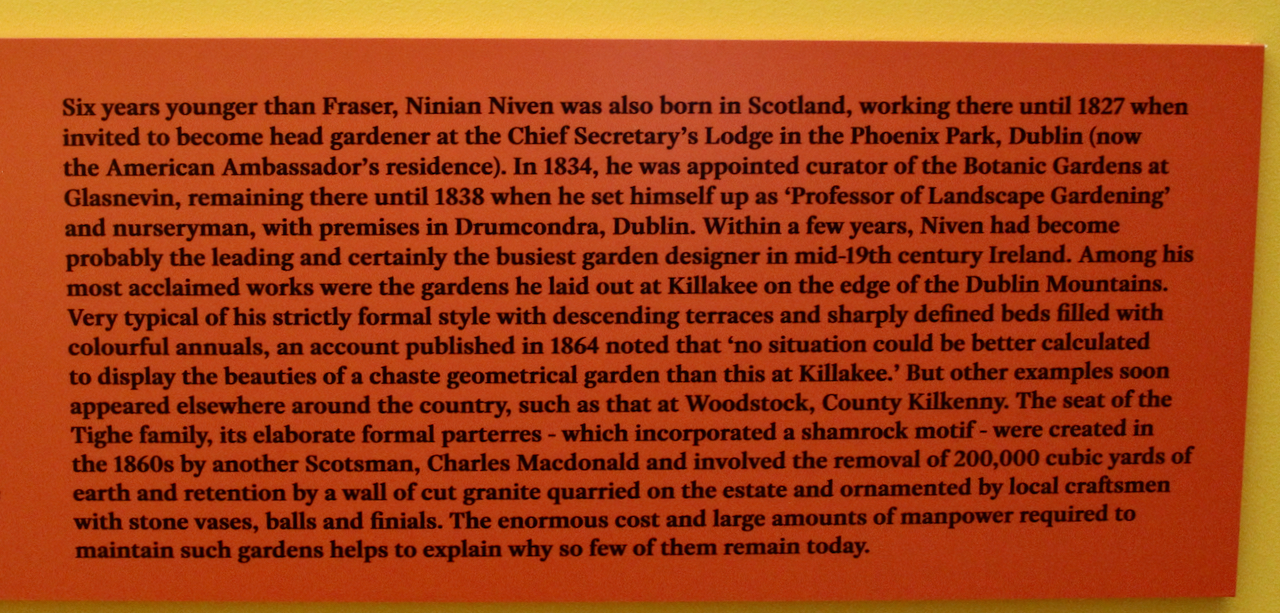
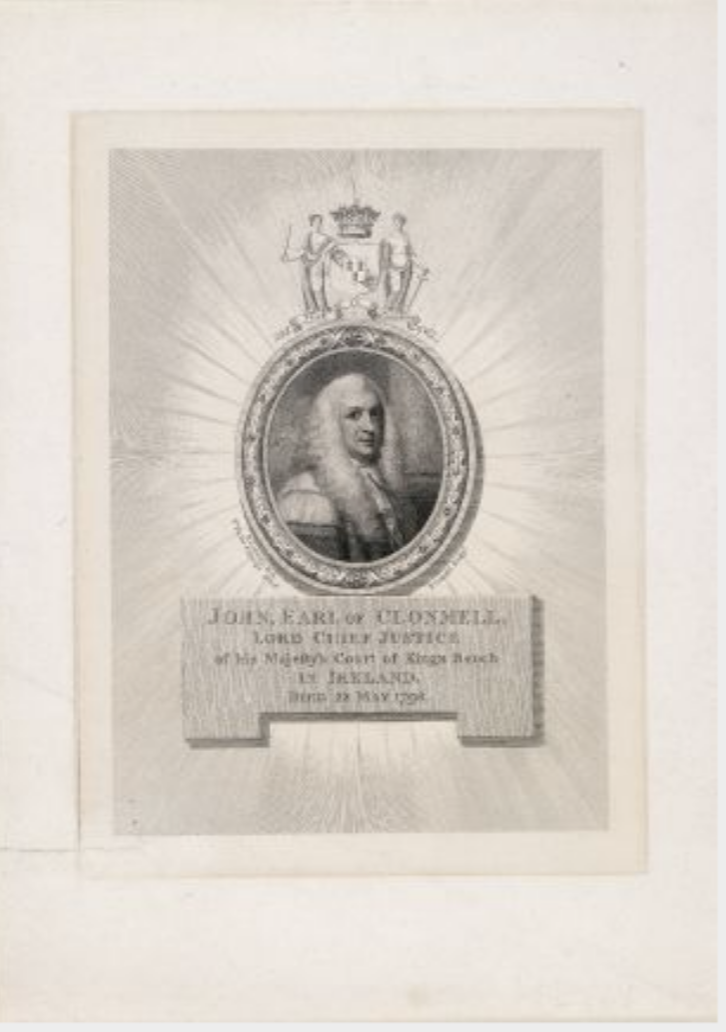
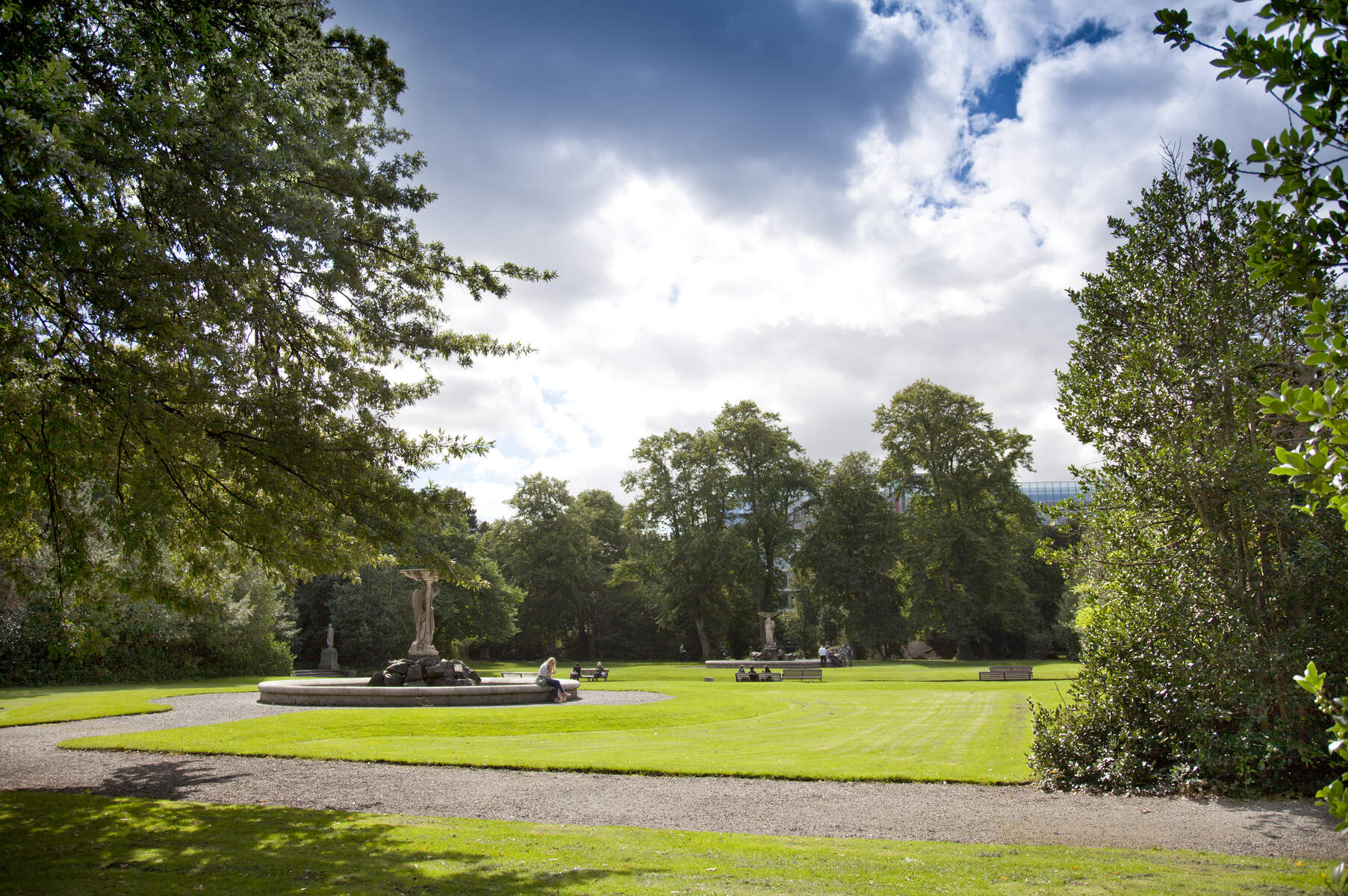

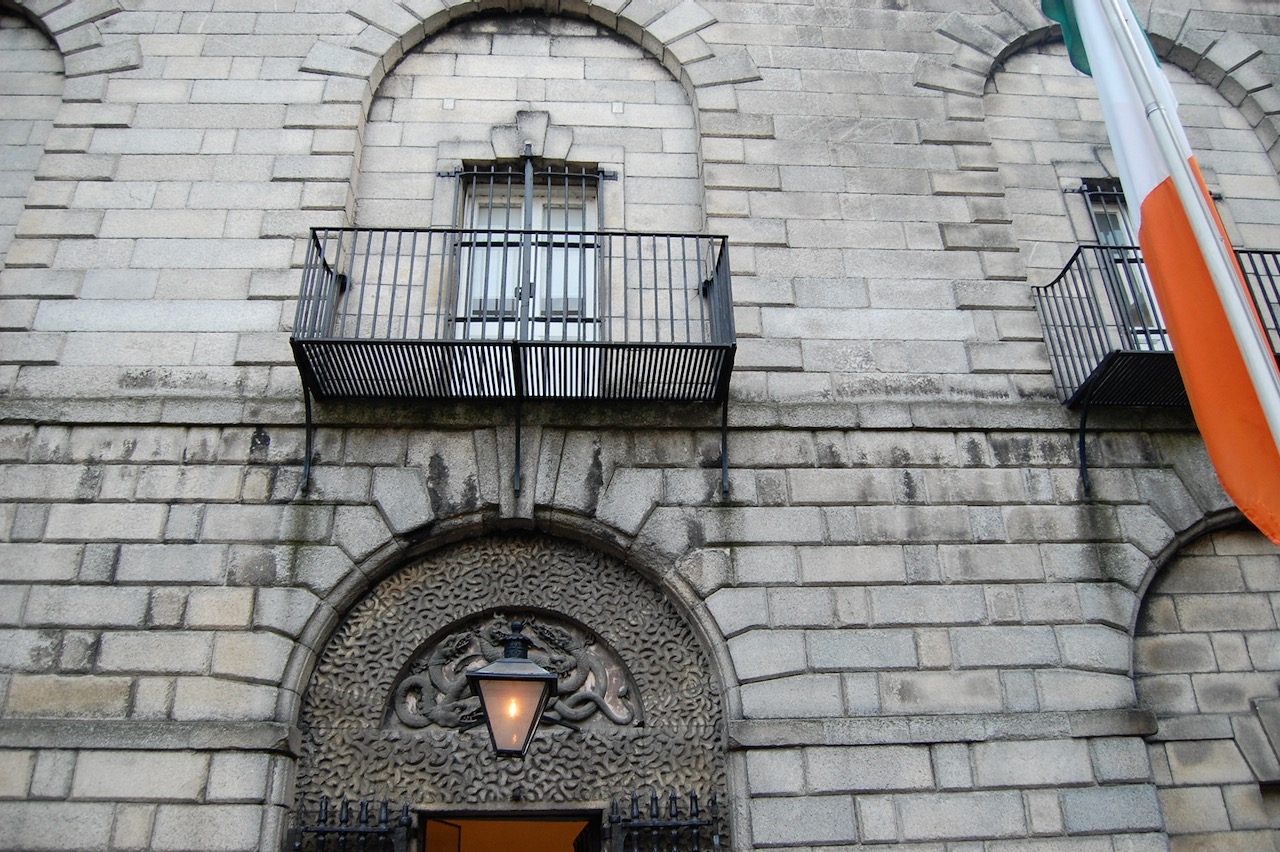
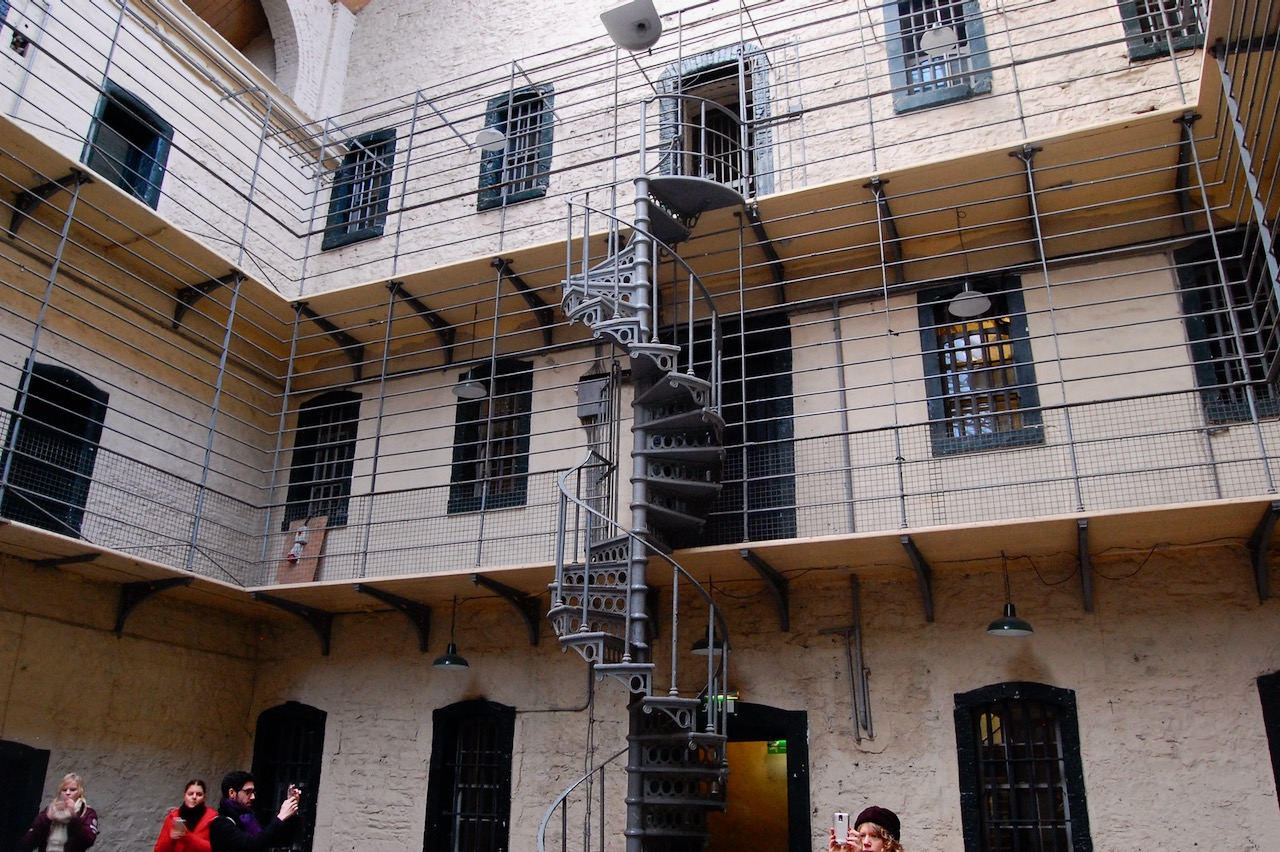
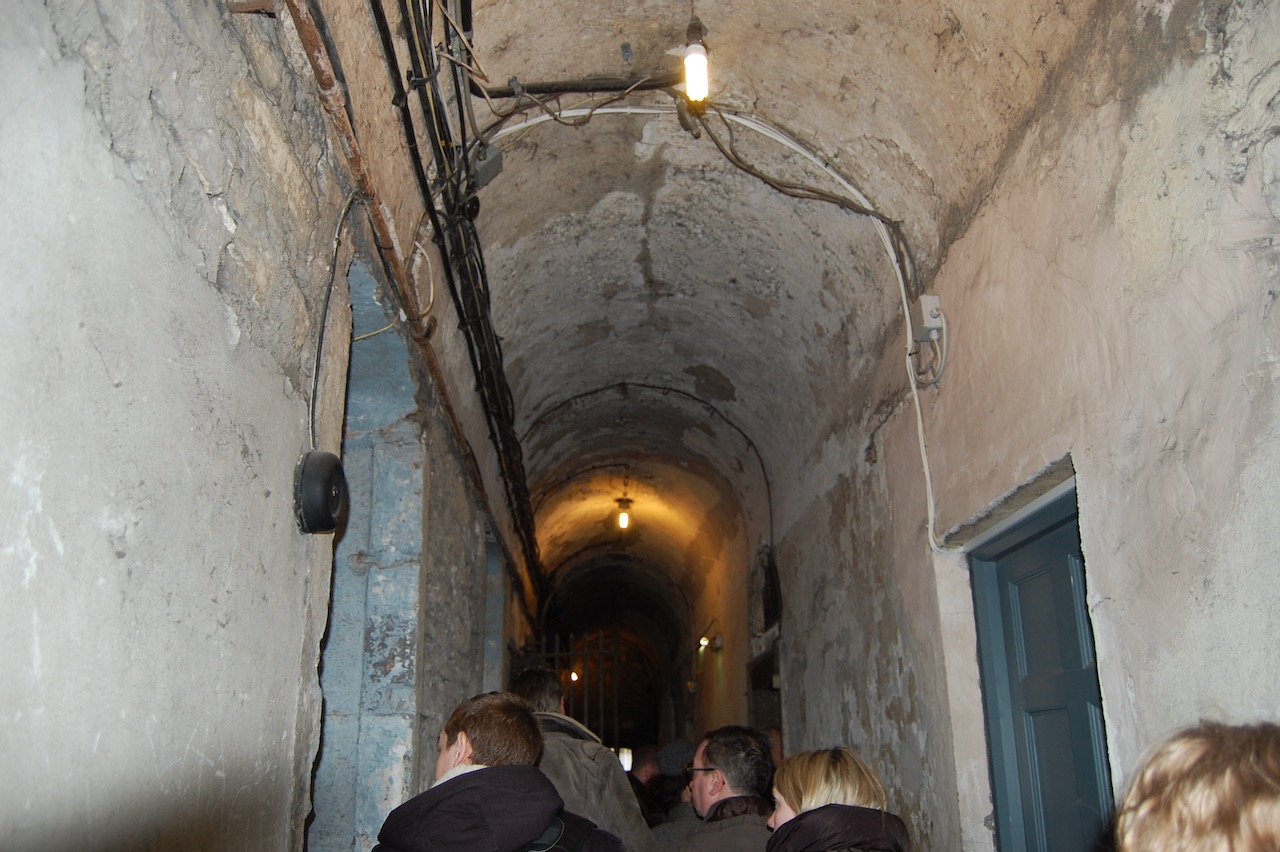
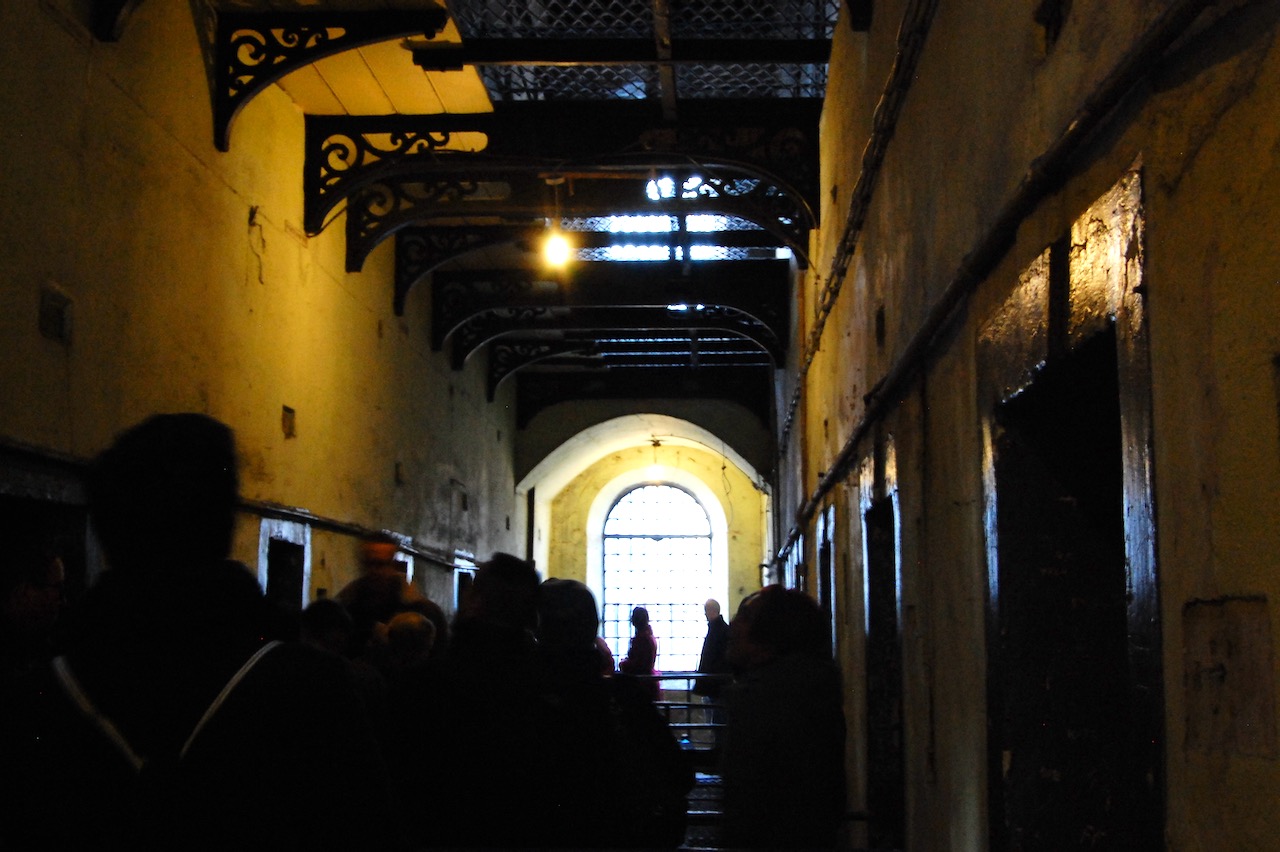
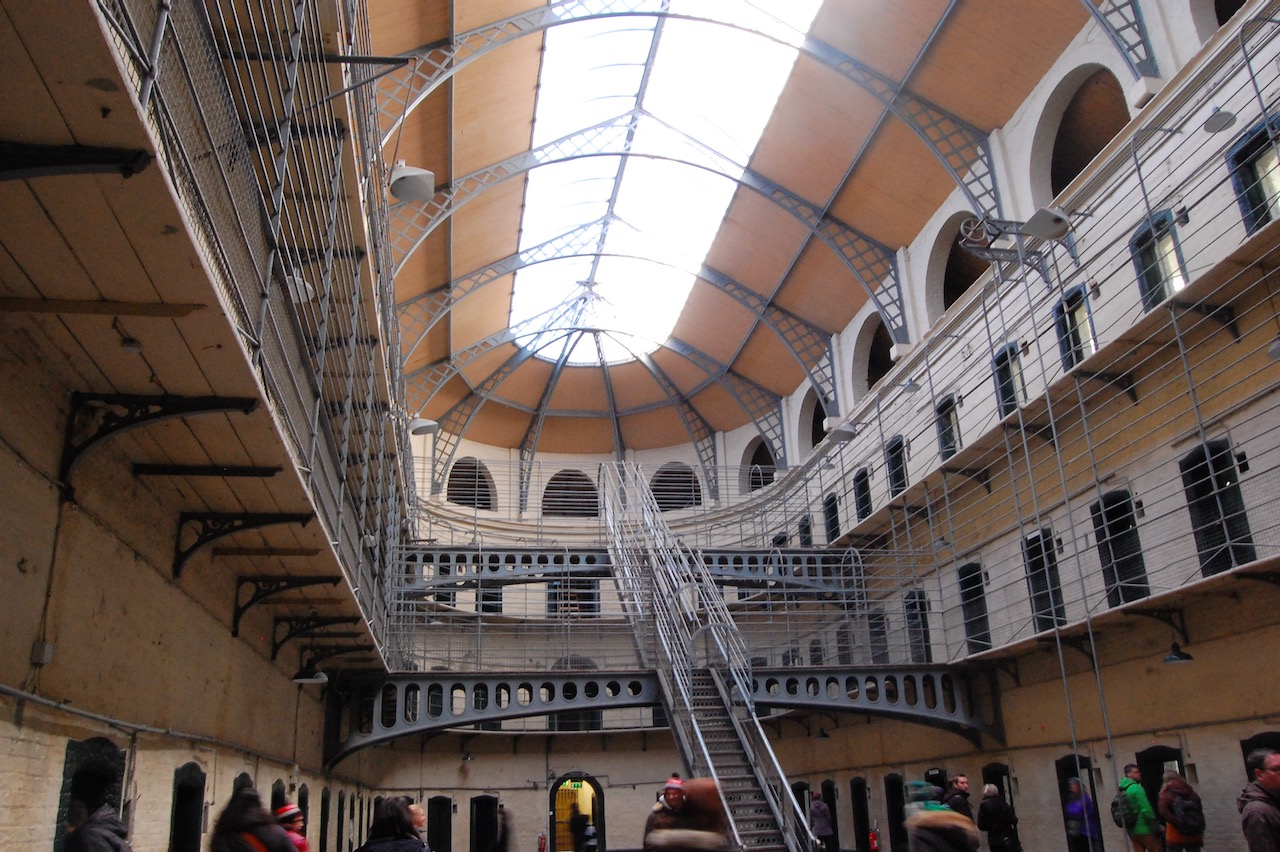
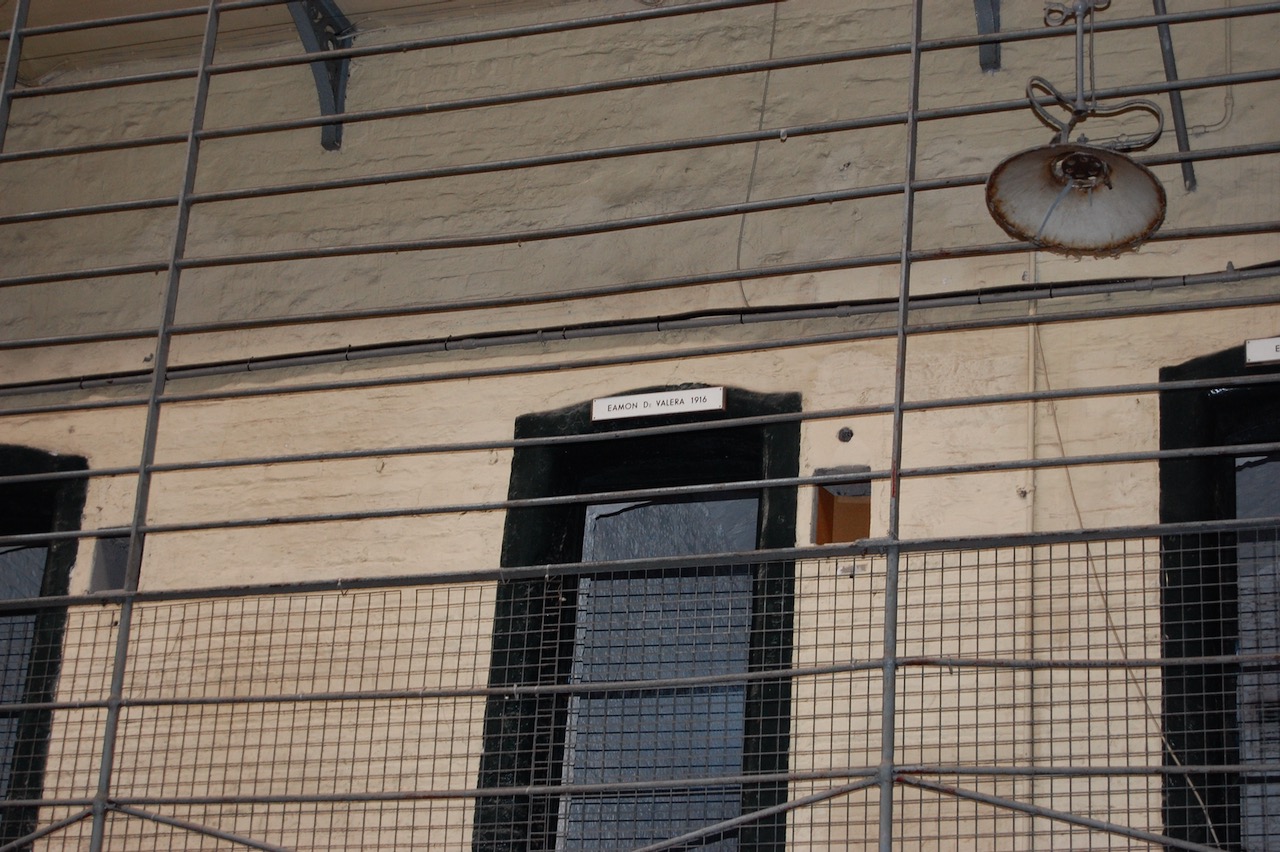
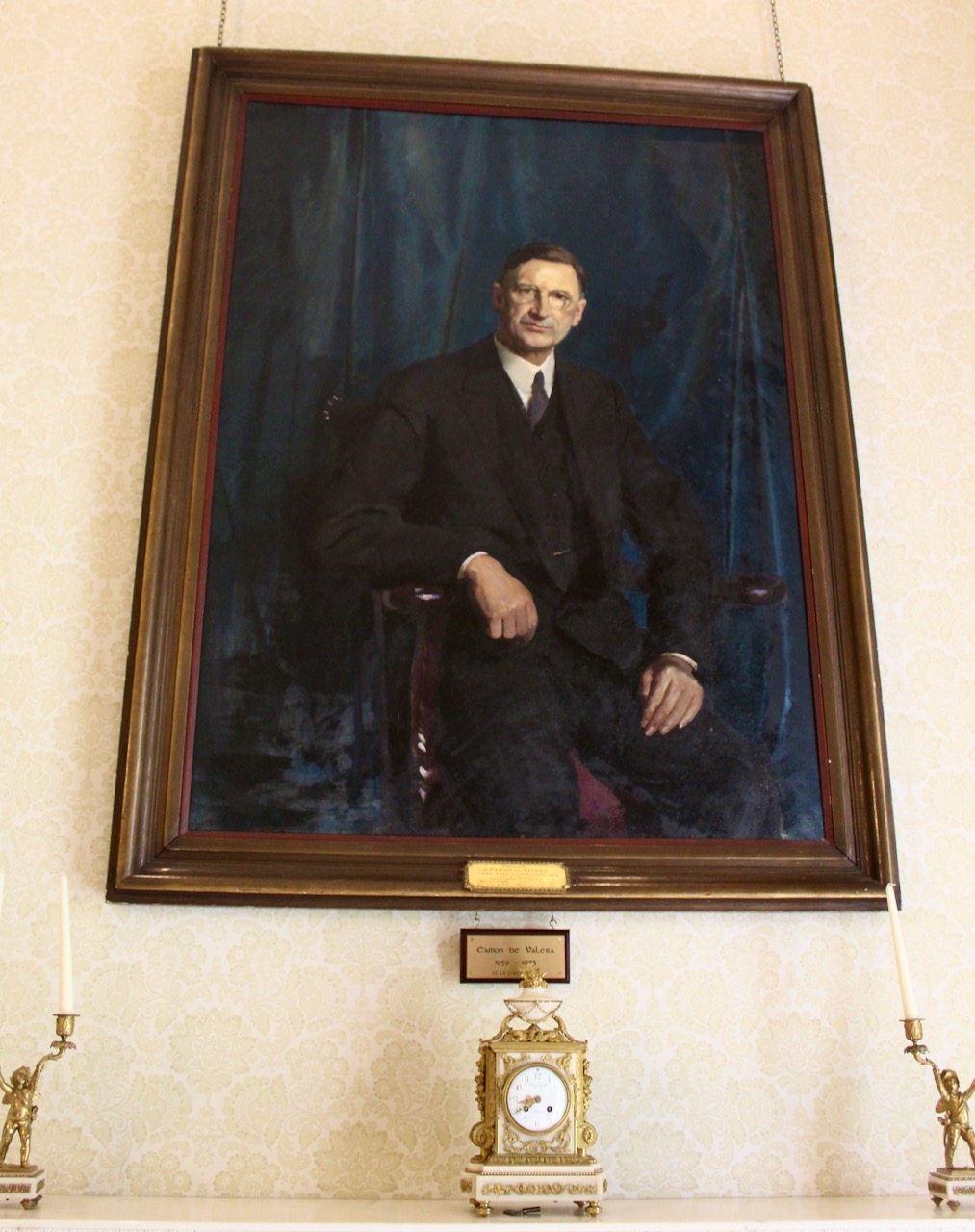
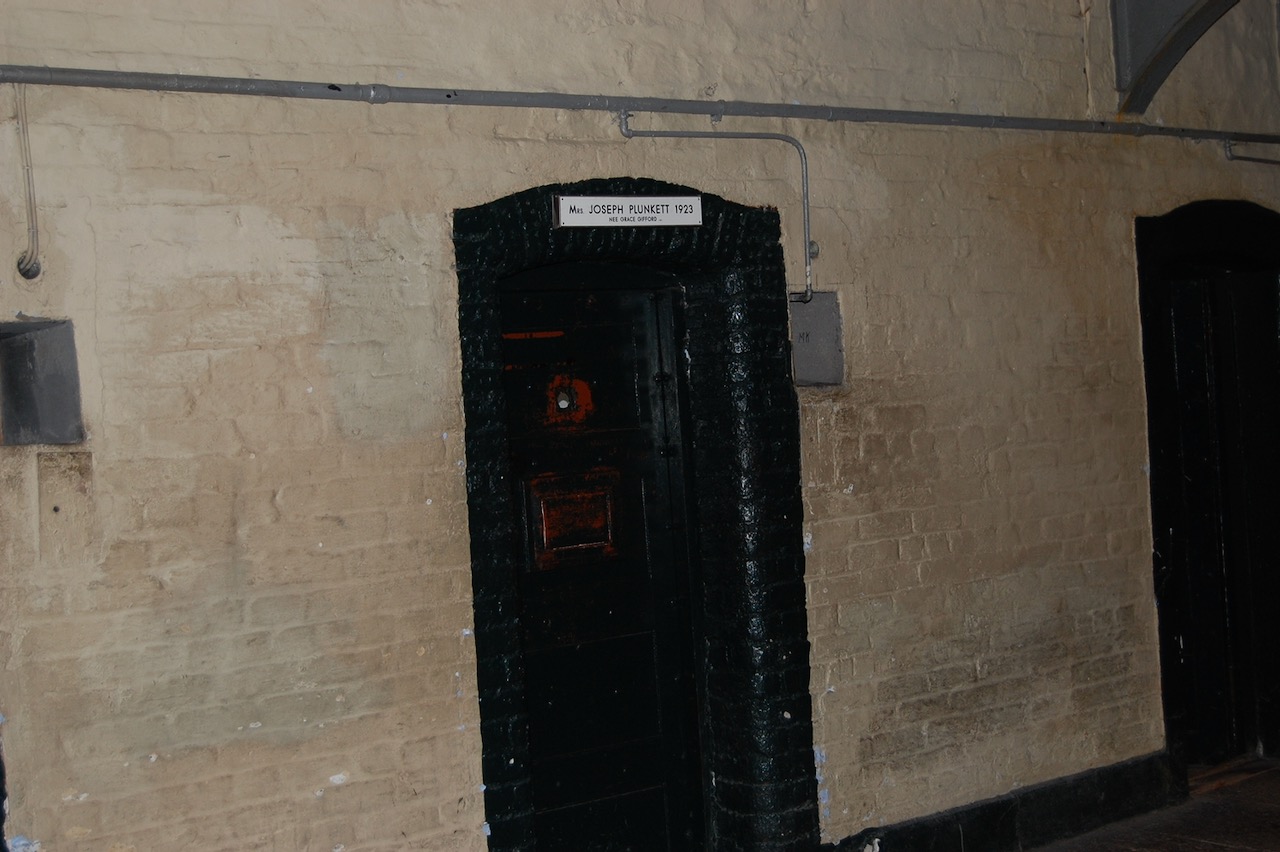
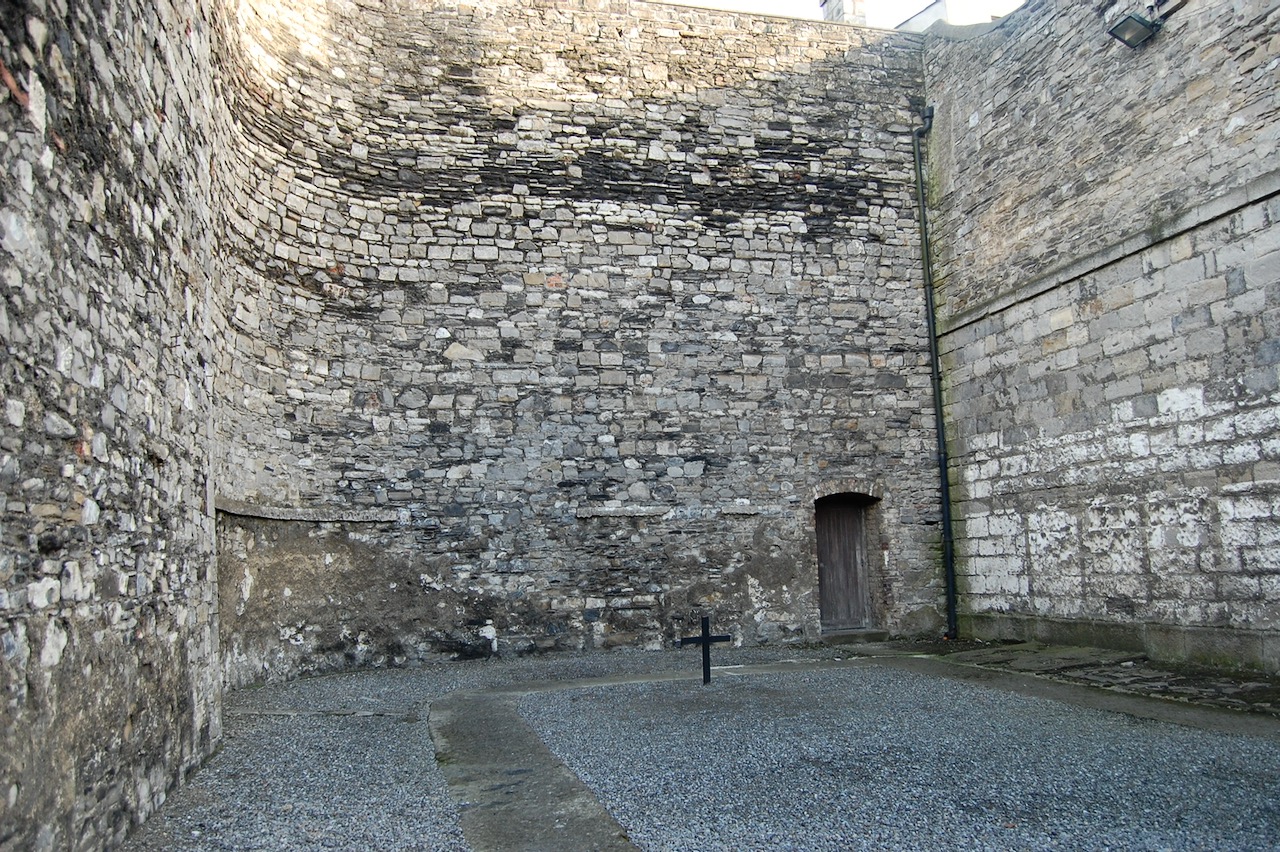
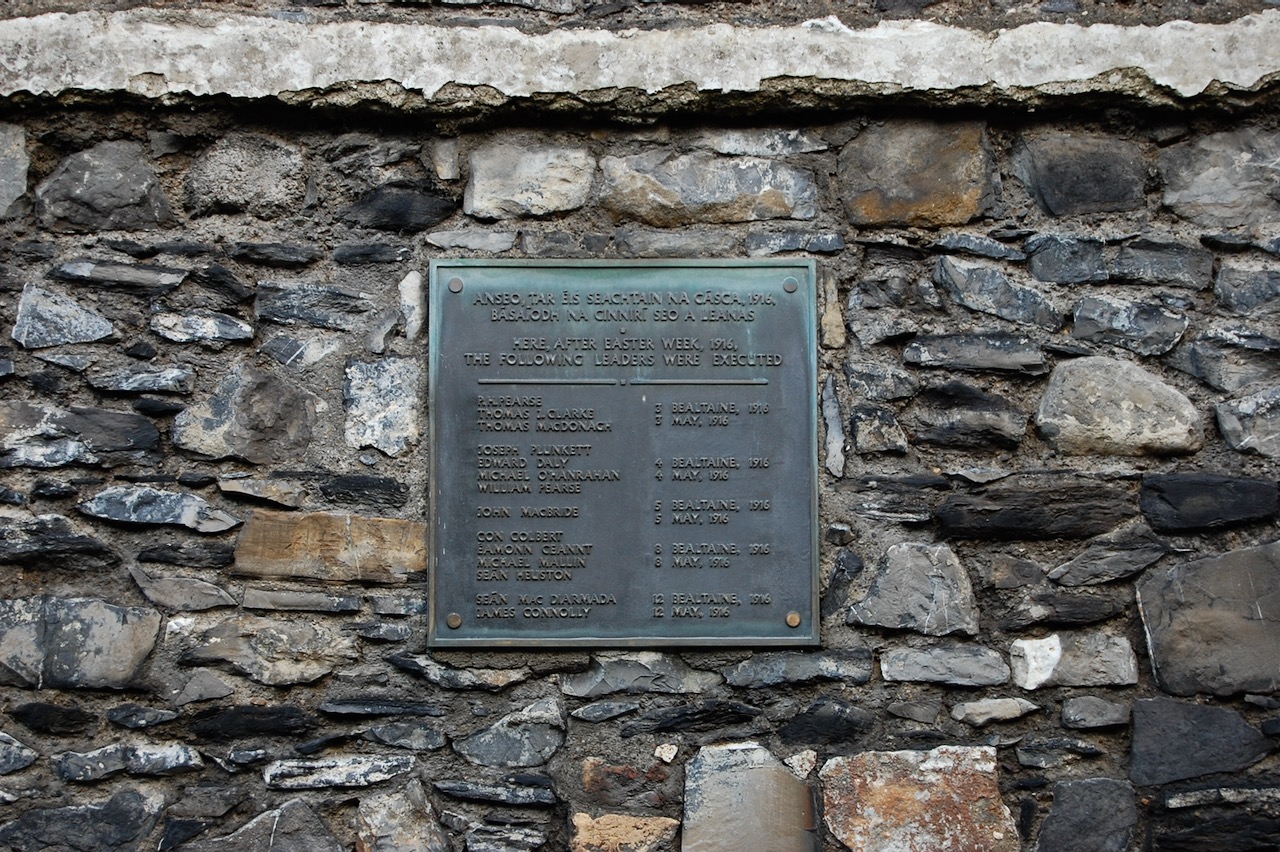
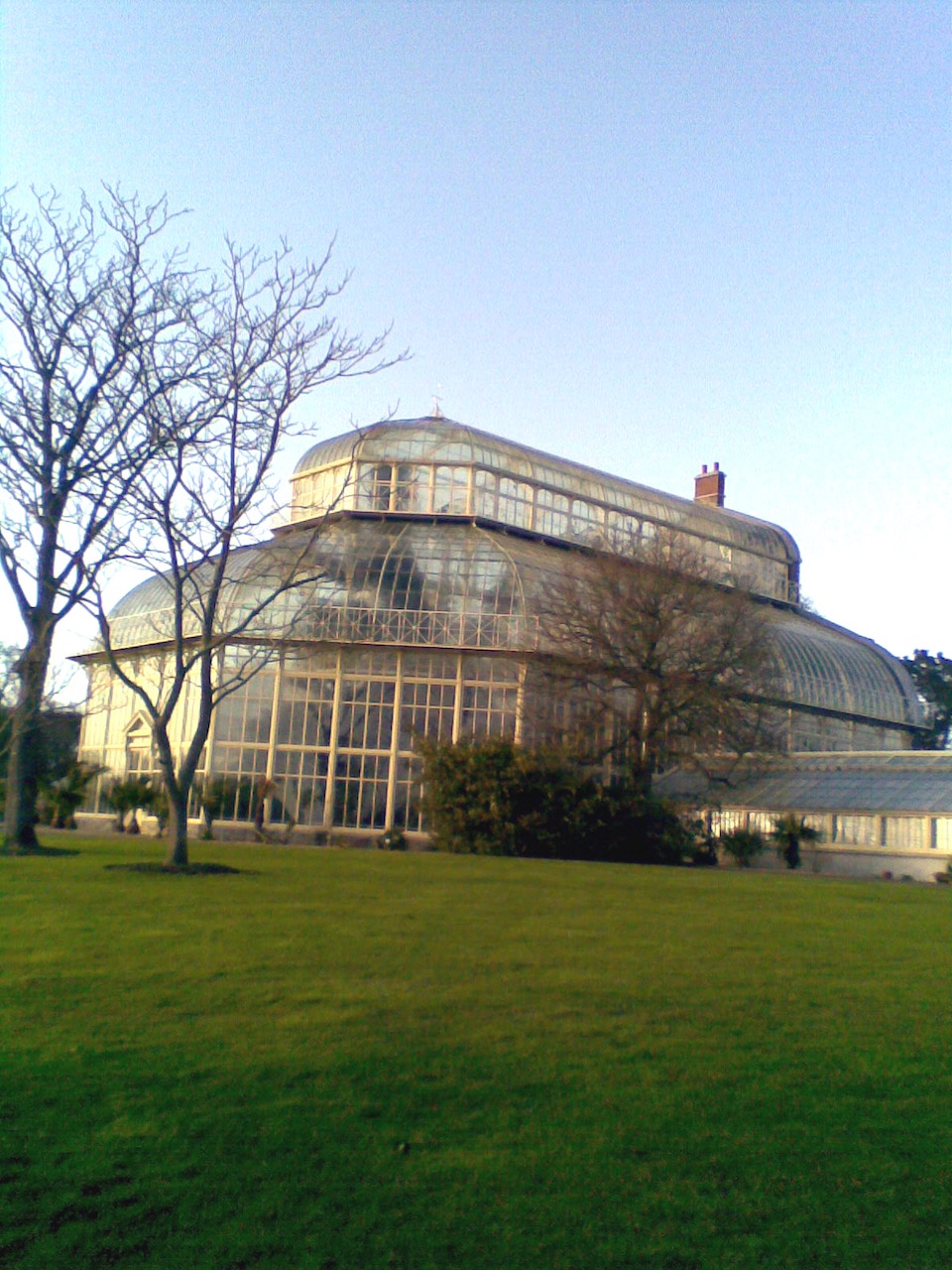
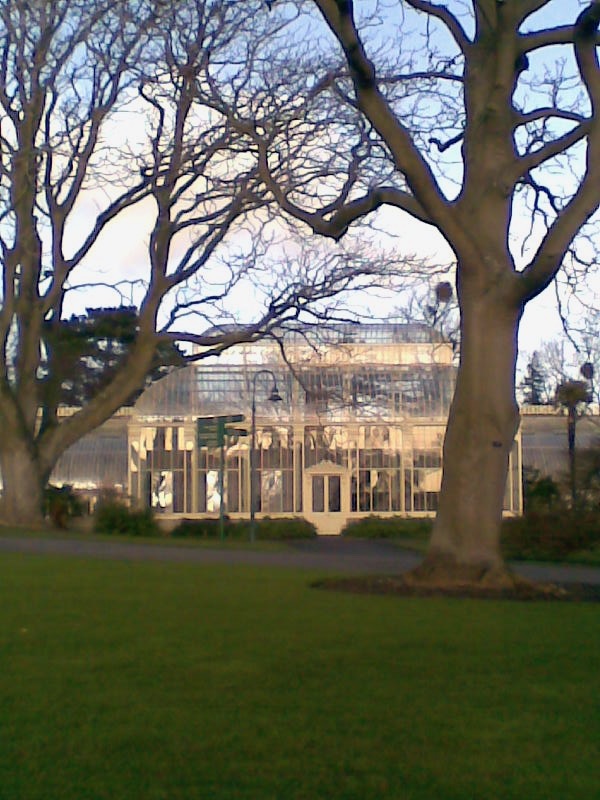
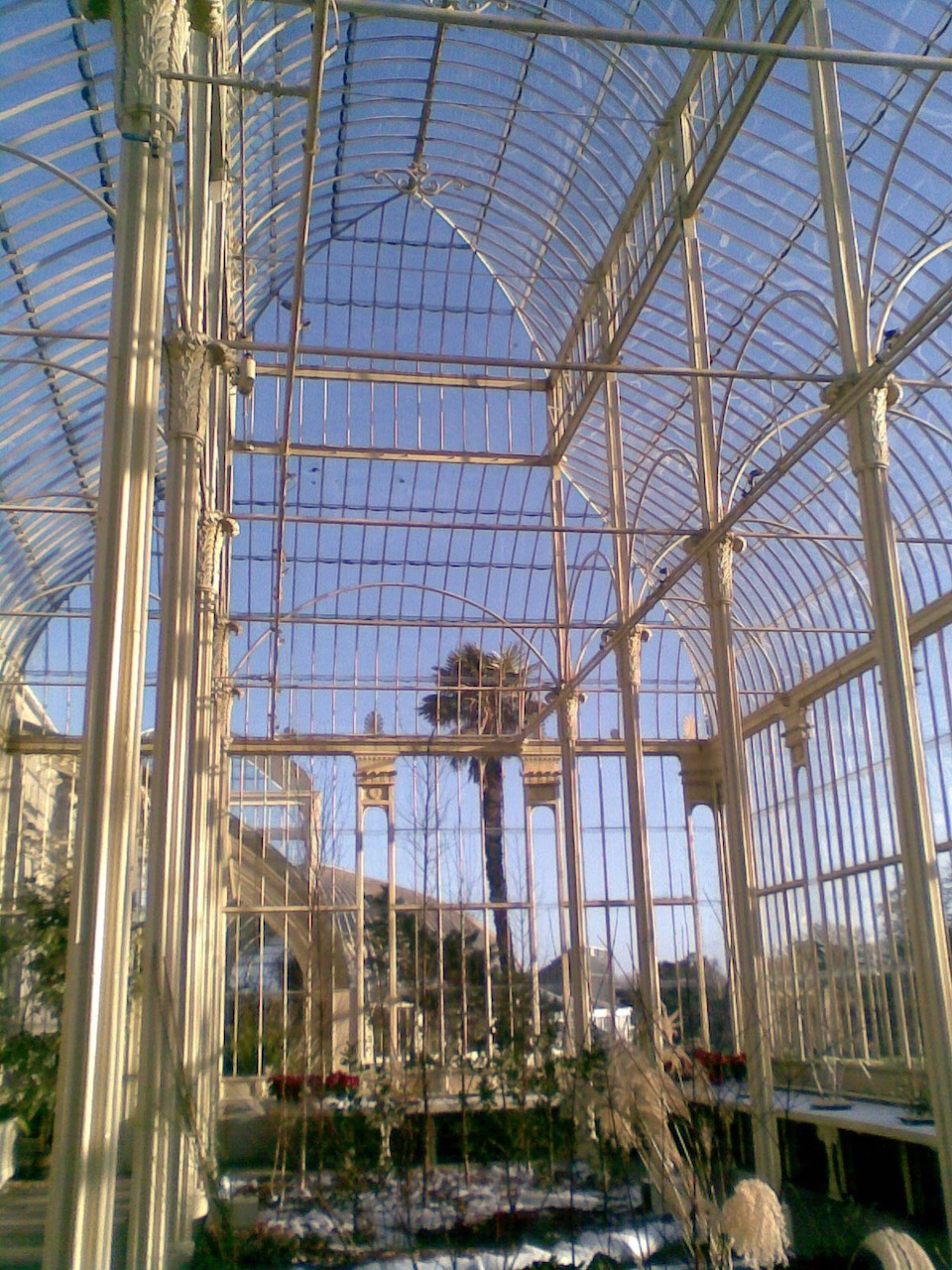
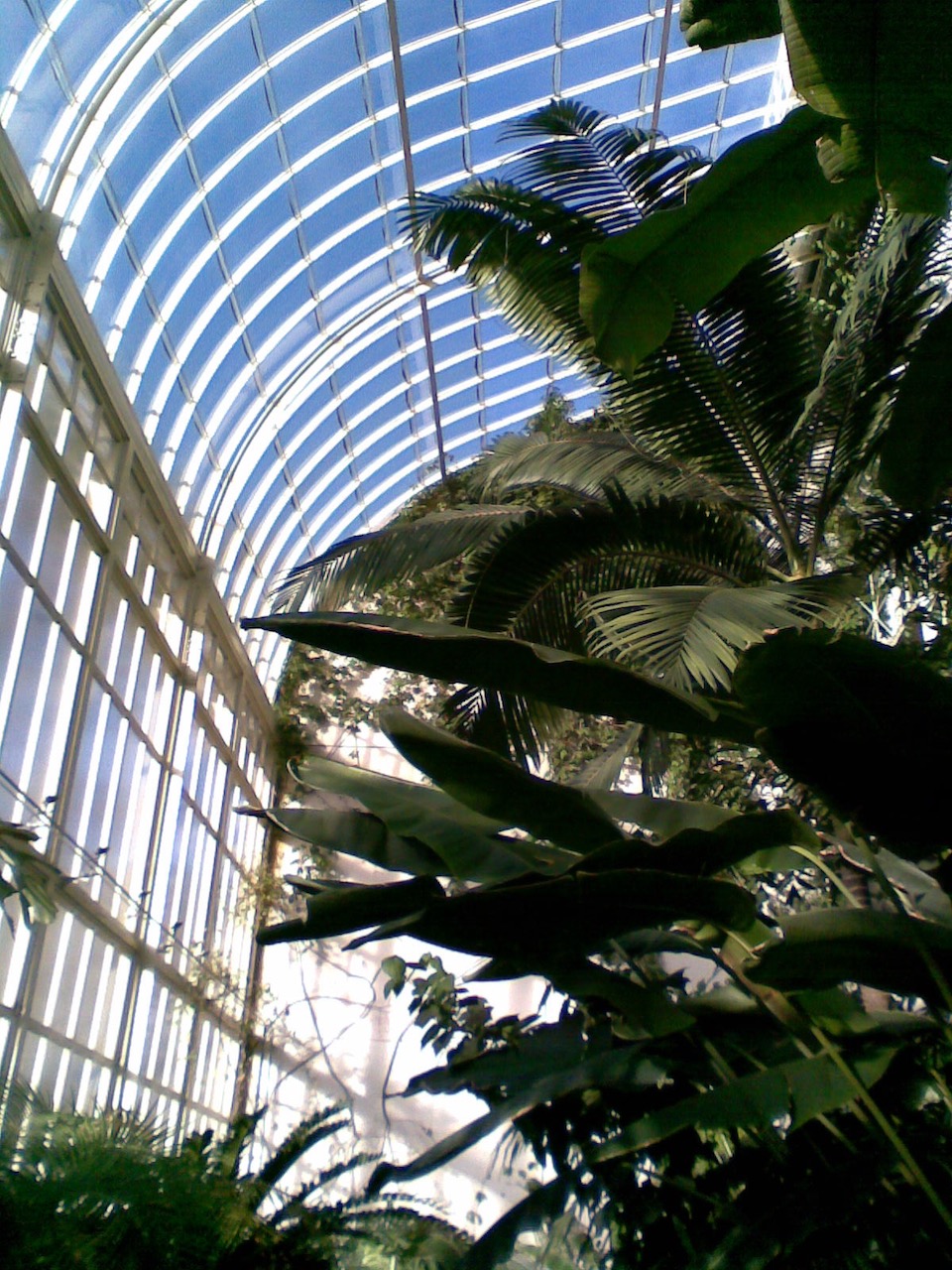
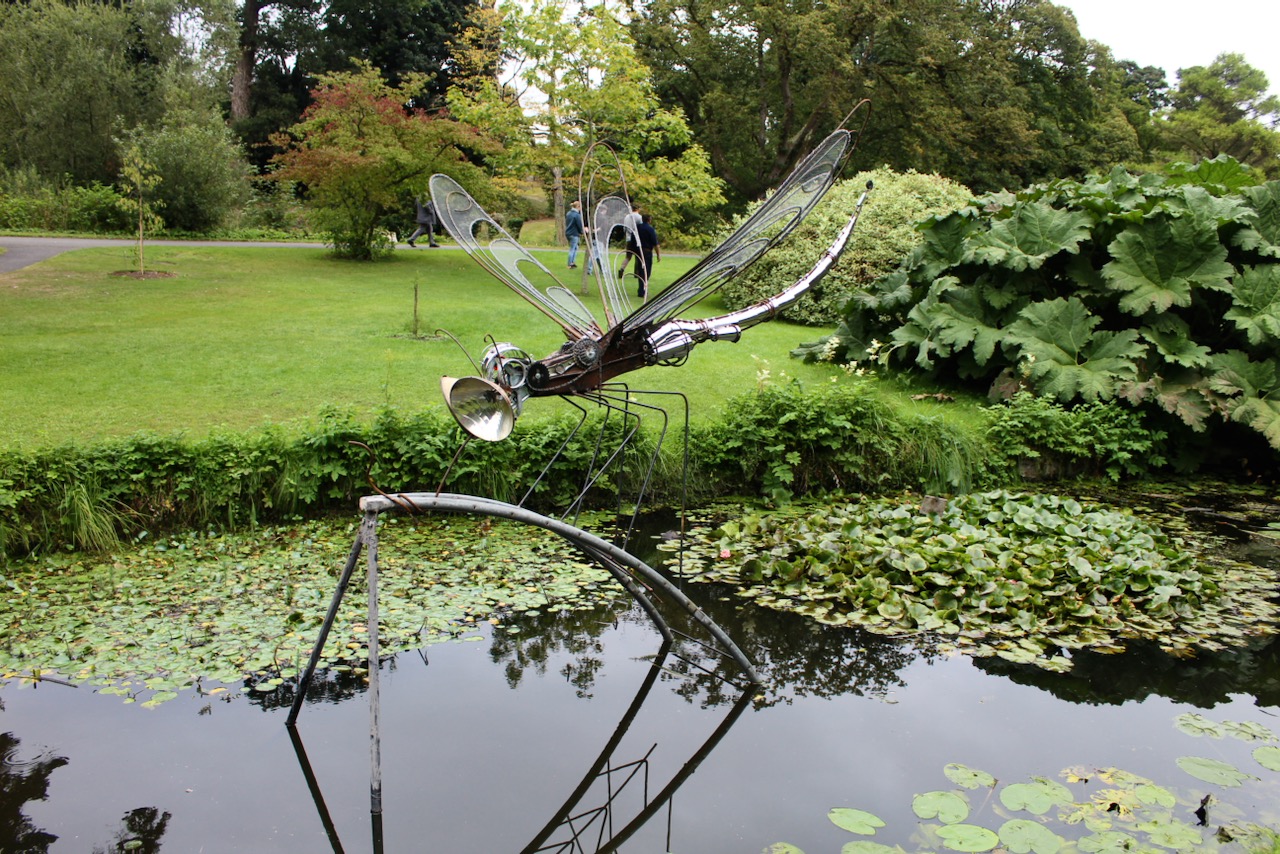

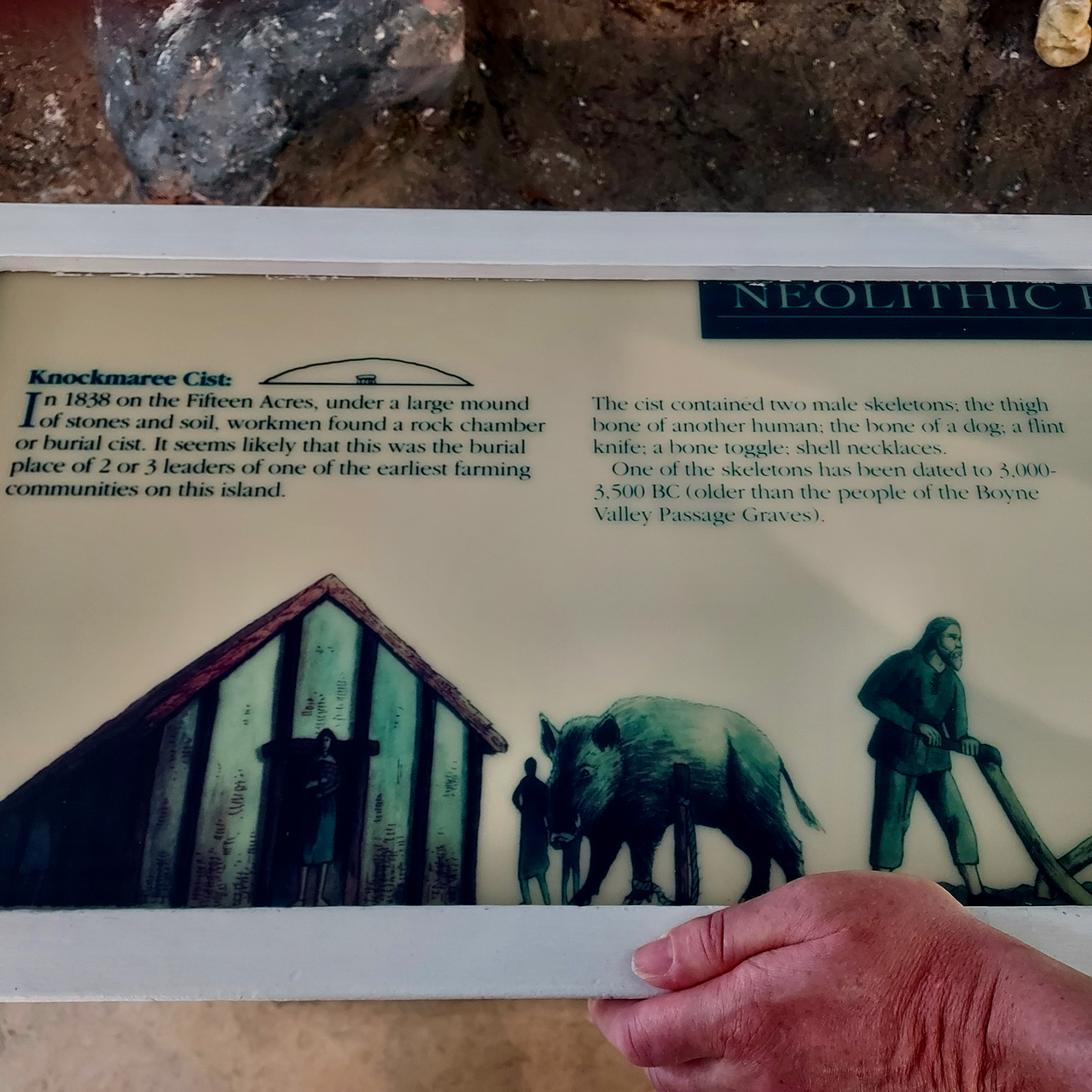
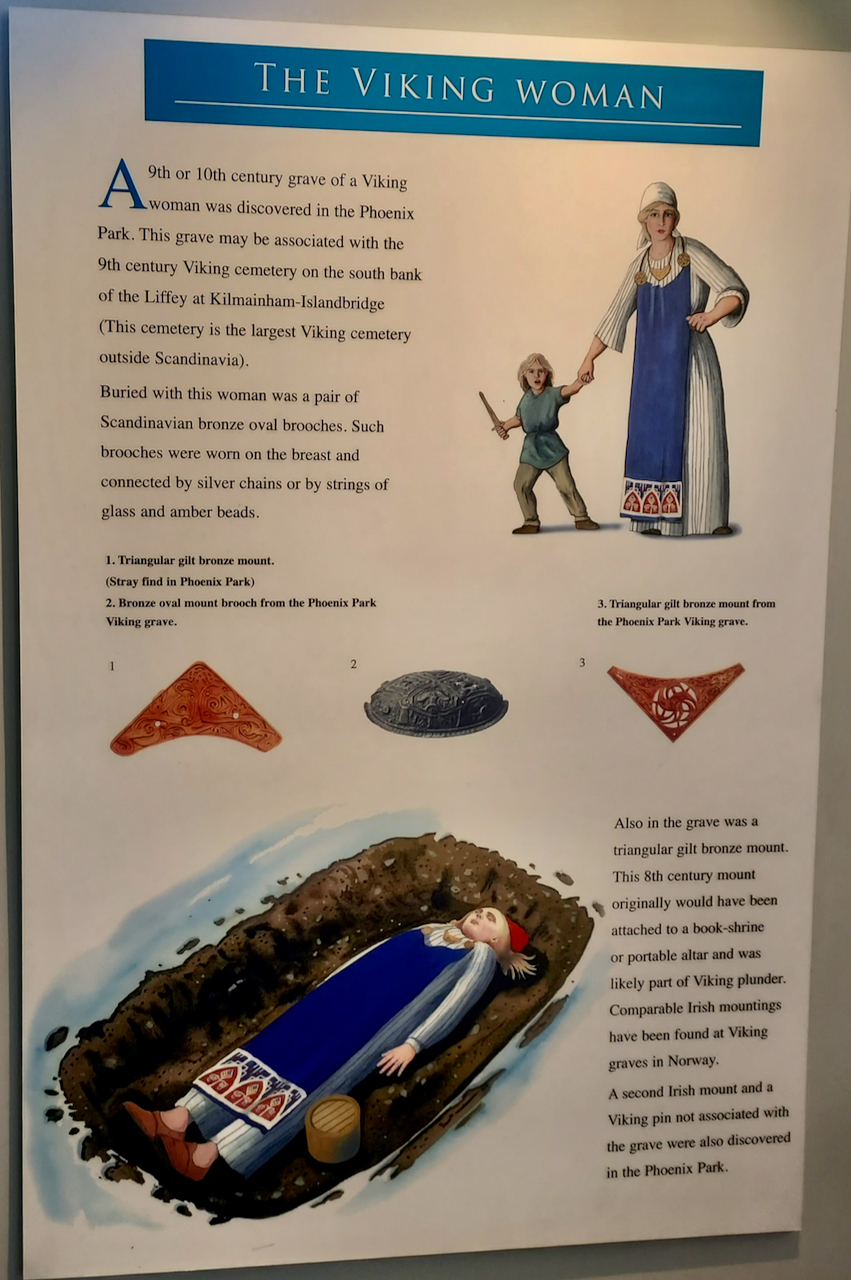
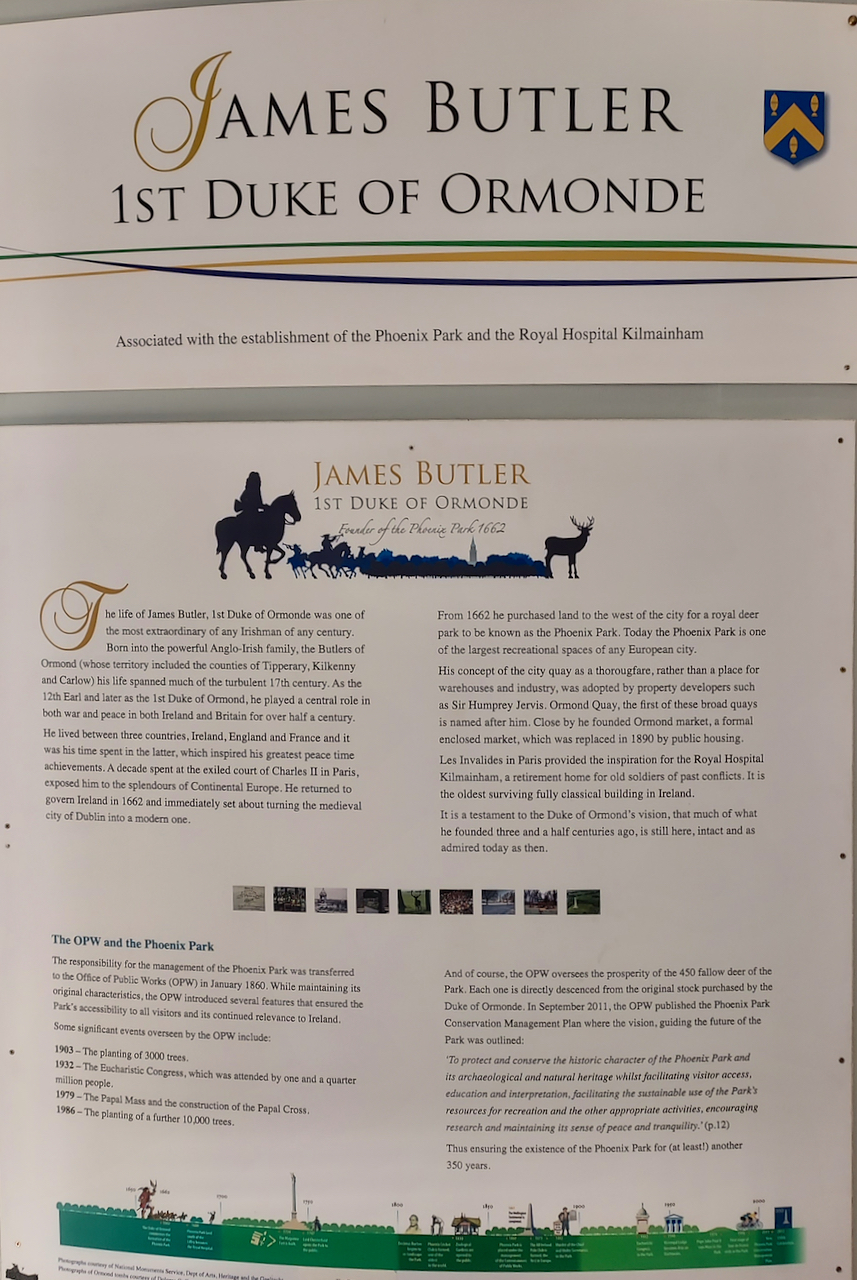
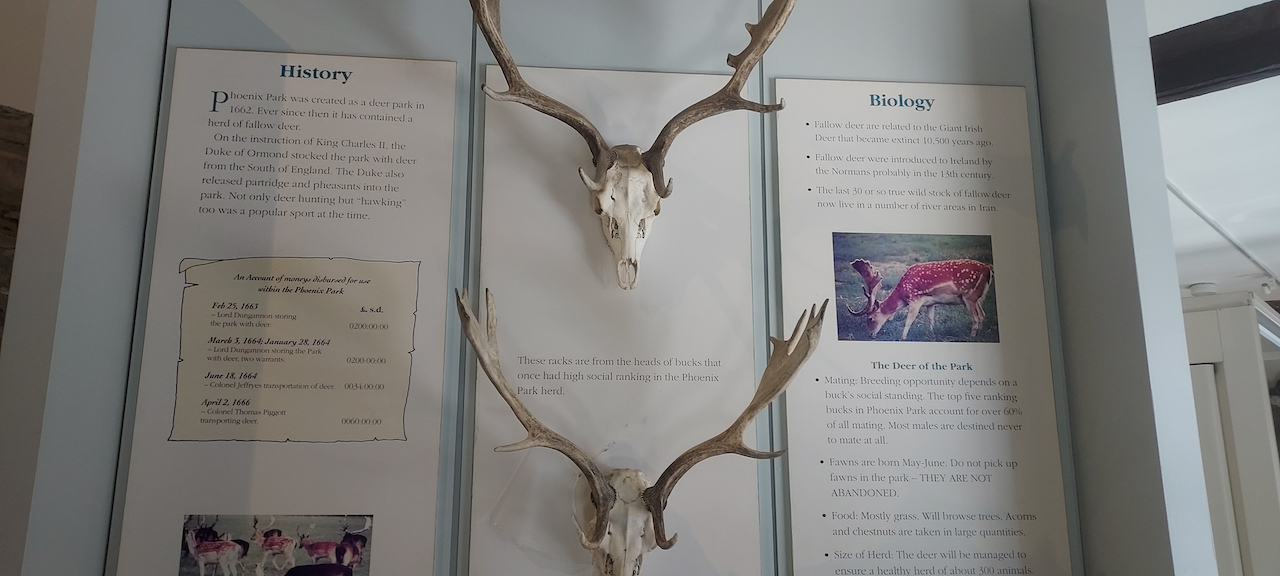

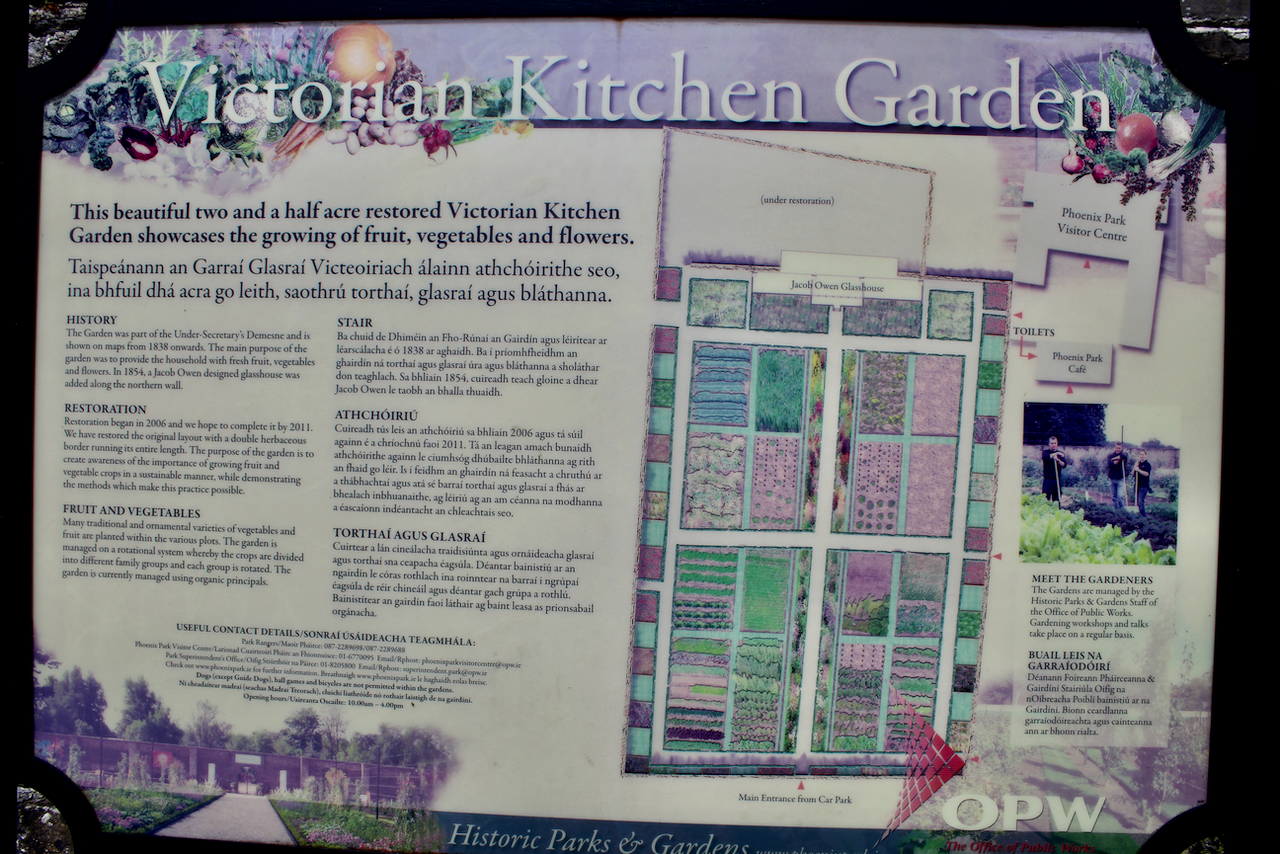
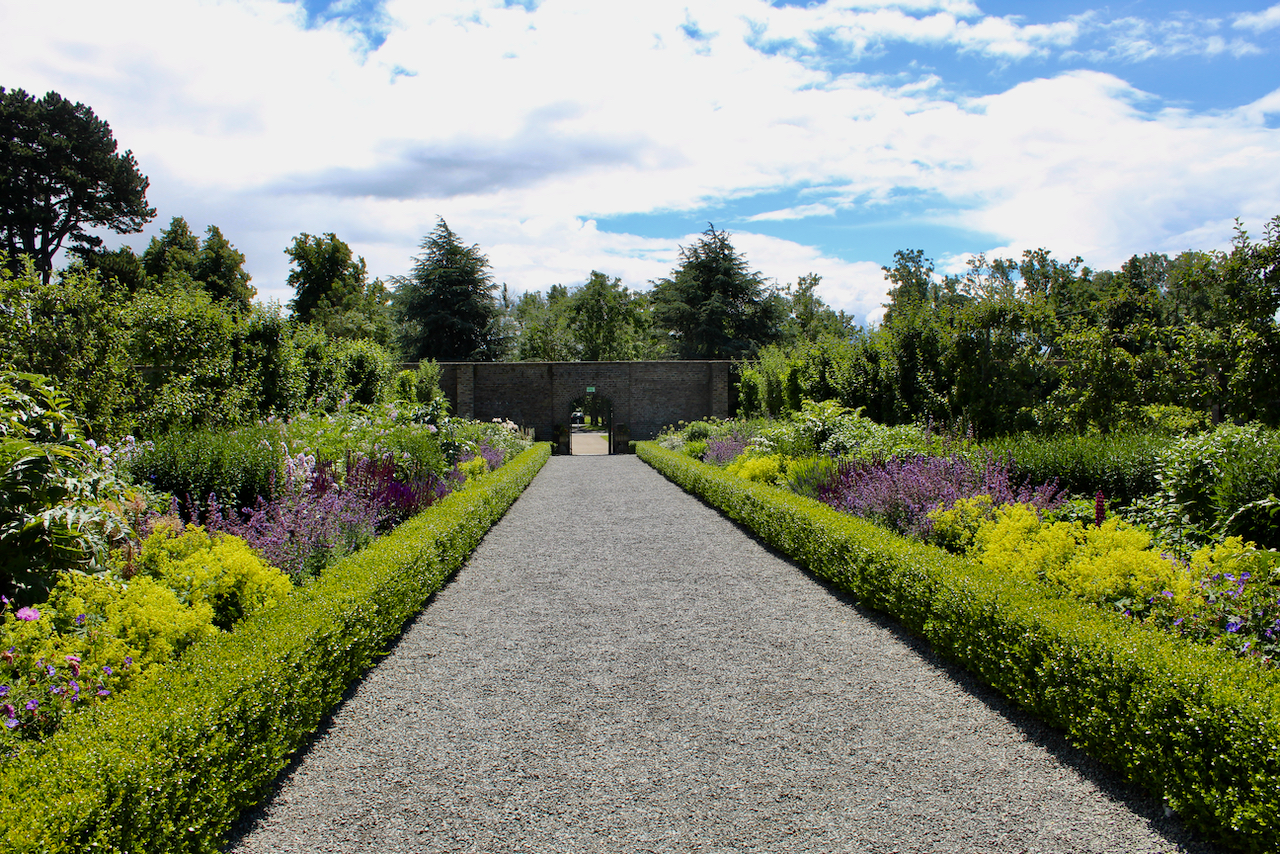
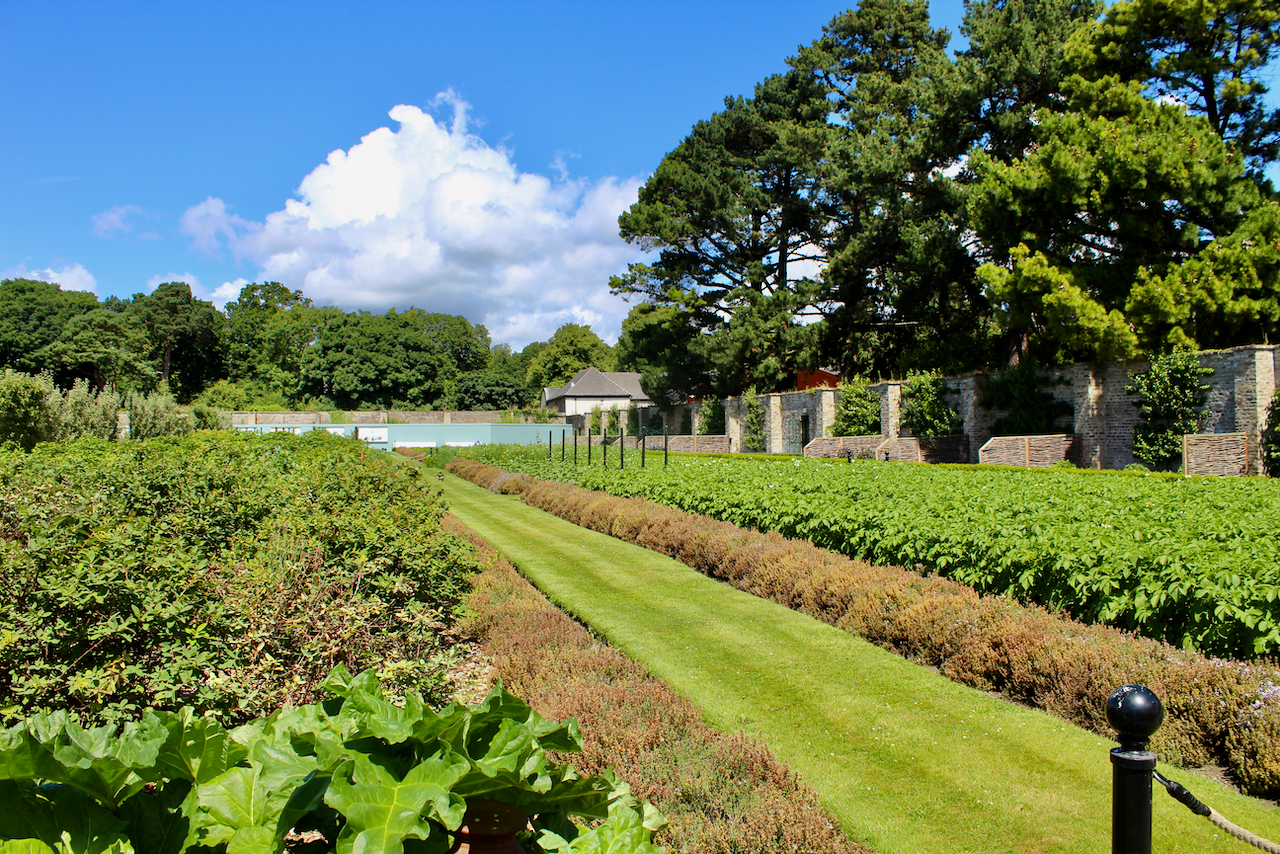
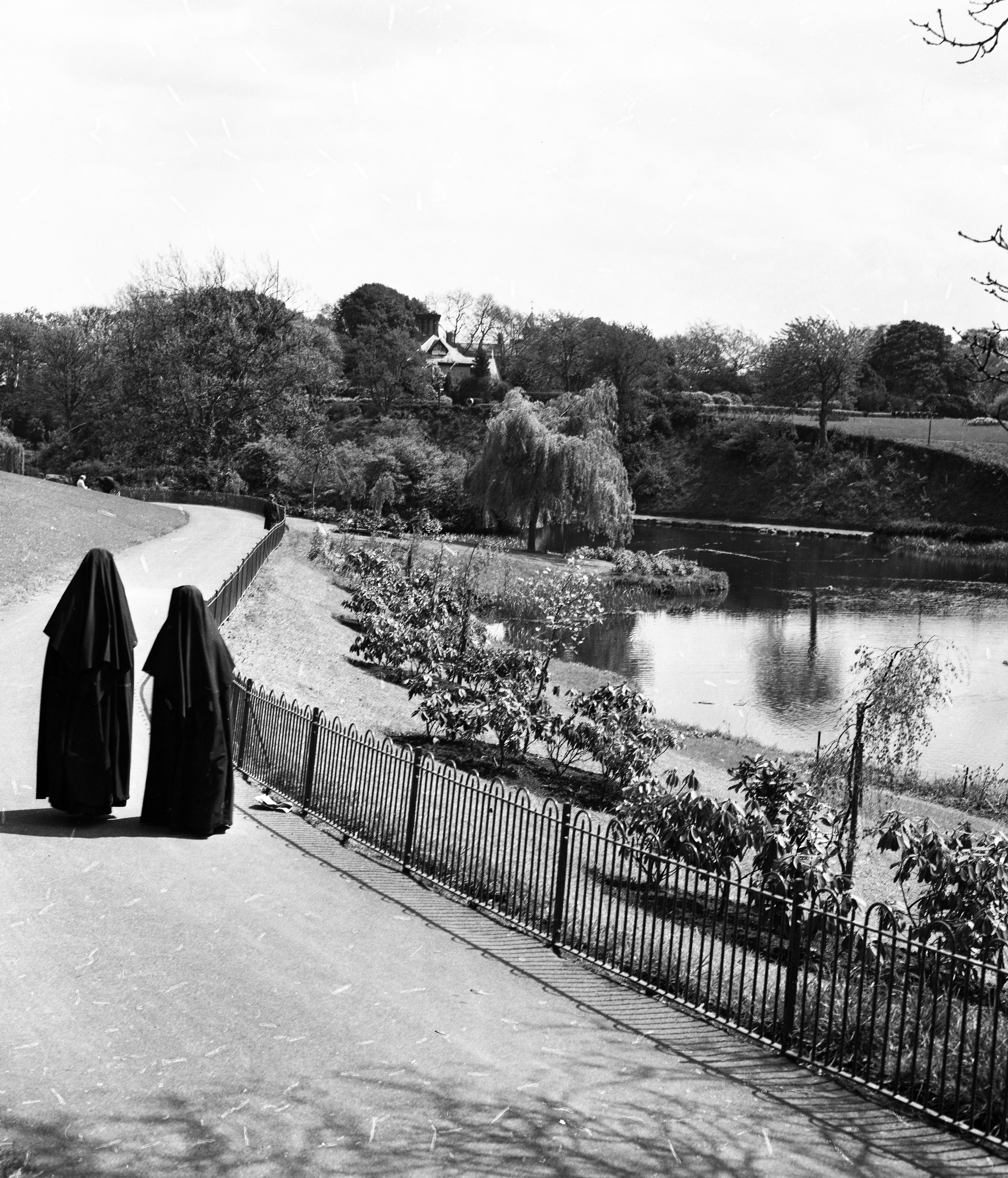
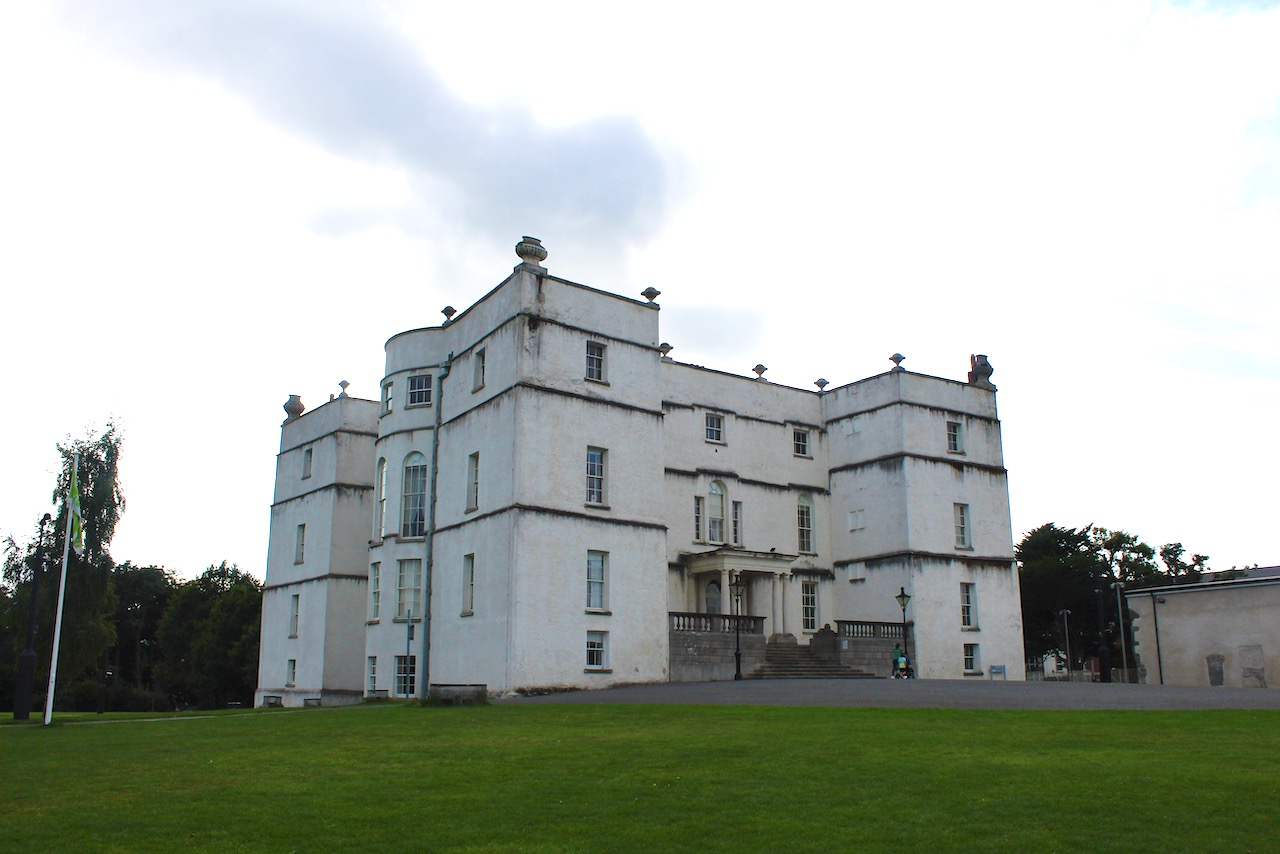
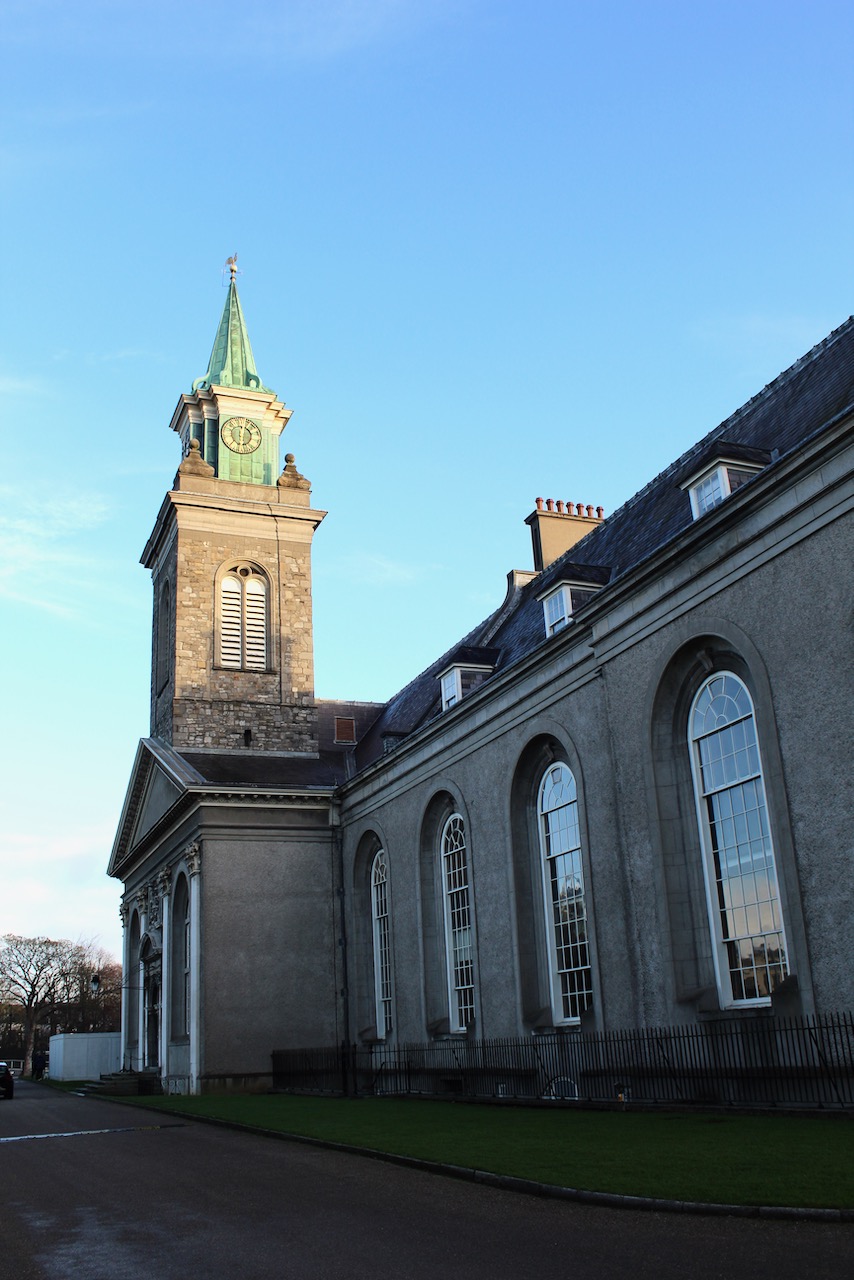
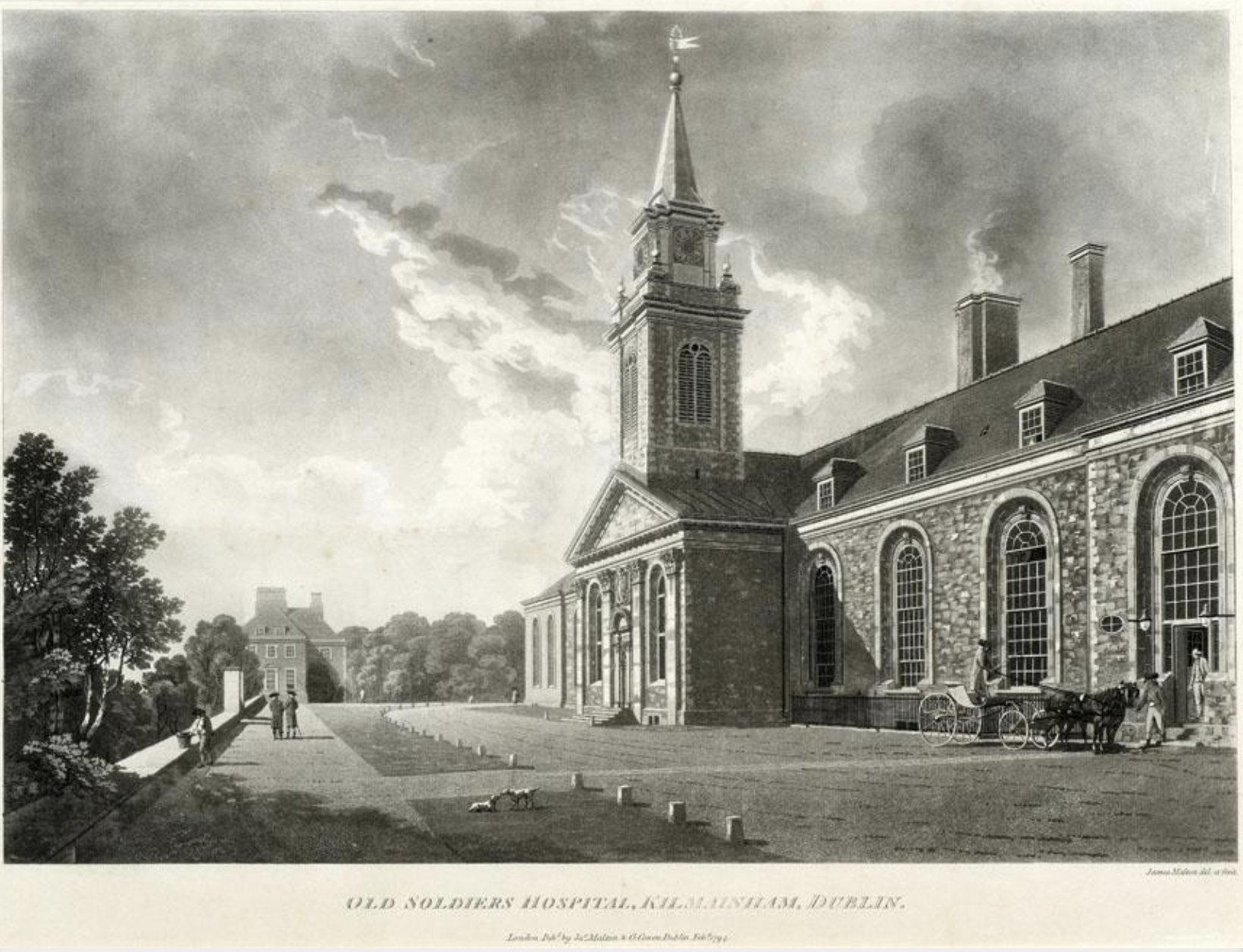

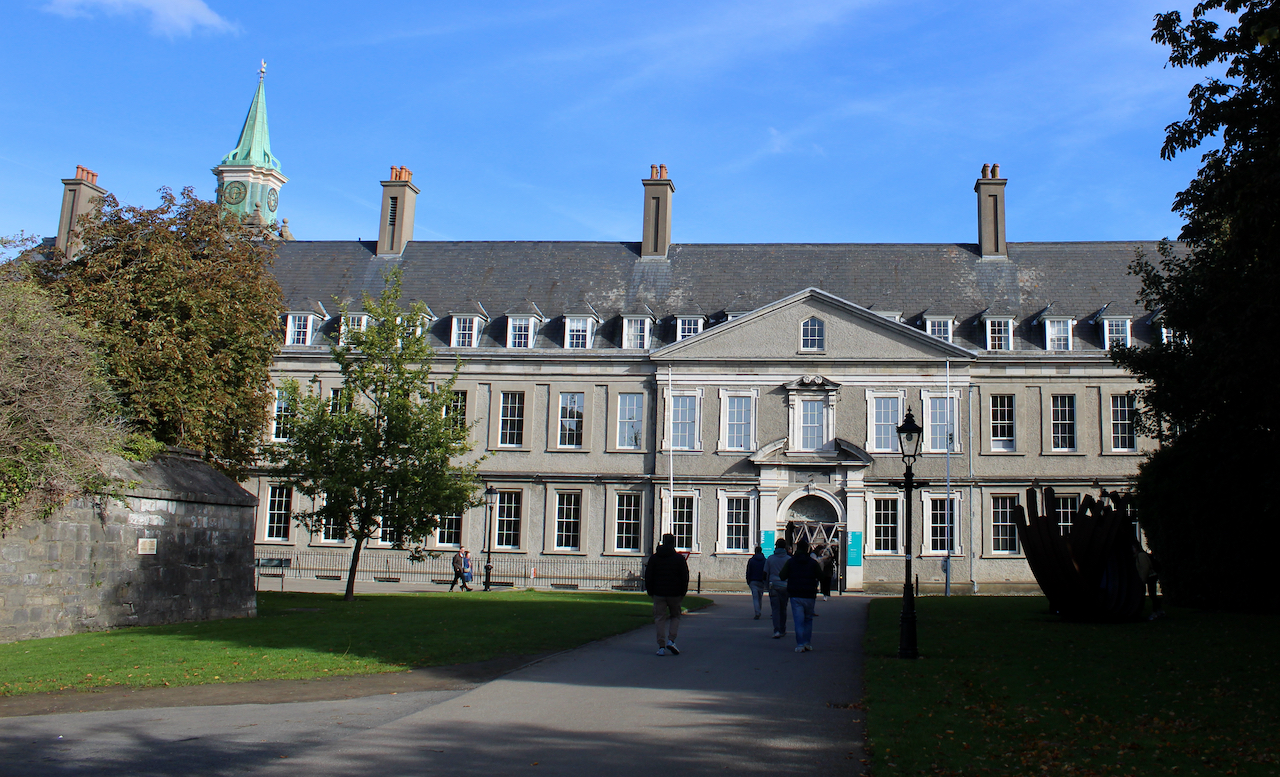

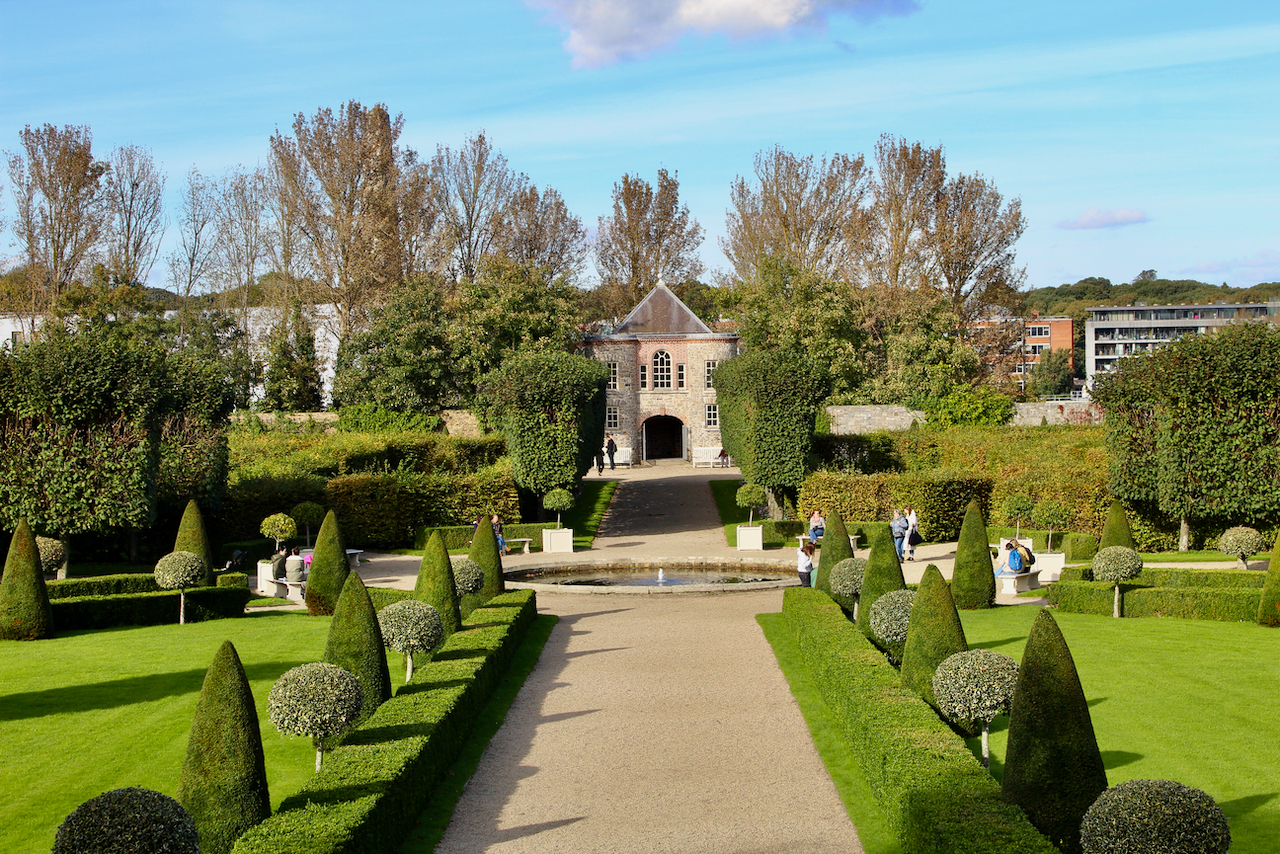

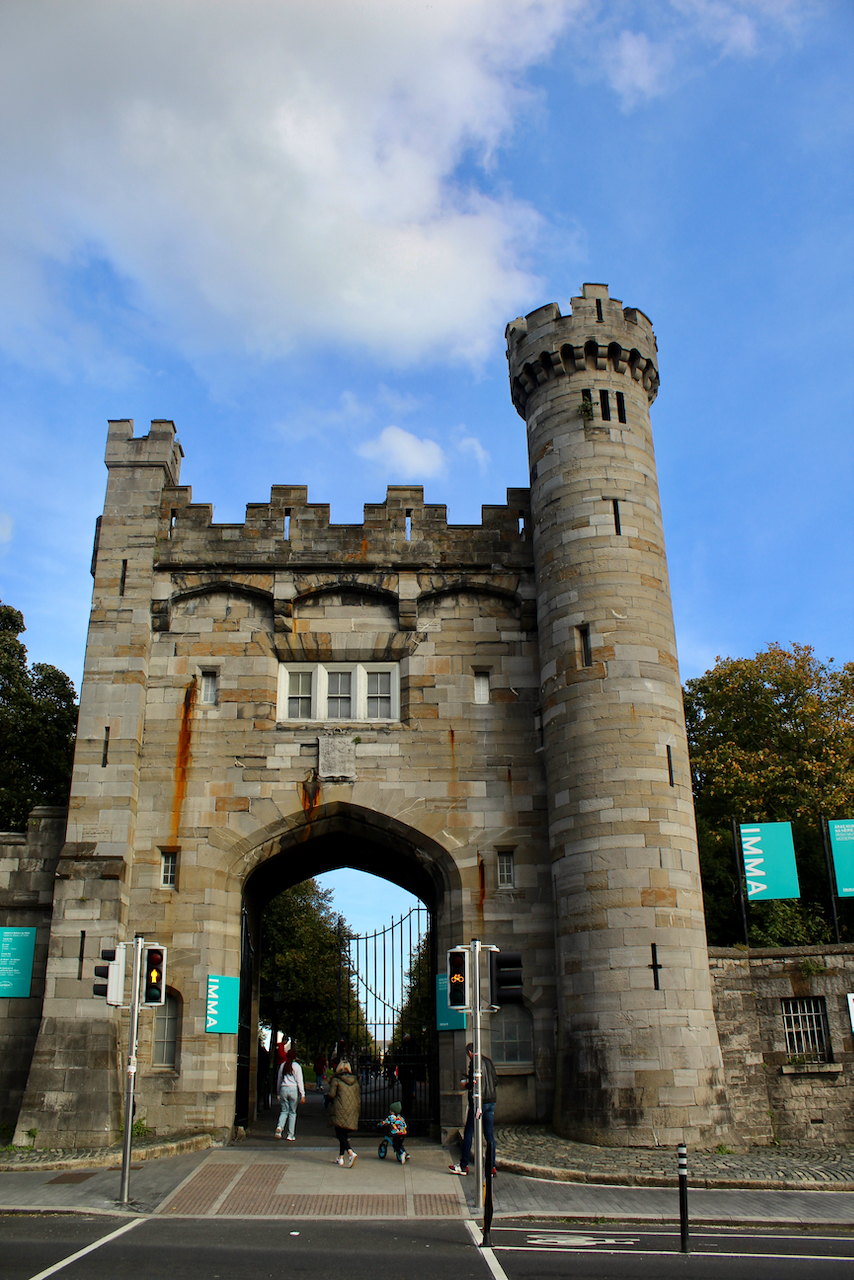


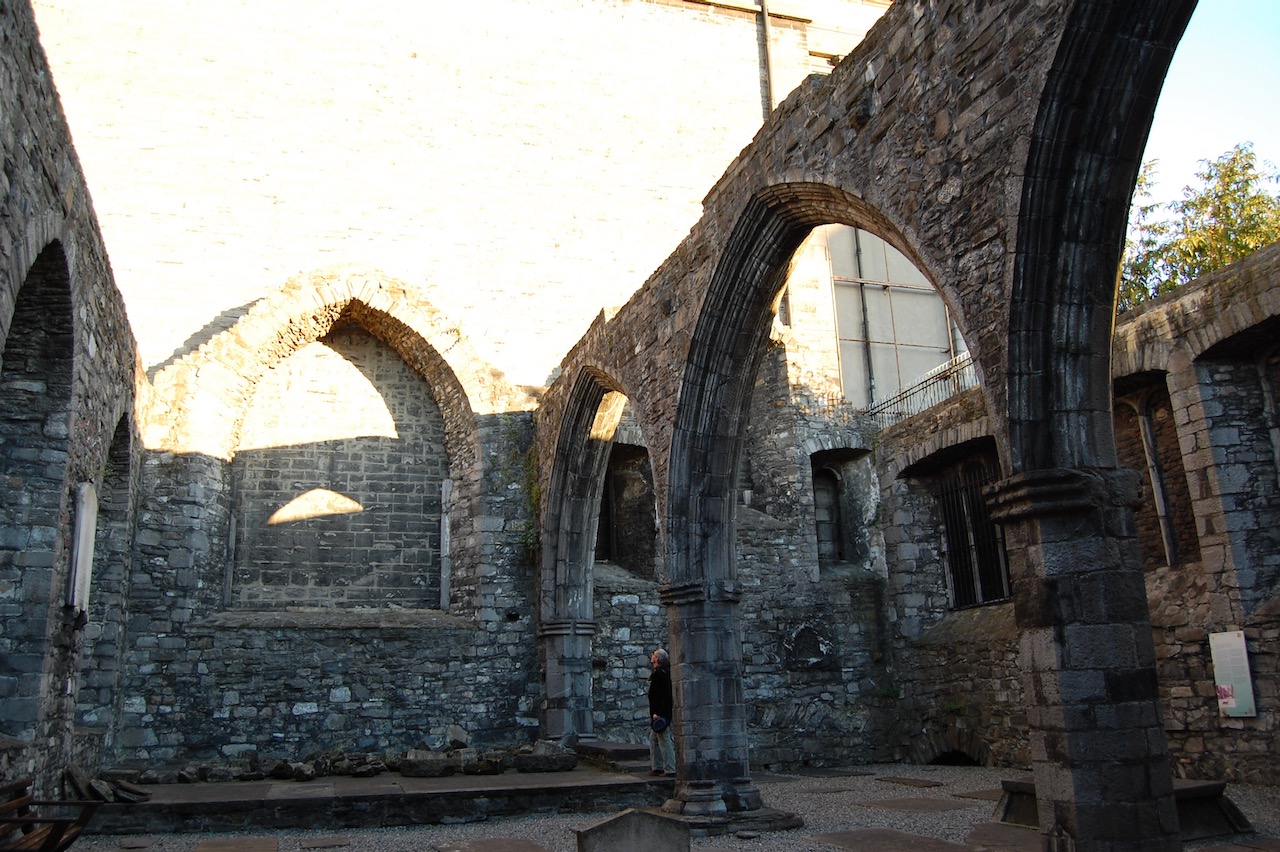
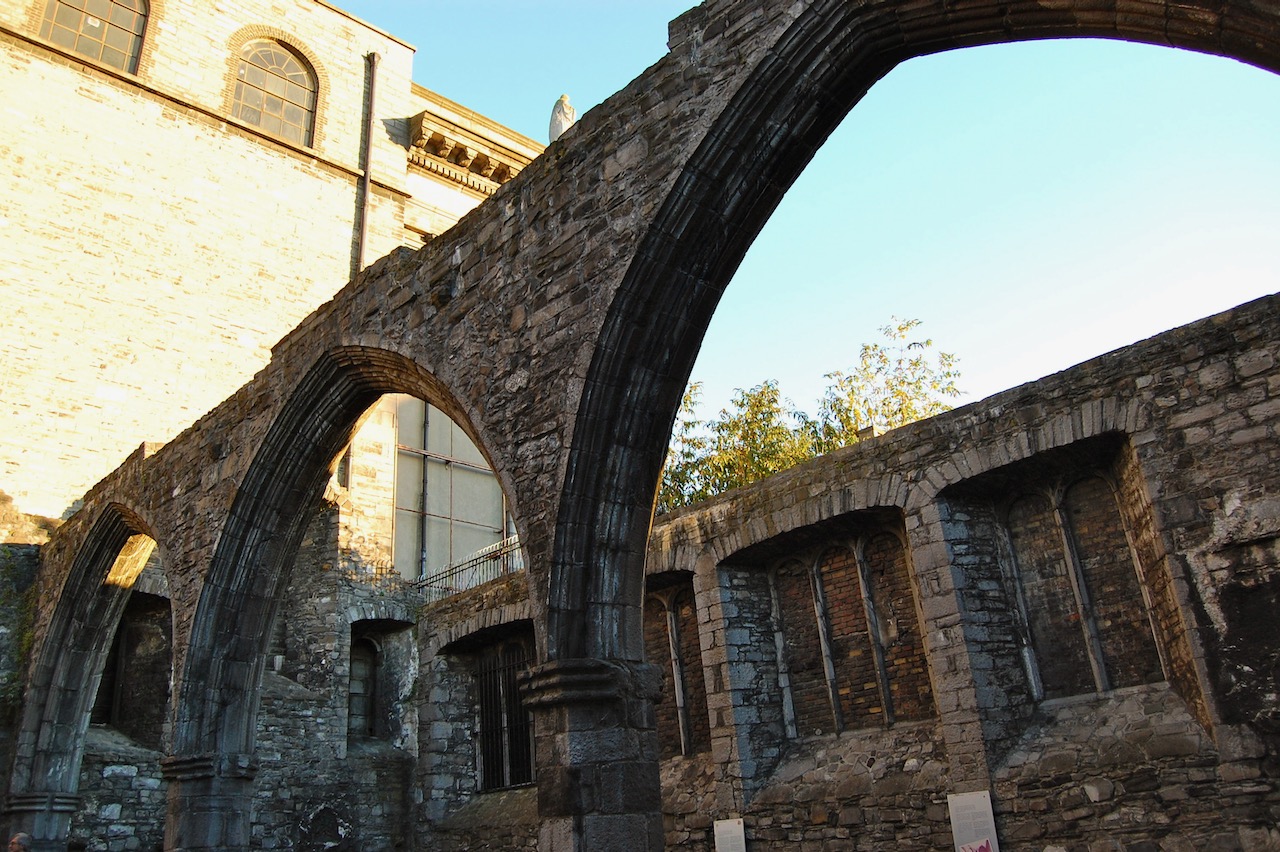
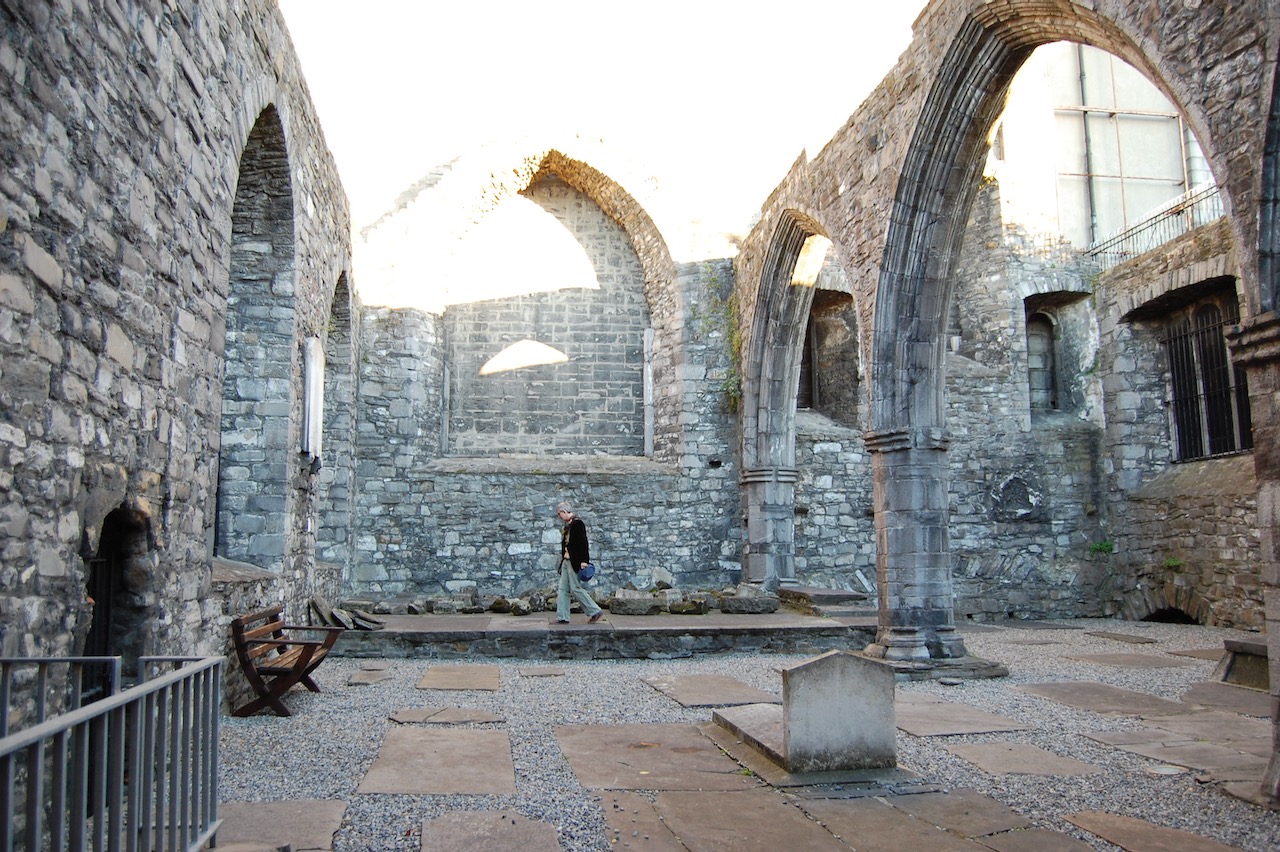
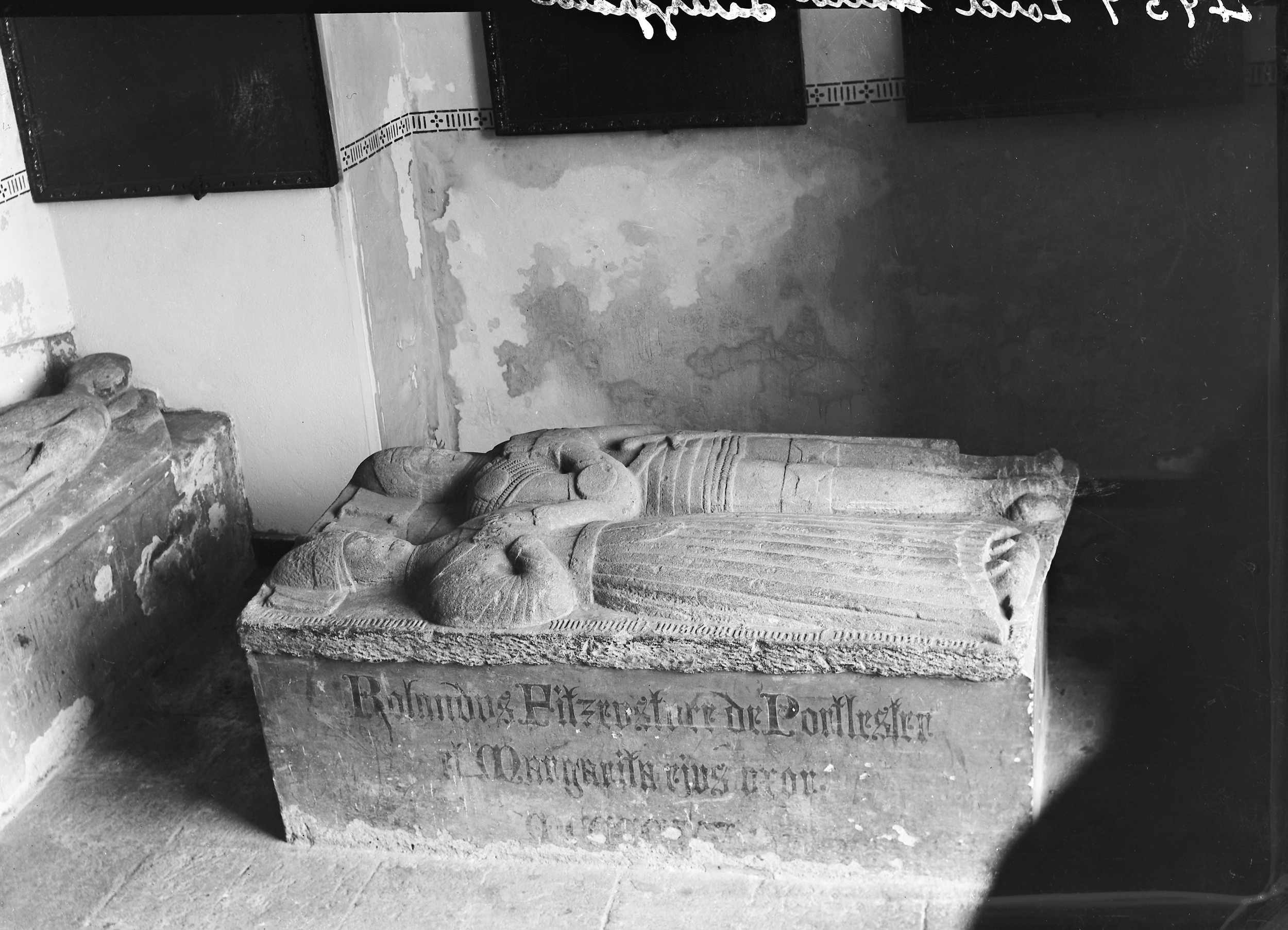

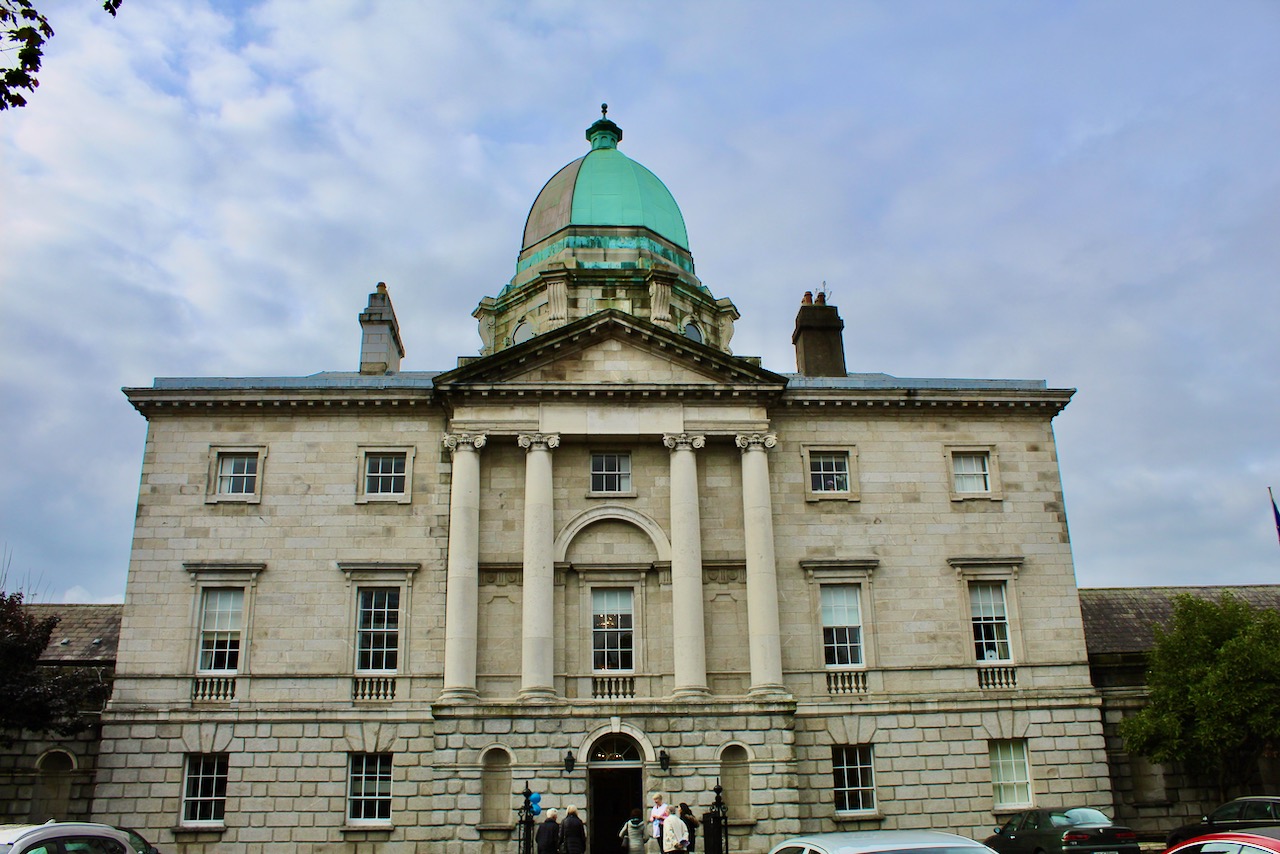

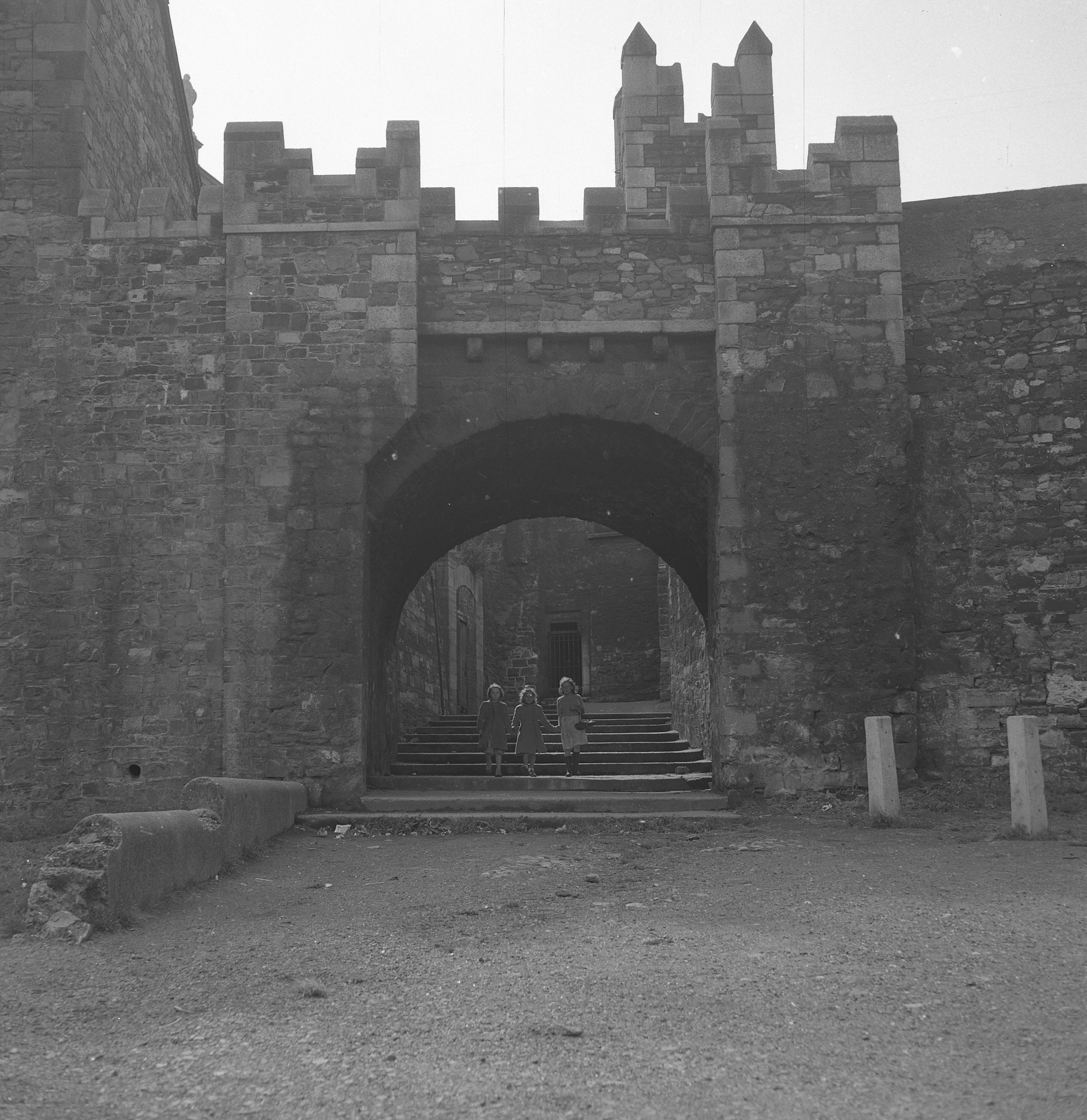
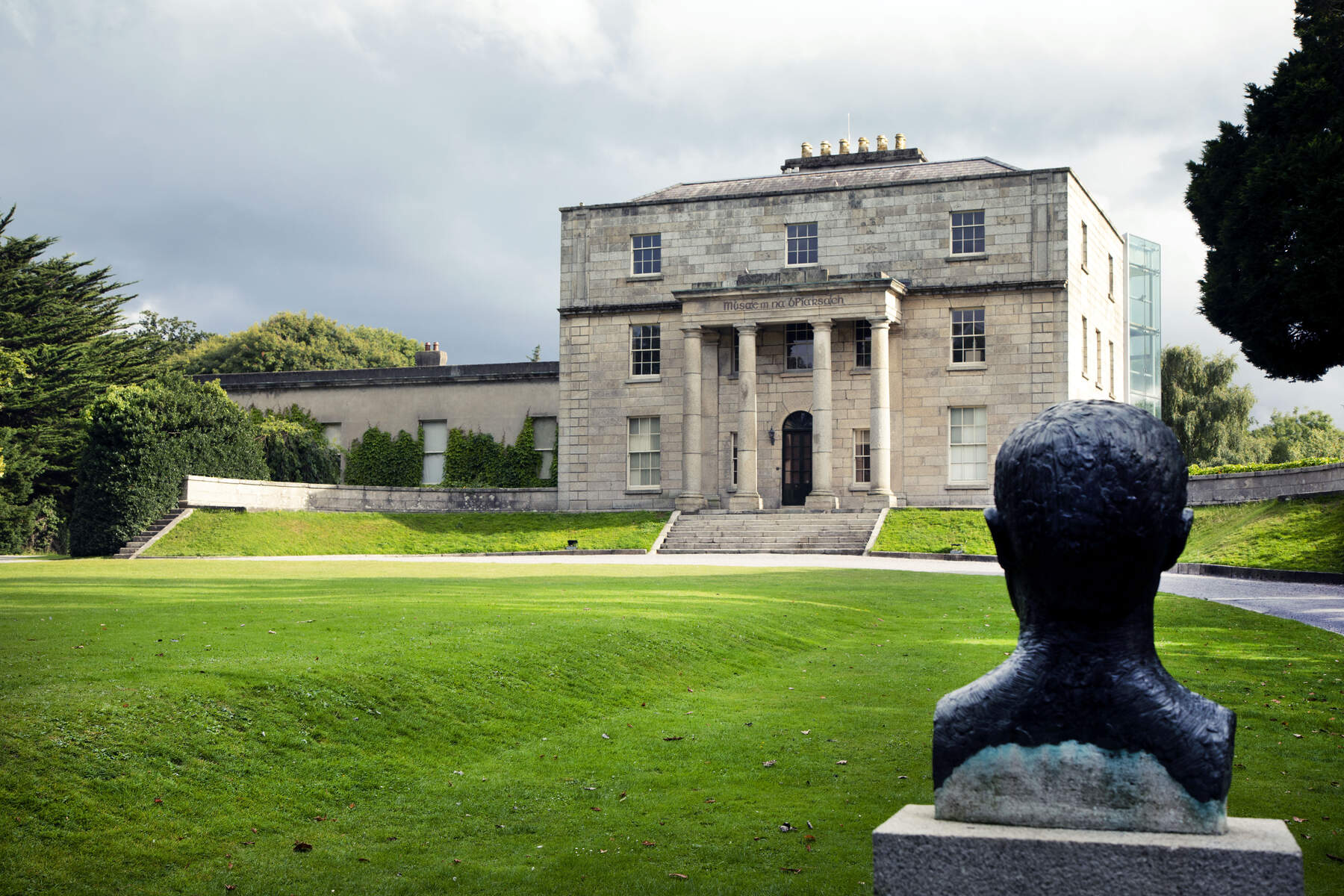
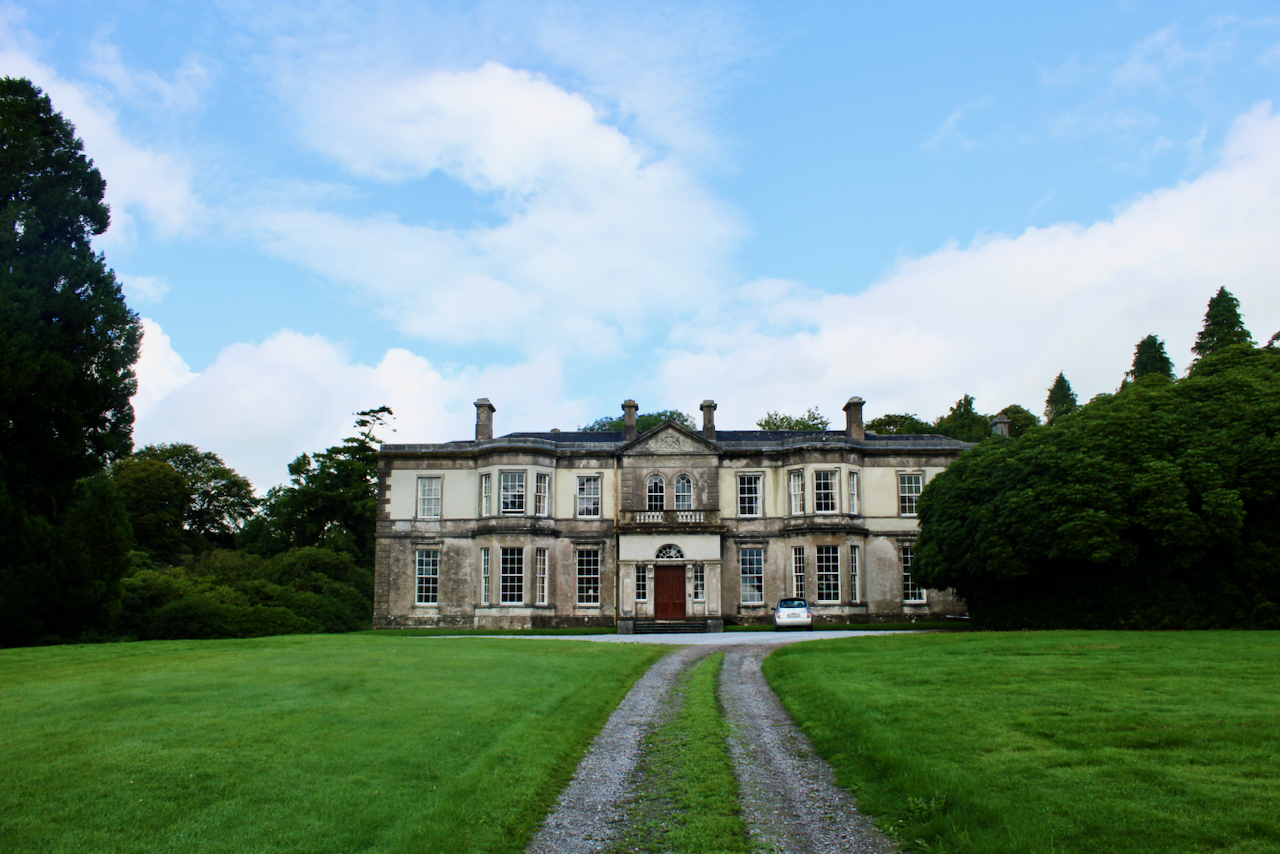
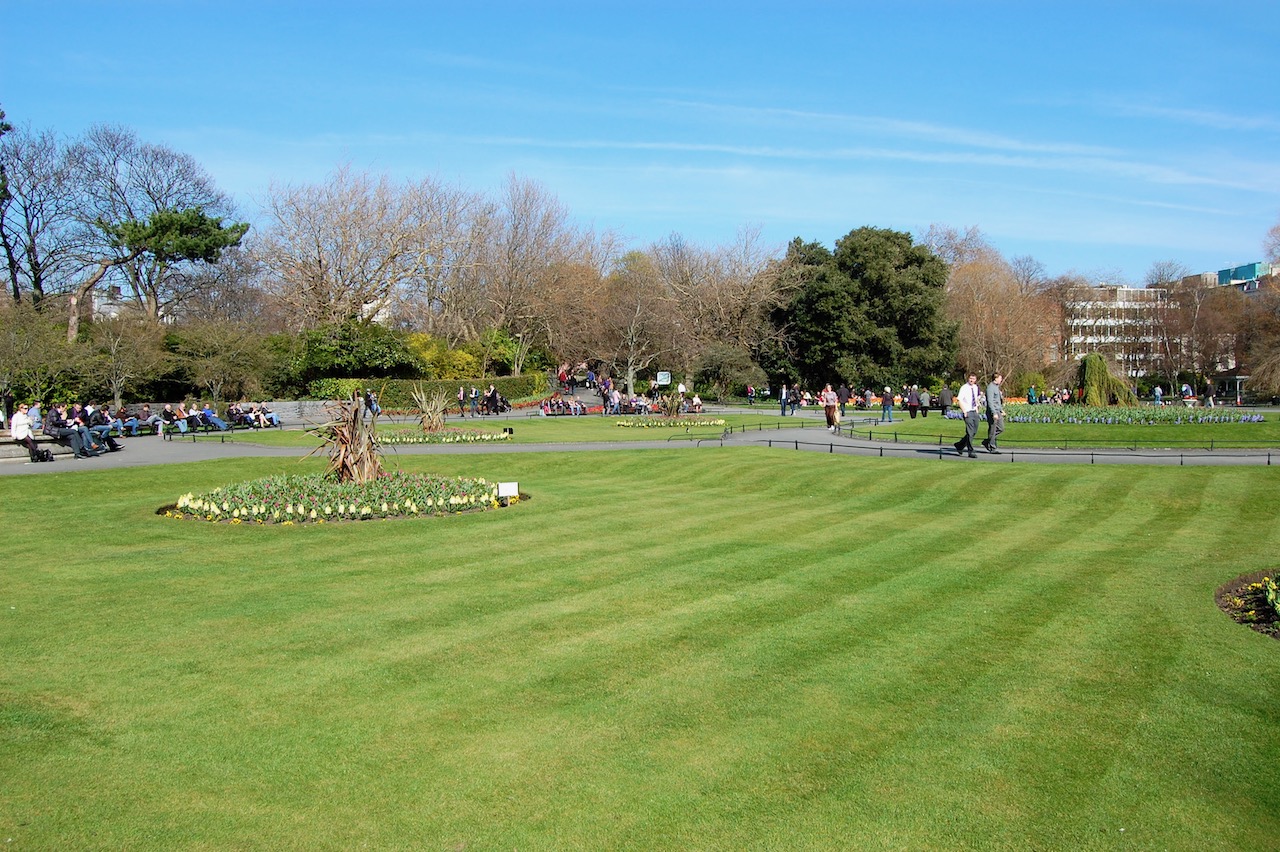


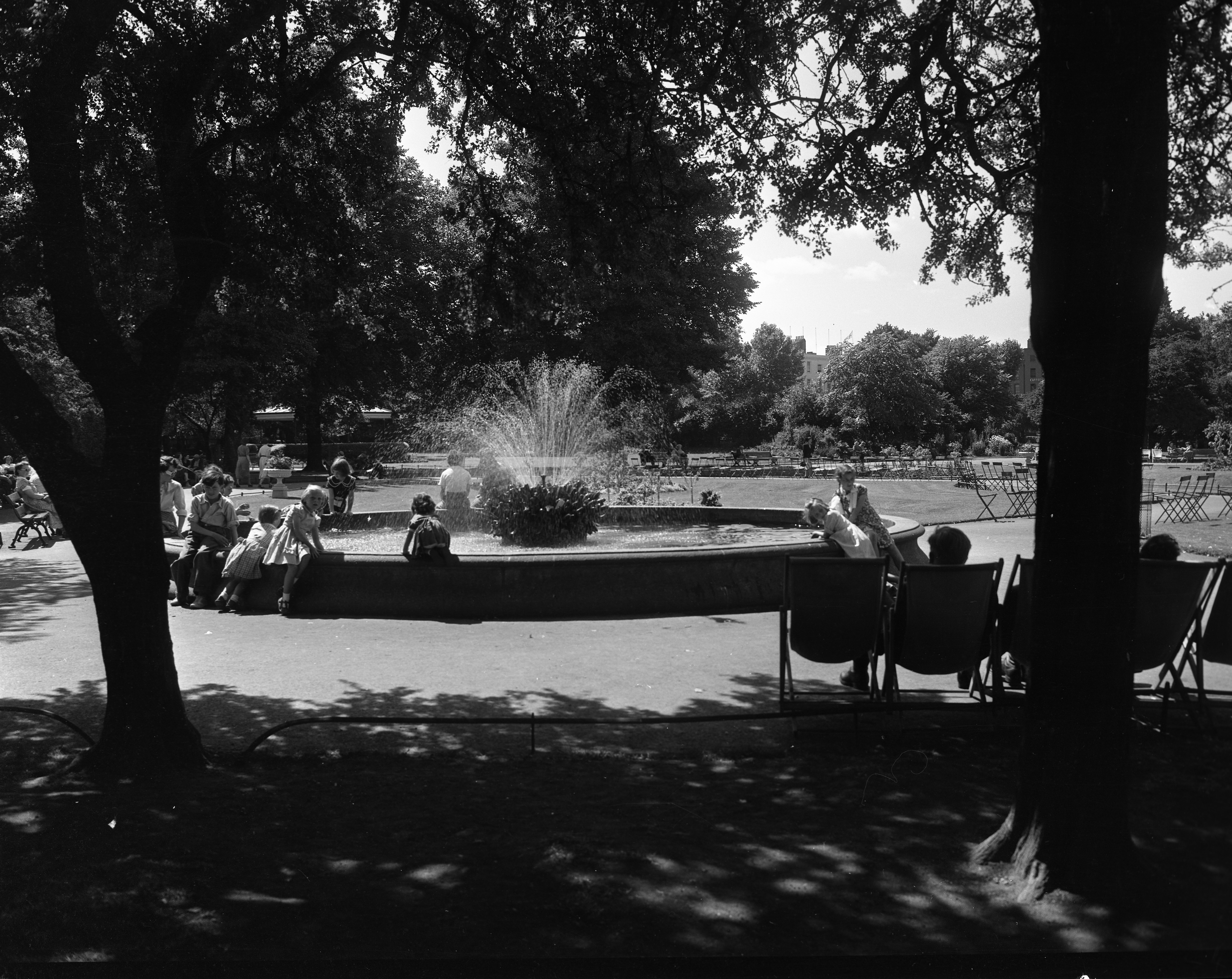
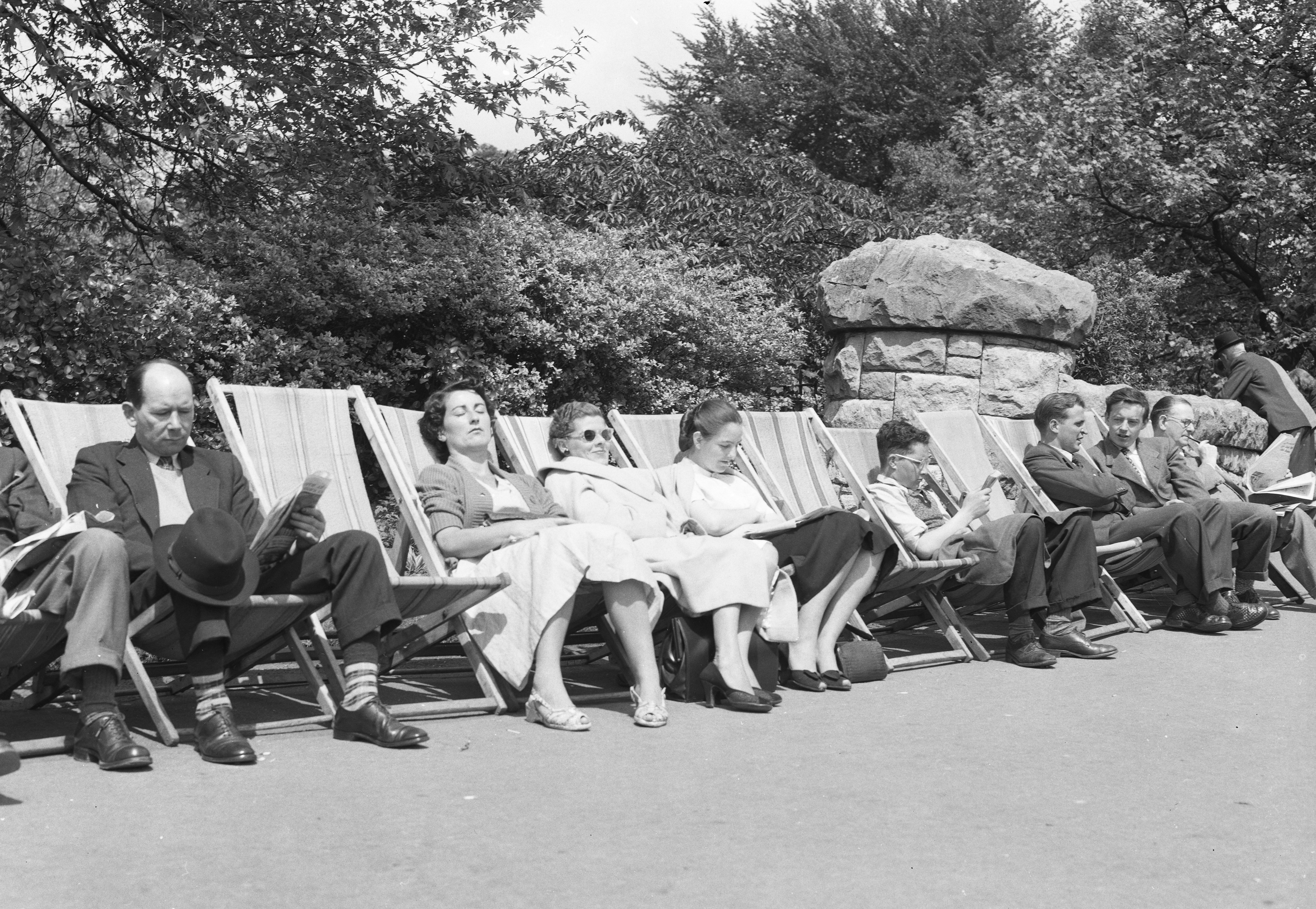
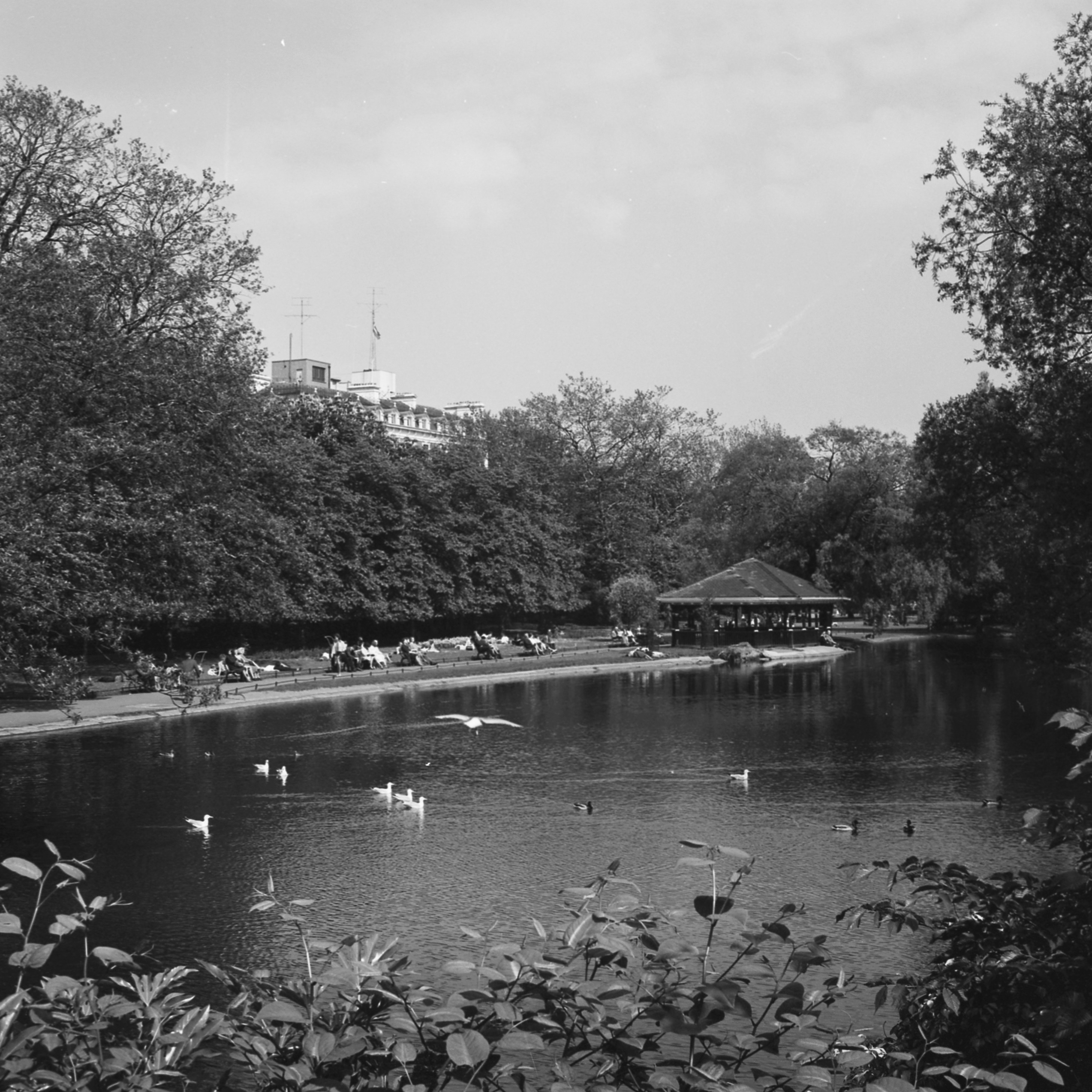

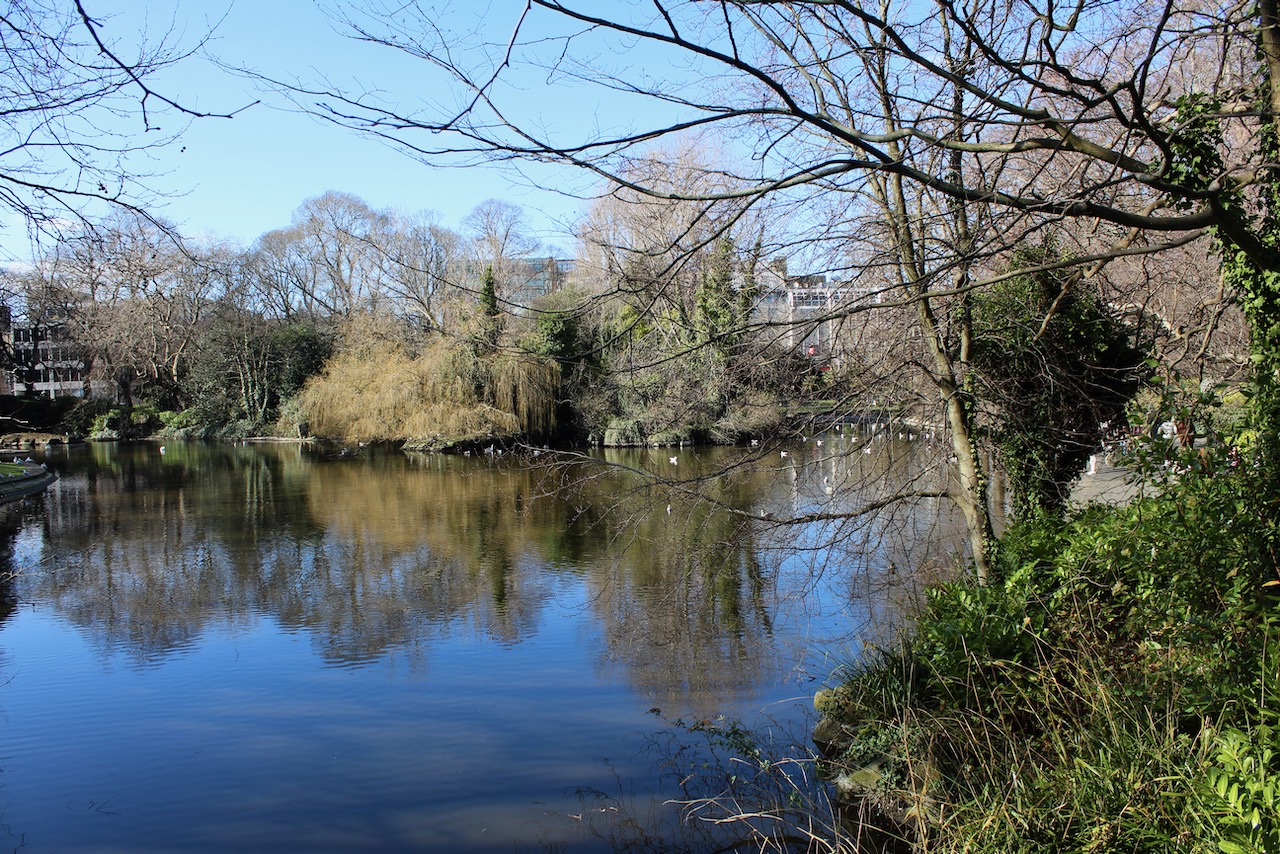
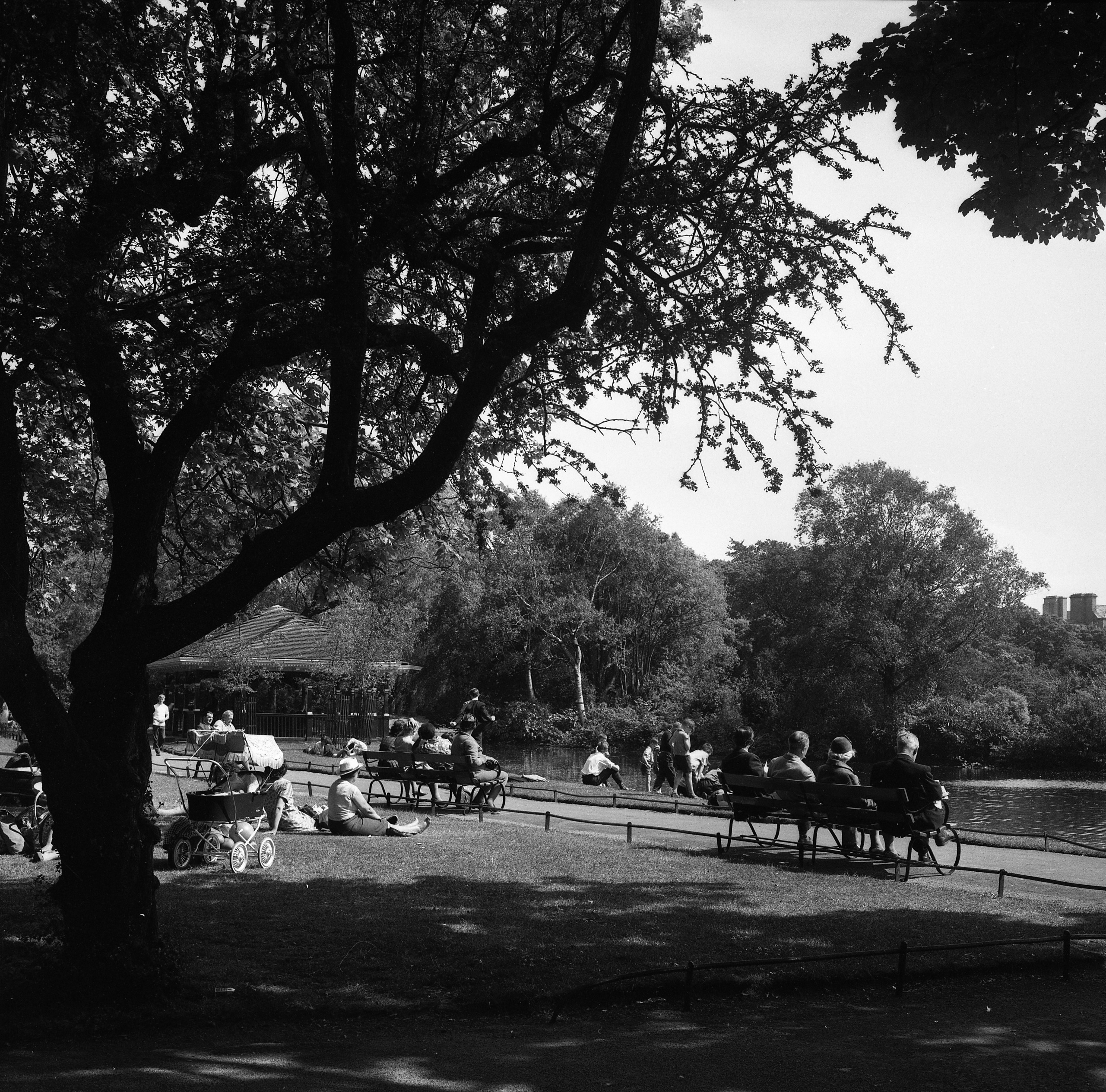
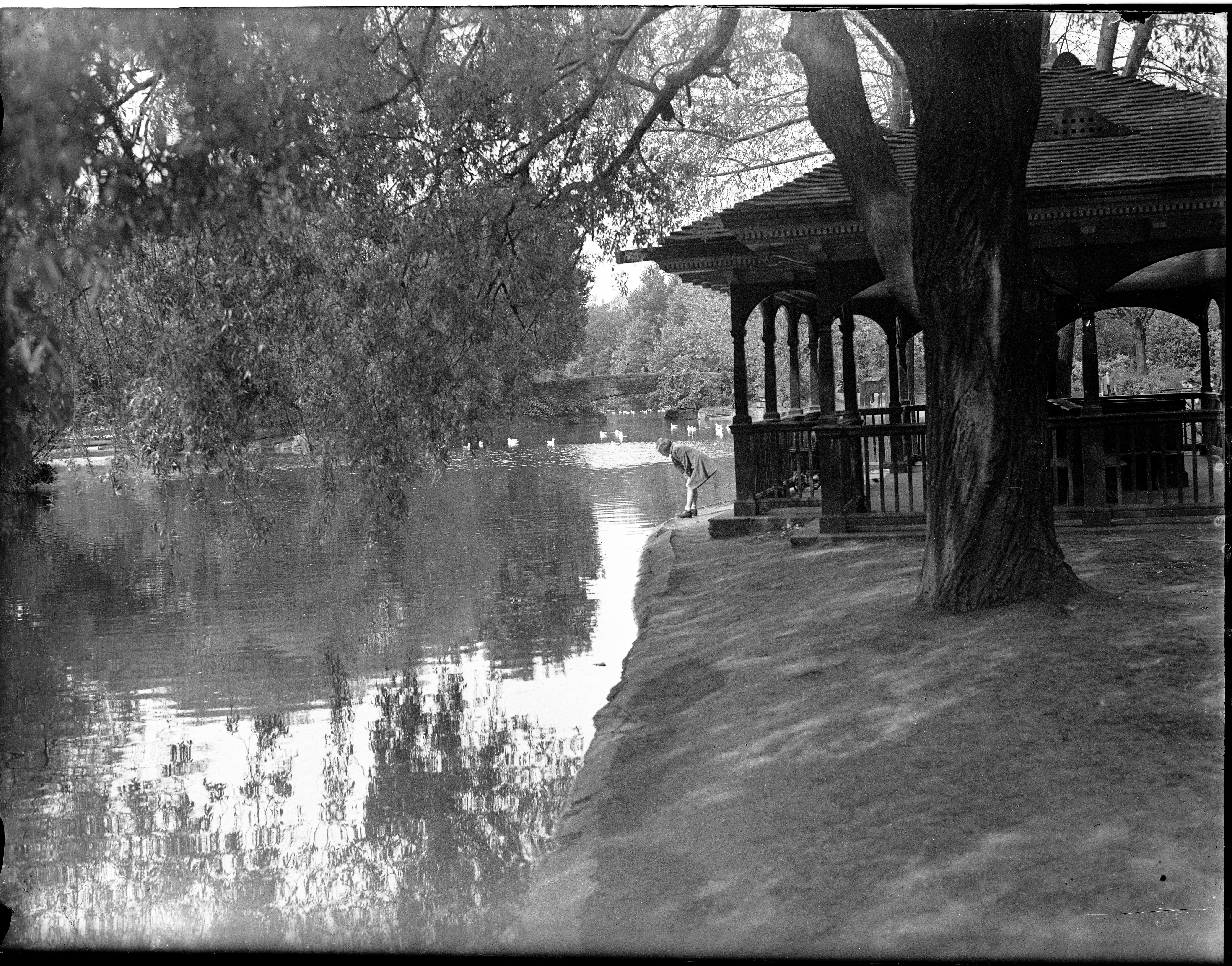

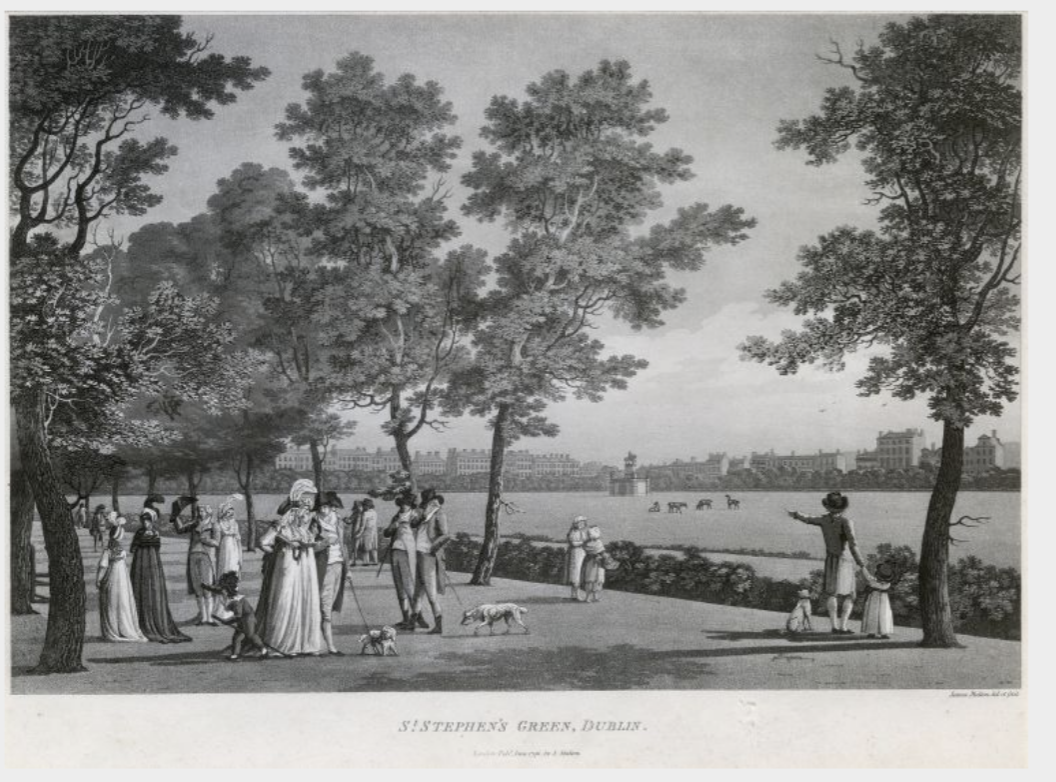
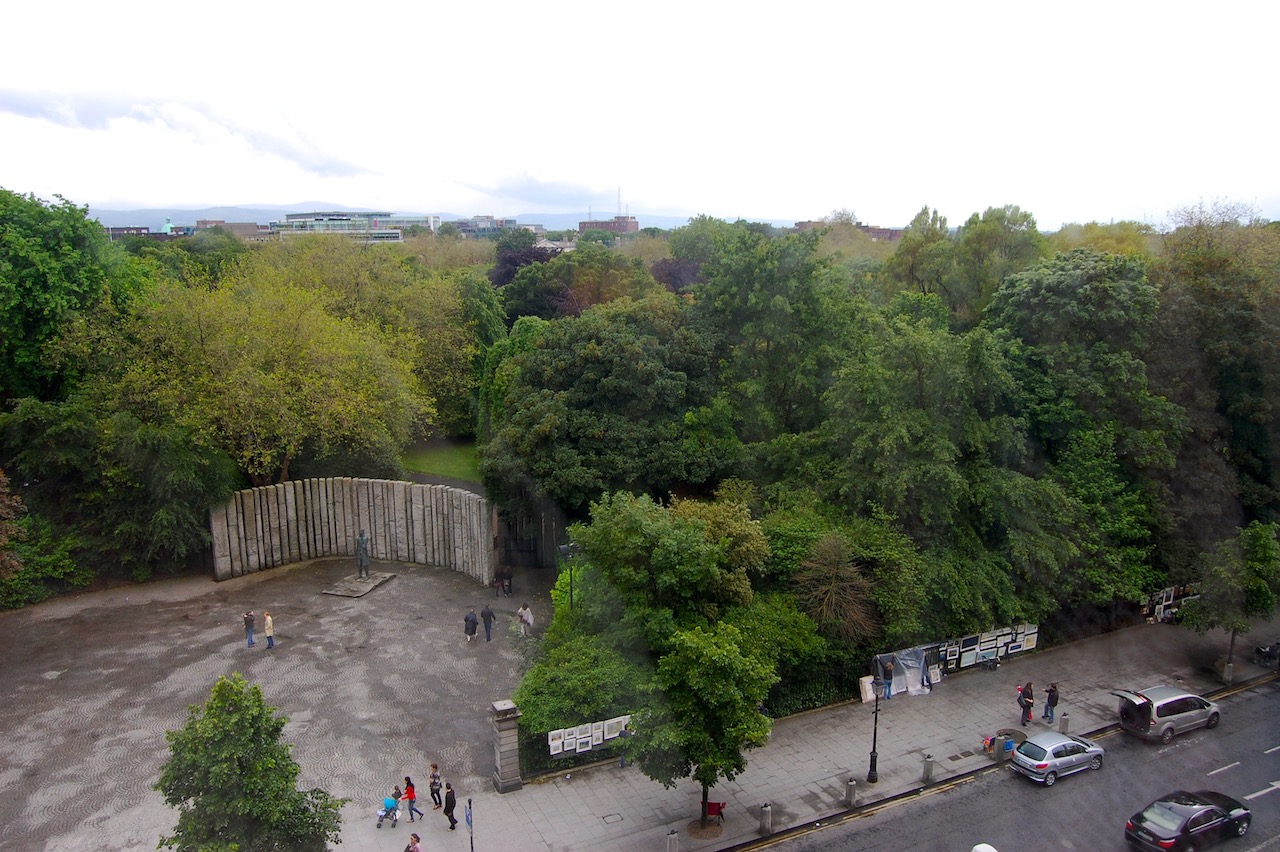
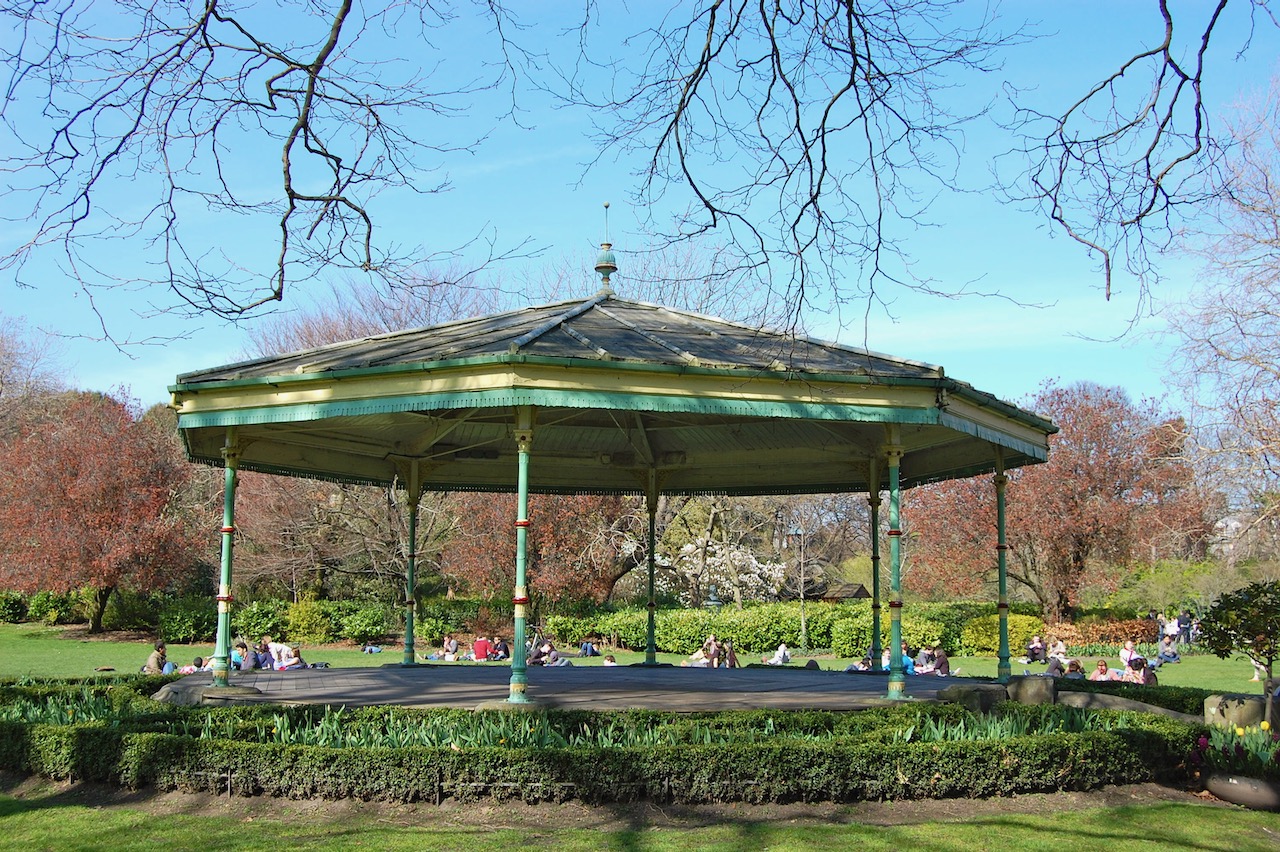

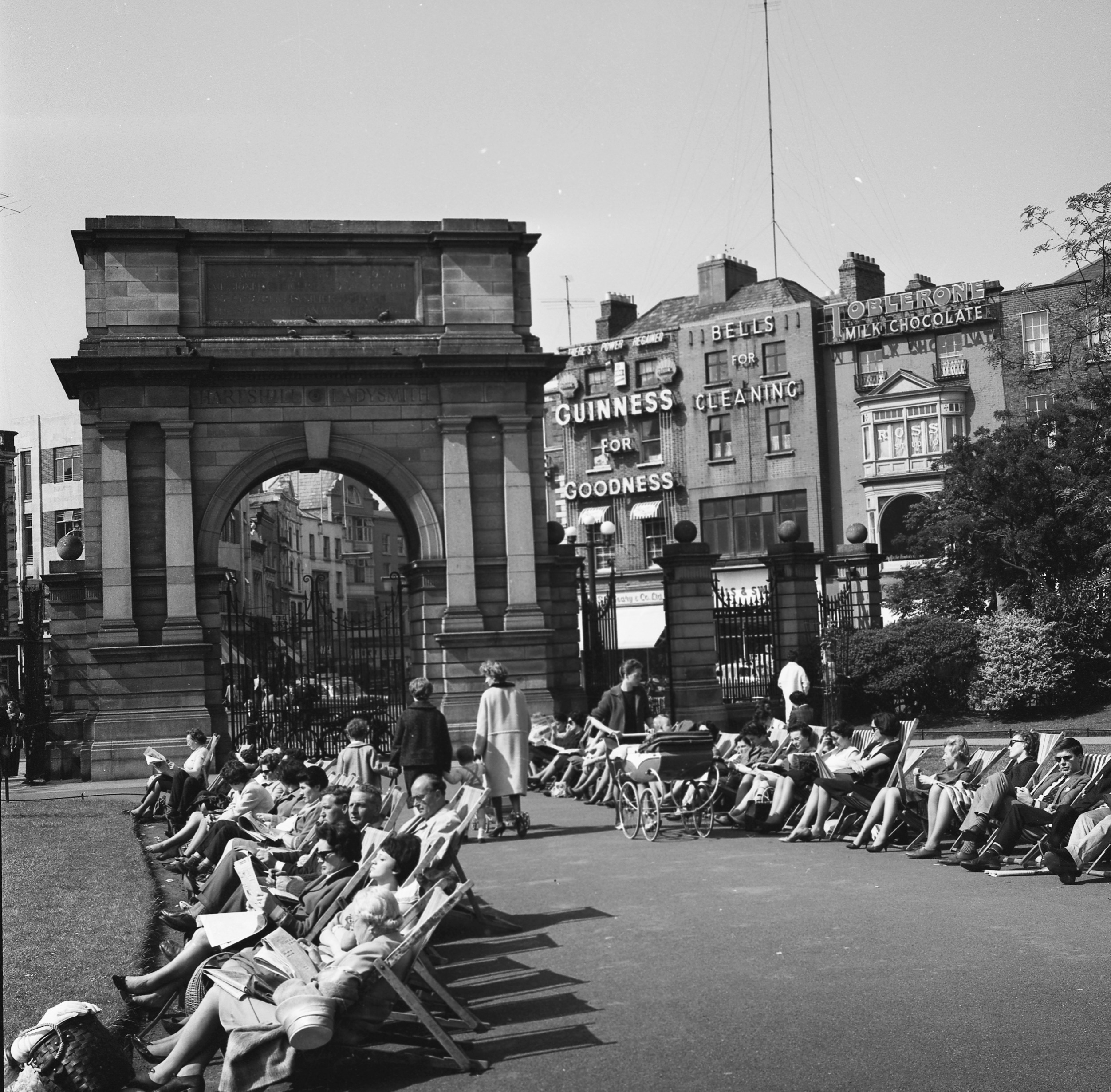
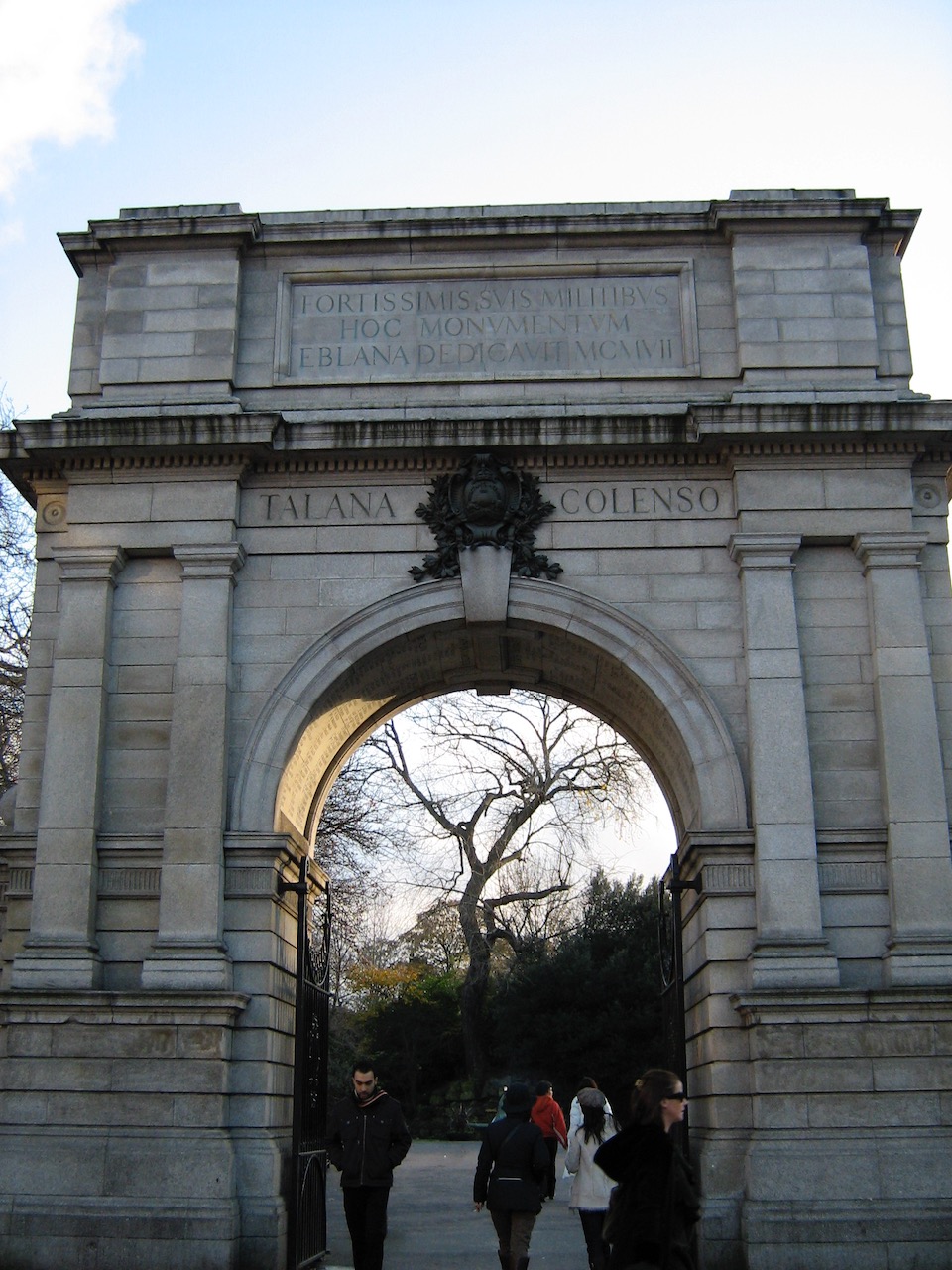


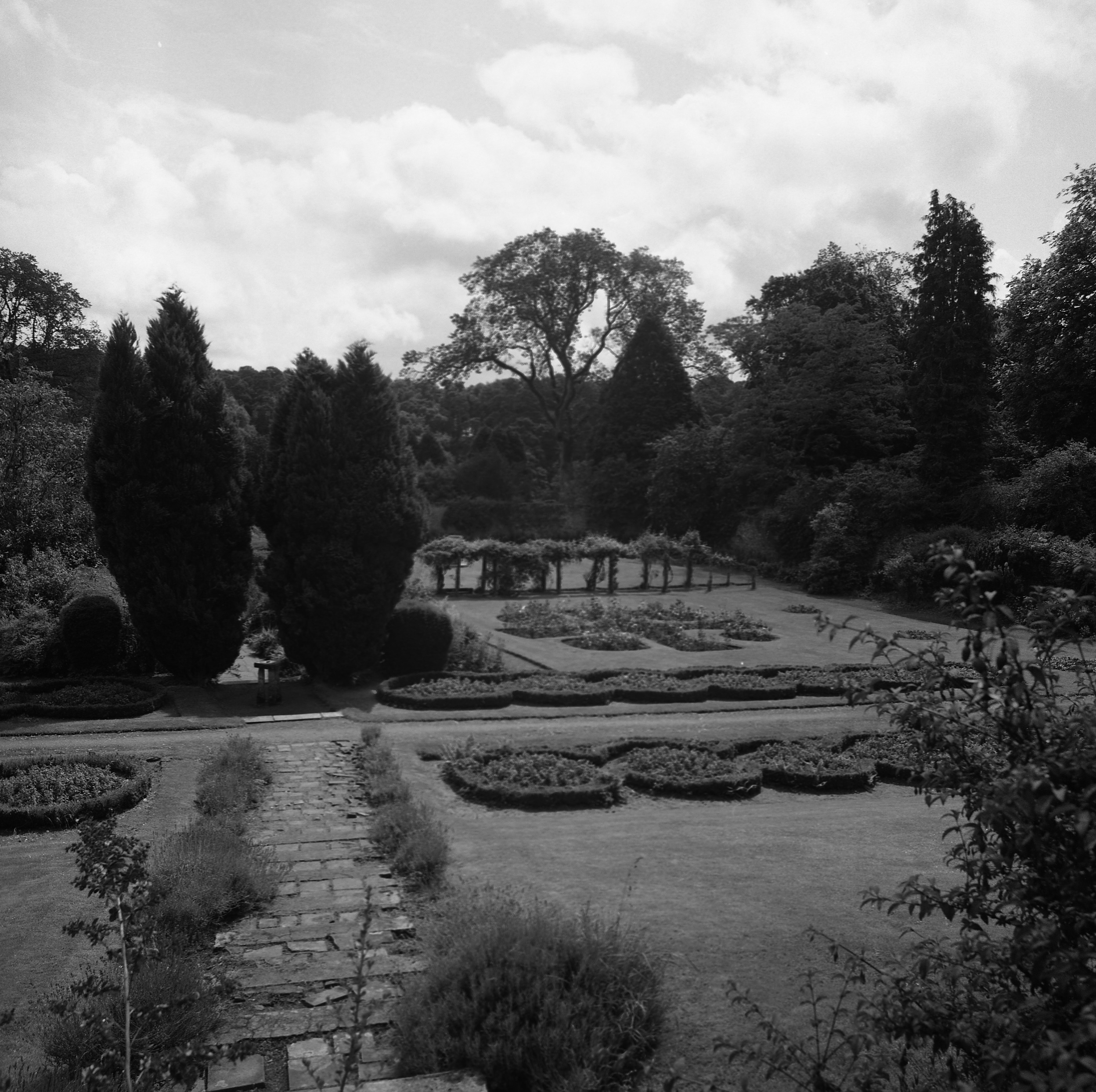

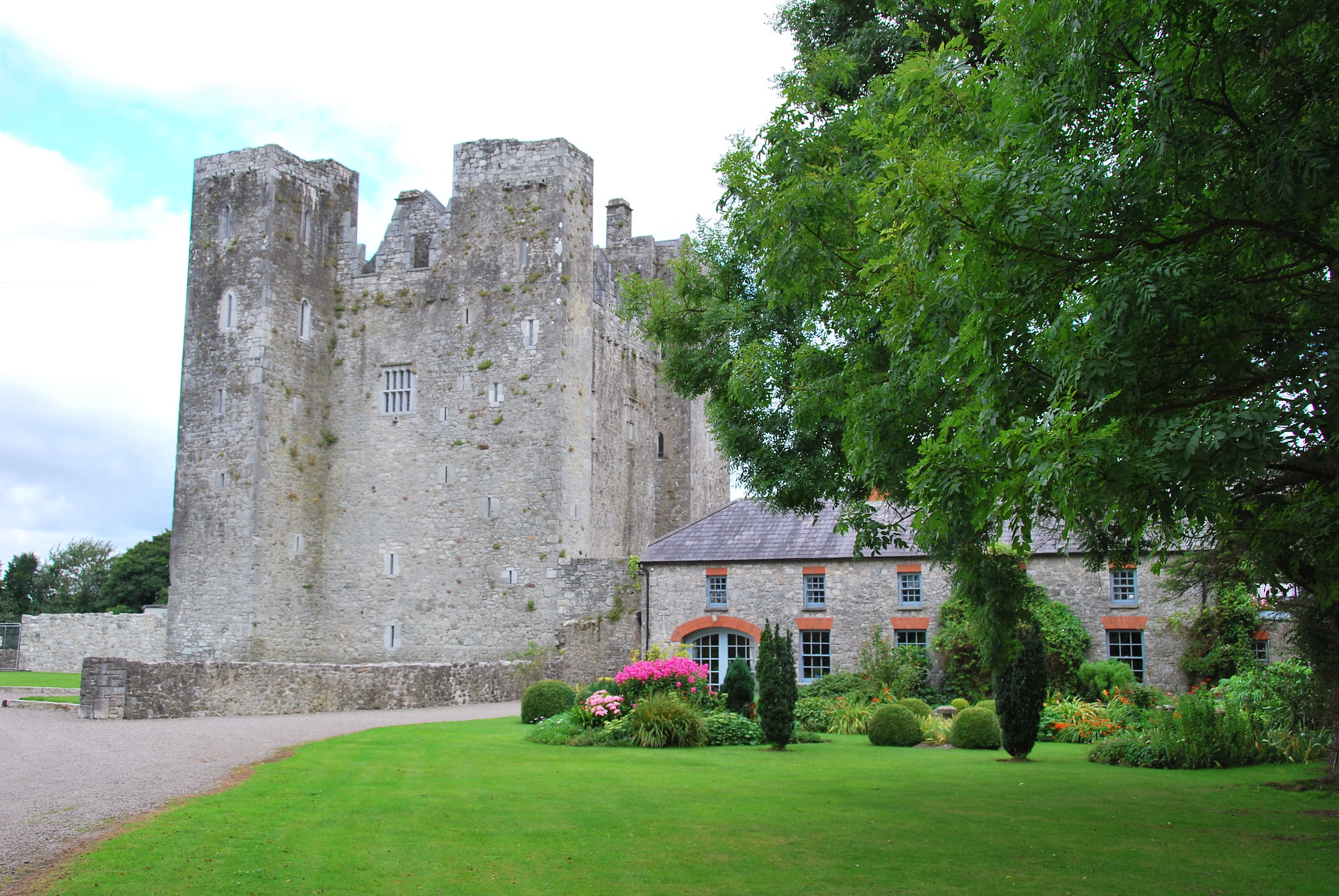
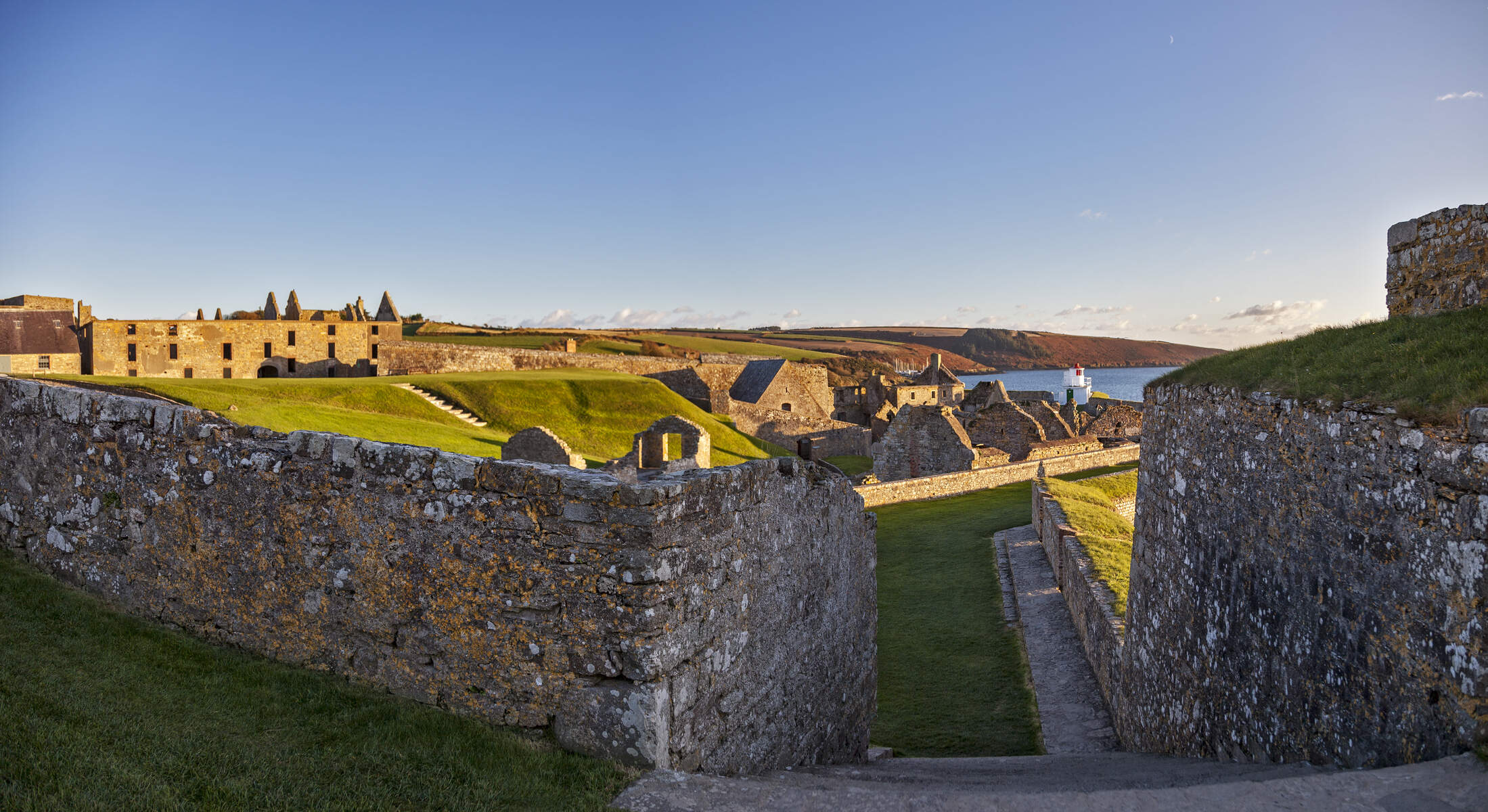
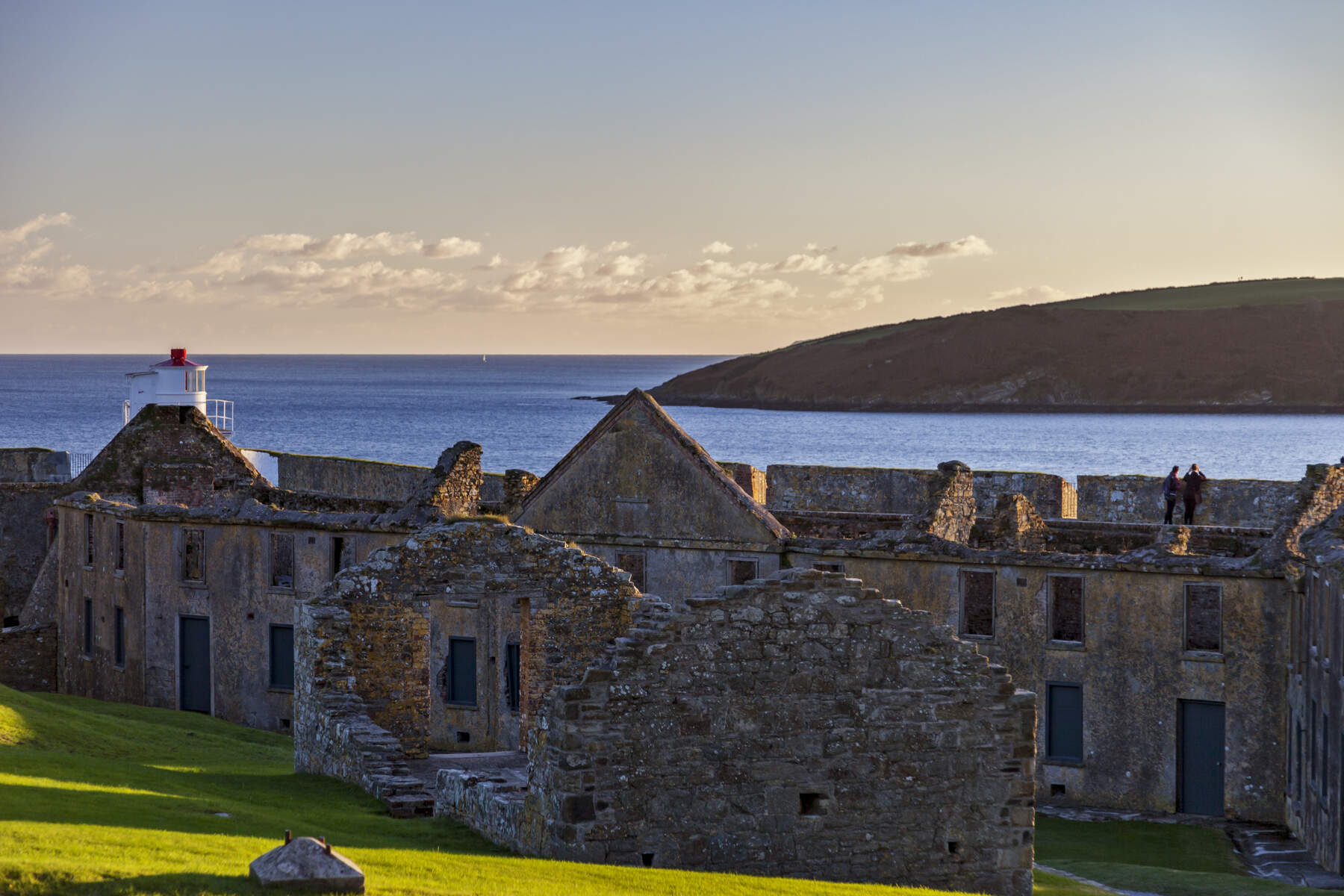


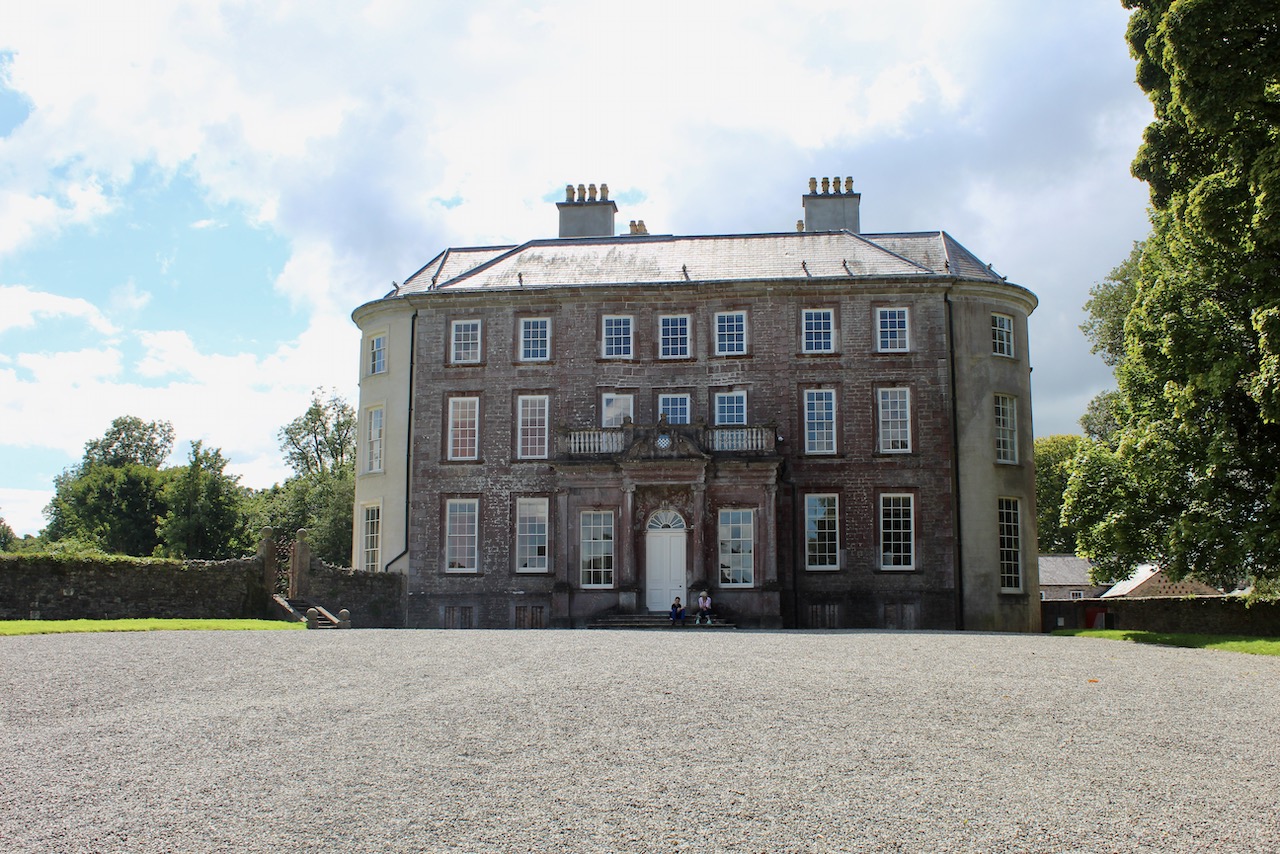


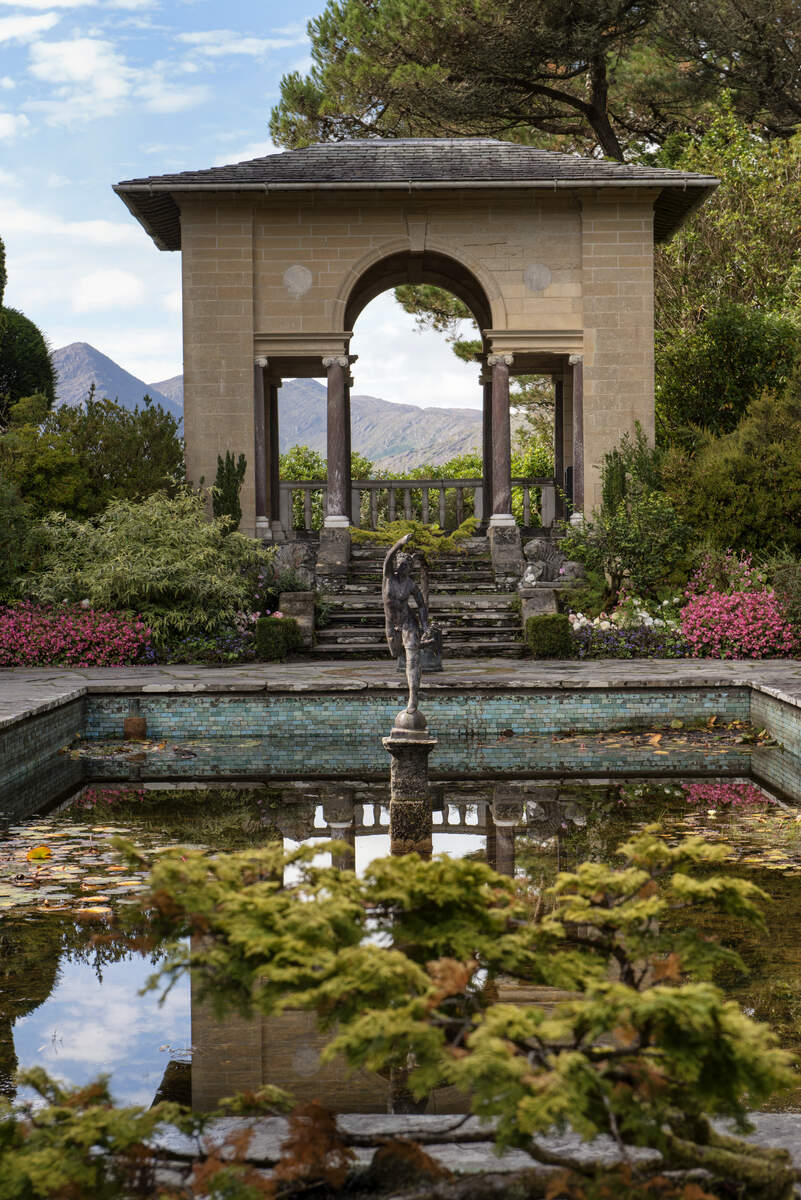
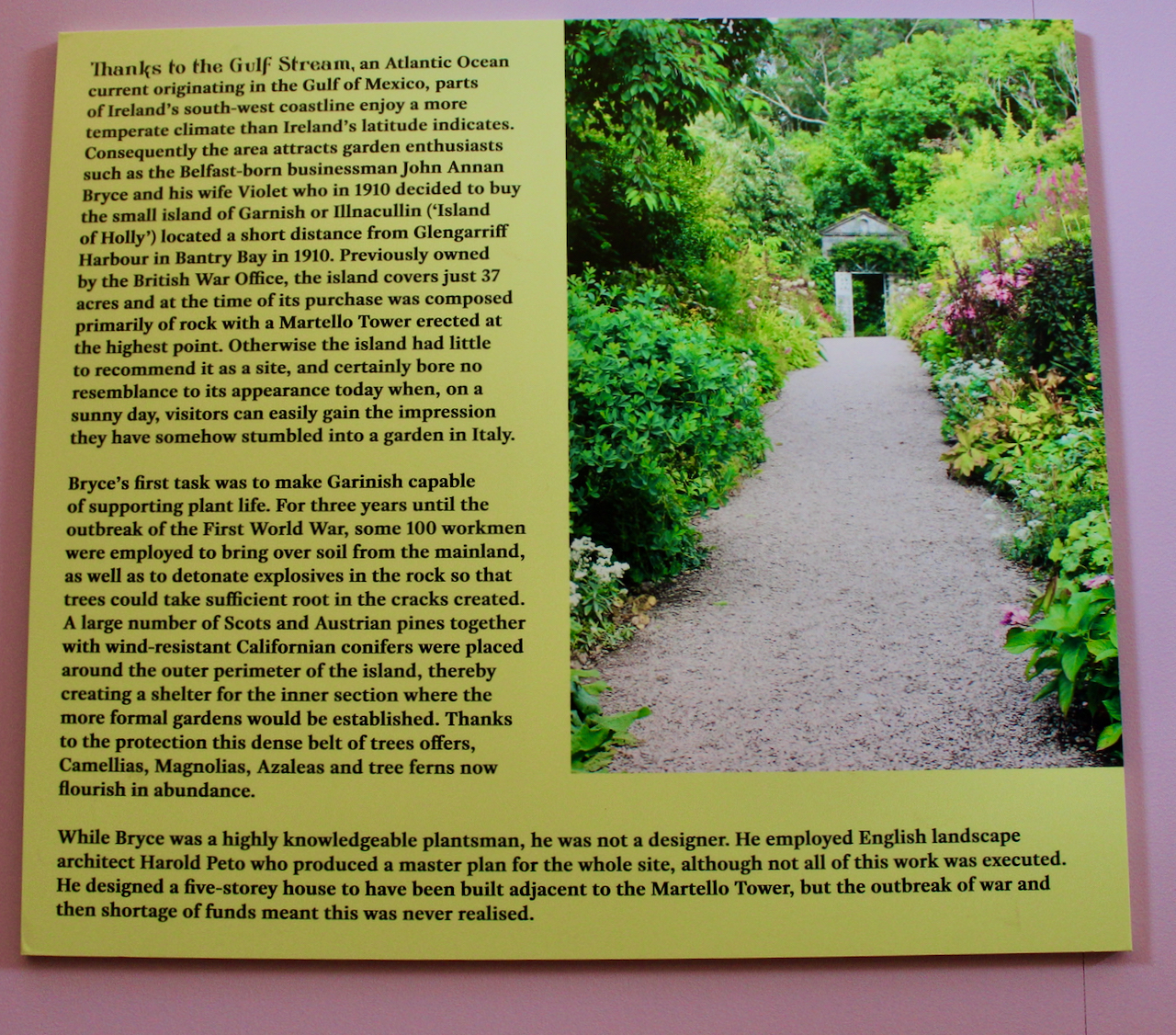

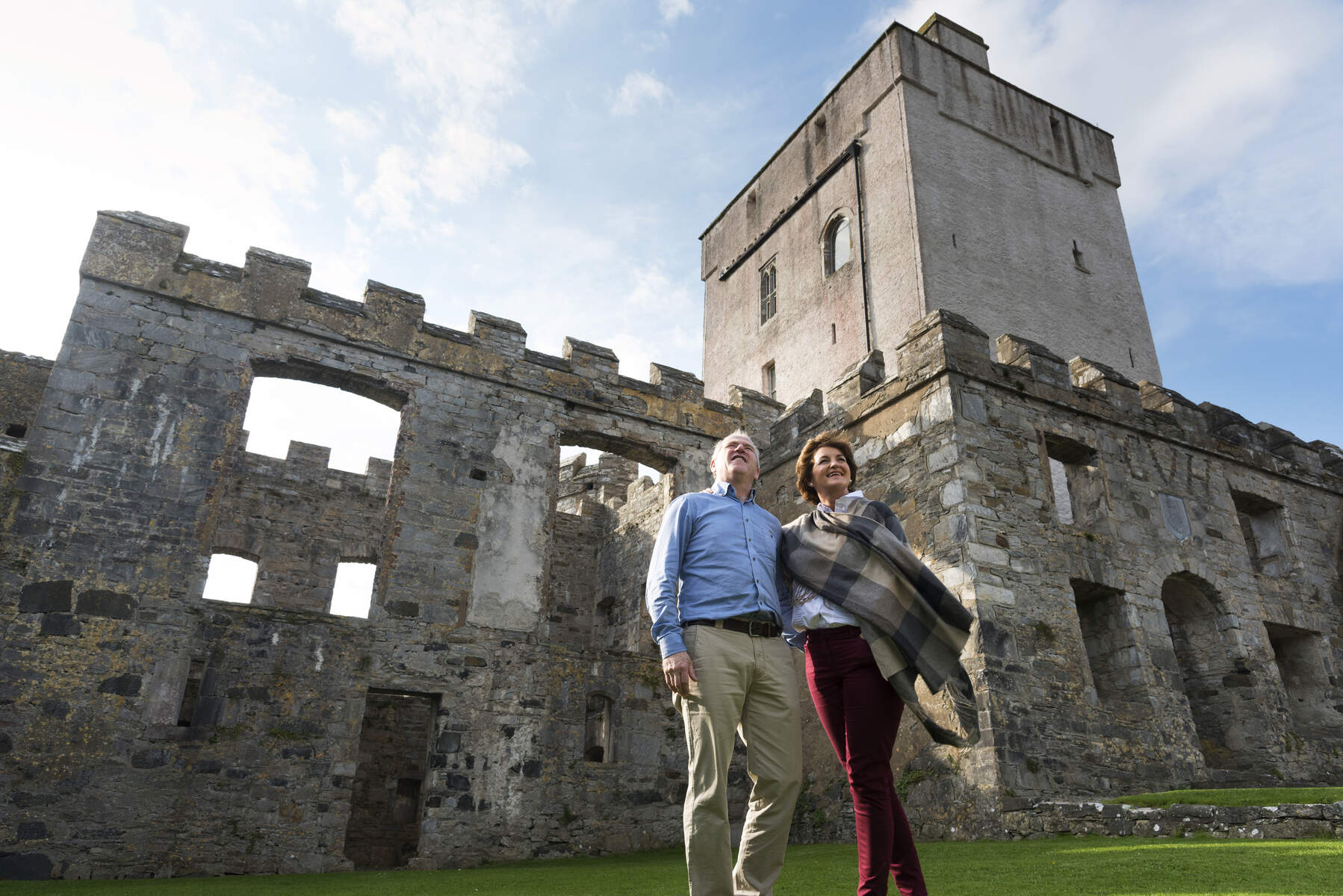

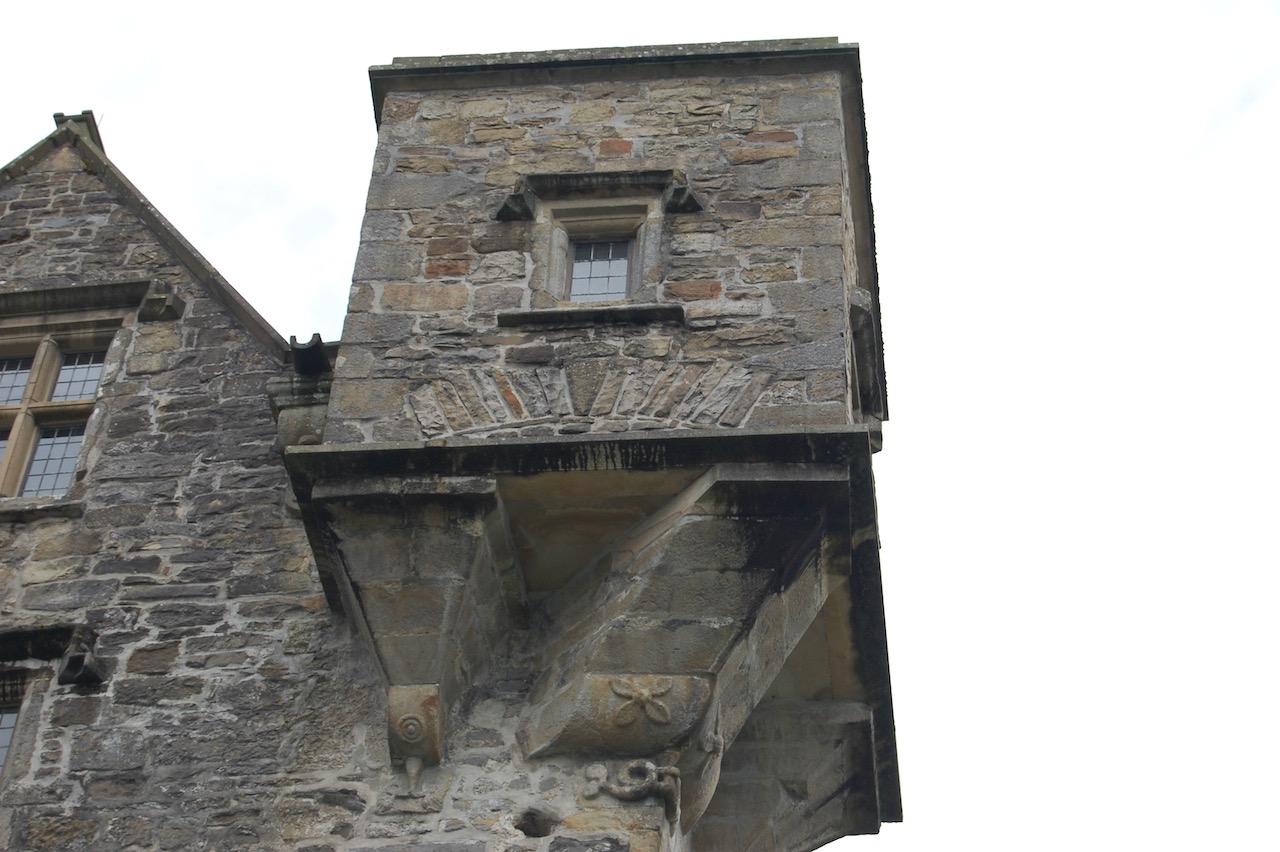
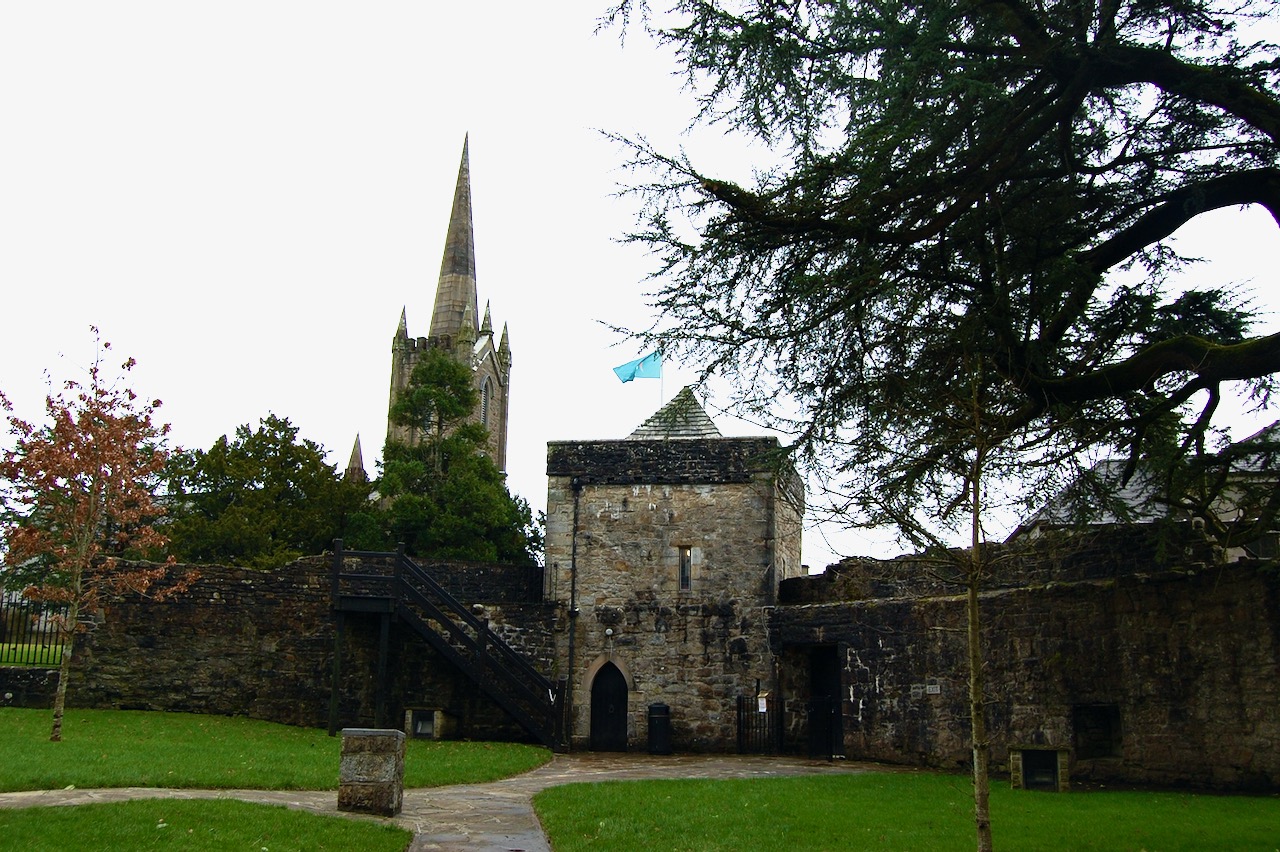

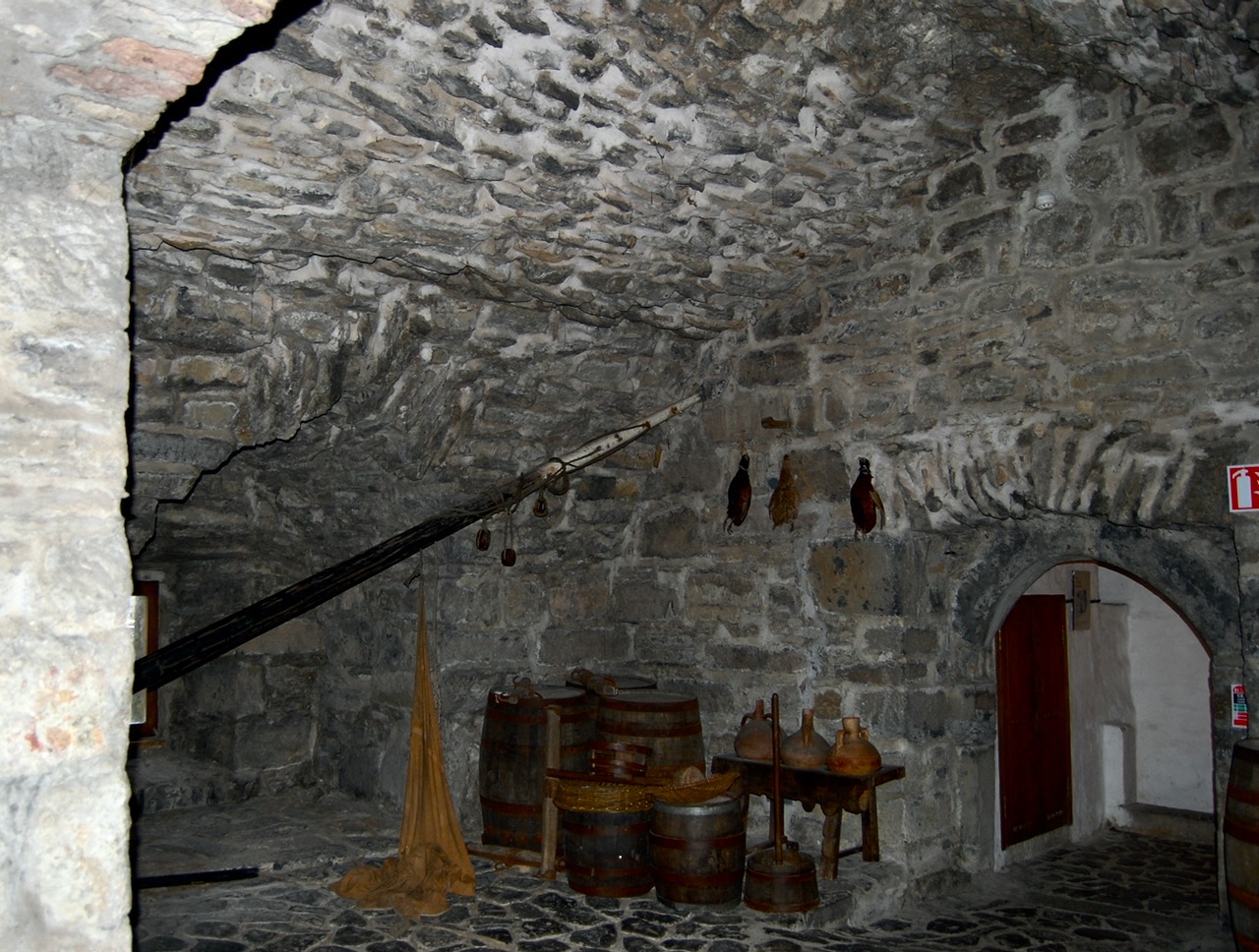
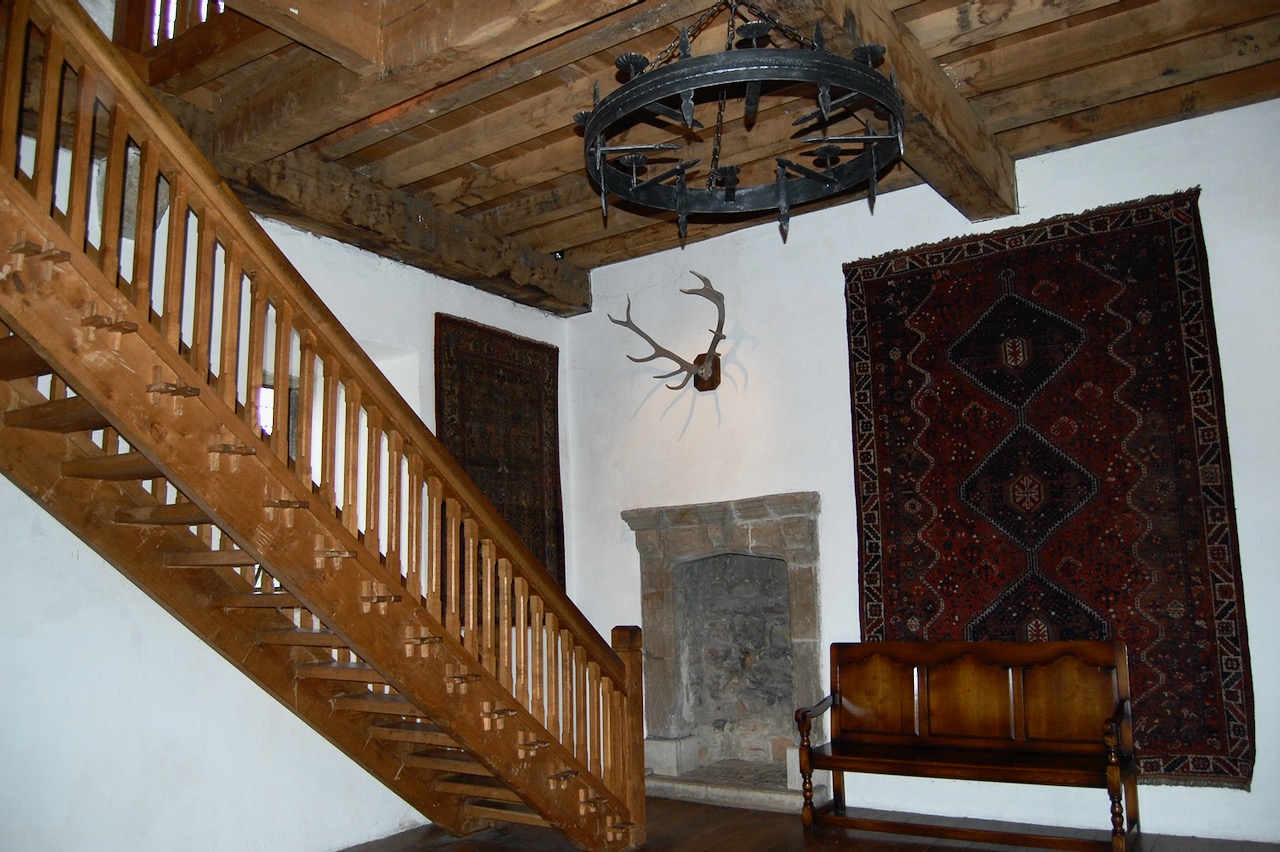
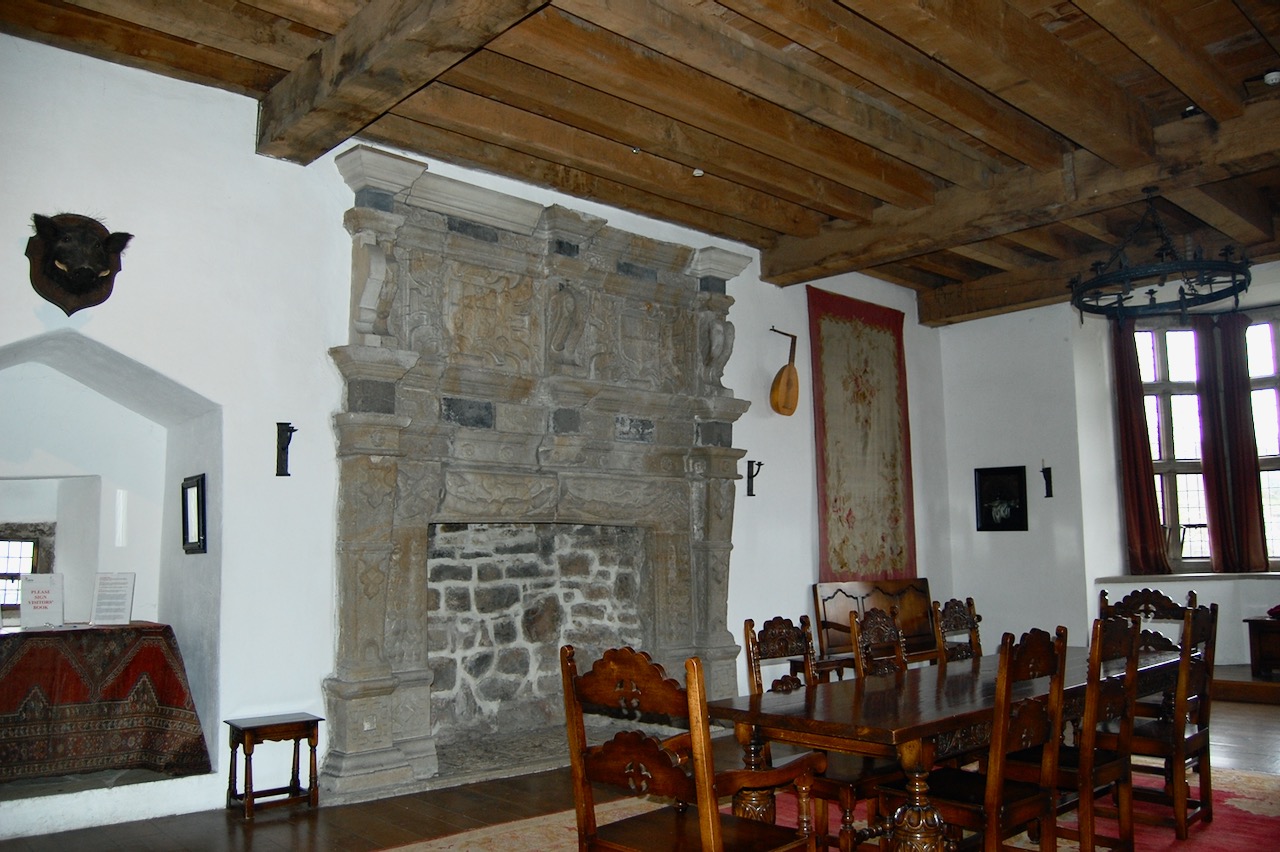
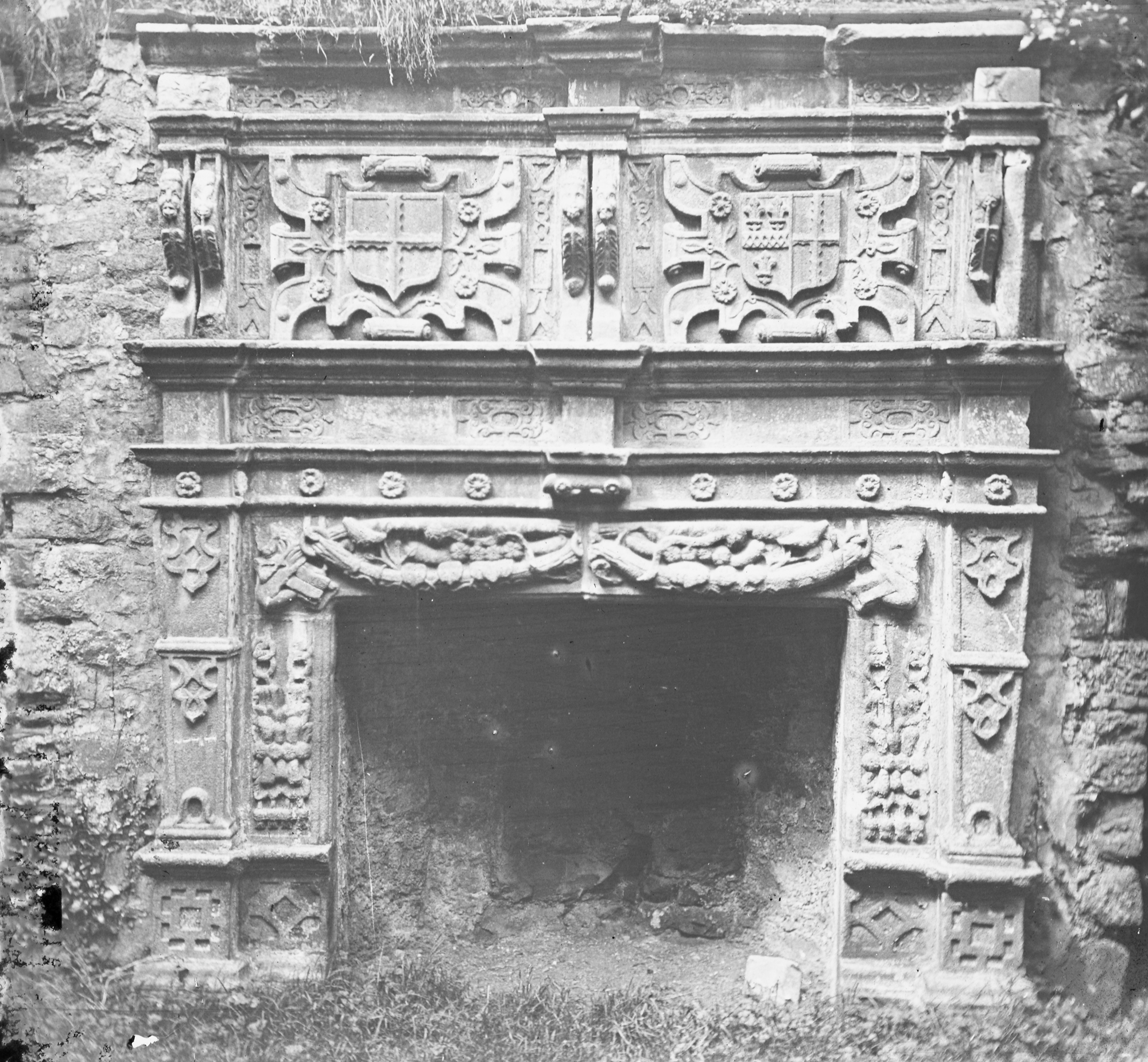
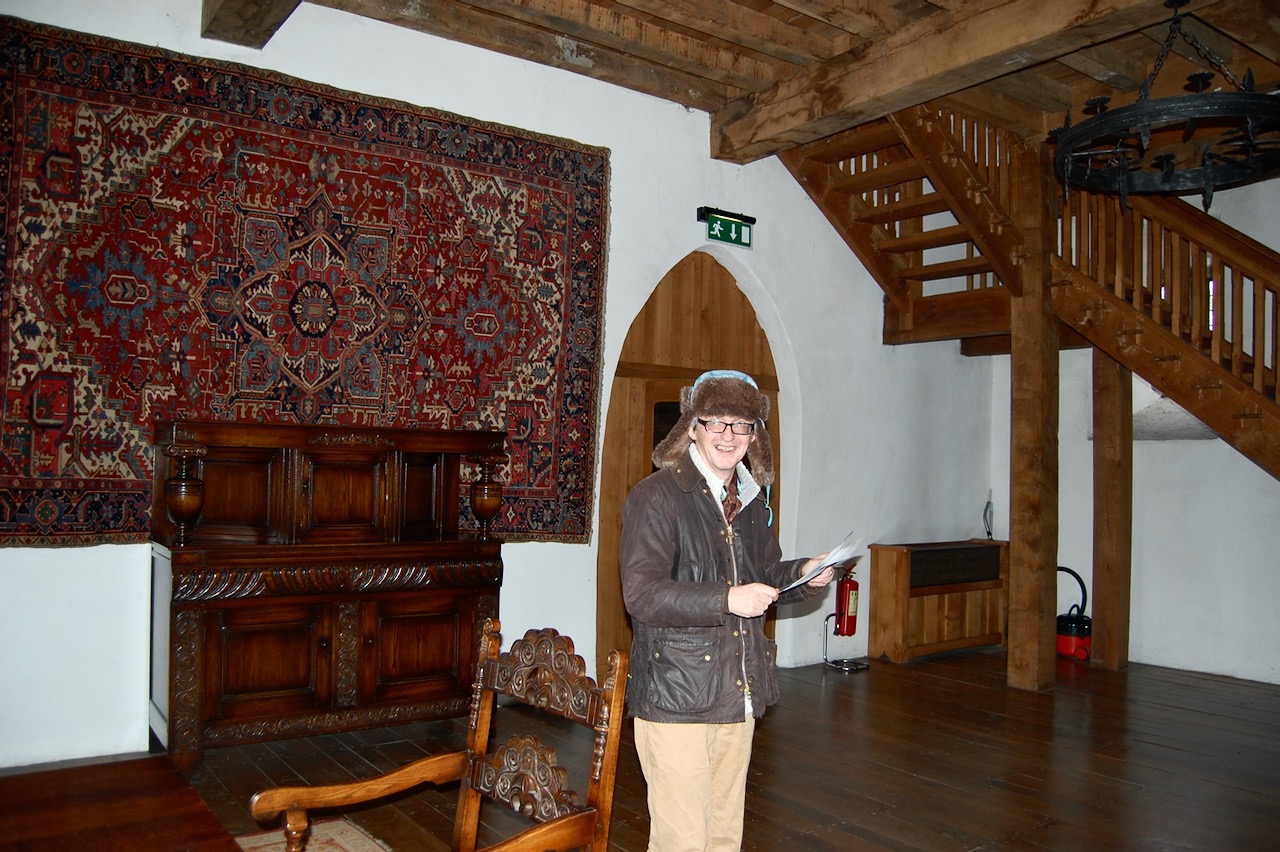
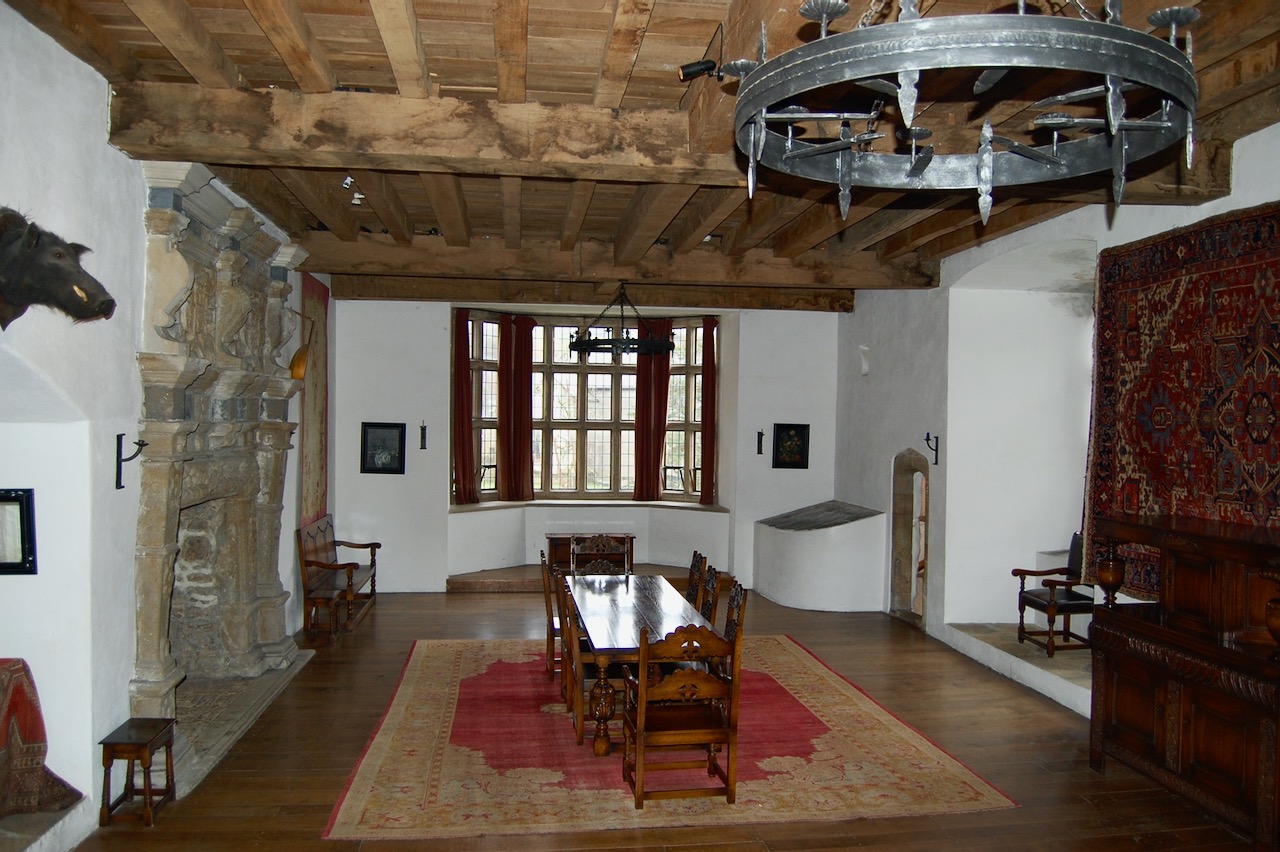
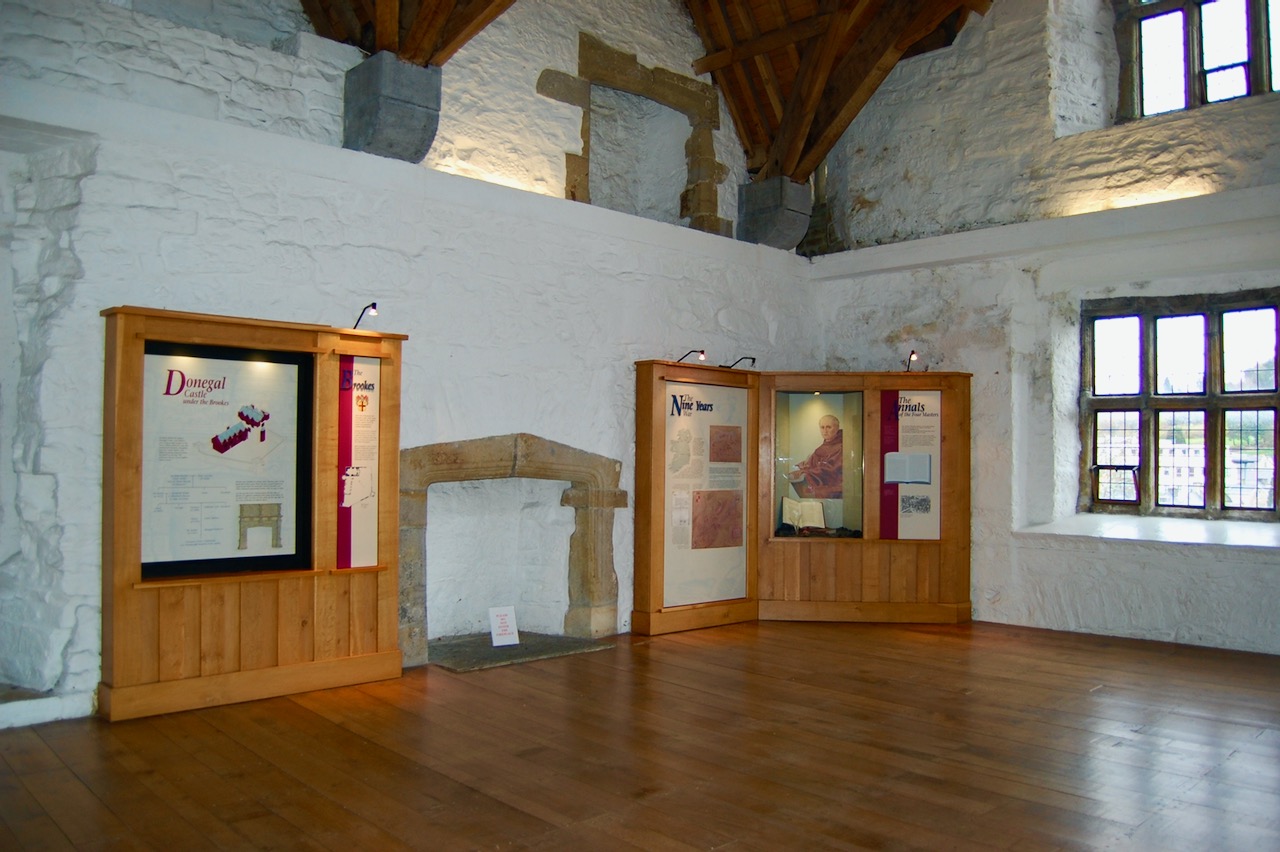
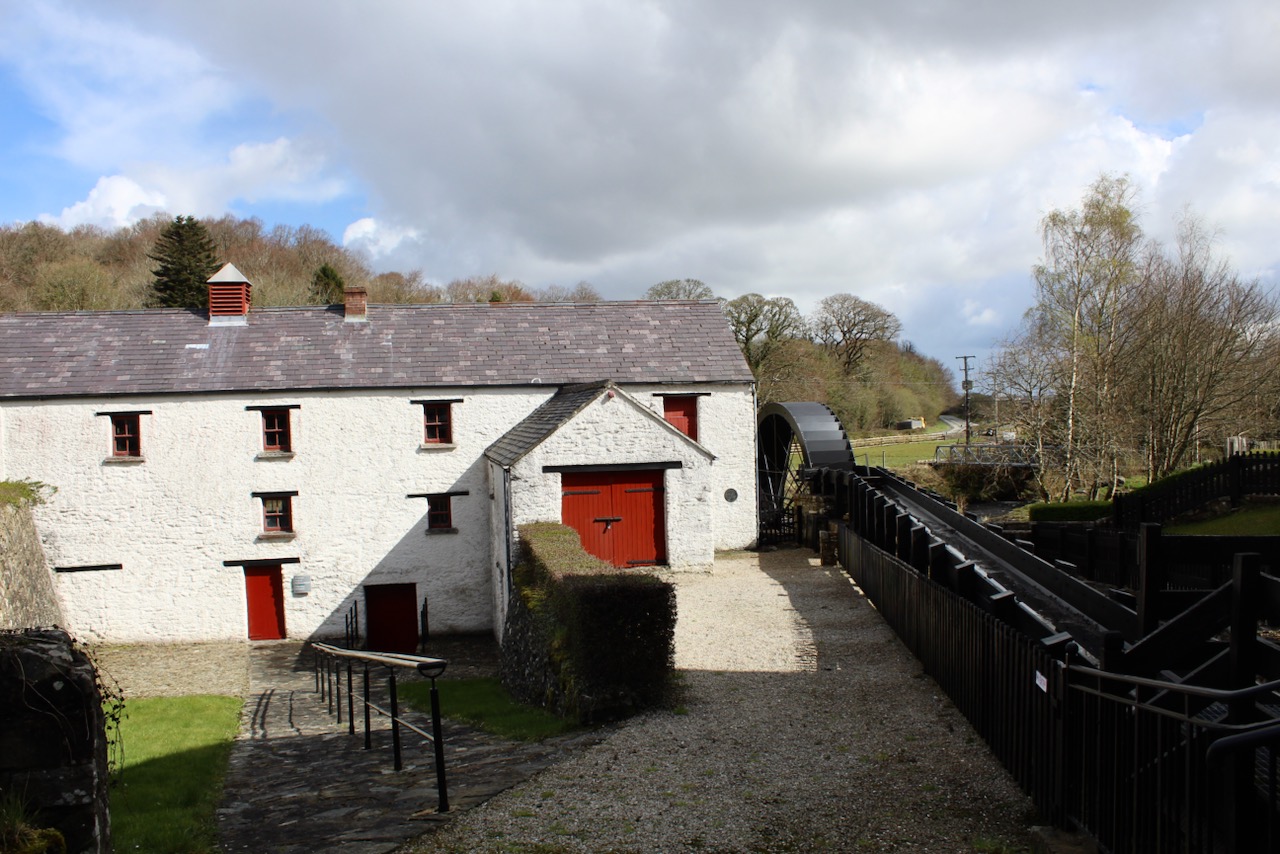
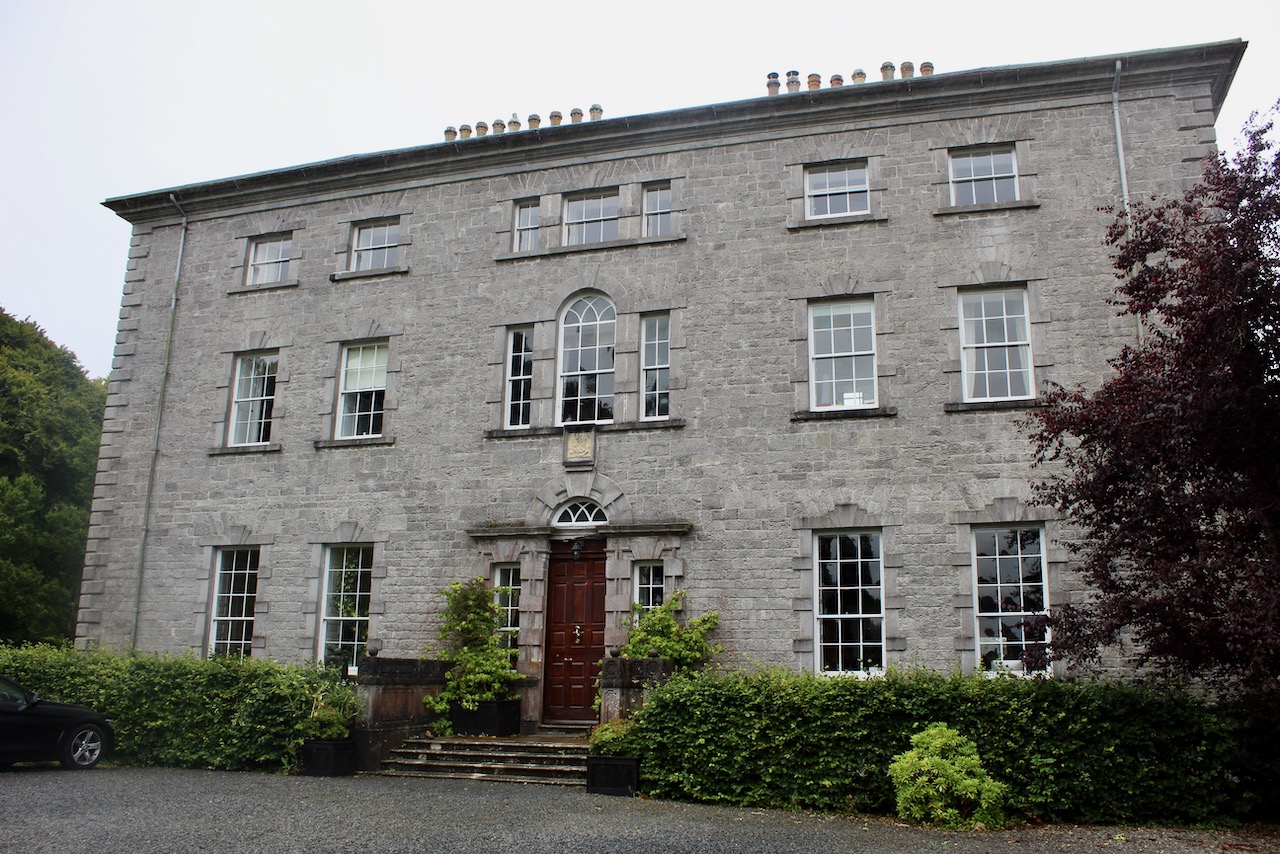
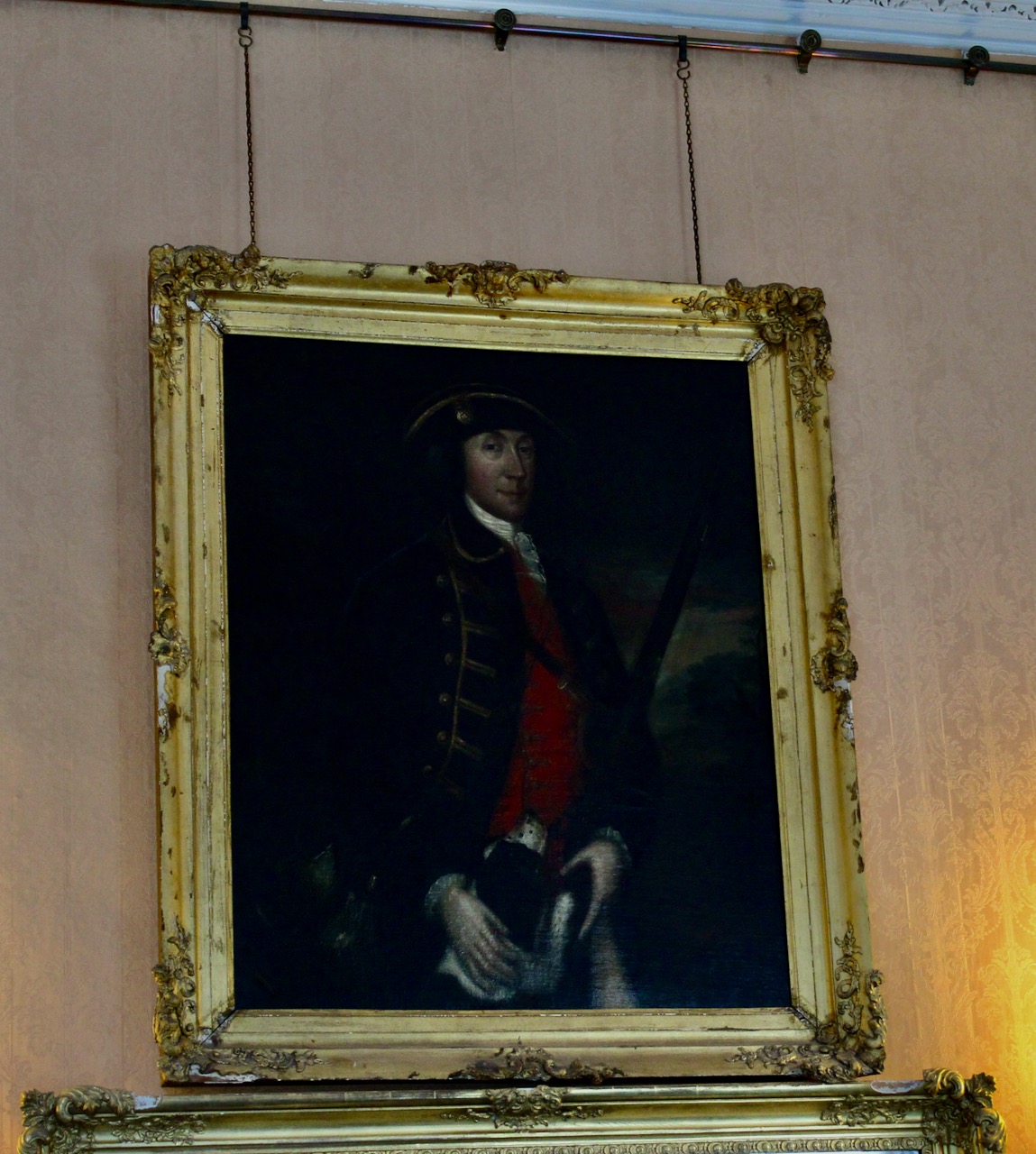
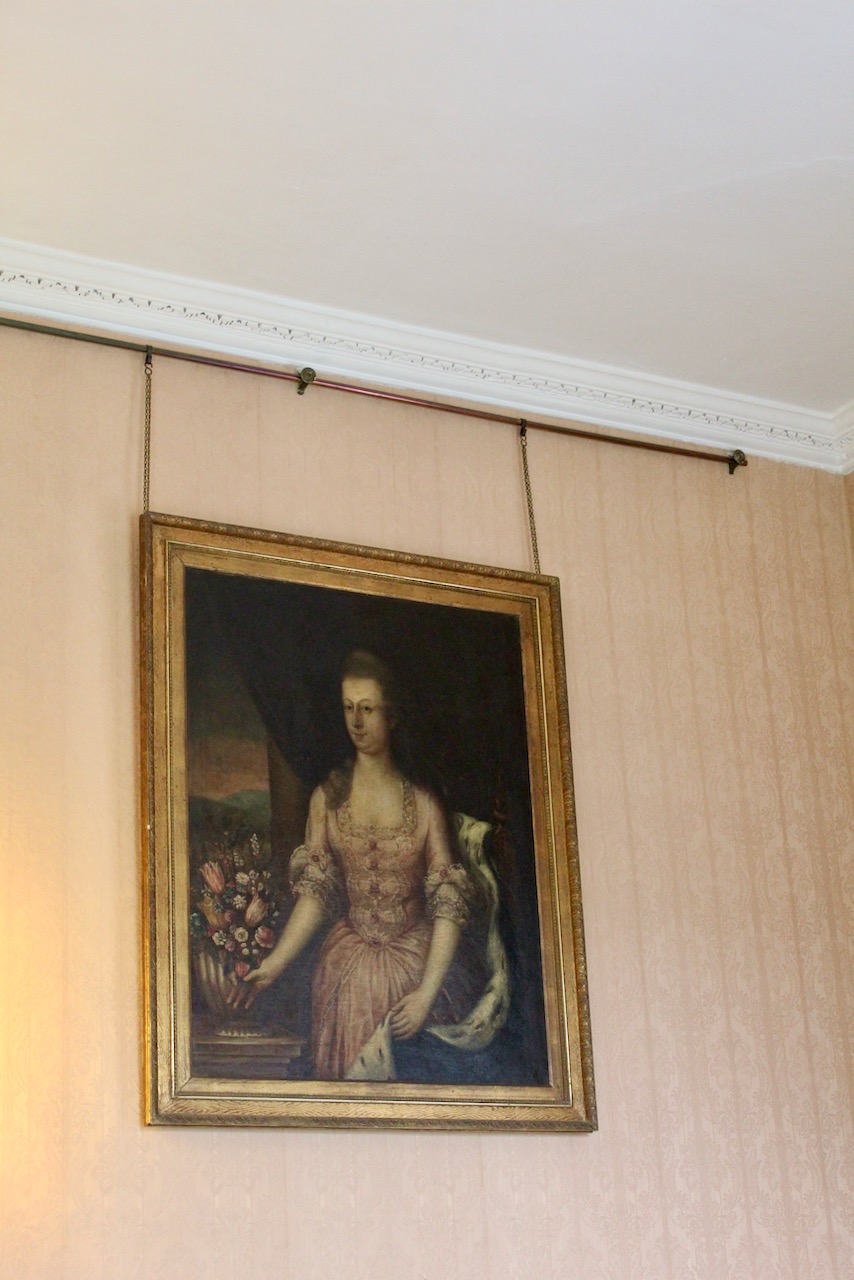


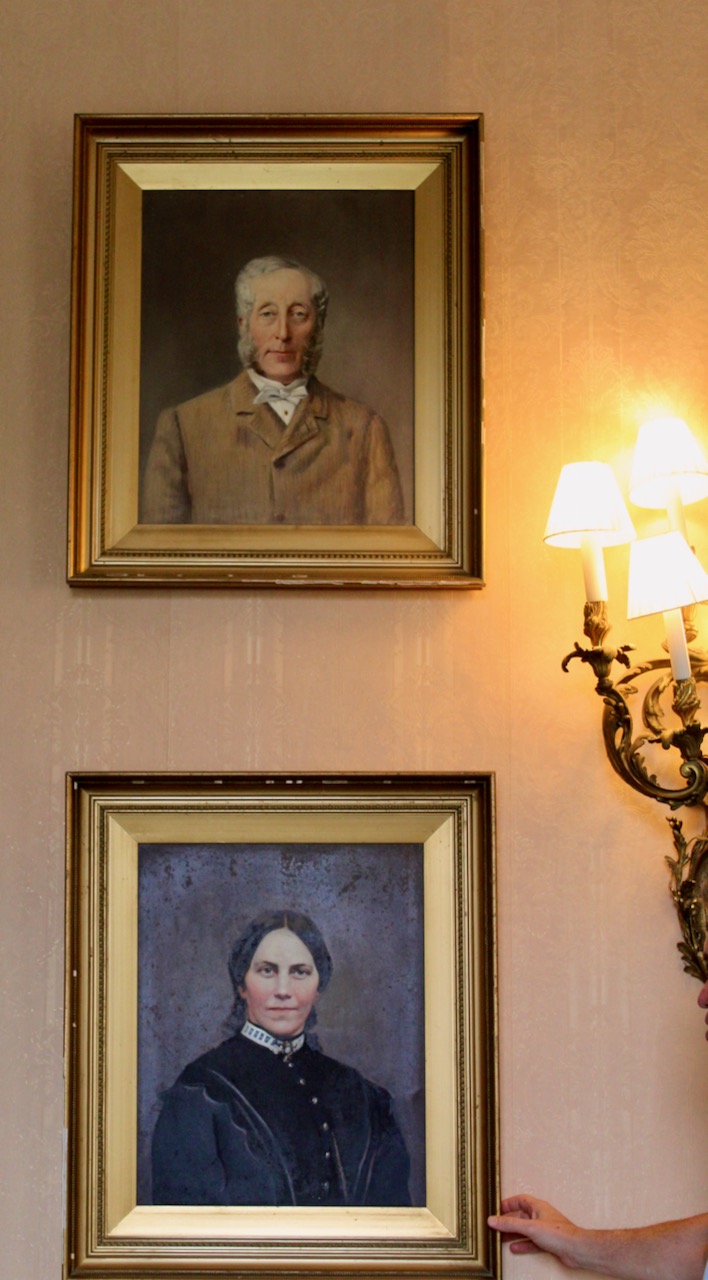


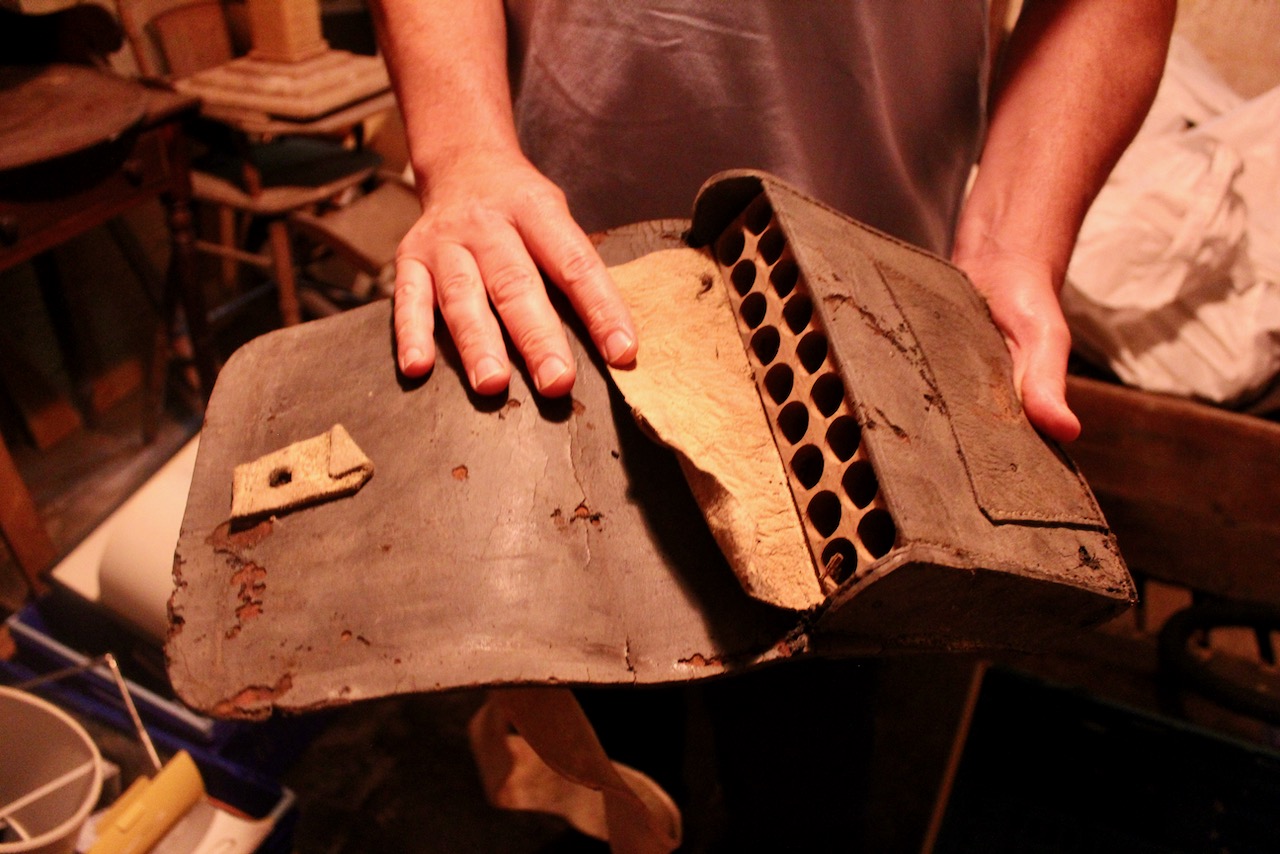


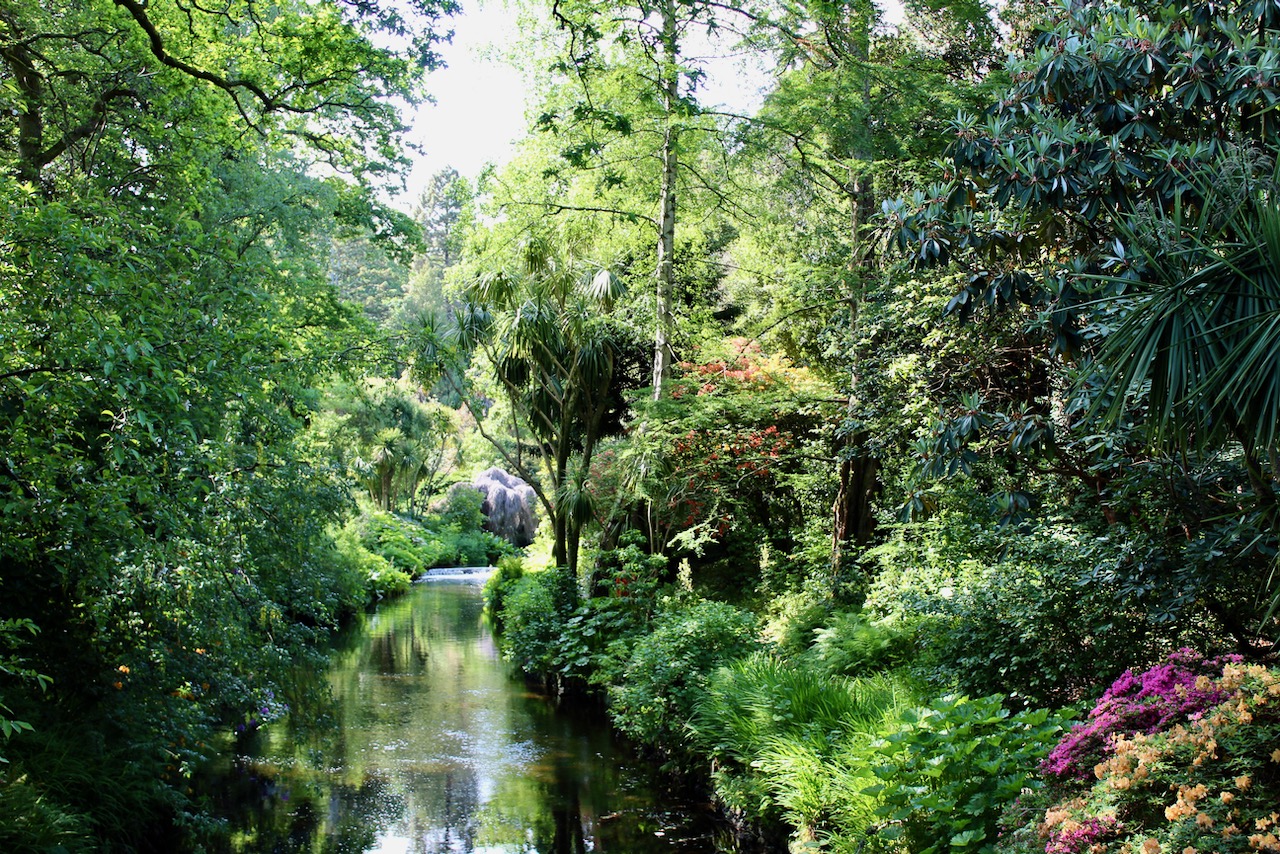
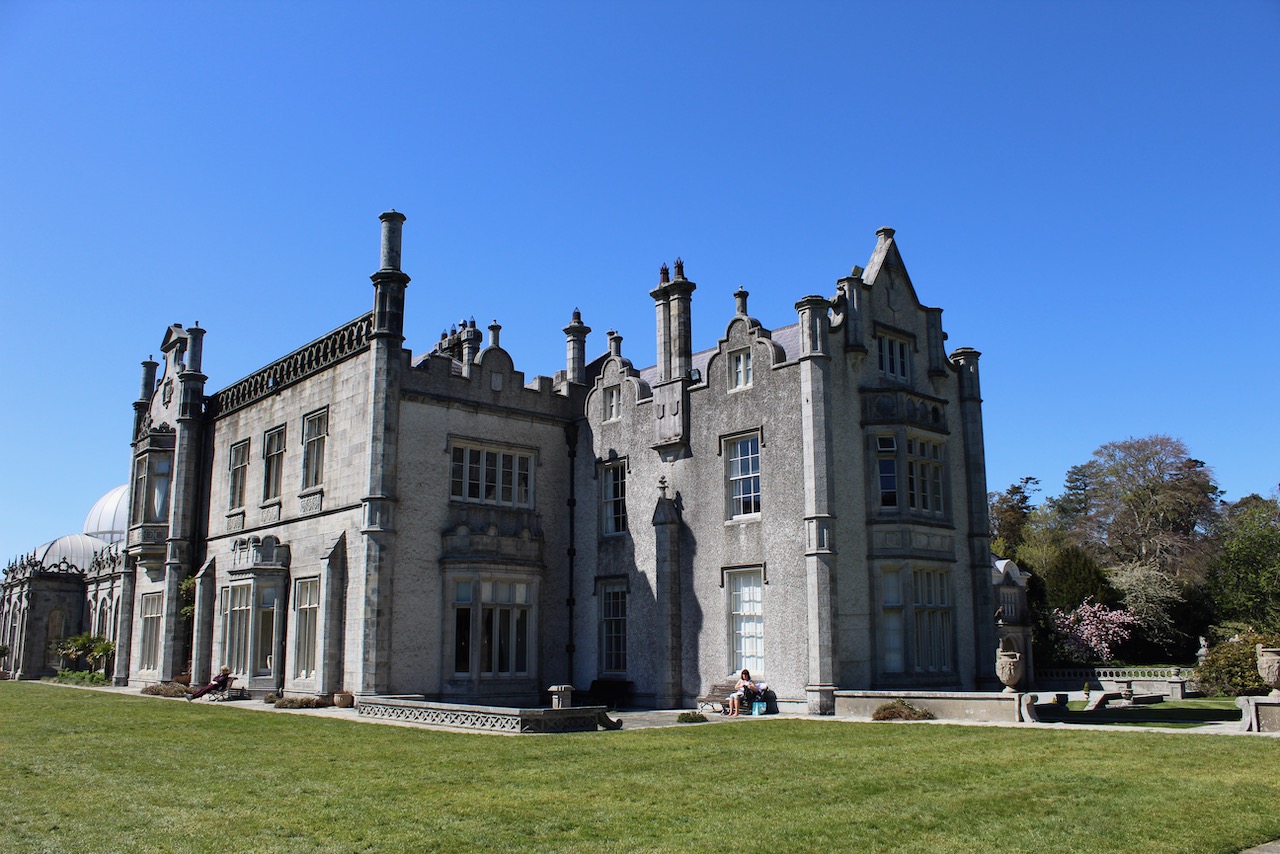

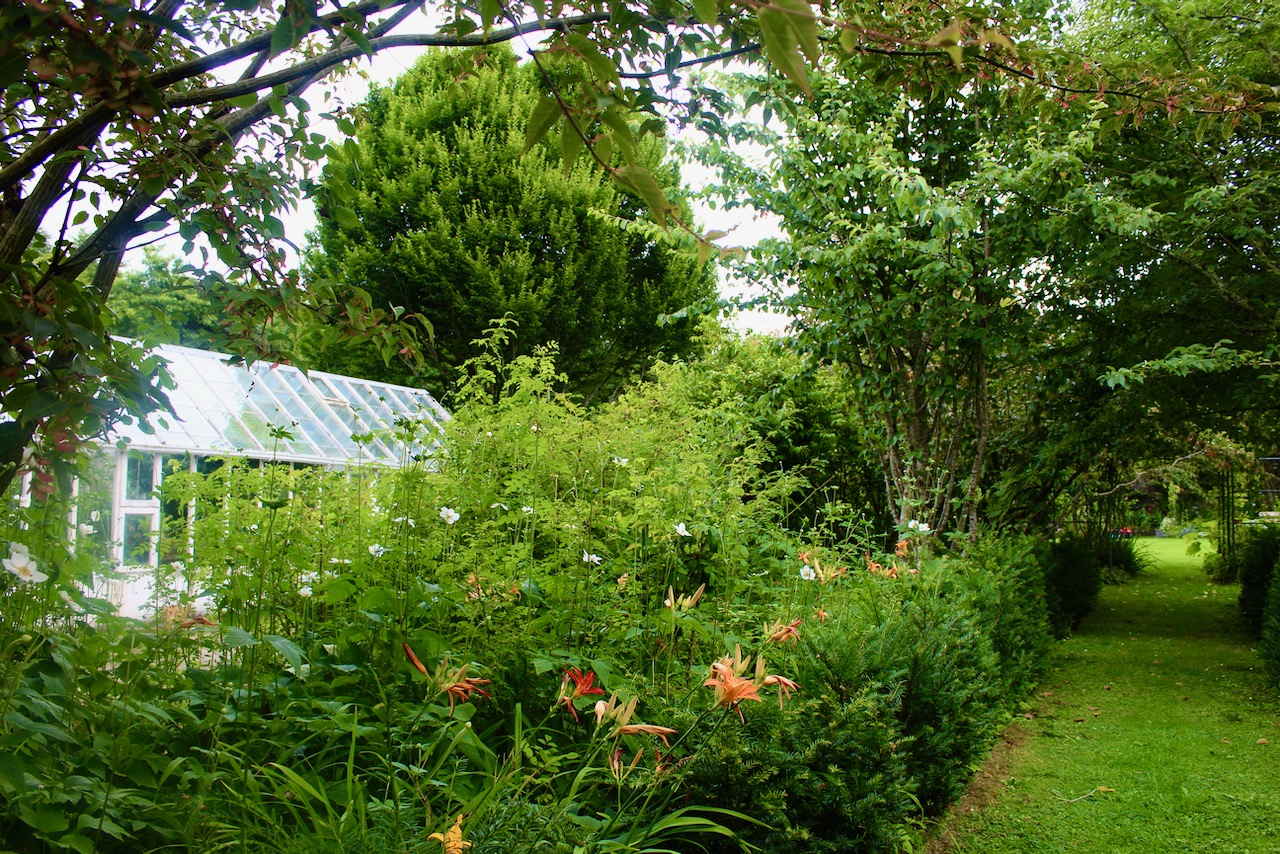
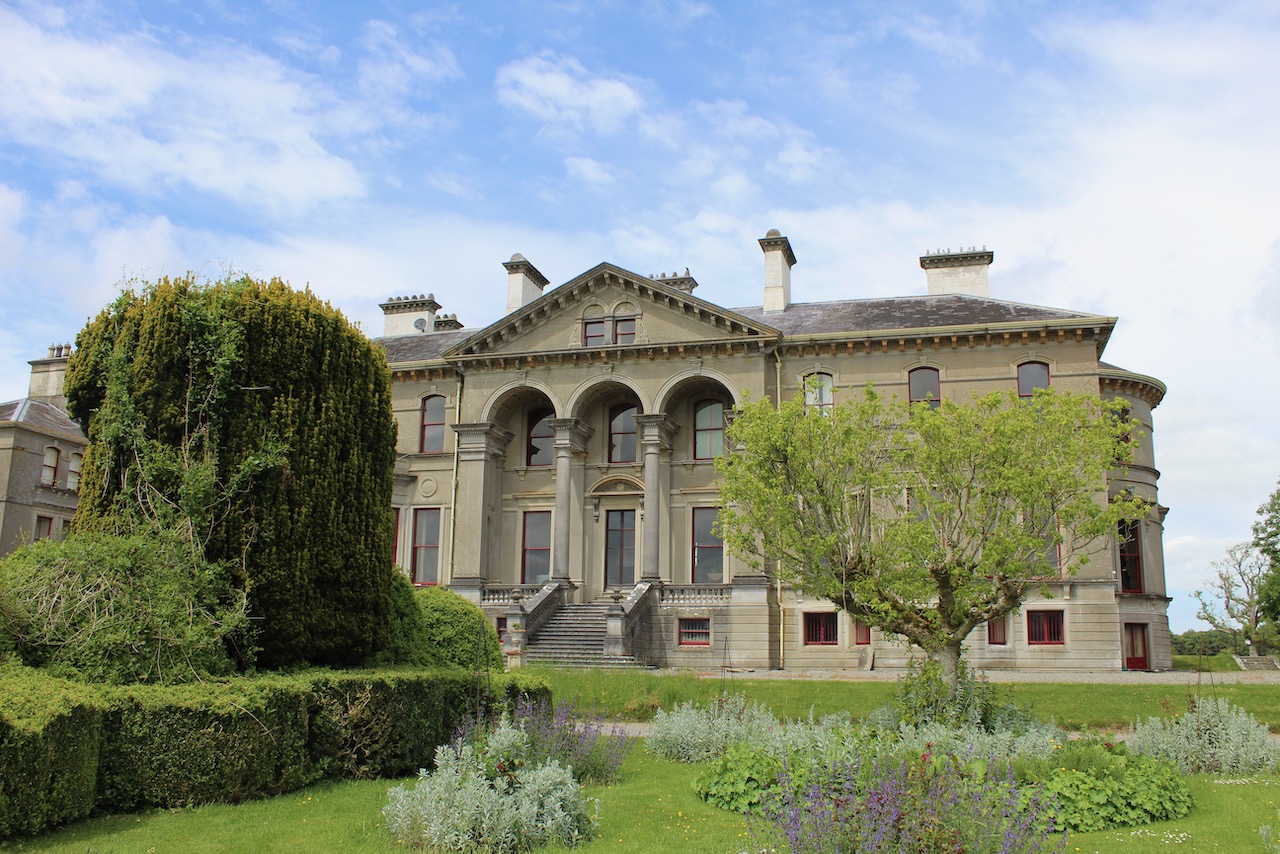

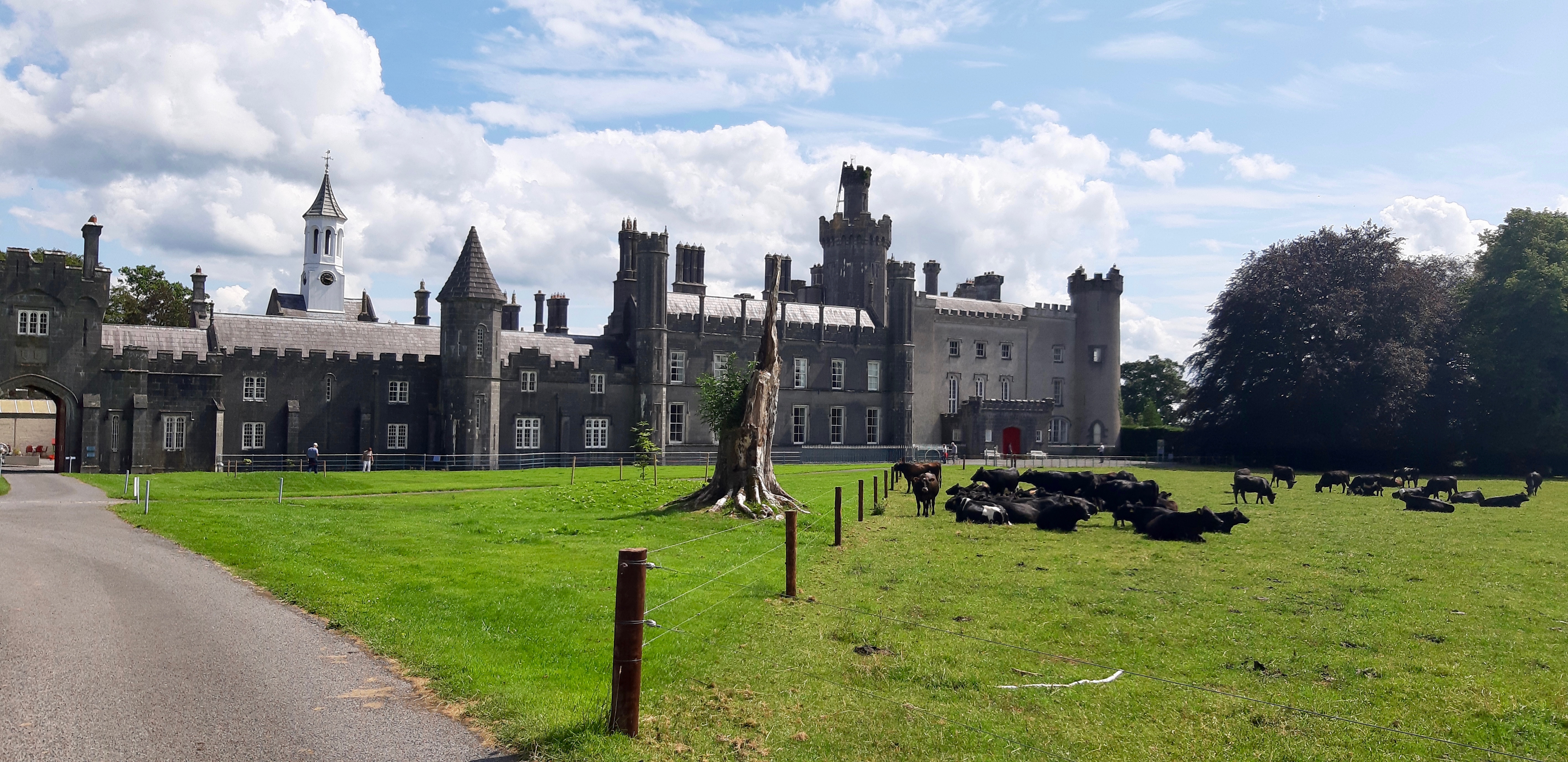
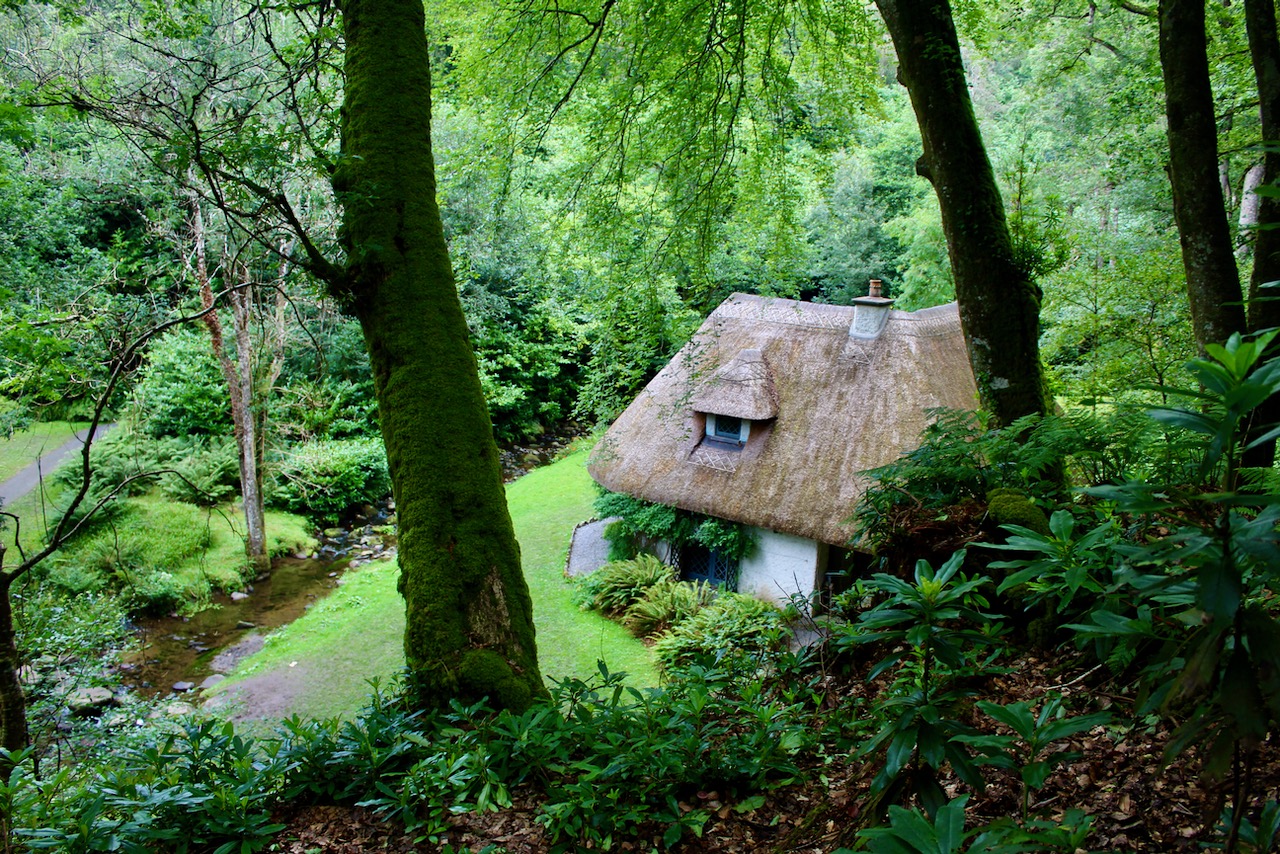

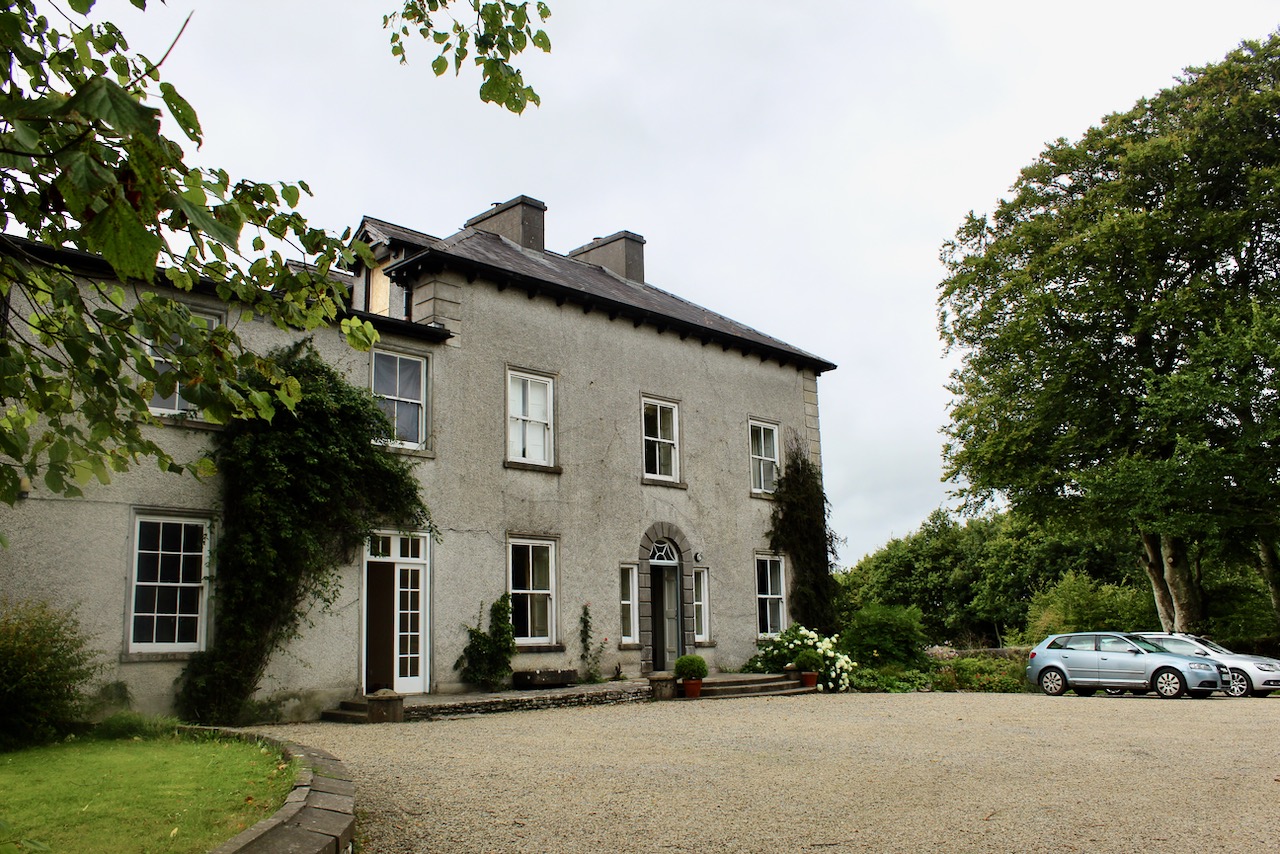
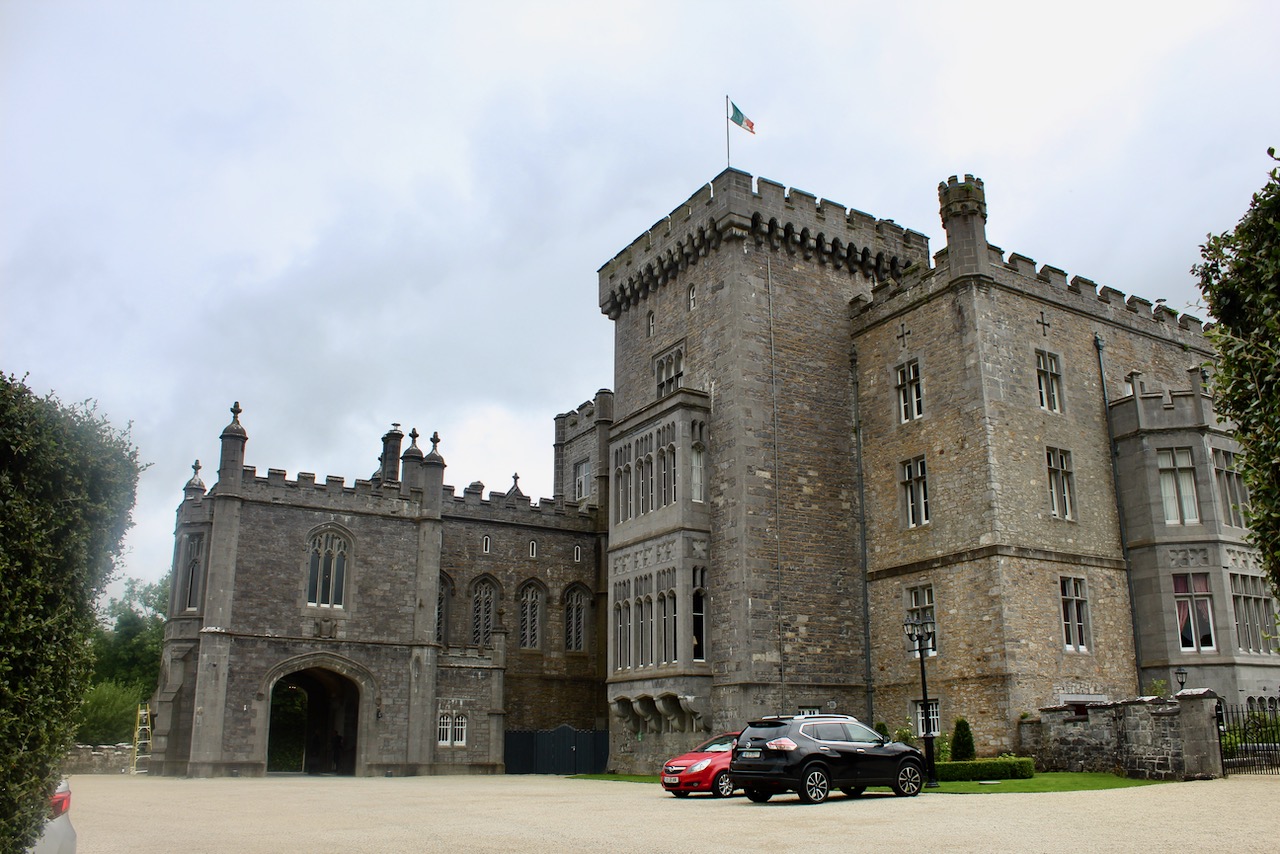


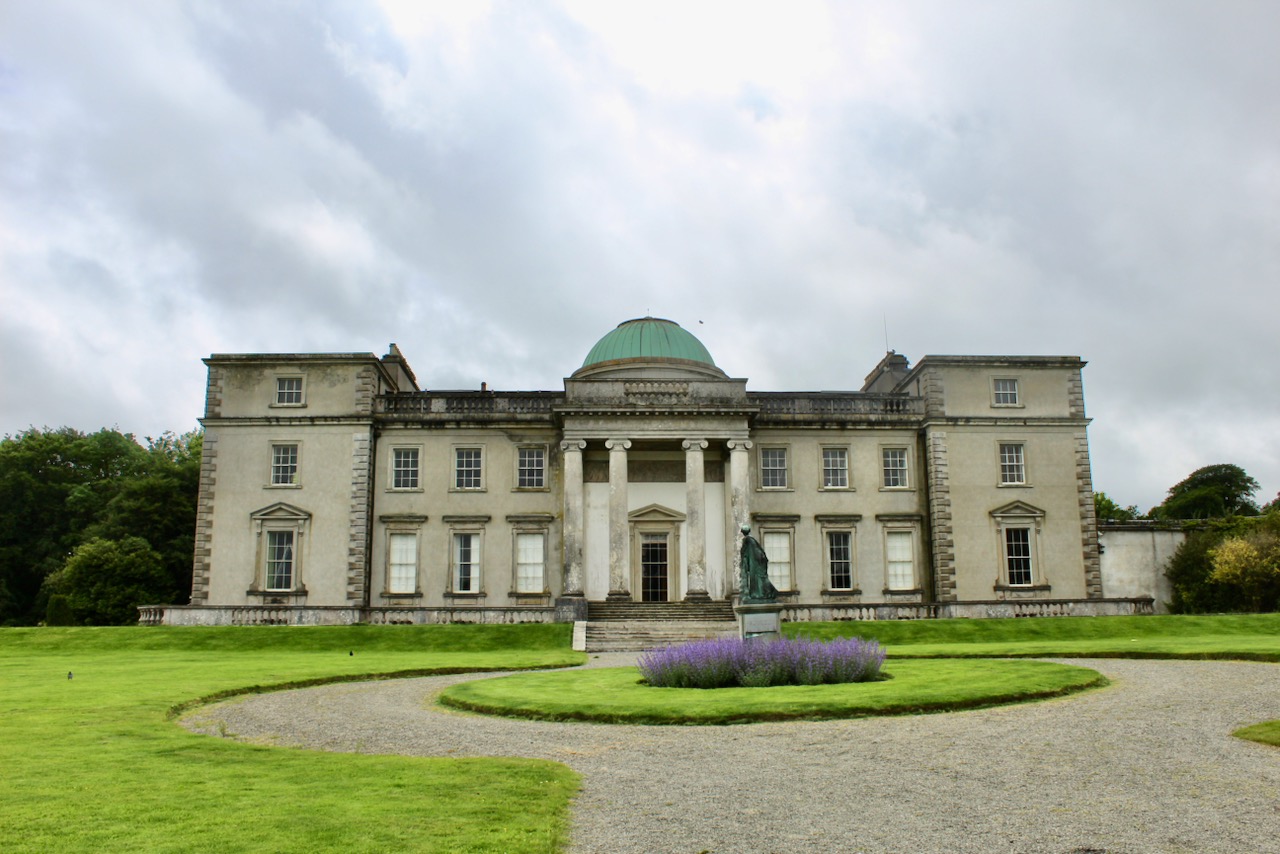

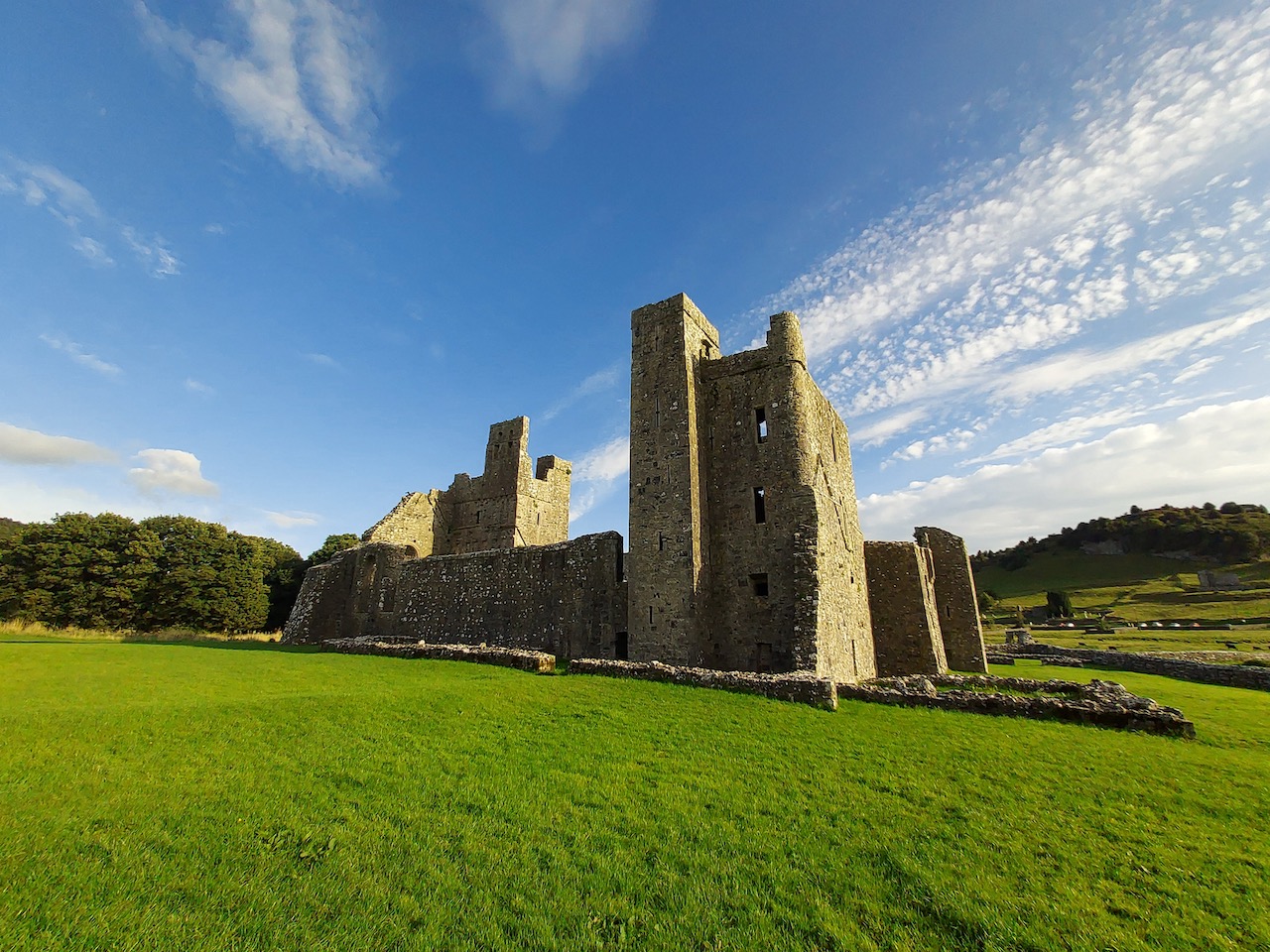
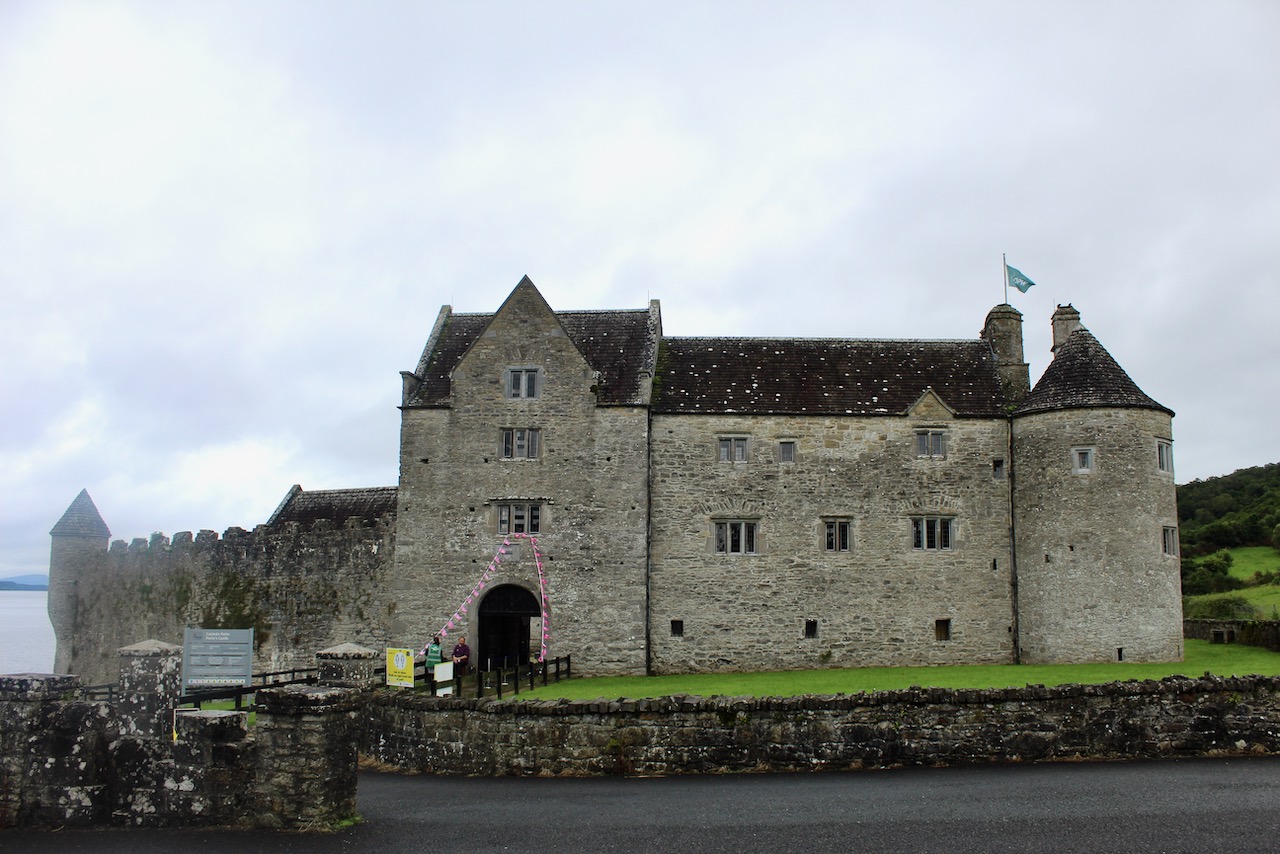
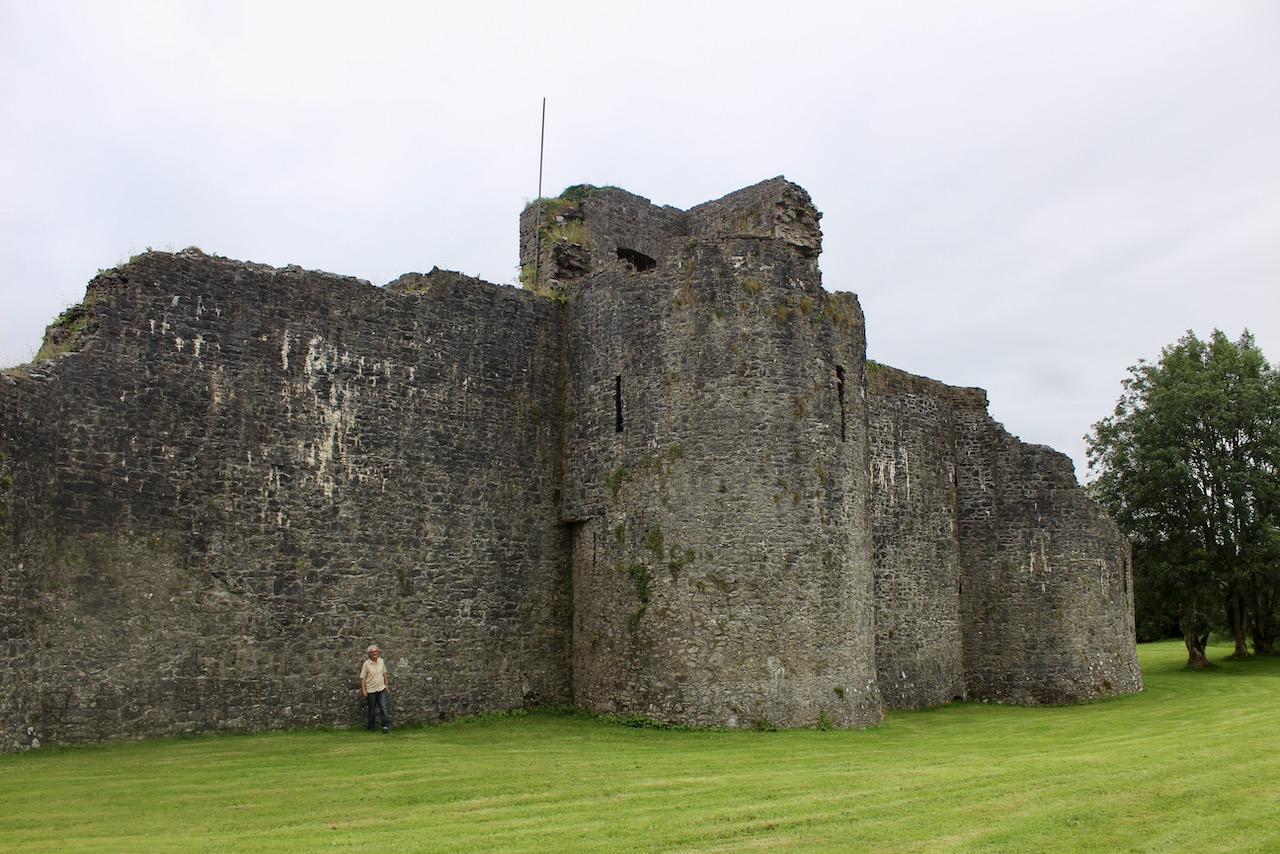
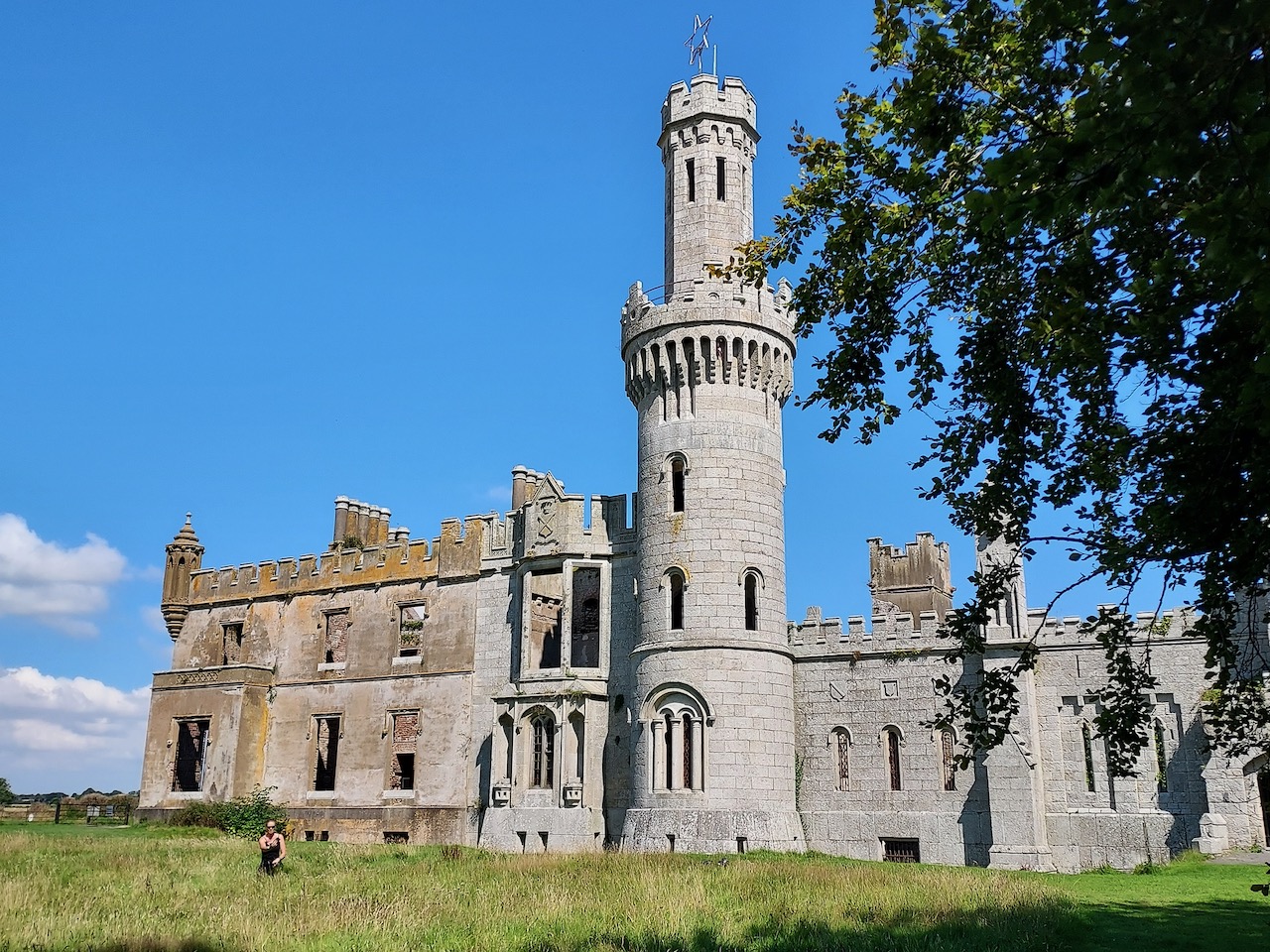
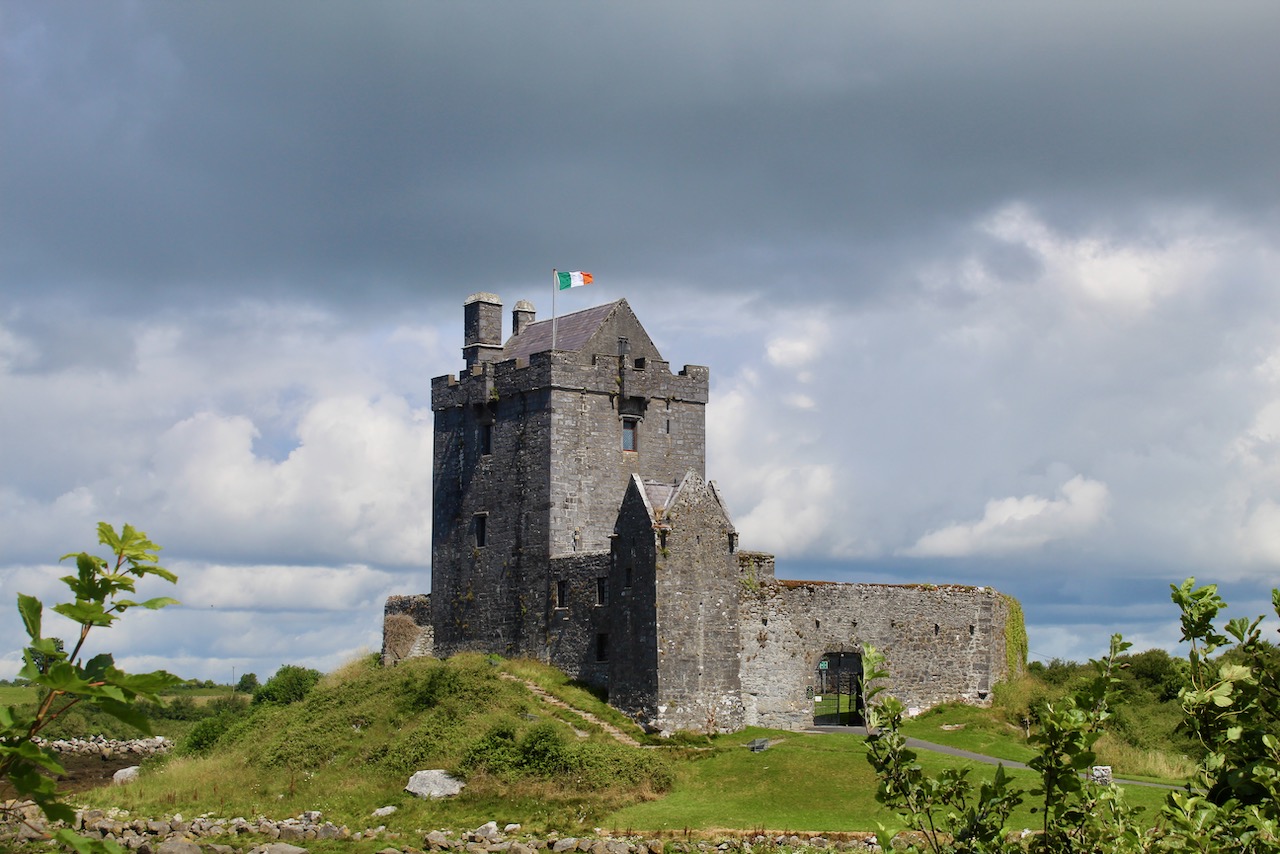

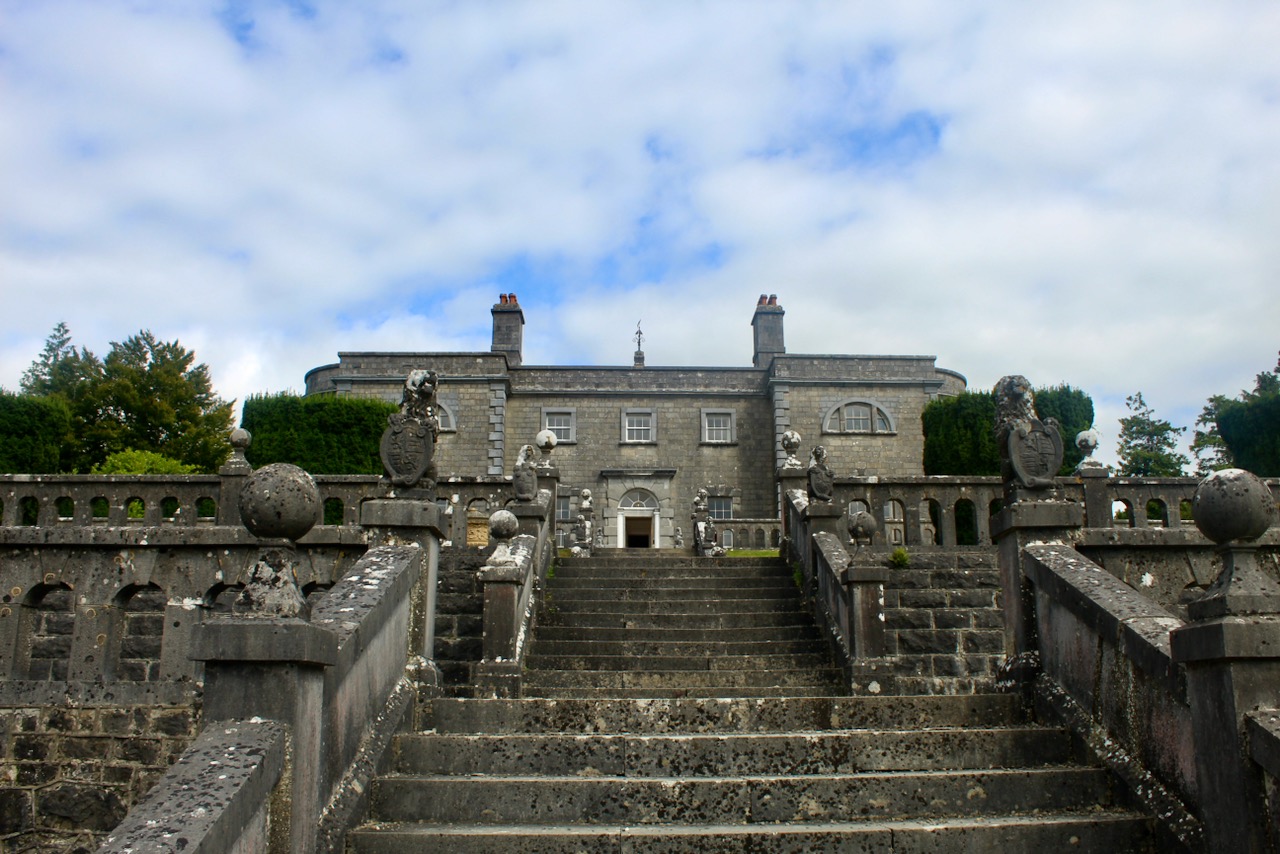
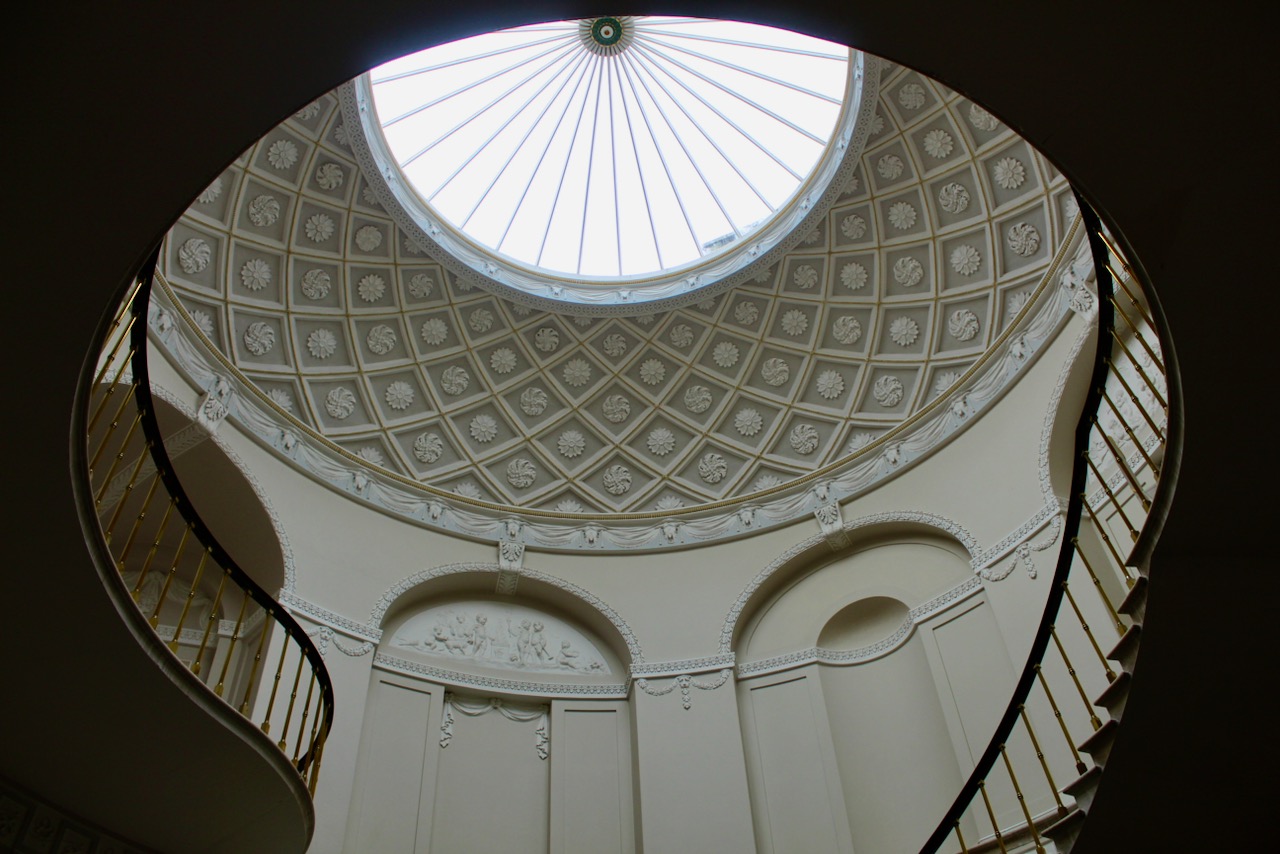

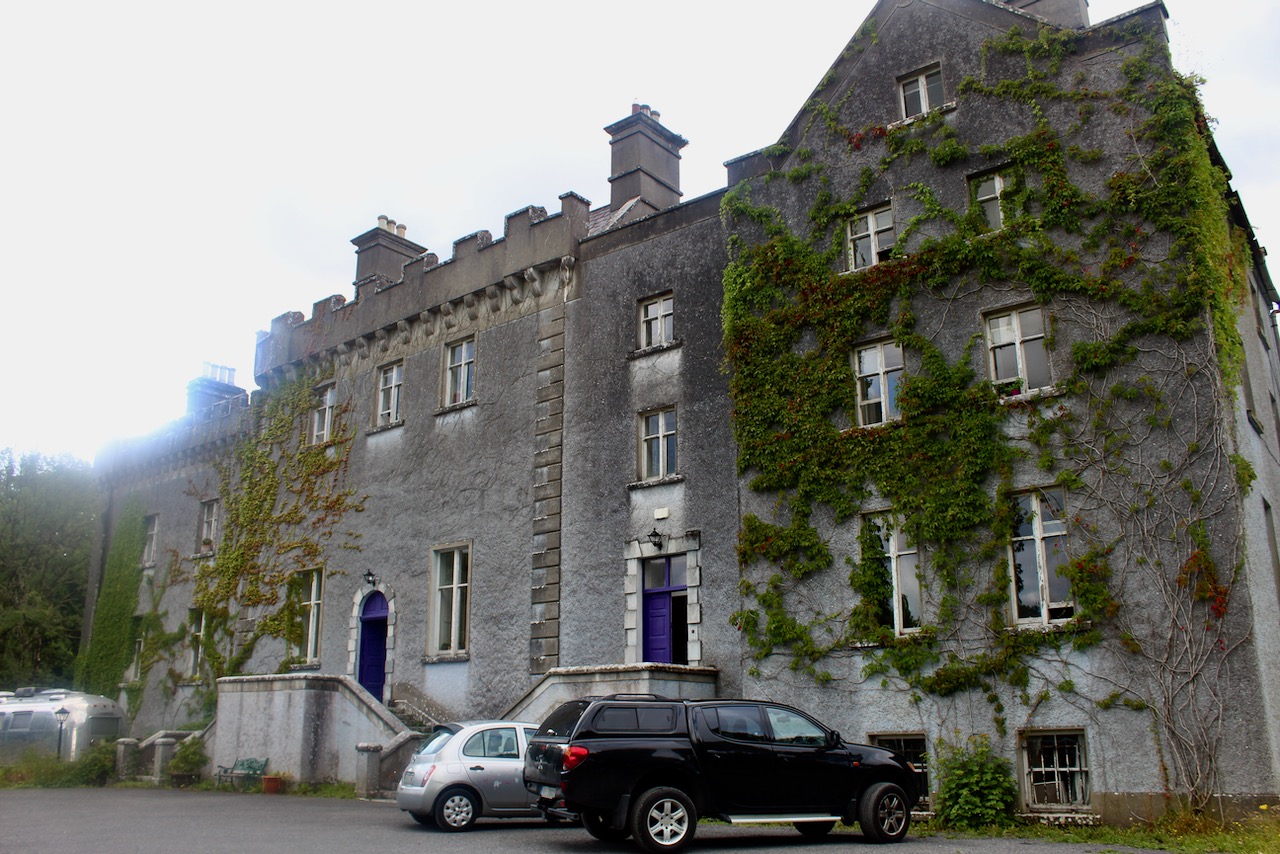

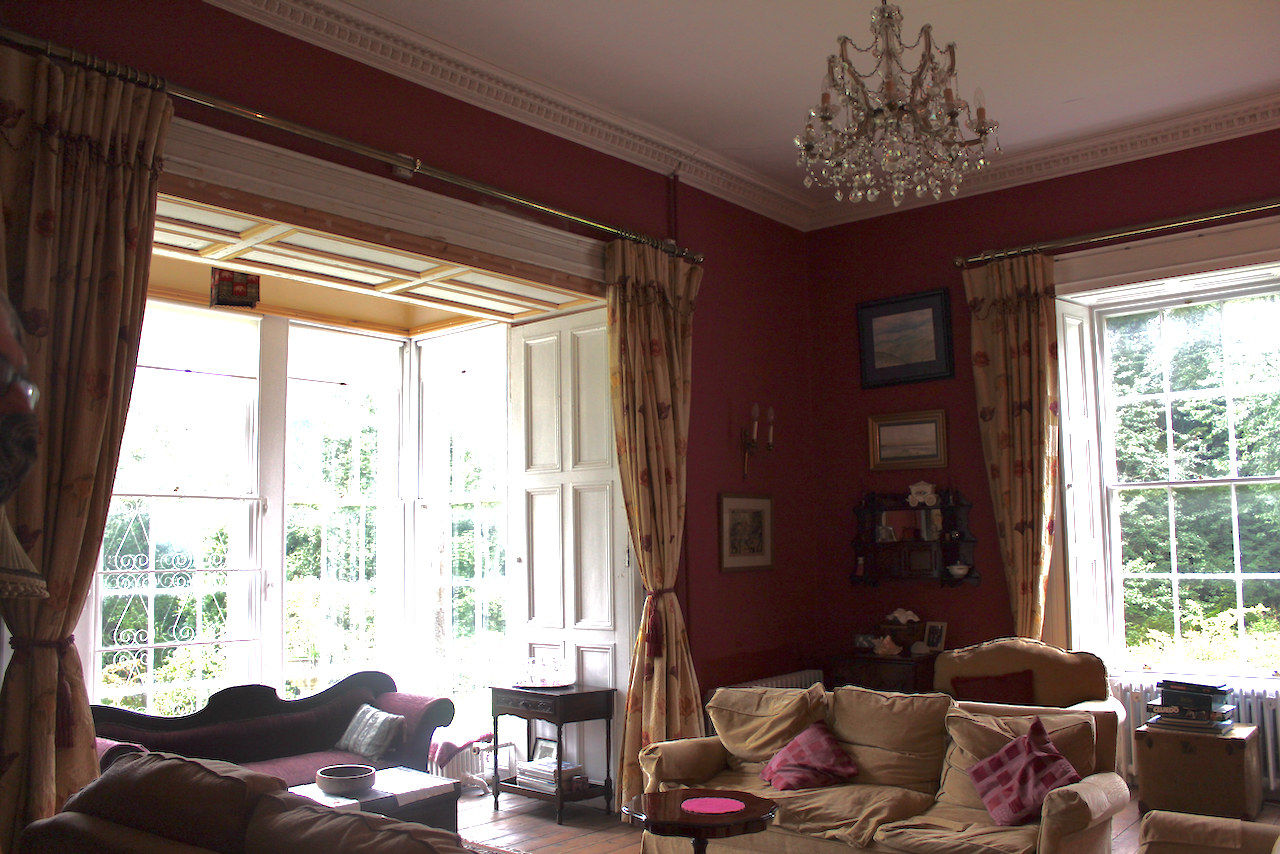

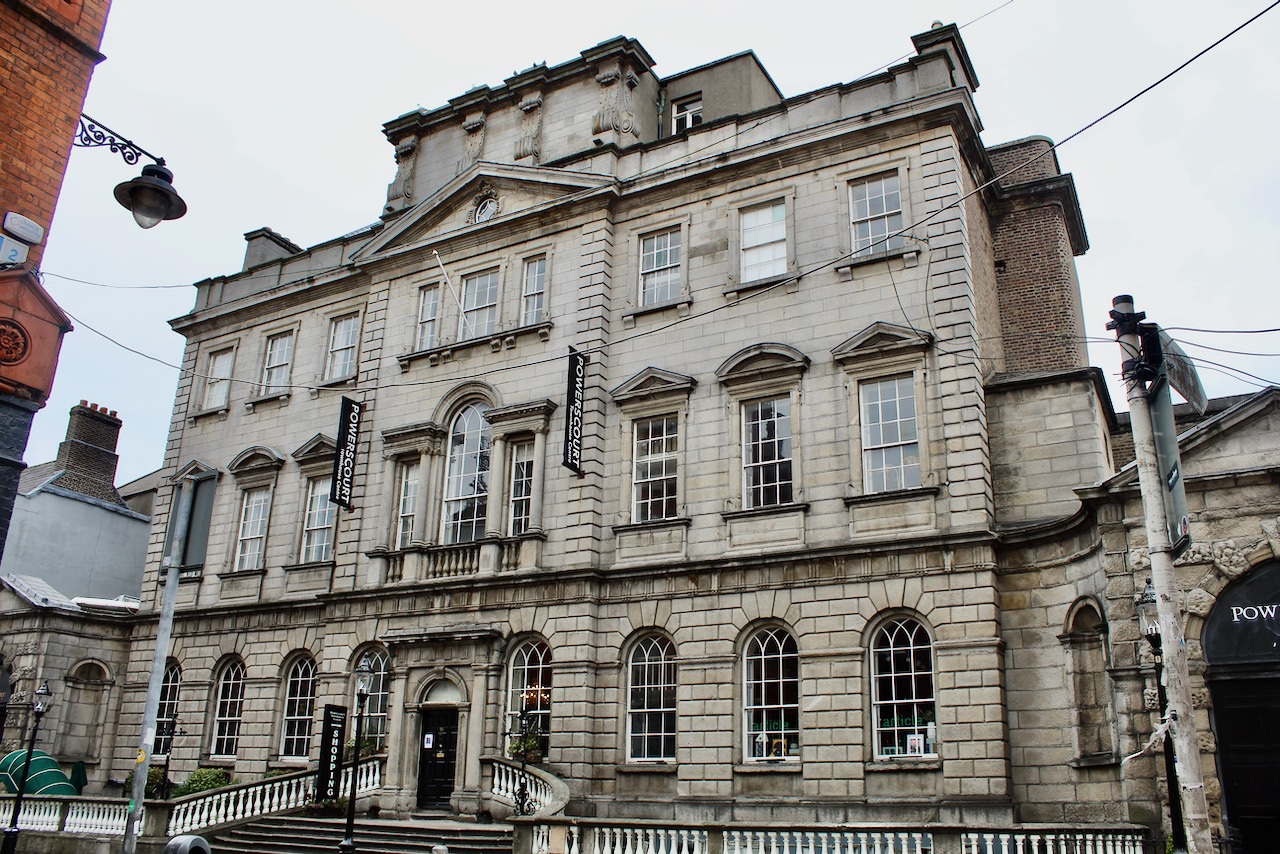
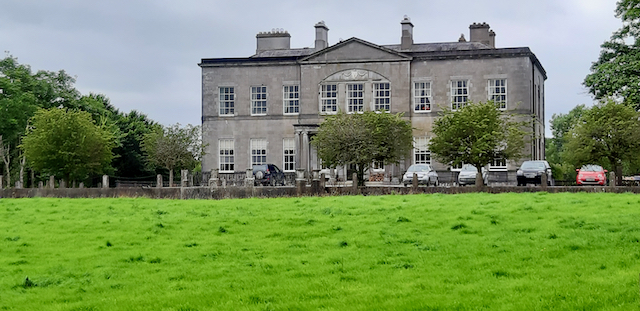
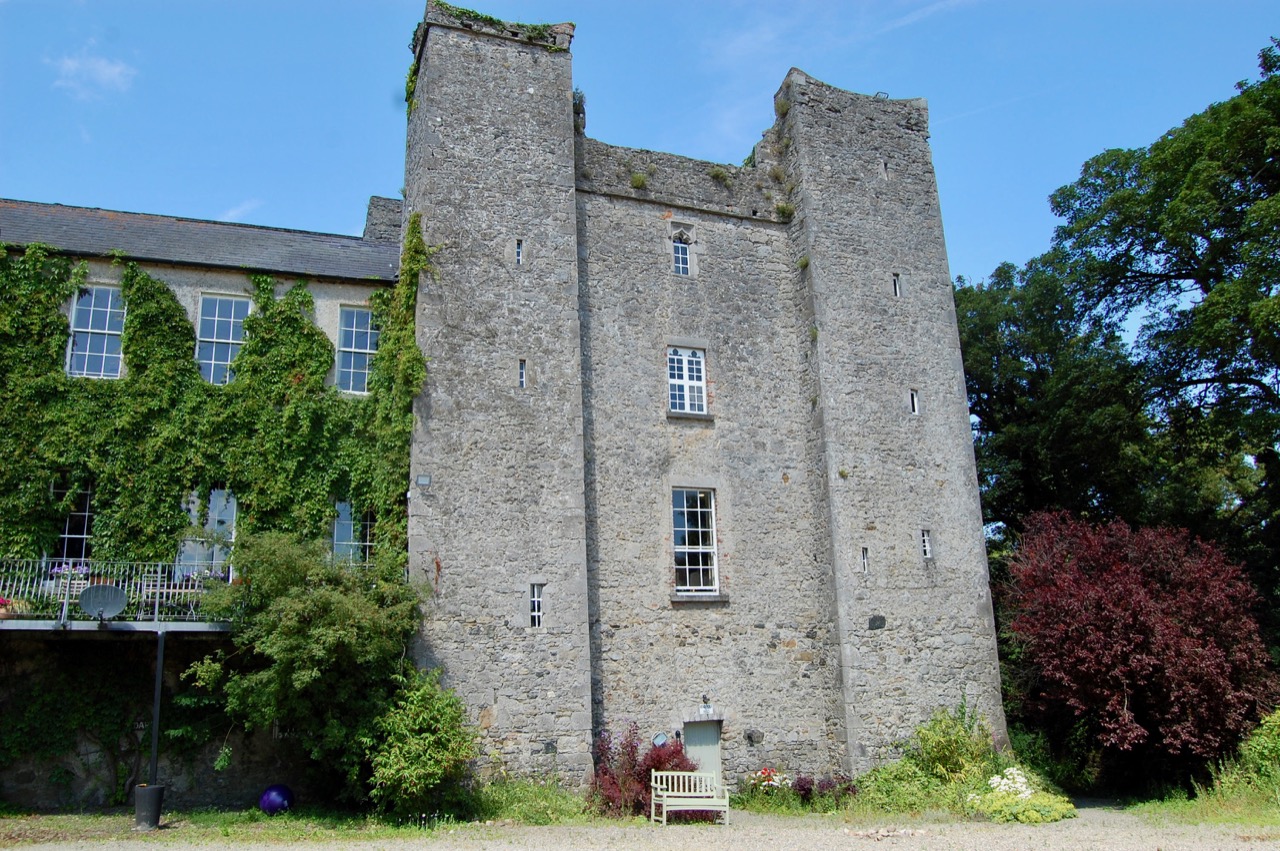
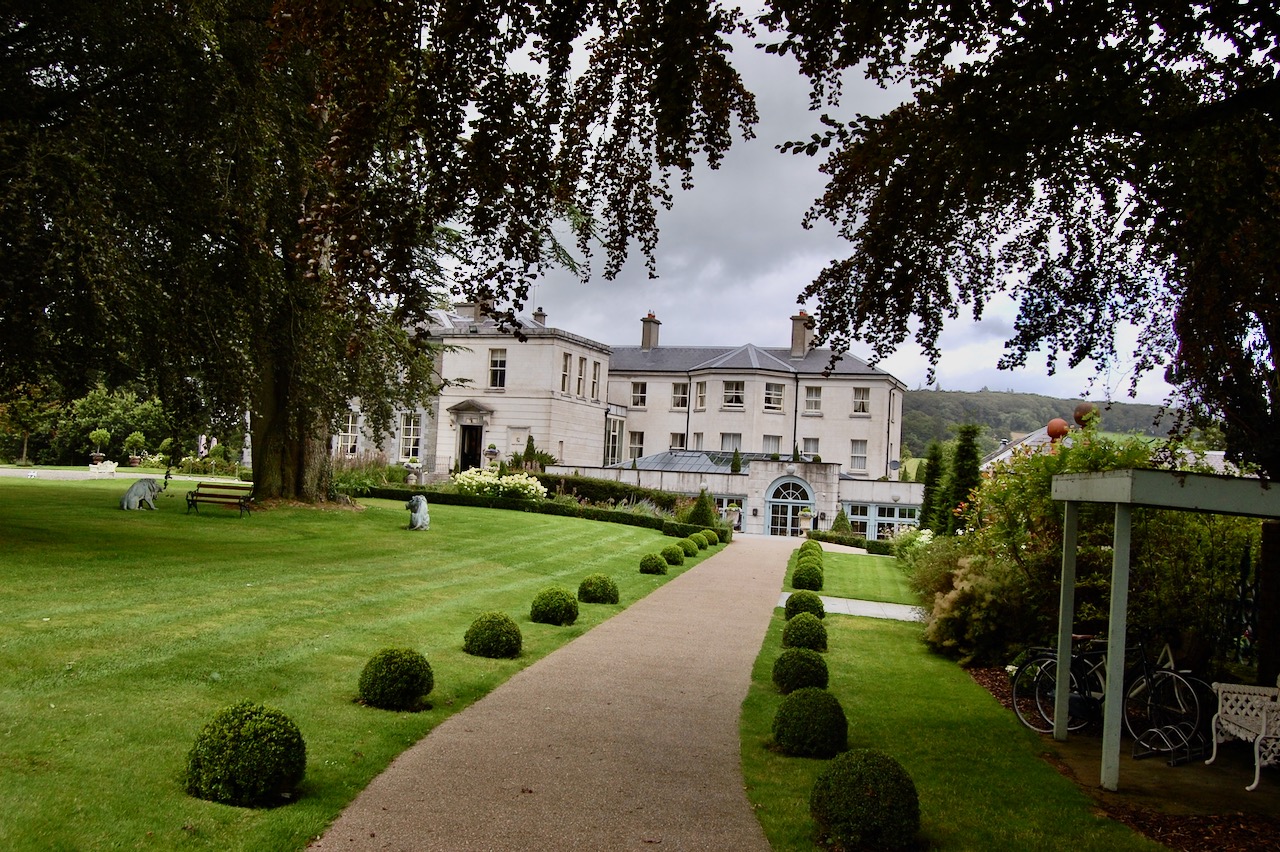
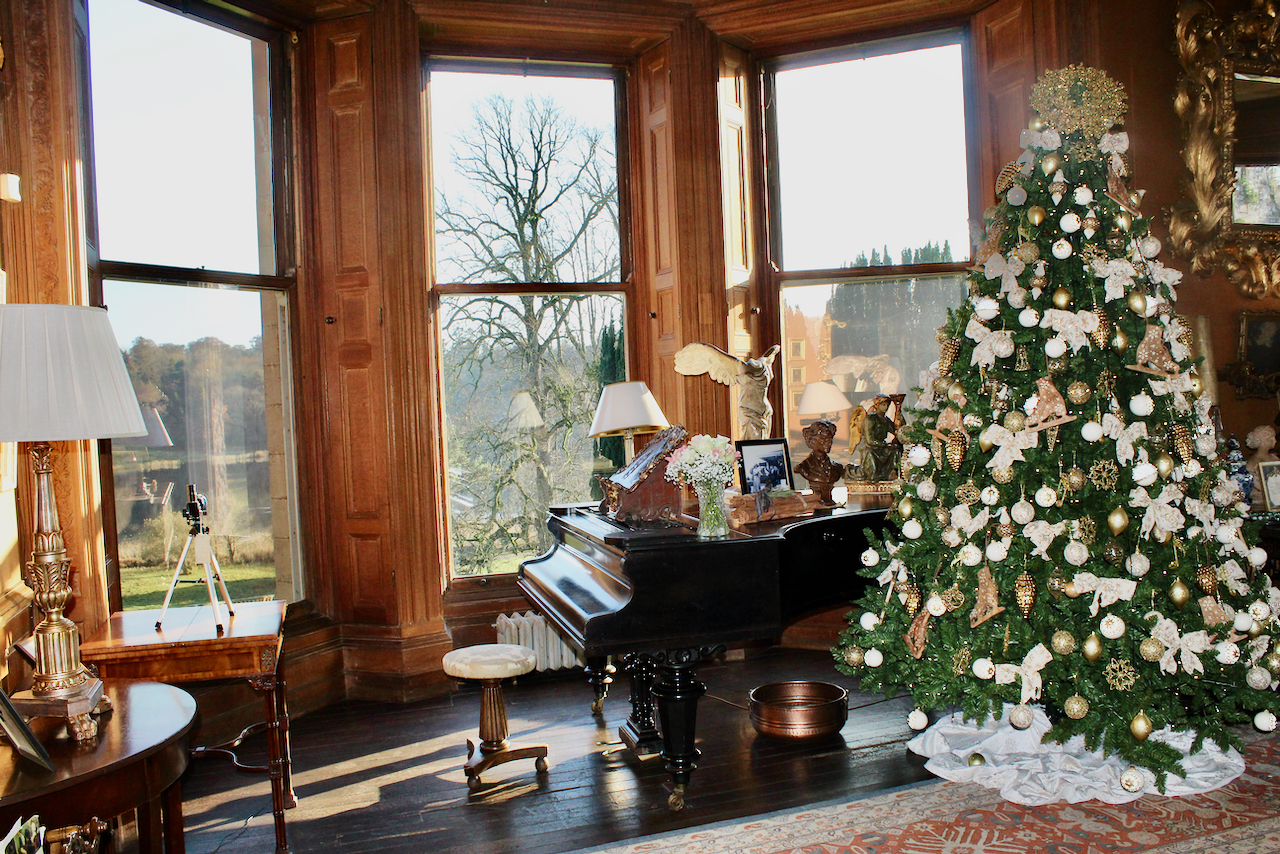
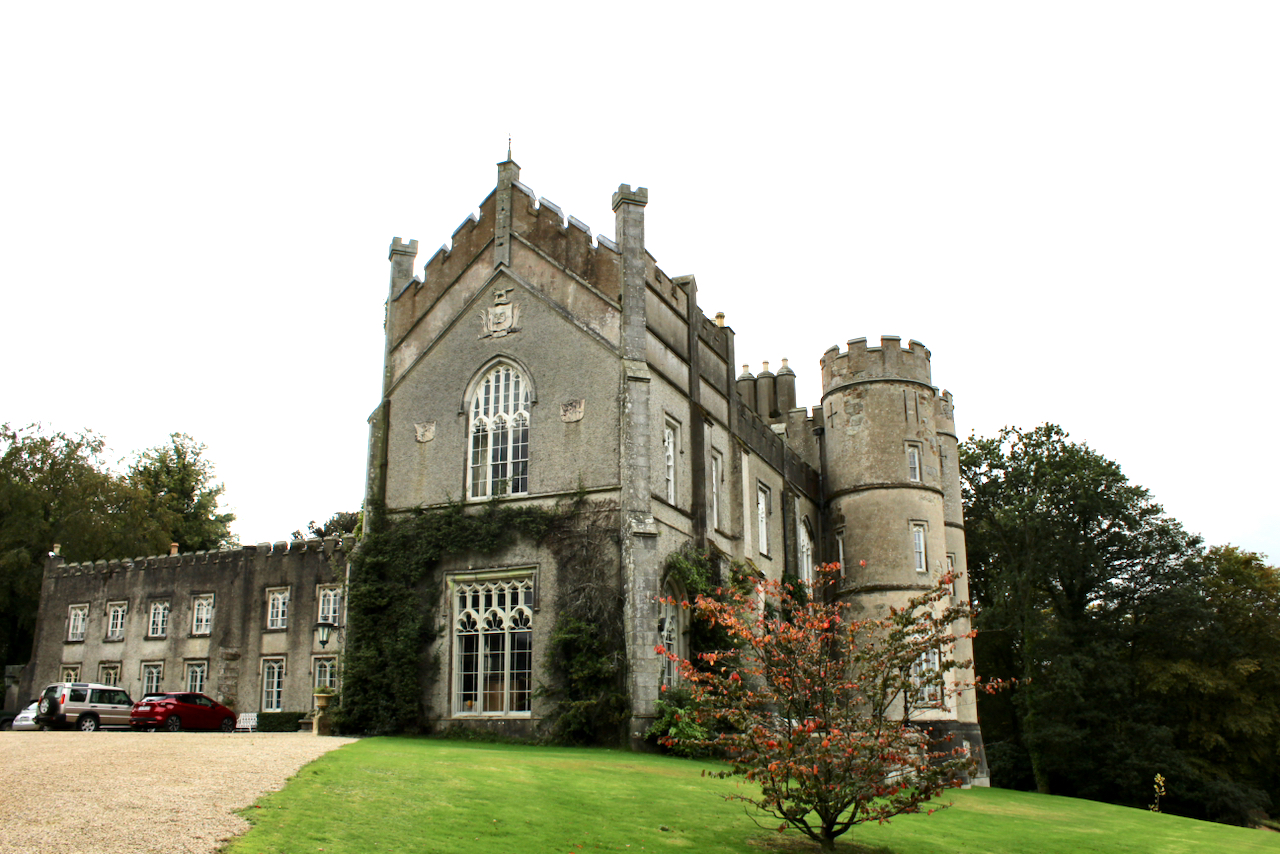
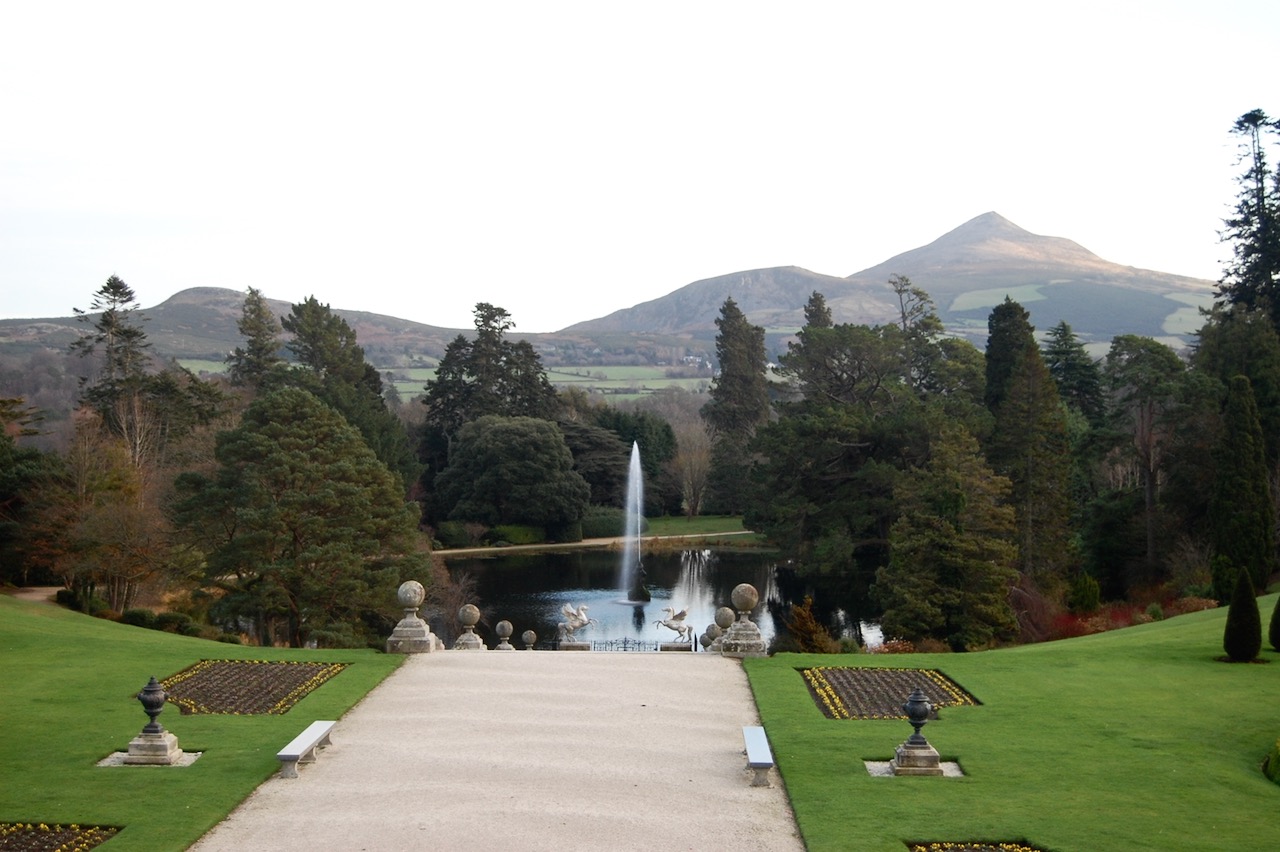
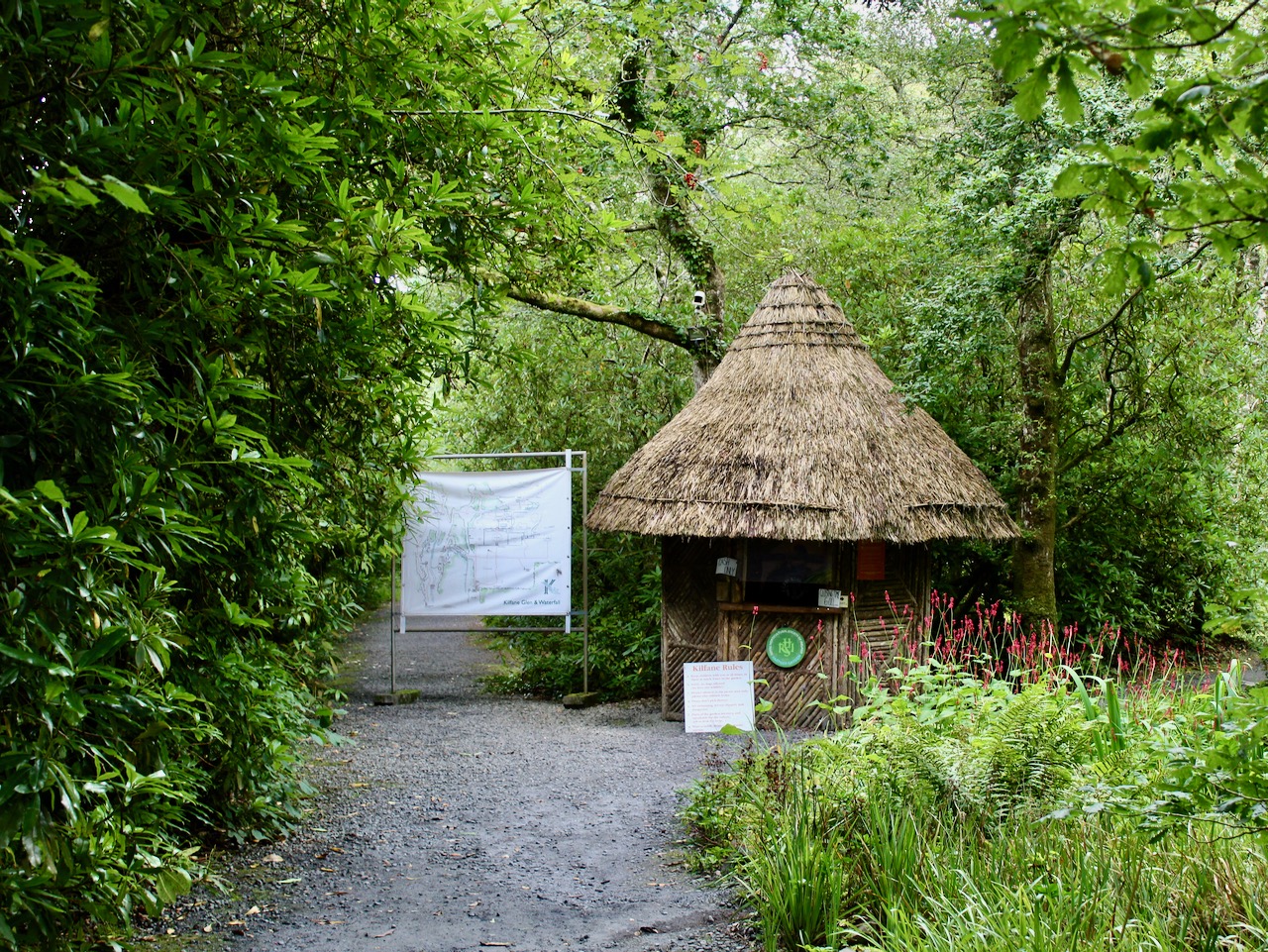


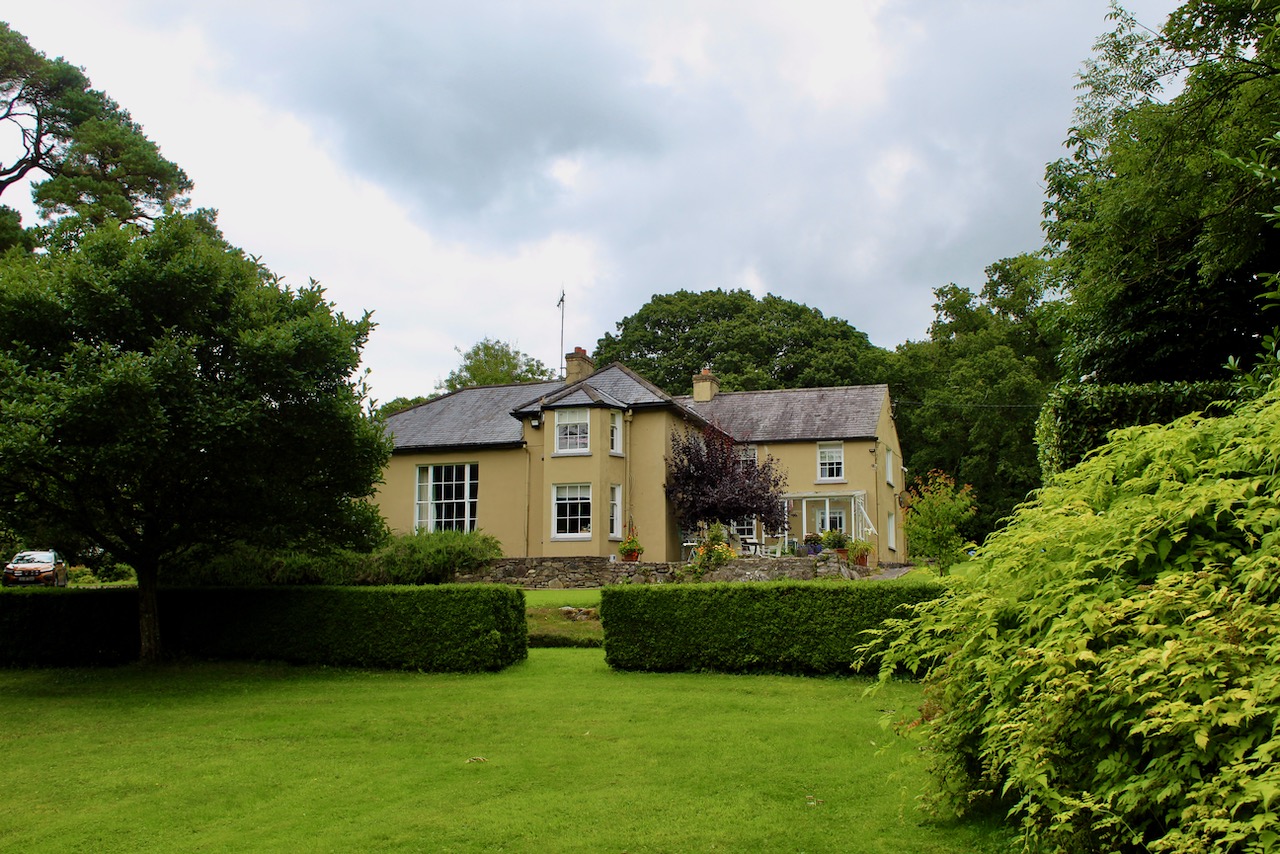



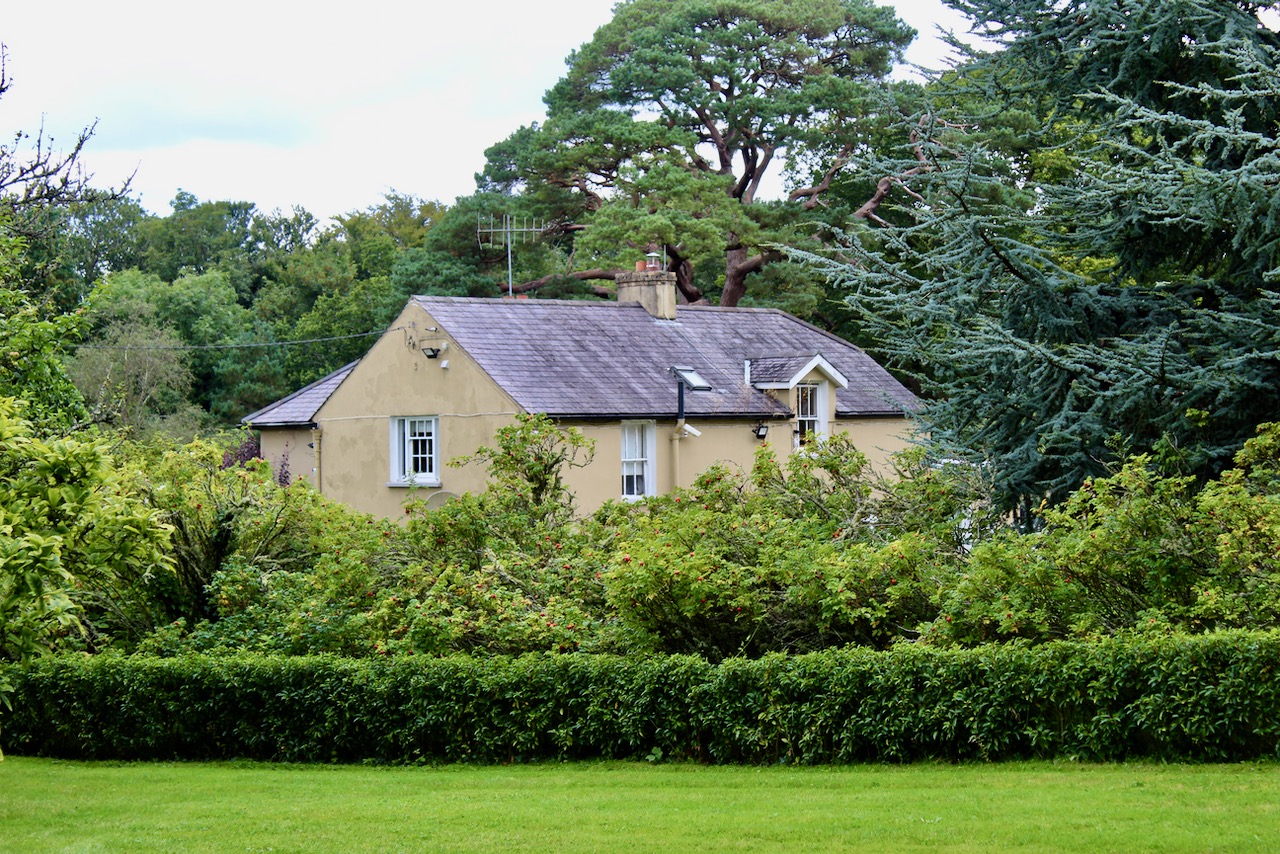

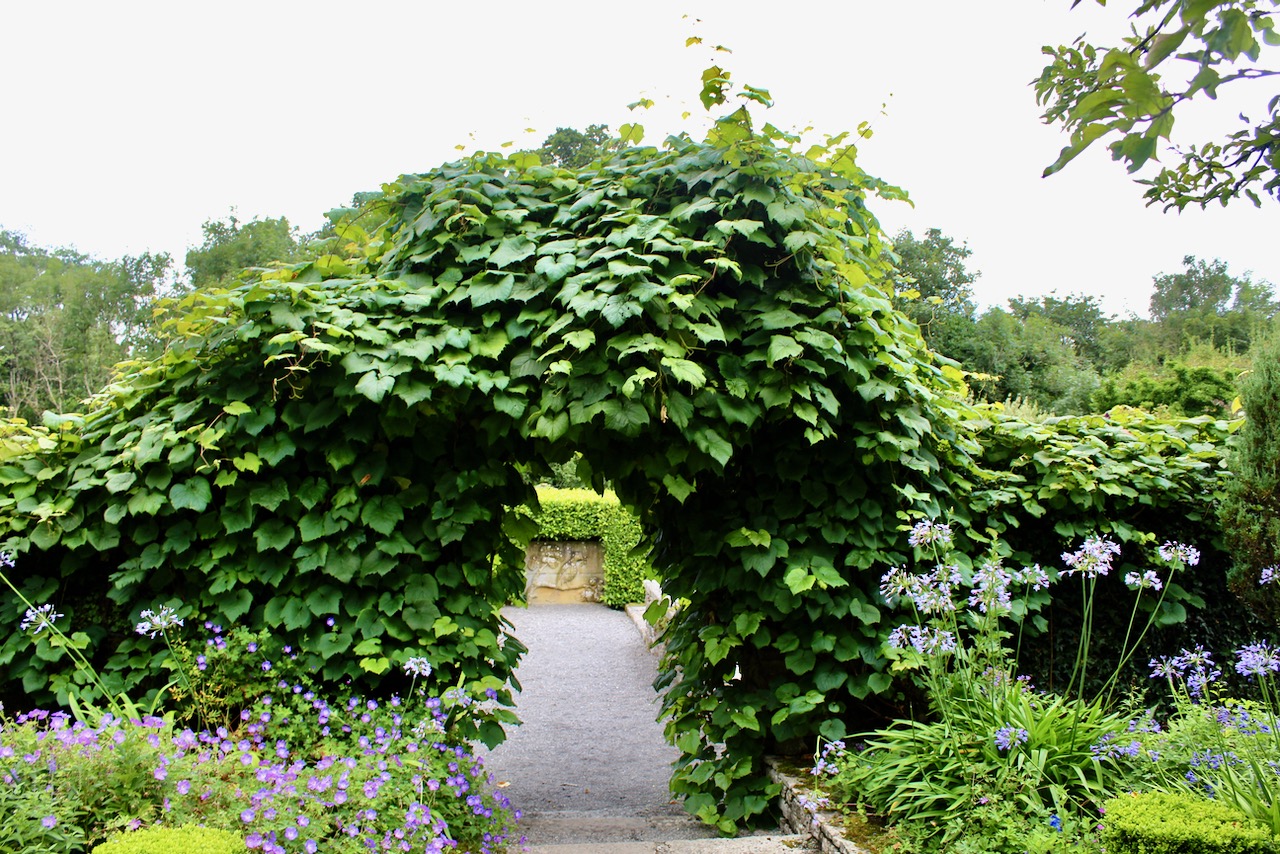
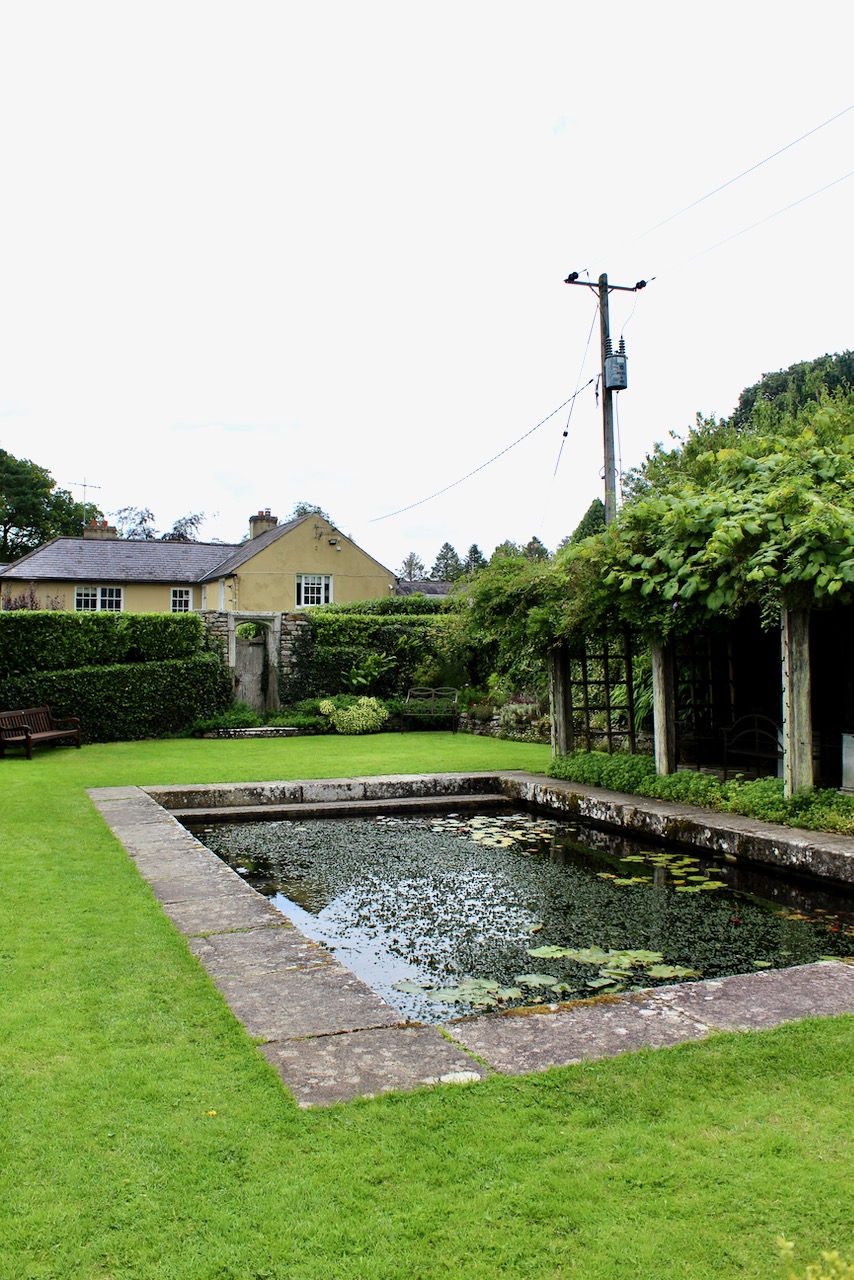
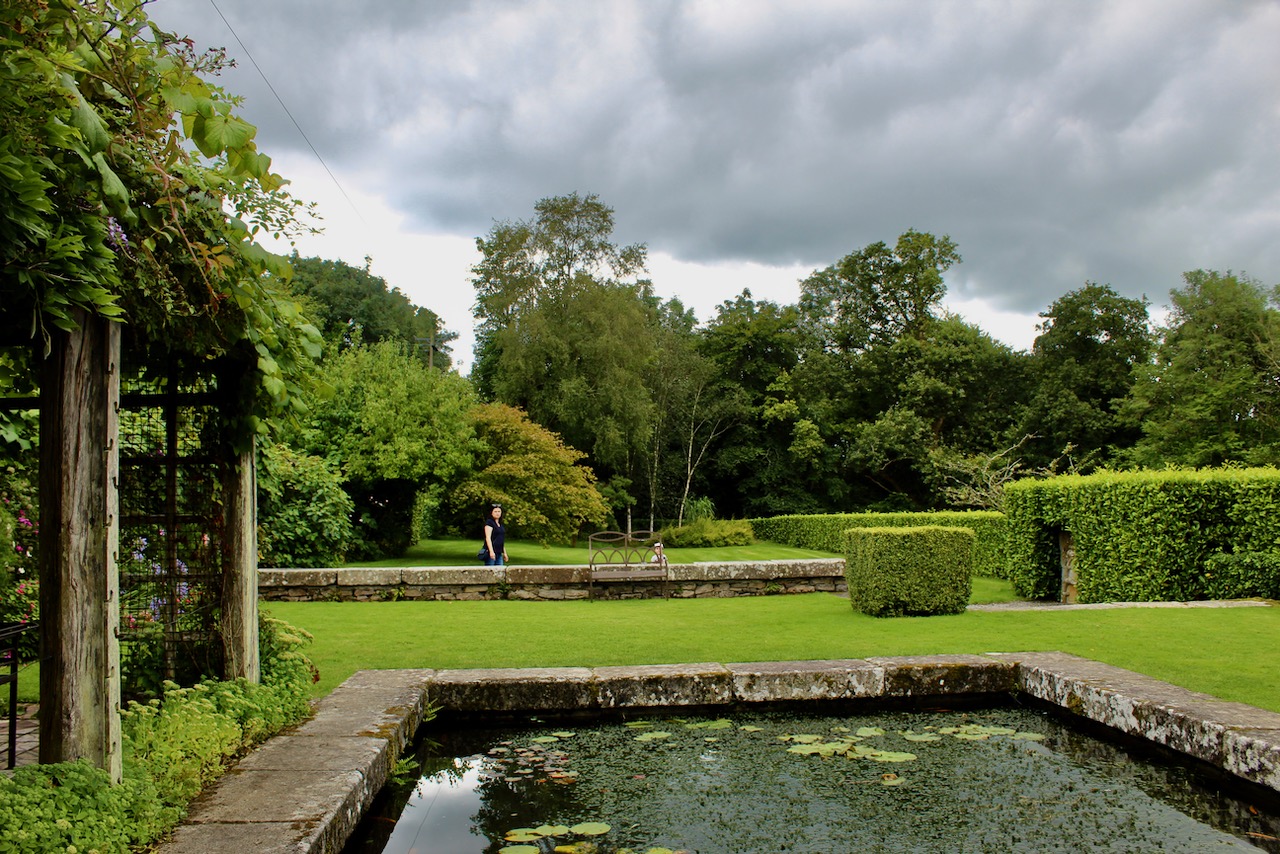

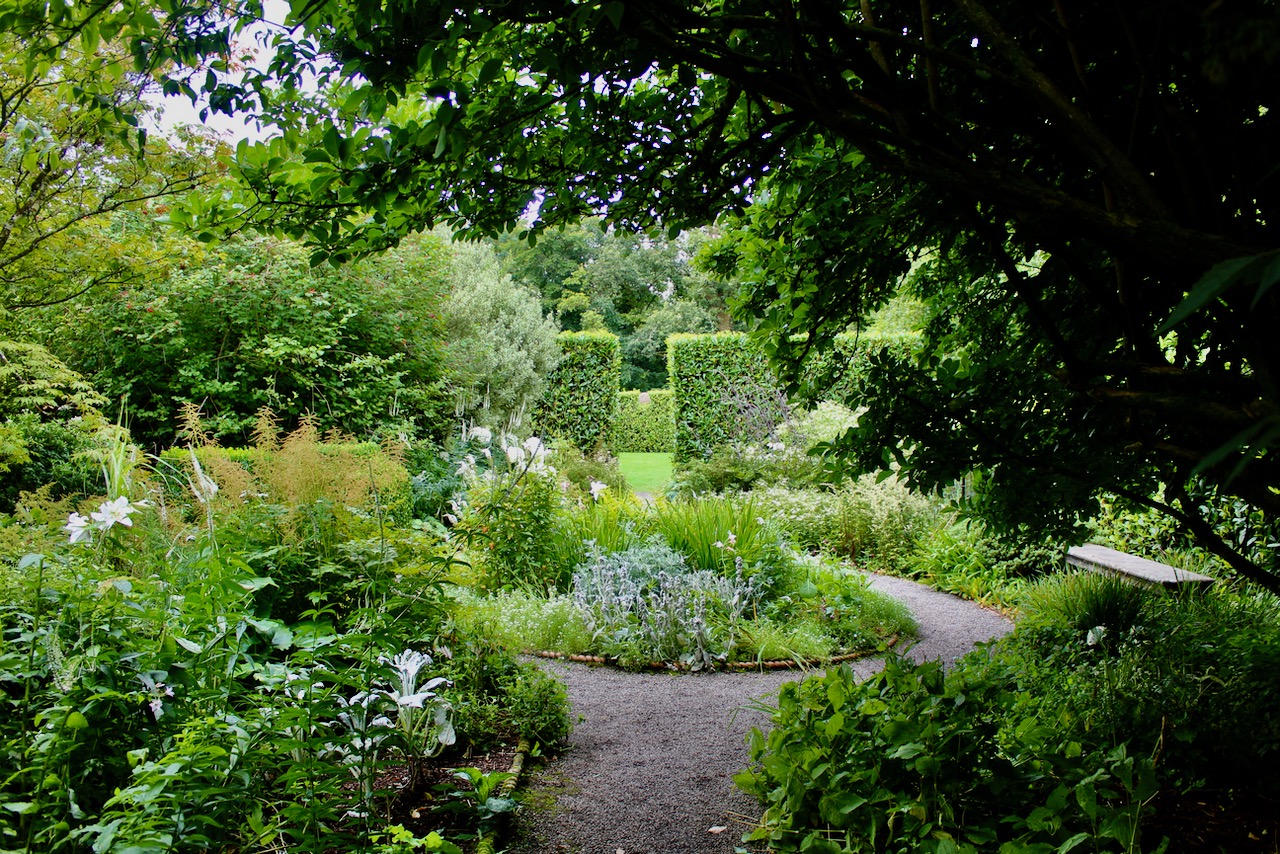



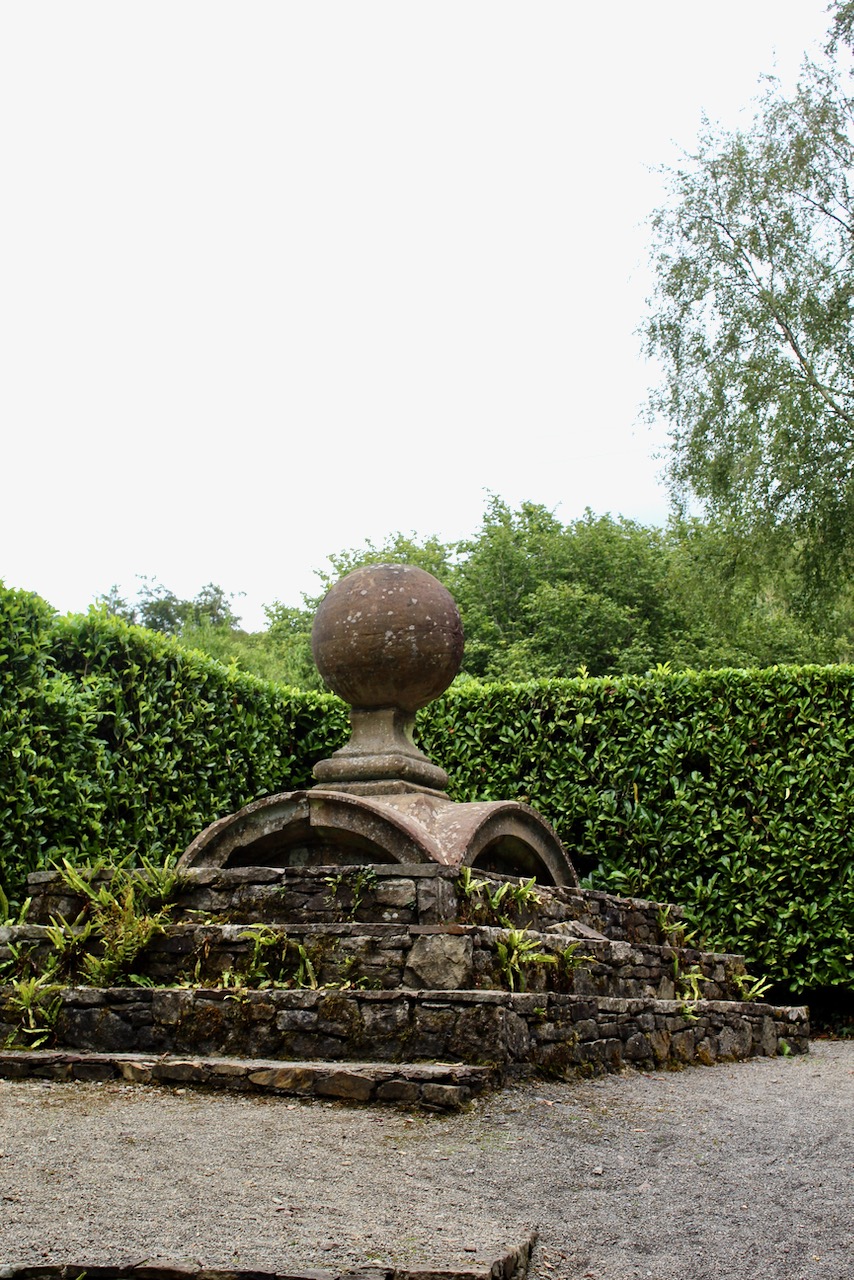




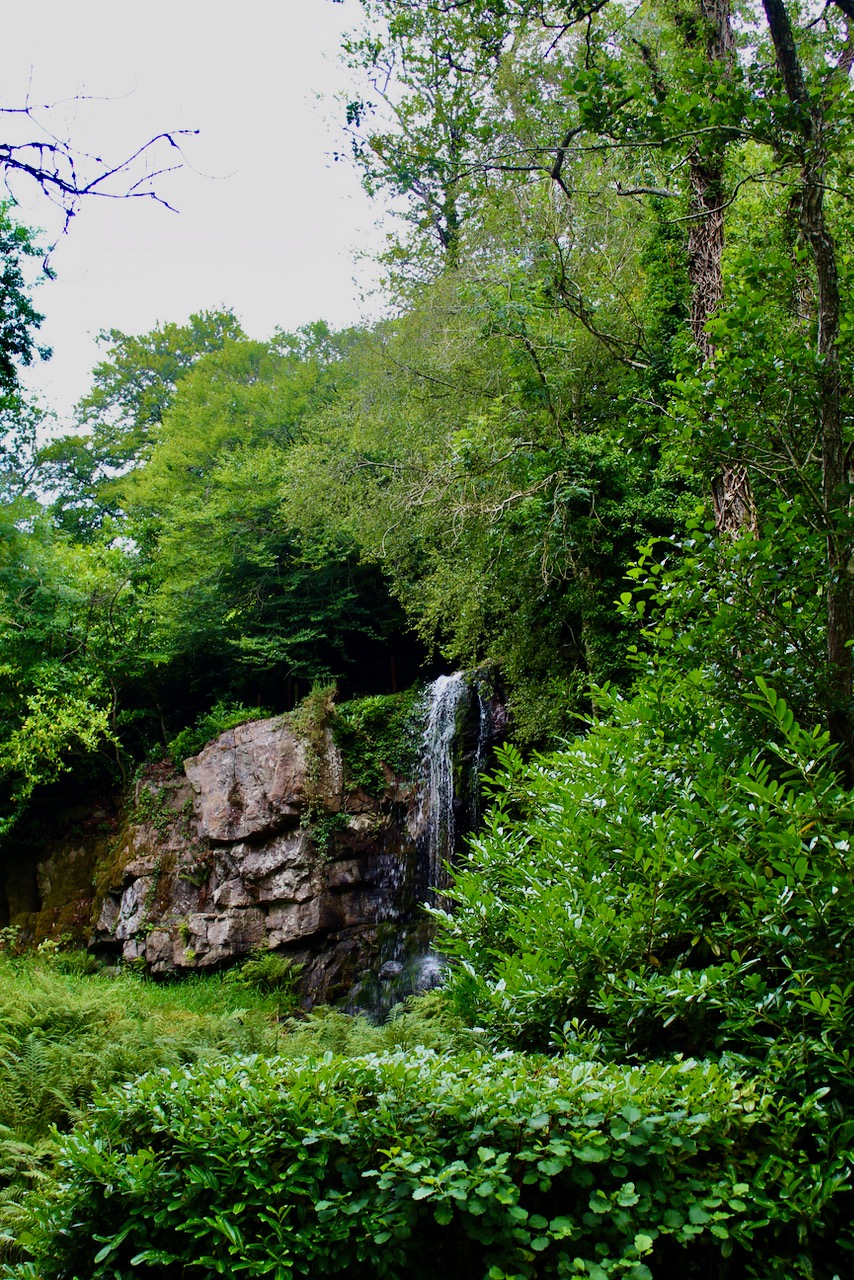
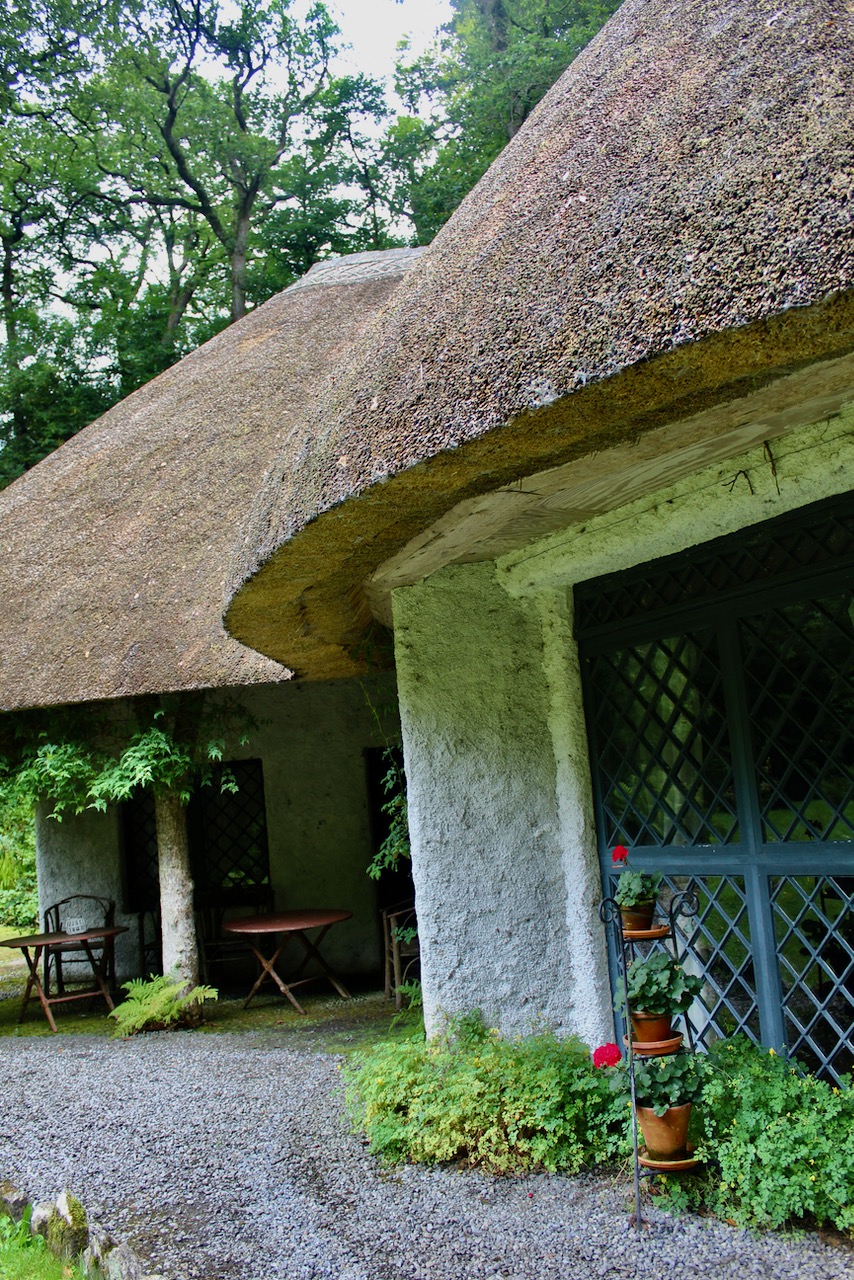
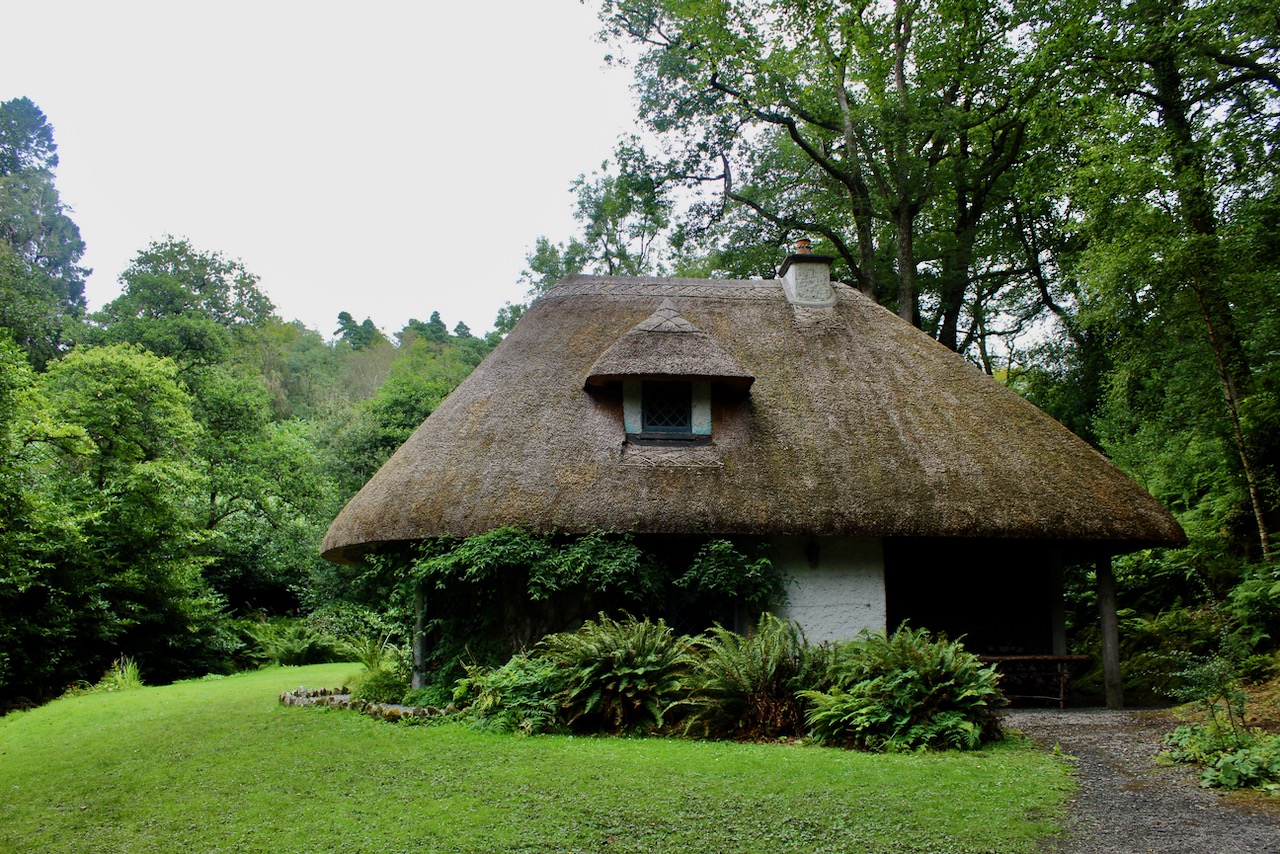
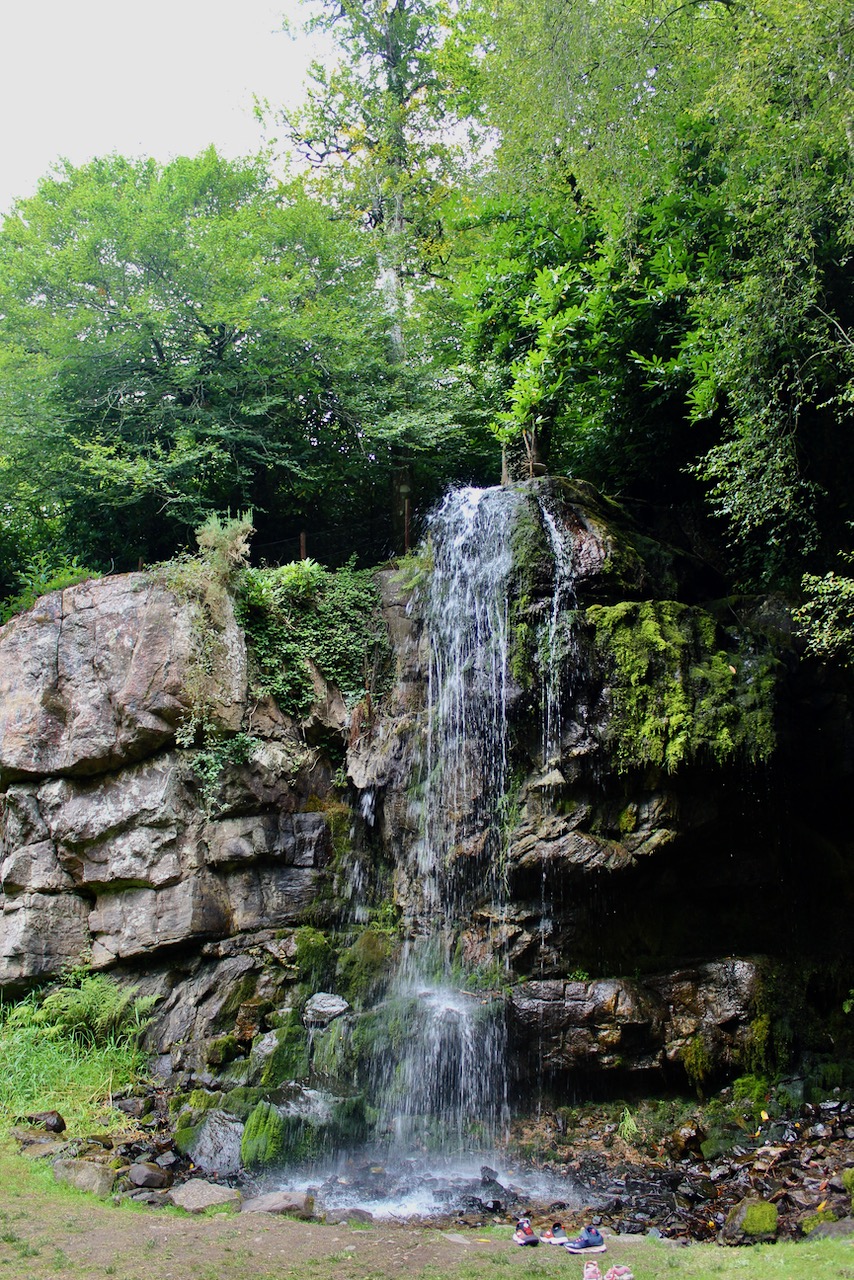
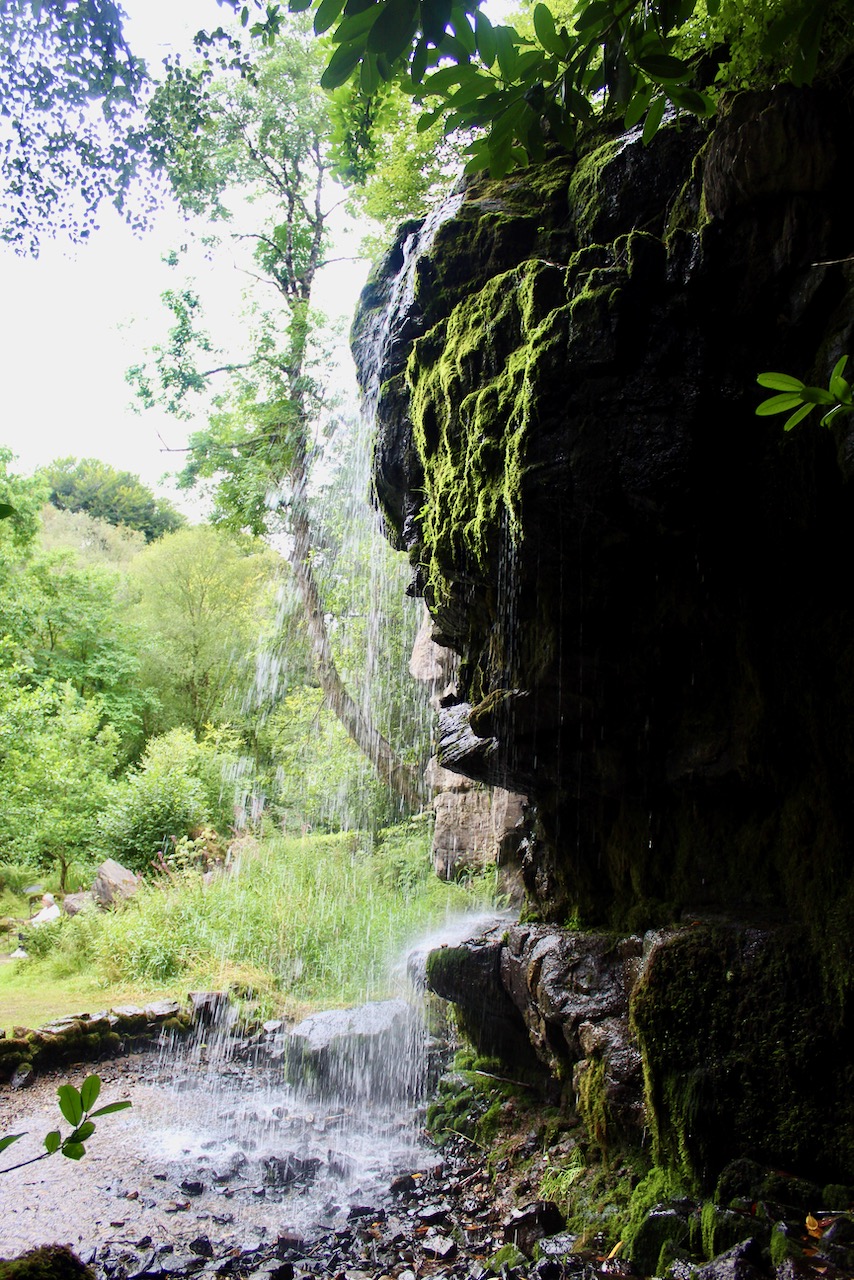

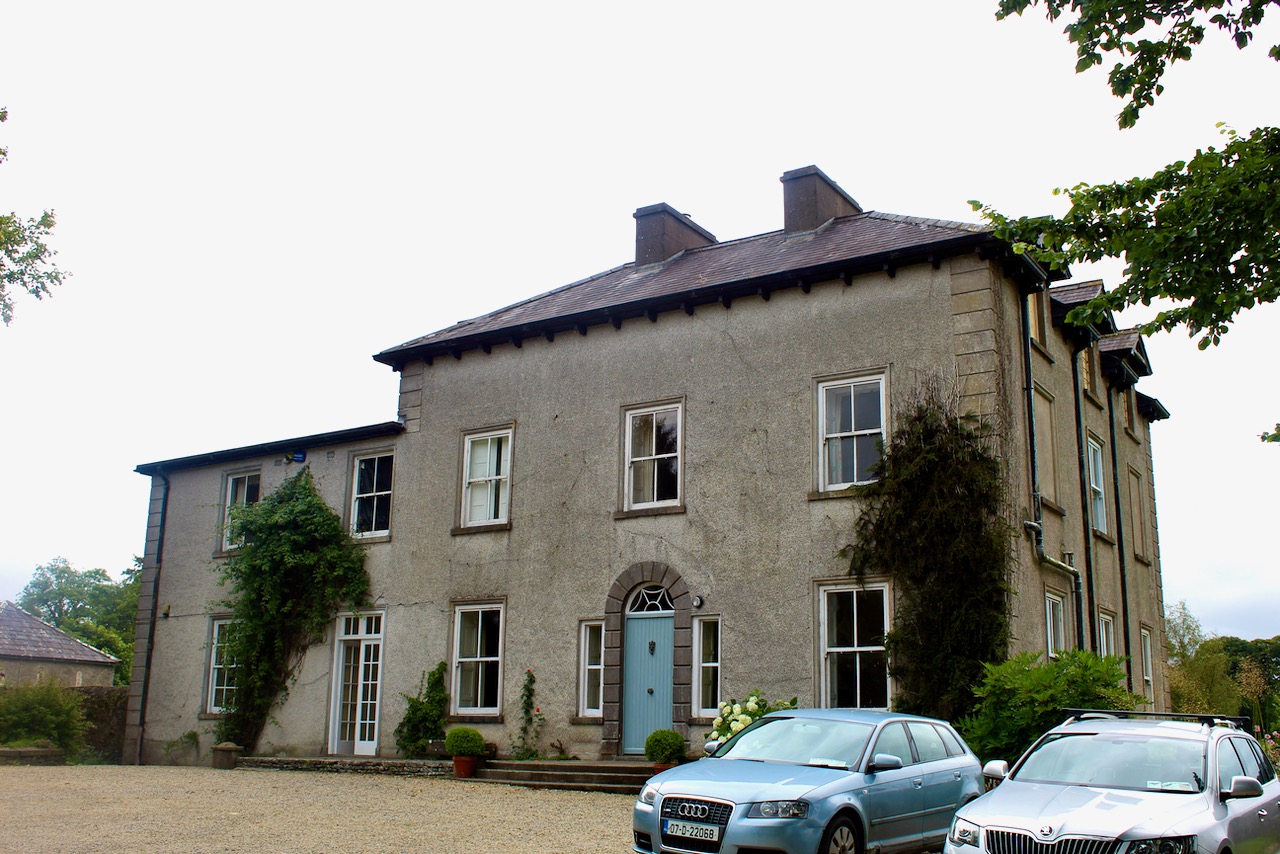
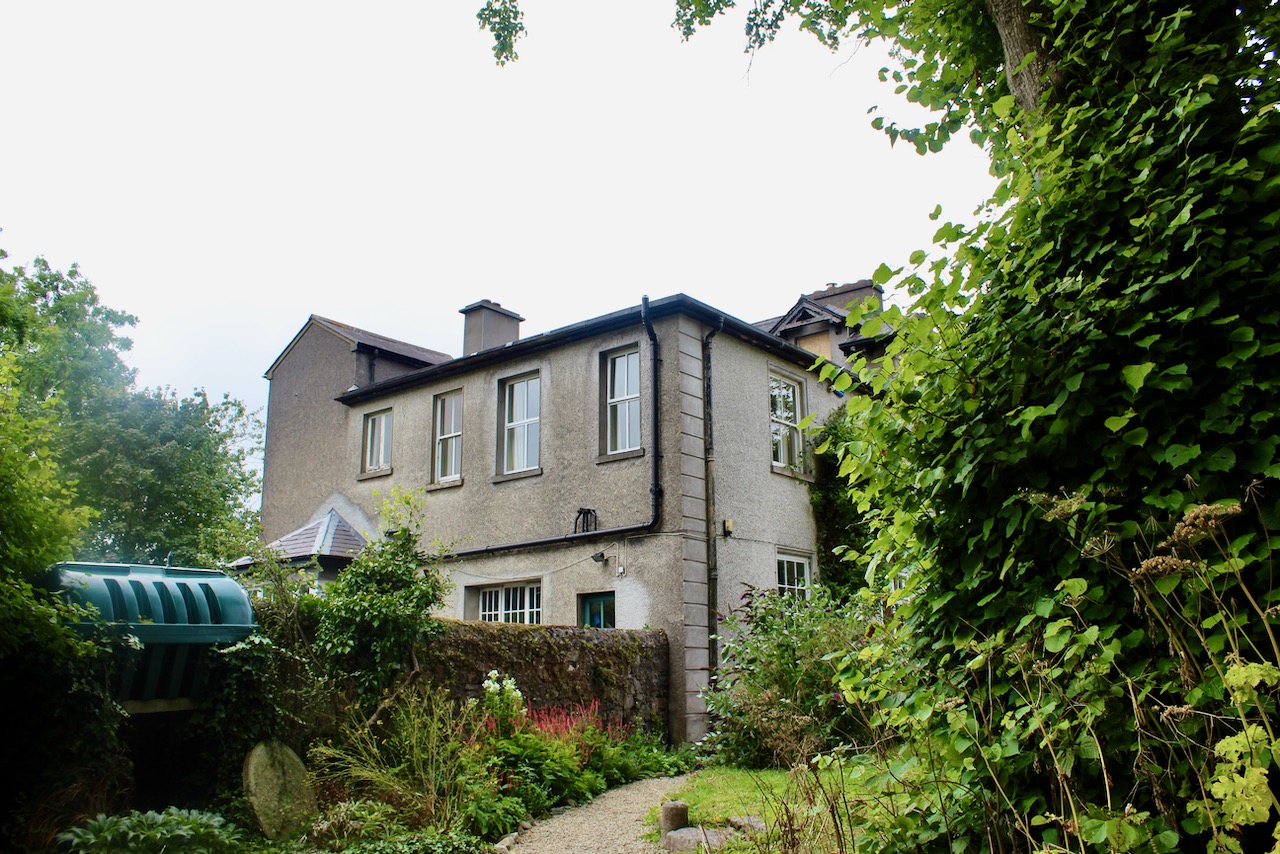
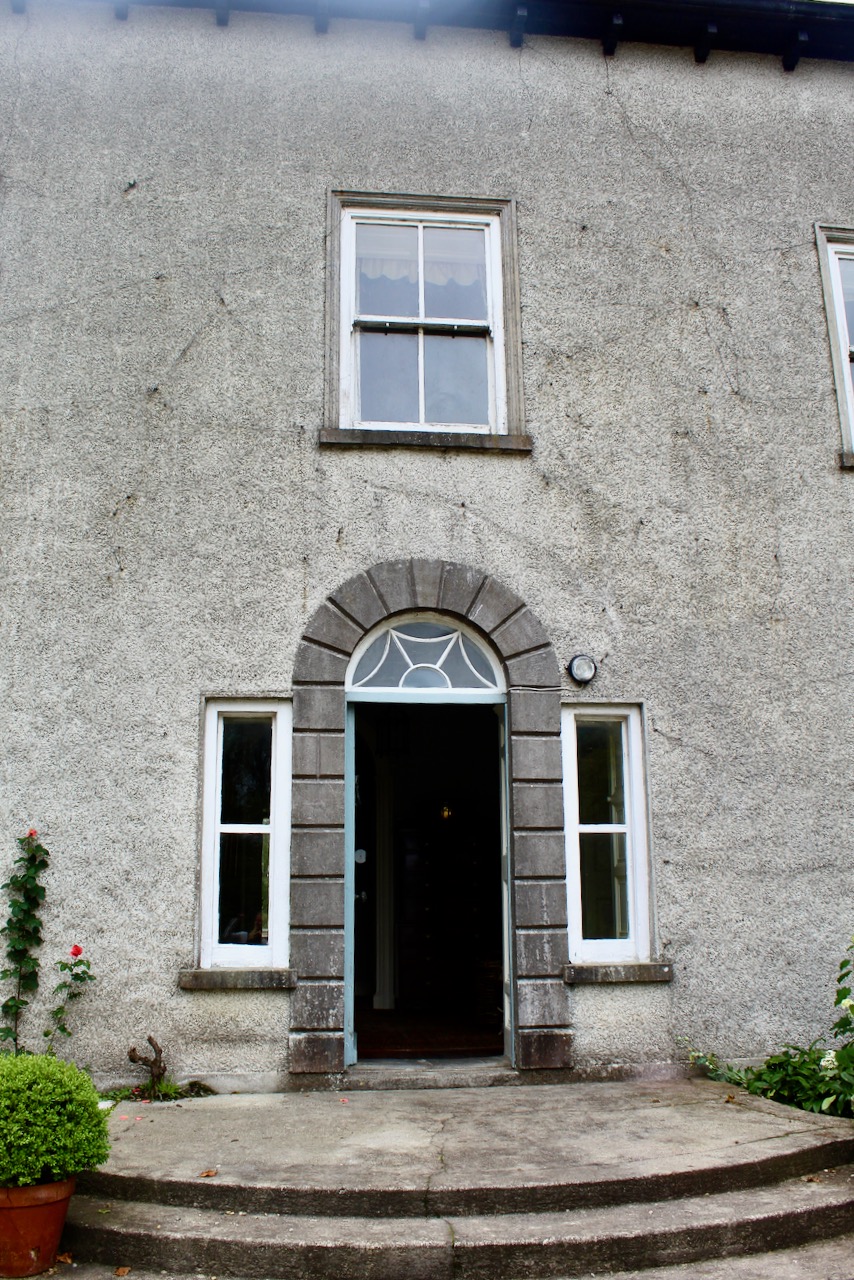
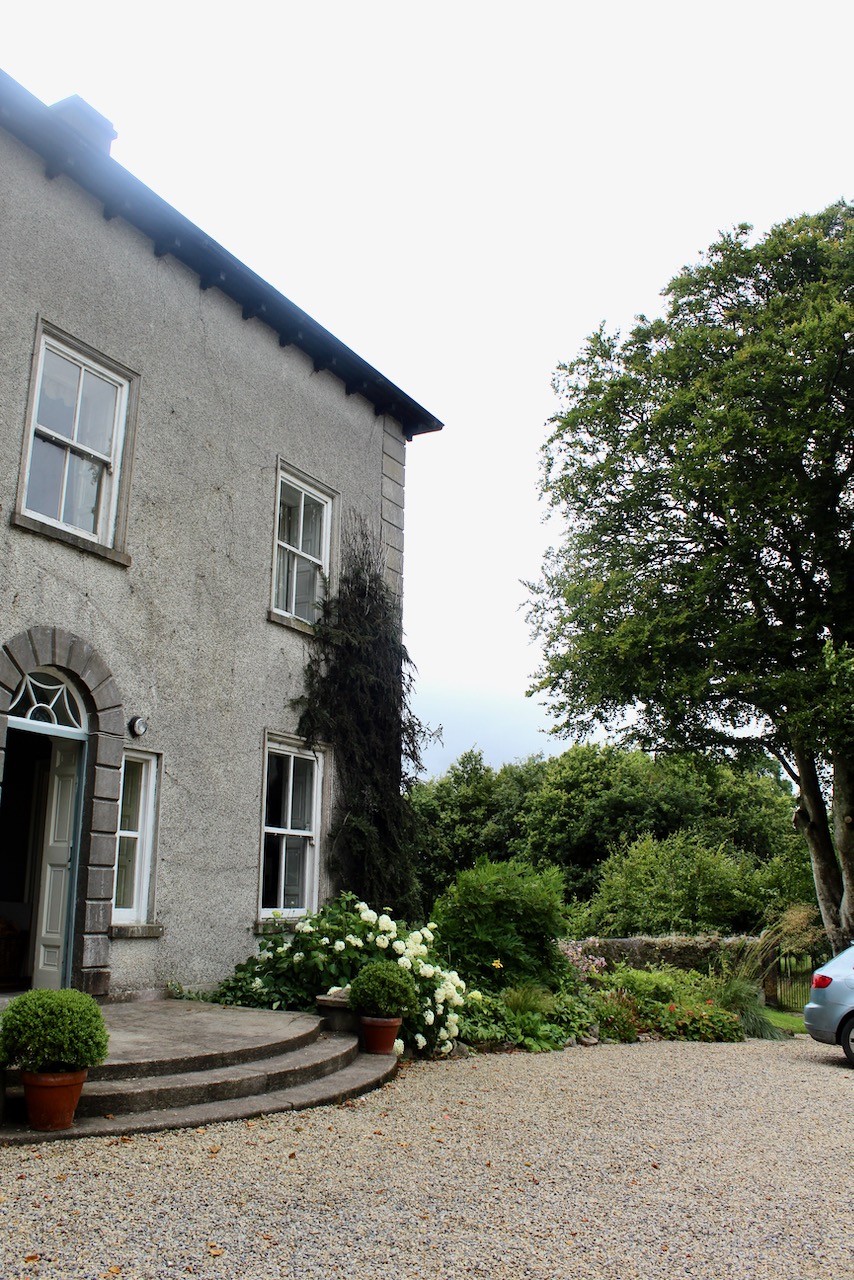
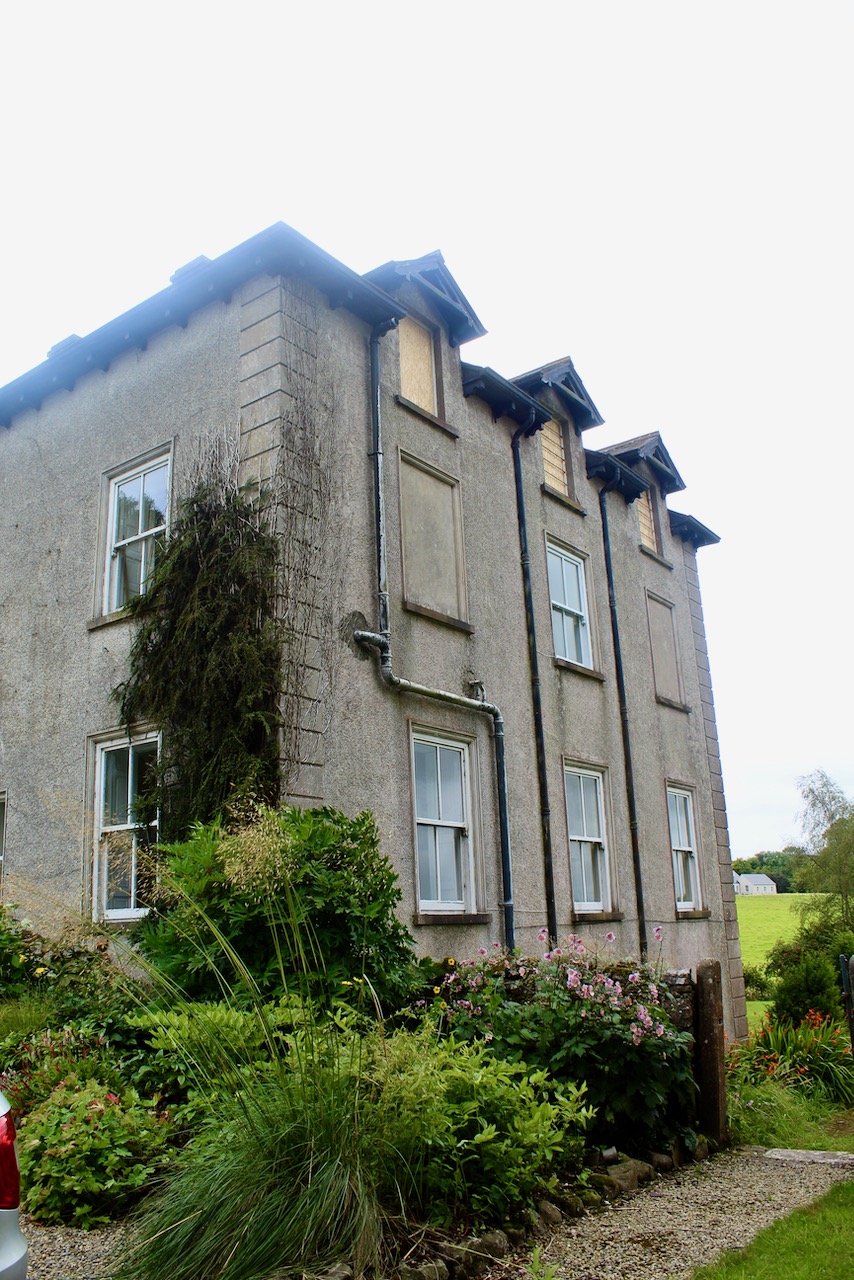
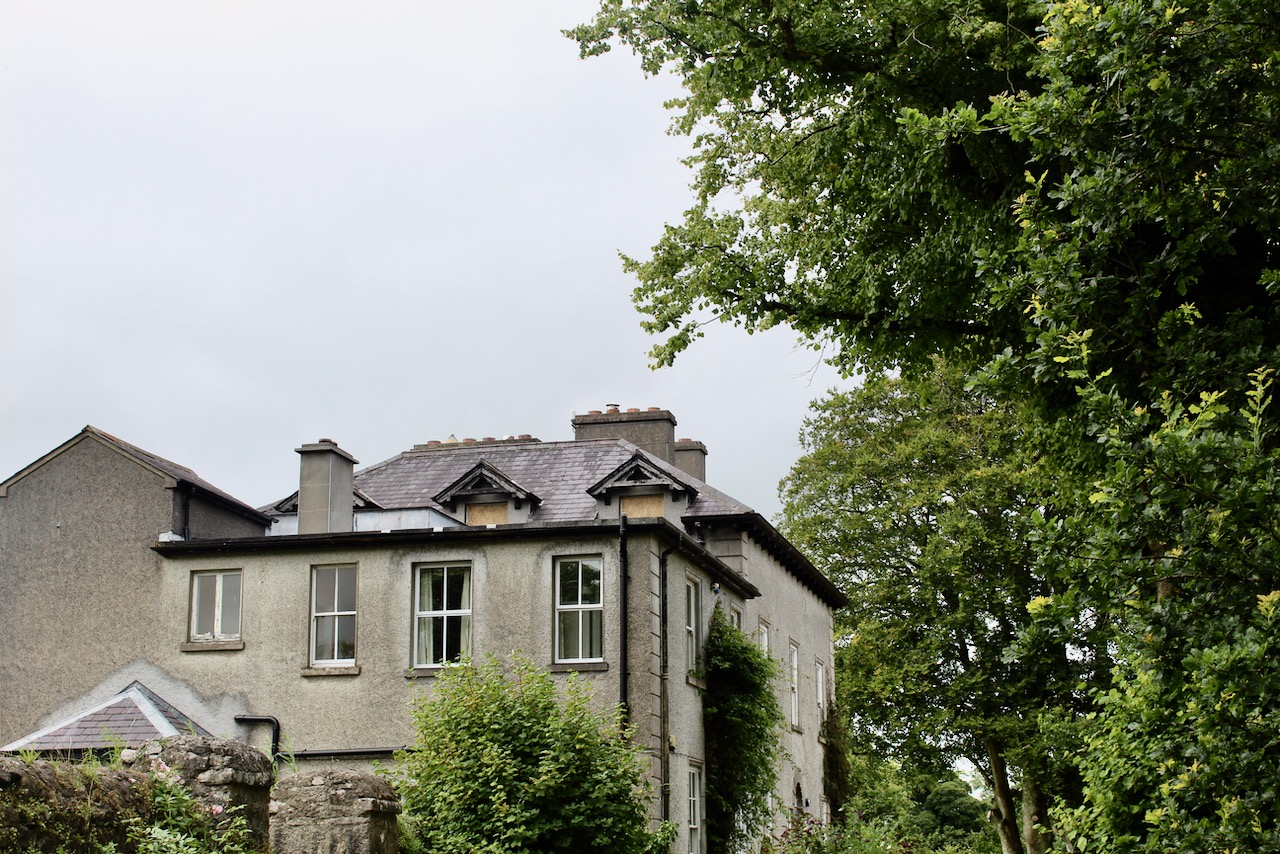
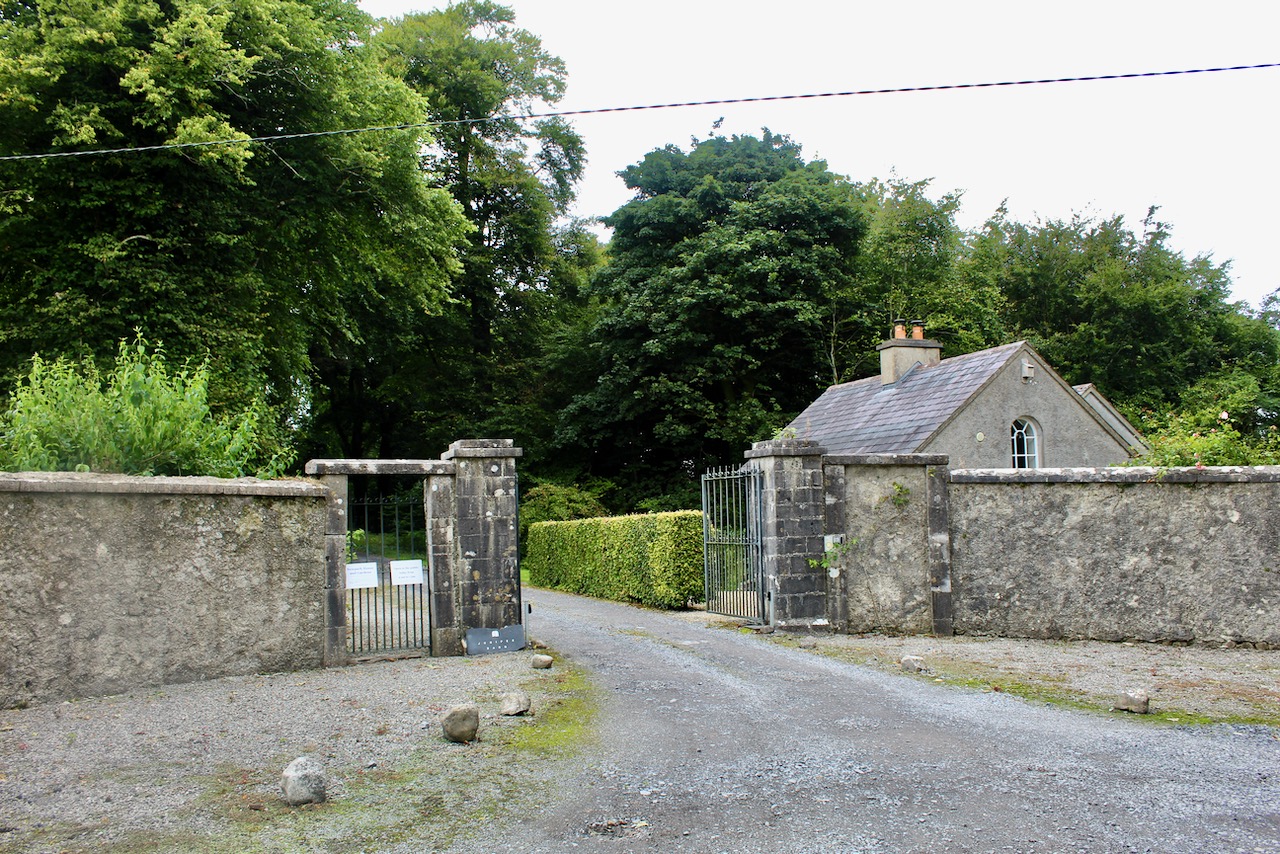
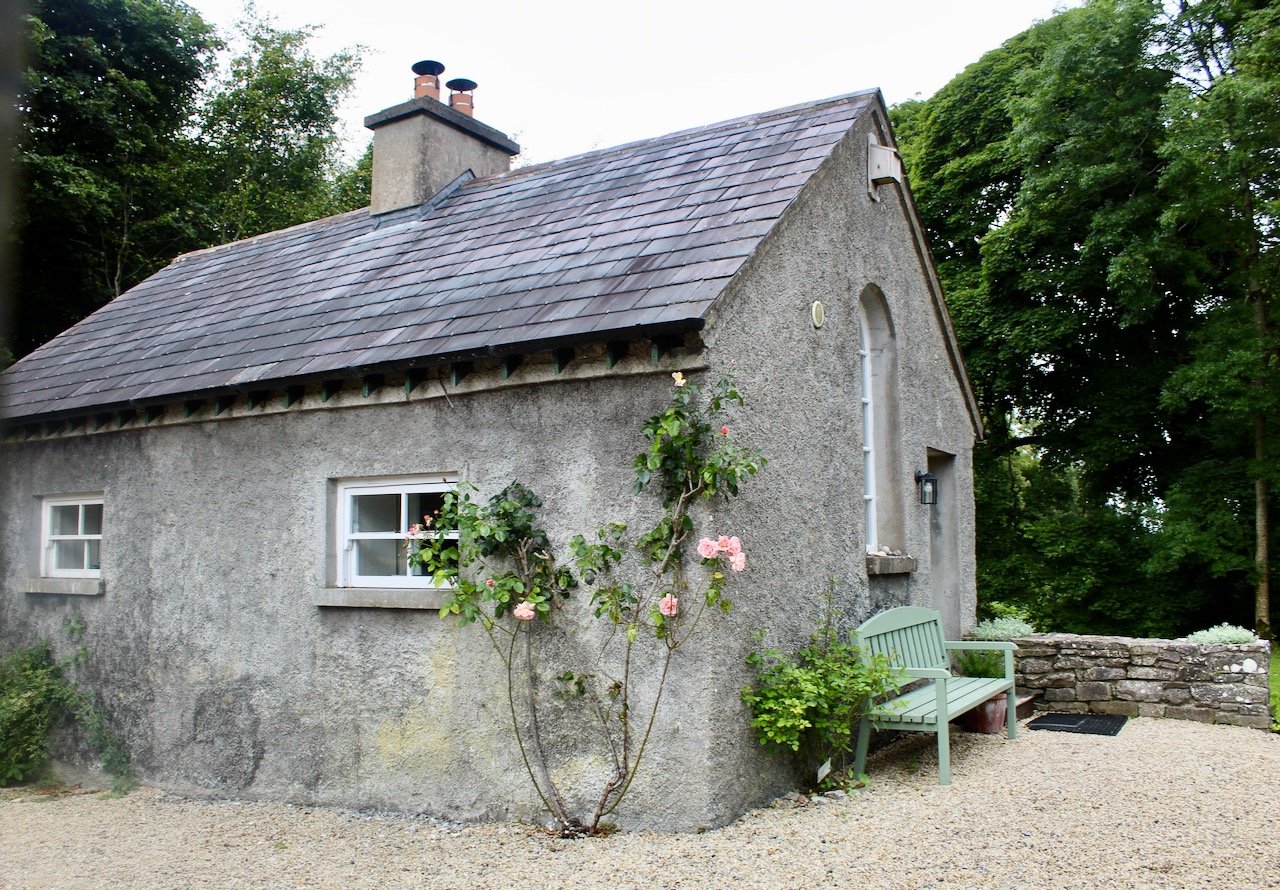
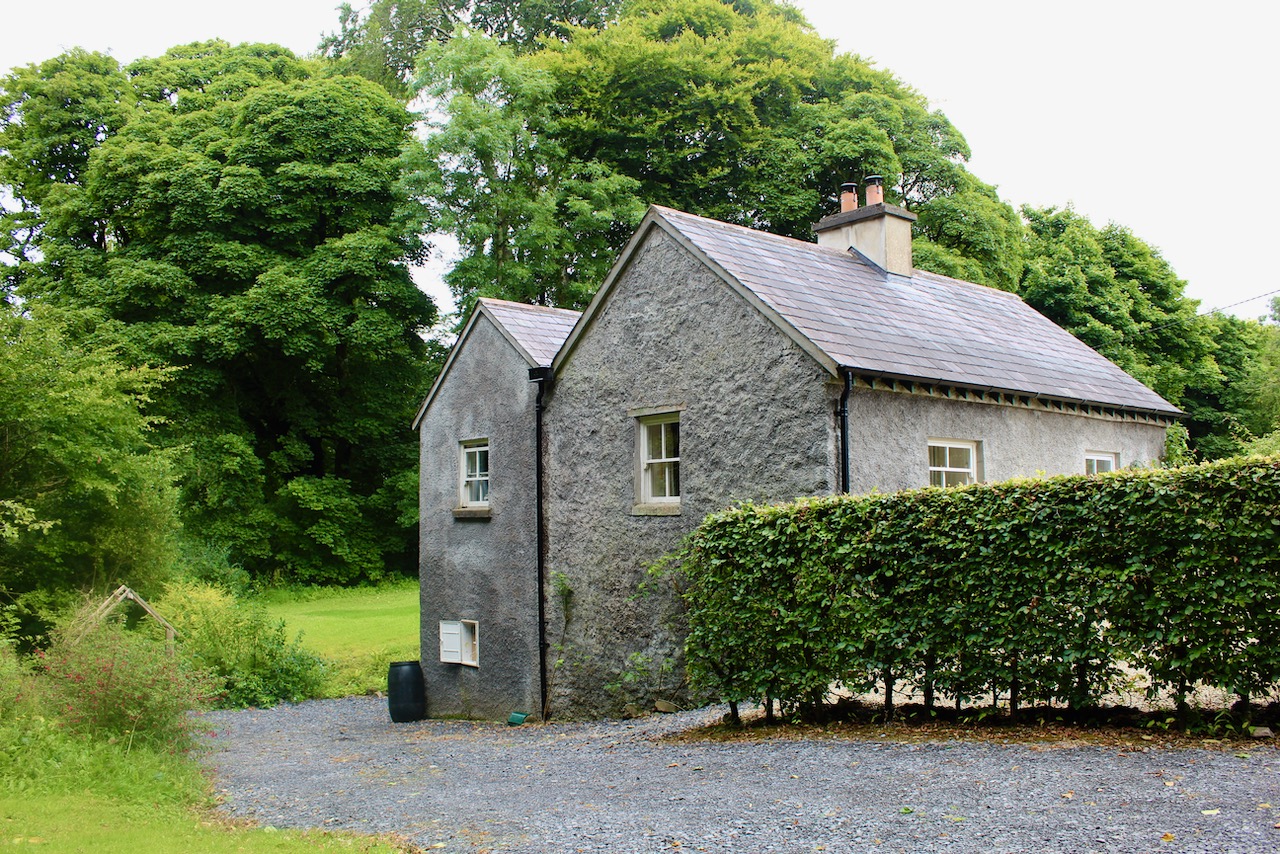
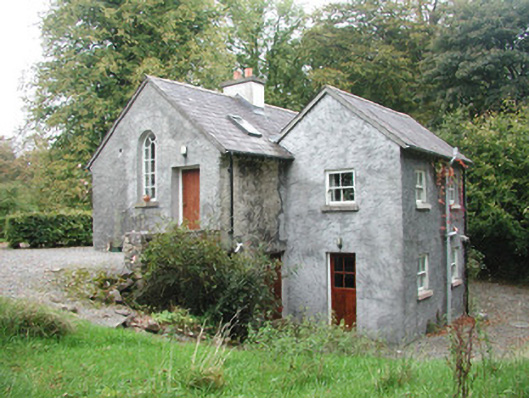
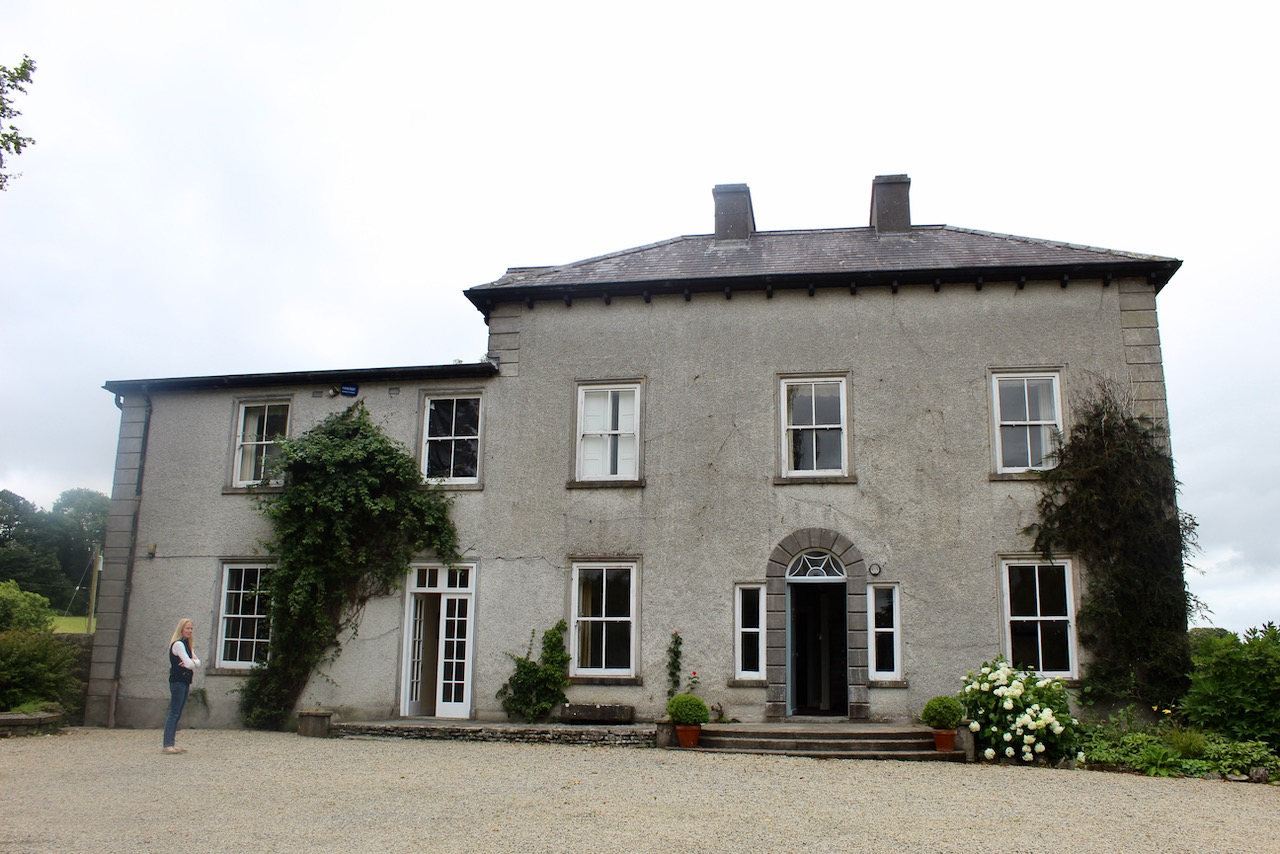
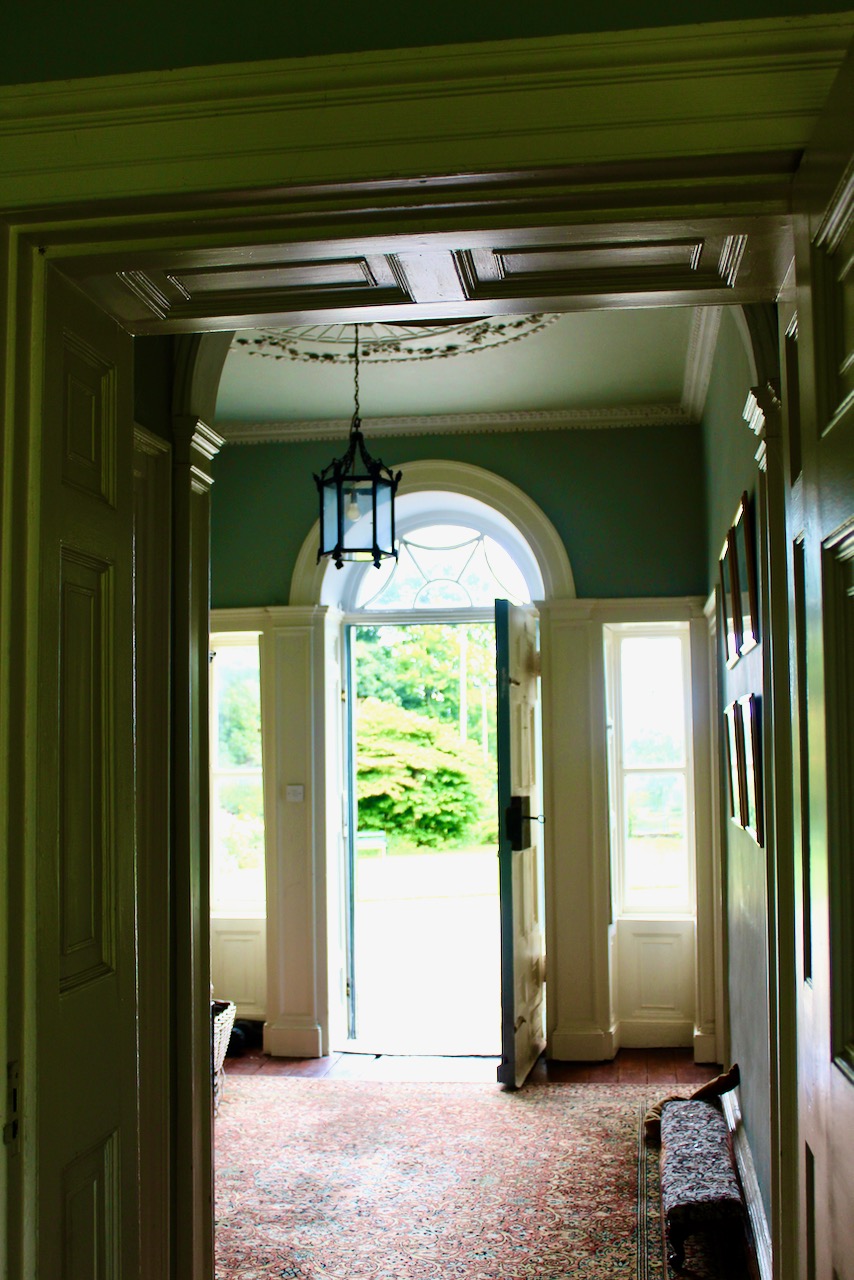
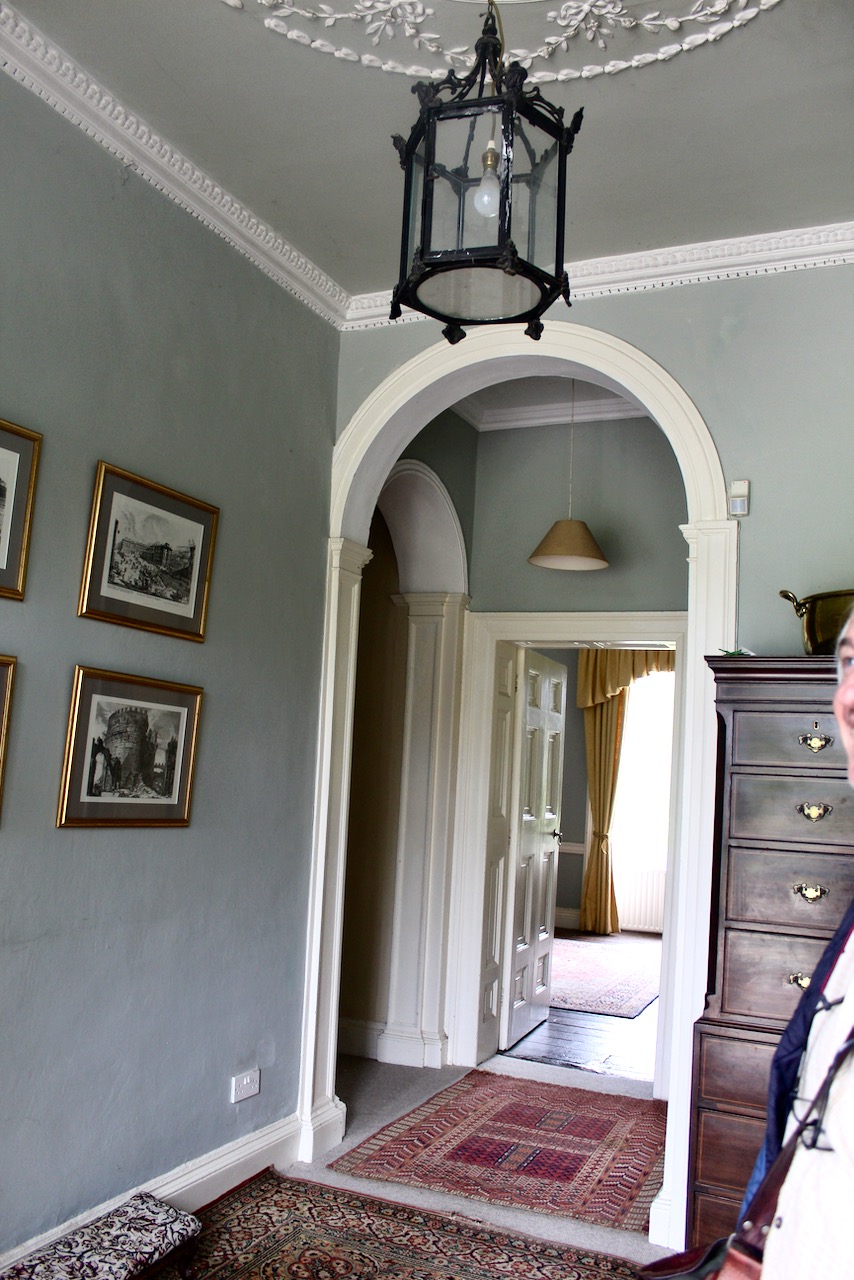
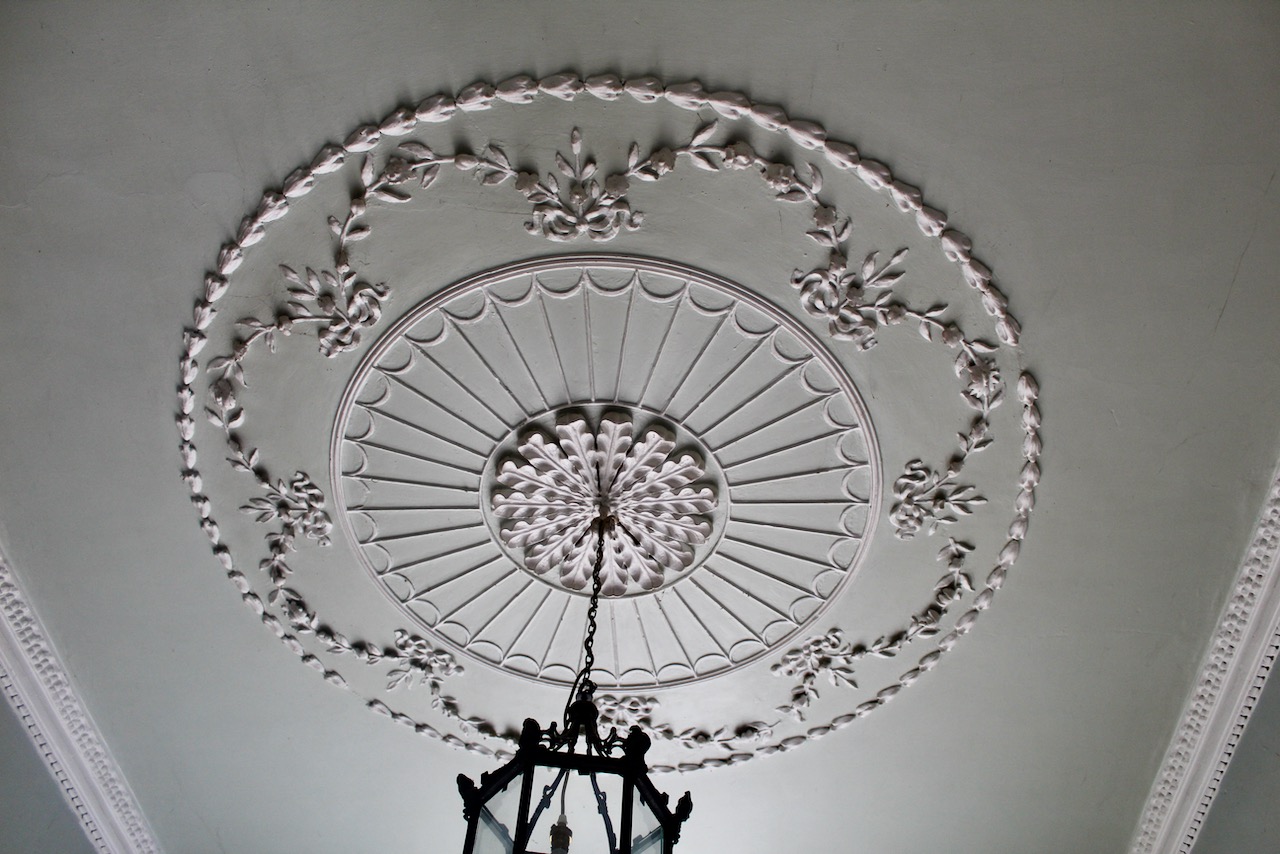
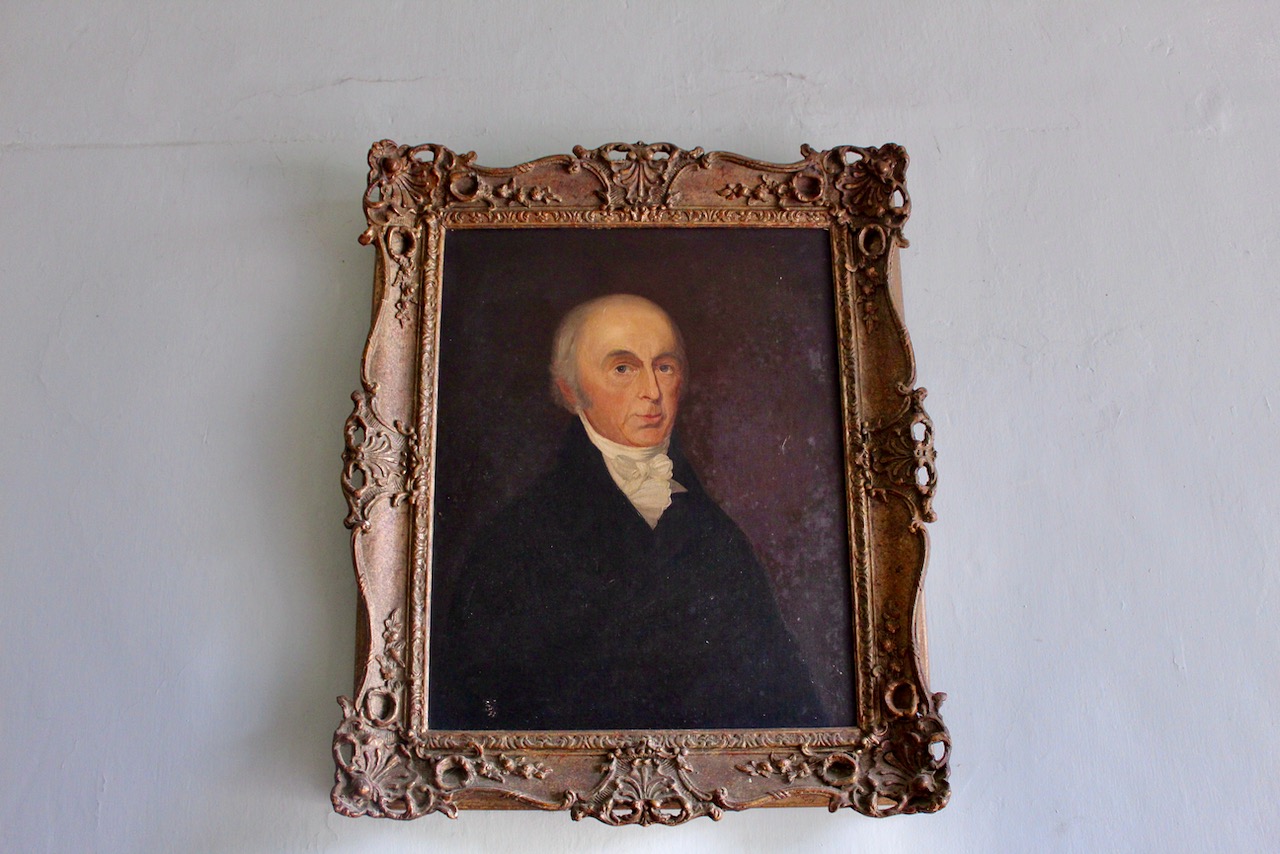
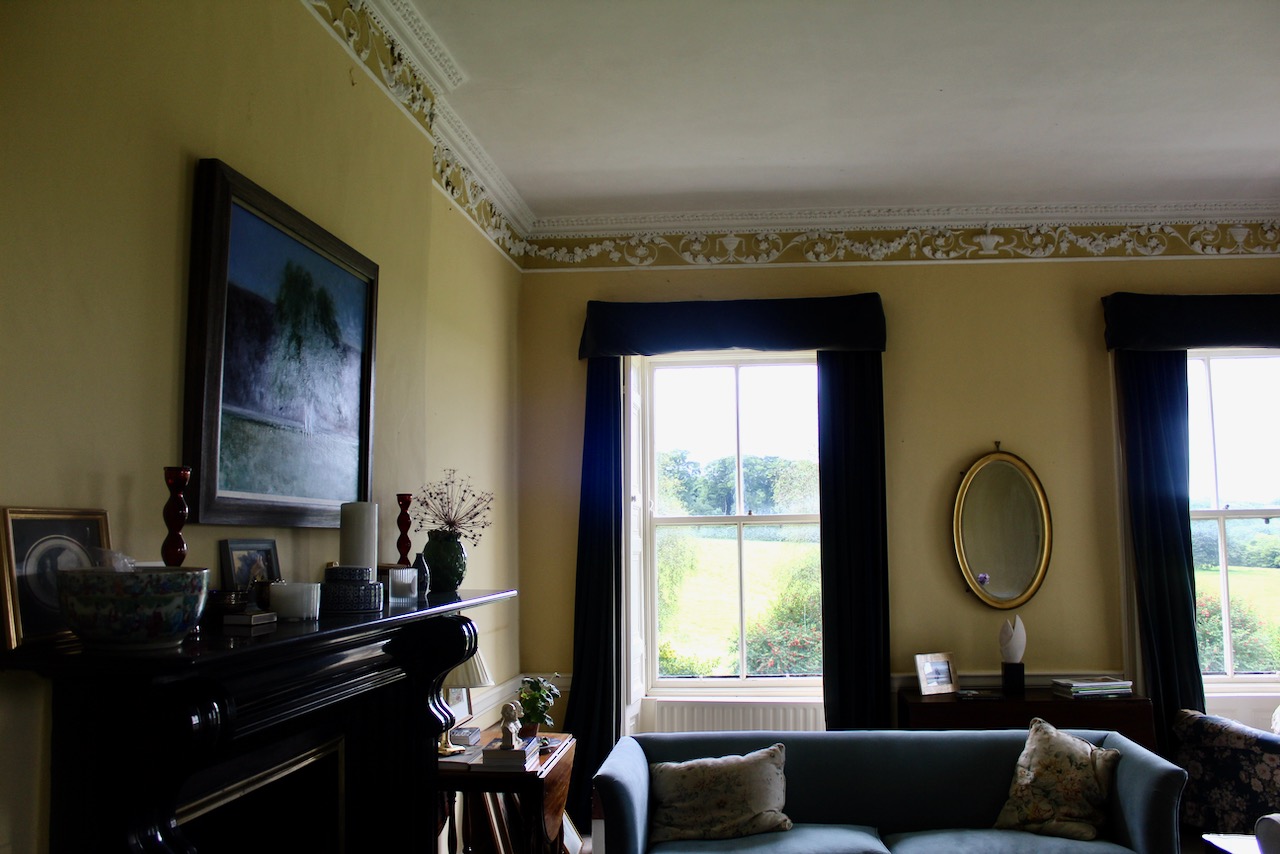
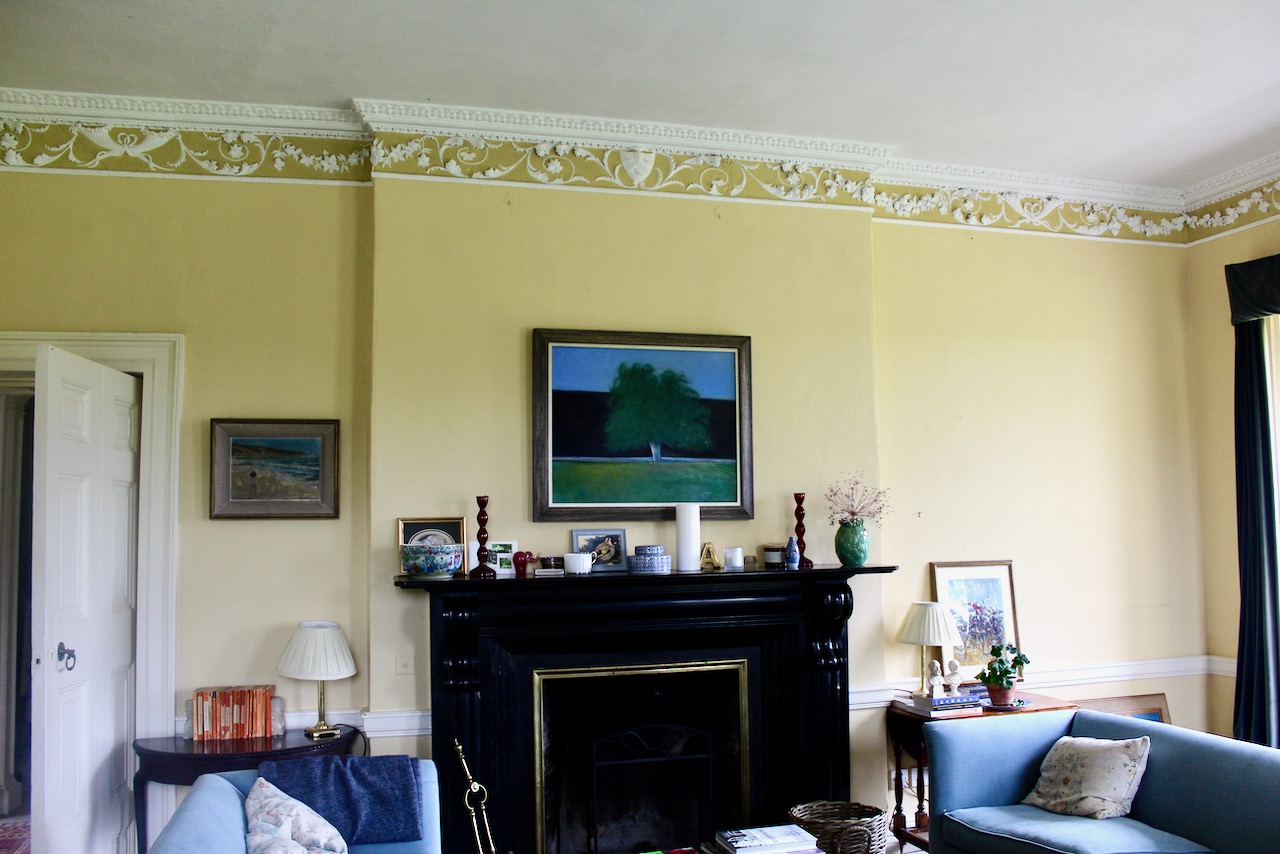
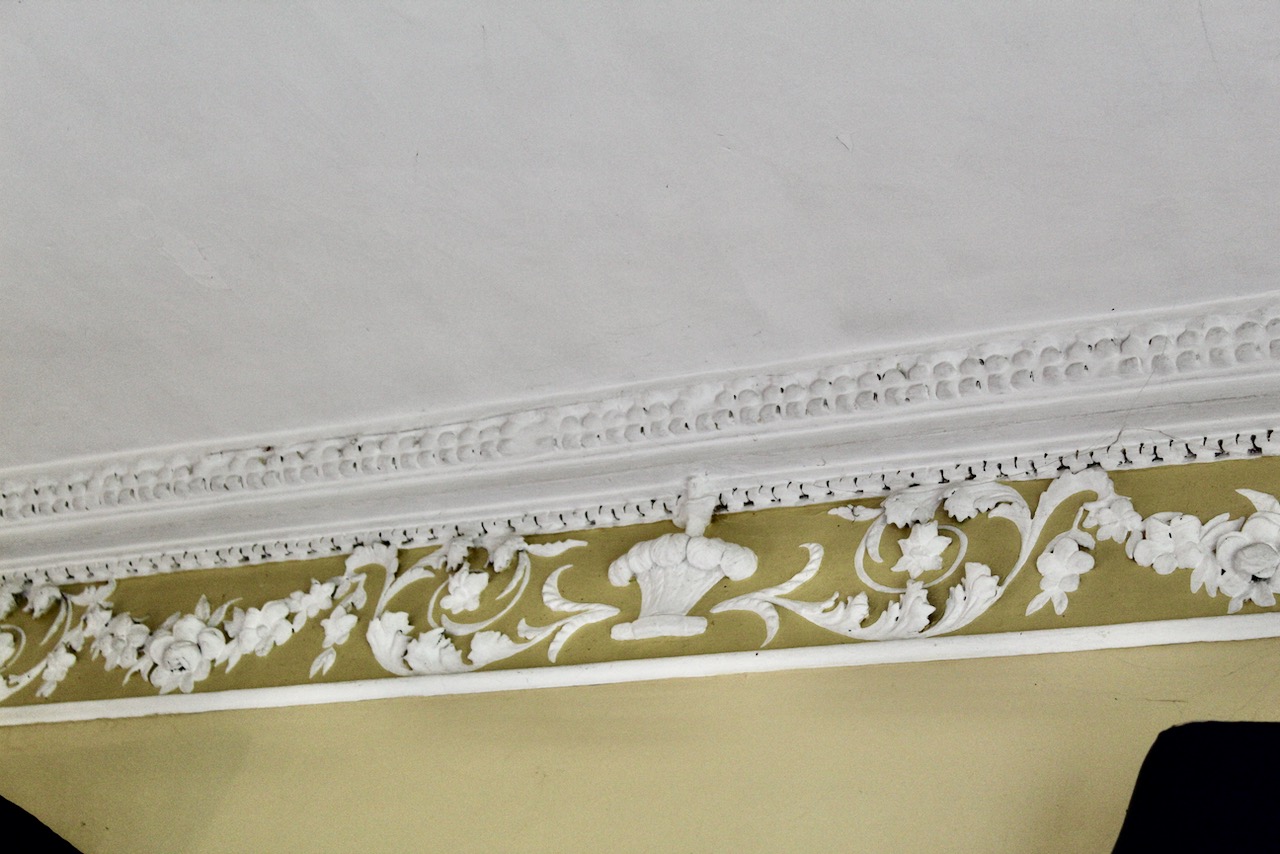
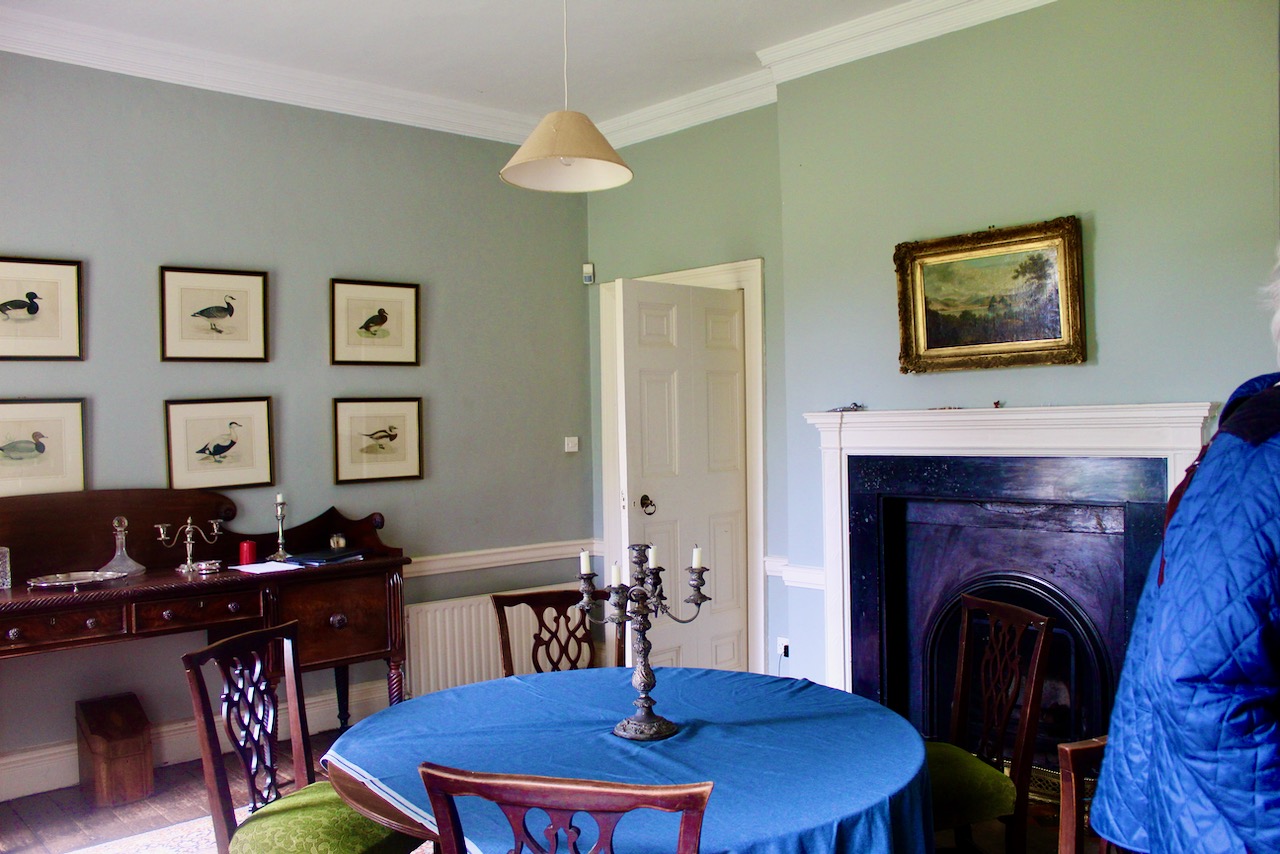
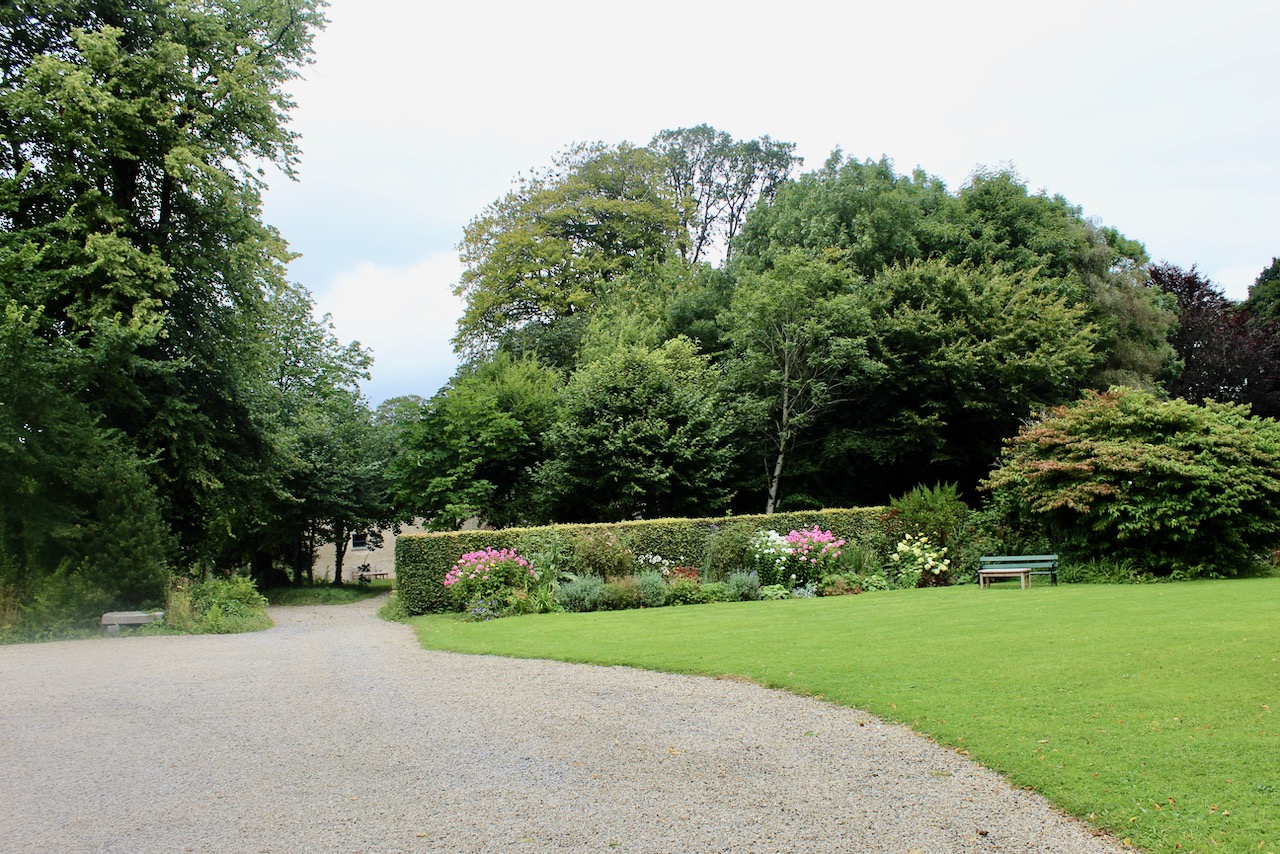
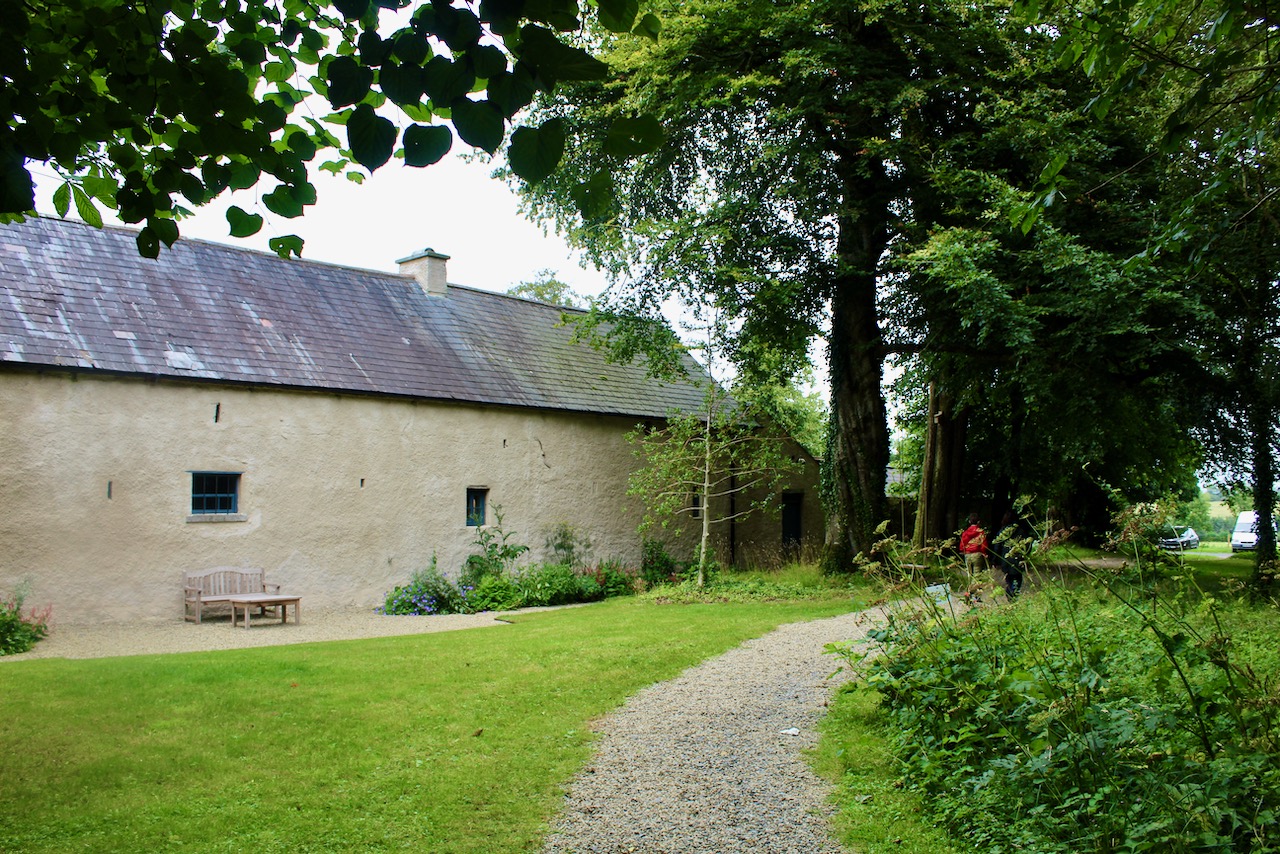
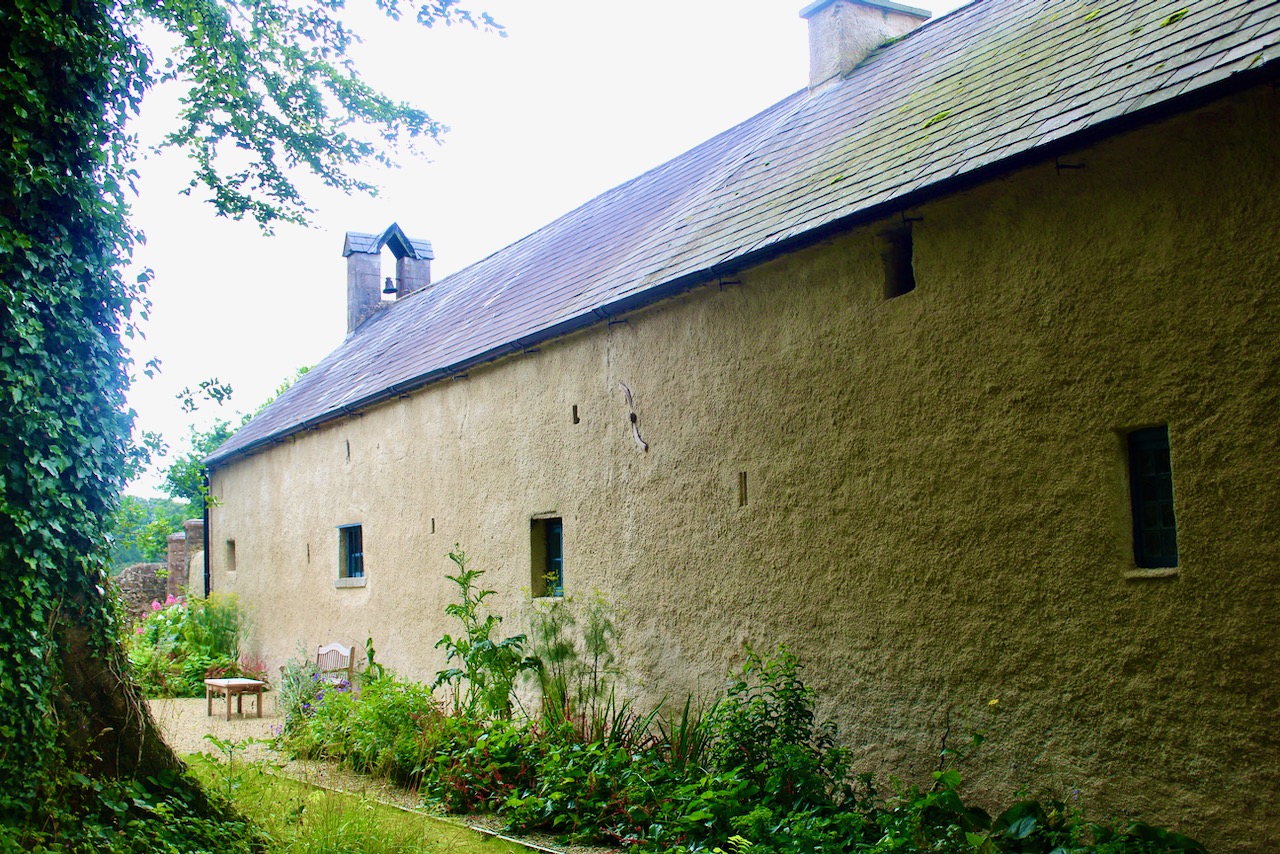
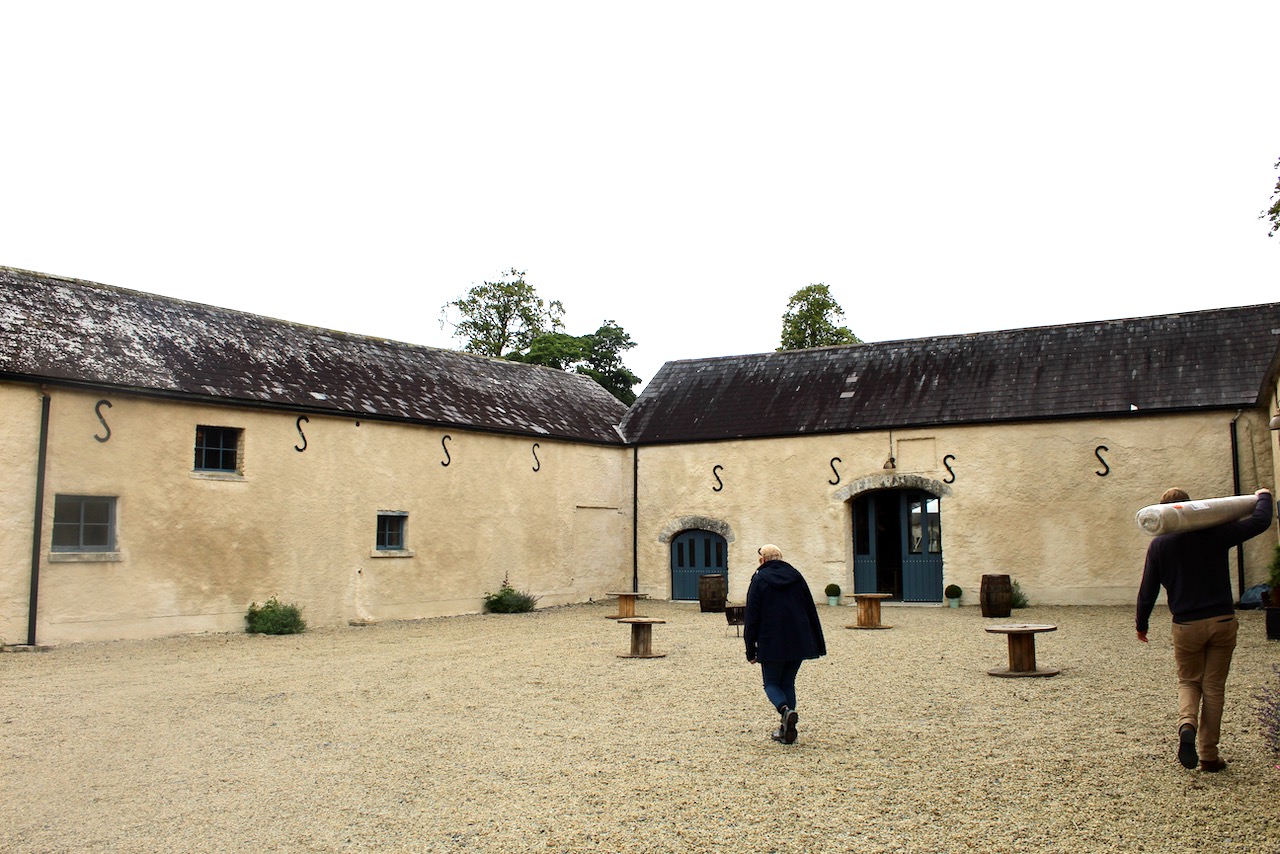
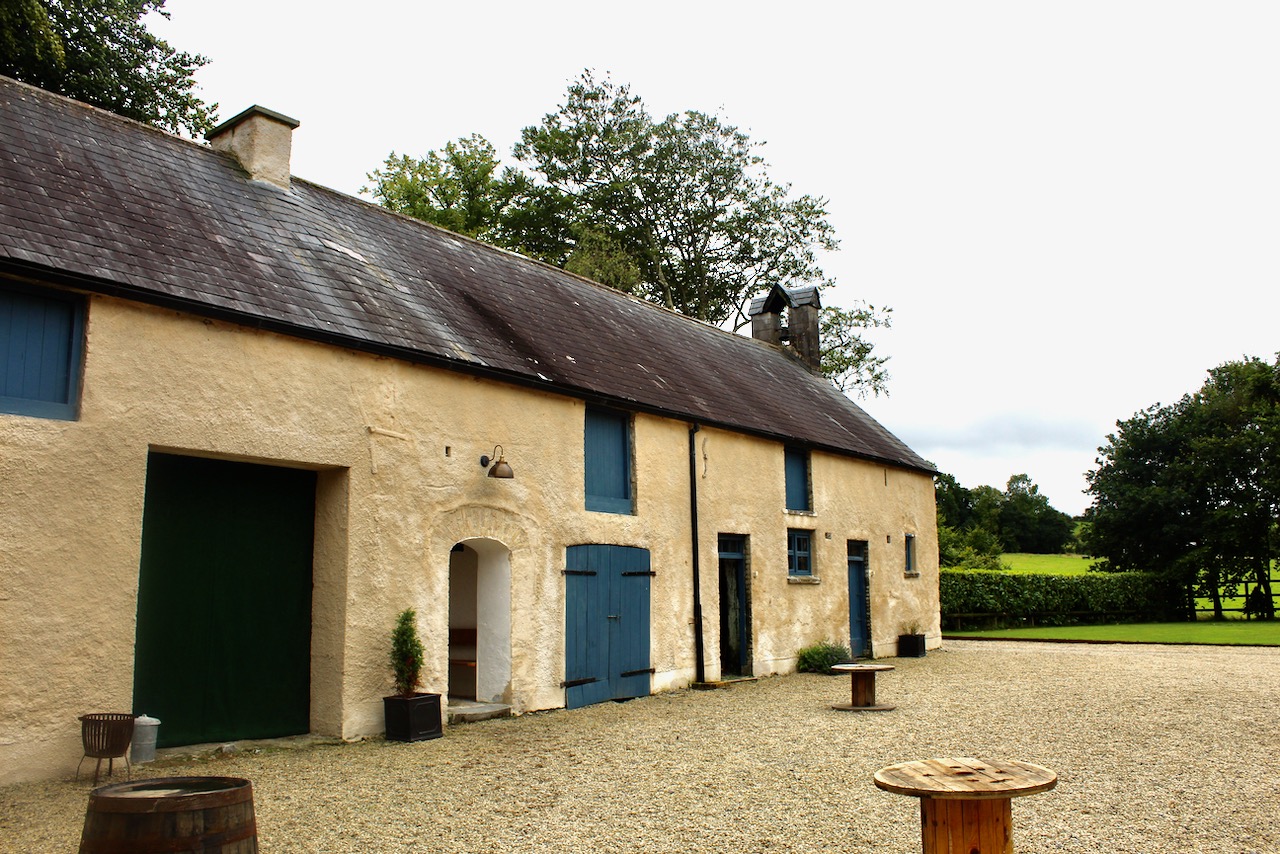

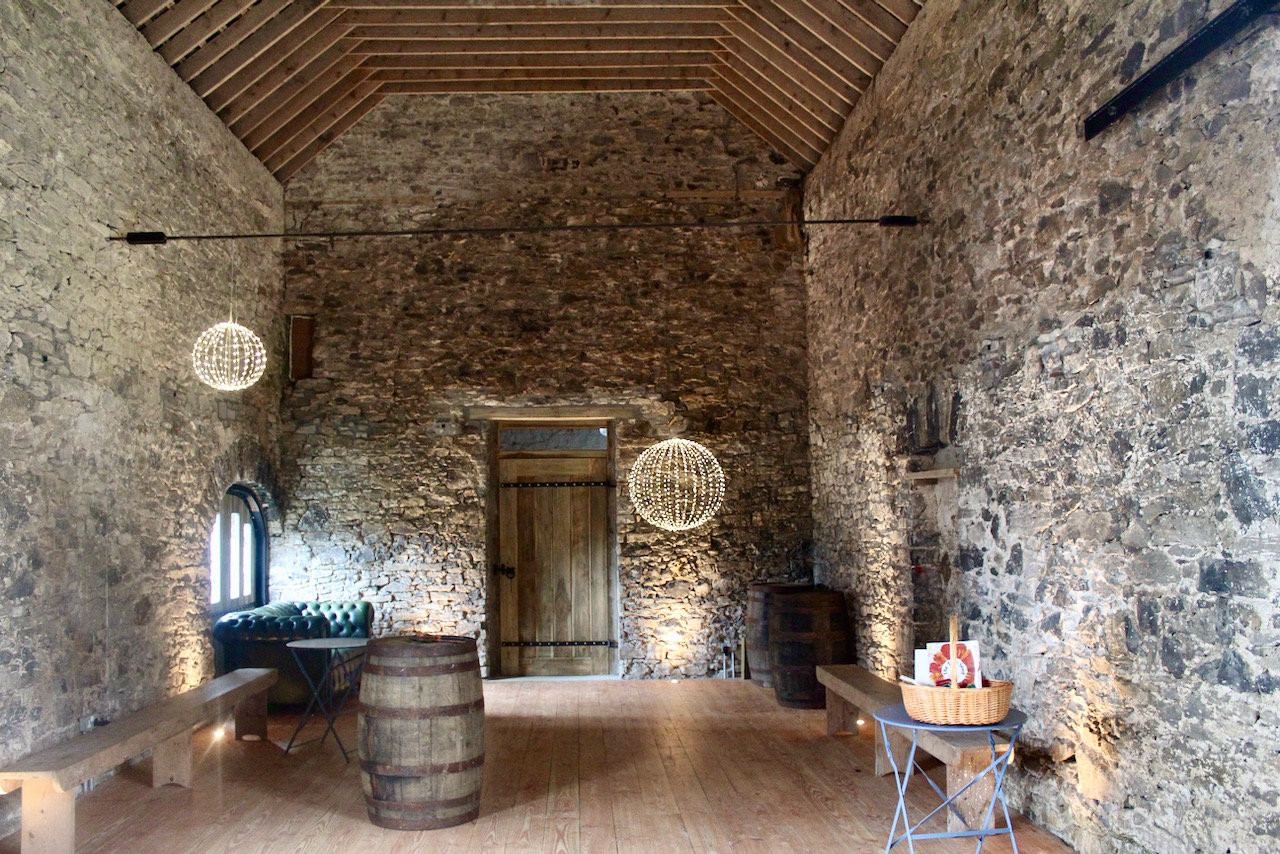
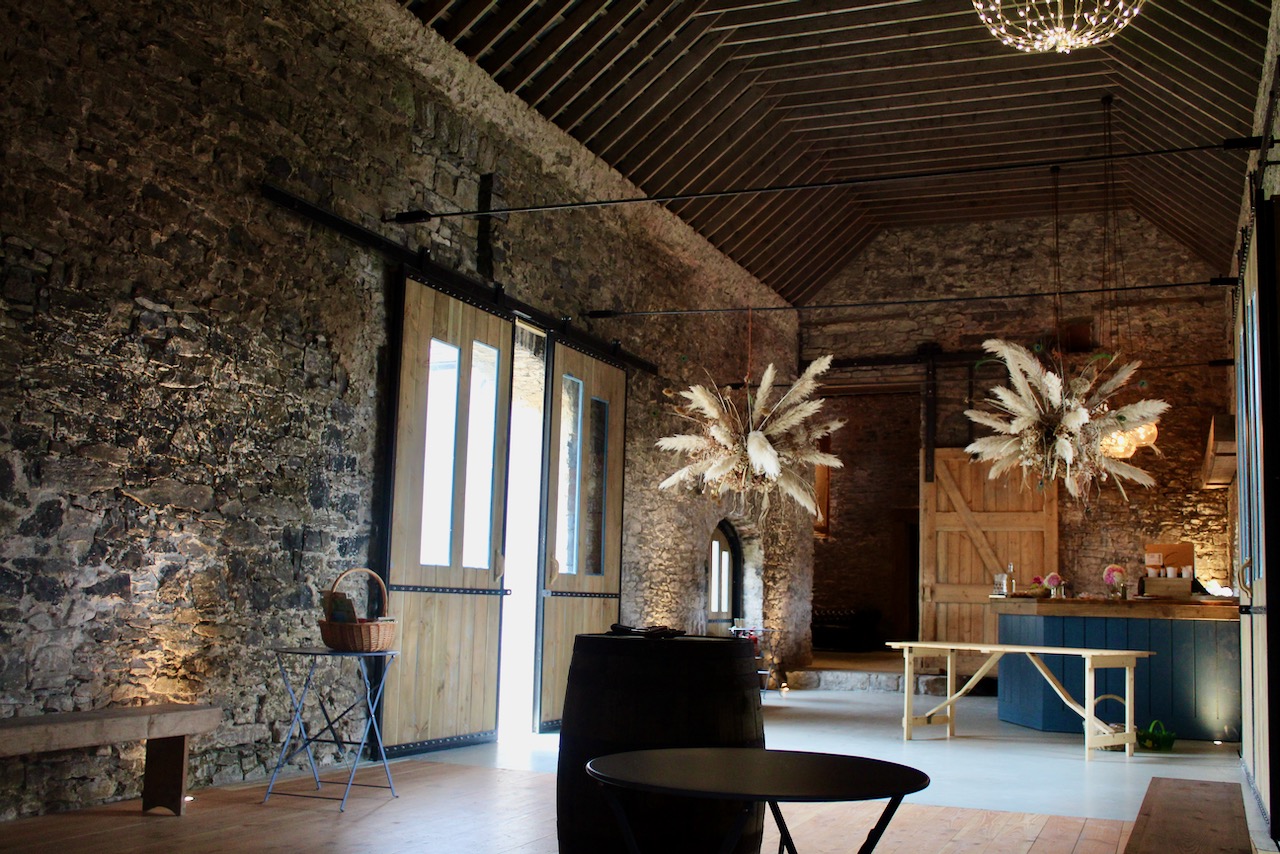
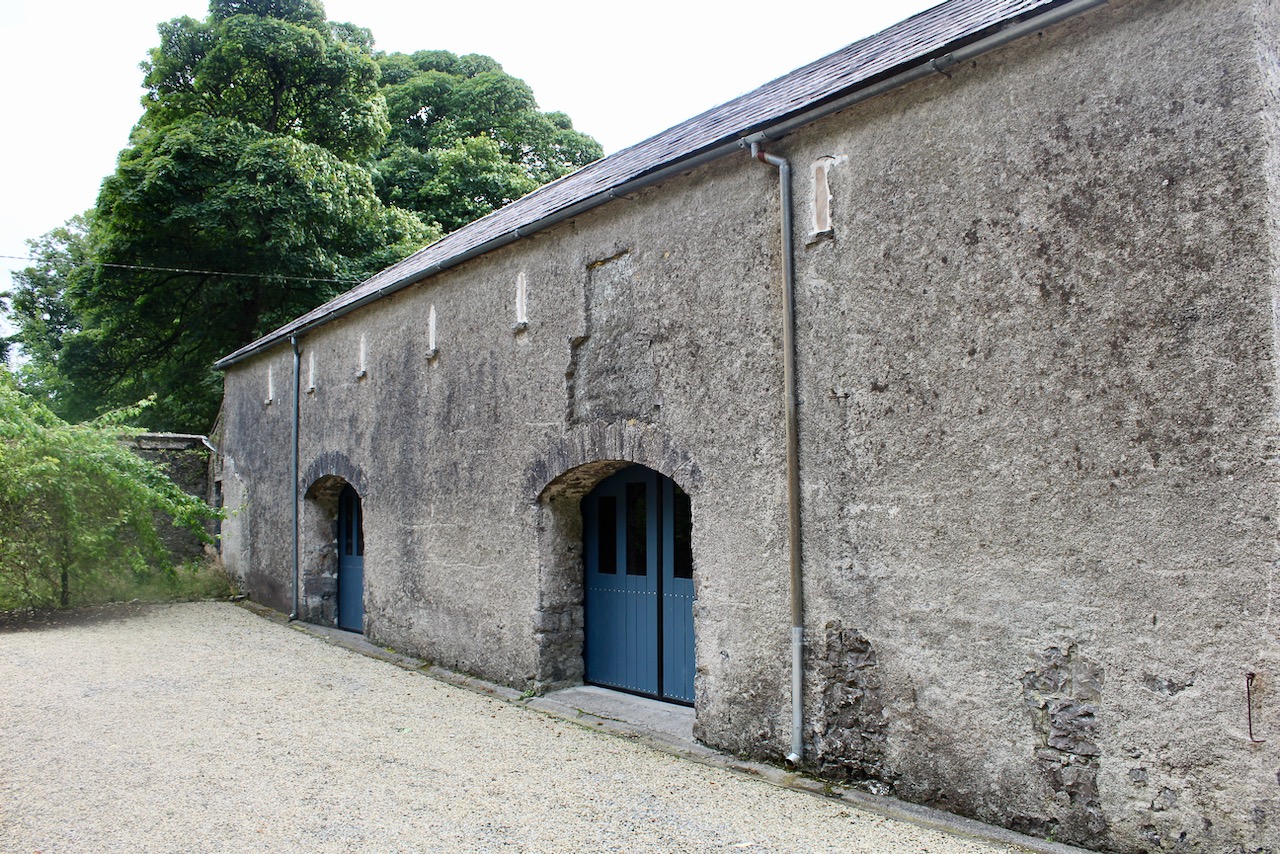
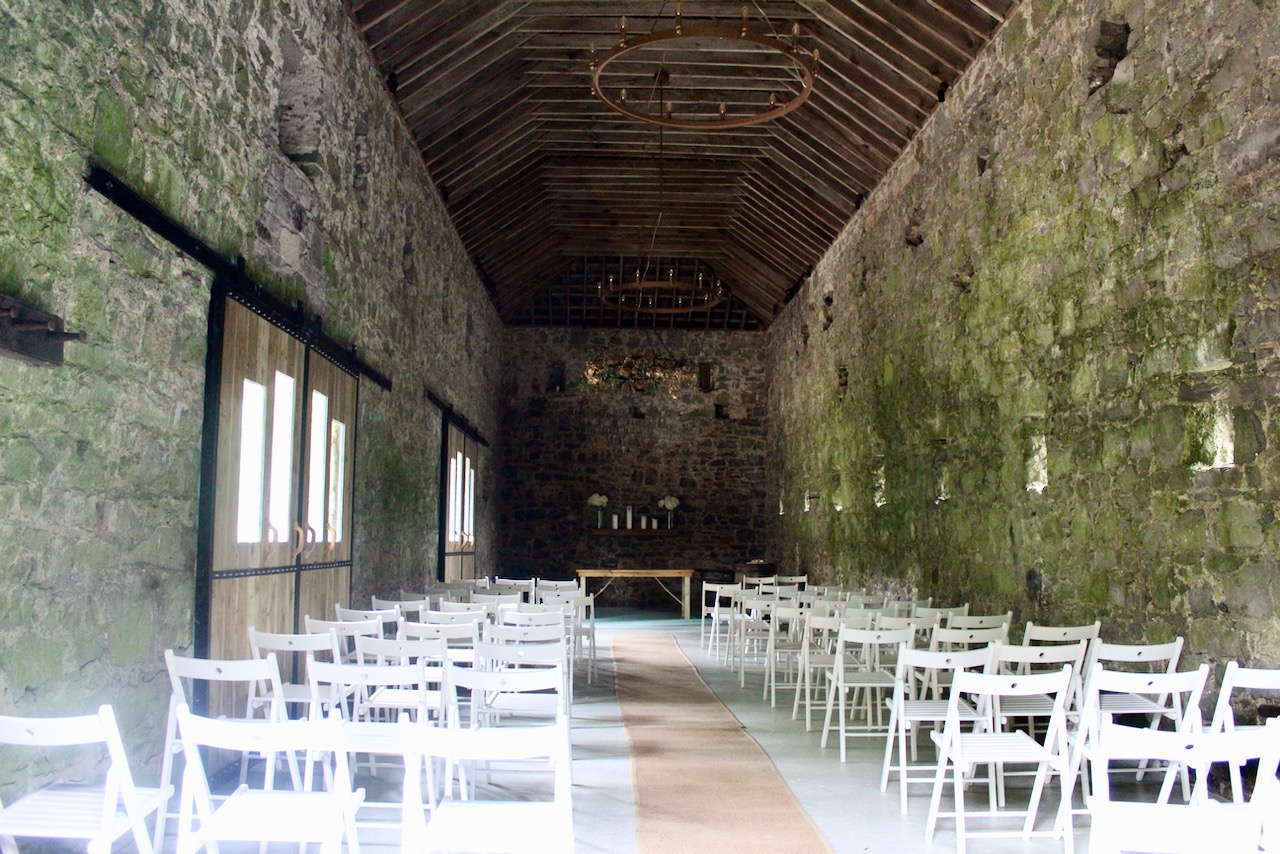
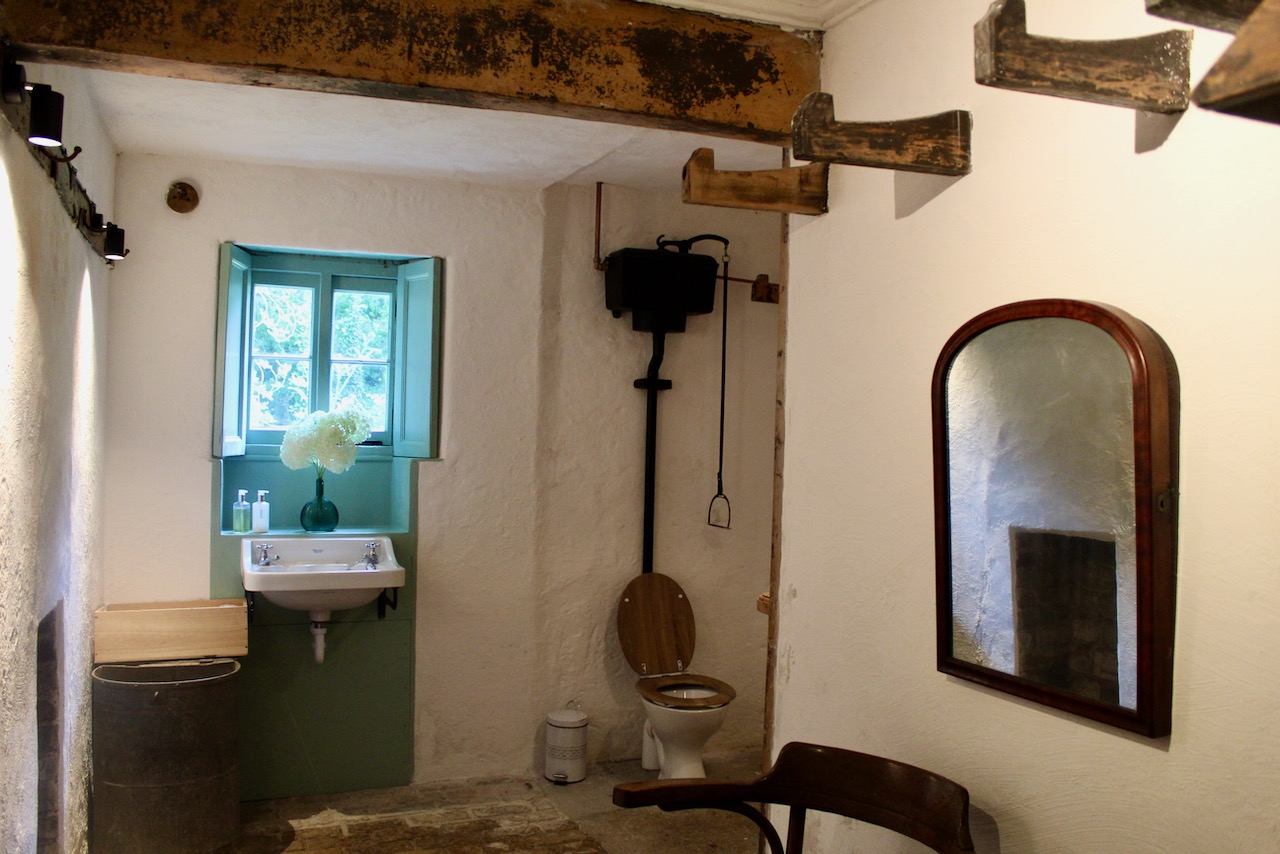
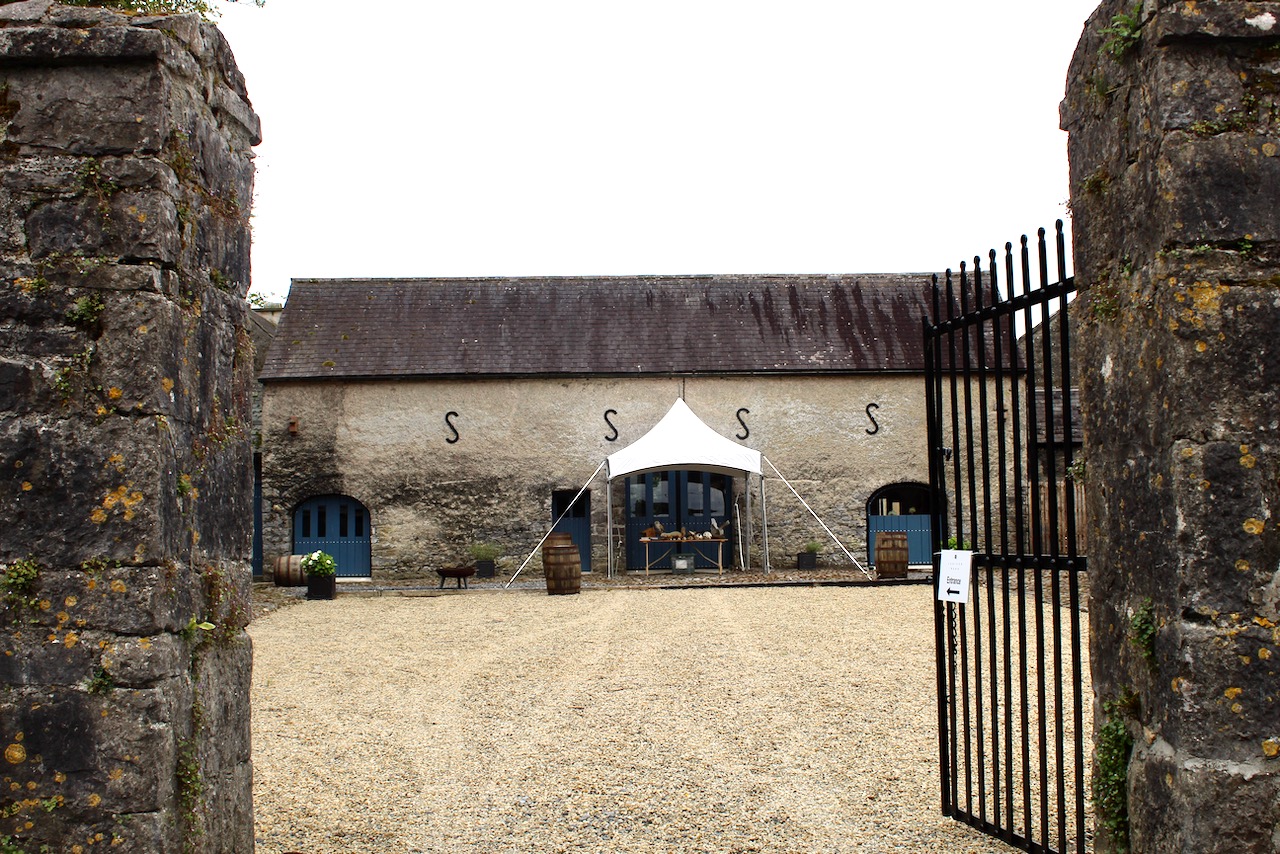
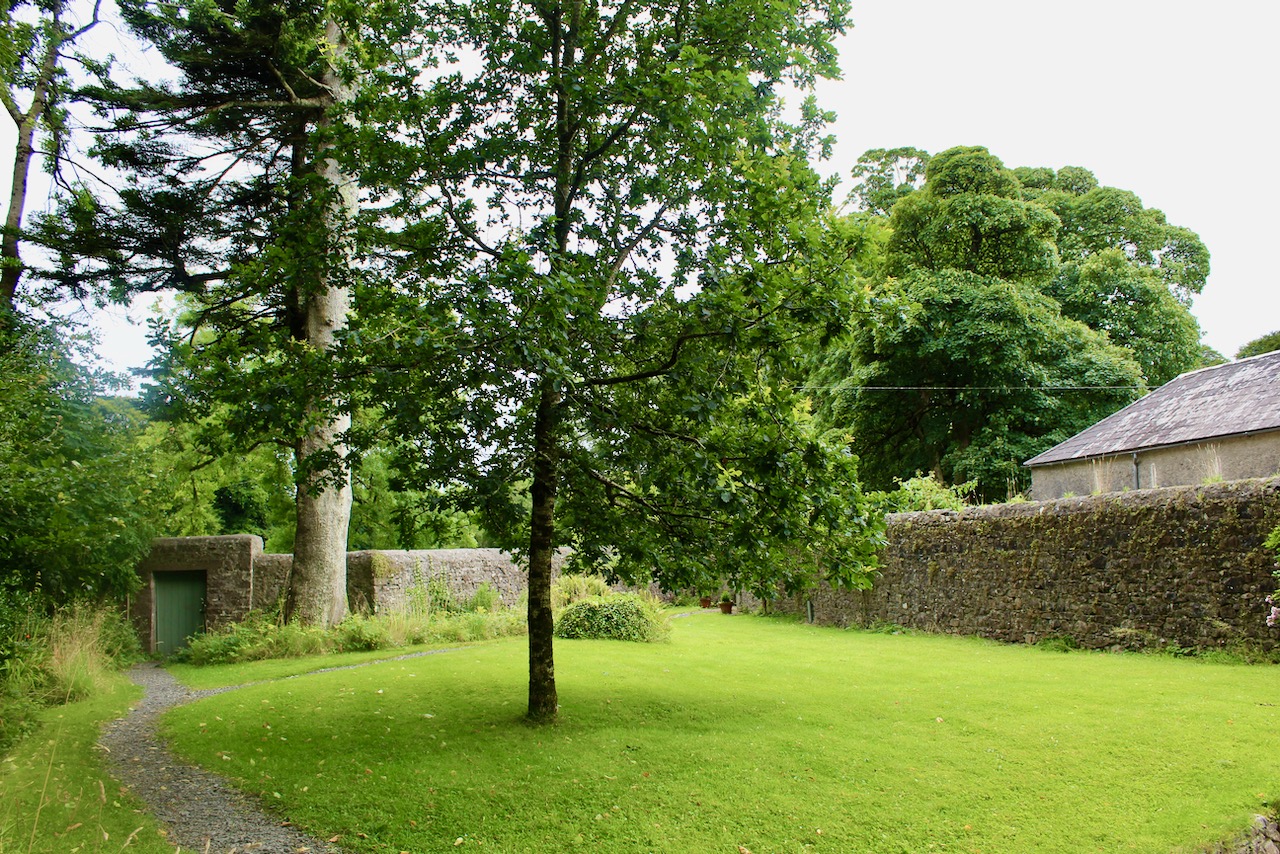
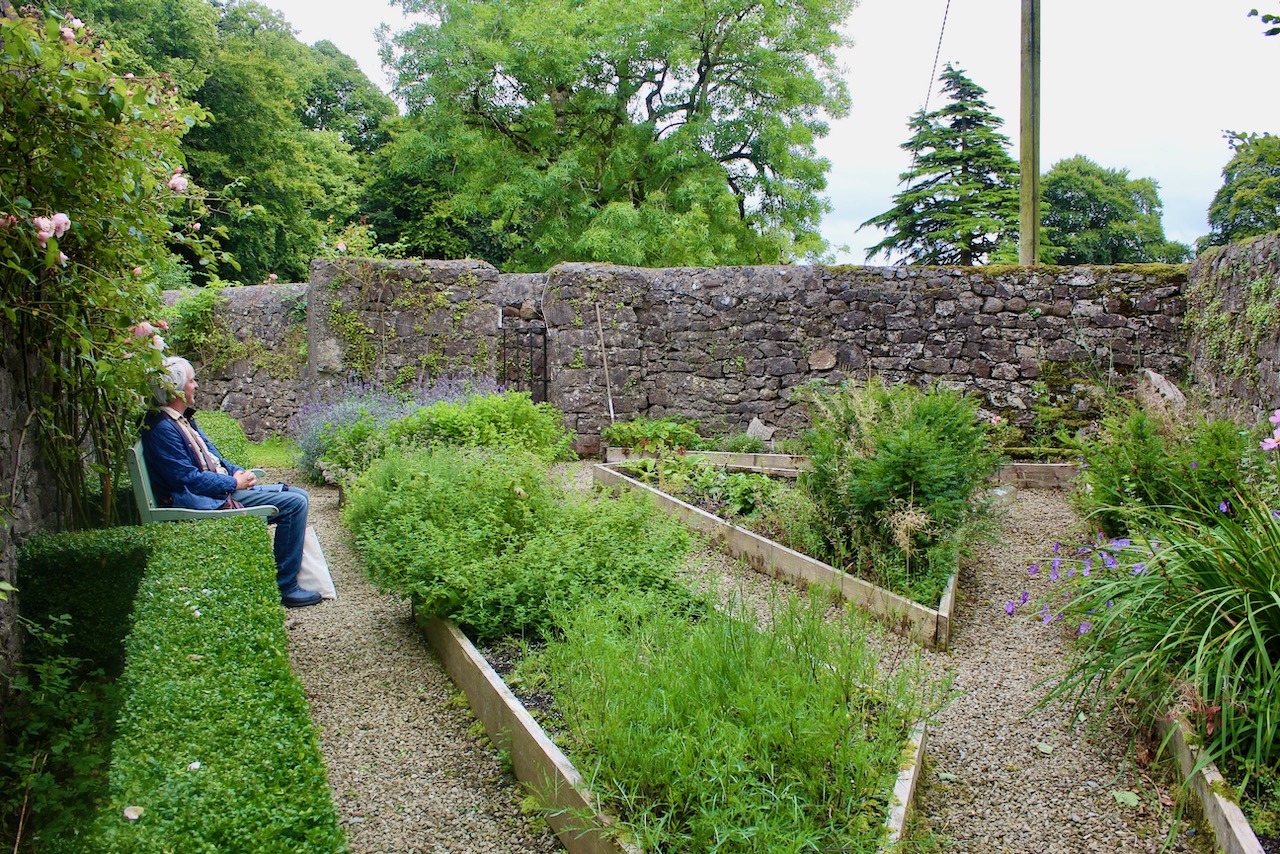
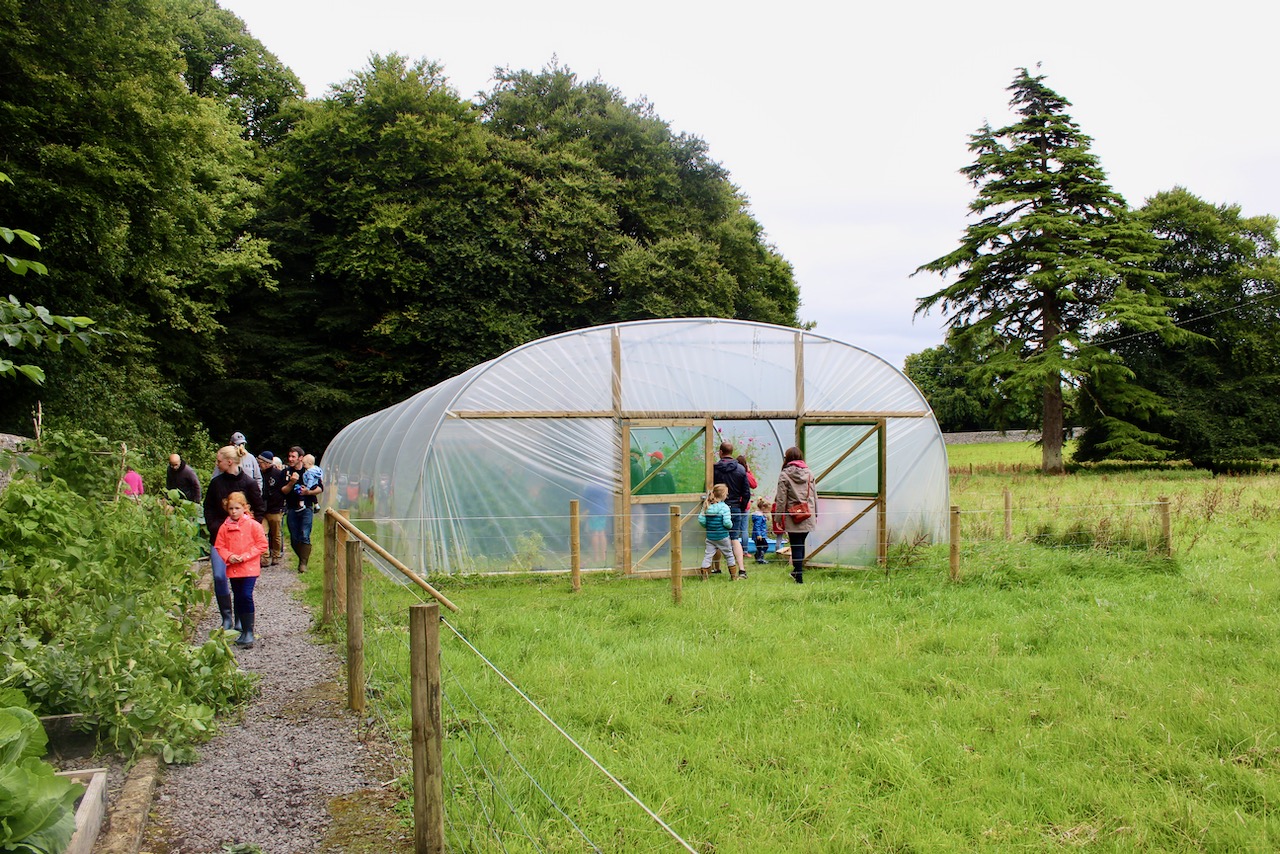
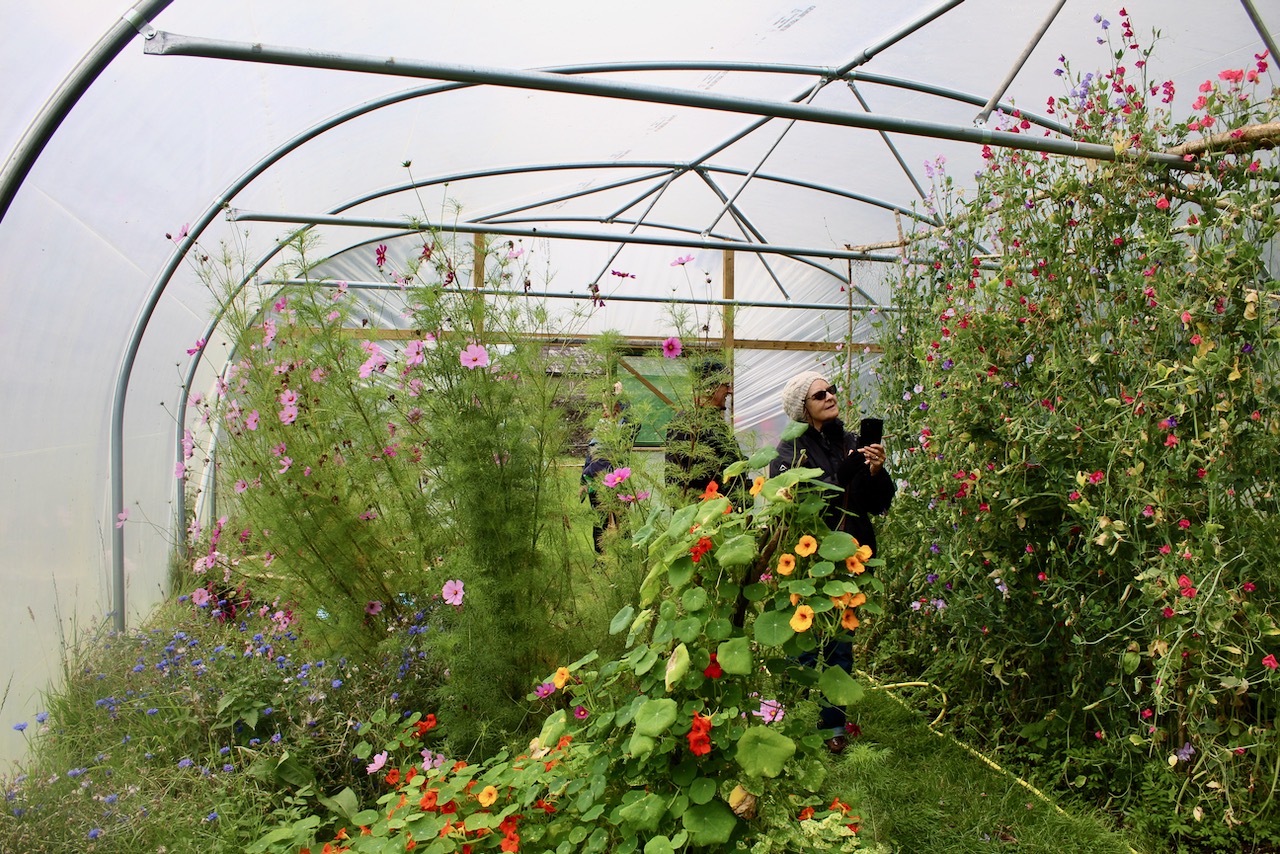


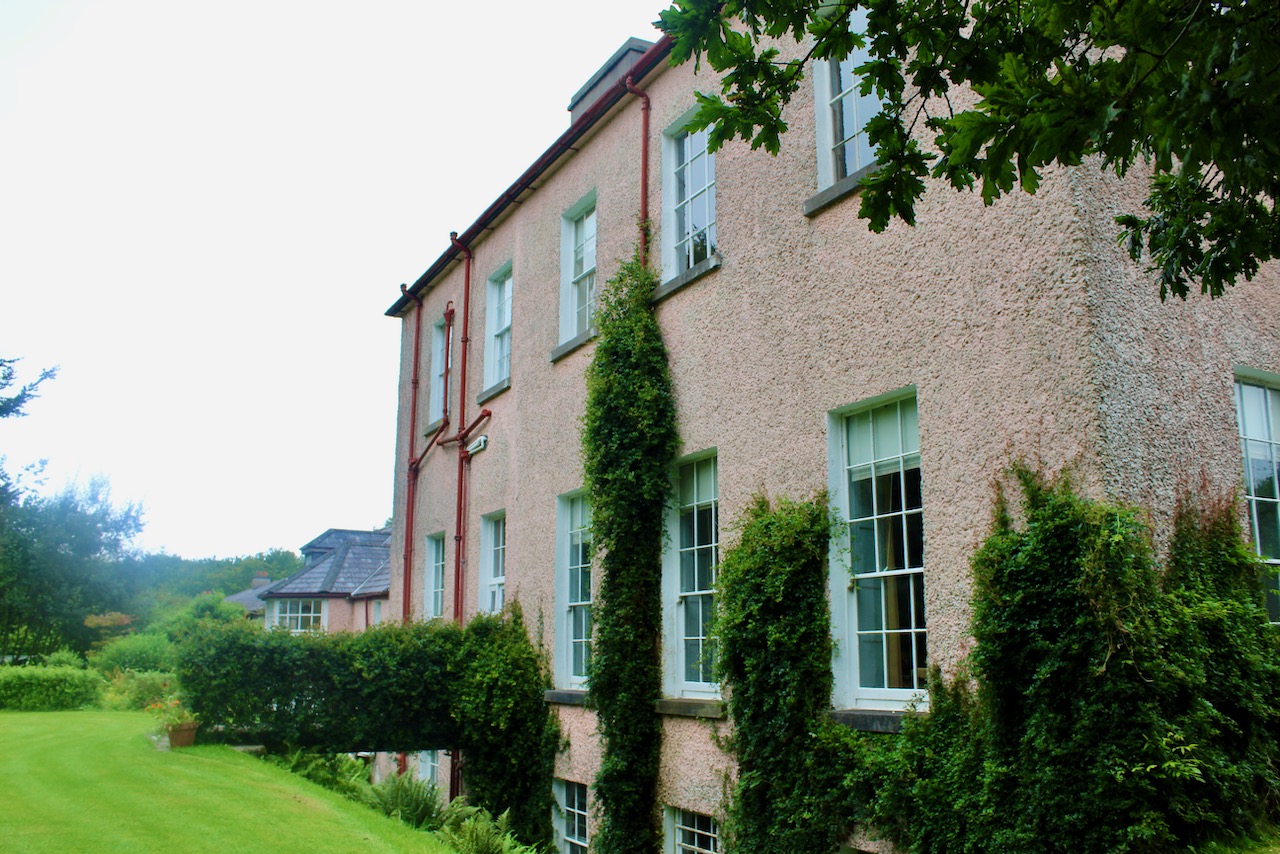
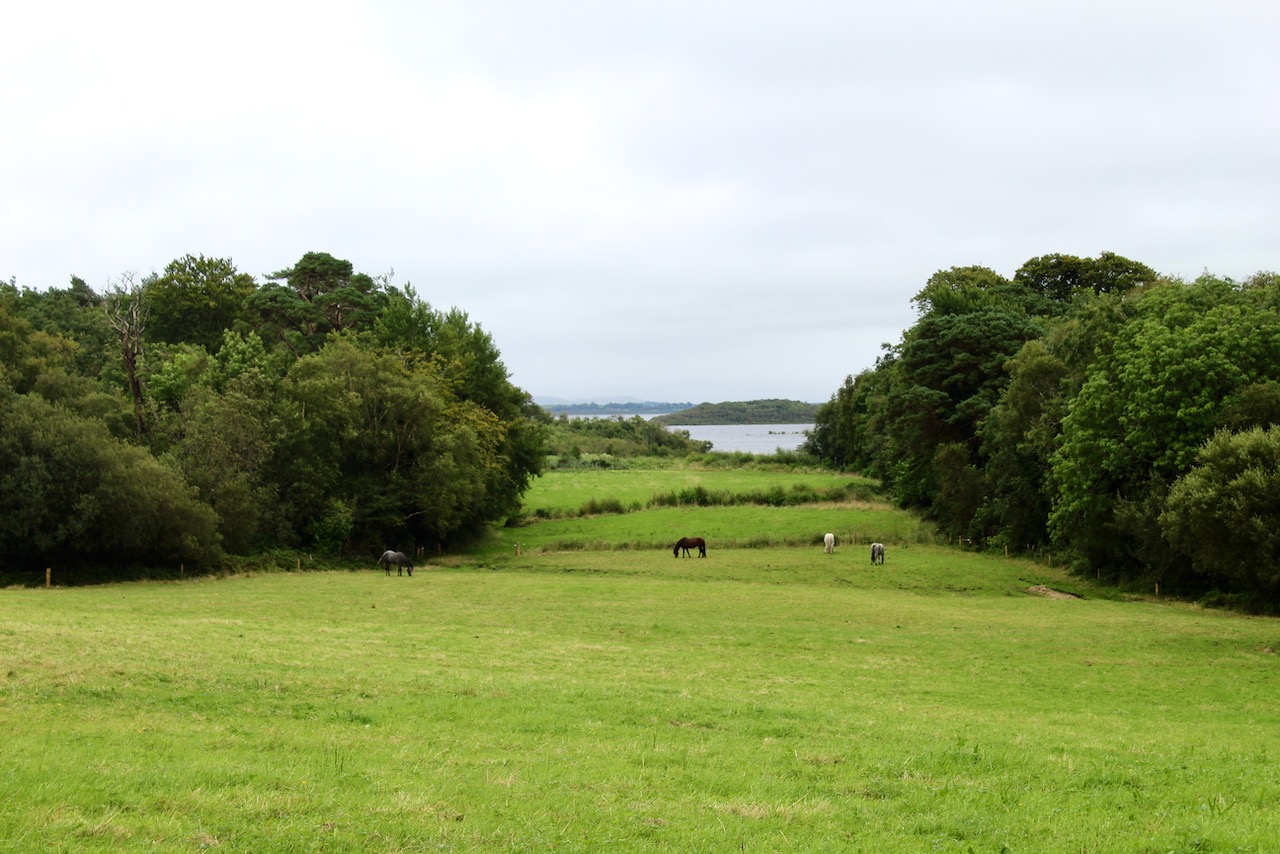

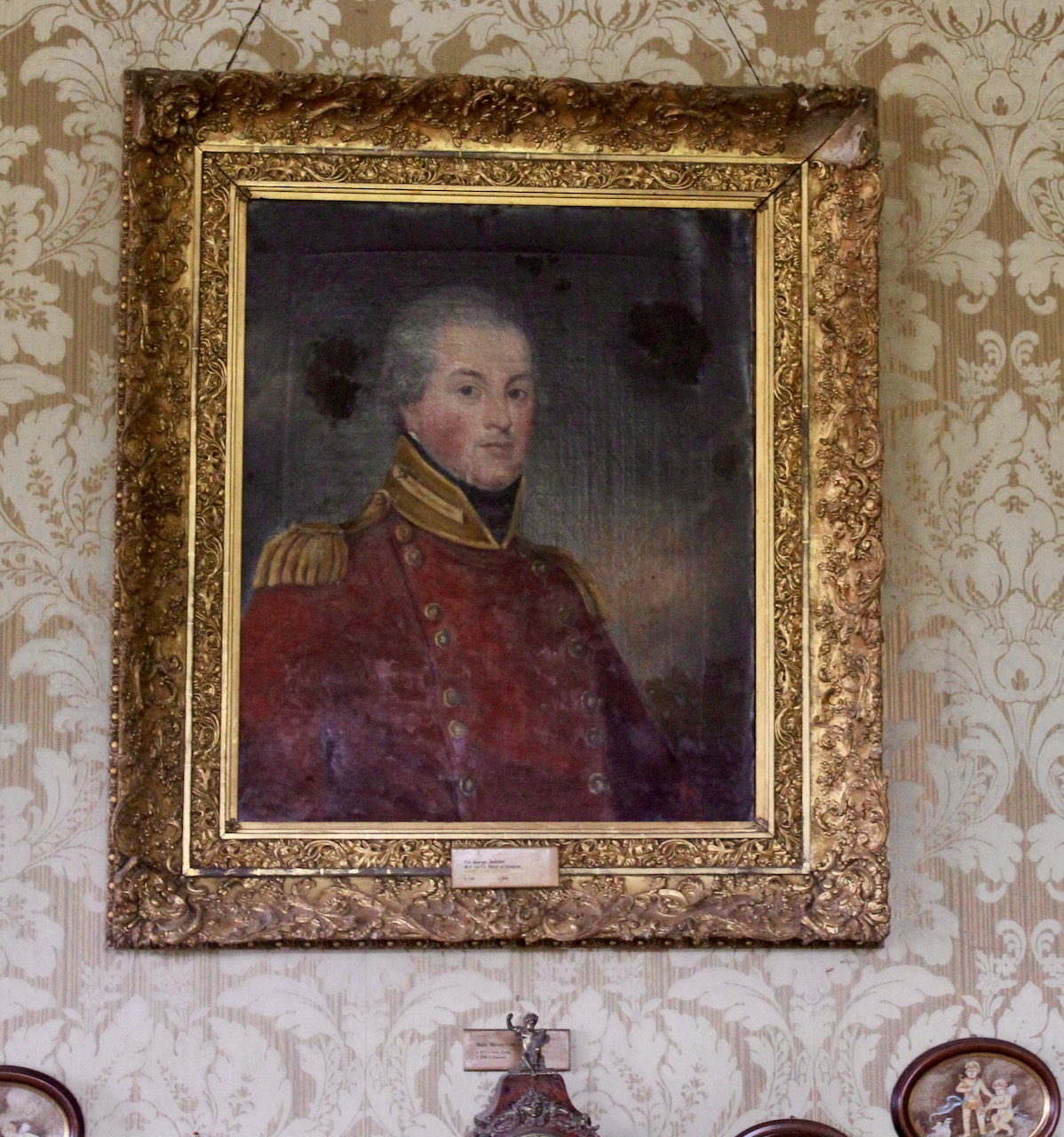
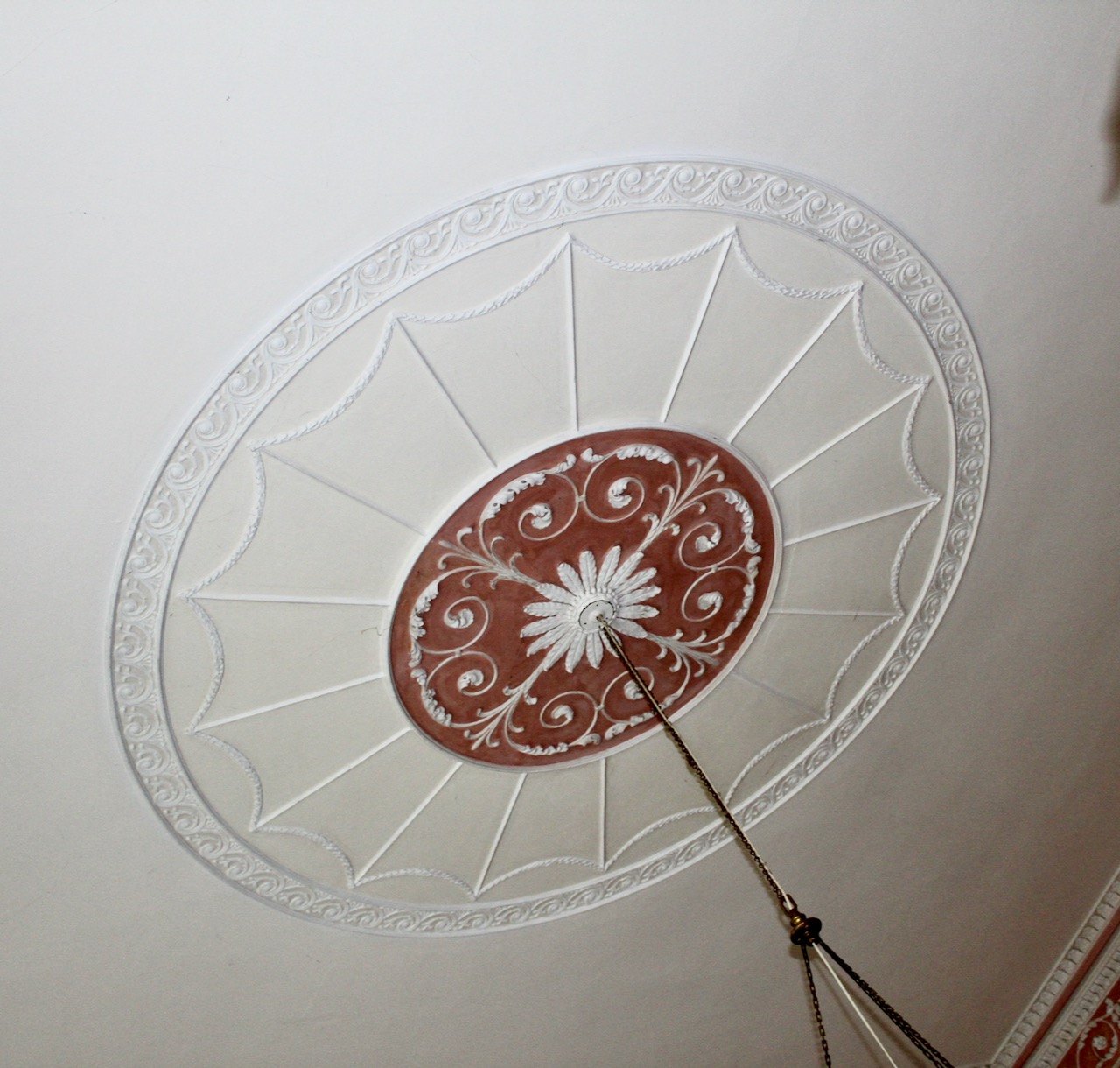
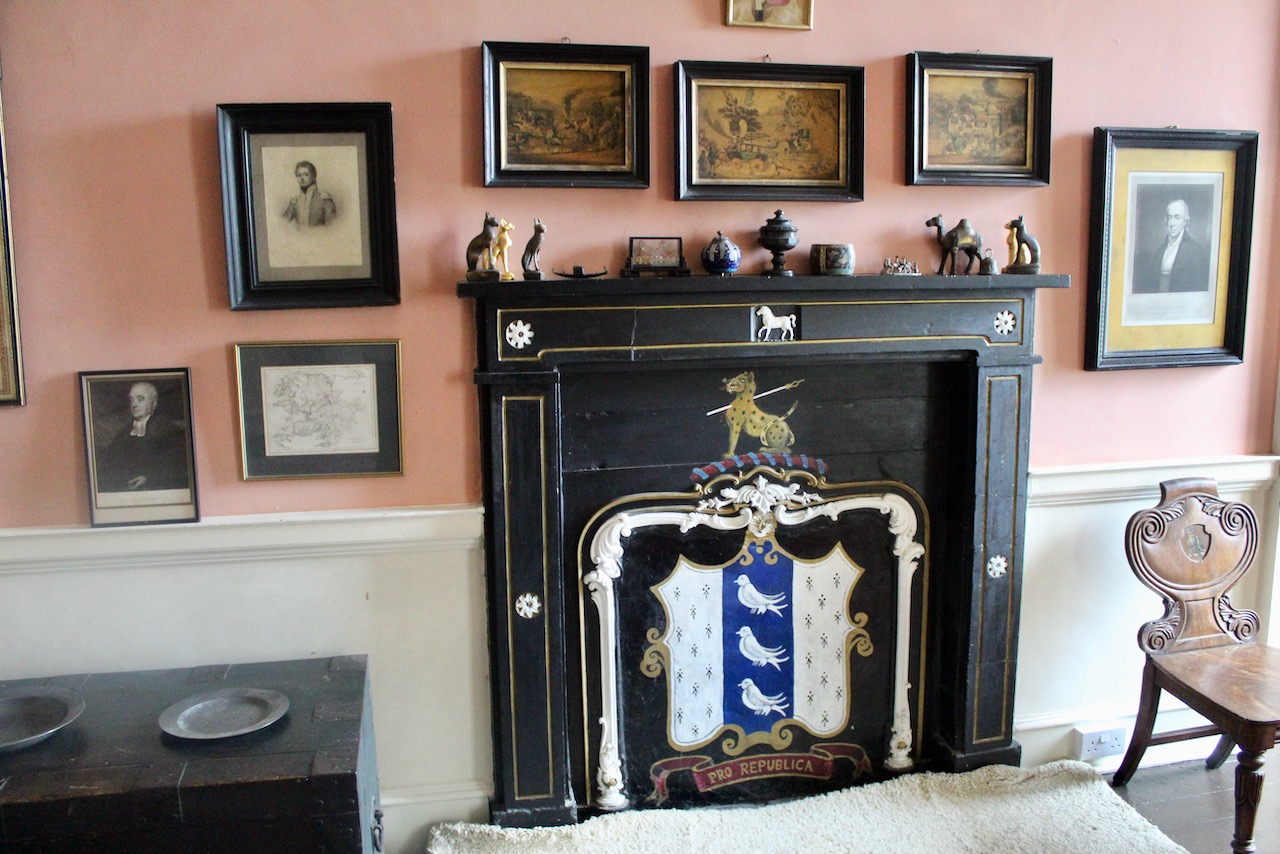
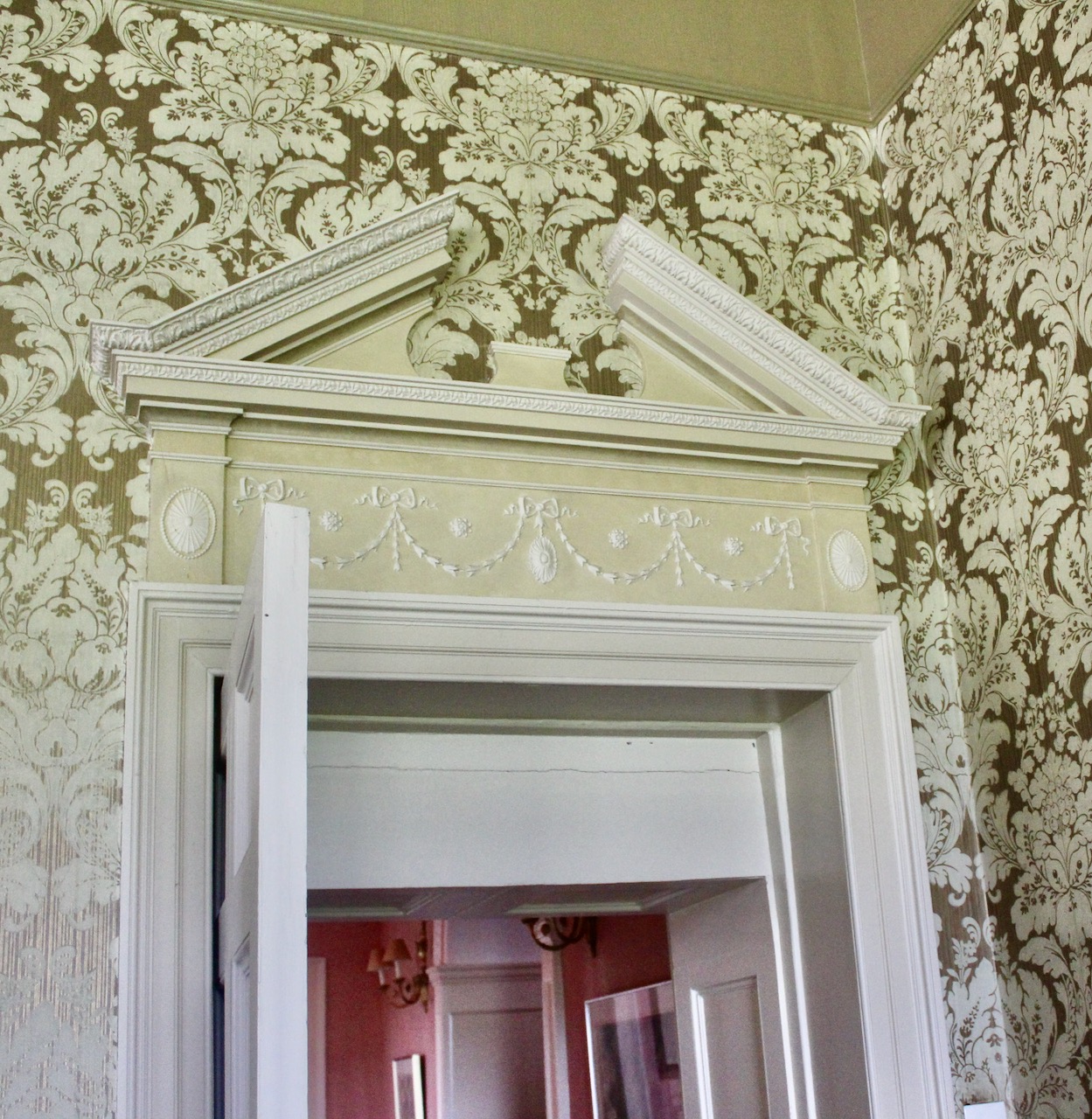
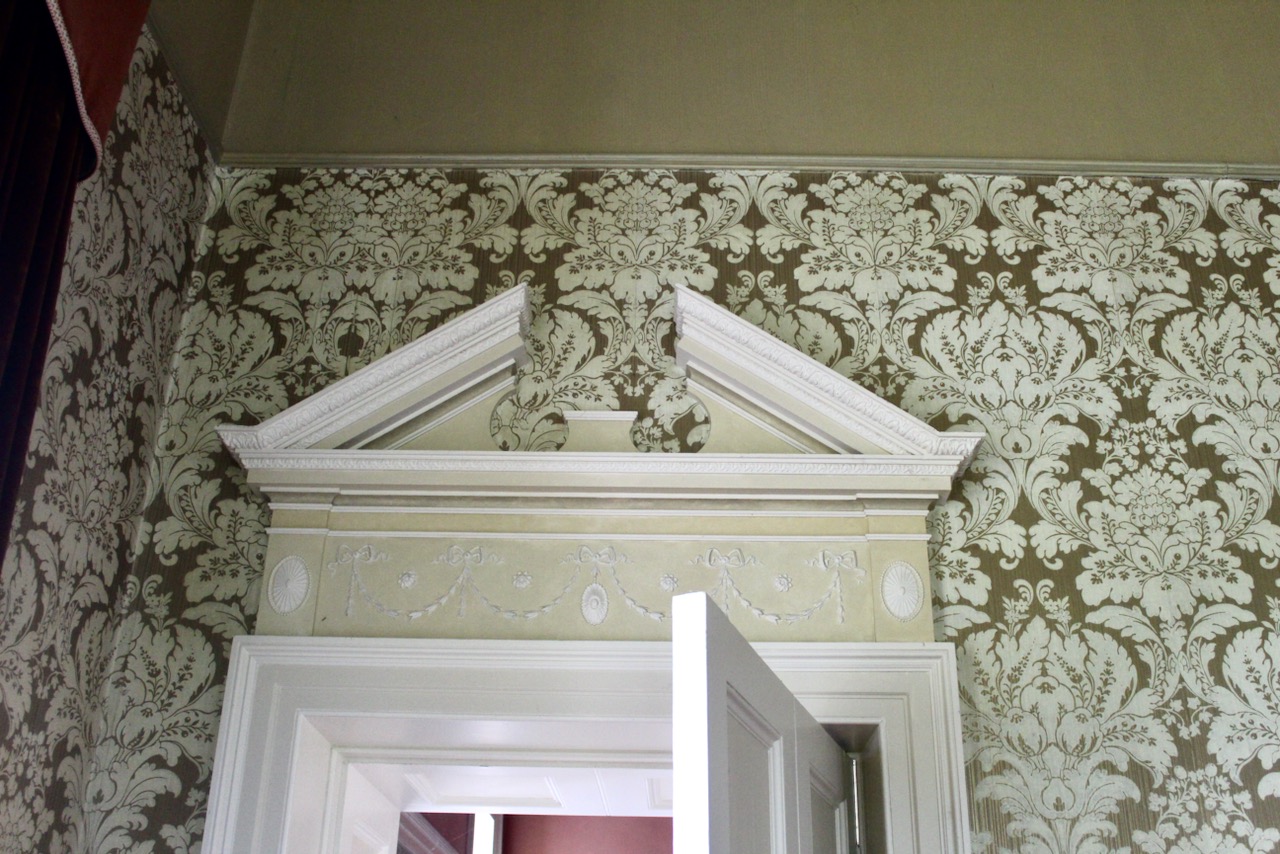


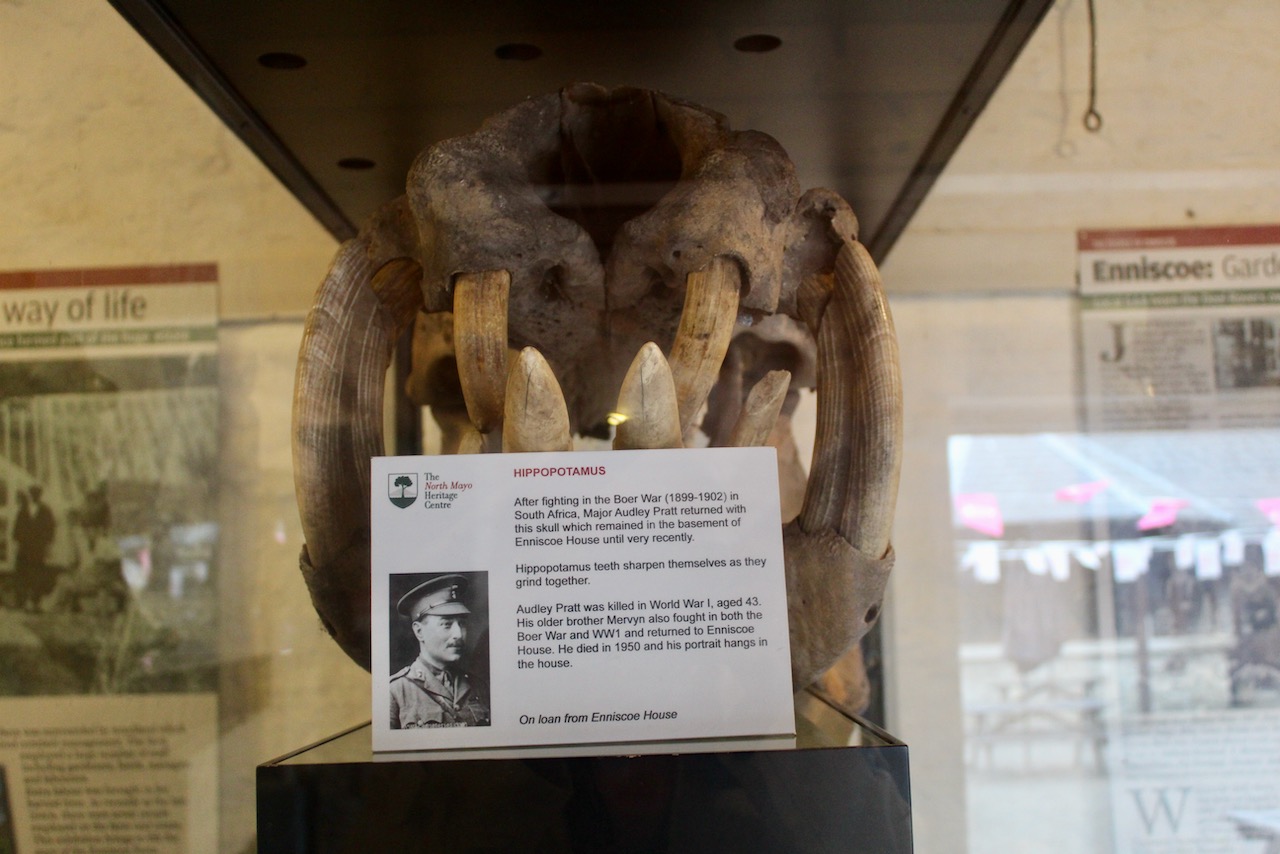




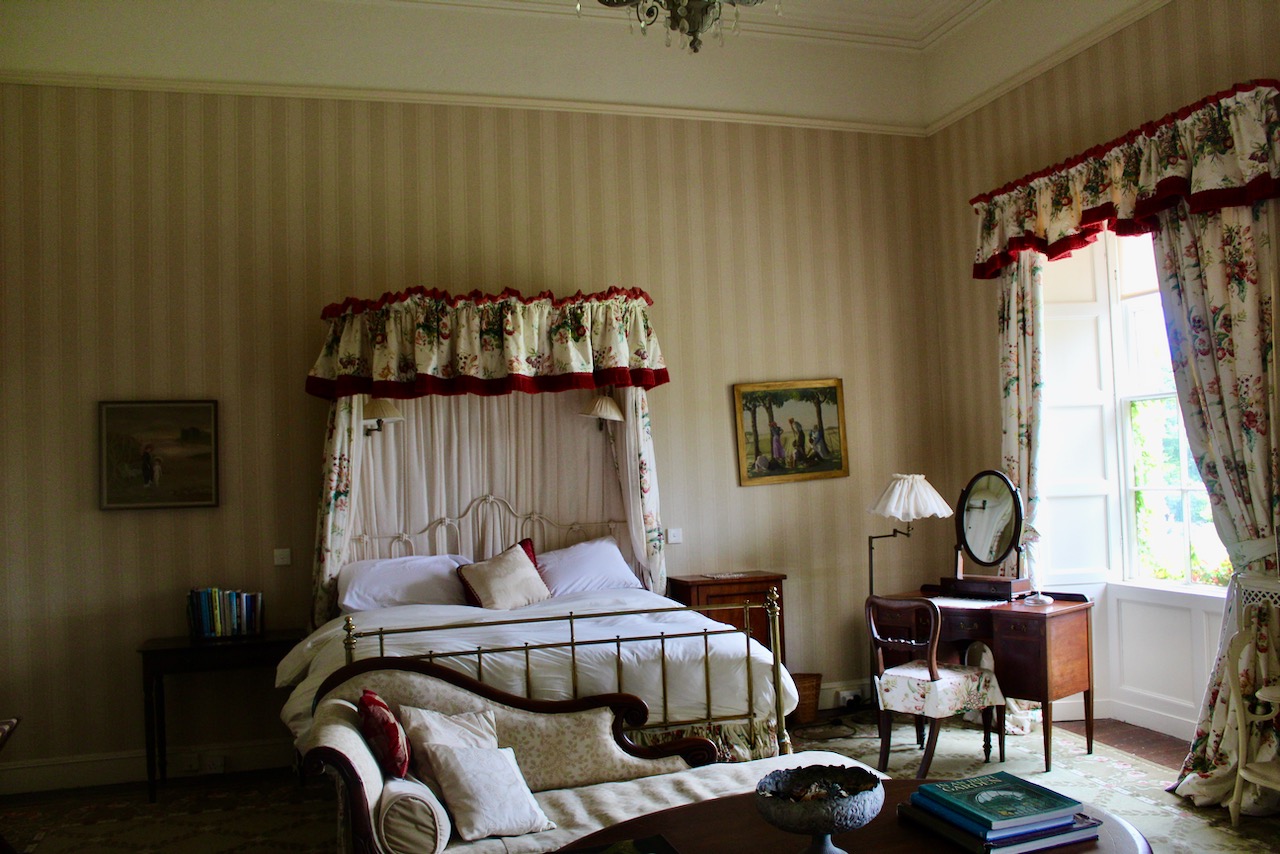
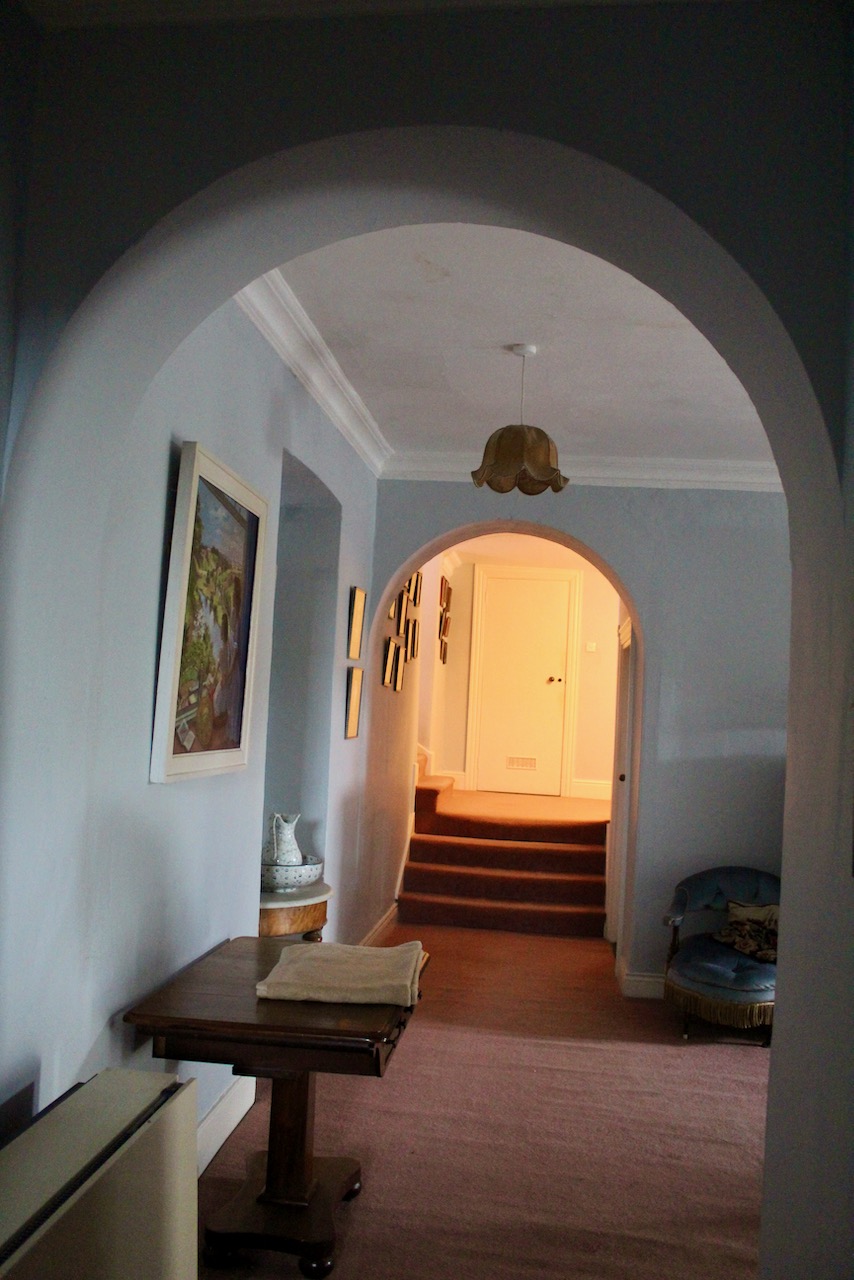
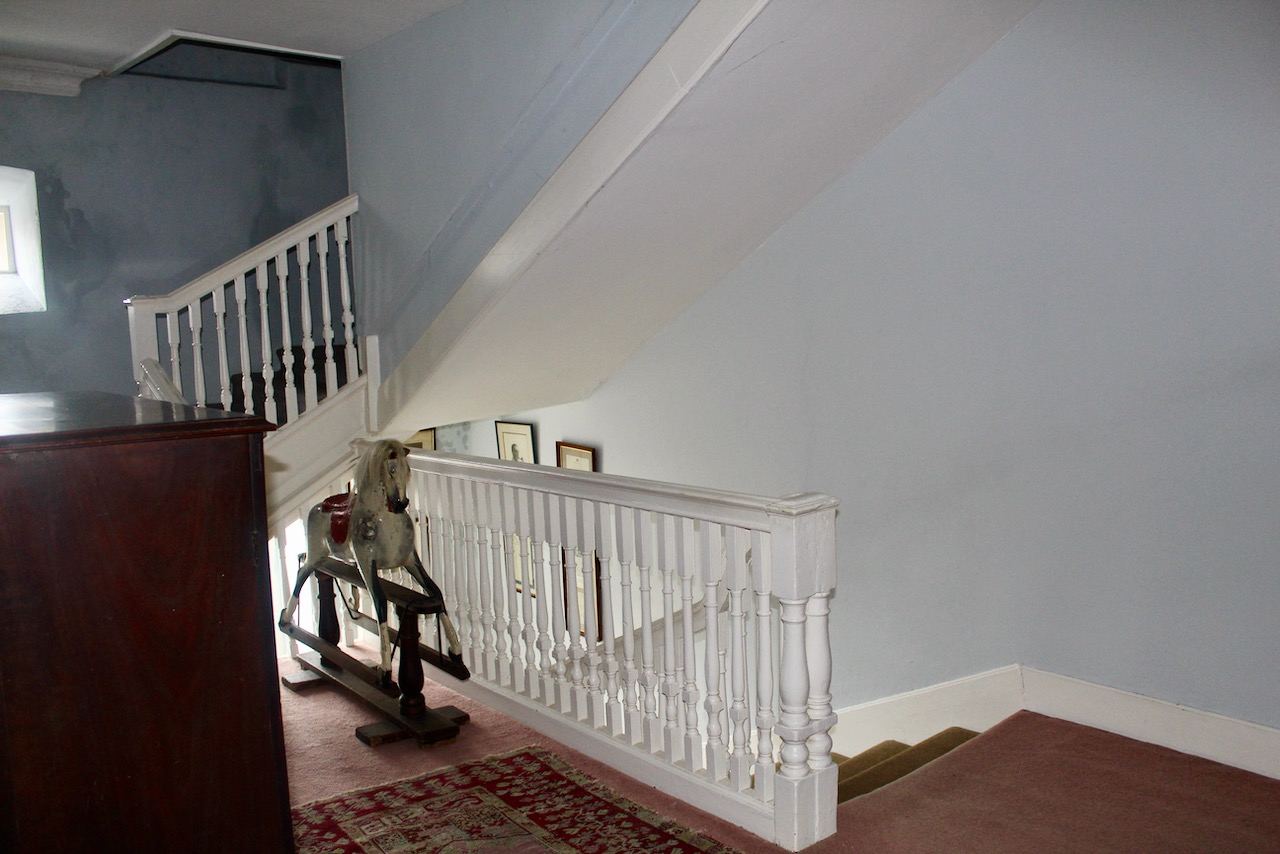
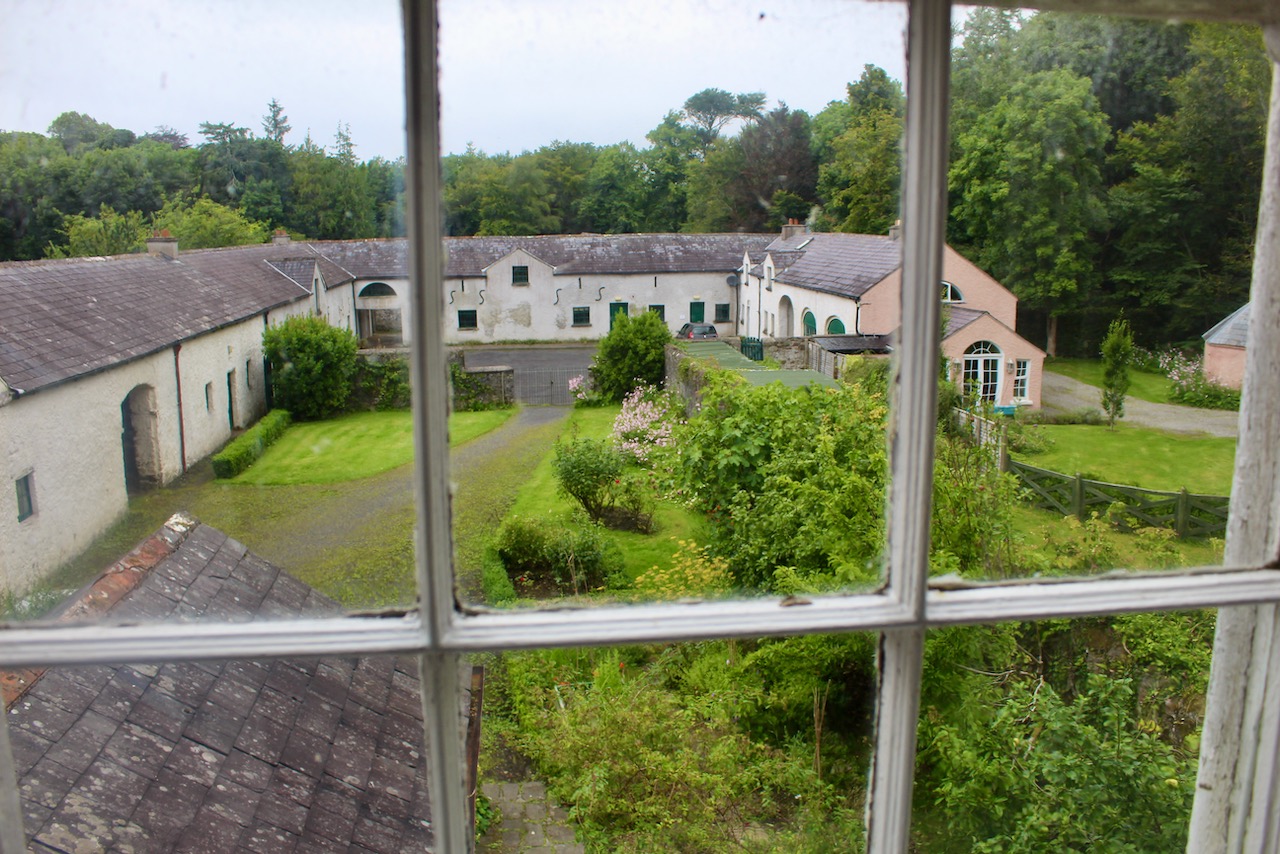

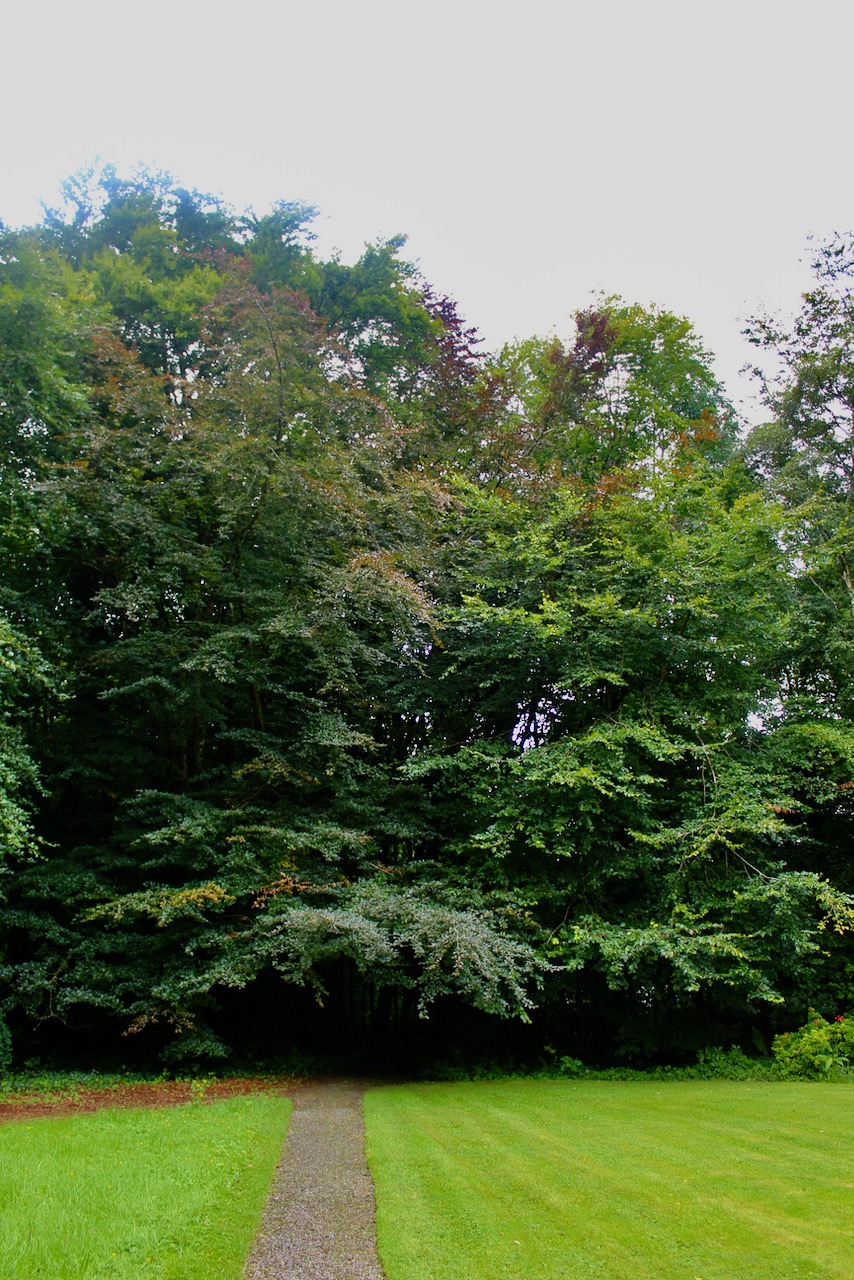
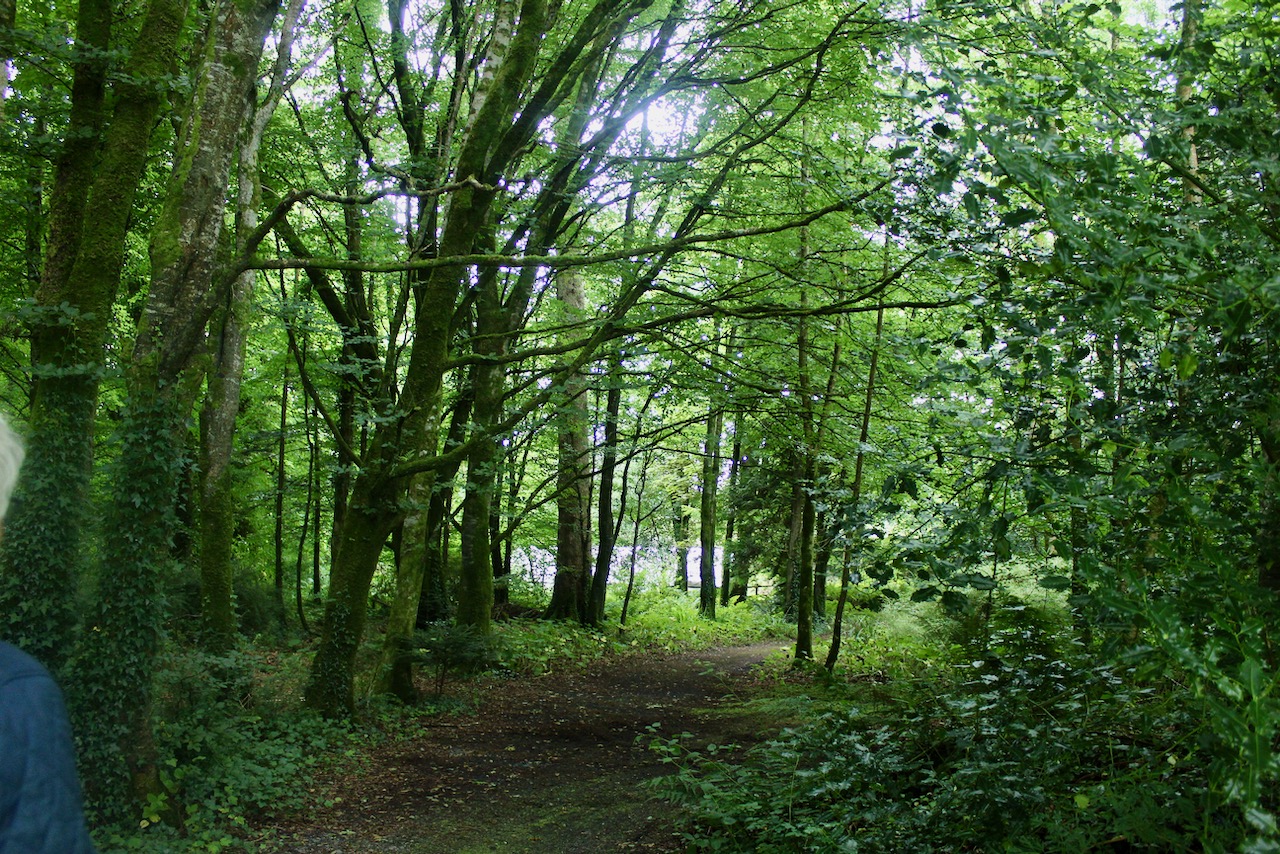
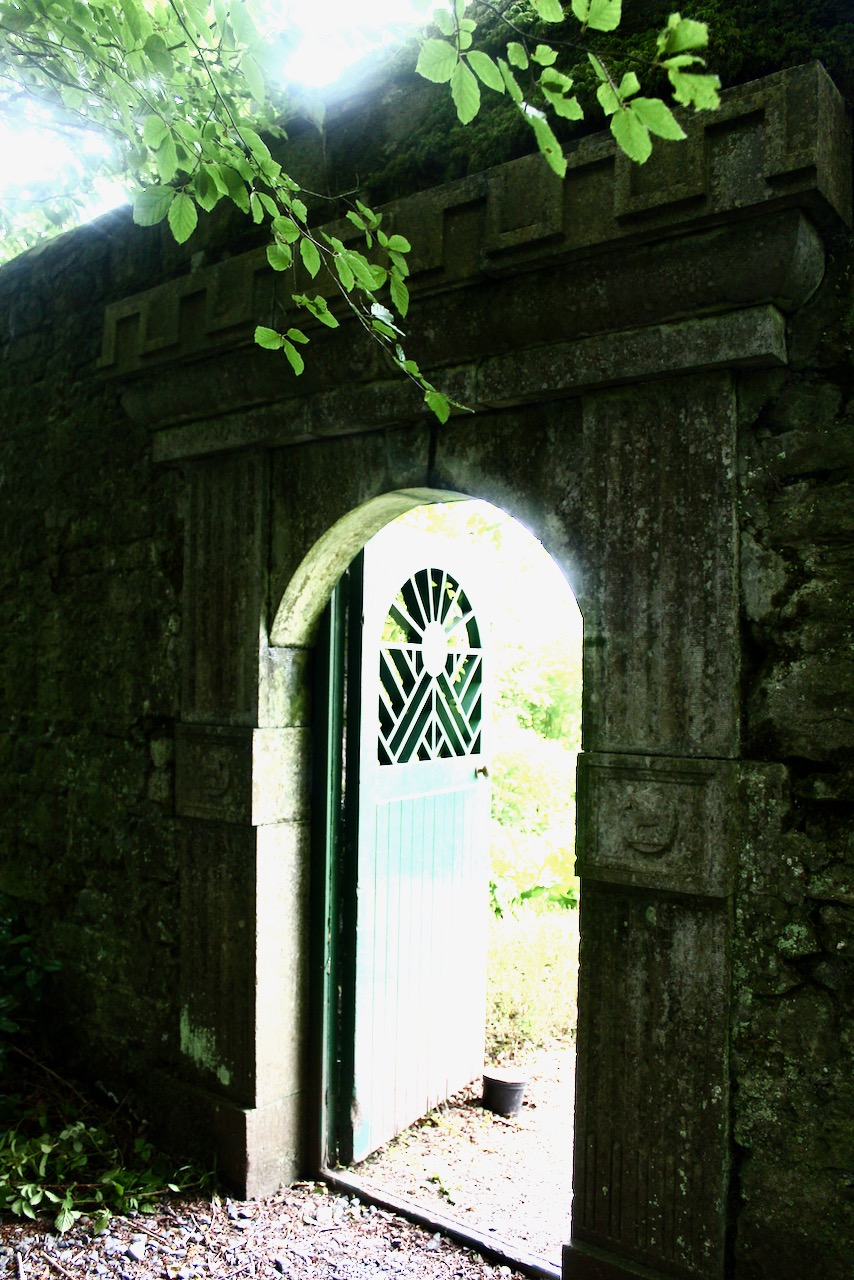
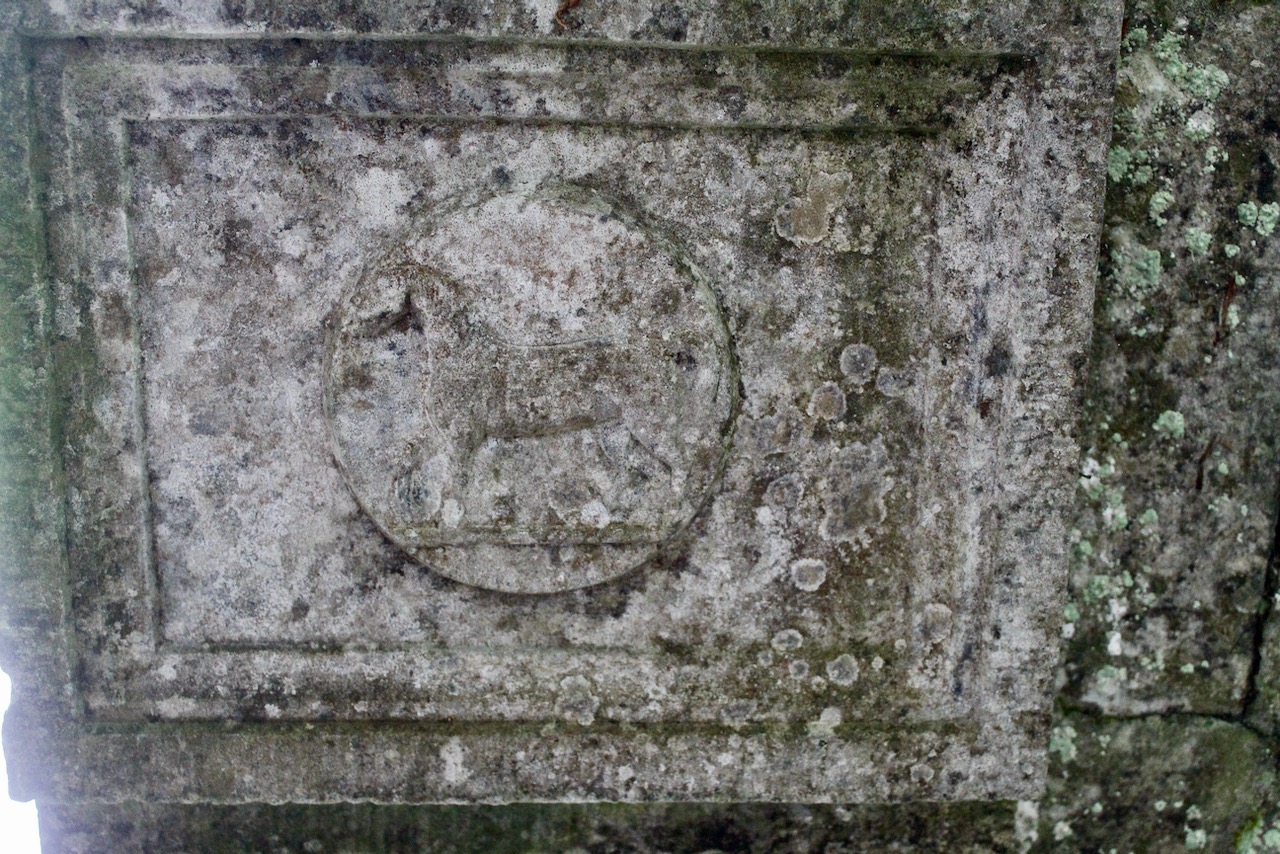

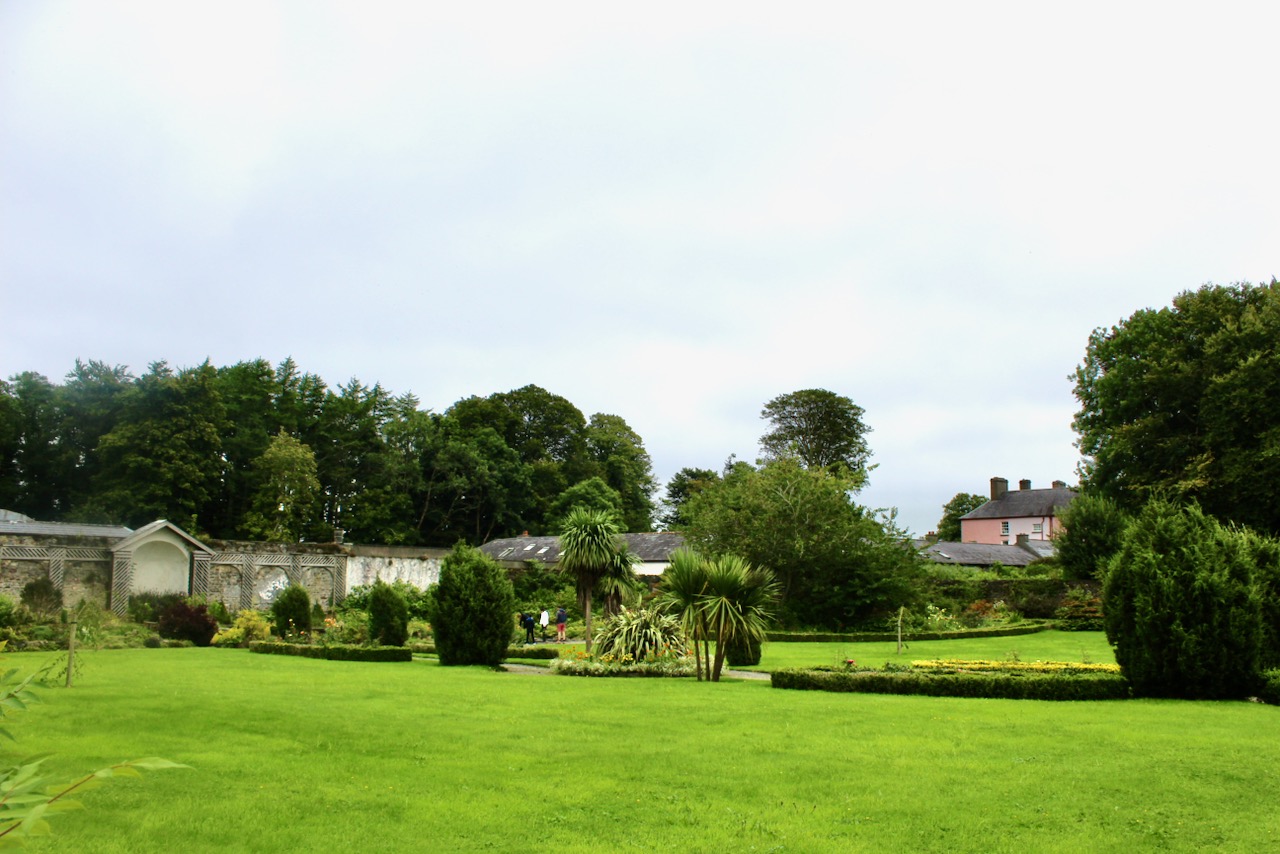
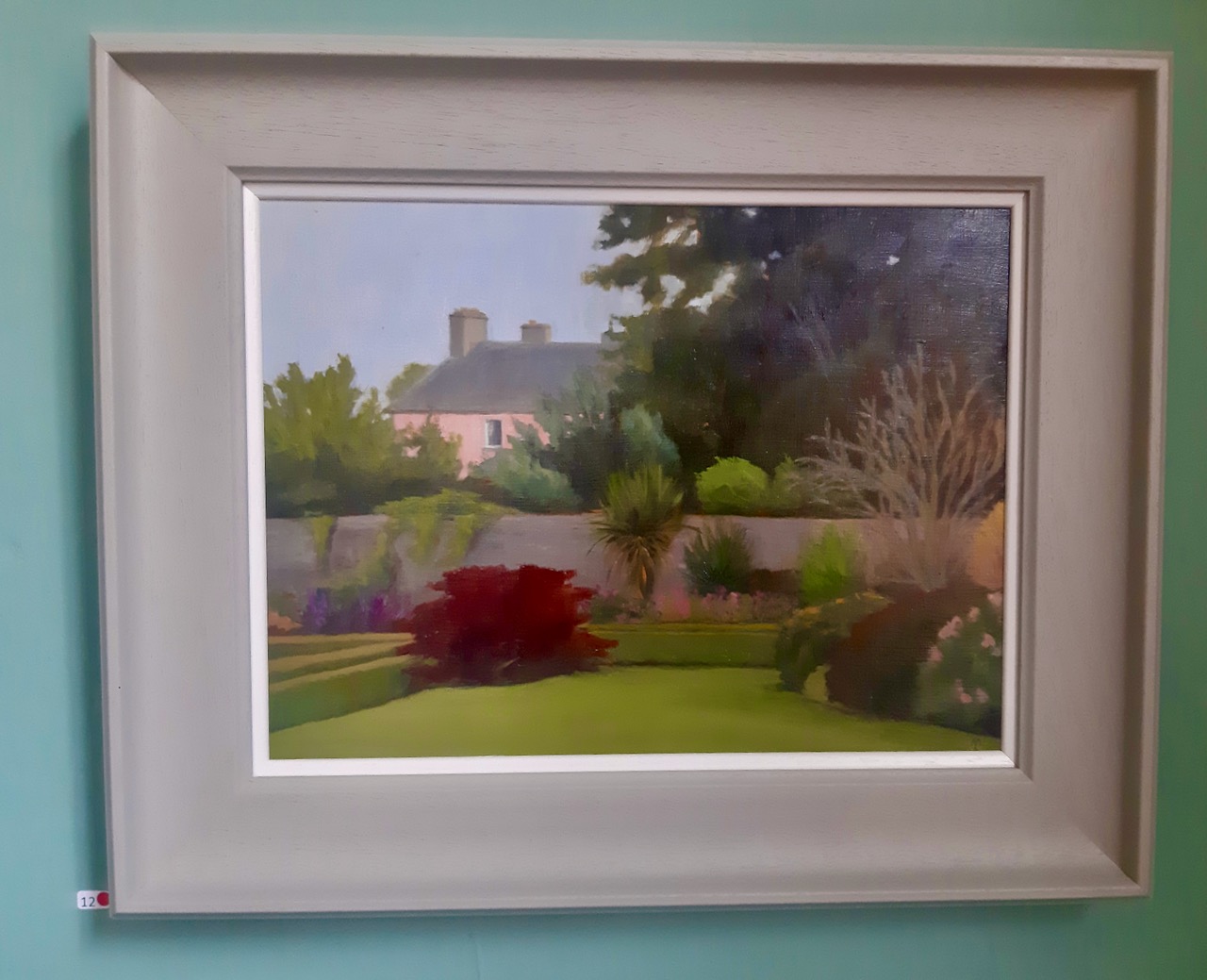
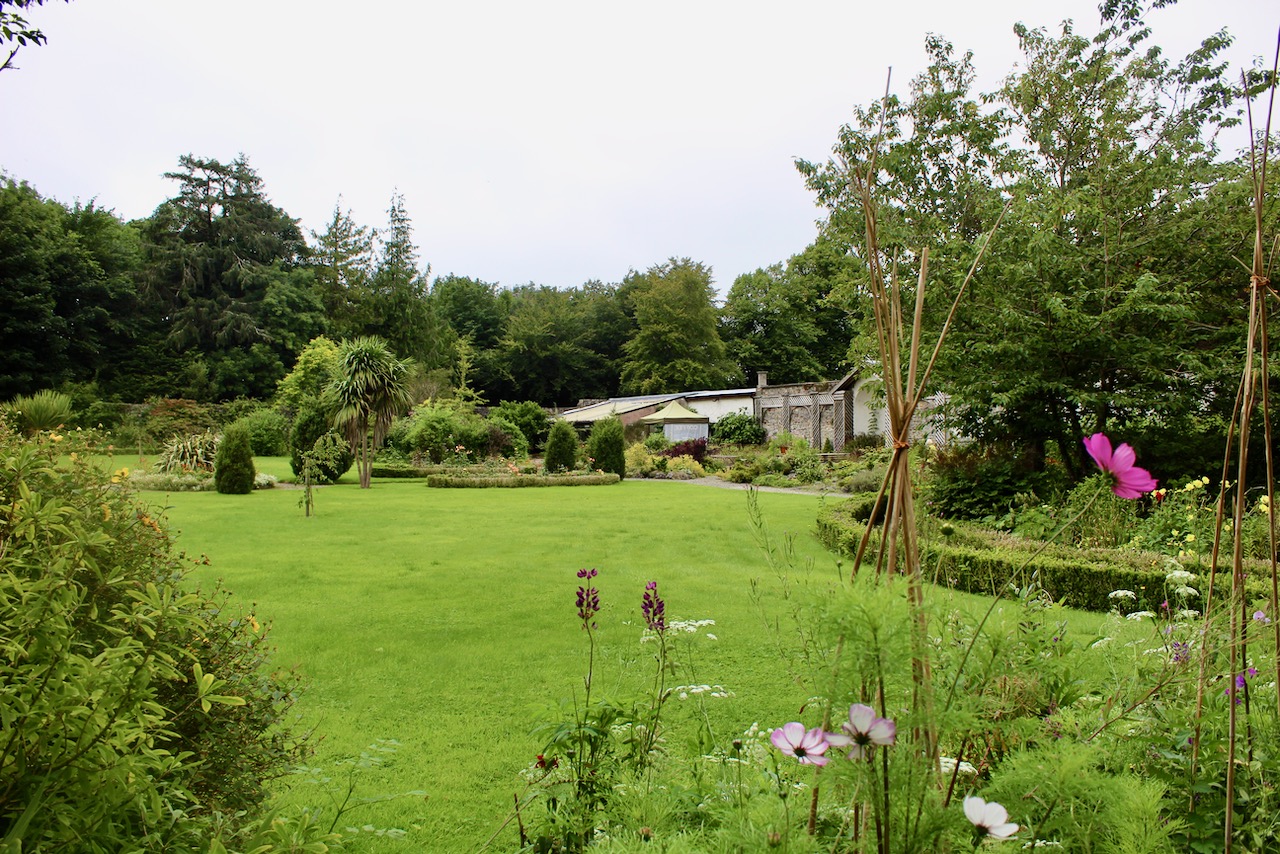
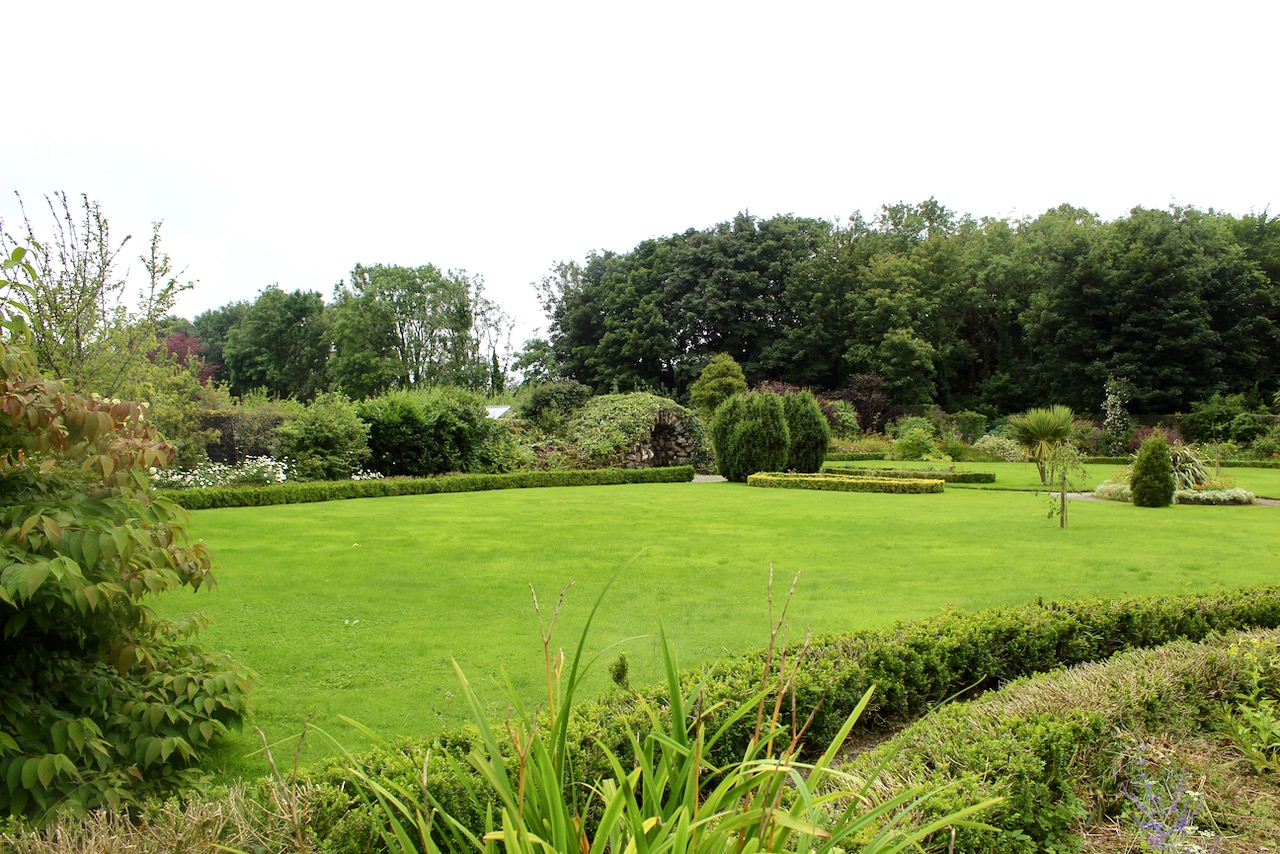
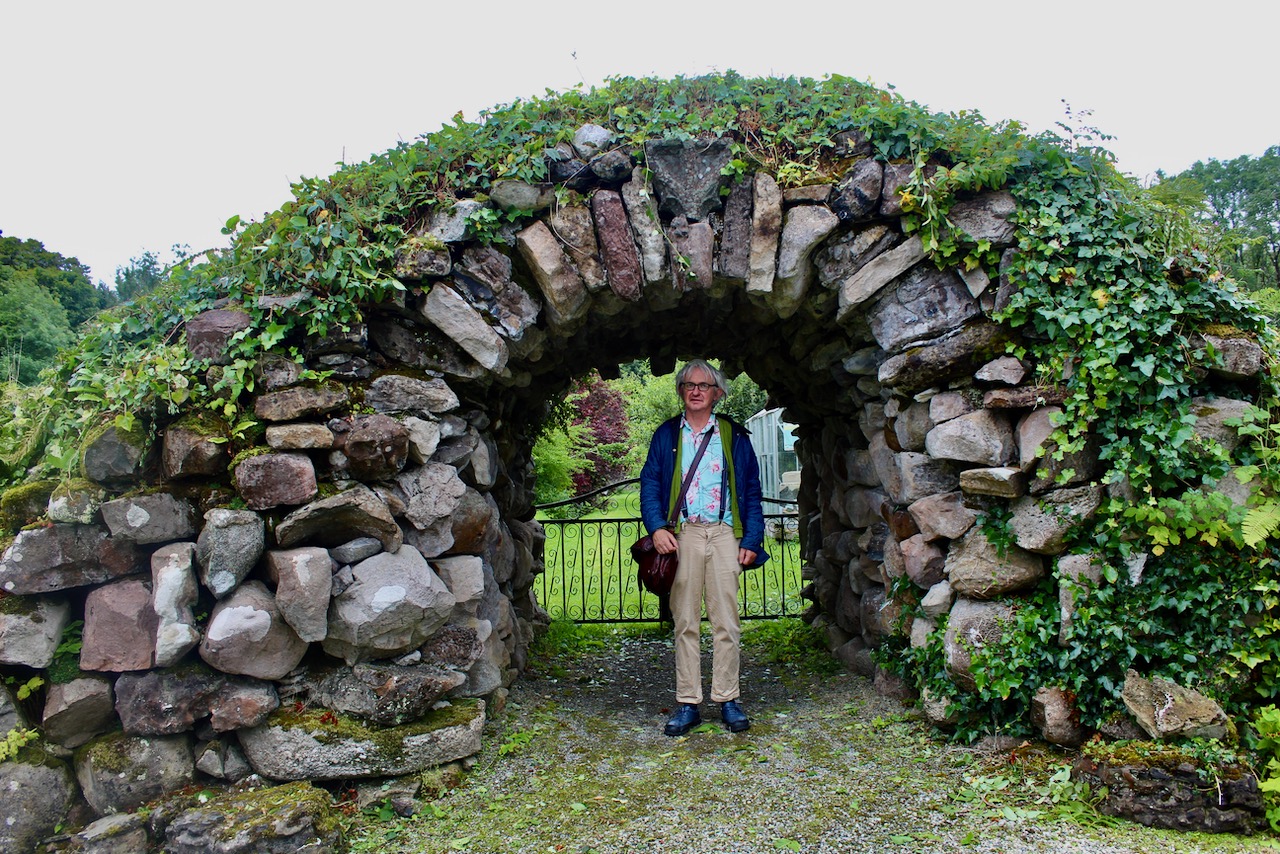
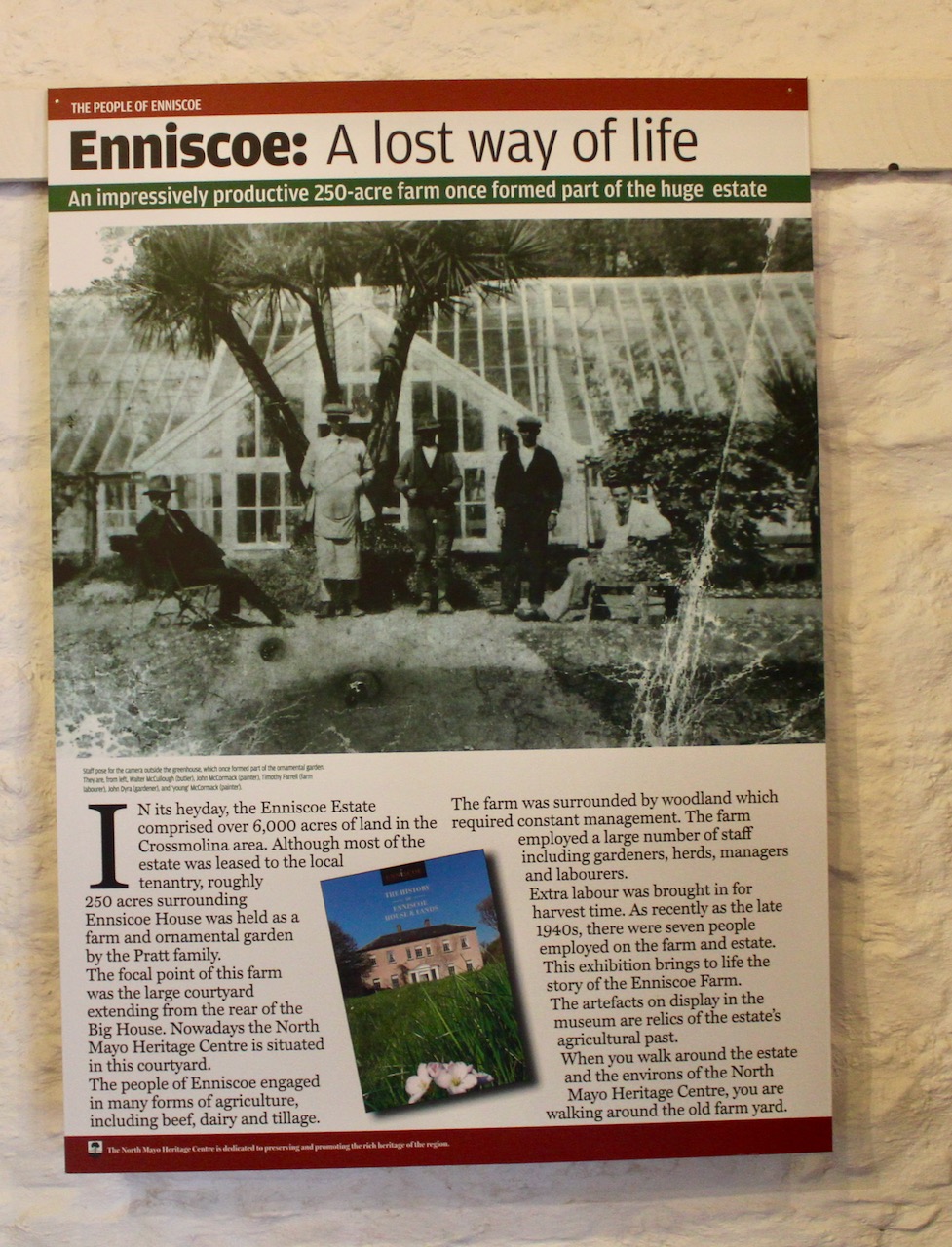
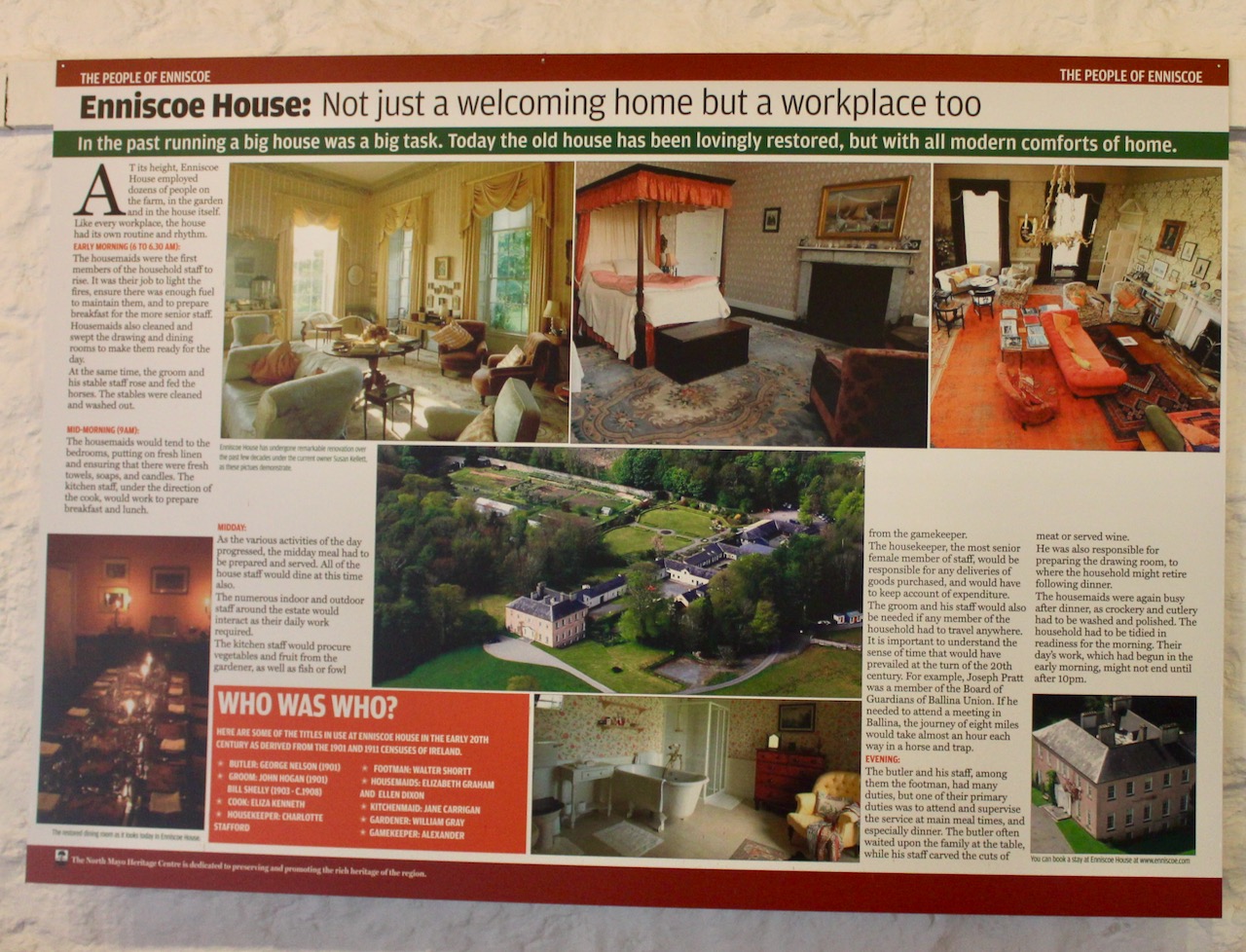
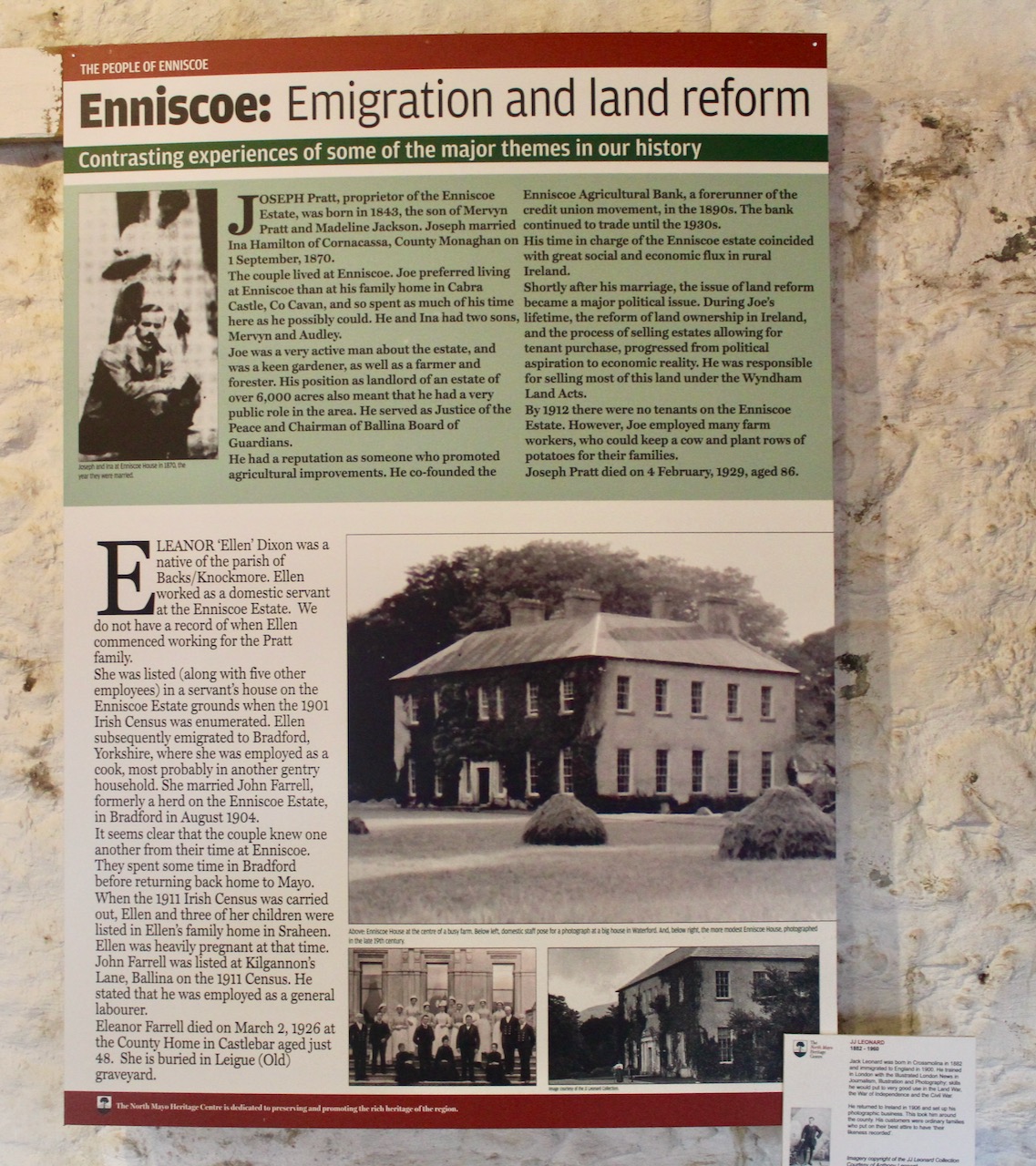


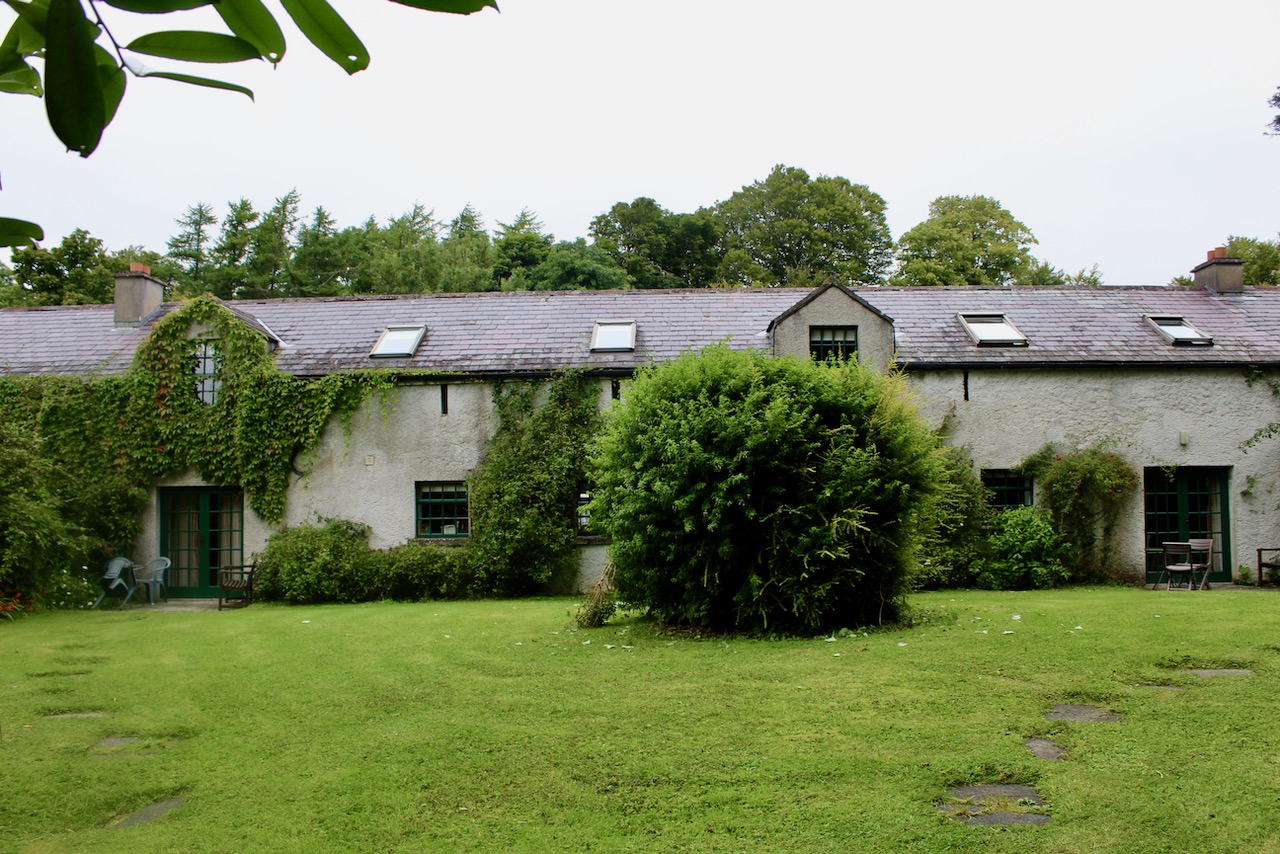

 Irish Historic Houses