We haven’t been back to Ormond Castle recently but we visited it in May 2018, and I am republishing this entry, previously posted under “Office of Public Works Properties in County Tipperary.” I’m still catching up with write-ups so don’t have anything new to publish today.
Carrick-On-Suir, Co Tipperary Courtesy Tipperary Tourism photo by Kerry Kissane All Around Ireland 2021. [1]
“Joined on to an earlier medieval riverside castle, Ormond Castle Carrick-on-Suir is the finest example of an Elizabethan manor house in Ireland. Thomas, 10th Earl of Ormond [“Black Tom” (1531-1614)], built it in 1565 in honour of his distant cousin Queen Elizabeth.
“The magnificent great hall, which stretches almost the whole length of the building is decorated with some of the finest stucco plasterwork in the country. The plasterwork features portraits of Queen Elizabeth and her brother Edward VI and many motifs and emblems associated with the Tudor monarchy.“
The castle has a low and wide-spreading addition to an older castle, which consisted of two massive towers set rather close together. The castle is joined to these towers by a return at each side, making an enclosed courtyard.
Ormond Castle, Carrick-on-Suir 1949, photograph from Dublin City Library and Archive. [2]
The facade is of two storeys with three gables and a central porch and oriel. It is only one room thick. It is virtually unfortified, having no basement, and windows only three feet from the ground, and a few shot-holes for defence by hand-guns, Craig points out. The windows on the ground floor may have been widened at some point.
Ormond Castle, Carrick-on-Suir 1949, photograph from Dublin City Library and Archive. [see 2]
Mark Bence-Jones writes:
“The house, which is horseshoe shaped, forming three sides of a small inner court, and the castle the fourth. The house is of 2 storeys with a gabled attic; the towers of the castle rise behind it. The gables are steep, and have finials; there are more finials on little piers of the corners of the building. There are full-sized mullioned windows on the ground floor as well as on the floor above, the lights having the slightly curved heads which were fashionable in late C16. There is a rectangular porch-oriel in the centre of the front, and an oriel of similar form at one end of the left-hand side elevation. The finest room in the house is a long gallery on the first floor, which had two elaborately carved stone chimneypieces – one of which was removed to Kilkenny Castle 1909, but has since been returned – and a ceiling and frieze of Elizabethan plasterwork. The decoration includes busts of Elizabeth I, who was a cousin of “Black Thomas,” Ormonde through her mother, Anne Boleyn, and used to call him her “Black Husband”: she is said to have promised to honour Carrick with a visit. The old castle served as part of the house and not merely as a defensive adjunct to it: containing, among other rooms, a chapel with carved stone angels.” [3]
Thomas Butler (1582-1614) the 10th Earl of Ormond is a fascinating character. He was the eldest son of James Butler, 9th Earl of Ormond, and his wife Joan Fitzgerald, daughter of the 10th Earl of Desmond. Because he was dark-haired, he was known to his contemporaries as “Black Tom”or “Tomas Dubh”. As a young boy, Thomas was fostered with Rory O’More, son of the lord of Laois (his mother was granddaughter of Piers Rua Butler, 8th Earl of Ormond) before being sent to London to be educated with the future Edward VI. He was the first member of the Butler family to be brought up in the protestant faith. In 1546, he inherited the Ormond earldom following the sudden death of his father. He fought against the Fitzgerald Earls of Desmond in the Desmond Rebellions, as he was loyal to the British monarchy. He was made Lord Treasurer of Ireland and a Knight of the Garter.
He was highly regarded by Queen Elizabeth to whom he was related through her mother Anne Boleyn. Anne Boleyn was the granddaughter of the 7th Earl of Ormond making Elizabeth and Thomas cousins. Thomas married three times but left no heir and was succeeded by his nephew Walter Butler 11th Earl of Ormond. He died in 1614 and was buried in St Canice’s cathedral, Kilkenny.
James Butler (1611–1688), 1st Duke of Ormonde, in Garter Robes, Peter Lely (1618-1680) (style of), 1171123 National Trust.
James Butler the 12th Earl of Ormond and 1st Duke of Ormond (1610-1688) spent much of his time here and was the last of the family to reside at the castle. On his death in 1688 the family abandoned the property and it was only handed over to the government in 1947, who then became responsible for its restoration.
[3] Mark Bence-Jones. A Guide to Irish Country Houses (originally published as Burke’s Guide to Country Houses volume 1 Ireland by Burke’s Peerage Ltd. 1978); Revised edition 1988 Constable and Company Ltd, London.
Kilkenny Castle, photograph by macmillan media 2016 for Tourism Ireland, Ireland’s Content Pool. It sits on the banks of the River Nore. [1]
General information: 056 770 4100, kilkennycastleinfo@opw.ie
From the OPW website:
“Built in the twelfth century, Kilkenny Castle was the principal seat of the Butlers, earls, marquesses and dukes of Ormond for almost 600 years. Under the powerful Butler family, Kilkenny grew into a thriving and vibrant city. Its lively atmosphere can still be felt today.
“The castle, set in extensive parkland, was remodelled in Victorian times. It was formally taken over by the Irish State in 1969 and since then has undergone ambitious restoration works. It now welcomes thousands of visitors a year.“
Kilkenny Castle, photograph by unknown 2014 for Failte Ireland, Ireland’s Content Pool. [see 1]
Kilkenny Castle has been standing for over eight hundred years, dominating Kilkenny City and the South East of Ireland. Originally built in the 13th century by William Marshall, 4th Earl of Pembroke, as a symbol of Norman control, Kilkenny Castle came to symbolise the fortunes of the powerful Butlers of Ormonde for over six hundred years. [2]
In 1967 James Arthur Norman Butler (1893-1971), 6th Marquess and 24th Earl of Ormonde sold the Castle to the Kilkenny Castle Restoration Committee for £50. Two years later it went into state ownership.
William Marshall (about 1146-1219) was married to the daughter of “Strongbow” Richard de Clare, 2nd Earl of Pembroke. With the marriage, he gained land and eventually, the title, Earl of Pembroke. The daughter of Strongbow, Isabel, inherited the title of 4th Countess of Pembroke “suo jure” i.e. herself (her brother, who died a minor, was the 3rd Earl). Hence William Marshall became the 4th Earl through his wife, but then then was created the 1st Earl of Pembroke himself ten years after their marriage. They seem to have settled in Ireland and created place for themselves, beginning with setting up the town of New Ross and then restoring Kilkenny town and castle – a castle had pre-dated them, according to the Kilkenny Castle website. It tells us that the present-day castle is based on the stone fortress that Marshall designed, comprising an irregular rectangular fortress with a drum-shaped tower at each corner. Three of these towers survive to this day.
Kilkenny Castle, photograph by Mark Wesley 2016 for Failte Ireland, Ireland’s Content Pool. [see 1]Kilkenny Castle, photograph by Finn Richards, 2015 for Failte Ireland, Ireland’s Content Pool. [see 1]
By 1200, Kilkenny was the capital of Norman Leinster and New Ross was its principal port. The Marshalls also founded the Cistercian abbeys at Tintern in County Wexford and Duiske in Graiguenamanagh, County Kilkenny, as well as the castles at Ferns and Enniscorthy. He died and was buried in England. [3]
In 1317, the de Clare family sold the Kilkenny castle to Hugh Despenser. The Despensers were absentee landlords. In 1391 the Despensers sold the castle to James Butler, 3rd Earl of Ormond, 9th Chief Butler of Ireland (1360–1405). The first Butler to come to Ireland was Theobald Walter Le Botiller or Butler, 1st Baron Butler, 1st Chief Butler of Ireland (1165–1206). He was called “Le Botiller” because he received the monopoly of the taxes on wines being imported into Ireland (which The Peerage website tells us was eventually purchased back by the Crown from the Marquess of Ormonde for £216,000 in 1811.)
The Butlers were an important family in Ireland. They fought for the king in France and Scotland, and held positions of power, including Lord Lieutenant of Ireland, the monarch’s representative in Ireland.
The castle now forms a “u” shape, because in the time of Oliver Cromwell’s invasion, the fourth wall fell.[4] After the Restoration of 1660, there was a major rebuilding of the old castle. In 1826, another remodelling of the castle began. In 1935, the Butler family held a great auction, selling all of the castle’s furnishings.
Kilkenny Castle, photograph by unknown 2014 for Failte Ireland, Ireland’s Content Pool. [see 1]
Thomas Butler the 7th Earl of Ormond (d. 1515) lacked a male heir, and on his death, the Earldom was contested between Sir Piers Butler and his grandchildren led by Sir Thomas Boleyn. Thomas was favoured by King Henry VIII when Henry married his daughter Anne Boleyn. Piers Butler (1467-1539) was a descendant of the 3rd Earl of Ormond. Piers relinquished the claim to the title Earl of Ormond to Boleyn and was created Earl of Ossory by Henry VIII. The lands of the 7th Earl were divided between both parties. After a rapid escalation of disputes with rural Fitzgeralds and Boleyns, Piers regained his position and was recognised Earl of Ormond in February 1538.
The Crown hoped Piers would improve the Crown’s grip over southern Ireland. Piers the 8th Earl of Ormond gained much from Crown, including suppressed monasteries. He married Margaret Fitzgerald, daughter of Gerald, 8th Earl of Kildare, in marriage arranged for the purpose of ending the long-standing rivalry between the two families. They lived in Kilkenny Castle and greatly improved it. Margaret urged Piers to bring over skilled weavers from Flanders and she helped establish industries for the production of carpets, tapestries and cloth. Margaret and her husband commissioned significant additions to the castles of Granagh and Ormond. They also rebuilt Gowran Castle, which had been originally constructed in 1385 by James Butler, 3rd Earl of Ormond.
Kilkenny Castle, photograph by Roselinde Bon 2016 for Failte Ireland, Ireland’s Content Pool. [see 1]James Butler (1504-1564), Soldier, 9th Earl of Ormond and Ossory by Francesco Bartolozzi, published by John Chamberlaine, after Hans Holbein the Younger publ. 1797, courtesy of National Portrait Gallery NPG D39383.
The 10th Earl of Ormond, “Black Tom,” had no direct heir so the Earldom passed to his nephew, Walter, a son of Sir John Butler of Kilcash. Unlike his uncle, who had been raised at Court and thus reared a Protestant, Walter the 11th Earl of Ormond was a Catholic. See my entry about the Ormond Castle at Carrick-on-Suir for more on “Black Tom.” https://irishhistorichouses.com/2022/06/26/opw-sites-in-munster-clare-limerick-and-tipperary/
Thomas Butler 10th Earl of Ormond by Steven Van der Meulen. He is holding a wheelcock pistol with his coat of arms in the upper left corner.
Walter Butler’s claim to the family estates was blocked by James I. The latter orchestrated the marriage of Black Tom’s daughter and heiress Elizabeth to a Scottish favourite Richard Preston, Baron Dingwall. The King gave Preston the title Earl of Desmond (after the Fitzgeralds lost the title, due to their Desmond Rebellion, and awarded his wife most of the Ormond estate, thus depriving Walter of his inheritance. Walter refused to submit and was imprisoned for eight years in the Fleet, London. He was released 1625. Walter’s nine-year-old grandson, James, became the heir to the titles but not the estates.
James Butler (1610-88) 12th Earl of Ormond (later 1st Duke of Ormond) was the eldest son of Thomas Butler, Viscount Thurles, and his wife Elizabeth Poyntz. Following his father’s death in 1619, 9-year-old James became direct heir to the Ormond titles. He was made a royal ward and was educated at Lambeth Palace under the tutelage of George Abbot, Archbishop of Canterbury.
In order to reunite the Ormond title with the estates, plans were made for a marriage between James and the daughter of the Prestons, Elizabeth, to resolve the inheritance issue. In 1629 James married his cousin Elizabeth Preston and reunited the Ormond estates.
James Butler 1st Duke of Ormond painted by John Michael Wright (1617-1694), and in centre, Elizabeth Poyntz (1588-1673), mother of the 1st Duke of Ormond, painted by John Michael Wright, and Elizabeth Preston (1615-1684), wife of the 1st Duke of Ormond, with her son Thomas, who became the 6th Earl of Ossory.James Butler (1610-1688) 1st Duke of Ormonde by Willem Wissing circa 1680-1685, courtesy of National Portrait Gallery NPG 5559.James Butler, 1st Duke of Ormonde (1610–1688) after John Michael Wright courtesy of National Trust images.Elizabeth Preston, (1616-1684) Baroness Dingwall, Countess of Ormond, later Duchess of Ormond, with her son Thomas, Lord Ossory (1634-1680), attributed to David des Granges (1611-1671/72), courtesy Office of Public Works.
James succeeded to the Ormond titles in 1633 on the death of his grandfather, Walter Butler, 11th Earl of Ormond.
The website tells us: “A staunch royalist, Ormond was appointed commander-in-chief of the army in Ireland in 1641. He served his first term of three as Lord Lieutenant of Ireland from 1648 to 1650. Following the defeat of the royalists in Ireland, Ormond went to exile and spent most of the years 1649 to 1660 abroad, moving about Europe with the exiled court of Charles II. After the restoration of the monarchy in England, Ormond was rewarded with a dukedom and several high offices by a grateful king. Though he enjoyed the king’s favour, Ormond had enemies at court and as a result of the machinations of the Cabal, which included powerful figures such as the Earl of Shaftesbury, he was dismissed from his post as Lord Lieutenant in 1669. When he was raised to a dukedom in the English peerage in 1682, Ormond left Ireland to reside in England. During his last term as Lord Lieutenant (1677-85), he played a major role in the planning and founding of the Royal Hospital for old soldiers at Kilmainham, near Dublin. The last decade of his life was marked by tragedy: all three of his sons and his wife died during that time. He died at his residence at Kingston Lacy in Dorset was buried in Westminster Abbey.“
Note that the “Cabal” was the term used to refer to the clique around the king. The term comes from an acronym of their names, Sir Thomas Clifford 1st Baron Clifford, Henry Benet 1st Earl of Arlington, George Villiers 2nd Duke of Buckingham, Anthony Ashley Cooper, Lord Ashley 1st Earl of Shaftesbury and John Maitland, 1st Duke and 2nd Earl of Lauderdale.
James Butler 1st Duke of Ormond, Viceroy 1703-1707 and 1710-1713.Artist: Sir Peter Lely (1618-1680). He iswearing robes of the Order of the Garter and holds the wand of office of Lord Steward of the Household in his right hand.
The 1st Duke of Ormond carried out improvements to the castle. Mark Bence-Jones describes:
“The Great Duke transformed the castle from a medieval fortress into a pleasant country house, rather like the chateau or schloss of contemporary European princeling; with high-pitched roofs and cupolas surmounted by vanes and gilded ducal coronets on the old round towers. Outworks gave place to gardens with terraces, a “waterhouse” a fountain probably carved by William de Keyser, and statues copied from those in Charles II’s Privy Gardens. The Duchess seems to have been the prime mover in the work, in which William (afterwards Sir William) Robinson, Surveyor-General and architect of the Royal Hospital, Kilmainham, was probably involved, supervising the construction of the Presence Chamber 1679. Robinson is also believed to have designed the magnificent entrance gateway of Portland and Caen stone with a pediment, Corinthian pilasters and swags which the second Duke erected on the street front of the castle ca 1709. Not much else was done to the castle in C18, for the Ormondes suffered a period of eclipse following the attainder and exile of the 2nd Duke, who became a Jacobite after the accession of George I.” [5]
Kilkenny Castle, photograph by unknown 2014 for Failte Ireland, Ireland’s Content Pool. [see 1] The National Inventory describes: Random rubble stone walls with sections of limestone ashlar construction (including to breakfront having full-height Corinthian pilasters flanking round-headed recessed niches with sills, moulded surrounds having keystones, decorative frieze having swags, moulded course, modillion cornice, and blocking course with moulded surround to pediment having modillions), and limestone ashlar dressings including battlemented parapets (some having inscribed details) on corbel tables. The classical frontispiece was designed for James Butler, Second Duke of Ormonde possibly to designs prepared by Sir William Robinson.
Photograph courtesy of Kilkenny Castle website, Entrance Hall.
The website tells us that there has been an entrance hall here at least since the 17th century rebuilding of the castle. The north doorway through the massive curtain wall was remodelled on two occasions in the 19th century. The black and white stone floor is laid with Kilkenny Black Marble and local sandstone, laid in the 19th century.
Photograph courtesy of Kilkenny Castle website, The Grand Staircase.
This 19th century mahogany staircase was designed and made by the local firm of Furniss & Son, Kilkenny and leads to the Tapestry Room and first floor. The use of mahogany in domestic furniture, which is so synonymous with the Grand House, is virtually unknown before the 18th century. Most of the wood imported came from the Jamaican Plantations which were cleared in order to plant sugar cane and cotton. During the 19th century this staircase was hung with several beautiful tapestries from the Decius Mus suite, some of which are now housed in the Tapestry Room.
The Tapestry Room in the North Tower shows how the medieval castle was transformed in the 17th century to become a magnificent baroque ducal palace. This room was called the Great Chamber in the 17th century and the walls were decorated with embossed and gilded leather hangings on the walls; a fragment of a late 17th/ early 18th century leather has been hung beside the door to give an impression of how rich the room must have been. In the 18th century, they were replaced by a set of tapestries.
Tapestry Room, in the North Tower.There are two tapestries from the “Decius” suite in the Tapestry room: The obsequies of Decius Mus. The Story of ‘Decius Mus’ is a heroic tale of a Roman Consul who foretold his own death at the Battle of Veseris (Vesuvius) in the Latin War (340BC). The tapestries are attributed to the workshop of Jan Raes, after designs by Sir Peter Paul Rubens. The ‘Decius’ suite had been in the ownership of the Ormonde family for over 300 years and was displayed in several of their residences before being acquired by OPW for display in Kilkenny Castle. Tapestries were an important feature of the interior decoration of large houses in Europe during the 16th and 17th centuries and helped provide interior interest, warmth, and colour.You can read more about these tapestries on the Kilkenny Castle website.Tapestry Room, in the North Tower: Desius Mus and Manlius Torquatus leave to fight the Latins.The 12 foot thick walls of the Tapestry Room in the North Tower.
The ground floor also contains the State Dining Room. The website tells us that this was the formal dining room in the 1860’s. Historic evidence shows that this room was hung in the late 19th century with a red flock paper when it was a billiard room. The strong blue on the walls echoes the colour in the original 19th century-stained glass windows and provides a backdrop for the Langrishe family portraits, which originated in Knocktopher Abbey, Kilkenny, and are now in the care of the State. Most large estate houses would have had both a formal and informal Dining Room. The collection of silverware contains some pieces from the original 18th century collection, purchased by Walter Butler, the 18th Earl after his marriage to the wealthy heiress Anna Maria Price Clarke.
Walter Butler (1770-1820) became the 18th Earl and 1st Marquess of Ormonde. Walter Butler, 1st Marquis of Ormond (1770-1820) in the manner of William Beechy.Photograph courtesy of Kilkenny Castle website, The State Dining Room.
From the website: “Today the first floor space is occupied by three rooms: Anteroom, Library and Drawing Room, as it was in the 19th century. The processional lay out of the rooms, each opening into the next is characteristic of the Baroque style of the 17th century and was know as an ‘enfilade’ suite of rooms. Baroque protocol dictated that visitors of lower rank than their host would be escorted by servants down the enfilade to the nearest room that their status allowed. In the 16th and 17th century the State Rooms were situated on this floor. 17th century history records that it was in these state apartments that James Butler 1st Duke of Ormonde received the Papal Nuncio Giovanni Battista Rinuccini during the Irish Confederate Wars of that century. An Anteroom was a small room used as a waiting room, that leads into a larger and more important room. The Anteroom and the room below, today the Serving Room, were constructed in the area where an earlier stone staircase was situated.” The anteroom features a reproduction poplin wallpaper and bronze figurines in niches.
The Ante Room.
The anteroom leads to the library. “The interior decoration is a faithful recreation of the furnishing style of the mid to late 19th century. Thanks to a salvaged fabric remnant found behind a skirting board, it was possible to commission the French silk poplin on the walls in its original pattern and colour from the firm of Prelle in Lyons in France. The claret silk damask curtains are also based on the originals were made in Ireland. One of the nine massive curtain pelmets is original and an Irish firm of Master Gilders faithfully reproduced matching gilt reproductions. The bookcases were also reproduced based on one original bookcase acquired by the OPW in the 1980s, this original with its 19th century glass stands in the right end corner of the library. The matching pair of pier mirrors over the mantelpieces was conserved and re gilded.”
The Library. Photograph courtesy of Kilkenny Castle website.
The Drawing Room is typically the room in a house where guests and visitors are entertained. Drawing rooms were previously known as ‘withdrawing rooms’ or ‘withdrawing chambers’ which originated in sixteenth century.
The fabrics in this room are vintage glazed and block printed English and French chintzes and have been chosen to recreate the style of the rooms as they appeared in the 19th century family photographs. The Drawing Room picture hang reflects the Edward Ledwich description in his 1789 “Antiquities of Ireland!” when this room was the Presence Chamber or Alcove.
The Drawing Room, courtesy of Kilkenny Castle website.
The 1st Duke of Ormond had three sons: Thomas (1634-1680), 6th Earl of Ossory; Richard (1639-1686), 1st and last Earl of Arran; and John (1634-1677), 1st and last Earl of Gowran. He had two daughters, Elizabeth (1640-1665) and Mary (1646-1710). Mary married William Cavendish, 1st Duke of Devonshire and Elizabeth, the 2nd Earl of Chesterfield.
Thomas Butler (1634-1680) 6th Earl of Ossory, studio of Sir Peter Lely, circa 1678, courtesy of National Portrait Gallery NPG 371.Second son of the Duke and Duchess of Ormond and father of 2nd Duke of Ormonde. Richard Butler (1639-1685) 1st Earl of Arran, son of the Duke of Ormonde, by Godfrey Kneller, courtesy of National Trust Hardwick Hall.Elizabeth Stanhope née Butler Countess of Chesterfield By Peter Lely –http://www.thepeerage.com/p951.htm#i9503, Public Domain, https://commons.wikimedia.orgShe was a daughter of the 1st Earl of Ormond.Mary Butler (1646-1710) Duchess of Devonshire in the style of Willem Wissing courtesy of National Trust Hardwick Hall. She was the daughter of James, 1st Duke of Ormond. She married William Cavendish, 1st Duke of Devonshire.
Thomas Butler (1634-1682) 6th Earl of Ossory was the father of the 2nd Duke of Ormond. Thomas was a soldier and Naval Commander, known as ‘Gallant Ossory’. Born at Kilkenny Castle in 1634, his childhood was spent at Kilkenny until he went with his father and brother Richard to England in 1647. They then went to France, where he was educated at Caen and Paris at Monsieur de Camps’ Academy. In Holland he married Amelia of Nassau, daughter of Lodewyk van Nassau, Heer van Beverweerd, a natural son of Prince Maurice of Nassau. He was a witness when James, Duke of York (later King James II) secretly married Anne Hyde in 1660.
James Butler (1665-1745) 2nd Duke of Ormond, studio of Michael Dahl, oil on canvas, circa 1713 courtesy of National Portrait Gallery NPG 78.
Thomas enjoyed the favour and support of both King Charles II and his queen. Because of his wife’s Dutch connections he was frequently sent on royal missions to Holland. In 1670 he conducted William of Orange to England. John Evelyn, the diarist, was a close friend and referred to him as ‘a good natured, generous and perfectly obliging friend’. He died suddenly in 1680, possibly from food poisoning, at Arlington House in London. He was buried in Westminster Abbey
Top left: James Butler 2nd Duke of Ormonde (1665-1745), Lord Lieutenant of Ireland, son of Thomas Butler, Earl of Ossory. First married Anne Hyde and then Mary Somerset; below him, Mary Somerset (1665-1733), daughter of the Duke of Beaufort. In middle, Thomas Butler (1634-1680), 6th Earl of Ossory, second son of the Duke and Duchess of Ormond and father of 2nd Duke of Ormonde. Mary Somerset’s father top right, Henry Somerset (1629-1700), 1st Duke of Beaufort; below Anne Hyde (1669-1685), the 2nd Duke’s first wife, daughter of Lawrence Hyde, 1st Earl of Rochester, artist: William Wissing (1656-87).Mary Butler née Somerset (1665-1733) Duchess of Ormonde and her son Thomas Earl of Ossory by John Smith, after Sir Godfrey Kneller, Bt., courtesy of National Portrait Gallery, NPG D31316.Lady Mary Somerset, Duchess of Ormonde (1665-1733) by Michael Dahl, 1690s. Three-quarter-length portrait, of a young woman, seated, full front, her head three-quarters left. She is wearing a deep brown-gold dress, blue lined and is holding a rose in her right hand. A bottle green curtain is to the right and an arcade in the left background.Courtesy of National Trust Petworth.Henry Somerset (1629-1700) 1st Duke of Beaufort by Robert White, after Sir Godfrey Kneller, Bt, NPG D28194.
James Butler (1665-1745) 2nd Duke of Ormonde [the final ‘e’ was added to the name around this time] was the eldest surviving son of Thomas Butler 6th Earl of Ossory. Following his father’s death in 1680, James became the heir to his grandfather, James Butler, 1st Duke of Ormond, whom he succeeded in 1688.
Following his involvement in a Jacobite rising, a Bill of Attainder was passed against the 2nd Duke of Ormonde. His English and Scottish honours and his English estates were seized. Ormonde fled to France. He lived out his life in exile, and died at Avignon in France. Despite this, he was buried in 1746 in Westminster Abbey.
James the 2nd Duke had no son, so the title passed to his brother Charles Butler (1671-1758). He was enabled by an Act of Parliament in 1721 to recover his brother’s forfeited estates, but the dukedom ended with him. He was, however, also the 14th Earl of Ormonde and this title continued. He had no children, however, so the title passed to a cousin.
Charles Butler, 1st Earl of Arran (1671-1758) by James Thornhill. He was the brother of the 2nd Duke of Ormond – http://www.odl.ox.ac.uk/oxfordportraitsChristopher Butler (d. 1758?), Catholic archbishop of Cashel and Emly, son of Walter Butler of Garryricken and brother of Colonel Thomas Butler of Kilcash, portrait by James Latham (1696-1747); Charles Butler (1671-1758) 2nd Earl of Arran, youngest son of Thomas Butler Earl of Ossory and brother of the 2nd Duke of Ormonde; Colonel Thomas Butler of Kilcash (d. 1738) by James Latham. He was the son of Walter Butler and Garryricken and Mary Plunket. He inherited Kilcash from his grandfather Richard, youngest brother of the Duke of Ormond. His wife was Margaret Burke. Portrait attributed to Hans Hysing (1678-1753).Christopher Butler (d. 1758?) Catholic Archbishop of Cashel and Emly, by James Latham.Christopher Butler was Catholic archbishop of Cashel and Emly, son of Walter Butler of Garryricken and brother of Colonel Thomas Butler of Kilcash.Colonel Thomas Butler of Kilcash (c. 1738) by James Latham, father of John Butler (d. 1766) of Kilcash and Garryricken who became 15th Earl of Ormonde.
Richard Butler (d. 1701) of Kilcash, County Tipperary was a younger brother of James the 1st Duke of Ormond. There is a castle ruin still in Kilcash, under the protection of the Office of Public Works but not open to the public. His son was Walter Butler of Garryricken (1633-1700). Pictured above are this Walter’s sons Christopher (the Catholic Archbishop) and Thomas (d. 1738).
Walter’s son Thomas (d. 1738) inherited Kilcash from his grandfather Richard Butler (d. 1701) of Kilcash. A Colonel of a Regiment of Foot in the army of King James II, Walter married Margaret Bourke, daughter of William, 7th Earl of Clanricarde, and widow of 5th Viscount Iveagh. It was their son John (d. 1766) who succeeded to the Ormonde titles as 15th Earl of Ormonde in 1758.
The 15th Earl had no children so the title then passed to a cousin, Walter Butler (1703-1783), another of the Garryricken branch, who also became the 9th Earl of Ossory. He took up residence at Kilkenny Castle. Walter, a Catholic, was unable to exercise a political role. He undertook the restoration of the Castle, decorating some of the rooms with simple late eighteenth century plasterwork, and also built the stable block across the road from the Castle, today the Design Centre and National Craft Centre (also a Section 482 property). He also built the Dower House, now a hotel called Butler House.
He married Eleanor Morres (1711-1793), the daughter of Nicholas Morres of Seapark Court, Co. Dublin, and of Lateragh, Co. Tipperary. After Walter’s death in 1783, she moved into the Dower House.
Their son John (1740-1795) became known as “Jack of the Castle” and was the 17th Earl. Jack’s sister Susannah married Thomas Kavanagh of Borris House in County Carlow (see my entry about Borris House). Jack married Anne Wandesford, pictured below.
John Wandesford (1725-1784), Earl of Wandesford, father of Anne; below, Susan Frances Elizabeth (Anne) Wandesford (1754-1830), Countess of Ormonde, wife of 17th Earl of Ormonde and mother of 18th Earl, Artist: Hugh Douglas Hamilton (1739-1808); Landscape with Waterfall from the Italian school of 18th century and below, Before the Hunt. To right, Gilbert Clarke (d. 1725), by Sir Godffrey Kneller (1646-1723) and below, possibly Susanna nee Boun, wife of Gilbert Clarke.Susan Frances Elizabeth Wandesford (1754-1830) Duchess of Ormonde. She was the daughter of John Wandesford 1st and last Earl Wandesford and 5th Viscount Castlecomer, and wife of John Butler 17th Earl of Ormonde. Painting by Hugh Douglas Hamilton.
Jack and Anne’s son Walter (1770-1820) became the 18th Earl and 1st Marquess of Ormonde. He married Anna Clarke.
The Chinese Withdrawing Room.On the walls are remnants of hand painted Chinese wallpaper original to the room with monochrome infill carried out by the studio of David Skinner. This delicate paper was probably ordered as part of the redecorations done to the castle by the 18th Earl, Walter Butler. During the 19th century ladies withdrew here from the dining room leaving the men to enjoy their port and cigars after dinner, as was the social convention.The Chinese Withdrawing Room.A tulipiére is an ornate vessel in which to grow tulips. They are typically constructed to accommodate one bulb per spout with a larger common water reservoir base. It is usually made of hand crafted pottery, classically delftware. This tulipiére was hand-made in Delft in 2009 as a one off.
The 18th Earl had no sons so his brother James Wandesford Butler (1774-1838) inherited the title of 19th Earl. He became one of the largest landowners in Ireland with an estate worth more than £20,000 a year. He was recreated 1st Marquess of Ormonde in 1825 and officiated as Chief Butler of Ireland at the Coronation of George IV. He married Grace Louisa Staples in 1807, they had ten children.
James Wandesford Butler (1777-1838) 1st Marquess of Ormonde, by John Saunders.Marquess James Butler, Ormonde (1774 – 1838 ), 1830, After John Comerford (around 1762 Kilkenny – 1832 Dublin).Grace Louisa Staples (1779-1860), wife of James Wandesford Butler (1777-1838) 1st Marquess of Ormonde. She was the daughter of John Staples of Lissan, County Tyrone.
James Wandesford Butler the 19th Earl and 1st Marquess undertook more renovations. Mark Bence-Jones describes:
“Ca. 1826, the Kilkenny architect, William Robertson, when walking in the castle courtyard with the Lady Ormonde of the day, noticed that a main wall was out of true and consequently unsafe. One suspects it may have been wishful thinking on his part, for it landed him the commission to rebuild the castle, which he did so thoroughly that virtually nothing remains from before his time except for the three old towers, the outer walls and – fortunately – the 2nd Duke’s gateway. Apart from the latter, the exterior of the castle became uncompromisingly C19 feudal; all the 1st Duke’s charming features being swept away. Robertson also replaced one of two missing sides of the courtyard with a new wing containing an immense picture gallery; the original gallery, on the top floor of the principal range, having been divided into bedrooms. Robertson left the interior of the castle extremely dull, with plain or monotonously ribbed ceilings and unvarying Louis Quinze style chimneypieces.”
William Robertson also designed a Section 482 property which I have yet to visit, Lismacue in County Tipperary.
The 1st Marquess died in Dublin in 1838 and was succeeded by his eldest son John Butler (1808-1854), 2nd Marquess, 20th Earl of Ormonde, Earl of Ossory and Viscount Thurles, Baron Ormonde of Lanthony, Chief Butler of Ireland (see his portrait below).
John Butler (1808-1854), 2nd Marquess of the 3rd creation, 20th Earl of Ormonde, Earl of Ossory and Viscount Thurles, Baron Ormonde of Lanthony, Chief Butler of Ireland. He died while bathing; Frances Jane Paget in middle (1817-1903), with her son James, Earl of Ossory. She was the daughter of General E. Paget and niece of Field Marshal Henry William Paget, 1st Marquis of Anglesey, and wife of 2nd Marquess of Ormonde. Following the death of her husband, she managed the Ormonde estates and continued the rebuilding of Kilkenny Castle. On top of the three, over her father and uncle, is Frances Jane Paget again, with her dog. Below is her father General the Honourable Edward Paget (1775-1849), soldier and Governor of Ceylon. He was second in command under the Duke of Wellington in the Napoleonic Wards. He lost his right arm in Spain. Below him is Field Marshall Henry William Paget (1768-1854), 1st Marquis of Anglesey, Lord Lieutenant of Ireland, brother of Edward, above. John Butler (1808-1854) 2nd Marquess (3rd creation) and 20th Earl of Ormonde, by Henry Weigall Jr.Frances Jane Paget (1817-1903) Marchioness of Ormonde with her son James Earl of Ossory, by Richard Bruckner.
John the 2nd Marquess travelled extensively. His journals (now in National Library of Ireland) record his many journeys across Europe to Italy and Sicily. He published an account of his travels, Autumn in Sicily, and he also wrote an account of the life of St. Canice. He married Frances Jane Paget in 1843. He continued the work of rebuilding Kilkenny castle that was started by his father. His journals show him to have a deep interest in art, and there are careful descriptions of several of the great galleries in Italy to be found in his writing. Although he continued to write in his journals during the years 1847 to 1850, no mention of the Irish famine is made. He died while bathing in the sea near Loftus hall on Hook Head, Co. Wexford. A marble tomb was erected in his memory in St. Canice’s Cathedral, Kilkenny.
The son of the 2nd Marquess, James Edward William Theobald Butler became the 3rd Marquess in 1854.
James Edward William Theobald Butler (1844-1919) 3rd Marquess of Ormonde by Walter Stoneman 1917, courtesy of National Portrait Gallery NPG x43817.
It was during his time that changes were made to the rather plain picture gallery block created by William Robertson. Robertston’s Picture Gallery, in keeping with his work on the rest of the castle, was in a Castellated Baronial style. Initially the gallery was built with a flat roof that had begun to cause problems shortly after its completion. The distinguished architectural firm of Deane and Woodward was called in during the 1860s to make changes to the overall design of the Picture Gallery block, and other corrections to Robertson’s work. These changes included the insertions of four oriels in the west wall and the blocking up of the eight windows, while another oriel added to the east wall.
“The magnificent Picture Gallery is situated in the east wing of Kilkenny Castle.This stunning space dates from the 19th century and was built primarily to house the Butler Family’s fine collection of paintings.“
From the website: “… The entire ceiling was hand painted by John Hungerford Pollen (1820-1902), then Professor of Fine Arts at Newman College, Dublin, using a combination of motifs ranging from the quasi-medieval to the pre-Raphaelite, with interlace, gilded animal and bird heads on the cross beam.“
“The Marble Fireplace is made of Carrara marble and was designed by J. H. Pollen also in a quasi-medieval style. It was supplied by the firm of Ballyntyne of Dorset Street, Dublin. Foliage carving attributed to Charles Harrison covers the chimneypiece and a frieze beneath is decorated with seven panels, showing the family coat of arms and significant episodes from the family’s long history. Starting on the left, the first panel shows the buying the castle by the first Earl of Ormond in 1391 from the Despenser family – money changing hands is shown. The second panel depicts Theobald Fitzwalter acting as Chief Butler to the newly crowned King of England highlighting their ancient royal privilege and upon which their surname of Butler is based. On the third panel, you see King Richard the Second acting as godfather for one of the infants of the Butler family in 1391. The centrepiece is the family crest which can also be seen over the arch and gateway, with the family motto “comme je trouve”- “as I find”, as well as the heraldic shield guarded, the falcon, the griffin (a legendary creature with the body of a lion and the head and wings of an eagle) and the ducal coronet. In the fifth panel, the 1st Duke of Ormond can be seen entering the Irish House of Lords still bearing his sword. Indeed, he refused to hand his weapon over as were the protocols in case it was used inside during an argument; this became known as The Act of Defiance. The sixth panel next to this symbolizes the charity of the Butler family showing Lady Ormonde giving alms to the poor. Finally, the sixth and last panel portrays the First Duke of Ormond’s triumphant return to Dublin from exile on the Restoration of Charles the Second in 1662, when he also established the Royal Hospital in Kilmainham and founded the Phoenix Park.”
From the Poole photographic collection, National Library of Ireland.Royal visitors to the Picture Gallery of Kilkenny Castle: the Duke and Duchess of York (later King George V and Queen Mary with James Butler the 3rd Marquess of Ormond and his wife Elizabeth Grosvenor, also Two other Ormondes (likely the Marquess’ daughter & brother), Marshal & Lady Roberts (Frederick Roberts & Nora Bews), 4th Viscount & Viscountess De Vesci (John Vesey & Evelyn Charteris), Lady Eva Dugdale (later Lady of the Bedchamber), Earl of Ava (Hamilton-Temple-Blackwood d.1900), Sir Charles Leopold Cust (baronet), Sir Francis De Winton, Mr J. T Seigne JP (officer of Ormonde’s estate – we came across him when we visited Kilfane, as he lived in the house there), and “Mr Moncrieffe”
The 3rd Marquess’s brother James Arthur Wellington Foley Butler (1849-1943) became 4th Marquess (and 22nd Earl) of Ormonde in 1919. He was educated at Harrow and joined the army becoming a lieutenant in the 1st Life Guards. He was state steward to the Earl of Carnarvon when Lord Lieutenant of Ireland. In 1887 he married Ellen Stager, daughter of American General Anson Stager.
As I mentioned earlier, it was James Arthur Norman Butler (1893-1971), 6th Marquess and 24th Earl of Ormonde, youngest son of James Arthur, 4th Marquess of Ormonde, who in 1967 sold the Castle.
Mark Bence-Jones tells us that the interior was largely redecorated and wood-carvings in the manner of Grinling Gibbons were introduced into some of the family rooms in the South Tower after the castle suffered damage 1922 during the Civil War, when, having been occupied by one side, it was attacked and captured by the other; the Earl of Ossory (afterwards 9th Marquess) and his wife being in residence at the time. In 1935 the Ormondes ceased to live in the castle, which for the next thirty years stood empty and deteriorating. It is now a wonderful place to visit, and has fifty acres of rolling parkland, a terraced rose garden, playground, tearoom and man-made lake, for visitors to enjoy.
[5] p. 167. Bence-Jones, Mark. A Guide to Irish Country Houses (originally published as Burke’s Guide to Country Houses volume 1 Ireland by Burke’s Peerage Ltd. 1978); Revised edition 1988 Constable and Company Ltd, London.
General information: 052 744 1011, cahircastle@opw.ie
Stephen and I visited Cahir Castle in June 2022, and I was very impressed. I had no idea that we have such an old castle in Ireland with so much intact.
“Cahir Castle is one of Ireland’s largest and best-preserved castles. It stands proudly on a rocky island on the River Suir.
“The castle was was built in the thirteenth century and served as the stronghold of the powerful Butler family. [The Archiseek website tells us it was built in 1142 by Conor O’Brien, Prince of Thomond] So effective was its design that it was believed to be impregnable, but it finally fell to the earl of Essex in 1599 when heavy artillery was used against it for the first time. During the Irish Confederate Wars it was besieged twice more.
“At the time of building, Cahir Castle was at the cutting edge of defensive castle design and much of the original structure remains.“
Our tour guide took us through the castle as if we were invaders and showed us all of the protective methods used. We were free then to roam the castle ourselves.
The name derives from the Irish ‘an ChathairDhun Iascaigh’ meaning stone fort of the earthen fort of the fish.
The information leaflet tells us that the area was owned by the O’Briens of Thomond in 1169 at the time of the Anglo-Norman invasion. The area around Cahir was granted to Phillip of Worcester in 1192 by John, Lord of Ireland, who later became King John. His nephew William was his heir – I’m not sure of his surname! But then his great-granddaughter, Basilia, married Milo (or Meiler) de Bermingham (he died in 1263). They lived in Athenry and their son was the 1st Lord Athenry, Piers Bermingham (died 1307).
Edward III (1312-1377) granted the castle to the James Butler 3rd Earl of Ormond in 1357 and also awarded him the title of Baron of Cahir in recognition of his loyalty. The 3rd Earl of Ormond purchased Kilkenny Castle in c. 1392. Cahir Castle passed to his illegitimate son James Gallda Butler. James Gallda was loyal to his mother’s family, the Desmonds, who were rivals to his father’s family, the Butlers.
In their book The Tipperary Gentry, William Hayes and Art Kavanagh tell us that the rivalry between the Butlers of Ormond and the Fitzgeralds of Desmond turned to enmity when the War of the Roses broke out in England, with the Ormonds supporting the House of Lancaster and the Desmonds the House of York. The enmity found expression in the battle at Pilltown in 1462. The enmity continued for over a century, and the last private battle between the Ormonds and the Desmonds was the Battle of Affane, County Waterford, in 1565. [2]
A descendant of James Gallda Butler, Thomas Butler (d. 1558) was elevated to the peerage of Ireland, on 10 November 1543, by the title of Baron of Caher (of the second creation). He married Eleanor, a daughter of Piers Butler, 8th Earl of Ormond (d. 1539) and Margaret Fitzgerald, daughter of Gerald FitzGerald, 8th Earl of Kildare (d. 1513). His son Edmund became the 2nd Baron (d. 1560) but as there were no legitimate male heirs the title died out.
It was Piers Rua Butler, the 8th Earl of Ormond (c. 1467–1539), who brought peace between the warring factions of Fitzgeralds of Desmond and the Butlers of Ormond. He married Margaret Fitzgerald, daughter of Gerald (or Garret) Fitzgerald (1455-1513) 8th Earl of Kildare. His efforts culminated in a treaty called the Composition of Clonmel. It stated that Edmund Butler of Cahir should receive the manor of Cahir on condition that he and all his heirs “shall be in all things faithful to the Earl [of Ormond] and his heirs.” The Barons of Cahir were not allowed to keep their own private army nor to exact forced labour for the building or repair of their castle or houses. (see [2]).
The brother of Thomas 1st Baron Caher, Piers Butler (d. after February 1567/68) had a son Theobald (d. 1596) who was then created 1st Baron Caher (Ireland, of the 3rd creation) in 1583. [3]
There’s an excellent history of Cahir on the Cahir Social and Historical Website:
“Throughout the reigns of Elizabeth I and Charles I, Cahir Castle appears as a frequent and important scene in the melancholy drama of which Ireland was a stage. The Castle was taken and re-taken, but rarely damaged and through it all remained in the hands of the Roman Catholic Butlers of Cahir. By this time Cahir had become a great centre of learning for poets and musicians. Theobald, Lord Cahir [I assume this was 1st Baron Cahir of second creation who died in 1596] was said by the Four Masters “to be a man of great benevolence and bounty, with the greatest collection of poems of any of the Normans in Ireland”. [4]
Cahir Castle, June 2022.
This storyboard tells us that Ireland was dramatically different from Renaissance England in its language, customs, religion, costume and law. It was divided into 90 or so individual “lordships” of which about 60 were ruled by independent Gaelic chieftains. The rest were ruled by Anglo-Irish lords. Queen Elizabeth saw Ireland as a source of much-needed revenue. She did not have sufficient resources nor a strong enough army to conquer Ireland so she encouraged her authorities in Dublin to form alliances between the crown and any local chieftains who would submit to her authority. Many chieftains who submitted did so in order to assist them in their own power struggles against their neighbours. Elizabeth especially needed this support in order to ensure that if Spain invaded Ireland she would be able to quell rebellion.
Walter Devereux (1541-1576) 1st Earl of Essex, courtesy of National Portrait Gallery, London.
Walter Devereux, 1st Earl of Essex, travelled to Ireland to subjugate Ulster and Shane O’Neill (“The O’Neill) in 1573. He failed, and had to sell of much of his land in England to pay debts accrued from raising an army. He died in Dublin of typhoid in 1576.
His son, the 2nd Earl of Essex came to Ireland to quell a rebellion which included the rise of Hugh O’Neill, 2nd Earl of Tyrone (1550-1616), cousin of Shane O’Neill.
Cahir Castle, June 2022.Cahir Castle, June 2022.
The storyboard tells us that Hugh O’Neill fought alongside the 1st Earl of Essex in Ulster between 1573 and 1575. He also fought for Queen Elizabeth in 1580 against the rebel Gerald Fitzgerald, 14th Earl of Desmond (circa 1533, d. 11 November 1583), and as thanks he was made Earl of Tyrone. However, he turned against the crown in 1594 and formed an alliance with Red Hugh O’Donnell to fight against the Queen’s troops, in the Nine Years War.
The ties between the Earls of Essex and Queen Elizabeth I are complicated. When Walter Devereux the 1st Earl died in Ireland, his wife, Lettice Knollys, remarried. She and Queen Elizabeth’s favourite, Robert Dudley Earl of Leicester, married secretly, a fact which enraged the disappointed Queen. It was Robert Dudley who introduced his stepson Robert Devereux 2nd Earl of Essex to Elizabeth and he subsequently became her favourite, alongside Walter Raleigh. However, Elizabeth was to be angered again when this next favourite, Devereux, also secretly married, this time to Frances Walsingham, who was the widow of Sir Philip Sidney. We came across her before when we visited Portumna Castle as she later married Richard Bourke 4th Earl of Clanricarde. Philip Sidney was the son of Henry Sidney (or Sydney) who had been Lord Deputy of Ireland.
Lord Deputy Henry Sidney is shown crossing a moat leaving Dublin Castle, setting out on a campaign. Above the gate are a number of severed heads!The submission of Turlough Luineach O’Neill to Lord Deputy Sir Henry Sidney in 1575.Sir Henry Sidney (1529-1586), Lord Deputy of Ireland, after painter Arnold Van Brounkhorst, courtesy of National Gallery of Ireland.Portrait of Frances Walsingham, along with her husband Robert Devereux, 2nd Earl of Essex, and in the small picture, Sir Philip Sydney, from information board in Portumna Castle.
Robert Devereux the 2nd Earl of Essex sought to re-win courtly favour by going to fight in Ireland, following the footsteps of his father, and persuaded Elizabeth to name him Lord Lieutenant of Ireland.
In May 1599, Essex and his troops besieged Cahir Castle. He arrived with around two to three thousand men, a cannon and a culverin, a smaller and more accurate piece of heavy artillery.
Thomas Butler the 10th Earl of Ormond, who owned the castle in Carrick-on-Suir and was another favourite of the Queen, as he had grown up with her in the English court. However, the storyboards tell us that he at first rebelled, alongside Thomas Butler 2nd Baron Cahir (or Caher – they seem to be spelled interchangeably in historical records) and Edmond Butler, 2nd Viscount Mountgarret (1540-1602), another titled branch of the Butler family.
Thomas Butler 10th Earl of Ormond by Steven Van der Meulen. He is holding a wheelcock pistol with his coat of arms in the upper left corner.
By the time of the 1599 siege, the Earl of Ormond was fighting alongside Essex, and Cahir Castle was held by rebels, including Thomas Butler’s brother James Gallada Butler (not to be confused with the earlier James Galda Butler who died in 1434). Thomas Butler 2nd Baron Cahir travelled with Essex toward the castle. Baron Cahir sent messengers to ask his brother to surrender the castle but the rebels refused. Thomas Butler 2nd Baron Cahir was suspected of being involved with the rebels. Thomas was convicted of treason but received a full pardon in 1601 and occupied Cahir Castle until his death in 1627. James Gallada Butler claimed that he had been forced by the rebels to fight against Essex. Essex and his men managed to capture the castle.
During the three days of the siege, the castle incurred little damage, mostly because the larger cannon broke down on the first day! Eighty of the defenders of the castle were killed, but James Gallada Butler and a few others escaped by swimming under the water mill. This siege was to be the only time that castle was taken by force. James Gallada recaptured the castle the following year and held it for some months. The Butlers regained possession of the castle in 1601.
Cahir Castle taken by the 2nd Earl of Essex in 1599.Cahir Castle, June 2022.
Inside the castle in one room was a wonderful diorama of this siege of Cahir Castle, with terrifically informative information boards.
The Diorama of the 1599 Siege.The Diorama of the 1599 Siege.The Diorama of the 1599 Siege.The siege map and diorama show the wall of the barbican extending further than it does now, to the bridge across to the island. The plan also shows a number of buildings in the inner ward that no longer exist.The shape of the islands and riverbanks changed following construction of a weir.The Diorama of the 1599 Siege.Someone must have had great fun setting up the little toy soldiers in their fight formations in the diorama.The Diorama of the 1599 Siege.The Diorama of the 1599 Siege.
Failing to win in his battles in Ireland, however, Essex made an unauthorised truce with Hugh O’Neill. This made him a traitor. The Queen did not accept the truce and forbid Essex from returning from Ireland. He summoned the Irish Council in September 1599, put the Earl of Ormond in command of the army, and went to England. He tried to raise followers to oust his enemies at Elizabeth’s court but in doing so, he brought a small army to court and was found guilty of treason and executed.
The Cahir Social and Historical Website continues:
“A study of the Butler Family in Cahir in the sixteenth and seventeenth centuries reveals the rise and fall of one of the minor branches of the House of Ormond. At the end of the fifteenth century, they possessed extensive powers, good territorial possessions and a tenuous link with the main branch of the Butler family. During the sixteenth century, their possession was strengthened by the grant of the title of Baron of Cahir with subsequent further acquisition of land, but they came under closer central government control.”
The Cahir website continues: “A complete reversal in their relations with the Earls of Ormond occurred, strengthened by various marriage alliances. They also participated in political action, both in the Liberty of Tipperary and at National Level. In the late sixteenth and early seventeenth centuries their position was affected by their adherence to Roman Catholicism, which resulted in their revolt during the Nine Years War, and subsequent exclusion from power by the Central Administration. They formed part of the Old English Group and as such, suffered from the discriminatory politics practiced by the Government. From 1641 they became minor landowners keeping their lands by virtue of the favour of their relative, the Duke of Ormond. In 1647 the Castle was surrendered to Lord Inchiquin for Parliament but re-taken in 1650 by Cromwell himself, whose letter describing acceptable terms of surrender still survives.
Murrough O’Brien (1614-1674) 1st Earl of Inchiquin by John Michael Wright courtesy of Manchester Art Gallery.
Murrough O’Brien fought on the side of the Crown – his ancestor Murrough O’Brien was created 1st Baron Inchiquin in 1543 by the Crown in return for converting to Protestantism and pledging allegiance to the King (Henry VIII). Since he took the castle for the crown, it implies that at this time Lord Caher fought against the crown again – and since the information boards tell us that the 1599 siege was the only time it was taken by force, force must not have been used at this later time.
Once invaders get through the portcullis they are trapped in a small area, where defenders can fire arrows and stones at them. The walls of this area slope outwards towards the bottom, known as a base batter, so falling rocks bounce off them to hit the invaders.
Oliver Cromwell took the castle in 1650 and the occupants, under the 4th Baron Caher Piers Butler (d. 1676), surrendered peacefully.
The Butlers of Ormond also had to forfeit their land in the time of Oliver Cromwell’s Protectorate. Both branches of the Butlers had their lands restored with the restoration of the monarchy with Charles II in 1662.
The Cahir website continues: “At the restoration of Charles II, in 1660, George Matthews, (as Warden of Cahir Castle and half-brother to the Duke of Ormond), retained the Cahir lands for the Lord Cahir, then a minor.” [4] George Matthew (or “Mathew,” 1645-1735) was married to Eleanor Butler, daughter of Edmond Butler, 3rd/13th Baron Dunboyne. She seems to have married twice: first to Edmond Butler son of 3rd Baron Cahir, then to to George Matthew. Her son was Piers Butler, 4th Baron Cahir, who was just seven when his father died.
Piers Butler 4th Baron Cahir (1641-1676) married George Mathew’s niece, Elizabeth Mathew (1647-1704). They had no male issue, but two daughters. His daughter Margaret married Theobald Butler, 5th Baron Cahir (d. 1700), great-grandson of the 1st Baron Cahir.
Margaret Butler daughter of the 4th Baron Cahir was the 5th Baron Cahir’s second wife. His first wife, Mary Everard, gave birth to his heir, Thomas (1680-1744), 6th Baron Cahir. Thomas had several sons, who became 7th (d. 1786) and 8th Barons Cahir (d. 1788), but they did not have children, so that title went to a cousin, James Butler (d. 1788), who became 9th Baron Cahir.
The Cahir website tells us: “Despite embracing the Jacobite Cause in the Williamite Wars, the Cahir estate remained relatively intact. However, the Butlers never again lived at Cahir Castle but rather at their country manor, Rehill House, where they lived in peace and seclusion from the mid-seventeenth century, when not living abroad in England and France.
“…By 1700 a sizeable town had grown around the Castle, although hardly any other buildings survive from this period. Agriculture, milling and a wide range of trades would have brought quite a bustle to the muddy precursors of our present streets. At this time, the Castle was quite dilapidated and was let to the Quaker William Fennell, who resided and kept a number of wool combers at work there.” [4]
The castle layout was changed considerably and enlarged during work to repair some of the damage caused by the battles, but was then left abandoned until 1840 when the partial rebuilding of the Great Hall took place. [4]
Female member of Butler family, Cahir Castle, courtesy of Fonsie Mealy auction.
The Cahir website tells us: “On the completion of Cahir House [in the town, now Cahir House Hotel] in the later 1770’s, Fennell rented Rehill House from Lord Cahir and lived there over half a century. [The Barons moved to Cahir House.] A strong Roman Catholic middle class emerged. James [d. 1788], 9th Lord Cahir [d. 1788], practiced his religion openly. He maintained strong links with Jacobite France, and paid regular visits to England. While not a permanent resident, he kept his Cahir Estates in impeccable order and was largely responsible for the general layout of the Town of Cahir. Under his patronage, some of the more prominent buildings such as Cahir House, the Market House and the Inn were built during the late 1770s and early 1780s. In addition, the Quakers built the Manor Mills on the Bridge of Cahir, the Suir Mills (Cahir Bakery), and the Cahir Abbey Mills in the period 1775-90.” [4]
The son of the 9th Baron Cahir, Richard (1775-1819), became 10th Baron and 1st Earl of Glengall. It was he and his wife who had the Swiss Cottage built outside Cahir.
“… The young Lord Cahir married Miss Emily Jeffereys of Blarney Castle and together they led Cahir through the most colourful period of its development…Richard, Lord Cahir, sat in The House of Lords as one of the Irish Representative Peers, and in 1816 was created Earl of Glengall, a title he enjoyed for just 3 years. He died at Cahir House of typhus in January 1819, at the age of 43 years. Richard, Viscount Caher, (now 2nd Earl of Glengall), had already taken his place in political circles while his mother, Emily, ran the Estate with an iron fist.” [4]
Richard Butler (1794-1858) 2nd Earl of Glengall, by Richard James Lane, lithograph, 1854, National Portrait Gallery of London D22384.Margaret Lauretta Butler (née Mellish), Countess of Glengall, wife of the 2nd Earl of Glengall by Richard James Lane courtesy of National Portrait Gallery London NPG D22383.Harriet Anne née Butler (1799-1860) Countess of Belfast, wife of George Hamilton Chichester 3rd Marquess of Donegal and daughter of Richard Butler, 1st Earl of Glengall.Cahir Castle 1943, photograph from Dublin City Library archives. [5]
“During the Great Famine (1846-51), Lord and Lady Glengall did much for the relief of the poor and the starving. Lord Glengall’s town improvement plan was shelved in 1847 due to a resulting lack of funds and his wife’s fortune being tied up in a Trust Fund. The Cahir Estates were sold in 1853, the largest portion being purchased by the Trustees of Lady Glengall. This sale came about due to Lord Glengall being declared bankrupt. The Grubbs had by now become the most important Quaker family in the district and bought parts of the Cahir Estate during the 1853 sale...
“In the interim, Lady Margaret Butler (elder daughter and heir of Lord Glengall) had married Lieut. Col. Hon. Richard Charteris, 2nd son of the 9th Earl of Wemyss & March. Using a combination of her mother’s Trust and Charteris funds, Cahir Town and Kilcommon Demesne were repurchased.
“Lady Margaret, although an absentee landlord, resident in London, kept a close watch on her Cahir Estates through two excellent managers, Major Hutchinson and his successor William Rochfort… Her son, Richard Butler Charteris took over her role in 1915 and remained resident in Cahir from 1916 until his death in 1961. In 1962, the House, and circa 750 acre estate core (within the walls of Cahir Park and Kilcommon Demesne) were auctioned…And so ended the direct line of Butler ownership in Cahir, almost 600 years.“ [4]
The castle became the property of the state after the death of Lord Cahir in 1961; it was classified as a national monument and taken into the care of the Office of Public Works. [6]
The dining hall has a magnificent ceiling. The building would have originally been of two storeys, and taller. The appearance today owes much to restoratation work carried out by William Tinsley in 1840, when the building was converted into a private chapel for the Butler family. The hammer-beam roof and the south and east wall belong to this period. The external wall dates from the 13th century.
[2] p. 58. Hayes, William and Art Kavanagh, The Tipperary Gentry volume 1 published by Irish Family Names, c/o Eneclann, Unit 1, The Trinity Enterprise Centre, Pearse Street, Dublin 2, 2003.
[3] http://www.thepeerage.com/index.htm and G.E. Cokayne; with Vicary Gibbs, H.A. Doubleday, Geoffrey H. White, Duncan Warrand and Lord Howard de Walden, editors, The Complete Peerage of England, Scotland, Ireland, Great Britain and the United Kingdom, Extant, Extinct or Dormant, new ed., 13 volumes in 14 (1910-1959; reprint in 6 volumes, Gloucester, U.K.: Alan Sutton Publishing, 2000), volume IX, page 440.
Help me to pay the entrance fee to one of the houses on this website. This site is created purely out of love for the subject and I receive no payment so any donation is appreciated!
€15.00
1.Dunmore Cave, Mothel, Ballyfoyle, Castlecomer Road, County Kilkenny:
General information: 056 776 7726, dunmorecaves@opw.ie
“Dunmore Cave, not far from Kilkenny town, is a series of limestone chambers formed over millions of years. It contains some of the most impressive calcite formations found in any Irish underground structure.
“The cave has been known for many centuries and is first mentioned in the ninth-century Triads of Ireland, where it is referred to as one of the ‘darkest places in Ireland’. The most gruesome reference, however, comes from the Annals of the Four Masters, which tells how the Viking leader Guthfrith of Ivar massacred a thousand people there in AD 928. Archaeological investigation has not reliably confirmed that such a massacre took place, but finds within the cave – including human remains – do indicate Viking activity.
“Dunmore is now a show cave, with guided tours that will take you deep into the earth – and even deeper into the past.“
“Founded in the 12th century, Jerpoint Abbey is one of the best examples of a medieval Cistercian Abbey in Ireland. The architectural styles within the church, constructed in the late twelfth century, reflect the transition from Romanesque to Gothic architecture. The tower and cloister date to the fifteenth century.
“Jerpoint is renowned for its detailed stone sculptures found throughout the monastery. Dating from the thirteenth to the sixteenth centuries these include mensa [table] tombs from the O’Tunney school, an exquisite incised depiction of two 13th century knights, the decorated cloister arcades along with other effigies and memorials.
“Children can explore the abbey with a treasure hunt available in the nearby visitor centre. Search the abbey to discover saints, patrons, knights, exotic animals and mythological creatures.
“A small but informative visitor centre houses an excellent exhibition.“
General information: 056 772 4623, jerpointabbey@opw.ie
From the OPW website:
“Kells Priory owes its foundation to the Anglo-Norman consolidation of Leinster. Founded by Geoffrey FitzRobert, a household knight and trusted companion of William Marshal the priory was one element of Geoffrey’s establishment of the medieval town of Kells.
“Although founded in c. 1193 extensive remains exist today which include a nave, chancel, lady chapel, cloister and associated builds plus the remains of the priory’s infirmary, workshop, kitchen, bread oven and mill. The existence of the medieval defences, surrounding the entire precinct, underline the military aspect of the site and inspired the priory’s local name, the ‘Seven Castles of Kells’.“
4. Kilkenny Castle, County Kilkenny:
Kilkenny Castle, photograph by macmillan media 2016 for Tourism Ireland, Ireland’s Content Pool. It sits on the banks of the River Nore. [1]
General information: 056 770 4100, kilkennycastleinfo@opw.ie
From the OPW website:
“Built in the twelfth century, Kilkenny Castle was the principal seat of the Butlers, earls, marquesses and dukes of Ormond for almost 600 years. Under the powerful Butler family, Kilkenny grew into a thriving and vibrant city. Its lively atmosphere can still be felt today.
“The castle, set in extensive parkland, was remodelled in Victorian times. It was formally taken over by the Irish State in 1969 and since then has undergone ambitious restoration works. It now welcomes thousands of visitors a year.“
Kilkenny Castle, photograph by unknown 2014 for Failte Ireland, Ireland’s Content Pool. [see 1]
Kilkenny Castle has been standing for over eight hundred years, dominating Kilkenny City and the South East of Ireland. Originally built in the 13th century by William Marshall, 4th Earl of Pembroke, as a symbol of Norman control, Kilkenny Castle came to symbolise the fortunes of the powerful Butlers of Ormonde for over six hundred years. [2]
In 1967 James Arthur Norman Butler (1893-1971), 6th Marquess and 24th Earl of Ormonde sold the Castle to the Kilkenny Castle Restoration Committee for £50. Two years later it went into state ownership.
Kilkenny Castle, photograph by unknown 2014 for Failte Ireland, Ireland’s Content Pool. [see 1] The National Inventory describes: Random rubble stone walls with sections of limestone ashlar construction (including to breakfront having full-height Corinthian pilasters flanking round-headed recessed niches with sills, moulded surrounds having keystones, decorative frieze having swags, moulded course, modillion cornice, and blocking course with moulded surround to pediment having modillions), and limestone ashlar dressings including battlemented parapets (some having inscribed details) on corbel tables. The classical frontispiece was designed for James Butler, Second Duke of Ormonde possibly to designs prepared by Sir William Robinson.
“The magnificent Picture Gallery is situated in the east wing of Kilkenny Castle.This stunning space dates from the 19th century and was built primarily to house the Butler Family’s fine collection of paintings.“
“This church was built in the late thirteenth century as a collegiate church and was served by a college – clerics who lived in a community but did not submit to the rule of a monastery.
“The church was patronised by the Butler family and many early family members are commemorated here with elaborate medieval tombs. The impressive ruins were decorated by the Gowran Master whose stone carvings are immortalised in the poetry of Nobel Laureate Séamus Heaney.
“The once medieval church was later partly reconstructed in the early 19th century and functioned as a Church of Ireland church until the 1970s when it was gifted to the State as a National Monument. Today the restored part of the church preserves a collection of monuments dating from the 5th to the 20th centuries.“
St. Mary’s church, Gowran, June 2023.
We visited it on the way home from Shankill Castle in County Kilkenny in June 2023. Our tour guide was an enthusiastic font of information and we shared what we knew also and we would have happily spent longer but had to head off as we were visiting a friend in Thomastown.
I was excited to see the tombs of the early Butlers of Ormond. The website tells us that the pair of effigial tombs belong (1467-1539) (d. 1487) to Butler knights. The more elaborate of them is believed to belong to Sir James Butler of Polestown, father of the eighth earl of Ormond, Piers Rua.
The sides of this tomb are skilfully decorated with carvings of the Apostles, St Brigid, the crucifixion of Jesus Christ and possibly St Thomas à Becket. This tomb is believed to be the work of the renowned O’Tunneys of Callan. James became the Lord Deputy of Ireland in 1464. He married Sabh Kavanagh, daughter of Donal Reagh MacMurrough-Kavanagh, the King of Leinster.
Just to finish up my entries about Office of Public Works properties: Carlow, Dublin, Kildare, Kilkenny, Laois, Longford, Louth, Meath, Offaly, Westmeath, Wexford and Wicklow are the counties that make up the Leinster region.
Carlow:
1. Altamont Gardens
Kildare:
2. Castletown House, County Kildare
3. Maynooth Castle, County Kildare
Carlow:
1. Altamont House and Gardens, Bunclody Road, Altamont, Ballon, County Carlow:
Altamont House and Gardens, photograph by Sonder Visuals, 2015, for Tourism Ireland, from Ireland’s Content Pool. [1]
“A large and beautiful estate covering 16 hectares in total, Altamont Gardens is laid out in the style of William Robinson, which strives for ‘honest simplicity’. The design situates an excellent plant collection perfectly within the natural landscape.
“For example, there are lawns and sculpted yews that slope down to a lake ringed by rare trees and rhododendrons. A fascinating walk through the Arboretum, Bog Garden and Ice Age Glen, sheltered by ancient oaks and flanked by huge stone outcrops, leads to the banks of the River Slaney. Visit in summer to experience the glorious perfume of roses and herbaceous plants in the air.
“With their sensitive balance of formal and informal, nature and artistry, Altamont Gardens have a unique – and wholly enchanting – character.” [2]
From “In Harmony with Nature, The Irish Country House Garden 1600-1900” in the Irish Georgian Society, July 2022, curated by Robert O’Byrne.Altamont, photograph by Sonder Visuals 2017 for Tourism Ireland, Ireland’s Content Pool. [see 1]
From Living Legacies: Ireland’s National Historic Properties in the care of the OPW, Government Publications, Dublin, 2018:
“Altamont House was constructed in the 1720s, incorporating parts of an earlier structure said to have been a medieval nunnery. In the 1850s, a lake was excavated in the grounds of the house, but it was when the Lecky-Watsons, a local Quaker family, acquired Altamont in 1924 that the gardens truly came into their own.
“Feilding Lecky-Watson had worked as a tea planter in Ceylon (Sri Lanka) where he nurtured his love of exotic plants, and of rhododendrons in particular. Back in Ireland, he became an expert in the species, cultivating plants for the botanical gardnes at Glasnevin, Kew and Edinburgh. So passionate was he about these plants that when his wife, Isobel, gave birth to a daughter in 1922, she was named Corona, after his favourite variety of rhododendron.” [3]
Altamont House and Gardens lake, photograph by Sonder Visuals, 2015, for Tourism Ireland, from Ireland’s Content Pool. [see 1]
Around the lake are mature conifers that were planted in the 1800s, including a giant Wellingtonia which commemorates the Battle of Waterloo. [3] Corona continued in her father’s footsteps, planing rhododendrons, magnolia and Japanese maples. Another feature is the “100 steps” hand-cut in granite, leading down to the River Slaney. There are red squirrels, otters in the lake and river, and peacocks. Before her death, Corona handed Altamont over to the Irish state to ensure its preservation.
The Temple,Altamont House and Gardens, photograph by Sonder Visuals, 2015, for Tourism Ireland, from Ireland’s Content Pool. [see 1]
Kildare:
2.Castletown House and Parklands, Celbridge, County Kildare.
Castletown House, County Kildare, Photo by Mark Wesley 2016, Tourism Ireland, from Ireland’s Content Pool. [see 1]
The Obelisk, or Conolly Folly, was reputedly built to give employment during an episode of famine. It was restored by the Irish Georgian Society in 1960.
“This majestic stone castle was founded in the early thirteenth century. It became the seat of power for the FitzGeralds, the earls of Kildare, as they emerged as one of the most powerful families in Ireland. Garret Mór, known as the Great Earl of Kildare, governed Ireland in the name of the king from 1487 to 1513.
Maynooth Castle was one of the largest and richest Geraldine dwellings. The original keep, begun around 1200, was one of the largest of its kind in Ireland. Inside, the great hall was a nerve centre of political power and culture.
Only 30 kilometres from Dublin, Maynooth Castle occupies a deceptively secluded spot in the centre of the town, with well-kept grounds and plenty of greenery. There is a captivating exhibition in the keep on the history of the castle and the family.“
Gerald Fitzgerald (1487-1534) 9th Earl of Kildare, courtesy Bodleian Library.
[3] p. 8, Living Legacies: Ireland’s National Historic Properties in the Care of the OPW. Government Publications, Dublin 2, 2018.
[4] p. xiii, Jennings, Marie-Louise and Gabrielle M. Ashford (eds.), The Letters of Katherine Conolly, 1707-1747. Irish Manuscripts Commission 2018. The editors reference TCD, MS 3974/121-125; Capel Street and environs, draft architectural conservation area (Dublin City Council) and Olwyn James, Capel Street, a study of the past, a vision of the future (Dublin, 2001), pp. 9, 13, 15-17.
[7] p. 75. Bence-Jones, Mark. A Guide to Irish Country Houses (originally published as Burke’s Guide to Country Houses volume 1 Ireland by Burke’s Peerage Ltd. 1978); Revised edition 1988 Constable and Company Ltd, London.
[8] p. 129. Great Irish Houses. Forewards by Desmond FitzGerald, Desmond Guinness. IMAGE Publications, 2008.
Munster’s counties are Clare, Cork, Kerry, Limerick, Tipperary and Waterford.
I have noticed that an inordinate amount of OPW sites are closed ever since Covid restrictions, if not even before that (as in Emo, which seems to be perpetually closed).
Cork:
1. Annes Grove, County Cork
2. Barryscourt Castle, County Cork – currently closed (June 2022)
3. Charles Fort, County Cork
4. Desmond Castle, Kinsale, County Cork
5. Doneraile Court, County Cork
6. Fota House Arboretum and Gardens, County Cork (Fota House itself is maintained by the Heritage Trust)
7. Ilnacullin, Garanish Island, County Cork
donation
Help me to pay the entrance fee to one of the houses on this website. This site is created purely out of love for the subject and I receive no payment so any donation is appreciated!
€15.00
Cork:
1. Annes Grove, Castletownroche, County Cork:
Annes Grove, County Cork, 1981 from Dublin City Library and Archives. [1]
This is due to be open soon by the OPW. It does not have a website yet. In December 2015 Annes Grove House and Garden were donated to the state by the Annesley family.
“Nestled into an eighteenth century ornamental glen, adjacent to the River Awbeg, the demesne of Annes Grove in north County Cork is the setting for the most exquisite Robinsonian-style gardens in Ireland….
The Gardens at Annes Grove were largely the creation of Richard Grove Annesley in the first half of the twentieth century.” [2]
Annes Grove, County Cork, 1981 from Dublin City Library and Archives. [see 1]
The estate was previously known as Ballyhimmock, and it was acquired by William Grove around 1626.
In 1792 it was inherited by Arthur Grove Annesley (1774-1849) from an aunt by marriage, heiress to the Grove family, after which it was renamed by merging the two family names. [3] Arthur Grove Annesley’s uncle Francis Charles Annesley, 1st Earl Annesley of Castlewellan, County Down, married Mary Grove who inherited the estate from her father.
At the centre of the garden is a restored Gothic style summerhouse. The main house is of Queen Anne design, from the 18th century. Pergolas, a lily pond, Victorian stone fernery, a woodland walk and river garden, a rockery and wild water garden create an atmospheric setting.
From “In Harmony with Nature, The Irish Country House Garden 1600-1900” in the Irish Georgian Society, July 2022, curated by Robert O’Byrne.
2. Barryscourt Castle, County Cork:
Barryscourt Castle by Julia Delio, flickr constant commons, August 2009.
“Barryscourt Castle was the seat of the great Anglo-Norman Barry family and is one of the finest examples of a restored Irish Tower House. Dating from between 1392 and 1420, the Castle has an outer bawn wall and largely intact corner towers. The ground floor of the Tower House contains a dungeon into which prisoners were dropped via the ‘drop-hole’ located on the second floor.
“The Barrys supported the Fitzgeralds of Desmond during the Irish rebellions of the late sixteenth century. To prevent it being captured by Sir Walter Raleigh and his army, the Barrys [David Barry, 5th Viscount Barry (1550-1617)] partially destroyed the Castle.
Walter Raleigh (1552-1618) by Unknown English artist 1588, National Portrait Gallery of London ref. 7.
“During the Irish Confederate War of the seventeenth century Barryscourt Castle was once again successfully attacked. Cannon balls lodged in the wall above the Castle entrance bear witness to this conflict. The last head of the Barry family was Lord David Barry.
“Barryscourt Castle has been extensively restored. The Main Hall and Great Hall have been completed and fittings and furnishings reinstated. Within the Castle grounds, the herb and knot garden and the charming orchard have been restored to their original sixteenth century design.“
After David Barry’s death in 1617 the family made Castlelyons their principal seat (now a ruin). The castle was restored by the OPW and the Barryscourt Trust between 1987-1993, with reproduction furniture made by Victor Chinnery. [4]
An article in the Irish Examiner by Padraig Hoare published 22nd May 2021 tells us that the site is closed and will be for some time:
“A reopening date must be established for one of East Cork’s most historic landmarks after languishing in the midst of safety works for five years.
“That is according to Cork East TD Séan Sherlock, who said Barryscourt Castle in Carrigtwohill has to be a priority for the Government body in charge of the facility, the Office of Public Works (OPW).
“History enthusiasts and families alike were disappointed in the summer of 2020, when it emerged that Barryscourt Castle would remain closed for another 18 months.
“The latest update from the OPW given in response to a parliamentary question from Mr Sherlock suggests it may be even longer than the date anticipated a year ago.
“The Department of Public Expenditure said restrictions associated with the Covid-19 pandemic “has disrupted the good progress” of works being done to make the facility safe.
“It is not possible at this time to give a precise date for reopening to the public,” the department said.“
3. Charles Fort, Summer Cove, Kinsale, County Cork:
The Soldiers Quarters, the Hospital ward, the Lighthouse (by Robert Reading) and Magazine of the 17th Century Charles Fort, Kinsale, Co. Cork, Munster, Ireland. Photograph from Ireland’s Content Pool, photograph by Cahir Davitt, 2016, for Failte Ireland. [5]
General Enquiries: 021 477 2263, charlesfort@opw.ie
“As one of the country’s largest military installations, Charles Fort has been part of some of the most momentous events of Irish history. During the Williamite Wars, for example, it withstood a 13-day siege before it fell. Later, in the Civil War of the early 1920s, anti-Treaty forces on the retreat burned it out.
“Charles Fort is a massive star-shaped structure of the late seventeenth century, well preserved despite its history. William Robinson, architect of the Royal Hospital in Kilmainham, Dublin, is credited with designing it. Its dimensions are awe-inspiring – some of the outer defences are 16 metres high.
“The view from the ramparts looking out over Kinsale Harbour is spectacular.“
The Soldiers Quarters, and Magazine of the 17th Century Charles Fort, Kinsale, Co. Cork, Munster, Ireland.Photograph from Ireland’s Content Pool, photograph by Cahir Davitt, 2016, for Failte Ireland. [see 5]The seaward Devils Bastion and lighthouse of the 17th Century Charles Fort, with Kinsale boatyard in the background, Kinsale, Co. Cork, Munster, Ireland; Photograph from Ireland’s Content Pool, photograph by Cahir Davitt, 2016, for Failte Ireland. [see 5]
4. Desmond Castle (also known as the French Prison), Kinsale, County Cork:
Desmond Castle Kinsale 1941, photograph from Dublin City Library archives. [see 1]
General Enquiries: 021 477 4855, desmondcastle@opw.ie
“Desmond Castle in Kinsale dates from around 1500. It is a classic urban tower house, consisting of a three-storey keep with storehouses to the rear.
“Maurice Bacach Fitzgerald, the earl of Desmond, originally built the castle as the customs house for the town. [I think this must be the 9th Earl of Desmond – JWB] It served as a prison in the seventeenth and eighteenth centuries. Because it usually held French inmates, as well as Spaniards, Portuguese, Dutch and Americans, it became known locally as the French Prison and carries that name to this day. The building was co-opted as an ordnance store during the momentous Battle of Kinsale (1601) and served as a workhouse during the Great Famine.
“Desmond Castle certainly had a colourful history and this continued into the twentieth century. In the early 1900s it was used as a venue to host local Gaelic League meetings. Finally, in the 1930s, a thriving undertaking business operated from within the National Monument.“
The National Inventory of Architectural Heritage tells us:
“Freestanding three-bay three-storey tower house, commenced c.1500, abutting earthen terrace to rear. Attached cell blocks and exercise yards to rear (north-west) and platform to side (north-east). Historically used as magazine (1600-1601), as prison for foreign prisoners (1601-1790) and as borough jail (1791-1846). Restored in 1938 currently in use as museum.“
“Fota House was designed by 19th century architects Richard and William Morrison. From the beautifully proportioned rooms with exquisite plasterwork, to the preserved service wing and kitchens, Fota House offers visitors an intimate look at how life was lived in the past, for the cooks, butlers, footmen and maids who supported the lavish lifestyle of the gentry. Our painting collection is considered to be one of the finest collections of landscape painting outside the National Gallery of Ireland and includes works by William Ashford PRHA, Robert Carver, Jonathan Fisher and Thomas Roberts.” [9]
The arboretum and gardens on Fota Island, just 16 kilometres from Cork city centre, are an essential destination for any one of a horticultural bent.
The arboretum extends over 11 hectares and contains one of the finest collections of rare, tender trees and shrubs grown outdoors in Europe. The unique conditions at Fota – its warm soil and sheltered location – enable many excellent examples of exotics from the southern hemisphere to flourish.
The gardens include such stunning features as the ornamental pond, formal pleasure gardens, orangery and sun temple. James Hugh Smith-Barry laid them out in the first half of the nineteenth century. Fota House, the Smith-Barrys’ ancestral home, still stands. The house, arboretum and gardens share the island with a hotel and golf resort and a wildlife park. [10]
7. Ilnacullin, Garanish Island, Glengarriff, Bantry, County Cork:
Italian garden, Garnish Island, Glengarriff, Beara, Co. Cork, Photograph by Chris Hill 2014, Ireland’s Content Pool. [see 5]
general enquiries: (027) 63040
garanishisland@opw.ie
Ilnacullin is an island in the coastal harbour at Glengariff in Bantry Bay. It has an almost sub-tropical climate with mild winters and high levels of rainfall and humidity. These conditions favour the growth of exotic plants. The gardens were set out in the Arts and Crafts style and contain Italianate pavilions and follies, framed against a backdrop of beautiful views.
“Ilnacullin is an island garden of diminutive size and rare beauty. Nestled in the sheltered coastal harbour at Glengarriff in Bantry Bay, the gardens display a wealth of unique horticultural and architectural gems. Bryce House is a fitting memorial to the visionary creators of this unique place.
“The gardens of Ilnacullin owe their existence to the early twentieth-century creative partnership of John Annan and Violet Bryce, the island’s owners, and Harold Peto, an architect and garden designer. The area enjoys a mild and humid micro-climate that makes for spectacular and flourishing plant life all year round.
“Small ferry boats and 60-seater waterbuses take visitors to Ilnacullin regularly. The short crossing usually includes an extra treat – a visit to the nearby seal colony and an opportunity to glimpse majestic sea eagles.“
The Island was bequeathed to the Irish people by the Bryce’s son, Roland, in 1953 and is cared for by the OPW. Bryce House contains material from the Bryces’s lives, including John Annan Bryce’s collection of Burmese statues, Chinese ceramics, Japanese woodblock prints, metal works and rare exotic objects. There are also Old Master drawings by Salvator Rosa, Mauro Antonio Tesi and Giambattista Tiepolo. Over the years the Bryces hosted prominent cultural figures such as George (AE) Russell, George Bernard Shaw and Agatha Christie. [11] You can see a tour of the house and gardens on the website.
From “In Harmony with Nature, The Irish Country House Garden 1600-1900” in the Irish Georgian Society, July 2022, curated by Robert O’Byrne.From “In Harmony with Nature, The Irish Country House Garden 1600-1900” in the Irish Georgian Society, July 2022, curated by Robert O’Byrne.
[7] p. 377. Keohane, Frank. Buildings of Ireland: Cork City and County, Yale University Press, New Haven and London, 2020.
Another work Keohane identifies as being by Benjamin Crawley is Castle Bernard, now a ruin in County Cork:
Castle Bernard, County Cork, photograph from National Inventory of Architectural Heritage.
[8] p. 105. Mark Bence-Jones. A Guide to Irish Country Houses (originally published as Burke’s Guide to Country Houses volume 1 Ireland by Burke’s Peerage Ltd. 1978); Revised edition 1988 Constable and Company Ltd, London.

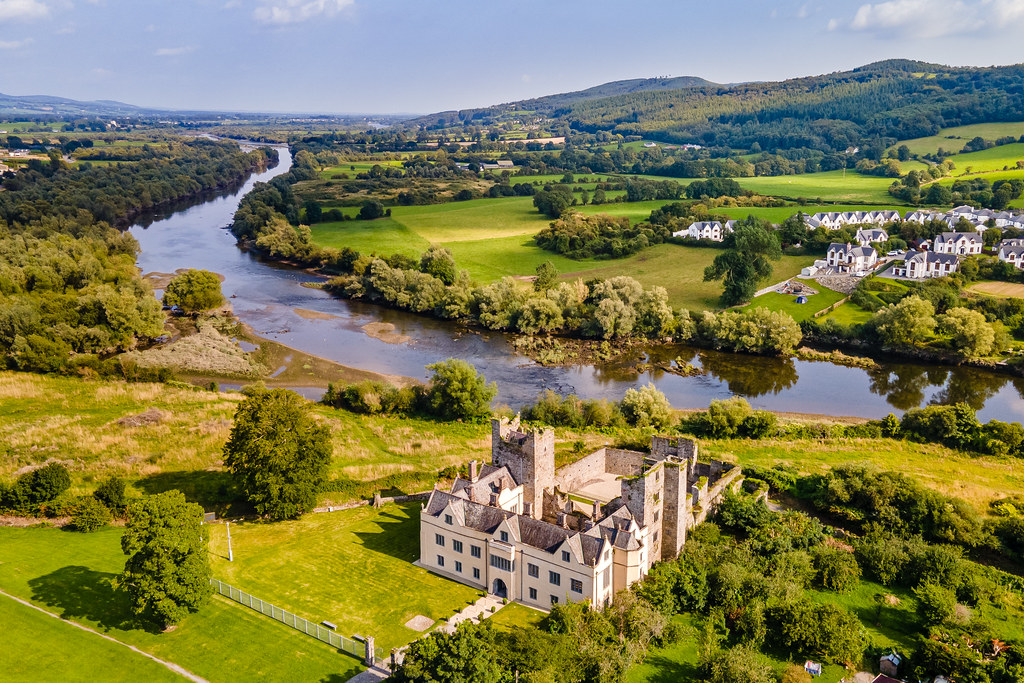
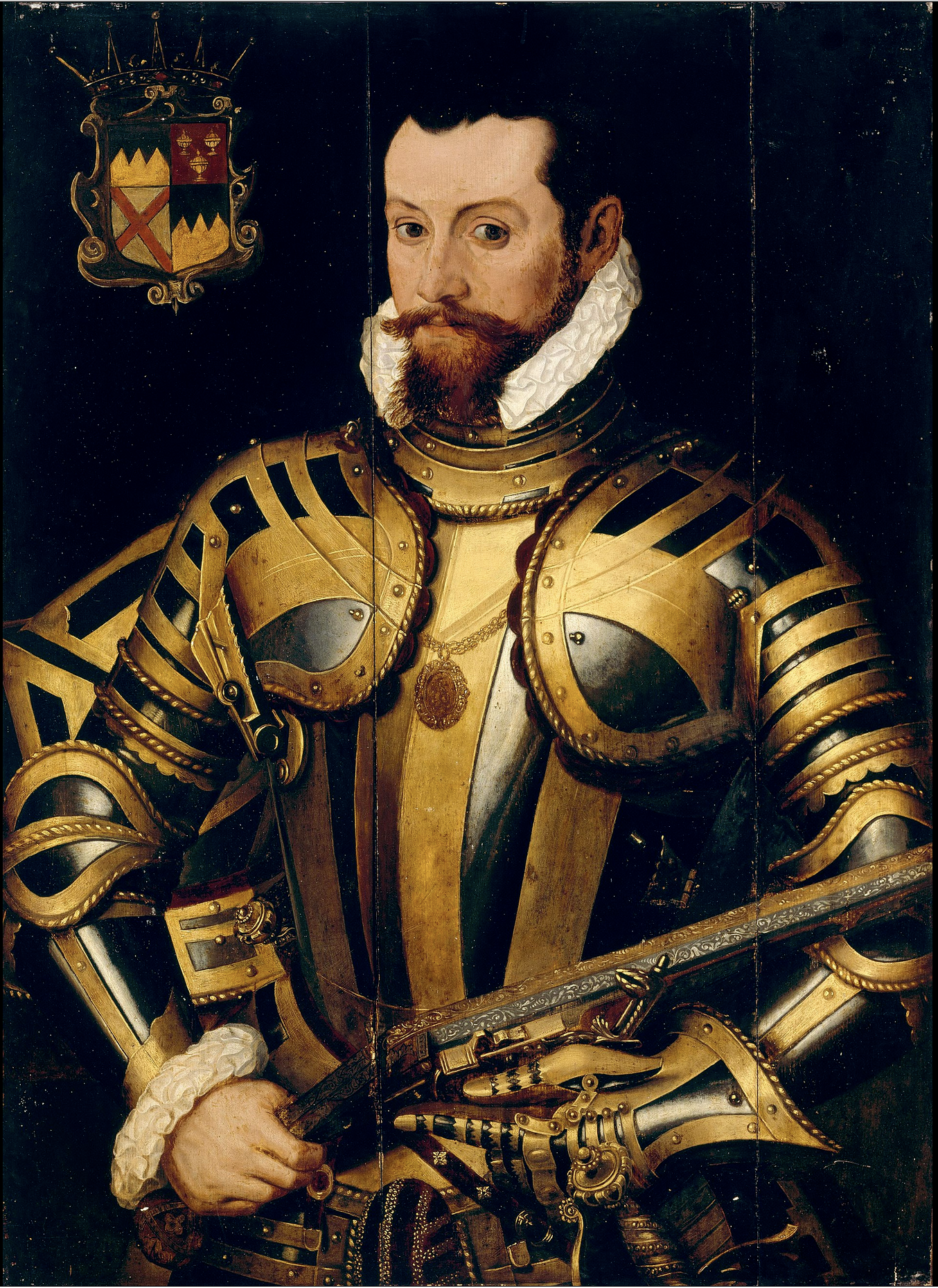
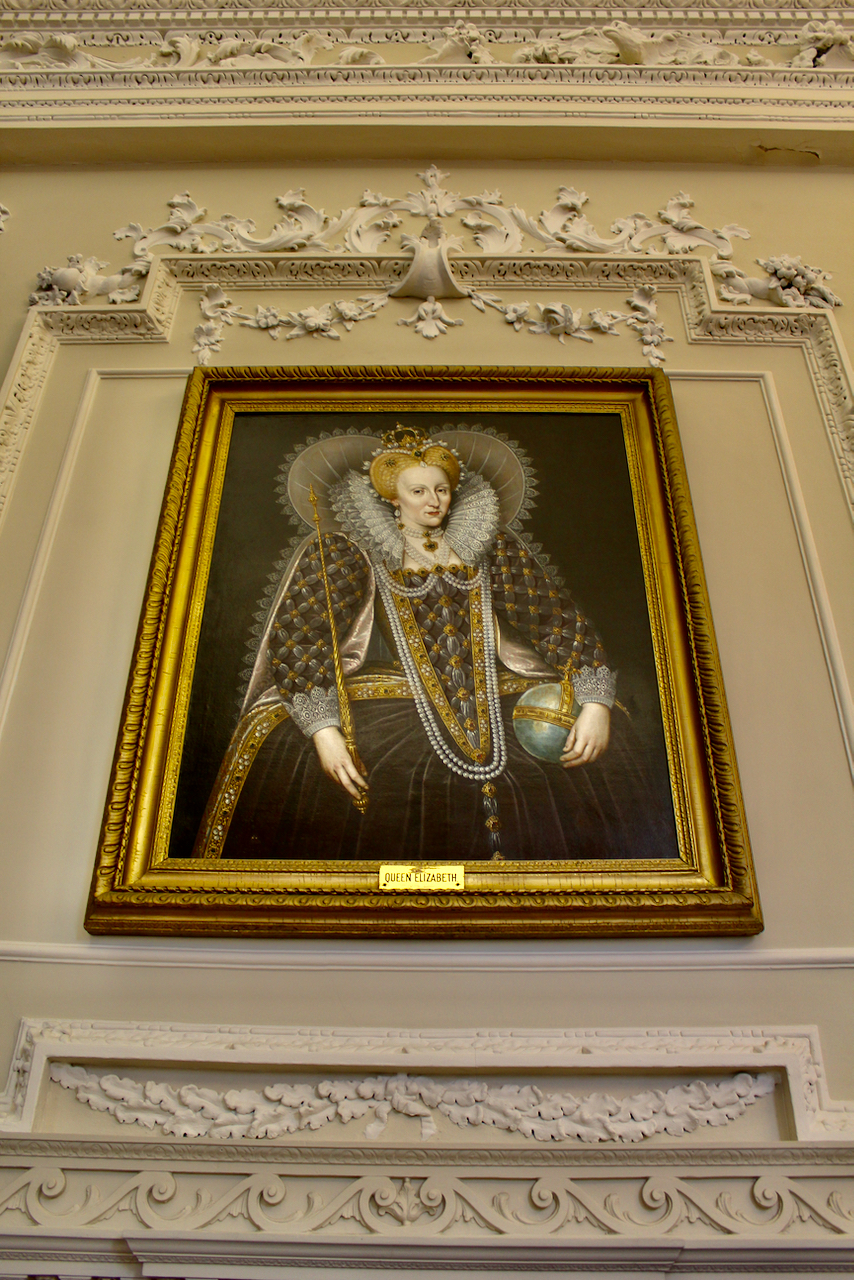

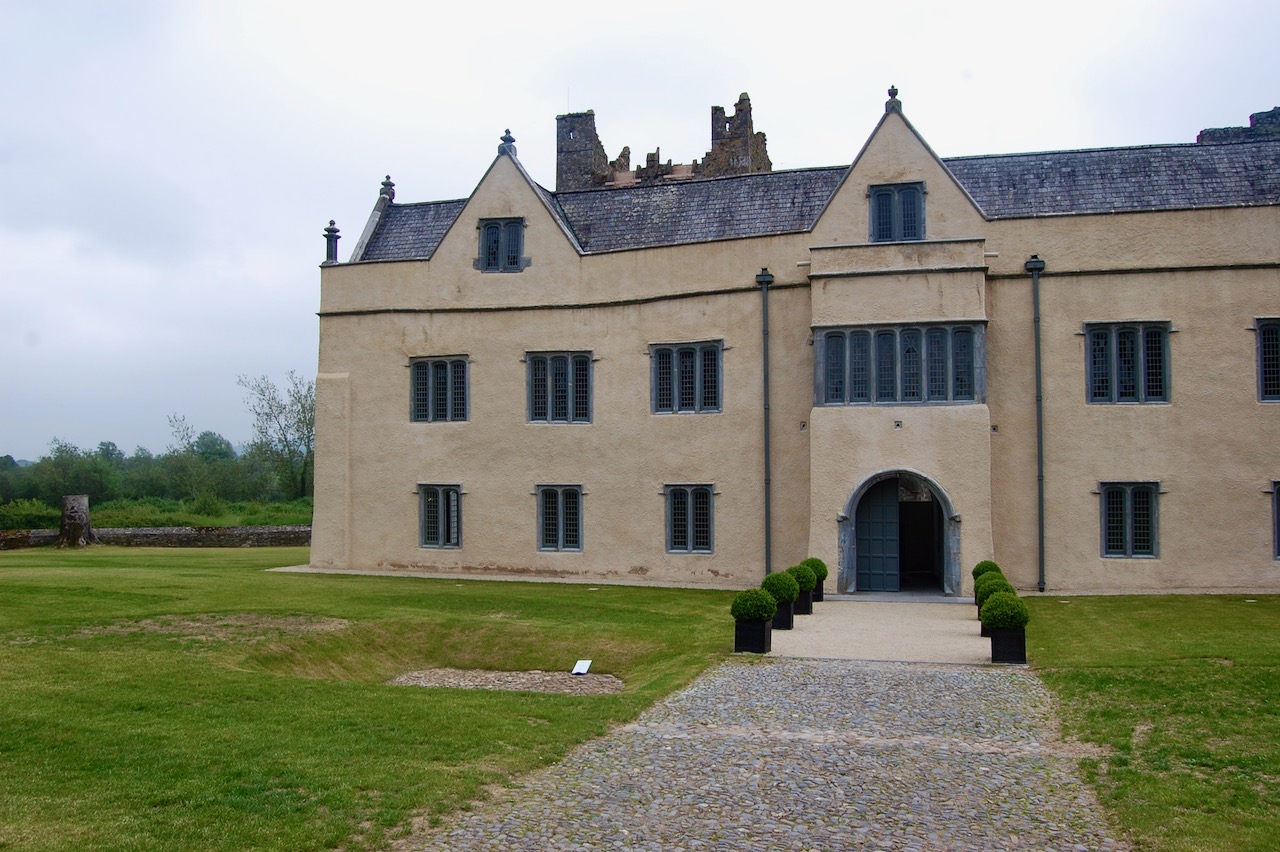
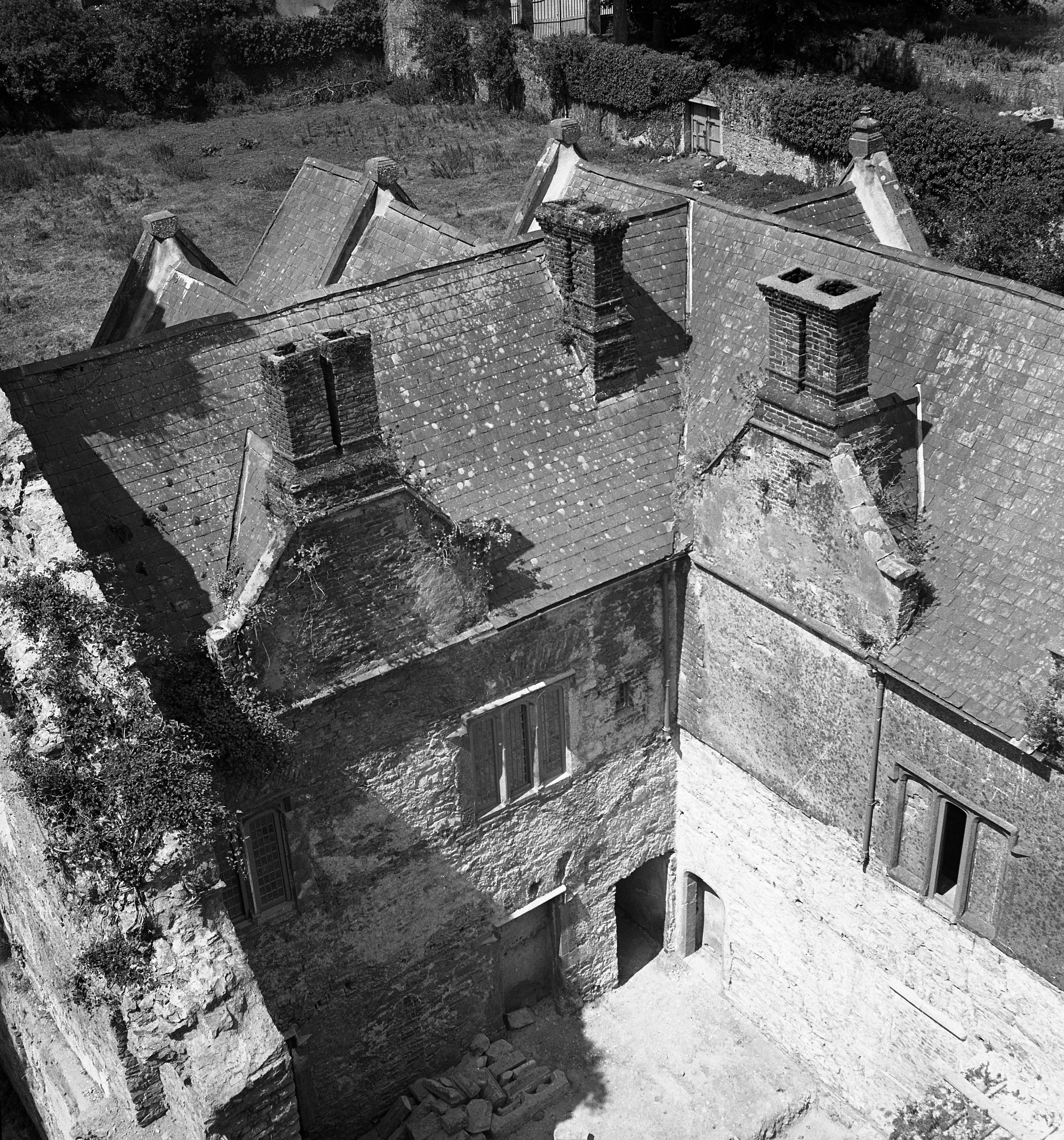
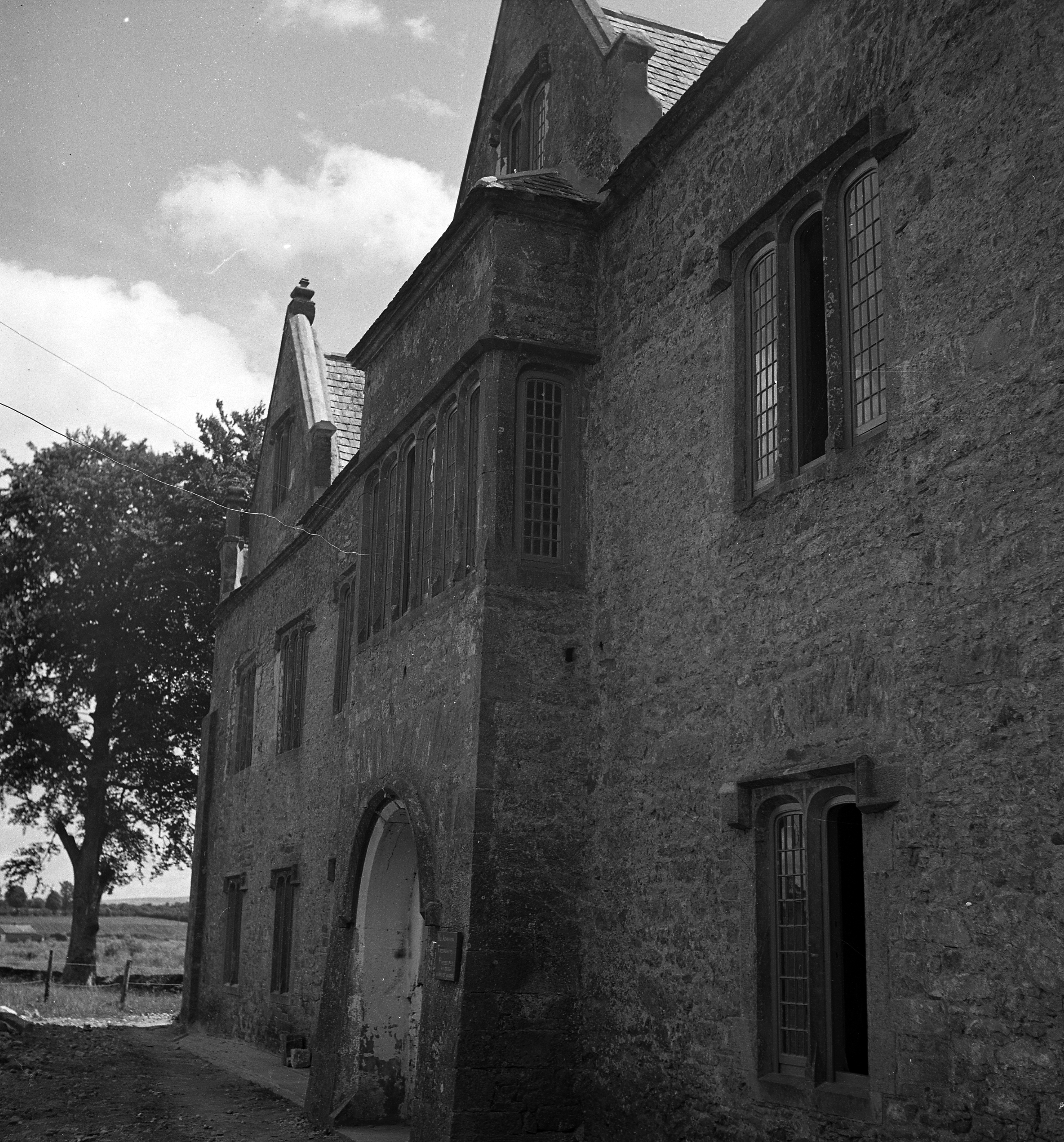
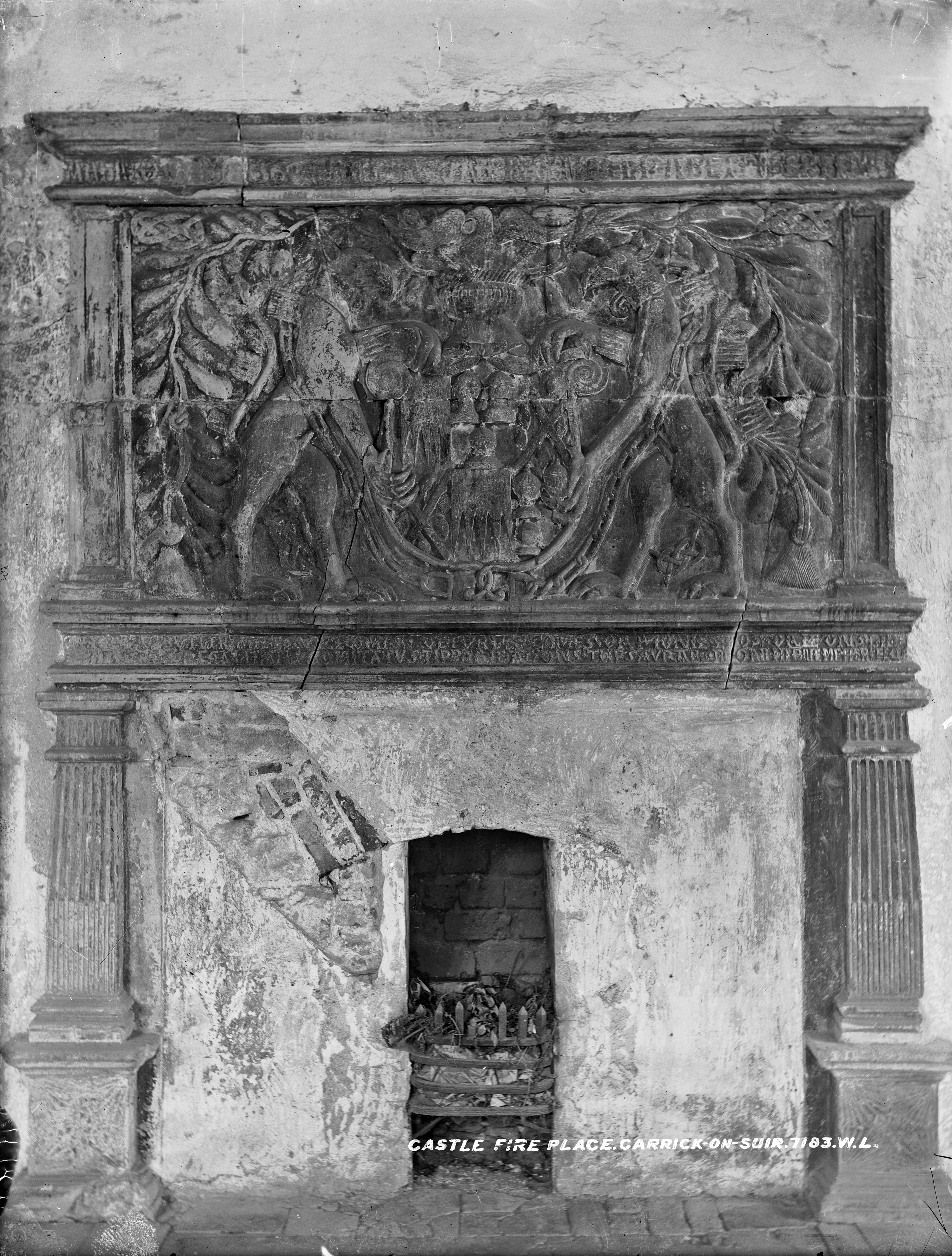
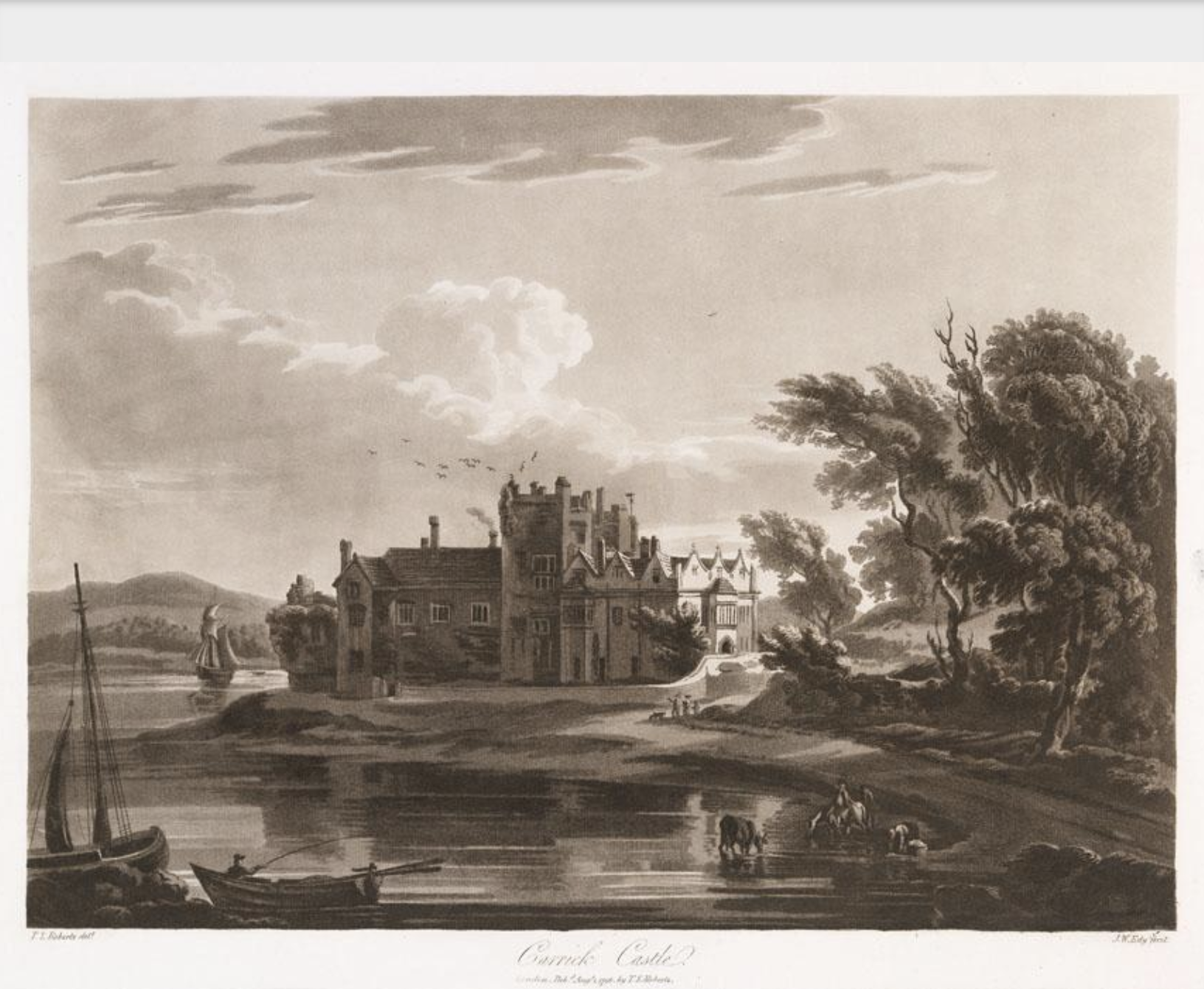
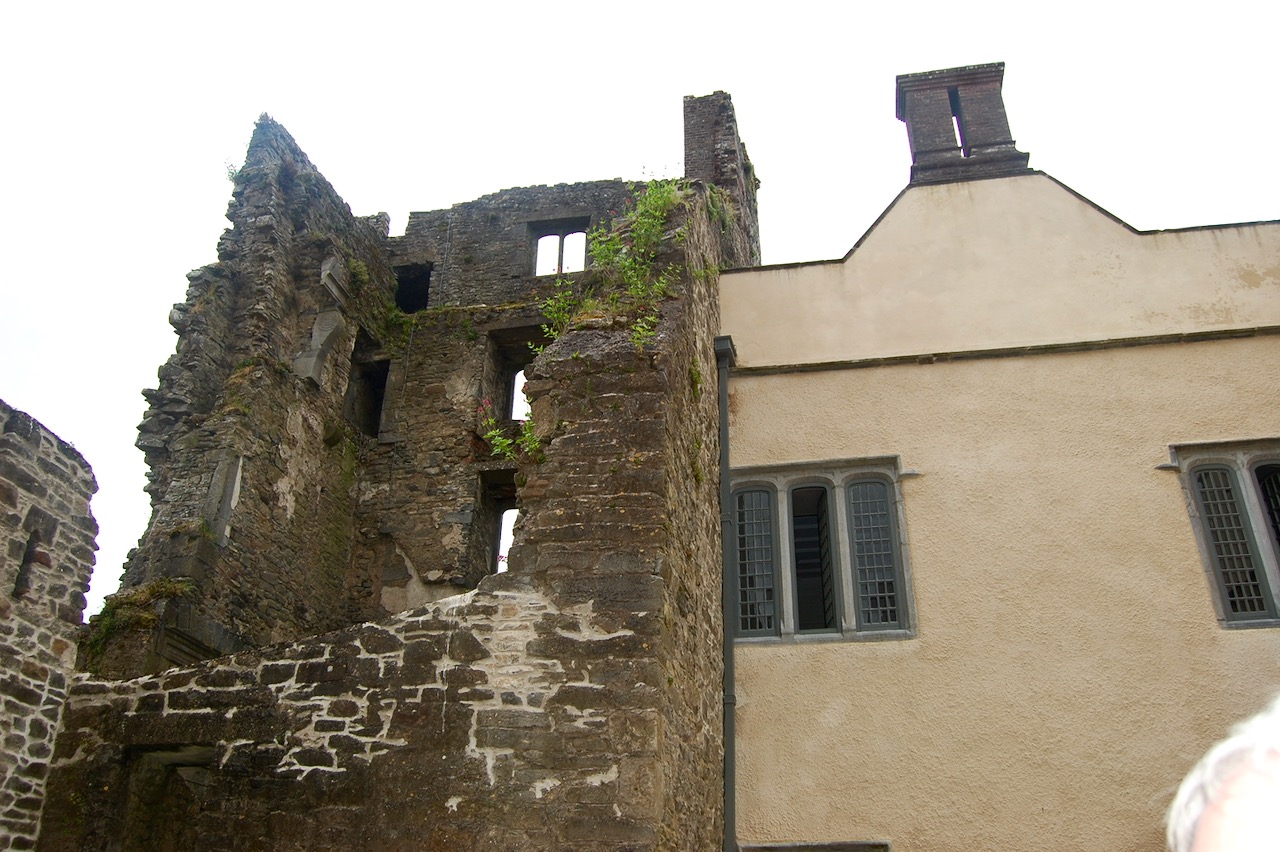
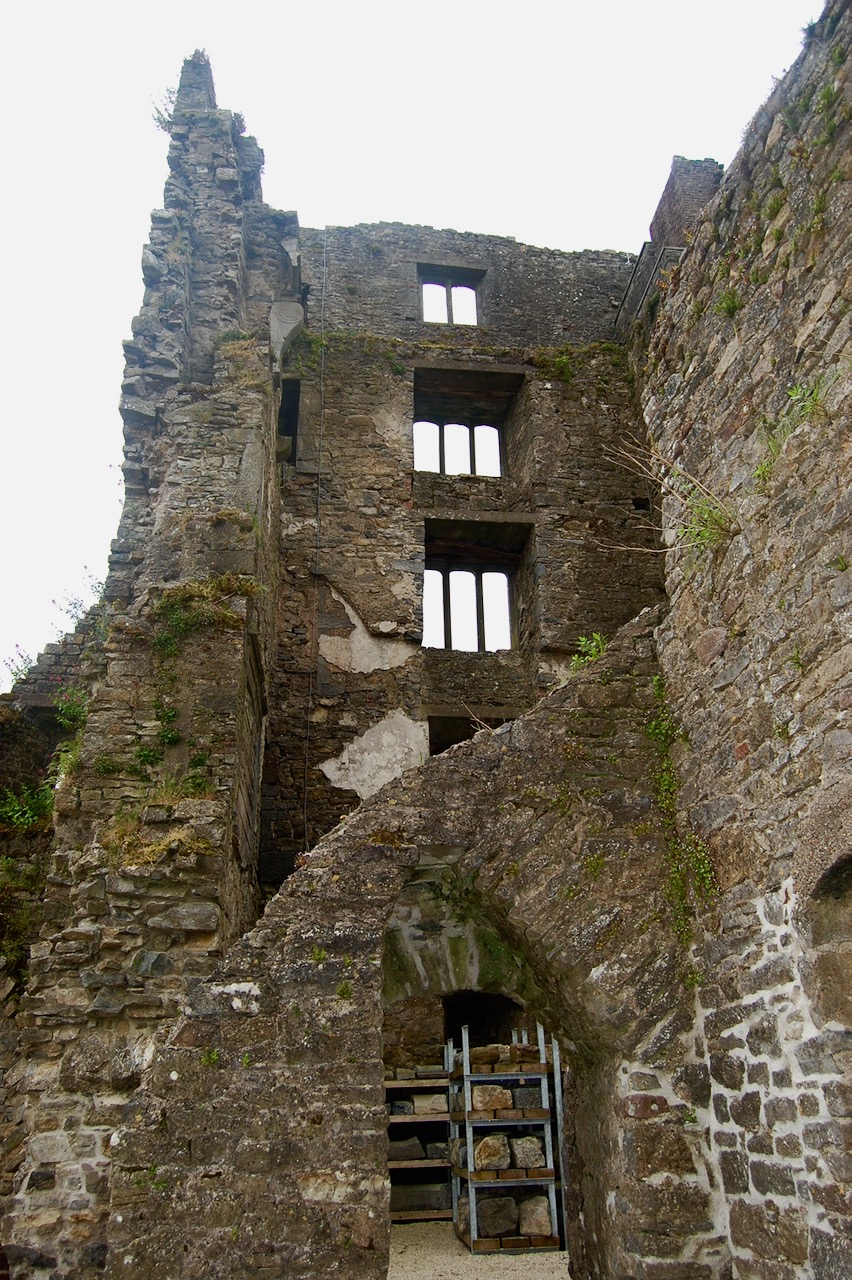
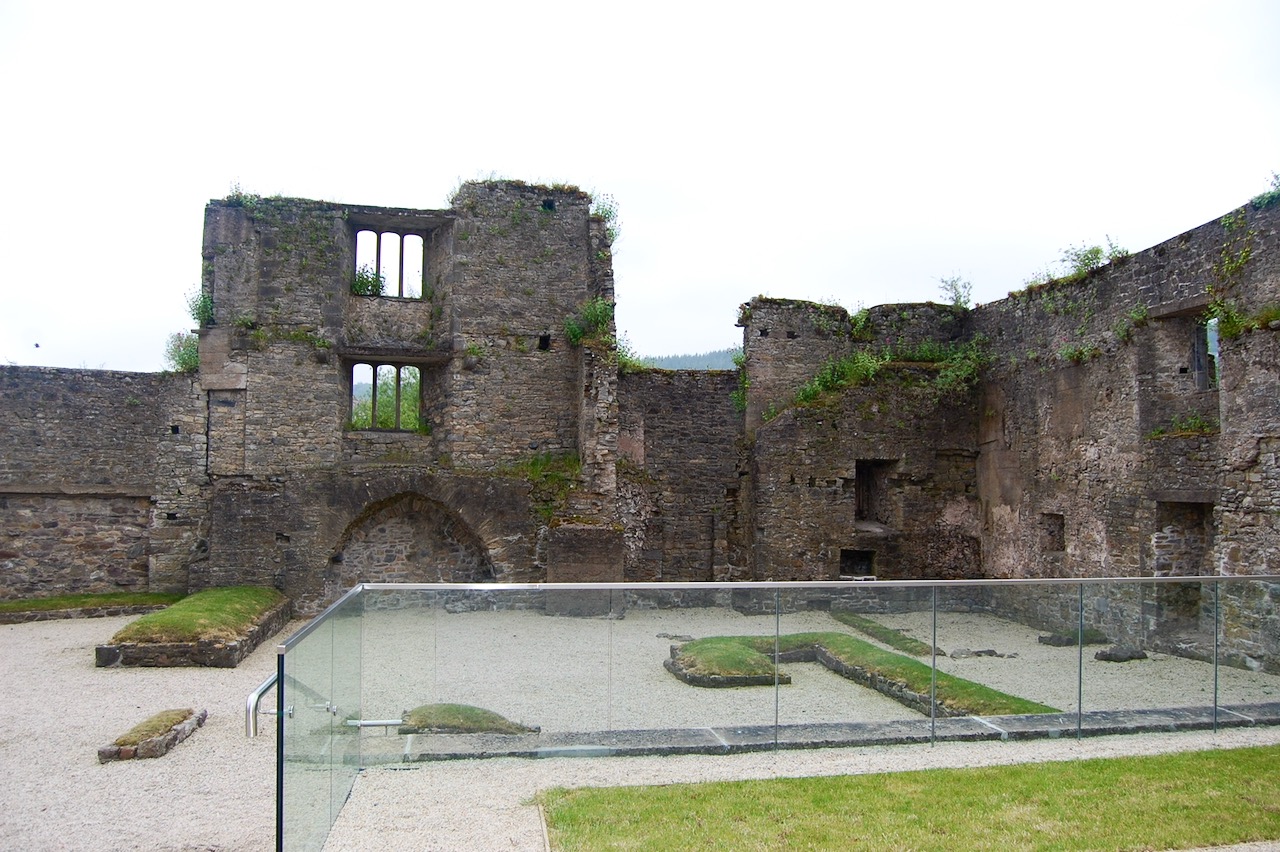
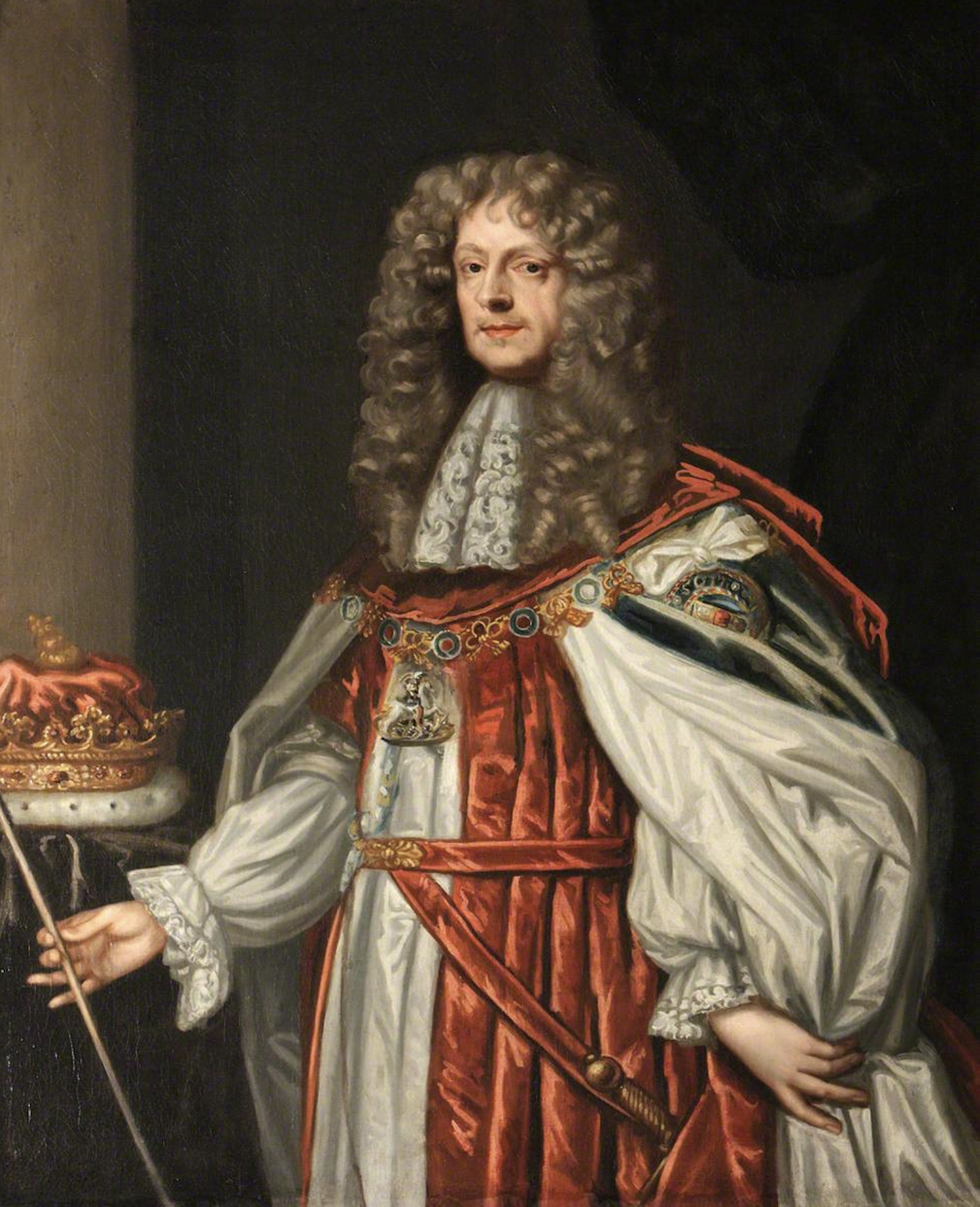
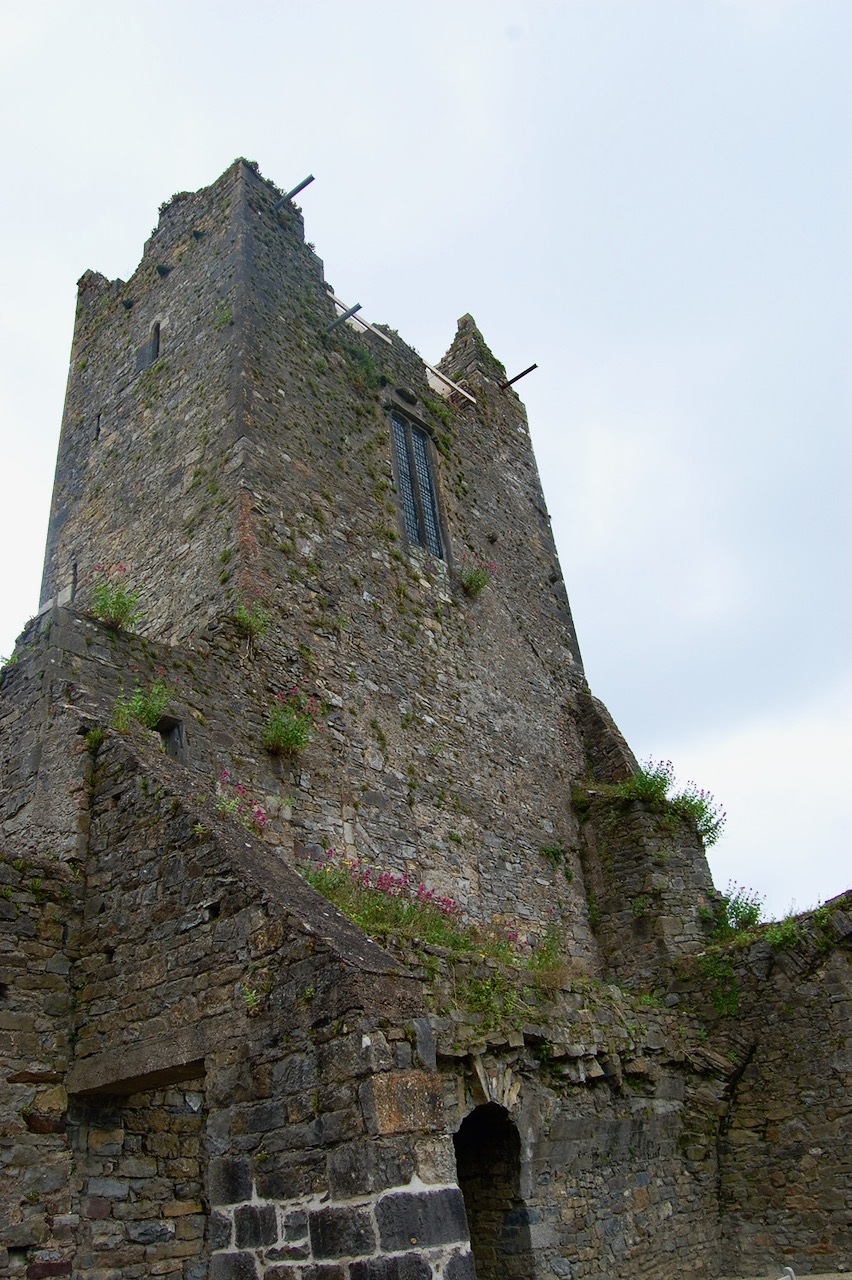
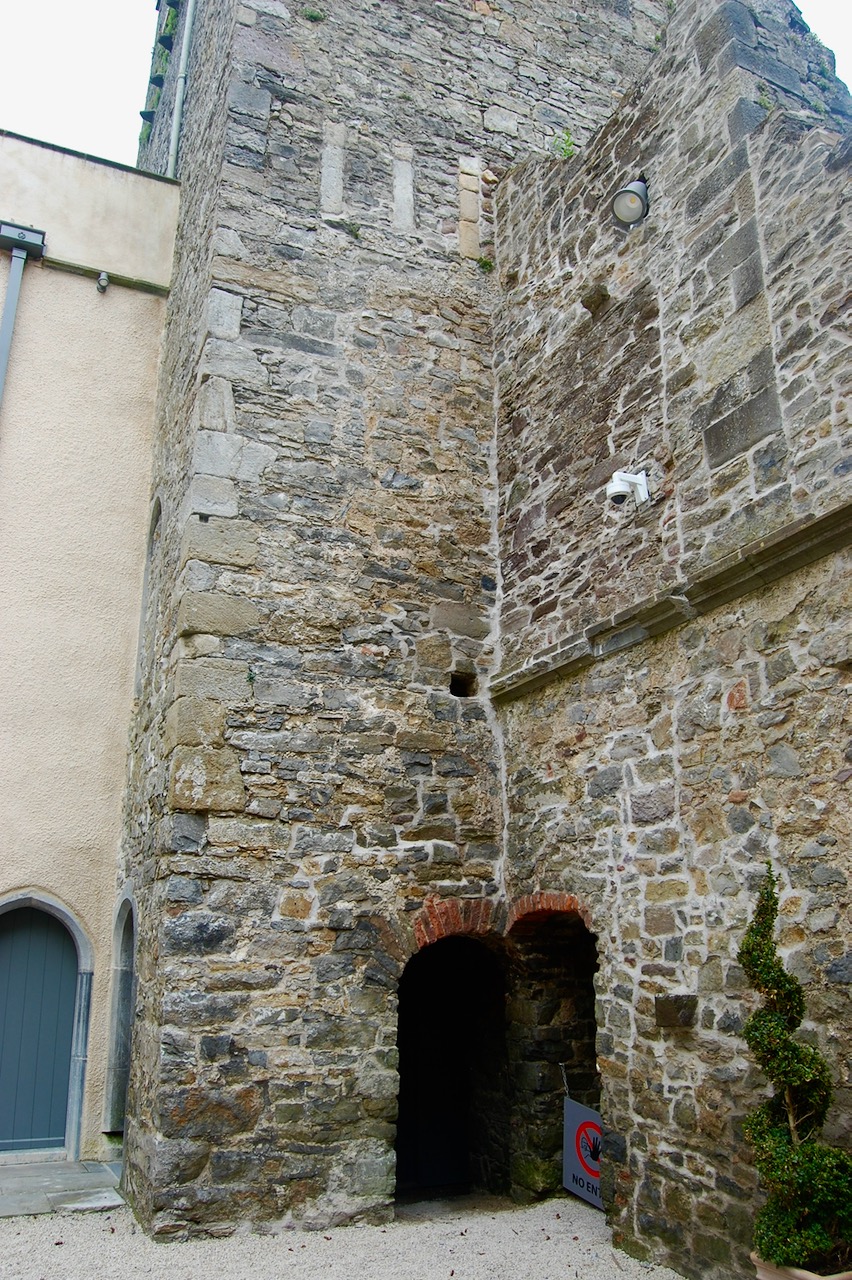

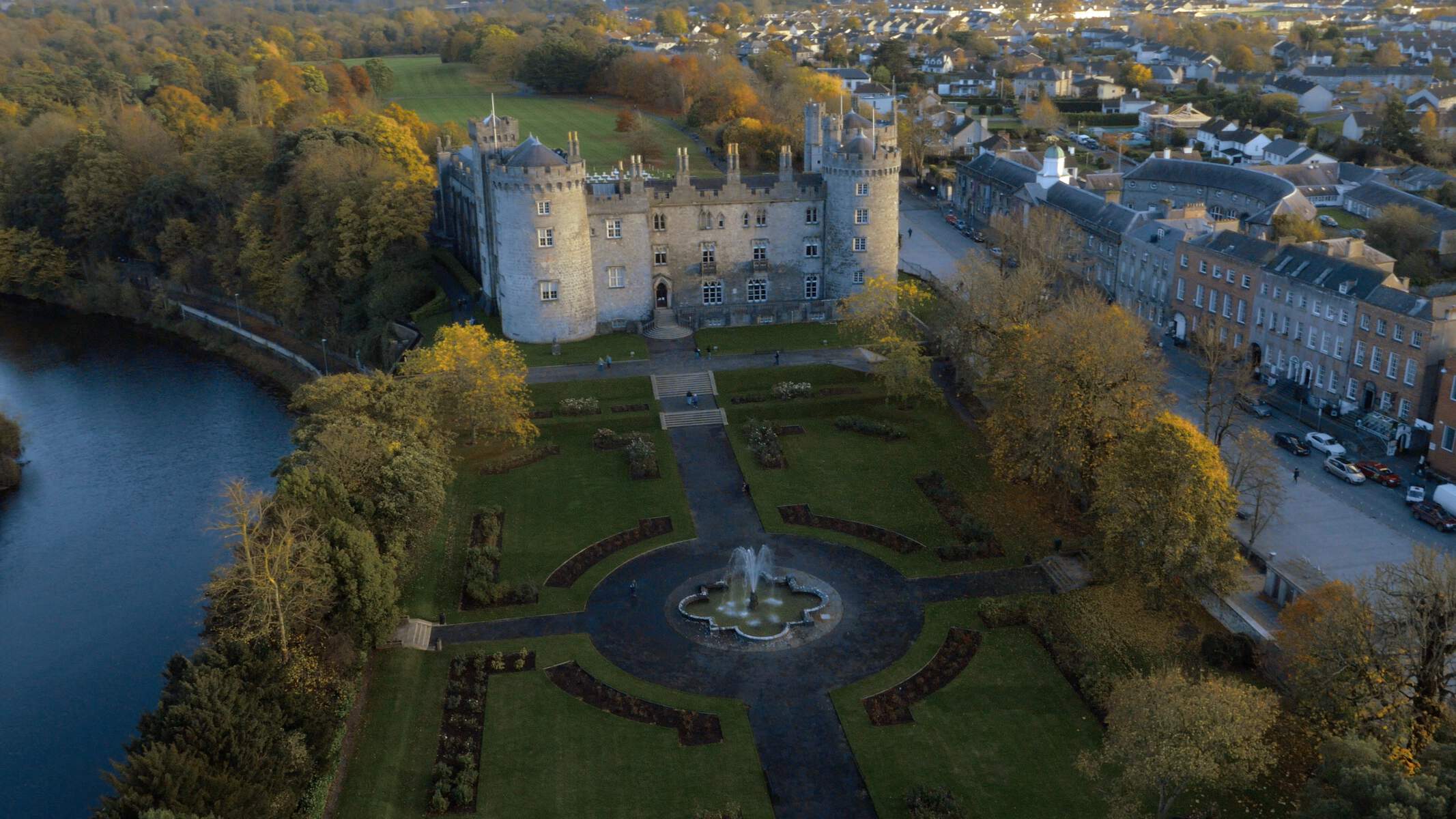
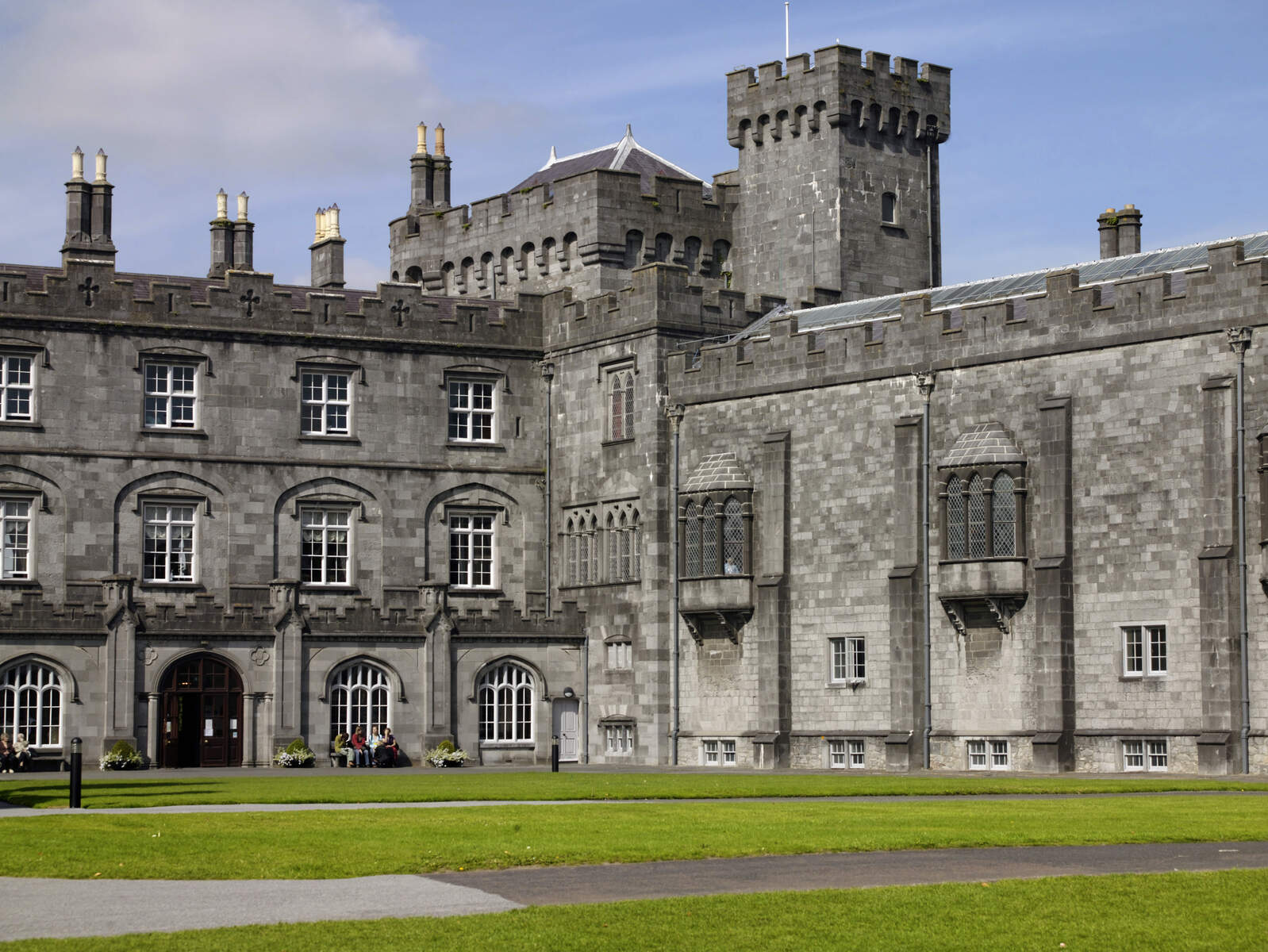
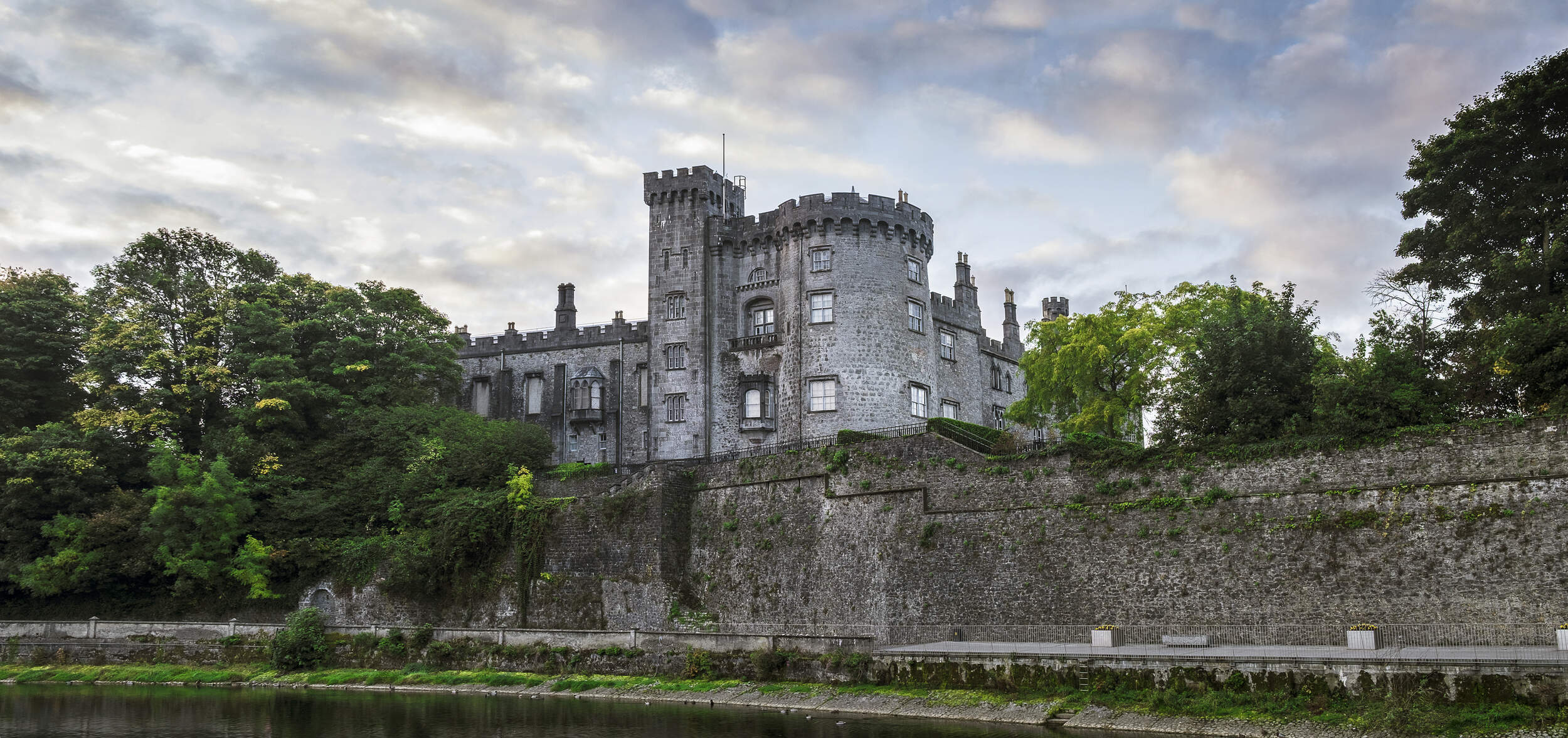
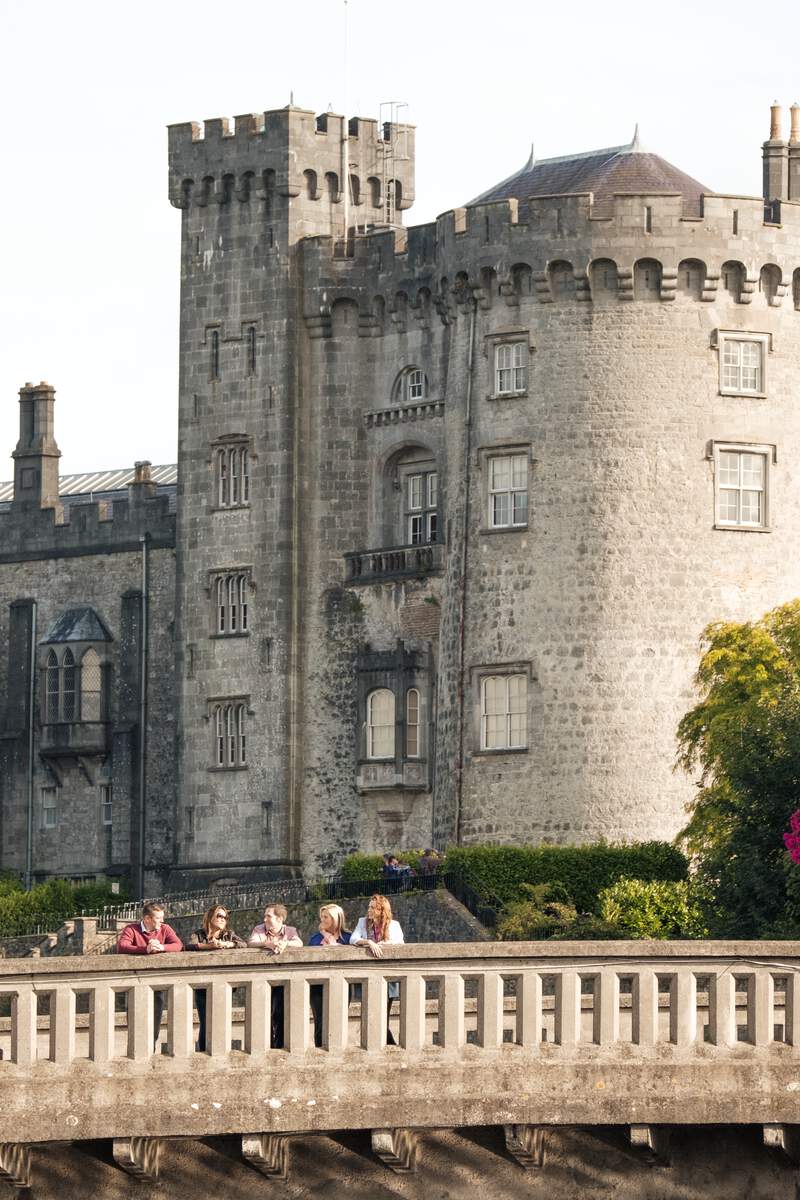


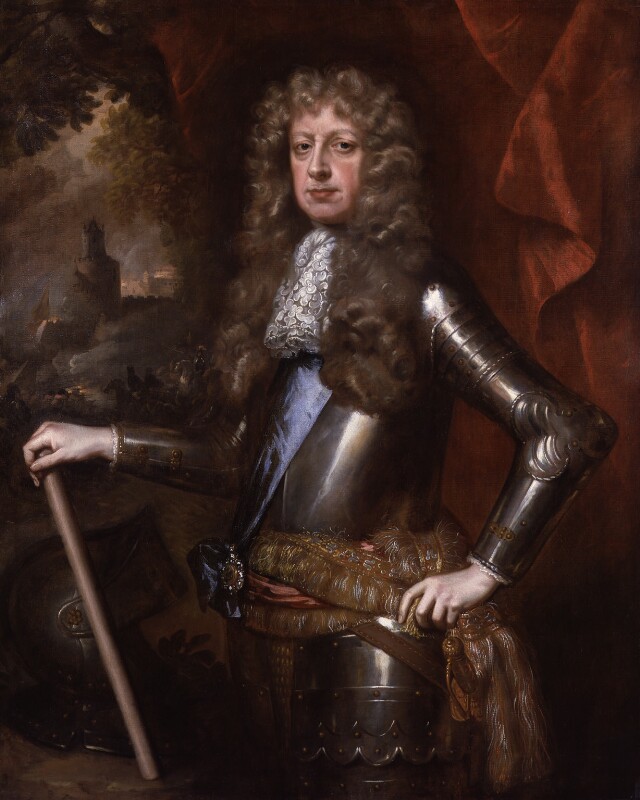
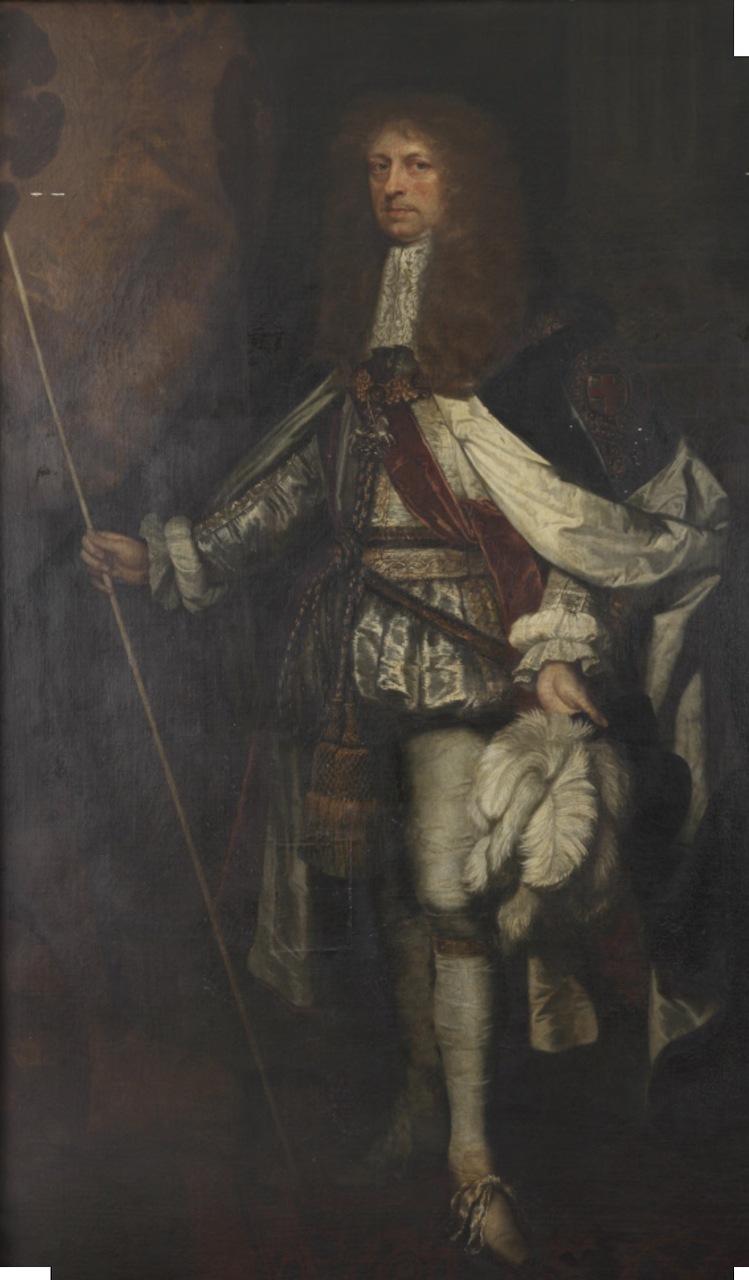
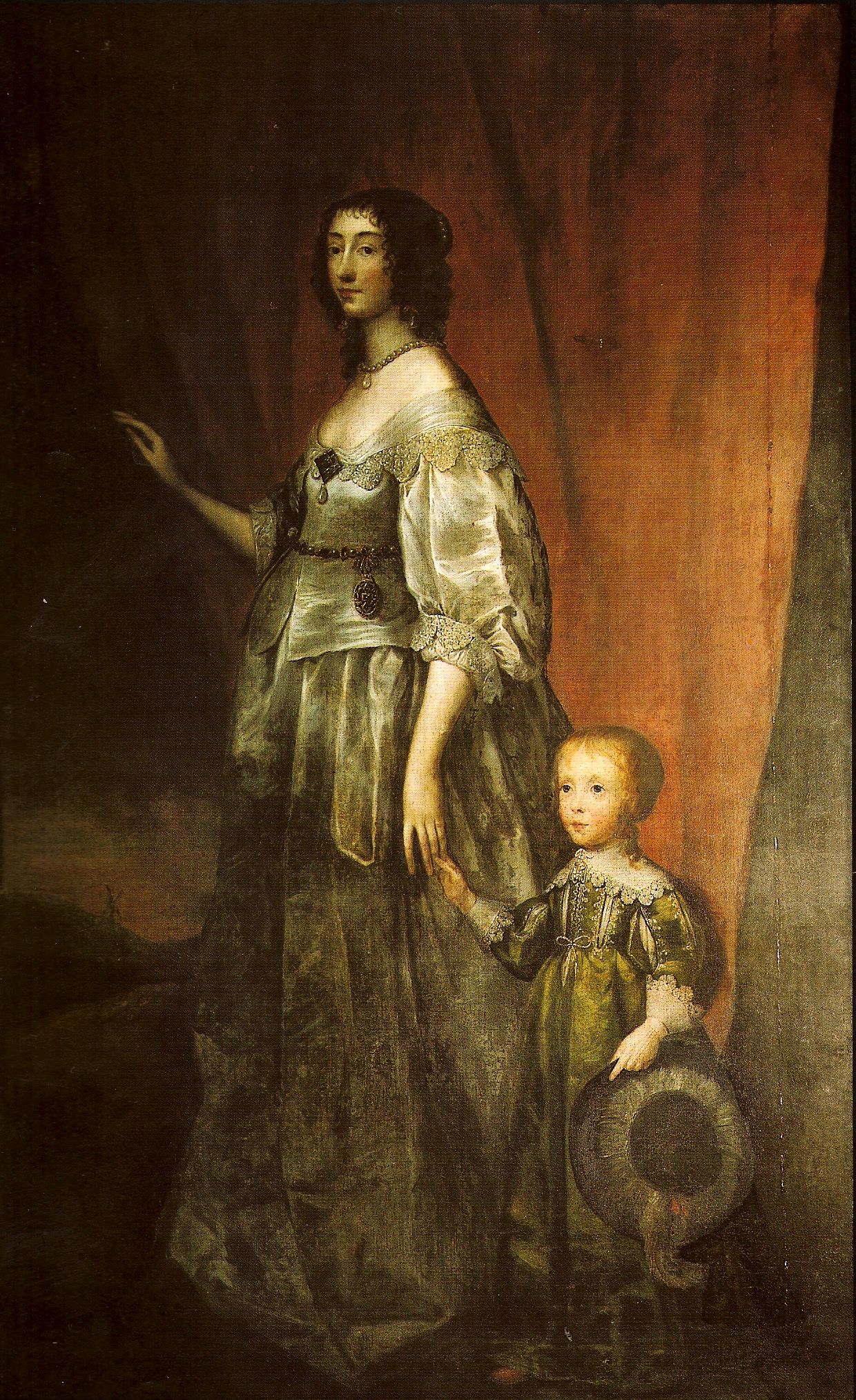
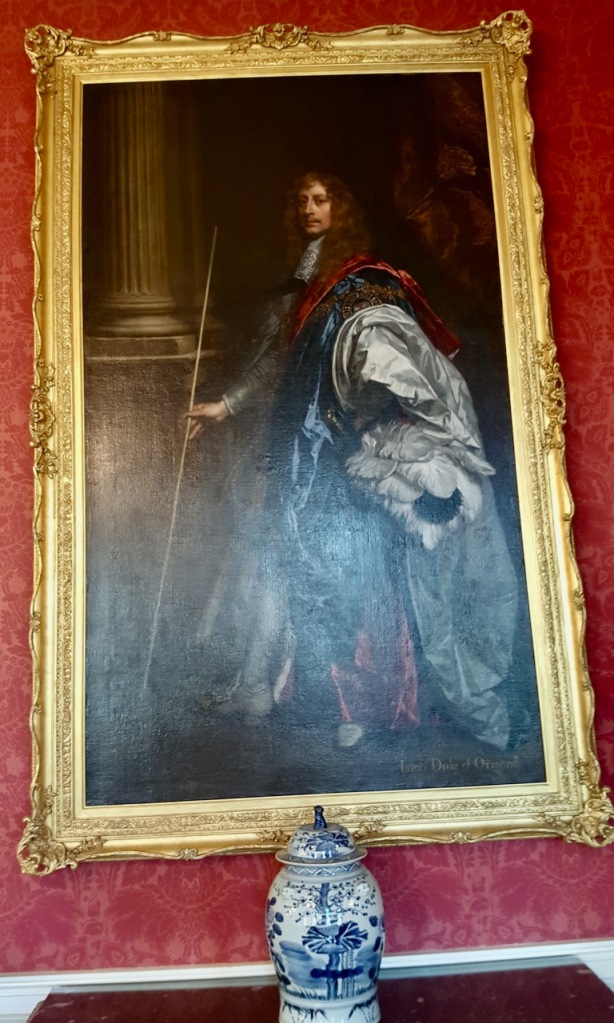

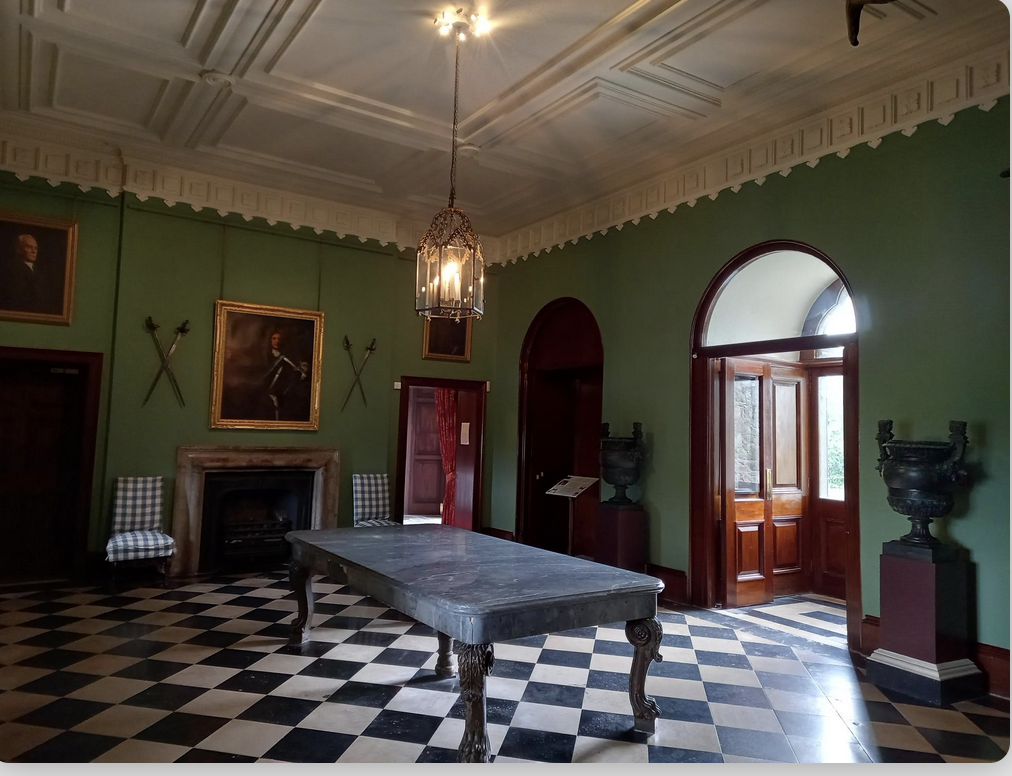
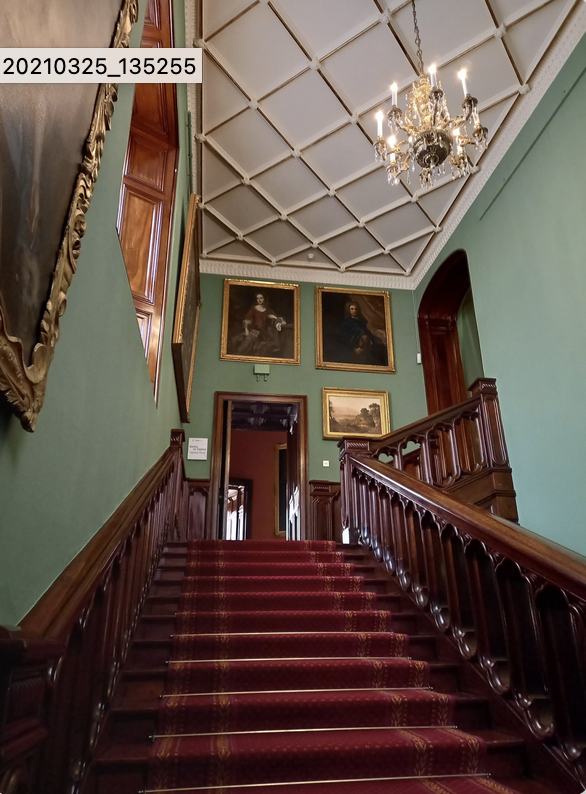

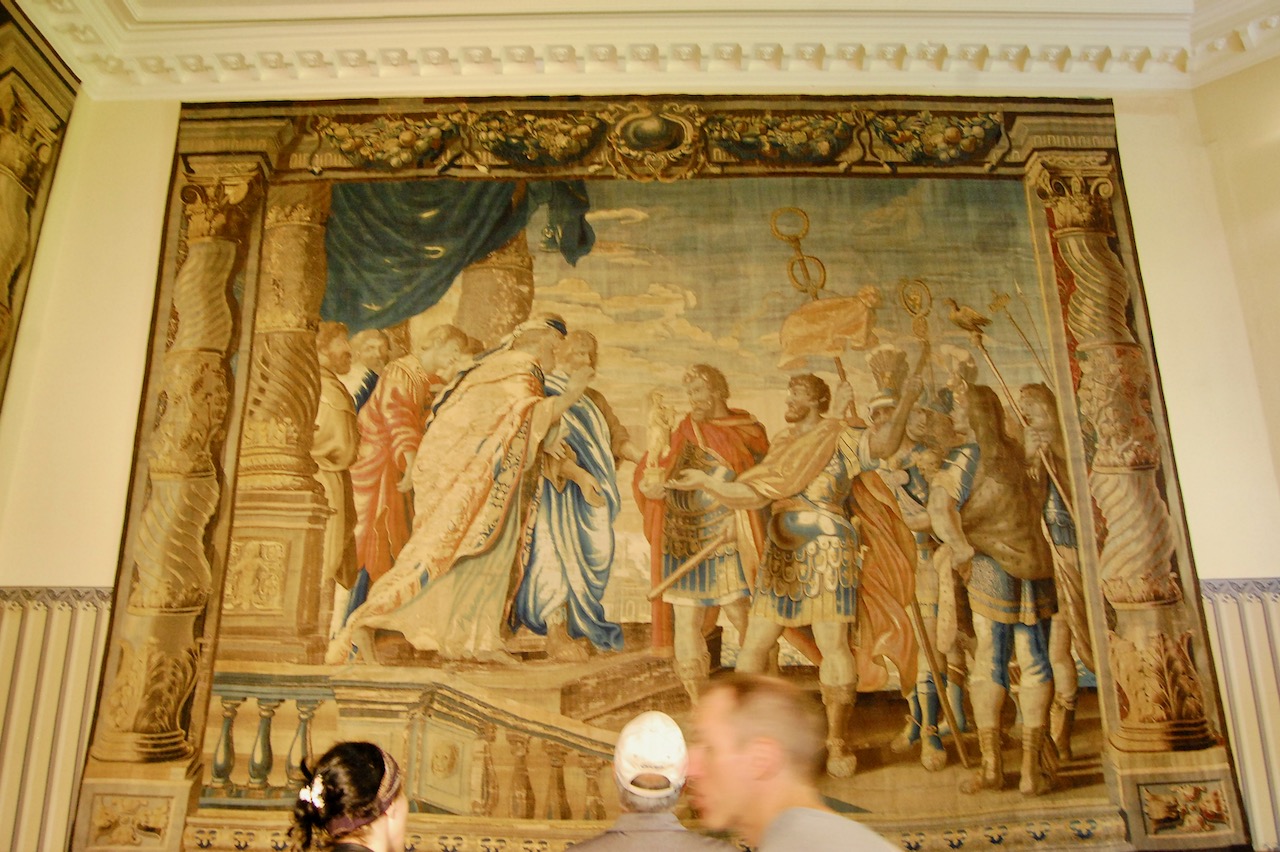
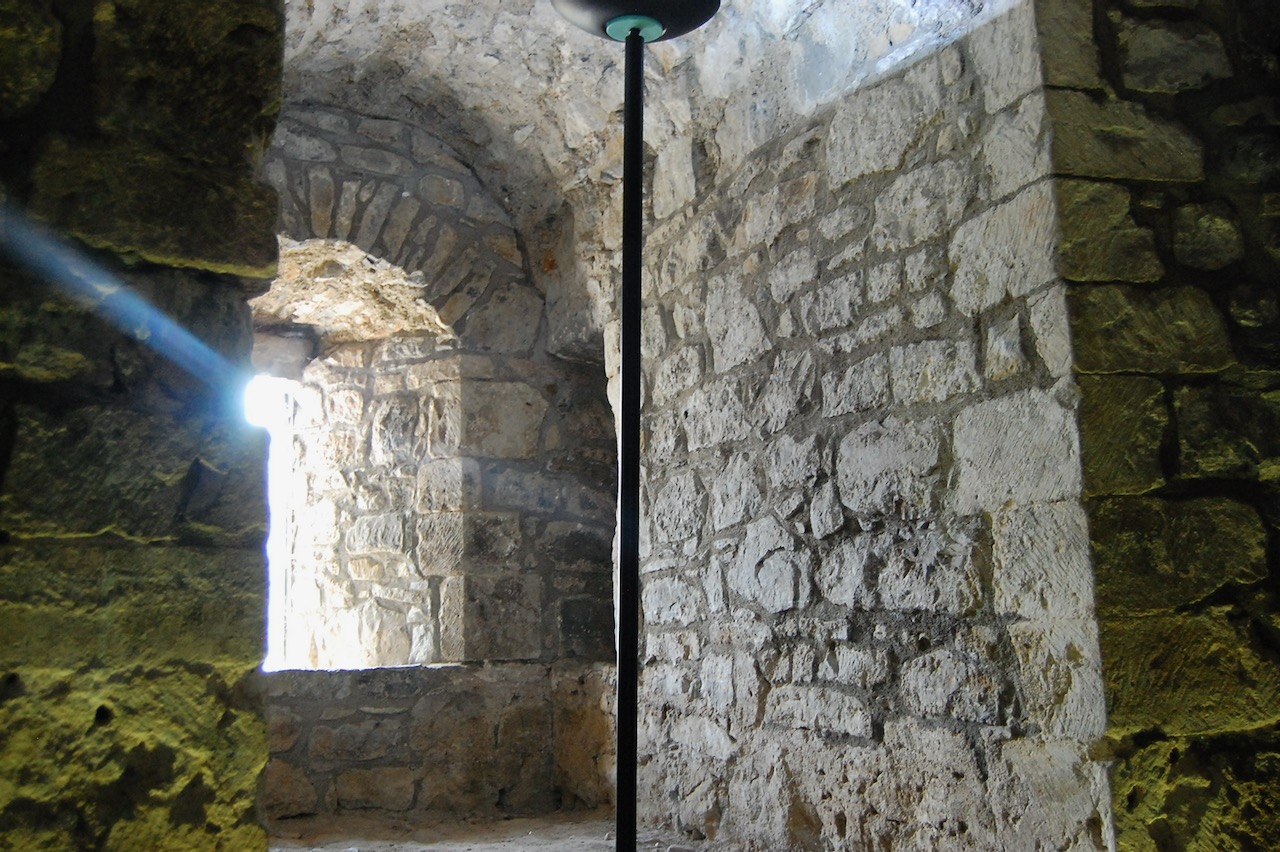

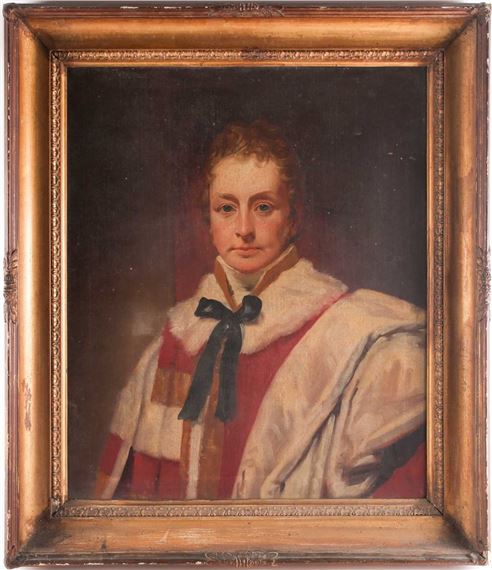
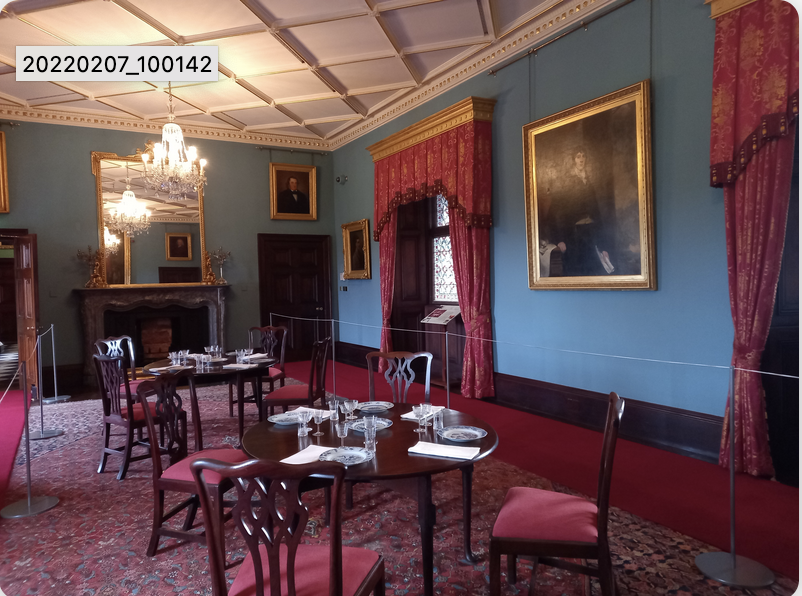


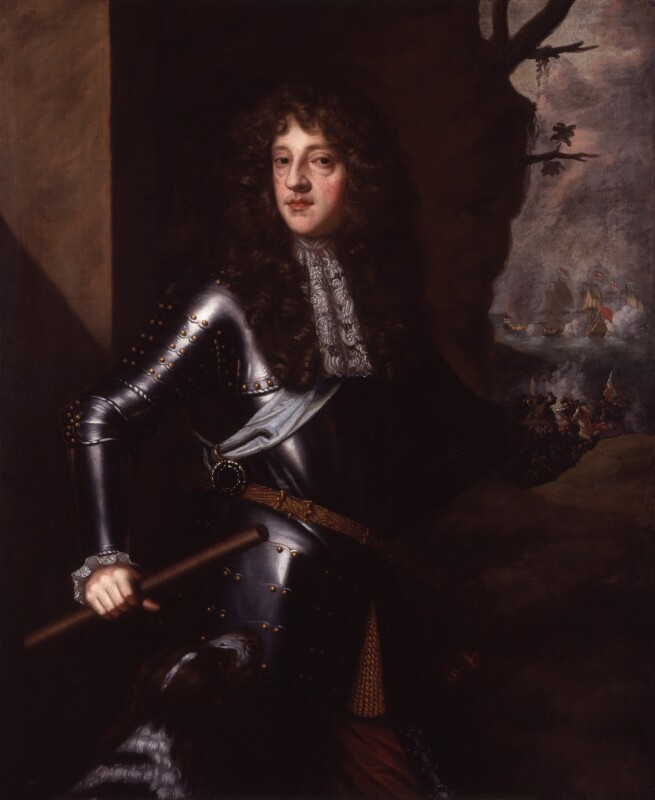
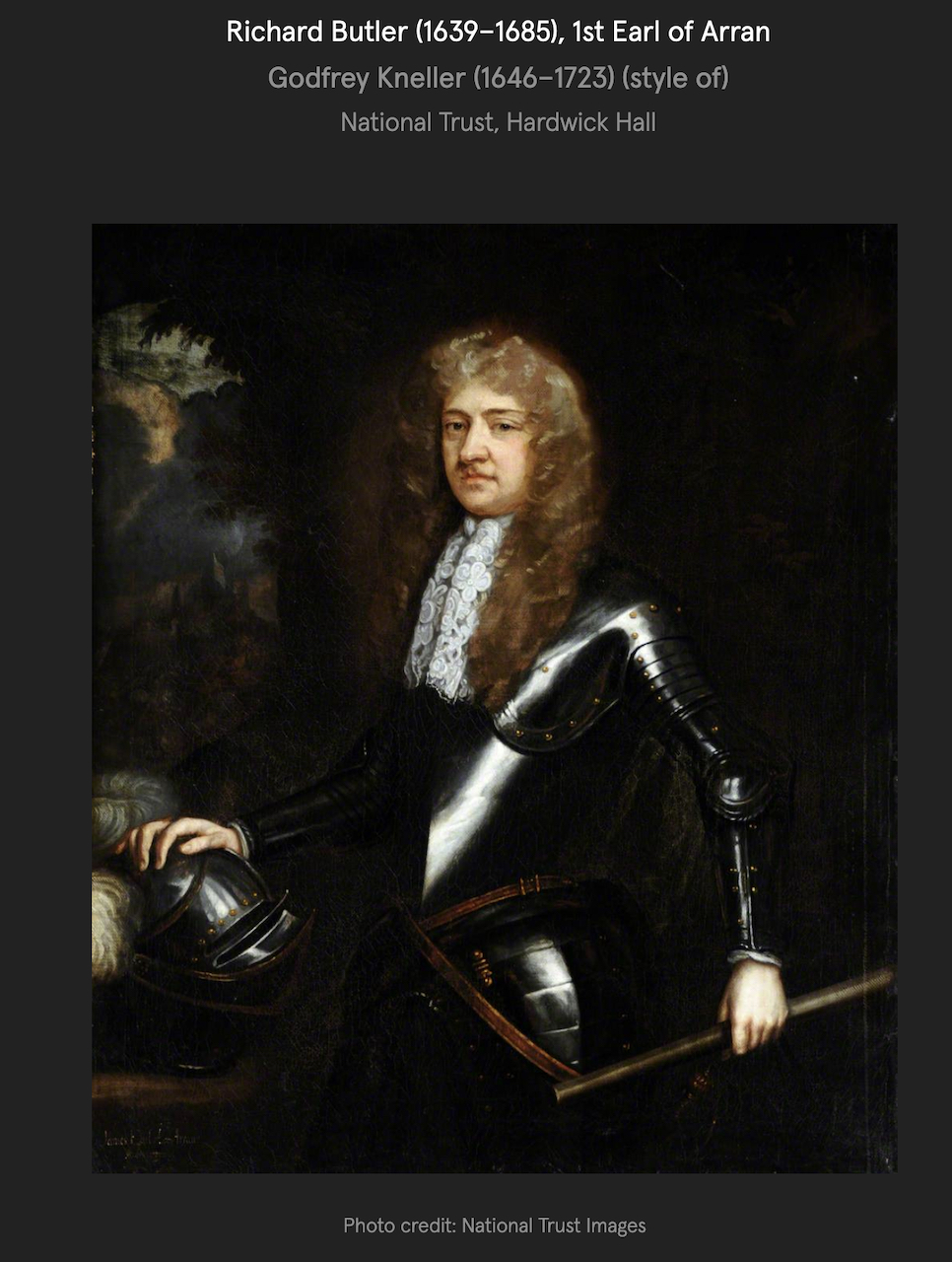
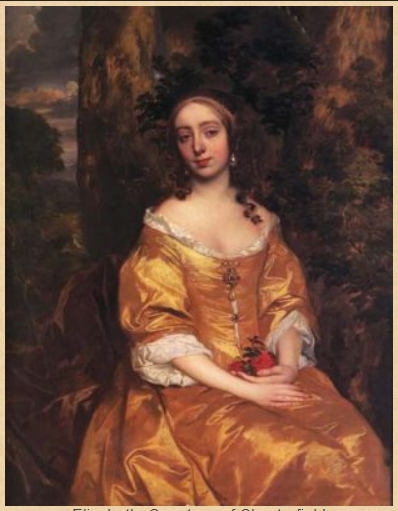
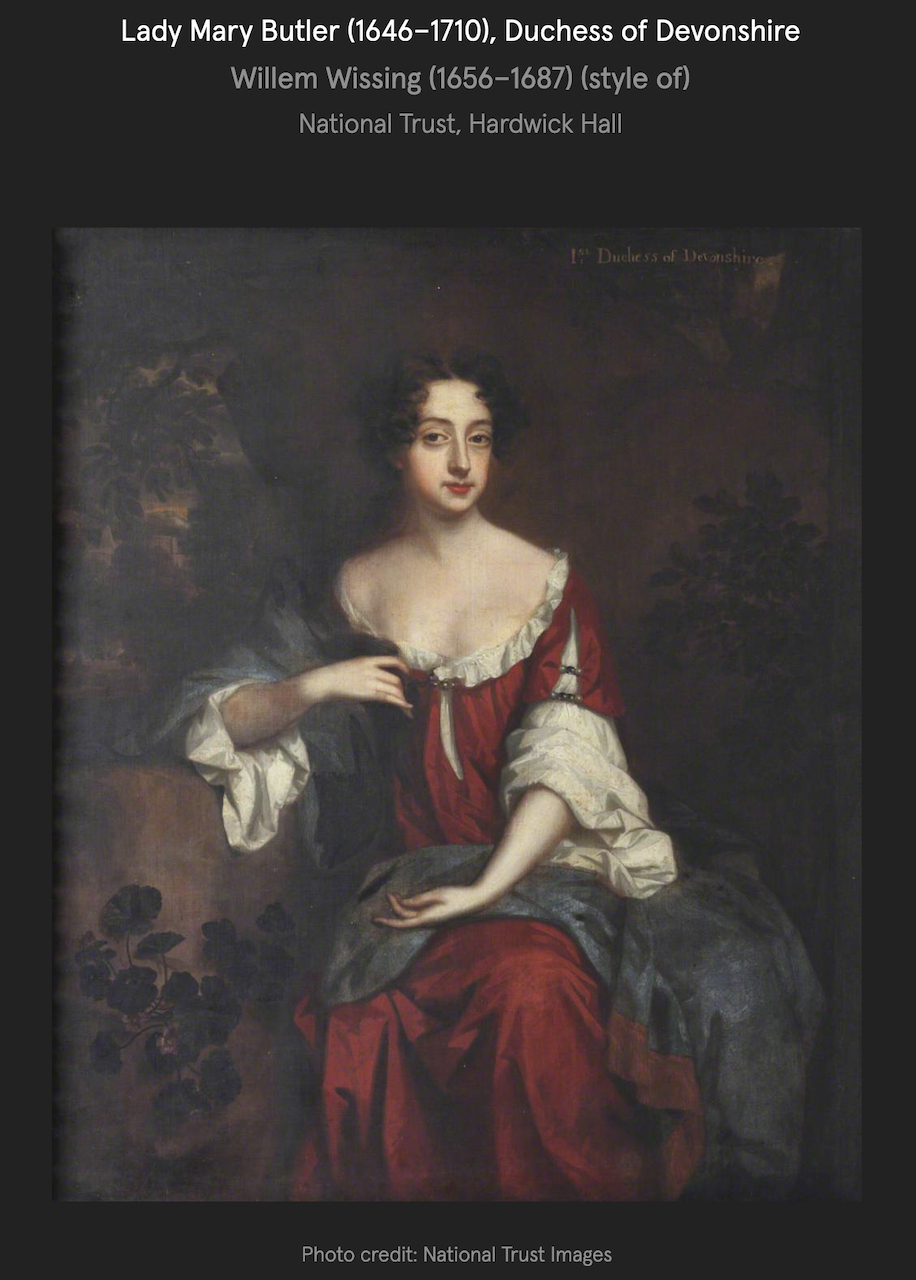


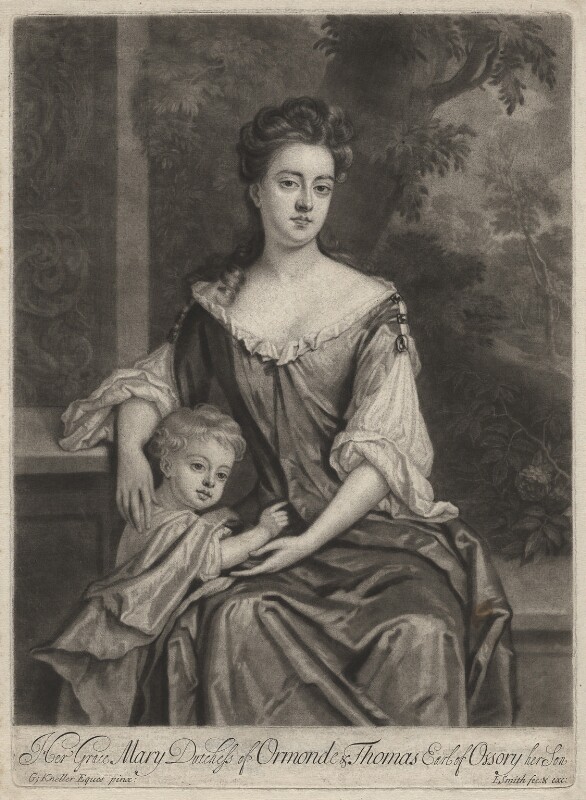
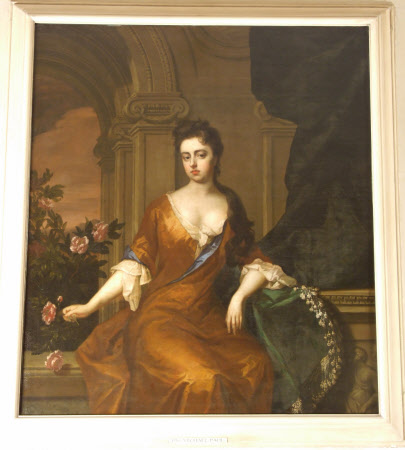
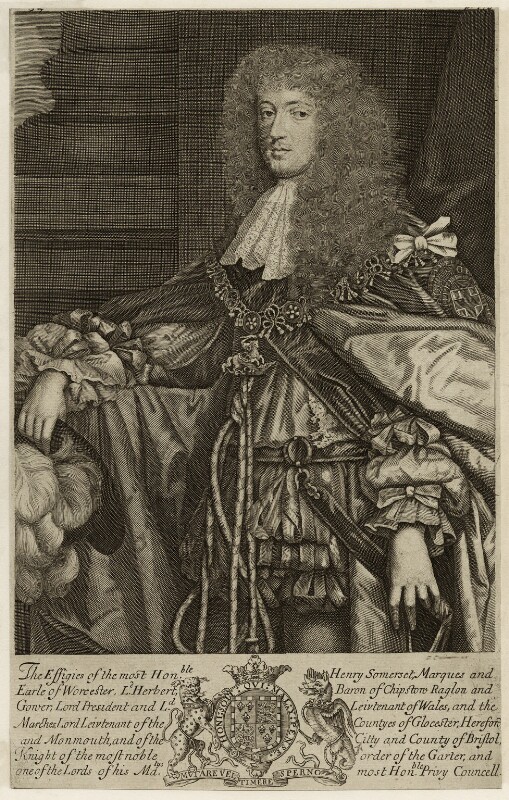
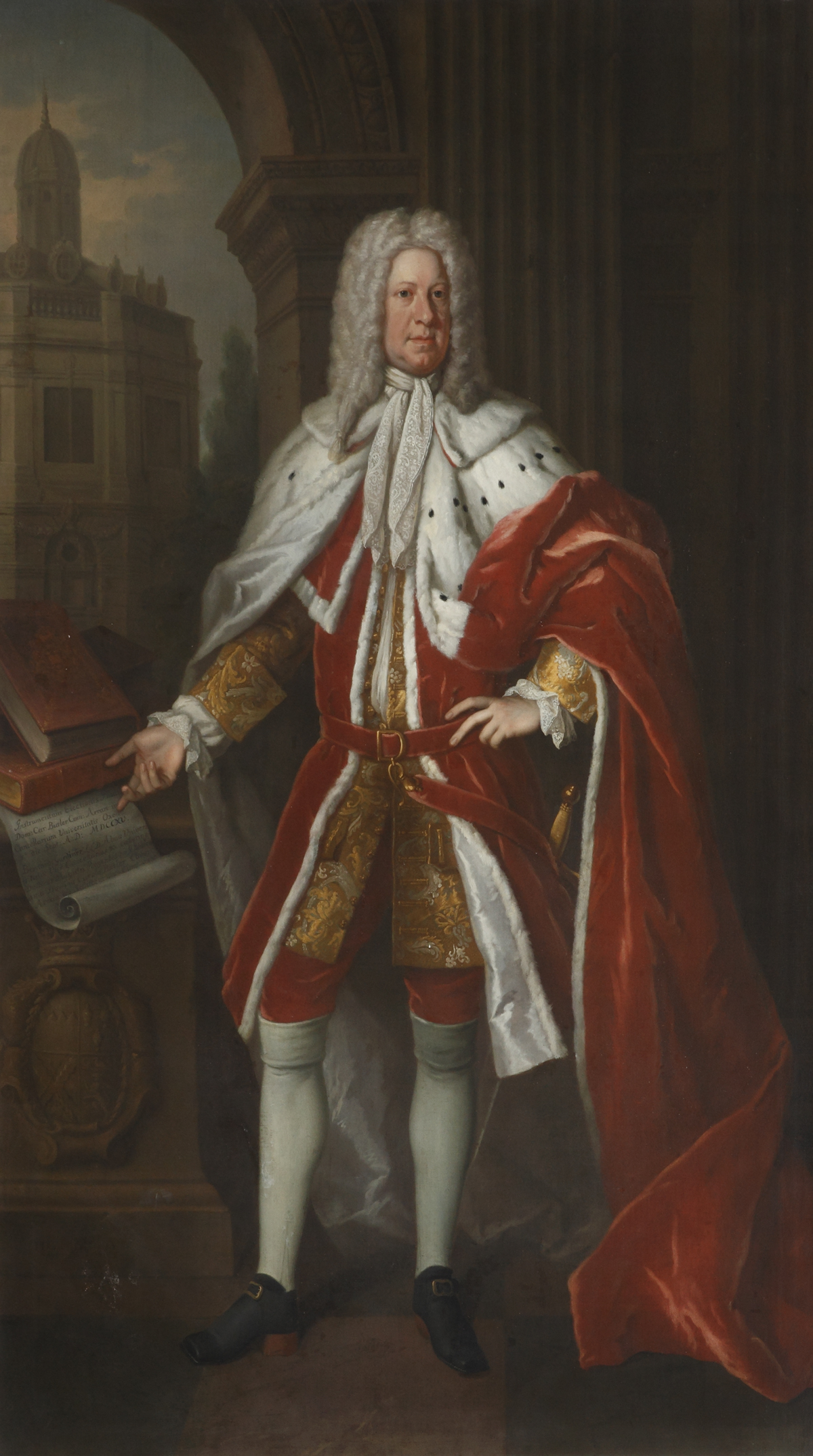
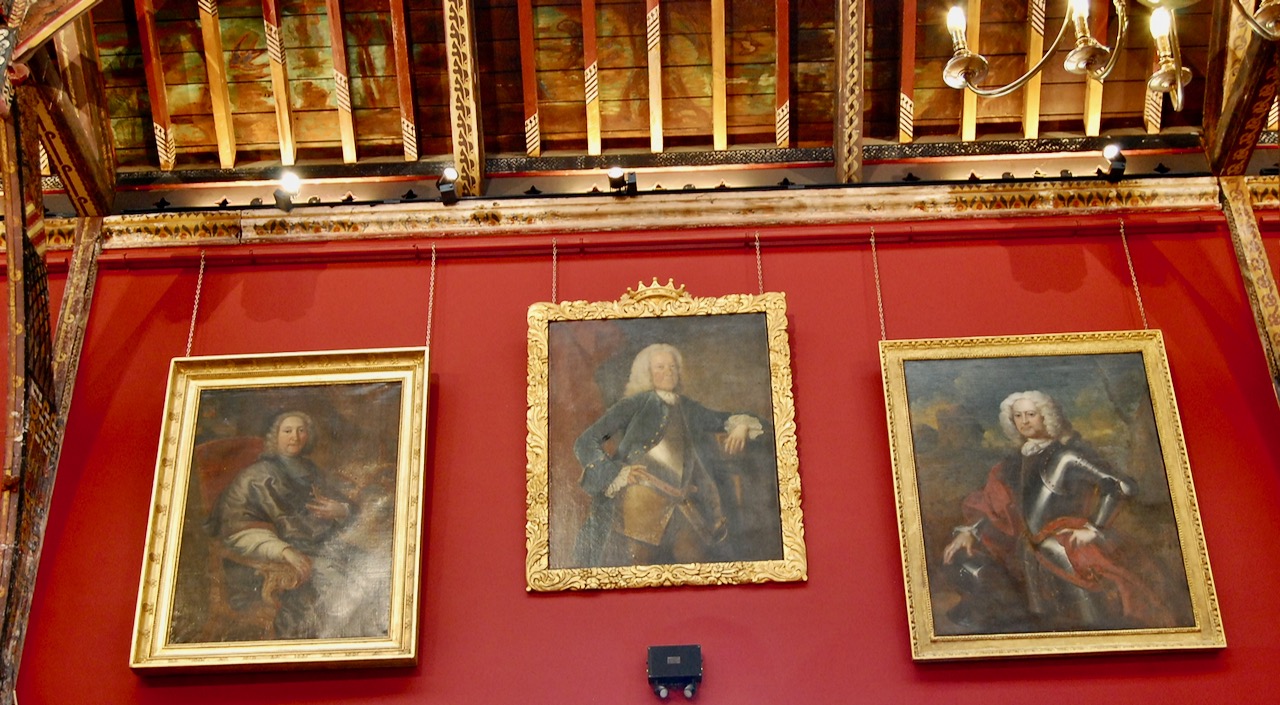
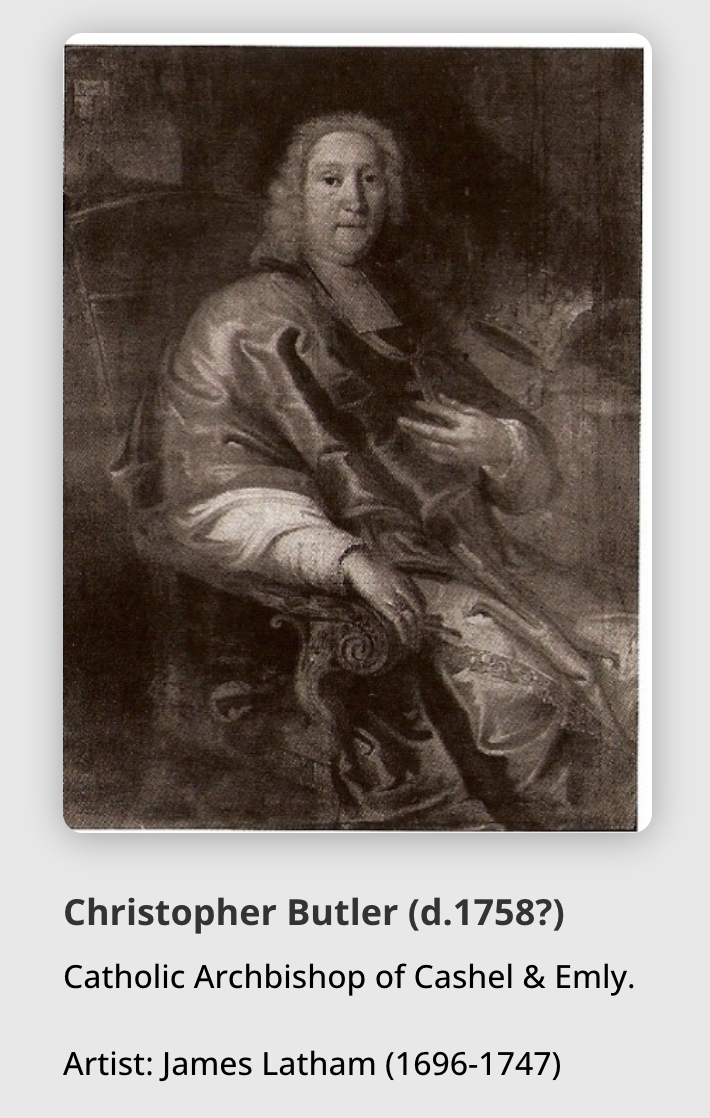
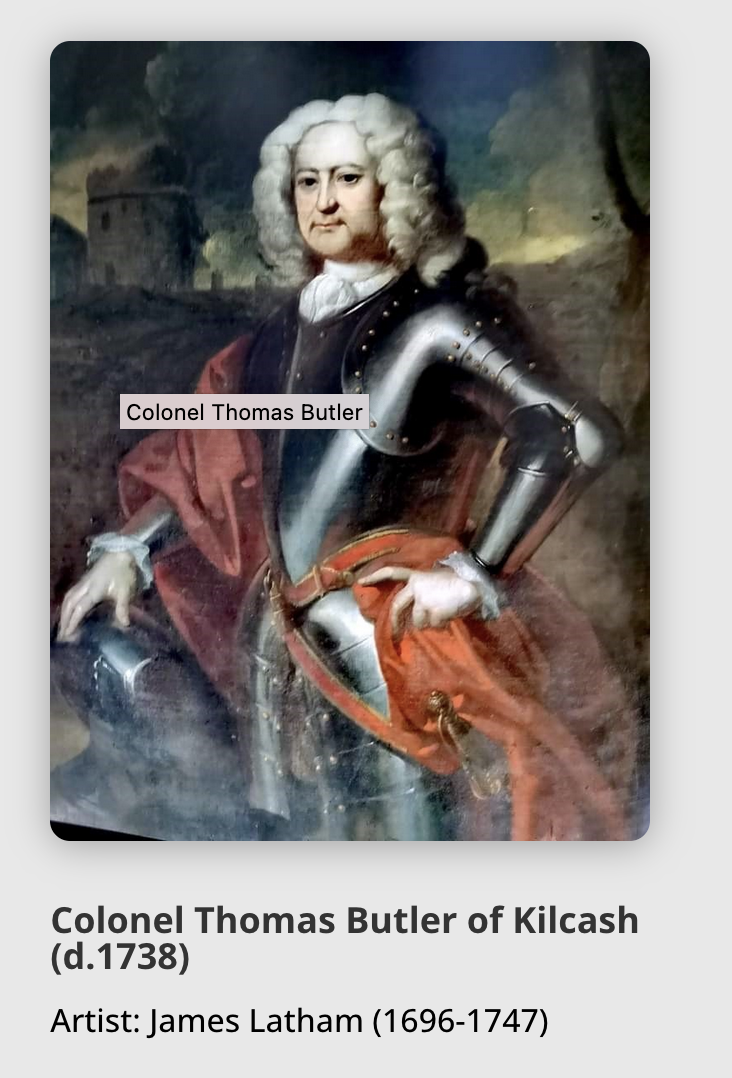
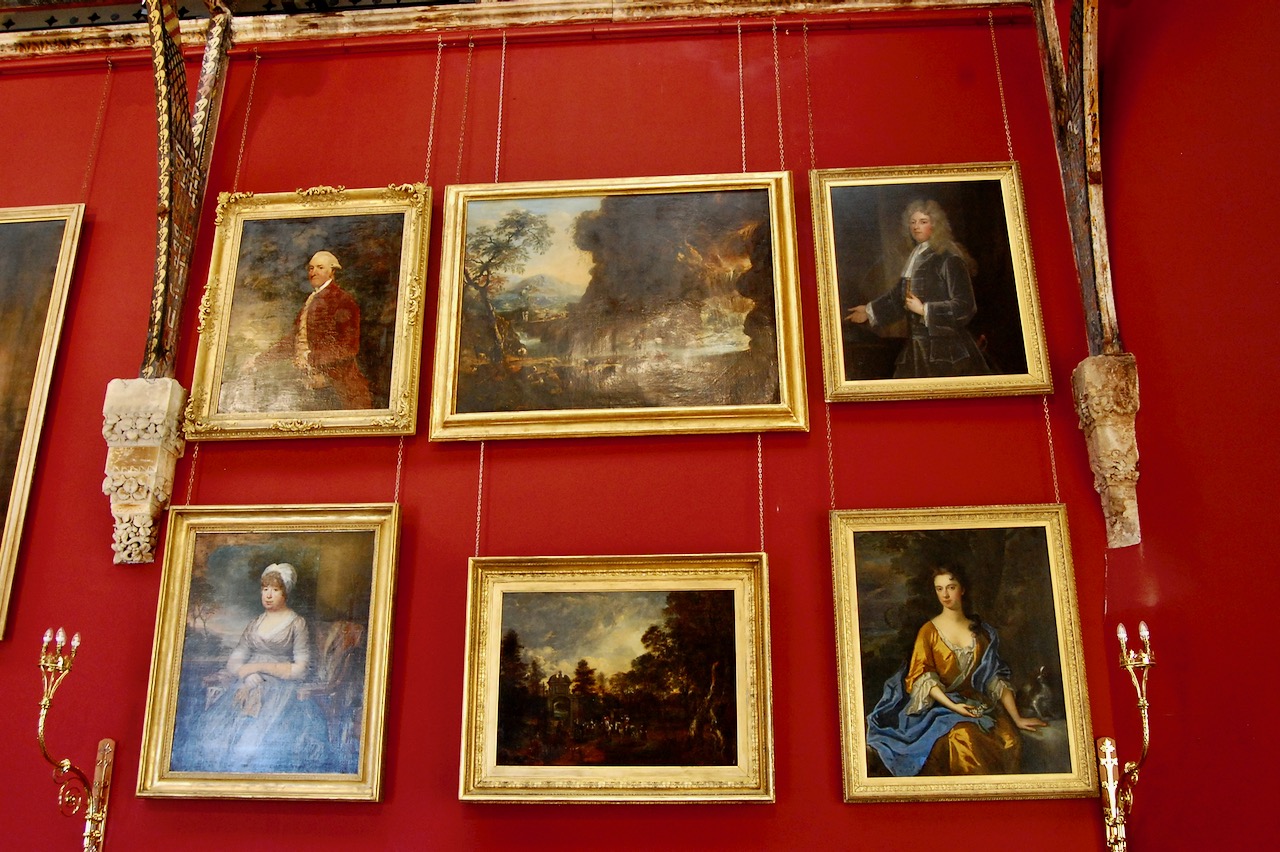

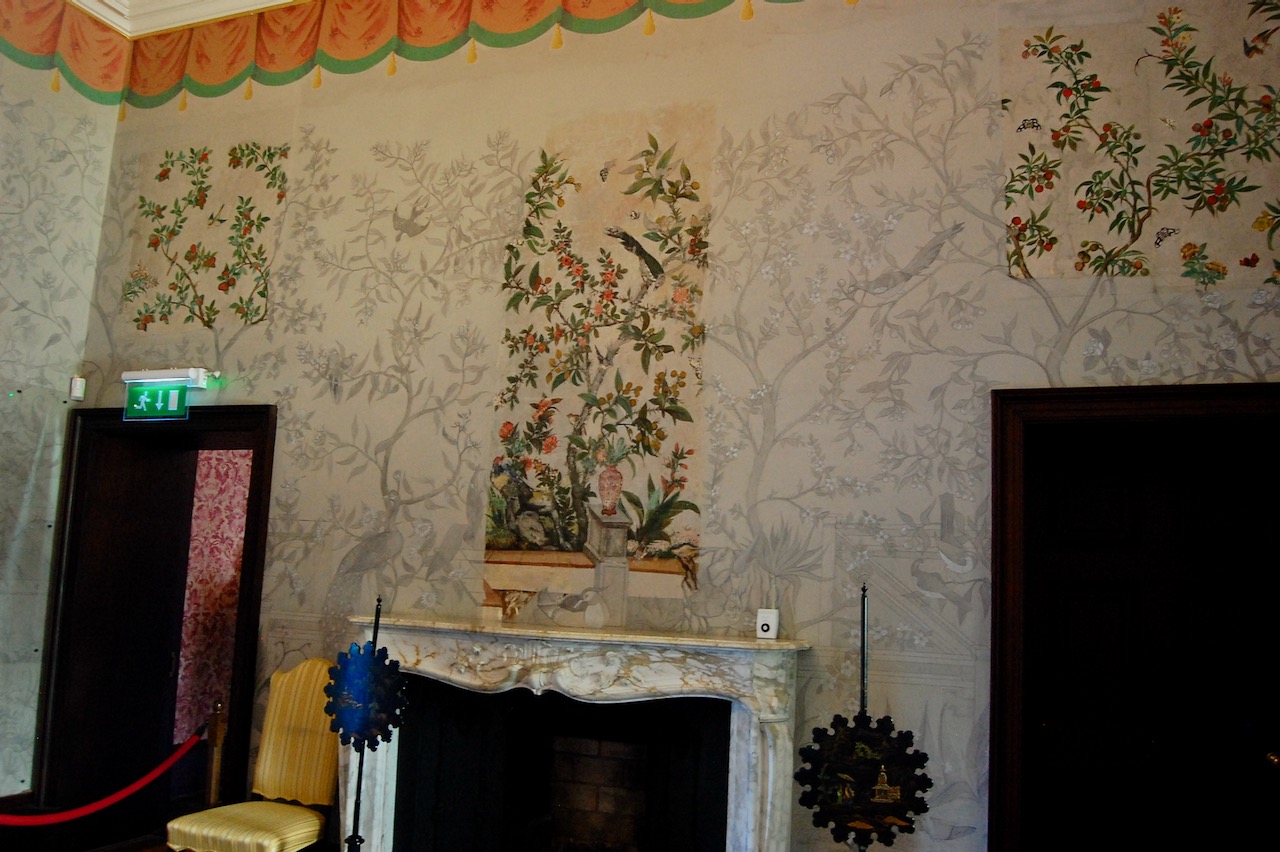
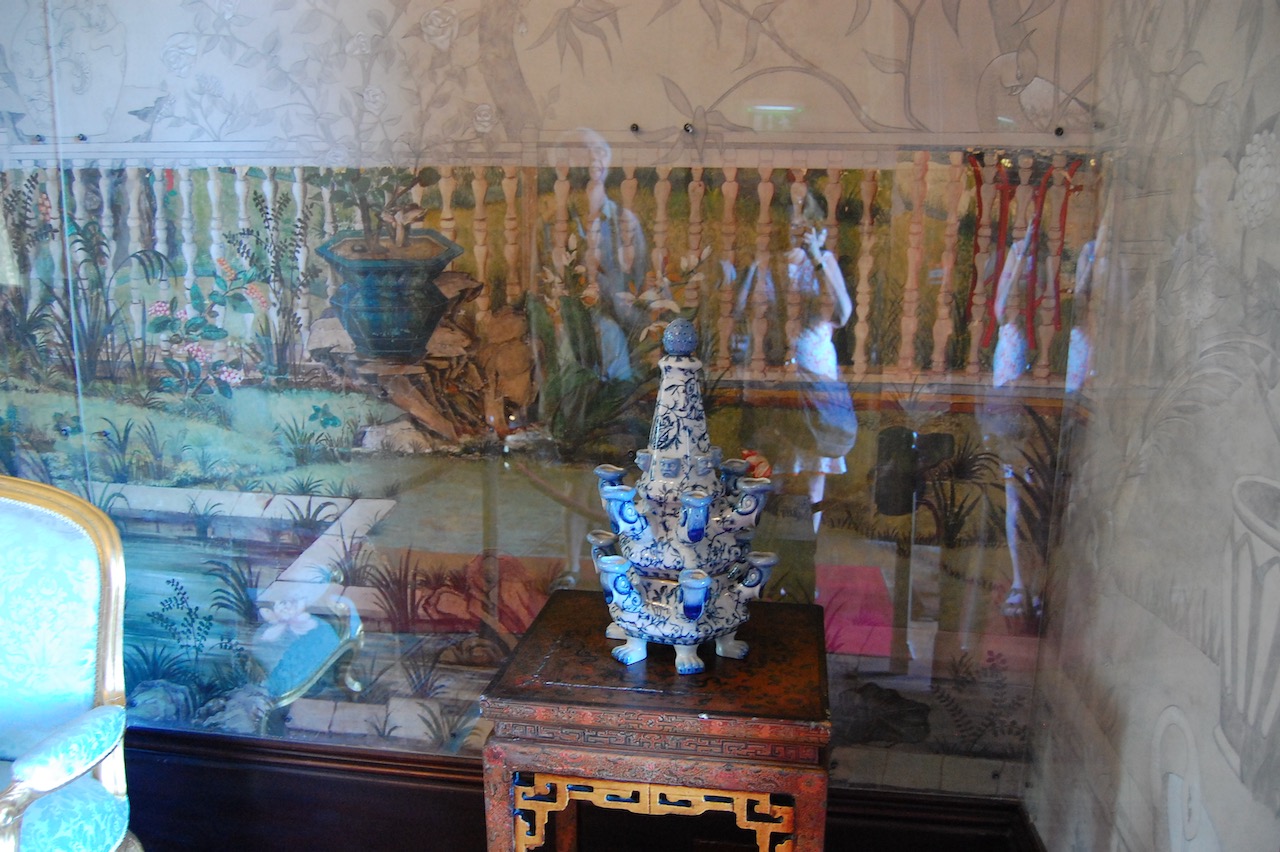
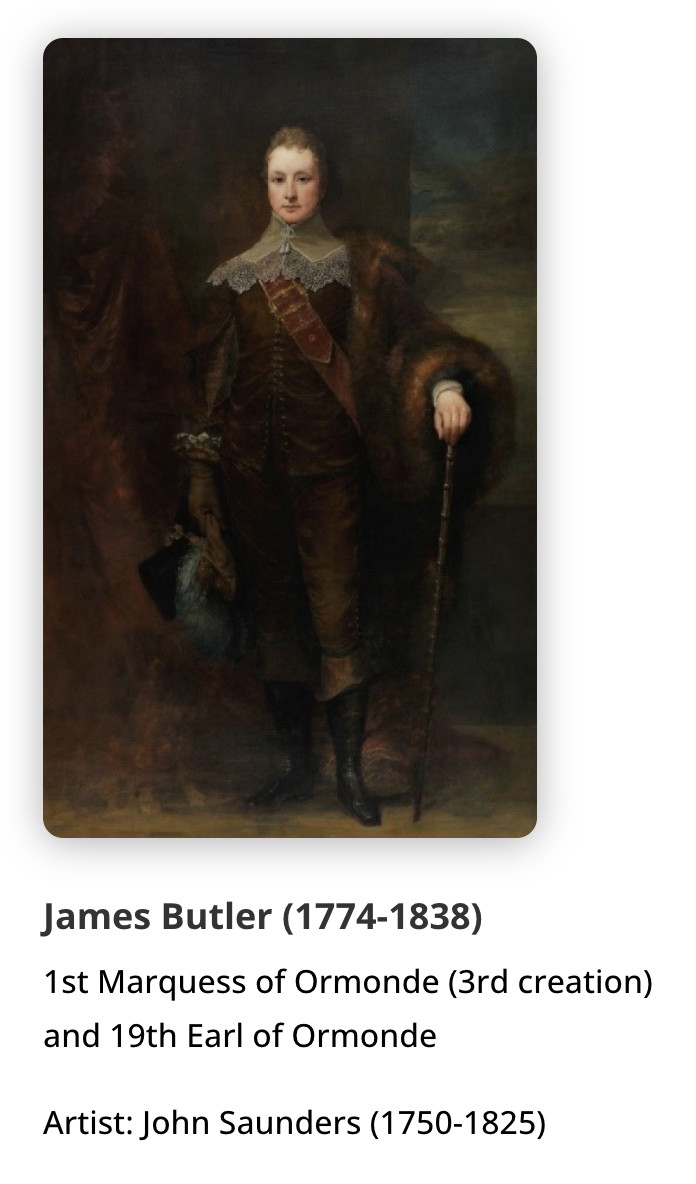
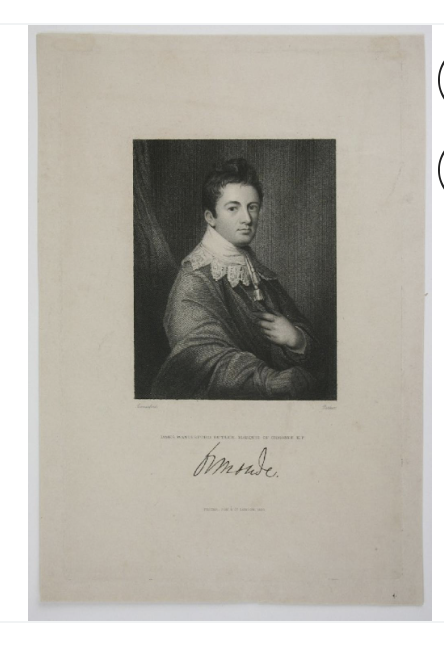
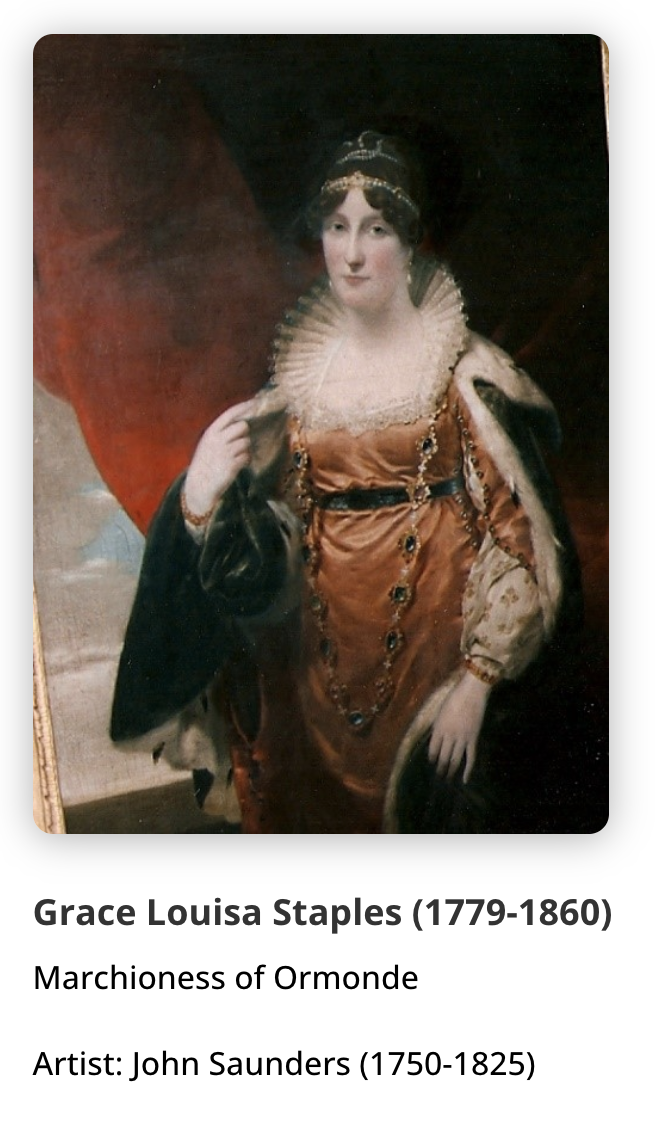
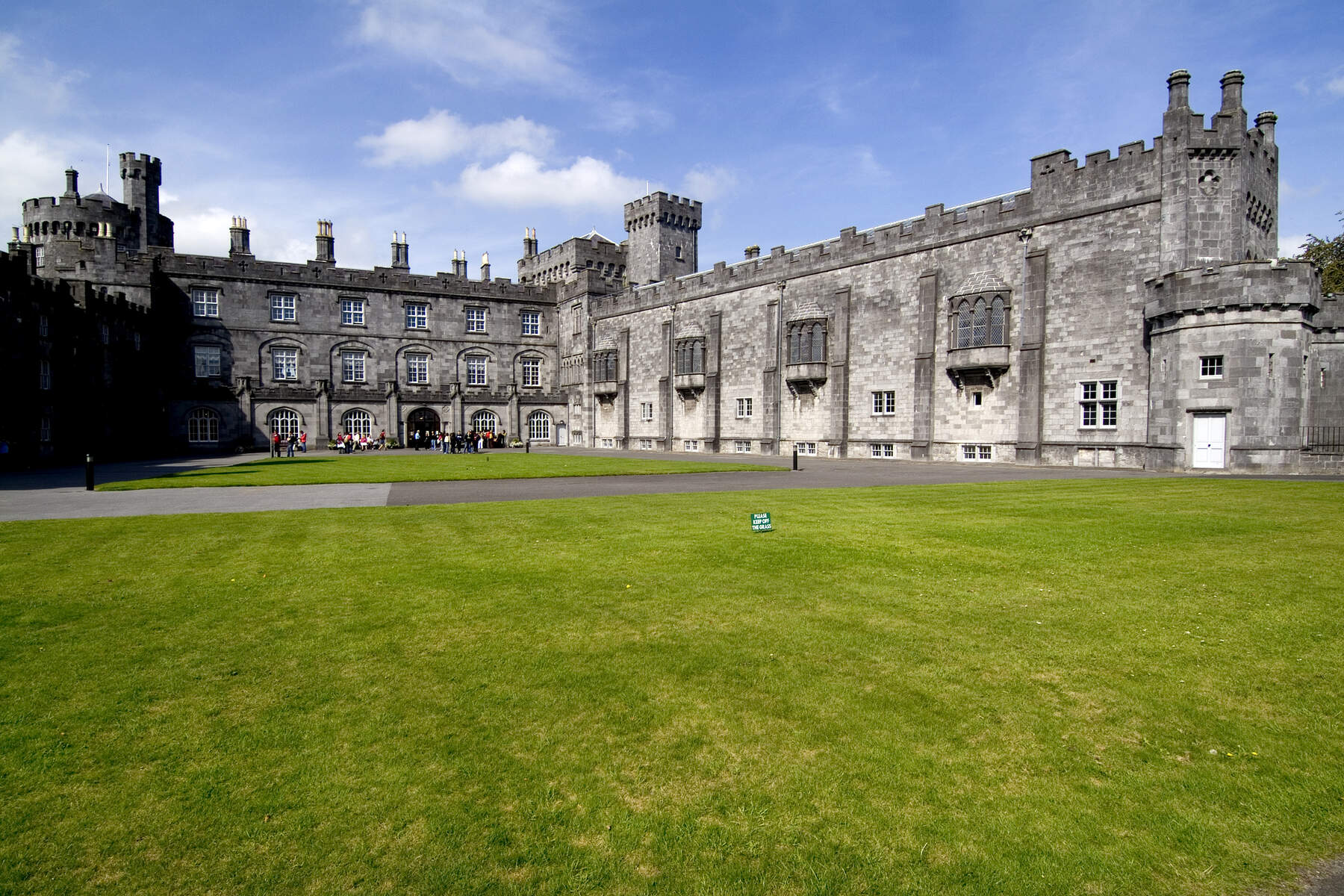
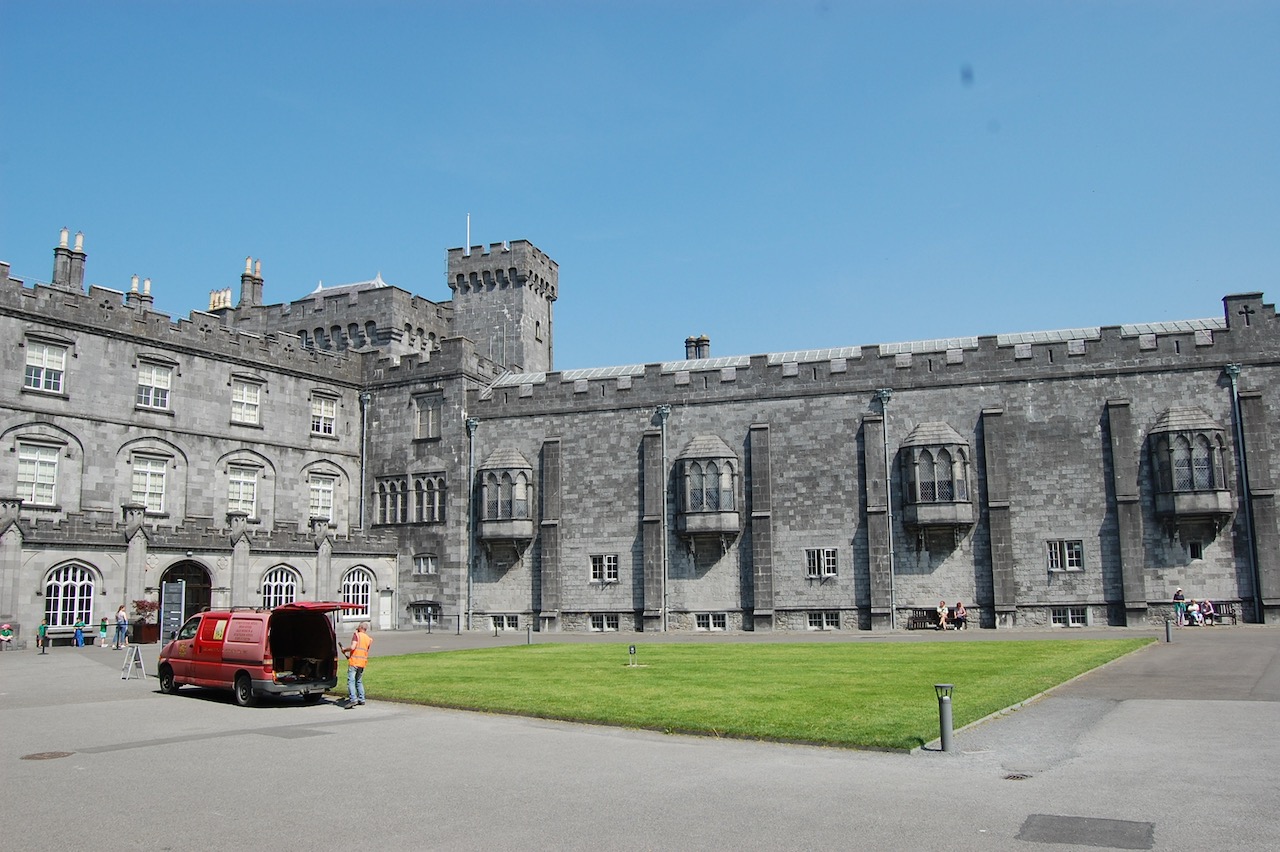
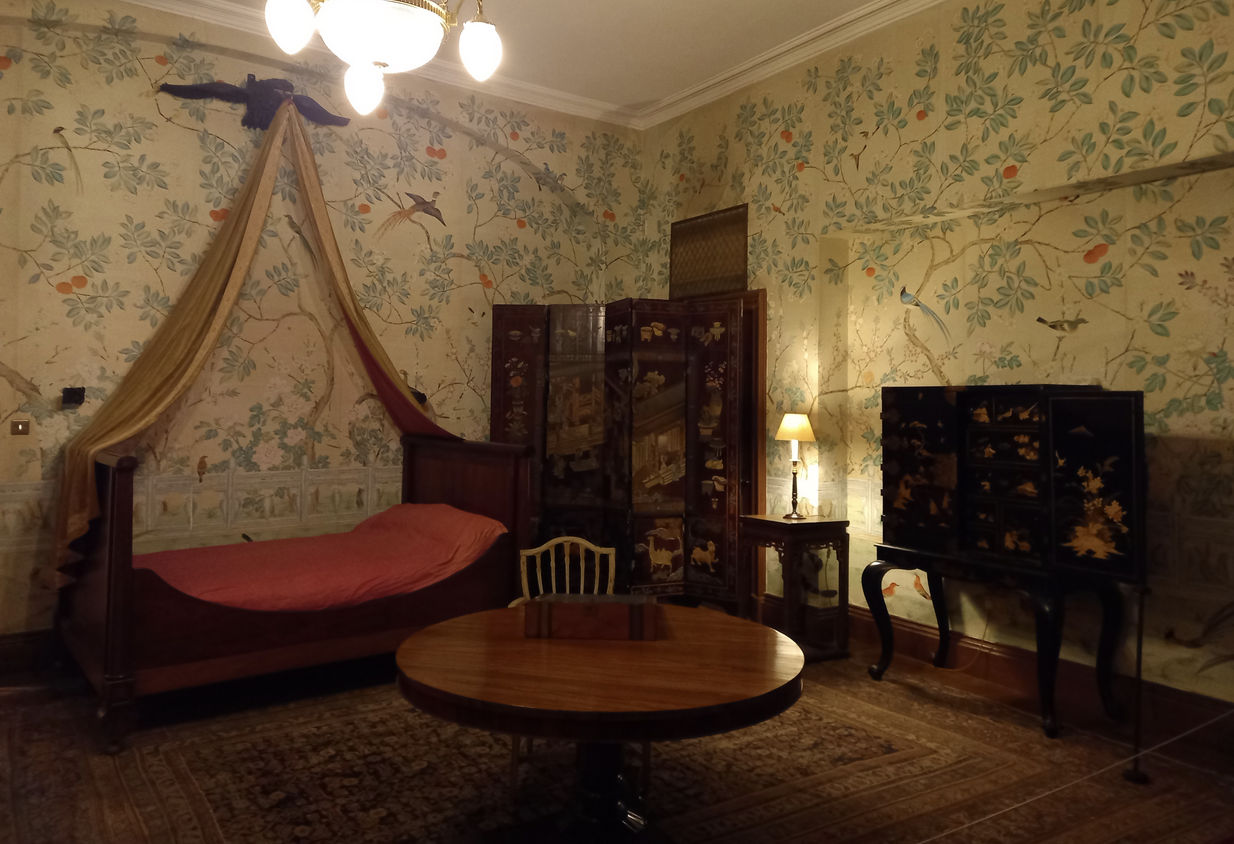
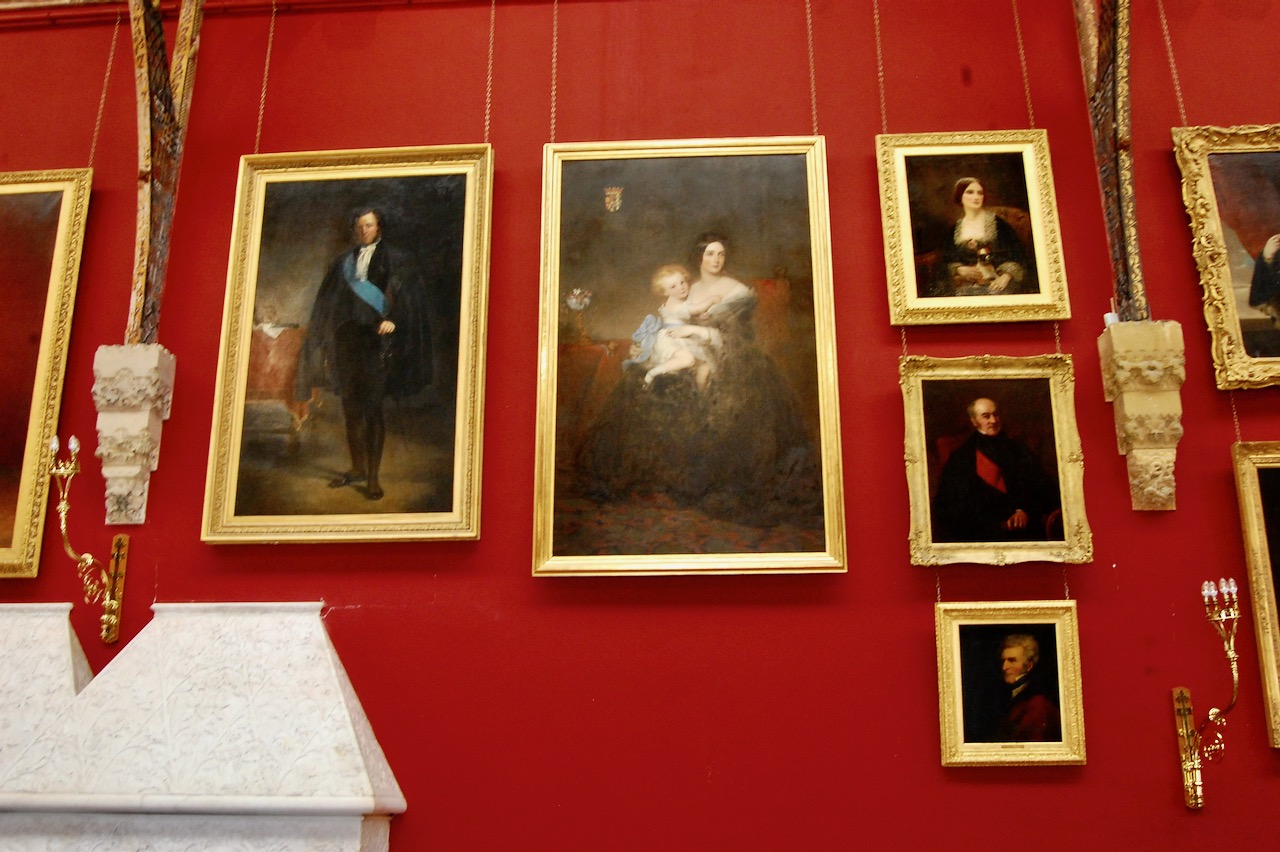
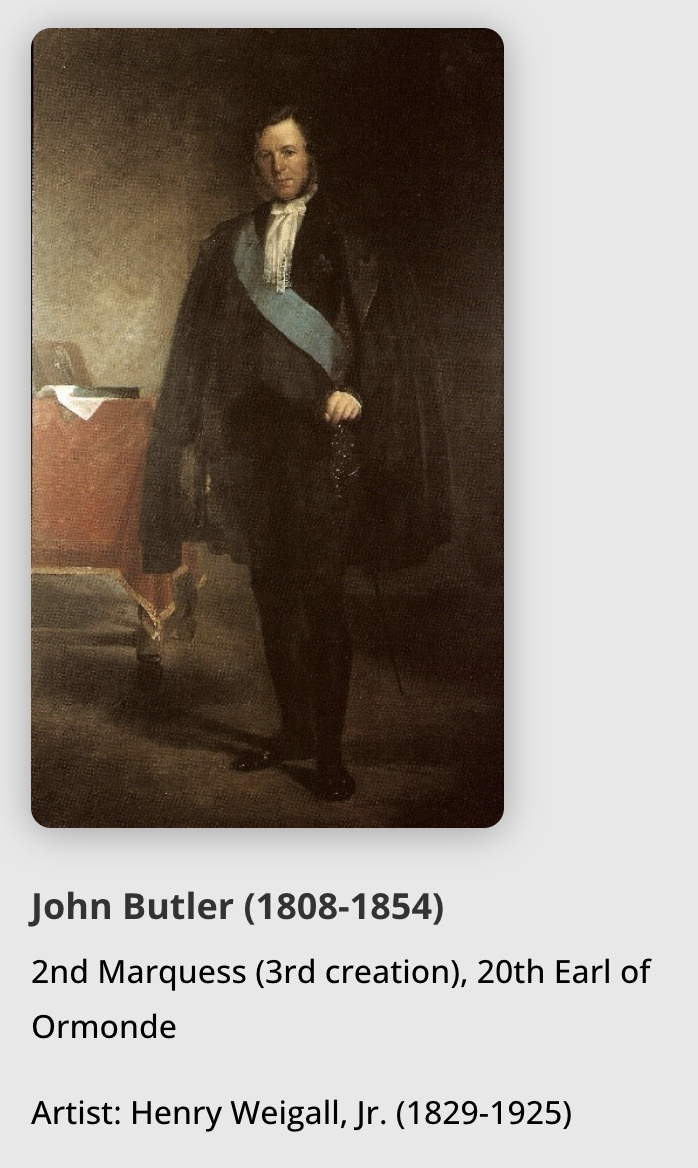
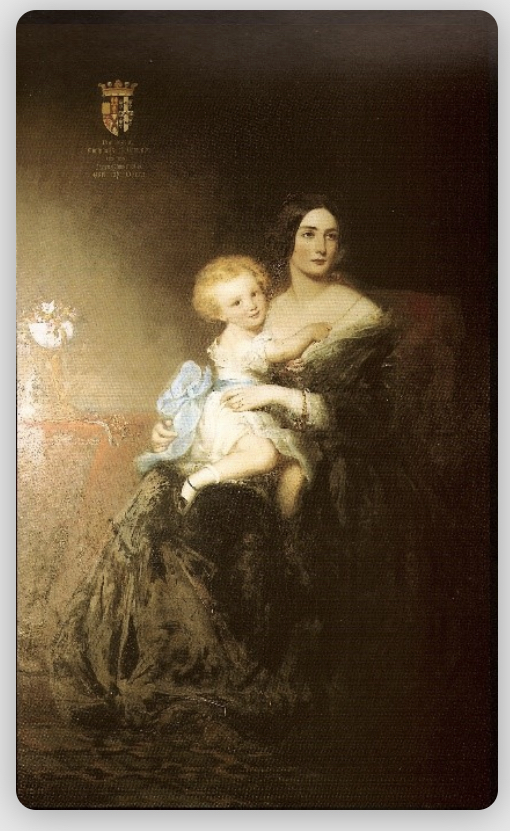
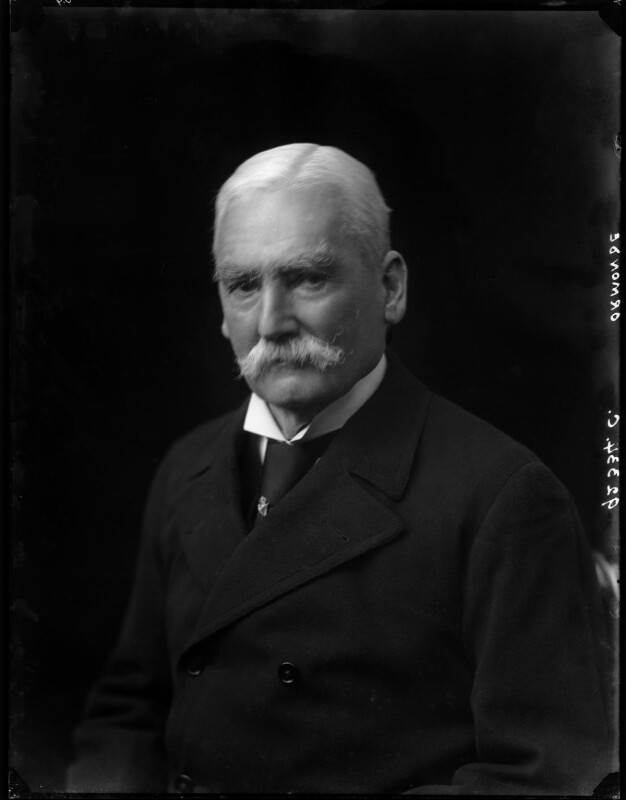
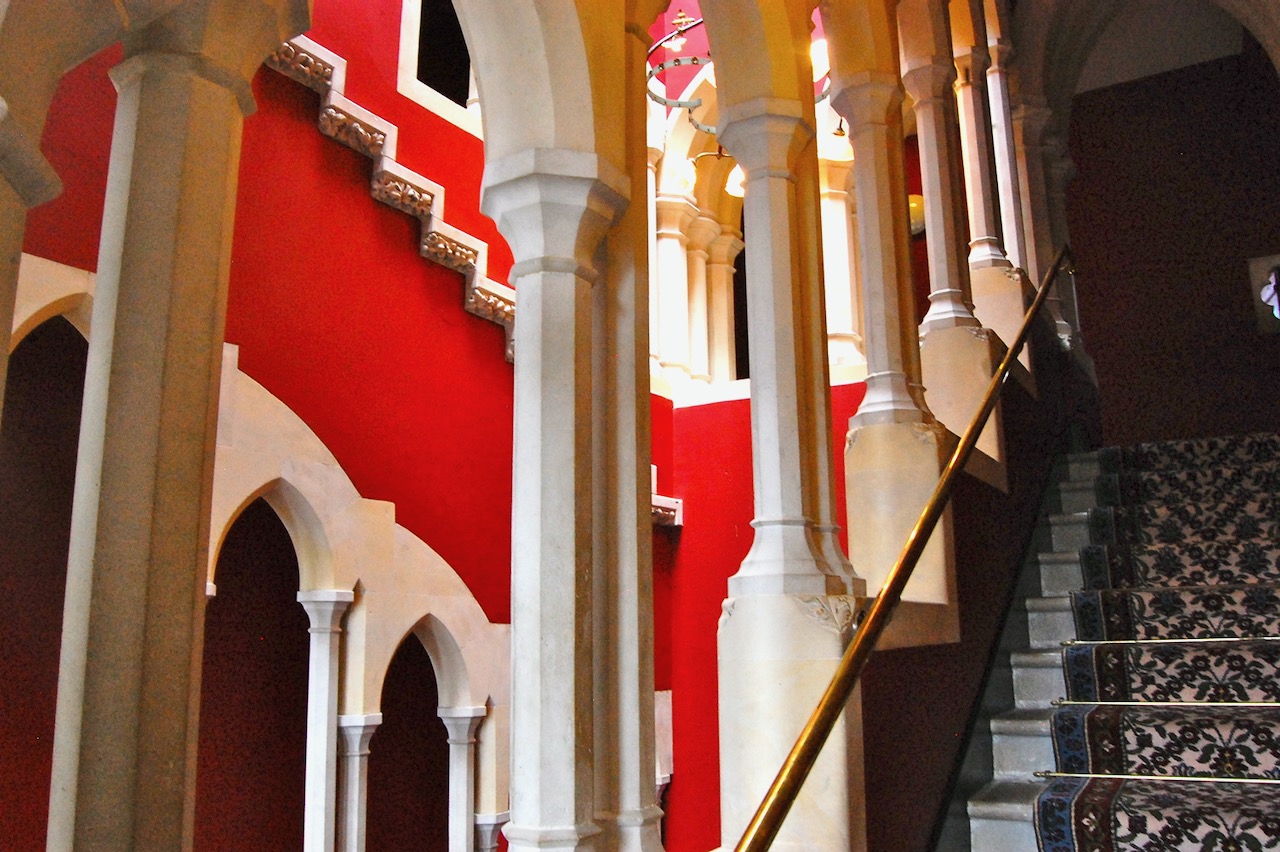

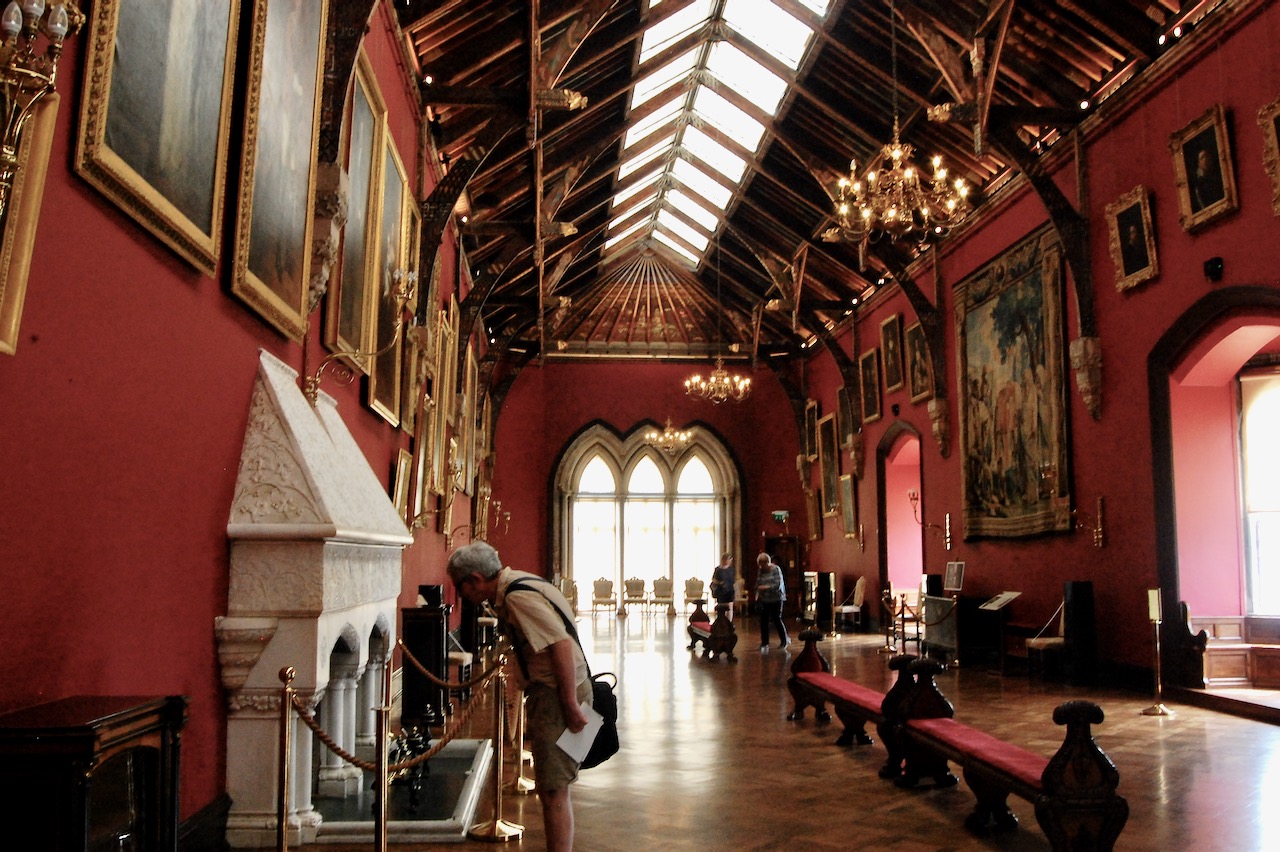
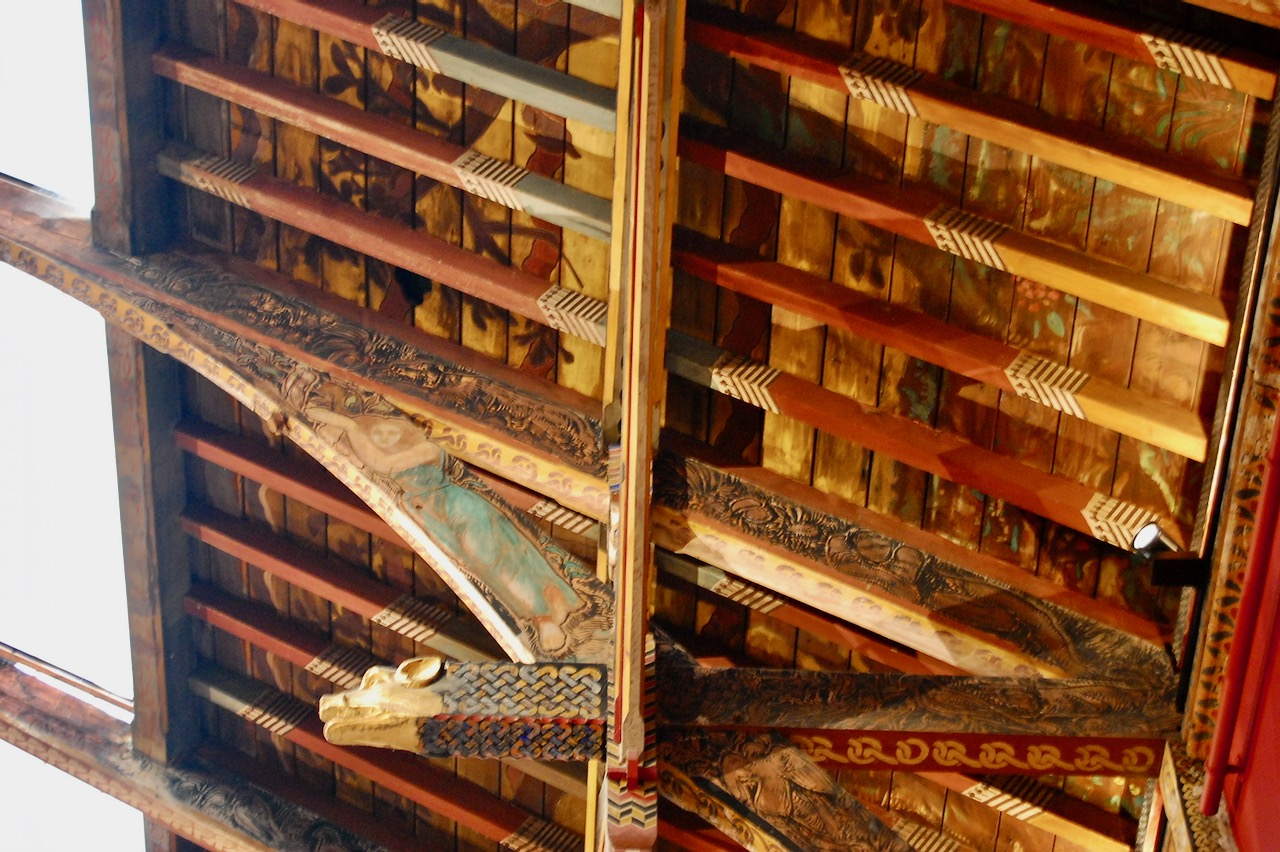
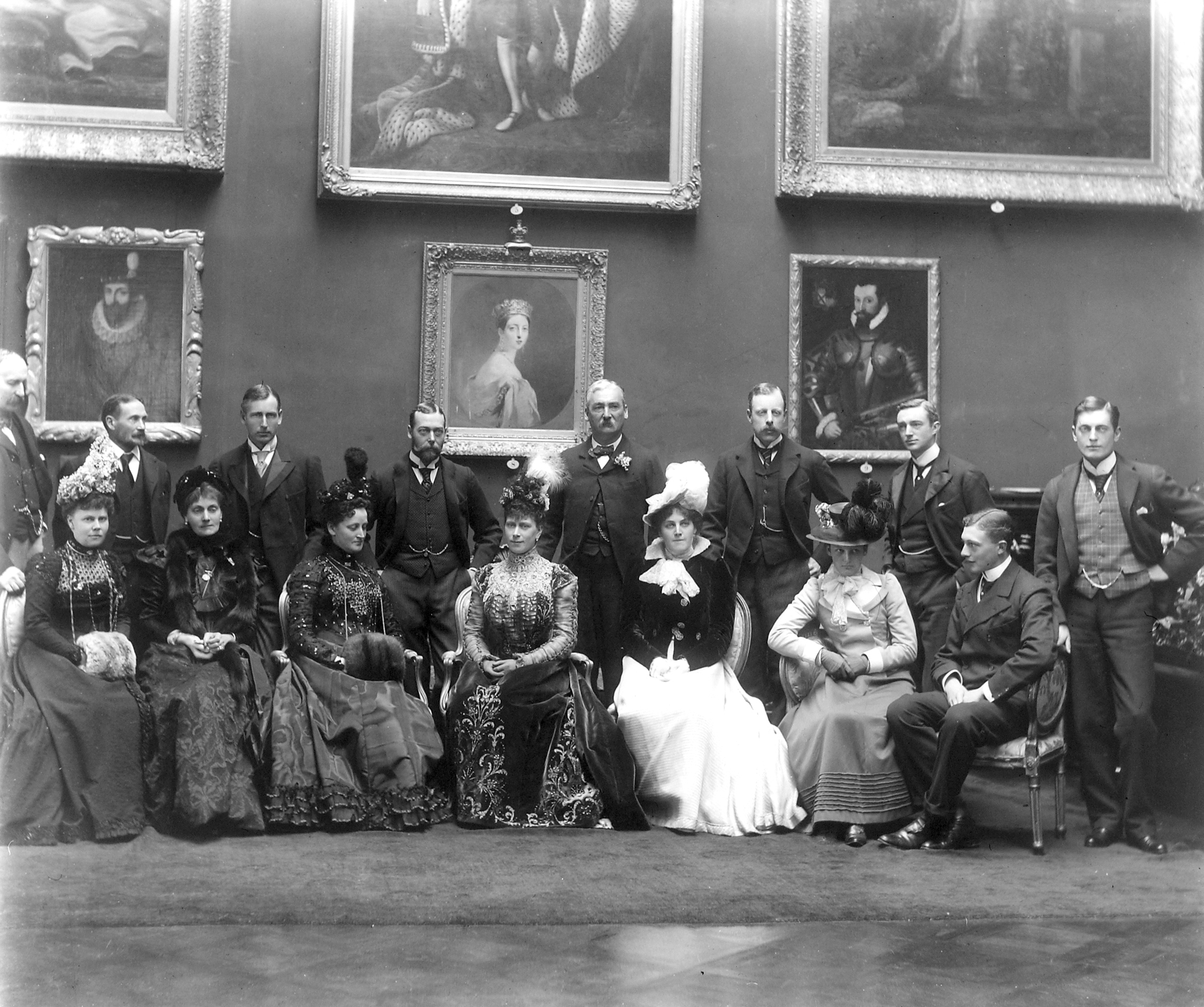

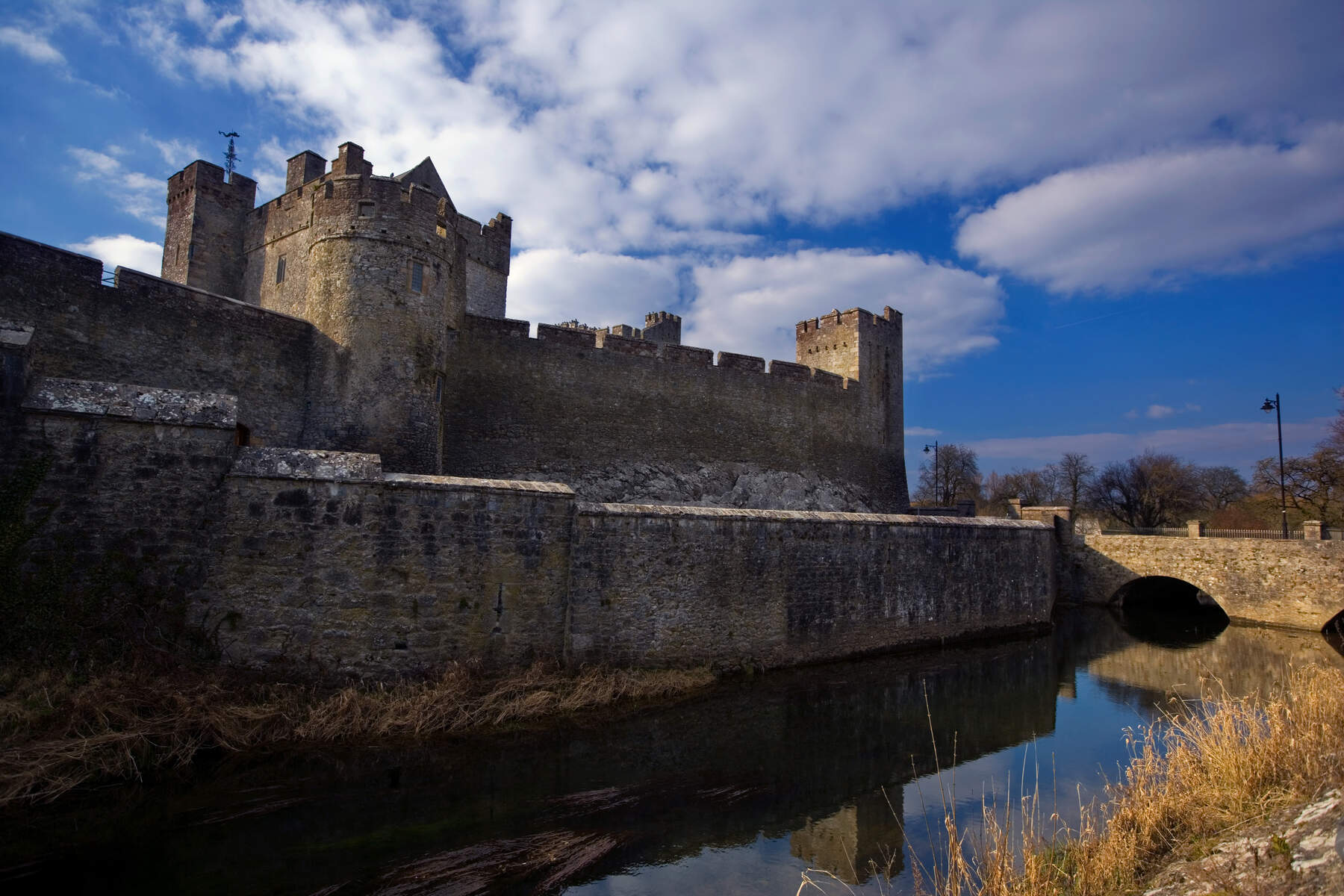
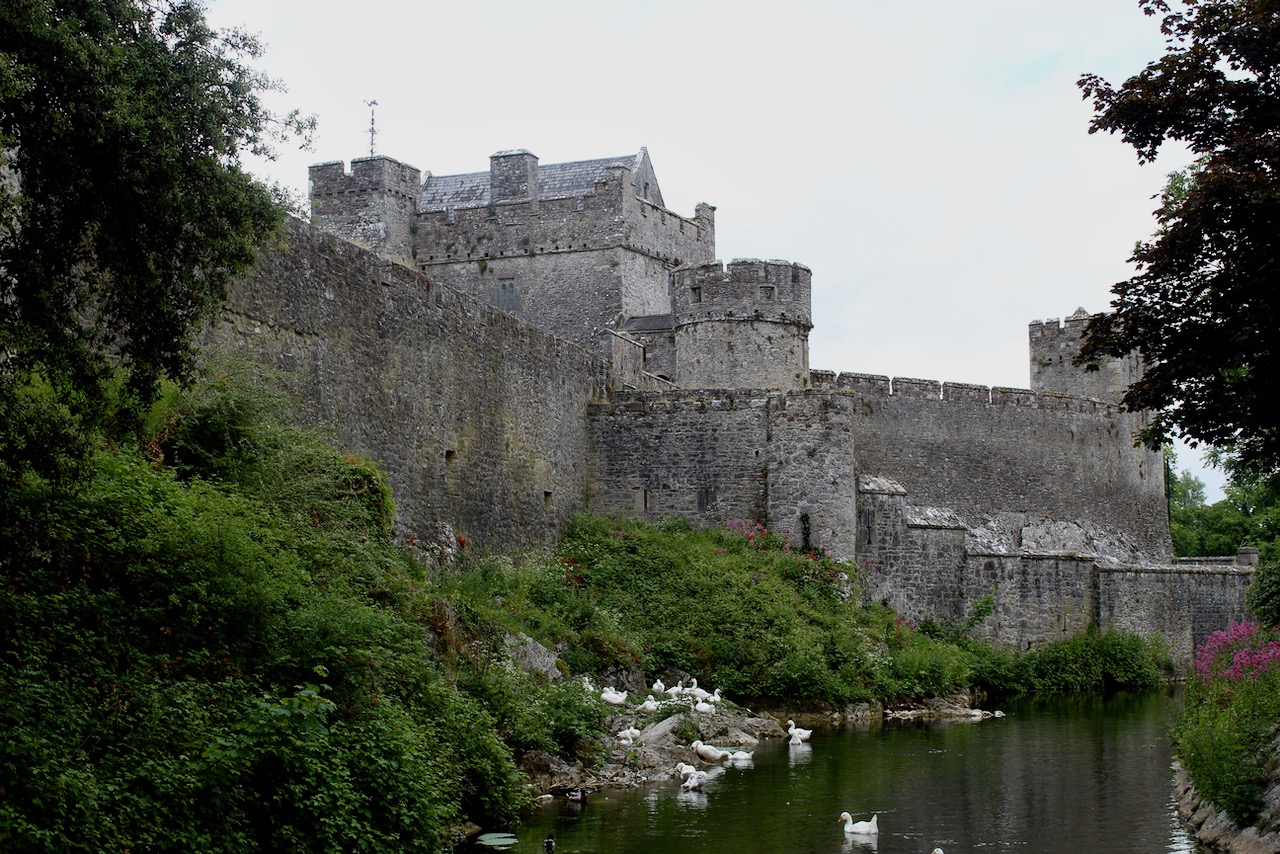
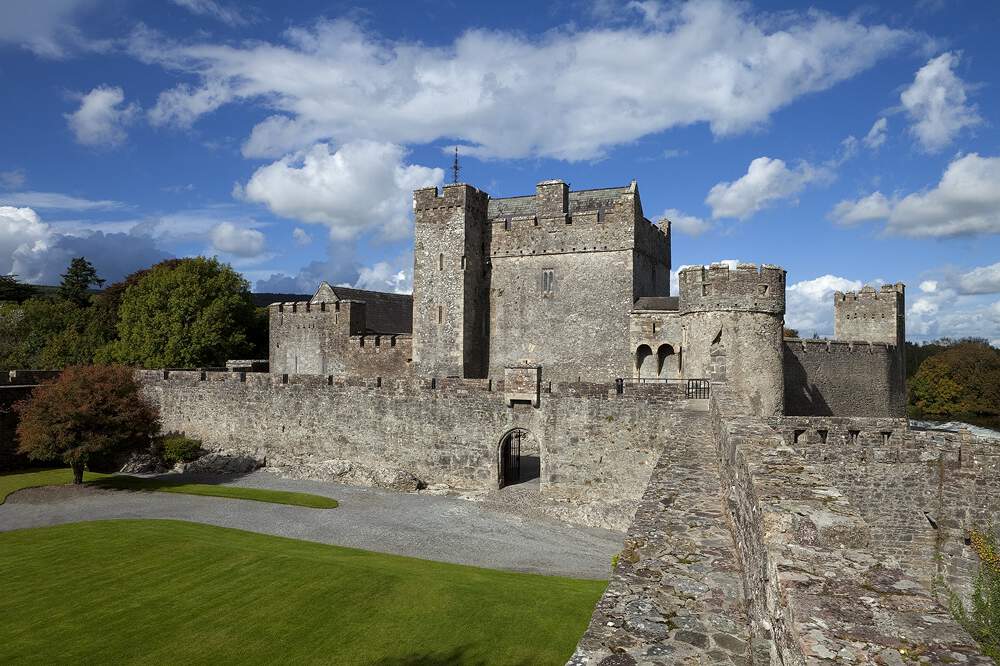
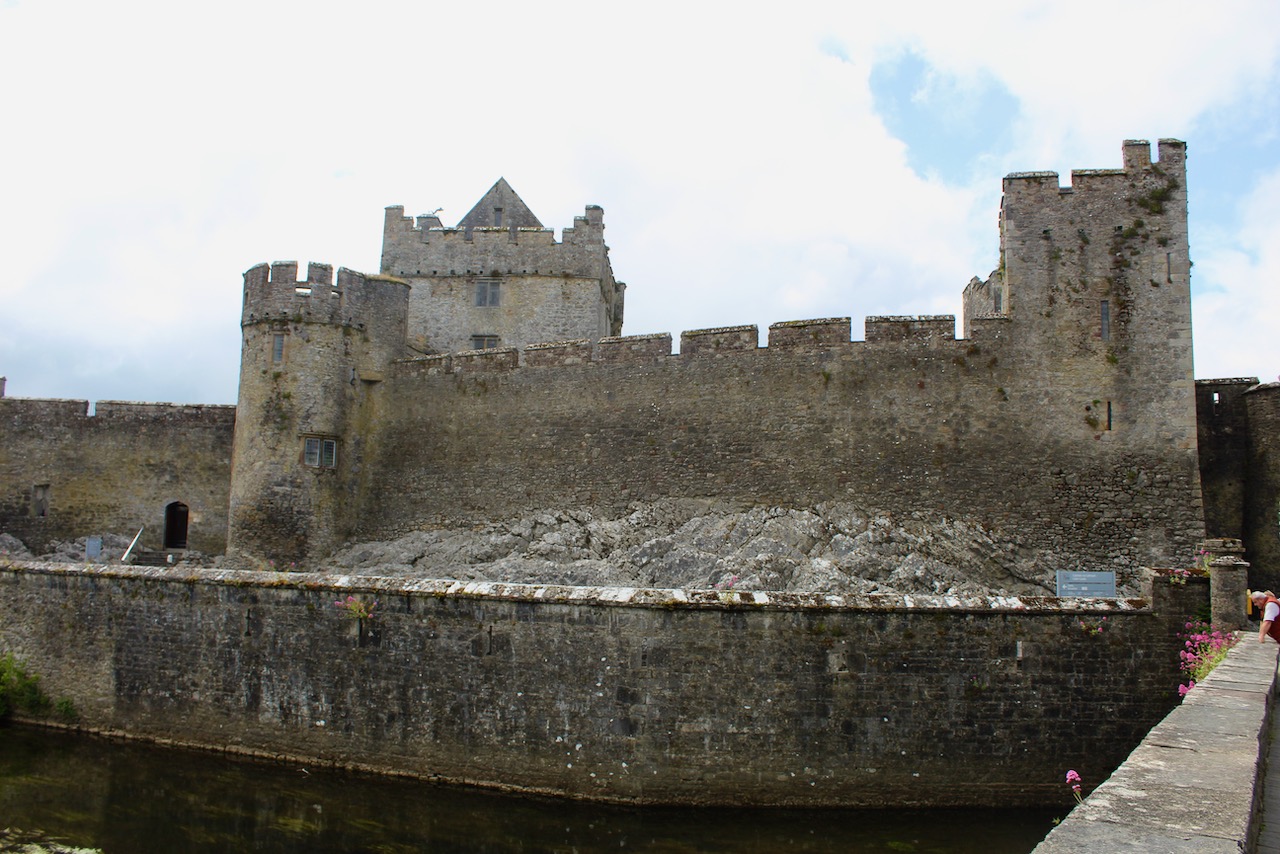


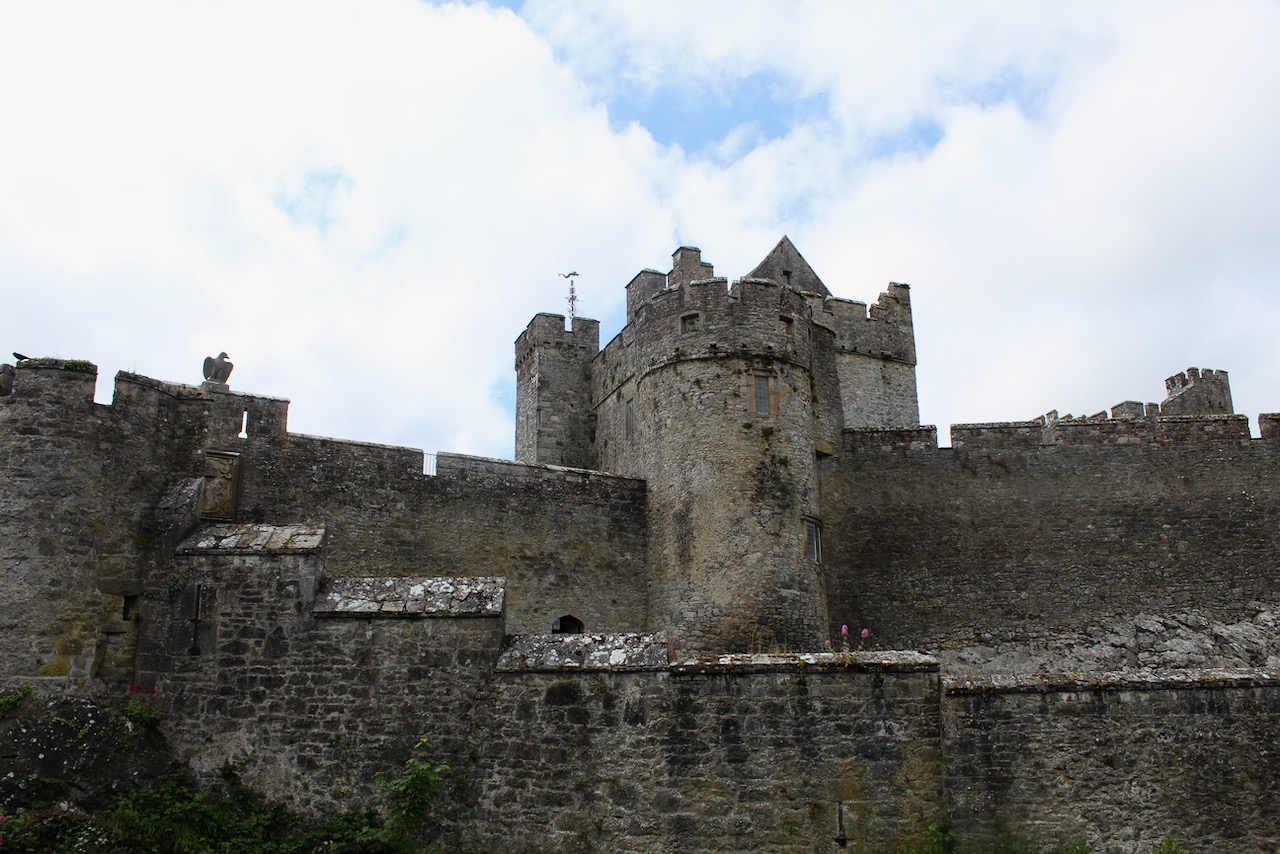
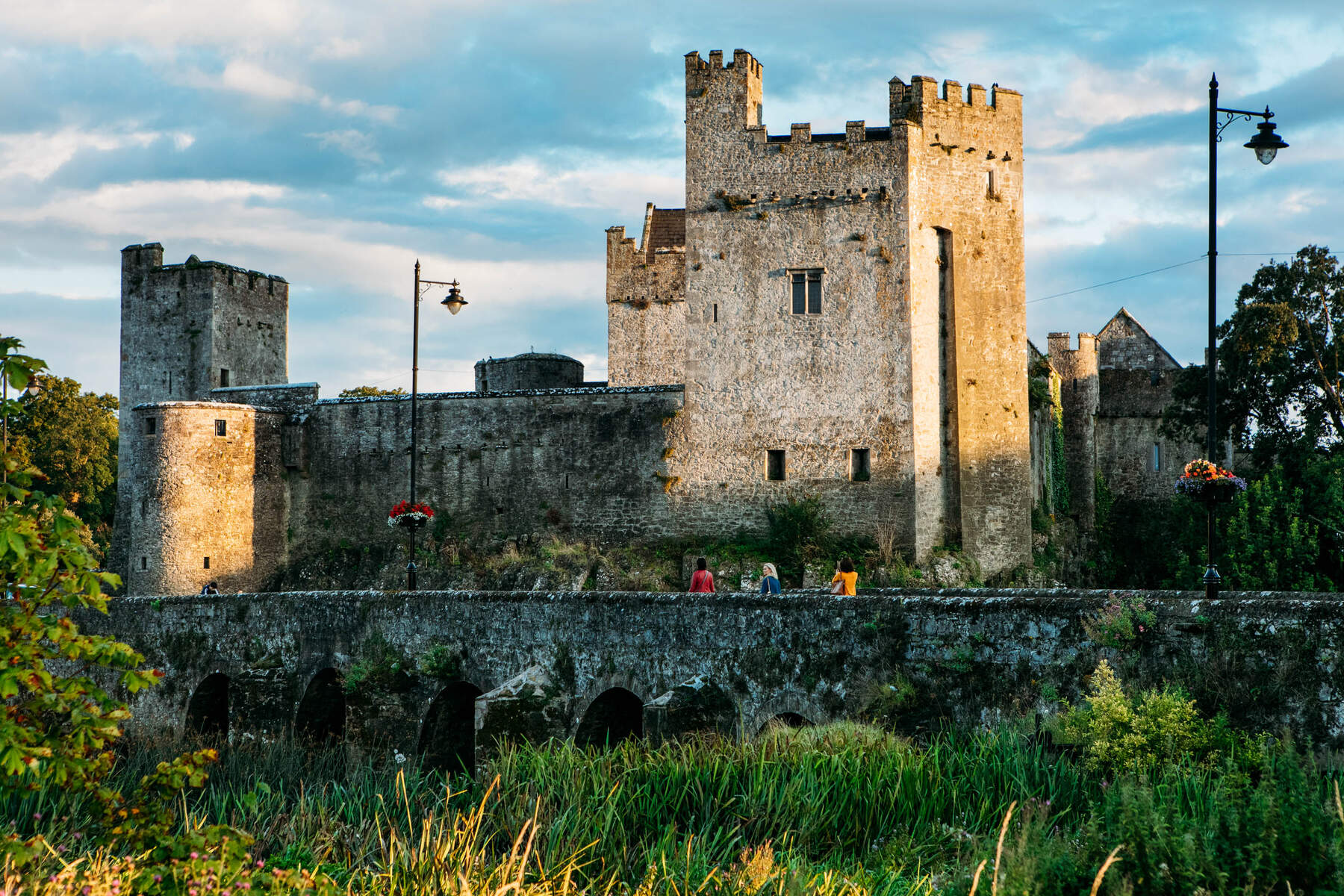
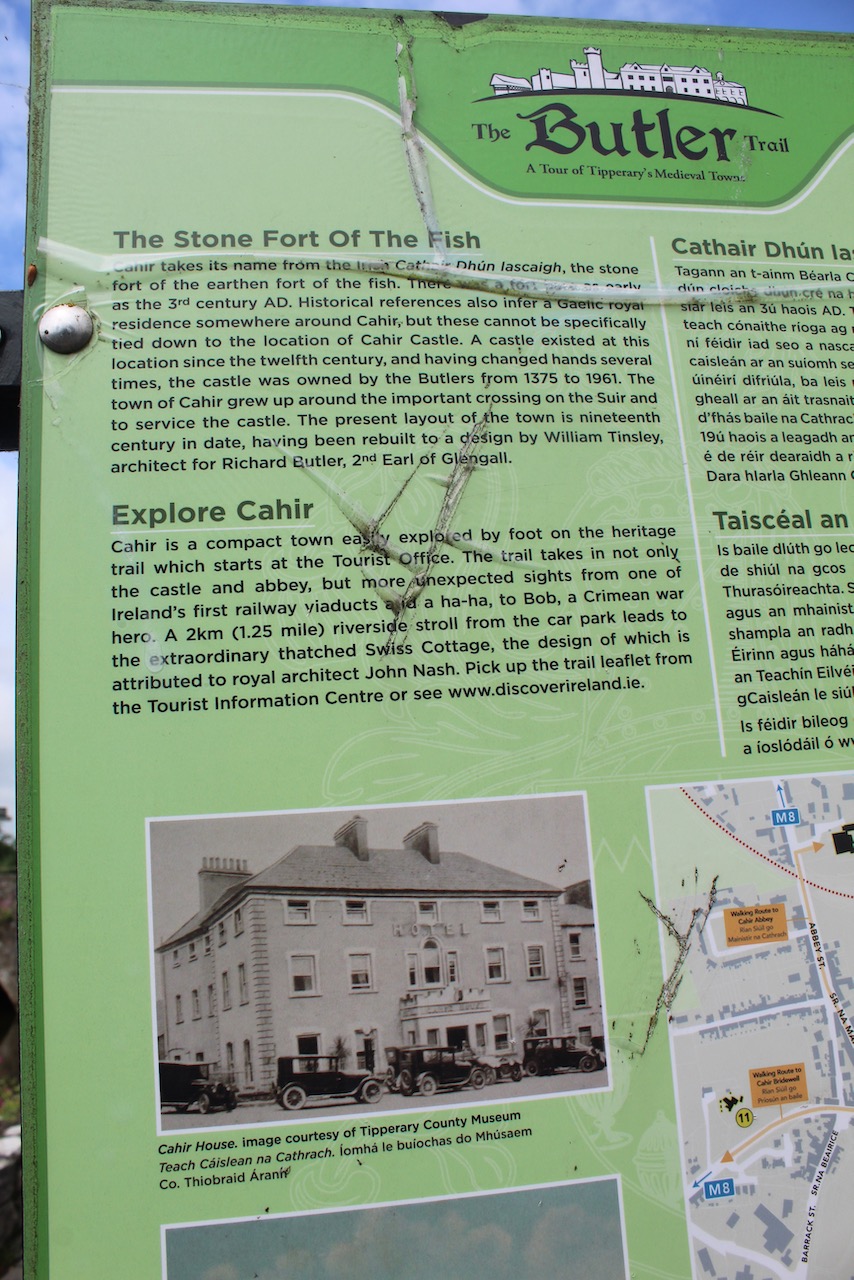
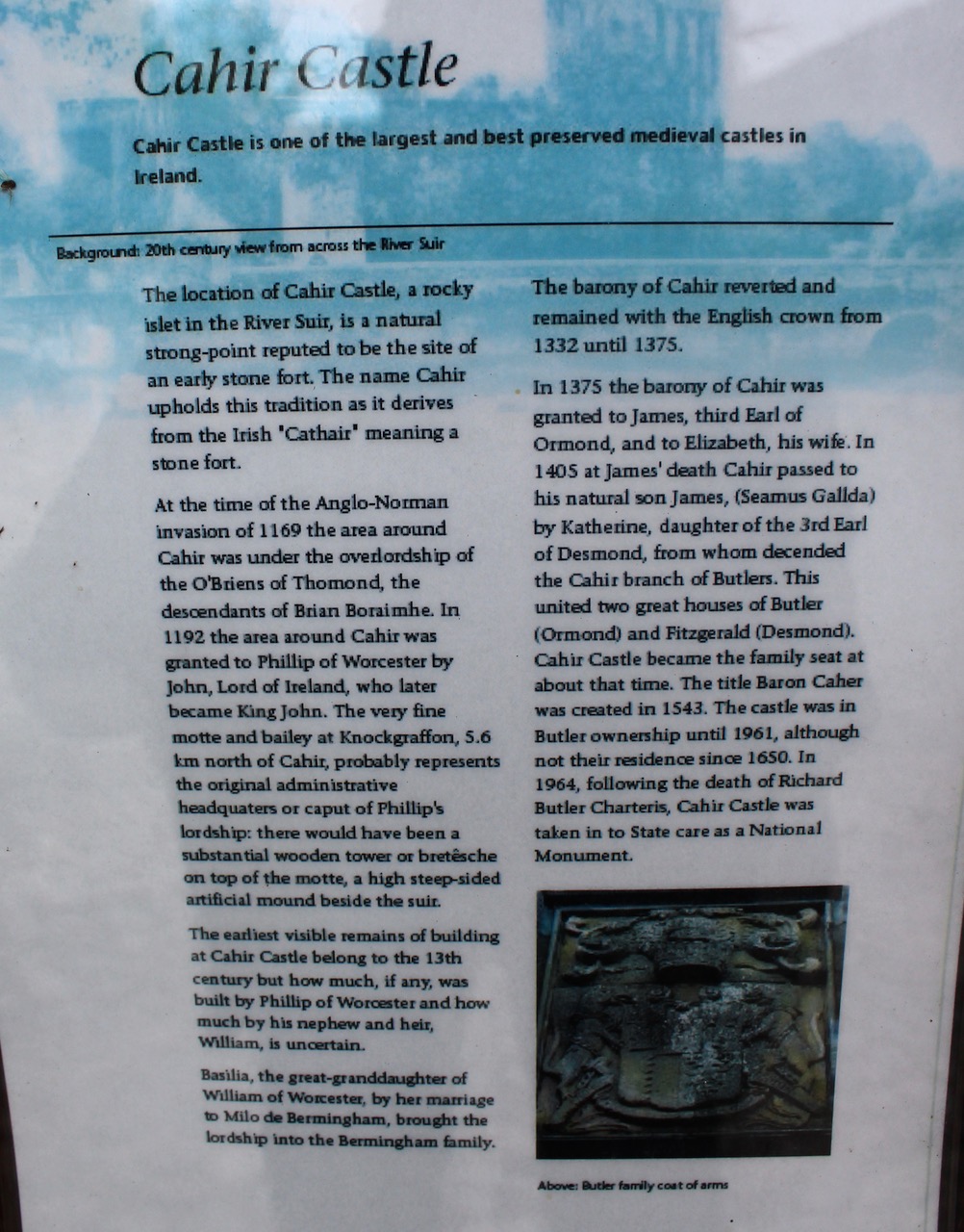
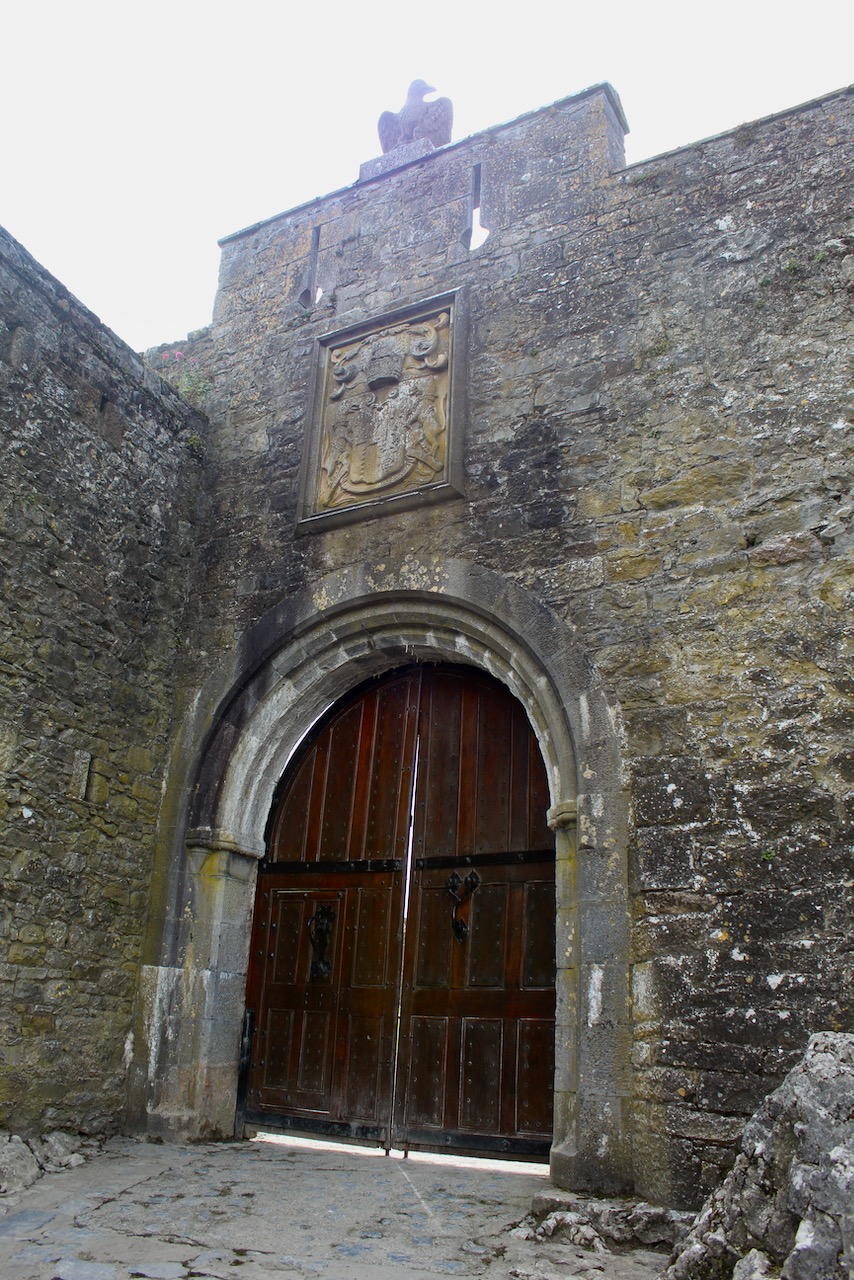
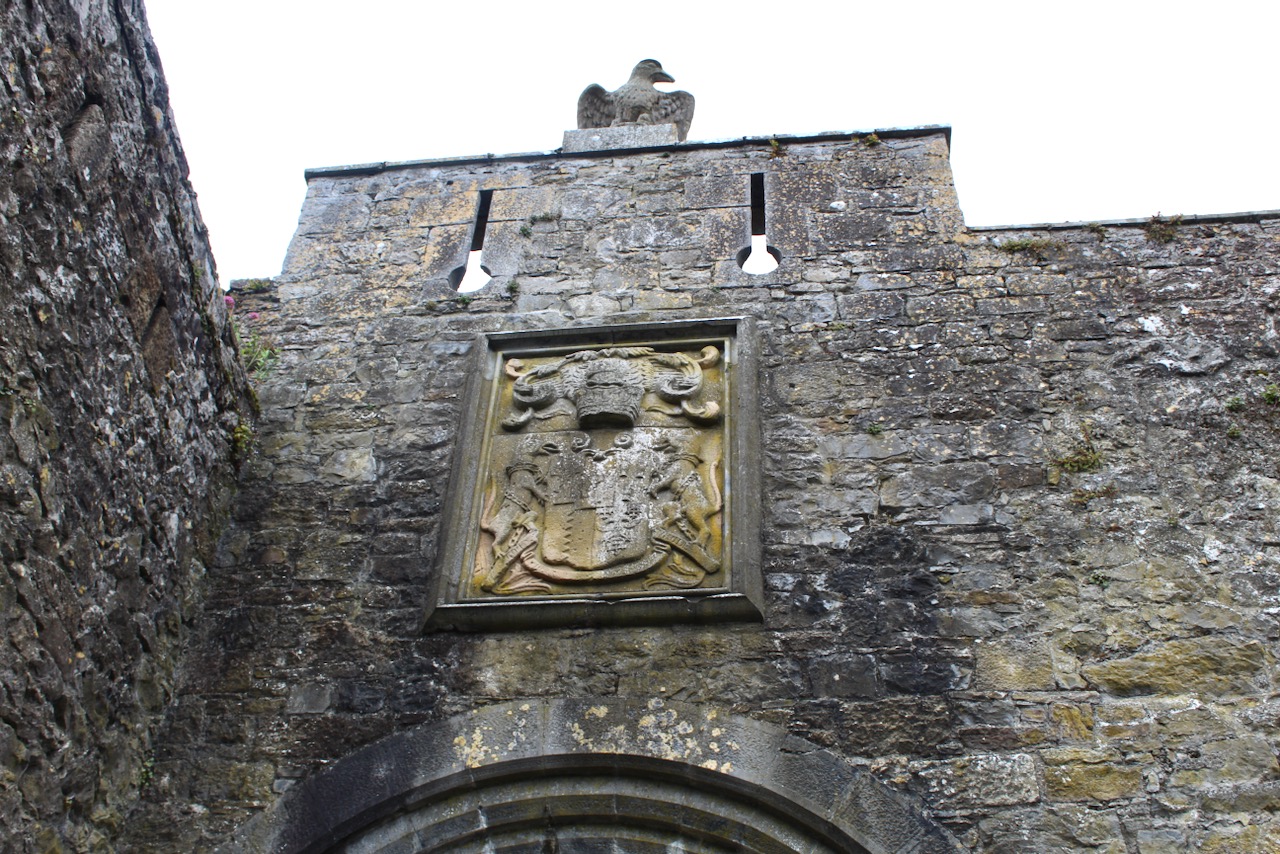
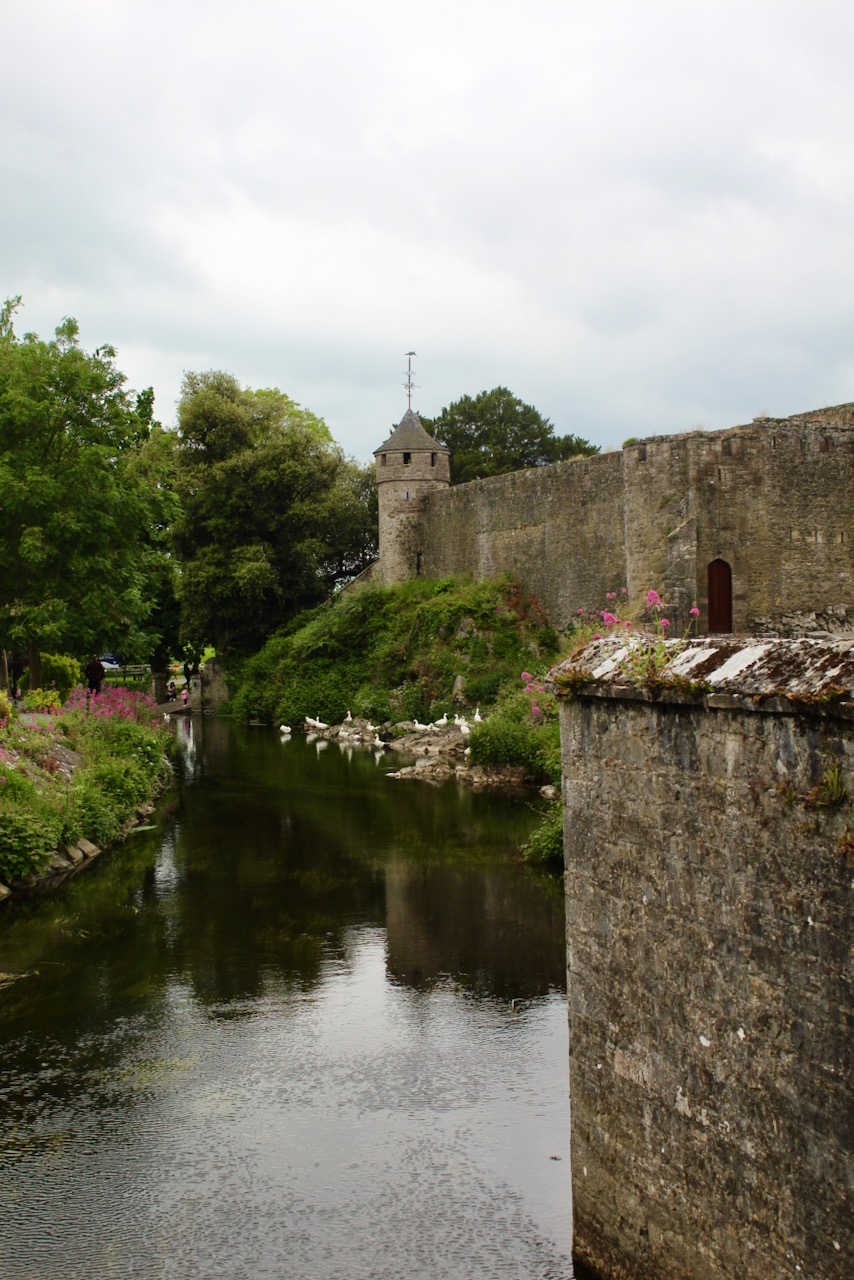

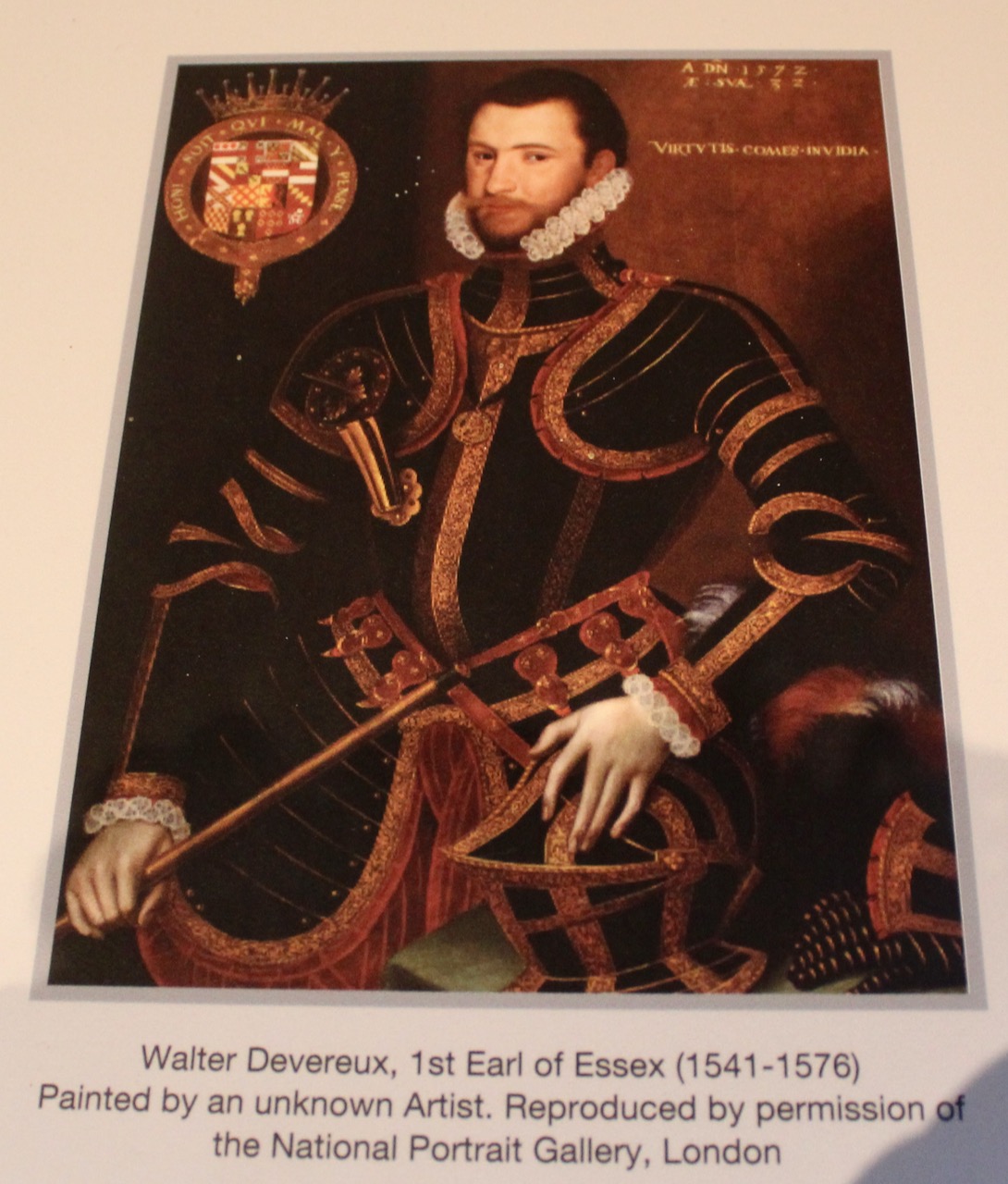
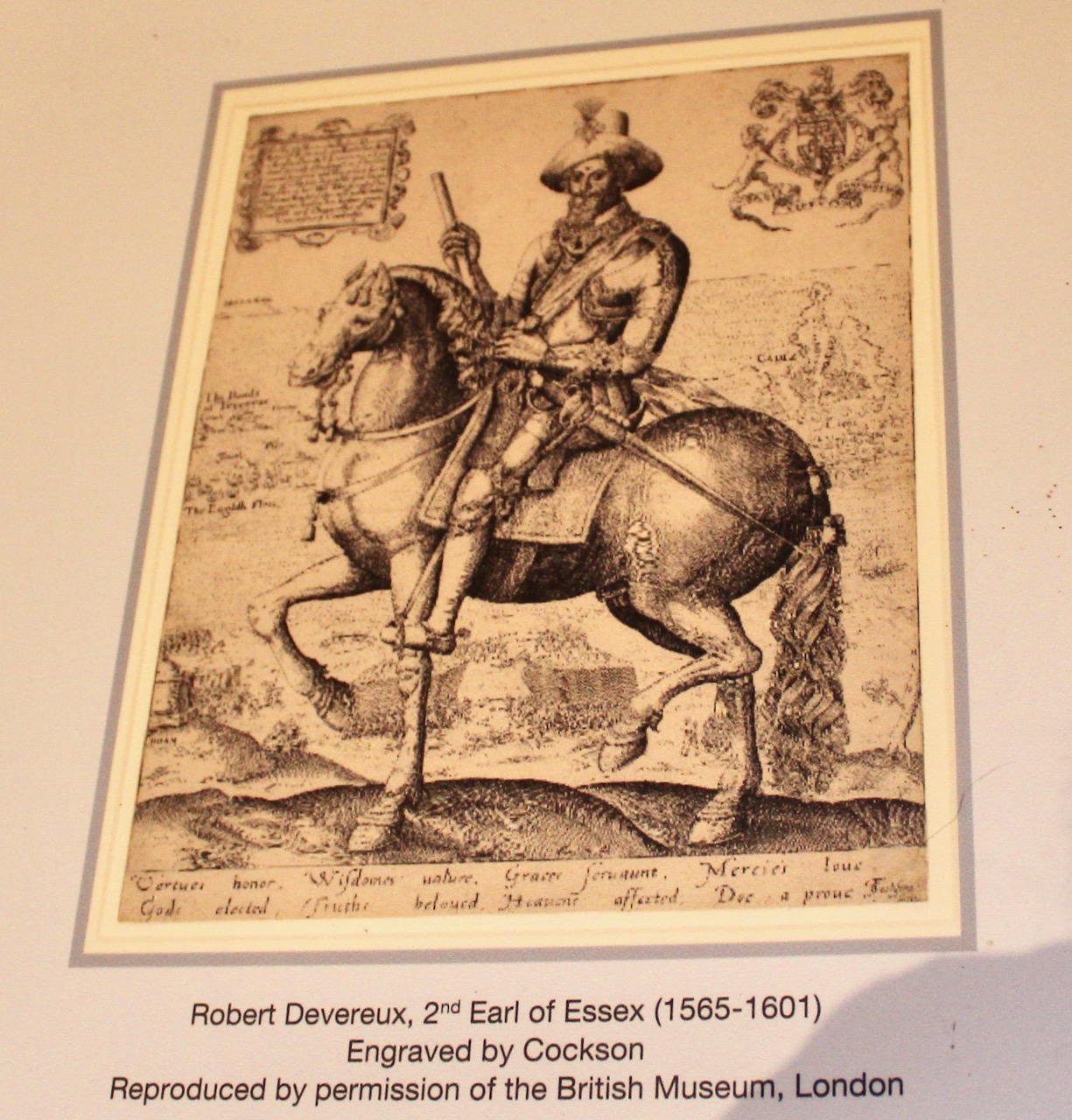

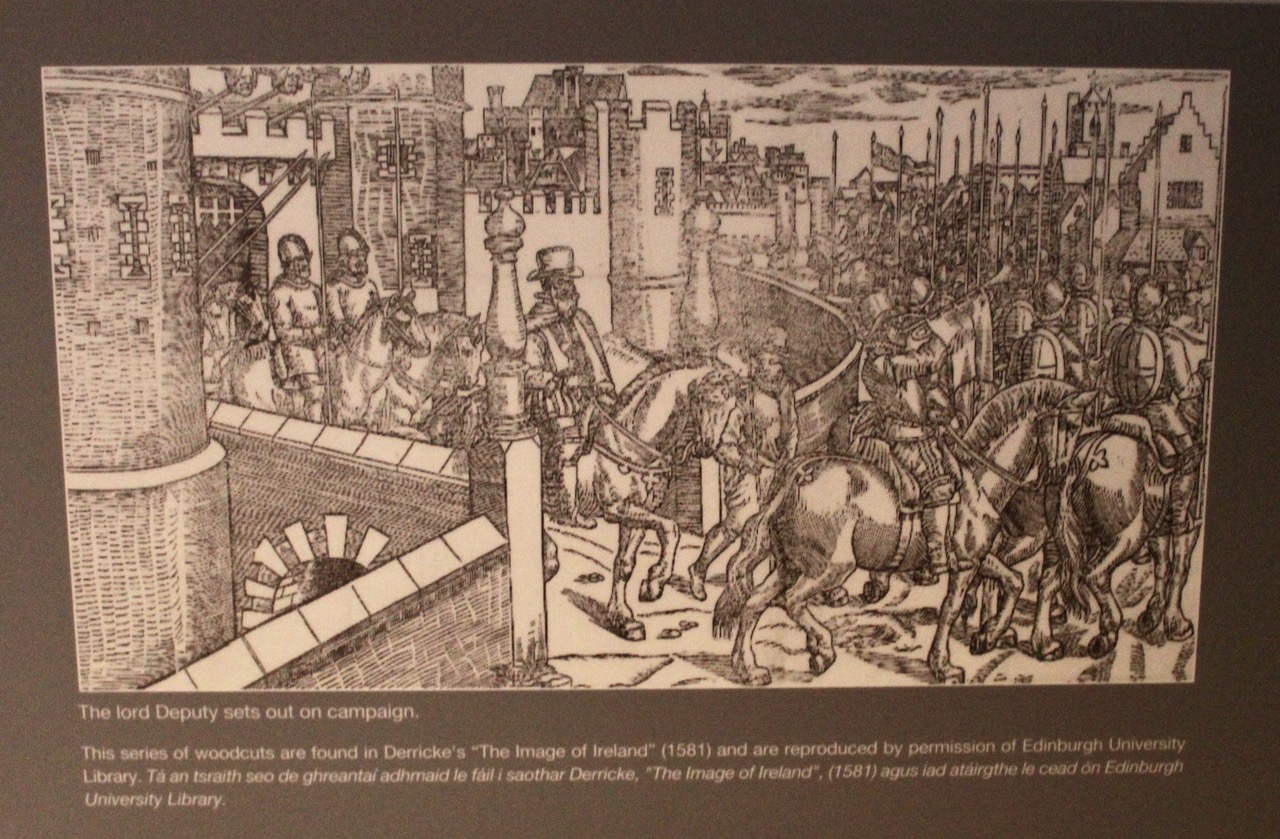
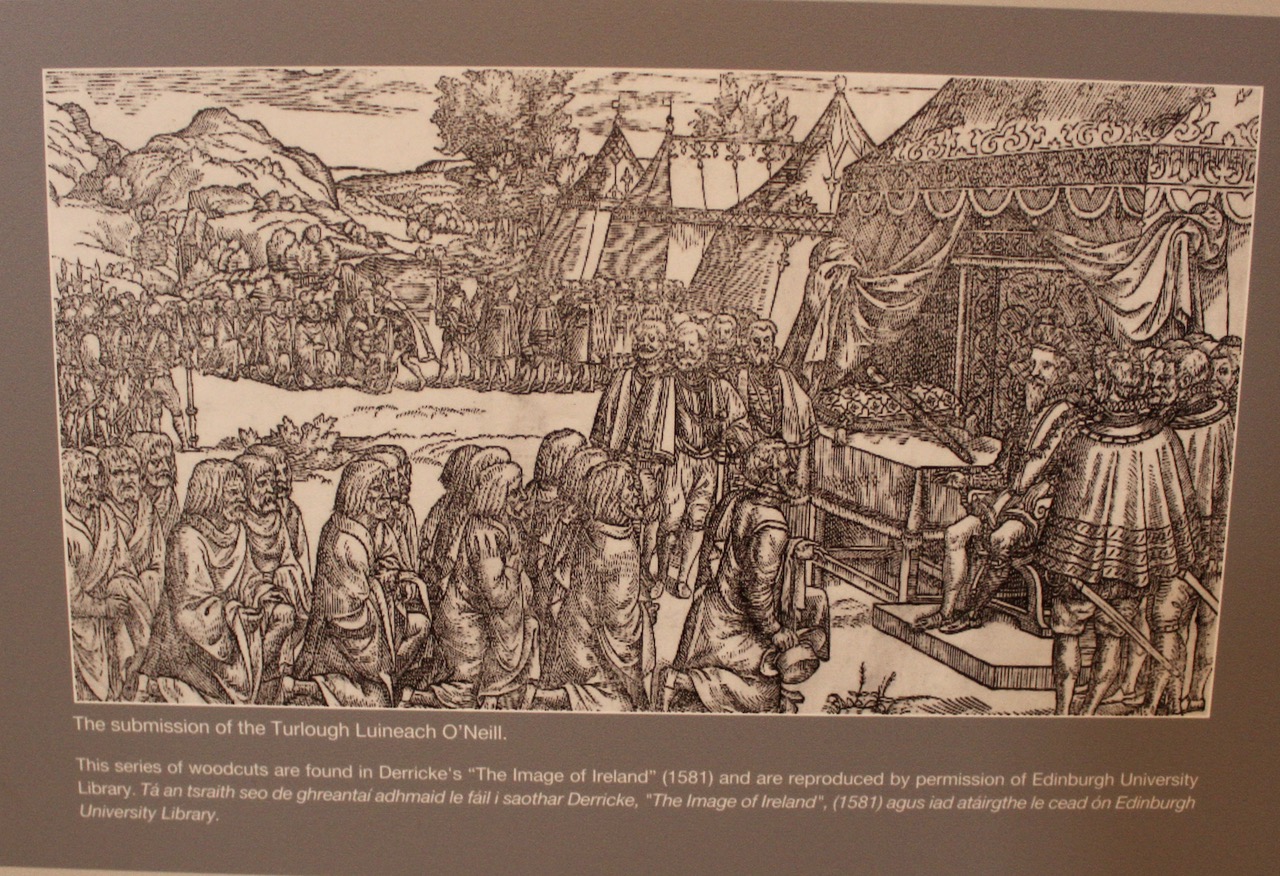
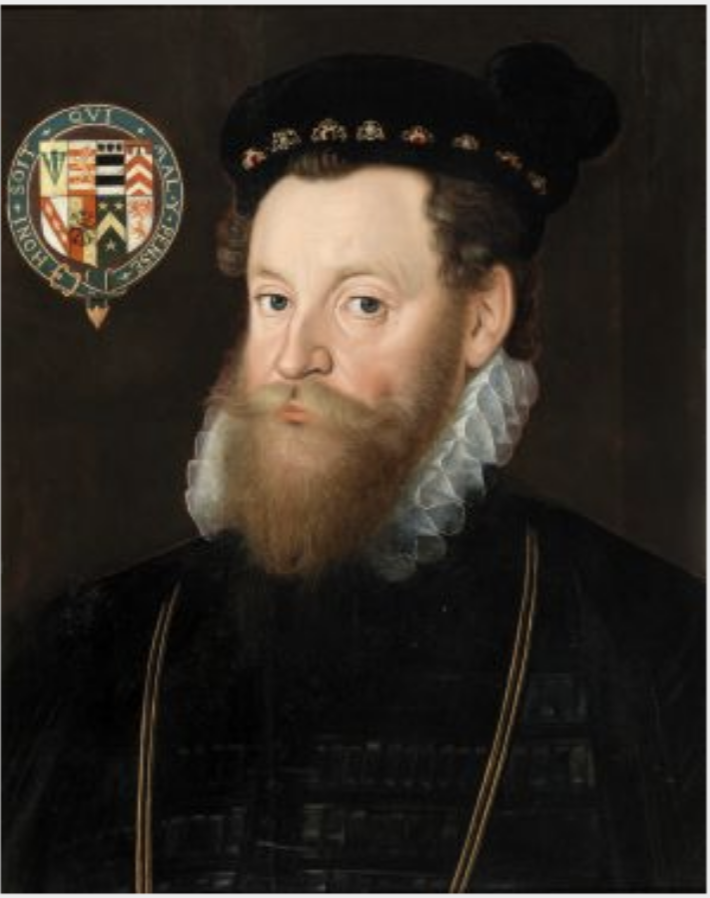
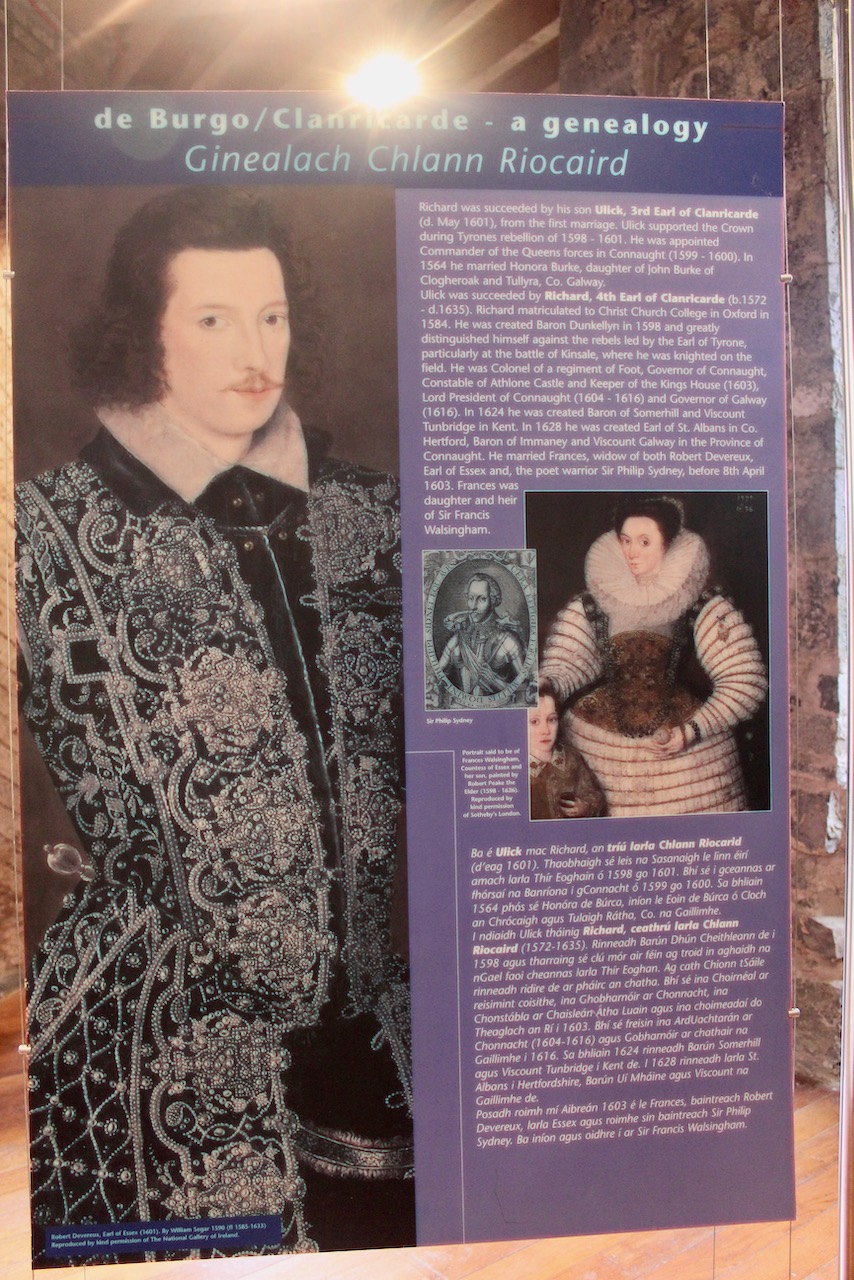
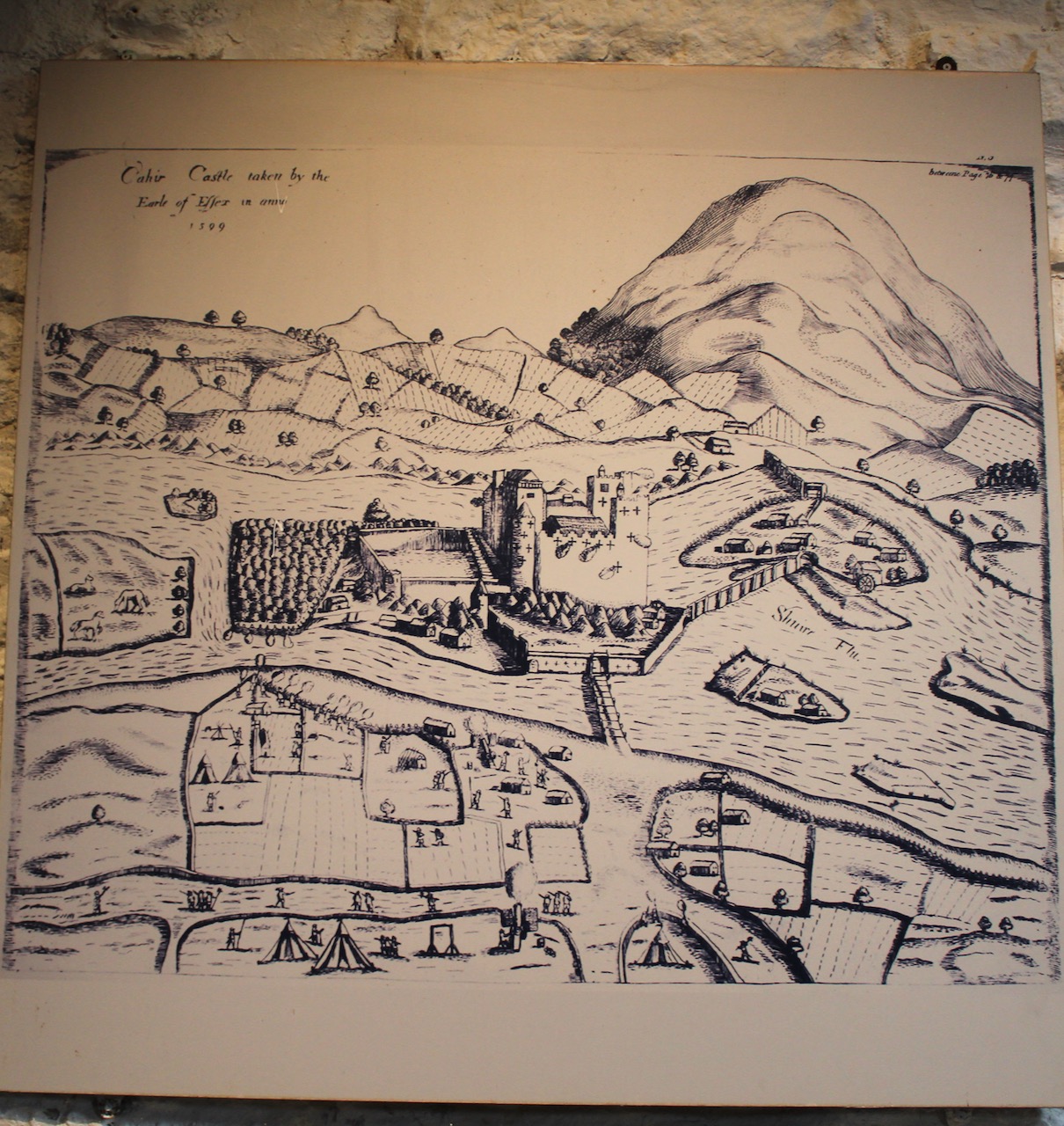

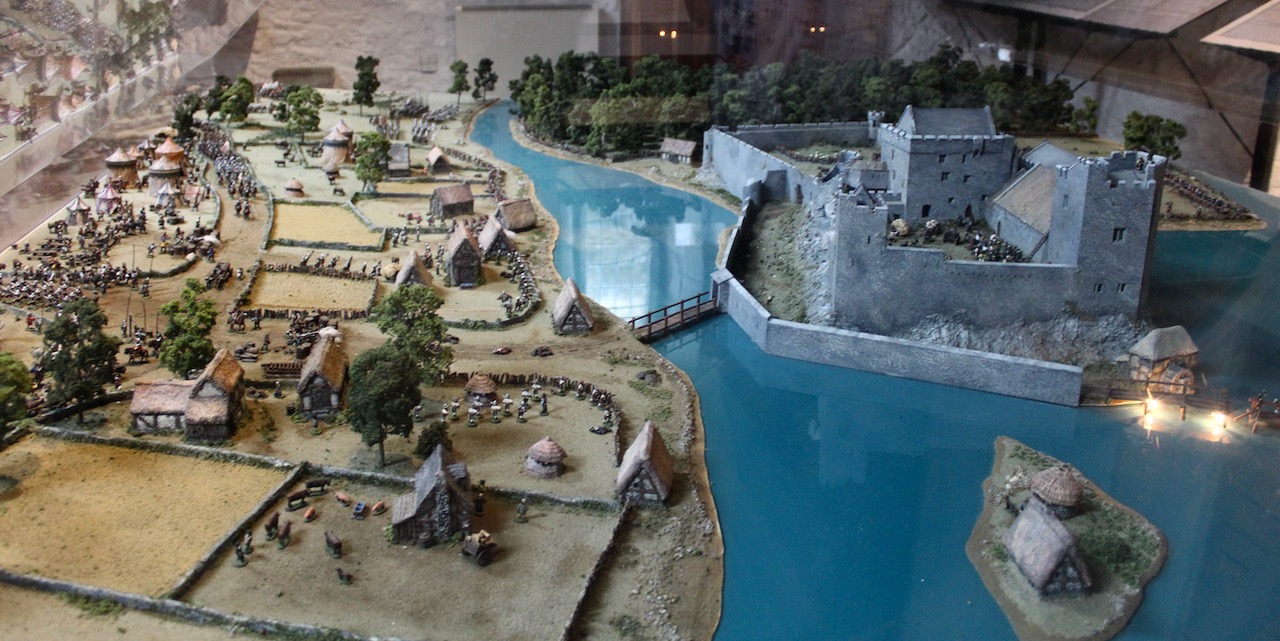


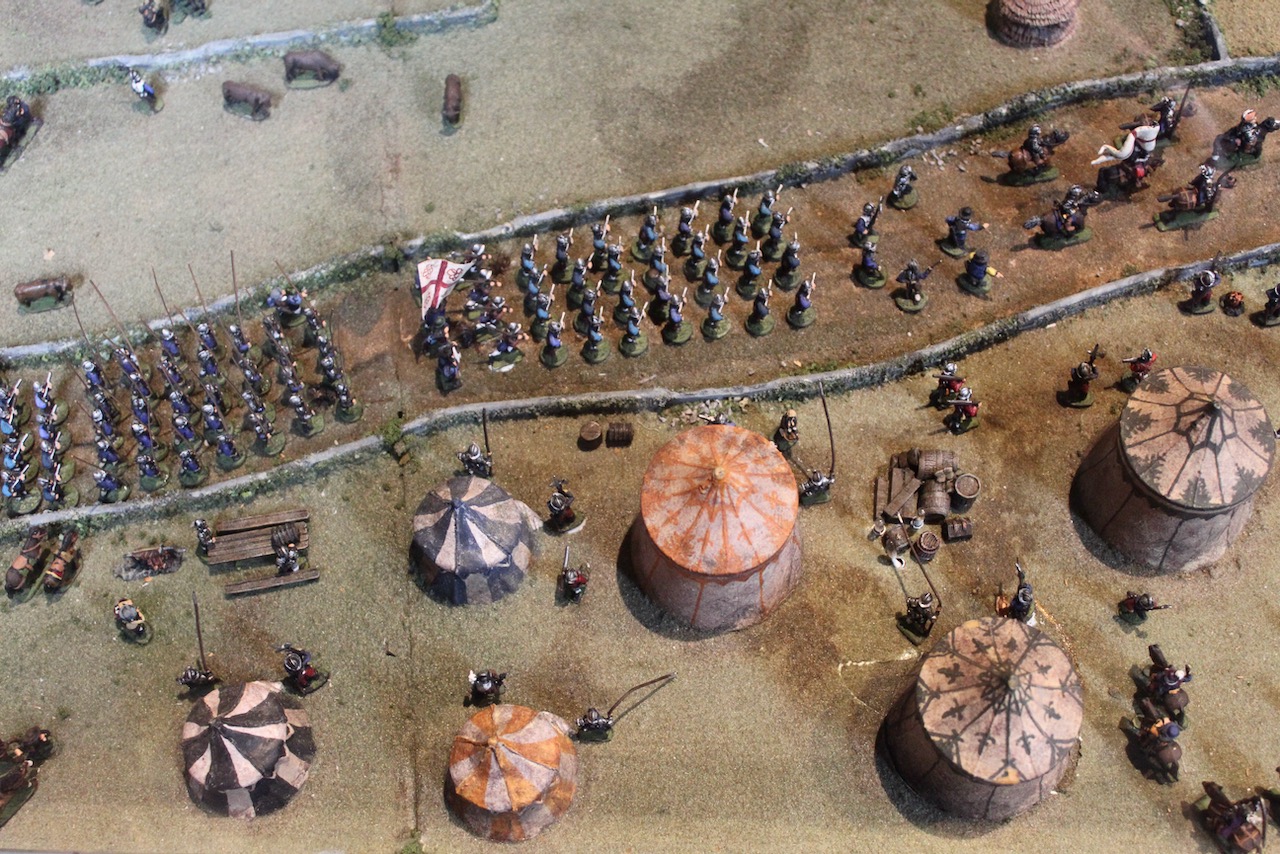
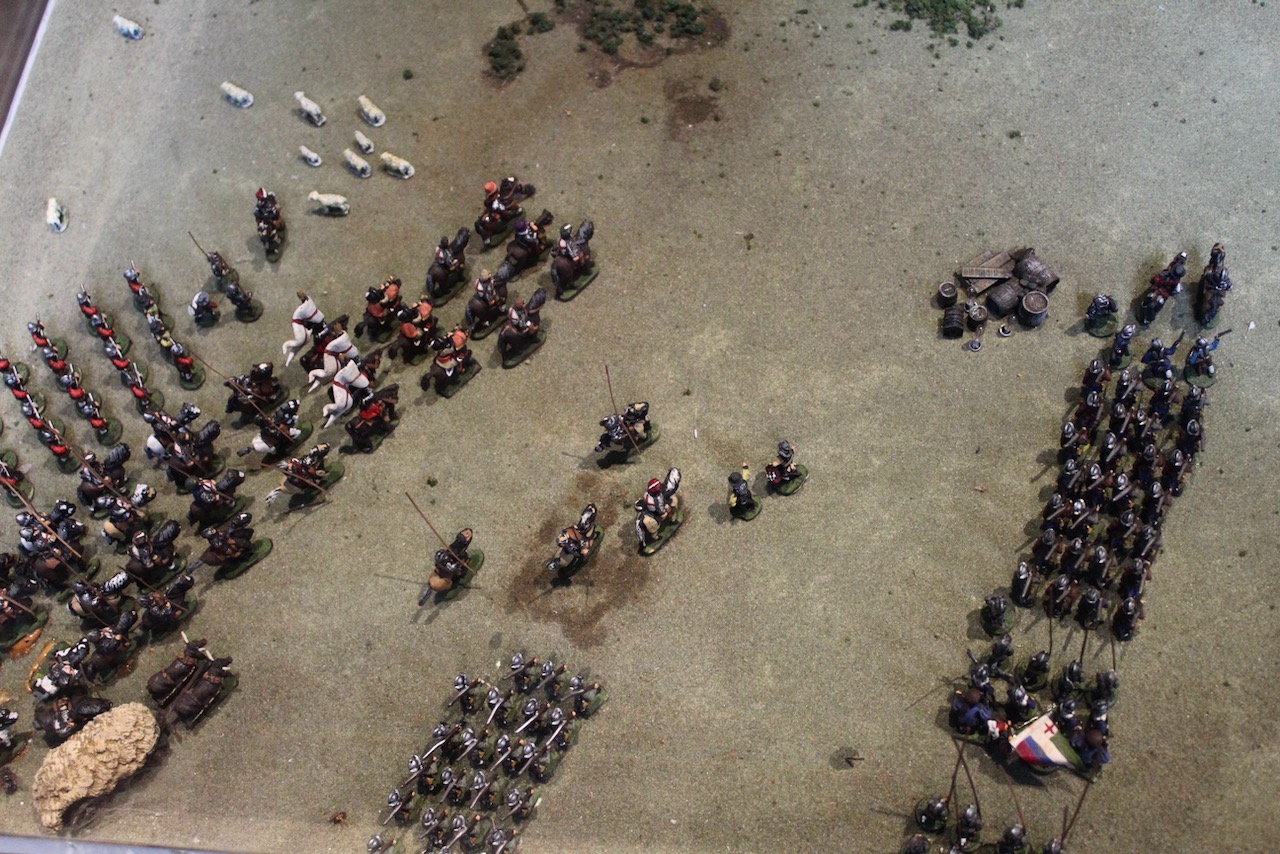
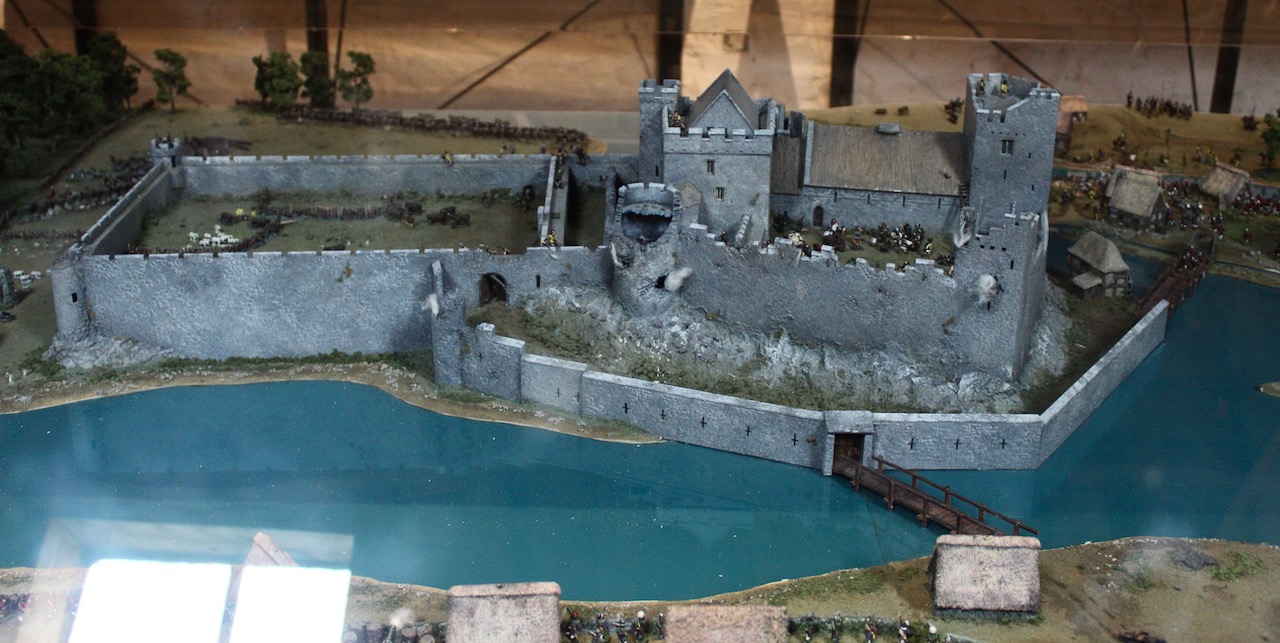
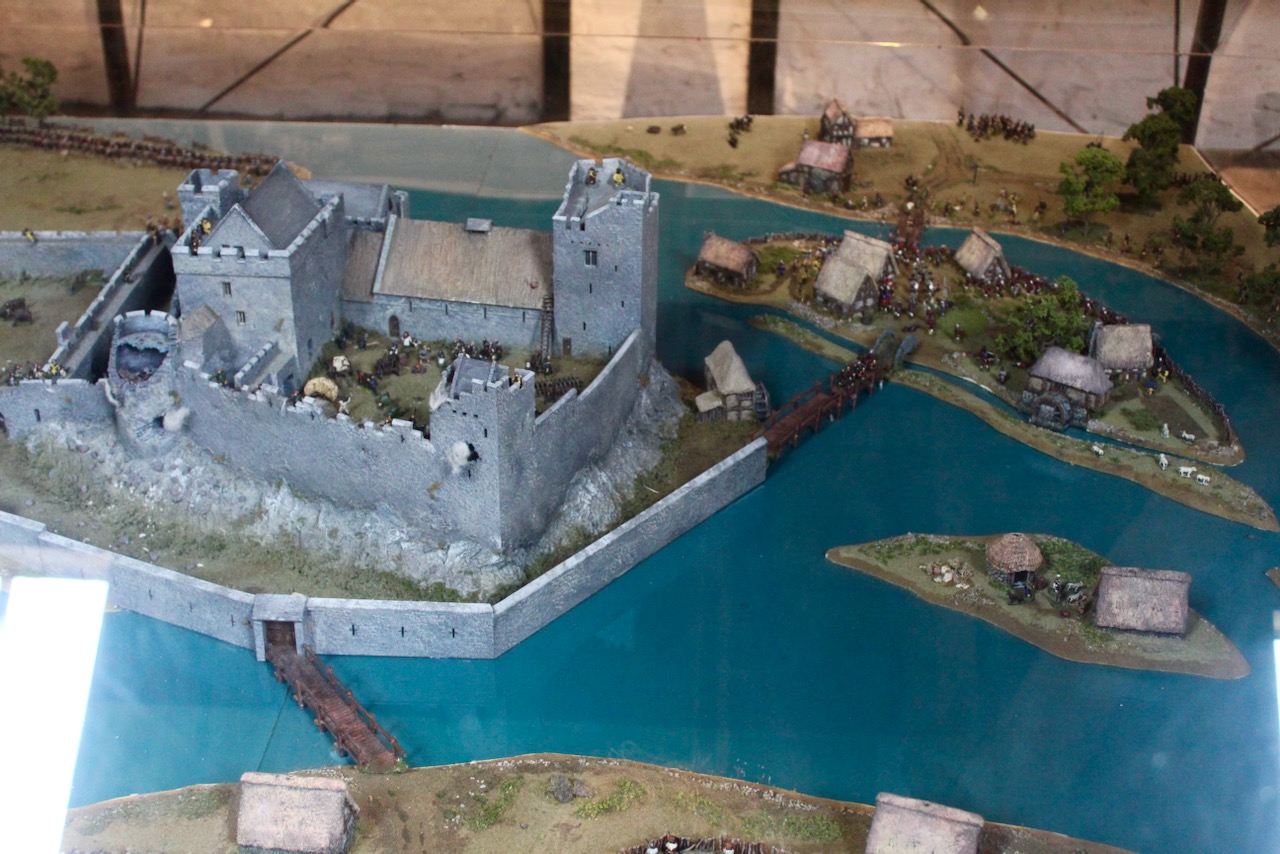


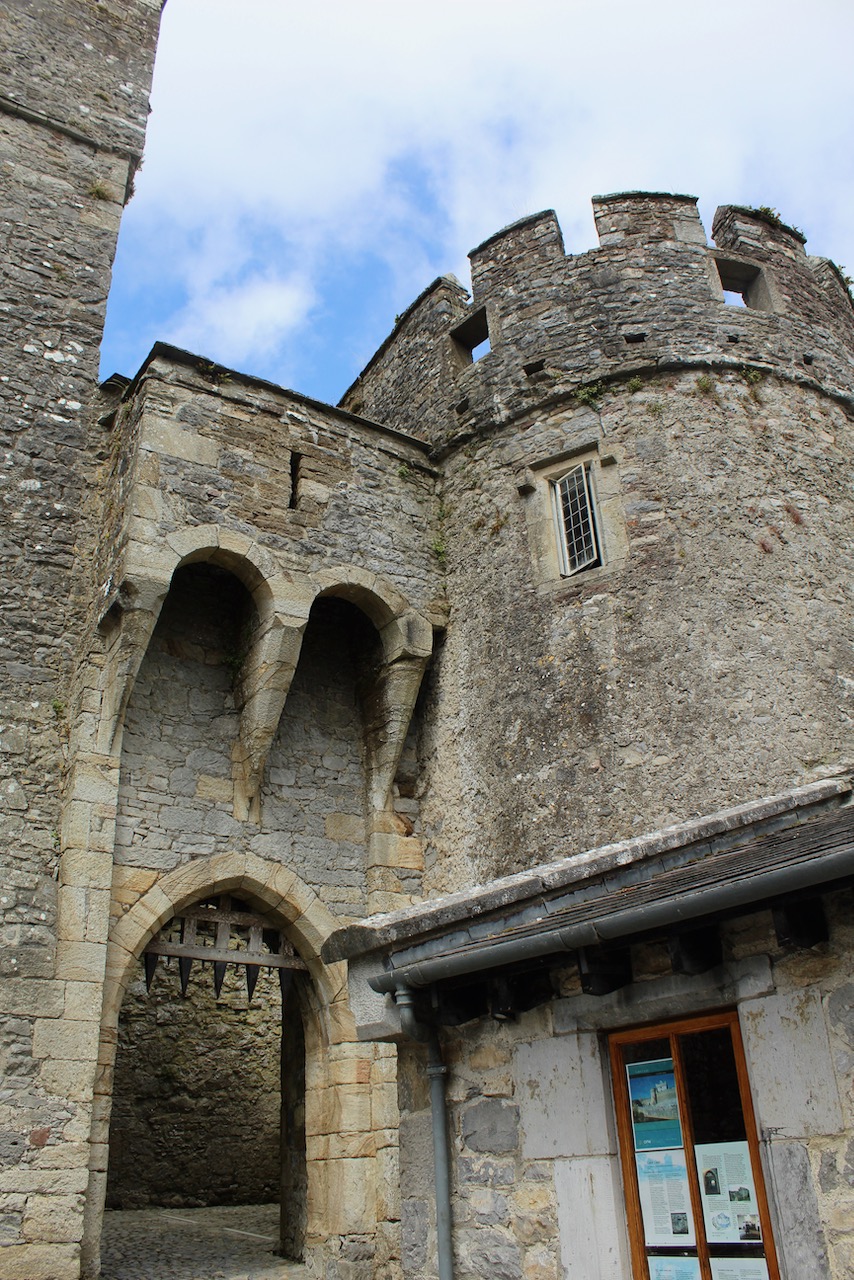
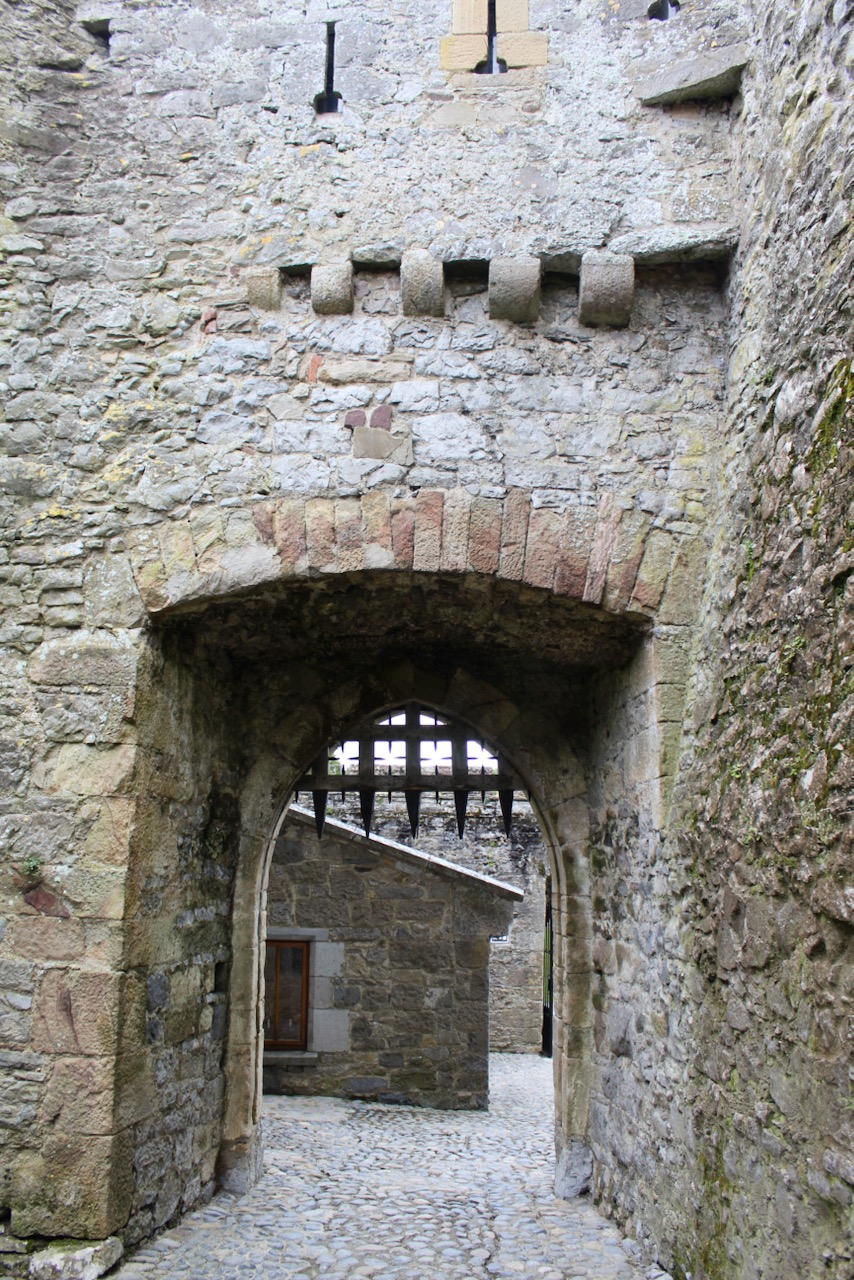


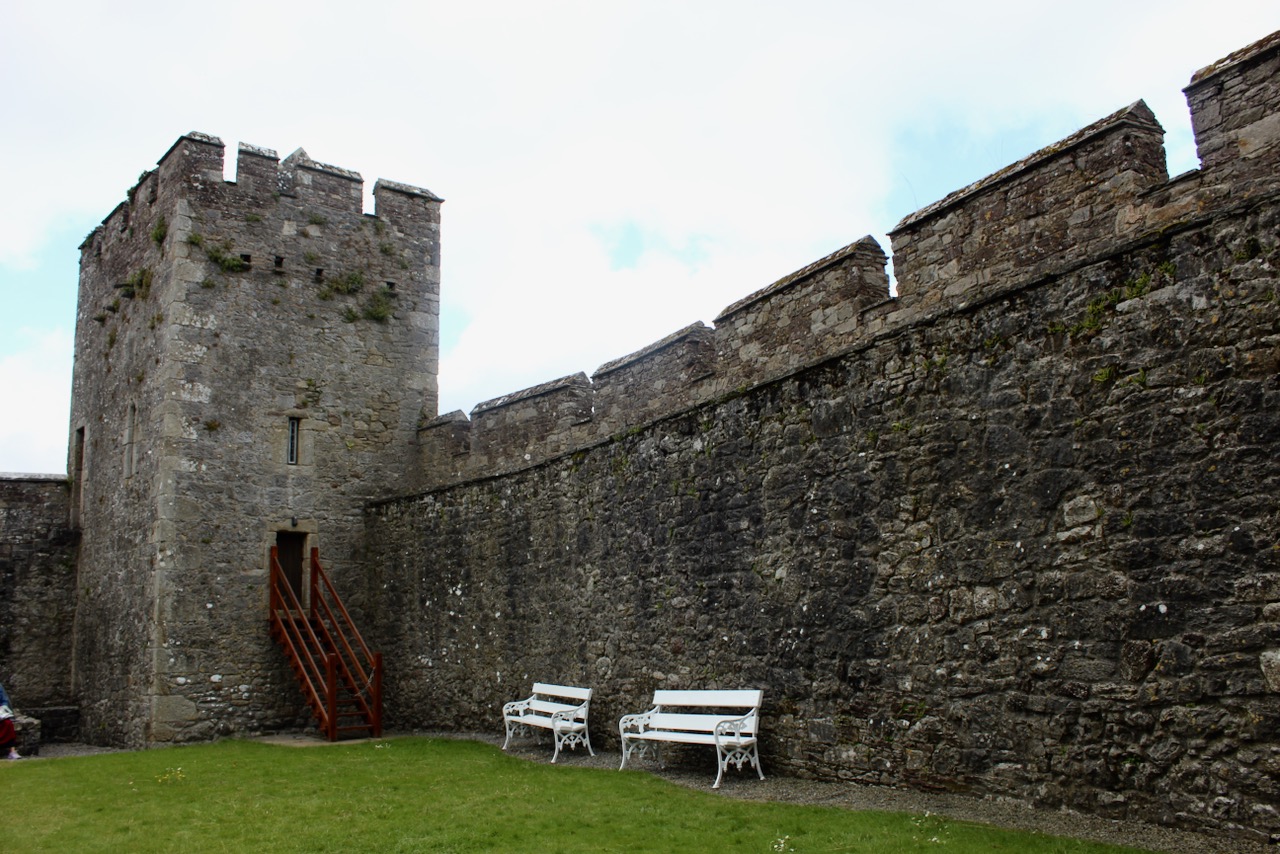
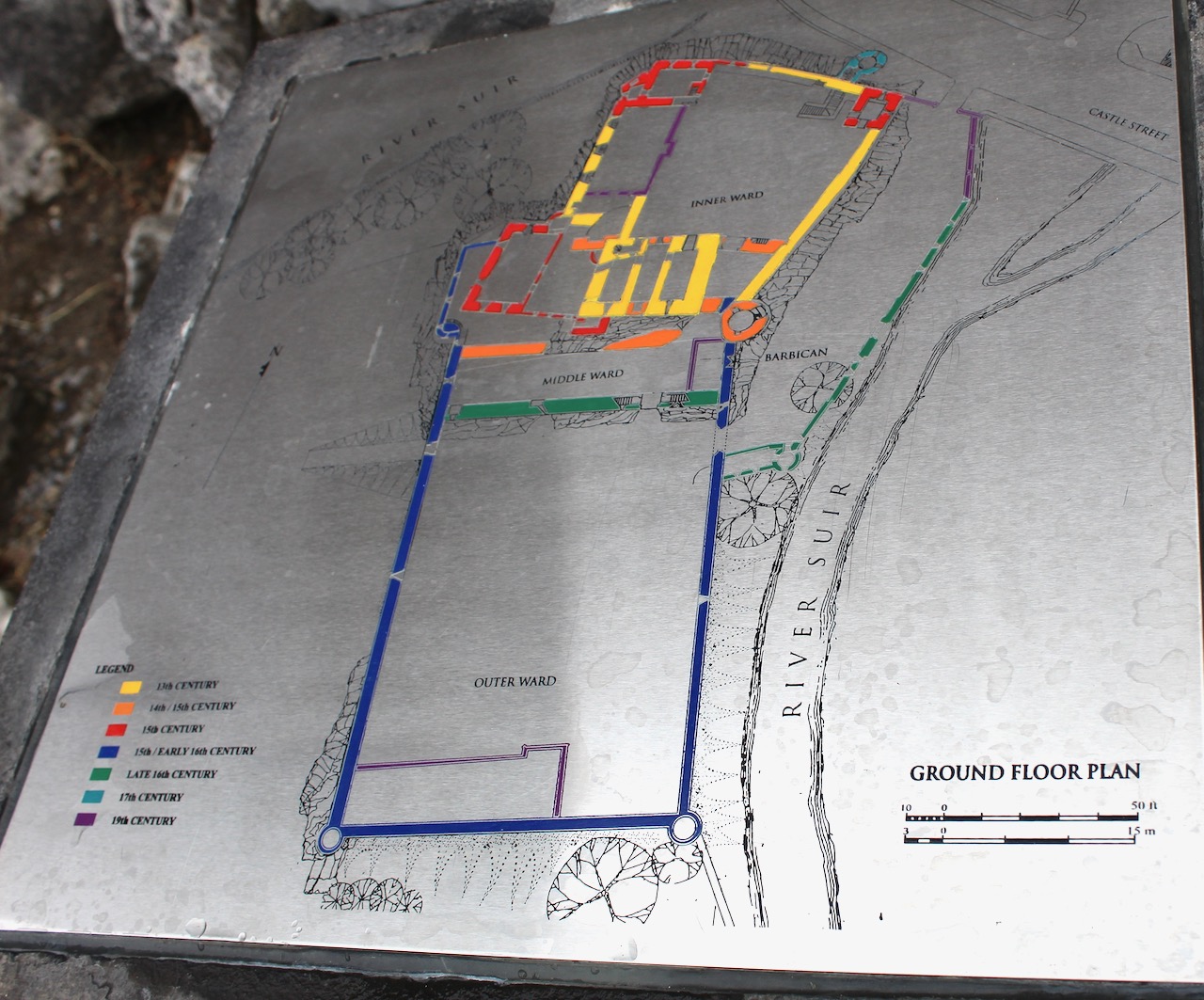
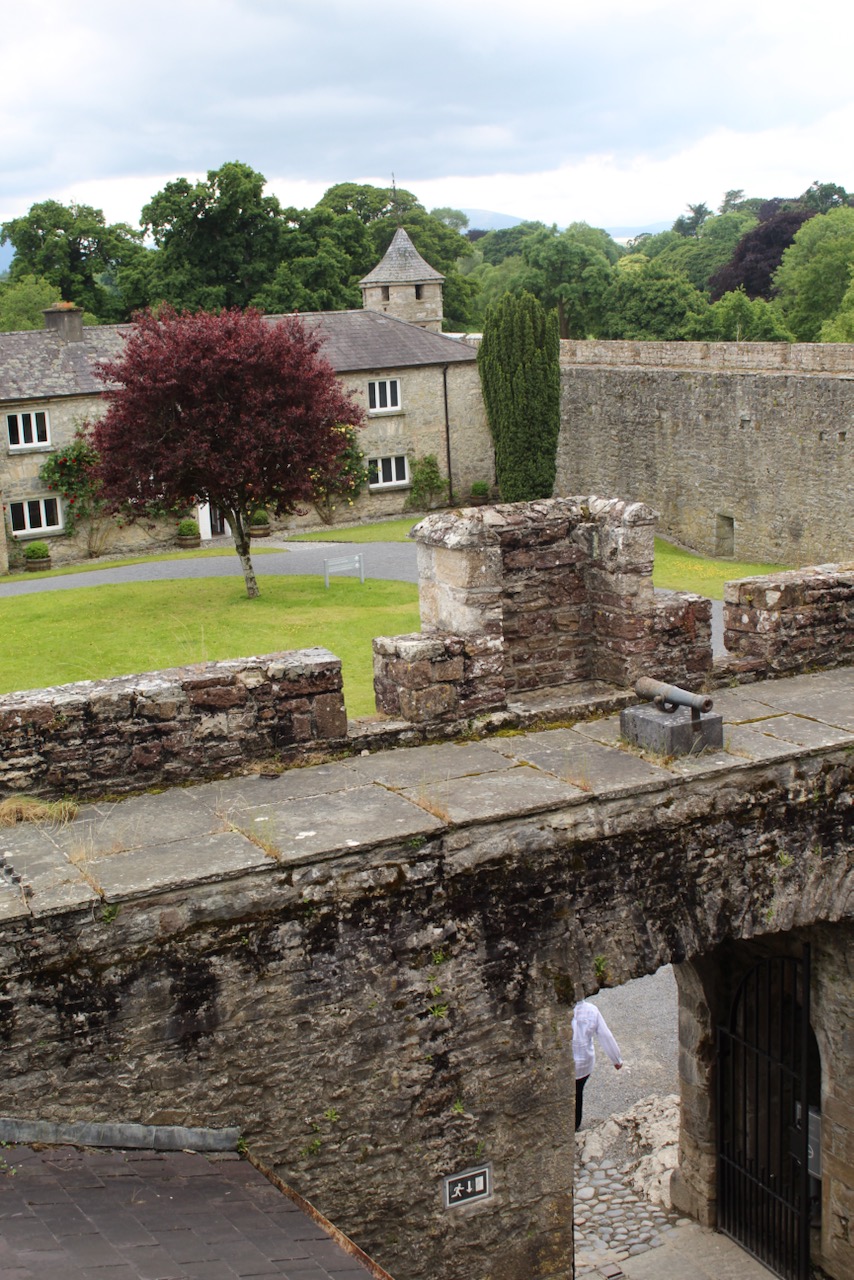
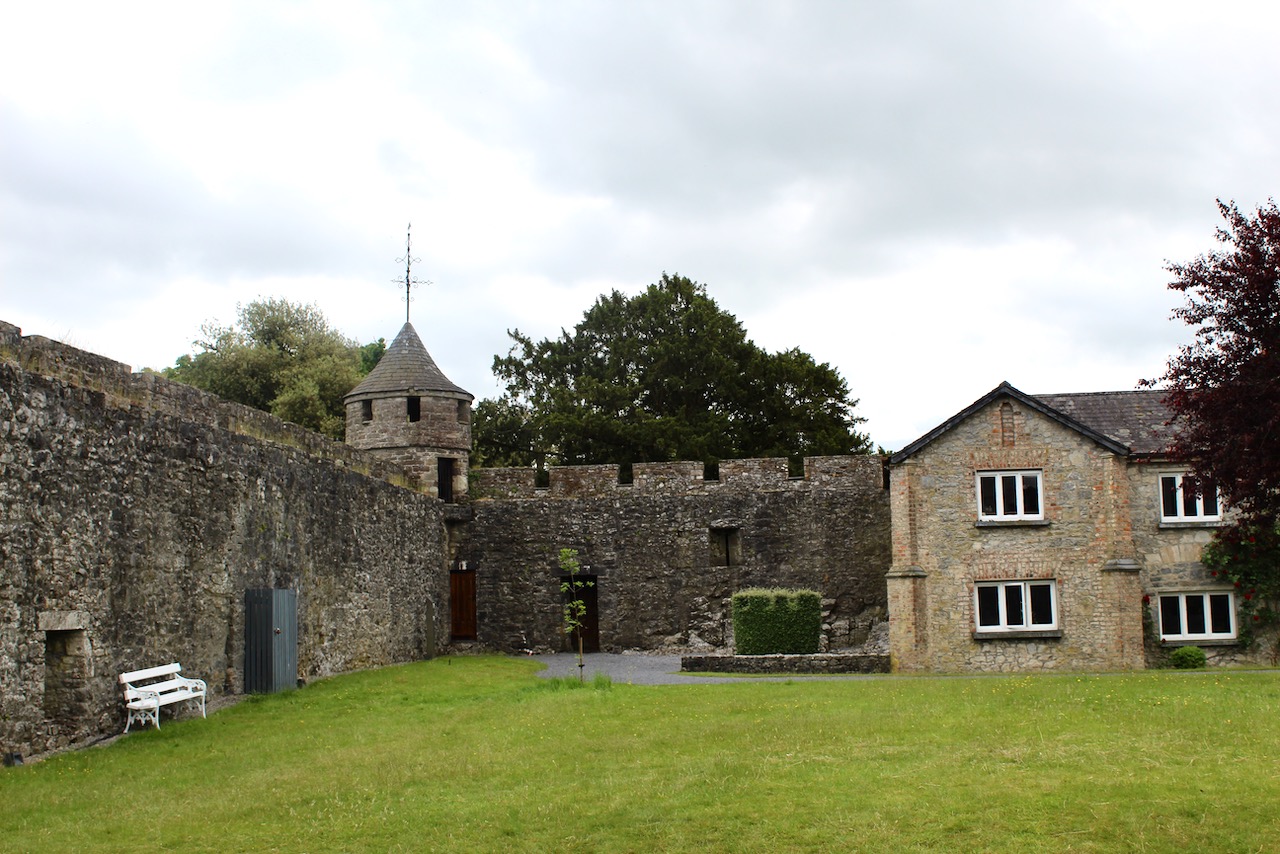
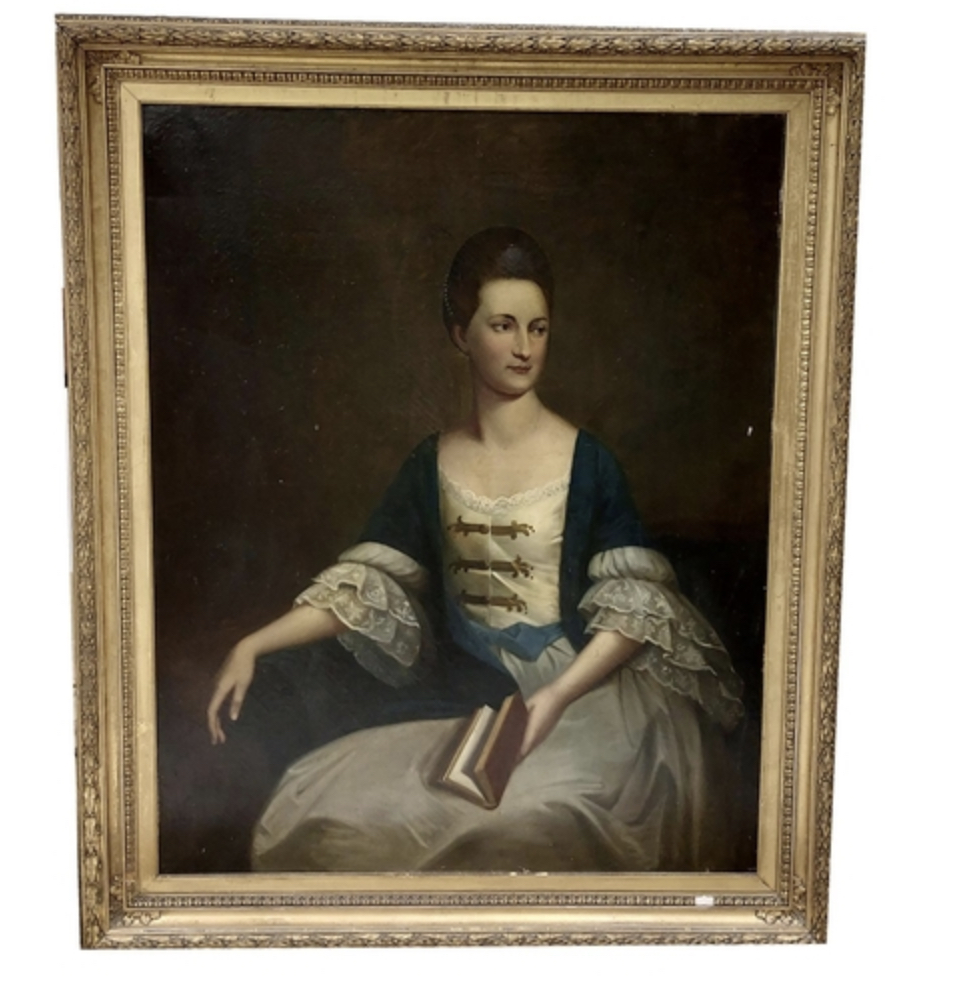
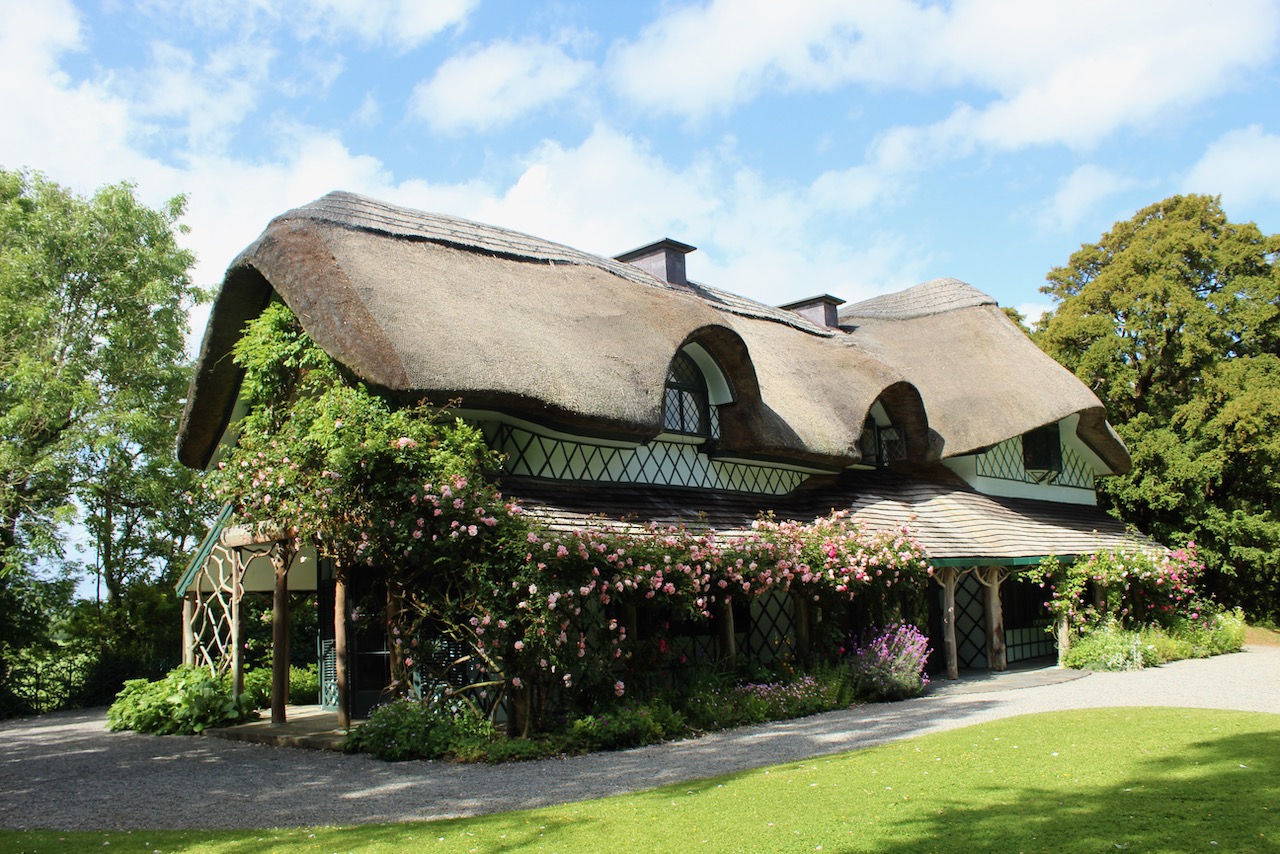

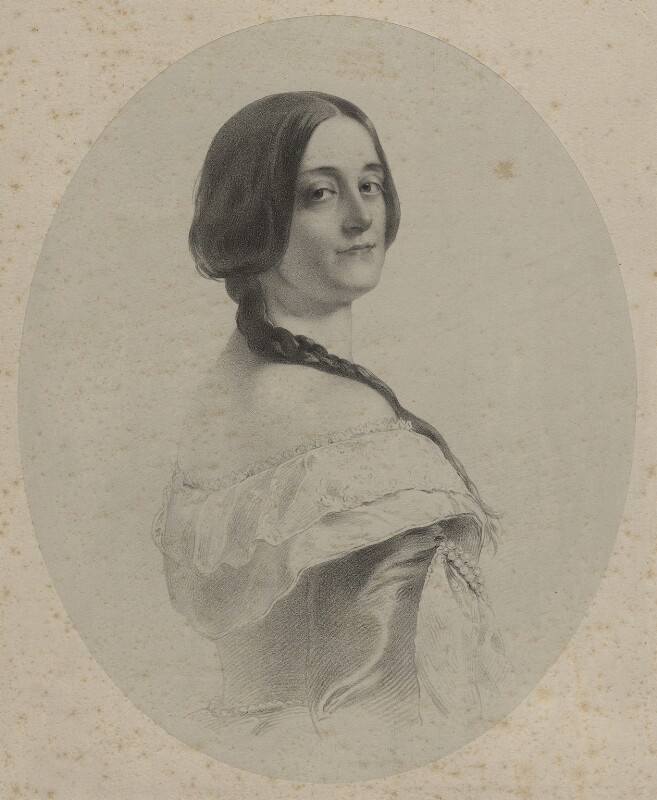
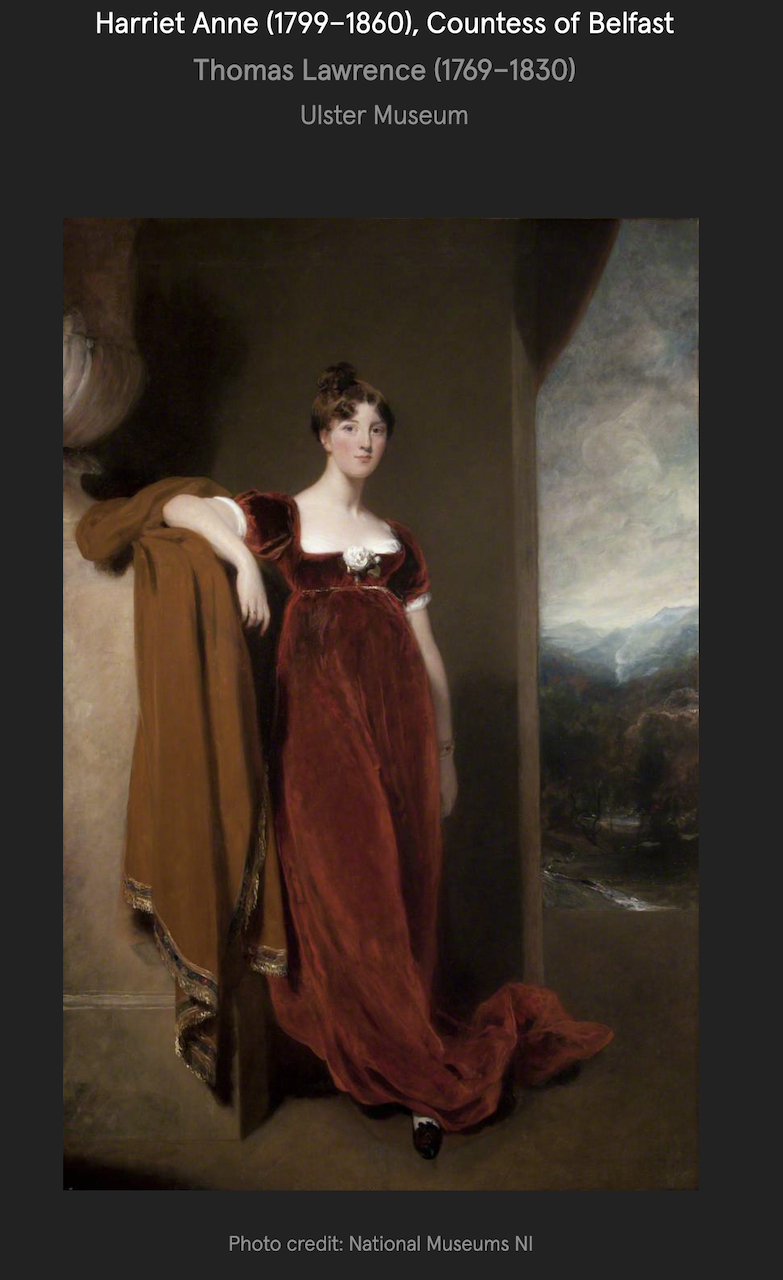
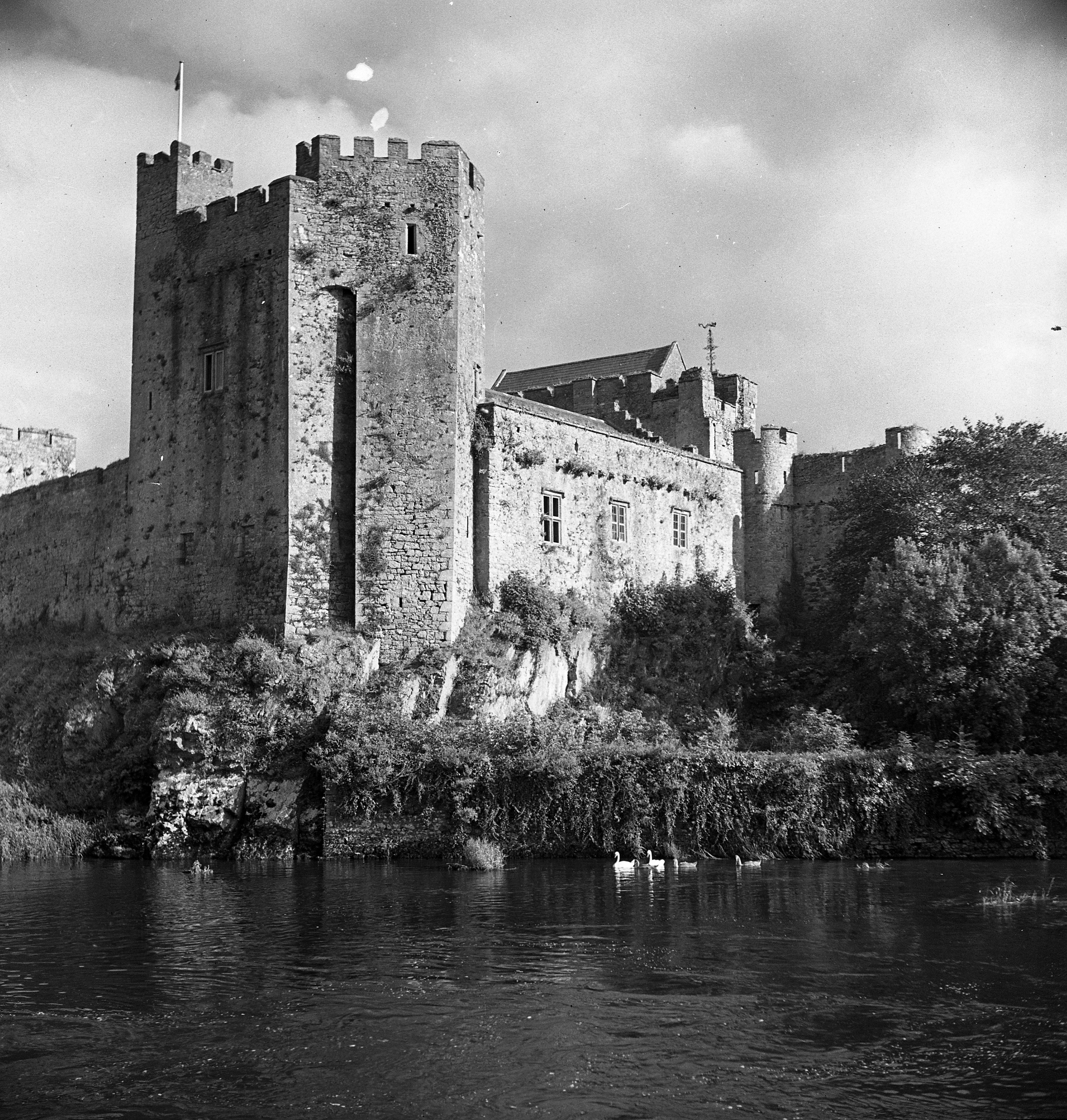
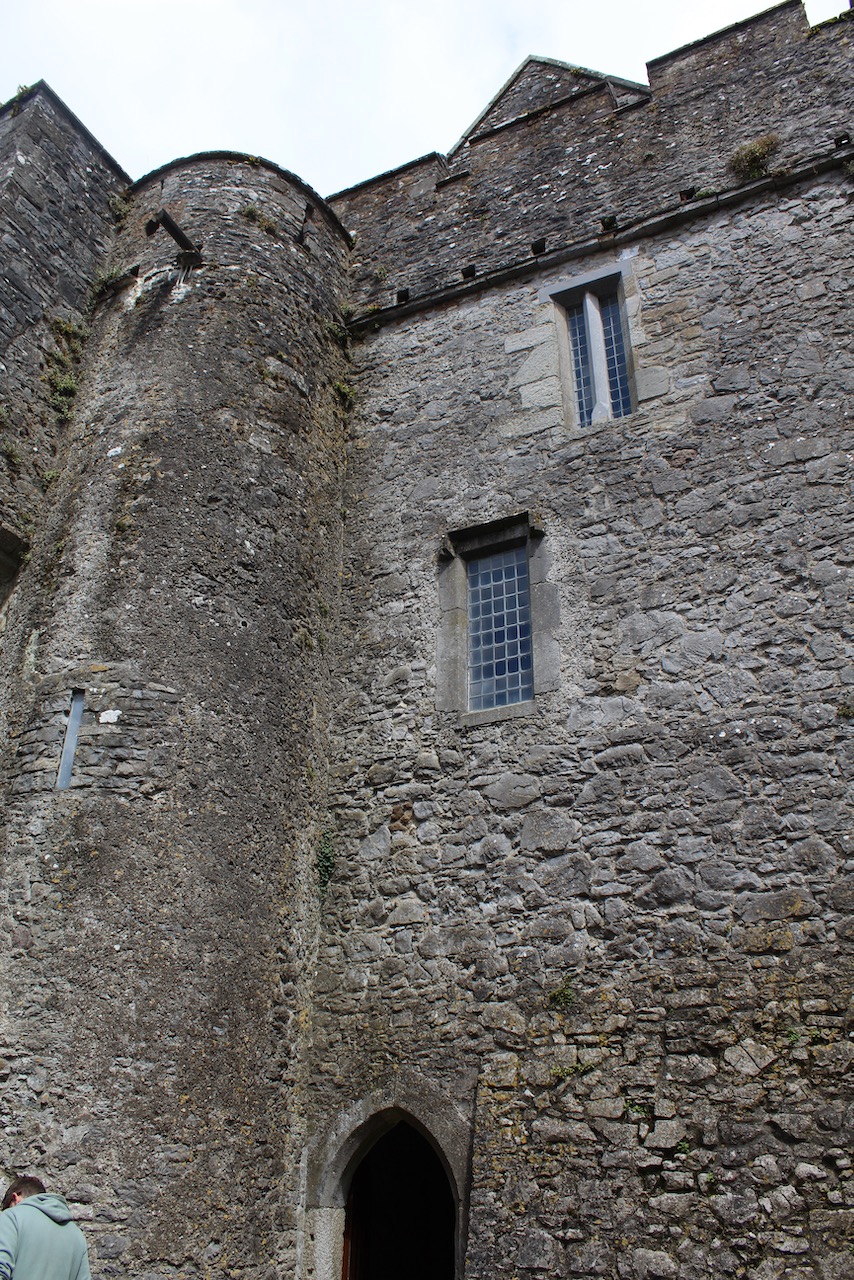


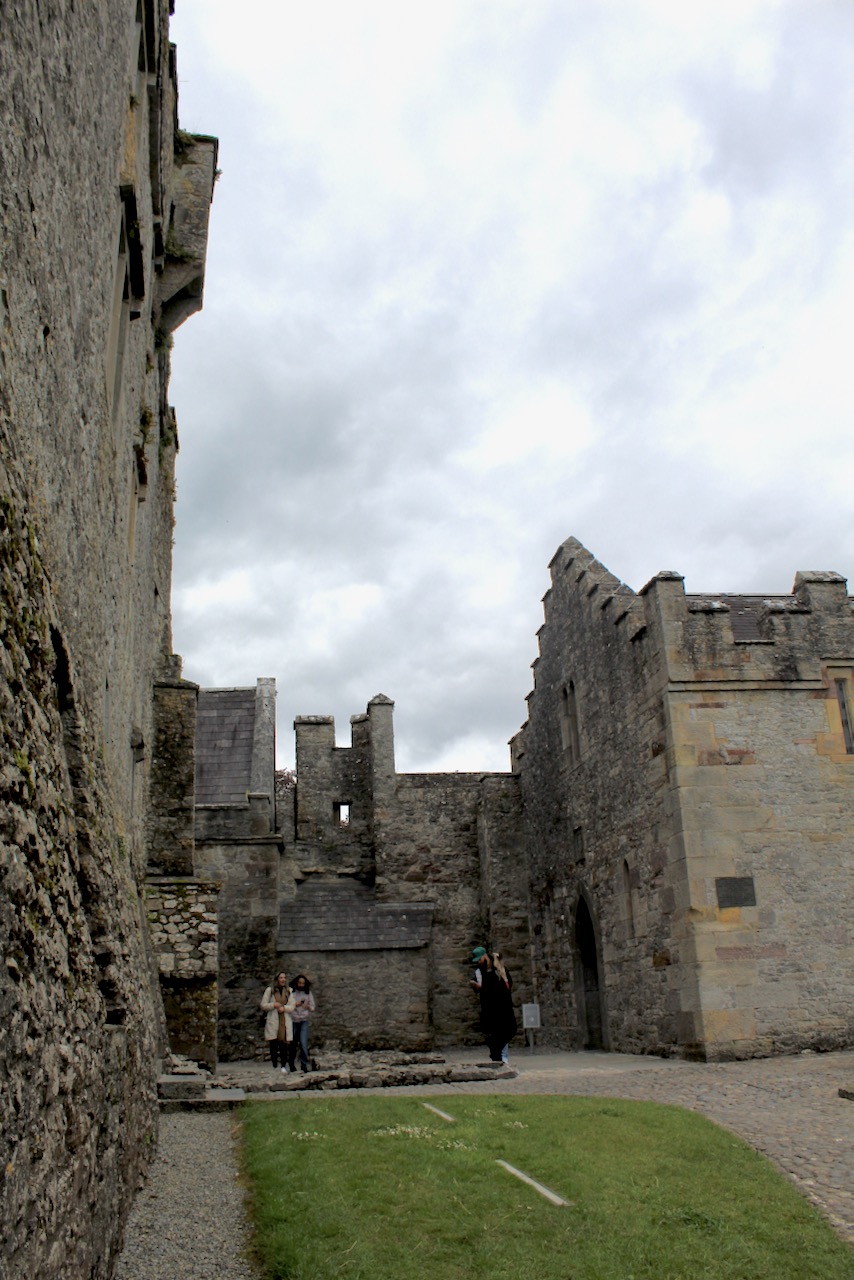
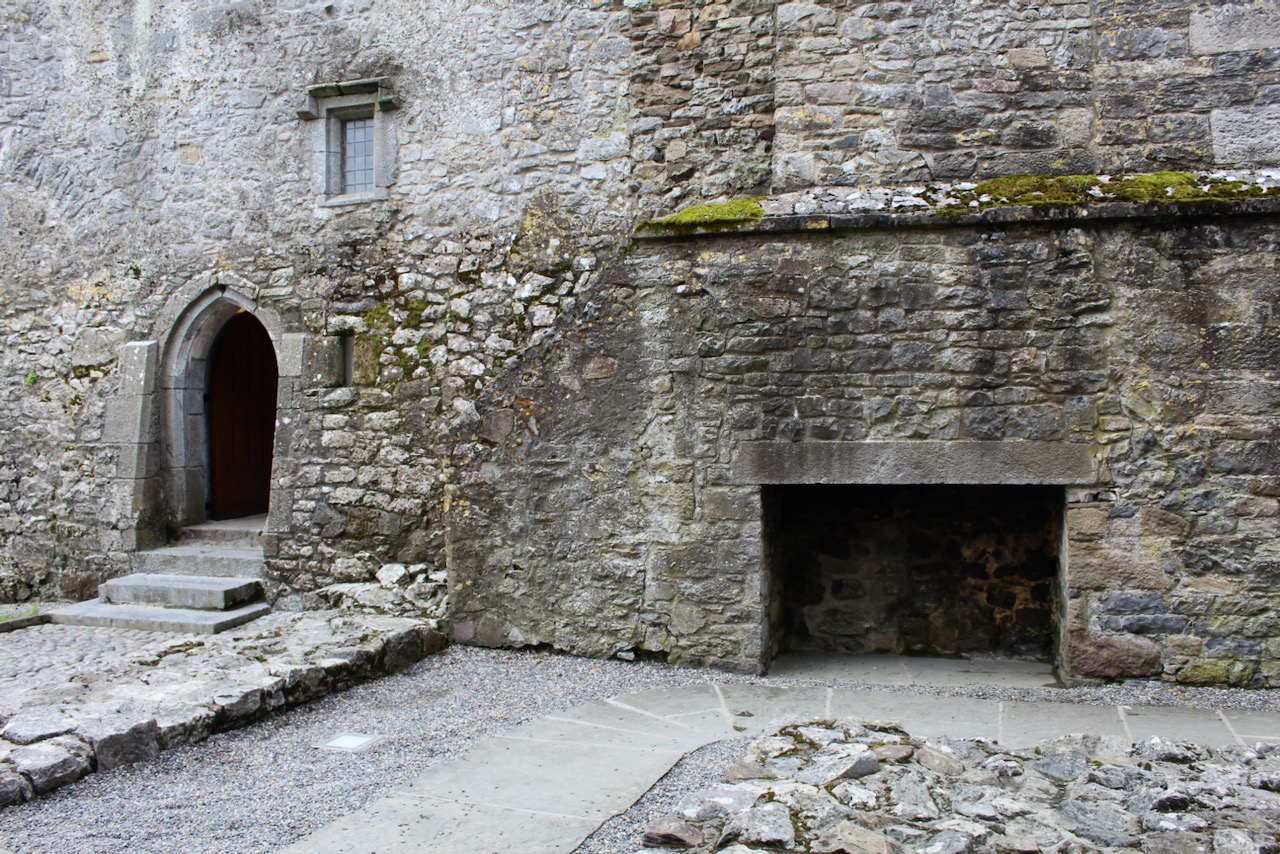


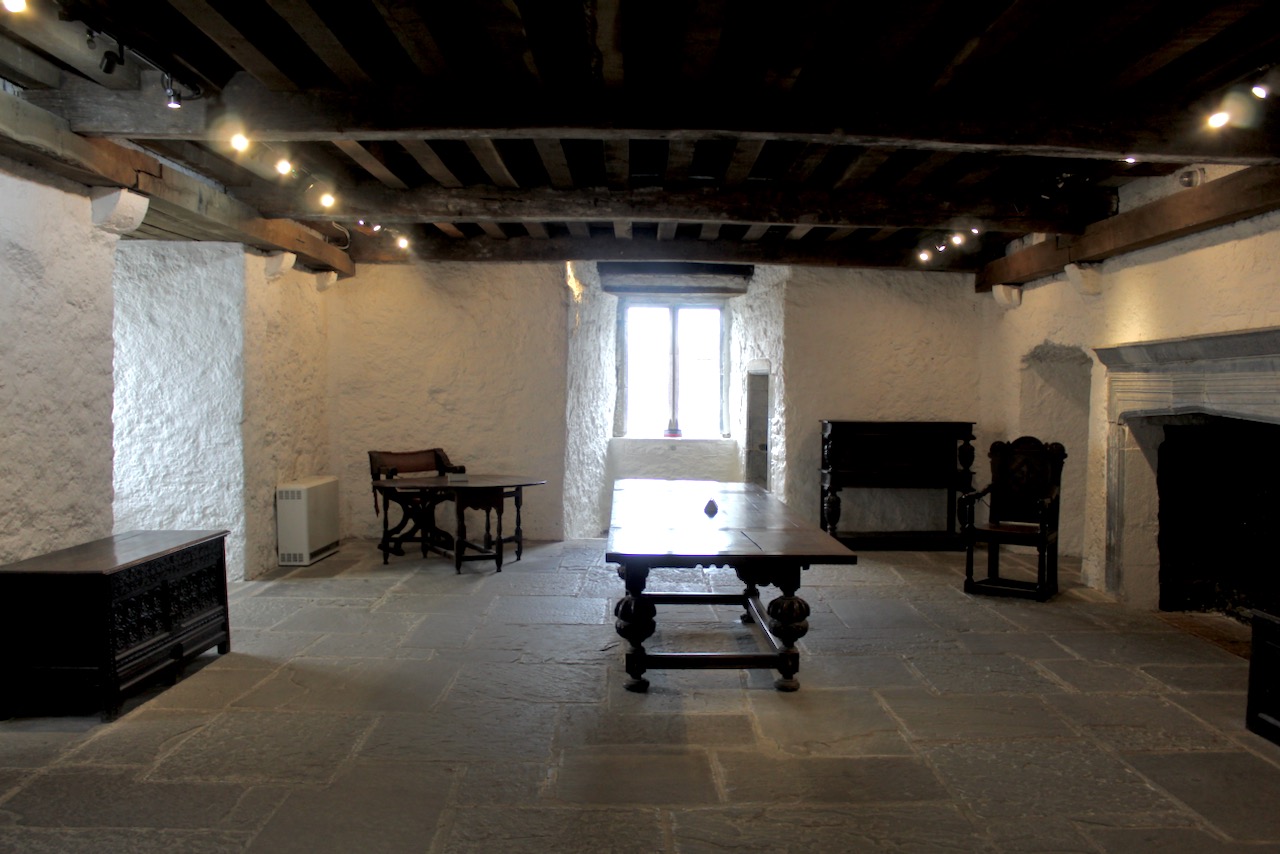
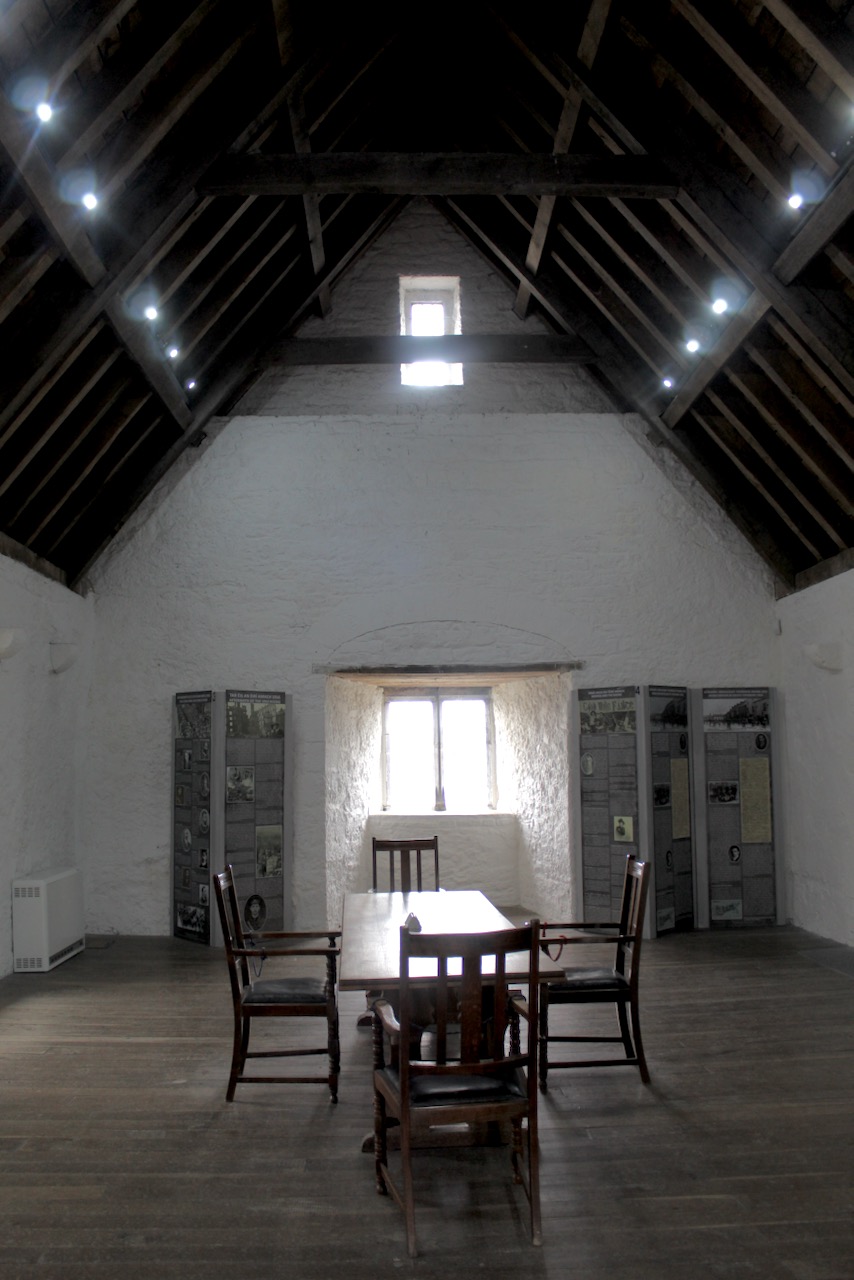
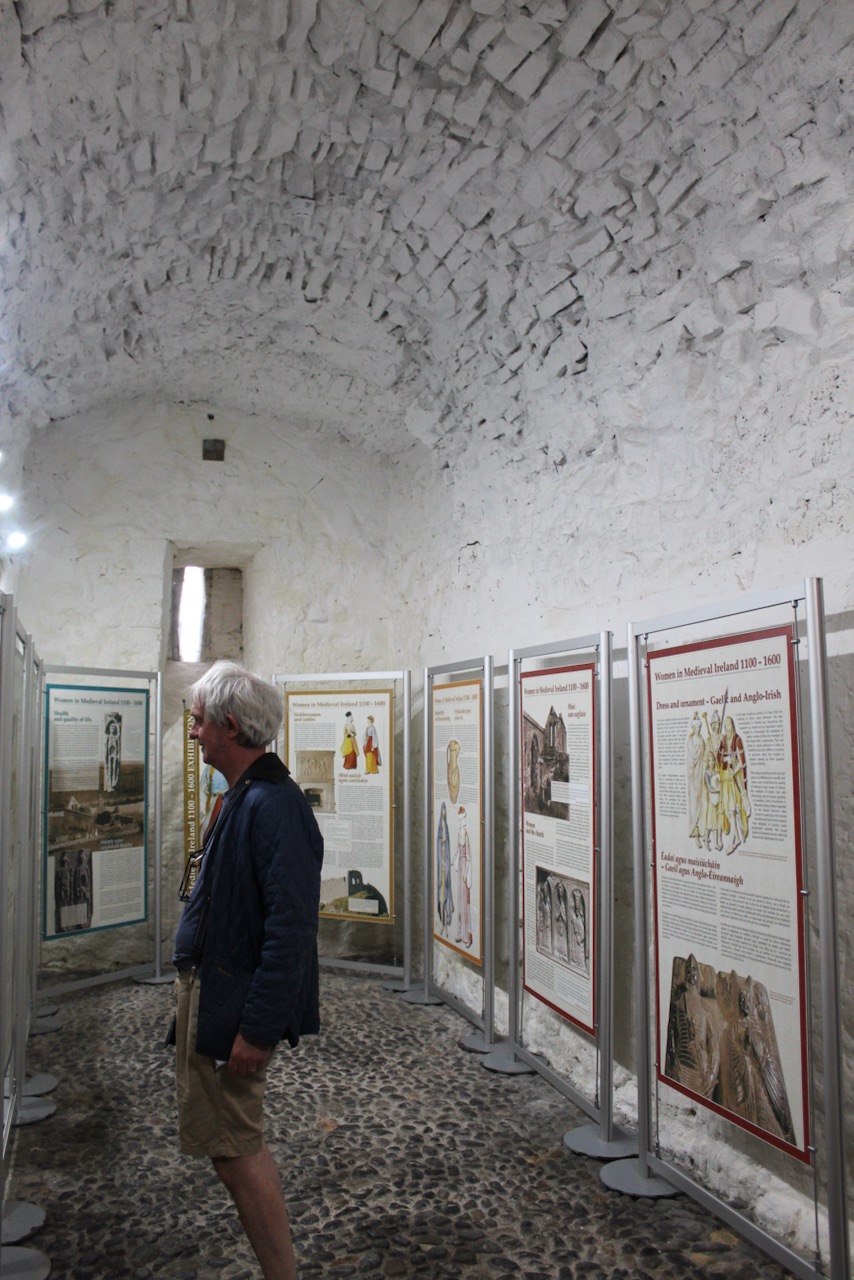


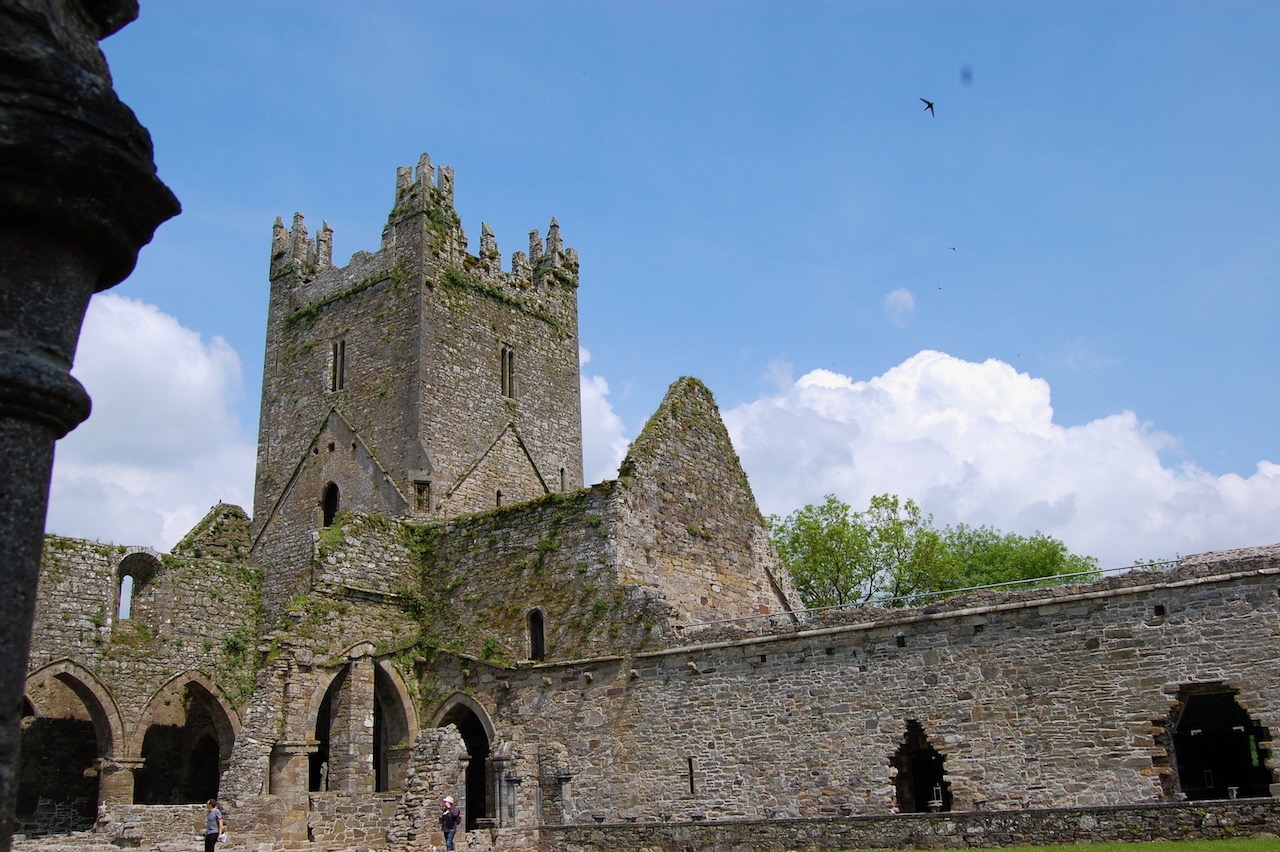
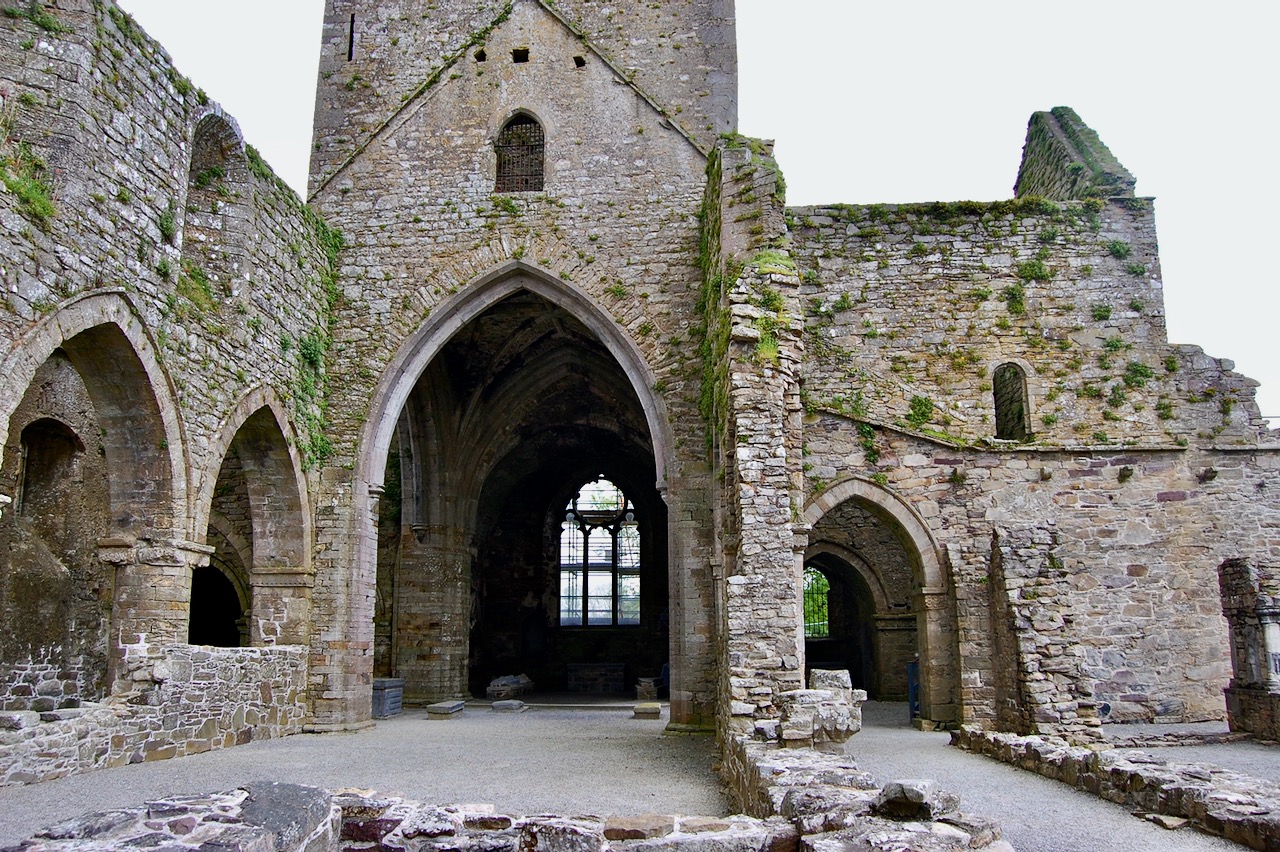
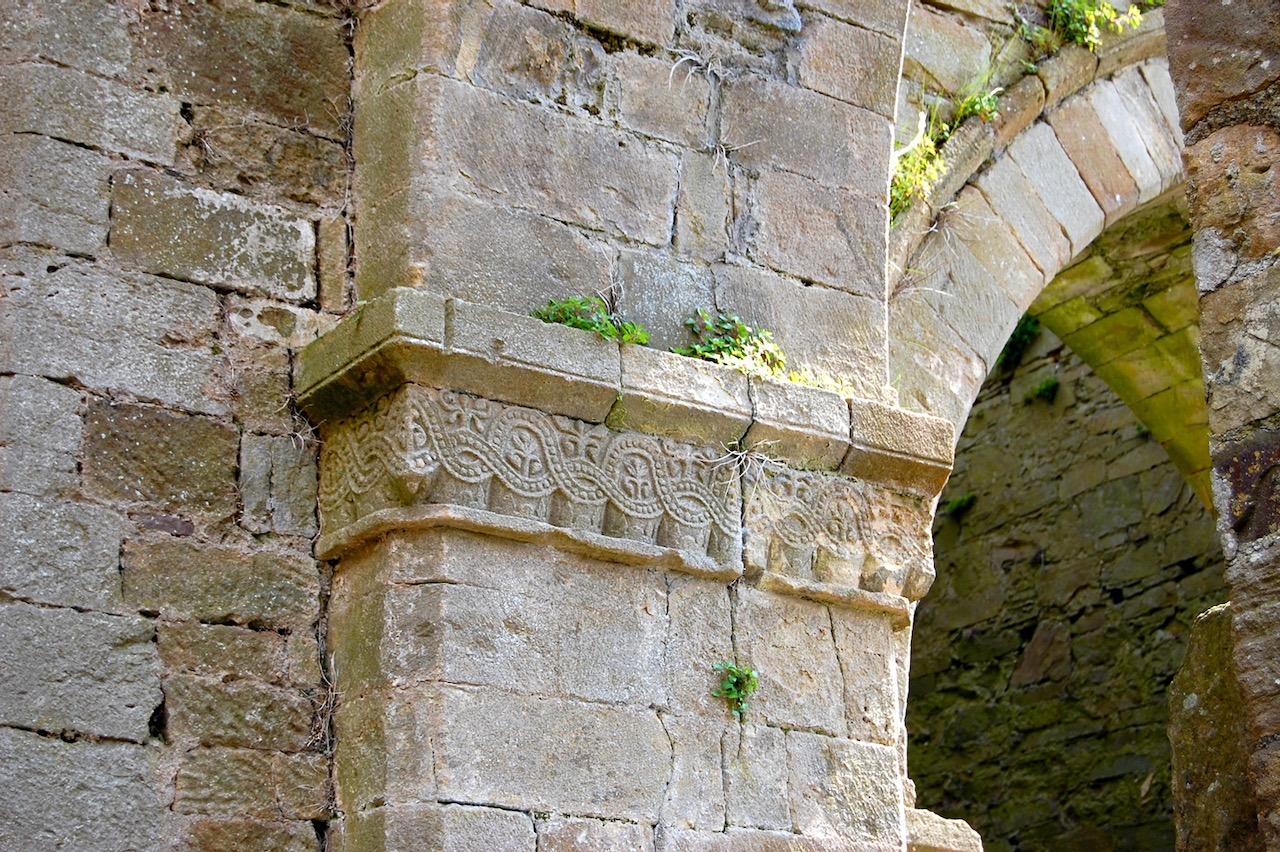

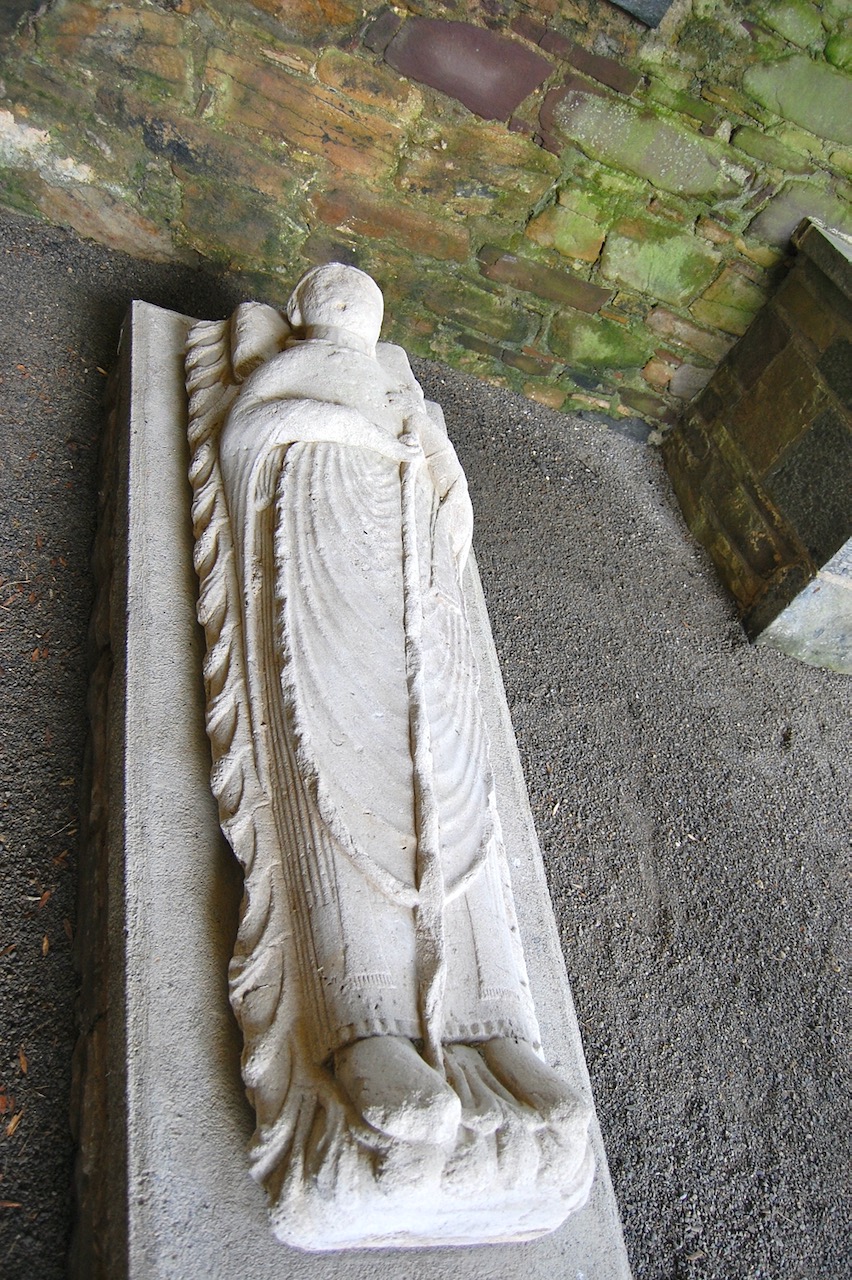
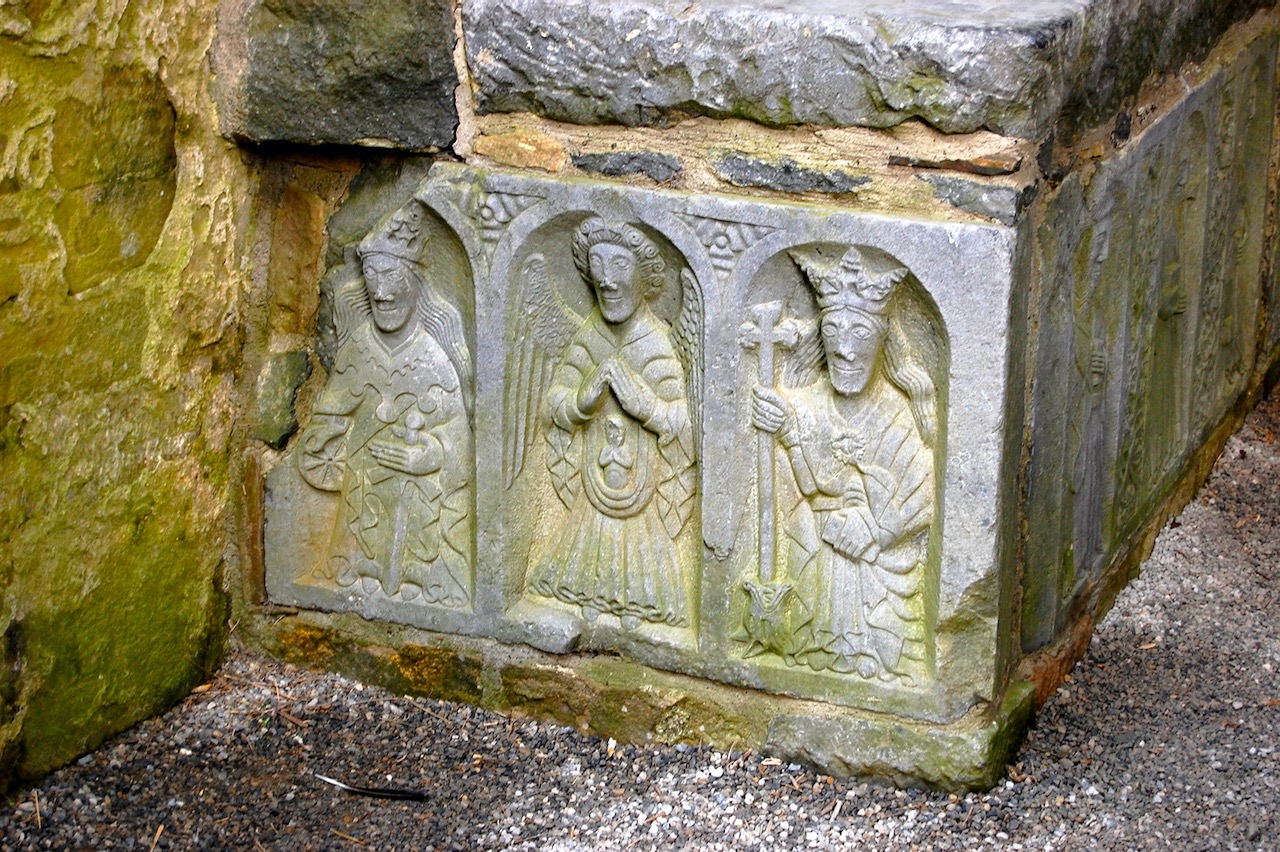

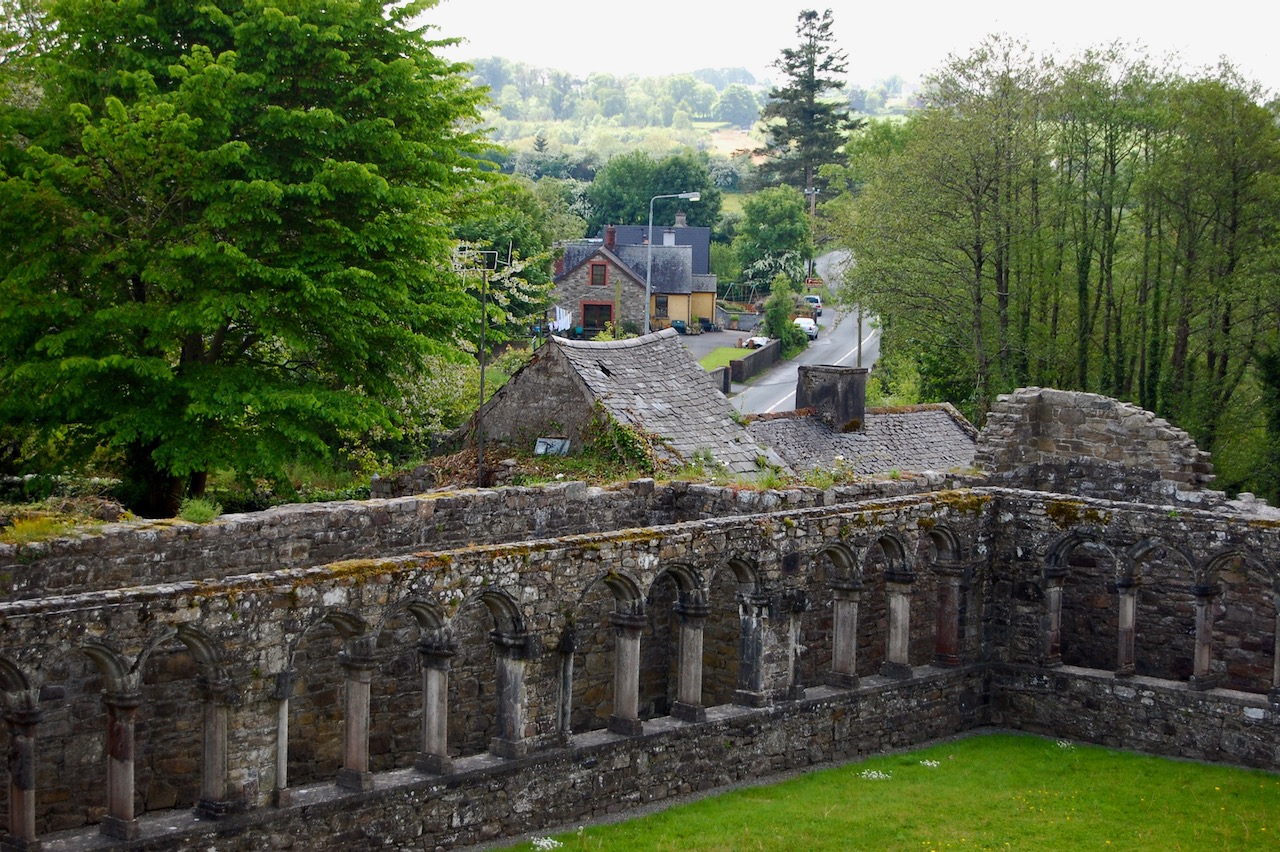
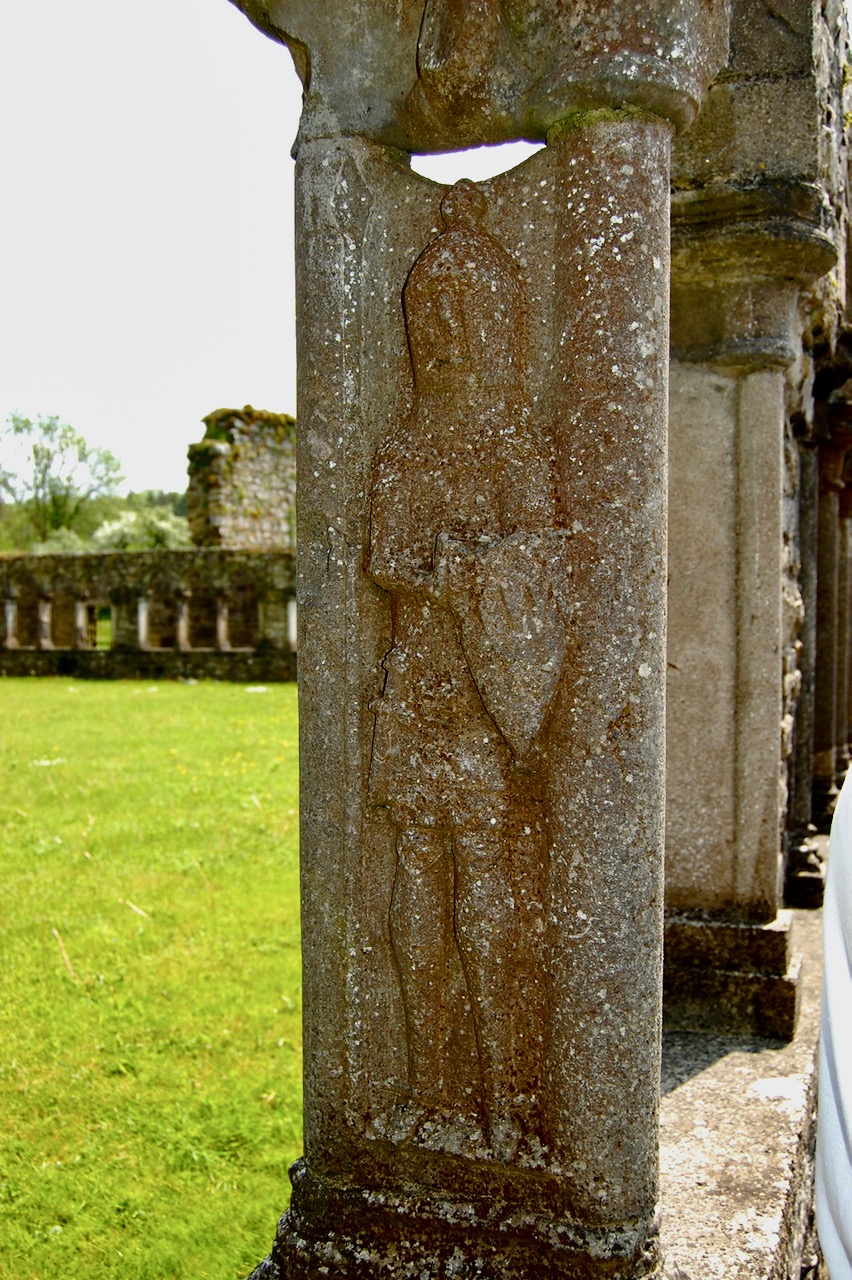

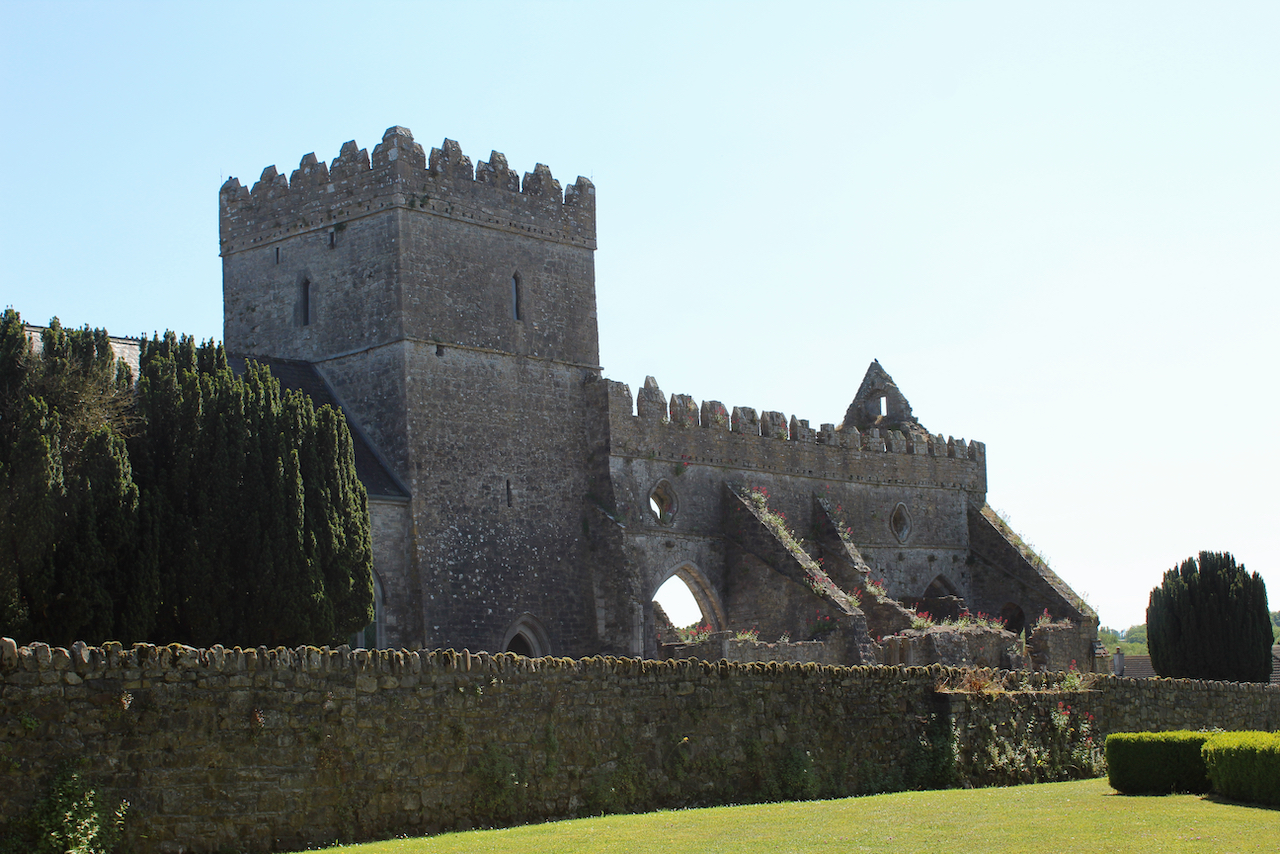

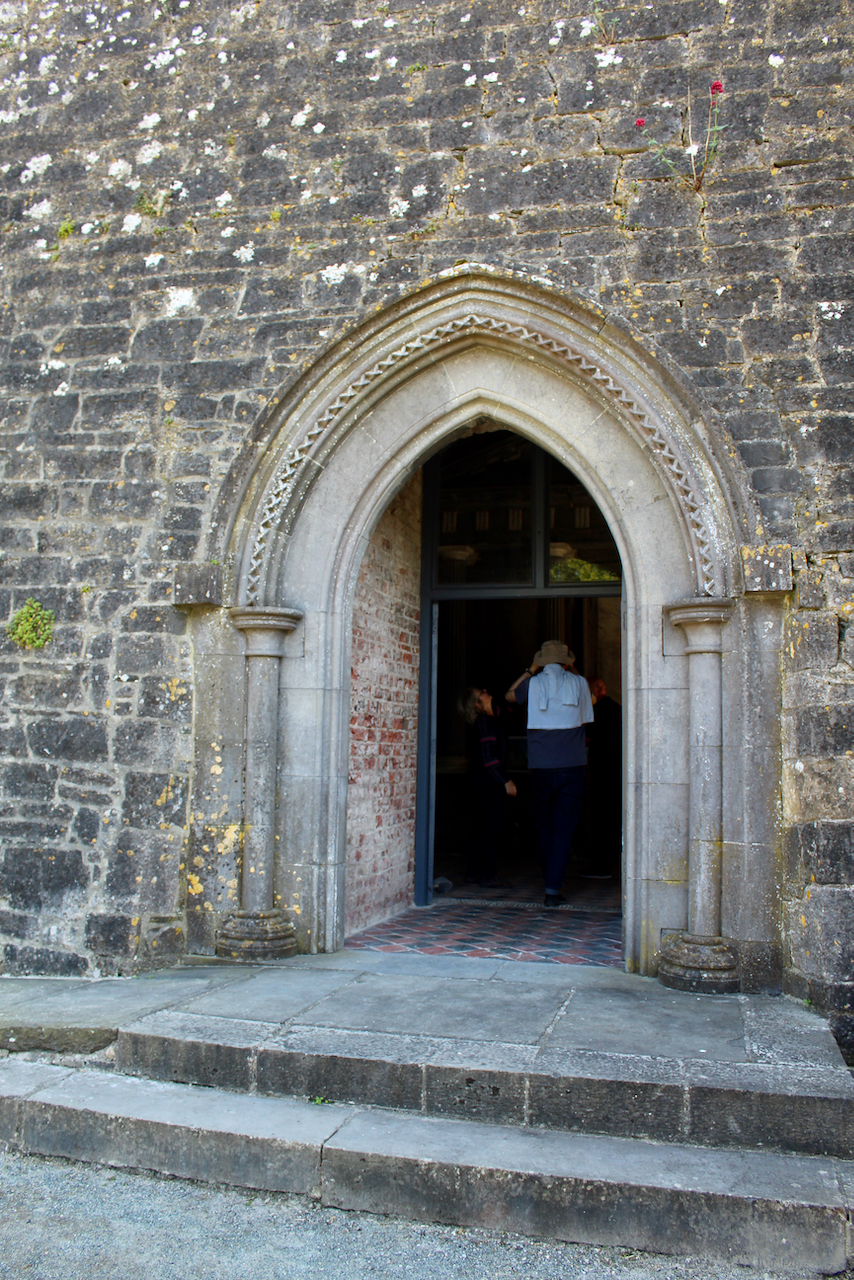
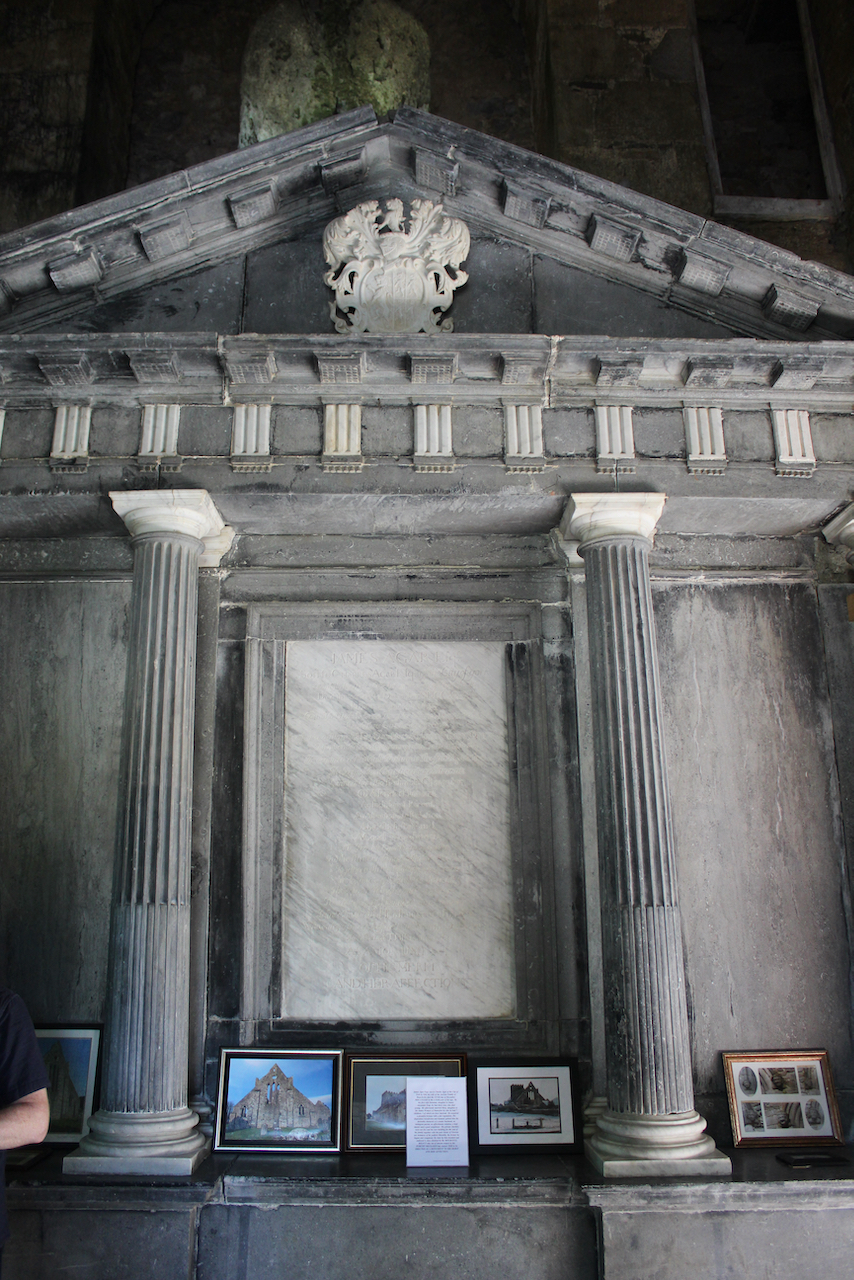
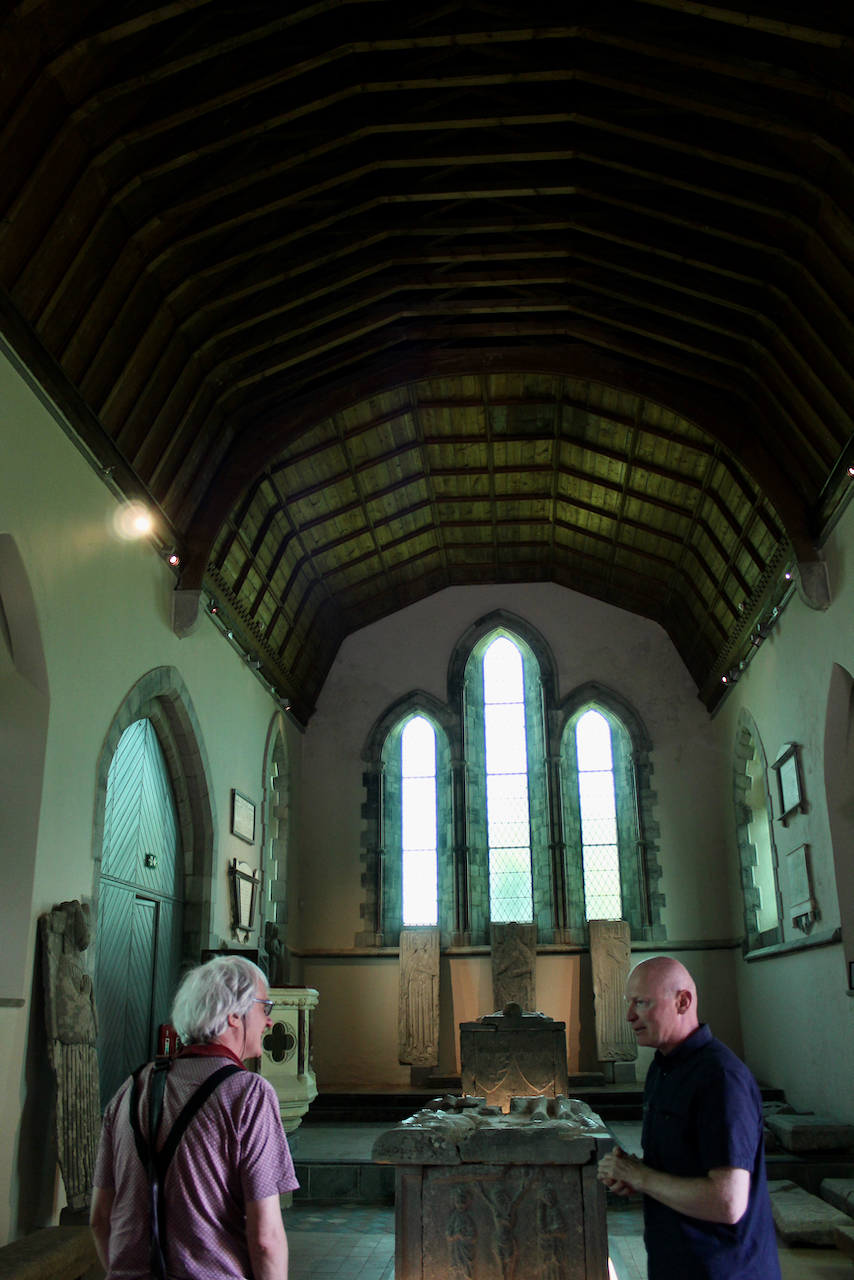
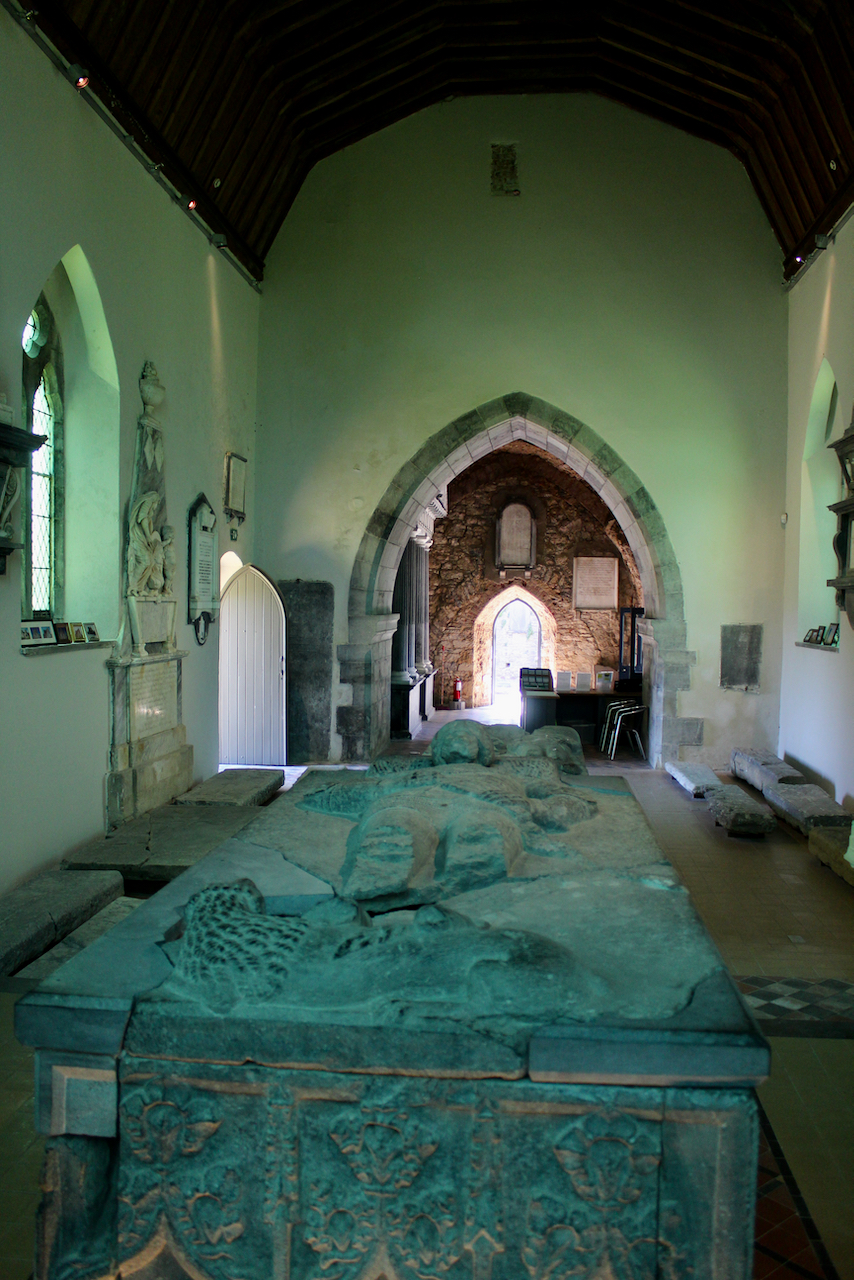
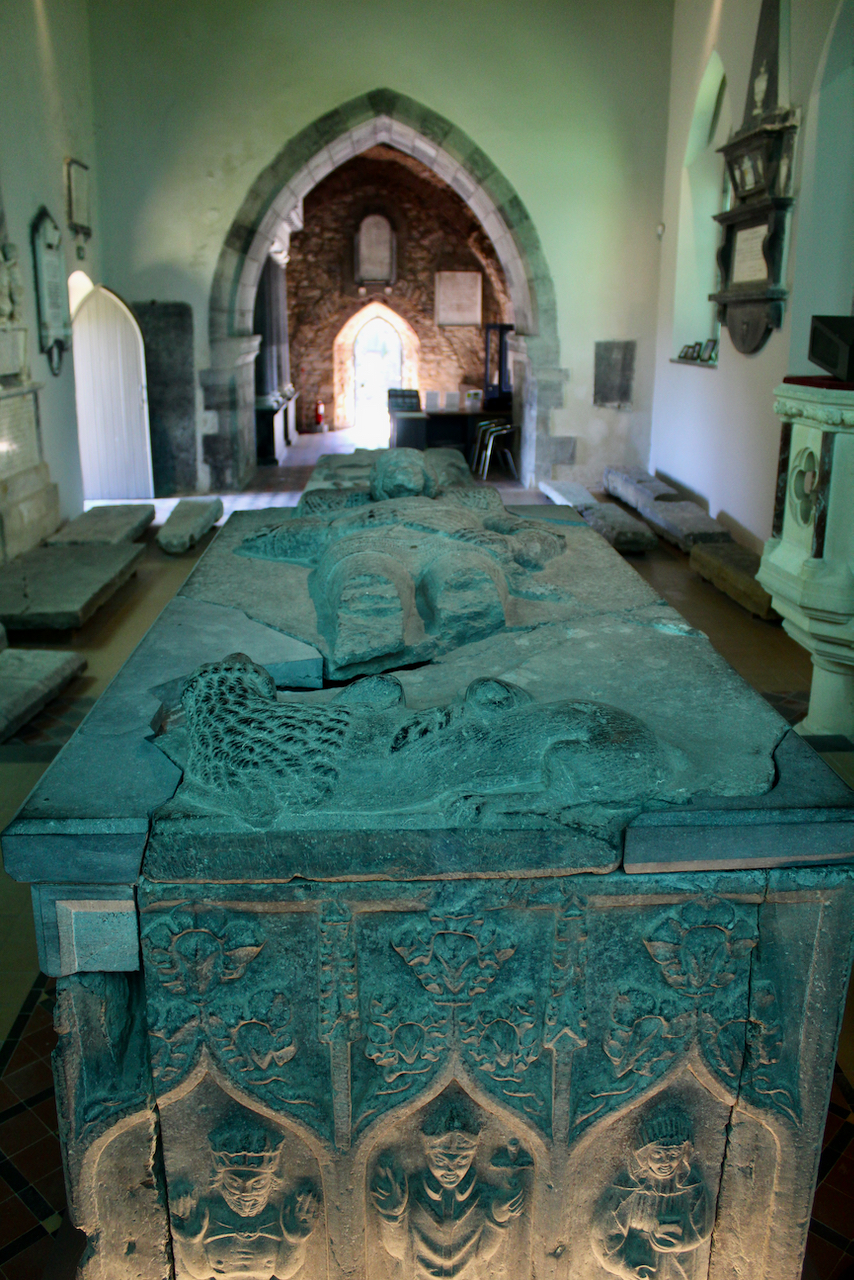
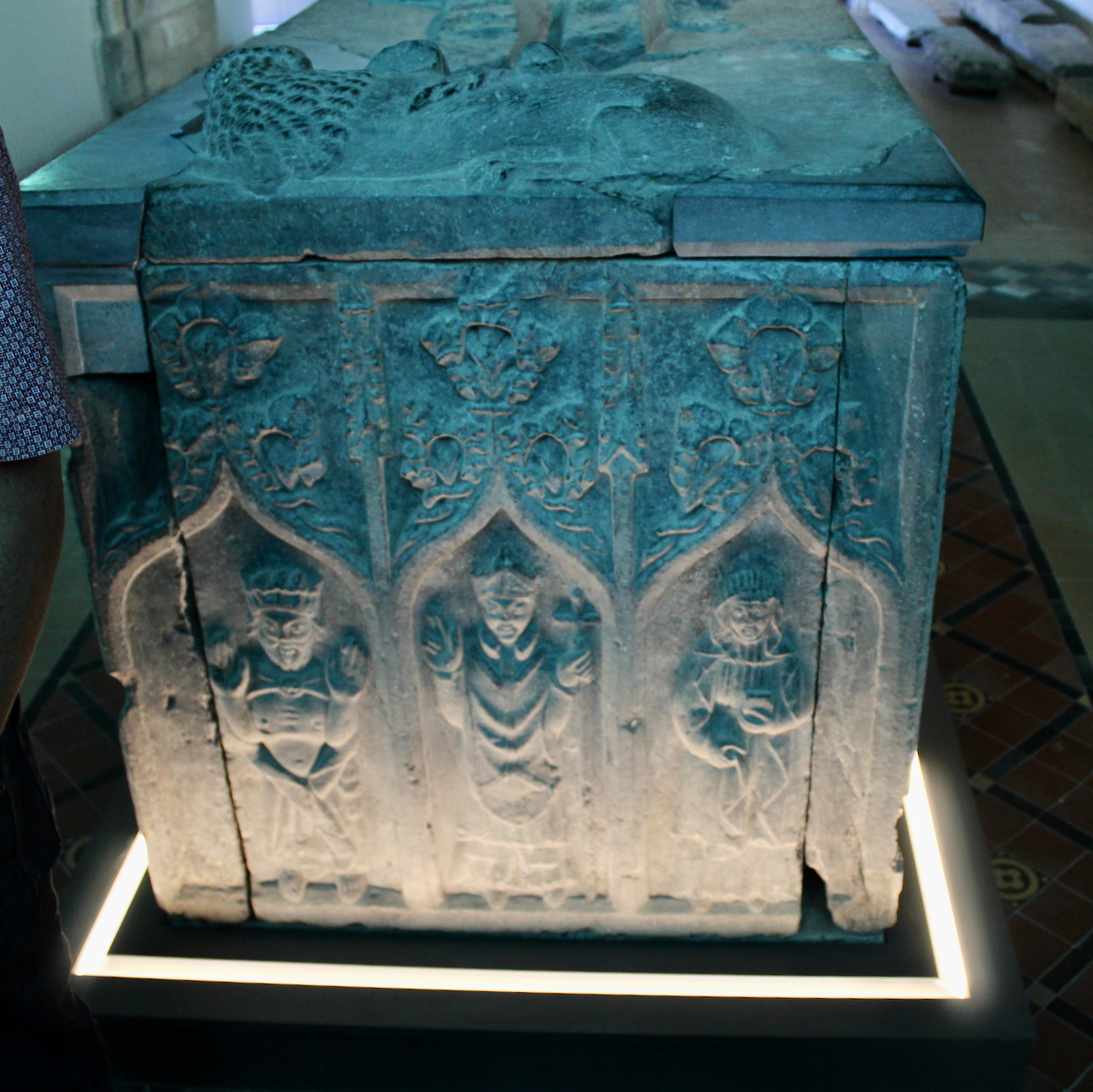
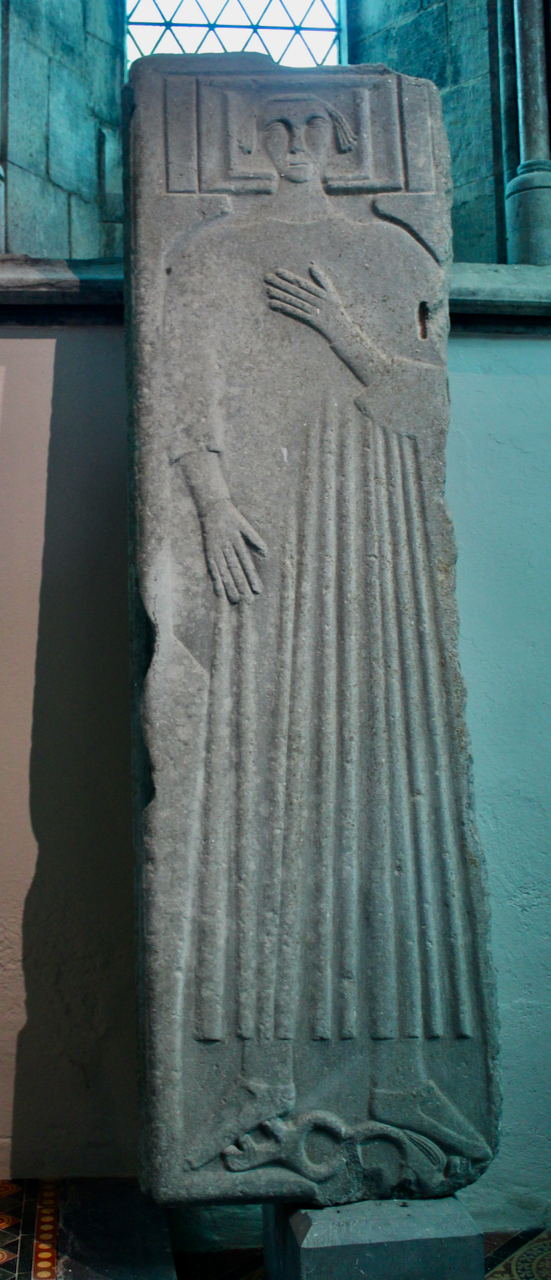

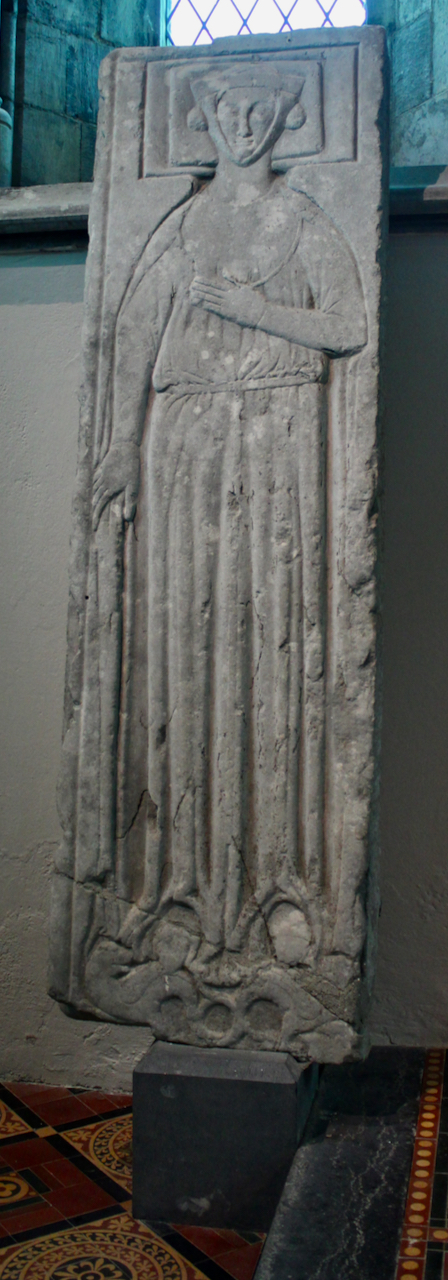
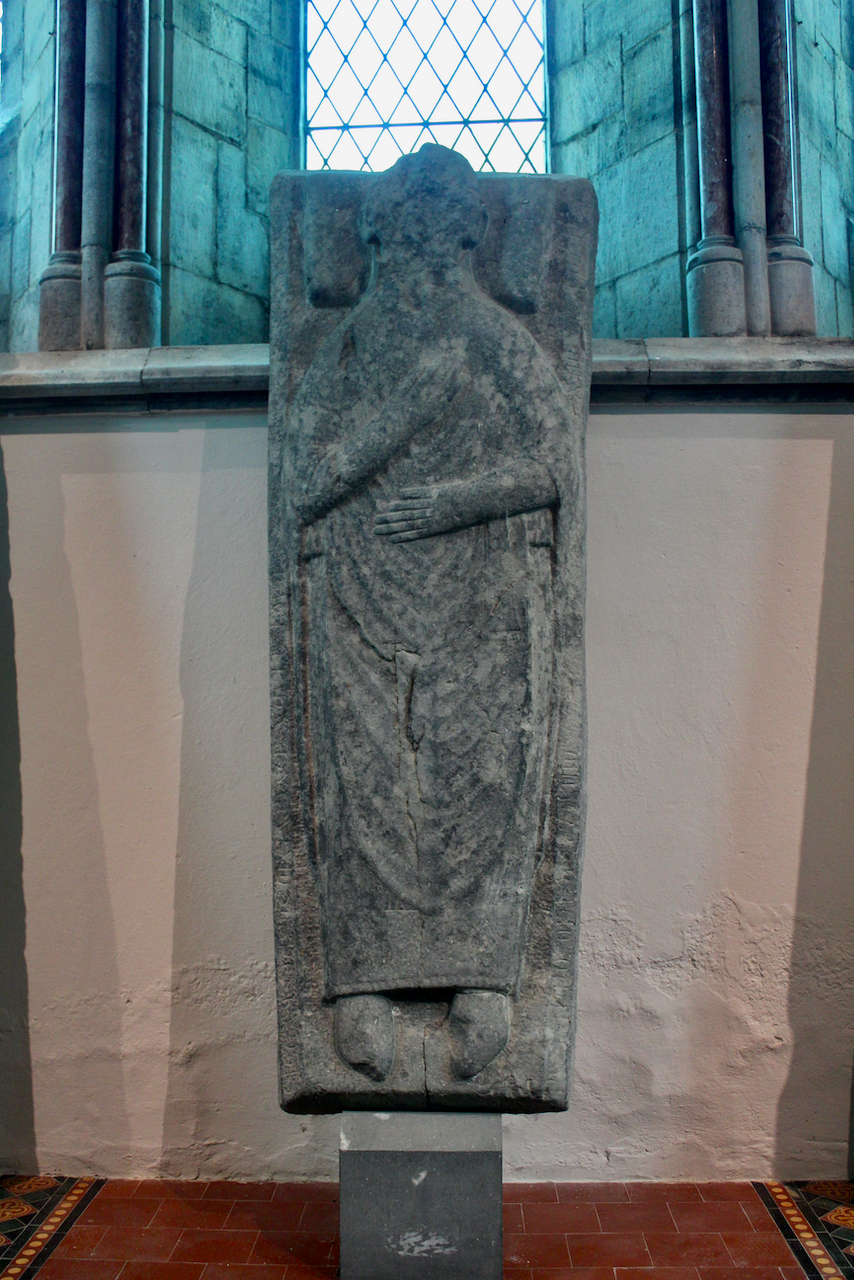
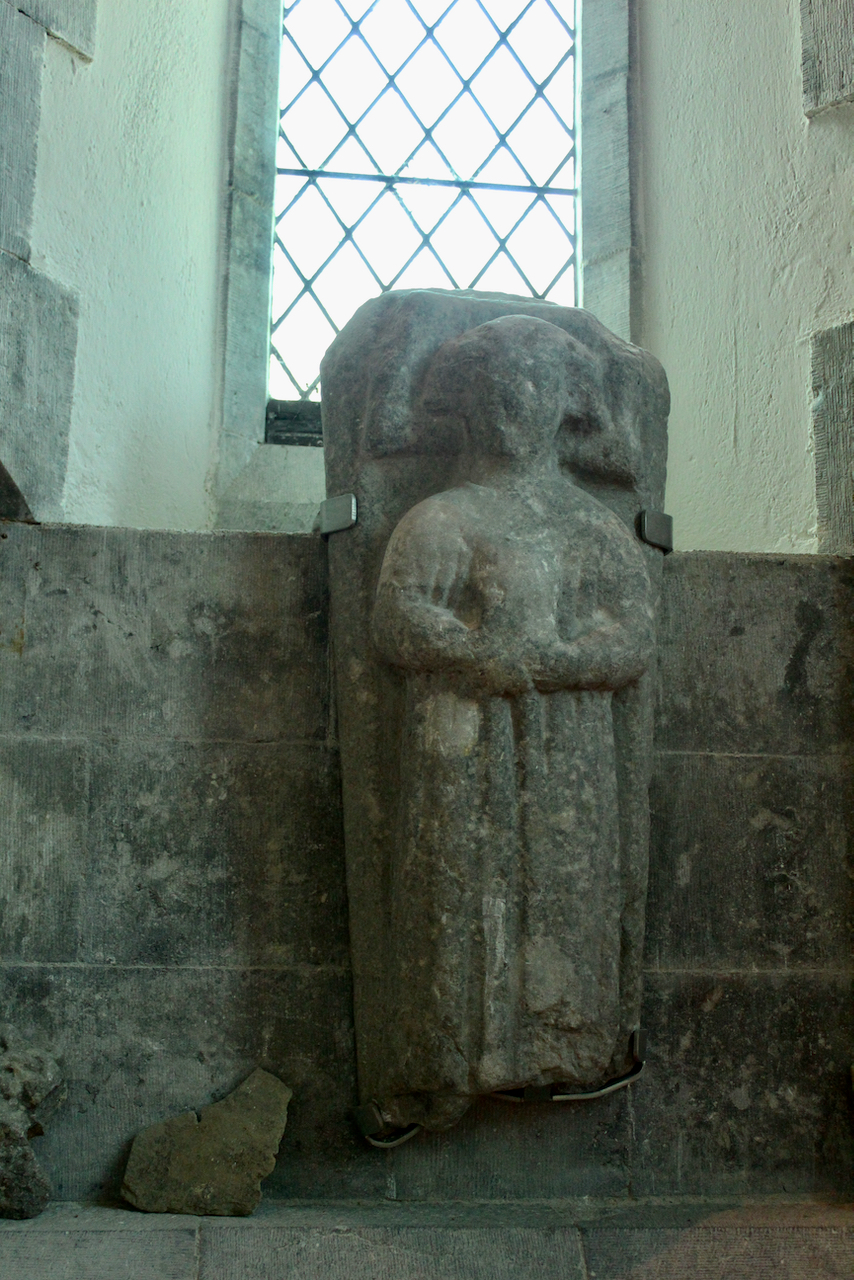


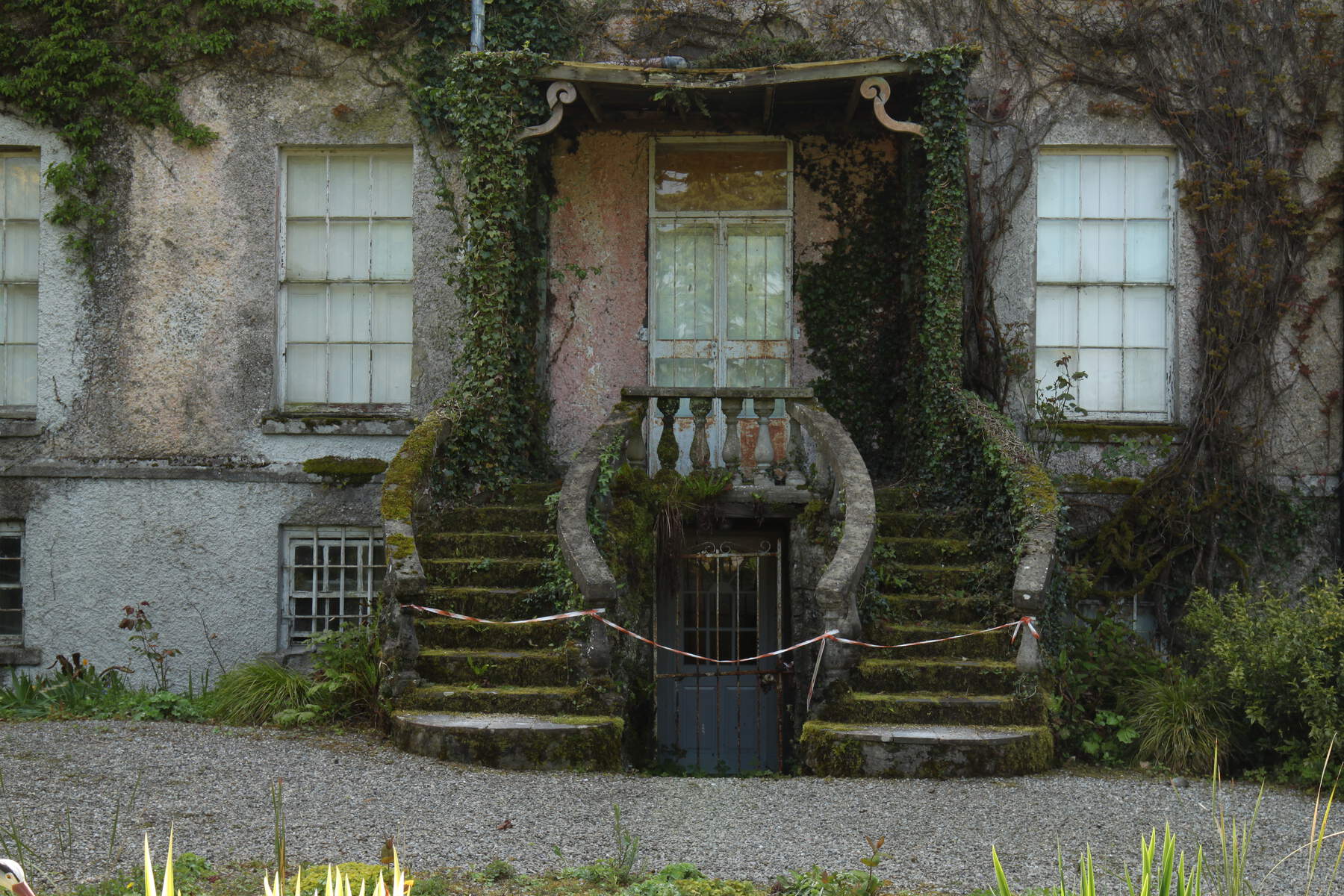
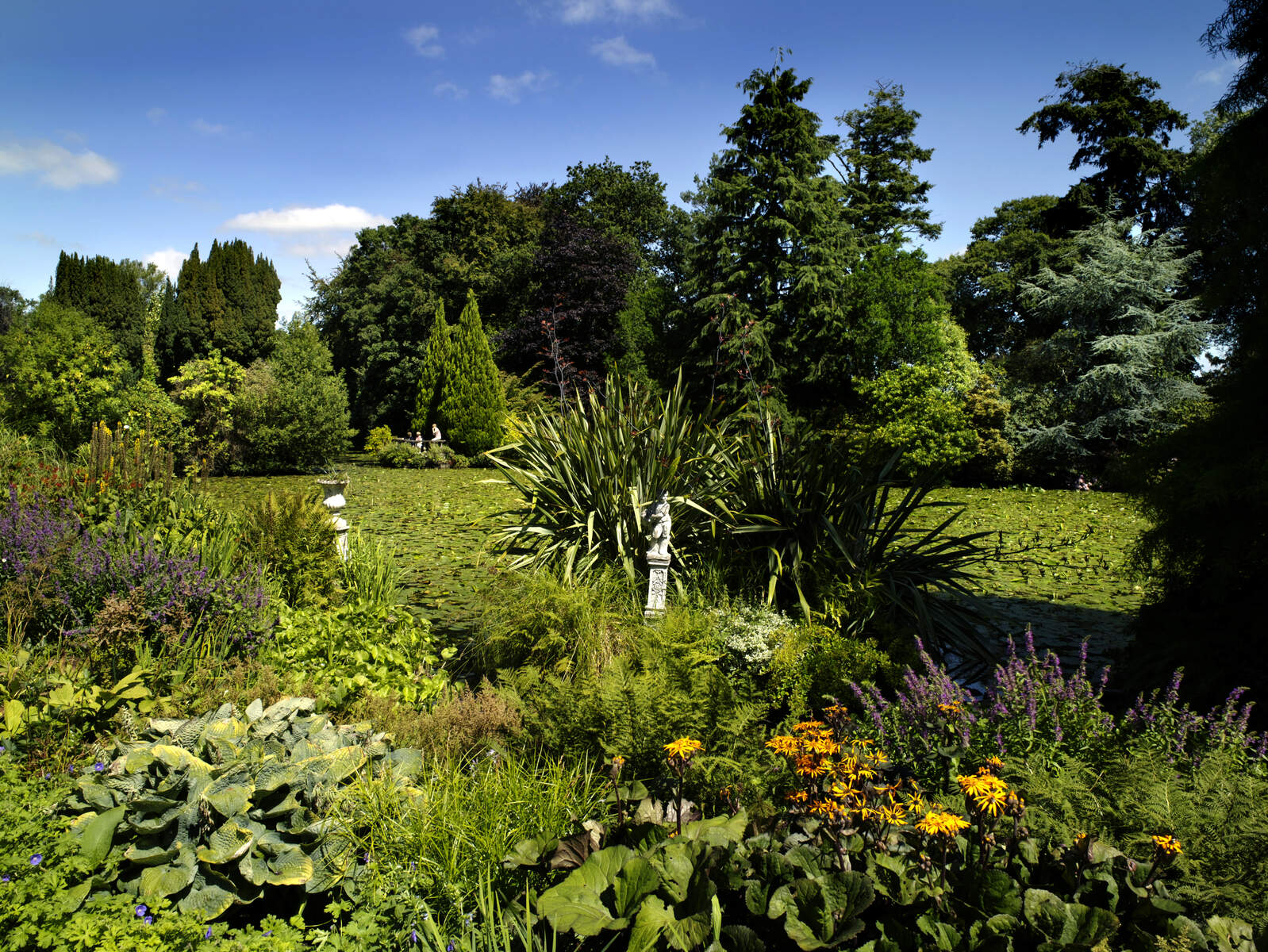

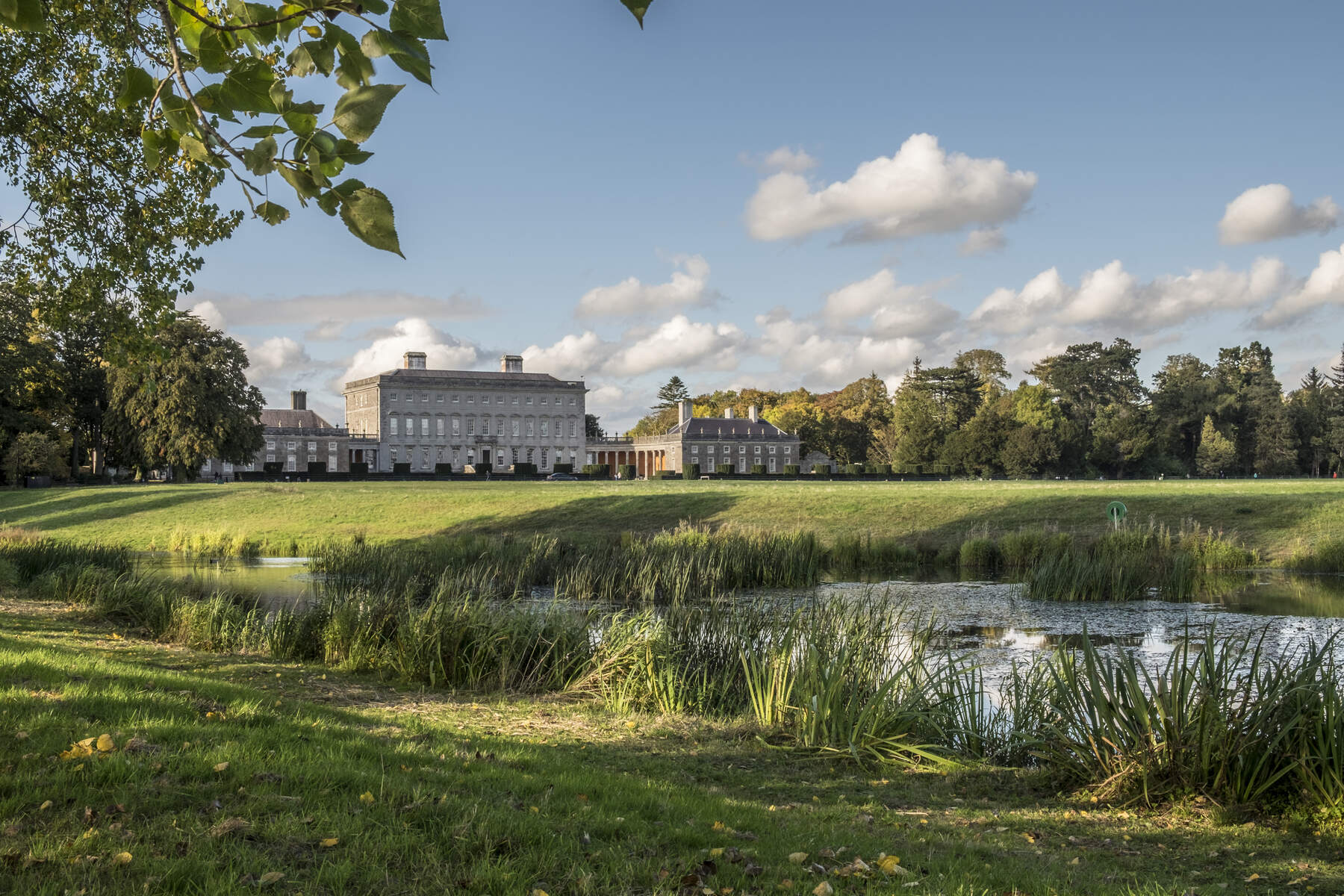
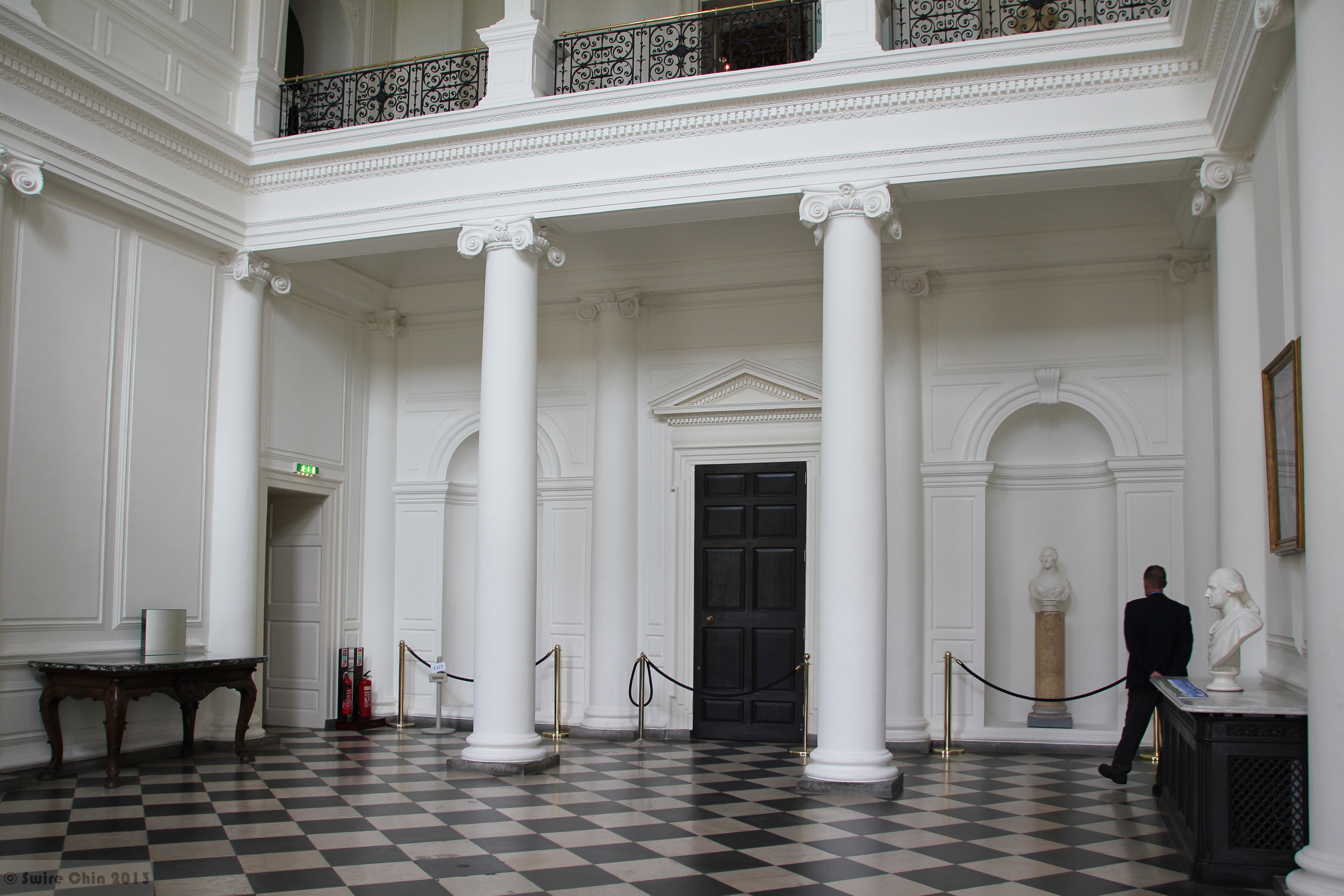
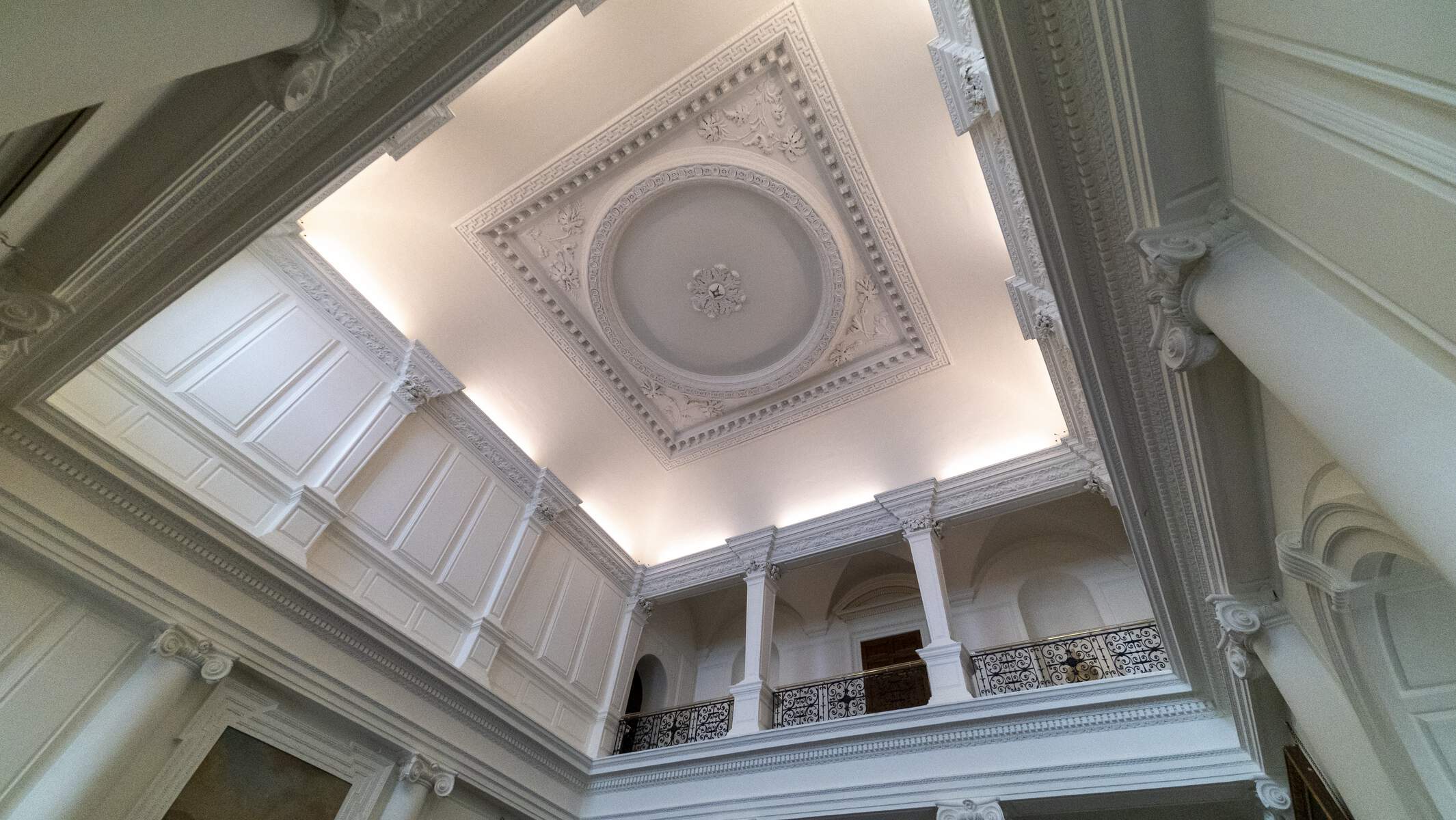
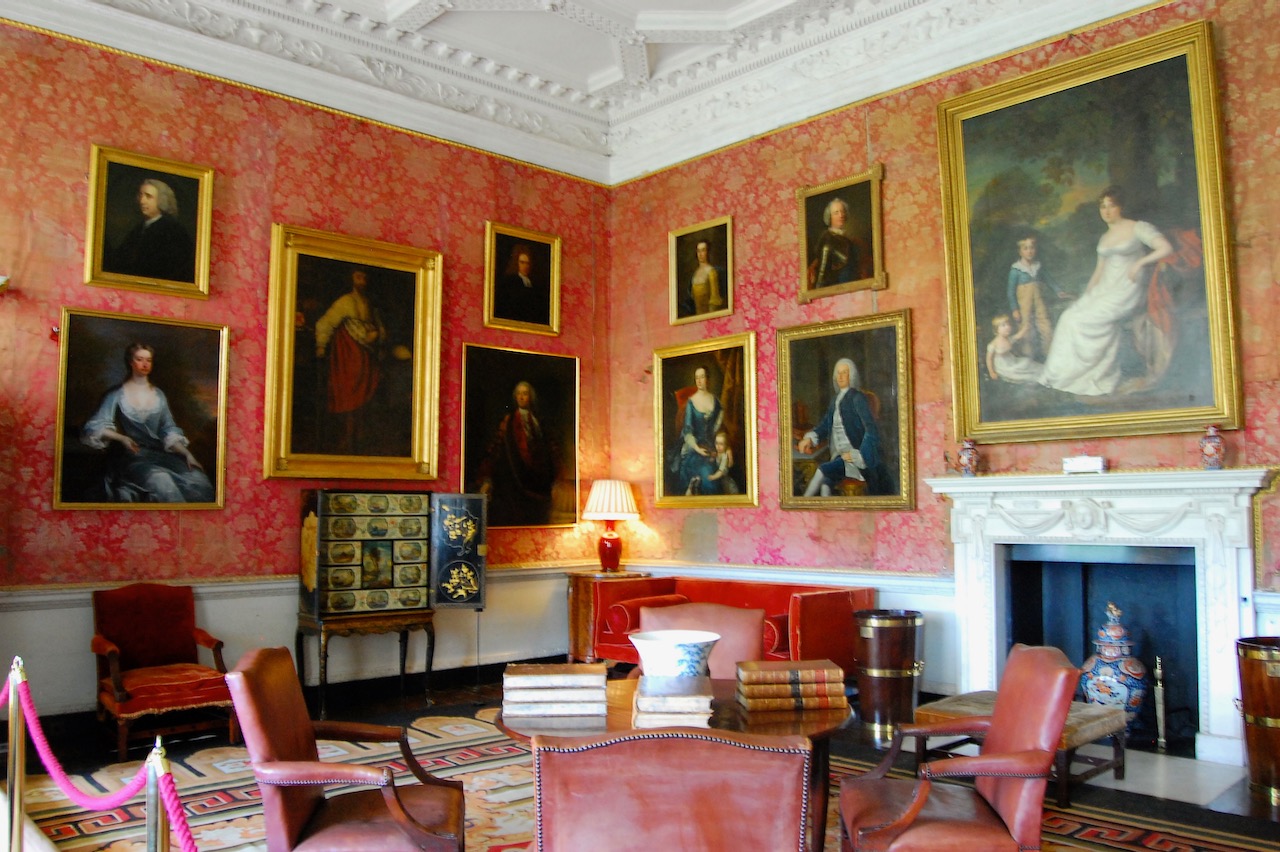
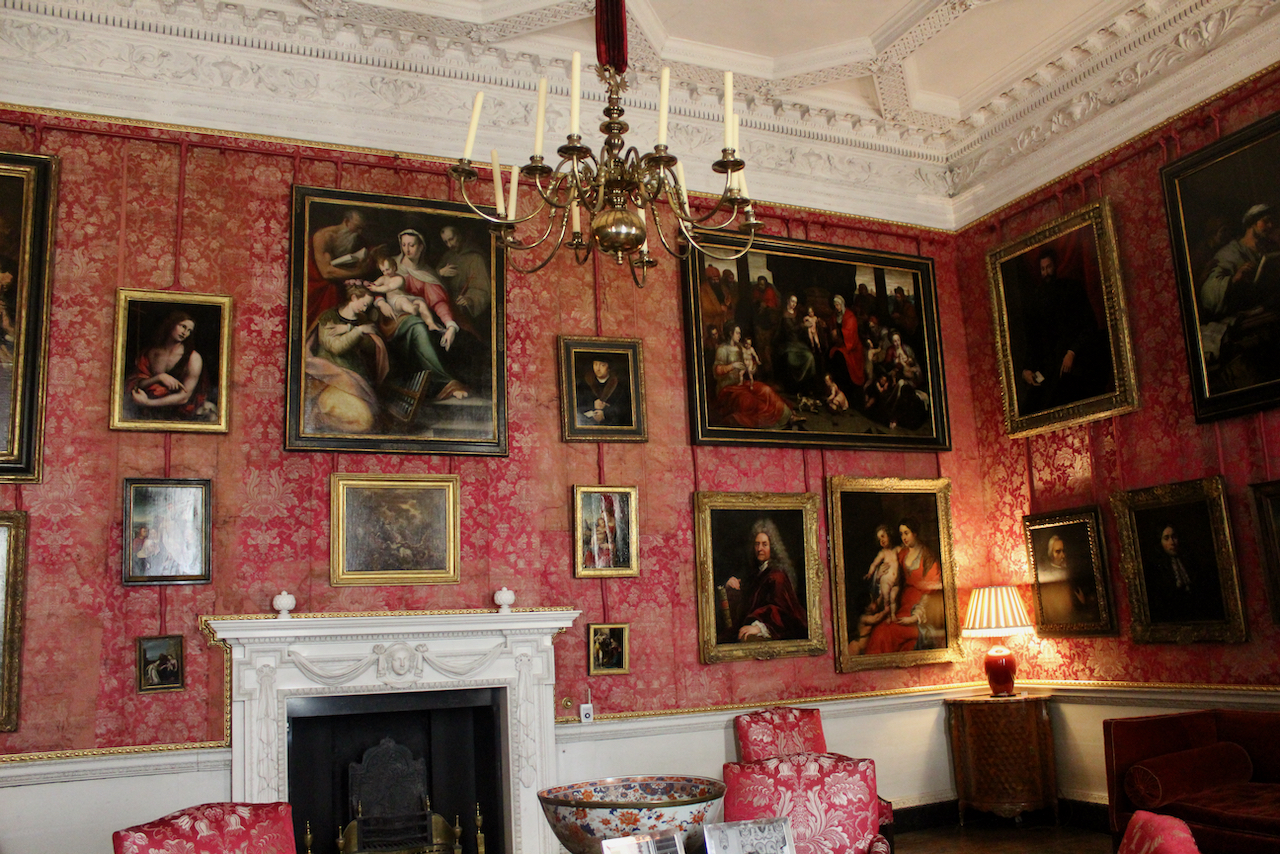
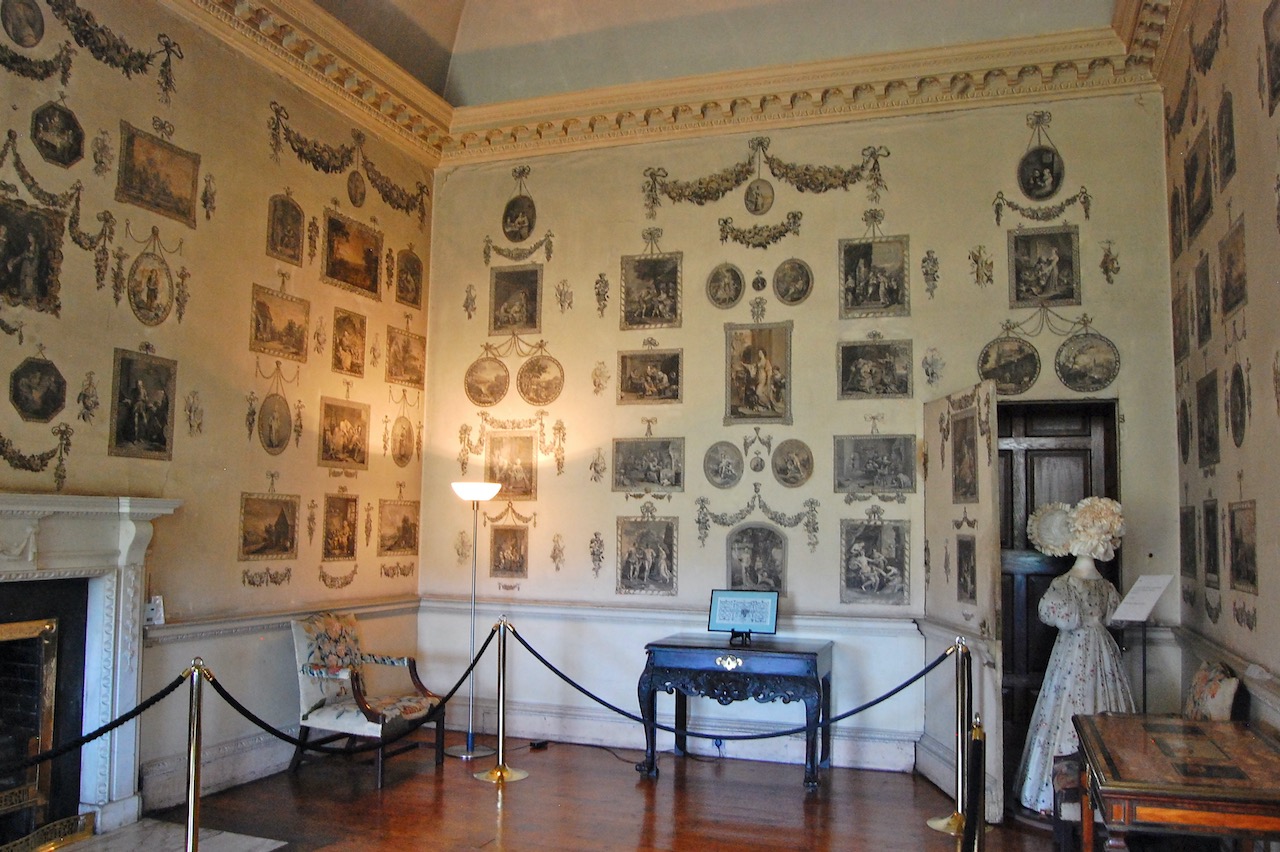

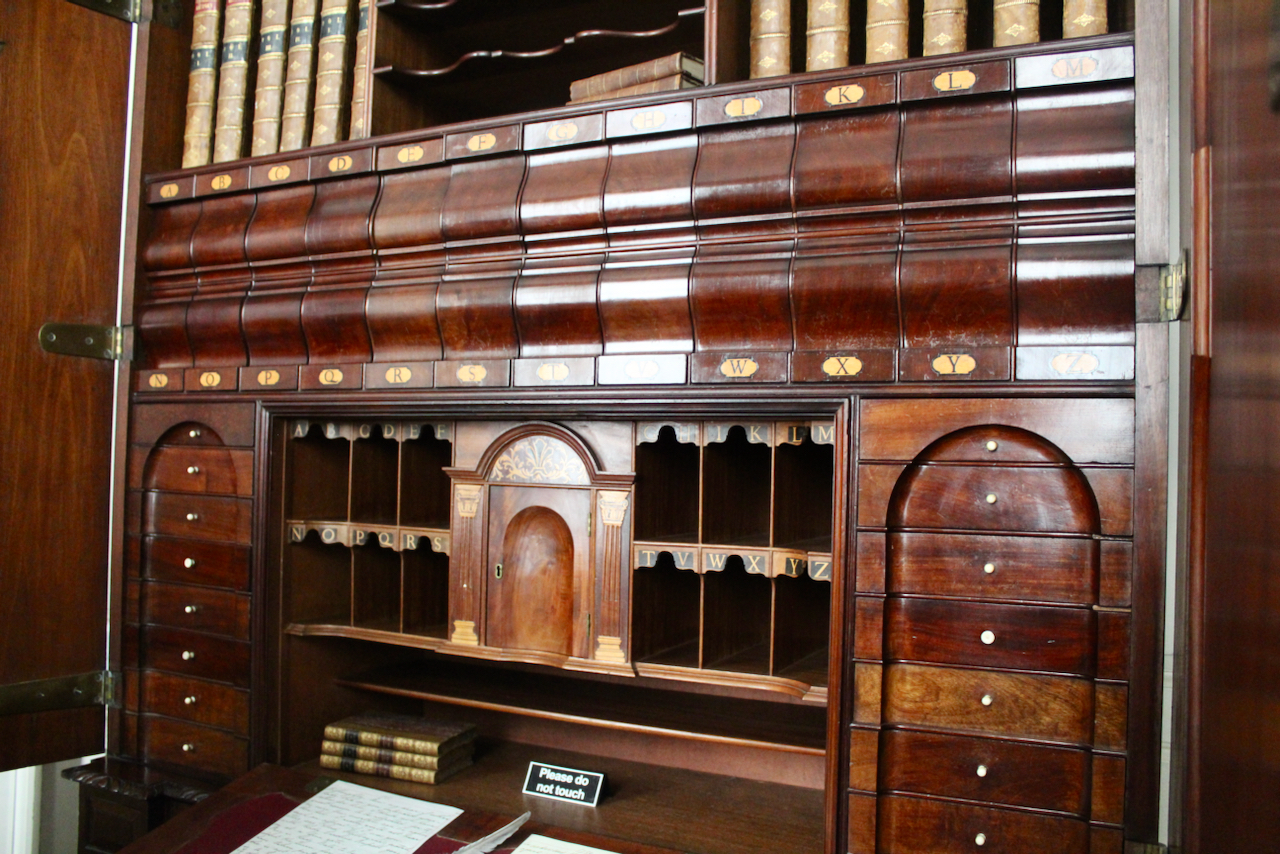
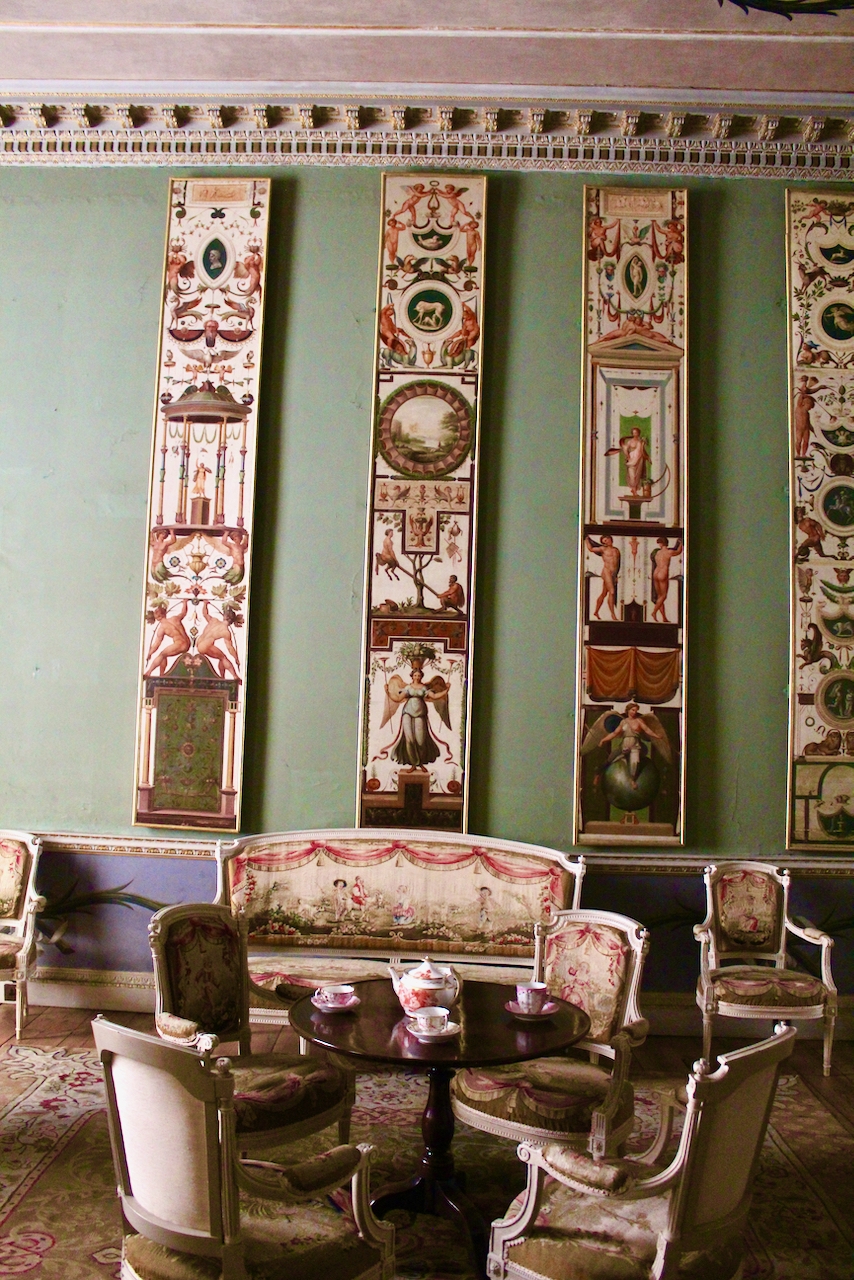


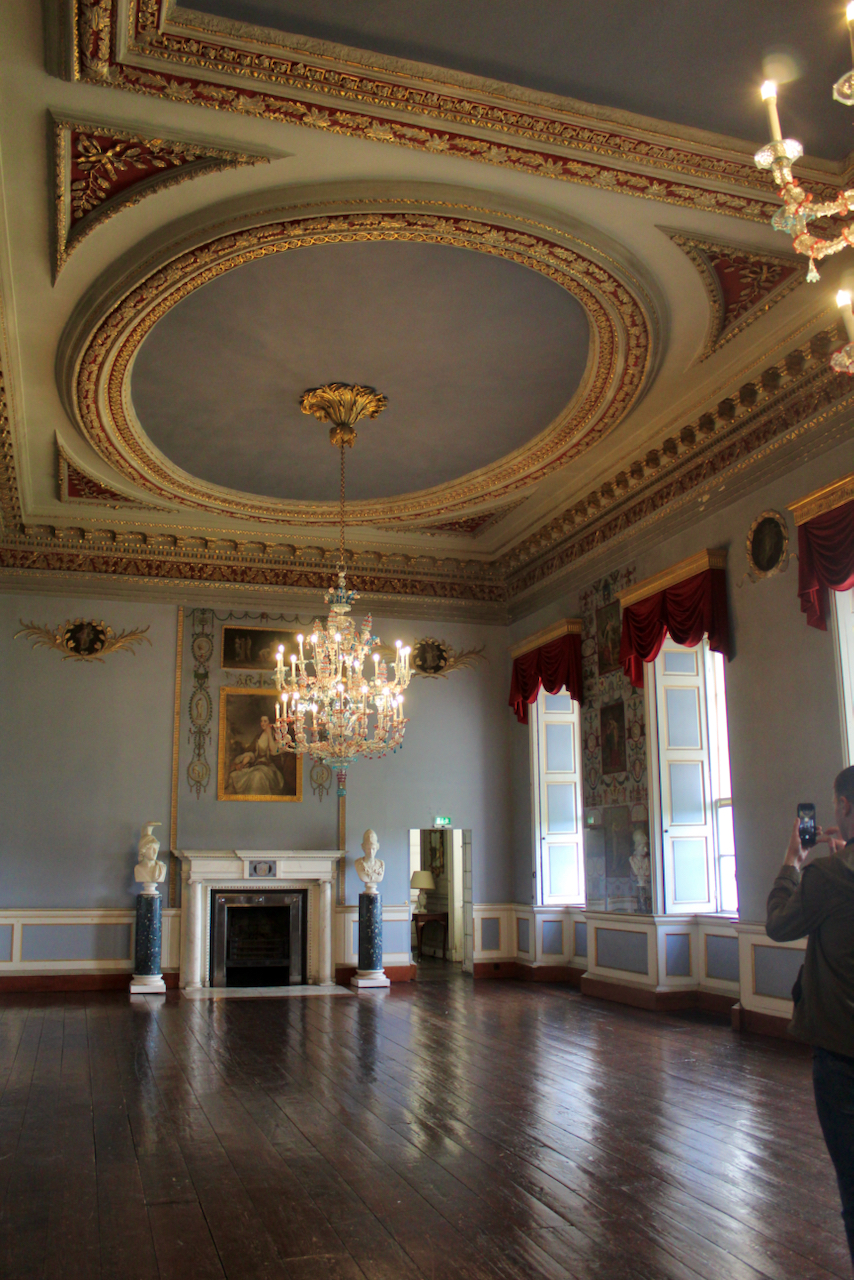
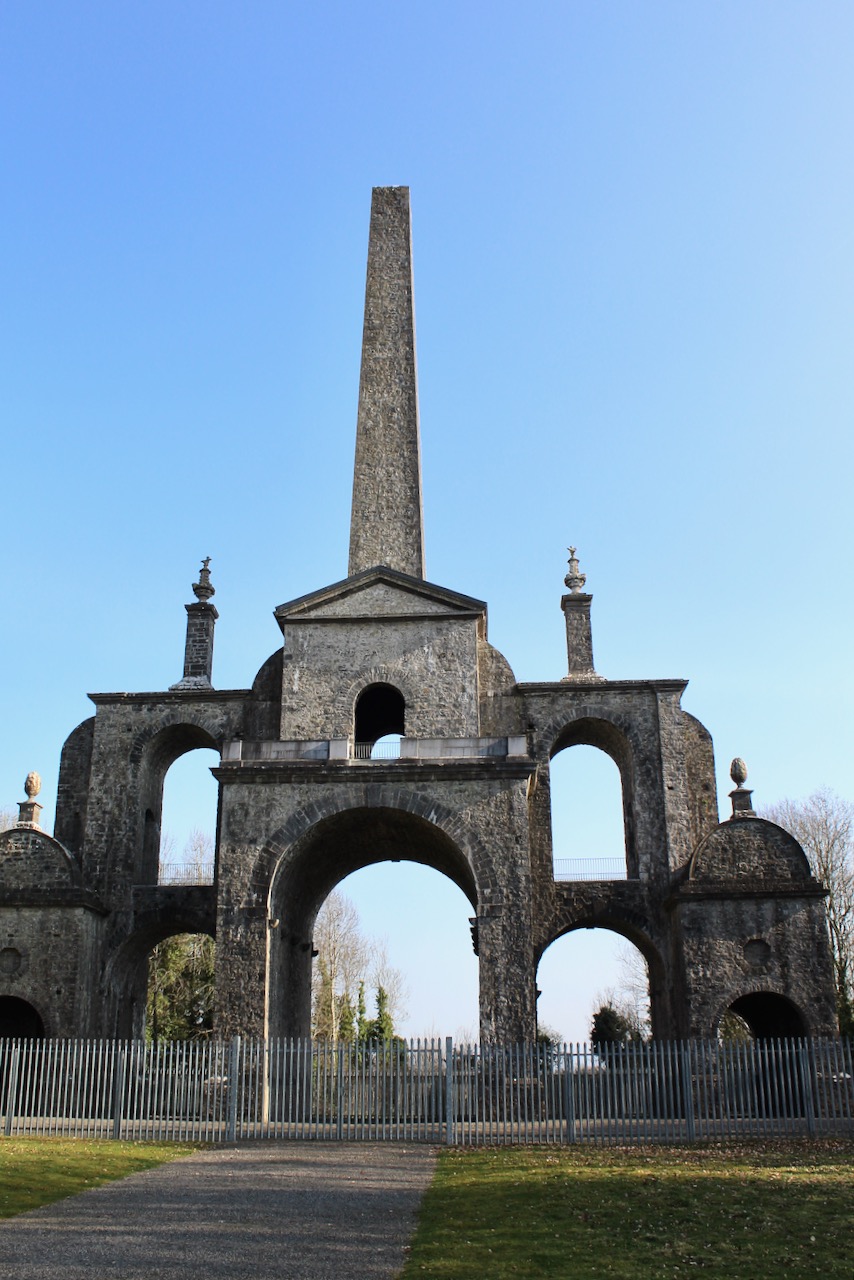

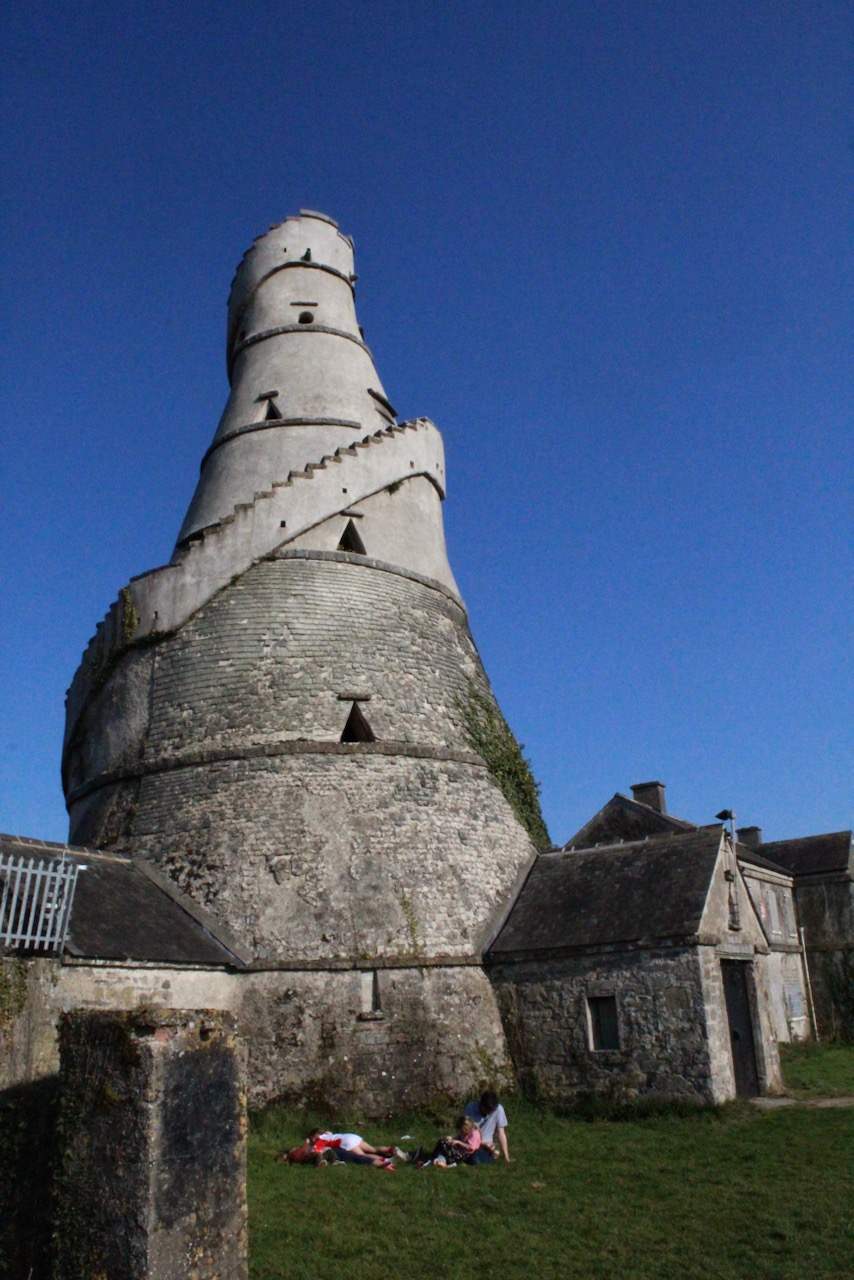
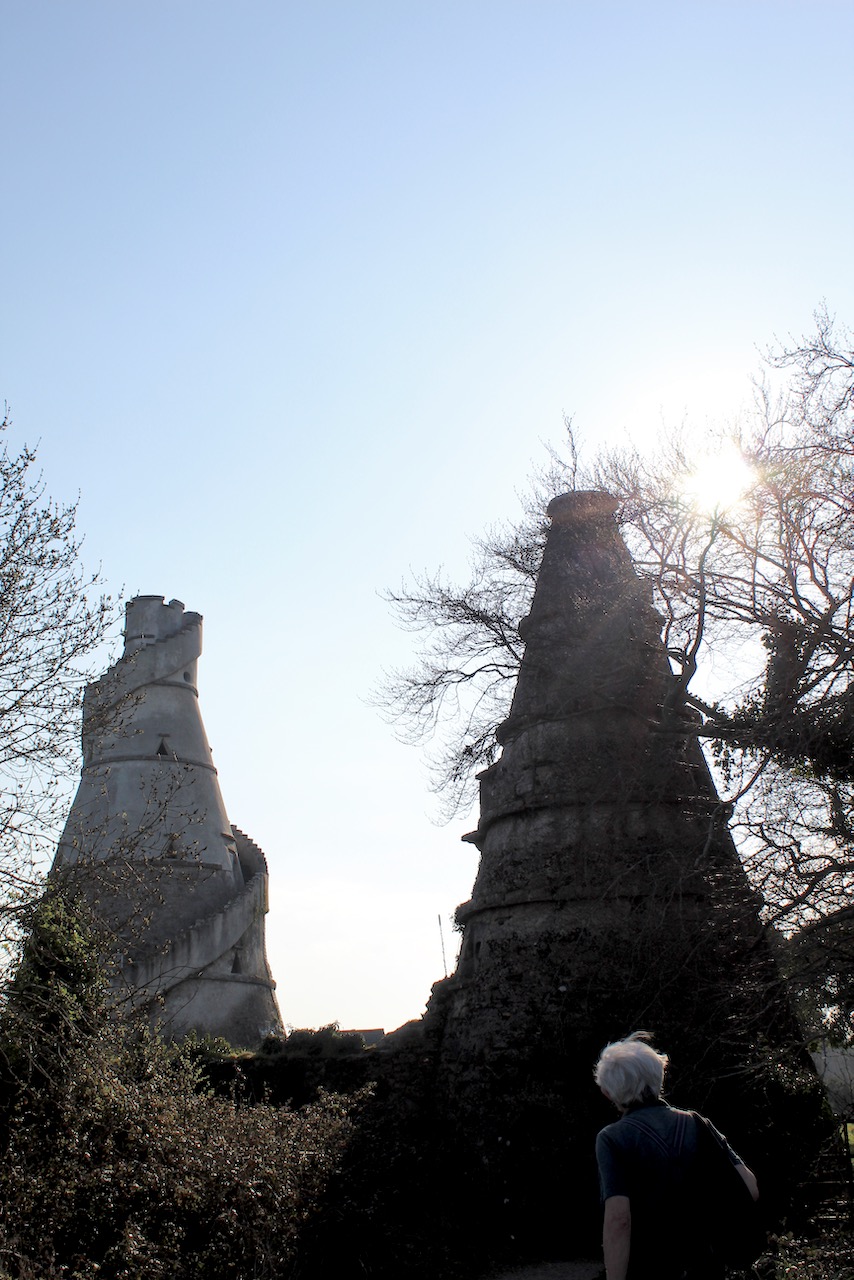
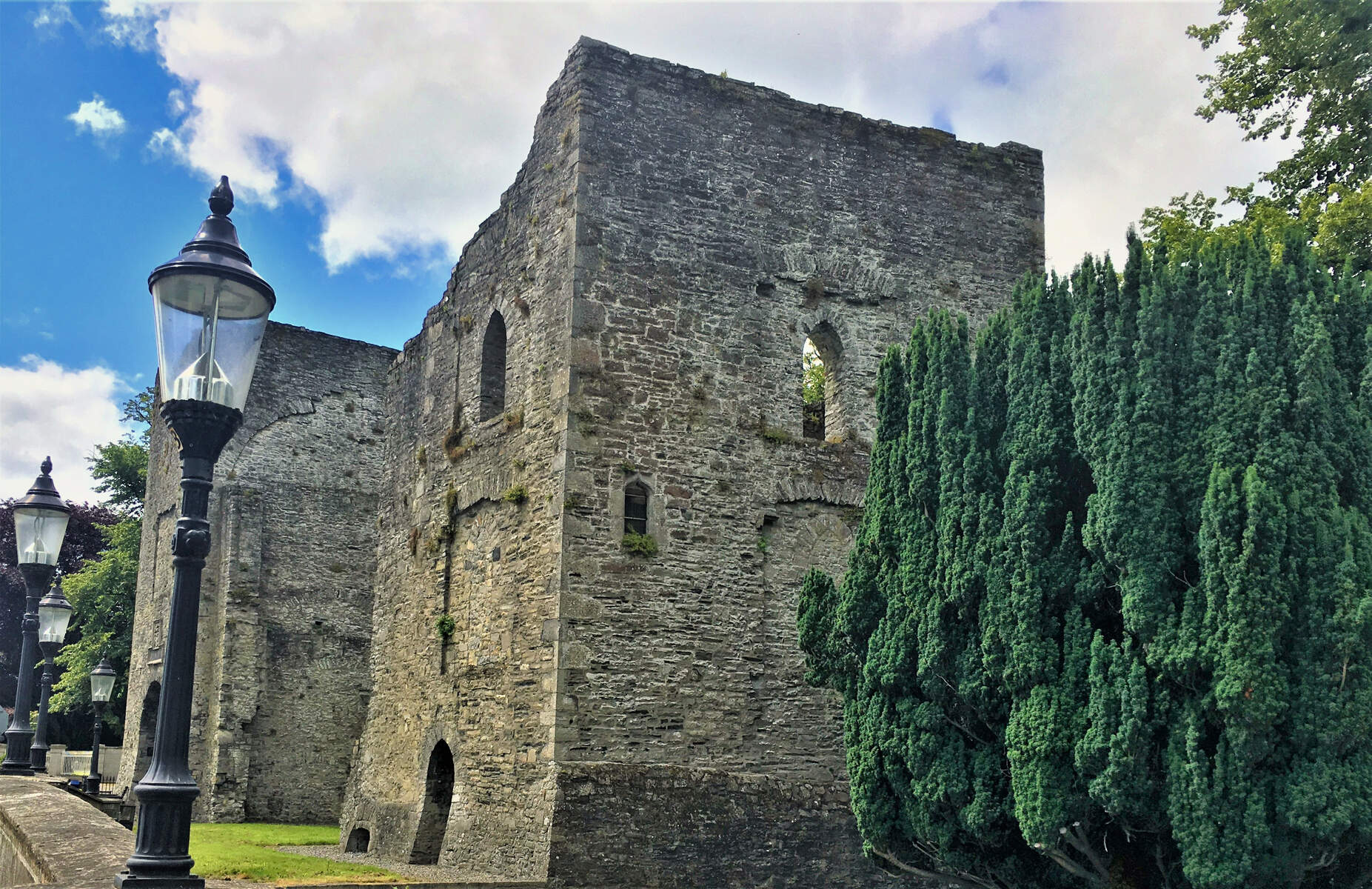

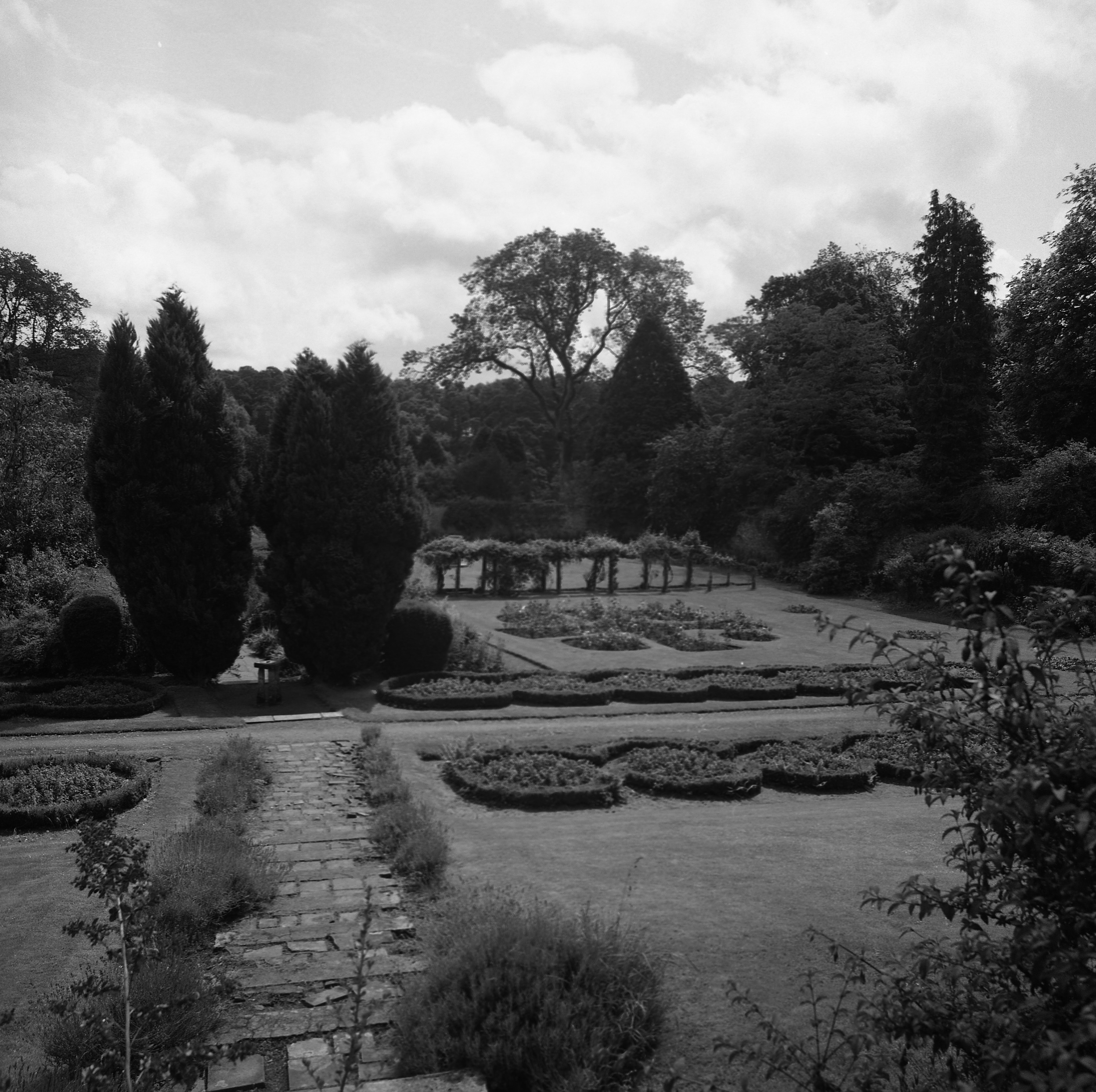

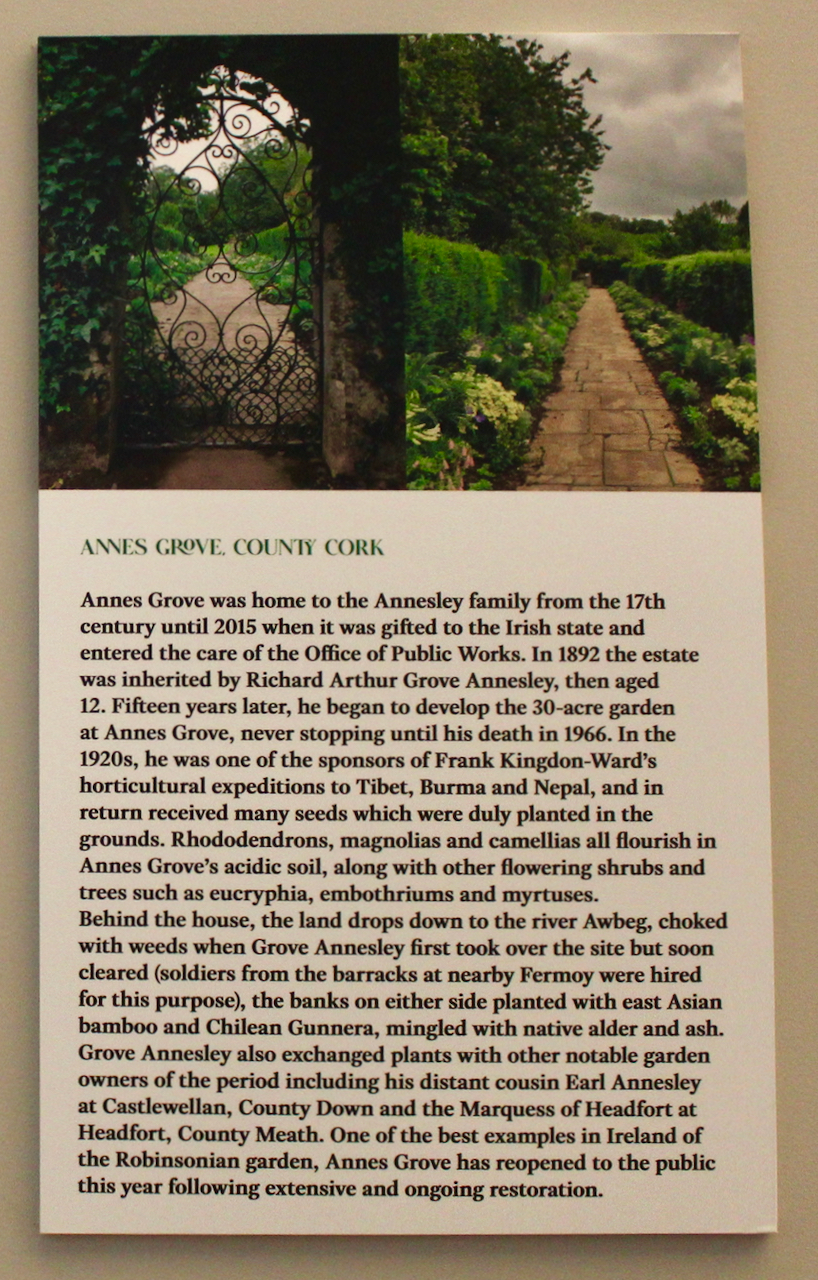
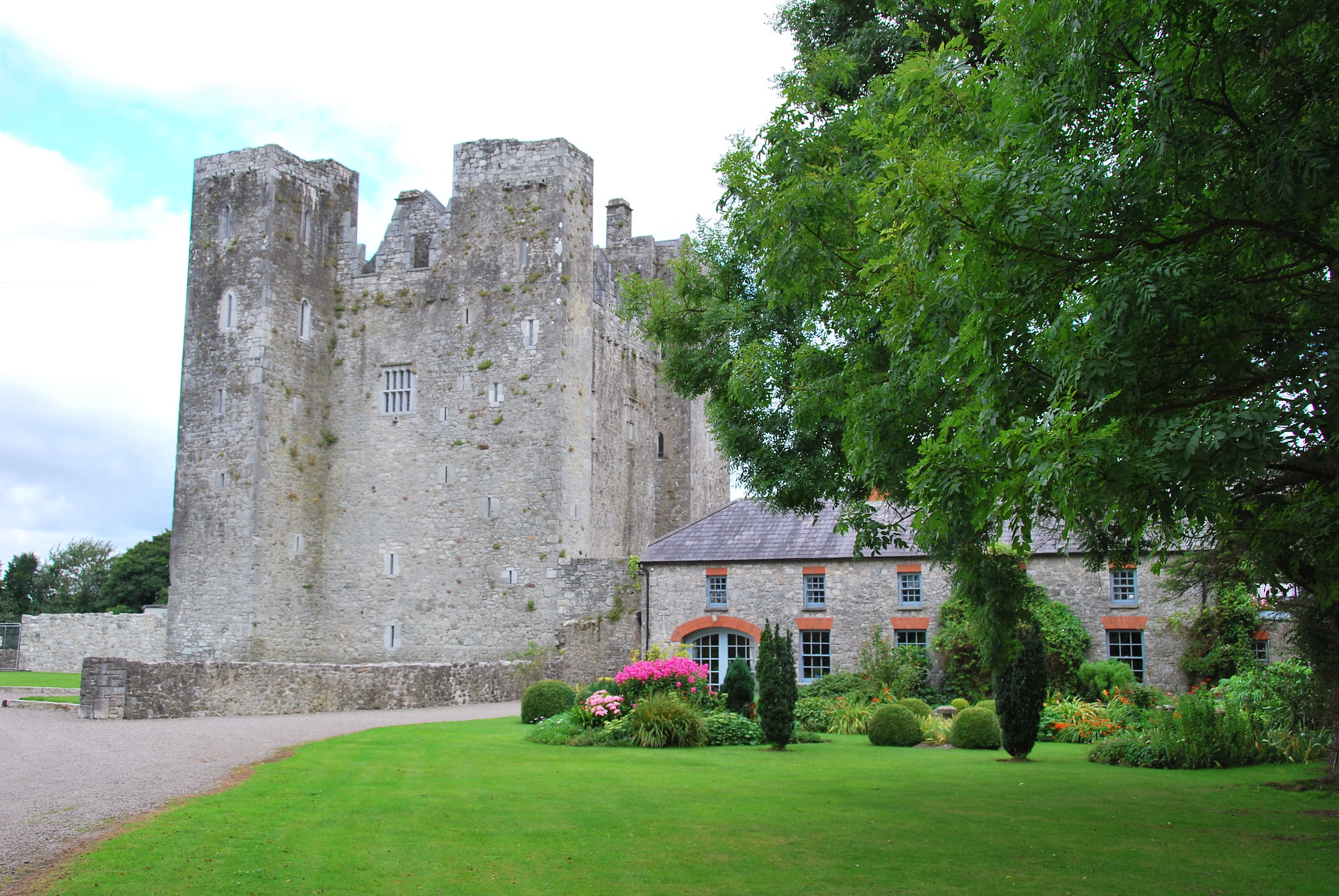
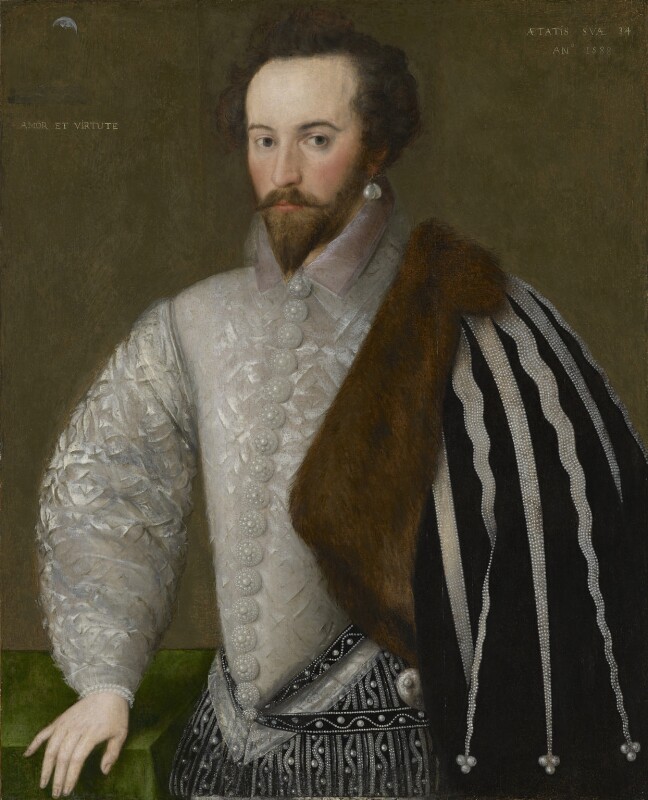
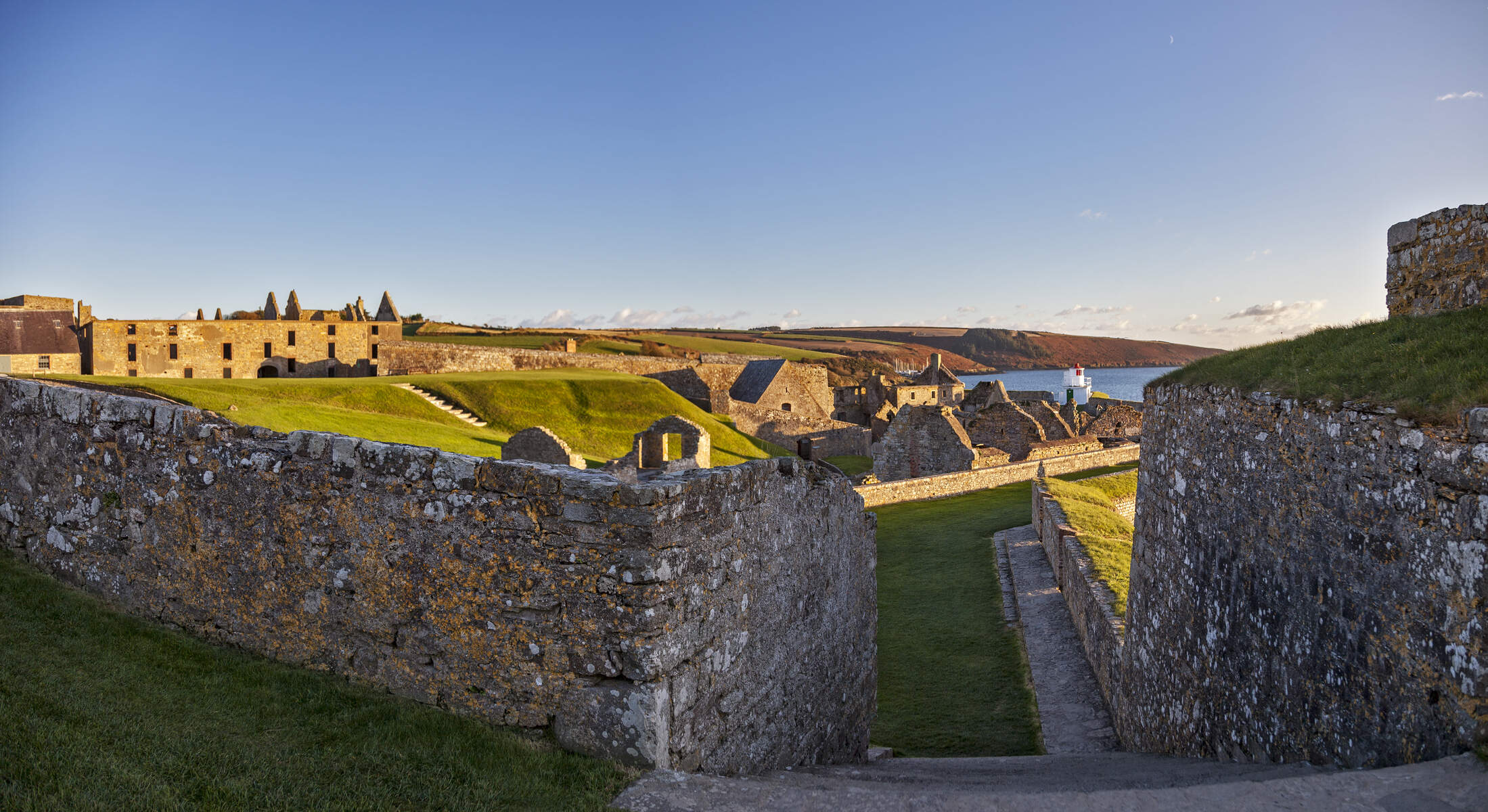
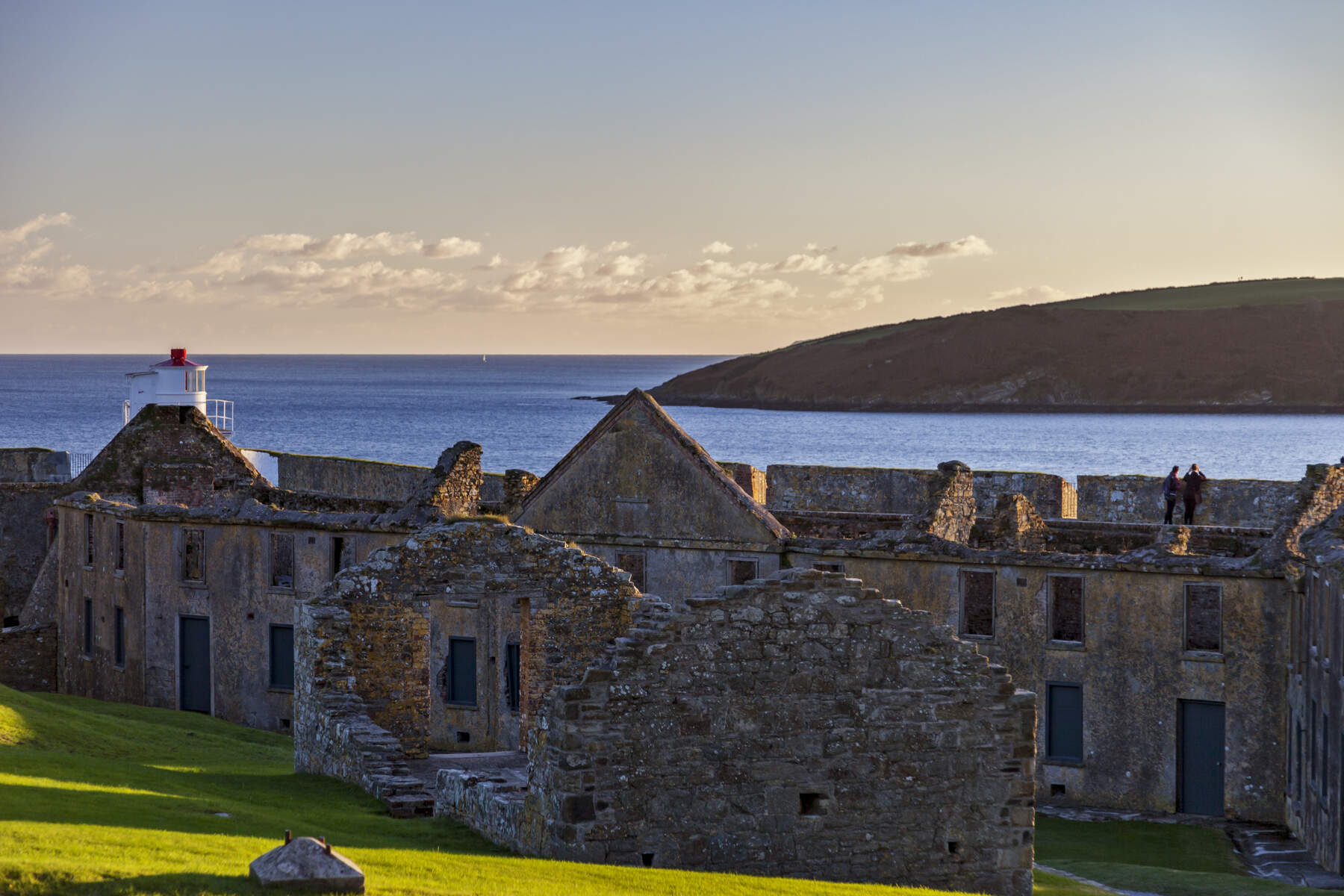


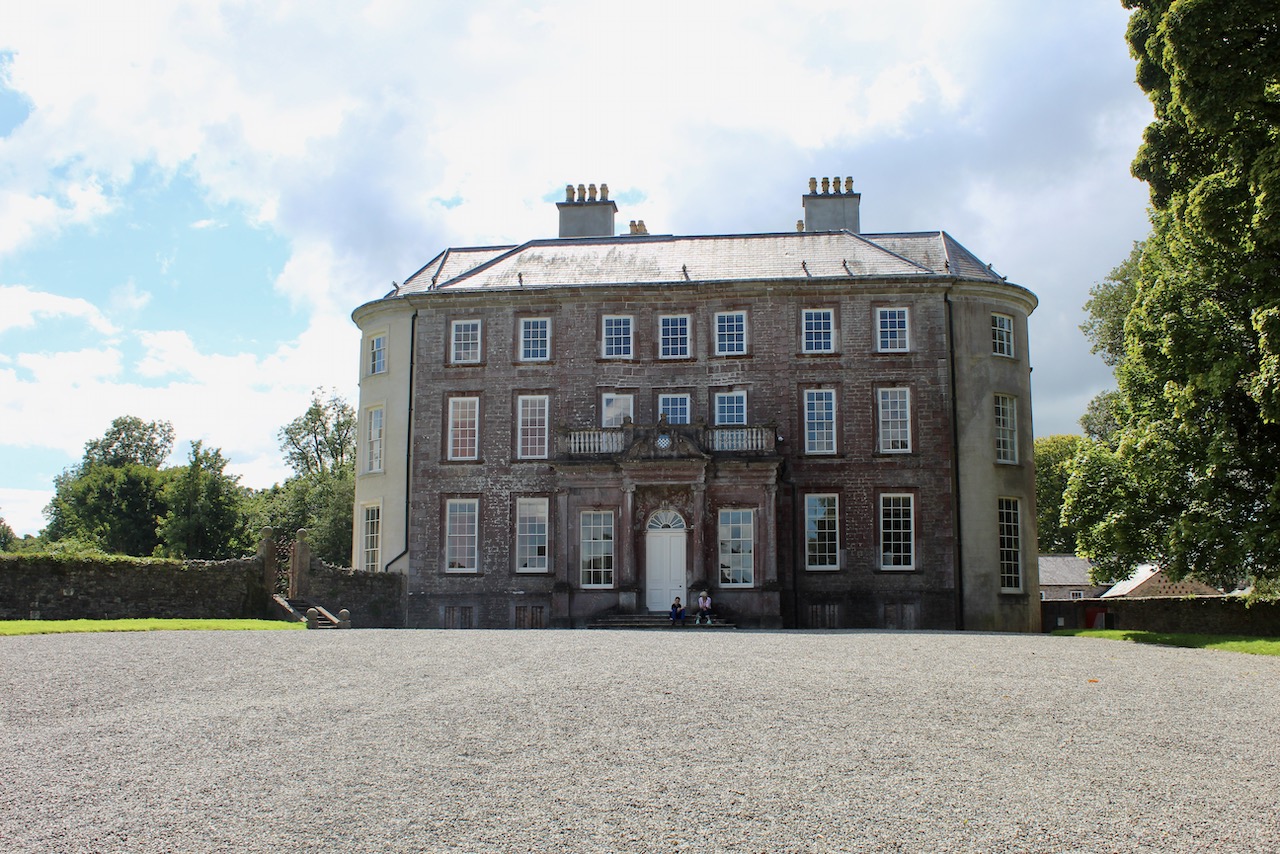


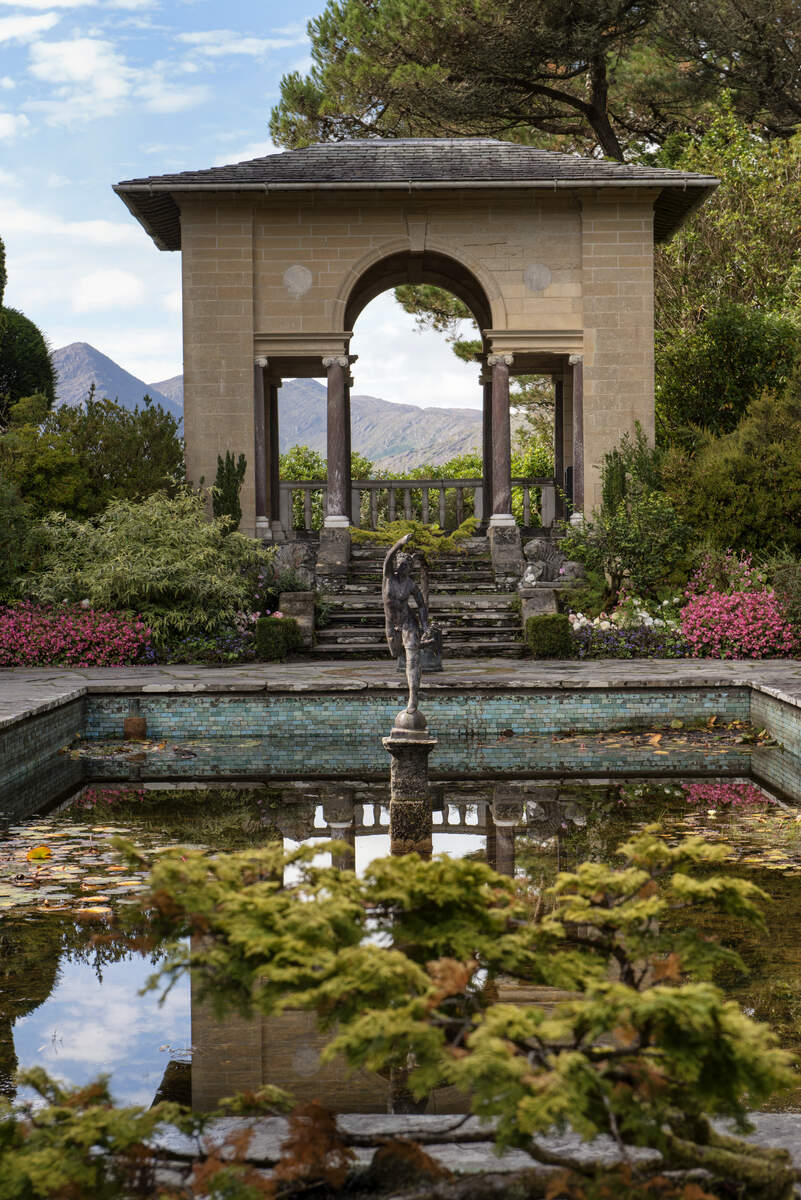
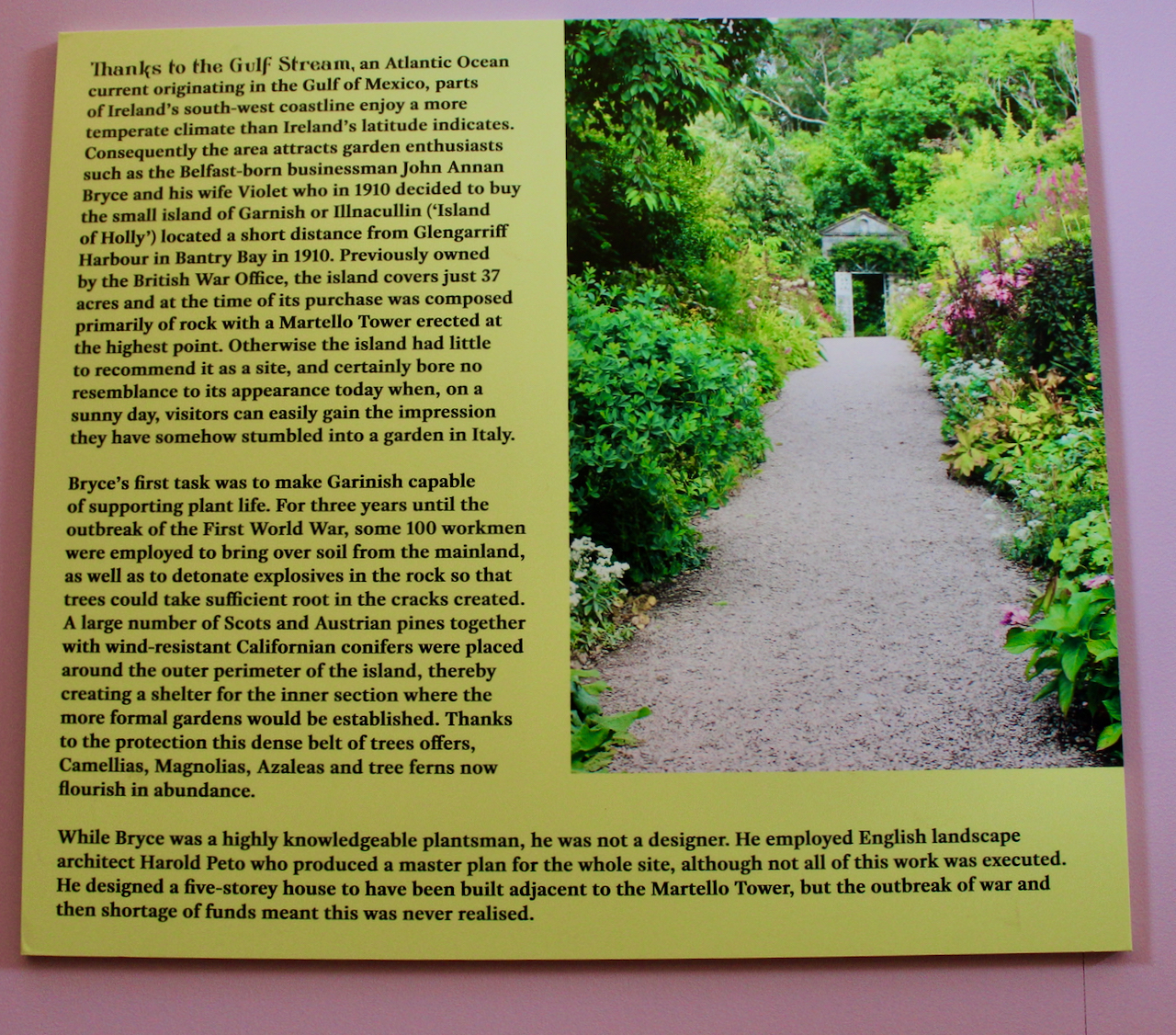
 Irish Historic Houses