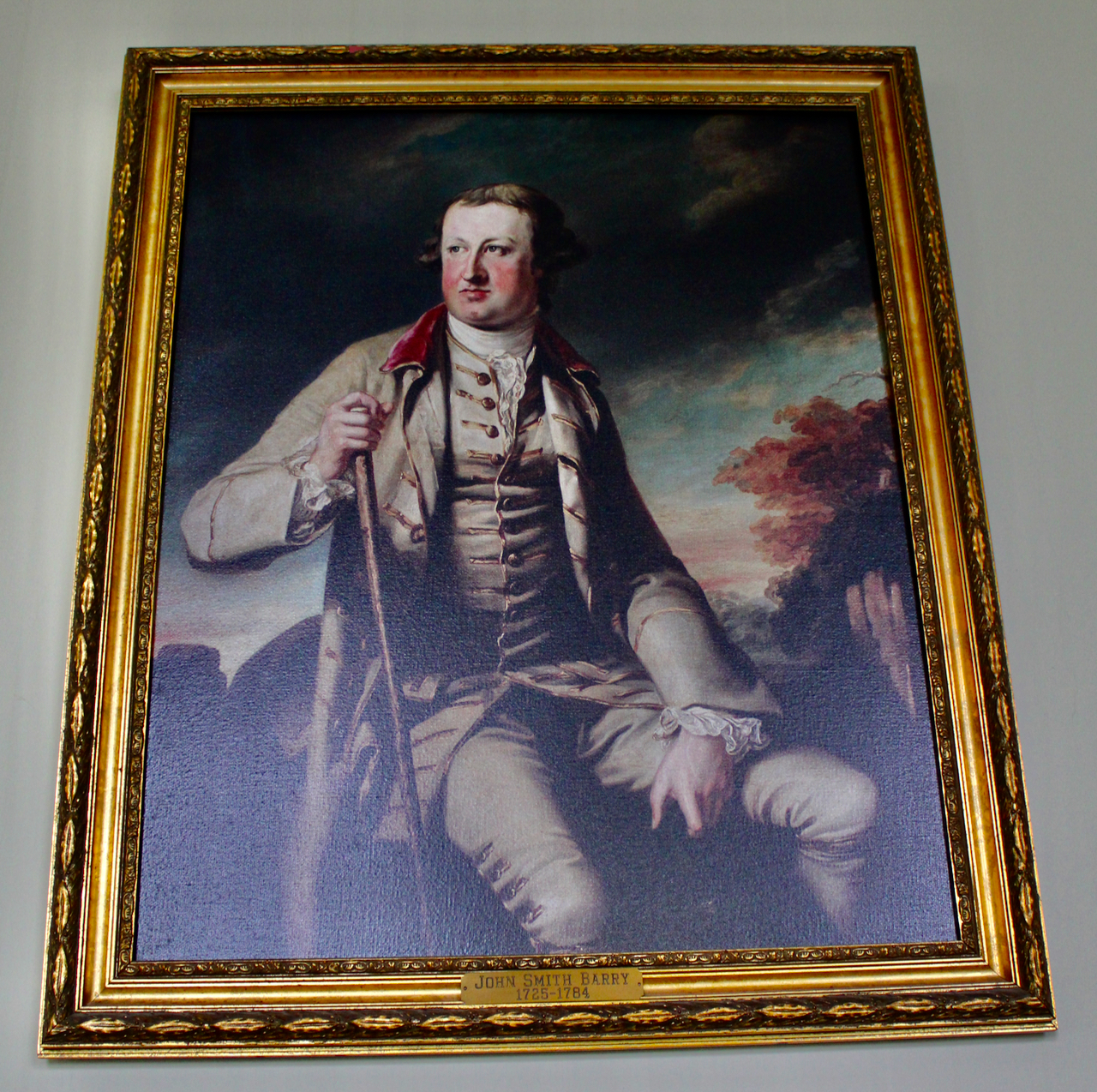
John Barry (1725-1784), who added the name Smith to his surname after his marriage to a wealthy heiress, was the son of James Barry, 4th Earl of Barrymore, of Castlelyons, County Cork, and Barry’s third wife, Anne Chichester, daughter of Arthur Chichester, 3rd Earl of Donegall (it was spelled with two ‘l’s in the title, unlike the county). He married Dorothy Smith, daughter of Hugh Smith of Weald Hall, Essex, and John added Smith to his surname.
John Smith-Barry (1783-1837), son of James Hugh Smith-Barry (1746-1801) settled in Fota, County Cork, after his marriage to Eliza Courtenay of Ballyedmond, Midleton, County Cork.
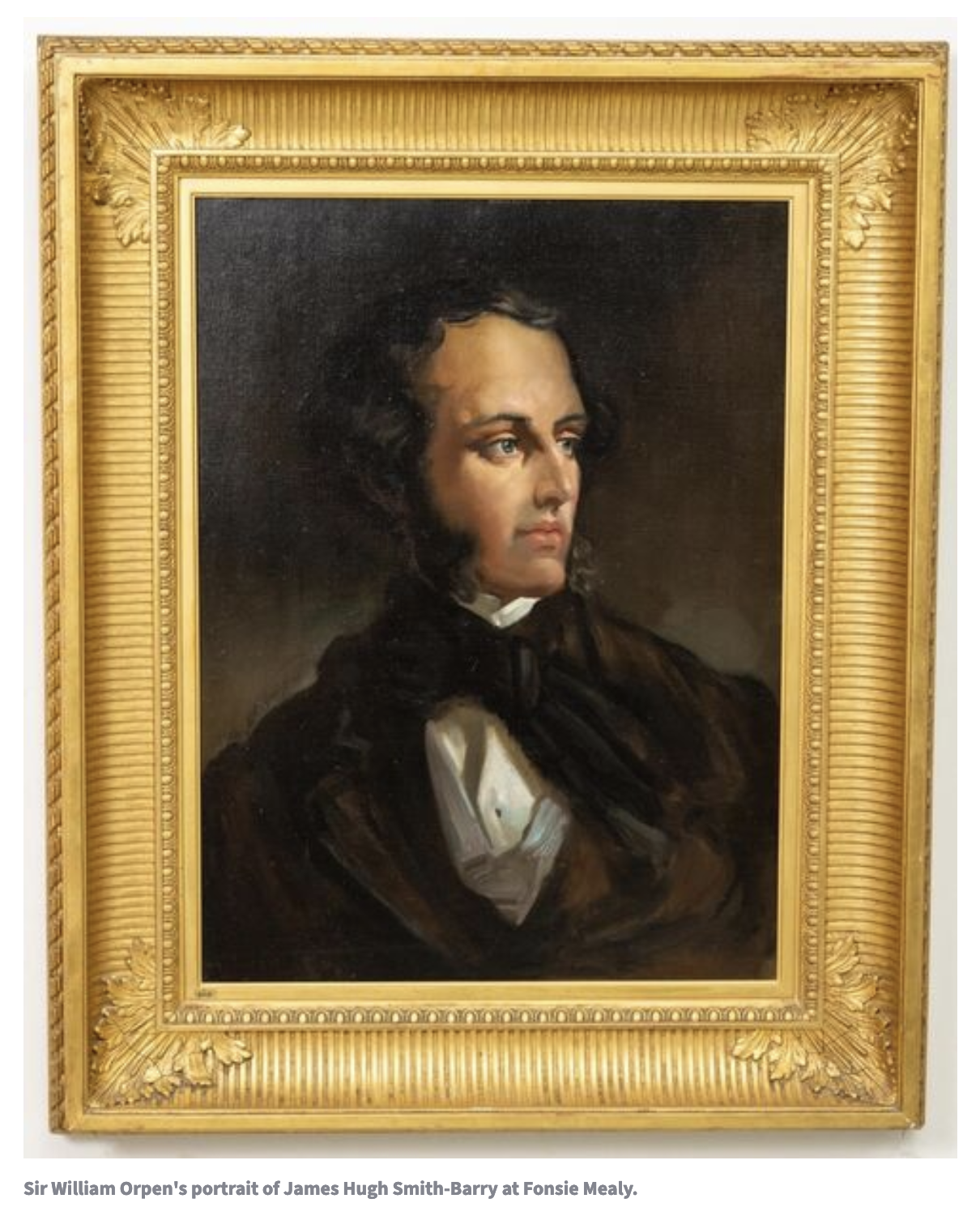
James Hugh Smith-Barry (1816-1856) inherited Fota and also Marbury Hall in Cheshire. He served as Deputy Lieutenant, Justice of the Peace and High Sheriff of County Cork. He married Elizabeth Jacson of Cheshire. After her husband died, she married George Fleming Warren, 2nd Baron de Tabley of Tabley House, County Chester.
James Hugh Smith-Barry by William Orpen 1904, courtesy of Fonsie Mealy auction 2022.
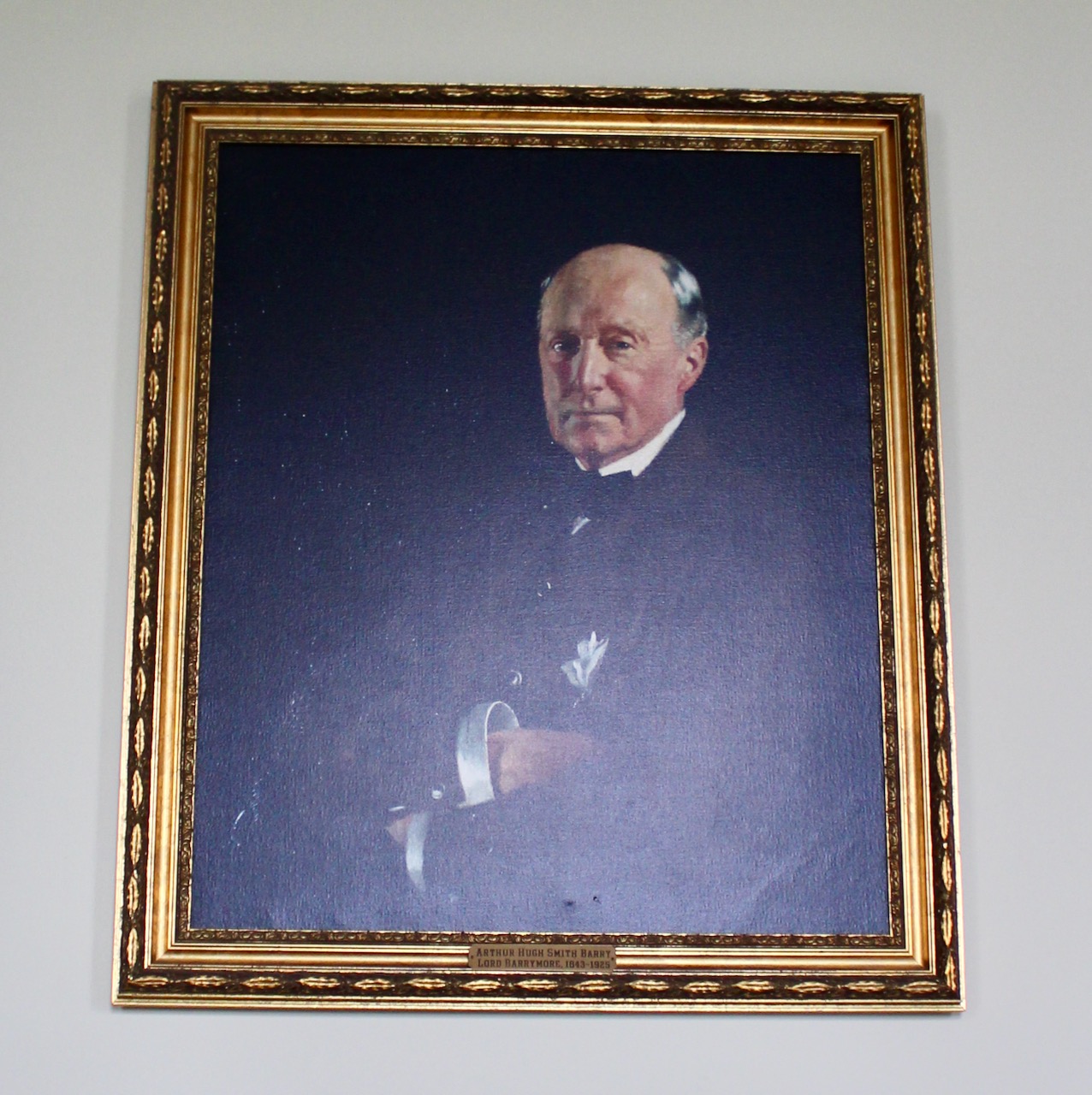
Arthur Hugh Smith-Barry (1843-1925), the oldest son of James and Elizabeth, inherited Fota and also Marbury Hall. He too served as Deputy Lieutenant, Justice of the Peace and High Sheriff of County Cork as well as Member of Parliament (M.P.) (Conservative) for County Cork between 1867 and 1874. He held the office of Member of Parliament (M.P.) (Conservative) for South Huntingdonshire in England between 1886 and 1900. In 1902 he was created 1st (and last) Baron Barrymore of County Cork.
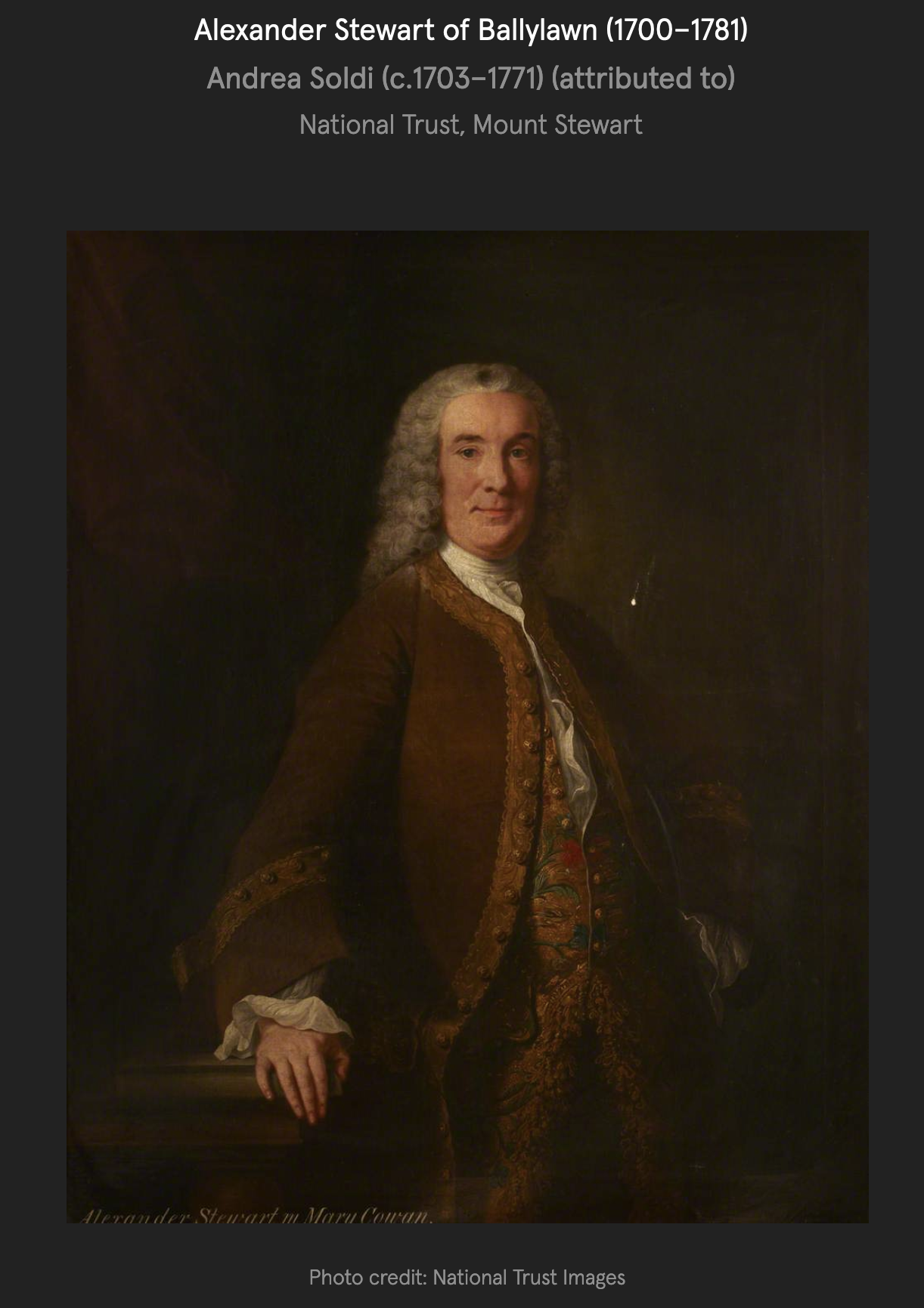
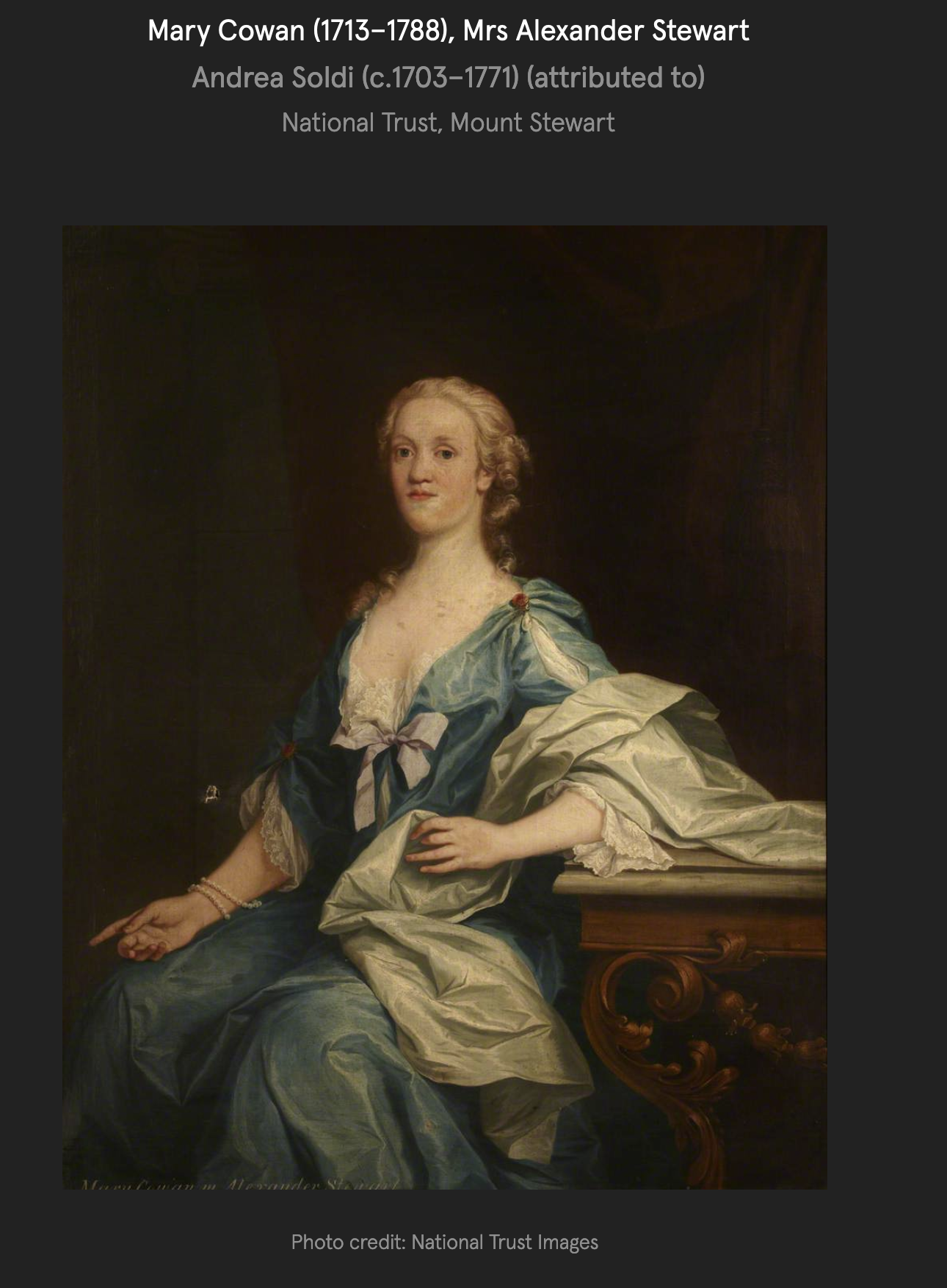
Alexander Stewart (1699/1700-1781) and his wife, Mary Cowan, bought a large area of land in County Down in 1744, part of which became Mount Stewart demesne.
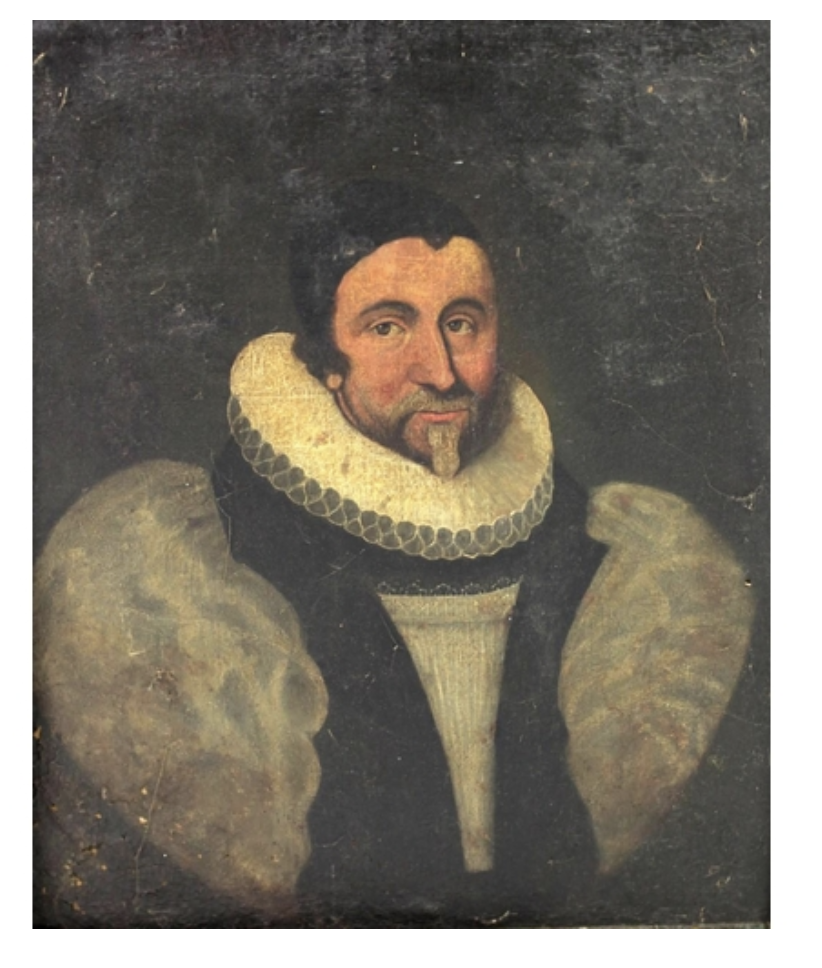
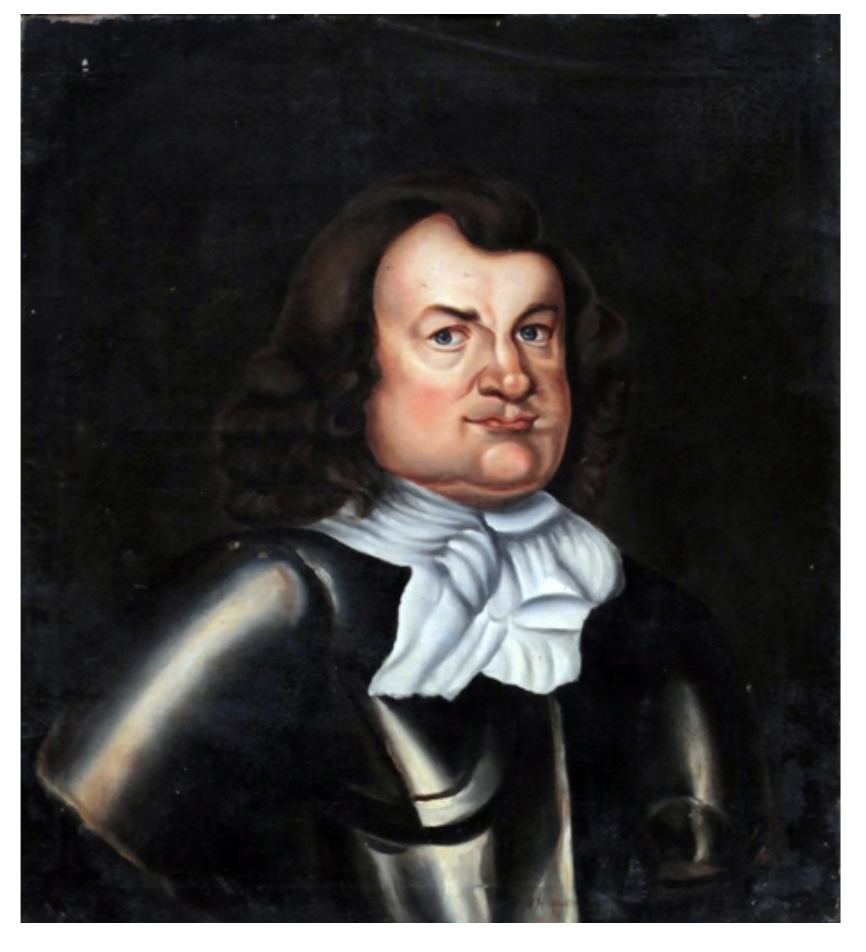
Burke’s Landed Gentry of Ireland tells us that Francis Swifte, son of Henry of Sheffield, County York, was knighted in 1616 and died in 1642. Henry of Sheffield’s other son was Thomas, who was buried in Canterbury Cathedral, who married Margaret, daughter and heir of the Right Rev. Thomas Godwin, Bishop of Bath & Wells. Many generations of Swift after him had the forename “Godwin.” Thomas and Margaret had a son William, born in 1566, who was Rector of Herbaldown and who married Mary Philpott.
17th Century English School “Portrait of a Gentleman in Armour, Sir Francis Swifte,” courtesy Fonsie Mealy Fortgranite auction.Probably Francis Swifte, son of Henry of Sheffield, County York, was knighted in 1616 and died in 1642.Reverend Thomas Swifte, 17th Century Irish School. He was born in Canterbury in 1561, and married Margaret, daughter and heir of the Right Rev. Thomas Godwin, Bishop of Bath & Wells. He was the son of Henry Swifte; courtesy of Fonsie Mealy’s Fortgranite auction.Many generations of Swift after him had the forename “Godwin.”Late 16th / early 17th Century English School, “Right Reverend Thomas Godwin, courtesy Fonsie Mealy Fortgranite auction.
Thomas and Mary’s son Reverend Thomas (1595-1658) of Goodrich, Herefordshire, England, and Bristow, was ancestor of the Irish Swift family of Swiftsheath and Lionsden. He was devoted to King Charles I and the son of Charles I who was to become King Charles II.
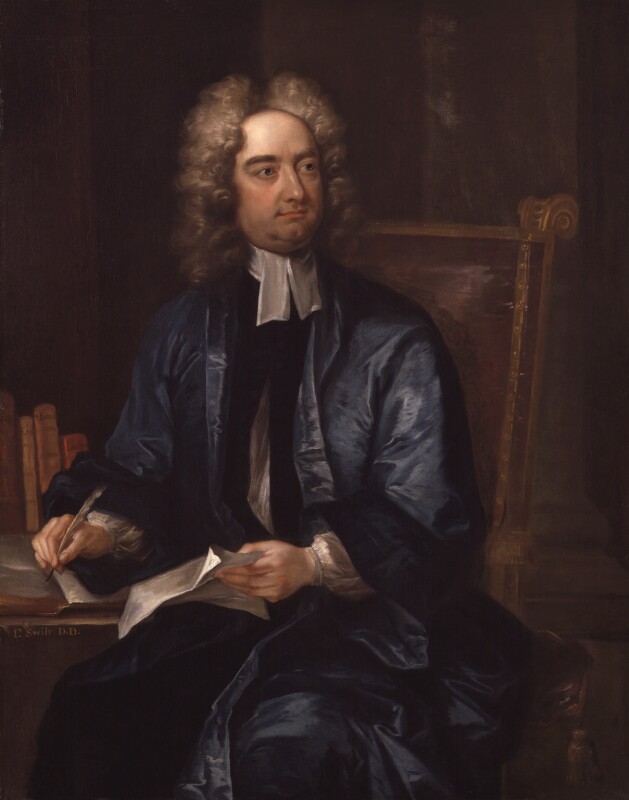
Thomas married Elizabeth Dryden (c. 1605-1658). They had many children, many of whom lived in Ireland. His son Jonathan (d. 1667) was a solicitor in Dublin, who married Abigail Erick of County Leicester, and they had a son, born after his death in Hoey’s Court, Dublin, right next to Dublin Castle, in 1667, also named Jonathan, the famed writer, Dean of St Patrick’s Cathedral in Dublin. He wrote many anecdotes about his grandfather in his manuscript The Family of Swift which is preserved in the library at Trinity College, Dublin (I must go to see it!). He died in 1745.
Jonathan Swift (1667-1745) by Charles Jervas circa 1718, National Portrait Gallery in London, 278.Portrait of Dean Swift attributed to Rupert Barber (1719-1772), courtesy of Adam’s auction 12 May 2013.This must be Jonathan Swift who died in 1745, Dean of St. Patrick’s Cathedral.Portrait of Stella courtesy of Adam’s auction 12 May 2013, attributed to Rupert Barber (1719-1772).“Portrait of Esther Johnson (Stella),” Late 18th / Early 19th Century after James Latham (1696 – 1747) courtesy of Fonsie Mealy Fortgranite sale.
Reverend Thomas Swift (1595-1658) had another son, Godwin Swift (d. 1695), who was Attorney-General to the Duke of Ormonde, and married four times. Geoffrey Marescaux tells us that Godwin Swift paid the famous Jonathan Swift’s school fees. His heir was child of his second wife, Katherine Webster, Godwin Swift (1672-1739), later of Dunbrow, County Dublin and Swiftsheath, County Kilkenny. For information on Swiftsheath, see https://kilkennyarchaeologicalsociety.ie/wp-content/uploads/2021/03/OKR1978-356-Geoffrey-Marescaux-Swiftes-Heath.pdf
Godwin Swift (1672-1739) married his cousin, Elizabeth, who was daughter of another son of Reverend Thomas Swift Vicar at Goodrich and Elizabeth née Dryden, William, who had land in Carlow, Kilkenny, Leitrim and Roscommon.
Godwin Swift (1672-1739) and Elizabeth had a son Godwin who inherited Swiftsheath and also owned Tidenton, County Kilkenny. He married a cousin, Elizabeth Swift, who was daughter of Deane Swift (c. 1674-1714) of Castle Rickard, County Westmeath. Deane Swift (c. 1674-1714) was another son of Godwin Swift Attorney-General to the Duke of Ormonde, by his 3rd wife, Hannah Deane.
Their son Godwin Swift (c. 1734-1815) lived in Swiftsheath and Lionsden, County Meath. He also married a cousin, Maria Swift, daughter of Deane Swift (c. 1707-1783) and Mary née Harrison, daughter of Theophilus Harrison. To add confusion to the family tree, Theophilus Harrison, Reverend of Clonmacnois, married twice, and one of his wives, Eleanor Meade, daughter of William Meade Lt Col of Ballintober, County Cork, had been previously married to Godwin Swift Attorney-General to the Duke of Ormonde as his fourth wife! Mary Harrison’s mother was Theophilus Harrison’s second wife, Martha Swift – yes, another Swift! She was the daughter of Adam Swift of Greencastle, County Down, who was another son of Thomas Swift Vicar at Goodrich and Elizabeth née Dryden.
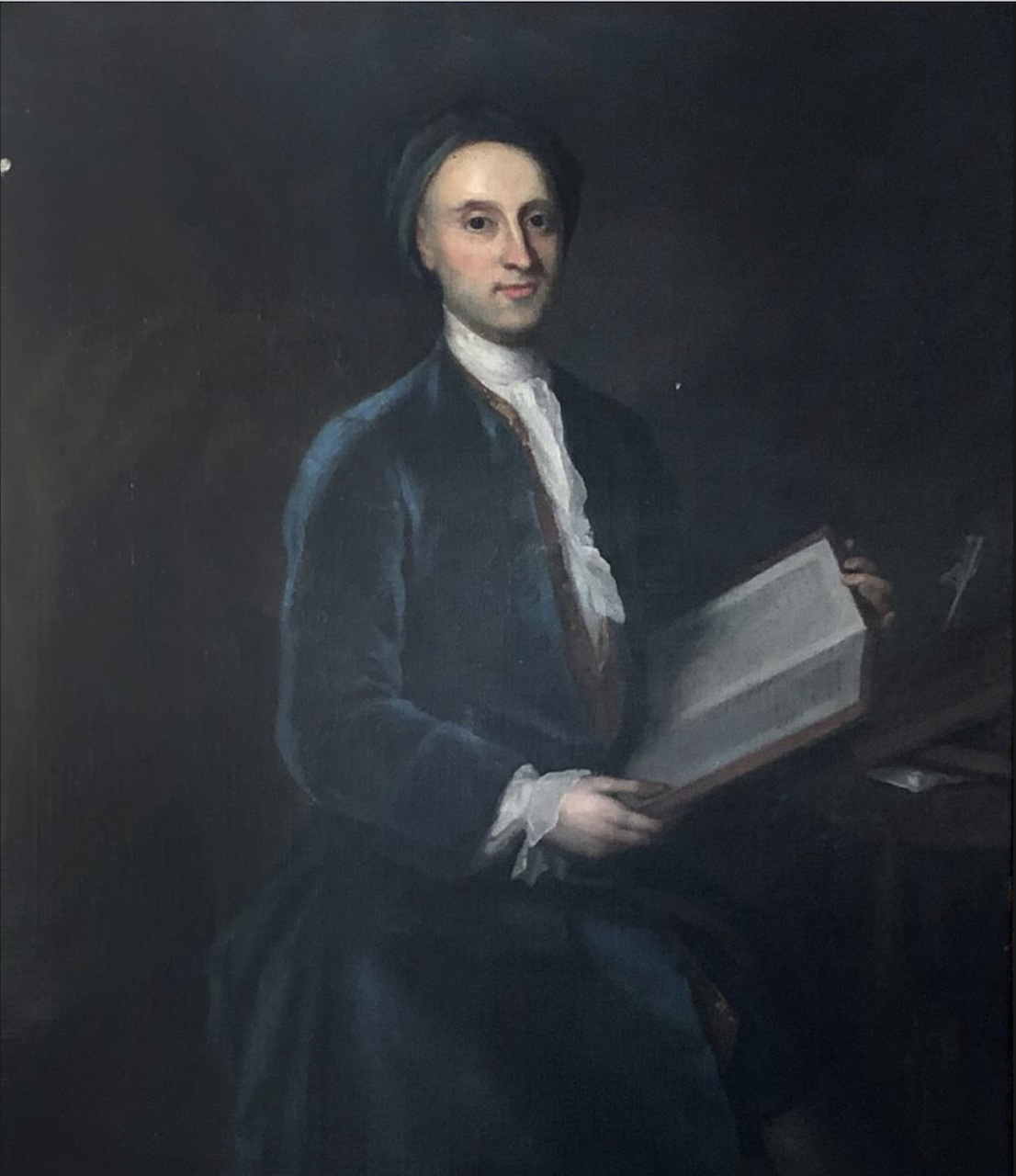
Reverend Deane Swifte, 17th Century Irish School, cousin and biographer of Dean Jonathan Swift. This is be Deane Swift (1703-1783), son of Deane Swift of Castle Rickard, County Westmeath. His great grandfather was a Regicide, ie. signed the death warrant of King Charles I, but fortunately died before Charles II was restored to the throne, according to Jonathan Swift!Admiral Richard Deane (Regicide) 17th Century English School courtesy Fonsie Mealy Fortgranite auction.The Fonsie Mealy site adds: “Note: Major Joseph Deane (Inistiogue, 1661-66), of Crumlin, County Dublin, and Ballicocksoust, County Kilkenny (formerly the estate of Richard Strange), was the youngest son of Edward Deane, of Pinnock, Gloucestershire, by his 2nd wife, Anne Wase, and was born at Pinnock, 2nd February, 1624. His elder brother, Colonel Richard Deane, a leading member of the Republican party, was one of the Judges who sat on the trial of Charles I, and signed the death warrant of the King. Colonel Richard Deane was entrusted with the settlement of Scotland, which he speedily effected by his temperance and sagacity. He was next appointed one of the “Generals at Sea”, having for his colleague the famous Robert Blake, but was killed in action against the Dutch on 2nd June, 1653. He was honoured with a public funeral and buried in Henry VII’s Chapel at Westminster, but in 1661 his body (being that of a Regicide) was exhumed and cast out of the Abbey. Joseph Deane was educated at Winchester School, and entered the Parliamentary Army as Cornet in Rainsborough’s Horse. He volunteered for service in Ireland under Oliver Cromwell, in whose army he held the rank of Major. Under the Act of Settlement he had two grants of land (16th January, 1666, and 22nd June, 1669), comprising 9,324 statute acres, situated in the counties of Meath, Down, and Kilkenny, 3,859 acres being in Kilkenny. He purchased from Richard Talbot (afterwards Earl and Duke of Tyrconnell) the Manor of Terenure, in county Dublin, for 4,000. He was named on some important committees of the House of Commons, but was fined 10 for absence on 31st January 1665. In 1664 he paid 4s. hearth money for “Ballicagbsust”. In 1677 he served as High Sheriff of county Dublin. He died 21st December, 1699, having been twice married. By his 1st wife Anne —-, he had one son and two daughters – Joseph, of Crumlin, whose son, Joseph, became Lord Chief Baron of the Exchequer, and died without male issue. (1) Anne, married in May, 1673 (as his 3rd wife), Godwin Swift, Attorney-General to the Duke of Ormonde. (2) Elizabeth, married 1st in May, 1672, Captain Henry Grey; 2nd in July, 1677, Donogh O’Brien, of Lemenagh, County Clare. Major Deane married, 2ndly, in 1659, Elizabeth, daughter of Maurice Cuffe, and sister of Captain Joseph Cuffe, of Castle Inch, elected M.P. for Knocktopher in 1665, and by her, who died 3rd April, 1698, had a son and a daughter – Edward whom hereafter M.P. for Inistiogue; and Dorothy, married Maurice Berkeley, of Glasnevin county Dublin.THE MEMBERS OF PARLIAMENT FOR THE COUNTY, CITY AND BOROUGHS OF KILKENNYBY G.D. BURTCHAELL, M.A., LL.B [Written for the KILKENNY MODERATOR]Mrs Godwin Swifte of Swifte’s Heath, courtesy of Fonsie Mealy’s Fortgranite sale.
Godwin Swift (c. 1734-1815) of Swiftsheath and Lionsden and his cousin, Maria Swift had another son called Godwin Swift (c. 1779-1814), of Lionsden. This Godwin Swift married yet another cousin, Jane Sophia Swift (1785-1851), in 1803. She was the daughter of Richard Swift (1750-1796) who was the son of John L’Estrange Swift (1709-1793) of Lynn, County Westmeath, who was the son of Meade Swift (1682-1739) of Lynn, County Westmeath, who was the son of Godwin Swift Attorney-General to the Duke of Ormonde and Eleanor née Meade!
Jane Sophia Swift (1785-1851) married secondly, in 1818, Louis Auguste Alexander, Comte Lepelletier de Molende.
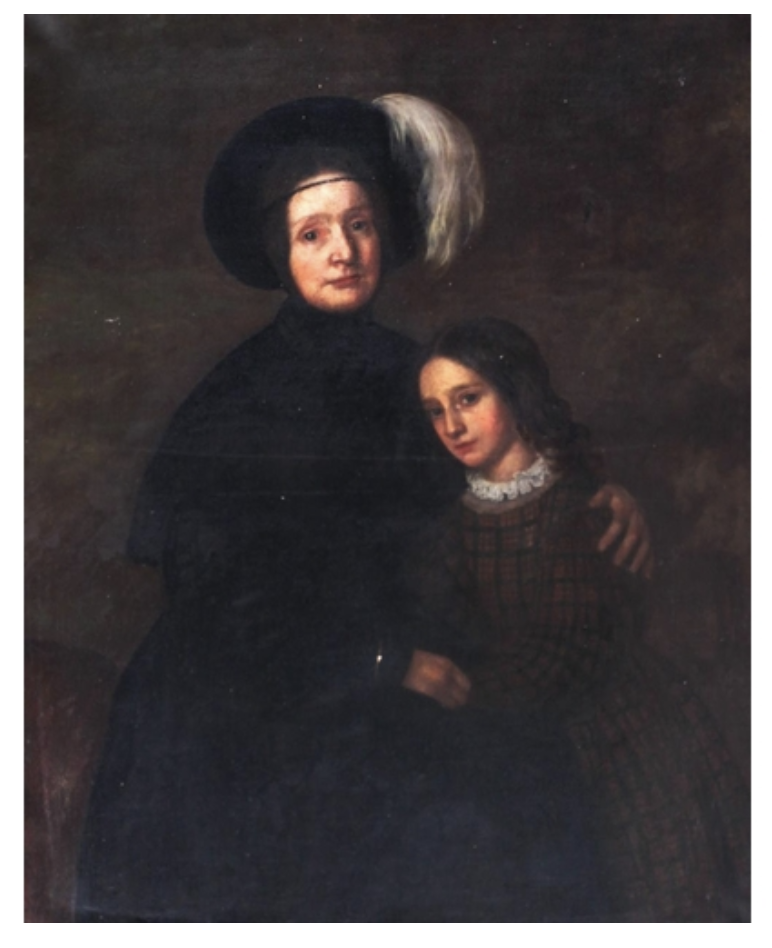
Countess Molende née Swift and her granddaughter Luigina de Sadre, Gifted by the artist to W.R. Swifte as a token, as his predecessor Jonathan Swifte served as Rector at Agher Church from 1699 – 1745, courtesy Fonsie Mealy Fortgranite auction.
Godwin Swift (c. 1779-1814), of Lionsden and Jane Sophia Swift (1785-1851) had a son Godwin Meade Pratt Swift (1805-1864) of Swiftsheath and Lionsden.
Identified as “Godwin Pratt Meade Swifte Lord Carlingford (m. MJ Clarke), Leahy, Dixon & Mulvanney, 19th Century Irish School, standing in a landscape by a grey horse with Foulksrath Castle, Co. Kilkenny in the distance”, courtesy of Fonsie Mealy Fortgranite. Godwin Meade Pratt Swift (1805-1864) of Swiftsheath and Lionsdenmarried Mary Jane Clarke of Bansha Castle, County Tipperary.He took the title Viscount Carlingford.Jane Christina Swifte (1810-1854), the wife of “Chevalier Sergio Demacdo, Minister Plenipotentiary of HM Emperor of Brazil,” Early 19th Century Irish School, courtesy Fonsie Mealy Fortgranite. She was the daughter of Godwin Swift of Lionsden and Jane Sophia.
Godwin called himself Viscount Carlingford, reviving a title created in 1627 for another branch of the Swift family. Godwin also added the “e” back to the end of the name Swift. He married first, Maria Theresa Plankenstern, Baroness de Wetzlar of Austria at Paris in 1830 after the birth of their son Ferdinando. [see https://www.youwho.ie/swifte.html ].
Godwin secondly married Jane Anne Hopkins on 18 Mar 1845 at Liverpool after an non legal ceremony some years earlier. Godwin returned with his family from the continent in 1845 to take up residence at Swiftesheath. Jane died at Lionsden, Castle Rickard in 1848 and was buried in the family vault. Godwin thirdly married Mary Jane Clarke on 4 Feb 1863 at Kilkenny and declared himself a widower. Mary was the daughter of Robert Hare Clarke. Godwin died 4 Jul 1864.
He created a flying machine which he hoisted to the top of Foulkesrathe Castle, which stood on the property of Swiftesheath, but it failed to fly and a butler who was piloting the plane broke a leg in his fall.
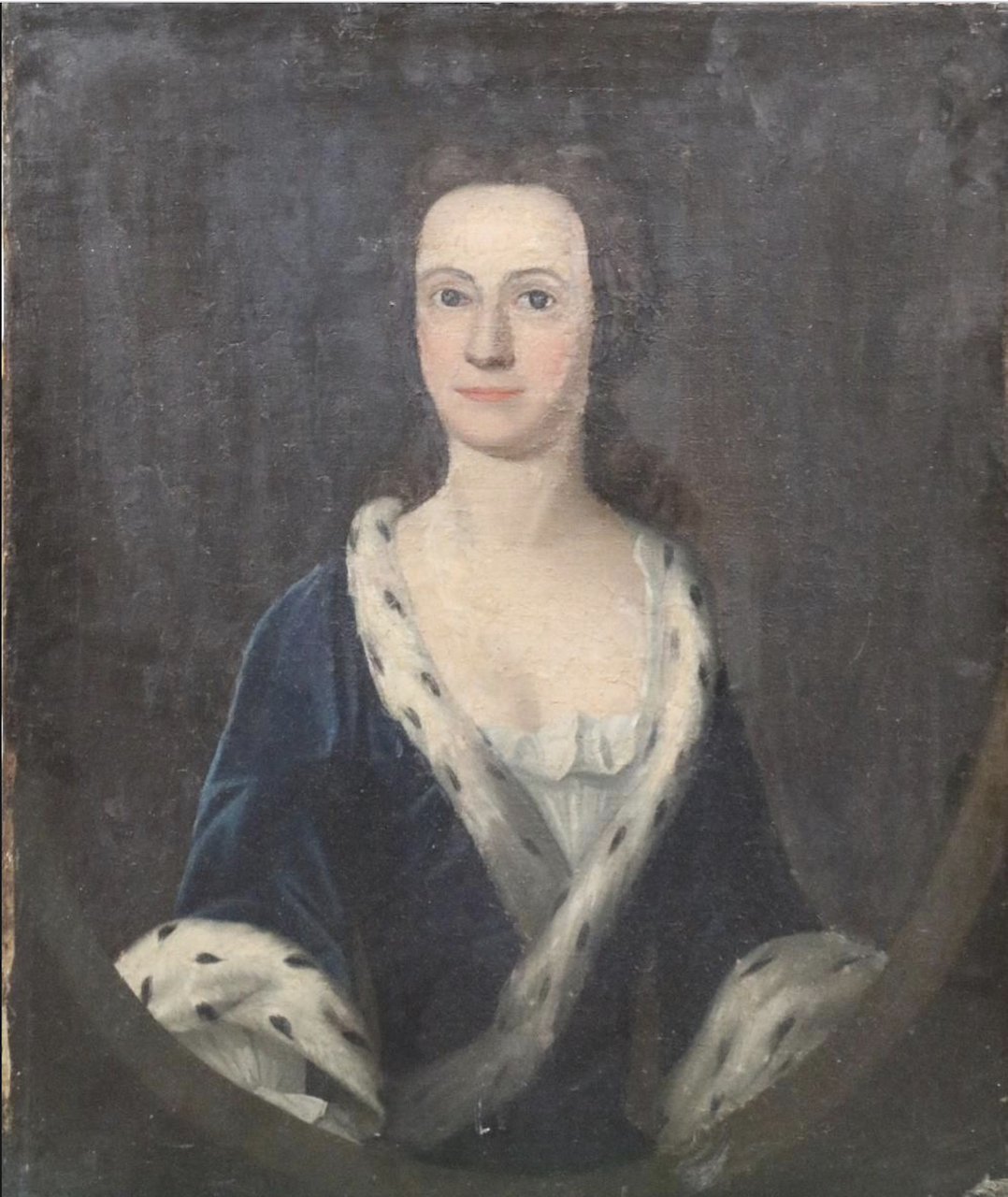
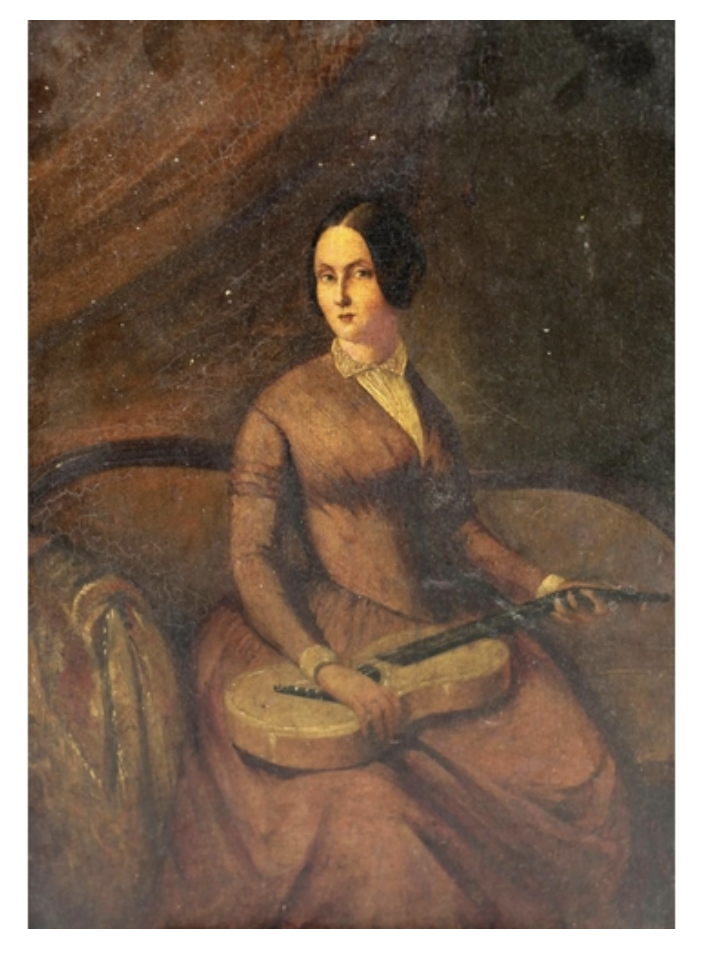
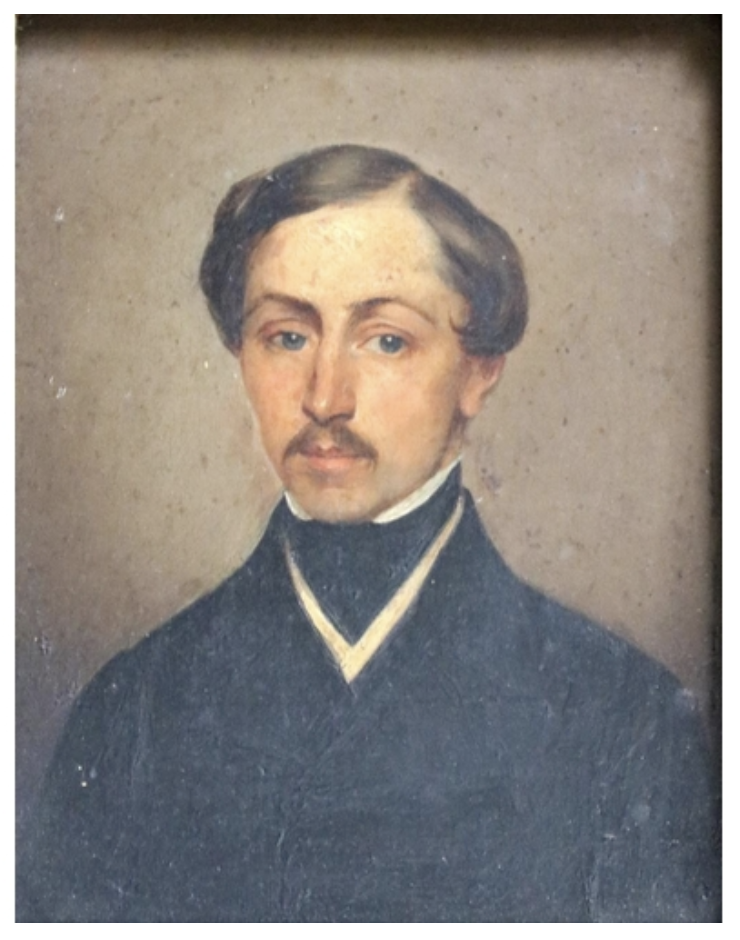
Identified as Pratt Swifte, Early 19th Century Irish School, courtesy of Fonsie Mealy Fortgranite sale.Mrs. Swifte, grandmother of Thomas Dennis courtesy Fonsie Mealy Fortgranite Auction.19th Century Irish School, Portrait of Mrs. Godwin Swifte courtesy Fonsie Mealy Fortgranite auction.There were so many Godwin Swifts it is hard to identify the sitter.Godwin Butler Meade Swifte (1864-1923) son of “Viscount Carlingford,” wearing uniform of the High Sheriff of Kilkenny, seated holding a sword, D.L. was the High Sheriff of Kilkenny and later Carlow, and resided at Swifte’s Heath, Co. Kilkenny, courtesy of Fonsie Mealy Fortgranite.Ernest Godwin Swifte K.C., with a companion painting of Lady Francis Swifte courtesy of Fonsie Mealy Fortgranite sale.He was the son of William Richard Swift (1807-1890), son of Godwin Swift of Lionsden and Jane Sophia.“Lady Francis Swifte,” with a companion painting of Ernest Godwin Swifte K.C., courtesy of Fonsie Mealy Fortgranite sale.Perhaps it is Ernest Godwin’s sister Julia Frances Swift, who did not marry.
I published this entry as part of my “Places to visit and stay in County Cork” page, but as that page is so long, I am publishing it as a separate entry. Also, Stephen and I are still busy looking for a small place in the country to buy, so I can grow our own fruit and vegetables – and maybe keep chickens! – so we have not had time to visit more historic houses. I am still working on my write-up about our visit to Grenane House in County Tipperary during Heritage Week last year, and I still have to write up about Clonskeagh Castle in Dublin and Gravelmount.
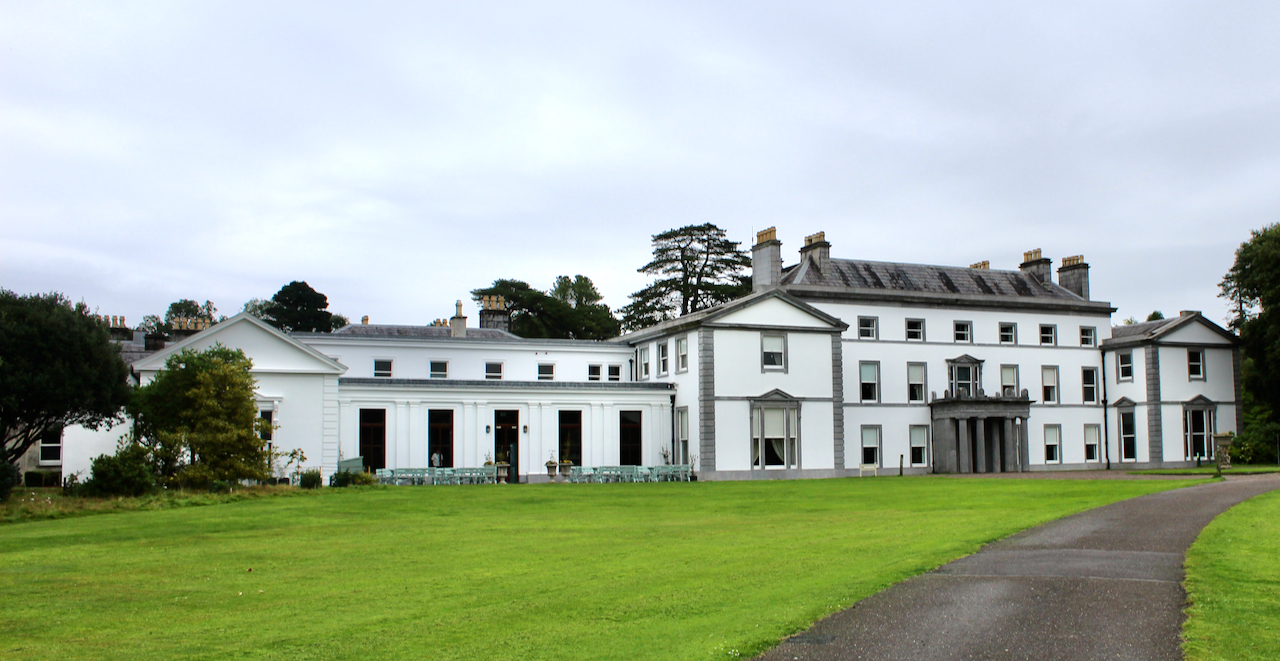
Fota House is maintained by the Irish Heritage Trust, and the gardens by the Office of Public Works.
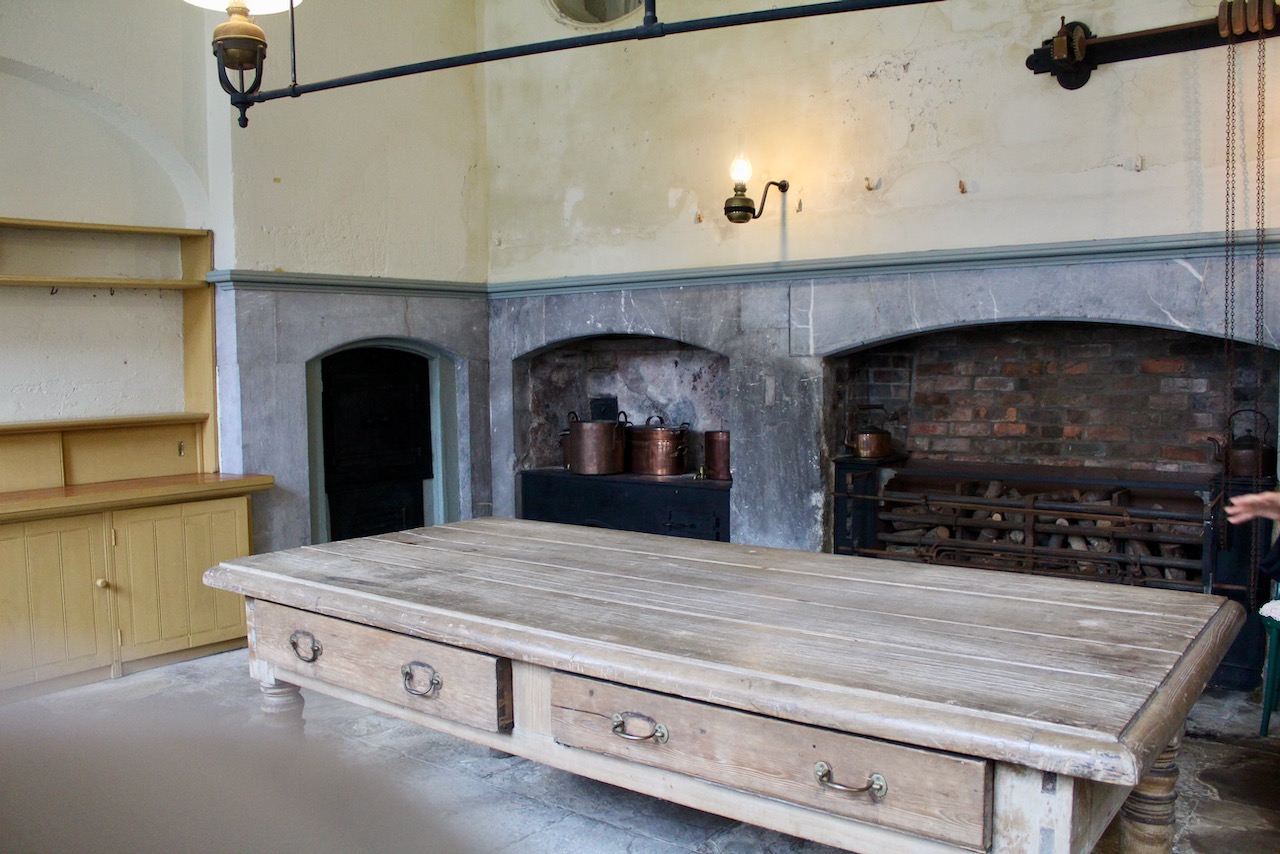
“Fota House was designed by 19th century architects Richard and William Morrison. From the beautifully proportioned rooms with exquisite plasterwork, to the preserved service wing and kitchens, Fota House offers visitors an intimate look at how life was lived in the past, for the cooks, butlers, footmen and maids who supported the lavish lifestyle of the gentry. Our painting collection is considered to be one of the finest collections of landscape painting outside the National Gallery of Ireland and includes works by William Ashford PRHA, Robert Carver, Jonathan Fisher and Thomas Roberts.” [1]
Mark Bence-Jones writes in his A Guide to Irish Country Houses:
“(Smith-Barry (now Villiers)/IFR) After Barry’s Court had been abandoned by the Barrymores, a hunting box was built on the nearby Fota Island, in Cork Harbour, by Hon John Smith-Barry [1725-1784], a younger son of 4th Earl of Barrymore, to whom Fota and some of the other Barrymore estates were given 1714.” [2]
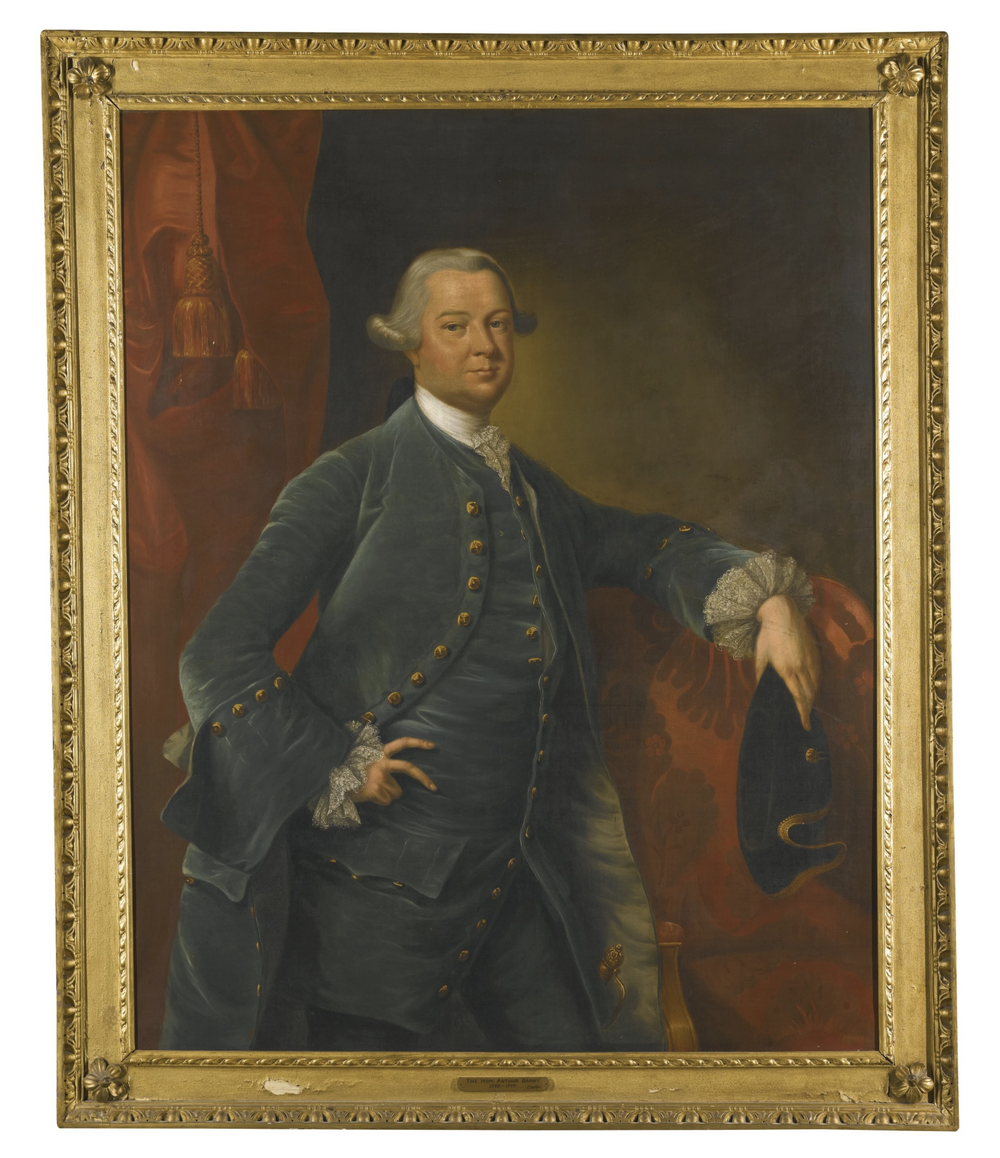
John Smith-Barry, born John Barry (1725-1784) of Fota, County Cork.
John Barry (1725-1784), who added the name Smith to his surname after his marriage to a wealthy heiress, was the son of James Barry, 4th Earl of Barrymore, of Castlelyons, County Cork, and Barry’s third wife, Anne Chichester, daughter of Arthur Chichester, 3rd Earl of Donegall (it was spelled with two ‘l’s in the title, unlike the county).
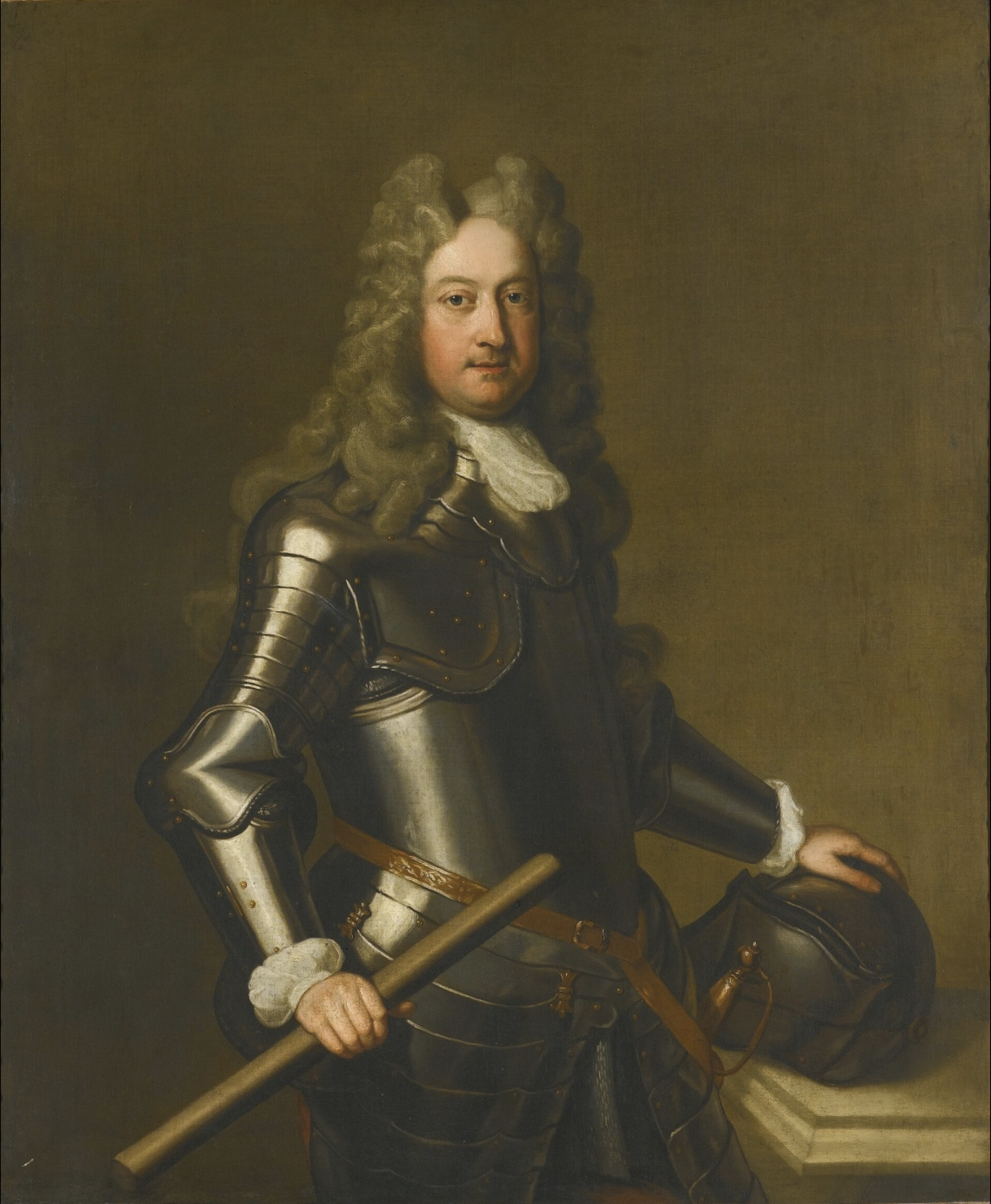
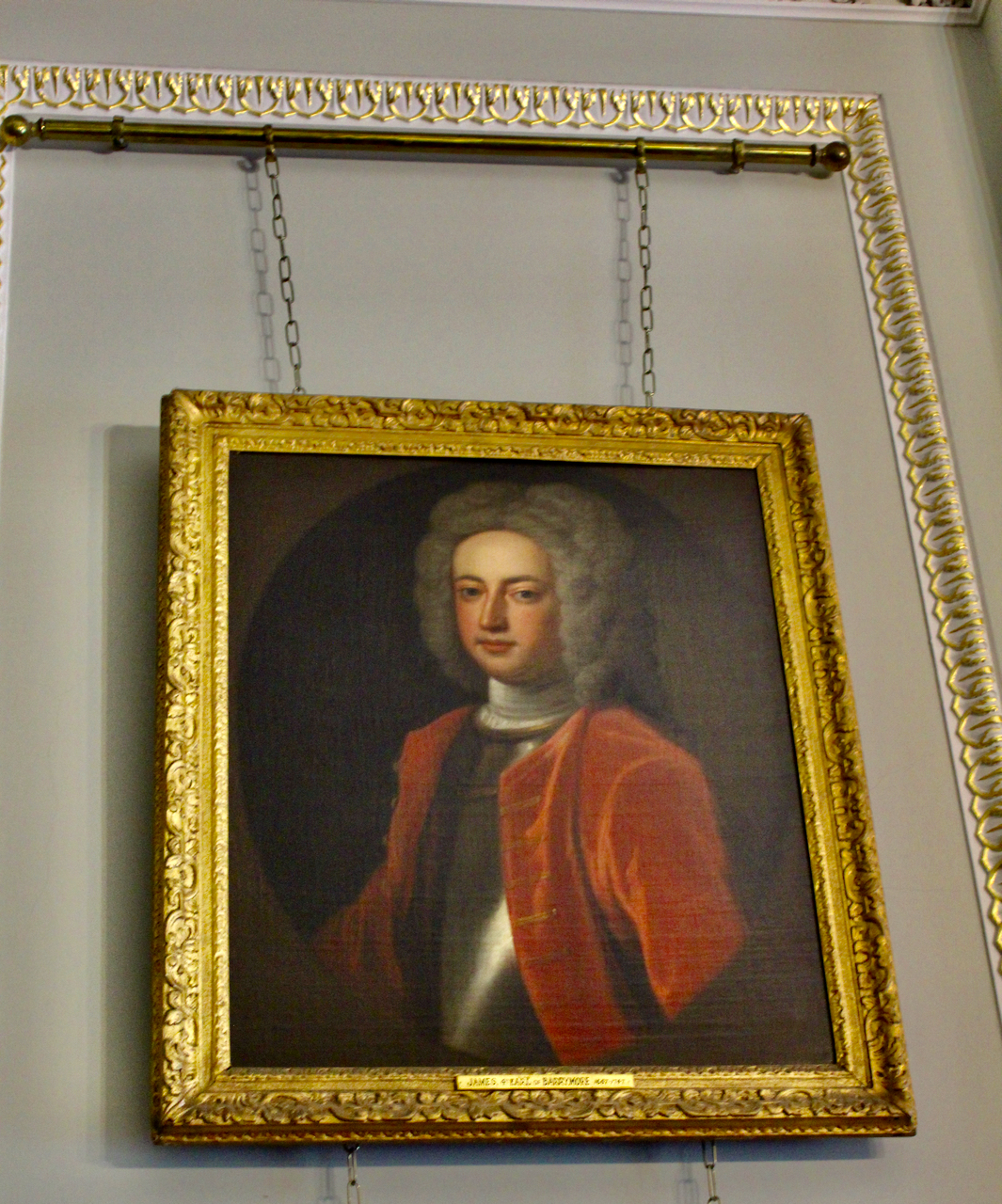
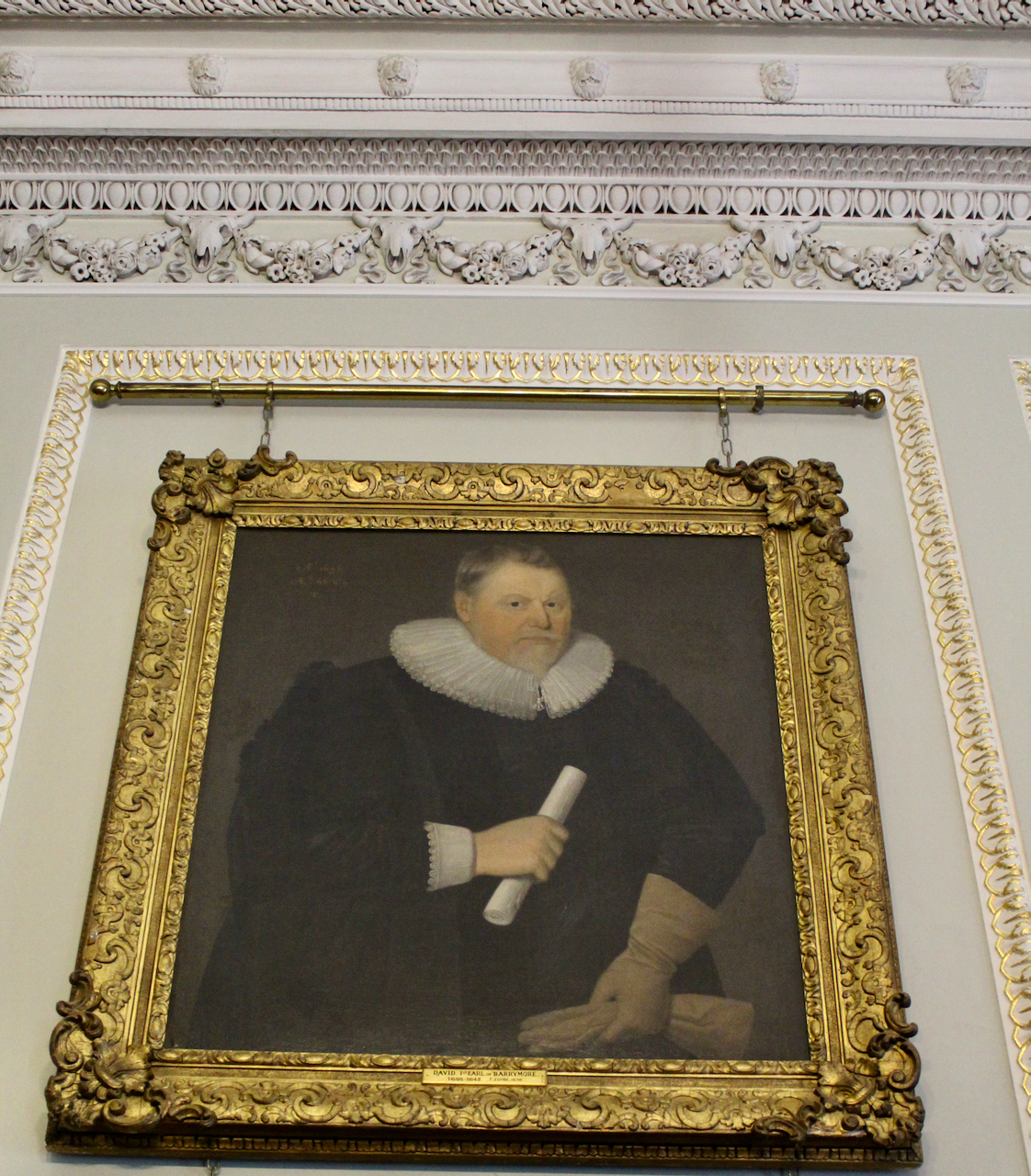
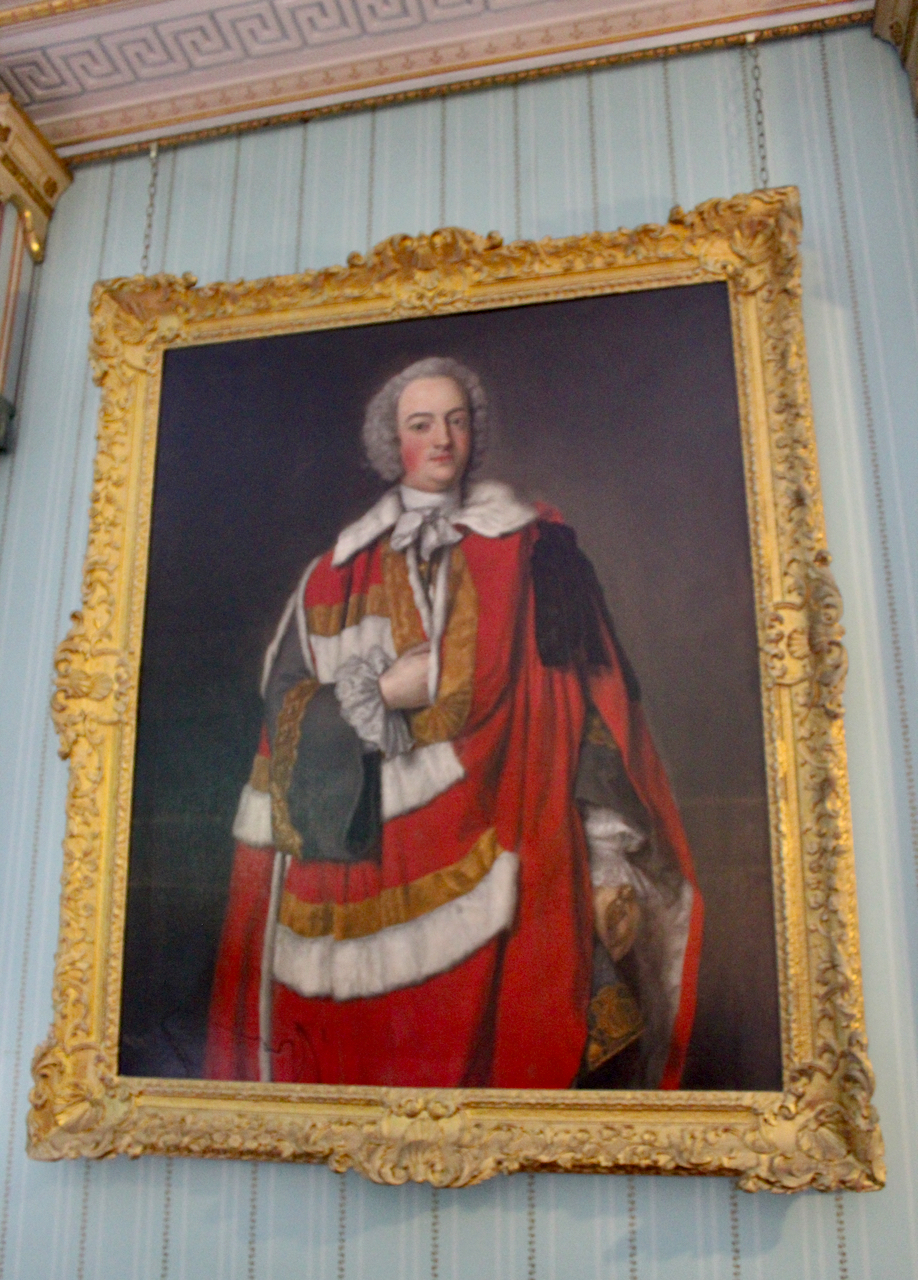
James Barry, 4th Earl of Barrymore (1667-1748) (Lieutenant-General), Studio of Sir Godfrey Knellercourtesy of Sothebys 2013 collection l13304 lot 95.James Barry, 4th Earl of Barrymore, (1667-1747), portrait in Fota House.
James Barry 4th Earl of Barrymore had first married Elizabeth Boyle, daughter of Charles Boyle 2nd Baron Clifford of Lanesborough, son of Richard, 1st Earl Burlington, 2nd Earl of Cork.
Second, after the death of his first wife, James Barry 4th Earl married Elizabeth Savage, daughter of Richard, 4th Earl Rivers.
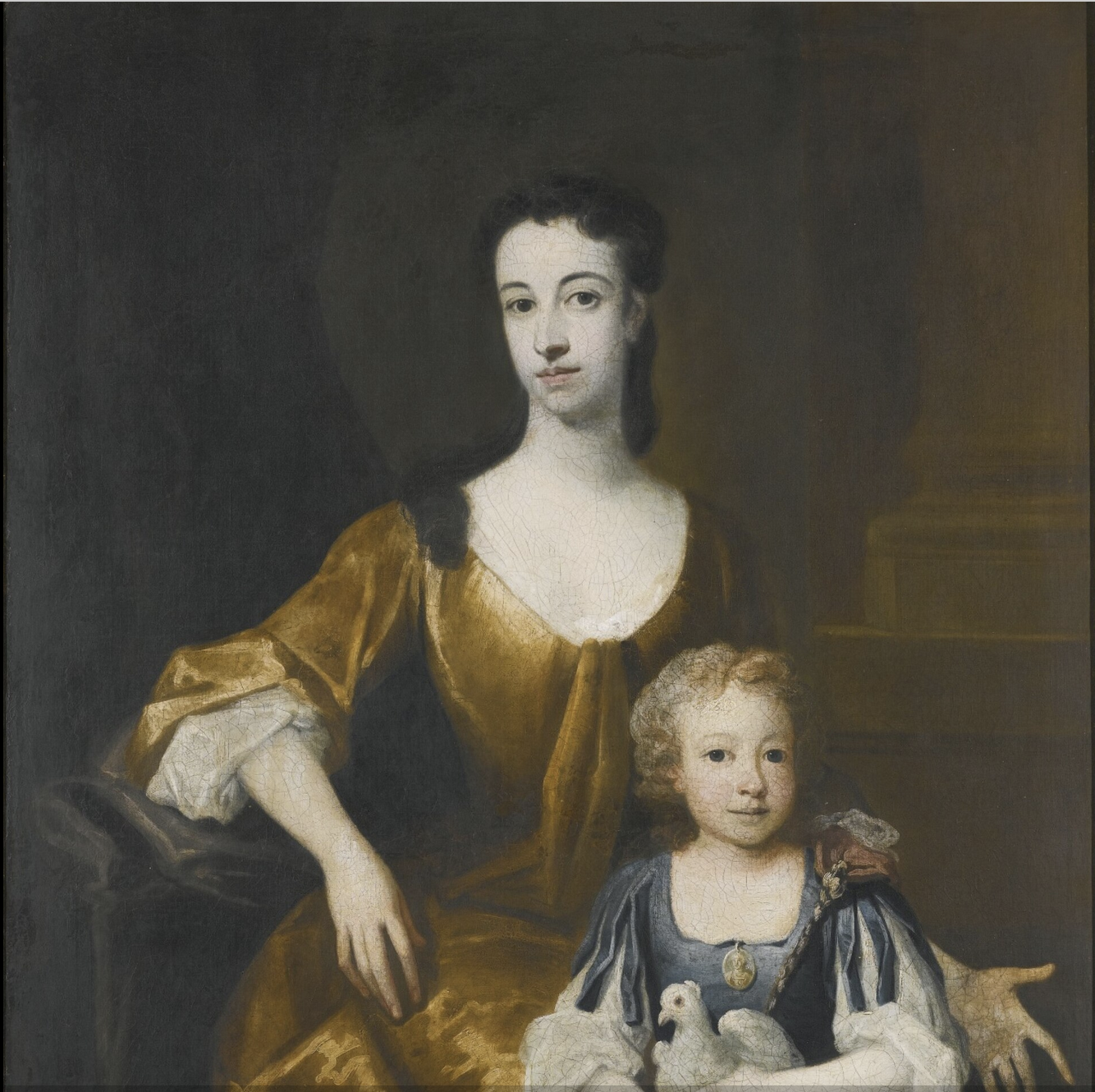
Elizabeth Barry née Savage (d. 1714) wife of James Barry 4th Earl of Barrymore, daughter and heir of Richard Savage 4th Earl Rivers and Penelope Downes, seated with her daughter Penelope.This painting is attributed by Sotheby’s to Thomas Worldige.Elizabeth Barry née Savage (d. 1714), 2nd wife of James 4th Earl of Barrymore.She and the 4th Earl had three daughters, and a son who died in his first year.
Thirdly, he married Anne Chichester.
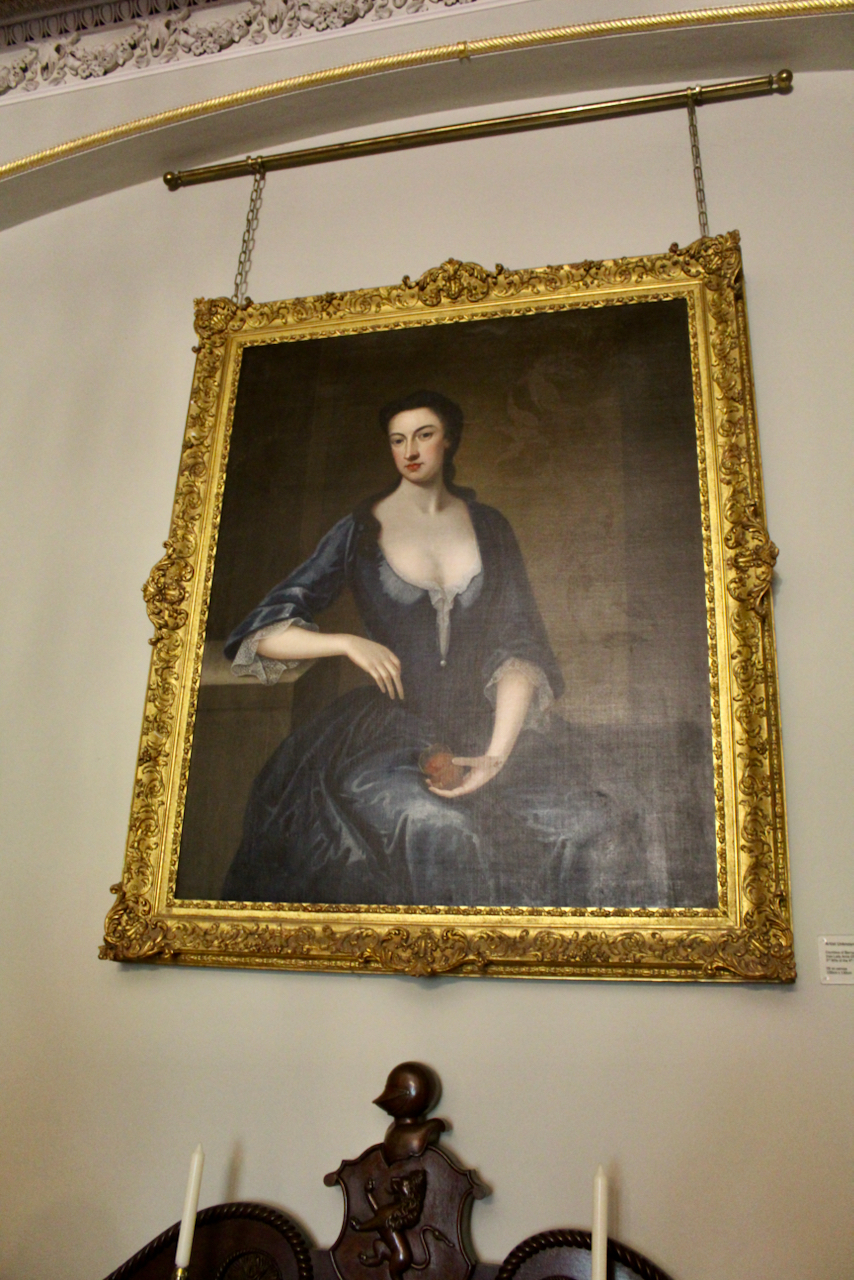
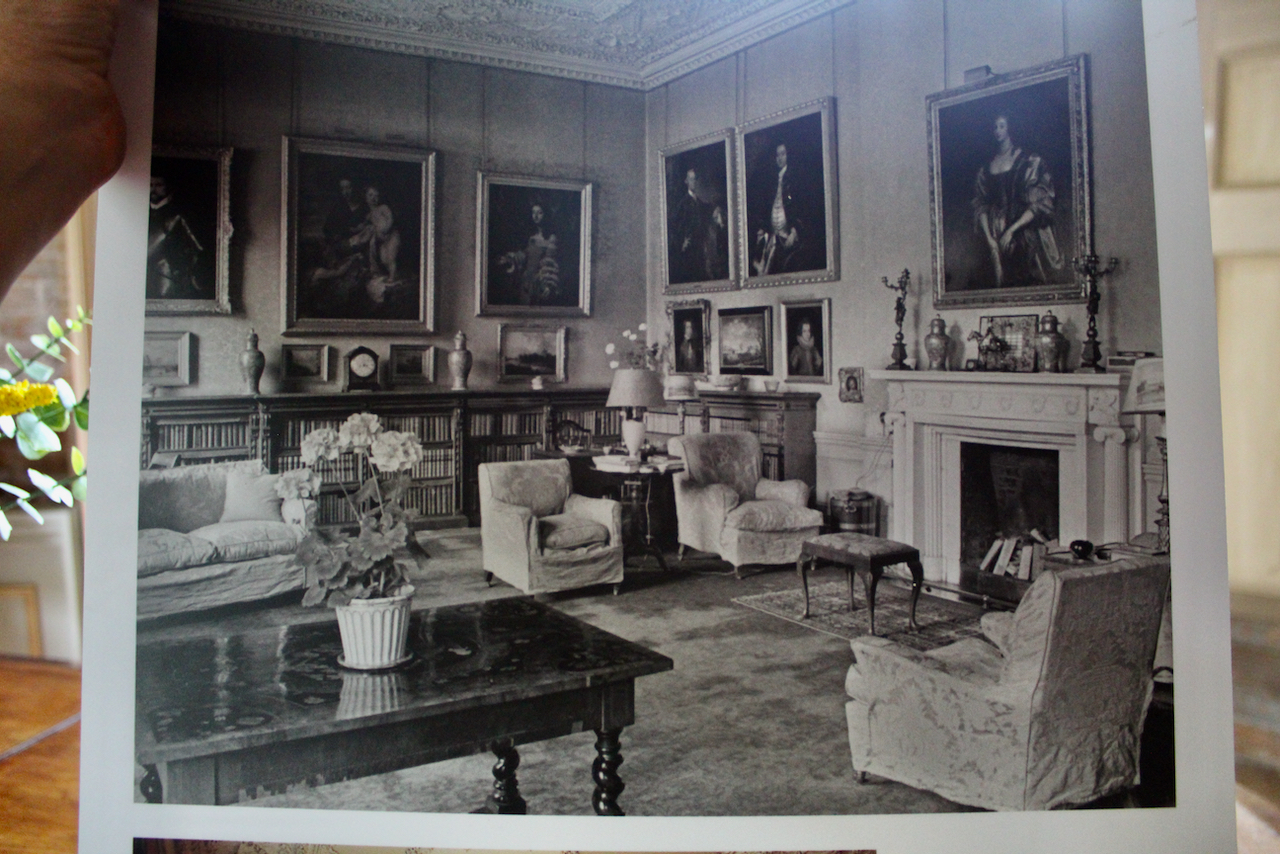
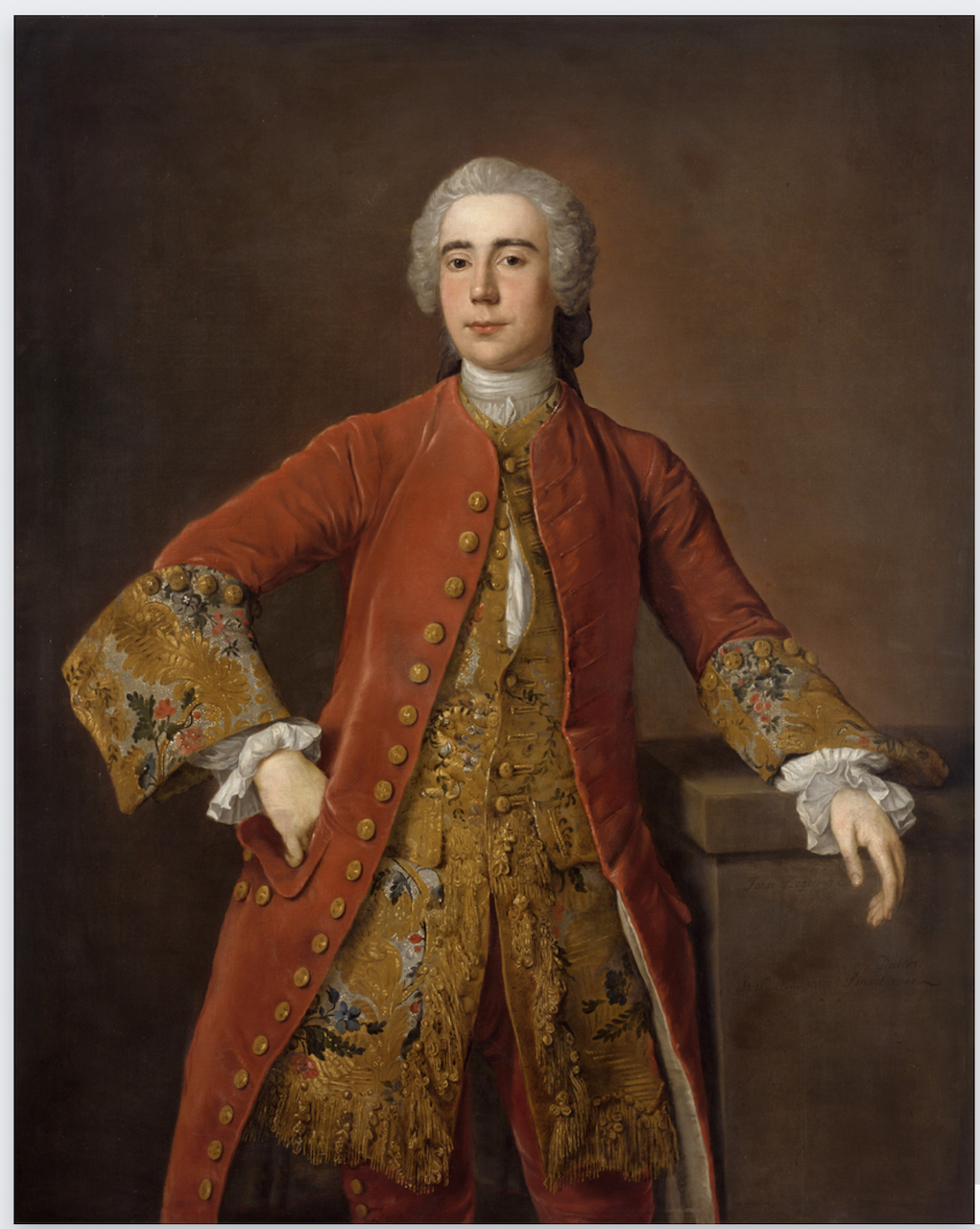
Anne née Chichester, (1697-1753) Countess of Barrymore, 3rd wife of the 4th Earl of Barrymore, mother of John Smith-Barry (1725-1784) of Fota. This portrait is in Fota House.Lady Anne Chichester, Countess of Barrymore (d. 1753) Attributed to Philip Hussey, she was daughter of Major-General Arthur Chichester, 3rd Earl of Donegall (1666-1706) and his wife Lady Catherine Forbes (d. 1743), and she married James Barry 4th Earl of Barrymore, and was the mother of James Smith-Barry.Arthur Barry (1723-1770) by Francis Cotes courtesy of Sotheby’s L11304. This portrait belonged to the Smith-Barry family and was sold in an auction at Sotheby’s in 2013. Arthur was another son of James Barry, 4th Earl of Barrymore, he died unmarried and his property went to the Smith-Barry family.Captain the Hon. Richard Barry R.N. (1721-1787), with his spaniel by John Lewis, second son of James Barry 4th Earl of Barrymore. This portrait is also courtesy of Sotheby’s L11304. This portrait belonged to the Smith-Barry family and was sold in an auction at Sotheby’s in 2013. We can see it in the old photograph of the library.
John Barry was a younger son so inherited no land. His brother James became the 5th Earl of Barrymore. However, he married Dorothy Smith, daughter of Hugh Smith of Weald Hall, Essex, and John added Smith to his surname. He and his wife lived at Marbury Hall in Cheshire, England, and he built Fota as a hunting lodge.
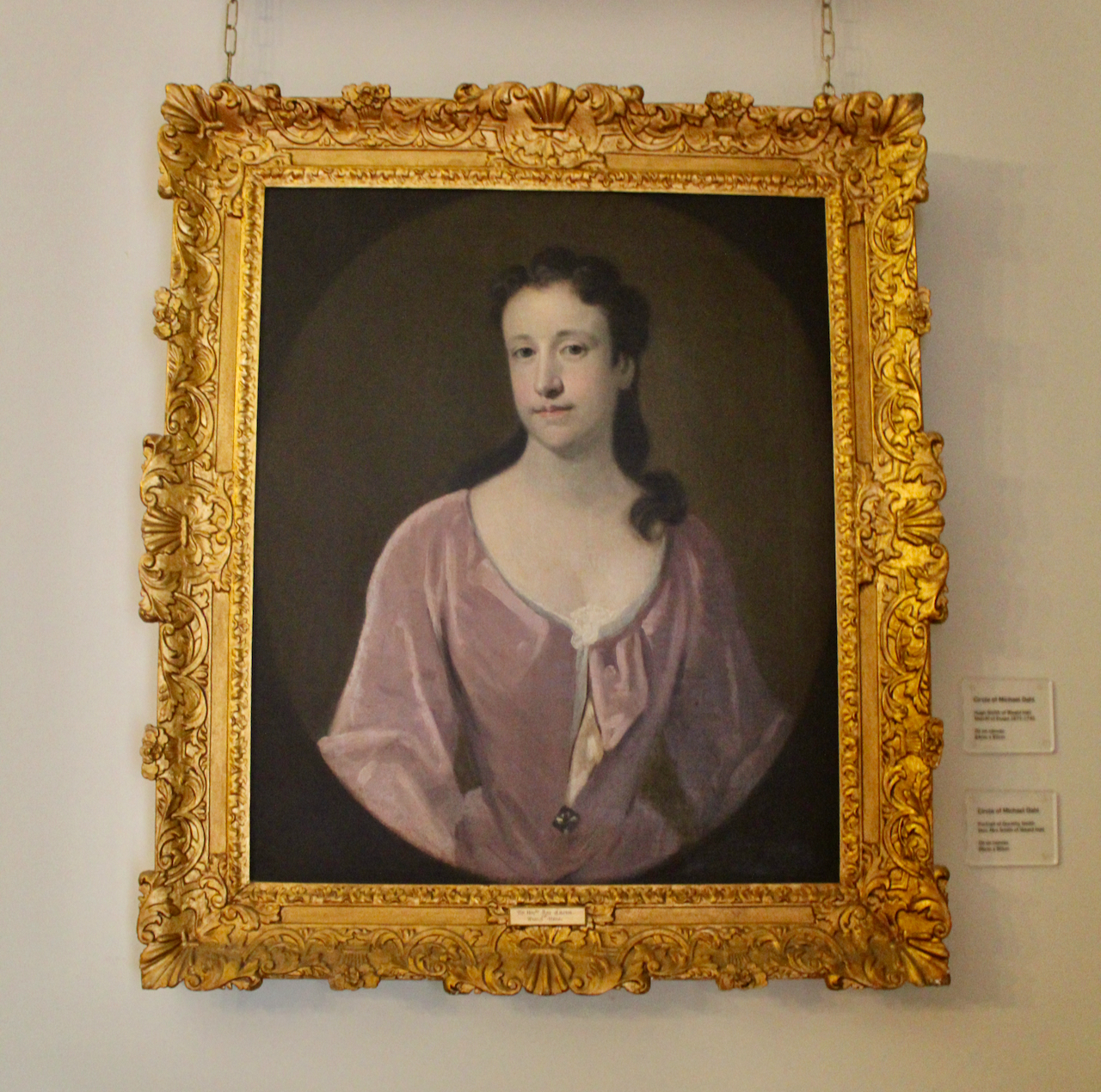
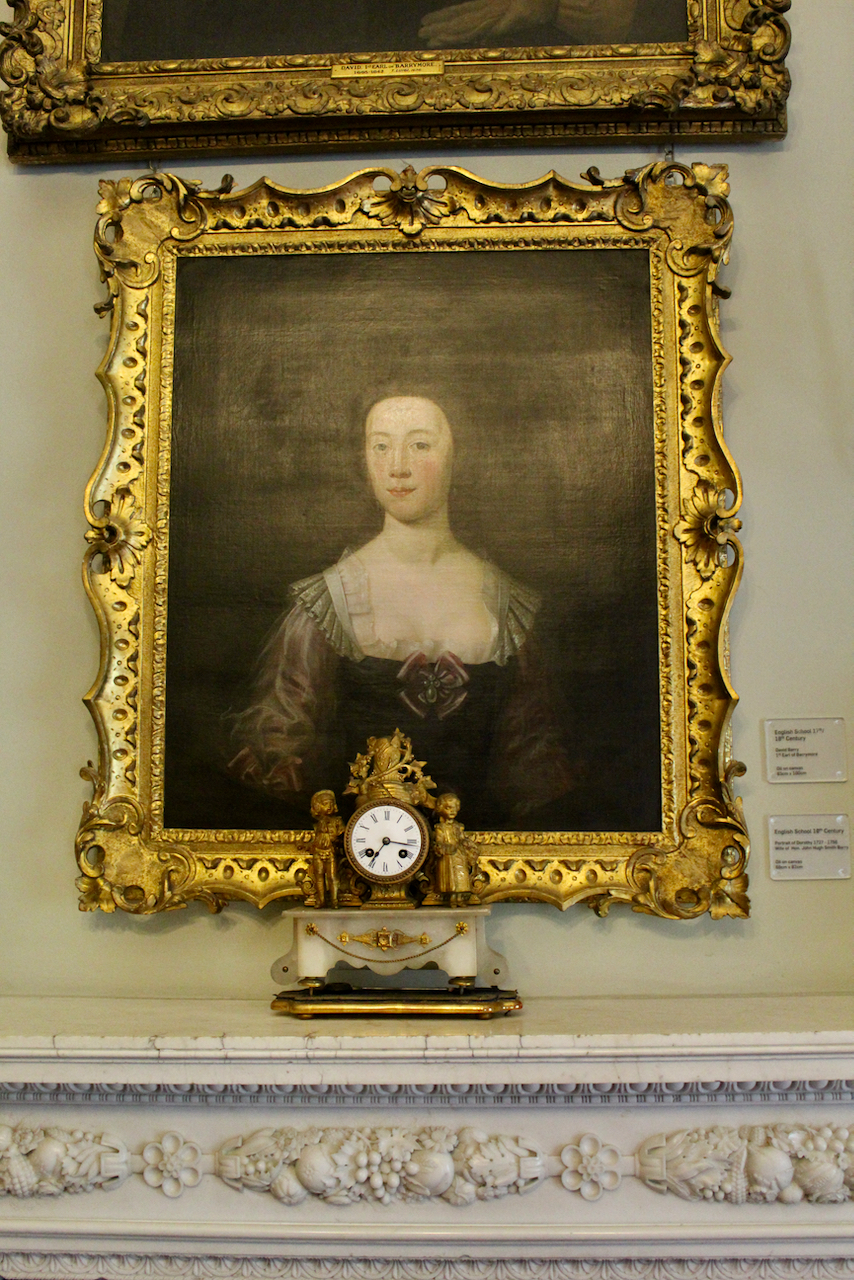
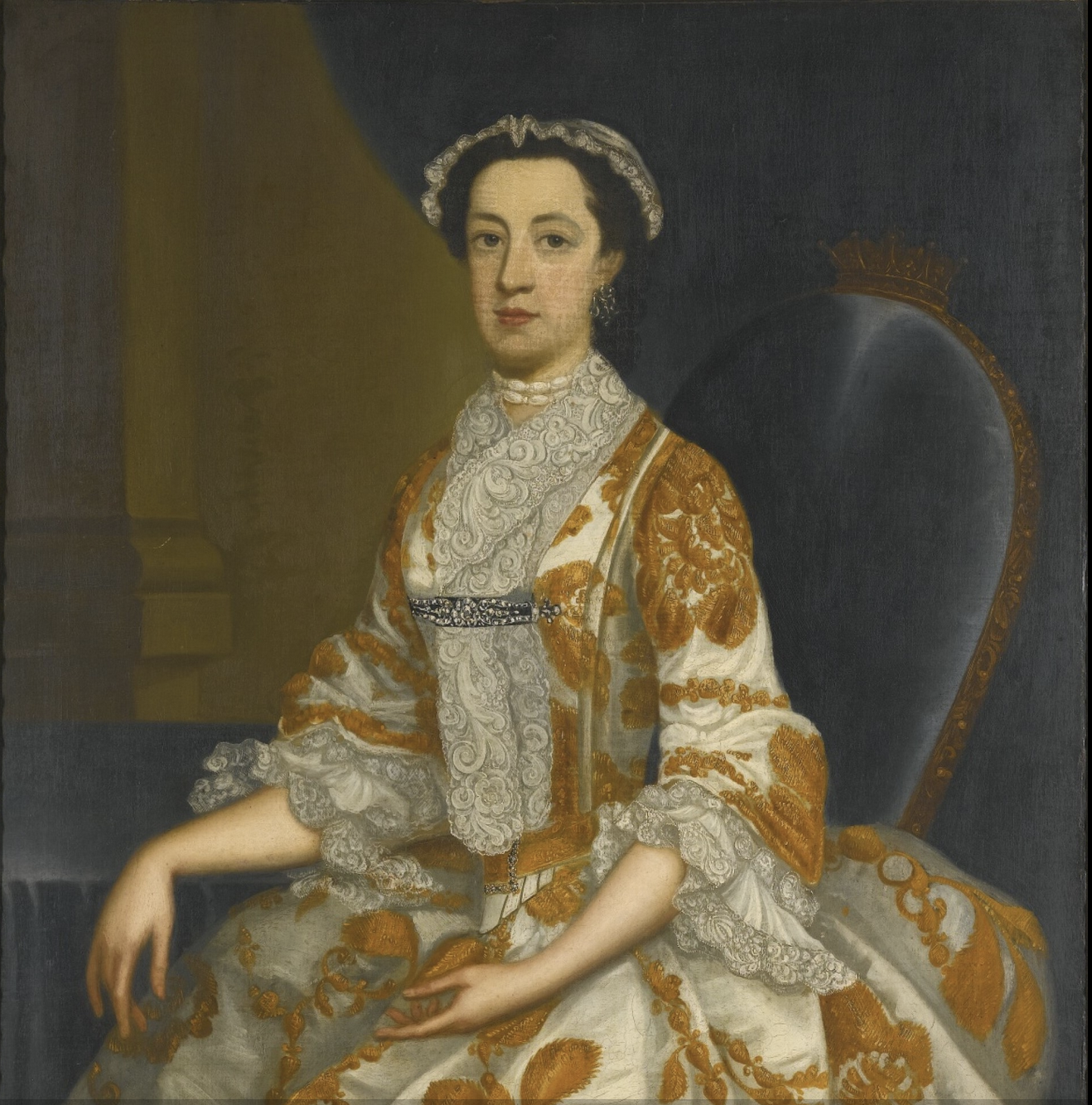
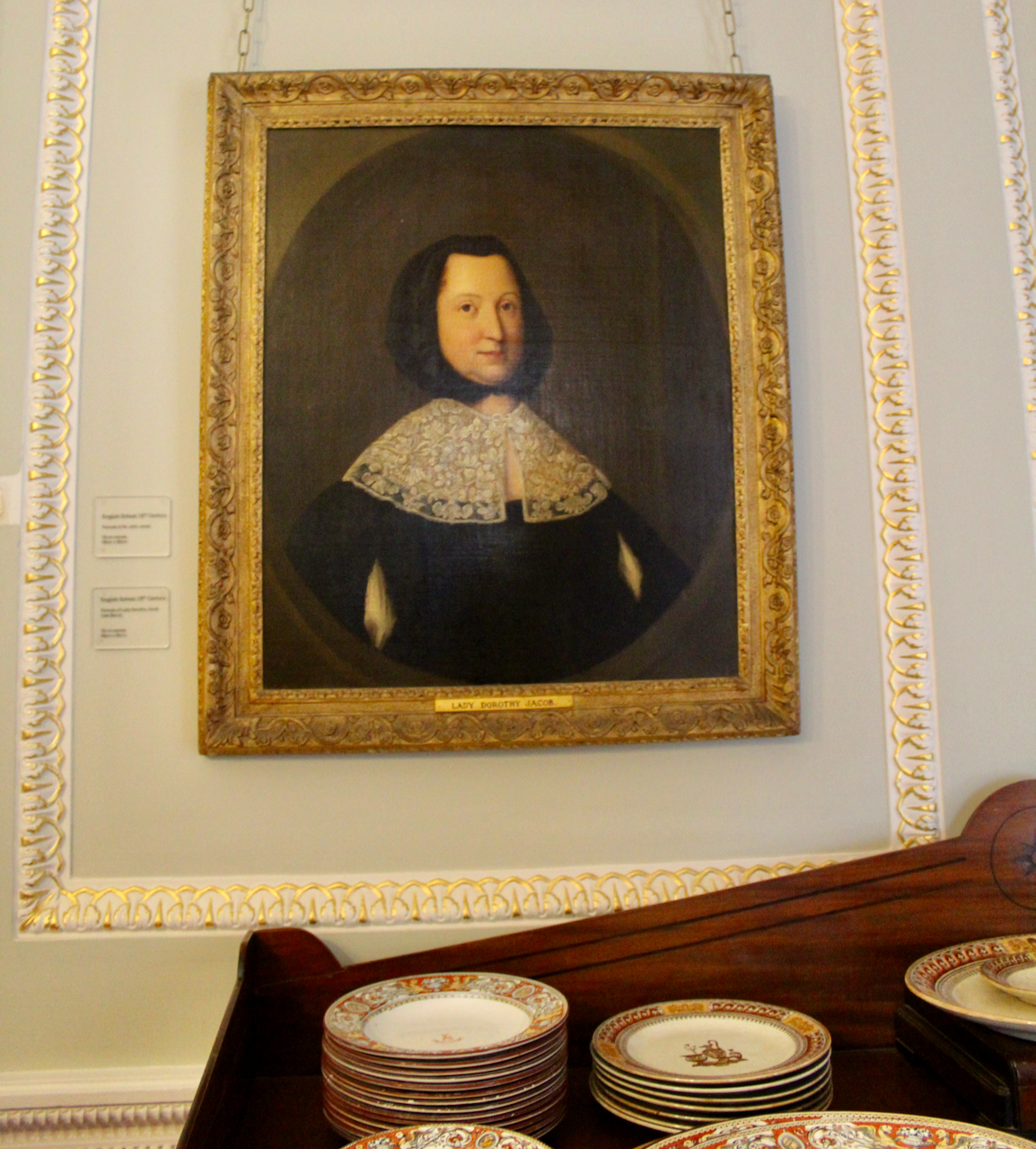
Dorothy née Smith (1727-1756) wife of John Hugh Smith Barry (1725-1784).Hugh Smith of Weald Hall, father of Dorothy who married John Hugh Smith Barry (1725-1784).Dorothy Smith née Barrett, Mrs. Smith of Weald Hall, mother of Dorothy.
John and Dorothy’s oldest son and heir was James Hugh Smith-Barry (1746-1801). He never married, but had several children. He inherited from two uncles, his father’s brothers, as well as from his father.
James Hugh Smith-Barry (1746-1801), who never married but had several children.James Hugh Smith-Barry by William Orpen 1904, courtesy of Fonsie Mealy auction 2022.
The Landed Families website tells us:
“Through the deaths without surviving issue of Arthur Barry in 1770 and Capt. Richard Barry in 1787, and the death of his father in 1784, James Hugh Smith-Barry inherited almost all the extensive property held by the three brothers, but if it made him rich it does not seem to have made him happy. As a young man he had racketed around Europe and the Near East with a group of friends on an extended Grand Tour, and amassed a large collection of art and antiques. On his return, however, he did not marry and settle down to raise a family, but became increasingly reclusive, perhaps as a result of depression. In about 1790 he bought Swerford Park in Oxfordshire and established a mistress called Ann Tanner there, by whom he eventually had five children. They appear not to have lived together since Ann stayed at Swerford and James lived increasingly at Fota; the children were brought up at Swerford. The children were all acknowledged and the elder son, John Smith-Barry (1793-1837) became James’ principal heir, but they were all quite young when James died in 1801. He left Ann the Swerford estate for life, and an annuity of £500 a year, and clearly envisaged that she would remain there and bring up the children to adulthood, even if she subsequently married. However, when she did marry in 1802, James’ trustees saw fit to take the children away from their mother and place them in the guardianship of relatives in Ireland (probably the Courtenays at Ballyedmond, as Robert Courtenay was one of the trustees). Ann remained at Swerford until about 1805 but then moved away, and Swerford was eventually sold in about 1820.” [3]
Frank Keohane tells us that John Smith-Barry (1783-1837), son of James Hugh Smith-Barry (1746-1801) settled here after his marriage to Eliza Courtenay of Ballyedmond, Midleton, County Cork. He was illegitimate, so perhaps he built the home to establish his reputation. [4] He wanted to claim the title of Earl of Barrymore when the last Earl, Henry Barry, 8th Earl of Barrymore died in 1823, but the crown would not allow it.
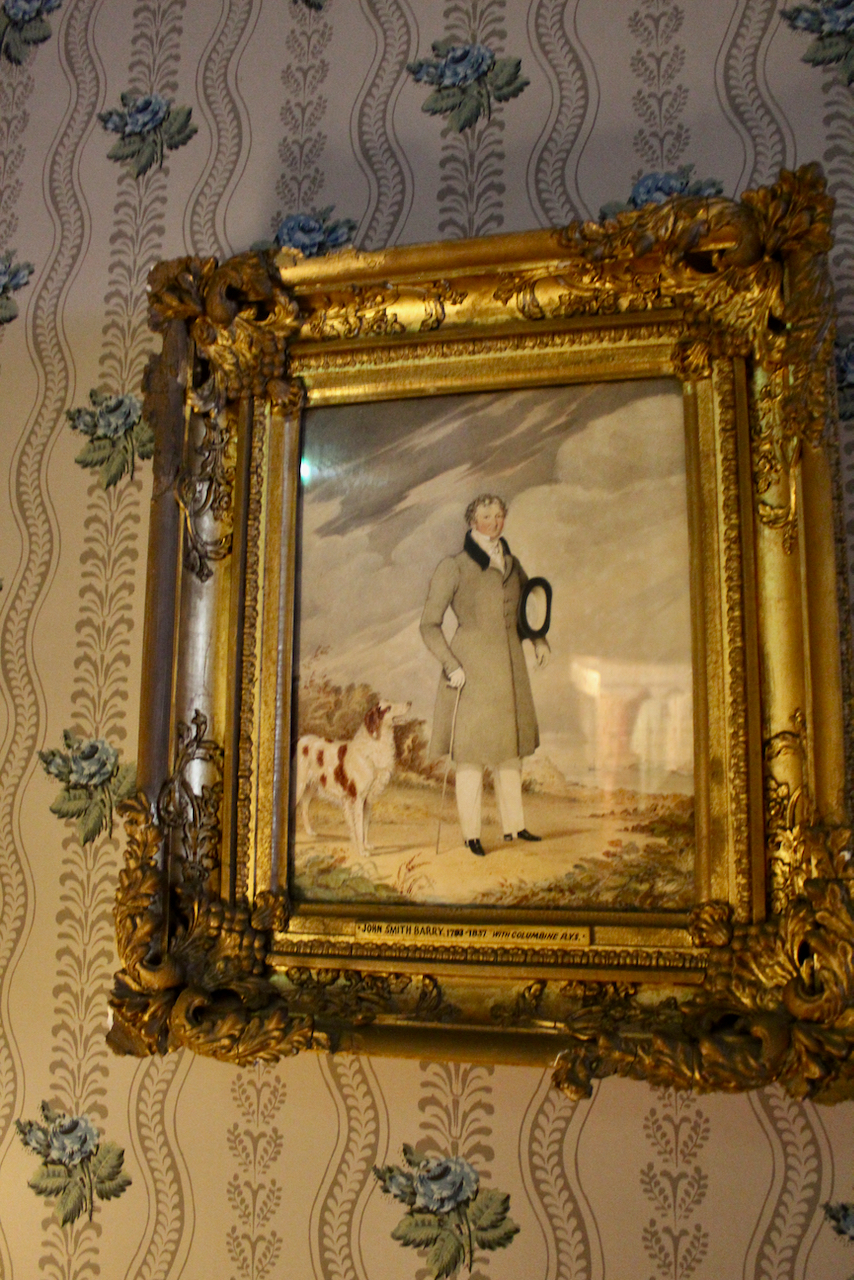
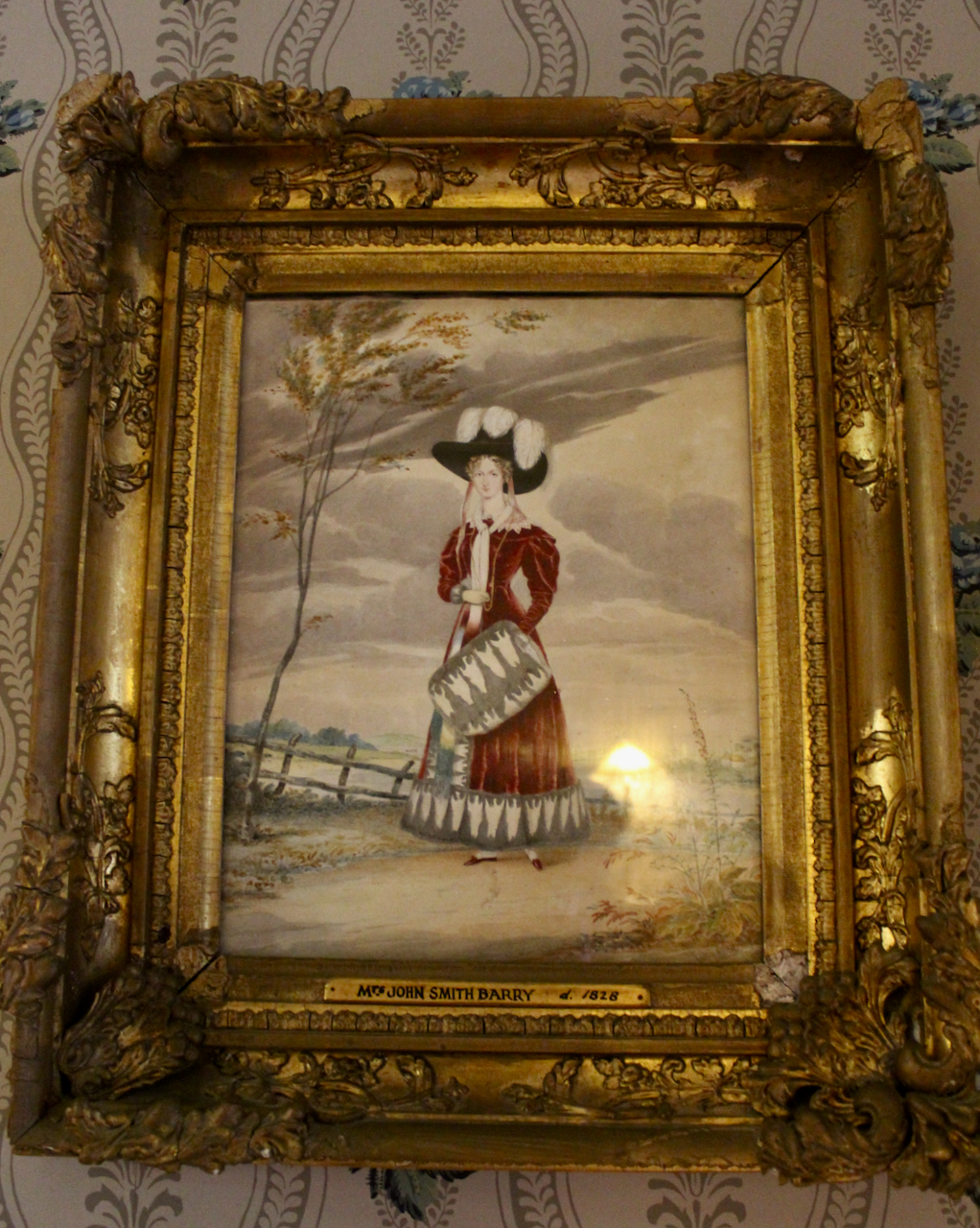
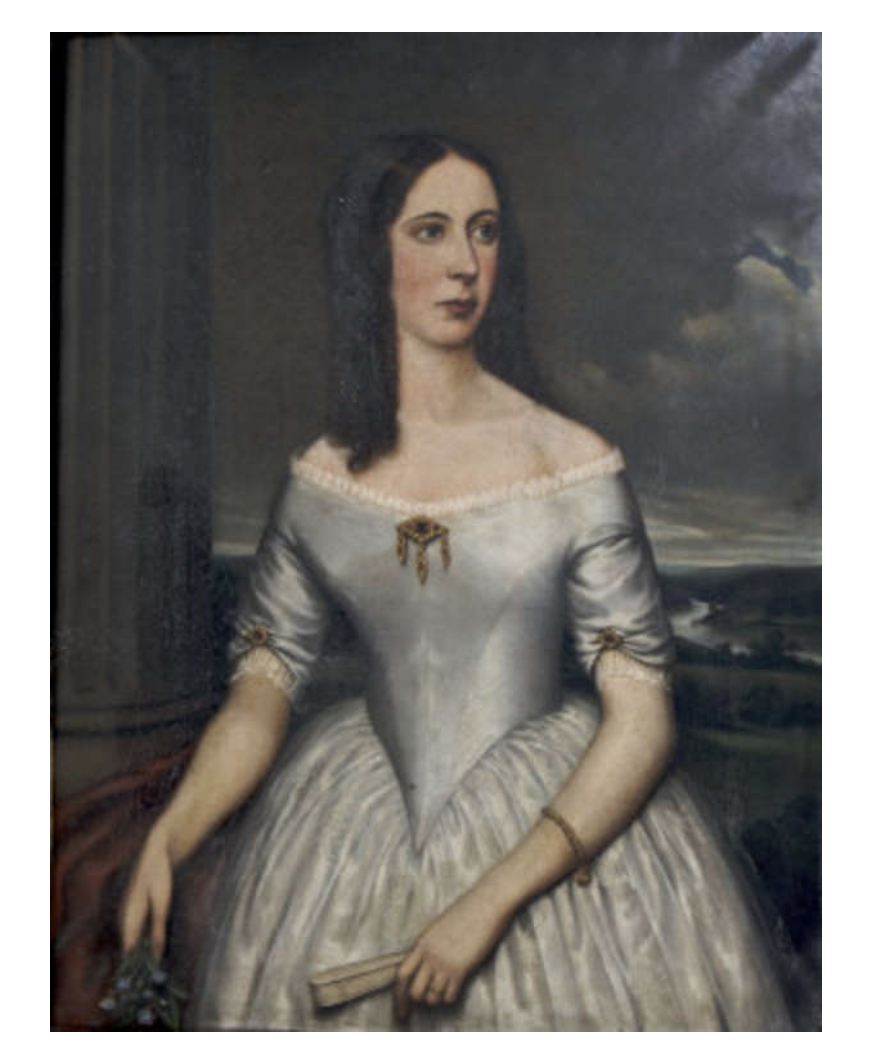
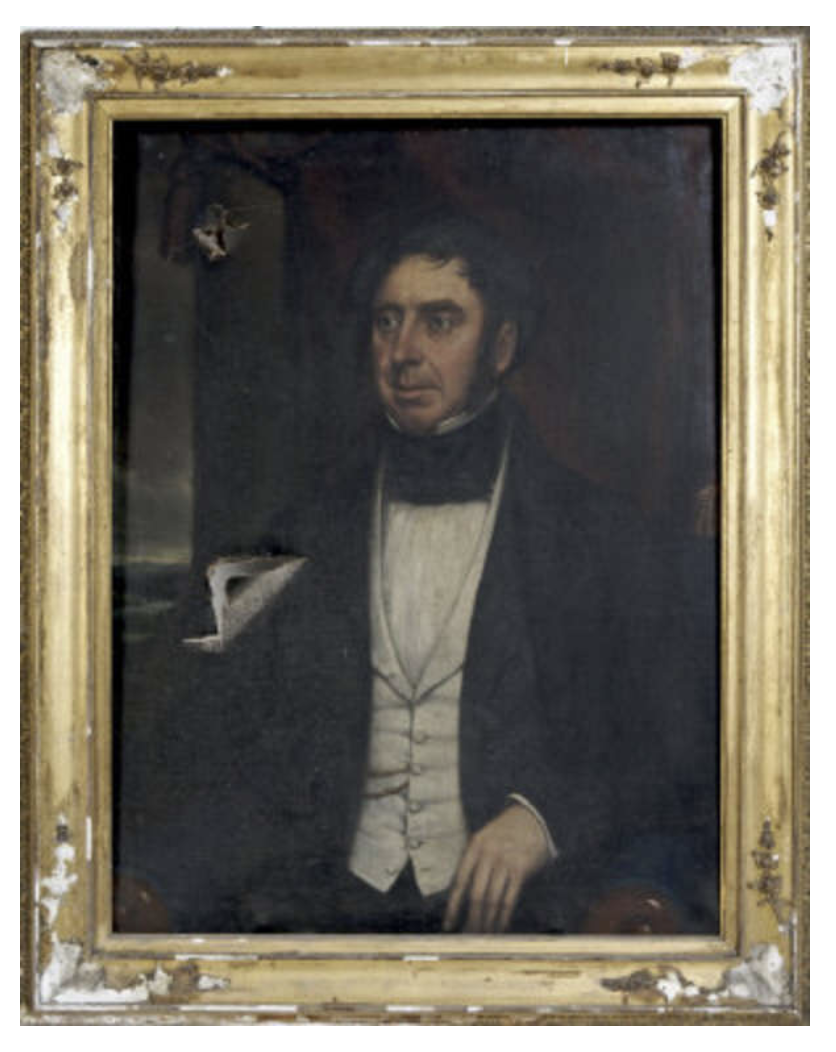
John Smith-Barry (1783-1837), who hired the Morrisons to enlarge the house.Eliza Mary née Courtenay (1797-1828) who married John Smith-Barry.She was the daughter of Robert Courteney of Ballyedmond in County Cork.
Other children of James Hugh Smith-Barry (1746-1801)were Narcissa, who married George William Massy, son of Hugh, 3rd Baron of Duntrileague, County Limerick; James, who lived at Lota Lodge in County Cork (it is now the Vienna Woods Hotel); Caroline who married George Courtenay; and Louisa, who married Thomas Berry Cusack-Smith, son of William, 2nd Baronet Smith, of Newton, King’s County.
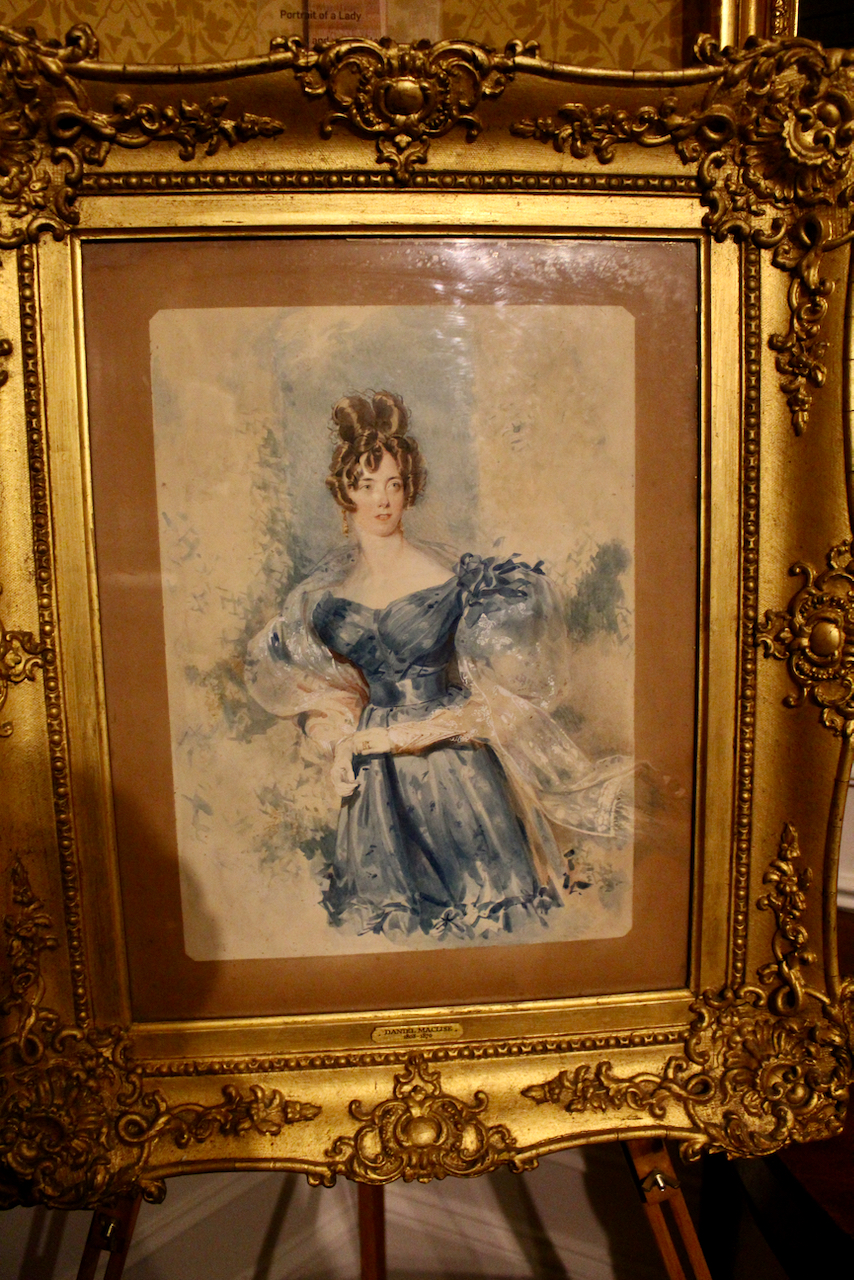
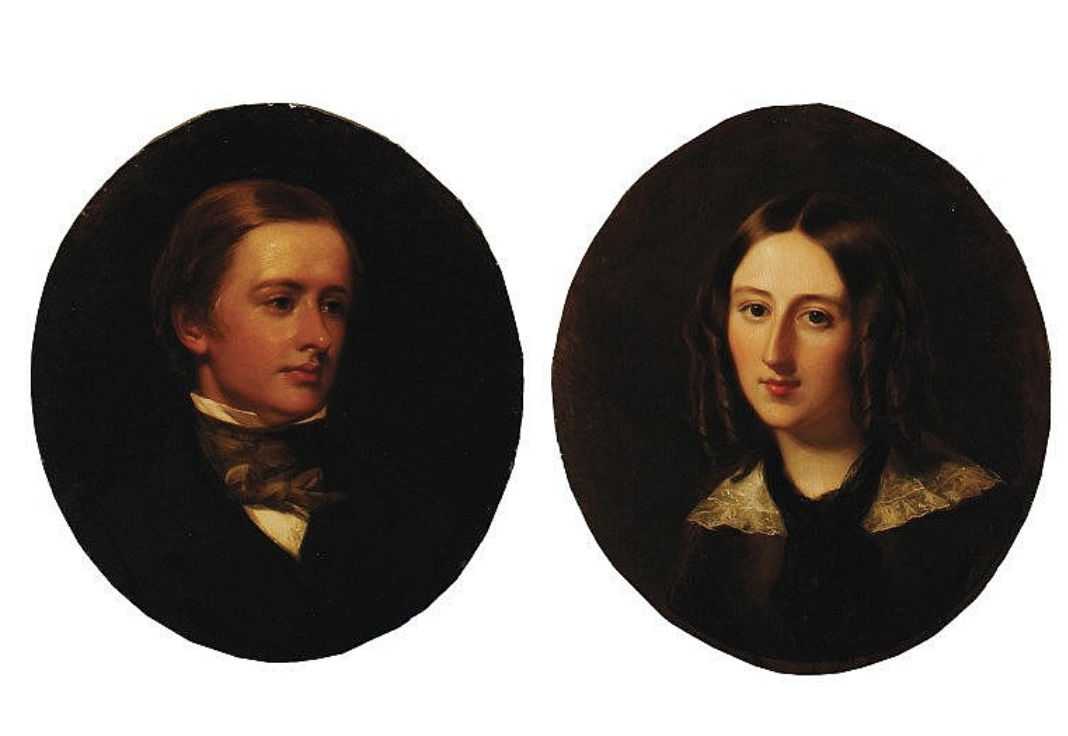
John Smith-Barry (1783-1837), who hired the Morrisons to enlarge the house.I think this is probably also Eliza Mary née Courtenay (1797-1828) who married John Smith-Barry.Portrait Of A Lady traditionally identified as Caroline Courtenay Née Smith-Barry, courtesy of Whyte’s Sept 2007, daughter of James Smith-Barry (1746-1801) of Fota House, County Cork, she married George Courtenay of Ballyedmond House, County Cork (no longer exists).
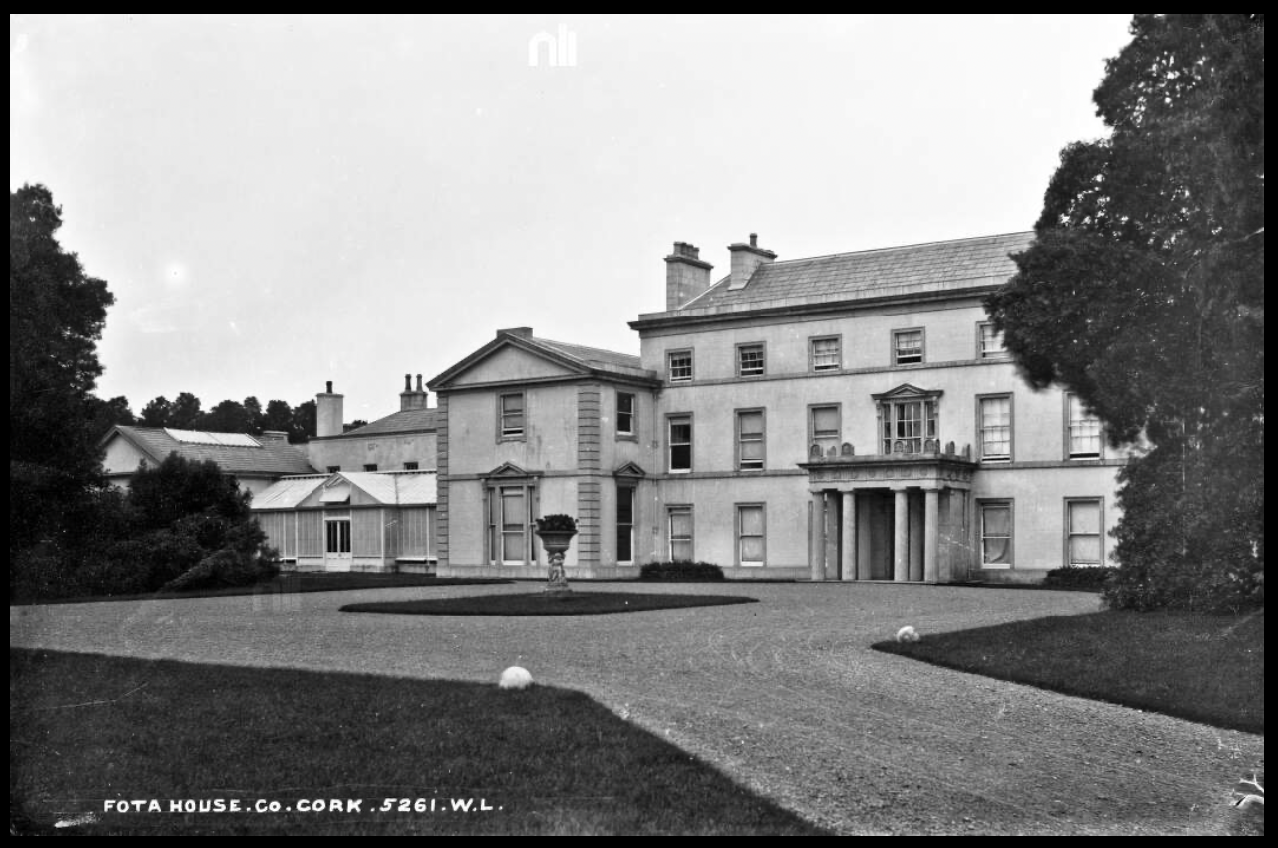
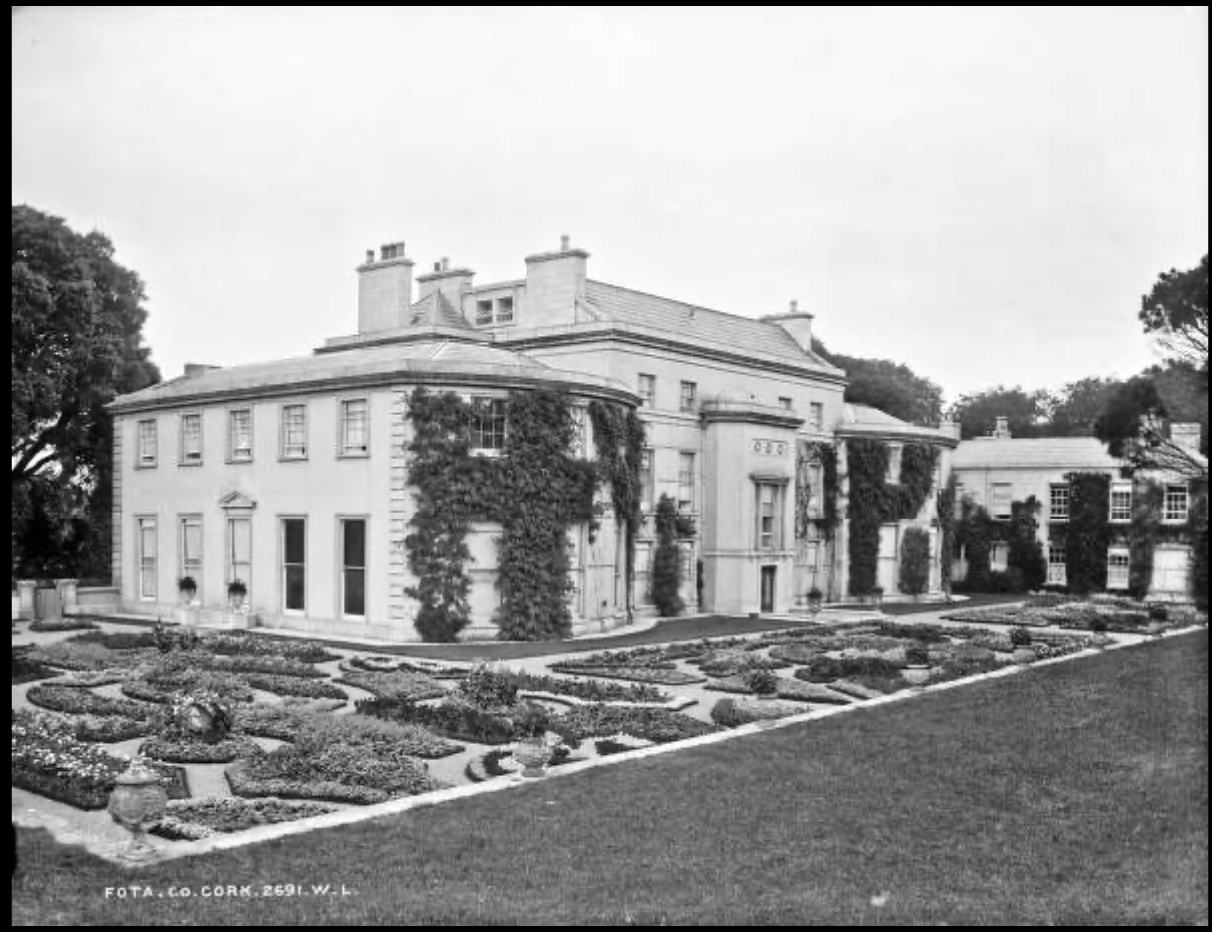
John Smith-Barry (1783-1837) hired Richard and William Vitruvius Morrison to enlarge the hunting lodge which had been built by his grandfather. He also built sea walls around the island and re-routed the public road to form a deer park and carriage drives around the shore.
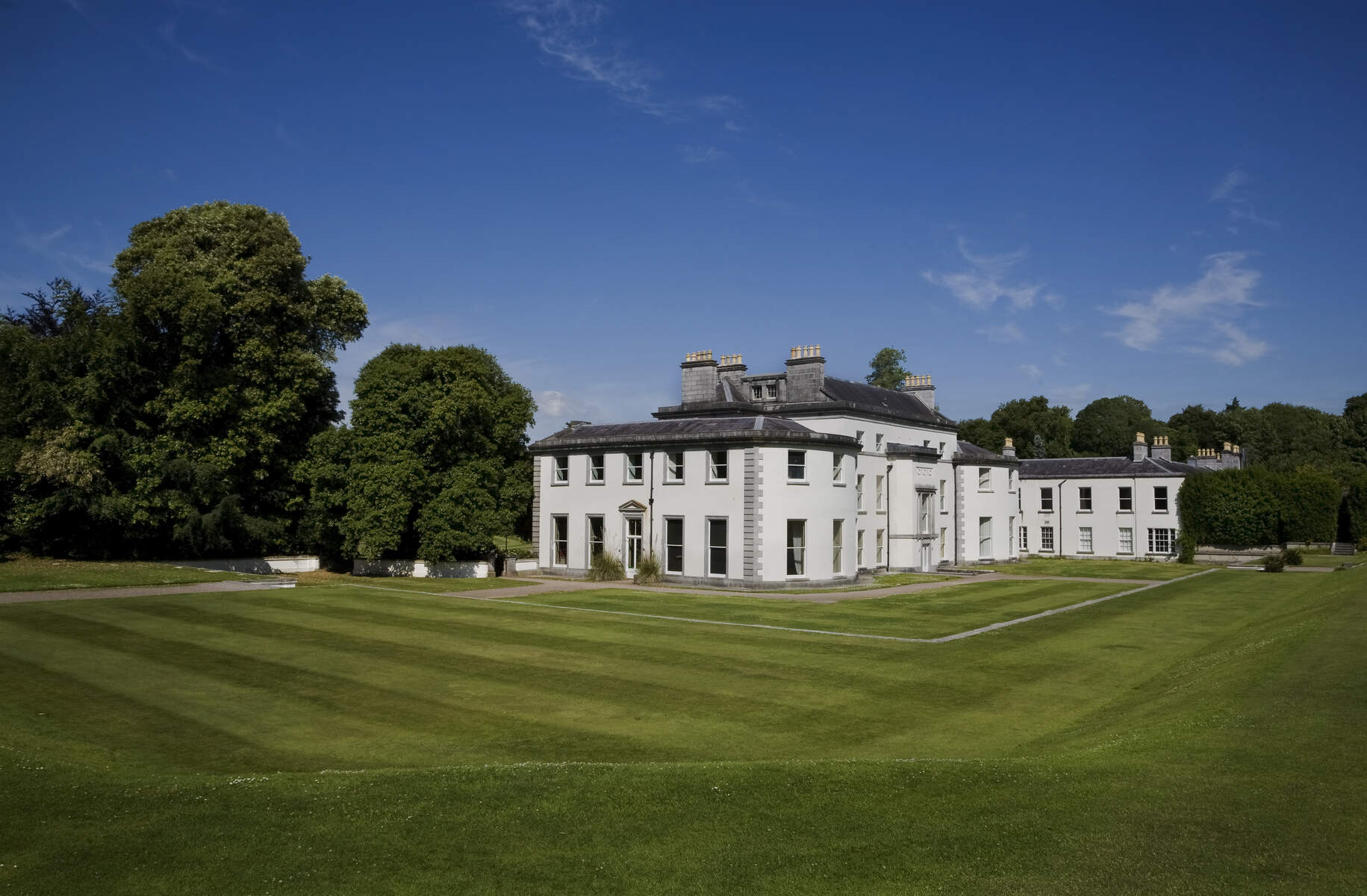
Bence-Jones continues: “This house, of three storeys and seven bays, was greatly enlarged ca. 1820 by John Smith-Barry [1783-1837, grandson of his earlier namesake] to the design of Sir Richard Morrison, so that it became a wide-spreading Regency mansion of stucco with stone dressings. The original house, given a single-storey Doric portico with fluted columns and acroteria beneath a pedimented Wyatt window, remained the centre of the composition; flanked by two storey projecting wings with pedimented ends on the entrance front and curved bows on the garden front. A long two storey service range was added at one side. In 1856, a billiard room wing, in the same style as the Morrison wings but of one storey only, was added on the entrance front, projecting from the end of the service range. The space between this and the main building was filled in ca 1900 by Arthur Smith-Barry, 1st (and last) Lord Barrymore of a new creation [(1843-1925), grandson of John Smith-Barry], with a single-storey range containing a long gallery.” (see [2]) The long gallery was designed by William H. Hill.
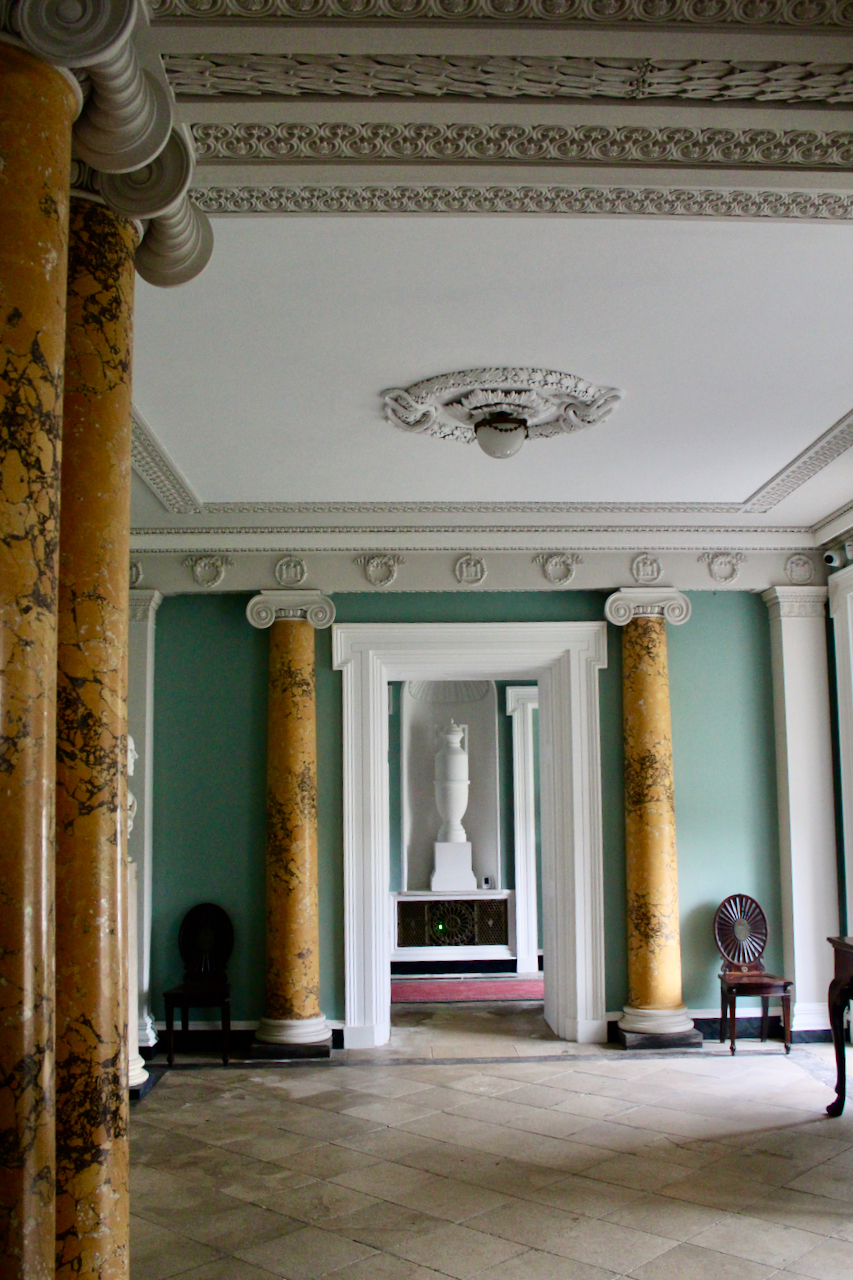
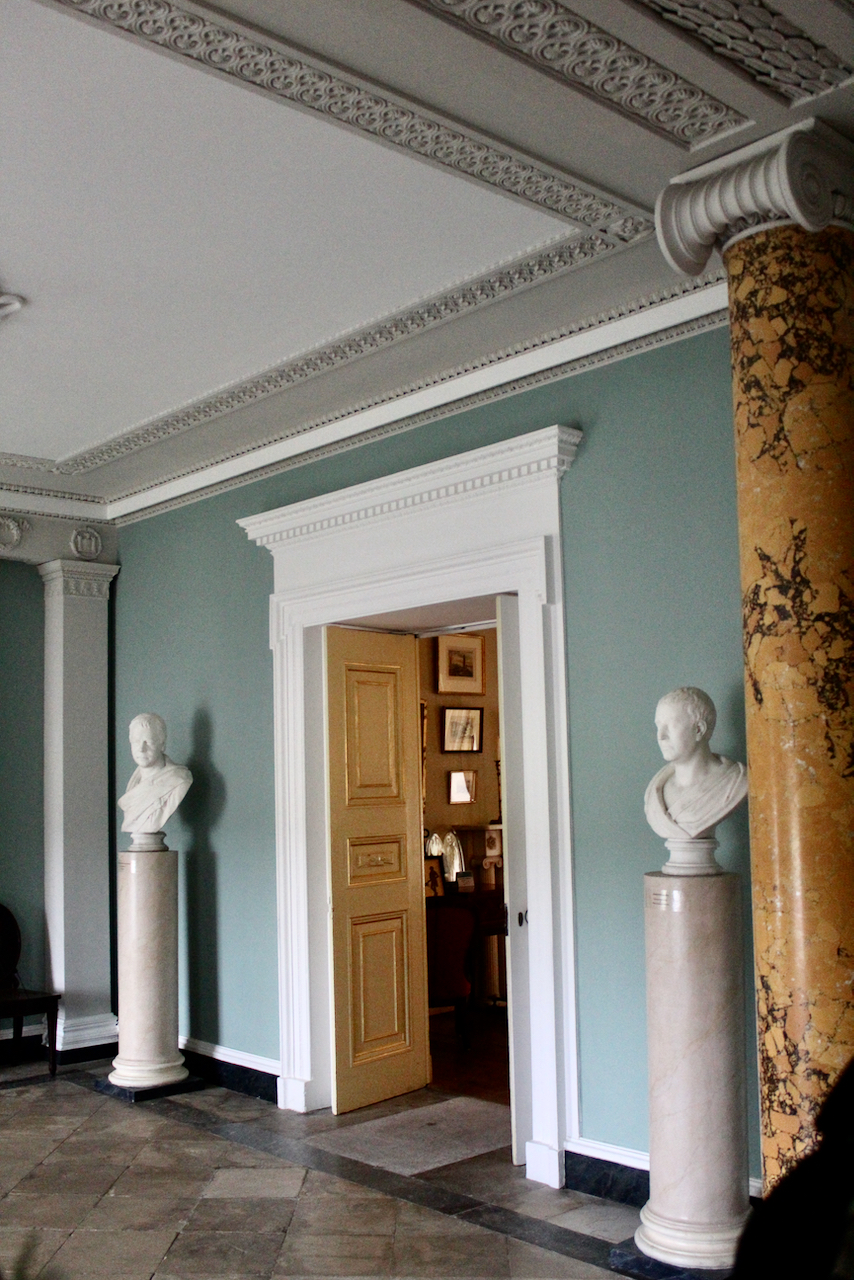
Bence-Jones continues:“The exterior simplicity of Fota is a foil to the splendours within; for the interior has that richness which Sir Richard Morrison and his son, William Vitruvius, were so well able to create. The hall, which runs the entire length of the front of the original house, is divided by screens of paired Ionic columns with yellow scagliola.”
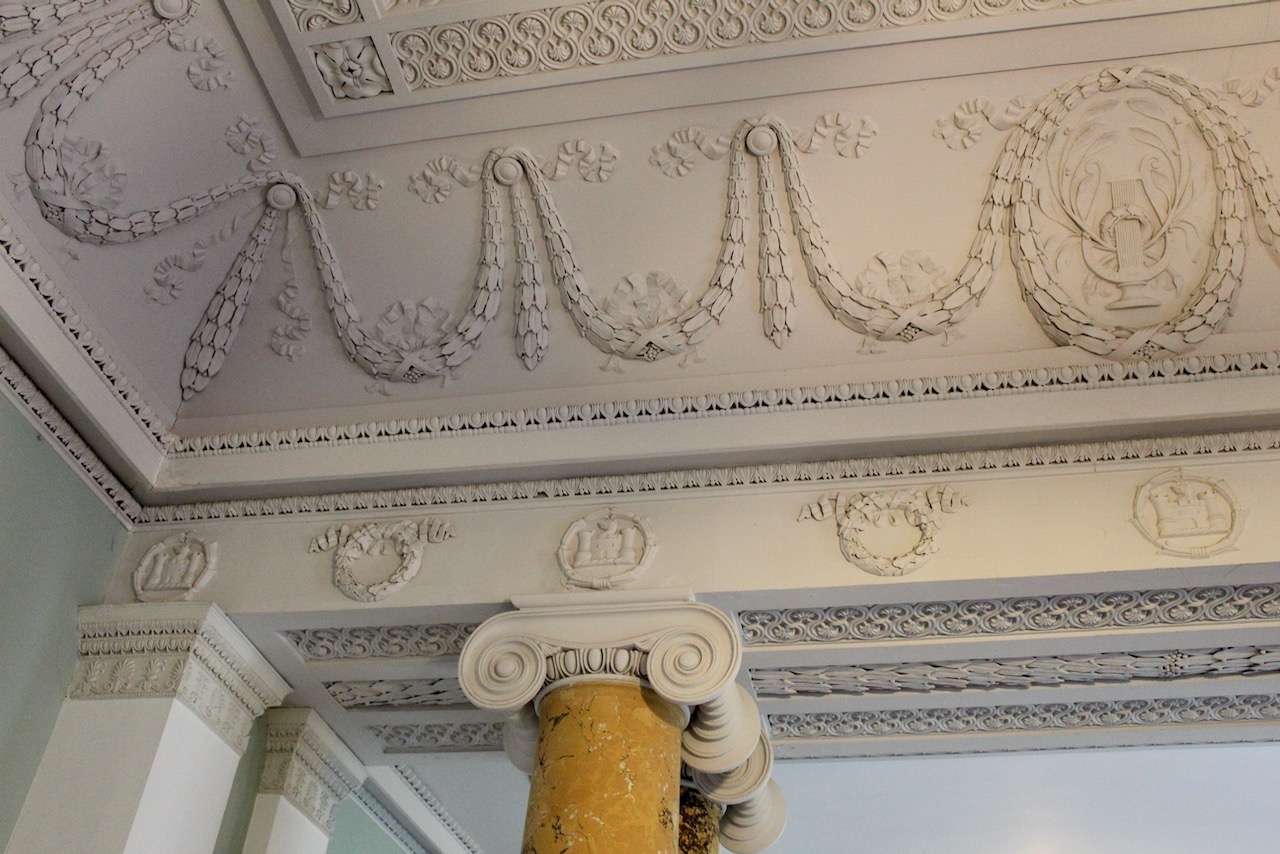
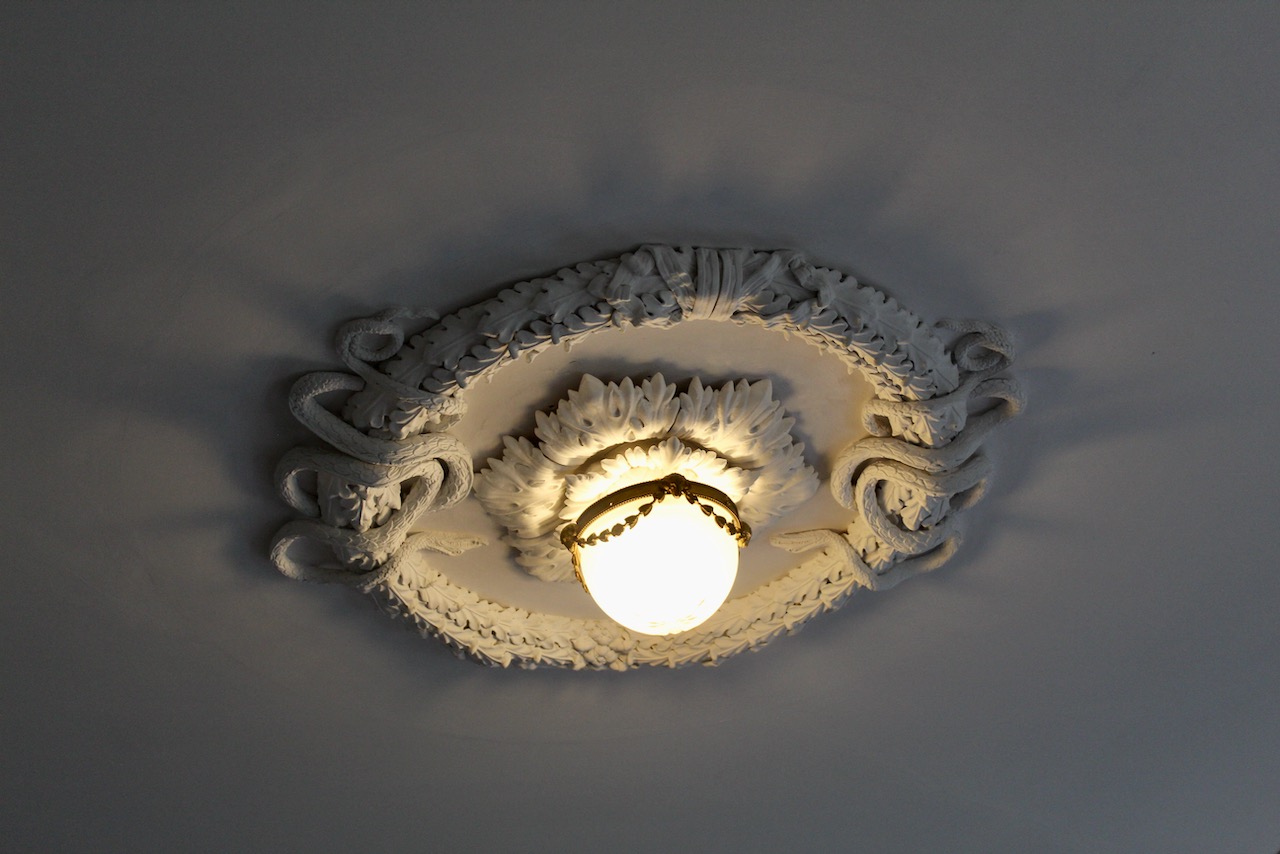
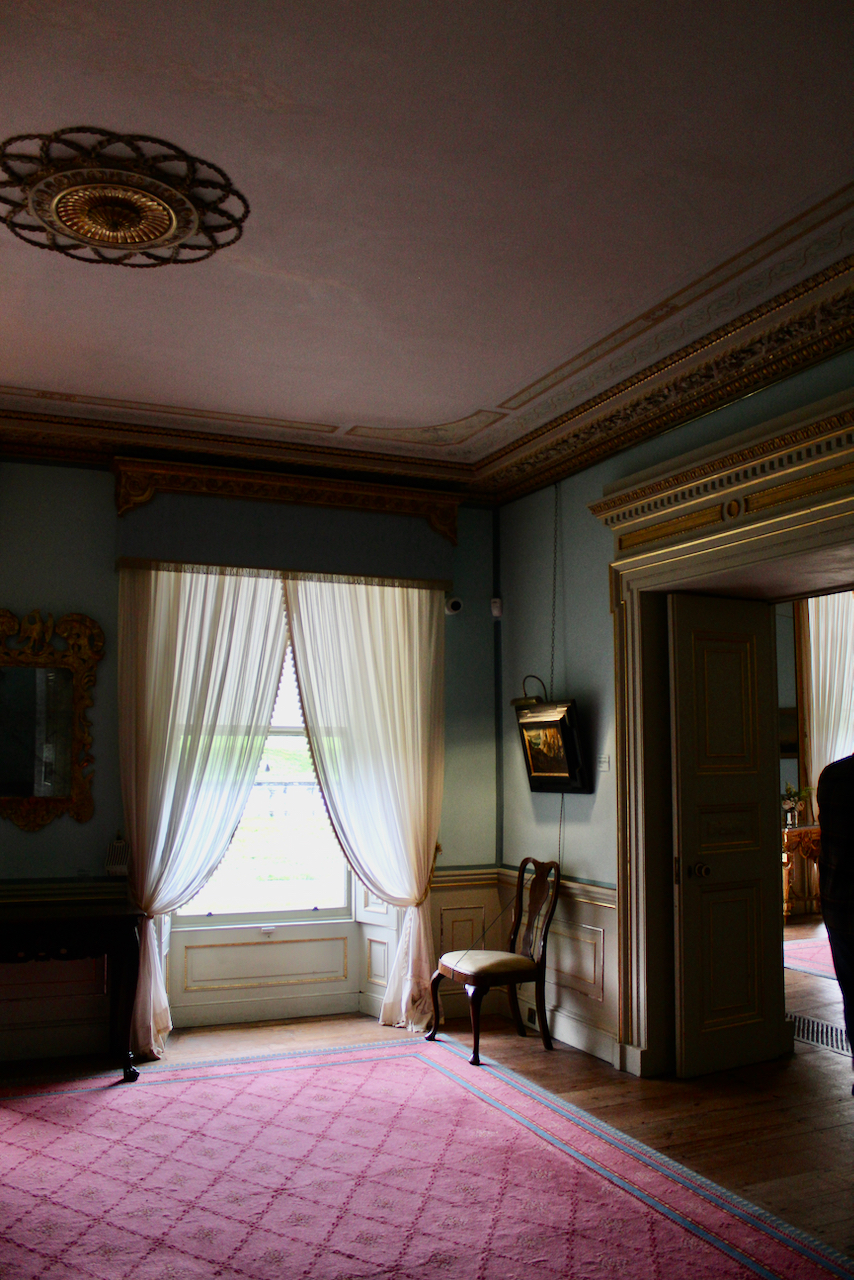
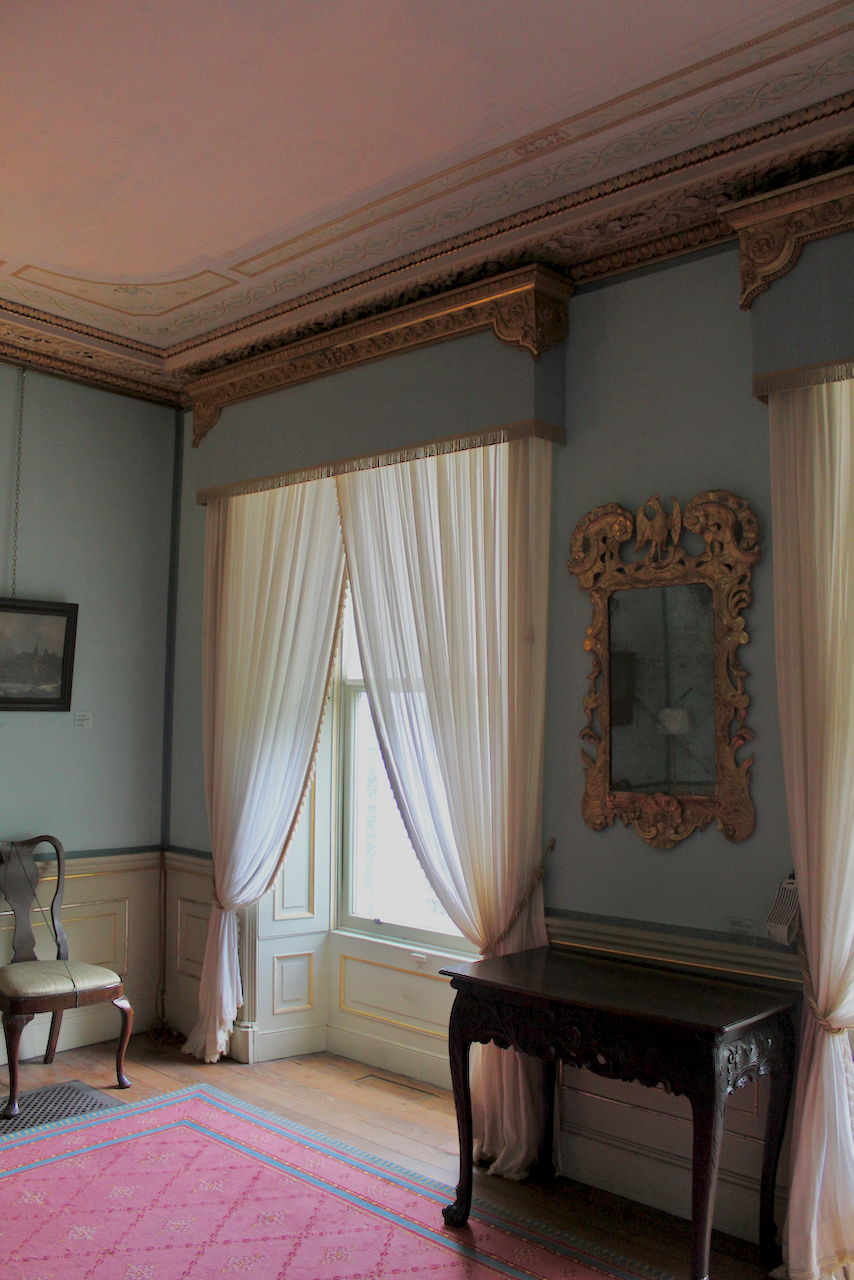
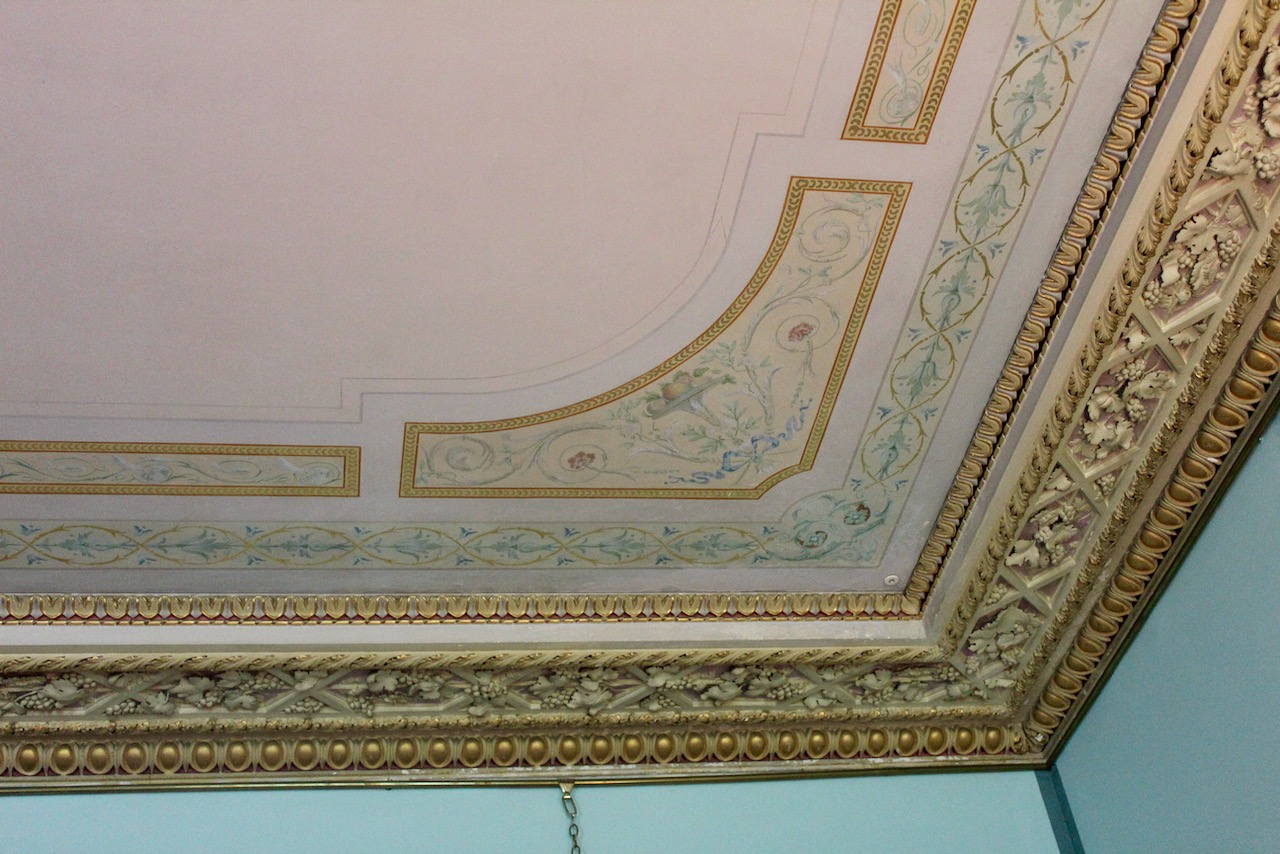
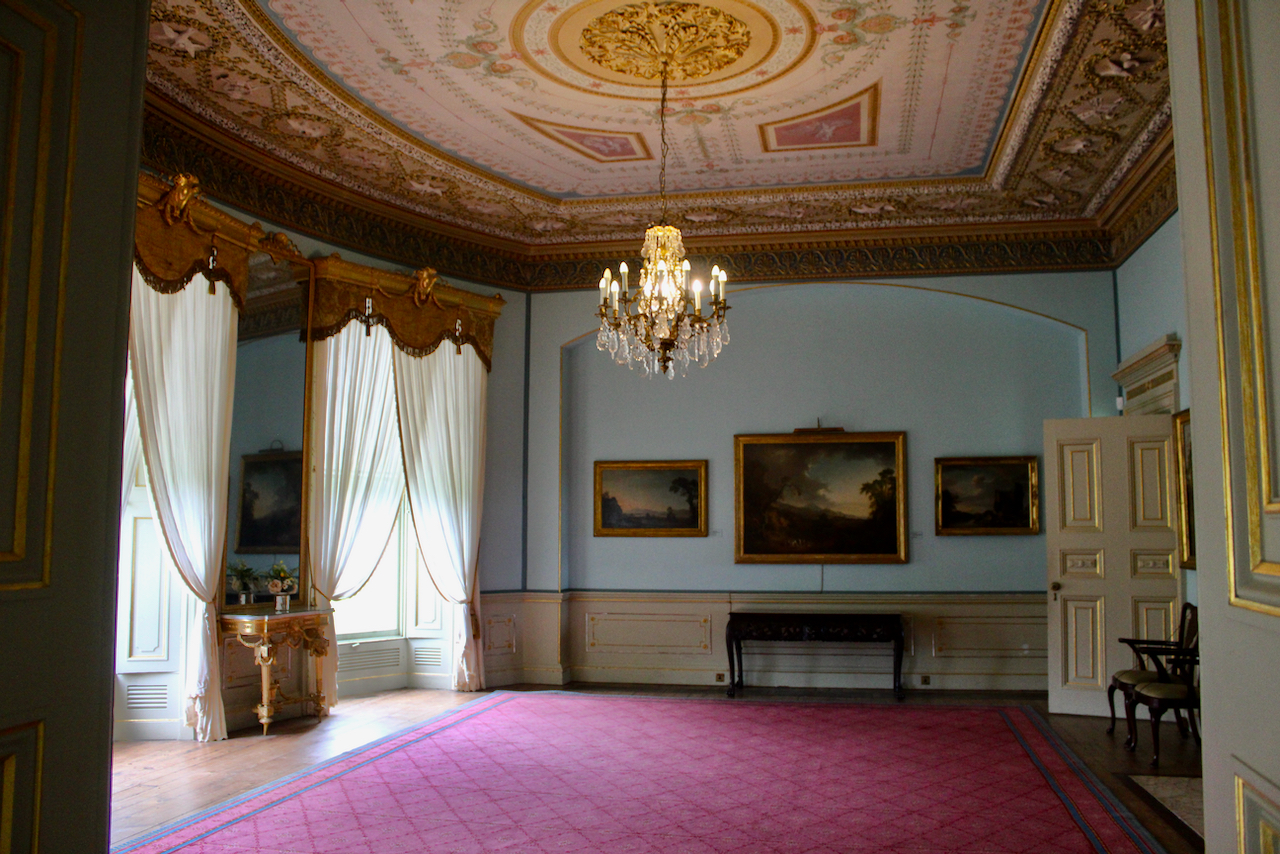
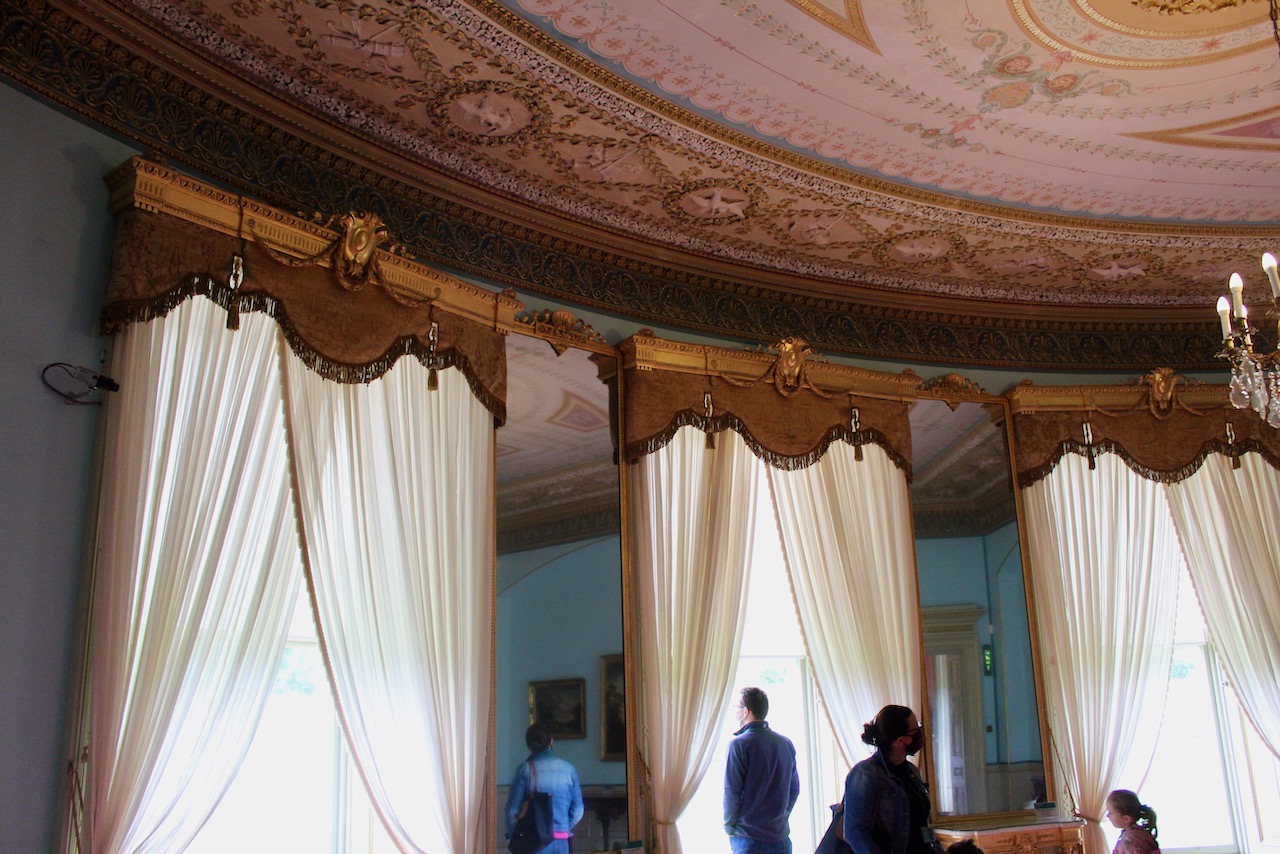
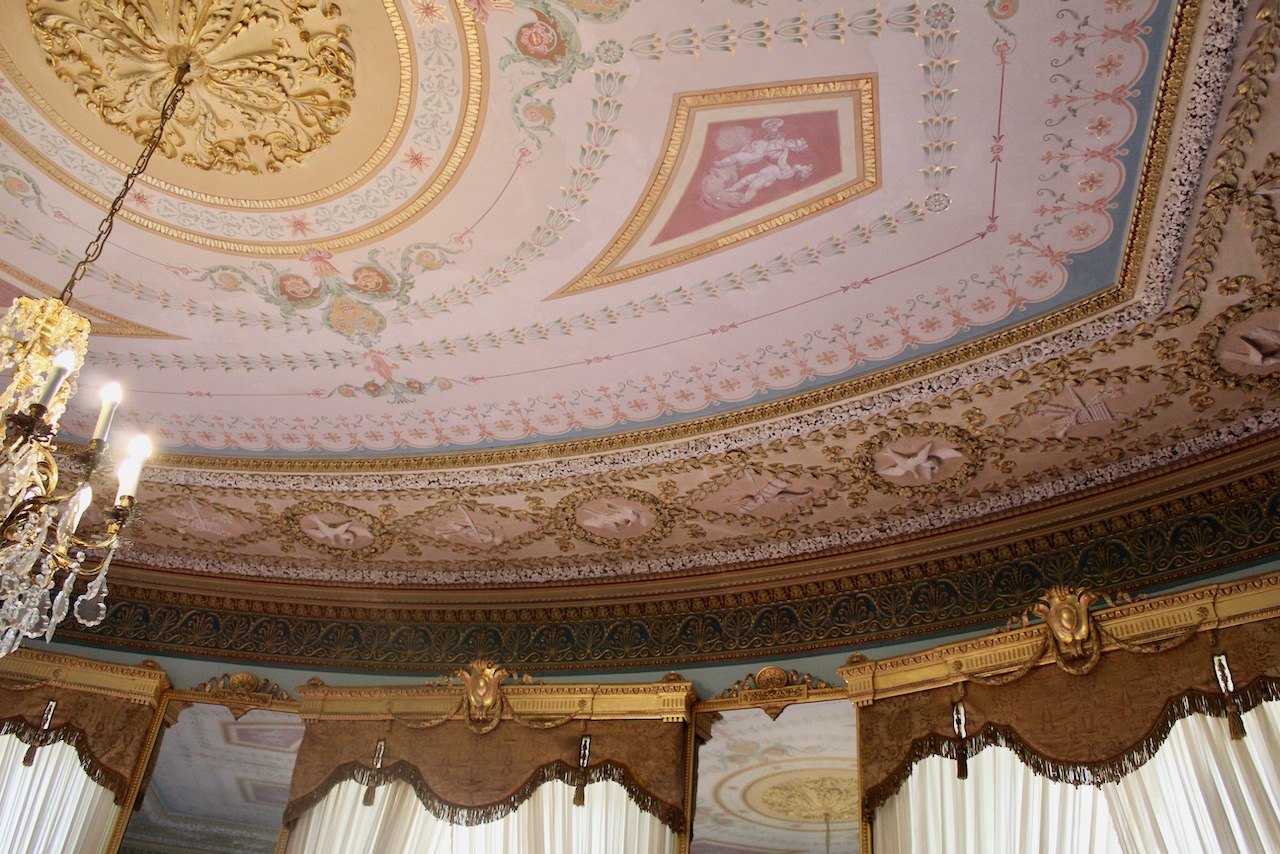
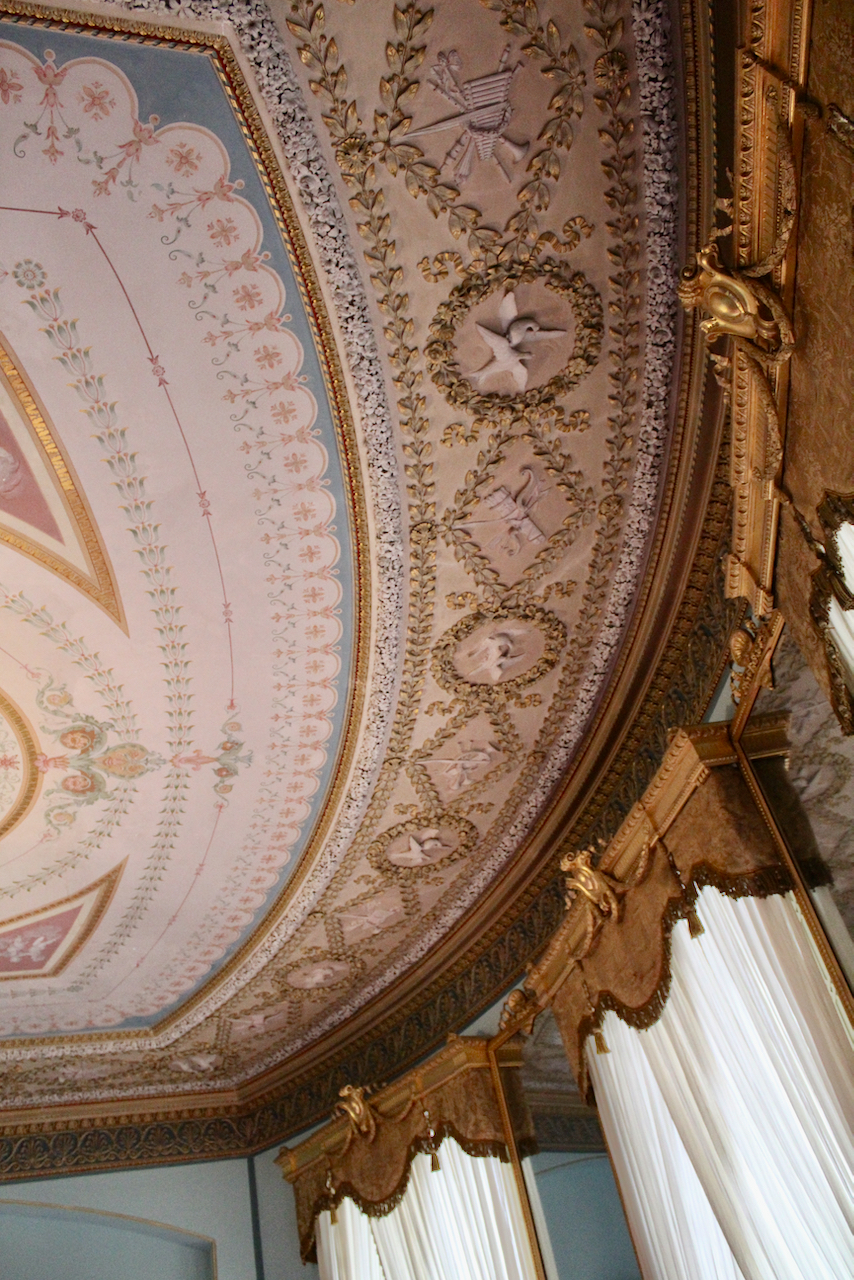
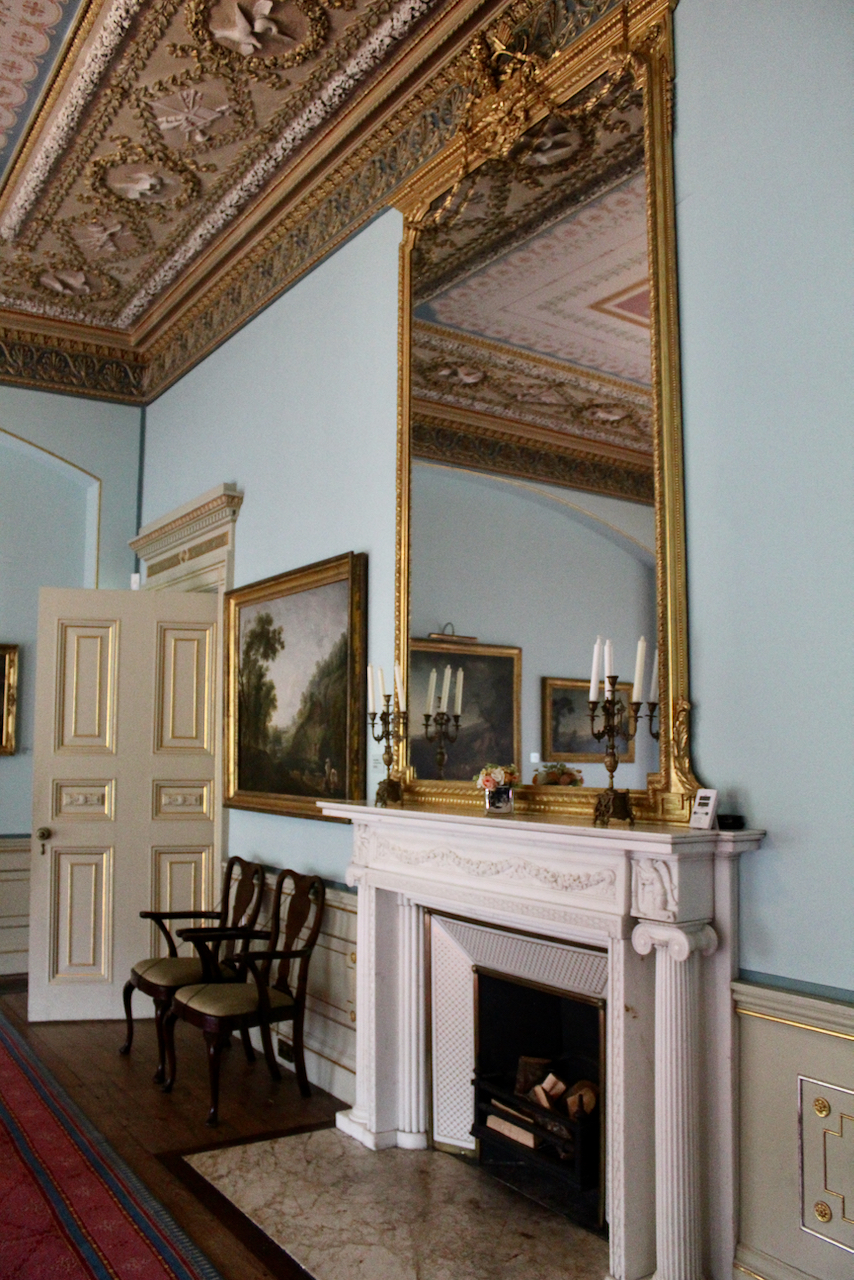
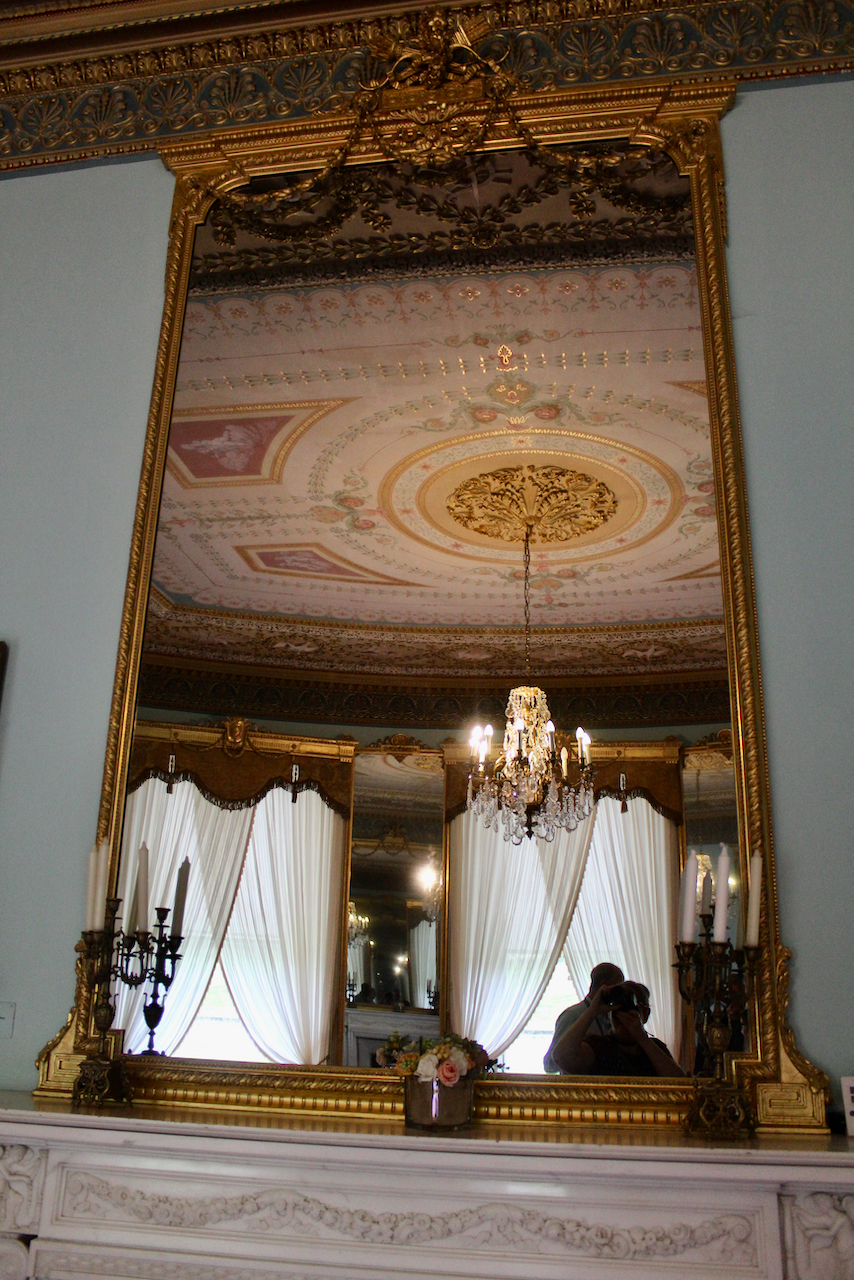
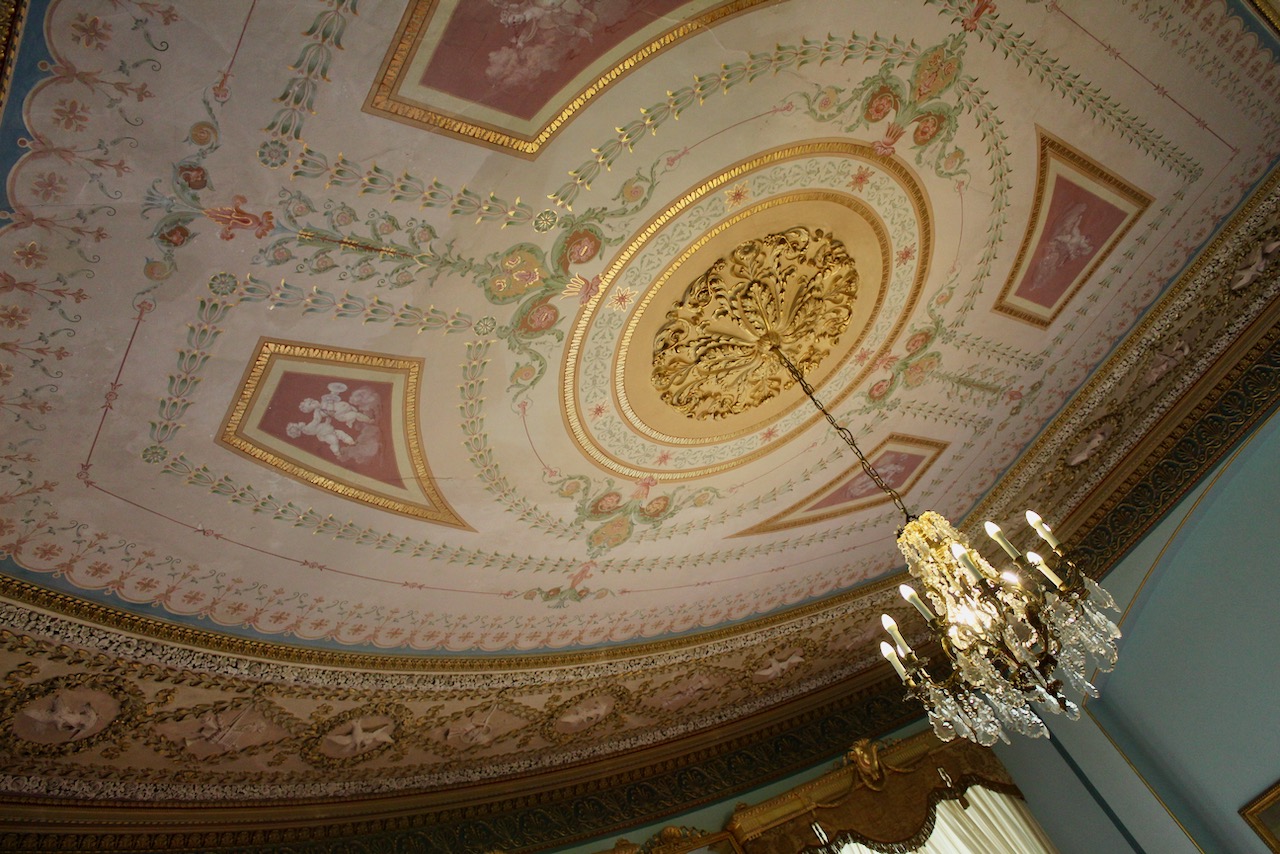
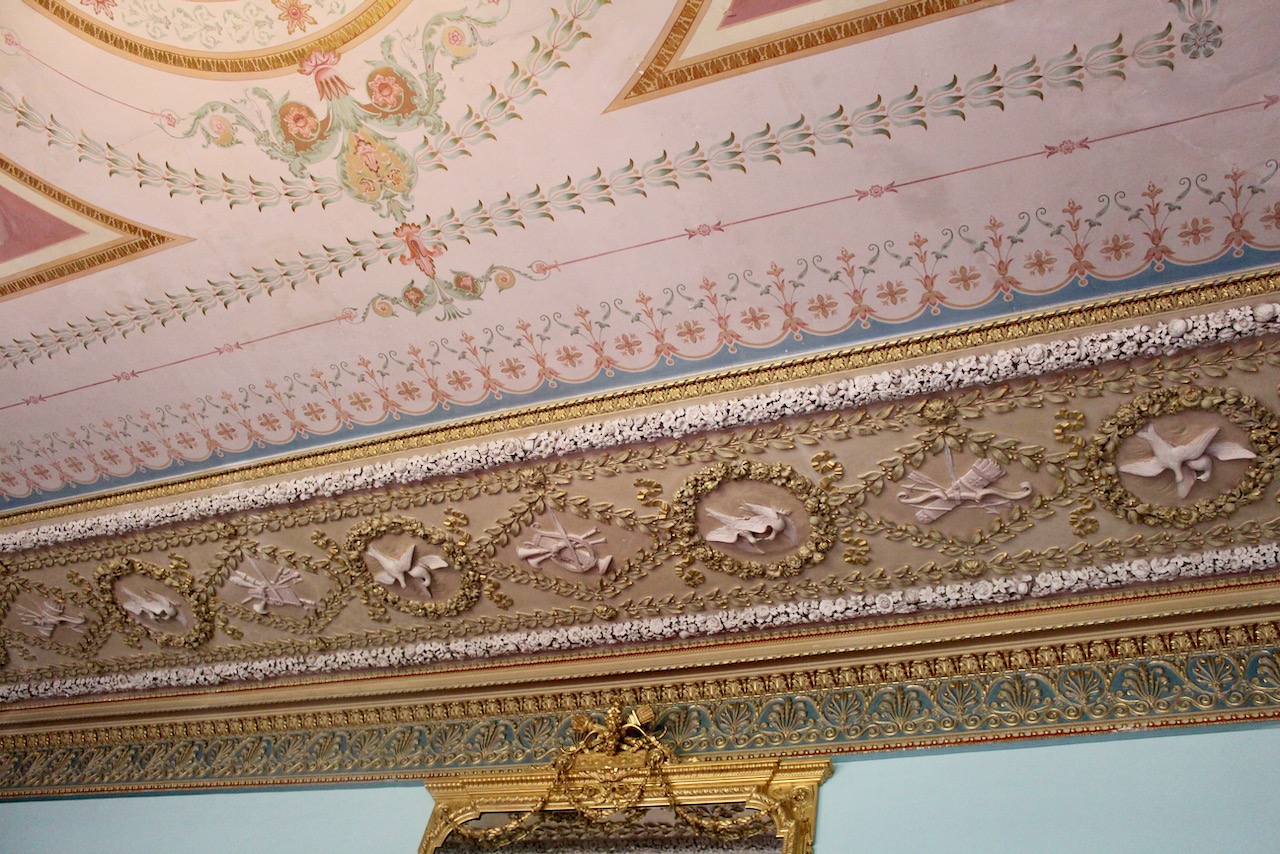
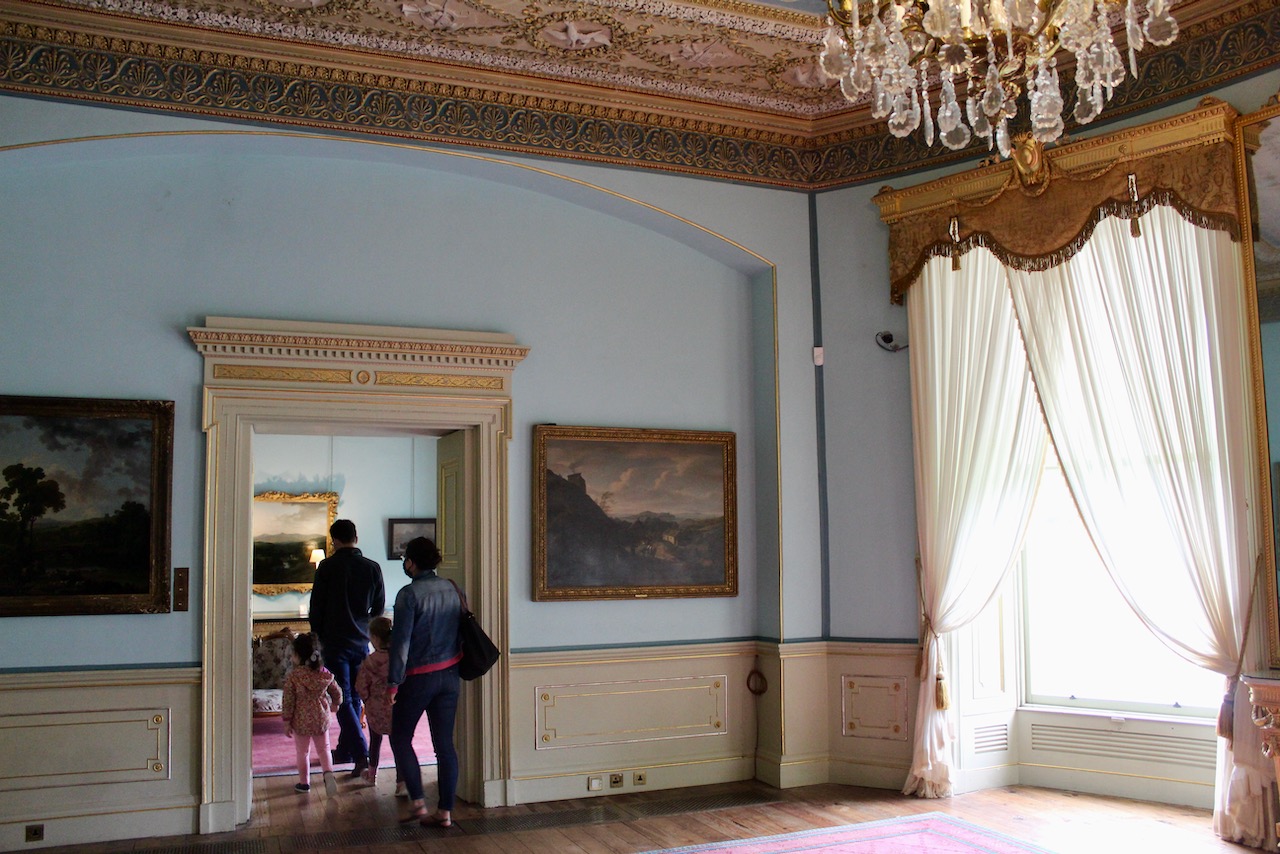
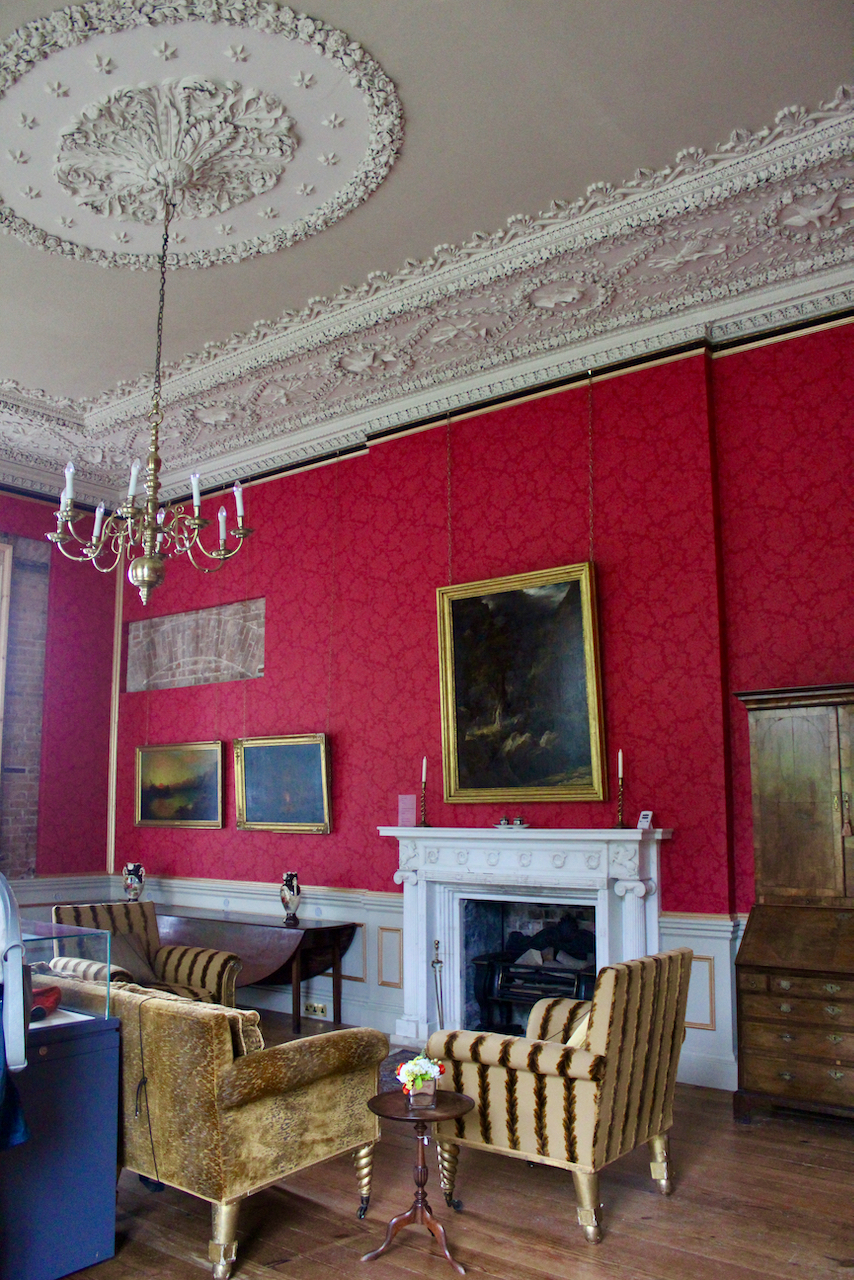
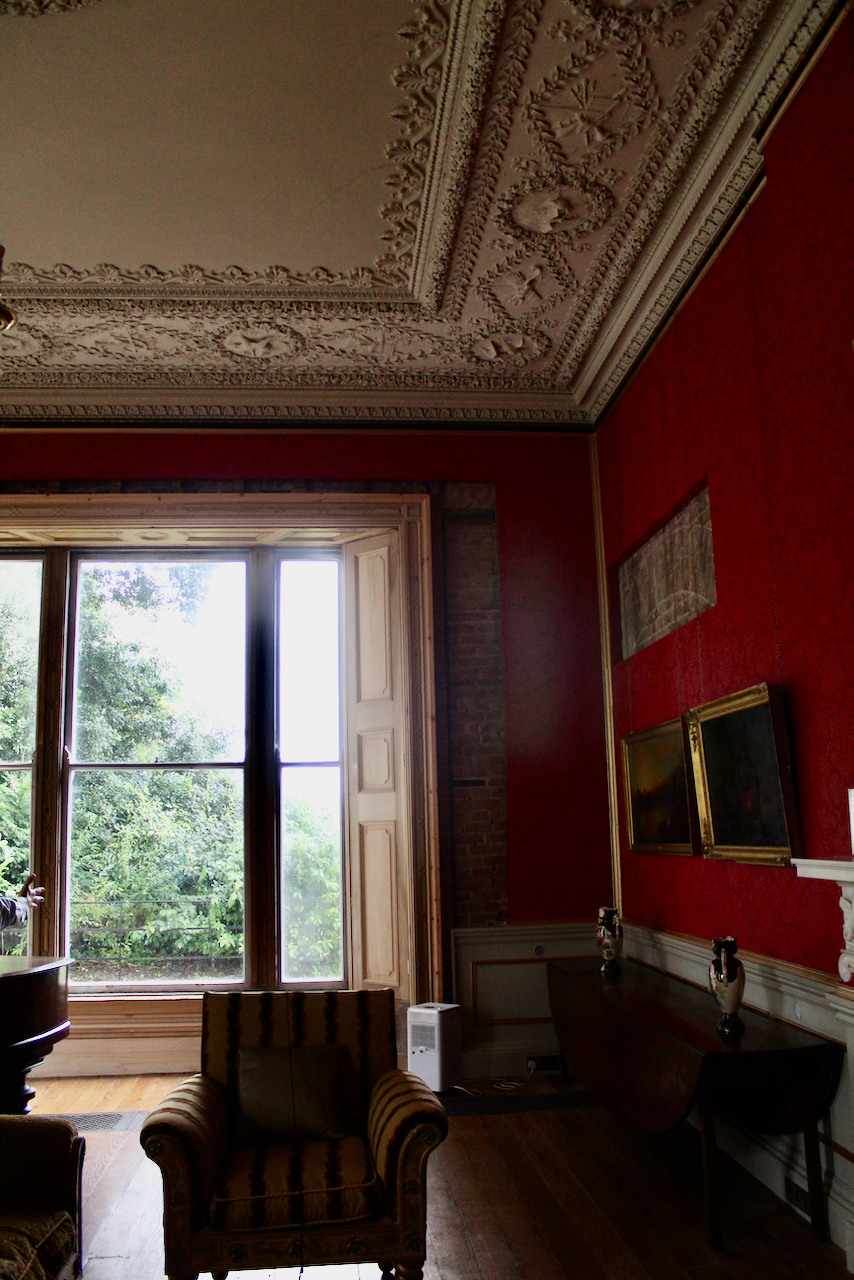
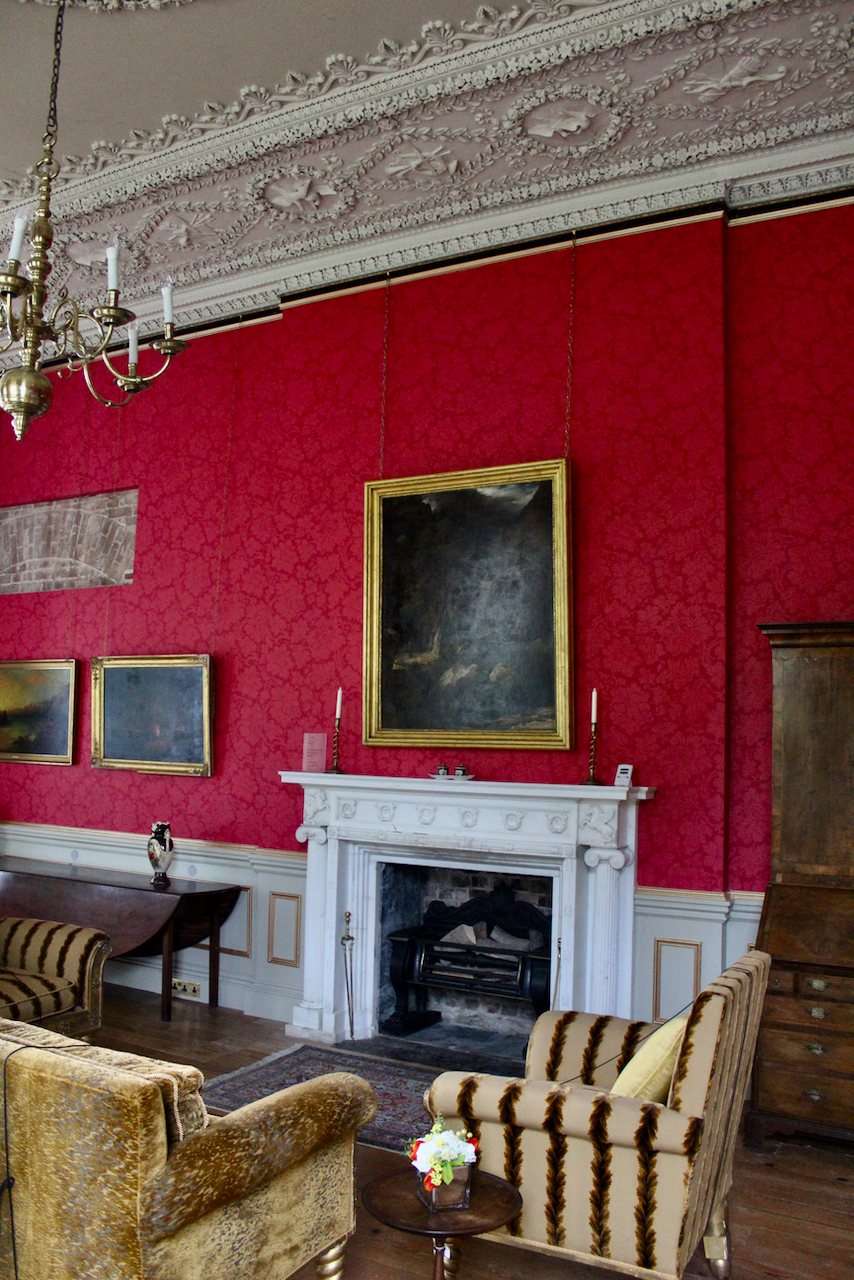
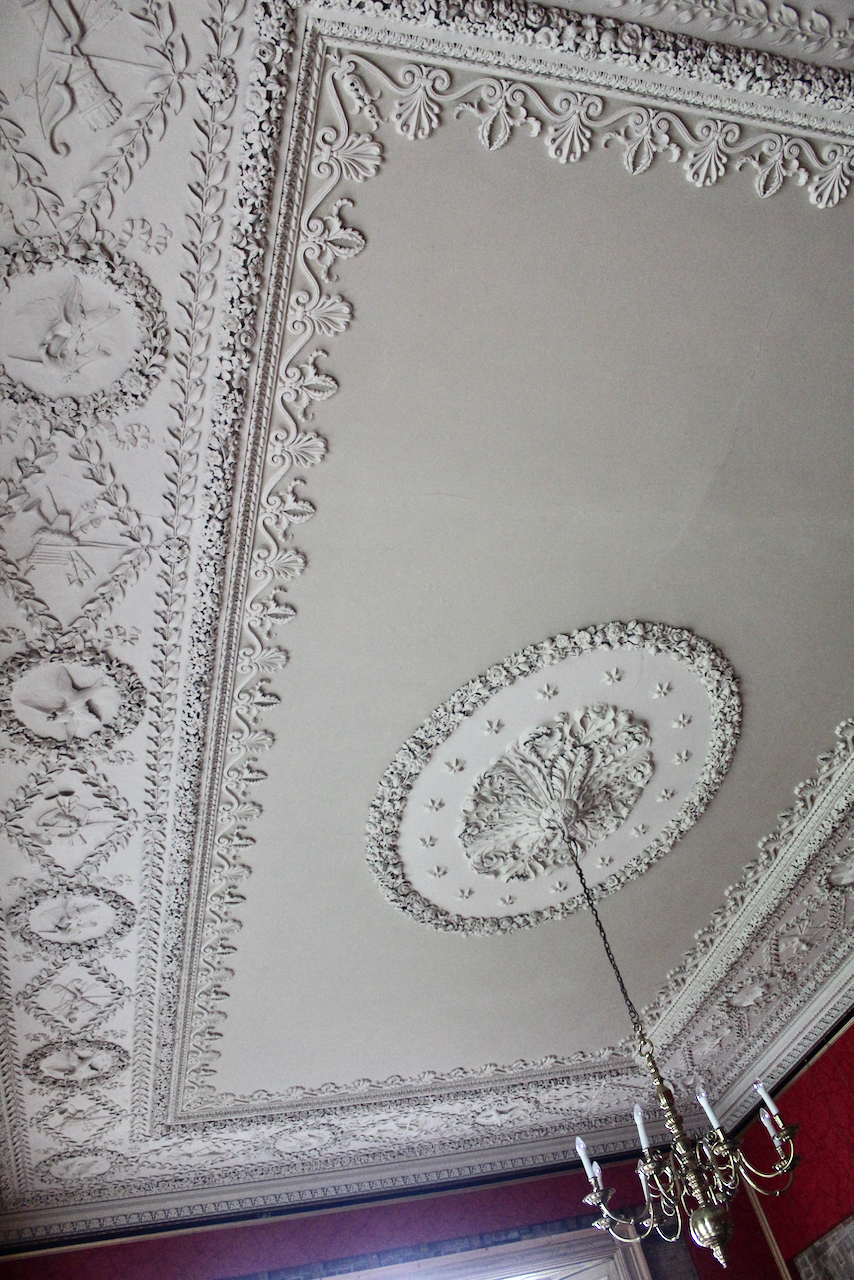
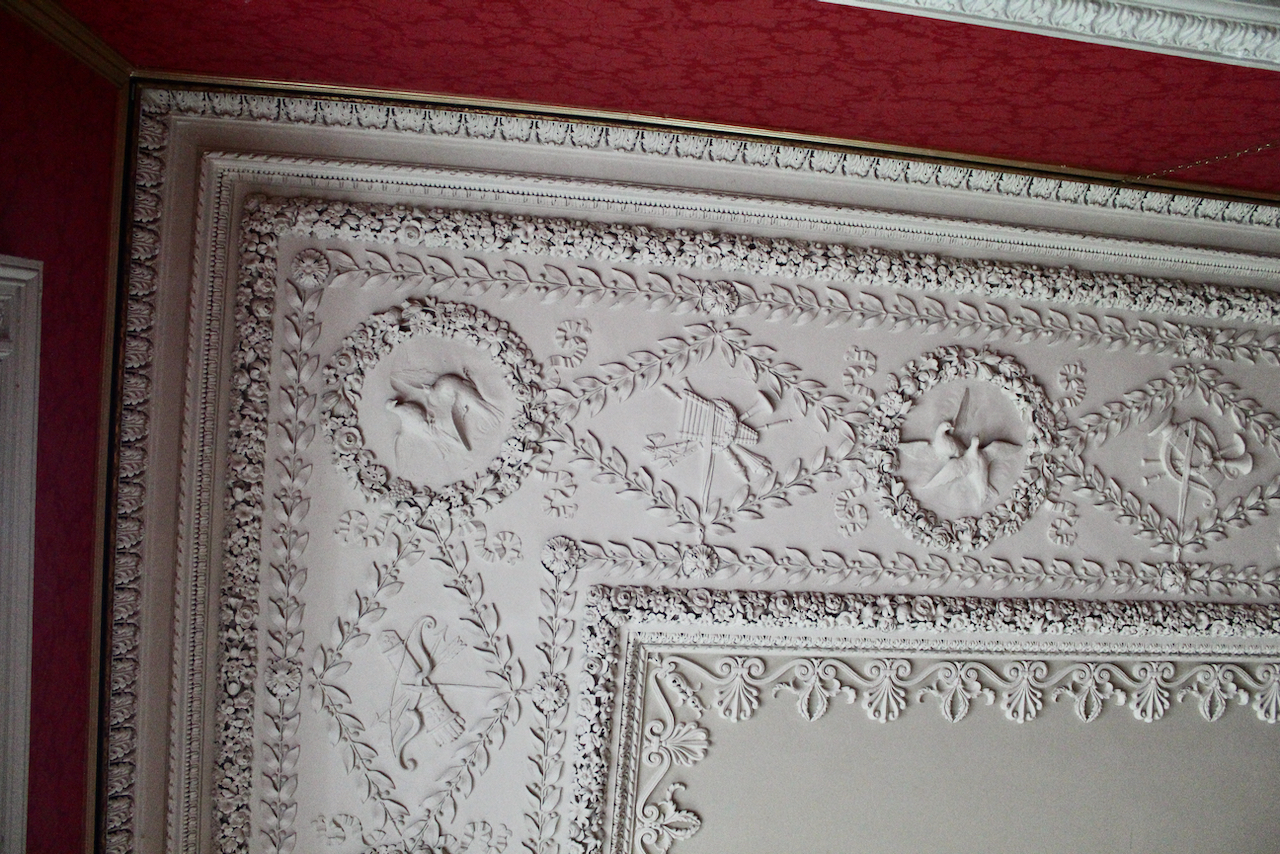
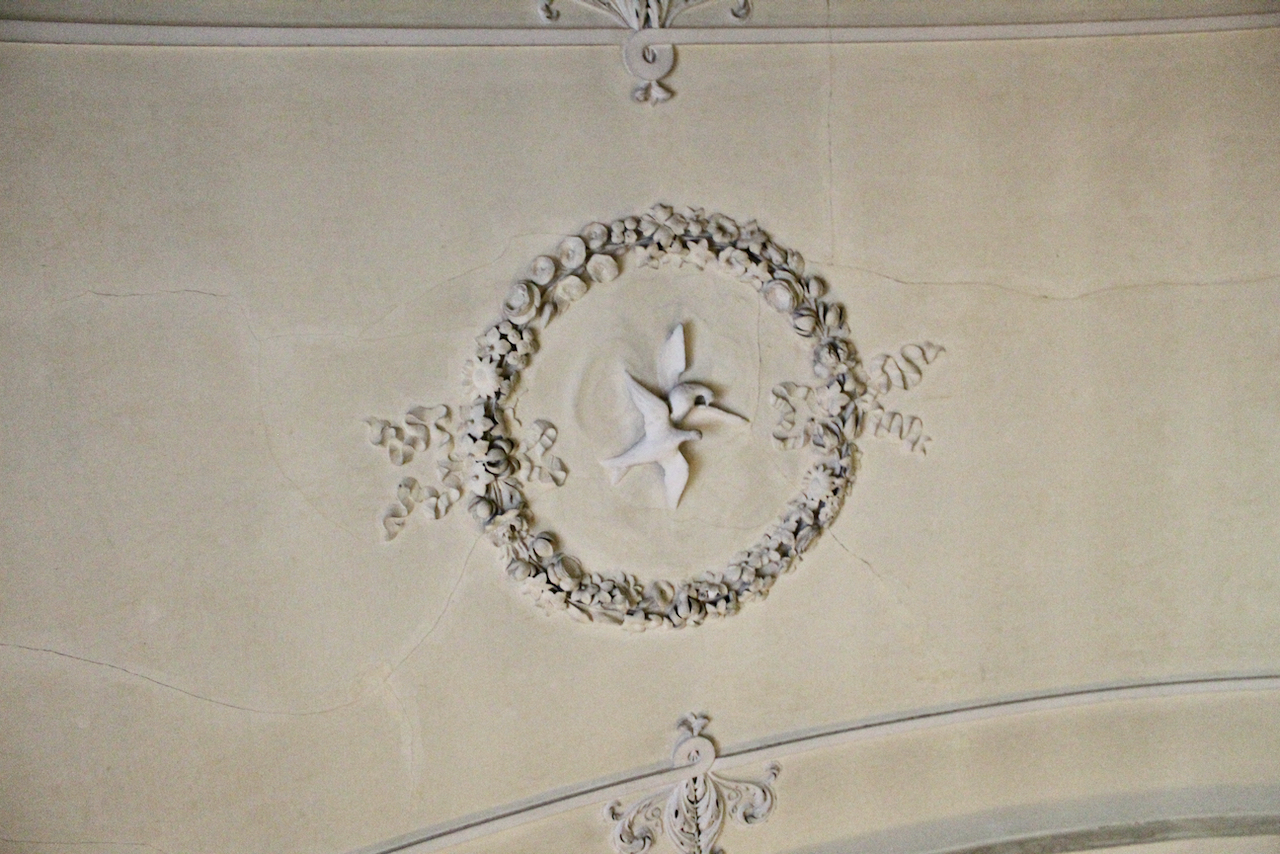
The Drawing Room Ceiling has deep borders with floral wreaths containing doves, alternating with lozenges of bay leaf containing Apollonian trophies of musical and hunting instruments. The drawing room and ante-room ceilings were added to in the 1890s with stencilwork and gilding by Sibthorpe & Son of Dublin.
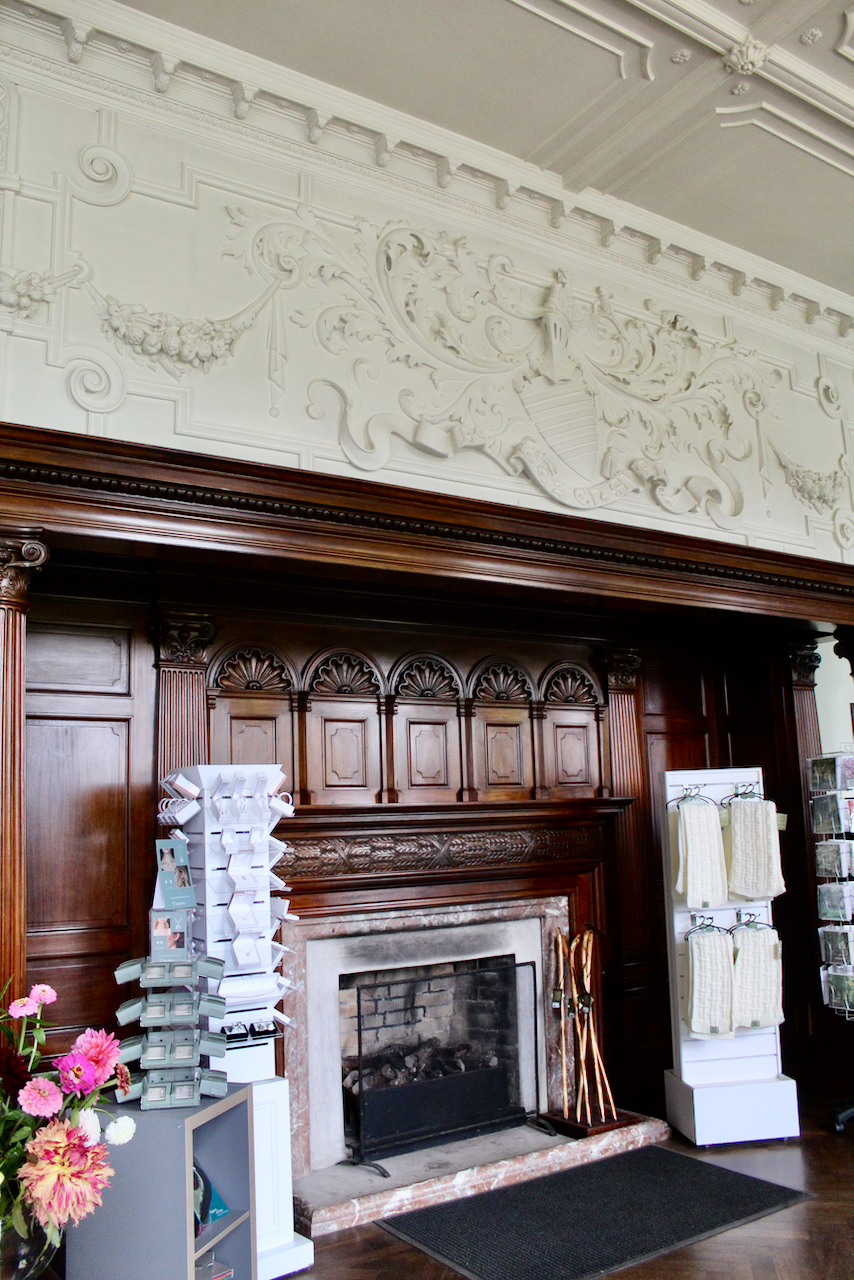
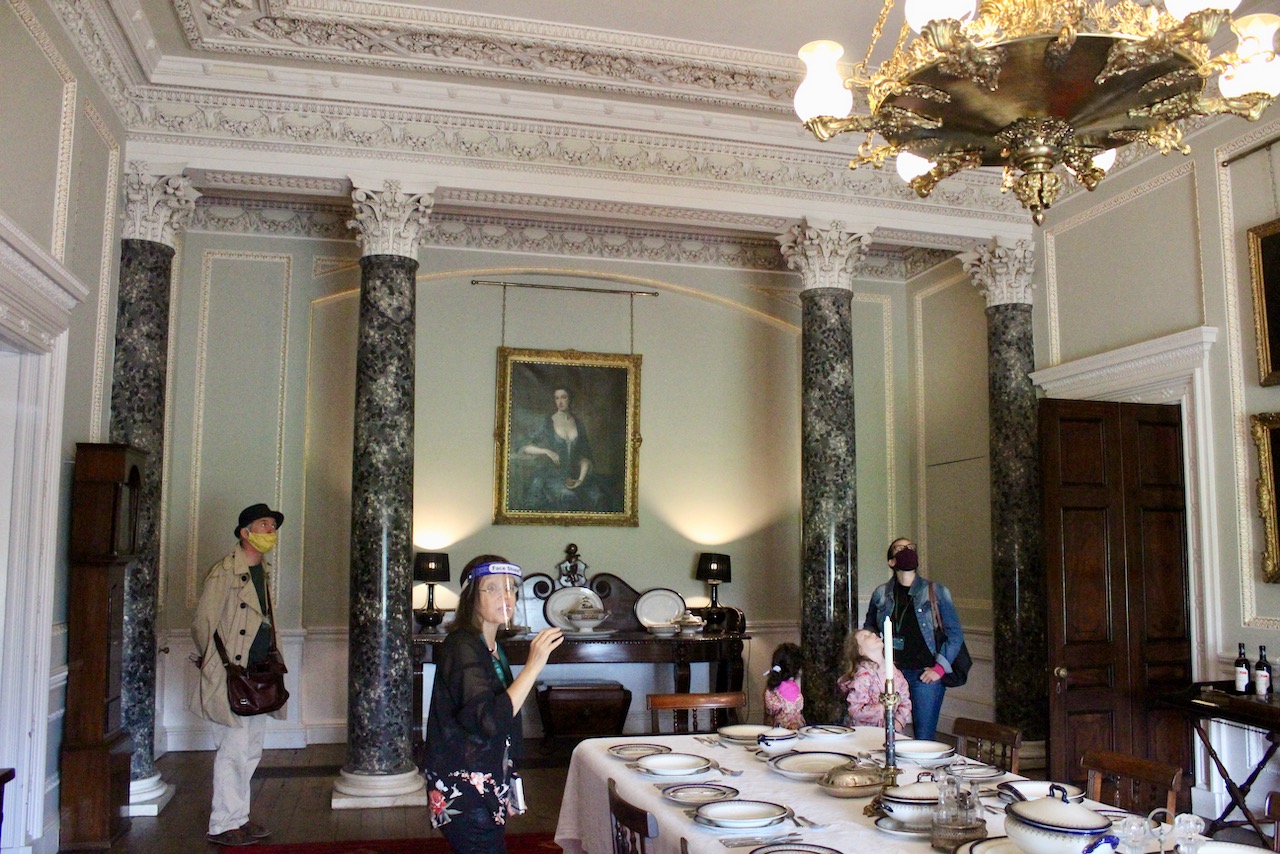
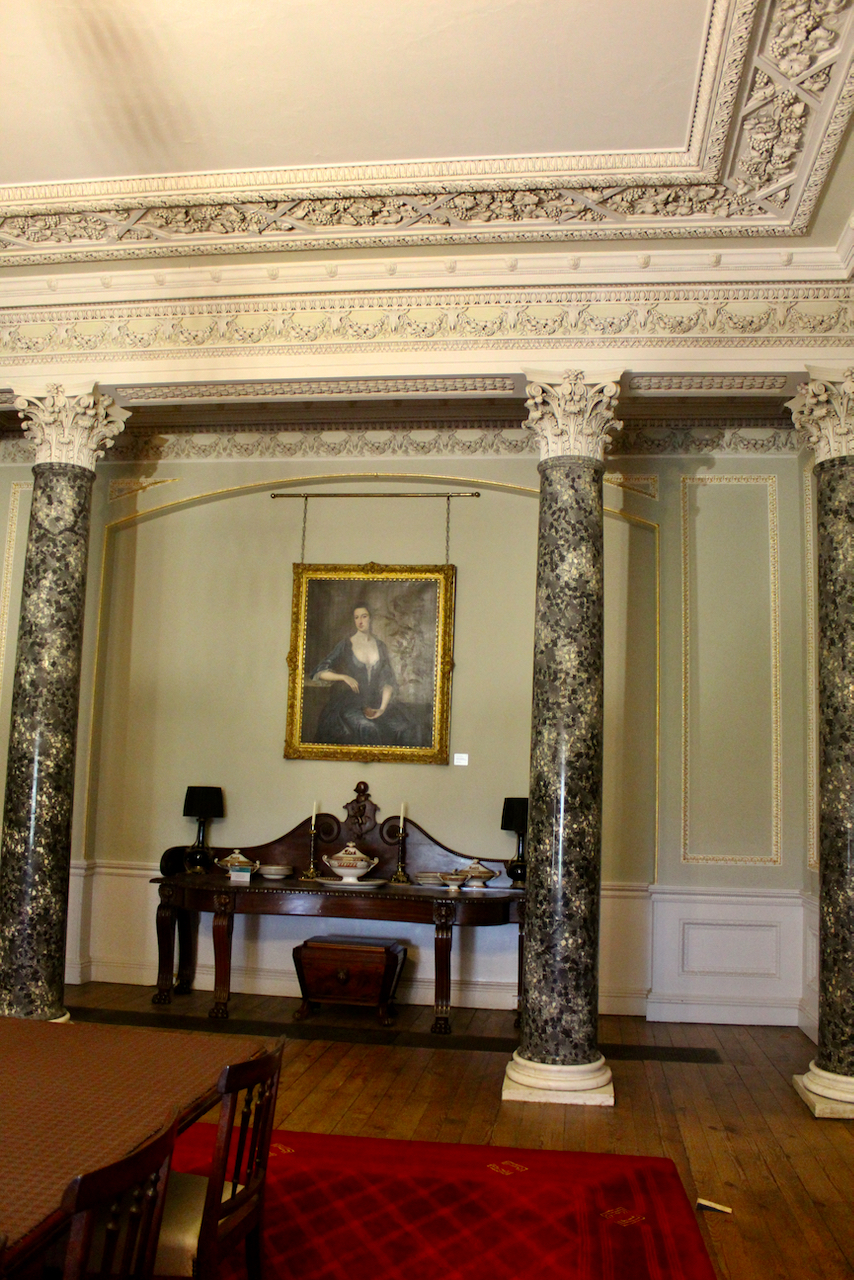
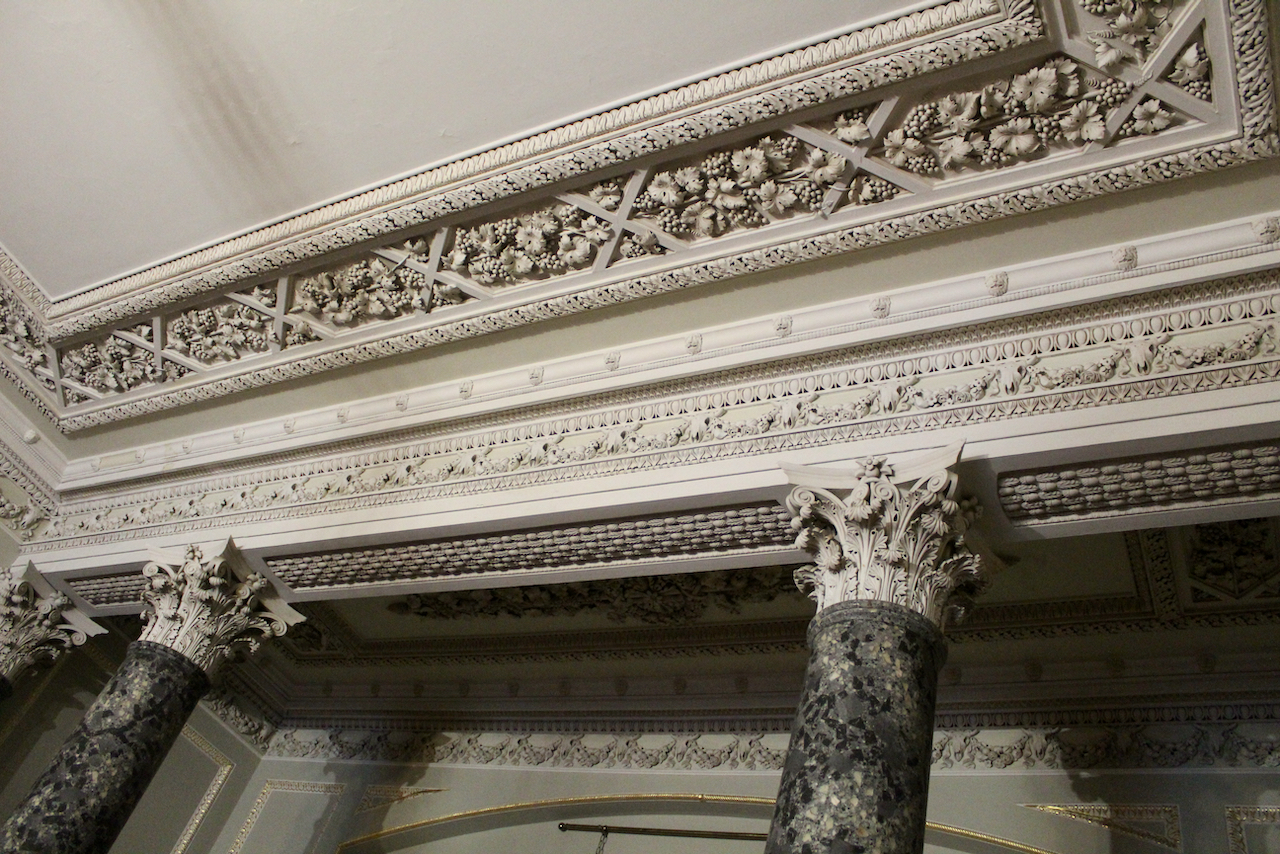
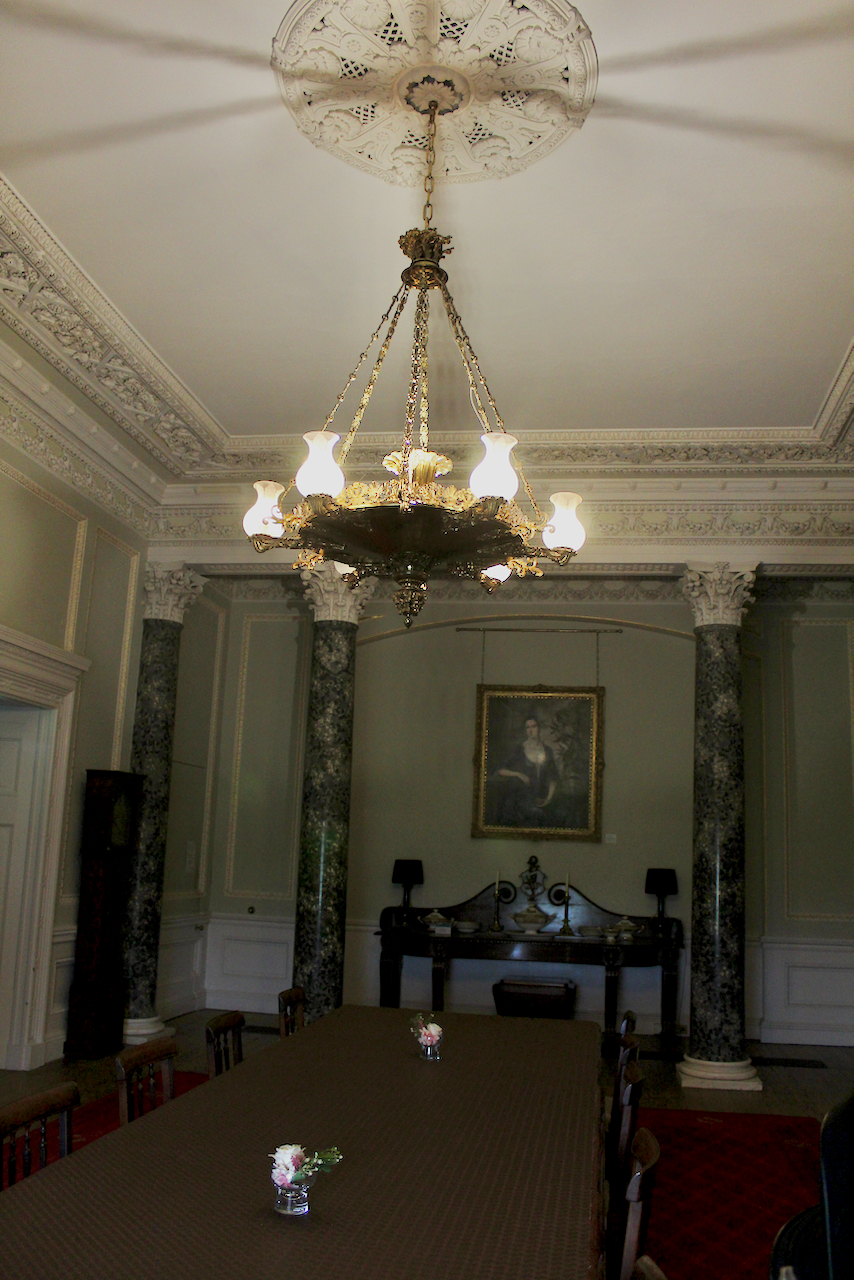
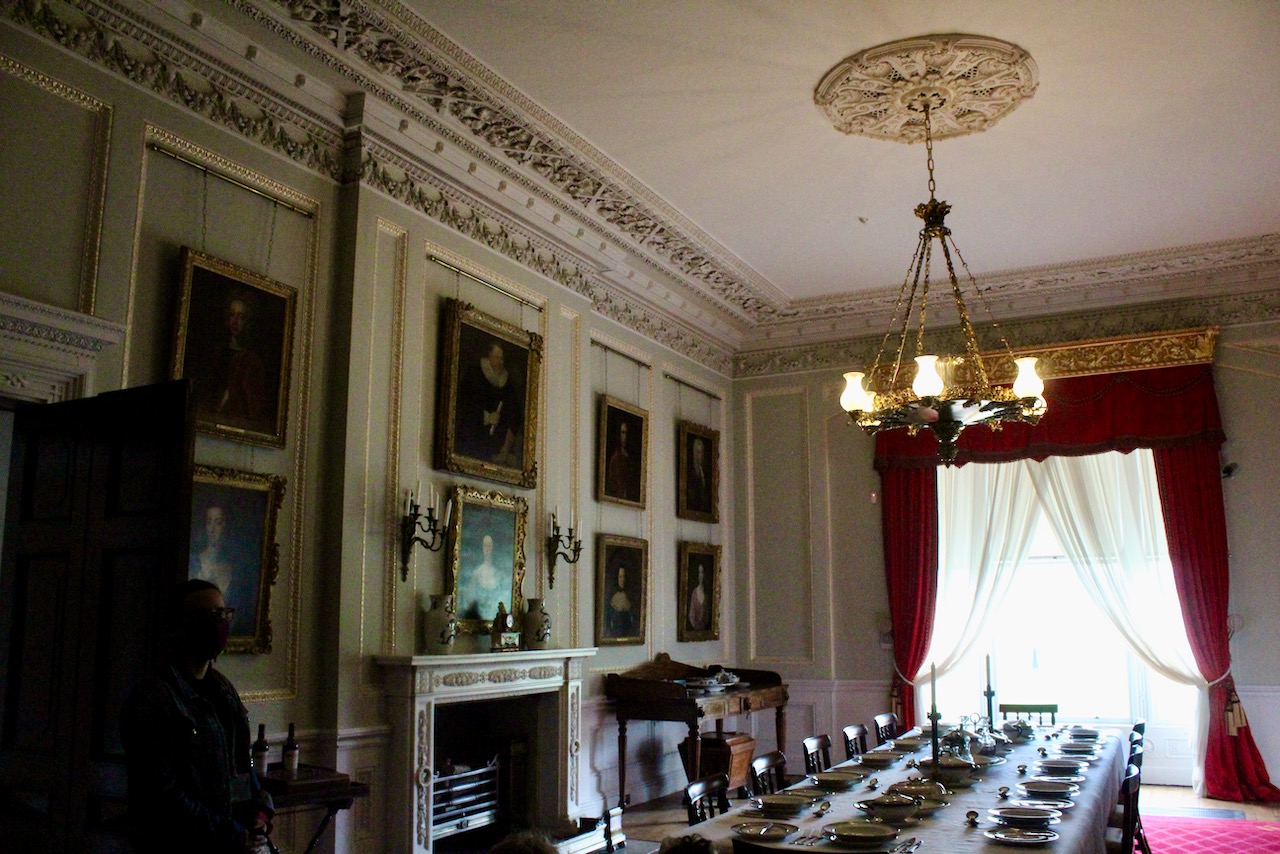
To the left of the hall is the Dining Room. It has a screen of grey scagliola Corinthian columns at the sideboard end, and rich plasterwork with a ceiling border of vines on a trellis ground and a frieze of bucrania draped with garlands.
The Fota website tells us: “Also on display in the main reception rooms is a fine collection of art work described as the most significant of its type outside the National Gallery of Ireland. Masterpieces of the eighteenth-century Irish Landscape School include works by William Ashford (1746-1824); George Barret (1730-84); Robert Carver (c.1730-91); and Thomas Roberts (1748-78). Nineteenth-century art is represented by Daniel Maclise (1806-70); Erskine Nicol (1825-1904); and James Arthur O’Connor (1792-1841). An entire room is dedicated to Irish watercolours and features the work of Mildred Anne Butler (1858-1941); Hugh Douglas Hamilton (c.1740-1808); and George Petrie (1790-1866).” [6]
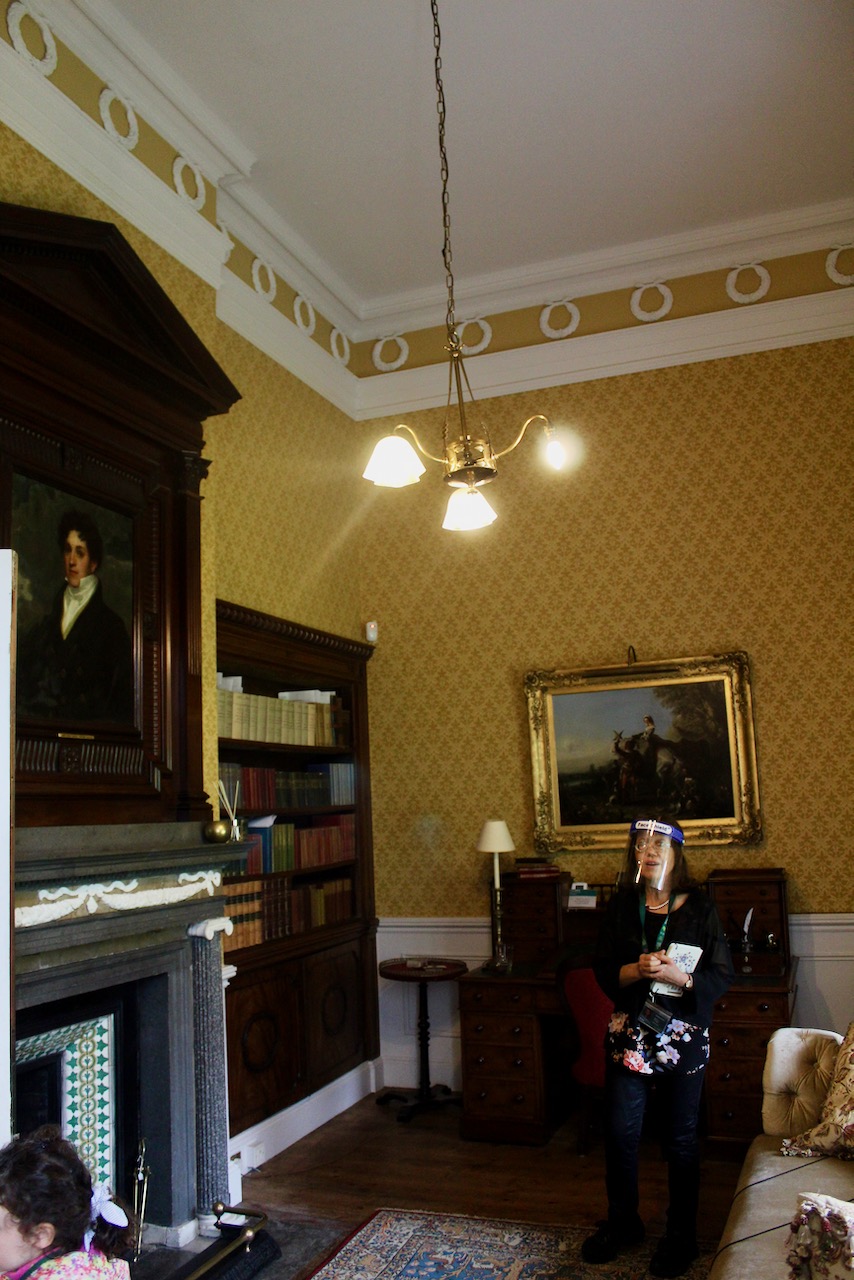
At the back of the house is the study, which extends into one of the bows. It has a simple frieze of wreaths.
John and his wife Eliza née Courtenay had several children. A younger son, Captain Richard Hugh Smith-Barry, inherited Ballyedmond, County Cork, from his mother’s brother John Courtenay.
Captain Richard Hugh Smith-Barry (1823-1894).
The oldest son, James Hugh Smith-Barry (1816-1856), inherited Fota and also Marbury Hall in Cheshire. He served as Deputy Lieutenant, Justice of the Peace and High Sheriff of County Cork. He married Elizabeth Jacson of Cheshire. After her husband died, she married George Fleming Warren, 2nd Baron de Tabley of Tabley House, County Chester.
Arthur Hugh Smith-Barry (1843-1925), the oldest son of James and Elizabeth, inherited Fota and also Marbury Hall. He too served as Deputy Lieutenant, Justice of the Peace and High Sheriff of County Cork as well as Member of Parliament (M.P.) (Conservative) for County Cork between 1867 and 1874. He held the office of Member of Parliament (M.P.) (Conservative) for South Huntingdonshire in England between 1886 and 1900. In 1902 he was created 1st (and last) Baron Barrymore of County Cork.
Arthur’s younger brother James Hugh Smith-Barry (1845-1927) married Charlotte June Cole, daughter of William Willoughby Cole, 3rd Earl of Enniskillen, of Florence Court, County Fermanagh (see my entry for places to see in County Fermanagh). A daughter, Geraldine, married Colonel Henry Verney, 18th Lord Willoughby de Broke, and Maude married Richard Alexander Oswald.
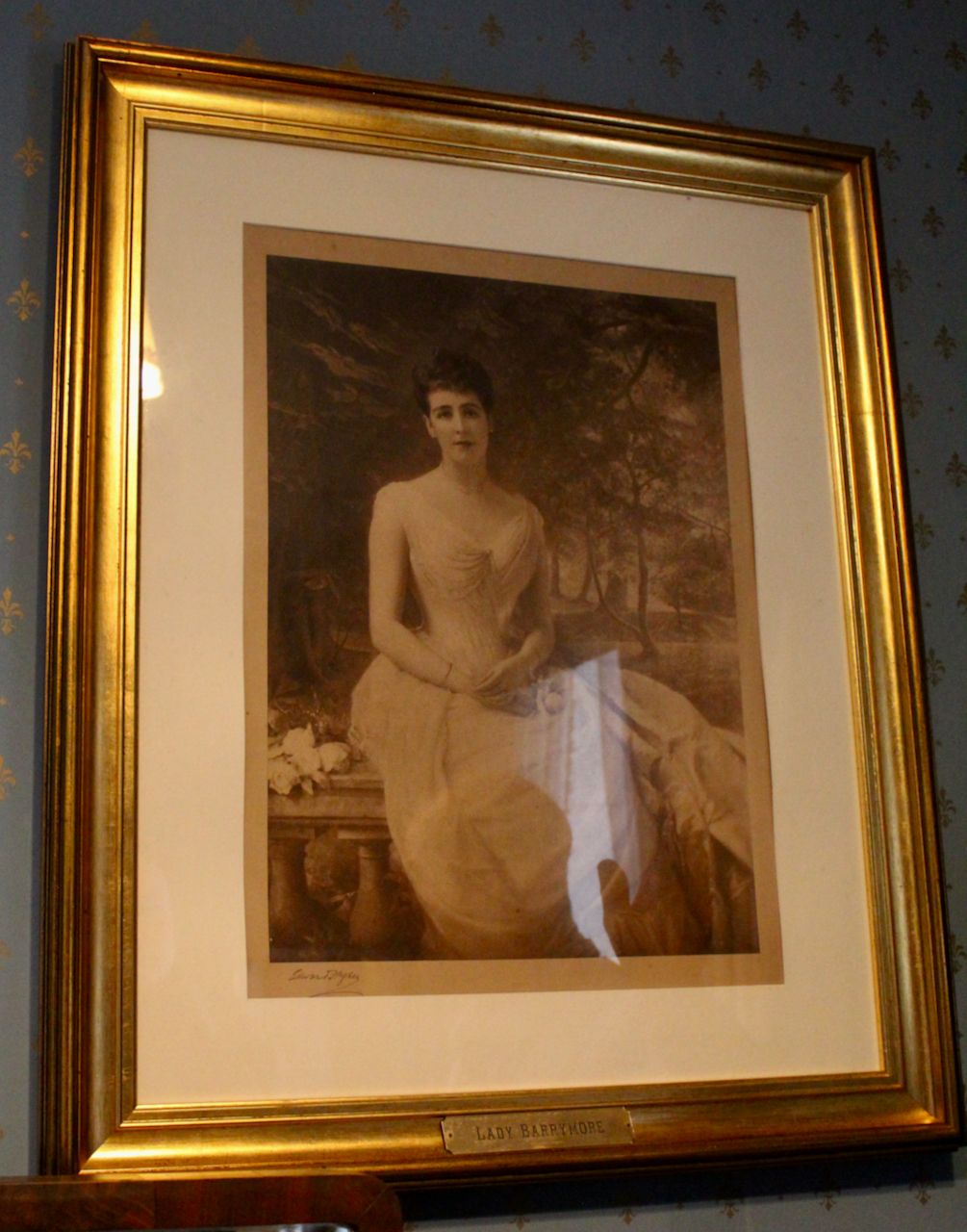
Arthur married twice. First he married Mary Frances Wyndham-Quin in 1868, daughter of Edwin Richard Wyndham-Quin, 3rd Earl of Dunraven and Mount-Earl, of Adare Manor in County Limerick. She died in 1884 and their only son died when less than one year old. Arthur married secondly Elizabeth Wadsworth, widow of Arthur Post, daughter of an American General James Samuel Wadsworth.
They had a daughter, Dorothy (1894-1975), who purchased Fota. The Landed Families website tells us:
“As the elder son, Arthur inherited the Marbury and Fota estates, and also had a town house in London. As a largely absentee landlord and politician in the forefront of resistance to land reform, his estates became a particular focus for agitation by the National League, and his agents were threatened with physical violence. He had two daughters but no surviving son, so the peerage died with him and the Fota and Marbury estates passed under an entail to his younger brother’s son, Col. Robert Raymond Smith-Barry (1886-1949). Col. Smith-Barry, who made a notable contribution to air warfare during the First World War by establish a system for the rigorous training of pilots, also inherited property in Wiltshire from his father. He sold Marbury Hall in 1932 for conversion into a country club, and in 1939 he sold Fota and the family’s Huntingdonshire estate to Lord Barrymore’s younger daughter, Mrs. Dorothy Bell (1894-1975). After the Second World War he moved to South Africa, where he died in 1949. Mrs Bell remained the enthusiastic custodian of Fota until her death in 1975, when her heirs sold the estate to University College, Cork.“
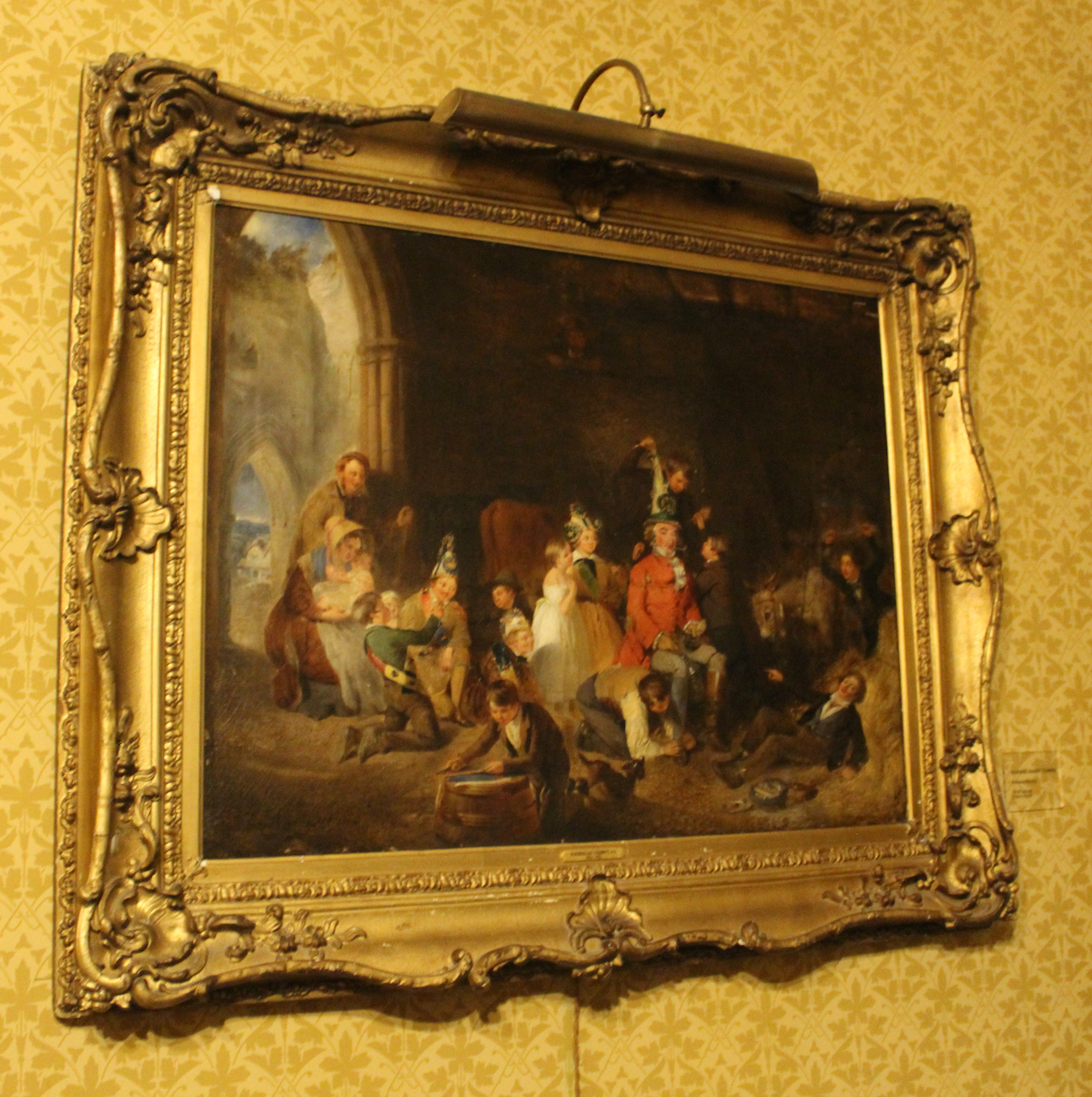
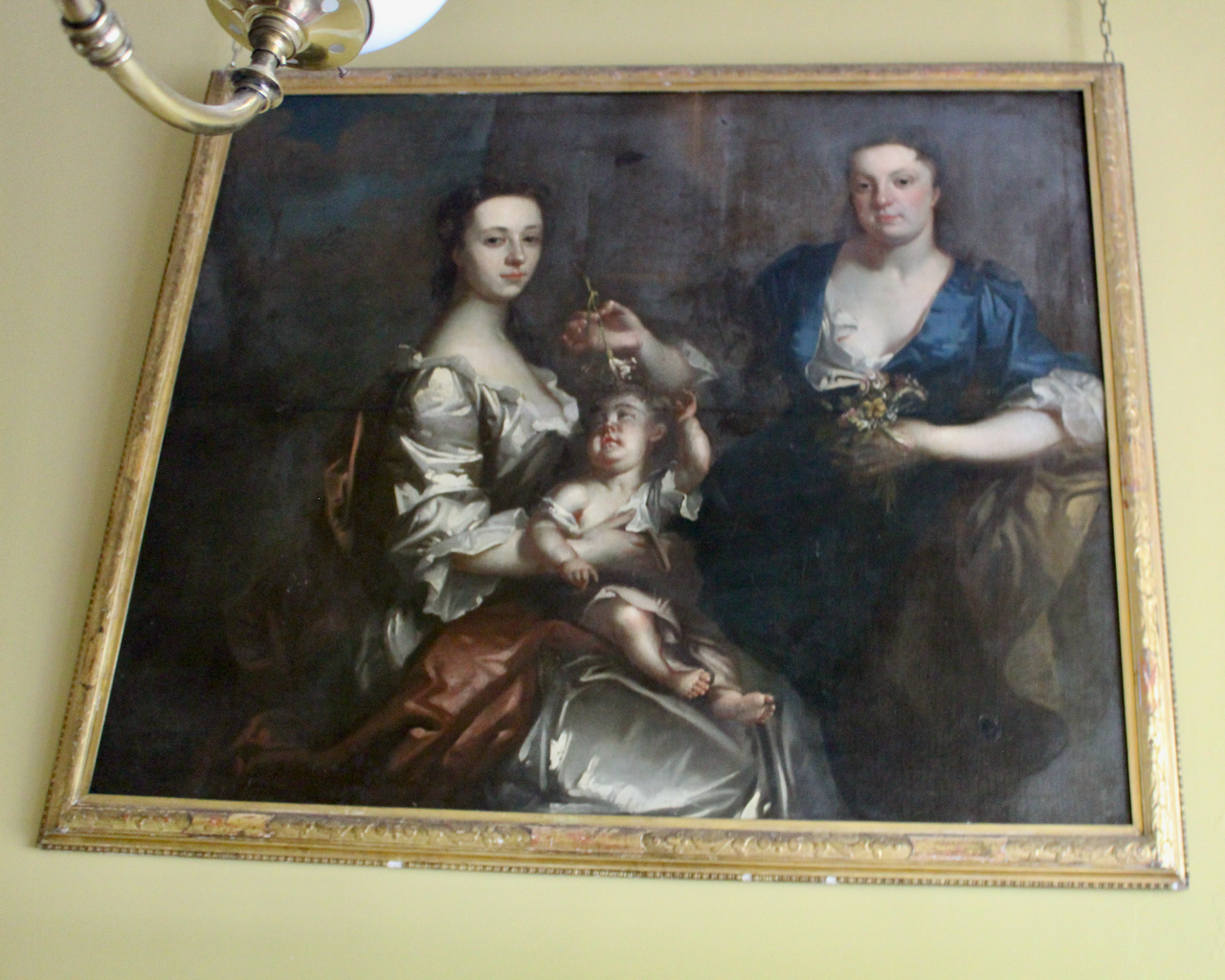
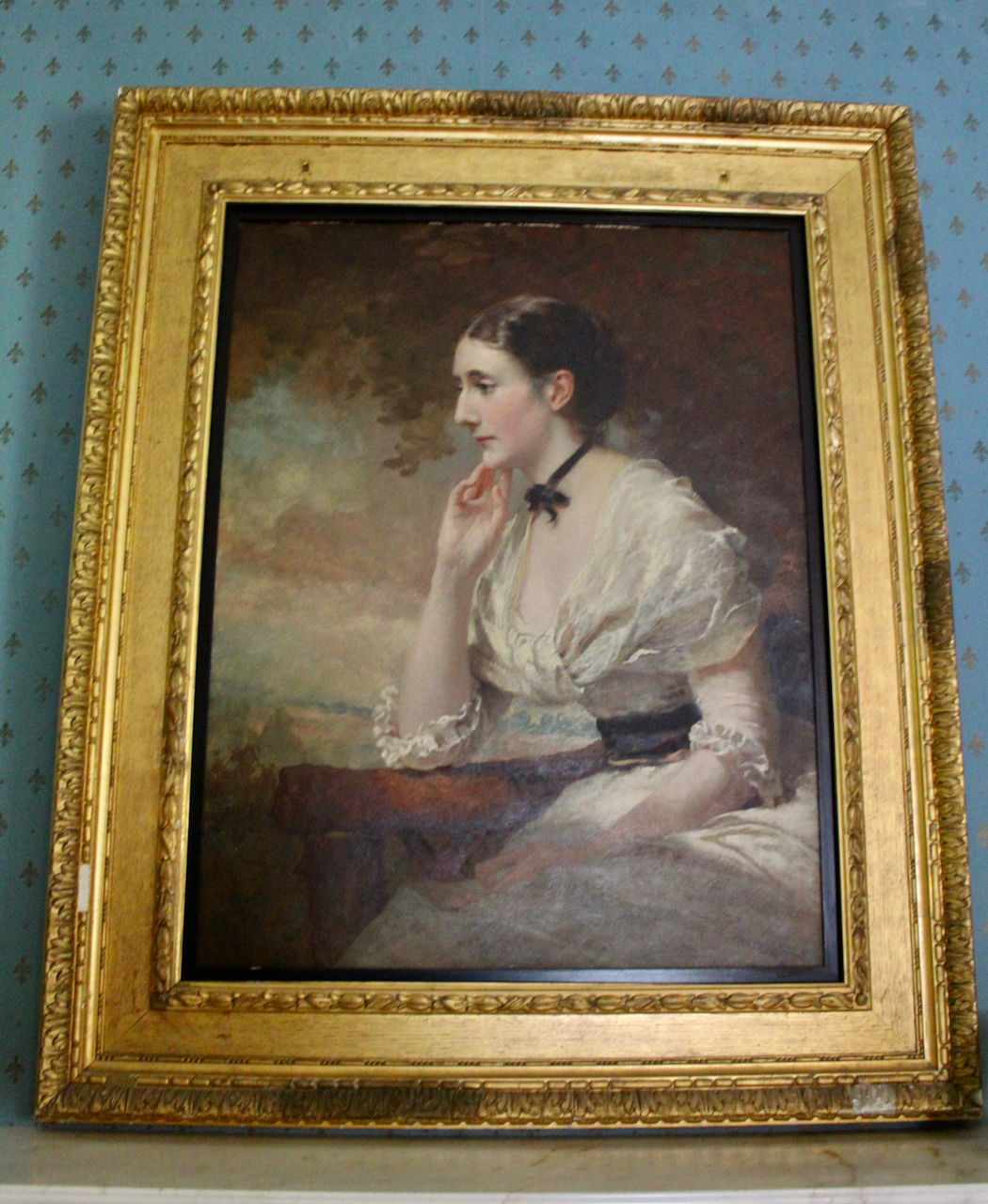
A painting at Fota.
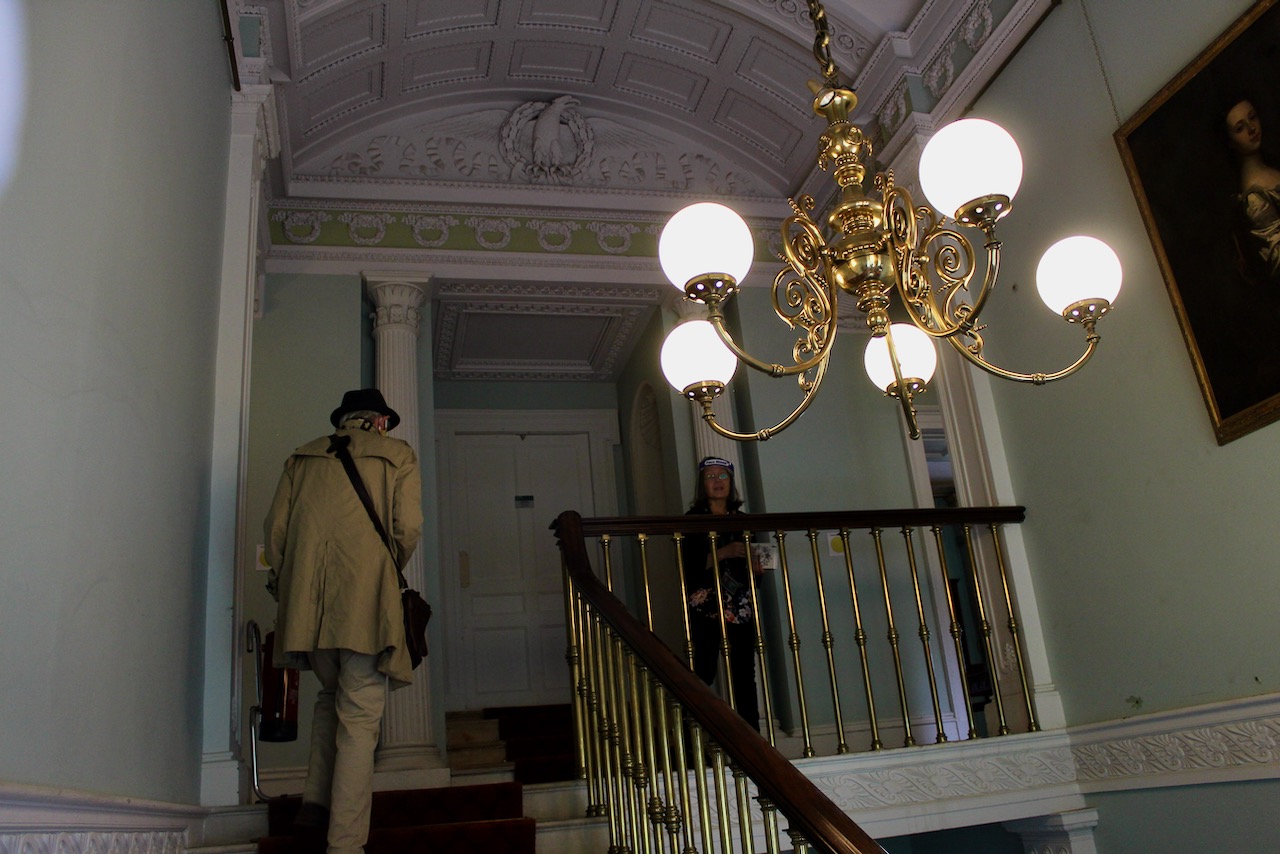
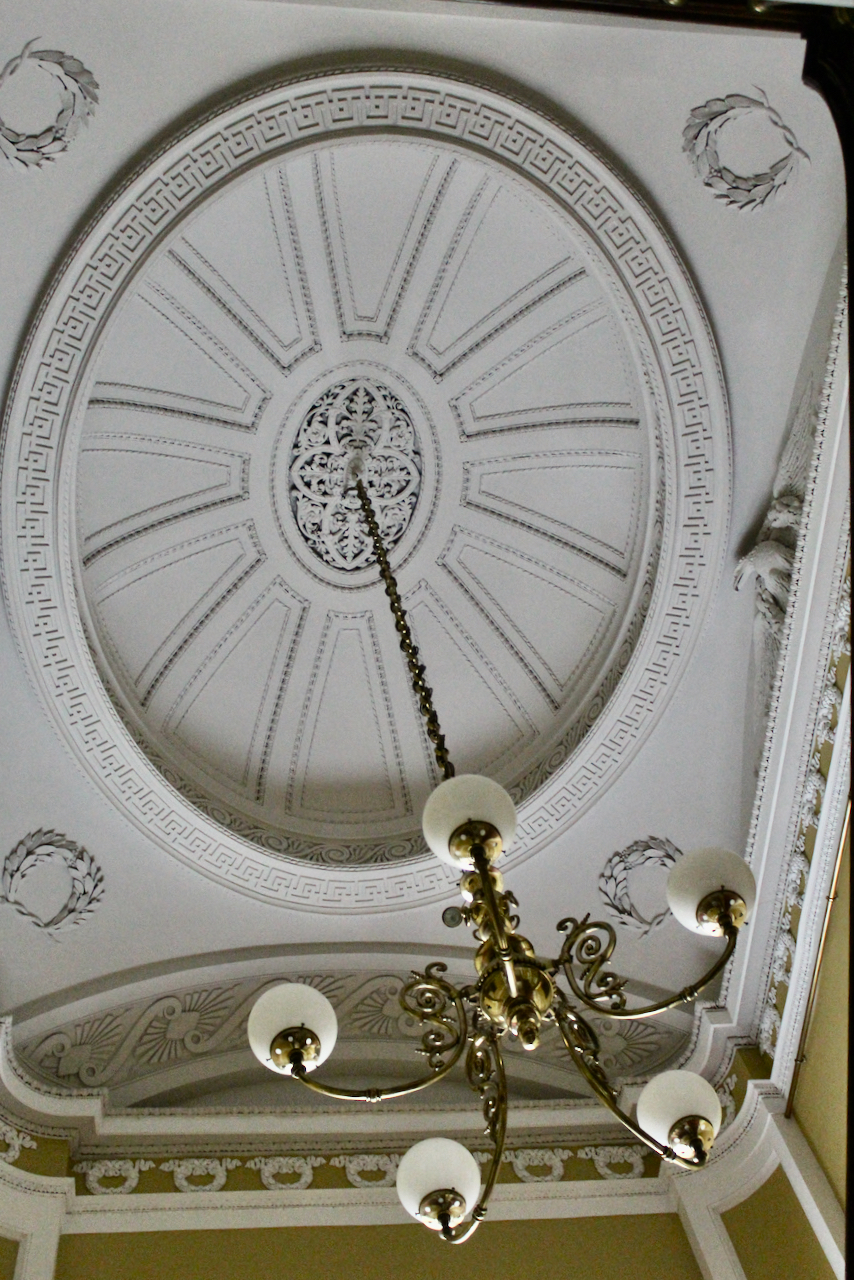
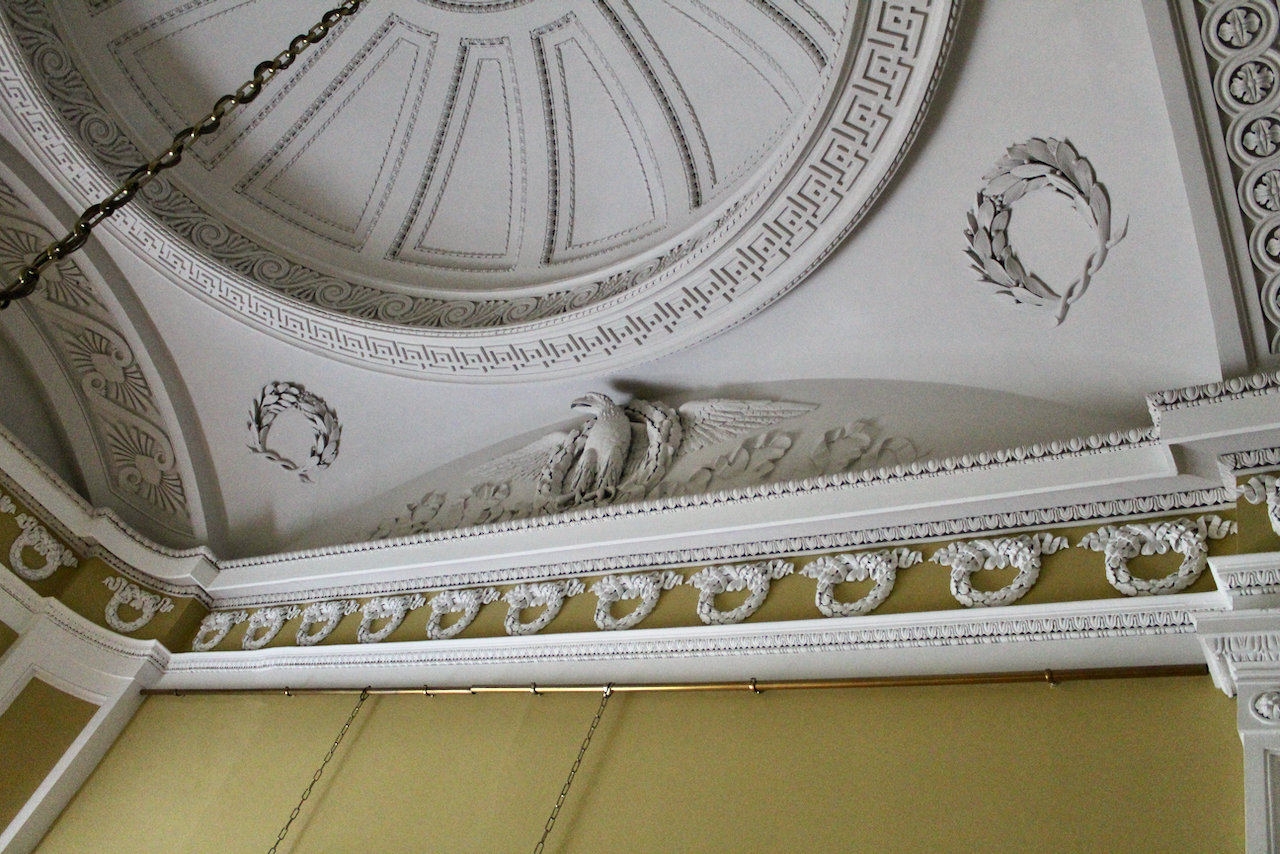
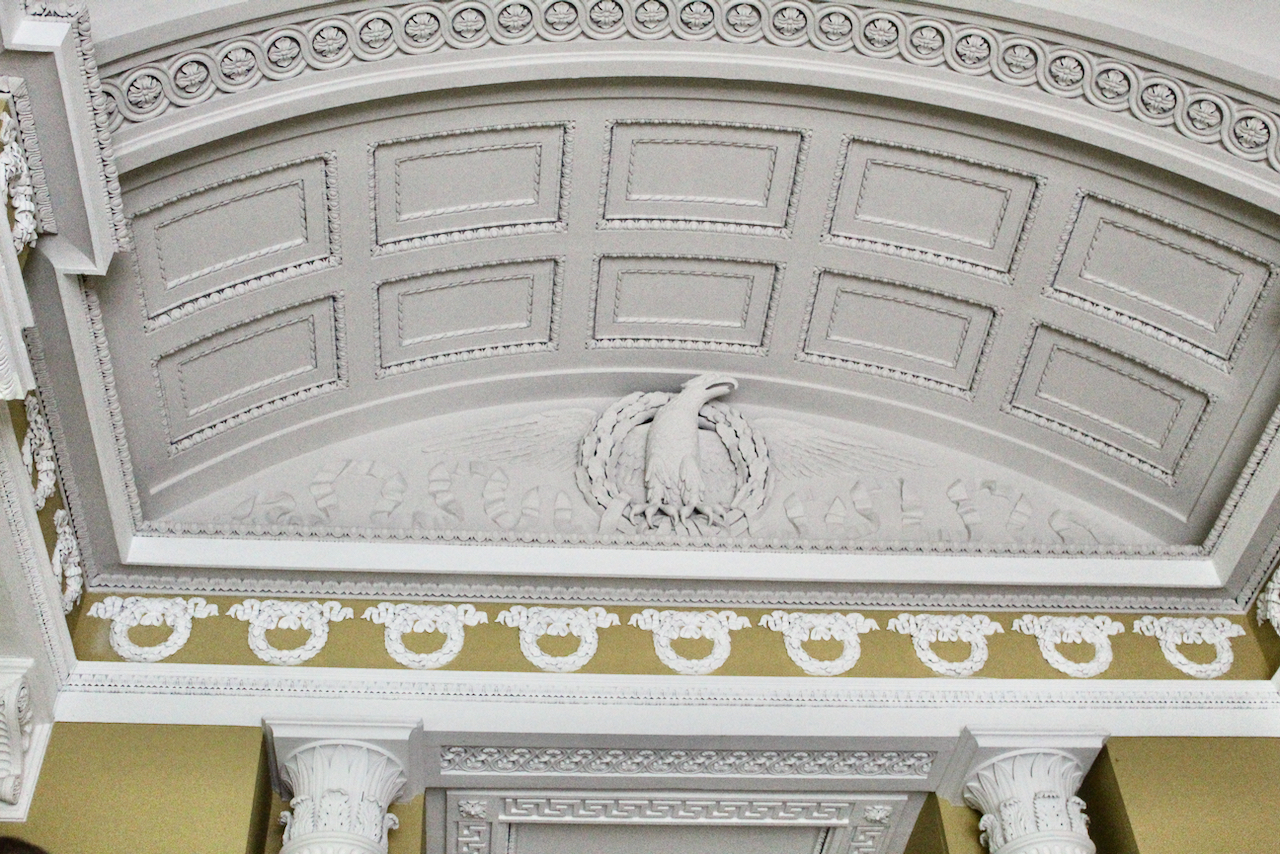
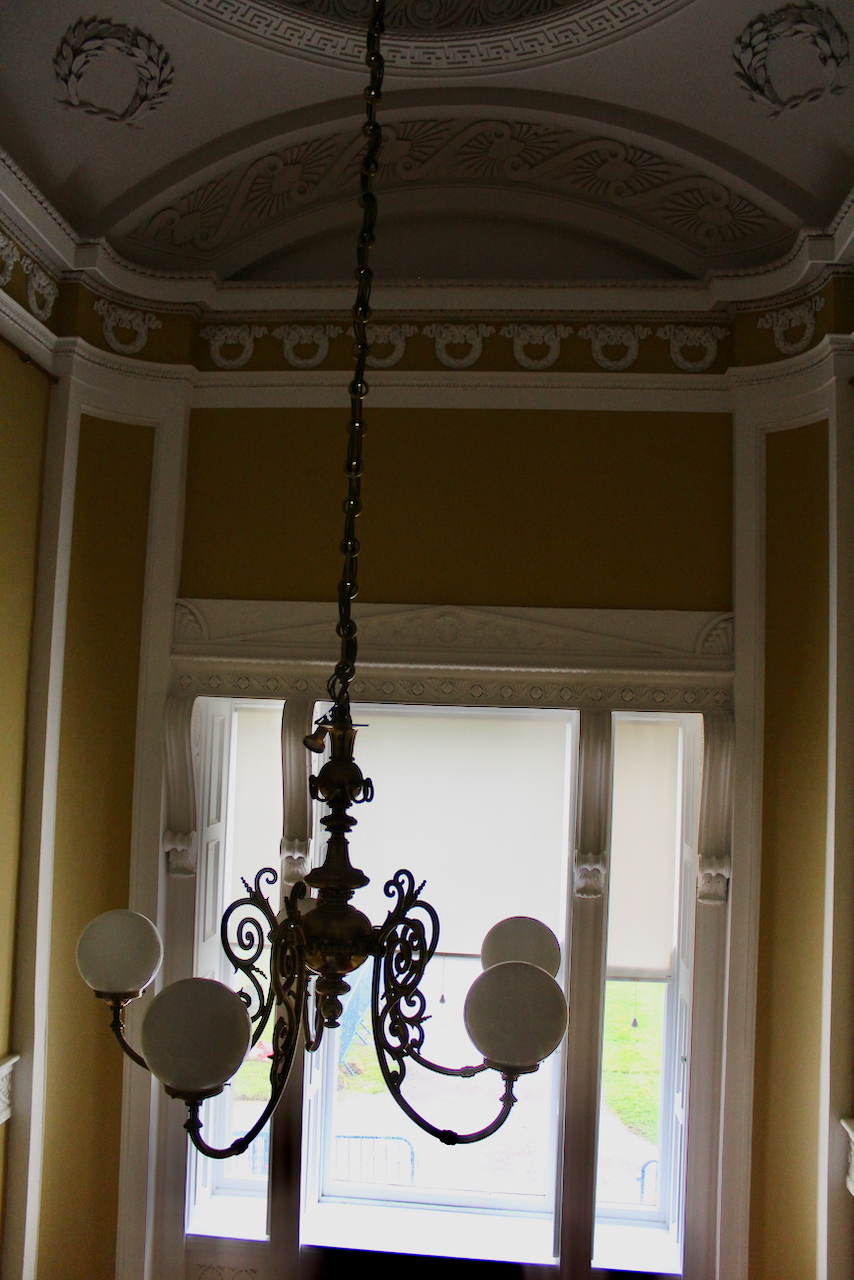
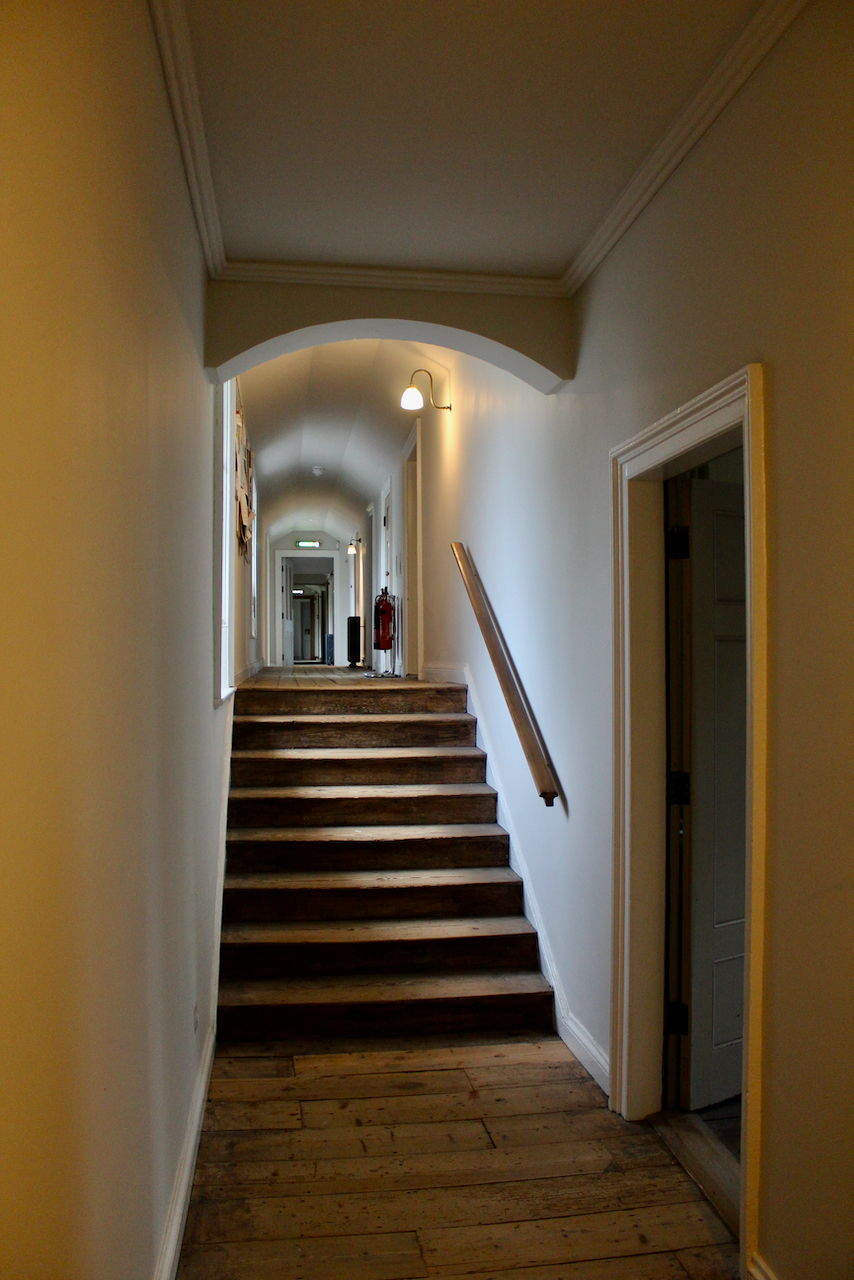
Bence-Jones continues: “A doorway opposite the entrance door leads into the staircase hall, which is of modest size, being the staircase hall of the original house; but it has been greatly enriched with plasterwork. The ceiling is domed, with wreaths on the pendentives and eagles in the lunettes; there is a frieze of wreaths and at the head of the stairs two fluted Tower of Winds columns frame an enchanting vista to a second and smaller staircase, leading up to the top storey.” The stairs are of cantilevered Portland stone, with brass balusters and a mahogany handrail.
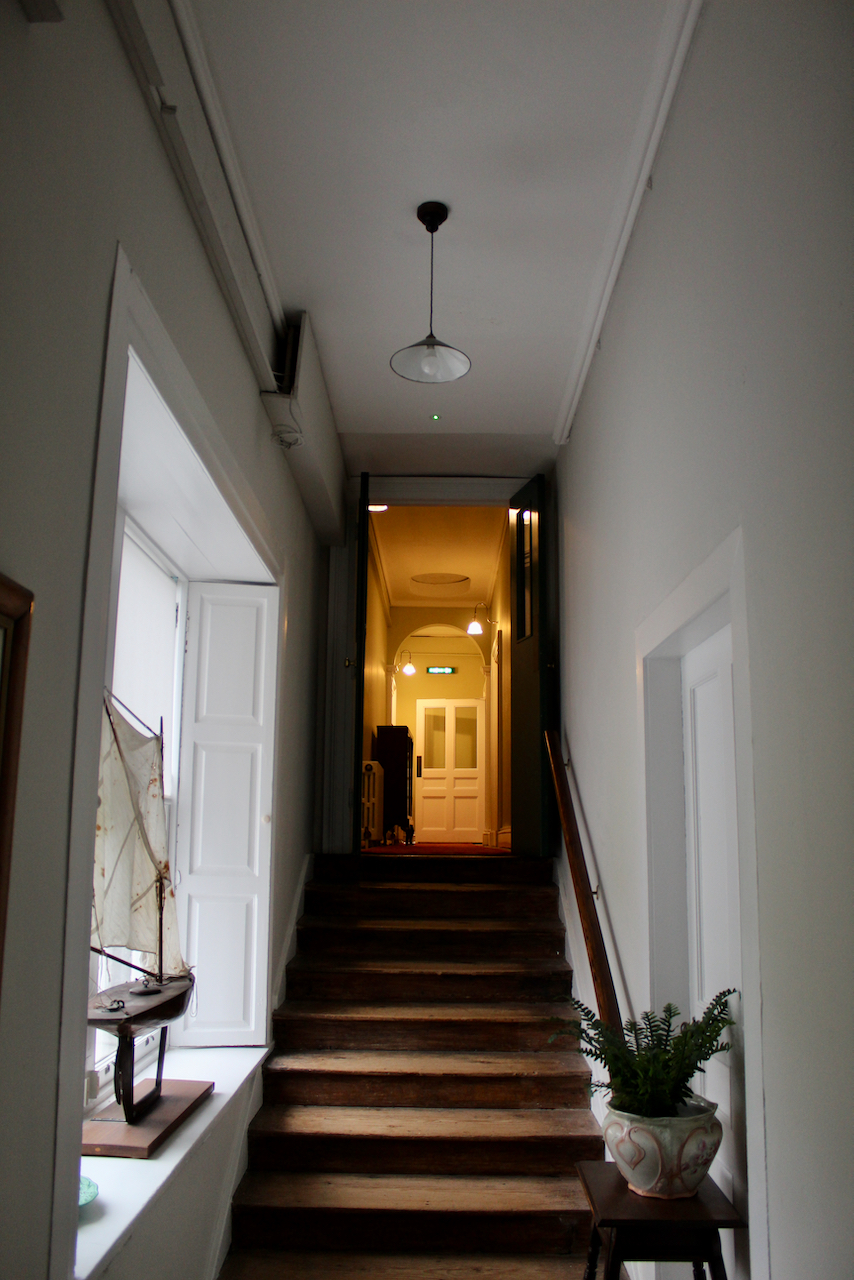
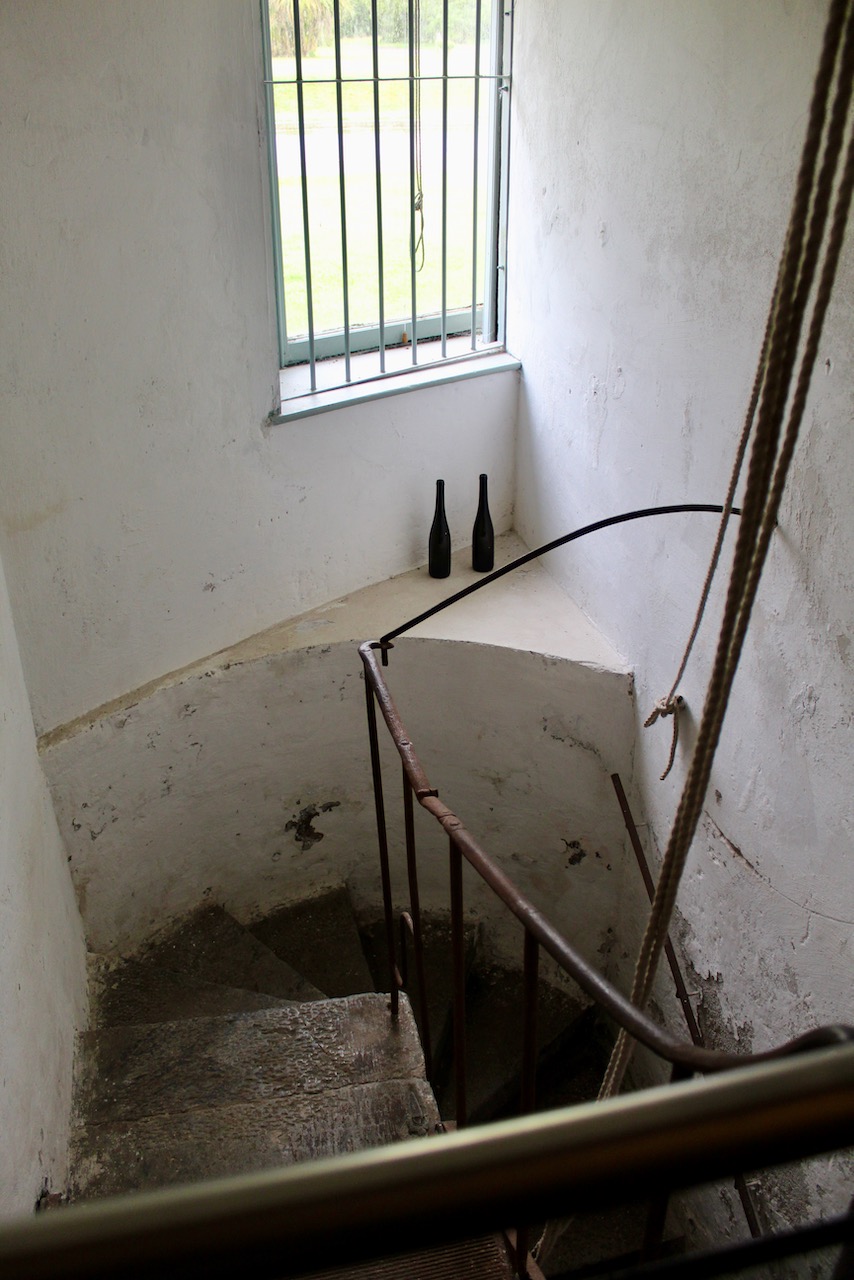
At the top of the stairs is a small recess, leading up to the secondary stair, with a pair of shell-headed niches, a Greek-key border and a pair of Tower of the Winds columns.
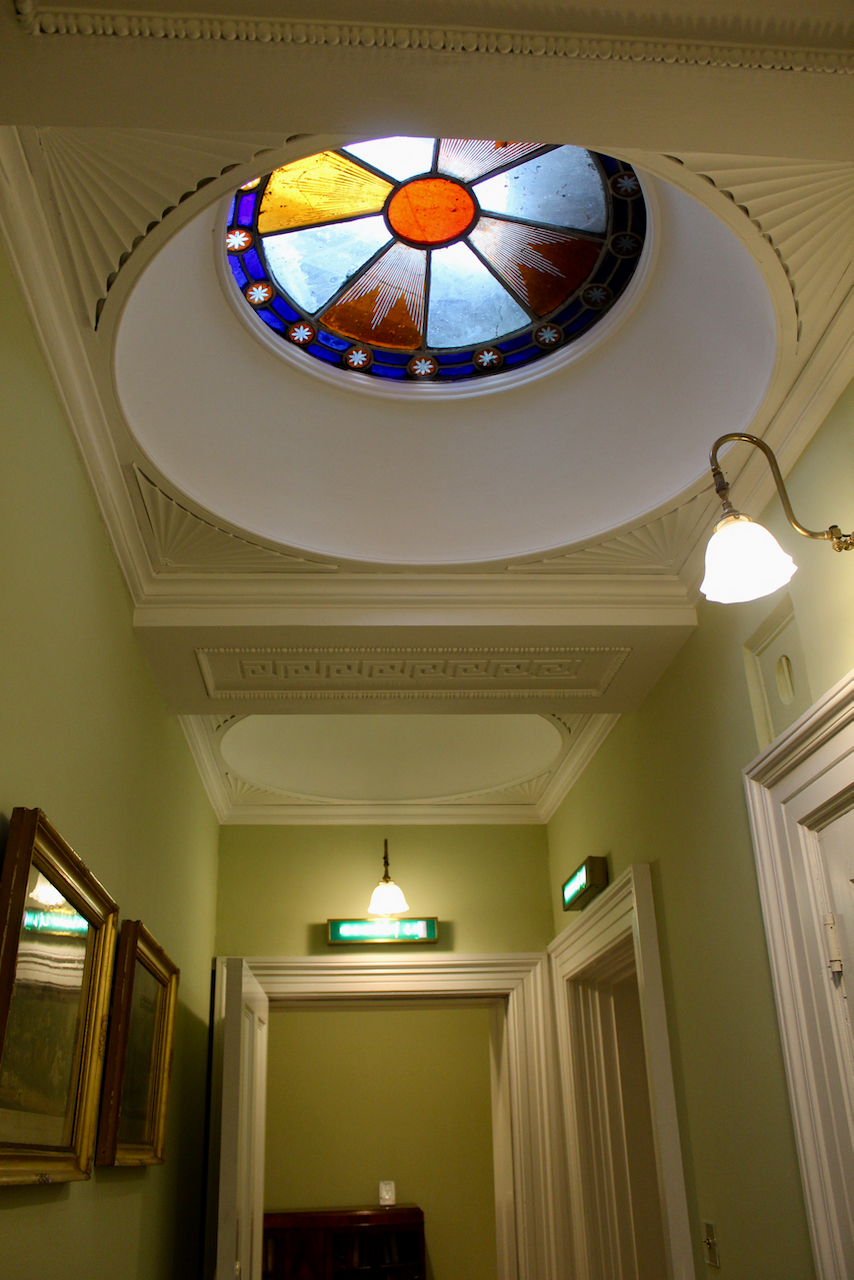
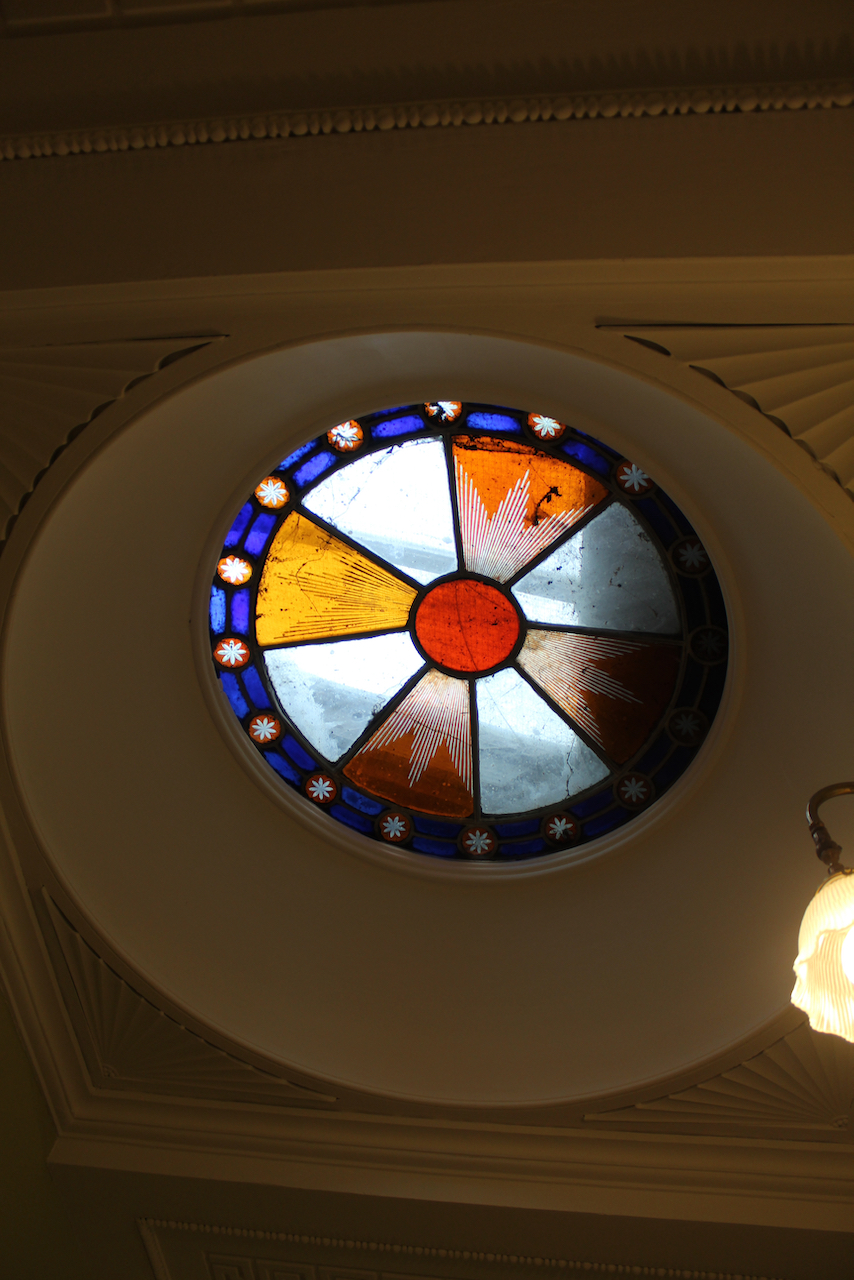
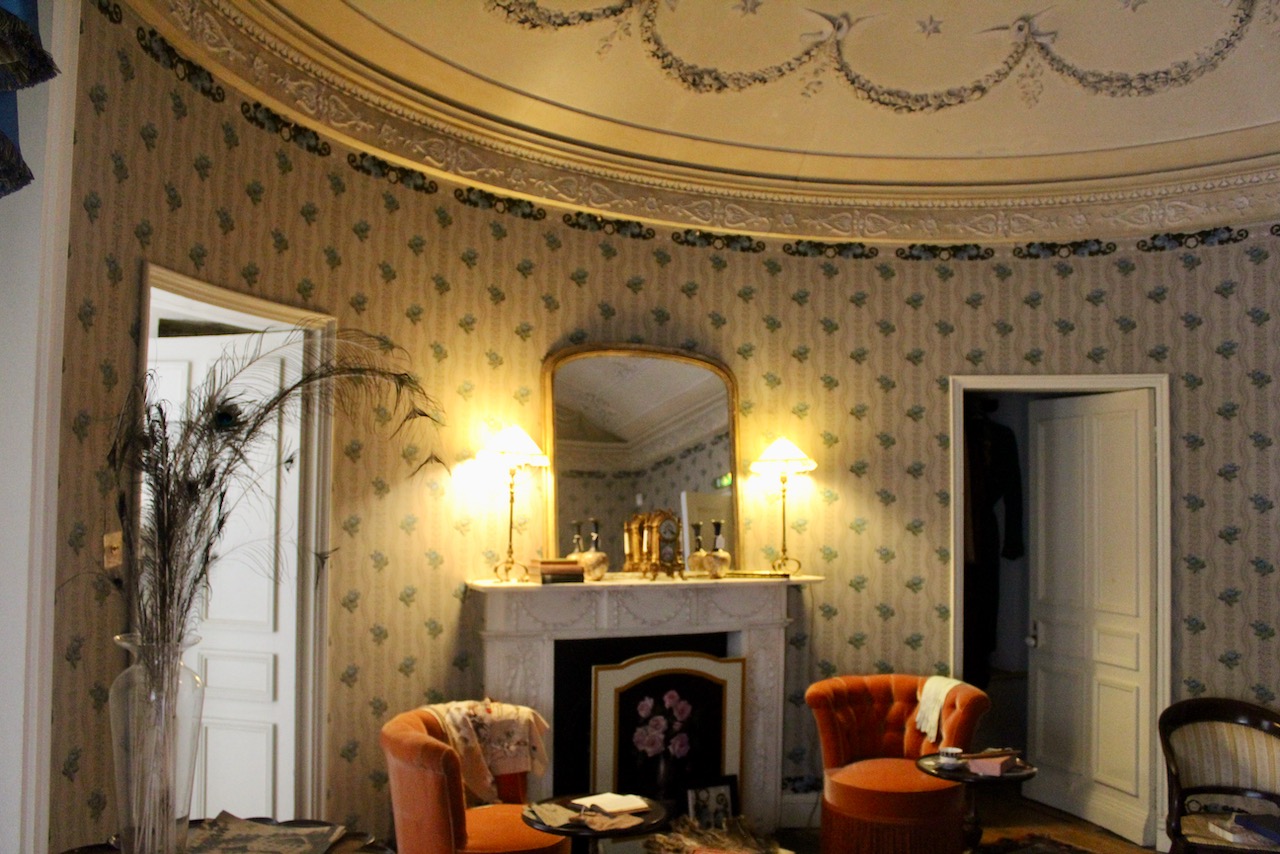
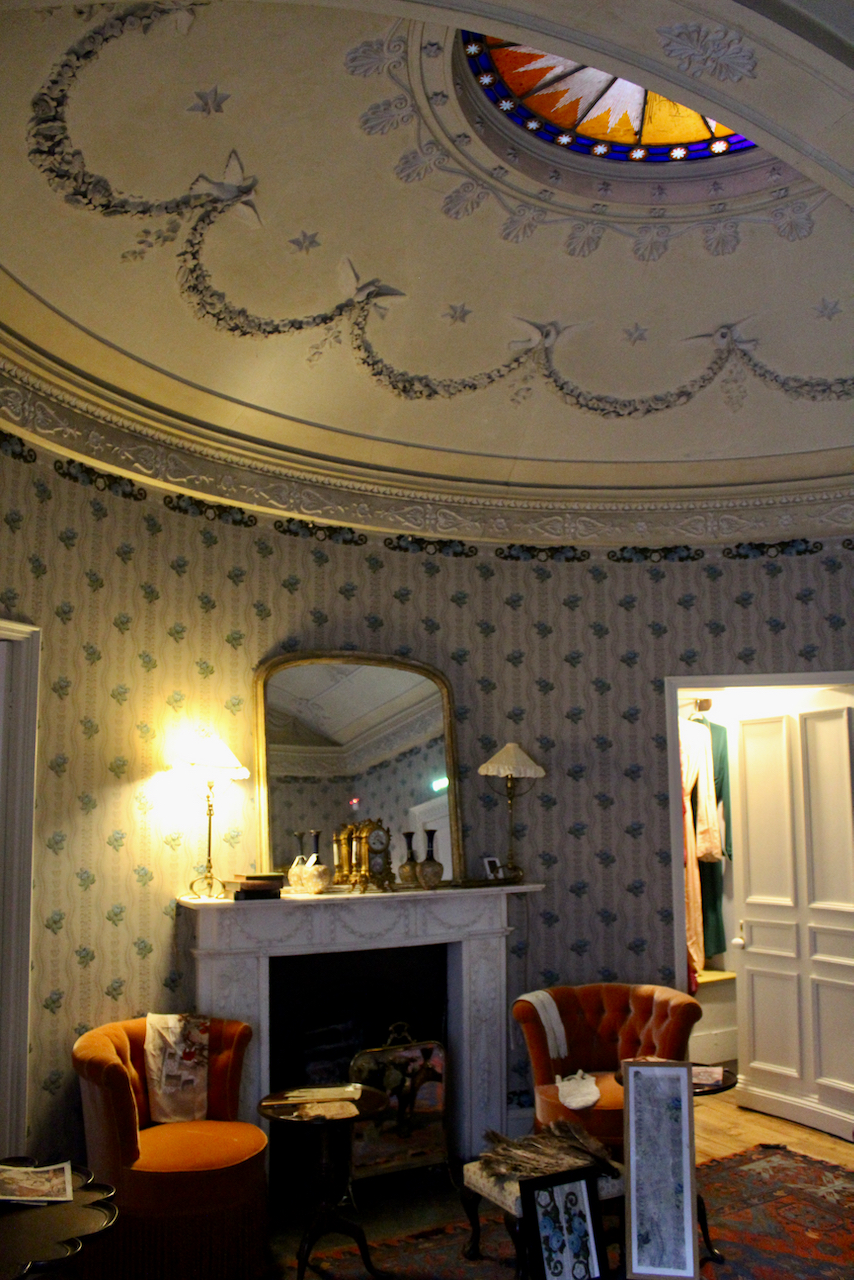
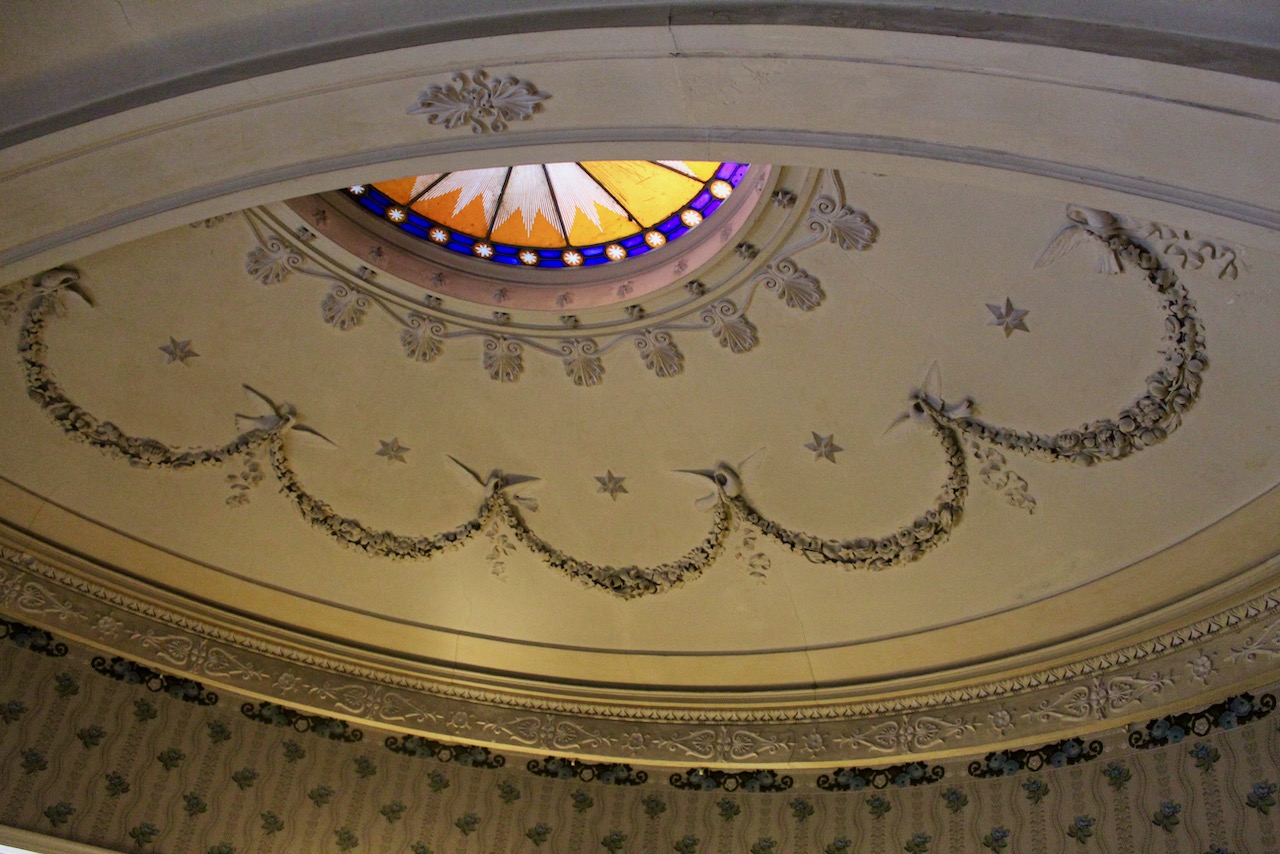
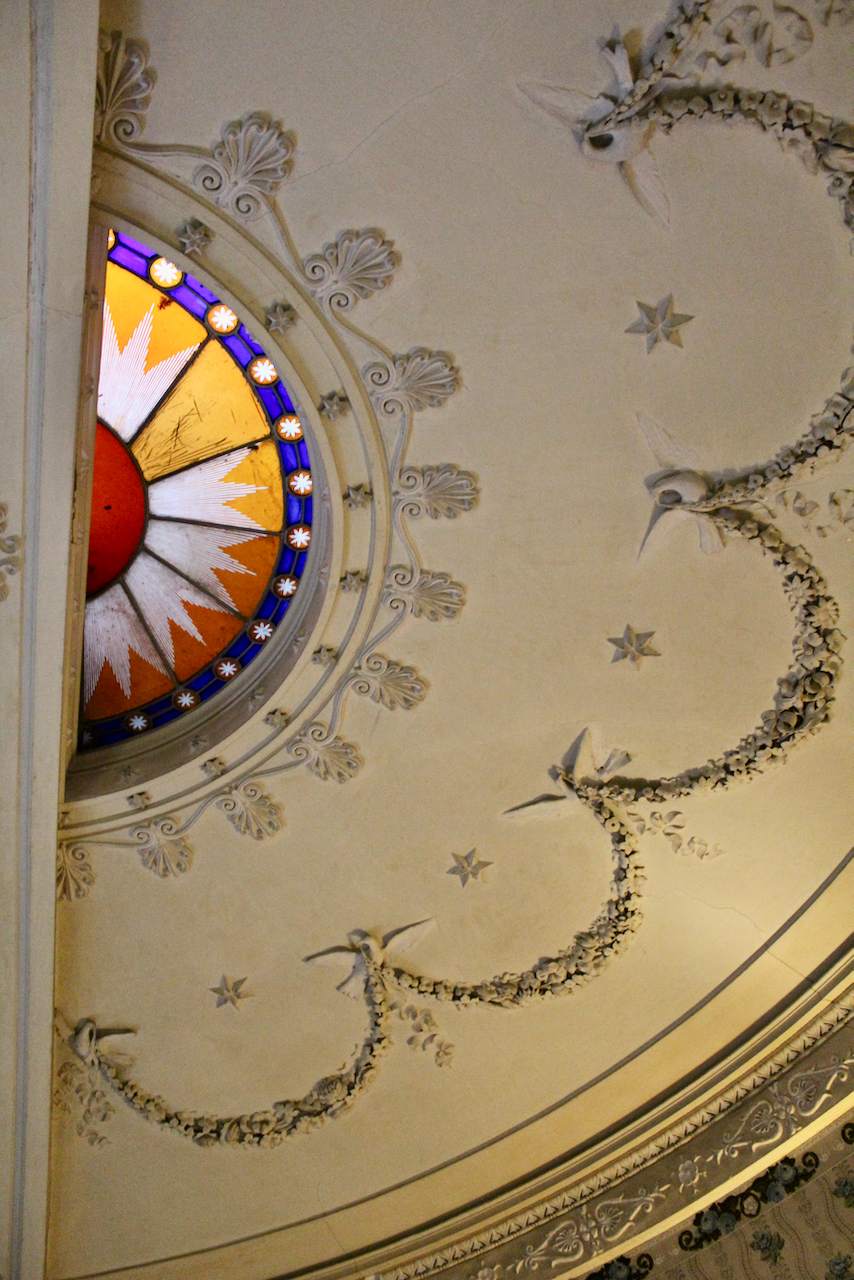
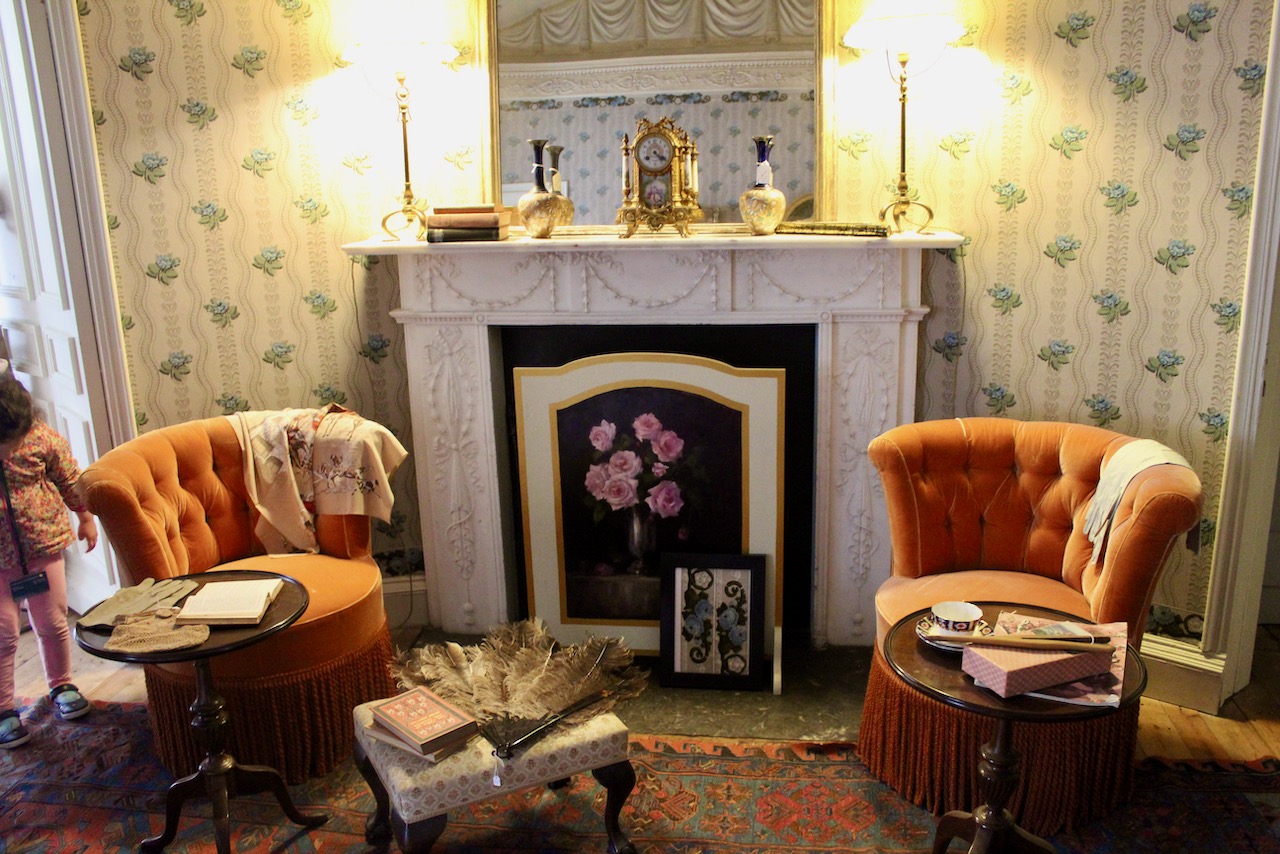
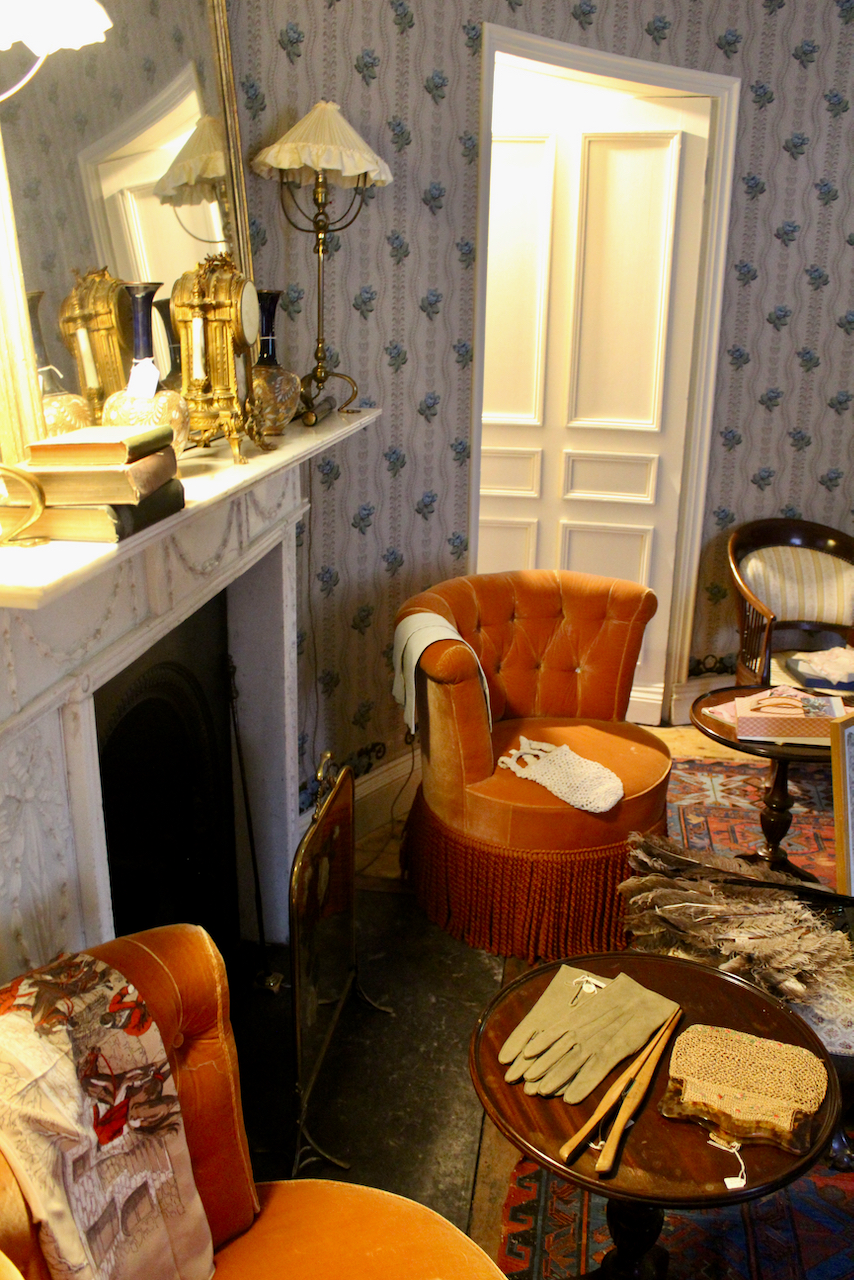
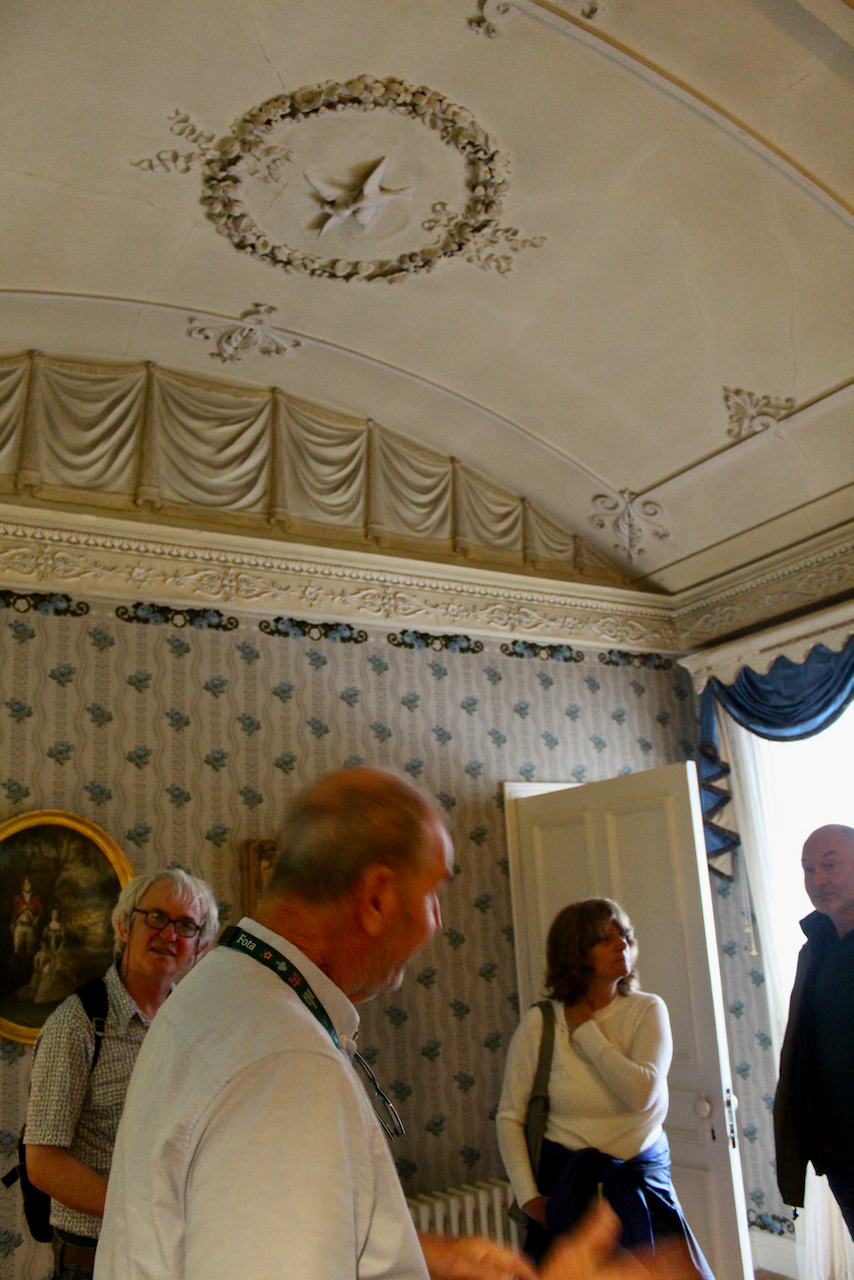
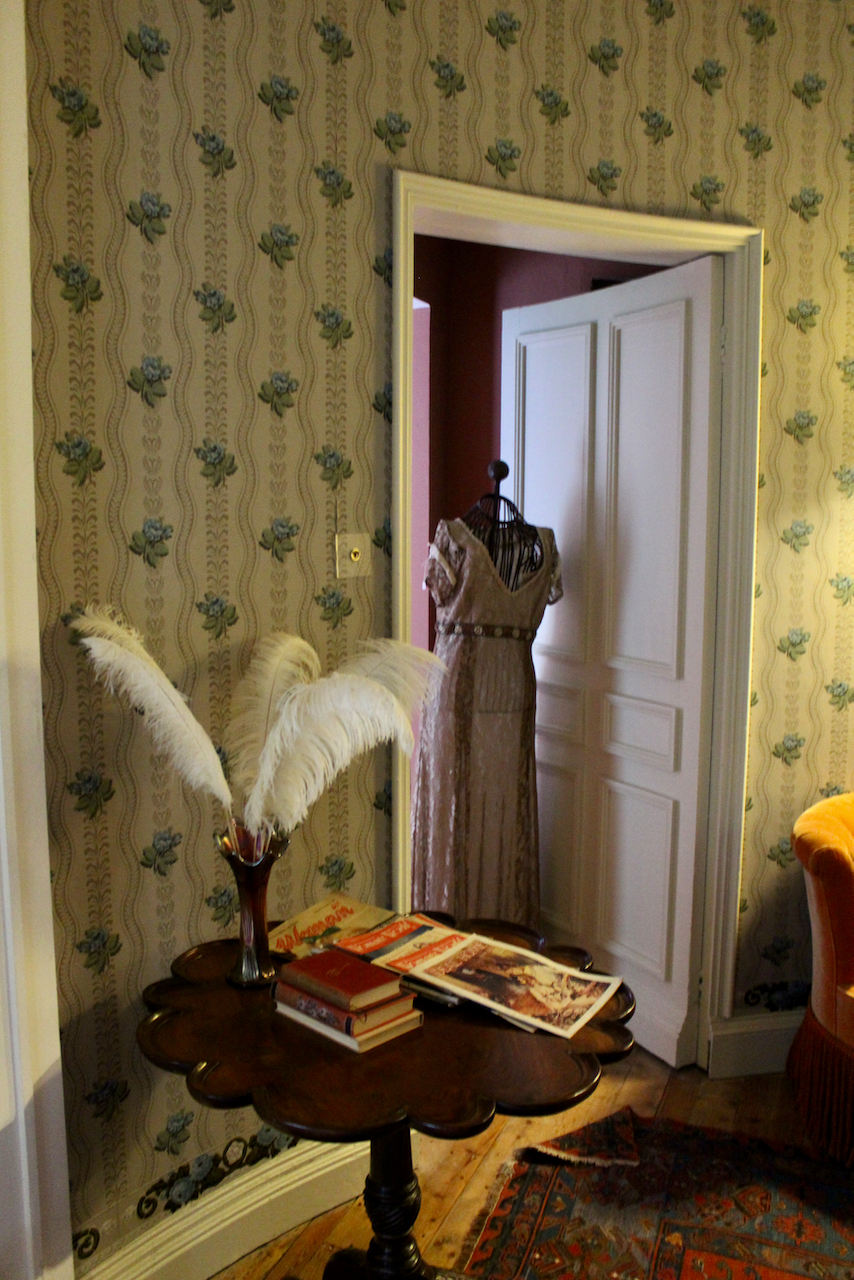
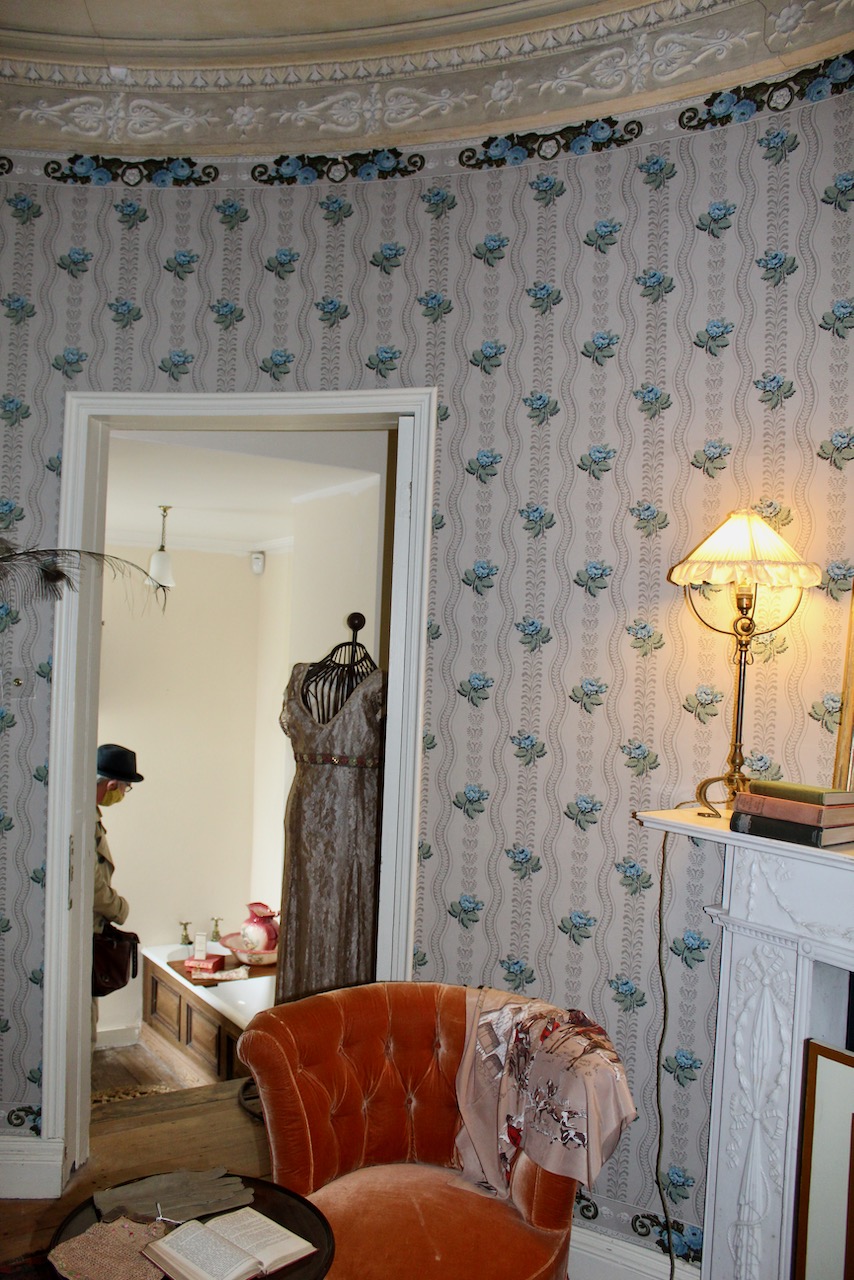
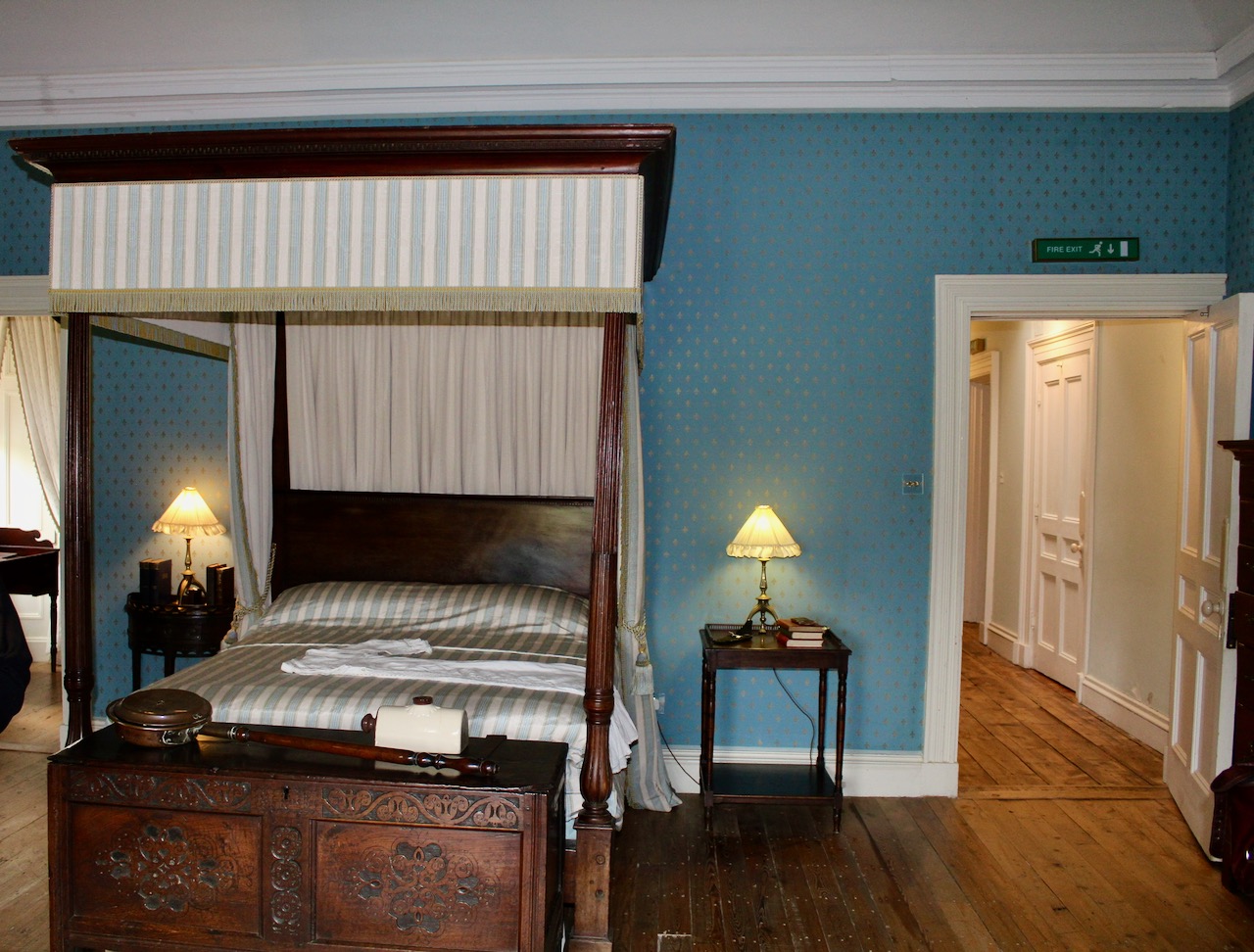
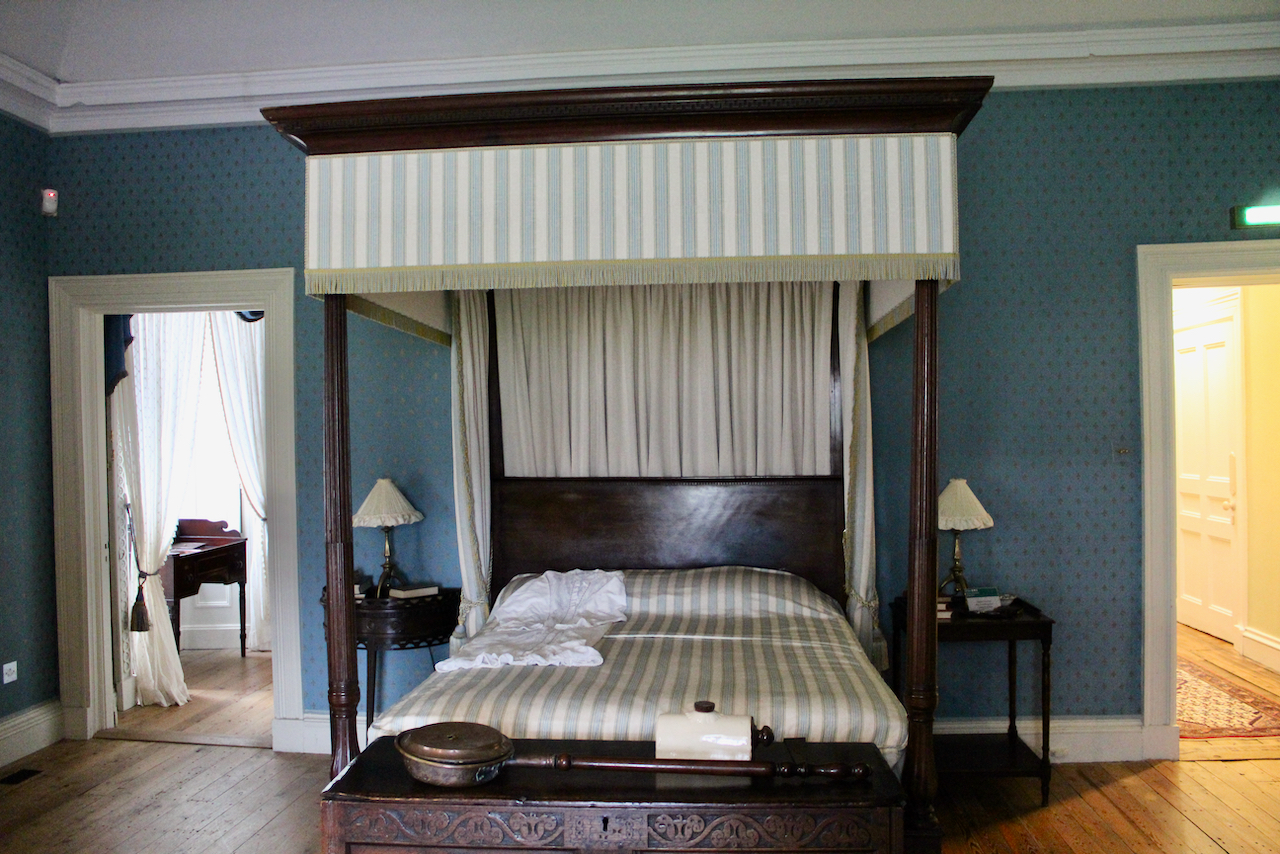
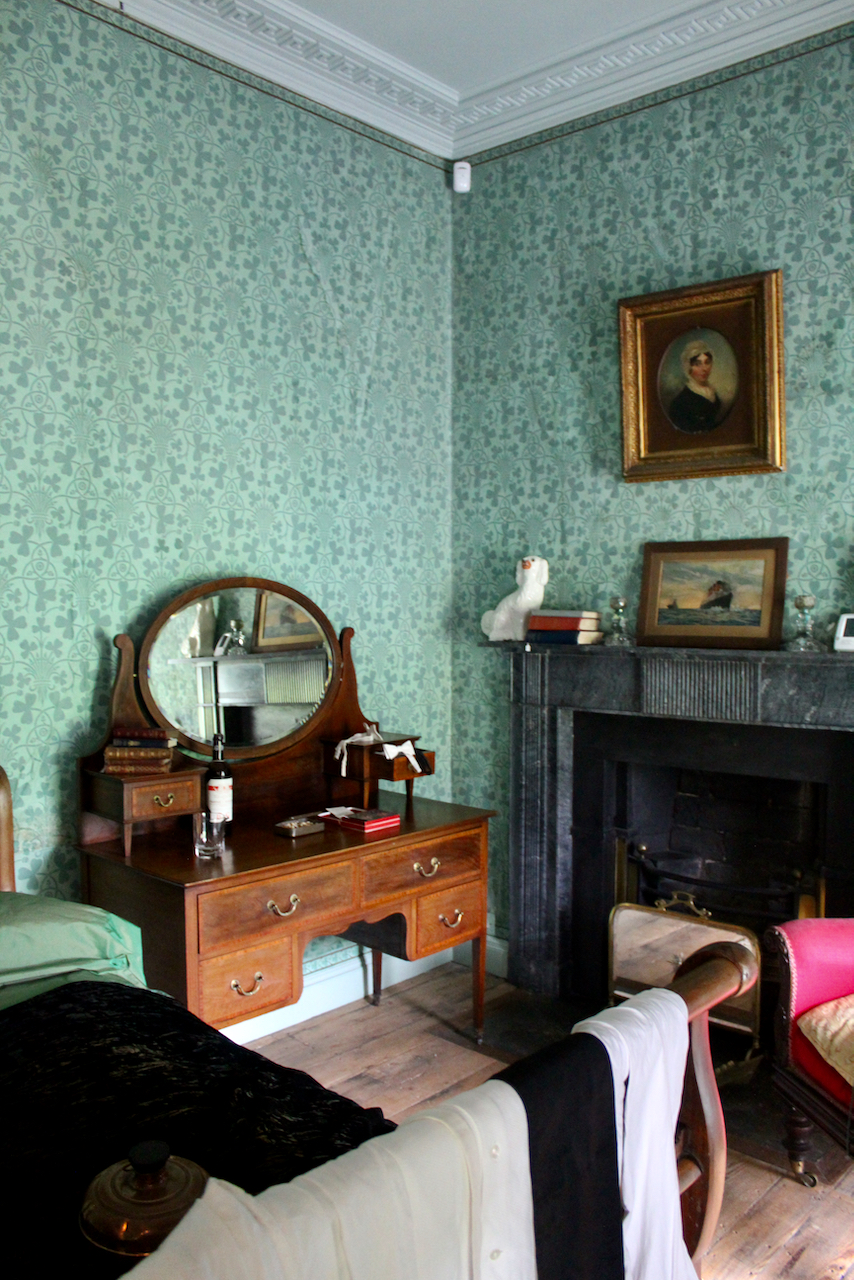
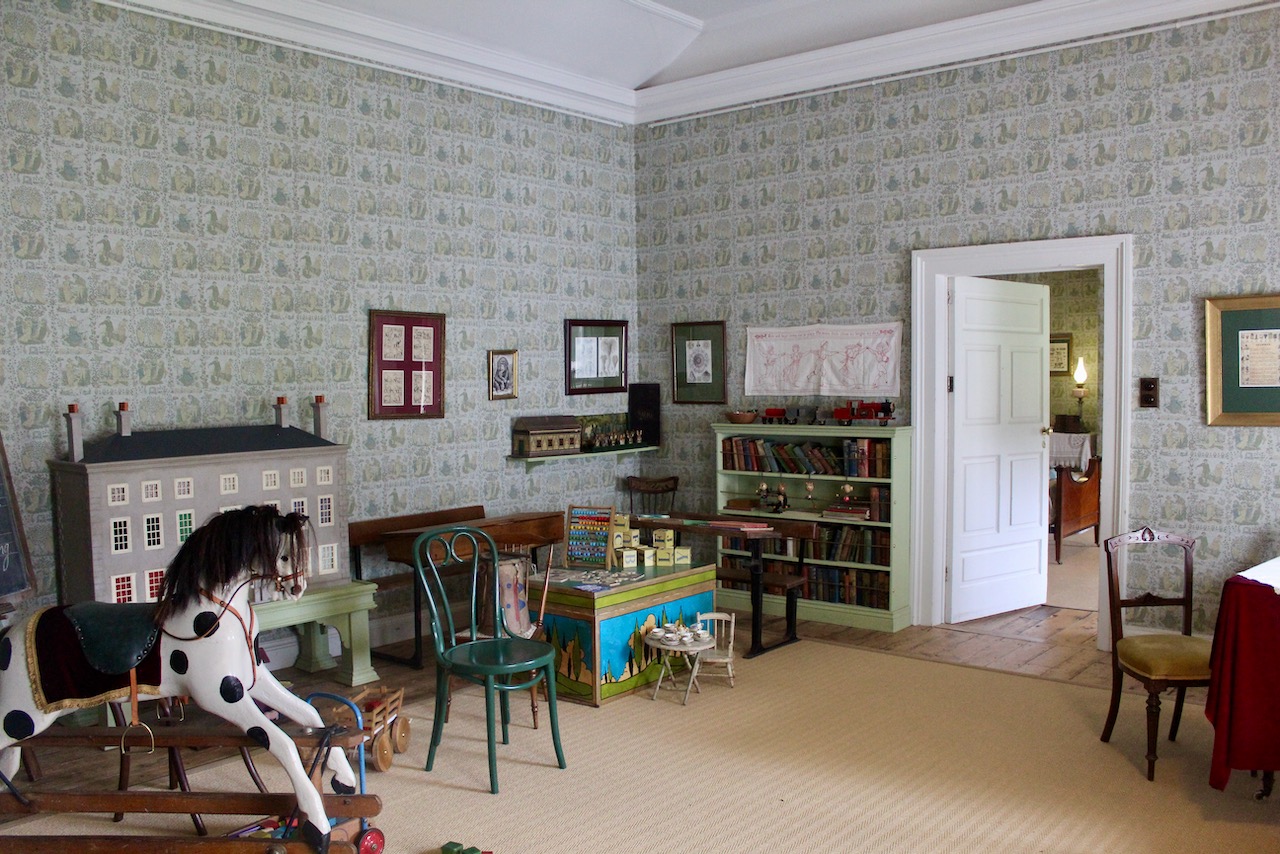
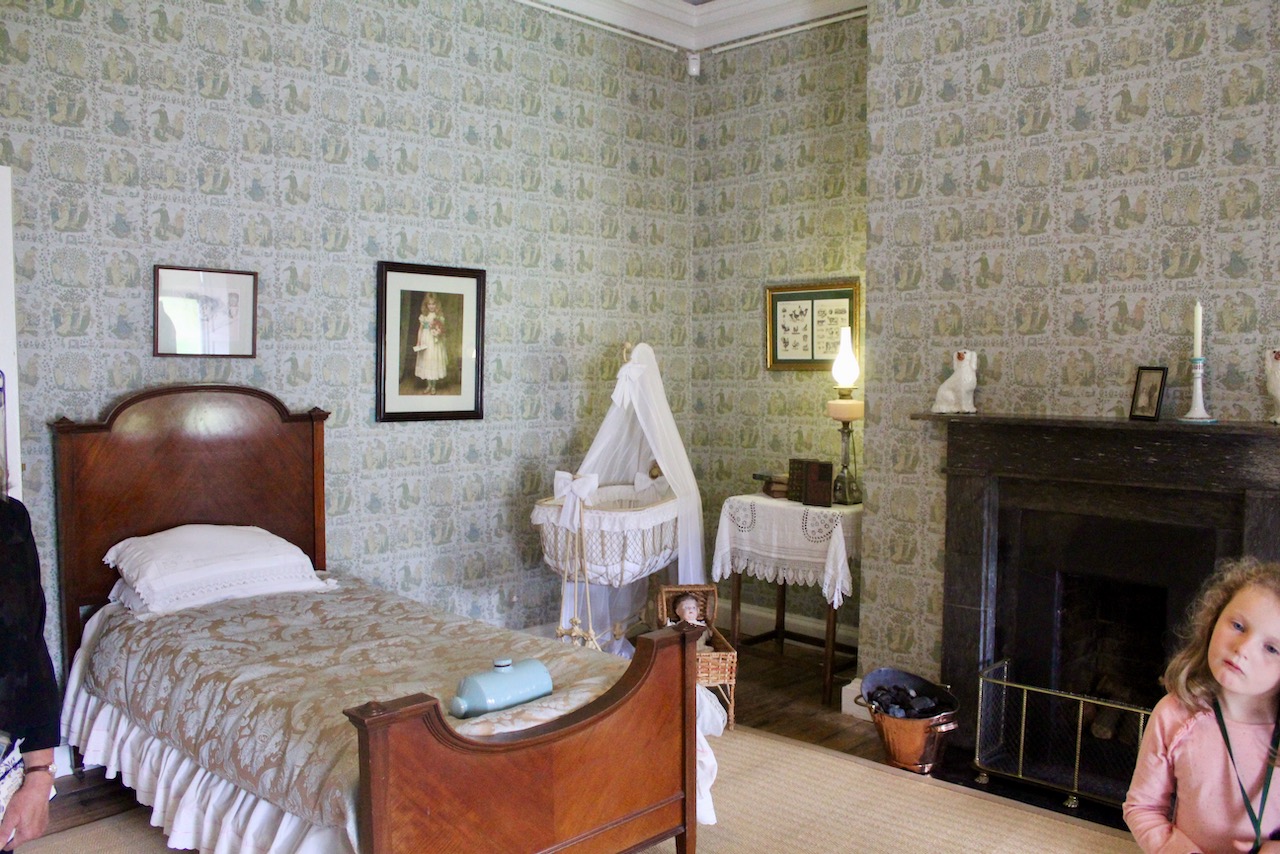
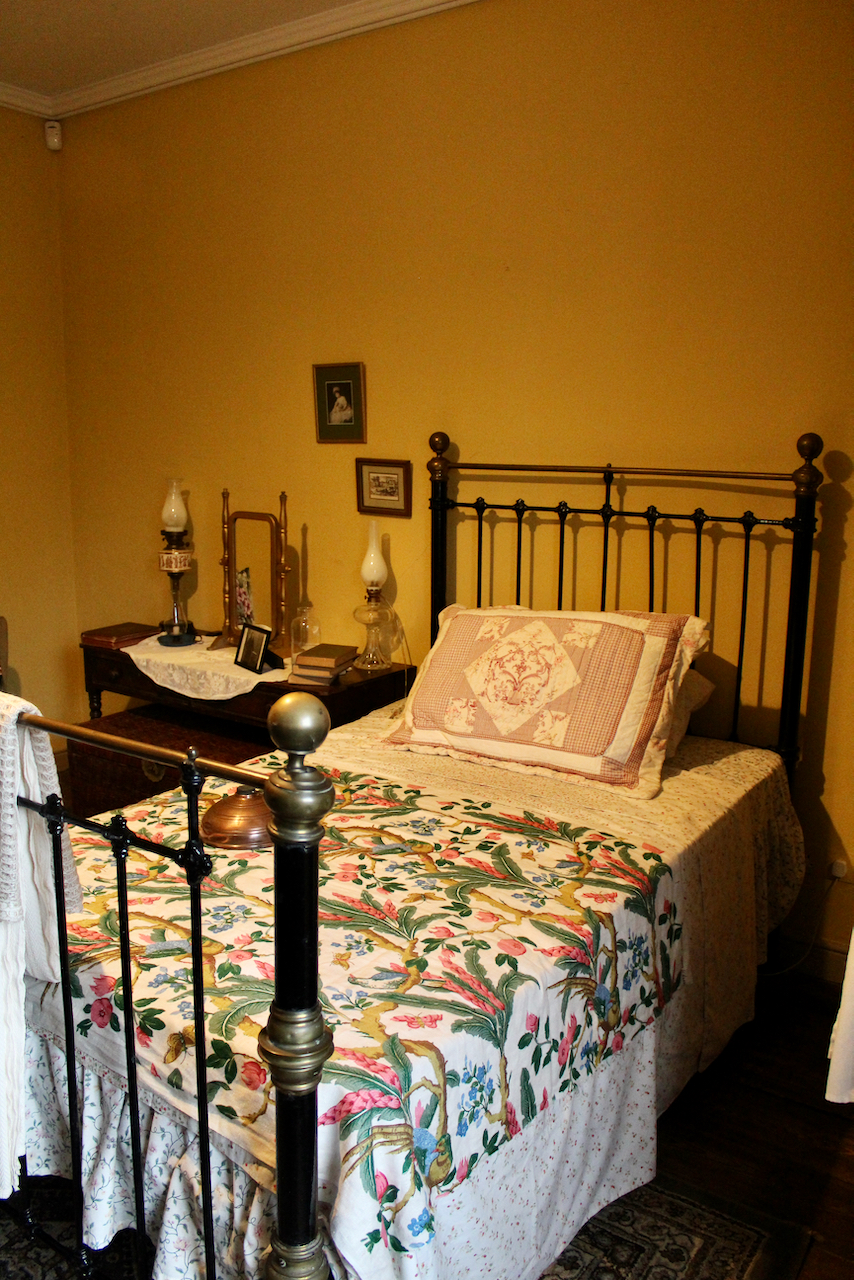
The principal bedroom suite is placed over the Dining Room and communicates directly with nurseries in the service wing. The suite contains a boudoir with barrel-vaulted ceiling and a half-dome decorated with doves trailing garlands. Plaster drapery fills the lunette to the vault with a little top-lit skylight at the apex of the dome with amber and blue coloured glazing.
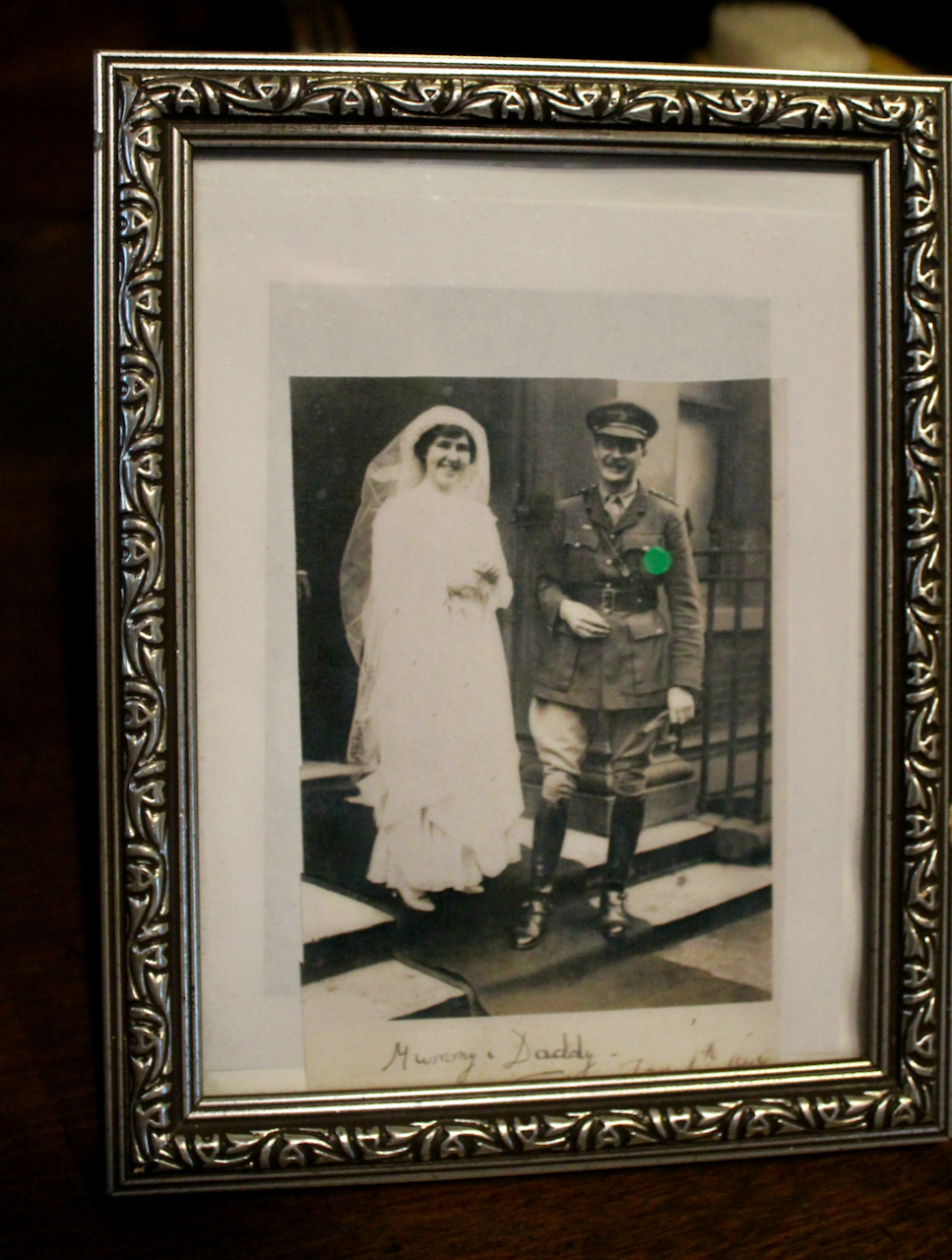
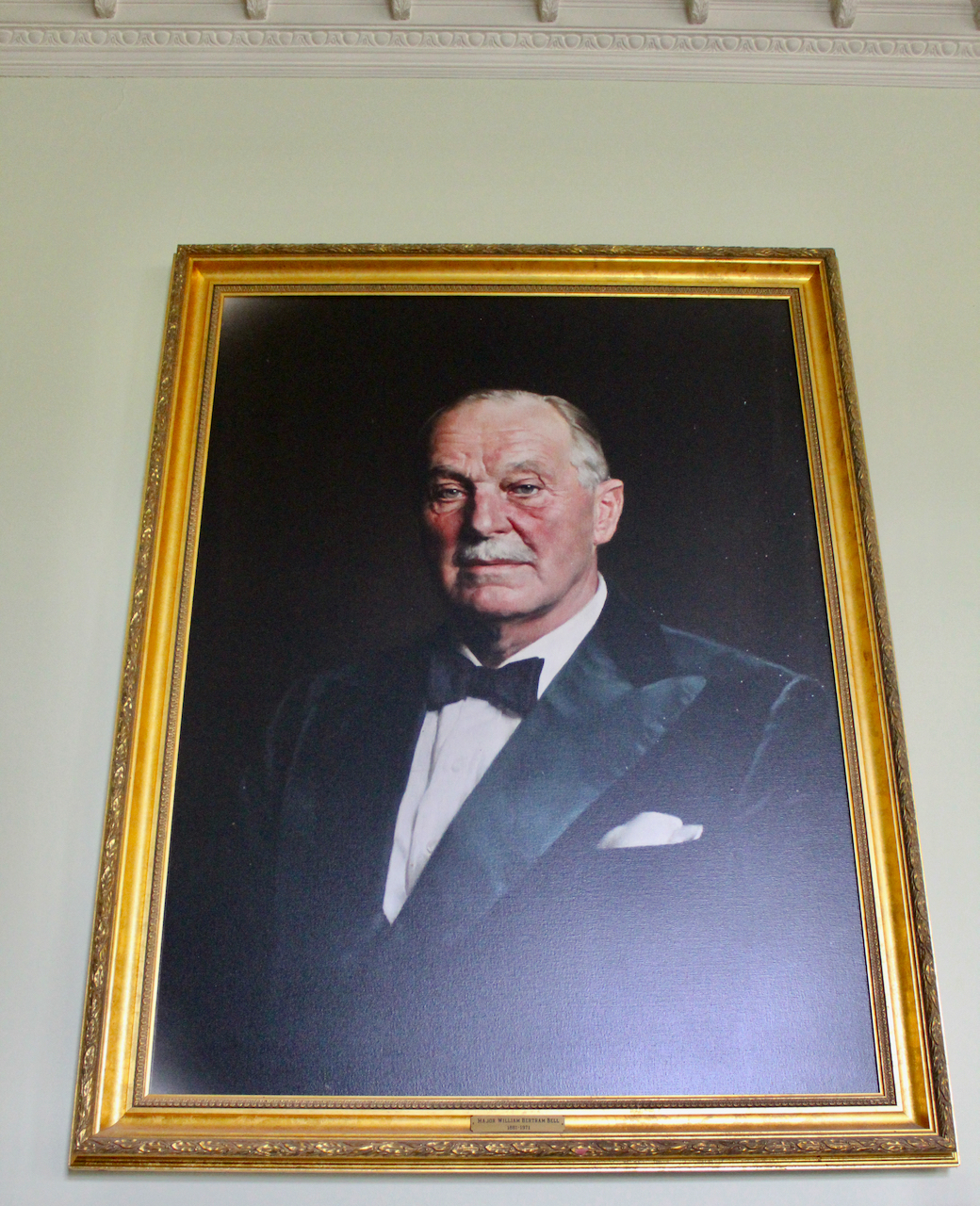
Dorothy (1894-1975), the last of the clan to live on the Barry estates, was the daughter of Arthur Hugh Smith-Barry, 1st and last Baron Barrymore. She married Major William Bertram Bell. They had three daughters.
Major William Bertram Bell (1881-1971).
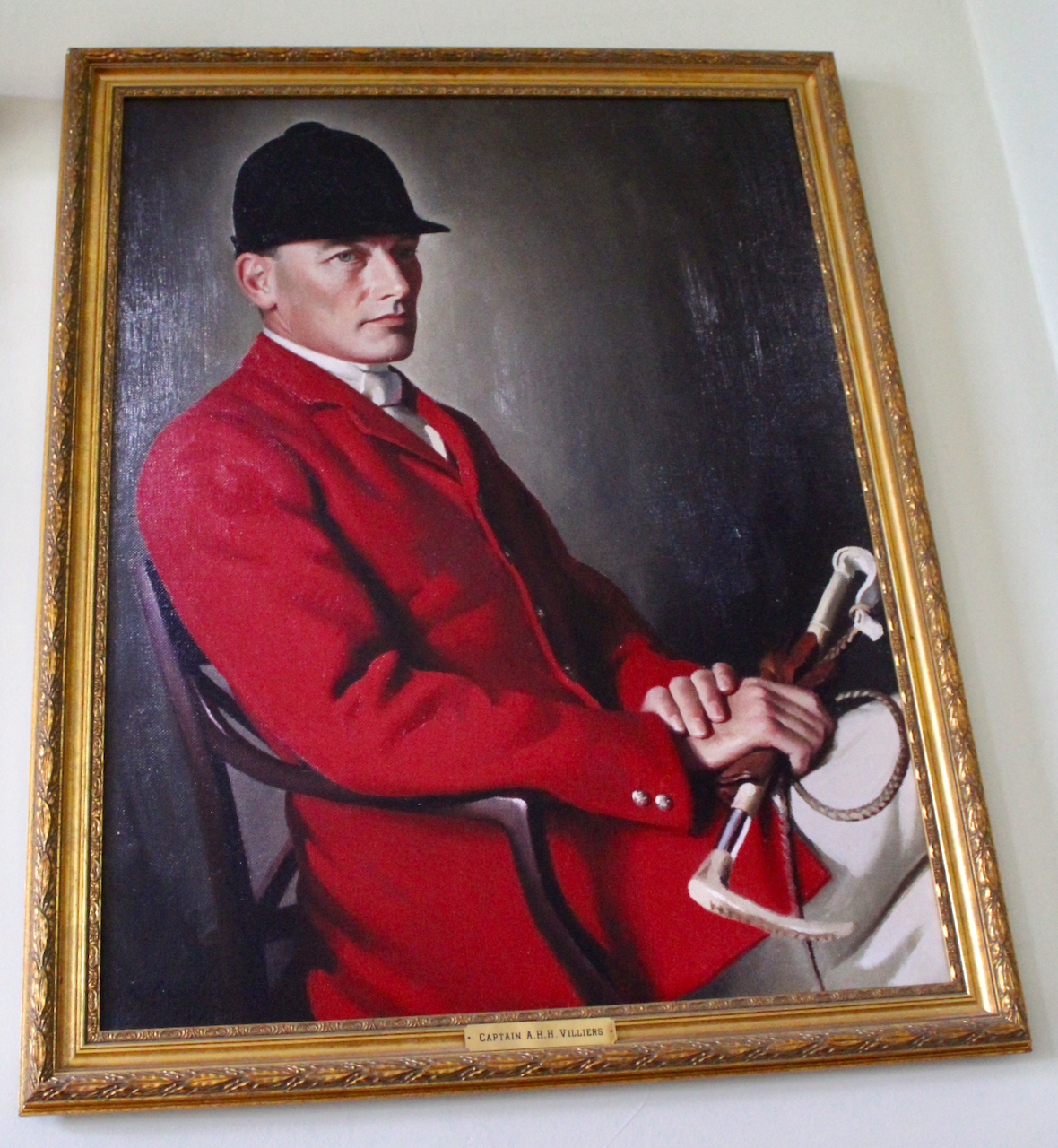
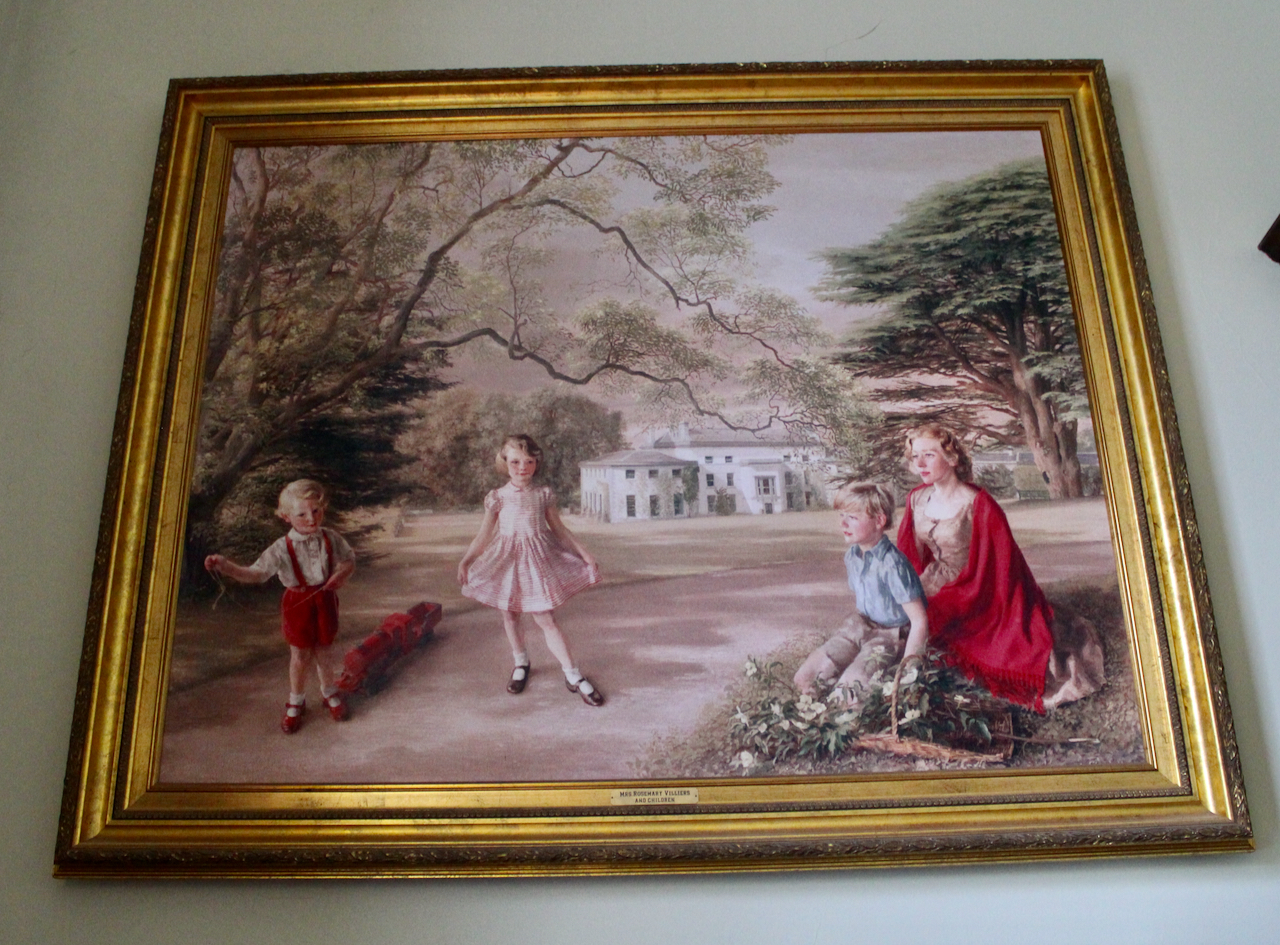
Their daughter Rosemary Elizabeth (1924-2011) married Captain Anthony Henry Heber Villiers (1821-2004).
Captain A.H.H. Villiers.Rosemarie Villiers and Children, Fota House, County Cork.
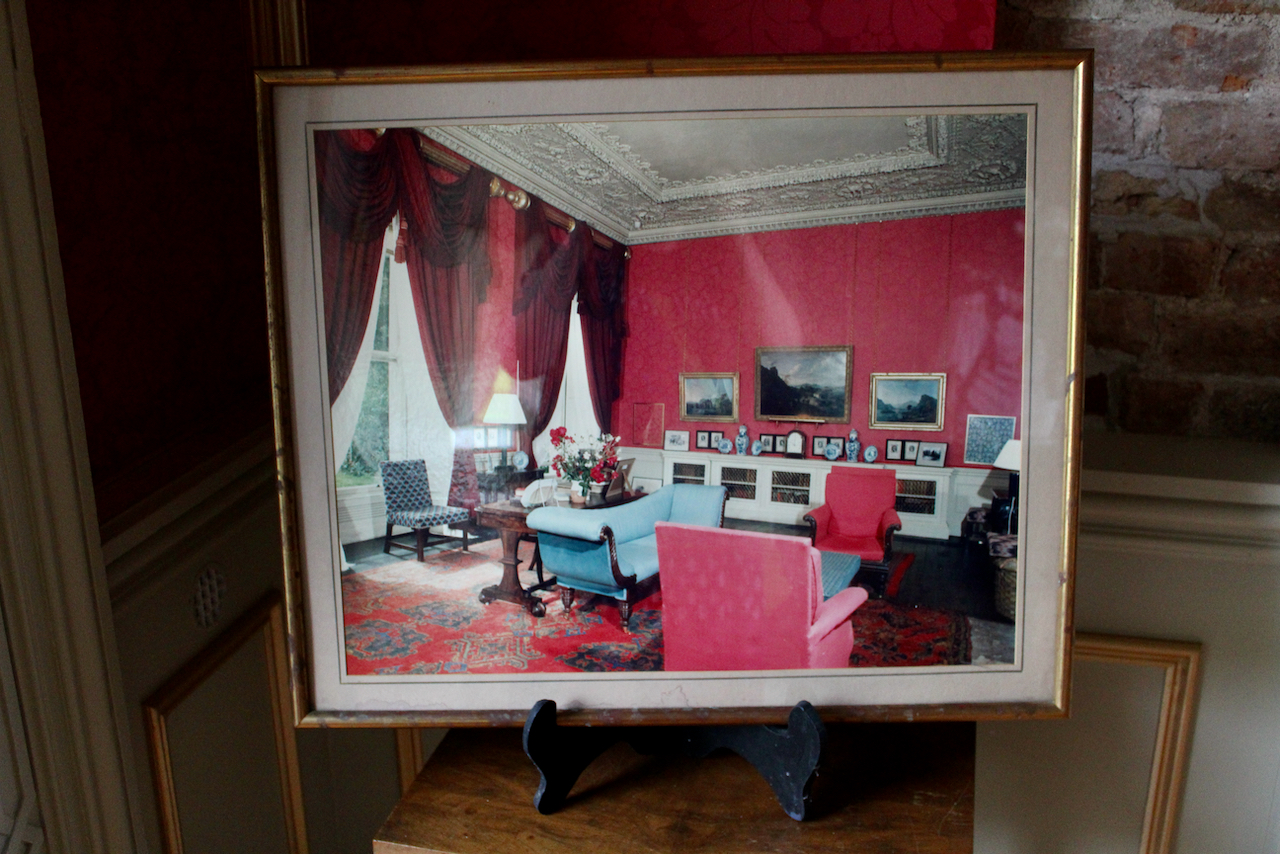
Fota was sold to University College Cork and in 1983, Richard Wood took a lease of the house and restored it with John O’Connell as architect, to display his collection of Irish art to the public. It was then sold and the pictures removed, and in 1991 the house and arboretum passed to the Fota Trust and in 1999 extensive conservation work was carried out under the direction of John Cahill of the Office of Public Works. [7]
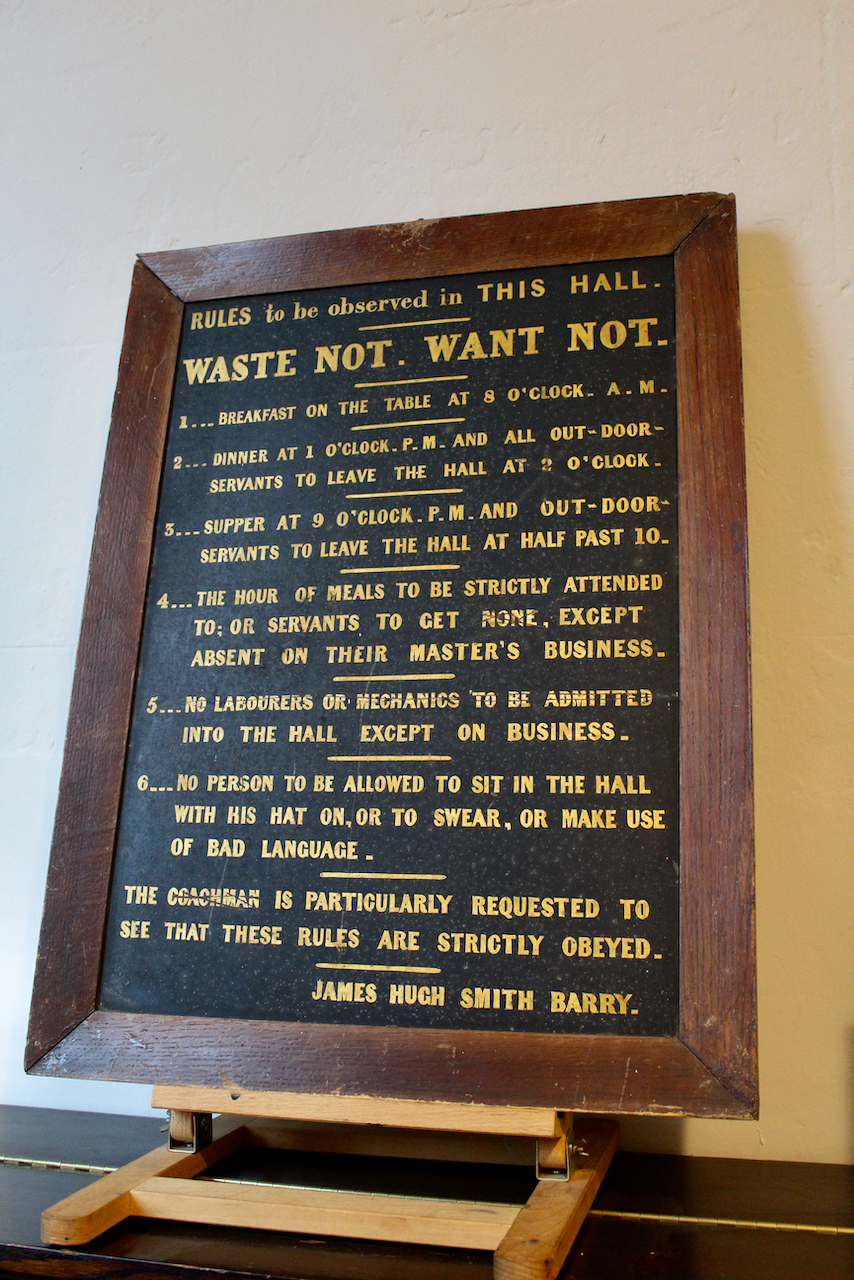
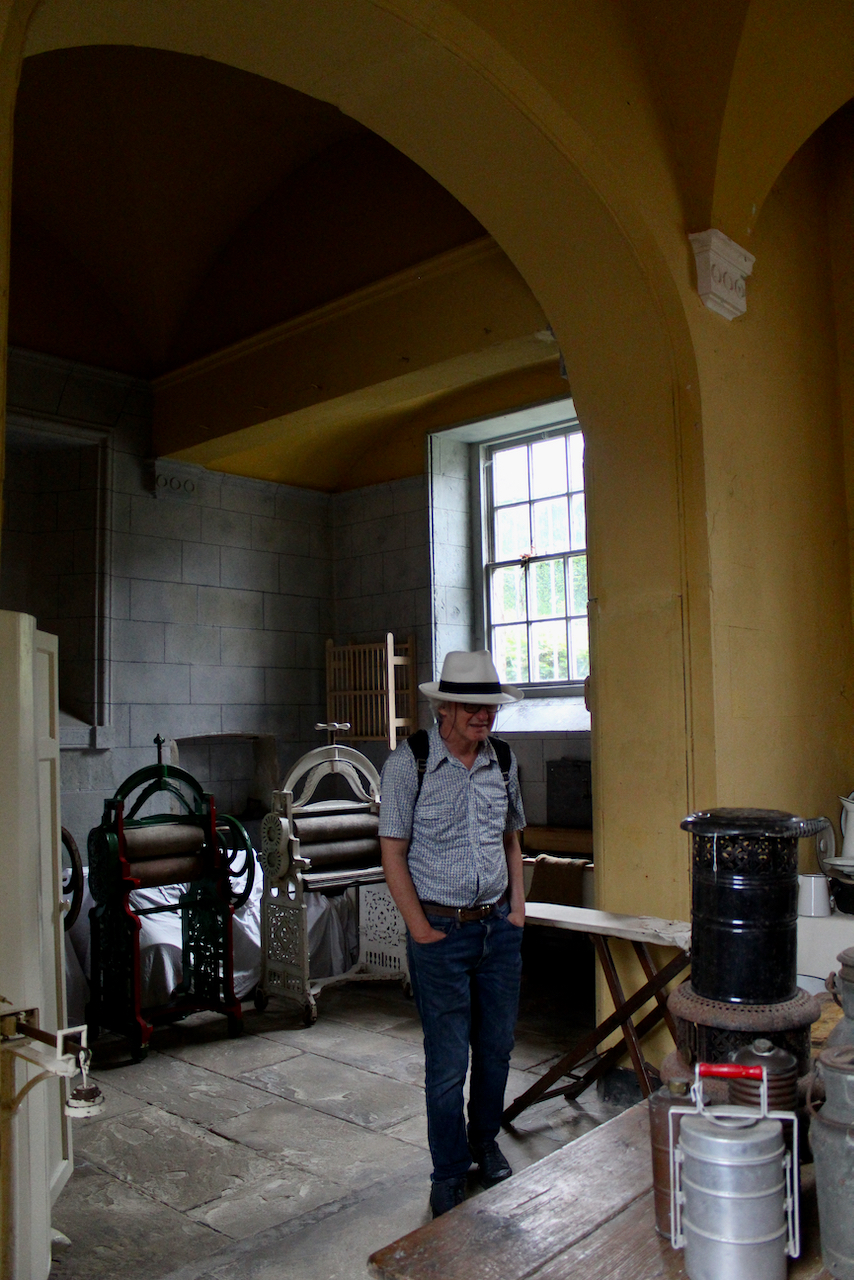
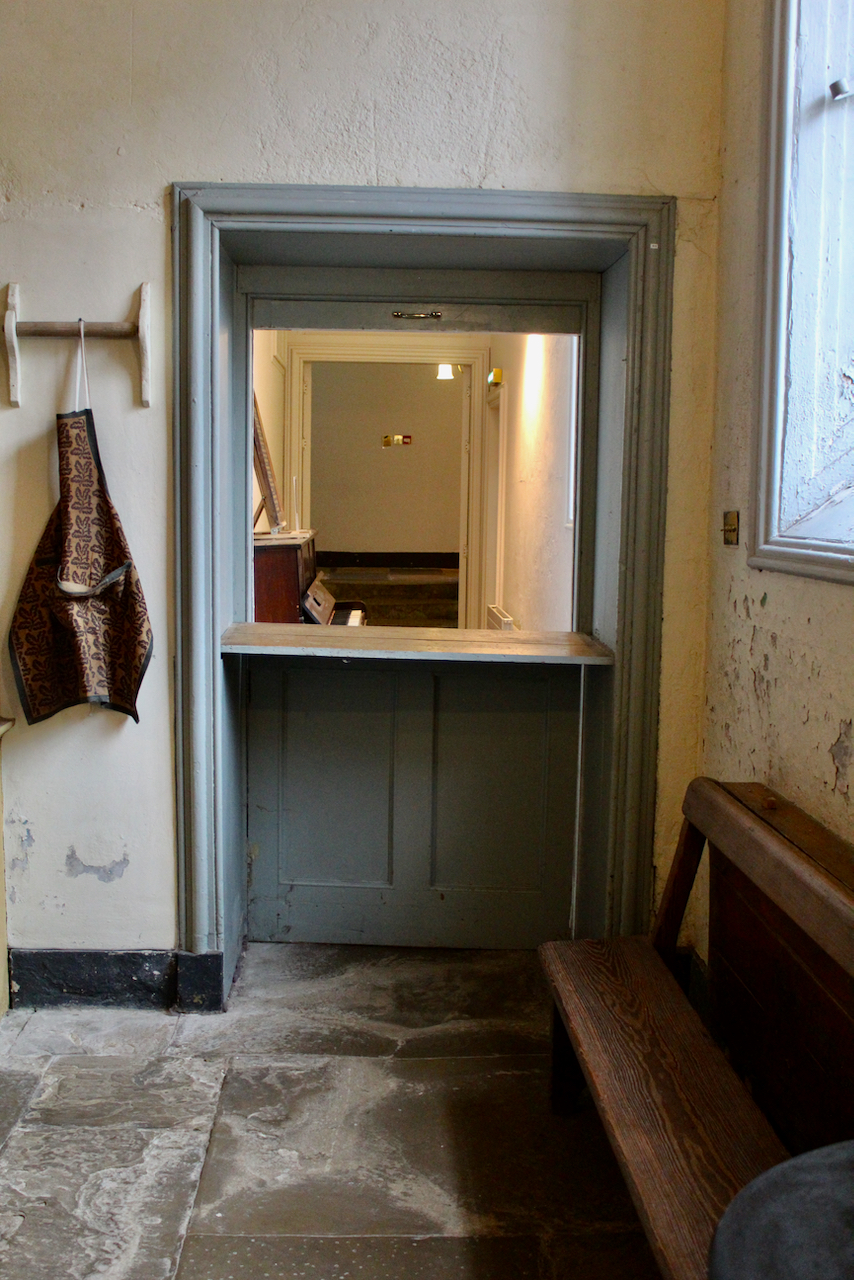
To pass from the family’s quarters to the servants’ quarters, one passes through a tradition “green baize door,” baize being the material used on billiards tables, probably used on doors to suppress the sound from travelling.
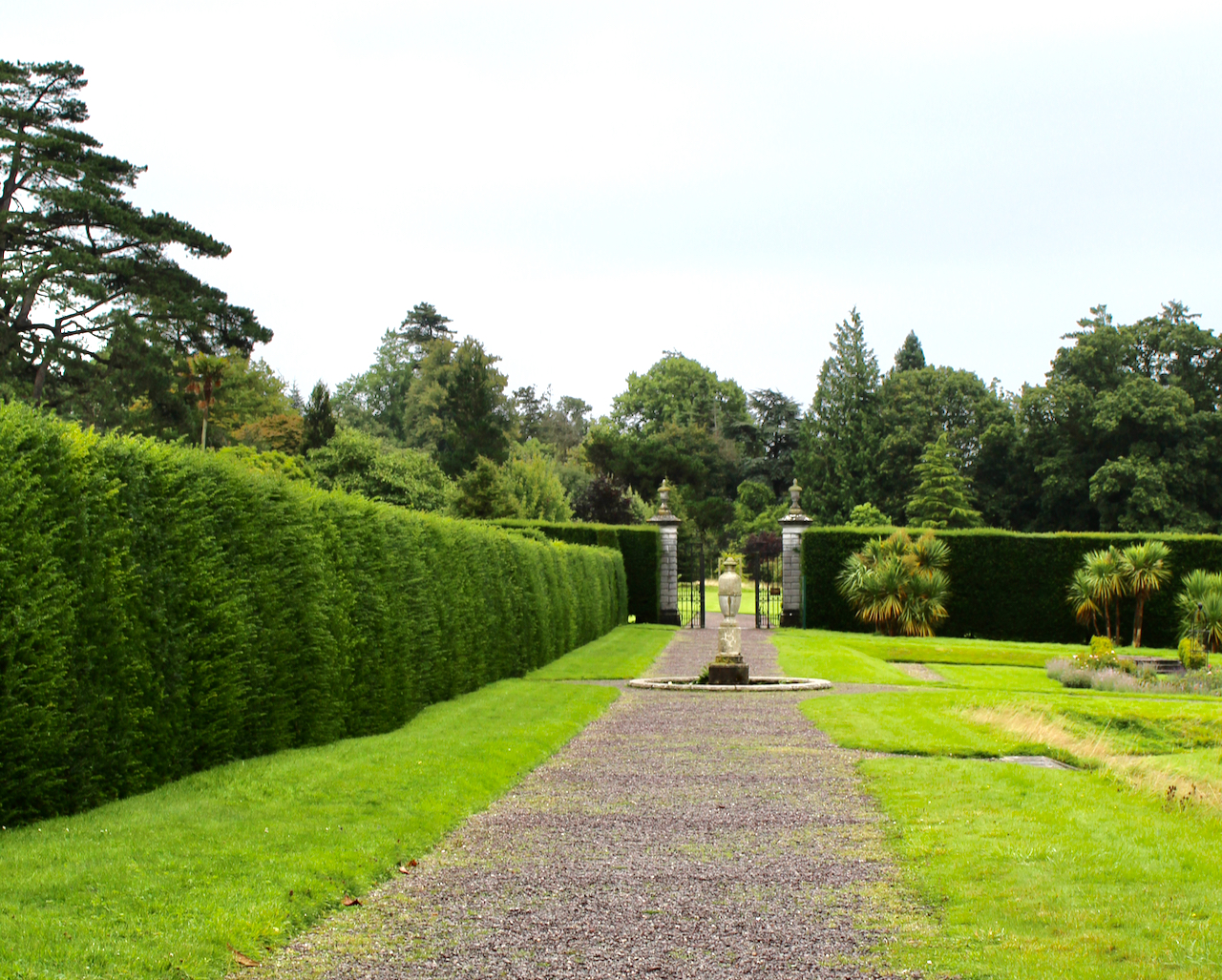
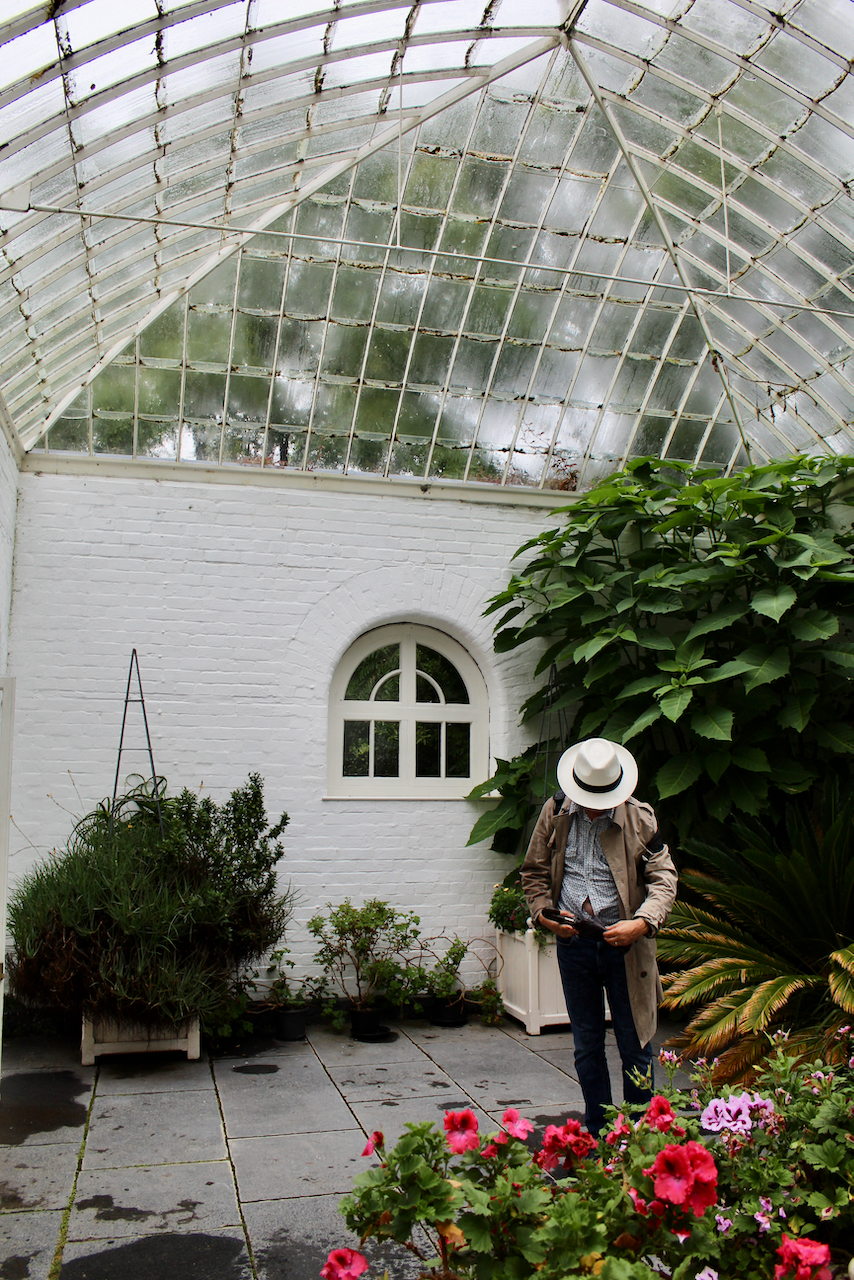
Bence-Jones writes: “In mid-C19, James Hugh Smith-Barry laid out formal gardens behind the house, with lawns and hedges, wrought-iron gates and rusticated piers, a temple and an orangery. He also began to plant the arboretum, which has since become world-famous. Theplanting was continued for more than a century after his death by his son, [Arthur Hugh Smith-Barry (1843-1925)] Lord Barrymore [1st Baron Barrymore], and by Lord Barrymore’s son-in-law and daughter, Major [William Bertram] and Hon Mrs [Dorothy] Bell; in the mild climate of Fota many rare and tender species flourish. The demesne of Fota extends over the entire island, which is skirted by the road and railway from Cork to Cobh; there are impressive Classical entrance gates by Morrison similar to those at Ballyfin, Co Laois and Killruddery, Co Wicklow. On the point of the island is an early C19 castellated turret, by John Hargrave of Cork. Fota was sold 1975 to University College Cork.”
The arboretum and gardens on Fota Island, just 16 kilometres from Cork city centre, are an essential destination for any one of a horticultural bent.
The arboretum extends over 11 hectares and contains one of the finest collections of rare, tender trees and shrubs grown outdoors in Europe. The unique conditions at Fota – its warm soil and sheltered location – enable many excellent examples of exotics from the southern hemisphere to flourish.
The gardens include such stunning features as the ornamental pond, formal pleasure gardens, orangery and sun temple. James Hugh Smith-Barry laid them out in the first half of the nineteenth century. Fota House, the Smith-Barrys’ ancestral home, still stands. The house, arboretum and gardens share the island with a hotel and golf resort and a wildlife park. [8]
[2] p. 127. Mark Bence-Jones. A Guide to Irish Country Houses (originally published as Burke’s Guide to Country Houses volume 1 Ireland by Burke’s Peerage Ltd. 1978); Revised edition 1988 Constable and Company Ltd, London.
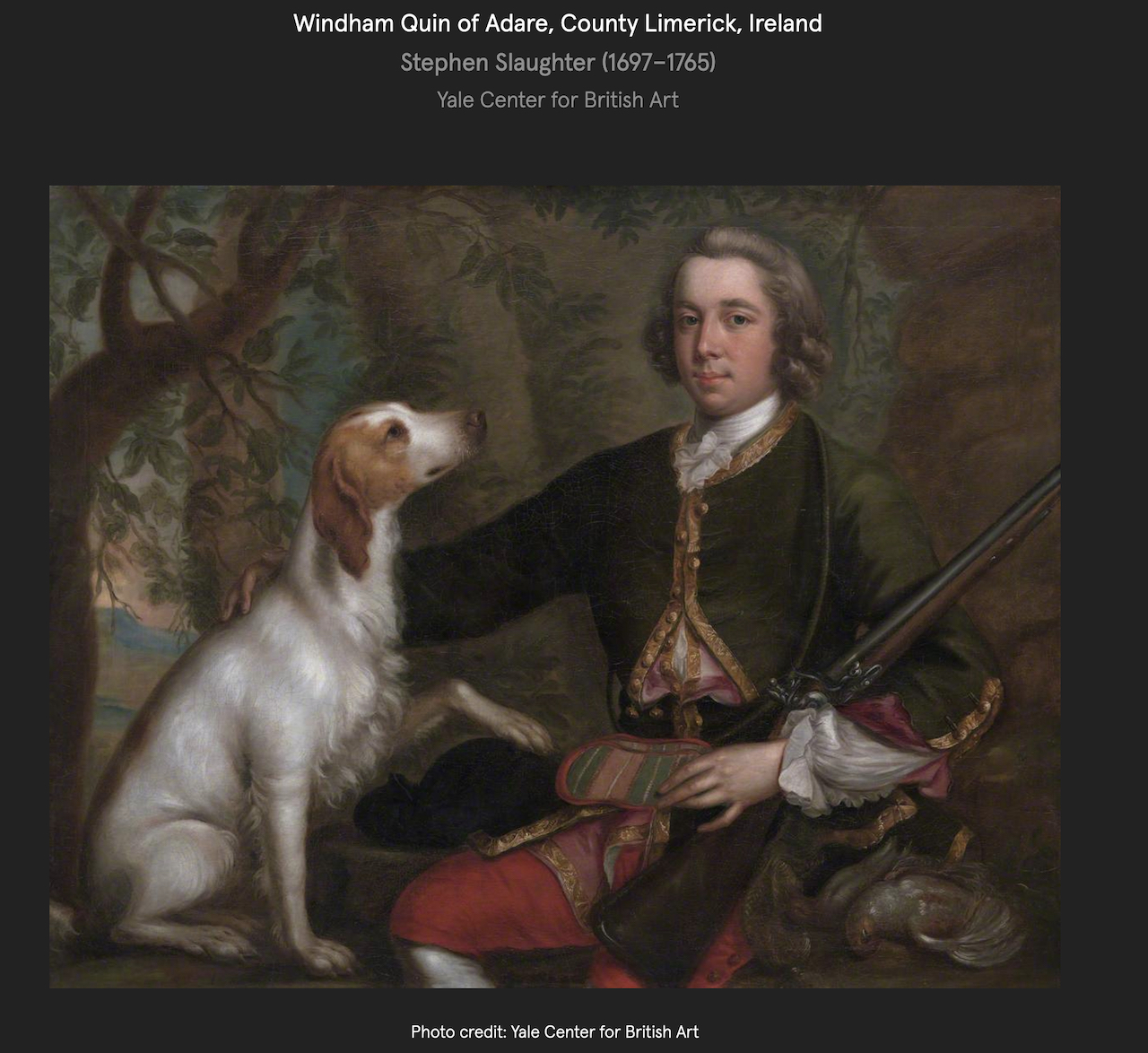
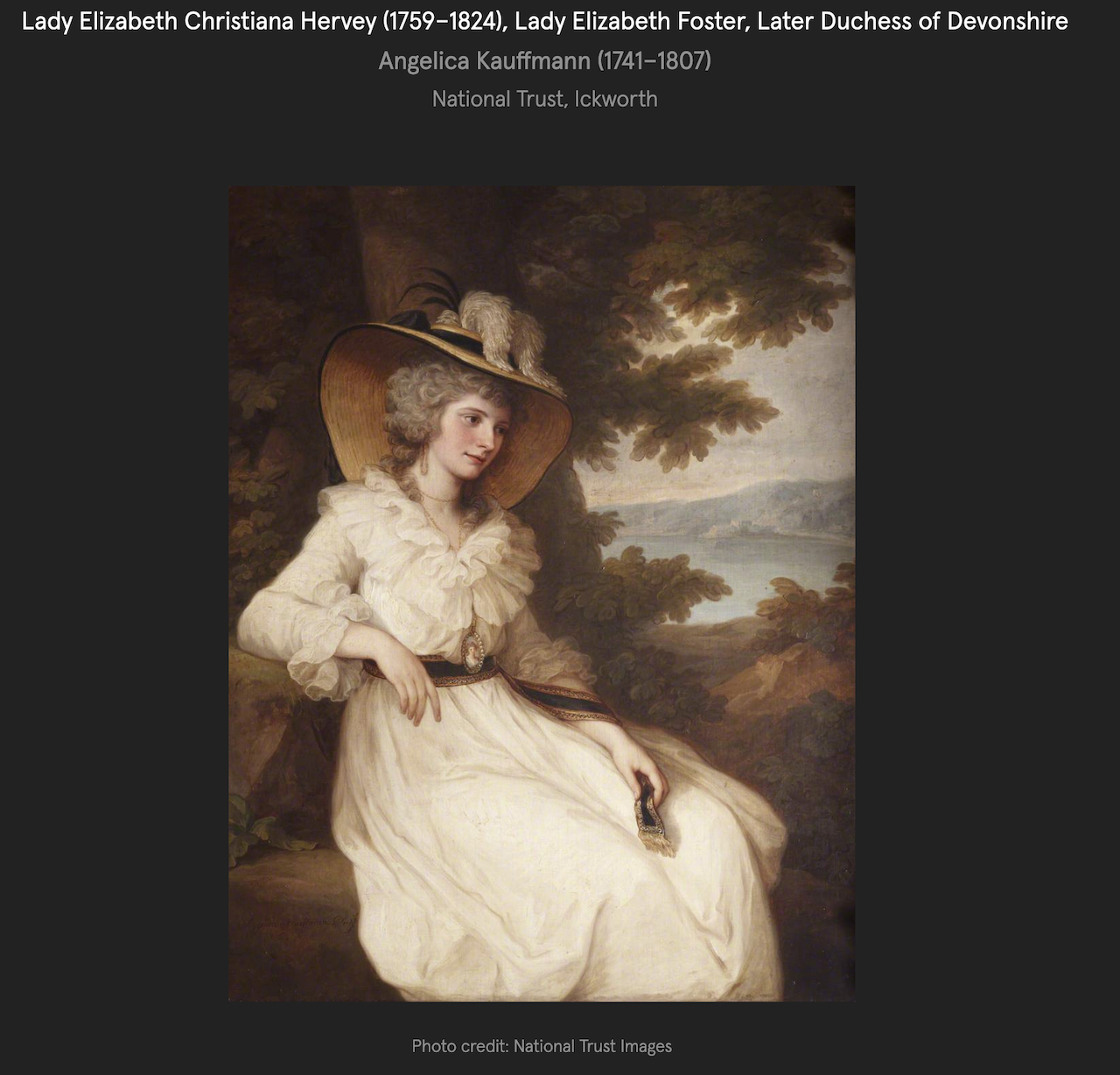
Windham Quin (1717-1789) of Adare, County Limerick by Stephen Slaughter, courtesy of Yale Center for British Art.Elizabeth Christina Foster née Hervey (1759-1824) later Duchess of Devonshire by Angelica Kauffmann courtesy of National Trust Ickworth. She was the daughter of Frederick Augustus Hervey 4th Earl of Bristol, Bishop of Derry who built Downhill, Co Derry. She married John Thomas Foster MP (1747-1796) and later, William Boyle Cavendish 5th Duke of Devonshire. Last, she married Valentine Richard Quin 1st Earl of Dunraven and Mount Earl.
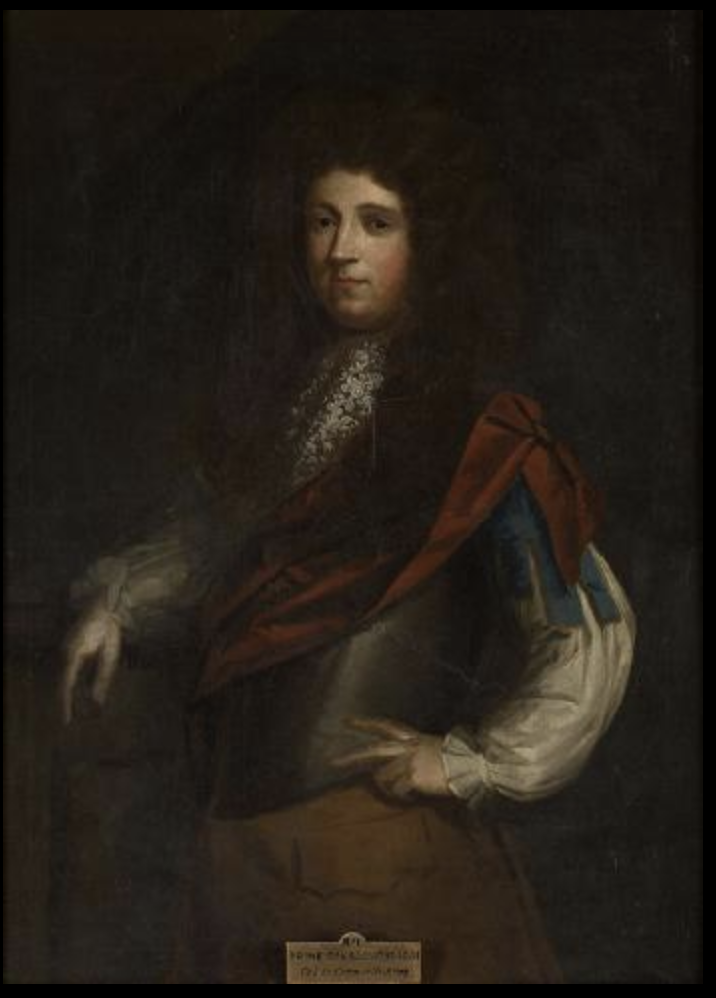
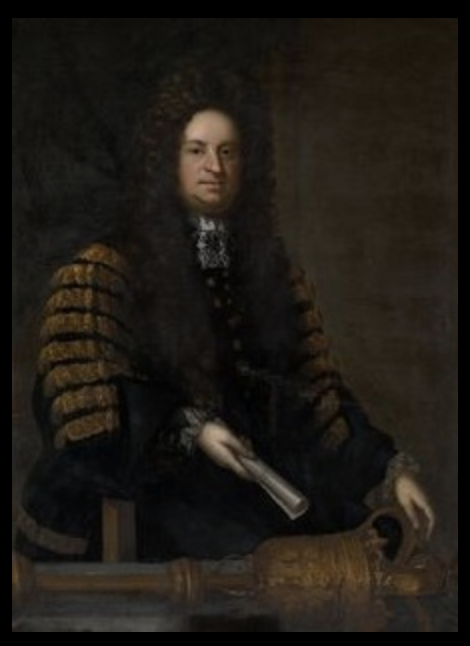
James Rochfort (“Prime Iron”) and Thomasine Pigott had several children including Charles who married Marbella, daughter of Theophilus Jones and Alice Ussher, and Robert (1652-1727), who became Speaker of the Irish House of Commons and Chief Baron of the Irish Exchequer. He married Hannah Hancock (d. 1733) of Twyford, County Westmeath.
Robert Rochfort (1652-1727) as Speaker of the Irish House of Commons by an unknown artist, Photograph of a painting owned by Michael O’Reilly.
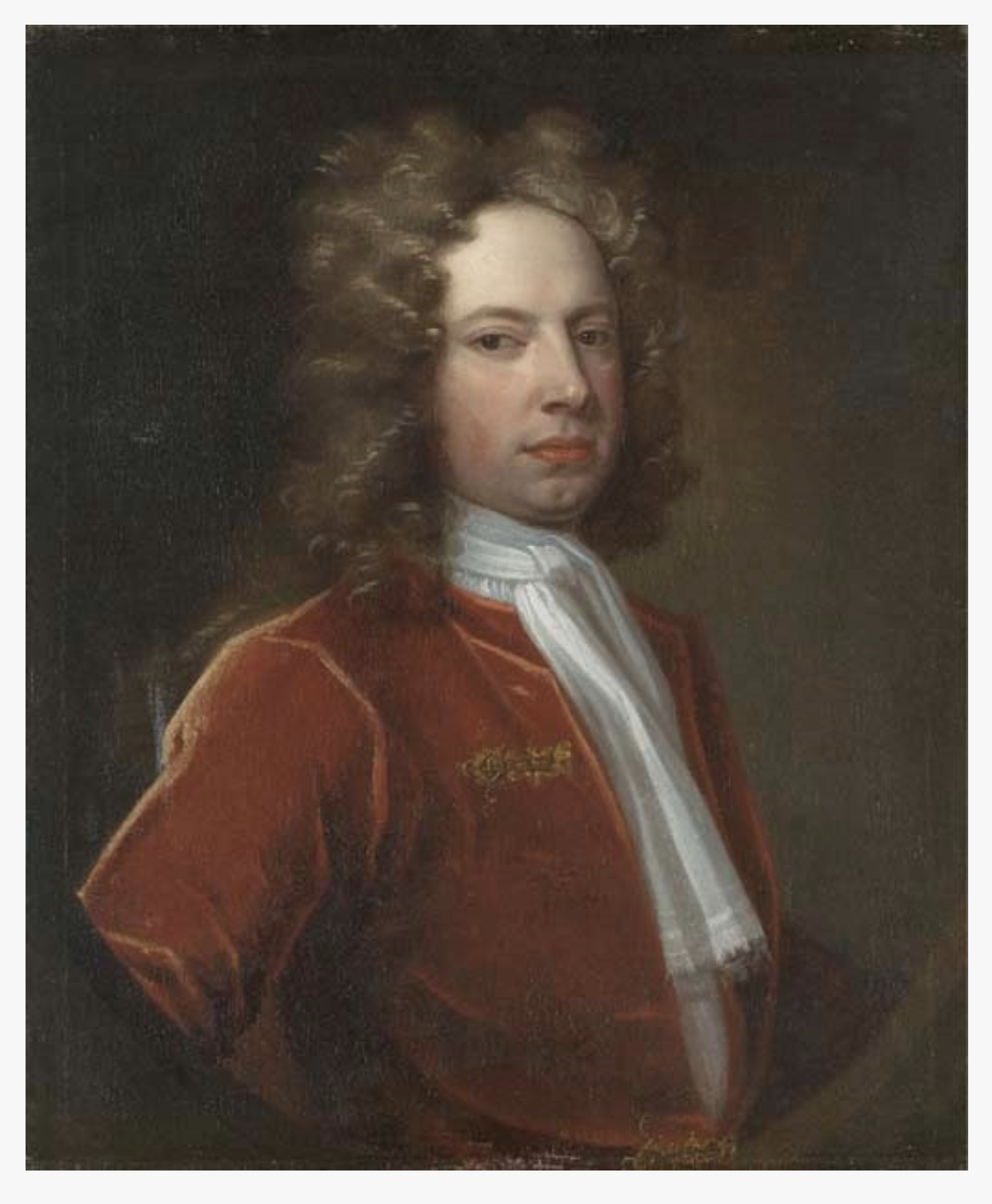
Robert Rochfort (1652-1727) and Hannah née Hancock had sons George Rochfort (1682-1730), later of Gaulstown, Co. Westmeath and John (1690-1771). George married Elizabeth, daughter of Henry Hamilton-Moore, 3rd Earl of Drogheda. John married, first, Deborah Staunton (d. 1737) then Emilia (d. 1770), daughter of John Eyre (1659-1709) of Eyre Court.
George Rochfort (1682-1730), of Gaulstown, Co. Westmeath, M.P. for Co. Westmeath by Charles Jervas courtesy of Christies Auction 2002
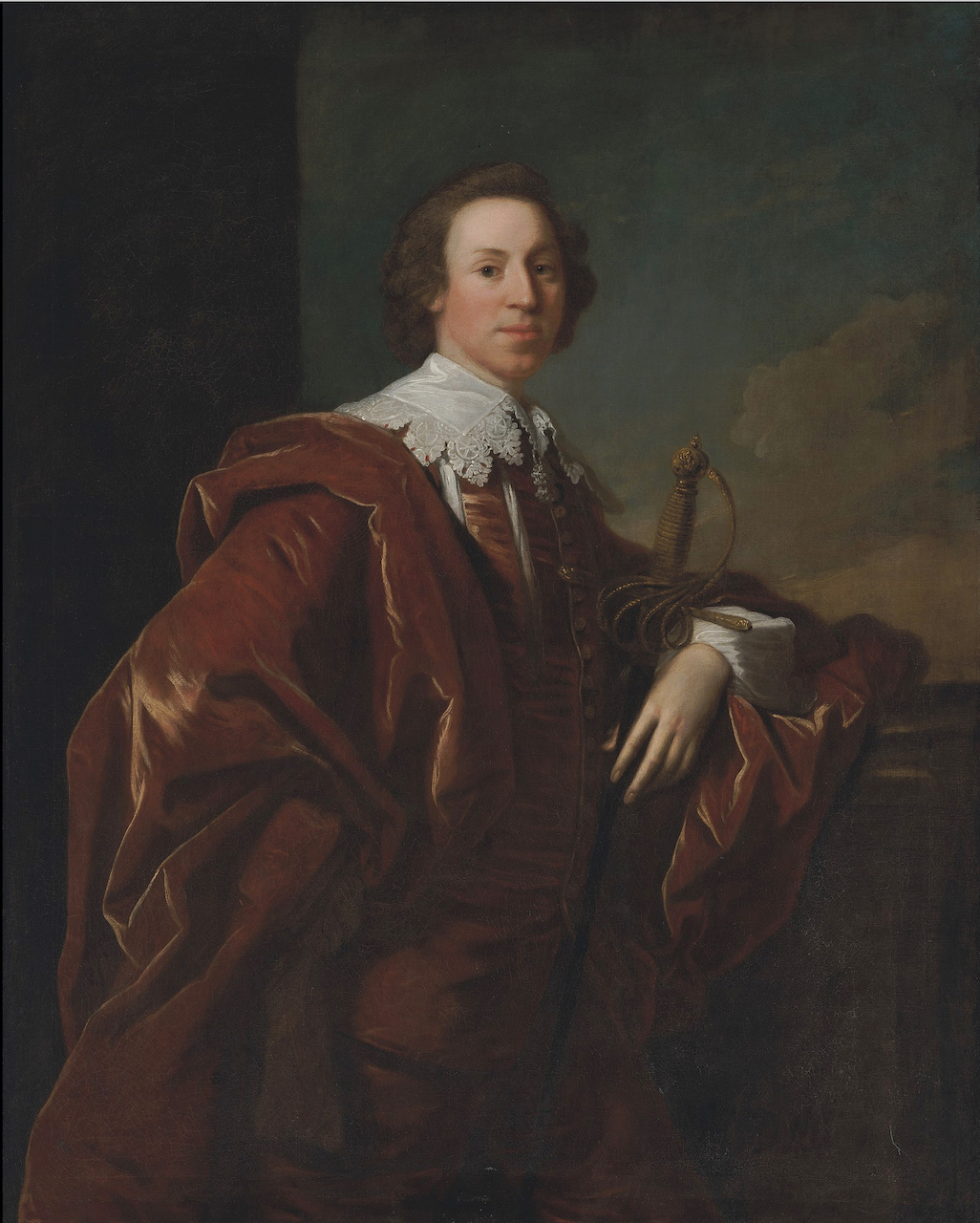
George and Elizabeth née Moore had lots of children. The heir was Robert (1708-1774) who was later created 1st Earl of Belvedere.
Robert Rochfort, 1st Earl of Belvedere (1708-1774), three-quarter-length, in van Dyck costume, by Robert Hunter It is possible that the present portrait was executed posthumously.
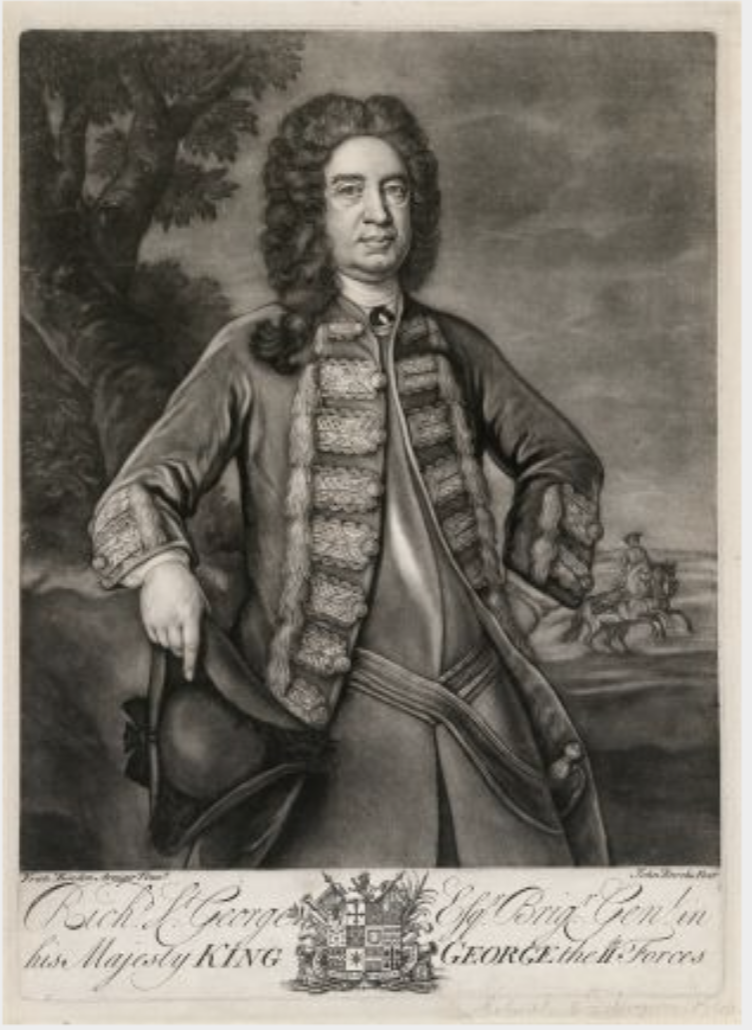
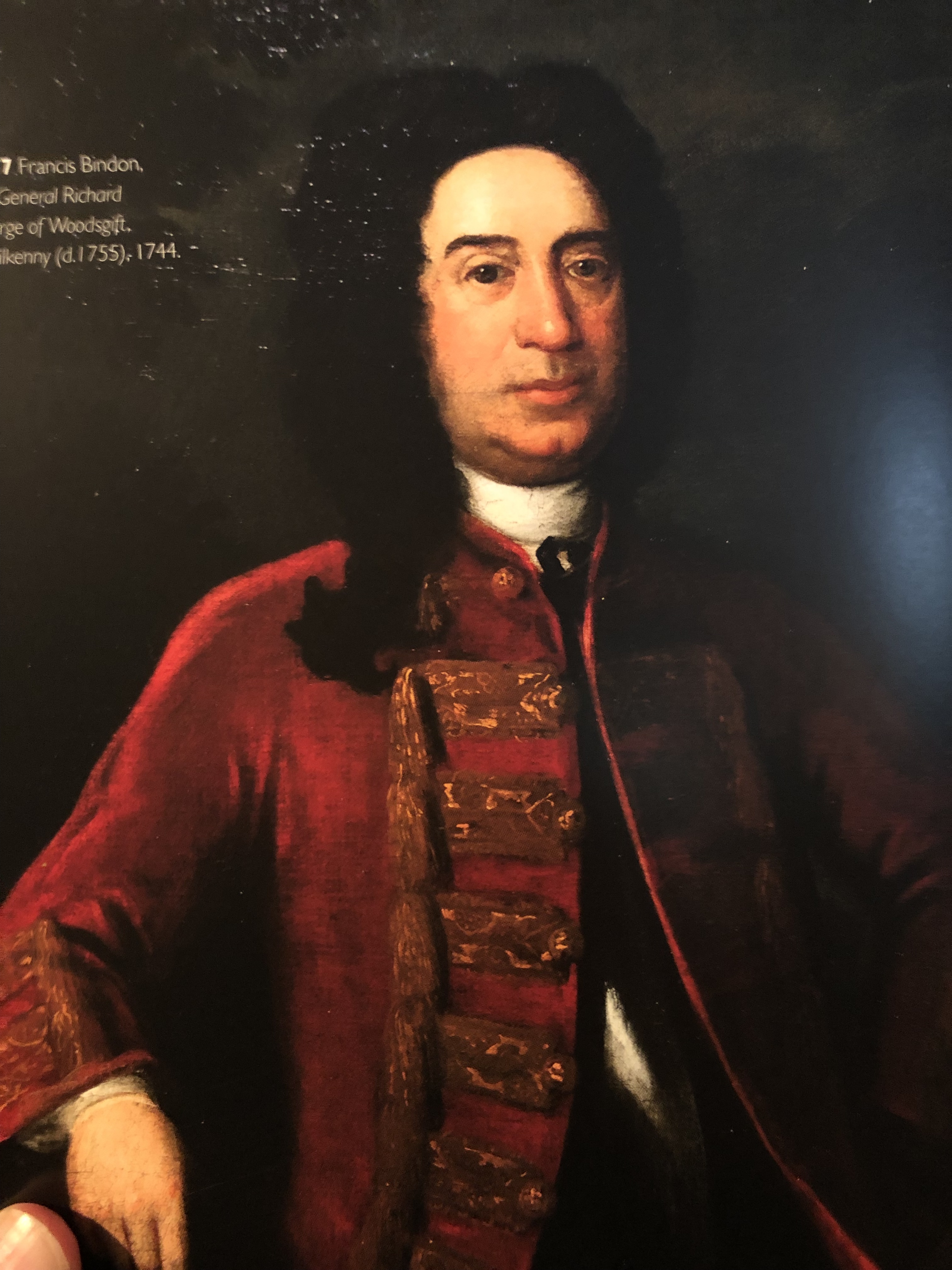
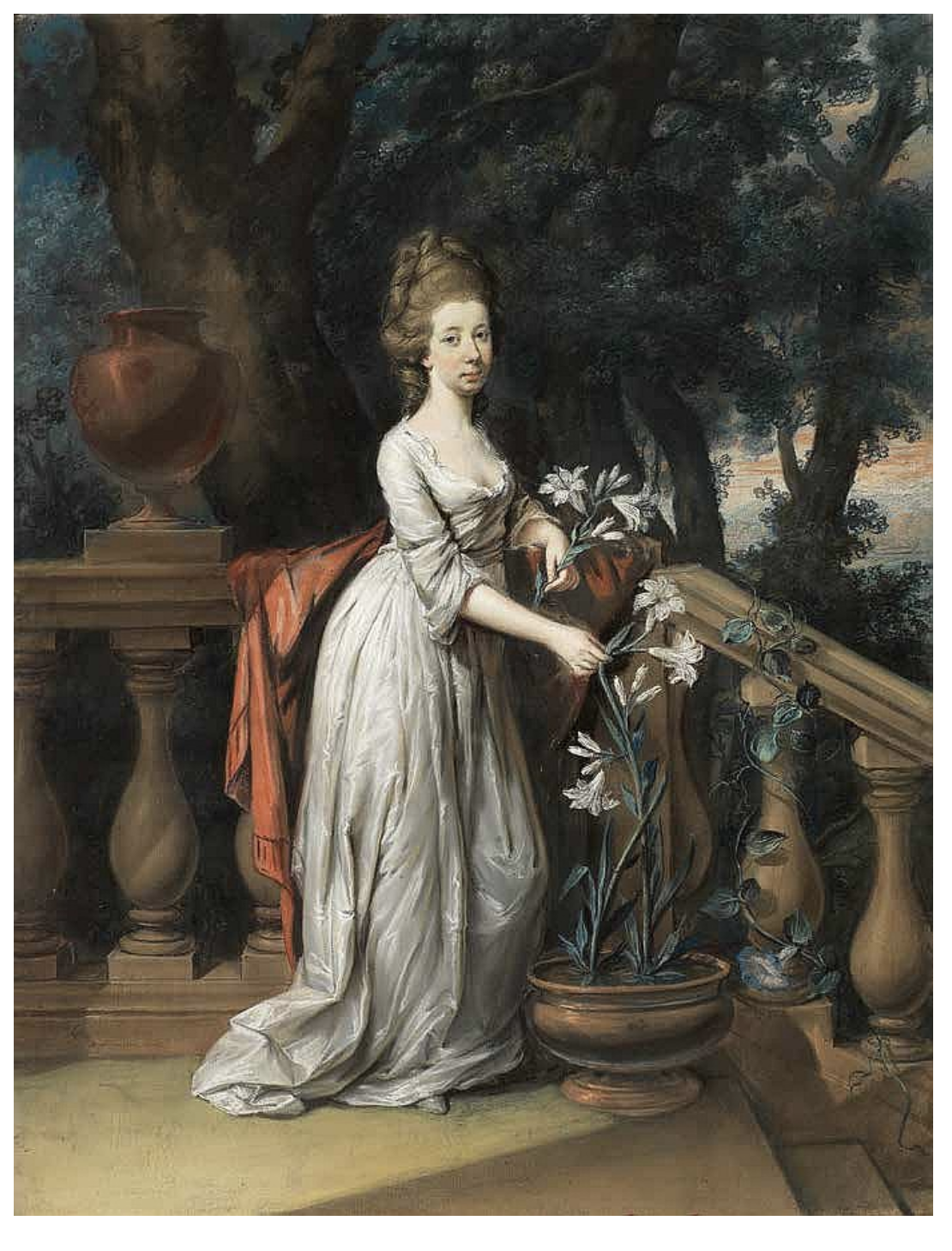
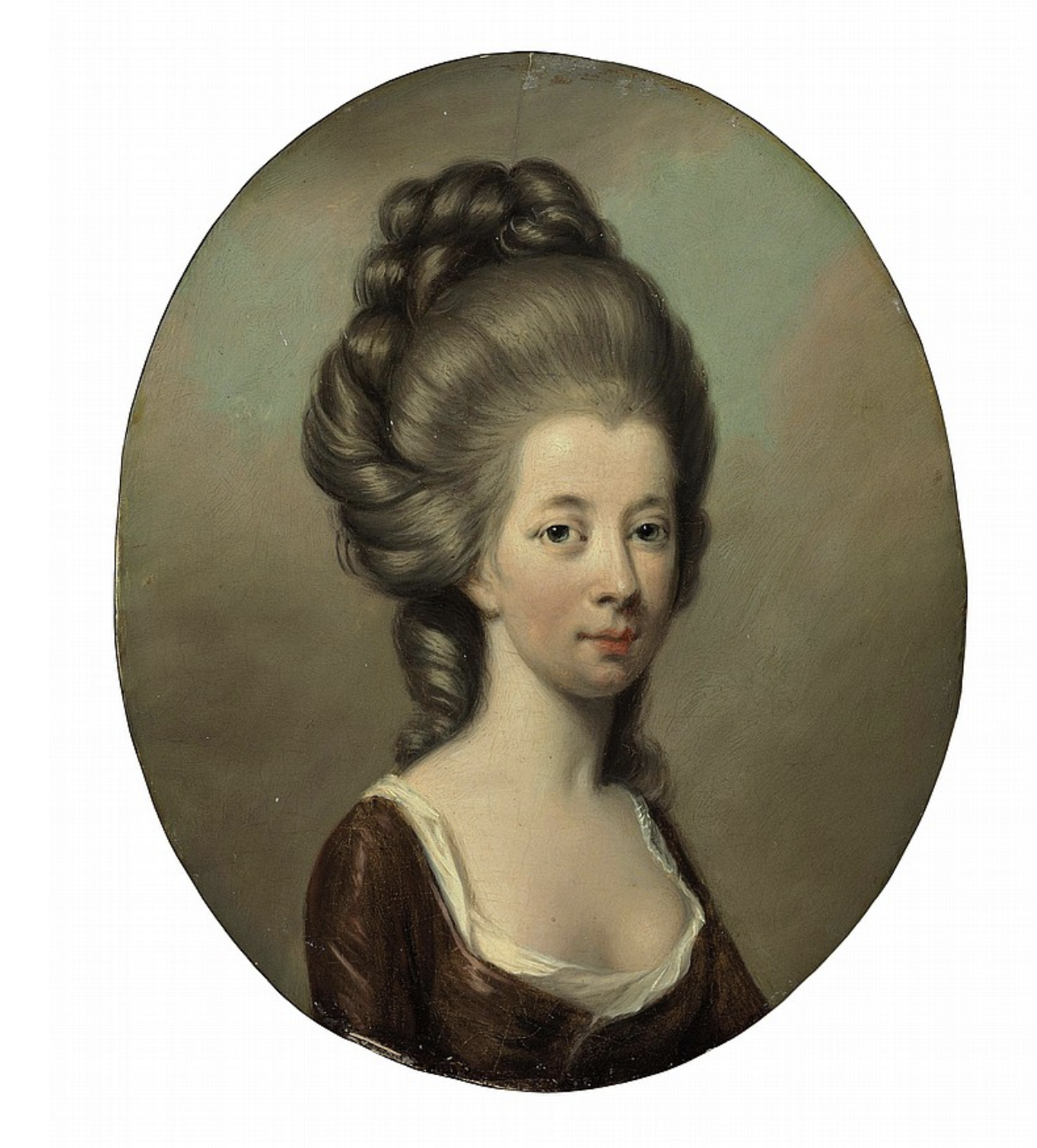
Other children included Mary (1705-1729) who married Henry Tuite, 6th Baronet. Alice (1710-1738) married Thomas Loftus (1701-1768). Thomasine, born 1716, married Gustavus Lambart of Beauparc, County Meath (a section 482 property, see my entry). Anne married Henry Lyons, High Sheriff for King’s County. William (1719-1772) married Henrietta Ramsay. Arthur married Sarah Singleton and became MP for County Westmeath. George (1713-1794) married Alice, daughter of Gustavus Hume, 3rd Baronet.
Jane Butler née Rochfort Countess of Lanesborough (1737-1828) Attributed to Thomas Pope Stevens courtesy Christies Irish Sale 2002. She was the daughter of Robert Rochfort, 1st Earl of Belvedere and married Brinsley Butler, 2nd Earl of Lanesborough.Sarah Rochfort (nee Singleton) was the daughter of The Rev. Rowland Singleton (1696-1741) of Drogheda, later Vicar of Termonfeckin, County Louth, wife of Arthur Rochfort (1711-1774) of Bellfield House Co Westmeath, sold at Shepphards.
The first Earl of Belvedere is infamous for locking up his wife, Mary Molesworth, daughter of the 3rd Viscount of Swords (see my entry about Belvedere, County Westmeath). Their daughter Jane (d. 1828) married Brinsley Butler, 2nd Earl of Lanesborough. Robert 1st Earl’s son George (1738-1813) succeeded as 2nd Earl of Belvedere.
















































































 Irish Historic Houses
