Thomas Fitzmaurice (1668-1741) 1st Earl of Kerry (21st Baron of Kerry), Viscount Clanmorris was the father of John Fitzmaurice Petty (1706-1761) 1st Earl of Shelburne, who added Petty to his name after his mother, Anne Petty (d. 1737). Another son of the 1st Earl of Kerry was his heir William FitzMaurice (1694-1747) who succeeded as 2nd Earl of Kerry.
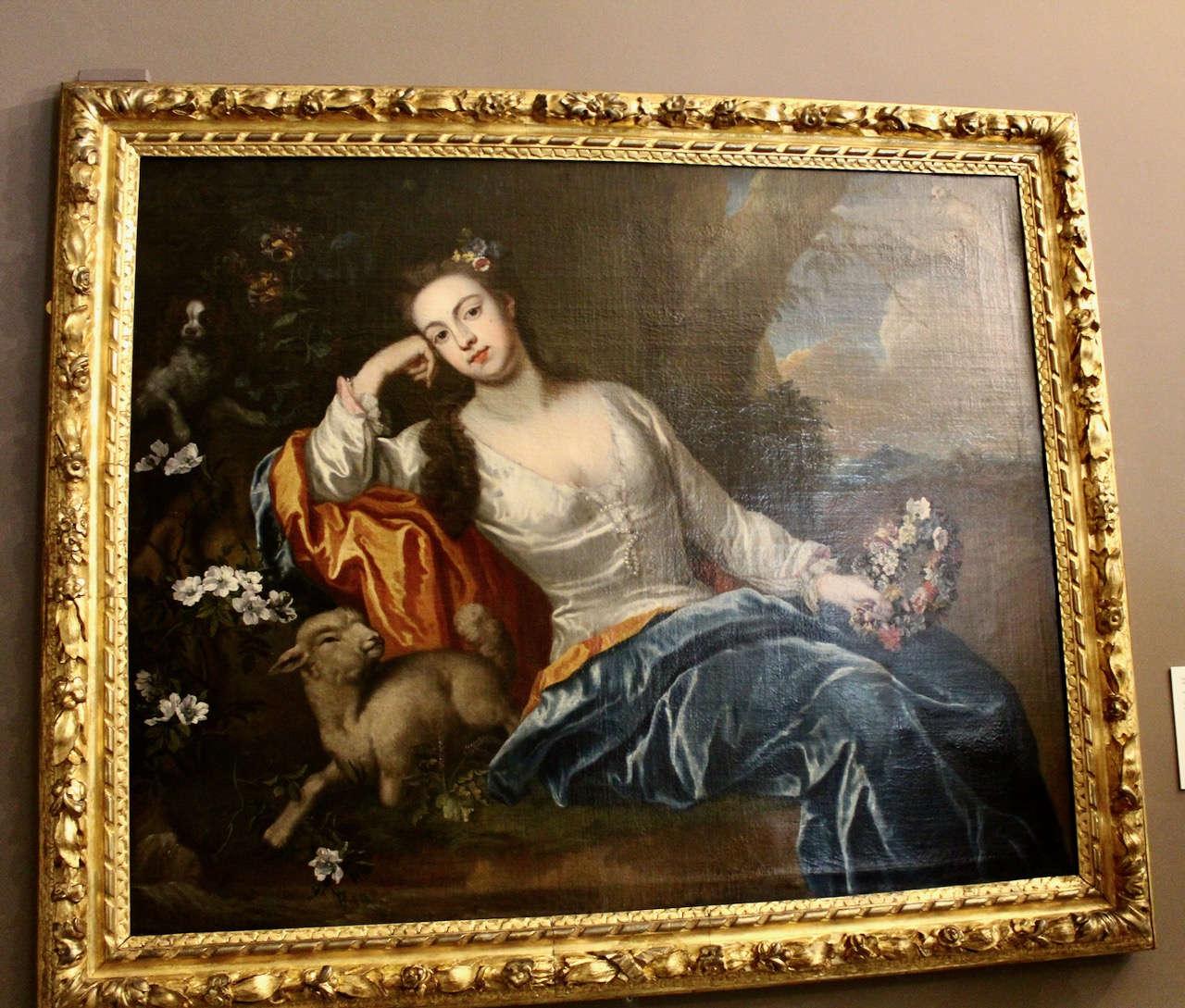
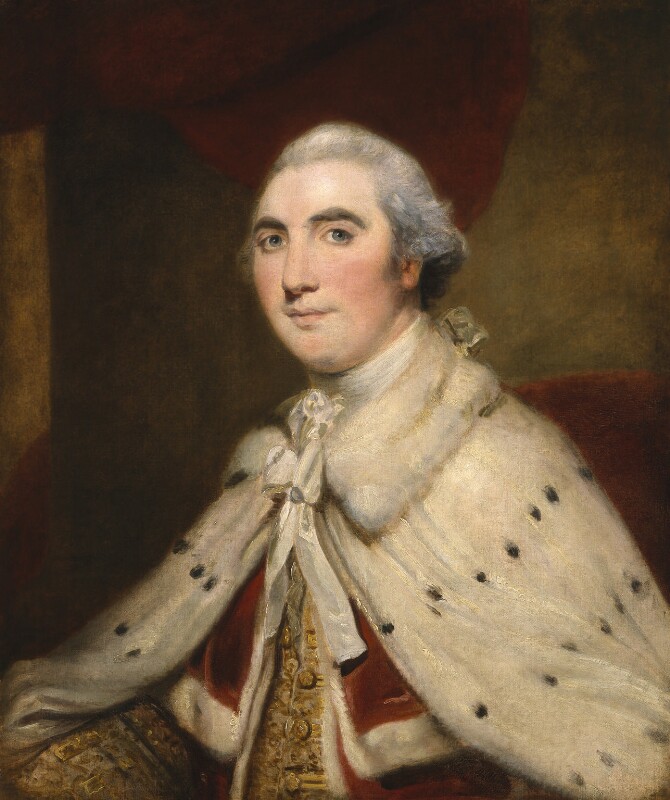
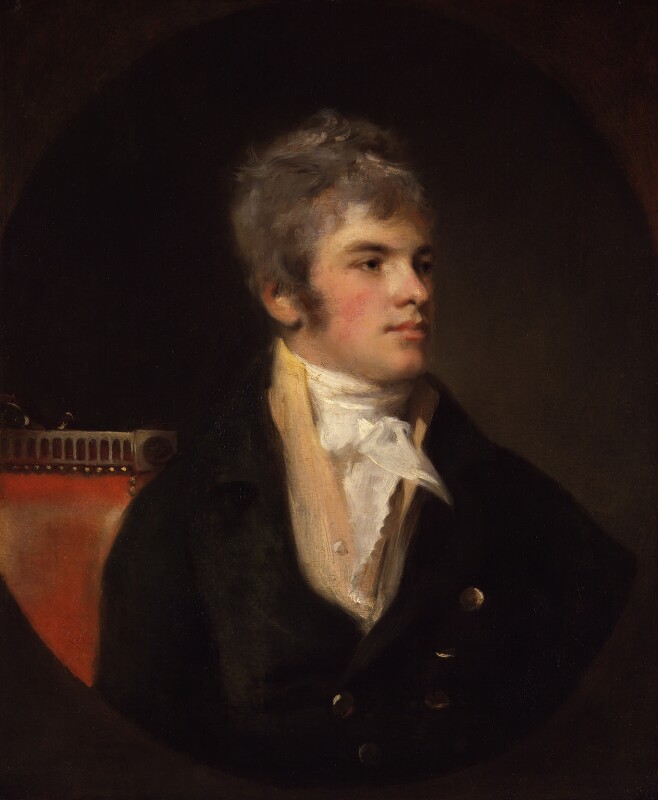
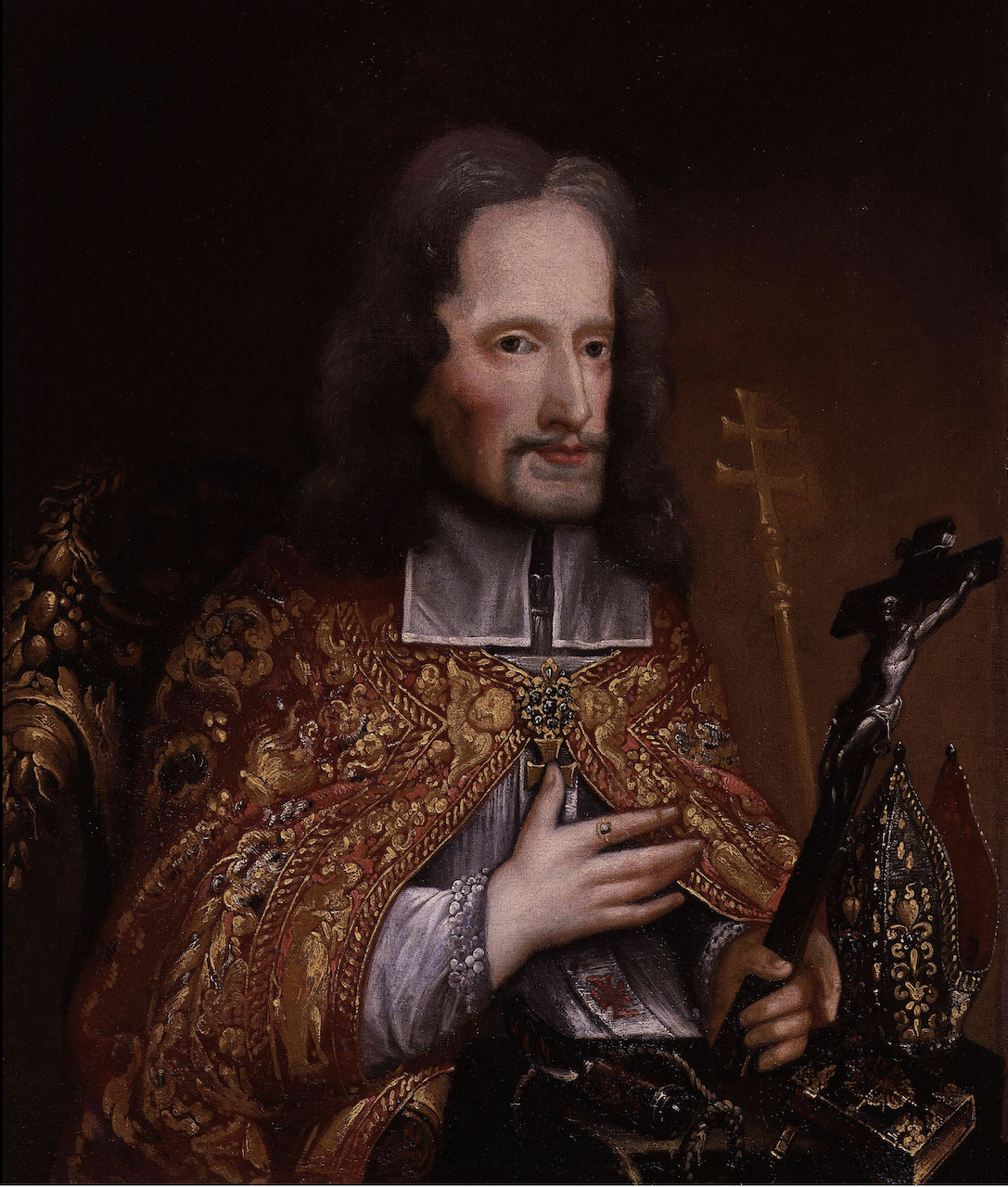
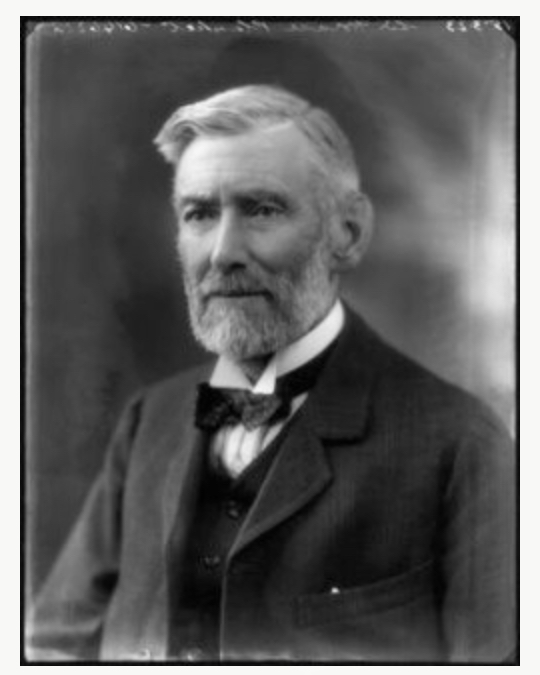
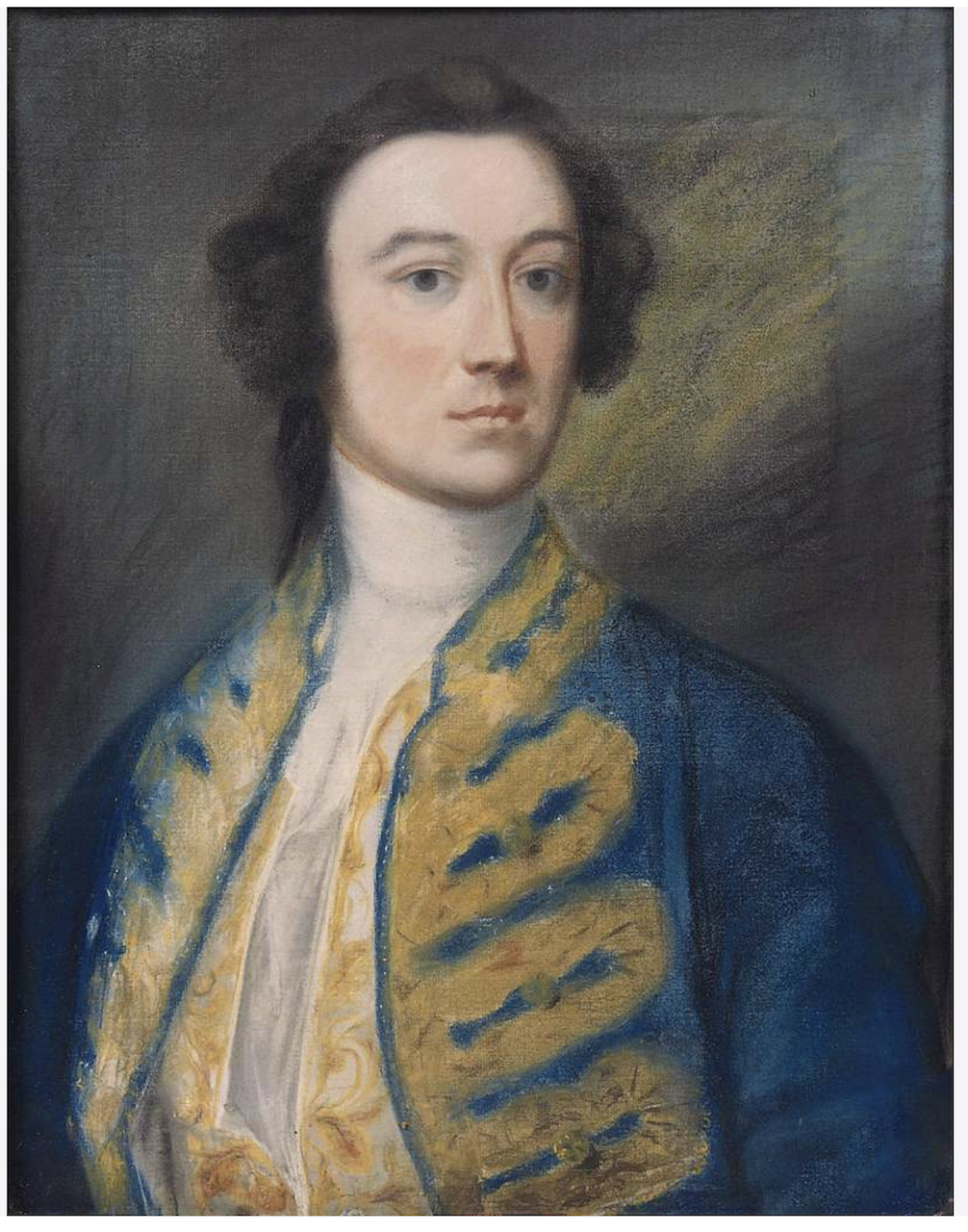
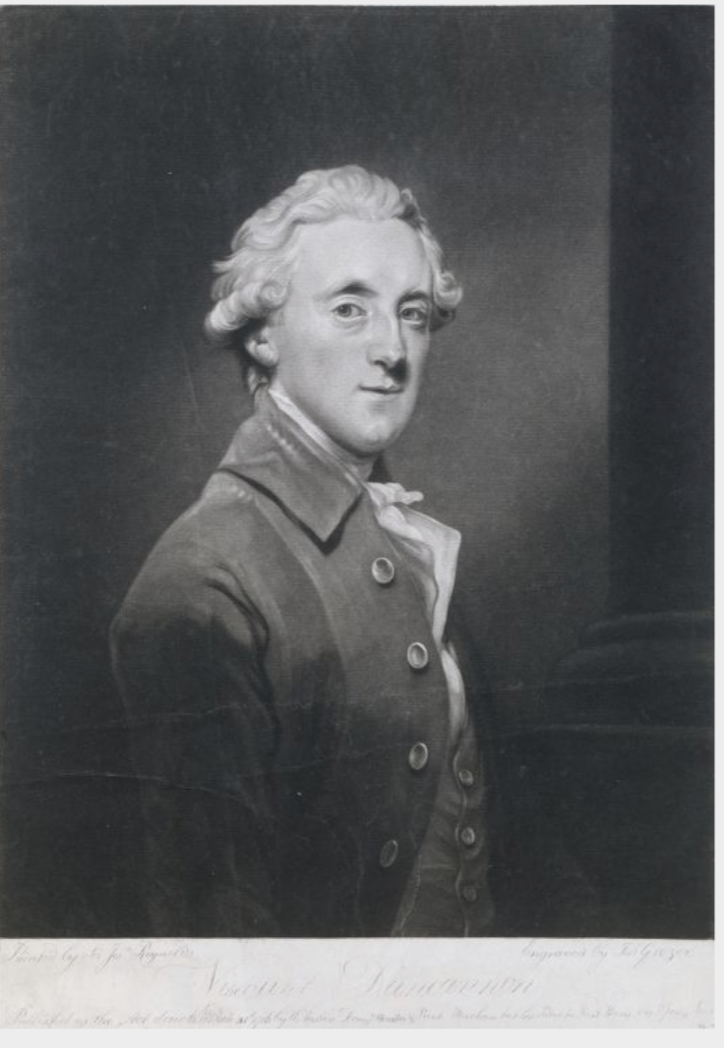
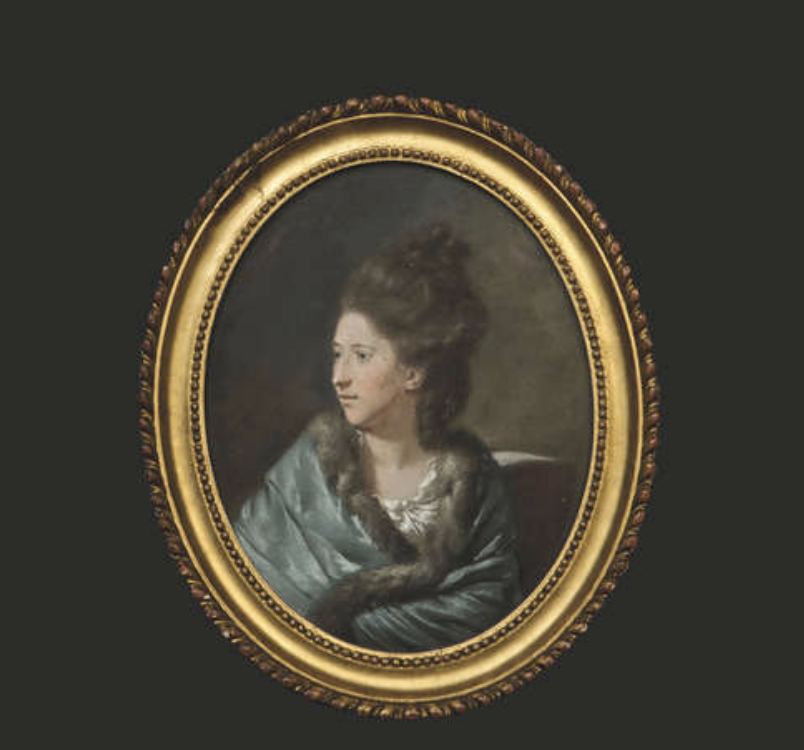
William Petty (1737-1805) 1st Marquess of Lansdowne Lord Shelburne, Prime Minister, after Sir Joshua Reynolds based on a work of 1766, National Portrait Gallery of London 43.He was the son of John Fitzmaurice Petty (1706-1761) 1st Earl of Shelburne, who was the son of Thomas Fitzmaurice 1st Earl of Kerry (21st Baron of Kerry), Viscount ClanmorrisLouisa Lansdowne née Fitzpatrick, wife of William Petty 1st Marquess of Lansdowne by Joshua Reynolds from Catalogue of the pictures and drawings in the National loan exhibition, in aid of National gallery funds, Grafton Galleries, London. She was a daughter of John FitzPatrick 1st Earl of Upper Ossory.John Henry Petty (1765-1809) 2nd Marquess of Lansdowne National Portrait Gallery of London ref. D37171.John Henry Petty (1765-1809), 2nd Marquis of Lansdowne by Francois-Xavier Fabre, 1795.Henry Petty-Fitzmaurice (1780-1863) 3rd Marquess of Lansdowne, Trustee of the National Portrait Gallery, by Henry Walton circa 1805 courtesy of National Portrait Gallery, NPG 178.Henry Thomas Petty-Fitzmaurice (1816-1866) 4th Marquess of Lansdowne, Politician and railway company chairman, photograph by by John & Charles Watkins circa early 1860s, courtesy of National Portrait Gallery NPG Ax16422.Henry Charles Keith Petty-Fitzmaurice 5th Marquess of Lansdowne by Philip Alexius de László.Beatrix Frances Duchess of St Albans, Maud Evelyn Petty-Fitzmaurice, Marchioness of Lansdowne (wife of 5th Marquess), Theresa Susey Helen Vane-Tempest-Stewart, Marchioness of Londonderry and Evelyn Emily Mary Cavendish, Duchess of Devonshire, by Frederick & Richard Speaight.Mrs Letitia Pilkington (née Van Lewen), (1712-1750), “Adventuress” and Author Date: c.1760 Engraver: Richard Purcell, Irish, c.1736-c.1766 After Nathaniel Hone the Elder, Irish, 1718-1784.Oliver Plunket, by Edward Luttrell courtesy of National Portrait Gallery London.Called Frances Hales, Countess of Fingall, possibly Margaret MacCarty later Countess of Fingall, wife of Luke Plunkett (1639-1685) 3rd Earl of Fingall, by Simon Pietersz Verelst courtesy of National Trust Hatchlands. Margaret was daughter of Donough MacCarty (or MacCarthy) 1st Earl of Clancarty; 2nd Viscount Muskerry. Frances Hales married Peter Plunkett (1678-1717) 4th Earl of Fingall.Arthur James Plunkett (1759-1836) 8th Earl of Fingall by Charles Turner after Joseph Del Vechio NPG D36923.Horace Plunkett by photographer Bassano Ltd, 1923, courtesy of National Portrait Gallery of London, reference NPGx12783.William Conyngham Plunket, 1st Baron Plunket, (1764-1854), Orator and former Lord Chancellor of Ireland Engraver David Lucas, British, 1802-1881 After Richard Rothwell, Irish, 1800-1868.Marble bust of William Plunket, 1st Baron Plunket (1764-1854), Lord Chancellor of Ireland, by CHRISTOPHER MOORE RHA (1790 – 1863), courtesy of Adams auction 19 Oct 2021.William Pole of Ballyfin (d. 1781), English school of 18th century, pastel, courtesy of Christies auction, wikimedia commons. He married Sarah Moore, daughter of the 5th Earl of Drogheda.
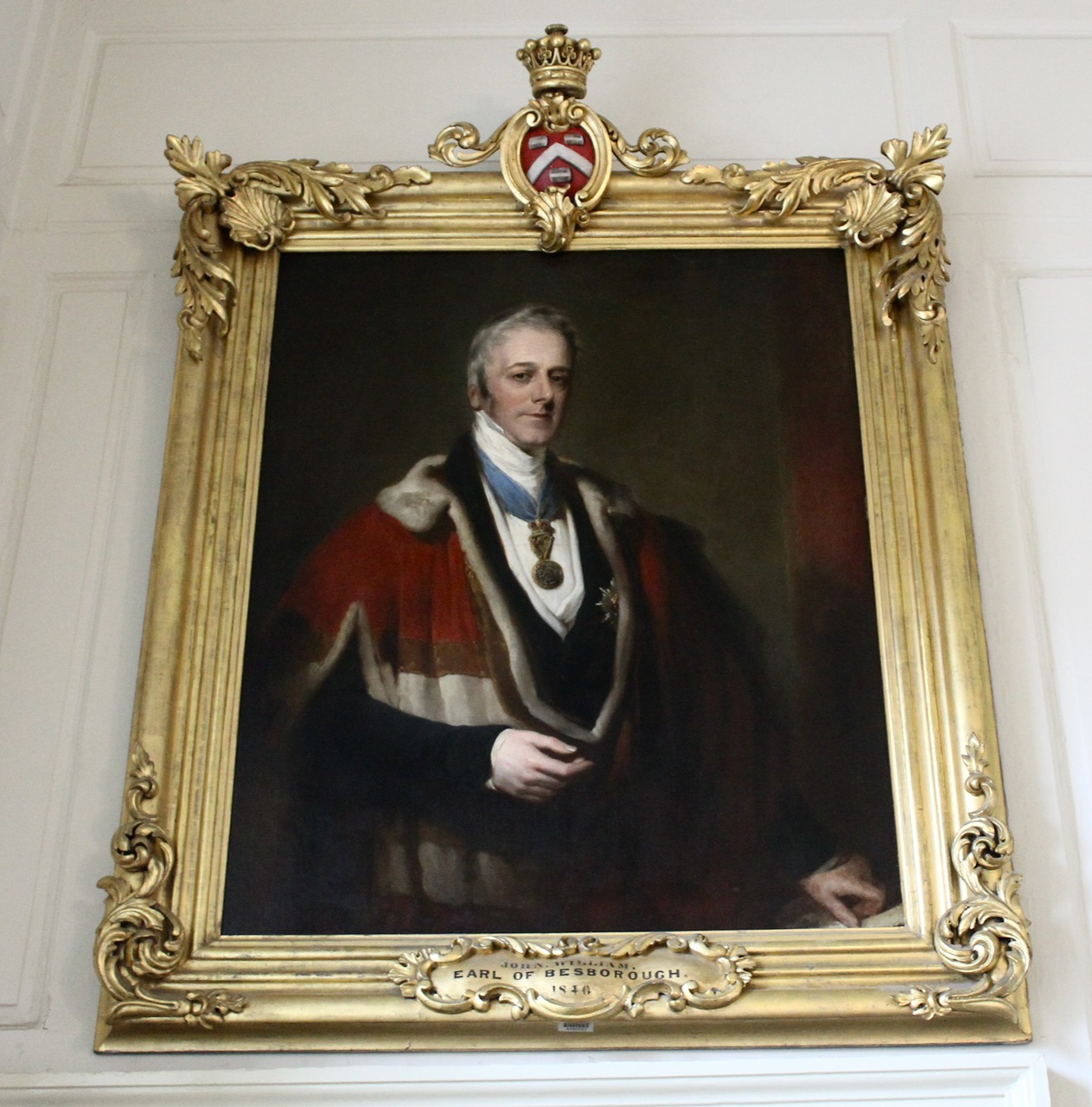
Brabazon Ponsonby (1679-1758) 1st Earl of Bessborough, 2nd Viscount Duncannon, of the fort of Duncannon, Co. Wexford married Sarah Margetson. Their daughter Sarah (d. 1736/37) married Edward Moore, 5th Earl of Drogheda. Their daughter Anne married Benjamin Burton of Burton Hall, County Carlow. Their daughter Letitia (d. 1754) married Hervey Morres, 1st Viscount Mountmorres. Their son William Ponsonby (1704-1793) succeeded as 2nd Earl of Bessborough and a younger son, John (1713-1787) married Elizabeth, daughter of William Cavendish 3rd Duke of Devonshire.
Open dates in 2026: June 1, 3-7, 10-14, 17-21, 24-28, July 1-5, 8-12, 15-19, 22-26, 29-31, Aug 1-3, 5-9, 12-23, 26-30,
10.30am-6pm
Fee: adult €16, OAP/student €14, child €8, tour groups of over 30 persons who pay in advance receive a discount Fee: adult €16, OAP/student €14, child €8, tour groups of over 30 persons who pay in advance receive a discount
donation
Help me to pay the entrance fee to one of the houses on this website. This site is created purely out of love for the subject and I receive no payment so any donation is appreciated!
€15.00
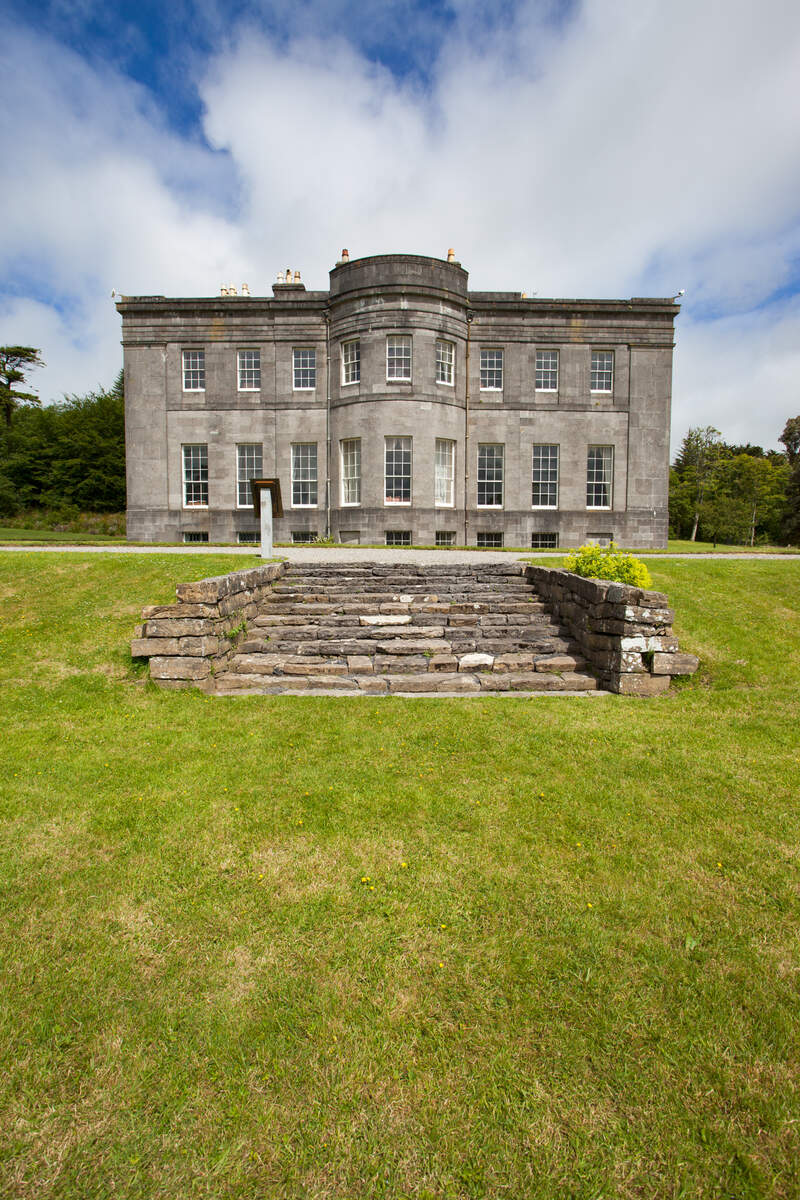
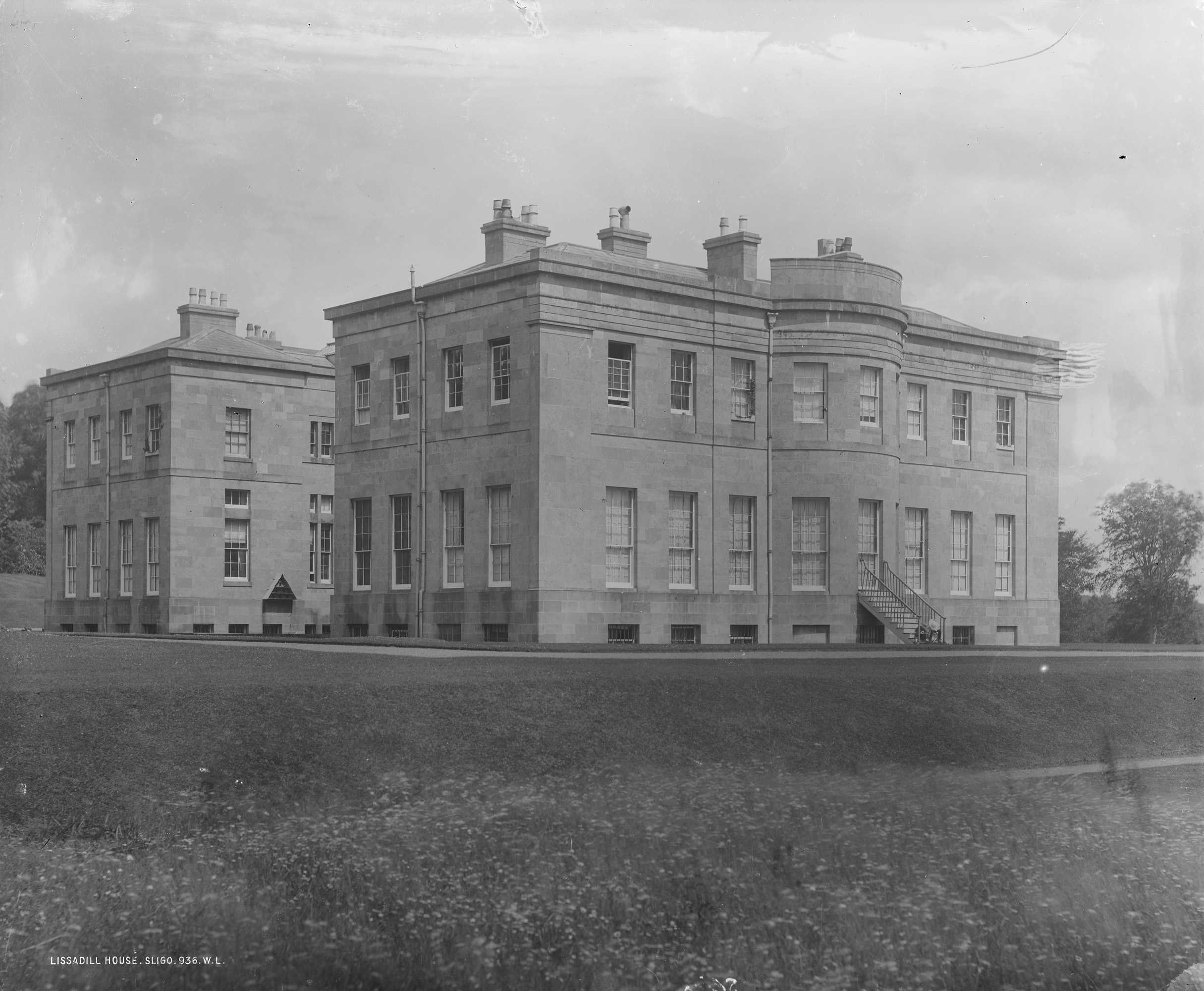
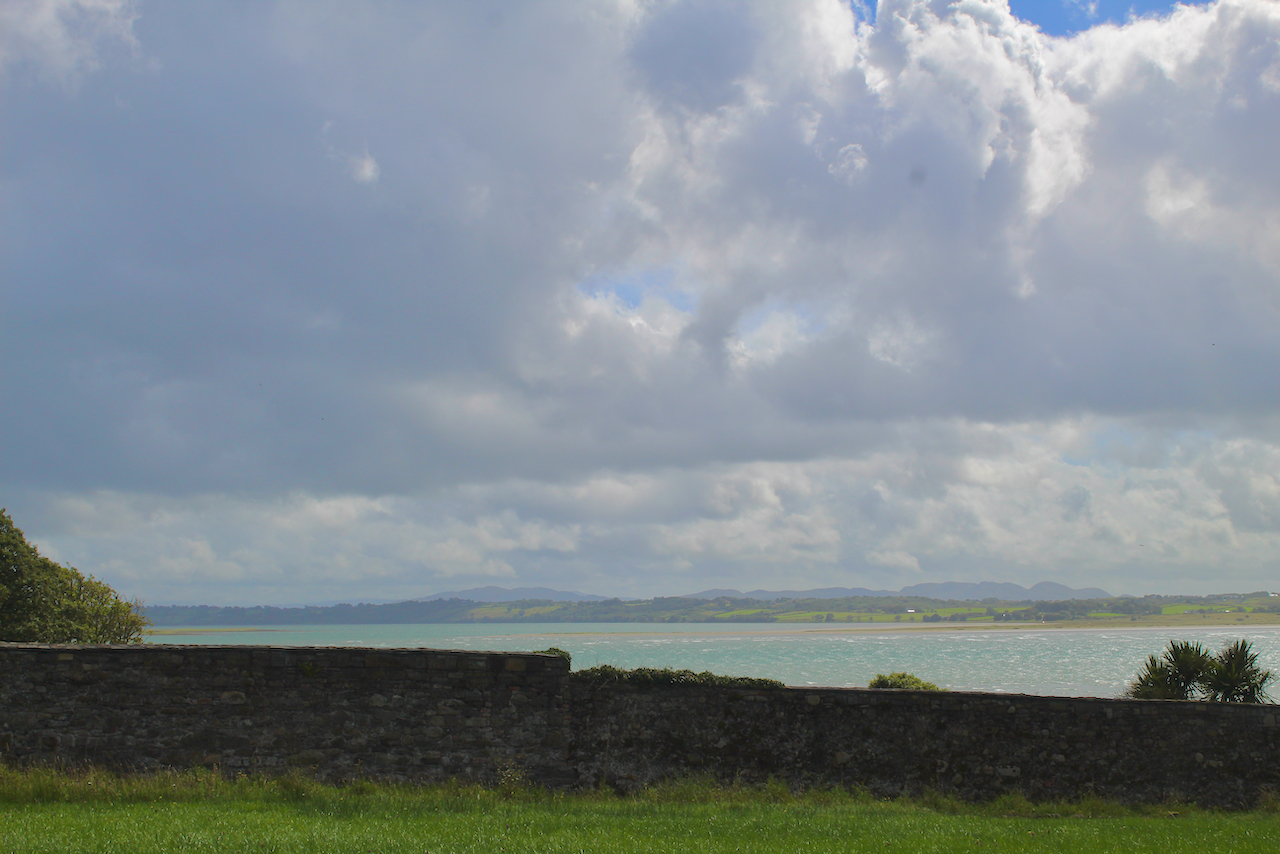
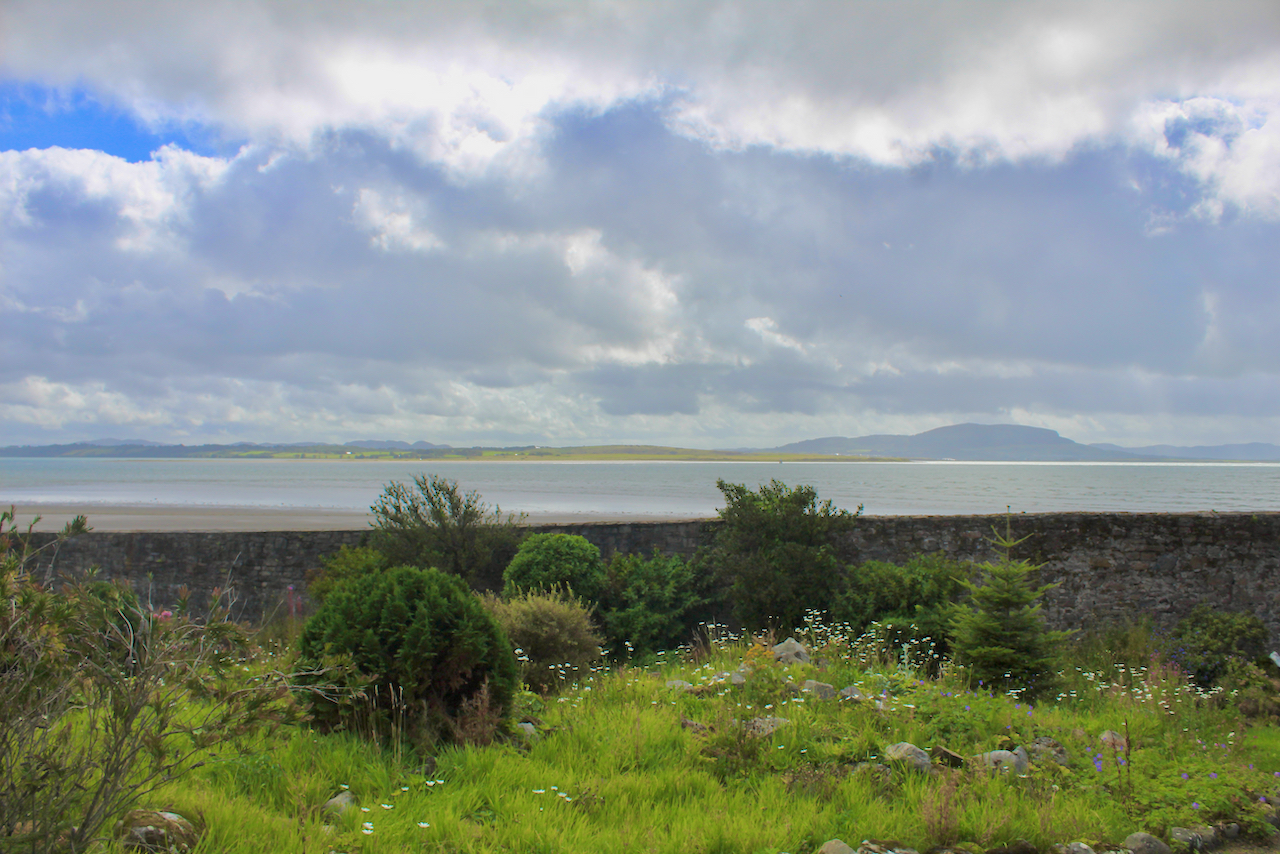
Lissadell House and Gardens County Sligo Ireland, Photograph created by Peter McCabe, Tourism Ireland, 2015, taken from Ireland’s Content Pool care of Failte Ireland.This south elevation, facing the sea, has a three-bay central bow with a raised parapet and three-bays either side of the full height bow.Lissadell House, County Sligo circa 1865-1914 by Robert French, Lawrence Collection NLI L_IMP_0936.
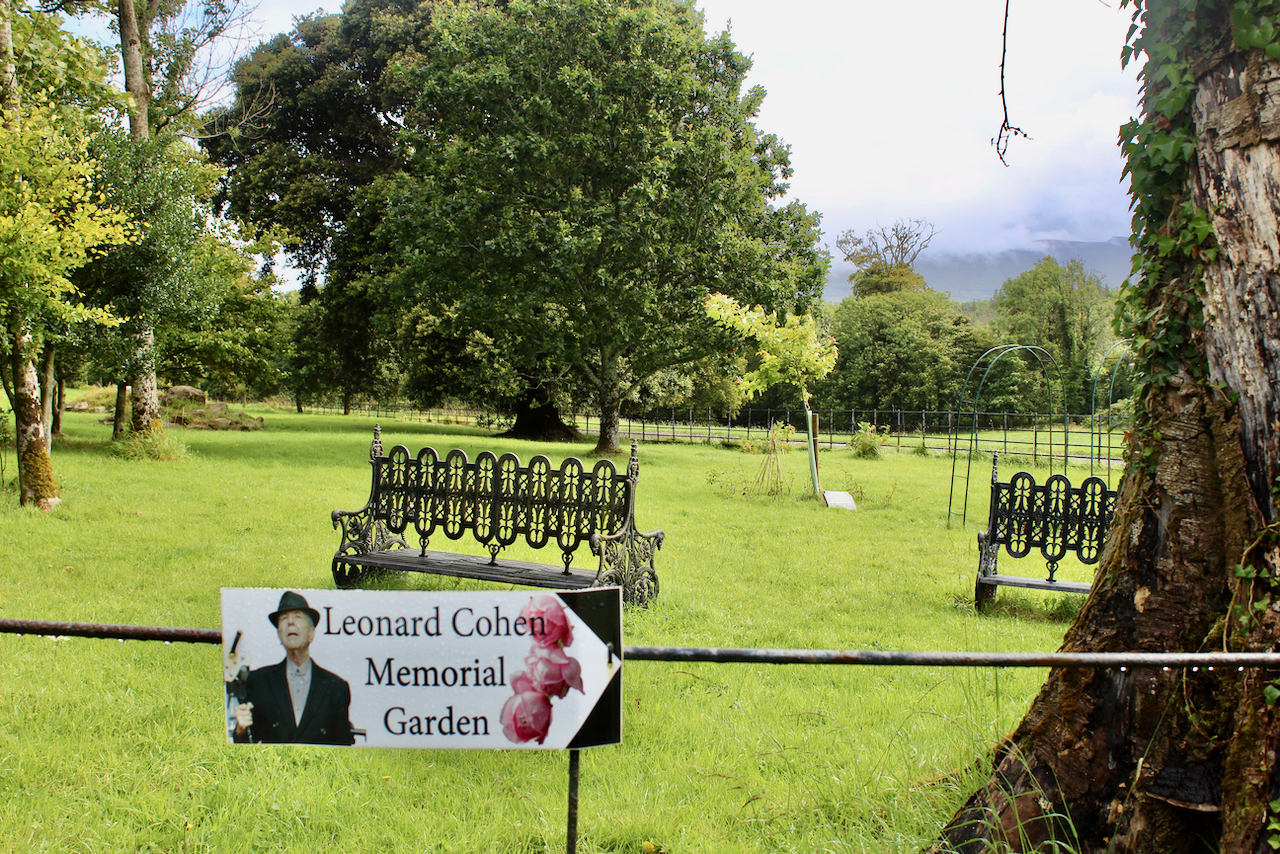
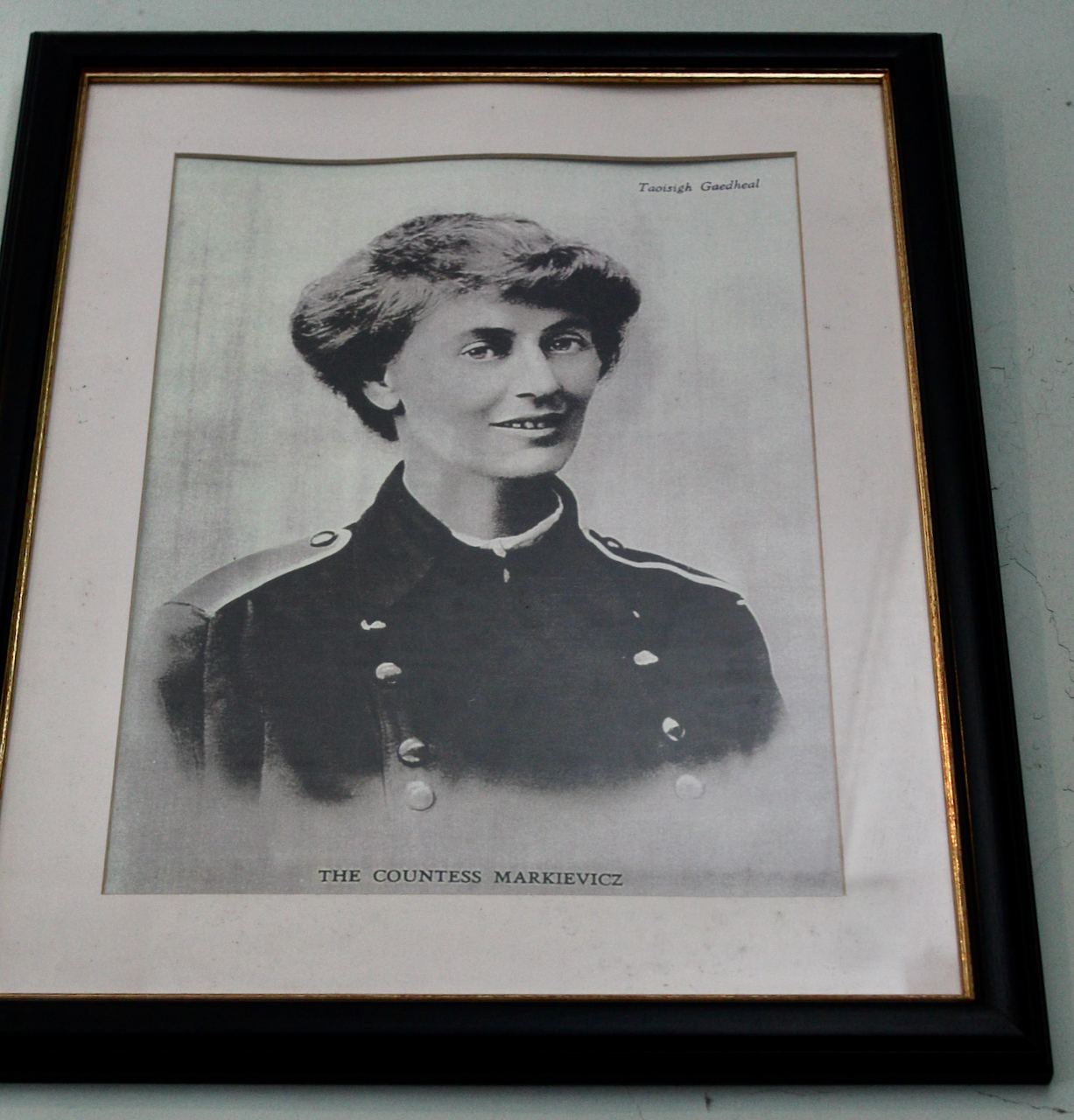
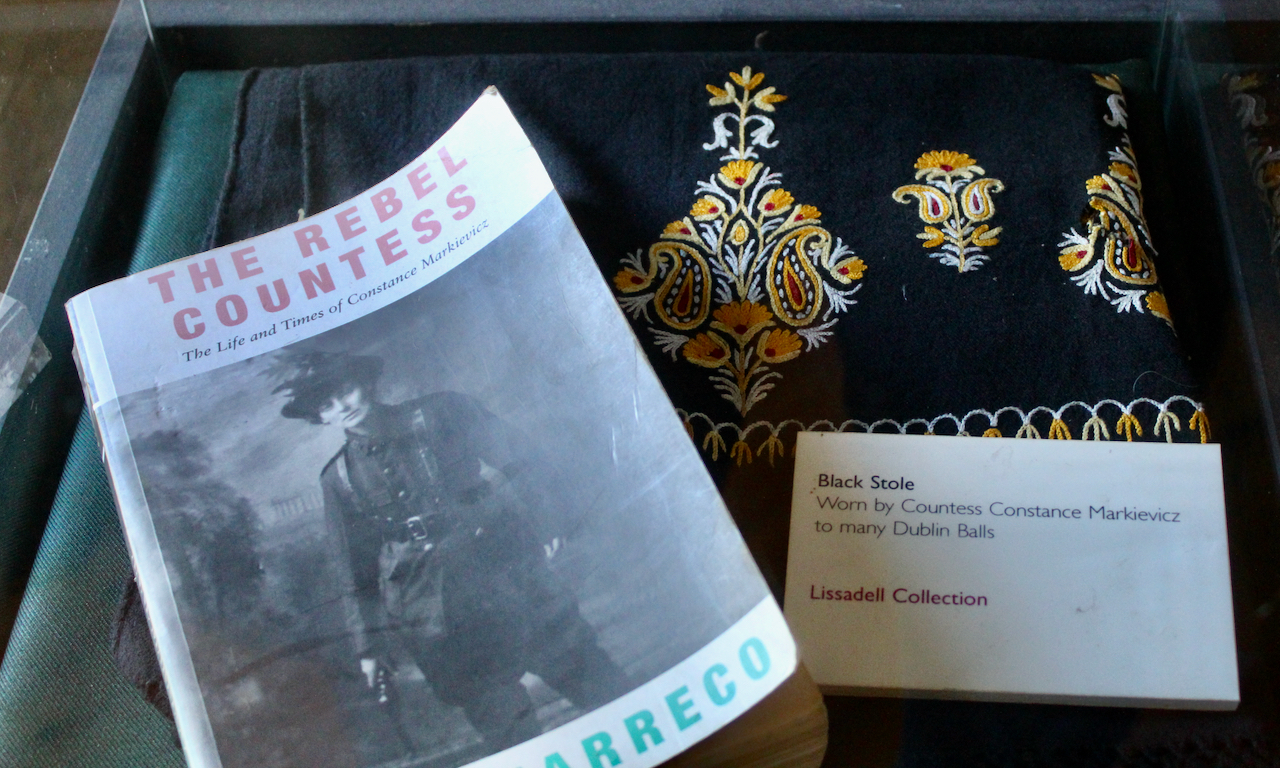
We visited Lissadell during Heritage Week 2022. I had been looking forward to seeing it as it has some amazing internal Classical architecture. It is most famous as the birthplace of Constance Markievicz, née Gore-Booth, the first woman senator in Ireland and fighter in the 1916 uprising, and also more recently as the host of a concert of Leonard Cohen. It was only sold out of the Gore-Booth family in 2004.
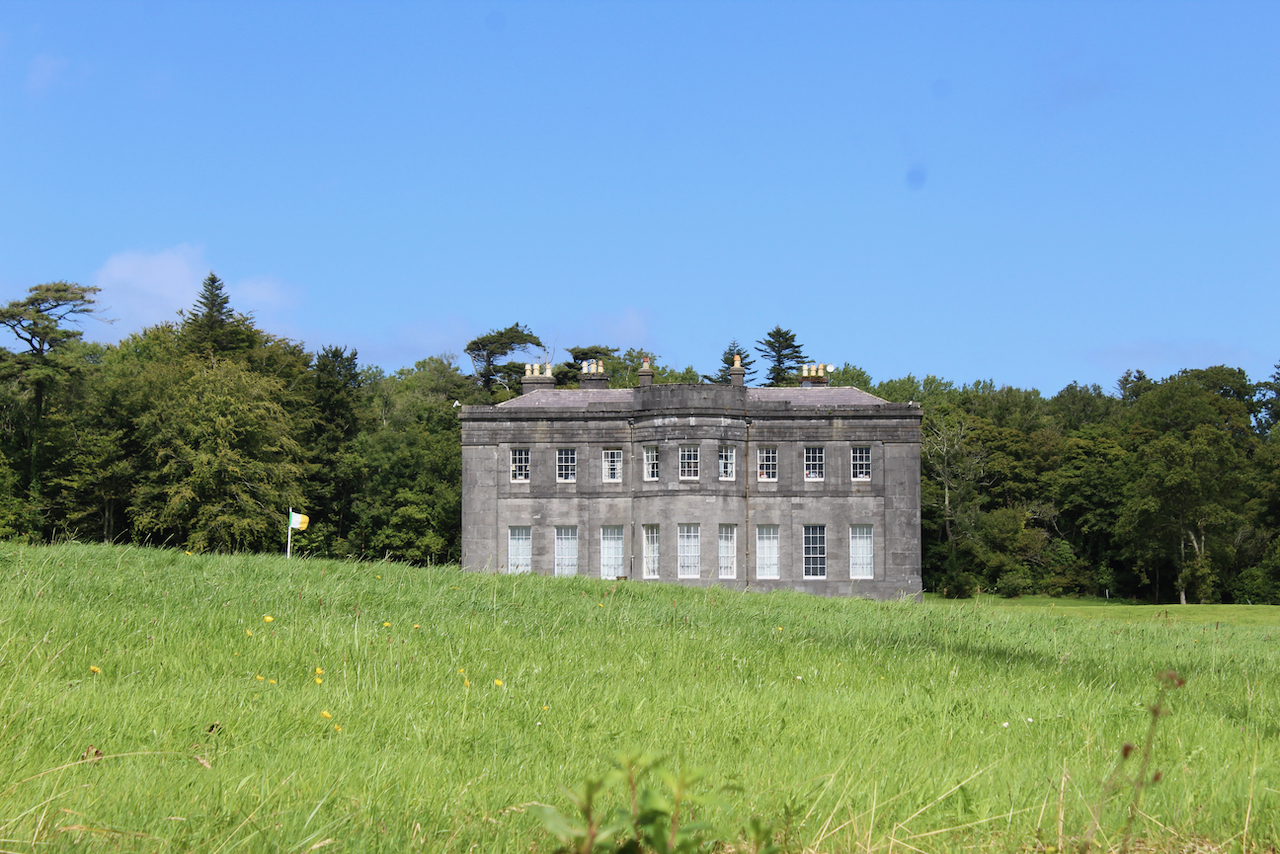
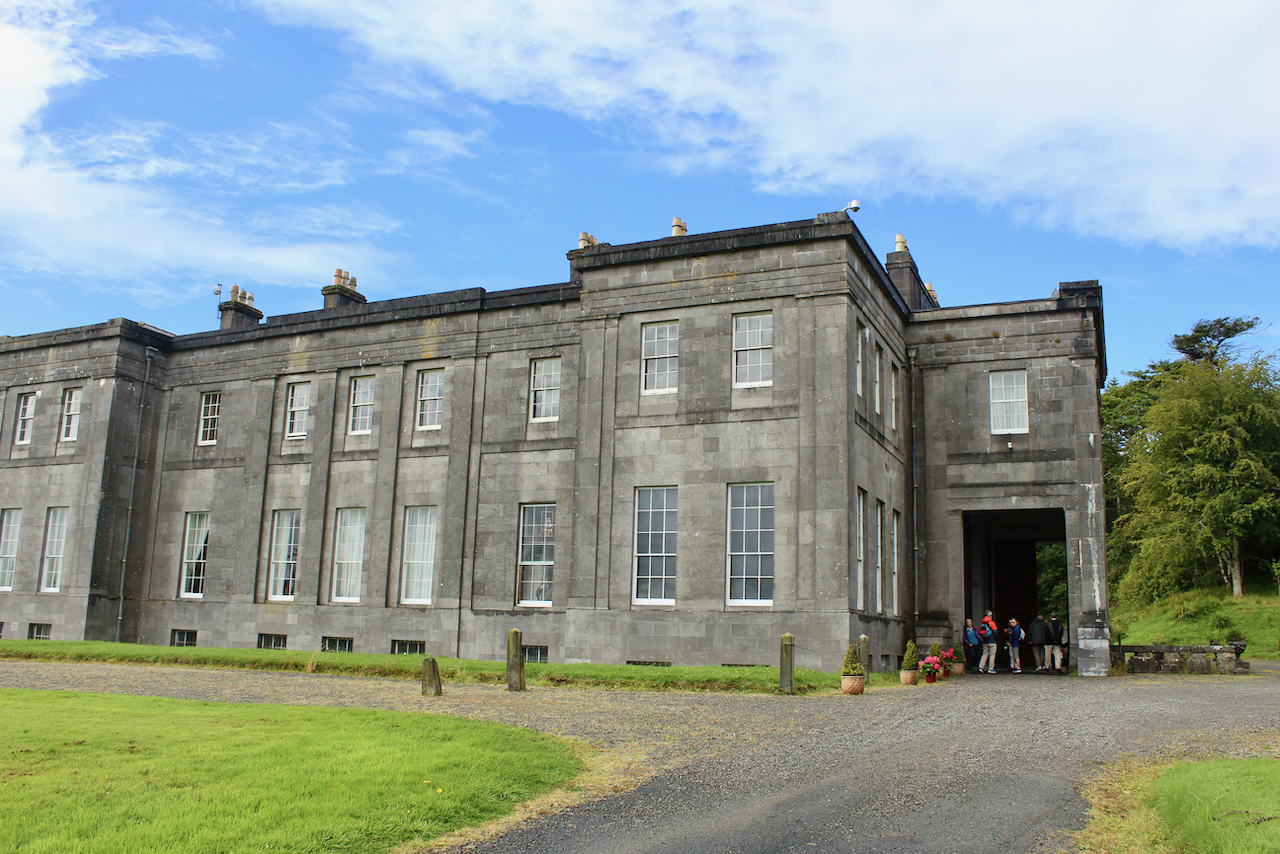
It was built in 1830-35 for Robert Gore-Booth (1805-1876), 4th Baronet, to the Greek Revival design of Manchester architect Francis Goodwin (1784-1835). It replaced an earlier house nearer the shore which itself replaced an old castle. It is a nine-bay two-storey over basement house built of Ballisodare limestone. [1]
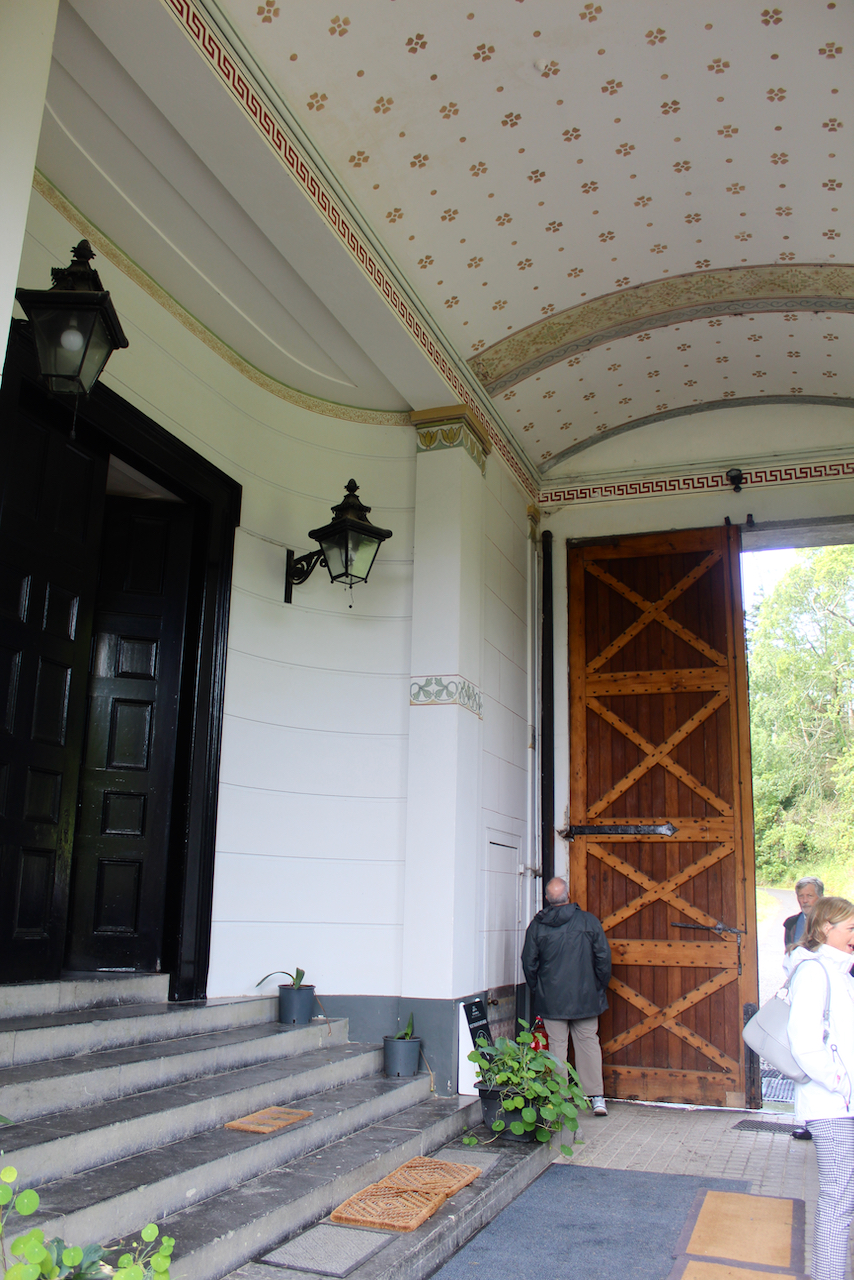
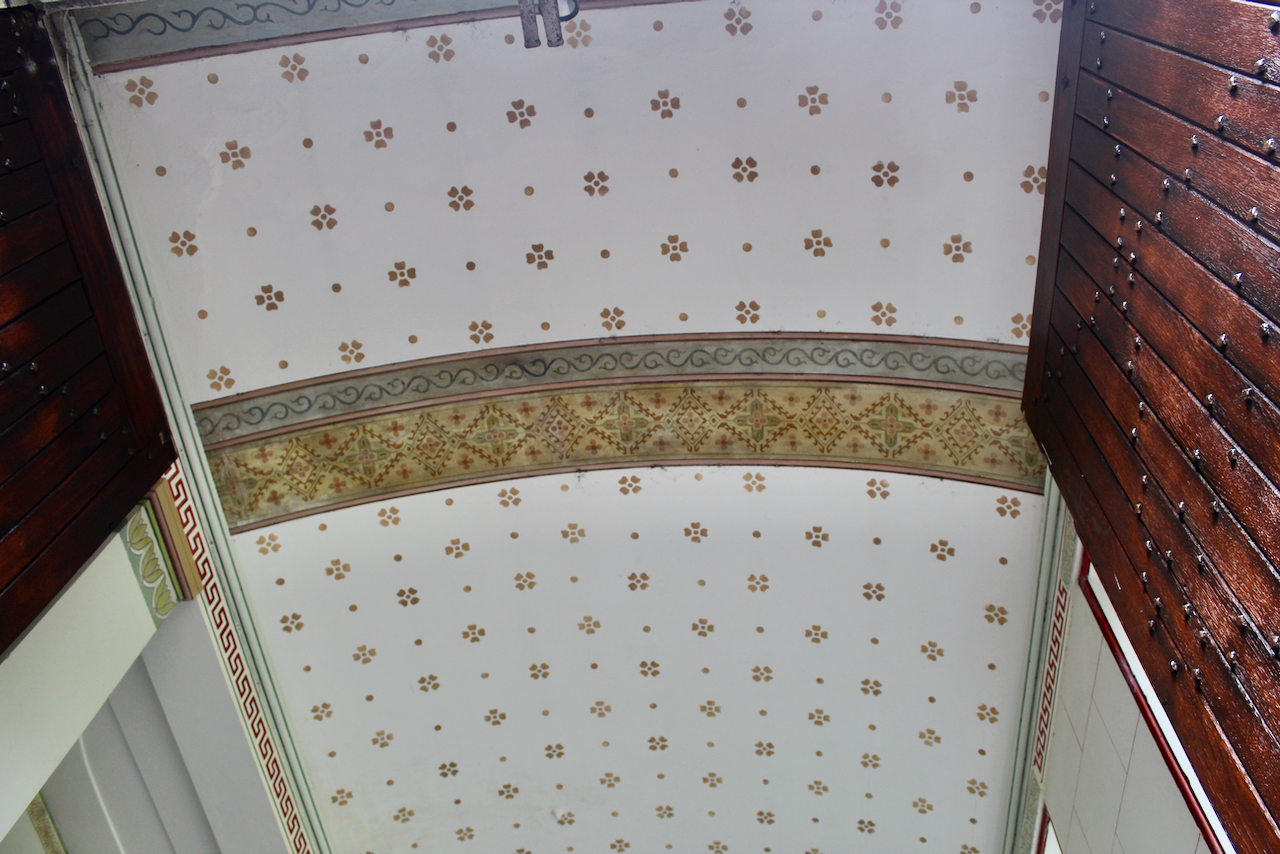
The entrance front (north) elevation has a three-bay pedimented central projection flanked by three-bay side sections. When one approaches on the path one can see that the lower storey is open to the east and west to form a porte-cochere. The house was described by Maurice Craig as being ‘…distinguished more by its solidity than by its suavity and more by its literary associations than by either.’ I find the crafted stone and the massive squareness of it beautiful.
The east elevation which faces the sea has a five-bay central section between two-bay projections. The five-bay section contains a three-bay central breakfront with tall framing pilasters. Above the upper floor windows is a stepped stone feature that runs around three sides of the house.
Other former residents of the house deserve to be as famous as Constance.
Dermot James in his book The Gore-Booths of Lissadell tells us that the Gore-Booths are descended from Paul Gore of Manor Gore, County Donegal. He was MP for Ballyshannon in Donegal, and was created 1st Baronet Gore, of Magherabegg, County Donegal in 1621/22. He married a niece of the 1st Earl of Strafford, Isabella Wickliffe.
Paul Gore of Manor Gore had seven sons, and all married well. His oldest son, Ralph, 2nd Baronet, became the ancestor of the earls of Rosse, who are in Birr Castle[another section 482 property I visited]. Arthur, the second son, became the ancestor of the Earls of Arran, a family that subsequently inherited the very large Saunders Court estate near Ferrycarrig in County Wexford. He was MP for County Mayo and became 1st Baronet Gore, of Newtown Gore, Co. Mayo. A third son, Henry, married the eldest daughter of Robert Blaney of Monaghan and was the ancestor of the earls of Kingston. Two further sons settled in County Kilkenny, giving the family name to Goresbridge, and the seventh son settled in County Mayo and, according to a memorial tablet in Killala Cathedral, married Ellinor St. George of Carrick, County Leitrim, and he died at his residence, Newtown Gore, later named Castle Gore and Deel Castle, near Killala, County Mayo in 1697.
The fourth son, Francis Gore (1612-1712), lived in Ardtarman, County Sligo, which still stands and has been renovated for habitation and self-catering accommodation. [2]
Dermot James tells us that Francis managed to keep on good terms with both the Cromwellians and Royalists during the Civil War, avoiding an engagement with either cause. After the Restoration of Charles II, he was rewarded with grants of land in Sligo, Mayo and Kilkenny, and in 1661 he was knighted and also became M.P. for Sligo. He settled at Ardtarmon, two miles west of Lissadell. He fought for the crown in Lieutenant-Colonel Coote’s Regiment.
Francis and Anne had a son, Robert (1645-1720). He married Frances Newcomen and they had a son, Nathaniel (1692-1737). He married Letitia (or Lettice) Booth, only daughter and heiress of Humphrey Booth, of Dublin. [3] She must have inherited quite a bit since later generations added her surname “Booth” to their surname. In fact, the prosperous Booth estates in the English midlands were added to the Sligo property.
Robert and Lettice named their son “Booth” (1712-1773). In 1760 Booth Gore was created 1st Baronet Gore of Lissadell, County Sligo.
Booth married Emilia Newcomen, daughter of Brabazon Newcomen, and they had several children. Their first son, also named Booth, who became 2nd Baronet, died unmarried, and his brother Robert Newcomen inherited and added Booth to his surname in 1804, when he succeeded as the 3rd Baronet.
Robert Newcomen Gore-Booth inherited in his 60s, and only then married Hannah Irwin from Streamstown, County Sligo (ninety years later this property became part of the Gore-Booth estate). Their daughter Anne married Robert King, 6th Earl of Kingston, son of the 1st Viscount Lorton.
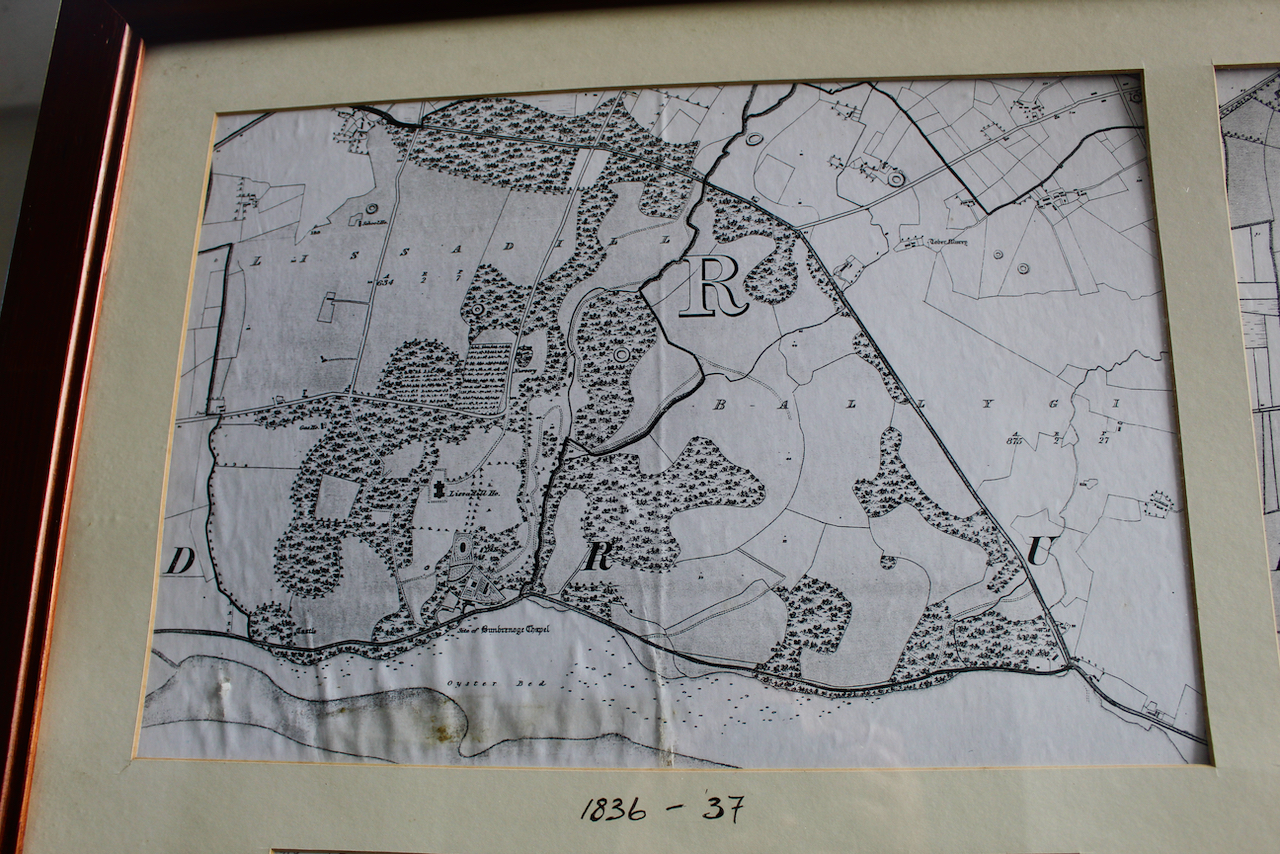
The eldest son, Robert (1805-1876) became the 4th Baronet, and he built the house at Lissadell which we see now. He was Lord Lieutenant for County Sligo and also MP for Sligo.
The 4th Baronet married Caroline King, daughter of Robert Edward King, 1st Viscount Lorton, whom we came across in King House in County Roscommon. Sadly, she died the following year in 1828. Two years later he married Caroline Susan Goold, daughter of Thomas Goold (or Gould). Her sister Augusta married Edwin Richard Wyndham-Quin, 3rd Earl of Dunraven, of Adare Manor in Limerick.
According to Dermot James, “Henry Coulter described Lissadell before Robert inherited the estate as ‘wild and miserable and poor looking.’ But within a few decades Sir Robert had demonstrated ‘the immense improvement which may be made in the appearance of the country and the quality of the soil by the judicious expenditure of capital.’ Coulter continued, considering the estate to be “one of the most highly cultivated and beautiful in the United Kingdom… If the excellent example set by Sir Robert Booth as a resident country gentleman – living at home and devoting himself to the improvement of his property – were more generally followed by Irish landlords then indeed the cry of distress which is so often raised… would never more be heard, even in the west of Ireland.” [Henry Coulter, The West of Ireland published 1862]. [4]
Lissadell, 2022.
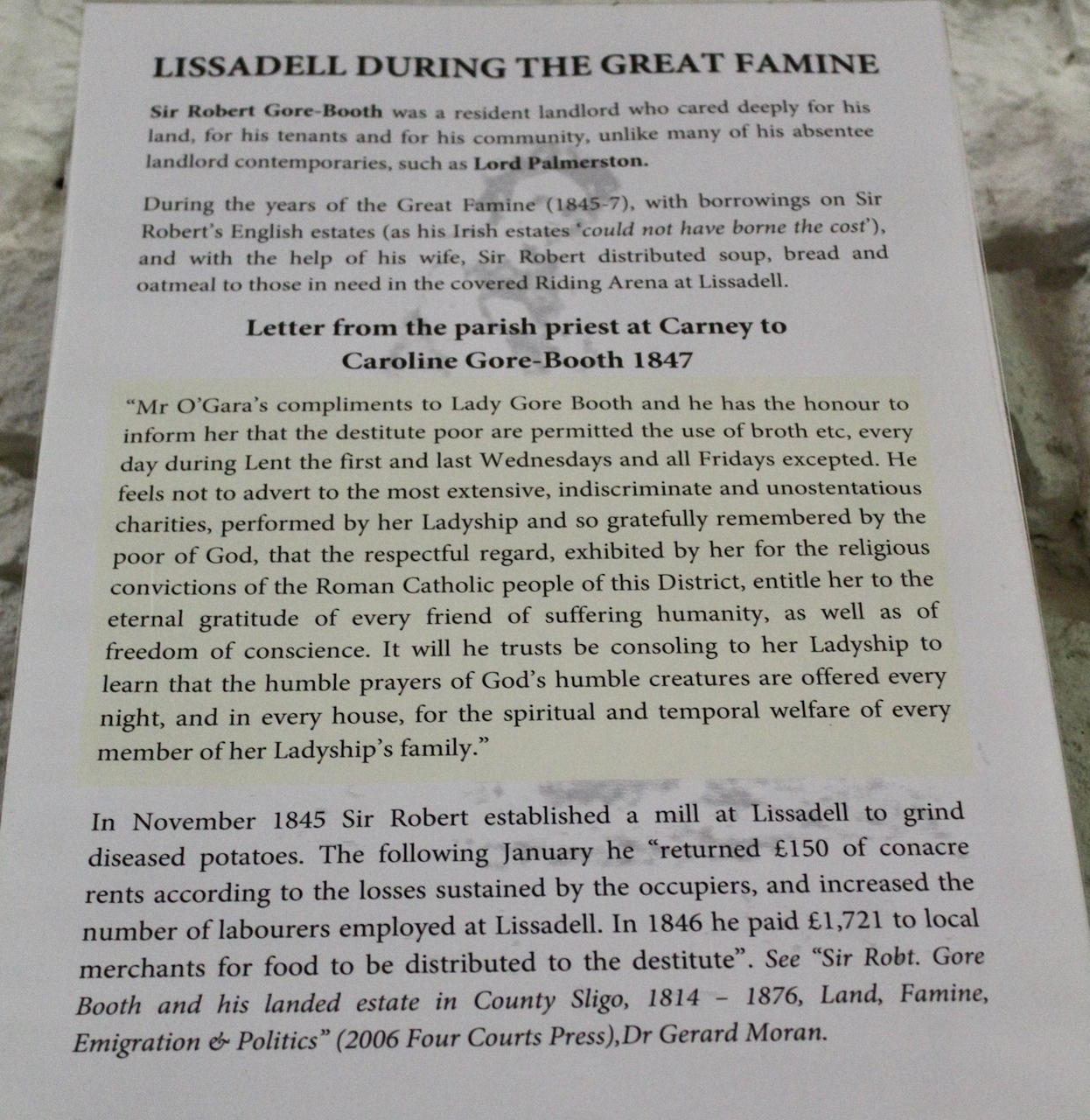
Robert was in situ at the time of the Great Famine in the 1840s. He did send some tenants to North America, and was later criticised for the evictions, but on the whole he was a generous landlord. He ran a soup kitchen and provided seed for crops. When his first wife Caroline died the Sligo Journal called her “a ministering angel among the people, her charitie was unbounded and her exertions to relieve the wants and sufferings of the distressed excited the admiration of all classes” when “the dark clouds of pestilence and death covered the land.”
Lissadell, 2022.
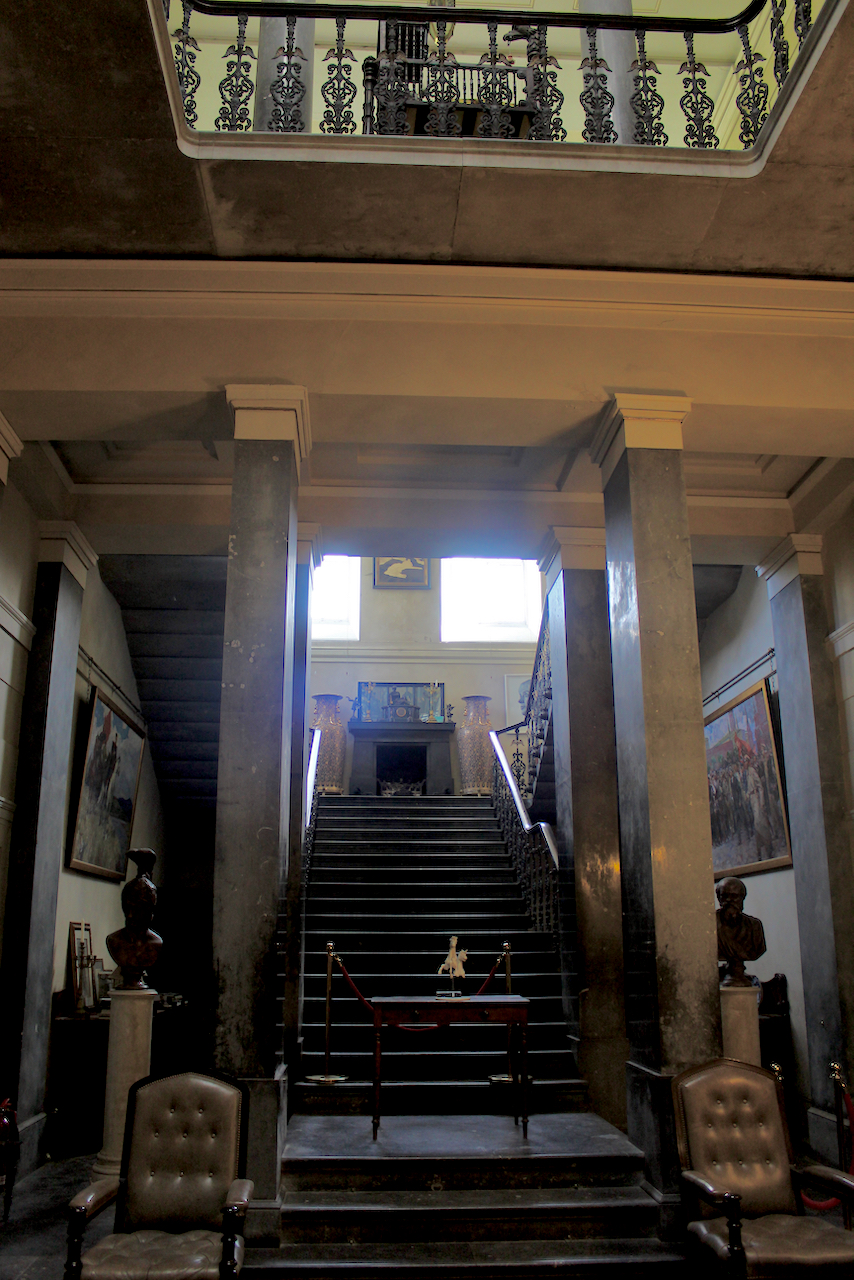
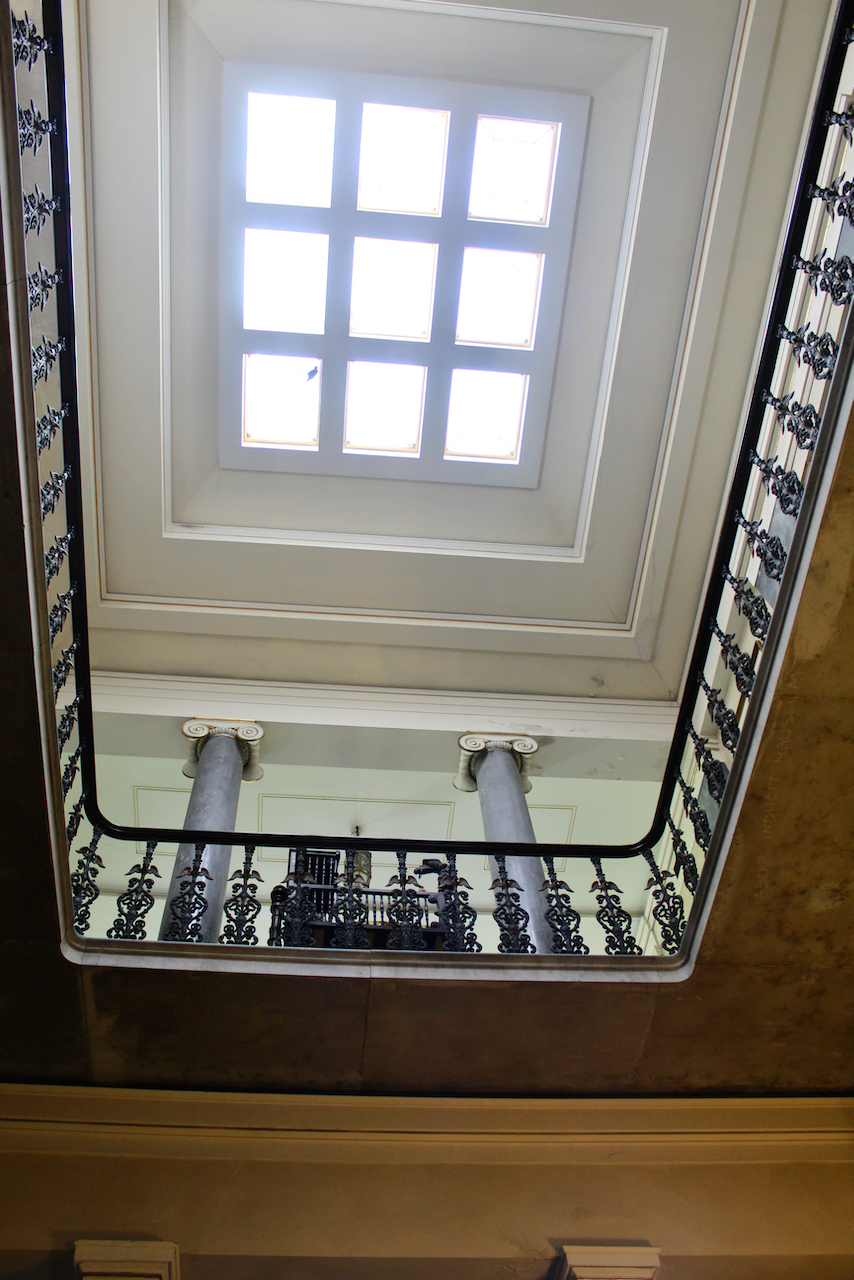
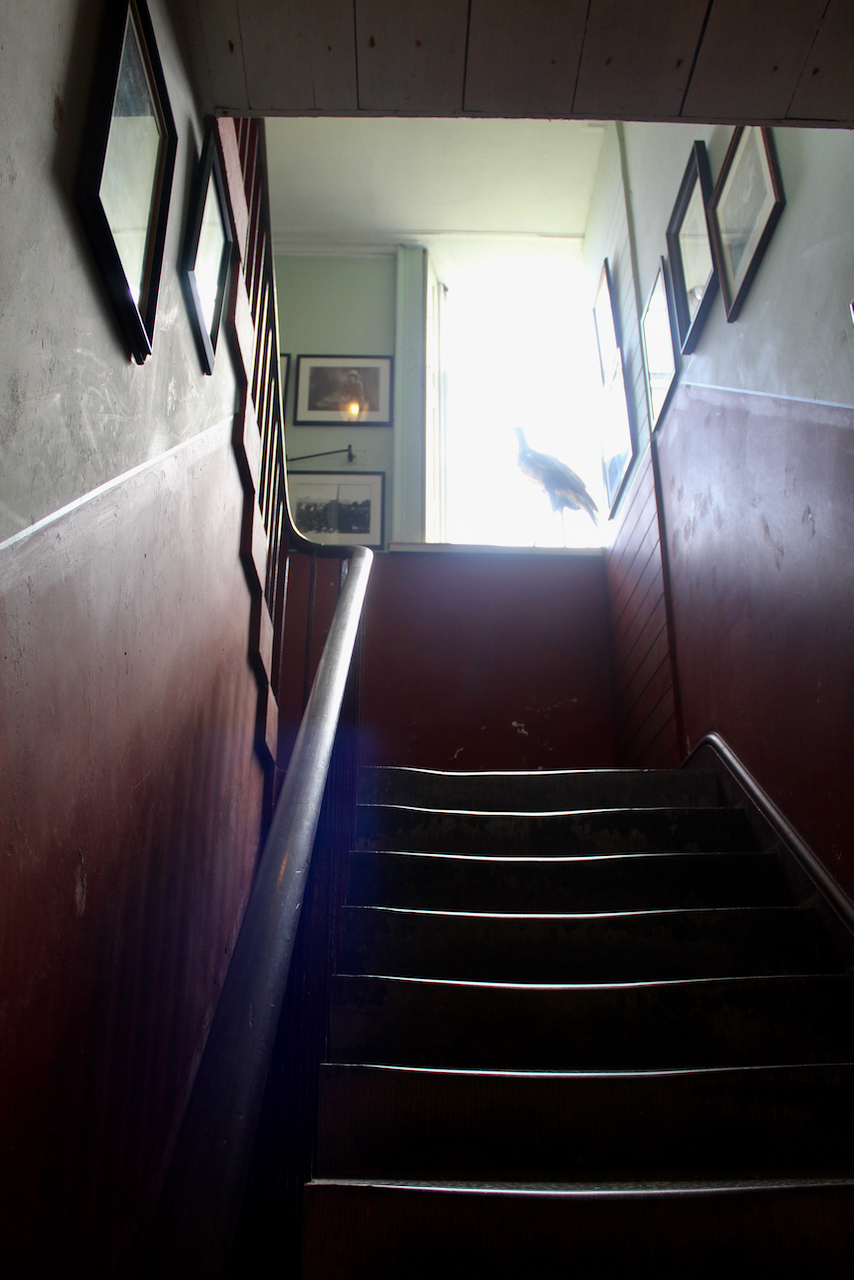
Dermot James writes: “If the exterior of Lissadell House is seen by some to be disappointingly plain, Goodwin’s design ensured that the entrance to the interior is all the more unexpected and dramatic. The visitor is met by a spectacularly high entrance hall decorated with Doric and Ionic columns from which there is an impressive staircase in Kilkenny marble with cast iron balustrade leading to the building’s most important feature, the great gallery, lit by sky-lights high above. On Goodwin’s plans, the gallery is marked as the music room, reflecting one of Sir Robert’s tastes, where an organ was installed. In the main, the house then remained largely unaltered for more than a century and a half.“
Mark Bence-Jones describes the entrance stair hall in his Guide to Irish Country Houses (1988) as a lofty two storey hall, partly top-lit, with square Doric columns below and Ionic columns above and double staircase of Kilkenny marble.
In the book Great Irish Houses, with forewards by Desmond FitzGerald, and Desmond Guinness published by IMAGE Publications in 2008, we are told that the scale of the stair hall is such that, unusually, a large fireplace was added to the return landing. The iron balusters are adorned with golden eagles.
Sir Robert took an interest also in the garden and Lord Palmerston of nearby Classiebawn would send him seeds from overseas. He sold some of the property in England and expanded his property in Ireland.
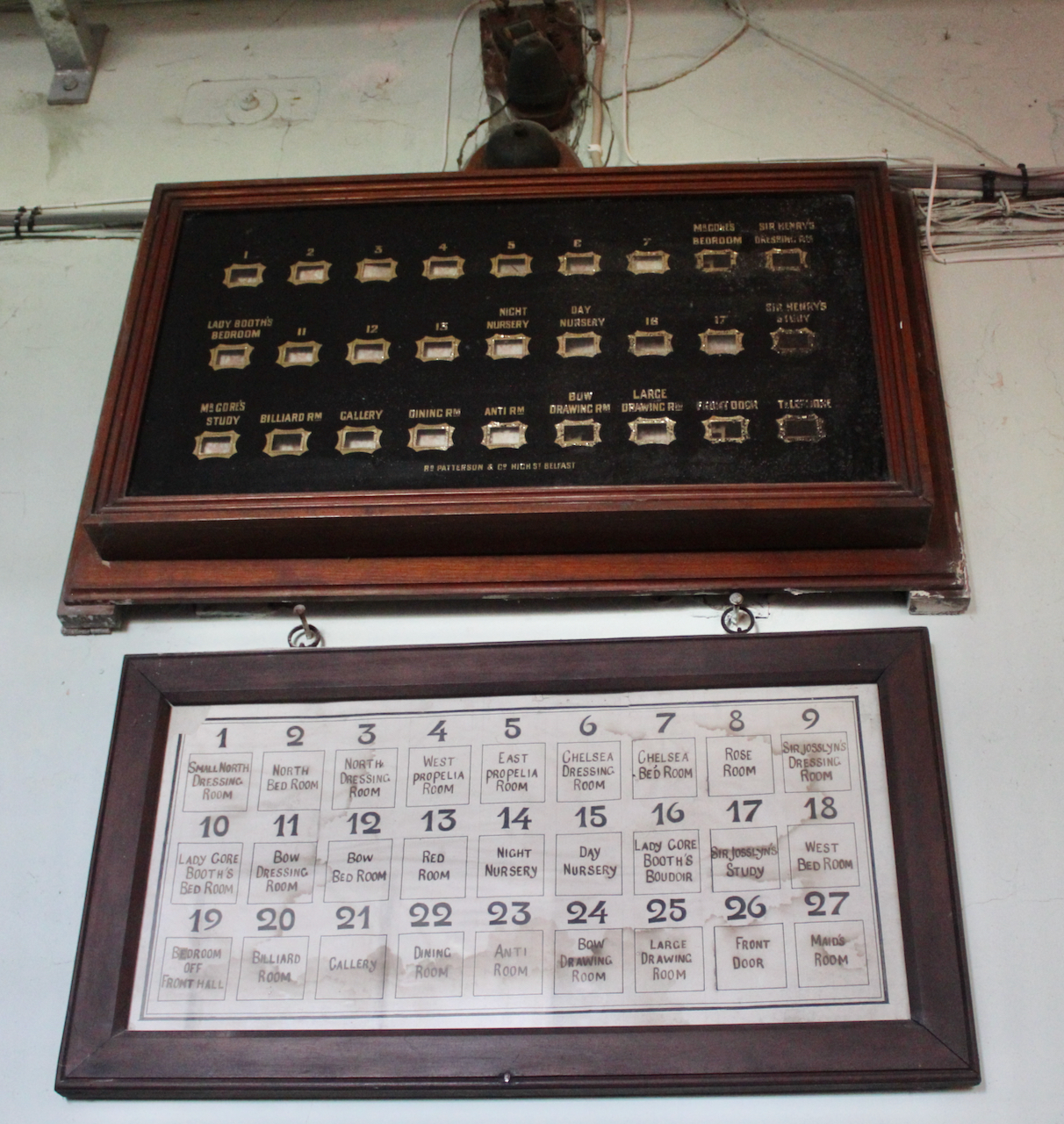
Dermot James tells us that when serving as MP Robert went regularly to London and brought his family and also servants. His servant Kilgallon wrote about the packing up: “They took all the silver plate. It was quite a business packing all up. They had boxes specially made for them. The housekeeper did not go as there was a housekeeper for the London house, a Mrs Tigwell. They took the first and second housemaids, house steward, groom chambers, under butler, and first and second footmen and steward’s room boy. All the other servants were put on board [reduced] wages [but] they were allowed milk and vegetables.” [6]
Kilgallon also described some details about how the Lissadell household was then being run, which is described by Dermot James: “The servants were managed by the house steward, Mr Ball, who engaged all the servants, paid their wages, and dismissed them when necessary. His duties included ordering all the wine for the house and acting as wine waiter at dinners. Ball supervised a small army of footmen, grooms, maids, etc. The groom chambers carved, and with the footmen, waited at all meals, despatched the post, opened the newspapers and ironed them. Their other duties included attending the hall door and polishing the furniture in the main rooms. One of the footmen was also the under-butler who kept the dinner silver in order and laid the dinner table, making sure that plates intended to be hot were kept warm in a special iron cupboard heated by charcoal kept outside the dining room door.”
The maids had to be up at 4am to prepare for carrying hot water to the bedrooms. There was a cook, pastry cook, kitchen maid, scullery maid and some kitchen boys. Kilgallon describes the meals, serving order and seating, and entertainment – there was a small dance in the servants hall once or twice a week, with beer and whiskey punch provided!
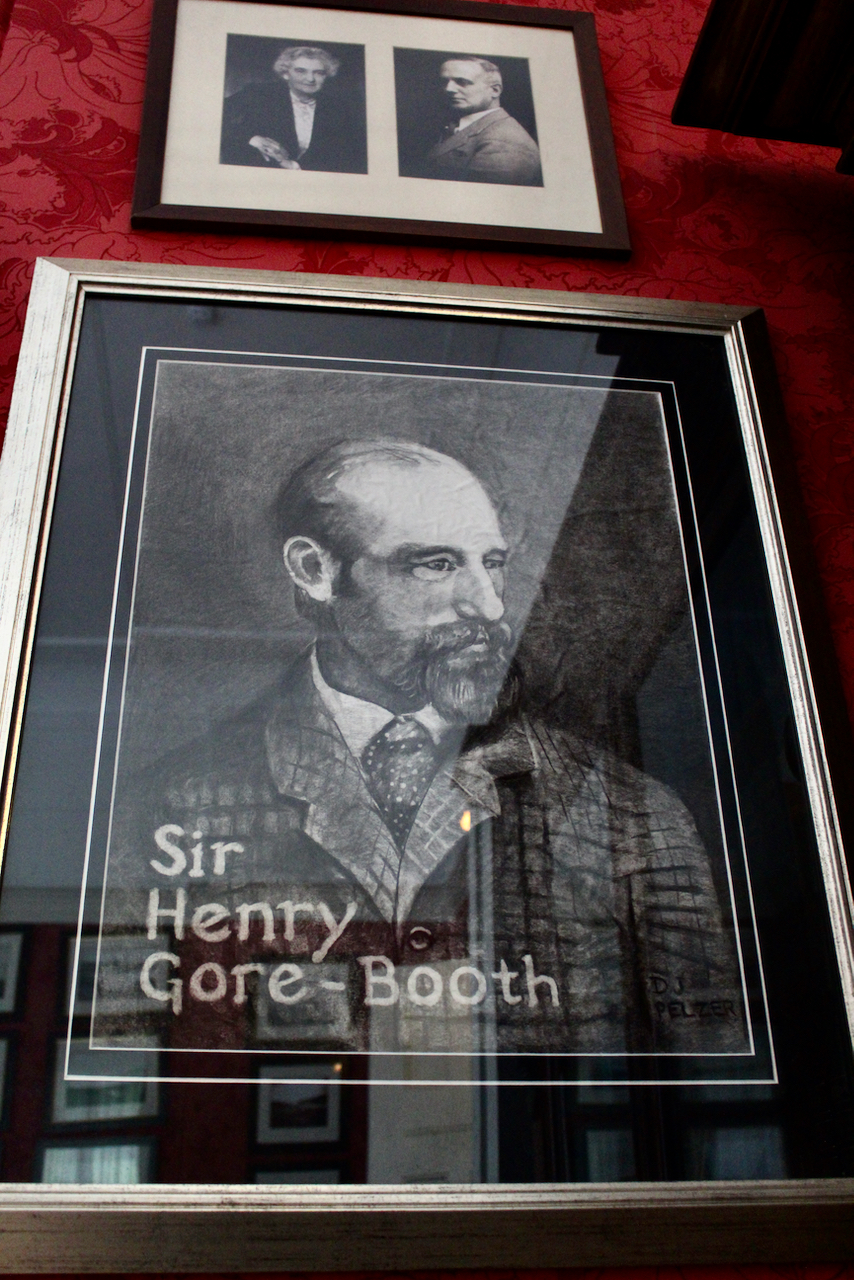
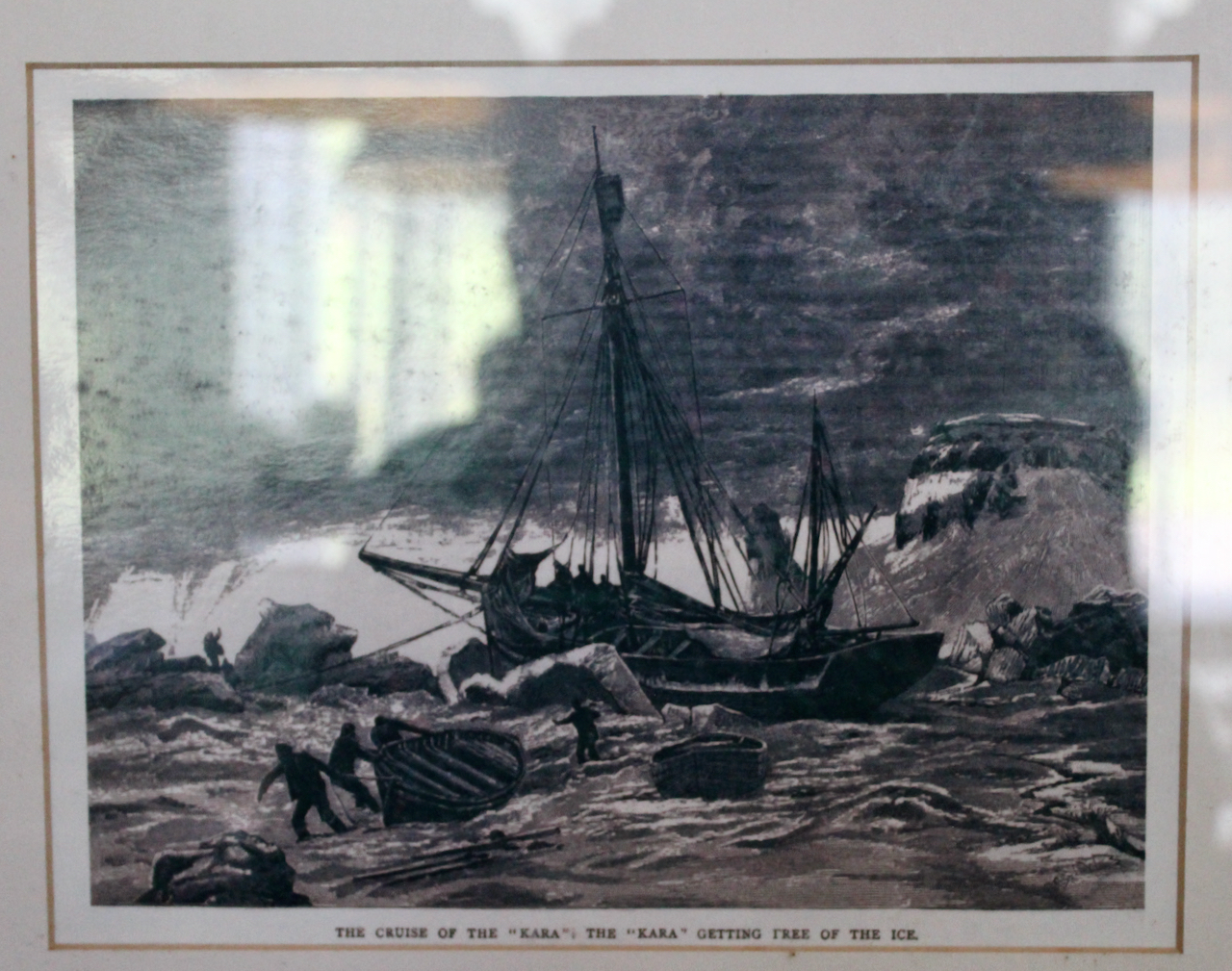
Henry William Gore-Booth (1843-1900) inherited in 1876 and became the 5th Baronet. He held the offices of High Sheriff of County Sligo, Deputy Lieutenant of County Sligo and Justice of the Peace for County Sligo. He was also a keen fisherman and Arctic explorer.
His sister Fanny Stella married Owen Wynne of nearby Hazelwood, County Sligo (which was designed by Richard Cassells and was recently owned by Lough Gill Distillery, until sold to American alcohol company Sazerac, which plans to save the house from dereliction).
Lissadell, 2022.
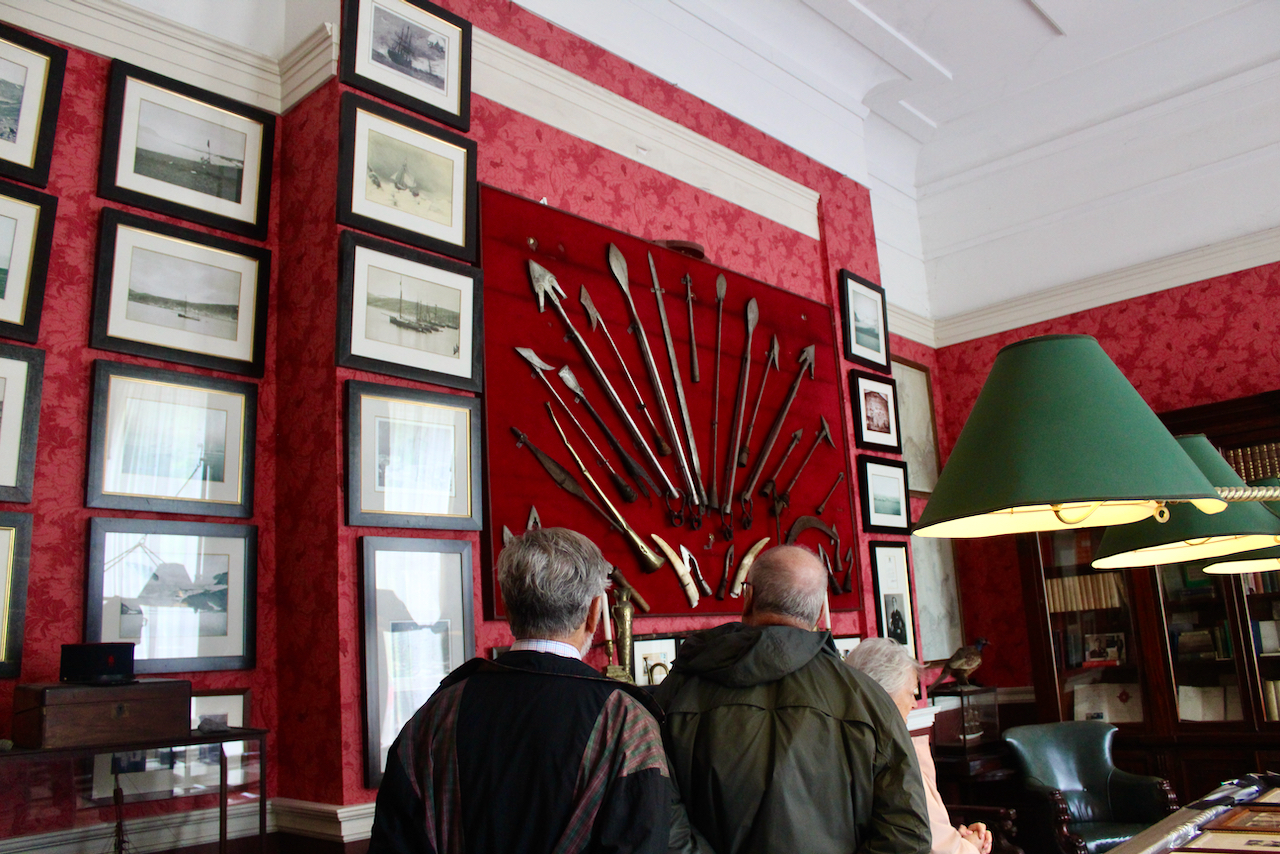
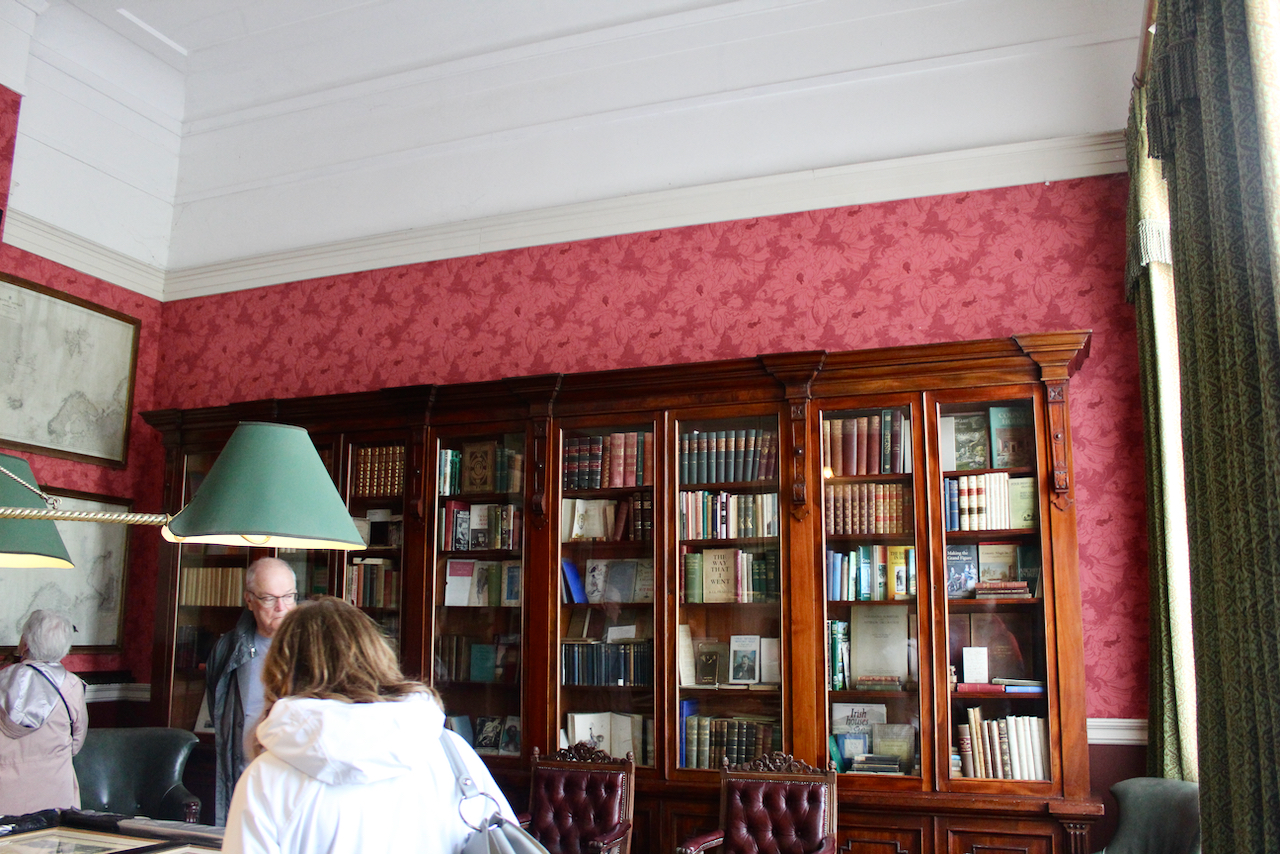
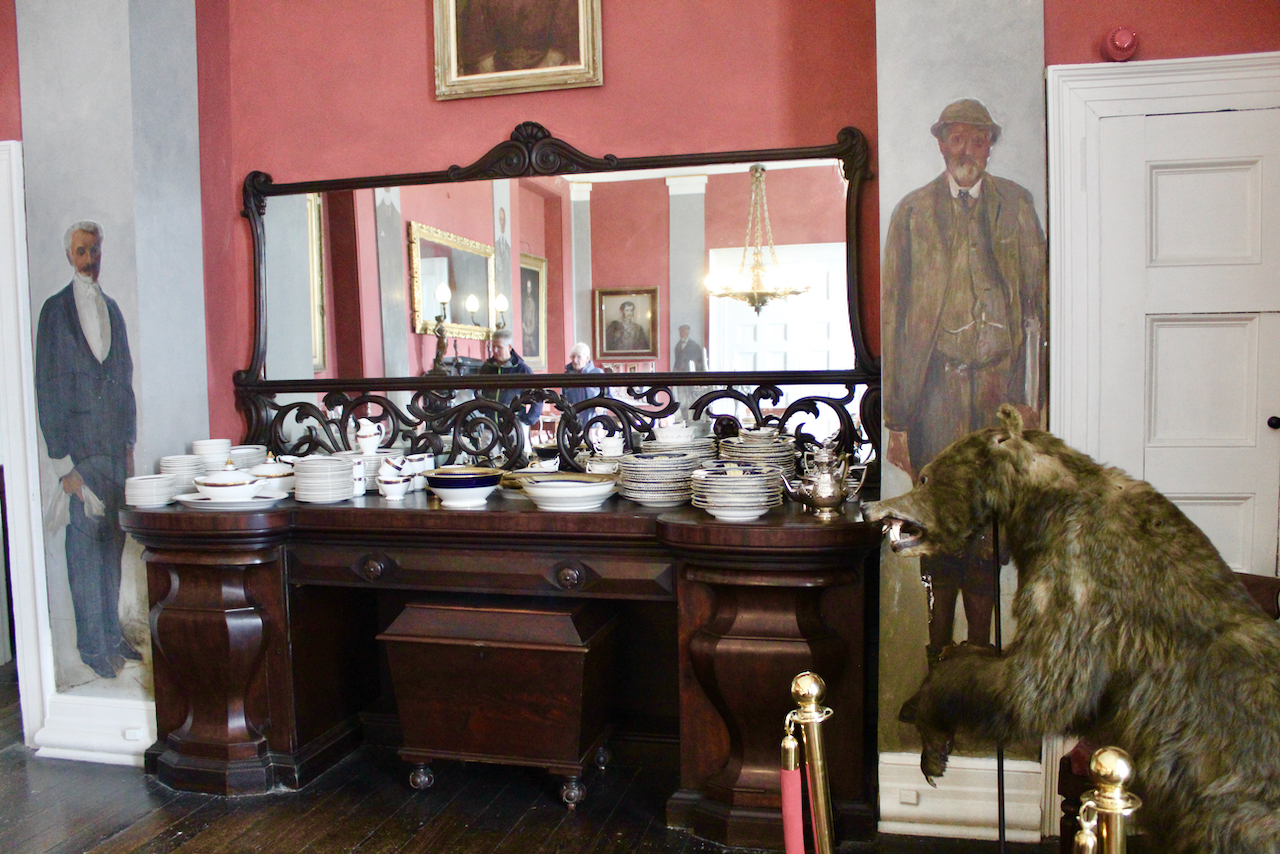
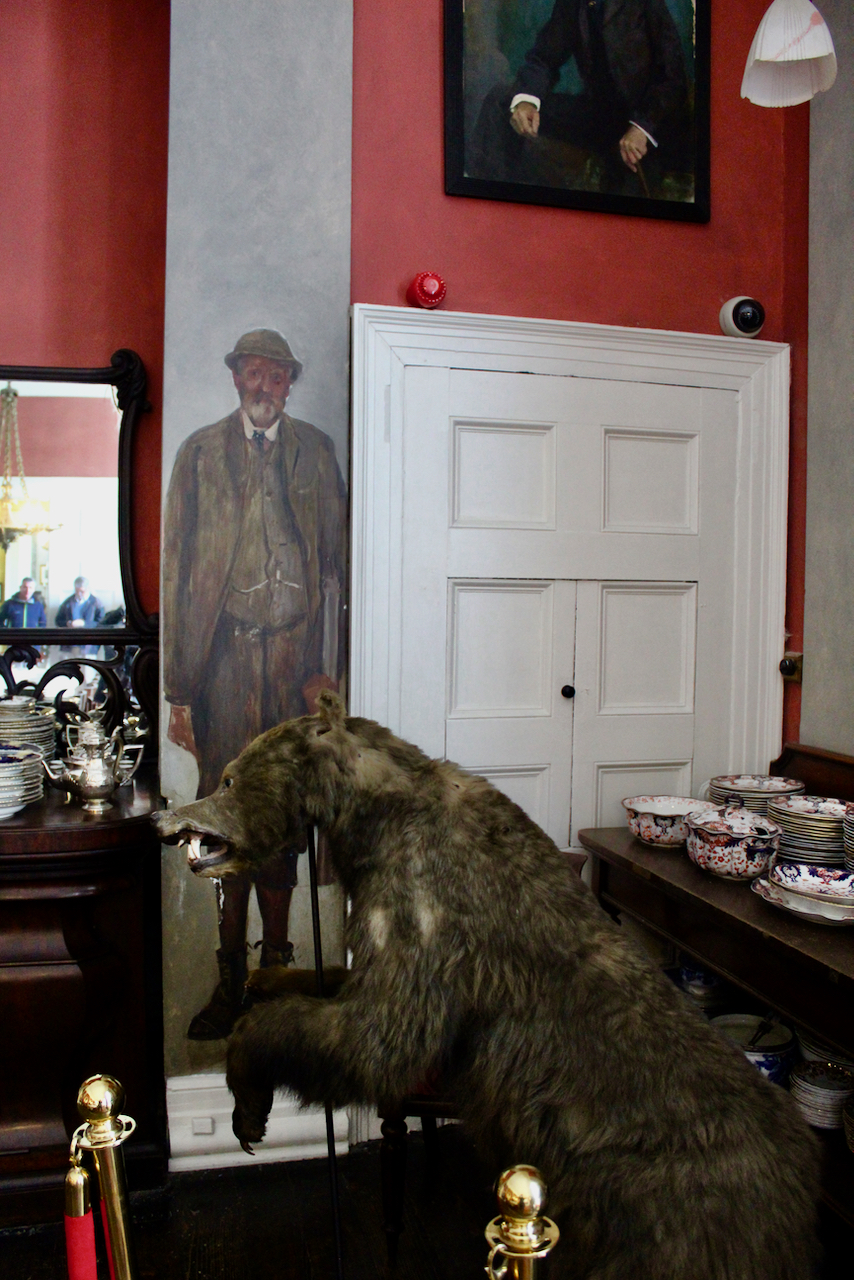
From the entrance hall, we were brought by the tour guide into the Billiards Room full of Gore-Booth memorabilia, including Henry’s fishing equipment. Kilgallon stayed on for the next generation, and he accompanied Henry the 5th Baronet on all of his fishing adventures and Arctic explorations. Kilgallon became Sir Henry’s personal valet as well as his close companion and confidant. At one point he saved Henry from an attacking bear, and the bear was then stuffed and brought back to Lissadell. It used to stand in the front hall, alarming arriving guests!
Kilgallon, with young Angus Gore-Booth.
The original wallpaper has been replaced by David Skinner, an expert on wallpapers of the great houses of Ireland, with hand-blocked period copies.
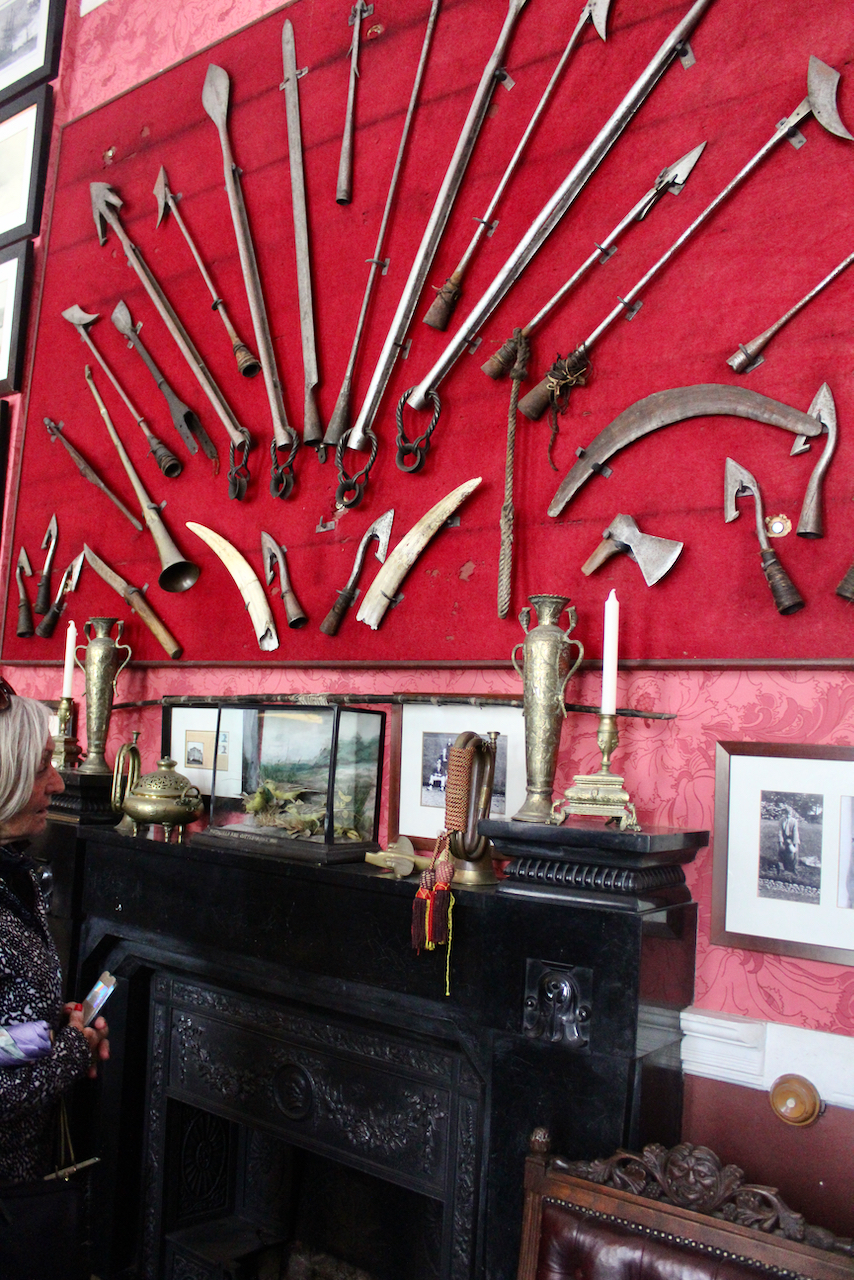
It is said that Sir Henry’s wife Georgina built the artificial lake at Lissadell in the vain hope that he might stay at home and fish in it, but as the harpoons and whale bones in the billiard room testify, Sir Henry continued to travel.
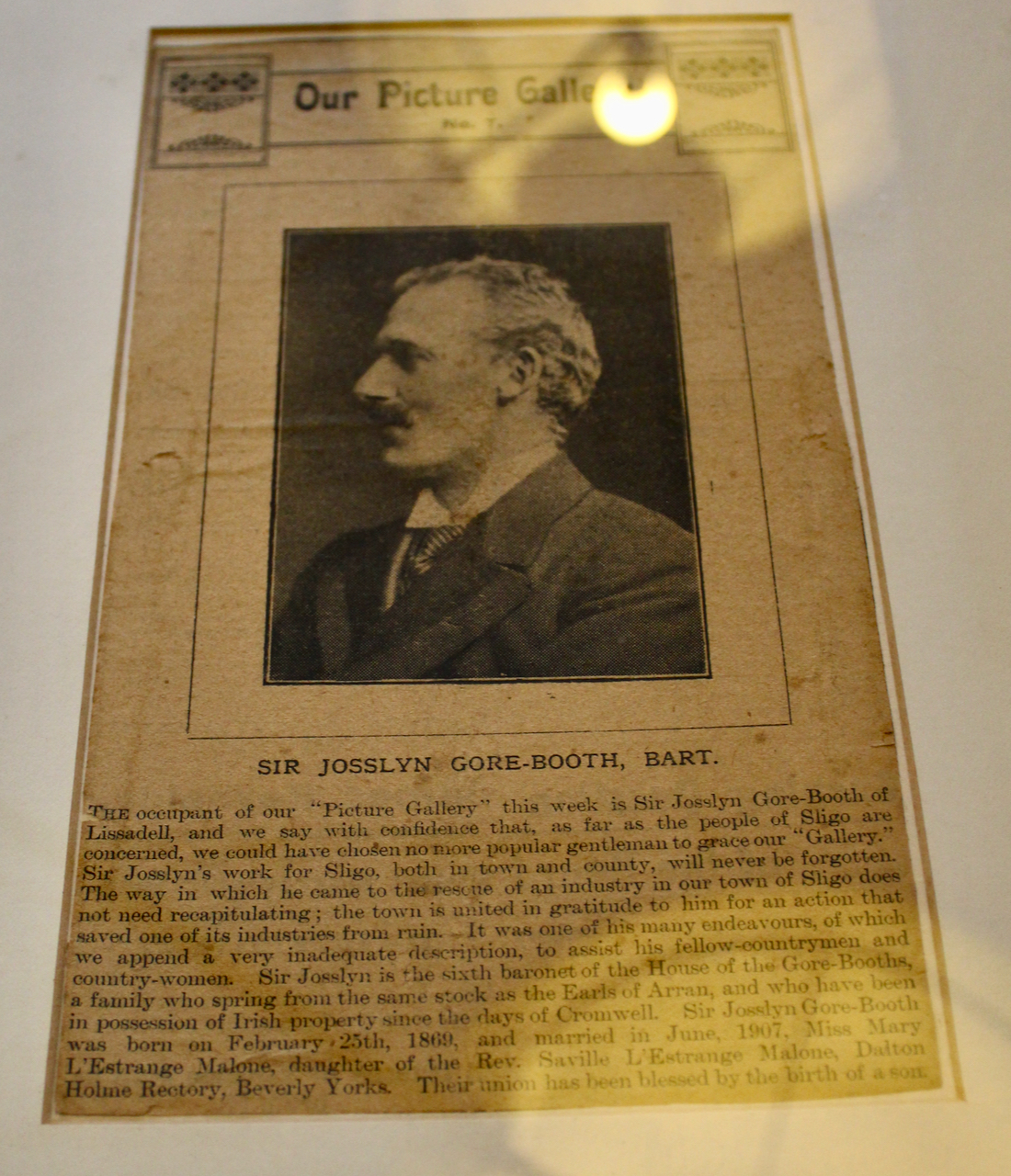
Robert was President of the Sligo Agricultural Society, and he and his eldest son founded three co-operative societies in the area. He also took over the Sligo Shirt Factory to prevent it from closing and made it flourish again. He was also involved in mining locally, and played a role in setting up the railway connecting Sligo with Enniskillen, subsequently becoming the company’s chairman. He also continued the oyster fishery his father had set up – his father was one of the pioneers in creating artificial oyster beds. Henry married Georgina Mary Hill, daughter of Colonel John Hill of Tickhill Castle, Yorkshire.
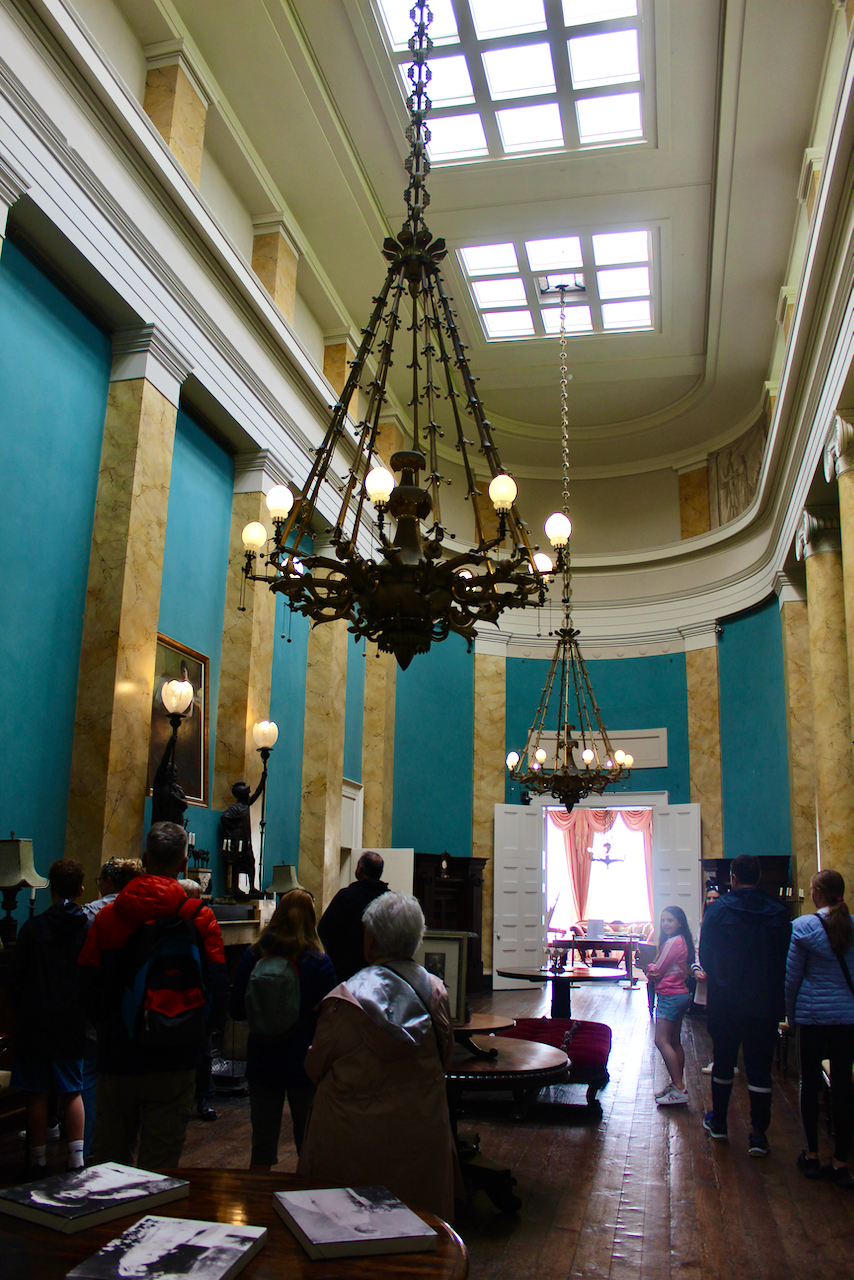
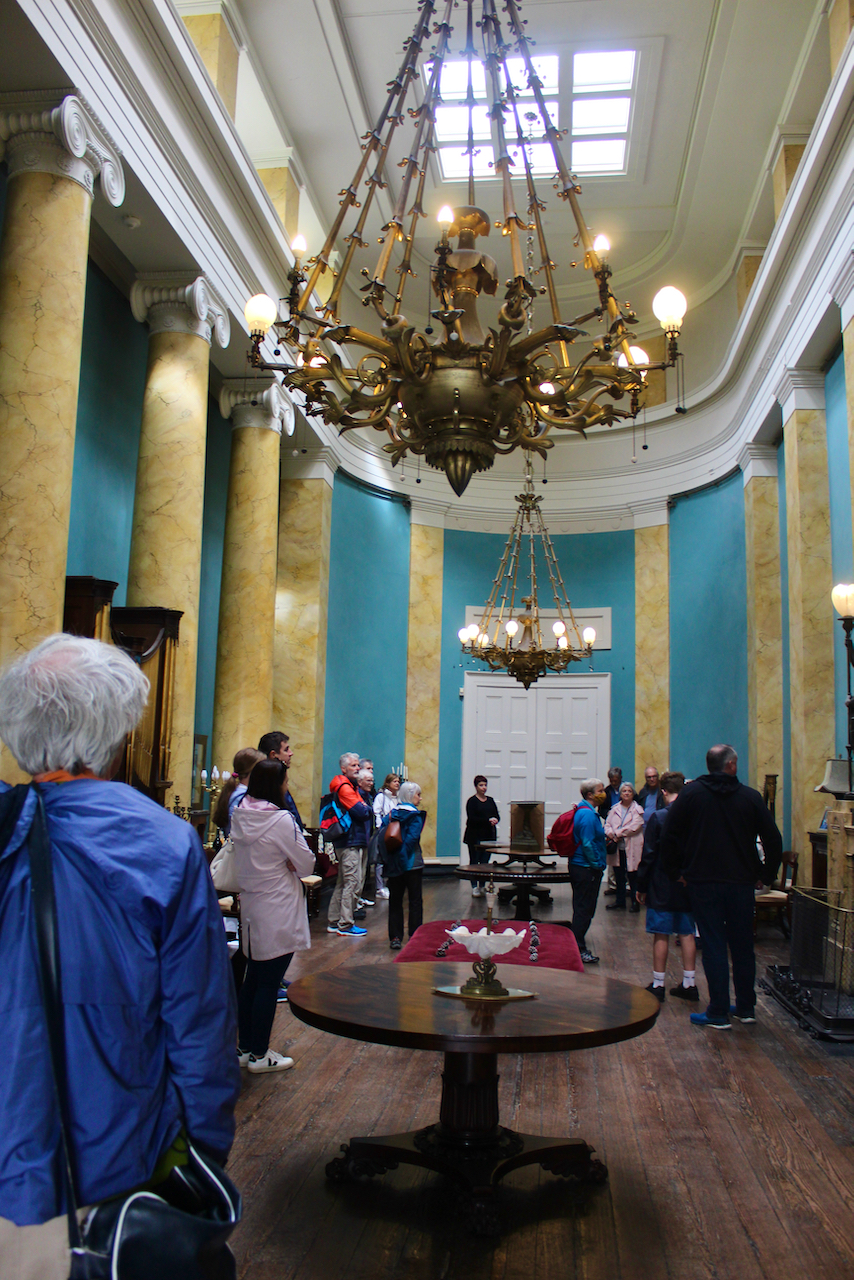
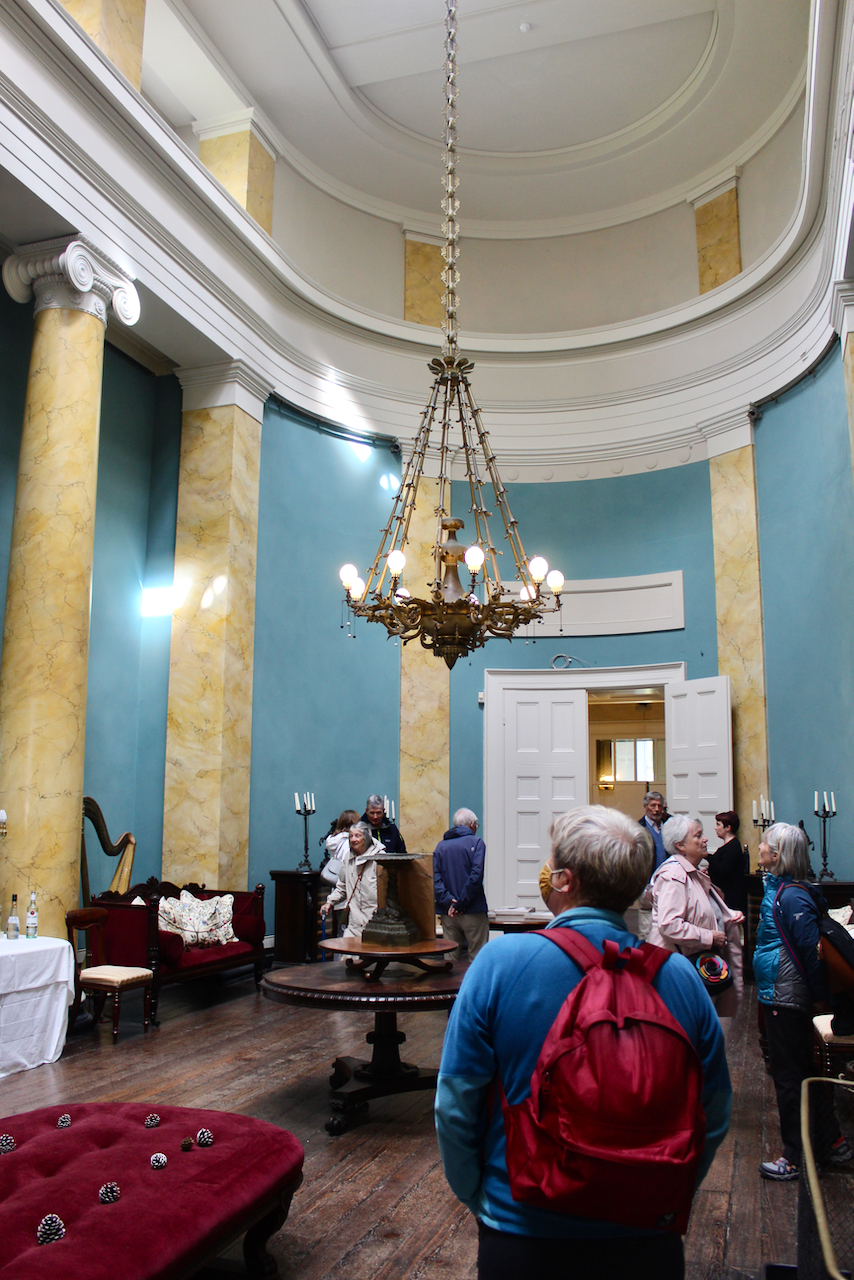
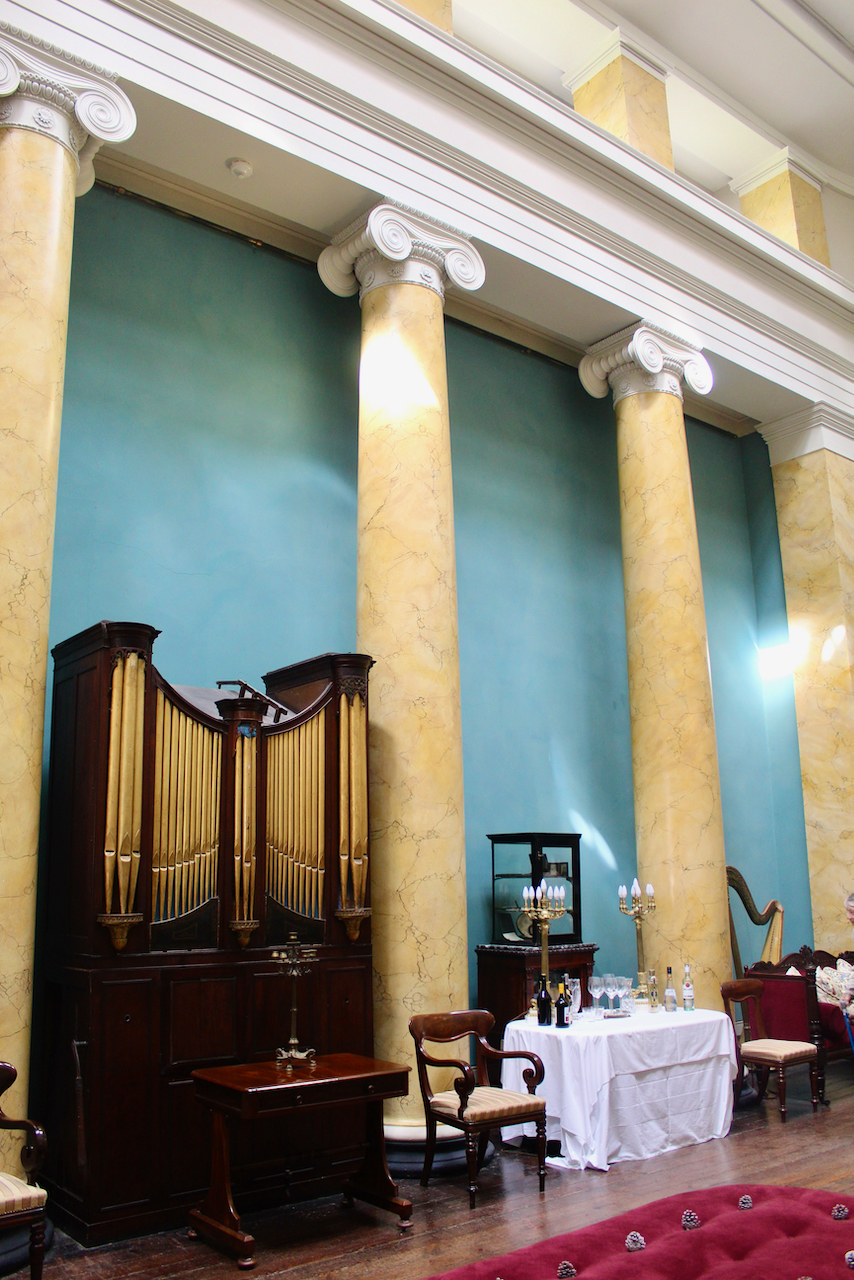
Upstairs is the music gallery. Mark Bence-Jones describes it as a vast apse-ended gallery (an apse is an area with curved walls at the end of a building, usually at the the east end of a church), lit by a clerestory (a clerestory is a high section of wall that contains windows above eye level) and skylights, with engaged Doric piers along one side, and Ionic columns along the other. It was hard to capture in a photograph since we were on a tour.
In Great Irish Houses, forewards by Desmond FitzGerald and Desmond Guinness, we are told that the gallery is 65 foot long. It still has its original Gothic chamber organ, which was made by Hull of Dublin in 1812 and is pumped by bellows in the basement! Two Grecian gasoliers by William Collins, a renowned Regency maker of chandeliers, hang on chains from the ceiling. As late as 1846 Lissadell generated gas from its own gasometer.
Lissadell was the first house in Ireland to be lit by its own gas supply. This was produced in a plant installed by Sir Robert about a quarter of a mile to the west of the mansion, complete with a house for the manager in charge of the works.
A team led by Kevin Smith, from the internationally renowned Windsor House Antiques of London, undertook the major task of restoring the gasoliers.
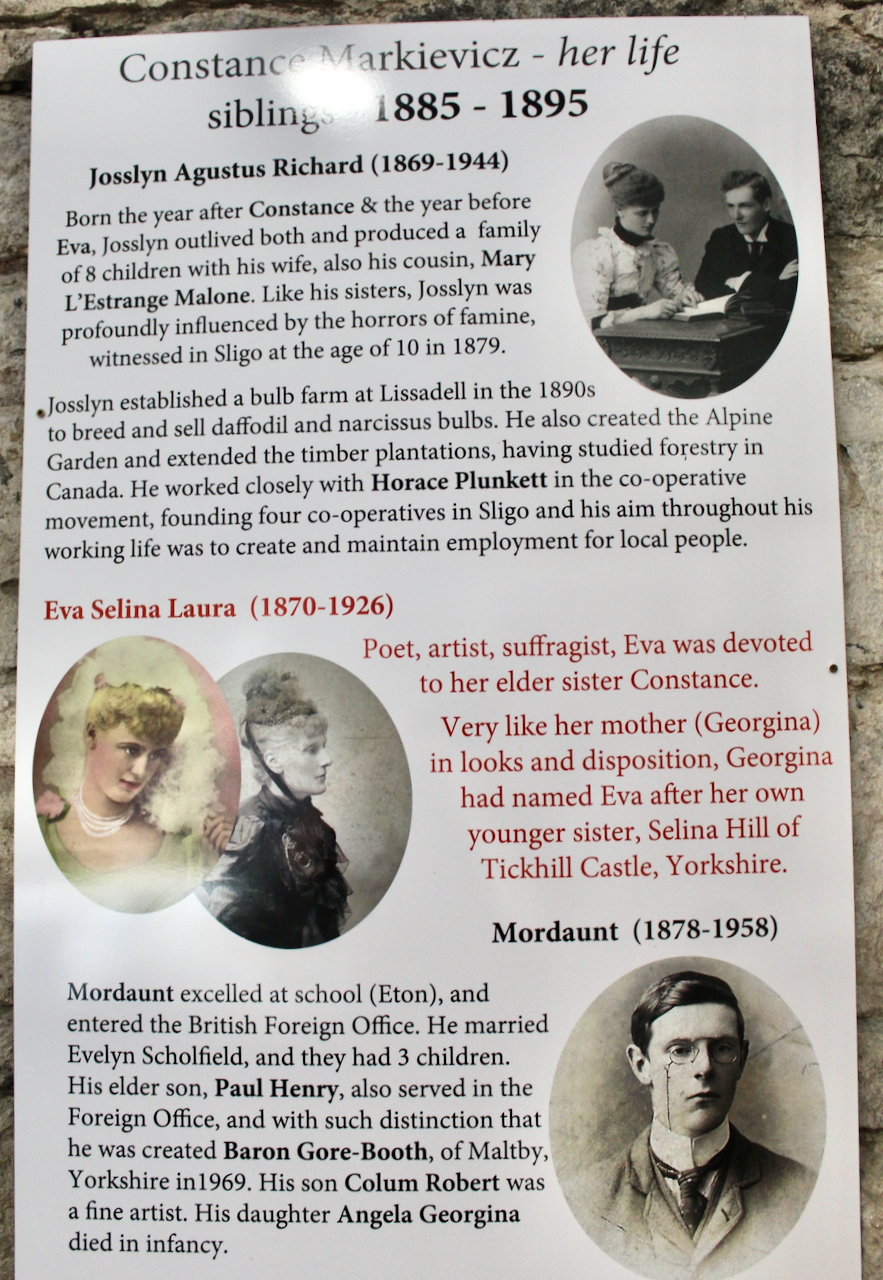
The 4th Baronet and Georgina Mary Hill had five children. The eldest son, Josslyn (1869-1944) was to inherit the property. There was a younger son, Mordaunt, and three daughters, Constance, Eva and Mabel.
It was with Josslyn that Henry William set up the co-operatives. When Josslyn was young, he had socialist ideals, much like his sisters Eva and Constance. He joined Horace Plunkett in his efforts to help the farmers to help themselves, by cutting out the middle man. It took a while for farmers to trust the motivation of Plunkett and Gore-Booth in setting up the co-operatives, thinking that “no good thing could come from a man who was at once a Protestant, a landlord and a Unionist.” Catholic priests even denounced the co-operatives as a “Protestant plot.” Eventually, however, they flourished, and helped the farmers.
Lissadell, 2022.
Josslyn continued to develop the estate, so that it became one of the most progressive and best run in Ireland.
Lissadell, 2022.
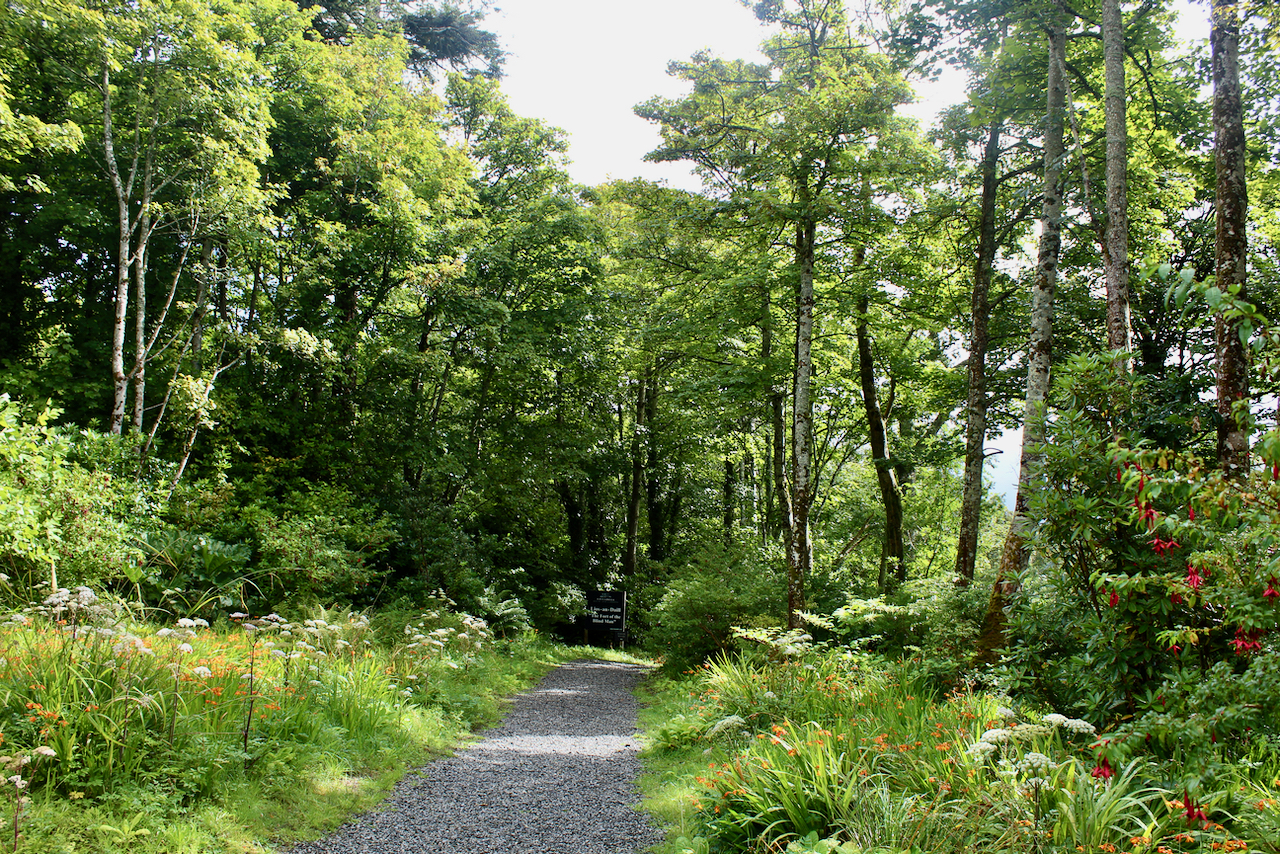
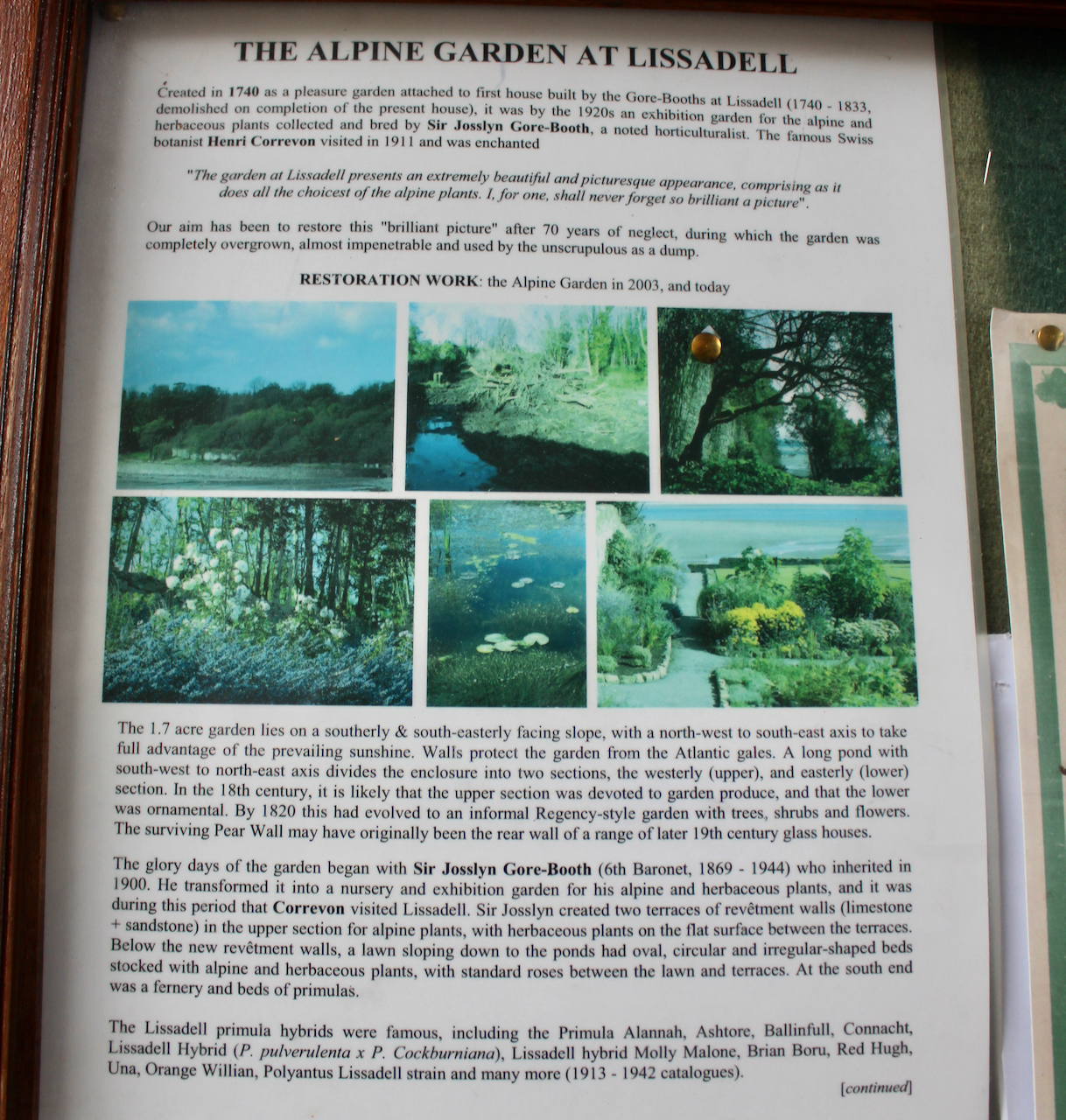
Josslyn was a keen gardener and plant breeder. At Lissadell he established one of the finest horticultural enterprises in Europe. By 1906, his gardens provided employment for more than 200 people. The head gardener, Joseph Sangster, became head gardener of the Royal Horticultural Society in England. An advocate of land reform, he let more than 1000 tenants buy out 28,000 acres of the property under the Wyndham Land Act of 1903. The final payments under the scheme were not received until the 1970s. Until he died in 1944, the estate was famous the world over for its varieties of old and new flowers. [7] The current owners are working to re-establish the gardens.
Next we enter a room that is in the bow of the house, and features in a poem by W. B. Yeats. Mark Bence-Jones tells us:
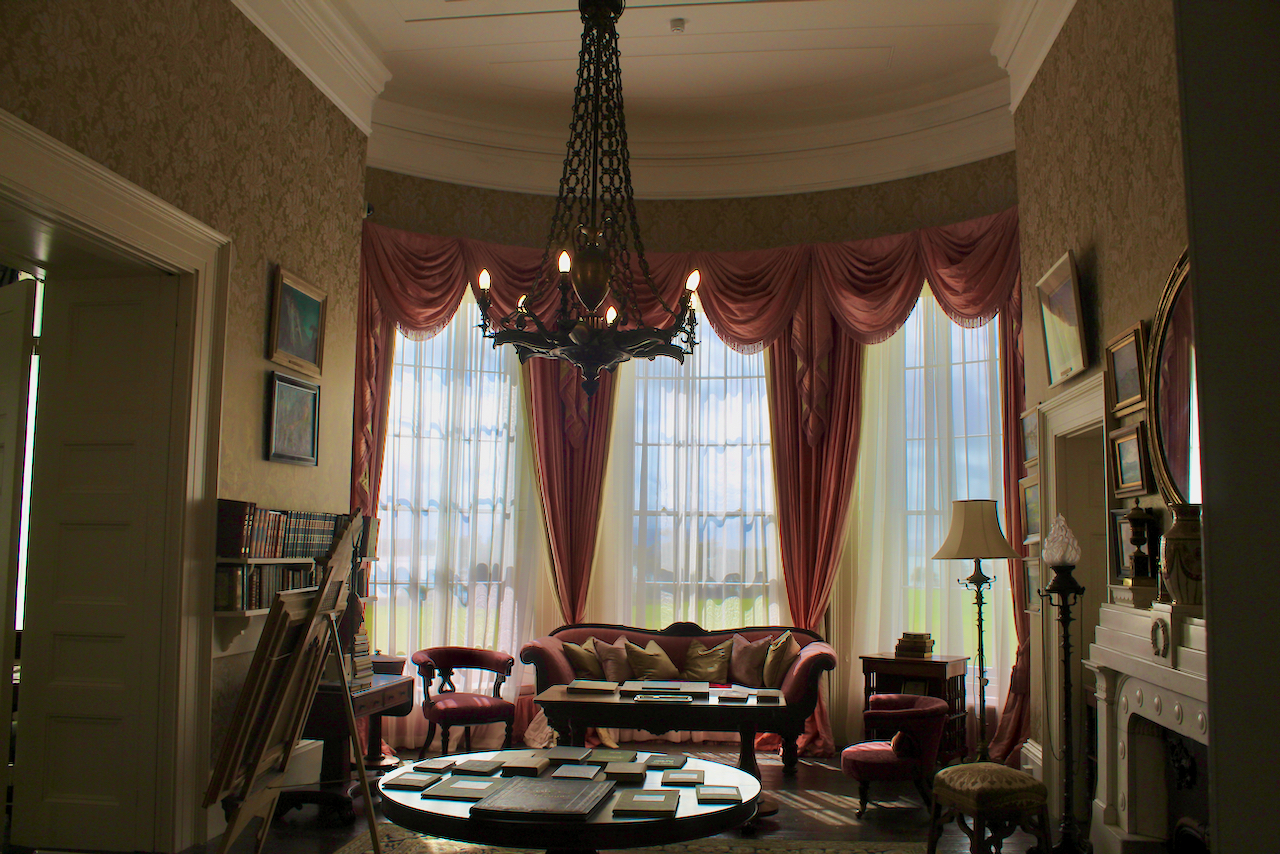
“The rather monumental sequence of hall and gallery leads to a lighter and more intimate bow room with windows facing towards Sligo Bay – the windows Yeats had in mind when he wrote, in his poem on Eva Gore-Booth and her sister, Constance Markievizc:
“The light of evening, Lissadell
Great windows open to the South.”
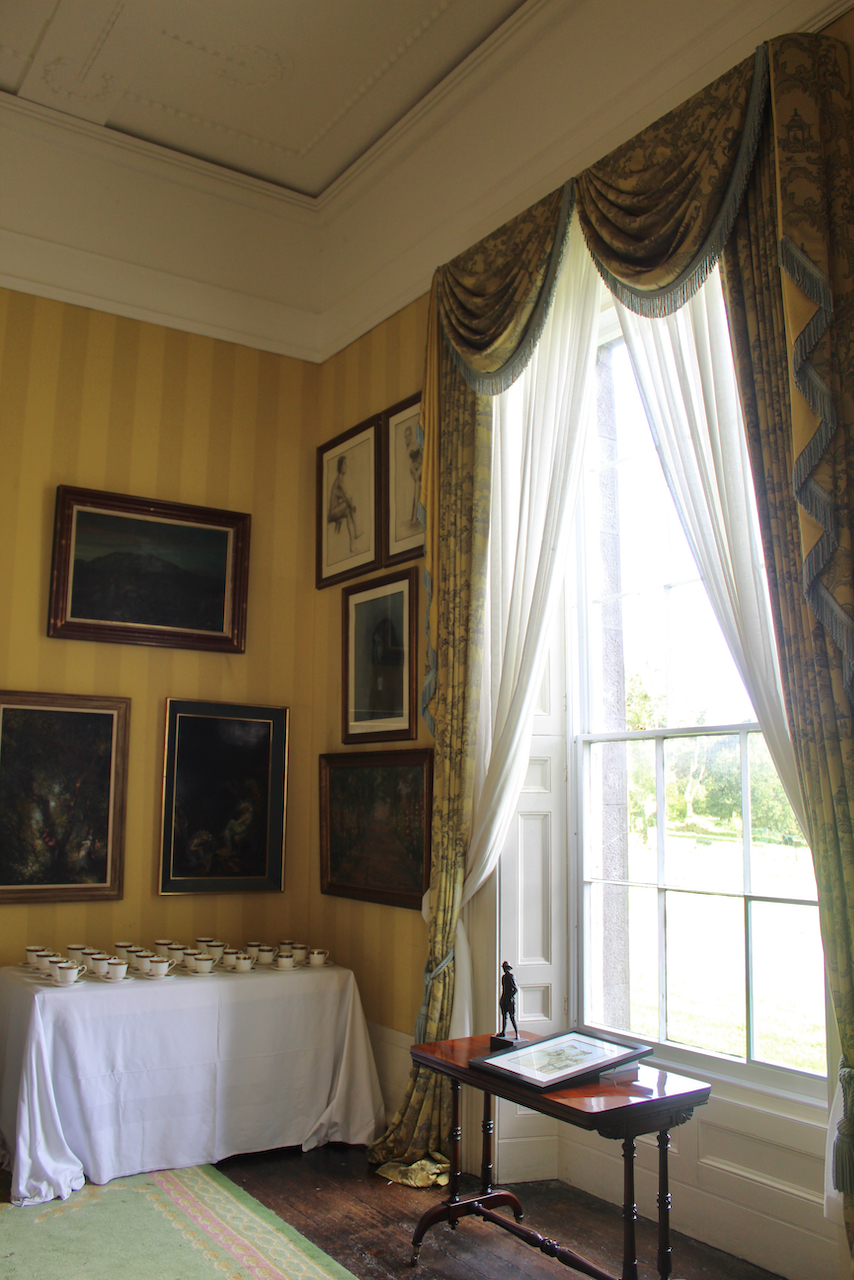
This room, and all other principal receptions rooms, have massive marble chimney-pieces in the Egyptian taste. The ante-room has a striped wallpaper of lovely faded rose.”
“In memory of Eva Gore Booth and Constance Markiewicz” This is the first part of this poem:
The light of evening, Lissadell, Great windows open to the south, Two girls in silk kimonos, both Beautiful, one a gazelle.
But a raving autumn shears Blossom from the summer’s wreath; The older is condemned to death, Pardoned, drags out lonely years Conspiring among the ignorant. I know not what the younger dreams – Some vague Utopia – and she seems, When withered old and skeleton-gaunt, An image of such politics.
Many a time I think to seek One or the other out and speak Of that old Georgian mansion, mix pictures of the mind, recall That table and the talk of youth, Two girls in silk kimonos, both Beautiful, one a gazelle.”
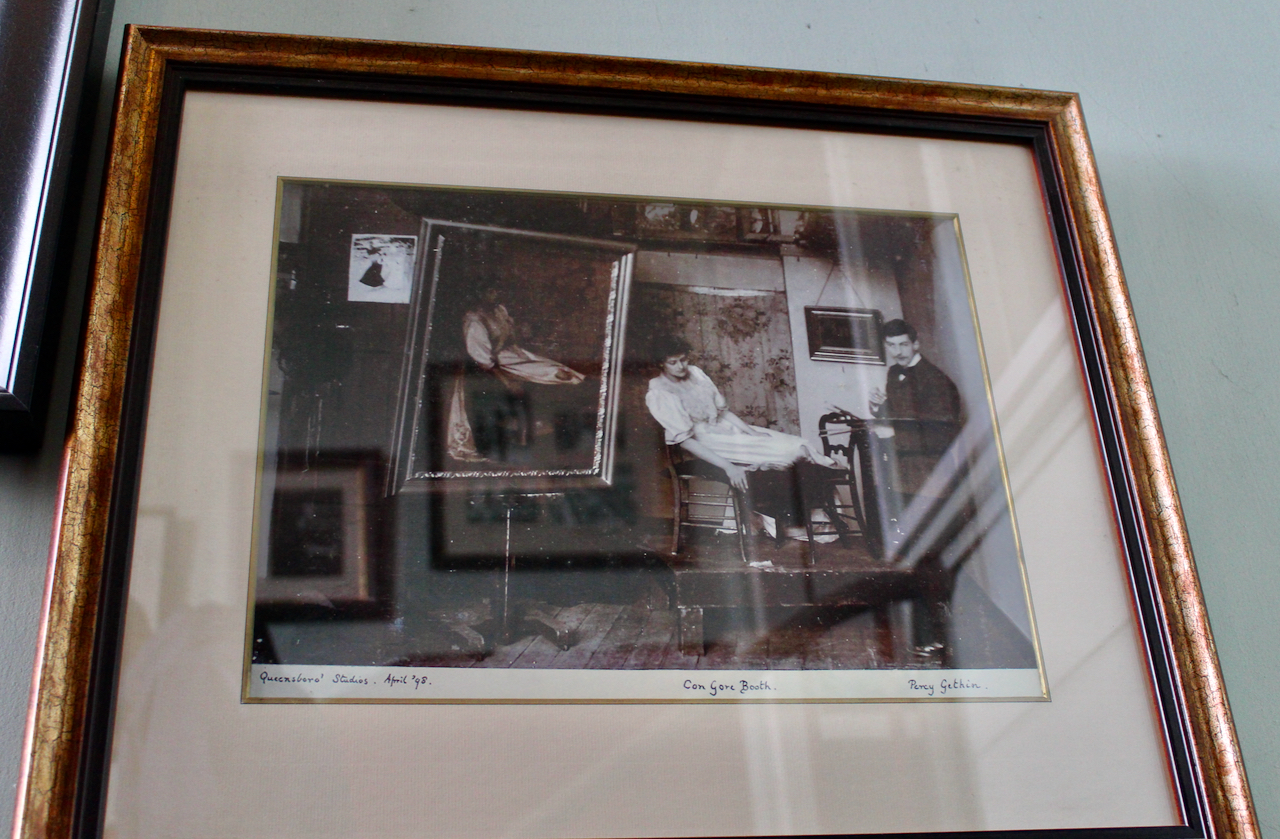
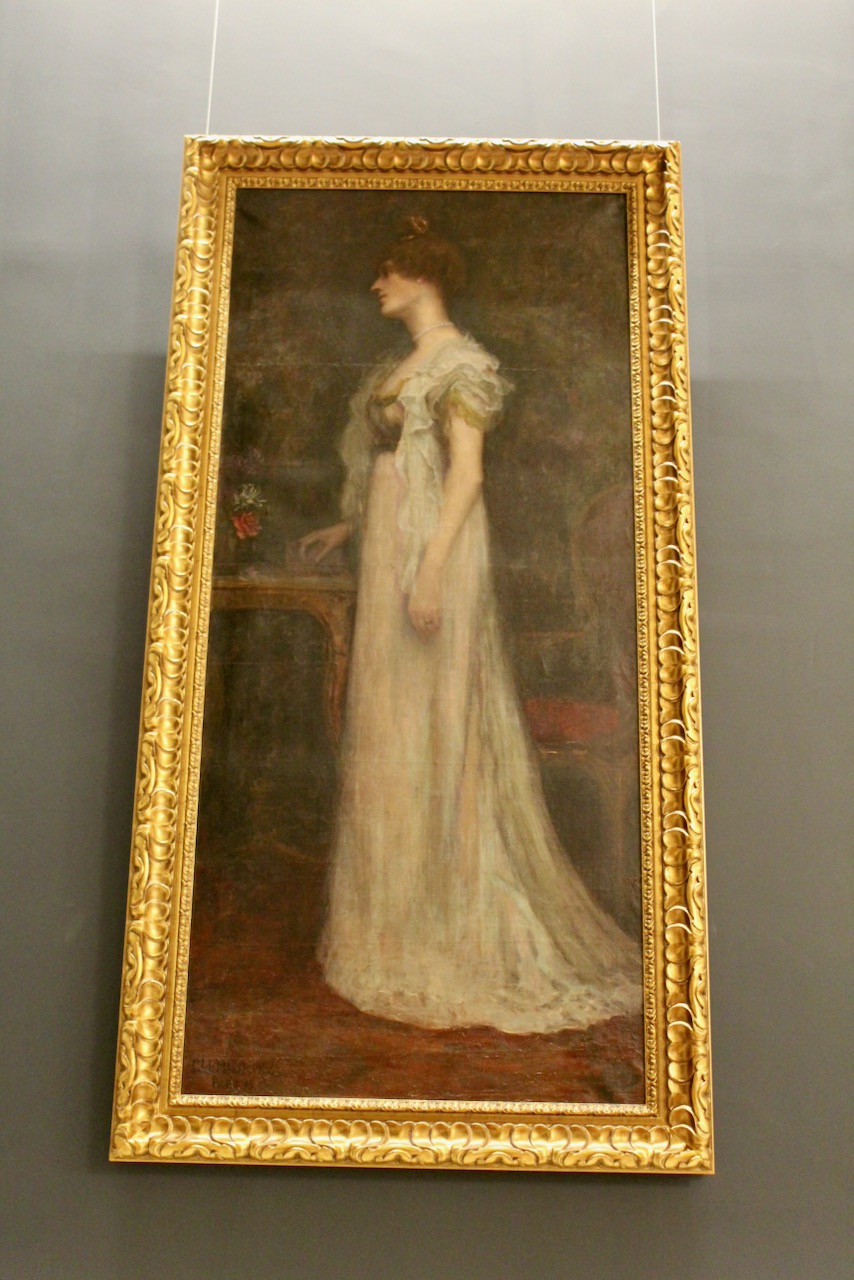
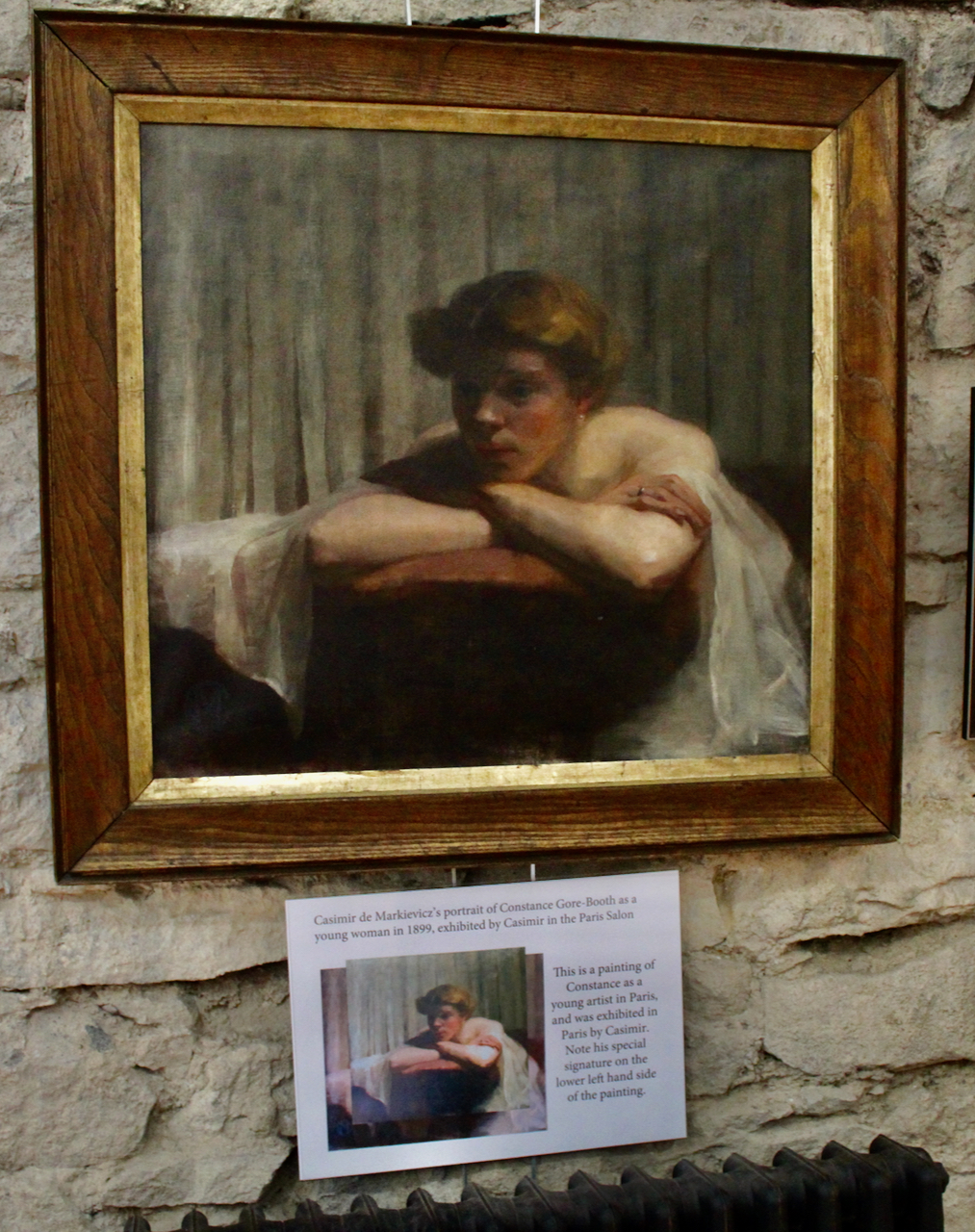
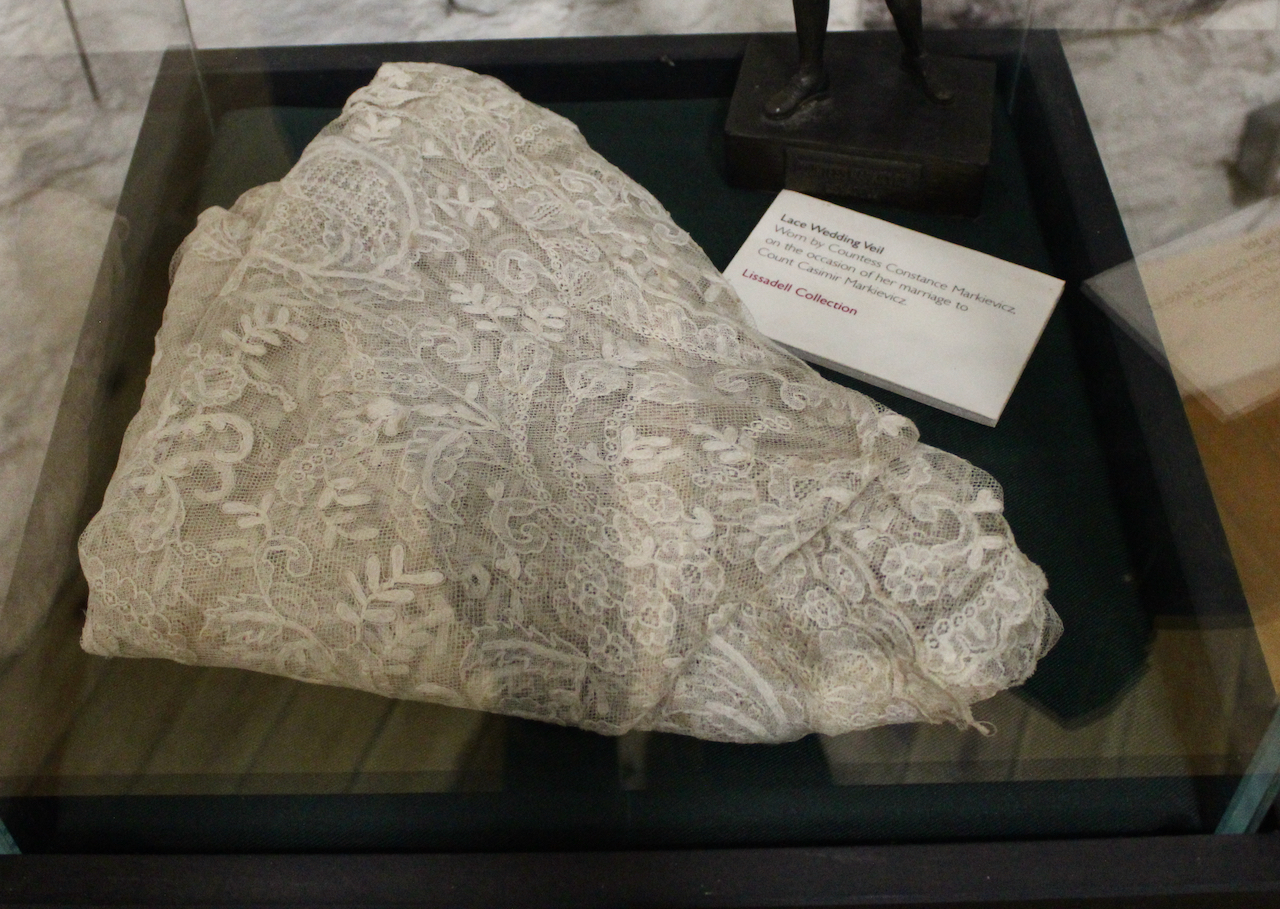
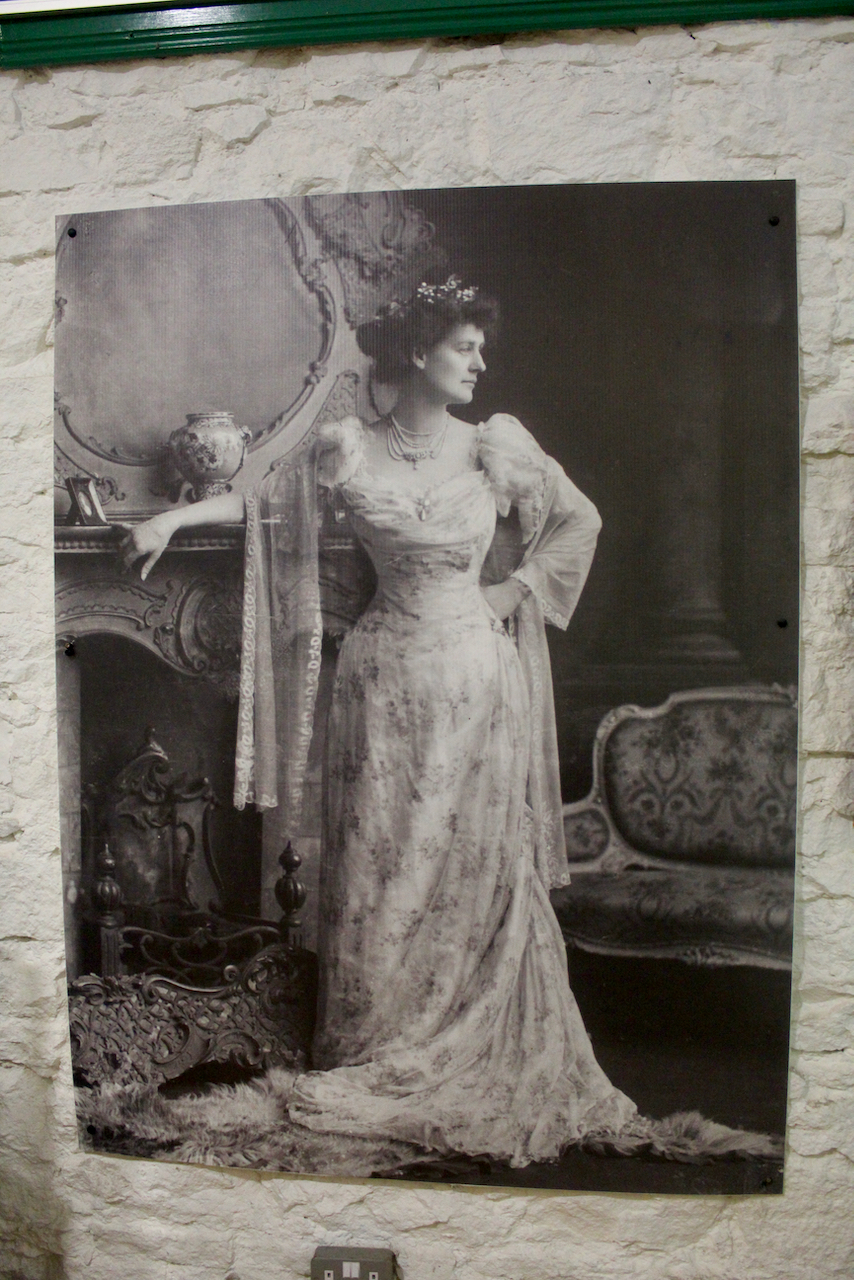
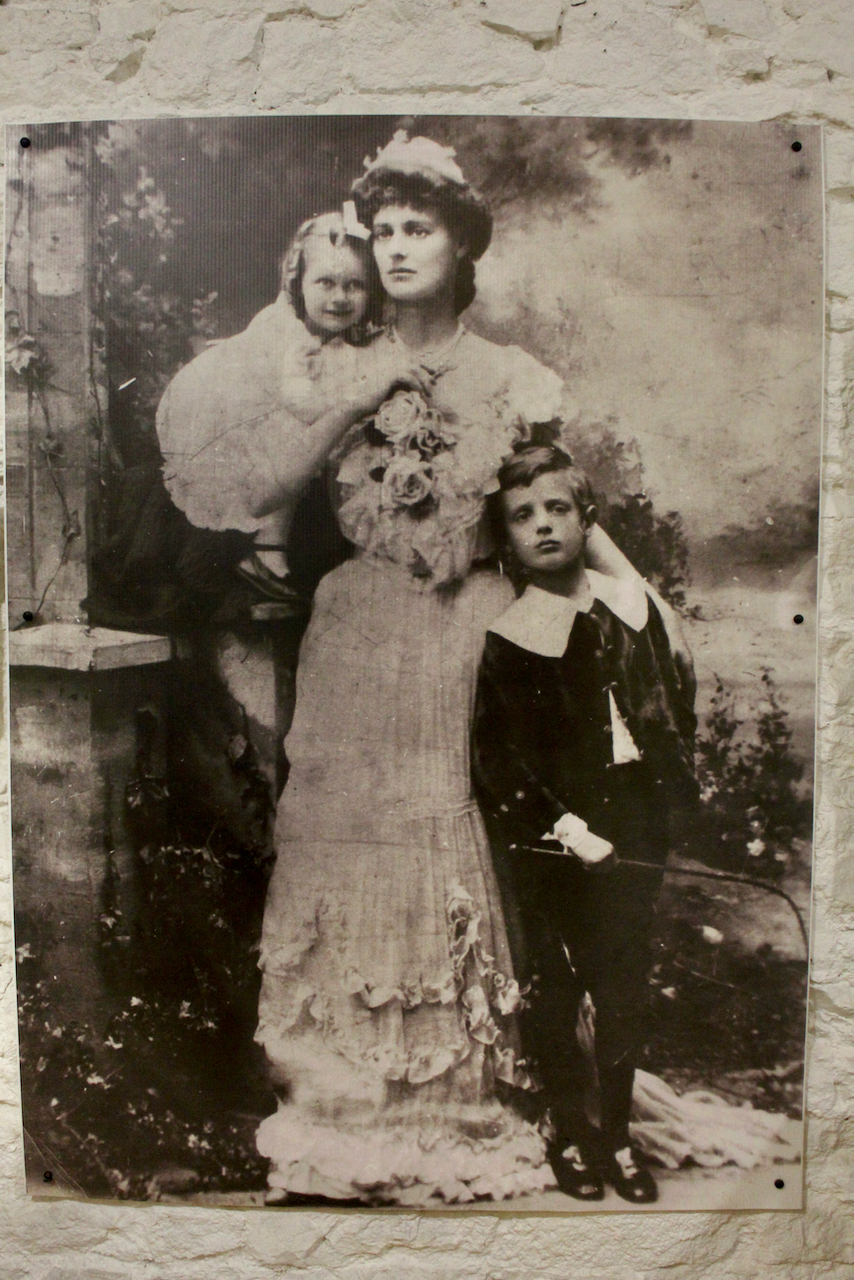
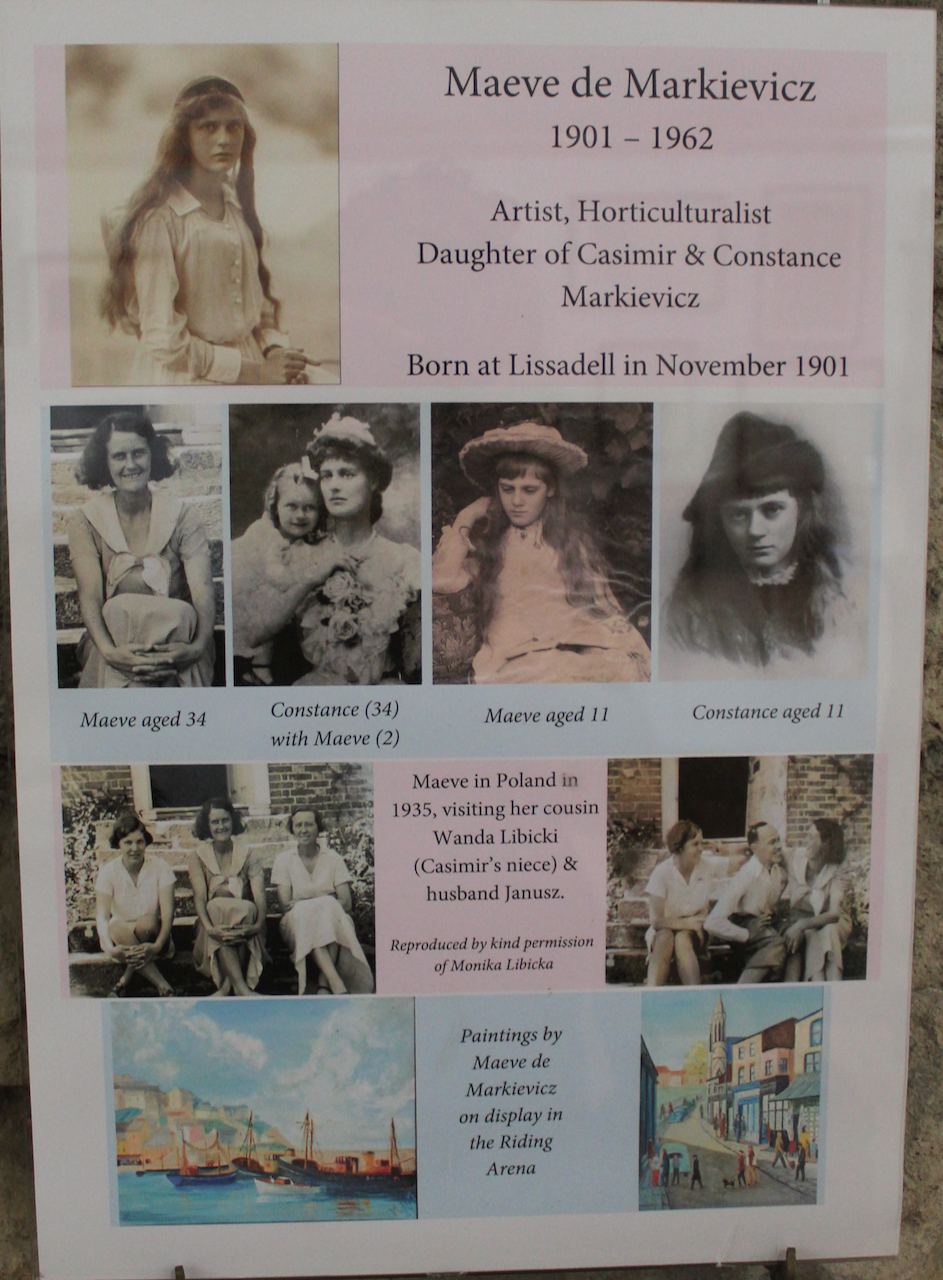
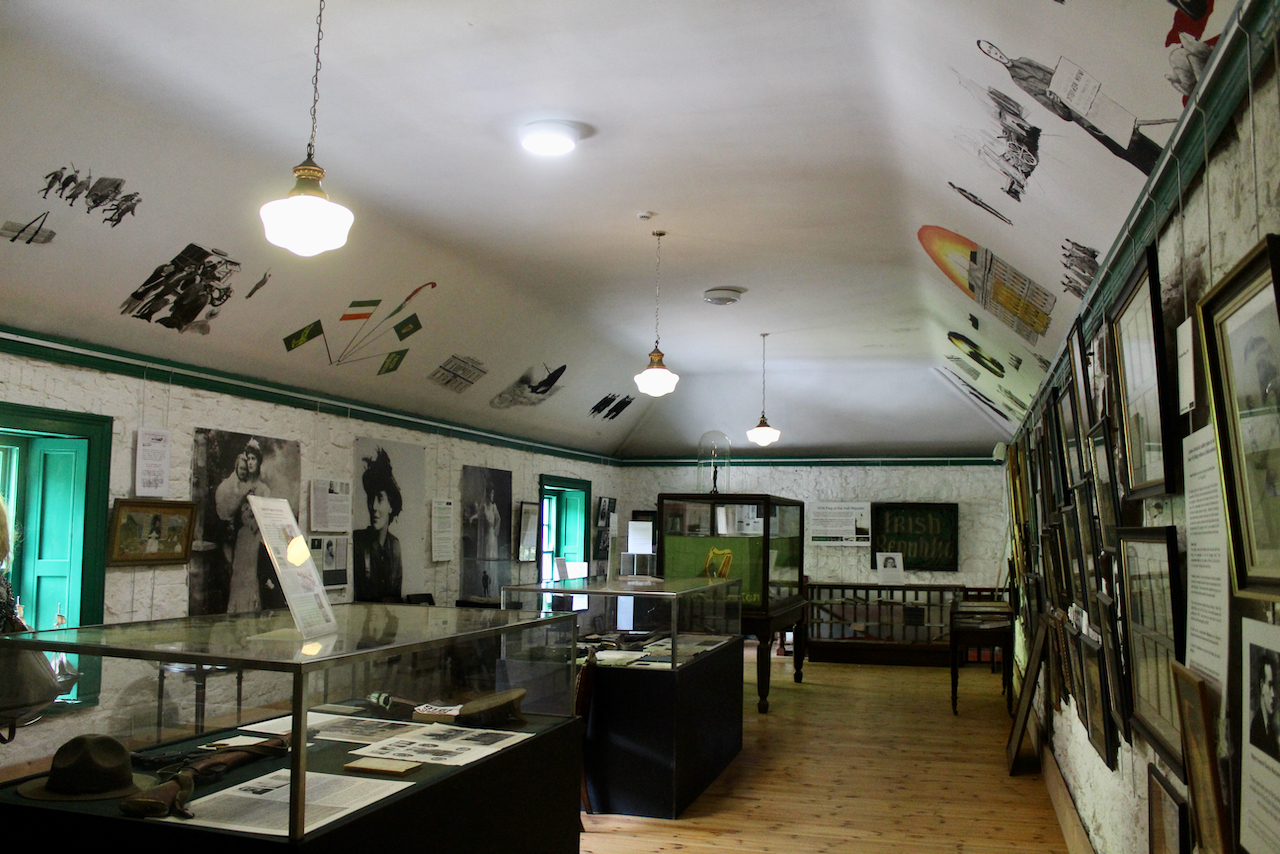
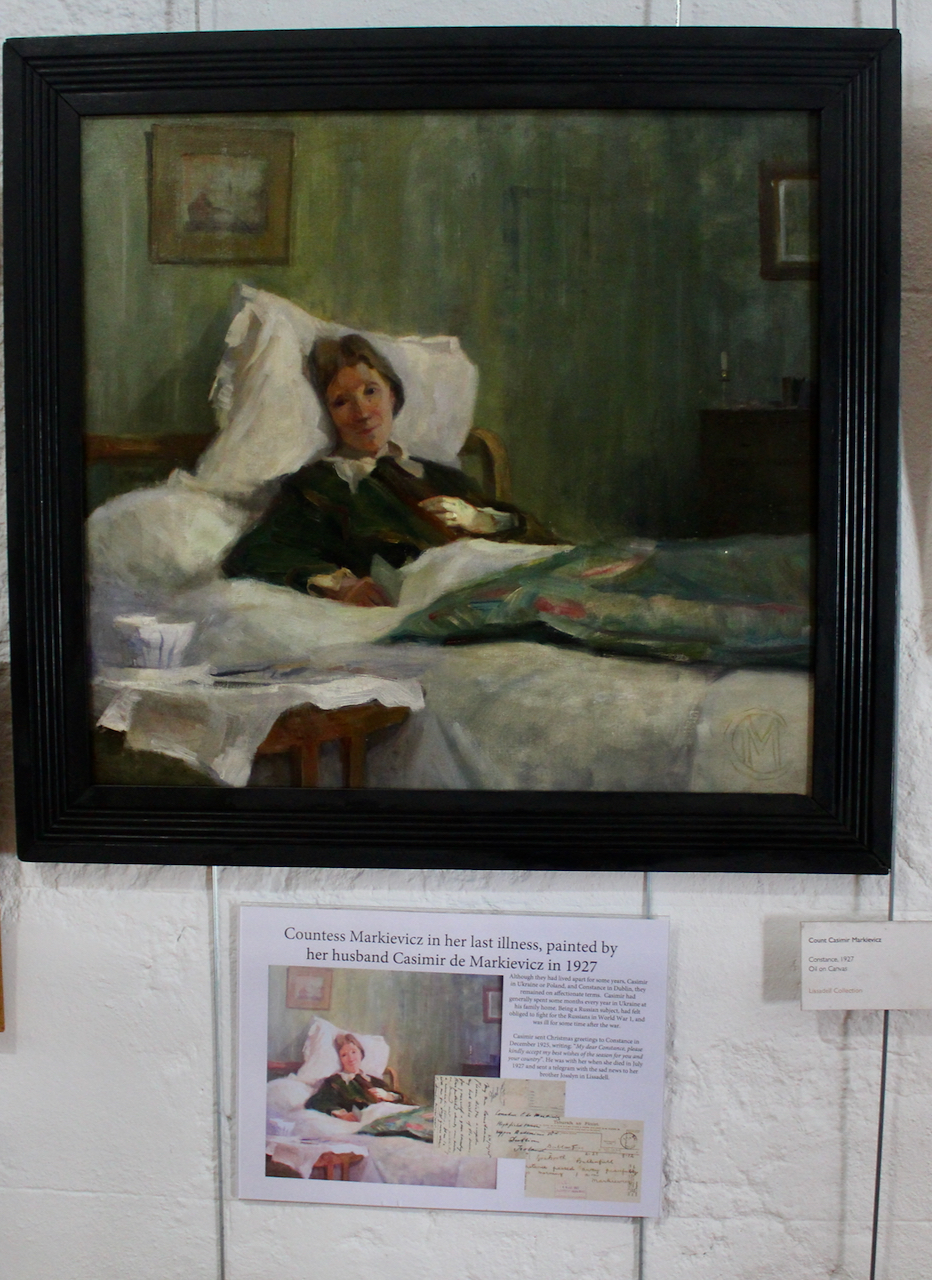
Constance went to art school in the Slade School of Art in London 1892-1894. She lived in Cheyne Walk, Chelsea, where many of London’s bohemians and writers gathered: George Eliot had lived there, Whistler, Henry James and Erskine Childers. At the age of 25 went to Paris to continue her studies, and met and married a fellow artist, the Polish Casimir Markievicz. Many of Constance’s paintings still hang on the walls, as well as some work by Casimir. Their only child, Maeve Allys, was born in Lissadell in 1901.
Constance Gore-Booth (left) and her sister, Eva, in 1895.Lissadell, 2022.Lissadell, 2022.Painting of Countess Markievicz (1868-1927) by Casimir Markievicz (1874-1932), hanging in the National Gallery of Ireland. Constance Gore-Booth studied art in London and Paris, and in 1900 married Count Markievicz-Dunin, a Polish aristocrat. Lissadell, 2022.Casimir Markievicz.Lissadell, 2022.Lissadell, 2022.Lissadell, 2022.Lissadell, 2022.Lissadell, 2022.Lissadell, 2022.
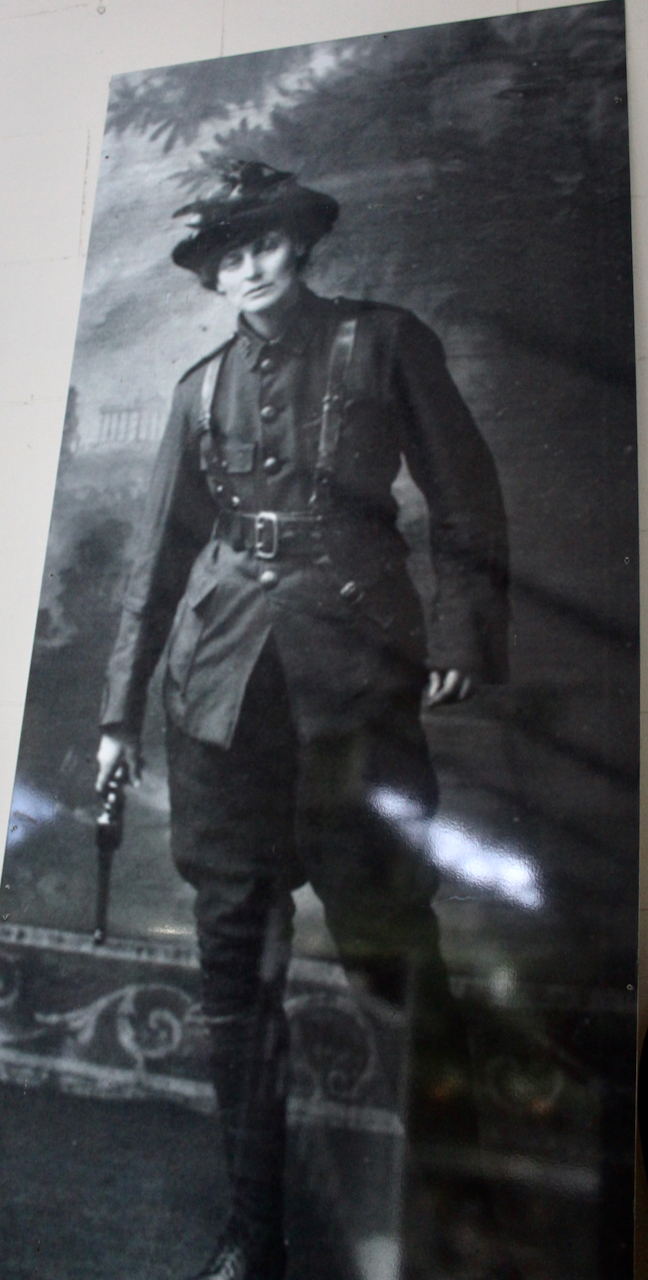
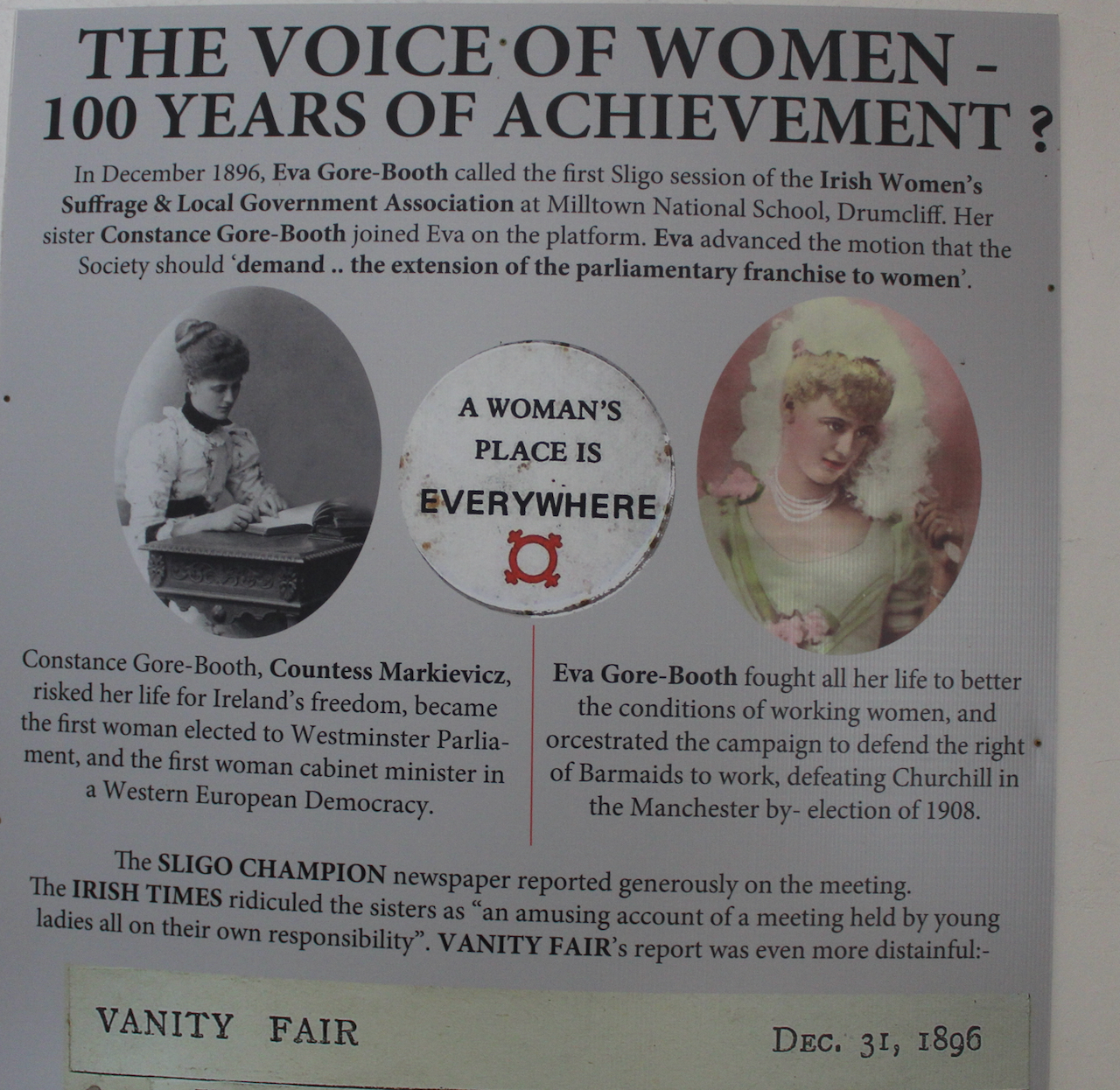
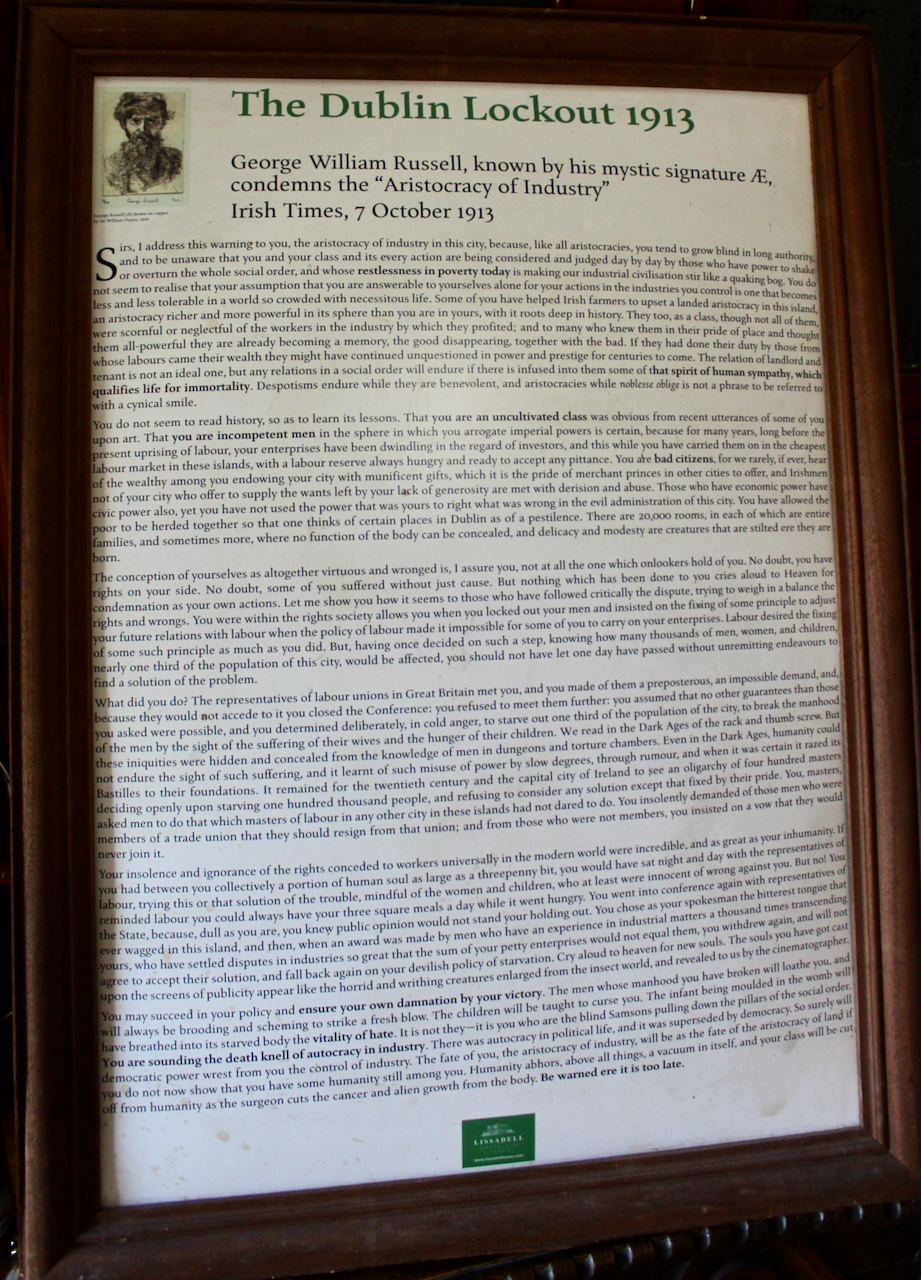
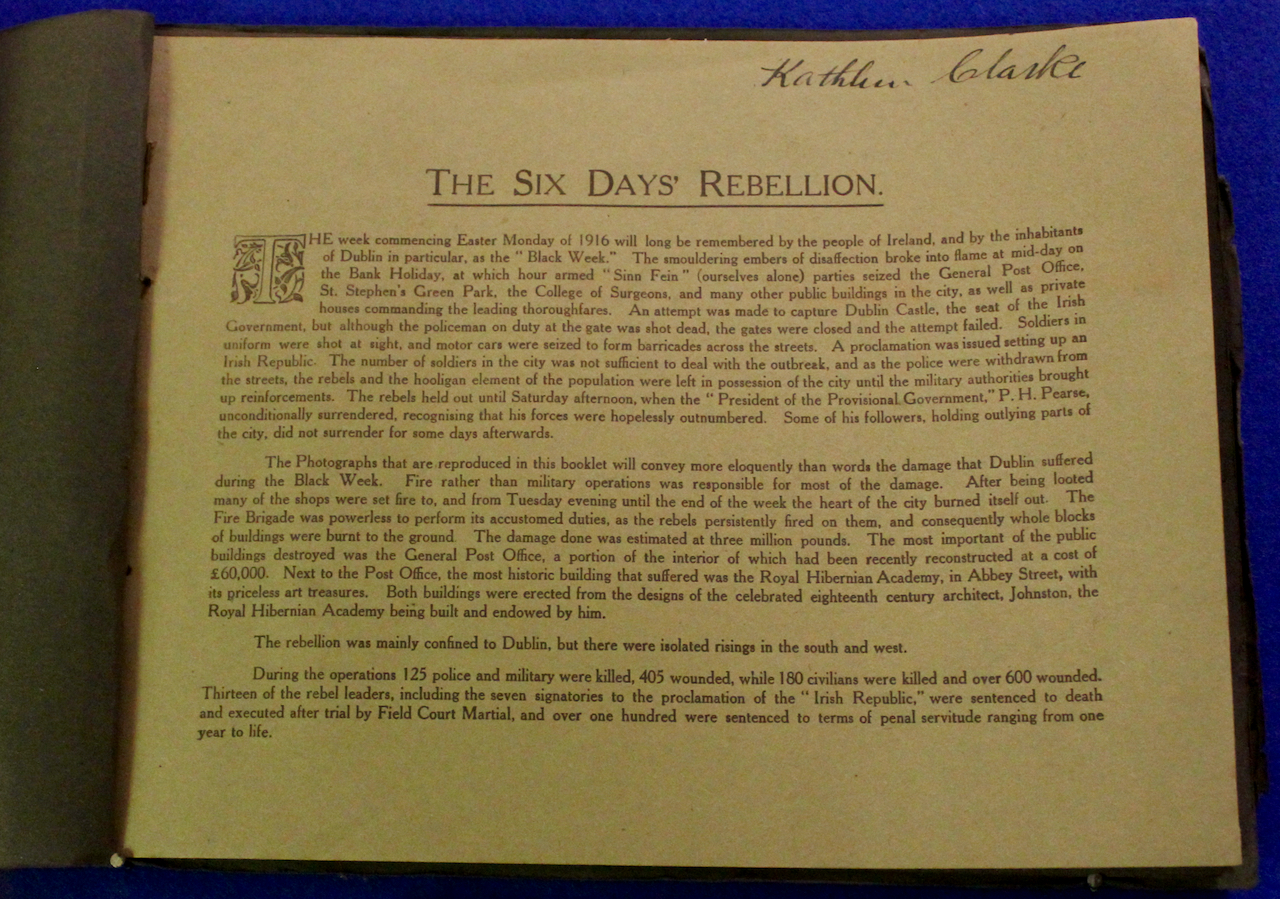
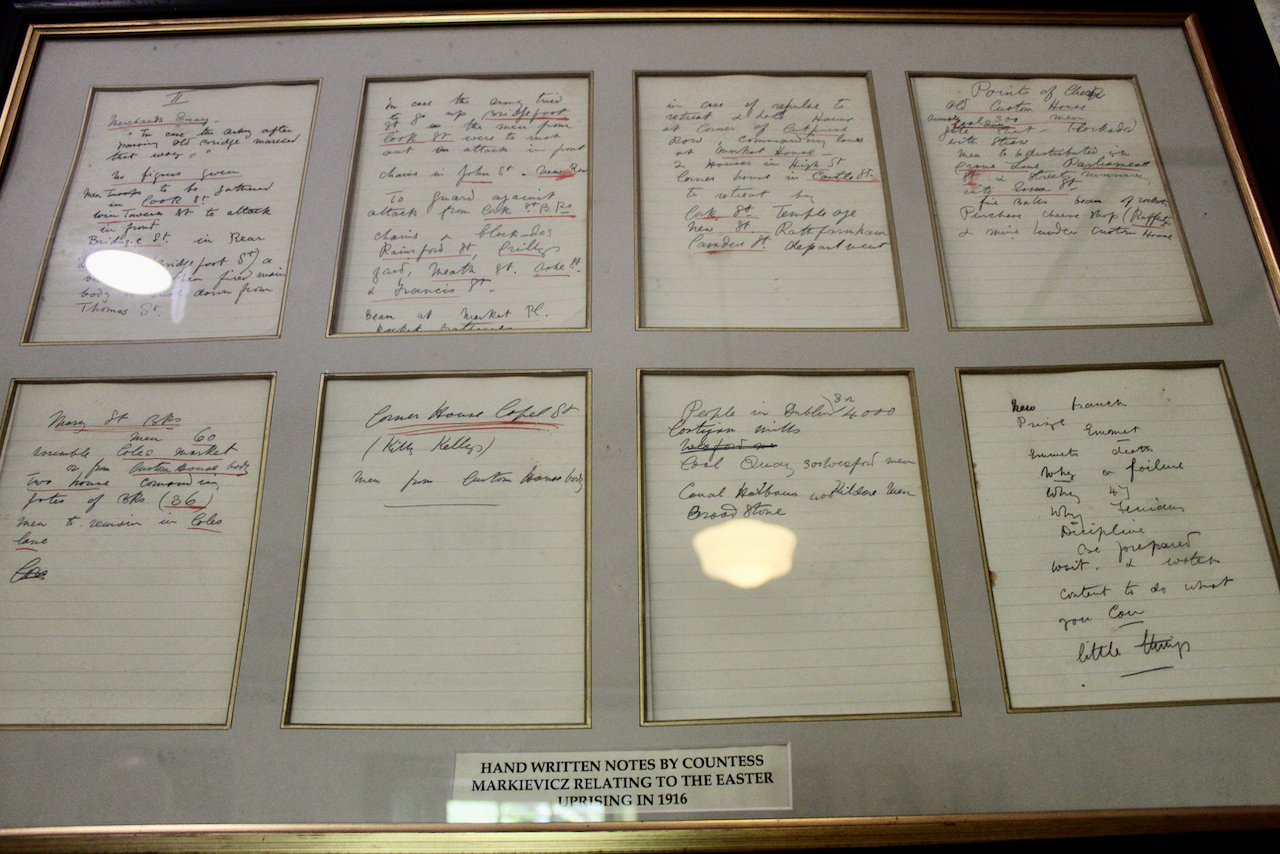
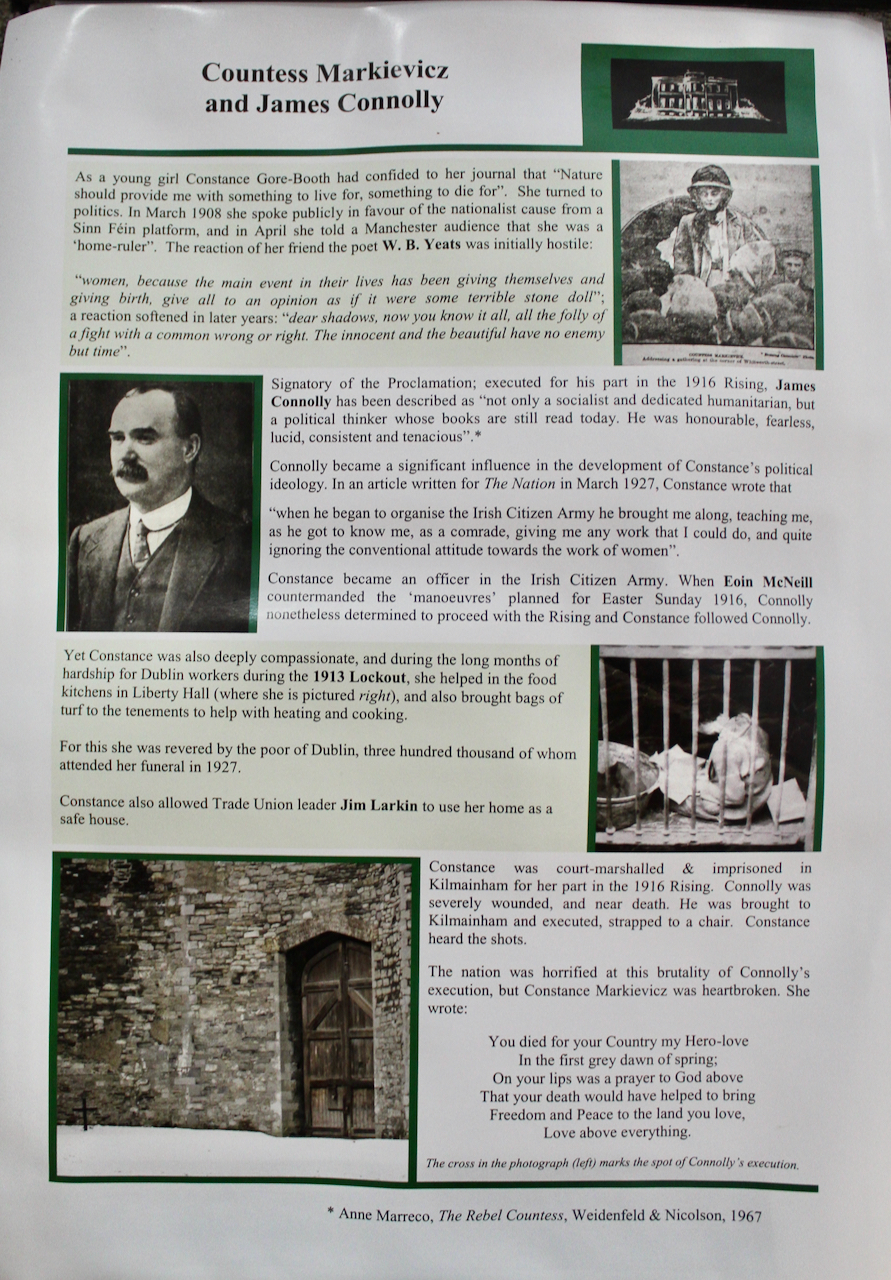
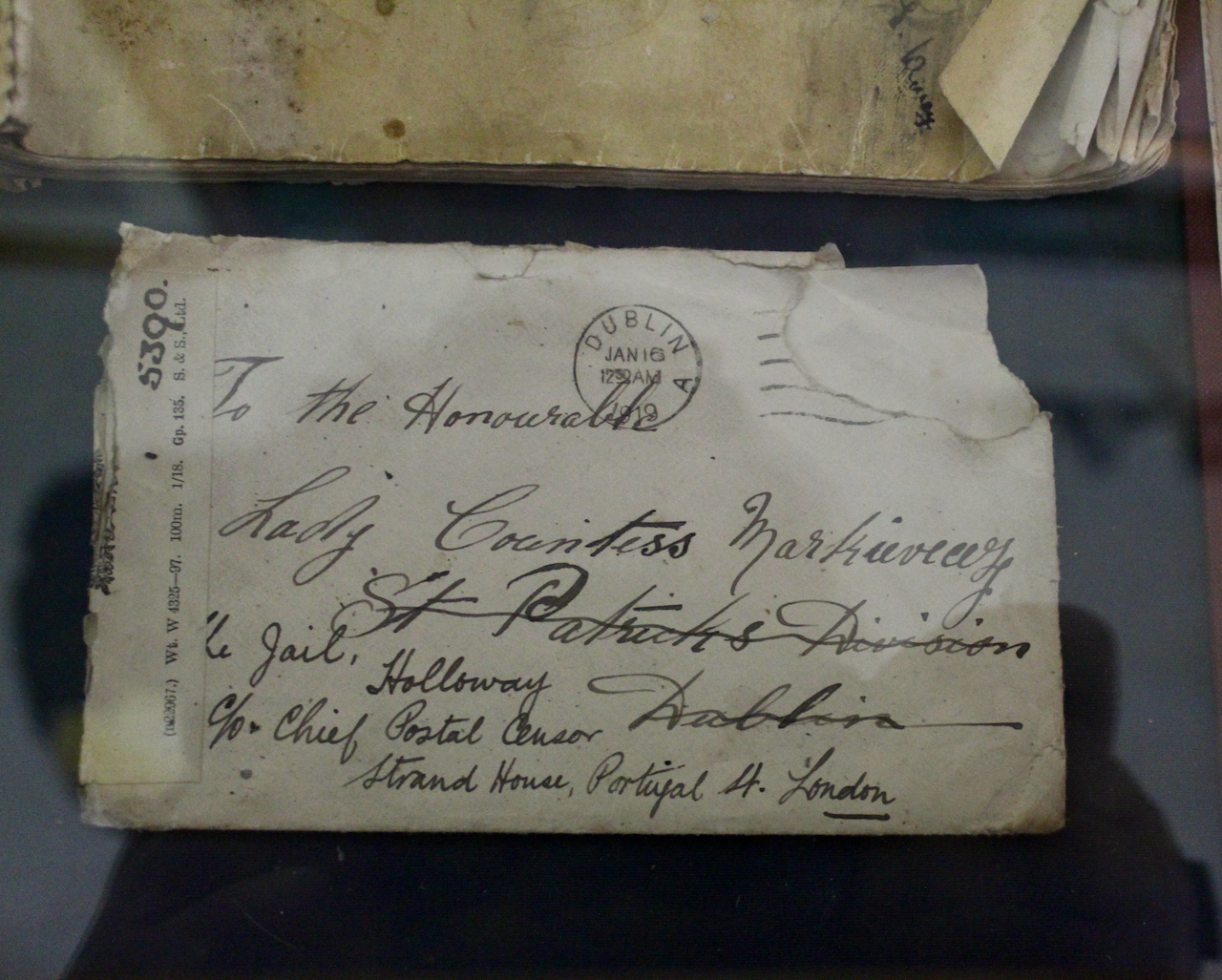
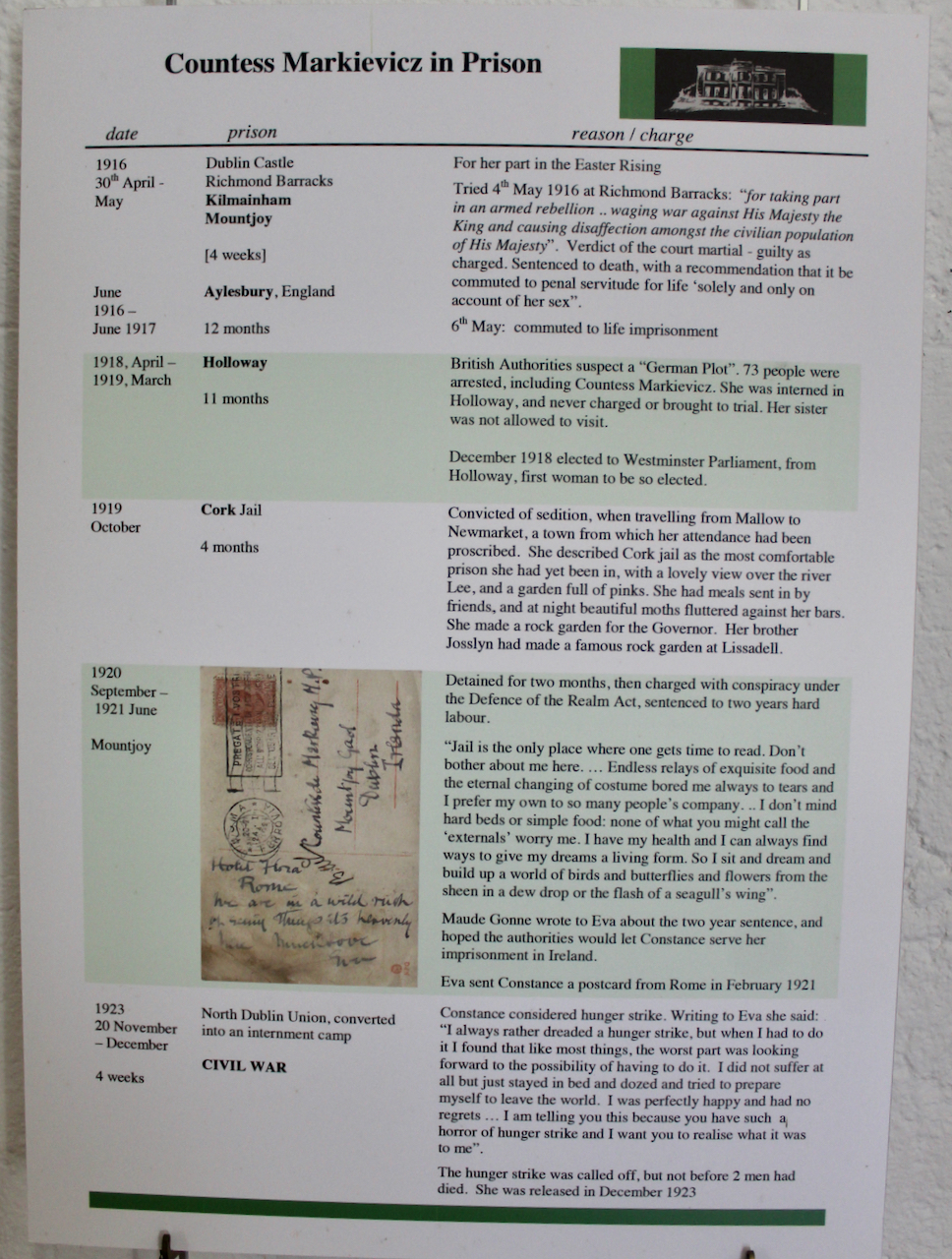
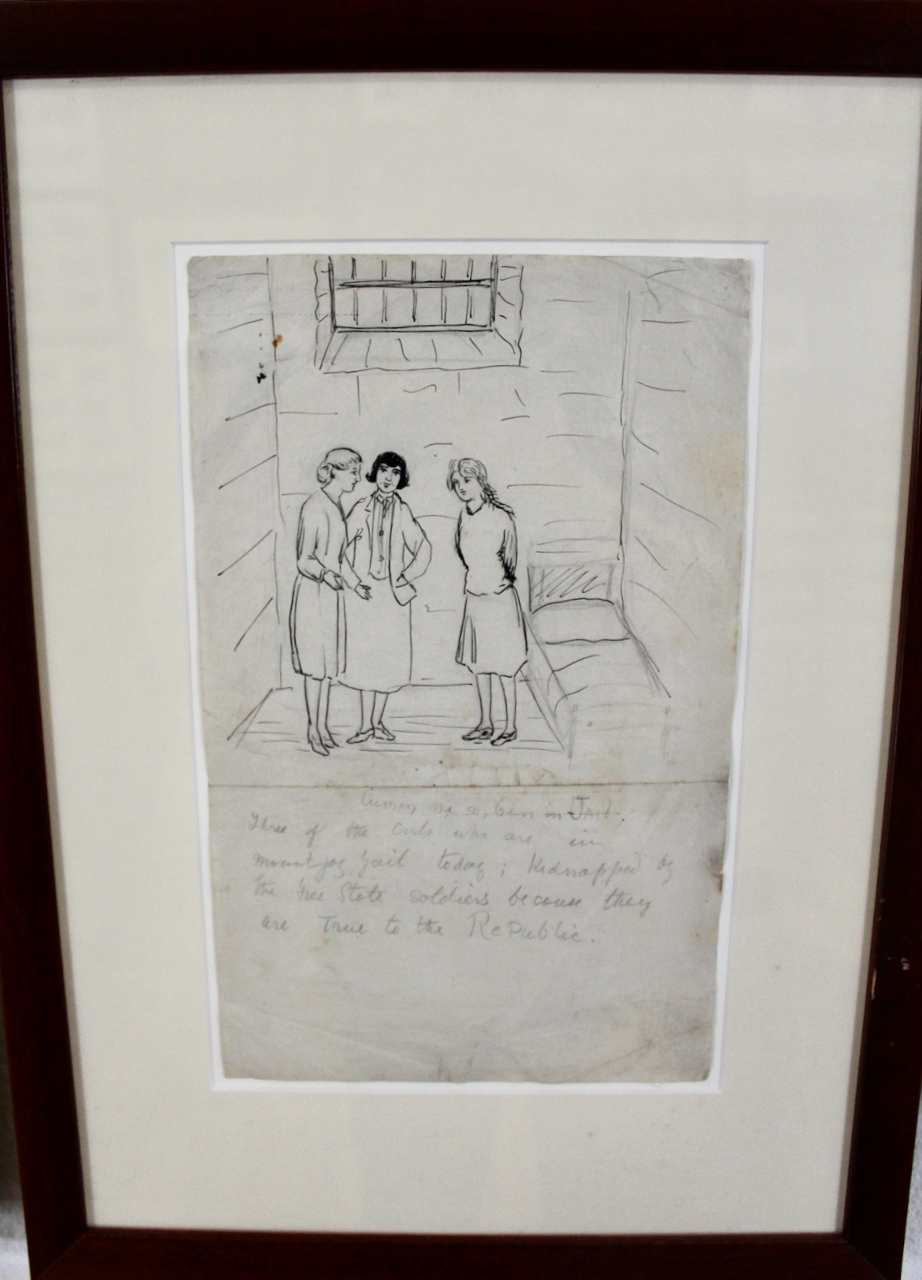
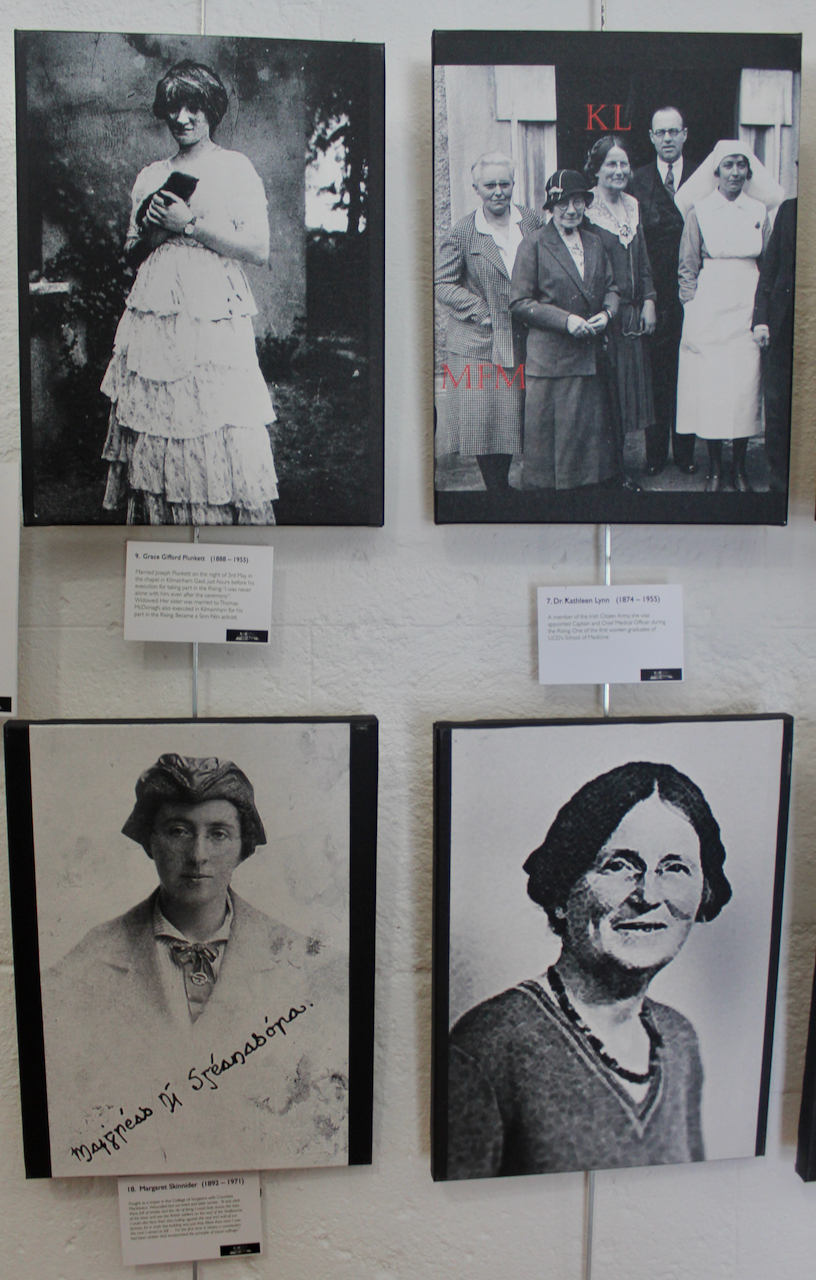
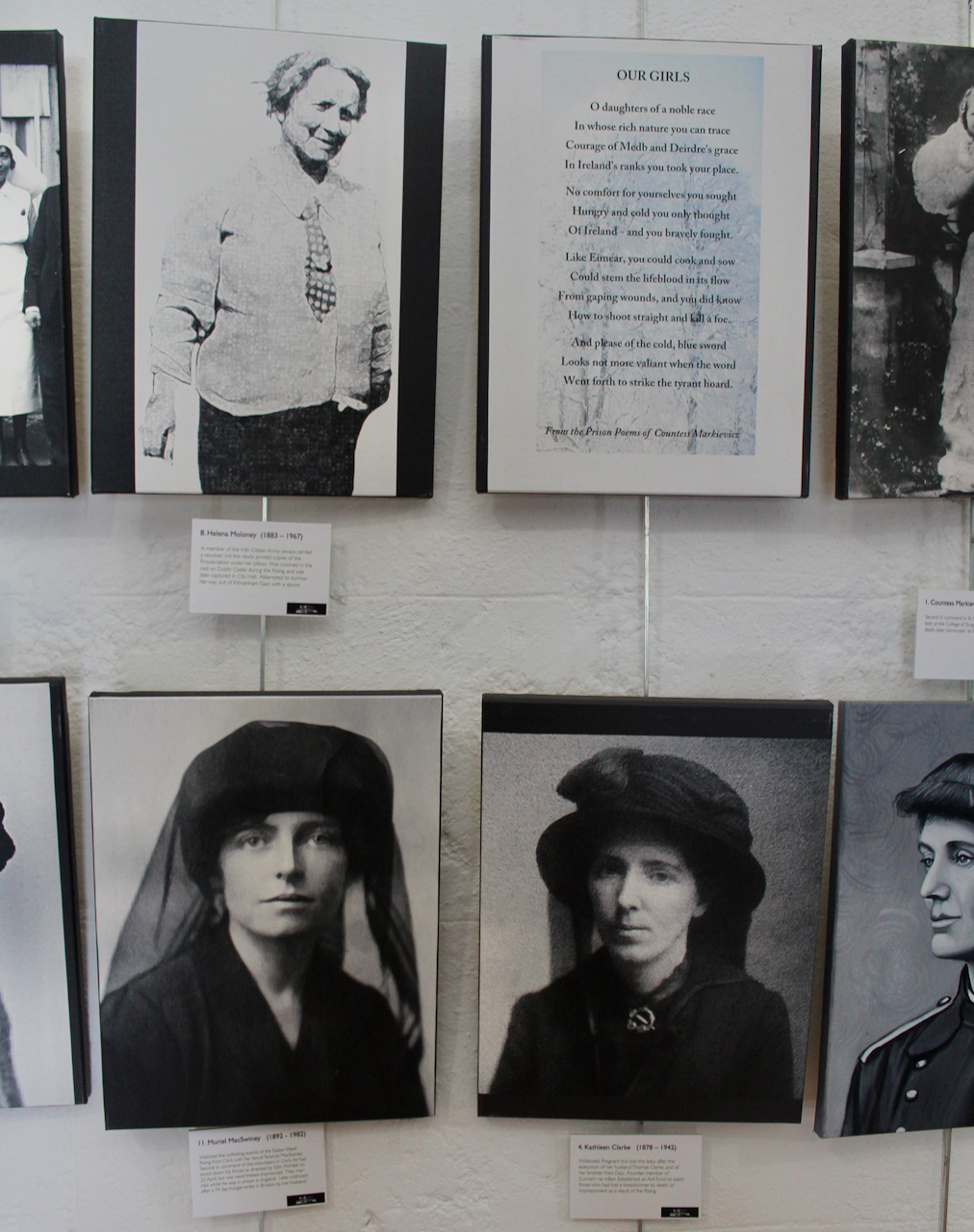
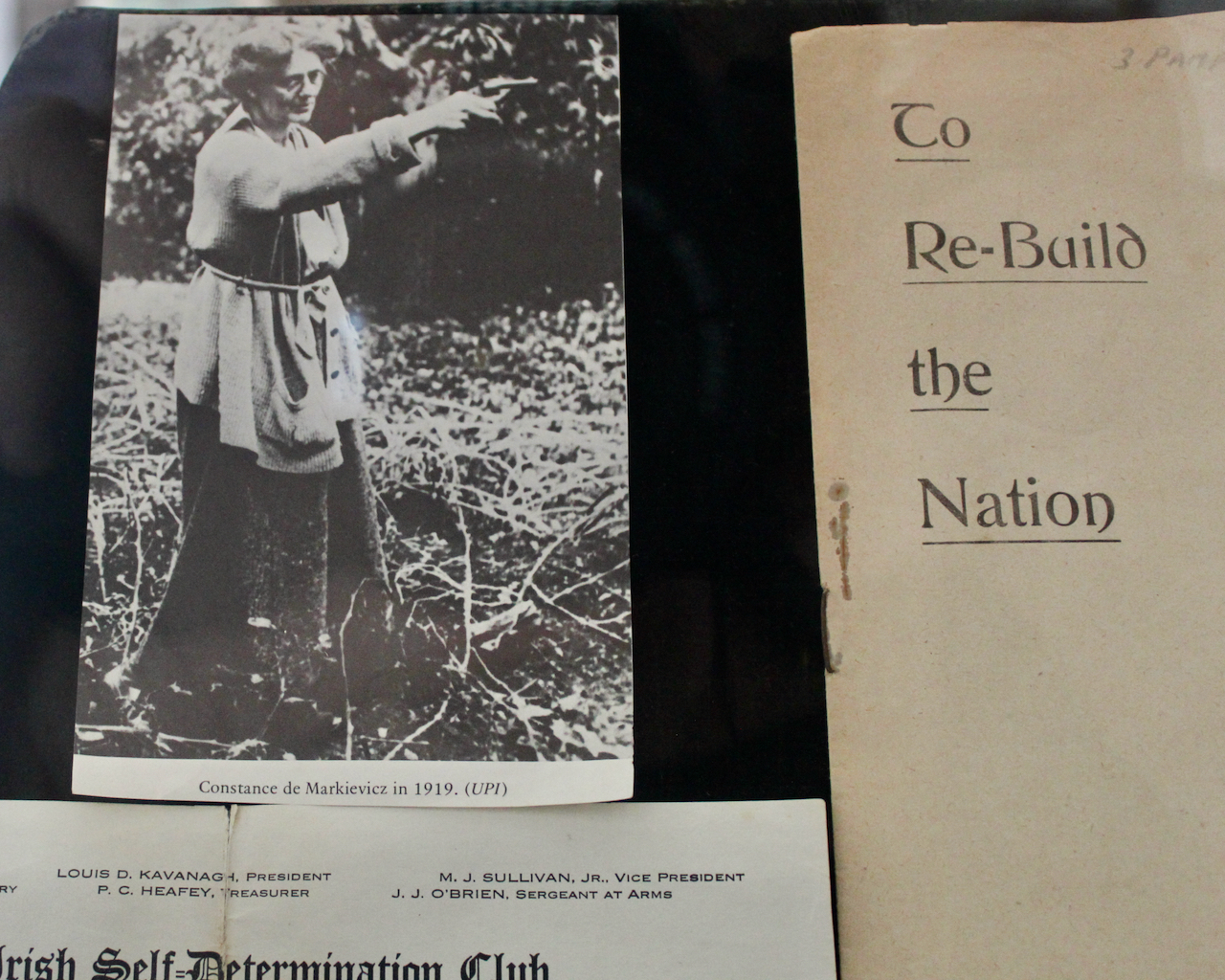
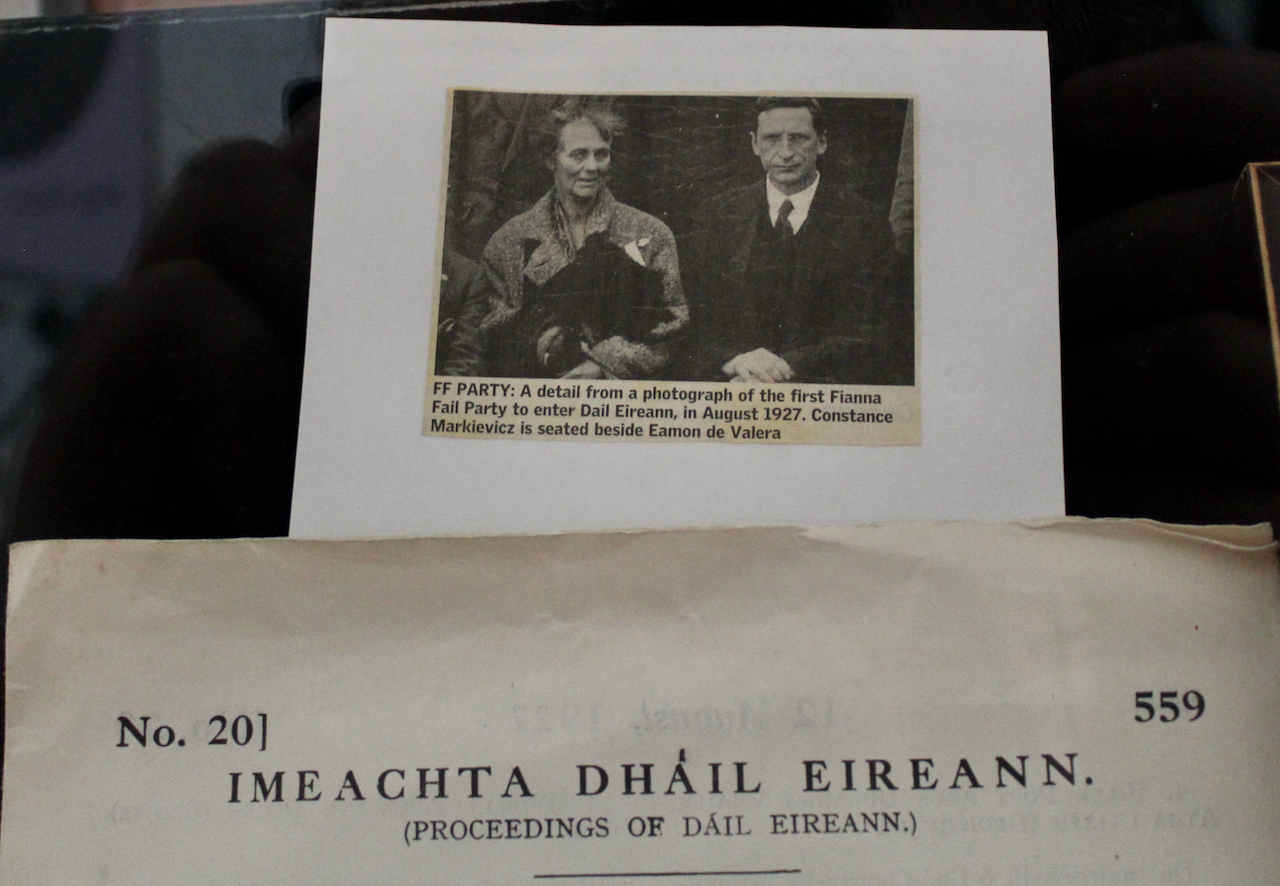
Constance had a strong social conscience, and became involved in the 1913 Lockout, where workers went on strike for better pay. She was then involved in the 1916 Rising, and was jailed for her activity. When the new state was born, she was elected to Dáil Eireann, where she served as Minister for Labour. She was also the first woman to be elected to the House of Commons at Westminster, London, but like many other Irish politicians, she declined to take her seat – members of Sinn Fein in Northern Ireland continue in this tradition and refuse to take their seats in Westminster.
Lissadell, 2022.
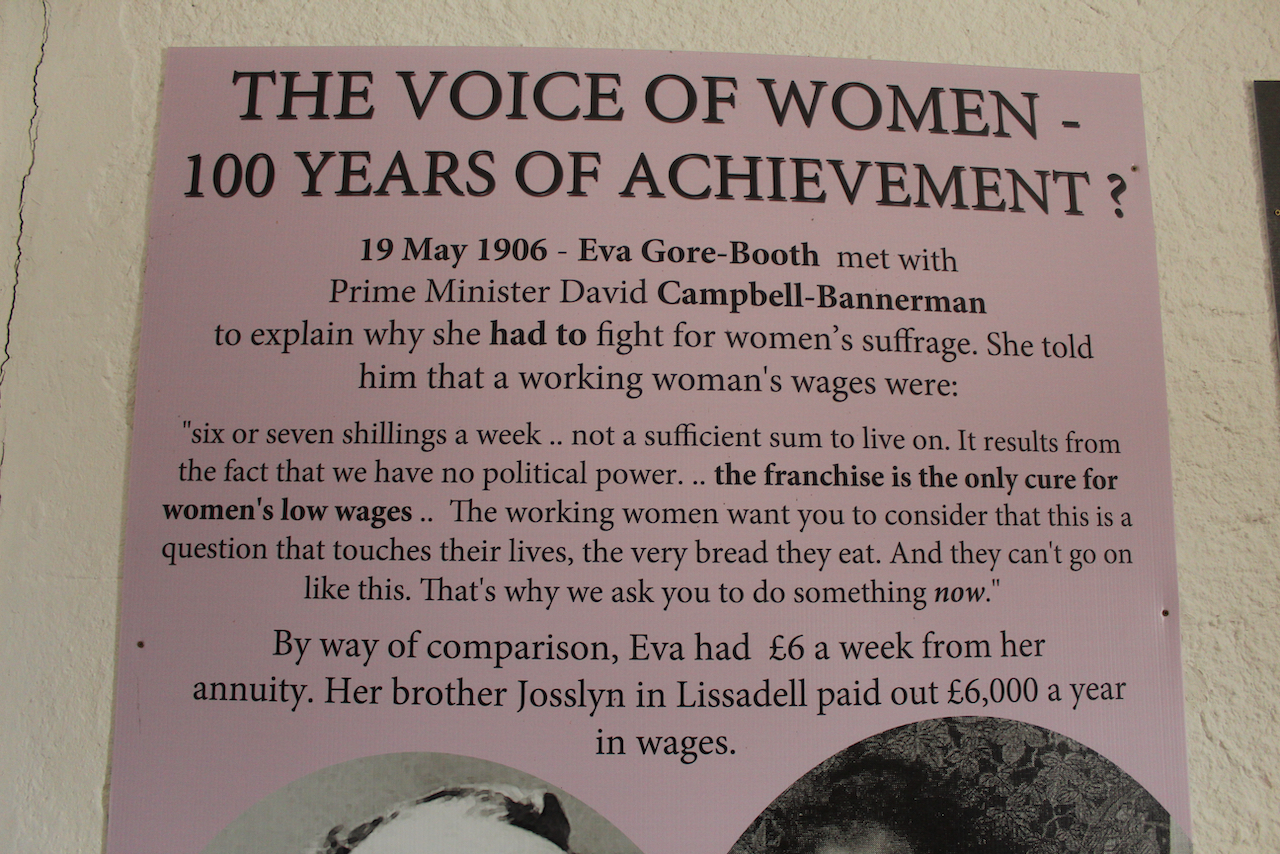
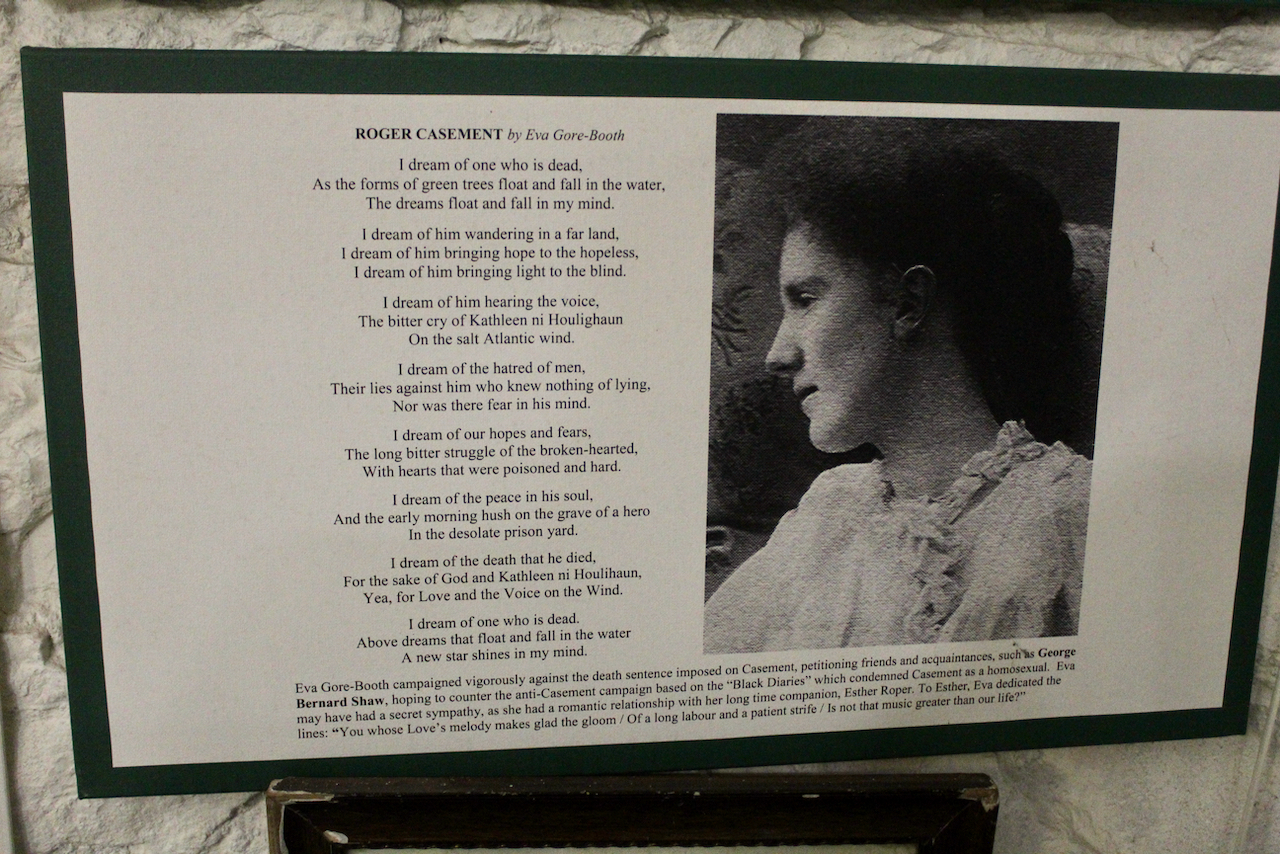
Eva was a suffragist and poet, and lived in meagre circumstances in England with her partner Esther Roper.
Lissadell, 2022.
Eva fought for Women’s Rights and clashing with the young Winston Churchill over barmaids’ rights in 1908. She spent many years in Manchester working to alleviate the condition of working women.
Lissadell, 2022.Lissadell, 2022.Lissadell, 2022.
Eva wrote:
The little waves of Breffny
The grand road from the mountain goes shining to the sea And there is traffic on it and many a horse and cart, But the little roads of Cloonagh are dearer far to me And the little roads of Cloonagh go rambling through my heart.
A great storm from the ocean goes shouting o’er the hill, And there is glory in it; and terror on the wind: But the haunted air of twilight is very strange and still, And the little winds of twilight are dearer to my mind.
The great waves of the Atlantic sweep storming on their way, Shining green and silver with the hidden herring shoal; But the little waves of Breffny have drenched my heart in spray, And the little waves of Breffny go stumbling through my soul.
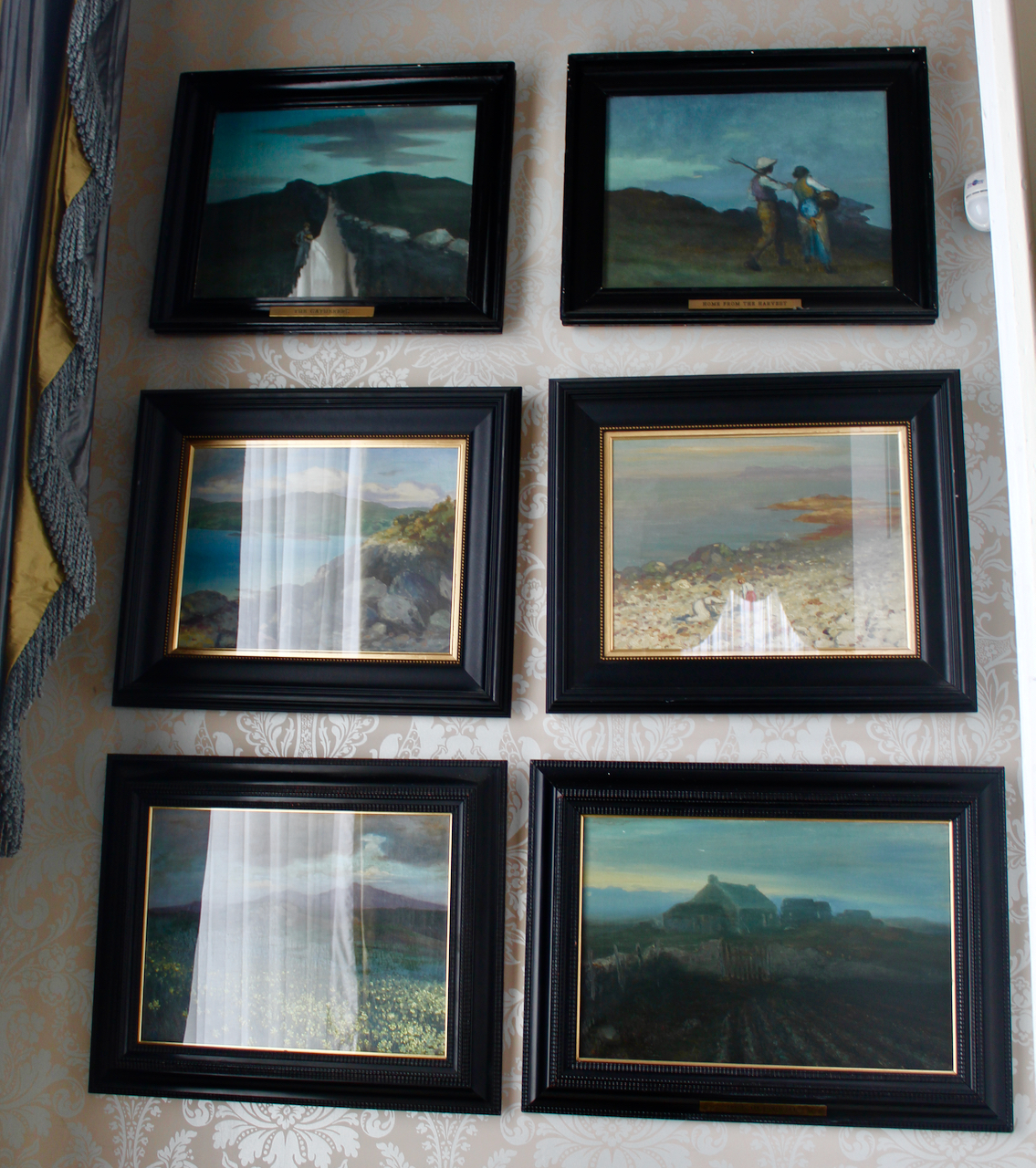
There is also a collection of paintings by a friend of W.B. Yeats, “A.E.” i.e. George William Russell, who was also part of the farming Co-operative movement and, like Yeats, a mystic.
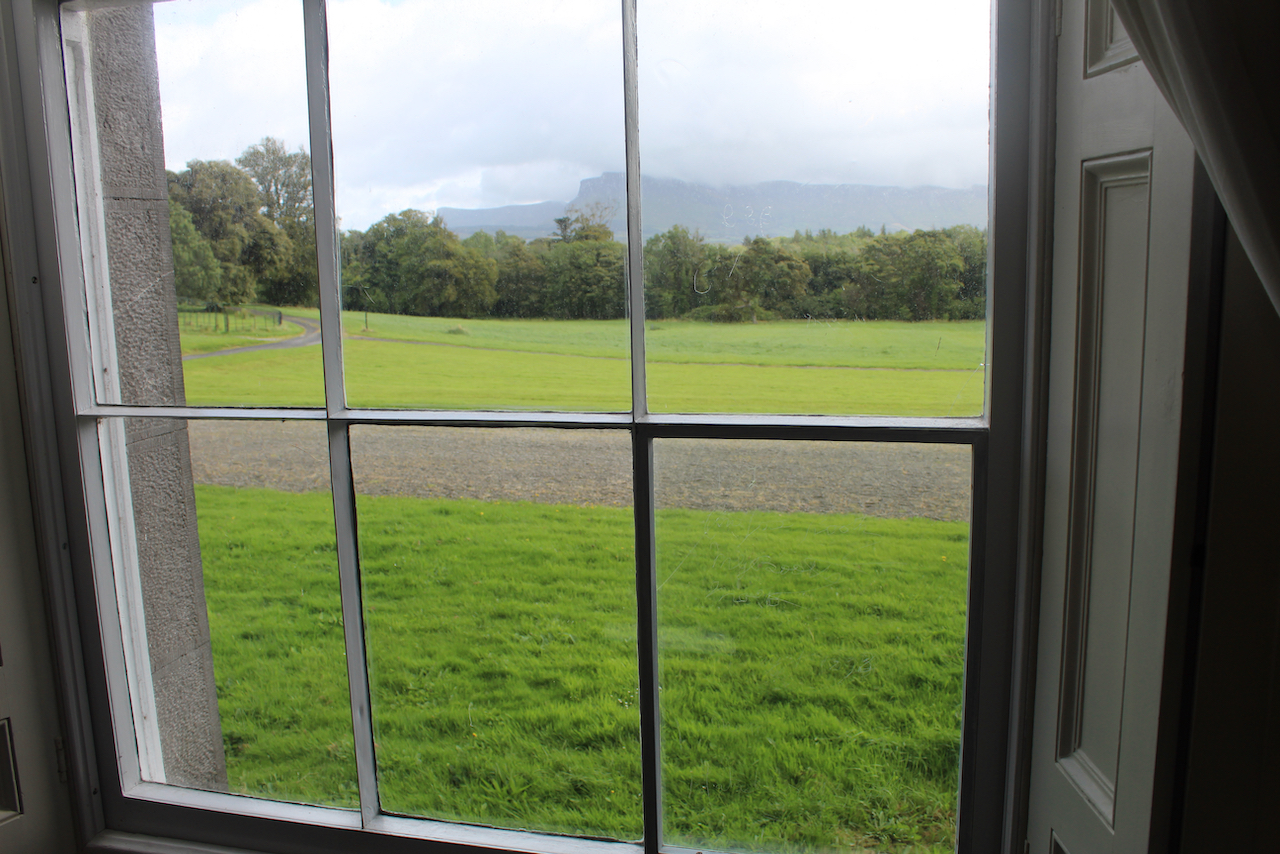
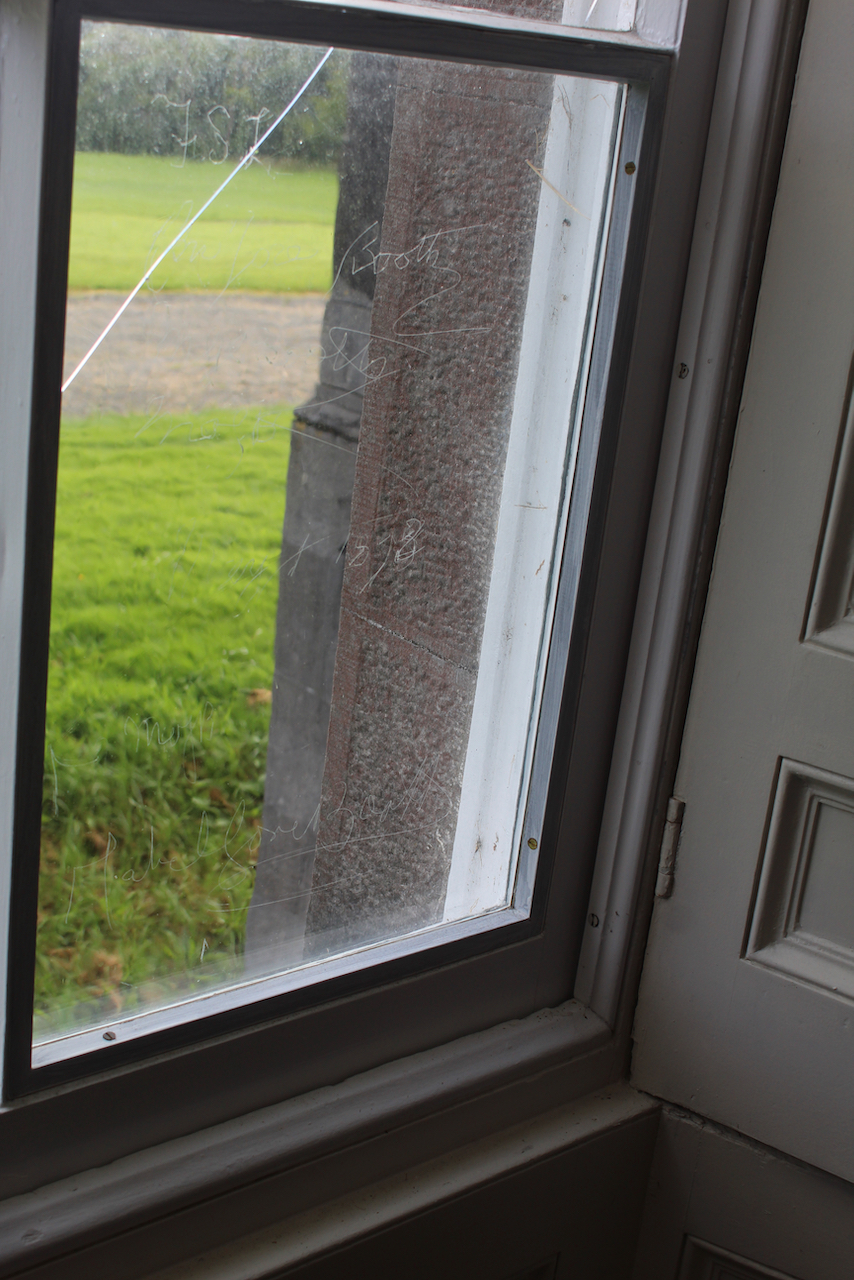
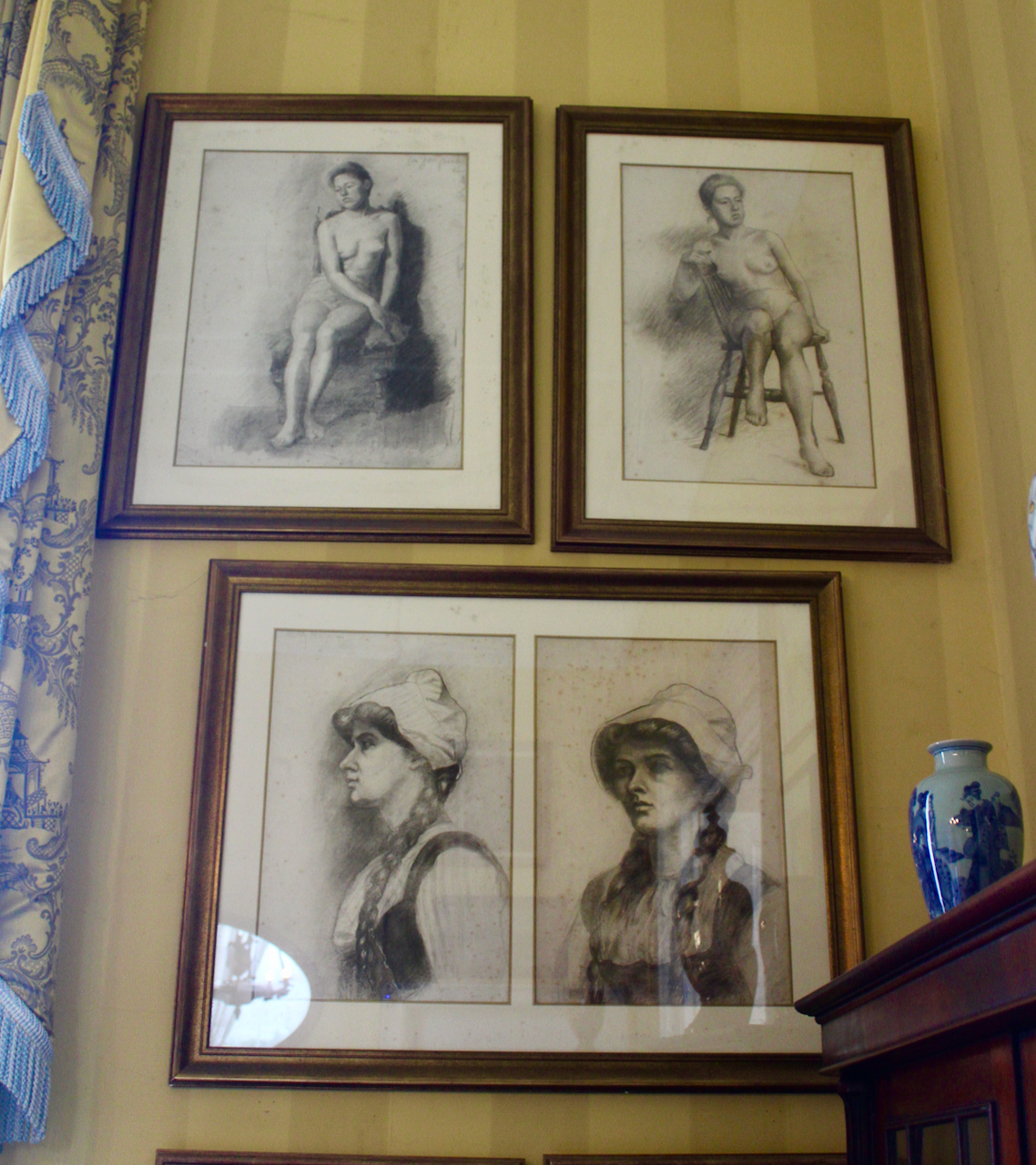
The anteroom still has an engraving that Constance made with her sister Mabel in a windowpane with a diamond in 1898. Drawings from Constance’s sketchbook are displayed also.
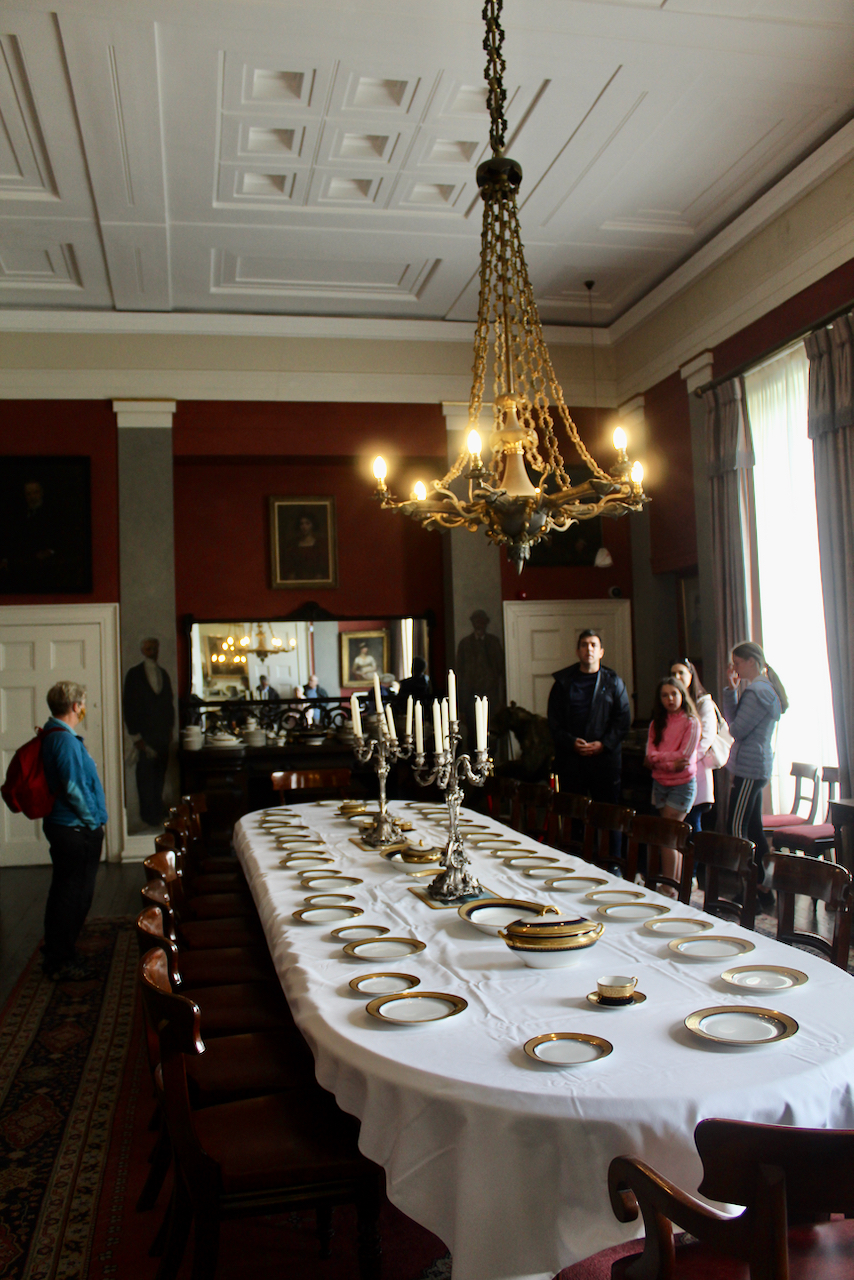
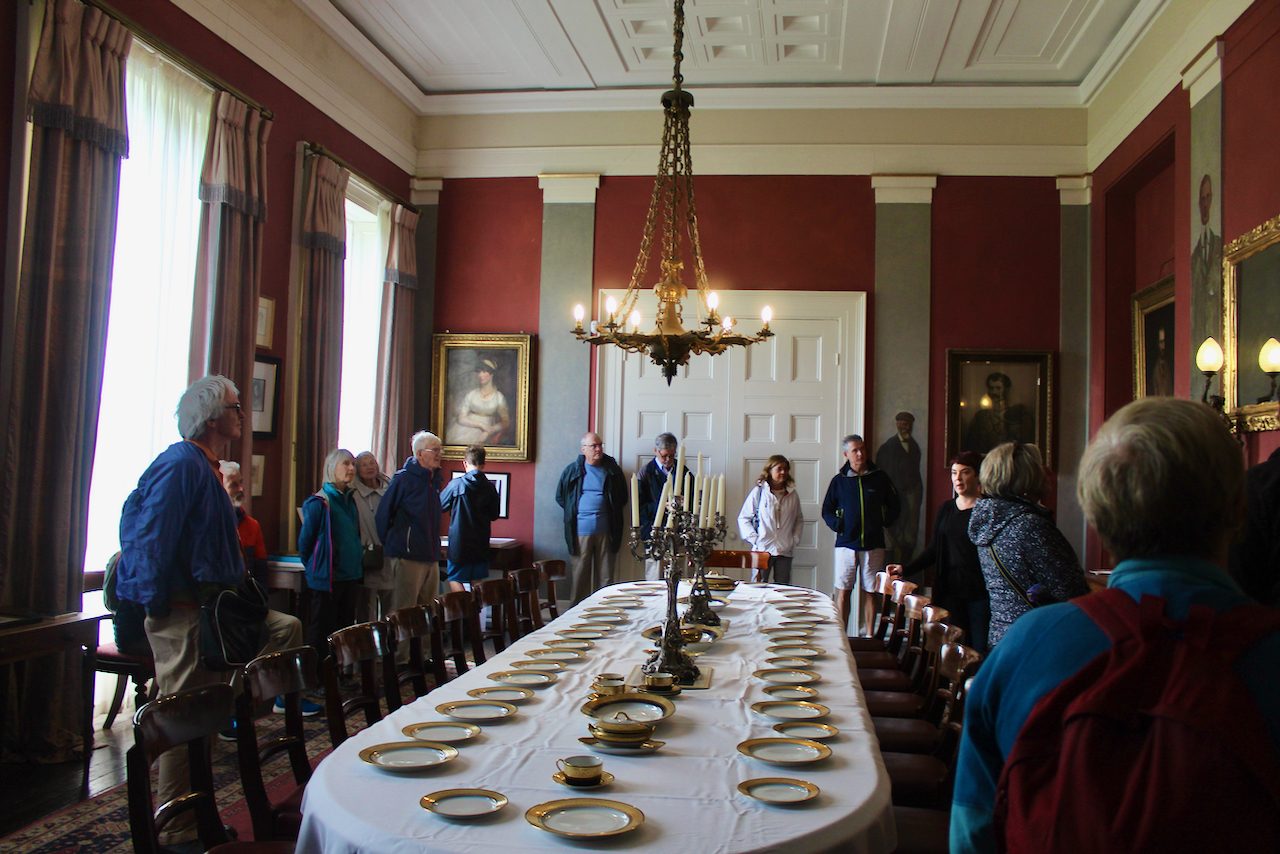
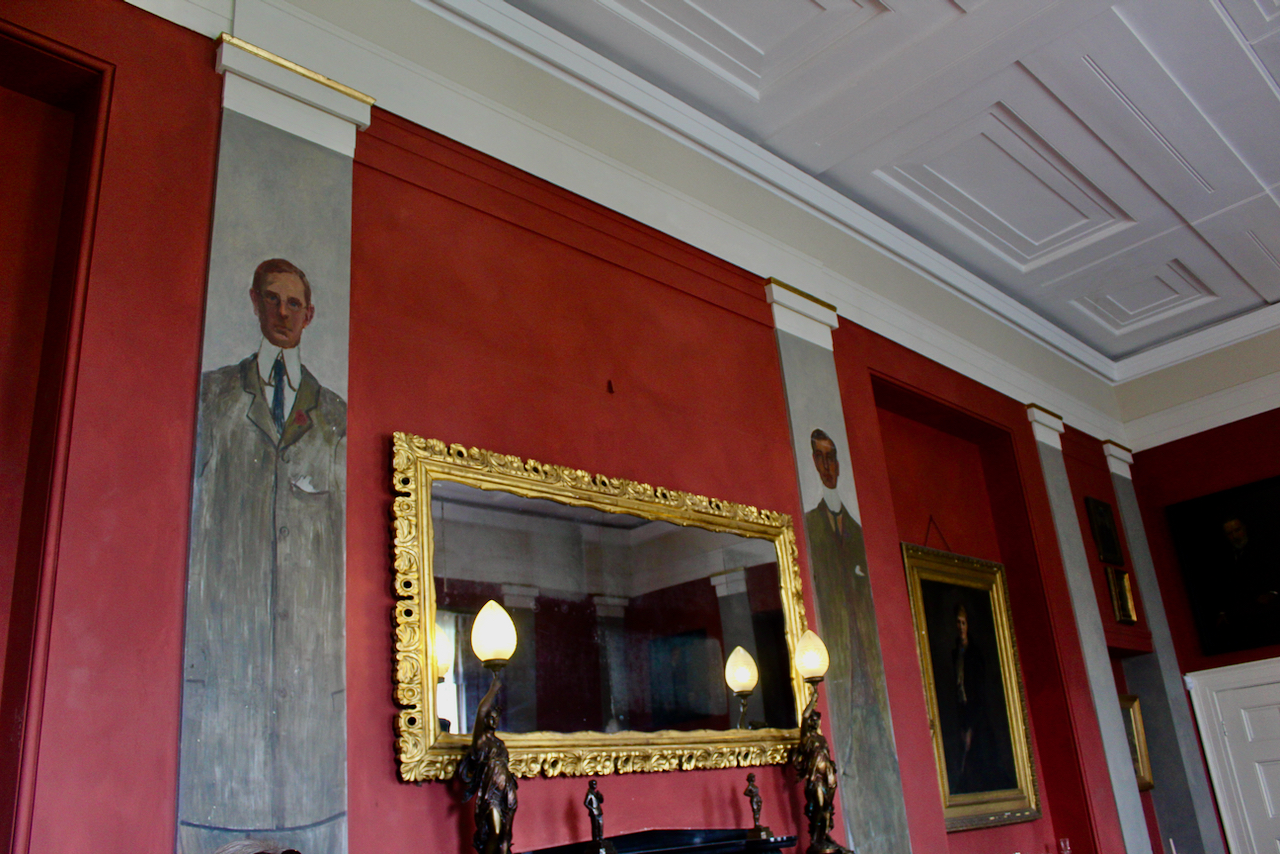
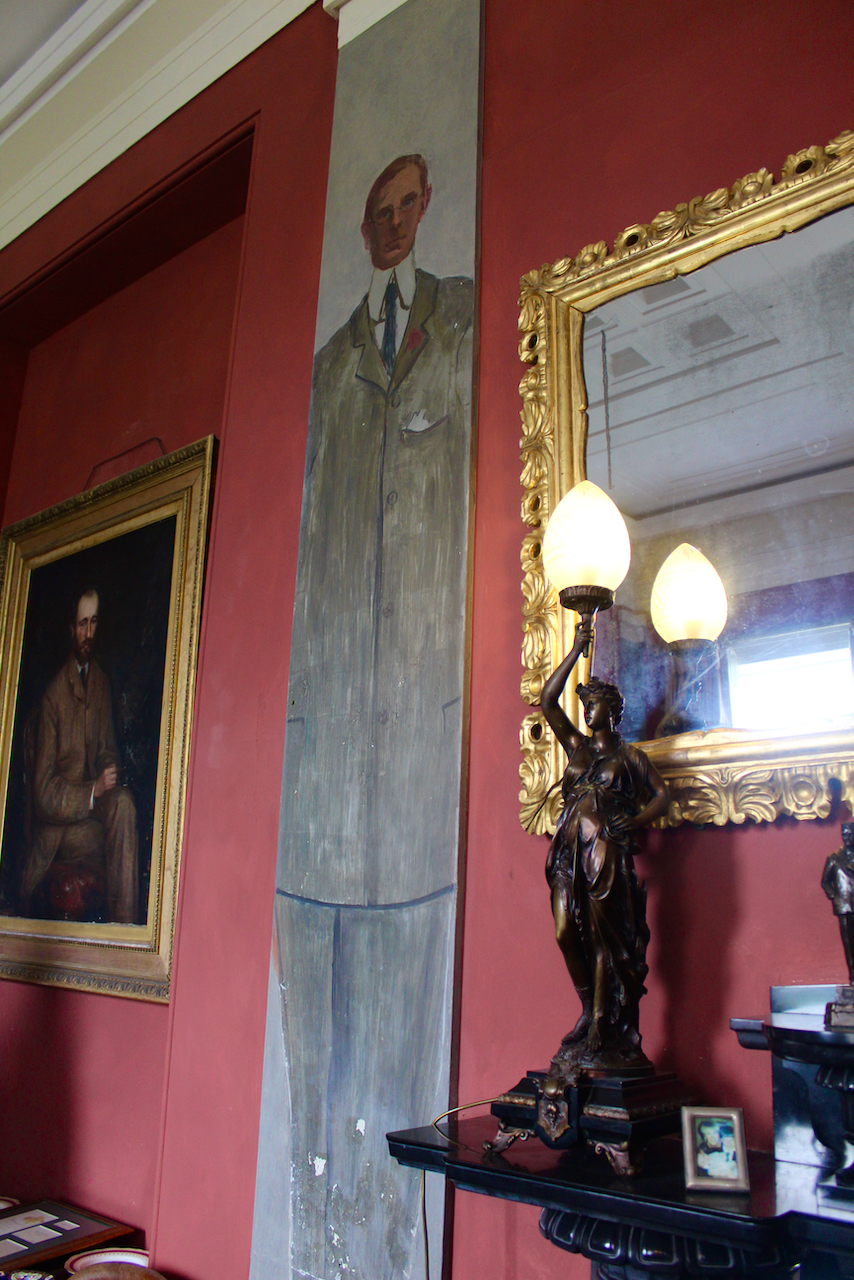
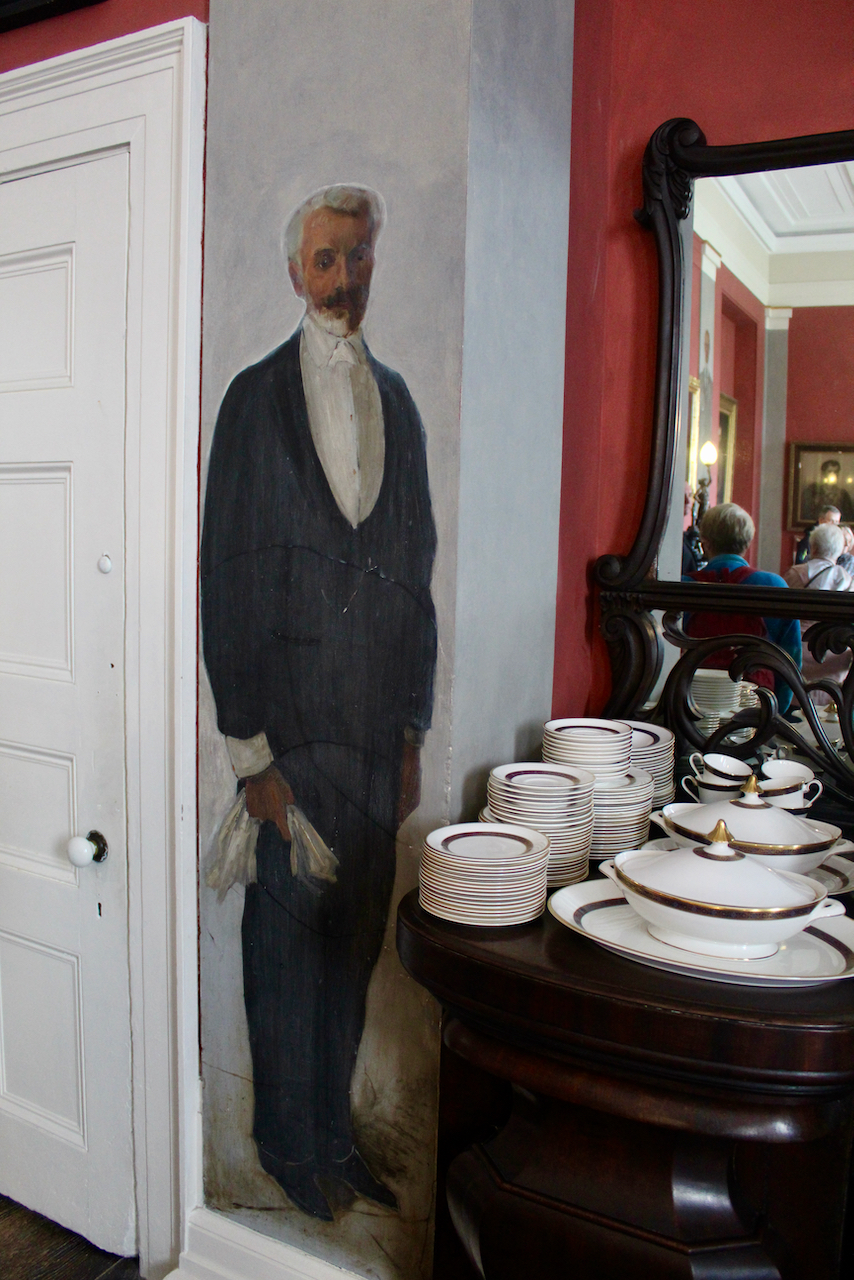
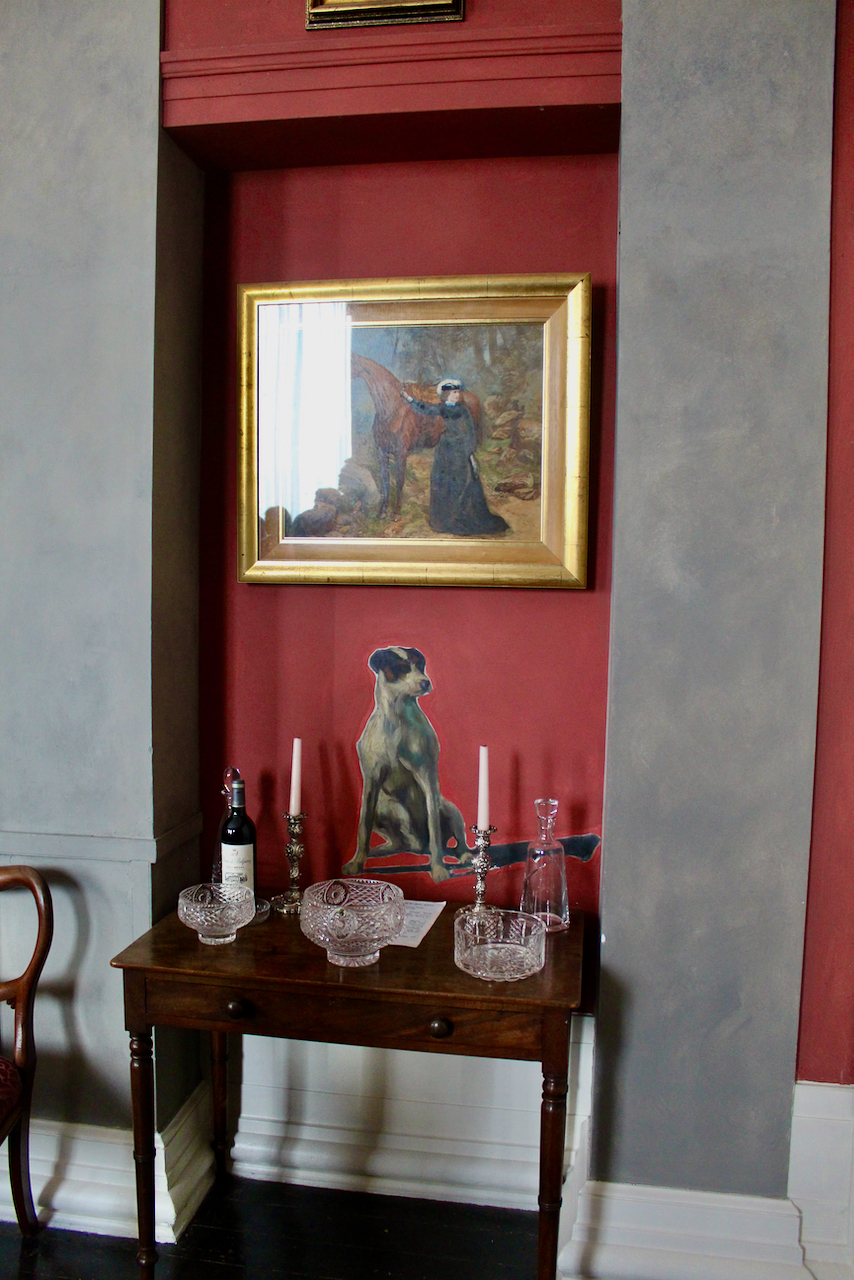
I had been particularly looking forward to seeing the dining room as I had seen pictures of it before and it has rather eccentric paintings which I love! Again, it was hard to take photographs because the room was crowded with the tour. Casimir painted portraits onto the pillars. He painted some of the servants, including Kilgallon. The bear shot by Kilgallon stands now beside his portrait.
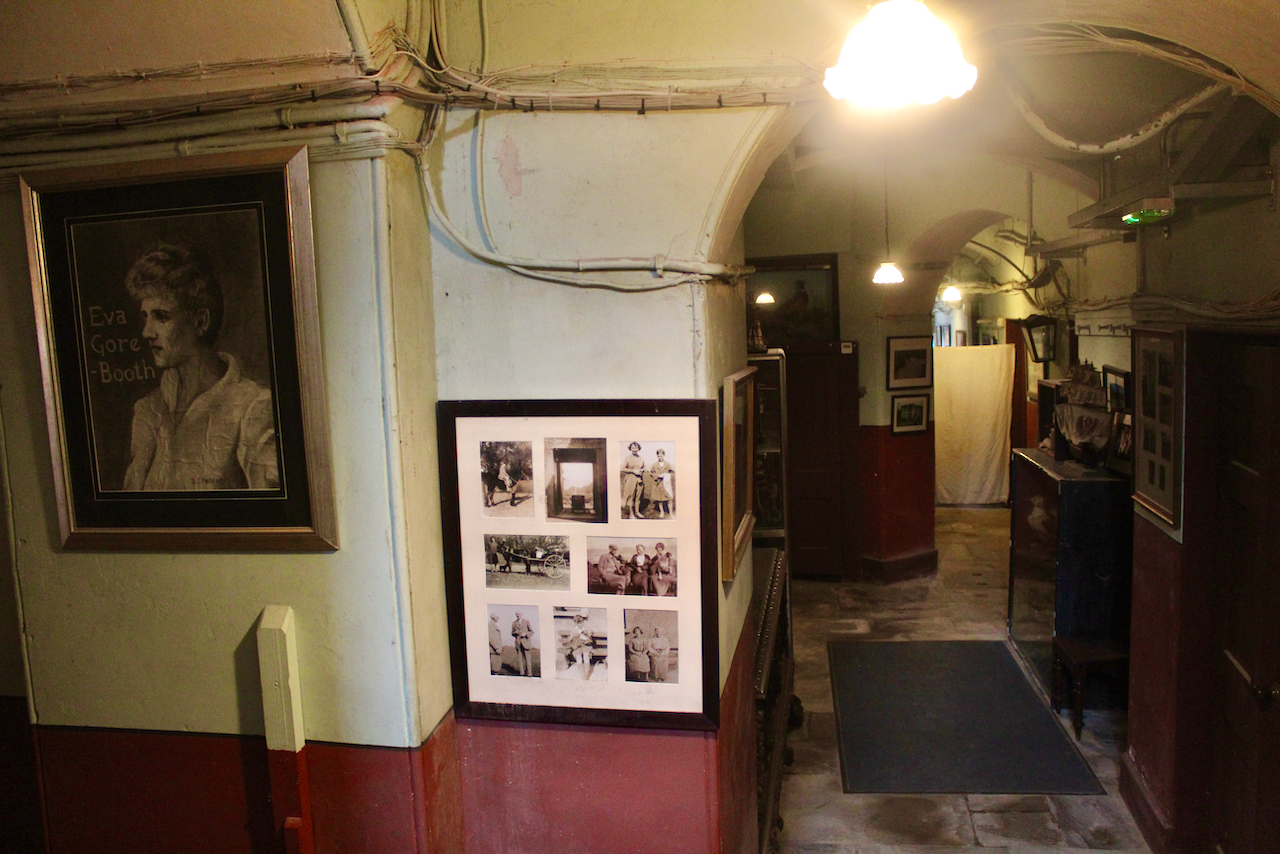
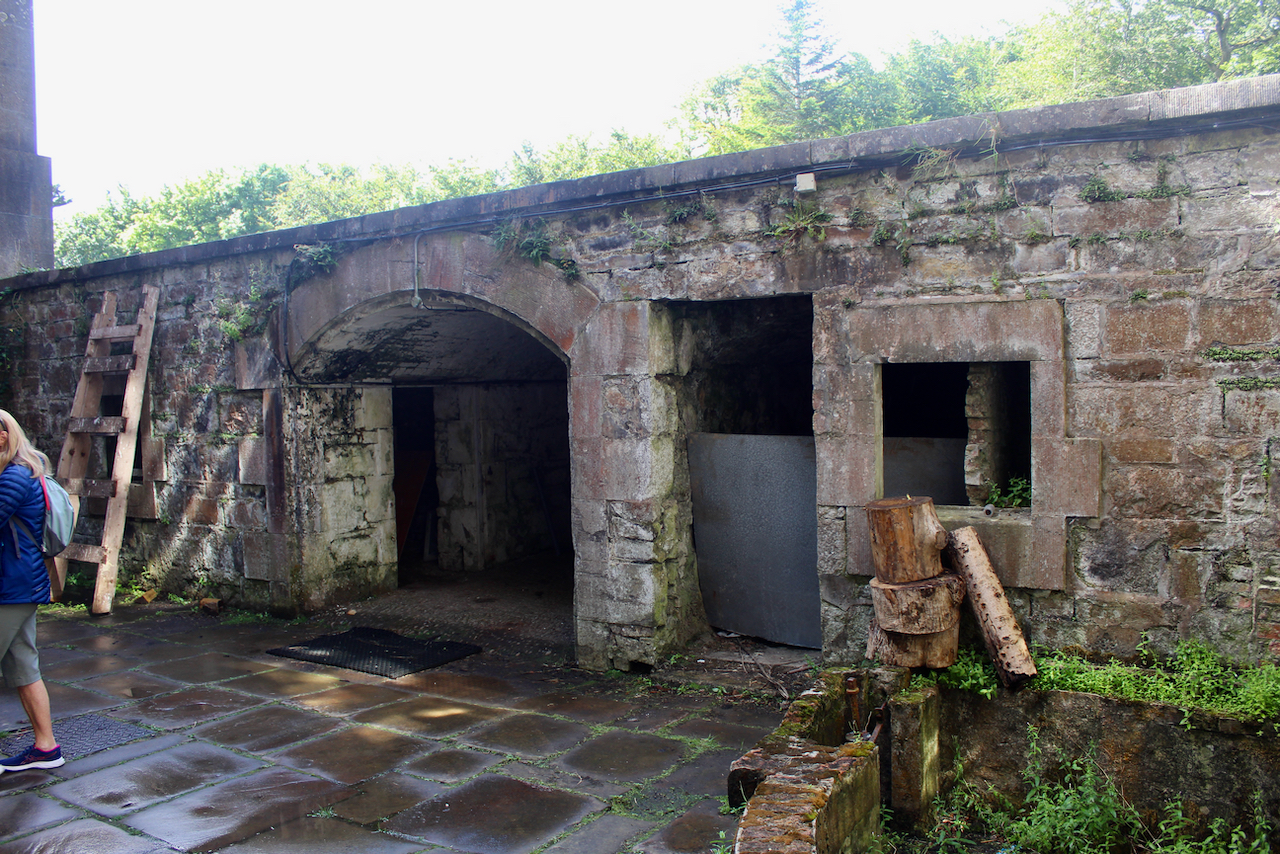
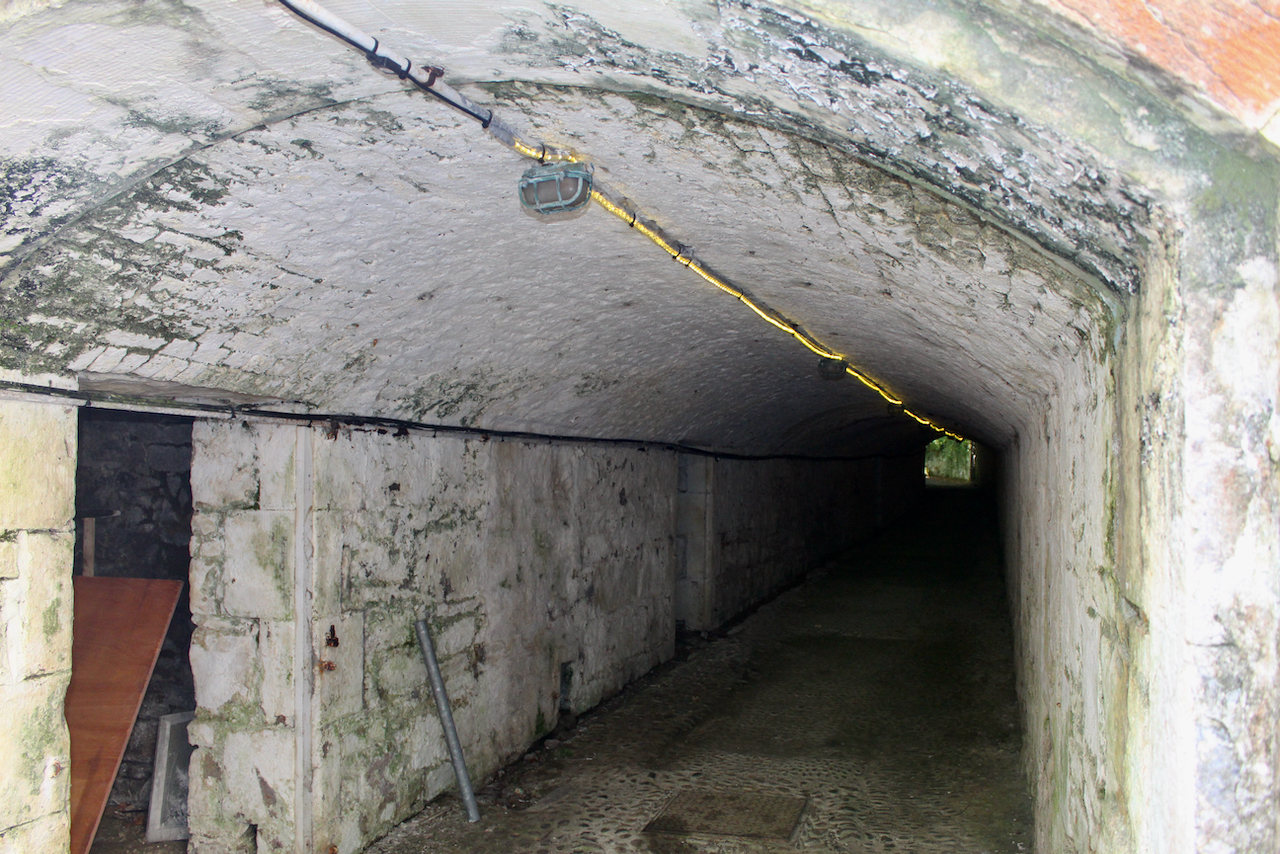
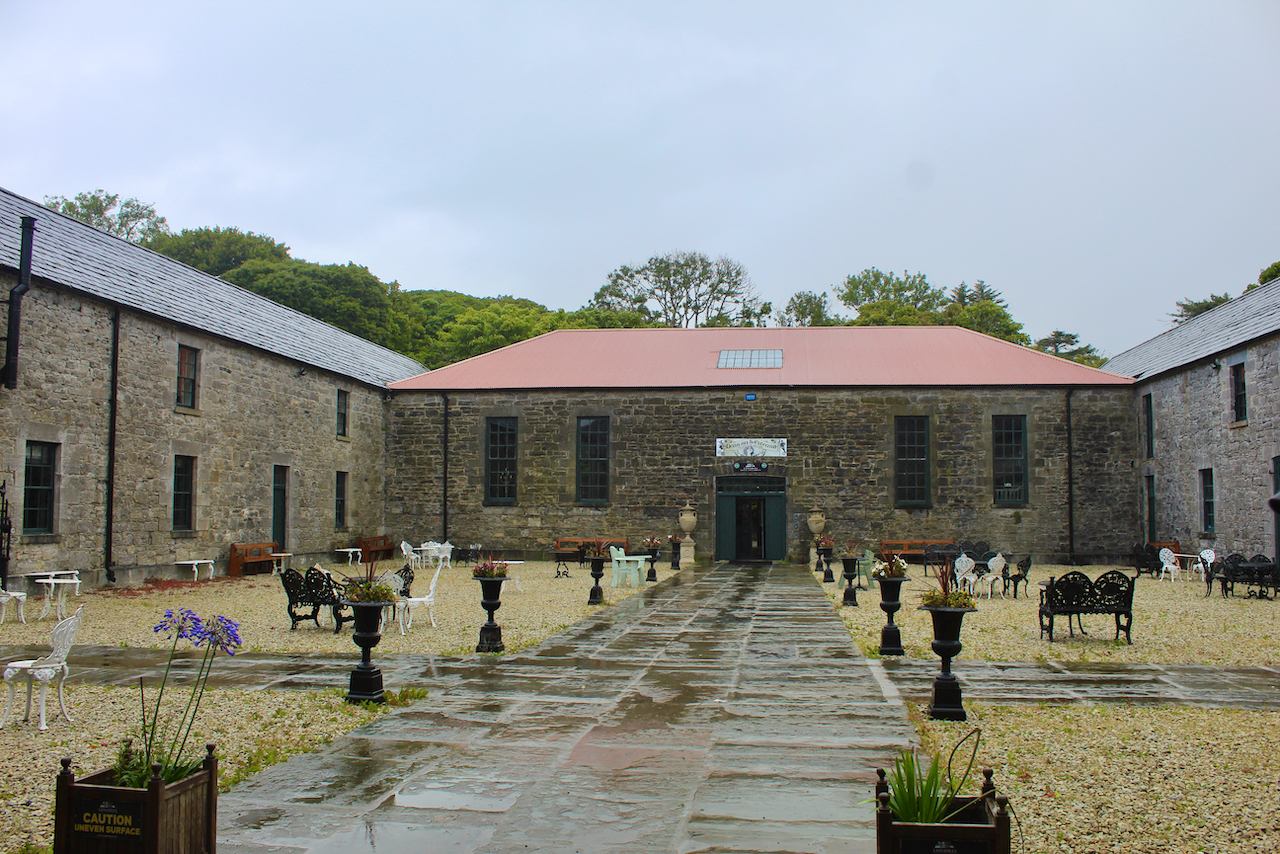
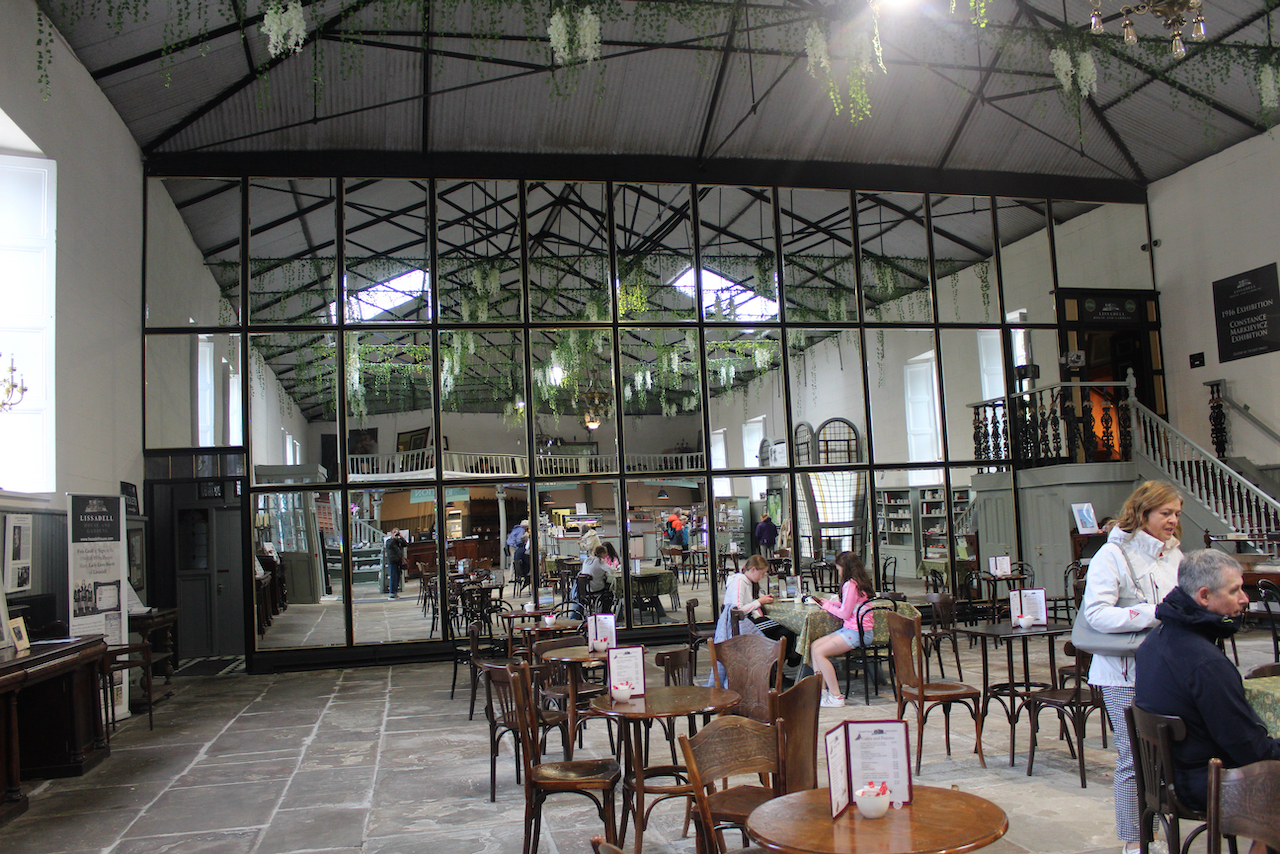
The long tunnel provides access to a sunken courtyard and the coach house and stable block, which was one of the largest in Ireland. This limestone complex of stables, tack rooms, grain stores and rooms once for staff and guests is now almost completely restored. Today it houses tea rooms, a gallery for exhibitions and lecture rooms.
In the 20th century the family fortunes took a turn for the worse. Constance and Eva died in their 50s. Constance died in 1927 and Eva in 1926.
In June 1927 Constance fell seriously ill. She was admitted to a public ward in Sir Patrick Dun’s hospital (at her own insistence). She had peritonitis, and although she had surgery, it was too late. Constance Markievicz died at 1:25 a.m. on the morning of 15th July, 1927. She was attended by her husband, Casimir. Her brother, Sir Josslyn Gore Booth, had received daily bulletins from the Matron, and immediately arranged to attend the funeral in Dublin.
Lissadell, 2022.
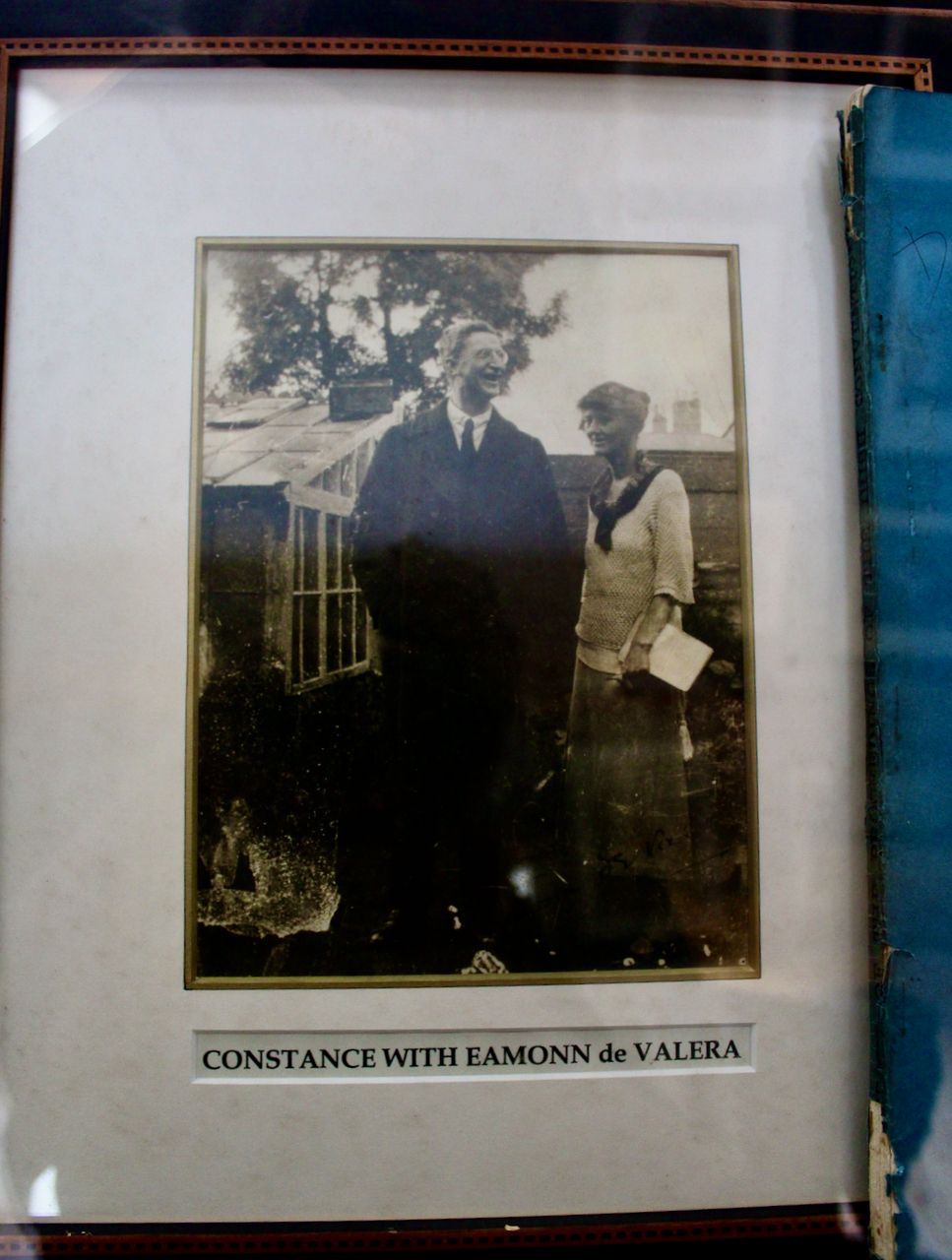
Her brother Josslyn would have preferred a private, family funeral, but this was not to be. In death Constance Markievicz was even more openly appreciated and acclaimed than in life. Three hundred thousand people attended the funeral to pay tribute to “the friend of the toiler, the lover of the poor”, the words of Eamon de Valera, who delivered the funeral oration, and with whom she had founded the Fianna Fáil Party.
Lissadell, 2022.
Two of Josslyn’s sons, Hugh and Brian, were killed in WWII. Hugh, the younger brother, studied estate management in England to run the estate. Brian joined the Navy. The third son, Michael, suffered from mental illness that made him incapable of running the family estate. Josslyn was still alive at this stage, and his four daughters continued to live on the estate – three of them never married. When their father died in 1944, the government assumed responsibility for the administration of the estate when Sir Josslyn’s eldest son was made a ward of the court after a nervous breakdown. Gabrielle took over the responsibility of running the estate at the age of just 26. [8] There was a youngest son also, Angus Josslyn, who succeeded as 8th Baronet. When Gabrielle died, Aideen took over the estate. For decades, the family struggled to maintain the house and the gardens became neglected and overgrown.
The family migrated to live in the bow-room and a small suite of rooms behind when the family of Gore-Booth siblings were living in near poverty in the 1960s and 70s, when the remainder of the house was uninhabited.
During this time the estate went into sharp decline, resulting in the felling of much fine woodland and the compulsory sale in 1968 of 2,600 acres by the Land Commission, leaving only 400 acres around the house.
Terence Reeves-Smyth tells us in Irish Big Houses: “The Lissadell estate had fallen into decline after the death of Josslyn Gore Booth in 1944. Indeed, writing about Lissadell for the Sunday Times around forty years ago, the BBC’s Anne Robinson observed that “the garden is overgrown, the greenhouses are shattered and empty, the stables beyond repair, the roof of the main block leaks badly and the paintings show patches of mildew.” It also featured in the documentary “The Raj in the Rain.”
In 2003 Lissadell was put on the market by the 9th Baronet, Josslyn Henry Robert Gore-Booth (b. 1950), son of Angus the 8th Baronet. You can listen to his memories of Lissadell online, part of the Irish Life and Lore series. [9] It was purchased by Edward Walsh and his wife Constance Cassidy, to become home for them and their seven children.
In the Image publication Great Irish Houses we are told that Edward and his wife Constance commissioned David Clarke, an architect with Moloney O’Beirne, to prepare a conservation plan and restoration of the house began in 2004. Assistance and expert advice was received from Laurence Manogue, a consultant to Sligo County Council. [10]
Lissadell, 2022.Lissadell, 2022.
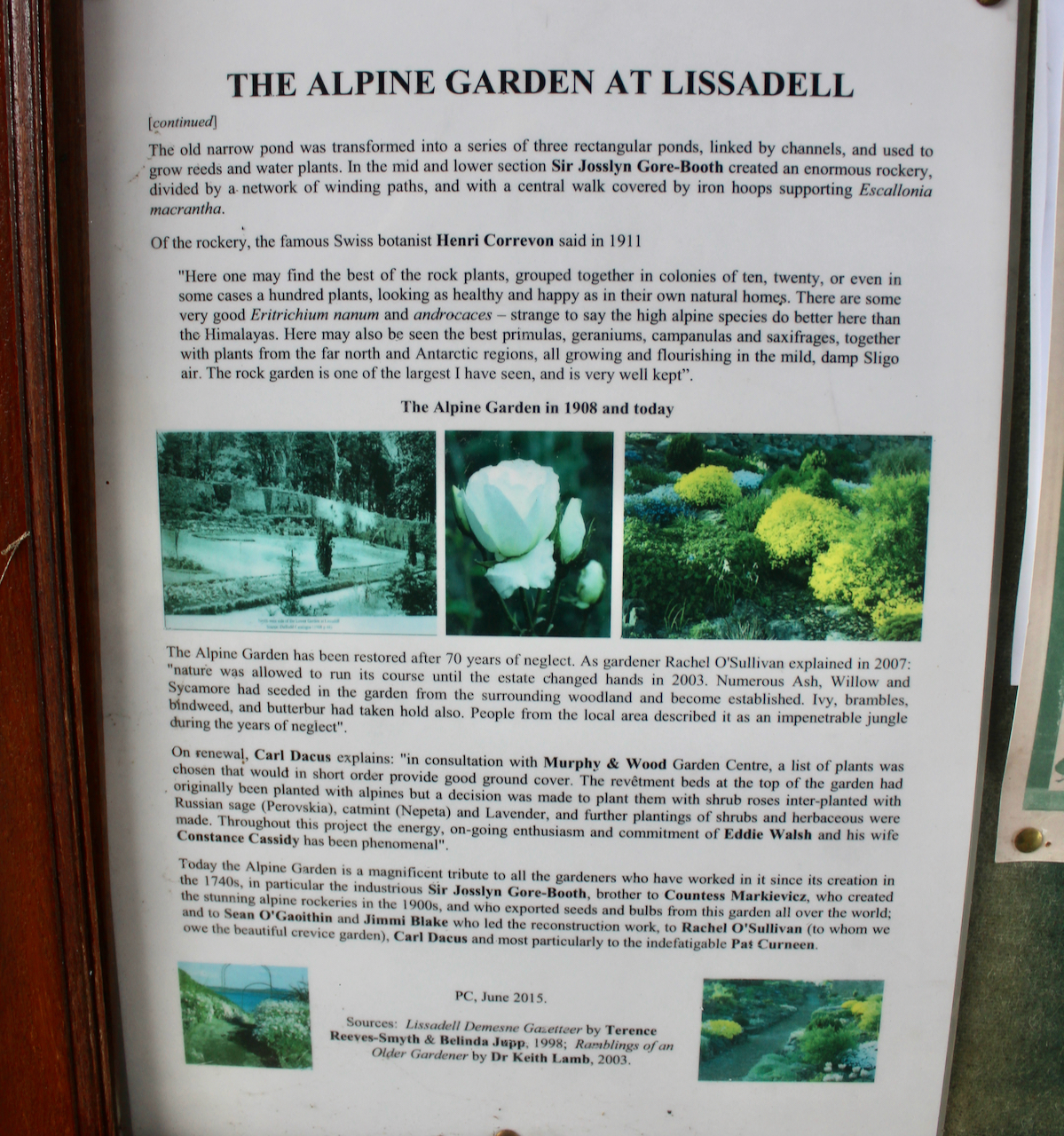
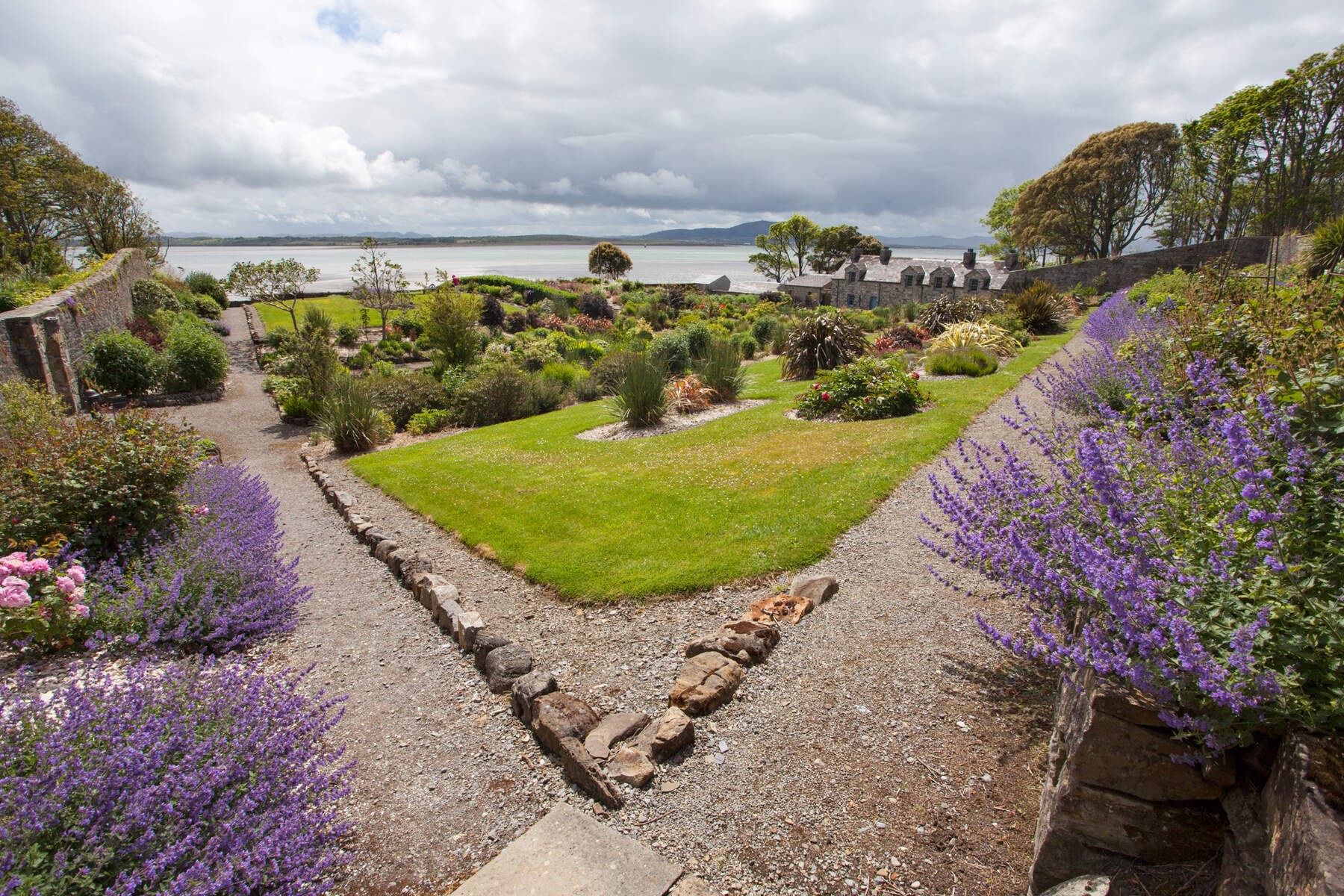
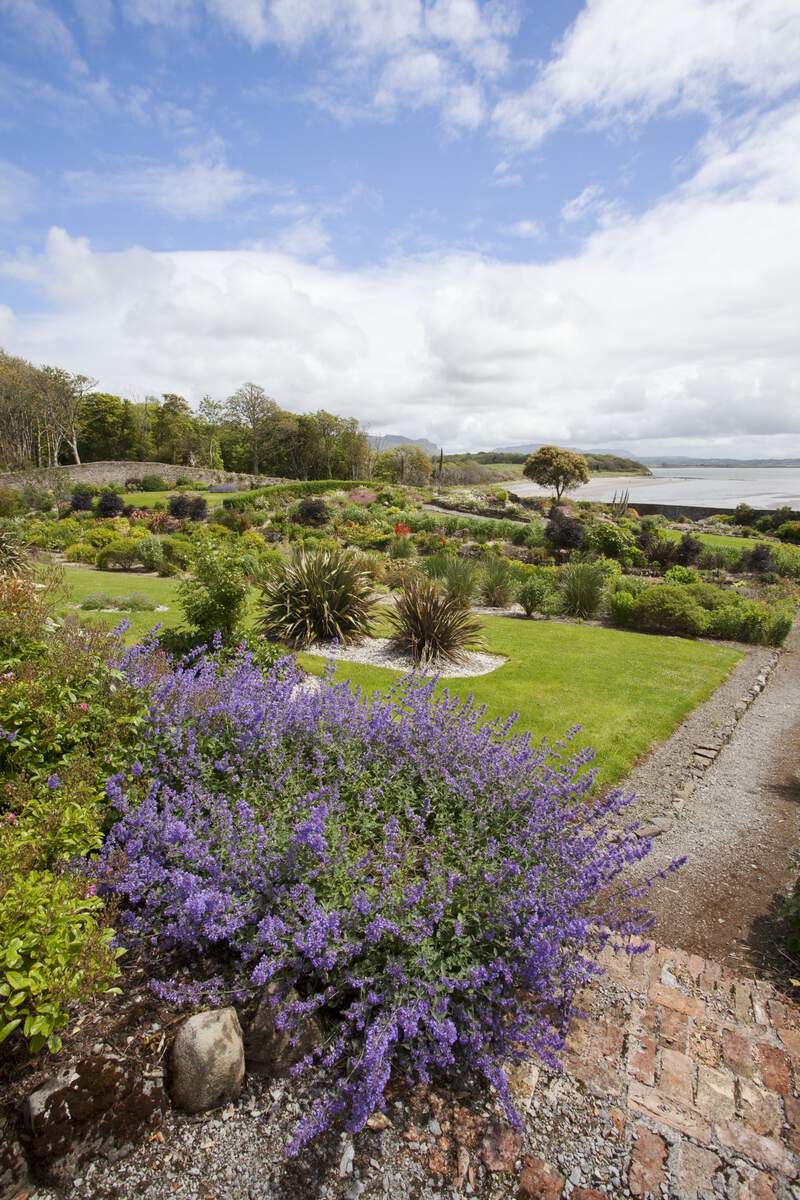
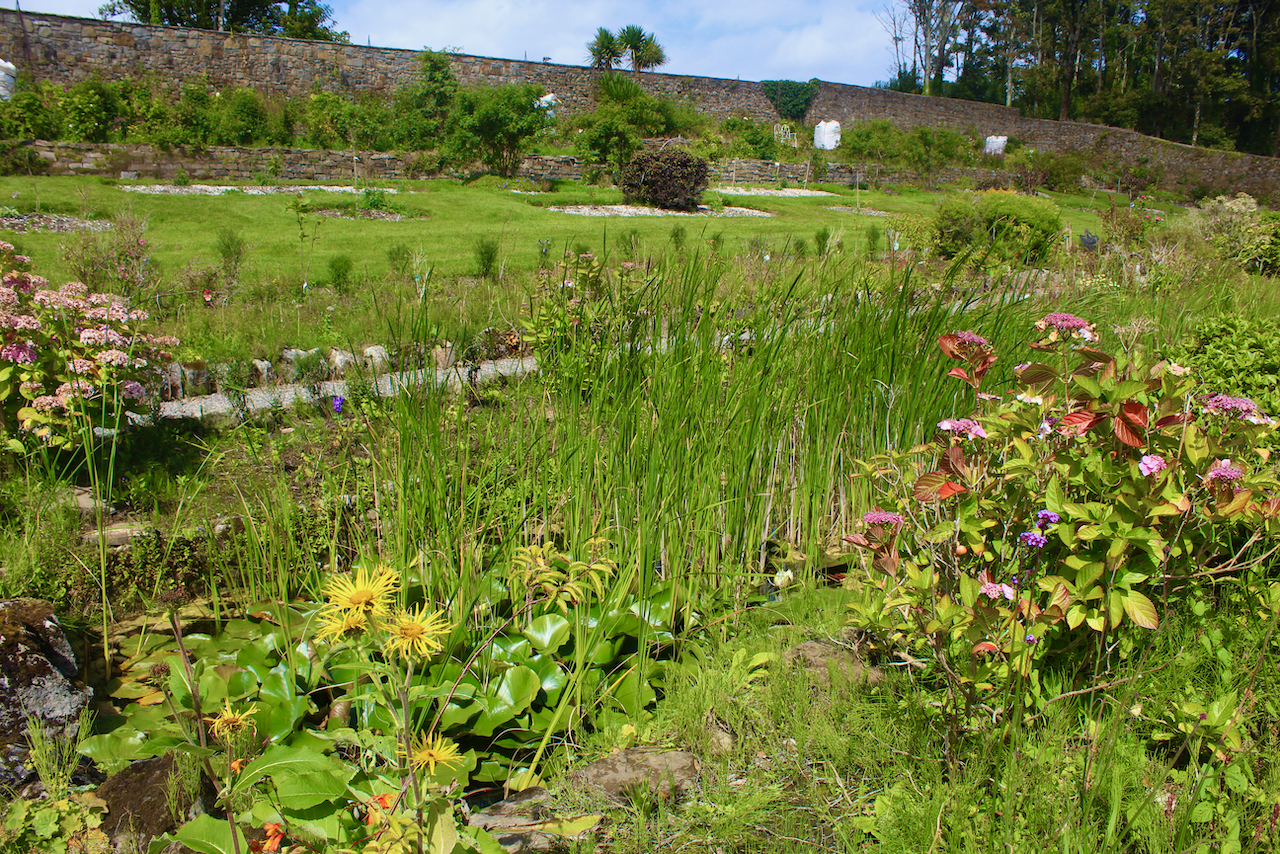
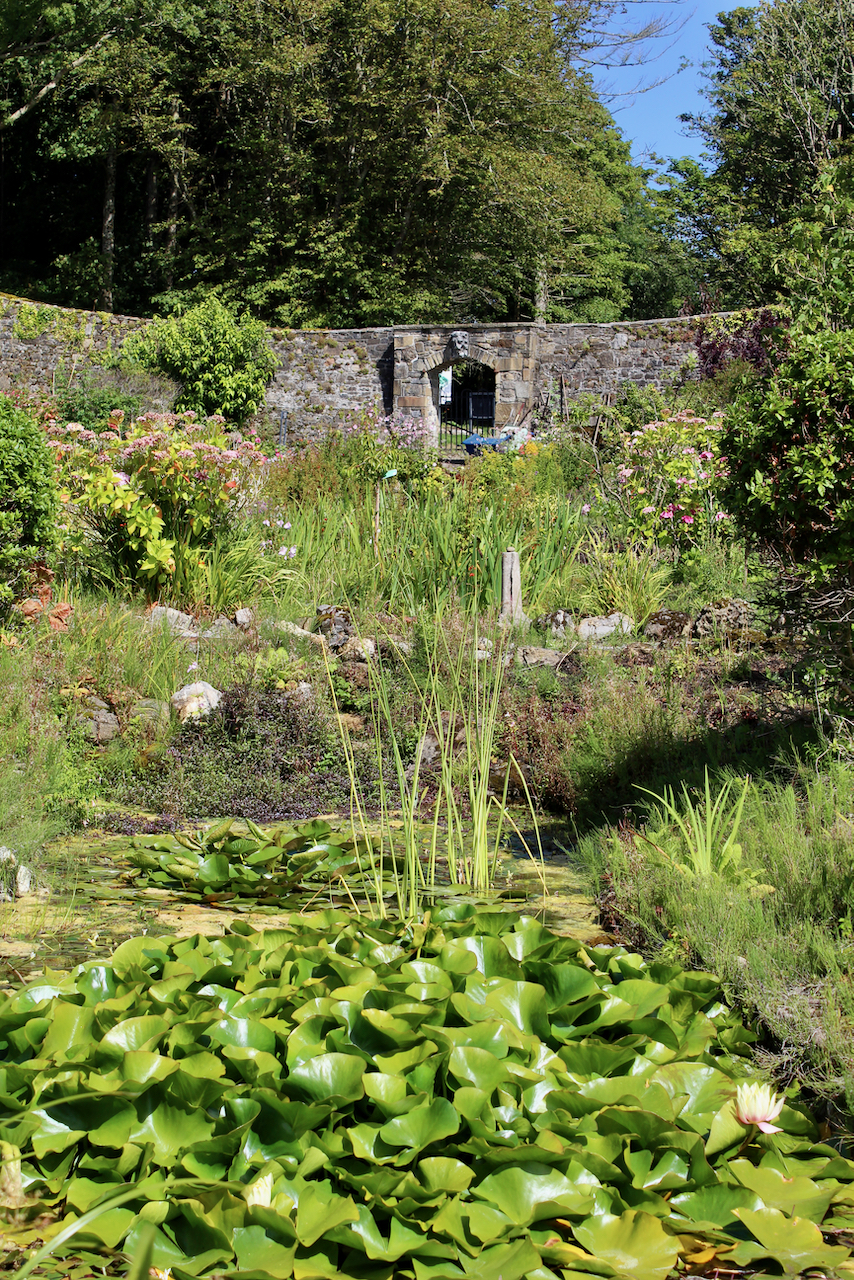
The Image publications book tells us that there has been a great focus on the gardens, with regeneration of the flower and pleasure gardens. The alpine nurseries with its “revetment walls” (limestone and sandstone), terraces, and ornamental ponds had been neglected for half a century. Now the gardens are cleared and the orchards and two-acre kitchen garden have been reseeded. The plan, in many ways, is to resurrect the horticultural enterprise of Henry and Josslyn Gore Booth. Thirty-eight of an original seventy-eight daffodil narcissus cultivars developed by Sir Josslyn are now back in the ground at Lissadell.
This collection includes Patrick Annesley b. 1943 speaking about Annes Grove in County Cork; Valerie Beamish-Cooper b. 1934; Bryan and Rosemarie Bellew of Barmeath Castle County Louth; Charles and Mary Cooper about Markree Castle in Sligo; Leslie Fennell about Burtown in Kildare; Maurice Fitzgerald 9th Duke of Leinster and Kilkea Castle, County Kildare; Christopher and Julian Gaisford St. Lawrence and Howth Castle; George Gossip and Ballinderry Park; Nicholas Grubb and Dromana, County Waterford, into which he married, and Castle Grace, County Tipperary, where he grew up; Caroline Hannick née Aldridge of Mount Falcon; Mark Healy-Hutchinson of Knocklofty, County Tipperary; Michael Healy-Hutchinson, Earl of Donoughmore, son of Anita Leslie of Castle Leslie; Susan Kellett of Enniscoe; Nicholas and Rosemary MacGillycuddy of Flesk Castle, County Kerry and Aghadoe Heights; Harry McCalmont of Mount Juliet, County Kilkenny; Nicholas Nicolson of Balrath Estate; Durcan O’Hara of Annaghmore, County Sligo; Sandy Perceval of Temple House, County Sligo; Myles Ponsonby, Earl of Bessborough; Benjamin and Jessica Bunbury of Lisnavagh, County Carlow; Philip Scott of Barnfield House, Gortaskibbole, Co. Mayo; George Stacpoole of Edenvale House, Co. Clare; Christopher Taylour, Marquess of Headfort; Richard Wentges of Lisnabin Castle and Philip Wingfield of Salterbridge, County Waterford.
[10] p. 218, Image publications.
[11] Lissadell features in Irish Castles and Historic Houses. ed. by Brendan O’Neill, intro. by James Stevens Curl. Caxton Editions, London, 2002.
Featured in Mark Bence Jones, Life in an Irish Country House. Constable, London. 1996.
Featured in Irish Country Houses, Portraits and Painters. David Hicks. The Collins Press, Cork, 2014.
Featured in Irish Big Houses by Terence Reeves-Smyth
Open in 2026: Mar 2-6, 9-13, 16-20, 23-27, 9am – 2pm, May 3, 10, 17, 24, 10am – 5pm, Aug 15-24, 1pm – 5pm, Sept 1 – 30, excluding Saturdays, 1 pm-5pm,
Fee: adult €10, OAP/student/child €5, family €30 Concession: groups of 10 €70
donation
Help me to pay the entrance fee to one of the houses on this website. This site is created purely out of love for the subject and I receive no payment so any donation is appreciated!
We visited Mount Trenchard during Heritage Week 2022. The owner is in touch with the original occupants of the house, the Spring Rice family, and they visited several times.
The Landed estates database tells us:
“Lewis described this mansion formerly called Cappa as “beautifully situated on the banks of the Shannon”. Marked as “Cappo” on the Taylor and Skinner map of the 1770s. Home of the Rice/Spring Rice family in the 19th century, valued at £40 in the 1850s and at £54 in 1906. Occupied by the Military in 1944, sold to Lady Holland in 1947 and to the Sisters of Mercy in 1953 who opened a school.” [1]
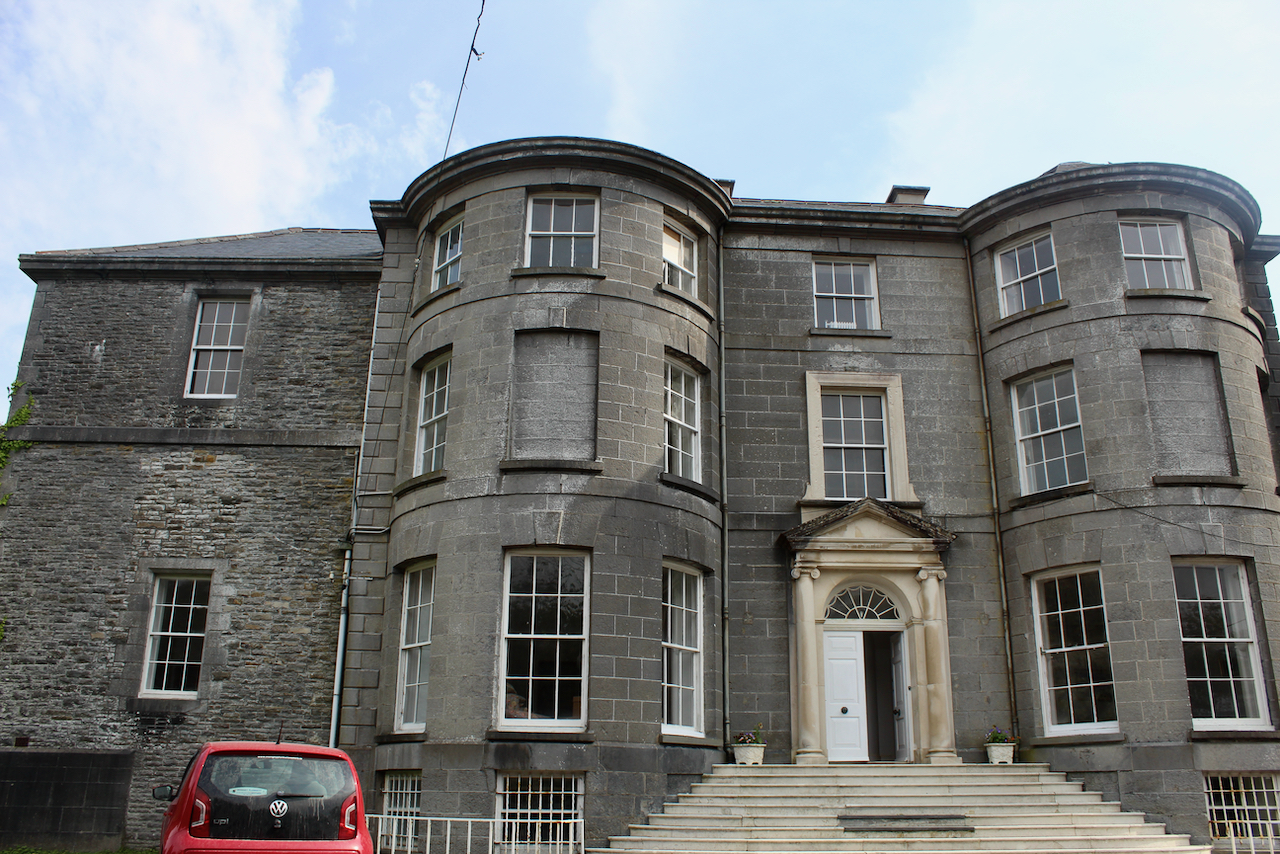
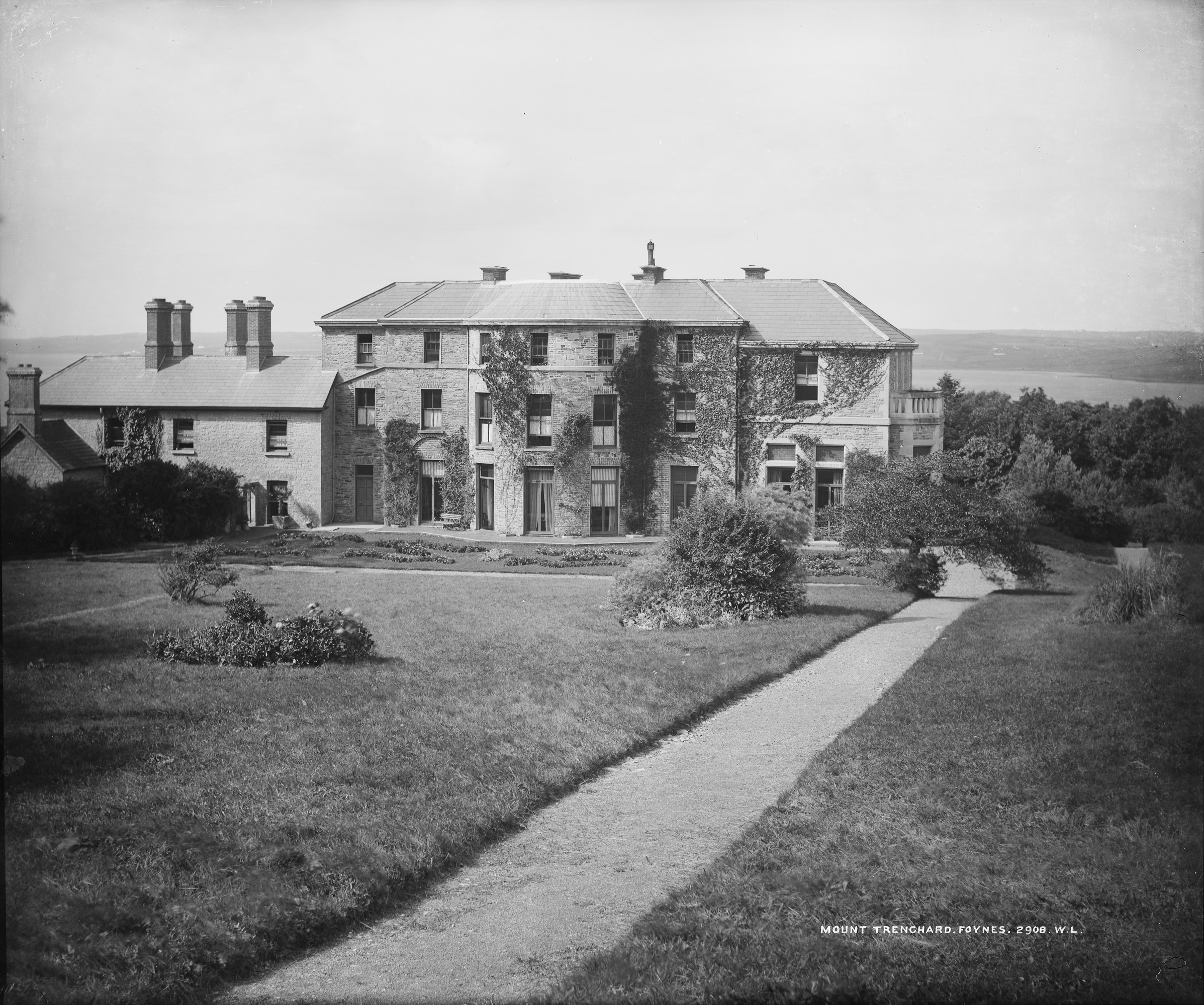
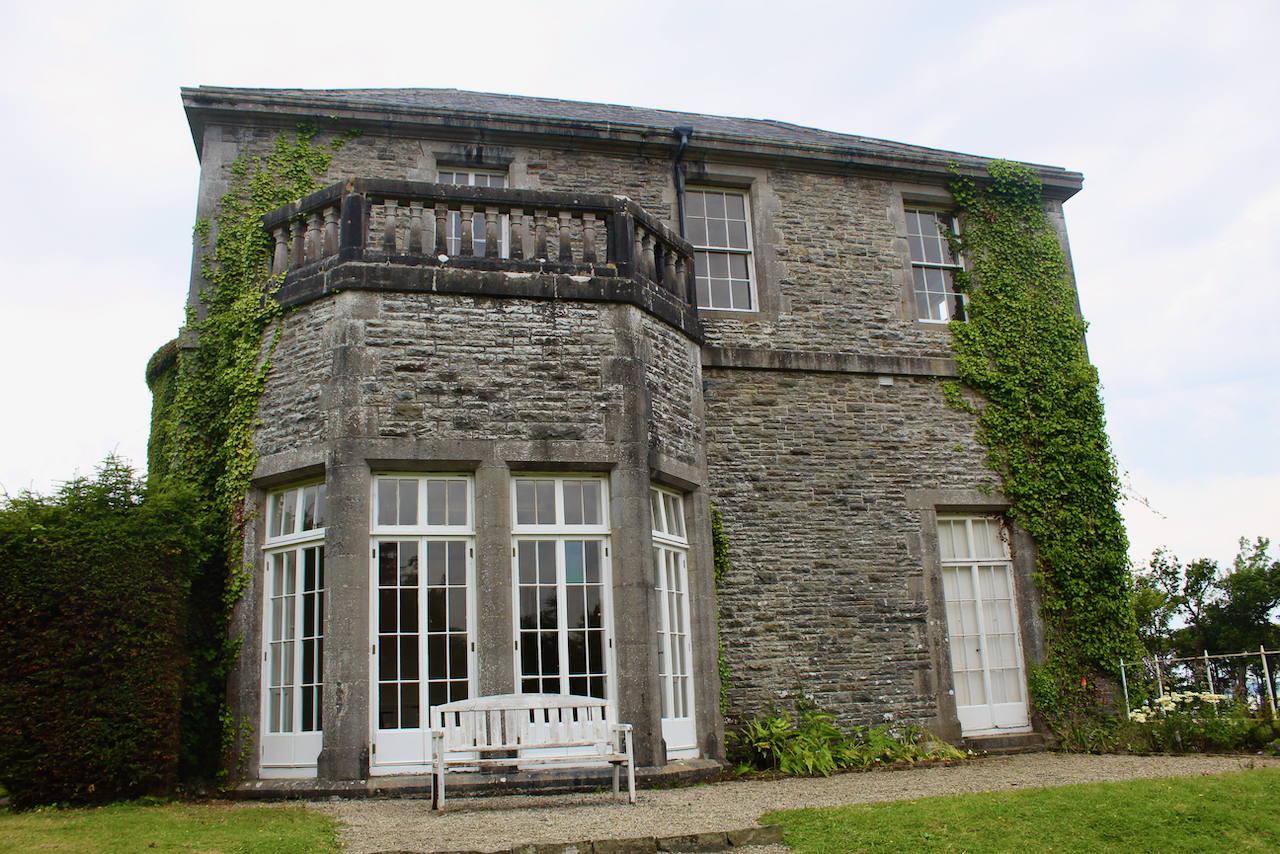
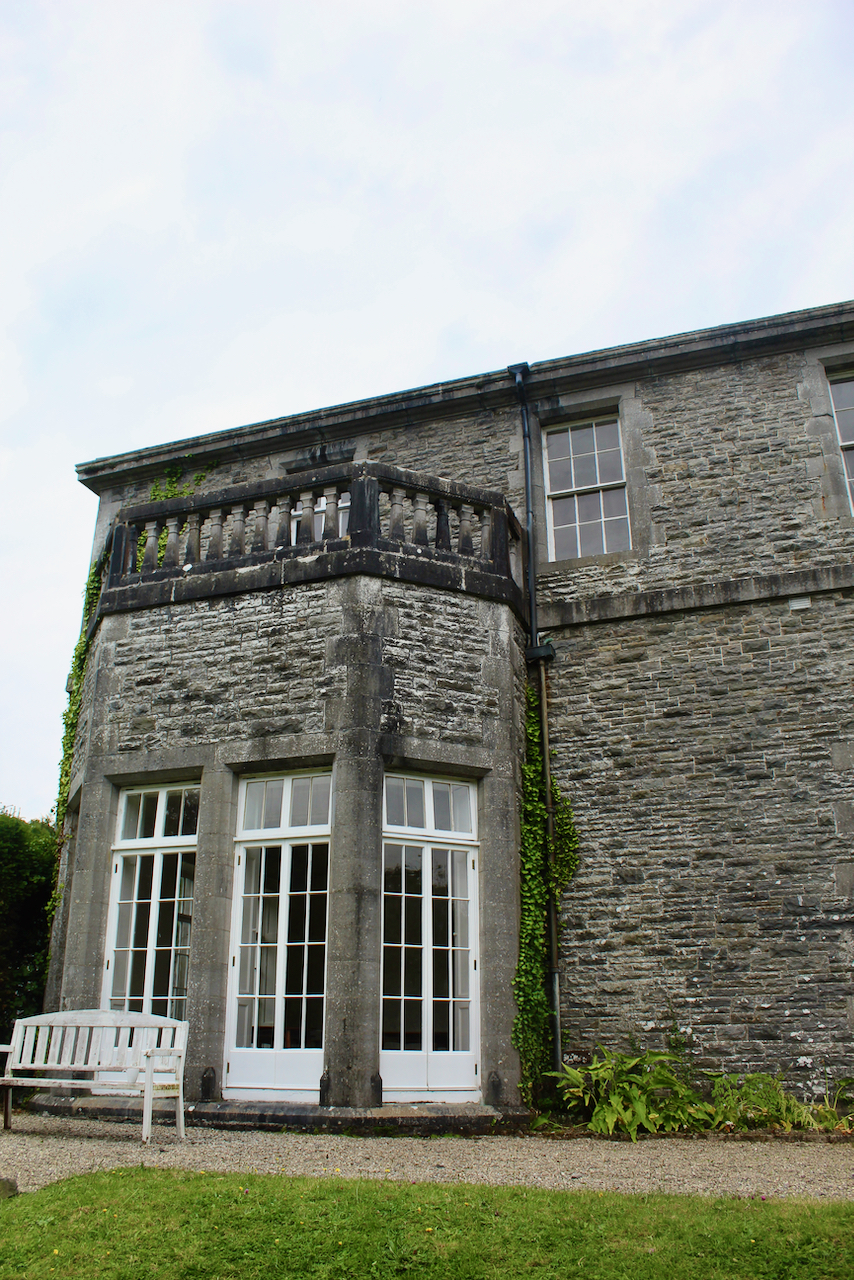
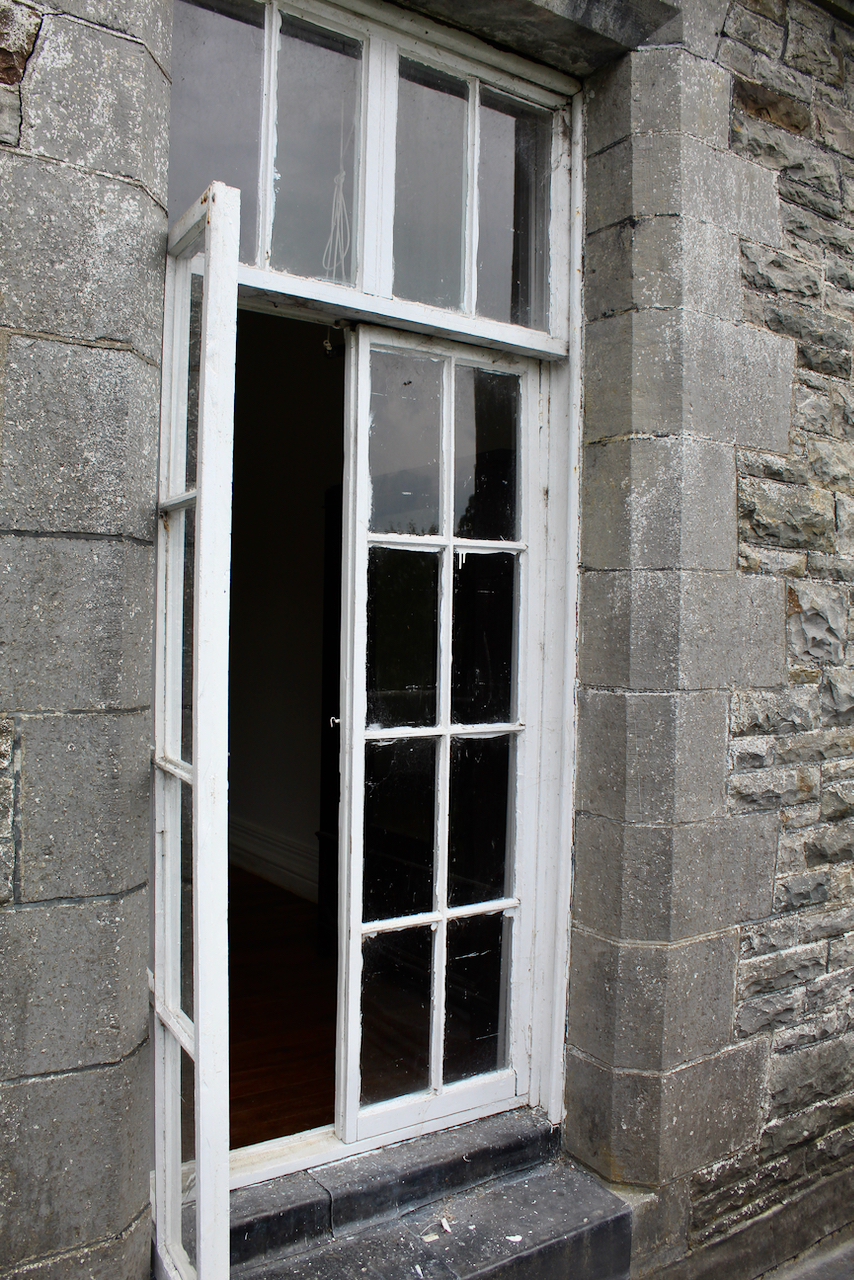
The National Inventory tells us that the house was built in 1777, and it was originally a three bay three storey over basement house. [2] It has two bays in front, with an entrance door in a later added doorcase of Ionic pillars and a pediment, and a similar window case above. The door is surmounted by a fanlight. The centre window of each bow on the second storey is blocked up. The facade is of limestone, with cut cut limestone platbands to dividing storeys.
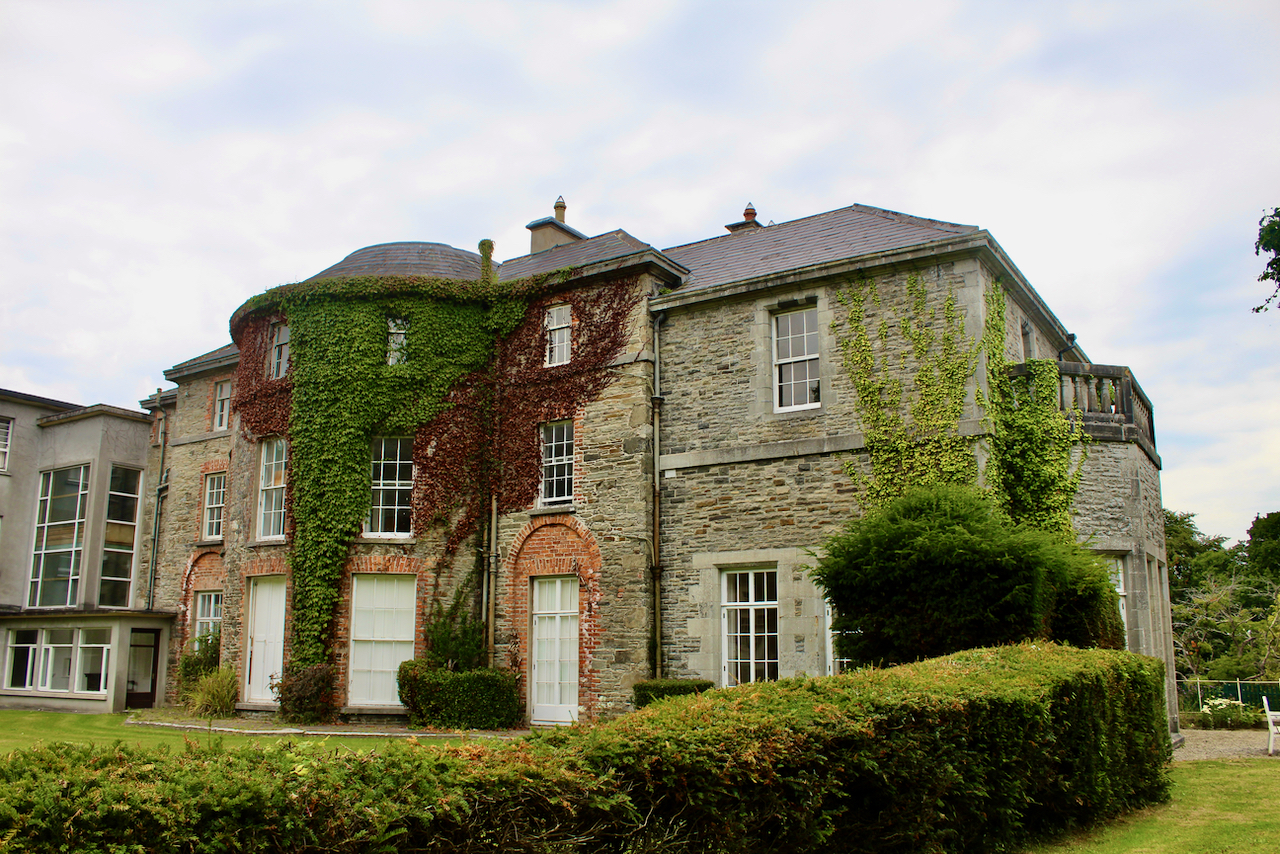
Mark Bence-Jones tells us in his A Guide to Irish Country Houses (1988) that there are Victorian additions either side of the main block and that the front entrance doorcase was a later addition. [3]
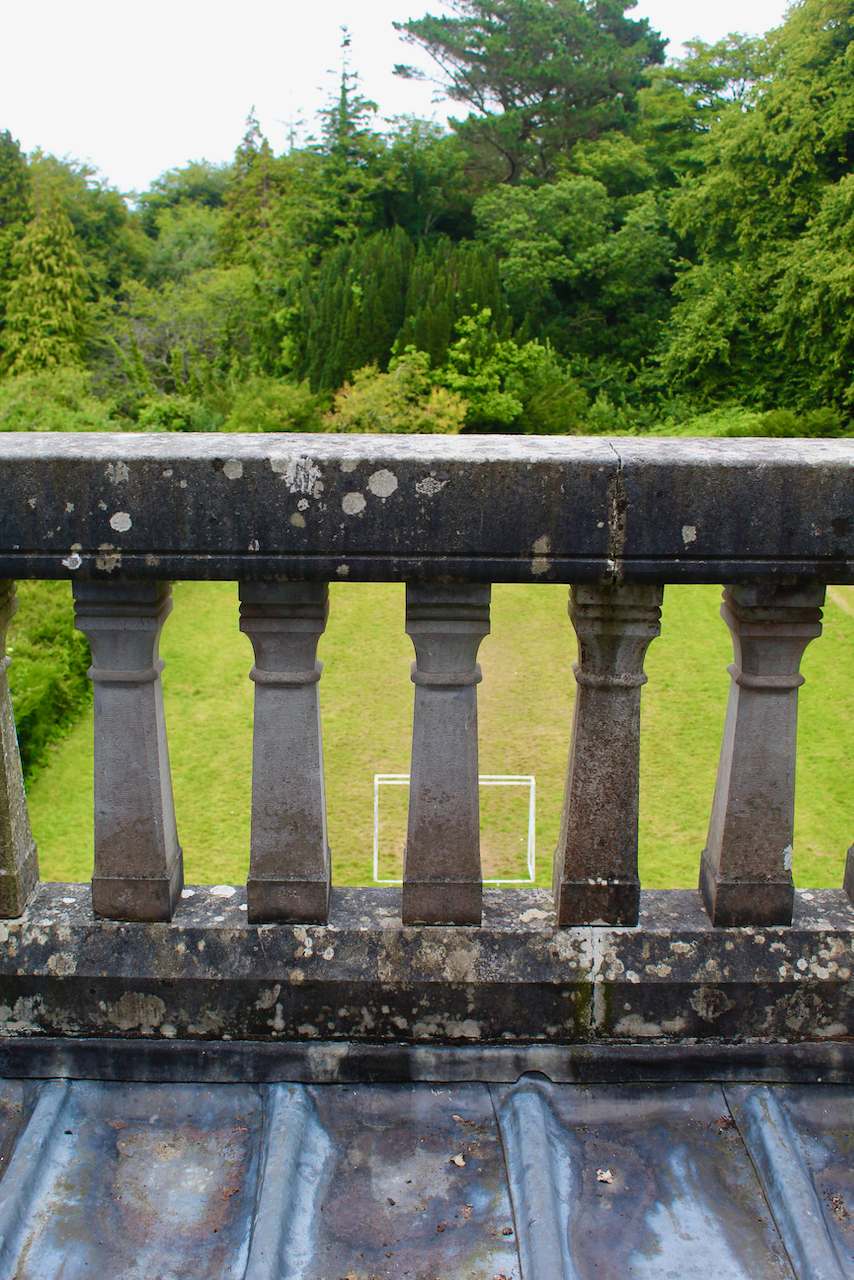
When we were inside the house we were able to go out onto the stone balustraded balcony that is on top of this addition. It gives a lovely view over the gardens.
The estate was initially granted to Frances Trenchard on 20 June 1612 by a charter of King James I. He built a house there. The property was later owned by the Rice family.
Stephen Rice (1637-1715), Chief Baron of the Irish Exchequer, and a supporter of James II, wedded Mary, daughter of Thomas FitzGerald, of County Limerick. Stephen Rice came from Dingle, County Kerry and was Catholic. He was a lawyer and had many landholders as his clients, including several from County Limerick. After the battle of the Boyne (1 July 1690), Rice accompanied King James II to France, although he was soon back in Ireland, in January 1691. [4] I am not sure when the property passed from Trenchard to Rice hands.
The Dictionary of Irish Biography tells us that an incomplete patent conferring the title of Baron Monteagle on Rice was allegedly found among the papers of James II after the battle of the Boyne. The title was revived in September 1839 and granted to Thomas Spring Rice (1790–1866) of Mount Trenchard, Co. Limerick, who became Baron Monteagle of Brandon.
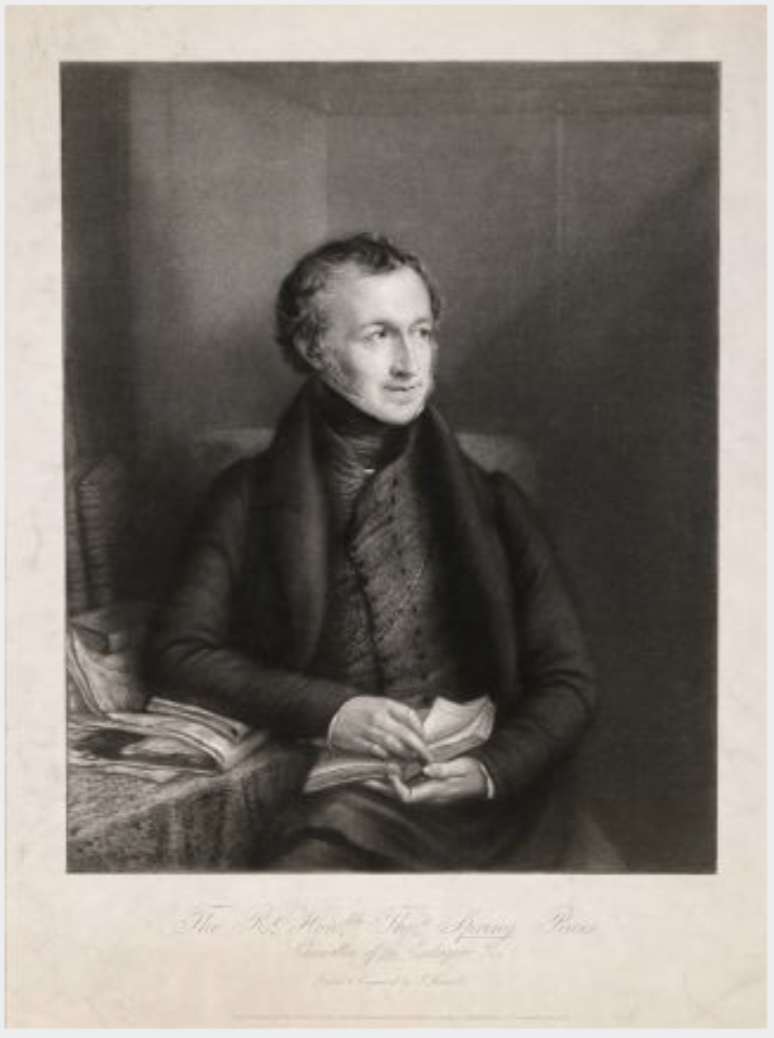
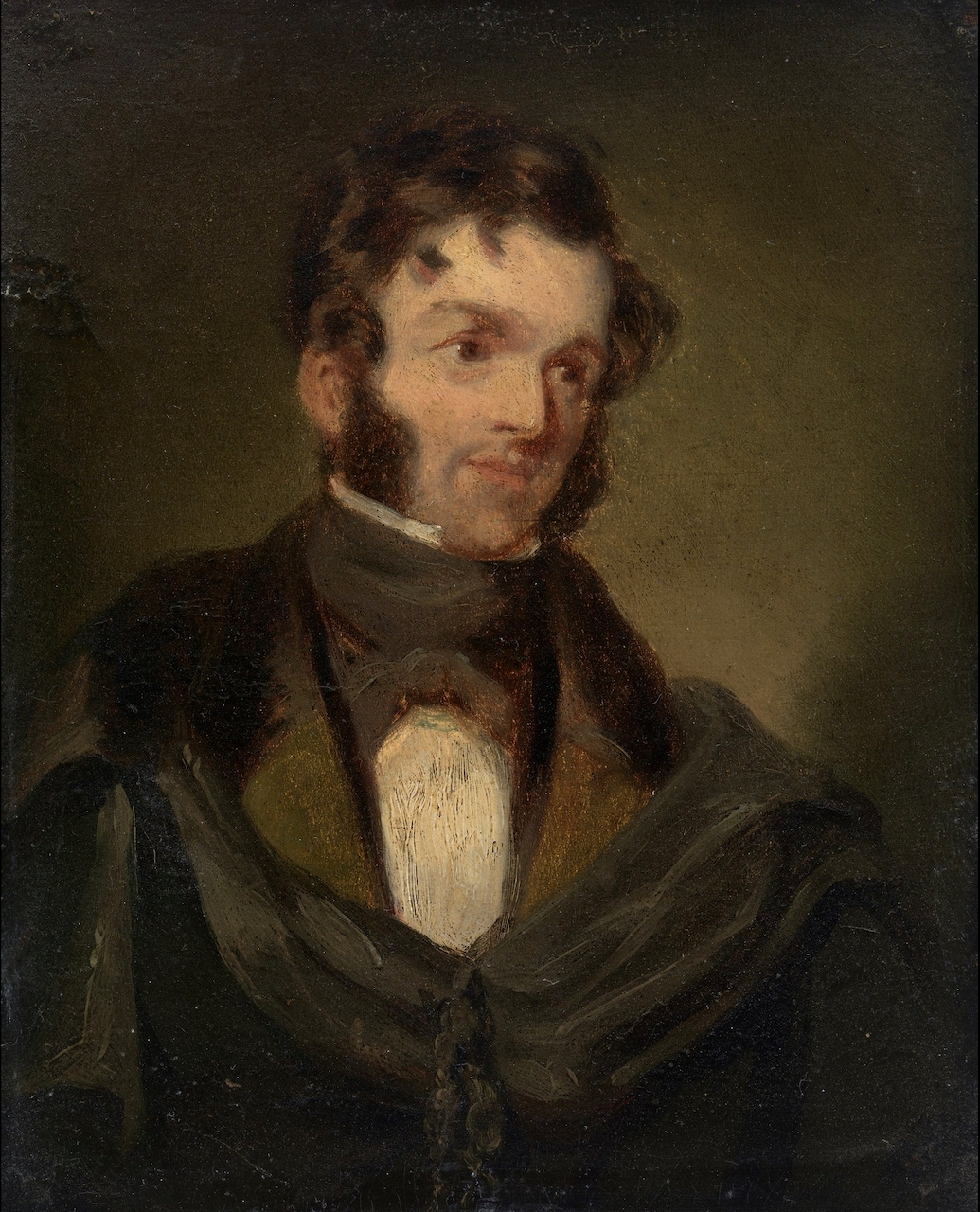
Portrait of Thomas Spring Rice, MP (1790-1866), Chancellor of the Exchequer, later 1st Baron Monteagle, courtesy of National Gallery of Ireland.
It was Stephen’s son, Thomas, who had Mount Trenchard built much as we see it today, in 1777. Thomas married another Mary Fitzgerald, this one was daughter of Maurice the 14th Knight of Kerry. Thomas was also a lawyer. They had a son, Stephen Edward Rice (d. 1831). He married, in 1785, Catherine, only child and heiress of Thomas Spring, of Castlemaine, County Kerry.
Stephen Edward and Catherine Rice had a daughter Mary who married Aubrey De Vere, 2nd Baronet of Curragh Chase, Co. Limerick. [5]
Their son was Thomas Spring-Rice (1790-1866). He married in 1811 the Lady Theodosia Pery, second daughter of Edmund, 1st Earl of Limerick. She brought with her a large dowry. Thomas Spring-Rice was Member of Parliament (M.P.) (Whig) for Limerick between 1820 and 1832, and served in many positions in government, including Chancellor of the Exchequer between 1835 and 1839.
As well as his property in County Limerick, he had property in London, Dublin and Kildare.
Thomas Spring-Rice actively sought to improve the welfare of tenants and of the underprivileged. He led an inquiry into the alleged ill-treatment of inmates in Limerick Lunatic Asylum. He also advocated the end of slavery. He also brought improvements to Limerick, such as having a new bridge built over the River Shannon. He was a supporter of Catholic Emancipation. There is a statue of him Pery Square in Limerick, which looks down on the People’s Park, which was erected due to gratitude for his work toward Catholic Emancipation.
He lost his seat in 1832 but was returned for a seat in Cambridge, so he sat in Parliament in England. Although he supported Catholic emancipation didn’t support repeal of the Act of Union, which disappointed many of his supporters. The Dictionary of Irish Biography tells us that he referred to himself as a West Briton, and may have coined this phrase.
Thomas was elevated to the peerage in 1839 to become 1st Baron Monteagle of Brandon, County Kerry. The Dictionary of Irish Biography gives us a good summary of his subsequent views:
“With his removal to the lords, Monteagle took little part in public life till roused by the famine. An improving, paternalistic landlord, during the crisis years he was characterised by his concern for his tenants, energetic attempts to influence policy, and a mounting bitterness towards the government. His correspondence with the treasury and board of works is of considerable value in helping to elucidate the official government position. His letters and speeches in the lords were studded with rhetorical invective against Britain’s long mistreatment of Ireland. Holding landlords to be as much victims of British mismanagement as tenants, he rejected forcibly any claim that they should be held responsible and continually advocated state intervention, though he felt it should not be limited to road works, but extended to agricultural improvements. He did not accept fixity of tenure, since he felt Irish peasants too prone to subletting. His own experience as a landlord bore this out and he considered overcrowding as the principal evil of Irish agriculture. A strong advocate of state-assisted emigration, he was successful in bringing the lord lieutenant, Lord Clarendon, over to his viewpoint, but not the government as a whole. He personally assisted numerous tenants to emigrate and then acted as mediator between them and their families still on his estate.” [6]
Mount Trenchard, 2022.Mount Trenchard, County Limerick, August 2022.
Thomas Rice Spring’s son Stephen died tragically at sea in 1865, and thus a grandson, Thomas (1849-1926) inherited the family property and the title to become 2nd Baron Monteagle in 1866.
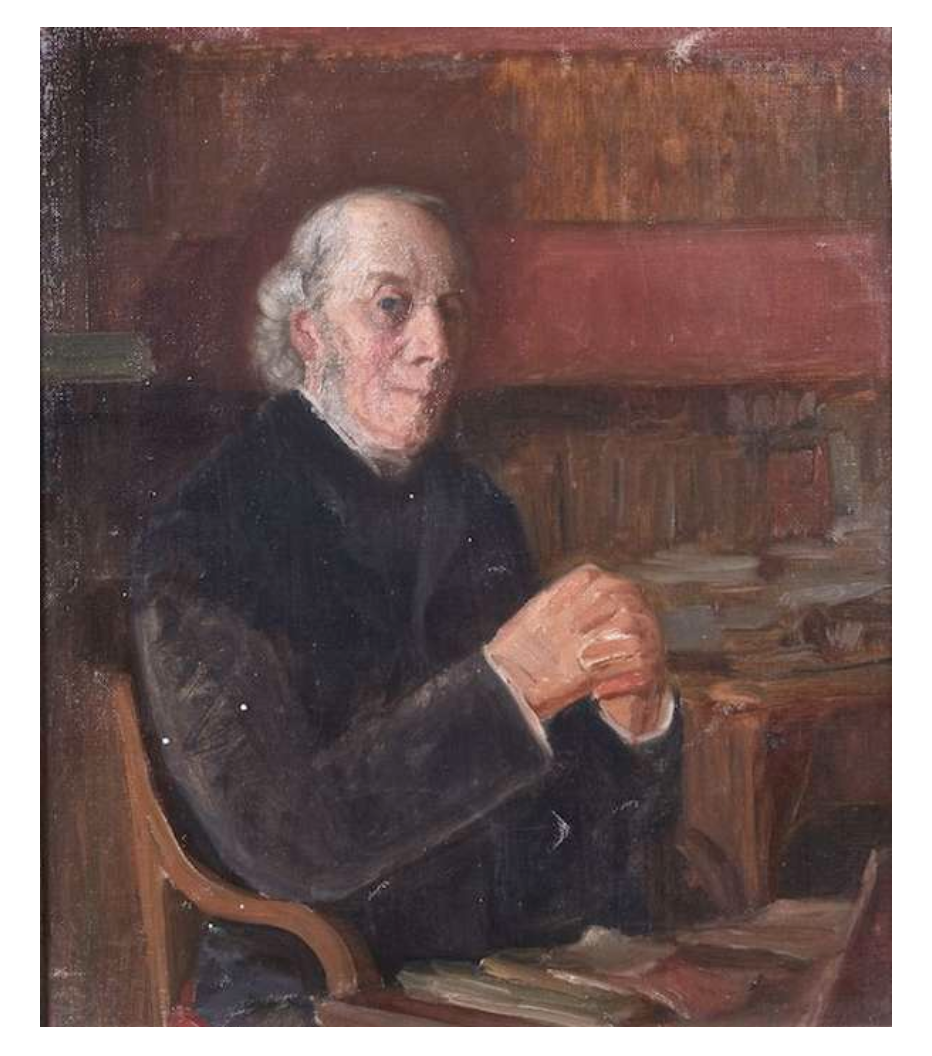
Portrait of Thomas Spring Rice (1849-1926), 2nd Baron Monteagle, by Charles Wellington Fursecourtesy of National Gallery of Ireland.
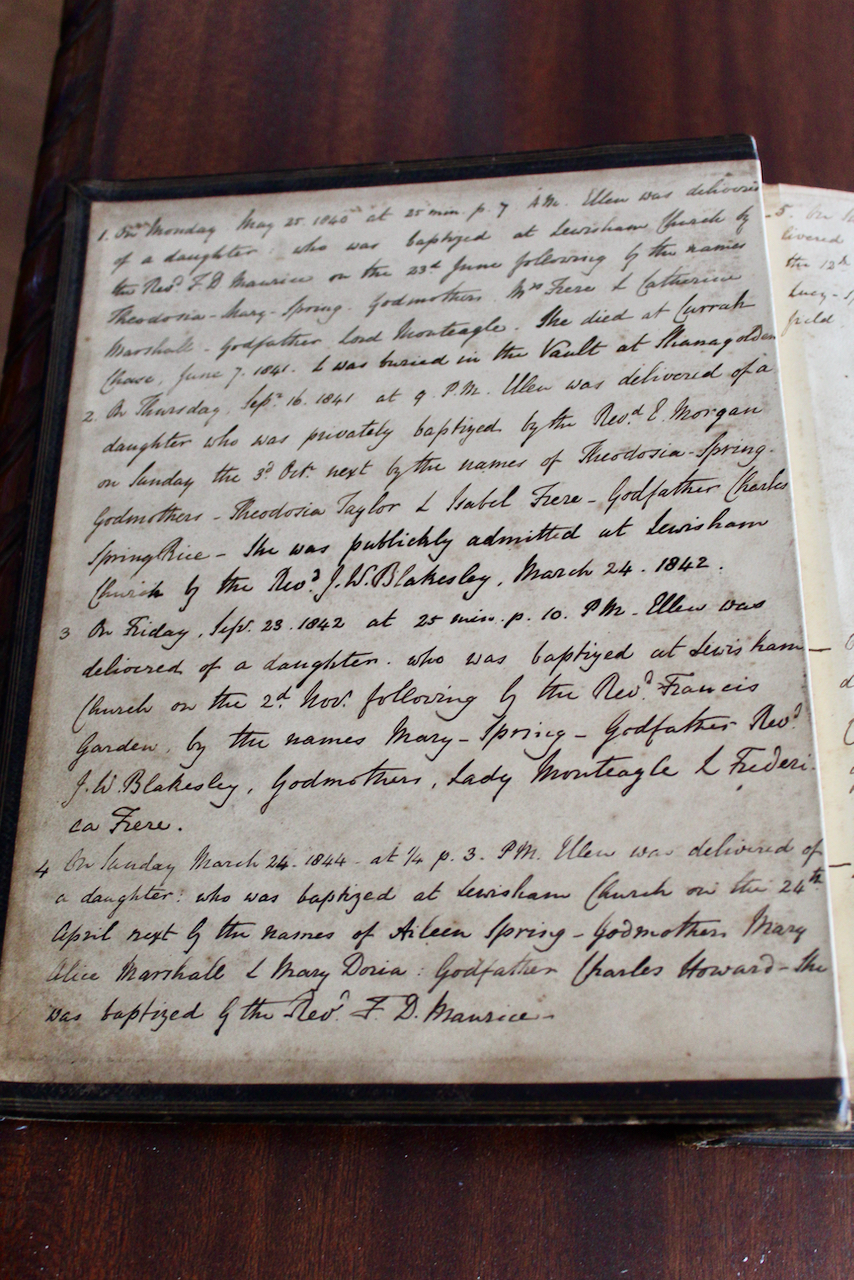
The caretaker Tommy showed us the family bible, which follows the tradition of writing births and deaths in the family inside the covers. Here we can see the births recorded of Stephen and his wife, Ellen Mary Frere. They had many children. A daughter Mary married Edward William O’Brien of Cahermoyle House in County Limerick, whose father was the politician, Nationalist and leader of the Young Irelander movement William Smith O’Brien (1803–64).
Thomas (1849-1926) was popular with the locals and helped to promote the Co-operative Creamery Movement in Limerick, and was a friend of Horace Plunkett. He held the office of Deputy Lieutenant (D.L.) of County Limerick.
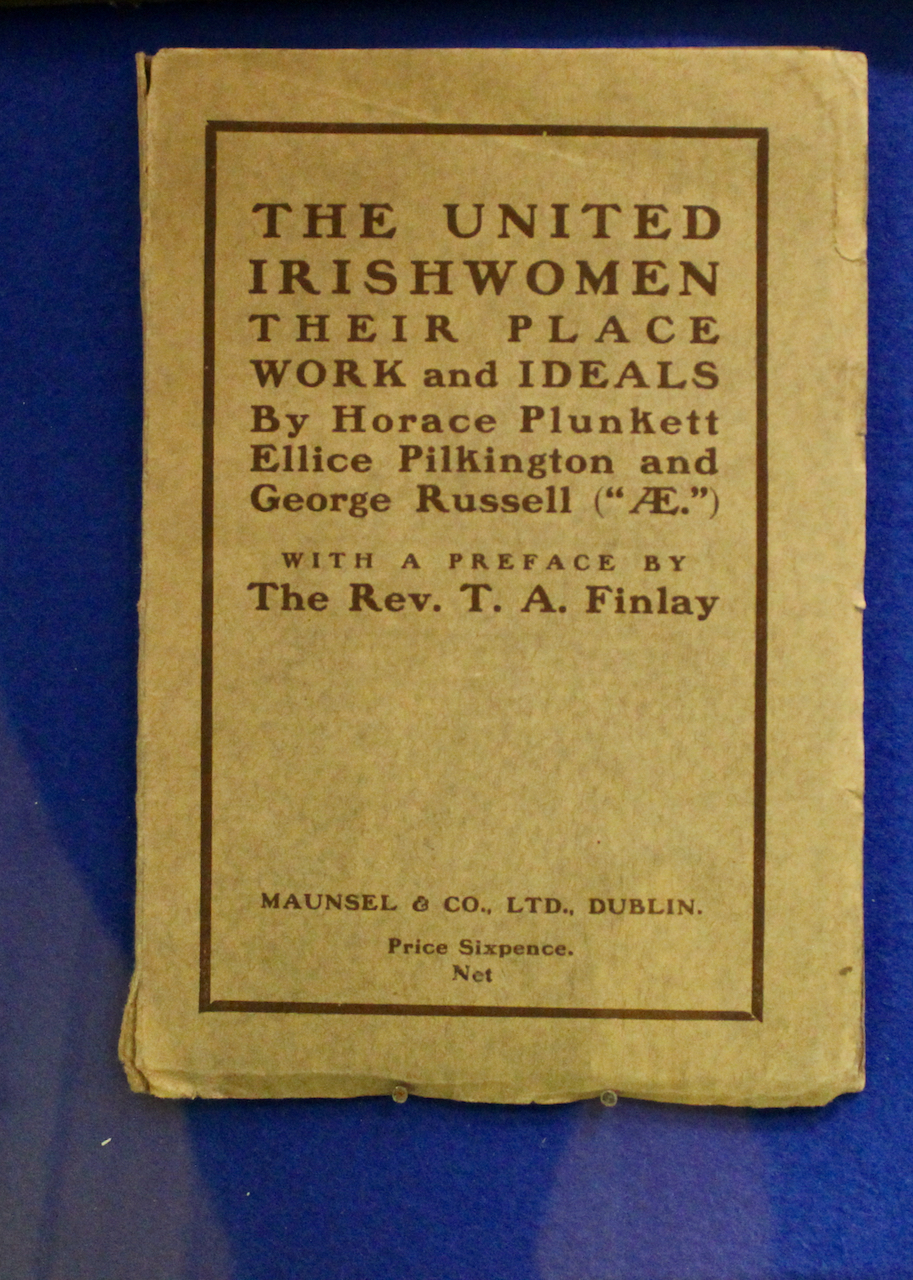
Thomas the 2nd Baron married Elizabeth Butcher in 1875, daughter of the Bishop of Meath. Their daughter Mary (1880-1924) became a passionate advocate of Irish independence. She was influenced by her cousin Nelly O’Brien, from Cahermoyle House in County Limerick. She learned Irish and hired a native speaker from Kerry to teach classes in the local national school. [7] The Dictionary of Irish Biography tells us that she was an early member of the United Irishwomen, founded in 1910 as a sister organisation to the Irish Agricultural Organisation Society (IAOS) of Horace Plunkett, to encourage countrywomen’s industries and handicrafts. In 1911 she was on the executive of the Limerick branch of the Irish Countrywomen’s Association.
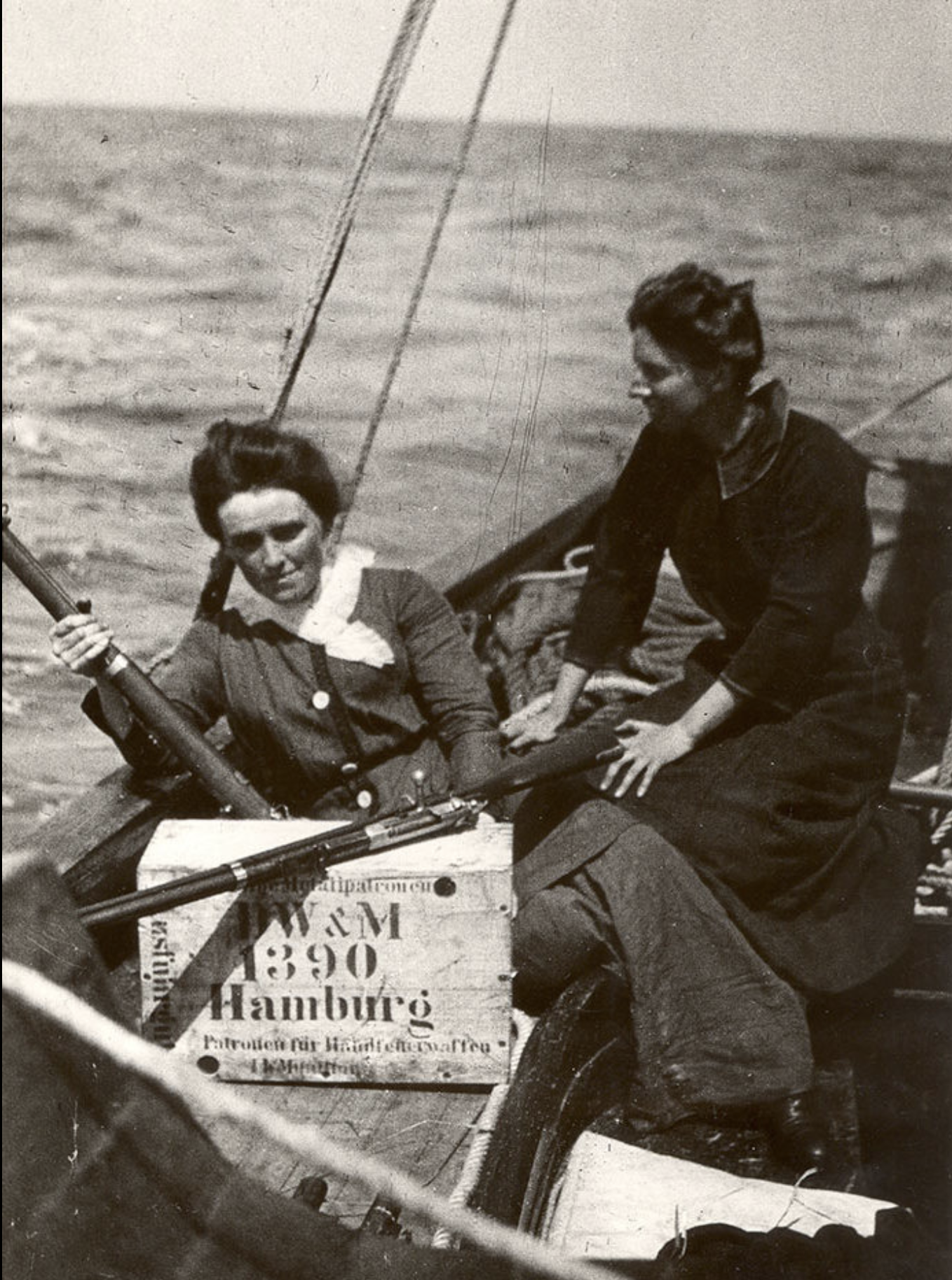
Most famously, she was involved with bringing guns from Germany into Ireland with Erskine Childers in his boat the Asgard. Her Asgard diary was published in Martin, Howth gun running (1964). Mount Trenchard was used as a safe house for member of the IRA during the War of Independence. There are tunnels underground which could lead down to the Shannon estuary.
In 1940 the house was let and occupied by a unit of the Irish Army, and they remained there for the duration of WWII.
The 3rd Baron Monteagle did not marry, and his uncle, Francis Spring Rice (1852-1937) became 4th Baron Monteagle of Brandon, of Brandon, Co. Kerry in 1934. He gained the rank of Commander in the Royal Navy. In 1882 he married Elizabeth Ann Fitzgerald, daughter of Peter George, 1st Baronet FitzGerald, of Valencia, Co. Kerry (son of the 18th Knight of Kerry). It was their son Charles who became 5th Baron Monteagle. The 4th Baron later married his wife’s sister, after his wife died. She was the widow of Stephen Edward Spring Rice (1856-1902), grandson of 1st Baron Monteagle.
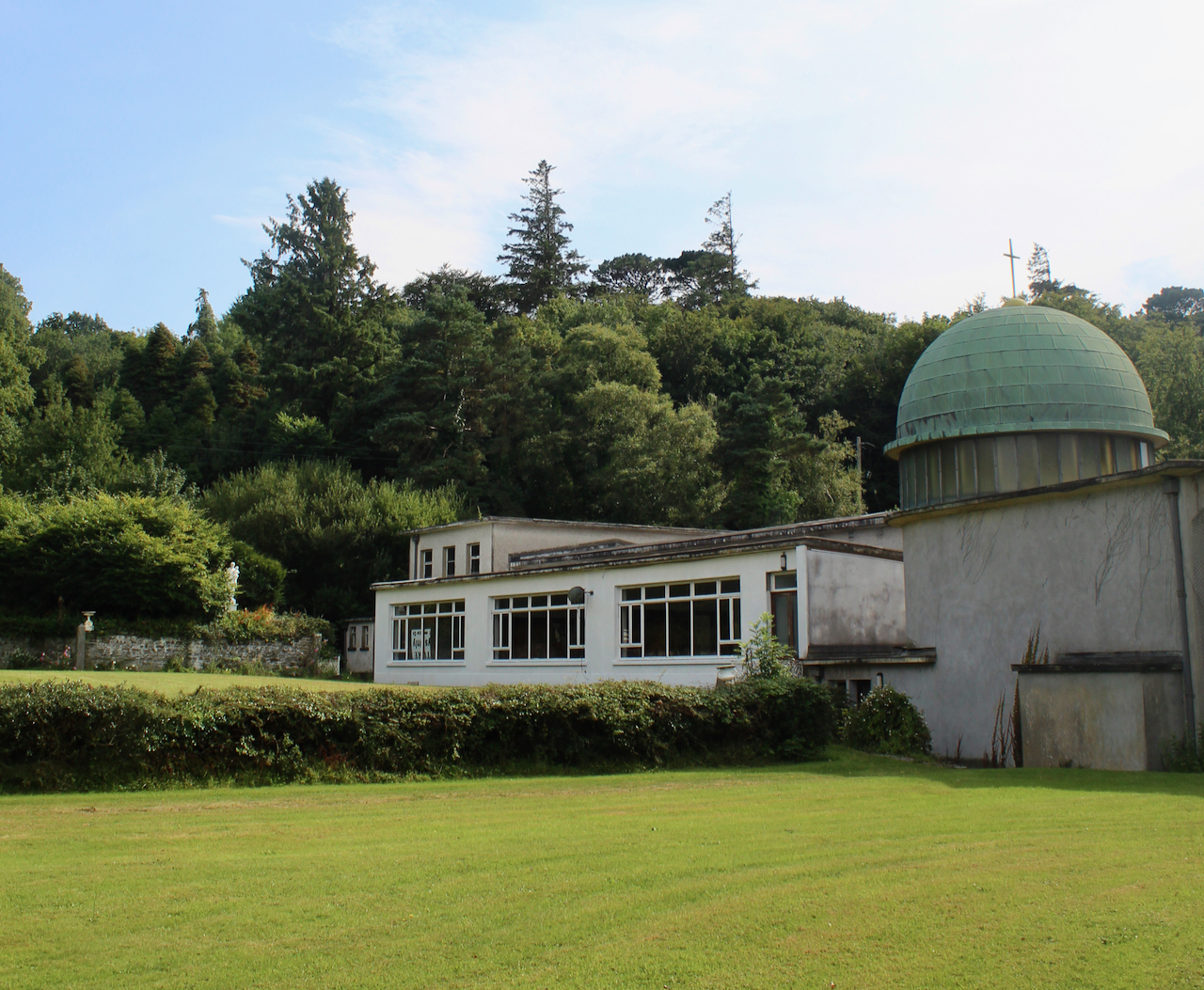
Charles Spring Rice (1887-1946) joined the military and fought in WWI. When the 5th Baron Monteagle of Brandon died in 1946, the estate was sold. In 1954, the Sisters of Mercy acquired the estate and ran it as a private boarding school for girls, called Stella Maris. [8] It was later sold again, and is now being renovated. The caretaker gave us a wonderful tour of the house and showed us details of renovation, as well as bringing us out to the walled garden, where he has done great work.
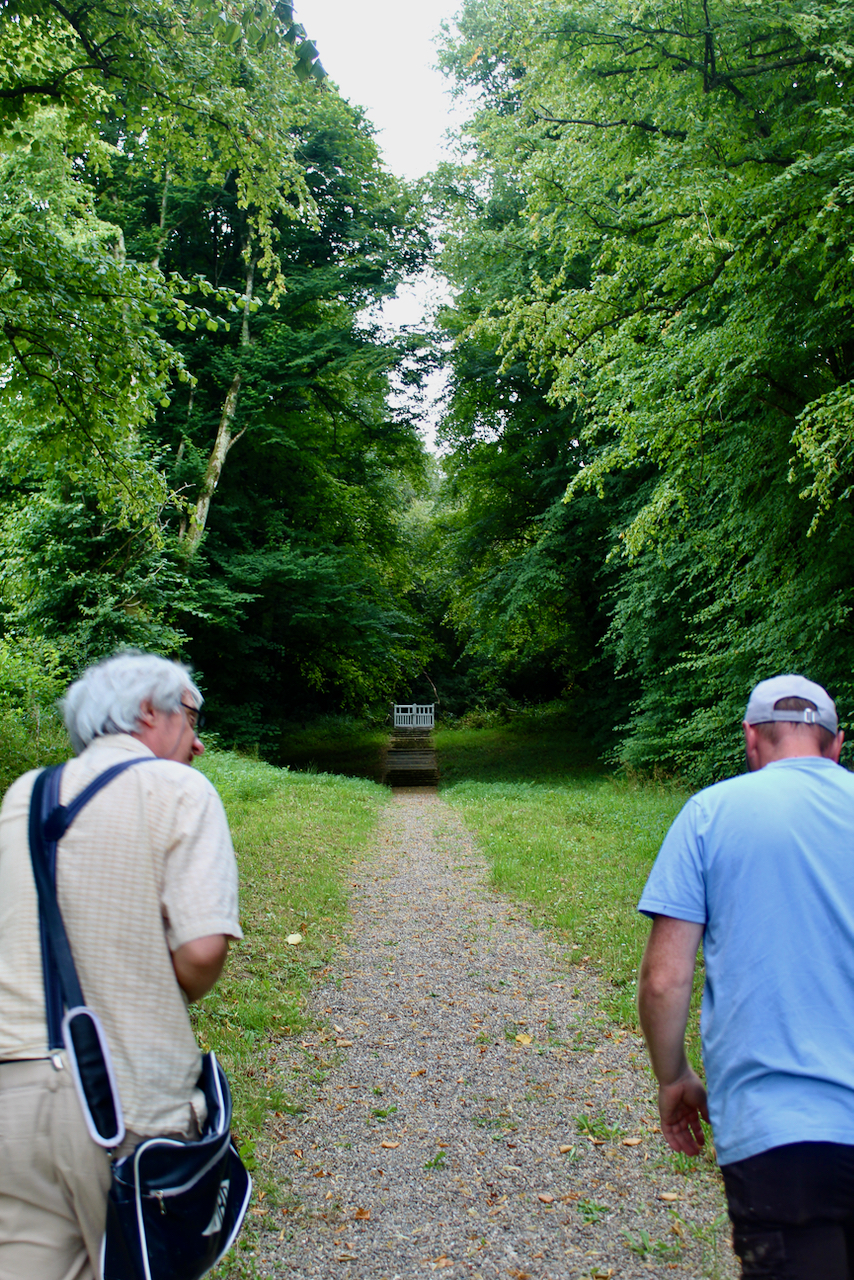
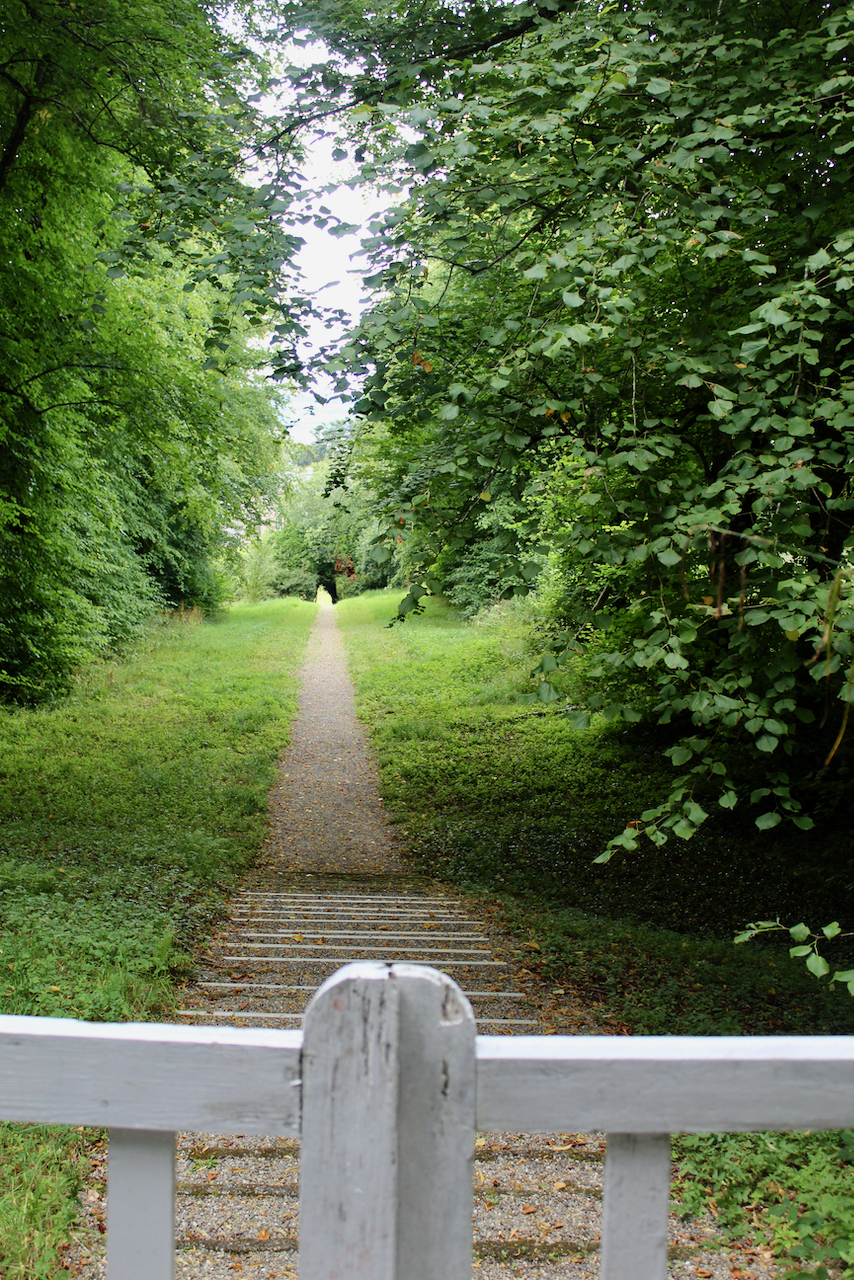
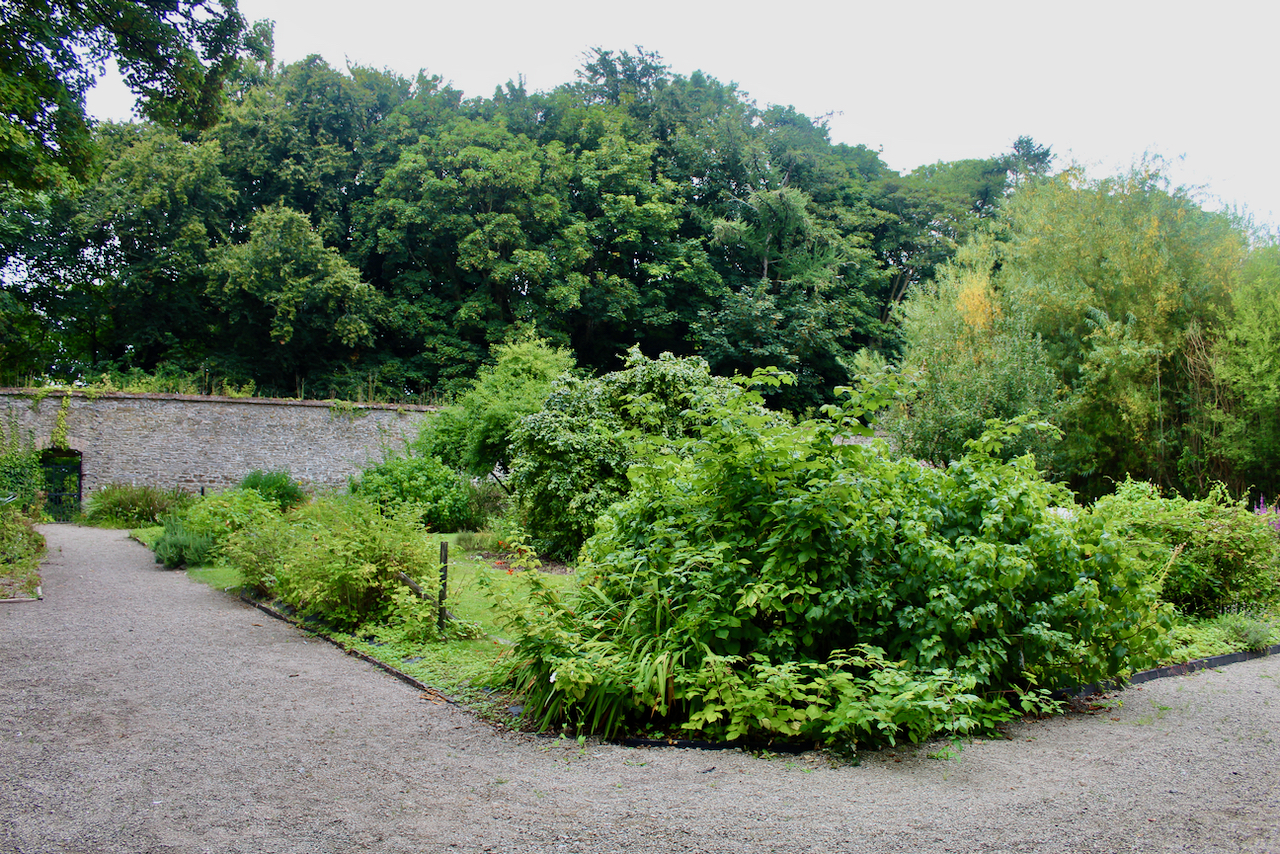
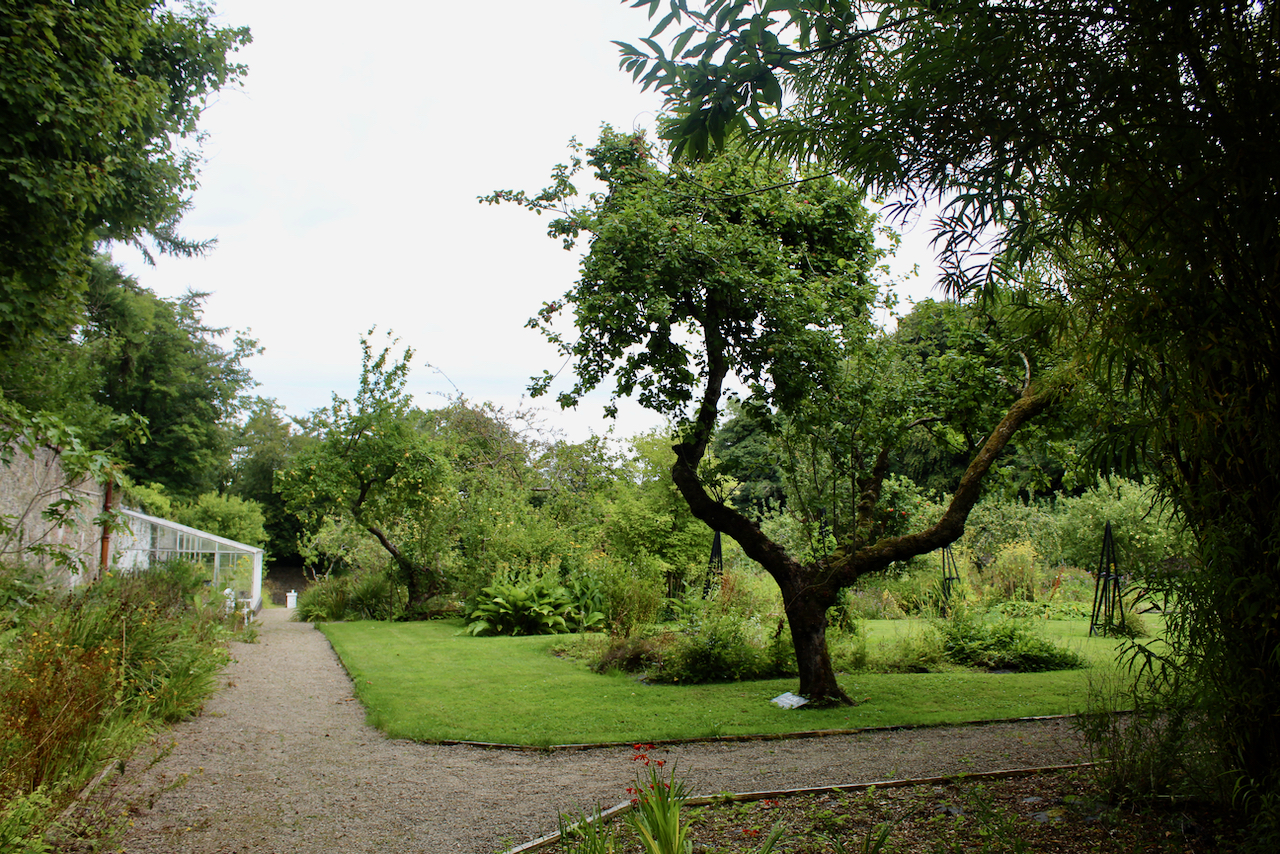
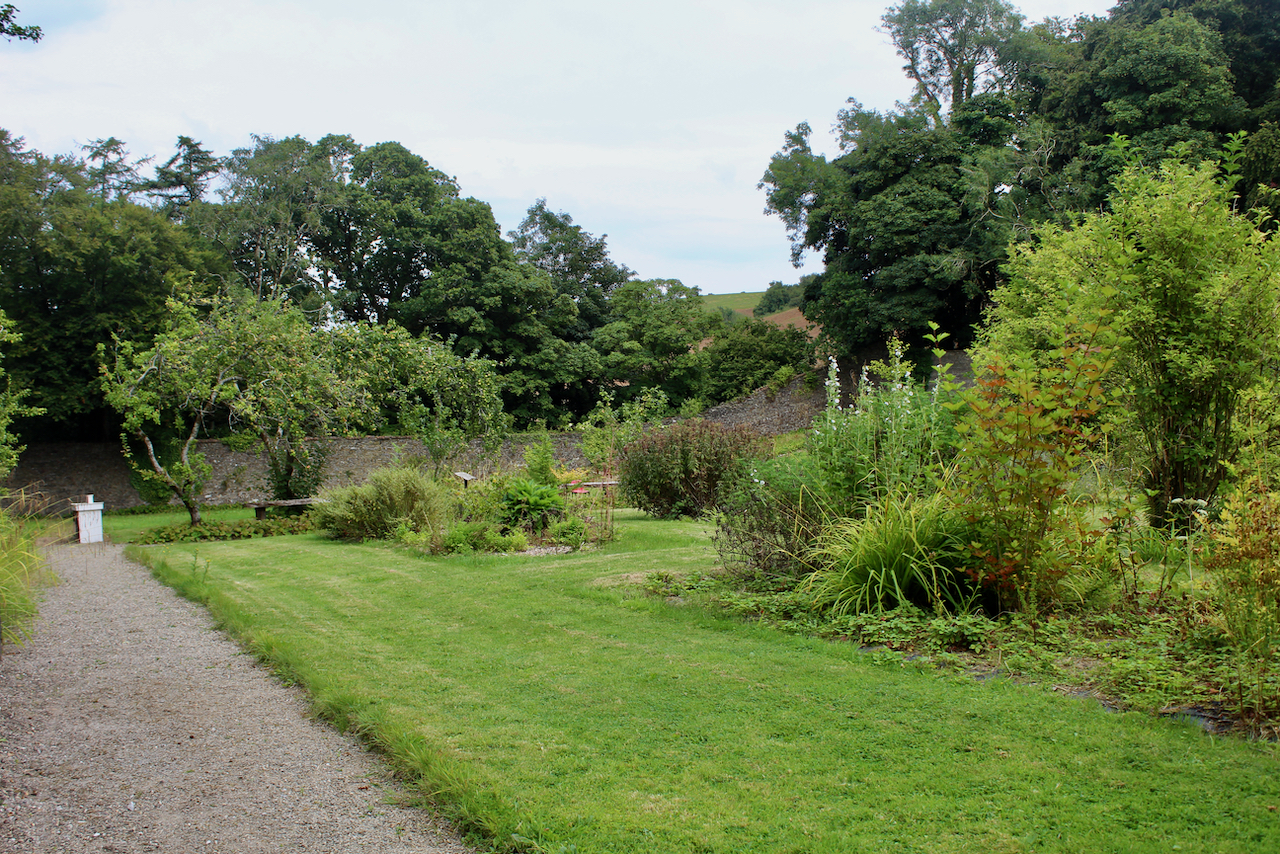
It’s a lovely walk from the back garden up to the walled garden. Our tour guide also does the gardening and the walled garden is productive as well as beautiful.
[3] Bence-Jones, Mark. A Guide to Irish Country Houses (originally published as Burke’s Guide to Country Houses volume 1 Ireland by Burke’s Peerage Ltd. 1978); Revised edition 1988, Constable and Company Ltd, London.
Open dates in 2026: June 1-27, Aug 15-31, Sept 1-19, 9am-1pm
Fee: adult house €14, house and garden €20, garden only €7
donation
Help me to pay the entrance fee to one of the houses on this website. This site is created purely out of love for the subject and I receive no payment so any donation is appreciated!
We visited Cappoquin House during Heritage Week in 2020. Cappoquin House was built in 1779 for Sir John Keane (1757-1829), and is still owned by the Keane family. The original house, sometimes known as “Belmont,” the name of the townland, was built on a site of an Elizabethan house built by the Munster planter, Sir Christopher Hatton. [1] It is most often attributed to a local architect, John Roberts (1712-96). [2] John Roberts was also architect of Moore Hall in County Mayo (1792 – now a ruin) and Tyrone House in County Galway (1779 – also a ruin).
From the National Inventory of Architectural Heritage, Moore Hall, County Mayo.From the National Inventory of Architectural Heritage, Tyrone House, County Galway.
Glascott Symes points out in his book Sir JohnKeane and Cappoquin House in time of war and revolution that it is not known who the original architect was, and it may have been Davis Ducart, who also built Kilshannig. [3]
The house was burnt and destroyed in 1923, because a descendent, John Keane (1873-1956), accepted a nomination to the Senate of the new government of Ireland. Ireland gained its independence from Britain by signing a Treaty, in which independence was given to Ireland at the expense of the six counties of Northern Ireland, which remained a part of Britain. Disagreement about the Treaty and the loss of the six counties led to the Irish Civil War. During this war, Senators’ houses were targeted by anti-Treaty forces since Senators served in the new (“pro-Treaty”) government; thirty-seven houses of Senators were burnt.
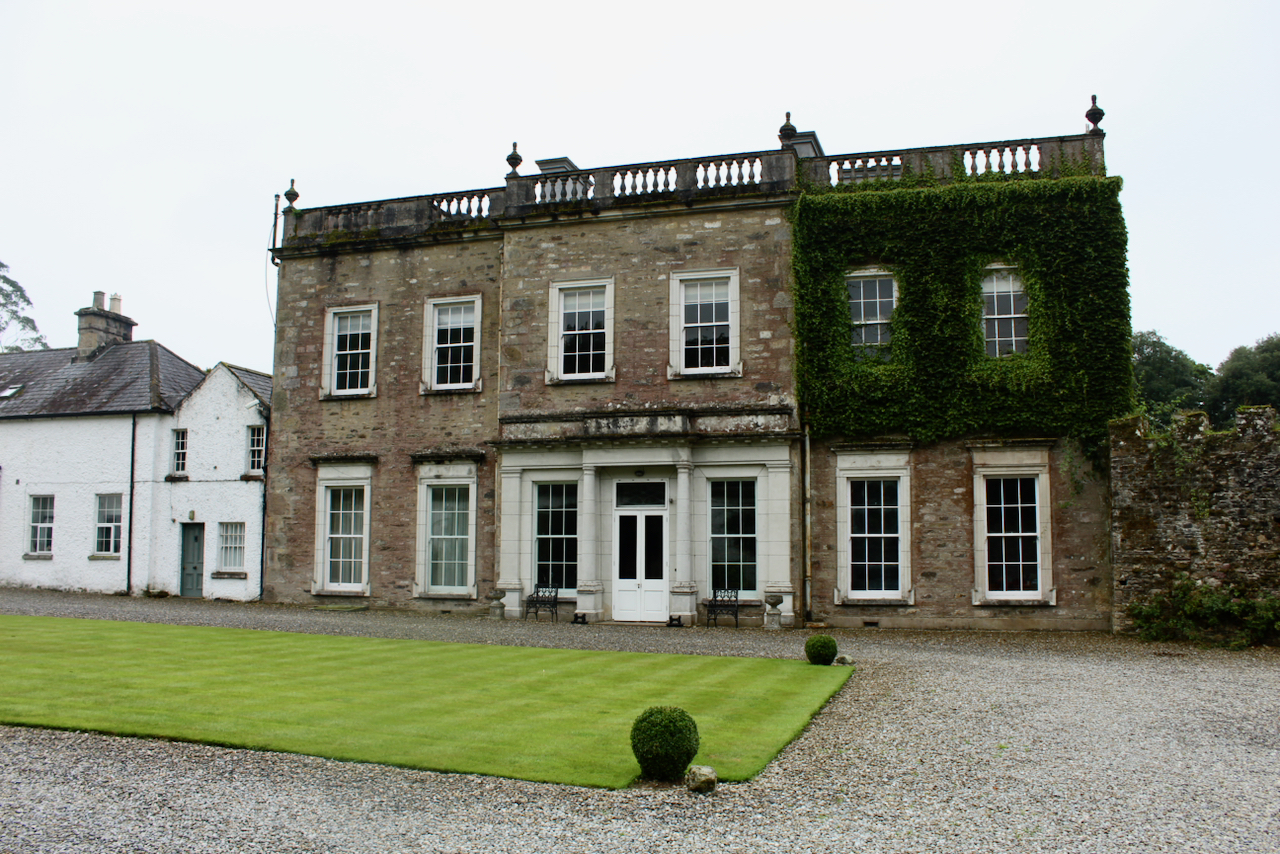
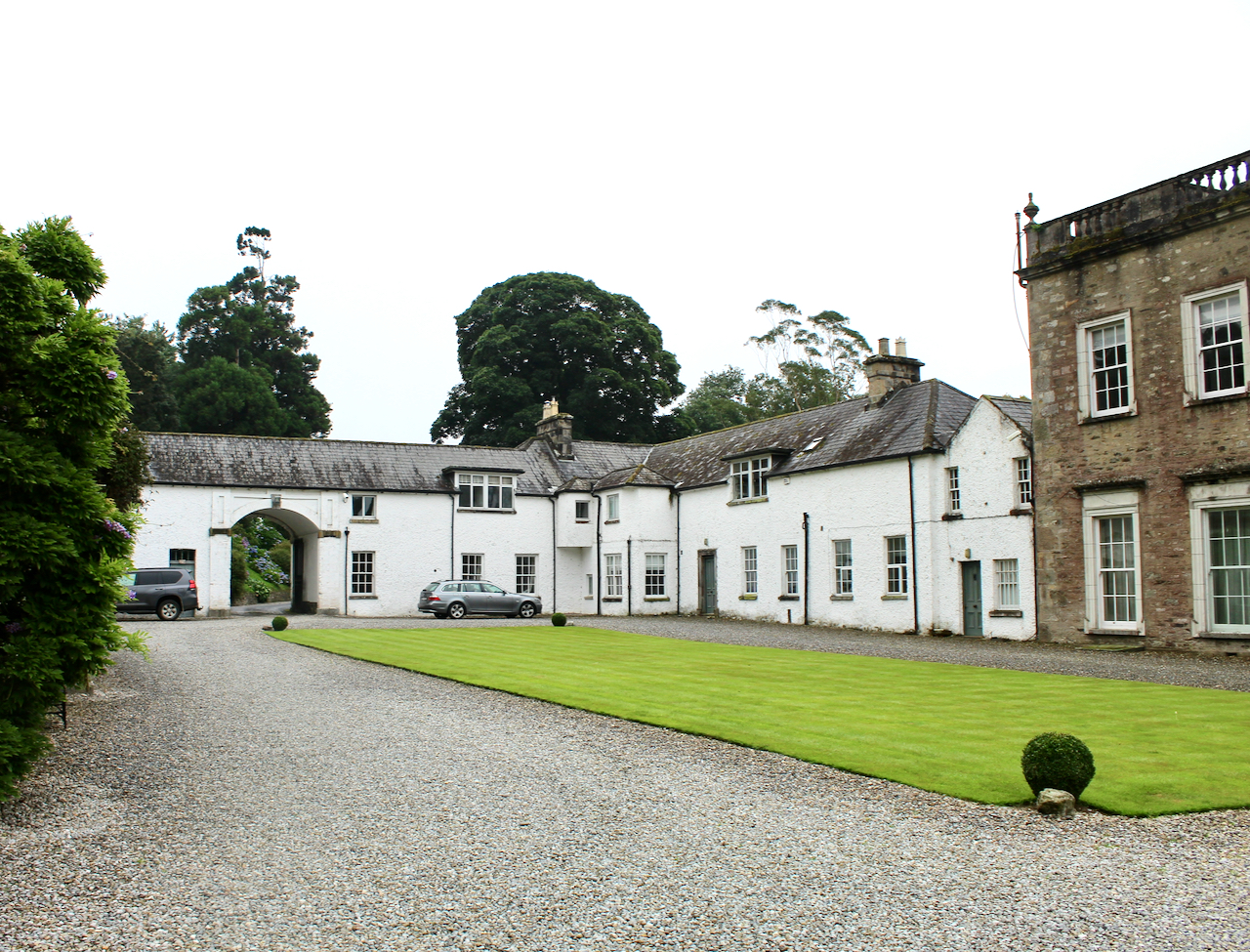
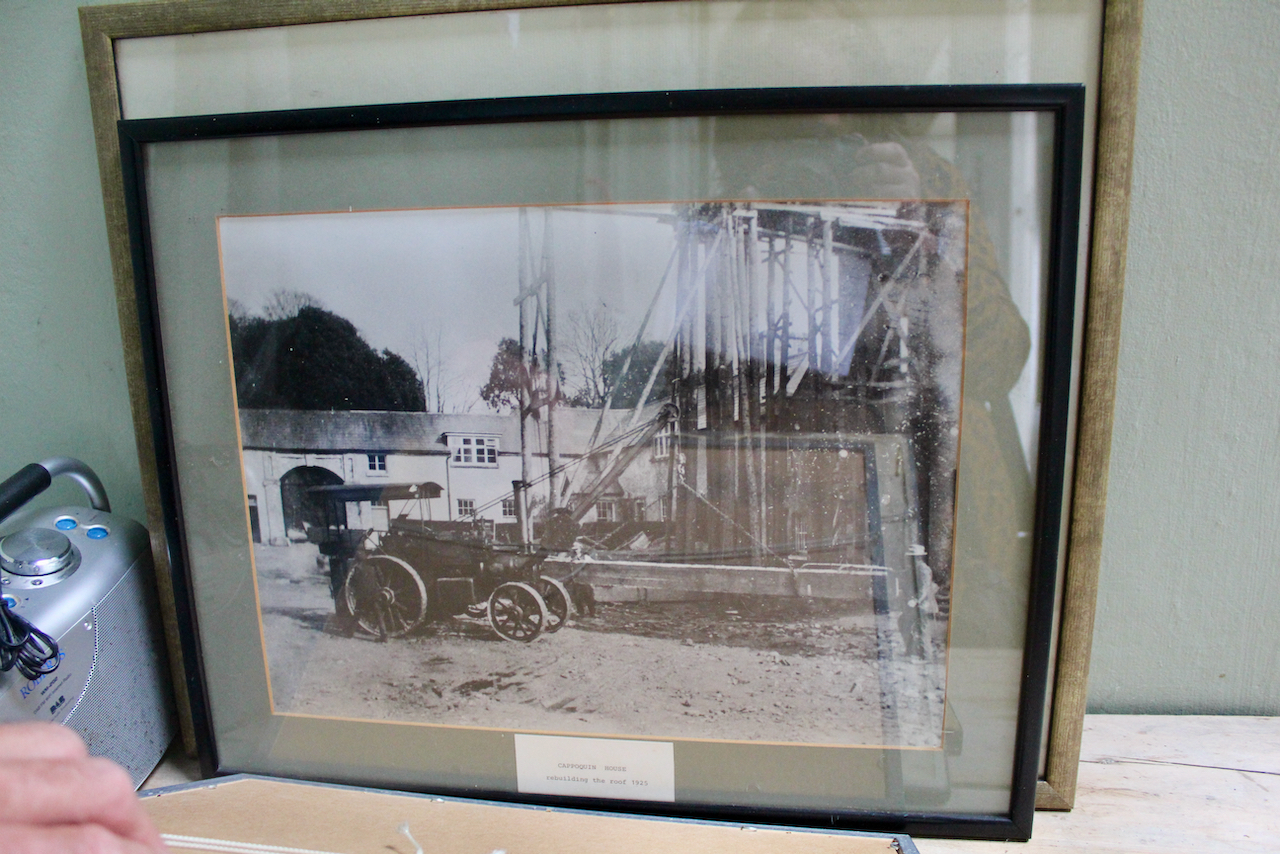
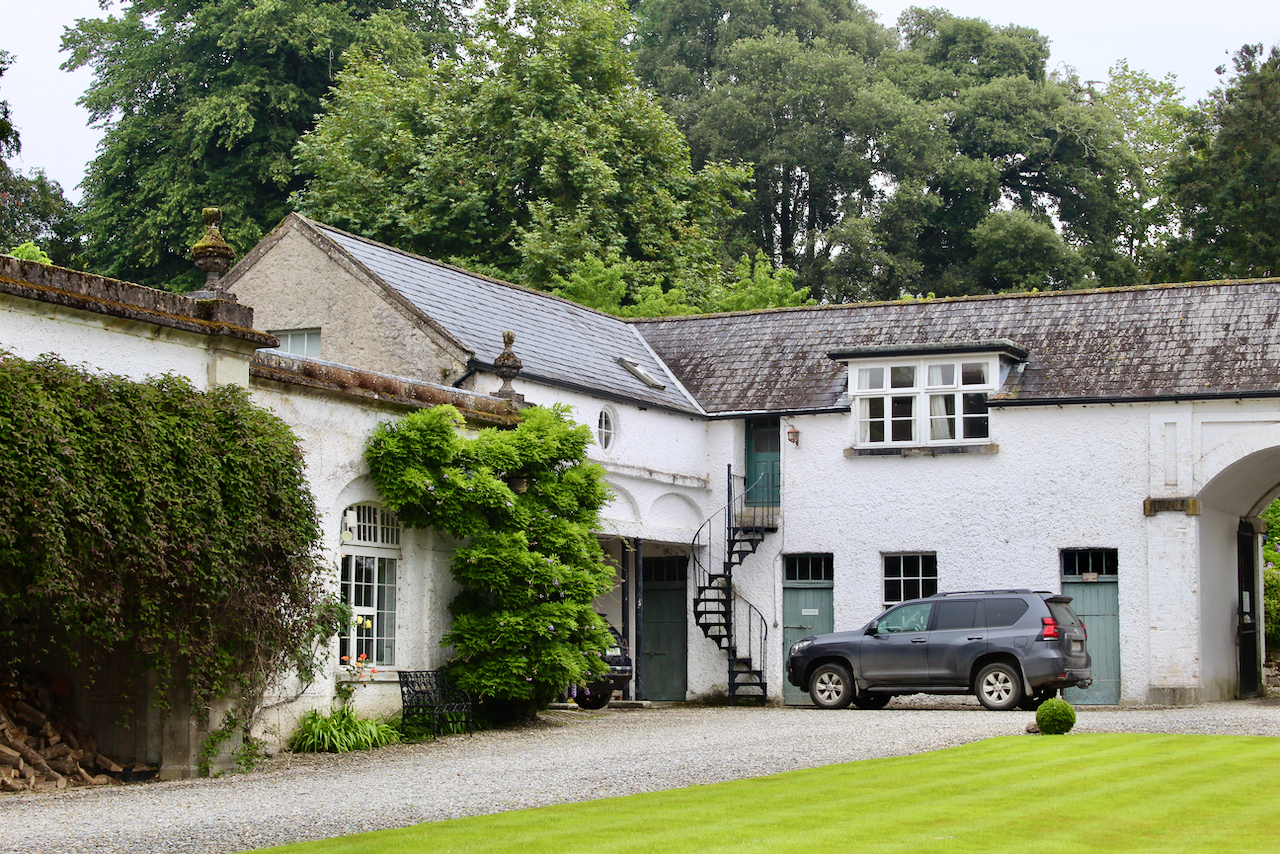
Fortunately the Keanes received compensation and engaged Richard Francis Caulfield Orpen (1863-1938) of South Frederick Street, Dublin [4], brother of painter William Orpen, to rebuild. Any material possible to salvage from the fire was used, and the fine interiors were recreated. [5] It was at this time that the former back of the house became the front, overlooking a courtyard which is entered through an archway.
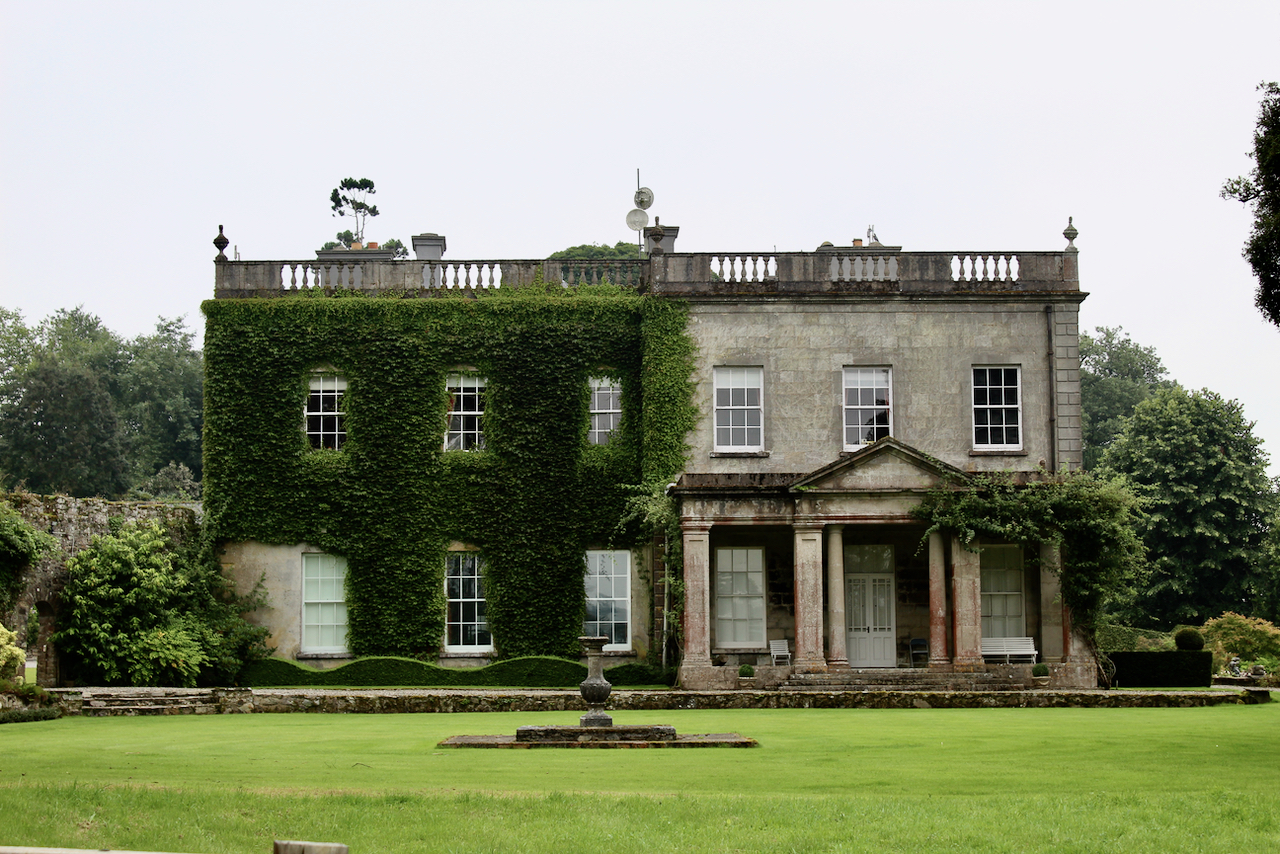
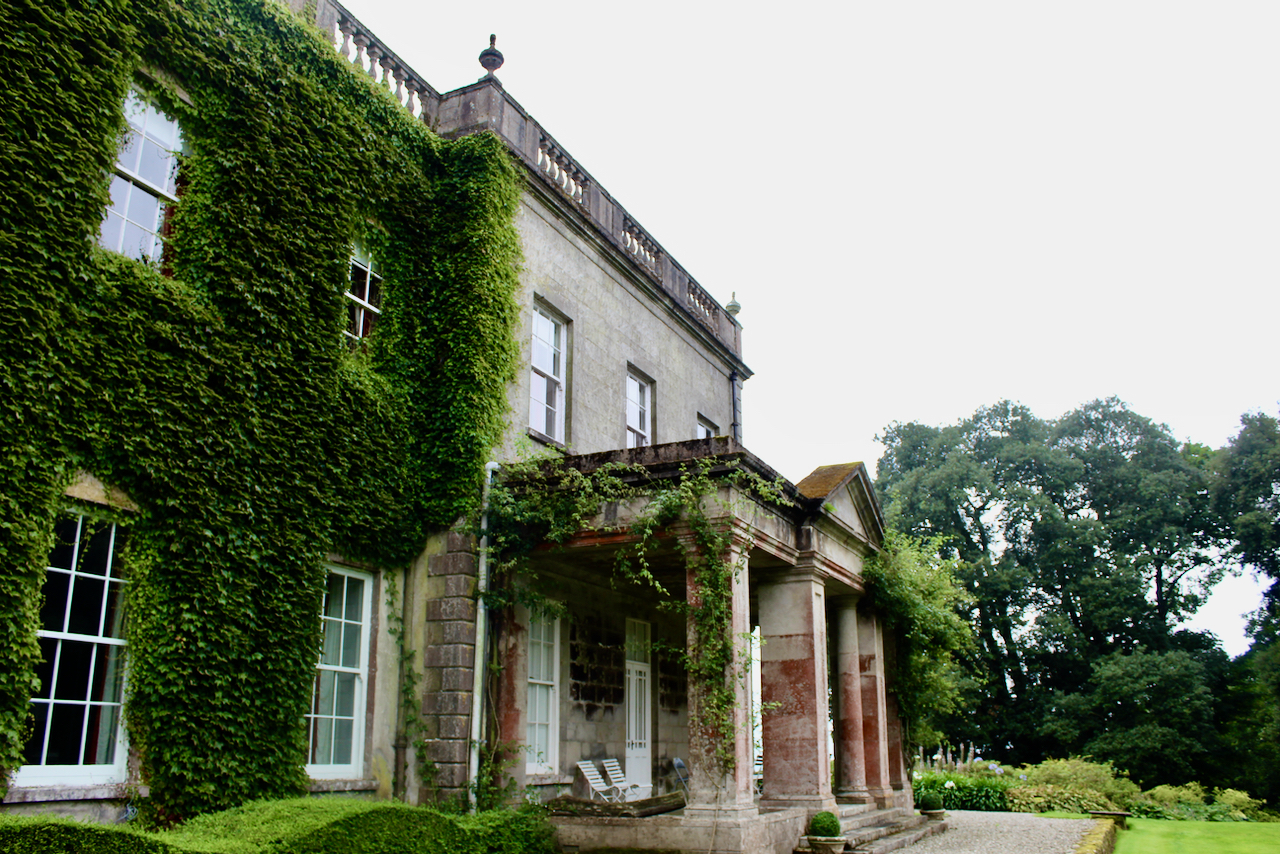
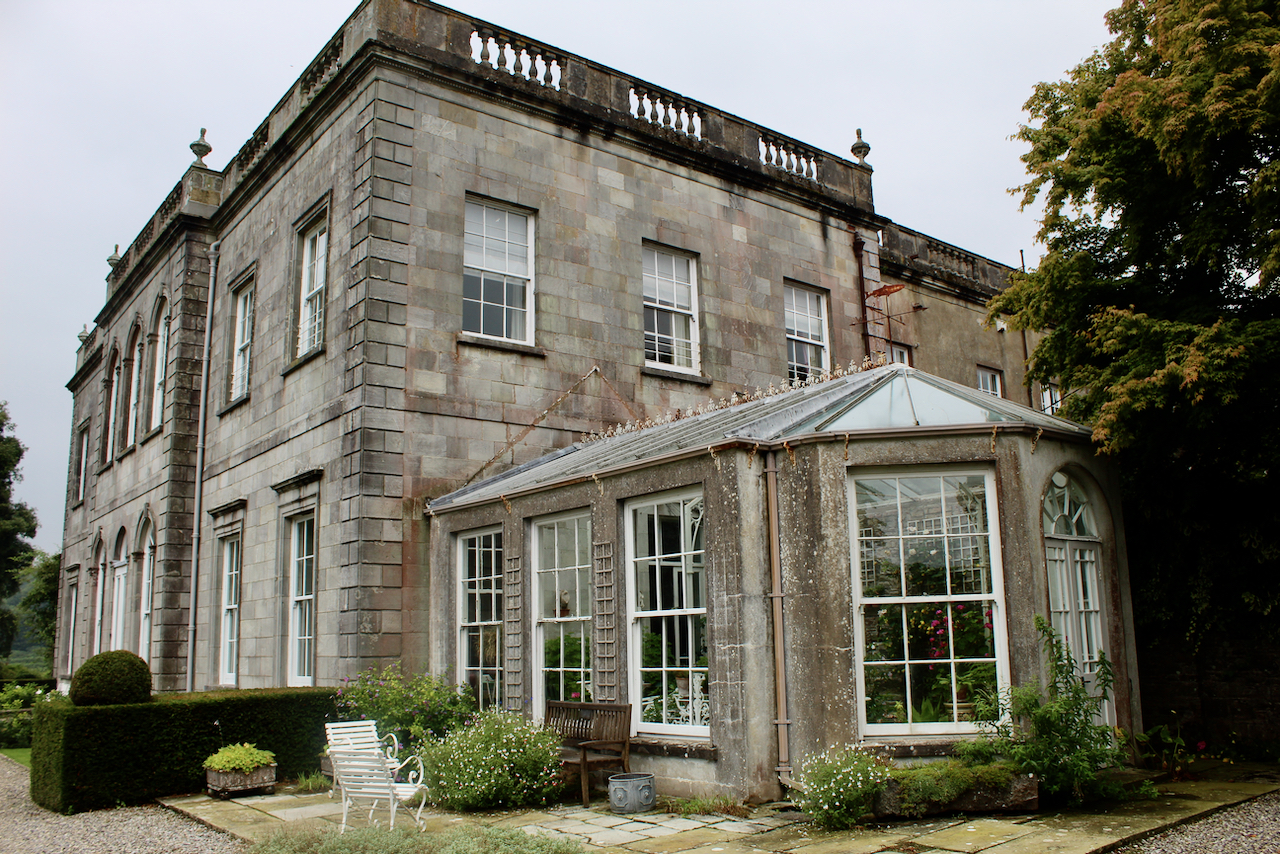
The house has a balustraded parapet topped with urns. The garden front, which was originally the front of the house, faces toward the Blackwater River, and has a central breakfront of three bays with round-headed windows and door. The door has cut-limestone surround with flush panelled pilasters and a fanlight. The round-headed flanking windows have fluted keystones and six-over-six timber sashed windows with fanlights.
The porch on one side of the house was built in 1913 by Page L. Dickinson for John Keane, and remains the same after the fire. [6] The work done by Dickinson inside the house in 1913, including decorative plasterwork, was destroyed.
When Sir John had the house rebuilt after the fire, he asked Page Dickinson again to be his architect but by this time Dickinson had moved to England, so Keane engaged Dickinson’s former partner, Richard Caulfield Orpen.
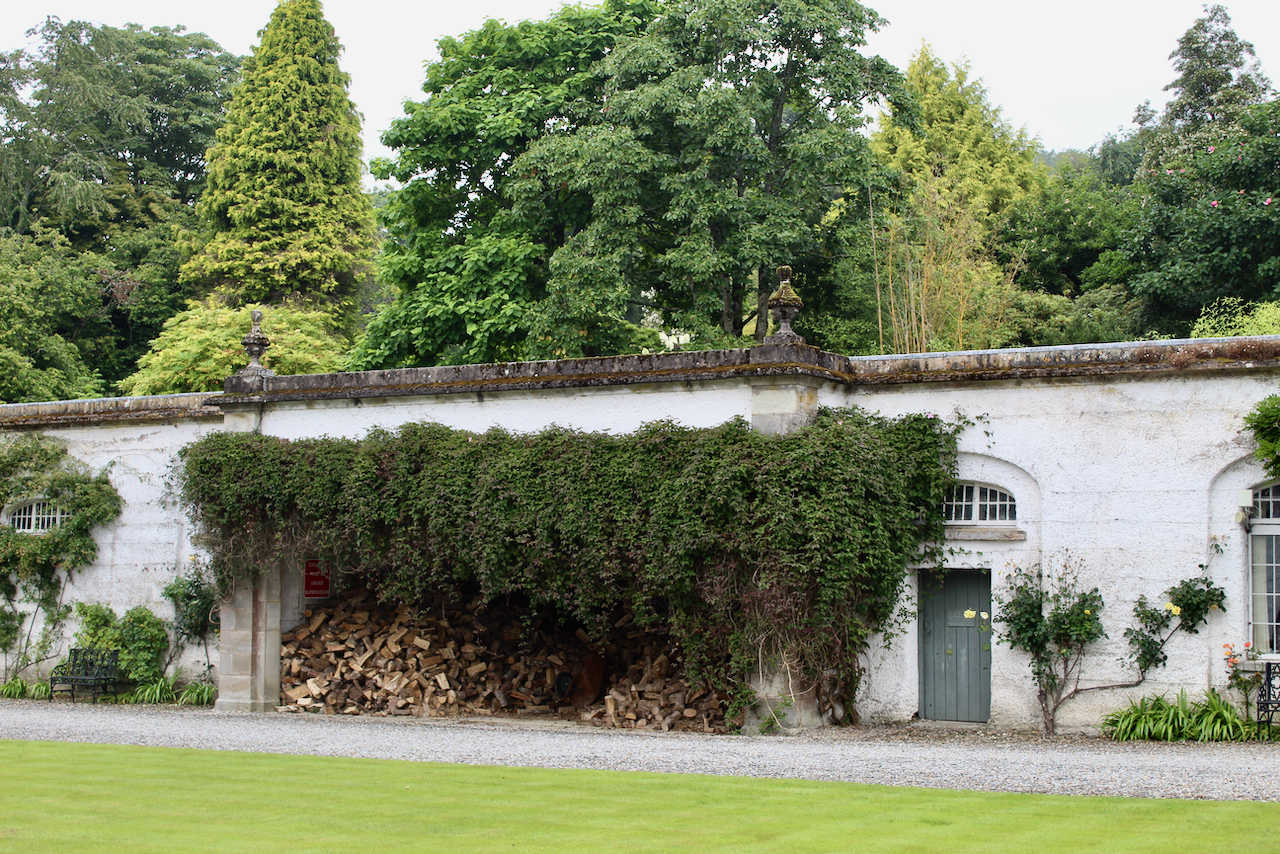
The white buildings around the courtyard were not destroyed in the fire and pre-date the rebuilt house. Some probably date from Hatton’s time.
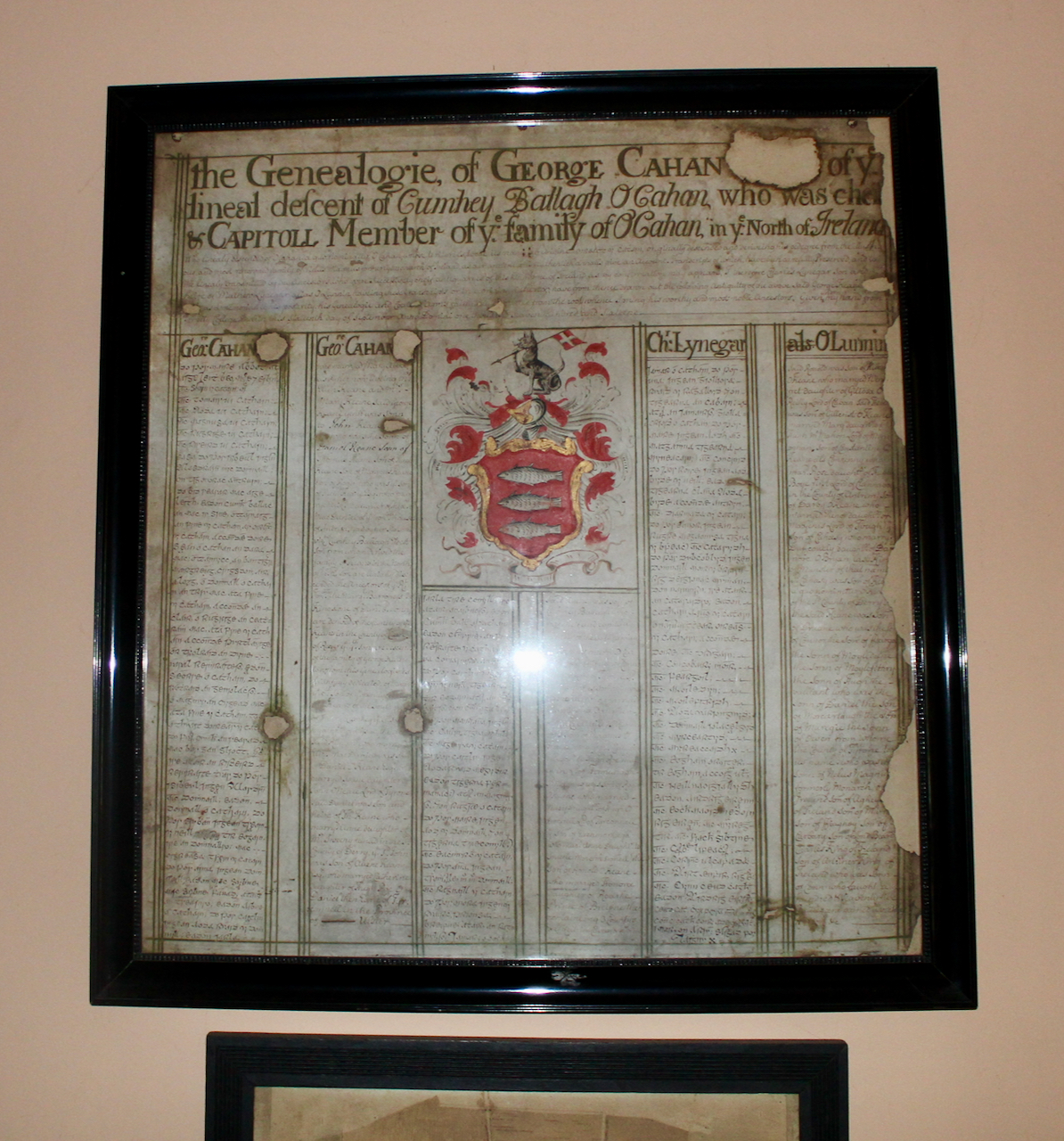
The Keanes are an old Irish family, originally named O’Cahan. The Ulster family lost their lands due to the Ulster Plantation in 1610. In 1690, following the victory of William III at the Battle of the Boyne, George O’Cahan and converted to Protestantism and anglicized his name to Keane. He practiced as a lawyer. [7] In 1738 his son, John, acquired land in the area of Cappoquin in three 999 years leases from Richard Boyle, the 4th Earl of Cork. The leases included an old Fitzgerald castle. It was this John’s grandson, also named John Keane (1757-1829), who bought out the lease and built Cappoquin House. [8]
John became MP for Bangor in the Irish parliament from 1791 to 1801 and for Youghal in the British parliament from 1801 to 1818. He was created a baronet, denominated of Belmont and Cappoquin, County Waterford, in 1801 after the Act of Union. The current owner is the 7th Baronet.
John the 1st Baronet’s oldest son, Richard, became the 2nd Baronet (1780-1855). John’s second son, John, served in the British army, and received the title of 1st Baron Keane of Ghuznee in Afghanistan and Cappoquin, Co. Waterford, in 1839. The current owner is a descendant of the elder son, Richard the 2nd Baronet, who also served in the military. He was Lieutenant Colonel of the Waterford Militia.
After his first wife died, Sarah Keily, daughter of Richard Keily of Springmount, County Waterford and Sarah Ussher of Cappagh House, another section 482 property in County Waterford, John Keane the 1st Baronet remarried, this time to Dorothy née Scott, widow of Philip Champion de Crespigny who was MP for Aldborough in Suffolk, England.
Dorothy Scott (1765-1837) second wife of John Keane, 1st Baronet, by George Romney courtesy of Philadelphia Museum of Art.
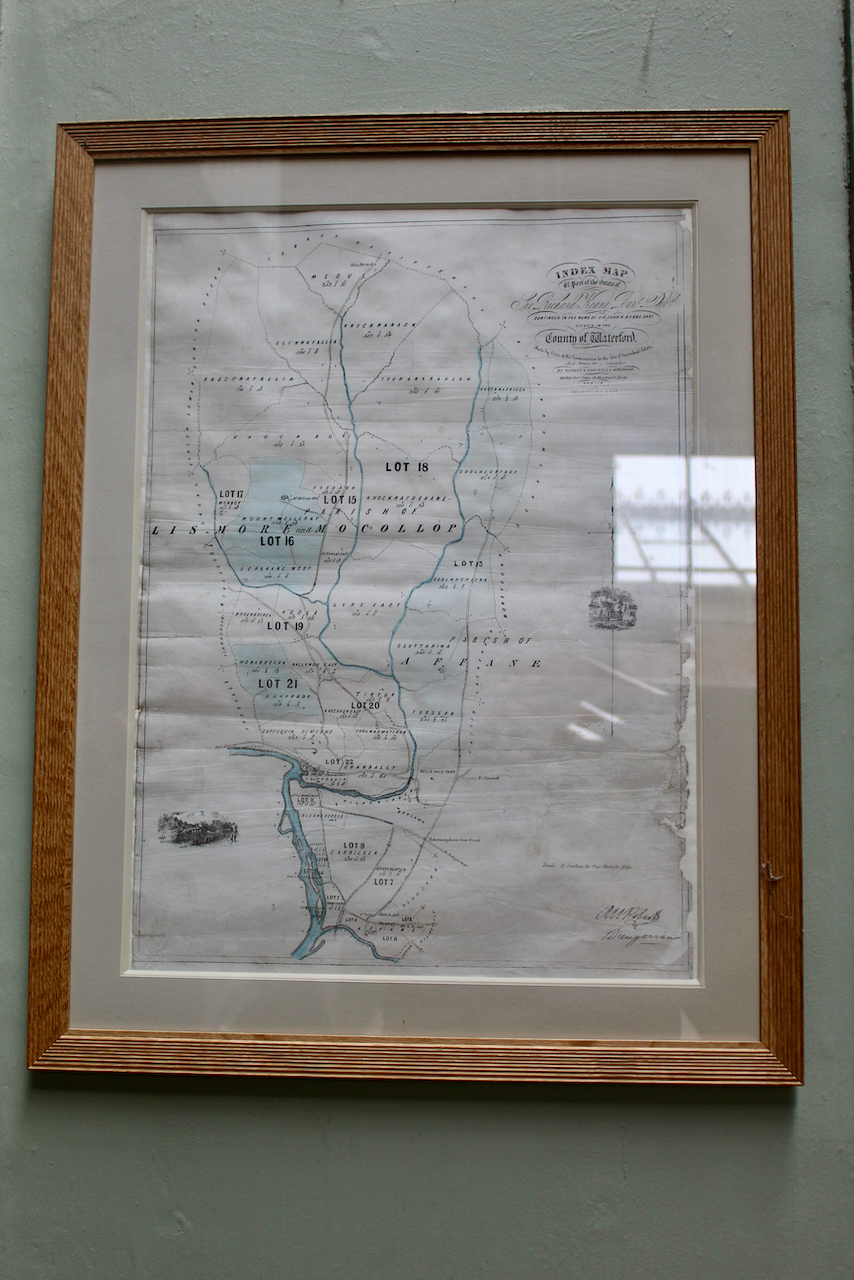
In 1855 the Keane estate was offered for sale in the Encumbered Estates Court, as the estate was insolvent after tenants could not pay their rents during the Famine. It seems however that the 3rd Baronet, John Henry Keane (1816-1881), managed to clear the debt and reclaim the estate.
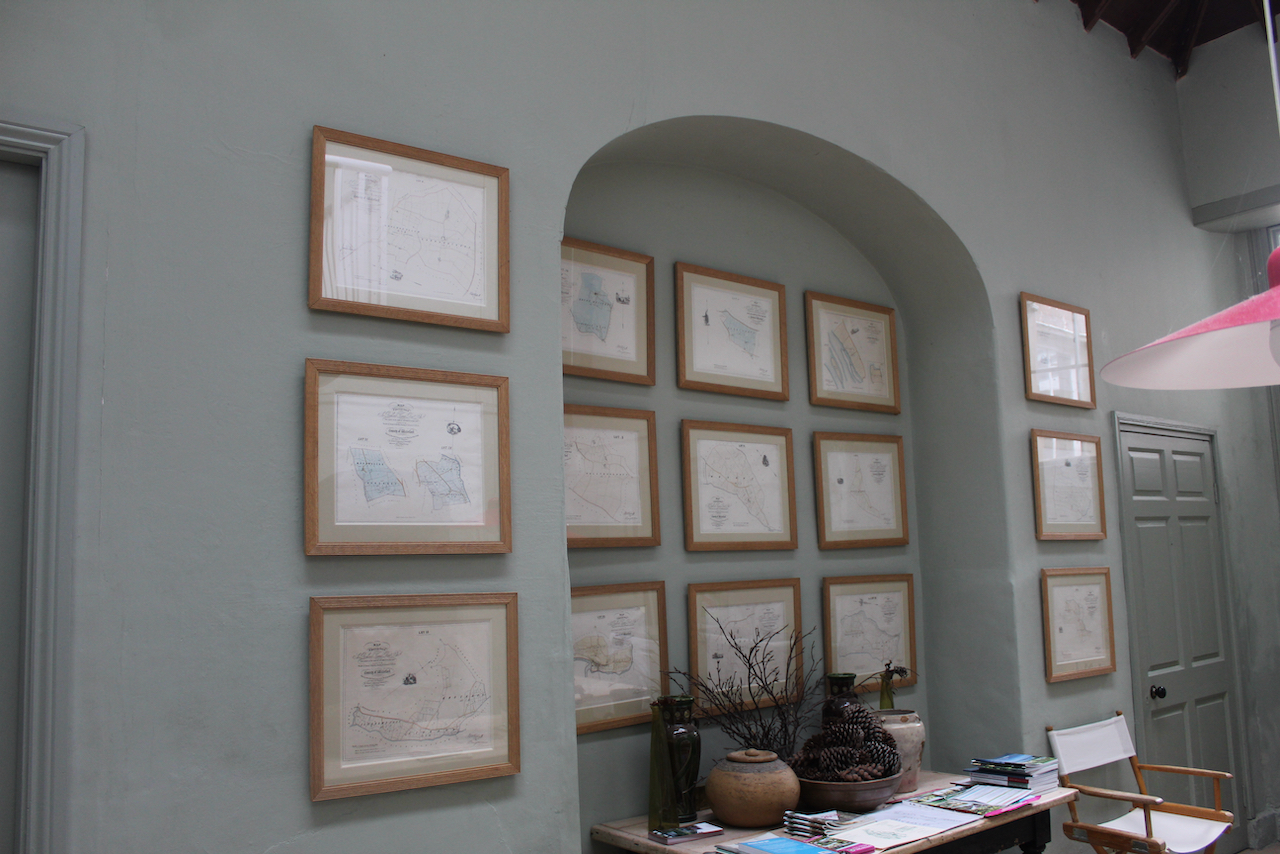
Sir Charles showed us maps of the property, as drawn up under the Encumbered Estates Act.
The 4th Baronet, Richard Henry Keane (1845-1892), served as High Sheriff of County Waterford and Deputy Lieutenant of County Waterford. He married Adelaide Sidney Vance, whose father John was a Conservative MP for the city of Dublin, and they had several children.
John Keane (1873-1956) the 5th Baronet also served in the British Army, and fought in the Boer War between 1899-1902. He was Private Secretary to the Governor of Ceylon between 1902 and 1905. In 1904 he was admitted to the Middle Temple to become a Barrister, but he never practiced as a Barrister. Following in his father’s footsteps he too held the office of High Sheriff of County Waterford. He followed politics closely and supported Home Rule for Ireland. He was a kind, thoughtful man and housed refugees during the wars. He fought in World War One, becoming a Lieutenant Colonel. It was this John who became a Senator.
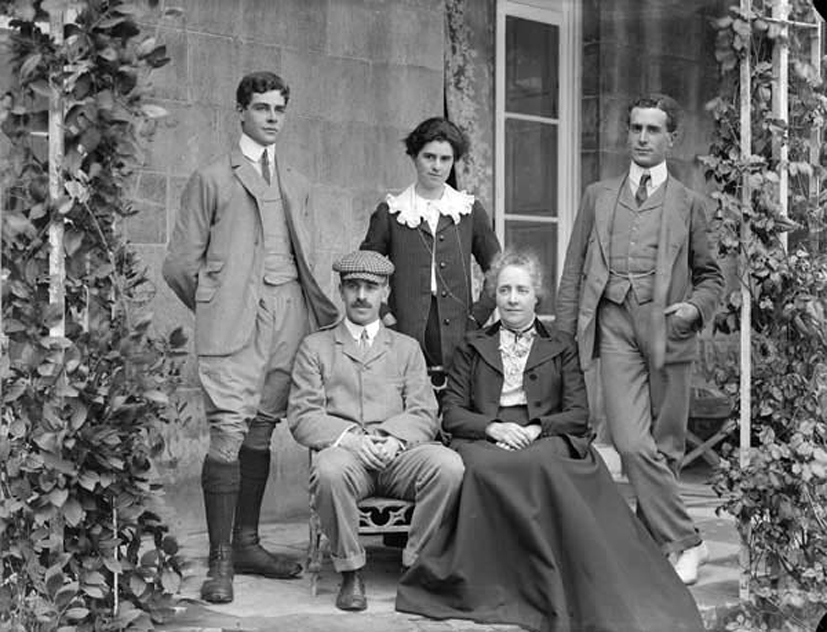
In the cap is John Keane 5th Baronet, with his wife, daughter and his 2nd and 3rd sons George, right and Frederick, left, 3 September 1902 courtesy of National Library of Ireland.
The 5th Baronet married Eleanor Lucy Hicks-Beach, daughter of the 1st Earl of Saint Aldwyn, Gloucester, England.
Keane joined Horace Plunkett in the co-operative movement in Ireland, which promoted the organisation of farmers and producers to obtain self-reliance. The idea was that they would process their own products for the market, thus cutting out the middle man. The founders of the co-operative movement embraced new technologies for processing, such as the steam-powered cream separator. Unfortunately this led to a clash with farm labourers who unionised to prevent reduction in their wages when prices fell. Keane refused to negotiate with the Union. Rancour grew between landowners and labourers, which may have encouraged the later burning of Keane’s house. The idealism of the co-operative movement, with the goal of “better farming, better business, better living,” was easier said than done.
Horace Plunkett by photographer Bassano Ltd, 1923, courtesy of National Portrait Gallery of London, reference NPGx12783.
Keane kept diaries, which have been studied by Glascott J.R.M. Symes for an MA thesis in Maynooth University’s Historic House Studies. Symes outlines the details about the disagreements. [9] Horace Plunkett, one of the founders of the Irish Agricultural Organisation Society, also became a Senator in Ireland’s first government and his house in South Dublin, Kilteragh, was also destroyed during the Civil War that followed the founding of the state.
Keane knew that his house may become a target and he sent his wife and children to live in London, and packed up principal contents of the house. Seventy six houses were destroyed in the War of Independence in what was to become the Republic of Ireland, but almost two hundred in the Civil War. [10] Unfortunately the library and some of the art collection at Cappoquin were destroyed. [11]
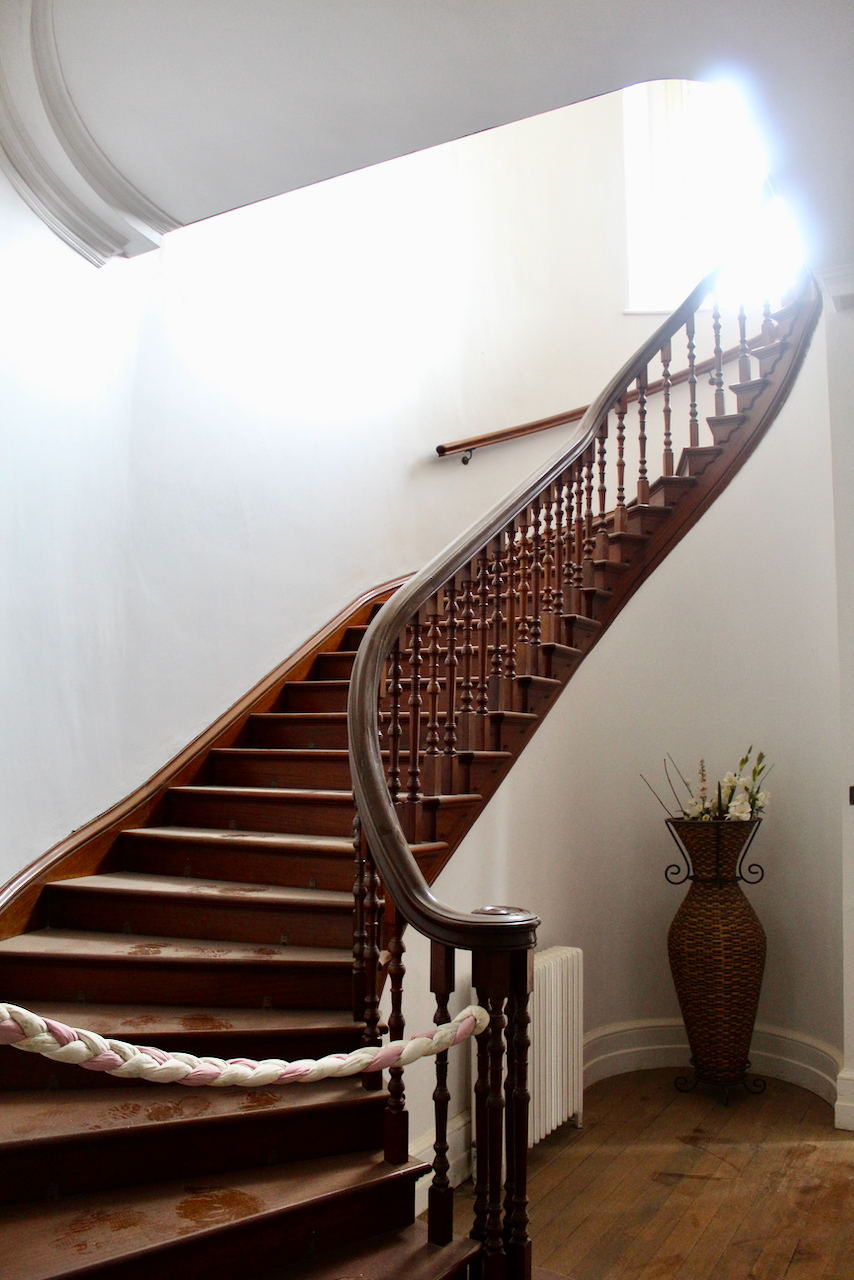
We entered the house through a door in the older former servants’ area in order to see the maps. We then passed into the main house, with its impressive entrance hall, with stone floor and frieze of plasterwork.
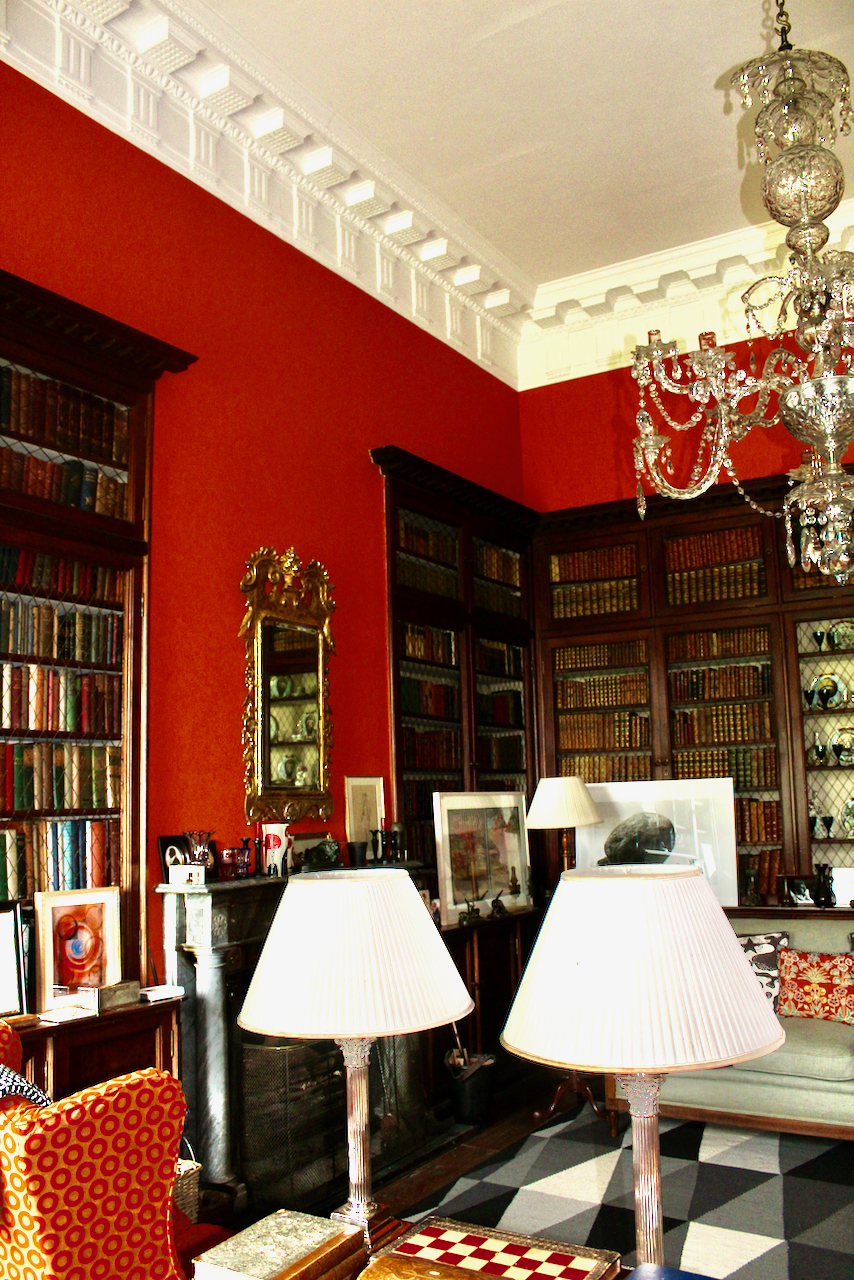
From the stair hall we entered the library, which has a dentilled cornice and built-in bookcases and is painted a deep red colour. The most intricate works in rebuilding the interior of the house were the library bookcases and the staircase, which are a tribute to the skills of carpenter James Hackett and Edward Brady, a mason from Cappoquin. [see Symes].
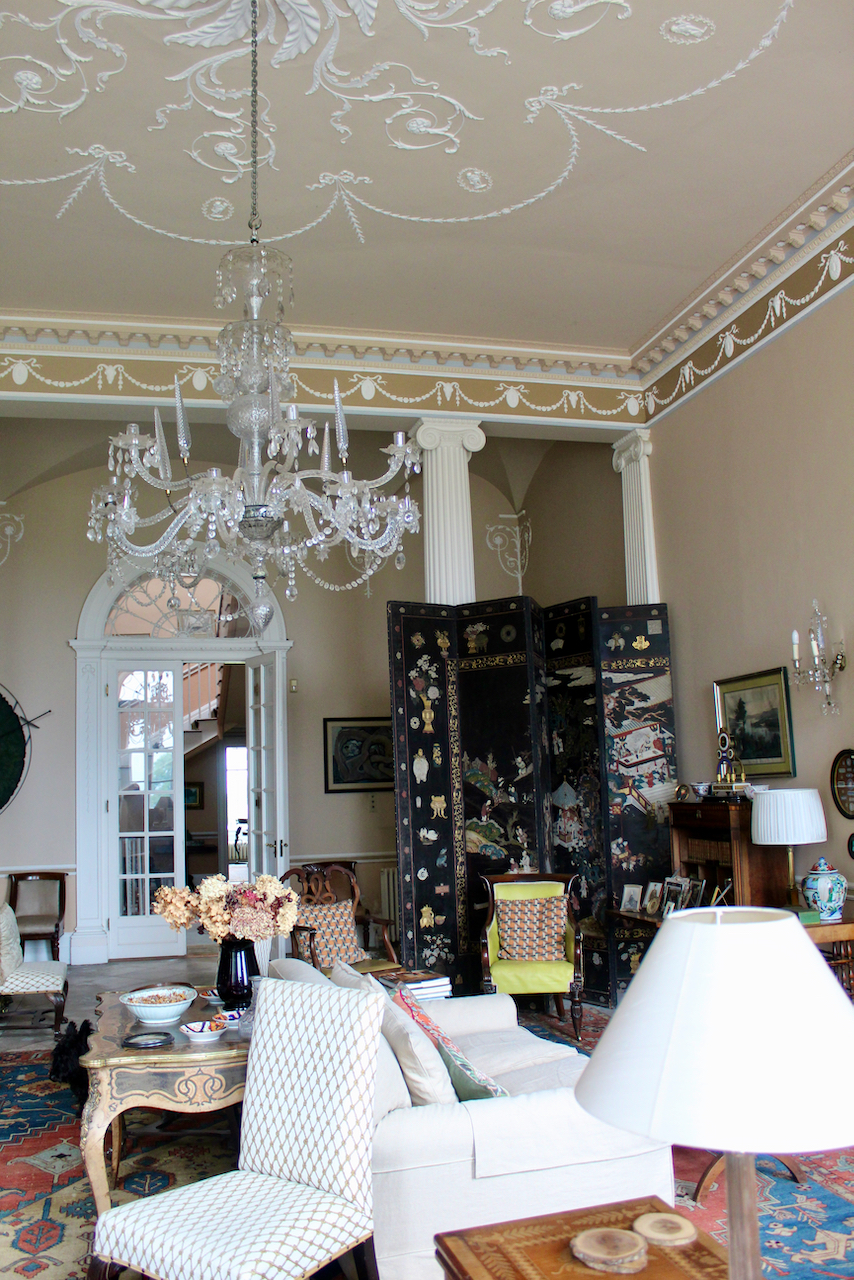
Beyond the stair hall is the central drawing room, which was formerly the entrance hall. It has an Ionic columnar screen, and a decorative plasterwork cornice – a frieze of ox skulls and swags.
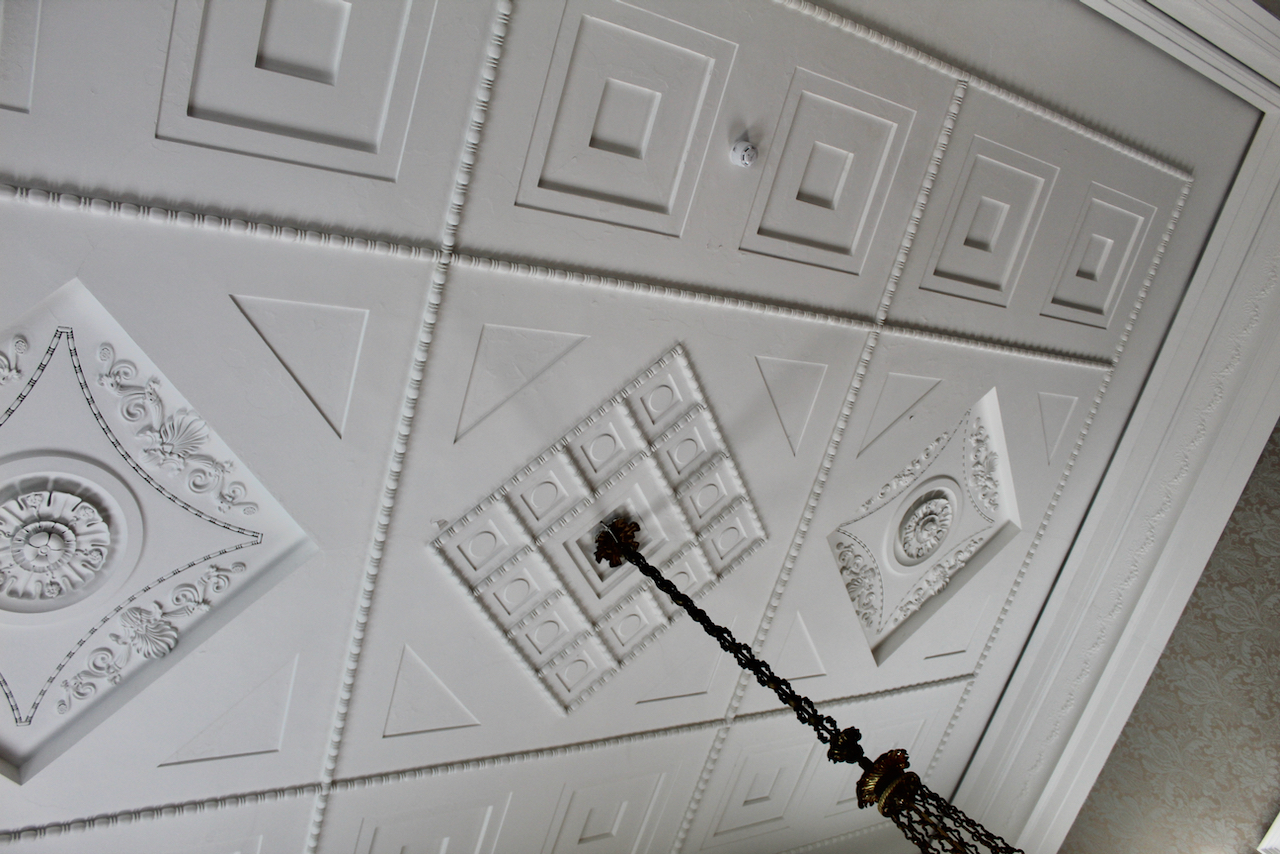
The ceiling plasterwork and columns in the drawing room are by G. Jackson and Sons (established 1780) of London, who also made the decoration in the stair hall. Sir Charles explained to us that it would have been made not freehand but from a mould.
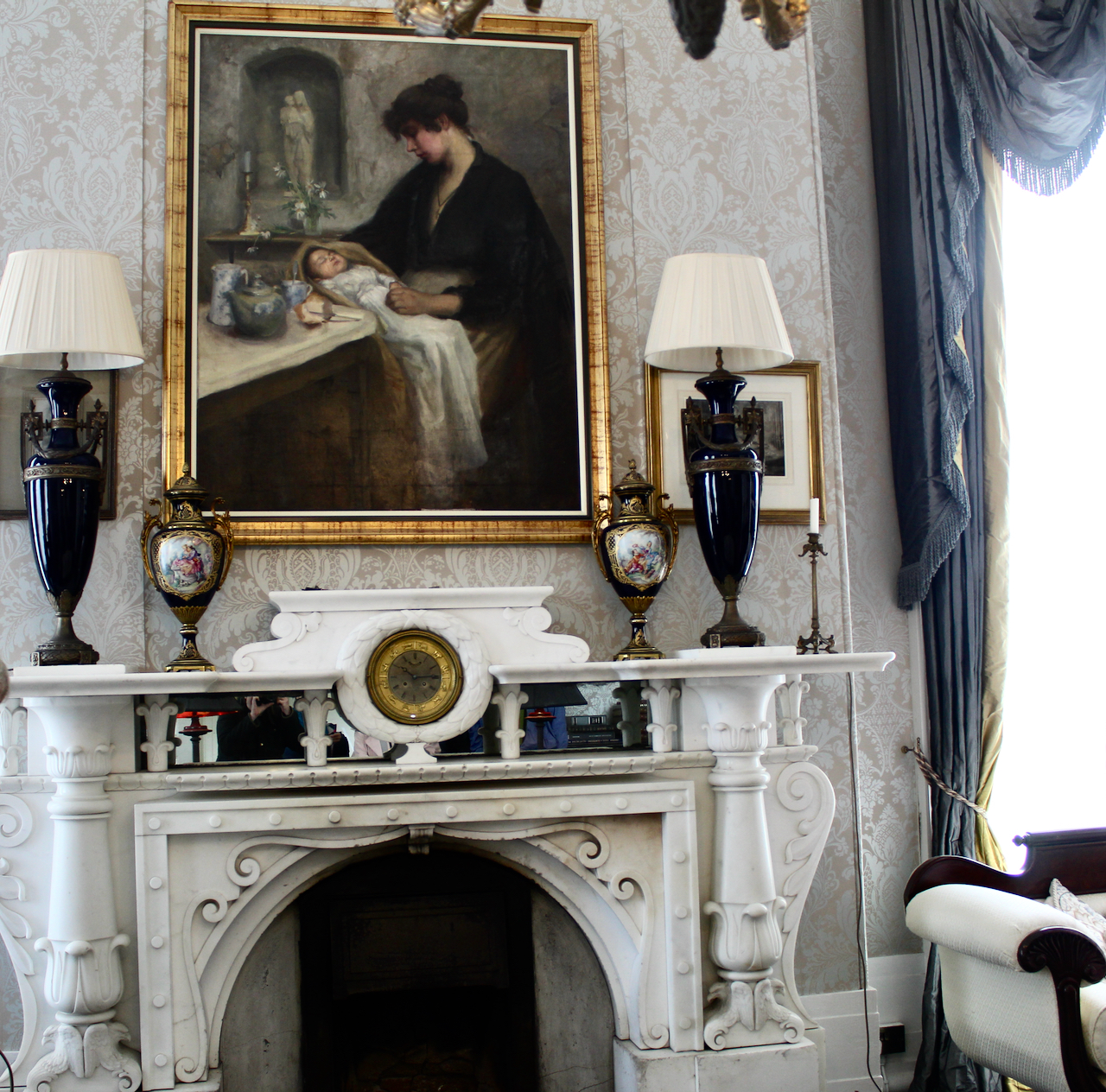
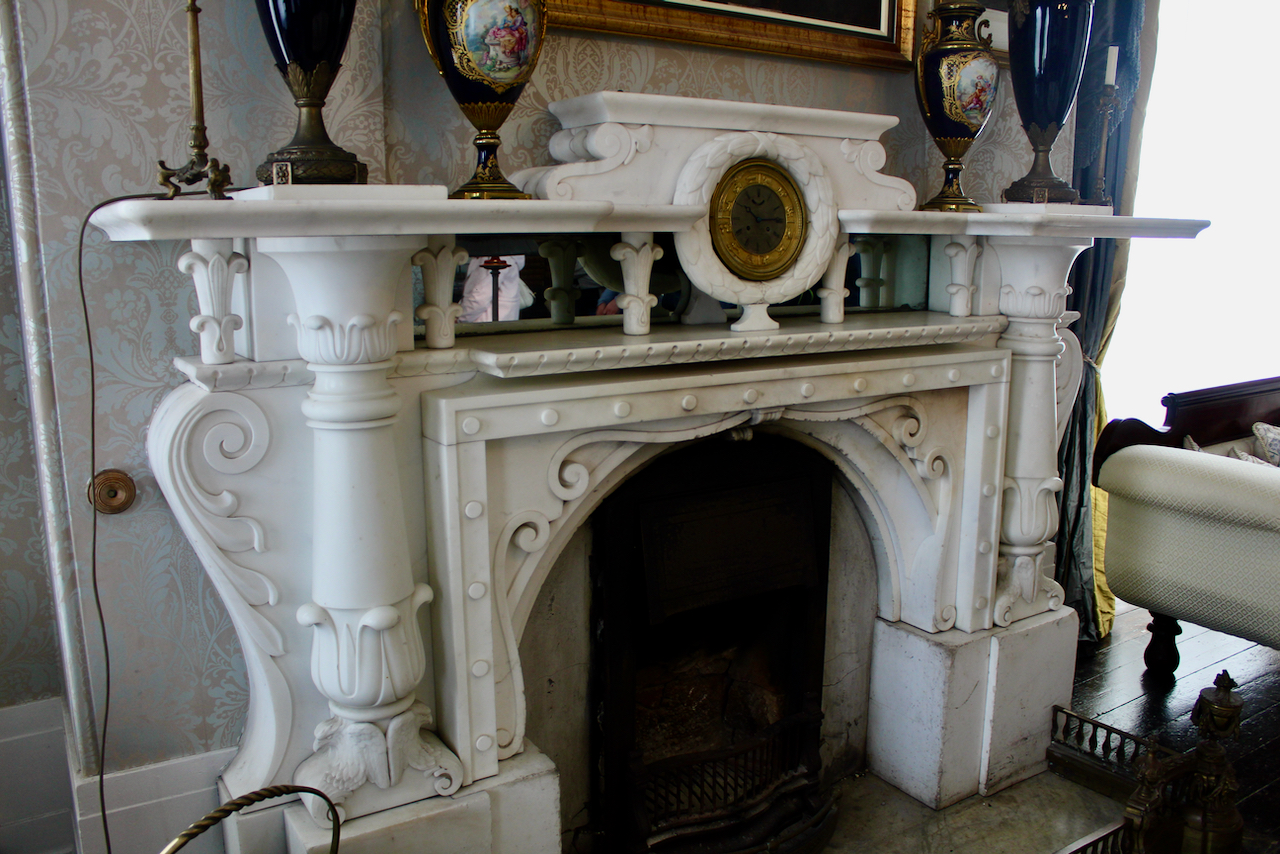
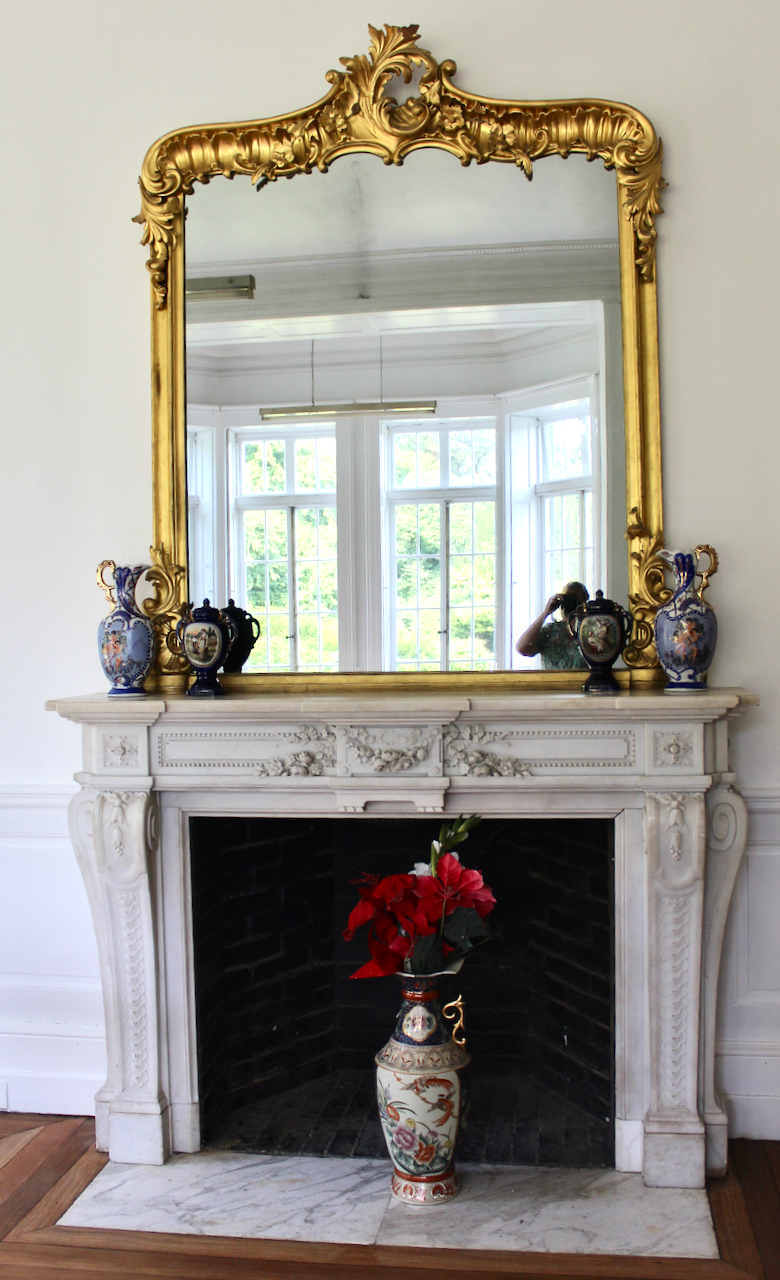
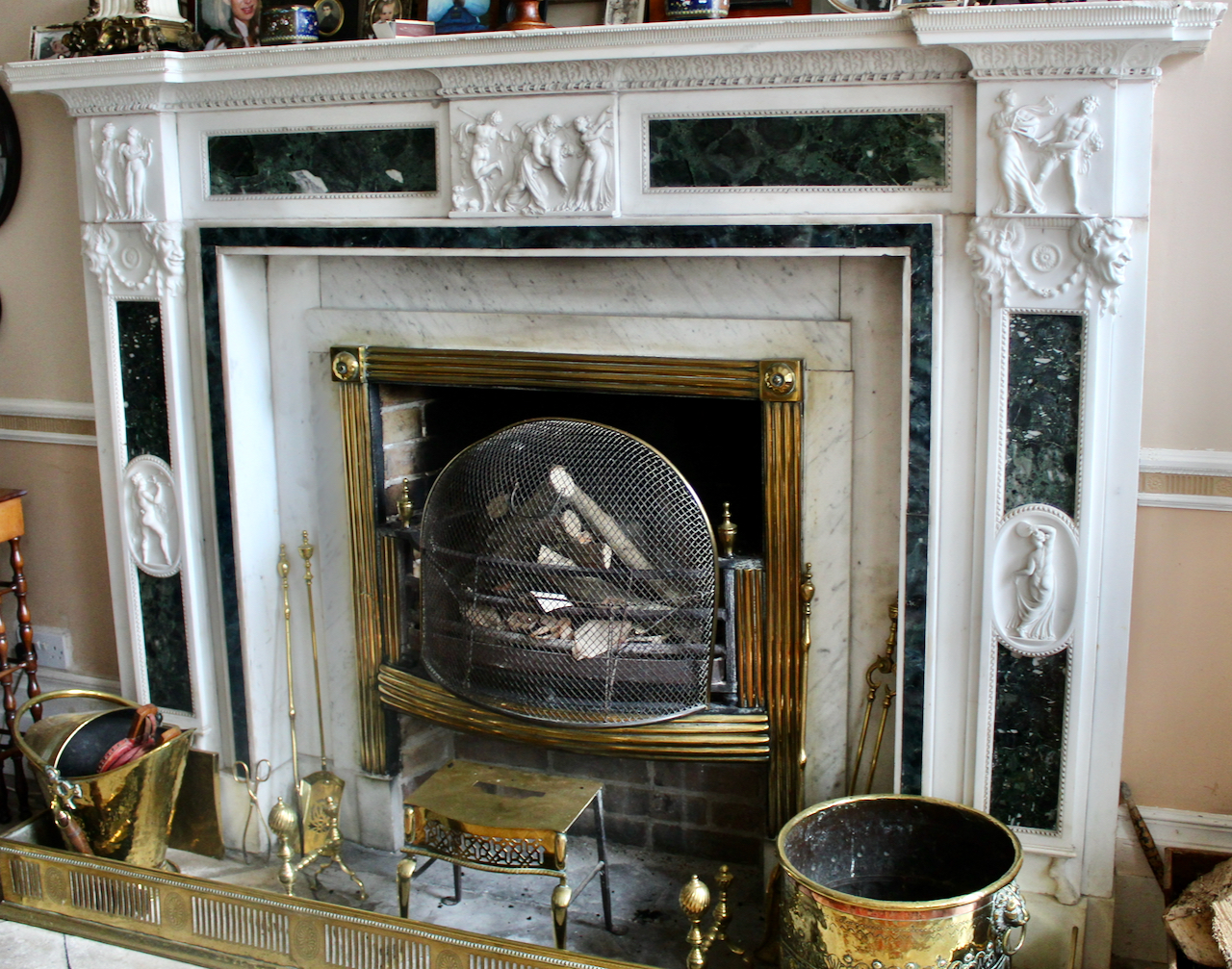
The chimneypiece is similar to one in 52 St. Stephen’s Green, the home of the Office of Public Works. One can tell it is old, Sir Charles told us, by running one’s hand over the top – it is not smooth, as it would be if it were machine-made. According to Symes, three original marble mantelpieces survive from before the fire, and the one in the drawing room was brought from a Dublin house of Adelaide Sidney Vance’s family, probably 18 Rutland Square (now Parnell Square), in the late nineteenth century. The Vance chimneypiece is of Carrara marble with green marble insets and carved panels of the highest quality. Christine Casey has identified the designs as derived from the Borghese vase, a vase now in the Louvre museum, which was sculpted in Athens in the 1st century BC. [12]
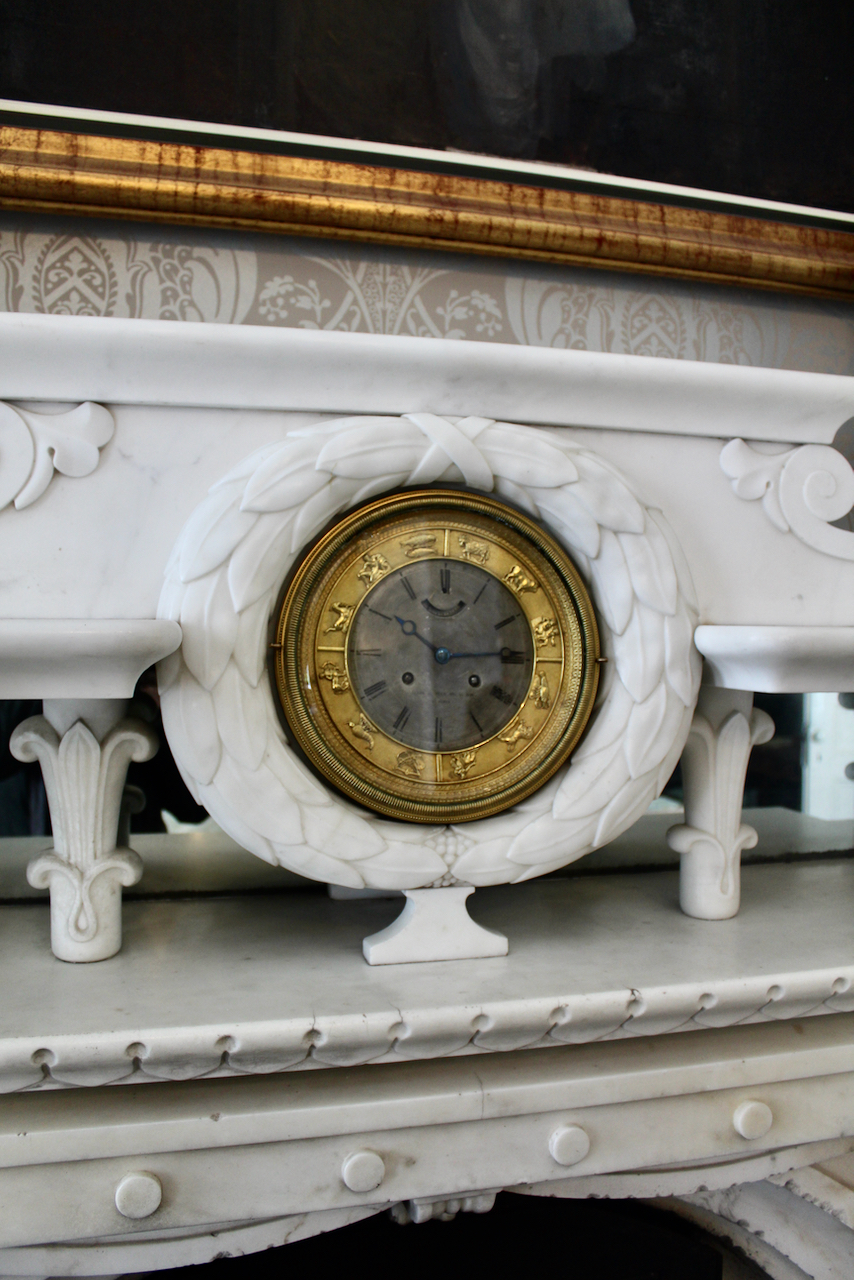
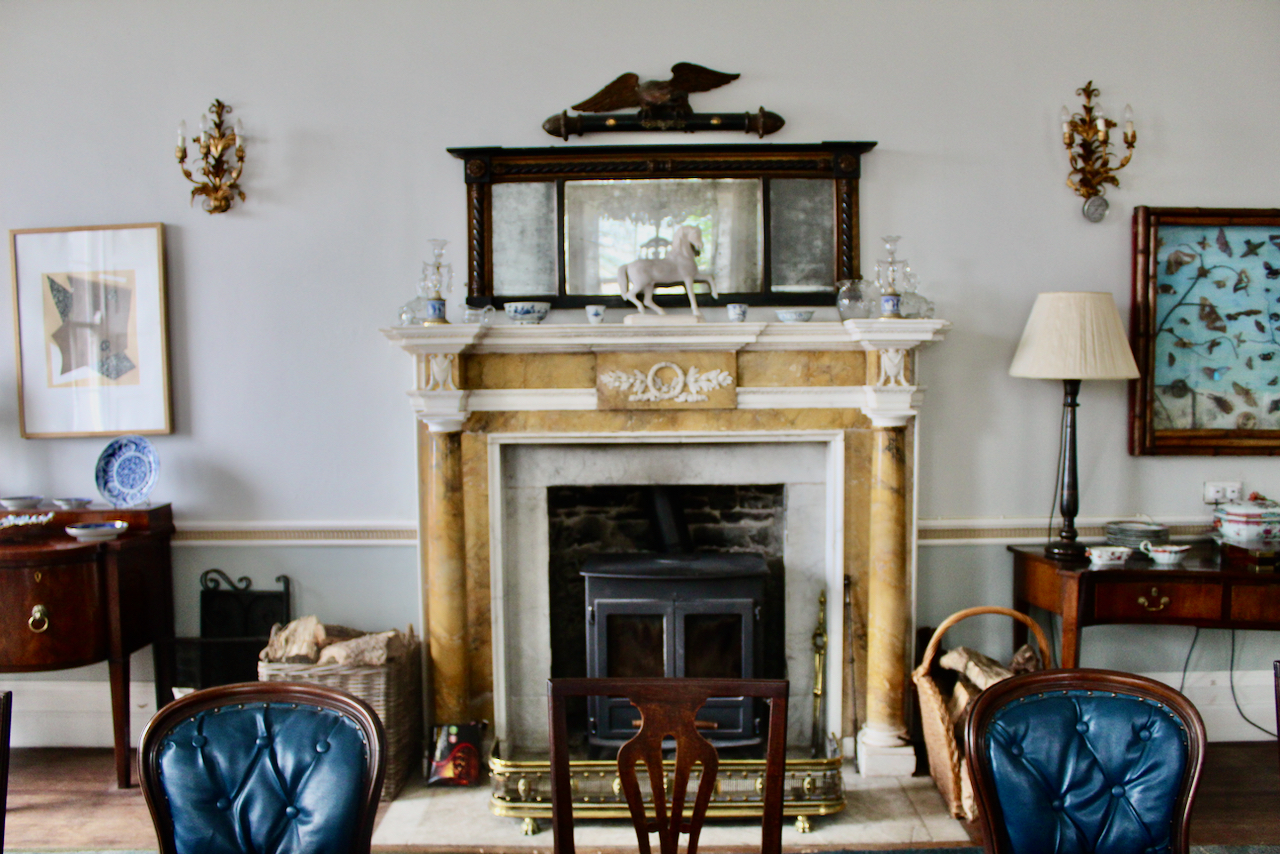
The chimneypieces in the dining room and former drawing room are of carved statuary marble with columns and are inset with Brocatello marble (a fine-grained yellow marble) from Siena. [13] The dining room has another splendid ceiling. The chimmeypiece in the dining room has a central panel of a wreath and oak leaves with urns above the columns.
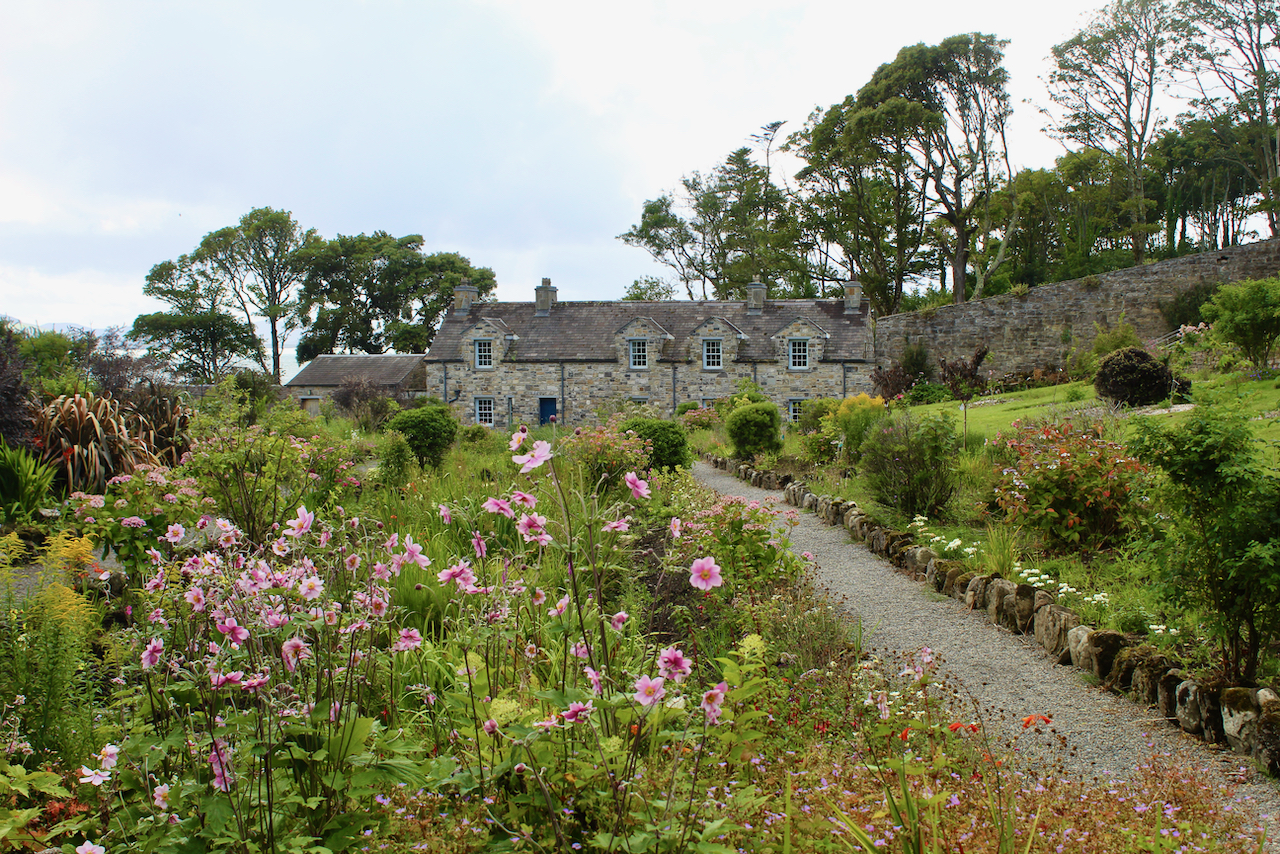
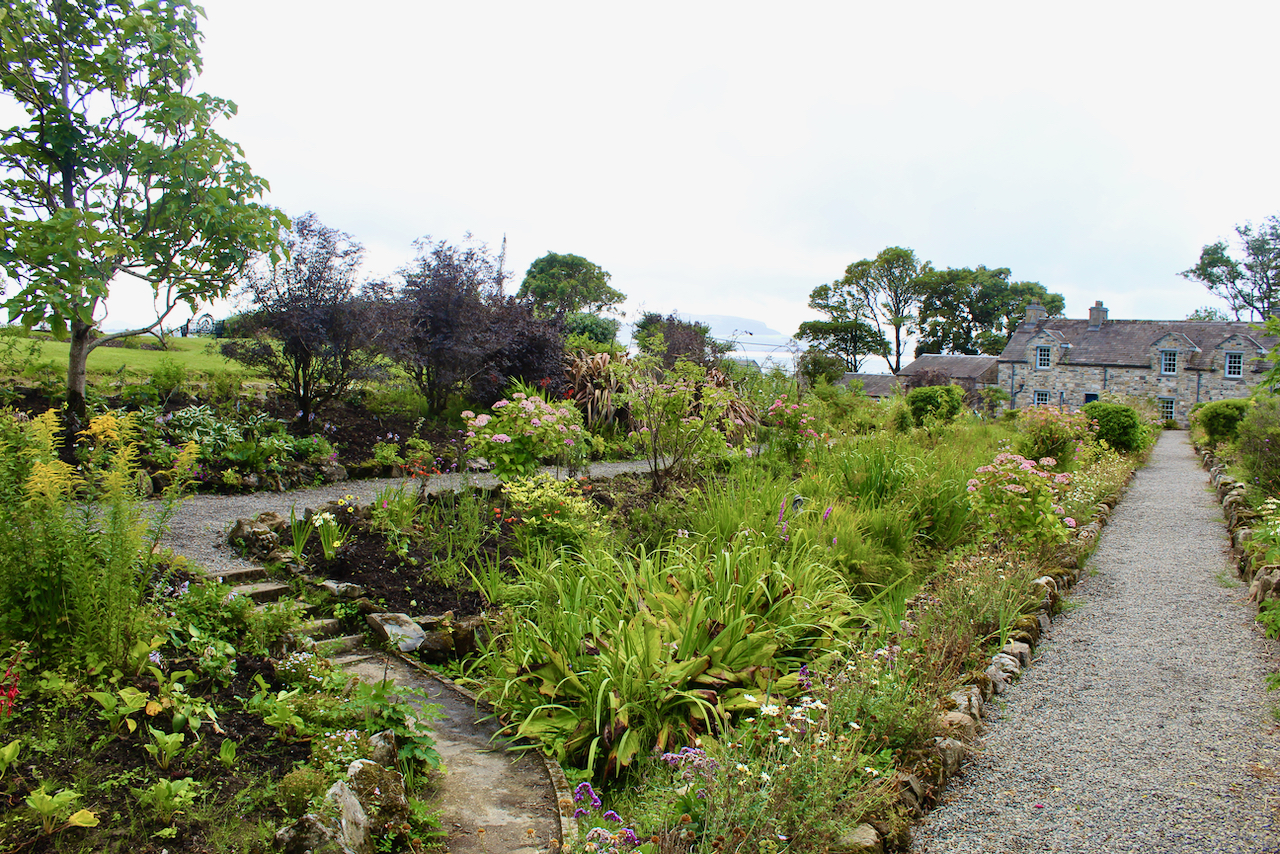
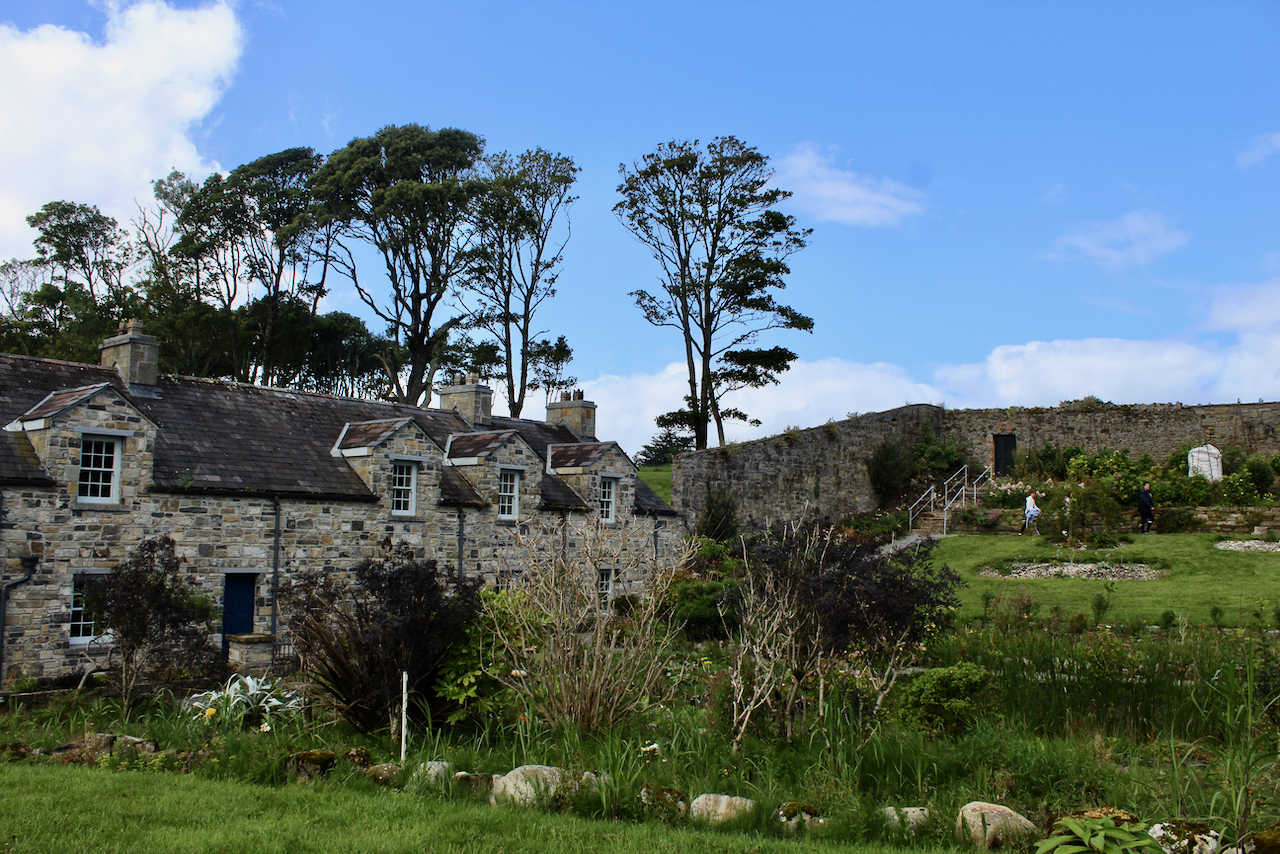
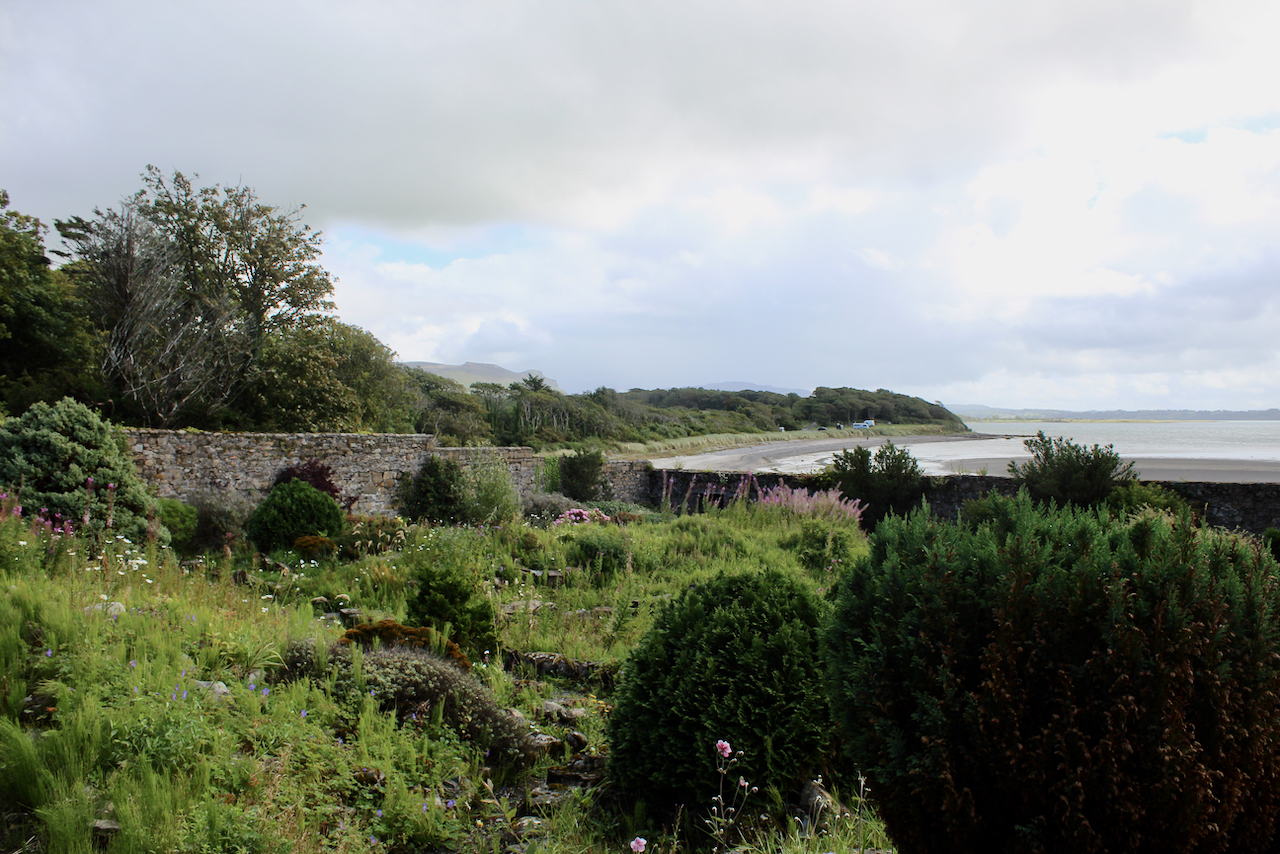
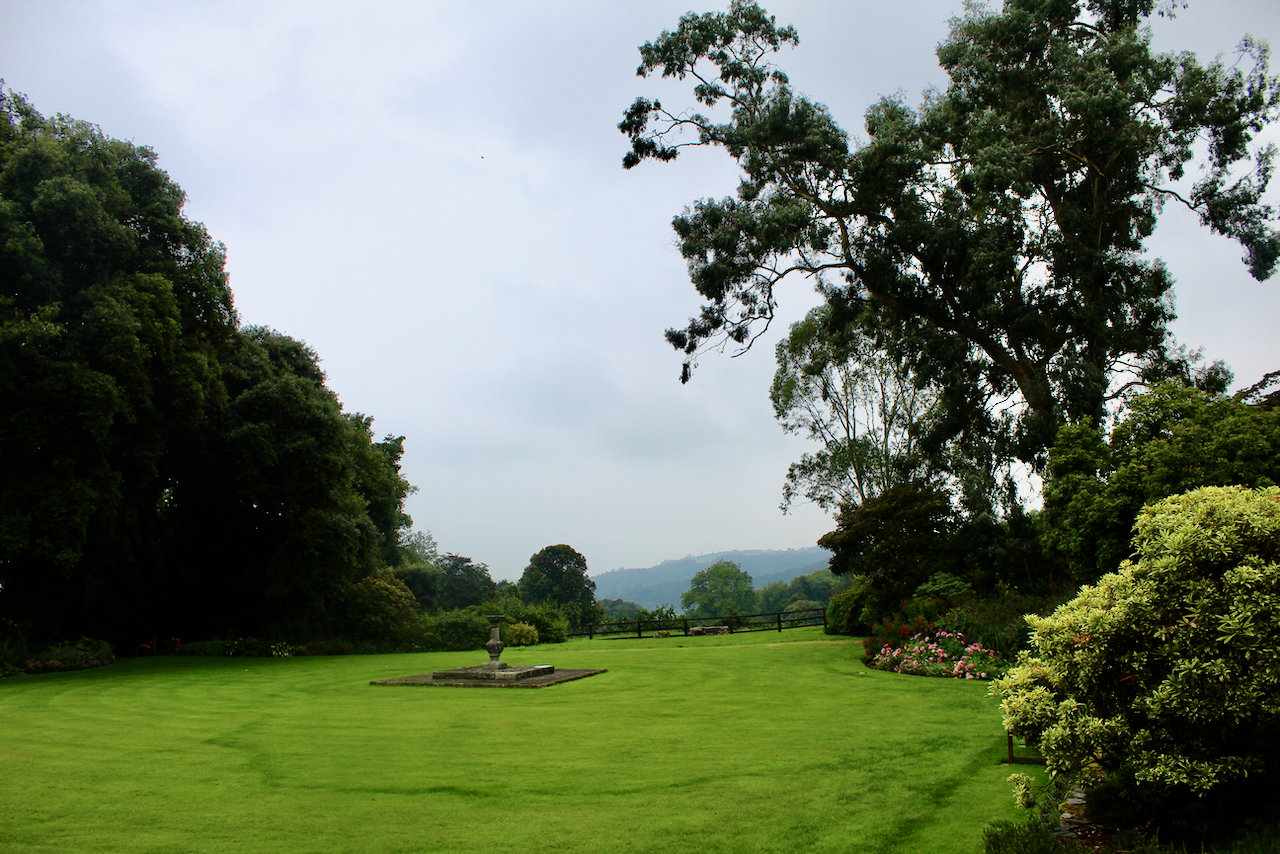
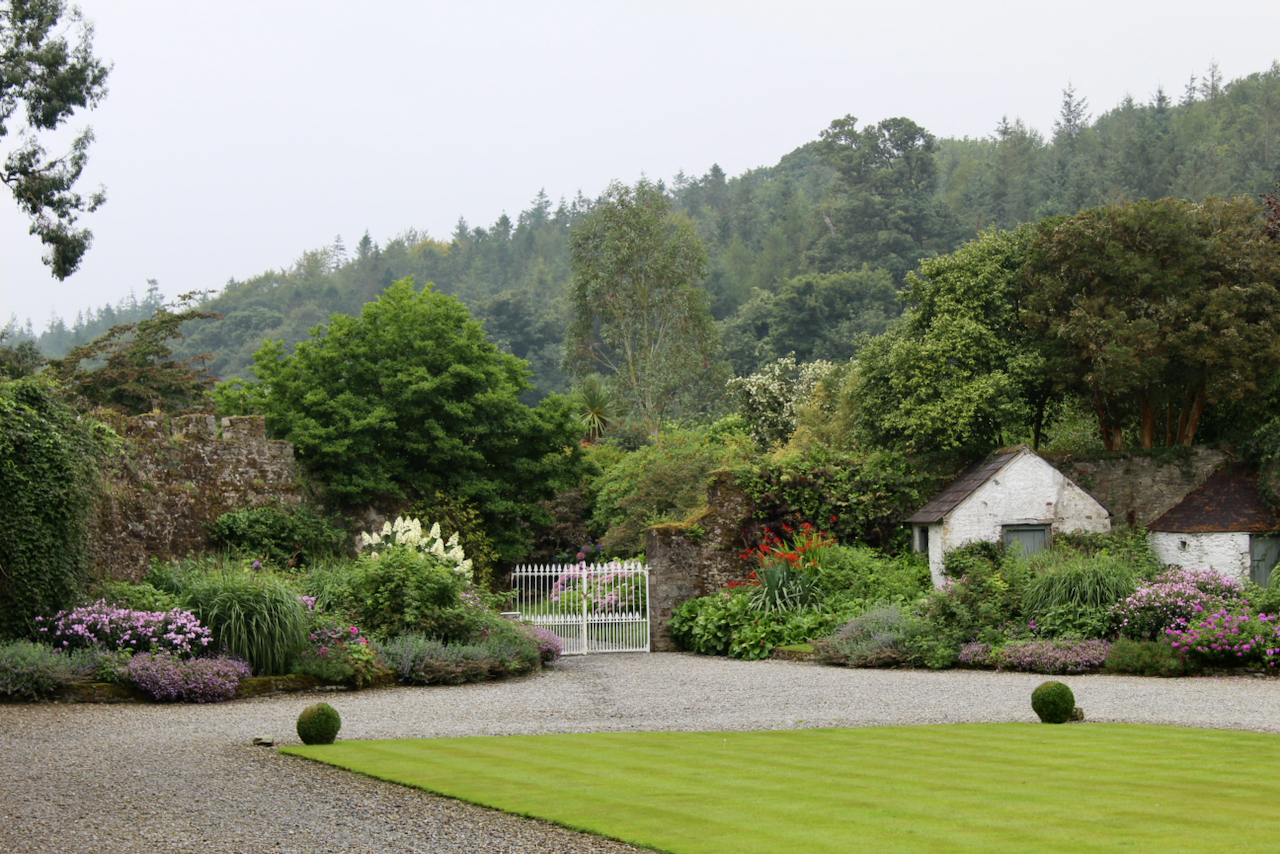
After our house tour, we had the gardens to explore. The gardens are open to the public on certain days of the year [14]. They were laid out in the middle of the nineteenth century but there are vestiges of earlier periods in walls, gateways and streams. Sir Charles’s mother expanded the gardens and brought her expertise to the planting.
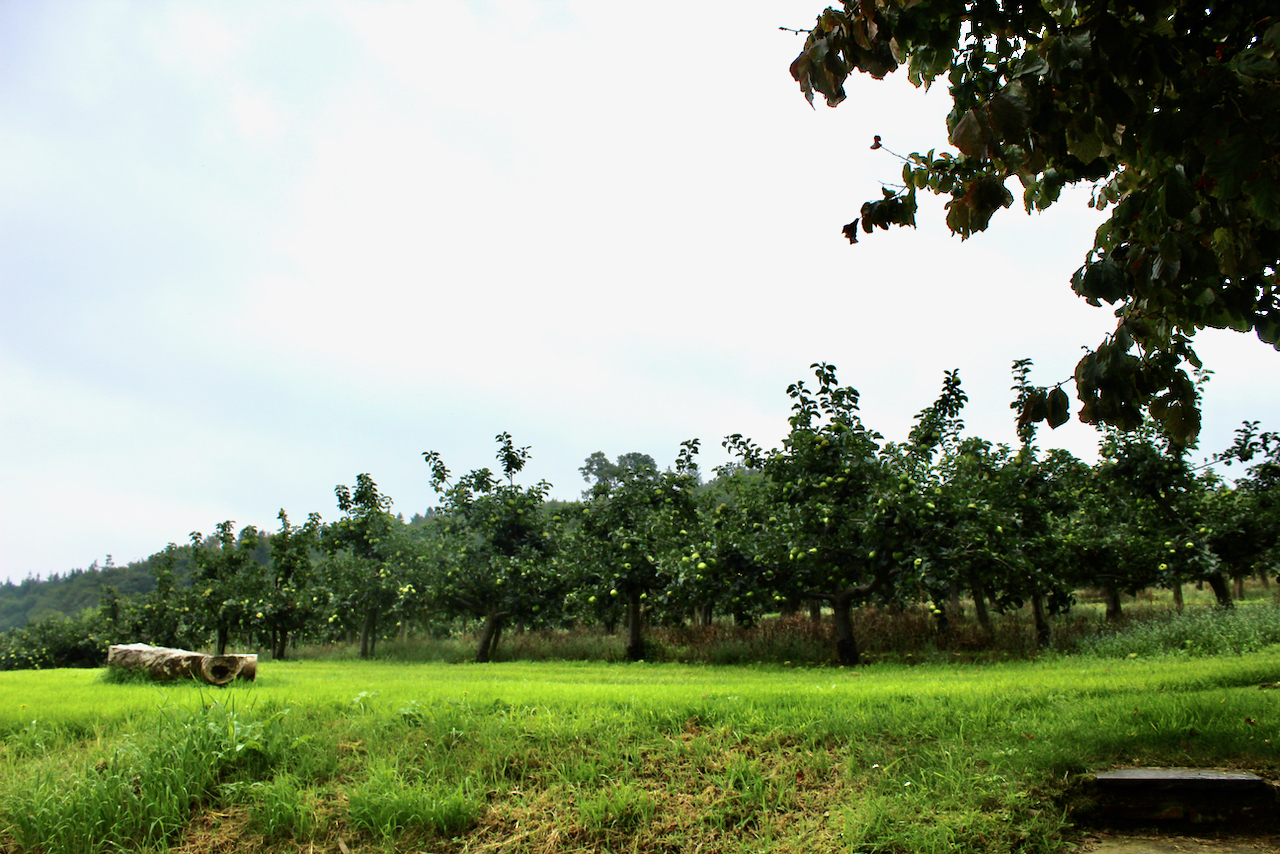
To the west of the house is an orchard of pears and Bramley apples.
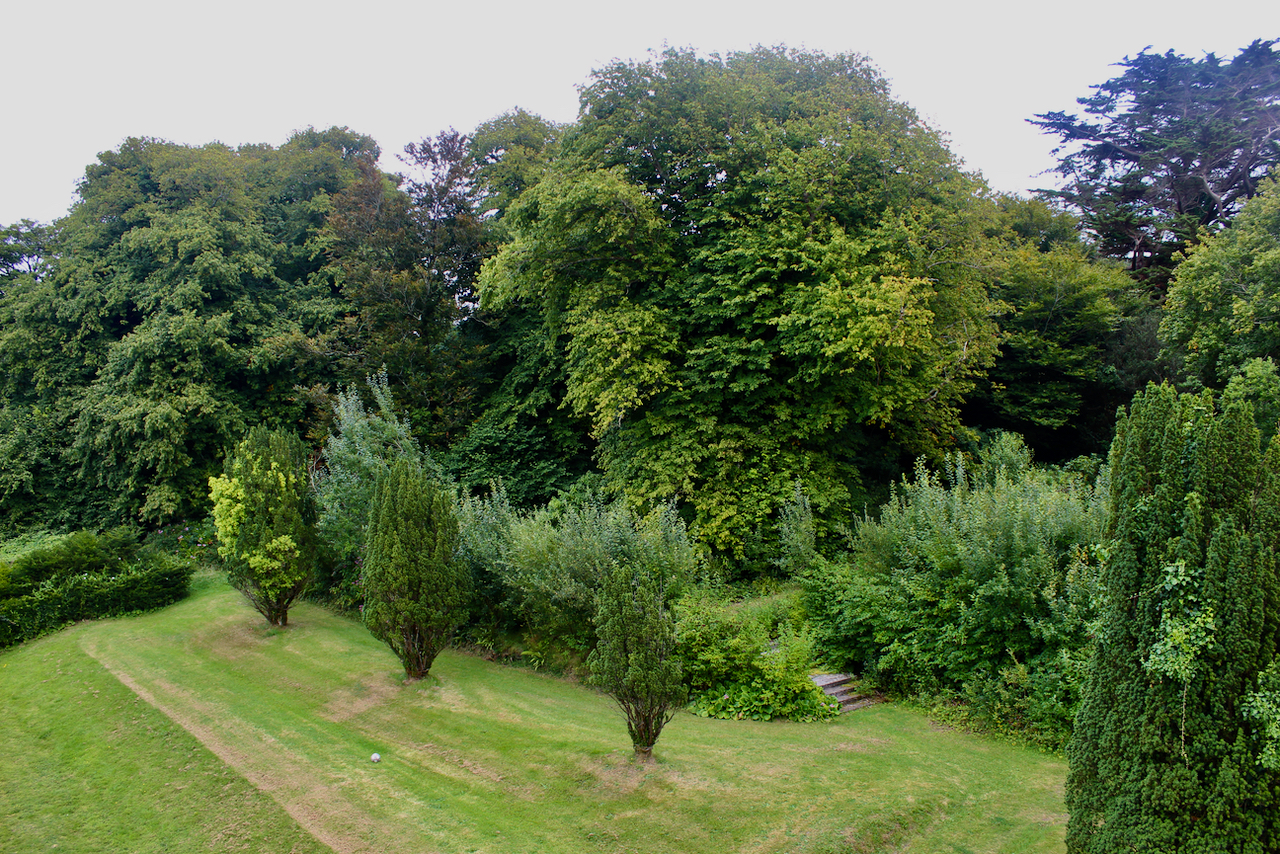
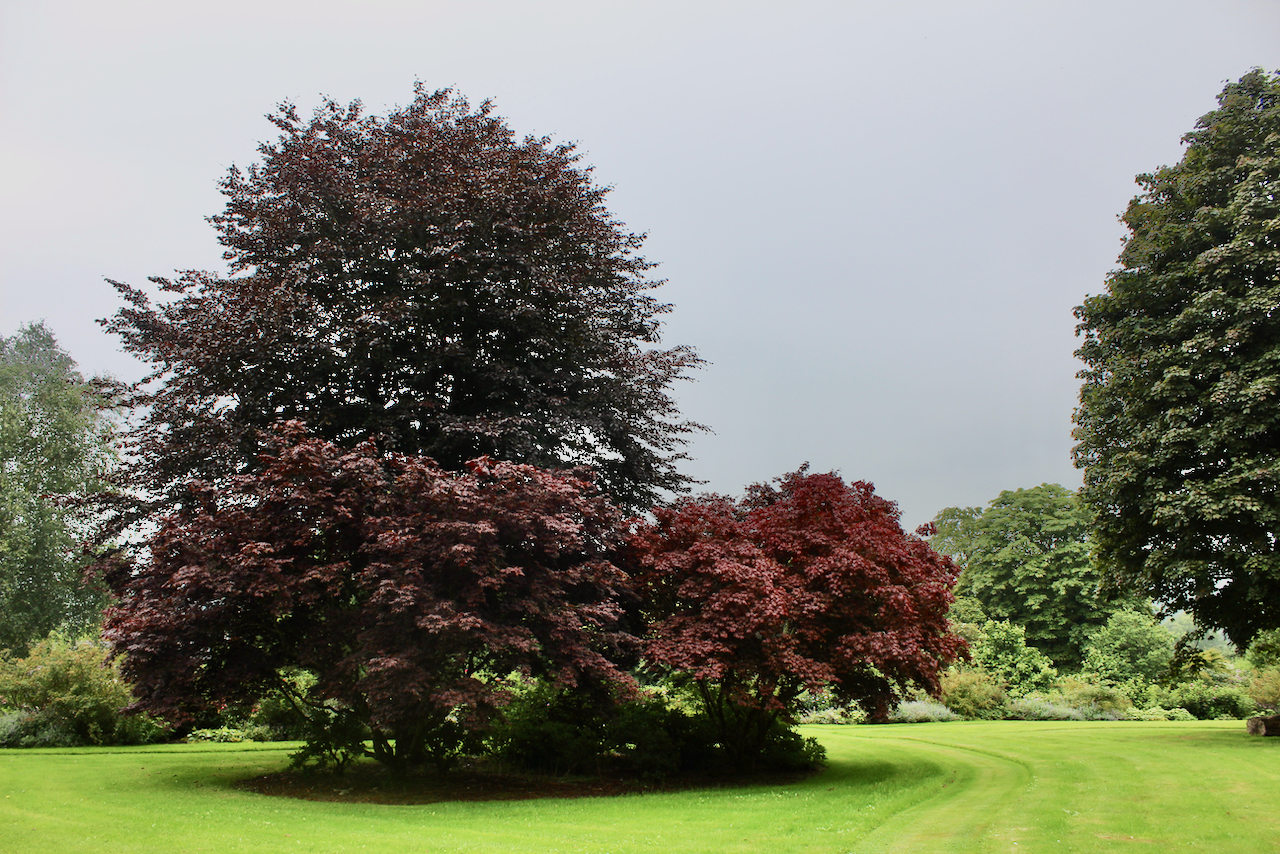
One wends one’s way up the hill across picturesque lawns, the Upper Pleasure Gardens. The paths take one past weeping ash and beeches, a Montezuma pine and rhododendrons.
Our energy was flagging by the end of our walk around the gardens so unfortunately I have no pictures of the sunken garden, which is on the south side of the house, overlooking the view towards Dromana House.
[5] p. 56. Mark Bence-Jones. A Guide to Irish Country Houses (originally published as Burke’s Guide to Country Houses volume 1 Ireland by Burke’s Peerage Ltd. 1978). Revised edition 1988, Constable and Company Ltd, London.

































































































 Irish Historic Houses


