Places to visit and stay in County Longford, Leinster

On the map above:

blue: places to visit that are not section 482

purple: section 482 properties

red: accommodation

yellow: less expensive accommodation for two

orange: “whole house rental” i.e. those properties that are only for large group accommodations or weddings, e.g. 10 or more people.

green: gardens to visit

grey: ruins

As well as places to visit, I have listed separately places to stay, because some of them are worth visiting – you may be able to visit for afternoon tea or a meal.

For places to stay, I have made a rough estimate of prices at time of original publication:

€ = up to approximately €150 per night for two people sharing (in yellow on map);

€€ – up to approx €250 per night for two;

€€€ – over €250 per night for two.

Places to visit in County Longford:

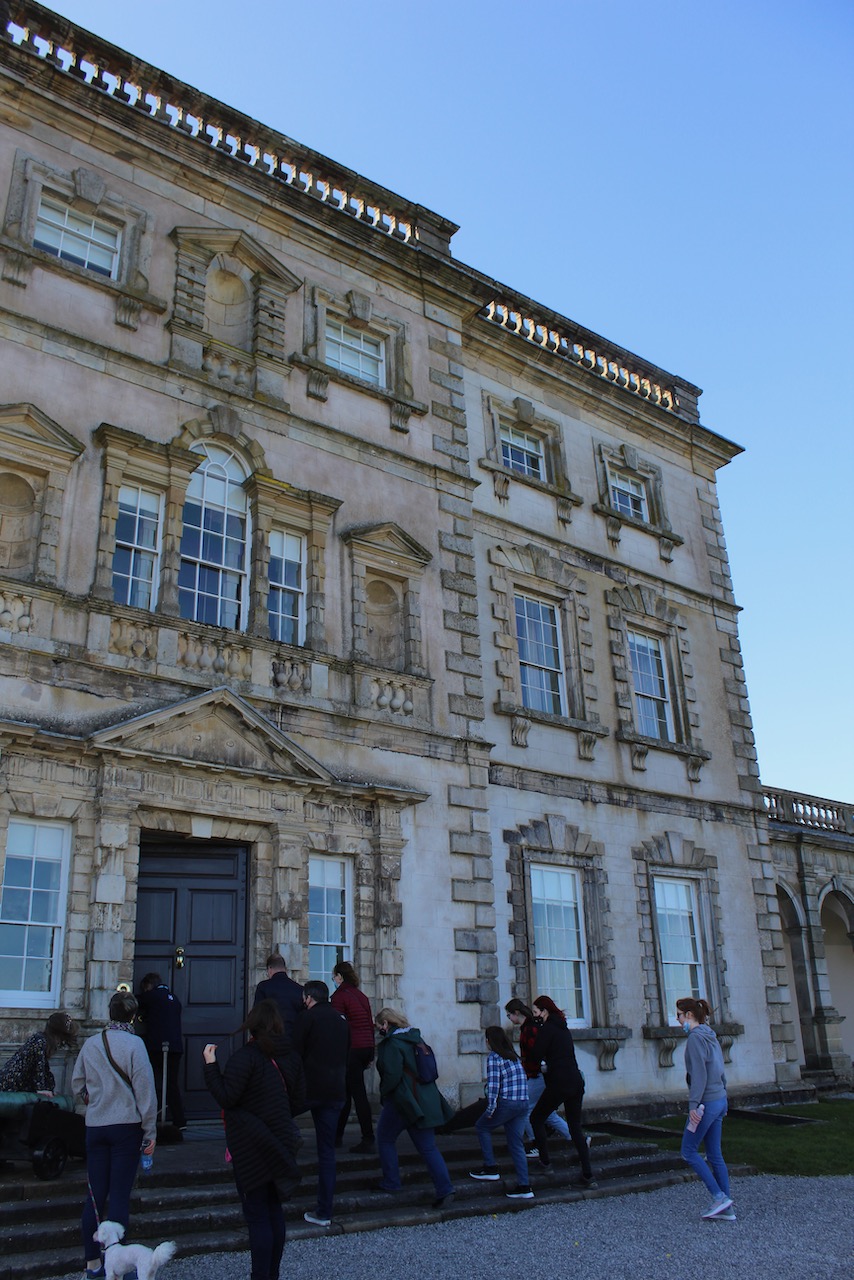
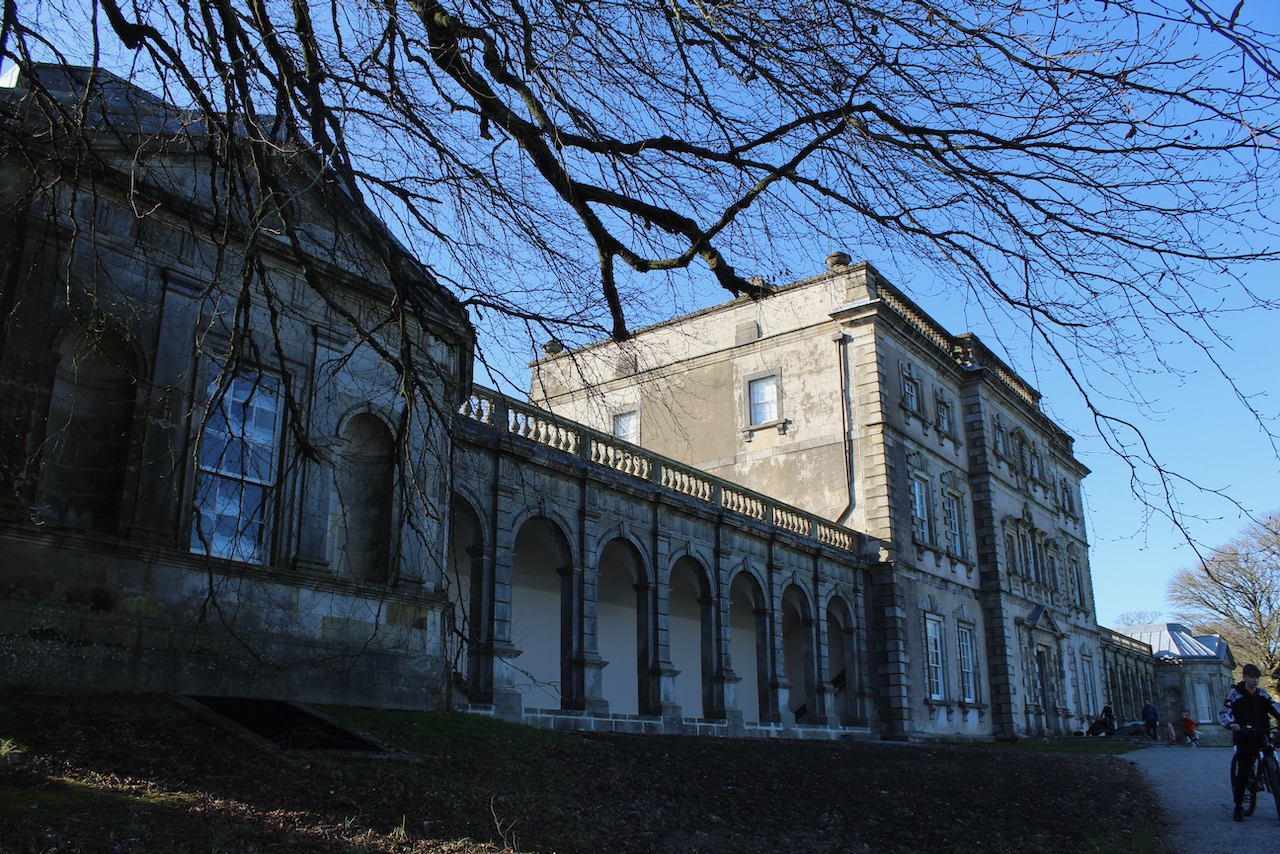
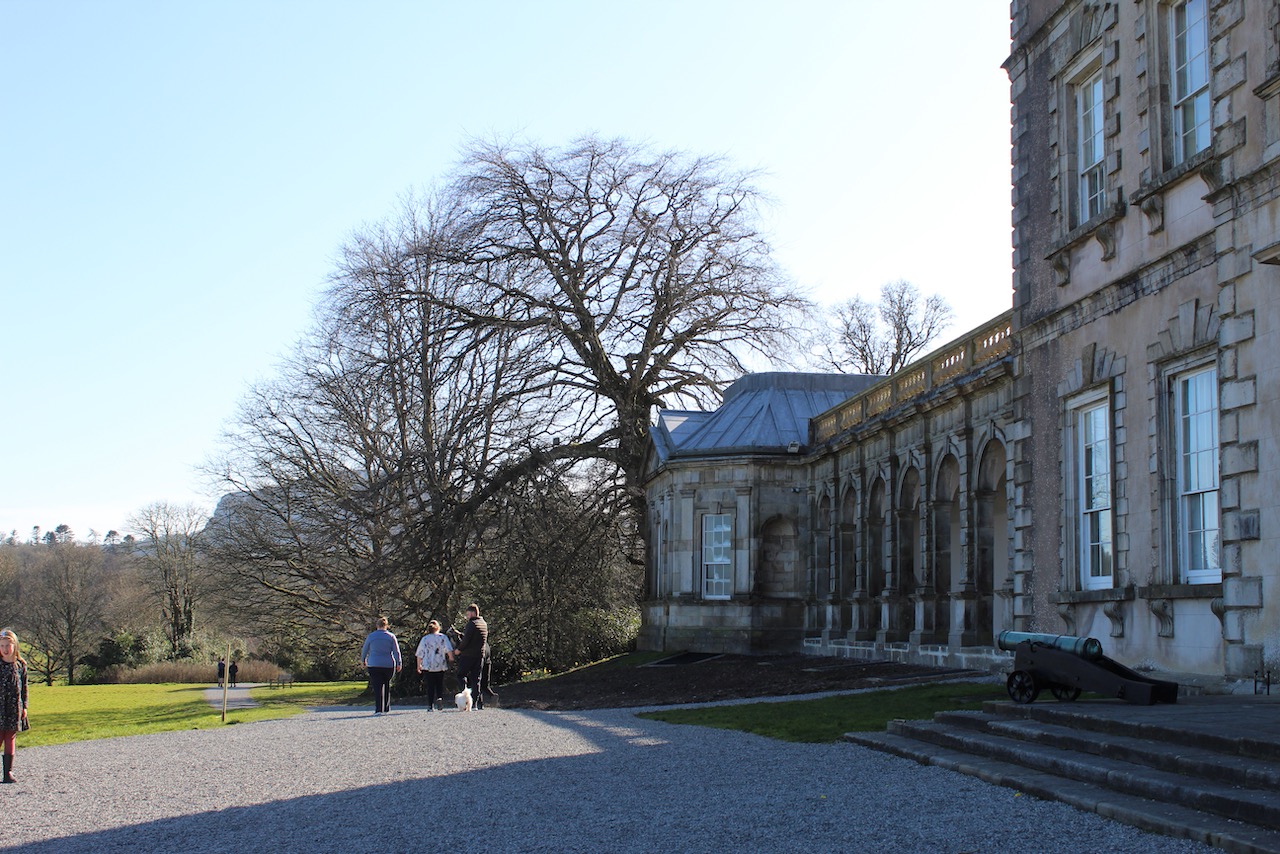
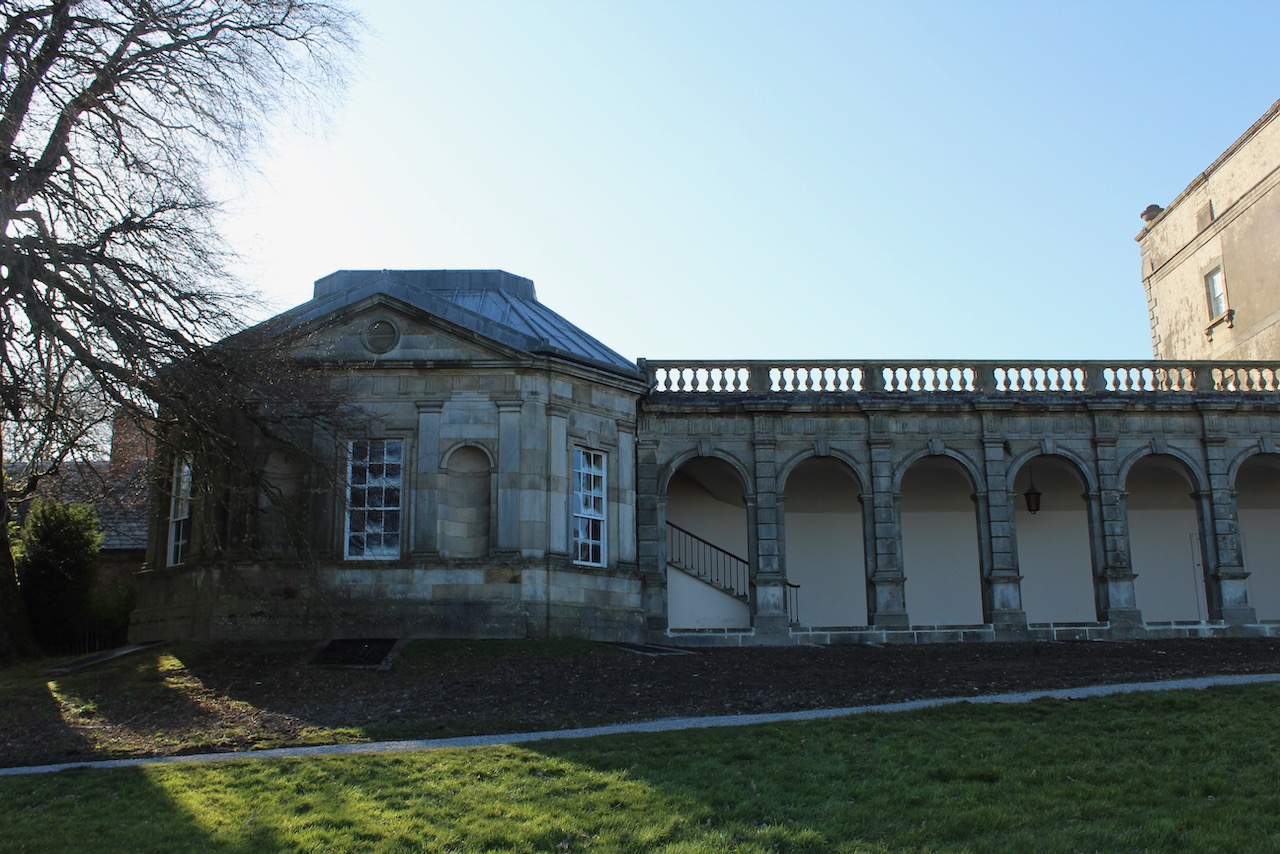
1. Castlecor House, County Longford, open by previous arrangement.

2. Maria Edgeworth Visitor Centre, Longford, County Longford.

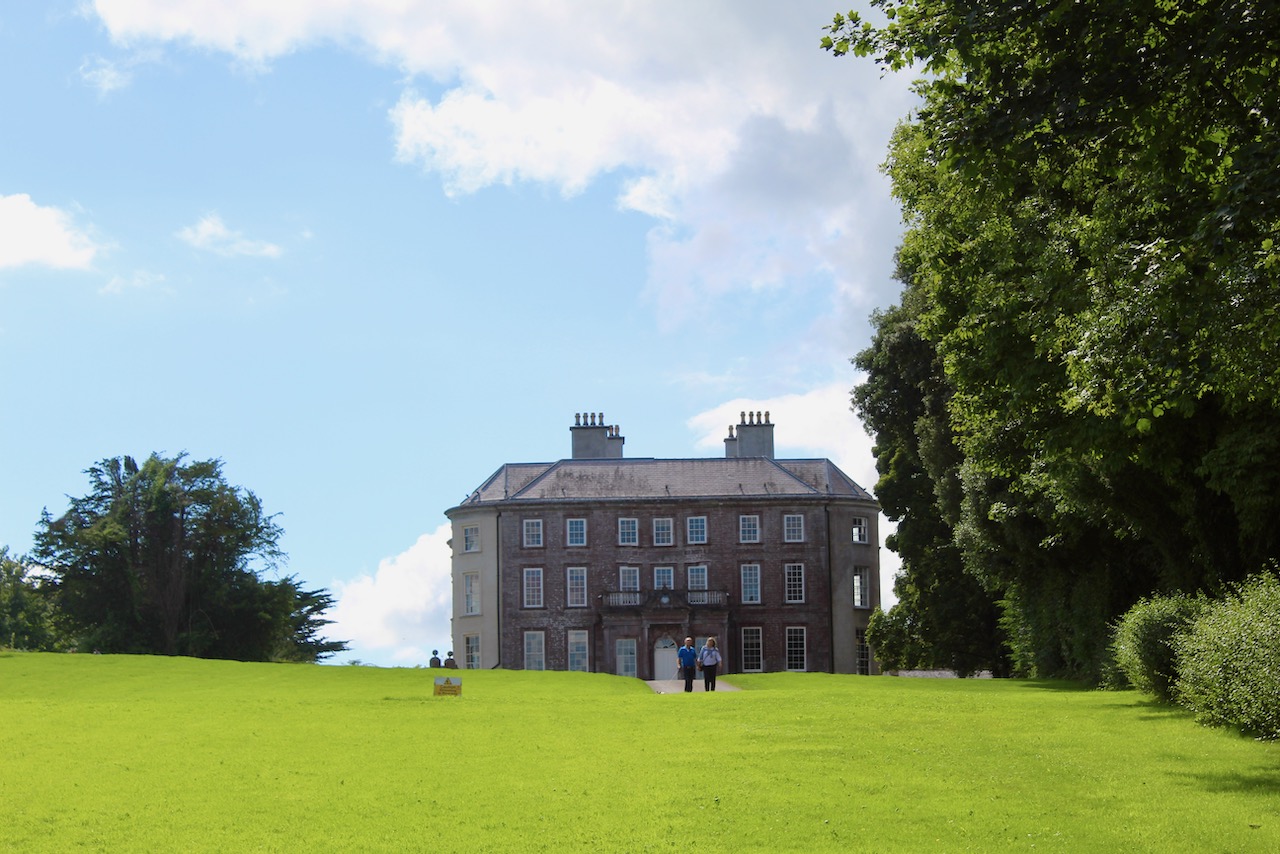
3. Moorhill House, Castlenugent, Lisryan, Co. Longford – section 482

Places to stay, County Longford:

1. Castlecor House, County Longford

2. Newcastle House Hotel, Ballymahon, County Longford.

3. Viewmount House, Longford

donation

Help me to pay the entrance fee to one of the houses on this website. This site is created purely out of love for the subject and I receive no payment so any donation is appreciated!

€15.00

Places to visit in County Longford:

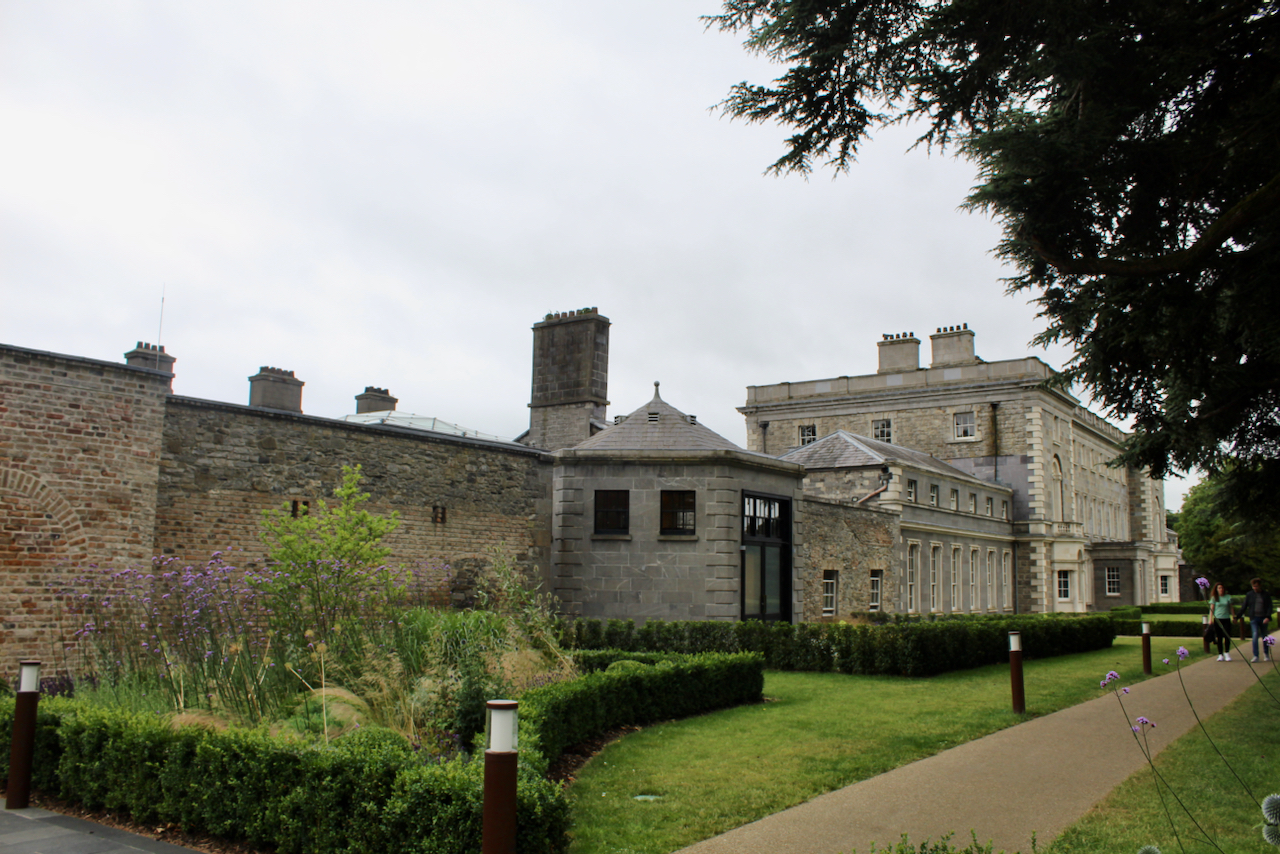
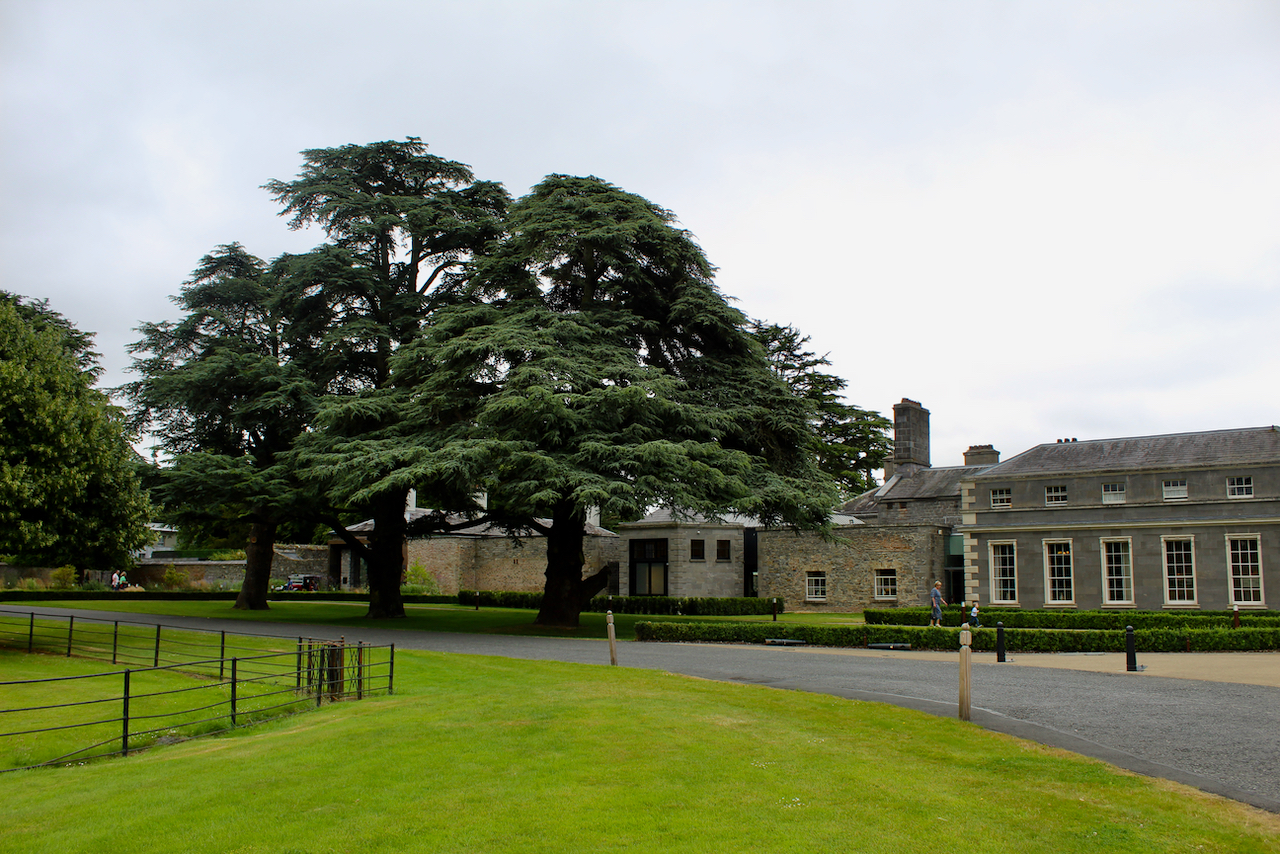
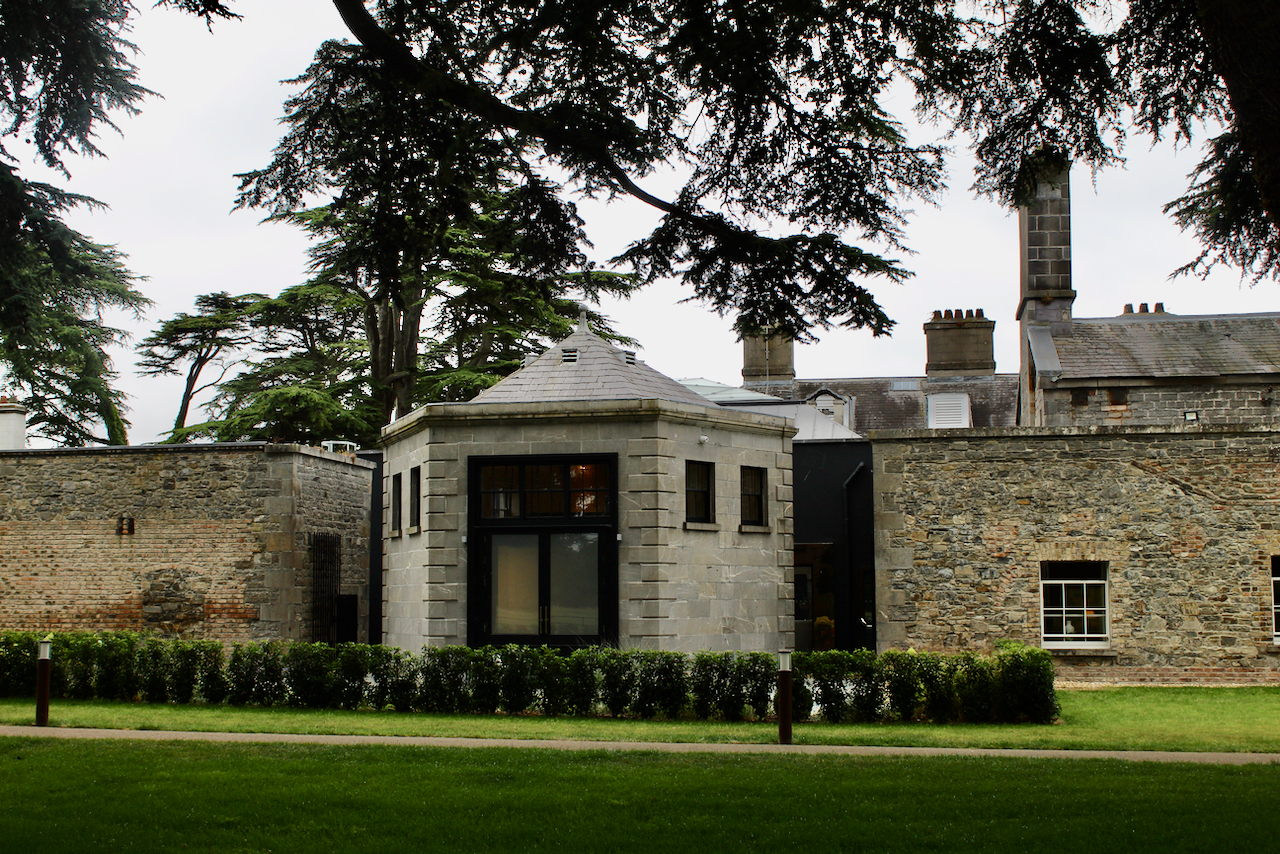
1. Castlecor House, County Longford, open by previous arrangement:

https://castlecorhouse.com/

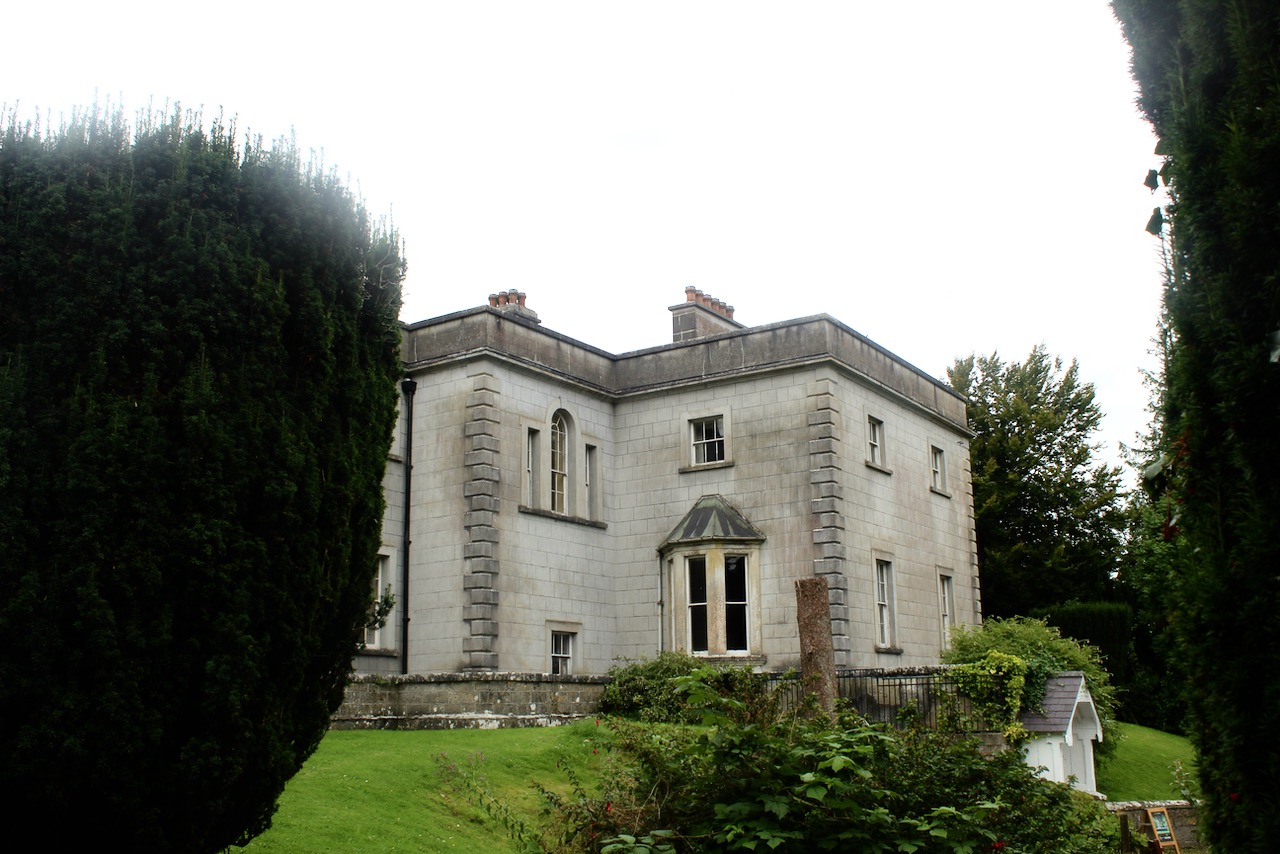
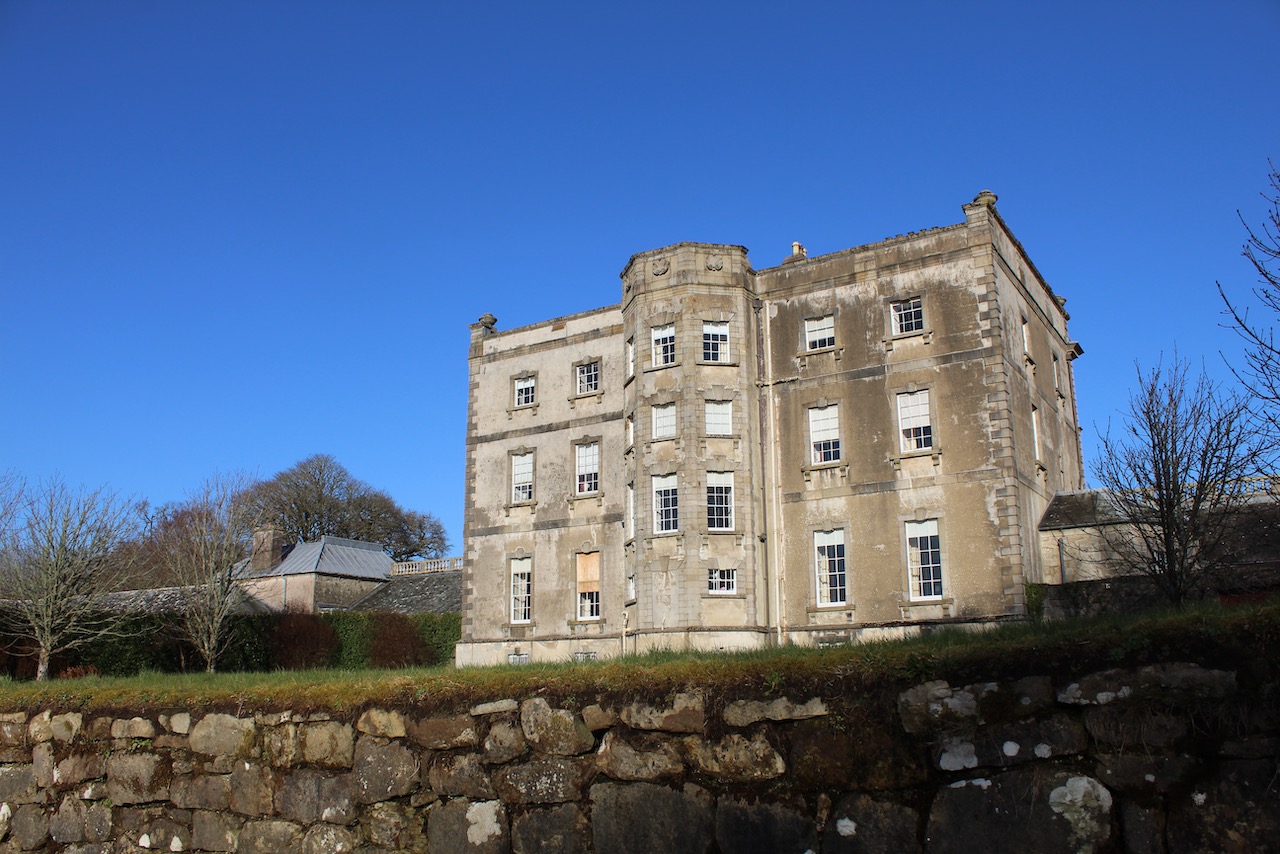
Castlecor House, County Longford, photograph from the National Inventory of Architectural Heritage [1]

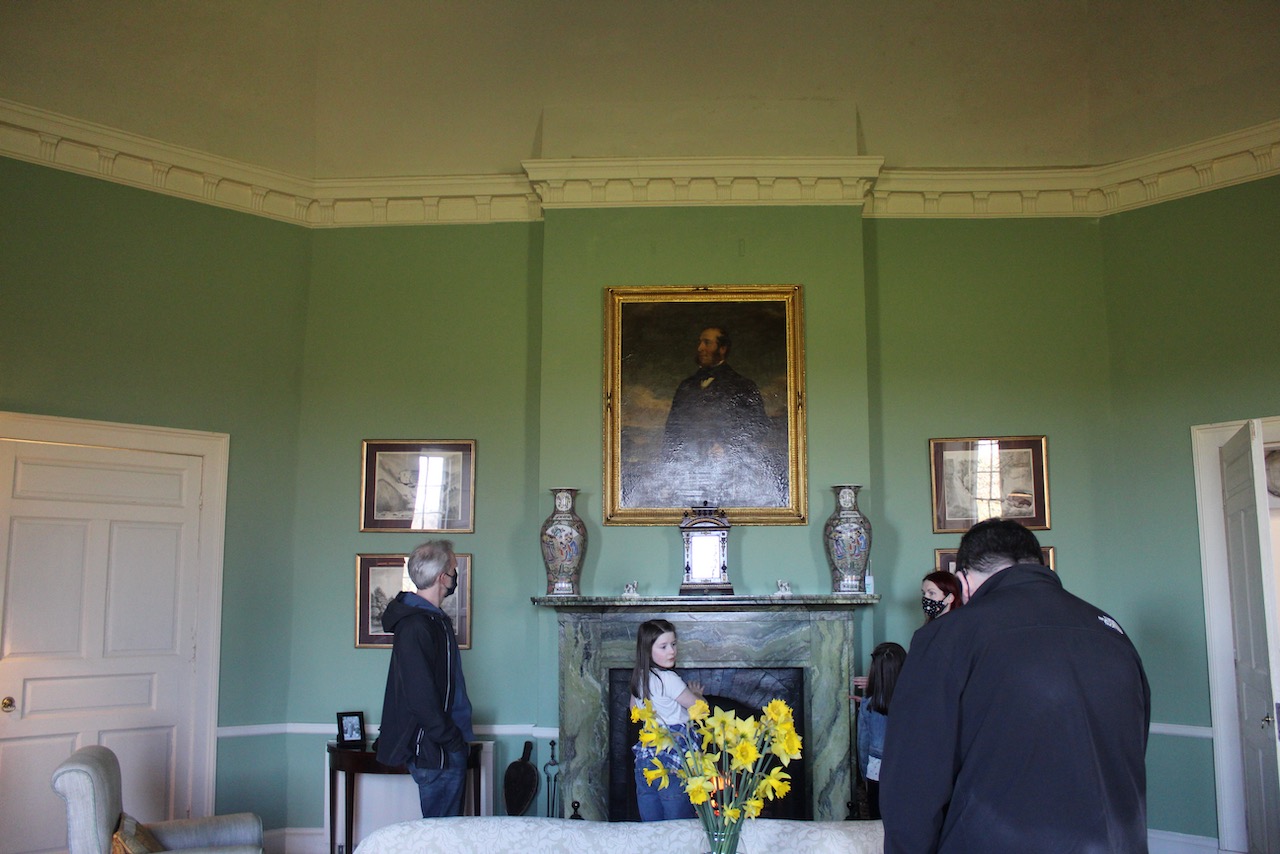
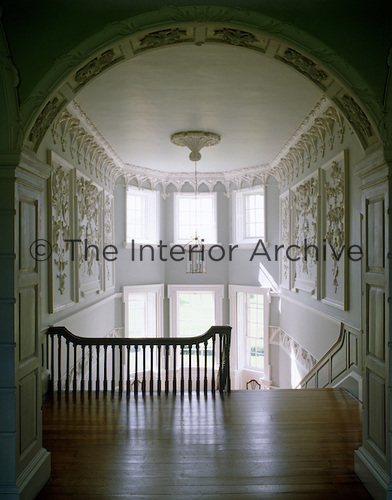
I’ve been looking forward to staying in Castlecor house, after seeing a photograph of its incredible octagonal room.

Castlecor House, County Longford, photograph from the National Inventory of Architectural Heritage [1]

The website tells us:

The construction of this magnificent residence, as it stands today, spanned 300 years, originally built in the mid 1700’s as a Hunting Lodge with additions in the 19th & 20th century.

The website continues: “It was built by the Very Revd. Cutts Harman (1706 – 1784), son of the important Harman family of nearby Newcastle House [which offers accommodation]. He was Dean of Waterford cathedral from 1759 and was married to Bridget Gore (1723-1762) from Tashinny [Tennalick, now a ruin, which passed from the Sankey family to the Gore family by the marriage of Bridget’s mother Bridget Sankey to George Gore, son of Sir Arthur Gore, 1st Baronet of Newtown Gore, County Mayo] in c. 1740.

The National Inventory of Architectural Heritage (www.buildingsofIreland.ie) gives the building an unusually long appraisal which explains the unusual building:

It was originally built as a symmetrical two-storey block on octagonal-plan with short (single-room) projecting wings to four sides (in cross pattern on alternating sides), and with tall round-headed window openings between to the remaining four walls. The single wide room to the octagon at first floor level has an extraordinary central chimneypiece (on square-plan) with marble fireplaces to its four faces; which are framed by Corinthian columns that support richly-detailed marble entablatures over. The marble fireplaces themselves are delicately detailed with egg-and-dart mouldings and are probably original. This room must rank as one of the most unusual and interesting rooms built anywhere in Ireland during the eighteenth-century.

Castlecor House, County Longford, photograph from the National Inventory of Architectural Heritage: “The single wide room to the octagon at first floor level has an extraordinary central chimneypiece (on square-plan) with marble fireplaces to its four faces; which are framed by Corinthian columns that support richly-detailed marble entablatures over. The marble fireplaces themselves are delicately detailed with egg-and-dart mouldings and are probably original.” [1]
Castlecor House, County Longford, photograph from the National Inventory of Architectural Heritage: “The walls of the octagonal room are decorated with Neo-Egyptian artwork.” [1]
Castlecor House, County Longford, photograph from the National Inventory of Architectural Heritage [1]

The National Inventory continues: “The walls of the octagonal room are decorated with Neo-Egyptian artwork, which may have been inspired by illustrations in Owen Jones’ book ‘Decoration’, published in 1856. The inspiration for this distinctive octagonal block is not known. Some sources suggest an Italian inspiration, such as the pattern books of the noted architect Sebastiano Serlio (1475 – 1554) [Mark Bence-Jones suggests this [2]], or that it was based on the designs of the much larger hunting lodge (Palazzina di caccia of Stupinigi) that was built for the Duke of Savoy, near Turin, between 1729 and c. 1731 (The later seems a highly fanciful idea but there are some similarities in plan, albeit on a much larger scale at Stupinigi); while Craig (1977, 15) suggests that the ‘inspiration is clearly the hunting lodge at Clemenswerth in Lower Saxony, Germany’, which was constructed between 1737 – 1747 to designs by Johann Conrad Schlaun for Prince Clemens August, a structure that Castlecor resembles in terms of scale and plan. However, it may be that the plan of this building was inspired by William Halfpenny (died 1755), an English Palladian architect who created a number of unexecuted designs for Waterford Church of Ireland cathedral and for an associated bishop’s palace from c. 1739. Interestingly, a number of these unexecuted plans for the bishop’s palace included a central octagonal block with projecting wings, while a number of the church plans included an unusual separate baptismal building attached to the nave, which is also on an octagonal-plan. The Very Revd. Cutts Harman may well have been aware of Halfpenny’s unexecuted designs, being Dean of the cathedral from 1759 and was probably associated with the diocese from an earlier date, and perhaps he used these as his inspiration for the designs of Castlecor. The central four-sided chimneypiece is reminiscent of the centerpiece of the Rotunda of Ranelagh Gardens, London, (built to designs by William Jones 1741 – 2; demolished c. 1803) albeit on a much reduced scale at Castlecor. The plan of Castlecor is also similar to a number of buildings (some not executed) in Scotland, including Hamilton Parish Church (built c. 1733 to designs by William Adam (1698 – 1748) and the designs for a small Neoclassical villa prepared by James Adam (1732 – 92), c. 1765, for Sir Thomas Kennedy. The exact construction date of Castlecor is not known, however the traditional building date is usual given as c. 1765. The architectural detailing to the interior of the original block, and perhaps the personal life of Very Revd. Cutts Harman (married in 1751 to a daughter of Lord Annaly of Tennalick 13402348; his duties at Waterford cathedral from 1759; Cutts Harmon leased out a number of plots of land in Longford from c. 1768) would suggest an earlier date of, perhaps, the 1740s. The architect is also unknown although it is possible that Harman designed the house himself (perhaps inspired by a pattern book or by Halfpenny’s unexecuted designs); while Craig (1977) suggest that the architect may have been Davis Ducart (Daviso de Arcort; died 1780/1), an Italian or French architect and engineer who worked extensively in Ireland (particularly the southern half of the island) during the 1760s and 1770s.” We saw Ducart’s work at Kilshannig in County Cork, another section 482 property, see my entry [3].

Castlecor House, County Longford, see the octagonal Great Hall in the centre of the house. photograph from the National Inventory of Architectural Heritage [1].
Castlecor House, County Longford, photograph from the National Inventory of Architectural Heritage [1]

The website tells us:”The Rev. Cutts Harman who had Castlecor built died without issue, it was inherited by his niece’s son [or was it his sister Anne’s son? If so, it was her son Lawrence Harman Parsons (1749-1807); she married Laurence Parsons, 3rd Baronet of Birr Castle. Her son added Harman to his surname when he inherited Castlecor from his uncle], Laurence Harman- Harman, later Lord Oxmantown, and finally Earl of Rosse. Peyton Johnston, the Earl’s nephew, rented the house during this time. Captain Thomas Hussey, Royal Marines; purchased Castlecor in c.I820. There is very little documentary evidence relative to Captain Hussey’s occupancy. He resided there from 1832/3 to 1856 and was High Sheriff of Longford.

Mark Bence-Jones adds: “To make the house more habitable, a conventional two storey front was built onto it early in C19, either by Peyton Johnston, who rented the house after it had been inherited by the Earl of Rosse, or by Thomas Hussey, the subsequent tenant who bought the property ante 1825. This front joins two of the wings so that its ends and theirs form obtuse angles. In the space between it and the octagon is a top-lit stair. Early in the present century, a wider front of two storeys and three bays in C18 manner, with a tripartite pedimented doorway, was built onto the front of the early C19 front. Castlecor subsequently passed to a branch of the Bonds, and was eventually inherited by Mrs C. J. Clerk (nee Bond).”

Castlecor House, County Longford, photograph from the National Inventory of Architectural Heritage [1]

The National Inventory continues to tell us the history of the house: “The building was extended c. 1850 (the house appears on its original plan on the Ordnance Survey first edition six-inch map 1838) by the construction of a two-storey block to the northeast corner of the house, between two of the wings of the original structure. The earlier wing to the west may have been extended at this time also. The lion’s head motifs to the rainwater goods throughout the building (built around and before c. 1850) are very similar to those found at the gate lodge serving Castlecor to the northwest, built c. 1855, suggesting that the house was altered at this time, possibly as part of wider program of works at the estate.”

The lion’s head motifs to the rainwater goods throughout the building: Castlecor House, County Longford, photograph from the National Inventory of Architectural Heritage [1]

The National Inventory continues: “The projection to the south wing having the box bay window also looks of mid-to-late nineteenth century date and may also have been added at this time. The Castlecor estate was bought by the Hussey family during the late-eighteenth century following the death of Cutts Harman, and the first series of works may have been carried out when Capt. Thomas Hussey (1777 – 1866), High Sheriff of Longford from 1840 – 44, was in residence. However, the Castlecor estate was offered for sale by Commissioners of Incumbered Estates in 1855 when it was bought by a branch of the Bond family and, perhaps, the house was extended just after this date by the new owners. The Bonds were an important landed family in Longford at the time, and owned a number of estates to the centre of the county, to the north of Castlecor, and a branch also lived at adjacent Moygh/Moigh House (13402606) [still standing and in private hands] during the second half of the nineteenth century. Thomas Bond (1786 – 1869) [of Edgeworthstown] was probably the first Bond in residence at Castlecor. A John Bond, later of Castlecor, was High Sheriff of Longford in 1856. The last Bond owner/resident was probably a Mrs Clerk (nee Bond) [Emily Constance Smyth Bond] who was in residence in 1920. She married a Charles James Clerk (J.P. and High Sheriff of Longford in 1906) in 1901/2, and he was responsible for the three-bay two-storey block that now forms the main entrance, built c. 1913. This block was built to designs by A. G. C. Millar, an architect based on Kildare Street, Dublin. This block is built in a style that is reminiscent of a mid-eighteenth century house, having a central pedimented tripartite doorcase and a rigid symmetry to the front elevation. The house became a convent (Ladies of Mary) sometime after 1925 until c. 1980, and was later in use as a nursing home until c. 2007. This building, particularly the original block, is one of the more eccentric and interesting elements of the built heritage of Longford, and forms the centrepiece of a group of related structures.” [1]
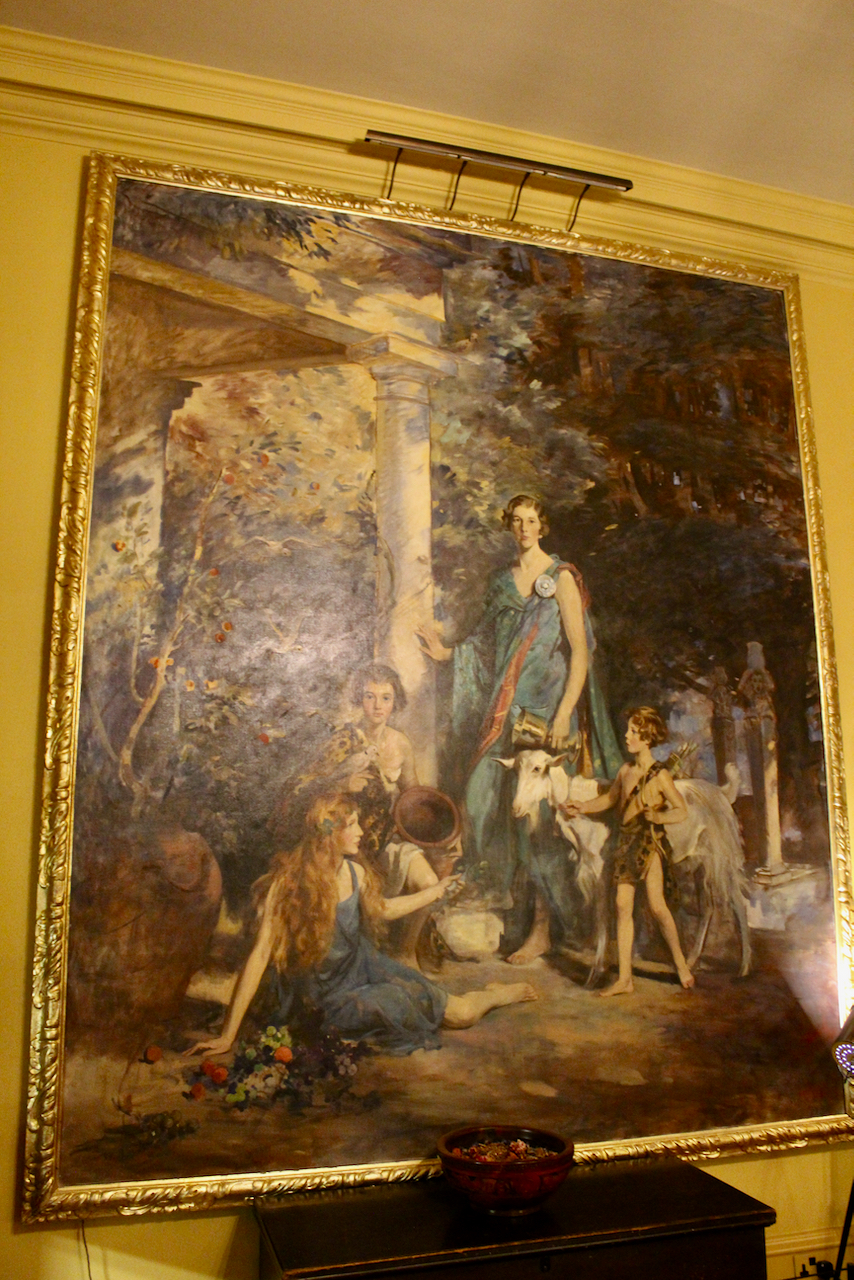
The website tells us that the four wings adjoining the original octagonal hunting lodge align with the four cardinal compass points.

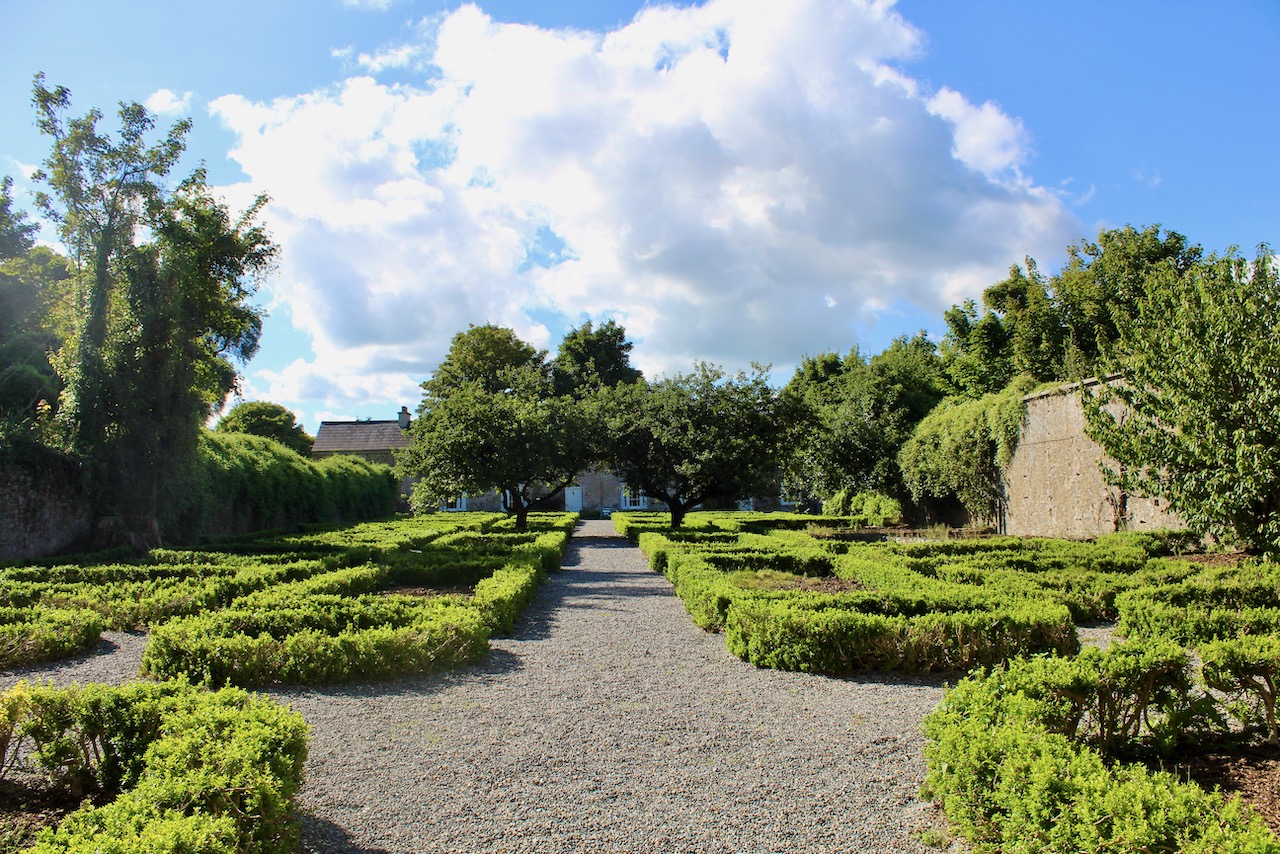
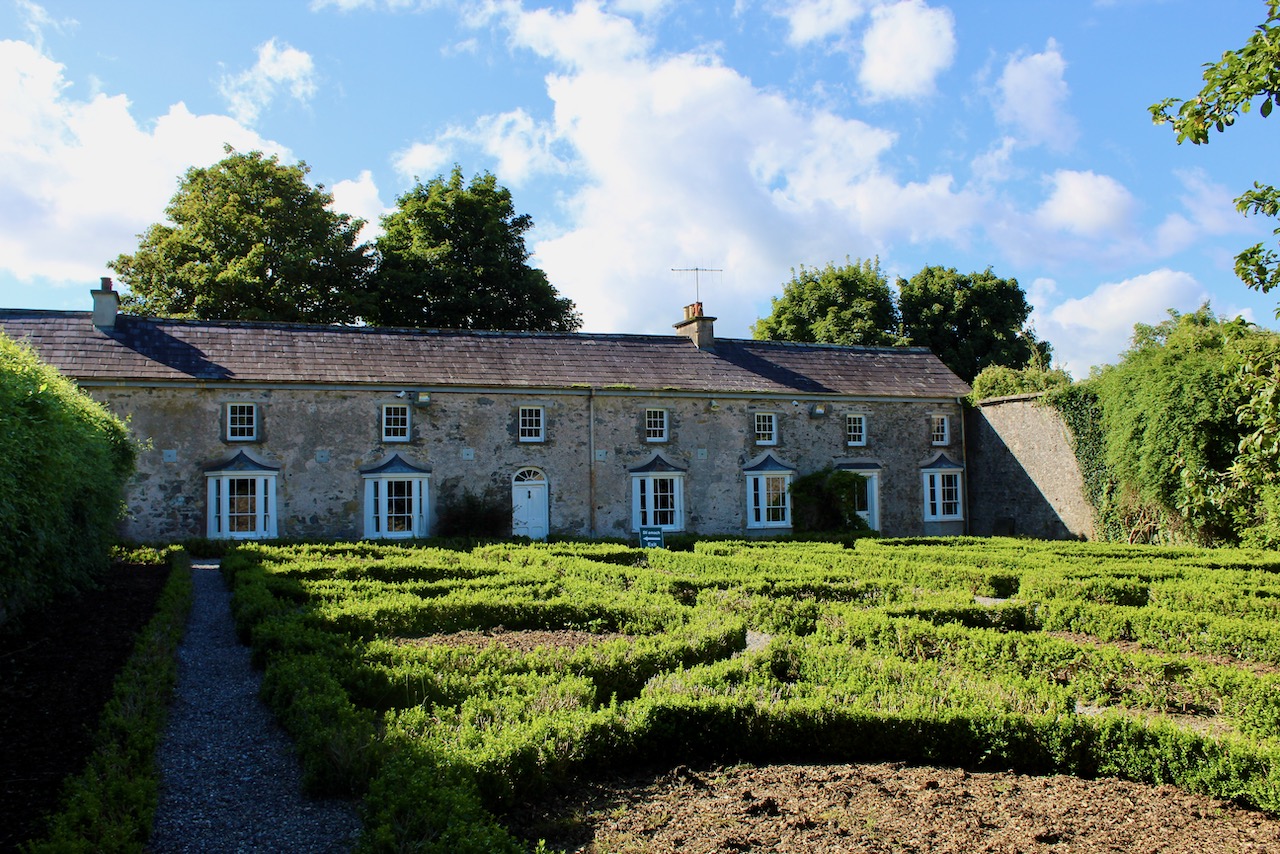
In 2009, the current owners Loretta Grogan and Brian Ginty set about purchasing the house, with the aspiration to restore Castlecor House, its grounds, native woodland and walled garden with pond and orchard to its former glory, opening it to the public by appointment and also welcoming guests.

2. Maria Edgeworth Visitor Centre, Longford, County Longford.

https://www.discoverireland.ie/longford/the-maria-edgeworth-visitor-centre

Maria Edgeworth Visitors Centre, Edgeworthstown, Co Longford, photo by Dympna Reilly 2020 ©Longford County Council, Ireland’s Content Pool (see [15])

The Maria Edgeworth Centre, in County Longford, is located in one of Ireland’s oldest school buildings that opened in 1841. Using a combination of audio, imagery and interactive displays, the centre tells the story of the Edgeworth family and the origins of the National School system. You will also learn about the role the family played in the educational, scientific, political and cultural life in Ireland. Maria Edgeworth was a notable pioneer of literature and education, a feminist and a social commentator of her time. Audios and displays are available in seven languages.”

3. Moorhill House, Castlenugent, Lisryan, Co. Longford – section 482

Open dates in 2025: Aug 1-31, Sept 1-29, 9.30am-1.30pm
Fee: adult/OAP/student/child €8

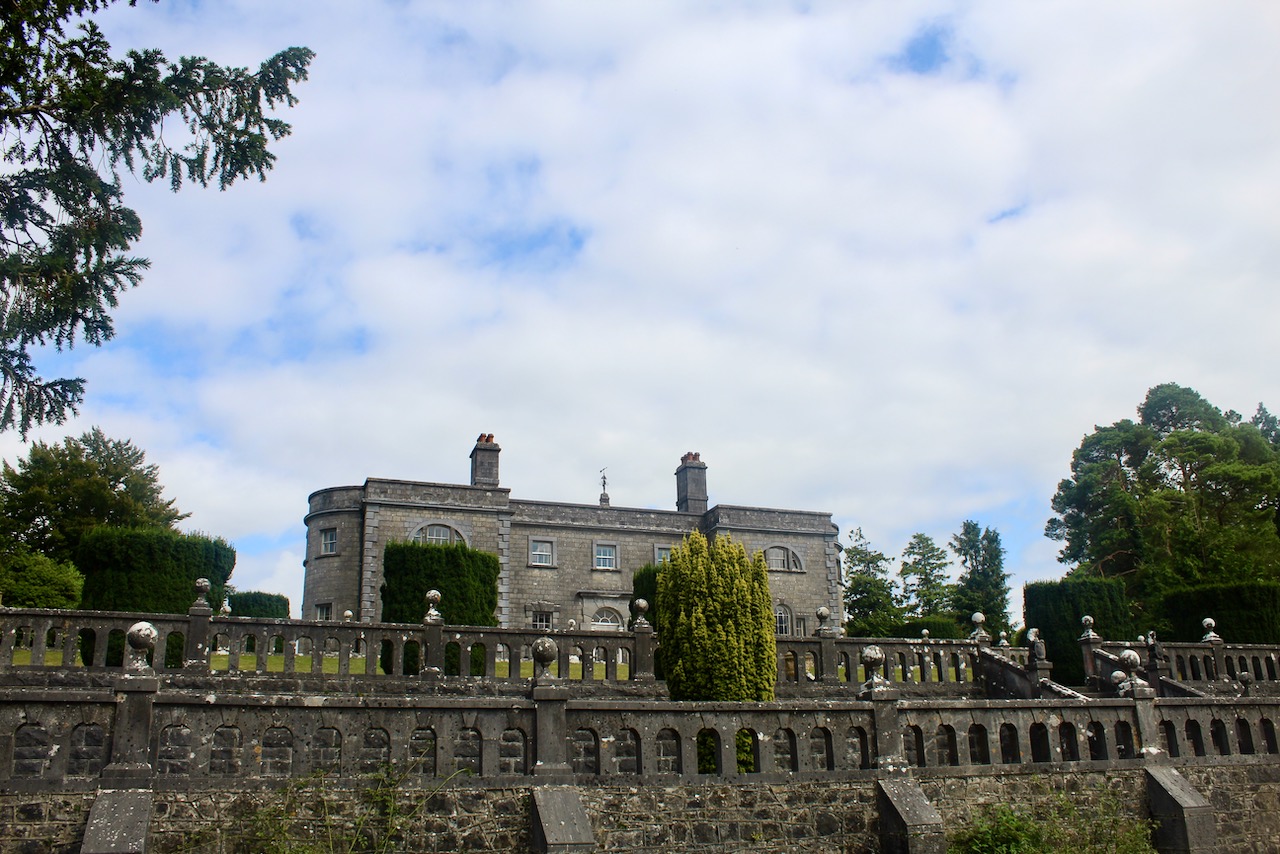
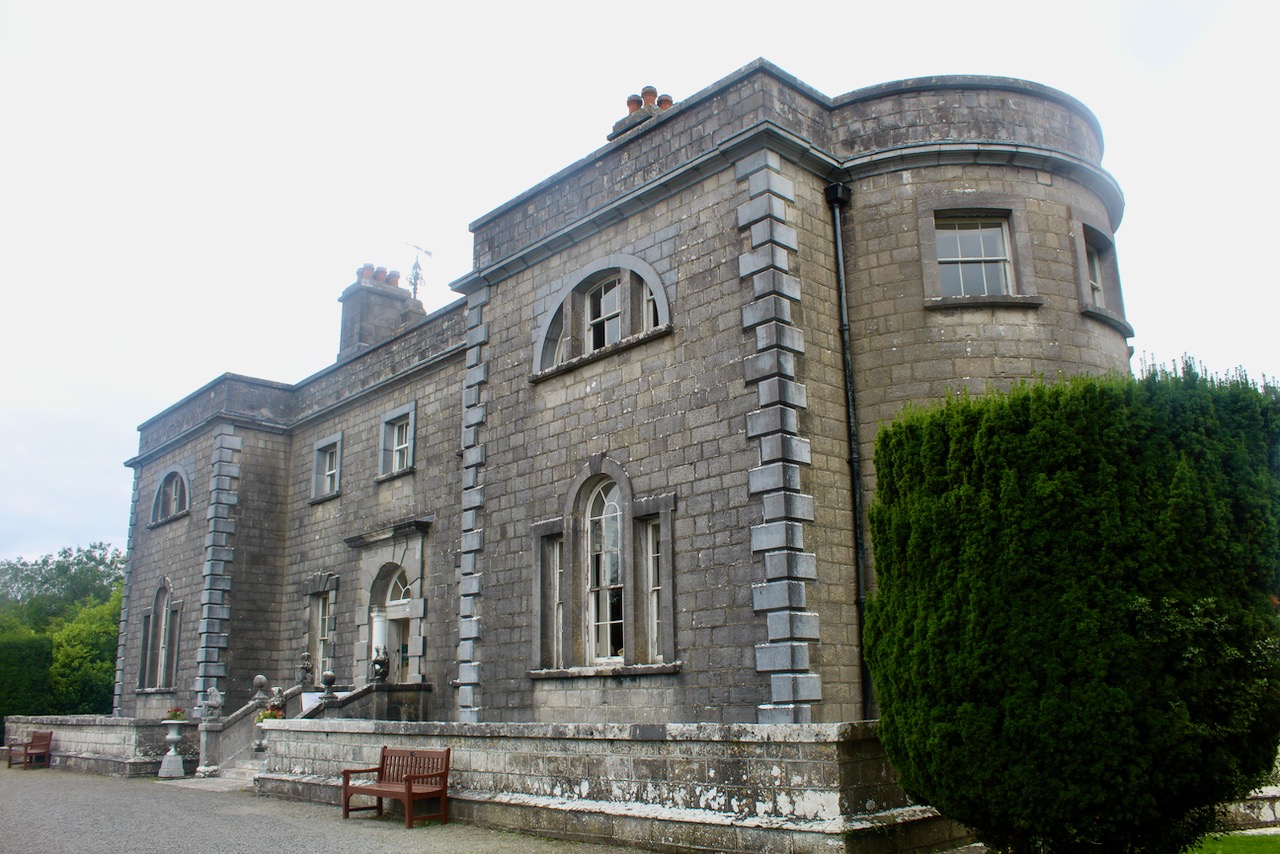
Moorhill House, photograph from the National Inventory of Architectural Heritage.[4]

The National Inventory describes it:

Detached three-bay two-storey over basement house on L-shaped plan, built c. 1815, having two-storey-storey return to rear (northwest) with pitched slate roof. Two-storey extension attached to the northwest end of rear return. Recently renovated. Possibly incorporating fabric of earlier building/structure. …This appealing and well-proportioned middle-sized house, of early nineteenth-century appearance, retains its early form, character and fabric. Its form is typical of houses of its type and date in rural Ireland, with a three-bay two-storey main elevation, hipped natural slate roof with a pair of centralised chimneystacks, and central round-headed door opening with fanlight. The influence of classicism can be seen in the tall ground floor window openings and the rigid symmetry to the front facade. The simple doorcase with the delicate petal fanlight over provides a central focus and enlivens the plain front elevation. The return to the rear has unusually thick walls and a relative dearth of openings, possibly indicating that it contains earlier fabric. This house forms an interesting group with the entrance gates to the southeast, the outbuildings (13401509) and walled garden to the rear, and the highly ornate railings to the southwest side featuring a sinuous vine leaf motif. The quality of these railings is such that their appearance is equally fine from both sides, the vine leaves being cast in three dimensions. They are notable examples of their type and date, and add substantial to the setting of this fine composition, which is an important element of the built heritage of the local area. Moorhill was the home of a R. (Robert or Richard) Blackall, Esq. in 1837 (Lewis). The Blackalls were an important family in the locality and built nearby Coolamber Manor c. 1837 [built for Major Samuel Wesley Blackhall (1809 – 1871)…to designs by the eminent architect John Hargrave (c. 1788 – 1833). Hargrave worked extensively in County Longford during the 1820s and was responsible for the designs for the governor’s house at Longford Town Jail in 1824; works at Ardagh House in 1826; the rebuilding of St. Paul’s Church of Ireland church at Newtown-Forbes; the remodelling of Castle Forbes, nearby Farragh/Farraghroe House (demolished); Doory Hall now ruinous; St. Paul’s Church of Ireland church, Ballinalee; and possibly for the designs of St. Catherine’s Church of Ireland church at nearby Killoe. …and [Coolamber Manor] may have replaced an earlier house associated with the Blackall family at Coolamber (a Robert Blackall (1764 – 1855), father of the above, lived in Longford in the late-eighteenth century)].

Moorhill House “was possibly the home of Robert Blackall, the father of Samuel Wensley, who was responsible for the construction of Coolamber Manor and later served as M.P. (1847 – 51) for the county before serving as Governor of Queensland, Australia from 1868 until his death in 1871. Moorhill may have been the residence of a Francis Taylor in 1894 (Slater’s Directory).”

Places to stay, County Longford:

1. Castlecor House, County Longford – see above

https://castlecorhouse.com/

2. Newcastle House Hotel, Ballymahon, County Longford

https://www.newcastlehousehotel.ie

Newcastle House (now a hotel), County Longford, photograph from Newcastlehousehotel.ie
photograph from the Newcastlehousehotel.ie

Newcastle House is a 300-year-old manor house, set on the banks of the River Inny near Ballymahon, in Co. Longford.

The website tells us; “Standing on 44 acres of mature parkland and surrounded by 900 acres of forest, Newcastle House is only one and half hour’s drive from Dublin, making it an excellent base to see, explore and enjoy the natural wonders of Ireland. So whether you are looking for a peaceful place to stay (to get away from it all) or perhaps need a location to hold an event, or that most important wedding, give us a call.”

Newcastle House (now a hotel), County Longford, photograph from the National Inventory of Architectural Heritage. [5]

The website previously included a brief history of the inhabitants of Newcastle:

Newcastle Wood was once part of Newcastle Demesne, an estate of some 11,000 hectares run by the King- Harman family in the 1800’s. The beautiful, historic nearby Newcastle House was where the King- Harmans lived and there are many features and place names in the woodland which refer back to that time.

We came across Lawrence Harman Parsons (1749-1807) who became the 1st Earl of Rosse, and who added Harman to his surname to become Lawrence Harman Parsons Harman, when he inherited Castlecor in County Longford. He married Jane King, daughter of Edward Thomas King, 1st Earl of Kingston, from Boyle, County Roscommon. They had a daughter, Frances Parsons-Harmon, who married Robert Edward King (1773-1854), 1st Viscount Lorton of Boyle, County Roscommon. Their second son, Lawrence Harman King assumed the additional name of Harman to become Lawrence Harman King-Harman (1816-1875). It was his family who lived at Newcastle Wood.

The old website continued: “The King- Harmans were generally regarded as good landlords by the local populace. They employed many local people in all sorts of trades. The last of the King- Harmans died in 1949. King- Harman sold lands to the Forestry Department in 1934 and over the following two years it was planted with a mixture of coniferous and broadleaf trees.

Then National Inventory describes the house:

Detached double-pile seven-bay three-storey over basement former country house, built c. 1730 and altered and extended at various dates throughout the eighteenth and nineteenth century, having curvilinear Dutch-type gable to the central bay and later gable-fronted single-bay single-storey entrance porch with matching curvilinear Dutch-type gable to the centre of the main block (southeast elevation), built c. 1820. Advanced three-bay single-storey over basement wing flanking main block to northeast, and advanced four-bay two-storey over basement wing flanking main block to southwest, both built c. 1785. Recessed single-bay single-storey over basement Tudor Gothic style addition attached to northeast elevation having gable-fronted rear elevation and chamfered corners at ground floor level having dressed ashlar limestone masonry , built c. 1850, and two-storey extension to southwest, built c. 1880. Possibly incorporating the fabric of earlier house(s) to site c. 1660. Later in use as a convent and now in use as a hotel…Round-headed door opening to front face of porch (southeast) having carved limestone surround with architrave, square-headed timber battened door with decorative cast-iron hinge motifs, wrought-iron overlight, and having moulded render label moulding over.Painted stuccoed ceilings and ceiling cornices, some with a neoclassical character, a number of early panelled timber doors and marble fireplaces survive to interior...” [5]

Newcastle House, photograph from National Inventory of Architectural Heritage: “Round-headed door opening to front face of porch (southeast) having carved limestone surround with architrave, square-headed timber battened door with decorative cast-iron hinge motifs, wrought-iron overlight, and having moulded render label moulding over.” The Inventory tells us that the carved coat of arms is probably of the King family. [5]
Newcastle House, photograph from Newcastlehousehotel.ie: “Painted stuccoed ceilings and ceiling cornices, some with a neoclassical character.” [5]
photograph from the Newcastlehousehotel.ie

Before belonging to the King-Harman family, Newcastle belonged to the Sheppard family. It came to the King-Harman family through the marriage of Frances Sheppard (d. 1766) daughter of Anthony Sheppard of Newcastle to Wentworth Harman (d. 1714) of Moyle, County Longford.

The National Inventory adds:

The lands and house at Newcastle were successively in the possession of the Chappoyne/Chappayne/Choppin, the Sheppard, the Harman and the King-Harman families. The earliest mention of the estate is references to an Anthony Chappoyne at Newcastle in 1660, although this may have been the site of an earlier ‘castle’ from as early as the fourteenth century (as the placename suggests). In 1680 a Robert Choppayne appears to have purchased/consolidated the lands of Newcastle from Gerald Fitzgerald, 17th Earl of Kildare. Dowdall (1682) describes the site as ‘..on the southside of the river is Newcastle, the antient Estate of the Earl of Kildare now the estate and habitation of Robert Choppin Esqr where he hath lately built a fair house and a wooden bridge over said river’. The estate passed into the ownership of Anthony Sheppard (born 1668 – 1738), heir (son?) of Robert Chappoyne, c. 1693, who served as High Sheriff of County Longford in 1698. His son, also Anthony, was M.P. for Longford in 1727. The estate later passed by marriage into the ownership into the Harman family at the very end of the seventeenth century. Robert Harman (1699 – 1765; M.P. for Longford c. 1760 -5) [son of Wentworth Harman and Frances Sheppard] was in possession of the estate of much of the middle of the eighteenth century and it is likely that he was responsible for much of the early work on the house. The Very Revd. Cutts Harman, who built the quirky hunting/fishing lodge at nearby Castlecor, inherited the house c. 1765 following the death of his brother Robert. The estate later passed into the ownership of Lawrence Parsons-Harman (1749 – 1807) in 1784 (M.P. for Longford 1776 – 1792; Baron Oxmantown in 1792; Viscount Oxmantown in 1795; Earl of Rosse 1806; sat was one of the original Irish Representative Peers in the British House of Lords) and he greatly increased the Newcastle estate, and by his death (1807) its size had doubled to approximately 31,000 acres in size. It is likely that he was responsible for the construction of the side wings to the main block and general improvements to the house from 1784. The estate passed into the ownership of his wife Jane, Countess of Rosse (who partially funded the construction of a number of Church of Ireland churches and funded a number of schools in County Longford during the first half of the nineteenth century), who left the estate to her grandson Laurence King-Harman (1816 – 1878) after falling out with her son. Laurence King-Harman has probably responsible for the vaguely Tudor Gothic extension to the northeast elevation. The brick chimneystacks also look of mid-nineteenth century date and may have been added around the same time this wing was constructed. The King family had extensive estates in Ireland during the nineteenth century, owning the magnificent Rockingham House (demolished) and King House [also a Section 482 property which I hope to visit later this year], Boyle, both in County Roscommon; as well as Mitchelstown Castle in County Cork, burnt in 1922 (memorial plaques and carved stone heads from Mitchelstown Castle were built into the northeast elevation of Newcastle House c. 1925, but have been removed and returned to Cork in recent years). The estate reached its largest extent in 1888, some 38,616 acres in size, when Wentworth Henry King-Harman was in residence. The estate was described in 1900 as ‘a master-piece of smooth and intricate organisation, with walled gardens and glasshouses, its diary, its laundry, its carpenters, masons and handymen of all estate crafts, the home farm, the gamekeepers and retrievers kennels, its saw-mill and paint shop and deer park for the provision of venison. The place is self supporting to a much greater degree than most country houses in England’. The estate went in to decline during the first decades of the twentieth century, and with dwindled in size to 800 acres by 1911. The house and estate remained in the ownership of the King-Harman family until c. 1951, when Capt. Robert Douglas King-Harman sold the house to an order of African Missionary nuns (house and contents sold for £11,000). It was later in use as a hotel from c. 1980.” [5]

photograph from the Newcastlehousehotel.ie

3. Viewmount House, Longford

http://www.viewmounthouse.com

Viewmount House, photograph from National Inventory of Architectural Heritage. [6]

The website tells us:

Discover this boutique gem, a secret tucked away in the heart of Ireland. This magnificent 17th century manor is complemented by its incredible countryside surroundings, and by the four acres of meticulously-maintained garden that surround it. Within the manor you’ll find a place of character, with open fires, beautiful furniture, fresh flowers and Irish literature. The manor retains its stately, historic charm, and blends it with thoughtful renovation that incorporates modern comfort.

Here, you will unwind into the exceptionally relaxing atmosphere, a restful world where all you hear is peace, quiet and birdsong.

This house was advertised for sale in recent years. The National Inventory describes it:

Detached three-bay three-storey house, built c. 1750 and remodeled c. 1860, having single-bay single-storey porch with flat roof to the centre of the front elevation (north). Renovated c. 1994. Formerly in use as a Church of Ireland charter school (c. 1753 – 1826)…This elegant mid-sized Georgian house is a fine example of the language of classical architecture reduced to its essential elements. It retains its early character and form despite recent alterations….Set in extensive mature grounds, this fine structure is a worthy addition to the architectural heritage of County Longford….This house was the home of the Cuffe family during the first half of the eighteenth century. It was later inherited by Thomas Pakenham (later [1st] Baron Longford [of Pakenham Hall, or Tullynally, County Westmeath, another section 482 property, see my entry]) following his marriage to Elizabeth Cuffe (1714-94) in 1739 or 1740. It is possible that Viewmount House was constructed shortly after this date and it may have replaced an earlier Cuffe family house on or close to the present site. The house was never lived in by the Pakenham family but it was used by their agent to administer the Longford estate, c. 1860. It was apparently in use as a charter school from 1753 until 1826, originally founded under the patronage of Thomas Pakenham. There is a ‘charter school’ indicated here (or close to here) on the Taylor and Skinner map (from Maps of the Roads of Ireland) of the area, dated between 1777 – 1783. A ‘free charter school’ at Knockahaw, Longford Town, with 32 boys, is mentioned in an Irish Education Board Report, dated 1826 – 7 (Ir. Educ. Rept 2, 692 – 3).” [6]

[1] https://www.buildingsofireland.ie/buildings-search/building/13402608/castlecor-house-castlecore-longford

[2] p. 66. Bence-Jones, Mark. A Guide to Irish Country Houses (originally published as Burke’s Guide to Country Houses volume 1 Ireland by Burke’s Peerage Ltd. 1978); Revised edition 1988 Constable and Company Ltd, London.

[3] www.irishhistorichouses.com/2020/12/10/kilshannig-house-rathcormac-county-cork/

[4] https://www.buildingsofireland.ie/buildings-search/building/13401508/moorhill-house-castlenugent-longford

[5] https://www.buildingsofireland.ie/buildings-search/building/13402709/newcastle-house-newcastle-newcastle-demesne-longford

[6] https://www.buildingsofireland.ie/buildings-search/building/13007038/viewmount-house-knockahaw-longford

Castletown House and Parklands, Celbridge, County Kildare, an Office of Public Works property

Castletown House, County Kildare, Photo by Mark Wesley 2016, Tourism Ireland, from Ireland’s Content Pool. [see 1]

General Information: castletown@opw.ie

https://castletown.ie

From the OPW website:

Castletown is set amongst beautiful eighteenth-century parklands on the banks of the Liffey in Celbridge, County Kildare.

The house was built around 1722 for the speaker of the Irish House of Commons, William Conolly, to designs by several renowned architects. It was intended to reflect Conolly’s power and to serve as a venue for political entertaining on a grand scale. At the time Castletown was built, commentators expected it to be ‘the epitome of the Kingdom, and all the rarities she can afford’.

The estate flourished under William Conolly’s great-nephew Thomas and his wife, Lady Louisa, who devoted much of her life to improving her home.

Today, Castletown is home to a significant collection of paintings, furnishings and objets d’art. Highlights include three eighteenth-century Murano-glass chandeliers and the only fully intact eighteenth-century print room in the country.

It is still the most splendid Palladian-style country house in Ireland.

This photo was taken probably by Robert French, chief photographer of William Lawrence Photographic Studios of Dublin, National Library of Ireland flickr constant commons.

The Conolly family sold Castletown in 1965. Mark Bence-Jones tells us that the estate was bought for development and for two years the house stood empty and deteriorating. In 1967, Hon Desmond Guinness courageously bought the house with 120 acres, to be the headquarters of the Irish Georgian Society, and in order to save it for posterity. Since then the house has been restored and it now contains an appropriate collection of furniture, pictures and objects, which has either been bought for the house, presented to it by benefactors, or loaned. It is now maintained by the Office of Public Works and the Castletown Trust.

Castletown Gates, built in 1783 by Lady Louisa Conolly, by John Coates of Maynooth. They are mounted with sphinxes. Photograph © Jennifer Winder-Baggot, www.irishhistorichouses.com

William Conolly (1662-1729) rose from modest beginnings to be the richest man in Ireland in his day. He was a lawyer from Ballyshannon, County Donegal, who made an enormous fortune out of land transactions in the unsettled period after the Williamite wars.

William Conolly had property on Capel Street in Dublin, before moving to Celbridge. Conolly’s house was on the corner of Capel Street and Little Britain Street and was demolished around 1770. [2] The Kildare Local History webpage gives us an excellent description of William Conolly’s rise to wealth:

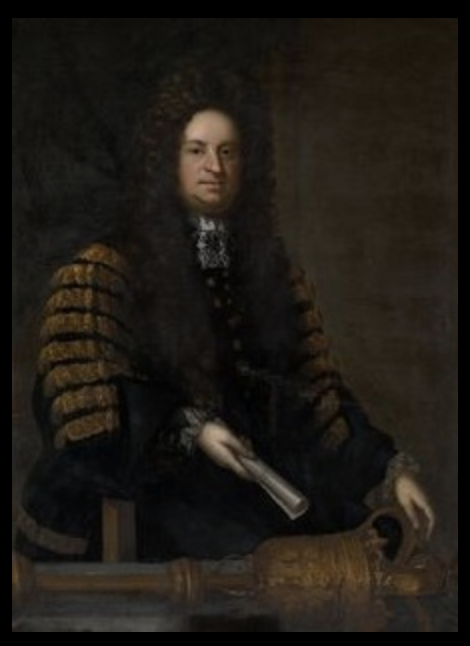
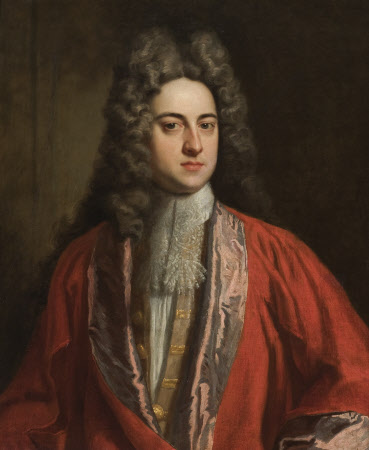
William Conolly (1662-1729) in his robes as Speaker of the Irish House of Commons, by Stephen Catterson Smith the Elder (1806-1872), portrait in Hall of Castletown. The portrait was donated by Mr and Mrs Galen Weston. This posthumous portrait was based on Jervas’s portrait of the Speaker in the Green Drawing Room.

In November 1688, William Conolly was one of the Protestants who fled Dublin to join the Williamites in Chester alongside his late Celbridge neighbour Bartholomew Van Homrigh.

On the victory of William III, he acquired a central role dealing in estates forfeited by supporters of James II, commencing his rise to fortune with the forfeited estates of the McDonnells of Antrim.

In 1691 he purchased Rodanstown outside Kilcock, which became his country residence until he purchased Castletown in 1709.

A dowry of £2,300 came his way in 1694 when he married Katherine Conyngham, daughter of Albert Conyngham, a Williamite General who had been killed in the war at Collooney in 1691.

He was appointed Collector and Receiver of Revenue for the towns of Derry and Coleraine on May 2nd 1698.

Conolly was the largest purchaser of forfeited estates in the period 1699–1703, acquiring also 20,000 acres spread over five counties at a cost of just £7,000.” [3]

William Conolly purchased land in County Kildare which had been owned by Thomas Dongan (1634-1715), 2nd Earl of Limerick, in 1709. Dongan’s estate had been confiscated as he was a Jacobite supporter of James II (he became first governor of the Duke of York’s province of New York! The Earldom ended at his death). Dongan’s mother was the daughter of William Talbot, 1st Baronet of Carton (see my entry about Carton, County Kildare, under Places to stay in County Kildare https://irishhistorichouses.com/2023/06/08/places-to-visit-and-stay-in-county-kildare/ ).

Conolly rose to become Speaker of the House of Commons in the Irish Parliament. He married Katherine Conyngham of Mount Charles, County Donegal, whose brother purchased Slane Castle in County Meath (see my entry https://irishhistorichouses.com/2019/07/19/slane-castle-county-meath/). As well as earning money himself, his wife brought a large dowry.

Statue taken from the funeral monument of Speaker William Conolly, of him reclining next to his wife, by Thomas Carter. Photograph © Jennifer Winder-Baggot, www.irishhistorichouses.com
The Funerary monument with William and Katherine Conolly. The Latin inscription reads: “William Conolly who attained as the reward of his medit the highest honours, was for about twenty years a Commissioner of the revenue in the reign of Queen Anne and George I, was a Privy Councillor in the reign of George II. He was twice unanimously elected Speaker of the House of Commons in the Parliament of this realm and then ten times held the Office of Lord Justice of Ireland, being the first to whom both the Sovereign and the people entrusted at the same time of their privileges with the happiest result. As a subject, he was loyal, as a citizen, patriotic. In perilous times he not once or twice proved that he served his King without forgetting his duty to his country. Firm, resolute, just, wise, formed by nature for the ilfe of a statesman, his administration of affairs was crowned with success to the greater advantage of the Commonwealth. He made a modest, though splendid use of the great riches he had honestly acquired, distinguished as he was alike for the courtesy, integrity and munificence of his disposition. Kind-hearted towards all men, he was loyal to his friends, whom he bound to himself in great numbers – retained their friendship when once he had gained it. Wishing to do good even after his death, he gave directions by his will that a building should be erected on the adjacent lands for the maintenance and education of the children of the poor and he endowed it forever with large revenues. Having lived long enough to satisfy the claims of nature and his fame, he died October 1729 in the 67th year of his life. Cath of the Conyngham family has erected this monument to her worthy husband.”
Katherine Conyngham, wife of William Conolly, also from the funeral monument. Photograph © Jennifer Winder-Baggot, www.irishhistorichouses.com
Katherine Conyngham (c. 1662-1752) who married William Conolly, with her great-niece Molly Burton. Portrait by Charles Jervas. Photograph © Jennifer Winder-Baggot, www.irishhistorichouses.com
I’m not sure but the top portrait looks like Katherine Conyngham to me. Photograph © Jennifer Winder-Baggot, www.irishhistorichouses.com

The Archiseek website tells us about the design of Castletown House:

“Soon after the project got underway Conolly met Alessandro Galilei (1691-1737), an Italian architect, who had been employed in Ireland by Lord Molesworth in 1718 [John Molesworth, 2nd Viscount, who had been British envoy to Florence]. He designed the façade of the main block in the style of a 16th century Italian town palace. He returned to Italy in 1719 and was not associated with the actual construction of the house which began in 1722. Sir Edward Lovett Pearce (died 1733), a young Irish architect, on his Italian grand tour became acquainted with Galilei in Florence and through this connection he was employed by the Speaker to complete Castletown when he returned to Ireland in 1724. Pearce had first hand knowledge of the work of the Italian architect Andrea Palladio (1508-1580) and his annotated copy of Palladio’s Quattro libri dell’architettura survives. It was Pearce who added the Palladian colonnades and the terminating pavillions. This layout was the first major Palladian scheme in Ireland and soon had many imitators.” [4]

Alessandro Gallilei (1691-1737). Photograph © Jennifer Winder-Baggot, www.irishhistorichouses.com
Castletown House, County Kildare, Photograph from macmillan media for Tourism Ireland 2015, Ireland’s Content Pool. [see 1] Started in 1722 to the designs of Alessandro Gallilei, it was continued by Edward Lovett Pearce, who was influenced by Italian architect Andrea Palladio. Pearce designed the colonnades and pavilions. In the wings on the left (west wing) are the kitchens and on the right, the stables (east wing).

Mark Bence-Jones describes Castletown in his  A Guide to Irish Country Houses. The centre block is of three storeys over basement, and has two almost identical thirteen bay fronts “reminiscent of the façade of an Italian Renaissance town palazzo; with no pediment or central feature and no ornamentation except for doorcase, entablatures over the ground floor windows, alternate segmental and triangular pediments over the windows of the storey above and a balustraded roof parapet. Despite the many windows and the lack of a central feature, there is no sense of monotony or heaviness; the effect being one of great beauty  and serenity.” [5] The centre block is made of Edenderry limestone, and is topped by cornice and balustrade. On the ground floor the windows have frieze, cornice and lugged architrave, and on the first floor, alternating triangular and segmental pediments.

On the ground floor the windows have frieze, cornice and lugged architrave, and on the first floor, alternating triangular and segmental pediments. The upper floor is half size. Photograph © Jennifer Winder-Baggot, www.irishhistorichouses.com
The doorcase is gracefully tall and is framed by Ionic columns, and is reached by a sweeping set of steps. Photograph by Swire Chin, Toronto, May 2013, from flickr constant commons.

Pearce added the curved Ionic colonnades and two two-storey seven bay wings. He also designed the impressive two-storey entrance hall inside.

Back of Castletown House, Celbridge, Co Kildare, photograph by Sonder Visuals2022 for Failte Ireland, Ireland’s Content Pool.
Colonnade by Edward Lovett Pearce, October 2022. Photograph © Jennifer Winder-Baggot, www.irishhistorichouses.com
The East Wing. Photograph © Jennifer Winder-Baggot, www.irishhistorichouses.com
The east side of Castletown, and the back of east wing. The back of the curved colonnade can be seen. Photograph © Jennifer Winder-Baggot, www.irishhistorichouses.com
The Sensory Garden and the side and back of the West Wing. Photograph © Jennifer Winder-Baggot, www.irishhistorichouses.com
The East side of the house. The West Wing houses the Café. Photograph © Jennifer Winder-Baggot, www.irishhistorichouses.com
The Café in the West Wing. Photograph © Jennifer Winder-Baggot, www.irishhistorichouses.com
Side of the West Wing, October 2022. Extending the facade of the house are pedimented gateways to the kitchen yard and stable yard. Photograph © Jennifer Winder-Baggot, www.irishhistorichouses.com

William died in 1729 aged just 67, so he had only a few years to enjoy his house. His wife Katherine lived on in the house another twenty-three years until her death at the age of 90 in 1752. William and Katherine had no children, so his estate passed to his nephew William James Conolly (1712-1754), son of William’s brother Patrick. We came across William James Conolly before in Leixlip Castle (another Section 482 property), which he also inherited. William James married Lady Anne Wentworth, the daughter of the Earl of Strafford. Her father, Thomas Wentworth 1st Earl of Strafford is not the more famous Thomas Wentworth 1st Earl of Strafford who was executed (of whom there is at least one portrait in Castletown) but a later one, of the second creation. William James died just two years after Katherine Conolly, so the estate then passed to his son Thomas Conolly (1738-1803).

William Conolly, M.P. (d.1754) by Anthony Lee c. 1727 courtesy of National Gallery of Ireland NGI 421
Lady Anne Conolly (née Wentworth) (1713-1797) Attributed to Anthony Lee, Irish, fl.1724-1767. Photograph courtesy of National Gallery of Ireland. She was the wife of William Conolly, M.P. (d.1754).
Lady Anne Conolly (born Wentworth (1712/1713-1797), daughter of Thomas Wentworth (1672-1739) 1st Earl of Strafford). She was married to William James Conolly (1712-1754), of Castletown, County Kildare. She was the mother of Thomas Conolly (1734-1803).
Thomas Conolly (1738-1803) by Anton Raphael Mengs, painted 1758. The German painter Mengs captured Conolly as a 19 year old on his Grand Tour. He is shown posting in front of a Roman sarcophagus, the “Relief of the Muses,” now in the Louvre. He is wearing a rich satin suit with gilt braid, portraying a young cultured aristocrat. In reality he displayed little interest in ancient civilisation, and brought back no souvenirs from Rome save for this portrait. Portrait in the National Gallery of Ireland.
Thomas Conolly. He was the son and heir of William James Conolly (d.1754) of Castletown House, by his wife Lady Anne Wentworth. Thomas Conolly married Lady Louisa Lennox, a daughter of Charles Lennox, the 2nd Duke of Richmond.
Caroline Conolly, Countess of Buckinghamshire (c.1755 – 1817) by Thomas Gainsborough RA (Sudbury 1727 – London 1788), 1784. She was a daughter of William James Conolly (1712-1754), and the second wife of the 2nd Earl of Buckinghamshire, painted in white court dress and gold sash, with gilt embroidered skirt, and white train, with her right elbow resting on state robes of red velvet ermine-trimmed cloak and coronet behind her. Two black wristbands, black shoes, pearl necklace. Grey powdered hair. Green curtain with tassels behind her with landscape in background.
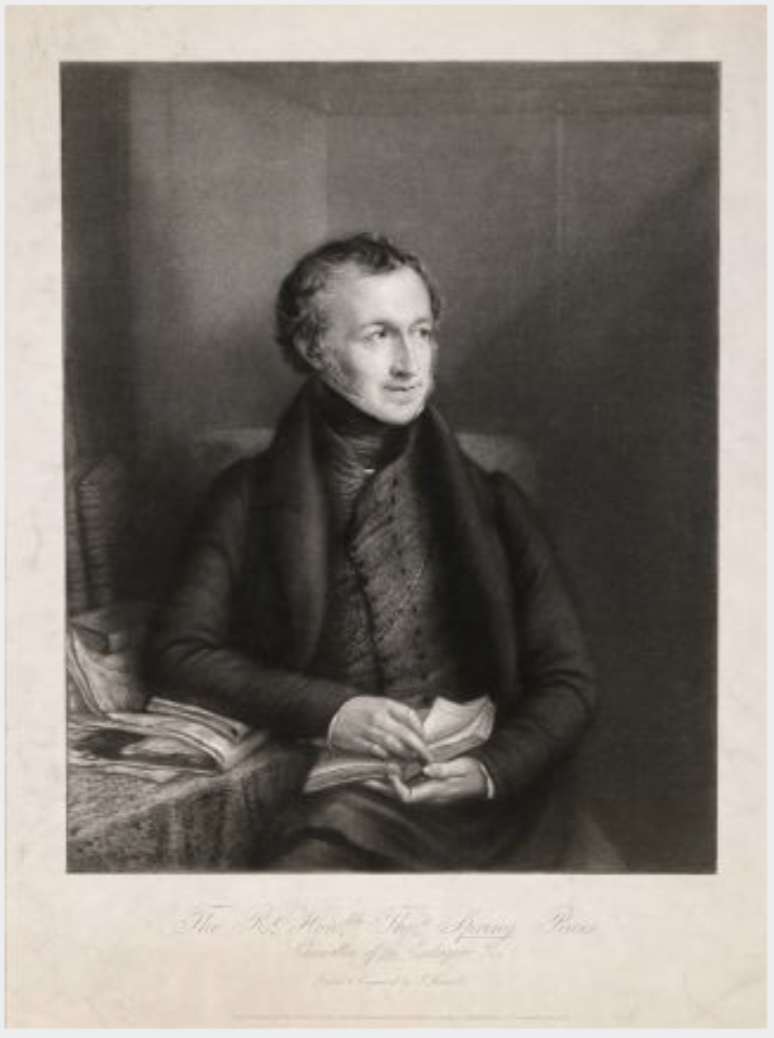
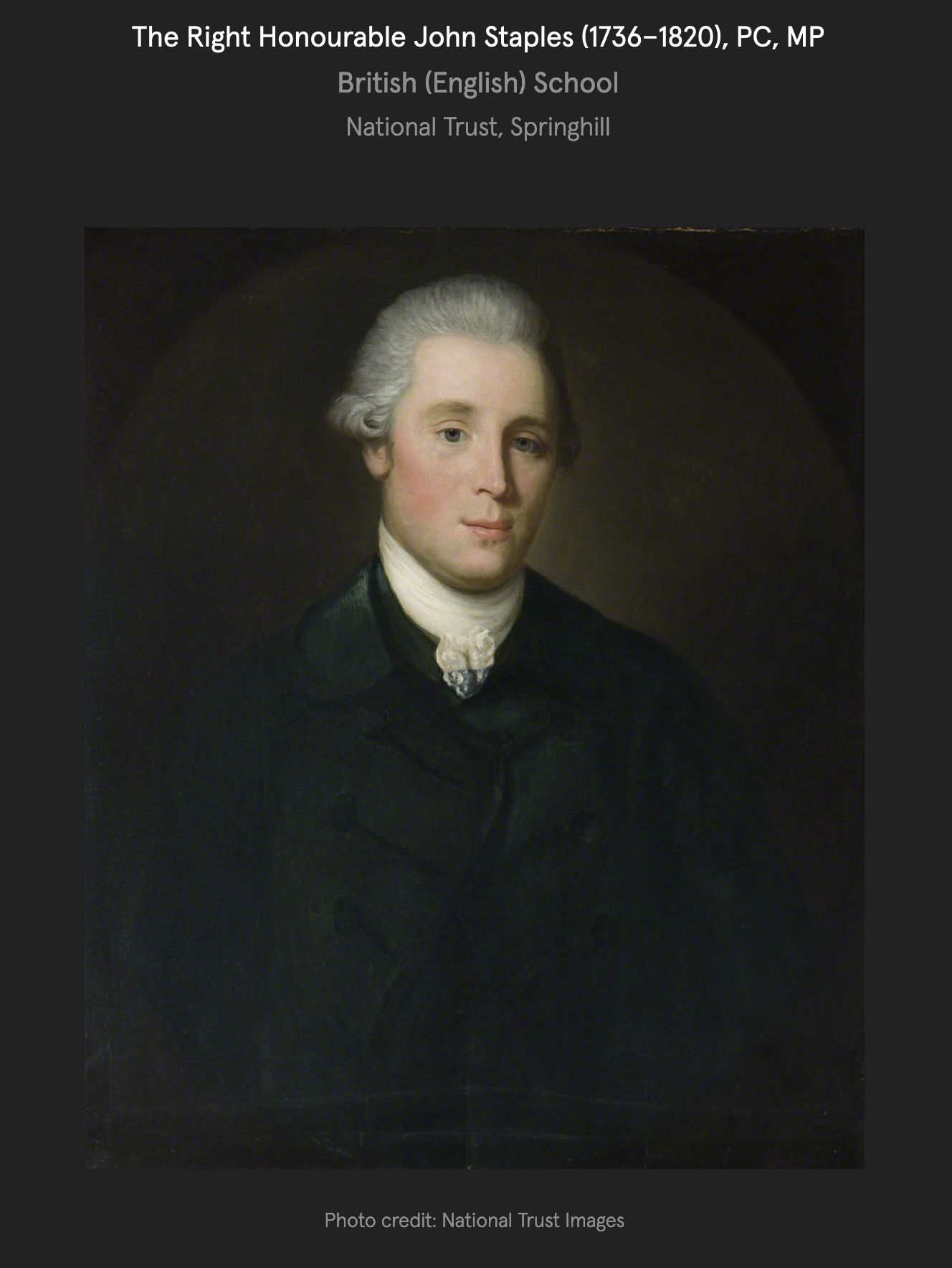
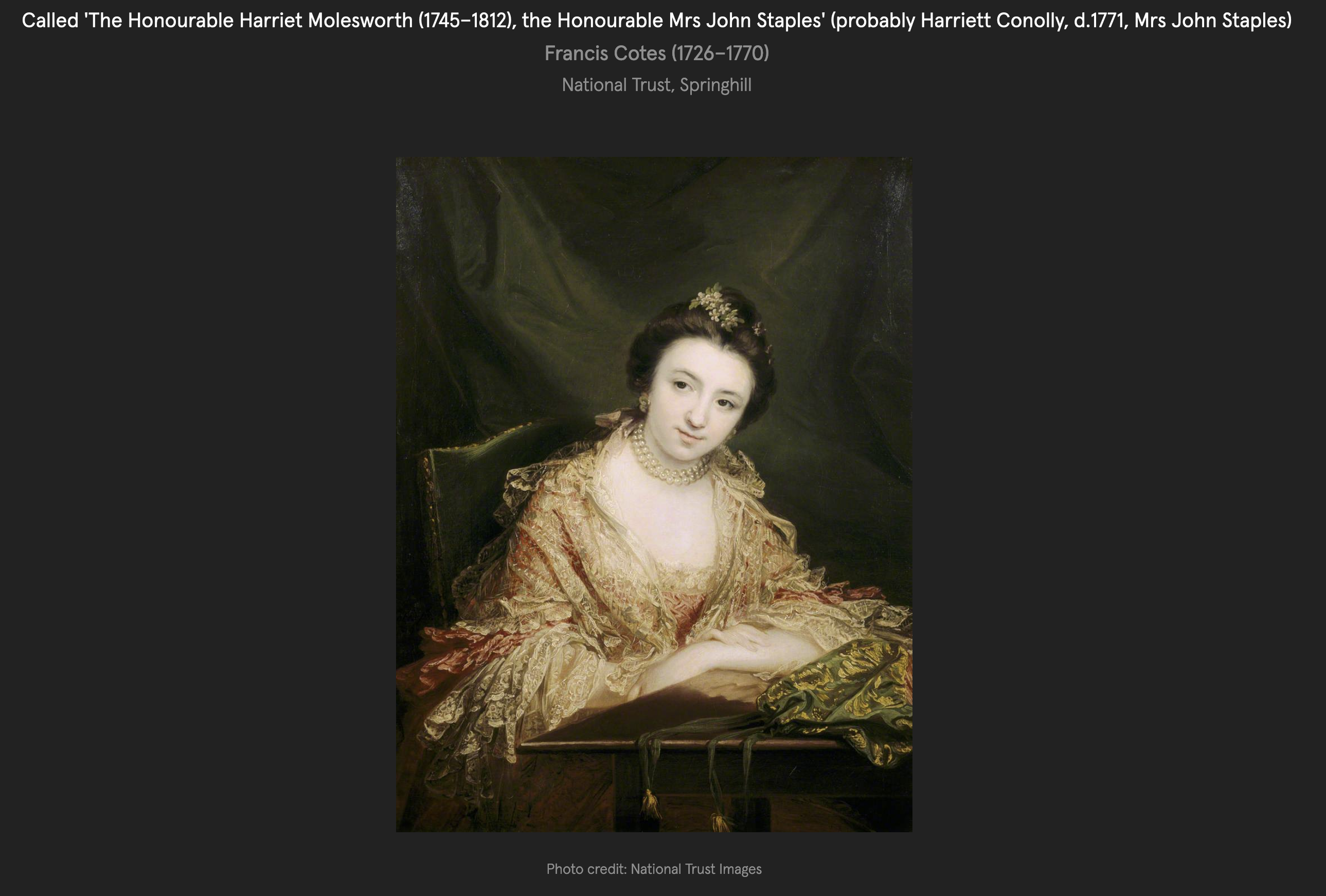
Portrait called The Honourable Harriet Molesworth (1745-1812), wife of John Staples (1736-1820) (probably Harriet Conolly, d. 1771), a daughter of William James Conolly, by Francis Cotes, courtesy of National Trust. Springhill, County Derry.

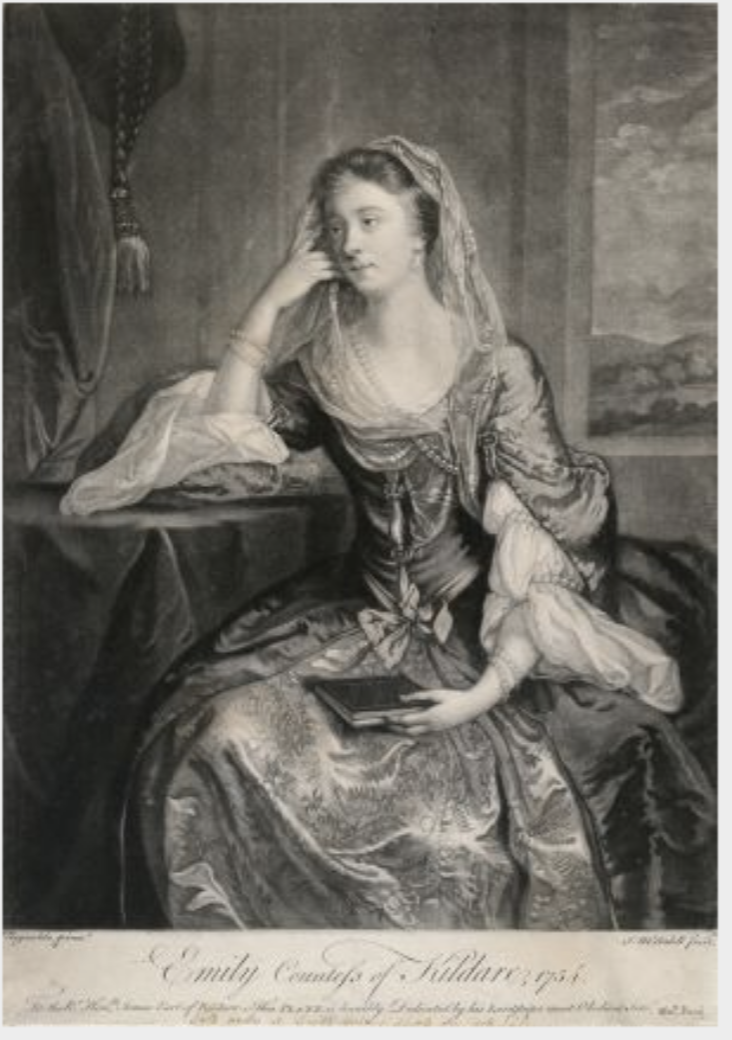
Thomas married Louisa Lennox in 1758, one of five Lennox sisters, daughters of the Charles Lennox, 2nd Duke of Richmond. From the age of eight she had lived at nearby Carton with her sister Emily, who was married to James Fitzgerald, the 20th Earl of Kildare (who became the 1st Duke of Leinster). At Carton, Louisa was exposed to the fashionable ideas of the day in architecture, decoration, horticulture and landscaping. [6] Louisa loved Castletown and continually planned improvements, planting trees, designing the lake and building bridges.

Louisa Lennox who married Thomas Conolly. Photograph © Jennifer Winder-Baggot, www.irishhistorichouses.com
In the dining room, over the fireplace, half-length portrait of Charles Lennox (1701–1750), 2nd Duke of Richmond and 2nd Duke of Lennox, by Jean-Baptiste Van Loo, wearing armour with the ribbon of the Order of the Garter, in a contemporary frame in the manner of William Kent.  Photograph © Jennifer Winder-Baggot, www.irishhistorichouses.com
Carton House, 2022. Photograph © Jennifer Winder-Baggot, www.irishhistorichouses.com

Archiseek continues: “The Castletown papers, estate records and account books, together with Lady Louisa’s [i.e. Louisa Lennox, wife of Tom Conolly] diaries and correspondence with her sisters, provide a valuable record of life at Castletown and also of the reorganisation of the house. Lady Louisa’s letters from the 1750s onwards are revealing of the fashions in costume design, fabric patterns and furniture. She played an important part in the alteration and redecoration of Castletown during the 1760s and 1770s. As no single architect was responsible for all of the work carried out, she supervised most of it herself. Much of the redecoration of the house was done to the published designs of the English architect Sir William Chambers (1723-1796) who never came to Ireland himself. Chambers also worked for Lady Louisa’s brother, the 3rd Duke of Richmond, at Goodwood in Sussex. In a letter, written in July 1759, Lady Louisa mentions instructions given by Chambers to his assistant Simon Vierpyl who supervised the work at Castletown.” (see [6])

Description of the Hall, from Archiseek: “This impressive two-storeyed room with a black and white chequered floor, was designed by Sir Edward Lovett Pearce. The Ionic order on the lower storey is similar to that of the colonnades outside and at gallery level there are tapering pilasters with baskets of flowers and fruit carved in wood. The coved ceiling has a central moulding comprising a square Greek key patterned frame and central roundel with shell decoration.” [see 6]

Great Hall, photograph by Swire Chin, Toronto, May 2013 flickr constant commons.
The Gallery of the Great Hall. Photograph by Swire Chin, Toronto, May 2013 flickr constant commons.
Photograph by Swire Chin, Toronto, May 2013 flickr constant commons.

The polished limestone floor with its chequered design and the Kilkenny marble fireplace reflect William Conolly’s desire to build the house solely of native Irish materials. Unfortunately when we visited in October 2022, the hall was half hidden with a large two storey curtain, as the windows are all being repaired. As we can see in the photograph, the room has an Ionic colonnade to the rear, and a gallery at first floor level, and the stair hall is through an archway in the east wall.

Hall of Castletown, with picture of Leixlip Castle by Joseph Tudor over the black Kilkenny marble fireplace, and portrait of William Conolly 1662-1729, by Stephen Catterson Smith the Elder. Photograph © Jennifer Winder-Baggot, www.irishhistorichouses.com
Picture of Leixlip Castle, which was also owned by William Conolly and by Desmond Guinness. Photograph © Jennifer Winder-Baggot, www.irishhistorichouses.com

When the owners were selling off the items in the house, they tried to sell the picture of Leixlip Castle that is in the front hall over the fireplace. It turned out to be painted on to the wall, so had to remain in the house! See my entry about Leixlip Castle https://irishhistorichouses.com/2020/09/04/leixlip-castle-county-kildare-desmond-guinnesss-jewelbox-of-treasures/

The Ionic order on the lower storey is similar to that of the colonnades outside and at gallery level there are tapering pilasters with baskets of flowers and fruit carved in wood. The large curtain, in October 2022, is protecting the room from where the windows are being repaired. Instead of capitals, the cloumns in the upper storey are topped with baskets of fruit. Photograph © Jennifer Winder-Baggot, www.irishhistorichouses.com
Great Hall, Castletown House, Celbridge, Co Kildare, photograph by Sonder Visuals 2022 for Failte Ireland.
The coved ceiling of the Hall has a central moulding comprising a square Greek key patterned frame, modillion cornice and central roundel with shell decoration. A modillion cornice is a cornice of the Corinthian order, made up of modillions, or ornamented brackets, frequently used as the cornice of a ceiling. Photograph © Jennifer Winder-Baggot, www.irishhistorichouses.com
Ceiling of Great Hall, Castletown House, June 2015. Photograph © Jennifer Winder-Baggot, www.irishhistorichouses.com
Photograph from the album of Henry Shaw, of the Entrance Hall, in the time of that later Thomas Conolly (1823-1876) and his wife Sarah Eliza.

From the entrance hall, one enters the magnificent Stair Hall. The Castletown website describes the stair hall:

The Portland stone staircase at Castletown is one of the largest cantilevered staircases in Ireland. It was built in 1759 under the direction of the master builder Simon Vierpyl (c.1725–1811). Prior to this the space was a shell, although a plan attributed to Edward Lovett Pearce suggests that a circular staircase was previously intended.

The solid brass balustrade was installed by Anthony King, later Lord Mayor of Dublin. He signed and dated three of the banisters, ‘A. King Dublin 1760’. The opulent rococo plasterwork was created by the Swiss-Italian stuccadore Filippo Lafranchini, who, with his older brother Paolo, had worked at Carton and Leinster House for Lady Lousia’s brother-in-law, the first Duke of Leinster, as well as at Russborough in Co. Wicklow. Shells, cornucopias, dragons and masks feature in the light-hearted decoration which represents the final development of the Lafranchini style. Family portraits are also included with Tom Conolly at the foot of the stairs and Louisa above to his right. The four seasons are represented on the piers and on either side of the arched screen.

The staircase at Castletown House. Pub Orig Country Life 22/08/1936 
Image Number: 873959  Publication Date: 22/08/1936  
Country Life Volume: LXXX Page: 196 
Photographer: A.E.Henson.

 
Photograph by Swire Chin, Toronto, May 2013 flickr constant commons.
Stair Hall, Castletown House, Celbridge, Co Kildare, photograph by Sonder Visuals 2022 for Failte Ireland.
The Portland stone staircase at Castletown is one of the largest cantilevered staircases in Ireland. It was built in 1759 under the direction of the master builder Simon Vierpyl (c.1725–1811). The plasterwork is by Lafranchini brothers. In the stair hall, in the rococo plasterwork, Tom and Louisa Conolly are represented in plaster, along with shells, masks and flowers.  Photograph © Jennifer Winder-Baggot, www.irishhistorichouses.com
The solid brass balustrade was installed by Anthony King, later Lord Mayor of Dublin. He signed and dated three of the banisters, ‘A. King Dublin 1760’. Photograph © Jennifer Winder-Baggot, www.irishhistorichouses.com
Thomas Conolly, who inherited the estate, in stucco on stairs of Castletown, and his wife Louisa is further up on his right. Her sister Emily, who lived at Carton nearby, is also pictured in the plasterwork. Photograph © Jennifer Winder-Baggot, www.irishhistorichouses.com
Thomas Conolly, grand-nephew of William Conolly. Photograph © Jennifer Winder-Baggot, www.irishhistorichouses.com
Lady Louisa Conolly, photograph by Swire Chin, Toronto, May 2013 flickr constant commons.
Castletown, County Kildare. Photograph © Jennifer Winder-Baggot, www.irishhistorichouses.com
Ceiling of Stair Hall, Castletown House, June 2015. Photograph © Jennifer Winder-Baggot, www.irishhistorichouses.com
Castletown House, a copy of ‘The Bear Hunt’ by 17th century Flemish painter Paul de Vos (1596-1678) is framed by Lafranchini plasterwork. It was cut down at some stage on the right side to fit into the central plaster recess above the cantilevered staircase, which would indicate that the painting was not commissioned for the space. Our guide told us that men would bet on how quickly the dogs would kill the bear. What a dreadful past-time! The Conollys imported a bear, and kept it in the dog kennels but it died, and they had it stuffed and put in the nursery! Photograph © Jennifer Winder-Baggot, www.irishhistorichouses.com
In this old photograph of the nursery on the second floor, we see not only the stuffed bear but the skin and head of another. The photograph is one from an album of photographs on display at Castletown, belonging to Chris Shaw. His father Henry was the brother of Sarah Eliza Shaw who married Thomas Conolly (1823-1876), who inherited Castletown.
Castletown House, June 2015. Photograph © Jennifer Winder-Baggot, www.irishhistorichouses.com
The staircase in the 1950s, prior to the sale of the house and the auction of two of the three large canvases above the stairs, photograph by Hugh Doran.

Mark Bence-Jones continues:

In the following year, Tom Conolly and Lady Louisa employed the Francini to decorate the walls of the staircase hall with rococo stuccowork; and in 1760 the grand staircase itself – of cantilevered stone, with a noble balustrade of brass columns – was installed; the work beign carried out by Simon Vierpyl, a protégé of Sir William Chambers. The principal reception rooms, which form an enfilade along the garden front and were mostly decorated at this time, are believed to be by Chambers himself; they have ceilings of geometrical plasterwork, very characteristic of him. Also in this style is the dining room, to the left of the entrance hall. It was here that, according to the story, Tom Conolly found himself giving supper to the Devil, whom he had met out hunting and invited back, believing him to be merely a dark stranger; but had realised the truth when his guest’s boots were removed, revealing him to have unusually hairy feet. He therefore sent for the priest, who threw his breviary at the unwelcome guest, which missed him and cracked a mirror. This, however, was enough to scare the Devil, who vanished through the hearthstone. Whatever the truth of this story, the hearthstone in the dining room is shattered, and one of the mirrors is cracked.

In the dining room, the Cranfield Mirror, the work of the Dublin carver Richard Cranfield (1713-1809). There are three of these mirrors, and one is cracked. I took this photograph when our friend Mark was visiting Ireland in 2017. Photograph © Jennifer Winder-Baggot, www.irishhistorichouses.com
The cracked Cranfield mirror, cracked by a Bible which the local prelate had thrown at the Devil! Photograph © Jennifer Winder-Baggot, www.irishhistorichouses.com

The Dining Room, description from Archiseek:

This room dates from the 1760s redecoration of Castletown undertaken by Lady Louisa Conolly and reflects the mid-eighteenth century fashion for separate dining rooms. Originally, there were two smaller panelled rooms here. It was reconstructed to designs by Sir William Chambers, with a compartmentalised ceiling similar to one by Inigo Jones in the Queen’s House at Greenwich. The chimney-piece and door cases are in the manner of Chambers. Of the four doors, two are false. 

Furniture original to Castletown includes the two eighteenth-century giltwood side tables. Their frieze is decorated with berried laurel foliage similar to the door entablatures in the Red and Green Drawing Rooms. The three elaborate pier glasses are original to the Dining Room. The frames are carved fruiting vines, symbols of Bacchus and festivity. These are probably the work of the Dublin carver Richard Cranfield (1713-1809) who, with the firm of Thomas Jackson of Essex Bridge, Dublin, was paid large sums for carving and gilding throughout the house.

My Dad Desmond and Stephen in the Dining Room of Castletown House, June 2015. Note the vase on the side table, one of a pair of large Meissen gilt and white two-handled campana vases with everted rims and entwined scrolling serpent and acanthus handles. This pair of vases is reputed to have been given to Thomas Conolly (1823–1876) as a gift by the future French Emperor, Napoleon III. Photograph © Jennifer Winder-Baggot, www.irishhistorichouses.com
The dining room, 2017. The portrait over the fireplace in the dining room is a half-length portrait of Charles Lennox (1701–1750), 2nd Duke of Richmond and 2nd Duke of Lennox, wearing armour with the ribbon of the Order of the Garter, in a contemporary frame in the manner of William Kent. Furniture original to Castletown includes the two eighteenth-century giltwood side tables, which are also attributed to Richard Cranfield. Their frieze is decorated with berried laurel foliage similar to the door entablatures in the Red and Green Drawing Rooms. Photograph © Jennifer Winder-Baggot, www.irishhistorichouses.com
The frieze on the giltwood side tables in the Dining Room is decorated with berried laurel foliage similar to the door entablatures in the Red and Green Drawing Rooms. Photograph © Jennifer Winder-Baggot, www.irishhistorichouses.com
The Dining Room, October 2022, with the giltwood side table, Meissen vase, and portrait of Katherine Conyngham with her niece. Portraits over the landscape painting are of Harriet Murray (1742-1822) who married Henry Westenra (1742-1809) and Hester Westenra – this portrait could be of Harriet Murray’s daughter Hester (1775-1858) who married Edward Wingfield (1772-1859). Photograph © Jennifer Winder-Baggot, www.irishhistorichouses.com
Harriet Murray (1742-1822) married Henry Westenra (1742-1809) and Hester Westenra – this portrait could be of Harriet Murray’s daughter Hester (1775-1858) who married Edward Wingfield (1772-1859). There are many portraits of the Westenra family currently in Castletown House. I don’t know if there is any connection between the Westenra family and Castletown – perhaps the portraits belong to the Office of Public Works and are used to suitably furnish Castletown. Photograph © Jennifer Winder-Baggot, www.irishhistorichouses.com
Anne Murray (1734-1827), sister of Harriet in the photograph above. Anne married Theophilus Jones (1725-1811). Perhaps the man in the portrait is Theophilus Jones. Anne was second wife of Theophilus Jones, who had previously married Catherine Beresford of Curraghmore, daughter of Marcus Beresford 1st Earl of Tyrone. Photograph © Jennifer Winder-Baggot, www.irishhistorichouses.com
Josephine Lloyd (1827-1912) who married Henry Robert Westenra, 2nd (UK) and 3rd Baron (Ireland) Rossmore of Monaghan. Photograph © Jennifer Winder-Baggot, www.irishhistorichouses.com
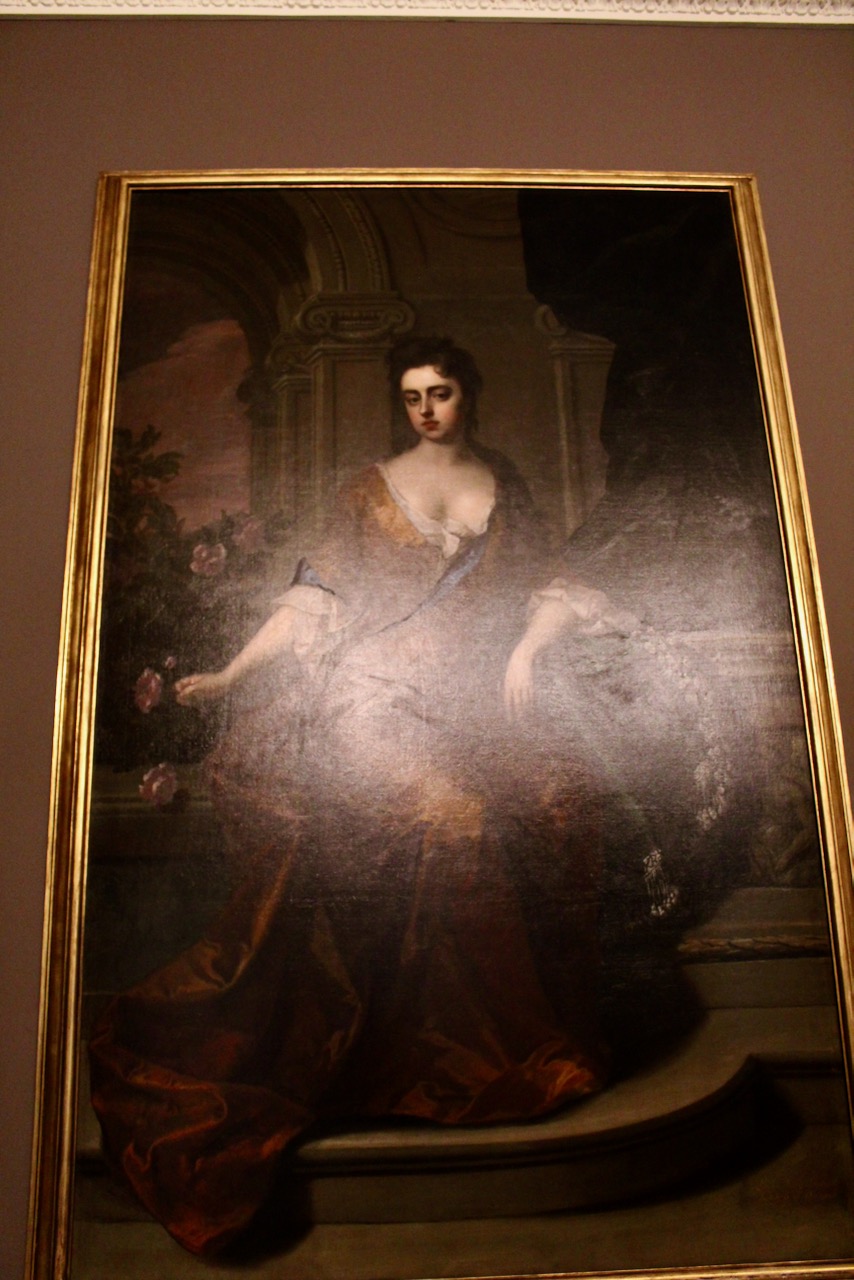
One of a pair of large Meissen gilt and white two-handled campana vases with everted rims and entwined scrolling serpent and acanthus handles. This pair of vases is reputed to have been given to Thomas Conolly (1823–1876) as a gift by the future French Emperor, Napoleon III. I don’t know who is featured in this portrait – I’ll have to find out! It’s very beautiful. Tell me if you can identify our lovely lady in white and blue. To me she looks like Anne Hyde (1637-1671), Duchess of York, wife of King James II. Photograph © Jennifer Winder-Baggot, www.irishhistorichouses.com

Between the front of the house, with its Entrance Hall, Stair Hall and Dining Room is a corridor, or rather, two corridors, one to the west and one to the east of the Entrance Hall. This corridor is on every storey, including the basement. To the rear (north) of the house on the ground floor is an enfilade of rooms: the Brown Study to the west end, next to another staircase, then the Red Drawing Room, the Green Drawing Room, the Print Room, the State Bedroom, and then small rooms called the Healy Room and the Map Room.

One of the corridors between the front and back of the house on the ground floor, October 2022. Photograph © Jennifer Winder-Baggot, www.irishhistorichouses.com
The high ceilinged corridors end in large windows. Photograph © Jennifer Winder-Baggot, www.irishhistorichouses.com

The corridors now hold paintings and art works, and one has a cabinet of Meissen porcelain.

Meissen porcelain pieces were created specially for clients, with favourite symbols and objects. Photograph © Jennifer Winder-Baggot, www.irishhistorichouses.com
Castletown House, County Kildare. Photograph © Jennifer Winder-Baggot, www.irishhistorichouses.com
King George III.
Queen Charlotte, wife of King George III.
Queen Victoria.

Next to the Dining Room at the front of the house is the Butler’s Pantry, which contains photographs of the servants of Castletown, and a portrait of a housekeeper, Mrs Parnel Moore (1649–1761). It’s unusual to have a portrait of a housekeeper but perhaps someone painted her because she was a beloved member of the household, as she lived to be at least 112 years! This is a very old portrait dating back to the 1700s.

The Castletown website tells us about the Butler’s Pantry: “The Butler’s Pantry dates from the 1760s and connected the newly created Dining Room with the kitchens in the West Wing. Food was carried in from the kitchens through the colonnade passageway and then reheated in the pantry before being served. The great kitchens were on the ground floor of the west wing, with servants’ quarters upstairs. Upwards of 80 servants would have been employed in the house and kitchens in the late eighteenth century under the direction of the Butler and the Housekeeper.”

A house like Castletown relied on an army of servants and this portrait of former housekeeper Mrs Parnel Moore – aged 112 according to the inscription – dates back to the beginnings of Castletown and is one of the oldest original items in the collection.
English servants of Castletown, photograph in Butler’s Pantry of Castletown.
Irish servants of Castletown, photograph in Butler’s Pantry of Castletown.
Enfilade of rooms on the north side, photograph by Swire Chin, Toronto, May 2013 flickr constant commons.

The Red Drawing Room, description from Archiseek:

It is one of a series of State Rooms that form an enfilade and were used on important occasions in the eighteenth century. This room was redesigned in the mid 1760s in the manner of Sir William Chambers. The chimney-piece, ceiling and pier glasses are typical of his designs. 

The walls are covered in red damask which is probably French and dates from the 1820s. Lady Shelburne recorded in her journal seeing a four coloured damask, predominently red, in this room. The Aubusson carpet dates from about 1850 and may have been made for the room. Much of the furniture has always been in the house and Lady Louisa Conolly paid 11/2 guineas for each of the Chinese Chippendale armchairs which she considered very expensive. The chairs and settee were made in Dublin and they are displayed in a formal arrangement against the walls as they would have been in the eighteenth century. The bureau was made for Lady Louisa in the 1760s.

The neoclassical ceiling, which replaced the vaulted original, is based on published designs by the Italian Renaissance architect, Sebastiano Serlio, and is modelled after one in Leinster House (belonging to Lady Louisa’s sister’s husband the Earl of Kildare). The white Carrara chimney-piece came to the house in 1768.

The Red Drawing Room in Castletown House, June 2015. Photograph © Jennifer Winder-Baggot, www.irishhistorichouses.com
A Chinese gilt and polychrome lacquer cabinet on Irish stand, with a pair of doors later painted with vignettes of romantic landscapes and birds on floral sprays. The landscapes on this lacquered cabinet are said to have been painted by Katherine Conolly as a gift for her great-niece, Molly Burton, in about 1725. Katherine, who had no children herself, looked after Molly after her father died. [9] Photograph © Jennifer Winder-Baggot, www.irishhistorichouses.com
The Red Drawing Room in October 2022. Photograph © Jennifer Winder-Baggot, www.irishhistorichouses.com
The white Carrara chimney-piece came to the house in 1768. Andrew Tierney tells us in Buildings of Ireland: Central Leinster. The Counties of Kildare, Laois and Offaly that it is by John Devall & Son and based on Isaac Ware’s Designs of Inigo Jones (1731). Photograph © Jennifer Winder-Baggot, www.irishhistorichouses.com
The neoclassical ceiling, which replaced the vaulted original, is based on published designs by the Italian Renaissance architect, Sebastiano Serlio. There is also a modillion cornice and a Rococo frieze. Photograph © Jennifer Winder-Baggot, www.irishhistorichouses.com
The wallpaper has been specially recreated from original material, and the curtains have been made to match. Photograph © Jennifer Winder-Baggot, www.irishhistorichouses.com
Chinese Chippendale sofas, Irish, c.1770, photograph from 2015. Photograph © Jennifer Winder-Baggot, www.irishhistorichouses.com

The Green Drawing Room, description from Archiseek:

The Conollys formally received important visitors to the house in the Green Drawing Room which was the saloon or principal reception room. The room was redecorated in the 1760s and like the other state rooms reflects the neo-classical taste of the architect Sir William Chambers. The Greek key decoration on the ceiling is repeated on the pier glasses and the chimney-piece. Originally these were pier tables with a Greek key frieze and copies of these may be made in the future. The chimney-piece is similar to one designed by Chambers for Lord Charlemont’s Casino at Marino.”

The Castletown website tells us: “The Green Drawing Room was the main reception room or saloon on the ground floor. Visitors could enter from the Entrance Hall or the garden front. Like the other state rooms it was extensively remodelled between 1764 and 1768. The influence of the published designs of Serlio and the leading British architect Isaac Ware can be seen in the neo-classical ceiling, door cases and chimney-piece...The walls were first lined with a pale green silk damask in the 1760s. Fragments of this silk, which was replaced by a dark green mid-nineteenth century silk, survived and the present silk was woven as a direct colour match in 1985 by Prelle et Cie in Lyon, France.”

The Green Drawing Room, Castletown House, June 2015. Portrait of the woman and child is Mrs Katherine Conolly with Miss Molly Burton, by Charles Jervas. The man on the other side of the door is Speaker William Conolly. The door to the entrance hall is gilded and pedimented and is by Richard Cranfield of Dublin (after that by Ware in the saloon of Leinster House), with “pulvinated” (i.e. having the shape of a cushion) bay-leaf frieze. The chimeypiece replicates the key pattern on the ceilng. Photograph © Jennifer Winder-Baggot, www.irishhistorichouses.com
Our guide showed us how the Green Drawing Room opens into the Great Hall. Photograph © Jennifer Winder-Baggot, www.irishhistorichouses.com
The Green Drawing Room, October 2022. Photograph © Jennifer Winder-Baggot, www.irishhistorichouses.com
Charles Lennox 2nd Duke of Richmond (1701-1750). I’m not sure if this is his wife Sarah Cadogen beside him. Photograph © Jennifer Winder-Baggot, www.irishhistorichouses.com
I think this is a portrait of Louisa’s brother Charles, 3rd Duke of Richmond.
King Charles I, and below, a mistress of King Charles II, Louise Renée de Penancoët de Kérouaille, Duchess of Portsmouth, who was the mother of Charles Lennox, 1st Duke of Richmond. Photograph © Jennifer Winder-Baggot, www.irishhistorichouses.com
Thomas Wentworth 1st Earl of Strafford (1593-1641), Lord Deputy of Ireland 1632-1640 for King Charles I. Photograph © Jennifer Winder-Baggot, www.irishhistorichouses.com
The website tells us about this Musical Clock by Charles Clay c.1730. “Katherine and William Conolly are credited with bringing this important musical clock to Castletown. It was made by Charles Clay, official clock-maker to His Majesty’s Board of Works in London. It is the only clock of its kind known to be in Ireland and its sweet chime can be heard throughout the enfilade.” Photograph © Jennifer Winder-Baggot, www.irishhistorichouses.com

The Brown Study is at one end of this enfilade of rooms. The website describes it:

The Brown Study with its wood-panelled walls, tall oak doors, corner chimney-piece, built-in desk and vaulted ceiling is decorated as it was in the 1720s when the house was first built. This room was used as a bedroom in the late nineteenth century and then as a breakfast parlour in the early twentieth century.

Between the windows is a piece of the ‘Volunteer fabric’. Printed on a mixture of linen and cotton in Harpur’s Mills in nearby Leixlip, it depicts the review of the Leinster Volunteers in the Phoenix Park in 1782. Thomas Conolly was active in the Volunteer leadership in both Counties Derry and Kildare. The Volunteers were a local militia force established during the American War of Independence to defend Ireland from possible French invasion while the regular troops were in America. They were later linked to the Patriot party in the Irish House of Commons led by Henry Grattan and to their campaigns for political reform.

Brown Study, Castletown House, Celbridge, Co Kildare, photograph by Sonder Visuals 2022 for Failte Ireland.
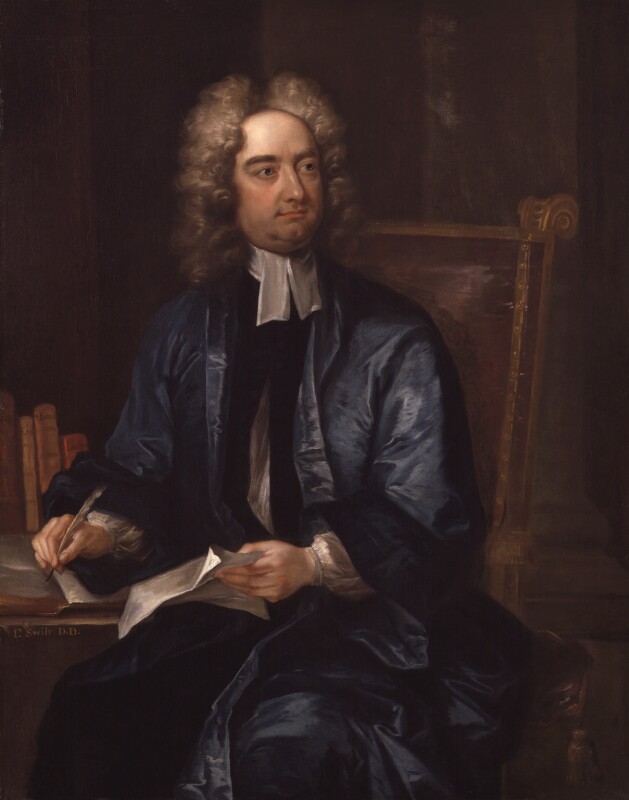
The Brown Study. Jonathan Swift portrait, and King William III. Photograph © Jennifer Winder-Baggot, www.irishhistorichouses.com
The ‘Volunteer fabric’. Printed on a mixture of linen and cotton in Harpur’s Mills in nearby Leixlip, it depicts the review of the Leinster Volunteers in the Phoenix Park in 1782. Photograph © Jennifer Winder-Baggot, www.irishhistorichouses.com
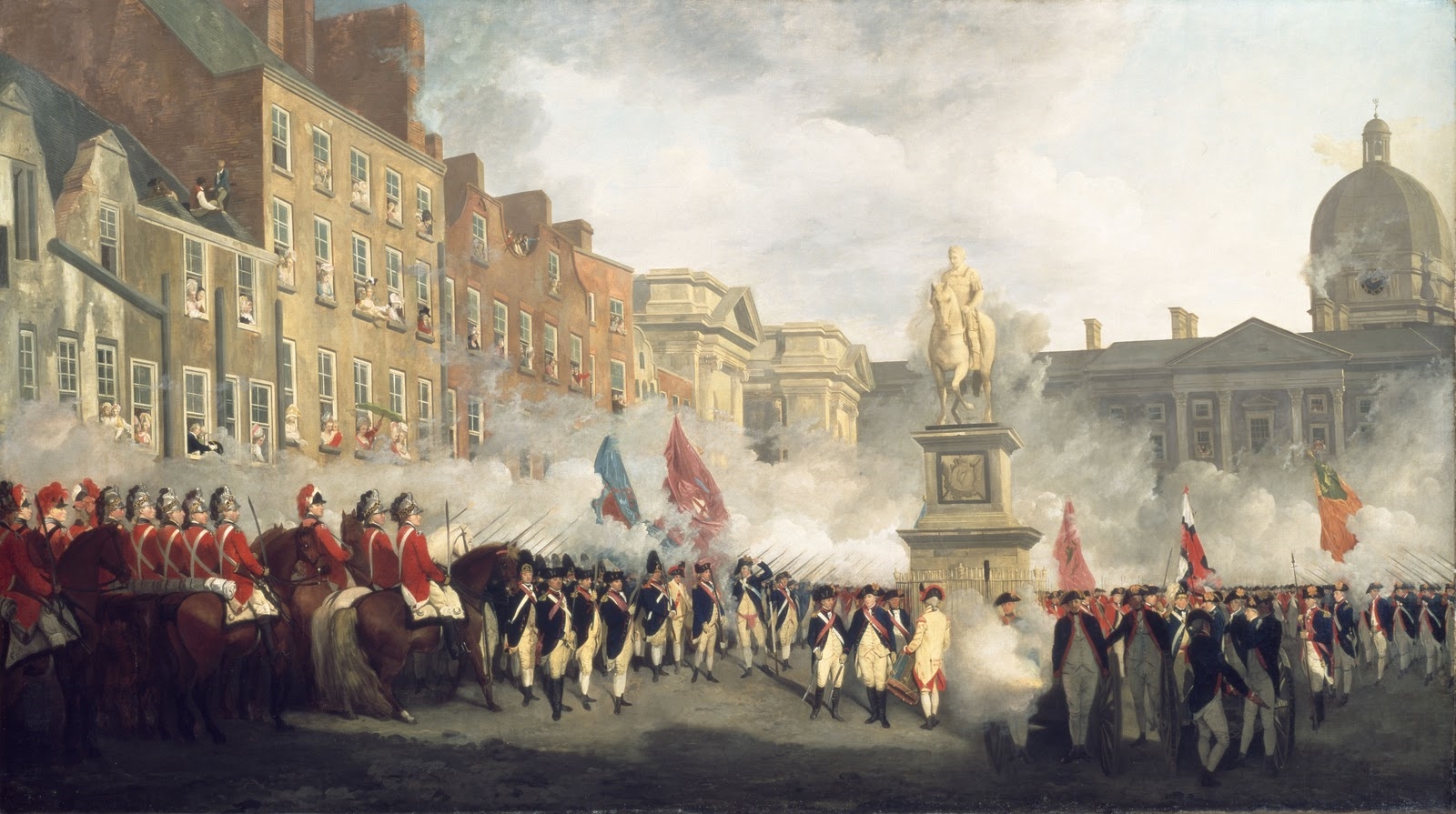
Dublin Volunteers on College Green, 1779, by Francis Wheatley.
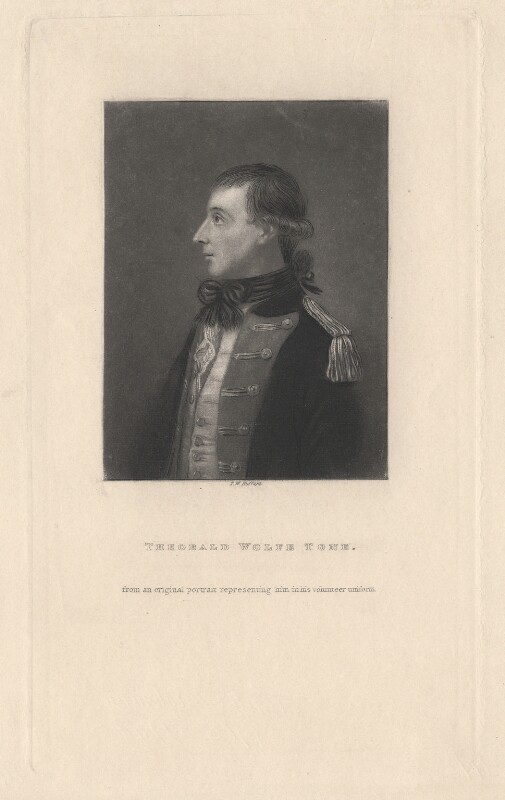
Key to the Dublin Volunteers on College Green, 1779 by Francis Wheatley. In the centre facing forward is the Duke of Leinster. I found it odd to see that James Napper Tandy is one of the Volunteers pictured, since I know he is famous for being a rebel, along with Edward FitzGerald. It turns out that James Napper Tandy was expelled from the Irish Volunteers in 1780 because he proposed the expulsion of the Duke of Leinster! Tandy went on to help to form the United Irishmen, along with Theobald Wolf Tone.
Edward Fitzgerald (1763-1798). He fought with the British side in the American War of Independence but was injured and as he recuperated with the help of his servant, his sympathies turned to those fighting for Independence from the British. He continued this fight in Ireland, joining the United Irishmen. He was imprisoned and died in prison, his last visitor being his aunt Louisa Conolly.
Our guide showed us a photograph of the Brown study in the time of the Conolly Carew family, when they struggled with the upkeep of the house.

Mark Bence-Jones continues: “The doing-up of the house was largely supervised by Lady Louisa, and two of the rooms bear her especial stamp: the print room, which she and her sister, Lady Sarah Napier made ca. 1775; and the splendid long gallery on the first floor, which she had decorated with wall paintings in the Pompeian manner by Thomas Riley 1776.

The website tells us about the Print Room, completed in 1769: “More than any other room in Castletown, the Print Room bears the imprint of Lady Louisa, who assiduously collected, cut out, and arranged individual prints, frames and decorations. The prints were glued on panels of off-white painted paper which was later attached to the walls on battens covered with cloth. Lady Louisa thus created an intimate, highly individual room which has survived changing tastes and fashions and is now the only fully intact eighteenth-century print room in Ireland.”

The Print Room, Castletown House, June 2015. Photograph © Jennifer Winder-Baggot, www.irishhistorichouses.com

Print rooms were fashionable in the 18th century – ladies would collect their favourite prints and paste the walls with them. Prints featured include Le Bas, Rembrandt and Teniers, the actor David Garrick and Sarah Cibber, Louisa’s sister Sarah, Charles I and Charles II as a boy, with whom Louisa shared a bloodline.

The room was later used as a billiards room, and this helped inadvertedly to save the prints, as our guide told us, as the smoke from their pipes helped to protect against silverfish insects which eat wallpaper.

The print room, central picture of Louisa’s sister Sarah Lennox, who married first Thomas Charles Bunbury 6th Baronet, then George Napier. Photograph © Jennifer Winder-Baggot, www.irishhistorichouses.com
Sarah Lennox was at first expected to marry King George III. His advisors dissuaded him, and so she married Thomas Charles Bunbury 6th Baronet. However, she left him to elope with a lover, Wililam Gordon with whom she had a daughter. He abandoned her, however, and she was left in disgrace, moving to her brother’s family home. She was finally allowed to divorce, and she married George Napier, and they moved to Celbridge. Photograph © Jennifer Winder-Baggot, www.irishhistorichouses.com
Castletown House, County Kildare. Photograph © Jennifer Winder-Baggot, www.irishhistorichouses.com
Many of the prints reflect fashionable cultural figures at the time that Louisa made the print room. Above the chimneypiece is David Garrick, an English actor, playwright and theatre manager. Louisa loved the theatre. A small temple in the grounds of Castletown is dedicated to actress Sarah Siddons. Photograph © Jennifer Winder-Baggot, www.irishhistorichouses.com

Next to the Print Room is the State Bedroom. The website tells us:

In the 1720s, when the house was first laid out, this room, along with the rooms either side, probably formed William Conolly’s bedroom suite. It was intended that he would receive guests in the morning while sitting up in bed or being dressed in the manner of the French court at Versailles. In the nineteenth century, the room was converted into a library and the mock leather Victorian wall paper dates from this time. Sadly, the Castletown library was dispersed in the 1960s and today the furniture reflects the room’s original use.

The library at Castletown House. Pub Orig Country Life 22/08/1936 
Image Number: 873961  Publication Date: 22/08/1936  Volume: LXXXPage: 196 
Photographer: A.E. Henson.
The State Bedroom, Castletown House, June 2015. Photograph © Jennifer Winder-Baggot, www.irishhistorichouses.com
State Bedroom, 2022. Photograph © Jennifer Winder-Baggot, www.irishhistorichouses.com
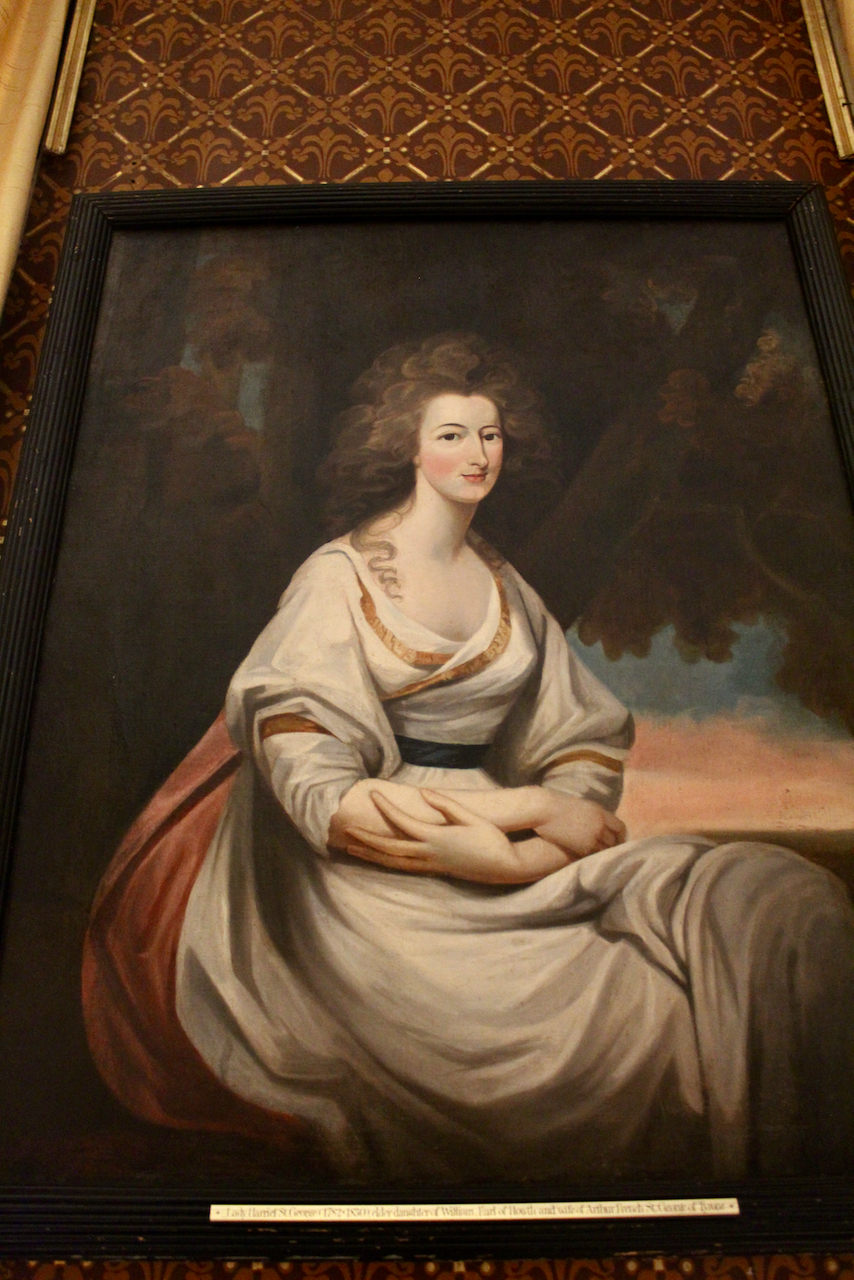
Harriet St. Lawrence (d. 1830), daughter of William 2nd Earl of Howth. She married Arthur French St. George (1780-1844). Olivia Emily Ussher-St. George married William Robert Fitzgerald, 2nd Duke of Leinster, the son of Emily, Louisa’s sister. Photograph © Jennifer Winder-Baggot, www.irishhistorichouses.com

Next to the State Bedroom is The Healy Room: “This room originally served as a dressing room or closet attached to the adjoining State Bedroom. It was used as a small sitting room and later became Major Edward Conolly’s bedroom in the mid-twentieth century, as it was one of the few rooms that could be kept warm in winter. It is now known as the Healy room after the pictures of the Castletown horses by the Irish artist Robert Healy (d.1771).”

Upstairs has more bedrooms, and the beautiful Long Gallery. A corridor overlooks the Great Hall.

Castletown, County Kildare.
The door on the left enters the Long Gallery. Photograph © Jennifer Winder-Baggot, www.irishhistorichouses.com

To one side of the Stair Hall upstairs is Lady Kildare’s Room, named after Lady Louisa’s sister Emily, Countess of Kildare and later Duchess of Leinster, who had raised Louisa and the two younger sisters Sarah and Cecilia at nearby Carton House after their parents’ death. Currently being renovated, in the past the room housed the Berkeley Costume Collection. Made in France, Italy, and England, the dresses on display consist of rich embroidered bodices and full skirts made from silk and gold thread.

Costumes from the Berkeley Costume Collection, in Lady Kildare’s Room, 2017. Photograph © Jennifer Winder-Baggot, www.irishhistorichouses.com

Across the upstairs East Corridor from Lady Kildare’s room is the Blue Bedroom. The website tells us that the Blue Bedroom provides a fine example of an early Victorian bedroom. Like the Boudoir, it forms part of an apartment with two adjoining dressing rooms, one of which was upgraded into a bathroom with sink and bathtub. The principal bedrooms, used by the family and honoured guests, were on this floor. Bedrooms on the second floor were also used for guests and for children, while the servants slept in the basement. This room has a lovely pink canopied bed, but we did not see the room when we visited in 2022.

At the front of the house on the other side of the Great Hall upstairs are the Boudoir, and Lady Louisa’s Bedroom, and across the West Corridor upstairs, the Pastel Room. The website tells us:

The Boudoir and the adjoining two rooms formed Lady Louisa’s personal apartment. The Boudoir served as a private sitting room for Louisa and subsequent ladies of the house. The painted ceiling, dado rail and window shutters possibly date from the late eighteenth century and were restored in the 1970s by artist Philippa Garner. The wall panels, or grotesques, after Raphael date from the early nineteenth century and formerly hung in the Long Gallery. Amongst the items inside the built-in glass cabinet are pieces of glass and china featuring the Conolly crest.

In the adjoining room, Lady Louisa’s Bedroom, OPW’s conservation architects have left exposed the walls to offer visitors a glimpse of the different historic layers in the room, from the original brick walls, supported by trusses, to wooden panelling to fragments of whimsical printed wall paper that once embellished the room.

The Boudoir, October 2022. Photograph © Jennifer Winder-Baggot, www.irishhistorichouses.com
The Boudoir, Castletown House, July 2017. The website tells us about the writing bureau, Irish-made around 1760: A George III mahogany cabinet with dentilled-scrolled broken pediment carved with rosettes. Throughout her life, Lady Louisa maintained a regular correspondence with her sisters and brothers in Ireland and England, and it is easy to picture her writing her epistles at this bureau and filing the letters she received in the initialled pigeonholes and drawers. A handwritten transcription of her letters to her siblings can be accessed in the OPW-Maynooth University Archive and Research Centre in Castletown. Photograph © Jennifer Winder-Baggot, www.irishhistorichouses.com
The writing bureau has no “J” or “U” as they are not in the Latin alphabet. Photograph © Jennifer Winder-Baggot, www.irishhistorichouses.com
The Boudoir, October 2022. In this photograph we can see the false door, with glass panels, which had previously been covered by Lady Louisa’s writing bureau. Photograph © Jennifer Winder-Baggot, www.irishhistorichouses.com
Castletown House, County Kildare. Photograph © Jennifer Winder-Baggot, www.irishhistorichouses.com
The wall panels, or grotesques, after Raphael date from the early nineteenth century and formerly hung in the Long Gallery. Photograph © Jennifer Winder-Baggot, www.irishhistorichouses.com
The painted ceiling, dado rail and window shutters possibly date from the late eighteenth century and were restored in the 1970s by artist Philippa Garner. Photograph © Jennifer Winder-Baggot, www.irishhistorichouses.com
Castletown House, June 2015. Photograph © Jennifer Winder-Baggot, www.irishhistorichouses.com
From the photograph album of Henry Shaw.
Castletown House, June 2015, Lady Louisa’s Bedroom, OPW’s conservation architects have left exposed the walls to offer visitors a glimpse of the different historic layers in the room, from the original brick walls, supported by trusses, to wooden panelling to fragments of whimsical printed wall paper that once embellished the room. Photograph © Jennifer Winder-Baggot, www.irishhistorichouses.com
Castletown House, July 2017. Photograph © Jennifer Winder-Baggot, www.irishhistorichouses.com
In 2022, Louisa’s bedroom now features a tremendous bed. Photograph © Jennifer Winder-Baggot, www.irishhistorichouses.com
Castletown House, County Kildare: This bed, or one with drapery the same, was from Killadoon house in County Kildare, as seen in Ancestral Interiors, Photographs of the Irish Country House by Patrick Prendergast, with an introduction by William Laffan and forward by the Knight of Glin, published by the Irish Architectural Archive, Dublin, 2010.  Photograph © Jennifer Winder-Baggot, www.irishhistorichouses.com
Castletown House, County Kildare. Photograph © Jennifer Winder-Baggot, www.irishhistorichouses.com
I have yet to identify this portrait. It looks remarkably similar to Lady Anne Conolly (née Wentworth) (1713-1797) Attributed to Anthony Lee, Irish, fl.1724-1767, and she is even wearing the same dress. Maybe the artist did two portraits. Photograph © Jennifer Winder-Baggot, www.irishhistorichouses.com

Across the West Corridor upstairs is the Pastel Room. The Corridor has more portraits.

Charles I and Henrietta Maria. Photograph © Jennifer Winder-Baggot, www.irishhistorichouses.com
William Robert FitzGerald (1748-1804), 2nd Duke of Leinster, son of Louisa’s sister Emily.

The Pastel Room, the website tells us, was originally an anteroom to the adjoining Long Gallery. It was used as a school room in the nineteenth century and is now known as the Pastel Room because of the fine collection of pastel portraits. The smaller pastels surrounding the fireplace include a pair of portraits of Thomas and Louisa Conolly by the leading Irish pastel artist of the eighteenth century, Hugh Douglas Hamilton.

The small medallion in the centre is Lady Louisa by Hugh Douglas Hamilton. The one of the two girls on the right is of Louisa Staples and her sister, by Hugh Douglas Hamilton. William James Conolly (1712-1754) was the nephew of William Conolly who built Castletown, and he inherited the estate. He was the father of Thomas Conolly (1734-1803). Thomas’s sister Harriet married John Staples, and their daughter was Louisa Staples. Louisa married Thomas Pakenham (1757-1836). It was their son, Edward Michael (1786-1849) who inherited Castletown, and added Conolly to his surname, to become Pakenham Conolly.
The pastel on the top left is Thomas Conolly (1734-1803), Louisa’s husband.
Thomas Connolly of Castletown by Hugh Douglas Hamilton (1739-1808), courtesy Adam’s auction 28 March 2012.
The parents of Louisa and Emily: Sarah Cadogen (1705-1751) and Charles Lennox (1701-1750) 2nd Duke of Richmond.
Pastel of Lady Louisa Lennox, from the circle of Geoge Knapton, c.1747, it depicts Lady Louisa at the tender age of four. Louisa was the daughter of Charles Lennox, 2nd Duke of Richmond, and his wife, Lady Sarah Cadogan. Her parents died when she was eight years old, and both she and her two younger sisters, Sarah and Cecilia, went to live with their older sister Emily, Countess of Kildare, in Ireland.
Charlotte Lennox née Gordon (1768-1842), Duchess of Richmond, Vicereine 1807-1813, wife of Charles Lennox, 4th Duke of Richmond.

From the Pastel Room, we enter the Long Gallery. The website tells us about this room:

Originally laid out as a picture gallery with portraits of William Conolly’s patrons on display, its function and layout changed under Lady Louisa. In 1760, she had the original doorways to the upper east and west corridors removed, replacing them with the central doorway above the Entrance Hall. The new doorcases as well as new fireplaces at either end were designed by leading English architect, Sir William Chambers, while the actual execution was overseen by Simon Vierpyl. The Pompeian style decoration on the walls dates from the 1770s and was inspired by Montfaucon’s publications on the excavations at Pompeii and Herculaneum and by Raphael’s designs for the Vatican. The murals were the work of an English artist and engraver Charles Ruben Riley (1752–98). The Long Gallery became a space for informal entertaining and was full of life and activity as the following excerpt from one of Louisa’s letters suggests: “Our gallery was in great vogue, and really is a charming room for there is such a variety of occupations in it, that people cannot be formal in it. Lord Harcourt was writing, some of us played at whist, others at billiards, Mrs Gardiner at the harpsichord, others at chess, others at reading and supper at one end. I have seldom seen twenty people in a room so easily disposed of.”

Upstairs, The Long Gallery, Castletown House, June 2015. Photograph © Jennifer Winder-Baggot, www.irishhistorichouses.com
The gallery at Castletown House, as decorated for Lady Louisa Conolly circa 1790. Pub Orig Country Life 22/08/1936 Image Number: 873951  Publication Date: 22/08/1936  Volume: LXXX Page: 196 
Photographer: A.E. Henson.
The Long Gallery in the 1880s, photograph from the album of Henry Shaw.

The Long Gallery, description from Archiseek:

“…measuring almost 80 by 23 feet, with its heavy ceiling compartments and frieze dates from the 1720s. Originally there were four doors in the room and the walls were panelled in stucco similar to the entrance Hall. In 1776 the plaster panels and swags were removed but traces of them were found behind the painted canvas panels when they were taken down for cleaning during recent conservation work.” 

The Long Gallery: its heavy ceiling compartments and frieze dates from the 1720s and is by Edward Lovett Pearce. It was painted and gilded in the 1770s. Photograph © Jennifer Winder-Baggot, www.irishhistorichouses.com

Archiseek continues: “In the mid 1770s the room was redecorated in the Pompeian manner by two English artists, Charles Reuben Riley (c.1752-1798) and Thomas Ryder (1746-1810). Tom and Louisa’s portraits are at either end of the room over the chimney-pieces and the end piers are decorated with cyphers of the initals of their families: The portrait of Lady Louisa is after Reynolds (the original is in the Fogg Art Museum, Harvard) and that of Tom after Anton Raphael Mengs (the original is in the National Gallery of Ireland).

The portrait of Lady Louisa is after Reynolds (the original is in the Fogg Art Museum, Harvard). The fireplaces installed by Louisa at either end of the room were designed by leading English architect, Sir William Chambers, while the actual execution was overseen by Simon Vierpyl. It contains a Wedgewood encaustic centrepiece. Photograph © Jennifer Winder-Baggot, www.irishhistorichouses.com
The portrait of Tom is in the style of Anton Raphael Mengs (the original is in the National Gallery of Ireland). Photograph © Jennifer Winder-Baggot, www.irishhistorichouses.com
The new doorcases were designed by leading English architect, Sir William Chambers, while the actual execution was overseen by Simon Vierpyl. Thomas Conolly imported the statue, a seventeenth century statue of Diana, in the centre, supposedly smuggling it home in a coffin! Above is a lunette of Aurora, the godess of the dawn, derived from a ceiling decoration by Guido Reni, the seventeenth century Bolognese painter.  Photograph © Jennifer Winder-Baggot, www.irishhistorichouses.com

Archiseek tells us: “The subjects of the wall paintings were mostly taken from engraving in d’Hancarville’s Antiquites Etrusques, Greques, et Romaines (1766-67) and de Montfaucon’s L’antiquite expliquee et representee en figures (1719). The busts of the poets and philosophers are placed on gilded brackets designed by Chambers. In the central niche stands a seventeenth-century statue of Diana. Above is a lunette of Aurora, the godess of the dawn, derived from a ceiling decoration by Guido Reni, the seventeenth century Bolognese painter. 

The three glass chandeliers were made for the room in Venice and the four large sheets of mirrored glass came from France. In the 1770s the Long Gallery was used as a living room and was filled with exquisite furniture. Originally in the room, there were a pair of side tables attributed to John Linnell, with marble tops attributed to Bossi, a pair of commodes by Pierre Langlois, that were purchased in London for Lady Louisa by Lady Caroline Fox and a pair of bookcases at either end of the room. 

“In 1989 major conservation work was carried out on the Long Gallery. The wall paintings that had been flaking for many years were conserved. The original eighteenth-century gilding has been cleaned and the chandeliers restored. The project was funded by the American Ireland Fund, the Irish Georgian Society and by private donations.

Castletown House, County Kildare. Photograph © Jennifer Winder-Baggot, www.irishhistorichouses.com
Castletown House, County Kildare.
Castletown House, County Kildare. Photograph © Jennifer Winder-Baggot, www.irishhistorichouses.com
A set of three 18th-century Venetian coloured and plain glass 24-light chandeliers, decorated with flower heads and moulded finials. These three Murano glass chandeliers are unique in Ireland and rare even in Italy. It is believed that Lady Louisa ordered them from Venice between 1775 and 1778 for the redecorated Long Gallery. The chandeliers were wired for electricity in the mid-1990s; they were cleaned and restored by a Venetian firm of historic glass-makers in 2009.  Photograph © Jennifer Winder-Baggot, www.irishhistorichouses.com

Mark Bence-Jones tells us: “The gallery, and the other rooms on the garden front, face along a two mile vista to the Conolly Folly, an obelisk raised on arches which was built by Speaker Conolly’s widow 1740, probably to the design of Richard Castle. The ground on which it stands did not then belong to the Conollys, but to their neighbour, the Earl of Kildare, whose seat, Carton, is nearby. The folly continued to be a part of the Carton estate until 1968, when it was bought by an American benefactress and presented to Castletown. At the end of another vista, the Speaker’s widow built a remarkable corkscrew-shaped structure for storing grain, known as the Wonderful Barn. One of the entrances to the demesne has a Gothic lodge, from a design published by Batty Langley 1741. The principal entrance gates are from a design by Chambers.

The Obelisk, or Conolly Folly, was reputedly built to give employment during an episode of famine. It was restored by the Irish Georgian Society in 1960.

Obelisk, Castletown, attributed to Richard Castle, March 2022. Desmond Guinness’s wife Mariga, who played a great role in the Irish Georgian Society, is buried below. Photograph © Jennifer Winder-Baggot, www.irishhistorichouses.com
Obelisk, Castletown, March 2022. Photograph © Jennifer Winder-Baggot, www.irishhistorichouses.com
The Wonderful Barn, Castletown by Robert French, Lawrence Photographic Collection NLI, flickr constant commons.
The Wonderful Barn, March 2022, created in 1743. Photograph © Jennifer Winder-Baggot, www.irishhistorichouses.com
The Wonderful Barn, March 2022. Photograph © Jennifer Winder-Baggot, www.irishhistorichouses.com
When we went to find the Wonderful Barn, we discovered there is not just one but in fact three Wonderful Barns! Photograph © Jennifer Winder-Baggot, www.irishhistorichouses.com
The smaller Wonderful Barn. Photograph © Jennifer Winder-Baggot, www.irishhistorichouses.com

As Bence-Jones tells us, Castletown was inherited by Tom Conolly’s nephew, Edward Michael Pakenham, who took the name of Conolly, to become Pakenham Conolly. Thomas and Louisa had no children, and Thomas’s sister Harriet married John Staples, and their daughter was Louisa Staples. Louisa married Thomas Pakenham (1757-1836). It was their son, Edward Michael (1786-1849) who inherited Castletown.

The house then passed to his son, another Thomas Conolly (1823-1876). He was an adventourous character who travelled widely and kept a diary. Stephen and I recently attended a viewing of portraits of Thomas and his wife Sarah Eliza, which are to be sold by Bonhams. His diary of his trip to the United States during the time of the Civil War is being published.

Thomas Conolly (1823-1876), painting by William Osbourne. Photograph © Jennifer Winder-Baggot, www.irishhistorichouses.com
Sarah Eliza Conolly, wife of Thomas. Photograph © Jennifer Winder-Baggot, www.irishhistorichouses.com
Photograph © Jennifer Winder-Baggot, www.irishhistorichouses.com

Sarah Eliza was the daughter of a prosperous Celbridge paper mill owner, Joseph Shaw. Her substantial dowry helped to fund her husband’s adventurous lifestyle! A photograph album which belonged to her brother Henry Shaw, of a visit to Castletown, was rescued from the rubble of his home in London when it was destroyed by a German bomb in 1944. Sadly, he died in the bombing. The photograph album is on display in Castletown.

Thomas Conolly (1823-1876) and his wife Sarah Eliza.

Sarah Eliza and Thomas had four children. Thomas, born in 1870, died in the Boer War in 1900. William died at the age of 22. Edward Michael (Ted), born in 1874, lived until his death in Castletown, in 1956. Their daughter Catherine married Gerald Shapland Carew, 5th Baron Carew, the grandson of Robert Carew, 1st Baron Carew of Castleboro House, County Wexford (today an impressive ruin), and son of Shapland Francis Carew and his wife Hester Georgiana Browne, daughter of Howe Peter Browne, 2nd Marquess of Sligo.

Sarah Eliza sits reading while her daughter Catherine descends the stairs.
Photographs of the Conolly family. Thomas Conolly who died in the Boer War is pictured on the left in the striped cap.
View of Castletown House from the meadow from Henry Shaw’s album.
Sarah Eliza with Catherine and her children seated at the table in the Dining Room. William Francis in foreground.

Catherine’s son, William Francis Conolly-Carew (1905-1994), 6th Baron Carew, inherited Castletown, and added Conolly to his surname.

Lord William Francis Conolly-Carew relaxing in the Green Drawing Room in the 1950s.
Castletown House, County Kildare.
The grounds around Castletown are beautiful and one can walk along the Liffey. Photograph © Jennifer Winder-Baggot, www.irishhistorichouses.com
In front is a photograph of William Francis Conolly-Carew, 6th Baron Carew.
Castletown House, County Kildare.
The Round House and the Gate Lodge (below) at the gates of Castletown can be rented for accommodation from the Irish Landmark Trust – see my Places to visit and stay in County Kildare page https://irishhistorichouses.com/2022/04/27/places-to-visit-and-to-stay-leinster-kildare-kilkenny-laois/. Photograph © Jennifer Winder-Baggot, www.irishhistorichouses.com
The Gate Lodge, Castletown, available for accommodation. Photograph © Jennifer Winder-Baggot, www.irishhistorichouses.com
Batty Langley lodge, County Kildare, also available for accommodation. Photograph © Jennifer Winder-Baggot, www.irishhistorichouses.com

[1] https://www.irelandscontentpool.com

[2] p. xiii, Jennings, Marie-Louise and Gabrielle M. Ashford (eds.), The Letters of Katherine Conolly, 1707-1747. Irish Manuscripts Commission 2018. The editors reference TCD, MS 3974/121-125; Capel Street and environs, draft architectural conservation area (Dublin City Council) and Olwyn James, Capel Street, a study of the past, a vision of the future (Dublin, 2001), pp. 9, 13, 15-17.

[3] http://kildarelocalhistory.ie/celbridge

[4] https://archiseek.com/2011/1770s-castletown-house-celbridge-co-kildare/

[5] p. 75. Bence-Jones, Mark. A Guide to Irish Country Houses (originally published as Burke’s Guide to Country Houses volume 1 Ireland by Burke’s Peerage Ltd. 1978); Revised edition 1988 Constable and Company Ltd, London.

[6] p. 129. Great Irish Houses. Forewards by Desmond FitzGerald, Desmond Guinness. IMAGE Publications, 2008. 

[3] p. 8, Living Legacies: Ireland’s National Historic Properties in the Care of the OPW. Government Publications, Dublin 2, 2018.

[9] https://castletown.ie/collection-highlights/

Text © Jennifer Winder-Baggot, www.irishhistorichouses.com

Fota House and Gardens, County Cork, a Heritage Trust property with OPW gardens

I published this entry as part of my “Places to visit and stay in County Cork” page, but as that page is so long, I am publishing it as a separate entry. Also, Stephen and I are still busy looking for a small place in the country to buy, so I can grow our own fruit and vegetables – and maybe keep chickens! – so we have not had time to visit more historic houses. I am still working on my write-up about our visit to Grenane House in County Tipperary during Heritage Week last year, and I still have to write up about Clonskeagh Castle in Dublin and Gravelmount.

Fota House is maintained by the Irish Heritage Trust, and the gardens by the Office of Public Works.

Photograph © Jennifer Winder-Baggot, www.irishhistorichouses.com

General enquiries: (021) 481 5543 https://fotahouse.com/

fota.arboretum@opw.ie

From the OPW website: https://heritageireland.ie/visit/places-to-visit/fota-arboretum-and-gardens/

Fota House was designed by 19th century architects Richard and William Morrison. From the beautifully proportioned rooms with exquisite plasterwork, to the preserved service wing and kitchens, Fota House offers visitors an intimate look at how life was lived in the past, for the cooks, butlers, footmen and maids who supported the lavish lifestyle of the gentry. Our painting collection is considered to be one of the finest collections of landscape painting outside the National Gallery of Ireland and includes works by William Ashford PRHA, Robert Carver, Jonathan Fisher and Thomas Roberts.” [1]
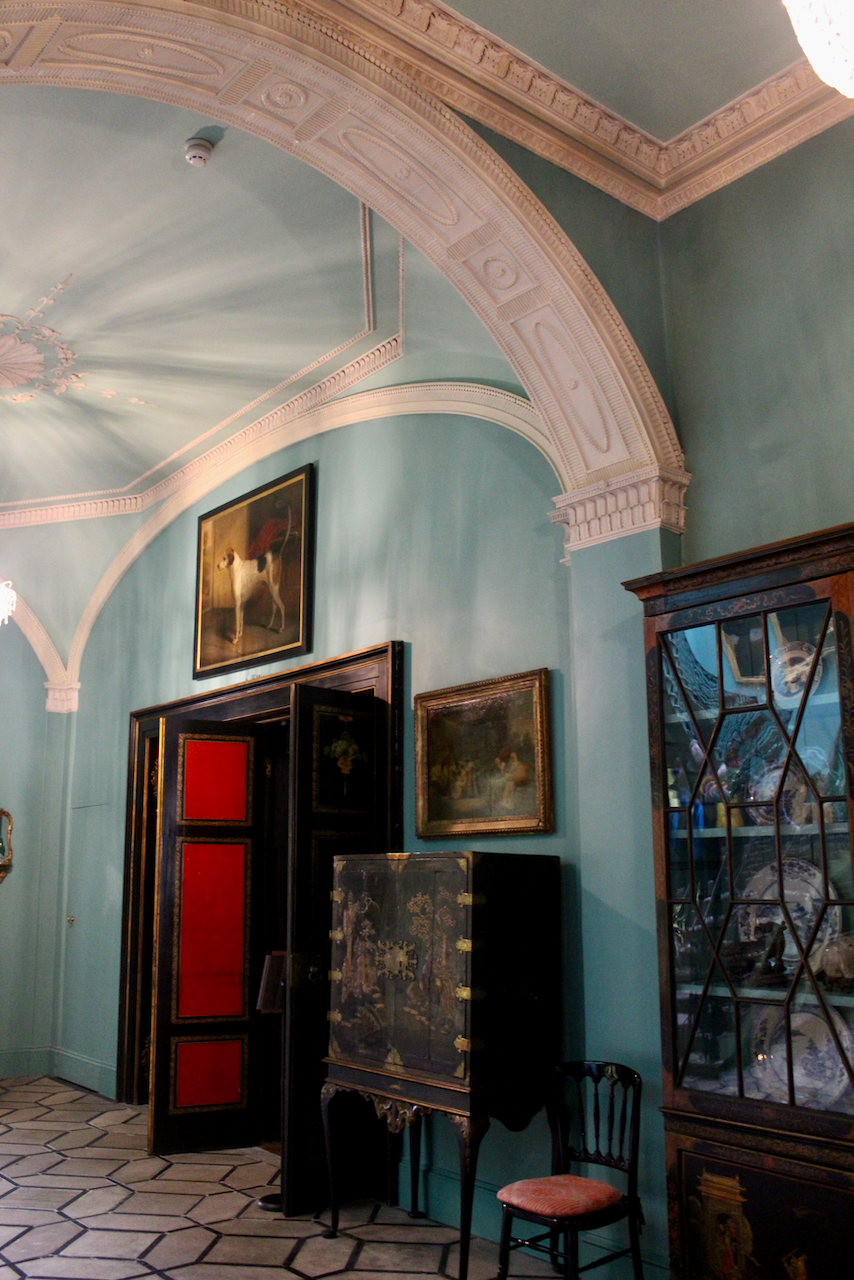
Front porch of Fota House. Fluted baseless Green Doric columns support a weighty entablature in which wreaths alternate with the Barry crest in the metopes. Photograph © Jennifer Winder-Baggot, www.irishhistorichouses.com
Information board and map of Fota House and Gardens.

Mark Bence-Jones writes in his A Guide to Irish Country Houses:

(Smith-Barry (now Villiers)/IFR) After Barry’s Court had been abandoned by the Barrymores, a hunting box was built on the nearby Fota Island, in Cork Harbour, by Hon John Smith-Barry [1725-1784], a younger son of 4th Earl of Barrymore, to whom Fota and some of the other Barrymore estates were given 1714.” [2]

John Smith-Barry, born John Barry (1725-1784) of Fota, County Cork.

John Barry (1725-1784), who added the name Smith to his surname after his marriage to a wealthy heiress, was the son of James Barry, 4th Earl of Barrymore, of Castlelyons, County Cork, and Barry’s third wife, Anne Chichester, daughter of Arthur Chichester, 3rd Earl of Donegall (it was spelled with two ‘l’s in the title, unlike the county).

James Barry, 4th Earl of Barrymore (1667-1748) (Lieutenant-General), Studio of Sir Godfrey Knellercourtesy of Sothebys 2013 collection l13304 lot 95.
James Barry, 4th Earl of Barrymore, (1667-1747), portrait in Fota House.

James Barry 4th Earl of Barrymore had first married Elizabeth Boyle, daughter of Charles Boyle 2nd Baron Clifford of Lanesborough, son of Richard, 1st Earl Burlington, 2nd Earl of Cork.

Second, after the death of his first wife, James Barry 4th Earl married Elizabeth Savage, daughter of Richard, 4th Earl Rivers.

Elizabeth Barry née Savage (d. 1714) wife of James Barry 4th Earl of Barrymore, daughter and heir of Richard Savage 4th Earl Rivers and Penelope Downes, seated with her daughter Penelope. This painting is attributed by Sotheby’s to Thomas Worldige.
Elizabeth Barry née Savage (d. 1714), 2nd wife of James 4th Earl of Barrymore. She and the 4th Earl had three daughters, and a son who died in his first year.

Thirdly, he married Anne Chichester.

Anne née Chichester, (1697-1753) Countess of Barrymore, 3rd wife of the 4th Earl of Barrymore, mother of John Smith-Barry (1725-1784) of Fota. This portrait is in Fota House.
Lady Anne Chichester, Countess of Barrymore (d. 1753) Attributed to Philip Hussey, she was daughter of Major-General Arthur Chichester, 3rd Earl of Donegall (1666-1706) and his wife Lady Catherine Forbes (d. 1743), and she married James Barry 4th Earl of Barrymore, and was the mother of James Smith-Barry.
Arthur Barry (1723-1770) by Francis Cotes courtesy of Sotheby’s L11304. This portrait belonged to the Smith-Barry family and was sold in an auction at Sotheby’s in 2013. Arthur was another son of James Barry, 4th Earl of Barrymore, he died unmarried and his property went to the Smith-Barry family.
Captain the Hon. Richard Barry R.N. (1721-1787), with his spaniel by John Lewis, second son of James Barry 4th Earl of Barrymore. This portrait is also courtesy of Sotheby’s L11304. This portrait belonged to the Smith-Barry family and was sold in an auction at Sotheby’s in 2013. We can see it in the old photograph of the library.

John Barry was a younger son so inherited no land. His brother James became the 5th Earl of Barrymore. However, he married Dorothy Smith, daughter of Hugh Smith of Weald Hall, Essex, and John added Smith to his surname. He and his wife lived at Marbury Hall in Cheshire, England, and he built Fota as a hunting lodge.

Dorothy née Smith (1727-1756) wife of John Hugh Smith Barry (1725-1784).
Hugh Smith of Weald Hall, father of Dorothy who married John Hugh Smith Barry (1725-1784).
Dorothy Smith née Barrett, Mrs. Smith of Weald Hall, mother of Dorothy.

John and Dorothy’s oldest son and heir was James Hugh Smith-Barry (1746-1801). He never married, but had several children. He inherited from two uncles, his father’s brothers, as well as from his father.

James Hugh Smith-Barry (1746-1801), who never married but had several children.
James Hugh Smith-Barry by William Orpen 1904, courtesy of Fonsie Mealy auction 2022.

The Landed Families website tells us:

Through the deaths without surviving issue of Arthur Barry in 1770 and Capt. Richard Barry in 1787, and the death of his father in 1784, James Hugh Smith-Barry inherited almost all the extensive property held by the three brothers, but if it made him rich it does not seem to have made him happy. As a young man he had racketed around Europe and the Near East with a group of friends on an extended Grand Tour, and amassed a large collection of art and antiques. On his return, however, he did not marry and settle down to raise a family, but became increasingly reclusive, perhaps as a result of depression. In about 1790 he bought Swerford Park in Oxfordshire and established a mistress called Ann Tanner there, by whom he eventually had five children. They appear not to have lived together since Ann stayed at Swerford and James lived increasingly at Fota; the children were brought up at Swerford. The children were all acknowledged and the elder son, John Smith-Barry (1793-1837) became James’ principal heir, but they were all quite young when James died in 1801. He left Ann the Swerford estate for life, and an annuity of £500 a year, and clearly envisaged that she would remain there and bring up the children to adulthood, even if she subsequently married. However, when she did marry in 1802, James’ trustees saw fit to take the children away from their mother and place them in the guardianship of relatives in Ireland (probably the Courtenays at Ballyedmond, as Robert Courtenay was one of the trustees). Ann remained at Swerford until about 1805 but then moved away, and Swerford was eventually sold in about 1820.” [3]

Frank Keohane tells us that John Smith-Barry (1783-1837), son of James Hugh Smith-Barry (1746-1801) settled here after his marriage to Eliza Courtenay of Ballyedmond, Midleton, County Cork. He was illegitimate, so perhaps he built the home to establish his reputation. [4] He wanted to claim the title of Earl of Barrymore when the last Earl, Henry Barry, 8th Earl of Barrymore died in 1823, but the crown would not allow it.

John Smith-Barry (1783-1837), who hired the Morrisons to enlarge the house.
Eliza Mary née Courtenay (1797-1828) who married John Smith-Barry. She was the daughter of Robert Courteney of Ballyedmond in County Cork.

Other children of James Hugh Smith-Barry (1746-1801) were Narcissa, who married George William Massy, son of Hugh, 3rd Baron of Duntrileague, County Limerick; James, who lived at Lota Lodge in County Cork (it is now the Vienna Woods Hotel); Caroline who married George Courtenay; and Louisa, who married Thomas Berry Cusack-Smith, son of William, 2nd Baronet Smith, of Newton, King’s County.

John Smith-Barry (1783-1837), who hired the Morrisons to enlarge the house.
I think this is probably also Eliza Mary née Courtenay (1797-1828) who married John Smith-Barry.
Portrait Of A Lady traditionally identified as Caroline Courtenay Née Smith-Barry, courtesy of Whyte’s Sept 2007, daughter of James Smith-Barry (1746-1801) of Fota House, County Cork, she married George Courtenay of Ballyedmond House, County Cork (no longer exists).

John Smith-Barry (1783-1837) hired Richard and William Vitruvius Morrison to enlarge the hunting lodge which had been built by his grandfather. He also built sea walls around the island and re-routed the public road to form a deer park and carriage drives around the shore.

Fota House, August 2023. Photograph © Jennifer Winder-Baggot, www.irishhistorichouses.com
Fota House, County Cork, photograph by Robert French, Lawrence Photograph Collection, National Library of Ireland.

Bence-Jones continues: “This house, of three storeys and seven bays, was greatly enlarged ca. 1820 by John Smith-Barry [1783-1837, grandson of his earlier namesake] to the design of Sir Richard Morrison, so that it became a wide-spreading Regency mansion of stucco with stone dressings. The original house, given a single-storey Doric portico with fluted columns and acroteria beneath a pedimented Wyatt window, remained the centre of the composition; flanked by two storey projecting wings with pedimented ends on the entrance front and curved bows on the garden front. A long two storey service range was added at one side. In 1856, a billiard room wing, in the same style as the Morrison wings but of one storey only, was added on the entrance front, projecting from the end of the service range. The space between this and the main building was filled in ca 1900 by Arthur Smith-Barry, 1st (and last) Lord Barrymore of a new creation [(1843-1925), grandson of John Smith-Barry], with a single-storey range containing a long gallery.” (see [2]) The long gallery was designed by William H. Hill.

Fota House facing onto the Pleasure Garden, photo by George Munday, 2014, Ireland’s Content Pool.
Fota House, County Cork, photograph by Robert French, Lawrence Photograph Collection, National Library of Ireland.
Billiard room with its lantern ceiling, added in 1856, Fota House Cork. Photograph © Jennifer Winder-Baggot, www.irishhistorichouses.com
The entrance area of the house is the most recent part of the house: the space between the 1856 bililard room and the main building was filled in ca. 1900 by Arthur Smith-Barry, 1st (and last) Lord Barrymore of a new creation [(1843-1925), grandson of John Smith-Barry], with a single-storey range containing a long gallery. It has a magnificent plasterwork crest over a large wood-carved fireplace. Photograph © Jennifer Winder-Baggot, www.irishhistorichouses.com

Bence-Jones continues:“The exterior simplicity of Fota is a foil to the splendours within; for the interior has that richness which Sir Richard Morrison and his son, William Vitruvius, were so well able to create. The hall, which runs the entire length of the front of the original house, is divided by screens of paired Ionic columns with yellow scagliola.

The hall, which runs the entire length of the front of the original house, is divided by screens of paired Ionic columns with yellow scagliola. The floor is paved with Portland stone with inset iron grilles that served the old central-heating system. The entablatures of plasterwork have the repeating pattern of wreaths and Smith-Barry crests the same as on the porch. Photograph © Jennifer Winder-Baggot, www.irishhistorichouses.com
The central compartment of ceiling plasterwork has heavy swagged laurel garlands and lyres. Photograph © Jennifer Winder-Baggot, www.irishhistorichouses.com
The Hall, designed by the Morrisons. Photograph © Jennifer Winder-Baggot, www.irishhistorichouses.com
One of the Carrera marble busts is of Henry Grattan, by Peter Turnerelli. Photograph © Jennifer Winder-Baggot, www.irishhistorichouses.com
The ceiling rose in the long hall, with oak leaf wreath entwined with snakes. Photograph © Jennifer Winder-Baggot, www.irishhistorichouses.com

To the right of the long hall are the Drawing Room and Library. The Drawing Room is entered via a small ante-room.

The ante-room at Fota. Photograph © Jennifer Winder-Baggot, www.irishhistorichouses.com
The ante-room at Fota, with stencilwork by Sibthorpe & Son of Dublin. Photograph © Jennifer Winder-Baggot, www.irishhistorichouses.com

The Drawing Room Ceiling has deep borders with floral wreaths containing doves, alternating with lozenges of bay leaf containing Apollonian trophies of musical and hunting instruments. The drawing room and ante-room ceilings were added to in the 1890s with stencilwork and gilding by Sibthorpe & Son of Dublin.

The Drawing Room, Fota, August 2023. Photograph © Jennifer Winder-Baggot, www.irishhistorichouses.com
The Drawing Room, Fota, August 2020. Photograph © Jennifer Winder-Baggot, www.irishhistorichouses.com

There are also magnificent pelmets over the curtains.

The Drawing Room, Fota. The ceiling of the drawing room, which entends into one of the bows on the garden front, has a surrounding of foliage, birds and trophies in high relief, similar to that in the library, and late C19 stencilled decoration and panels of pictorial paper in the centre. Photograph © Jennifer Winder-Baggot, www.irishhistorichouses.com
Ceiling detail in Drawing room of Fota. Photograph © Jennifer Winder-Baggot, www.irishhistorichouses.com
The Drawing Room at Fota, August 2023. Photograph © Jennifer Winder-Baggot, www.irishhistorichouses.com
The Drawing Room, Fota. The fireplaces throughout Fota are of Neoclassical statuary marble, with Ionic columns and friezes enriched with wreaths and garlands. Photograph © Jennifer Winder-Baggot, www.irishhistorichouses.com
The fireplaces throughout Fota are of Neoclassical statuary marble, with Ionic columns and friezes enriched with wreaths and garlands. Photograph © Jennifer Winder-Baggot, www.irishhistorichouses.com
The Drawing Room, Fota. Photograph © Jennifer Winder-Baggot, www.irishhistorichouses.com
The Drawing Room, Fota: the Mirrors are slightly titled to reflect the ceiling. Photograph © Jennifer Winder-Baggot, www.irishhistorichouses.com
The Drawing Room, Fota. Photograph © Jennifer Winder-Baggot, www.irishhistorichouses.com
The ceiling of the drawing room, which entends into one of the bows on the garden front, has a surrounding of foliage, birds and trophies in high relief, similar to that in the library, and late C19 stencilled decoration and panels of pictorial paper in the centre. Photograph © Jennifer Winder-Baggot, www.irishhistorichouses.com
The Drawing Room, Fota. Photograph © Jennifer Winder-Baggot, www.irishhistorichouses.com
The library, Fota, August 2020. Photograph © Jennifer Winder-Baggot, www.irishhistorichouses.com
The library August 2023. Photograph © Jennifer Winder-Baggot, www.irishhistorichouses.com
A photograph of how the library looked previously. Photograph © Jennifer Winder-Baggot, www.irishhistorichouses.com
A photograph of how the library looked previously, prior to discovery of hidden windows. Photograph © Jennifer Winder-Baggot, www.irishhistorichouses.com
The library August 2023: the previously hidden windows. Photograph © Jennifer Winder-Baggot, www.irishhistorichouses.com
A photograph of how the library looked previously, in 1950. Photograph © Jennifer Winder-Baggot, www.irishhistorichouses.com
Arthur Barry (1723-1770) by Francis Cotes courtesy of Sotheby’s L11304. This portrait belonged to the Smith-Barry family and was sold in an auction at Sotheby’s in 2013. Arthur was another son of James Barry, 4th Earl of Barrymore, he died unmarried and his property went to the Smith-Barry family.
Captain the Hon. Richard Barry R.N. (1721-1787), with his spaniel by John Lewis, second son of James Barry 4th Earl of Barrymore. This portrait is also courtesy of Sotheby’s L11304. This portrait belonged to the Smith-Barry family and was sold in an auction at Sotheby’s in 2013. We can see it in the old photograph of the library.
The library August 2023. Photograph © Jennifer Winder-Baggot, www.irishhistorichouses.com
The magnificent ceiling of the library, August 2023. Photograph © Jennifer Winder-Baggot, www.irishhistorichouses.com
Detail of the library ceiling. Photograph © Jennifer Winder-Baggot, www.irishhistorichouses.com

To the left of the hall is the Dining Room. It has a screen of grey scagliola Corinthian columns at the sideboard end, and rich plasterwork with a ceiling border of vines on a trellis ground and a frieze of bucrania draped with garlands.

Dining Room, August 2020. There are elaborate plasterwork ceilings in the library and dining room, which are in the Morrison wings, at either end of the hall; the dining room has a screen of grey marble Corinthian columns. Photograph © Jennifer Winder-Baggot, www.irishhistorichouses.com
Dining room, August 2023, with portrait of Anne née Chichester, (1697-1753) Countess of Barrymore, 3rd wife of the 4th Earl of Barrymore, mother of John Smith-Barry (1725-1784) of Fota. Photograph © Jennifer Winder-Baggot, www.irishhistorichouses.com
Dining room, August 2023. Photograph © Jennifer Winder-Baggot, www.irishhistorichouses.com
Detail of dining room ceiling and columns. Photograph © Jennifer Winder-Baggot, www.irishhistorichouses.com
Dining room Fota, August 2023. Photograph © Jennifer Winder-Baggot, www.irishhistorichouses.com
Fota, County Cork. Photograph © Jennifer Winder-Baggot, www.irishhistorichouses.com
The chimneypiece in the dining room is garlanded with vines and flowers. Photograph © Jennifer Winder-Baggot, www.irishhistorichouses.com
David Barry (1605-1642) 6th Viscount Buttevant and 1st Earl of Barrymore, ancestor of the Smith-Barrys, portrait in Fota House. He married Lady Alice Boyle (1607-1667) in 1631, the second child of Richard Boyle, 1st Earl of Cork (1566-1643) and his second wife Catherine Fenton.
Dining Room, Fota. Photograph © Jennifer Winder-Baggot, www.irishhistorichouses.com
Dorothy née Barry (1670-1748), daughter of the 2nd Earl of Barrymore, who married John Jacob 3rd Bt of Bromley, Essex. Photograph © Jennifer Winder-Baggot, www.irishhistorichouses.com
John Jacob 3rd Bt of Bromley, Essex.
Dining Room, Fota. Photograph © Jennifer Winder-Baggot, www.irishhistorichouses.com

The Fota website tells us: “Also on display in the main reception rooms is a fine collection of art work described as the most significant of its type outside the National Gallery of Ireland.  Masterpieces of the eighteenth-century Irish Landscape School include works by William Ashford (1746-1824); George Barret (1730-84); Robert Carver (c.1730-91); and Thomas Roberts (1748-78). Nineteenth-century art is represented by Daniel Maclise (1806-70); Erskine Nicol (1825-1904); and James Arthur O’Connor (1792-1841).  An entire room is dedicated to Irish watercolours and features the work of Mildred Anne Butler (1858-1941); Hugh Douglas Hamilton (c.1740-1808); and George Petrie (1790-1866).” [6]

At the back of the house is the study, which extends into one of the bows. It has a simple frieze of wreaths.

The Study, Fota, August 2020. Over the fireplace is a portrait of John Smith-Barry (1783-1837), who hired the Morrisons to enlarge the house. Photograph © Jennifer Winder-Baggot, www.irishhistorichouses.com

John and his wife Eliza née Courtenay had several children. A younger son, Captain Richard Hugh Smith-Barry, inherited Ballyedmond, County Cork, from his mother’s brother John Courtenay.

Captain Richard Hugh Smith-Barry (1823-1894).

The oldest son, James Hugh Smith-Barry (1816-1856), inherited Fota and also Marbury Hall in Cheshire. He served as Deputy Lieutenant, Justice of the Peace and High Sheriff of County Cork. He married Elizabeth Jacson of Cheshire. After her husband died, she married George Fleming Warren, 2nd Baron de Tabley of Tabley House, County Chester.

Arthur Hugh Smith-Barry (1843-1925), the oldest son of James and Elizabeth, inherited Fota and also Marbury Hall. He too served as Deputy Lieutenant, Justice of the Peace and High Sheriff of County Cork as well as Member of Parliament (M.P.) (Conservative) for County Cork between 1867 and 1874. He held the office of Member of Parliament (M.P.) (Conservative) for South Huntingdonshire in England between 1886 and 1900. In 1902 he was created 1st (and last) Baron Barrymore of County Cork.

Arthur Hugh Smith-Barry (1843-1925), 1st Baron Barrymore. He added the long hallway conntecting the billiard room to the rest of the house in 1900.
Irish Deputy Lieutenant uniform belonging to Arthur Smith-Barry. Photograph © Jennifer Winder-Baggot, www.irishhistorichouses.com

Arthur’s younger brother James Hugh Smith-Barry (1845-1927) married Charlotte June Cole, daughter of William Willoughby Cole, 3rd Earl of Enniskillen, of Florence Court, County Fermanagh (see my entry for places to see in County Fermanagh). A daughter, Geraldine, married Colonel Henry Verney, 18th Lord Willoughby de Broke, and Maude married Richard Alexander Oswald.

The Study, Fota, August 2023. Photograph © Jennifer Winder-Baggot, www.irishhistorichouses.com

Arthur married twice. First he married Mary Frances Wyndham-Quin in 1868, daughter of Edwin Richard Wyndham-Quin, 3rd Earl of Dunraven and Mount-Earl, of Adare Manor in County Limerick. She died in 1884 and their only son died when less than one year old. Arthur married secondly Elizabeth Wadsworth, widow of Arthur Post, daughter of an American General James Samuel Wadsworth.

They had a daughter, Dorothy (1894-1975), who purchased Fota. The Landed Families website tells us:

As the elder son, Arthur inherited the Marbury and Fota estates, and also had a town house in London. As a largely absentee landlord and politician in the forefront of resistance to land reform, his estates became a particular focus for agitation by the National League, and his agents were threatened with physical violence. He had two daughters but no surviving son, so the peerage died with him and the Fota and Marbury estates passed under an entail to his younger brother’s son, Col. Robert Raymond Smith-Barry (1886-1949). Col. Smith-Barry, who made a notable contribution to air warfare during the First World War by establish a system for the rigorous training of pilots, also inherited property in Wiltshire from his father. He sold Marbury Hall in 1932 for conversion into a country club, and in 1939 he sold Fota and the family’s Huntingdonshire estate to Lord Barrymore’s younger daughter, Mrs. Dorothy Bell (1894-1975). After the Second World War he moved to South Africa, where he died in 1949. Mrs Bell remained the enthusiastic custodian of Fota until her death in 1975, when her heirs sold the estate to University College, Cork.

A painting at Fota.

Bence-Jones continues: “A doorway opposite the entrance door leads into the staircase hall, which is of modest size, being the staircase hall of the original house; but it has been greatly enriched with plasterwork. The ceiling is domed, with wreaths on the pendentives and eagles in the lunettes; there is a frieze of wreaths and at the head of the stairs two fluted Tower of Winds columns frame an enchanting vista to a second and smaller staircase, leading up to the top storey.” The stairs are of cantilevered Portland stone, with brass balusters and a mahogany handrail.

The staircase hall in August 2020, which is of modest size, being the staircase hall of the original house; but it has been greatly enriched with plasterwork. The ceiling is domed, with wreaths on the pendentives and eagles in the lunettes; there is a frieze of wreaths and at the head of the stairs two fluted Tower of Winds columns frame an enchanting vista to a second and smaller staircase, leading up to the top storey.  Photograph © Jennifer Winder-Baggot, www.irishhistorichouses.com
The Stair Hall ceiling, August 2020. Photograph © Jennifer Winder-Baggot, www.irishhistorichouses.com
The Stair Hall ceiling, August 2023. Photograph © Jennifer Winder-Baggot, www.irishhistorichouses.com

At the top of the stairs is a small recess, leading up to the secondary stair, with a pair of shell-headed niches, a Greek-key border and a pair of Tower of the Winds columns.

The Stair Hall, August 2023. Photograph © Jennifer Winder-Baggot, www.irishhistorichouses.com
The stair hall, August 2023. Photograph © Jennifer Winder-Baggot, www.irishhistorichouses.com
I’m not sure who these are.

A cross-corridor gives access to the bedrooms, the differing levels resulting in various little lobbies and landings.

The differing levels resulting in various little lobbies and landings. Photograph © Jennifer Winder-Baggot, www.irishhistorichouses.com

The principal bedroom suite is placed over the Dining Room and communicates directly with nurseries in the service wing. The suite contains a boudoir with barrel-vaulted ceiling and a half-dome decorated with doves trailing garlands. Plaster drapery fills the lunette to the vault with a little top-lit skylight at the apex of the dome with amber and blue coloured glazing.

The Boudoir. Photograph © Jennifer Winder-Baggot, www.irishhistorichouses.com
The boudoir. Photograph © Jennifer Winder-Baggot, www.irishhistorichouses.com
The Boudoir. Photograph © Jennifer Winder-Baggot, www.irishhistorichouses.com
Boudoir ceiling detail. Photograph © Jennifer Winder-Baggot, www.irishhistorichouses.com
The Boudoir. Photograph © Jennifer Winder-Baggot, www.irishhistorichouses.com
Wallpaper information.
The Boudoir, Fota. Photograph © Jennifer Winder-Baggot, www.irishhistorichouses.com
The Boudoir, August 2023. Photograph © Jennifer Winder-Baggot, www.irishhistorichouses.com
The Boudoir, August 2023, ceiling detail. Photograph © Jennifer Winder-Baggot, www.irishhistorichouses.com
The Boudoir, August 2023. Photograph © Jennifer Winder-Baggot, www.irishhistorichouses.com
Fota, County Cork, August 2023. Photograph © Jennifer Winder-Baggot, www.irishhistorichouses.com
Fota, County Cork, August 2020. Photograph © Jennifer Winder-Baggot, www.irishhistorichouses.com
I’m not sure which Lady Barrymore this is. She would be a wife of Arthur Hugh Smith-Barry, who was created 1st Baron Barrymore, of Barrymore, Co. Cork [U.K.] in 1902. He married twice, first he wed Mary Frances Wyndham Quin from Adare Manor, and second, Elizabeth Wadsworth.
The marriage of Dorothy and William Bertram Bell.
I’m not sure who these are: probably Elizabeth née Wadsworth and her daughter Dorothy.
Fota, County Cork. Photograph © Jennifer Winder-Baggot, www.irishhistorichouses.com

Next we went to the man of the house’s bedroom.

The man of the house’s bedroom, August 2020. Photograph © Jennifer Winder-Baggot, www.irishhistorichouses.com
The man of the house’s bedroom, August 2023. Photograph © Jennifer Winder-Baggot, www.irishhistorichouses.com
A daughter of the family, Geraldine Smith-Barry (1869-1957), painted in 1895 by George Elgar Hicks. I think the tour guide said she was born deaf. She was the daughter of Arthur Hugh Smith-Barry and Mary Frances Wyndham-Quin.

Dorothy (1894-1975), the last of the clan to live on the Barry estates, was the daughter of Arthur Hugh Smith-Barry, 1st and last Baron Barrymore. She married Major William Bertram Bell. They had three daughters.

Major William Bertram Bell (1881-1971).

Their daughter Rosemary Elizabeth (1924-2011) married Captain Anthony Henry Heber Villiers (1821-2004).

Captain A.H.H. Villiers.
Rosemarie Villiers and Children, Fota House, County Cork.

Fota was sold to University College Cork and in 1983, Richard Wood took a lease of the house and restored it with John O’Connell as architect, to display his collection of Irish art to the public. It was then sold and the pictures removed, and in 1991 the house and arboretum passed to the Fota Trust and in 1999 extensive conservation work was carried out under the direction of John Cahill of the Office of Public Works. [7]

Fota, County Cork, August 2020. Photograph © Jennifer Winder-Baggot, www.irishhistorichouses.com
Fota, County Cork, August 2023. Photograph © Jennifer Winder-Baggot, www.irishhistorichouses.com
Unfortunately I don’t know who this is yet.
Fota, County Cork. This study has lots of portraits and I haven’t identified the sitters yet.
I think this is somebody Boyle – I can’t make out the writing on the portrait, though it might say “son of Earl of Shannon.” I think it is Robert Boyle, 2nd son of Henry the 1st Earl of Shannon. Robert (1736-1780) was in the Navy. His great-grandfather Roger Boyle, 1st Earl of Orrery had married Lady Margaret, daughter of Theophilus Howard, 2nd Earl of Suffolk; another daughter Lady Anne married Thomas Walsingham. Robert Boyle eventually succeeded to the estate of the Walsinghams’ daughter Elizabeth, Lady Osborne (died 1733), and adopted the name Walsingham, to become Robert Boyle-Walsingham. He served as MP of Dungarvan, County Waterford, from 1758-1768 and in the British House of Commons for Knaresborough and Fowey. There’s another portrait of him by Nathanial Hone the Elder, painted in 1760.
Unidentified sitter – I hope I can find out who it is.
Fota, County Cork. Photograph © Jennifer Winder-Baggot, www.irishhistorichouses.com
Unfortunately I don’t know who this is yet.
The study August 2023. Photograph © Jennifer Winder-Baggot, www.irishhistorichouses.com
The study August 2023. The large portrait could be of James Barry 4th Earl of Barrymore. Photograph © Jennifer Winder-Baggot, www.irishhistorichouses.com
The large portrait could be of James Barry 4th Earl of Barrymore.
James Barry (1667-1747) Lieutenant Colonel and 4th Earl of Barrymore, National Trust, Public domain, via Wikimedia Commons.
Richard Boyle, 4th Earl of Shannon painted by a relatively little-known mid-19th century artist, the Hon Henry Richard Graves. (see https://theirishaesthete.com/tag/earl-of-shannon/ )
Unfortunately I don’t know who this is yet.
Our guide identified this as Robert Boyle (1627-1691).

The nursery has lovely wallpaper, reconstructed by David Skinner.

The Nursery, August 2020. Photograph © Jennifer Winder-Baggot, www.irishhistorichouses.com
The Nursery, August 2023. Photograph © Jennifer Winder-Baggot, www.irishhistorichouses.com
This was instructive for the servants and children. Photograph © Jennifer Winder-Baggot, www.irishhistorichouses.com
Fota, County Cork, 2020. Photograph © Jennifer Winder-Baggot, www.irishhistorichouses.com
The Nursery, August 2023. Photograph © Jennifer Winder-Baggot, www.irishhistorichouses.com

To pass from the family’s quarters to the servants’ quarters, one passes through a tradition “green baize door,” baize being the material used on billiards tables, probably used on doors to suppress the sound from travelling.

This doorway was the “green baize door” between family and servants’ quarters. Photograph © Jennifer Winder-Baggot, www.irishhistorichouses.com
The servant’s bedroom.
Corridors upstairs in Fota. Photograph © Jennifer Winder-Baggot, www.irishhistorichouses.com
Fota, County Cork.
The servants’ area. Photograph © Jennifer Winder-Baggot, www.irishhistorichouses.com
Corridors upstairs in Fota. Photograph © Jennifer Winder-Baggot, www.irishhistorichouses.com
Another servant bedroom. Photograph © Jennifer Winder-Baggot, www.irishhistorichouses.com
A servant bedroom. Photograph © Jennifer Winder-Baggot, www.irishhistorichouses.com

Next we headed to kitchen and basement. There’s a wet “larder” and a dry pantry.

Part of the basement is vaulted. Photograph © Jennifer Winder-Baggot, www.irishhistorichouses.com
The Kitchen. Photograph © Jennifer Winder-Baggot, www.irishhistorichouses.com
The kitchen. Notice the air vent in the top corner. Photograph © Jennifer Winder-Baggot, www.irishhistorichouses.com
Although it is in the basement, windows in the kitchen let in plenty of light. Photograph © Jennifer Winder-Baggot, www.irishhistorichouses.com
A half door to the kitchen keeps the other servants out, and the cook liked to hear the serving boys whistling on their way up the hall so she knew they weren’t sampling the dinners they carried. Photograph © Jennifer Winder-Baggot, www.irishhistorichouses.com
The game store larder. Photograph © Jennifer Winder-Baggot, www.irishhistorichouses.com
There’s an air vent on top to the game larder. Photograph © Jennifer Winder-Baggot, www.irishhistorichouses.com
Fota, County Cork, bells outside the Butler’s pantry. Photograph © Jennifer Winder-Baggot, www.irishhistorichouses.com
The back stairs in Fota. Photograph © Jennifer Winder-Baggot, www.irishhistorichouses.com

Bence-Jones writes: “In mid-C19, James Hugh Smith-Barry laid out formal gardens behind the house, with lawns and hedges, wrought-iron gates and rusticated piers, a temple and an orangery. He also began to plant the arboretum, which has since become world-famous. The planting was continued for more than a century after his death by his son, [Arthur Hugh Smith-Barry (1843-1925)] Lord Barrymore [1st Baron Barrymore], and by Lord Barrymore’s son-in-law and daughter, Major [William Bertram] and Hon Mrs [Dorothy] Bell; in the mild climate of Fota many rare and tender species flourish. The demesne of Fota extends over the entire island, which is skirted by the road and railway from Cork to Cobh; there are impressive Classical entrance gates by Morrison similar to those at Ballyfin, Co Laois and Killruddery, Co Wicklow. On the point of the island is an early C19 castellated turret, by John Hargrave of Cork. Fota was sold 1975 to University College Cork.” 

The gardens at Fota, August 2023. Photograph © Jennifer Winder-Baggot, www.irishhistorichouses.com

The OPW website tells us:

The arboretum and gardens on Fota Island, just 16 kilometres from Cork city centre, are an essential destination for any one of a horticultural bent.

The arboretum extends over 11 hectares and contains one of the finest collections of rare, tender trees and shrubs grown outdoors in Europe. The unique conditions at Fota – its warm soil and sheltered location – enable many excellent examples of exotics from the southern hemisphere to flourish.

The gardens include such stunning features as the ornamental pond, formal pleasure gardens, orangery and sun temple. James Hugh Smith-Barry laid them out in the first half of the nineteenth century. Fota House, the Smith-Barrys’ ancestral home, still stands. The house, arboretum and gardens share the island with a hotel and golf resort and a wildlife park. [8]

The gardens at Fota, August 2023. Photograph © Jennifer Winder-Baggot, www.irishhistorichouses.com
Photograph © Jennifer Winder-Baggot, www.irishhistorichouses.com

[1] fotahouse.com
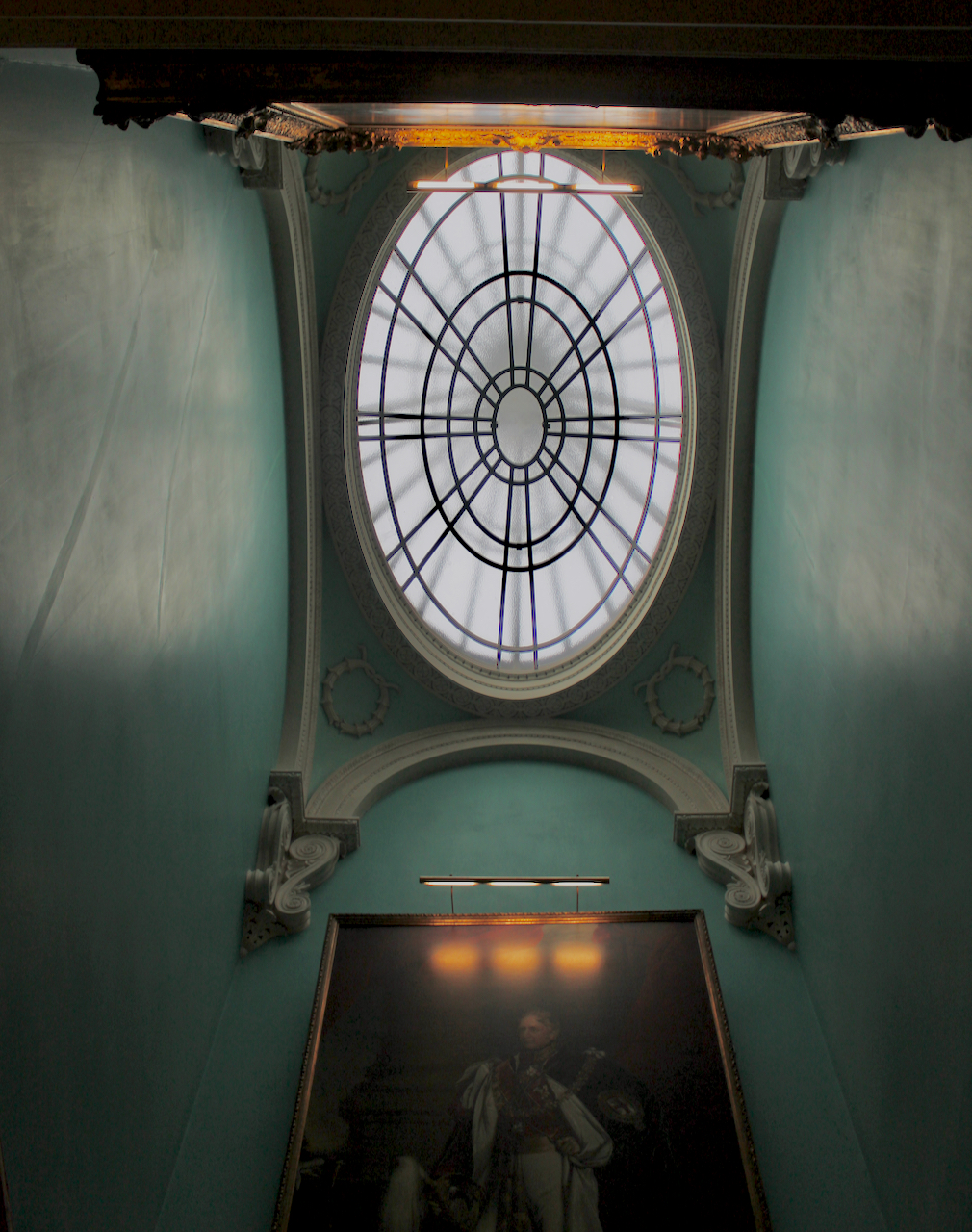
[2] p. 127. Mark Bence-Jones. A Guide to Irish Country Houses (originally published as Burke’s Guide to Country Houses volume 1 Ireland by Burke’s Peerage Ltd. 1978); Revised edition 1988 Constable and Company Ltd, London.

[3] https://landedfamilies.blogspot.com/2020/06/421-smith-barry-of-marbury-hall-belmont.html

[4] p. 412. Keohane, Frank. Buildings of Ireland: Cork City and County, Yale University Press, New Haven and London, 2020.

[5] https://www.irelandscontentpool.com/en/media-assets/media/44873

[6] http://www.buildingsofireland.ie/PlacesToSee/Cork/

[7] p. 412. Keohane, Frank. Buildings of Ireland: Cork City and County, Yale University Press, New Haven and London, 2020.

[8] https://heritageireland.ie/visit/places-to-visit/fota-arboretum-and-gardens/

Text © Jennifer Winder-Baggot, www.irishhistorichouses.com

2024 Section 482 list

As I mentioned last week, the new list is published. Here it is:

According to Revenue website:

“Section 482 of the Taxes Consolidation Act, 1997, as amended, provides tax relief to the owner/occupier of an approved building (including surrounding garden), or an approved garden existing independently, in respect of expenditure incurred on its repair, maintenance or restoration.”

donation

Help me to pay the entrance fee to one of the houses on this website. This site is created purely out of love for the subject and I receive no payment so any donation is appreciated!

€10.00

Donation towards accommodation

I receive no funding nor aid to create and maintain this website, it is a labour of love. I travel all over Ireland to visit Section 482 properties and sometimes this entails an overnight stay. A donation would help to fund my accommodation.

€150.00

Note that properties which list with the Revenue as Accommodation have different requirements and do not have to open to the public.

County Carlow

Borris House, Borris, County Carlow

See my entry: https://irishhistorichouses.com/2020/10/04/borris-house-county-carlow/

www.borrishouse.com
Open dates in 2024: Apr 2-4, 9-11, 16-18, 23-25, 30, May 1-5, 8-9, 15-19, 22-26, June 11-16, 18-20, 25-27, July 2-4, 9-11, 16-18, 23-25, 30-31, Aug 1, 6-8, 17-25, 27-29, 12 noon- 4pm

Fee: adult/OAP €12, child €8, contact info@borrishouse.com for group rates

Borris House, County Carlow. Photograph © Jennifer Winder-Baggot, www.irishhistorichouses.com

Huntington Castle, Clonegal, Co Carlow Y21 K237

See my entry: https://irishhistorichouses.com/2019/06/28/huntington-castle-county-carlow/
Open dates in 2024, but check website as sometimes closed for special events:

Castle Tours:

Open – February, March & April Saturdays & Sundays 1pm, 2pm & 3pm

Open – May, June, July, August & September Daily 1pm, 2pm, 3pm & 4pm

Open – October, November & December
Saturdays & Sundays 1pm, 2pm & 3pm
Fee: house/garden, adult €12.95, garden €6.50, OAP/student, house/garden €12, garden €6, child, house/garden €6.50, garden €3.50, group and family discounts available

Huntington Castle, County Carlow. Photograph © Jennifer Winder-Baggot, www.irishhistorichouses.com

The Old Rectory, Killedmond, Borris, Co Carlow R95 N1K7

See my entry: https://irishhistorichouses.com/2020/07/16/the-old-rectory-killedmond-borris-co-carlow/

https://www.blackstairsecotrails.ie/
Open dates in 2024: July 1-31, Aug 1-31, 9am-1pm
Fee: adult €10, OAP/student €6, child free.

Old Rectory Killedmond, Borris, County Carlow. Photograph © Jennifer Winder-Baggot, www.irishhistorichouses.com

County Cavan

Cabra Castle, Kingscourt, County Cavan, A82 EC64 (hotel)

see my entry: https://irishhistorichouses.com/2021/03/28/cabra-castle-kingscourt-county-cavan/

www.cabracastle.com
Open: all year, except Dec 24, 25, 26, 11am-4pm
Fee: Free

Cabra Castle, County Cavan. Photograph © Jennifer Winder-Baggot, www.irishhistorichouses.com

Corravahan House & Gardens, Drung, Ballyhaise, Co. Cavan H12 D860

see my entry: https://irishhistorichouses.com/2020/08/28/corravahan-house-and-gardens-drung-county-cavan/

www.corravahan.com
Open dates in 2024: Jan 4-5, 11-12, 18-19, 25-26, Feb 1-2, 8-9, 15-16, 22-23, 29, Mar 1, 7-8, May 2-4, 9-11, 16-18, 23-25, 30-31, June 1, 6-8, 13-15, 20-22, 27-29, July 4-6, Aug 16-25, 9am-1pm, Sundays, 2pm-6pm

Fee: adult €10, OAP/student/child €5

Tours on the hour, or by appointment. Last admission 1 hour before closing time. CCTV in operation

Corravahan, County Cavan, July 2020. Photograph © Jennifer Winder-Baggot, www.irishhistorichouses.com

County Clare

Barntick House, Clarecastle Co. Clare V95 FH00

See my entry: https://irishhistorichouses.com/2022/11/06/barntick-house-clarecastle-county-clare/

Contact: Ciarán Murphy Tel: 086-1701060

Open dates in 2024: May 4-31, July 1-31 Mon-Sat, 4.30pm-8.30pm, Aug 17-25, 2pm-6pm

Fee: Free

Barntick County Clare, photograph courtesy of Ciarán Murphy, May 2022.

Loughnane’s, Main Street, Feakle, Co. Clare
www.clareecolodge.ie
Open dates in 2024: June 1-August 31, Wed-Sun, Aug 17-25, 2pm-6pm Fee: Free

Newtown Castle, Newtown, Ballyvaughan, Co. Clare
www.newtowncastle.com 
Open dates in 2024: Jan 8-12, 15-19, 22-26, 29-31, Feb 1-2, 5-9, 12-16, 19-23, 26-29, March 1, 4-8, 11-15, 18-22, 25-29, Apr 1-6, 8-12, 15-19, 22-26, 29-30, May 1-3, 6-10, 13-17, 20-24, 27-31,  June 3-7, 10-14, 17-21, 24-28, July 1-5, 8-12, 15-19, 22-26, 29-31, Aug 1-31,  Sept 1-6, 9-13, 16-20, 23-27, 30, Oct 1-4, 7-11, 14-18, 21-25, 28-31, Nov 1, 4-8, 11-15, 18-22, 25-29, Dec 2-6, 9-13,10am-5pm
Fee: Free

Newtown Castle, County Clare, courtesy of National Inventory of Architectural Heritage.

County Cork

Ashton Grove, Ballingohig, Knockraha, County Cork

https://irishhistorichouses.com/2022/11/04/ashton-grove-ballingohig-knockraha-co-cork/
Open dates in 2024: Jan 2, 9, 13-14, 16, 23, 30, Feb 5, 13, 17-18, 20, 27, Mar 5, 12, 19, 23-24, 26, Apr 9, 16, 23, May 7-8, 14-15, 25-26, 28-29, June 4-5, 8-12, 17-19, 24-26, July 2-3, 6-7, 9-10, Aug 17-25, Sept 3-4, 10-11, 17-18, 24-25, 8am-12 noon, Wednesdays 2pm-6pm

Fee: adult €5, child/OAP/student free

Ballyvolane House, Castlelyons, County Cork P61 FP70
Tourist Accommodation Facility

www.ballyvolanehouse.ie

Open for accommodation: all year
Although listed under Accommodation Facility they have a fee on this listing so if you contact them in advance perhaps they will give you a tour: adult €6, family €16

Ballyvolane, County Cork, photo taken 2014 for Tourism Ireland, Ireland’s Content Pool.

Bantry House & Garden, Bantry, County Cork 975 T293

See my entry: https://irishhistorichouses.com/2022/12/01/bantry-house-garden-bantry-co-cork/

www.bantryhouse.com
Open dates in 2024: Apr 1-Oct 31, 10am-5pm but check the website in advance.
Fee: adult €14, OAP/student €11.50, child €5, groups over 8-20, €9 and groups of 21 or more €8

Bantry House, County Cork. Photograph © Jennifer Winder-Baggot, www.irishhistorichouses.com

Blarney Castle & Rock Close, Blarney, County Cork

See my entry: https://irishhistorichouses.com/2022/09/23/blarney-castle-rock-close-blarney-co-cork/

www.blarneycastle.ie
Open: all year except Christmas Eve & Christmas Day, Jan-Feb, Oct-Dec, 9am-4pm, Mar-Sept, 9am-5pm

Fee: adult €20, OAP/student €16, child €9

Blarney Castle, County Cork. Photograph © Jennifer Winder-Baggot, www.irishhistorichouses.com

Blarney House & Gardens, Blarney, County Cork

See my entry: https://irishhistorichouses.com/2022/09/30/blarney-house-gardens-blarney-co-cork/

www.blarneycastle.ie
Open dates in 2024: June 1-Aug 31, Mon-Sat, National Heritage Week, Aug 17-25, 10am-2pm

Fee: adult €10, OAP/student €8, child €5

Blarney House, County Cork. Photograph © Jennifer Winder-Baggot, www.irishhistorichouses.com

Brideweir House, Aghern, Conna, County Cork P51 FD36
www.brideweir.ie
Open dates in 2024: Jan 1-Dec 24, 9am-1pm
Fee: adult €10, child/student €5, OAP free

Check before visiting!

Burton Park, Churchtown, Mallow, County Cork P51 VN8H
www.slieile.ie 

Open dates in 2024: Apr 1-Oct 12, Sat-Sun, National Heritage Week, Aug 17-25, 2pm-6pm

Free
See my entry https://irishhistorichouses.com/2024/02/08/burton-park-churchtown-mallow-county-cork-p51-vn8h/

Burton Park, County Cork, August 17th 2023. Photograph © Jennifer Winder-Baggot, www.irishhistorichouses.com

Drishane Castle & Gardens, Drishanemore, Millstreet Town, County Cork
www.millstreet.ie
Open dates in 2024: Jan 2- May 31, Mon-Fri, June 1- Sept 30, Mon-Sat, Oct 1- Dec 31, Mon- Fri, National Heritage Week, Aug 17-25, 9am-5pm

Fee: adult €5, OAP/student free, child free when accompanied by adult

See my entry https://irishhistorichouses.com/2024/01/11/drishane-castle-gardens-drishanemore-millstreet-town-co-cork/

Drishane Castle, County Cork. Photograph © Jennifer Winder-Baggot, www.irishhistorichouses.com

Drishane House, Castletownshend, County Cork

See my entry: https://irishhistorichouses.com/2021/03/07/drishane-house-castletownshend-co-cork/

www.drishane.com
Open dates in 2024: May 1-21, 29-31, June 1-7, Aug 17-25, Oct 2-21, 11am-3pm

Fee: adult €12, OAP €10, student/child €8, child under 6 free

Drishane House, County Cork, former home of Edith Somerville, who wrote novels with her cousin Violet Martin, as “Somerville and Ross” – the latter the name of Violet Martin’s childhood home. Photograph © Jennifer Winder-Baggot, www.irishhistorichouses.com

Dún Na Séad Castle, Baltimore, County Cork 981 X968
www.baltimorecastle.ie
Open dates in 2024: April 1st – Sept 30, 11am -5pm
Fee: adult/OAP/student €5, children under 12 free

See my entry https://irishhistorichouses.com/2023/12/28/dun-na-sead-castle-baltimore-co-cork-981-x968/

Baltimore Castle, County Cork. Photograph © Jennifer Winder-Baggot, www.irishhistorichouses.com

Garrettstown House, Garrettstown, Kinsale, County Cork
www.garrettstownhouse.com
Open dates in 2024: May 14-Sept 6, 12 noon-5pm
Fee: adult €10, OAP/student/child €5, groups of 10+ adults €5 per person

Kilcascan Castle, Ballineen, County Cork 947 R286
Open dates in 2024: Aug 1-31, Sept 1-30, 9.30am-1.30pm
Fee: Free

See my entry https://irishhistorichouses.com/2023/12/14/kilcascan-castle-ballineen-co-cork-947-r286/

Kilcascan Castle, County Cork, 15th August 2023. Photograph © Jennifer Winder-Baggot, www.irishhistorichouses.com

Kilshannig House, Rathcormac, County Cork P61 AW77

See my entry: https://irishhistorichouses.com/2020/12/10/kilshannig-house-rathcormac-county-cork/

Open dates in 2024: May 1, 3-4, 9-12, June 1, 3-8, 10-15, 17-22, 24-29, July 1-6, 8-13, 15-20, 22-27, 29-31, Aug 1-3, 5-10, 12-31, Sept 1-10, 21, 23, 25, 8.30am-3pm,

Fee: adult €12, child/OAP/student €10

Kilshannig, County Cork. Photograph © Jennifer Winder-Baggot, www.irishhistorichouses.com

Riverstown House, Riverstown, Glanmire, County Cork T45 HY45

See my entry: https://irishhistorichouses.com/2023/02/25/riverstown-house-riverstown-glanmire-county-cork-t45-hy45/

Open dates in 2024: May 2-Sept 7, Thurs, Fri, Sat, National Heritage Week, Aug 17-25, 2pm-6pm

Fee: adult €8, OAP €5, student €3

Riverstown, County Cork. Photograph © Jennifer Winder-Baggot, www.irishhistorichouses.com

Woodford Bourne Warehouse, Sheares Street, Cork City
www.woodfordbournewarehouse.com
Open: all year except Christmas Eve, Christmas Day, 1pm-11pm
Fee: Free

County Donegal

Cavanacor House, Ballindrait, Lifford, Co. Donegal F93 F573
www.cavanacorgallery.ie
Open dates in 2024: Feb 1-20, May 1-31, Aug 17-25, 1pm-5pm

Fee: adult €8, OAP/student/child €6 

Oakfield Park Garden, Oakfield Demesne, Raphoe, Co. Donegal – garden only

See my entry: https://irishhistorichouses.com/2022/11/03/oakfield-park-oakfield-demesne-raphoe-co-donegal-garden-only/

www.oakfieldpark.com

Open dates in 2024: Mar 20-24, 27-31, Apr 1, 3-7, 10-14, 17-21, 24-28, May 1-5, 8-12, 15-19, 22-26, 29-31, June 1-30, July 1-31, Aug 1-31, Sept 1, 4-8, 11-15, 18-22, 25-29, Oct 5-13, Nov 27-30, Dec 1, 4-8, 11-15, 18-22, Mar, Apr, May, Sept, Oct, 12 noon-6pm, June, July, Aug, 11am-6pm, Nov, Dec, 4pm-10pm, Sundays, 4.30pm-10pm

Fee: adult €9, child €6, under 3 years free

Oakfield Park, County Donegal. Photograph © Jennifer Winder-Baggot, www.irishhistorichouses.com

Portnason House, Portnason, Ballyshannon, Co. Donegal

Open dates in 2024: May 20-25, June 24-29, July 22-27, Aug 17-31, Sept 24-30, Oct 21-25, Nov 18-22, 25-29, Dec 16-20, 9am-1pm

Fee: adult €10, OAP/student/child €6

Salthill Garden, Salthill House, Mountcharles, Co. Donegal F94 H524 – garden only

See my entry: https://irishhistorichouses.com/2021/10/06/salthill-garden-salthill-house-mountcharles-county-donegal/

www.donegalgardens.com

Open dates in 2024: May 3-4, 10-11, 17-18, 24-25, 31, June 1, 7-8, 14-15, 21-22, 28-29, July 2-6, 9-13, 16-20, 23-27, Aug 1, 3, 6-10, 12-25, 27- 31, Sept 5-6, 12-13, 19-20, 26-27, 2pm-6pm

Fee: adult/OAP/student €6, child under 3 free, otherwise €2 

At Salthill Garden, County Donegal. Photograph © Jennifer Winder-Baggot, www.irishhistorichouses.com

Dublin City

Bewley’s, 78-79 Grafton Street/234 Johnson’s Court, Dublin 2
www.bewleys.com
Open: all year except Christmas Day, 9am-5pm

Fee: Free

Bewleys, Dublin. Photograph © Jennifer Winder-Baggot, www.irishhistorichouses.com

Doheny & Nesbitt, 4/5 Lower Baggot Street, Dublin 2

www.dohenyandnesbitts.ie

Open: all year except Christmas Day, Mon-Thurs, 9am-11.30pm, Fri-Sat, 9am-12.30am, Sun, 10am-12 midnight
Fee: Free

Hibernian/National Irish Bank, 23-27 College Green, Dublin 2

See my entry: https://irishhistorichouses.com/2023/01/28/hibernian-national-irish-bank-23-27-college-green-dublin-2/
www.clarendonproperties.ie

Open: all year, except Jan 1, and Dec 24-25, Mon-Sat, 9.30am-8pm, Sun, 11am-7pm

Fee: Free

Former Hibernian Bank, College Green, Dublin. Photograph © Jennifer Winder-Baggot, www.irishhistorichouses.com

11 North Great George’s Street, Dublin 1

see my entry: https://irishhistorichouses.com/2019/12/31/11-north-great-georges-street-dublin-1/

www.number11dublin.ie
Open dates in 2024: April 8-12, 22-26, May 7-11, June 3-8, July 8-13, Aug 5-10, 17-26, Sept 2-8, Oct 7-11, 21-25,

12 noon-4pm

Fee: adult €7, students/OAP €3, child free

11 North Great Georges Street, Dublin. Photograph © Jennifer Winder-Baggot, www.irishhistorichouses.com

39 North Great George’s Street, Dublin 1
http://www.39northgreatgeorgesstreet.com

Open dates in 2024: May 13-26, June 14-23, July 8-21, Aug 10-31, 1pm-5pm

Fee: adult €7, students/OAP €5, child free with adult, group €5 per person

See my entry https://irishhistorichouses.com/2023/07/06/39-north-great-georges-street-dublin/

39 North Great Georges Street, Dublin. Photograph © Jennifer Winder-Baggot, www.irishhistorichouses.com

81 North King Street, Smithfield, Dublin 7
Open dates in 2024: Apr 1-6, 8-13, 15-20, 22-27, June 1, 3-8, 10-15, 17-22, 24-29, Aug 1-3, 5-10, 12-31, 12 noon-4pm
Fee: Free

The Odeon (formerly the Old Harcourt Street Railway Station), 57 Harcourt Street, Dublin 2
www.odeon.ie
Open in 2024: all year Tue-Sat, National Heritage Week, Aug 17-25, 12 noon to 12 midnight

Fee: Free

The Odeon, formerly the Harcourt Street tram station. Photograph © Jennifer Winder-Baggot, www.irishhistorichouses.com

Powerscourt Townhouse Centre, 59 South William Street, Dublin 2

see my entry: https://irishhistorichouses.com/2020/04/02/powerscourt-townhouse-59-south-william-street-dublin-2/

https://www.powerscourtcentre.ie/
Open in 2024: all year, except New Year’s Day, Christmas Eve, Christmas Day, Mon-Sat, 9am-6pm, Sunday, 12 noon-6pm
Fee: Free

Powerscourt townhouse, Dublin. Photograph © Jennifer Winder-Baggot, www.irishhistorichouses.com

10 South Frederick Street, Dublin 2 DO2 YT54
Open dates in 2024: Jan 1-5, 8-12, 15-19, 22-26, May 1-31, Aug 17-25, 2pm-6pm

Fee: Free

The Church, Junction of Mary’s Street/Jervis Street, Dublin 1

see my entry: https://irishhistorichouses.com/2022/11/09/the-church-junction-of-marys-street-jervis-street-dublin/

www.thechurch.ie
Open: Jan 1-Dec 23, 27-31, 11am-10pm

Fee: Free

St. Mary’s church, Dublin, now a bar, it was one of the oldest parishes on the north side of Dublin. Photograph © Jennifer Winder-Baggot, www.irishhistorichouses.com

County Dublin

Clonskeagh Castle, 80 Whitebeam Road, Clonskeagh, Dublin 14

www.clonskeaghcastle.com

Open dates in 2024: Feb 6-10, Mar 5-9, Apr 10-14, May 1-10, June 1-10, July 1-10, Aug 17-25, Nov 4-7, Dec 4-7, 10am-4pm

Fee: Adult €6, child OAP/student €3

Clonskeagh Castle, photograph courtesy of myhome.ie

Colganstown House, Hazelhatch Road, Newcastle, Co. Dublin D22 PK16

see my entry: https://irishhistorichouses.com/2020/05/21/colganstown-house-hazelhatch-road-newcastle-county-dublin/

Open dates in 2024: Apr 15-21, May 1-16, 21-28, June 10-16, Aug 17-25, Nov 11-23, 9am-1pm

Fee: adult/OAP €10, student/child free

Colganstown, County Dublin, with its Robert West ceilings. Photograph © Jennifer Winder-Baggot, www.irishhistorichouses.com

Corke Lodge Garden, Shankill, Co. Dublin A98 X264 – garden only
Postal address Woodbrook, Bray, Co. Wicklow
www.corkelodge.com
Open dates in 2024: June 3-28, Mon-Fri, July 2-27, Tue-Sat, Aug 5-25, 10am-2pm

Fee: €8, paid voluntarily in honesty box to benefit Our Lady’s Hospice

Fahanmura, 2 Knocksina, Foxrock, Dublin 18, D18 W3F2

See my entry https://irishhistorichouses.com/2023/08/10/fahanmura-2-knocksinna-foxrock-dublin-18-d18-w3f2/
www.fahanmura.ie
Open dates in 2024: Apr 8-12, 15-19, 22-26, May 7-11, 14-18, June 2-8, 11-15, July 2-6, 9-13, Aug 17-25, Sept 9-14, 9am-1pm

Fee: adult €5, student €2, OAP/child free

Fahanmura, photograph courtesy of Colliers estate agent and myhome.ie in 2023.

Farm Complex, Toberburr Road, Killeek, St Margaret’s, Co. Dublin
Open dates in 2024Jan 4-7, 12-14, 19-21, 26-28, Mon-Fri, 9.30pm-1.30pm, Sat-Sun, 1pm-5pm, May17-20, June 1-4, 7-10, 14-17, 21-23, Mon- Fri, 9.30am-1.30pm, Sat-Sun, 2pm-6pm, Aug 16-25, 2pm-6pm, Sept 13-14, 16, 20-23, 27-30, Oct 18-20, 26-29, Mon- Fri, 9.30-1.30pm, Sat-Sun, 2pm-6pm,

Fee: adult €6, student/OAP/child €5

Lambay Castle, Lambay Island, Malahide, Co. Dublin R36 XH75
www.lambayisland.ie
Tourist Accommodation Facility – not open to the public

Open for accommodation: April 1- September 30 2024

They do give tours if booked in advance – see the website.

The Old Glebe, Upper Main Street, Newcastle, Co. Dublin

See my entry: https://irishhistorichouses.com/2019/12/31/the-old-glebe-newcastle-lyons-county-dublin/
Open dates in 2024: Apr 29-30, May 1-31, June 1, 3-8, 9-15, 17-22, 24-29, Aug 17-25, 10am-2pm

Fee: Free

back of “The Old Glebe” Newcastle, County Dublin, 2012. Photograph © Jennifer Winder-Baggot, www.irishhistorichouses.com

Martello Tower, Portrane, Co. Dublin

See my entry: https://irishhistorichouses.com/2022/07/29/martello-tower-portrane-co-dublin/
Open dates in 2024: March 2- Sept 22, Sat & Sun, National Heritage Week, Aug 17-25, 9am-1pm

Fee: adult €6, student/OAP €2, child free

Martello Tower, Portrane. Photograph © Jennifer Winder-Baggot, www.irishhistorichouses.com

Meander, Westminister Road, Foxrock, Dublin 18, D18 E2T9
Open dates in 2024: Jan 8-9, 10-12, 15-19, 22-26, 29-31, Feb 1-2, May 7-11, 15-18, 21-25, June 4-8, 10-15, 17-22, Aug 17-25, 9am-1pm

Fee: adult €5, OAP/child/student €2

Primrose Hill, Very Top of Primrose Lane, Lucan, Co. Dublin
Open dates in 2024: Feb 1-28, June 1-30, July 1-7, Aug 17-25, 2pm-6pm

Fee: adult/OAP €6, child free

Primrose Hill, County Dublin. Photograph © Jennifer Winder-Baggot, www.irishhistorichouses.com

St. George’s, St. George’s Avenue, Killiney, Co. Dublin

See my entry: https://irishhistorichouses.com/2022/11/24/st-georges-st-georges-avenue-killiney-co-dublin/
Open dates in 2024: July 1-31, Aug 1-31, 9am-1pm
Fee: adult €5, OAP/student/child €3.50

St. George’s, Killiney, County Dublin. Photograph © Jennifer Winder-Baggot, www.irishhistorichouses.com

Tibradden House, Mutton Lane, Rathfarnham, Dublin 16 D16 XV97
Open dates in 2024: Jan 15-19, Feb 19-23, Mar 4-8, Apr 8-12, May 4-5, 6-10, 13-17, 20-24, June 4-7, 11-14, Aug 17-25, Sept 21-22, 26-29, Jan-Apr and June, 9am-1pm, May and Sept, Sat-Sun 10am-2pm, Mon-Fri, 9am-1pm, Aug, 2pm-6pm  

Fee: adult/OAP €8, student €5, child free, Members of An Taisce and The Irish Georgian Society (with membership card) €5

County Galway

Castle Ellen House, Athenry, Co. Galway
http://www.castleellen.ie/
Open dates in 2024: May 22-23, 26-30, June 2-6, 9-13, 16-20, 23-27, 30, July 1-4, 7-11, 14-18, 21-25, 28-31, Aug 17-25, 12 noon-4pm

Fee: Free

Claregalway Castle, Claregalway, Co. Galway H91 E9T3

Tourist Accommodation Facility – not open to the public
www.claregalwaycastle.com
Open for accommodation: January 2-December 24

See my entry https://irishhistorichouses.com/2023/04/20/claregalway-castle-claregalway-co-galway/

At Claregalway Castle, County Galway. Photograph © Jennifer Winder-Baggot, www.irishhistorichouses.com

Lisdonagh House, Caherlistrane, Co. Galway H91 PFW6
Tourist Accommodation Facility – not open to the public
www.lisdonagh.com
Open for accommodation: May 1-Nov 1

The Grammer School, College Road, Galway
www.yeatscollege.ie
Open dates in 2024: May 4-5, 11-12, 18-19, 25-26, June 8-9, July 1-31, Aug 1-12, 17-25, 9am-5pm

Fee: adult/OAP/student €5, child under 12 free

Signal Tower & Lighthouse, Eochaill, Inis Mór, Aran Islands, Co. Galway
www.aranislands.ie
Open in 2024: June-Sept, 9am-5pm.

Fee: adult €2.50, child €.50, OAP/student free, family €5, group rates depending on numbers

Woodville House Dovecote & Walls of Walled Garden – garden only
Craughwell, Co. Galway

www.woodvillewalledgarden.com
Open dates in 2024: Feb 2-5, 9-12, 16-19, 23-26, Mar 1-4, June 1-30, Aug 17-26, Feb-Mar, 12 noon-4pm, June and August, 11am-5pm-last entry 4.30pm    

Fee: adult €10, OAP €8, student, €6, child €3 must be accompanied by adult, family €25, 2 adults and 2 children

County Kerry

Ballyseede Castle, Tralee, Co. Kerry (hotel)
www.ballyseedecastle.com
Open: Jan 1-Dec 22, 8am-12 midnight
Fee: Free

See my entry https://irishhistorichouses.com/2023/09/02/ballyseede-castle-ballyseede-tralee-co-kerry/

Ballyseede Castle, March 2023. Photograph © Jennifer Winder-Baggot, www.irishhistorichouses.com

Derreen Gardens, Lauragh, Tuosist, Kenmare, Co. Kerry – garden only
https://www.derreengarden.com/
Open: all year, 10am-6pm
Fee: adult/OAP/student €9, child €4, family ticket (2 adults and all children + 2 maps) €25

See my entry https://irishhistorichouses.com/2023/09/07/derreen-gardens-lauragh-tuosist-kenmare-co-kerry/

Derreen, County Kerry, March 2023. Photograph © Jennifer Winder-Baggot, www.irishhistorichouses.com

Kells Bay House & Garden, Kells, Caherciveen, Co Kerry V23 EP48 – garden only

www.kellsbay.ie 

Open in 2024: Jan 1-7, Feb 3-Dec 21, 28-31, Jan-Mar, Nov-Dec 9.30am-5pm, Apr-Oct 9.30am-6pm

Fee: adult €8.75, purchase in the gardens €9.50, child €6.75, purchase in the garden €7.50, family €28, purchase in the gardens €30, OAP/student free, any other concessions see: http://www.kellsgardens.ie/garden-tickets/

See my entry https://irishhistorichouses.com/2023/09/13/kells-bay-house-garden-kells-caherciveen-county-kerry/

The rope bridge crosses the river. Kells Bay, March 2023. Photograph © Jennifer Winder-Baggot, www.irishhistorichouses.com

Tarbert House, Tarbert, Co. Kerry
Open dates in 2024: May 1- July 31, Mon-Sat, Aug 1-31,10am-12 noon, 2pm-4pm

Fee: adult/OAP €5, student/child free

County Kildare

Blackhall Castle, Calverstown, Kilcullen, Co. Kildare R56 CR68

See my entry: https://irishhistorichouses.com/2020/05/14/blackhall-castle-calverstown-kilcullen-county-kildare/
Open dates in 2024: May 1-31, Aug 17-25, Sept 1-15, Dec 1-20, 2pm-6pm

Fee: Free

Blackhall Castle, County Kildare, a former Eustace home. Photograph © Jennifer Winder-Baggot, www.irishhistorichouses.com

Burtown House and Garden, Athy, Co. Kildare R14 AE67
www.burtownhouse.ie
Open dates in 2024: May 1-4, 8-11, 15-18, 22-25, 29-31, June 5-8, 12-15, 19-22, 26-29, August 17-25, Sept 4-7, 11-14, 18-21, 25-28, 9am-1pm

Fee: adult €8, OAP/student/child €5

Burtown, County Kildare. Photograph © Jennifer Winder-Baggot, www.irishhistorichouses.com

Coolcarrigan House & Gardens, Coolcarrigan, Coill Dubh, Naas, Co. Kildare

See my entry: https://irishhistorichouses.com/2020/05/31/coolcarrigan-house-and-gardens-coill-dubh-naas-county-kildare/

www.coolcarrigan.ie
Open dates in 2024: Feb 12-16, 19-23, Aug 1-2, 6-31, Sept 1-8, 23-27, 30, Oct 1-4, 7-9, 9am-1pm
Fee: adult €8, OAP/student €5, child free

Coolcarrigan, County Kildare. Photograph © Jennifer Winder-Baggot, www.irishhistorichouses.com

Farmersvale House, Badgerhill, Kill, Co. Kildare W91 PP99
Open dates in 2024: Jan 12-31, July 17-31, Aug 1-25, 9.30am-1.30pm
Fee: adult €5, student/child/OAP €3, (Irish Georgian Society members free)

Griesemount House, Ballitore, Co Kildare R14 WF64
www.griesemounthouse.ie
Open dates in 2024: Feb 12-25, 26, May 13-24, June 17-28, July 8-19, Aug 17-25, 2pm-6pm

Fee: adult €6, OAP €5, child/student €3

Harristown House, Brannockstown, Co. Kildare W91 E710

See my entry: https://irishhistorichouses.com/2020/09/27/harristown-brannockstown-county-kildare/

https://www.harristownhouse.ie/
Open dates in 2024: Feb19-27, Mar 11-22, May 6-17, July 8-26, Aug 13-25, 9am-1pm
Fee: adult/OAP/student/child €10

Harristown, County Kildare. Photograph © Jennifer Winder-Baggot, www.irishhistorichouses.com

Kildrought House, Celbridge Village, Co. Kildare W23 N9P2
Open dates in 2024: Jan 9-25, May 18-31, June 1-3, July 1-8, Aug 17-31, 10am-2pm

Fee: adult €10, OAP/student €5, child €5, (under 7 years free)

See my entry https://irishhistorichouses.com/2023/06/22/kildrought-house-celbridge-village-co-kildare-w23-n9p2/

Kildrought, County Kildare, a beautifully restored home and garden on the banks of the Liffey. Photograph © Jennifer Winder-Baggot, www.irishhistorichouses.com

Larchill, Kilcock, Co. Kildare W23 Y44P
See my entry: https://irishhistorichouses.com/2022/09/02/larchill-kilcock-co-kildare/
www.larchill.ie
Open dates in 2024: May 1-17, 20-24, 27-31, June 1-7, 11-14, 18-21, 25-28, Aug 17-25, 10am-2pm  

Fee: adult/OAP/student €8, child €4 (under 4 years free)

Larchill, County Kildare. Photograph © Jennifer Winder-Baggot, www.irishhistorichouses.com

Leixlip Castle, Leixlip, Co. Kildare W23 N8X6

See my entry: https://irishhistorichouses.com/2020/09/04/leixlip-castle-county-kildare-desmond-guinnesss-jewelbox-of-treasures/
Open dates in 2024: Feb 19-23, 26-29, Mar 1, 4-8, 11-15, May 13-24, June 10-21, Aug 17-25, Sept 2-8, 9am-1pm

Fee: adult €8, OAP/student/child €4, no charge for school groups

Leixlip Castle, County Kildare. Photograph © Jennifer Winder-Baggot, www.irishhistorichouses.com

Millbrook House, Kilkea, Beaconstown, Castledermot, Co. Kildare, R14Y319
Open in 2024: May 17- 31, Aug 12-31, Sept 7-16, Dec 17-31, 9am-1pm
Fee: Adult €8, student/OAP/groups €5

Moone Abbey House & Tower, Moone Abbey, Moone, Co. Kildare R14 XA40

See my entry: https://irishhistorichouses.com/2020/06/13/moone-abbey-house-and-tower-moone-county-kildare/
Open dates in 2024: May 1-31, Aug 17-25, Sept 1-20, 12 noon- 4pm

Fee: adult €8, OAP/student/child €4

View from Moone Abbey tower. Photograph © Jennifer Winder-Baggot, www.irishhistorichouses.com

Moyglare Glebe, Moyglare, Maynooth, Co. Kildare
Open dates in 2024: Jan 2-26, 29, May 1-31, Aug 17-25, 8.30am-12.30pm
Fee: adult €6, OAP/student/child €3

Steam Museum Lodge Park Heritage Centre, Lodge Park, Straffan, Co. Kildare
www.steam-museum.com
Open dates in 2024: Apr 30, May 4-6, 11-12, 18-19, 25-26, June 1-3, 7-9, 14-16, 21-23, 28-30, July 5-7, 12-14, 19-21, 26-28, Aug 2-5, 9-11, 16-25, 31, Sept 1, 7-8, 14-15, 21-22, 28-29, 1pm-5pm

Fee: Garden and Museum, adult Fri/Sat, €12, Sun €15 steam, child/OAP/student €6, family €25, scenic railway €5 when open

Templemills House, Newtown Road, Celbridge, Co. Kildare W23 YK26
Open dates in 2024: Jan 14-26, Feb 3-9, May 1-31, Aug 17-25, 9am-1pm

Fee: adult €12, child/student/OAP €8

County Kilkenny

Aylwardstown, Glenmore, Co Kilkenny 
www.kelvale.com
Open dates in 2024: Aug 1-31, Sept 1-30, 9am-5pm

Fee: adult €5, OAP/student €3, child free

Ballybur Castle
Ballybur Upper, Cuffesgrange, Co. Kilkenny
www.ballyburcastle.com
Open dates in 2024: Aug 1-31, Sept 1-30, 2pm-6pm
Fee: Free

Ballysallagh House, Johnswell, Co Kilkenny R95 A6P1

See my entry: https://irishhistorichouses.com/2022/06/17/ballysallagh-house-johnswell-co-kilkenny/
Open dates in 2024: Feb 1-20, May 1-7, 18-31, Aug 17-31, Sept 1-5, 9am-1pm

Fee: adult €7.50, child/OAP/student €5, discount free access to local community groups

Ballysallagh House, County Kilkenny. Photograph © Jennifer Winder-Baggot, www.irishhistorichouses.com

Kilfane Glen & Waterfall Garden, Thomastown, County Kilkenny R95 RXO5 – garden only

See my entry: https://irishhistorichouses.com/2021/12/16/kilfane-glen-waterfall-kilfane-thomastown-co-kilkenny/

www.kilfane.com

Open dates in 2024: July 1-31, Aug 1-31, 11am-6pm
Fee: adult €7, OAP/student €6.50, child €6, family €20

Kilfane, County Kilkenny, 23rd August 2021. Photograph © Jennifer Winder-Baggot, www.irishhistorichouses.com

Kilkenny Design Centre, Castle Yard, Kilkenny
www.kilkennydesign.com
Open: Jan 2-Dec 24, 28-31, Jan, Mar, Apr, June, Aug, Oct, 9am-8pm, Feb, May, July, Sept, Nov, Dec, 9am-5pm
Fee: Free

Shankill Castle, Paulstown, Co. Kilkenny 
www.shankillcastle.com
Open dates in 2024: Apr 6-7, 13-14, 20-21, 27-28, May 4-5, 11-13, 18-19, 25-26, June 1-2, 6-9, 13-16, 20-23, 27-30, July 4-7, 11-14, 18-21, 25-28, Aug 1-4, 8-11, 15-26, 29-30, Sept 1, 7-8, 14-15, 21-22, 28-29, Oct 5-6, 12-13, 19-20, 26-27, 11am-5pm

Fee: house & garden, adult €12 garden €6, OAP/student €10, garden €5, child, over 5 years €6, garden €3

See my entry https://irishhistorichouses.com/2023/11/30/shankill-castle-paulstown-county-kilkenny-r95-t8x7/

Shankill Castle County Kilkenny 3rd June 2023. Photograph © Jennifer Winder-Baggot, www.irishhistorichouses.com

Tybroughney Castle, Piltown, Co Kilkenny 
https://www.tybroughneycastle.com/

Open dates in 2024: May 1-31, June 1-30, Mon-Sat, National Heritage Week, Aug 17-25, 11am-3pm

Fee: free

County Laois

Ballaghmore Castle, Borris in Ossory, Co. Laois
www.castleballaghmore.com
Open dates in 2024: all year except Christmas Day, 10am-6pm

Fee: adult €15, child/OAP/student €5, family of 4, €25 with guide

Stradbally Hall, Stradbally, Co. Laois

See my entry: https://irishhistorichouses.com/2021/10/14/stradbally-hall-stradbally-co-laois/

www.stradballyhall.ie
Open dates in 2024: May 1-31, June 1-9, Aug 17-25, Oct 1-14, 9am-1pm

Fee: adult €10, OAP/student €5, child free

Stradbally, County Laois, 7th June 2021. Photograph © Jennifer Winder-Baggot, www.irishhistorichouses.com

County Leitrim

Manorhamilton Castle (Ruin), Castle St, Manorhamilton, Co. Leitrim

www.manorhamilton.ie

Open dates in 2024: May 1-5, 8-12, 15-19, 22-26, 29-31, June 1-2, 5-9, 12-16, 19-23, 26-30, July 3-7, 10-14, 17-24, 24-28, 31, Aug 1-4, 7-11, 14-25, 28-31, Sept 1, 4-8, 11-15, 18-22, 25-29, Oct 2-6, 9-13, 16-20, 23-27, 30-31, Nov 1-3, 6-10, 13-17, 20-24, 27-30, Dec 1, 4-8, 11-15, 18-22, 10am-4pm

Fee: adult €9, child free

Manorhamilton Castle, Leitrim. It was not open on the day we visited despite being listed as an open day during Heritage Week. Photograph © Jennifer Winder-Baggot, www.irishhistorichouses.com

County Limerick

Ash Hill, Kilmallock, Co. Limerick V35 W306
www.ashhill.com
(Tourist Accommodation Facility)

Open in 2024: May 1- Oct 31, 10am-4pm

Fee: Free

See my entry https://irishhistorichouses.com/2023/04/06/ash-hill-kilmallock-co-limerick/

Ash Hill, County Limerick. Photograph © Jennifer Winder-Baggot, www.irishhistorichouses.com

Glebe House, Holycross, Bruff, Co. Limerick
Open dates in 2024: Jan 4-5, 8-12, 15-19, 22-26, 29-31, June 10-14, Aug 17-25, Sept 2-27, Mon-Fri, 2pm-6pm, Sat-Sun, 8am-12 noon

Fee: Free

Glenville House, Glenville, Ardagh, Co. Limerick V42 X225
Open dates in 2024: Apr 2-30, May 1-31, June 1-12, Tue-Sat, Aug 17-25, 9.30am-1.30pm

Fee: adult €5, OAP/student €3, child free

See my entry https://irishhistorichouses.com/2023/03/19/glenville-house-glenville-ardagh-co-limerick-v42-x225/

Glenville, County Limerick, August 2022. Photograph © Jennifer Winder-Baggot, www.irishhistorichouses.com

Kilpeacon House, Crecora, Co. Limerick
Open dates in 2024: May 1-June 30, Mon- Sat, Aug 17-25, 10am-2pm

Fee: adult/child/OAP €8

Mount Trenchard House and Garden, Foynes, Co. Limerick
Open in 2024: June 3-7, 10-14, 17-21, 24-28, July 1-5, 8-12, 15-19, 22-26, 29-31, Aug 1-31, Sept 1, 9am-1pm

Fee: adult €10, OAP/student €8, child €5

See my entry https://irishhistorichouses.com/2023/04/01/mount-trenchard-house-and-garden-foynes-co-limerick/

Mount Trenchard, County Limerick. Photograph © Jennifer Winder-Baggot, www.irishhistorichouses.com

Odellville House, Ballingarry, Co. Limerick
www.odellville.simplesite.com
Open dates in 2024: May 1-31, June 1-30, Aug 17-25, 10am-2pm

Fee: adult €8, student/OAP/child €4

The Turret, Rylanes, Ballingarry, Co. Limerick V94 HV24
Open dates in 2024: May 1-31, Mon-Sat, Aug 1-31, Sept 2-21, Mon-Sat, 12 noon-4pm

Fee: adult €5, OAP/child/student/ free

See my entry: https://irishhistorichouses.com/2023/03/23/the-turret-ballingarry-co-limerick-v94-hv24/

The Turret, Limerick, Photograph courtesy of Sherry Fitzgerald Stack estate agents, June 2023.

The Old Rectory, Rathkeale, Co. Limerick
Open dates in 2024: May 4-Nov 30, Saturday and Sundays, National Heritage Week, Aug 17-25, 10am-2pm

Fee: adult €8, child/OAP/student €3

County Longford

Moorhill House, Castlenugent, Lisryan, Co. Longford
Open dates in 2024: Aug 1-31, Sept 1-29, 9.30am-1.30pm
Fee: adult/OAP/student/child €8

County Louth

Barmeath Castle, Dunleer, Drogheda, Co. Louth A92 P973

See my entry: https://irishhistorichouses.com/2020/10/23/barmeath-castle-dunleer-drogheda-county-louth/
Open dates in 2024: May 1-31, June 1-10, Aug 17-25, Oct 1-20, 9am-1pm

Fee: house, adult /OAP/student €5, garden, adult/OAP/student €5, child free

Barmeath, County Louth. Photograph © Jennifer Winder-Baggot, www.irishhistorichouses.com

Killineer House & Garden, Drogheda, Co. Louth A92 P8K7

See my entry: https://irishhistorichouses.com/2021/08/10/killineer-house-county-louth/

www.killineerhouse.ie
Open dates in 2024: Feb 1-20, May 1-31, Aug 17-25, 9am-1pm

Fee: house, adult/OAP/child/student, €4, garden €6

Killineer, County Louth. Photograph © Jennifer Winder-Baggot, www.irishhistorichouses.com

Rokeby Hall, Grangebellew, Co. Louth A92 HX52

See my entry: https://irishhistorichouses.com/2020/08/17/rokeby-hall-grangebellew-county-louth/
www.rokeby.ie
Open dates in 2024: May 1-31, Mon-Sat, Aug 17-25, Sept 1-30, Mon-Sat, 10am-2pm

Fee: adult/OAP €10, child/student €5

Rokeby, County Louth. Photograph © Jennifer Winder-Baggot, www.irishhistorichouses.com

County Mayo

Brookhill House, Brookhill, Claremorris, Co. Mayo
Open dates in 2024: Mar 13-26, Apr 17-25, June 12-26, July 8-24, Aug 15-26, 2pm-6pm

Fee: adult €8, OAP/student €3, National Heritage Week free

Enniscoe House & Gardens, Castlehill, Ballina, Co. Mayo F26 EA24

see my entry: https://irishhistorichouses.com/2021/11/25/enniscoe-house-gardens-castlehill-ballina-co-mayo/

www.enniscoe.com
(Tourist Accommodation Facility)
Open for accommodation: April 1-Oct 31

Although listed under accommodation they have open dates listed for the house and gardens – ring in advance if you would like to make a visit to the house.
Open: garden, April 1-Oct 31, closed Mondays 10am-4pm

Fee: garden & heritage centre, adult €8, OAP €6, child/student €3 under 4 years free, family 2 adults and 2 children €15, tour of house €5 per adult, free tour in National Heritage Week

Enniscoe, County Mayo, 17th August 2021. Photograph © Jennifer Winder-Baggot, www.irishhistorichouses.com

Old Coastguard Station, Rosmoney, Westport, Co. Mayo
www.jamescahill.com/coastguardstation.html
Open dates in 2024: July 1-6, 8-13, 15-20, 22-27, 29-31, Aug 1-3, 5-10, 12-31, Sept 2-7, 11am-4pm
Fee: adult €1, child/OAP/student free

Owenmore, Garranard, Ballina, Co. Mayo

Tourist Accommodation Facility – not open to the public

www.owenbeg.ie

Open for accommodation: all year except January, June Dec 21-31

Prison House
Prison North, Balla, Co. Mayo
(Tourist Accommodation Facility)
Open dates in 2024: April, May, June, July, Aug, Dec https://www.discoverireland.ie/accommodation/prison-house-self-catering

County Meath

Beauparc House, Beau Parc, Navan, Co. Meath C15 D2K6

See my entry https://irishhistorichouses.com/2022/07/22/beauparc-house-beau-parc-navan-co-meath/
Open dates in 2024: Mar 1-20, May 1-31, Aug 17-25, 10am-2 pm

Fee: adult €10, OAP/student/child €8

Beauparc House, County Meath. Photograph © Jennifer Winder-Baggot, www.irishhistorichouses.com

Cillghrian Glebe now known as Boyne House Slane, Chapel Street, Slane, Co. Meath C15 P657 (hotel)
www.boynehouseslane.ie
Open dates in 2024: all year, National Heritage Week, Aug 17-25, 9am-1pm

Fee: Free

“Boyne House Slane boasts 6 tastefully appointed luxury ensuite Heritage Bedrooms in the Main House along with 4 additional Bedrooms in the Coach House, offering luxurious accommodation and private rental in the heart of Slane village.” Photograph courtesy of website.

Dardistown Castle, Dardistown, Julianstown, Co. Meath

See my entry: https://irishhistorichouses.com/2019/07/19/dardistown-castle-county-meath/

www.dardistowncastle.ie
Open dates in 2024: Jan 9-31, July 23-31, August 1-31,10am-2pm

Fee: adult €6, student/OAP/child €3

Dardistown Castle, County Meath, July 2019. Photograph © Jennifer Winder-Baggot, www.irishhistorichouses.com

Dunsany Castle, Dunsany, Co. Meath
www.dunsany.com
Open dates in 2024: June 27-30, July 1-31, Aug 1-25, 10am-2pm
Fee: adult €25, OAP €20, student €15, child under 12 years free

Dunsany, County Meath, July 2019. Photograph © Jennifer Winder-Baggot, www.irishhistorichouses.com

Gravelmount House, Castletown, Kilpatrick, Navan, Co. Meath
Open dates in 2024: Jan 1-20, May 1-31, Aug 17-25, 9am-1pm

Fee: adult €6, OAP/student/child €3

Hamwood House, Dunboyne, Co. Meath
www.hamwood.ie
Open dates in 2024: March 4-8, 11-15, Apr 8-12, 15-19, May 24-31, June 21-28, July 24-31, August 17-25, Sept 2-6, 9-10, 11am-1pm, 3pm-5pm 
Fee: adult/OAP/student €10, child under 12 free

See my entry https://irishhistorichouses.com/2023/08/03/hamwood-house-dunboyne-co-meath/

Hamwood House, County Meath, photograph from Hamwood house website. This is better than my photographs since it was November when we visited and the light was fading.

Killeen Mill, Clavinstown, Drumree, Co. Meath

www.killeenmill.ie
Tourists Accommodation Facility – not open to the public

Open for accommodation: April 1- Sept 30

Loughcrew House, Loughcrew, Old Castle, Co. Meath
Tourist Accommodation Facility – gardens only

Open for accommodation: all year

www.loughcrew.com

The house is not open to the public but the gardens are.

Garden open dates in 2024: all year, 11am-5pm
Fee: €8, OAP/student €6, child €4, carers free

See my entry https://irishhistorichouses.com/2023/09/21/loughcrew-house-loughcrew-old-castle-co-meath/

Loughcrew, County Meath, April 2023. Photograph © Jennifer Winder-Baggot, www.irishhistorichouses.com

Moyglare House, Moyglare, Co. Meath

Postal address Maynooth Co. Kildare

See my entry: https://irishhistorichouses.com/2021/02/15/moyglare-house-county-meath/
https://moyglaremanor.ie/
Open dates in 2024: Jan 1-5, 8-12, 22-26, Feb 19-23, May 27-31, June 1-21, 24-28, Aug 17-25, 9am-1pm
Fee: adult/OAP/student €10, child €5

Moyglare House, Maynooth, on the border of Counties Kildare and Meath. Photograph © Jennifer Winder-Baggot, www.irishhistorichouses.com

St. Mary’s Abbey, High Street, Trim, Co. Meath

See my entry: https://irishhistorichouses.com/2022/09/17/st-marys-abbey-high-street-trim-co-meath/
Open dates in 2024: Jan 22-26, Feb 19-23, 26-29, Mar 1, 19-23, May 10-19, June 4-14, Aug 17-25, Sept 2-6, 9-13, 2pm-6pm
Fee: adult €5, OAP/student/child €2

St. Mary’s Abbey, Trim, County Meath. Photograph © Jennifer Winder-Baggot, www.irishhistorichouses.com

Swainstown House, Kilmessan, Co. Meath C15 Y60F

See my entry: https://irishhistorichouses.com/2020/10/10/swainstown-house-kilmessan-county-meath/
Open dates in 2024: Mar 4-5, 7-8, April 15-16, 18-19, May 6-12, June 10-16, July 8-14, Aug 17-25, Sept 2-6, 9-13, Oct 7-8, 10-11, Nov 4-5, 7-8, Dec 2-3, 5-6, 11am-3pm
Fee: adult €8, OAP/student/child €5, National Heritage Week free

Swainstown, County Meath. Photograph © Jennifer Winder-Baggot, www.irishhistorichouses.com

Tankardstown House, Rathkenny, Slane, Co. Meath (hotel)

See my entry: https://irishhistorichouses.com/2020/07/11/tankardstown-estate-demesne-rathkenny-slane-co-meath/
www.tankardstown.ie
Open dates in 2024: all year including National Heritage Week, Aug 17-25, 9am-1pm

Fee: Free

Tankardstown, County Meath. Photograph © Jennifer Winder-Baggot, www.irishhistorichouses.com

County Monaghan

Castle Leslie, Glaslough, Co. Monaghan

See my entry: https://irishhistorichouses.com/2020/08/07/castle-leslie-glaslough-county-monaghan/
www.castleleslie.com
Tourist Accommodation Facility
Open for accommodation dates in 2024: all year, National Heritage Week events August 17-25

Castle Leslie, County Monaghan, Photograph © Jennifer Winder-Baggot, www.irishhistorichouses.com

Hilton Park House, Clones, Co. Monaghan
www.hiltonpark.ie
Tourist Accommodation Facility
Open for accommodation: April- Sept

Listed open dates in 2024: Open: Jan 8-12, 15-19, Feb 1-2, 5-9, 27-29, May 1-3, 5-10, 12-17, 19-24, 26-31, June 2, 7-9, Aug 17-25, weekdays, 9am-1pm, Sunday, 1pm-5pm
Fee: adult €10, OAP/student €8, child €5

See my entry https://irishhistorichouses.com/2023/06/29/hilton-park-house-clones-co-monaghan/

Hilton Park, County Monaghan. Photograph © Jennifer Winder-Baggot, www.irishhistorichouses.com

Mullan Village and Mill, Mullan, Emyvale, Co. Monaghan
www.mullanvillage.com
Open dates in 2024: Aug 1-31, Sept 1-30, 2pm-6.30pm
Fee: €6

County Offaly

Ballybrittan Castle, Ballybrittan, Edenderry, Co. Offaly R45 PR27

www.ballybrittancastle.com

Open dates in 2024: Feb 1-20, July 23-31, Aug 1-31, 2pm-6pm.
Fee: Free, refreshments always offered 

Ballindoolin House, Edenderry, Co. Offaly
Open dates in 2024: Mar 4-7, 11-14, April 15-18, 22-25, May 1-2, 4-5, 6-8, 13-16, 22-24, June 3-6, 8-9, 10-13, 17-20, Aug 17-25, Sept 2-5, 9-12, 28-29, 10am-2pm

Fee: adult €10, student /OAP/child €5

Birr Castle, Birr, Co. Offaly

www.birrcastle.com

Open dates in 2024: May 13- Sept 7, Mon-Sat, National Heritage Week, Aug 17-25, 10am-2pm 
Fee: adult €20, groups €17

Birr Castle, Count Offaly, photograph by Chris Hill 2018, for Tourism Ireland, Ireland’s Content Pool.

Crotty Church, Castle Street, Birr, Co. Offaly
Open: all year, 1pm-5pm

Fee: Free

Gloster House, Brosna, Birr, Co. Offaly
Open dates in 2024: Jan 2-29, Mon-Fri, May 1-31, Aug 17-25, 9am-1pm
Fee: adult/child €10, OAP/student €8

Gloster, County Offaly, February 2023. Photograph © Jennifer Winder-Baggot, www.irishhistorichouses.com

High Street House, High Street, Tullamore, Co. Offaly R35 T189

www.no6highstreet.com

Open dates in 2024: Jan 4-31, Mon -Fri, May 2-19, Aug 17-25, Sept 1-24, 9.30am-1.30pm

Fee: adult €7, student/OAP €6, child €3

Loughton, Moneygall, Birr, Co. Offaly E53 WK16

See my entry: https://irishhistorichouses.com/2020/11/01/loughton-house-moneygall-county-offaly/
www.loughtonhouse.com
Open dates in 2024: May 1-4, 7-11, 14-18, 21-25, 28-31, June 4-8, 11-15, 18-22, 25-29, Aug 1-3, 6-10, 13-25, 11am-3pm
Fee: adult €10, OAP €7, student €5, child free for school children, family of four €20

Loughton, County Offaly. Photograph © Jennifer Winder-Baggot, www.irishhistorichouses.com

Springfield House, Mount Lucas, Daingean, Tullamore, Co. Offaly R35 NF89

See my entry: www.irishhistorichouses.com/2022/06/01/springfield-house-mount-lucas-daingean-tullamore-co-offaly/

www.springfieldhouse.ie

Open dates in 2024: Feb 24-25, May 20-27, June 7-9, 14-16, 21-23, 28-30, July 6-7, Aug 15-31, Sept 1, Oct 26-31, Nov 1-3, 28-30, Dec 1, 27-31, 2pm-6pm
Fee: Free

The Maltings, Castle Street, Birr, Co. Offaly

www.canbe.ie

Tourist Accommodation Facility – not open to the public

Open for accommodation: June 1- December 31

The Maltings, Birr, County Offaly. Photograph © Jennifer Winder-Baggot, www.irishhistorichouses.com

County Roscommon

Castlecoote House, Castlecoote, Co. Roscommon F42 H288
www.castlecootehouse.com
Open in 2024: June 4-9, 11-16, 18-23, 25-30, July 2-7, 9-14, 16-21, 23-28, 30-31, Aug 16-25, 2pm-5.30pm

Fee: adult €12, OAP/student €10, children under 12 free

Clonalis House, Castlerea, Co. Roscommon F45 H265

See my entry: https://irishhistorichouses.com/2020/10/16/clonalis-castlerea-county-roscommon/

Tourist Accommodation Facility
open for accommodation April 1-Oct 1
www.clonalishouse.com

Despite being listed as Accommodation, Clonalis has some listed Open dates in 2024. Check the website in advance to see if they are open for a visit in 2024: Jun 21-Aug 31, Mon-Sat, National Heritage Week, Aug 17-25, 11am-3.45pm

Fee: adult €14, OAP/student €11, child €5 (under 4 years free)                                                                                                                                                                               

Clonalis, County Roscommon, which is still the home of the O’Conor family, ancient High Kings of Ireland. Photograph © Jennifer Winder-Baggot, www.irishhistorichouses.com

King House, Main Street, Boyle, Co. Roscommon F52 HM50

See my entry https://irishhistorichouses.com/2023/02/02/king-house-main-street-boyle-co-roscommon/

www.visitkinghouse.ie

Open dates in 2024: April 2-7, 9-14, 16-21, 23-28, 30, May 1-5, 7-12, 14-19, 21-26, 28-31, June 1-30, July 1-31, Aug 1-31, Sept 1, 2-8, 10-15, 17-22, 24-29, Oct 1-6, 8-13, 15-20, 22-27, 29-31, weekdays 11am-5pm, Sun-11am-4pm

Fee: adult €10, OAP/student/child €7, groups €6, family €30 (2 adults & 2 children)  

King House, County Roscommon, August 2022. Photograph © Jennifer Winder-Baggot, www.irishhistorichouses.com

Shannonbridge Fortifications, Shannonbridge, Athlone, Co. Roscommon

www.shannonbridgefortifications.ie 

Open: May 1-Sept 30, noon-4pm

Fee: Free

Strokestown Park House, Strokestown Park House, Strokestown, Co. Roscommon

See my entry https://irishhistorichouses.com/2023/03/09/strokestown-park-house-strokestown-co-roscommon/
www.strokestownpark.ie www.irishheritagetrust.ie
Open dates in 2024: all year, Jan-Feb, Nov-Dec, 10.30am-4pm, Mar-May, Sept-Oct, 10am-5pm,
June-July, 10am-6pm
Fee: adult house €14.50, tour of house €18.50, child €7, tour of house €10, OAP/student €12, tour of house €14.50, family €31, tour of house €39

Strokestown, County Roscommon, August 2022. Photograph © Jennifer Winder-Baggot, www.irishhistorichouses.com

County Sligo

Coopershill House, Riverstown, Co. Sligo F52 EC52

www.coopershill.com

Tourist Accommodation Facility – not open to the public
Open for accommodation in 2024: May-October

See my entry: https://irishhistorichouses.com/2022/01/11/coopershill-house-riverstown-co-sligo/

Despite being listed as a Tourist Accommodation Facility, it might be open for a vist – check the website or call in advance: Open dates in 2024: April-Sept Tues-Sat, 11am-5pm
Fee: adult €10, OAP/student/child €5

Coopershill, County Sligo. Photograph © Jennifer Winder-Baggot, www.irishhistorichouses.com

Lissadell House & Gardens, Lissadell, Ballinfull, Co. Sligo
www.lissadell.com
Open dates in 2024: June 1-3, 5-9, 12-16, 19-26, 26-30, July 1-31, Aug 1-31, 10.30am-6pm 

Fee: adult €16 but discounted for groups, OAP/student €13.50, child over 5 years €8, group discounts €13  

See my entry https://irishhistorichouses.com/2023/04/27/lissadell-house-gardens-lissadell-ballinfull-co-sligo/

Gardens at Lissadell, County Sligo. Photograph © Jennifer Winder-Baggot, www.irishhistorichouses.com

Markree Castle, Collooney, Co Sligo (hotel)

See my entry: https://irishhistorichouses.com/2021/11/06/markree-castle-collooney-co-sligo/

www.markreecastle.ie

Open, but check in advance due to events and weddings: June, July, Aug, 12 noon-4pm 
Fee: Free

Markree Castle hotel, County Sligo, August 2021. Photograph © Jennifer Winder-Baggot, www.irishhistorichouses.com

Markree Castle Home Farm
Collooney, Co. Sligo
Open dates in 2024: Jun 1-30, July 1-31, closed Sundays, Aug 1-31, Sept 2-30, closed Sundays 10am-4pm
Fee: Free

Newpark House and Demesne, Newpark, Ballymote, Co. Sligo F56 X985

See my entry: https://irishhistorichouses.com/2021/11/30/newpark-house-and-demesne-newpark-ballymote-co-sligo/
Open dates in 2024: Jan 22-26, 29-31, Feb 1-2, 26-29, Mar 1, 4-8, May 14-18, 20-25, 27-31, June12-16, 19-23, 24-25, Aug 14-25, 9.30am-1.30pm
Fee: adult €7, OAP/student €5, child free

Rathcarrick House, Rathcarrick, Strandhill Road, Co. Sligo F91 PK58
Open dates in 2024: June, July, Aug, Tue-Sat, National Heritage Week Aug 17-25, 2pm-6pm

Fee: free

Temple House, Ballymote, Co. Sligo F56 NN50

Tourist Accommodation Facility – not open to the public

www.templehouse.ie

Open for accommodation in 2024: April 1-October 31

County Tipperary

Beechwood House, Ballbrunoge, Cullen, Co. Tipperary E34 HK00
Open dates in 2024: Jan 25-28, Feb 22-25, Mar 7-10, April 11-14, 18-21, May 9-12, 16-19, 23-26, June 6-9, 13-16, July 11-14, Aug 17-25, Sept 5-8, 12-15, 9.15am-1.15pm
Fee: adult €5, OAP/student €2, child free, fees donated to charity

See my entry https://irishhistorichouses.com/2023/07/13/beechwood-house-ballbrunoge-cullen-co-tipperary-e34-hk00/

Beechwood, County Tipperary, August 2022. Photograph © Jennifer Winder-Baggot, www.irishhistorichouses.com

Clashleigh House, Clogheen, Co. Tipperary
Open dates in 2024: Mar 5, 7, 12, 14, 19, 21, 26, 28, Apr 2, 4, 9, 11, 16, 18, 23, 25, 30, May 1-2, 7-9, 14-16, 21-23, 28-30, June 4-13, 15-16, 18, 20, 25, 27, 29-30, Aug 17-25, Sept 3, 5, 10, 9am-1pm
Fee: adult €8, OAP/student/child €4

See my entry https://irishhistorichouses.com/2024/02/16/clashleigh-house-clogheen-co-tipperary/

Clashleigh House, County Tipperary, August 2023. Photograph © Jennifer Winder-Baggot, www.irishhistorichouses.com

Fancroft Mill, Fancroft, Roscrea, Co. Tipperary

www.fancroft.ie

Open dates in 2024: Feb 1-9, 12-23, May 1-17, 27-31, June 10-18, Aug 17-25, 10am-2pm
Fee: adult €8, OAP/student €6, child free under 5 years, adult supervision essential, group rates available

Grenane House, Tipperary, Co. Tipperary E34 EP22

www.hfhtours.ie

Open dates in 2024: May 1-31 closed Sundays, Aug 17-25, Sept 1-30, closed Sundays, 2pm-6pm
Fee: adult €20, child > 12 years/student/OAP €10

Grenane House, County Tipperary, August 2023 – the front window has gone for repair. Photograph © Jennifer Winder-Baggot, www.irishhistorichouses.com

Killenure Castle, Dundrum, Co Tipperary
www.killenure.com
Open in 2024: Feb 1-20, May 1-31, Aug 17-25, 10.30am-2.30pm

Fee: adult €10, child /OAP/student €8

Lismacue House, Bansha, Co. Tipperary
www.lismacue.com
Tourist Accommodation Facility – not open to the public

Open for accommodation in 2024: Mar 1-Oct 31

Redwood Castle, Redwood, Lorrha, Nenagh, North Tipperary E45 HT38

Redwood is off the Birr/Portumna Rd

www.redwoodcastleireland.com

Open dates in 2024: June 7-28, July 9-31, Aug 6-25, 28-31, Sept 1-4, 2.30pm-6.30pm, Sunday 18 and 25 August, 10am-2pm
Fee: adult €10, OAP/student/child €5, cash only

The Rectory, Cashel Road, Cahir, Co. Tipperary

https://www.discoverireland.ie/accommodation/the-rectory

Tourist Accommodation Facility – not open to the public

Open for accommodation in 2024: May 1-Sept 30

Silversprings House, Clonmel, Co. Tipperary E91 NT32
Open dates in 2024: May 1-31, June 1-30, Aug 17-25, 12 noon-4pm
Fee: adult €5, OAP €3, child free

County Waterford

Cappagh House (Old and New), Cappagh, Dungarvan, Co Waterford X35 RH51
www.cappaghhouse.ie
Open dates in 2024: April, June, Aug, Wed & Thurs, May & Sept, Wed, Thurs & Sat, National Heritage Week, Aug 17-25, 9.30am-1.30pm

Fee: adult/OAP/student/€5, child under 12 free

See my entry https://irishhistorichouses.com/2023/12/09/cappagh-house-old-and-new-dungarvan-co-waterford/

Cappagh House, County Waterford August 14, 2023. Photograph © Jennifer Winder-Baggot, www.irishhistorichouses.com

Cappoquin House & Gardens, Cappoquin, Co. Waterford P51 D324

See my entry: https://irishhistorichouses.com/2021/01/24/cappoquin-house-gardens-cappoquin-co-waterford/
www.cappoquinhouseandgardens.com
Open dates in 2024: Apr 8-13, 15-20, 22-27, May 1-4, 6-18, 20-25, Aug 12-31, 9am-1pm 

Gardens open all year, except Sundays, 9am-4pm  

Fee: adult house/garden €15, house only €10, garden only €6

Cappoquin House, County Waterford, built for and still owned by the Keane family. Photograph © Jennifer Winder-Baggot, www.irishhistorichouses.com

Curraghmore House, Portlaw, Co. Waterford

See my entry: https://irishhistorichouses.com/2020/08/01/curraghmore-portlaw-county-waterford/
www.curraghmorehouse.ie
Open dates in 2024: May, June, July, Sept, Fri-Sun and Bank Holidays, National Heritage Week, Aug 17-25,10am-4pm

Fee: adult/OAP/student, house/garden/shell house tour €22, garden €9, child under12 years free

Curraghmore, 14th August 2023. Photograph © Jennifer Winder-Baggot, www.irishhistorichouses.com

Dromana House, Cappoquin, Co. Waterford

See my entry: https://irishhistorichouses.com/2021/02/06/dromana-house-cappoquin-co-waterford/
www.dromanahouse.com
Open dates in 2024: June 1-July 31, Tues-Sun and Bank Holidays, Aug 17-25, 2pm-6pm

Fee: adult/OAP/student, house €10, garden €6, both €15, child under 12 years free, R.H.S.I members 50% off 

Dromana, County Waterford. Photograph © Jennifer Winder-Baggot, www.irishhistorichouses.com

The Presentation Convent, Waterford Healthpark, Slievekeel Road, Waterford
Open dates in 2024: Jan 2-31, Feb 1-4, 6-29, Mar 1-17, 19-28, 30-31, April 2-30, May 1-5, 7-31, June 4-28, July 1-31, Aug 1-4, 6-30, Sept 2-30, Oct 1-27, 29-31, Nov 1-29, Dec 2-23, 27-30, closed Bank Holidays, 8.30am-5.30pm

Fee: Free

Tourin House & Gardens, Tourin, Cappoquin, Co. Waterford P51 YYIK

See my entry: https://irishhistorichouses.com/2020/04/30/tourin-house-gardens-cappoquin-county-waterford/
www.tourin-house.ie
Open dates in 2024: House, April 2- 30, May 1-31, June 4-29, Aug 1-31, Tue-Sat, National Heritage Week, Aug 17-25, 1pm-5pm

Garden April- Sept, Tue-Sat, 1am-5pm,

Fee: adult €6, OAP/student €4, child free.

Tourin House, County Waterford. Photograph © Jennifer Winder-Baggot, www.irishhistorichouses.com

County Westmeath

Lough Park House, Castlepollard, Co. Westmeath
Open dates in 2024: Mar 15-21, 28-31, Apr 1-3, May 1-7, June 1-9, July 12-25, Aug 1-7, 17-25, 2pm-6pm

Fee: adult €6

Rockfield Ecological Estate, Rathaspic, Rathowen, Mullingar, Co. Westmeath
Open dates in 2024: May 20-30, June 19-30, July 19-30, Aug 15-25, Sept 11-30, 2pm-6pm

Fee: Free

St. John’s Church, Loughstown, Drumcree, Collinstown, Co. Westmeath
Open in 2024: July 1-31, Aug 1-30, 2pm-6pm

Fee: Free

Tullynally Castle & Gardens, Castlepollard, Co. Westmeath N91 HV58

See my entry: https://irishhistorichouses.com/2020/11/19/tullynally-castle-and-gardens-castlepollard-county-westmeath/

www.tullynallycastle.com
Open dates in 2024: Castle, May 2-31, June 1-29, July 4-20, Aug 1-31, Sept 5-21, Thurs- Sat, National Heritage Week, Aug 17-25, 11am-3pm

Garden, May 2-Sept 29, Thurs-Sundays, and Bank Holidays, National Heritage Week, Aug 17-25, 11am-5pm

Fee: castle/garden adult €16.50, child over 10 years €8.50, OAP/student free, garden, adult €8.50, child €4, family ticket (2 adults + 2 children) €23, adult season ticket €56, family season ticket €70, special needs visitor with support carer €4

At Tullynally, County Westmeath. Photograph © Jennifer Winder-Baggot, www.irishhistorichouses.com

Turbotstown, Coole, Co. Westmeath
Open in 2024: Aug 1-31, Sept 1-9, Dec 1-20, 9am-1pm

Fee: adult/student/OAP €8, child €4

See my entry https://irishhistorichouses.com/2023/11/23/turbotstown-coole-co-westmeath/

Turbotstown, County Westmeath. Photograph © Jennifer Winder-Baggot, www.irishhistorichouses.com

County Wexford

Clougheast Cottage, Carne, Co. Wexford

contact: Jacinta Denieffe Tel: 086-1234322

Open dates in 2024: Jan 11-31, May 1-31, August 17-25, 9am-1pm

Fee: €5

Kilcarbry Mill Engine House, Sweetfarm, Enniscorthy, Co Wexford
Open dates in 2024: Apr 6-8, 15-16, May 1-10, 20-22, Aug 1-31, Dec 10-22, 12 noon-4pm

Fee: adult €10, student/OAP €5, child free

Kilmokea Country Manor & Gardens, Great Island, Campile, New Ross, Co. Wexford Y34 TH58
www.kilmokea.com
Tourist Accommodation Facility

See my entry https://irishhistorichouses.com/2023/10/12/kilmokea-country-manor-gardens-kilmokea-great-island-campile-new-ross-co-wexford-y34-th58/
Gardens Open in 2024: April 1-Nov 5 10am-5pm
Fee: Adult €10, OAP €7.50, student €6, child €5, family €25

Kilmokea, May 2023. Photograph © Jennifer Winder-Baggot, www.irishhistorichouses.com

Sigginstown Castle, Sigginstown, Tacumshane, Co. Wexford Y35 XK7D

See my entry https://irishhistorichouses.com/2023/11/16/sigginstown-castle-tacumshane-co-wexford-y35-xk7d/

www.sigginstowncastle.com
Open dates in 2024: Mar 29-31, April 1, 12-14, 26-28, May 10-12, 17-19, 24-26, June 7-9, 14-16, 21-23, 28-30, July 5-7, 12-14, 19-21, 26-28, Aug 2-11, 16-25, 30-31, Sept 6-8, 13-15, 20-22, 27-29, 1pm-5pm

Fee: adult €10, child/OAP/student €8, groups 6 or more €8 per person

Sigginstown Castle, County Wexford, May 2023. Photograph © Jennifer Winder-Baggot, www.irishhistorichouses.com

Wilton Castle, Bree, Enniscorthy, Co. Wexford Y21 V9P9

Tourist Accommodation Facility – not open to the public
See my entry: https://irishhistorichouses.com/2022/02/04/wilton-castle-bree-enniscorthy-co-wexford-and-a-trip-to-johnstown-castle/
www.wiltoncastleireland.com
Open for accommodation: all year

Wilton Castle, County Wexford. Photograph © Jennifer Winder-Baggot, www.irishhistorichouses.com

Woodbrook House, Killanne, Enniscorthy, Co. Wexford Y21 TP 92
Tourist Accommodation Facility – not open to the public
www.woodbrookhouse.ie
Open for accommodation: May 1-October 31

Woodville House, New Ross, Co. Wexford Y34 WP93

www.woodvillegardens.ie
Open dates in 2024: May 1-31, June 1-30, Aug 17-25, 10am-5pm

Fee: adult/OAP €8, student/child free

See my entry https://irishhistorichouses.com/2023/10/19/woodville-house-new-ross-co-wexford-y34-wp93/

Woodville House, County Wexford, May 2023. Photograph © Jennifer Winder-Baggot, www.irishhistorichouses.com

County Wicklow

Altidore Castle, Kilpeddar, Greystones, Co. Wicklow A63 X227

see my entry: https://irishhistorichouses.com/2020/06/25/altidore-castle-kilpeddar-greystones-county-wicklow/
Open dates in 2024: Mar 4-24, May 1-31, June 1-5, 1pm-5pm, Aug 17-25, 2pm-6pm

Fee: adult €10, OAP/child/student €5

Ballymurrin House, Kilbride, Wicklow, Co. Wicklow A67 PX56

see my entry: https://irishhistorichouses.com/2020/11/27/ballymurrin-kilbride-county-wicklow/
www.ballymurrinquakerfarmstead.eu
Open dates in 2024: Jan 2-21, July 23-31, Aug 1-31, 2pm-6pm  

Fee: adult €15, OAP €12, student €10, child 10-16 years €5 (under 10 years free)

Ballymurrin courtesy of Knight Frank estate agents.

Castle Howard, Avoca, Co. Wicklow

see my entry: https://irishhistorichouses.com/2020/11/13/castle-howard-avoca-county-wicklow/
Open dates in 2024: Jan 8-10, Feb 12-16, Mar 4-6, 19-21, June 5-8, 10-12, 24-29, July 8-13, 22-25, Aug 17-25, Sept 2-7, 14, 21, 30, Oct 1-2, 7-9, 9am-1pm

Fee: adult €8.50, OAP/student €6.50, child €5

Castle Howard, County Wicklow. Photograph © Jennifer Winder-Baggot, www.irishhistorichouses.com

Charleville, Enniskerry, Co. Wicklow A98 V293

See my entry: https://irishhistorichouses.com/2020/09/18/charleville-county-wicklow/
Open dates in 2024: Jan 1-2, 6-9, 12-16, 19-23, 26-29, May 1-3, 7-31, June 4-6, Aug 17-25, Feb and June, Mon-Fri, 1pm-5pm, May and Aug, 1pm-5pm, Sat-Sun, 9am-1pm

Fee: house €10, gardens €6

Charleville, County Wicklow. Photograph © Jennifer Winder-Baggot, www.irishhistorichouses.com

Greenan More, Ballintombay, Rathdrum, Co Wicklow
www.greenanmore.ie
Open dates in 2024: May 1-5, 8-12, 15-19, 22-26, 29-31, June 1-2, 5-9, 12-16, Aug 14-25, 28-31, Sept 1, 4-8, 11-15, 10am-3pm

Fee: adult €6, child/OAP/student €3

Killruddery House & Gardens, Southern Cross Road, Bray, Co. Wicklow
www.killruddery.com
Open dates in 2024: March 23, 26-30, Apr 1-7, 9-14, 16-21, 23-28, 30, May 1-12, 14-19, 21-26, 28-31, June 1-9, 11-16, 18-23, 25-30, July 2-7, 9-14, 16-21, 23-28, 30-31, Aug 1-11, 13-25, 27-31, Sept 1, 3-8, 10-18, 17-22, 24-29, Oct 1-6, 8-13, 15-20, 22-27, 29-31, Nov 1-3, Mar, Oct, Nov, 9.30- 5pm, Apr-Sept 9.30am-6pm

Fee: adult house and garden tour €15.50, garden €8.50, OAP/student house and garden tour €13, garden €7.50, child €3, house and garden tour €5.50, free entry for members

See my entry https://irishhistorichouses.com/2019/08/31/killruddery-southern-cross-road-bray-county-wicklow/

Killruddery, County Wicklow. Photograph © Jennifer Winder-Baggot, www.irishhistorichouses.com

Kiltimon House, Newcastle, Co. Wicklow
Open dates in 2024: May 7-27, Aug 17-25, Sept 1-30, 9am-1pm

Fee: adult €10, OAP/student/child €5

Kingston House, Rathdrum, Co. Wicklow A67 DV25
Open dates in 2024: Aug 1-31, Sept 1-30, 10am-2pm
Fee: adult €3, OAP/student/child €2

Knockanree Garden
Avoca, Co. Wicklow Y14 DY89
https://knockanree-gardens.business.site/?m=true
Open dates in 2024: Apr 7-11, 14-18, 21, 25, June 2-6, 9-13, 16-20, July 7-11, 14-18, 21, 25, Aug 12-25, 9.30am-1.30pm

Fee: Free

Mount Usher Gardens, Ashford, Co. Wicklow A67 VW22 – garden only

See my entry: https://irishhistorichouses.com/2021/06/30/mount-usher-gardens-ashford-co-wicklow/
www.mountushergardens.ie

www.avoca.com/en
Open dates in 2024: all year, Jan-Mar, Nov-Dec, 10am-5pm, Apr-Oct, 10am-5.30pm

Fee: adult €10, student/OAP €8, child €5 (4-16yrs) under 4 years free, adult rate of €7.50 for groups of 20+

Mount Usher, County Wicklow. Photograph © Jennifer Winder-Baggot, www.irishhistorichouses.com

Powerscourt House & Gardens, Powerscourt Estate, Enniskerry, Co. Wicklow A98 W0D0

See my entry: https://irishhistorichouses.com/2020/04/26/powerscourt-house-gardens-enniskerry-county-wicklow/
www.powerscourt.ie
Open dates in 2024: Jan 1-Dec 24, 27-31, house and garden, 9.30am-5.30pm, ballroom and garden rooms, 9.30am-1.30pm
Fee: Jan- Feb, adult €9, OAP, €8, student €7.50, child €4, family €20, Mar-Oct, adult €13.50, OAP €11.50, student €10, child €5, family ticket 2 adults and 3 children under 18 years €32

Nov-Dec, adult €10, OAP €9, student €8.50, child €5, family €25

Powerscourt estate, County Wicklow. Photograph © Jennifer Winder-Baggot, www.irishhistorichouses.com

Russborough, The Albert Beit Foundation, Blessington, Co. Wicklow W91 W284

See my entry: https://irishhistorichouses.com/2020/11/08/russborough-house-blessington-county-wicklow/
enc@russborough.ie
Open dates in 2024: Jan 1-Dec 23, 27-31

Jan-Feb Nov-Dec 9am-5.30pm, Mar-Oct 9am-6pm

Fee: adult €13, OAP/student €10.50, child €6.50, group rates on request

Russborough House; Wicklow. Photograph © Jennifer Winder-Baggot, www.irishhistorichouses.com

2024 list!

I just received the Revenue Section 482 list for 2024! Very exciting! I am sad to see, however, that there are no additions to last year, so far.

What changes have we this year, from last year?

I see that Lorum Rectory in County Carlow has dropped off the list. It is still open for accommodation, as far as I know, see their website https://lorum.com/

In County Cork, Fenns Quay, 4 & 5 Sheares Street, Cork City has been removed. I didn’t have time to visit it before it was removed from the listing.

Oranmore Castle has dropped off the list in County Galway.

Oranmore Castle, County Galway.

Creamery House, Castlecomer, Co Kilkenny is no longer listed, though the website tells us a restaurant is coming soon, https://www.creameryhouse.com

In County Meath, Slane Castle is no longer listed, and neither is the Former Parochial House in Slane. You may be able to book a tour for Slane Castle, but they have only selective open days for tours, see the website, https://www.slanecastle.ie/about/opening-hours

Slane Castle, County Meath.

Corolanty in County Offaly has dropped off the list this year. I didn’t get to visit Castletown Manor, Cottlestown, Co. Sligo, unfortunately, before it dropped off the list.

I’m not surprised that Ballynatray gardens in County Waterford is no longer listed. You can probably still book a cottage for accommodation in the lovely surroundings, but their website seems to have been taken down.

Ballynatray, County Waterford, 19th August 2023.

There is still plenty to see!

I made a tentative schedule for myself last December, but since we have been busy preparing a property to sell, and looking to buy something small in the countryside, I have not had time to visit any Section 482 properties yet this year. I still have a few places to write about that we have visited, so more posts soon!

Happy visiting!

Grenane House, County Tipperary, August 2023 – write up coming soon!
Stephen going into Gravelmount in December 2023.
Clonskeagh Castle, Dublin 14 – I have yet to write about it after our December visit.

Office of Public Works properties in Leinster, Counties Westmeath, Wexford and Wicklow

Westmeath:

1. Fore Abbey in County Westmeath

Wexford:

1. Ballyhack Castle, County Wexford – closed at present

2. Ferns Castle, County Wexford – closed at present

3. John F. Kennedy Arboretum, County Wexford

4. Tintern Abbey, County Wexford

Wicklow:

1. Dwyer McAllister Cottage, County Wicklow – closed at present

2. Glendalough, County Wicklow

3. National Botanic Gardens Kilmacurragh, County Wicklow

donation

Help me to pay the entrance fee to one of the houses on this website. This site is created purely out of love for the subject and I receive no payment so any donation is appreciated!

€15.00

Westmeath:

1. Fore Abbey in County Westmeath:

Fore Abbey, County Westmeath, August 2021. Photograph © Jennifer Winder-Baggot, www.irishhistorichouses.com

“Fore” comes from the Irish “fobhar” meaning well or spring.

From the OPW website https://heritageireland.ie/visit/places-to-visit/fore-abbey/:

In a tranquil valley in the village of Fore, about a 30-minute drive from Mullingar in County Westmeath, you can visit the spot where St Feichin founded a Christian monastery in the seventh century AD.

It is believed that, before Feichin’s death, 300 monks lived in the community. Among the remains on the site is a church built around AD 900. There are also the 18 Fore crosses, which are spread out over 10 kilometres on roadways and in fields.

Seven particular features of the site – the so-called ‘Seven Wonders of Fore’ – have acquired legendary status. They include: the monastery built on a bog; the mill without a race (the saint is said to have thrust his crozier into the ground and caused water to flow); and the lintel stone raised by St Feichin’s prayers.

St Feichin’s Way, a looped walk around the site, provides an excellent base from which to explore these fabled places.

Photograph © Jennifer Winder-Baggot, www.irishhistorichouses.com

The Benedictine Priory was founded around 1180 by Hugh de Lacy, the first Viceroy of Ireland. Before this there was a monastery in Fore, founded by Feichin in the seventh century. The Benedictines had a link with France and its first monks came from France. The Priory sufffered plundering attacks so needed defensive towers and fortification. It was built around a Cloister or courtyard.

Fore Abbey, County Westmeath, August 2021.
The cloister is remarkably well-preserved. Photograph © Jennifer Winder-Baggot, www.irishhistorichouses.com
Fore Abbey, County Westmeath, August 2021. Photograph © Jennifer Winder-Baggot, www.irishhistorichouses.com

The “columbarium” mentioned in the diagram is a house for keeping pigeons – we saw one previously at Moone Abbey tower, and there is one at Fore.

The Columbarium or Pigeon house at Fore. Photograph © Jennifer Winder-Baggot, www.irishhistorichouses.com

The monastery founded at Fore in the seventh century by St Feichin, a Sligo-born holy man who travelled widely in Ireland, was large and prosperous but was superceded by Fore Abbey, the nearby Benedictive abbey founded by the Norman deLacys. The remaining building of St Feichins is the church, which was built in the tenth century. A new chancel was added around 1200, and the arch leading to this was re-erected in 1934. The east window was inserted in the 15th century.

St Feichin’s Church, with Fore Abbey in background on far left. Photograph © Jennifer Winder-Baggot, www.irishhistorichouses.com
St. Feichin’s Church, built in the 10th century with later additions. Photograph © Jennifer Winder-Baggot, www.irishhistorichouses.com
St. Feichin’s church, County Westmeath, August 2021.

The Anchorite’s Cell is a small tower with attached chapel. The tower had two storeys and on the top floor lived a number of Anchorites, or hermits. The chapel has a vault below, the crypt of the Nugent family of nearby Castle Delvin and Clonyn Castle, Earls of Westmeath. Delvin, or Castletown-Delvin, was granted by Hugh de Lacy to his son-in-law Gilbert de Nugent. The 1st Earl of Westmeath was Richard Nugent (1583-1642). His father was Christopher Nugent, 5th Baron Delvin.

The Anchorite’s Cell. Photograph © Jennifer Winder-Baggot, www.irishhistorichouses.com
Front of the Anchorite Cell Chapel with the Nugent coat of arms. Photograph © Jennifer Winder-Baggot, www.irishhistorichouses.com

County Wexford:

1. Ballyhack Castle, Arthurstown, County Wexford

Ballyhack Castle, photograph by Brian Morrison, 2015 for Tourism Ireland, Ireland’s Content Pool. [1]
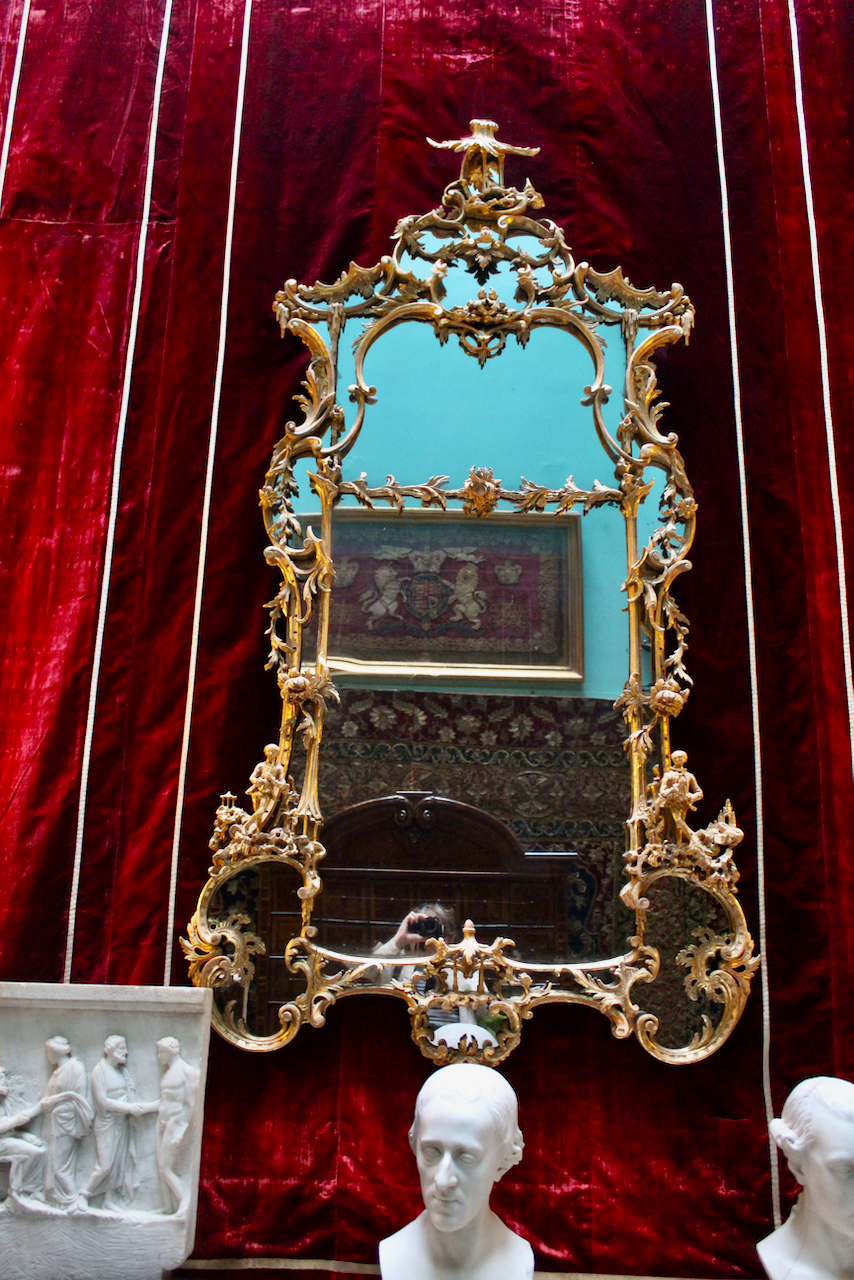
General enquiries: 051 398 468, breda.lynch@opw.ie

from the OPW website https://heritageireland.ie/visit/places-to-visit/ballyhack-castle/:

Ballyhack Castle commands an imperious position on a steep-sided valley overlooking Waterford Estuary. It is thought that the Knights Hospitallers of St John, one of the two mighty military orders founded at the time of the Crusades, built this sturdy tower house around 1450.

The tower is five stories tall and the walls survive complete to the wall walk. Built into the north-east wall of the second floor is a small chapel complete with a piscina, aumbry and altar. The entrance to the castle is protected externally by a machicolation and internally by a murder hole – that is, an opening through which defenders could throw rocks or pour boiling water, hot sand or boiling oil, on anyone foolish enough to attack.

Currently on display at Ballyhack Castle are assorted items of replica armour relating to the Crusades and the Normans –  guaranteed to ignite the imagination!

Ballyhack Castle, photograph by Brian Morrison, 2015 for Tourism Ireland, Ireland’s Content Pool. [see 1]
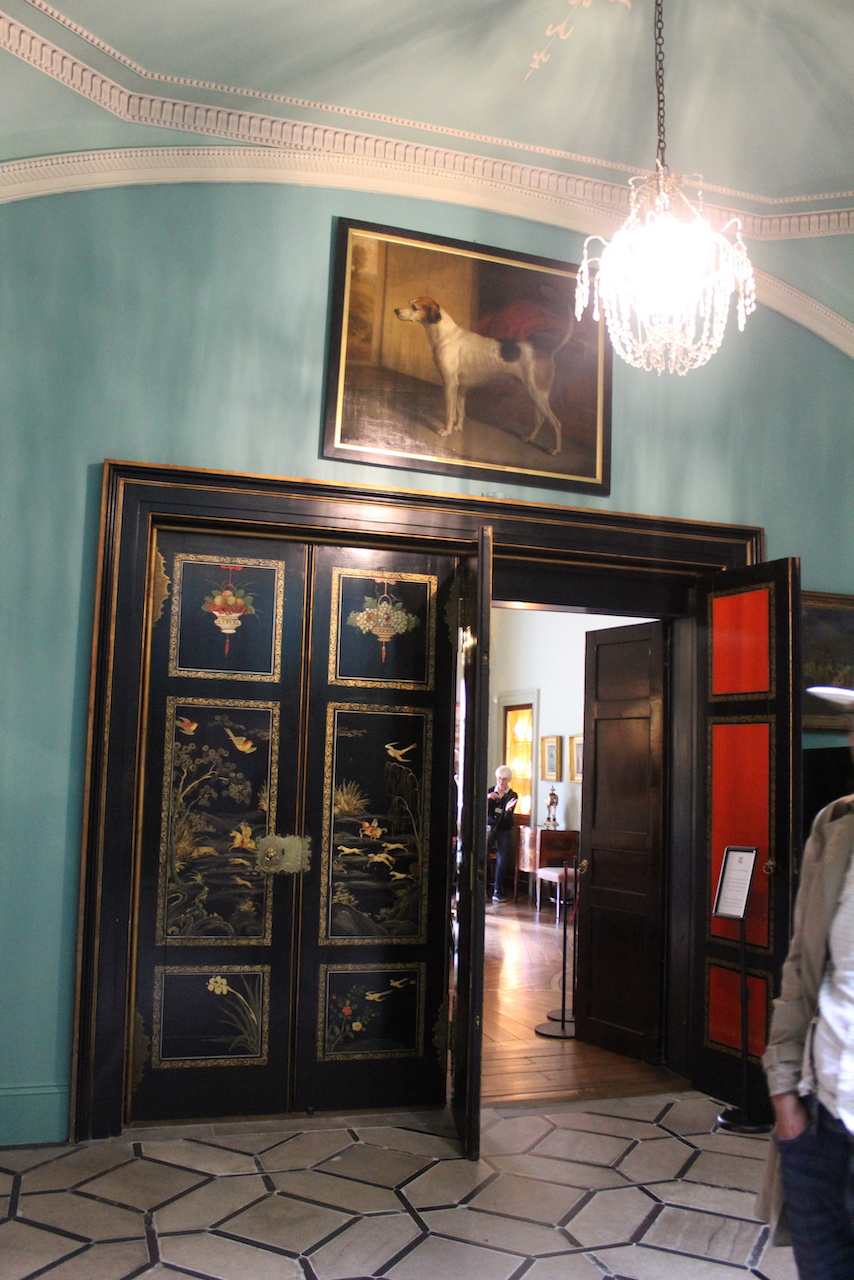
2. Ferns Castle, County Wexford:

Ferns Castle, photograph by Brian Morrison, 2015 for Tourism Ireland, Ireland’s Content Pool. [see 1]
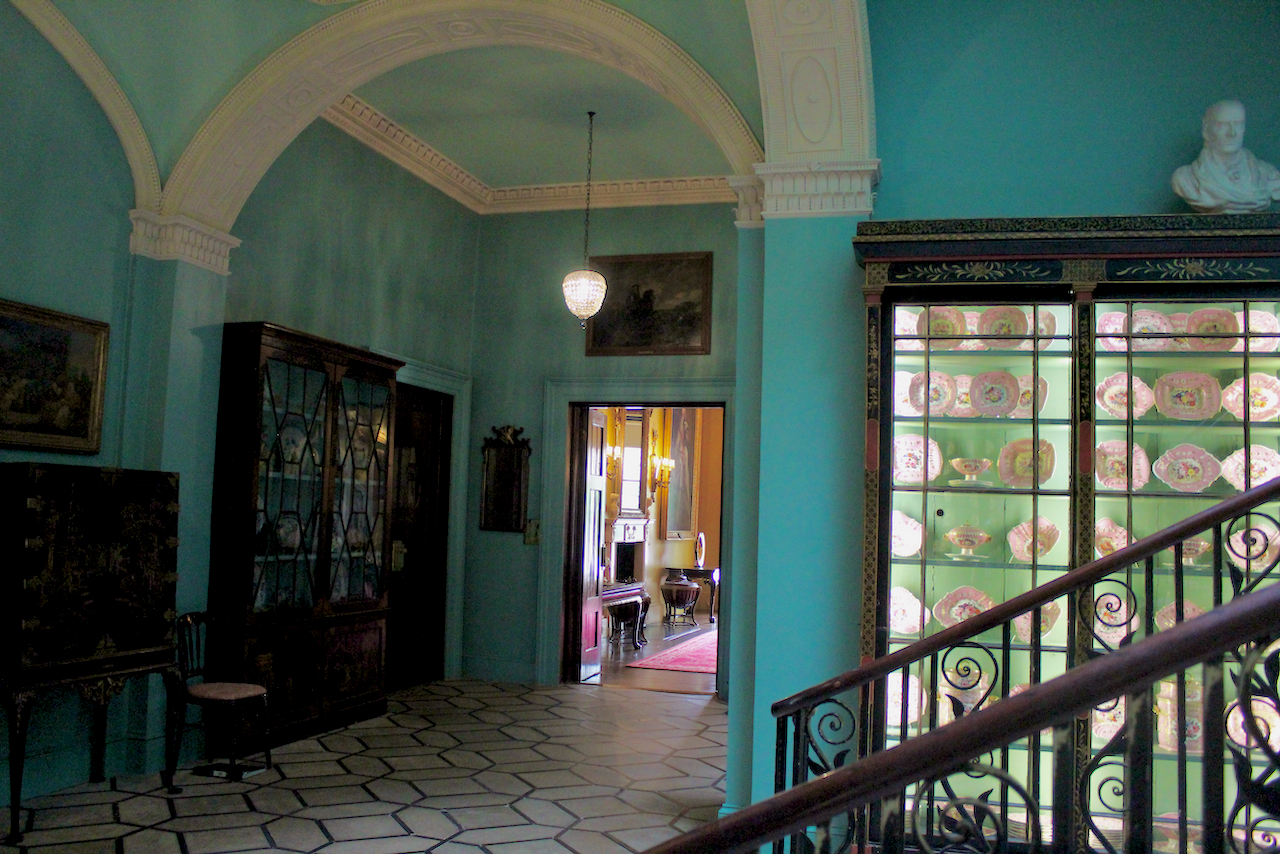
General information: 053 9366411, fernscastle@opw.ie

From the OPW website https://heritageireland.ie/visit/places-to-visit/ferns-castle/:

Before the coming of the Normans, Ferns was the political base of Diarmait Mac Murchada, king of Leinster. William, Earl Marshall built the castle around 1200. Since then it has had many owners, of diverse political and military colours.

Originally, the castle formed a square, with large corner towers. Only half of the castle now stands, although what remains is most impressive. The most complete tower contains a beautiful circular chapel, several original fireplaces and a vaulted basement. There is a magnificent view from the top.

There is an extraordinary artefact to be seen in the visitor centre. The Ferns Tapestry showcases the pre-Norman history of the town via the thousand-year-old art of crewel wool embroidery. Stitched by members of the local community, the 15-metre-long tapestry comprises 25 panels of remarkable accomplishment and beauty.

Ferns Castle, photograph by Chris Hill, 2014 for Tourism Ireland, Ireland’s Content Pool. [see 1]

3. John F. Kennedy Arboretum, County Wexford:

General Information: 046 9423490, jfkarboretum@opw.ie

When John F. Kennedy died, a number of Irish-American societies expressed the wish to establish a tribute to him in Ireland. The Irish government suggested a national arboretum, and secured 192 acres surrounding Ballysop House, just six kilometres from the Kennedy ancestral home at Dunganstown, County Wexford. The arborterum is planted in two interwoven botanical circuits: one of broadleaves and the other of conifers. The Arboretum was formally opened on 29th May 1968.

From the OPW website https://heritageireland.ie/visit/places-to-visit/the-john-f-kennedy-arboretum/:

Dedicated to the memory of John F. Kennedy, whose great-grandfather, Patrick, was born in the nearby village of Dunganstown, this arboretum near New Ross, County Wexford, contains a plant collection of presidential proportions.

It covers a massive 252 hectares on the summit and southern slopes of Slieve Coillte and contains 4,500 types of trees and shrubs from all temperate regions of the world. There are 200 forest plots grouped by continent. Of special note is an ericaceous garden with 500 different rhododendrons and many varieties of azalea and heather, dwarf conifers and climbing plants.

The lake is perhaps the most picturesque part of the arboretum and is a haven for waterfowl. There are amazing panoramic views from the summit of the hill, 271 metres above sea level. A visitor centre houses engaging exhibitions on JFK and on the Arboretum itself.

Along the northern perimeter of the site are some 200 forest plots. Each covers an area of one acre and comprises a single species of forestry tree. These provide information on the performance of different types of plantation species in the Irish climate.

Through the garden are a number of trails, and a miniature train runs during the summer, and there is a cafe.

4. Tintern Abbey, County Wexford:

Tintern Abbey, County Wexford, 15th March 2025. Photograph © Jennifer Winder-Baggot, www.irishhistorichouses.com

See my entry https://irishhistorichouses.com/2025/04/07/tintern-abbey-county-wexford-an-opw-property/

General information: 051 562650, tinternabbey@opw.ie

From the OPW website https://heritageireland.ie/visit/places-to-visit/tintern-abbey/:

This Cistercian monastery was founded c. 1200 by William, Earl Marshal on lands held through his marriage to the Irish heiress, Isabella de Clare [daughter of Strongbow]. This abbey, founded as a daughter-house of Tintern Major in Wales is often referred to as Tintern de Voto.

The nave, chancel, tower, chapel and cloister still stand. In the 16th century the old abbey was granted to the Colclough family [Anthony Colclough (d. 1584) was a soldier and the land was granted to him after the dissolution of the monasteries] and soon after the church was partly converted into living quarters and further adapted over the centuries. The Colcloughs occupied the abbey from the sixteenth century until the mid-twentieth.”

Tintern Abbey, County Wexford, May 2023.
Tintern Abbey, County Wexford, May 2023. Photograph © Jennifer Winder-Baggot, www.irishhistorichouses.com
Tintern Abbey, photograph by Celtic Routes, 2019 for Tourism Ireland, Ireland’s Content Pool. [see 1]

Wicklow:

1. Dwyer McAllister Cottage, County Wicklow:

From the OPW website https://heritageireland.ie/visit/places-to-visit/dwyer-mcallister-cottage/:

This thatched and whitewashed cottage nestles in the shade of Keadeen Mountain off the Donard to Rathdangan road in County Wicklow.

Today, it seems like an unlikely site of conflict. However, in the winter of 1799 it was a different story. It was from this cottage that the famed rebel Michael Dwyer fought the encircling British. One of Dwyer’s compatriots, Samuel McAllister, drew fire upon himself and was killed. This allowed Dwyer to make good his escape over the snow-covered mountains.

The cottage was later destroyed by fire and lay in ruins for almost 150 years. It was restored to its original form in the twentieth century. Now, it contains various items of the period – both those that characterised everyday life, such a roasting spit and a churn, and those that only appeared in the throes of combat, such as deadly pikes.

2. Glendalough, County Wicklow:

Glendalough, County Wicklow, July 2017. Photograph © Jennifer Winder-Baggot, www.irishhistorichouses.com

General information: 0404 45352, george.mcclafferty@opw.ie

From the OPW website https://heritageireland.ie/visit/places-to-visit/glendalough-visitor-centre/:

In a stunning glaciated valley in County Wicklow, in the sixth century, one of Ireland’s most revered saints founded a monastery. The foundation of St Kevin at Glendalough became one of the most famous religious centres in Europe.

The remains of this ‘Monastic City’, which are dotted across the glen, include a superb round tower, numerous medieval stone churches and some decorated crosses. Of particular note is St Kevin’s Bed, a small man-made cave in the cliff face above the Upper Lake. It is said that St Kevin lived and prayed there, but it may actually be a prehistoric burial place that far predates him.

Gilt wooden statue dating from the 15th or 16th century, found at Lugduff, County Wicklow, in a ruined building near the upper lake at Glendalough. It is a carved statue of yew wood and depicts an unknown figure, probably a saint; now in the National Museum of Ireland, Kildare Street, Dublin. Photograph © Jennifer Winder-Baggot, www.irishhistorichouses.com
Information board from National Museum of Ireland, Kildare Street.
Silver penny of Sitric Rex Dublin, found at Sevenchurches or Camaderry, Glendalough County Wicklow. It represents the earliest Irish coinage, showing Sitric, King of Dublin, and was minted in AD995. It is now in the National Museum of Ireland, Kildare Street, Dublin. Photograph © Jennifer Winder-Baggot, www.irishhistorichouses.com
Glendalough, Co. Wicklow, photograph by Chris Hill 2018 for Tourism Ireland, Ireland’s Content Pool. [see 1]

3. National Botanic Gardens Kilmacurragh, County Wicklow:

General Information: 0404 48844, botanicgardens@opw.ie

Kilmacurragh House was home to seven generations of the Acton family. It was built in 1697 by Thomas Acton, whose father came to Ireland as part of Oliver Cromwell’s army, for which he was granted the lands surrounding the ruined abbey of St. Mochorog. The five bay Queen Anne house is thought to be the work of Sir William Robinson, who is better known today for his work at Marsh’s Library in Dublin, the Royal Hospital Kilmainham, Dublin Castle and Charles Fort, Kinsale, County Kerry. [2]

Kilmacurragh House, photograph from the National Inventory of Architectural History.

From the OPW website https://heritageireland.ie/visit/places-to-visit/national-botanic-gardens-kilmacurragh/:

There was a monastery at Kilmacurragh, in this tranquil corner of County Wicklow, in the seventh century, and a religious foundation remained right up until the dissolution of the monasteries. After Cromwell invaded the land passed to the Acton family.

Thomas Acton (1655-1750), the first Thomas Acton who lived at Kilmacurragh, he obtained leases “for lives, renewable forever” from Richard Viscount Rosse of the lands in County Wicklow. [3] His father had come over to Ireland in Cromwell’s army. Thomas built the house at Kilmacurragh in 1697, after tearing down the abbey buildings. The house was designed by William Robinson (1643-1712), whose best-known work is the Royal Hospital Kilmainham.
Elinor née Kempston (d. 1747), wife of Thomas Acton.

By the time the estate came to Thomas Acton in 1854, an unprecedented period of botanical and geographical exploration was afoot. In collaboration with the curators of the National Botanic Gardens, Acton built a new and pioneering garden.

In 1996, a 21-hectare portion of the old demesne officially became part of the National Botanic Gardens of Ireland. The following ten years were spent giving the estate’s rare and beautiful plants a new lease of life.

Kilmacurragh is now part of the National Botanic Gardens, providing a complementary collection of plants to its parent garden at Glasnevin. Arrive in spring to witness the transformation of the walks, as fallen rhododendron blossoms form a stunning magenta carpet.

and

The Gardens lies within an estate developed extensively during the nineteeth century by Thomas Acton in conjunction with David Moore and his son Sir Frederick Moore, Curators of the National Botanic Gardens at that time. It was a period of great botanical and geographical explorations with numerous plant species from around the world being introduced to Ireland for the first time. The different soil and climatic conditions at Kilmacurragh resulted in many of these specimens succeeding there while struggling or failing at Glasnevin. Kilmacurragh is particularly famous for its conifer and rhododendron collections.” [4]

Thomas Acton’s son William (1711-1779) married Jane Parsons of Birr Castle. Their son Thomas Acton (1738-1817) inherited, then his son Lt Col William (1789-1854) and then his son Thomas (1826-1908). Along with his sister Janet, he had a passion for collecting plants. They travelled to the Americas and Asia in search of plants, and established one of the finest arboreta in Ireland, and formed a friendship with David Moore, curator of the National Botanic Gardens in Dublin. Thomas died unmarried in 1908 and Kilmacurragh was inhierted by his nephew, Captain Charles Annesley Acton, who had been born in Peshawar. However, he was killed fighting in World War I as was his brother Reginald. Thus in eight years, three consecutive owners of Kilmacurragh had died, inflicting death duties amounting to 120% of the value of the property. The Actons were forced to sell the estate. The house fell into ruin and the arboretum became overgrown. The state acquired Kilmacurragh in 1996 and have restored the arboretum, making it part of the National Botanic Gardens.

[1] https://www.irelandscontentpool.com/en/media-assets/media/81101

[2] p. 160. Living Legacies: Ireland’s National Historic Properties in the Care of the OPW. Government Publications, Dublin 2, 2018.

[3] Burke, Bernard, A genealogical and heraldic history of the landed gentry of Great Britain & Ireland, 1886 vol 1.

[4] https://botanicgardens.ie/kilmacurragh/

Clashleigh House, Clogheen, Co. Tipperary – section 482

contact: Elizabeth O’Callaghan Tel: 086-8185334

Open dates in 2025: Mar 4, 6, 11, 13, 18, 20, 25, 27, Apr 1, 3, 8, 10, 15, 17, 22, 24, 30, May 6, 8, 10-11, 13, 15, 17-18, 20, 22, 24-25, 27, 29, June 3, 5, 10, 12, 17, 19, 24, 26, Aug 16-24, Sept 2, 4, 9, 11, 16, 18, 23, 25, 30, Oct 2, 7, 9, 9am-1pm

Fee: adult €8, OAP/student/child €4

2025 Diary of Irish Historic Houses (section 482 properties)

To purchase an A5 size 2025 Diary of Historic Houses (opening times and days are not listed so the calendar is for use for recording appointments and not as a reference for opening times) send your postal address to jennifer.baggot@gmail.com along with €20 via this payment button. The calendar of 84 pages includes space for writing your appointments as well as photographs of the historic houses. The price includes postage within Ireland. Postage to U.S. is a further €10 for the A5 size calendar, so I would appreciate a donation toward the postage – you can click on the donation link.

€20.00

donation

Help me to pay the entrance fee to one of the houses on this website. This site is created purely out of love for the subject and I receive no payment so any donation is appreciated!

€15.00

Clashleigh House, County Tipperary, August 2023. Photograph © Jennifer Winder-Baggot, www.irishhistorichouses.com

Clashleigh House is a three bay two storey over basement Georgian home, built in around 1810. The National Inventory claims that it was built on the site of an earlier 18th century dwelling, but Judith Hill writes that there is no evidence from historical study that there was a significant structure on the site prior to the building of the main block, although some features of the house point to the existence and remnants of an earlier structure. The house was built in conjunction with a mill and brewery, the ruins of which remain at the top of the lane. It was built by Samuel Grubb. The house sits in a fourteen acre walled estate nestled in a tranquil valley near the Knockmealdown Mountains.

Another house in Clogheen also belonged to the Grubb family, Cooleville House, built around 1805.

Cooleville House, courtesy of National Inventory of Architectural Heritage, another house built for the Grubb family in Clogheen.
Clashleigh House, County Tipperary, August 2023: the entrance has limestone piers with plinths and limestone wheelguards, and wrought iron gates. Photograph © Jennifer Winder-Baggot, www.irishhistorichouses.com

The main two storey three bay house has a bow at the back. A four bay two storey extension to the south may be older than the main house.

Clashleigh House, County Tipperary, August 2023. Photograph © Jennifer Winder-Baggot, www.irishhistorichouses.com
The south side extension of Clashleigh House, County Tipperary, August 2023. Photograph © Jennifer Winder-Baggot, www.irishhistorichouses.com
Clashleigh House, County Tipperary, August 2023. Photograph © Jennifer Winder-Baggot, www.irishhistorichouses.com

The property of Clashleigh contains a squat round folly.

The folly at Clashleigh House, County Tipperary, August 2023. Photograph © Jennifer Winder-Baggot, www.irishhistorichouses.com
Clashleigh House, County Tipperary, August 2023. Photograph © Jennifer Winder-Baggot, www.irishhistorichouses.com
The bow at the back of the main house, Clashleigh House, County Tipperary, August 2023. Judith Hill points out that it is unusual in that it has two rather than three bays. Photograph © Jennifer Winder-Baggot, www.irishhistorichouses.com
The bow at the back of the main house, Clashleigh House, County Tipperary, August 2023. Photograph © Jennifer Winder-Baggot, www.irishhistorichouses.com

The 1840 Ordnance Survey map, Judith Hill tells us, reveals that 40-50 years after the main house was built, the extensions and outhouses attached to the house were built. More extensions were added in the 1930s, according to the National Inventory. The house has a render and timber entrance porch with thin Doric columns and decorative consoles, which was added around 1840-1866, Judith Hill concludes, as the door with its pilasters and limestone steps date to this period, but the windows of the porch are early 20th century.

Clashleigh House, County Tipperary, August 2023. Photograph © Jennifer Winder-Baggot, www.irishhistorichouses.com

A beautiful long curved driveway leads to the house. Judith Hill identifies a fern-leafed beech which is about two hundred years old and may have been one of the earliest in Ireland, as the species was introduced to Ireland in 1804. There is also a magnificent mature cedar.

The front lawn, Clashleigh House, County Tipperary, August 2023. Photograph © Jennifer Winder-Baggot, www.irishhistorichouses.com

The house is situated in the town of Clogheen, just off the main street on a laneway called Brewery Lane. The stables and coachhouse are on the other side of the lane.

The ruins of the mill and brewery can be seen at the end of Brewery Lane.
This lovely cottage stands opposite the house in Brewery Lane. Photograph © Jennifer Winder-Baggot, www.irishhistorichouses.com

The current owners commissioned Judith Hill to write a summary about Clashleigh house in 2006, and I obtained my information from this. Samuel Grubb (1750-1815) was the son of a Quaker, Joseph (1709-1782) and his wife Sarah née Greer (1717-1788). As a young man, Joseph worked in a mill in Clonmel in County Tipperary, and by the end of his life he owned several mills on the Clonmel bank of the River Suir and the River Anner. [1]

Samuel was one of many children. He attended the Quaker school in Ballitore, County Kildare. At the age of 26 he married the headmaster’s daughter, Margaret Shackleton (1751-1829), of Ballitore. The headmaster was Richard Shackleton (1726-1792) and Margaret’s mother was his first wife, Elizabeth Fuller, also from Ballitore. In Clogheen, Samuel set up the milling business and a brewery.

The town of Clogheen was owned at that time by the Cornelius O’Callaghan, 1st Viscount Lismore.. They had taken over the land from the Everards of Fethard, who had received the grant of land early in the seventeenth century, Judith Hill tells us. By 1837, Clogheen was a thriving town.

Samuel and Margaret Grubb had many children. According to Hugh Montgomery-Massingberd’s Burke’s Irish Family Records, their oldest son, Abraham, became a corn and butter merchant and an insurance agent and lived in Clonmel. Their second son, Richard (1780-1859) ran a corn mill in Clogheen and lived in Cooleville, and in 1833 built Cahir Abbey to live in. [2]

Built by Samuel Grubb’s son Richard (1780-1859) in the 1830s, Cahir Abbey House, courtesy of National Inventory of Architectural Heritage.

Samuel’s third son, also called Samuel (1787-1859) purchased Castle Grace in Clogheen around 1820. Judith Hill speculates that he may have lived in Clashleigh while Castle Grace was being renovated.

Castle Grace house, County Tipperary, photograph courtesy of myhome.ie
Castle Grace manager’s house, built around 1800, and Castlegrace mill, built around 1790, according to the National Inventory of Architectural Heritage. Photograph courtesy of myhome.ie.

Another son, Robert, emigrated to British Columbia in Canada. Another son, Thomas Samuel, was a boat-builder, iron, oils and colour merchant, and built Richmond Mills in Clonmel.

Richmond Mills, Clonmel, County Tipperary, built by Thomas Samuel Grubb (1792-1885) around 1830, photograph courtesy of National Inventory of Architectural Heritage.

The O’Callaghans led much of the development in Clogheen, which Judith Hill tells us included new houses, enlarged and newly paved streets, a new market house and barracks. Other millers were attracted to the area and by 1850 there were seven flour mills worked by fourteen water wheels, as well as Samuel Grubb’s large brewery. One of the biggest businesses was the corn merchant and milling business Samuel Grubb and Son, which was listed in local directories until at least 1870. [3]

The first Samuel Grubb died in 1815 but in the Tithe Applotment books of 1830 a Samuel Grubb is listed as occupying Clashleigh so it must have been the son. His mother died in 1829 so he may have moved back into Clashleigh after she died. In 1847 a Mrs. Grubb, probably Samuel’s wife Deborah née Davis, ran a soup kitchen from Clashleigh for those suffering from the famine. [4]

The second Samuel and Deborah née Davis had many children. The oldest, Richard Davis Grubb (1820-1865), lived at Castle Grace. It was their son Henry Samuel Grubb (1825-1891) who lived at Clashleigh. He held the office of High Sheriff of County Tipperary in 1887, according to Burke’s Peerage, but by this time he had moved from Clashleigh.

With a drop in the amount of tillage in Ireland, milling became less profitable and by the late nineteenth century the number of mills in Clogheen had fallen. By 1893 the only mill included in Guy’s Directory of Munster for Clogheen was John Ward’s Sawing and Flour Mill on Main Street.

In 1874 George Ponsonby O’Callaghan, 2nd Viscount Lismore and his son George Cornelius Gerald O’Callaghan leased Clashleigh house and its gardens to the Representative Church Body for use as a rectory. It was used as a rectory for the next sixty-five years, for the nearby church which had been erected by Viscount Lismore by 1856. [5]

The house contains many of its original features. One enters from the porch under a wide timber panelled arch. The front hall has a double door with a decorative fanlight leading off into the dining room and a reeded timber doorframe to the drawing room. The hall has a plaster ceiling rose and dentillated cornice. The front porch also has a dentillated cornice.

Off the main hall is the double height stair hall with an impressive cantilevered staircase that rises up and curves around in a rectangular manner up to the top storey.

The drawing room has an original reeded cornice and rose detail. Judith Hill writes that some of the most impressive of the original features of the house are the timber sash windows and their associated joinery in the main house, the staircase, the reeded cornice with rose detail and the slate fireplaces in the drawing and reception rooms, as well as the ceiling rose in the drawing room. The main house, she tells us, has two spine walls that divide the plan into three and which contain the chimneys. She also mentions the impressive large stone slabs to the basement.

In 1939 the Representative Body sold the house to Thomas and Ruth Jessop Davis. Thomas died in 1954 and in 1959 Ruth sold Clashleigh to Michael Law, a retired major in the British Army. It passed through several owners until purchased by the present owners in 2006.

The crowning glory of the house is its garden. We were lucky to visit on a beautiful sunny day. To the south side of the front lawn was a field with donkeys.

Donkeys at Clashleigh House, County Tipperary, August 2023. Photograph © Jennifer Winder-Baggot, www.irishhistorichouses.com

To the rear of the house is a walled garden with brick walls of approximately one acre. It lies below the level of the house.

The back of Clashleigh House, County Tipperary, August 2023. Photograph © Jennifer Winder-Baggot, www.irishhistorichouses.com
The back of Clashleigh House leading to the garden, County Tipperary, August 2023. Photograph © Jennifer Winder-Baggot, www.irishhistorichouses.com
The magnificent walled garden of Clashleigh House, County Tipperary, August 2023. Photograph © Jennifer Winder-Baggot, www.irishhistorichouses.com
Clashleigh House, County Tipperary, August 2023. Photograph © Jennifer Winder-Baggot, www.irishhistorichouses.com

The folly is built into the stone wall of the walled garden.

Clashleigh House, County Tipperary, August 2023. Photograph © Jennifer Winder-Baggot, www.irishhistorichouses.com

From inside the walled garden one can see that the folly is built on a rocky cave.

Clashleigh House, County Tipperary, August 2023. Photograph © Jennifer Winder-Baggot, www.irishhistorichouses.com
Stephen inside the rocky cave underneath the folly at Clashleigh House, County Tipperary, August 2023. Photograph © Jennifer Winder-Baggot, www.irishhistorichouses.com

Hill writes that there is a walnut grove which was planted in the 1980s, accessible from the walled garden, which leads down to the river. The gardens to the east of the house are in pasture and are surrounded by stone walls and contain two specimen lime trees.

Clashleigh House, County Tipperary, August 2023. Photograph © Jennifer Winder-Baggot, www.irishhistorichouses.com
Domestic birds at Clashleigh. Photograph © Jennifer Winder-Baggot, www.irishhistorichouses.com

The current owners have furnished and maintained the house splendidly, showing it in all its glory. They have created a beautiful home.

[1] Kavanagh, Art and William Hayes. The Tipperary Gentry, 2003. Published by Irish Family Names, c/o Eneclann, Unit 1, The Trinity Enterprise Centre, Pearse St, Dublin 2, 11 Emerald Cottages, Grand Canal St, Dublin 4 and Market Square, Bunclody, Co Wexford, Ireland. 2003. 

[2] Montgomery-Massingberd, Hugh. Burke’s Irish Family Records. London, U.K.: Burkes Peerage Ltd, 1976.

[3] Judith Hill references William Hogg, who compiled The Millers and the Mills of Ireland of about 1850, rev. ed. 2000.

[4] Judith Hill references Patrick Power’s History of South Tipperary, Mercier Press, 1989, p. 146.

[5] Judith Hill references Slater’s Directory 1856.

Text © Jennifer Winder-Baggot, www.irishhistorichouses.com

Burton Park, Churchtown, Mallow, County Cork P51 VN8H – section 482

www.slieile.ie
Open dates in 2025: Apr 5- Oct 12, Sat-Sun, National Heritage Week, Aug 16-24, 2pm-6pm

Free

2025 Diary of Irish Historic Houses (section 482 properties)

To purchase an A5 size 2025 Diary of Historic Houses (opening times and days are not listed so the calendar is for use for recording appointments and not as a reference for opening times) send your postal address to jennifer.baggot@gmail.com along with €20 via this payment button. The calendar of 84 pages includes space for writing your appointments as well as photographs of the historic houses. The price includes postage within Ireland. Postage to U.S. is a further €10 for the A5 size calendar, so I would appreciate a donation toward the postage – you can click on the donation link.

€20.00

donation

Help me to pay the entrance fee to one of the houses on this website. This site is created purely out of love for the subject and I receive no payment so any donation is appreciated!

€15.00

Burton Park, County Cork, August 17th 2023. Photograph © Jennifer Winder-Baggot, www.irishhistorichouses.com

A house was first built at Burton Park around 1665 for John Perceval (1629–1665), 1st Baronet. However, this was destroyed and a later house built on its footprint. The house, which was not completed until 1709, was three times the size of the present building, which was remodelled in the late 1800s.

John Perceval, 1st Baronet (1629–1665) engraved by J. Faber (1743). From Anderson, James (1742), Whiston, William, ed., A genealogical history of the house of Yvery, in its different branches of Yvery, Luvel, Perceval and GournayGournay volume 2, London: H. Woodfall.

The house has been in the ownership of only two families: the Percevals and the Purcells. It now houses Slí Eile, and the website tells us:

In the Irish language, slí eile means ‘another way’ and Slí Eile was set up to provide an alternative recovery option for those who might otherwise have to spend time in psychiatric hospitalPeople who come to Slí Eile spend a period of 6-18 months in a residential community in which support is available from both professional staff and from peers. Participating in the Slí Eile community provides an opportunity for a fresh start in a safe, nurturing environment. It also serves to restore a structured pattern to life. It helps in the development of both interpersonal skills and the practical skills that are required for daily living.” [1]

You can read more about Slí Eile on their website.

The website tells us that the original dwelling was fortified with high walls around the house, with four turrets, one at each corner. There are a number of underground passages, recently discovered, which correspond with the sites of the turrets as they would have appeared in the original design.

Philip Perceval (1605-1647), father of John, came to Ireland where he served as registrar of the Irish court of wards, along with his brother Walter. When Walter died in 1624, Philip inherited the family estates in England and Ireland. The land at Burton Park was named after his estate in Somerset, Burton. He settled in Ireland, and by means of his interest at court he gradually obtained a large number of additional offices. In 1625 he was made keeper of the records in the Birmingham Tower at Dublin Castle.

Perceval was close to the Lord Deputy of Ireland, Thomas Wentworth, 1st Earl of Strafford. With the fall and execution of Wentworth in May 1641, Perceval lost his major patron and protector. In September 1641 Perceval narrowly avoided prosecution in England when his part in a shady land transaction was revealed. By that time, Perceval owned over 100,000 acres in Ireland, which he obtained partly through forfeited lands.

Philip Perceval married Catherine Ussher, daughter of Arthur Ussher and Judith Newcomen. She gave birth to their heir, John (1629–1665), who was created 1st Baronet in 1661. A younger son, George (1635-1675) lived at Temple House in County Sligo, another Section 482 property which we have yet to visit.

In 1665 the officer-architect Captain William Kenn, then engaged on Charleville Manor for Roger Boyle, 1st Earl of Orrery, proposed a design, and building work on Burton Park started for the 1st Baronet Perceval. [2]

John Perceval served in Oliver Cromwell’s Commonwealth. He was involved in sending the opponents of Cromwell from their sequestered lands to Connaught. However, he began to distance himself from the Parliament and declined Cromwell’s invitation to sit in Cromwell’s Parliament.

After the Restoration of King Charles II, John Perceval was pardoned for his part in Cromwell’s government, and was granted a Baronetcy (of Kanturk) and made a Privy Councillor to Charles II. He married Catherine Southwell of Kinsale, County Cork.

Catherine (1637 – 1679) the only daughter of Sir Robert Southwell of Kinsale, wife of Sir John Perceval, 1st Baronet. Engraved by J. Faber (1743). From Anderson, James (1742), Whiston, William, ed., A genealogical history of the house of Yvery, in its different branches of Yvery, Luvel, Perceval and GournayGournay volume 2, London: H. Woodfall, p. 360

Catherine and John’s son eldest son and heir died at the age of 24 and he was succeeded by his brother, John (c. 1660-1686), who became 3rd Baronet of Kanturk.

Sir Philip Perceval, 2nd Bt (1656-1680) by Thomas Pooley c. 1670-74, courtesy of National Gallery of Ireland NGI 4626.
John Perceval, 3rd Bt (1660-1686) by Thomas Pooley, c. 1670-74, courtesy of National Gallery of Ireland NGI 4627.
John Perceval 3rd Bt, by John Faber Jr, National Portrait Gallery of London D29835.

John the 3rd Baronet married Catherine Dering, daughter of Edward 2nd Baronet Dering, of Surrenden Dering, Co. Kent. Their son Edward became 4th Baronet at the age of just four years old but he died aged 9. The next son, John, succeeded as 5th Baronet in 1691 on the death of his brother, and in 1733 was created 1st Earl of Egmont.

John Perceval (1683-1748) 1st Earl of Egmont by and published by John Smith, after Sir Godfrey Kneller 1704, National Portrait Gallery of London, D11553.

In 1690 Burton Park house was burnt by Duke of Berwick’s Jacobite forces as they retreated south after the Battle of the Boyne. The Duke of Berwick, James Fitzjames, was the illegitimate son of King James II. The village of Churchtown and fifty other big houses were destroyed.

James Fitzjames, 1st Duke of Berwick (1670–1734), three-quarter-length, wearing a suit of armour, a white jabot and holding a baton, by the circle of Godfrey Kneller, courtesy of Sothebys auction Old Master Paintings 6 April 2022.

The 1st Earl of Egmont rebuilt the house. Frank Keohane writes:

“After being burnt, the house’s rebuilding was delayed by a second long minority until the first decade of C18. The stables were commenced first, and unknown Italian architect was recorded at work in 1707 by the steward. [fn. A proto-Palladian plan dated 1709 shows a colonnaded hall and a portico before the door. Its designer was perhaps James Gibbs, whom Perceval had befriended in Italy when Gibbs was a student of Carlo Fontana.] In 1710 Rudolph Corneille, a Huguenot military engineer, proposed to rebuild the house for £2000. William Kidwell was paid for a chimneypiece in 1712. The house does not appear to have been completed, however, and the demesne was leased in 1716. A drawing of 1737 records the house standing as a shell, while in 1750 Smith described the ruin as ‘a large elegant building, mostly of hewn stone.’ ” [3]

Burton Park, County Cork, August 17th 2023: an artist’s impression of how the original house may have looked.

Jane O’Hea O’Keeffe writes in Voices from the Great Houses: Cork and Kerry that Perceval is believed to have commissioned Italian architects to submit designs for a new house in 1703, incorporating many Palladian features, to be built on the foundations of the original house. She writes that the mansion was completed in 1709 and was remodelled in the late nineteenth century. [4]

The Percevals didn’t live in Ireland, however, as they served as politicians in the British government.

John Perceval the 1st Earl was elected for the British parliament to represent Harwich in England from 1728 to 1734. The Dictionary of Irish Biography tells us “He was a regular attender at court, and sat (1727–34) for Harwich in the British house of commons, where he had some success in promoting trade concessions for Ireland. Other interests included prison conditions and the Georgia colony [in the United States], of which he was a co-founder in 1732.

John Perceval, 1st Earl of Egmont (1683-1748) by Hans Hysing.

It’s fascinating that he was a founder of Georgia in the United States! He supported James Oglethorpe’s scheme to establish a new colony. He was acquainted with Oglethorpe from their work on the Gaols Committee of the House of Commons, which was painted by William Hogarth. The National Portrait Gallery of London tells us he played a crucial role in securing the funding that was essential for the support and defence of Georgia.

The Gaols Committee of the House of Commons by William Hogarth circa 1729 courtesy of National Portrait Gallery of London NPG 926.

Oglethorpe gained a reputation as the champion of the oppressed. He pressed for the elimination of English prison abuses and, in 1732, defended the North American colonies’ right to trade freely with Britain and the other colonies. [5] The prison reforms Oglethorpe had championed inspired him to propose a charity colony in America. On June 9, 1732, the crown granted a charter to the Trustees for Establishing the Colony of Georgia. Oglethorpe himself led the first group of 114 colonists on the frigate Anne, landing at the site of today’s Savannah on February 1, 1733. The original charter banned slavery and granted religious freedom, leading to the foundation of a Jewish community in Savannah.

In 1742, Oglethorpe called upon his military experience and Georgia’s fledgling militia to defend the colony from a Spanish invasion on St. Simons Island. Oglethorpe and his militia defeated the invaders in the Battle of Bloody Marsh, which is credited as the turning point between England and Spain’s fight for control of southeastern North America. [5]

John Perceval was a friend of Bishop George Berkeley, Church of Ireland Bishop of Cloyne. The philosopher-bishop was chaplain to John Perceval and tutor to his son. Papers relating to Burton House tell us that during his stay at Burton, Berkeley enjoyed long walks through its wooded demesne and may have slept on a hammock strung in the barn!

George Berkeley (1685-1753), Philosopher and Bishop of Cloyne, by John Smibert 1730 courtesy of National Portrait Gallery NPG 653.

Extracts from the correspondence between Berkeley and Perceval (Ryan-Purcell papers) reveal the special affection the bishop reserved for Burton:

“Trinity College, 17th May 1712:
Burton I find pleases beyond expectation; and I imagine it myself at this time one of the finest places in the world

“Trinity College, 5th June 1712: Dan Dering (Perceval’s cousin) and I deign to visit your Paradise, and are sure of finding angels there, notwithstanding what you say of their vanity. In plain English, we are agreed to go down to Burton together and rejoice with the good company there. I give you timely warning that you may hang up two hammocks in the barn against our coming. I never lie in a feather bed in the college and before now have made a very comfortable shift with a hammock.

“London, 27th August 1713:
Last night I came hither from Oxford. I could not without some regret leave a place which I had found so entertaining, on account of the pleasant situation, healthy air, magnificent buildings, and good company, all which I enjoyed the last fortnight of my being there with much better relish than I had
done before, the weather having been during that time very fair, without which I find nothing can be agreeable to me. But the far greater affliction that I sustained about this time twelvemonth in leaving Burton made this seem a small misfortune …
” [6]

John Perceval’s son John Perceval (1711–70), sat for Dingle in the Irish commons from 1731 to 1748, when he succeeded to his father’s peerage after his father’s death and became 2nd Earl of Egmont. He was a member of the British Commons, 1741–62, and was a close adviser to Frederick, Prince of Wales. [6]

John Perceval (1711-1770) 2nd Earl of Egmont by Thomas Hudson.
John Percival, later 2nd Earl of Egmont (1711-1770) by Francis Hayman c. 1740, courtesy of National Gallery of Ireland NGI 4489.

John 2nd Earl’s sister Helena married John Rawdon, 1st Earl of Moira.

John 2nd Earl married Catherine, daughter of James Cecil 5th Earl of Salisbury. She gave birth to the next in line, John James Perceval (1738-1822) 3rd Earl of Egmont, along with several other children.

John Perceval, 2nd Earl of Egmont with Catherine Perceval (née Cecil), Countess of Egmont by Richard Josey, after Sir Joshua Reynolds mezzotint, 1876 (1756) National Portrait Gallery of London D1855.

When she died, John the 2nd Earl remarried, this time to Catherine Compton, granddaughter of the 4th Earl of Northampton in England. They had several more children.

Catherine Perceval (née Compton), Countess of Egmont; Charles George Perceval, 2nd Baron Arden by James Macardell, after Thomas Hudson mezzotint, published 1765, National Portrait Gallery of London D1829.

From 1751-1759 the 2nd Earl created a house in England, Enmore Castle. He served as First Lord of the Admiralty from 1763-1766 and a port in the Falkland Islands, Port Egmont, was named after him, as well as Mount Egmont in New Zealand.

The 2nd Earl of Egmont was created Baron Lovel and Holland of Enmore, Co. Somerset in 1762, which gave him an automatic seat in the House of Lords.

Following his death, his widow was created Baroness Arden of Lohort Castle, County Cork in the peerage of Ireland, with remainder to her heirs male. This gave the oldest son of his second wife a title.

His third son, Spencer Perceval (1762–1812), became Prime Minister of the United Kingdom and is the only British prime minister to have been assassinated, and the only solicitor-general or attorney-general to have become prime minister.

Spencer Perceval, by George Francis Joseph (died 1846), given to the National Portrait Gallery, London in 1857.

A son of the first marriage, John James Perceval (1737-1822) became 3rd Earl of Egmont when his father died in 1770, as well as 2nd Baron Lovel and Holland of Enmore, Co. Somerset. He also entered politics in England and served in the British House of Lords.

He did not live at Burton Park and in 1800 he rented it to John Purcell, a member of the family of the Barons of Loughmoe (see my entry on Ballysallagh, County Kilkenny, for more of this branch of the family). He rented the property for his newly married eldest son, Matthew (1773-1845), Rector of Churchtown (1795-1845) and of Dungourney (1808-45).

John James Perceval the 3rd Earl Egmont married Isabella Powlett, granddaughter of the 2nd Duke of Bolton, and they had a son, John (1767-1835) who became 3rd Baron Lovel and Holland, of Enmore, County Somerset and 4th Earl of Egmont. The 4th Earl of Egmont followed in his father’s footsteps and served in the House of Lords. He married Bridget Wynn, daughter of an MP for Caernarvon in Wales and they had a son, Henry Frederick John James Perceval (1796-1841) who became 5th Earl of Egmont after his father’s death, as well as 4th Baron Lovel and Holland of Enmore, Co. Somerset.

The 5th Earl of Egmont inherited large debts. The History of Parliament website tells us:

Debts of some £300,000 had accumulated on the estate at Churchtown, county Cork, and the property at Enmore, Somerset, was also heavily encumbered. The barrister engaged to defend Perceval’s will claimed that he was ‘a man of education and refinement’ whose ‘feeling of disappointment … on account of the enormous embarrassments on his property, led him to drink, and at an early period of his life he acquired habits of dissipation’; the opposing counsel blamed this fall from grace on neglect by his mother, who was portrayed as a scheming courtesan.” [7]

The Parliament website continues the sorry tale:

Having thus compounded his financial difficulties, Perceval was declared an outlaw at some point in 1828 and fled abroad. Later that year he married the daughter of a French count in Paris, but evidently not under the auspices of the British consulate. The son born to them about four months after the marriage was apparently living in 1835, but predeceased his father; the fate of the mother has not been discovered. On his father’s death in 1835 Perceval inherited all his property, but the will was not proved until 1857, when the personalty was sworn under £16,000. Enmore had been sold in 1834 for £134,000 to pay off creditors, but no takers had been found for the Cork estates, which comprised 11,250 acres, because of the burden of debt on them. Egmont took his seat in the Lords in February 1836, but afterwards lived under the alias of ‘Mr. Lovell’ at Burderop Park, Wiltshire. This property was purchased in the name of his companion, a Mrs. Cleese, with whom it seems he had previously resided at Hythe, Kent and whom he passed off as his sister.” [7]

The website tells us the nature of his regular pursuits can be inferred from a letter supposedly sent to him on 28 April 1826 by Edward Tierney, the family’s Dublin solicitor and land agent, entreating him to ‘abandon his evil courses and his associates’.

He decamped to Portugal in 1840, but after Mrs. Cleese’s death he returned to England, where he died in December 1841. Tierney was made sole executor and residuary legatee of the estate, exciting some comment, but it was not until 1857 that the will was finally proved (under £20,000) by Tierney’s son-in-law and heir, the Rev. Sir William Lionel Darell. In 1863 the will was belatedly contested by George James Perceval (1794-1874), Egmont’s cousin and successor in the peerage. It was alleged that alcoholism had rendered Egmont completely dependent on Tierney, whose misleading valuation of the estates had induced him to draw up his will as he did. The evidence was inconclusive and an out of court settlement was reached, by which the Irish property was returned to the Egmont family on payment of £125,000 to Darell. It was estimated that Tierney and his heirs had realized at least £300,000 from their stewardship of the estates, which were eventually sold by the 7th earl in 1889. The 8th earl (1856-1910), a former sailor turned London fireman, upheld family tradition by being arrested for drunkenness in Piccadilly, 16 May 1902.

In 1814 Rev. Matthew Purcell (1773-1845) was resident. He lived there with his wife Elizabeth Leader. His father John passed his Highfort home in County Cork to his youngest son, Dr. Richard Purcell, and spent his latter years with his eldest son Matthew at Burton House, where he died in 1830.

The Annals of Churchtown (see [6]) tell us:

John Purcell earned the sobriquet ‘the Knight of the Knife’ (occasionally the ‘Blood-red Knight’) for the spirited manner in which he, at some 80 years of age and, armed only with a knife, had repulsed a number of armed intruders at his Highfort home in Liscarroll [County Cork] on the 18th March 1811, killing three of their number and wounding others before the attackers fled. The attack not only earned a knighthood for Purcell. It also heralded a change in English law: it was determined henceforth that an octogenarian could kill in self-defence.

The Landed Estates database tells us that the invaders were “Whiteboys.” Whiteboys were members of a secret agrarian organisation who defended tenant farmer land rights. Their members were called “whiteboys” after the white smocks they wore on their night time raids. Their activity began around 1760 when land which had previously been commonage was enclosed by landlords to farm cattle. [9]

The house bears the Purcell coat of arms on the central gable. The crest represents the encounter between Sir John Purcell the Octagenarian and the intruders he fought off.

Burton Park, County Cork, August 17th 2023. The house bears the Purcell coat of arms on the central gable. Photograph © Jennifer Winder-Baggot, www.irishhistorichouses.com

Reverend Matthew Purcell was succeeded by his son John Purcell in 1845, at a time when the house was valued at £34. Reverend Matthew also had eight daughters.

The Sli Eile website tells us:

Proceeding up the avenue, we can see the very fine parkland. On the right hand side is the new forestry plantation, started in 1997, which now covers a large part of the estate, and contains a very fine forest walk with much to interest both the arboriculturist and the casual walker. Further up, also on the right-hand side, may be seen a group of five mature oak trees, (one of which is unfortunately dead). These trees, of which there were once eight, were planted in the 1800’s to commemorate the birth of eight daughters of the Rev. Matthew Purcell, owner of Burton Park, and Rector of Churchtown. These trees are known as the eight sisters.

John married Anna More Dempsey and they had two children: Matthew John (1852-1904) and Elizabeth Mary (believed to have been a nun, died unmarried, 1867). Matthew John, who inherited the property as a juvenile, was made a Ward of Court until he came of age.

Matthew Purcell bought Burton Park from the 7th Earl of Egmont in 1889. The 6th Earl of Egmont (John, 1794-1874) was the grandson of the 2nd Earl of Egmont and his second wife, Catherine Compton. His father was Charles George Perceval, who became 2nd Baron Arden after his mother’s death. The 6th Earl did not have any children, and it was a son of his brother Reverend Charles George Perceval who became the 7th Earl of Egmont (Charles George Perceval 1845-1897) and sold Burton Park.

In 1889 the Purcells undertook major renovations and alterations. [see 4]. Mark Bence Jones tells us that the Purcells refaced it in Victorian cement and gave it a high roof with curvilinear dormer-gables. [8] Frank Keohane tells us:

Today the façade is rather more ornate, owing to a remodelling by William H. Hill c. 1899. Hill faced the house in rough plaster with smooth banded quoins, string courses and a cornice topped with a balustrade. The style is loosely Renaissance, with curvilinear gables and grotesque panels to the pedimented ground floor windows.

Burton Park, County Cork, August 17th 2023. Photograph © Jennifer Winder-Baggot, www.irishhistorichouses.com
One of the “grotesque” panels at Burton Park, County Cork, August 17th 2023. Photograph © Jennifer Winder-Baggot, www.irishhistorichouses.com

William Henry Hill (1837-1911) was an architect from Cork. He was architect for the Dioceses of Down, Connor & Dromore under the Ecclesiastical Commissioners in 1860 until the disestablishment of the Church of Ireland in 1870, when he set up in private practice in Cork. [10] The Dictionary of Irish Architects tells us that in addition to his privately commissioned work, he was diocesan architect for the Dioceses of Cork, Cloyne and Ross from 1872 until circa 1878.

On a website about Churchtown, Jim McCarthy writes about Burton Park and tells us more about the 1889 update:

In the 1890s, through his agent Robert Sanders and in conjunction with the Board of Works, the Purcells embarked on imaginative (and expensive) alterations and improvements to the house and estate: bedroom floors were renewed, ceilings remoulded, chimney shafts rebuilt, a kitchen was added, pantries were provided, a porch built, slating and skylights were repaired and renewed, staircases removed or altered, and windows and shuttering replaced. Extensive work on the coach house, gate lodge, sheds and stables was also undertaken.” [11]

Burton Park, County Cork, August 17th 2023. Photograph © Jennifer Winder-Baggot, www.irishhistorichouses.com

The website tells us that the roof was raised to accommodate the dormer windows, and the ornate architraves over the windows were also added at that time.

Burton Park, County Cork, August 17th 2023. Photograph © Jennifer Winder-Baggot, www.irishhistorichouses.com

The gate lodge, built around 1890, was inhabited until fairly recently, and has one room on each side. It has a central section with Tudor arched carriageway straddling entrance road, and flanking lower single-bay screen walls.

Burton Park, County Cork, August 17th 2023, the castellated entrance gateway. Photograph © Jennifer Winder-Baggot, www.irishhistorichouses.com

There was nobody to greet us when we arrived to the house, despite my contacting the contact person listed for the property, the Manager for Slí Eile. However, the front door was open, so we entered and had a little wander around. We did not venture far, as we felt like intruders.

The porch has lovely tiling, and the front hall has good plasterwork ceiling and cornice.

Burton Park, County Cork, August 17th 2023. Photograph © Jennifer Winder-Baggot, www.irishhistorichouses.com

The entrance leads into a large hall with beautiful plasterwork ceiling and sweeping staircase with thin balusters. Mark Bence-Jones tells us that the pedimented doorcases were added later.

Burton Park, County Cork, August 17th 2023. Photograph © Jennifer Winder-Baggot, www.irishhistorichouses.com

The Slí Eile website tells us that about the Hall:

The heavy oak carving of the fireplace and over mantel are of typical Edwardian style, as is the glass panelled door from the porch. In a glass-fronted bookcase at the back of the hall is an artefact with a very strange history. It is a carving knife carefully stored in a glass topped box. This knife has a curse on it, in that anyone who opens the box will die within the year. Needless to say, no-one has attempted this to date! The knife was the property of one John Purcell, of Highfort, Liscarroll, who received a knighthood in 1811 for defending himself, single-handedly, as a very old man against a number of burglars. He killed three of them with this knife, the rest fled. He is known as “The Knight of the Knife” as a result of this feat. At the time, it was made a rule in law that an octogenarian could kill in self defence.

Burton Park, County Cork, August 17th 2023. Photograph © Jennifer Winder-Baggot, www.irishhistorichouses.com

Matthew John Purcell married Anne Daly, daughter of Peter Paul Daly of Daly’s Grove, County Galway. He converted to Catholicism upon his marriage.

They had nine children. It was the son, John, of their daughter Anita, who in 1919 married John Ryan of Scarteen, Knocklong, County Limerick, who inherited Burton Park, and took the name Ryan-Purcell.

Scarteen House, County Limerick, courtesy of National Inventory of Architectural Heritage.

Jane O’Hea O’Keeffe interviewed Rosemary Ryan-Purcell, eldest daughter of John Ronan, The Grove, Rushbrooke, County Cork, who along with her husband John came to live at Burton Park with their two eldest children in the early 1960s. Rosemary explains the Ryan-Purcell connection to the old house. “This was the home of my husband John’s mother, whose name was Anita Purcell. He was the younger son, and his elder brother inherited the Ryan family home at Scarteen in Knocklong, County Limerick. When we were first married, we lived at Scarteen, which was John’s childhood home. Later, he inherited Rich Hill near Annacotty, County Limerick, from his godfather, Dicky Howley, and we lived there for a short while. When John’s aunt, Louisa Purcell, died in the early 1960s, she left Burton Park to John, so we then came to live here and have been here ever since.

They now lease the property to Slí Eile. The Slí Eile website tells us of the drawing room:

Decorated and furnished in the Louis Quinze style, in 1906, the furniture, carpet and wallpaper are all French. Note the very fine plasterwork on the ceiling and cornice. The architraves around the windows are all mid 18th century, as is most of the woodwork in this room. Over the small bureau by the far window is an artist’s impression of how the original house may have looked. It was originally thought that the house had never been built to this plan, but recent research shows that it is much more accurate than formerly imagined. This room also has a sprung floor, and in earlier days would have been used as a ballroom as well as a drawing room.

Burton Park, County Cork, August 17th 2023. Photograph © Jennifer Winder-Baggot, www.irishhistorichouses.com

Frank Keohane tells us:

The three-bay drawing room has an Edwardian Louis XVI overlay of wallpaper framed in panels. The room and the hall have decent Neoclassical ceilings with especially wispy acanthus S-scrolls. The joinery in contrast is heavy and mid-Georgian in character, with cambered and lugged architraves, fielded panels and waterleaf carving, all no doubt the product of a provincial joiner not conversant with Neoclassical trends.”

Burton Park, County Cork, August 17th 2023. Photograph © Jennifer Winder-Baggot, www.irishhistorichouses.com
Burton Park, County Cork, August 17th 2023, the drawing room’s Carrera marble fireplace. Photograph © Jennifer Winder-Baggot, www.irishhistorichouses.com
Burton Park, County Cork, August 17th 2023. Photograph © Jennifer Winder-Baggot, www.irishhistorichouses.com
Burton Park, County Cork, August 17th 2023.
Burton Park, County Cork, August 17th 2023. Photograph © Jennifer Winder-Baggot, www.irishhistorichouses.com

John Ryan’s family also owned Edermine House in County Wexford.

Rosemary continues: “John’s Auntie Louise, “Lulu,” was the youngest of the Purcell daughters. She was unmarried and she lived here at Burton Park. She suffered from arthritis, and was confined to a wheelchair. She was a very brave woman indeed and she ran the place here on her own for years. When she died, John and I took over, we were asked to take on the Purcell name, and that’s why we are now the Ryan-Purcell family.” 

Burton Park, County Cork, August 17th 2023. Photograph © Jennifer Winder-Baggot, www.irishhistorichouses.com

O’Hea O’Keeffe tells us that before they moved to Burton Park, Rosemary was already quite familiar with the house from her many earlier visits there, as John had been farming there before their marriage. “He had to come here to Burton Park straight after school. They used to say in the family that before he opened his eyes as an infant, he had been told by his mother than he would be coming here. This was her home, which she had visited with John almost every week during his childhood. John had two Purcell uncles who were born at Burton Park, both of whom were to lose their lives as a result of the First World War. Raymond, the older brother, tragically took his own life after his return from the war. His brother died at the Battle of the Somme.” 

The Oratory is dedicated to the memory of the two Purcell sons who lost their lives as a result of the First World War.

Burton Park, County Cork, August 17th 2023. Photograph © Jennifer Winder-Baggot, www.irishhistorichouses.com
Burton Park, County Cork, August 17th 2023. The oratory has a timber boat-shaped ceiling. Photograph © Jennifer Winder-Baggot, www.irishhistorichouses.com
Burton Park, County Cork, August 17th 2023.
Major Raymond John Purcell, D.S.O., King’s Royal Rifle Corps who inherited Burton Park in Co. Cork in 1904. [12] Burton Park, County Cork, August 17th 2023. Photograph © Jennifer Winder-Baggot, www.irishhistorichouses.com
Burton Park, County Cork, August 17th 2023. Photograph © Jennifer Winder-Baggot, www.irishhistorichouses.com

When the Raymond Purcell was a young man, his mother purchased Curraghmount, near Buttevant, for use as a Dower House. His sisters Maisie and Louise moved there with their mother and stayed there for the remainder of Raymond’s lifetime. Following his tragic death after WWI, they returned to live in Burton Park. 

Curraghmount, County Cork, courtesy of National Inventory of Architectural Heritage.

While living at Burton Park, Raymond carried out large-scale improvements to the house, including the installation of a generator and electric light in 1912. Thus, the manor became one of the earliest properties in the parish to use electricity.

Residents of Burton House were quite self-sufficient: in addition to the game, meats, vegetables and fruits supplied by its farm, it had a cider press and two limekilns. They manufactured their own bricks, examples of which can be seen in the orchard walls. Thirty-five gardeners once laboured to maintain the bowling green, croquet lawn, tennis courts and parkland. [see 6]

John Ryan-Purcell was ‘a bit of a genius’ says his widow. He was able to keep the house in good repair, including electricity and plumbing, and he also milked his cattle. He had a Jersey herd at Burton Park.

Burton Park, County Cork, August 17th 2023. Photograph © Jennifer Winder-Baggot, www.irishhistorichouses.com

Rosemary continues: “When John and I first came, there were thirty acres of woodland here, mostly scrub, and my husband cleared it and reclaimed the land. We also planted a great amount of woodland, to make ends meet really. Over four or five phases, we planted ninety acres. We also have fifty acres of pasture, and we are now involved in Rural Environmental Protection Scheme, and in organic farming.”

Jane O’Hea O’Keeffe writes: “The pleasure grounds at Burton Park were designed by Decimus Burton, who also designed Kew Gardens in London and Dublin’s Phoenix Park. Indigenous trees, such as beech and oak, grow very well here, and seed has been collected over the years.

O’Hea O’Keeffe tells us that the copper beech tree on the front lawn was planted by John Ryan-Purcell’s grandmother. The original entrance consisted of a straight avenue down from the front door to the little church and graveyard where the Purcell family vault stands. Matthew Purcell, who bought Burton Park from the Earl of Egmont in 1889, was Church of Ireland rector here.

Going down to the basement at Burton Park, County Cork, August 17th 2023. Photograph © Jennifer Winder-Baggot, www.irishhistorichouses.com
Burton Park, County Cork, August 17th 2023. Photograph © Jennifer Winder-Baggot, www.irishhistorichouses.com

Unfortunately since there was nobody to show us around, we did not get to see the organic farm or the outbuildings, nor the swimming pool. We also didn’t see the stable range, of which Keohane writes: “The long stable range in the adjoining yard may contain the shell of the C18 stables, which were fitted up as a house for the rector by 1739.”

[1] www.slieile.ie

[2] p. 326, Keohane, Frank. The Buildings of Ireland. Cork City and County. Yale University Press: New Haven and London. 2020.

[3] p. 327, Keohane, Frank. The Buildings of Ireland. Cork City and County. Yale University Press: New Haven and London. 2020.

[4] p. 63. O’Hea O’Keeffe, Jane. Voices from the Great Houses: Cork and Kerry. Mercier Press, Cork, 2013.

[5] https://oglethorpe.edu/about/history-traditions/james-edward-oglethorpe/

[6] https://gerrymurphy.com/wp-content/uploads/2020/05/1.-The-Annals-of-Churchtown-854-Pages-9MB-20190222.pdf

[6] https://www.dib.ie/biography/perceval-percival-sir-john-a7275

[7] http://www.historyofparliamentonline.org/volume/1820-1832/member/perceval-henry-1796-1841

[8] Bence-Jones, Mark. A Guide to Irish Country Houses, originally published as Burke’s Guide to Country Houses volume 1 Ireland by Burke’s Peerage Ltd. 1978; Revised edition 1988 Constable and Company Ltd, London.

[9] Chapter 34, Cusack, Margaret Anne. An Illustrated History of Ireland (1868) https://www.libraryireland.com/HistoryIreland/Whiteboys.php

[10] https://www.dia.ie/architects/view/2581/HILL%2C+WILLIAM+HENRY+%5B1%5D

[11] http://churchtown.net/history/burton-park/

[12] https://www.purcellfamily.org/photographs Note that The castle at the Little Island, Co. Waterford was the seat of the Purcell-FitzGerald family (descendants of Lieutenant-Colonel John Purcell and his wife Mary FitzGerald) from circa 1818 to 1966. It is now the Waterford Castle Hotel. The Purcell-FitzGeralds were descendants of the Purcells of Ballyfoyle, Co. Kilkenny, an offshoot of the Purcells of Loughmoe.

Text © Jennifer Winder-Baggot, www.irishhistorichouses.com

Portraits H

H

Nicola Hamilton (1666-1713) by 17th century Irish portraitist, Garrett Morphy, courtesy of Howth Castle instagram.

The excellent site of Timothy William Ferres tells us of the Hamiltons, of Stackallen in County Meath:

GUSTAVUS HAMILTON (1642-1723), having abandoned the fortunes of JAMES II, to whom he was a privy counsellor, and distinguished himself as a military officer in the service of WILLIAM III, particularly at the battle of the Boyne, and the siege of Derry, was sworn of the Privy Council of the latter monarch, appointed Brigadier-General of his armies, and further rewarded with a grant of forfeited lands. General Hamilton was MP for County Donegal, 1692-1713, and for Strabane, 1713-15. He was elevated to the peerage, 1715, in the dignity of Baron Hamilton of Stackallan, County Meath. His lordship was advanced to a viscountcy, in 1717, as VISCOUNT BOYNE.

Gustavus Hamilton (1642-1723) 1st Viscount Boyne, c. 1680 unknown artist.

He married Elizabeth, second daughter of SIR HENRY BROOKE, Knight, of Brookeborough, County Fermanagh. They had issue:

FREDERICK (c. 1663-1715), father of GUSTAVUS, 2nd Viscount;
Gustavus, father of 3rd and 4th Viscounts;
Henry, MP for Donegal, 1725-43;
Elizabeth.

Mary Preston youngest daughter of the Hon. Henry Hamilton, MP for Donegal, 1725-43, by Hugh Douglas Hamilton, courtesy of Adam’s auction 20 Sept 2015. Mary Hamilton married in 1764 (as his second wife) the second Nathaniel Preston (1724-1796), Reverend, of Swainstown, Co. Meath. Her father was a younger son of Gustavus Hamilton 1st Viscount Boyne of Stackallan, Co. Meath and her parents were intimate with Mrs Delaney who of them said – “I never saw a couple better suited than Mr Hamilton and his wife, their house like themselves looks cheerful and neat…., they have four children, whose behaviour shows the sense of their parents”. Mary’s brother, Sackville Hamilton became a competent and respected Civil Servant.

The 1st Viscount was succeeded by his grandson, GUSTAVUS, 2nd Viscount (1710-46).

Gustavus Hamilton (1710-46) 2nd Viscount Boyne with a “bauta masque” i.e. the Venetian type supposedly worn by Cassanova, on his ear, by Rosalba Carriera around 1730. He was a founder member of The Society of Dilettanti (founded 1734), a British society of noblemen and scholars that sponsored the study of ancient Greek and Roman art, and the creation of new work in the style.
Gustavus Hamilton, 2nd Viscount Boyne, (1710-1746) Engraver Andrew Miller, English, fl.1737-1763 After William Hogarth, English, 1697-1764, courtesy of National Gallery of Ireland.
Gustavus Hamilton, 2nd Viscount Boyne, (1710-1746) courtesy of National Trust Castle Ward.

Gustavus 2nd Viscount died unmarried, and the honours devolved upon his cousin, Frederick, 3rd Viscount (1718-72).

James Hamilton (1559/1560 or 1568-1643) 1st Viscount Clandeboye, courtesy of National Trust Castle Ward.

James Hamilton (1559/1560 or 1568-1643) 1st Viscount Clandeboye married Ursula, daughter of Edward Brabazon, 1st Lord Brabazon, Baron of Ardee. They had no children and after her death he married Jane Philipps, who gave birth to their heir James Hamilton (1617/18-1643) 1st Earl of Clanbrassil, County Armagh.

James Hamilton (1617/1618-1659) 1st Earl of Clanbrassil and 2nd Viscount Clandeboye, courtesy of National Trust Castle Ward.

James Hamilton (1617/18-1643) 1st Earl of Clanbrassil married Anne Carey (d. 1688/89), who gave birth to their heir Henry Hamilton (1647-1675), 2nd Earl of Clanbrassil. They had no children and after his death the title became extinct. The name Claneboye was revived in a title in 1800 when his great-great-grandniece Dorcas Blackwood was made 1st Baroness Dufferin and Claneboye.

Van Dyck – Lady Anne Carey, Later Viscountess Claneboye and Countess of Clanbrassil, ca. 1636 ©The Frick Collection Photo Credit Michael Bodycomb. She married James Hamilton 1st Earl of Clanbrassil, Co Armagh.
Dorcas Blackwood née Stevenson (1730-1808), Baroness, by Gilbert Stuart 22.737 Museum of Fine Arts https://www.mfa.org/collections/object/dorcas-lady-blackwood-dorcas-stevenson-baroness-31992 She married John Blackwood 2nd Baronet of Ballyleidy, County Down.
Henry Hamilton (1647-1675), 2nd Earl of Clanbrassil; National Trust, Castle Ward, attributed to Jacob Huysmans 1650; http://www.artuk.org/artworks/henry-hamilton-16471675-2nd-earl-of-clanbrassil-132220 His family alleged that he was murdered by his wife, Lady Alice Moore (Lady Clanbrassil), so that she could inherit his estate.

There were lots of creations of Earls of Clanbrassil! There was James Hamilton (1697-1758) 1st Earl of Clanbrassill, Co. Armagh. He was the son of James Hamilton (d. 1693) and Anne Mordaunt.

Anne Hamilton née Mordaunt (b. 1666) later Mrs James Hamilton (d. 1693) of Tollymore, attributed to Mary Beale, courtesy of National Trust Castle Ward. She was the sister of Sophia Mordaunt who married James Hamilton of Bangor (1640-1707).
Sophia Hamilton née Mordaunt, wife of James Hamilton (1640-1707) of Bangor, in style of Charles Jervas, courtesy of National Trust Castle Ward.
James Hamilton (1730-1798) 2nd Earl of Clanbrassill by Jean Etienne Liotard 1773. James Hamilton, 2nd Earl of Clanbrassil, Viscount Limerick, Barron of Clanboye and Knight of the Most Illustrious Order of St. Patrick. Clanbrassil street is named after the Earldom. James Hamilton II was great horticulturist and was more interested in nature and flora. His residence was Dundalk House, on the site of the old Carrol’s building former cigarette factory. The area of Dundalk known as the Demesne was his gardens and lawns. His father James Hamilton was the 1st Earl and was instrumental in the development of the town of Dundalk. Encouraging manufacturing and industrialisation into the town, he was responsible for creating the harbour embankment and provided housing for the linen industry. A number of streets in the town of Dundalk named after the members of the Hamilton family, such as Anne Street. James Hamilton II died without an heir and all his land and estate was inherited by his sister Anne Countess of Roden, who was married to Robert Jocelyn, Earl of Roden.
Lord Clanbrassil (probably James Hamilton (1729-1798) 2nd Earl of Clanbrassil of second creation) by Thomas Hickey (Irish 1741-1824) courtesy of Wooley and Wallis sale 2010.
Anne Chichester née Hamilton, Countess of Donegall (1731-1780), who married Arthur Chichester 5th Earl of Donegall. She was the daughter of James Brandon Douglas Hamilton 5th Duke of Hamilton, Scotland. Photograph © Jennifer Winder-Baggot, www.irishhistorichouses.com
William Rowan Hamilton (1805-1865), Astronomer Royal and President of the Royal Irish Academy for Dublin University Magazine vol. xix January 1842, engraver John Kirkwood after Charles Grey, courtesy of National Gallery of Ireland.
Anne Hamilton (1692-1760) who married Michael Ward (1683-1759), by Godrey Kneller, courtesy of National Trust, Castle Ward. She was the daughter of James Hamilton (1640-1707) of Bangor and Sophia née Mordaunt.
Anne Hamilton (1692-1760) who married Michael Ward (1683-1759) by Charles Jervas, courtesy of National Trust, Castle Ward. She was the daughter of James Hamilton (1640-1707) of Bangor and Sophia née Mordaunt.

James Hamilton (1575-1618) 1st Earl of Abercorn, Co. Linlithgow [Scotland] was Member of the Council of the province of Munster on 20 May 1615. His son Claud Hamilton (d. 1638) was created 2nd Lord Hamilton, Baron of Strabane, County Tyrone. Another son was the heir, James Hamilton, 2nd Earl of Abercorn. The 2nd Earl had a son, George Hamilton who became 3rd Earl of Abercorn but had no children.

Claud Hamilton (d. 1638) 2nd Lord Hamilton, Baron of Strabane, County Tyrone was succeeded by his son James Hamilton (1633-1655) 3rd Lord Hamilton, Baron of Strabane but he died without issue and was succeeded by his brother, George Hamilton (d. 1668) 4th Lord Hamilton, Baron of Strabane.

George’s son Claud Hamilton (1659-1691) succeeded as 5th Lord Hamilton, Baron of Strabane, Co. Tyrone and 4th Earl of Abercorn. He held the office of Lord of the Bedchamber to King James II. He fought in the Battle of the Boyne on 1 July 1690. On 11 May 1691 he was outlawed in Ireland, and his Irish titles were forfeited. He fought in the Battle of Aughrim on 12 July 1691, where he commanded a regiment of horse. [1]

Claud Hamilton (1659–1691) 4th Earl of Abercorn courtesy of http://www.thepeerage.com

Claud Hamilton (1659–1691) 4th Earl of Abercorn didn’t have offspring and was succeeded by his brother, Charles (d. 1701) who became 5th Earl of Abercorn. His brother John (1713/4-1755) had a son, John James Hamilton, who succeeded as 5th Baronet Hamilton, of Donalong, Co. Tyrone and of Nenagh, Co. Tipperary, 9th Earl of Abercorn, and was later created 1st Marquess of Abercorn.

With his death, the senior line of the Abercorns and the Strabanes failed as he had no surviving offspring. With regard to the Abercorns, the succession reverted to the next of the cadet branches descending from the five sons of the 1st Earl of Abercorn as it already had done in about 1650 when George, the 3rd Earl, died unmarried in Padua. As the 1st Earl’s third son, William, 1st Baronet of Westport, had no children, the succession passed to the descendants of the fourth son, Sir George Hamilton (d. 1679) 1st Baronet, of Donalong, County Tyrone and his wife Mary Butler (d. 1680) daughter of Thomas Butler Viscount Thurles. The 5th Earl was therefore succeeded as Earl of Abercorn by his second cousin, James Hamilton (d. 1734) the grandson of Sir George. James Hamilton would thus become the 6th Earl of Abercorn.

James Hamilton, 6th Earl of Abercorn, also 2nd Baronet Hamilton, of Donalong, Co. Tyrone and of Nenagh, Co. Tipperary and 1st Baron Mountcastle, Co. Tyrone was succeeded by his son, James Hamilton, (1685/6-1743/4) 7th Earl of Abercorn, who was succeeded by his son, James Hamilton (1712-1789) 8th Earl of Abercorn, who died unmarried.

James Hamilton, 8th Earl of Abercorn (1712-1789) Engraver John Dean, British, c.1750-1798 After Thomas Gainsborough, English, 1727-1788, courtesy of National Gallery of Ireland.

The next in line was John James Hamilton (1756-1818) who succeed as 5th Baronet Hamilton, of Donalong, Co. Tyrone and of Nenagh, Co. Tipperary, 9th Earl of Abercorn and was later created 1st Marquess of Abercorn. He was the posthumous son of Captain Hon. John Hamilton and his wife Harriet, and grandson of James Hamilton, 7th Earl of Abercorn

Lawrence, Thomas; John James Hamilton (1756-1818) 1st Marquess of Abercorn; The National Trust for Scotland, Haddo House; http://www.artuk.org/artworks/john-james-hamilton-1st-marquess-of-abercorn-196780

John James Hamilton (1756-1818) 1st Marquess of Abercorn married first Catherine Copley and they had several children including a son James (1786-1814), called Viscount Hamilton. He married Harriet Douglas who gave birth to their heir James Hamilton (1811-1885), who was to become 1st Duke of Abercorn.

Cecil Frances Howard née Hamilton, Countess of Wicklow (1795-1860), Wife of William Howard (1788-1869) 4th Earl of Wicklow; After George Henry Harlow, British, 1787-1819, courtesy of National Gallery of Ireland. She was the daughter of John James Hamilton 1st Marquess and 9th Earl of Abercorn.
James Hamilton (1811-1885) 1st Duke of Abercorn, Landowner and politician; Lord Lieutenant of Ireland, possibly by John Watkins 1860s courtesy of National Portrait Gallery NPG Ax21858.

John James Hamilton (1756-1818) 1st Marquess of Abercorn married secondly a cousin, Cecil Hamilton, but they later divorced. He then married Anne Jane Gore, daughter of Arthur Saunders Gore, 2nd Earl of Arran of the Arran Islands.

Anne Jane née Gore daughter of Arthur Saunders Gore, 2nd Earl of Arran of the Arran Islands who married Henry Hatton of Great Clonard in County Wexford and secondly, John James Hamilton, 1st Marquess of Abercorn. Painting by John Opie.
Alexander Hamilton 1690-1768, of Hamwood House, County Meath, photograph courtesy of Hamwood house website.
Hugh Hamilton (1729-1805), Protestant Bishop of Ossory, by engraver William Evans, after artist Gilbert Stewart, courtesy of National Gallery of Ireland, NGI.10622. He was a son of Alexander Hamilton 1690-1768.
Charles Hamilton (1772-1857), of Hamwood House, County Meath, photograph courtesy of Hamwood house website.
Marianne Caroline Hamilton née Tighe (1777-1861), photograph courtesy of Hamwood house website. Wife of Charles Hamilton (1772-1857), daughter of William Tighe (1738-1782) of Rossana, County Wicklow.
Charles Hamilton (1738-1818) who built Hamwood, photograph courtesy of Hamwood House website.
Charles William Hamilton (1802-1880), photograph courtesy of Hamwood house website.
Charles Robert Hamilton (1846-1913), photograph courtesy of Hamwood house website. He is probably seated with his wife Louisa Caroline Elizabeth née Brooke (1850-1922).
Self Portrait, c.1906 by Eva Henrietta Hamilton (1876-1960), courtesy of Whyte’s auction Sept 2009.
Francis Charles Hamilton (1877-1961), photograph courtesy of Hamwood house website.
Charles Hamilton (1918-2005) was called “The Major,” photograph courtesy of Hamwood house website.
Simon Harcourt, 1st Earl Harcourt, (1714-1777), holding a plan of Nuneham, Oxfordshire, (later Lord Lieutenant of Ireland) Engraver James McArdell, Irish, c.1729-1765 After Benjamin Wilson, English, 1721-1788, courtesy of National Gallery of Ireland.
Samuel Hayes (1743-1795), who built Avondale House. Photograph © Jennifer Winder-Baggot, www.irishhistorichouses.com
Joseph Henry of Straffan, Co. Kildare by Francis Hayman, R.A. (c. 1708-1776) courtesy of Christies Irish Sale 2001.
The children of Charles John Herbert (d. 1823) of Muckross, County Kerry, and his wife Louisa Middleton, by Richard Rothwell, courtesy of National Trust Powis Castle.
Hervey, John, Baron Hervey of Ickworth by Jean-Baptiste van Loo (studio of) courtesy of National Portrait Gallery London.
John Hervey (1665-1751) 1st Earl of Bristol by John Fayram, courtesy of West Suffolk Heritage Service.
Frederick Augustus Hervey (1730-1803) 4th Earl of Bristol and Bishop of Derry, of Downhill Demesne, County Derry, by Hugh Douglas Hamilton, courtesy of National Trust, Ickworth.
Elizabeth Hervey née Davers (1730-1800) Countess of Bristol with her daughter Lady Louisa Theodosia Hervey (1770-1821) later Countess of Liverpool after Antonio de Bittio by Dorofield Hardy courtesy of National Trust Ickworth. She was wife of Frederick Augustus Hervey 4th Earl of Bristol, Bishop of Derry who built Downhill, Co Derry.
Mary née Hervey was George “Fighting Fitzgerald”s mother, of Turlough Park, County Mayo. She was the granddaughter of John Hervey 1st Earl of Bristol, sister of Frederick Augustus Hervey 4th Earl of Bristol, Bishop of Derry who built Downhill, Co Derry. She married George Fitzgerald (c. 1712-1782) of Turlough Park, County Mayo.
Lady Elizabeth Foster (1759-1824) née Hervey, as the Tiburtine Sibyl c. 1805 by Thomas Lawrence, National Gallery of Ireland NGI788. She was the daughter of Frederick Augustus Hervey 4th Earl of Bristol, Bishop of Derry who built Downhill, Co Derry. She married John Thomas Foster MP (1747-1796) and later, William Boyle Cavendish 5th Duke of Devonshire. Last, she married Valentine Richard Quin 1st Earl of Dunraven and Mount Earl. Photograph © Jennifer Winder-Baggot, www.irishhistorichouses.com
Elizabeth Foster née Hervey (1759-1824), later Duchess of Devonshire, c. 1805 by Thomas Lawrence, photograph courtesy of National Gallery of Ireland. She was the daughter of Frederick Augustus Hervey 4th Earl of Bristol, Bishop of Derry who built Downhill, Co Derry. She married John Thomas Foster MP (1747-1796) and later, William Boyle Cavendish 5th Duke of Devonshire. Last, she married Valentine Richard Quin 1st Earl of Dunraven and Mount Earl.
Elizabeth Christina Foster née Hervey (1759-1824) later Duchess of Devonshire by Angelica Kauffmann courtesy of National Trust Ickworth. She was the daughter of Frederick Augustus Hervey 4th Earl of Bristol, Bishop of Derry who built Downhill, Co Derry. She married John Thomas Foster MP (1747-1796) and later, William Boyle Cavendish 5th Duke of Devonshire. Last, she married Valentine Richard Quin 1st Earl of Dunraven and Mount Earl.
Frederick William Hervey (1769-1859) 1st Marquess of Bristol, courtesy of West Suffolk Heritage Service.
Wills Hill (1718-1793) 1st Earl of Hillsborough later 1st Marquess of Downshire, courtesy of National Gallery of Ireland.
Alice Maria Taylour née Hill (1842-1928), Countess of Bective, by Camille Silvy 1860, courtesy of National Portrait Gallery NPG Ax50375. She was from England and married Thomas Taylour Earl of Bective.
Anne Wellesley née Hill (1742-1831), Countess of Mornington, by Thomas Hodgetts, published by Welch & Gwynne, after Priscilla Anne Fane (née Wellesley-Pole) 1839, Countess of Westmorland, Courtesy of National Portrait Gallery NPG D39043. She was the daughter of Arthur Hill Trevor 1st Viscount Dungannon, and married Garret Wellesley or Wesley, 1st Earl of Mornington.
Georgina, Lady Gore-Booth, née Hill (1846-1927), by Sarah Purser. Photograph © Jennifer Winder-Baggot, www.irishhistorichouses.com
James Hoban (1755-1831), from information board in exhibition in Irish Architecture Foundation, Leinster House, a house with three lives.
Ralph Howard, later 1st Viscount Wicklow (1726-1786) by Pompeo Batoni, courtesy of Speed Art Museum.
Lt. Col. Charles Howard-Bury (1883-1963), of Belvedere, County Westmeath.
William Hoare Hume, of Humewood by ROBERT LUCIUS WEST (C.1774 – 1850) courtesy of Adam’s auction 10th Oct 2023.
Anne Hunt, daughter of John Hunt of Glangoole, Tipperary and Curragh Chase. She married William Odell (d. 1722) in 1712. By a follower of Godfrey Kneller, Provenance Castletown Cox, Co. Killkenny, courtesy of Adam’s auction 12 Oct 2014.
Walter Hussey Burgh, (1742-1783), Chief Baron of Exchequer in Ireland Date c.1779; Engraving Date 1779, courtesy of National Gallery of Ireland.
Henry Hyde (1638-1709 (?)) 2nd Earl of Clarendon, as Lord Privy Seal and Lord Lieutenant of Ireland, Irish school courtesy of National Trust Castle Ward.
Jane Hyde Daughter of Henry Hyde, Earl of Clarendon courtesy of Adam’s 14 Sept 2005. This is probably Jane (1694-1723/4) daughter of the 4th Earl, who married William Capell, 3rd Earl of Essex.

[1] G.E. Cokayne; with Vicary Gibbs, H.A. Doubleday, Geoffrey H. White, Duncan Warrand and Lord Howard de Walden, editors, The Complete Peerage of England, Scotland, Ireland, Great Britain and the United Kingdom, Extant, Extinct or Dormant, new ed., 13 volumes in 14 (1910-1959; reprint in 6 volumes, Gloucester, U.K.: Alan Sutton Publishing, 2000), volume I, page 4. Hereinafter cited as The Complete Peerage.

Portraits A

I have to split my portraits into one letter per entry as the entries are becoming too long! So here’s a start.

I am sorry not to have a Section 482 property to publish today – I have a few out with owners for review before posting, so hopefully I will have something to post next week. I didn’t post last week, as I have been busy beginning to look for my own country house to buy! Unfortunately it won’t be a big one, just a small place with room to grow my vegetables, hopefully within 1.5 hours of Dublin. Let me know if you have a property you think would suit! I’ll be selling my Dad’s two bedroom townhouse in Donnybrook in Dublin, if you want to do a trade!

I’m excited for the 2024 Revenue Section 482 list to be published. The new list has not been published yet.

A

Archibald Acheson, 1st Viscount Gosford (1717-1790) courtesy of Adam’s auction 8 March 2015. Archibald Acheson succeeded his father as 6th Baronet in 1749. He played an active role in the complicated politics of County Armagh and whilst with a tendency to independent action, his lust for a peerage kept him within the castles’ sphere of influence. He married his neighbour, Mary Richardson of Rich Hill, thereby consolidating his position in Armagh, much disputed by the Brownlows and Caulfields. However the increasing independence of the Protestant freeholders caused him to issue arms to his Catholic tenants (in itself illegal) for his protection. Never-the-less he entered the after-life as a peer of the realm. Provenance: The Acheson Family, by descent.
Arthur Acheson (d. 1807) 2nd Viscount and 1st Earl of Gosford by Gilbert Stuart (1755-1828) courtesy Adam’s auction 9 Oct 2012.
Theodosia Acheson née Brabazon (1811-1876), daughter of John Chambre Brabazon 10th Earl of Meath, she married Archibald French Acheson, 3rd Earl of Gosford.
Thomas Acton (1655-1750) of Kilmacurragh, County Wicklow.
Elinor née Kempston (d. 1747), wife of Thomas Acton (d. 1750) of Kilmacurragh, County Wicklow.
Robert Adam (1728-1792), Architect, attributed to George Willison, c. 1770, courtesy of National Portrait Gallery NPG 2953.
William Adam (1689-1748), Scottish architect, father of Robert Adam, architect, seated in a study, holding a letter in his right hand, with a view of the mountains through an arched window in the background, by ANDREW HENDERSON, sold by Shepphards.
General John Adlercron (Trapaud) (d. 1766) courtesy of Armagh County Museum.
John Adlercron by James Latham
‘John Adlercron Esq., Lieut in the 9th Dragoons. 1760 afterwards Captain in the 39th foot’ by circle of Joseph Highmore, courtesy Christies.
Elizabeth Agar (1708-1789) by Philip Hussey, the Countess of Brandon is holding the Charters of Gowran and Thomastown. Daughter of James Agar of Gowran Castle, Kilkenny, she married first Theobald Bourke 7th Vt Mayo then Francis Bermingham (1692–1750) 14th Baron of Athenry. In 1758 Ellis Bermingham was granted (for life only) the title “Countess of Brandon, in the County of Kilkenny”, a title in the Peerage of Ireland. The title became extinct on her death on 11 March 1789.
John Alexander (1802-1885), High Sheriff of Carlow 1824, MP for Carlow 1853-1859, by Stephen Catterton Smith, courtesy of Fonsie Mealy auction.
Christian Izod Nickson of Chapelizod, wife of John Alexander of Milford, Co Carlow, by Martin Cregan, courtesy of Fonsie Mealy auction.
John Alexander (1736-1821) of Belfast, courtesy of Fonsie Mealy auction.
Anne Alexander née Portis (1733-1796), wife of John Alexander (1736-1821) of Belfast, courtesy of Fonsie Mealy auction.
John Alexander (1764-1843) of Milford, County Carlow, by Martin Cregan, courtesy of Fonsie Mealy auction.
Isaac Ambrose (1680-1736), Clerk of the Irish House of Commons by Jonathan Richardson the elder courtesy of National Trust Castle Ward.
Mary Ambrose née Holroyd, Irish school courtesy of National Trust Castle Ward. She married Isaac Ambrose (1680-1736) and was the mother of Elizabeth Ambrose who married Hugh Eccles.
Elizabeth née Ambrose (b. 1706) who marries Hugh Eccles (1701-1761), daugher of Isaac Ambrose (1680-1736), possibly by John Lewis, courtesy of National Trust Castle Ward.
Francis Andrews (1718-1774), portrait by Antonio Maroni. He was the Provost who commissioned the building of the new Provost’s House, Trinity College Dublin, begun in 1759. He was Provost 1758-1774. Photograph © Jennifer Winder-Baggot, www.irishhistorichouses.com
Arthur Annesley (1614-1686) 1st Earl of Anglesey, Wales, after John Michael Wright based on a work of 1676, National Portrait Gallery of London ref. 3805. He was also 2nd Viscount Valentia of County Kerry and 2nd Baron Mountnorris of Mountnorris, County Armagh and 1st Baron Annesley of Newport Pagnel, Buckinghamshire, England.
James Annesley, (1715-1760), Claimant to the Annesley Peerage Date. after 1744 by Engraver John Brooks, after artist Justin Pope-Stevens, courtesy of National Gallery of Ireland. In 1728 he opposed his father’s raising money to fund a spendthrift way of life, hence apparently he was removed to an obscure school, and then his death announced. He was sold to an American planter as a slave by his uncle, Richard (who went on to assume his title of Baron Altham). He subsequently escaped to Jamaica. In 1737 he was de jure 5th Baron Altham, 7th Viscount of Valentia and 6th Earl of Anglesey (as which would normally have succeeded his father’s 1st cousin on latter’s death. In September 1740 he made his way back to England under the care of Admiral Vernon. On 11 November 1743 he took action against his uncle, Richard, to eject him as Baron Altham. His uncle’s defence was that James was not the legitimate son of Mary, but actually the illegitimate son of Joan Landy. The verdict was in James’ favour, and his estates were returned to him, although he never took up his titles. On 26 November 1743 the jury disagreed and found for the plaintiff, who got back the family estates. On 3 August 1744 his uncle was in addition found guilty of assault on his nephew (i.e., presumably the selling into slavery.)
Called Colonel Margetson Armar (1700-1773) Irish school courtesy of National Trust Castle Coole.
Mary Armar née Corry (1710-1774) wife of Margetson Armar by Anthony Lee courtesy of National Trust Castle Coole. She was the daughter of Colonel John Corry, MP (1666–1726).
George Coppinger Ashlin (1837-1921), architect of St. George’s, County Dublin, courtesy of Irish Architectural Archive.
Mrs. Sydney Cosby, courtesy of National Gallery of Ireland. Could it be Emily Ashworth (d. 1863), of Shirley House, Twickenham, wife of Sydney Cosby (1807-1840), of Stradbally Hall, County Laois.
Matthew Aylmer (c. 1655-1720) 1st Lord Aylmer Baron of Balrath by Peter Lely courtesy of National Maritime Museum.
Peter Aylward, husband of Elizabeth Butler (1674-1708), daughter of Richard Butler, 2nd Baronet of Paulstown (or Poulstown), County Kilkenny. Portrait by Garret Morphy. Photograph © Jennifer Winder-Baggot, www.irishhistorichouses.com
Elizabeth Butler (1674-1708), wife of Peter Aylward, daughter of Richard Butler, 2nd Baronet of Paulstown (or Poulstown), County Kilkenny. Photograph © Jennifer Winder-Baggot, www.irishhistorichouses.com