Listed Open dates in 2026: From June 21 -Aug 31, Mon – Sat, open all of Heritage Week 15-23 Aug,
11am-3pm
Fee: adult €14, OAP/student €12, child €5
donation
Help me to pay the entrance fee to one of the houses on this website. This site is created purely out of love for the subject and I receive no payment so any donation is appreciated!
Stephen and I were invited to join friends for a weekend in County Westmeath and took the opportunity to visit Clonalis House in County Roscommon. We were particularly eager to visit the house once Stephen heard that it is the house belonging to the O’Conor Dons. The O’Conor Dons are descended from the last High Kings of Ireland. Stephen knew the last O’Conor Don, Father Charles O’Conor, at school, as a gentle elderly priest sweeping leaves in Clongowes Wood College. Stephen has affectionate memories of him, and was impressed by his humility and contentedness. Unfortunately since Father Charles became a Catholic priest, the line died out. The house was bequeathed to Father Charles’s sister, Gertrude, who married Richard Rupert Nash, and passed then to her son Pyers, who added the name O’Conor to his last name Nash. The term “Don” refers originally to hair colour, and there was another branch of the O’Conor family called “Rua” or red, but the line has died out. However, the term “O’Conor Don” is a title, applying to the Chieftain of the O’Conors of Connacht.
We were running late as I find Google always underestimates the time it will take to any destination over an hour away, so we arrived just in time for the last house tour at 4pm. I took the wrong turn as we drove up the long entrance driveway, turning off to the self-catering holiday homes in a former courtyard, by mistake. I was in such a rush that I didn’t notice the beauty of the drive up to the house, which I stopped to appreciate on the way out. The drive is one third of a mile long, stretching through parkland.
We had contacted the O’Conor Nashes in advance, and a young historian who now gives tours of the house welcomed us. She has a lot of facts to learn! The house is bursting with history. The family, impressively, can date their genealogical tree back to 1100 BC; there is a book detailing their pedigree in the library, signed and legitimised by Sir William Betham, Ulster King of Arms, in 1825. There is also a chart in the library listing the male line, which goes back to 75AD. The family produced 11 high kings of Ireland and 24 kings of Connacht. [1]
Our guide began the tour outside. She pointed out a large stone in front of the house. It was brought from Rathcroghan in County Roscommon, about nine miles from the house. Upon this stone, called the Coronation Stone, the High Kings of Ireland were crowned.
There is an indentation like a footprint on the top of the stone, and this is supposed to be where each king put a foot during his coronation. According to Mrs. Pyers O’Conor-Nash’s entry in Sybol Connolly’s book, In An Irish House, published by Weidenfeld and Nicolson in London in 1988, one of the last to be crowned king of Connaught was Felim O’Conor, who was killed in the battle of Athenry when fighting against his Connaught neighbours the de Burghs and the de Berminghams in 1316.
Phelim O’Connor (d. 1315) King of Connaught, photograph courtesy of National Gallery of Ireland.
The Clonalis website describes the ceremony of inauguration of a king. He symbolically married the soil over which he was to rule, and the sacred stone acted as the King’s bride in the ceremony known as “Banais Ri” (the King’s Marriage”). This stone was probably used to inaugurate thirty O’Conor kings!
Randall MacDonnell tells us in his book The Lost Houses of Ireland that in 1175 Roderick O’Conor, the High King of Ireland, agreed to the following: “Henry [King Henry II of England] grants to Roderick, his liege King of Connacht, as long as he faithfully serves him, that he shall be King under him…and as his man.” This agreement is known to history as the Treaty of Windsor, which St. Laurence O’Toole had negotiated on behalf of the Irish High King. Sadly, Roderick’s own sons plotted against him so, in 1187, he abdicated and spent the remainder of his life as a religious in the Abbey of Cong in the west of Ireland. According to the website, at the height of O’Conor\O’Connor power, as High Kings of Ireland in the 12th century, Tuam and Dunmore in Galway were their Ecclesiastic and Administrative centres. O’Conor castles from the 14th century can be found in Ballintubber, County Roscommon, and in Roscommon town, and the one is Ballintubber is still owned by the family, although they have not resided there since the seventeenth century.
Possession of the lands can be traced back to the O’Conor Dons for over 1,500 years. The original house was built in the late seventeenth century, and incorporated a medieval castle, but it flooded regularly due to its position by the River Suck, so a new house was built by Charles Owen O’Conor Don (1838-1906) and the family moved in 1880 to the present house. The old house is now a ruin and can be seen from the driveway. On the official website, the current resident, Pyers O’Conor Nash writes touchingly that Charles Owen built the new house also because the old house made him too sad, as he lost his parents when living there at the age of seven, and then at the age of 27, lost his wife Georgina.
The branch of the O’Conor family who now live at Clonalis only came into the title of “O’Conor Don” in 1820. This branch descend from a younger son, Cathal (1597-1634), of Hugh O’Conor Don who died in 1627.
The title O’Conor Don passed to Hugh’s son Calvach but he did not have surviving children, so it passed to the grandson of his brother Hugh, who married Jane Dillon, daughter of Theobald, 1st Viscount of Costello-Gallin in County Mayo. Hugh and Jane’s son Daniel married Anne Bermingham, daughter of Francis, 12th Lord Athenry, and their son was Andrew, the O’Conor Don. The title passed then to one then the other of Andrew’s sons, but they did not have children and so the title passed to the branch that now live in Clonalis. Before this branch, the O’Conor Don branch lived at Clonalis in the older house, and the branch that lives in Clonalis now lived previously in Belanagare.
The current house is two storeys over basement with a dormered attic. It was designed by a young English architect Frederick Pepys Cockerell. It is a mixture of Queen Anne Revival and Victorian Italianate style. Frederick Pepys Cockerell had spent time studying architecture in Italy, and established a practice in Ireland. He also built Blessingbourne in County Tyrone for the Montgomery family [2].
Clonalis has a rendering of cement and is one of the first concrete houses constructed in Ireland [3]. Cockerell died shortly after building work at Clonalis began in 1879.
The Italianate feature is the central projecting tower, containing the main entrance in a balustraded porch, and a pyramidal roof. The front double-leaf door inside the porch is timber-panelled and glazed, and is flanked in the porch by sidelights. The porch has Doric pilasters, and Ionic pilasters on the storey above. Mark Bence-Jones, in his Irish Country Houses, points out the scroll-pediments over the windows on the ground floor, some set in round-headed recesses. [4]
The garden front has projecting ends, and a centre which breaks forward. Bence-Jones describes how the centre is crowned with a pedimented dormer gable and a balustraded balcony on very heavy console brackets. The side projections are also surmounted with balustrades and smaller dormer gables. In the centre is a doorcase with scrolled pediment. [5]
You can see photographs of the interior of the house on the Clonalis website.
We entered the large Hall. To my untrained eye, the décor looked quite medieval. This is probably due to the large oak staircase beyond an archway, the fireplace, and the banner hanging over the stairs, which reminded me of the tattered banners than hang in St. Patrick’s Cathedral in Dublin. The banner, our guide explained, was carried by Denis O’Conor Don (1869-1917) at the coronation of George V in 1911. Later we saw the military uniform which Denis wore to the coronation in a museum room in the house. Denis O’Conor Don was the first person to represent Irish Gaelic families at an English coronation. Our guide referred us to the Ionic columns of marble, explaining that the pink colour of the marble is unusual, and is from Mallow in County Cork. The ceiling of the hall has a modillion cornice and arches. [6]
Clonalis Entrance Hall, photograph by Joanne Murphy, 2020, for Failte Ireland.
We walked though the broad arched corridor which leads from one side of the hall to the main reception rooms: the Drawing Room, Dining Room and Library. Terence Reeves-Smyth describes:
“The first of these to be entered is the large and rather charming drawing room, which has fine Boulle furniture and some beautifully modelled figures of Meissen, Limoges and Minton porcelain.“
Photo by Chris Hill, 2014, Tourism Ireland, Ireland’s Content Pool
The room is bright and airy with large windows and lovely mirrors, and marble chimneypieces which were transferred by Cockerell from the old house. Reeves-Smyth continues:
“In the library mahogany bookcases are over 5000 books, including the diaries of Charles O’Conor of Belnagare (1710-90), the great historian and antiquary.”
We were bowled over by the library, as is our tour guide, as she told us that she would not dare touch any of the books – and we are not allowed to either! We itched to, of course. I longed to see if the cream bound set of Jane Austen was a first edition. Bence-Jones writes that the bookcases are mahogany, designed by Pepys-Cockerell. Much of the library was collected by Charles O’Conor of Belanagare (1710–1791). We saw the genealogical pedigrees, and our guide used the portraits, mostly in the dining room, to tell us more about the history of the family. You can see great photographs of the library on the Irish Aesthete’s website. [7] The marble chimneypiece is flanked by niches for turf, and was also designed by Pepys-Cockerell.
Photo by Chris Hill, 2014, Tourism Ireland, Ireland’s Content PoolPhoto by Chris Hill, 2014, Tourism Ireland, Ireland’s Content Pool
I was interested to hear that one of the family, Hugh O’Conor (1734-1779), a younger son of Daniel (1694–1769) O’Conor Don, founded Tucson, Arizona! When I visit my sister in the U.S., I fly in to Tucson.
The branch of the O’Conor family descend from Cathal O’Conor (1597-1634) of Belanagare. His son Major Owen of Ballintubber lost his lands under Cromwell, regained them under Charles II and mortgaged them to raise troops for James II. He served as Governor of Athlone for King James II. He married Elinor O’Ferrall, the widow of Oliver Tuite 2nd Baronet of Sonagh, County Westmeath, but Owen did not have any sons.
The family were able to buy back some of the land but some was never recovered. Major Owen backed the wrong man, as indeed did my Baggot ancestors, being loyal to the Catholic James II rather than supporting William III, James’s son-in-law and nephew (Charles II arranged for his brother James’s daughter Mary to marry William III, to appease the Protestants, to prove that despite his brothers’ leaning toward Catholicism, he was raising his children to be good Protestants).
Parliament invited William III to be King of England and to replace James II when James had a son, since the son was the heir to the throne and could be Catholic. To fight this, James II came to Ireland to raise troops. William however brought troops from nearly a dozen countries, and James II left Ireland after lack of success at the Battle of the Boyne. I hate to hear the bad names James has been called, as he was in fact an excellent military man, as proven by his earlier leadership of the British navy. But ultimately William III was crowned king alongside his wife Mary, and the O’Conors were no longer in favour!
The website tells us that the fortunes of the family were devastated and they were reduced to peasantry. Major Owen did not have children, and it was the son of Major Owen’s brother Charles, Denis O’Conor (1674-1750), who recovered 600 acres of their former land, while living in a mud cottage in Kilmactranny in County Sligo.
The website has terrific accounts of the family history. You can read more about the Penal Laws and about Denis O’Conor, who regained the O’Conor property, which is now farmed by the O’Conor Nash family.
Denis O’Conor of Ballinagare (Donnchadh Liath) (b. 1674), picture from Charles O’Conor of Ballinagare, ed. Luke Gibbons and Kieran O’Conor.
Denis’s son Charles (1710-1791) wrote the book Dissertations on the History of Ireland. He was an antiquarian and Irish language scholar. He was also co-founder of the Catholic Committee, which helped to secure the repeal of most of the Penal Laws.
Charles O’Conor of Ballinagare (1710–1791), courtesy of Royal Irish Academy.Charles O’Conor of Ballinagare (1710–1791), in middle age, from Charles O’Conor of Ballinagare, ed. Luke Gibbons and Kieran O’Conor.
Charles’s son Denis (1732-1804) married in 1760 and took over care of the family lands.
Denis O’Conor of Ballinagare (1732–1804), Charles’ eldest son, in middle age, from Charles O’Conor of Ballinagare, ed. Luke Gibbons and Kieran O’Conor.
In 1820 the “Ballanagare” [there seems to be a variety of spellings of this townland] O’Conors succeeded to the O’Conor estates at Clonalis as the Clonalis branch became extinct in the male line.
Denis’s son Owen (1763-1831) became the next O’Conor Don in 1820.
Owen O’Conor of Ballinagare. He purchased Clonalis estate in 1805 and inherited the O’Conor Don title in 1820. Owen moved his family and household to Clonalis in that year and left Ballinagare Castle.Photograph courtesy of Charles O’Conor of Ballinagare, ed. Luke Gibbons and Kieran O’Conor.
Owen (1763-1831), the O’Conor Don, served as MP for County Roscommon.
The O’Conor family remained Catholic, and they have a Catholic chapel in the house. Our guide pointed out a chalice on the altar. It can be taken apart into three pieces, to be more easily hidden, as required during the time when Catholic priests were outlawed. The chalice belonged to Bishop Thaddeus O’Rourke, consecrated in 1722. He had to go into hiding and stayed with the O’Conor family – Denis O’Conor (b. 1674) had married Mary O’Rourke, daughter of Colonel Tiernan O’Rourke of the noble Ó Ruairc family of Breifne, and Thaddeus O’Rourke was her brother.
Many houses have secret “priest’s holes” where Catholic priests could hide. The altar in the chapel is called a penal altar as it was taken from the original house and dates to the time when masses had to be celebrated in secret.
There is a photograph of the Father Charles whom Stephen knew in Clongowes standing next to a cross in the National Museum. The cross was commisssioned by Turlough Mor O’Conor, who reigned from 1119 to 1156, so is nine hundred years old! It is called the Cross of Cong. Turlough Mor O’Conor was not just king of Connacht but High King of Ireland. See the website for more about this King and his cross. It bears the inscription, “A prayer for Turlough O’Conor, King of Erin, for whom this shrine was made.” [8] Turlough Mor founded a port in 1124 which was later developed into the city of Galway. He is buried in Clonmacnoise. [see 3].
Owen moved his family to Clonalis. His son Denis (1794-1847) was the next O’Conor Don, and also served as MP for County Roscommon, as well as a Lord of Treasury. His two sons became MPs, one for Roscommon and one for Sligo. His five daughters all became nuns.
Denis’s son Charles Owen O’Conor (1838-1906) built the present house at Clonalis, into which the family moved in 1880. He married Georgina Mary Perry and they had several children. His wife died in 1872, and he married for a second time seven years later, just before the family moved into their new home. His second wife was Ellen Letitia More O’Ferrall, daughter of John Lewis More O’Ferrall (whose mother was an Ann Bagot – so maybe related to me!)
Charles Owen O’Conor (1838-1906) by Thomas Cranfield National Portrait Gallery of London Ax8644
The house contains two museum-style rooms, displaying historical items from the family. One room displays letters and documents. The first president of Ireland, Douglas Hyde, was a neighbour, so there are letters from him. Charles Owen O’Conor (1838-1906), who joined the Irish Liberal Party and became MP for Roscommon, was President of the Society for the Preserving the Irish Language, a precursor to the Gaelic League. When he died, Douglas Hyde wrote of him: “It was owing to his foresighted statesmanship that the Irish language was originally placed by Parliament upon the curriculum of the Board of Intermediate Education and from that day until his death he never ceased… to champion its cause. Few men in Ireland know how much they owe to the watchful care of the O’Connor Don in this matter.” Charles Owen wrote the book, The O’Conors of Connacht.
One of the oldest documents is, according to Marguerite O’Conor-Nash, “the last judgement handed down by the Brehon lawmakers.” Stephen and I puzzled over that, wondering who exactly determined Brehon laws, but that is research for another day! The day we visited, I was most excited to see the signature of King Louis XVI of France, the king who was beheaded, husband of Marie Antoinette. I was also excited to see a letter penned by the author (and surprisingly, cleric – surprising if you read his novel The Life and Opinions of Tristram Shandy, Gentleman, as it contains rather risqué material!) Laurence Sterne. Reeves-Smyth also notes that there are pieces written by such famous personalities as O’Connell, Parnell, Gladstone, Trollope, Napper Tandy, and Samuel Johnson. It was a pity we were on the last tour of the day; I could see that Stephen longed to linger.
After Catholic Emancipation the O’Conor family played a pivotal role in Ireland’s history as Members of Parliament for County Roscommon, as one can see from the letters.
The other museum room had artefacts such as clothing and antiques, armour, etc. The family treasure their piece of history from the famous blind musician Turlough Carolan (1670-1738) whose memorial one can see in St. Patrick’s Cathedral in Dublin, who often played at Clonalis, and once remarked “When I am with the O’Conors, the harp has the old sound in it.”
Charles Owen O’Conor’s son Denis inherited the title. It was he who attended the King’s coronation in 1911. He didn’t marry, and when he died his brother Owen Phelim became the next O’Conor Don. He had only a daughter so the next to inherit the title and land was the son of another brother, Charles Hugh O’Conor. Charles Hugh married Ellen Letitia More O’Ferrall. It was their son, Reverend Charles Denis Mary Joseph Anthony O’Conor, who became the next O’Conor Don, who was the priest Stephen knew at Clongowes. His sister Gertrude married Richard Rupert Nash of Shannon View, Castletroy, County Limerick, father of the current owner of Clonalis. Another sister, Fearga, married a brother of Richard Rupert Nash.
The house is surrounded by formal lawns and terraces, with fine views over the park. We wanted to start our drive back to Westmeath before darkness, but took a few minutes to walk outside, and the beauty of the gardens enticed us to explore further.
Then we walked further around to the back of the house, down a path past the sweeping view of parkland trees, into a wooded area leading into a splendid garden.
But we still couldn’t quite yet drag ourselves from the area. How could we leave without trying to find the intriguingly named location on our map, the “elephant’s grave”? We could see pillar in the near distance in a graveyard and wondered if that could be it, so abandoned the car to have a look. Unfortunately it was not the elephant’s grave and we didn’t find it, but we did come across the O’Conor graves. [9]
[1] MacDonnell, Randal. The Lost Houses of Ireland. A chronicle of great houses and the families who lived in them. Weidenfeld and Nicolson. London, 2002
[2] Terence Reeves-Smyth, Irish Big Houses, published in 2009 by Appletree Press Ltd, Belfast. See https://www.blessingbourne.com/
and Mark Bence-Jones. A Guide to Irish Country Houses [originally published as Burke’s Guide to Country Houses volume 1 Ireland by Burke’s Peerage Ltd. 1978]; Revised edition 1988 Constable and Company Ltd, London.
[5] Mark Bence-Jones. A Guide to Irish Country Houses [originally published as Burke’s Guide to Country Houses volume 1 Ireland by Burke’s Peerage Ltd. 1978]; Revised edition 1988 Constable and Company Ltd, London.
www.borrishouse.com Open dates in 2026: Open: Apr 1, 2, 7-12, 14-26, 28-30, May 5-10, 19-24, June 12-14, 16-18, 23-25, 30, Aug 5, 12-23, 25, 26, Sept 1, 2, 8, 9, 22, 23, 29 12pm-4pm Fee: adult €12, OAP/student €10, child under 12 free
Borris House, Carlow, photograph by Suzanne Clarke, 2016 for Tourism Ireland, Ireland’s Content Pool.
donation
Help me to pay the entrance fee to one of the houses on this website. This site is created purely out of love for the subject and I receive no payment so any donation is appreciated!
I had been particularly looking forward to visiting Borris House. It feels like I have a personal link to it, because my great great grandmother’s name is Harriet Cavanagh, from Carlow, and Borris House is the home of the family of Kavanaghs of Carlow, and the most famous resident of the house, Arthur MacMurrough Kavanagh, was the son of a Harriet Kavanagh! Unfortunately I don’t think there’s a connection.
We were able to park right outside on the main street of Borris, across from the entrance. My fond familial feelings immediately faded when faced with the grandeur of the entrance to Borris House. I shrank into a awestruck tourist and meekly followed instructions at the Gate Lodge to make my way across the sweep of grass to the front entrance of the huge castle of a house.
Unlike other section 482 houses – with the few exceptions such as Birr Castle and Tullynally – Borris House has a very professional set-up to welcome visitors as one goes through the gate lodge. The website does not convey this, as it emphasises the house’s potential as a wedding venue, but the property is in fact fully set up for daily guided tours, and has a small gift shop in the gate lodge, through which one enters to the demesne. Borris House is still a family home and is inhabited by descendants of the original owners.
Originally a castle would have been located here on the River Barrow to guard the area. From the house one can see Mount Leinster and the Blackstairs Mountains.
The current owner Morgan Kavanagh can trace his ancestry back to the notorious Dermot MacMurrough (Diarmait mac Murchadha in Irish), who “invited the British in to Ireland” or rather, asked for help in protecting his Kingship. The MacMurroughs, or Murchadhas, were Celtic kings of Leinster. “MacMurrough” was the title of an elected Lord. Dermot pledged an oath of allegiance to King Henry II of Britain. The Norman “Strongbow,” or Richard de Clare, 2nd Earl of Pembroke, came to Ireland to fight alongside Dermot MacMurrough against Dermot’s enemies. As a reward, Dermot MacMurrough offered Strongbow the hand of his daughter Aoife. This was less a love match than a chance to become the next King of Leinster. Succeeding generations of MacMurrough family controlled the area, maintaining their Gaelic traditions.
The Marriage of Aoife and Strongbow, Richard de Clare 2nd Earl of Pembroke at Waterford in 1170, by Daniel Maclise, in National Gallery of Ireland. Conceived for the decoration of the Palace of Westminster, a note tells us, the painting is an ambiguous representation of the victorious Normans and the vanquished Irish. Strongbow places his foot upon a fallen Celtic cross, King Dermot looks on in alarm, and an elderly musician slumps of his harp.
Timothy William Ferres tells us that in 1171, the name Kavanagh was given to Donell, son of Dermot MacMorrough. [1*]
In the late 14th century, Art mac Murchadha (d. around 1417) was one of the Irish kings who was offered a knighthood by King Richard II of England. In the 1500s, King Henry VIII sought to reduce the power of the Irish kings and to have them swear loyalty to him. In 1550 Charles MacMurrough Kavanagh (the Anglicised version of the name ‘Cahir MacArt’ MacMurrough Kavanagh) “submitted himself, and publicly renounced the title and dignity of MacMorrough, as borne by his ancestors.” [2] (note the various spellings of MacMorrough/MacMurrough). The head of the family was still however referred to as “the MacMorrough.”
We gathered with a few others to wait outside the front of the house for our tour guide on a gloriously sunny day in July 2019. Some of the others seemed to be staying at the house. For weddings there is accommodation in the house and also five Victorian cottages. We did not get to see these in the tour but you can see them on the website. Unfortunately our tour guide was not a member of the family but she was knowledgeable about the house and its history.
The current house was built originally as a three storey square house in 1731, incorporating part of a fifteenth century castle. We can gather that this was the date of completion of the house from a carved date stone.
According to the Borris House website, the 1731 house was built for Morgan Kavanagh, a descendant of Charles MacMurrough Kavanagh. However, I have the date of 1720 as the death for Morgan Kavanagh. Irish Aesthete Robert O’Byrne writes that the 1731 house was built by Brian Kavanagh. [3] Morgan Kavanagh has a son named Brian (d. 1741), so it could be the case that the house was commissioned by Morgan and completed by his son.
The house was damaged in the 1798 Rebellion and rebuilt and altered by Richard and William Vitruvius Morrison around 1813 into what one sees today. According to Edmund Joyce in his book Borris House, Co. Carlow, and elite regency patronage, it was Walter Kavanagh, grandson of the aforementioned Brian (d. 1741) who commissioned the work, which was taken over by brother Thomas (1767-1837) when Walter died in 1818. [4]. The Morrisons gave it a Tudor exterior although as Mark Bence-Jones points out in his Guide to Irish Country Houses, the interiors by the Morrisons are mostly Classical.
The Morrisons kept the original square three storey building symmetrical. Edmund Joyce references McCullough, Irish Building Traditions, writing that “The Anglo-Irish landlords at the beginning of the 19th century who wanted to establish a strong family history with positive Irish associations were beginning to use the castle form – which had long been a status of power both in Ireland and further afield – to embed the notion of a long and powerful lineage into the mindset of the audience.”
In keeping with this castle ideal, the Morrisons added battlemented parapets with finials, the crenellated arcaded porch on the entrance, as well as four square corner turrets to the house, topped with cupolas (which are no longer there). The porch has slightly pointed arches, and is unusual with its bricklike rustication, and elongated mini towers on top with tawny detailing in between, reflected in the roof parapet.
They also created rather fantastical Tudor Gothic curvilinear hood mouldings over the windows, some “ogee” shaped (convex and concave curves; found in Gothic and Gothic-Revival architecture) [5].
These mouldings drop down from the top of the windows to finish with sculptured of heads of kings and queens. These are not representations of anyone in particular, the guide told us, but are idealised sculptures representing royalty to remind one of the Celtic kingship of the Kavanaghs.
As well as illustrating their heritage in architecture, Walter Kavanagh (d. 1718) commissioned an illustrated book of the family pedigree, titled “The pedigree of the ancient illustrious noble and princely house of Kavanagh in ancient times monarchs of Ireland and at the period of the invasion by Henry the second, kings of Leinster,” which traces the family tree back to 1670 BC! The connections to the prominent families of Butlers, Fitzjohns, De Mariscos and FitzGeralds are highlighted, which are also illustrated in the stained glass window in the main stairwell at Borris.
The guide pointed to the many configurations of windows on the front facade of the house. They were made different deliberately, she told us, to create the illusion that the different types of windows are from different periods, even though they are not! This was to reflect the fact that various parts of the building were built at different times.
The crest of the family on the front of the house on the portico features a crescent moon for peace, sheaf of wheat for plenty and a lion passant for royalty. The motto is written in Irish, to show the Celtic heredity of the Kavanaghs, and means “peace and plenty.”
Charles MacMurrough Kavanagh married Cecilia, daughter of Gerald Fitzgerald, 9th Earl of Kildare. Charles’s son Brian (c. 1526-1576) converted to Protestantism and sent his children to be educated in England. One of them, Sir Morgan Kavanagh, acquired the estate of Borris when he was granted the forfeited estates of the O’Ryans of Idrone in County Carlow.
When Protestants were attacked in 1641 by a Catholic rebellion, when Morgan’s son Brian (1595-1662) was “The MacMorrough,” the MacMurrough Kavanaghs were spared due to their ancient Irish lineage. Later, when Cromwell rampaged through Ireland, they were spared since they were Protestant, so they had the best of both worlds during those turbulent times.
Brian Kavanagh (1595-1662) married twice. His first wife was Elinor, daughter of Thomas Colclough of Tintern Abbey in County Wexford. His second wife was Elinor Blancheville of Blanchevillestown in County Kilkenny.
The tour guide took us first towards the chapel. She explained the structure of the house as we trooped across the lawn. She pointed out the partially demolished stretch between the square part of the house and the chapel. All that remains of this demolished section is a wall. The octagonal towerlike structures built into the wall were chimneys and the demolished part was the kitchen.
The square tower that joins the house to the demolished kitchen contained the nursery. The wing was demolished to reduce the amount of rates to be paid. The house was reoriented during rebuilding, the guide told us, and a walled garden was built with a gap between the walls which could be filled with coal and heated! I love learning of novel mechanisms in homes and gardens, techniques which are no longer used but which may be useful to resurrect as we try to develop more sustainable ways of living (not that we’d want to go back to using coal).
It is worth outlining some of the genealogy of this ancient family, as they intermarried with many prominent families of their day. Morgan Kavanagh (1668-1720) who probably commissioned the building of the 1730s house married Frances Esmonde, daughter of Laurence Esmonde (1634-1688) 2nd Baronet of Ballynastragh, County Wexford, who lived at Huntington Castle (another section 482 property I visited). After her death, he married Margaret Morres of Castle Morres in County Kilkenny.
Morgan and Frances née Esmonde’s son Brian (1699-1741) married Mary Butler, daughter of Thomas Butler (d. 1738) of Kilcash. Their son Thomas (1727-1790) married another Butler, Susanna, daughter of the 16th Earl of Ormonde.
It was the following generation, another Thomas (1767-1837), who is relevant to our visit to the chapel.
This Thomas (1767-1837) was originally a Catholic. He married yet another Butler, Elizabeth, daughter of the 17th Earl of Ormonde, in 1799. At some time he converted to Protestantism. It must have been before 1798 because in that year he represented Kilkenny City in Parliament and at that time only members of the Established Church could serve in Parliament.
As I mentioned, the house was badly damaged in 1798, when the United Irishmen rose up in an attempt to create an independent Ireland. Although the Kavanaghs are of Irish descent and are not a Norman or English family, this did not save them from the 1798 raids. The house was not badly damaged in a siege but outbuildings were. The invaders were looking for weapons inside the house, the guide told us. Robert O’Byrne the Irish Aesthete writes tells us: “Walter MacMurrough Kavanagh wrote to his brother-in-law that although a turf and coal house were set on fire and efforts made to bring ‘fire up to the front door under cover of a car on which were raised feather beds and mattresses’ [their efforts] were unsuccessful.” [6]
Edmund Joyce describes the raid in his book on Borris House (pg. 21-22):
“The rebels who had marched overnight from Vinegar Hill in Wexford…arrived at Borris House on the morning of 12 June. They were met by a strong opposing group of Donegal militia, who had taken up their quarters in the house. It seems that the MacMurrough Kavanaghs had expected such unrest and in anticipation had the lower windows…lately built up with strong masonry work. Despite the energetic battle, those defending the house appear to have been indefatigable, and the rebels, ‘whose cannons were too small to have any effect on the castle…’ the mob retreated back to their camps in Wexford.”
The estate was 30,000 acres at one point, but the Land Acts reduced it in the 1930s to 750 acres, which the present owner farms organically. The outbuildings which were built originally to house the workings of the house – abbatoir, blacksmith, dairy etc, were burnt in one of the sieges and so all the outbuildings now to be seen, the guide told us, were built in the nineteenth century.
Walter Kavanagh (1766-1813), brother of Thomas (1767-1837) (M.P.) and Morgan Kavanagh (who married Alicia Grace of Gracefield, Queens County). Courtesy Fonsie Mealy March 2019.
Thomas’s second wife, Harriet Le Poer Trench, daughter of the 2nd Earl of Clancarty, was of staunch Scottish Protestant persuasion [7]. When he converted, the chapel had to be reconsecrated as a Protestant chapel. According to legend, Lady Harriet had a statue of the Virgin Mary removed from the chapel and asked the workmen to get rid of it. The workmen, staunch Catholics, buried the statue in the garden. People believed that for this act, Lady Harriet was cursed, and it was said that one day her family would be “led by a cripple.”
The story probably came about because Harriet’s third son, Arthur, was born without arms or legs. As she had given birth to two older sons, and he had another half-brother, Walter, son of Thomas’s first wife, it seemed unlikely that Arthur would be the heir. However, the three older brothers all died before Arthur and Arthur did indeed become the heir to Borris House.
Arthur MacMorrough Kavanagh, M.P., (1831-1839), Politician and Sportsman Date after 1889 Engraver Morris & Co. Photograph courtesy of the National Gallery of Ireland.
The plasterwork in the chapel, which is called the Chapel of St. Molin, is by Michael Stapleton.
In Jimmy O’Toole’s book The Carlow Gentry: What will the neighbours say! (published by Jimmy O’Toole, Carlow, Ireland, 1993. Printed by Leinster Leader Ltd, Naas, Kildare), he tells us of a rather miraculous finding of a Bible giving evidence of Thomas’s early Catholicism:
p. 130. “In the early 1950s, Borris House needed an electrical rewire. It was the kind of job in this rambling mansion that would take tradesmen into all sorts of unused nooks and crannies, attics untouched since the last electricians were there, and of course, there was the necessary task, dreaded by owners, the lifting of floor boards…What the electricians turned up from underneath the floor boards in the library of borris House was an 18C missal, which had been carefully wrapped and placed there by the Catholic Thomas Kavanagh either when he conformed to the Established Church, or when he married for the second time in 1825. The missal was a gift from his mother, the former Lady Suzanna Butler, bearing the hopeful inscription that he would remain faithful to the Catholic religion practised for centuries by his forebears, who could trace their ancestry back to early Christian times.”
Jimmy O’Toole also tells us that Borris House stands on 9th century dungeons!
While we sat in the chapel, our guide told us about the amazing Arthur MacMurrough Kavanagh. When her husband Walter died, Harriet and her children went travelling. They travelled broadly, and she painted, and collected objects which she brought back to Ireland, including a collection of artefacts from Egypt now in the National Museum of Ireland. When Arthur was 17 years old his mother sent him travelling again, to get him away from his high jinks with the local girls. Arthur kept diaries, which are available for perusal in the National Library. I must have a look! I have a special interest in diaries, since I have been keeping my own since I was twelve years old. Some of Arthur’s adventures include being captured and being cruelly put on display by a tribe. He also fell ill and found himself being nursed back to health in a harem – little did the Sultan or head of the harem realise that Arthur was perfectly capable of impregnating the ladies!
Arthur’s brother and tutor died on their travels and Arthur found himself alone in India. He joined the East India Company as a dispatch rider – he was an excellent horseman, as he could be strapped in to a special saddle, which we saw inside the house, now mounted on a children’s riding horse! I was also thrilled to see his wheelchair, in the Dining Room, which is now converted into a dining chair.
Arthur MacMurrough’s saddle in mounted on the rocking horse. Photograph by Paul Barker, 2011, for Country Life.
When Arthur came home as heir, he found his mother had set up a school of lacemaking, now called Borris Lace, to help the local women to earn money during the difficult Famine years. The lace became famous and was sold to Russian and English royalty. The rest of the estate, however, was in poor shape. Arthur set about making it profitable, bringing the railway to Borris, building a nearby viaduct, which cost €20,000 to build. He also built cottages in the town, winning a design medal from the Royal Dublin Society, and he set up a sawmill, from which tenants were given free timber to roof their houses. He set up limekilns for building material, and also experimented (unsuccessfully) with “water gas” to power the crane used to built the viaduct. His mother built a fever house, dower house and a Protestant school, and Arthur’s sisters built a Catholic school. There is a little schoolhouse (with bell) behind the chapel.
Arthur seems to have had a great sense of humour. On one of his visits to Abbeyleix, he remarked to Lady De Vesci, “It’s an extraordinary thing – I haven’t been here for five years but the stationmaster recognised me.”
Arthur married Mary Frances Forde-Leathley and fathered six children. He became an MP for Carlow and Kilkenny, and sat in the House of Commons in England, which he reached by sailing as far as London, where he was then carried in to the houses of Parliament.
He lost when he ran again for Parliament in 1880, beaten by the Home Rule candidates. He returned from London after his defeat and saw bonfires, which were often lit by his tenants to celebrate his return. However, this time, horrifically, he saw his effigy being burned on the bonfires by tenants celebrating the triumph of the Home Rule candidates. He must have been devastated, as he had worked so hard for his tenants and treated them generously. For more about him, see the Irish Aesthete’s entry about him. [8]
Jimmy O’Toole’s book gives a detailed description of politics at the time of Arthur’s defeat and explains why the tenants behaved in such a brutal way. Elections grew heated and dangerous in the days of the Land League and of Charles Stewart Parnell, when tenants hoped to own their own land. In the 1841 election, tenants of the Kavanaghs were forced to vote for the Tory candidate against Daniel O’Connell Jr., despite a visit from Daniel O’Connell Sr, “The Liberator” who fought for Catholic emancipation.
The land agent for the Kavanaghs, Charles Doyne, threatened the tenants with eviction if they did not vote for his favoured candidate. In response to threats of eviction, members of the Land League forced tenants to support their cause by publicly shaming anyone who dared to oppose them. People were locked into buildings to prevent them from voting, or on the other hand, were locked in to protect them from attacks which took place if they planned to support the Tory candidate. Not all Irish Catholics supported the Land League. Labourers realised that landlords provided employment which would be lost if the land was divided for small farmers.
It was Arthur’s grandfather, Thomas (b. 1727), who undertook much of the renovation work at Borris in the 1800s, with money brought into the family by his wife, Susanna Butler. [9] Under her influence, Italian workmen were employed and ceilings were decorated and Scagliola pillars installed. After hearing the stories about amazing Arthur, we returned across the lawn to enter the main house.
The front hall is square but is decorated with a circular ceiling of rich plasterwork, “treated as a rotunda with segmental pointed arches and scagliola columns; eagles in high relief in the spandrels of the arches and festoons above,” as Mark Bence-Jones describes in his inimitable style [see 5, p. 45]. We were not allowed to take photographs but the Irish Aesthete’s site has terrific photographs [see 3]. The eagles represent strength and power. There are also the sheafs of wheat, crescent moons and lion heads, symbols from the family crest. Another common motif in the house is a Grecian key pattern.
Photograph by Paul Barker, 2011, from Country Life picture library.Borris House front hall, photograph from Borris House instagram, @karinalee.studioBorris House front hall, photograph from Borris House instagram, @karinalee.studioPhotograph by Paul Barker, 2011, from Country Life picture library.
The craftwork and furnishings of the house are all built by Irish craftsmen, including mahogany doors. There is a clever vent in the wall that brings hot air from the kitchens to heat the room.
We next went into the music room which has a beautiful domed oval ceiling with intricate plasterwork. It includes the oak leaf for strength and longevity.
The drawing room has another pretty Stapleton ceiling, more feminine, as this was a Ladies’ room. It has lovely pale blue walls, and was originally the front entrance to the house. When it was made into a circular room the leftover bits of the original rectangular room form small triangular spaces, which were used as a room for preparing the tea, a small library with a bookcase, and a bathroom. The curved mahogany doors were also made by Irish craftsmen in Dublin, Mack, Williams and Gibton.
The dining room has more scagliola columns at one end, framing the serving sideboard, commissioned specially by Morrison for Borris House. It was sold in the 1950s but bought back by later owners. [10] The room has more rich plasterwork by Michael Stapleton: a Celtic design on the ceiling, and ox skulls represent the feasting of Chieftains. With the aid of portraits in the dining room, the guide told us more stories about the family. It was sad to hear how Arthur had to put an end to the tradition of the locals standing outside the dining room windows, and gentry inside, to observe the diners. He did not like to be seen eating, as he had to be fed.
The grand dining room, photograph courtesy of Borris House instagram.
We saw the portrait of Lady Susanna’s husband, whom her sister Charlotte Eleanor dubbed “Fat Thomas.” Eleanor formed a relationship with Sarah Ponsonby, and they ran away from their families to be together. As a result, Eleanor was taken to stay with her sister’s family in Borris House, and she must have felt imprisoned by her sister’s husband, hence the insulting moniker. Eleanor managed to escape and to make her way to Woodstock, the house in County Kilkenny where Sarah was staying. Finally their families capitulated and accepted their plans to live together. They set up house in Wales, in Llangollen, and were known as The Ladies of Llangollen They were visited by many famous people, including Anna Seward, William Wordsworth, Sir Walter Scott, Charles and Erasmus Darwin, Sir Arthur Wellesley and Josiah Wedgewood.
The Ladies of Llangollen, Sarah Ponsonby and Charlotte Eleanor Butler, by Richard James Lane, printed by Jérémie Graf, after Lady Mary Leighton (née Parker) courtesy of National Portrait Gallery NPG D32504.
Mark Bence-Jones describes an upstairs library with ceiling of alternate barrel and rib vaults, above a frieze of wreaths that is a hallmark of the Morrisons, which unfortunately we did not get to see. We didn’t get to go upstairs but we saw the grand Bath stone cantilevered staircase. The room was originally an open courtyard.
We then went out to the Ballroom, which was originally built by Arthur as a billiard room, with a gun room at one end and a planned upper level of five bedrooms. The building was not finished as planned as Arthur died. It is now used for weddings and entertainment.
In 1958 the house faced ruin when Joane Kavanagh’s husband Lieutenant Colonel Archibald Macalpine-Downie died, and she decided to move to a smaller house. However, her son, Andrew Macalpine-Downie, returned to Borris after a career as a jockey in England. with his wife Tina Murray. He assumed the name Kavanagh, and set himself the task of preventing the house from becoming a ruin. [11]
[2] p. 33, MacDonnell, Randal. The Lost Houses of Ireland. A chronicle of great houses and the families who lived in them. Weidenfeld and Nicolson. London, 2002.
The Borris website claims that the 1731 house was built for Morgan Kavanagh, but the Irish Aesthete Robert O’Byrne writes that the 1731 house was built by Brian Kavanagh, incorporating part of the fifteenth century castle. I have the date of 1720 as the death for Morgan Kavanagh and he has a son, Brian, so it could be the case that the house was commissioned by Morgan and completed by his son Brian.
[4] Joyce, Edmond. Borris House, Co. Carlow, and elite regency patronage. Four Courts Press, Dublin, 2013.
and Mark Bence-Jones. A Guide to Irish Country Houses [originally published as Burke’s Guide to Country Houses volume 1 Ireland by Burke’s Peerage Ltd. 1978]; Revised edition 1988 Constable and Company Ltd, London.
This entry also has lovely pictures of the inside of Borris House and more details about the history of the house and family.
[7] p. 130. O’Toole, Jimmy. The Carlow Gentry: What will the neighbours say! Published by Jimmy O’Toole, Carlow, Ireland, 1993. Printed by Leinster Leader Ltd, Naas, Kildare.
[9] for more on the Butlers see John Kirwan’s book, The Chief Butlers of Ireland and the House of Ormond, An Illustrated Genealogical Guide, published by Irish Academic Press, Newbridge, County Kildare, 2018. Stephen and I went to see John Kirwan give a fascinating talk on his book at the Irish Georgian Society’s Assembly House in Dublin.
[10] p. 115. Fitzgerald, Desmond et al. Great Irish Houses. Published by IMAGE Publications Ltd, Dublin, 2008.
[11] p. 134. O’Toole, Jimmy. The Carlow Gentry: What will the neighbours say! Published by Jimmy O’Toole, Carlow, Ireland, 1993. Printed by Leinster Leader Ltd, Naas, Kildare.
Tourist Accommodation Facility – since it is listed in Revenue Section 482 as Tourist Accommodation Facility, it does not have to open to the public. Open for accommodation in 2026: all year, National Heritage Week events August 15-23
donation
Help me to pay the entrance fee to one of the houses on this website. This site is created purely out of love for the subject and I receive no payment so any donation is appreciated!
As a treat for Stephen’s birthday we booked ourselves in to Castle Leslie for two nights at the end of November. What luxury! I assumed we could not afford it as I only heard of it when Paul McCartney married there in 2002. But it is amazingly reasonable! In Christmas regalia, its beauty and opulence took my breath away, as did the generosity of the owners, allowing us to wander every nook and cranny and to sleep in a bed that was made in the year 1617!
DAY 1: Our Castle Tour and the history of the Leslies
We had to make sure we left Dublin in time for the tour at 1pm, which does not run every day but several days a week. Our tour guide, Enda, shared only the tip of the iceberg of his knowledge of the castle and family in a tour that lasted an hour. We were able to mine him for even more tidbits later and still I felt we only scratched the surface!
The castle is a relative youngster at just 130 years old, a “grey stone Victorian pile” as Mark Bence-Jones calls it [2], or in Scottish Baronial style, according to Maurice Curtis and Desmond Fitzgerald [3]. It was designed by Sir Charles Lanyon and William Henry Lynn, built ca. 1870 for John Leslie, MP, incorporating part of an earlier house. William Henry Lynn (1821-71) was a Belfast based architect and the Castle is considered to be his masterpiece. It is set in a 1000 acre estate (much reduced from its original size) overlooking a lake, and the castle is near another residence, the Lodge (formerly the Hunting Lodge), which houses the bar and restaurant.
Charles Lanyon (1813-1889) courtesy of Queen’s University Belfast.
The Lodge was designed by one of the Leslies, Charles Powell Leslie II, and was built before the present castle. The hotel includes an excellent Equestrian centre on its grounds – a perfect way to explore the huge estate of lakes, forest, parkland and streams. The Estate has three lakes, Glaslough (Green Lake), Kilvey Lake and Dream Lake. [4] There is more accommodation in the restored Old Stable Mews, or in holiday cottages in the village.
We drove through the picturesque village of Glaslough to reach the “crow stepped gabled gate lodges” marking the entrance to the Castle Leslie estate. (see [1])
Our tour began in the front hall of the Castle, soon after we arrived, so we left our suitcases at the front desk, to check into our room afterwards. The front hall contained arms from the Leslie family.
Originally Hungarian, the first of the family moved to Ireland in 1633. They have lived at Castle Leslie since 1665. Our guide traced the family back to 1040. Their genealogy reaches even further back to Attila the Hun (he died in the year 453).
According to the Castle Leslie website, Bartholomew Leslie, a Hungarian nobleman, was the chamberlain and protector of Margaret Queen of Scotland, who was wife of King Malcolm III (he lived 1031-1093). One day, fleeing from enemies, Queen Margaret rode behind Bartholomew on his horse. When fording a river, the queen fell off and Bartholomew threw her the end of his belt and told her to “grip fast” the buckle. He saved the Queen’s life and from that day onwards she bestowed the motto “Grip Fast” on the Leslies. [5]
Our guide told us that King Malcolm’s sister Beatrice married Bartholomew Leslie. They moved to Aberdeenshire in Scotland.
Five hundred or so years later a descendent John Leslie was born in 1571 in Aberdeenshire. He received his Doctorate of Divinity from Cambridge and was Privy Councillor to Kings James I and Charles I. He was promoted to become Bishop of the Scottish Isles, and in 1633 transferred to Donegal to the Bishopric of Raphoe.
When Oliver Cromwell came to Ireland, John Leslie, friend of the monarchy, raised a private army to battle against Cromwell, as so he earned the moniker “The Fighting Bishop.” His troops beat Cromwell in the Battle of Raphoe. When King Charles II was restored to the throne in 1660, he rewarded the Bishop with £2000 – note that the Bishop was ninety years old by this time! Despite his age, he became Bishop of the Diocese of Clogher in 1661.
With the £2000, in 1665 Bishop Leslie bought the estate at Glaslough with an existing castle which had been built in 1608 by Sir Thomas Ridgeway. Bishop Leslie died at the age of one hundred, and left the estate to his wife, Catherine Cunningham (or Conyngham) of Mount Charles in Donegal (an ancestor of the present Lord Henry Mount Charles of Slane Castle), and children. He had married at the age of 67 the 18 year old Catherine and sired five (according to our guide) or 10 (according to Wikipedia, [6]) children! Only two of his children survived to adulthood and only one has descendants.
Due to the limitation of the tour’s length our guide jumped forward to the 1880s. I am guessing that it was he who wrote the history of the Leslies on the Castle’s website, so I will defer to that to fill in the gaps. We moved from the front hall into the hallway of the grand staircase, where our guide told us about the people in the various portraits. We then moved through a room with a large table, to the drawing room and the dining room, where the guide spoke about more of the family and their portraits.
The Bishop’s son John, another cleric, the Dean of Dromore, inherited the estate. He never married so when he died, the estate passed to his brother, Charles, at 71 years of age. Charles was a theologian and defended the Catholics, opposing the penal laws which prevented Catholics from participating in political life. King William III had him arrested for high treason, but he escaped to France. The next king, George I, pardoned him, saying “Let the old man go home to Glaslough to die.” (see [5], which provides most of my narrative)
Rev. Charles Leslie (1650-1722), Jacobite Religious Controversialist and Pamphleteer. Portrait After [i.e. print created from a portrait by] Alexis-Simon Belle, French, 1674-1734. Photograph courtesy of the National Gallery of Ireland.
Charles married Jane Griffith, daughter of the Very Reverend Richard Griffith, Dean of Ross [7] had three children: Robert, Henry, and the unusually named “Vinegar” Jane. Robert and Henry were friends with Jonathan Swift, who wrote the following about the family:
“Here I am in Castle Leslie
With rows and rows of books upon the shelves
Written by The Leslies
All about themselves.”
I’m not sure what was written at that stage, but certainly when we stayed, there were plenty of books by the Leslies! I had a good browse through them – more on them later.
Robert wedded, in 1730, Frances, daughter of Stephen Ludlow.
Their son Charles Powell Leslie (c. 1738-1800), took over the Estate in 1743. He devoted himself to the improvement of farming methods in the district. He was elected MP for Hillsborough in 1771 and MP for Monaghan in 1776. Like his grandfather, he supported the Catholics. At the time, due to Poynings Law, all Irish legislation had to be approved by the British Privy Council. Henry Grattan and others, including Charles Powell Leslie, sought legislative independence. Once this was achieved, Grattan fought in parliament for Catholic Emancipation from the Penal Laws, so that Catholics could be treated as equal citizens of Ireland. In his election speech of 1783, Charles Powell Leslie stated ”I desire a more equal representation of the people and a tax upon our Absentee Landlords”.
In 1765 Charles Powell married Prudence Penelope Hill-Trevor, daughter of Arthur Hill-Trevor, 1st Viscount Dungannon. They had two sons, Charles Powell II and John. After his first wife died, Charles Powell Leslie I married, in 1785, Mary Anne Tench, and had a third son. The heir, Charles Powell II, also represented Monaghan in parliament.
Arthur Hill-Trevor’s elder daughter, Anne, married Garret Wesley, the 1st Earl of Mornington, of Dangan Castle County Meath, and their son grew up to be the Duke of Wellington who defeated Napolean at Waterloo. According to the website, Charles Powell Leslie gave his impoverished brother-in-law, Lord Mornington, the money to educate his son Arthur, in Eton and then military school in France (Stephen and I found it ironic that the Duke of Wellington, who beat Napoleon, hence France, received his military training in France!). Arthur, the Duke of Wellington, married Kitty Pakenham of Tullynally, County Westmeath.
Charles Powell Leslie II, an amateur architect, designed the present farm buildings and the gate lodge. (see [8] for more about Charles Powell Leslie II). He died in 1831 and his wife Christiana took over the running of the estate. She managed to feed the needy during the great famine of 1845, setting up soup kitchens, and gave employment by having a wall built around the estate. The population of County Monaghan was 208,000 before the Famine. It went down to 51,000 during and after the Famine and is now only 61,000 – still far less than its pre-Famine population. It is said that nobody perished on the Leslie estate. As well as the soup kitchen, Christiana suspended rents.
Her son Charles Powell III (1821-71) also enjoyed architecture, and had flamboyant taste. He designed the entrance lodges at the main gates of the estate. He had many other grand building plans but died, choking on a fishbone, and it was his brother John (1822-1916) who built the new castle – to a much more modest design than Charles’s. Charles never married so John succeeded to the estate, in 1871.
John Leslie married Constance Dawson Damer, the daughter of Mary Seymour who was allegedly George IV’s daughter by Mrs. Fitzherbert.
Maria, born Smythe, was a Catholic. She married a wealthy Catholic landowner when she was just 18 years old. He died tragically, and she married a second time, but her second husband died when she was just 24! Her uncle decided to bring her out into society, and brought her to the opera. There, she met King George IV. He pursued her, and a marriage between them is recognised by the Catholic church, but not by the Monarchy. He moved her to Brighton and the Royal family took care of her, although George was married off to European Royalty, Princess Caroline.
Maria had two children, reputedly, with George IV. The daughter was adopted by a friend of George IV, Hugh Seymour. It was this Mary Seymour who married George Dawson Damer, and her daughter Constance married John Leslie. Constance burned all the evidence of her background, as it was not approved by the Royal Family. It is therefore not a definitive history, just, shall we say, rumour. Her descendant Shane Leslie wrote a biography of Mrs. Fitzherbert.
It was the portrait above, of Lady Constance, which a nurse, who had been attending the dying Leonie (wife of Constance and John’s heir, John), recognised as the lady who had visited Leonie’s deathbed – despite Constance having been dead for nearly twenty years!
Before his brother died, John brought Constance to live in the old castle. Constance must have wanted a place of her own so in 1860, they moved into the Hunting Lodge in order to live separately from Charles Powell III and his mother.
However, once they inherited the old castle, not content with her Lodge or the old castle, it was Constance who insisted that John build the new castle. While it was being built she and her husband went on a Grand Tour and collected much of the present furniture in the house including the blue and white Della Robbia chimneypiece in the drawing room, and a mosaic floor in the hall which is a replica of a two thousand year old Roman villa floor. Constance was a connoisseur of fine art and antiques.
Their travels influenced the style of the Castle, built by Sir Charles Lanyon and William Henry Lynn. An Italian Renaissance cloister (said to have been copied from Michaelangelo’s cloister at Santa Maria degli Angeli in Rome, according to Mark Bence Jones (see [2]) joins the main block of the castle to a single-storey wing containing the library and former billiard-room.
Behind the cloister runs a long top-lit gallery divided by many arches, with pre-Raphaelite style frescoes of angels and other figures, including portraits of members of the family, painted by John Leslie, a talented artist. One of his paintings was hung in the Royal Academy in the same year. He later become 1st Baronet of Glaslough.
The next to inherit the estate was the 2nd Baronet, Sir John Leslie (1857–1944). He married Leonie Jerome, one of the three beautiful daughters of Leonard Jerome of New York. Her sister Jenny married Lord Randolph Churchill and was the mother of Prime Minister Winston Churchill. Winston did not get on well with his mother but was very close to his aunt Leonie. The young Winston Churchill paid visits here to his uncle and aunt, except when he was temporarily banished by his uncle on account of his espousal of Home Rule! Leonie’s correspondence with Winston is in Blenheim Castle in England, the estate of the Churchills. When his beloved aunt died in August 1943, Winston couldn’t attend the funeral due to the war, but he telephoned Eamon de Valera to request permission for the flyover of an Royal Air Force Spitfire plane. It was her son, Desmond Leslie, who was in the RAF, who flew the Spitfire and dropped a huge wreath from Winston Churchill to the funeral.
Sir John Leslie died in 1944 and was succeeded by his son Sir Shane Leslie (1885–1971). Shane was one of four brothers: he was christened John, and changed his name to Shane in 1921 when he embraced Irish nationalism; the other brothers were Lionel, Norman and Seymour.
Shane Leslie.
Shane grew up to be an ardent nationalist (he joined the Irish Volunteers, a group founded in response to the Ulster Volunteers in Northern Ireland who opposed Home Rule – he thus rejected the support his father gave to the Ulster Volunteers!) and Irish speaker, and converted to Catholicism, under the influence of Cardinal Henry Newman, when he was in Cambridge. He hoped to retreat to a Monastery but instead married another American beauty, Majorie Ide of Vermont. According to the history of the Leslie family recounted on the website, Majorie’s father, Henry Clay Ide, was Chief Justice of Samoa, a tropical paradise where he and his daughters became great friends of fellow islander Robert Louis Stevenson. He was also Governor General of the Philippines. Later in our stay, our guide told us that before she married, Majorie and her sister accompanied U.S. President Teddy Roosevelt’s daughter on a trade mission to China. The President considered the women to be suitable ambassadors because the current monarch of China was an Empress (the last Empress of China). There are many Chinese objects in Castle Leslie which Majorie brought with her.
Sir Shane, as a poet and Nationalist, was not fond of running the estate so transferred it to his son John Norman Leslie (1916-2016), who became 4th Baronet. Shane Leslie travelled to London when Michael Collins was negotiating the Treaty granting Ireland its independence from the United Kingdom. Shane’s brother Norman on the other hand fought in the British army, and was killed by a sniper. The bedrooms in the Castle are now named after the family, and Stephen and I stayed in “Norman’s Room”!
Shane had three children: Anita, John (Jack) and Desmond. Jack transferred the estate over to his sister Anita, owing to ill health after five years in a prisoner of war camp. He had been Captain in the Irish Life Guards in WWII. He moved to Rome where he lived for forty years, finally returning to Castle Leslie in 1994. He died only a few years ago, at 99 years old, inheriting the hardy genes of the Fighting Bishop, and is obviously much missed in the castle which houses many of his mementos and memorabilia.
Later in our stay, Enda the guide told us more about Anita, as we were admiring the paintings of Anita, Jack and Desmond at the bottom of the grand staircase.
Anita married Pavel Rodzianko, a dashing soldier from Russia, Equerry to Tsar Nicholas and Alexandra. Anita was just 23 years old but bowled over by the 47 year old Pavel. The marriage lasted only three years. This marriage explains the presence of the paintings of Nicholas and Alexandra which Stephen and I had noticed in the bar area.
Pavel tried to rescue the Tsar and his family. He followed with other soldiers loyal to the Tsar, as the Royal family was moved from place to place by those who had overthrown the Tsar. When they caught up with the family Pavel and his companions were too late: the family had been shot in the basement and their bodies burned. Pavel found little Alexi’s dog Joy still alive. Pavel saved the dog and brought her to his home next to Windsor Castle in England, where Pavel lived after leaving Castle Leslie, where Joy lived the rest of her life. Pavel went on to train the Irish show-jumping team, who won the Agha Khan trophy in the Royal Dublin Society (RDS) Horse Show.
During World War II Anita joined the French army as an ambulance driver and married Bill King, a submarine commander. In the 1960s she moved to Oranmore in Galway (Oranmore Castle is a Section 482 property so I hope to visit it!) and transferred Glaslough to her younger brother Desmond (the Spitfire pilot). In 1991 he handed the Estate over to his five children and Castle Leslie Estate is now run by his daughter Samantha Leslie.
I mentioned earlier that many Leslies have written books. I browsed through books by Shane Leslie and Jack. Anita Leslie wrote about her time in the army in The Train to Nowhere. Desmond’s wife Agnes Bernaur is also a published writer. I copied the family tree from Shane Leslie’s book, and notice that the sister of John Leslie 2nd Baronet, Theodisia, married a Bagot! She married Josceline Fitzroy Bagot, of Levens Hall. I may be distantly related to this Bagot, as we are rumoured to be descended from the Bagots of Staffordshire! I confess I have not found the link.
After our tour, we were shown to our room. We were thrilled with it, and especially with our 1617 four poster oak bed. The bed was so high that it required steps to get up to it:
According to the website, Sammy started her ambition of bringing the Estate back to life by establishing tea rooms in the old conservatory. This had been a painting studio for John Leslie, as it was created to have lots of light.
“Between 1995 and 1997, Sammy refurbished fourteen of the Castle bedrooms and bathrooms, each in its own unique style, in an effort to maintain the individuality and uniqueness of the property. Dinners were served by candlelight in the original dining room, just as it had been in the old days, with pre-dinner drinks served in the Drawing Room or Fountain Garden. The Castle at Castle Leslie Estate was soon rewarded with The Good Hotel Guide Caesar Award for being ‘utterly enjoyable and mildly eccentric’.” [9]
Perhaps one of the mildly eccentric details referred to are the beautiful old fashioned porcelain toilets such as the one in our en suite:
After the tour, we still had so much of the castle to explore! The tour had only taken in a few of the rooms! We were tired after the tour and lay on our wonderful bed for a nap before dinner. While we were reading, we heard a knock on our door. The staff had brought us a much appreciated, delicious strong cup of coffee! Perfect!
We emerged for dinner. We chose to eat in the bistro rather than the fancier restaurant. The reception staff offered us a lift over to the Lodge, but we chose to walk the short distance up the drive, as it was a beautiful crisp night.
We did a little exploring back at the castle after dinner. We discovered more beautiful rooms to sit in, and a lovely library, and it was only now that we found the bar and the long painted gallery!
Many new features have been added to the estate, including a spa, a bar and restaurant, and a cookery school.
A new pavilion, adjacent to the long gallery of the main house, facilitates conferences, weddings and other large events – see the pathway leading to the pavilion in the photograph below.
The website tells us that five new sub-ground floor bedrooms were added to the castle in 2005: the Desmond Leslie room, the Agnes Bernelle Room, the Helen Strong Room, Sir Jack’s Room and the only room in the castle not named after a family member, The Calm Room.
DAY 2: Horse riding! And exploring the Lodge
Stephen and I only saw the castle in daylight the next day, as we had been too tired to explore outside after the tour. It was only then that we saw the cloisters, and the lake! We wandered outside in the evening. Earlier in the day, we decided to avail of the Equestrian Centre, since Stephen confided that he had never sat on a horse!
We booked a one hour walking session, a gentle wander through woods on the estate, hand-led by a guide. I felt safe enough walking without a guide at the reins, as I endured two years of weekly riding lessons when I was young! I say “endured” as I was scared of the horses and fell often! The horses we rode during my lessons in Australia were a more cantankerous brood than those that bless Castle Leslie!
Our guide, Chris, told us a bit more about the estate as we relaxed onto the hip swinging gait of our horses, and we passed one of the lodges. I knew Stephen would be imagining himself back in the 1700s, familiarising himself with the atmosphere of the former mode of transportation. We both lost our balance as we slid off our horses, Stephen doing the full topple onto the sand, but we were elated! You can see a map of the estate on the castle website. [10]
After lunch in the Lodge, we explored. I took some photographs inside the lodge.
Sammy’s most recent project (begun in 2015) is renovating the walled garden. I’m sorry I reached it so late in the day, compromising my photographs. These were built in 1860 by Charles Powell Leslie III.
According to information posted in the walled garden, they cover about four acres, and contain two forty metre greenhouses heated by individual underground boilers fed by rainwater collected from the glass roofs. The flues were built originally under the paths to chimneys hidden in the surrounding garden wall! Ingenious ancestors! Charles Leslie consulted with Joseph Paxton, the Duke of Devonshire’s head gardener, who created the “Crystal Palace” of the 1851 Great Exhibition in Hyde Park in London for Queen Victoria’s consort Prince Alfred.
Outside the Walled Garden was a third large greenhouse, a Tropical House. Charles Powell Leslie III, according to the information boards in the garden, wooed an opera singer with weekly hampers of bananas, melons and mangoes sent from Castle Leslie to her dressing room in Covent Gardens in London!
The Pump House, built from approximately 1848, was one of the first water systems to be constructed for a village and estate. One can still see the ornate cast iron fountains in the village, along with the statue of Charles Powell Leslie III.
Day Three: A walk to the stables and goodbye to Castle Leslie!
The next day dawned bright, a crisp November day. We followed our map of the estate to see the Stable Mews, for a bit of exercise before we had to depart.
[2] Mark Bence-Jones. A Guide to Irish Country Houses.[originally published as Burke’s Guide to Country Houses volume 1 Ireland by Burke’s Peerage Ltd. 1978; Revised edition 1988 Constable and Company Ltd, London.]
[3] Curtis, Maurice and Knight of Glin, Ireland Observed. Mercier Press, Dublin and Cork 1970.
Note that this website states that Charles and his wife had only one child whereas the Castle Leslie website claims that they had three children.
[8] see [7]. CHARLES POWELL LESLIE II, JP (c1767-1831), Colonel, County Monaghan Militia, High Sheriff of County Monaghan, 1788, MP for County Monaghan, 1801-26, New Ross, 1830-1, who espoused firstly, Anne, daughter of the Rev Dudley Charles Ryder, and had issue, three daughters.
He married secondly, in 1819, Christiana, daughter of George Fosbery, and had further issue,
Charles Powell (1821-71); JOHN, his heir; Thomas Slingsby; Prudentia Penelope; Christiana; Julia; Emily.
This is such a pretty house, a “cottage ornée,” a little like a gingerbread house! According to the Irish Historic Houses website, the Old Rectory in Killedmond, near Borris in County Carlow, is:
“a mid-19th century house in a restrained Tudor-Revival style, which looks out over the valley of the River Barrow to the Blackstairs Mountains beyond. Designed by the architect Frederick Darley for the Kavanagh family of nearby Mount Leinster Lodge, the house is an accomplished and dramatic arrangement that uses gables, dormer windows, bargeboards and finials to produce a symmetrical five-bay façade. The three central bays on the ground floor are recessed behind a glazed loggia, flanked by the end bays, which break forward and terminate in wide gables.” [1] [2]
I arranged with Mary White to visit in the first week that the Covid 19 lockdown lifted. Mary and her husband Robert run a business, the Blackstairs Eco Centre, from their home, as can be seen on the lovely wooden sign outside their gates. They have four sweet “shepherds huts” for overnight stays, and hold tree trail walks and wild food courses on the property. [3]
In the article in the Irish Times which first prompted me to embark on the project of visiting Section 482 houses, there was a picture of Mary swimming in her own lake. That to me looked like heaven. We had a few minutes to wander in the gardens around the house before we met Mary so I was delighted to find and photograph the small lake, which is fed by mountain streams. It lies in front of the house.
One can walk all around the lake, and cross the stream on one of the several small granite bridges.
We were greeted warmly by Mary. We walked around the gardens before entering the house.
Mary and her husband moved into the property about forty years ago, and have done massive amounts of work on the garden (and on the house). On the left, when facing the house, through a lovely old arch, is a fruit garden.
I have an allotment so Mary and I bonded swapping notes on our vegetable production. Their production is all organic and they even use a “vegan” manure! I had to think hard to picture what that must be – no animals involved of course!
The trees near the vegetable growing area can be identified by the time they were planted. In forty years, the Whites have built up an interesting tale in their trees. One was a wedding present. One was planted when their daughter was born. Another is the “election tree” when Mary was elected to be a Green TD in government.
Beyond the vegetable garden, the shepherds huts sit dotted carefully around a lawn, each positioned in such a way that their windows don’t look into another hut so each is supremely peaceful and private.
“The Shepherds Huts are centrally heated and very cozy with a double bed in each – suitable for two. Each Hut has three windows including a half door to look out onto a completely natural wooded area set beneath the Blackstairs Mountains. All you will hear is the soft cooing of wood pigeons!“
We peered into one, which was prepared to receive guests at the weekend, and it looked lovely. You can see photographs of the interior of the huts on the website. [see 3] It is a short distance to the barn, which is also a protected historic structure but which has been fully adapted for use as a kitchen, toilets, sitting room and demonstration area for wild food preparation. It has been carefully refurbished maintaining historic structure, with recycled materials, natural wooden furniture, cedar doors and ecological heating and electricity, which also provide the house.
I had to stop to have a go on the swing, hanging from a large beech tree.
We definitely want to return to walk the Celtic tree trail. The property has an example of each of the 21 trees native to Ireland. The sculpture of an ogham stone, by sculptor Martin Lyttle [4], has the cut line lettering representing each type of native Irish tree. As part of the Tree Trail we will get to see the sixteen minute film that has been made about the trees on the property.
Ogham is the earliest form of writing in Ireland and dates to the fourth century A.D. The alphabet is made up of a series of strokes along or across a line. The letters each relate, also, to a species of tree. The letters were carved on standing stones often as a memorial to a person, using the edge of the stone as a central line. The letters are read from the bottom up. [5]
We noticed the electric car charger near the barn when wandering the gardens:
In the rose garden, we admired the sculpture of Dionysus, sculpted by her friend in college, Alice Greene, and presented to Mary as a birthday gift. [6]
The property contains wooded area with walking trails, which we didn’t explore as it was rainy and we were heading to my cousin’s house nearby for lunch!
“Two other fronts are virtually identical, with the exception of a half-octagonal bay window on the Eastern side, while the vertically paired windows, culminating in a series of matching gables, create an illusion of symmetry that is greatly enhanced by a profusion of plants and creepers on the walls. Their openings all have simple chamfered granite dressings while the sash windows retain their heavy mullions and delicate marginal glazing bars.” [note: “chamfered” means an edge between two faces, usually at a 45 degree angle.] [2]
The Whites carried out extensive repairs on the house over the years. The wooden bargeboards and finials were rotting and had to be repaired. The house was completely reroofed with expensive blue Bangor slates. The windows have thirty six panes, and when windows were repaired the original glass was retained. Mary pointed out where someone has scratched their name onto the window pane – there was a tradition of scratching names into glass in the past, and Mary dates this scratch to about 1905. It reads “W. Pennyfeather” and “Nicholas Pennyfeather.” Nicholas was rector of the parish from 1900 and lived in the house. I have come across several occasions of scratching names on window panes in my reading, and saw a short film that refers to the tradition, “Words on a Window Pane,” by Mary McGuckian, made in 1994, an adaptation of a play by W.B. Yeats about Dublin spiritualists visited by the ghosts of Jonathan Swift and the two women associated with him, Vanessa (Esther Vanhomrigh) and Stella (Esther Johnson).
There is a more unusual scratched illustration on the glass in a bedroom upstairs. Someone has used a diamond to carve the profile of a girl into the window, but has written “Sidney is a very ugly girl”! The girl in the portrait is not ugly though! I suspect some sister came along to mar the effect, out of jealousy, or maybe Sidney herself was feeling extremely fed-up and self-deprecating one day.
We walked back around to the front of the house, past the herbaceous border, to have a tour inside.
The Irish Historic Houses (IHH) website mentions the “loggia” at the front of the house. This is a conservatory-like structure, a Victorian sort of folly. Wikipedia describes a loggia as a covered exterior gallery or corridor, where the outer wall is open to the elements and is usually supported by a series of columns or arches. This one does not have a wall open to the elements but as described, it is not meant for an entrance but as an out-of-door sitting room. A loggia differs from a veranda in that it is more architectural in form and is part of the main edifice of the house.
According to the IHH website, the loggia is supported by cast-iron brackets on slender granite columns while the upper level of the central section is treated as an attic storey with tall, gabled dormer windows in the steeply sloping roof. The loggia, Mary told us, is wonderfully warm, and a lovely place to sit.
The house was designed by Frederick Darley (1798-1872), whose father was also an architect and builder. Frederick Darley built many buildings in Trinity College Dublin, as well as many civic and church buildings (including Lorum church, nearby [7]). He built New Square in Trinity, where my husband Stephen lived for a year! His father served as Alderman in Dublin and as Lord Mayor of Dublin in 1808-09. His mother Elizabeth Guinness was the eldest daughter of Arthur Guinness (1725-1803), founder of the Guinness brewery, of Beaumont House, Drumcondra (now the Beaumont Convalescent Home behind Beaumont Hospital). In 1843 Frederick Darley Junior was the Ecclesiastical Commission architect for the Church of Ireland diocese of Dublin. He was a pupil of Francis Johnston, and lived on Lower Fitzwilliam Street in Dublin. [8]
The house was a hunting lodge for the Kavanagh family who owned nearby Mount Leinster Lodge. I haven’t been able to find out more about James Kavanagh who owned the house. In Victorian times the house became the rectory for nearby Killedmond Church but was sold in the early twentieth century. Subsequently it passed through a succession of different families. Mary told us that a former owner was a Captain Temple Bayliss, who was a Captain in the Royal Navy, with his wife Patricia and daughter, Philippa, both of whom are accomplished artists. [9]
The historic houses website tells us that the interior is largely original, with good joinery, chimneypieces and plasterwork, and stained glass panels in the original front door. I took a photograph of the beautiful stained glass in the door:
The rooms are a nice size with high ceilings and the sitting room with a bay window, and plaster ceiling decoration in the form of a border with decorative rondelles. The chimneypieces are indeed lovely and as Mary pointed out, they have the traditional white for the drawing room and black for the dining room. I had never heard of that before!
The current owners have two lovely studies, with built-in bookcases and a display of books that Stephen and I admired – Mary and her husband are also book-lovers, and I admired a lovely bound set of Virginia Woolf essays.
The flagstones in the back hallway are also original, and had to be lifted to install geothermal heating.
Mary makes great use of her larder, which was a place formerly used for storing milk and butter, the flagstones keep it cool. Large saucepans hang from original hooks in the ceiling, ready for making jams and chutneys from the garden produce.
I like the style of the kitchen with repurposed cupboards discarded from a local school, and an old Aga cooker. Mary told us that the Aga company contacted her as they keep records of where they installed their cookers, and hers is rather rare. The feature that distinguishes it from less rare versions is, wonderfully, a “full stop” at the end of the warning on its lower door: “Keep tightly closed.”
We learned a little more about the shepherd’s huts, which Mary had custom-built, from a book left in the hut for us to read.
In the Shepherd hut, 2021.In the Shepherd hut, 2021.In the Shepherd hut, 2021.Old Rectory, 2021.
We met lovely people staying in the other huts – our first night, only one other hut was occupied, and the second night, a mother and daughter occupied the third hut. We enjoyed trading tips and stories when we met in the barn, for breakfast or when making our dinner. The others went cycling by the Barrow River – one can rent bikes – and also canoeing/kayaking.
From our base at Mary’s, we made trips to Kilfane gardens and waterfall and to Woodstock gardens, both in nearby County Kilkenny. I will be writing a separate entry about our trip to Kilfane, since the gardens are listed in the Revenue Section 482.
In the 1770s Sarah Ponsonby (1755-1831) lived at Woodstock with her cousins William and Betty Fownes (nee Ponsonby), when her dear friend Eleanor Butler (1739-1829) made her way here from from Borris House in Carlow and the two young women escaped their families to go to live in Wales, where they became known in literary circles as the “Ladies of Llangollen.” (see my entry on Borris House).
William Fownes had only one child, a daughter, Sarah, who married William Tighe of Rossanagh House, County Wicklow, thus Woodstock passed in to the Tighe family. William Tighe’s grandson, also named William, married Louisa Lennox, the great-niece of Louisa Lennox of Carton House, and it was she who did much work to create the gardens at Woodstock.
The gardens of Woodstock include an Arboretum of exotic trees planted in the nineteenth century. It includes Montezuma pines, California redwoods, Wellingtonia, cypresses and cedars, as well as beech, chestnut, and an avenue of monkey puzzle trees. The gradual restoration of the gardens began in 1996 under the Great Gardens of Ireland Restoration Programme.
And finally, on our last day at the Old Rectory in Killedmond, I was able to imitate the photograph that started me on this whole wonderful adventure of exploring historic houses, the photograph that was in the Irish Times of Mary White swimming in her own lake.
Help me to fund my creation and update of this website. It is created purely out of love for the subject and I receive no payment so any donation is appreciated! For this entry I paid for petrol to our destination, plus accommodation when we stayed on our second visit, in the Shepherd’s hut! On our visit, Mary kindly waived the entrance fee. I also paid the entrance fee to Woodstock.
The fact that Martin Lyttle’s sculpture stands on the property is perfect, as Martin’s family lived in the Old Rectory for seven years before Mary White acquired it!
Stephen and I went to Tankardstown on the way to Monaghan in 2019, where we were staying a night on our drive to Donegal to visit his Mum.
Tankardstown is now a boutique hotel, although the manager Tadhg who showed us around prefers it not to be called a hotel, as it is more like an opulent modernized seventeenth century home. Unfortunately we were not staying the night!
In his Guide to Irish Country Houses (1988) Mark Bence-Jones describes Tankardstown as a two storey late-Georgian house. According to wickipedia, the Georgian period is 1740-1837.
He writes that the entrance front consists of three bays and an end bay breaking forward, as you can see in the photograph above. The entrance doorway has a pediment on consoles, not in line with the window above. [1] There are steps up to the front door.
It has a three bay side elevation, with ground floor windows set in arched recesses with blocking (the use of alternating large and small blocks of stone, or of intermittent large blocks, in a doorcase, window surround or similar feature. Also known as rustication), with blocking around the first floor windows also. Bence-Jones also mentions its parapeted roof (“a low protective wall along the edge of a roof, bridge, or balcony”).
John Coddington purchased nearby Oldbridge Estate from the Earl of Drogheda in 1729 (Oldbridge is now the Battle of the Boyne museum). It looks as though a nephew of John’s, Dixie Coddington, Sheriff, lived in Tankardstown at some point, perhaps with his wife Catherine de Burgh and seven daughters.
Coincidentally, a brother of Dixie, Henry Coddington of Oldbridge (1728 – 1816) had a daughter, Elizabeth Coddington, who married Edward Winder of Bellview in 1798. This Edward Winder is an ancestor of Stephen’s! So our relatives, by marriage, owned Tankardstown!
The house, as you can see from the photographs, is incredibly opulent with many period features which I assume are original. Above, one can see the unusual black rose patterned wall panels in the inner doorway of the hall, with an arch of alternate black panelling and stuccowork. The drawing room has painted stuccowork on the ceiling and a carved marble fireplace.
The plush furnishings and decor are so overwhelming that the place that touched me most, in terms of feeling a link with the former residents, feeling the house’s history, were some worn stone stairs:
The Coddingtons sold the house to Brabazon Morris. According to Ireland’s Blue Book [5], Brabazon Morris built a neo-Classical villa on the land in 1789, in part on the foundations of a tenth century castle, close to pre-existing stone yards which were built in 1745. The present Tankardstown house must be his neo-Classical villa so the house the Coddingtons inhabited was probably incorporated into this house.
Brabazon Morris married Anne Hamlin (she died before 1800 aged just 52) [3] and had a daughter Anne, who married Reverend Frederick Cavendish (1803-1875) in 1834, son of Frederick Cavendish and Eleanor Gore, sixth daughter of Arthur Gore the Second Earl of Arran [4].
Brabazon Morris mortgaged the house in 1791 until it was bought by Francis Blackburne in 1815, as his country residence.
Francis Blackburne (1782-1867), Lord Chancellor of Ireland Date 1852 Engraver George Sanders, Scottish, 1810-c.1876 After Stephen Catterson Smith, Irish, 1806-1872. Photograph courtesy of National Gallery of Ireland.
According to an article in the Irish Independent newspaper by Anthony Smith, Francis Blackburne was born in 1782 and lived to be 84 years old [6]. He married Jane Martley of Ballyfallen, County Meath. [7] He was called to the bar in 1805 and became Attorney General of Ireland in 1831. He was a devout Protestant and Unionist and prosecuted Daniel O’Connell. In 1852 he was appointed Lord Chancellor of Ireland.
With his new position, Francis Blackburne must have felt he needed something more grand, and purchased Rathfarnham Castle in Dublin. However his position as Lord Chancellor ended later the same year. He obtained the position again in 1866 shortly before his death. He gave Tankardstown to his second son, Judge Francis William Blackburne (d. 1921). His older son inherited Rathfarnham Castle.
Judge Francis Blackburne married Olivia Beatrice Louisa Anstruther-Thomson, and had a son Jack and two daughters, Elena and Amable. The Blackburnes carried out extensive additions, refurbishment and redecoration in the 1880s. Jack Blackburne inherited the estate and worked the farm though his first love was racing cars. (see [6])
Judge Blackburne’s daughter Elena married Charles Maurice Waddington Loftus Townshend (called Maurice) (1899-1966) of Castle Townshend, County Cork, in 1928. They moved to Zimbabwe (then Rhodesia) for a while, where two of his brothers as ex-British officers were granted free land, but returned to Ireland when WWII broke out. They lived in Tankardstown after Jack died in the 1940s. They had two children, Francis b. 1930 and Maurice born 1932 [8]. C. Maurice Townshend seems to have been a little eccentric as he believed he had a sort of second sight – he was able to point to a place on a map where his sister’s missing friend was located. He also pursued the art of water divination. [9]
When Maurice Townsend died in 1966, Judge Blackburne’s other daughter, Amable, moved back to Tankardstown, and she and her sister ran the farm as best they could. Anthony Smith, writer of the Irish Times article, remembers the two elderly ladies giving him treats in the kitchen while his father serviced Jack’s Aston Martin racing car. The article does not mention Elena’s sons but one moved to Australia and the other studied agriculture and farmed in Meath.
Eventually in the 1970s the sisters Elena and Amable sold the house and moved into a smaller house built at the rear entrance to the estate. I am not sure who owned the house directly after the Blackburnes. Both sisters died in 1996. Brian Conroy bought the estate when it came on the market in 2002. [see 2]
Brian and his wife Patricia spent four years restoring the mansion from complete disrepair. It was to be their dream home.
In the lead up to the Ryder Cup golf tournament which was being held in Ireland that year, a scout contacted Trish and asked if they could rent her property for the duration of the tournament. When the scout visited Tankardstown, she noticed the stable block next to the house and proposed that if it could be refurbished in time, they would rent that out for the tournament as well! The stable block now holds self-contained accommodation.
It has a large function room, formerly the Orangerie, for weddings and events.
The house is situated on an 80 acre estate with woodland, rolling parkland and walled gardens. There is also a pampering treatment room in a “hide-out” beside the walled garden.
Brian Conroy is an entrepreneur with a successful track record in property development, restoration of heritage buildings and operation of hospitality venues. Having grown up in Monkstown, Co Dublin, he moved to the UK and built an engineering and property business before returning with his family to Tankardstown, Co Meath. He also owns another property on the section 482 register in 2019 which is also now a hotel, Boyne House, Slane (formerly known as Cillghrian Glebe). [10]
Donation
Help me to fund my creation and update of this website. It is created purely out of love for the subject and I receive no payment so any donation is appreciated! For this entry I paid for petrol to drive to our destination from Dublin.
Open dates in 2026: May 1-31, Aug 15-23, Sept 1-20, 12 noon- 4pm
Fee: adult €10, OAP/student/child €5
We visited Moone Abbey House on Saturday May 11th, 2019.
We had a 3pm appointment with the owner, Jennifer Matuschka. We visited Charleville House in Wicklow earlier in the day. Moone Abbey is at the far end of Kildare, approximately an hour away from Charleville. We arrived nearly an hour early, however, having given ourselves plenty of driving time in case we got lost on the way.
This gave us time to see the Abbey itself. The Abbey predates the house by centuries, so the house is named after the Abbey that was on its lands. Access from the road to the Abbey is a narrow gap in the stone wall. The Abbey contains the impressive Moone Cross, one of the two tallest Celtic Crosses in Ireland, and certainly the tallest that either Stephen or I had ever seen (we think – certainly none made such an impression, since we were able to stand right next to it). The Abbey is a ruin but a roof has been constructed to protect the cross, which originally stood outside the Abbey.
According to the Irish Historic Houses website [1]:
Behind the mid-18th century Palladian house are the remains of Moone Abbey, a monastery originally founded in the 6th century by St. Columkille and rebuilt almost 700 years later. The abbey contains the splendid High Cross of Moone, rediscovered amidst the ruins during the nineteenth century, while the house’s mediaeval predecessor stands a little way off; a ‘Ten Pound’ tower house in remarkably fine condition.
The two remarkable High Crosses displayed here – one complete except for its cap, and the other surviving only in fragments – were probably both carved in the ninth century, and are the earliest surviving testimony to the existence of an early Christian monastery on this site. Yet its old Irish name, Moen or Moin Cholm-cille, the “walled enclosure” or “bog” of St. Colmcille, better known as Columba, suggests that the abbey may have been founded by the great Celtic churchman who lived in the sixth century. His connection with the site is supported by a twelfth century literary source, and a nearby well dedicated to him was a popular place of annual pilgrimage until the last century. The O’Flanagan family certainly provided hereditary abbots during the eleventh century but, by 1225, the archbishop of Dublin was in a position to give the monastery’s lands and mill to St. Patrick’s Cathedral in Dublin.
The Franciscans were said to have had a house in Moone, and this church with its long rectangular shape so typical of Irish medieval friary architecture, may well have been built by them, possibly around 1300, but abandoned when the English king Henry VIII dissolved the monasteries in 1536-40. Outside, to the south-east, there was once a four-story tower in which the friars may have lived, but it was demolished in the early 1800’s, along with a Lady Chapel adjoining the north-east wall of the church.
Before 1850 a mason in search of good building stones discovered the base and head of the tall cross “deeply buried under a heap of fallen masonry” where the tower had once stood, and these were mounted together by the fourth Duke of Leinster and Mr Yeates, the then owner of the adjoining mansion. One Michael O’Shaughnessy later discovered a shaft portion which then lay loose around the churchyard for years until it was inserted between the other two parts in 1893, with assistance from the Kildare Achaeological Society. this helped to raise the height to over seven metres, and thereby made Moone of the two tallest High Crosses in Ireland.
The granite for the cross must originally have been brought from some miles away, and the slightly differing hues of the stones has led to doubts as to whether all three parts belong together, but no evidence to the contrary was found when the cross was temporarily dismantled in 1994, before being brought inside and displayed here in 1996.
This picture explains the south side of the cross, from top to bottom:
human figure human figure human figure turned to left angel heart-shaped feature (enclosing human head?) roaring lion long eared animal sniffing the ground Saints Paul and Anthony breaking bread in the desert – the hermit saints, seated on their high backed chairs in the middle of the desert, break the bread which the rather plump raven above them had brought for their nourishment. The Temptation of (probably) St. Anthony the Hermit. A central figure, probably St. Anthony, tempted by the devil who, half human and half animal, appears in the guise of a goat and cock. Six headed monster. There is a head at each end of this six-legged monster, from whose twin body-spirals four fabulous animals uncoil themselves, two with their heads in profile and the other pair with a head seen from above. The significance of this curious beast is uncertain (apocalyptic?).
We were still early when we drove up to the house. Someone passed by in jodphurs and said Jenny, the owner, would be out to us in a minute.
Jenny greeted us warmly. She told us first about the impressive tower. It is a “ten pound tower” – landowners were paid ten pounds in the 1400s to build a fortified tower for protection of the inhabitants to defend from Irish marauders: in this area, the O’Tooles were the marauders. (In Irish Castles and Historic Houses by Brendan O’Neill, he writes “In the early fifteenth century, government subsidies were offered to those able to construct castles or towers in the counties of Dublin, Kildare, Louth and Meath, but these “ten-pound” castles were fairly basic.”).
The Irish Historic Houses website adds: “In return for building a defensive castle or tower, 20’ long, 16’ wide and at least 40’ high, dimensions that were smaller than those of a typical Irish tower house, landowners received a subsidy of £10 to help defray their expenses, perhaps the earliest instance of that much-loved Irish institution, the building grant.”
The website also states that “the monastery was duly suppressed and dissolved in the sixteenth century, and its lands ultimately passed to the Jacobite O’Dempsey family who lived in the nearby tower house.”
The Jacobites were supporters of King James II. However, when James II fled from Ireland to France, and William of Orange was crowned king, Jacobites in Ireland lost their land. The estate was granted to a Cromwellian soldier, Thomas Ashe, who was buried in the nearby Rath of Moone. The Irish Aesthete writes in his blog entry on 30th Sept 2019 that Thomas Ashe was a Dublin alderman, who died in 1741. [2]
The property was subsequently leased for 999 years to Samuel Yates (or Yeats, the spellings have been used interchangeably), who built the current house in about 1750. Yates, according to the Irish Aesthete, was from Colganstown, in County Dublin, another property listed in Section 482! Colganstown is said to have been designed by Nathanial Clements, so Moone Abbey House may also have been designed by Clements although it is not known. Robert O’Byrne the Irish Aesthete also mentions the Dublin-based architect John Ensor as the possible architect of Moone Abbey House. John Ensor also designed the Rotunda round room at Parnell Square, formerly known as Rutland Square, in Dublin.
Yates’s new house consisted of a central block, five bays wide and two of storeys over a basement, with wings on either side joined to the central block by curved walls. The stretch of the house, with the wings, make it “Palladian” style. Originally there was a single bay central breakfront surmounted by a pediment with a Diocletian window (a Diocletian or thermal window, according to Maurice Craig and Desmond Guinness in Ireland Observed, A Handbook to the Buildings and Antiquities, is a large semi-circular window with two vertical mullions dividing it into three. This styles derives from Roman baths!) [3] After a fire in around 1800, the central block was rebuilt and given an extra storey, and the Diocletian window seems to have disappeared.
The National Inventory of Architectural Heritage Buildings of Ireland website describes the frontal aspect of the house [4]:
The ‘modern’ house is a fine example of a pseudo Palladian structure that is composed of a central residential block, linked by curved walls or wings to attendant ‘outbuildings’ and at Moone this arrangement has been little altered since first constructed. The house is composed of graceful Classical proportions and is without superfluous detailing – the porch to centre of the main (south-east) front, the bow to the rear (north-west), the curved walls and Dutch-style gables are all subtle features that enliven the composition. Furthermore, the regular distribution of openings adds a rhythmic quality to the piece. The house retains an early aspect and early materials, including fenestration and a slate roof...
There is a bay in the back which we didn’t see but one can see it in pictures on the National Inventory website. The wings of the house are two storey two bay blocks with Dutch gables.
Inside, Jenny pointed out to us that the house itself is surprisingly narrow from front to back, just one room “deep” plus the front hallway. The two wings are attached by concave walls which front courtyards rather than more rooms, so they make the house look bigger than it actually is. One of these attached wings has been used for stables in the past and is now to be renovated for accommodation, while the other is a guest-house.
The single storey projecting porch was added later in the 19th century.
The Irish Historic Houses website goes on to expand on the previous occupiers of the house:
Members of the Yates family were no strangers to drama. One was piked to death by the Ballytore rebels in 1798, suspected of alerting the authorities to their activities. Another was prosecuted for abusing his position as High Sheriff to seduce a young woman from Castledermot, while the 1800s fire was allegedly the result of a family feud that got out of hand. Eventually, their unconventional behaviour took its toll on the family finances and in the 1840s they were forced to sell under the Encumbered Estates Act after a tenure of almost a hundred years.
The purchasers were the O’Carroll family, who themselves sold out to the Bolands in 1910 while the estate was bought by a member of the princely German family of Hohenlohe in 1960 and their descendants still live at Moone today. Nearby is the famous castellated flour mill of the Shackleton family, ancestors of Sir Ernest the polar explorer, while the whole complex is approached from Moone village through a pair of splendid piers that originally formed one of the entrances to Belan, the long demolished great house of the famous collector, connoisseur and patron, Lord Aldborough.
After a brief tour of the house, Jenny then brought us out to the garden, including the walled garden. She then allowed us to climb up into the tower, at our own risk! We were thrilled to be allowed such access. It’s amazing to climb the original stairs in such a tower.
The tower has been converted into a pigeon loft. The book Did you know…? 100 Quirky Facts about County Offaly by Amanda Pedlow (published by Offaly County Council, Nov 2013) contains an entry on pigeon houses. They were used to raise pigeons for food. Several tiers of small nest-holes are placed high above the ground to make it more difficult for rodents to kill the young pigeons. Nest holes are square shaped but in the tower in Offaly and perhaps the one in Moone, inside the walls the holes turn at a right angle to make an L shape. Inside this dark space the pigeons raise their young, called “squabs.” These were a valuable source of food. The birds were considered to be domestic fowl rather than wild game and belonged to the neighbouring house. The presence of a pigeon house was evidence of the high status of the owners.
From the front of the house, and top of the tower, we could see a beautiful single-span cast-iron footbridge over the Buggawn, or Griese, River. We headed down to see it after climbing the tower.
The house is a working farm, and Jenny and her husband, whose parents bought the house in 1960, also hosts bed and breakfast guests. The guesthouse is advertised on the airbnb website [5]. I’d love to return and stay!
Donation
Help me to fund my creation and update of this website. It is created purely out of love for the subject and I receive no payment so any donation is appreciated! For this entry I paid for petrol and for the entrance fee for myself and Stephen.
[3] Maurice Craig and Desmond Guinness Knight of Glin, Ireland Observed, A Handbook to the Buildings and Antiquities.Mercier Press, Dublin and Cork, 1970.
I have a bigger project than this section 482 houses blog. It helps, when writing about big houses, to know what is out there. So I have studied Mark Bence-Jones’s 1988 publication in great detail,A Guide to Irish Country Houses, and have conducted research with the help of the internet.
For my own interest, and I am sure many of my readers will appreciate, I am compiling a list of all of the “big house” accommodation across Ireland – finding out places to stay for when Stephen and I go on holidays, especially when we go to see the section 482 houses!
I am also discovering what other houses are open to the public. There are plenty to see which are not privately owned or part of the section 482 scheme. In fact many of the larger houses are either owned by the state, or have been converted into hotels.
This Monday, 8th June 2020, Ireland moves to the next phase of the government’s Covid-19 prevention plan, and we are allowed to travel 20km from our home, or to places within our county. Big houses won’t be open for visits, but some will be opening their gardens – already my friend Gary has been to the gardens of Ardgillan Castle for a walk. Stephen and I went there before lockdown, meeting Stephen’s cousin Nessa for a walk. The castle was closed, but we were blown away by the amazing view from the garden, and walked down to the sea.
Here is my list of houses/castles to visit in Dublin. Some are on section 482 so are private houses with very limited visting times; others are state-owned and are open most days – though not during Covid-19 restriction lockdown – they might be open from June 29th but check websites. Some have gardens which are open to the public now for a wander.
The website says “Original home to the Overend family, today Airfield House is an interactive tour and exhibition which brings visitors closer to this admired Dublin family. Here you’ll view family photographs, letters, original clothing and display cases with information on their prize-winning Jersey herd, vintage cars and their much loved Victorian toys and books.
We focus not just on the way of life the family lived at Airfield, but also on their fantastic charitable work for organisations such as St John Ambulance and The Children’s Sunshine Home (now The Laura Lynn Foundation) to name but a few.“
The name was changed from Bess Mount to Airfield circa 1836. It is a working farm, in the middle of suburban Dundrum! The house was built around 1830. [1] It was built for Thomas Mackey Scully, eldest son of James Scully of Maudlins, Co Kildare. Thomas Mackey Scully was a barrister at Law Grays Inn 1833 and called to the bar in 1847. He was a supporter of O’Connell and a member of the Loyal National Repeal Association. In 1852 the house went into the Encumbered Estates, and was purchased by Thomas Cranfield.
The Stillorgan History and Genealogy website tells us that Thomas Cranfield married Anne Keys in 1839. Thomas was a stationer and printer of 23 Westmorland Street. In 1847 he became the first mezzotint printer in Ireland producing copies of a works by Irish artists such as William Brocas. He received an award from the RDS for his print from a portrait of the Earl of Clarendon. He moved to 115 Grafton Street and received a Royal Warrant in 1850. The family moved to Airfield in 1854. Thomas was also an agent for the London Stereoscopic company and moved into photography. He disposed of his business in 1878 to his son and his assistant George Nutter. I recently heard Brian May member of the former rock band Queen discussing his interest in stereoscopic photography, which was fascinating. I wonder has he been to Airfield? It’s a pity there is nothing about it in the house. Thomas moved to England in 1882 after the death of his son Charles.
Thomas’s father was interesting also: the website tells us: “In 1753, Dr Richard Russell published The Use of Sea Water which recommended the use of seawater for healing various diseases. Circa 1790 Richard Cranfield opened sea baths between Sandymount and Irishtown and by 1806 was also offering tepid baths. Originally called the Cranfield baths it was trading as the Tritonville baths by 1806. Richard Cranfield born circa 1731 died in 1809 at Tritonville Lodge outliving his wife by four years to whom he had been married for over 60 years. He was a sculptor and a carver of wood and had a share in the exhibition Hall in William Street which was put up for sale after his death. He was also the treasurer for the Society of Artists in Ireland. He worked at Carton House and Trinity College. His son Richard took over the baths.“
The Stillorgan History and Genealogy website continues. When the Cranfields left Airfield, it was taken over by the Jury family of the Shelbourne hotel in Dublin. William Jury born circa 1805 was a hotel proprietor. He and his second wife went to live at Tolka Park, Cabra and William became proprietor of the Imperial Hotel in Cork and in Belfast and also had an interest ‘Jurys’ in Derry. In 1865 William, together with Charles Cotton, (brother of his wife Margaret) and Christian Goodman, (manager of the Railway Hotel in Killarney) purchased The Shelbourne from the estate of Martin Burke. They closed The Shelbourne in February 1866, purchased additional ground from the Kildare Society, and proceeded with a rebuild and reopened on 21.02.1867. John McCurdy was the architect and Samuel Henry Bolton the builder. The four bronze figures of Assyrian muses/mutes installed at the entrance of the Shelbourne Hotel were designed by the Bronze-founders of Gustave Barbezat & CIE of France.
William’s wife Margaret took over the running of the hotel after the death of her husband. She travelled from Airfield each morning bringing fresh vegetables for use in the hotel. She left Airfield circa 1891.
Four of their sons followed into the hotel business. Their fourth son, Charles, took over the running of The Shelbourne and died in 1946 in Cheshire aged 91 years.
The Overends seem to have taken over Airfield from 1884. Trevor Thomas Letham Overend (1847-1919) was born in Portadown, 3rd son of John Overend of 57 Rutland Square. He married Elizabeth Anne (Lily) Butler 2nd daughter of William Paul Butler and Letitia Gray of Broomville, County Carlow. Their daughters Letitia and Naomi were left well provided for with no necessity to work and instead devoted themselves to volunteer work and never married.
The website continues: “We focus not just on the way of life the family lived at Airfield, but also on their fantastic charitable work for organisations such as St John Ambulance and The Children’s Sunshine Home (now The Laura Lynn Foundation) to name but a few.“
“Airfield Ornamental Gardens Airfield gardens came to prominence under the leadership of Jimi Blake in the early 2000’s. Like all progressive gardens the garden in Airfield is an ever-evolving landscape. The gardens were redesigned in 2014 by internationally renowned garden designer Lady Arabella Lenox Boyd and landscape architect Dermot Foley. The colour and life you see in our gardens today are the result of the hard work and imagination of our Head Gardener Colm O’Driscoll and his team who have since put their stamp on the gardens as they continue to evolve. The gardens are managed organically and regeneratively with a focus on arts and craft style of gardening.
Airfield Food Gardens Certified organic by the Irish Organic Association this productive 2-acre garden supplies the onsite café and farmers market with fresh seasonal produce. Food production is only one element of this dynamic food garden. Education is at the core of this space. Annual crop trails, experimental crops and forward-thinking growing methods are implemented throughout the garden. Soil is at the heart of the approach to growing and and on top of being certified organic the garden is managed under “no dig” principals. These regenerative approaches result in a thriving food garden that is a hive of activity throughout the growing season.”
“The Walled Garden was originally a Victorian-styled kitchen garden that used to supply the fruit, vegetables and cut flower requirements to the house. It is 1 hectare (2.27 acres) in size, and is subdivided by free standing walls into five separate compartments. The walled garden was replanted in 1992 and through the 1990’s, with each section given a different theme.“
“The Victorian Conservatory was originally built in 1880 at Seamount, Malahide, the home of the Jameson family, who became famous for their whiskey all over the world. It was built by a Scottish glasshouse builder McKenzie & Moncur Engineering, and is reputed to be a replica of a glasshouse built at Balmoral in Scotland, the Scottish home of the British Royal Family. The conservatory was donated to Fingal County Council by the present owner of Seamount, the Treacy family and was re-located to the Ardgillan Rose Garden in the mid-1990s by park staff.
“The Department of Arts, Heritage and the Gaeltacht (DAHG) approached Fingal County Council in early 2014 to participate in a pilot project to develop and enhance skill sets in built heritage conservation, under the Traditional Building Skills Training Scheme 2014. The glass house/ conservatory at Ardgillan was selected as part of this project. The glass house has been completely dismantled because it had decayed to such an extent that it was structurally unstable. All parts removed as part of this process are in safe storage. This work is the first stage of a major restoration project being undertaken by the Councils own Direct Labour Crew in the Operations Department supervised by David Curley along with Fingal County Council Architects so that the glasshouse can be re-erected in the garden and can again act as a wonderful backdrop to the rose garden. This is a complex and difficult piece of work which is currently on going and we are hopeful to have the glasshouse back to its former glory as a centrepiece of the visitor offering in Ardgillan Demesne in the near future.“
The Bewleys business began in 1840 as a leading tea and coffee company, started by Samuel Bewley and his son Charles, when they imported tea directly from China. Charles’s brother Joshua established the China Tea Company, the precursor to Bewleys.
The Buildings of Ireland publication on Dublin South City tells us: “Rebuilt in 1926 to designs by Miller and Symes, the playful mosaics framing the ground and mezzanine floors are indebted to the Egyptian style then in vogue following the discovery of Tutankhamun’s tomb. The interior, originally modelled on the grand cafés of Europe and Oriental tearooms, was restructured in 1995 but retains a suite of six stained glass windows designed (1927) by the celebrated Harry Clarke (1889-1931). Four windows lighting the back wall of the tearoom are particularly fine and represent the four orders of architecture.“
Recently Paddy Bewley died, the last of the family directly involved with the running of the cafe and coffee business of Bewleys. Paddy was responsible for starting the coffee supplying end of the Bewley business.
Paddy, like those in his family before him, was a Quaker, and he lived by their ethos. The Bewley family migrated from Cumberland in England to County Offaly in 1700. Their association with coffee and tea dates back to the mid nineteenth centry, when they began to import tea from China.
Mark Bence-Jones writes in his A Guide to Irish Country Houses (1988):
p. 52. [Nugent, Byrne 1863, Ormsby-Hamilton sub Ormsby] A C18 house built round three sides of a square; with well-proportioned rooms and good decoration. Built by that genial Irishman on the C18 English political scene, Robert [1702-1788] 1st and last Earl Nugent, on an estate which belonged to his brother-in-law, George Byrne [or O’Byrne (1717-1763), husband of Clare Née Nugent], and afterwards to his nephew and political protege, Michael Byrne MP. The house was originally known as Clare Hill, Lord Nugent’s 2nd title being Viscount Clare; but it became known as Cabinteely House after being bequeathed by Lord Nugent to the Byrnes, who made it their seat in preference to the original Cabinteely House, which, having been let for a period to John Dwyer – who, confusingly, was secretary to Lord Chancellor Fitzgibbon, 1st Earl of Clare [John Fitzgibbon (1748-1802)] – was demolished at end of C18 and a new house, known as Marlfield and afterwards a seat of the Jessop family (1912), built on the site. The new Cabinteely House (formerly Clare Hill), afterwards passed to the Ormsby-Hamilton family. In recent years, it was the home of Mr. Joseph McGrath, founder of the Irish Sweep and a well-known figure on the Turf.”
Cabinteely House, photograph from Dun Laoghaire Rathdown County Council website.
The National Inventory attributes it to architect Thomas Cooley. It is described as: Detached nine-bay (three-bay deep) two-storey country house, built 1769, on a quadrangular plan originally nine-bay two-storey on a U-shaped plan; six-bay two-storey parallel block (west). Sold, 1883. “Improved” producing present composition” when sold to George Pim (1801-87) of neighbouring Brenanstown House. The Inventory also lists other owners: estate having historic connections with Robert Byrne (d. 1798, a brother to above-mentioned Michael Byrne MP) and his spinster daughters Mary Clare (d. 1810), Clarinda Mary (d. 1850) and Georgina Mary (d. 1864); William Richard O’Byrne (1823-96), one-time High Sheriff of County Wicklow (fl. 1872) [he inherited the house after his cousin Georgiana Mary died]; a succession of tenants of the Pims including Alfred Hamilton Ormsby Hamilton (1852-1935), ‘Barrister – Not Practicing’ (NA 1901); John Hollowey (1858-1928); and Joseph McGrath (1887-1966), one-time Deputy Minister for Labour (fl. 1919-2) and co-founder of the Irish Hospitals’ Sweepstake (1930). [4]
Charlemount House. Photograph from flickr constant commons, National Library of Ireland.
The architect of Charlemount House was William Chambers, and it was built in 1763. The Archiseek website tells us:
“Lord Charlemont [James Caulfeild, 1st Earl, 4th Viscount of Charlemont] had met and befriended Sir William Chambers in Italy while Chambers was studying roman antiquities and Charlemont was on a collecting trip. Years later Charlemont had hired Chambers to design his Casino on his family estate at Marino outside Dublin. When the need arose for a residence in the city Charlemont turned again to Chambers who produced the designs for Charlemont House finished in 1763. The house now the Municipal Gallery of Modern Art consists of a single block of five bays with curved screen walls to either side. The house breaks up the regularity of this side of Parnell Square as it is set back from the other houses…Charlemont house was sold to the government in 1870 becoming the General Register and Census Offices for Ireland and later the Municipal Gallery for Modern Art – a development that Charlemont would undoubtedly would have approved.” [5]
Robert O’Byrne tells us that inside is work by Simon Vierpyl also.
James Caulfeild, 1st Earl of Charlemont (1728-1799) by Richard Livesay, British, 1753-1826.
Open dates in 2026: Apr 17-20, May 1-4, 15-18, 29-31, June 1, 5-8, 15, 19-22, July 17-20, 24-25, Aug 14-24, 28-29, Oct 23-26, Nov 6-9, 20-23, 27-30 Sat -Thurs 9am-1pm, Fridays 3pm -7pm
Open dates in 2026: June 2-30, Tues-Fri, July 1-31, Tue-Sat, Aug 4-23, 10am-2pm
Fee: adult €10, entrance fee is a voluntary donation in honesty box at door
“The house was built in the 1820’s to designs by William Farrell as an Italianate seaside villa. A Mediterranean grove was planted with a Cork tree as its centrepiece. In the remains of this romantic wilderness, the present owner, architect Alfred Cochrane, designed a garden punctuated by a collection of architectural follies salvaged from the demolition of Glendalough House, an 1830’s Tudor revival mansion, built for the Barton family by Daniel Robertson who designed Powerscourt Gardens.”
“There is more fun at Corke Lodge” writes Jane Powers, The Irish Times, where ” the ‘ancient garden’ of box parterres is punctuated by melancholy gothic follies, and emerges eerily from the dense boskage of evergreen oaks, myrtles, and a writhing cork oak tree with deeply corrugated bark. Avenues of cordyline palms and tree ferns, dense planting of sword-leaved New Zealand flax, and clumps of whispering bamboos lend a magical atmosphere to this rampantly imaginative creation.”
Believe it or not, I did my Leaving Certificate examinations in this building! I was extremely lucky and I loved it and the great atmosphere helped me to get the points/grades I wanted!
Dalkey Castle in Dalkey in the suburbs of south Dublin, photograph by Brian Morrison, 2014, from Tourism Ireland. (see [2])
The website tells us: “Dalkey Castle is one of the seven fortified town houses/castles of Dalkey. The castles were built to store the goods which were off-loaded in Dalkey during the Middle Ages, when Dalkey acted as the port for Dublin. The castles all had defensive features to protect the goods from being plundered. These are all still visible on the site: Machicolation, Murder Hole, Battlements and arrow-loop windows. In Dalkey Castle, you will see a fine example of barrel-vaulted ceiling and traces of the wicker work that supported it. Niches have been exposed on the walls where precious goods may have been stored. The Castle is an integral entrance to both the Heritage Centre and Dalkey Town Hall.
Dalkey Castle was called the Castle of Dalkey in the Middle Ages. Later, in the mid to late 1600s it was called Goat Castle when the Cheevers family of Monkstown Castle were the owners.
In 1860s the former living quarters, upstairs, became a meeting room for the Dalkey Town Commissioners. It continued as a meeting room until 1998 when it was incorporated into Dalkey Castle & Heritage Centre. Today, part of the Living History tour takes place there. There is a re-creation of the stocks that were across the street where the entrance to the church is today.“
The website describes the Castle: “Drimnagh Castle is the only castle in Ireland to retain a fully flooded moat. Its rectangular shape enclosing the castle, its gardens and courtyard, created a safe haven for people and animals in times of war and disturbance. The moat is fed by a small stream, called the Bluebell. The present bridge, by which you enter the castle, was erected in 1780 and replaced a drawbridge structure.“
Open dates in 2026: Jan 9-12, 16-19, 23-26, 30-31, Mon-Fri, 9.30pm-1.30pm, Sat-Sun, 1pm-5pm, May 11, 15-18, 29-31, June 5-8, 12-15, 19-22, Aug 14-23, Sept 11-12, 18-21, 25-28, Oct 16-19, 23-24, Mon- Fri 9.30am-1.30pm, Sat-Sun 2pm-6pm
The website tells us: “Fernhill is a former substantial family residence on 34 hectares of land at Stepaside. Fernhill Park and Gardens is Dublin’s newest Public Park, and forms an important component of the historic landscape on the fringe of Dublin City and an impressive example of a small estate dating back to around 1823. The former estate is a unique collection of heritage buildings, gardens, parkland, woodland and agricultural land. The elevated nature of the site, overlooking Dublin Bay on the threshold between the city and the Dublin mountains, lends a particular magic to the place. Fernhill is also home to a unique plant collection, made up of acid-loving plants such as Rhododendrons, Camelias and Magnolias, among others.“
The Stillorgan Genealogy and History website tells us:
“The original house was a single-storey (possibly a hunting lodge) built circa 1723. By 1812 it was substantial family residence with additional out buildings surrounded by gardens, woodlands, parkland and farming land on an elevated location overlooking Dublin Bay. The house itself is a series of rambling interconnecting blocks of one and two stories transcended by a three storey tower which has developed and evolved over the years.
The gardens were planted with exotics such as magnolia and Chilean firetrees but it is also home to an extensive daffodil collection. Originally on 110 acres it now now on about 82 acres. The land was owned by Sir William Verner and part was leased to Joseph Stock. Alderman Frederick Darley purchased the lease from Verner in 1812 and his son William purchased the property outright in 1841.” Another son was the architect Frederick Darley (1798-1872).
20. Georgian House Museum, 29 Lower Fitzwilliam Street, Merrion Square, Dublin 2 – virtual visit only
Mark Bence-Jones. A Guide to Irish Country Houses.[originally published as Burke’s Guide to Country Houses volume 1 Ireland by Burke’s Peerage Ltd. 1978; Revised edition 1988 Constable and Company Ltd, London.]
p. 155. “Gaisford-St. Lawrence/IF) A rambling and romantic castle on the Hill of Howth, which forms the northern side of Dublin bay; the home of the St. Lawrences for 800 years. Basically a massive medieval keep, with corner towers crenellated in the Irish crow-step fashion, to which additions have been made through the centuries. The keep is joined by a hall range to a tower with similar turrets which probably dates from early C16; in front of this tower stands a C15 gatehouse tower, joined to it by a battlemented wall which forms one side of the entrance court, the other side being an early C19 castellated range added by 3rd Earl of Howth. The hall range, in the centre, now has Georgian sash windows and in front of it runs a handsome balustraded terrace with a broad flight of steps leading up to the entrance door, which has a pedimented and rusticated Doric doorcase. These Classical features date from 1738, when the castle was enlarged and modernized by William St. Lawrence, 14th Lord Howth, who frequently entertained his friend Dean Swift here; the Dean described Lady Howth as a “blue eyed nymph.” On the other side of the hall range, a long two storey wing containing the drawing room extends at right angles to it, ending in another tower similar to the keep, with Irish battlemented corner turrets. This last tower was added 1910 for Cmdr Julian Gaisford-St. Lawrence, who inherited Howth from his maternal uncle, 4th and last Earl of Howth, and assumed the additional surname of St Lawrence; it was designed by Sir Edward Lutyens, who also added a corridor with corbelled oriels at the back of the drawing room wing and a loggia at the junction of the wing with the hall range; as well as carrying out some alterations to the interior. The hall has C18 doorcases with shouldered architraves, an early C19 Gothic frieze and a medieval stone fireplace with a surround by Lutyens. The dining room, which Lutyens restored to its original size after it had been partitioned off into several smaller rooms, has a modillion cornice and panelling of C18 style with fluted Corinthian pilasters. The drawing room has a heavily moulded mid-C18 ceiling, probably copied from William Kent’s Works of Inigo Jones; the walls are divided into panels with arched mouldings, a treatment which is repeated in one of the bedrooms. The library, by Lutyens, in his tower, has bookcases and panelling of oak and a ceiling of elm boarding. Lutyens also made a simple and dignified Catholic chapel in early C19 range on one side of the entrance court; it has a barrel-vaulted ceiling and an apse behind the altar. Howth Castle is celebrated for the custom, continuing down to the present day, of laying an extra place at meals for the descendent of the chieftan who, several centuries ago, kidnapped the infant heir of the Lord Howth at the time in retaliation for being refused admittance to the castle because the family was at dinner, only returning him after the family had promised that the gates of the castle should always be kept open at mealtimes and an extra place always set at the table in case the kidnapper’s descendants should wish to avail themselves of it. Famous gardens; formal garden laid out ca 1720, with gigantic beech hedges; early C18 canal; magnificent plantings of rhododendrons.”
“It is with great sadness that we report the death of Pat Herbert, the founder and curator of The Hurdy Gurdy Museum of Vintage Radio, sadly he passed away on the 18th of June, 2020.
The museum has been a very special place since it first opened its doors in 2003. Pat had begun collecting radios and all things connected with communications, when he was working in the construction industry in London in the 1950’s. His collection grew over the years and found its rightful home in the Martello Tower which has a long history with the story of radio in Ireland. Pat had an encyclopedic knowledge on the history of radio and was also a great storyteller. He generously allowed the setting up of the amateur station EI0MAR in the Martello Tower and was always fascinated with the contacts made throughout the world over the airwaves.”
25. Knocknagin House, Coney Hill, Ballbriggan, Co Dublin, K32 YECO – section 482
Open dates in 2026: June 2 – 27, July 1 – 31, Aug 1-14, Tues – Sat, National Heritage Week, Aug 15-23, 9.30am-1.30pm
Lambay Island, photograph courtesy ofwww.visitdublin.comLambay Island, photograph courtesy ofwww.visitdublin.comLambay Castle, Lambay Island. Photograph from Country Life.The east court of Lambay Castle. (see [8])
26. Lissen Hall, Lissenhall Demesne, Swords, Dublin – open by appointment
The Historic Houses of Ireland tells us about Lissen Hall:
“Looking over the Meadow Water near the expanding village of Swords, Lissen Hall presents a tranquil mid-Georgian façade that is typical of rural Leinster. In fact country houses have become a rarity in the suburb of Fingal, formerly North County Dublin, which reuses an ancient place name for one of Ireland’s newest administrative regions. A pair of end bows disguise the fact that Lissen Hall is part of a far earlier building, possibly dating from the very end of the 17th century. The newer five-bay front is a typical mid-Georgian concept, with a tripartite door-case surmounted by a Serlian window.
“The arrangement is repeated on the upper storey, where the central window is flanked by a pair of blind sidelights, and the façade continues upwards to form a high parapet, now adorned with a pair of stone eagles. The building’s other main decorative features, a pair of attached two-storey bows with half conical roofs, have many similarities with Mantua, a now-demolished house that faced Lissen Hall across the Meadow Water in former times. At Mantua, which was probably slightly earlier, the silhouettes of the bow roofs prolonged the hip of the main roof in an uninterrupted upward line. It is difficult to imagine how this arrangement could have been achieved at Lissen Hall without compromising the outer windows on the top floor.
“The principal rooms are not over large but the interior of the mid-Georgian range is largely intact and original, with good joinery and chimneypieces. Architectural drawings from 1765 can be seen in the house, which at that time was owned by John Hatch, MP for Swords in the Irish Parliament in Dublin.
“Lissen Hall has only been sold once in 250 years. It passed from John Hatch to the politically influential Hely-Hutchinson family, one of whose seats was Seafield House in nearby Donabate. In 1950 Terence Chadwick purchased the house and park from the Hely-Hutchinsons and the house was subsequently inherited by his daughter Sheelagh, the wife of Sir Robert Goff.”
The Great Hall has an important collection of Jacobite portraits, on loan from the National Gallery of Ireland. It has corbel heads of King Edward IV (28 April 1442 – 9 April 1483), which are original.
Malahide Castle 1976, Dublin City Library and Archives. (see [6])Malahide Castle 1976, Dublin City Library and Archives. (see [6])
The library wing dates to the seventeenth century and is hung with eighteenth century leather wall hangings.
The pair of drawing rooms were rebuilt c.1770 after a fire in 1760. They contain rococo plasterwork and decorative doorcases. The castle also has turret rooms.
Open dates in 2026: Jan 12-16, 19-23, 26-30, Feb 3-6, 9, May 1-2, 5-9, 25-30, June 2-6, 8-13, 15-20, 22, Aug 15-23, 9am-1pm
Fee: adult €5, OAP/child/student €2
Meander, photograph from National Inventory of Architectural Heritage.
The National Inventory of Architectural Heritage describes it:
“Detached four-bay two-storey mono-pitched house, built 1939, on an asymmetrical plan with single-bay single-storey flat-roofed projecting porch to ground floor abutting single-bay two-storey mono-pitched higher projection; five-bay two-storey rear (south) elevation with single-bay two-storey projection on a shallow segmental bowed plan….A house erected to a design by Alan Hodgson Hope (1909-65) representing an important component of the twentieth-century domestic built heritage of south County Dublin with the architectural value of the composition, one ‘exploring Scandinavian modernism rather than Mediterranean modernism‘ (Becker 1997, 117), confirmed by such attributes as the asymmetrical plan form; the cedar boarded surface finish; the slight diminishing in scale of the openings on each floor producing a graduated visual impression with some of those openings showing horizontal glazing bars; and the oversailing roofline: meanwhile, a cantilevered projection illustrates the later “improvement” of the house expressly to give the architect’s children a room to wallpaper (pers. comm. 12th April 2016). Having been well maintained, the elementary form and massing survive intact together with substantial quantities of the original fabric, both to the exterior and to the plywood-sheeted interior, thus upholding the character or integrity of a house ‘which has grown and matured together with its garden to make an ensemble appealing more to the senses than to the mind’.”
“No. 45 Merrion Square, the home of the Irish Architectural Archive, is one of the great Georgian houses of Dublin. Built for the speculative developer Gustavus Hume in the mid-1790s and situated directly across Merrion Square from Leinster House, this is the largest terraced house on the Square and is the centrepiece of its East Side.
Light-filled, spectacularly-proportioned, interconnected rooms on the piano nobile of this Georgian palazzo offer a range of venues and facilities: meeting rooms for up to 20 people; multimedia lecture facilities for up to 55, dining space for up to 80, and receptions for up to 250. Whether the event is a meeting, a conference with breakout sessions, or a private or corporate reception, the Irish Architectural Archive’s beautifully graceful spaces provide Georgian elegance in the heart of Dublin.”
“Standing four stories over basement, and five bays wide, No. 45 is the largest of the terraced houses on Merrion Square. The house was built circa 1794 for the property developer Gustavus Hume. The architect may have been Samuel Sproule who, in the early 1780s, was responsible for the laying out of much of Holles Street, of both Mount Streets and of the east side of Merrion Square. The first person to live in the house seems to have been Robert la Touche who leased the building in 1795. In 1829 the house was sold to Sir Thomas Staples. It had been built in an ambitious and optimistic age, but in the Dublin of the late 1820s its huge size was somewhat anachronistic and certainly uneconomical, so Sir Thomas had the building carefully divided into two separate houses. Sir Thomas died aged 90 in 1865, the last survivor of the Irish House of Commons.
On his death, both parts of the house passed to Sir John Banks, Regius Professor of Medicine in Trinity College, who, like his predecessor, leased the smaller portion of the divided building, by now numbered Nos. 10 and 11 Merrion Square East. Banks himself lived in No. 11, the larger part, which he maintained in high decorative order. Banks died in 1910, and both parts of the building fell vacant and remained so until 1915 when the whole property was used to accommodate the clerical offices of the National Health Insurance Company. With single occupancy restored, the division of the building, renumbered 44 – 45 Merrion Square, began to be reversed, a process carried on in fits and starts as successive Government departments and agencies moved in and out over the decades. The last to go was the Irish Patents Office, relocated to Kilkenny in 1996.
The house was assigned to Irish Architectural Archive by Ruairí Quinn TD, Minister for Finance, in his budget of 1996. The Office of Public Works carried out an extensive programme of works to the house from 2002 to 2004, including the refurbishment of the historic fabric and the construction of new state-of-the-art archival stores to the rear.“
32. MOLI, Museum of Literature Ireland, Newman House, 85-86 St Stephen’s Green, Dublin
“No. 85 St. Stephen’s Green was built in 1738 by Richard Cassels, architect of Powerscourt House and Russborough House, and is notable for its exquisite baroque plasterwork by the Lafranchini brothers. The adjoining townhouse at No. 86 was constructed in 1765 and features superb examples of rococo stuccowork by the distinguished Dublin School of Plaster Workers.
The building takes its name from the theologian and educationalist Dr. John Henry Newman, who was rector when the Catholic University was founded in 1854.”
One entire room is dedicated as a “cabinet of curiosities.” Desmond Guinness and Desmond FitzGerald tells us in their entry about Newbridge House in Great Irish Houses that the collection may have started life as a shell collection in the 1790s by Elizabeth Beresford (1736-1860), who married the archbishop’s son Colonel Thomas Cobbe (1733-1814). She came from Curraghmore in County Waterford (see my entry on Curraghmore) and would have been familiar with her mother’s Shell Cottage. Much of what we see in the collection today comes from the Indian subcontinent, including a Taj Mahal in alabaster, ostrich eggs, corals, statues of house gods, snake charmer’s box and tusks with carving noting the abolition of slavery [see 12]. The oriental theme is even carried through to the elephant design curtains. The panels on the wall are reproduction of the originals.
An Arts and Crafts Gothic Revival mansion built in the late 1870s by its architect owner George Coppinger Ashlin for himself and his wife, Mary in tribute to her father, the hugely influential Gothic Revival architect, Augustus Pugin, who most famously designed the British Houses of Parliament and a number of Irish churches and Cathedrals. [17]
The website tells us: “Located in the centre of the ancient town Swords Castle contains over 800 years of history and, as a recent surprising discovery of burials beneath the gatehouse shows, it has yet to give up all of its secrets. The castle was built by the Archbishop of Dublin, John Comyn, around 1200, as a residence and administrative centre. The extensive complex of buildings is in the form of a rough pentagon of 0.5 hectares and is enclosed by a perimeter wall of 260 meters. It is a National Monument, and it is the best surviving example of an Archbishop’s Palace in Ireland. The curtain walls enclose over an acre of land that slopes down to the Ward River. This complex of buildings is made up of many phases of reuse and redesign reflecting its long history and changing fortunes.”
Swords Castle, 1971, Dublin City Library and Archives photograph. (see [6])Swords Castle, 1971, Dublin City Library and Archives photograph. (see [6])
47. The Church, Junction of Mary’s Street/Jervis Street, Dublin 1– section 482
The National Inventory tells us it is: “Freestanding former Church of Ireland church, built 1700-4… Now in use as bar and restaurant, with recent glazed stair tower built to northeast, linked with recent elevated glazed walkway to restaurant at upper level within church… Saint Mary’s (former) Church of Ireland was begun c.1700 to the design of Sir William Robinson and was completed by his successor, Thomas Burgh.” [18]
Mark Bence-Jones writes in his A Guide to Irish Country Houses (1988):
“[Guinness/IFR] A Victorian house of two storeys over a basement with plate glass windows, built ca 1860 for Thomas Hosea Guinness and his wife Mary, nee Davis, who was heiress of the estate. Rich plasterwork and Corinthian columns with scagliola shafts in hall.”
The National Inventory adds the following assessment:
“A country house erected for Thomas Hosea Guinness JP (1831-88) to a design by Joseph Maguire (1820-1904) of Great Brunswick Street [Pearse Street], Dublin (Dublin Builder 1st December 1861, 692), representing an integral component of the mid nineteenth-century domestic built heritage of south County Dublin with the architectural value of the composition, one superseding an adjacent farmhouse annotated as “Tibradden House” on the first edition of the Ordnance Survey (surveyed 1837; published 1843), confirmed by such attributes as the deliberate alignment maximising on scenic vistas overlooking rolling grounds and the minor Glin River; the compact near-square plan form centred on a Classically-detailed doorcase demonstrating good quality workmanship; the diminishing in scale of the openings on each floor producing a graduated visual impression; and the open bed pediment embellishing a slightly oversailing roofline. Having been well maintained, the elementary form and massing survive intact together with substantial quantities of the original fabric, both to the exterior and to the interior where contemporary joinery; Classical-style chimneypieces; and decorative plasterwork enrichments, all highlight the artistic potential of the composition. Furthermore, adjacent outbuildings (extant 1909); a walled garden (extant 1837); and a nearby gate lodge (see 60250002), all continue to contribute positively to the group and setting values of a self-contained ensemble having historic connections with the Guinness family including Colonel Charles Davis Guinness (1860-1939), one-time High Sheriff of County Louth (fl. 1918); Major Owen Charles Guinness OBE (1894-1970); and Second Lieutenant Charles Spencer Guinness (1932-2004).“
Current owner Selina Guinness’s memoir The Crocodile by the Door tells us about the house and how she acquired it from her uncle, and the work she has undertaken to run it as a family home, with her adventure of taking up sheep farming to maintain the property and its land.
“Tyrrelstown House & Garden is set in 10 hectare of parkland in Fingal, North County Dublin, just minutes from the M50, off the N3 (Navan Road). There are 2 walled gardens, and an arboretum with woodland walks including 2 hectares of wild flower & pictorial meadows. Lots of spring bulbs and cyclamen adorn this lovely sylvan setting.
The walled gardens are over 600 years old and include a wide range of alkaline and acid loving plants and shrubs and include an organic vegetable garden.
The Wilkinson family arrived here in 1895 & have been farming the land ever since.“
[3] Mark Bence-Jones A Guide to Irish Country Houses (originally published as Burke’s Guide to Country Houses volume 1 Ireland by Burke’s Peerage Ltd. 1978); Revised edition 1988 Constable and Company Ltd, London.
I visited 11 North Great George’s Street in 2012 during Open House, run by the Irish Architectural Foundation. I went with my husband Stephen and my Dad, Desmond. There is a video of the day on the website and I am excited to see myself in it! [1]
We loved this house! It’s wonderfully decorated and we had a tour with owner John Aboud. The decor is very quirky and full of character. I loved the plaster decoration on the walls, “John Soane’s Museum” style. Like Peter Pearson, the occupant has rescued parts of old houses which are being discarded. How I’d love to come across such a skip!
According to the Buildings of Ireland website, this house was one of the first to be built on North Great George’s Street, a street of stepped terraces built after 1768 as a result of commercial leases granted on the avenue leading to the Mount Eccles Estate and in response to the expansion of the Gardiner Estate [2]. The houses were built as townhouses for the gentry. Number 11 was completed in 1774.
The street has its own North Great George’s Street Preservation Society, which has an excellent website with a history of the street written by Conor Lucey. [3] The Preservation Society began in 1979, according to its website, by a group of resident house-owners who had become concerned about the fate of the street, which had survived almost alone amid the surrounding dereliction of North Central Dublin. The Association was formed more recently to represent the views and interests of the many long-term residents in the street.
Sir John Eccles was Lord Mayor of Dublin in 1710. He owned an extensive private estate, which contained the area which is now North Great George’s Street. Unfortunately his mansion has gone and the site where it stood is now occupied by a small two-storey building situated between the present numbers 43 and 46 North Great George’s Street.
Conor Lucey tells us that Mount Eccles is clearly visible on John Rocque’s map of Dublin published in 1756, but it is labelled with the name of Nicholas Archdall Esq. Nicholas Archdall had purchased the lease for the Mount Eccles estate for 999 years, beginning 1st August 1749.
Nicholas Archdall was MP for County Fermanagh. His son, Edward Archdall, became a property developer. He built numbers 19 and 20 North Great George’s Street in the late 1780s. Nicholas Archdall’s widow Sarah (nee Spurling) petitioned the Irish Parliament in 1766 for permission to grant long leases on premises on her property. She may have been inspired by the new Gardiner estate and Gardiner’s Row. Permission was granted, and the advertisement read:
“To be Let in Lots for Building, the Lands of Mount Eccles, in Great Britain-street, opposite Marlborough-street, joining Palace-row and Cavendish-street, containing seven Acres, which for Situation, Air and Prospect, cannot be exceeded by any in or about Dublin, subject to no Manner of Tax, Hearth Money excepted. For further Particulars, enquire of Mrs. Archdale, at Mount Eccles, where a Plan of the whole may be seen.“
Lucey tells us that the leases for North Great George’s Street contain no covenants or specifications regarding the form of the house, except for the provision of an eight foot wide ‘area’ intended to be ‘in the front of the houses which is to be built on the said ground over and above the flagged passage which is to be 6 ft and 6 in wide’. Other developments, such as Merrion Square and Fitzwilliam square, had much more detailed specifications for the houses to be built.
Lucey describes the typical layout of the houses on the street:
“By far the most common plan type is the ‘two room’ plan, composed of an axially- aligned entrance hall and stair hall, and flanked by front and rear parlours, the latter typically serving as the formal dining room. The principal staircase, customarily of timber open-string construction, is situated at the back of the house and rises from the ground floor – by way of the piano nobile or ‘drawing room storey’ – to the ‘attic’ or bedroom storey, with admittance to the ‘garret’ alone acquired by a smaller, subordinate stair. A distinctive decorative feature of the garret storey stair is the ‘Chinese Chippendale’ balustrade, popular from mid-century and exemplified by surviving examples at Nos.4, 11, 36 and 50.”
Other properties on the street were leased to Emilia, Dowager Viscountess Powerscourt (the widow of Richard Wingfield, 3rd Viscount Powerscourt, who built Powerscourt Townhouse in Dublin – see my entry on Powerscourt Townhouse) and Valentine Browne, 1st Earl of Kenmare.
The Act of Union of 1800, however, meant that there was no longer a Parliament in Dublin and many gentry left Ireland. The house’s website states:
“Despite the drain from the city of power and money after the Act of Union in 1800, North Great George’s Street managed to hold onto some grandees till the very end of the 19th Century. In the case of no. 11, these included in 1821 a George Whitford, High Sheriff of Dublin, who was knighted in that year by George IV at the Mansion House. No doubt to celebrate his new status, he had the front doorcase re-modelled to accommodate a large new fanlight, and also had the Salon joinery replaced in the fashionable neo-classical style.”
The No.11 website tells us more about former inhabitants.
Dr. Charles Orpen lived in the house in the 1830s. He played a significant part in the development of sign language, and in the education of deaf children, founding Ireland’s first school for deaf children, in 1816, in Brunswick Street (now Pearse Street). It became The Claremont Institution for the Deaf and Dumb when it moved to a large demesne called Claremont in Glasnevin. Dr. Orpen worked at the Workhouse at the House of Industry in Dublin, where he noticed that there were 21 deaf children. He took one of the children, Thomas Collins, home to educate him, and based on his learnings about the conditions of being deaf, he gave several popular lectures in the Rotunda, which led to a public interest in the condition and of education of deaf and dumb children. [4]
Another former inhabitant of number 11 in the 1850s was a barrister named Patrick Blake. He had Nationalist leanings, and the no.11 website tells us that it is believed that Michael Davitt, one of the leaders of the Irish Republican Brotherhood and the Land League, was hidden in the house for some time before his arrest and imprisonment in 1870. By this time, and for the rest of the century, the domestic quarters of the house had retreated to the top two floors, and the rest of the house was given over to office space for barristers and land agents.
As the wealthy left the city centre for houses in the suburbs, in 1910 a Mr. Kelly bought the house and turned it into a tenement. The No.11 website tells us that unlike many houses, the landlord lived on the premises and so the house survived many of the ravages that other houses suffered at this time. Between the 1930s and 1970s every room in the house was used as a family flat.
By the early 1980s the historic centre of Dublin had been all but abandoned. The house was largely derelict with a roof that was on the point of collapse. The website tells us that a great deal of the house was saturated and pigeons inhabited the upper floors. Despite this, the last tenant, Mrs. Margaret Howard, who had moved into the house in 1921, struggled to maintain an old fashioned gentility in her tenement rooms.
The National Inventory of Architectural Heritage Buildings of Ireland website describes number 11 as a terraced three-bay four-storey house over exposed basement. It’s made of handmade red bricks and granite window sills. The website describes:
“Round-headed door opening with painted stone Doric doorcase. Original ten-panelled painted timber door flanked by engaged Doric columns on stone plinth blocks supporting deep cornice, and replacement peacock fanlight with moulded surrounds and scrolled keystone.”
The website also mentions the original plaster walls and ceiling, as well as original timber joinery and flooring. The ceilings seemed overly colourful, but the owner assured us that this is how such a ceiling would have looked originally.
“Upper floors having large amounts of surviving late Rococo plasterwork with projecting birds, acanthus leaves and flower-baskets to rear rooms. First floor saloon having ceiling with flower vases, acanthus pendants and cartouches. Neo-classical over-doors and friezes with urns and festoons. Lugged architraves throughout and moulded joinery [“lugged” is a moulded frame with horizontal projections at the top, according to wikipedia]. Imposing fluted Doric architraves to round-headed windows at each half-landing. Chinese Chippendale stair to garret floor.” [5]
The Rococo plasterwork, the number 11 website tells us, “must be amongst the very last flings of the renowned Robert West School of Rococo plasterwork.” We came across Robert West plasterwork also in Colganstown[6].
Some of the architectural pieces are from, I believe, a church that was demolished, St. Peter’s Church on Aungier Street. These banisters might have been altar rails:
In its appraisal the National Inventory website states:
“Largely dilapidated by the early 1980s, it was carefully conserved by the owner and is now a residence and venue for weddings and other events. The surviving early plasterwork is a fine example of the traditional ‘Dublin school’ Rococo style and its juxtaposition with the Neo-classical embodies the stylistic developments of the late eighteenth century. The oversailing lintel of c.1820 is one of few on the street and the restored light posts add a further element of interest in the public realm of the street. The retention of timber sash windows and of the granite and iron work to the entrance and basement enhances the architectural heritage quality of this house and of the street in general.”
The website for number 11 has a link to airbnb accommodation available in the house.
At the top of North Great George’s Street, on Denmark Street, is Belvedere House, now part of Belvedere College, a boys’ secondary school. I visited this on another Open Day. Its splendid stucco work is of the Neoclassical or “Adam” style popular in Dublin in mid 1770s to 1800, designed by Michael Stapleton. Conor Lucey writes:
“The neoclassical style is also well represented by Belvedere House. Built for George Augustus Rochfort, 2nd Earl of Belvedere, and completed by 1786, it is one of the finest city mansions built during the latter part of the century. The interiors of this house represent a text-book model of how Irish stuccodors invented freely within the Adamesque idiom, deriving their decorative vocabulary from architectural treatises, builder’s manuals and pattern books.”
Help me to fund my creation and update of this website. It is created purely out of love for the subject and I receive no payment so any donation is appreciated!
[5] According to Craig, Maurice and Knight of Glin, Ireland Observed, A Handbook to the Buildings and Antiquities. Mercier Press, Dublin and Cork, 1970, Rococo is the asymmetrical freely-modelled style of decoration originating in France and popular in Ireland from about 1750 to 1775. See also Architectural Definitions:
In the past, in August 2016, I visited Huntington Castle in Clonegal, County Carlow. www.huntingtoncastle.com Open dates in 2026, but check website as sometimes closed for special events:
Jan 31, Feb 1, 7-8, 14-15, 21-22, 28, Mar 1, 7-8, 14-15, 21-22, 28-31, Apr 1-6, 11-12, 18-19, 25-26, May 1-31, June 1-30, July 1-31, Aug 1-31, Sept 1-30, Oct 3-4, 10-11, 17-18, 24-31, Nov 1, 7-8, 14-15, 21-22, 28-29, Dec 5-6, 12-13, 19-20, 11am-5pm
Fee: house and garden, adult €13.95, garden only €6.95, OAP/student, house and garden €12.50, garden only €6, child, house and garden €6.50, garden €3.50, group and family discounts available
2026 Diary of Irish Historic Houses (section 482 properties)
To purchase an A5 size 2026 Diary of Historic Houses (opening times and days are not listed so the calendar is for use for recording appointments and not as a reference for opening times) send your postal address to jennifer.baggot@gmail.com along with €20 via this payment button. The calendar of 84 pages includes space for writing your appointments as well as photographs of the historic houses. The price includes postage within Ireland. Postage to U.S. is a further €10 for the A5 size calendar, so I would appreciate a donation toward the postage – you can click on the donation link.
€20.00
Donation
Help me to fund my creation and update of this website. It is created purely out of love for the subject and I receive no payment so any donation is appreciated!
It’s magical! And note that you can stay at this castle – see their website! [1]
Huntington Castle stands in the valley of the River Derry, a tributary of the River Slaney, on the borders of Counties Carlow and Wexford, near the village of Clonegal. Built in 1625, it is the ancient seat of the Esmonde family, and is presently lived in by the Durdin-Robertsons. It passed into the Durdin family from the Esmonde family by marriage in the nineteenth century, so actually still belongs to the original family.
It was built as a garrison on the strategically important Dublin-Wexford route to protect a pass in the Blackstairs Mountains, on the site of a 14th century stronghold and abbey. It was also a coach stop on the Dublin travel route to Wexford. There was a brewery and a distillery in the area at the time. After fifty years, the soldiers moved out and the family began to convert it into a family home. [2]
There is a chapter on the Esmonds of Ballynastragh in The Wexford Gentry by Art Kavanagh and Rory Murphy. They tell us that it is believed that Geoffrey de Estmont was one of the thirty knights who accompanied Robert FitzStephen to Ireland in 1169 when the latter led the advance force that landed at Bannow that year.
Sir Geoffrey built a motte and baily at Lymbrick in the Barony of Forth in Wexford, and his son Sir Maurice built a castle on the same site. After Maurice’s death in 1225 the castle was abandoned and his son John built a castle on a new site which was called Johnstown Castle. John died in 1261. [3]
After the Cromwellian Confiscations, since the Johnstown Esmondes were Catholic, their lands were granted to Colonel Overstreet, and later came into the possession of the Grogan family. The Ballynastragh/Lymbrick lands were also confiscated and the Ballytramont property was granted to the Duke of Ablemarle (General Monck). The Esmondes later regained Ballynastragh.
A descendant, Laurence Esmonde (about 1570-1645) converted to Anglicanism and served in the armies of British Queen Elizabeth I and then James I.
He fought in the Dutch Wars against Spain, and later, in 1599, he commanded 150 foot soldiers in the Nine Years War, the battle led by an Irish alliance led mainly by Hugh O’Neill 2nd Earl of Tyrone and Hugh Roe O’Donnell against the British rule in Ireland.
Hugh O’Neill (c. 1540-1616) 2nd Earl of Tyrone, courtesy of the Ulster Museum.He was one of the rebels in the Nine Years War, who fought against Laurence Esmonde (b. about 1570, d. 1645).
In 1602 Lawrence Esmonde built a castle and a church at Luimneach near the modern village of Killinerin and near Ballynastragh, which he named Lymbrick after the original Norman motte and bailey in the Barony of Forth. [see 3]
He governed the fort of Duncannon from 1606-1646. In reward for his services, he was raised to the peerage in 1622 as Baron of Lymbrick in County Wexford and it seems that a few years after receiving this honour he built the core of the present Huntington Castle on the site of an earlier military keep. He built a three-storey fortified tower house, which forms the front facing down the avenue, according to Mark Bence-Jones in A Guide to Irish Country Houses. [4]
This original tower-house is made of rough-hewn granite. In her discussion of marriage in Making Ireland English, Jane Ohlmeyer writes that for the Irish, legitimacy of children didn’t determine inheritance, and so attitudes toward marriage, including cohabitation and desertion, were very different than in England. She writes that the first Baron Esmonde behaved in a way reminiscent of medieval Gaelic practices when he repudiated his first wife and remarried without a formal divorce. Laurence met Ailish, the sister of Morrough O’Flaherty (note that Turtle Bunbury tells us that she was a granddaughter of the pirate queen Grace O’Malley!) on one of his expeditions to Ulster, and married her. However, after the birth of their son, Thomas, she returned to her family, fearing that her son would be raised as a Protestant. [5]
Esmonde went on to marry Elizabeth Butler, a granddaughter of the ninth earl of Ormond (daughter of Walter Butler, and she was already twice widowed). He had no children by his second marriage and despite acknowledging Thomas to be his son, he did not admit that his first marriage was lawful and consequently had no official heir and his title Baron of Lymbrick became extinct after his death.
Baron Esmonde died after a siege of Duncannon fort by General Thomas Preston, 1st Viscount Tara, of the Confederates, who considered Esmonde a defender of the Parliamentarians (i.e. Oliver Cromwell’s men, the “roundheads”). Although his son did not inherit his title, he did inherit his property. [6]
After Lawrence’s death the Huntington estate and castle was occupied as a military station by Dudley Colclough from 1649-1674. [see 3]
Lawrence’s son Thomas Esmonde started his military career as an officer in the continental army of King Charles I. For his service at the siege of La Rochelle he was made a baronet of Ireland while his father still lived, and became 1st Baronet Esmonde of Ballynastragh, County Wexford, in 1629. He did not return to Ireland, however, until 1646 after his father’s death. He joined the rebels, the Confederate forces, who were fighting against the British forts which his father held. Taking after his mother, he was a resolute Catholic.
He married well, into other prominent Catholic families: first to a daughter of the Lord of Decies, Ellice Fitzgerald. She was the widow of another Catholic, Thomas Butler, 2nd Baron Caher, and with him had one daughter, Margaret, who had married Edmond Butler, 3rd/13th Baron Dunboyne a couple of years before her mother remarried in around 1629. Thomas and Ellice had two sons. Ellice died in 1644/45 and Thomas married secondly Joanne, a daughter of Walter Butler 11th Earl of Ormond. She too had been married before, to George Bagenal who built Dunleckney Manor in County Carlow. Her sons by Bagenal were also prominent Confederate Colonels. She was also the widow of Theobald Purcell of Loughmoe, County Tipperary. We came across the Purcells of Loughmoe on our visit to Ballysallagh in County Kilkenny (see my entry).
Thomas served as Member of Parliament for Enniscorthy, County Wexford from 1641 to 1642, during the reign of King James II.
His son Laurence succeeded as 2nd Baronet, and reoccupied Huntington Castle in 1682. [see 3]
Laurence made additions to Huntington Castle around 1680, and named it “Huntington” after the Esmonde’s “ancestral pile” in Lincolnshire, England [7]. He is probably responsible for some of the formal garden planting. The Irish Aesthete Robert O’Byrne discusses this garden in another blog entry [8]. He tells us that the yew walk, which stretches 130 yards, dates from the time of the Franciscan friary in the Middle Ages!
Laurence 2nd Baronet married Lucia Butler, daughter of another Colonel who fought in the 1641 uprising, Richard Butler (d. 1701) of Garryricken. Their daughter Frances married Morgan Kavanagh, “The MacMorrough” of the powerful Irish Kavanagh family.
The 3rd Baronet, another Laurence, served for a while in the French army.
A wing was constructed by yet another Sir Laurence, 4th Baronet, in 1720. The castle, as you can see, is very higgeldy piggedly, reflecting the history of its additions. The 4th Baronet had no heir so his brother John became the 5th Baronet. He had a daughter, Helen, who married Richard Durdin of Shanagarry, County Cork. The went out to the United States and founded Huntington, Pennsylvania. He had no sons, and died before his brother, Walter, who became the 6th Baronet. Walter married Joan Butler, daughter of Theobald, 4th Baron Caher. Walter and Joan also had no sons, only daughters.
In The Wexford Gentry we are told that the widow of the 6th Baronet was left in “straitened circumstances” after her husband Walter died in 1767, and sold the estate of Huntington to Sir James Leslie (1704-1770), the Church of Ireland Bishop of Limerick, in 1751. He was from the Tarbert House branch of the Leslie family in County Kerry. Huntington remained in his family until 1825 when it was leased to Alexander Durdin (1821-1892) and later bought by his descendants. [see 3, p. 106].
The line of inheritance looks very convoluted. I have consulted Burke’s Peerage. John Durdin migrated from England to Cork in around 1639. His descendant Alexander Durdin, born in 1712, of Shanagarry, County Cork, married four times! His second wife, Mary Duncan of Kilmoon House, County Meath, died shortly after giving birth to her son Richard, born in 1747. Alexander then married Anne née Vaux, widow of the grandson of William Penn the founder of Pennsylvania. Finally, he married Barbara St. Leger, with whom he had seven more sons and several daughters.
It was Alexander’s son Richard who married Helen Esmonde, daughter of the 4th Baronet, according to Burke’s Peerage. Richard then married Frances Esmonde, daughter of the 7th Baronet.
The 6th Baronet had only daughter so the title went to a cousin. This cousin was a descendant of Thomas Esmonde 1st Baronet of Ballynastragh, Thomas’s son James. James had a son Laurence (1670-1760), and it was his son, James (1701-1767) who became the 7th Baronet of Ballynastragh. It was his daughter Frances who married Richard Durdin of Huntington Pennsylvania, who had been previously married to Helen Esmonde.
Despite his two marriages, Richard had no son. His brother William Leader Durdin (1778-1849) married Mary Anne Drury of Ballinderry, County Wicklow and it was their son Alexander (1821-1892) who either inherited Huntington, or at least, according to The Wexford Gentry, leased and later purchased Huntington, the home of his ancestors.
Alexander also had only daughters. In 1880, his daughter Helen married Herbert Robertson, Baron Strathloch (a Scots feudal barony) and MP for a London borough. She inherited Huntington Castle when her father died. Together they made a number of late Victorian additions at the rear of the castle while their professional architect son, Manning Durdin-Robertson, an early devotee of concrete, carried out yet further alterations in the 1920s. Manning also created W. B. Yeats’s grave, and social housing in Dublin.
There is an irregular two storey range with castellated battlements and a curved bow and battlemented gable in front of the earlier building, which rises above them. The front battlemented range was added in the mid 1890s.
The older part of the castle includes a full height semicircular tower. Inside, when one enters through the portico facing onto the stable yard, one can see the outside of this full height semicircular tower, curving into the room to one’s right hand side, where there is even a little stone window set in the curved wall, and the round tower bulges into the stairway hall, clad with timber and covered in armour.
We entered the castle through a door in the battlemented porticon next to the double height bow facing onto the stableyard and courtyard. Inside the portico are statues which may have been from the Abbey – I forgot to ask our tour guide, as there was just so much to see and learn about.
We were not allowed to take photos inside, except for in the basement, but you can see some pictures on the official website [1] and also on the wonderful blog of the Irish Aesthete [10].
There were wonderful old treasures in the house including armour chest protections in the hallway along the stairs, which was one of the first things to catch my attention as we entered. Our guide let us hold it – it was terribly heavy, and so a soldier must have been weighed down by his armour – wearing chain mail underneath his shielding armour. The chest protection piece we held was made of cast iron! She showed us the “proof mark” on the inside. Cast iron could shatter, our guide told us, so a piece of armour would be tested, leaving a little hole, which proved that it would not shatter when worn and hit by a projectile or sword. This piece dates all the way back to Oliver Cromwell’s time!
To the right when one enters is a room full of animal heads and weapons. There is a huge bison head from India and a black buck, and a sawfish from the Caribbean. A gharial crocodile hanging on the wall was killed by Nora Parsons at the age of seventeen in India! There is also the shell of an armadillo. The room also has a lovely wooden chimneypiece and there is another in the hallway, which has a Tudor style stucco ceiling. We went up a narrow stairway lined as Bence-Jones describes “with wainscot or half-timbered studding.”
Manning Durdin-Robertson married Nora Kathleen Parsons, from Birr Castle. She wrote The Crowned Harp. Memories of the Last Years of the Crown in Ireland, an important memorial of the last years of English rule in Ireland [11]. I ordered a copy of the book from my local library! It’s a lovely book and an enjoyable rather “chatty” read. She writes a bit about her heritage, which you can see in my entry on another section 482 castle, Birr Castle. She tells us about life at the time, which seems to have been very sociable! She writes a great description of social rank:
The hierarchy of Irish social order was not defined, it did not need to be, it was deeply implicit. In England the nobility were fewer and markedly more important than over here and they were seated in the mansions considered appropriate…. The top social rows were then too well-known and accepted to be written down but, because a new generation may be interested and amused, I will have a shot at defining an order so unreal and preposterous as to be like theatricals in fancy dress. Although breeding was essential it still had to be buttressed by money.
Row A: peers who were Lord or Deputy Lieutenants, High Sheriffs and Knights of St. Patrick. If married adequately their entrenchment was secure and their sons joined the Guards, the 10th Hussars or the R.N. [Royal Navy, I assume] Row B: Other peers with smaller seats, ditto baronets, solvent country gentry and young sons of Row A, (sons Green Jackets, Highland regiments, certain cavalry, gunners and R.N.). Row A used them for marrying their younger children. Row C: Less solvent country gentry, who could only allow their sons about £100 a year. These joined the Irish Regiments which were cheap; or transferred to the Indian army. They were recognised and respected by A and B and belonged to the Kildare Street Club. Row D: Loyal professional people, gentlemen professional farmers, trade, large retail or small wholesale, they could often afford more expensive Regiments than Row C managed. Such rarely cohabited with Rows A and B but formed useful cannon fodder at Protestant Bazaars and could, if they were really liked, achieve Kildare Street.
Absurd and irritating as it may seem today, this social hierarchy dominated our acceptances.
I had the benefit of always meeting a social cross section by playing a good deal of match tennis…. The top Rows rarely joined clubs and their play suffered….There were perhaps a dozen (also very loyal) Roman Catholic families who qualified for the first two Rows; many more, equally loyal but less distinguished, moved freely with the last two.
Amongst these “Row A” Roman Catholics were the Kenmares, living in a long gracious house at Killarney. Like Bantry House, in an equally lovely situation.…”
There are some notable structures inside the building, as Robert O’Byrne notes. “The drawing room has 18th century classical plaster panelled walls beneath a 19th century Perpendicular-Gothic ceiling. Some passages on the ground floor retain their original oak panelling, a number of bedrooms above being panelled in painted pine. The dining room has an immense granite chimneypiece bearing the date 1625, while those in other rooms are clearly from a century later.” [10]
The dining room, the original hall of the castle, is hung with Bedouin tents, brought back from Tunisia in the 1870s by Herbert Robertson, Helen Durdin’s husband. The large stone fireplace has the date stone 1625, and a stained glass window traces out the Esmonde and Durdin genealogy. We know that the room is very old by the thickness of the walls. The room has an Elizabethan ceiling, and portraits of family members hang on the walls. You can see a photograph of the room on the Castle Tours page of the website. There is a portrait of Barbara St. Leger, from Doneraile in Cork, who married Alexander Durdin (1712-1807), the one who also married the two Esmonde daughters. It is said that Barbara wore a set of keys at her waist, and that sometimes ghostly jingling can be heard in the castle.
Next to the dining room is a ladies drawing room with white panelled walls and a stucco ceiling with Gothic drop decoration and compartments. I think it was in this room the guide told us that the panelling is made of plaster, created to look like wood panelling. You can see some photographs of these rooms on the castle’s facebook page. The ceiling may seem low for an elegant room but we must remember that it originally housed a barracks! This room also is part of the original structure – the doorway into the next room shows how thick the wall is – about the length of two arms.
Another drawing room is hung with tapestry, which would have kept the residents a bit warmer in winter. There are beautiful stuccoed ceilings, which you can see on the website, and a deep bay window with Gothic arches in the bars of the window.
The Tapestry Room, Huntington Castle, photograph courtesy of Huntington Castle website.The portrait over the fireplace is, I believe, Helen Durdin who married Herbert Robertson.I think this room was added to the castle in 1760.
Huntington was one of the first country houses in Ireland to have electricity, and in order to satisfy local interest a light was kept burning on the front lawn so that the curious could come up and inspect it.
I loved the light and plant filled conservatory area, with a childish drawing on one wall. The glass ceiling is draped in grape vines. The picture is of the estate, drawn by the four children of the house in 1928, Olivia Durdin-Robertson and her brother Derry and sister Barbara, children of Manning and Nora. I loved the pictures of the children themselves swimming in the river, wearing little swimming hats! The picture even has the telephone wires in it. The conservatory area is part of an addition on the back of the castle, added around 1860.
The conservatory is in the brick and battlemented addition to one side of the castle. From the formal gardens to the side of the castle a different vantage shows more of the castle and one can see the original tower house, and the additions.
We were allowed to take photos in the basement, which used to house dungeons, and now holds the “Temple of Isis.” It also contains a well, which was the reason the castle was situated on this spot.
In the 1970s two of the four children of Manning Durdin-Robertson, the writer and mystic Olivia Durdin-Robertson, who was a friend of W.B. Yeats and A.E. Moore, and her brother Laurence (nicknamed Derry), and his wife Bobby, converted the undercroft into a temple to the Egyptian Goddess Isis, founding a new religion. In 1976 the temple became the foundation centre for the Fellowship of Isis [11]. I love the notion of a religion that celebrates the earthy aspects of womanhood, and I purchased a copy of Olivia Durdin-Robertson’s book in the coffee shop. The religion takes symbols from Egyptian religion, as you can see in my photos of this marvellous space:
Turtle Bunbury has a video of the Fellowship of Isis on his website [12]! You can get a flavour of what their rituals were like initially. Perhaps they are similar today. The religion celebrates the Divine Feminine.
After a tour of the castle, we then went to the back garden, coming out from the basement by a door under the stone balcony. According to its website:
“The Gardens were mainly laid out in the 1680s by the Esmondes. They feature impressive formal plantings and layouts including the Italian style ‘Parterre’ or formal gardens, as well the French lime Avenue (planted in 1680). The world famous yew walk is a significant feature which is thought to date to over 500 years old and should not be missed.
“Later plantings resulted in Huntington gaining a number of Champion trees including more than ten National Champions. The gardens also feature early water features such as stew ponds and an ornamental lake as well as plenty to see in the greenhouse and lots of unusual and exotic plants and shrubs.“”Later plantings resulted in Huntington gaining a number of Champion trees including more than ten National Champions. The gardens also feature early water features such as stew ponds and an ornamental lake as well as plenty to see in the greenhouse and lots of unusual and exotic plants and shrubs.“
There is space next to the cafe that can be rented out for events:
A few plants were for sale in the yard. A shop off the cafe sells local made craft, pottery, and books. The stables and farmyard buildings are kept in good condition and buzzed with with the business of upkeep of the house and gardens.
[3] Kavanagh, Art and Rory Murphy, The Wexford Gentry. Published by Irish Family Names, Bunclody, Co Wexford, Ireland, 1994.
[4] Bence-Jones, Mark. A Guide to Irish Country Houses (originally published as Burke’s Guide to Country Houses volume 1 Ireland by Burke’s Peerage Ltd. 1978); Revised edition 1988 Constable and Company Ltd, London.
[5] p. 171, Ohlmeyer, Jane. Making Ireland English. The Irish Aristocracy in the Seventeenth Century. Yale University Press, New Haven and London, 2012. See also pages 43, 273, 444 and 451.
Help me to fund my creation and update of this website. It is created purely out of love for the subject and I receive no payment so any donation is appreciated!

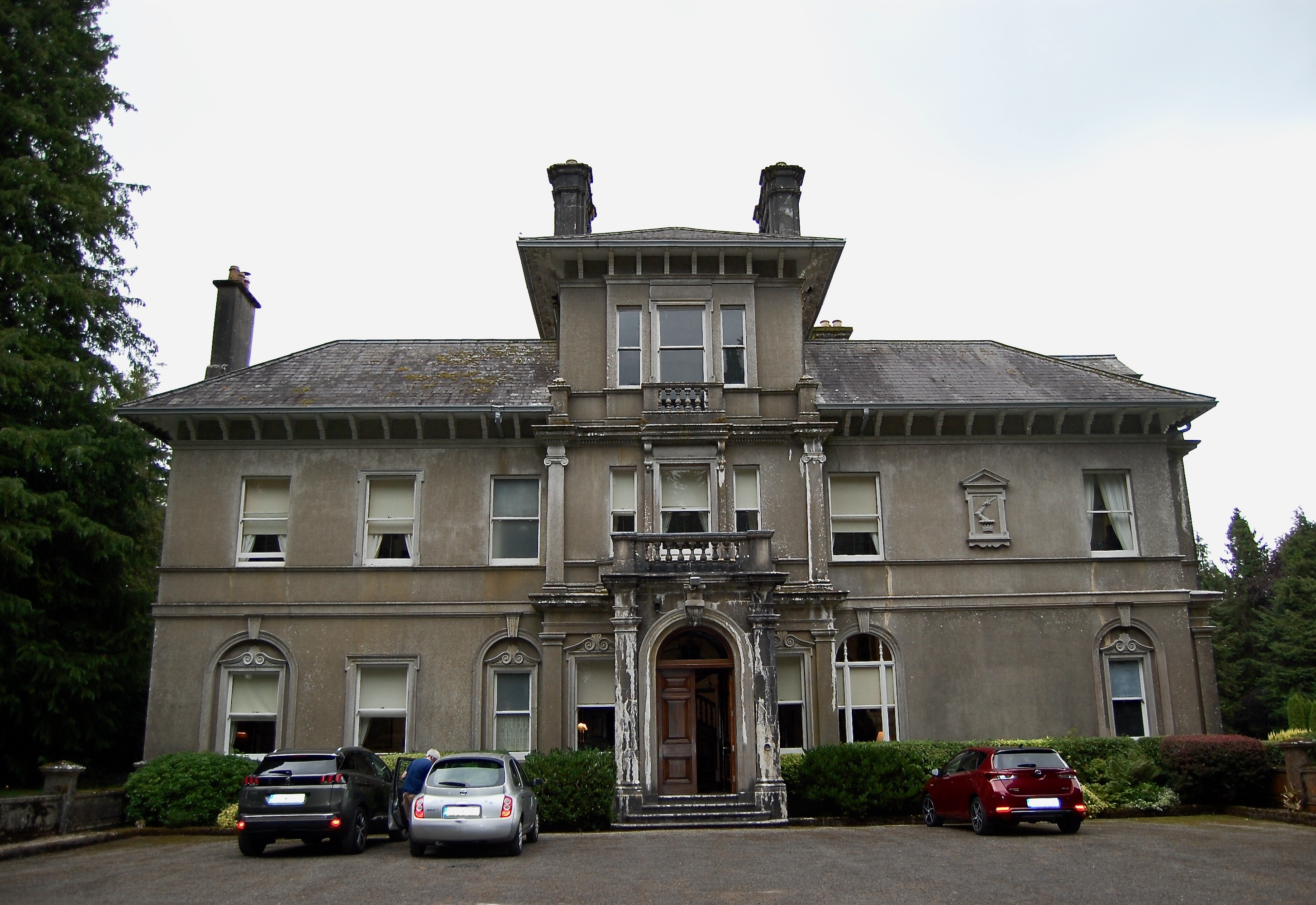


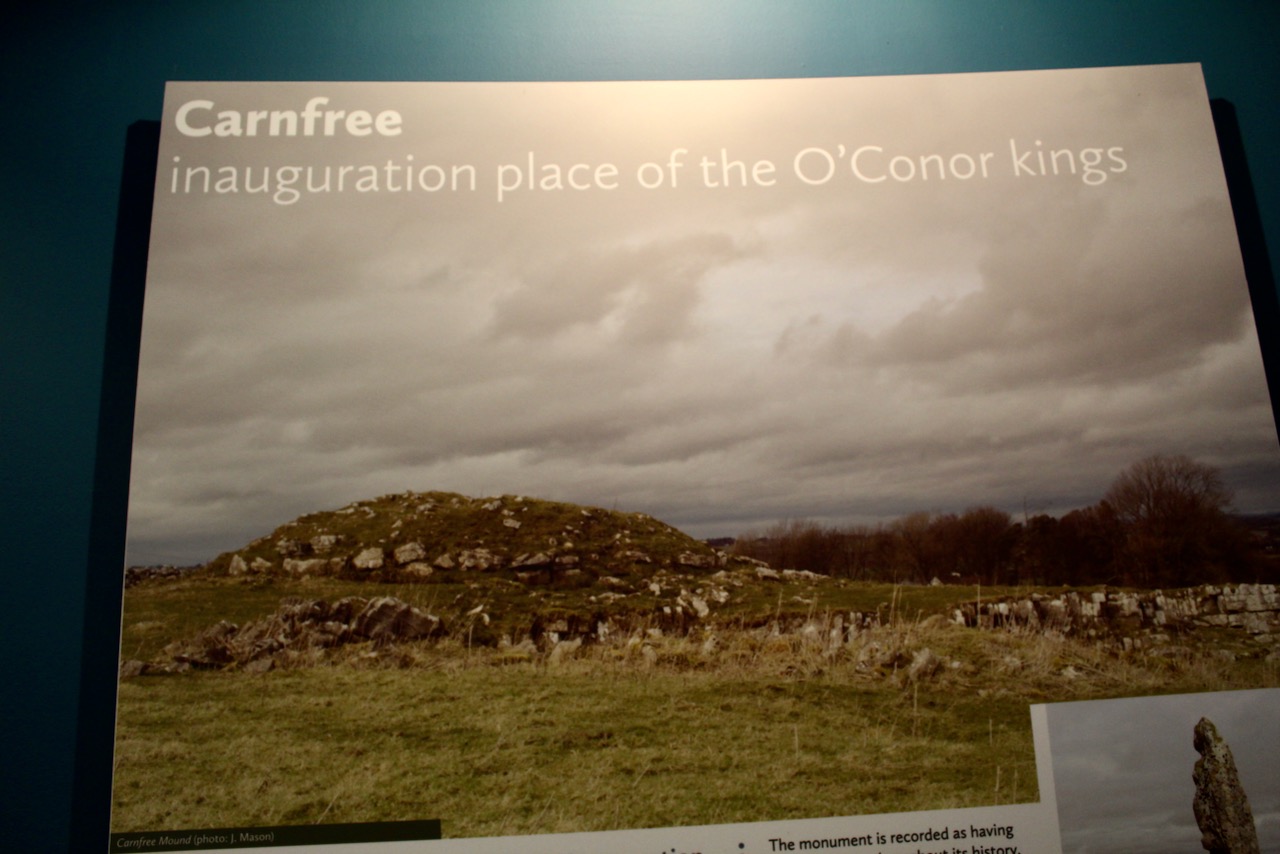
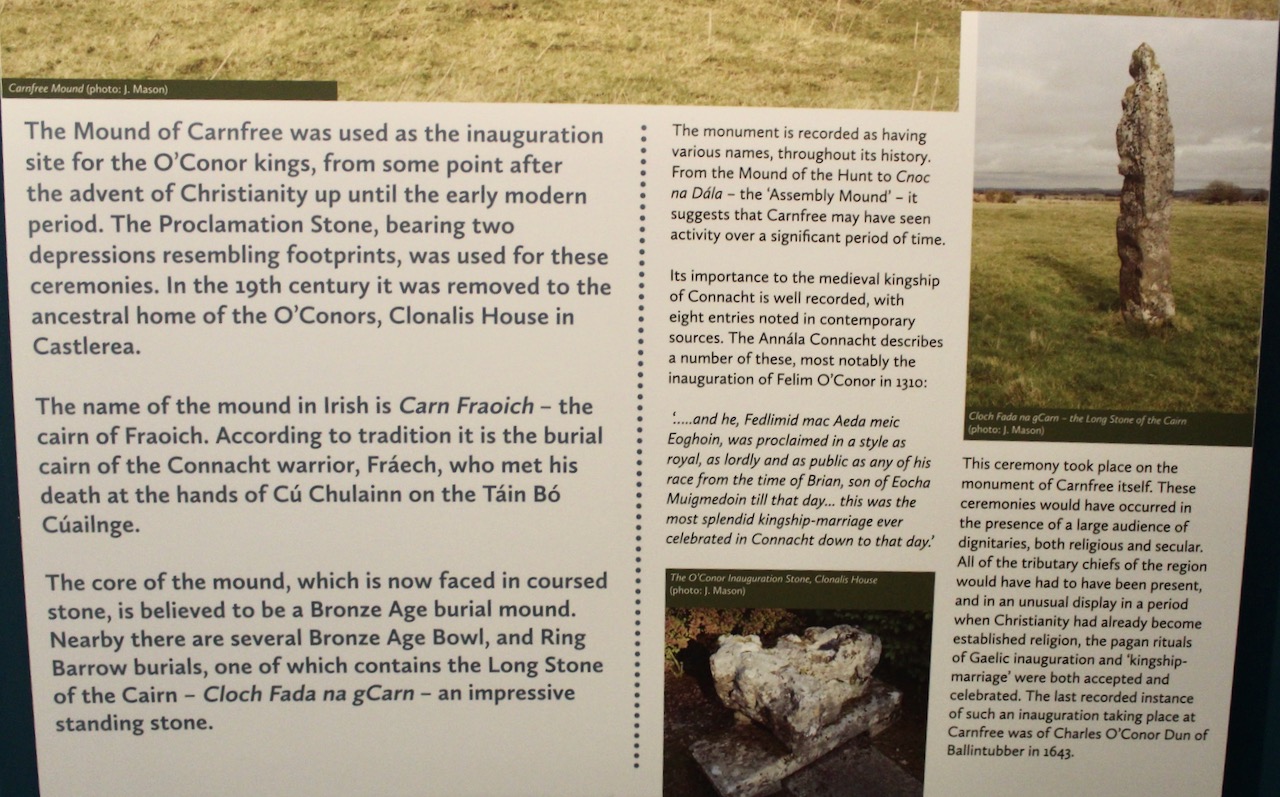
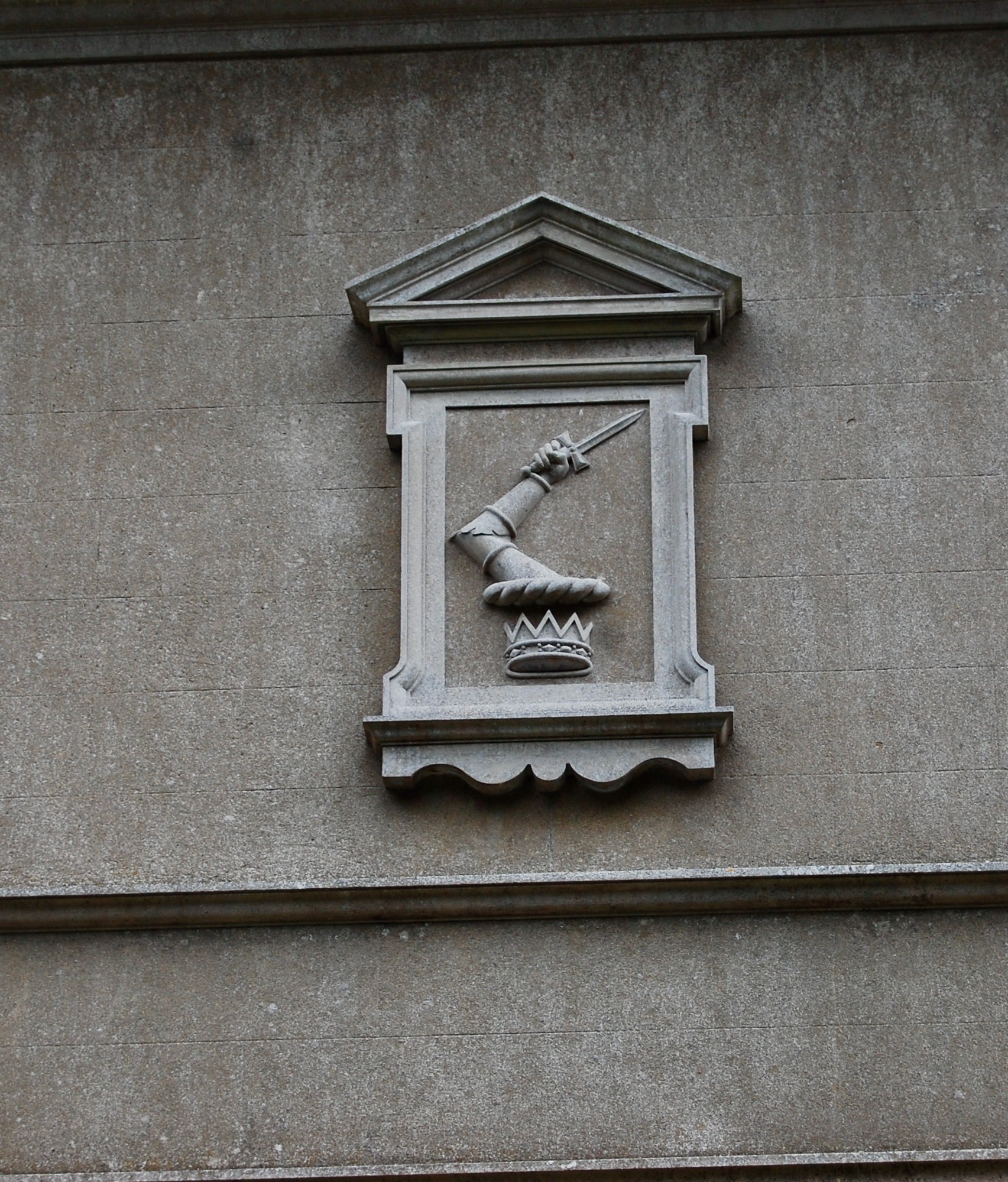
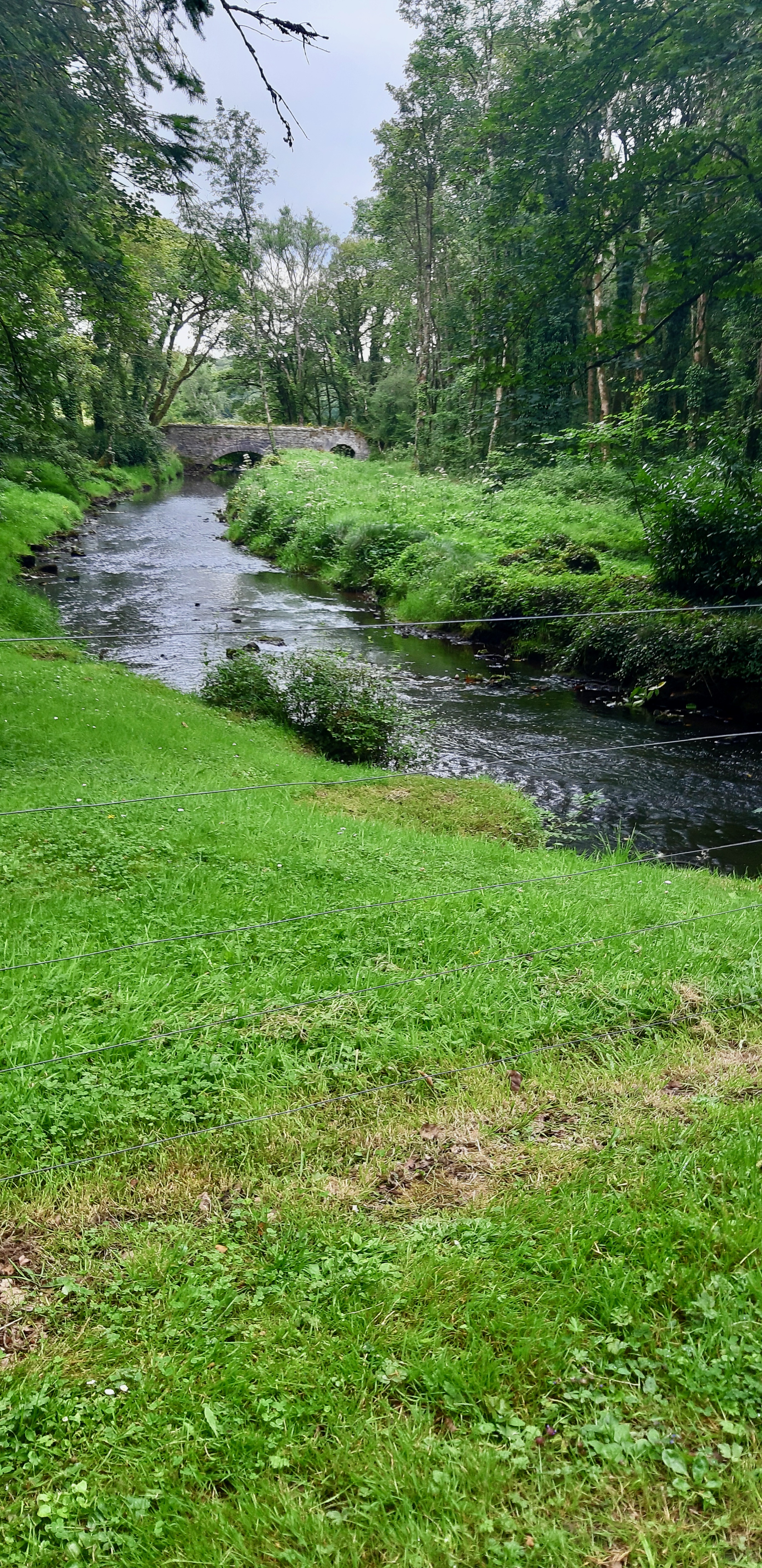
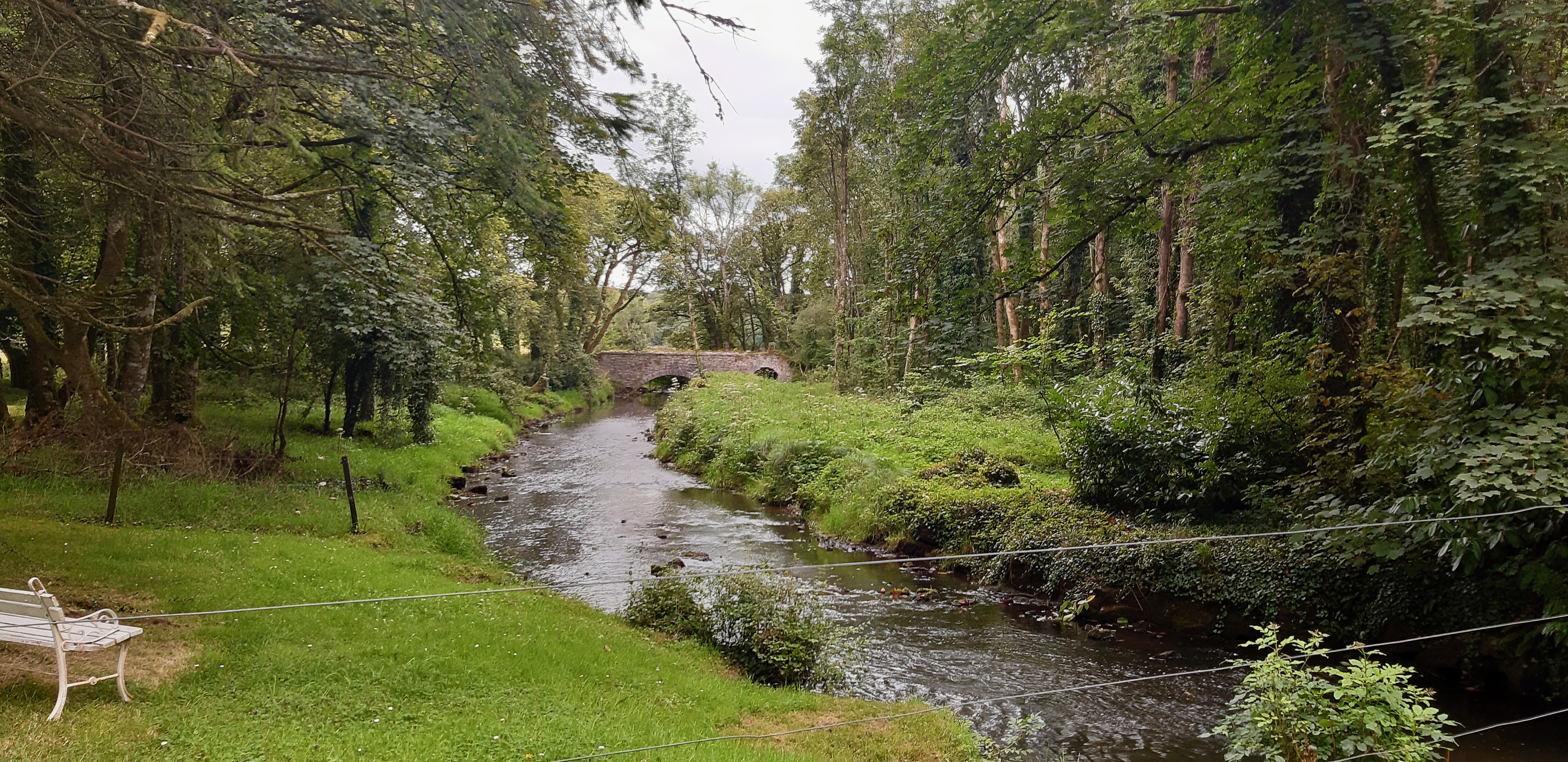
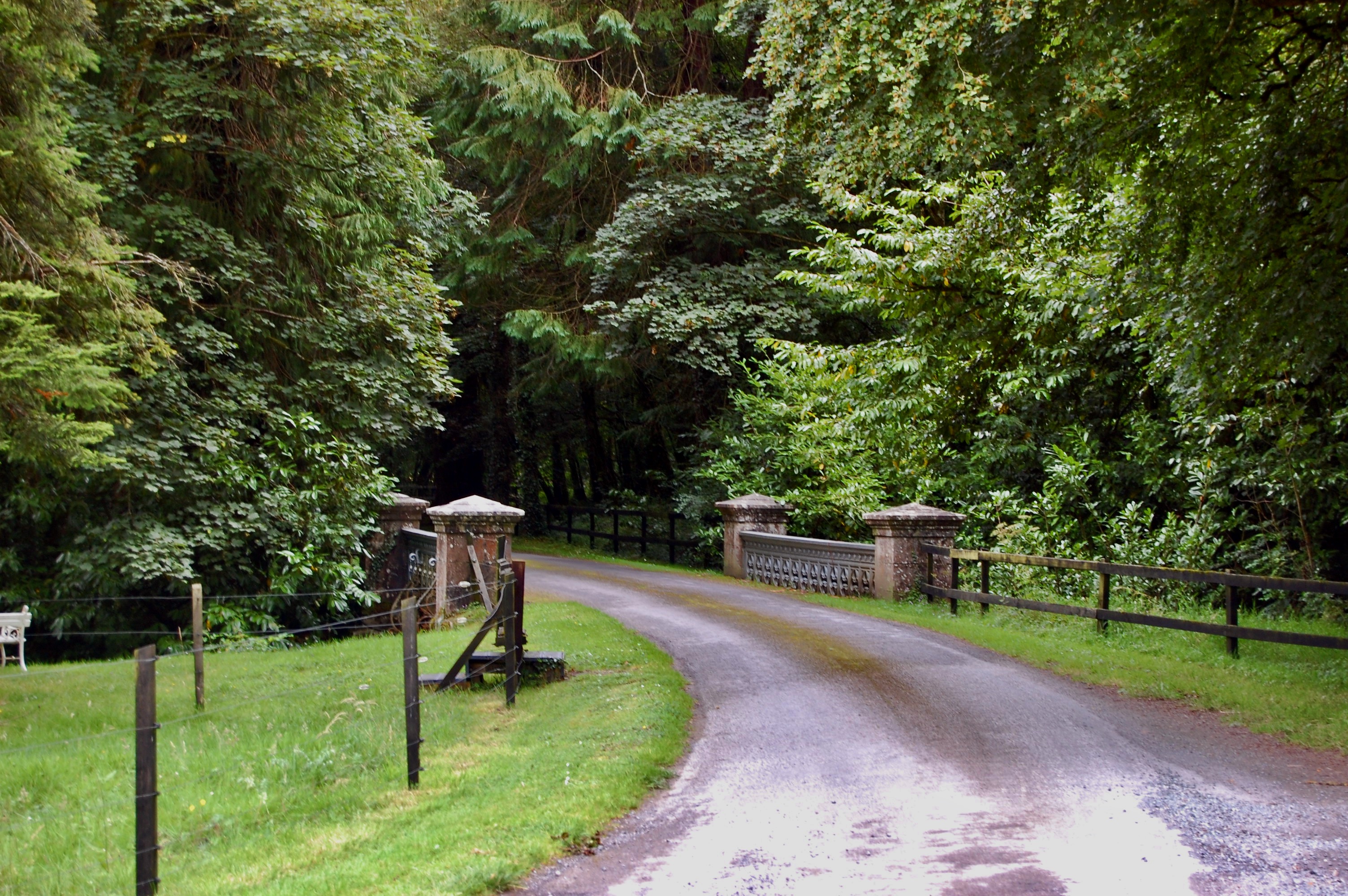
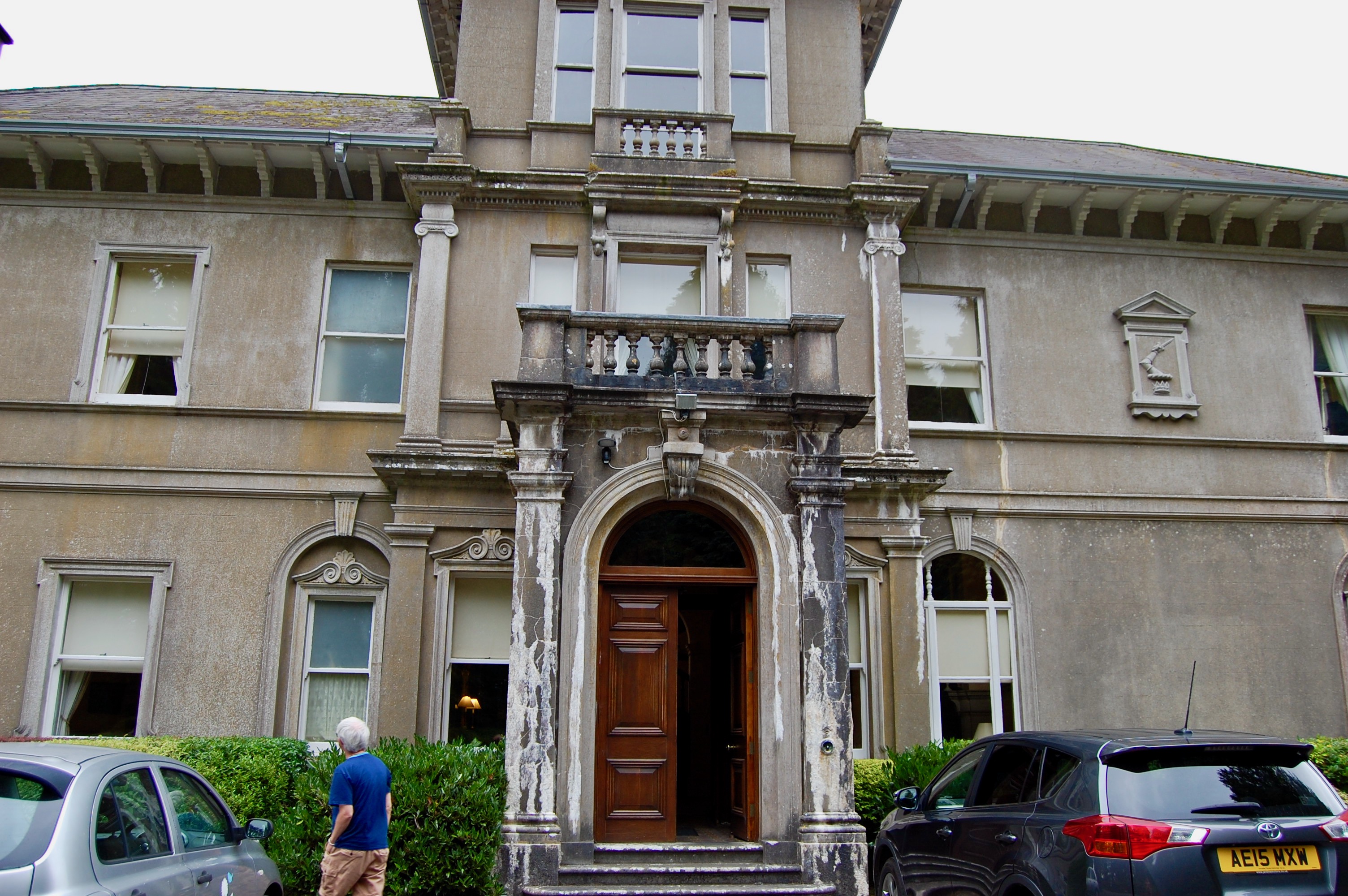
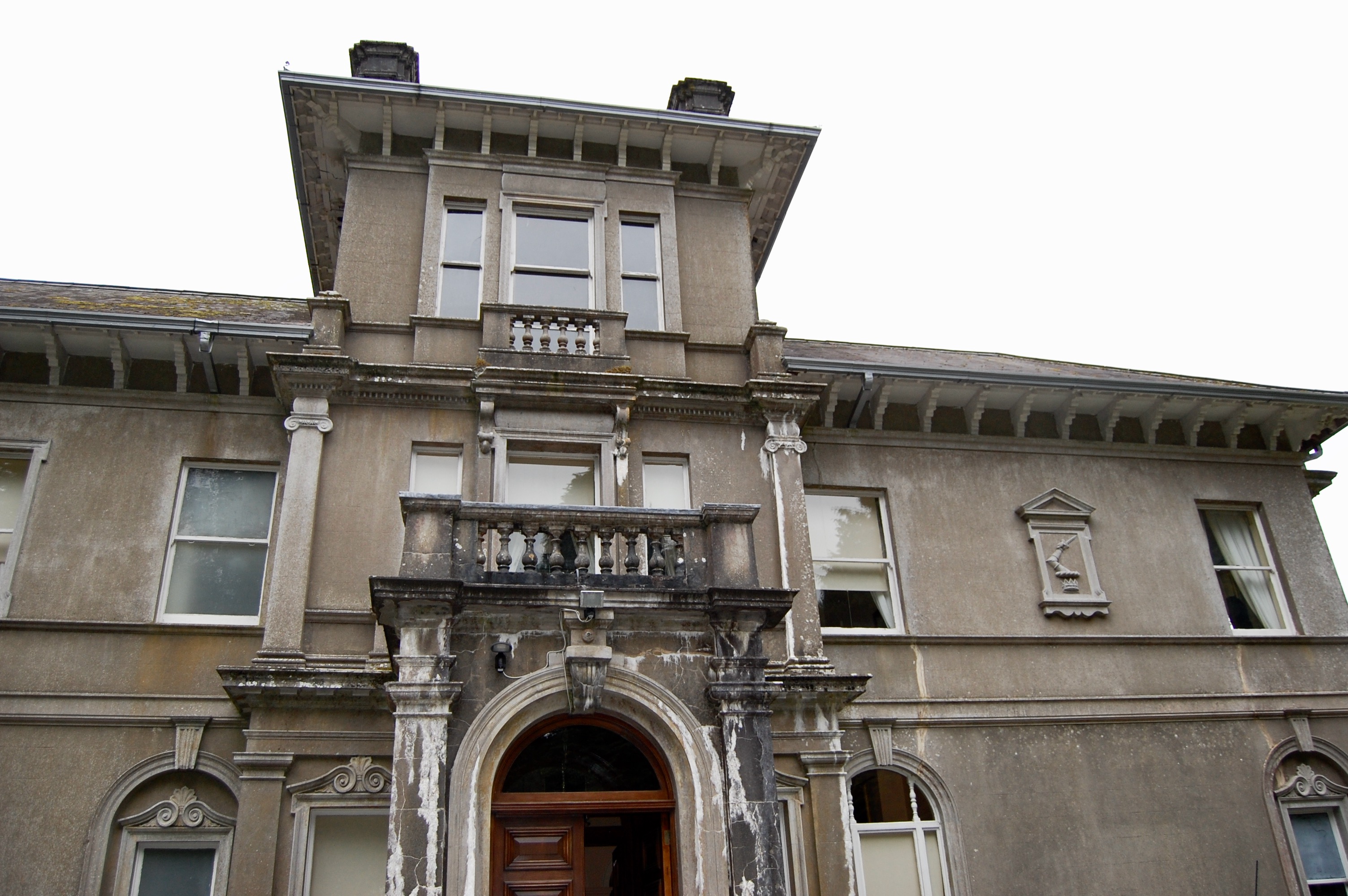
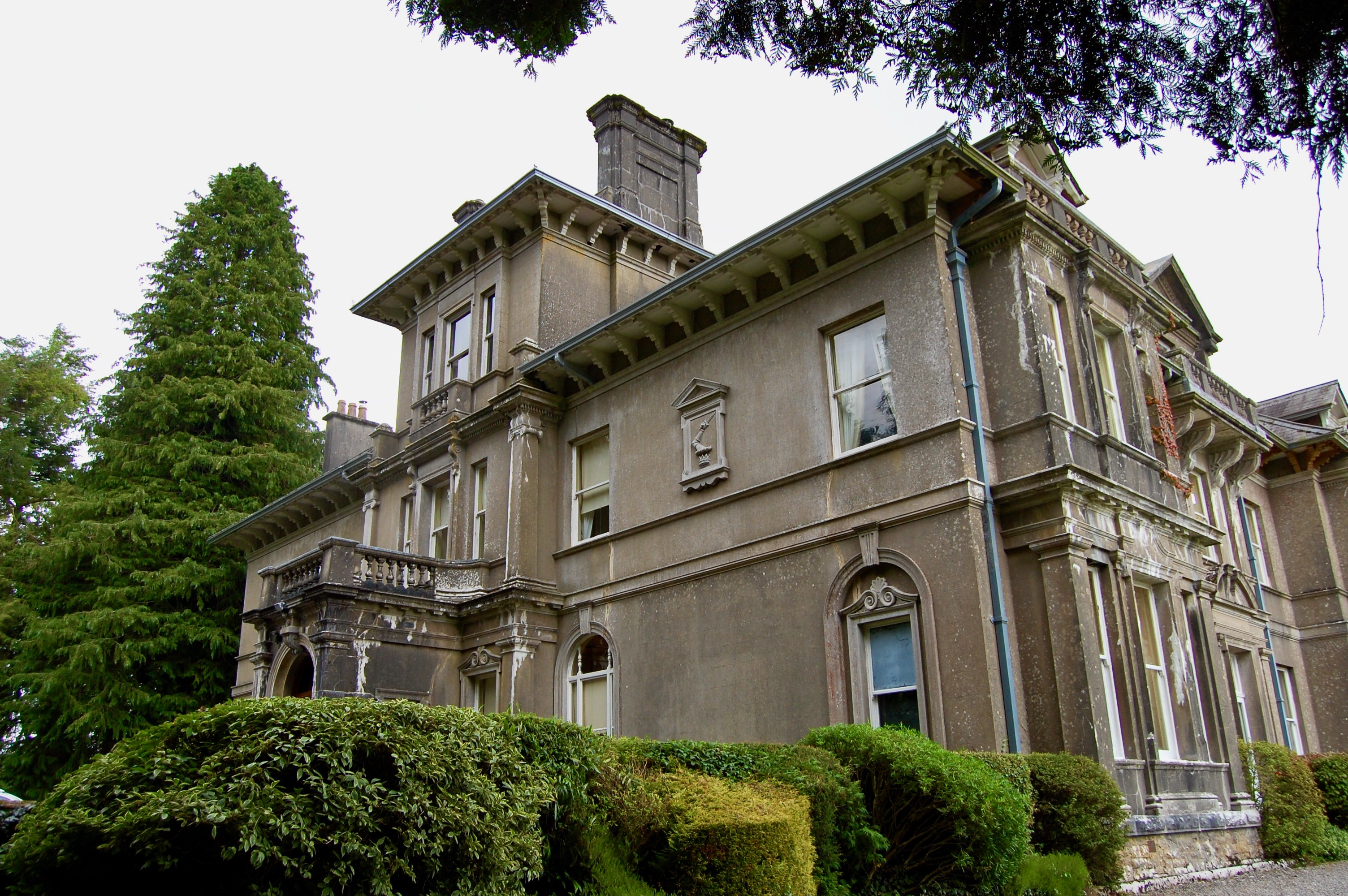
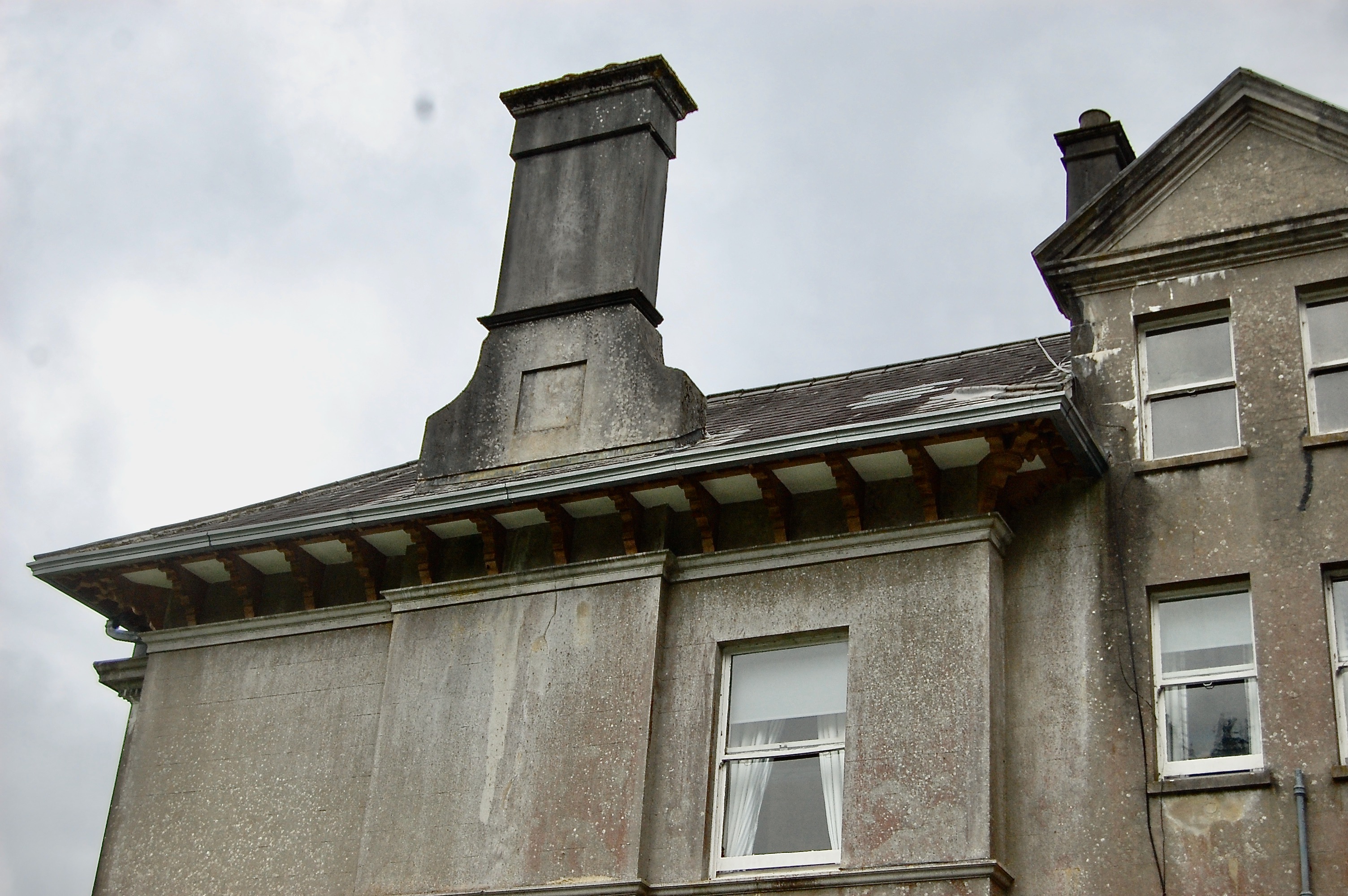
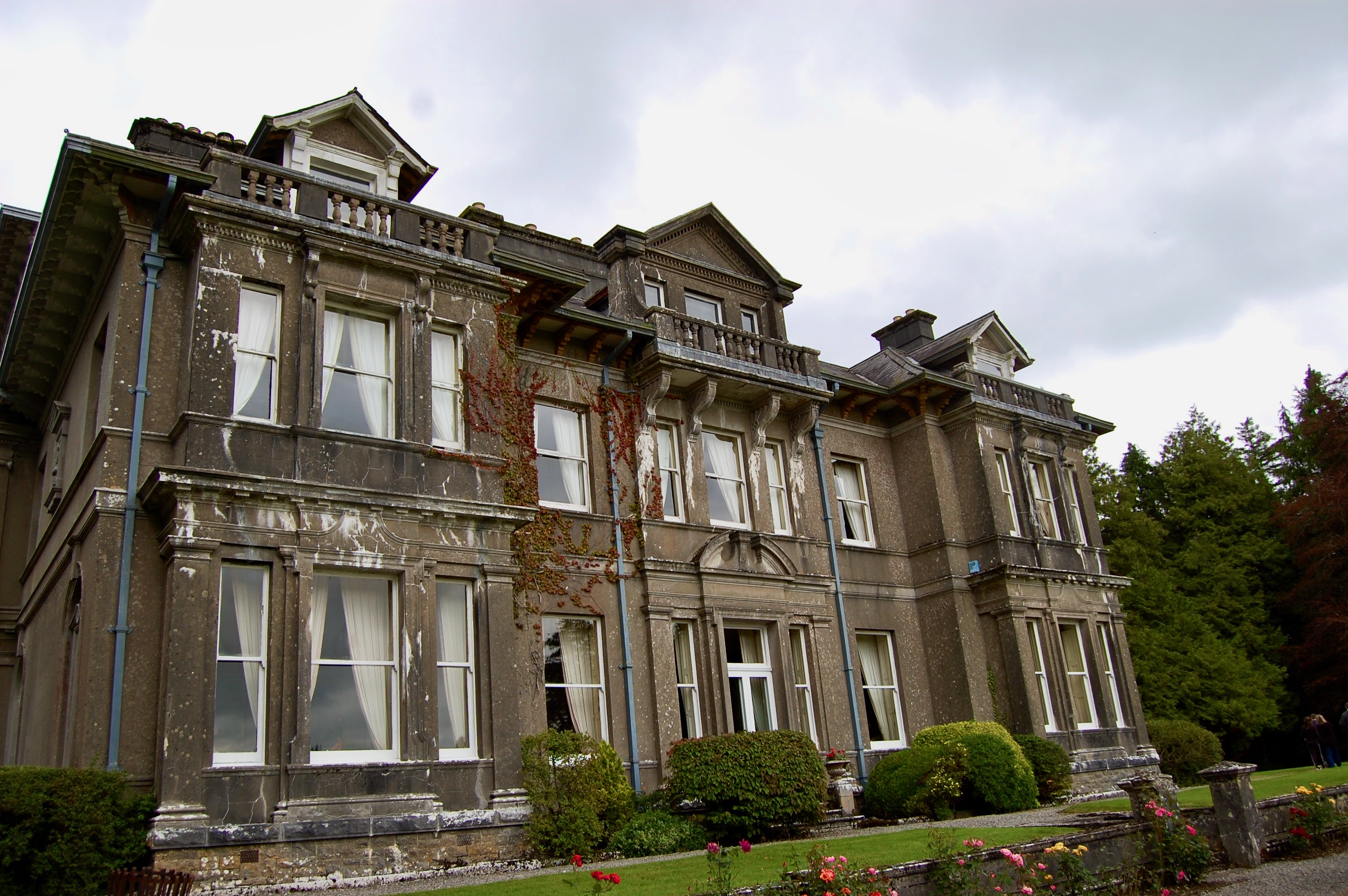
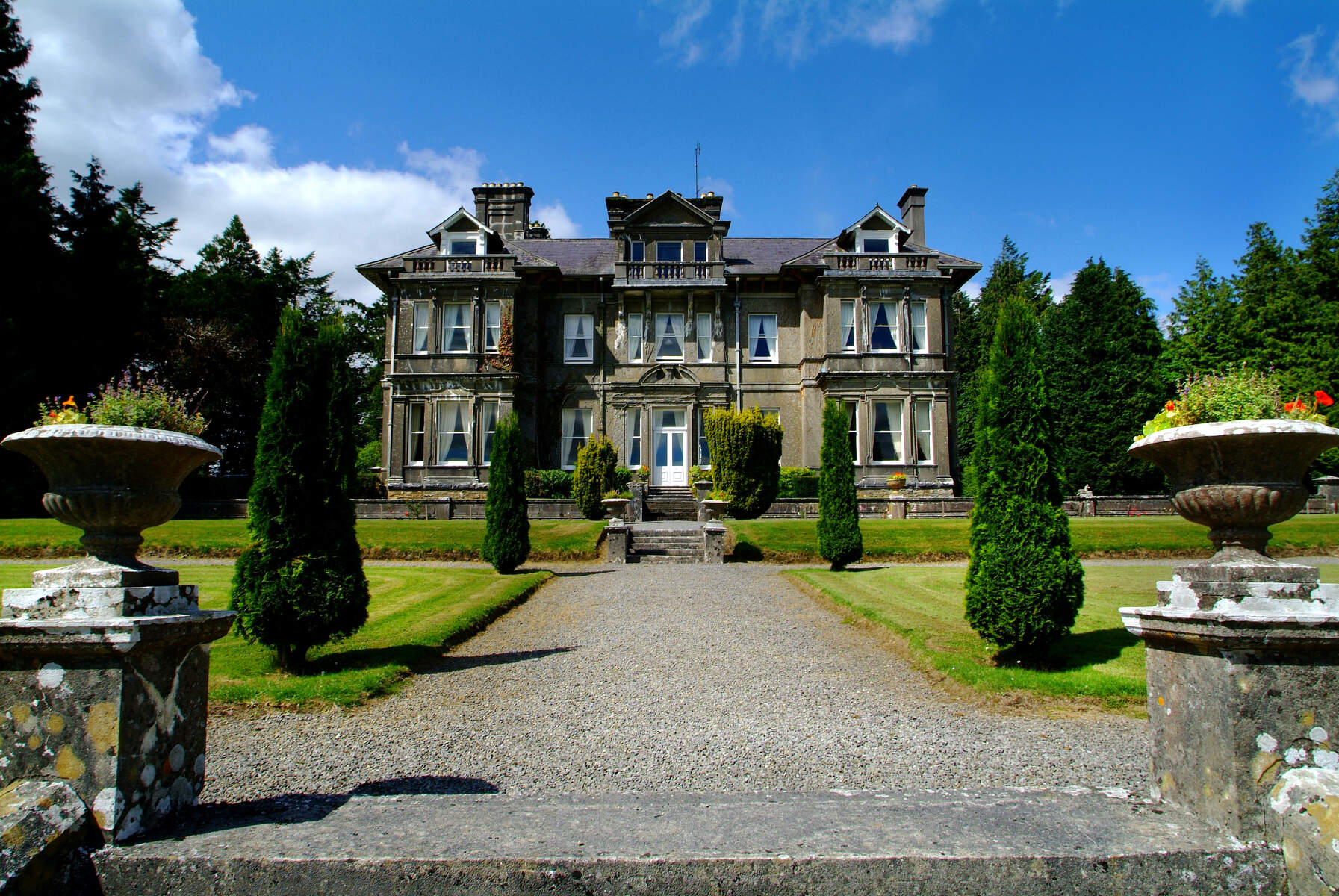


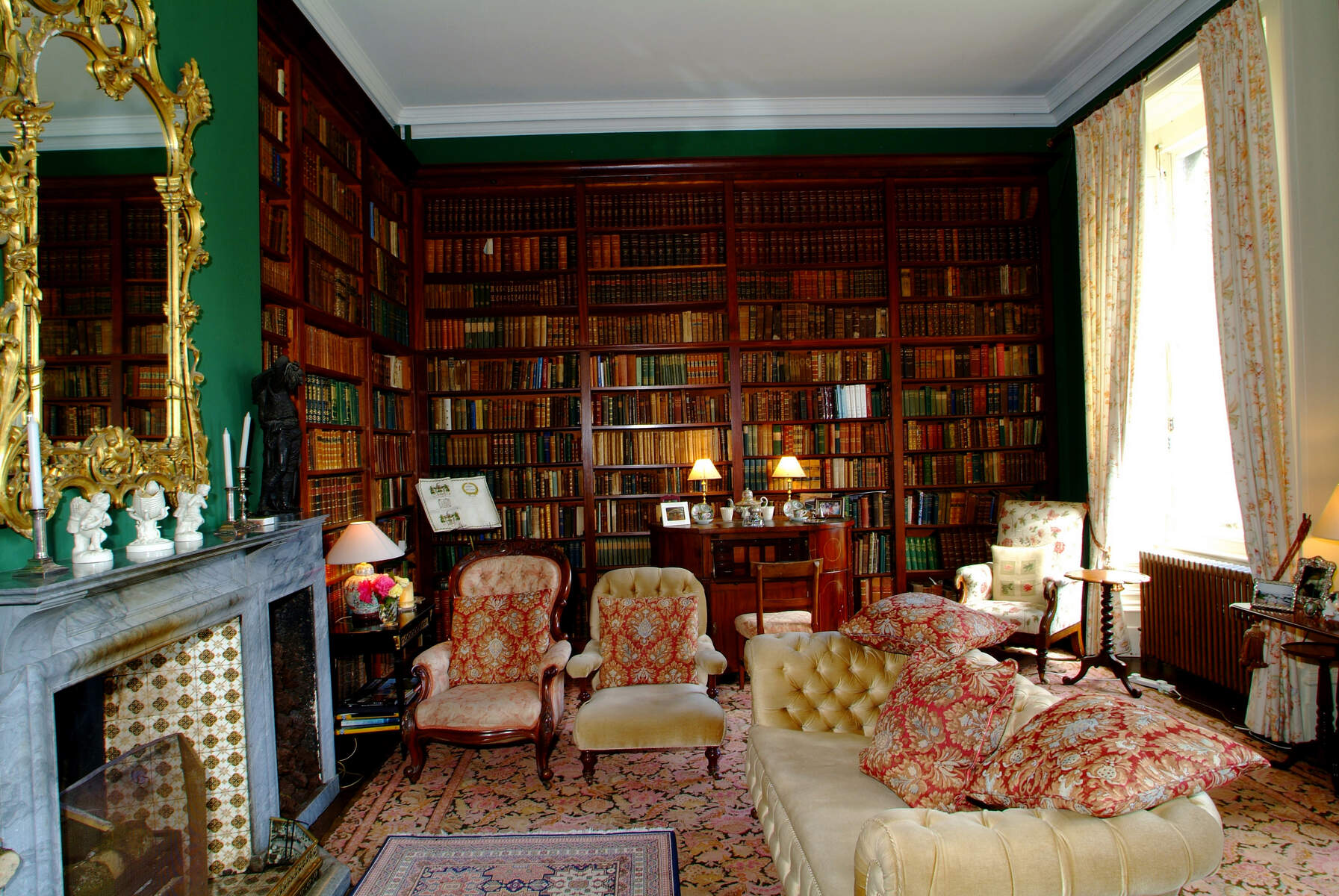
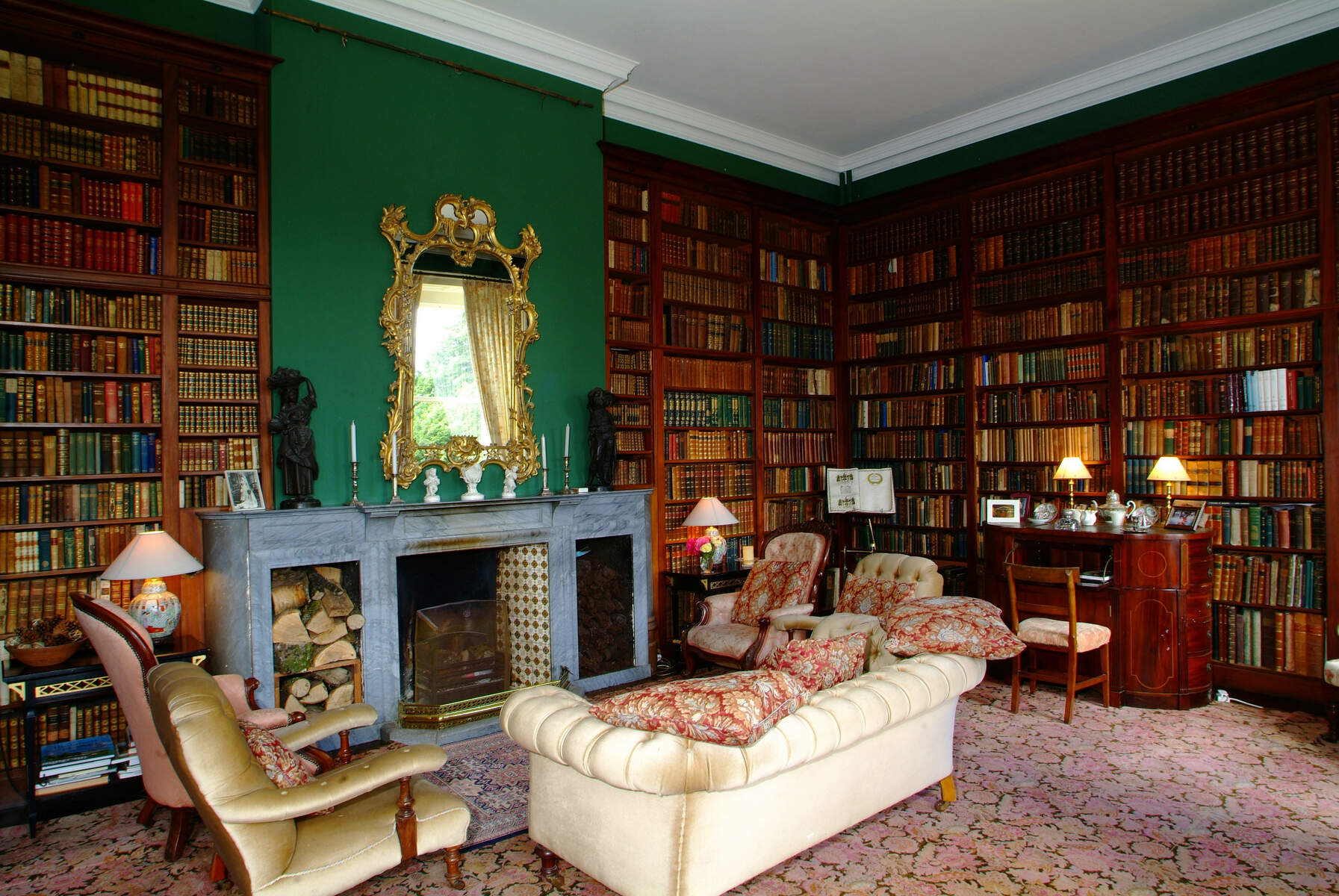
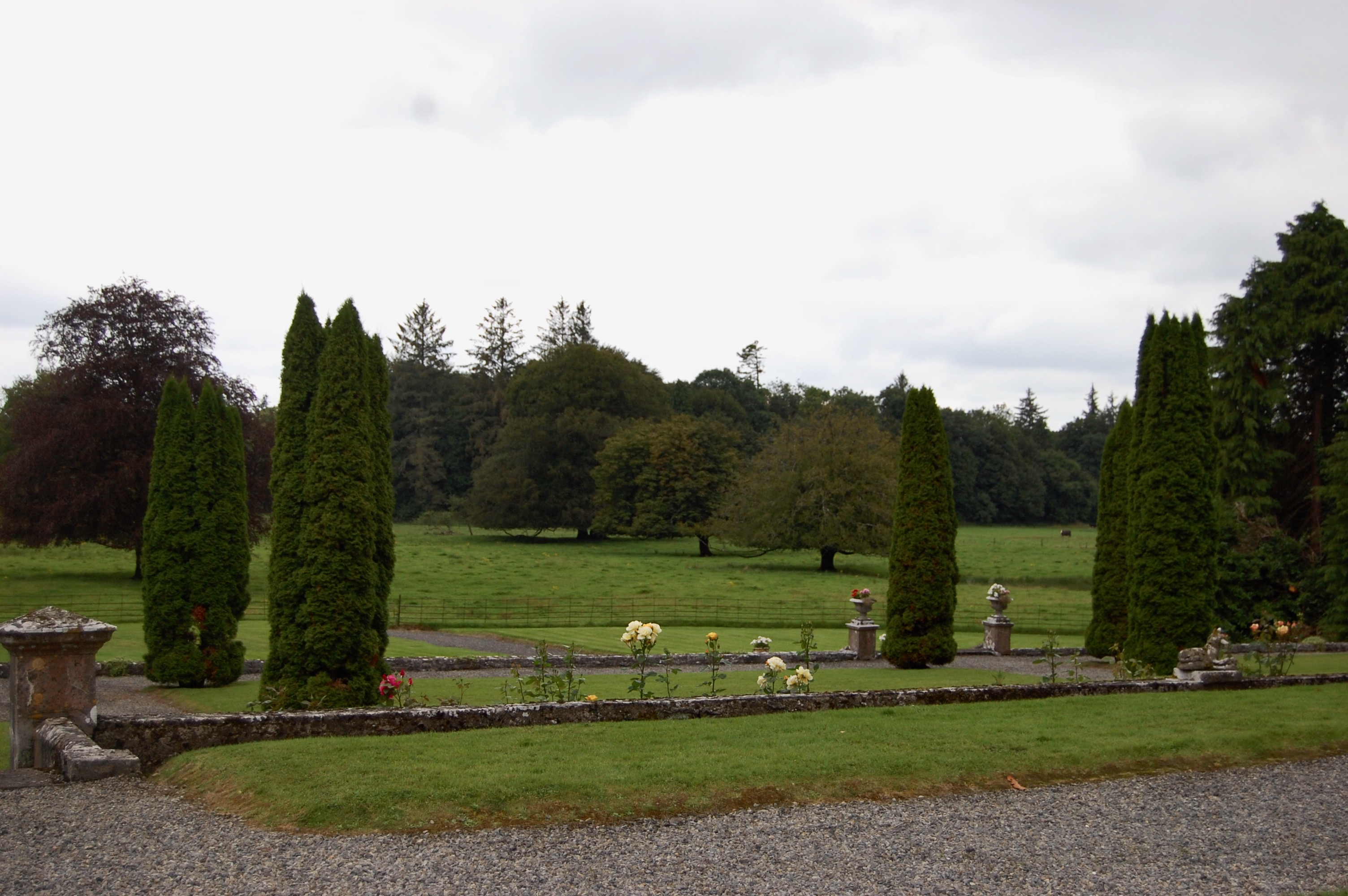

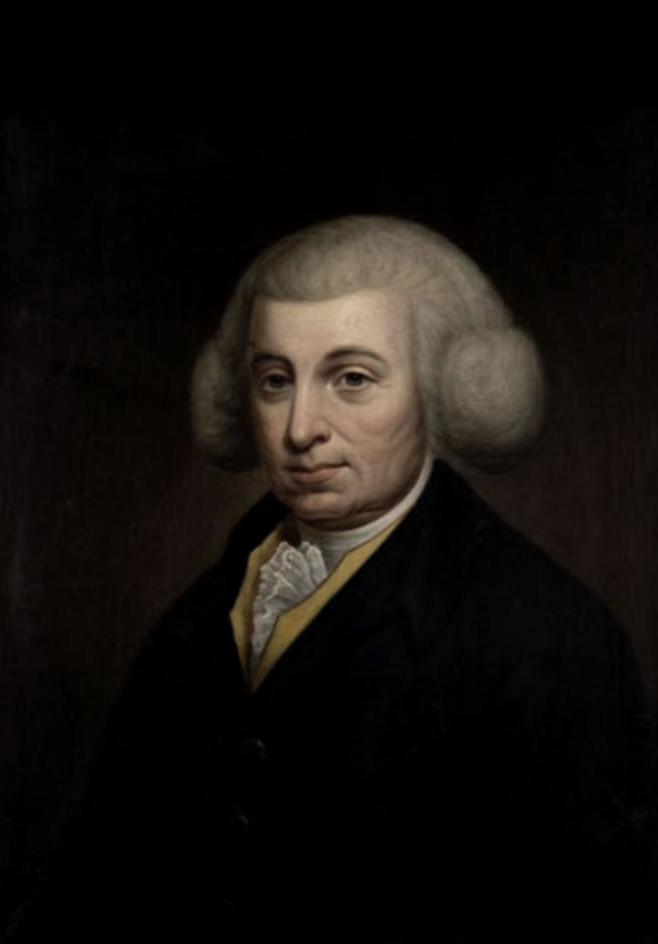


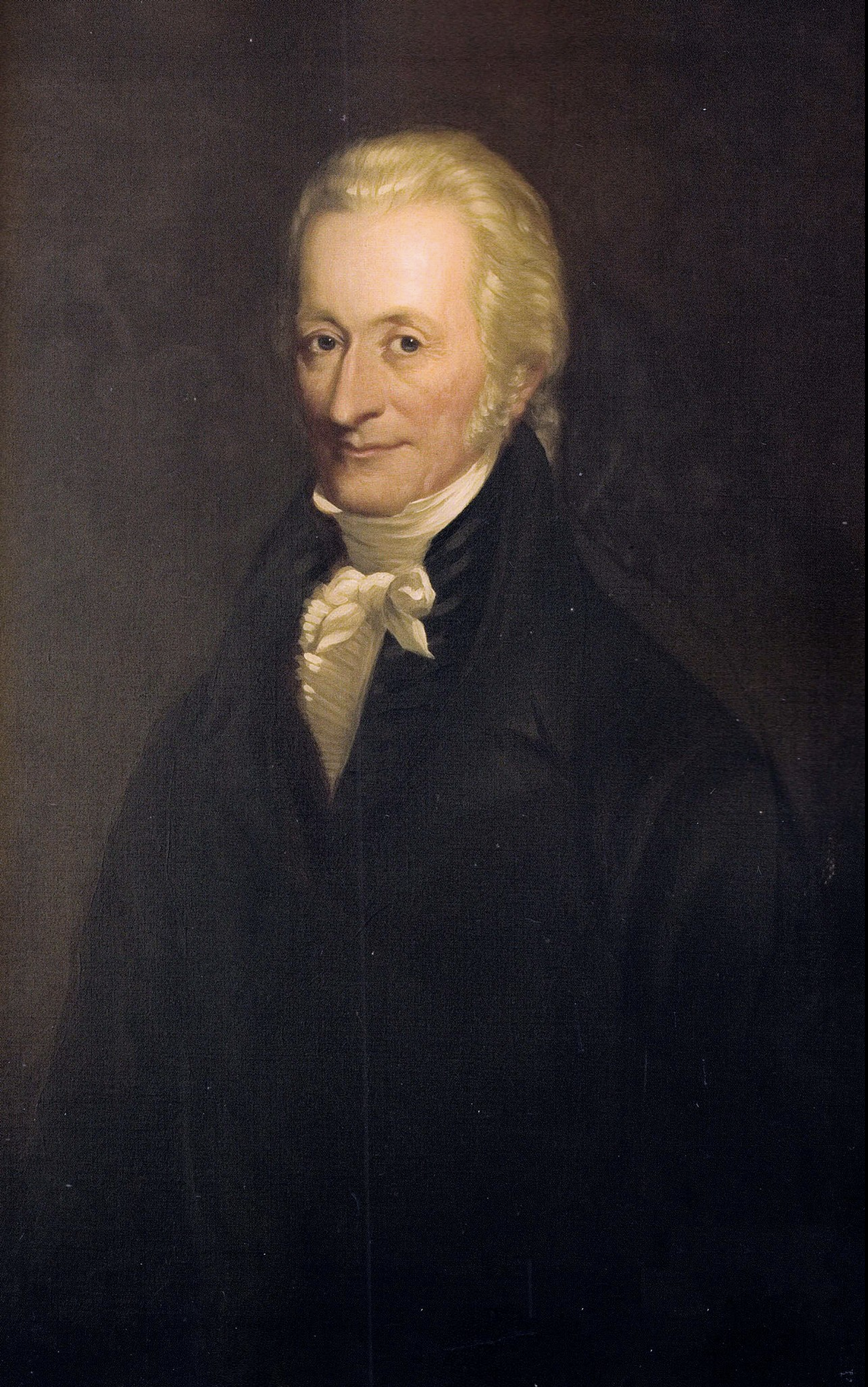
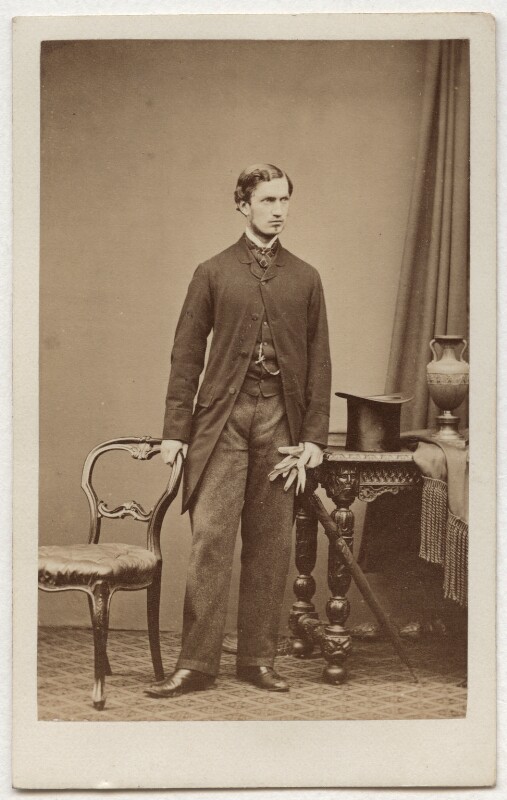
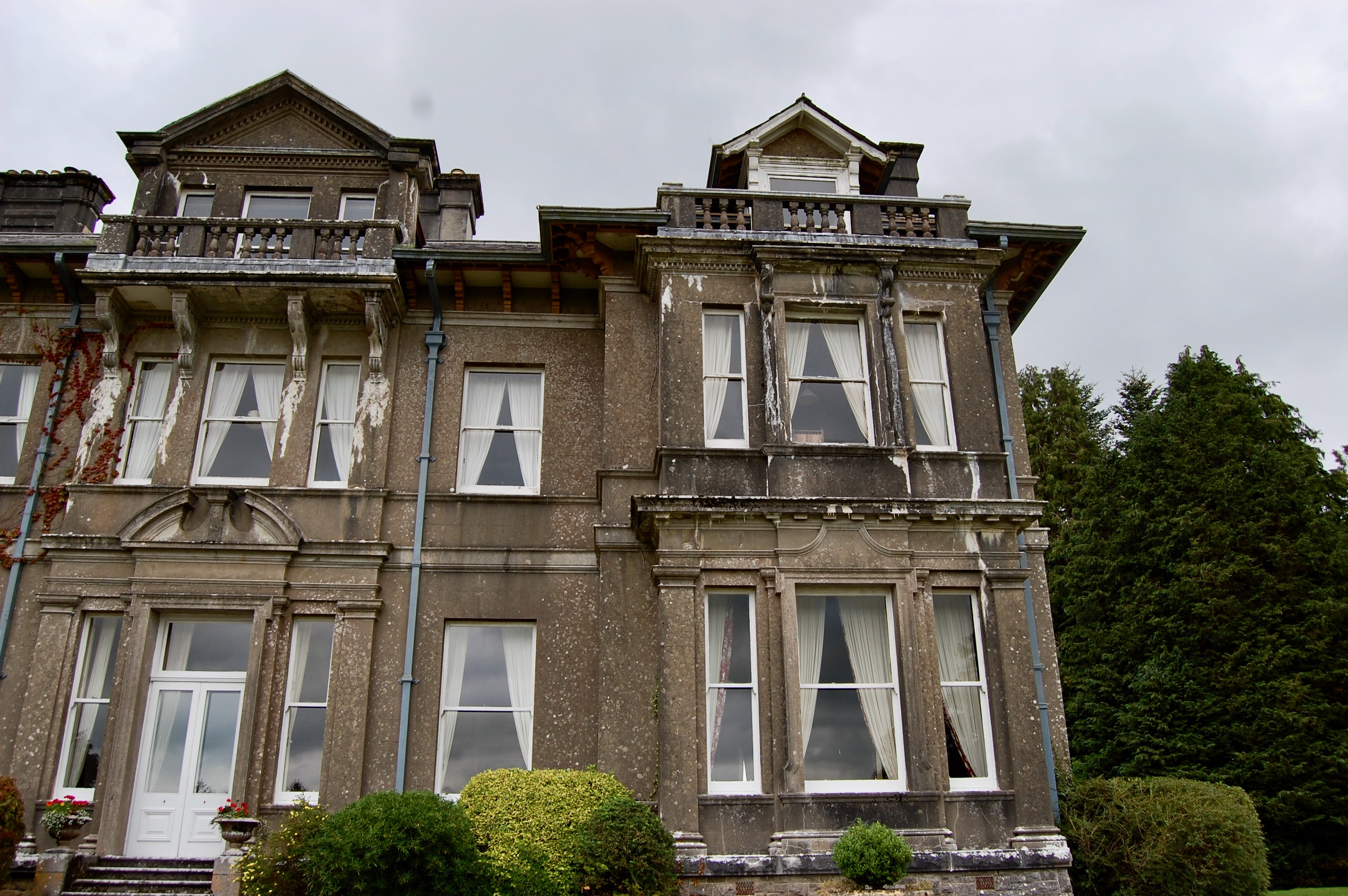
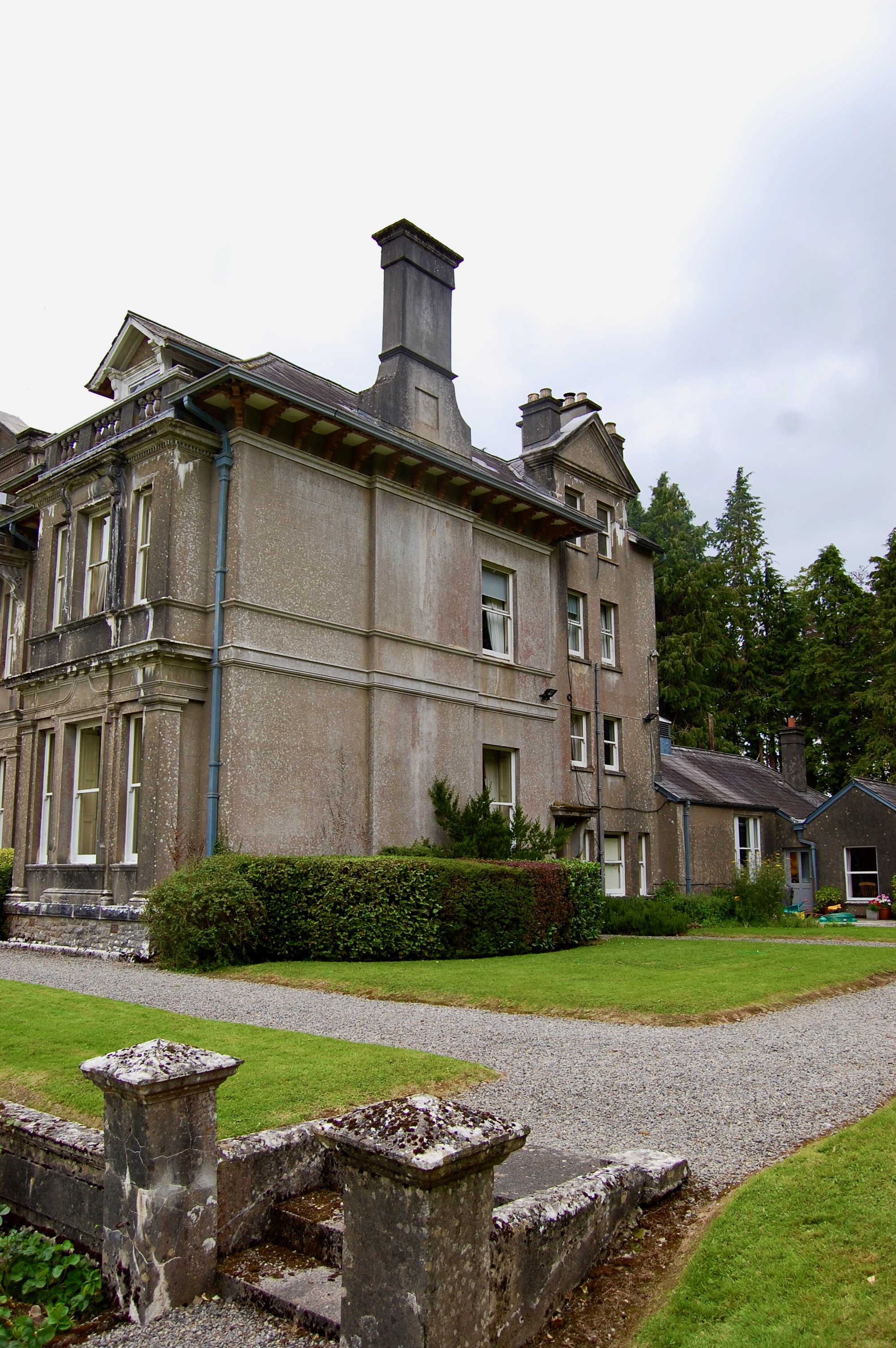

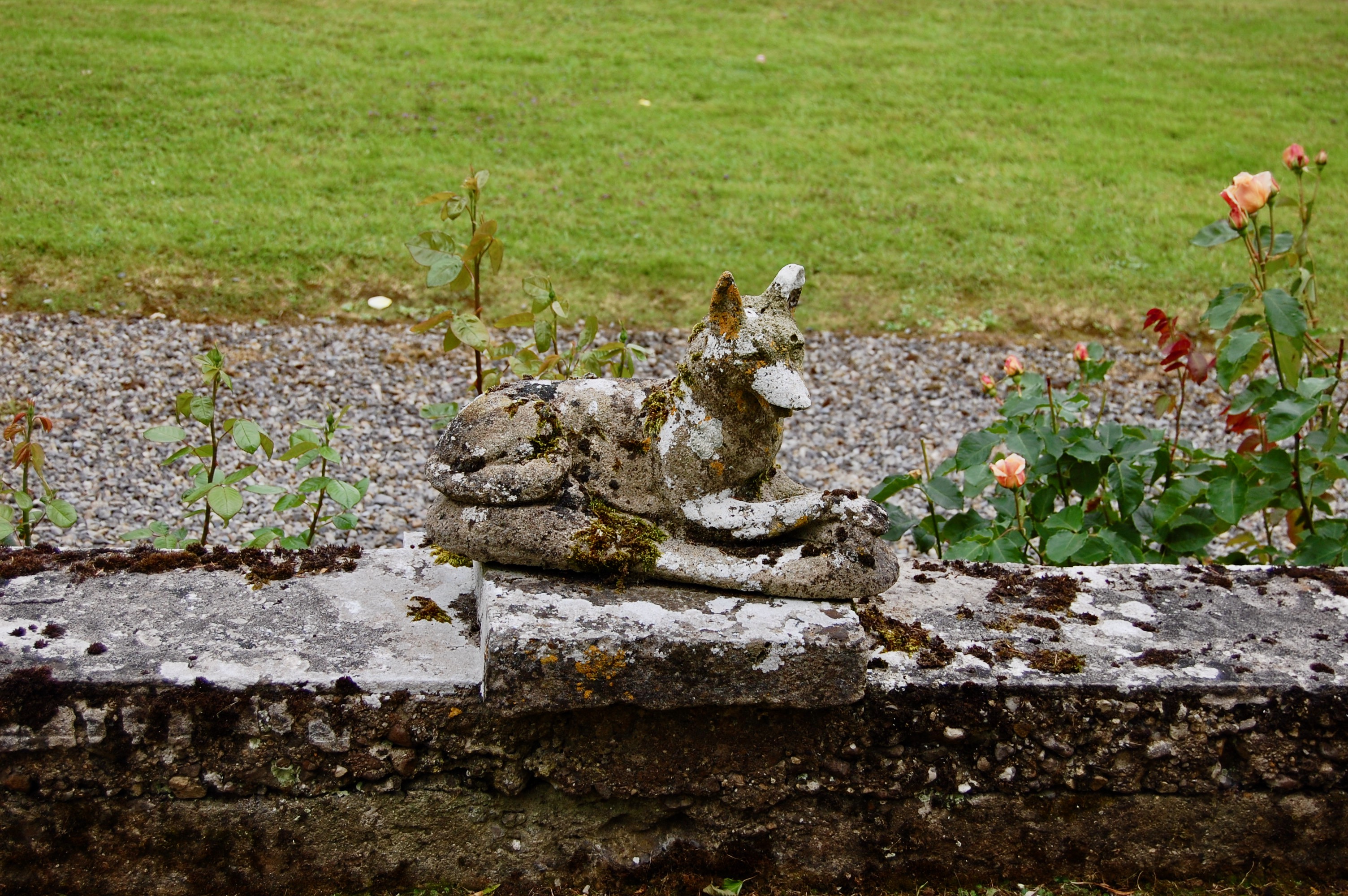
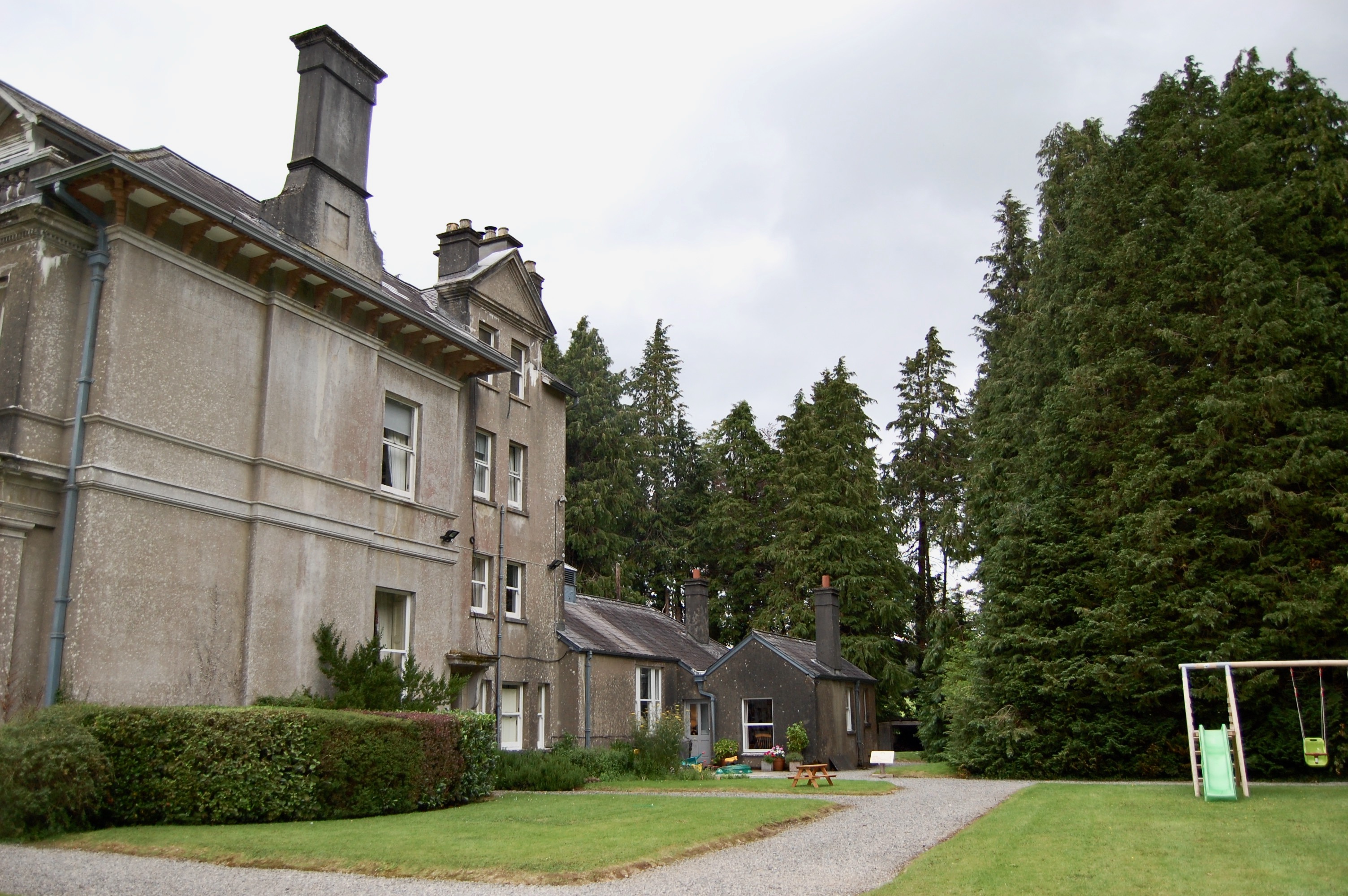
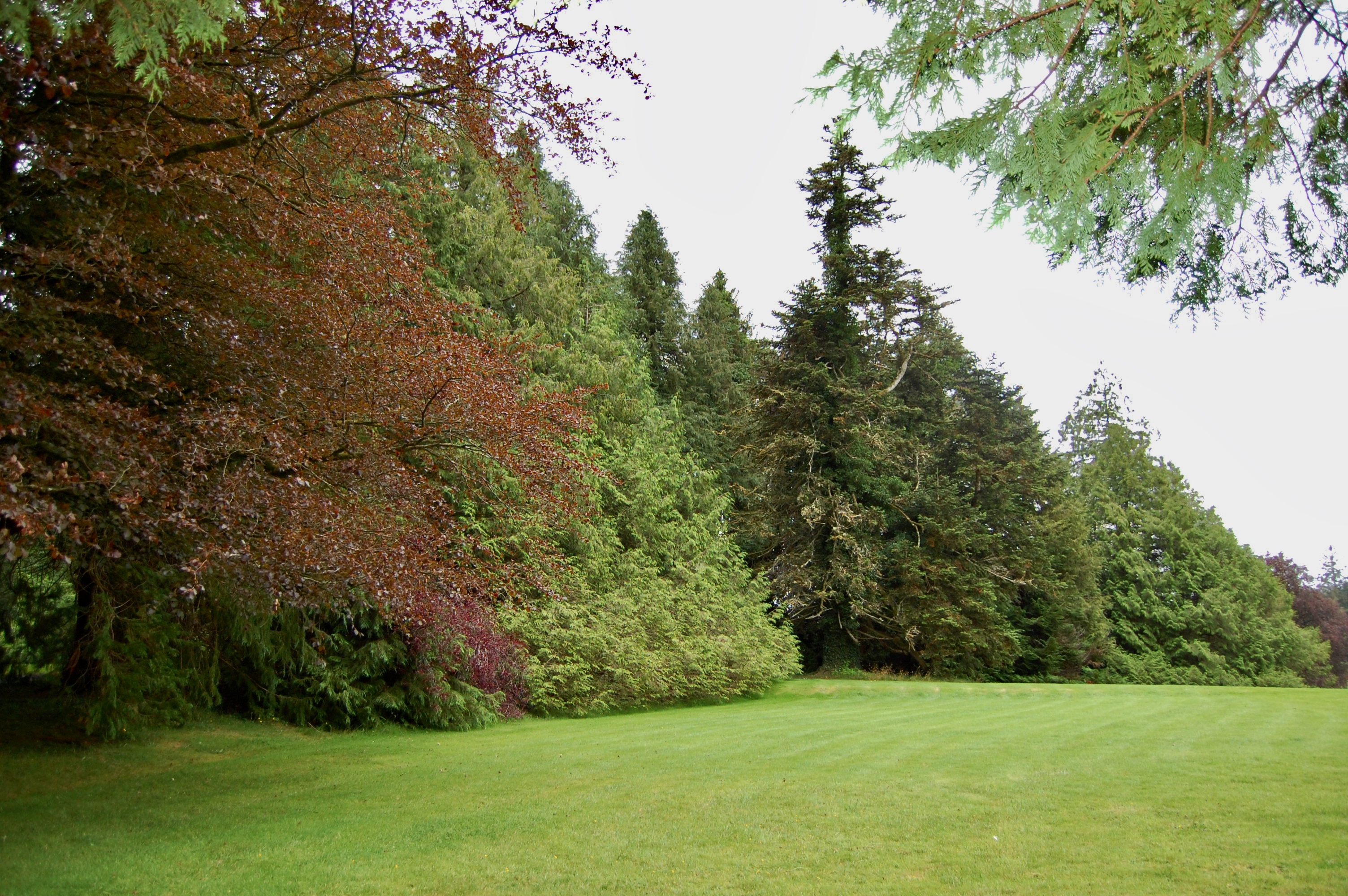

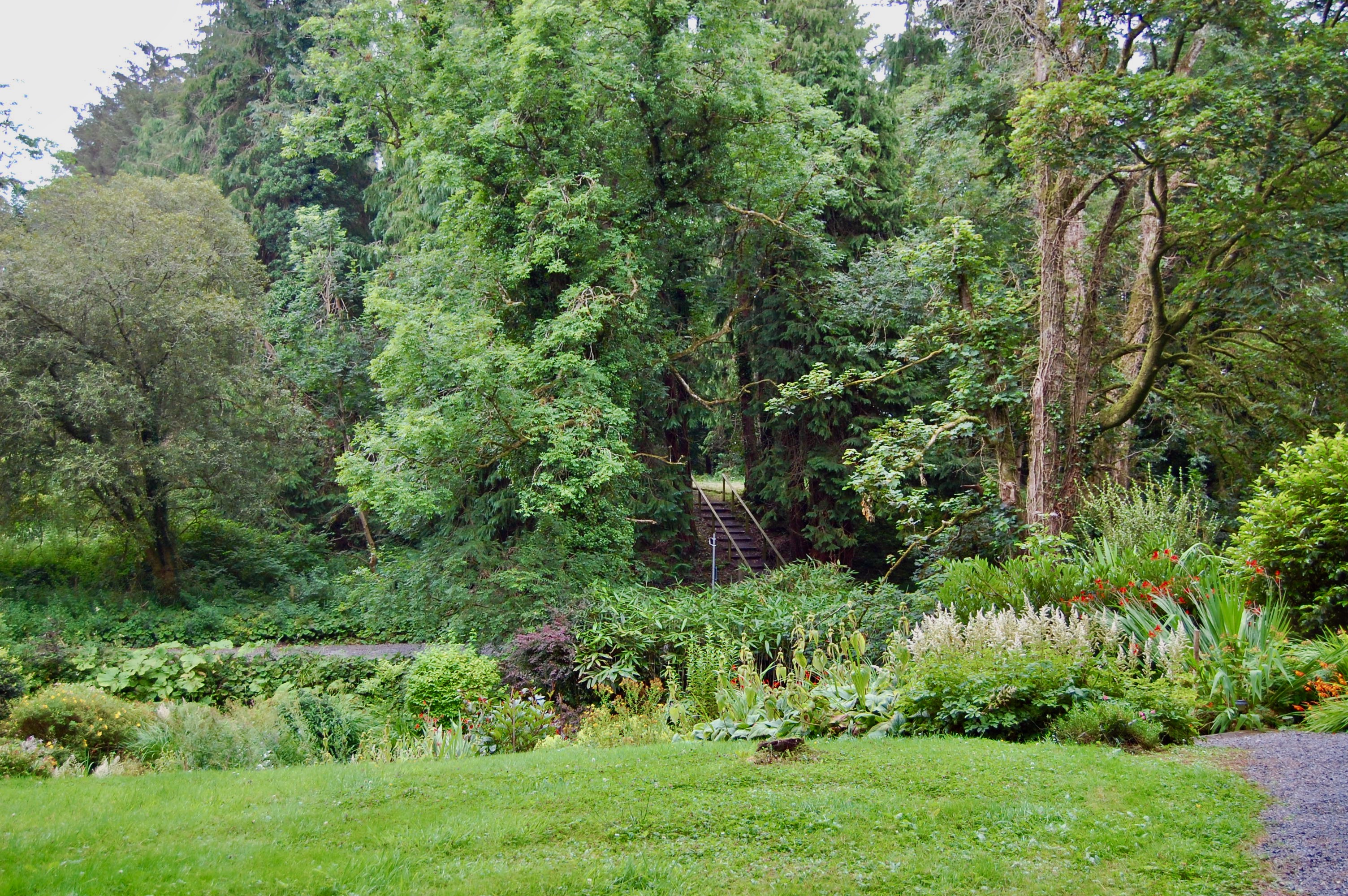

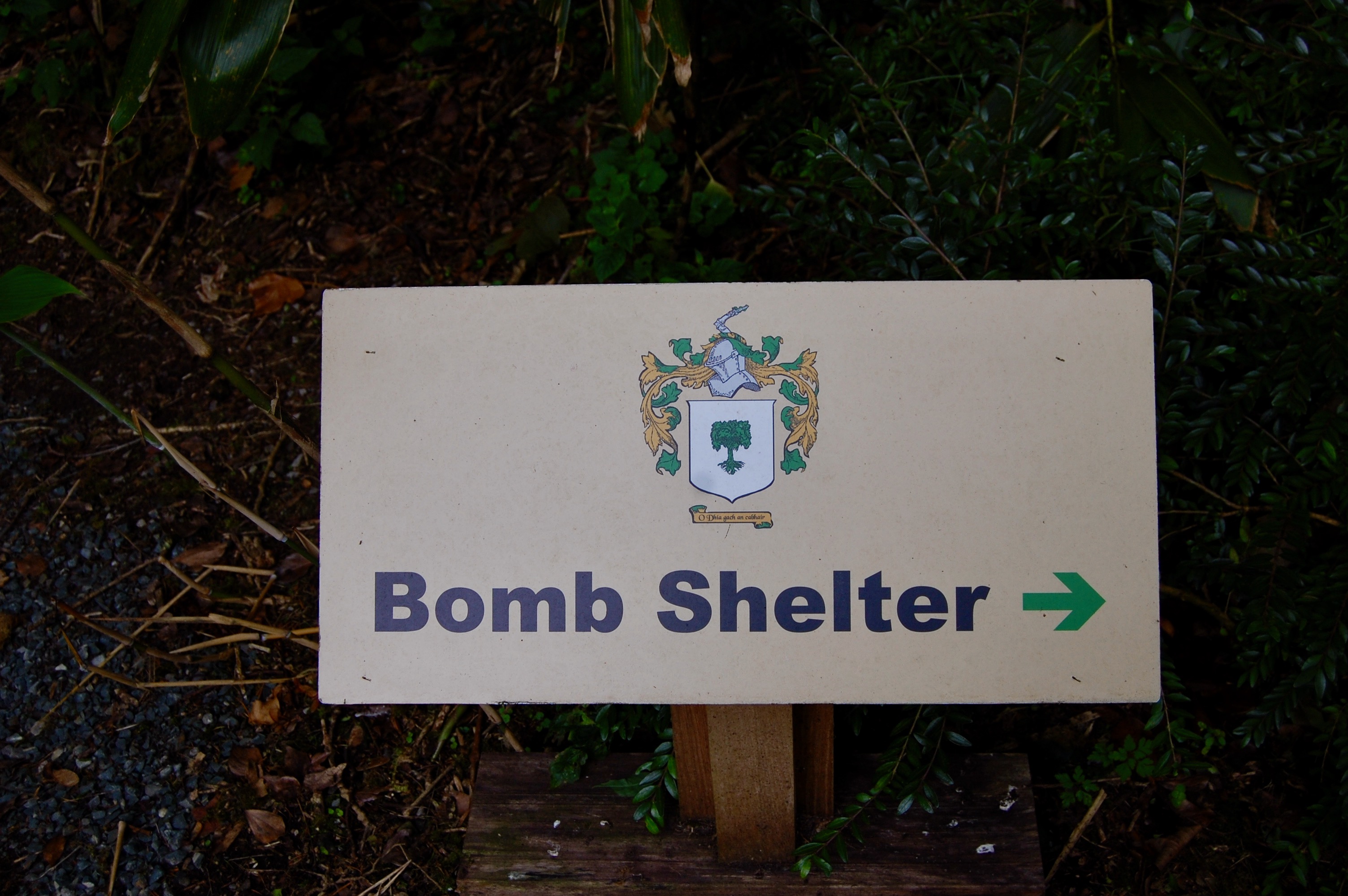
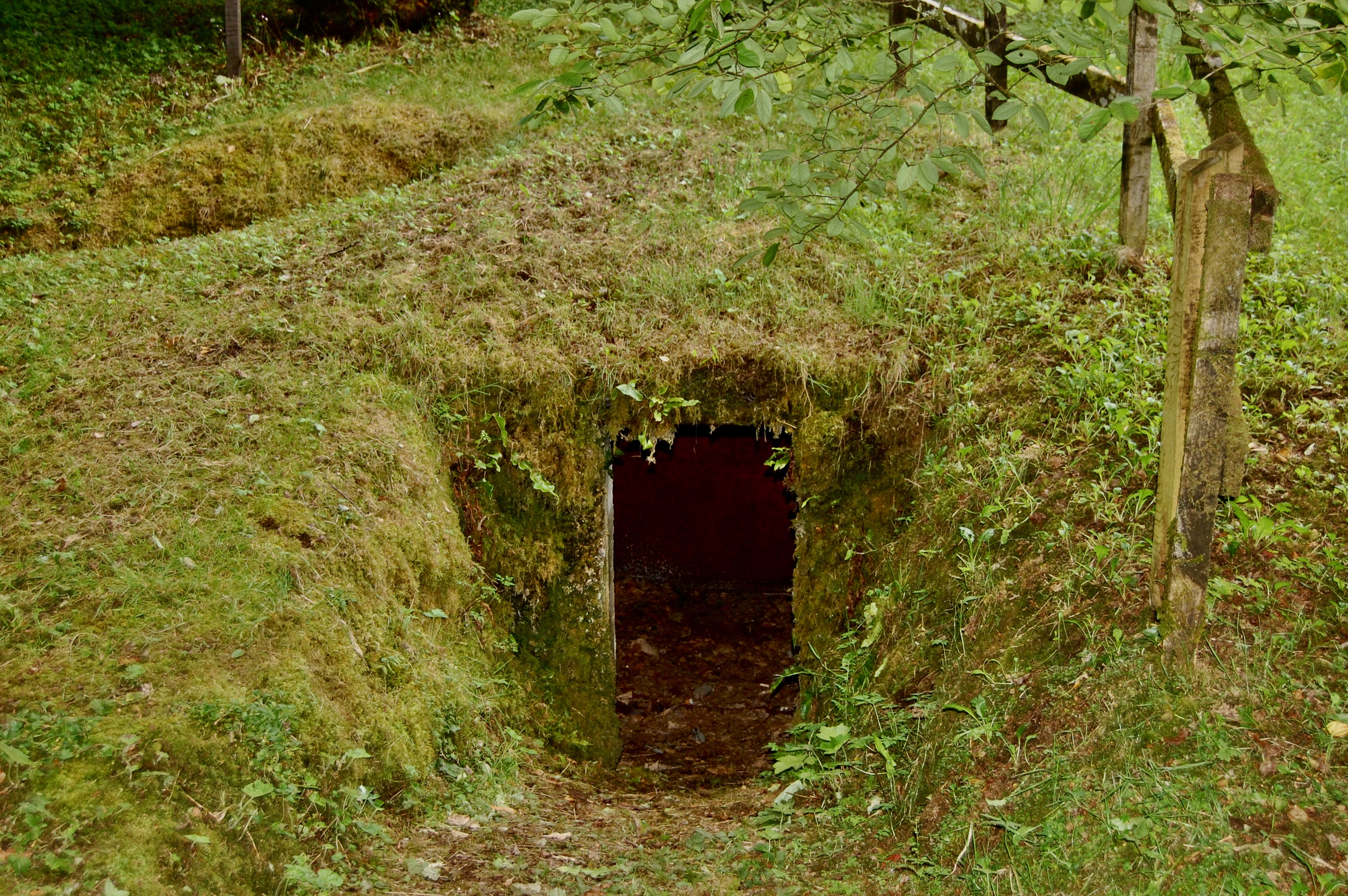


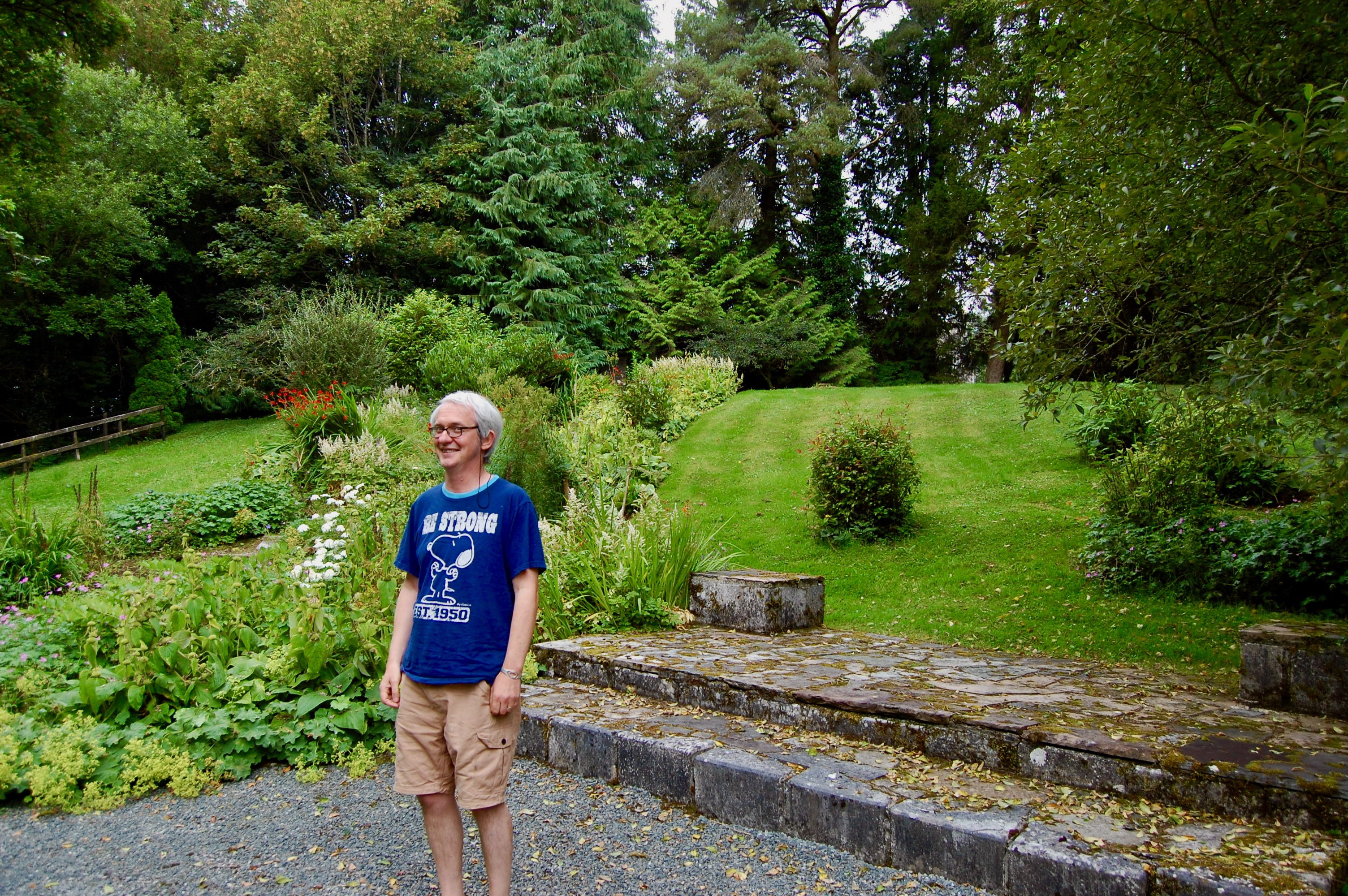


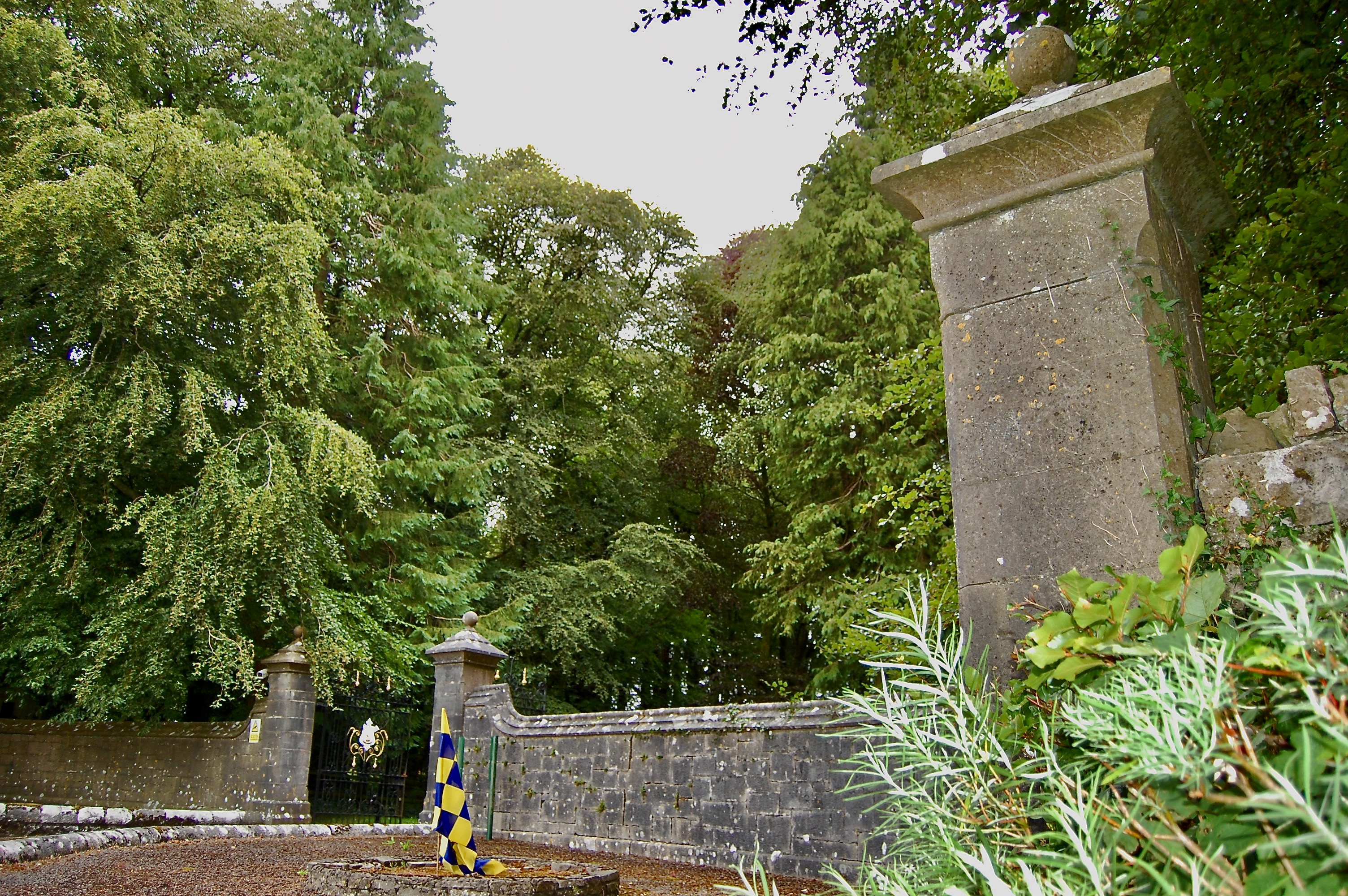
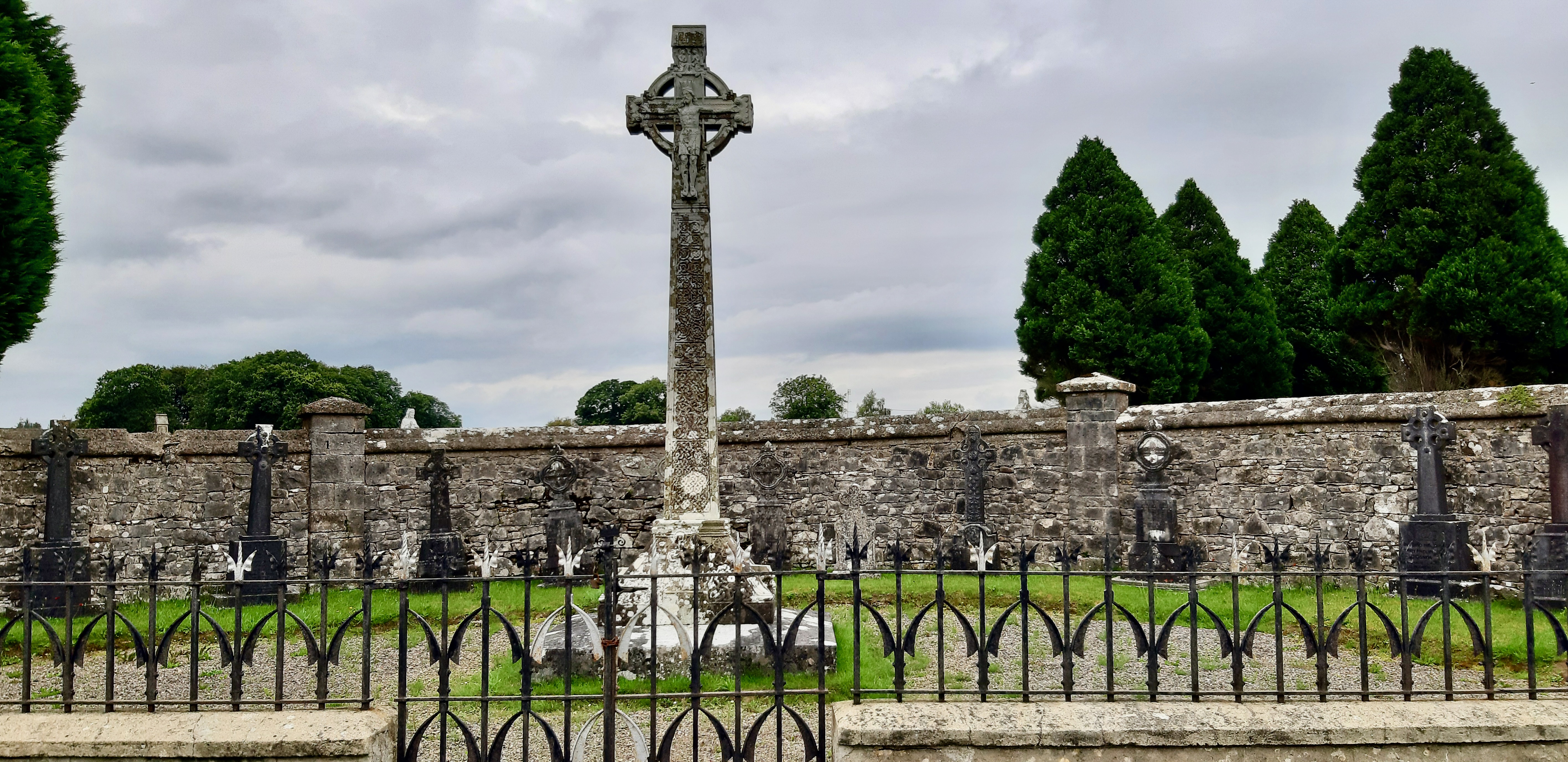
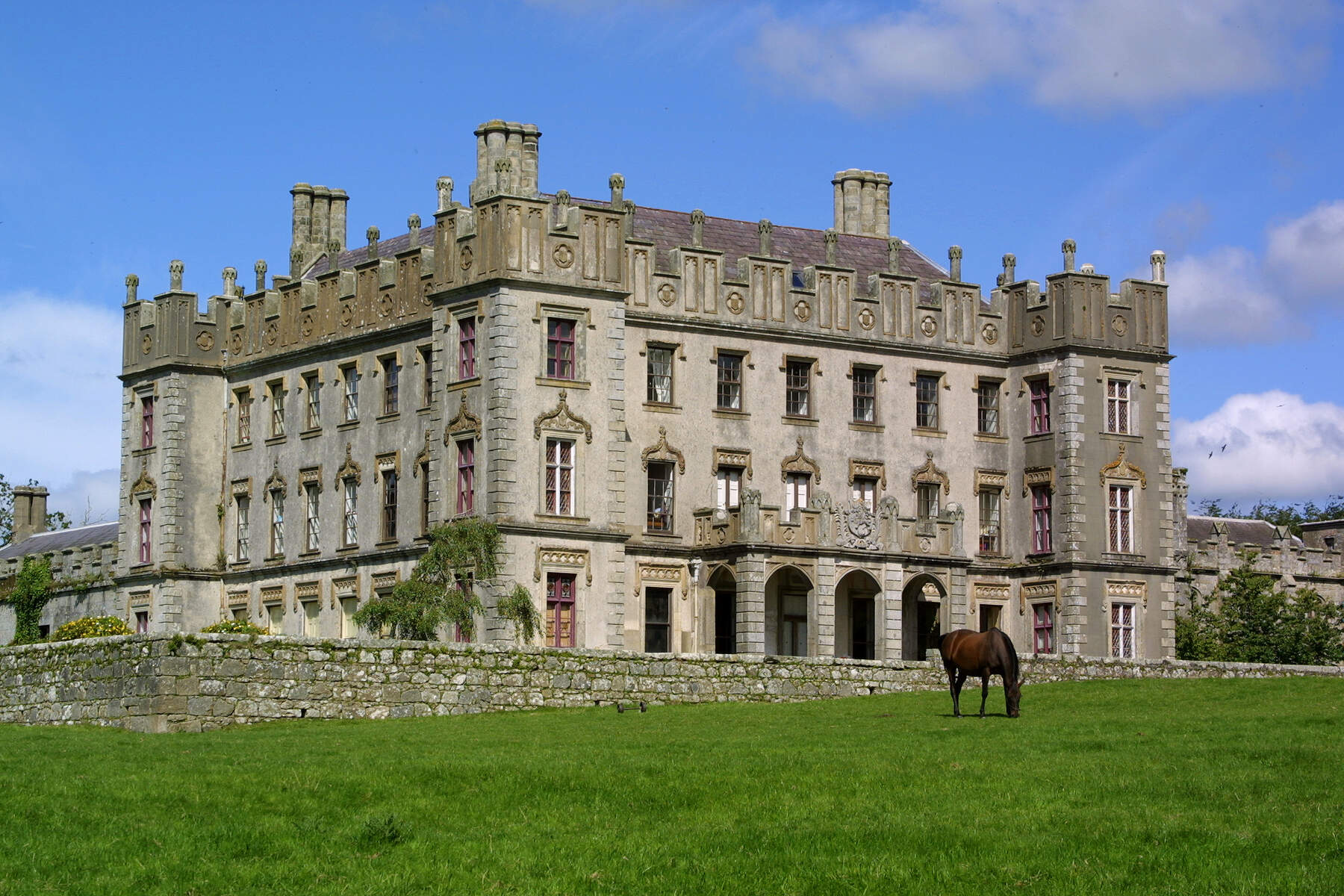


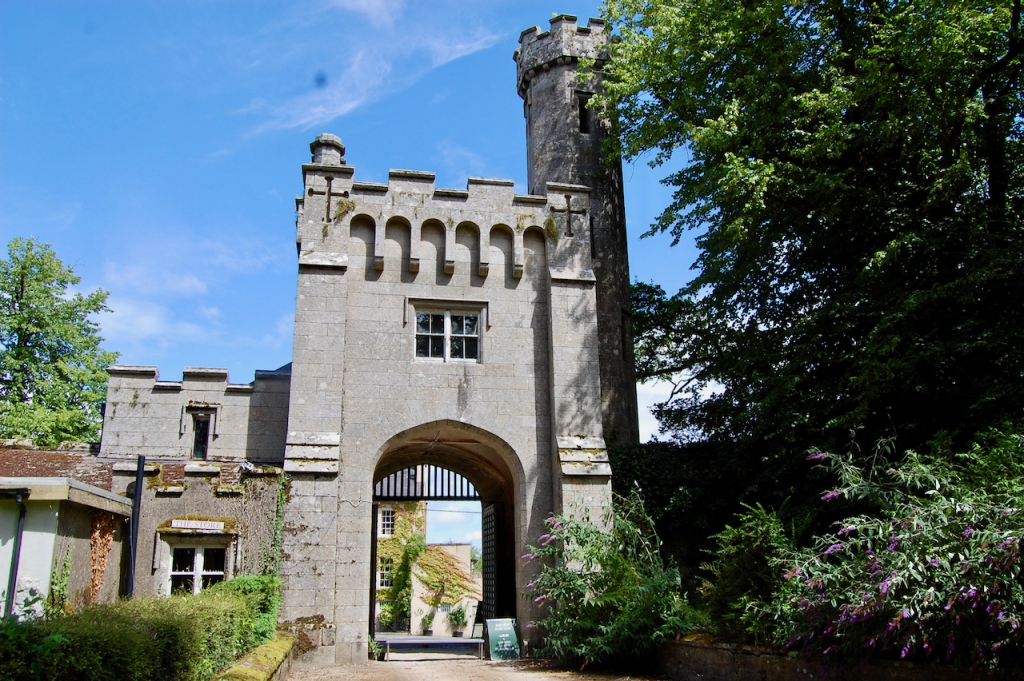

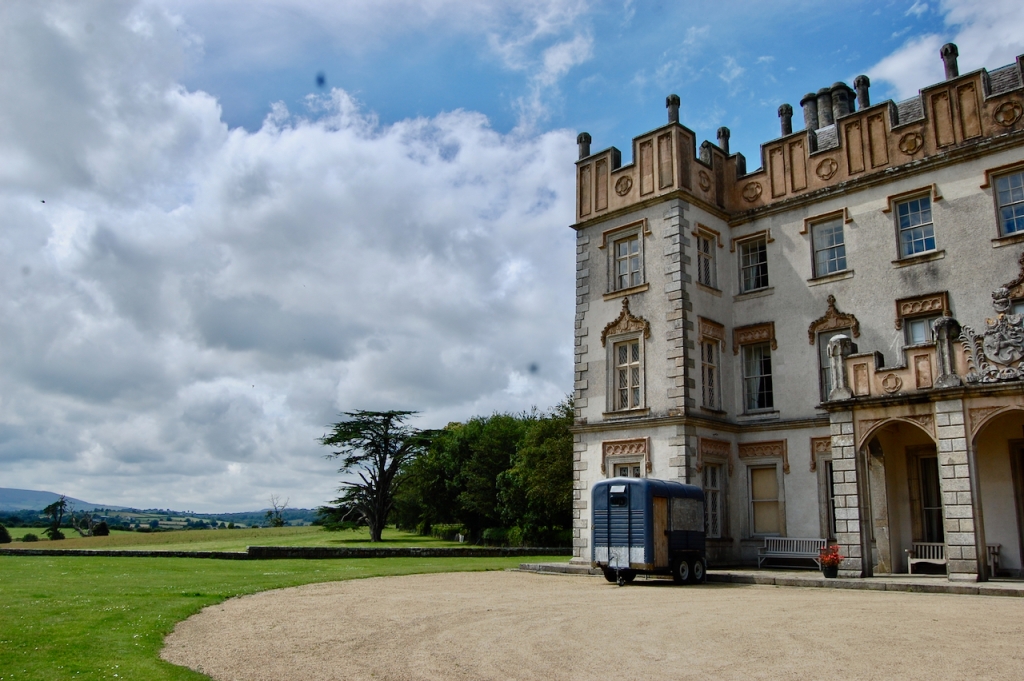
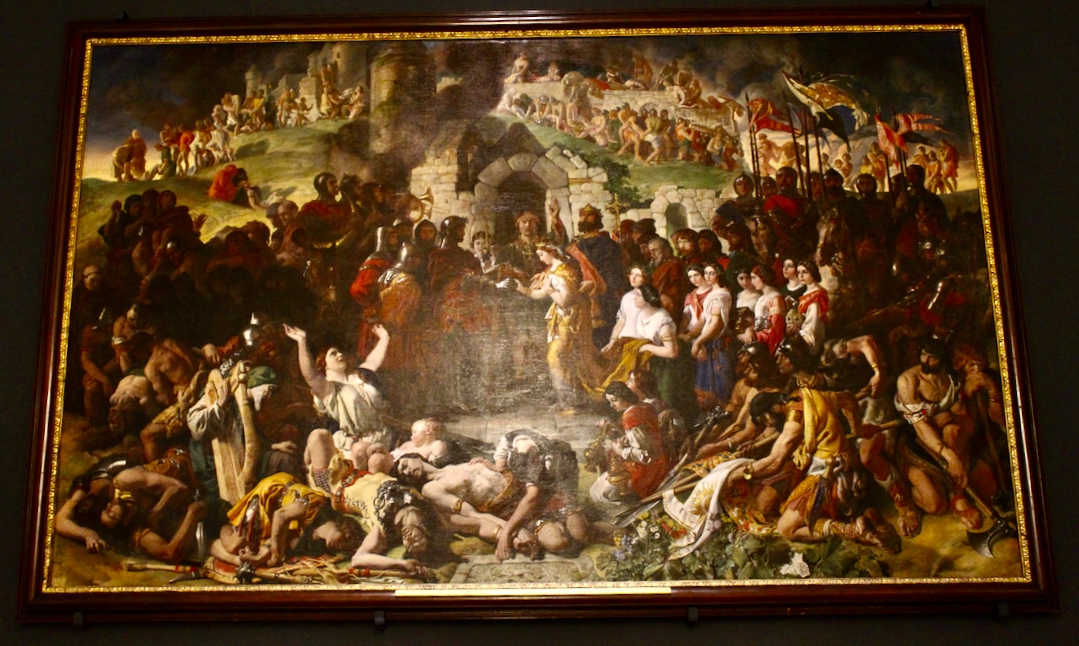
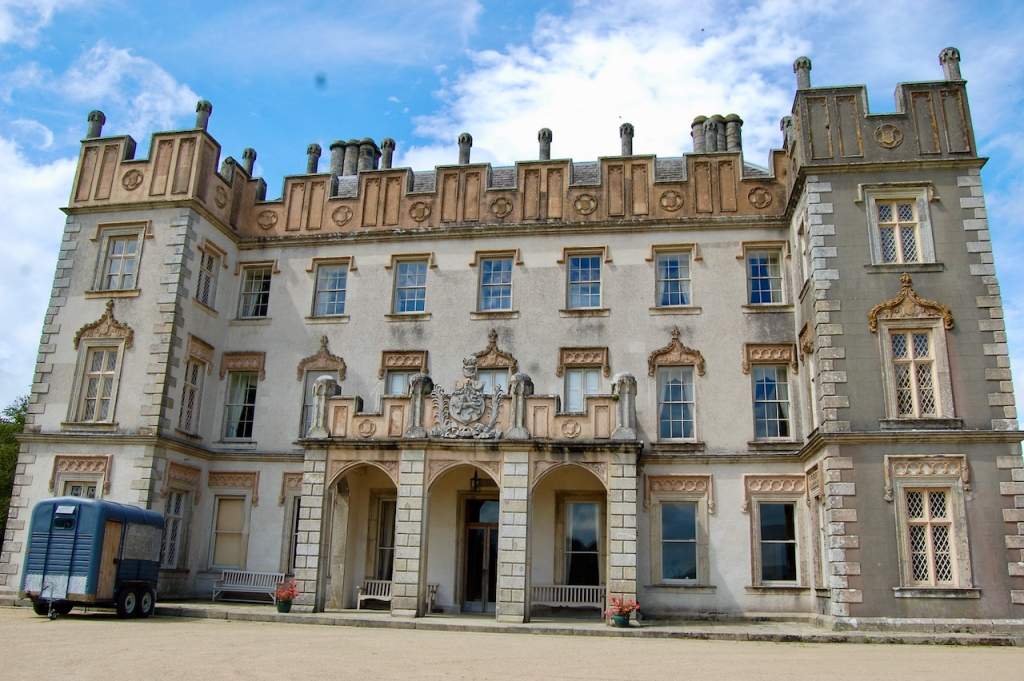

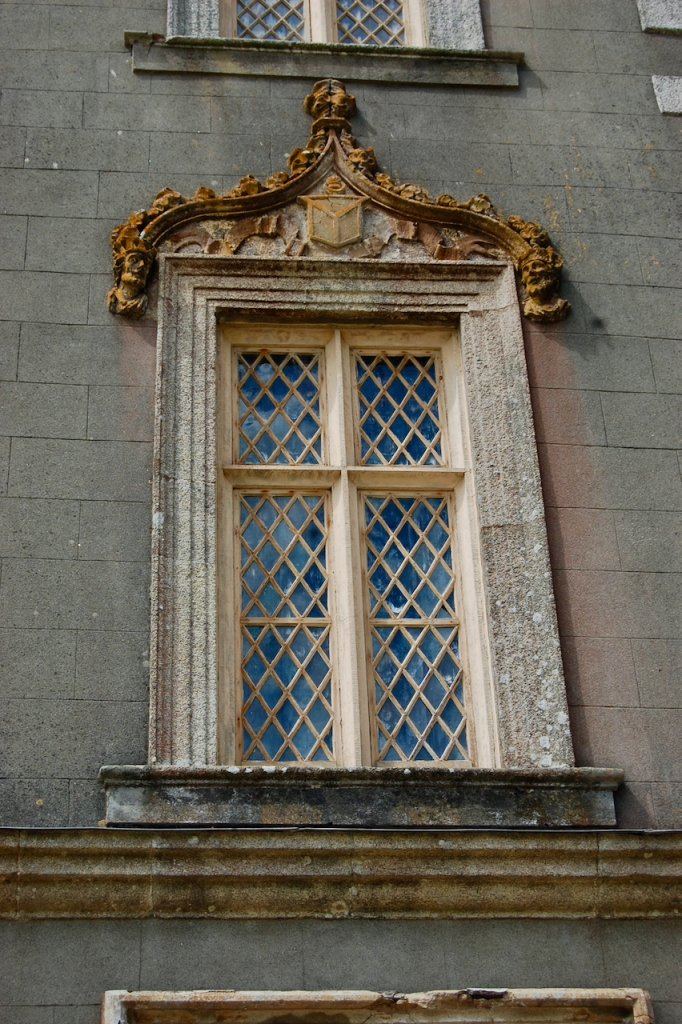
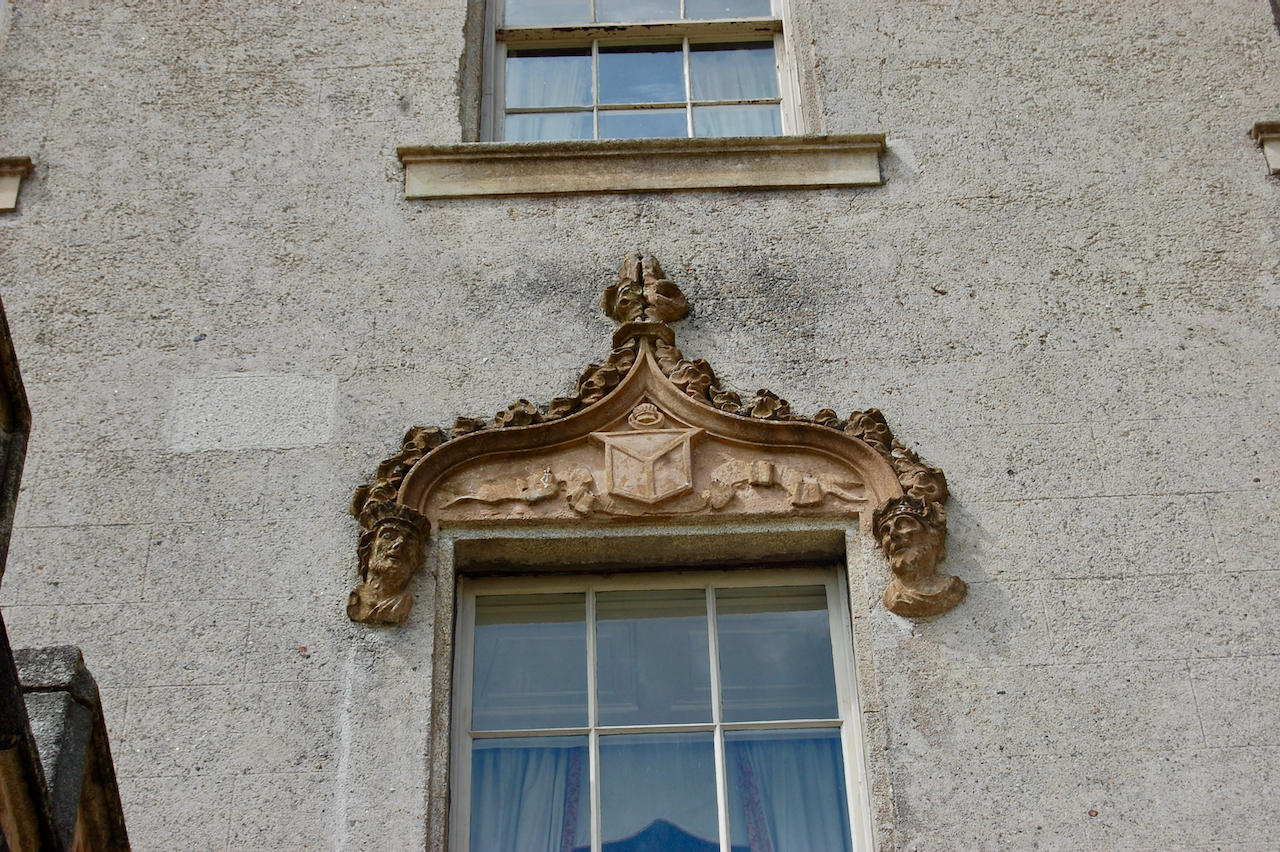
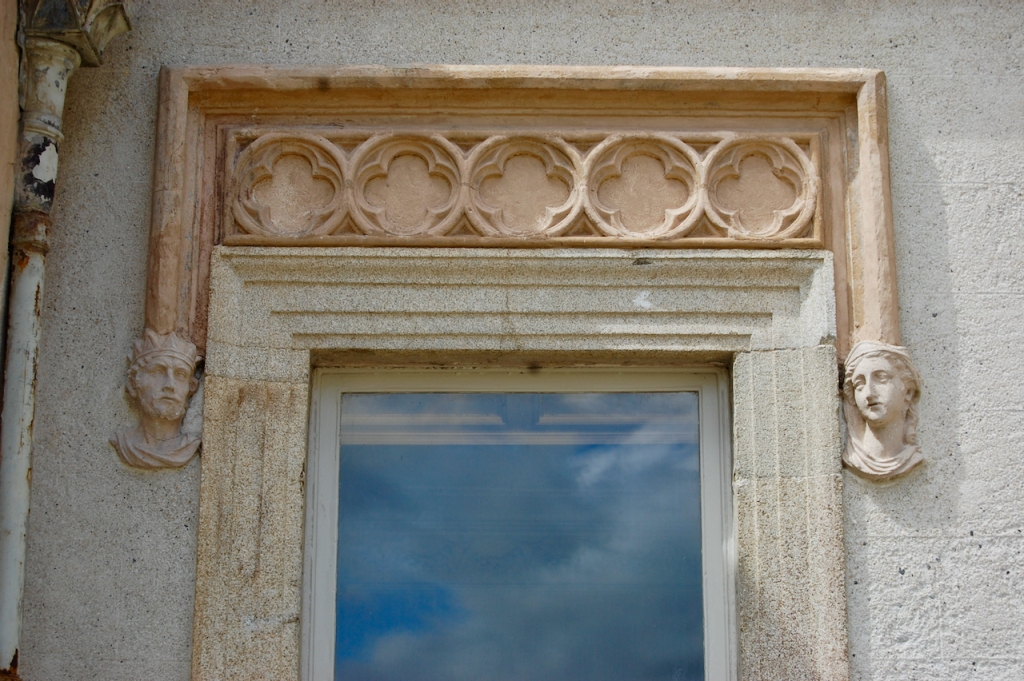
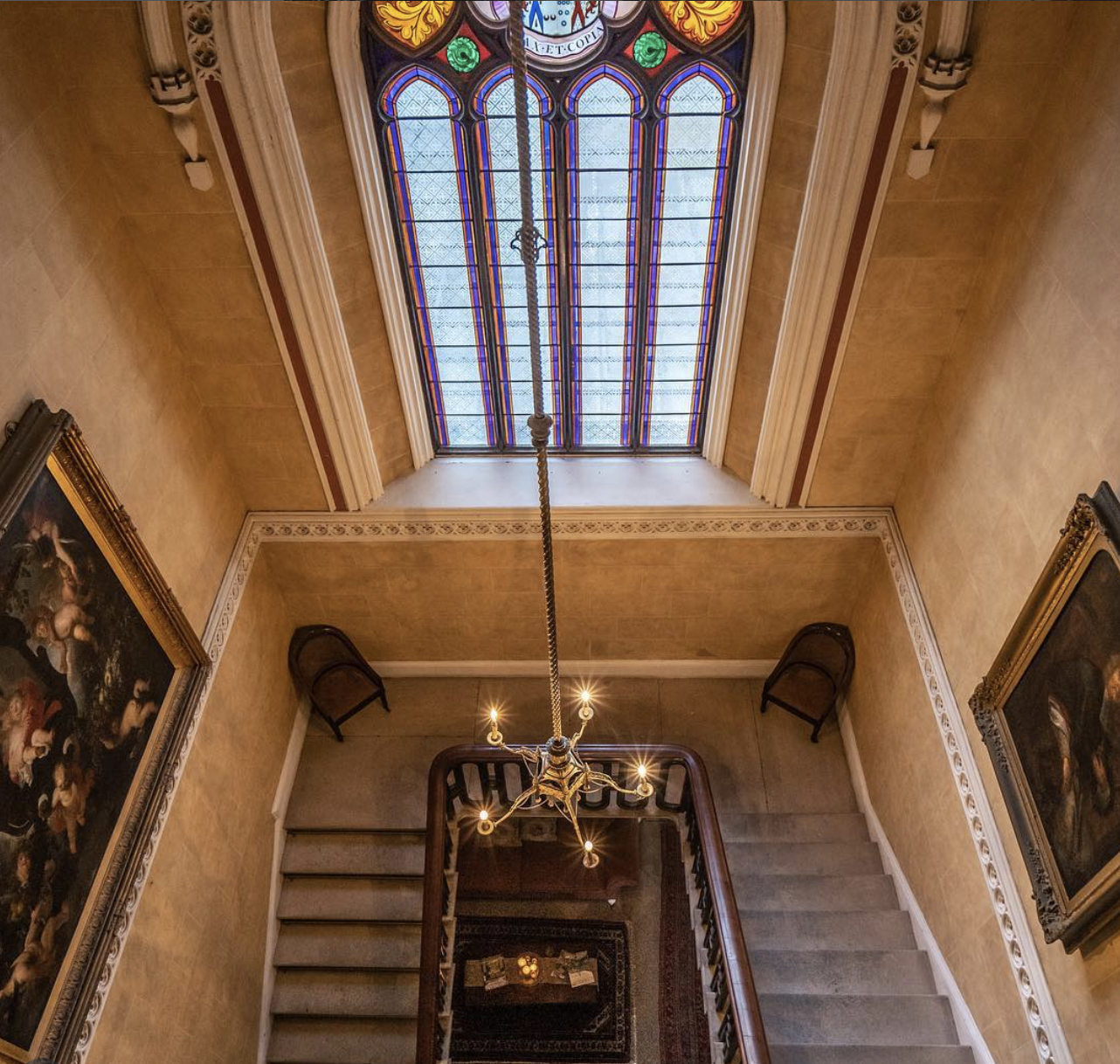
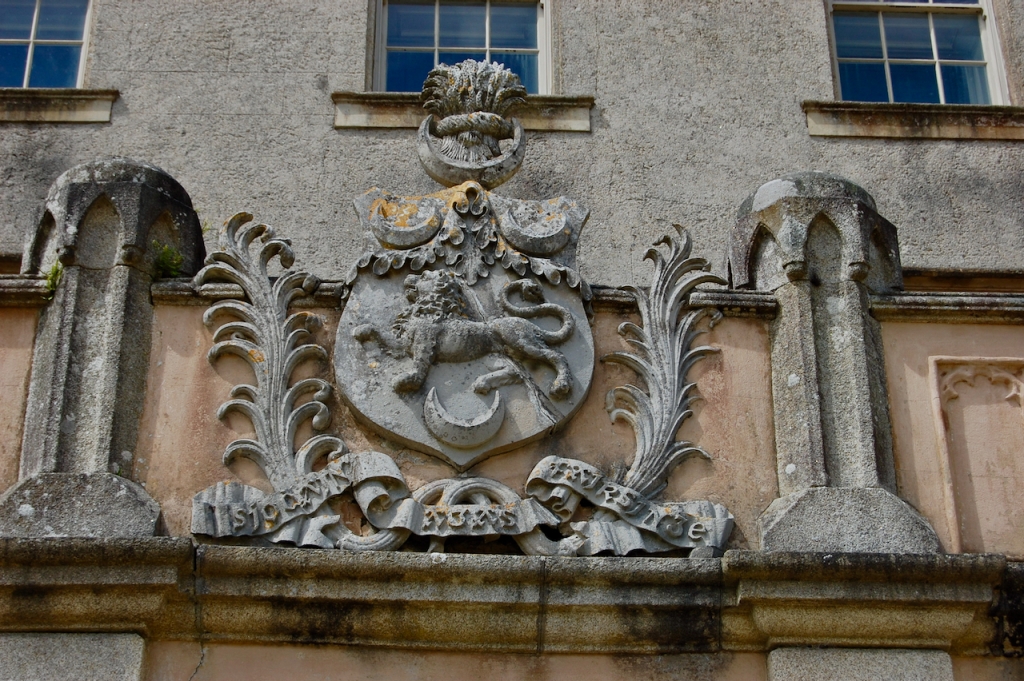
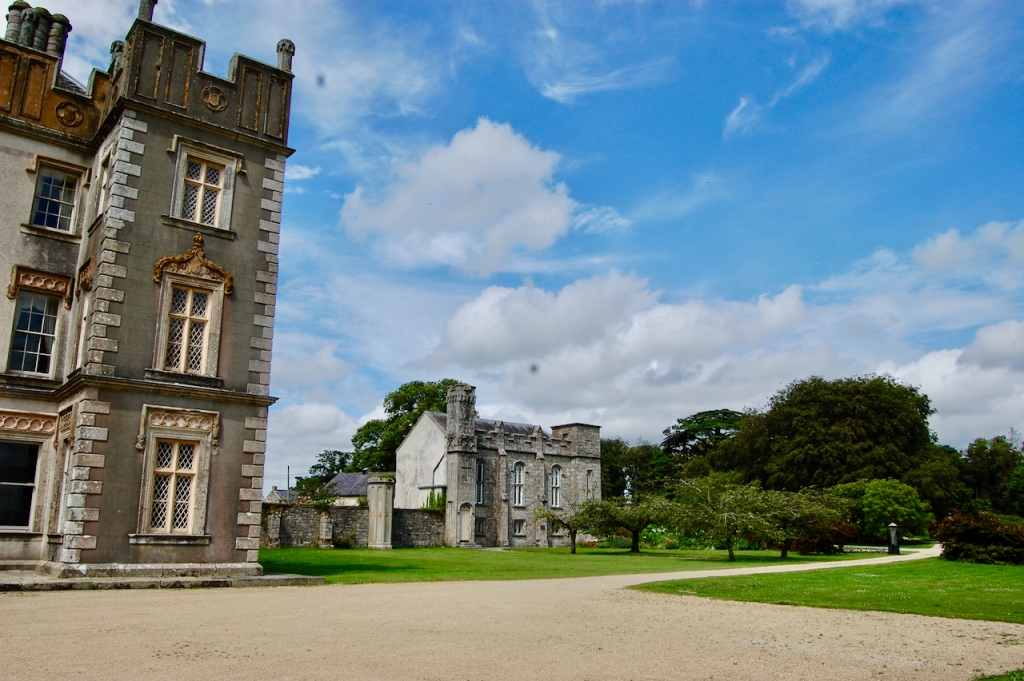
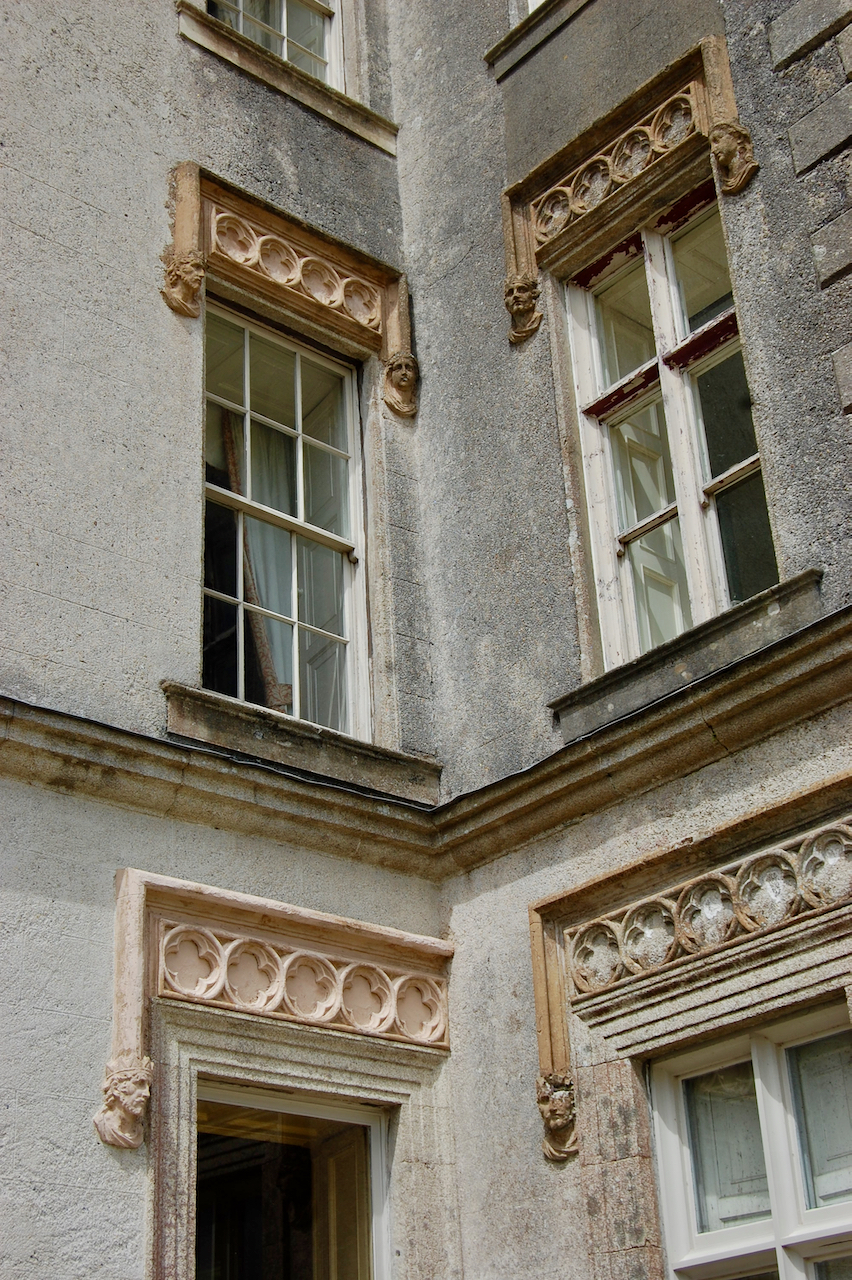

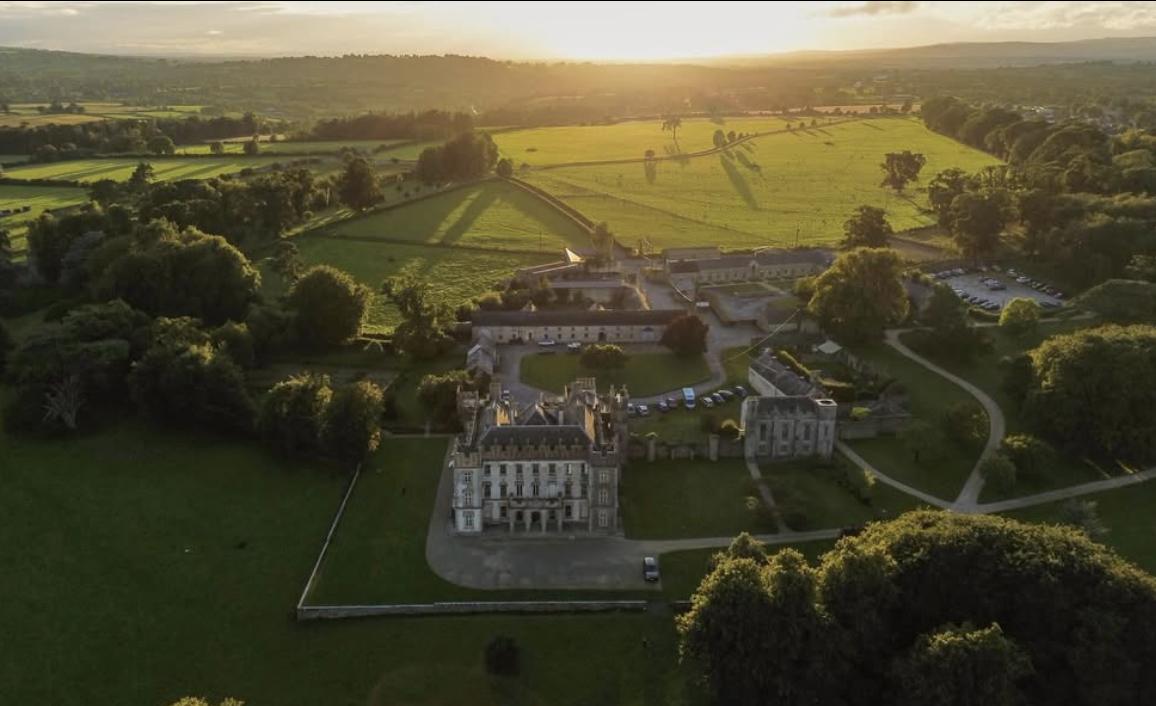
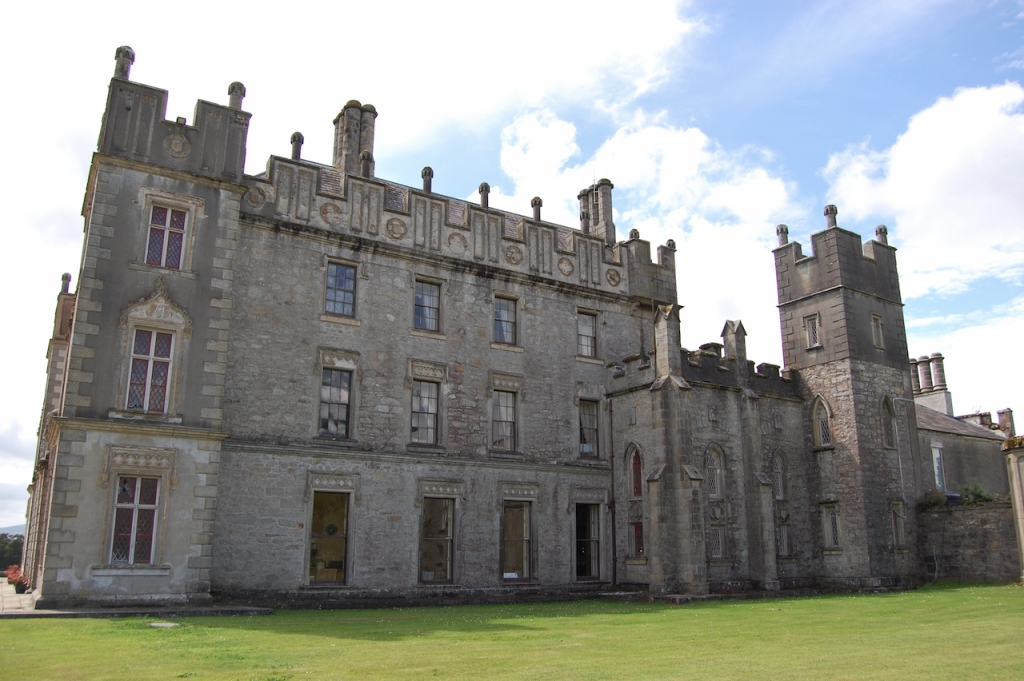
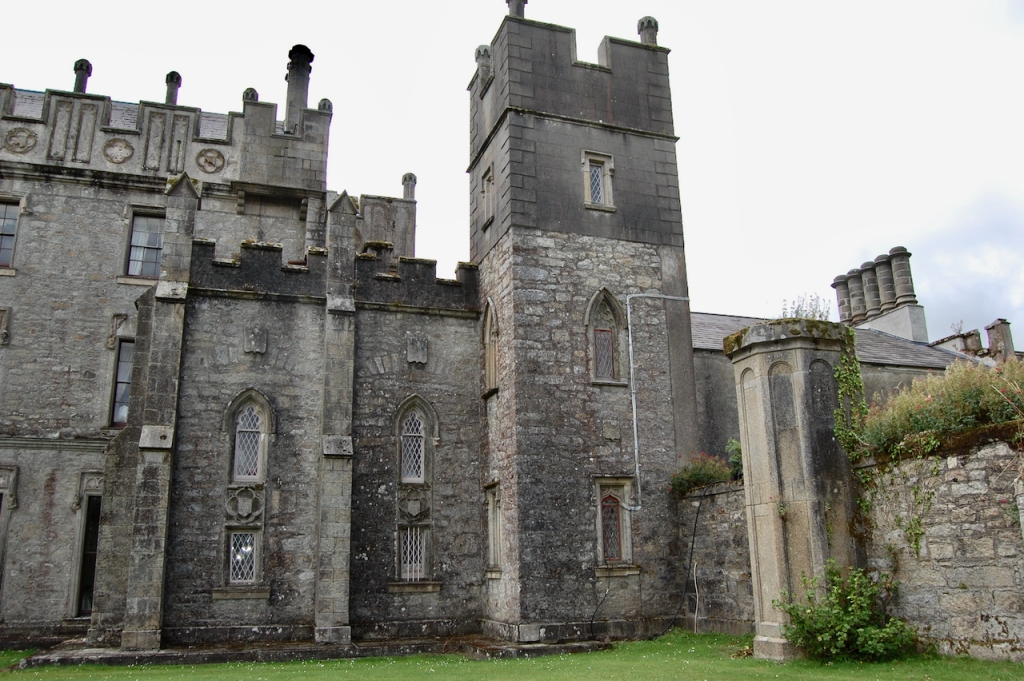
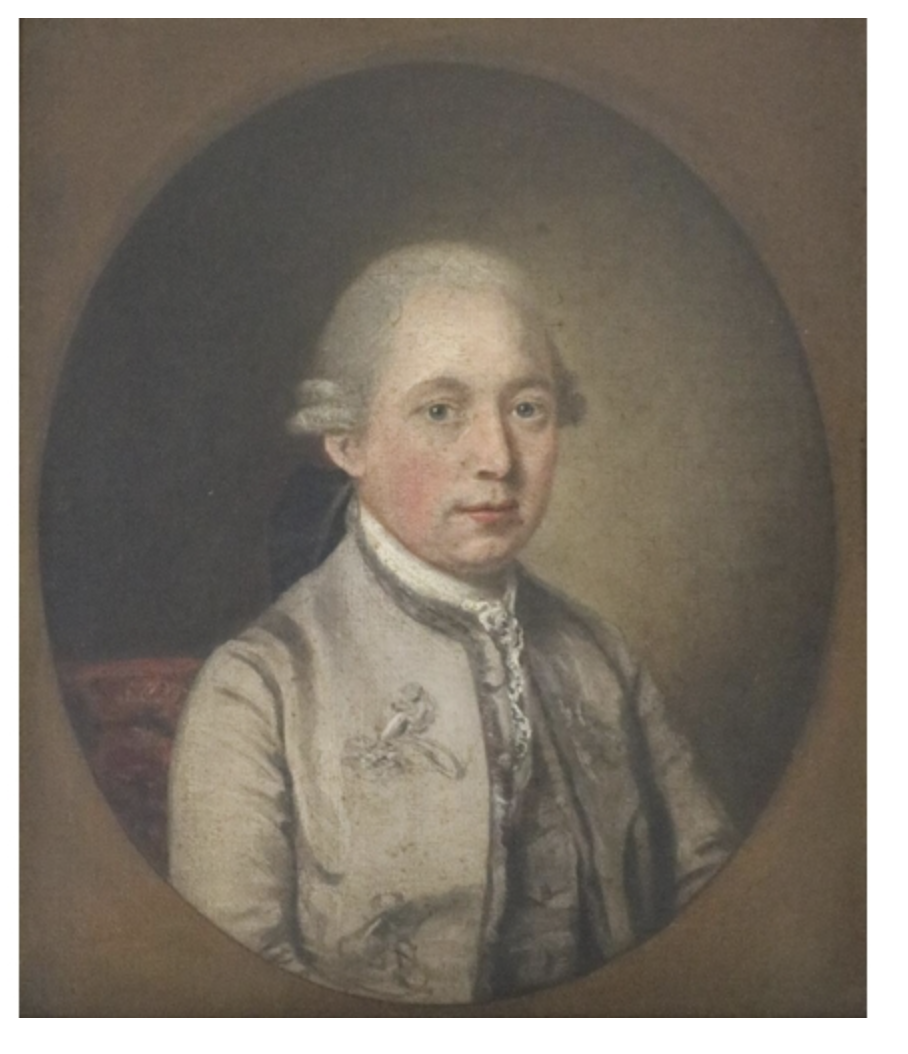
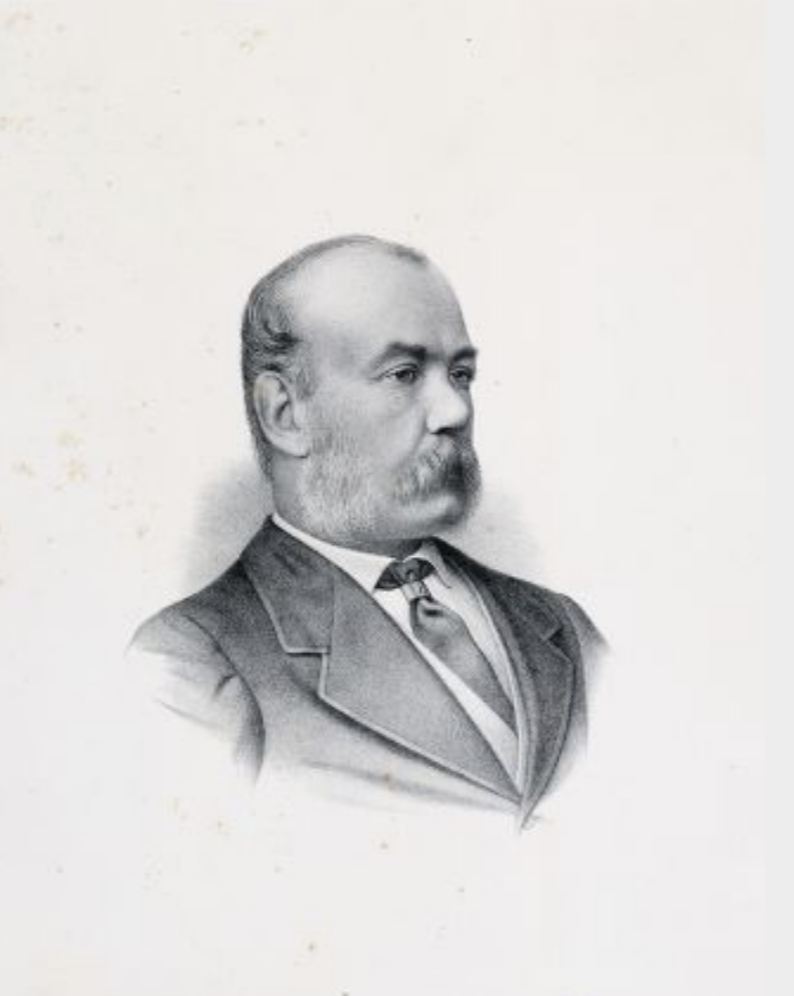
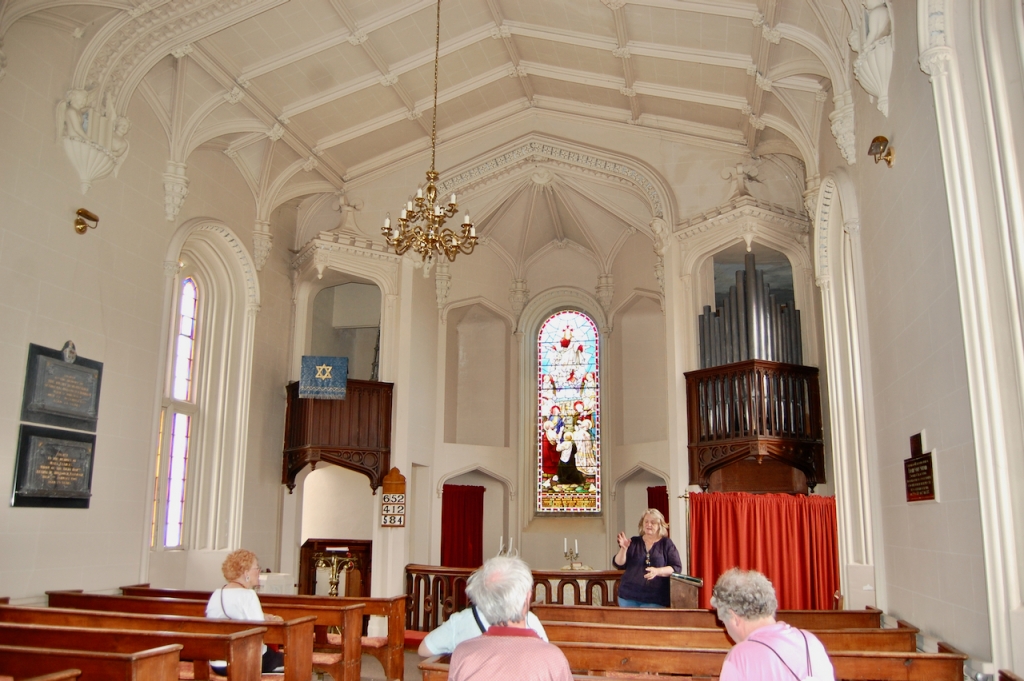


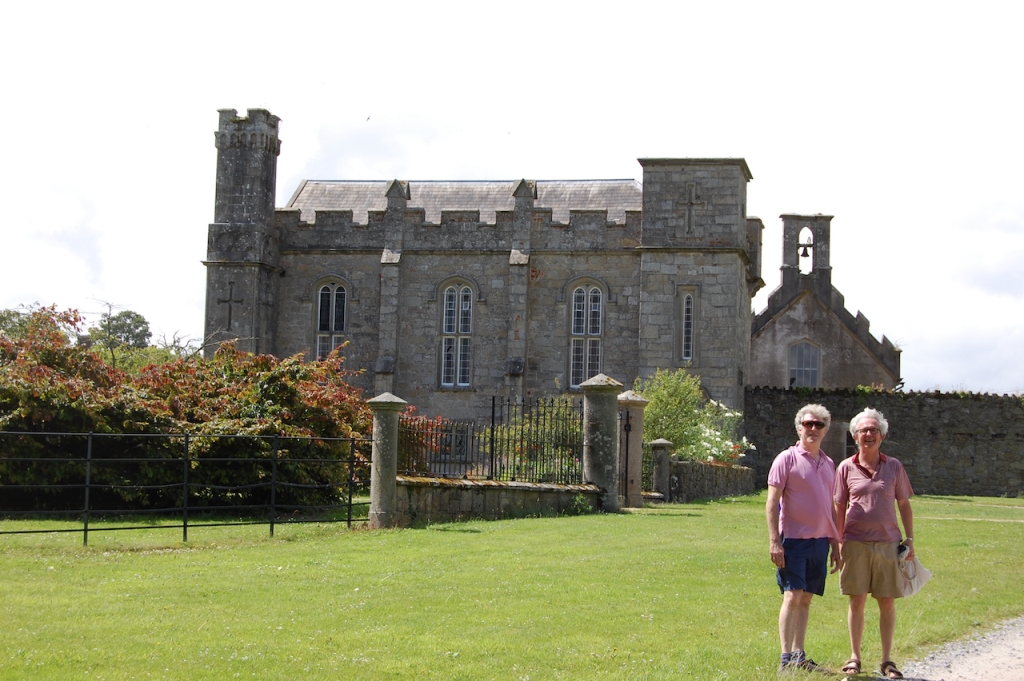

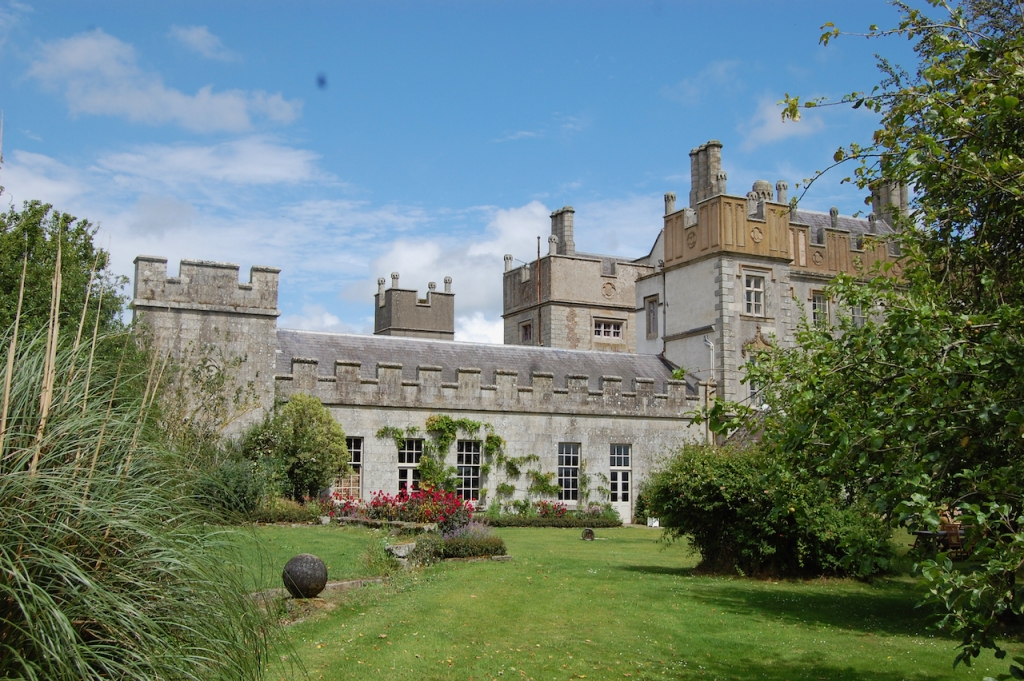
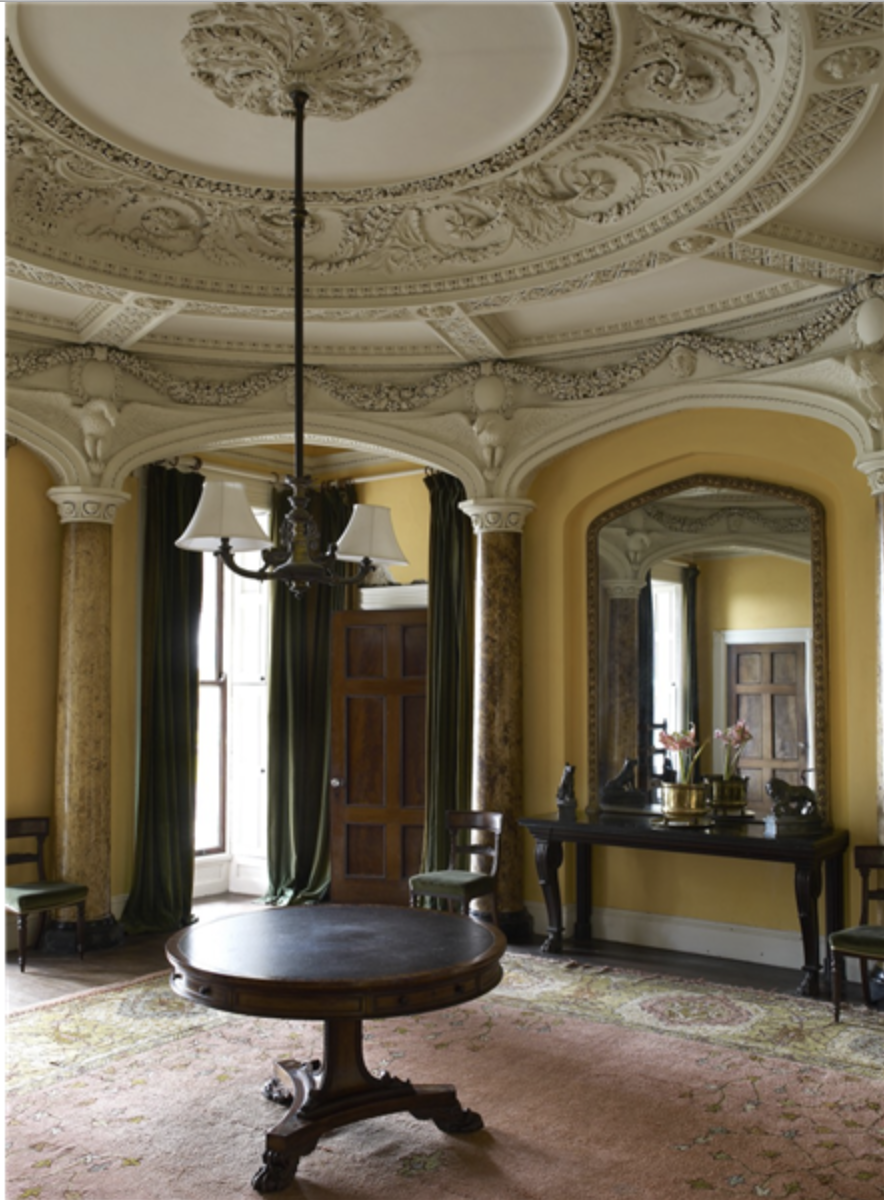
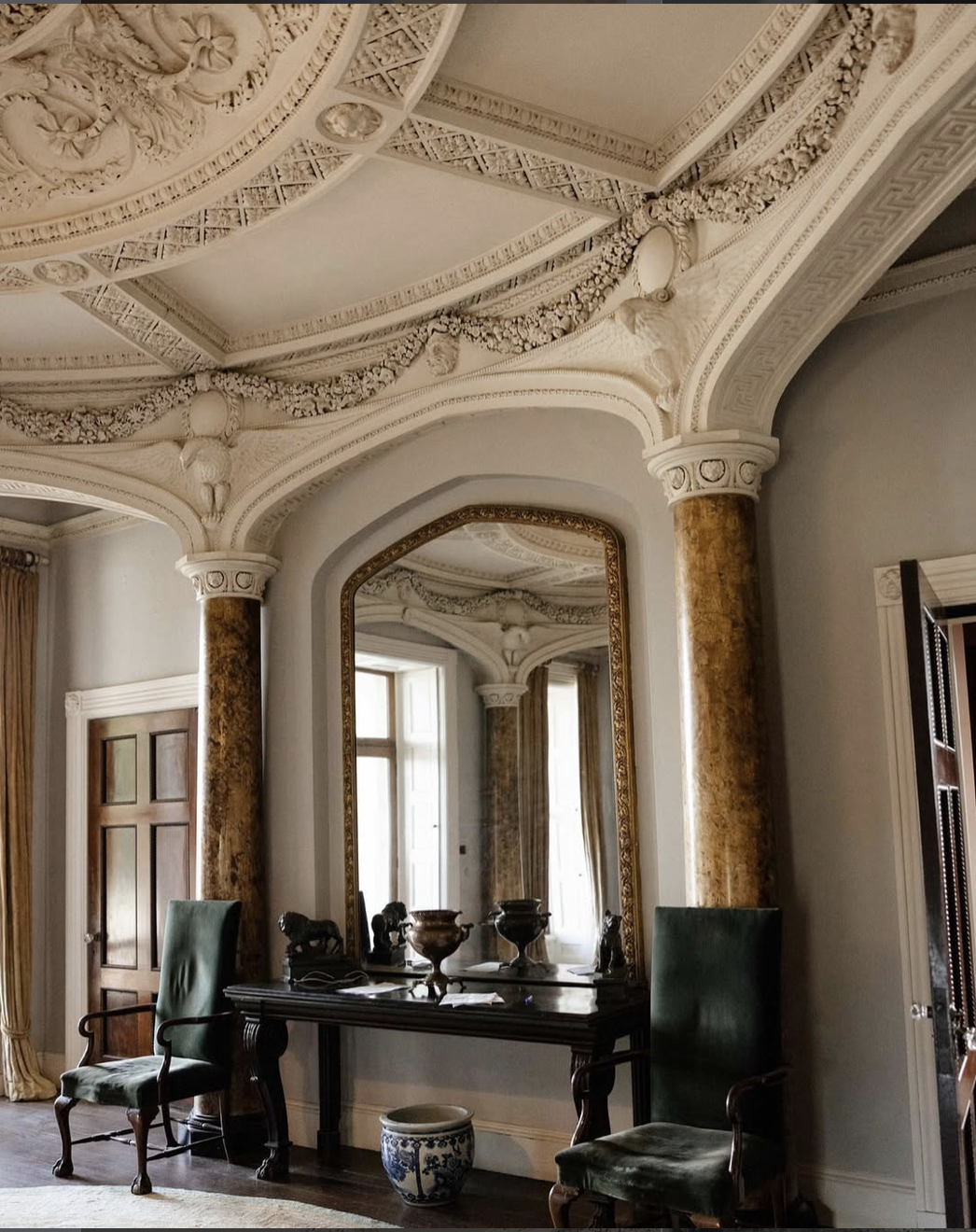
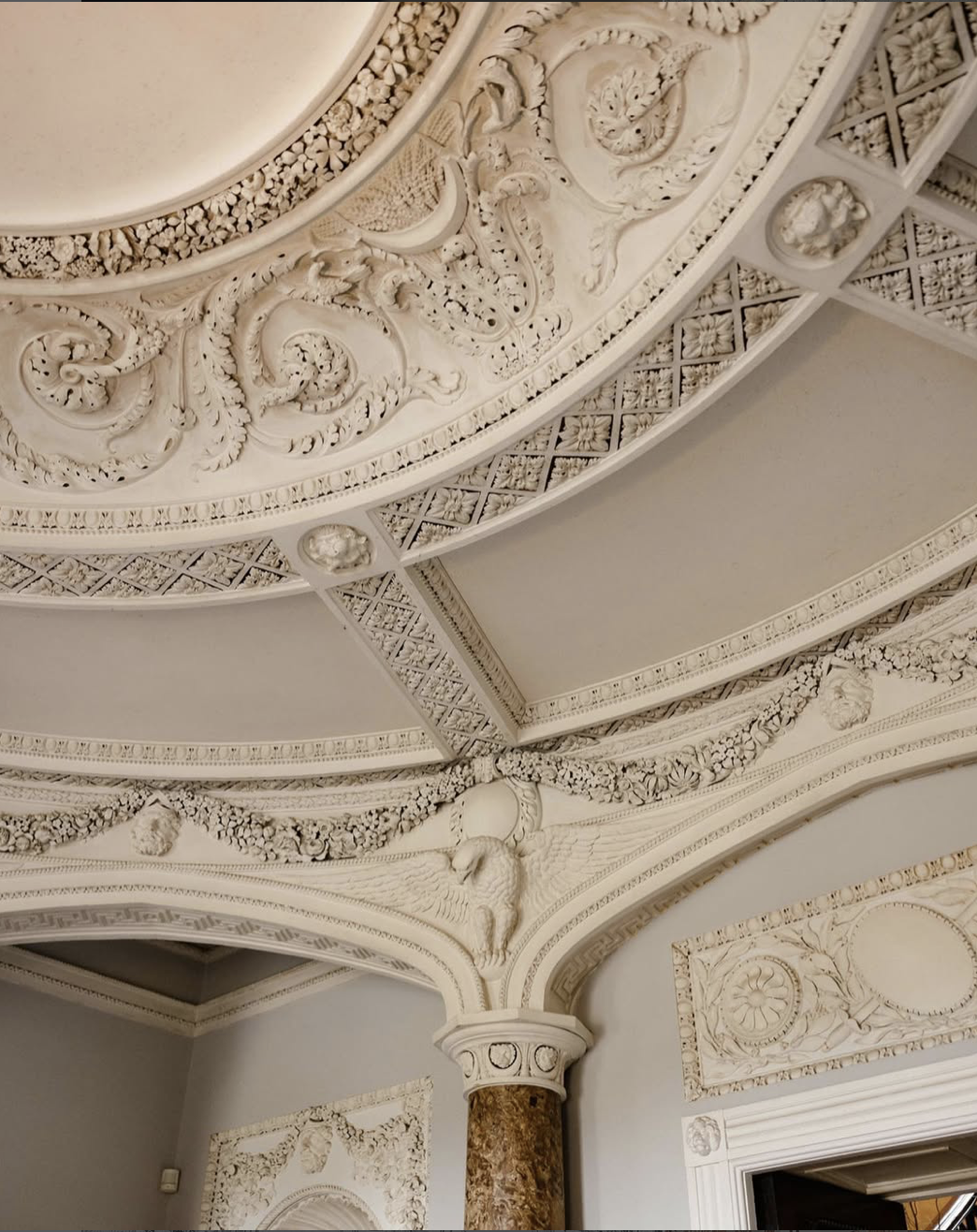
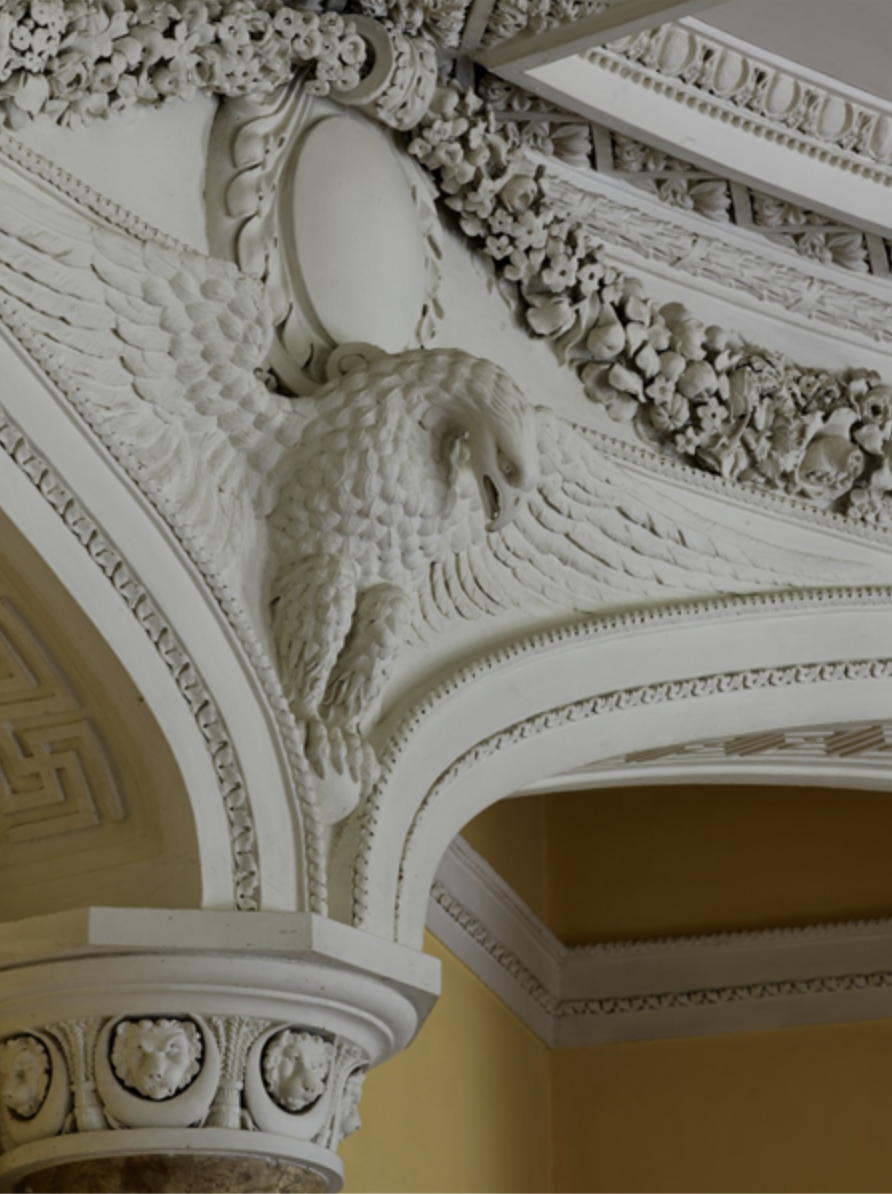
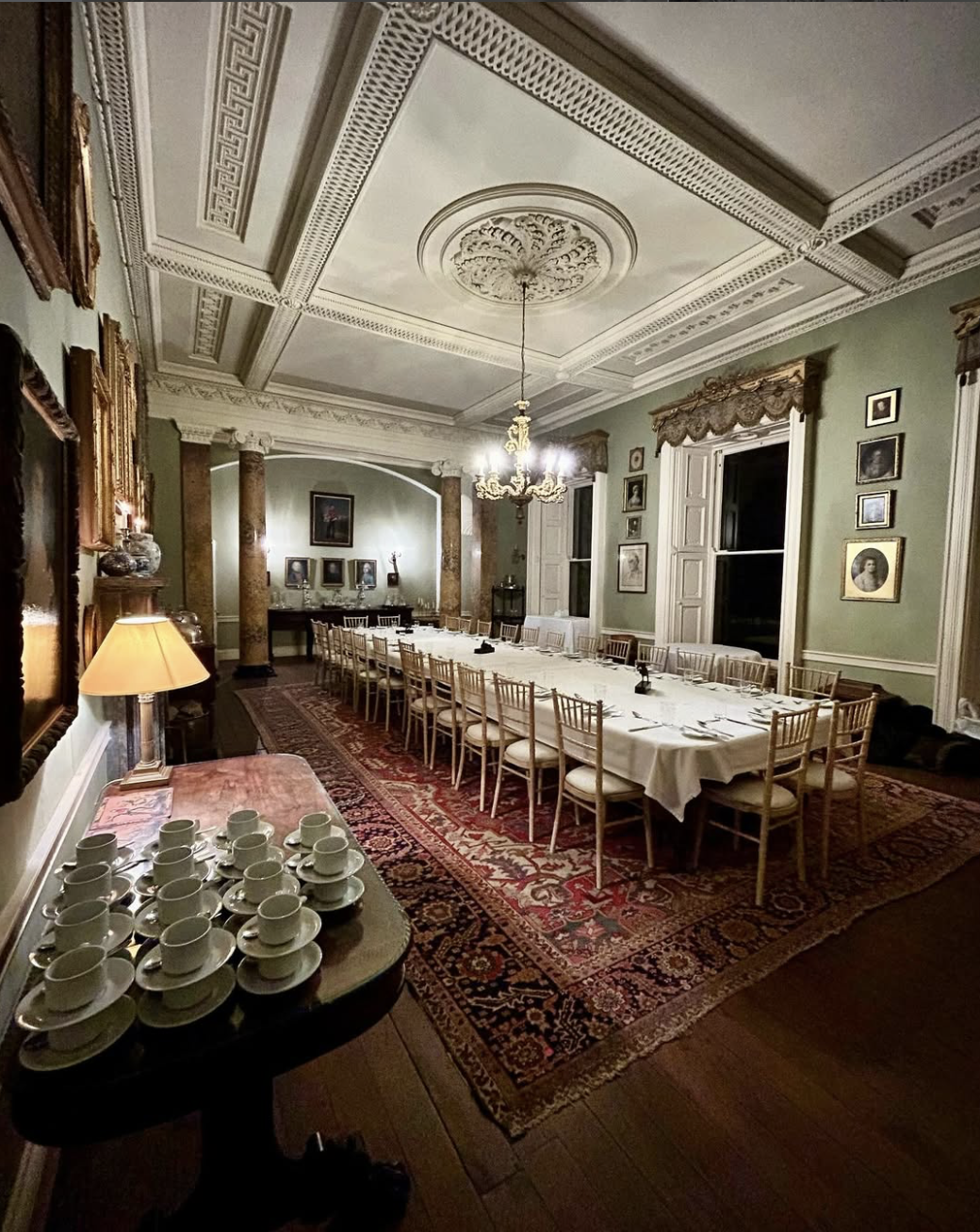

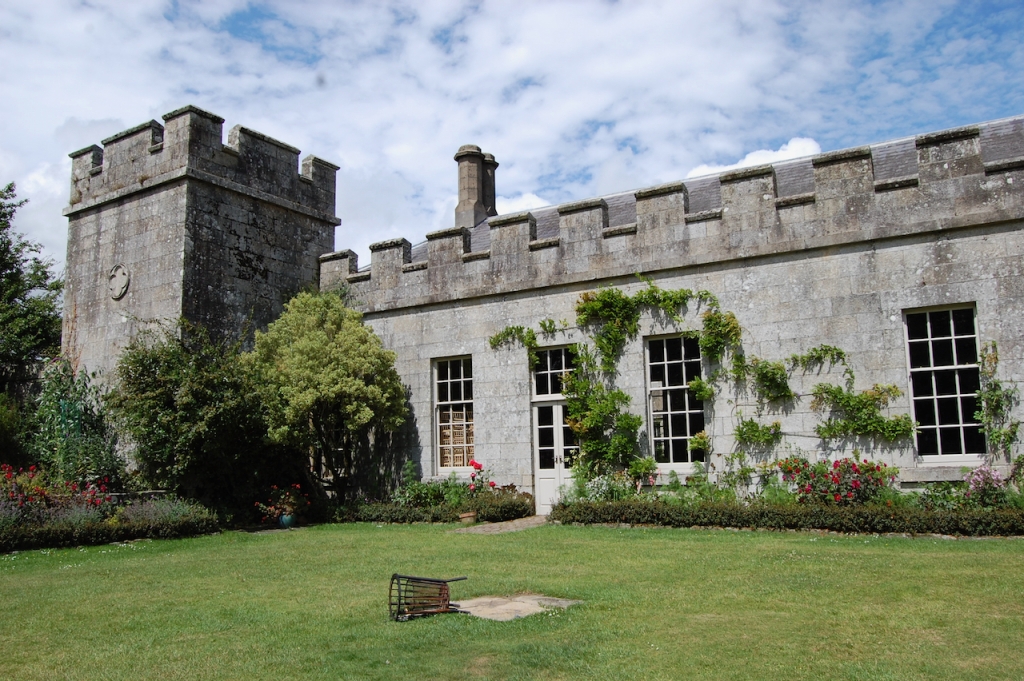
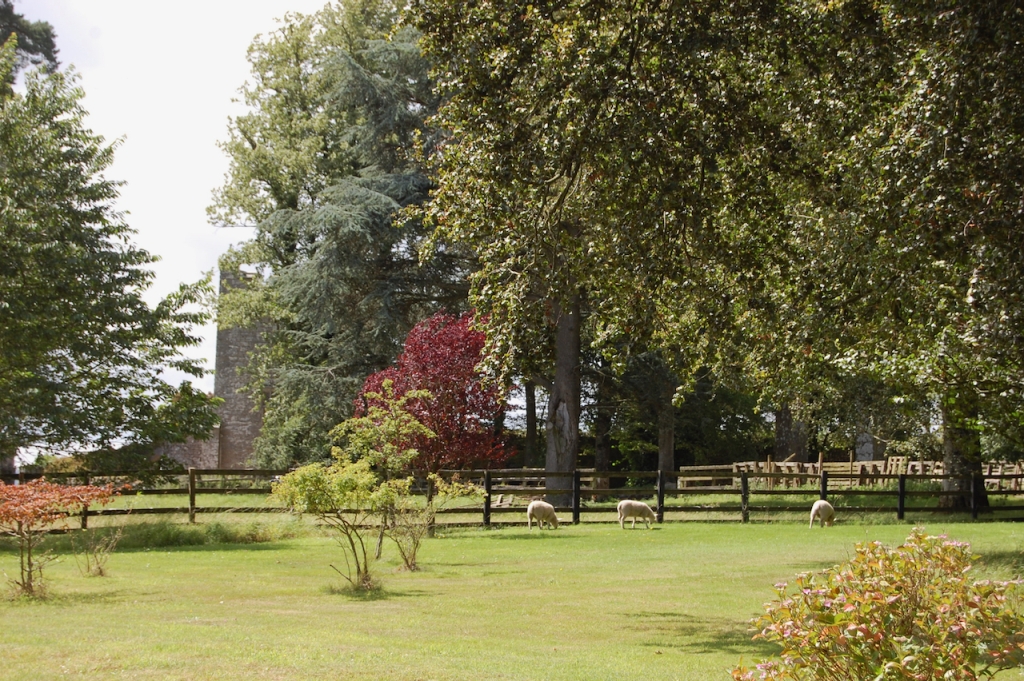

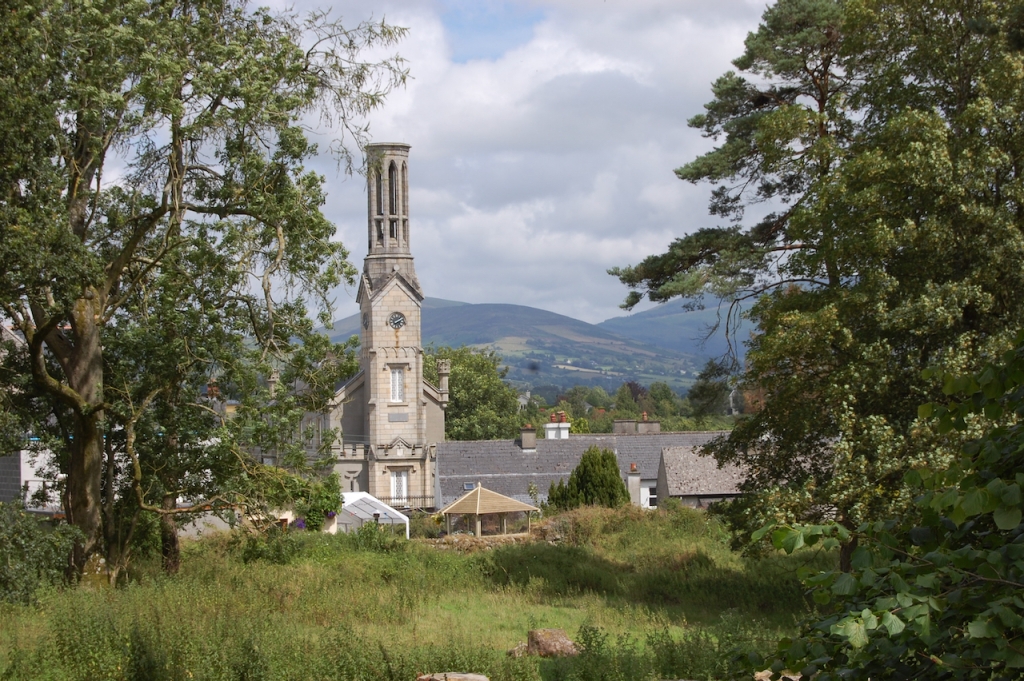
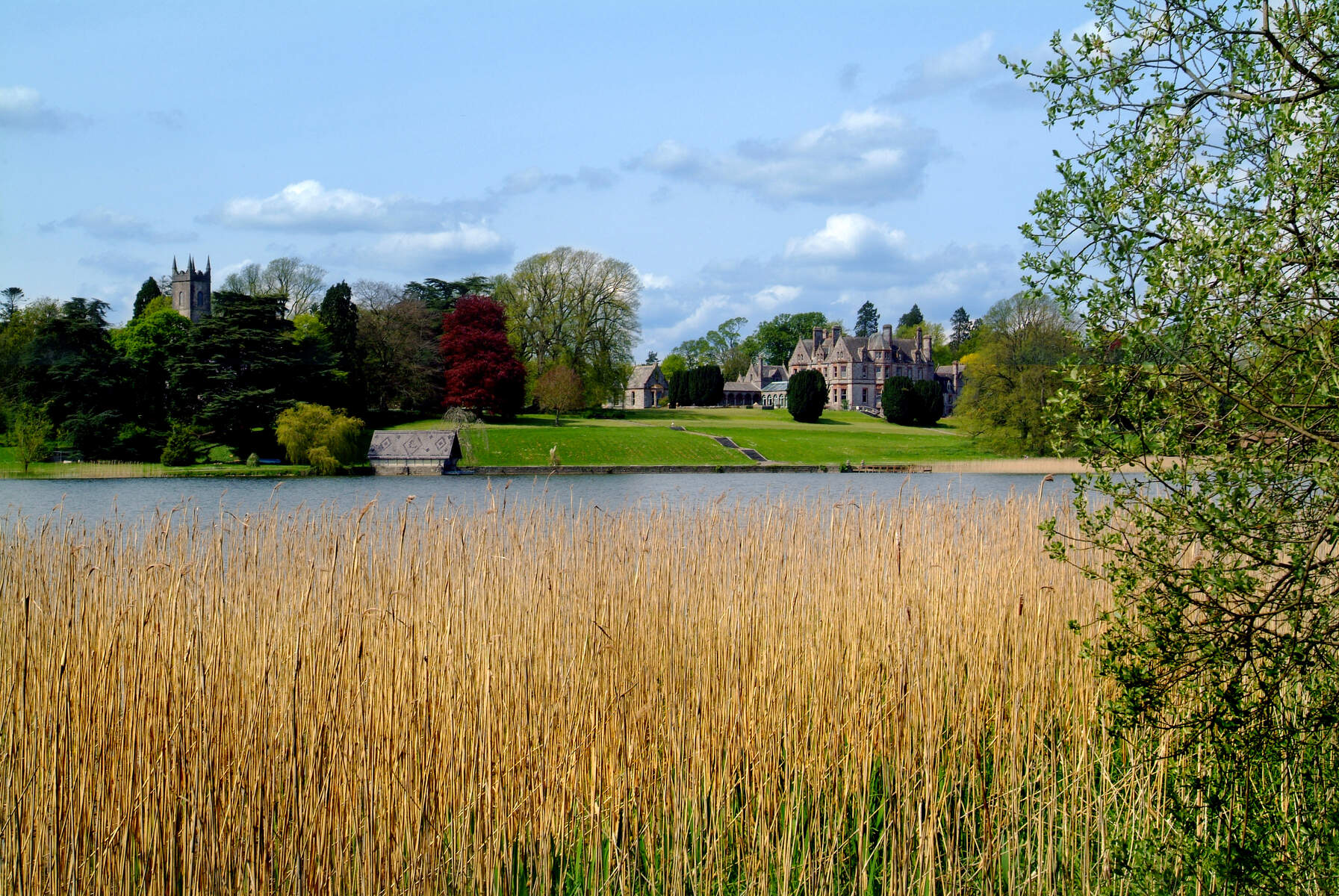

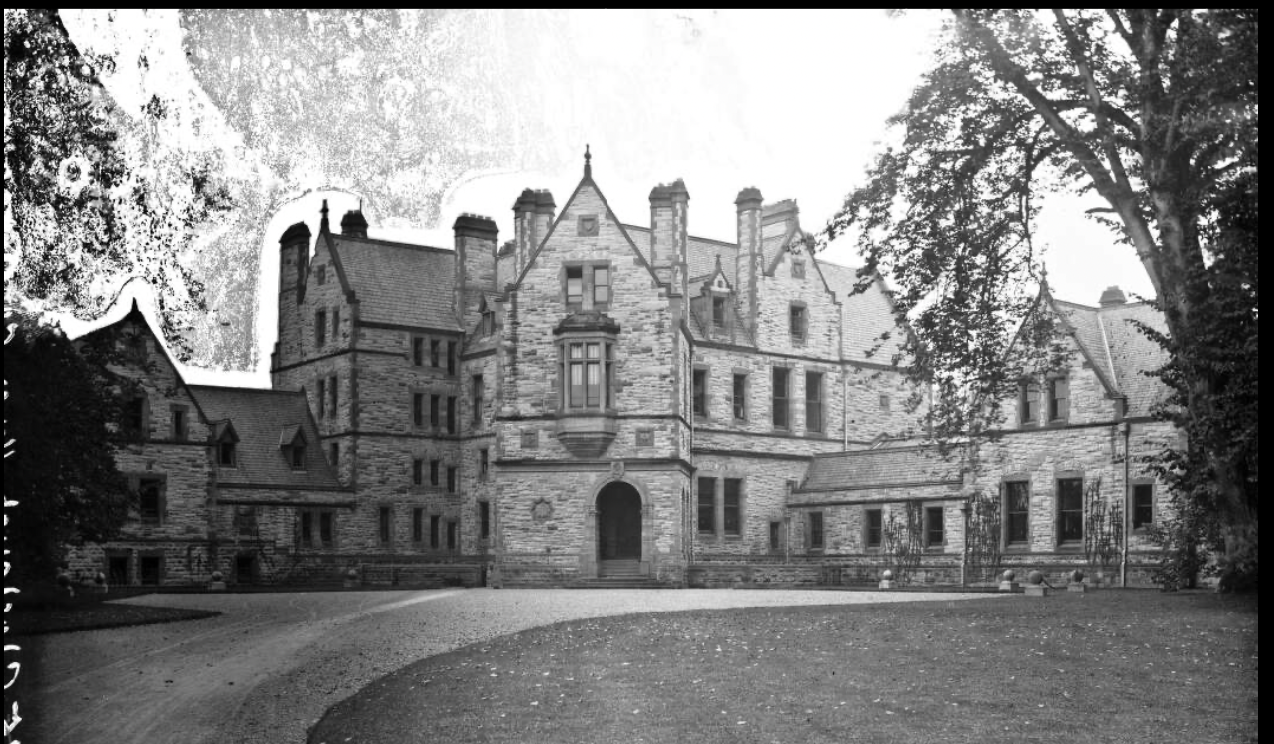
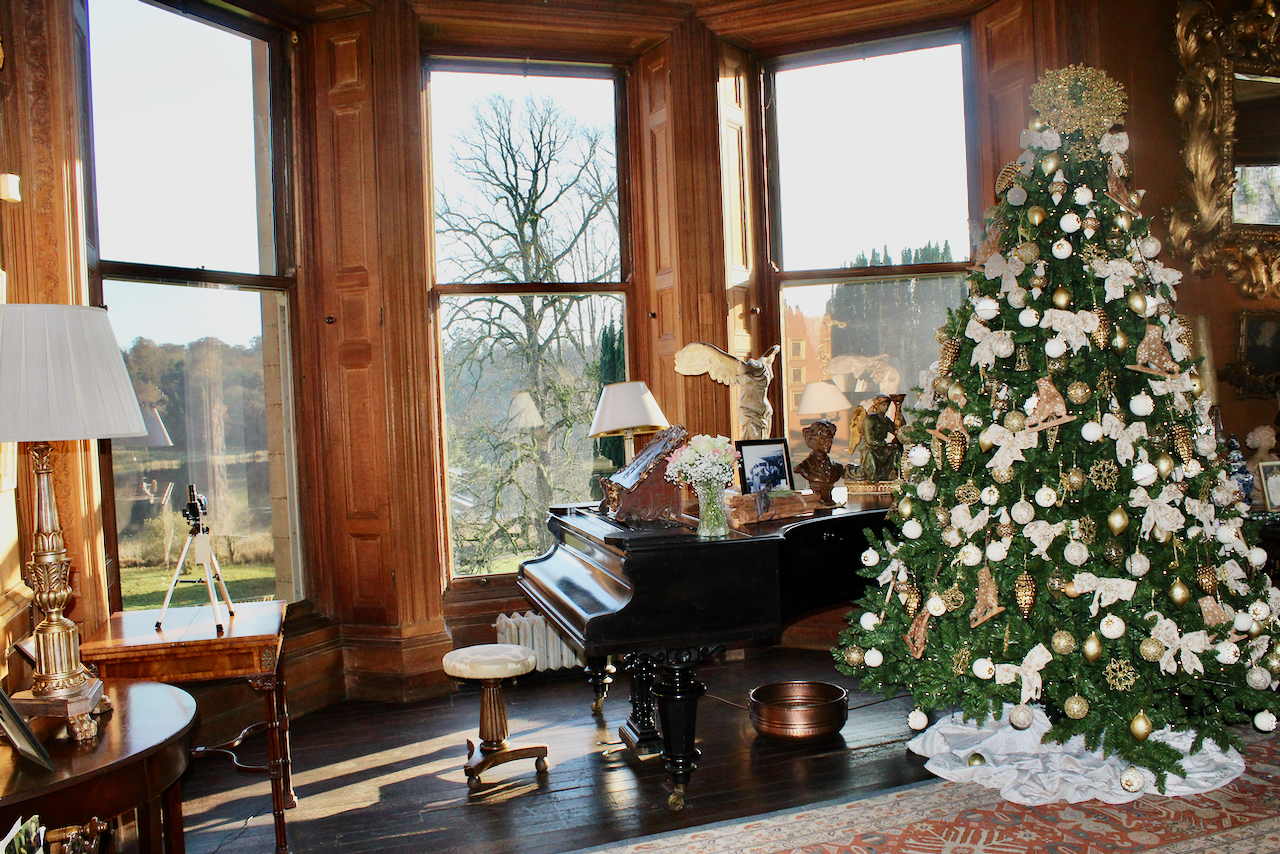

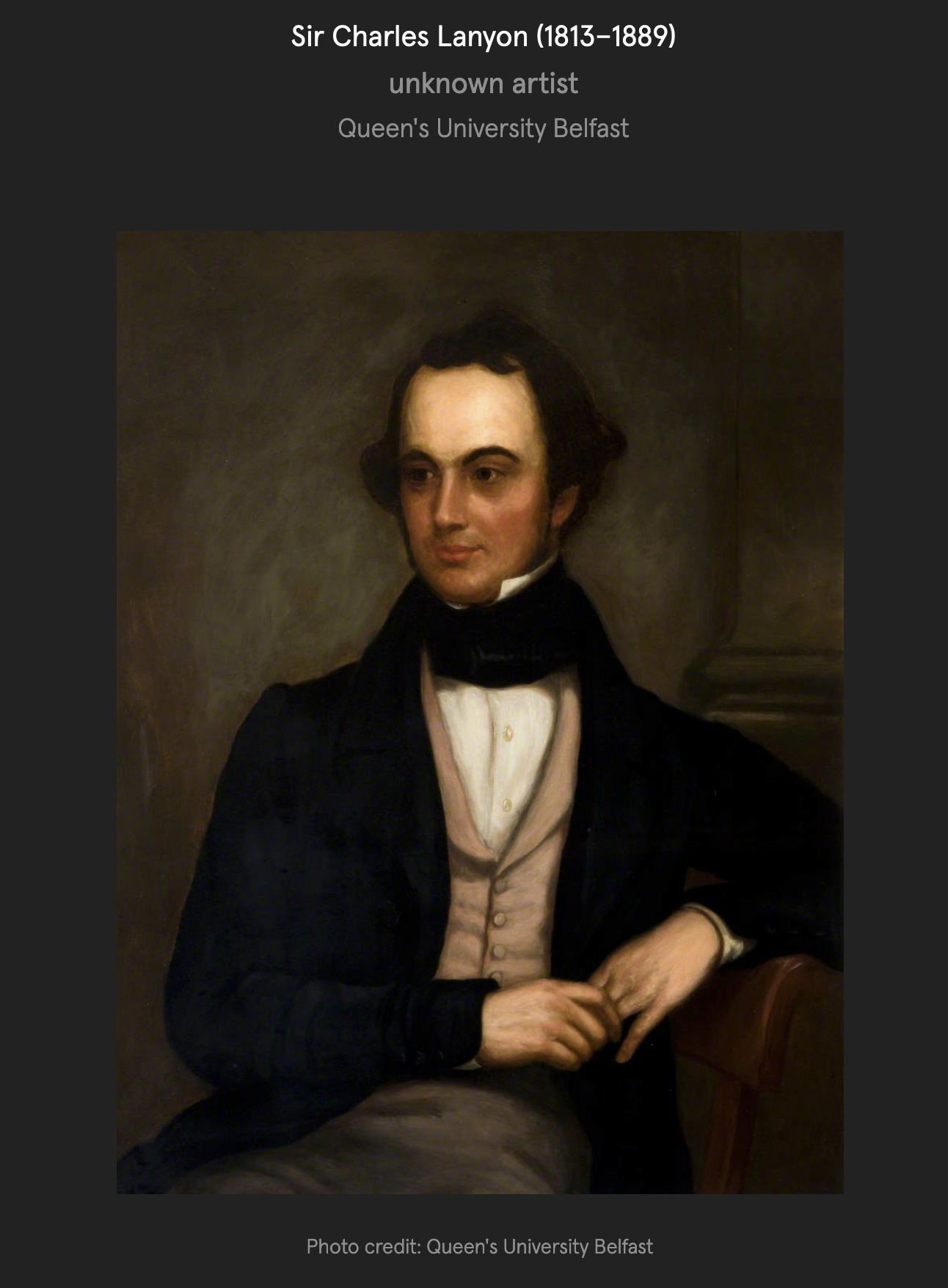
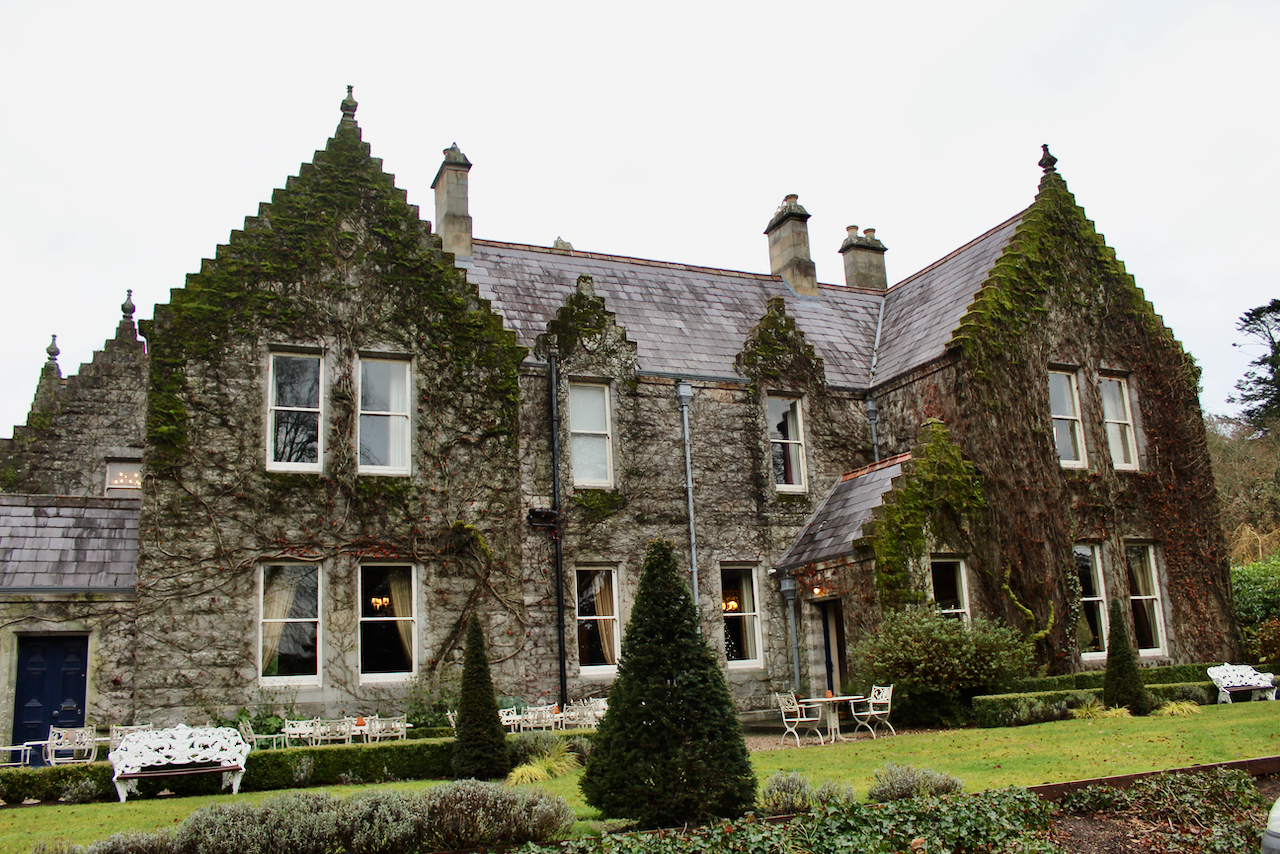

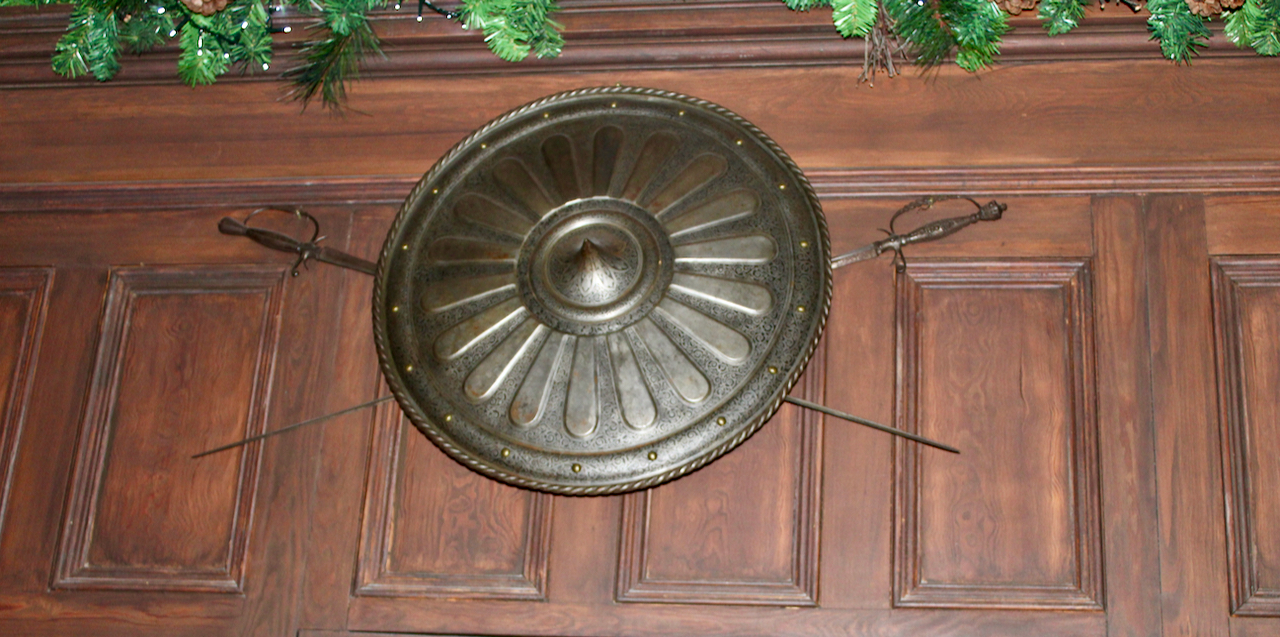
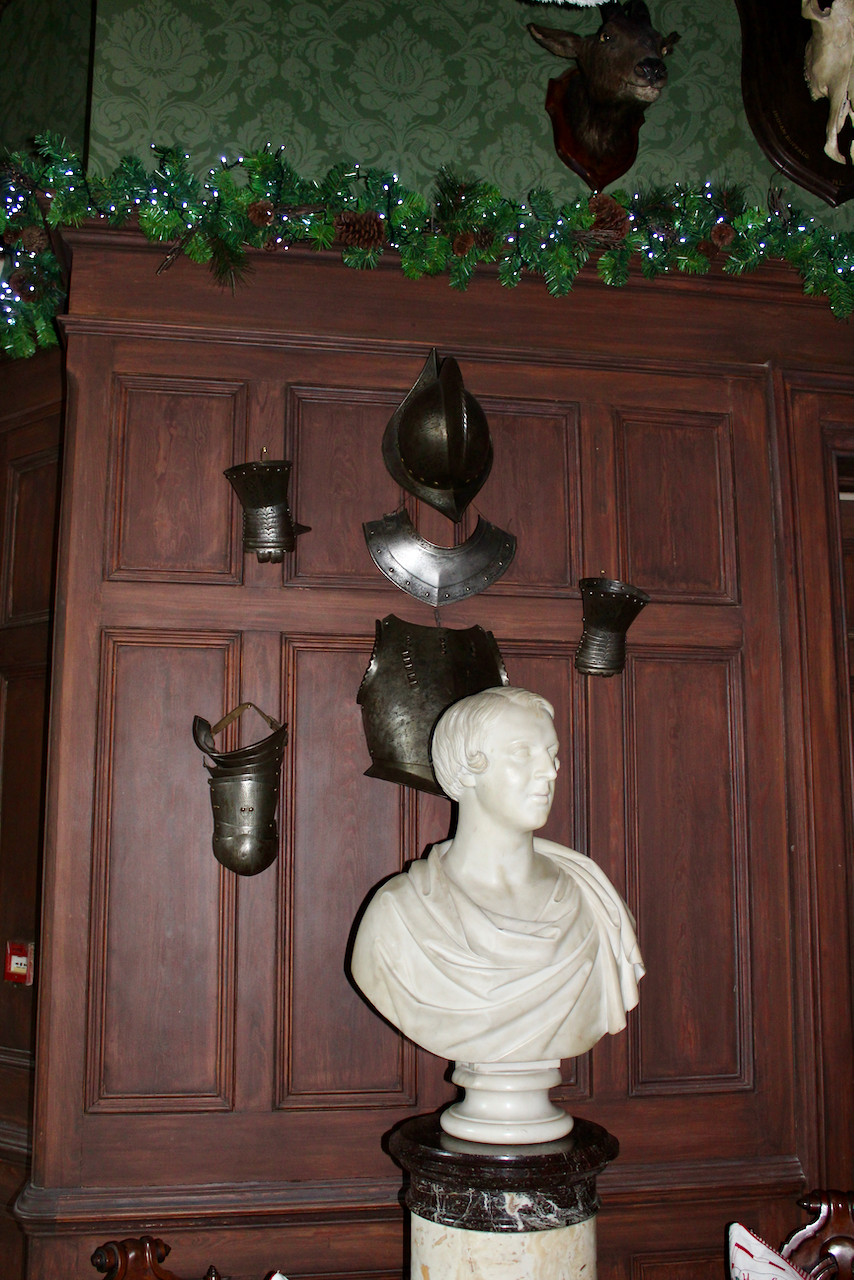
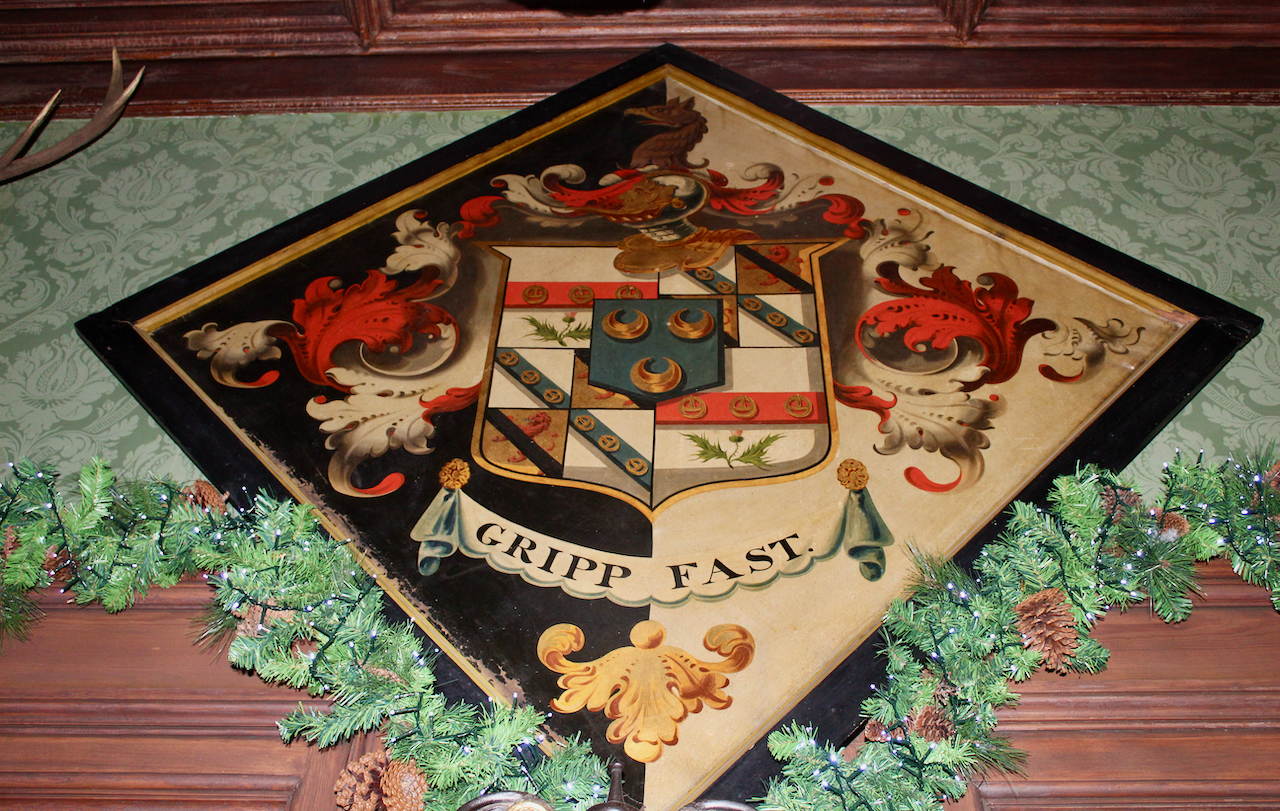
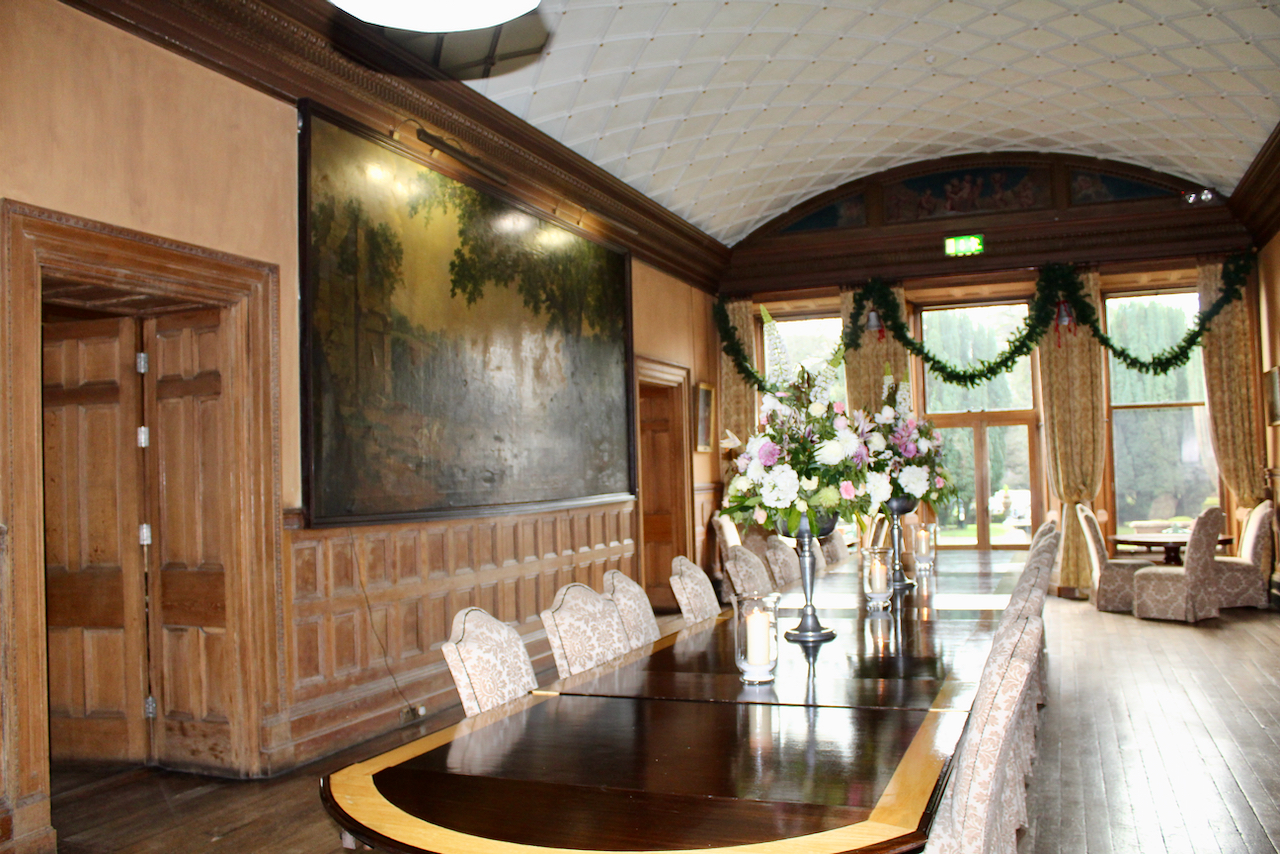

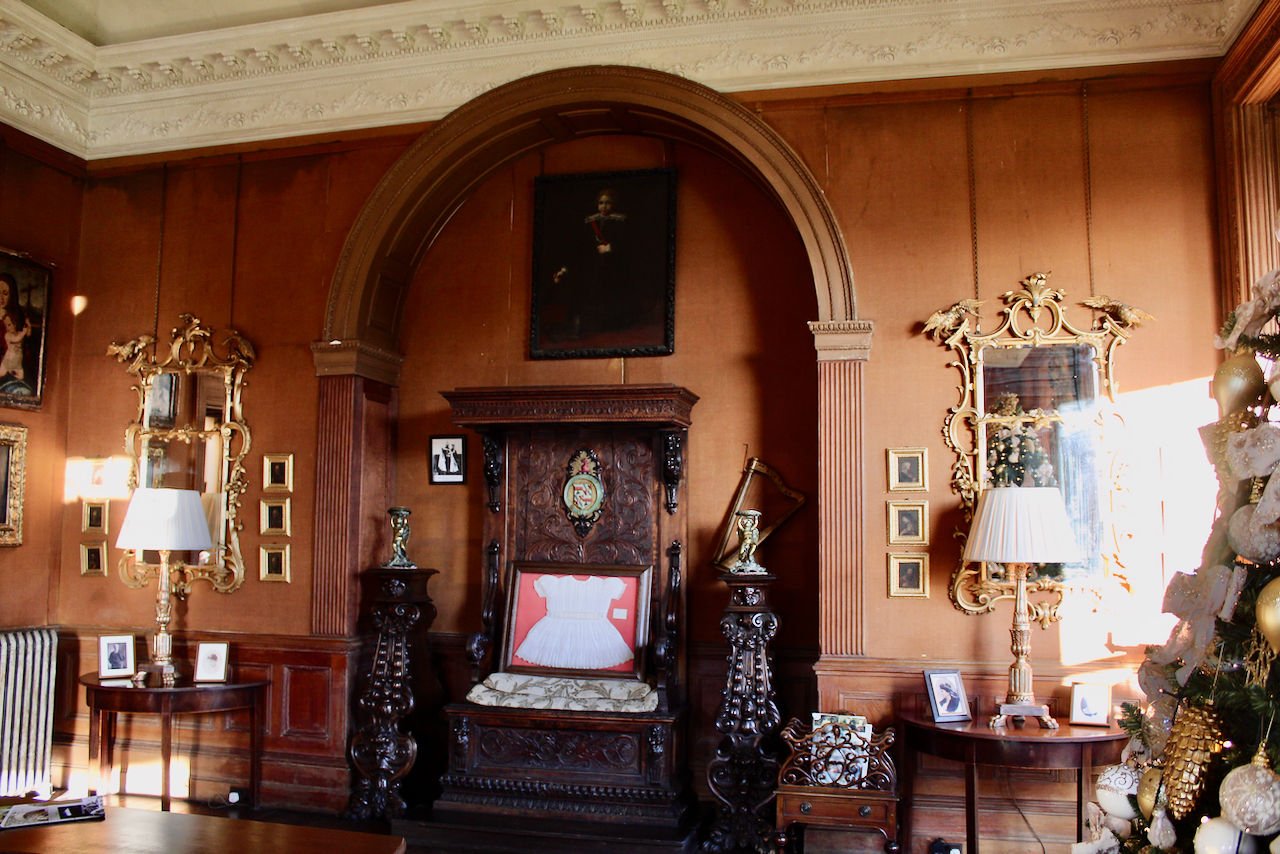
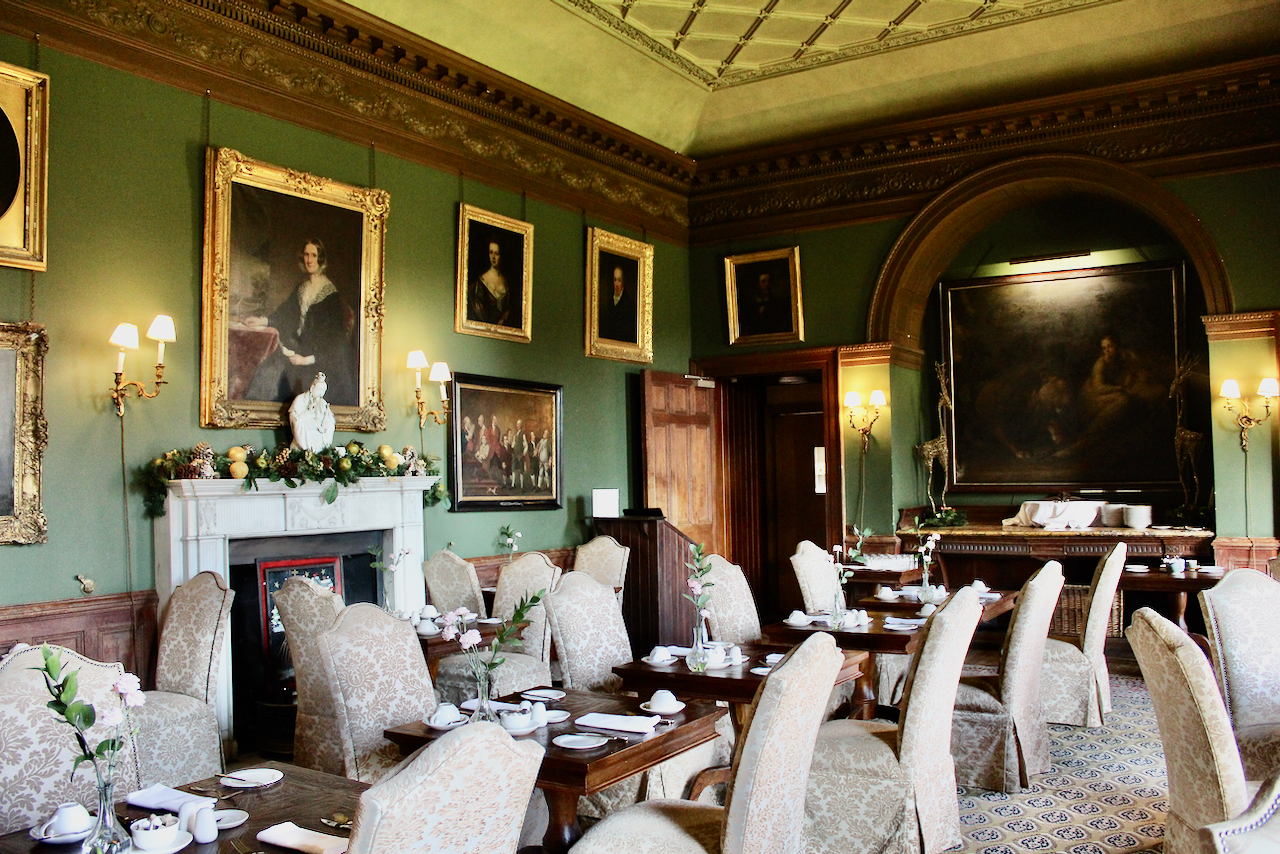
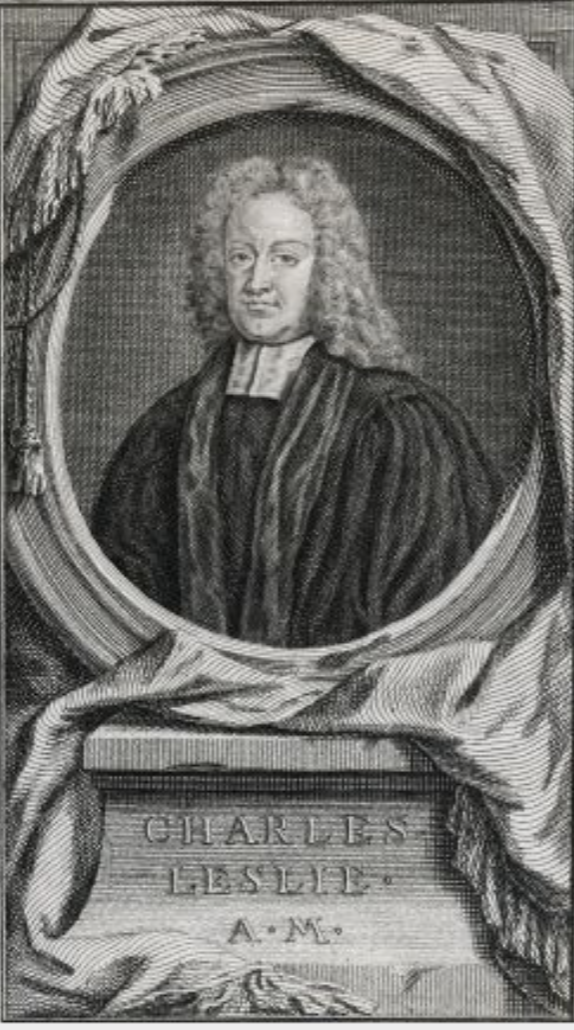
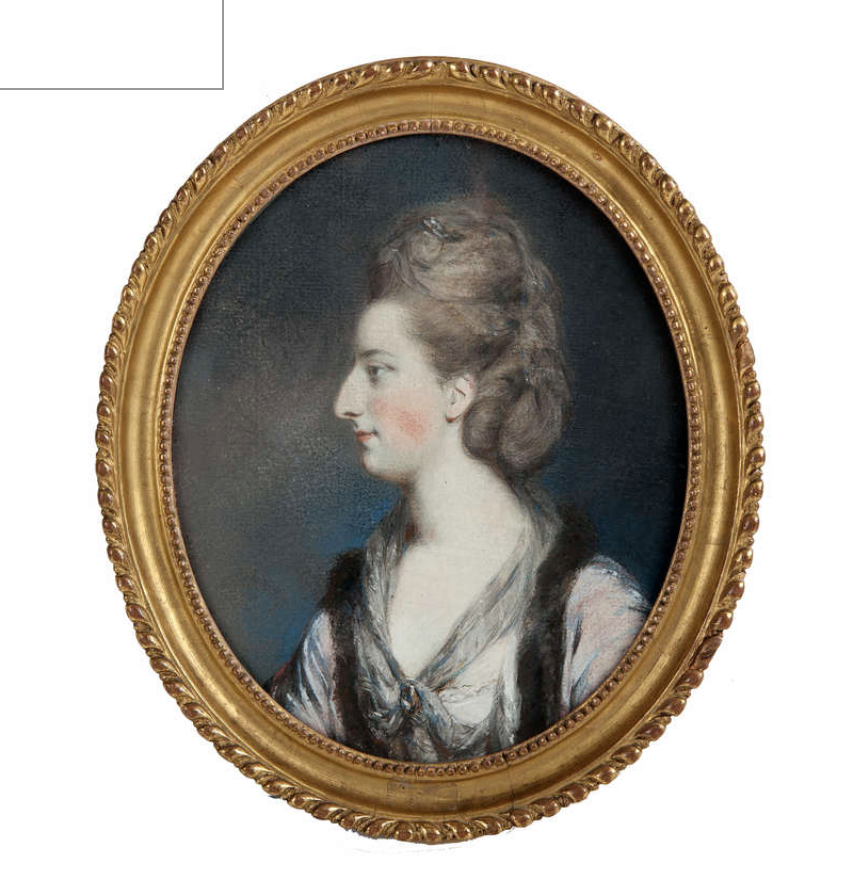
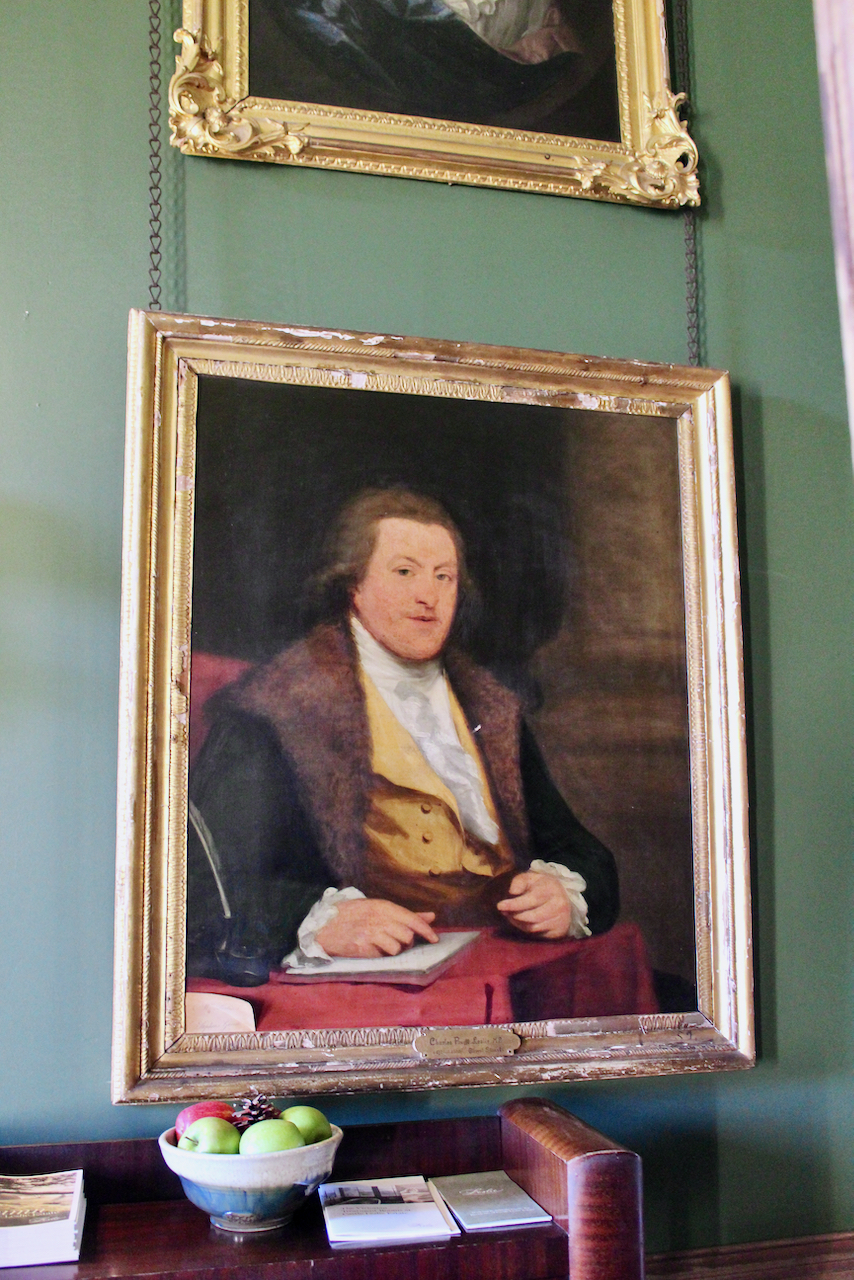
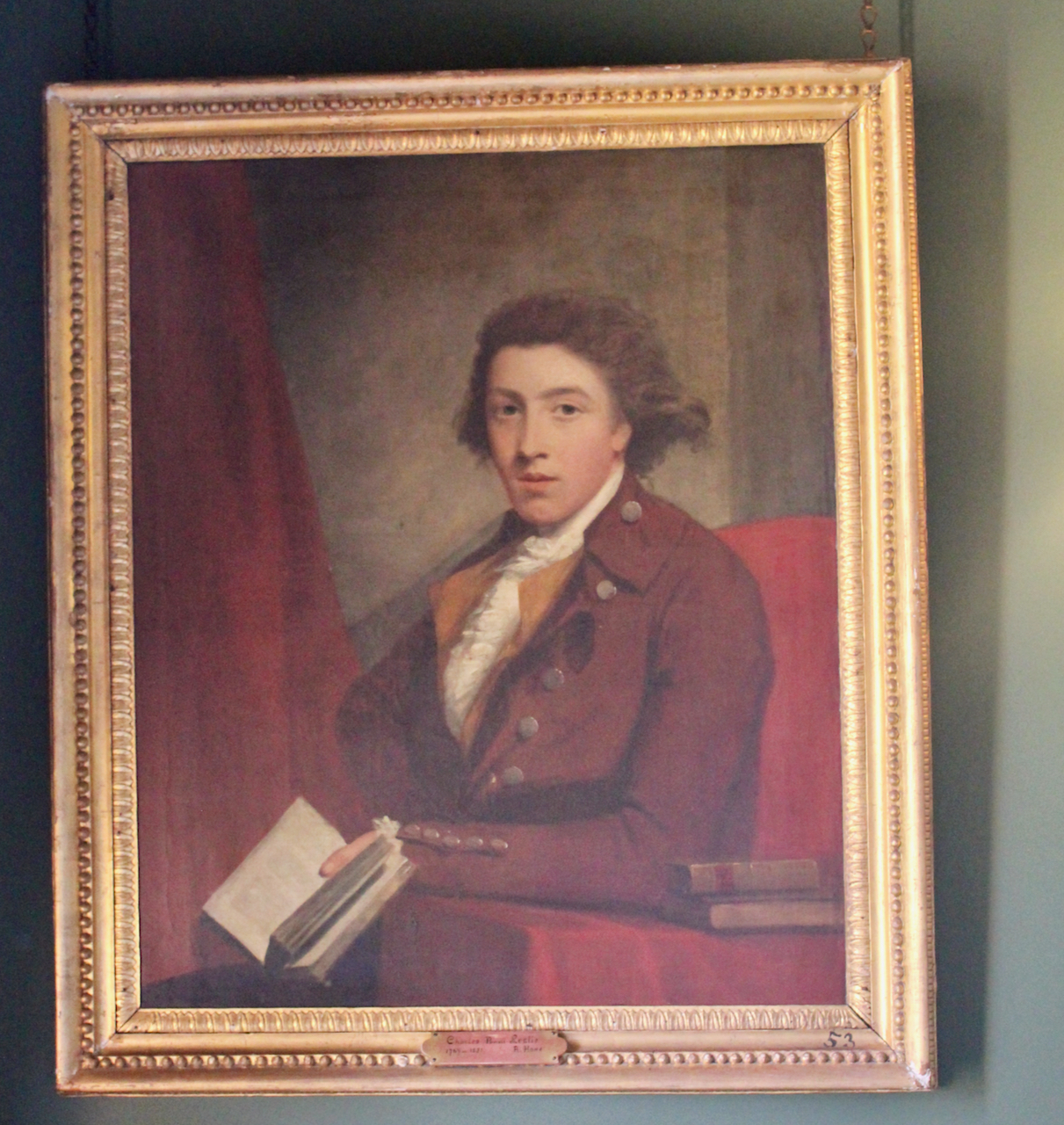
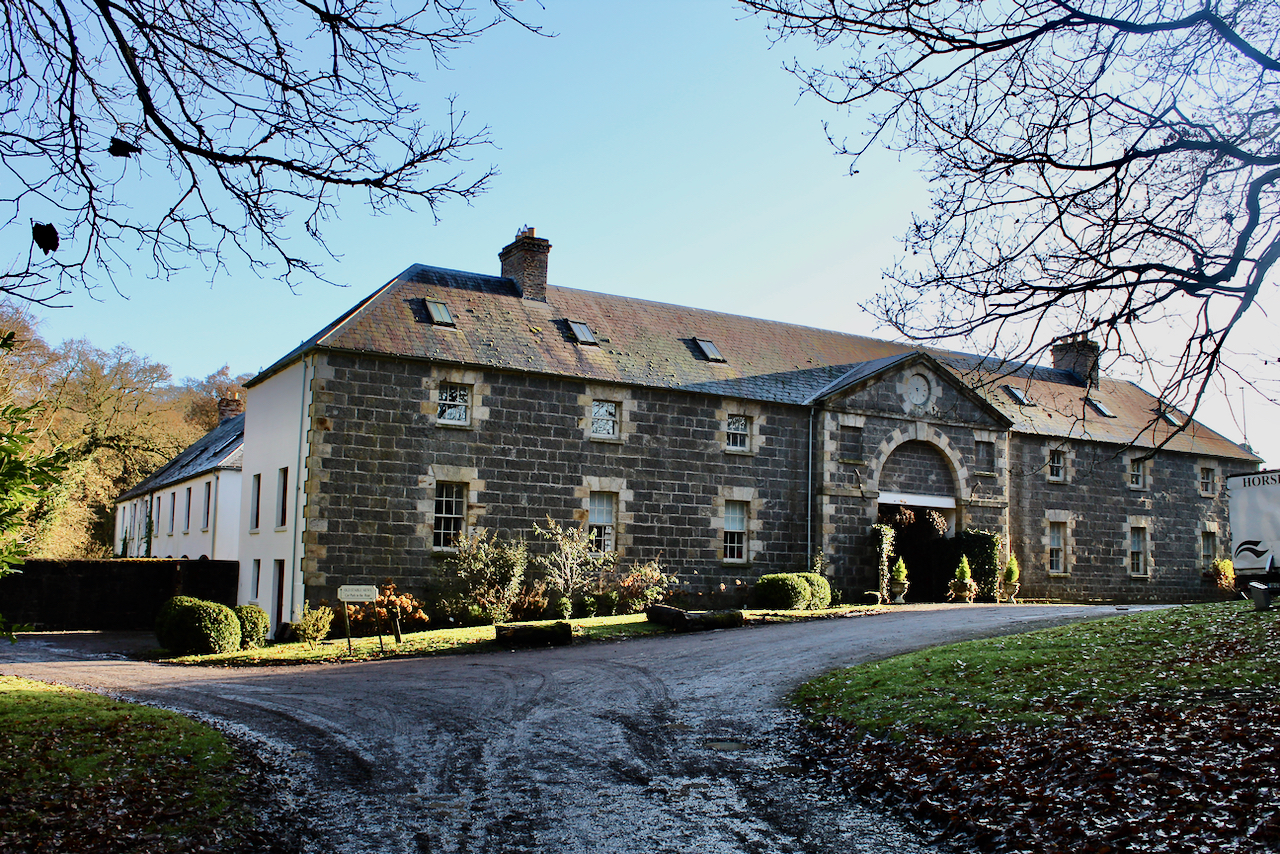
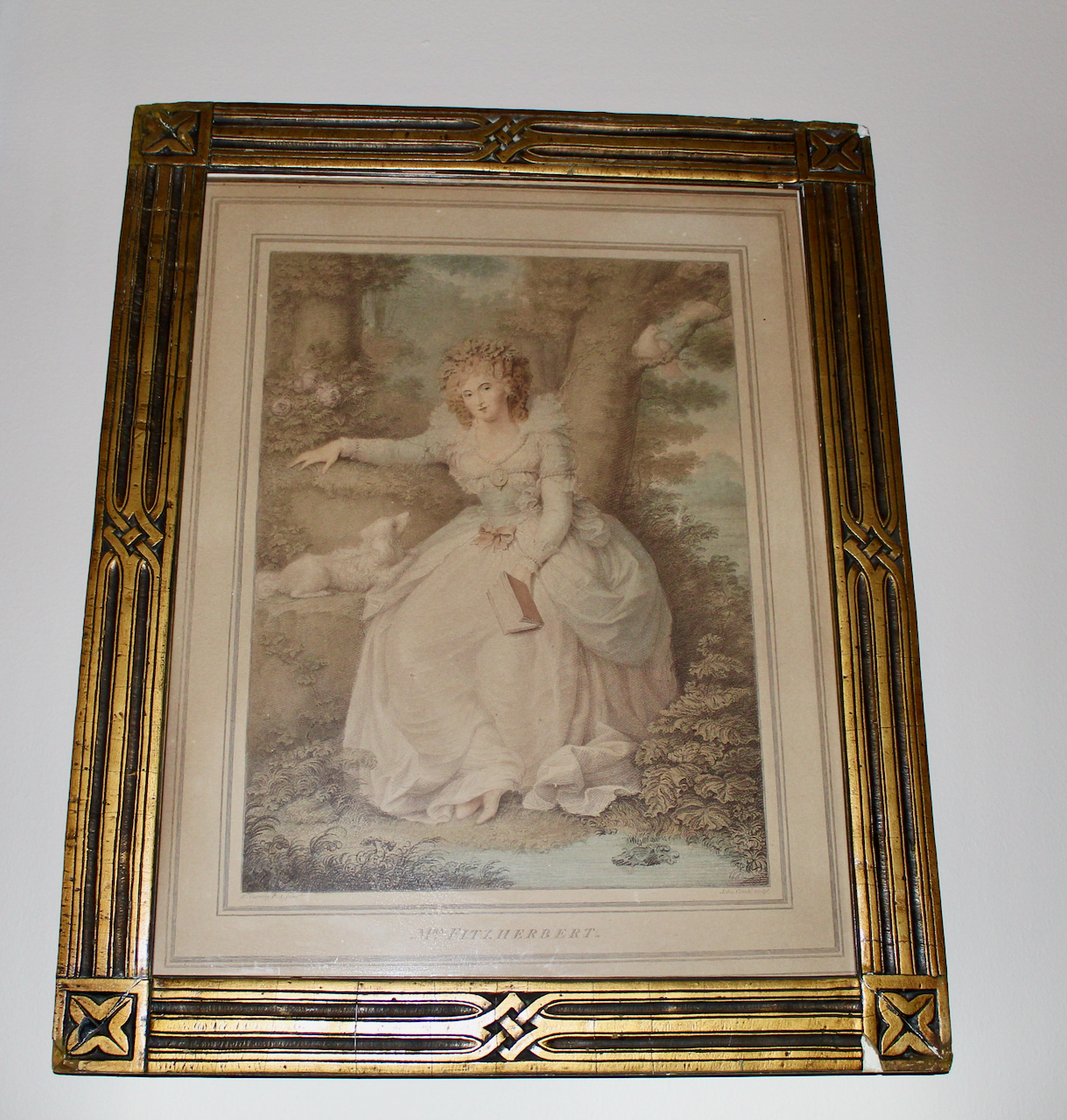
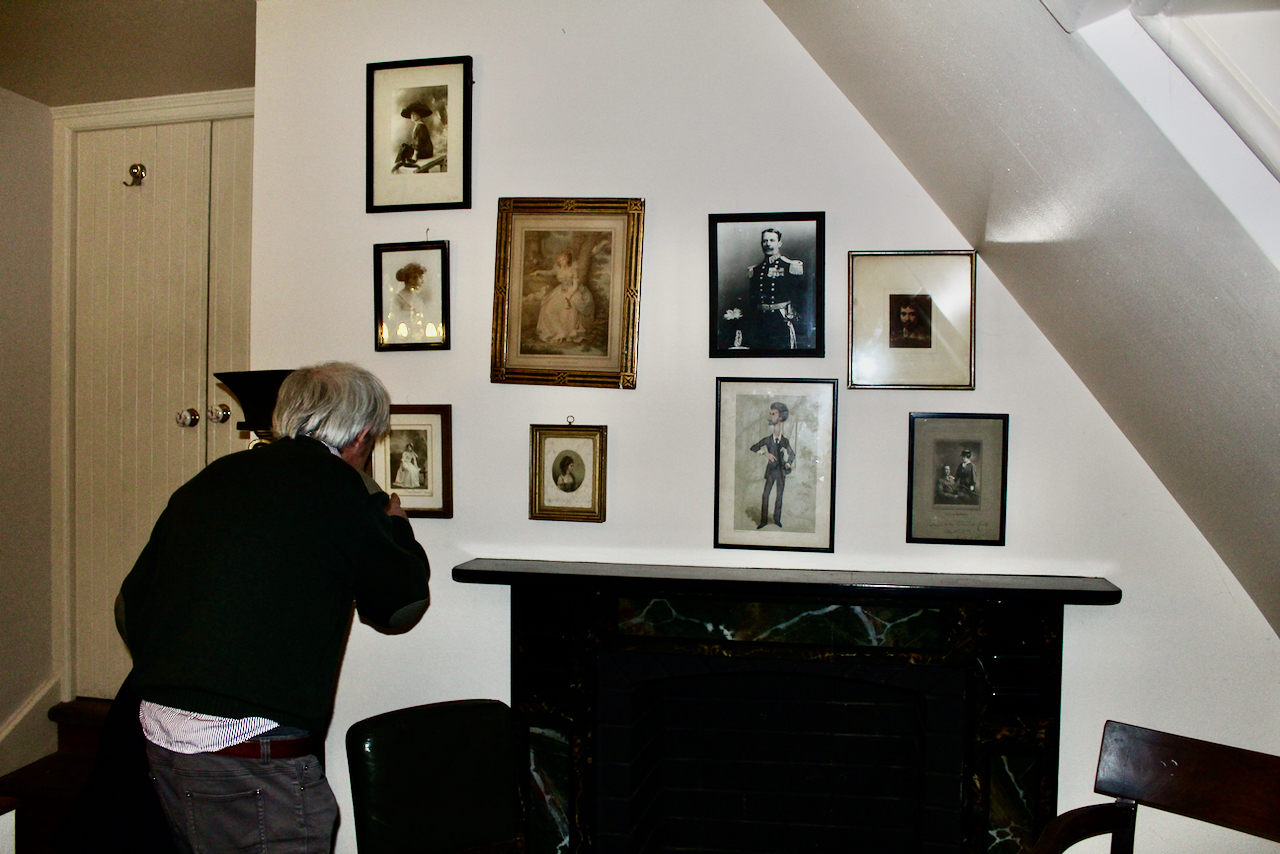
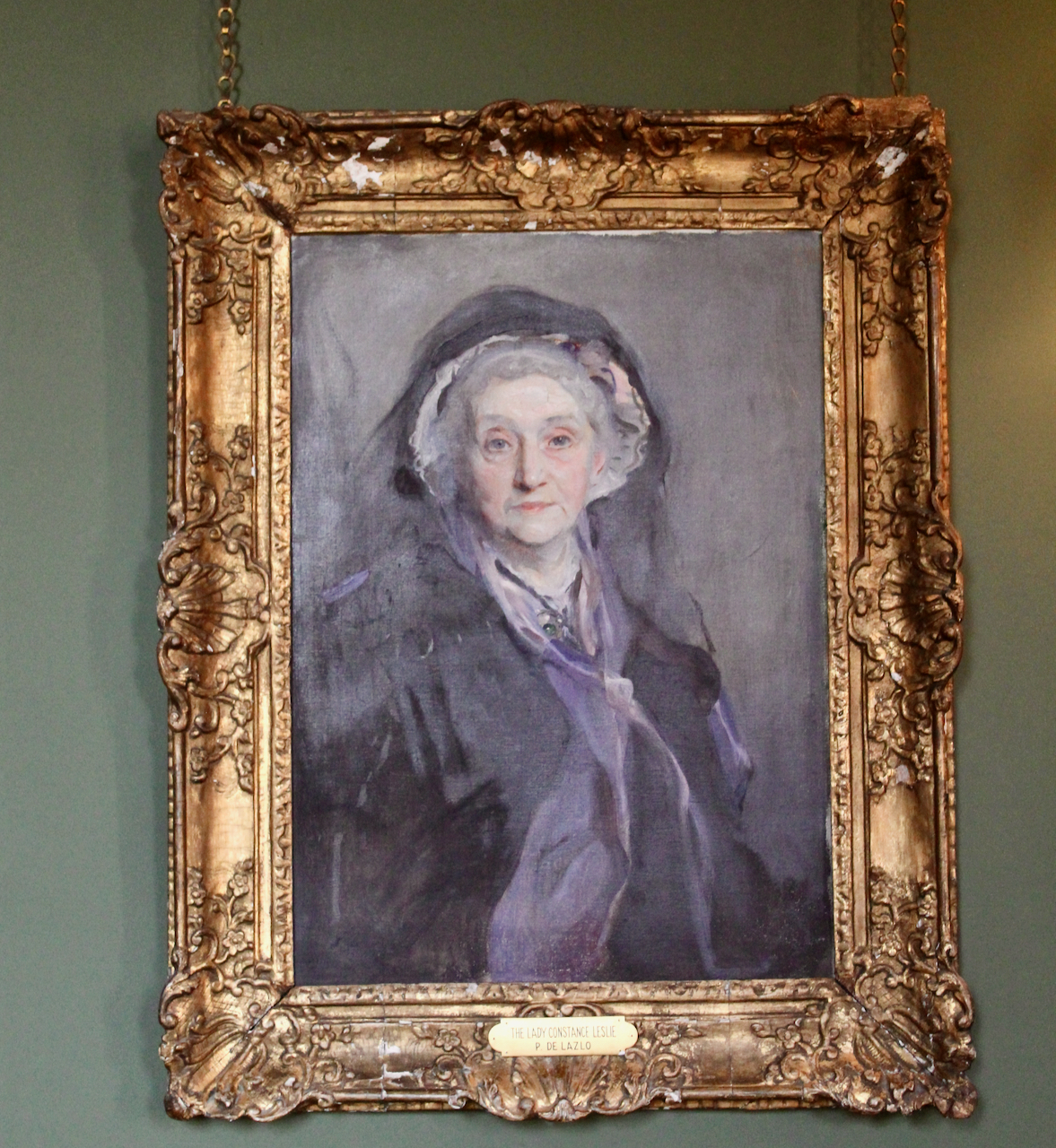
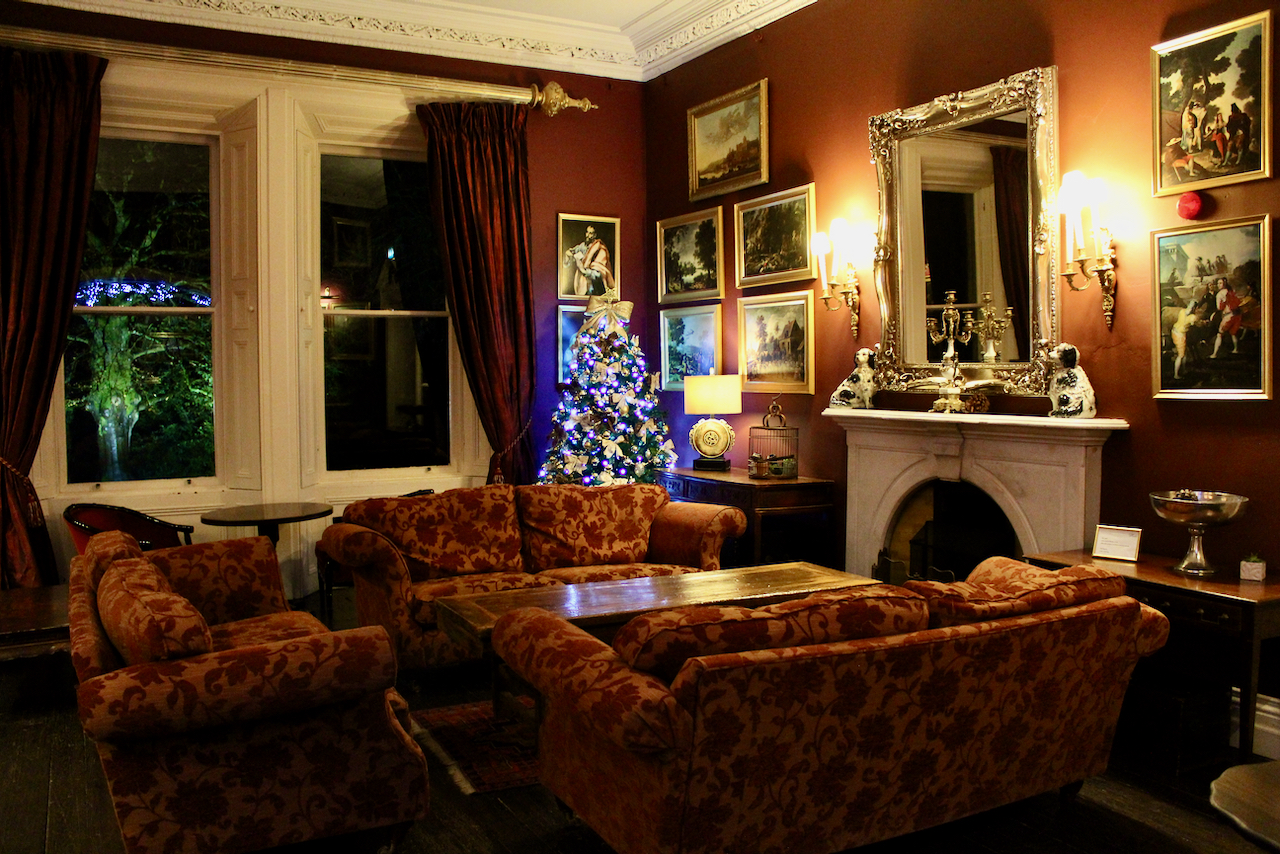
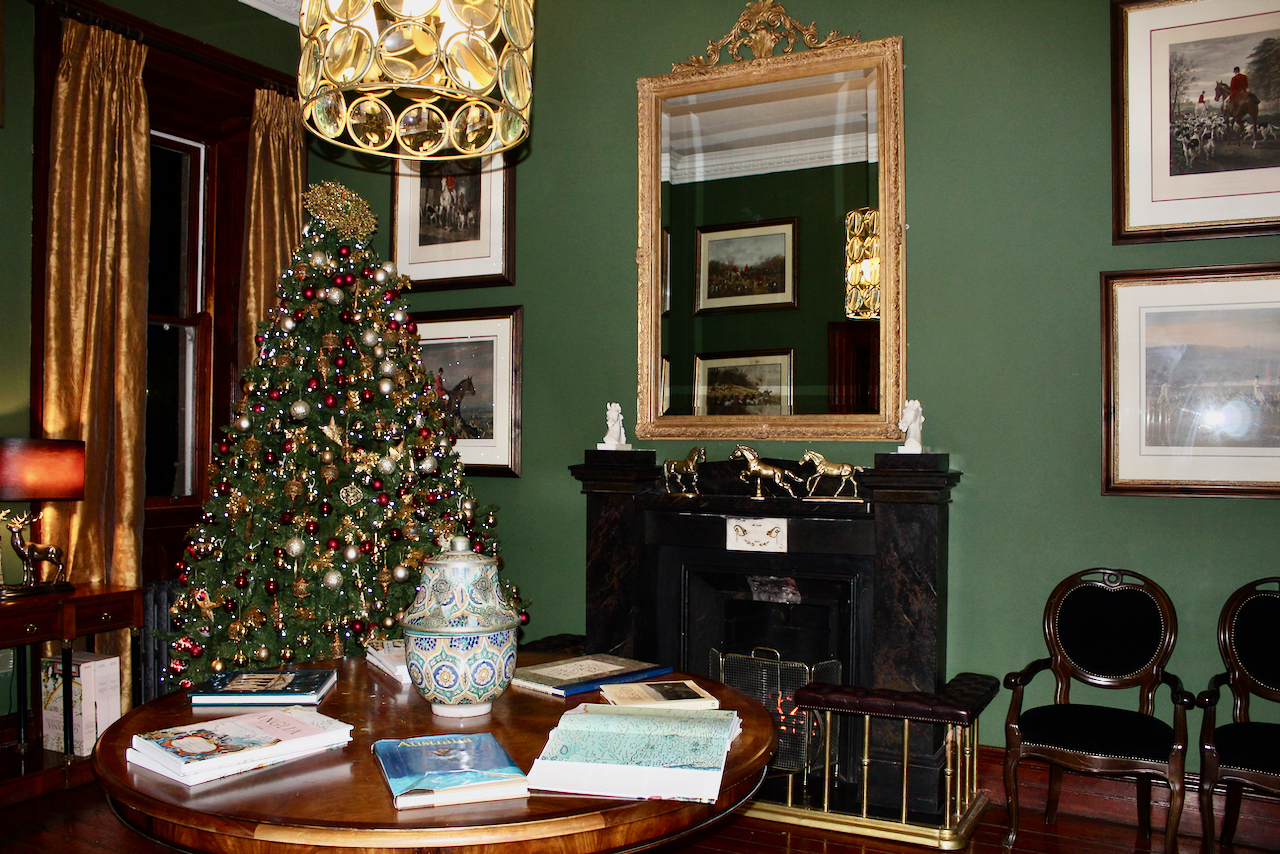

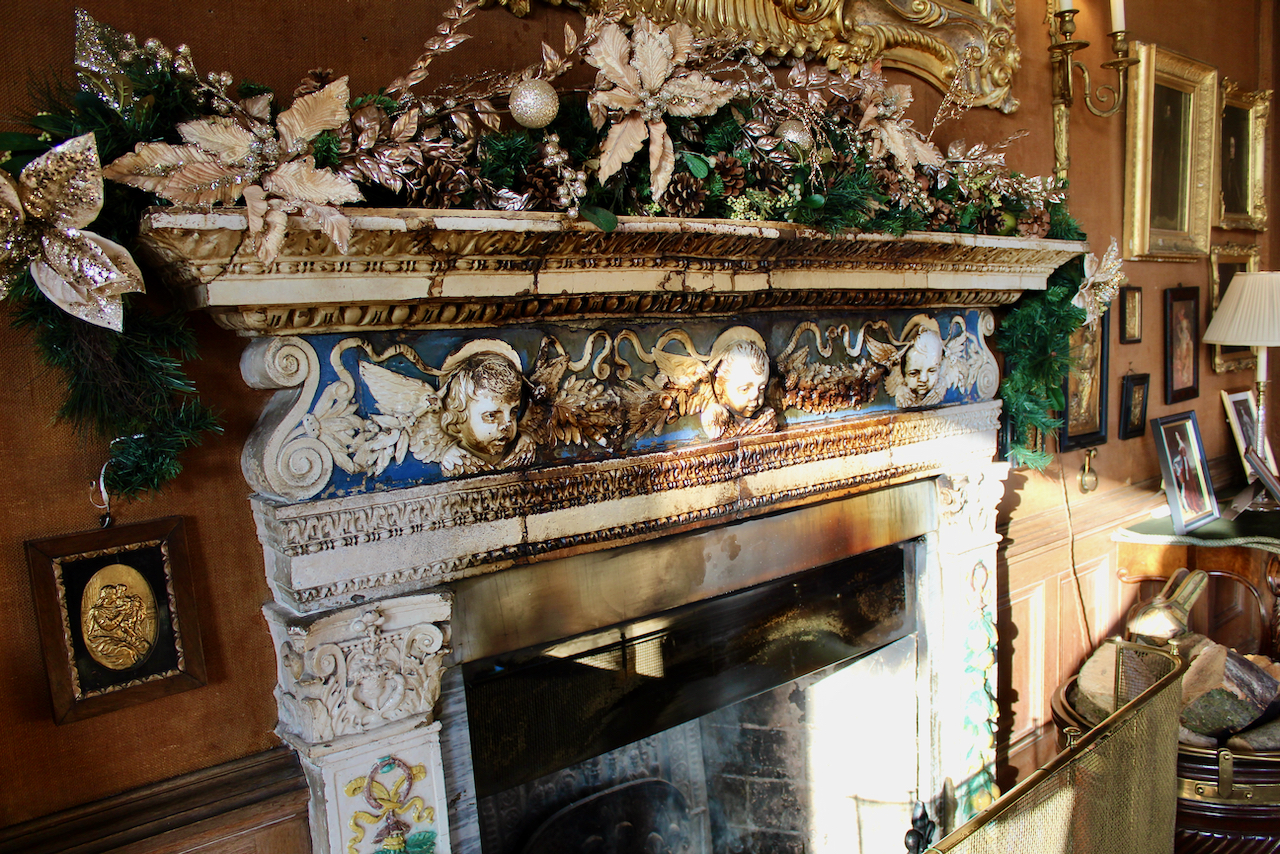
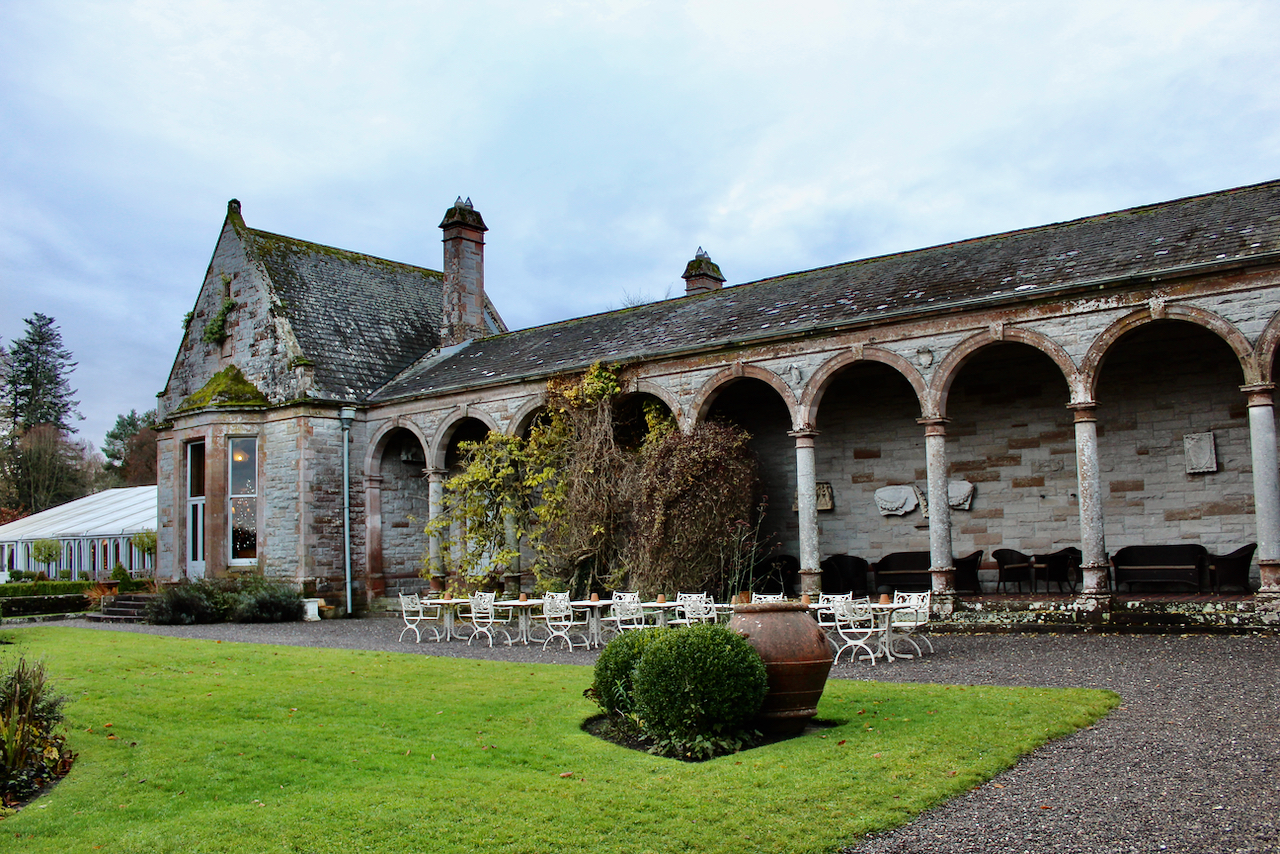

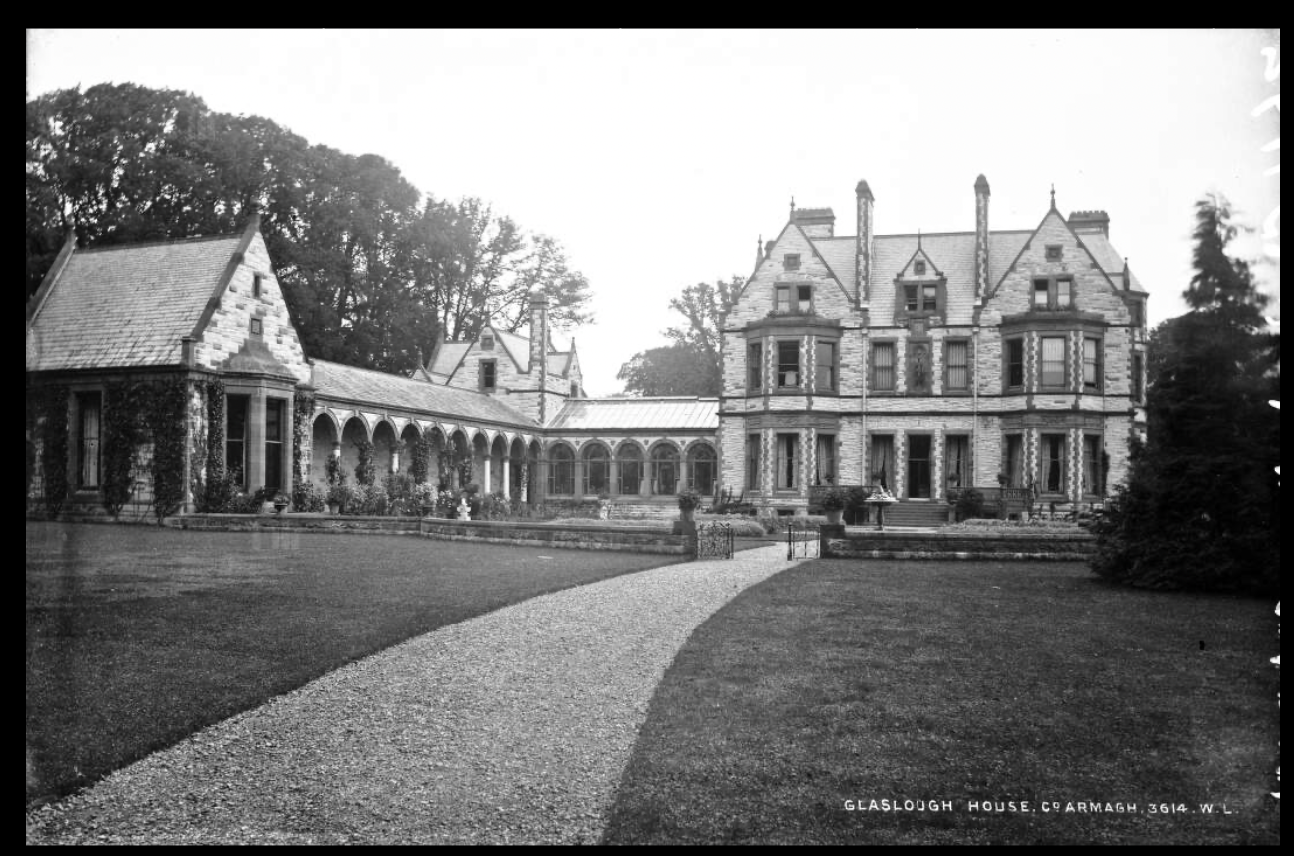
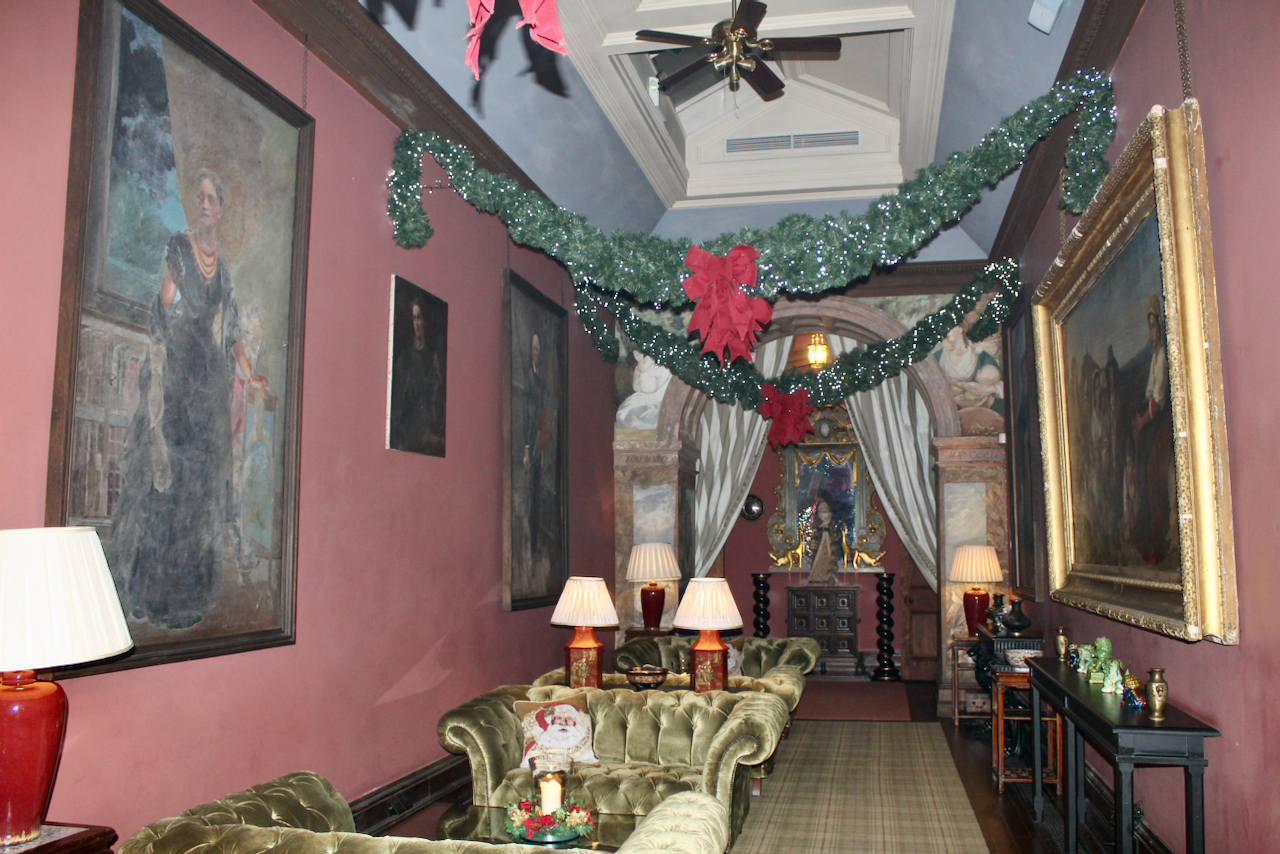

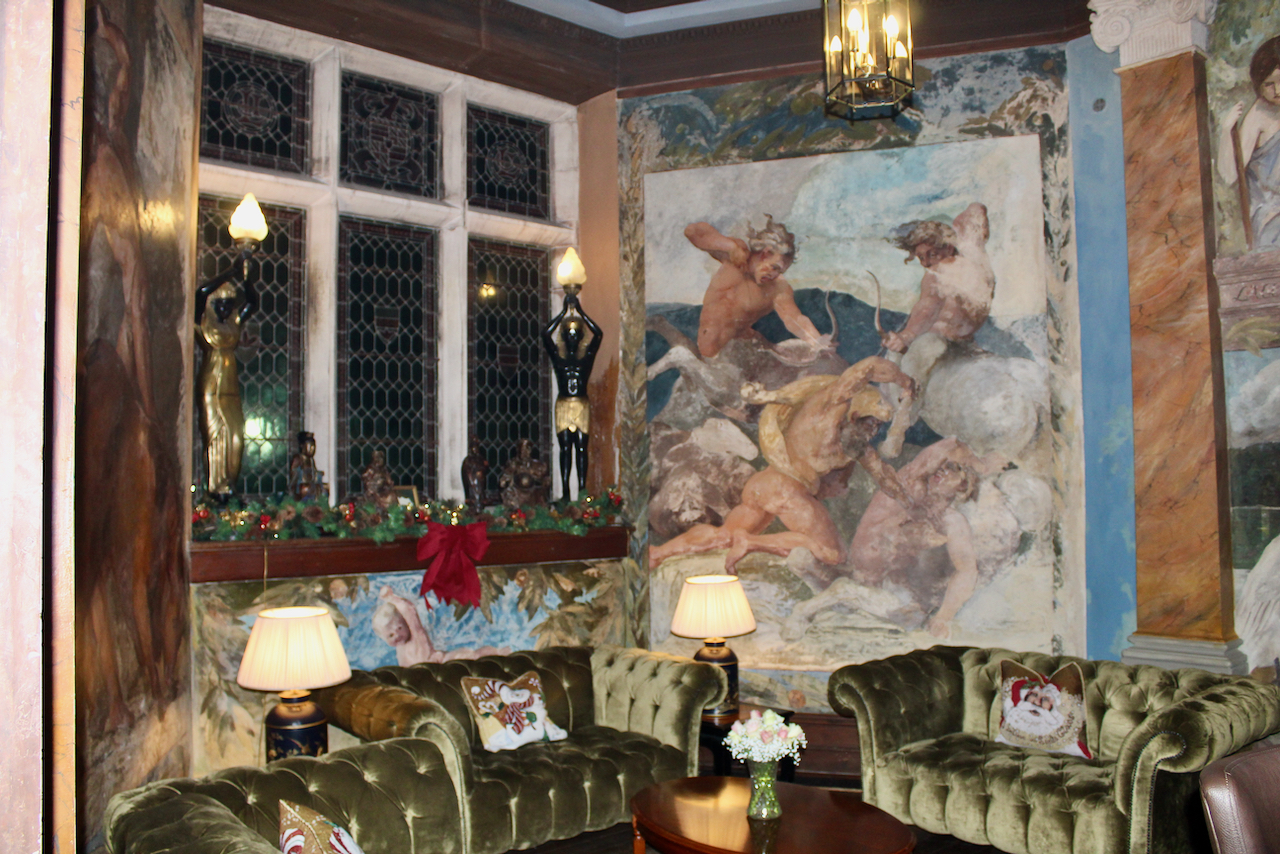

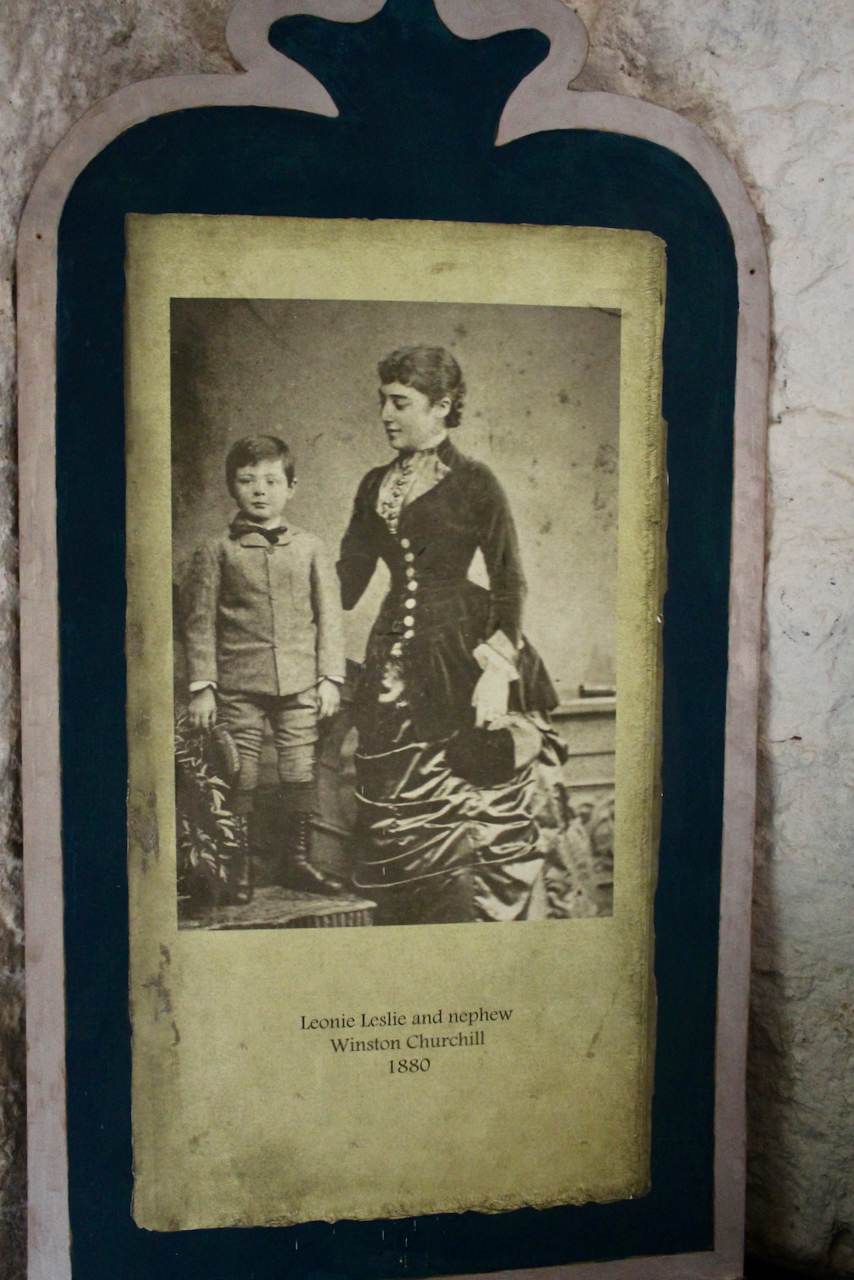


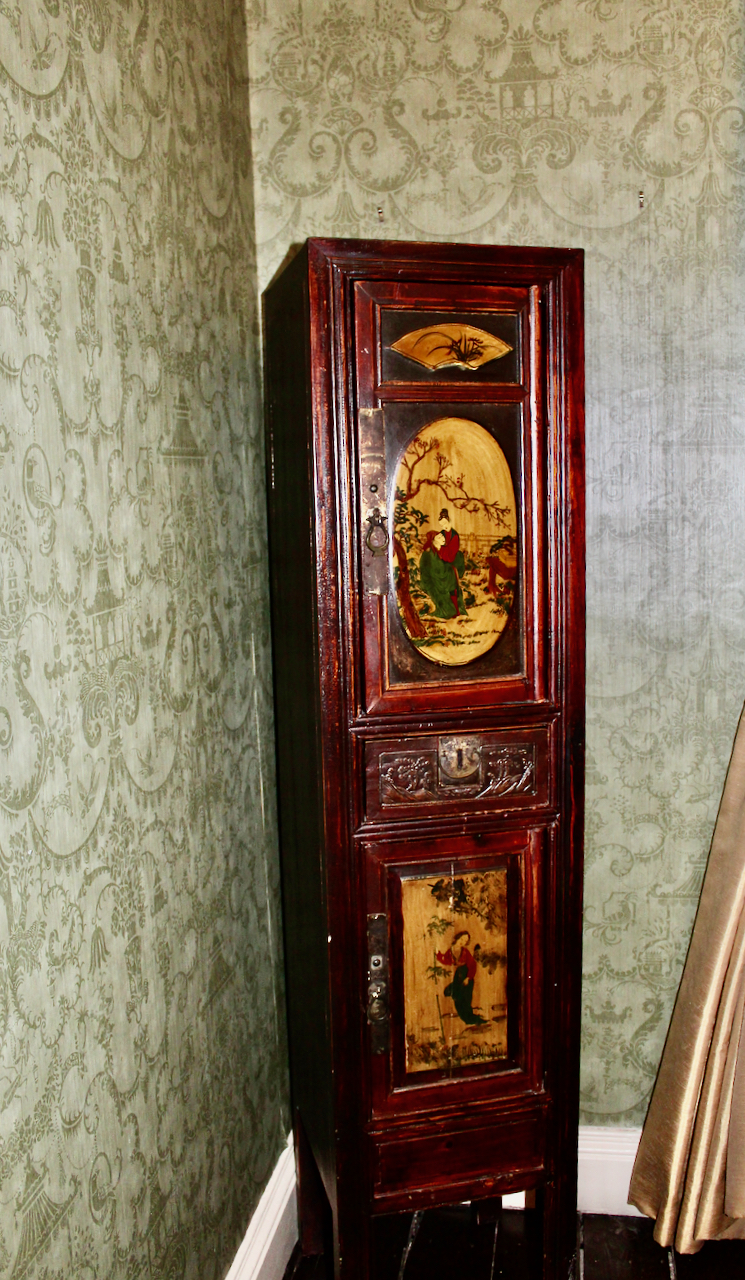
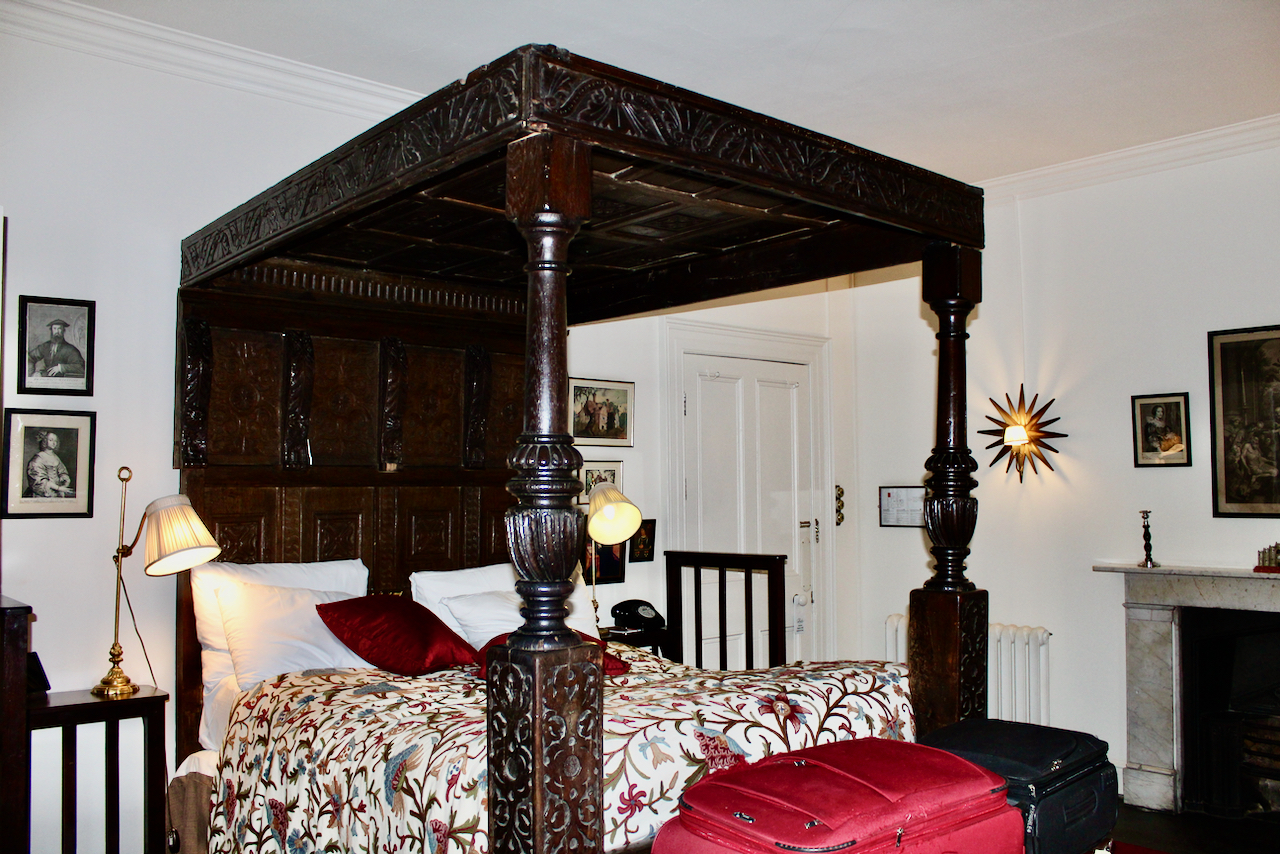
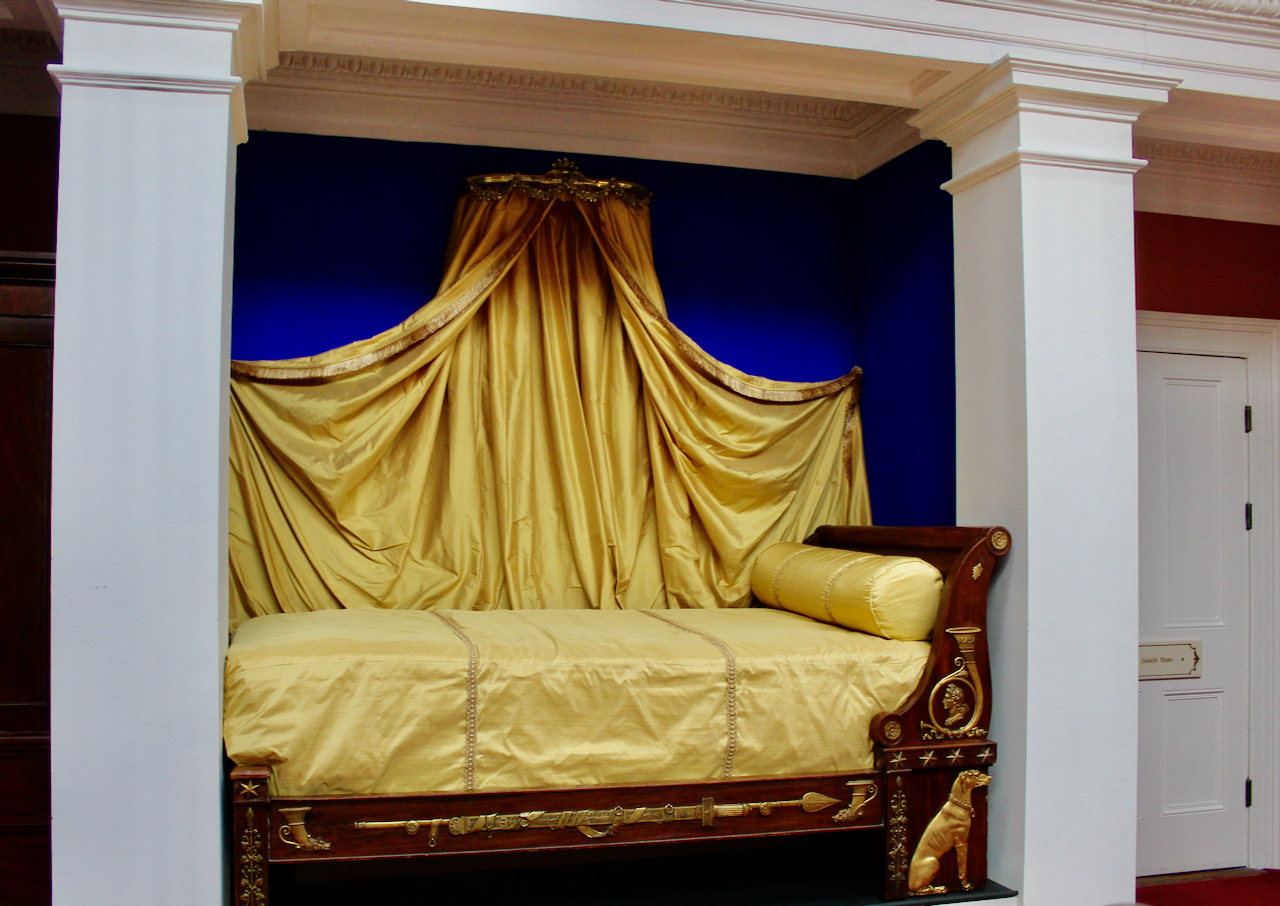

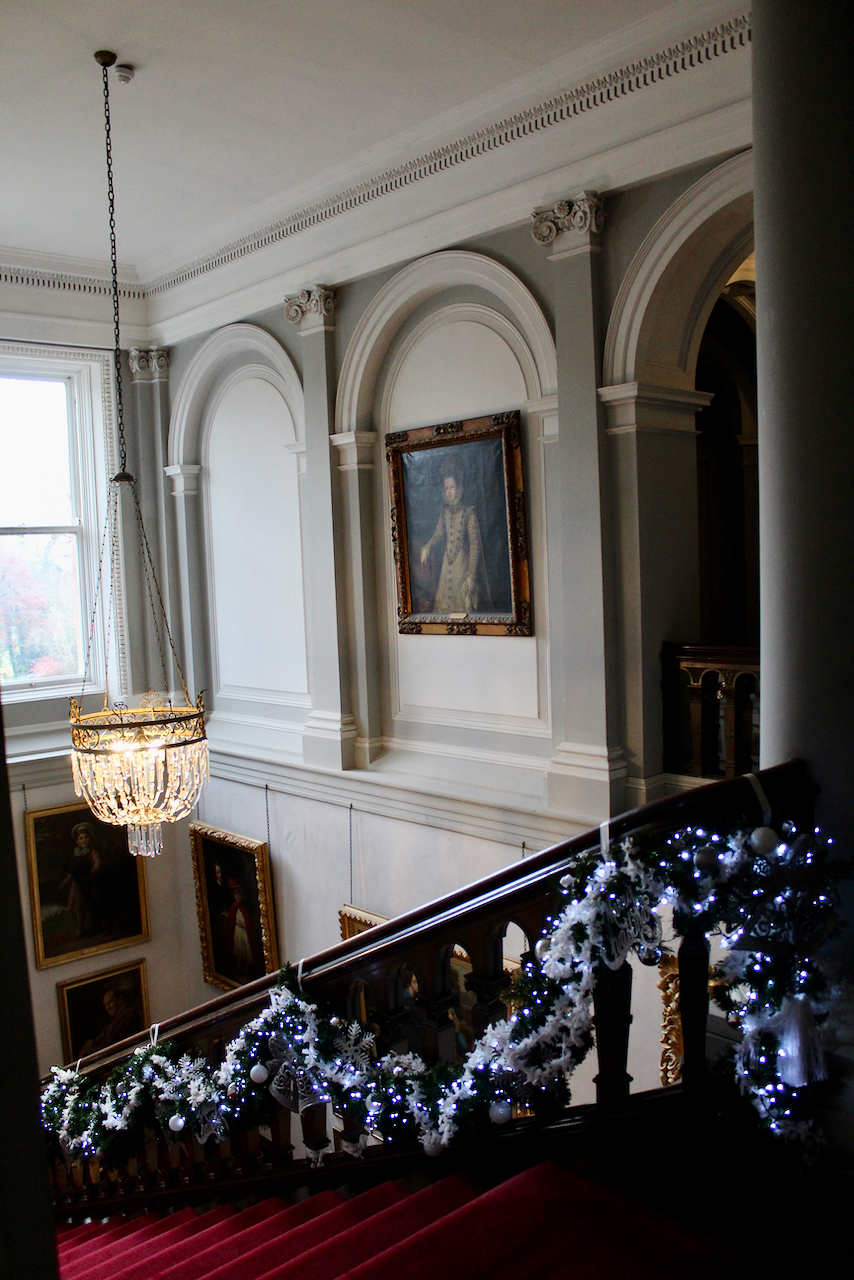
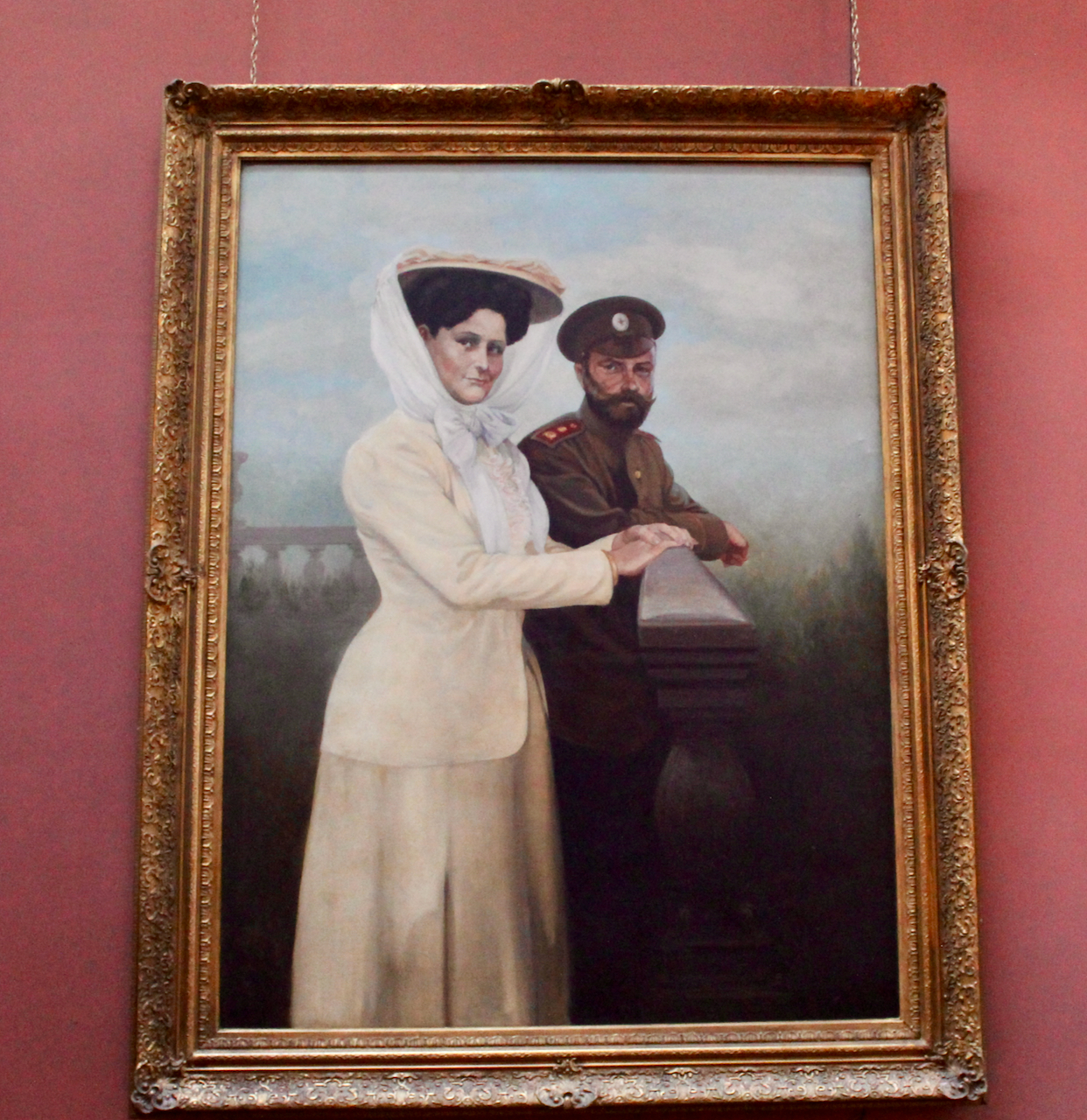
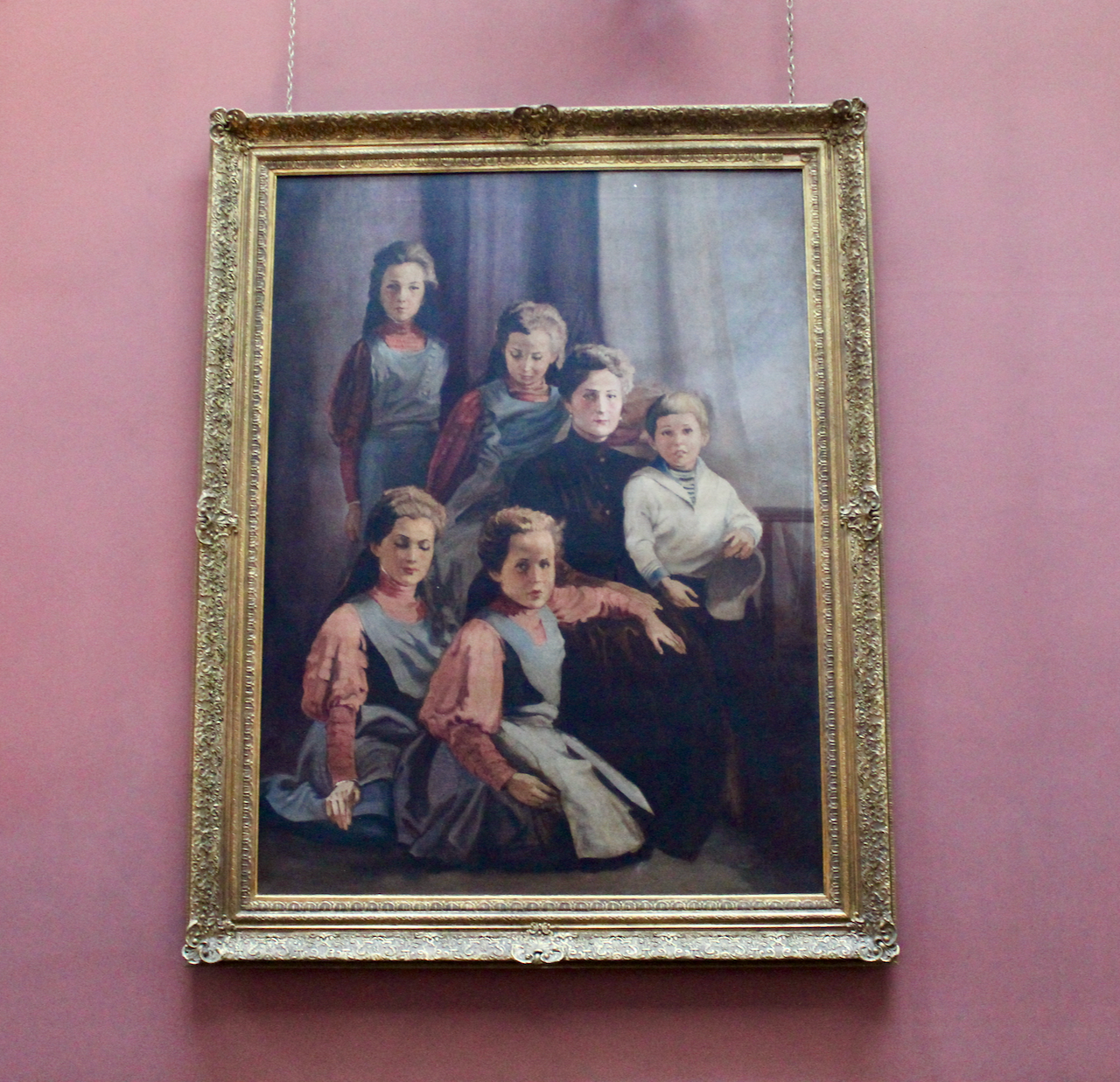
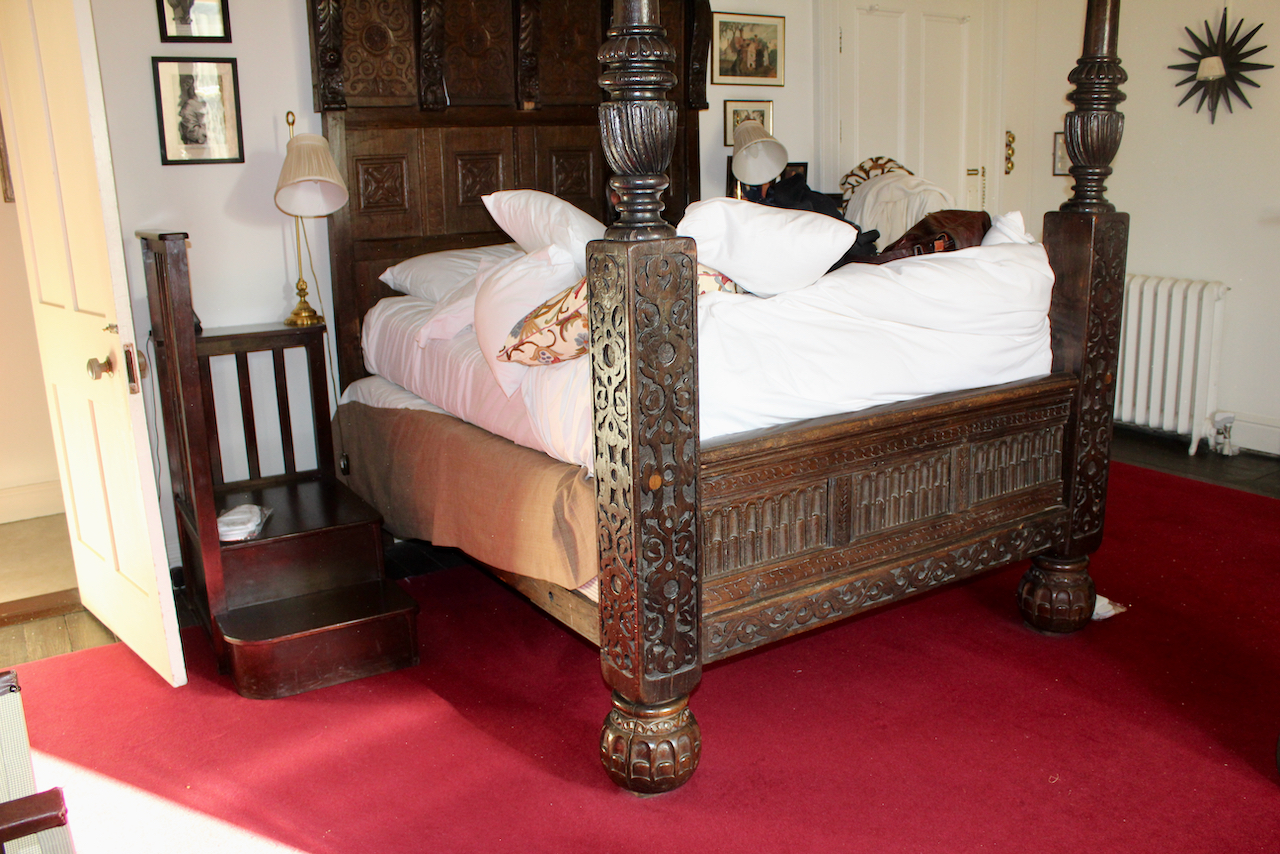
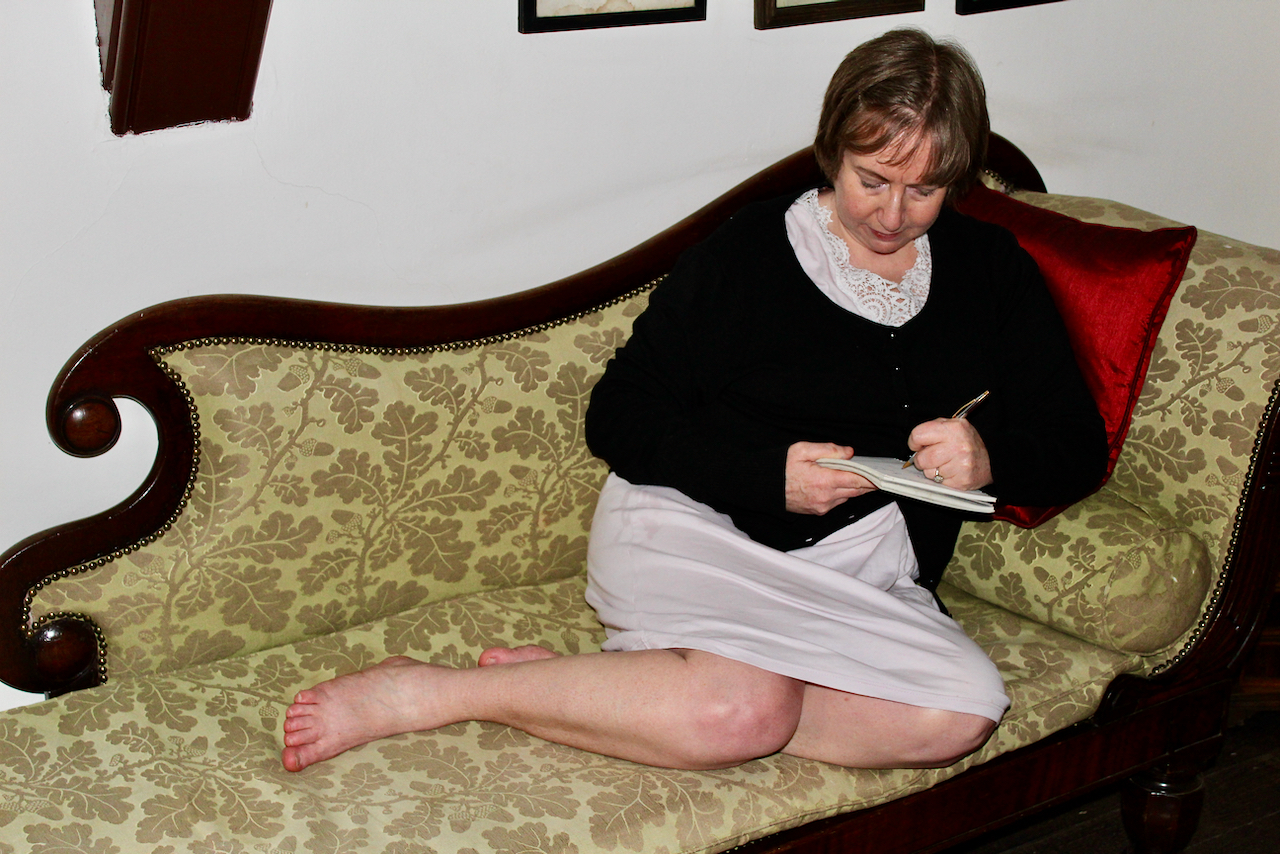

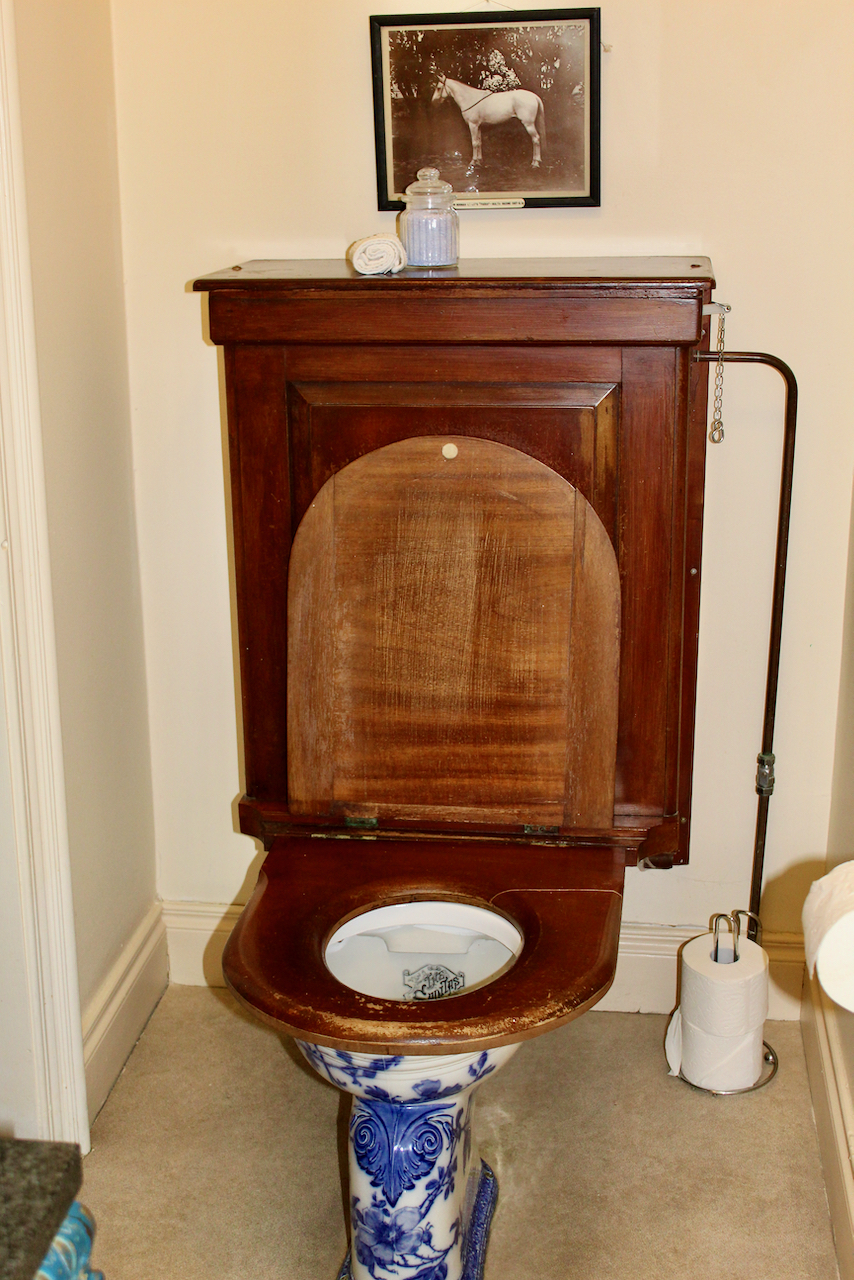
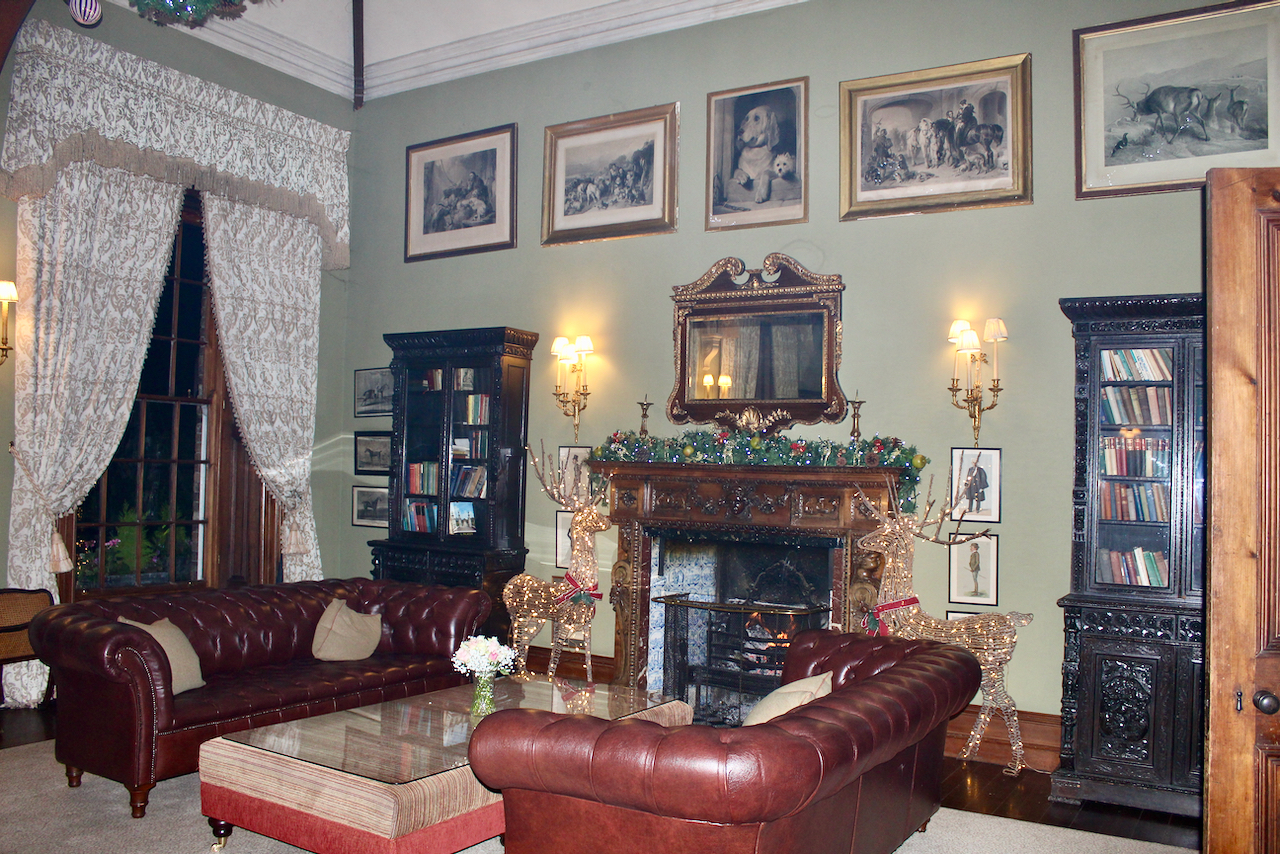

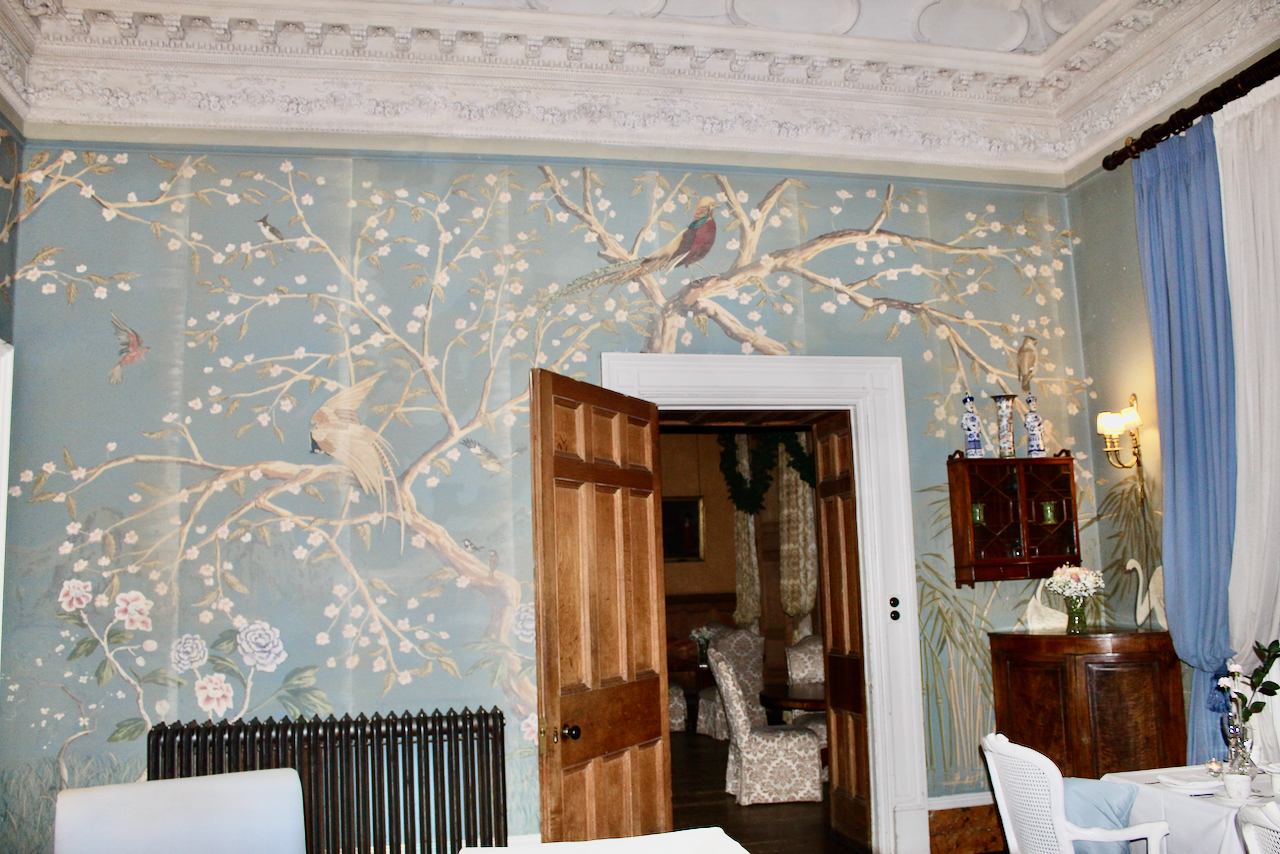

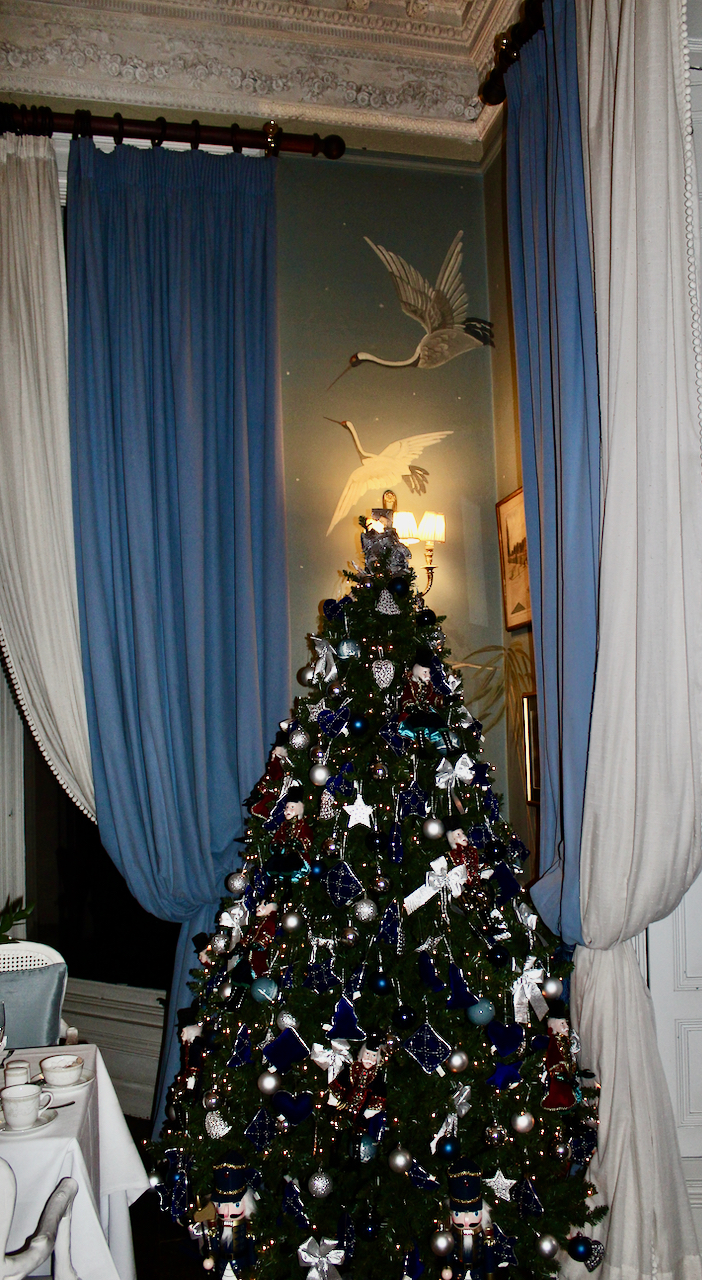


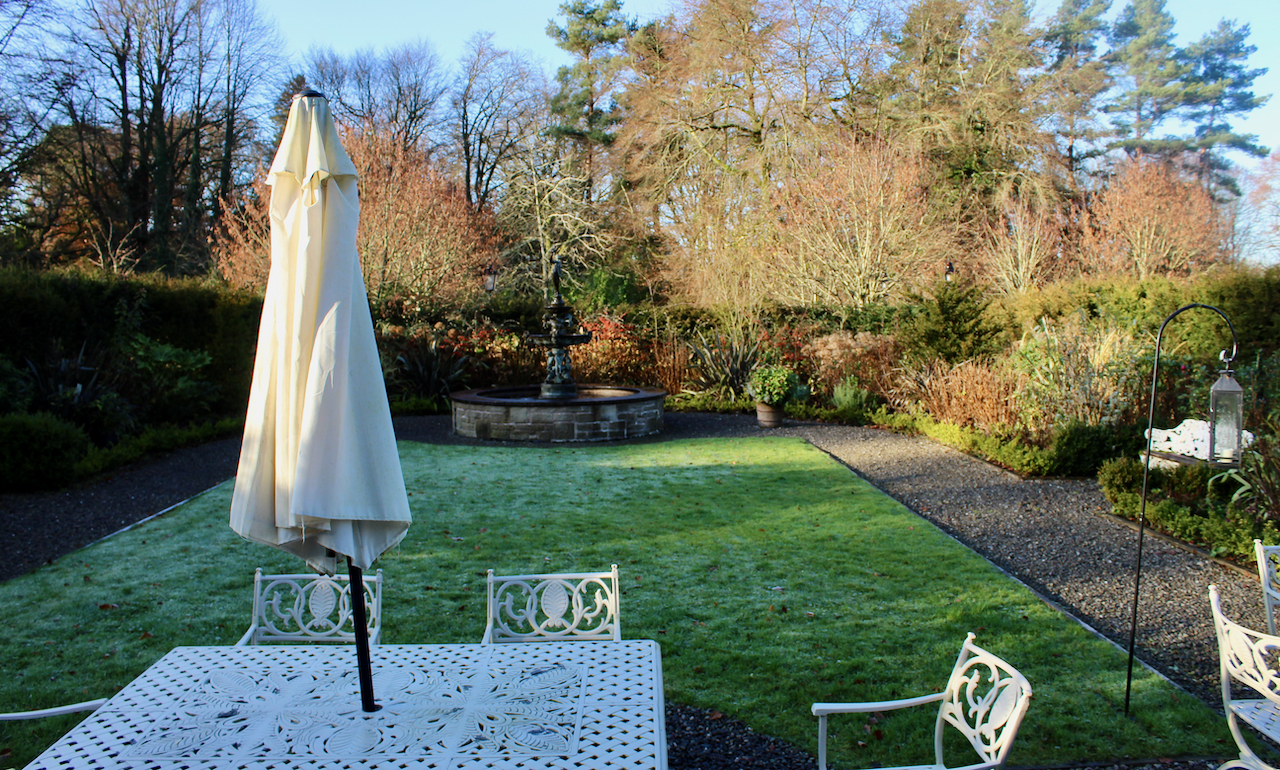

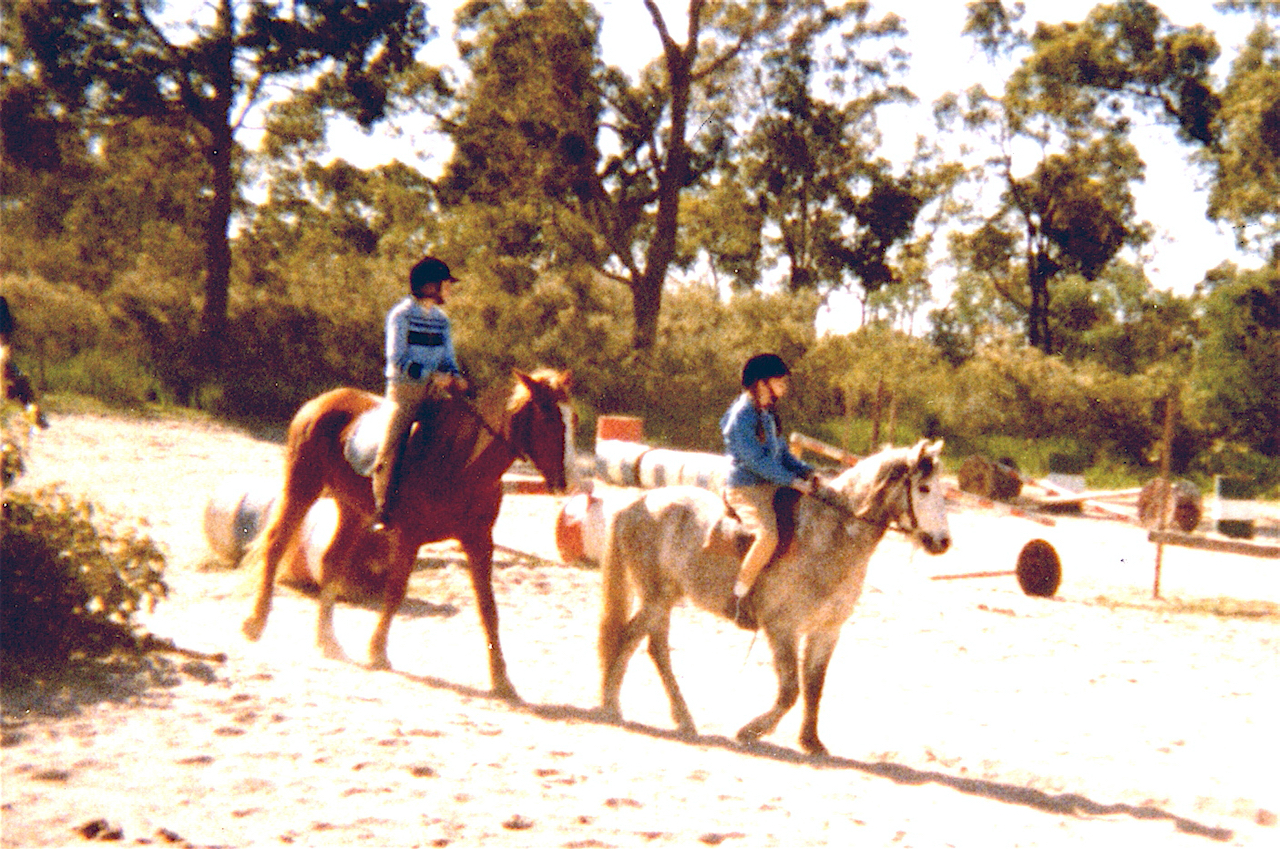
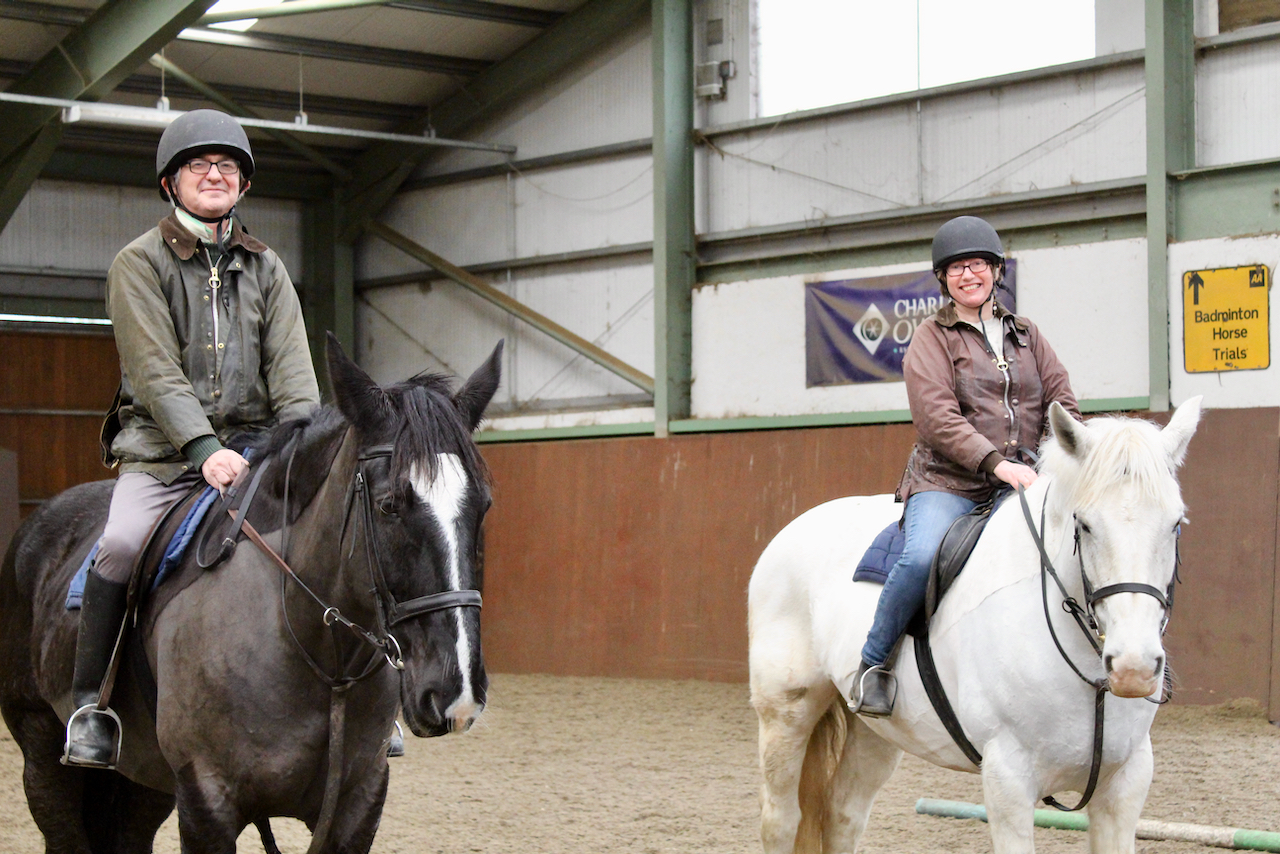
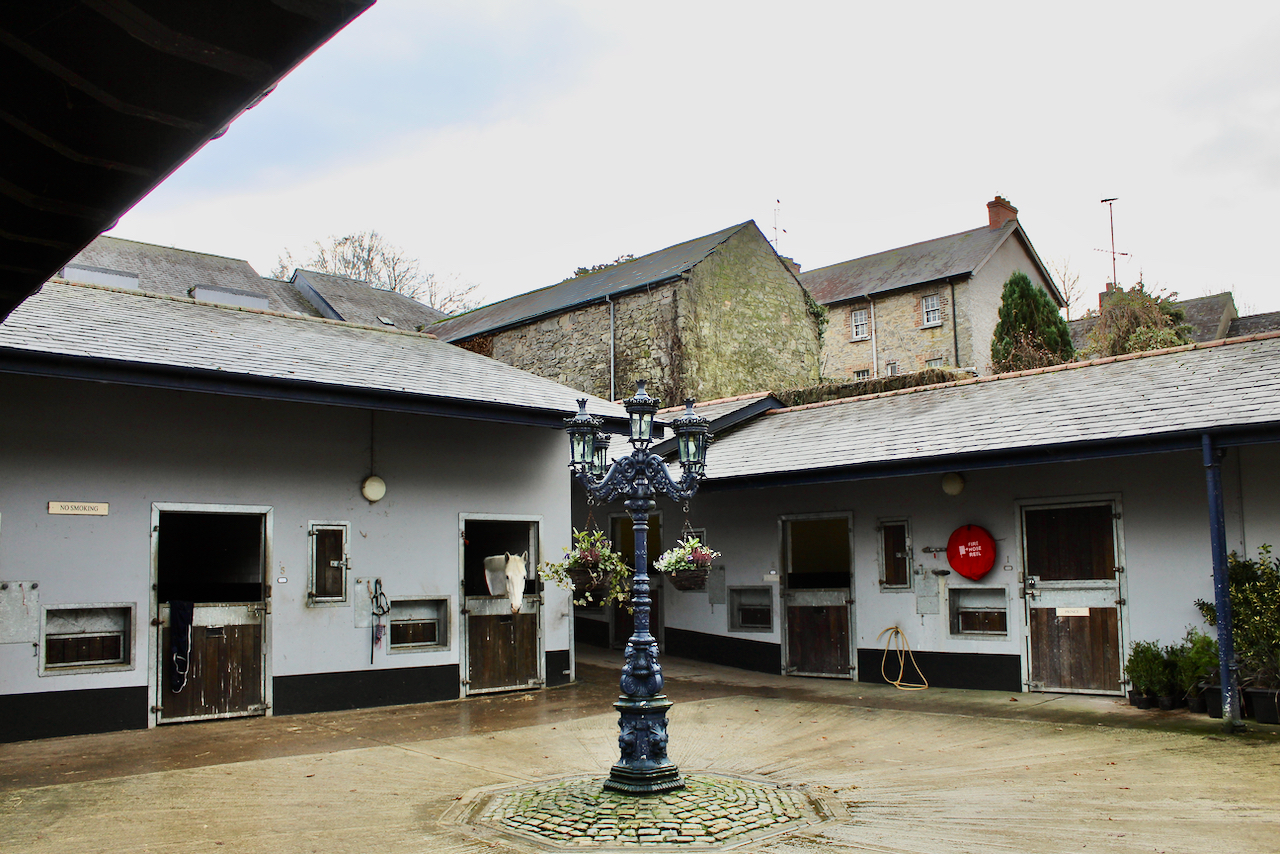

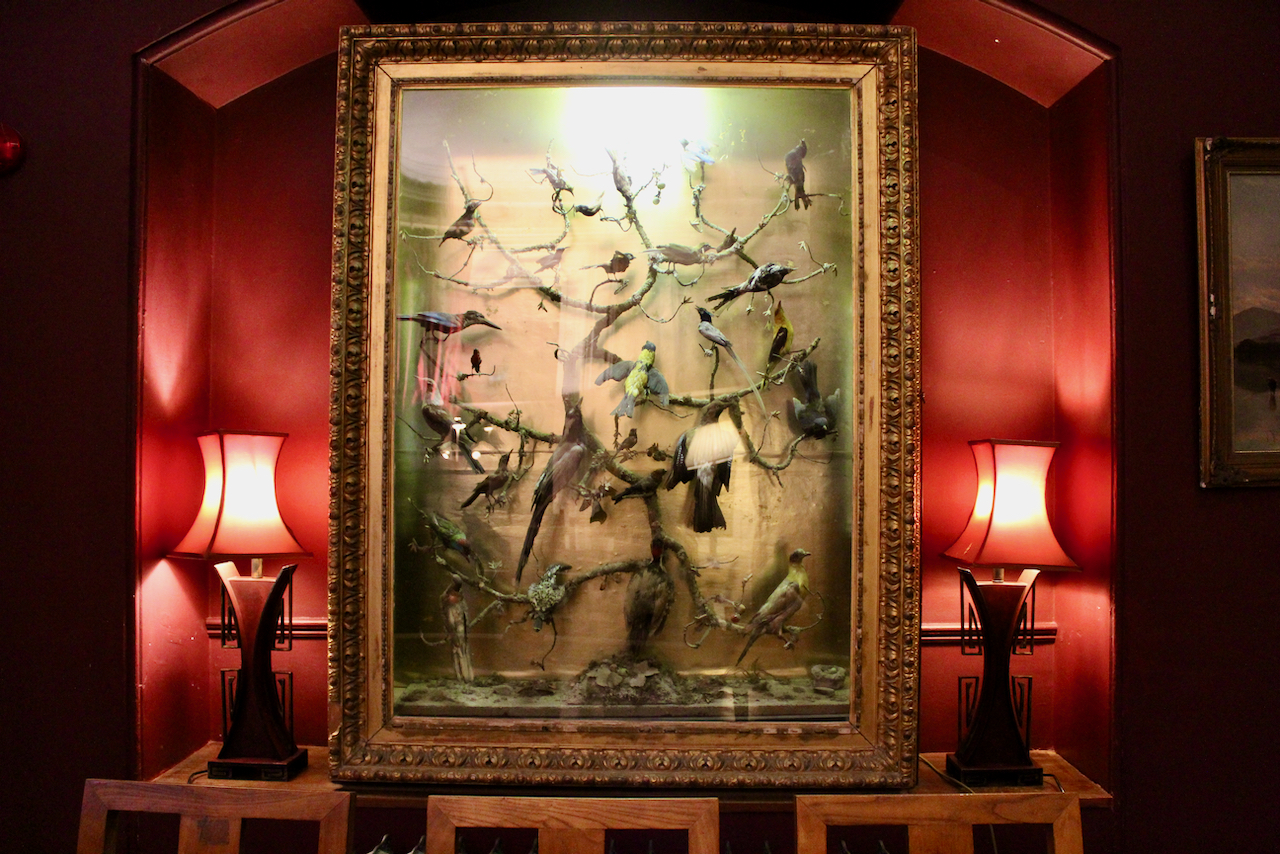
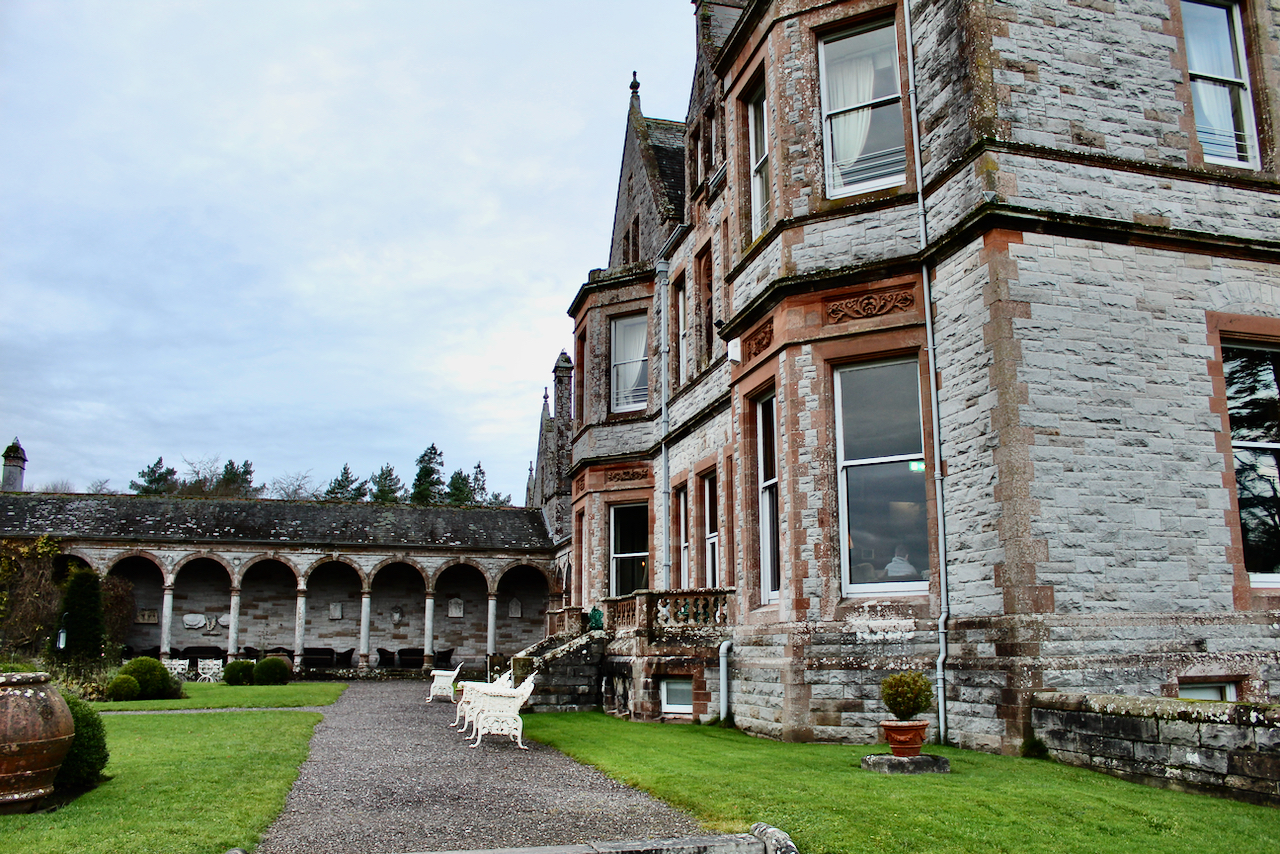


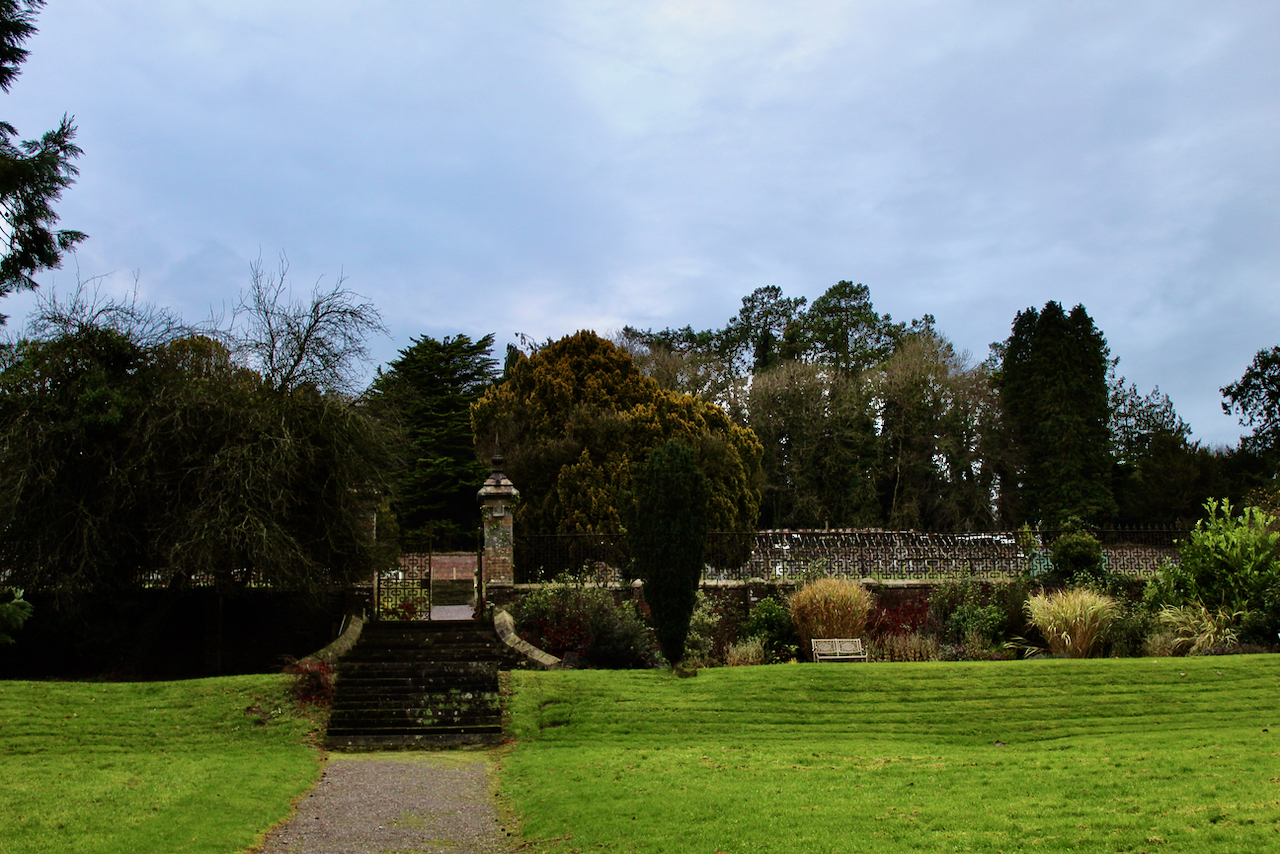
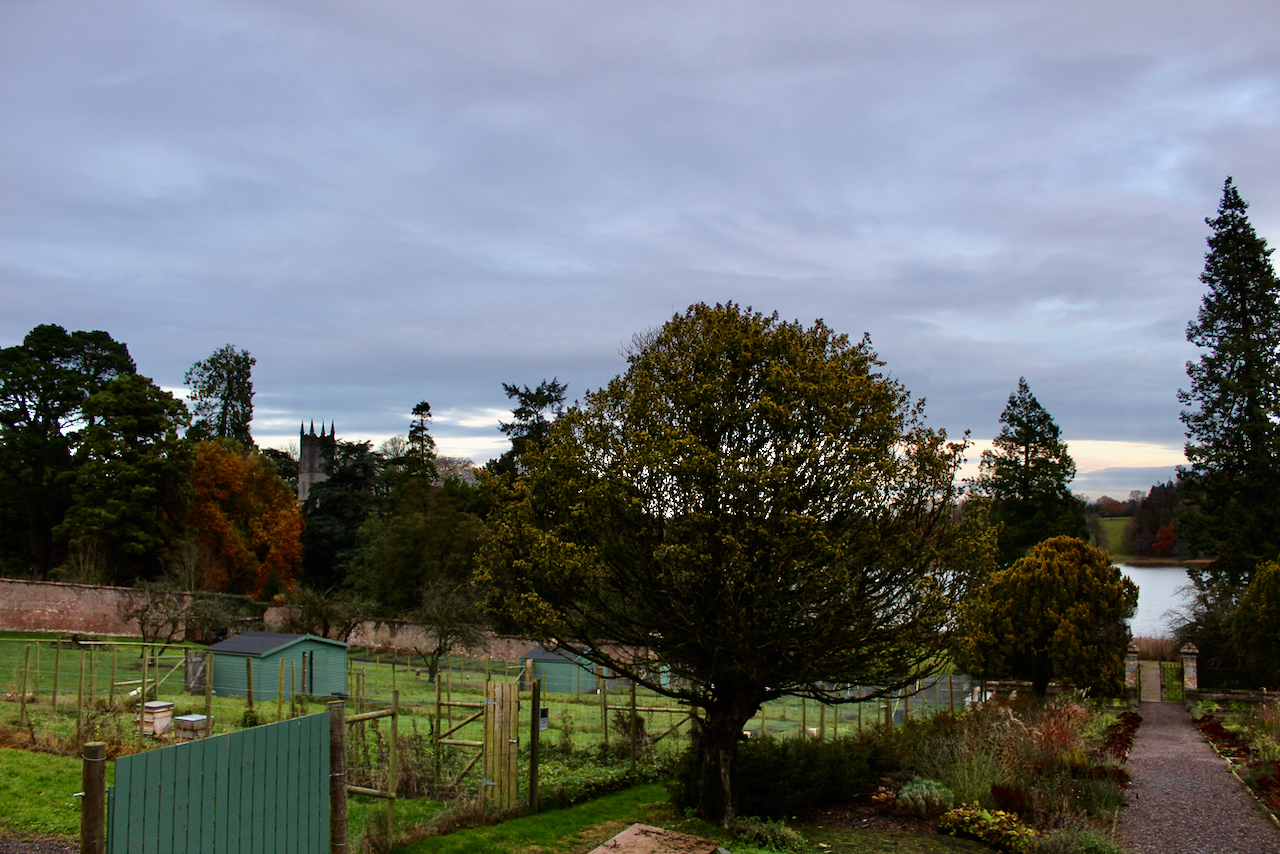
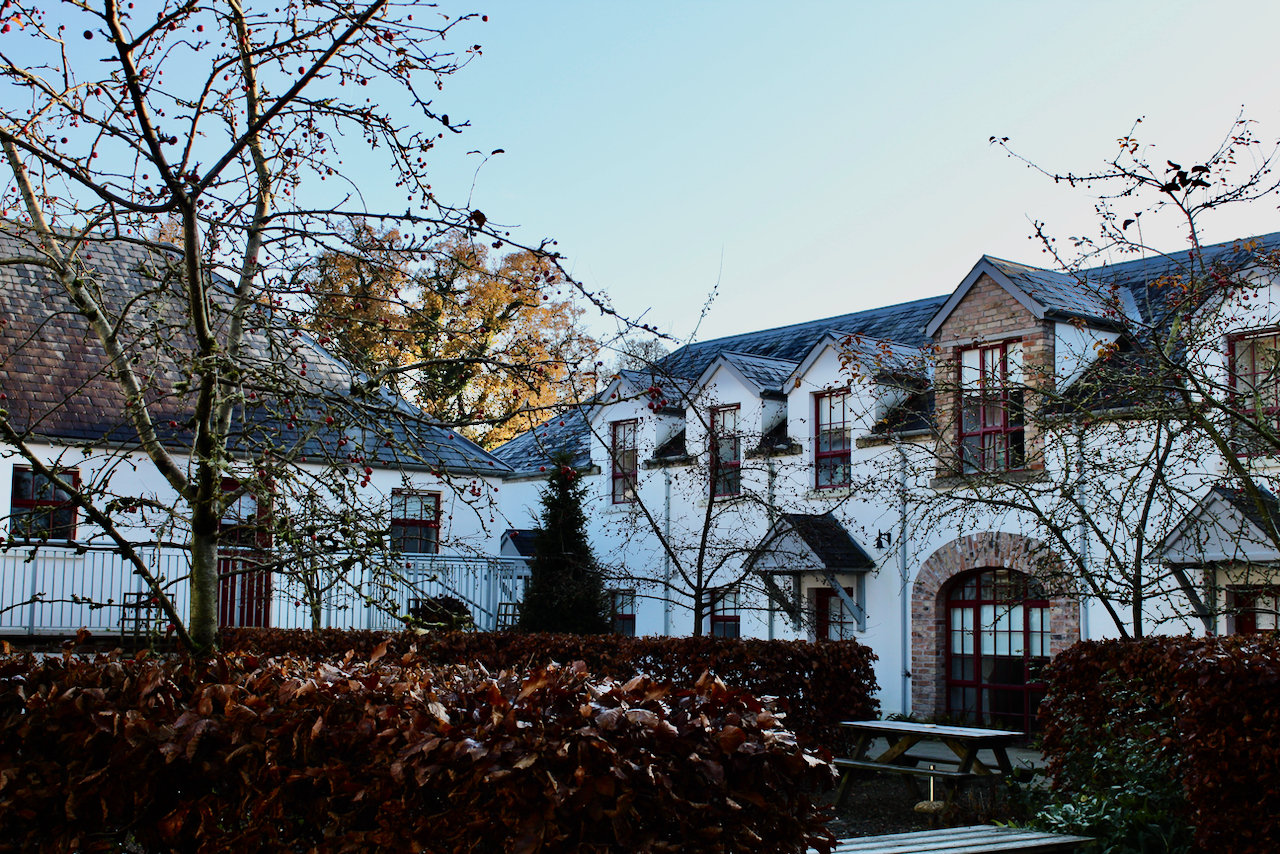
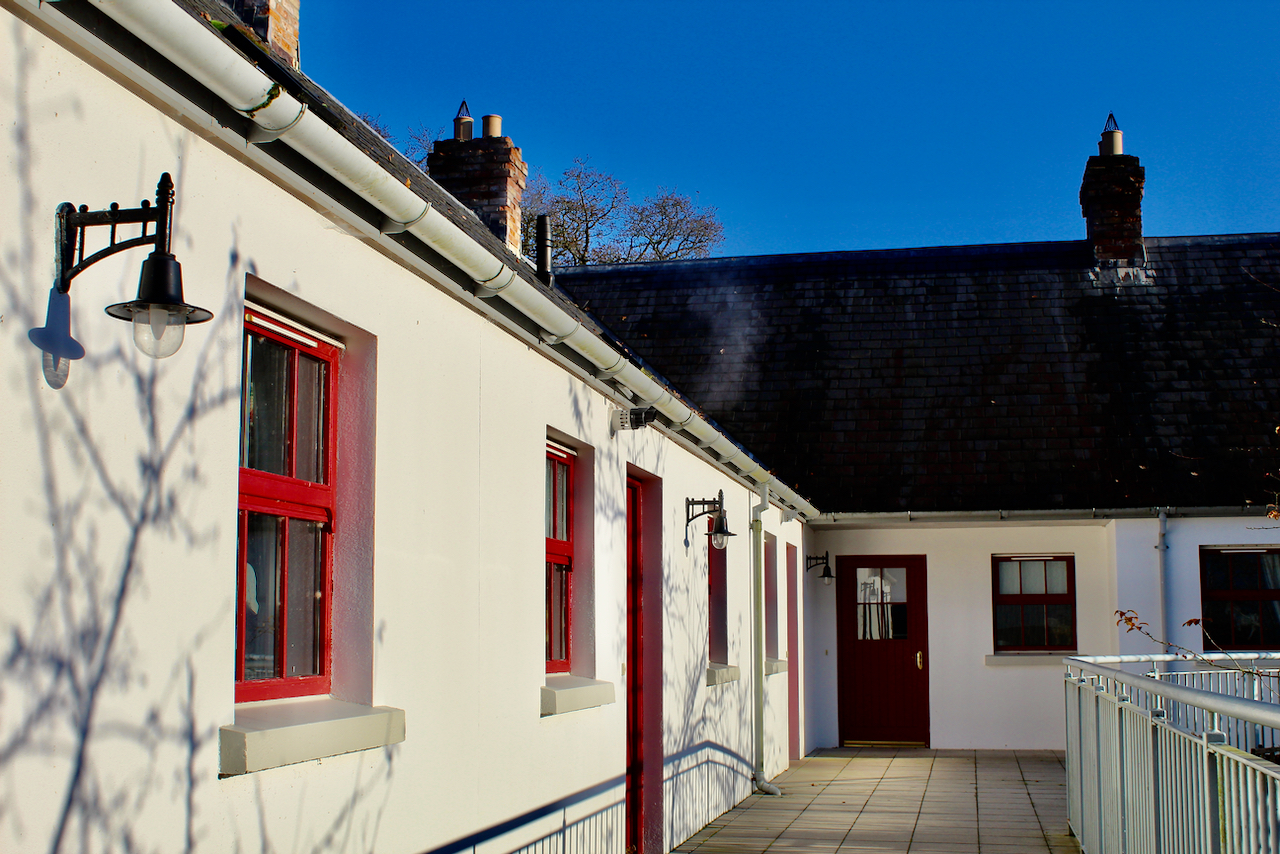

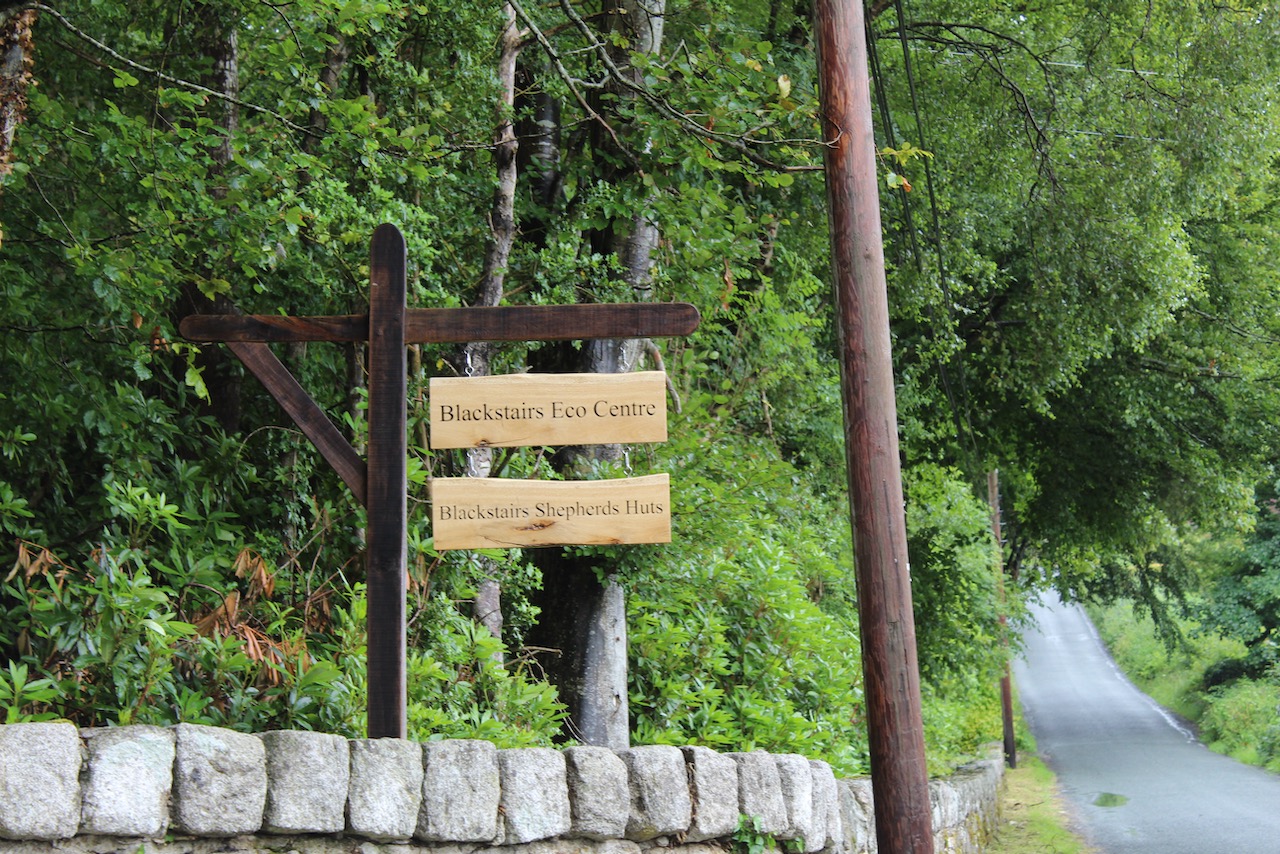
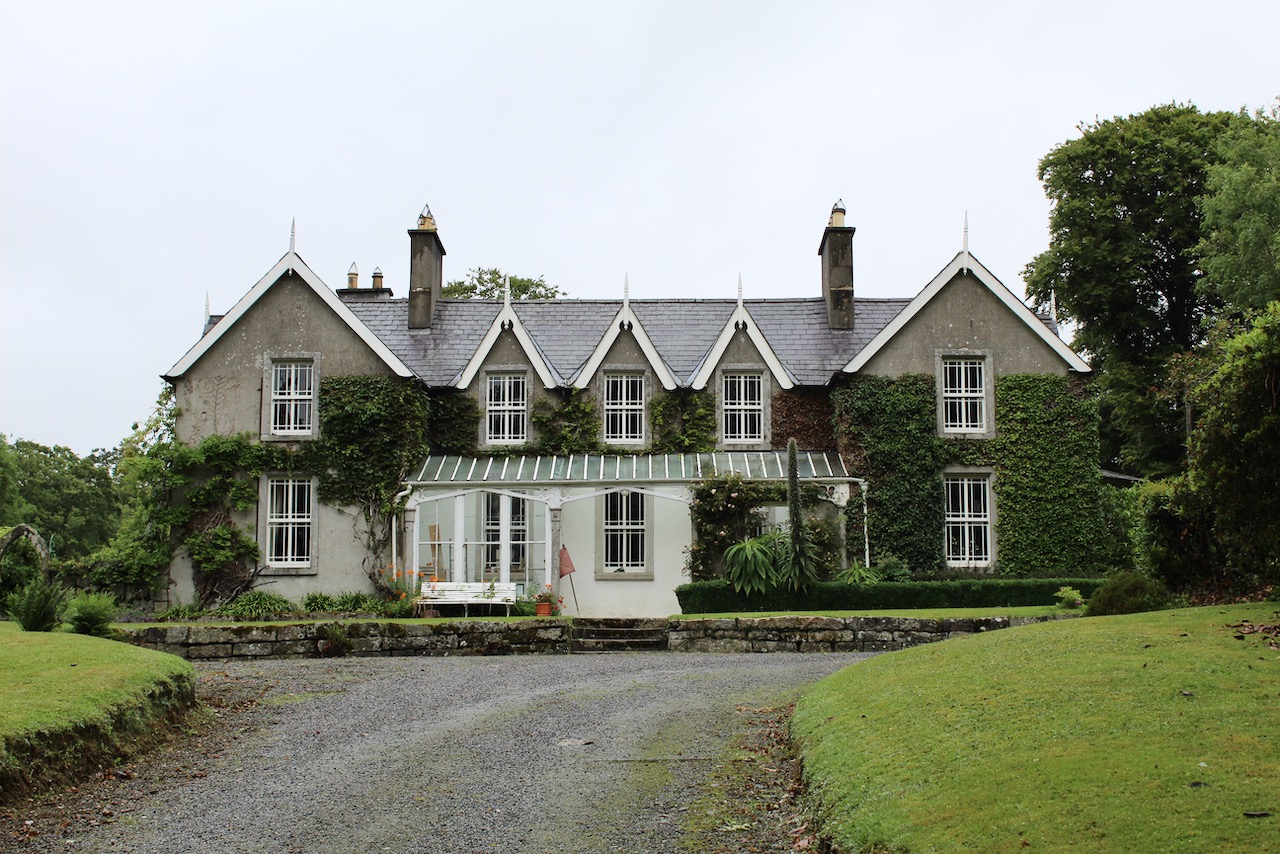
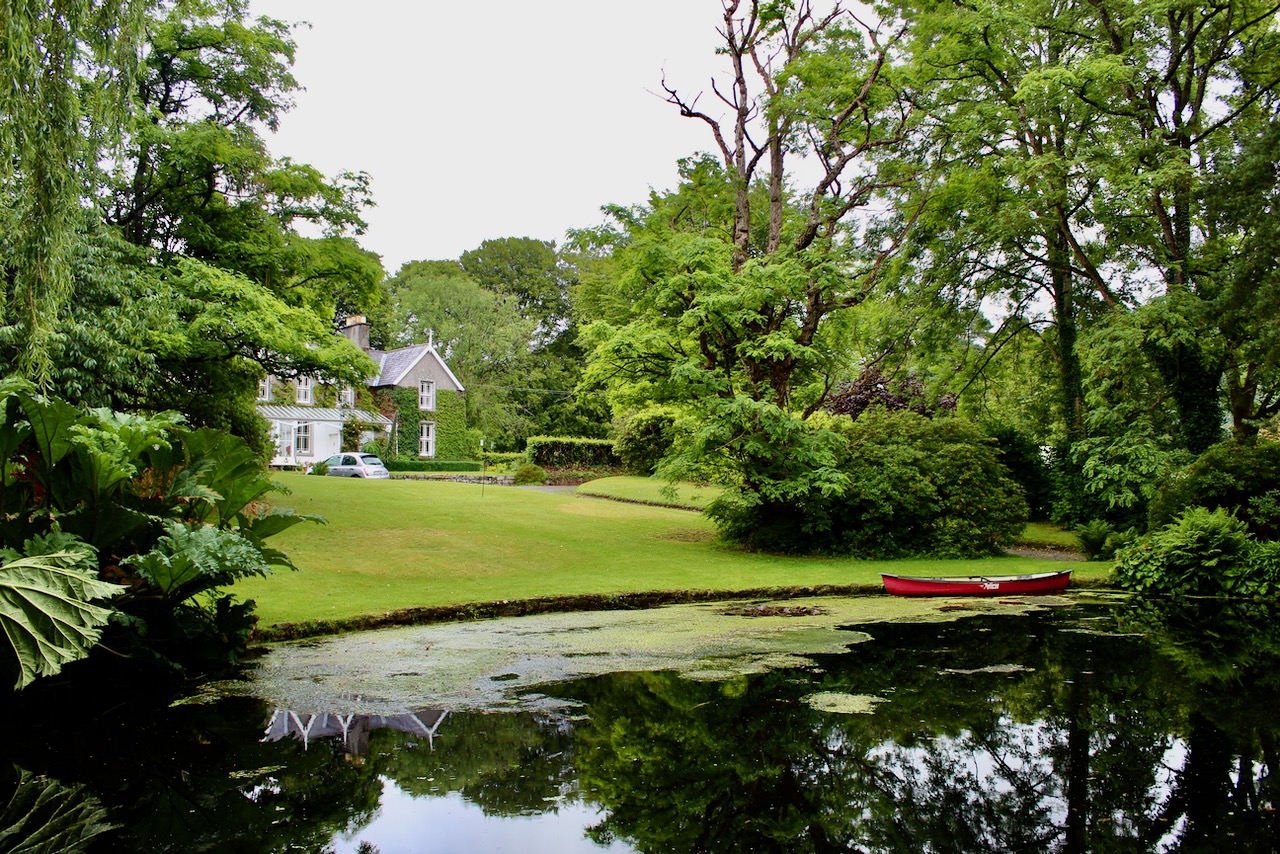
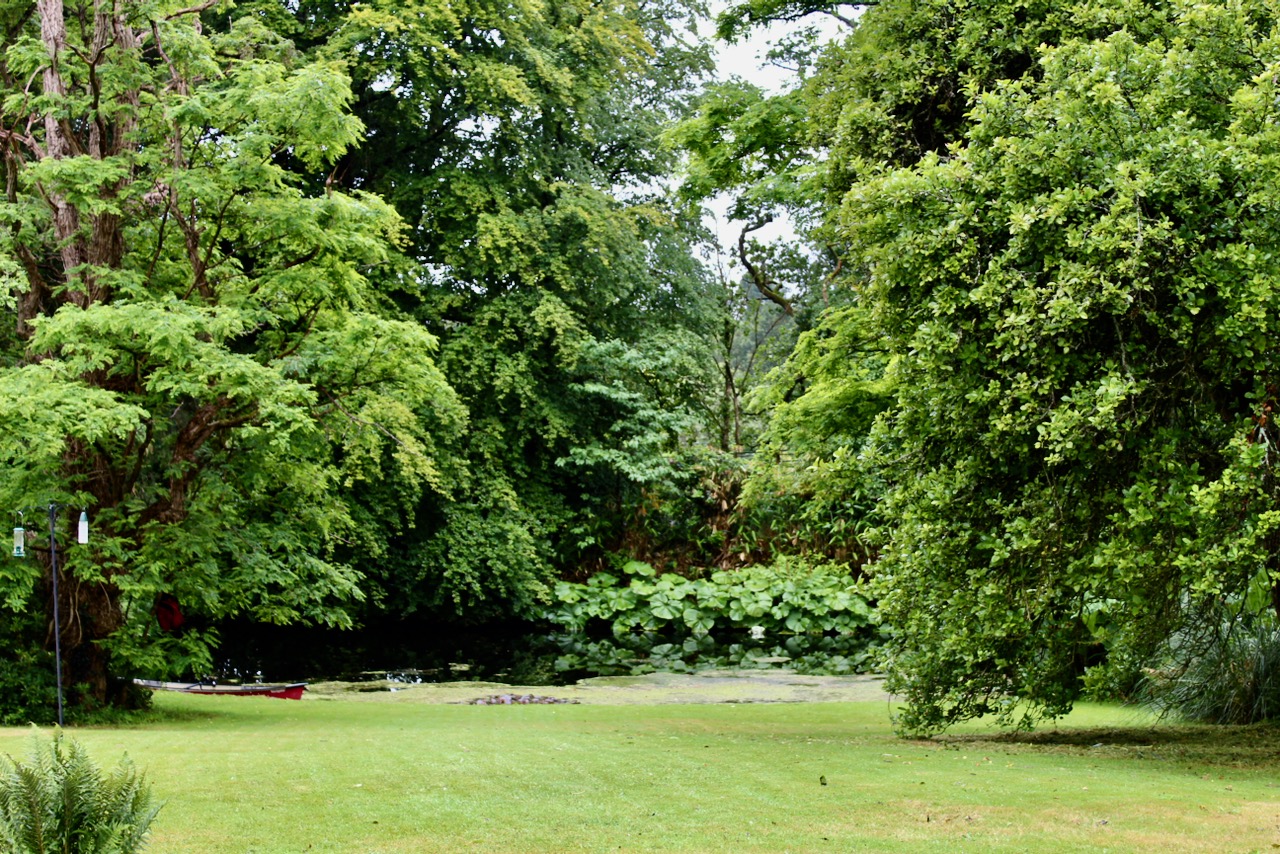
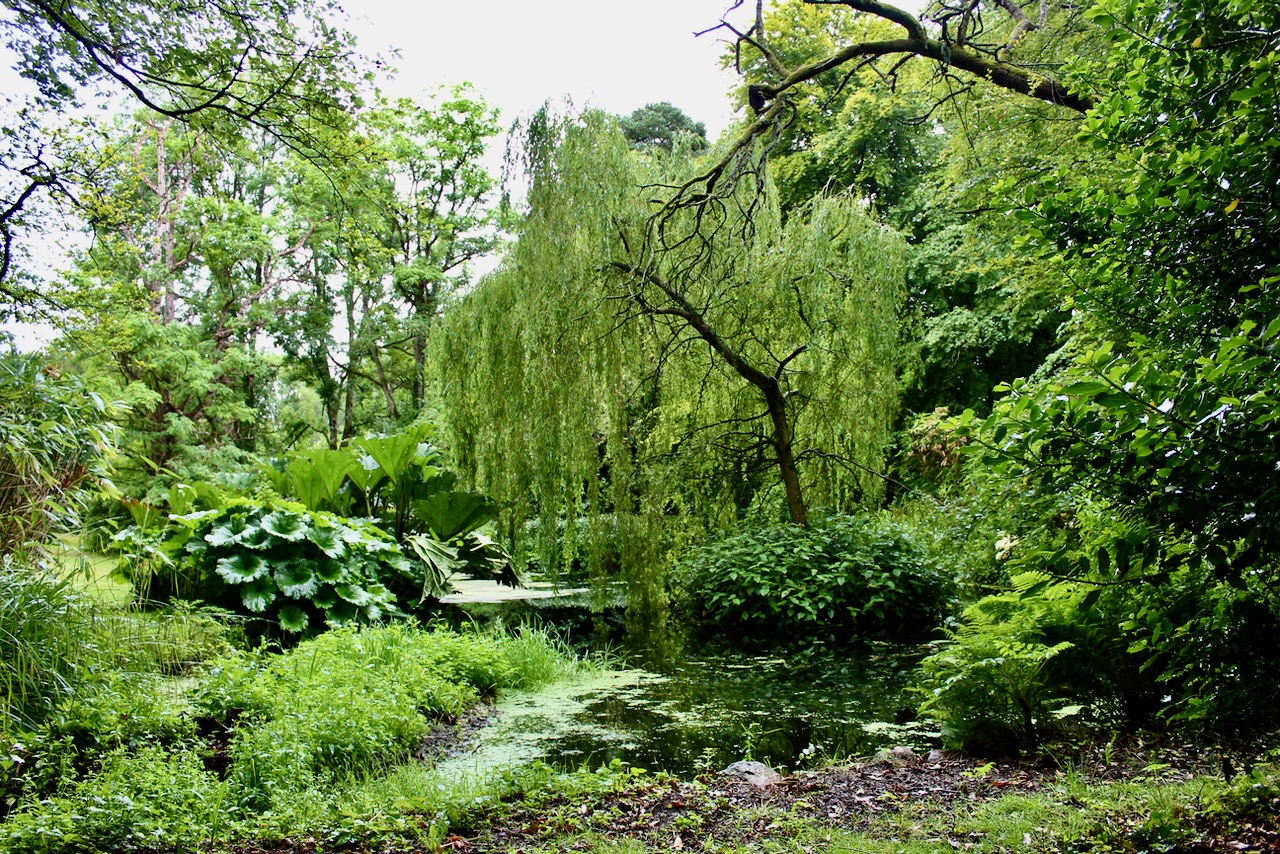
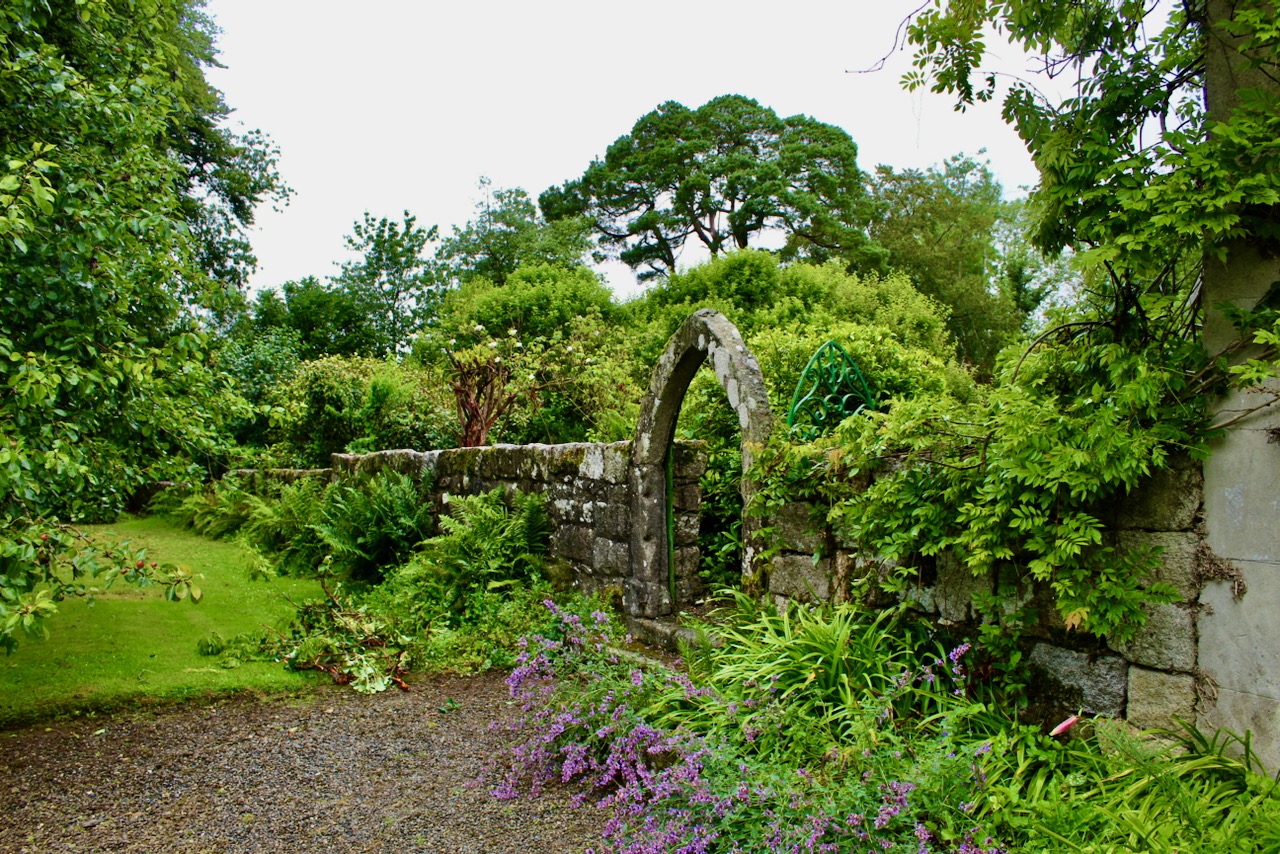
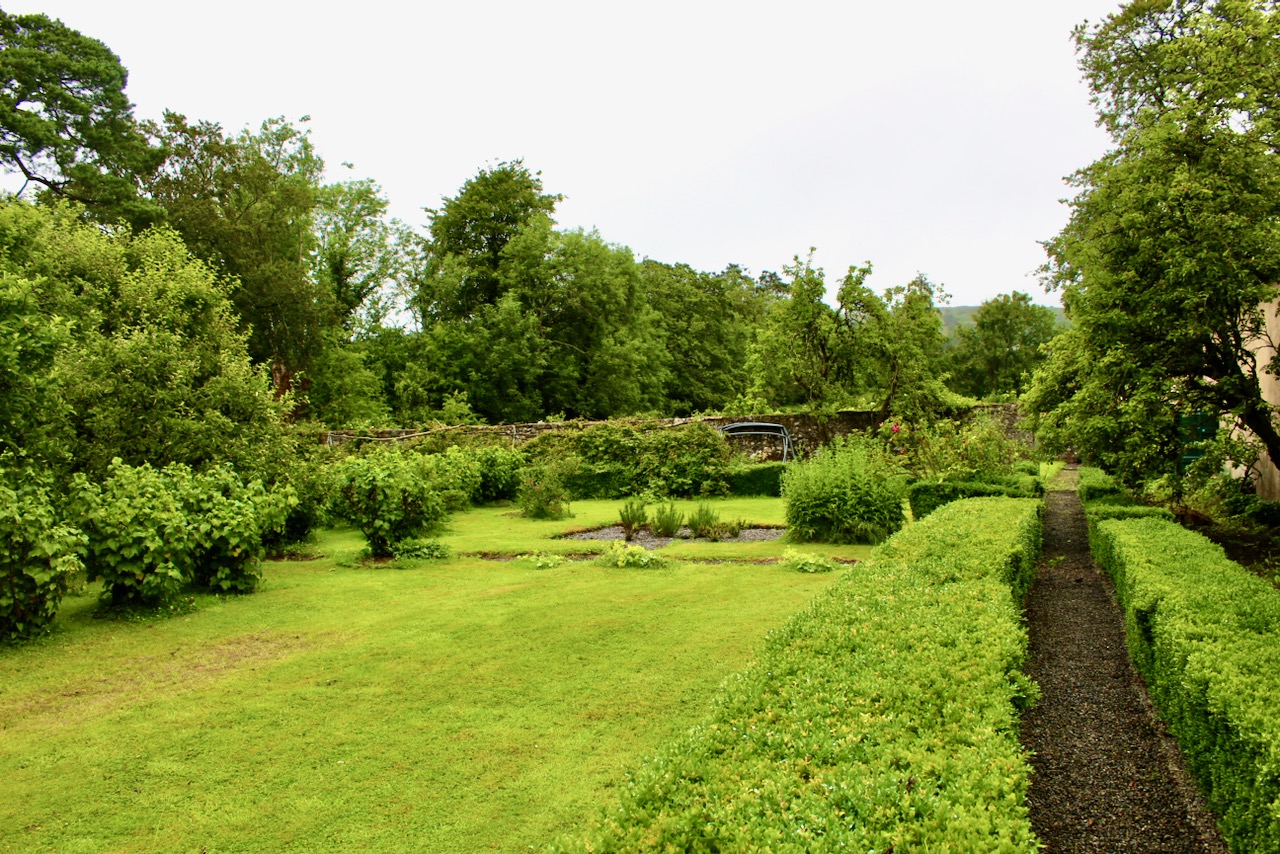
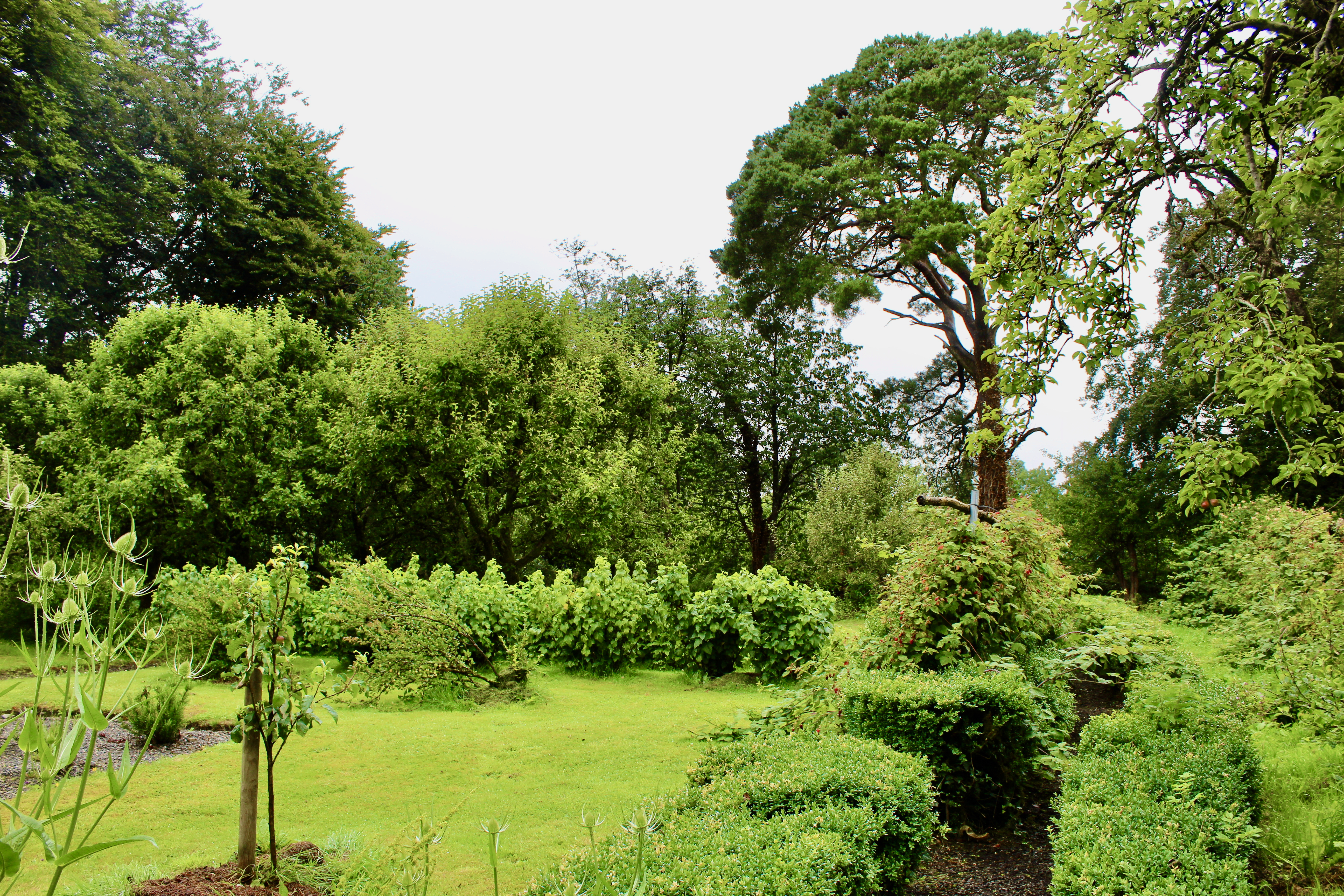
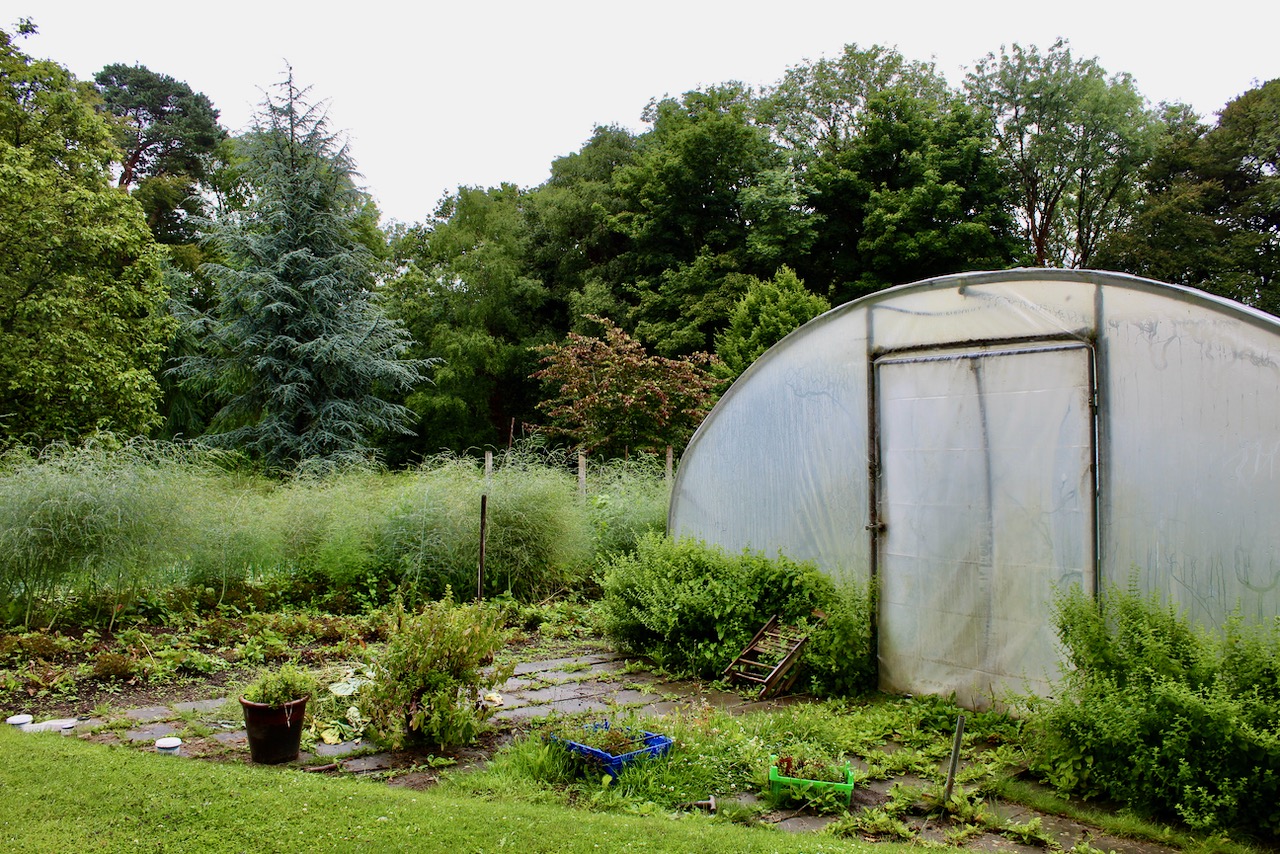

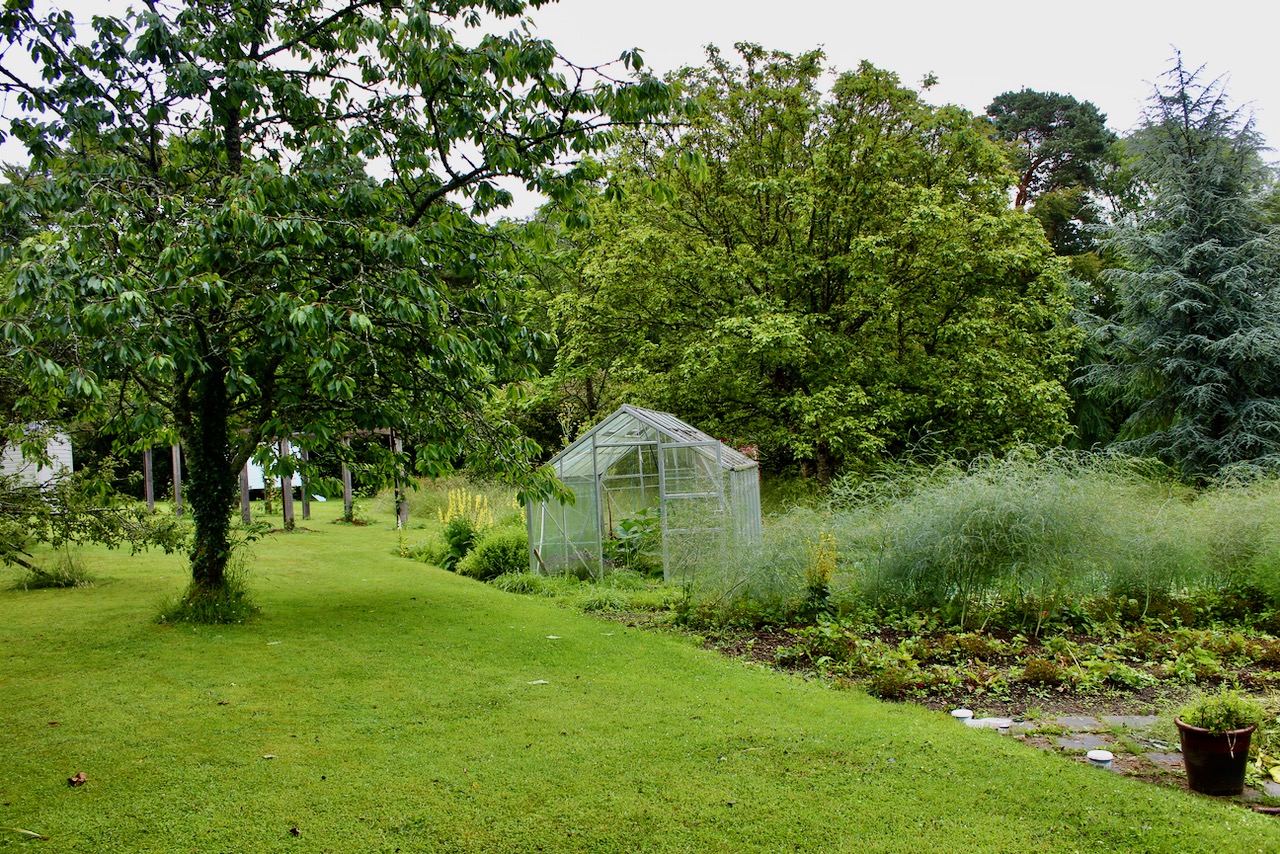

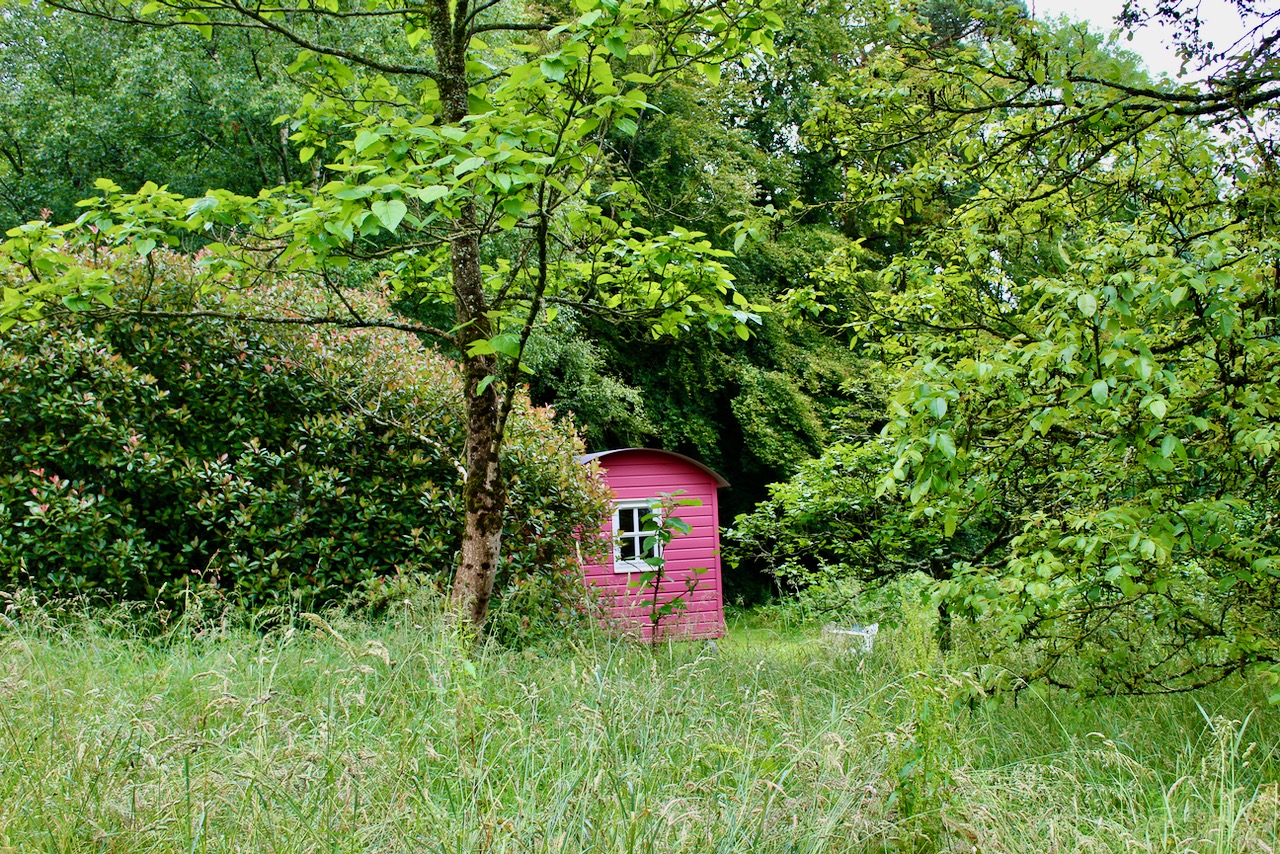
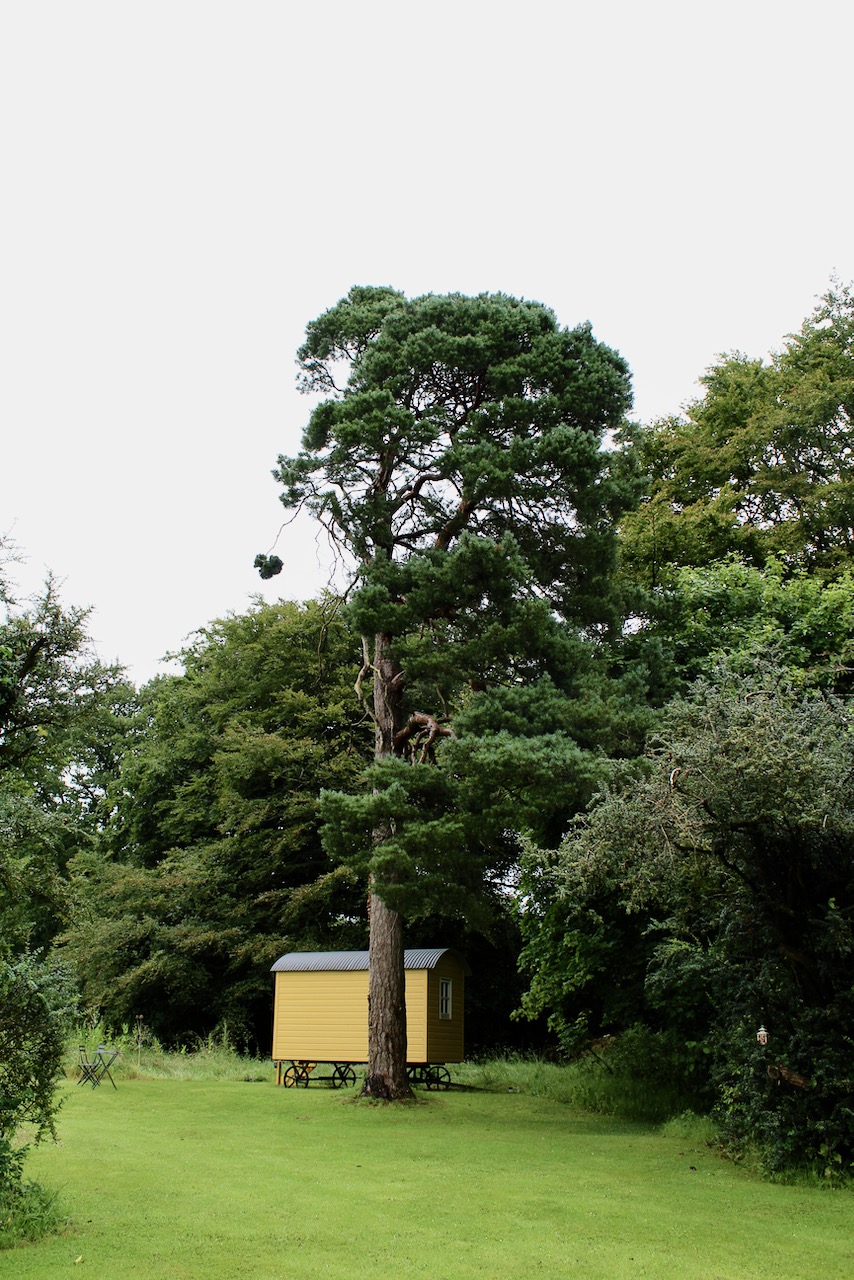

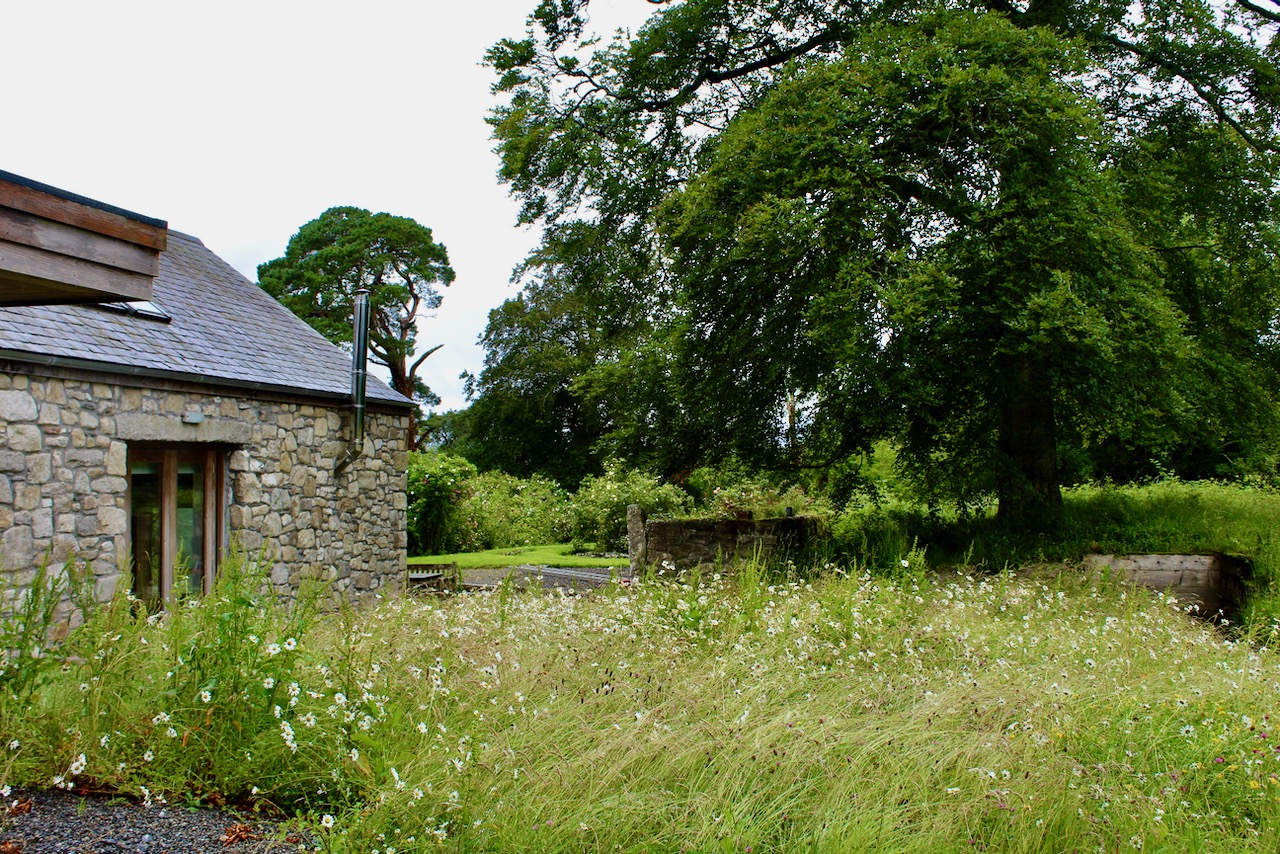

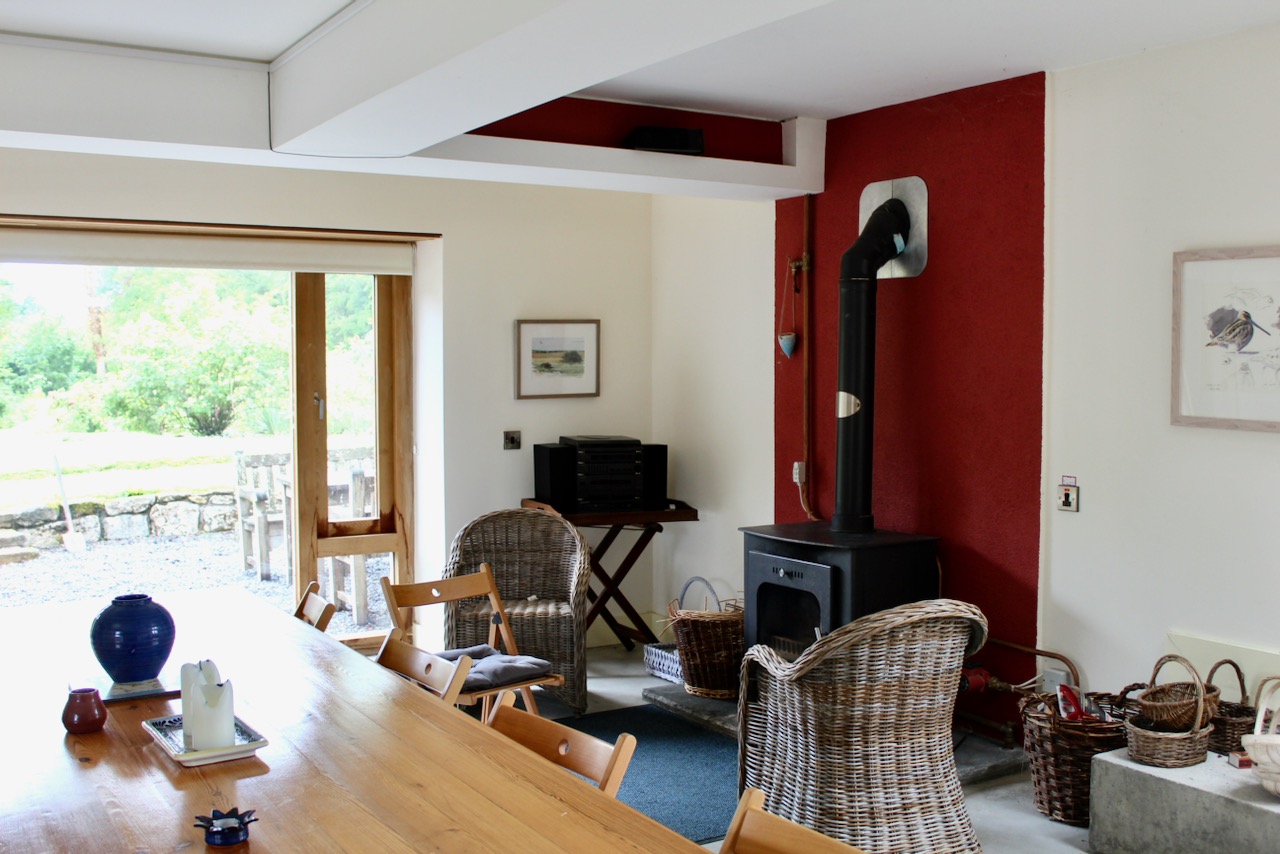
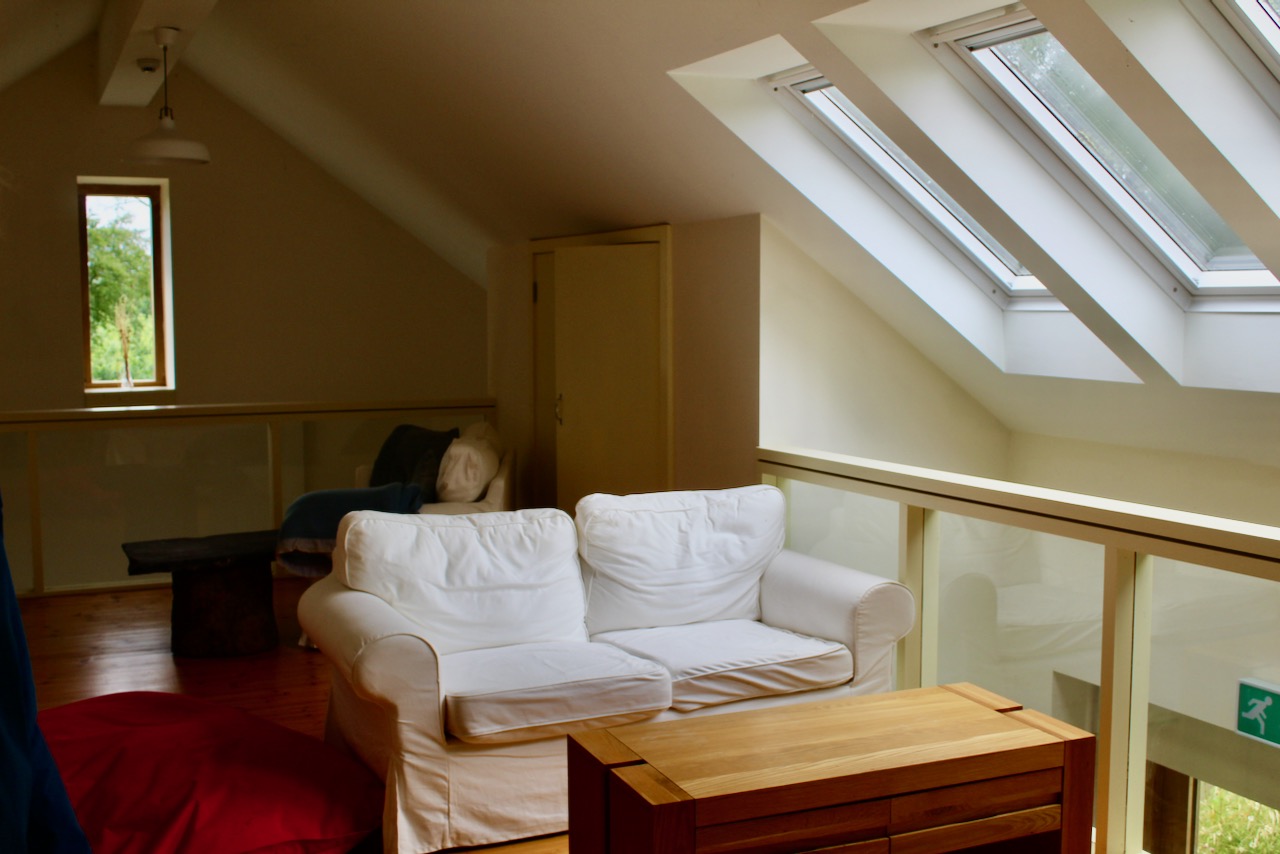
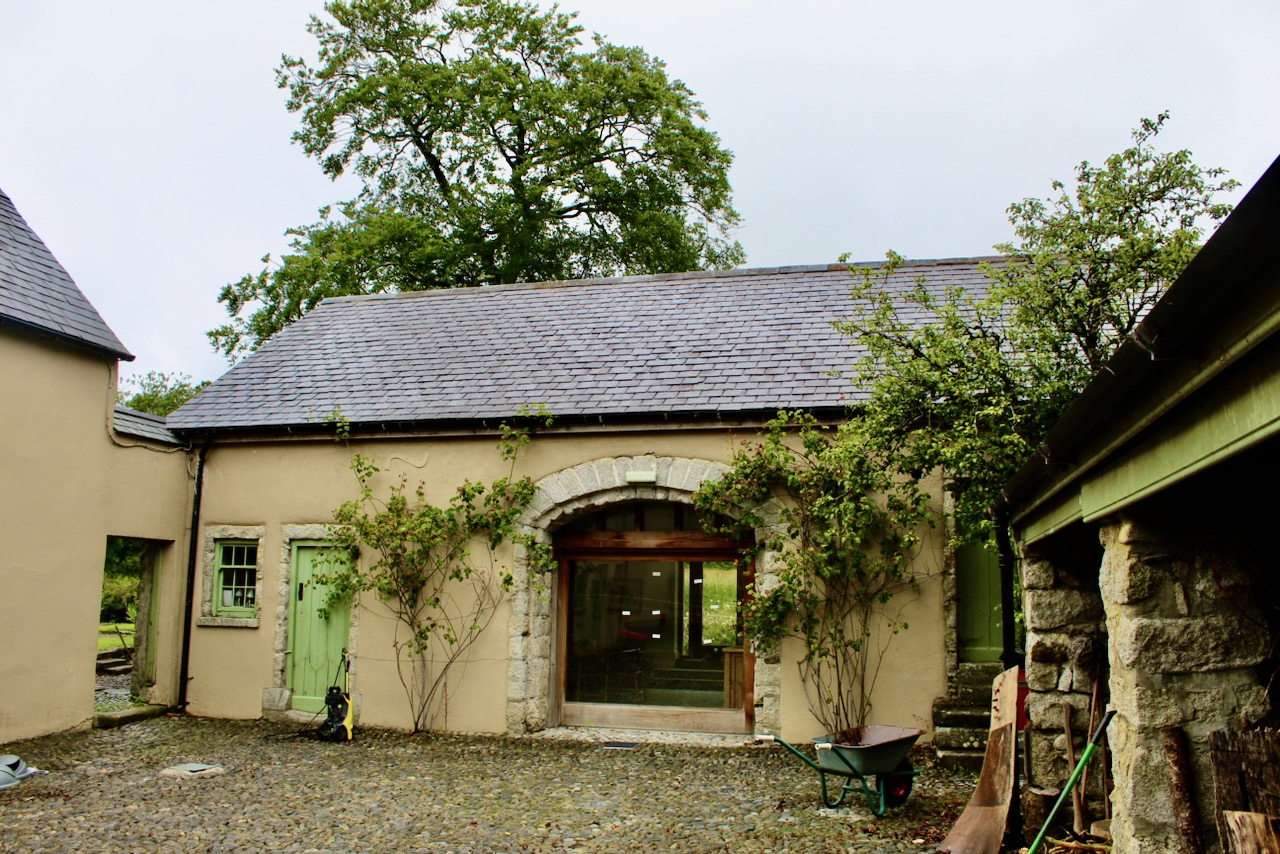

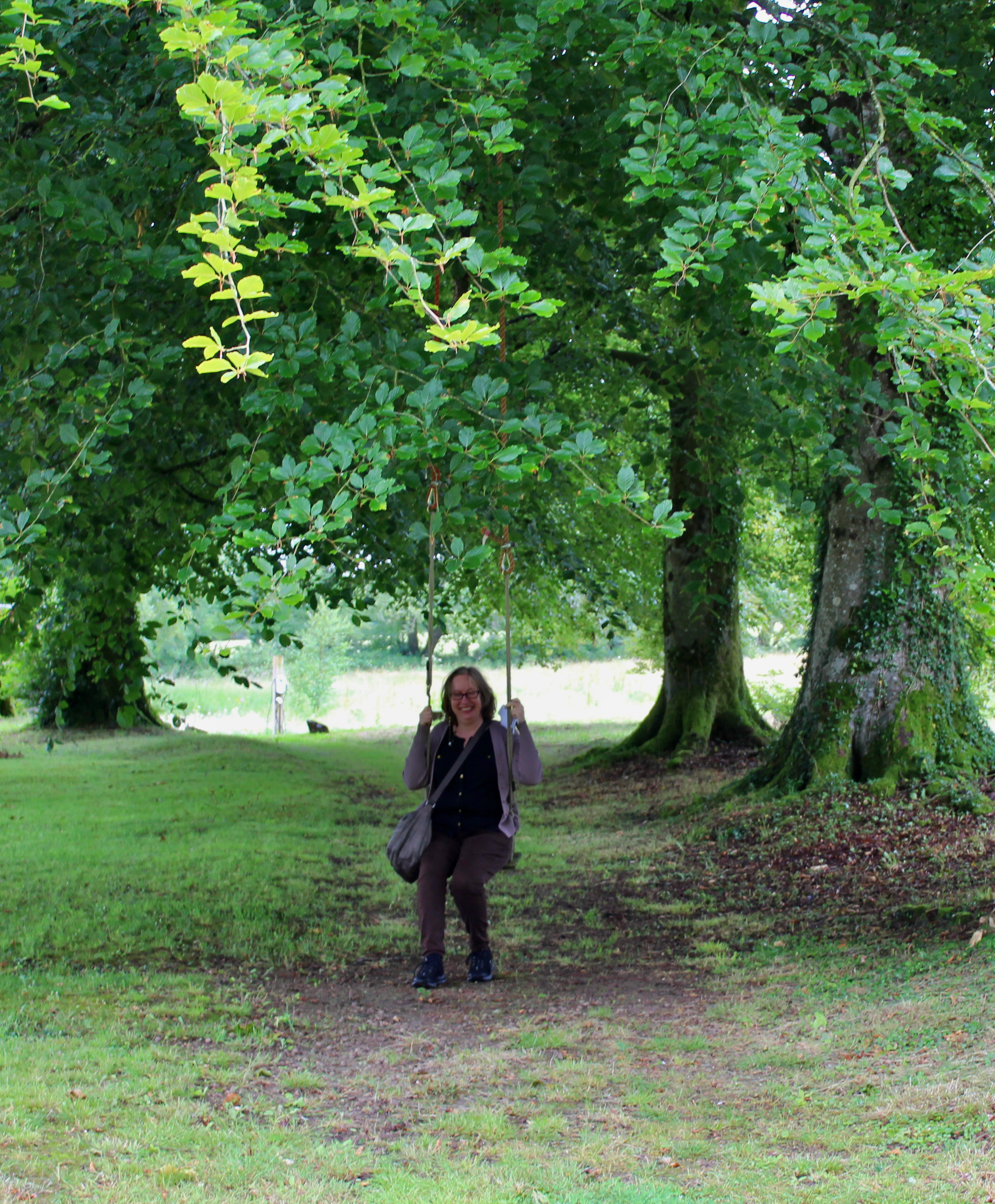
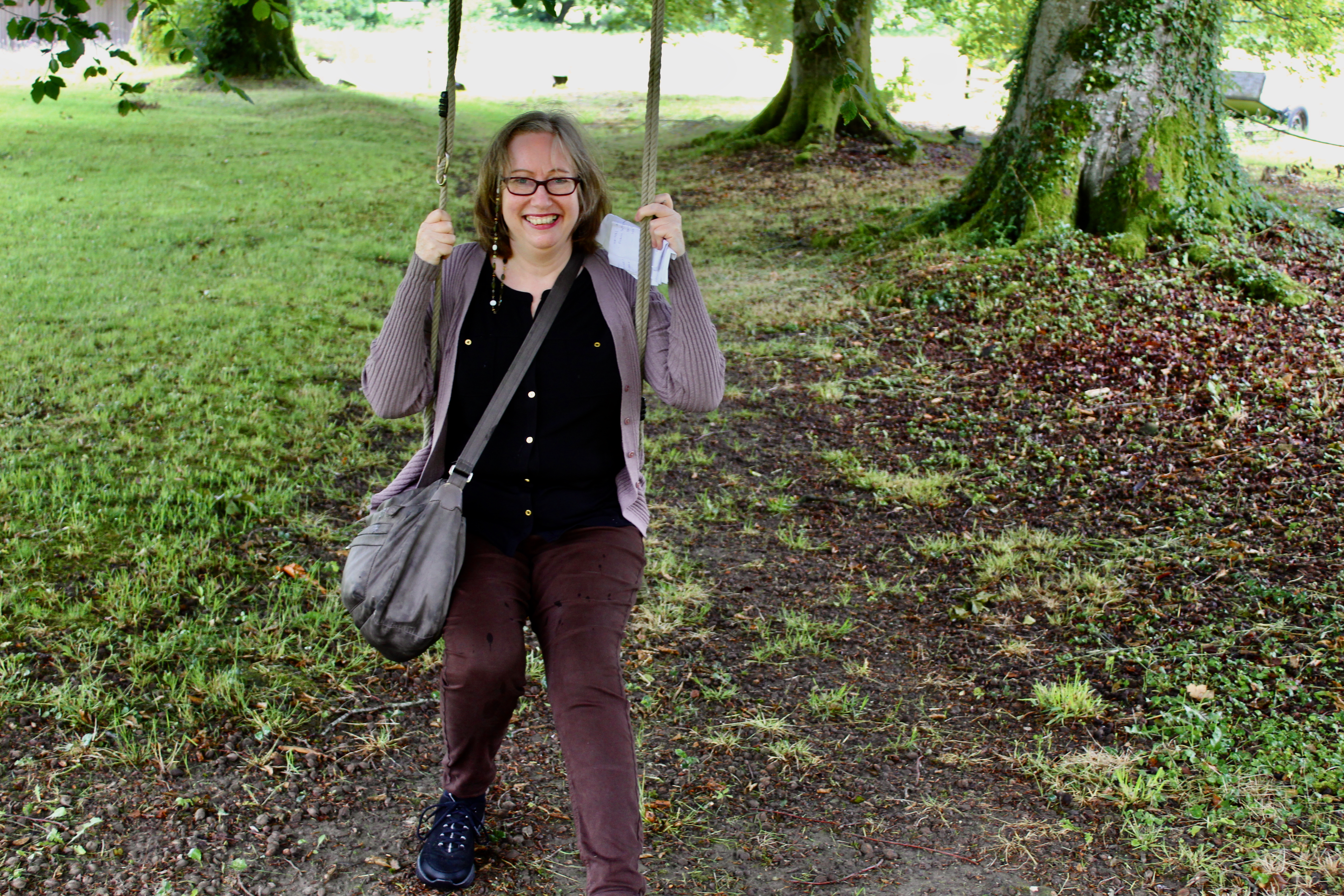
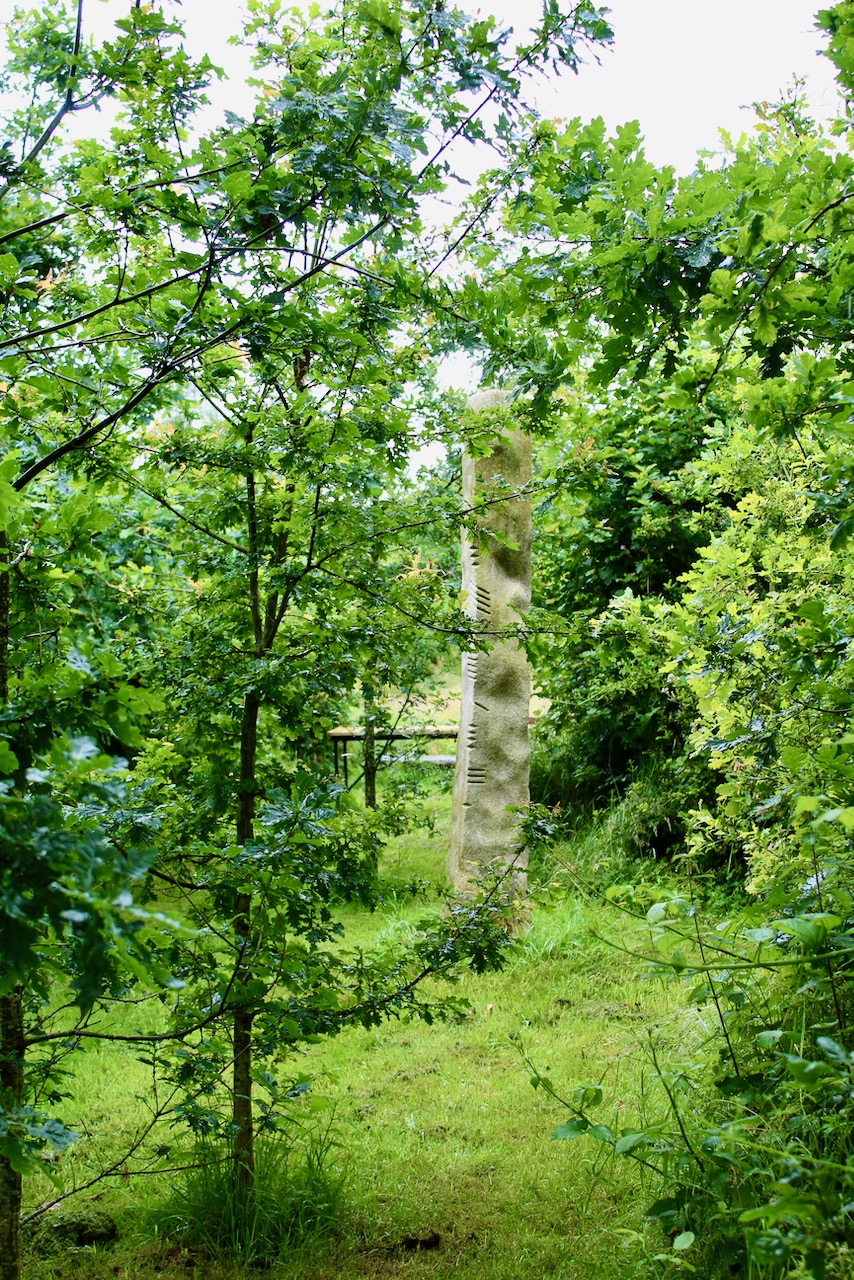
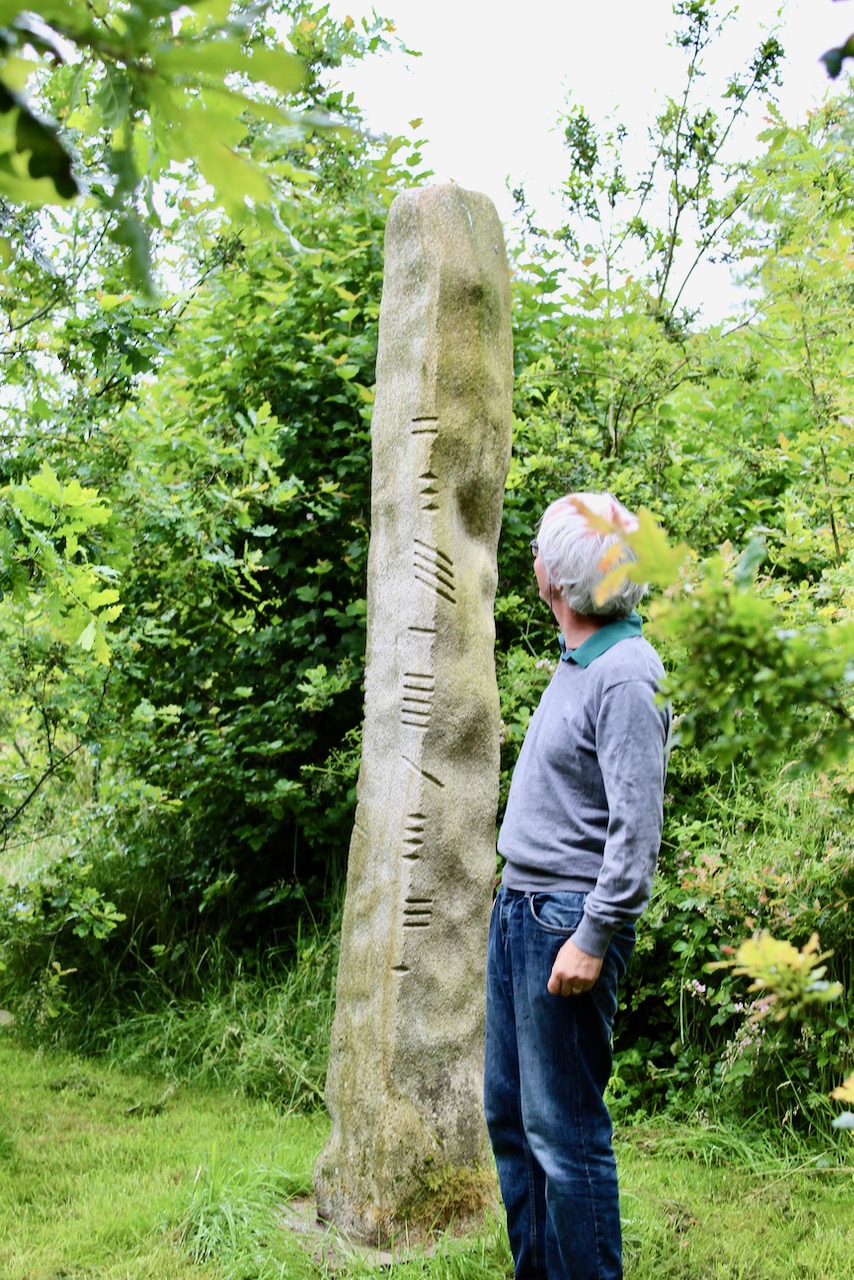
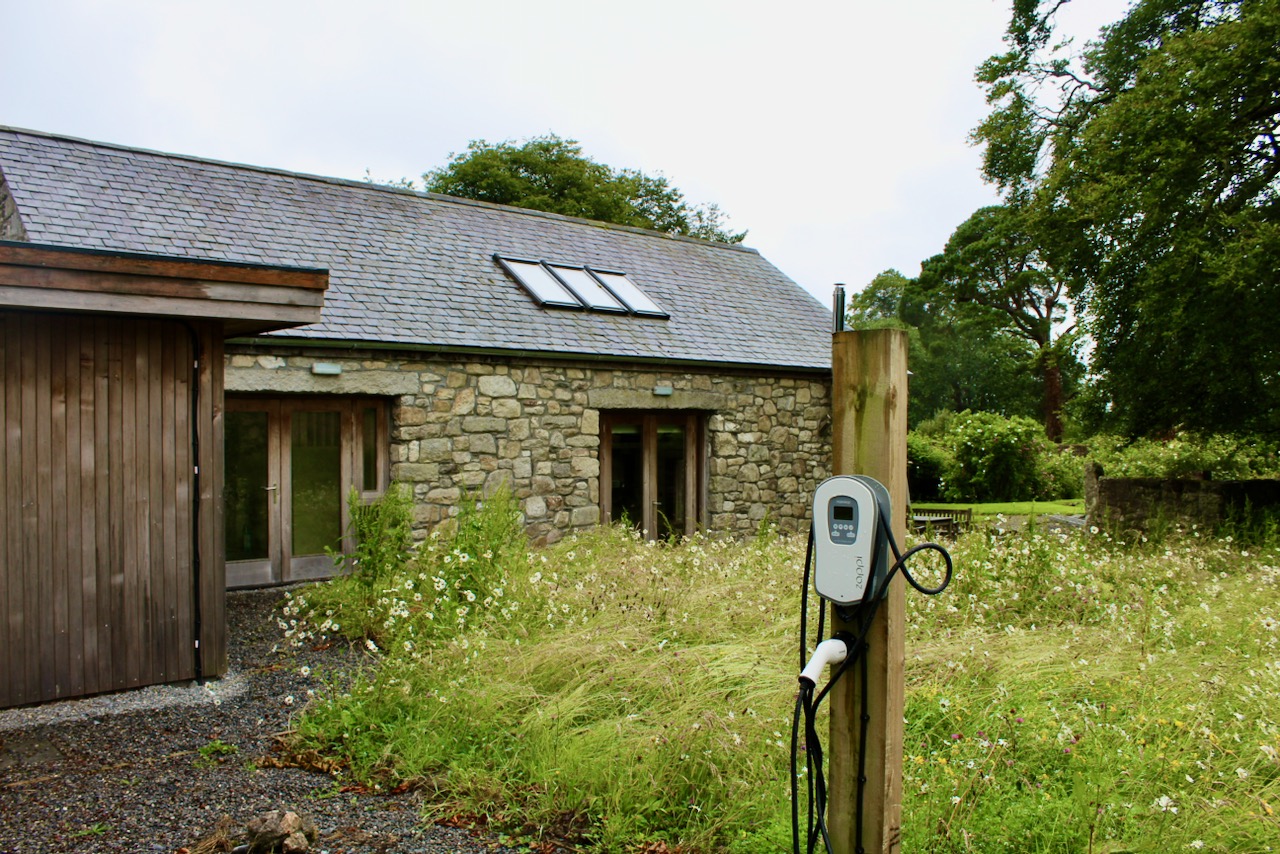

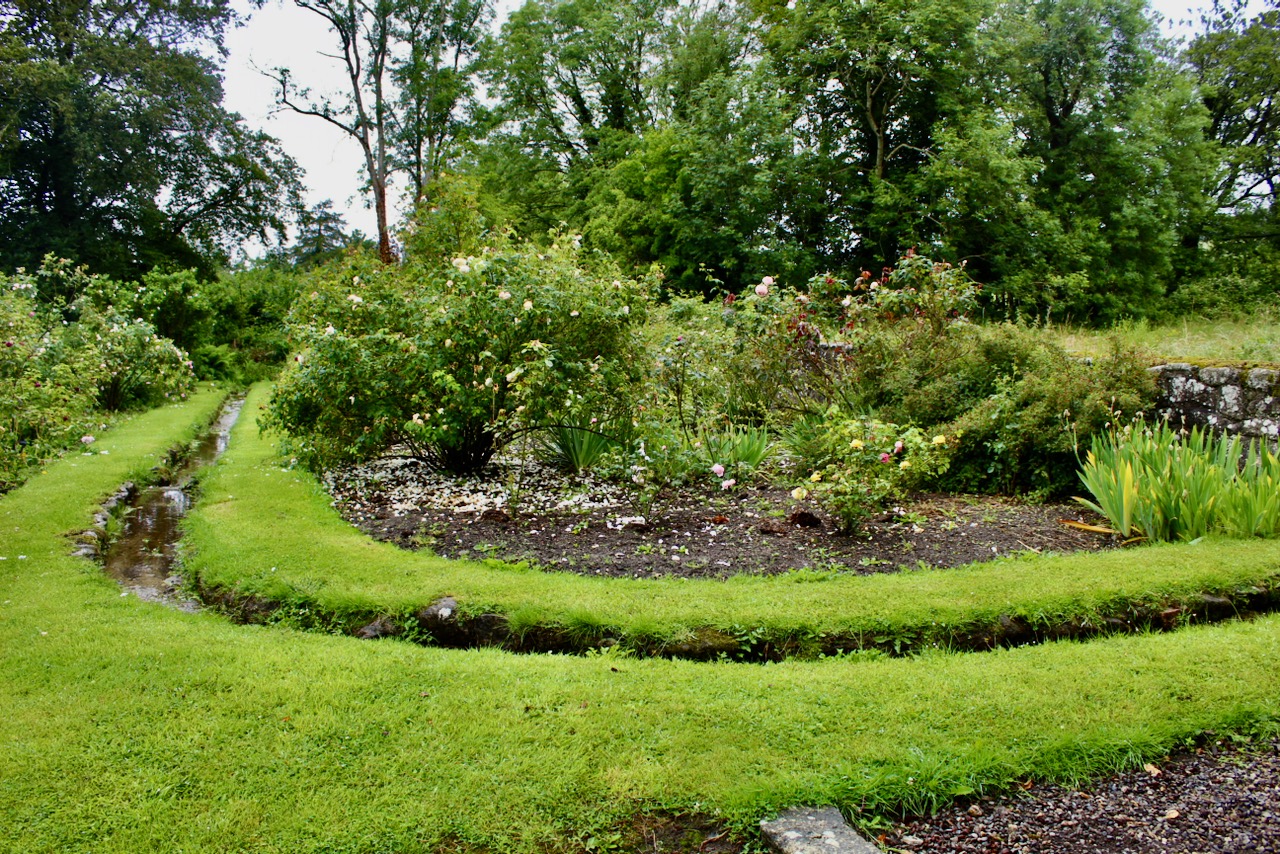

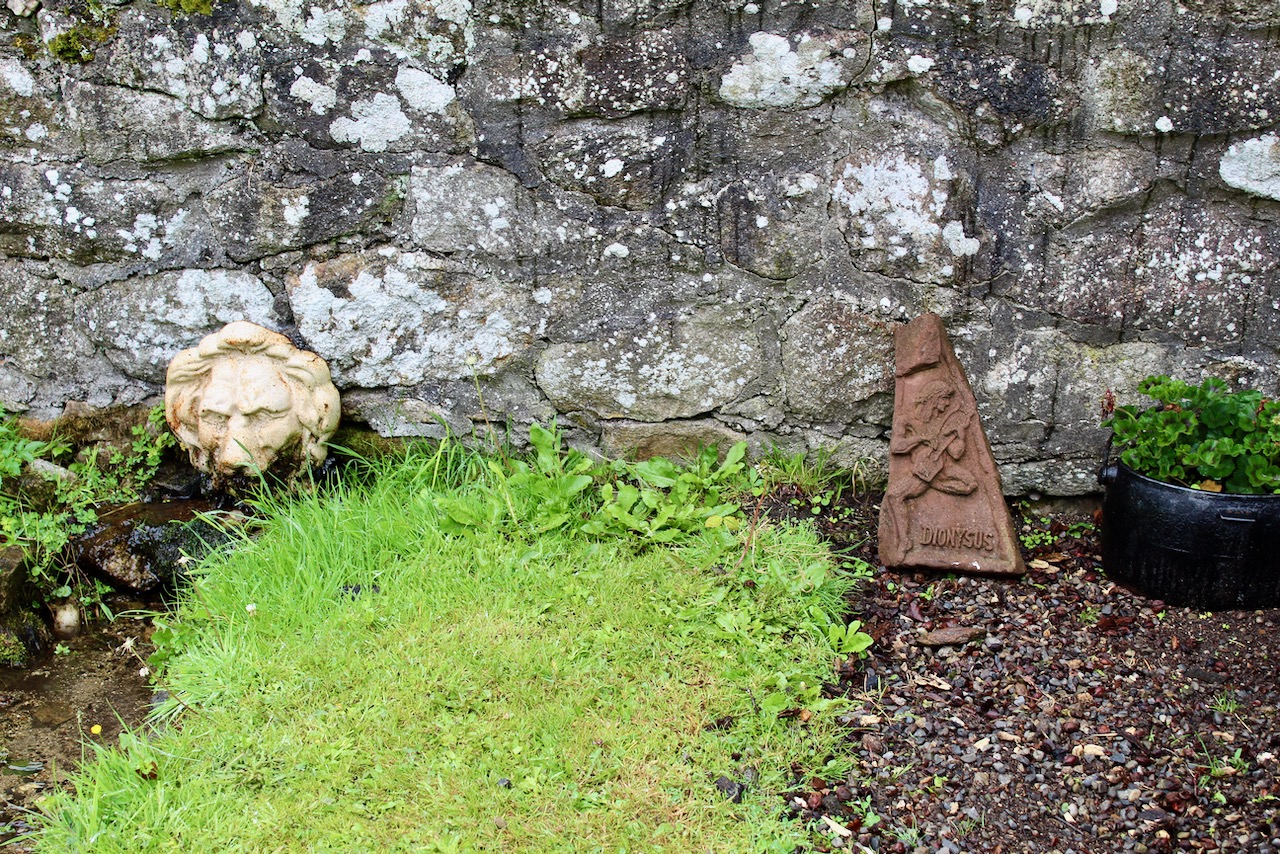
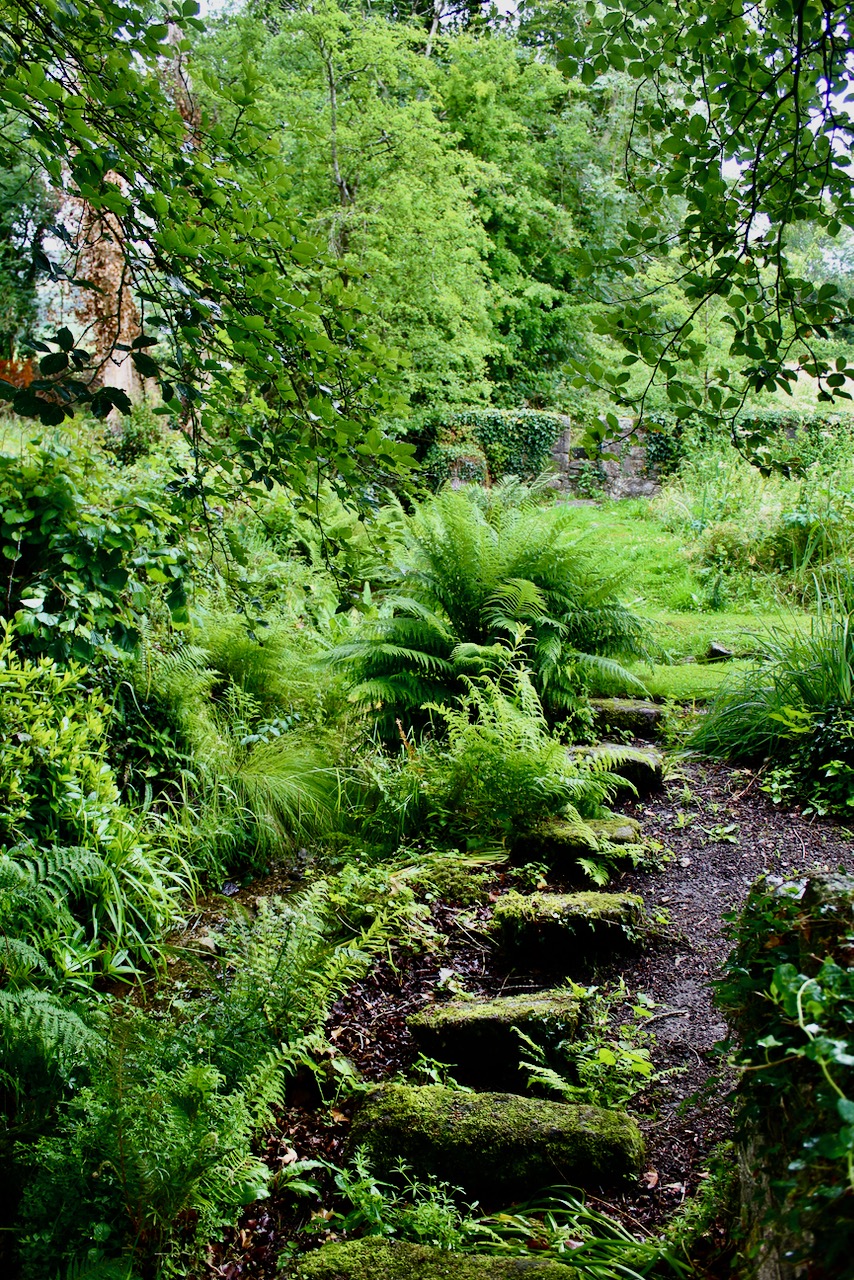

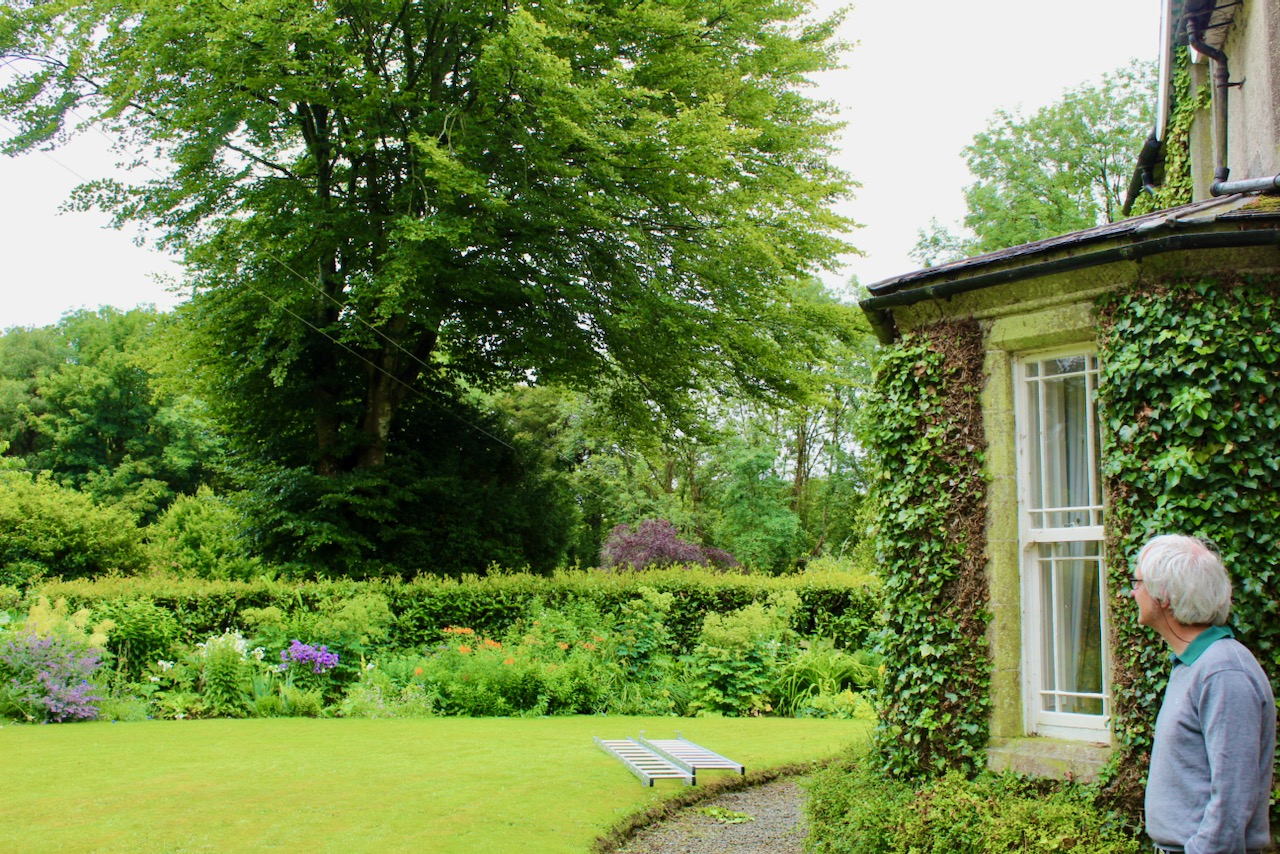
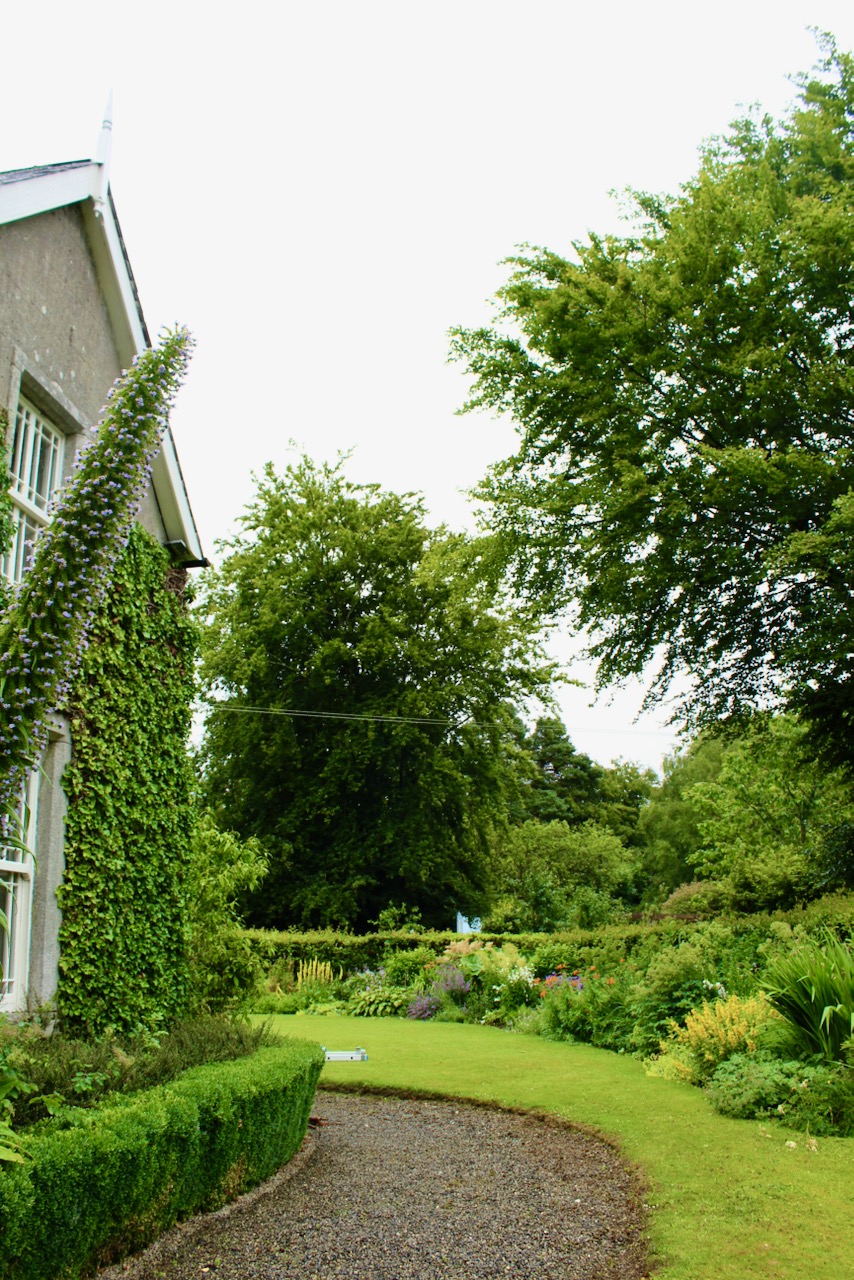


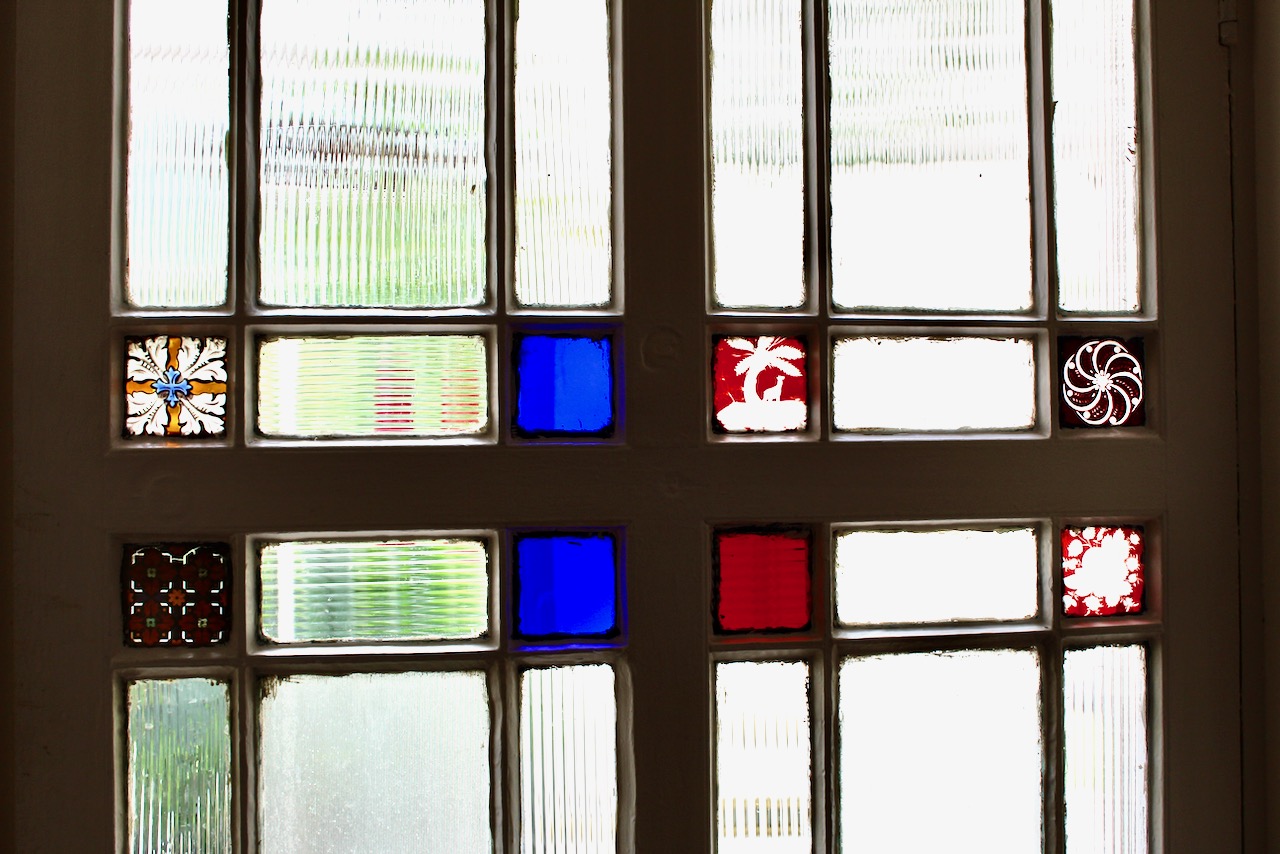
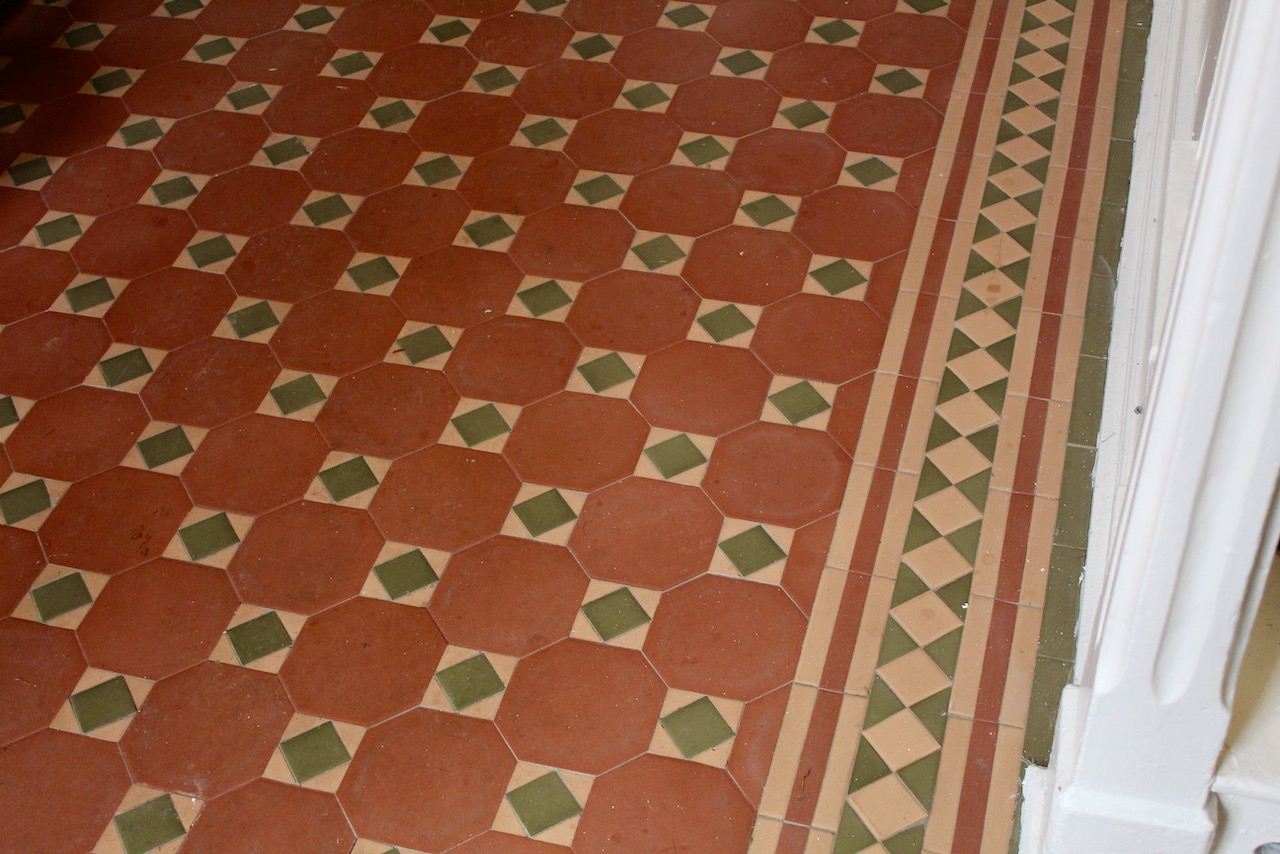

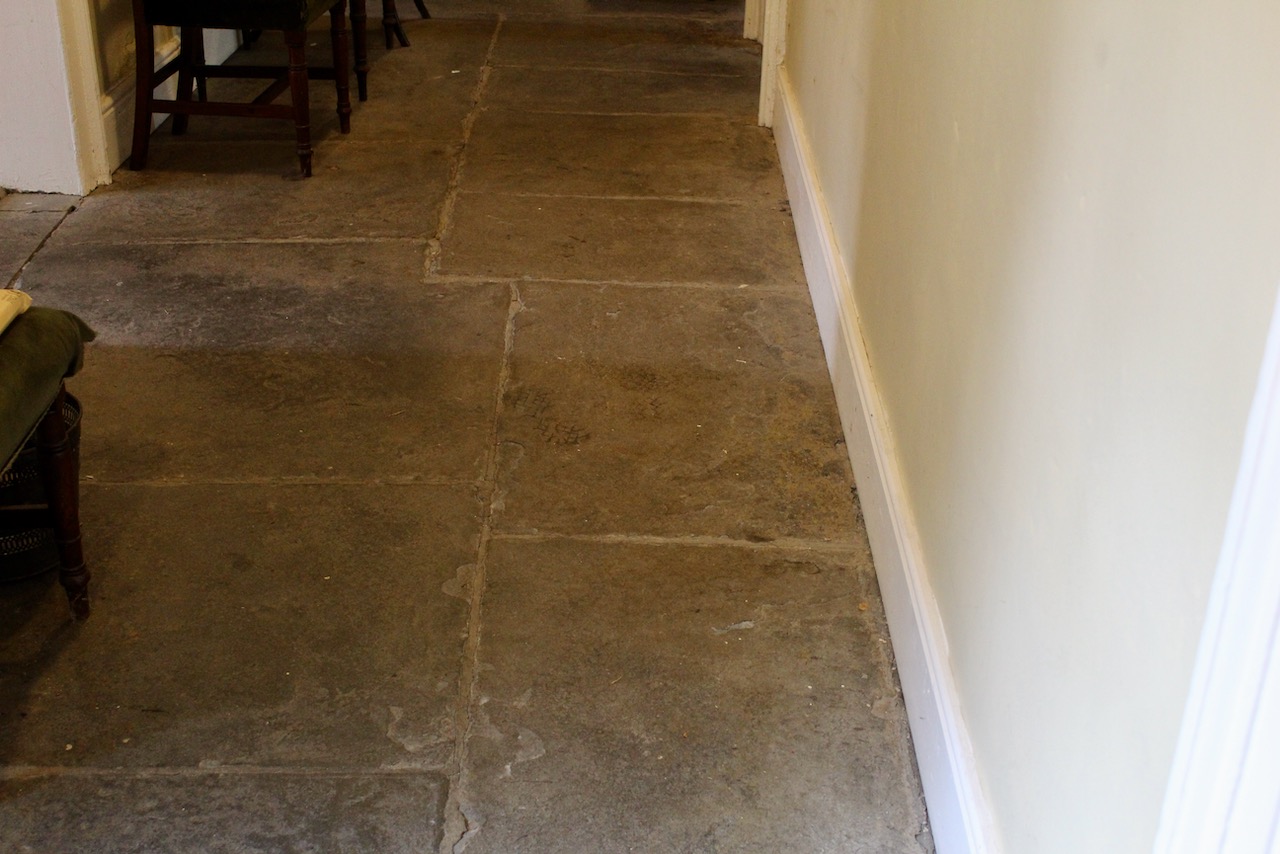
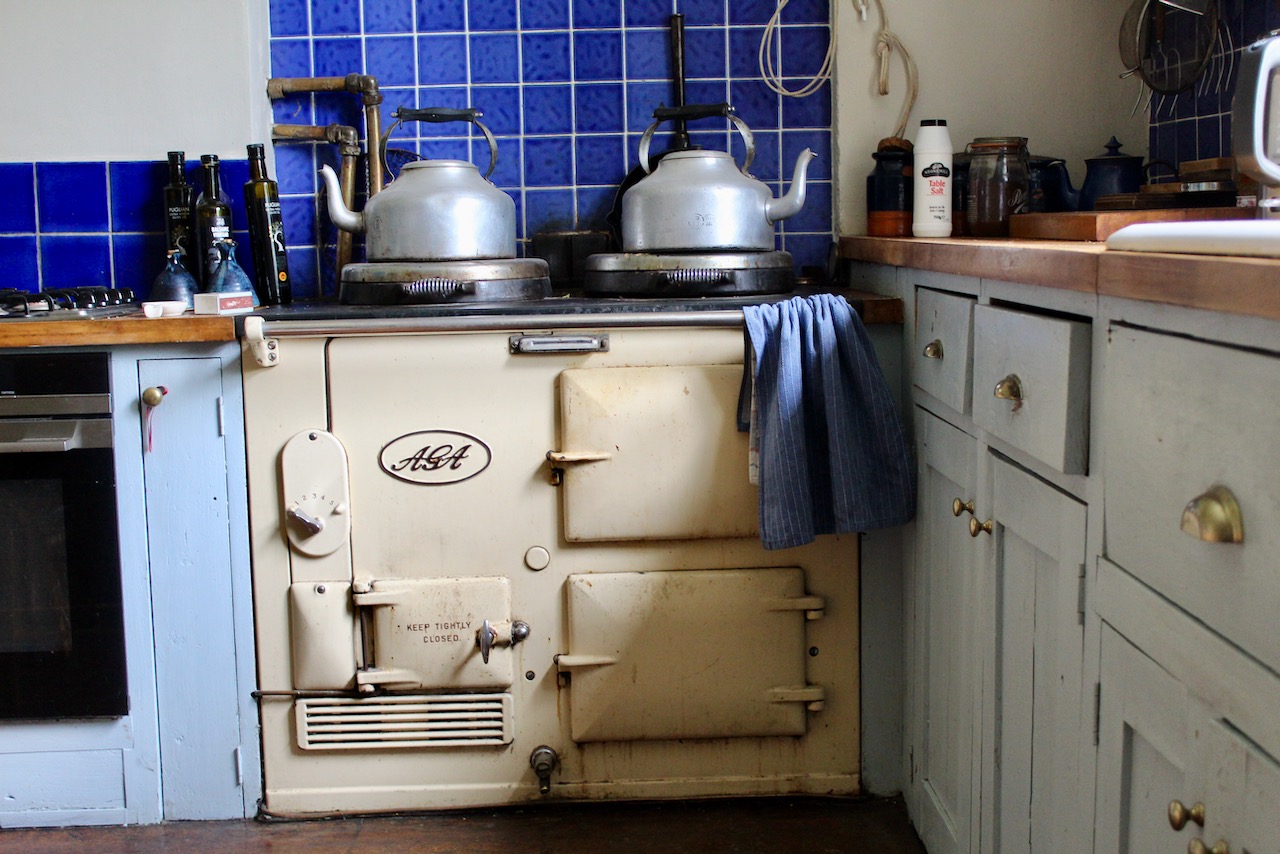

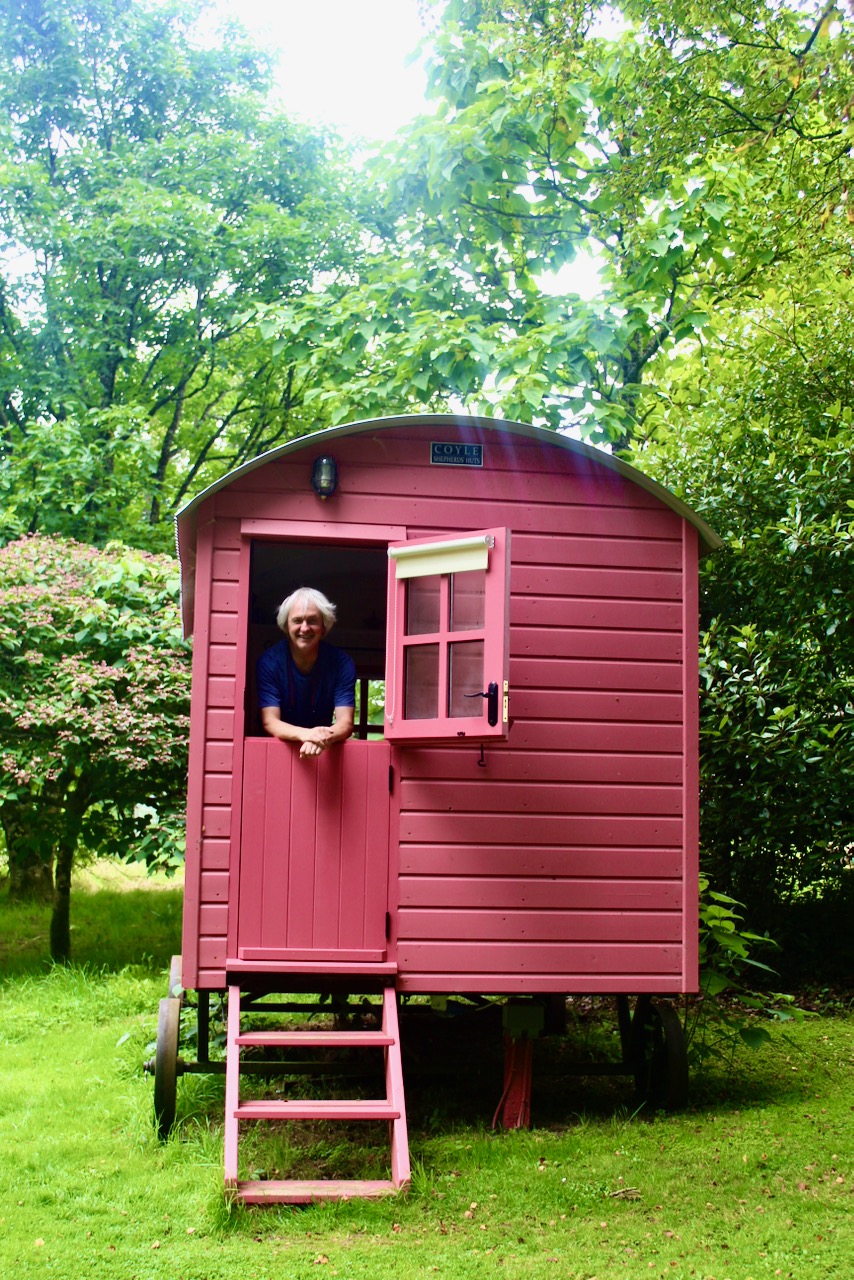


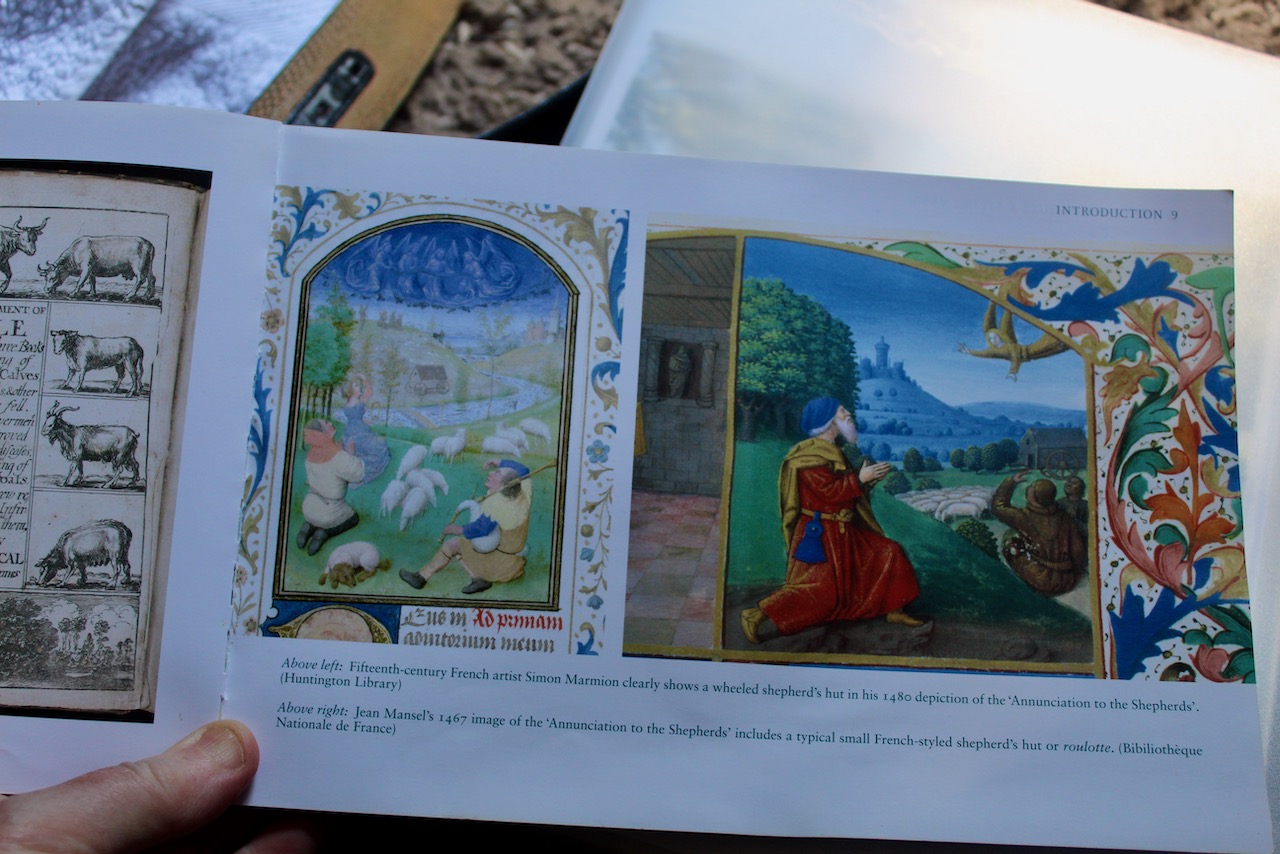
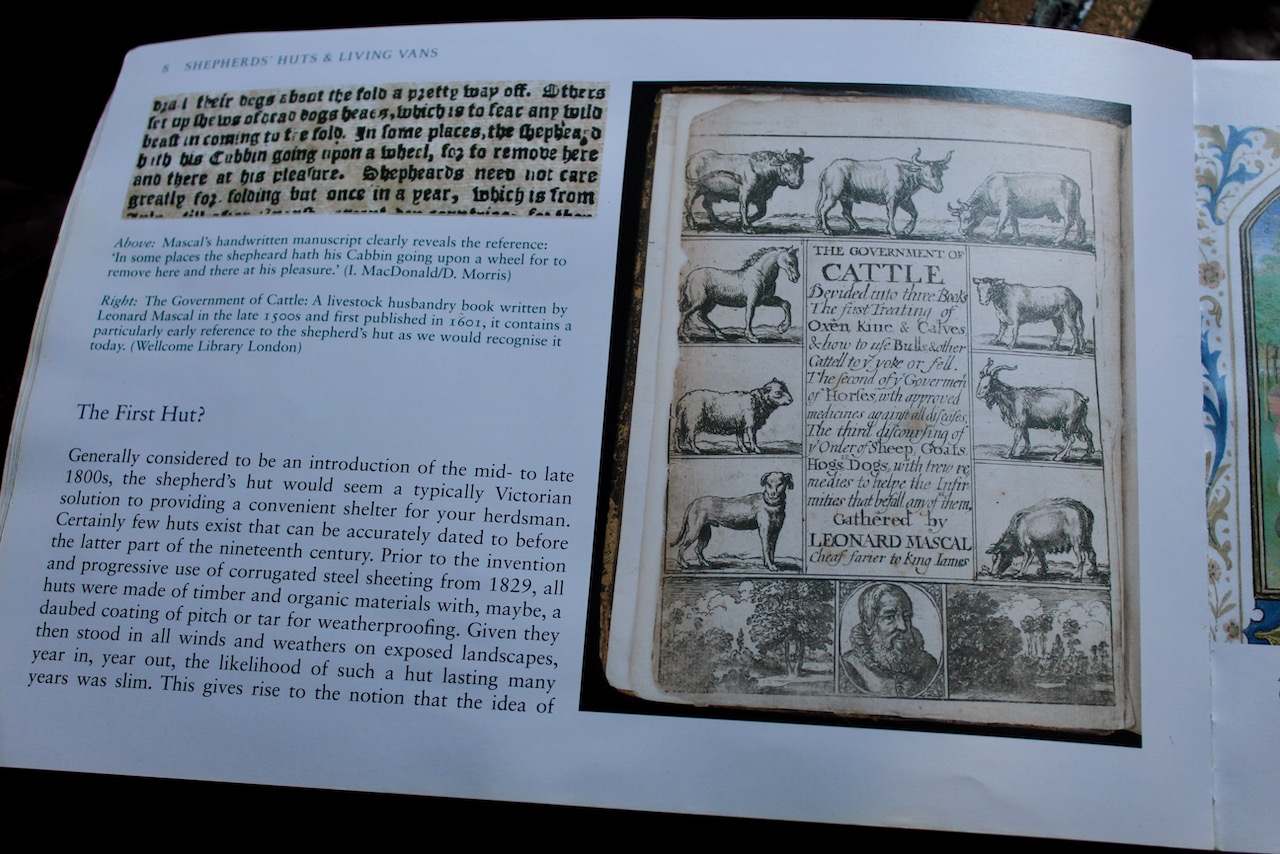
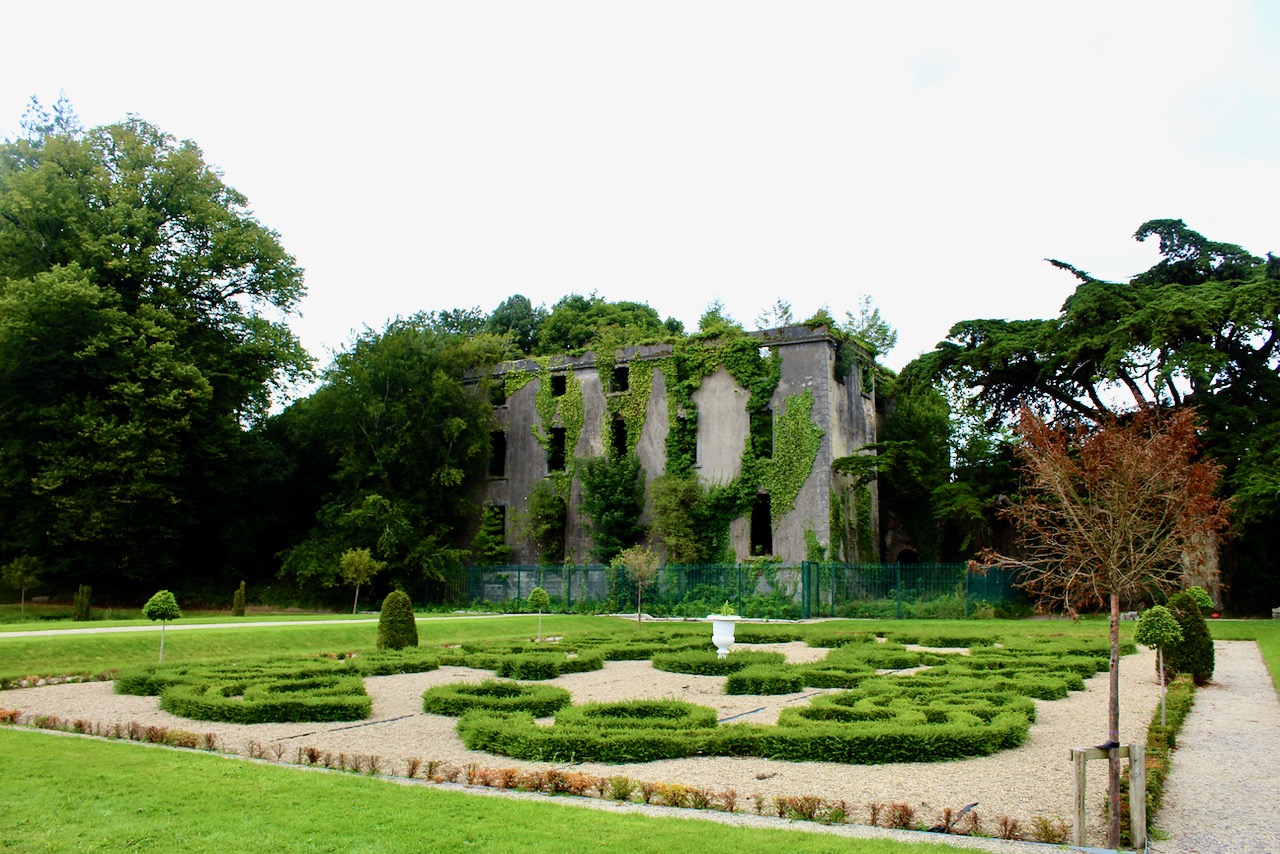

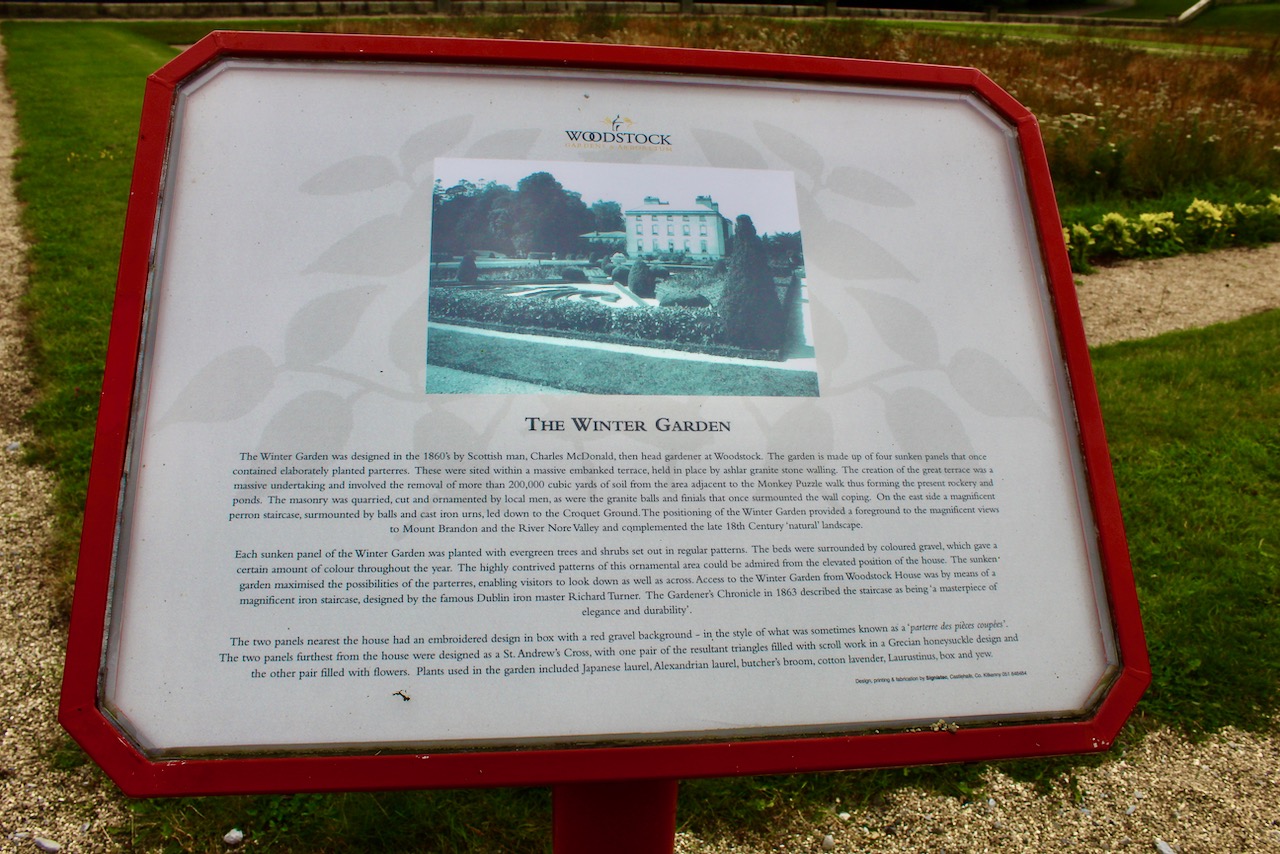
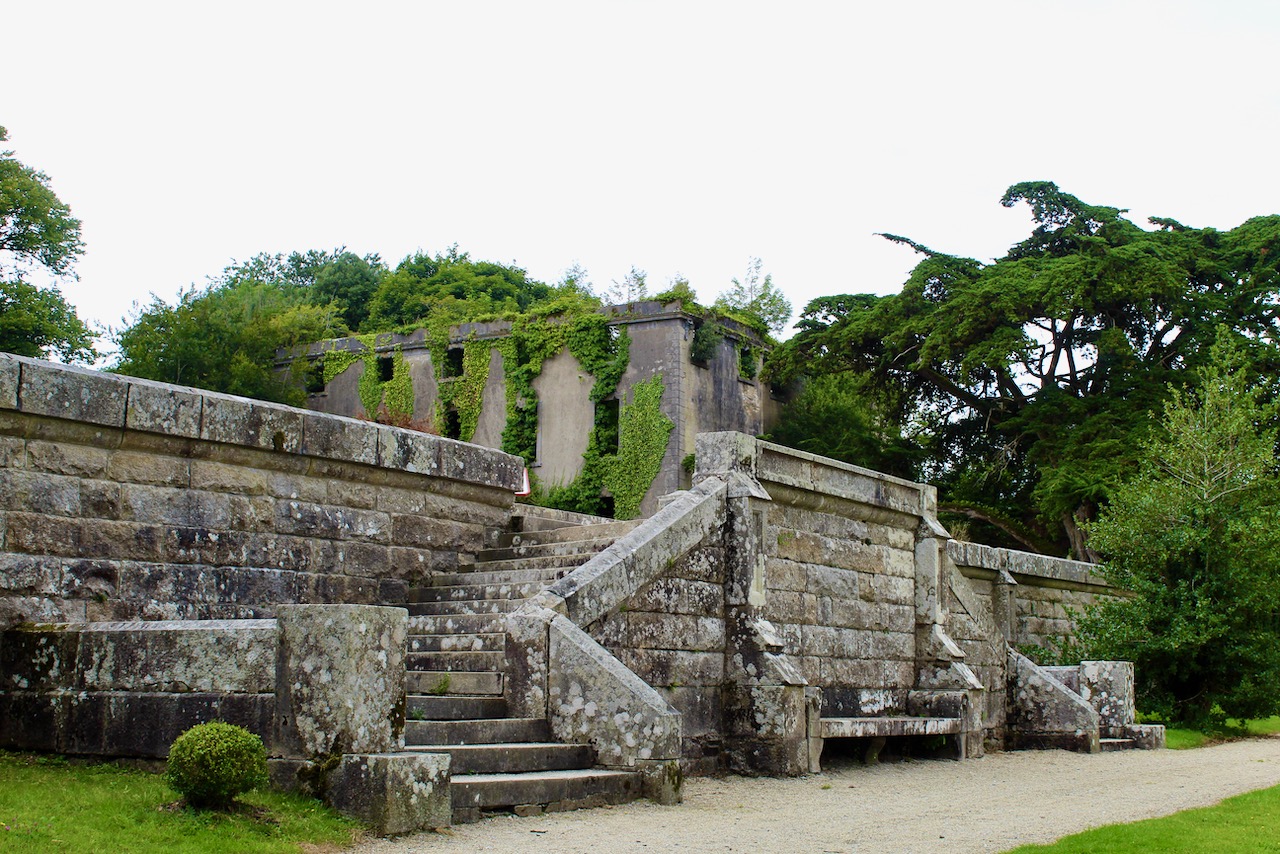
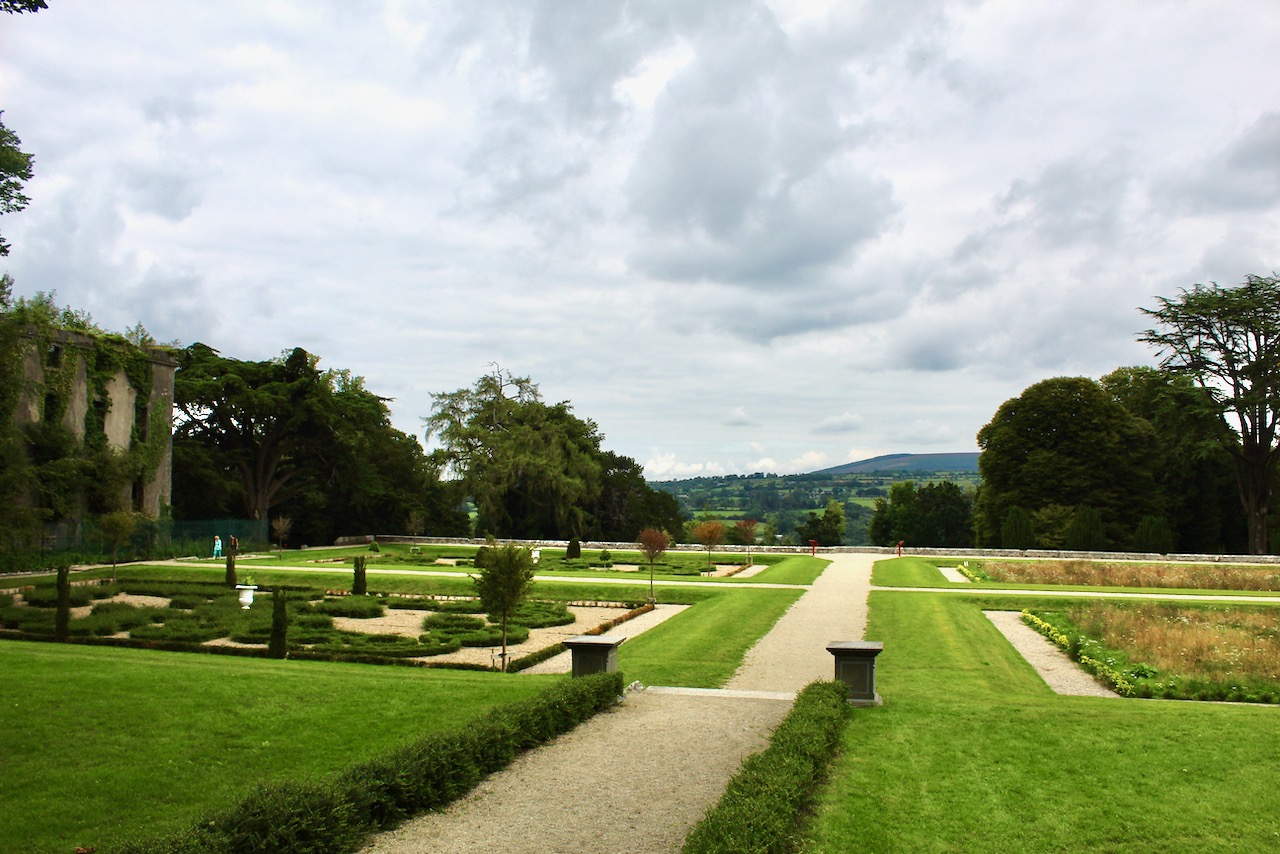
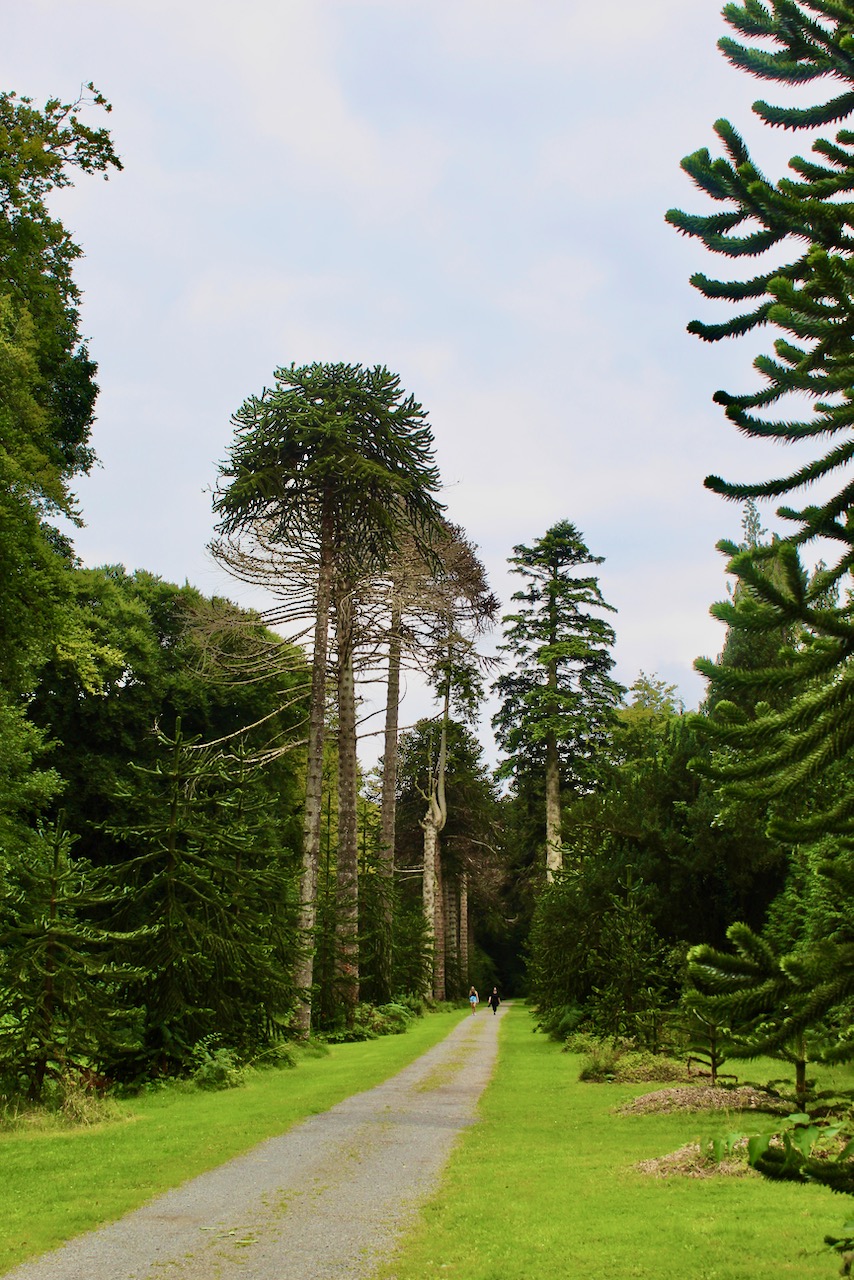
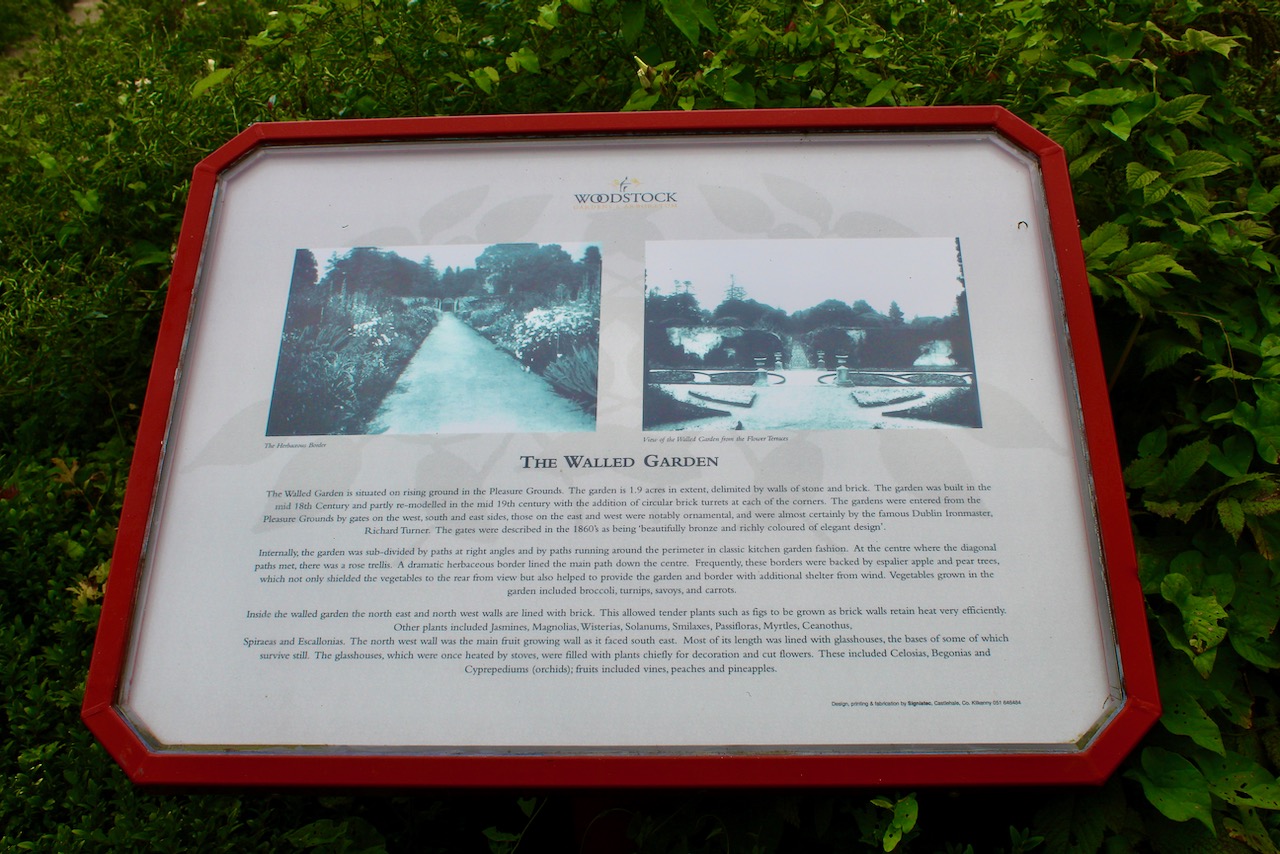


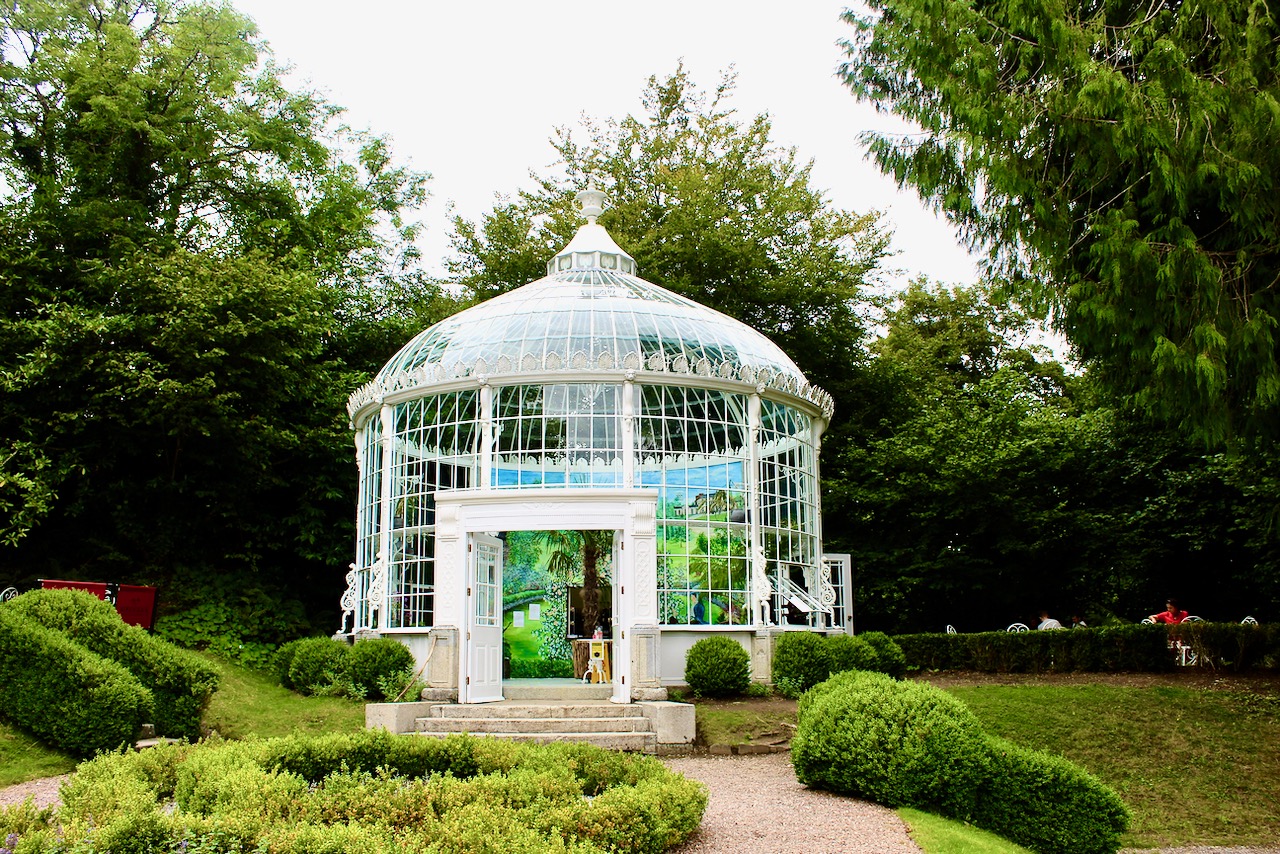
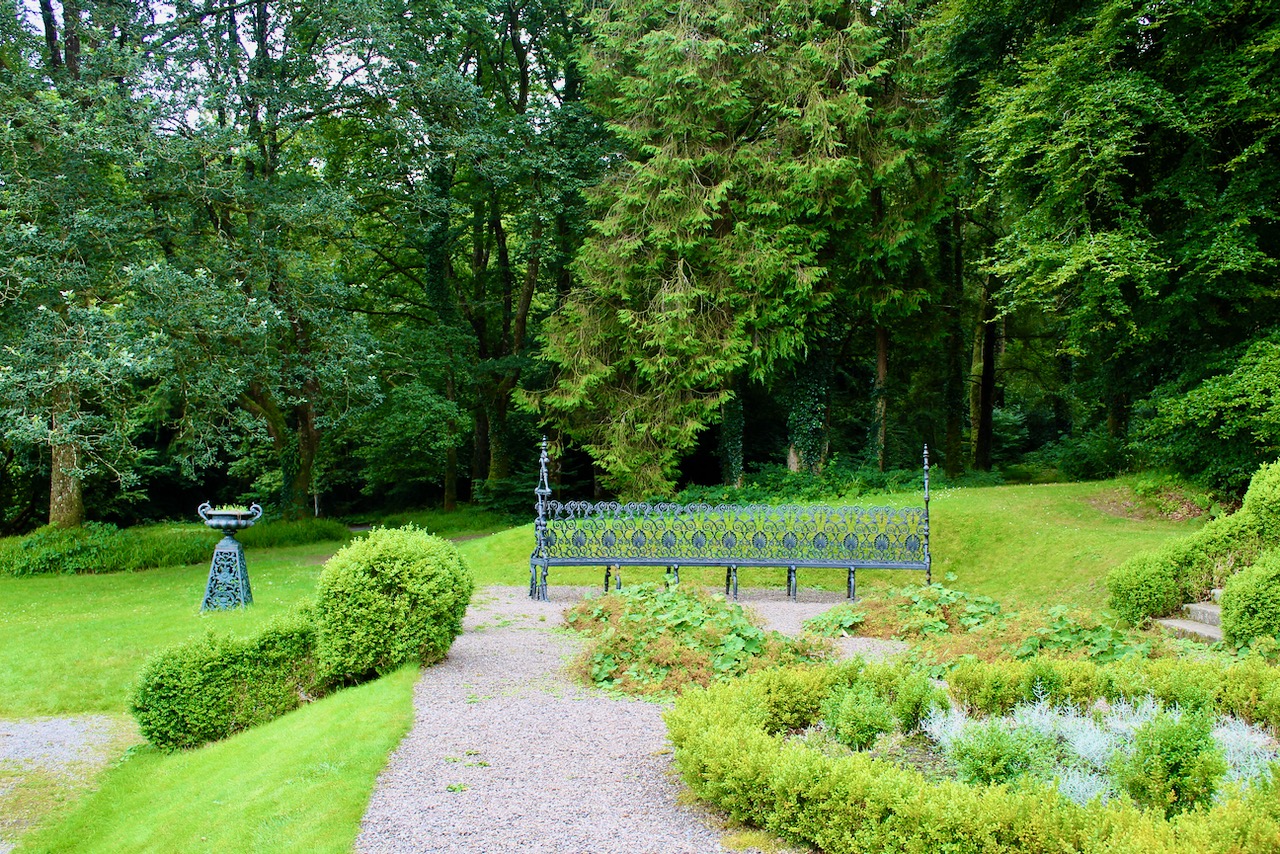

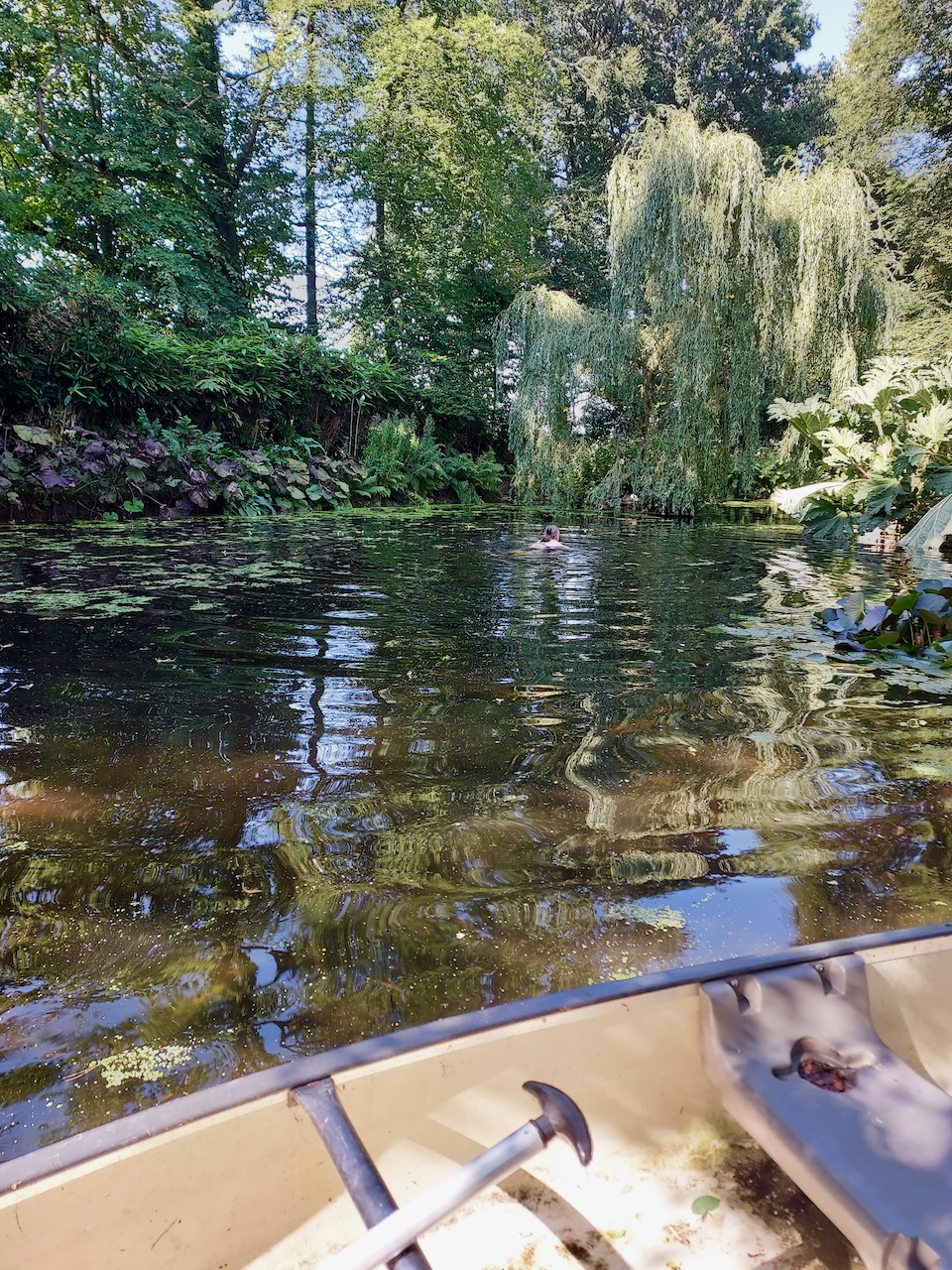
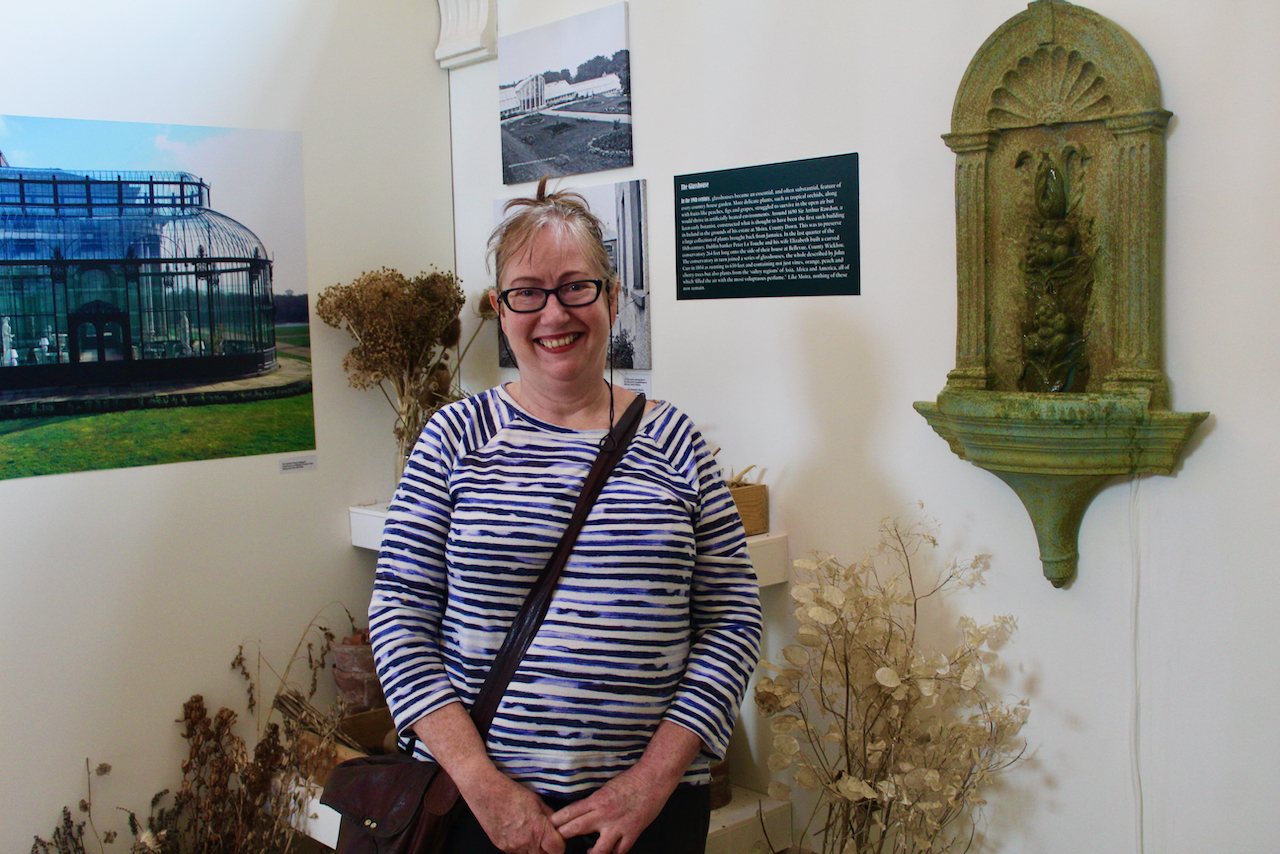
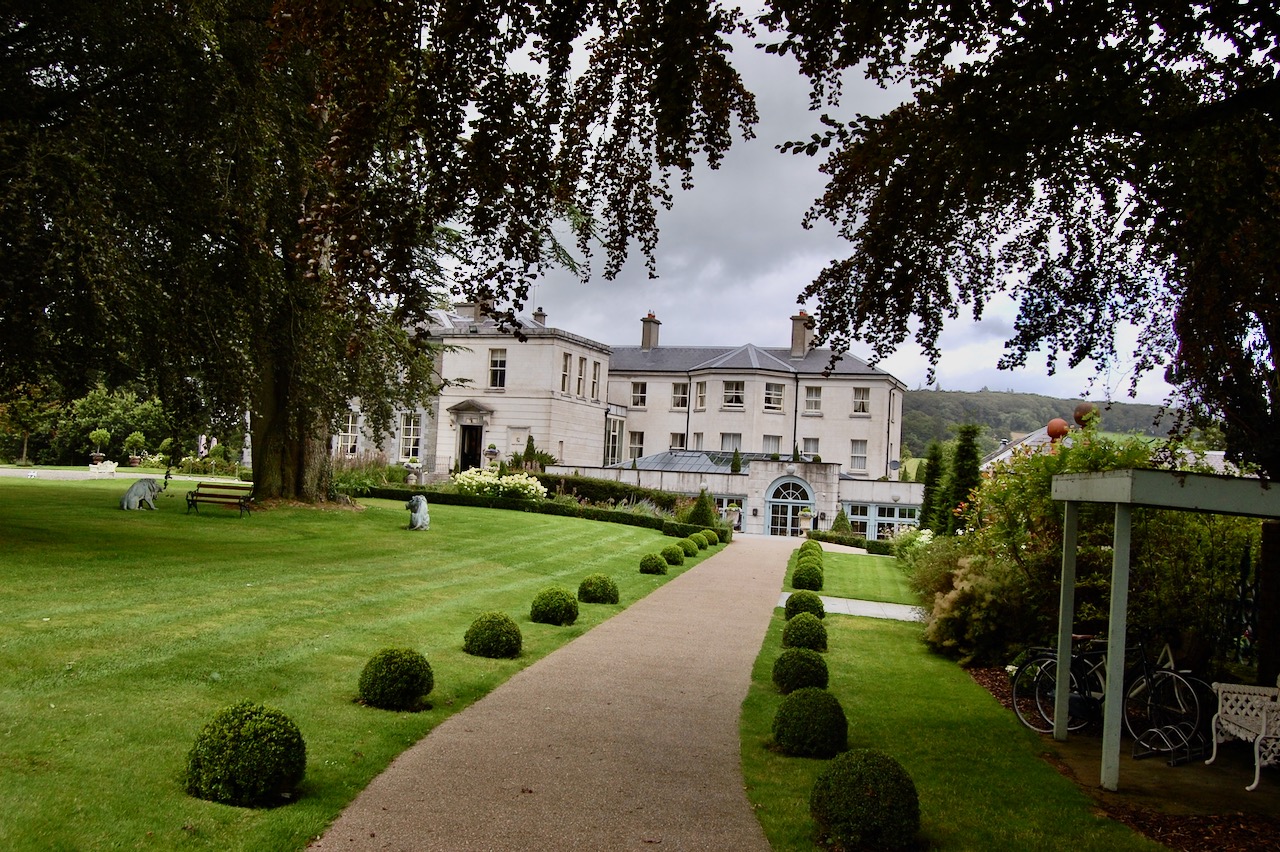
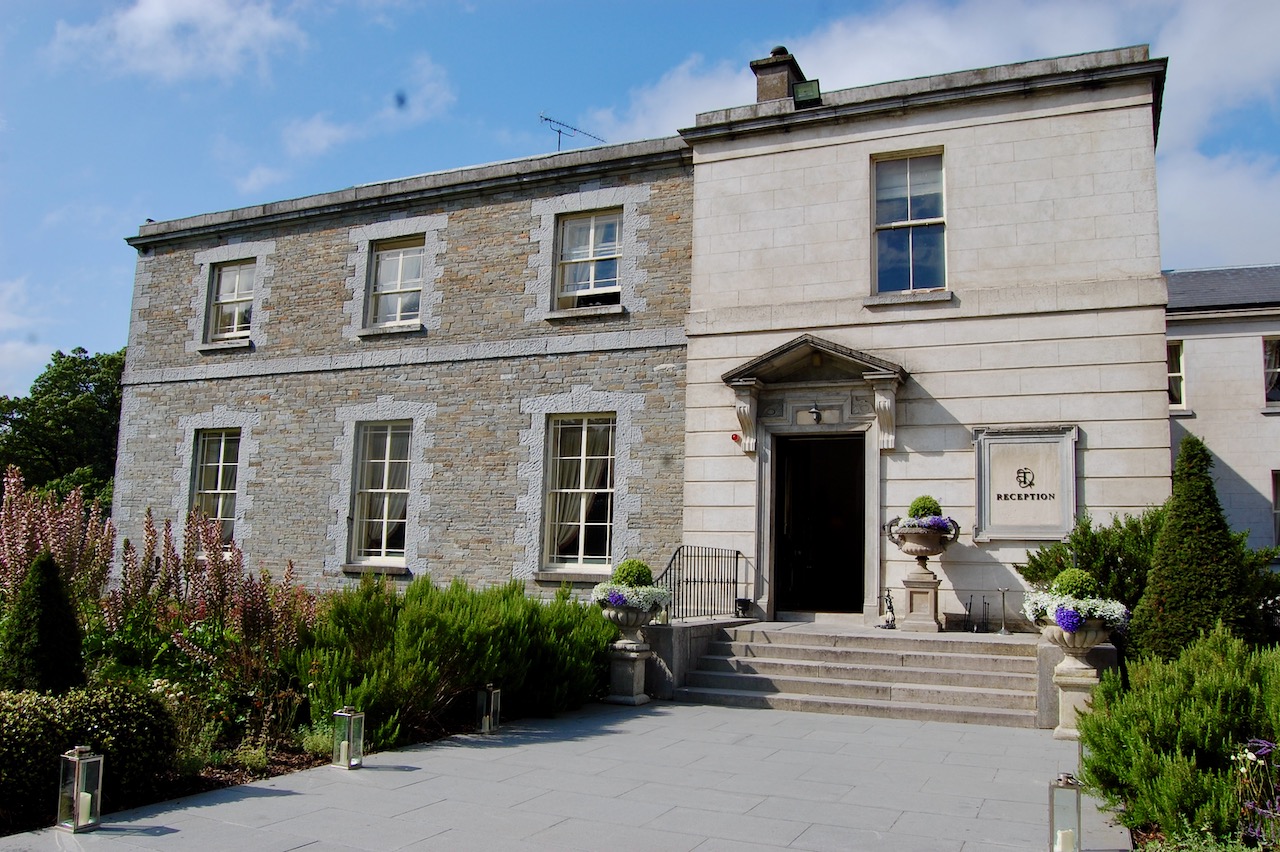
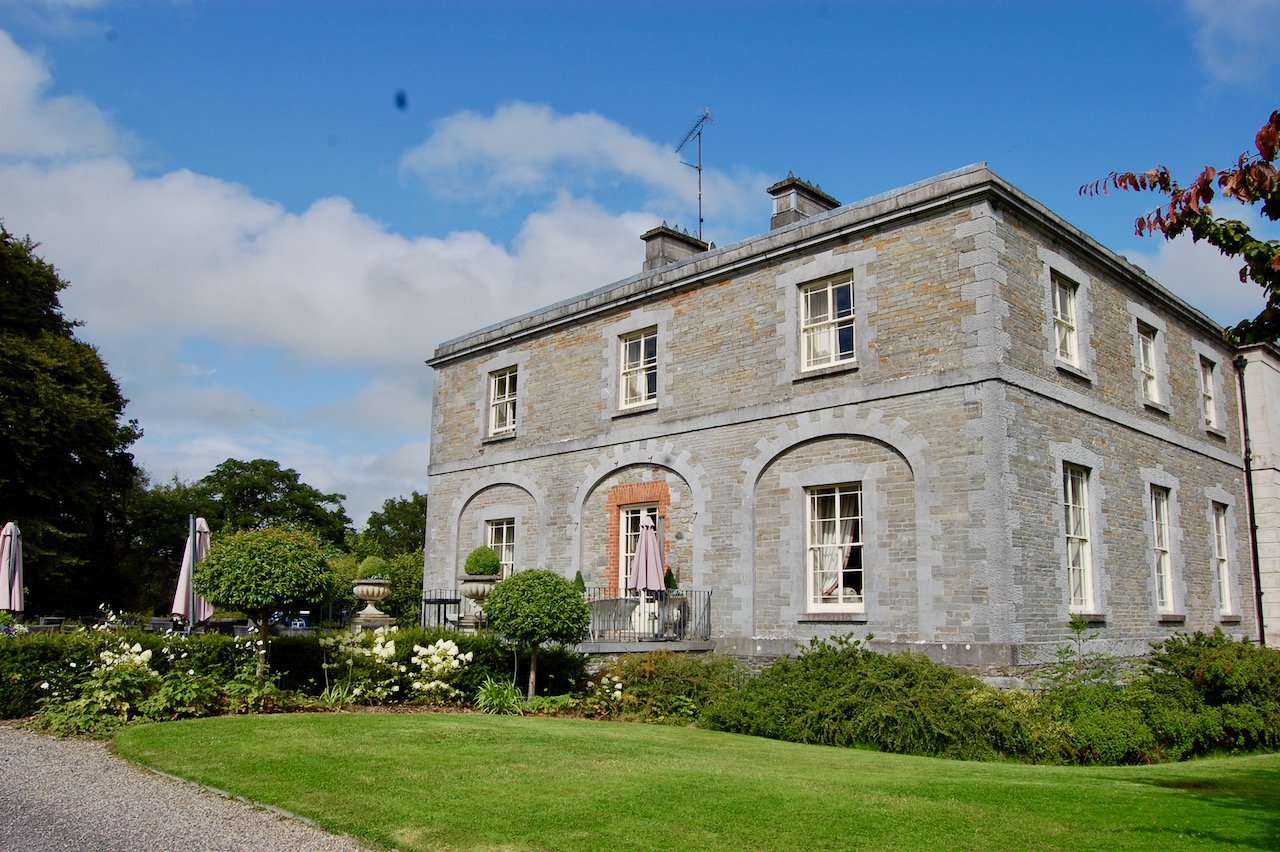
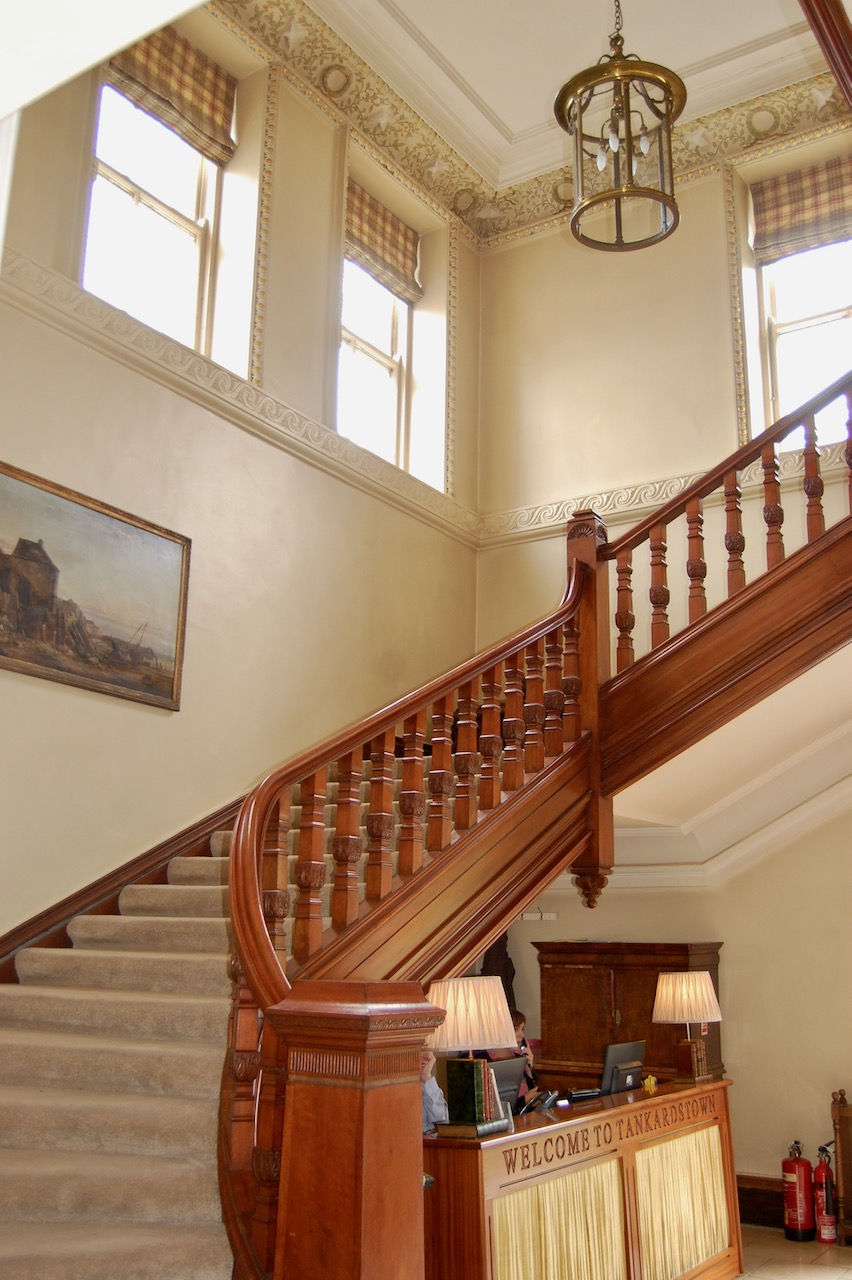
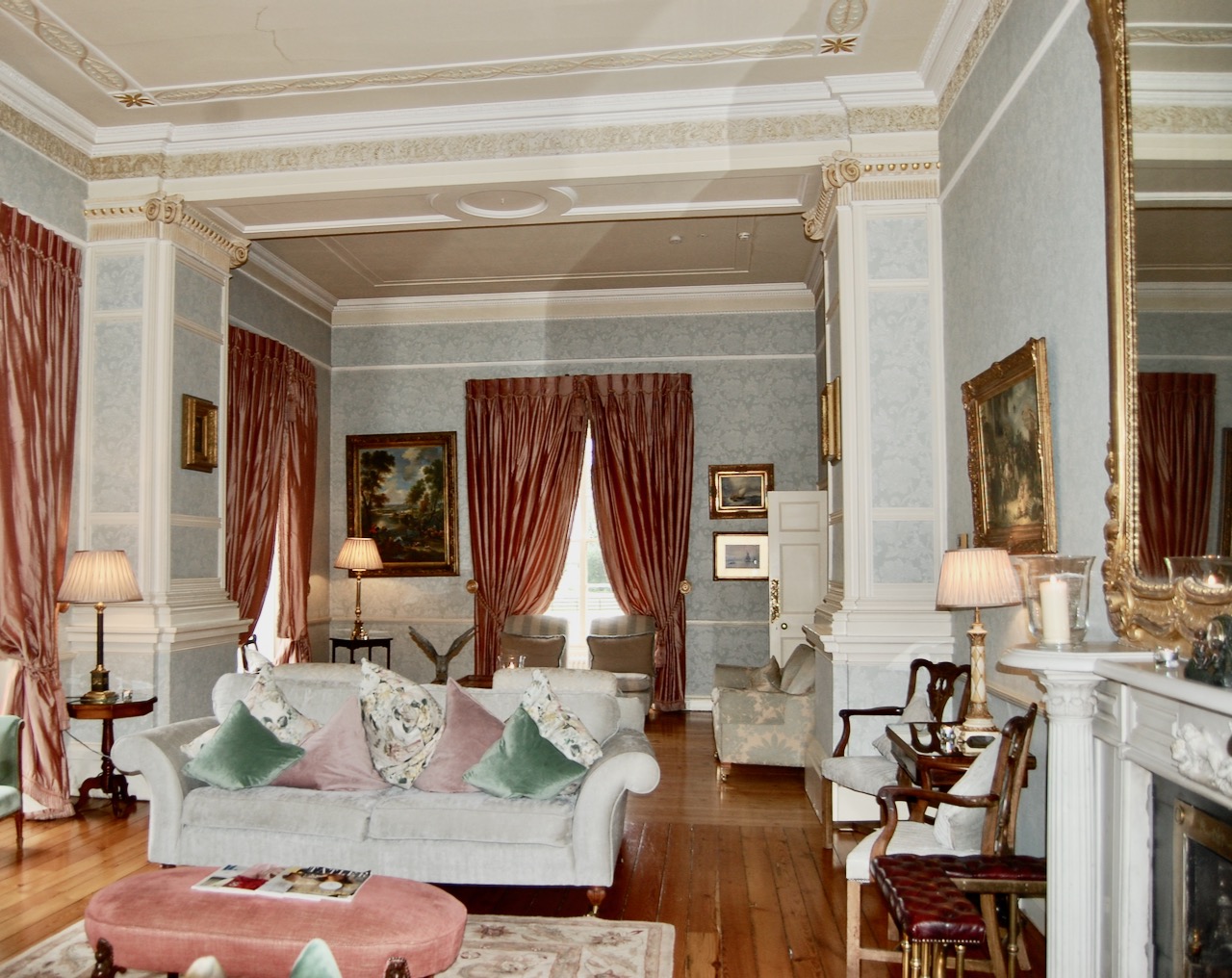
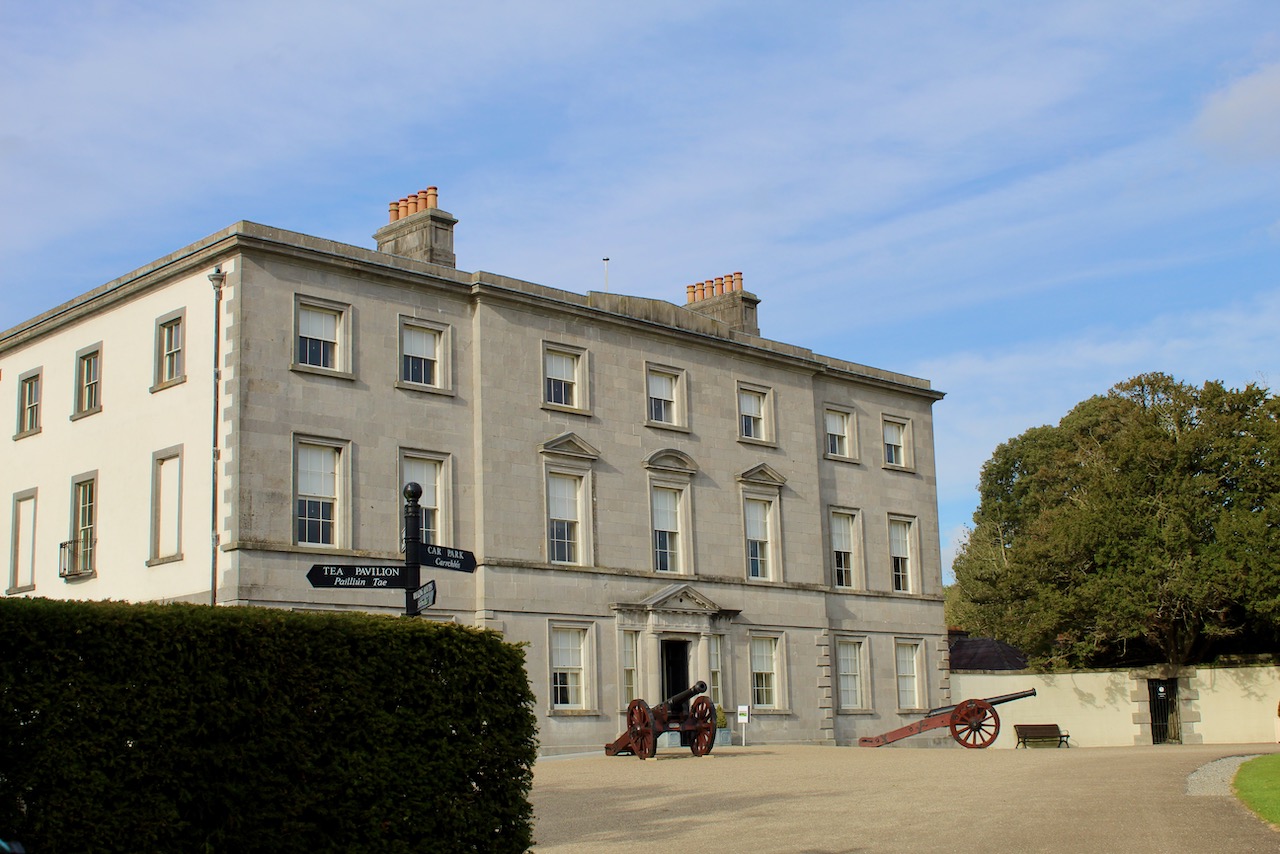
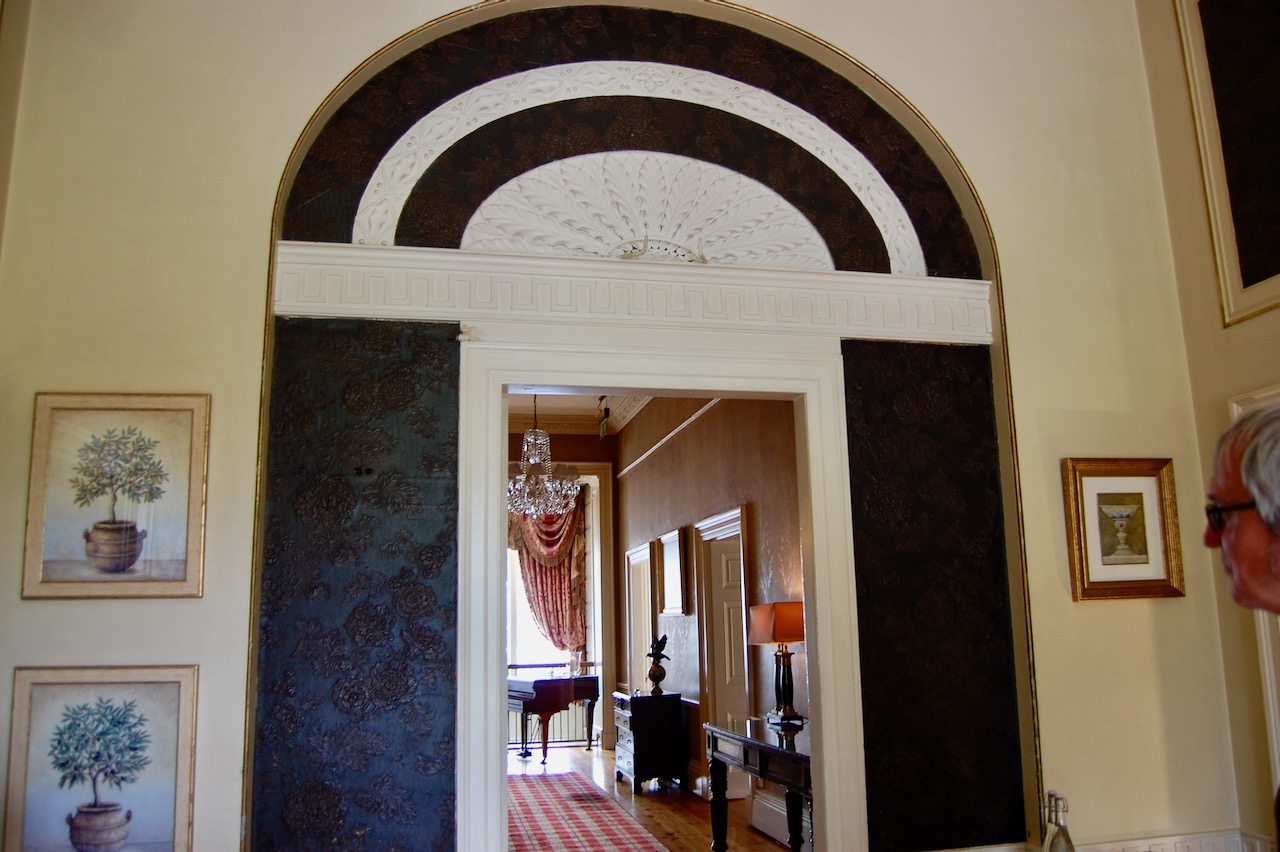

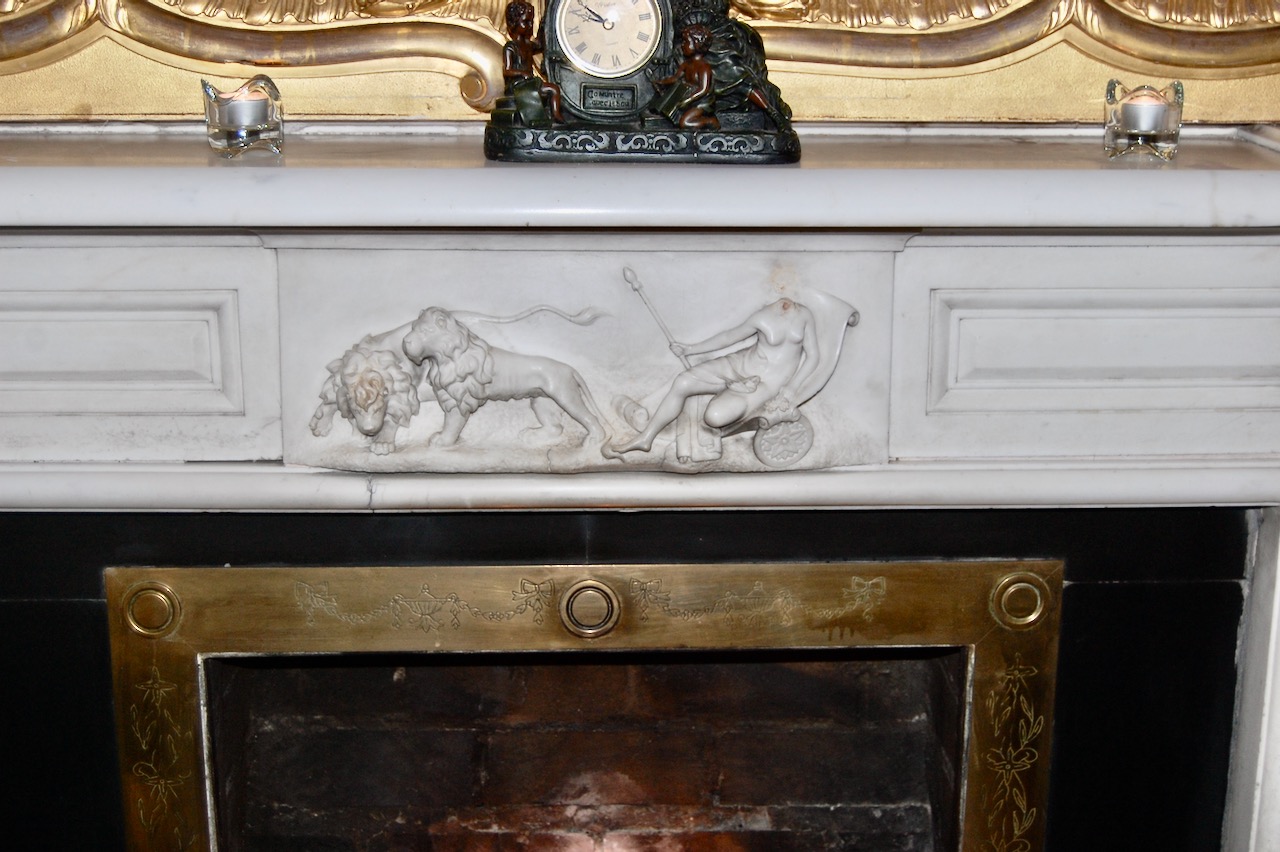
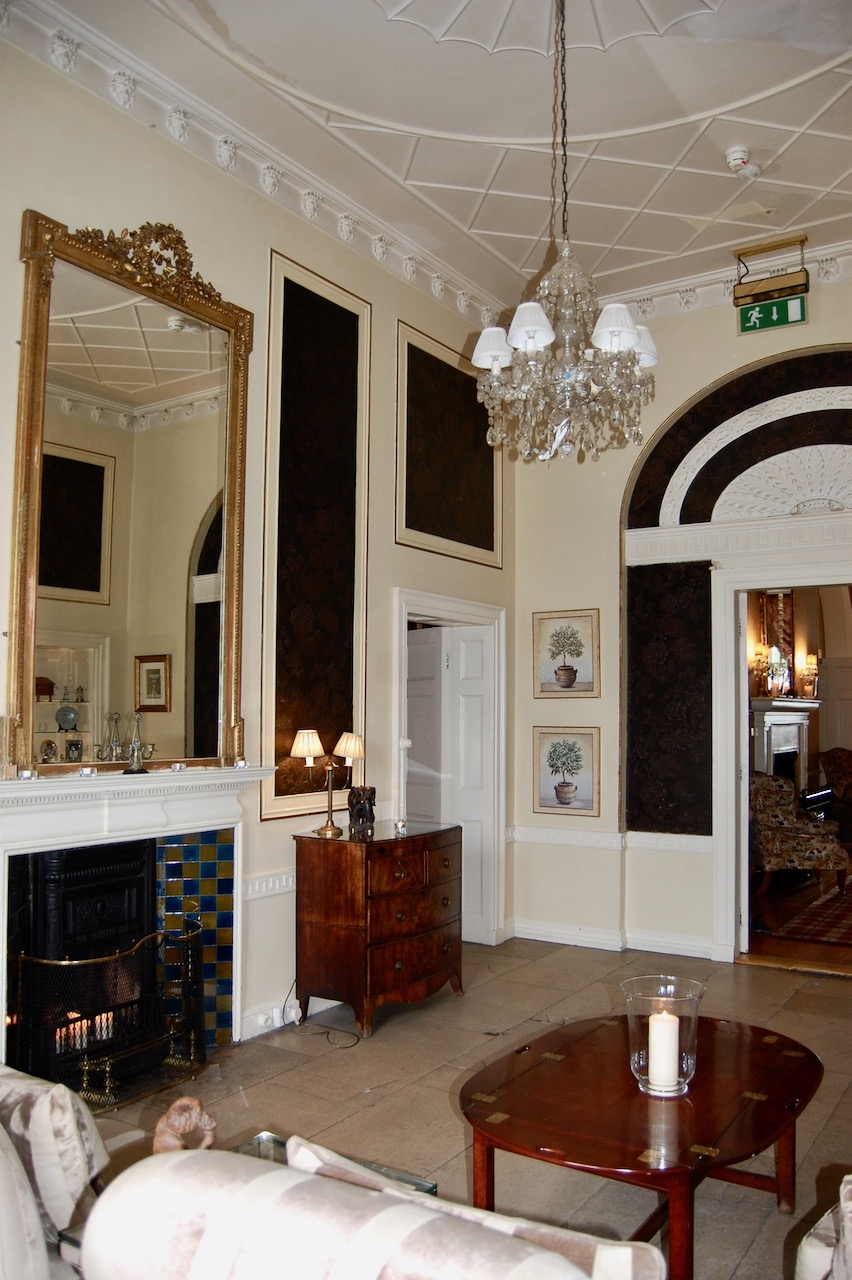
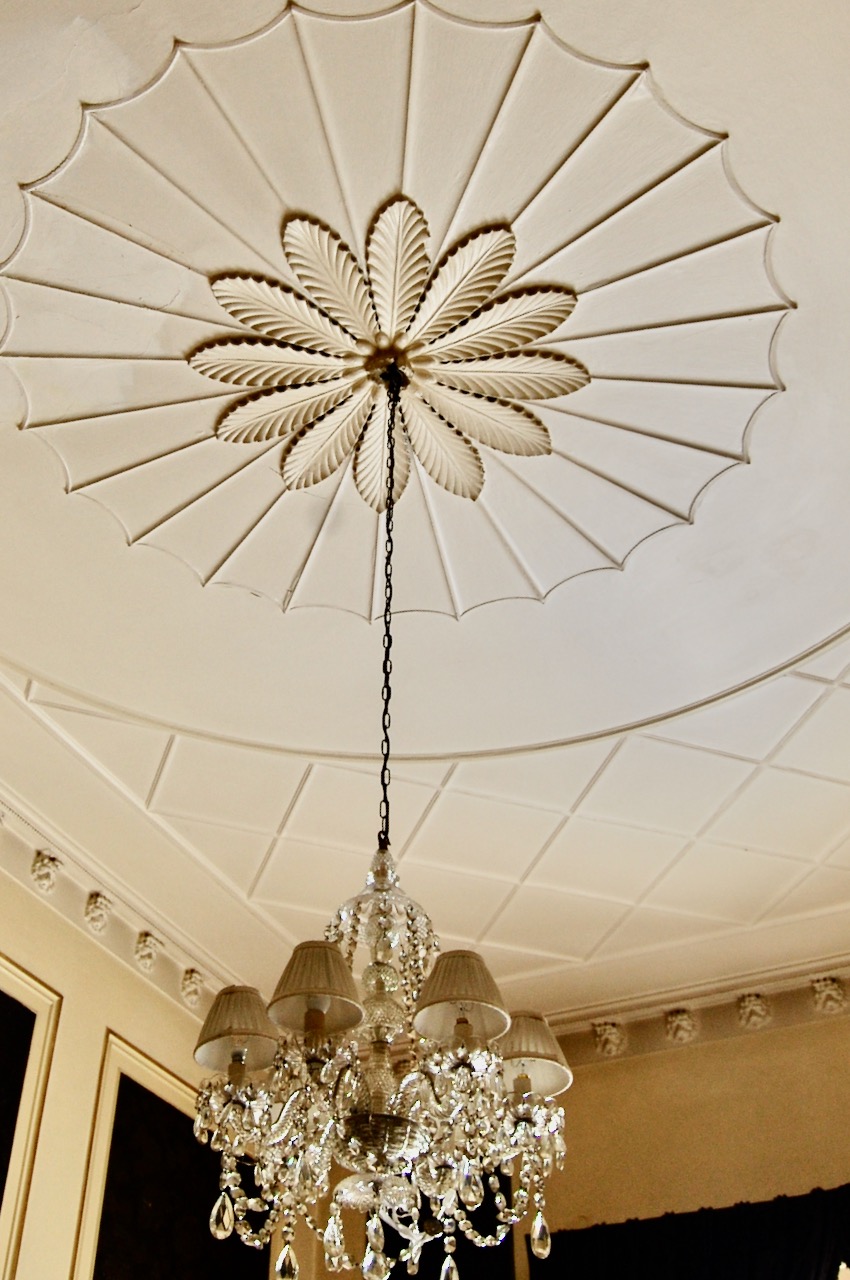
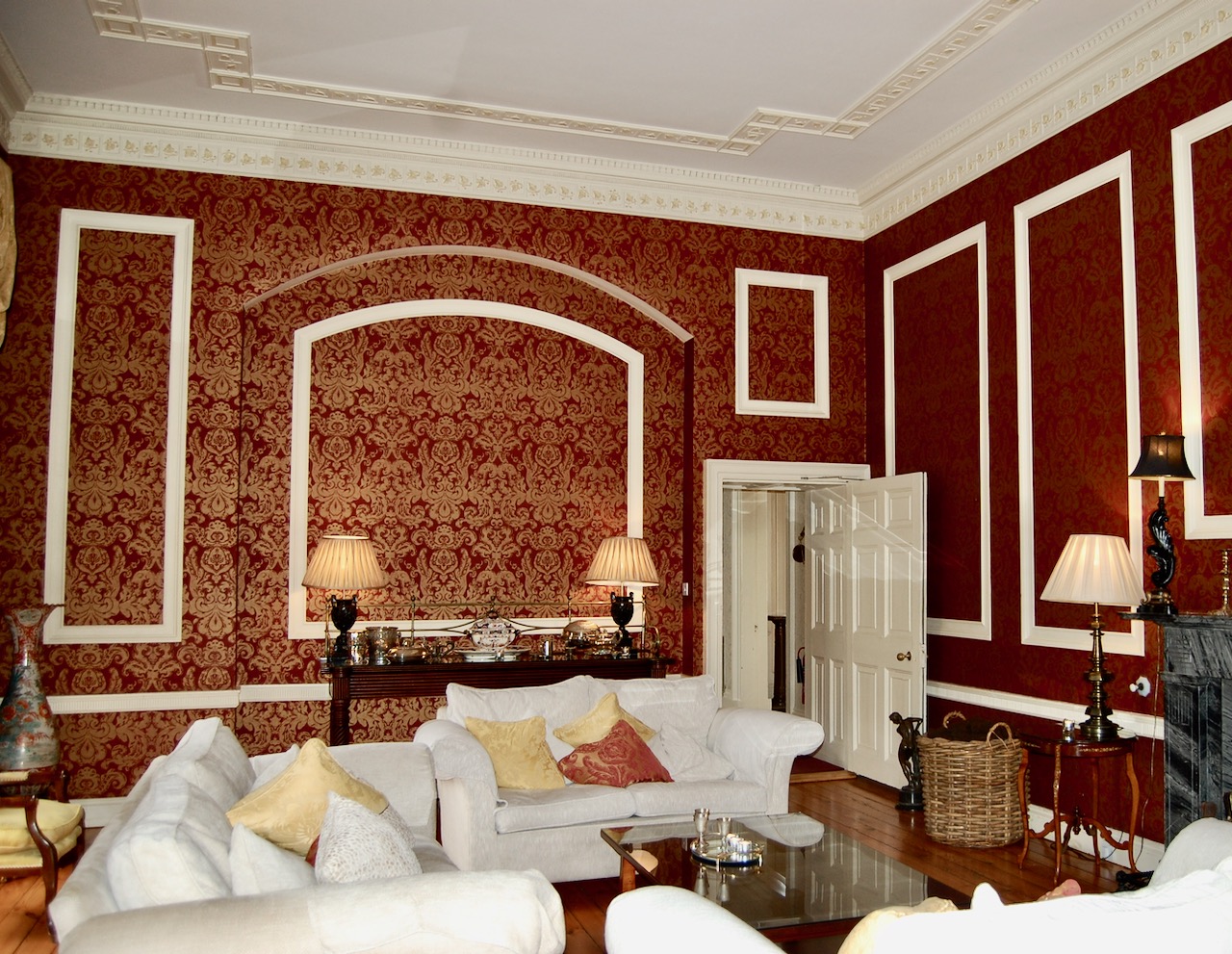
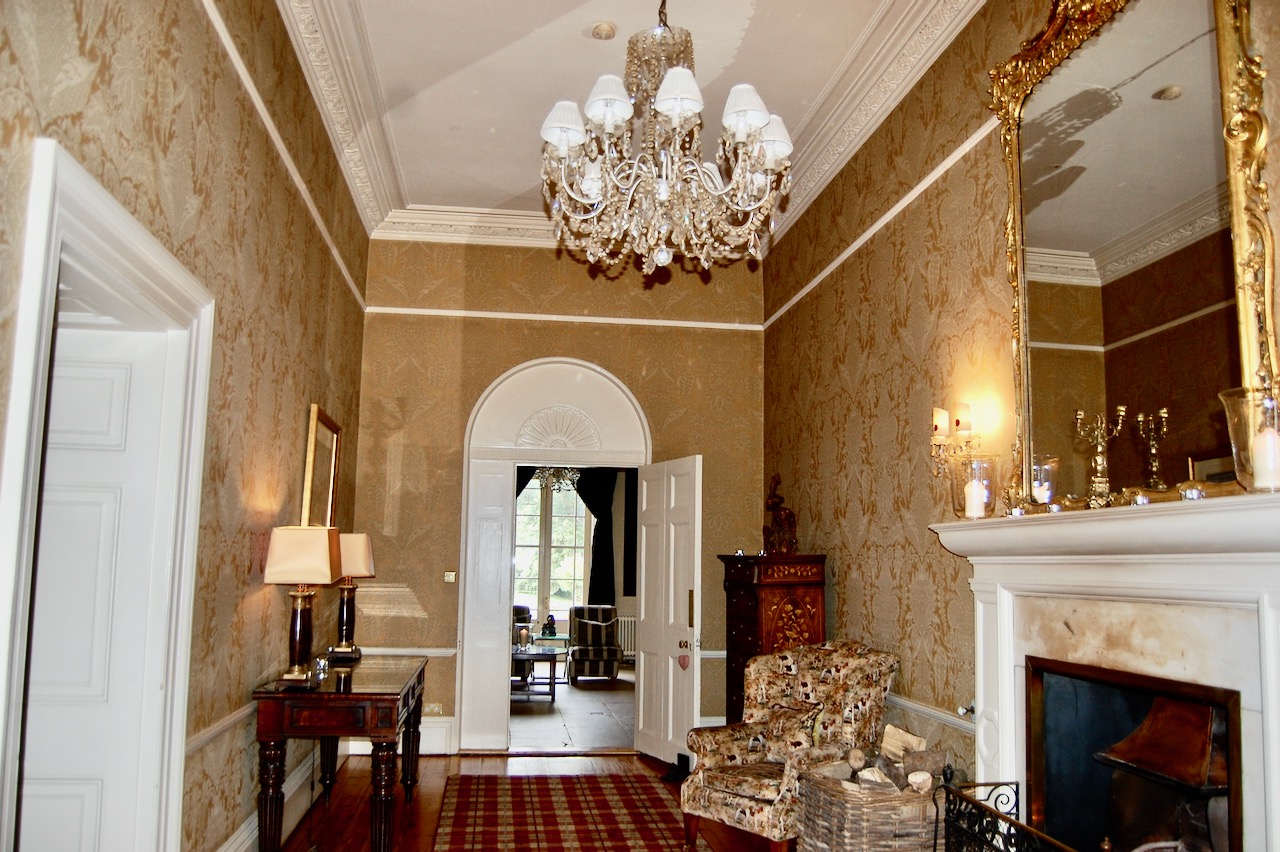
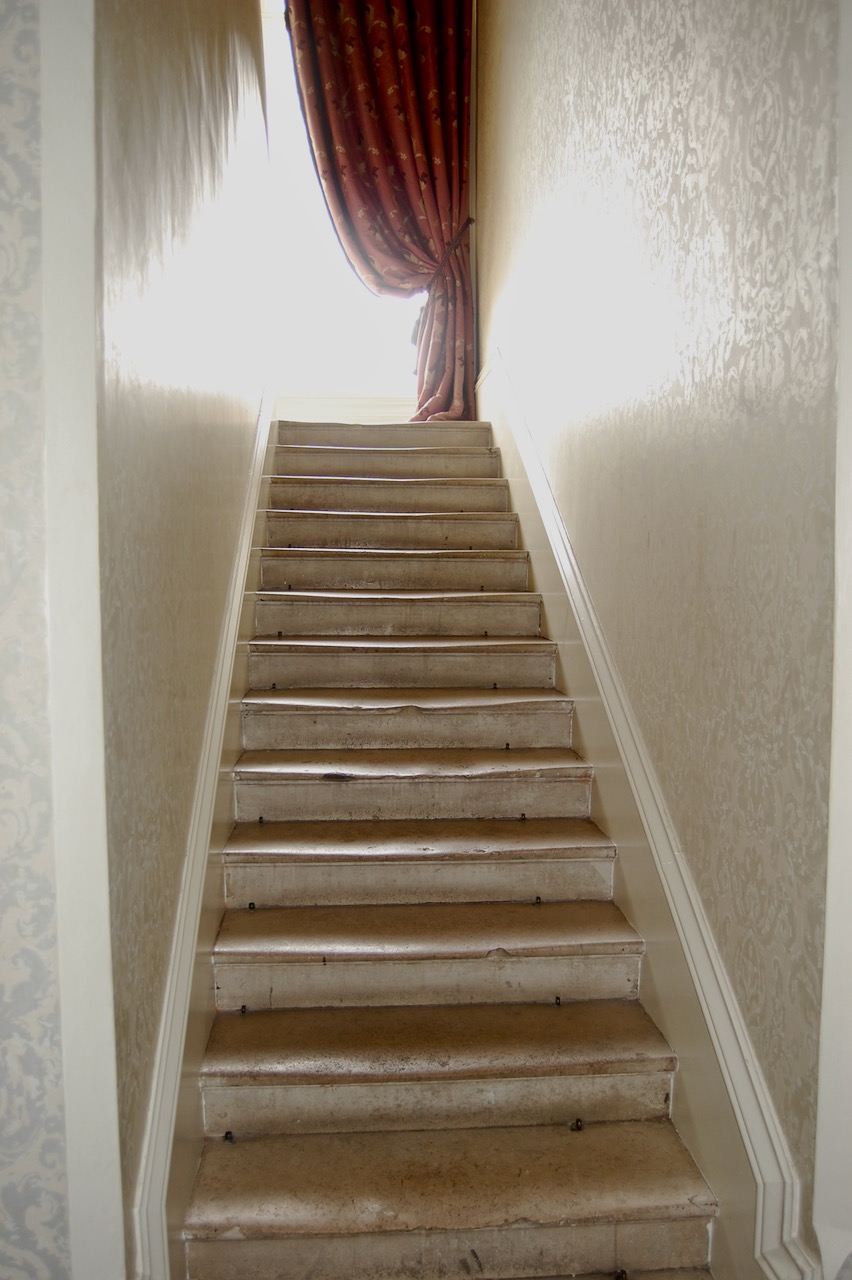

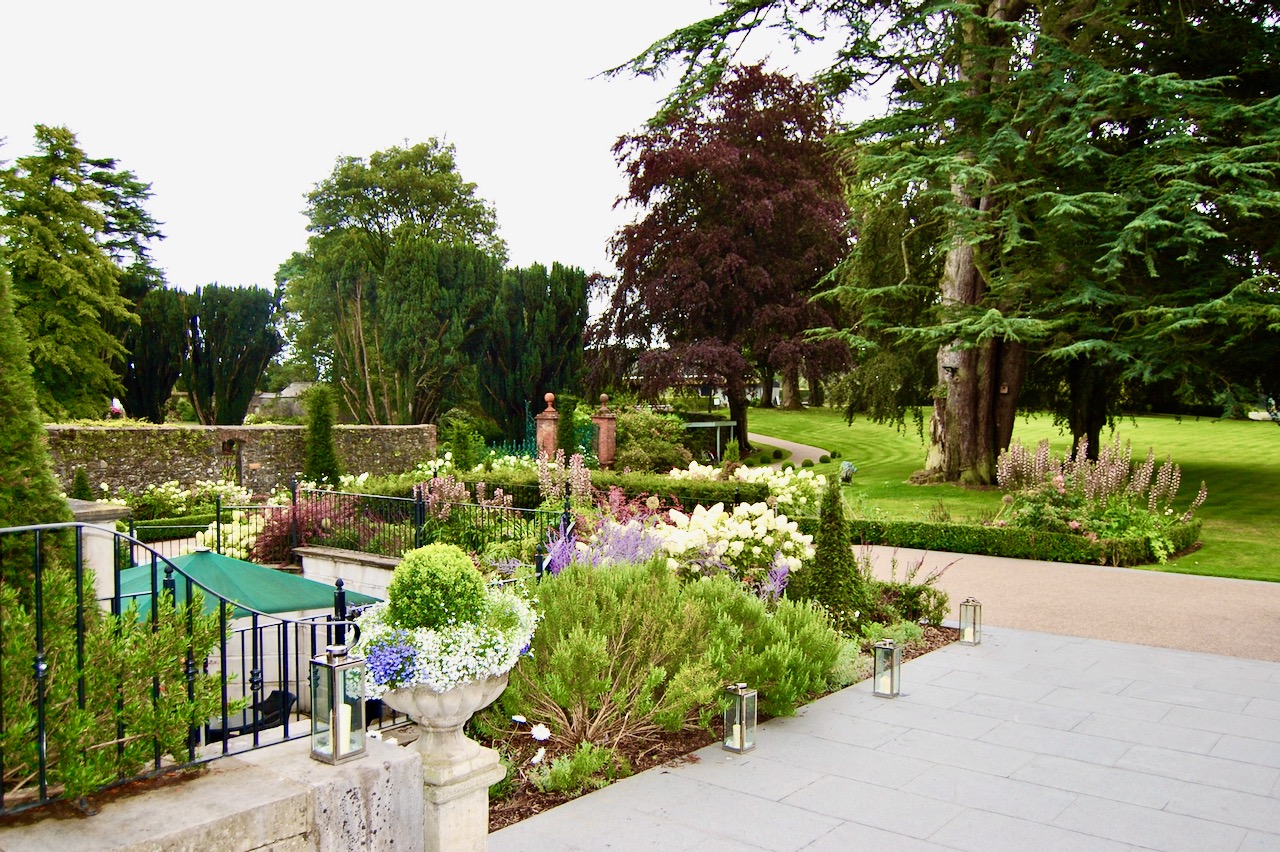
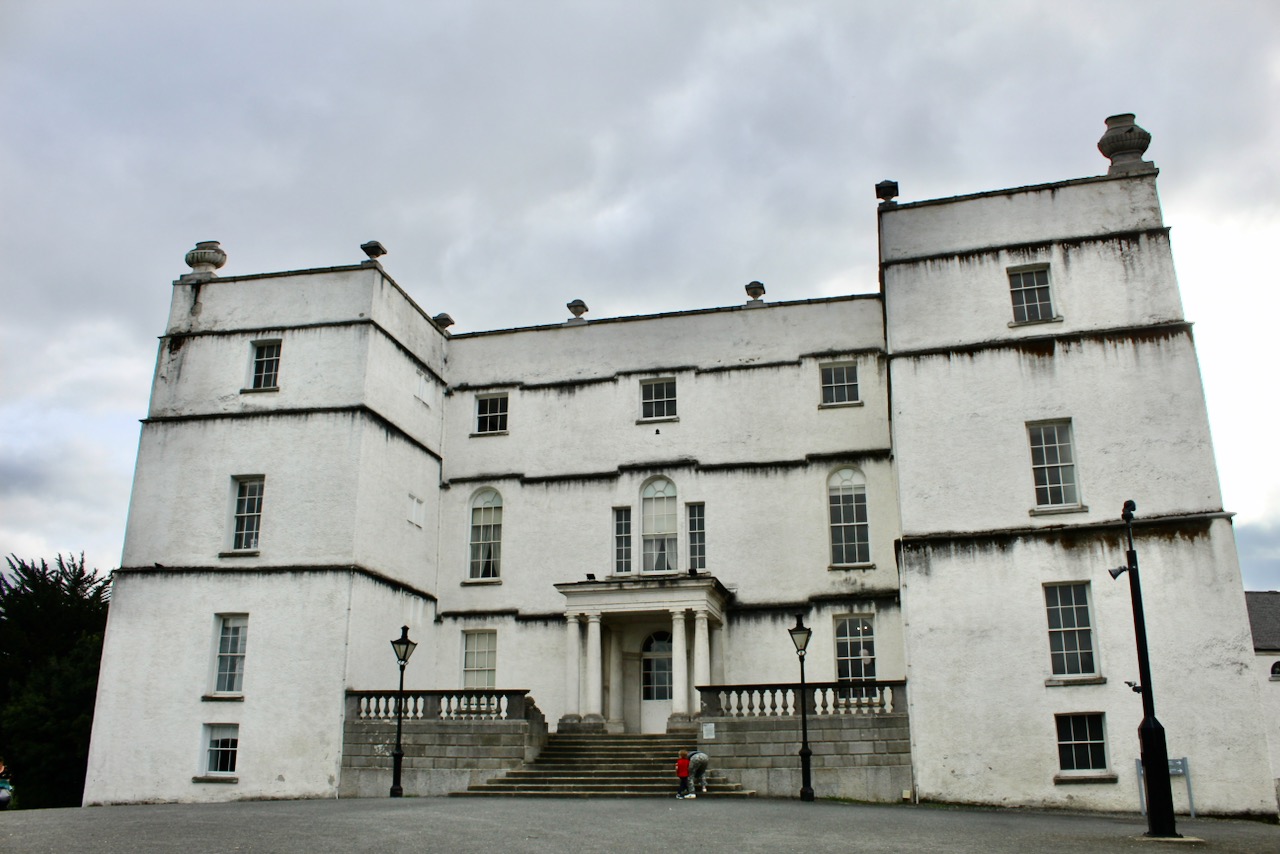
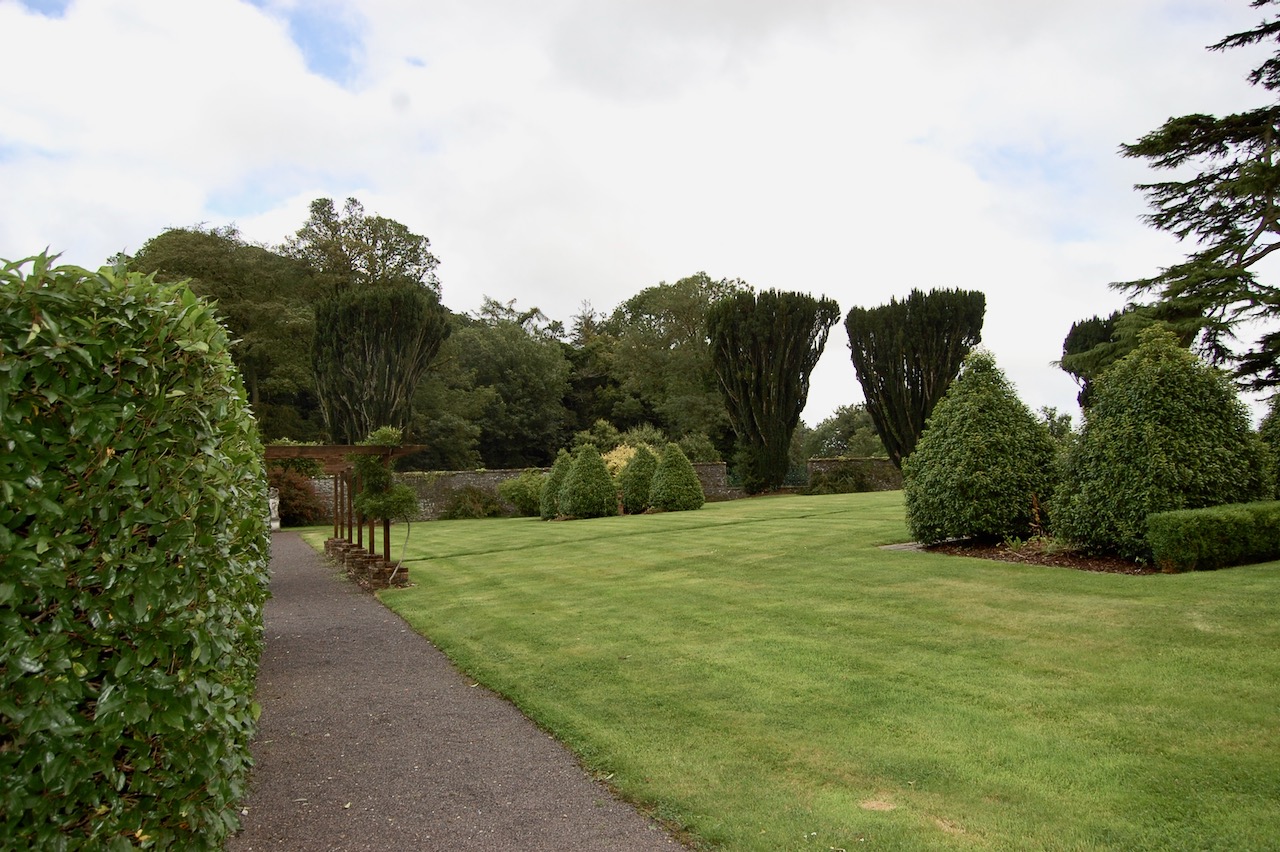
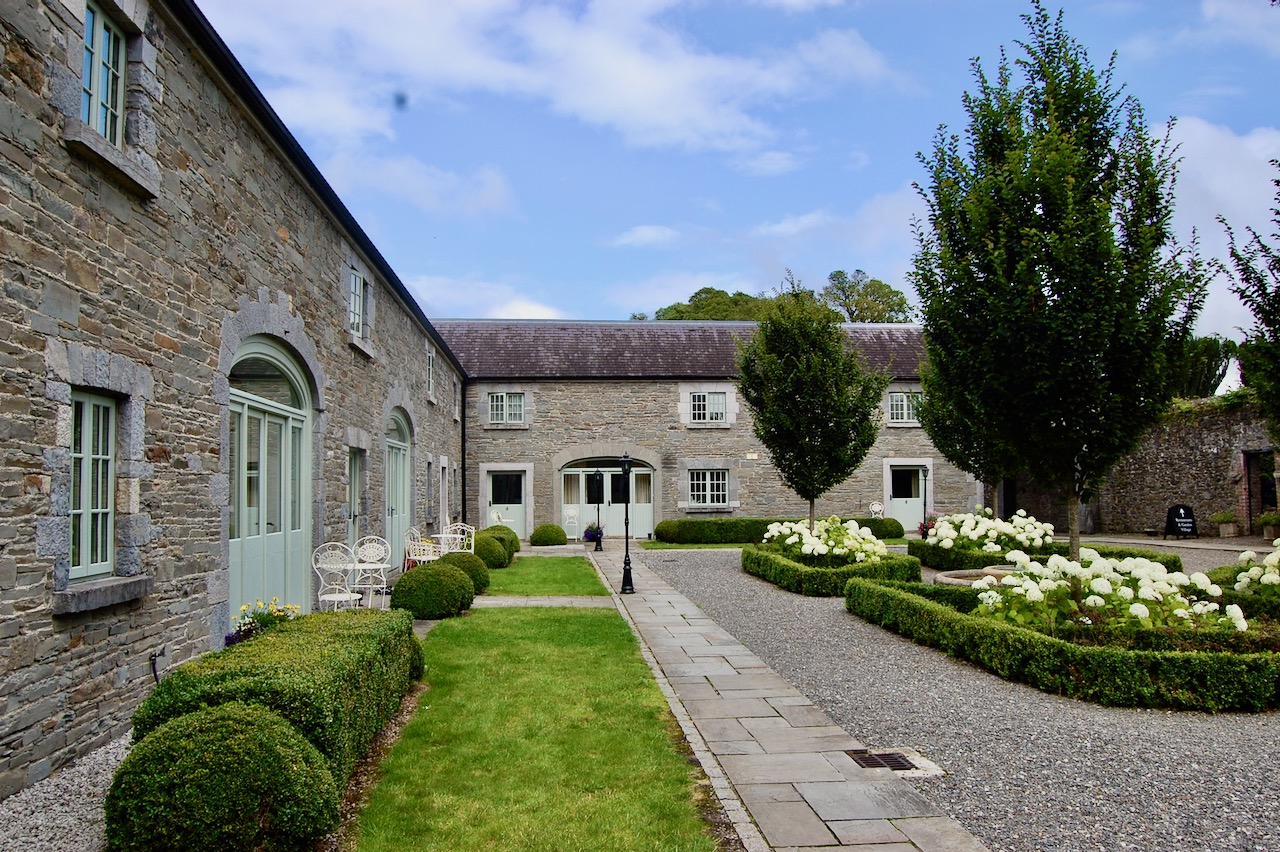
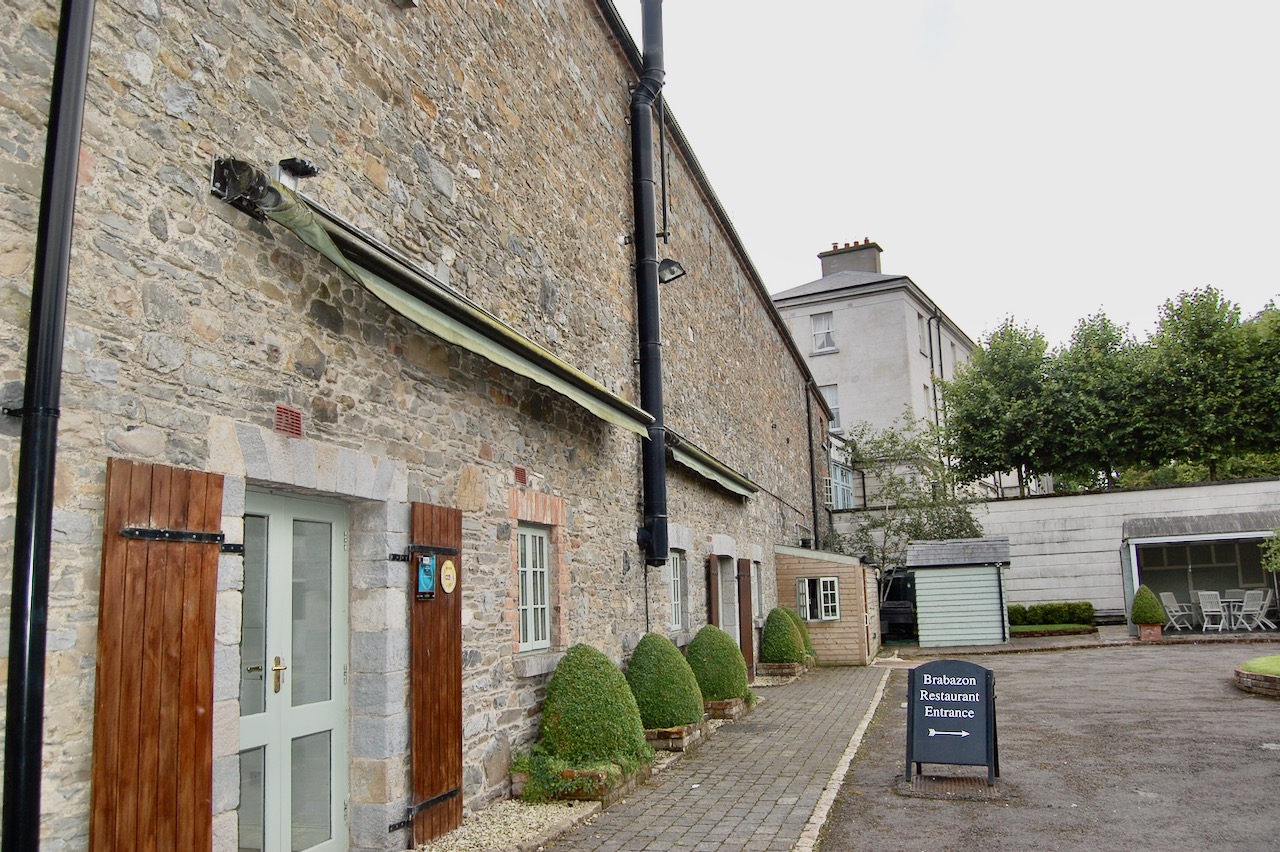
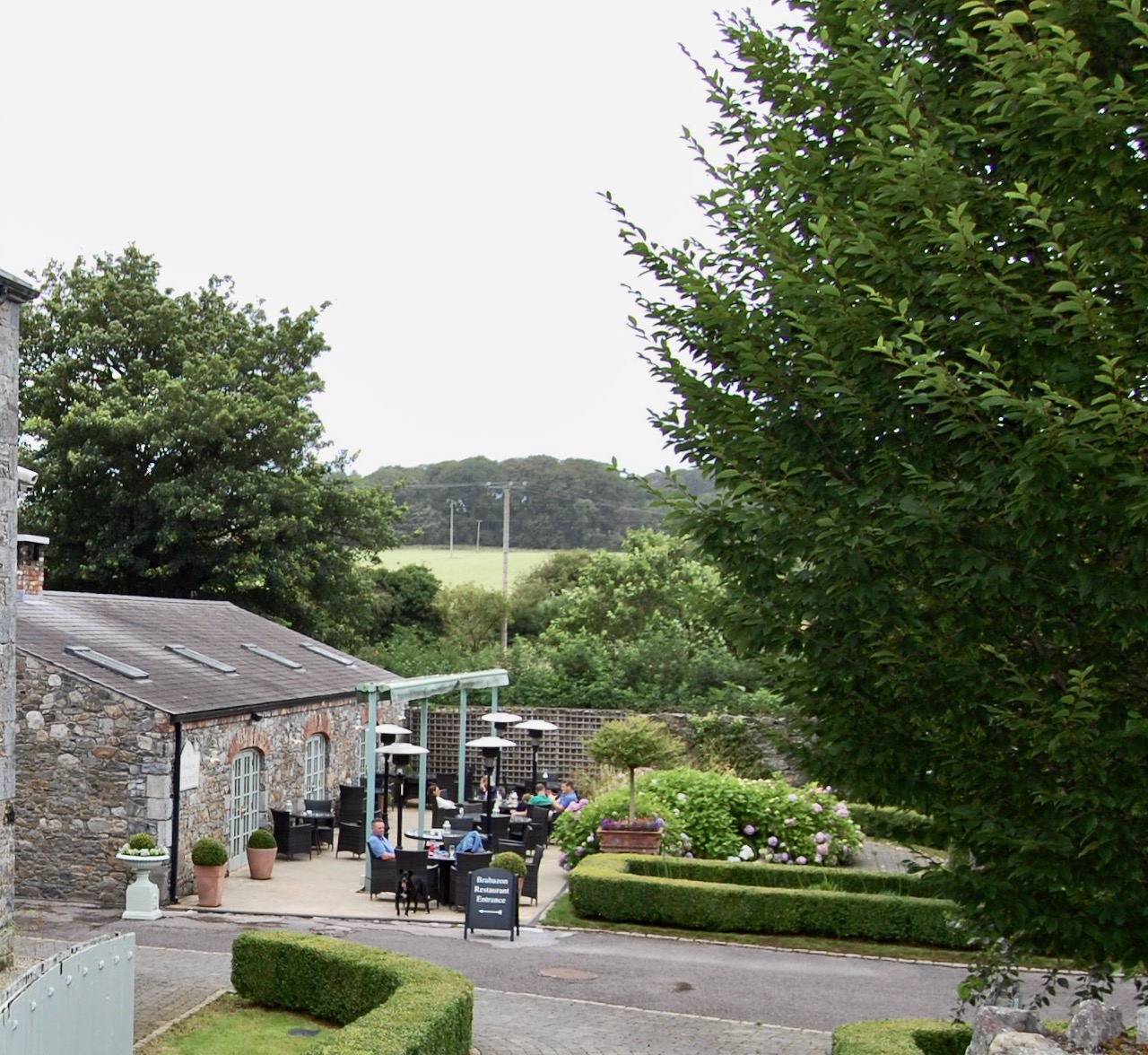
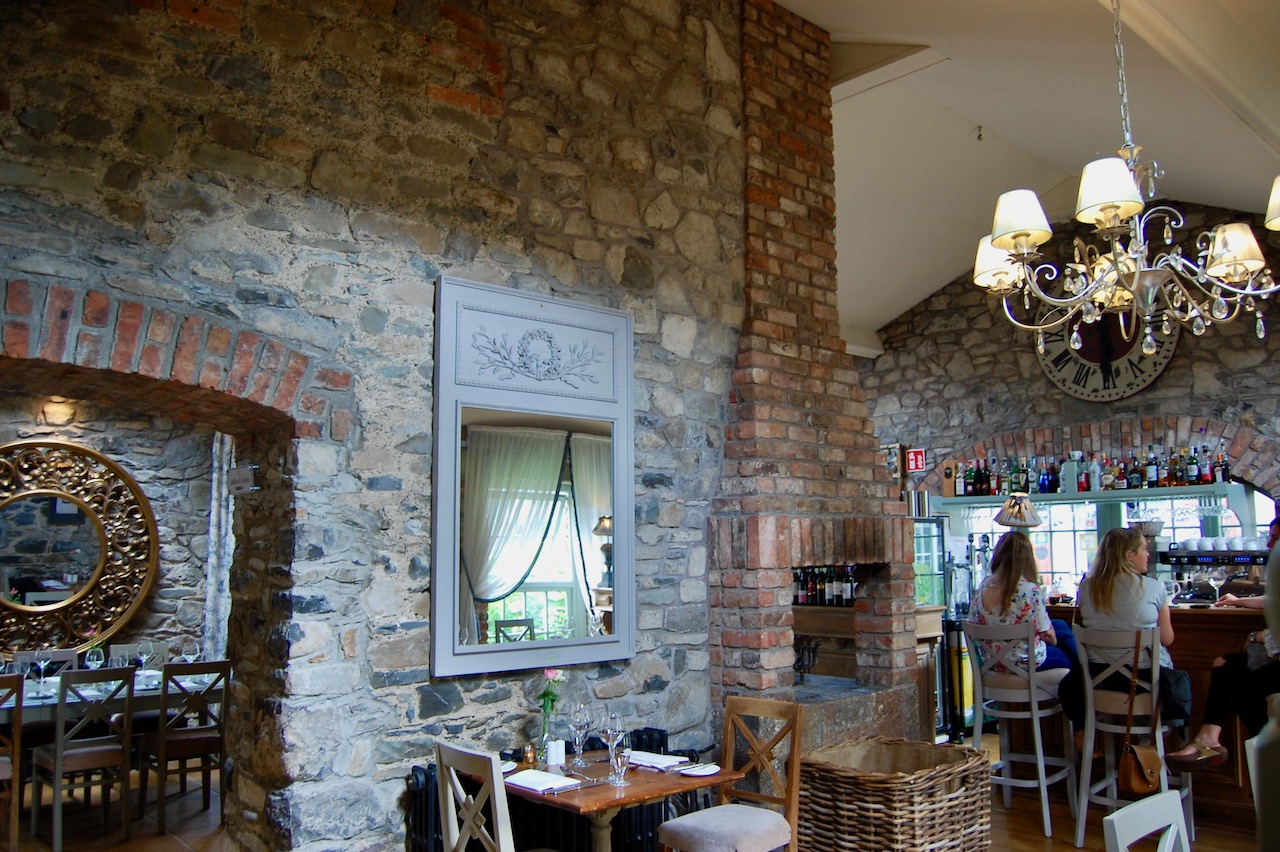
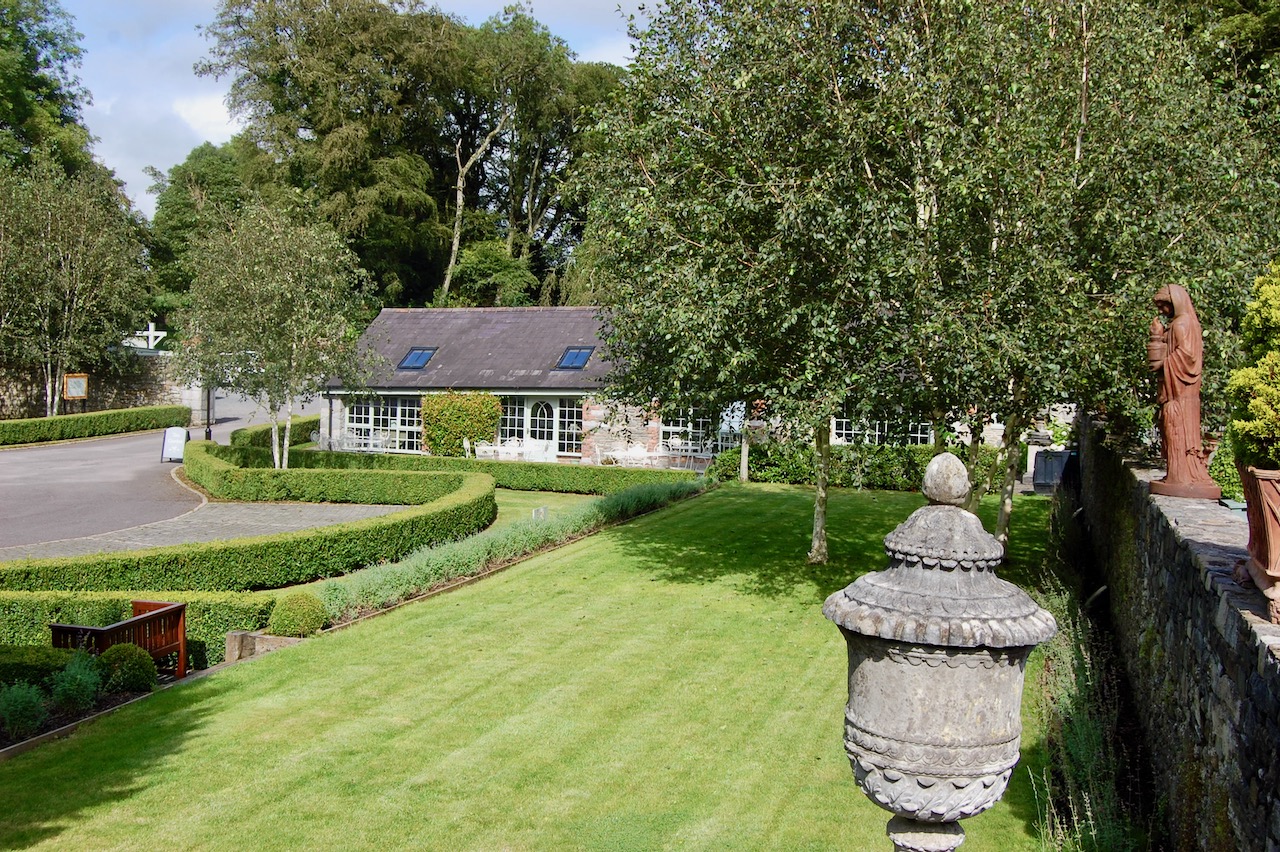
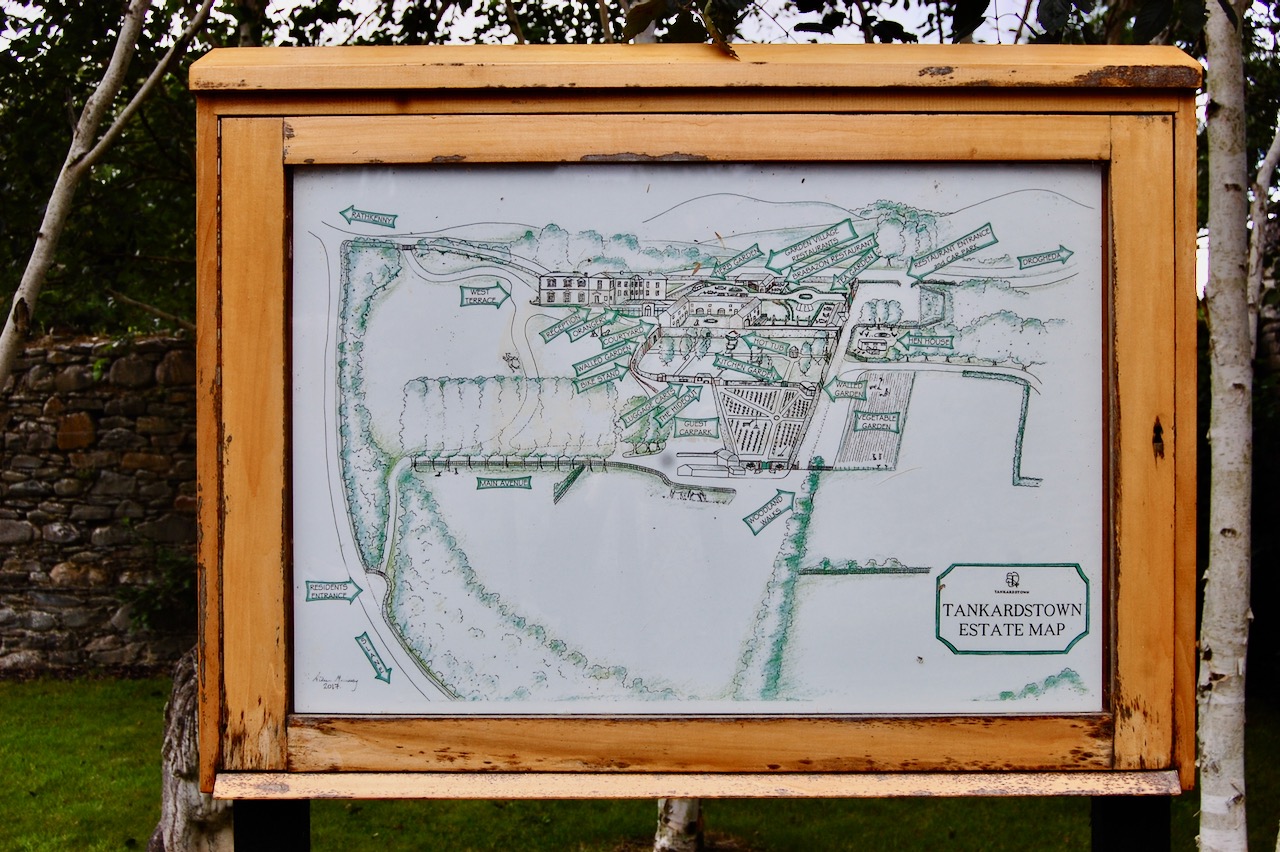
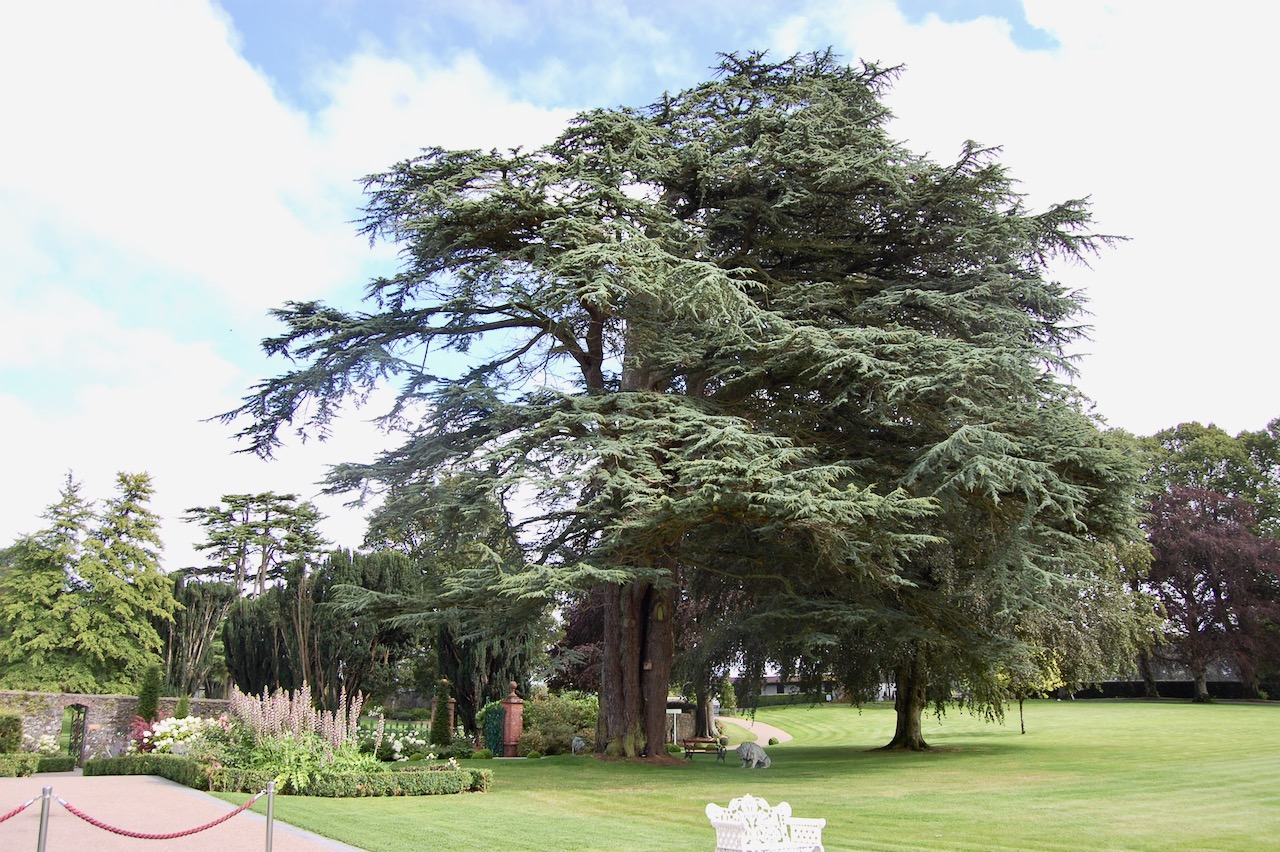
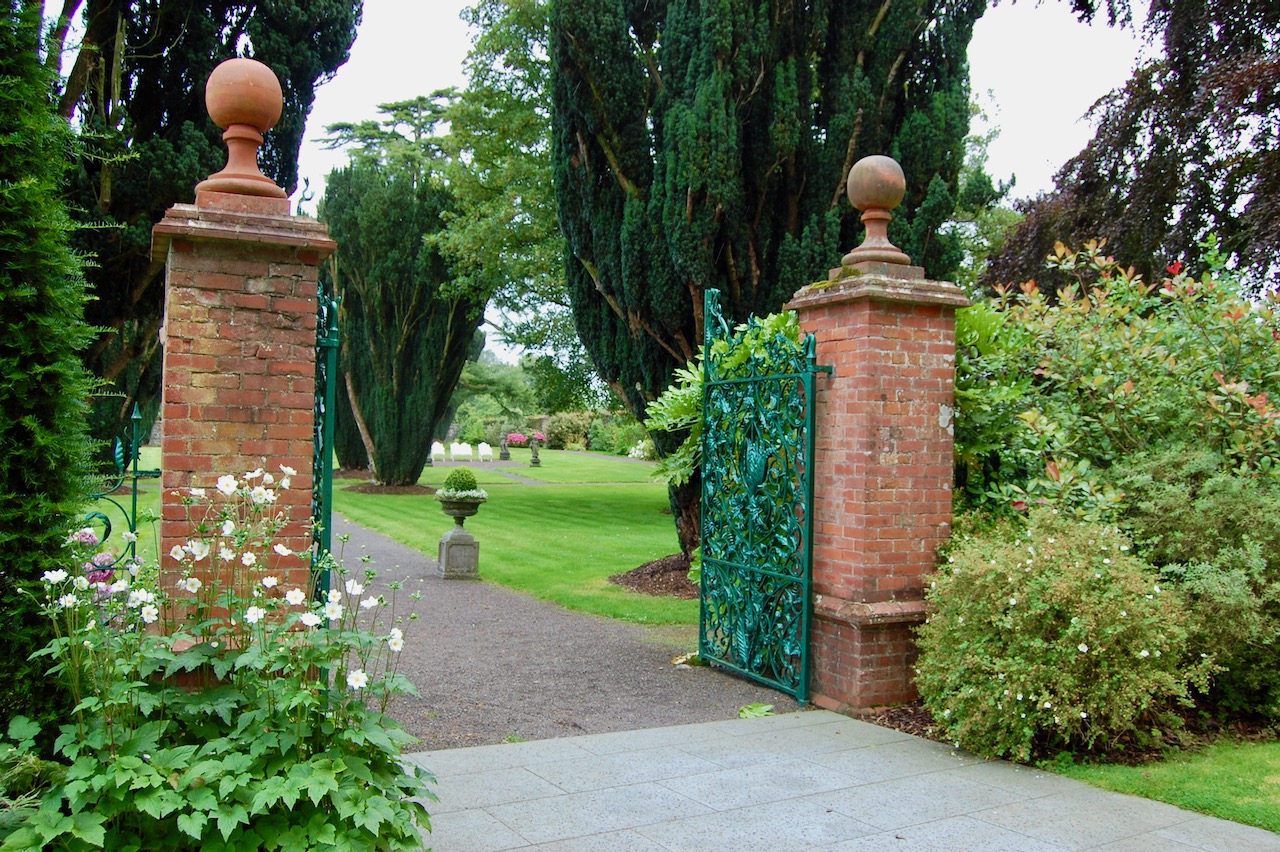
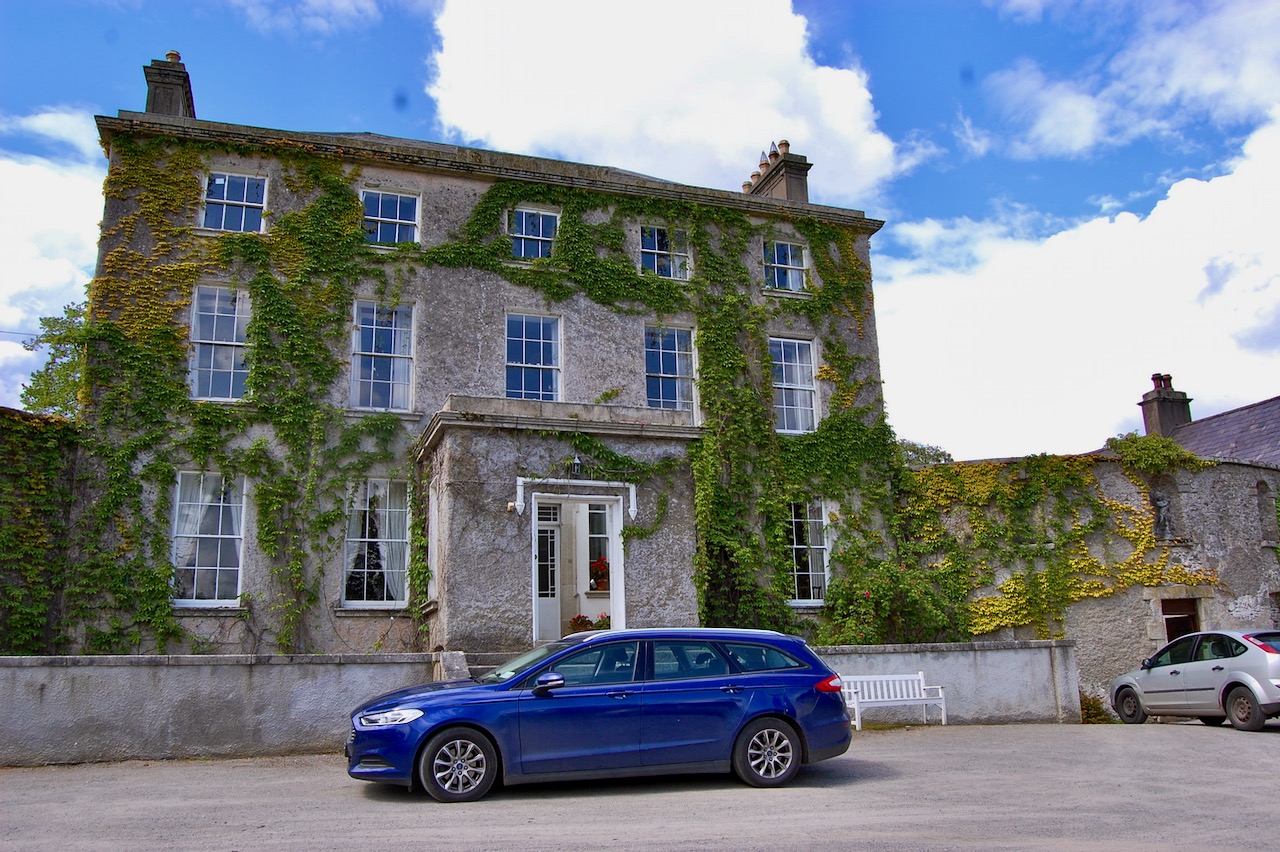


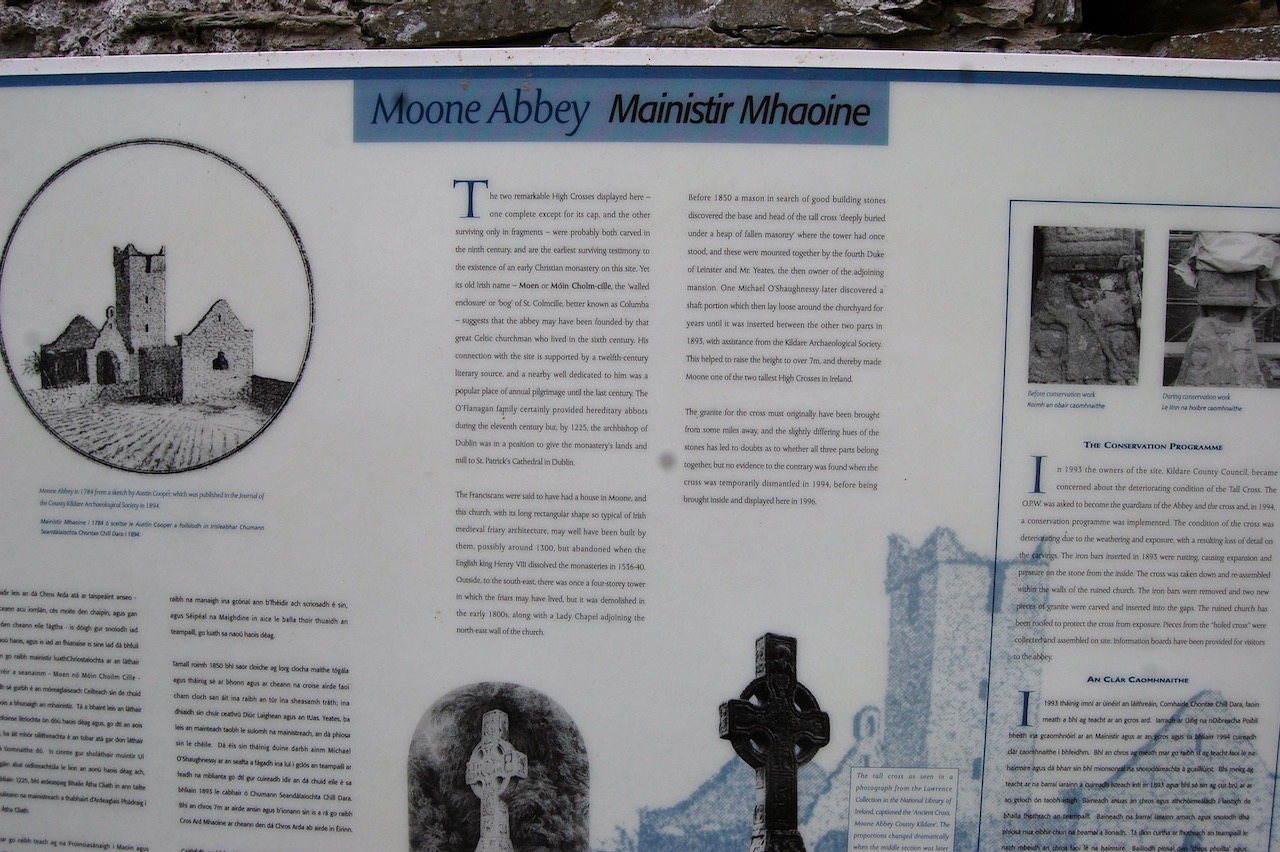

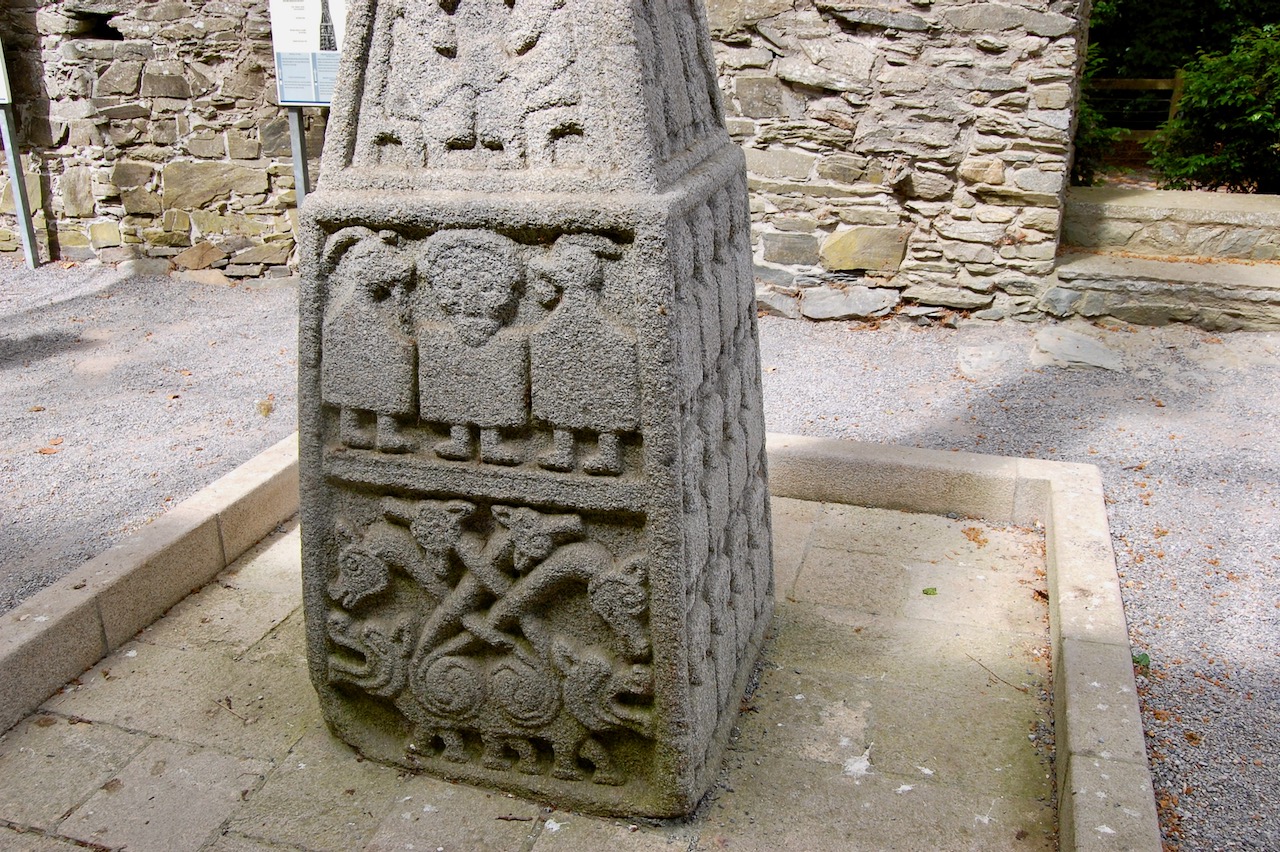
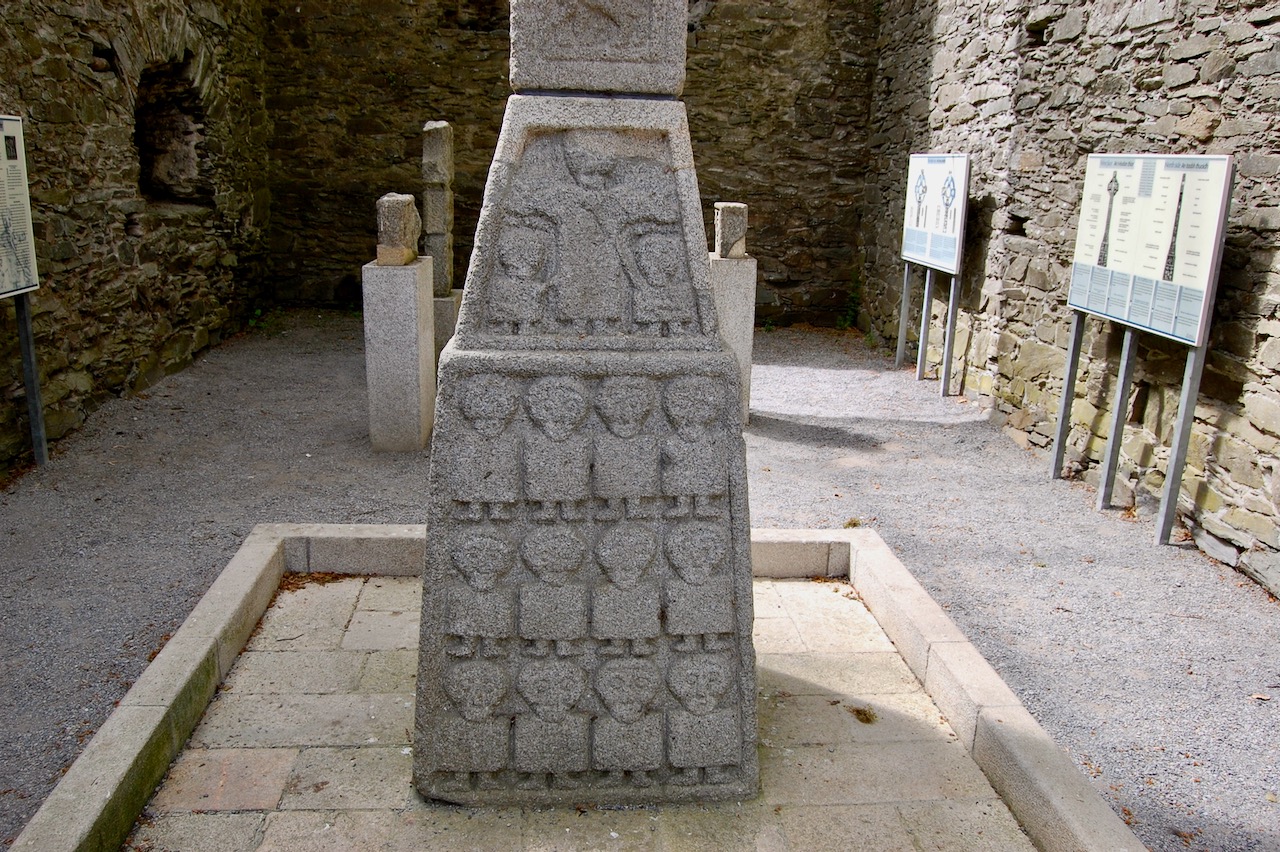

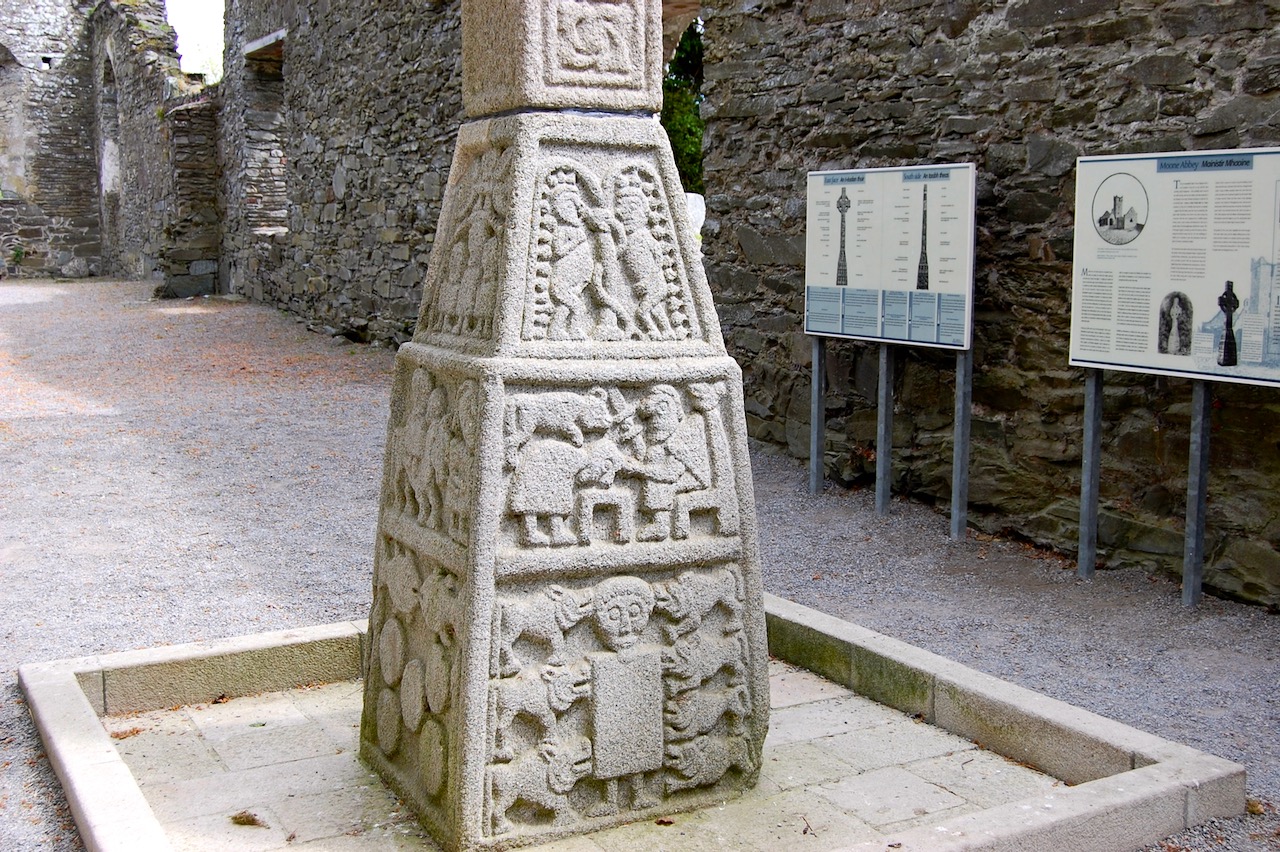
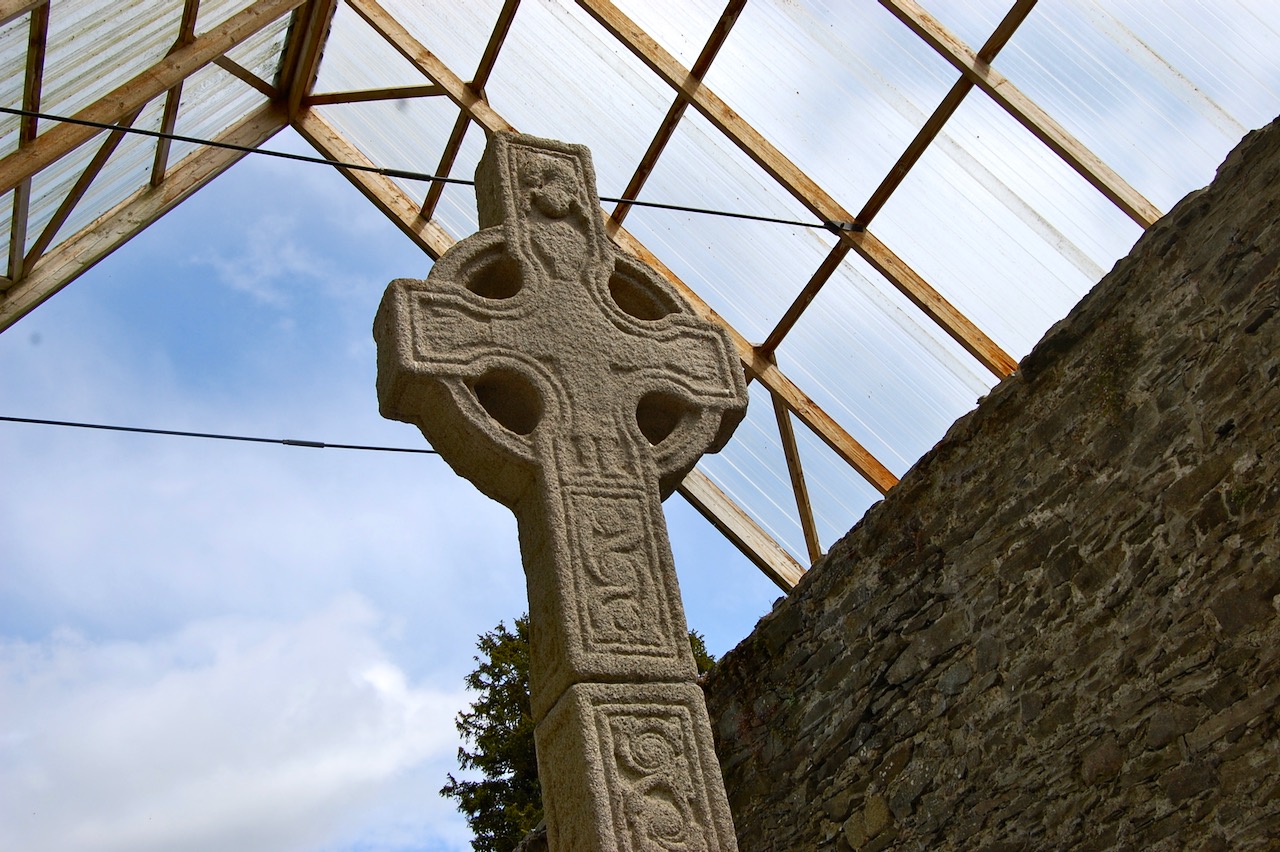
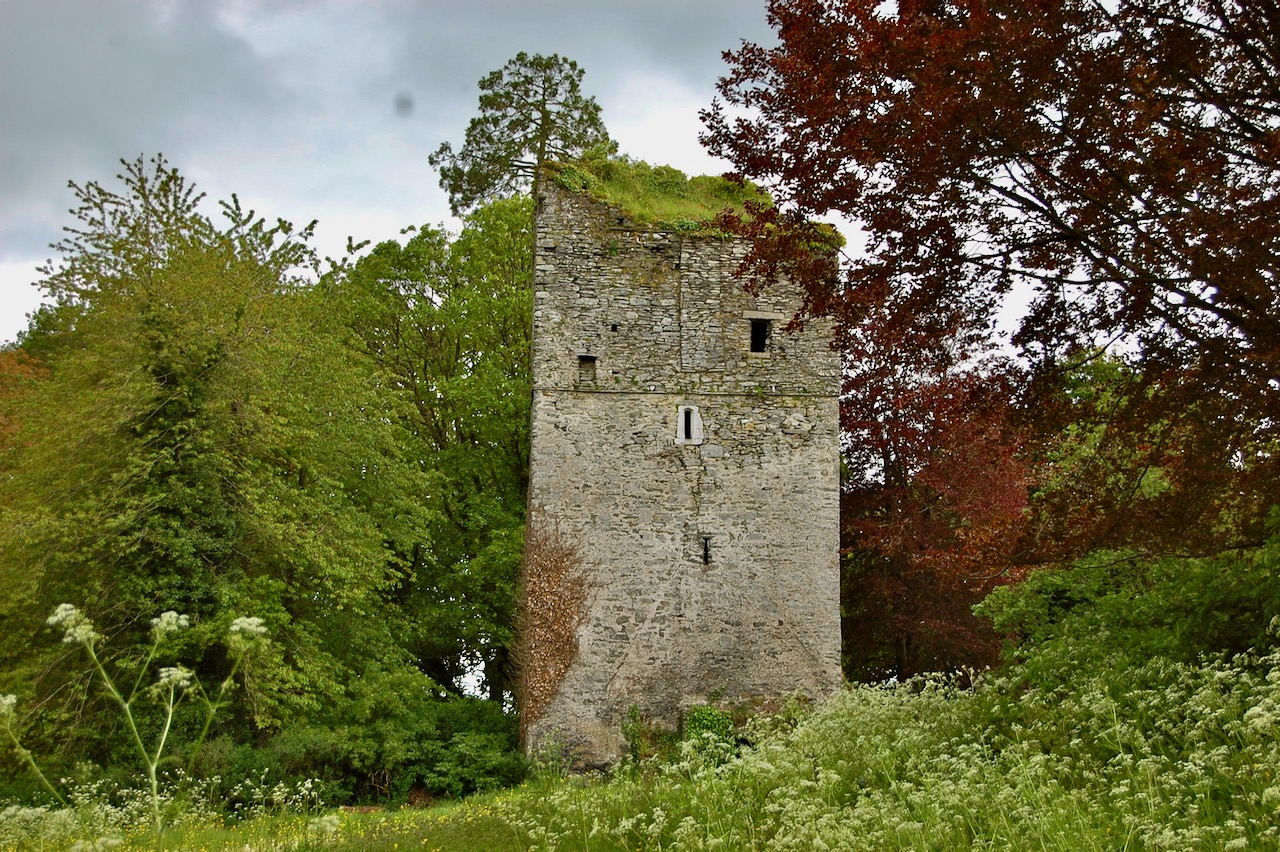
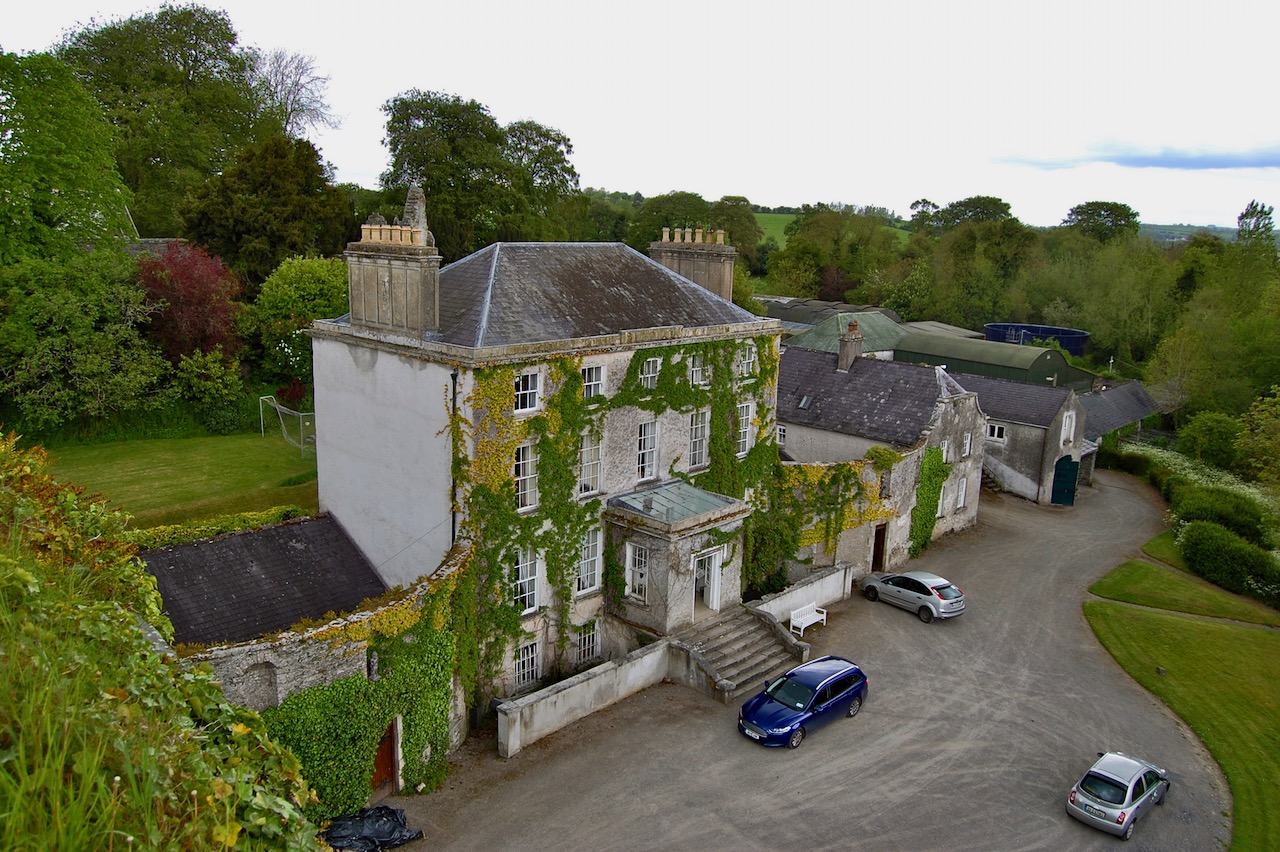
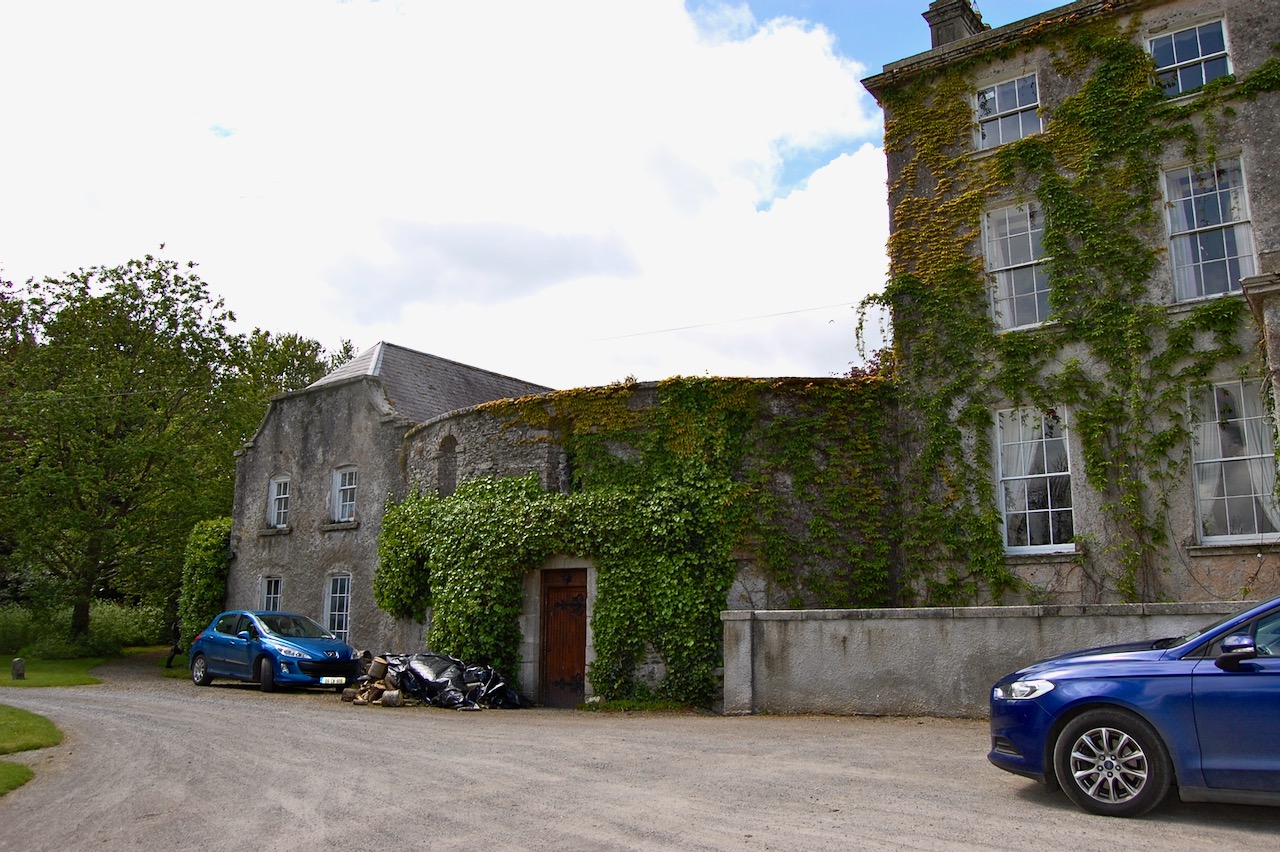
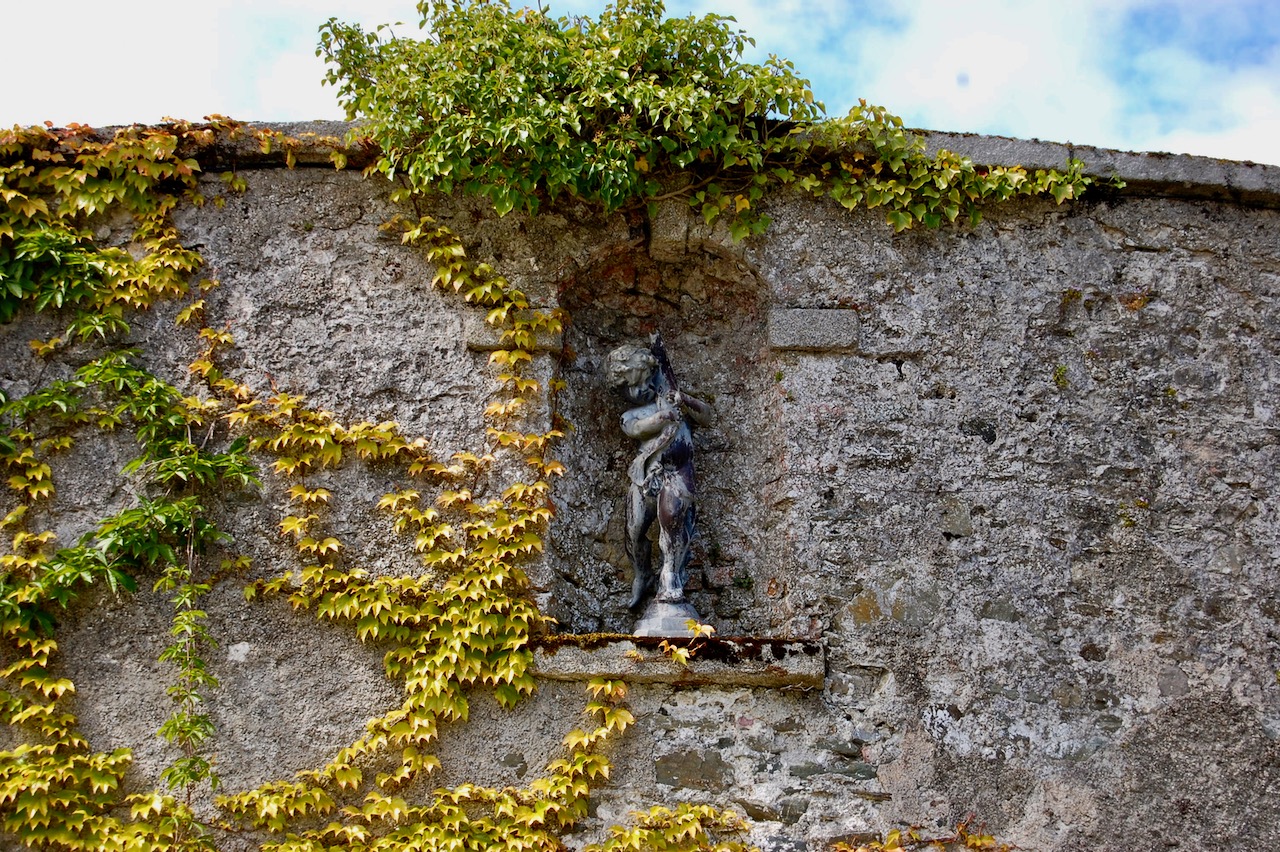

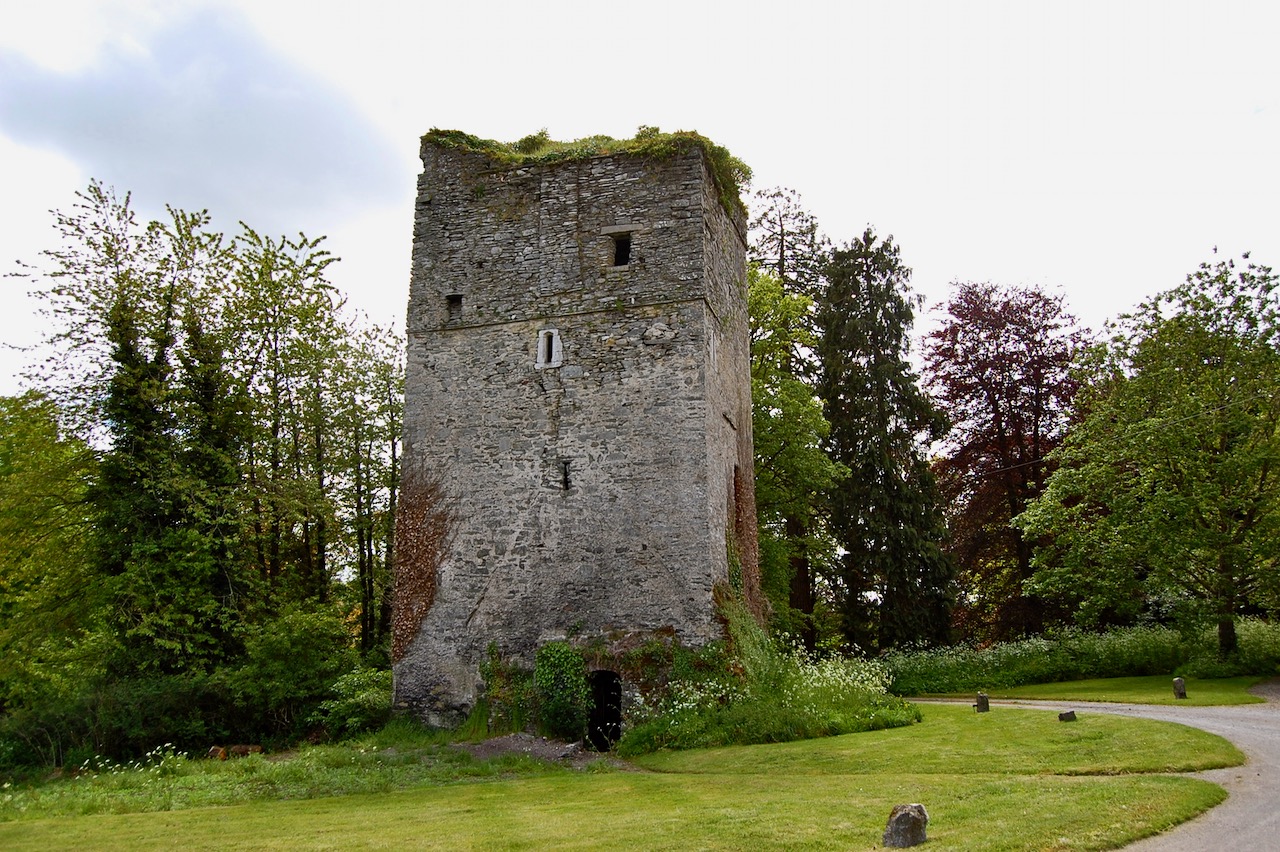

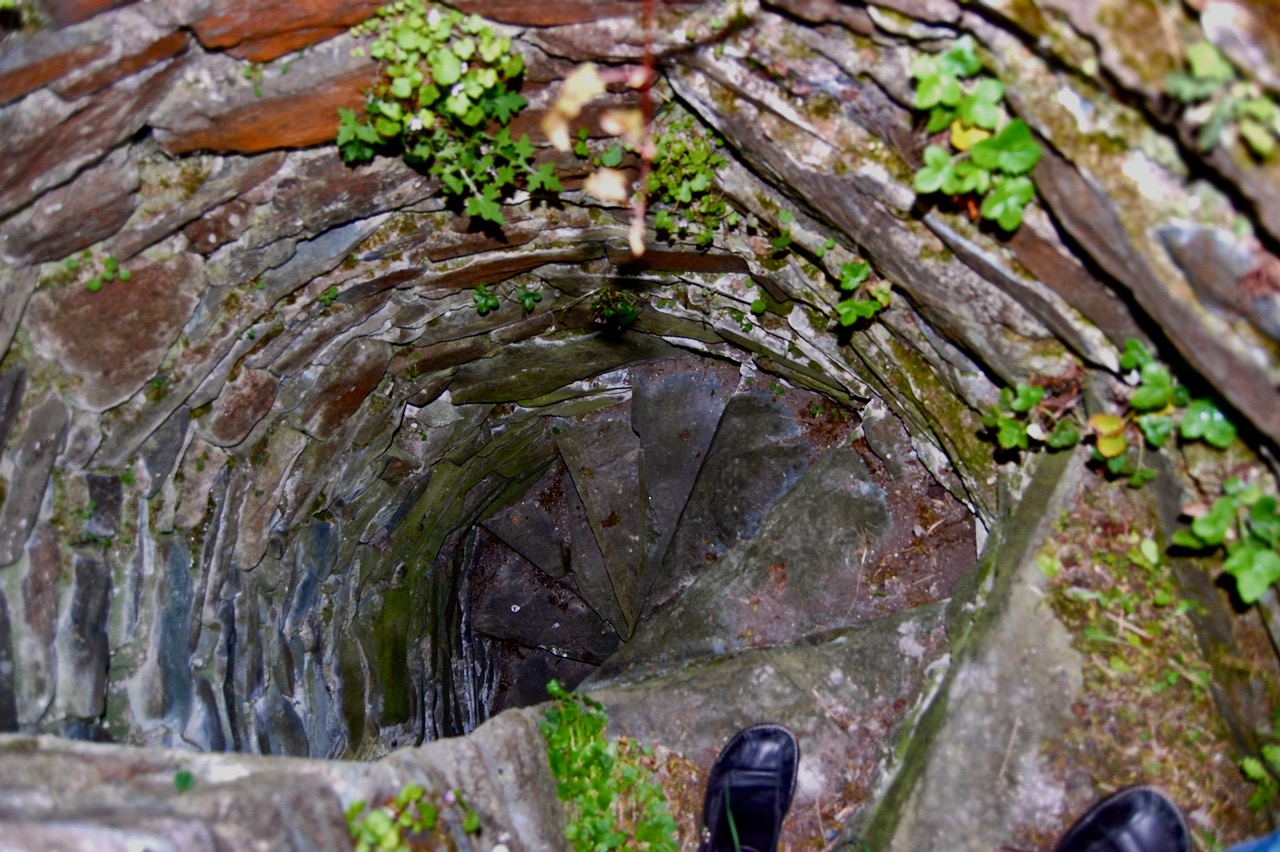
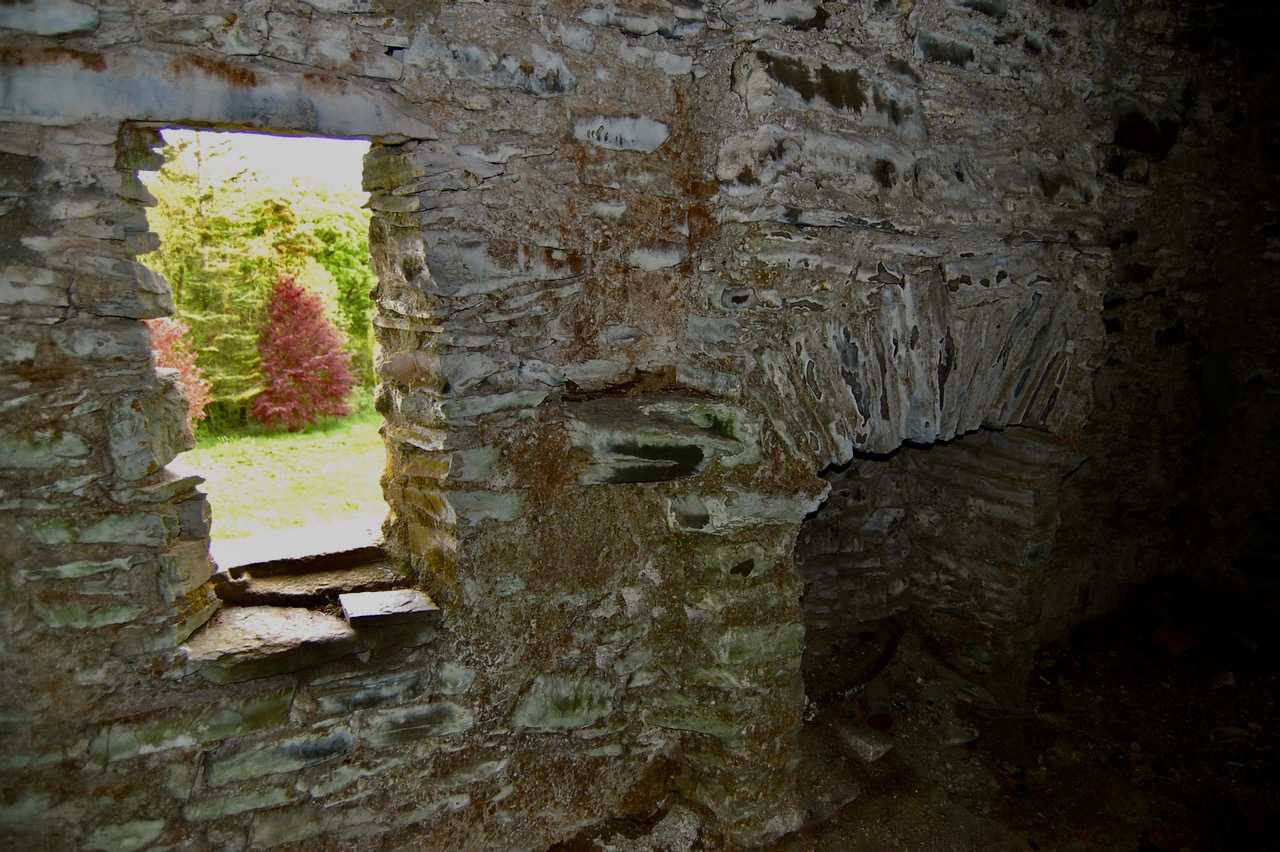
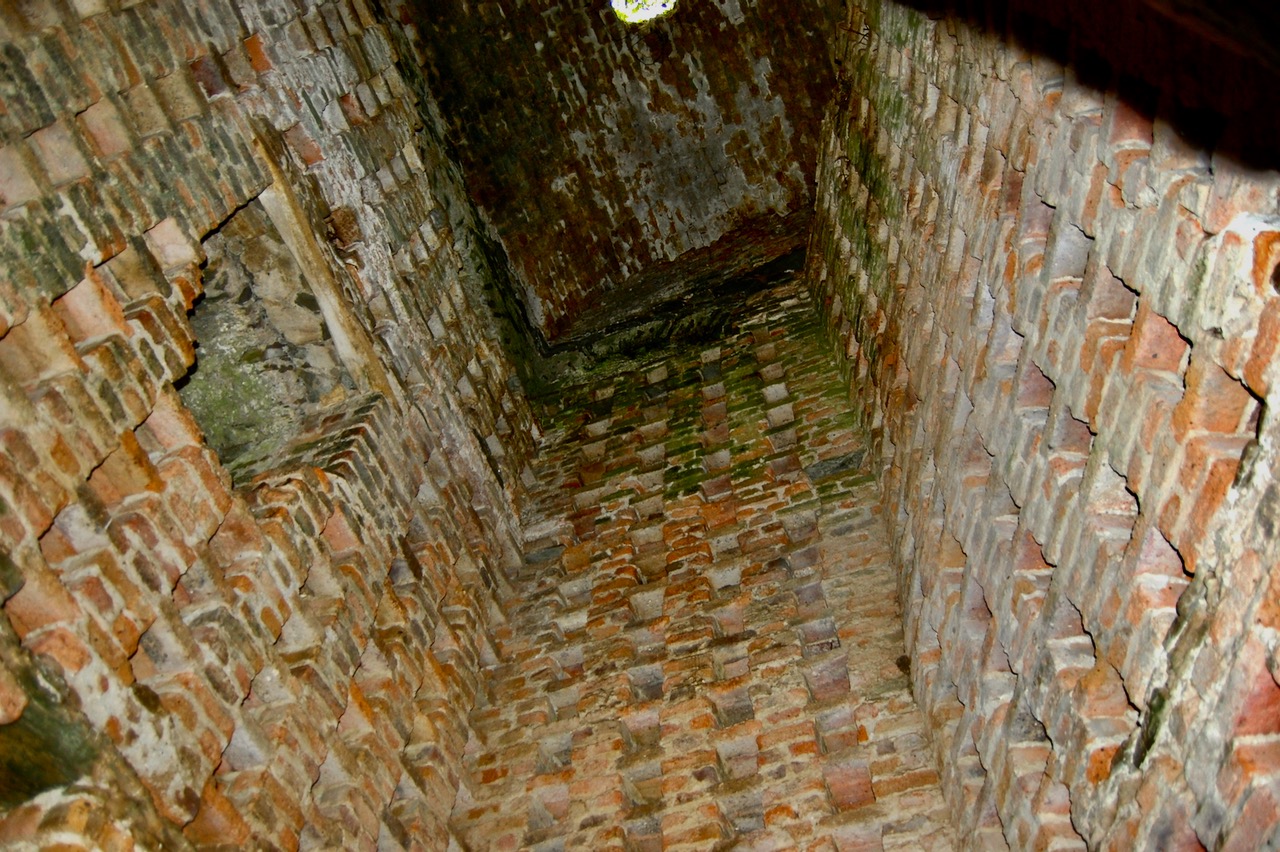
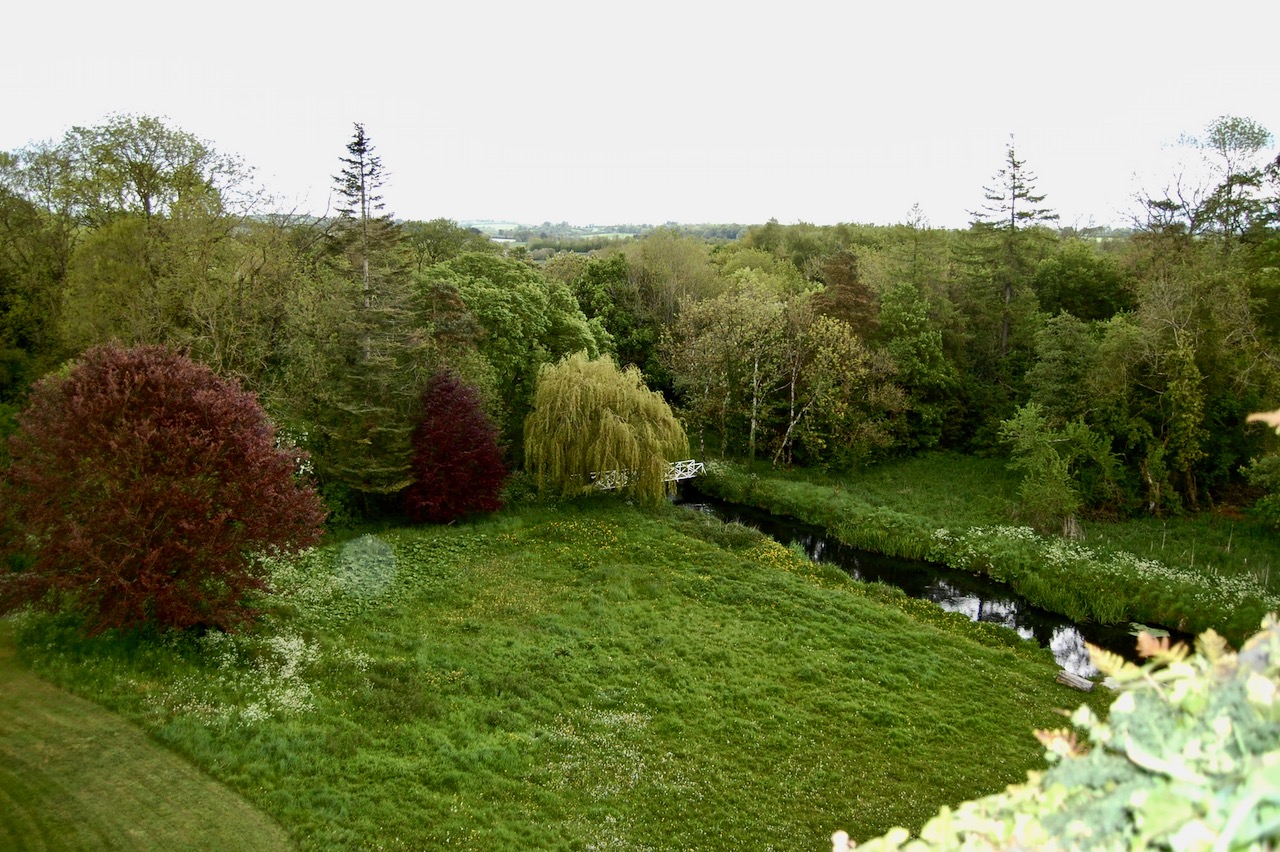

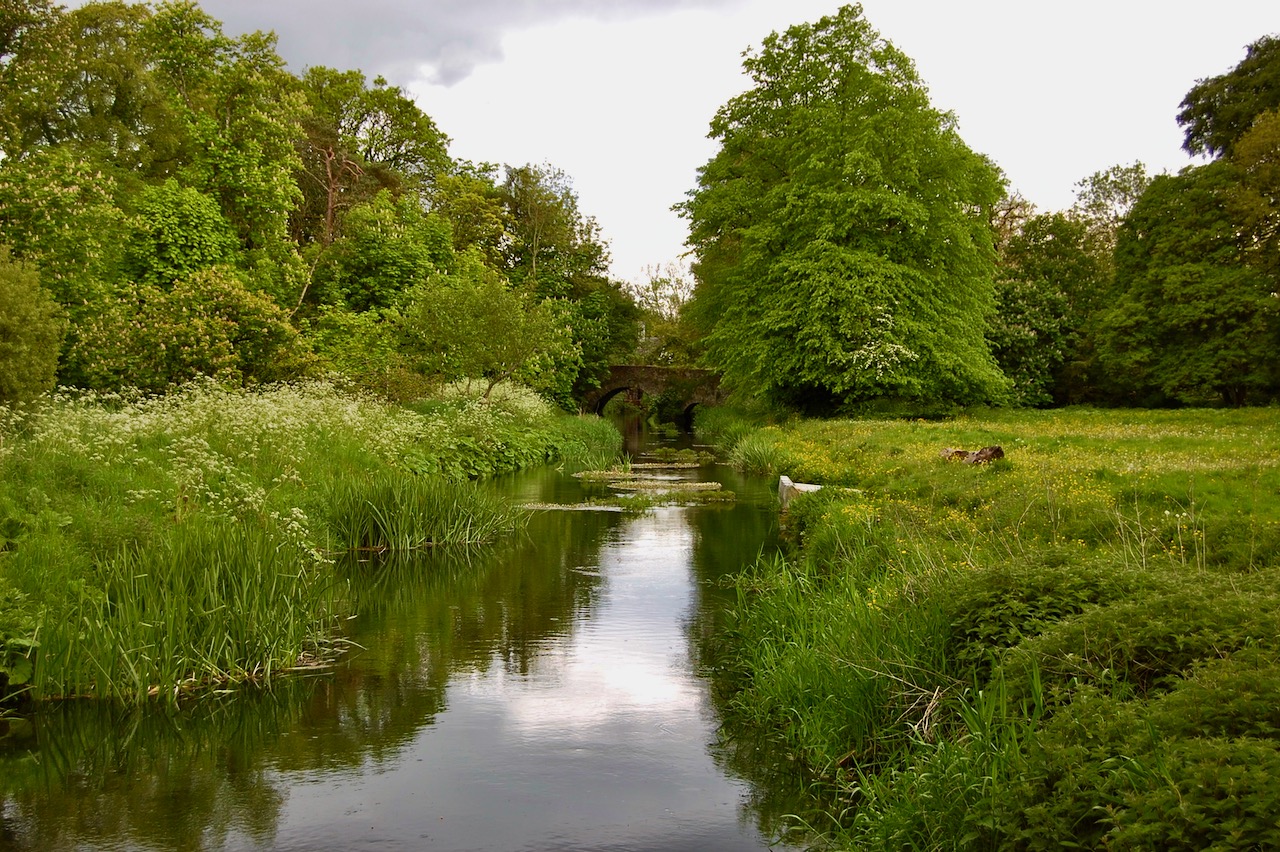

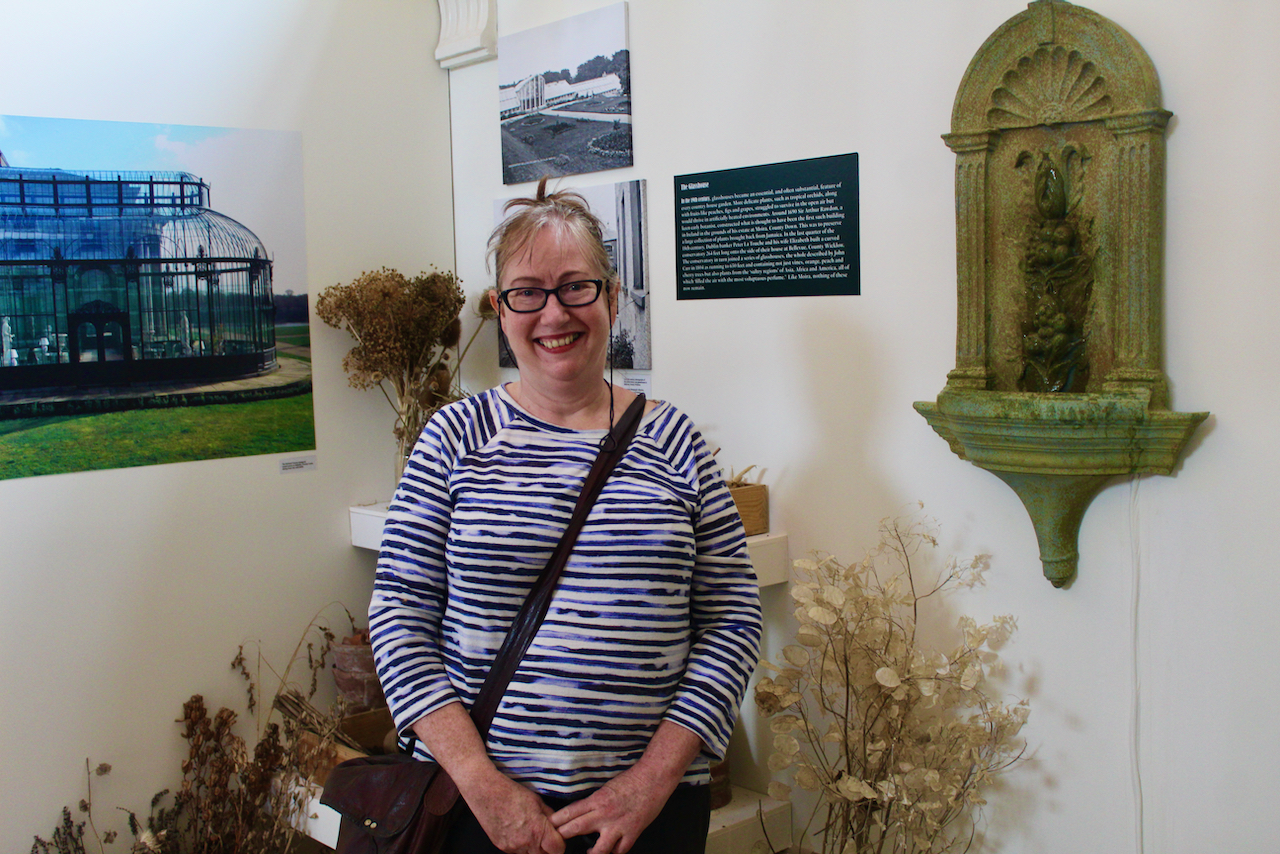

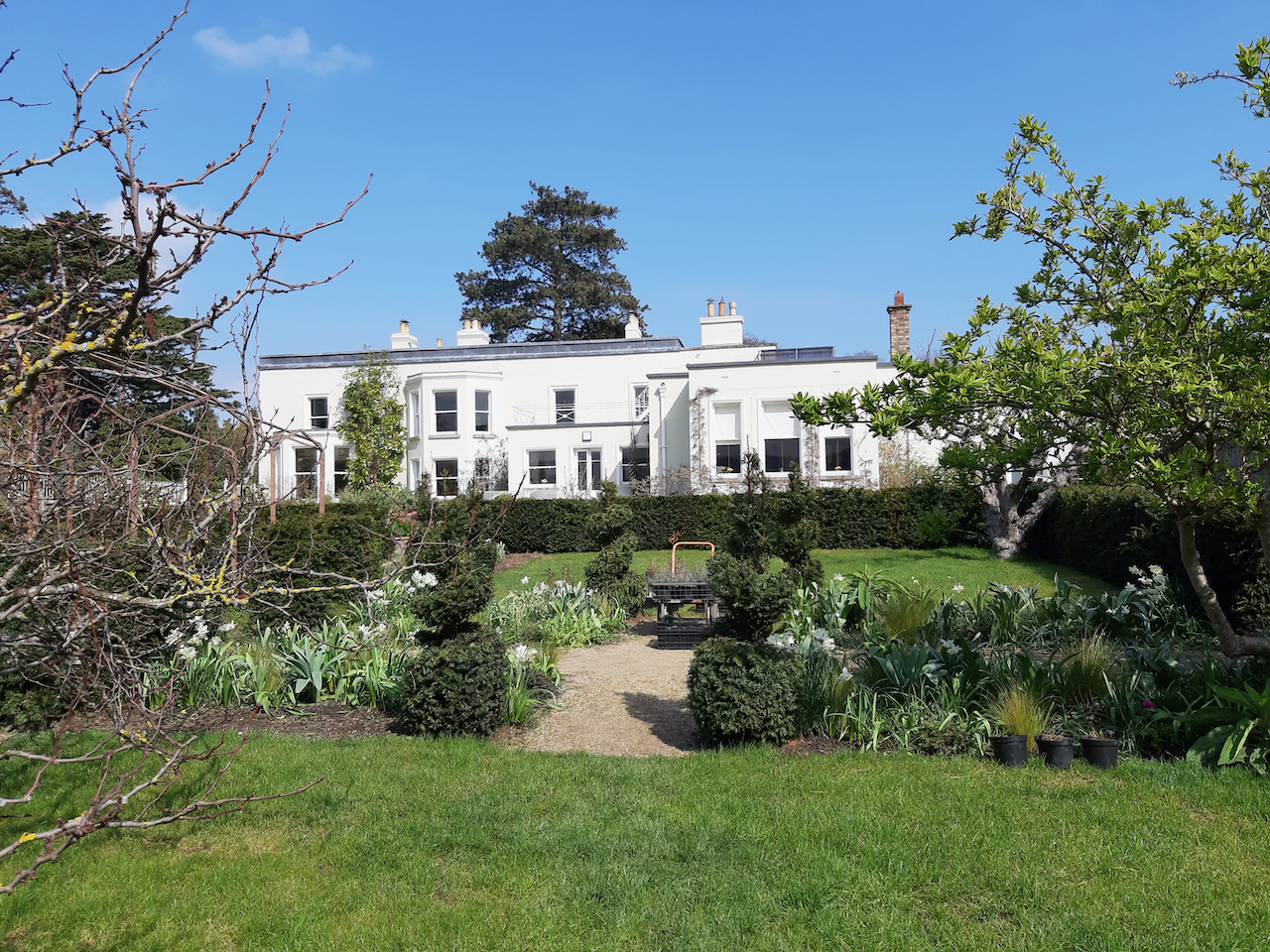
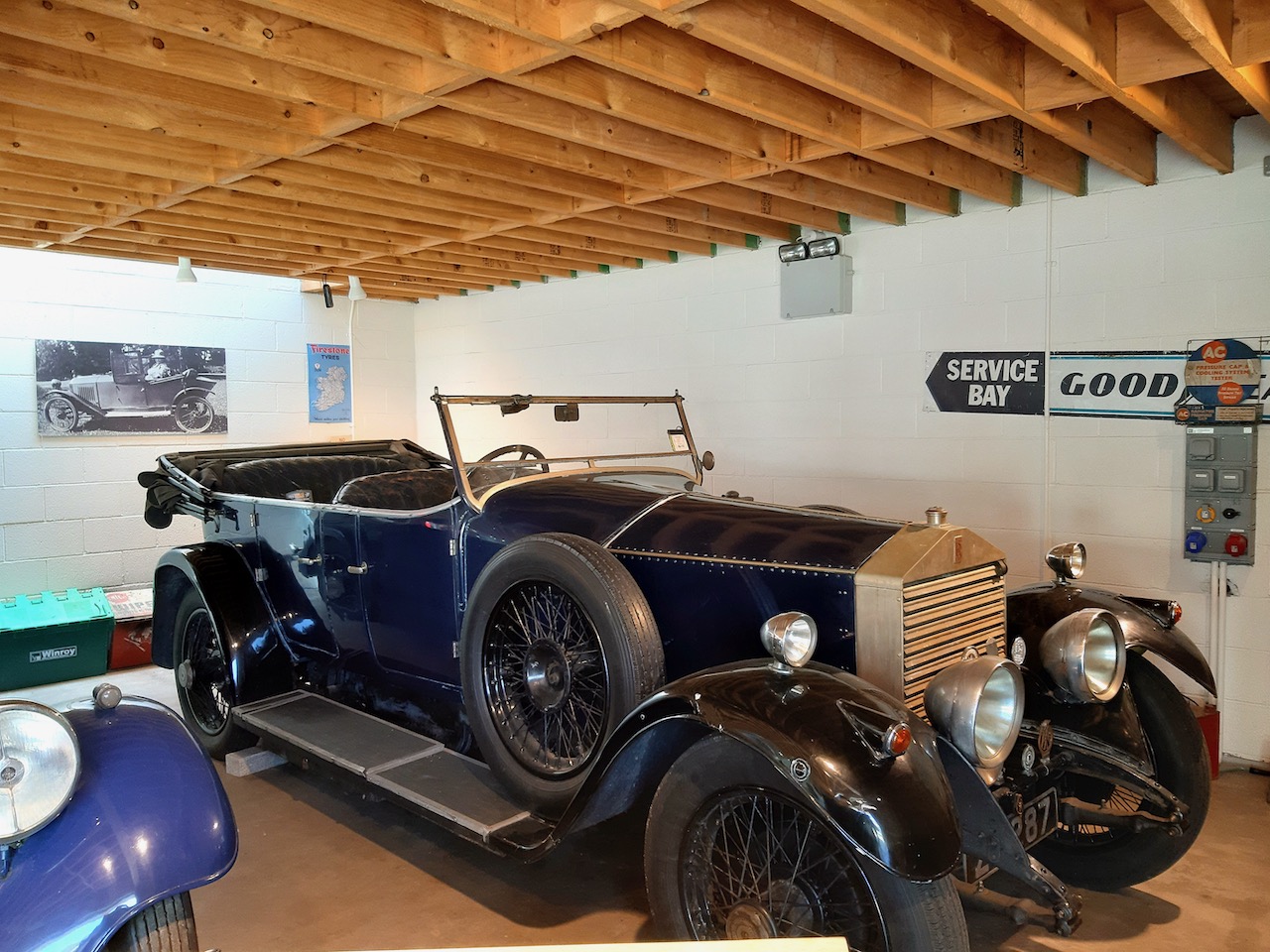


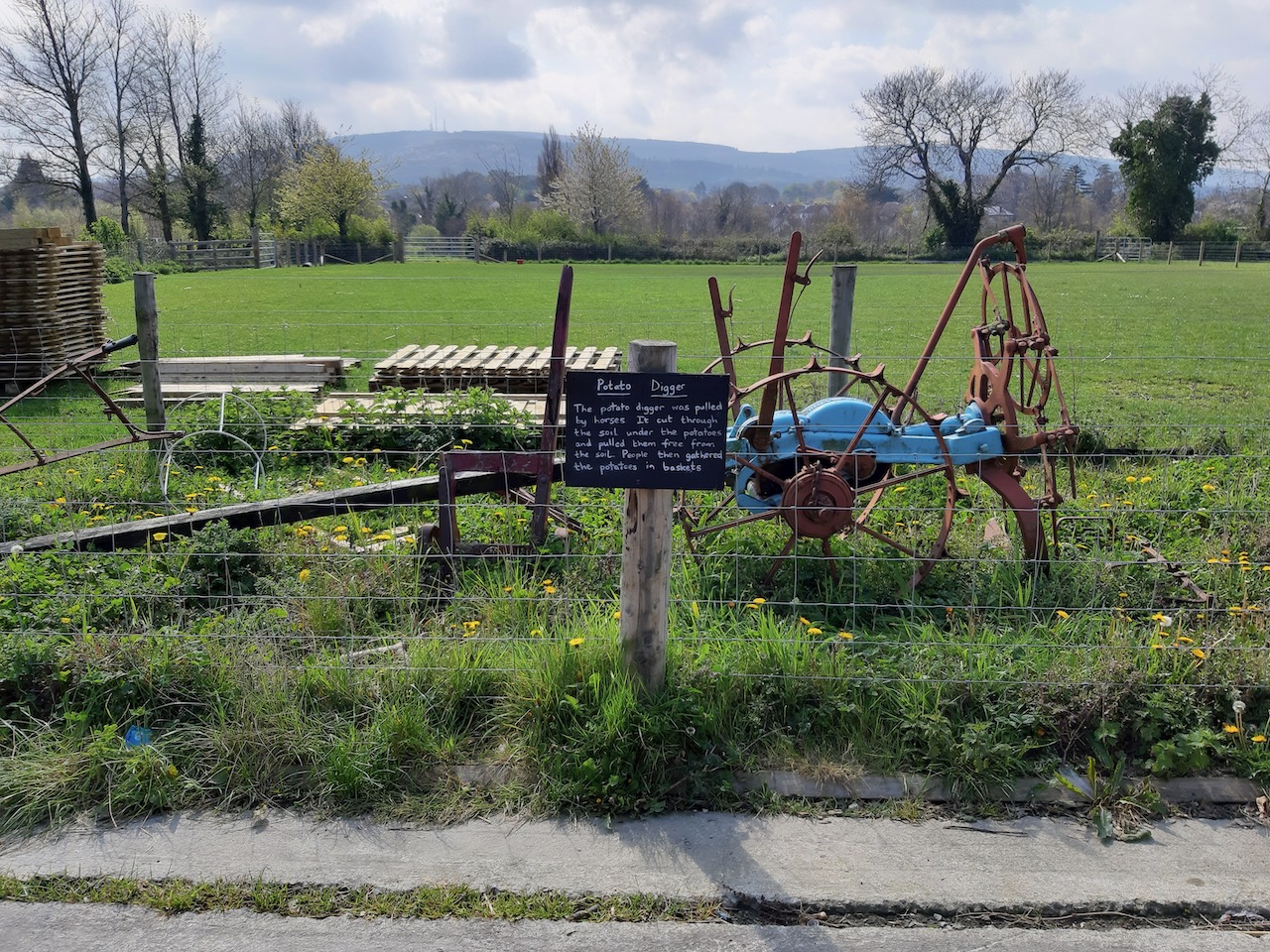


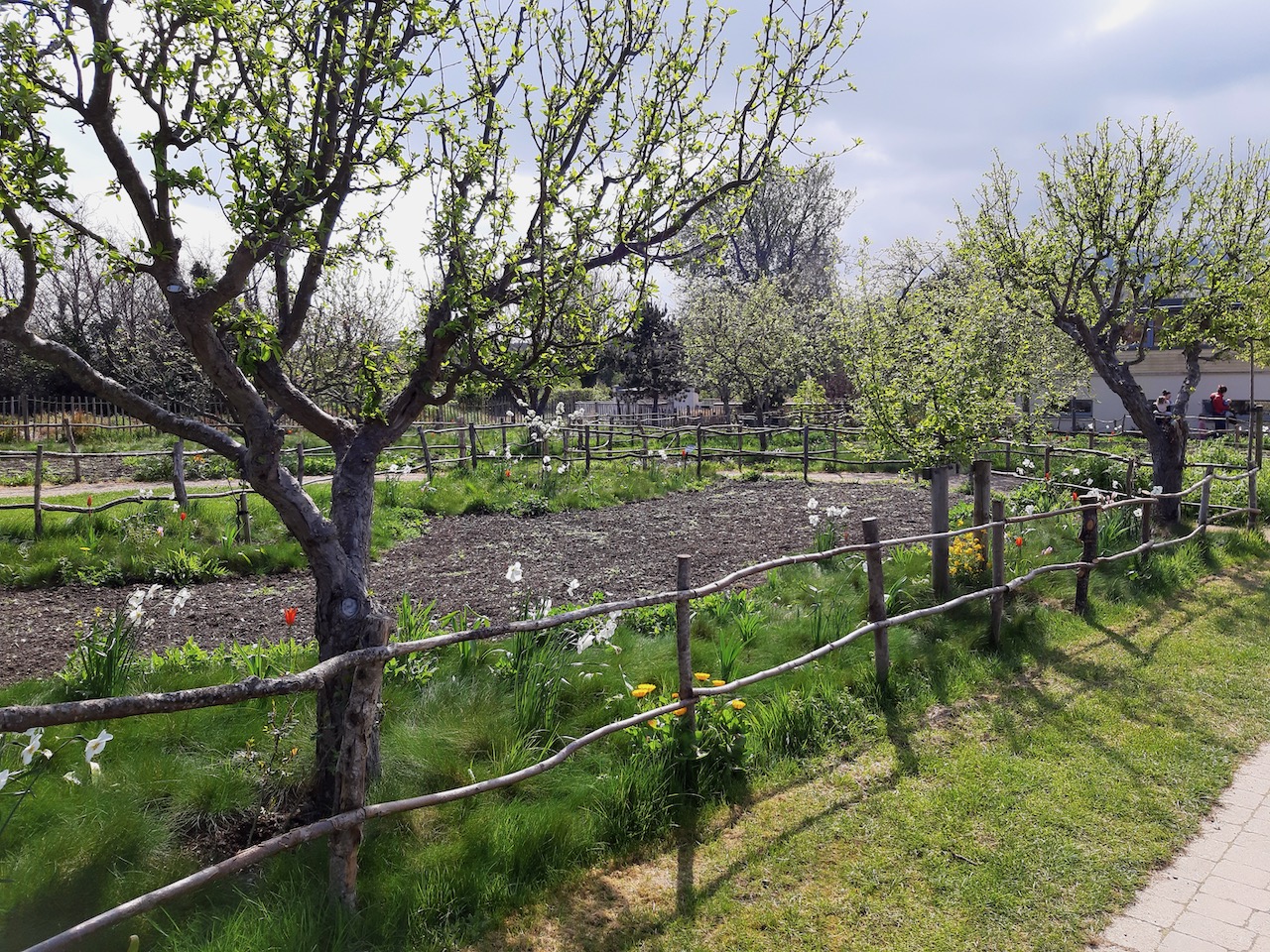

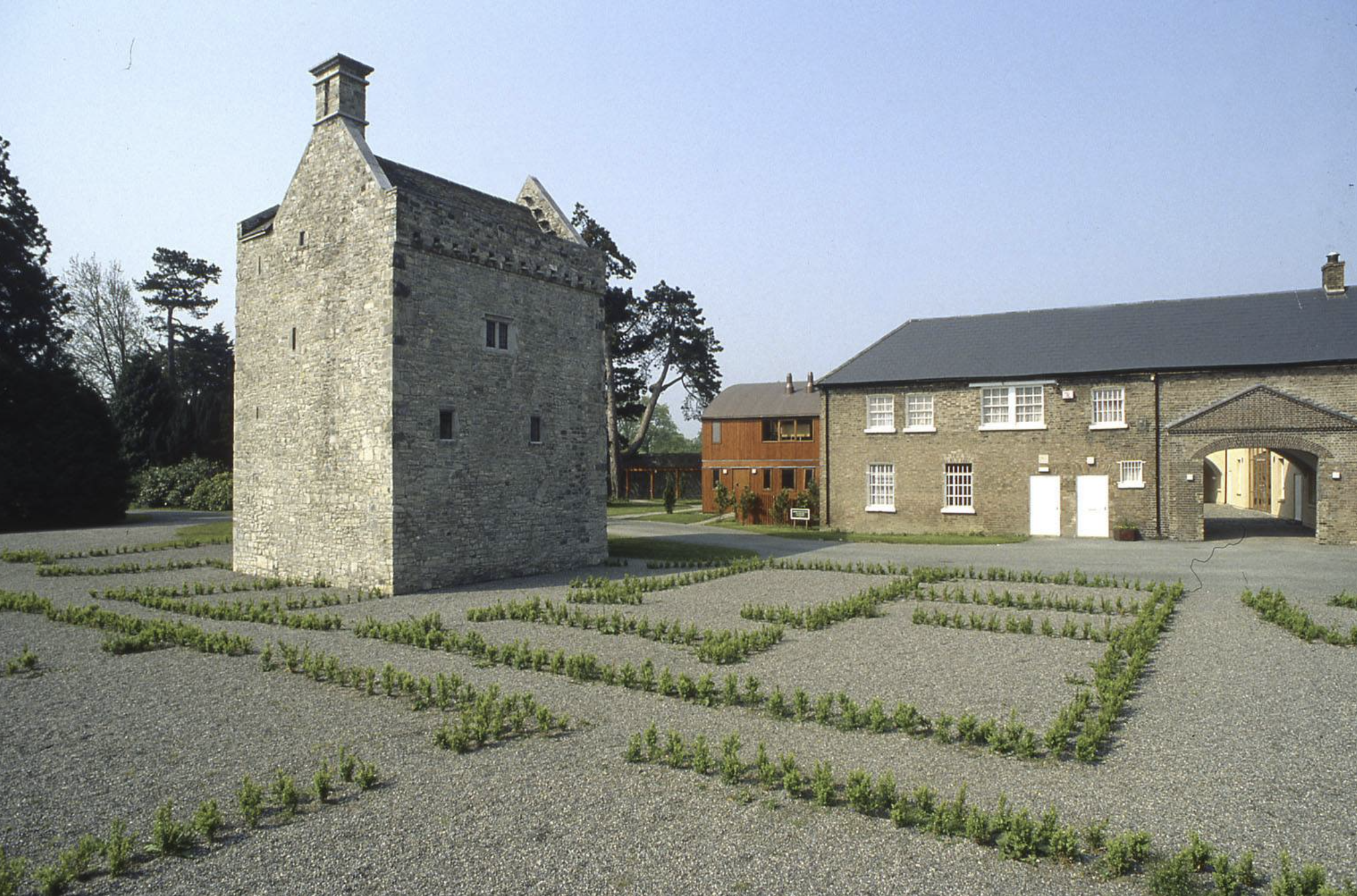

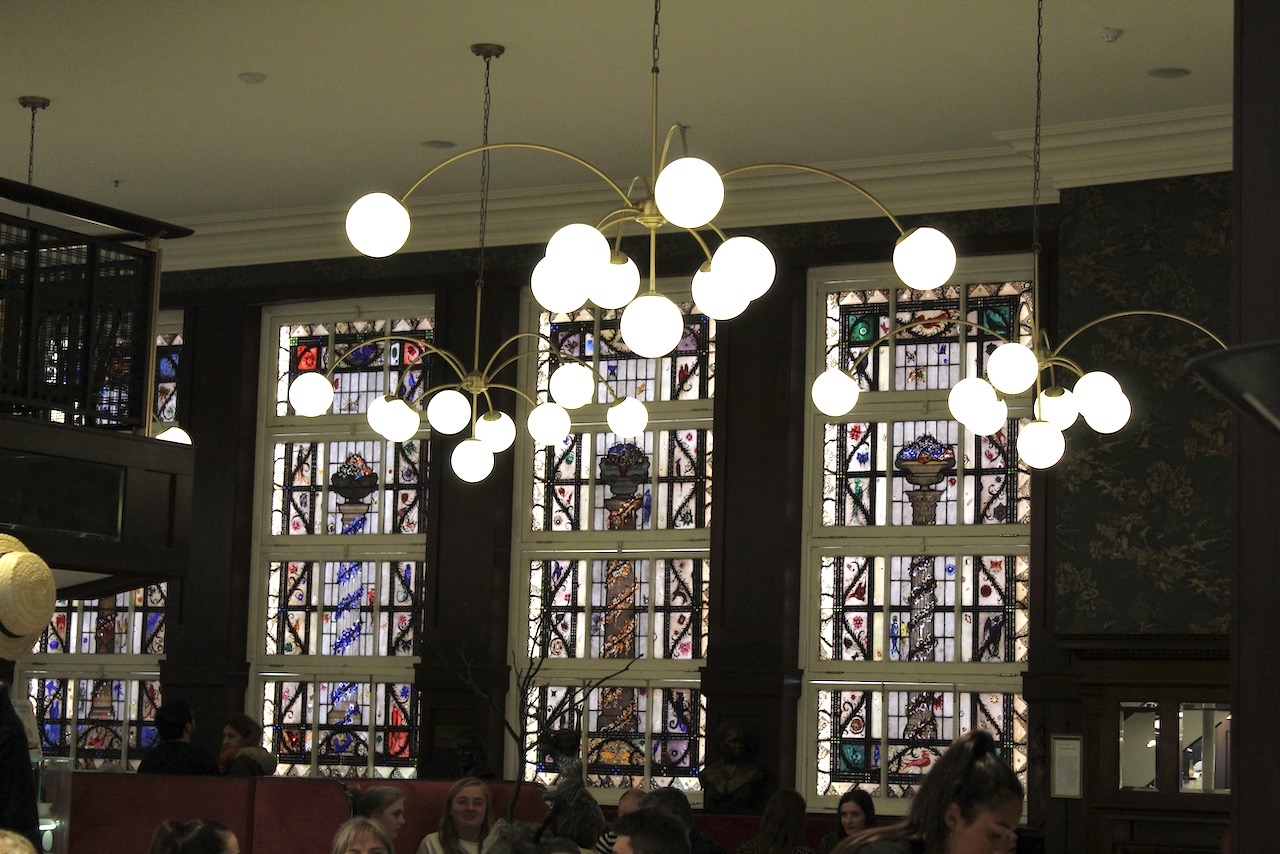
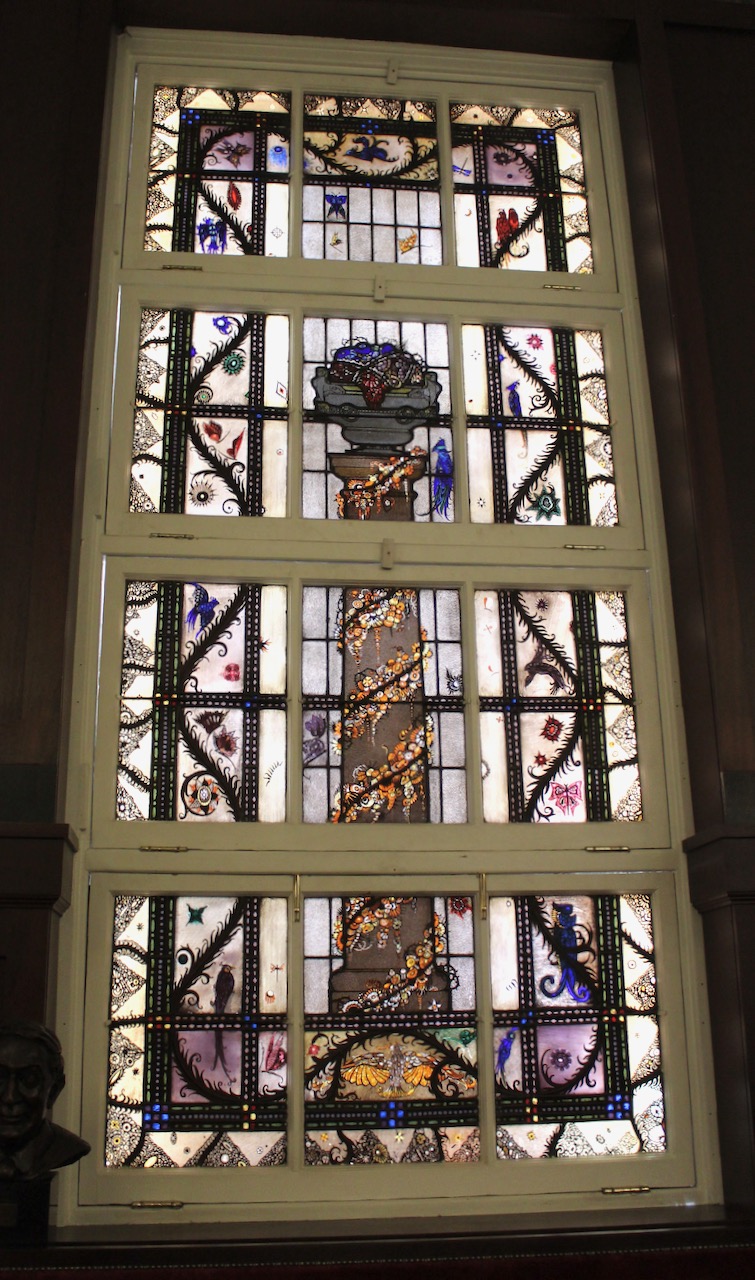


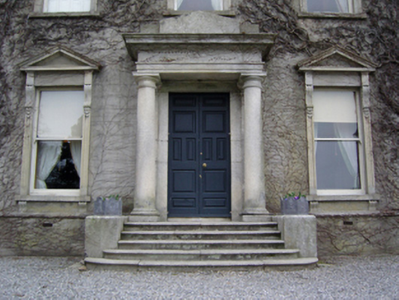


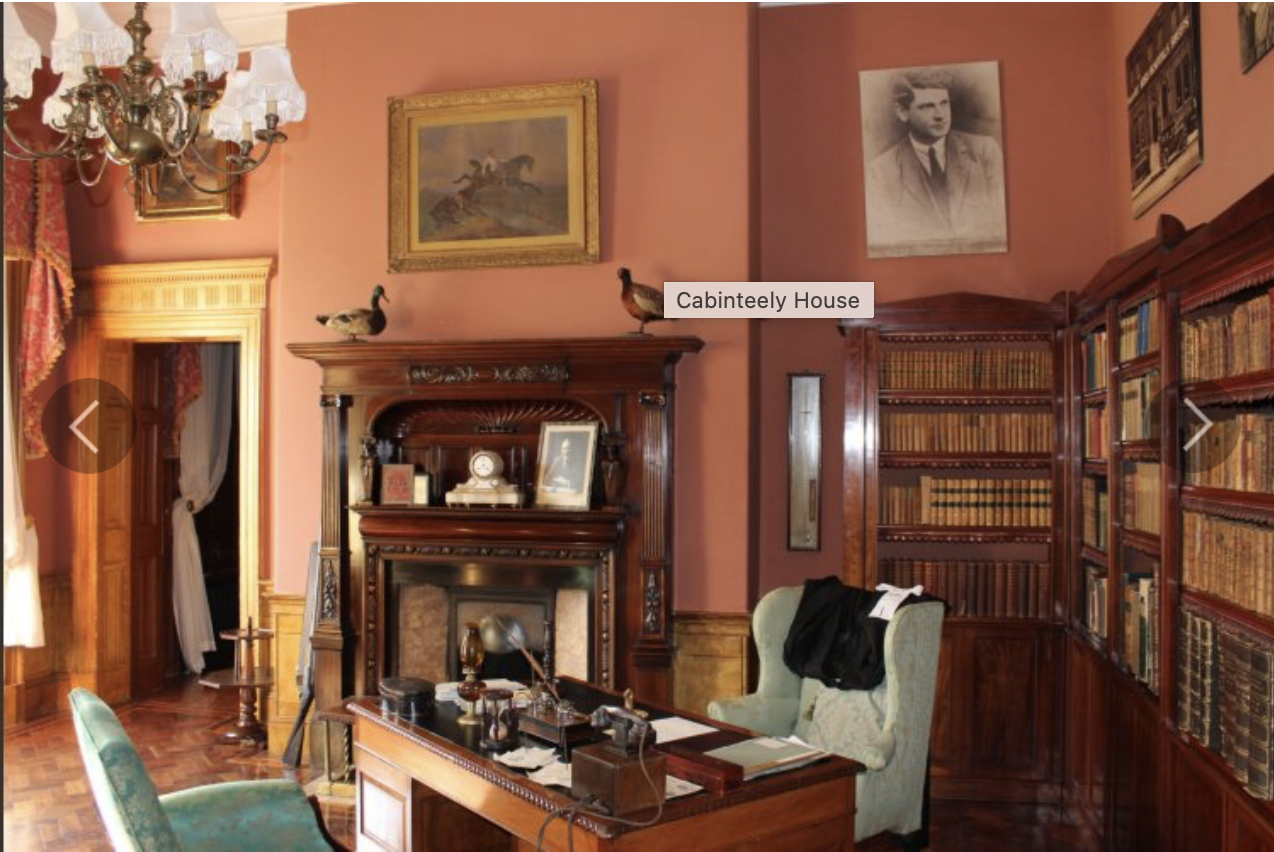
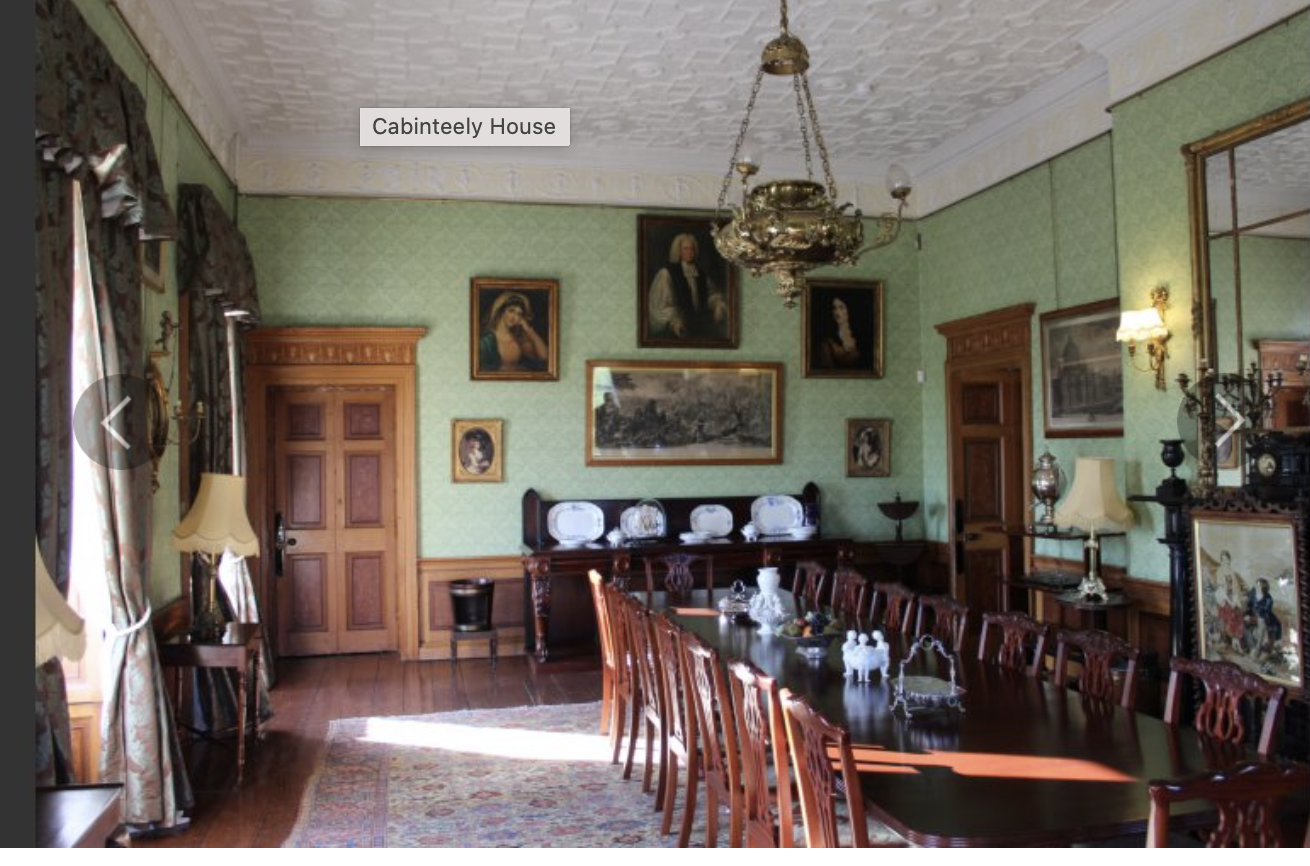
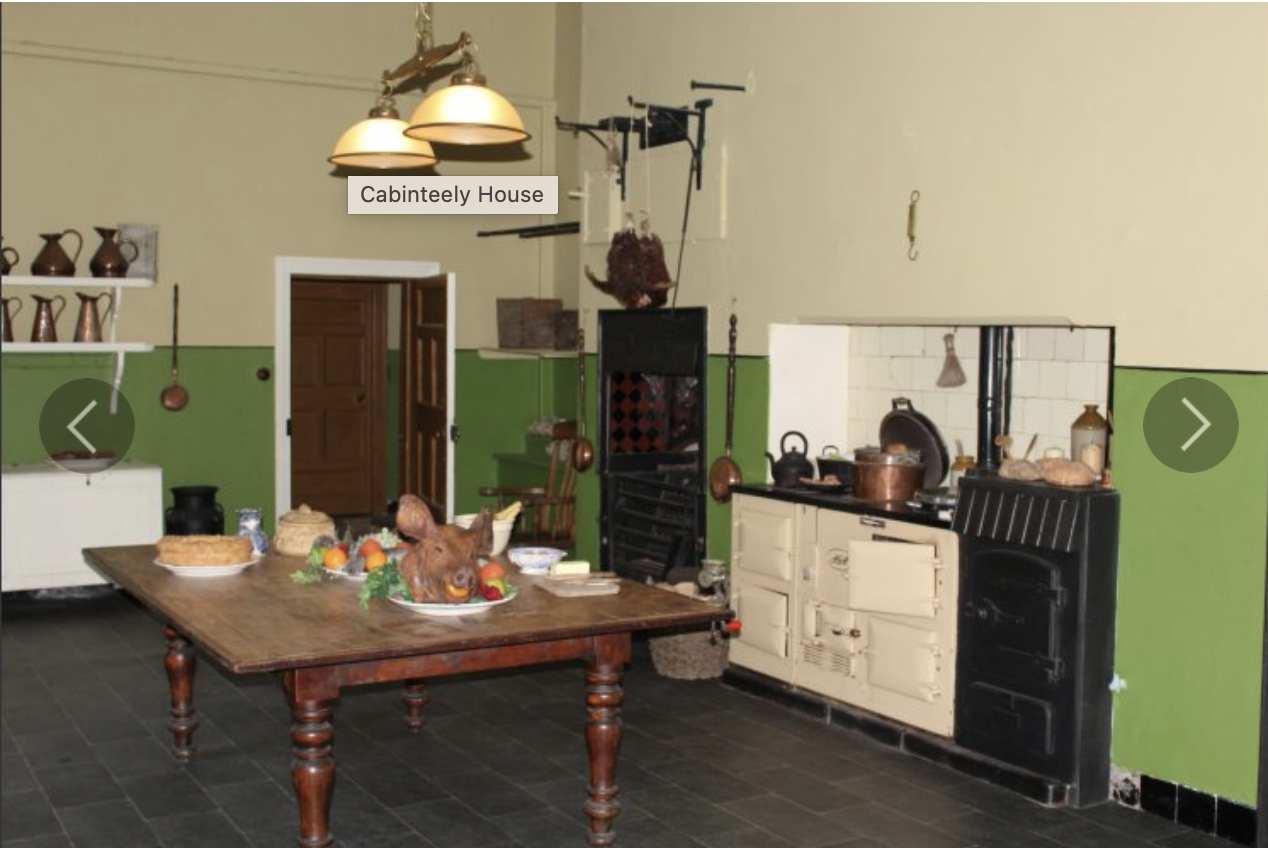

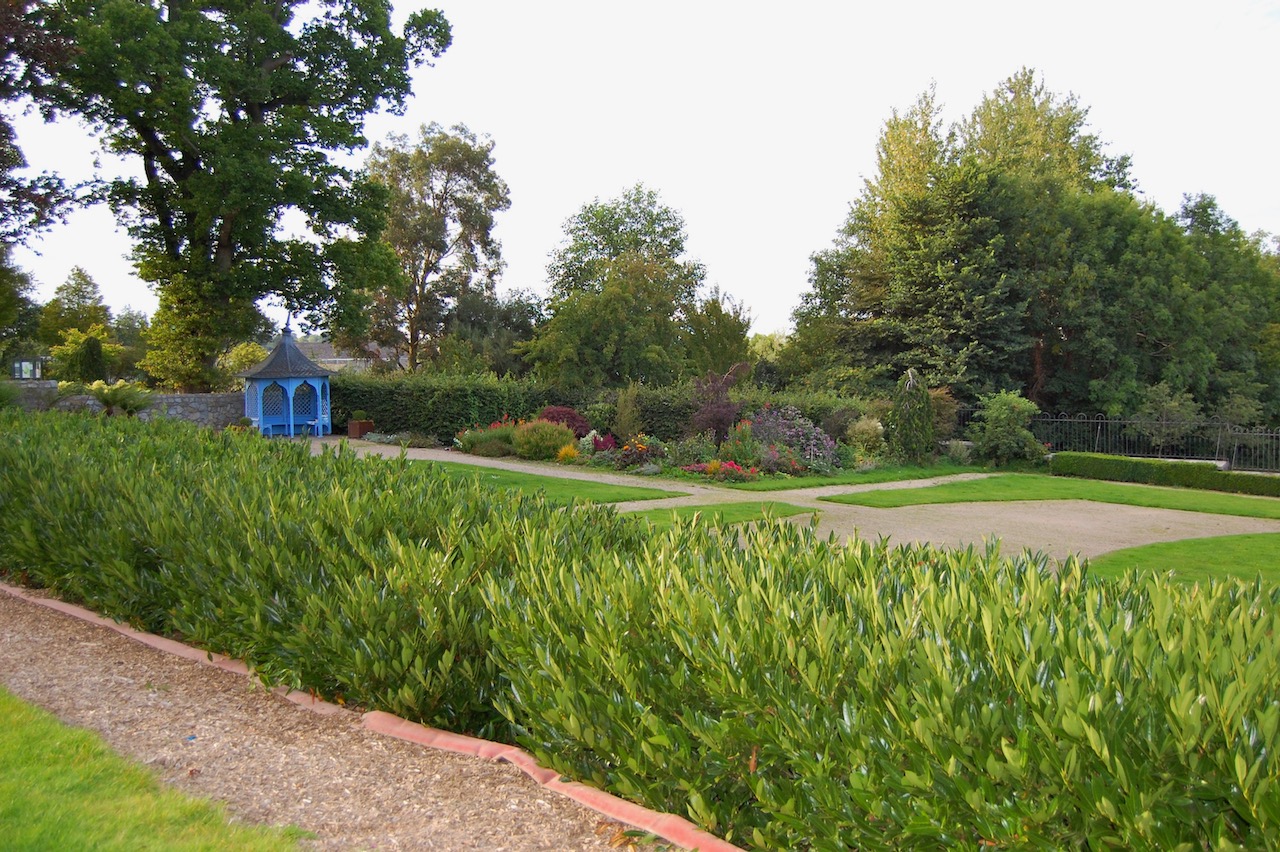
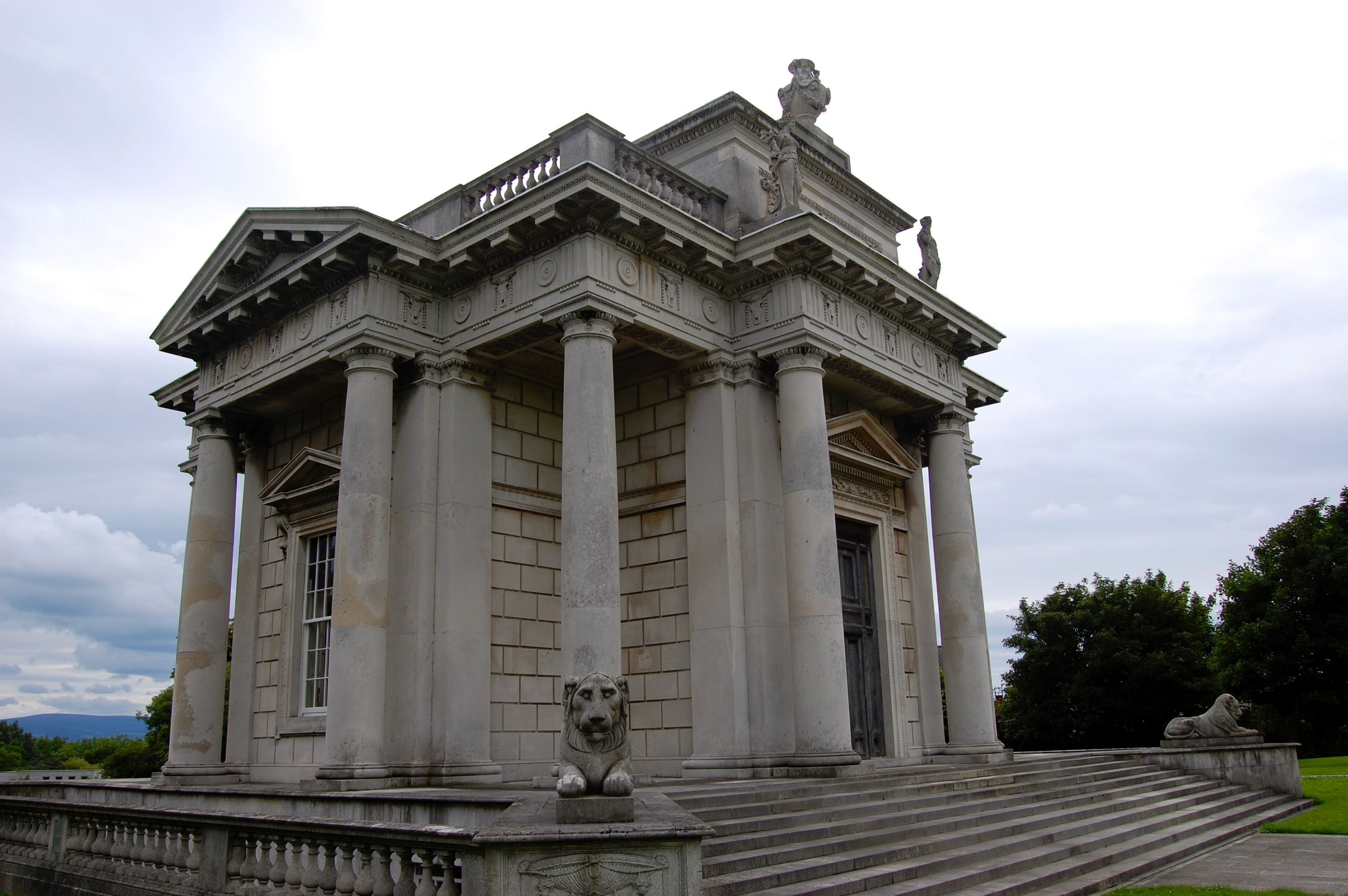


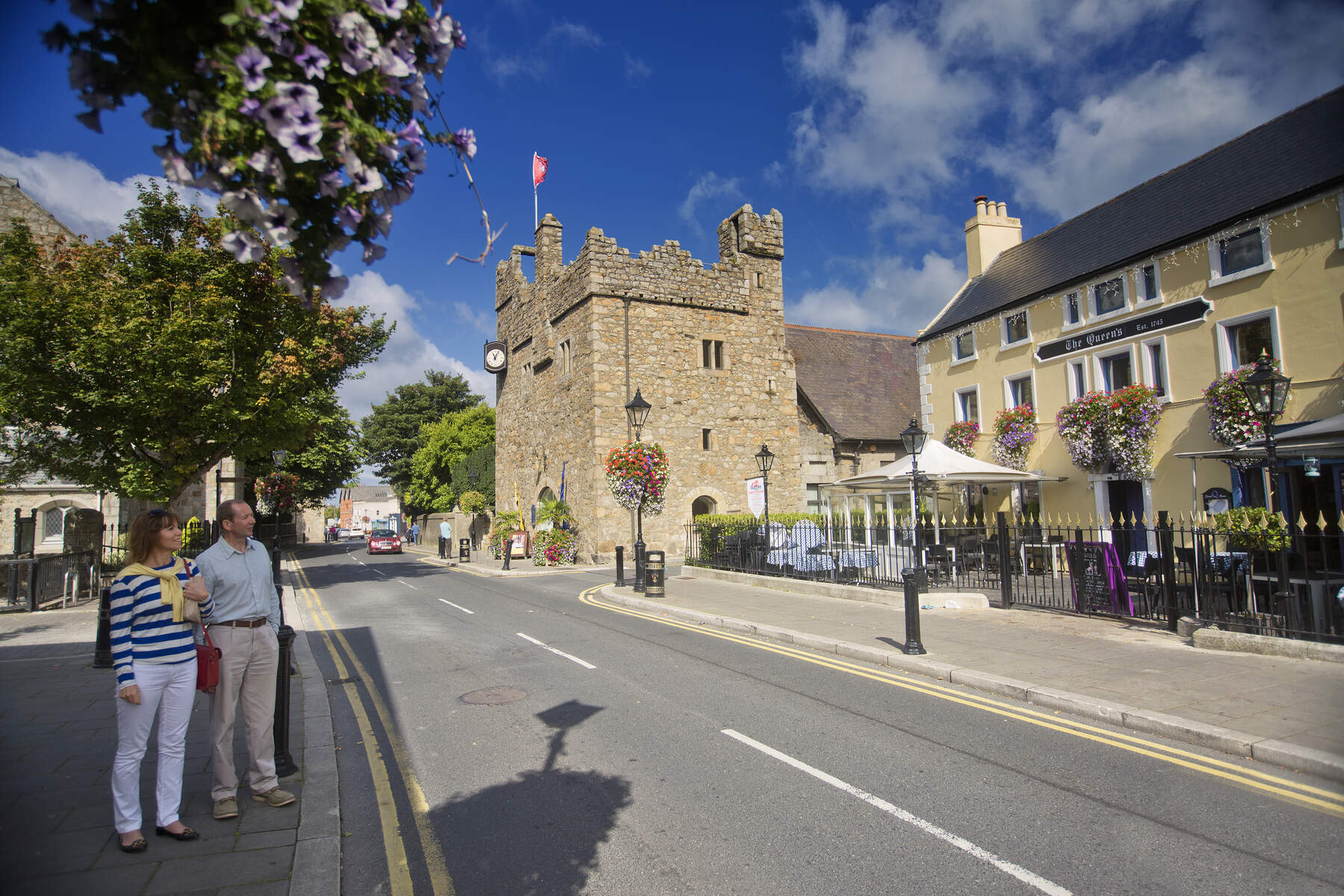
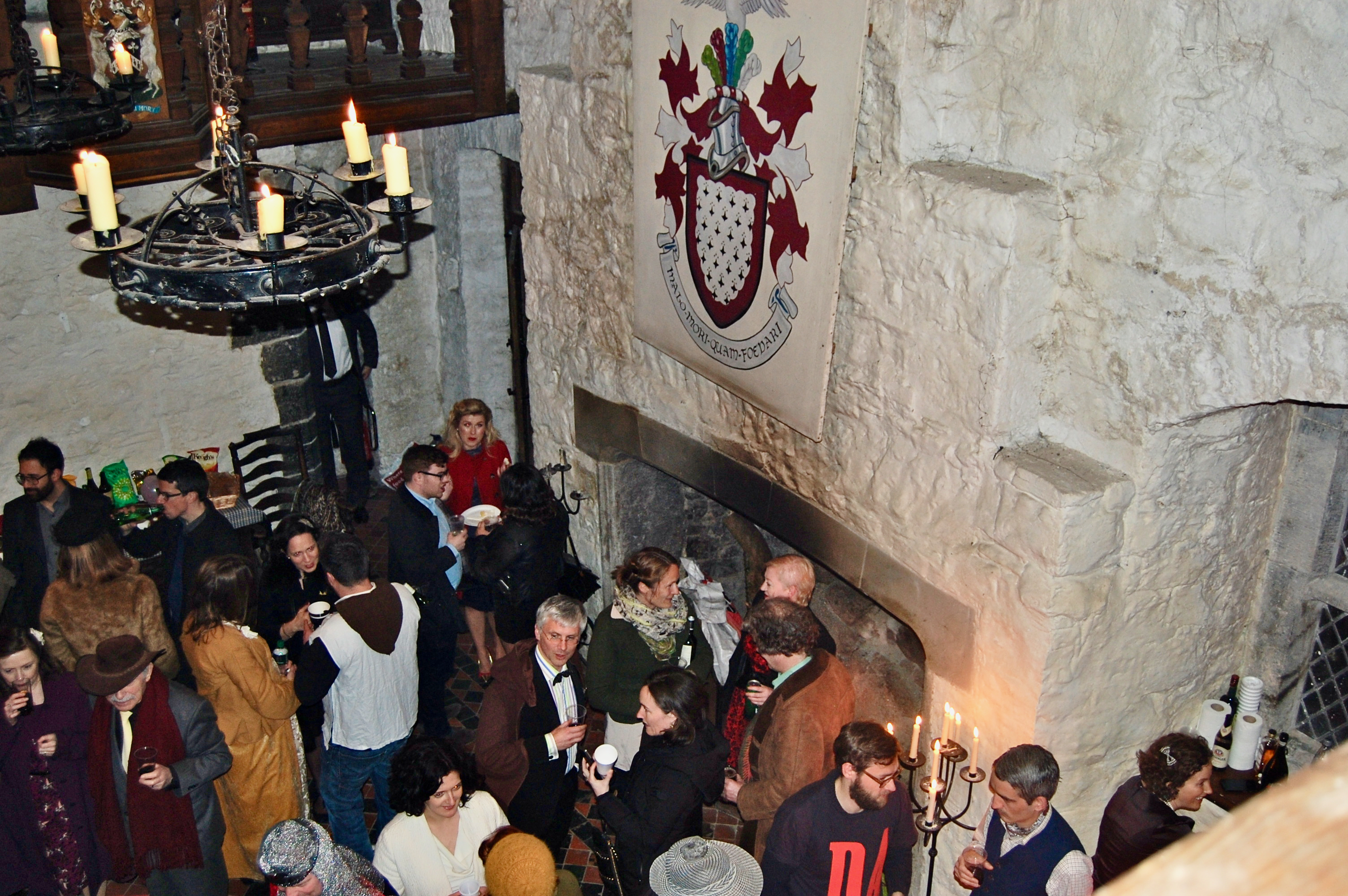
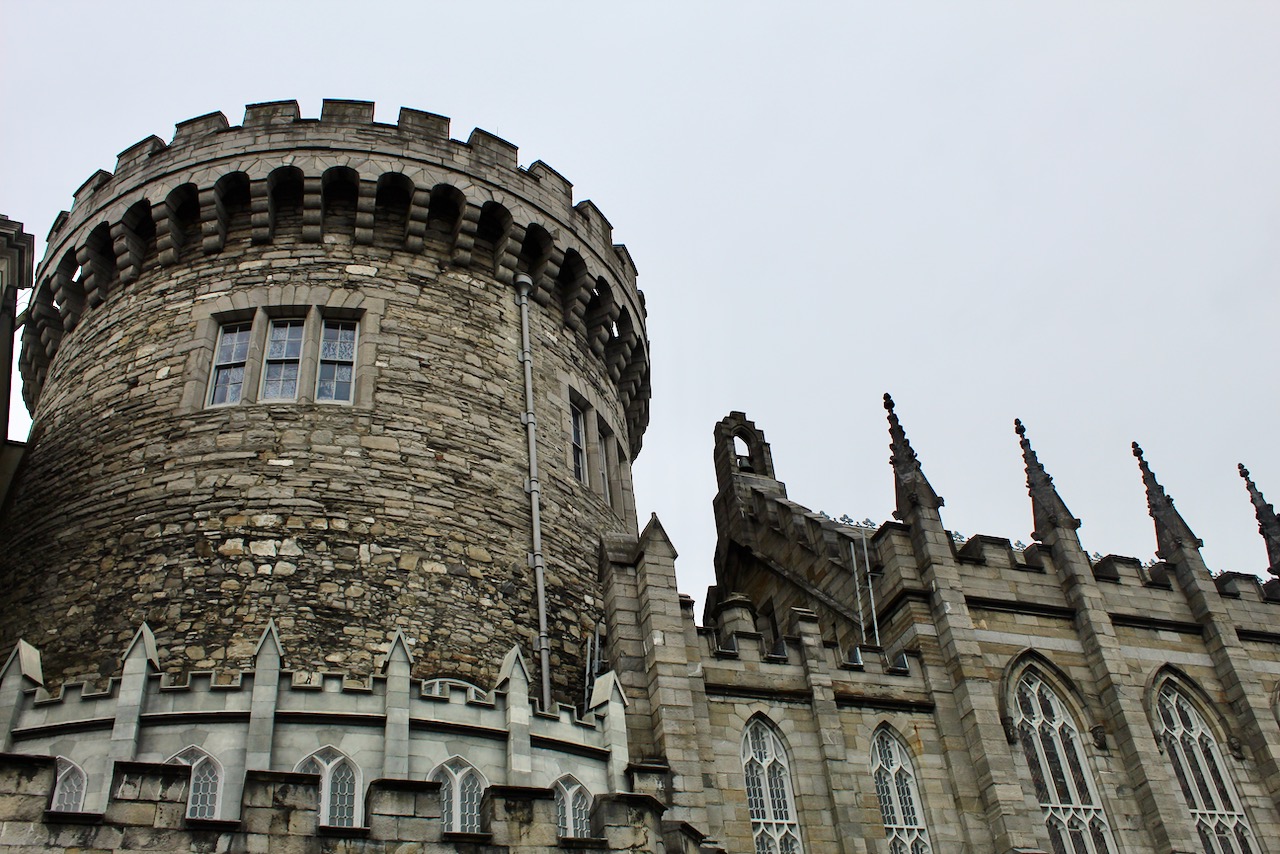
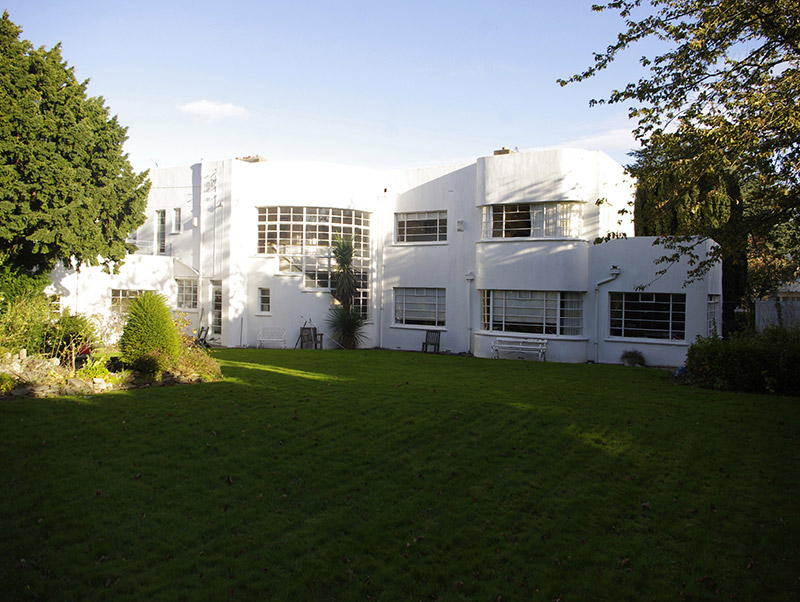

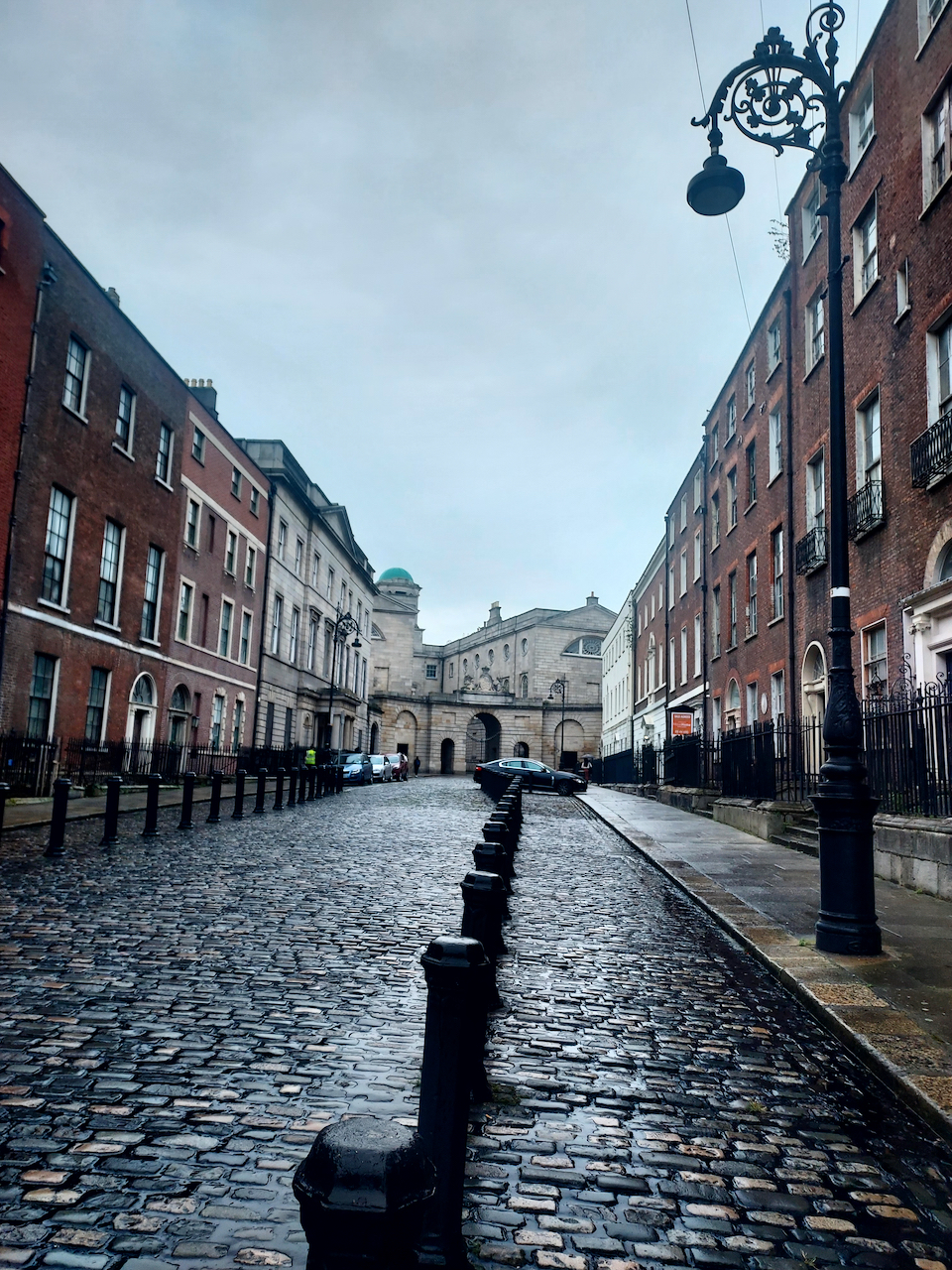
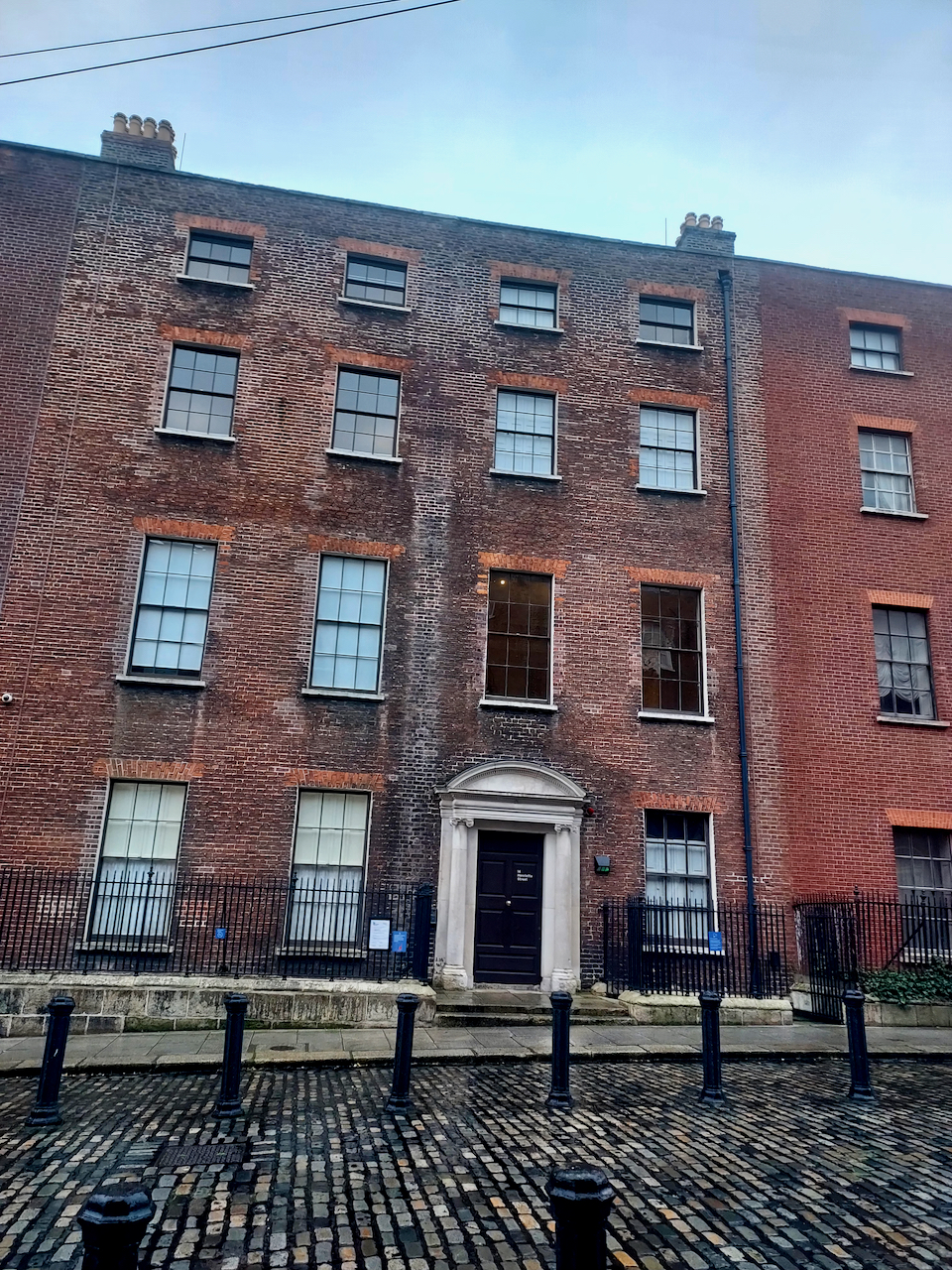


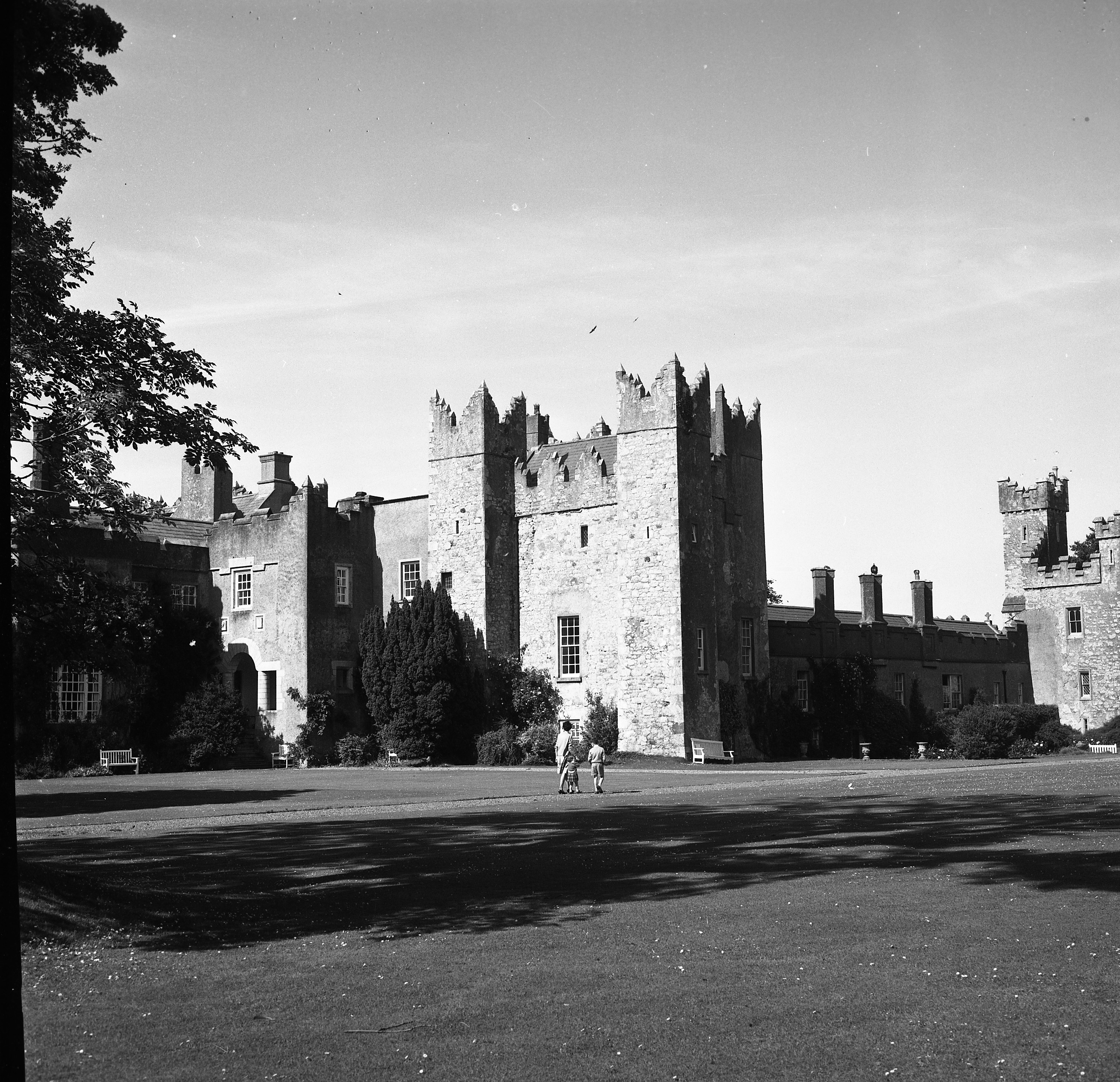
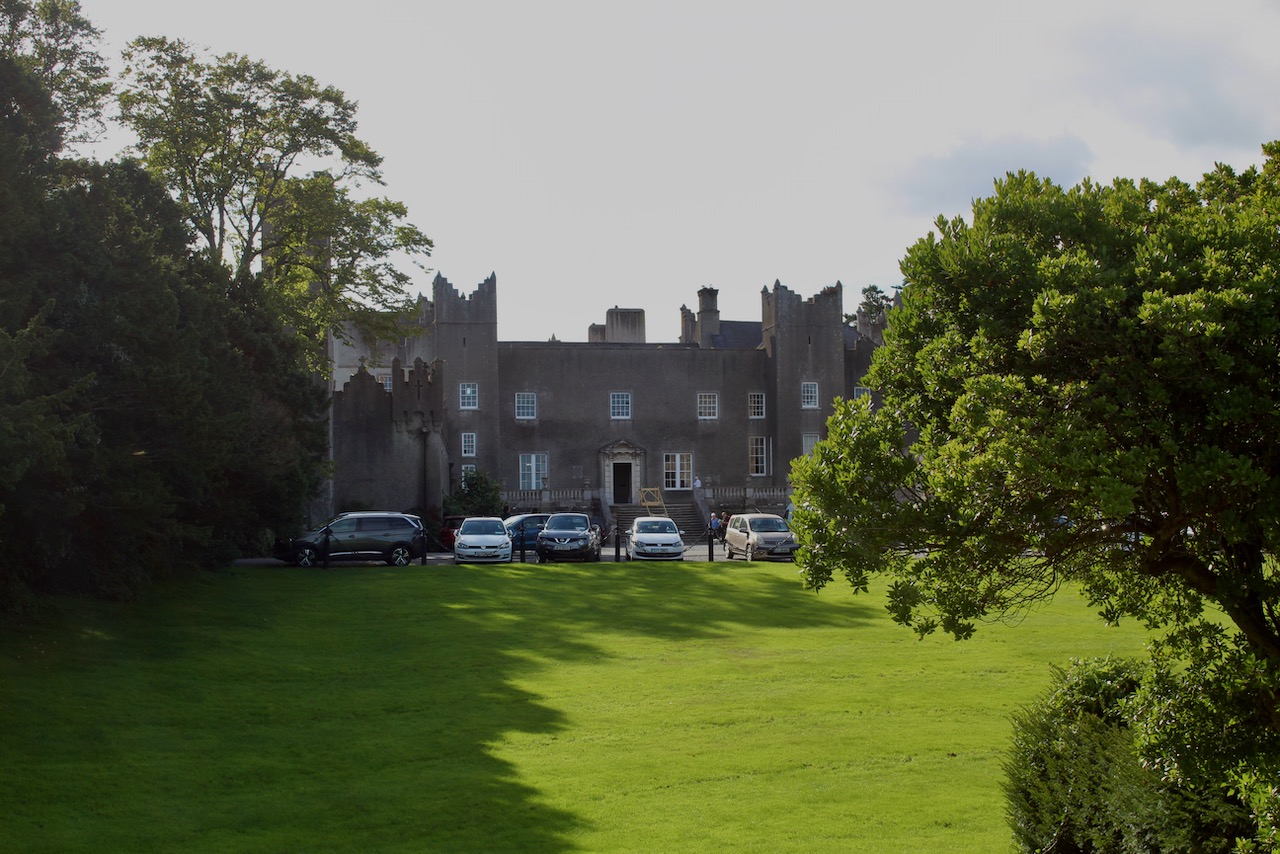
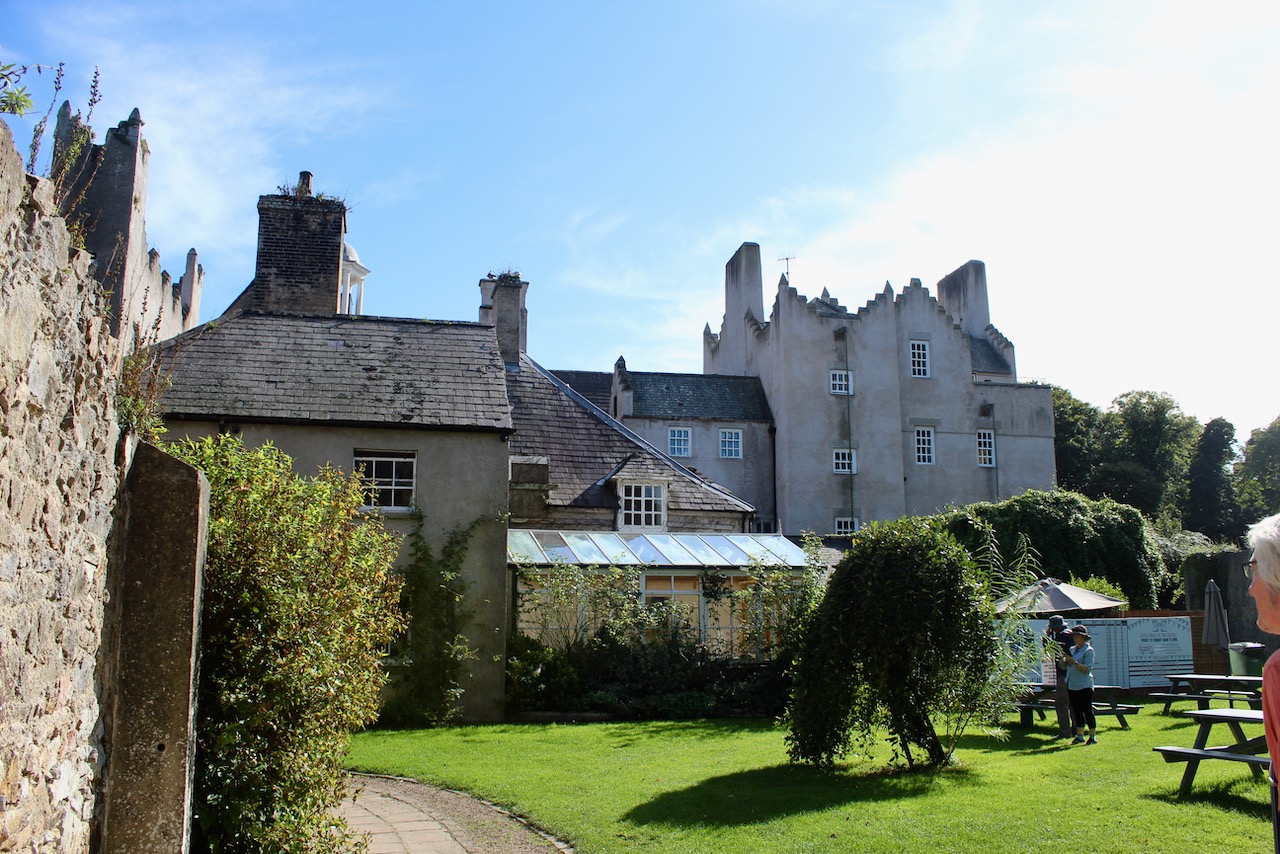
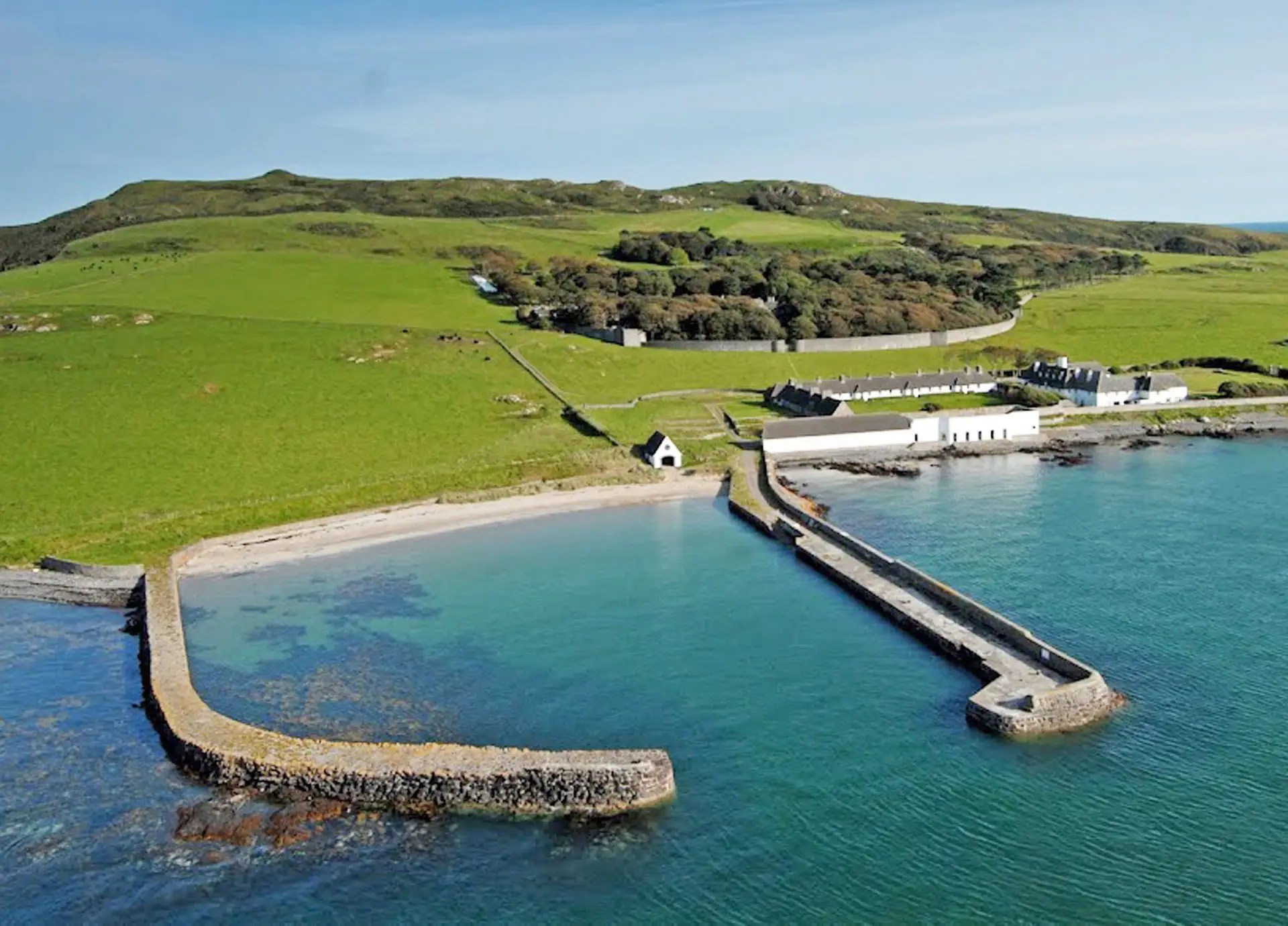
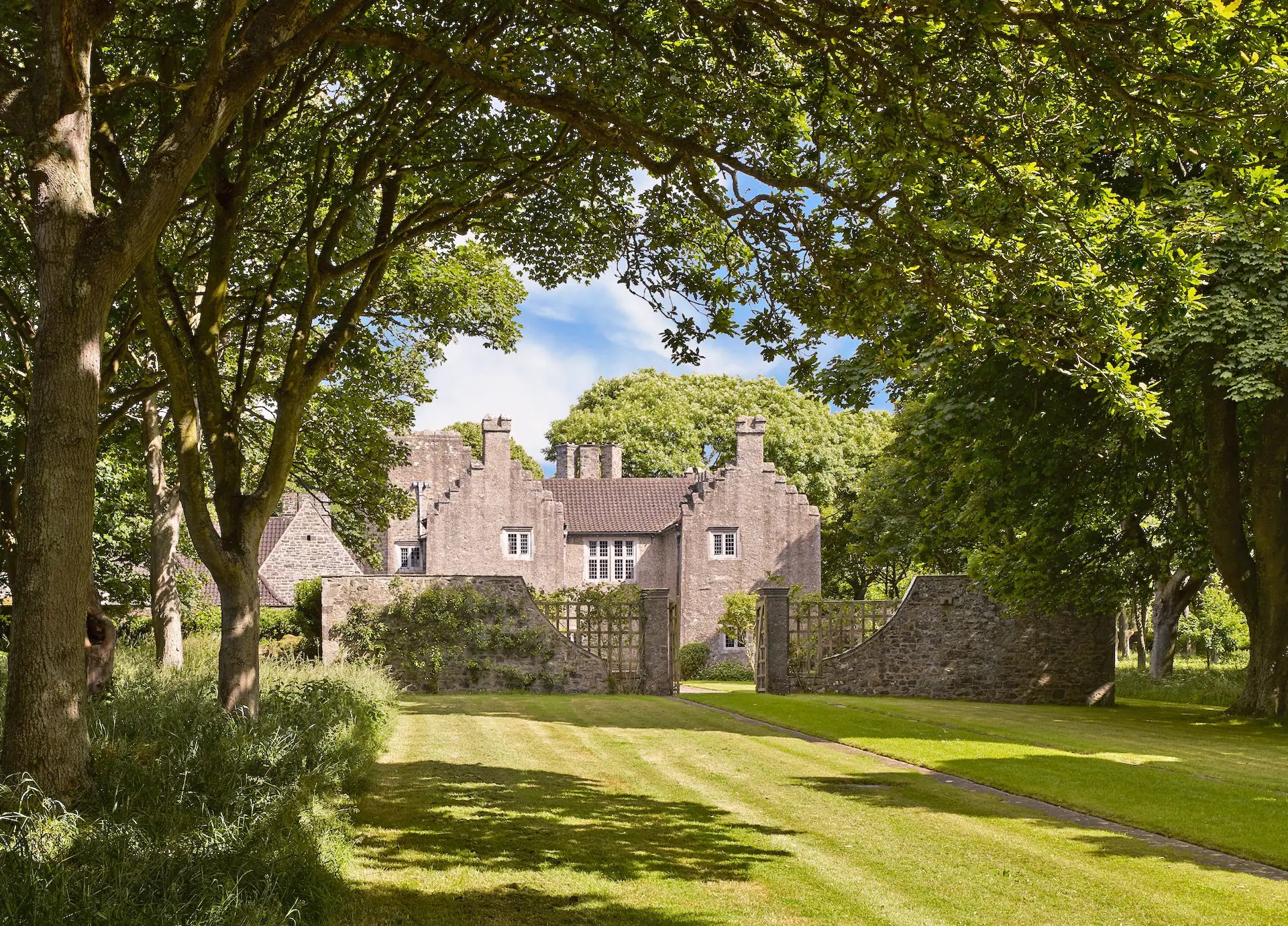
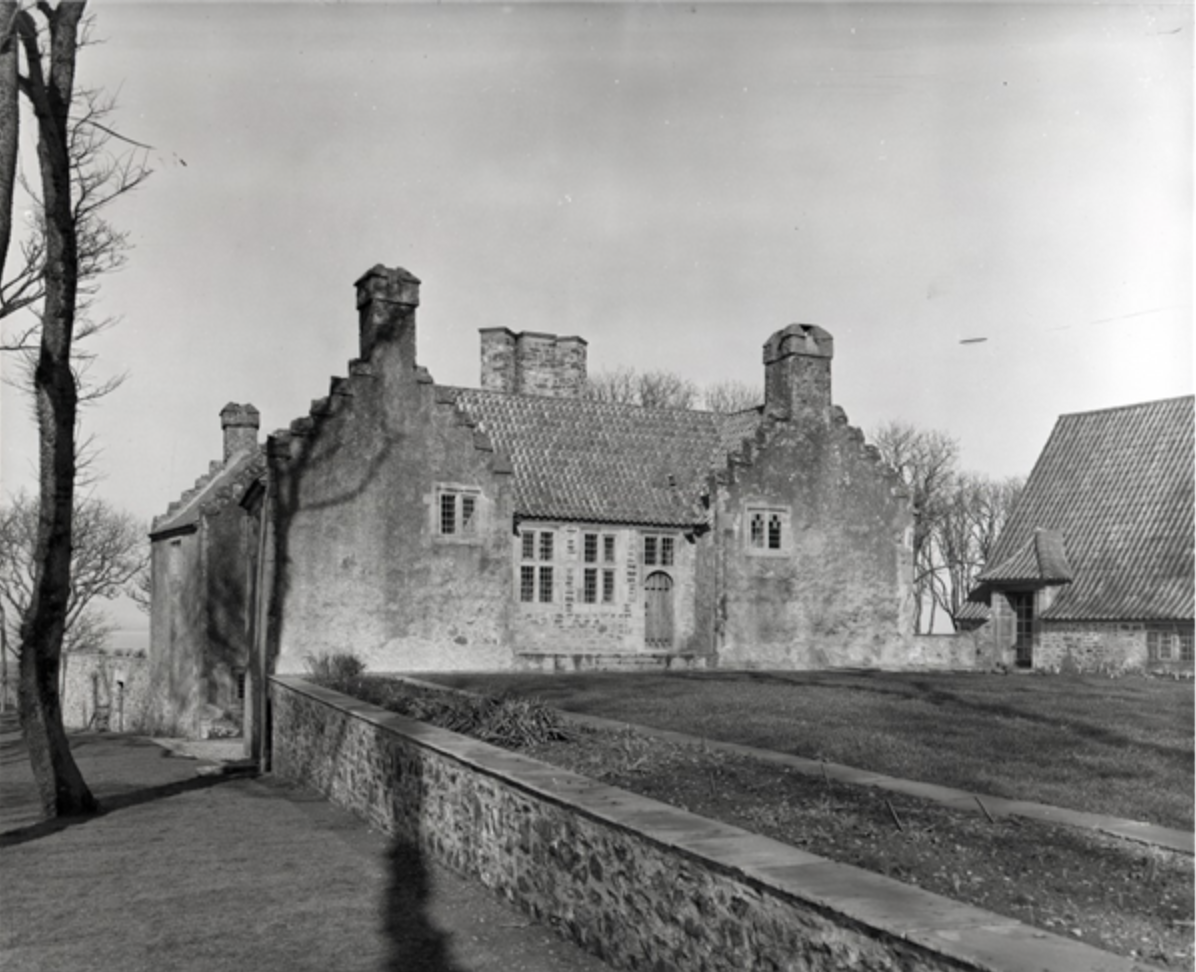
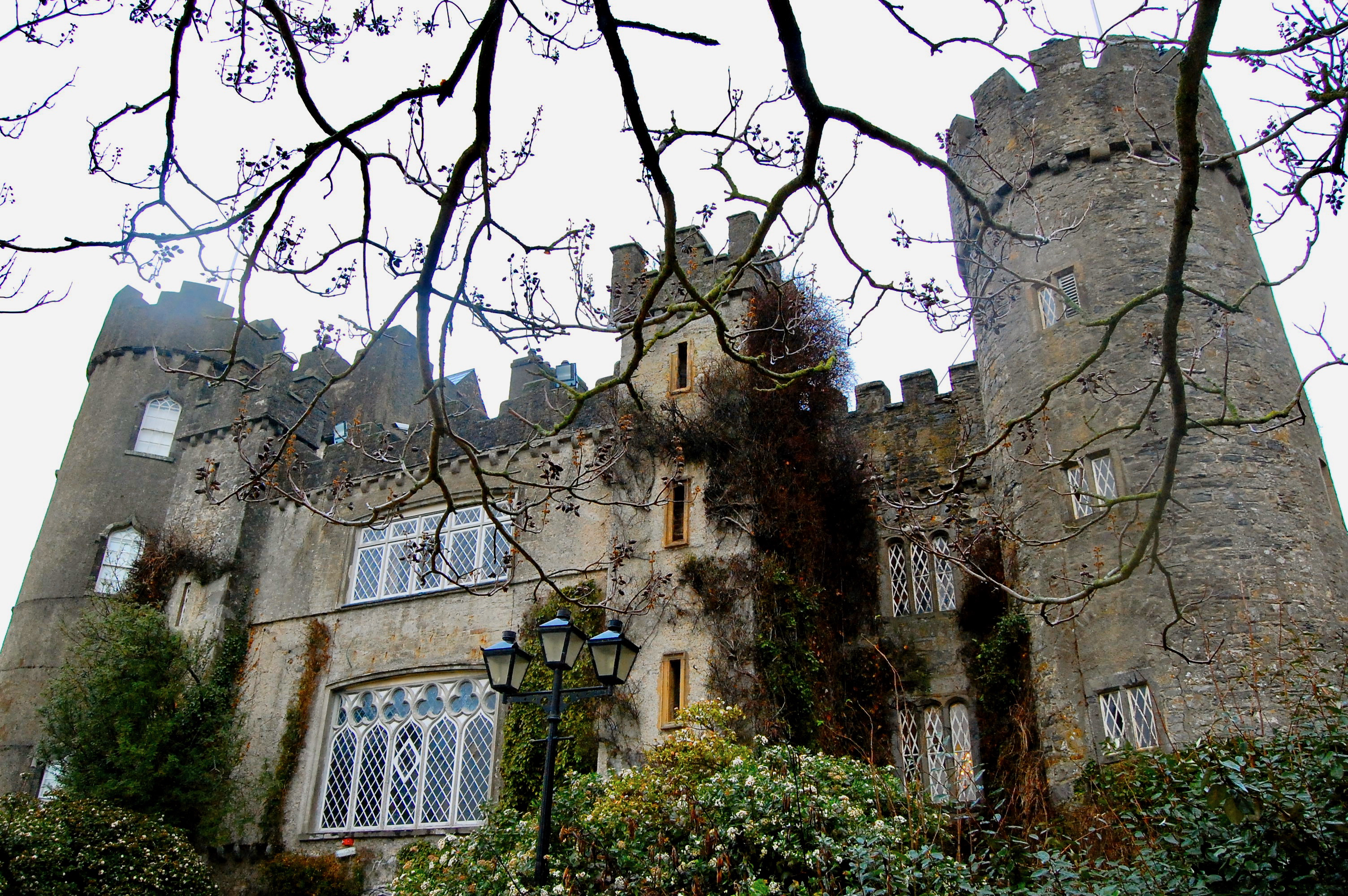
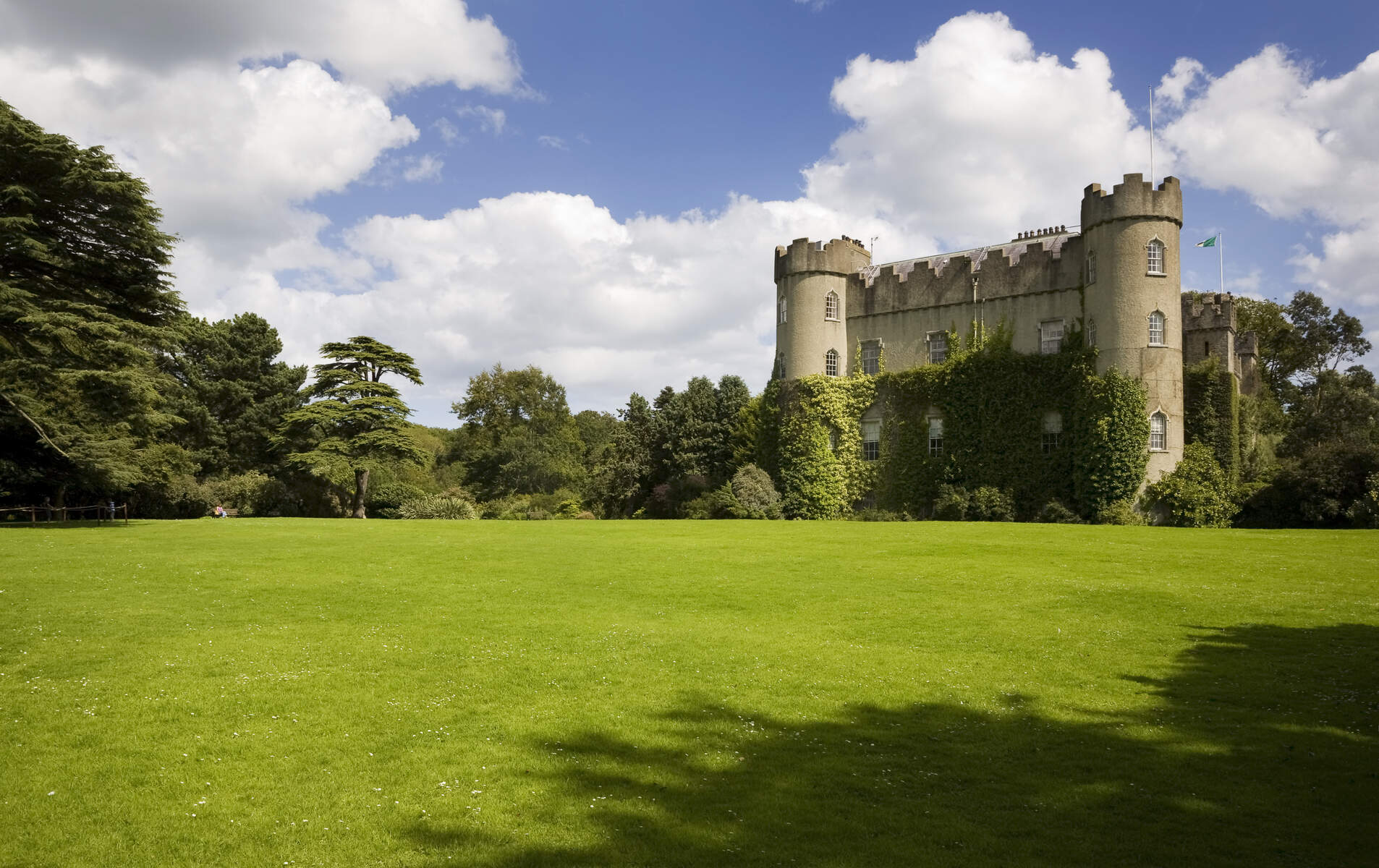
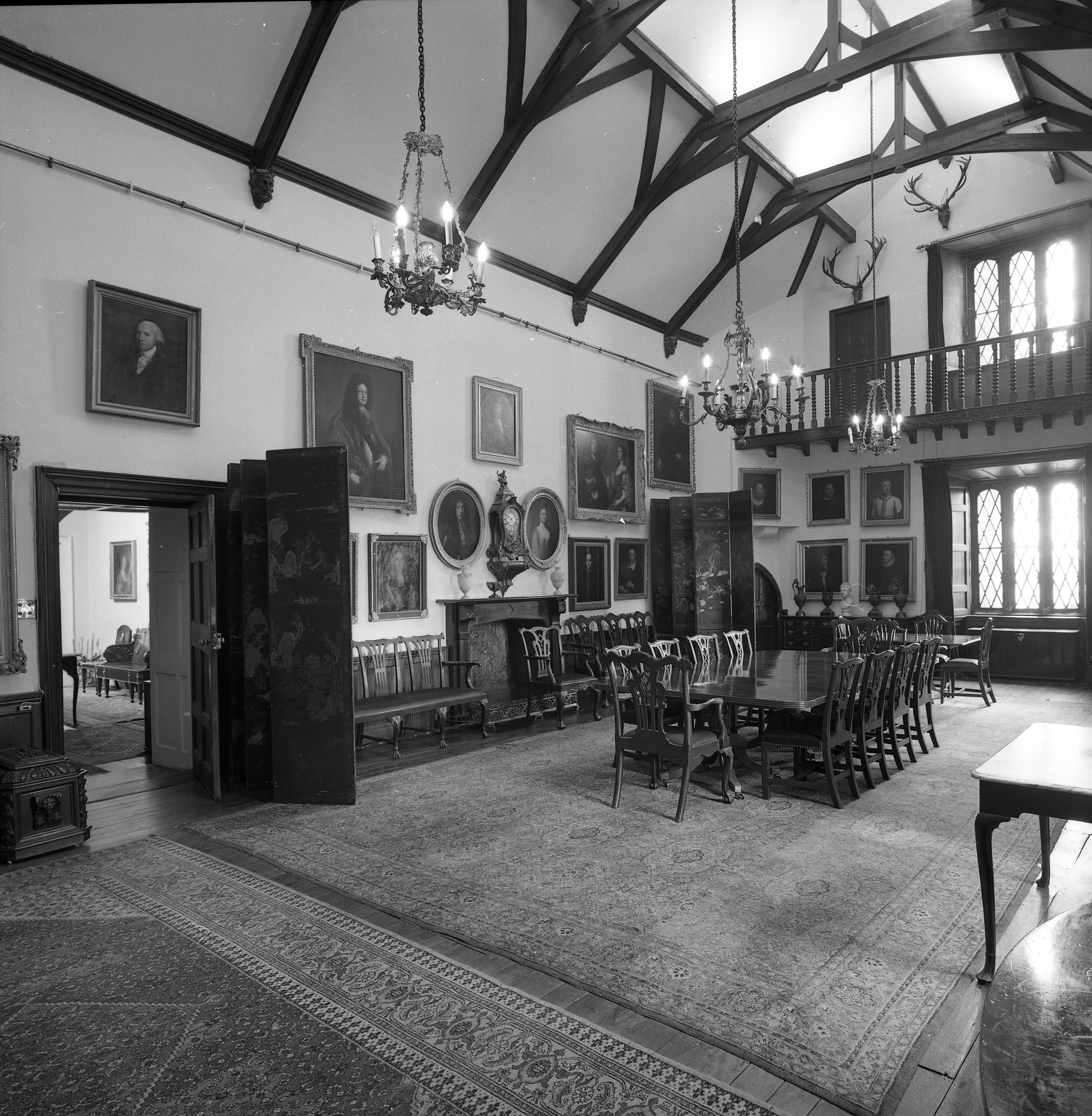
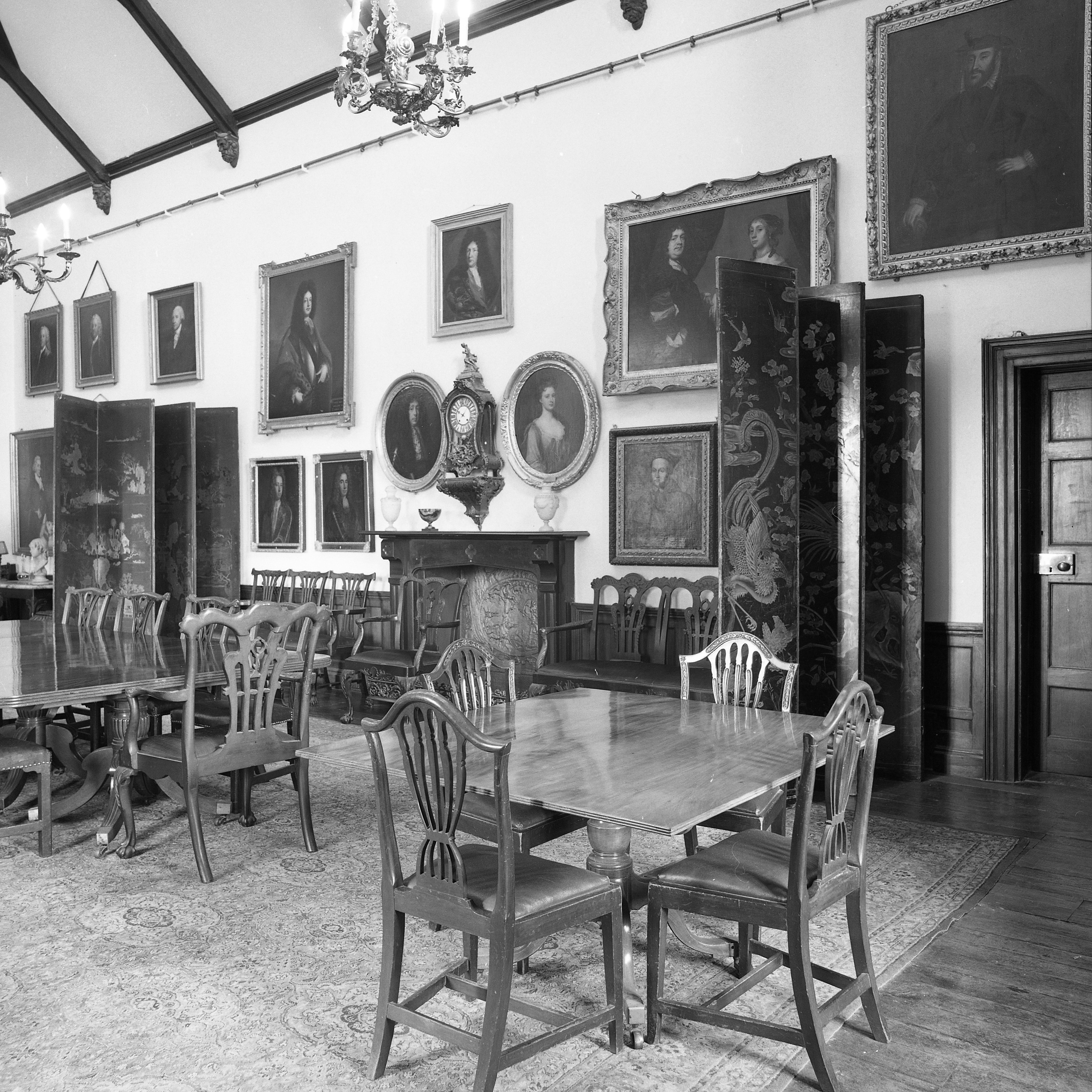
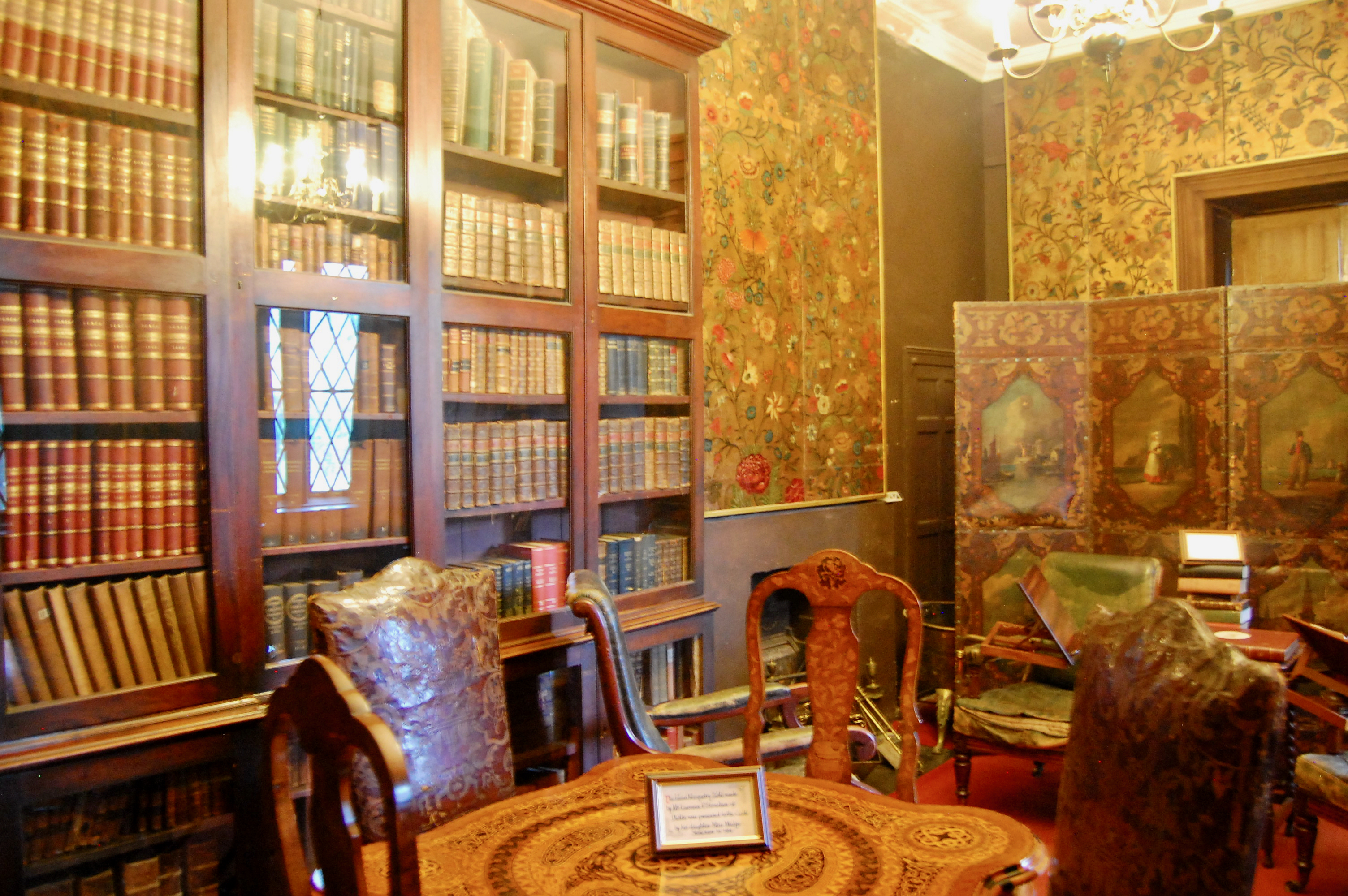
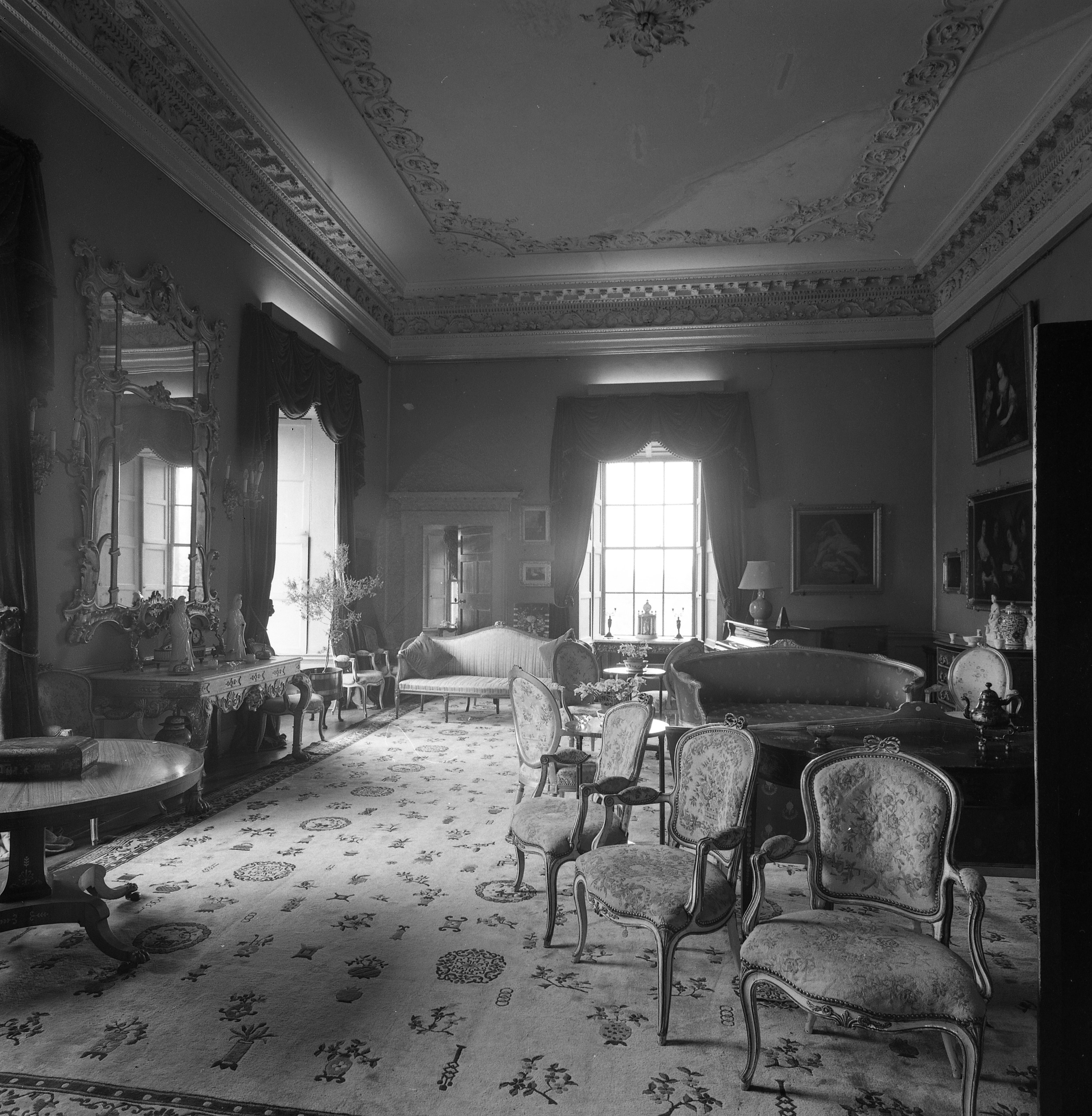

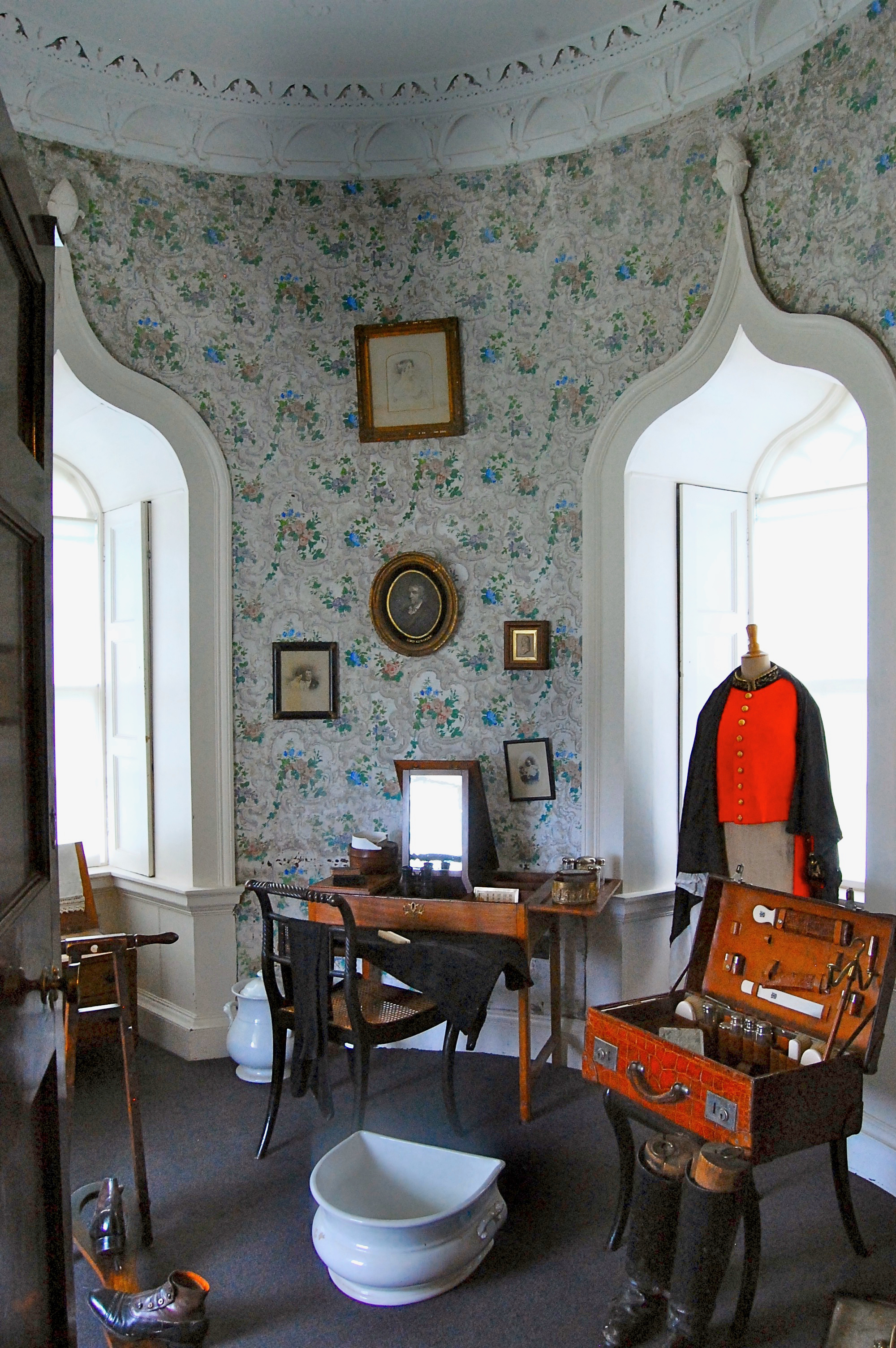
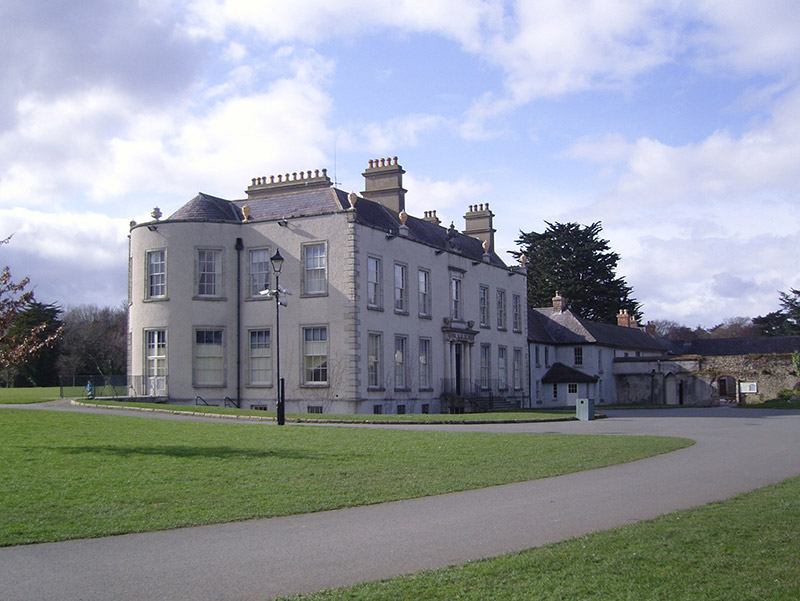
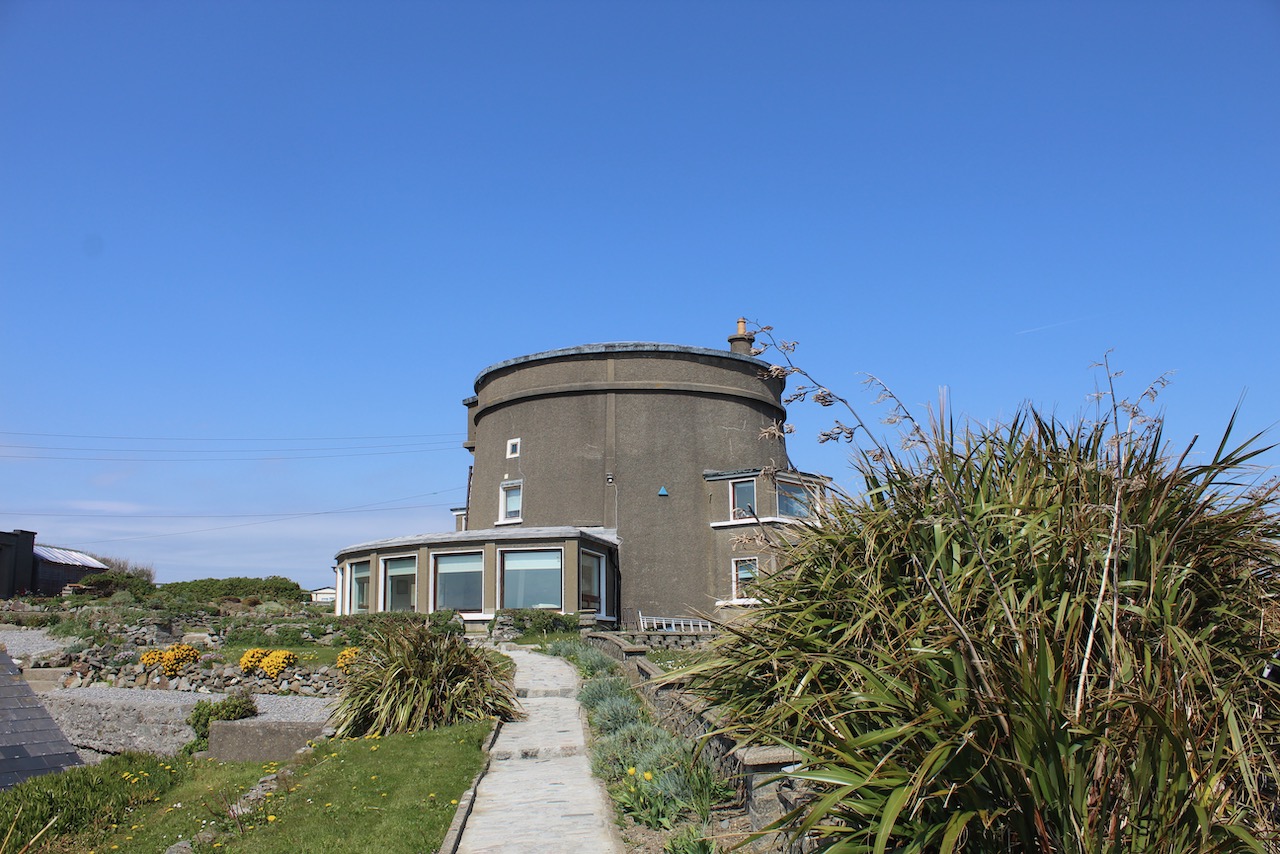
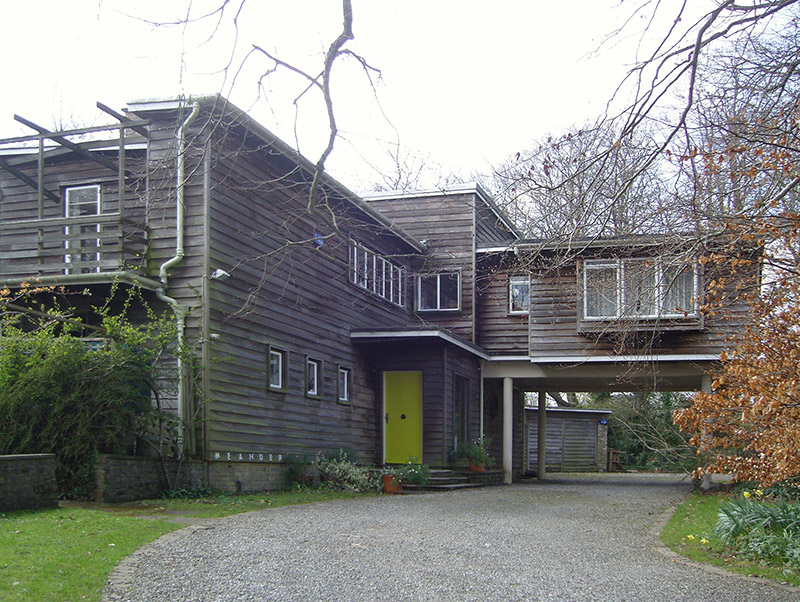


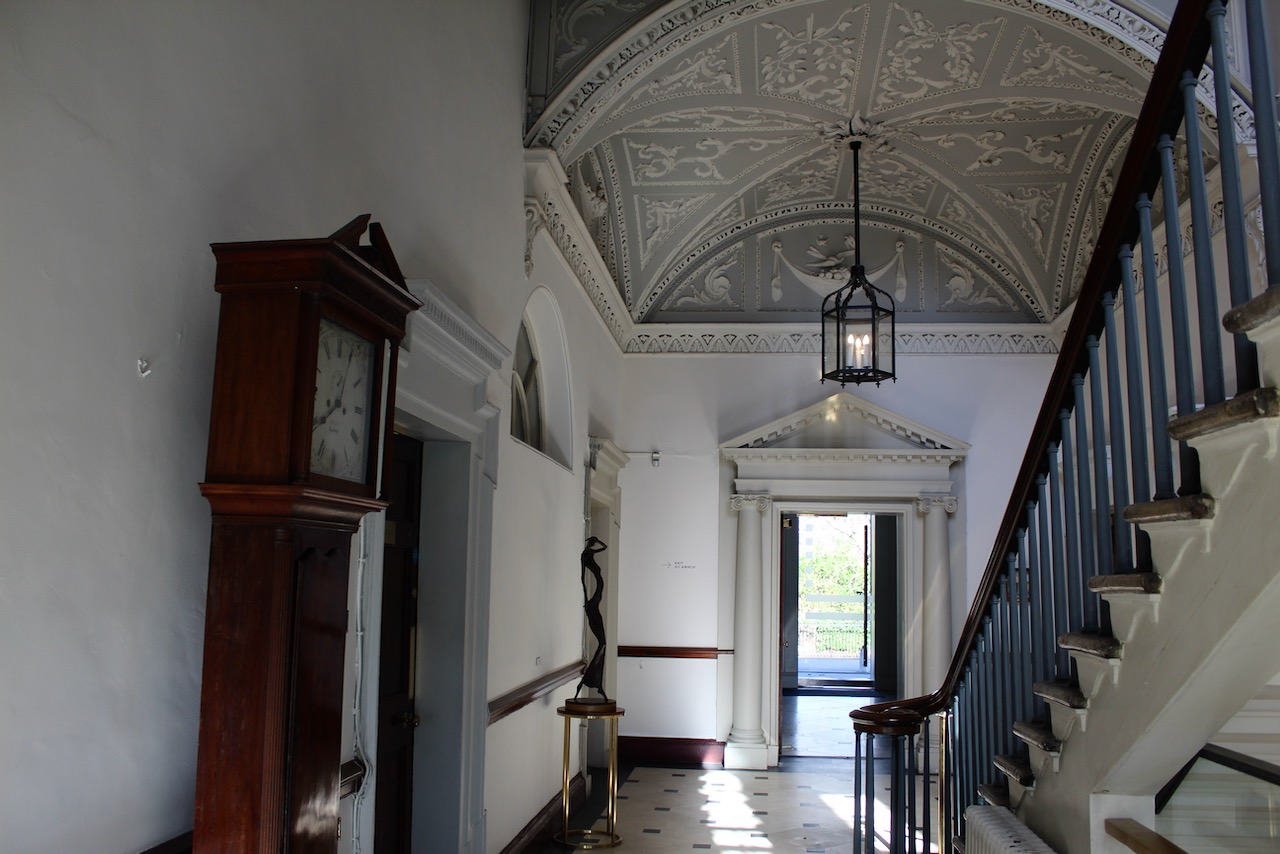
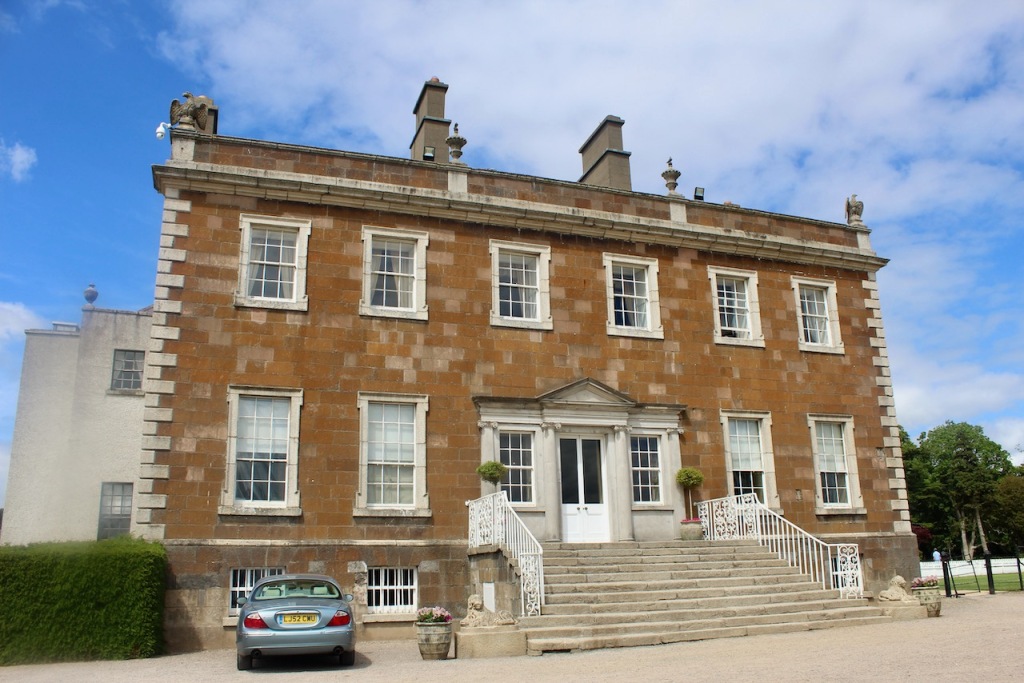


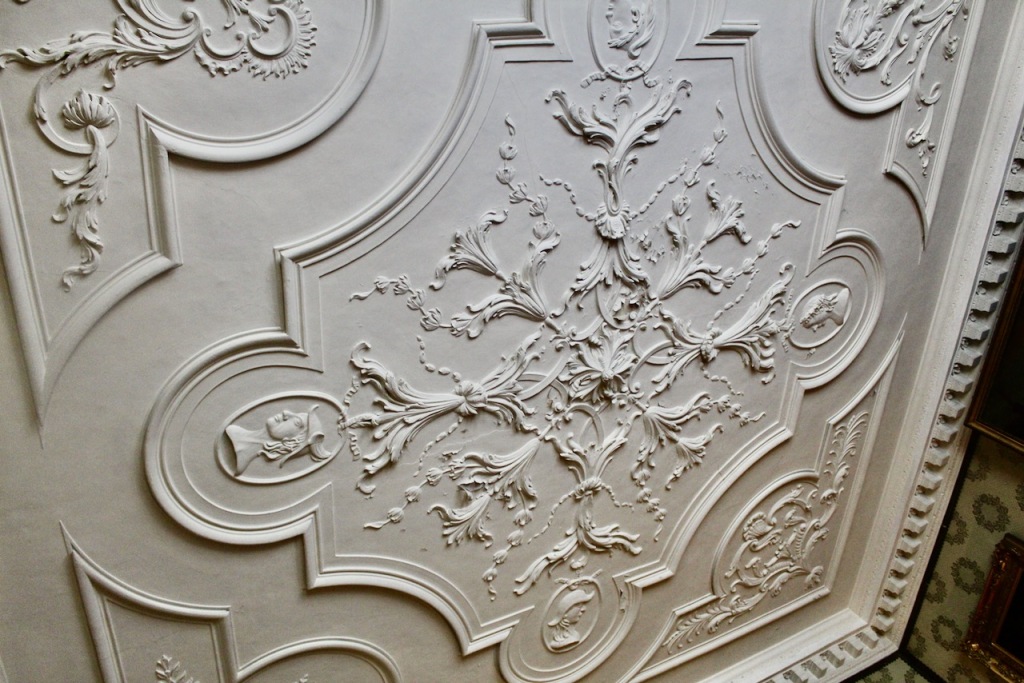
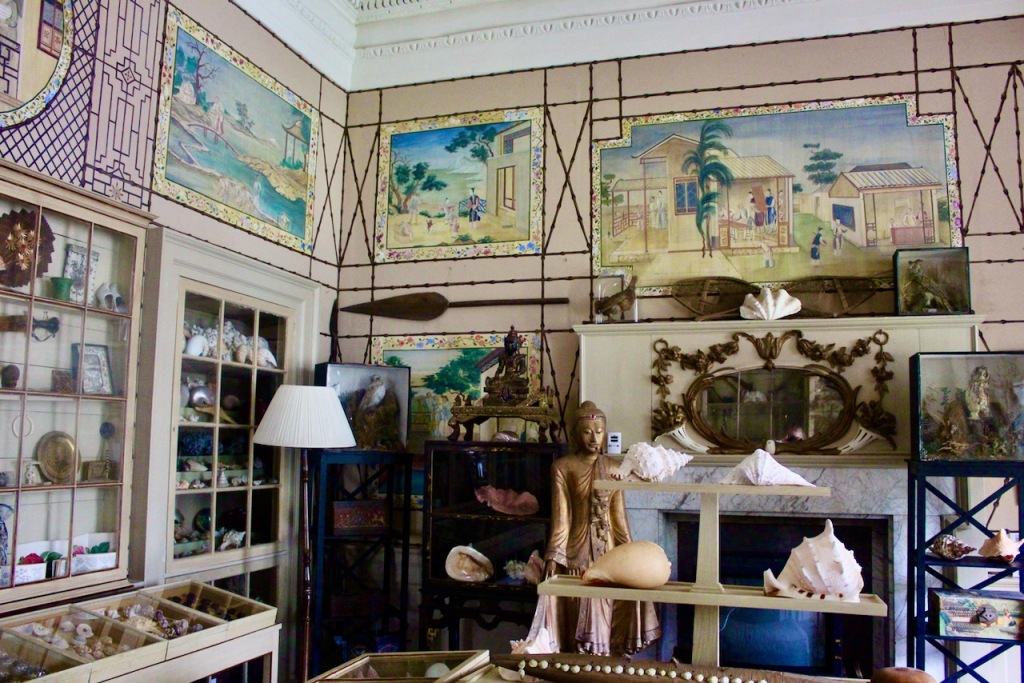

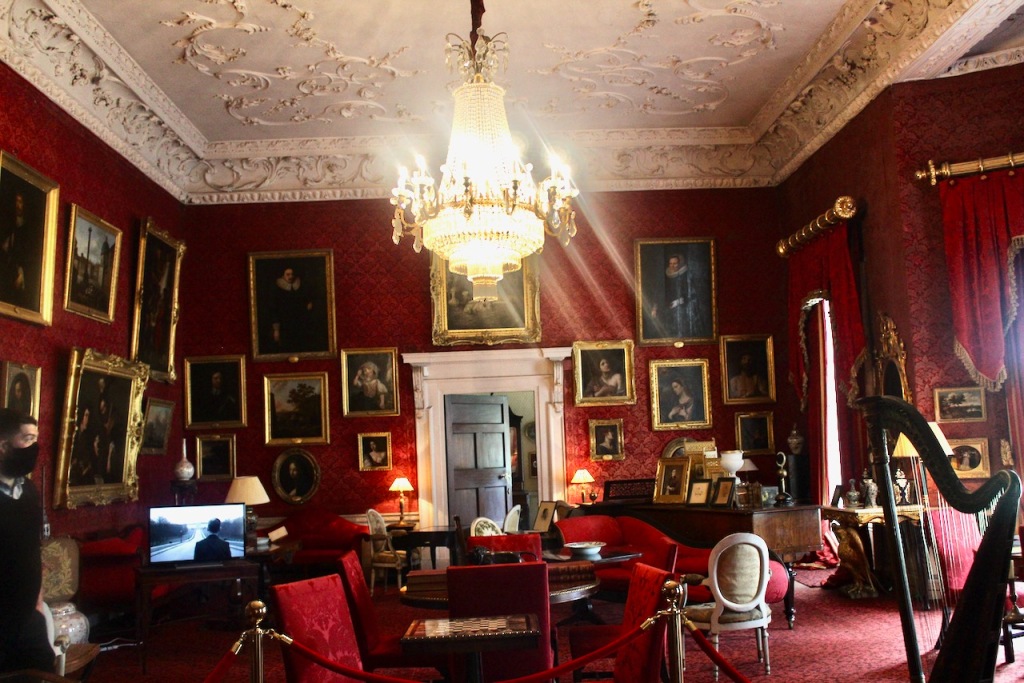


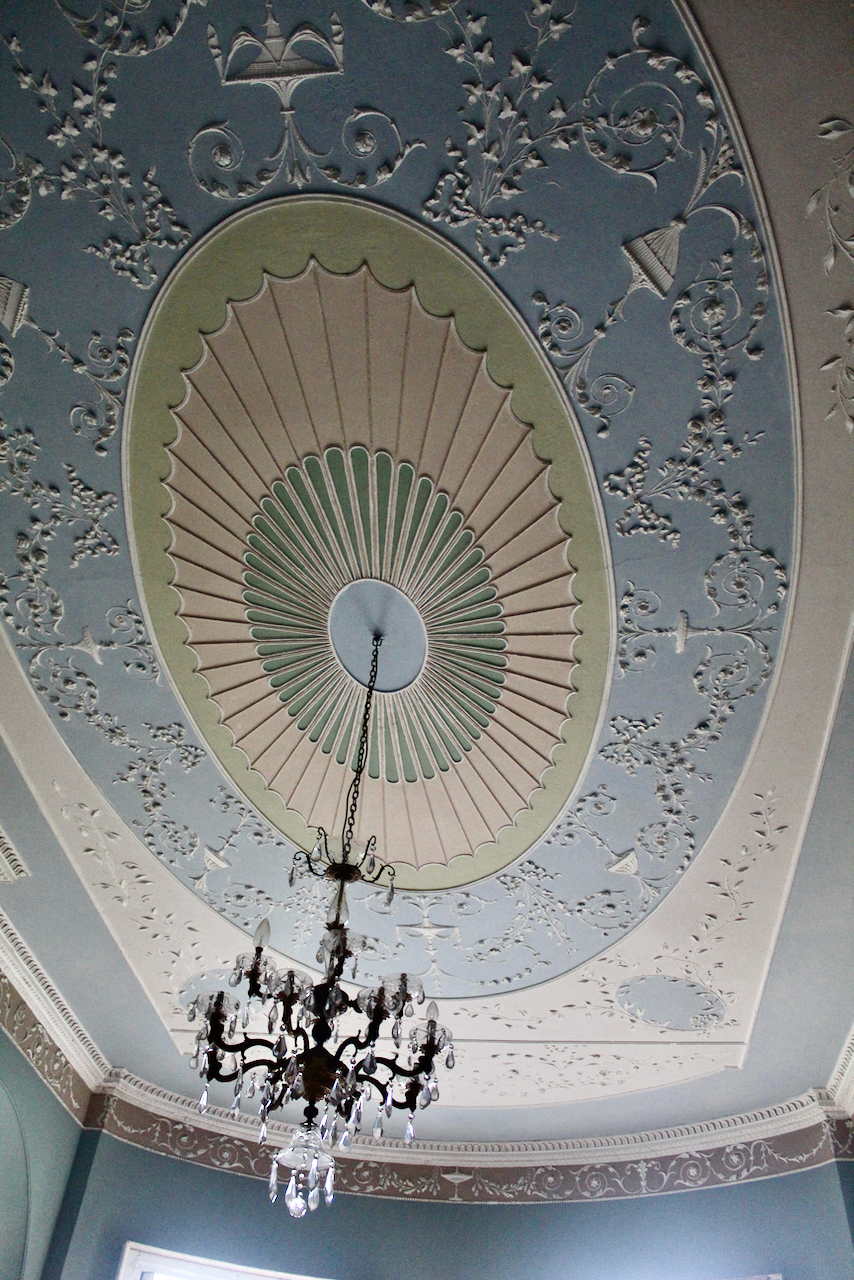


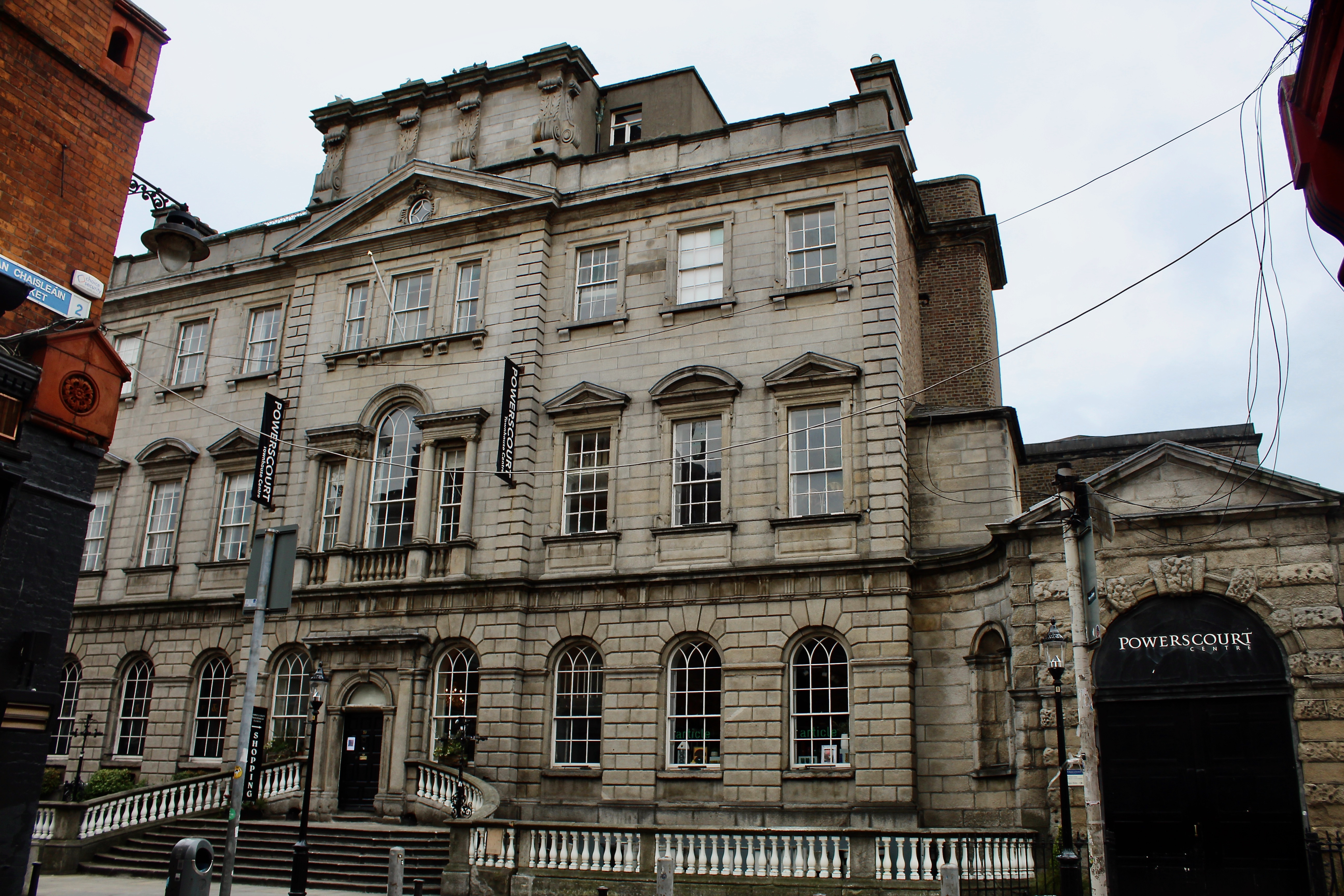
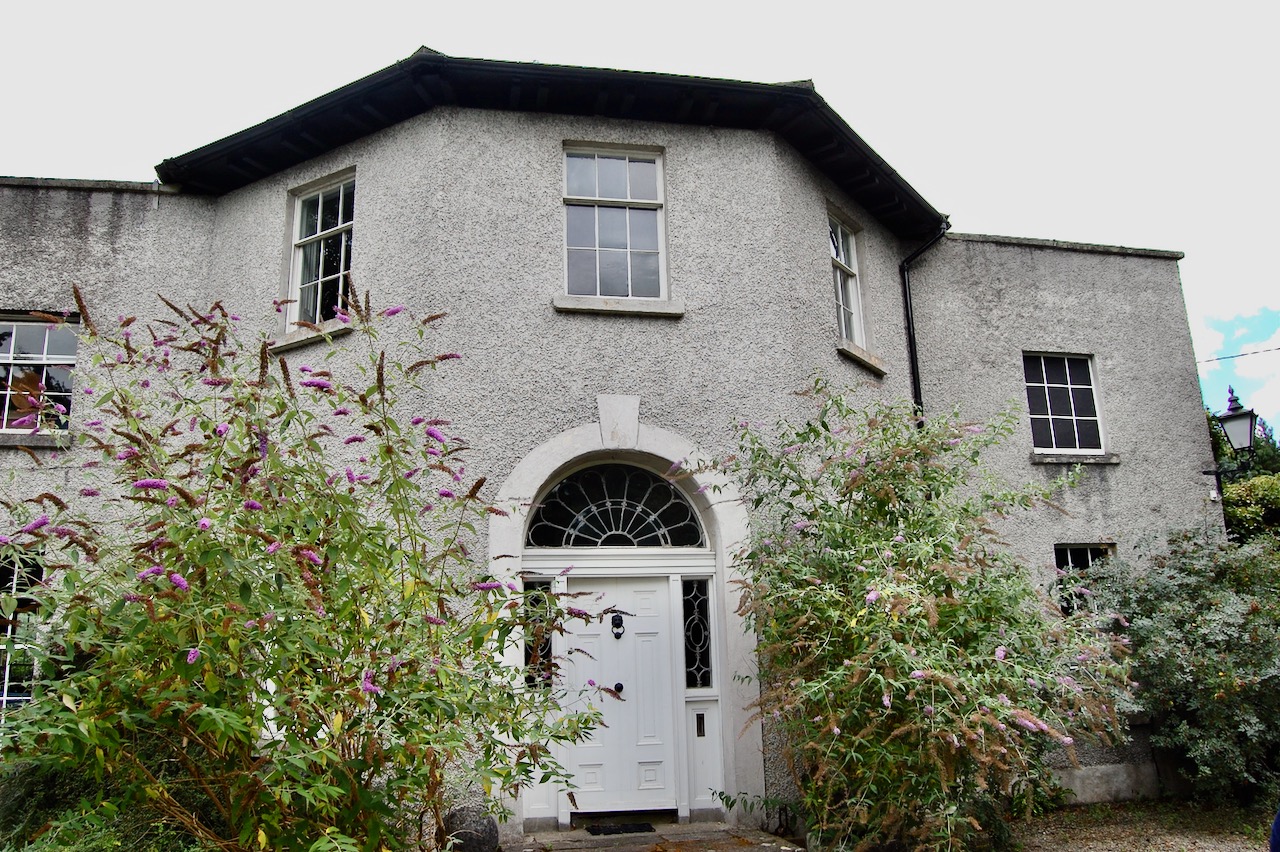
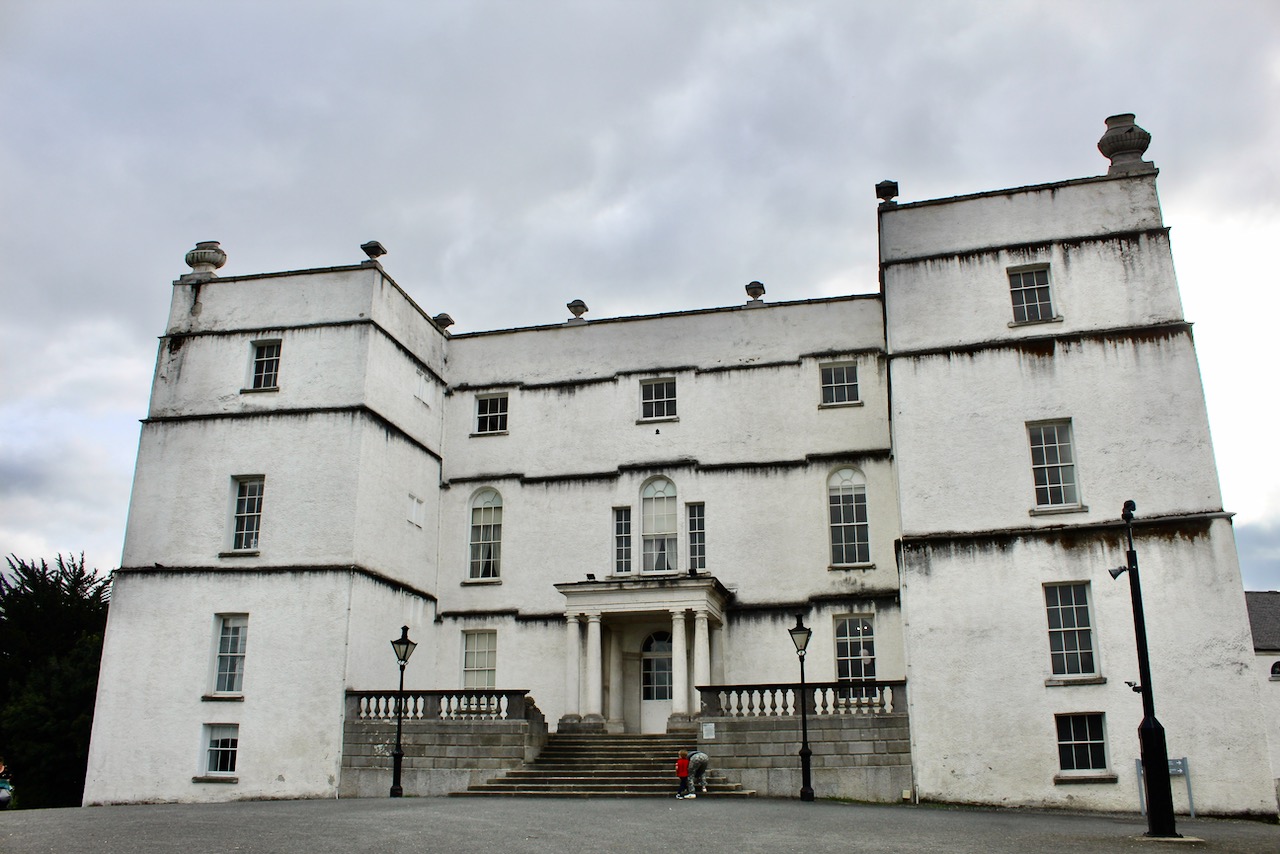

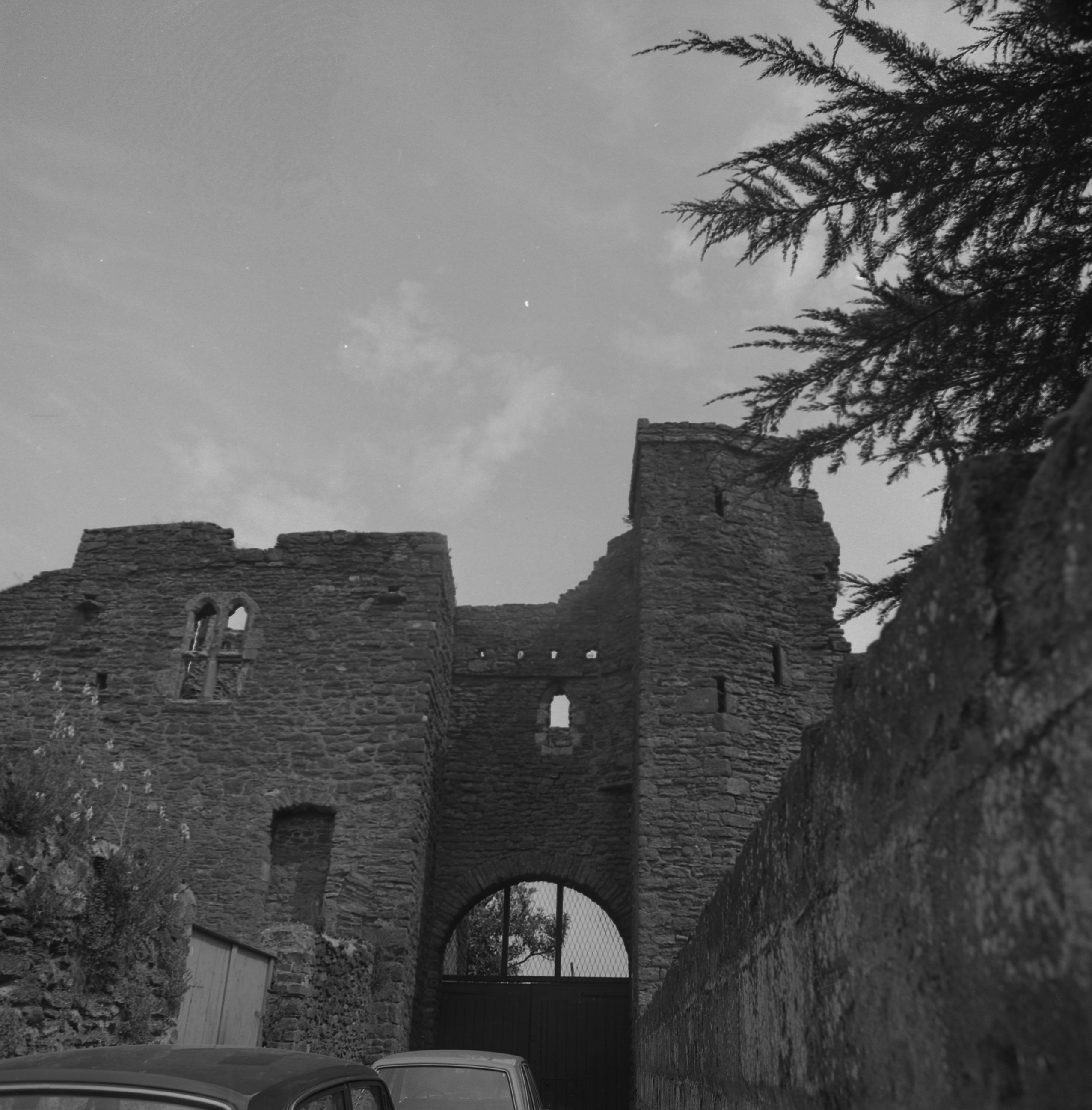

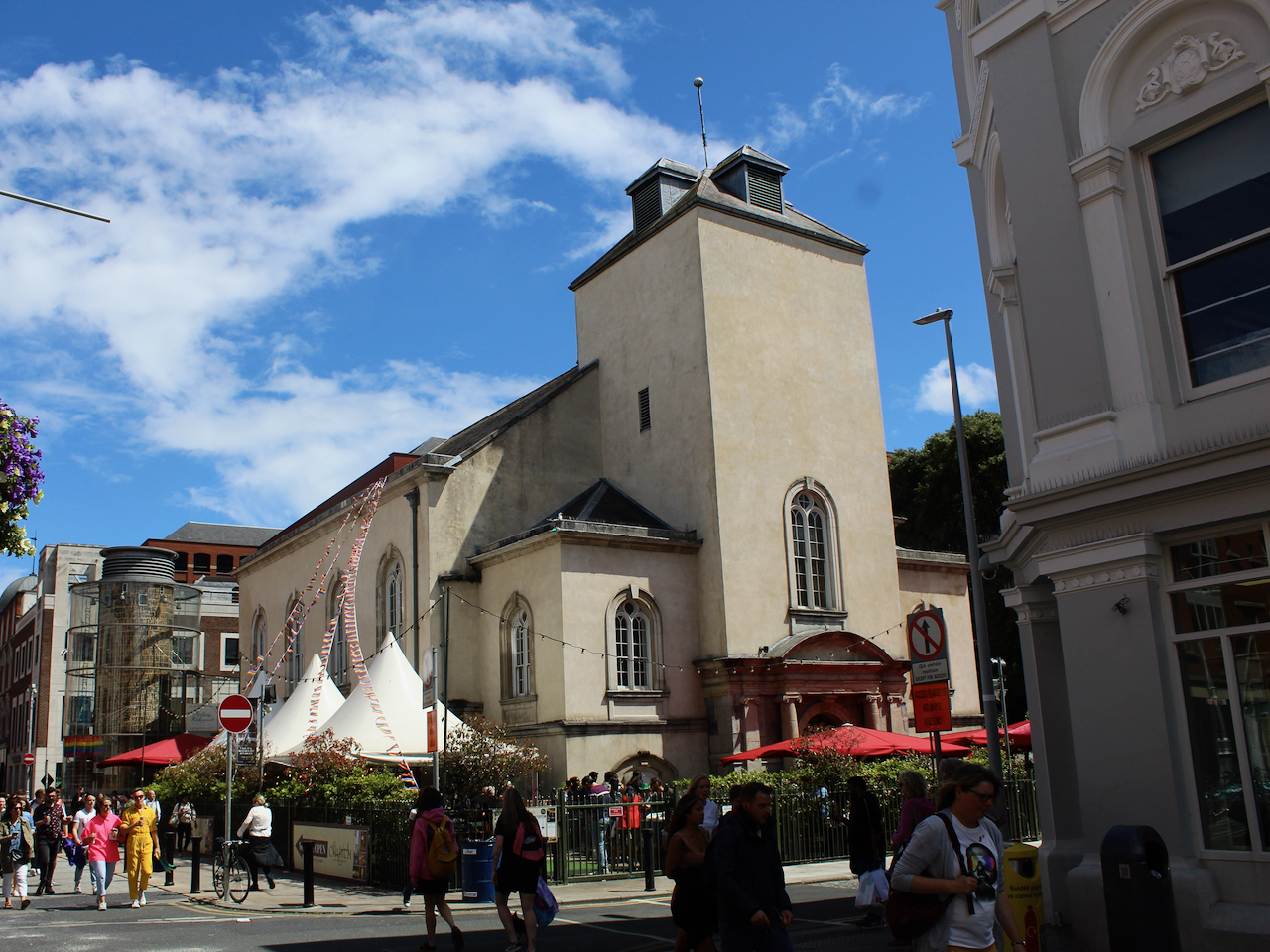
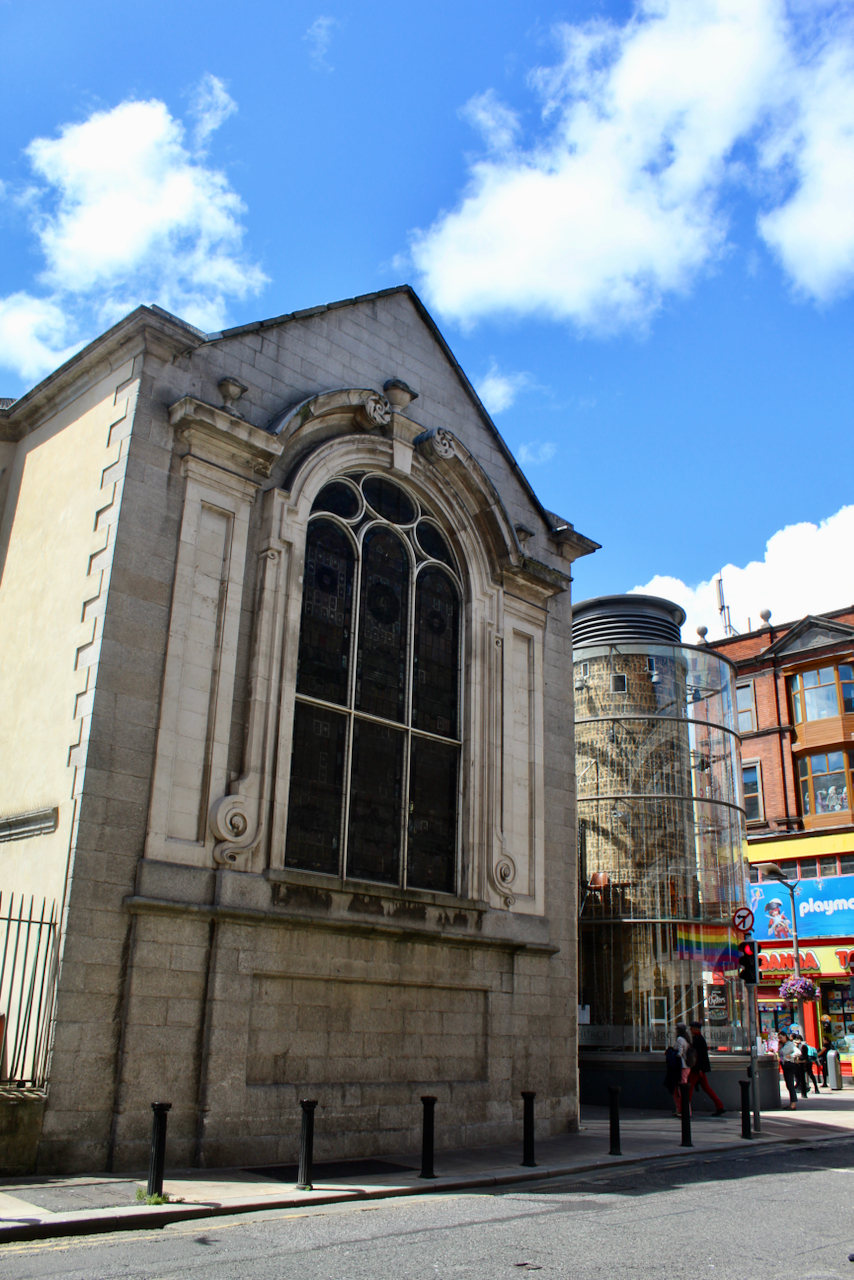

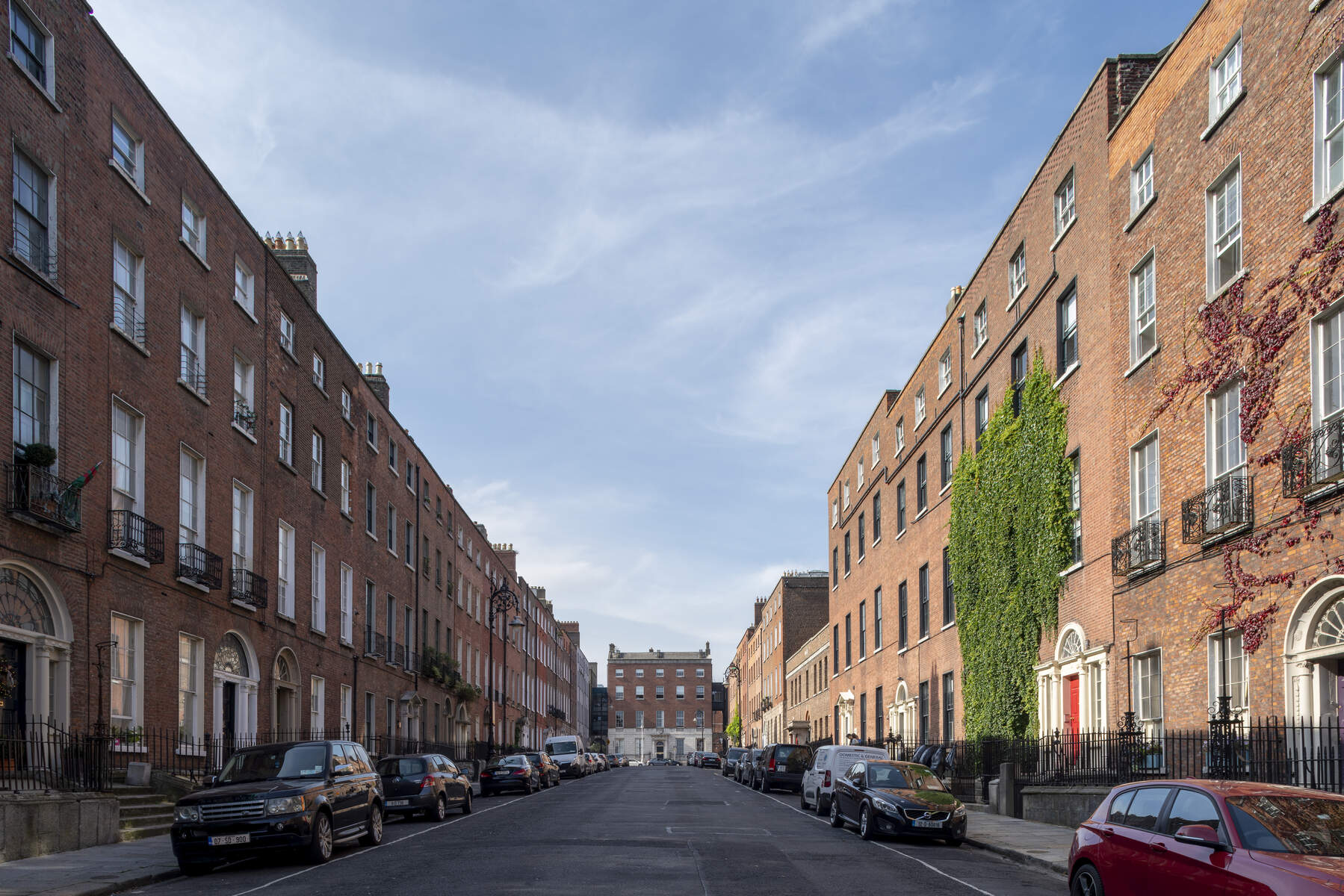

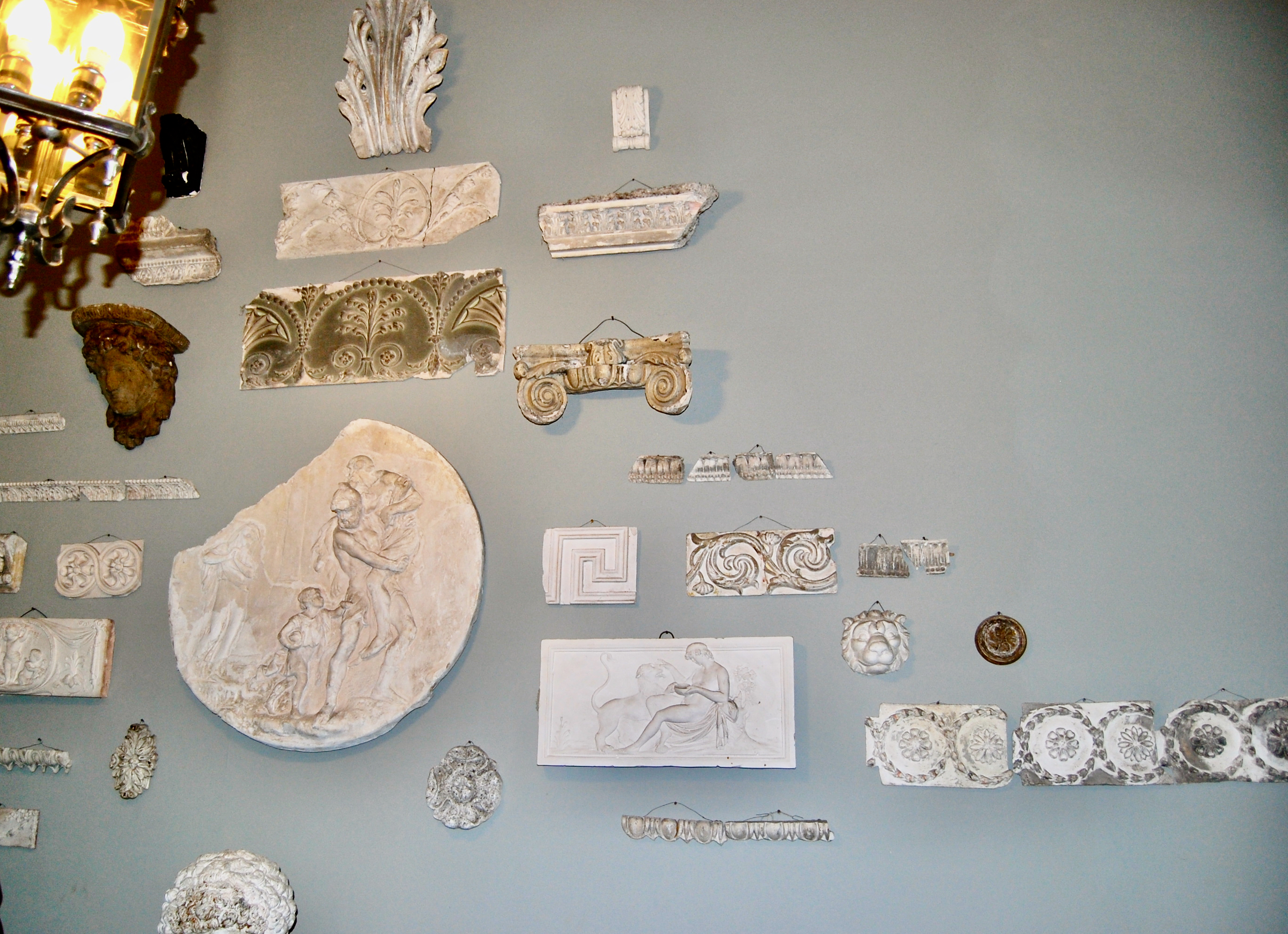
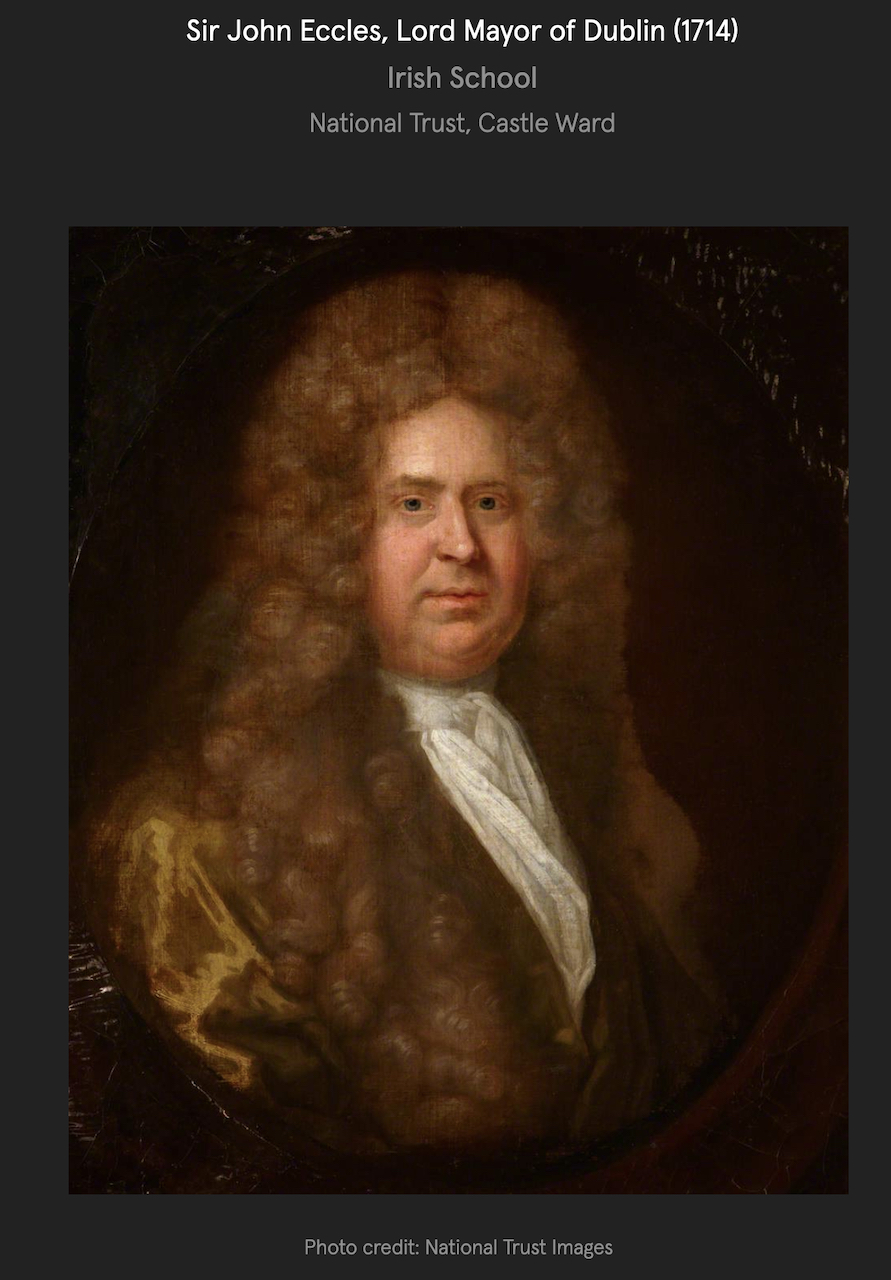
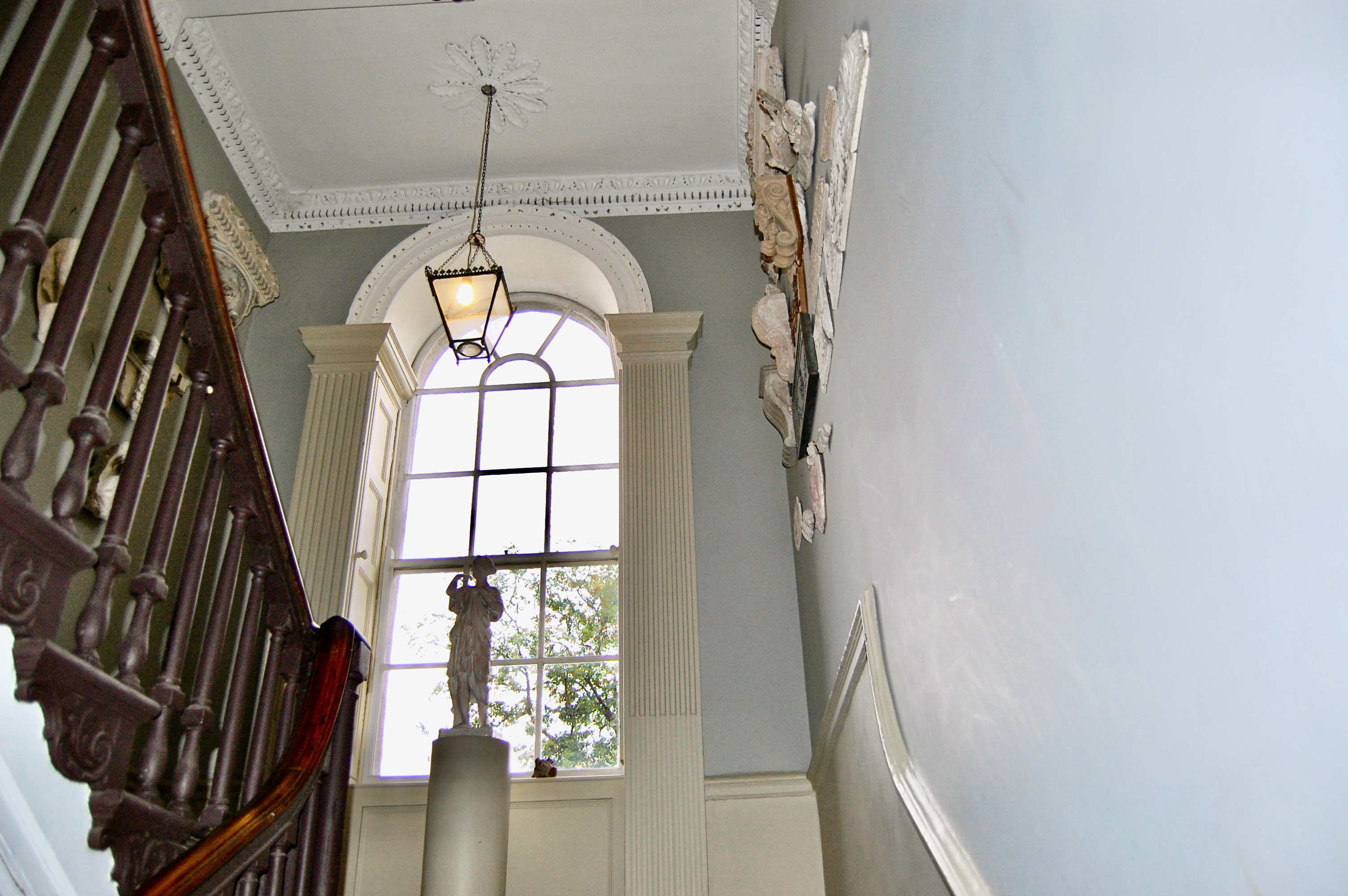
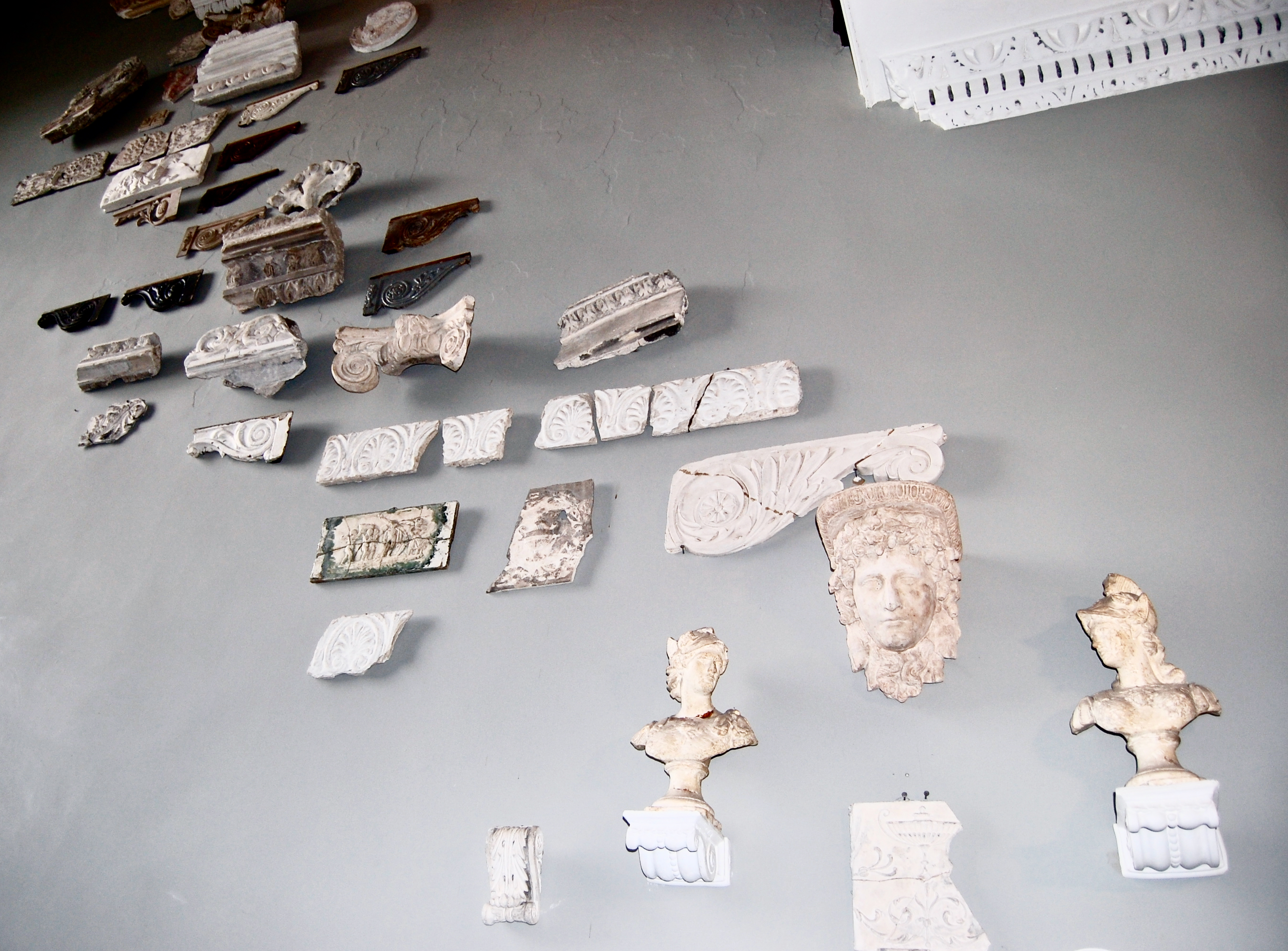

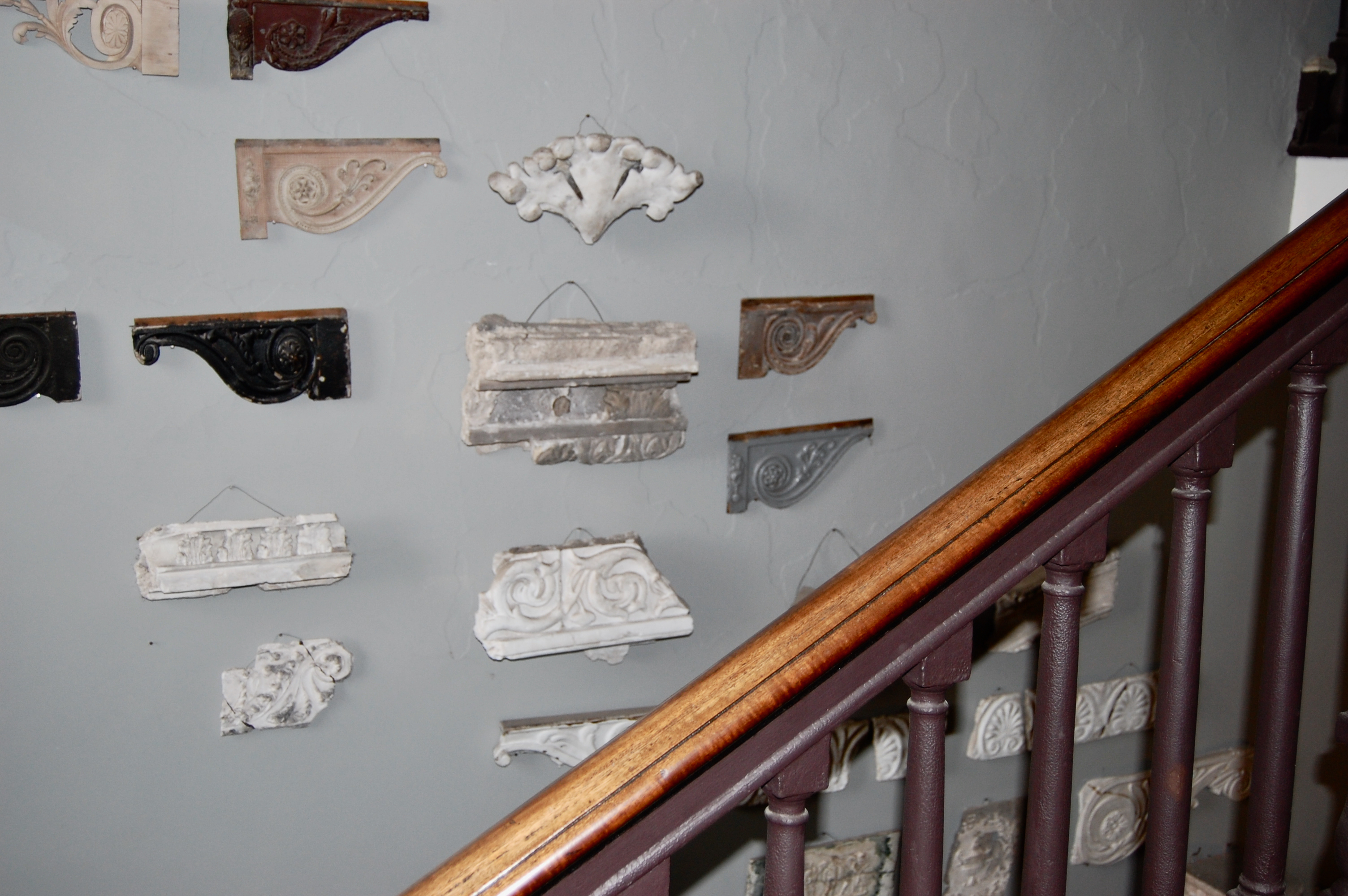
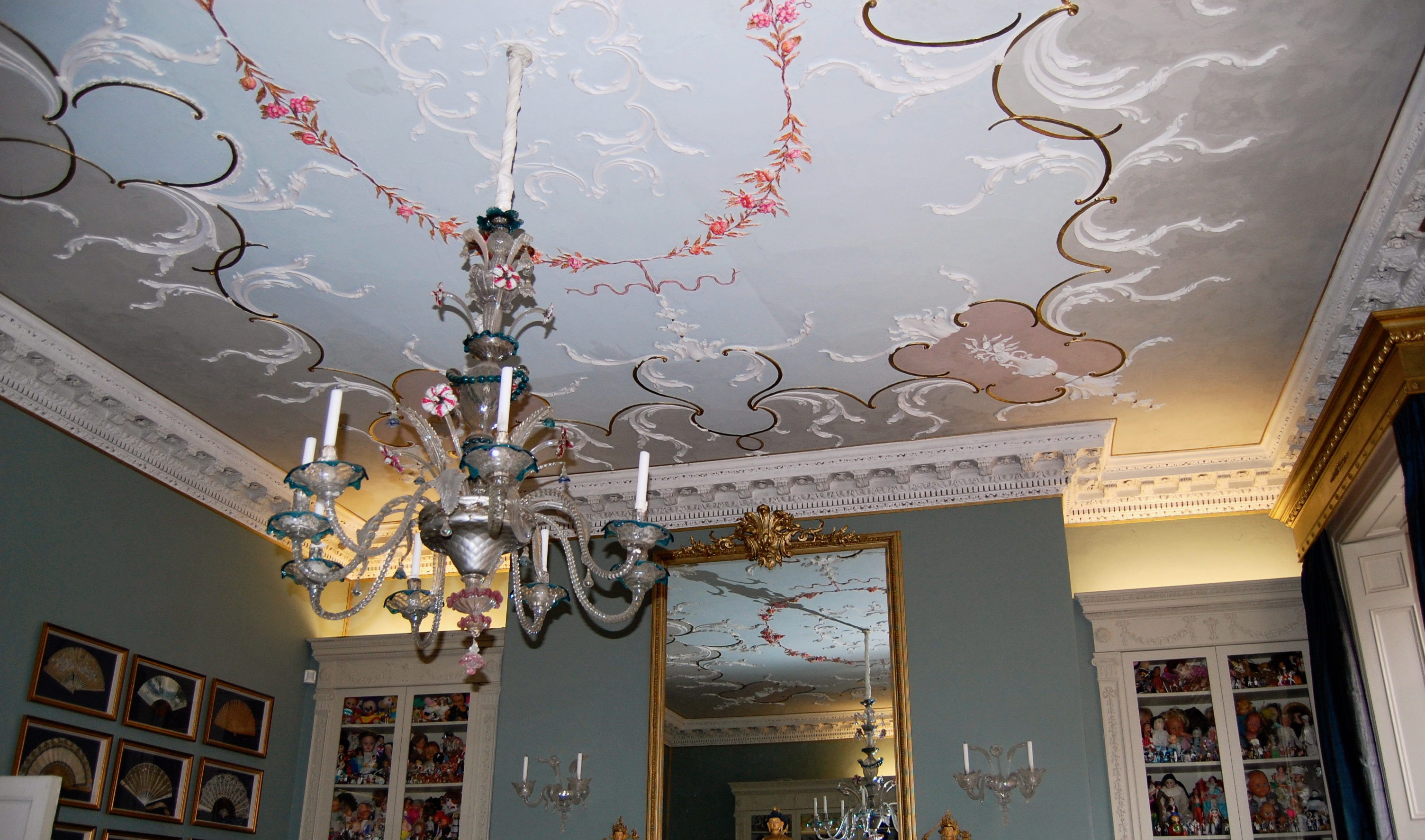

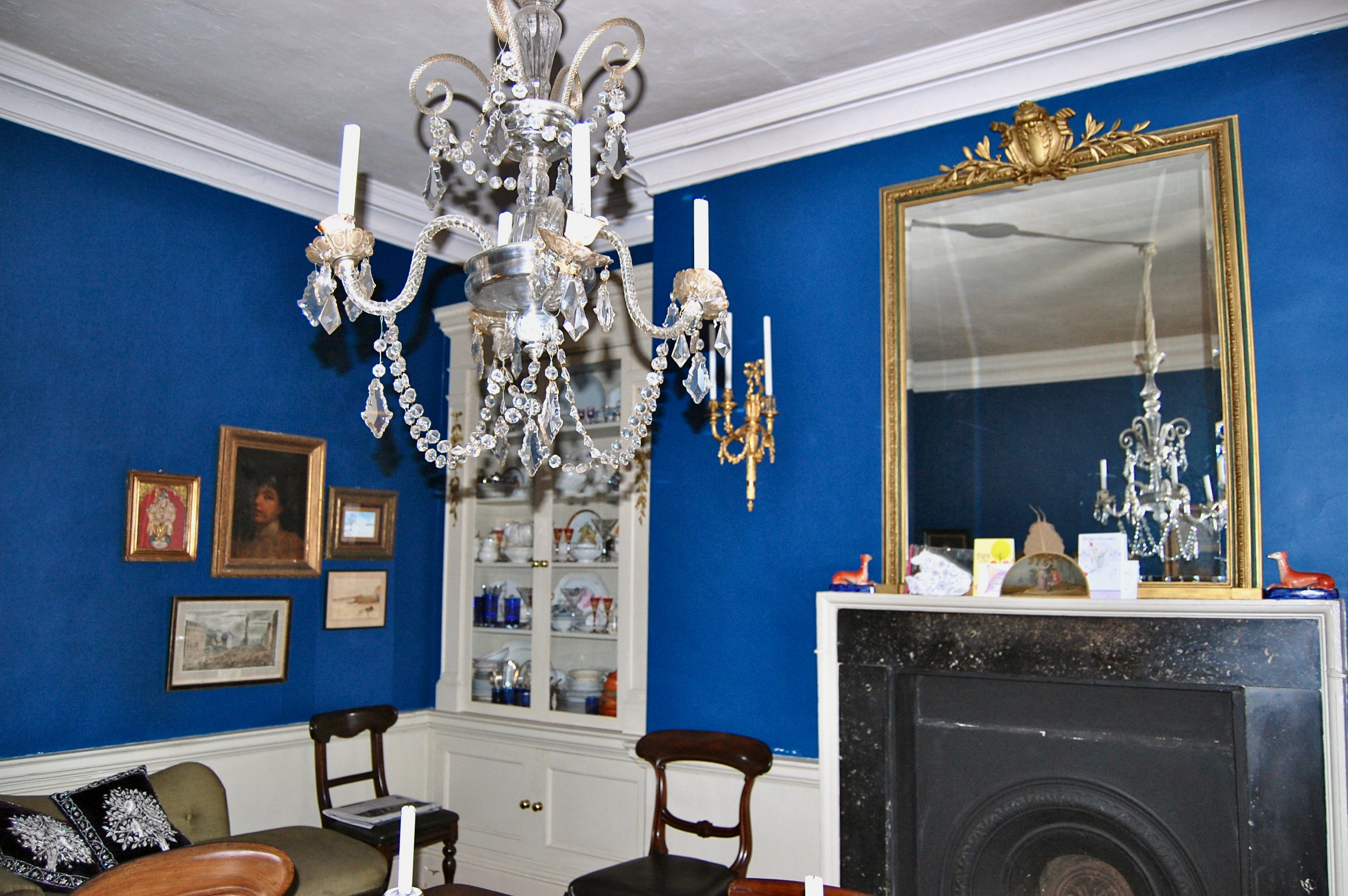
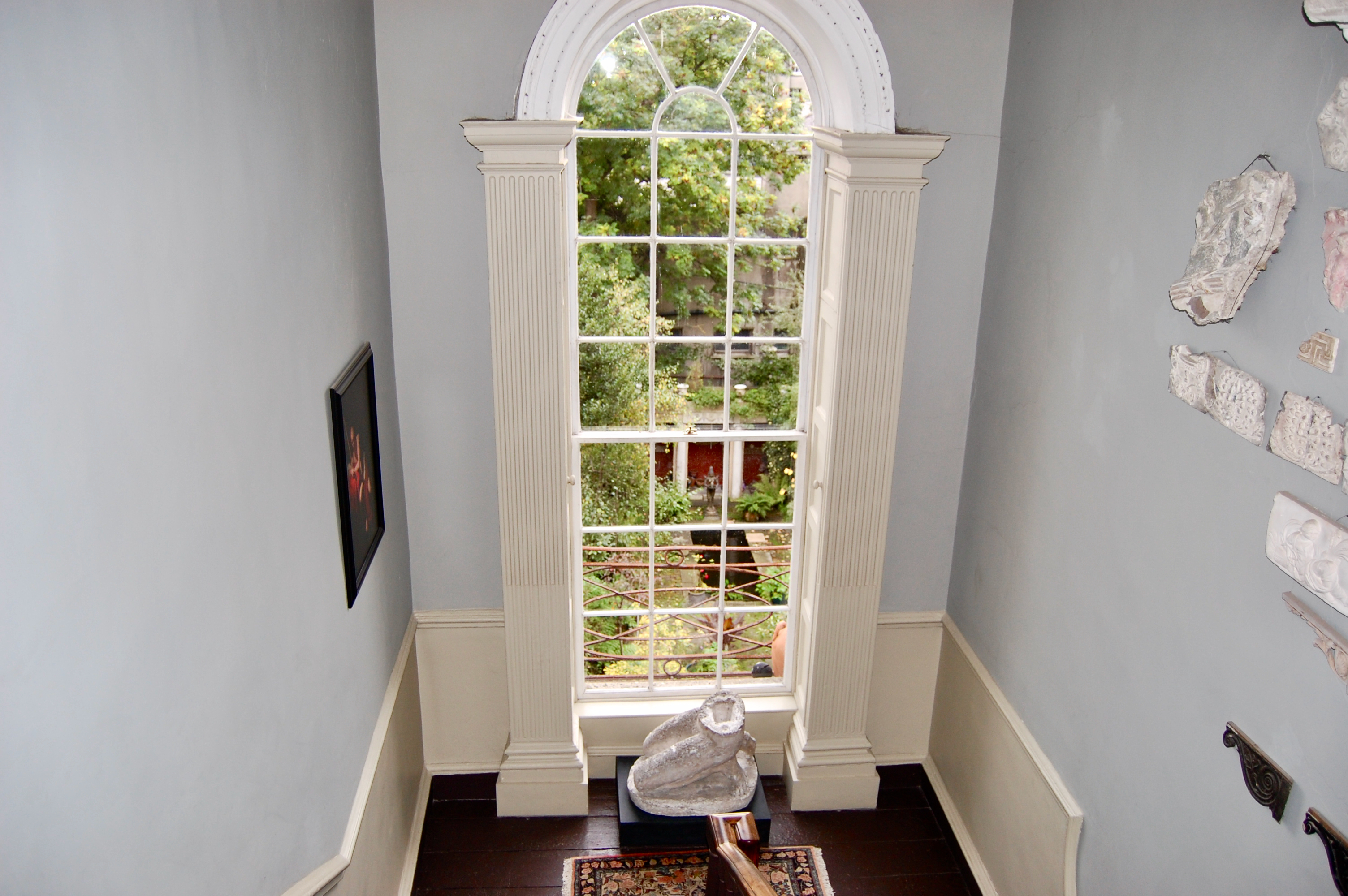

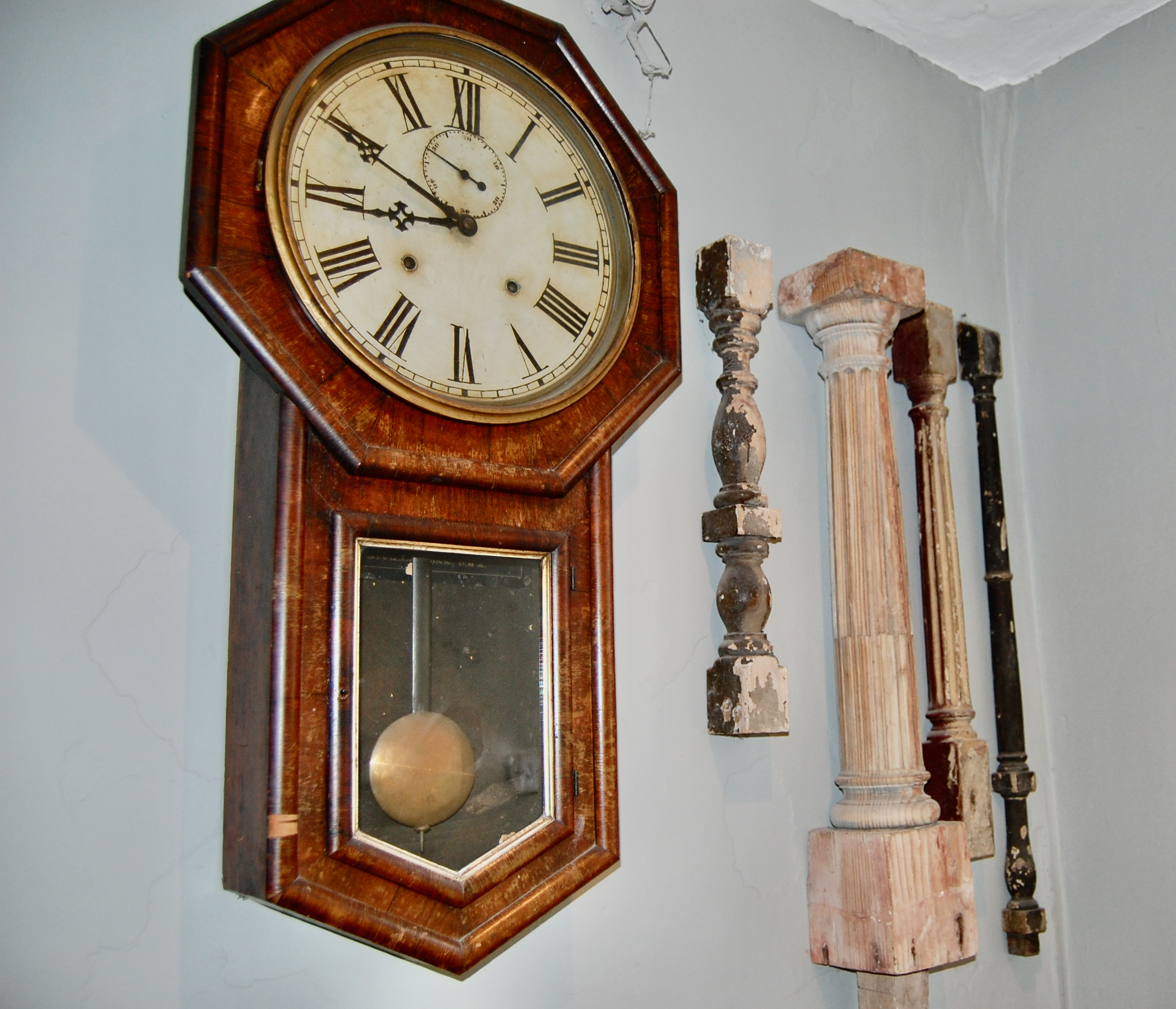
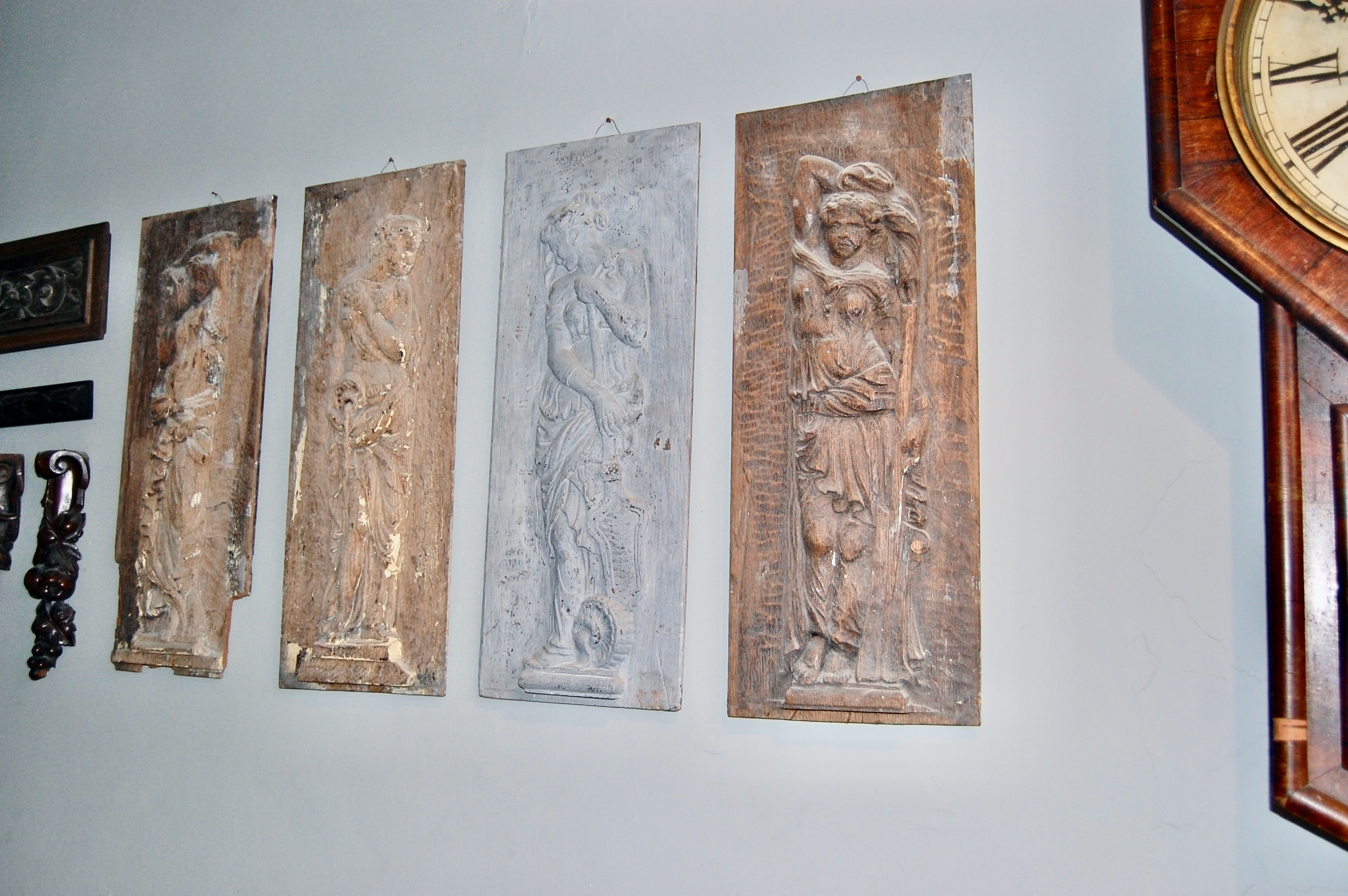

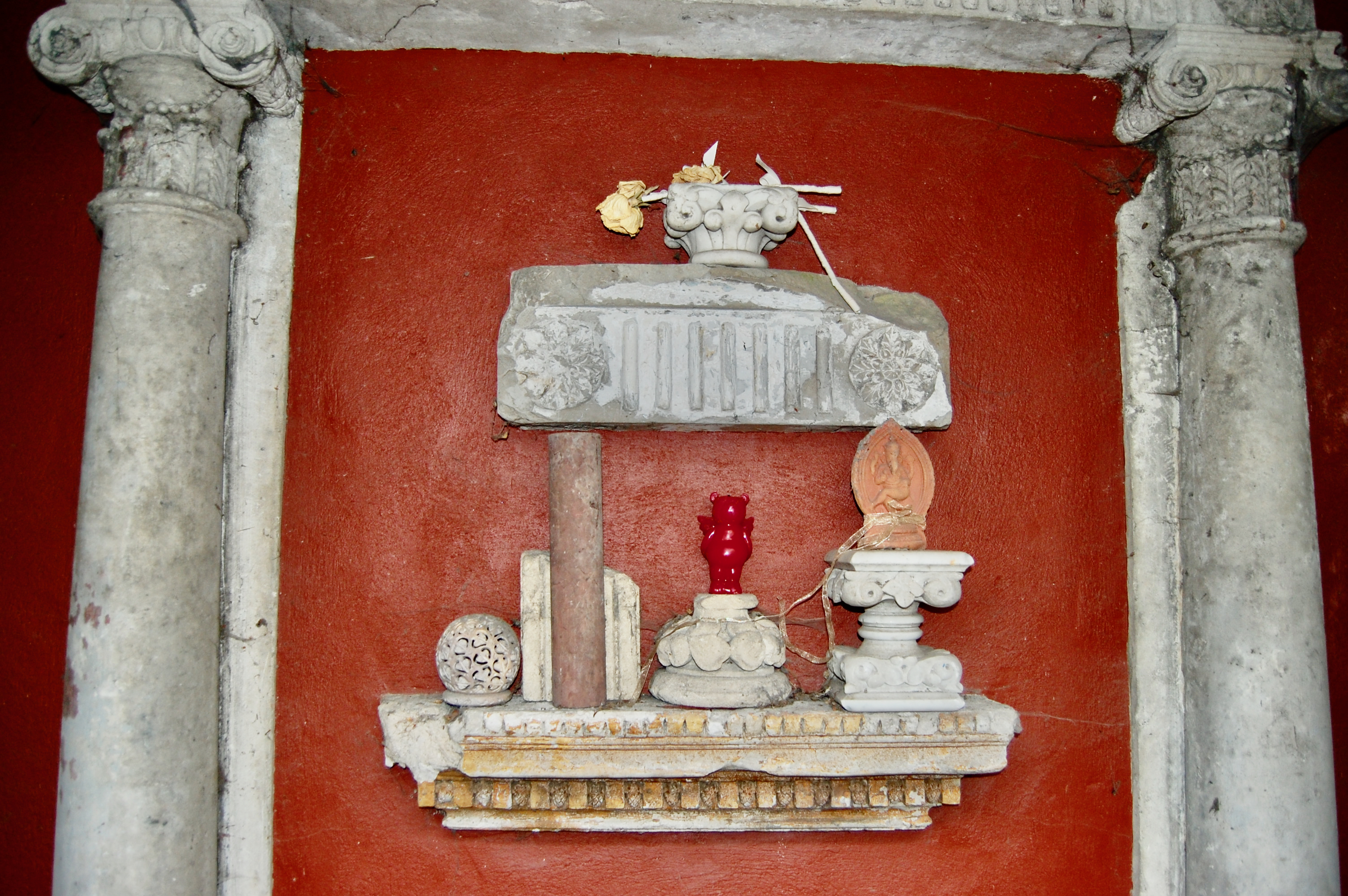
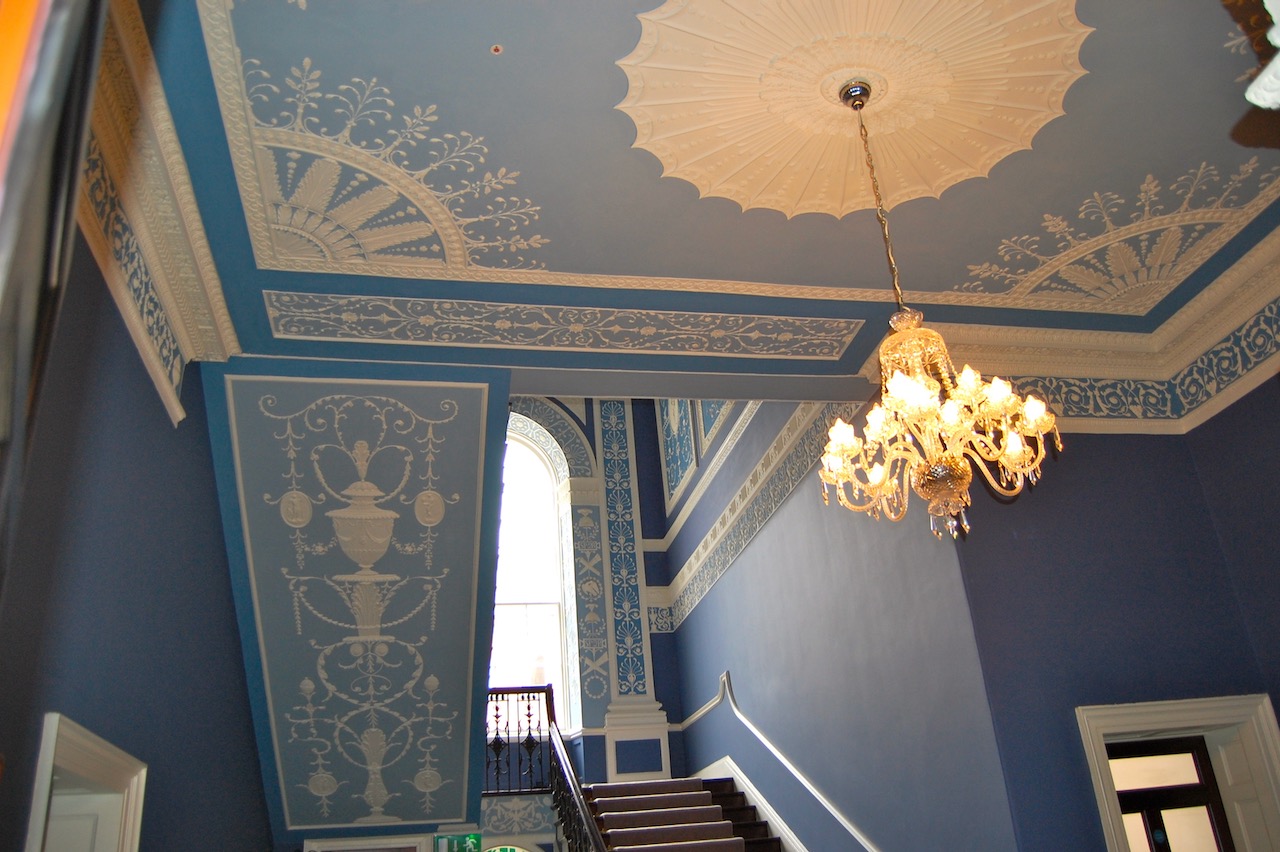

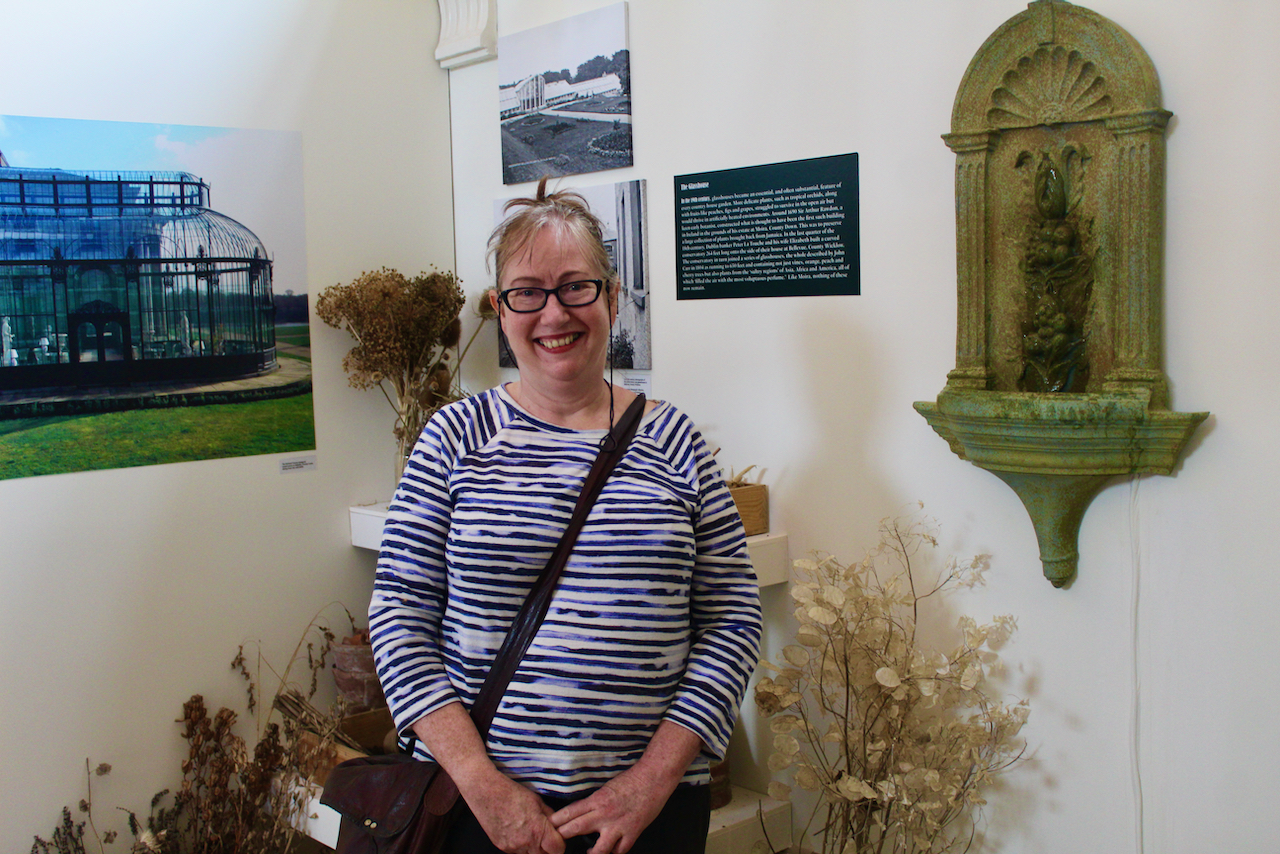
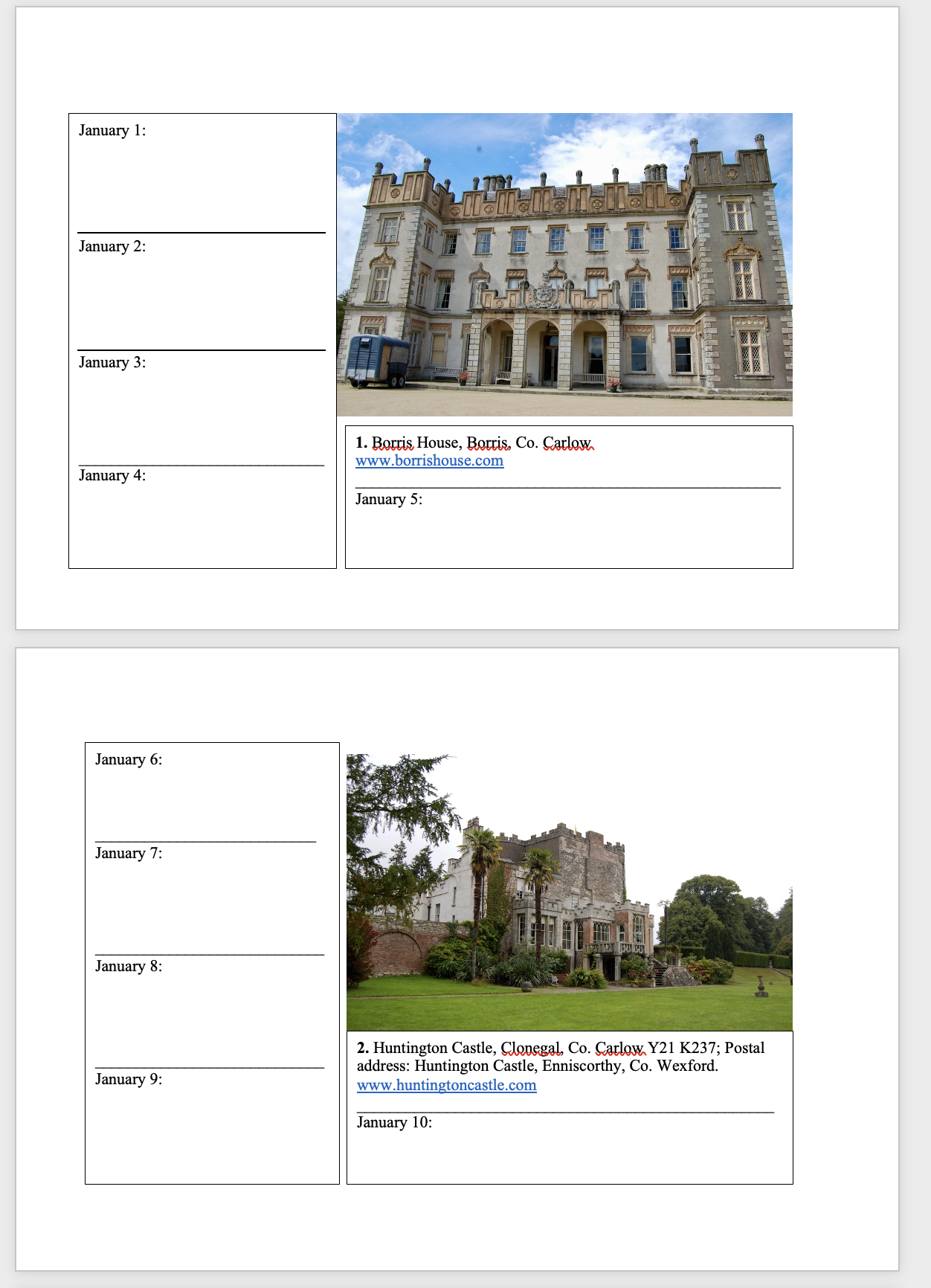
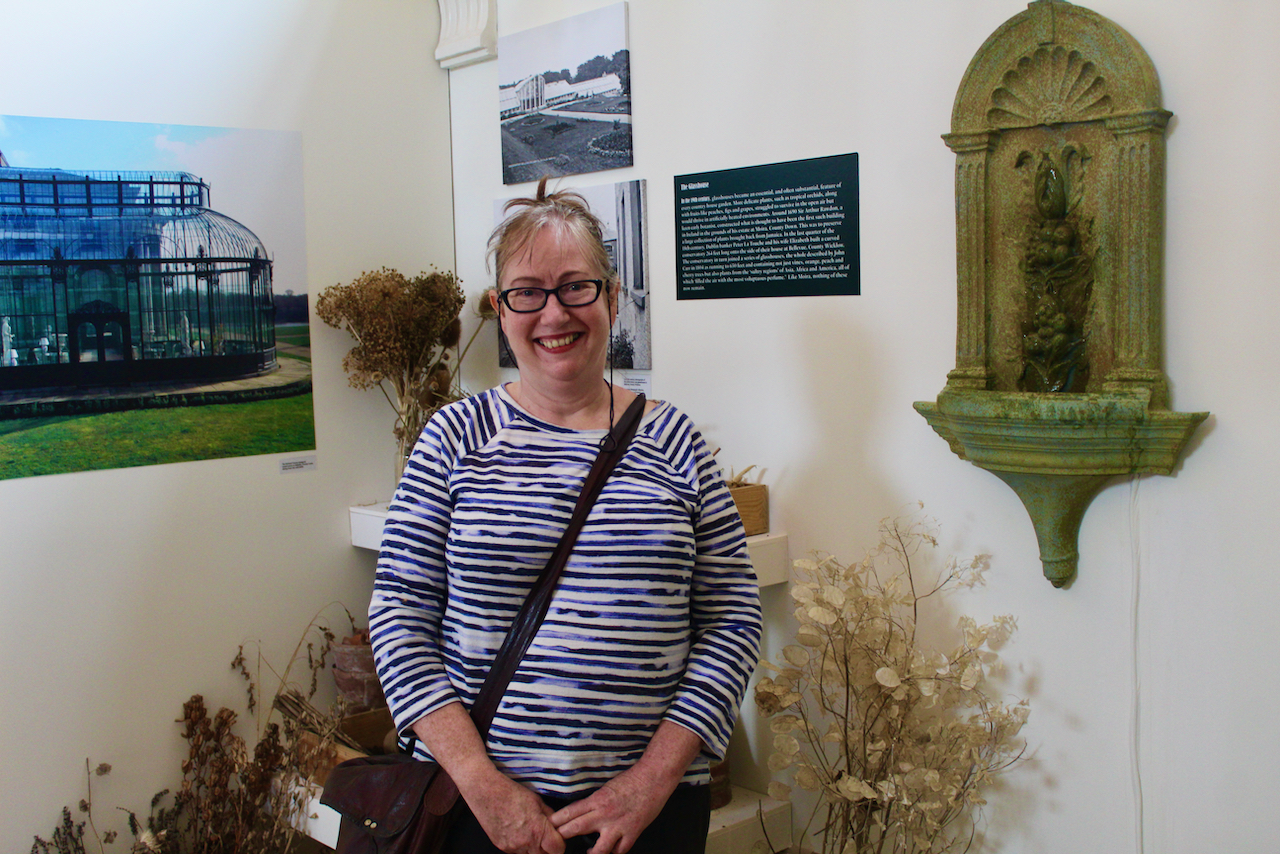
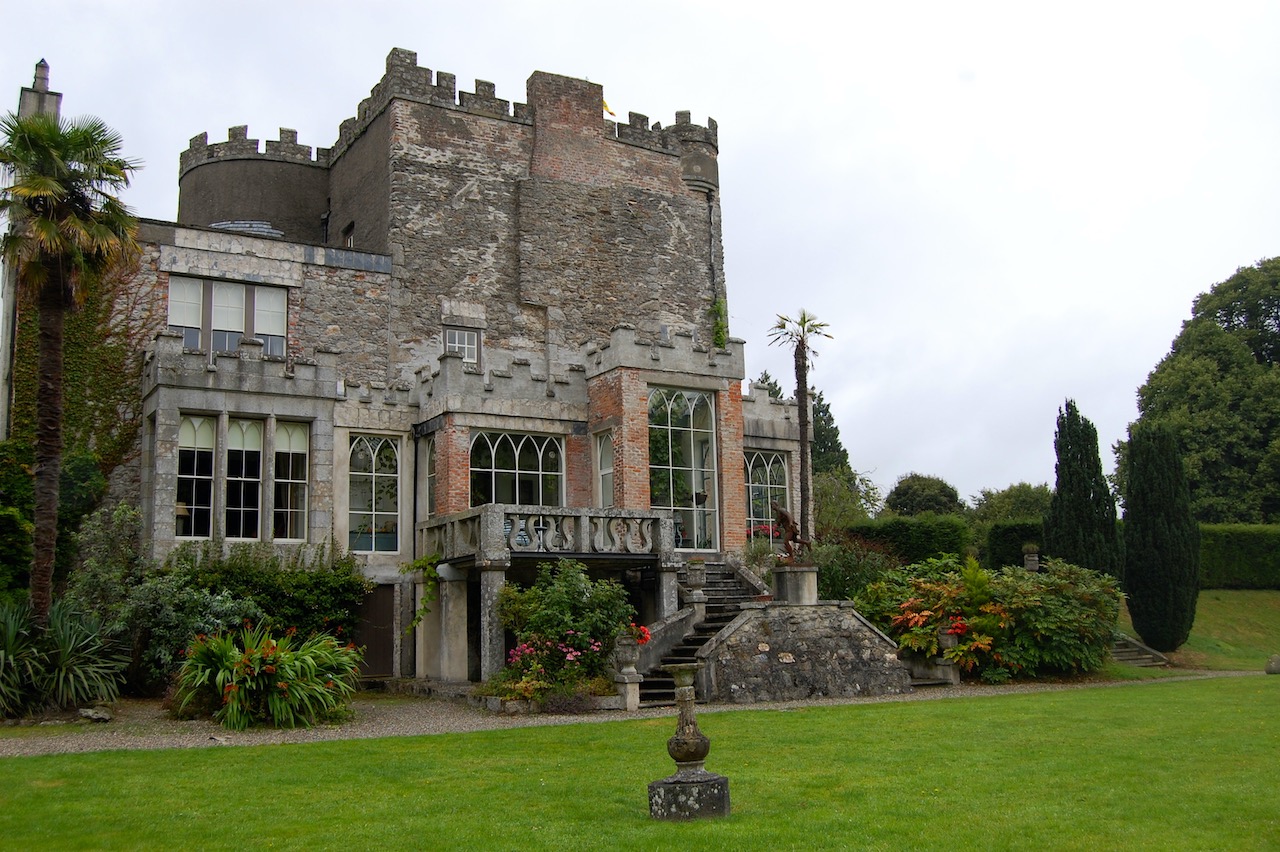

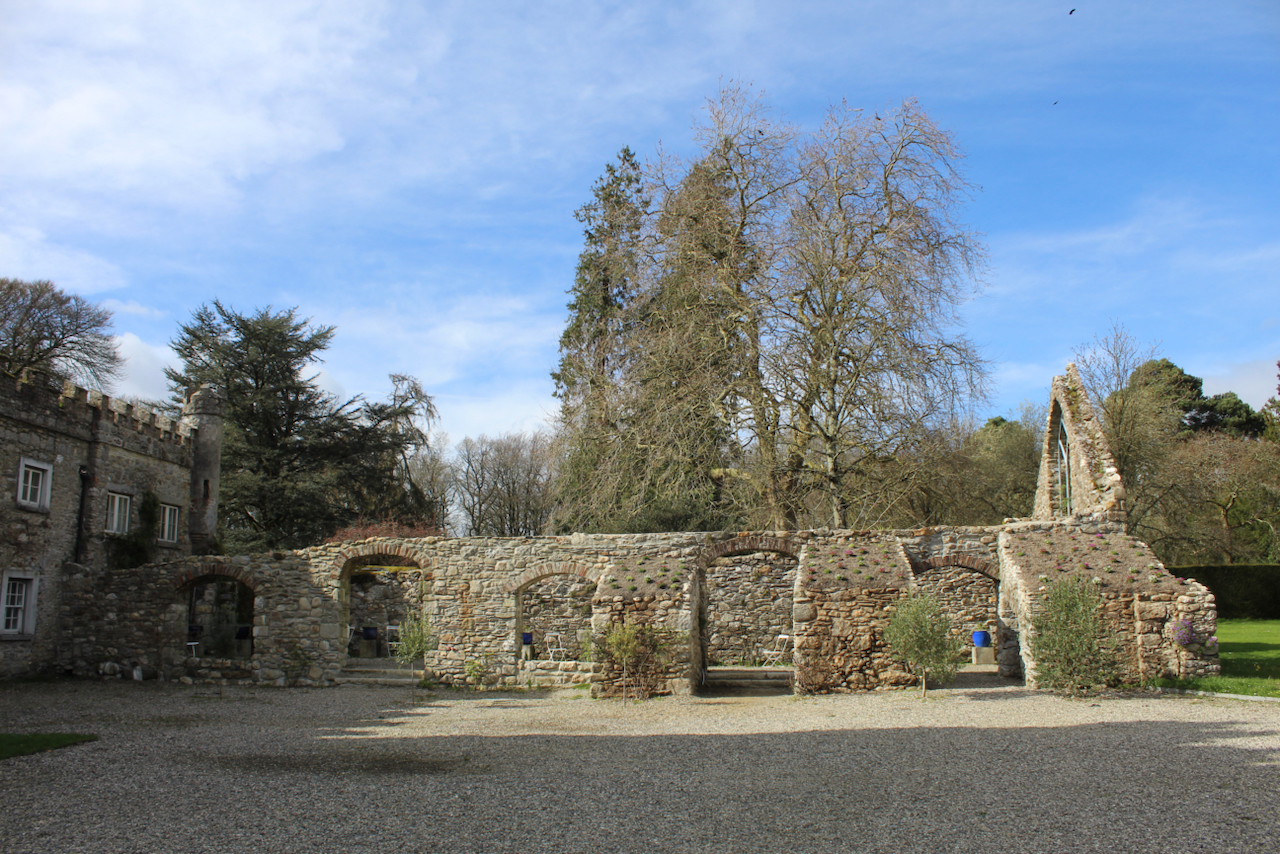
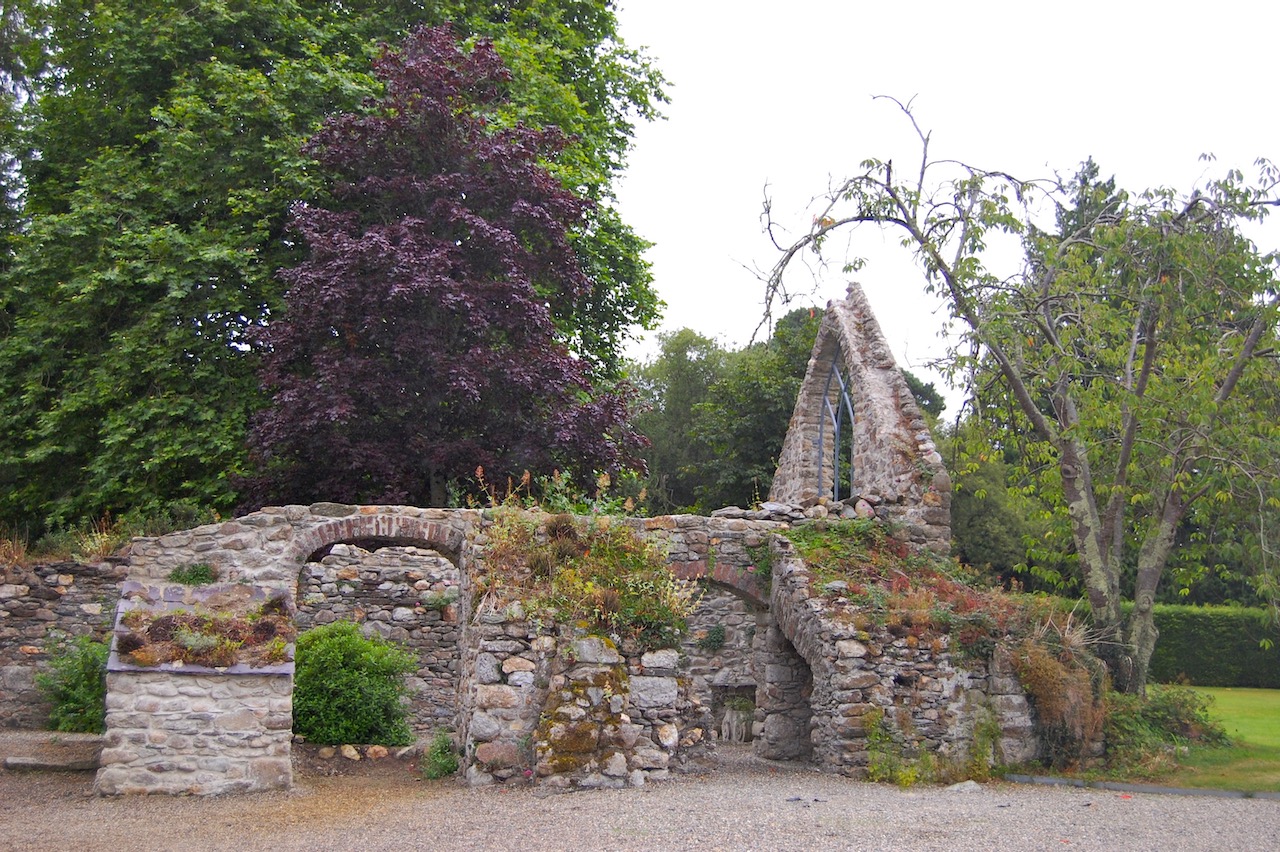

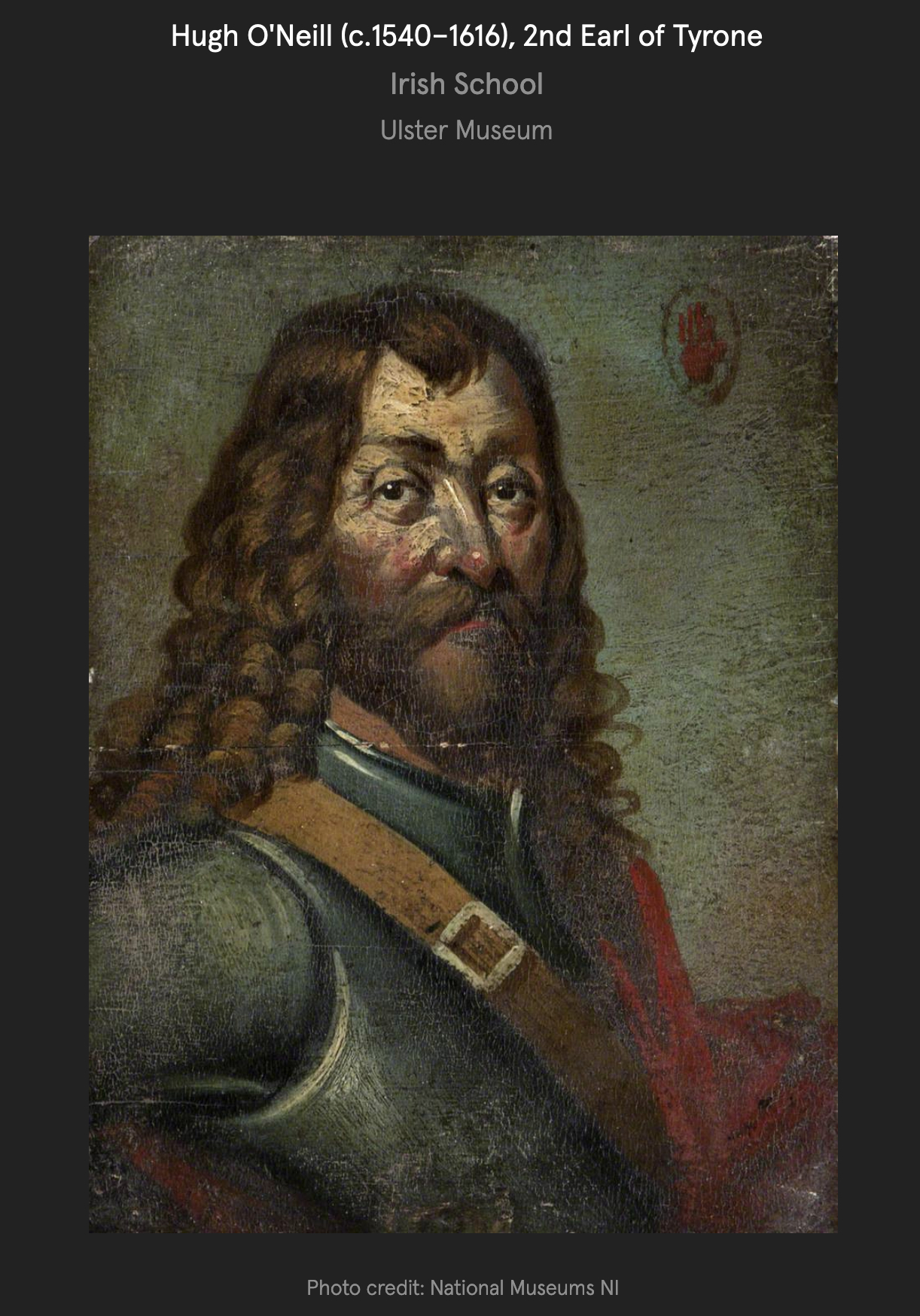
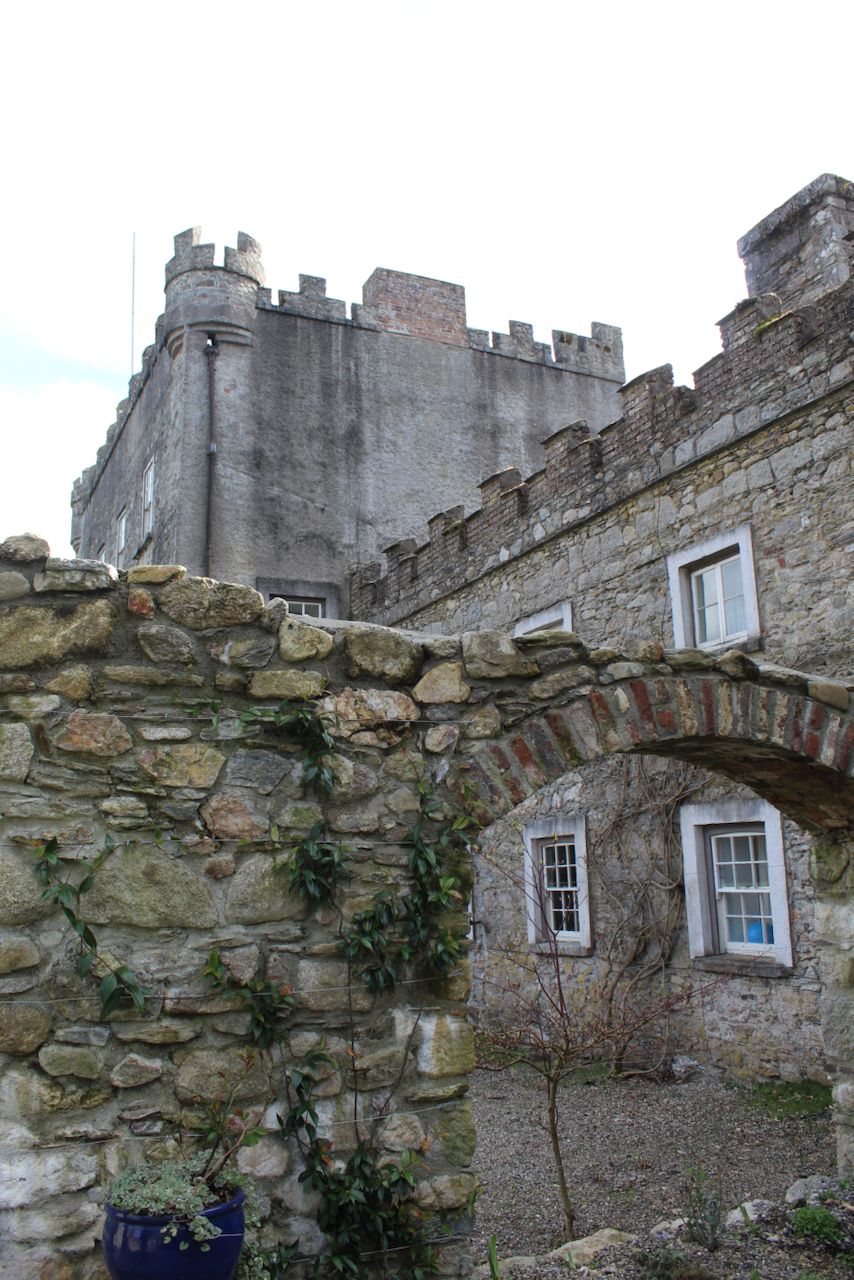
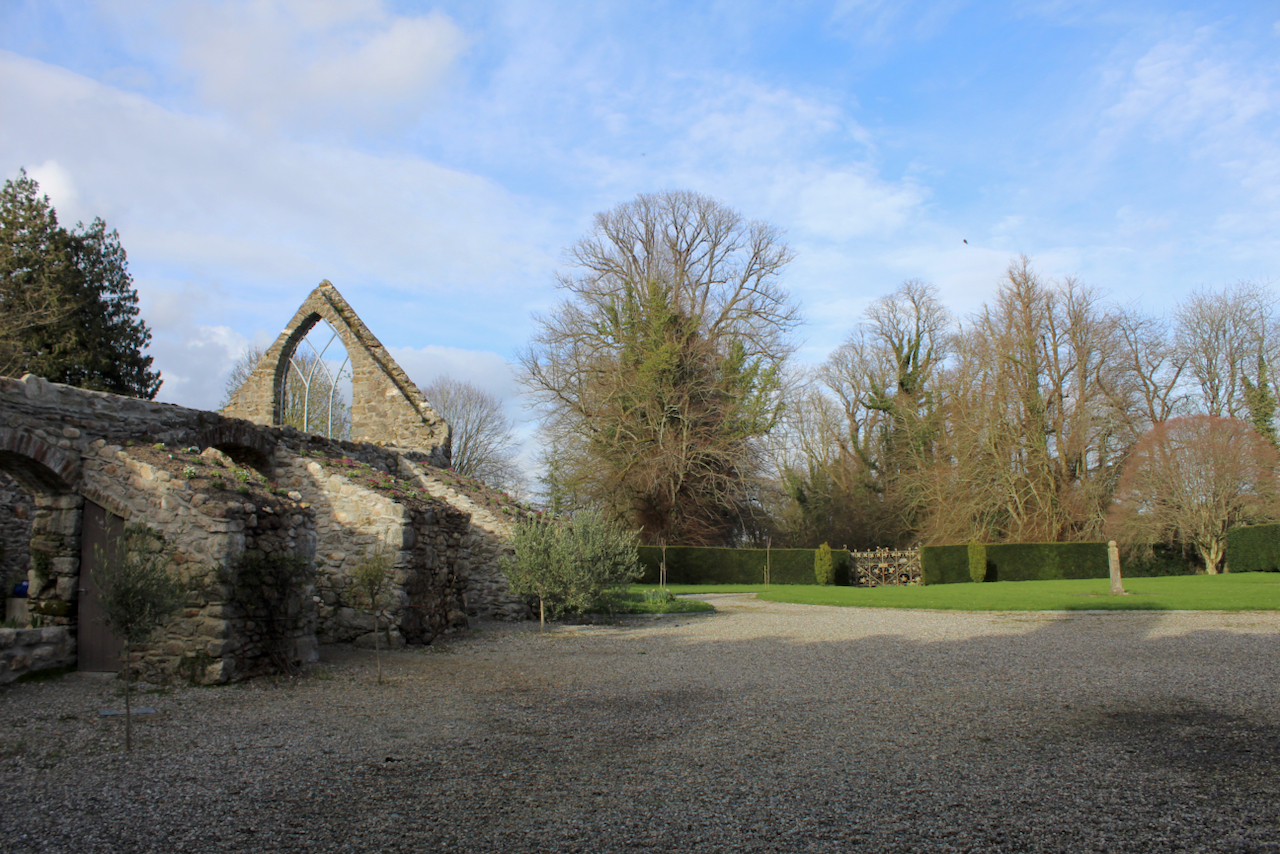
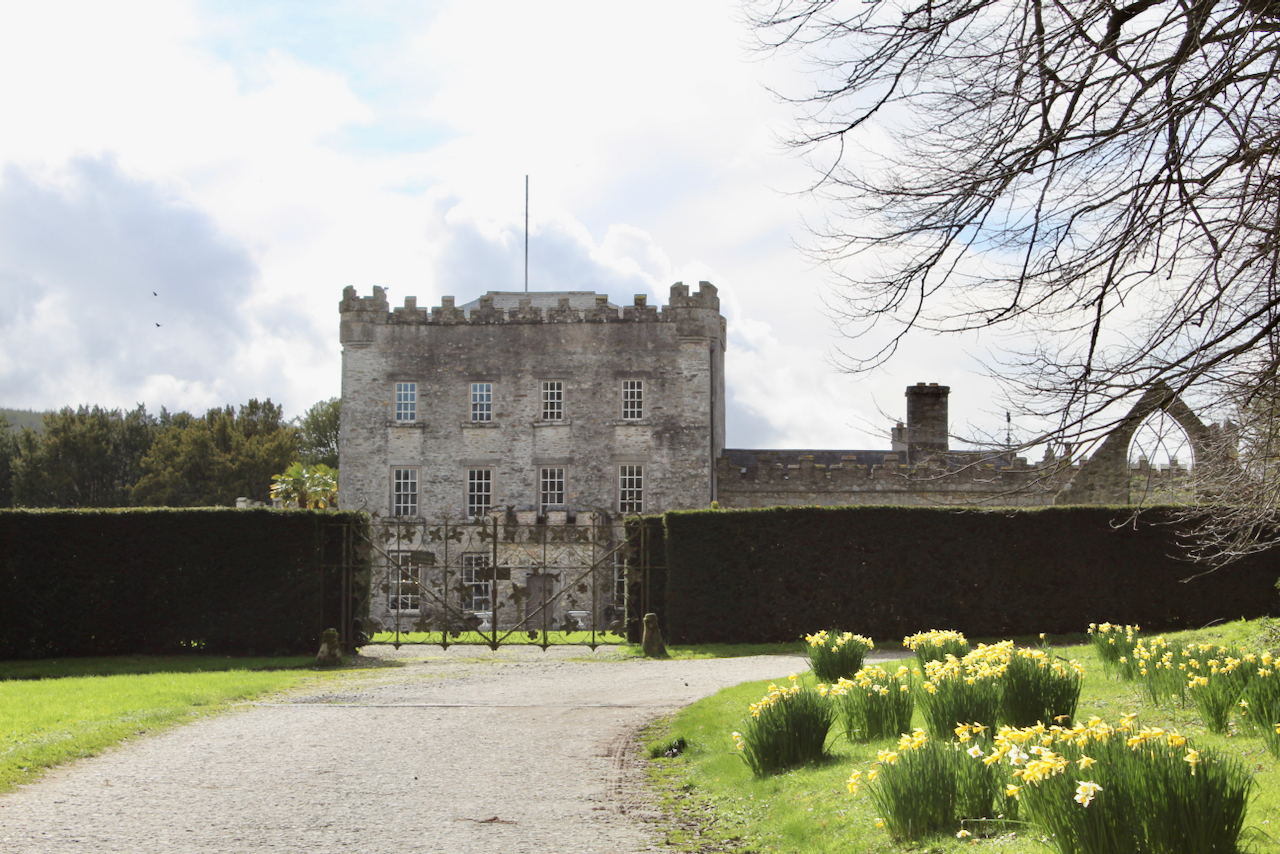

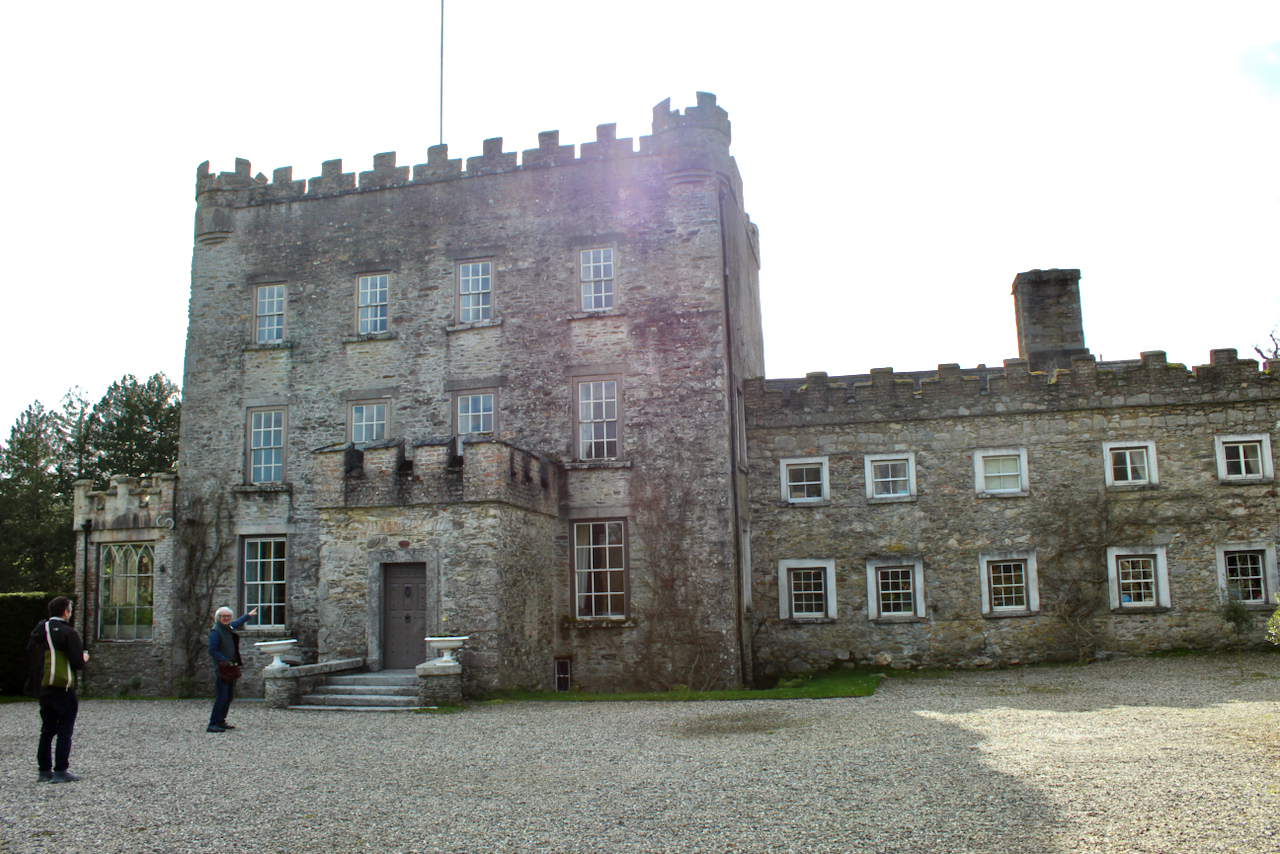
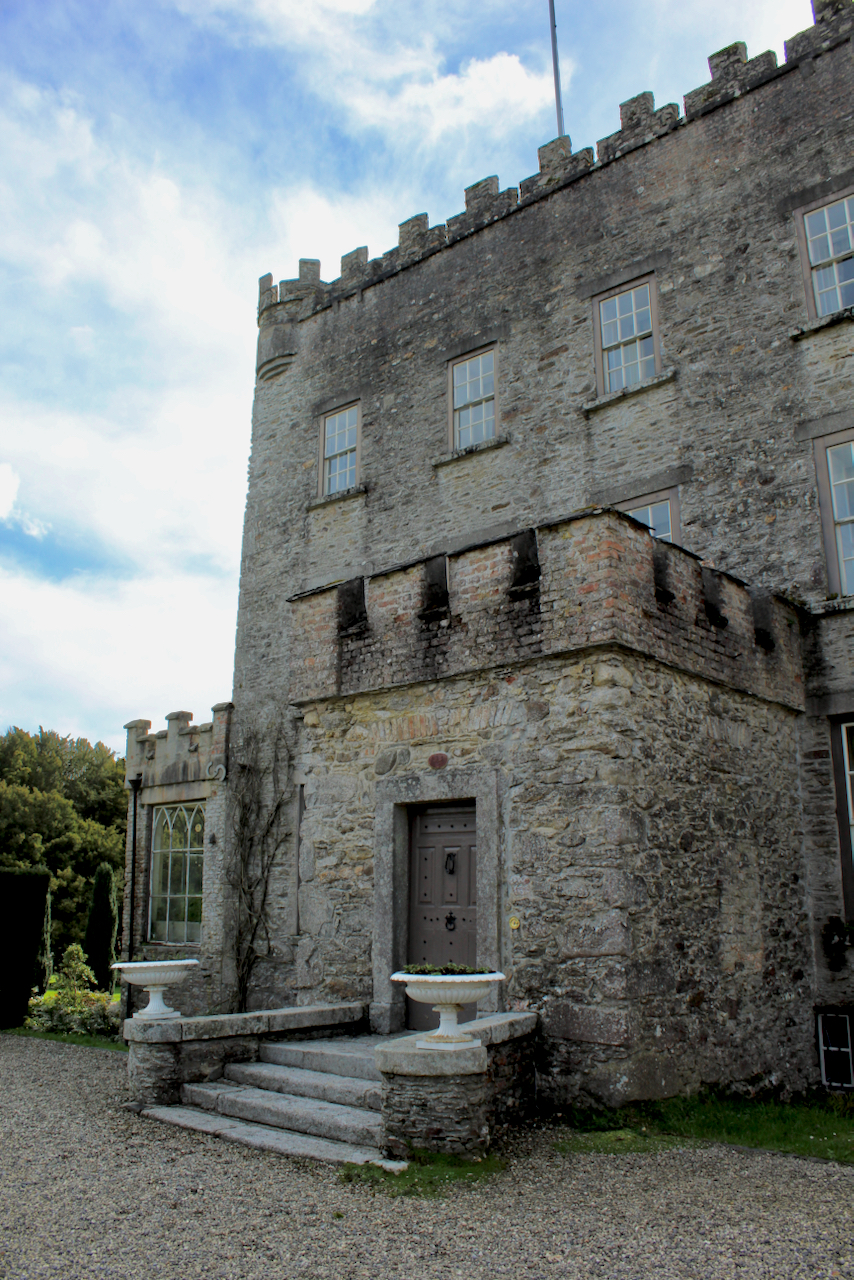


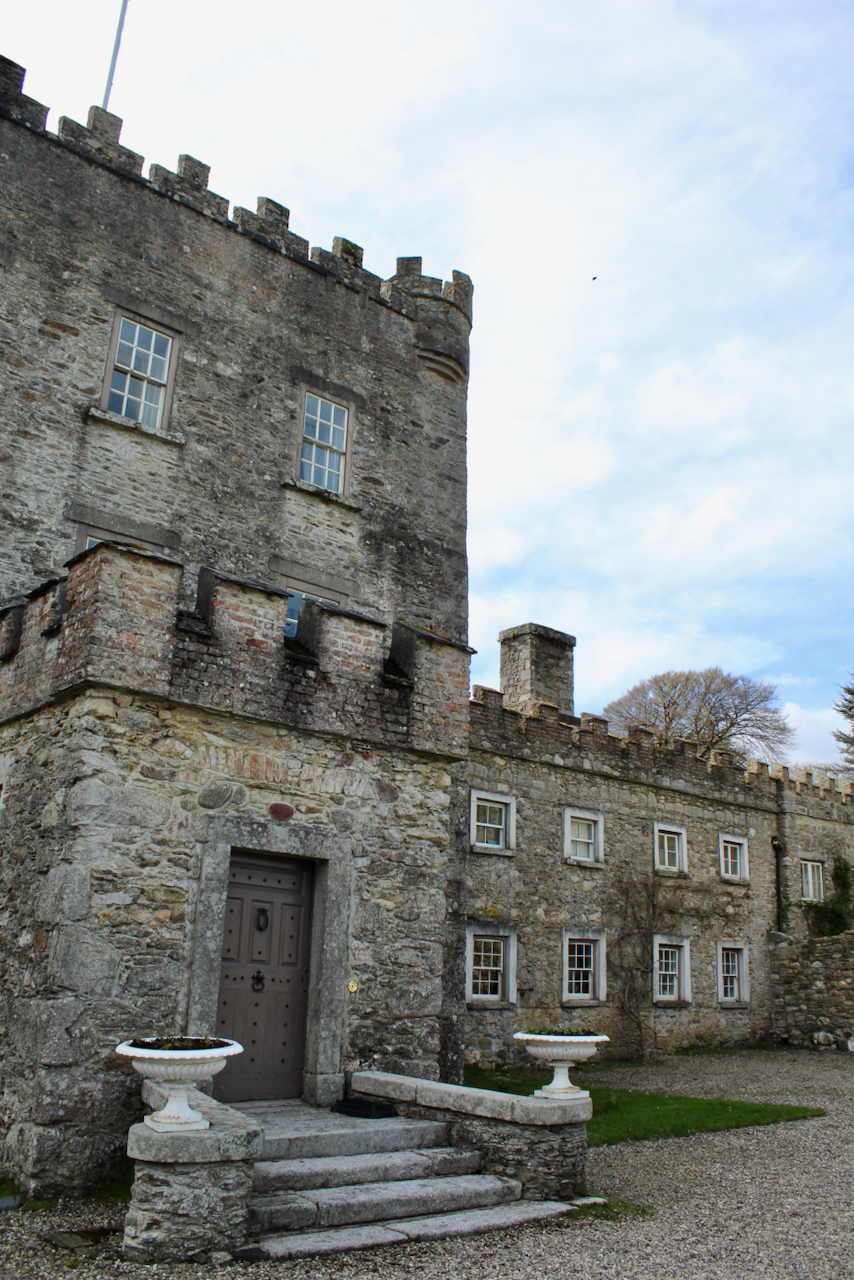
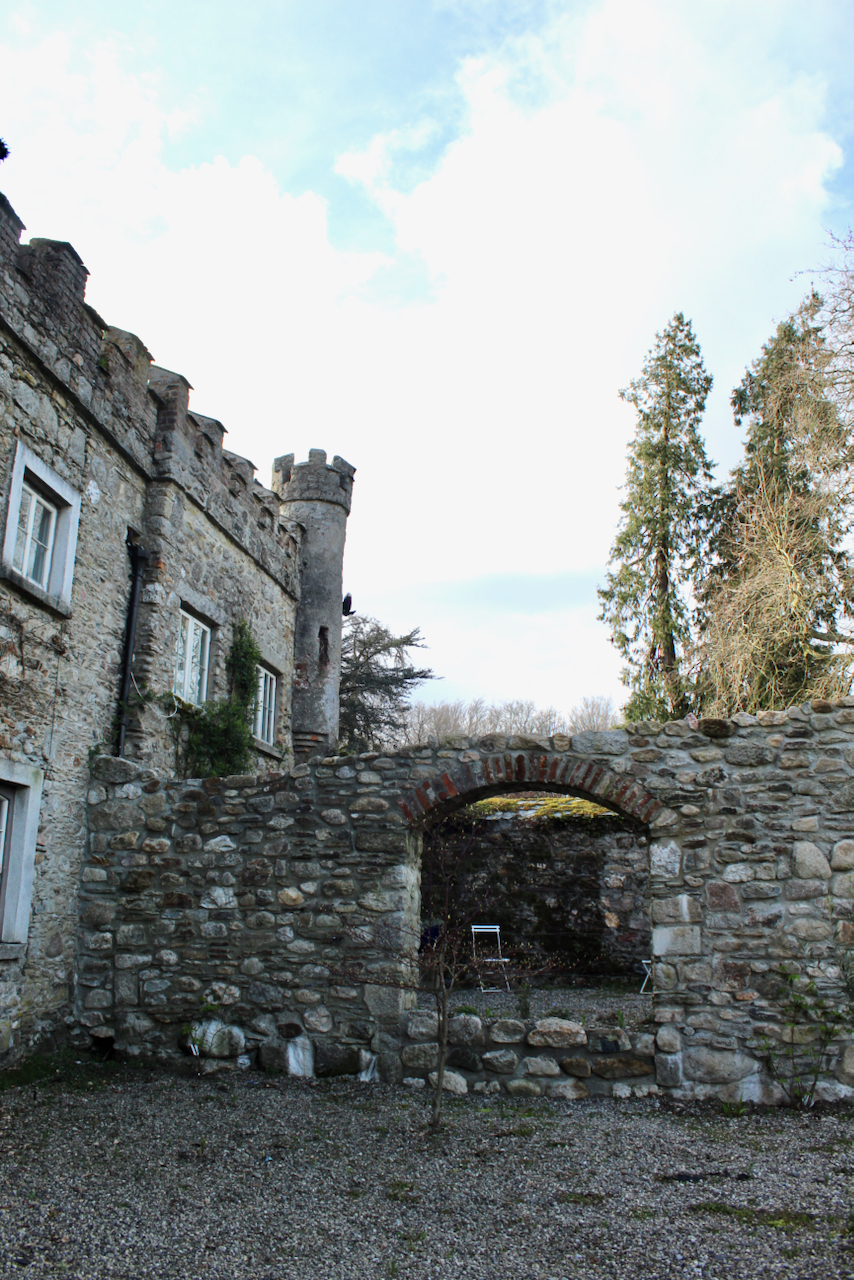
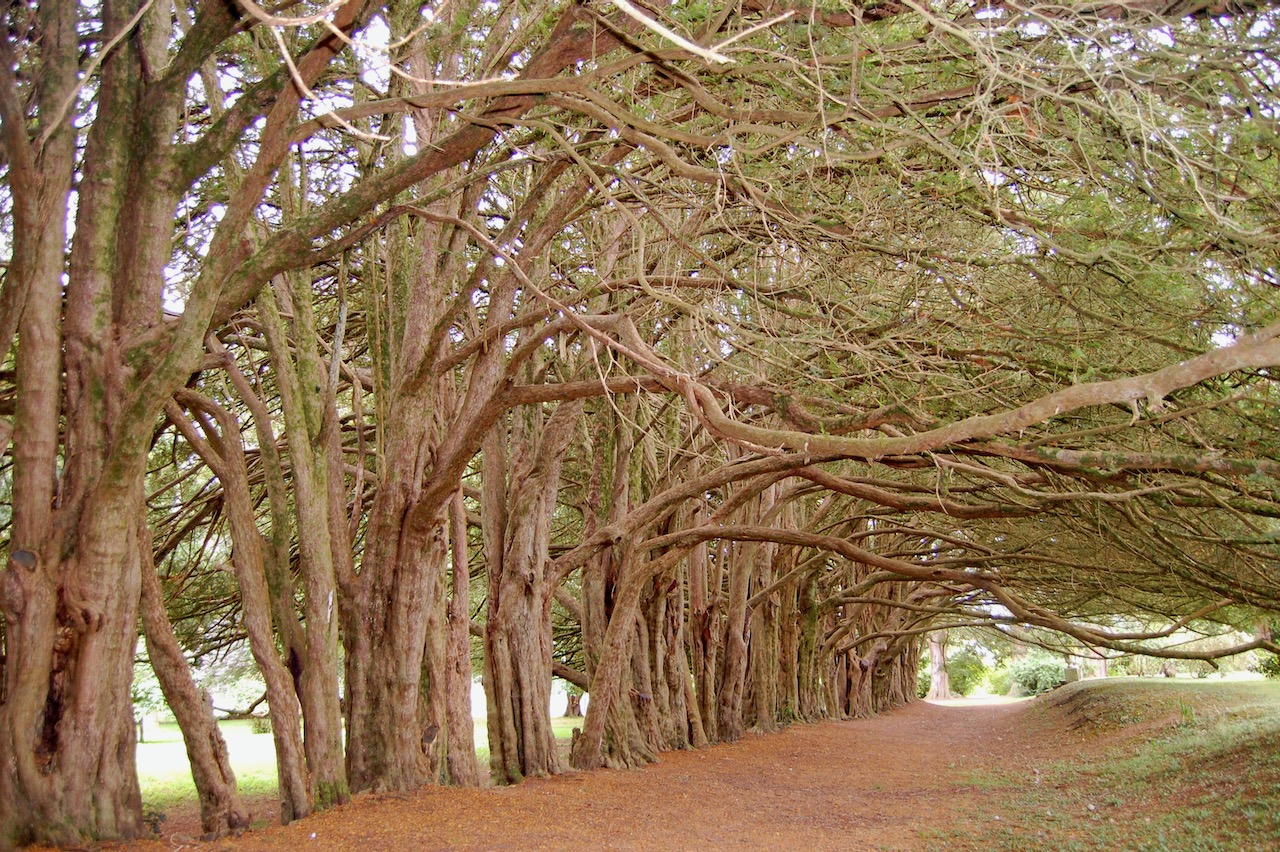
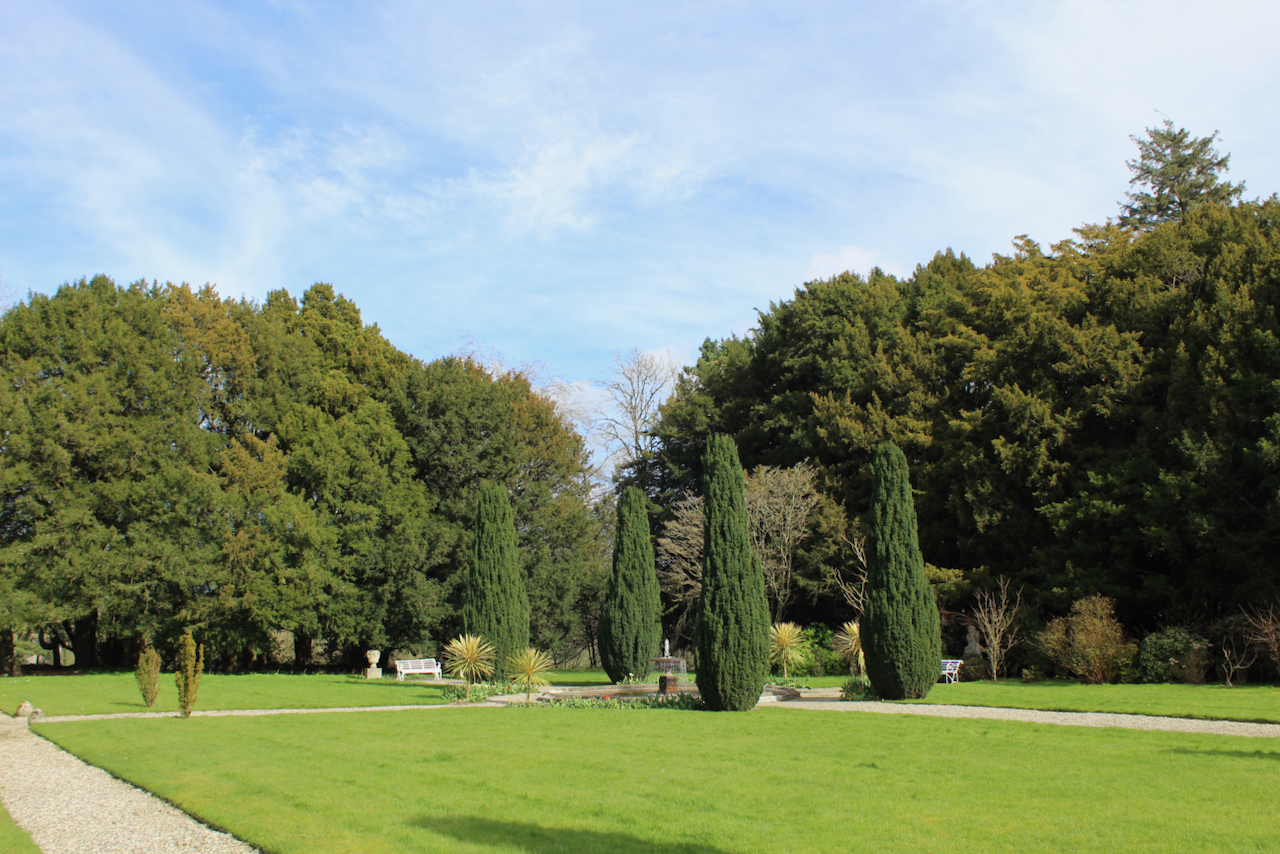
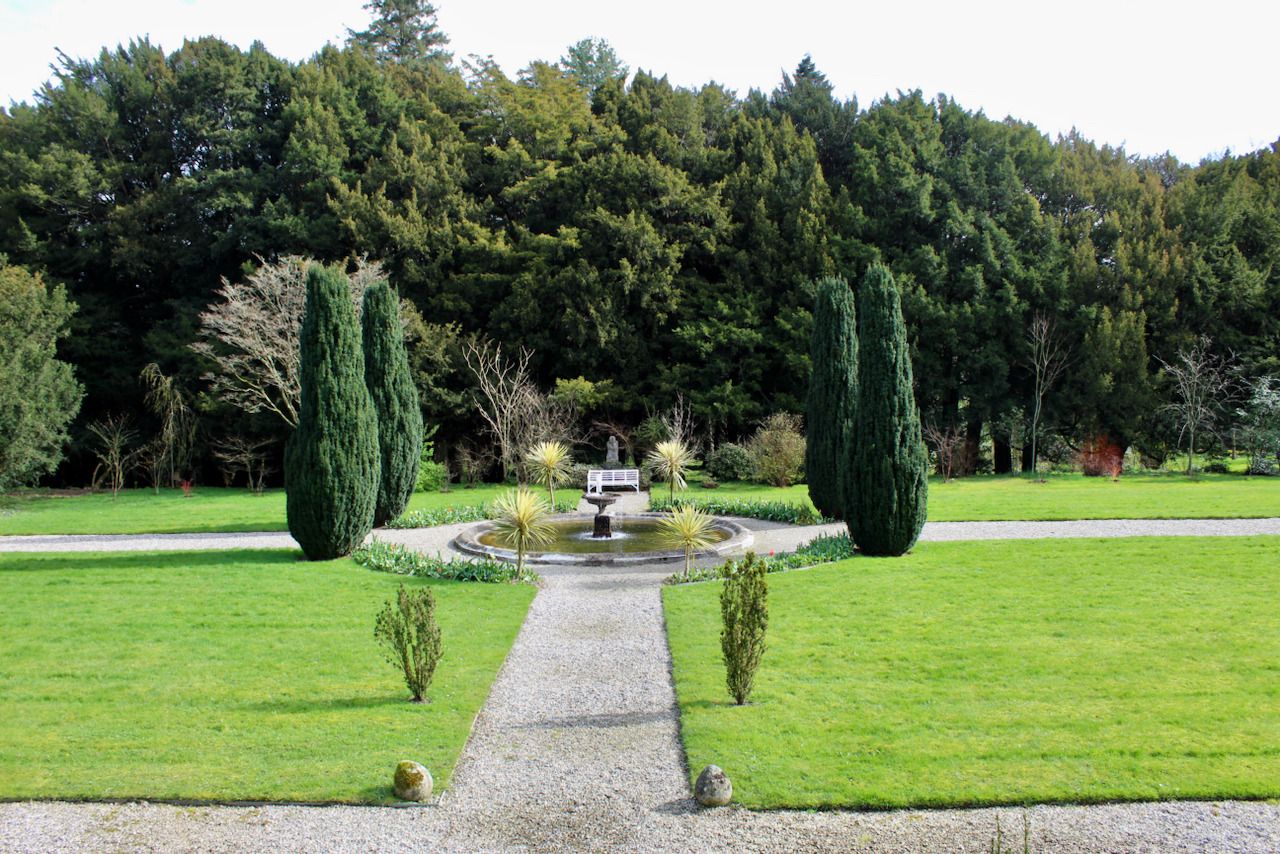

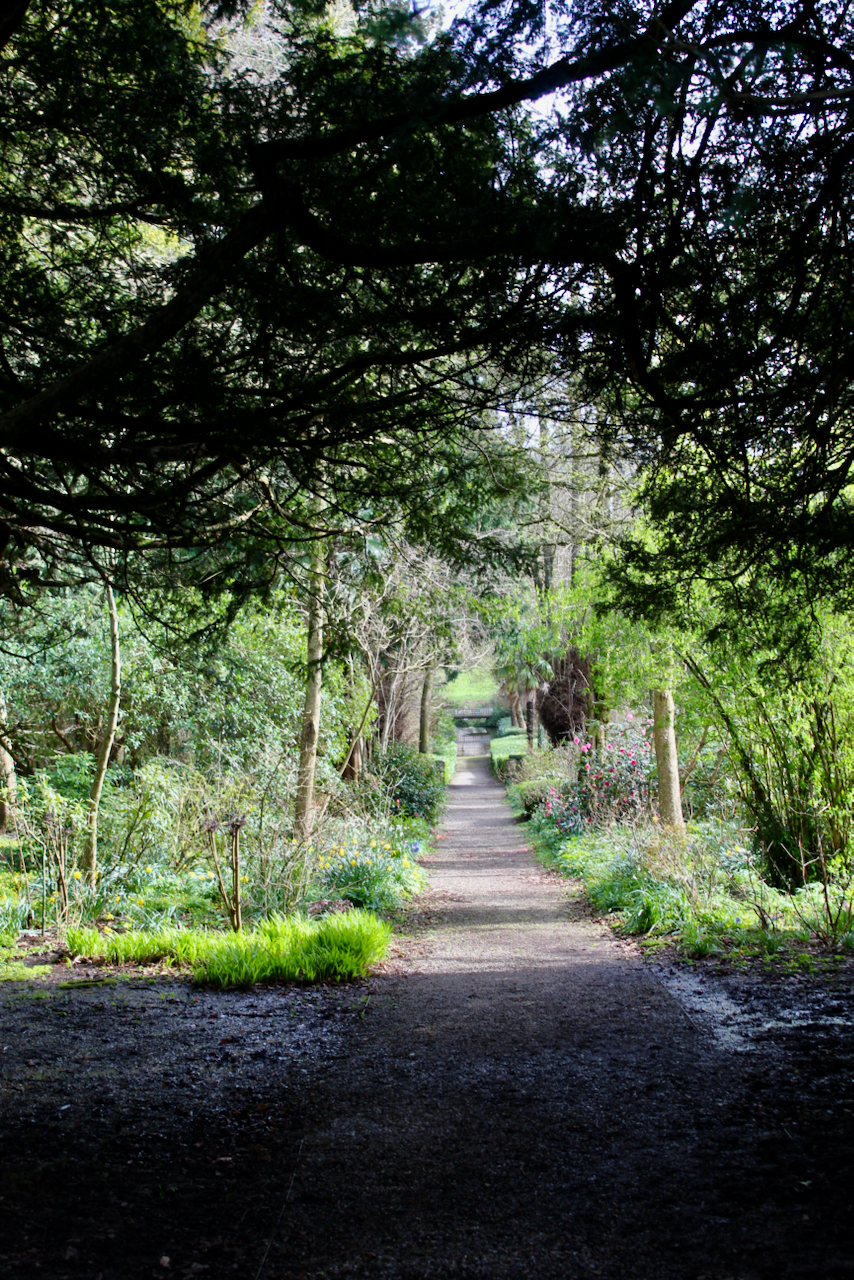
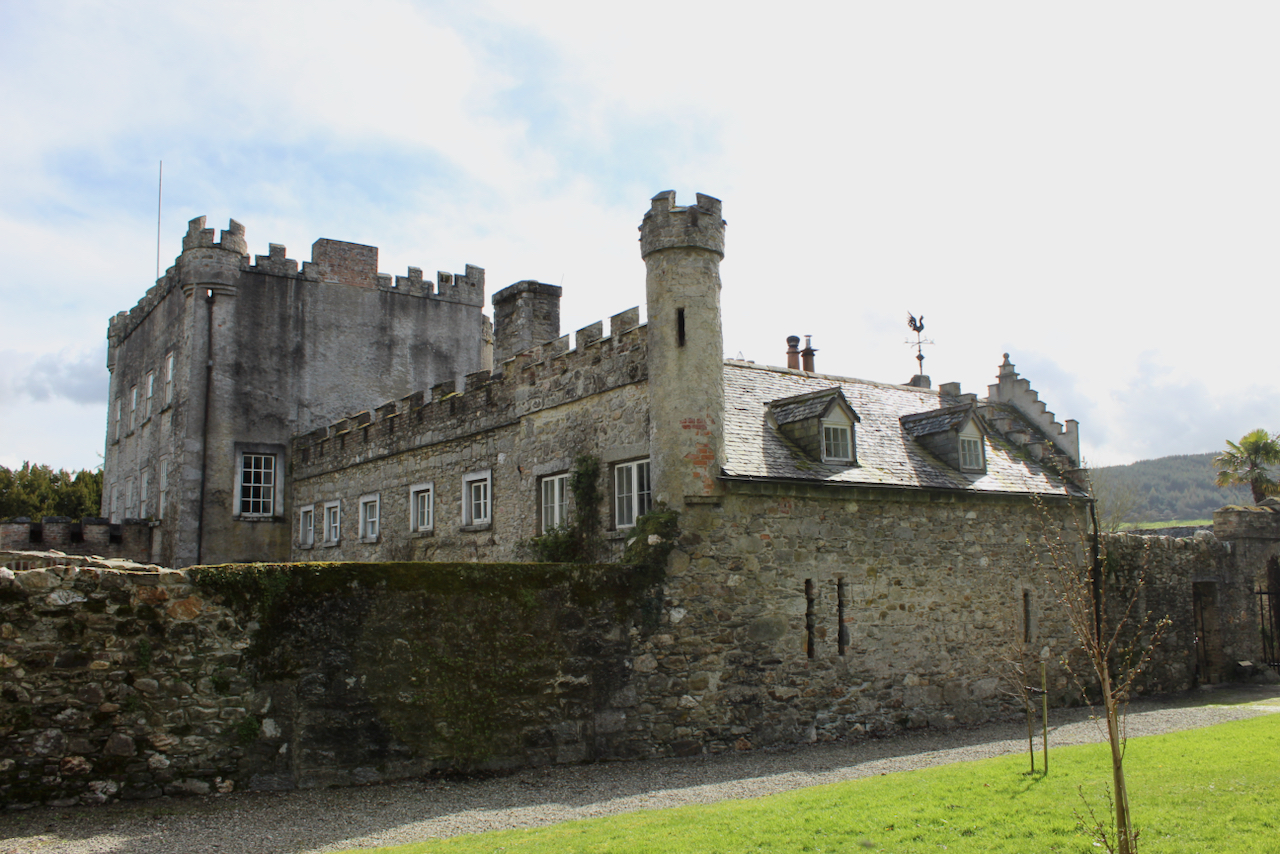

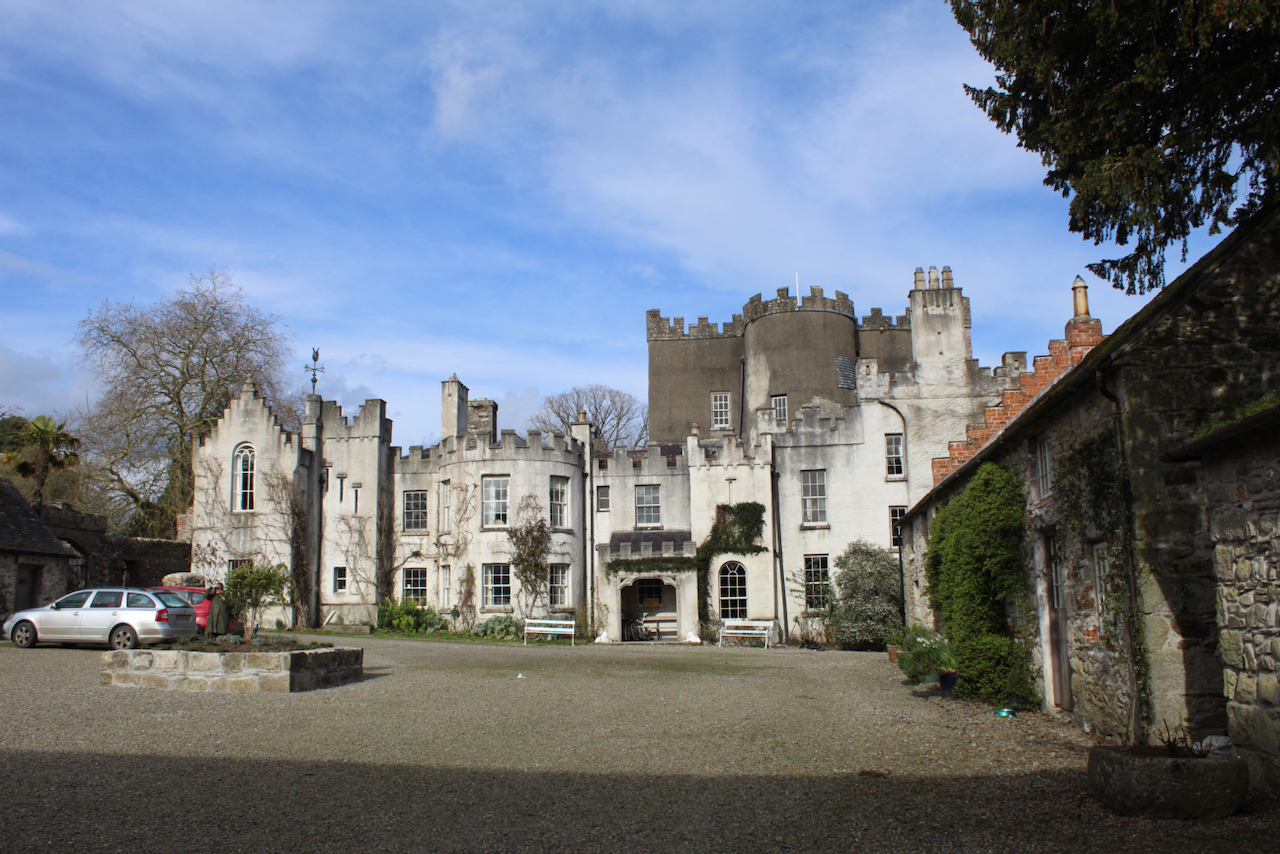


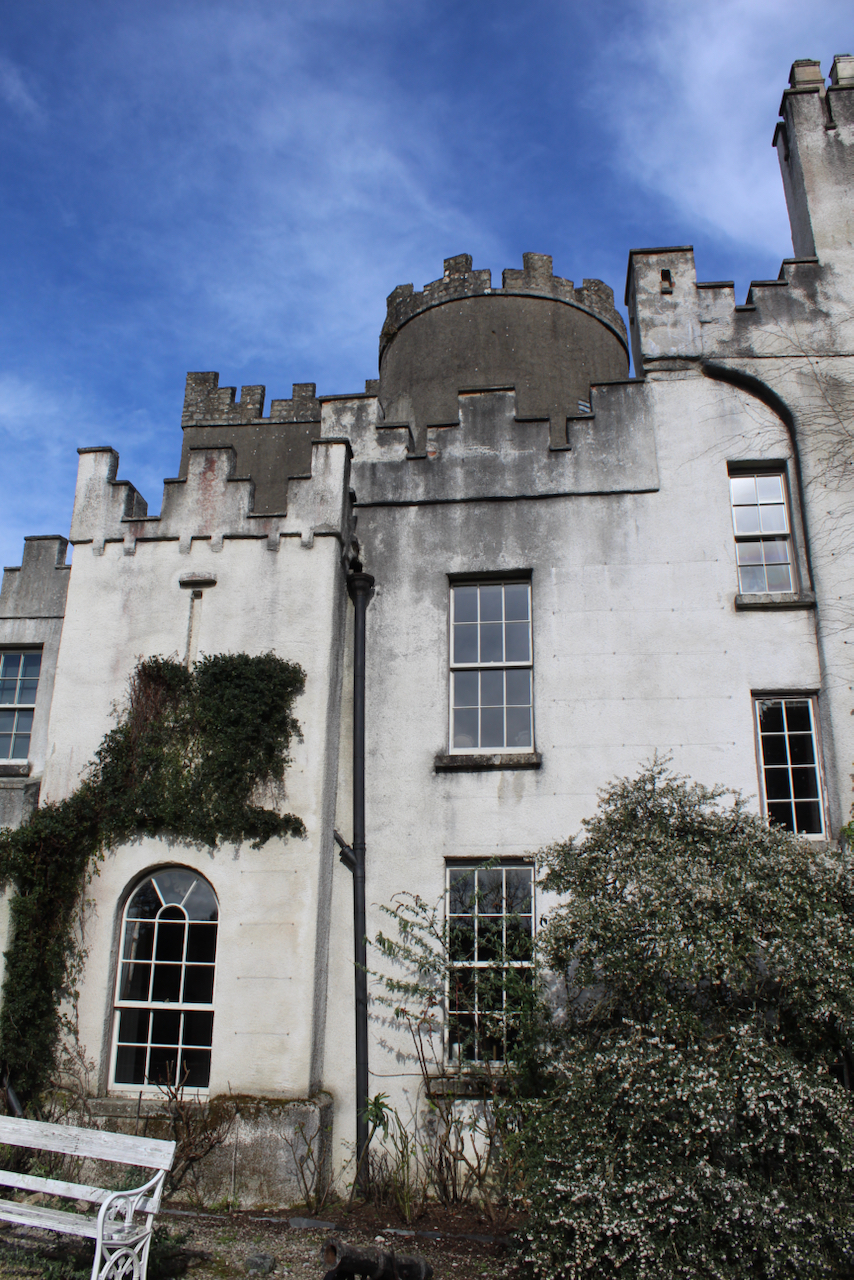
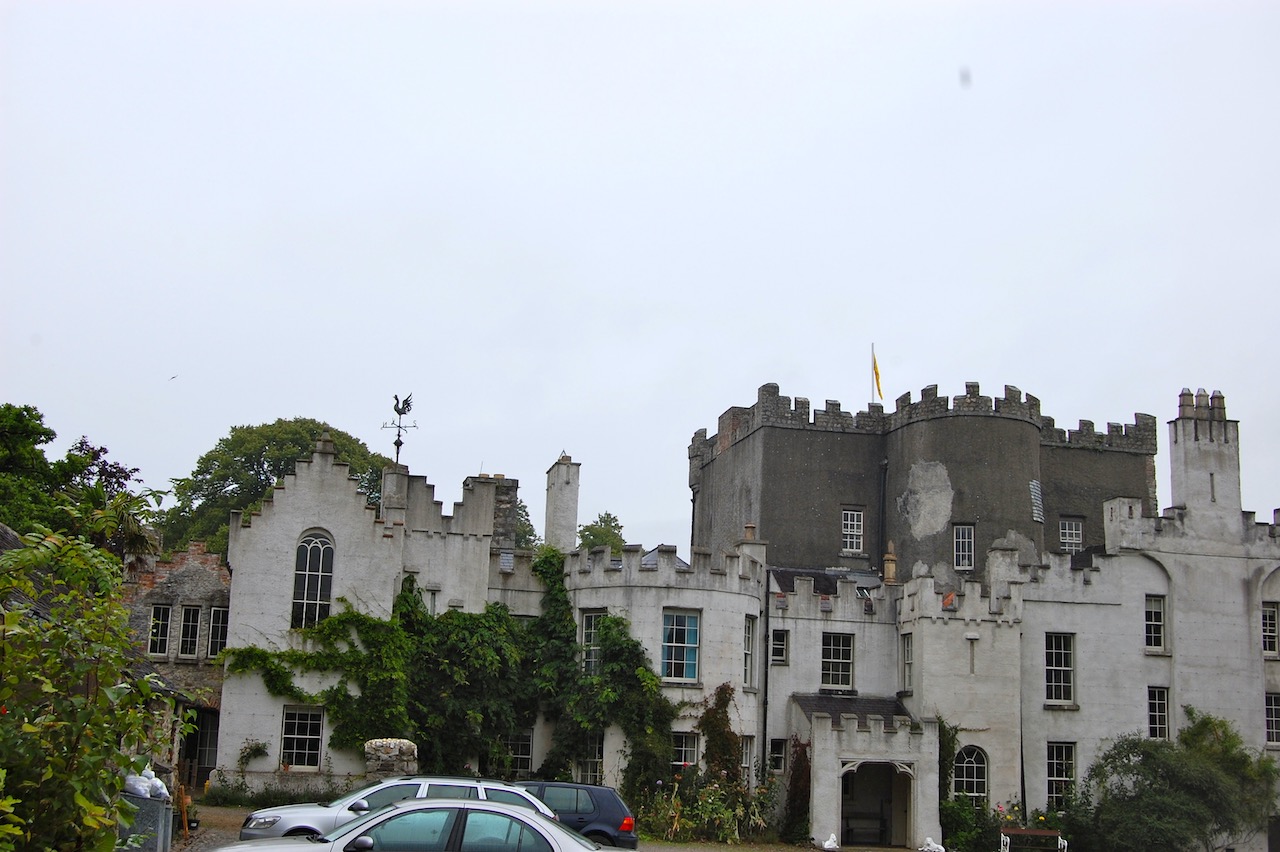
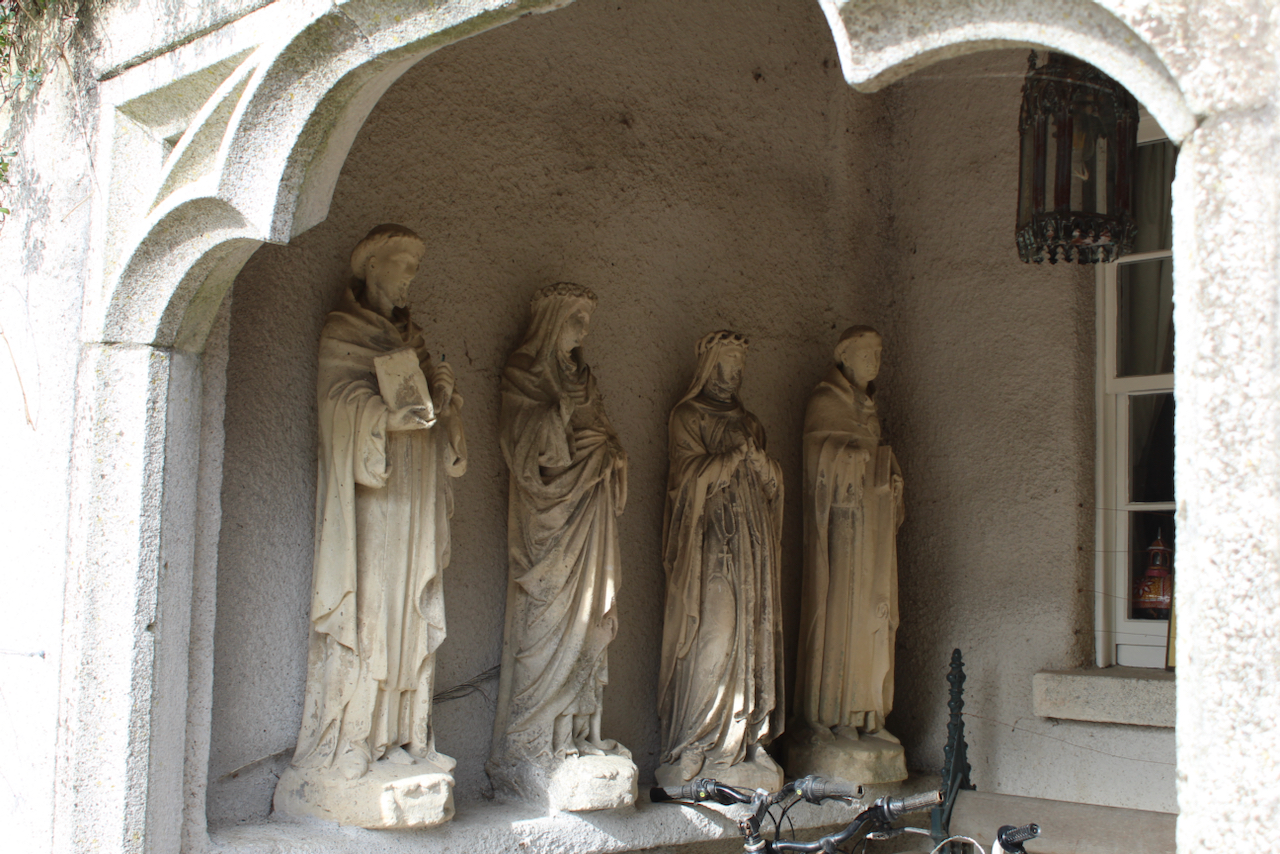
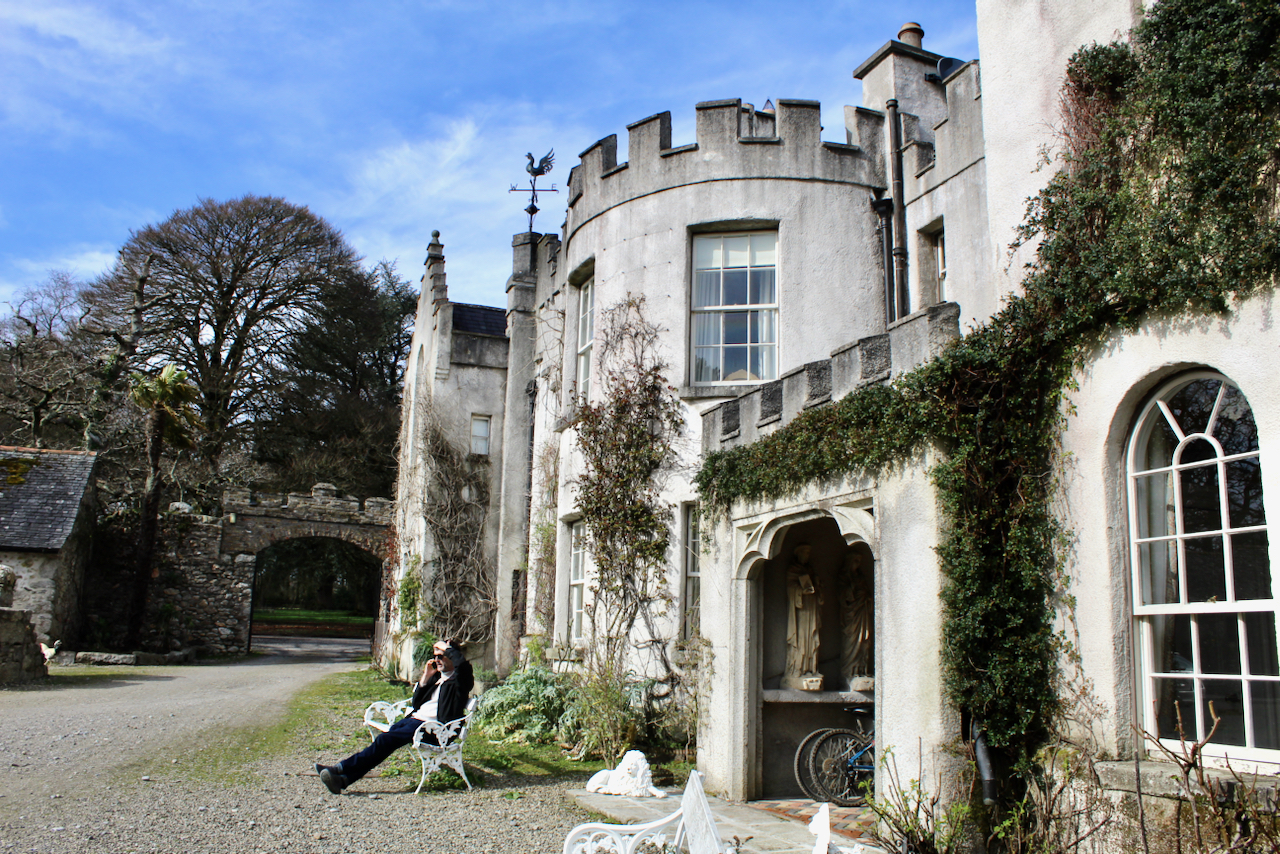
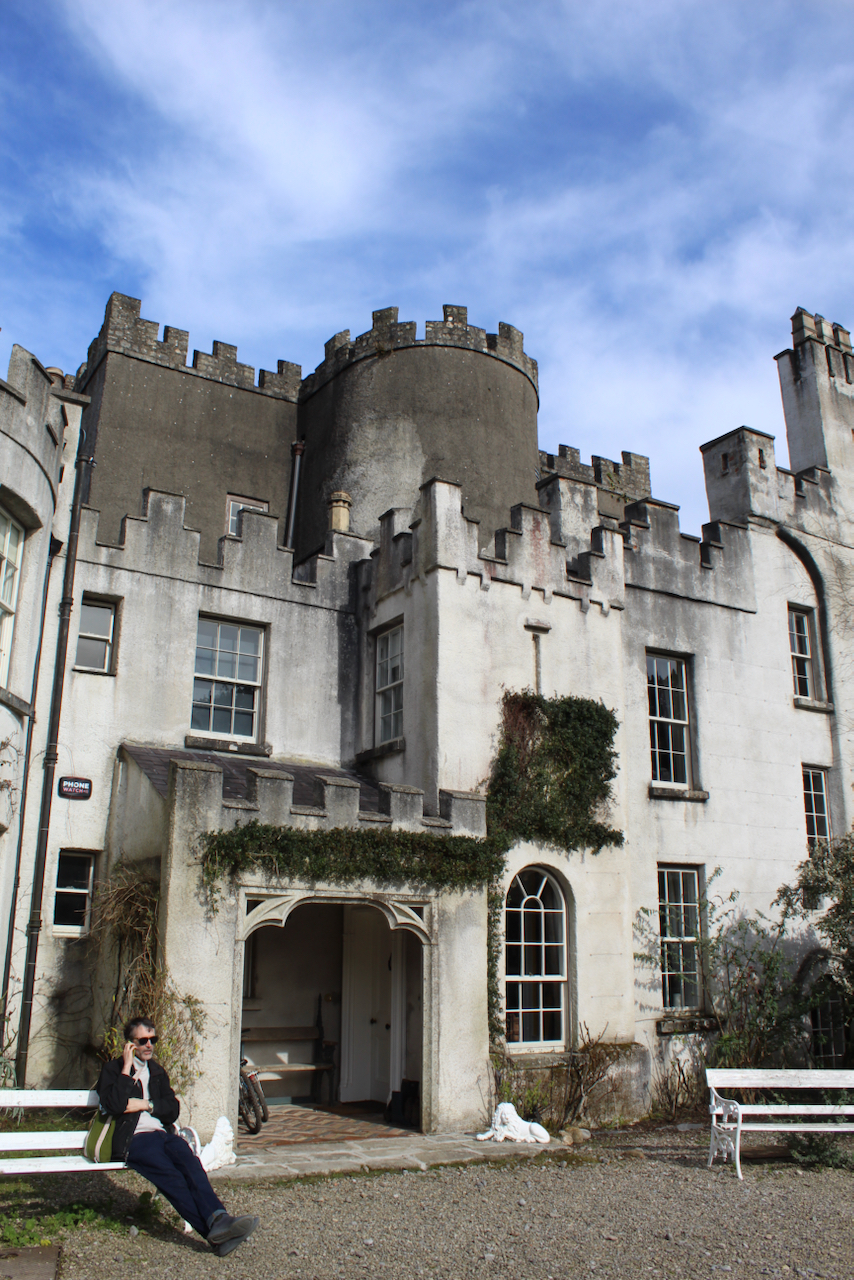
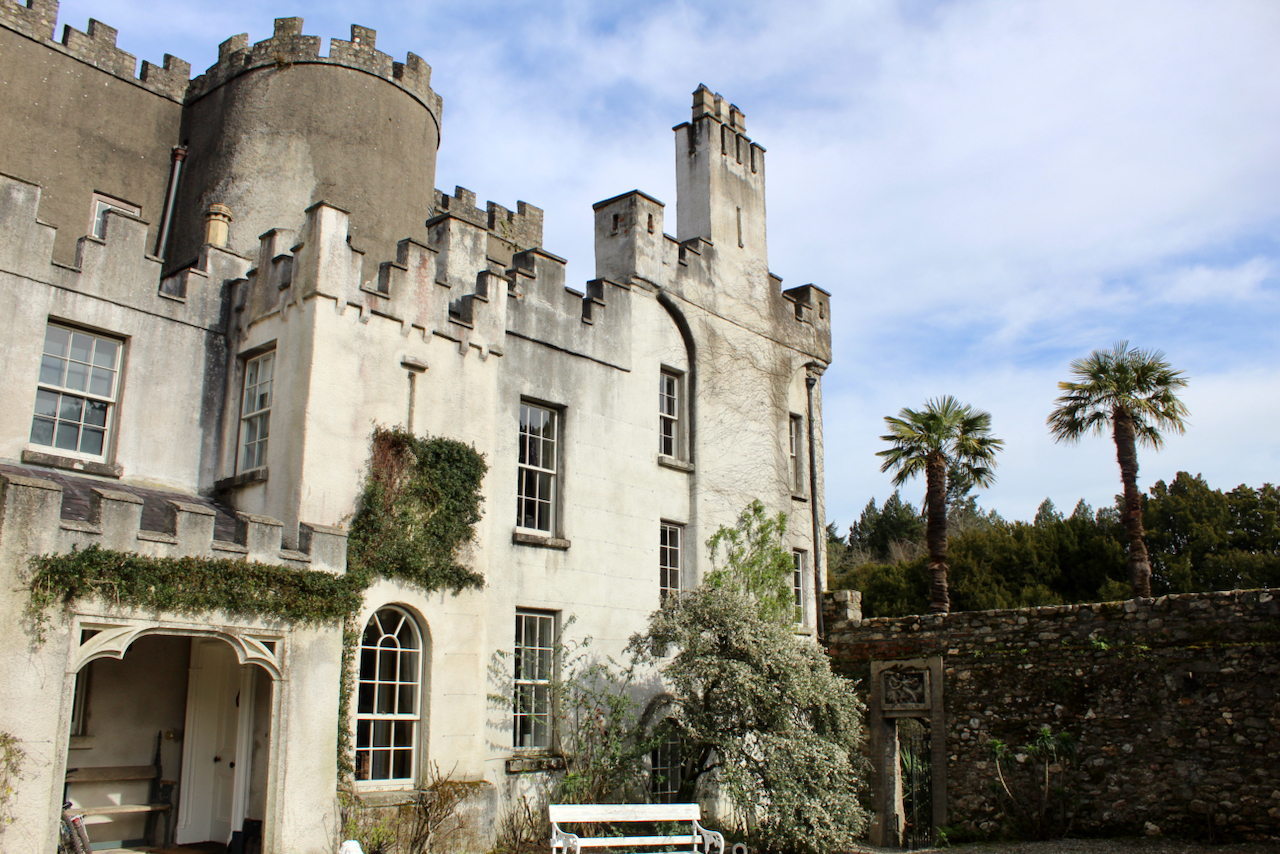
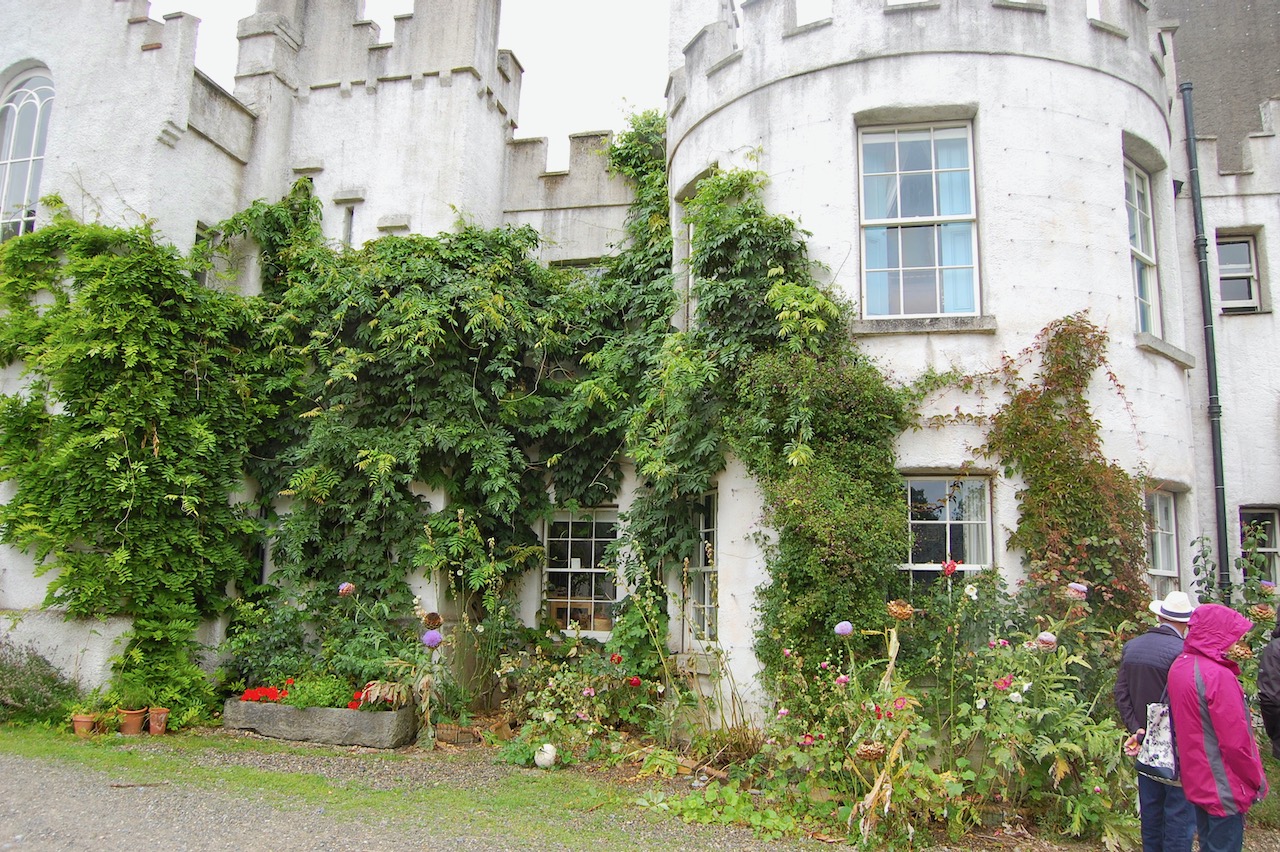
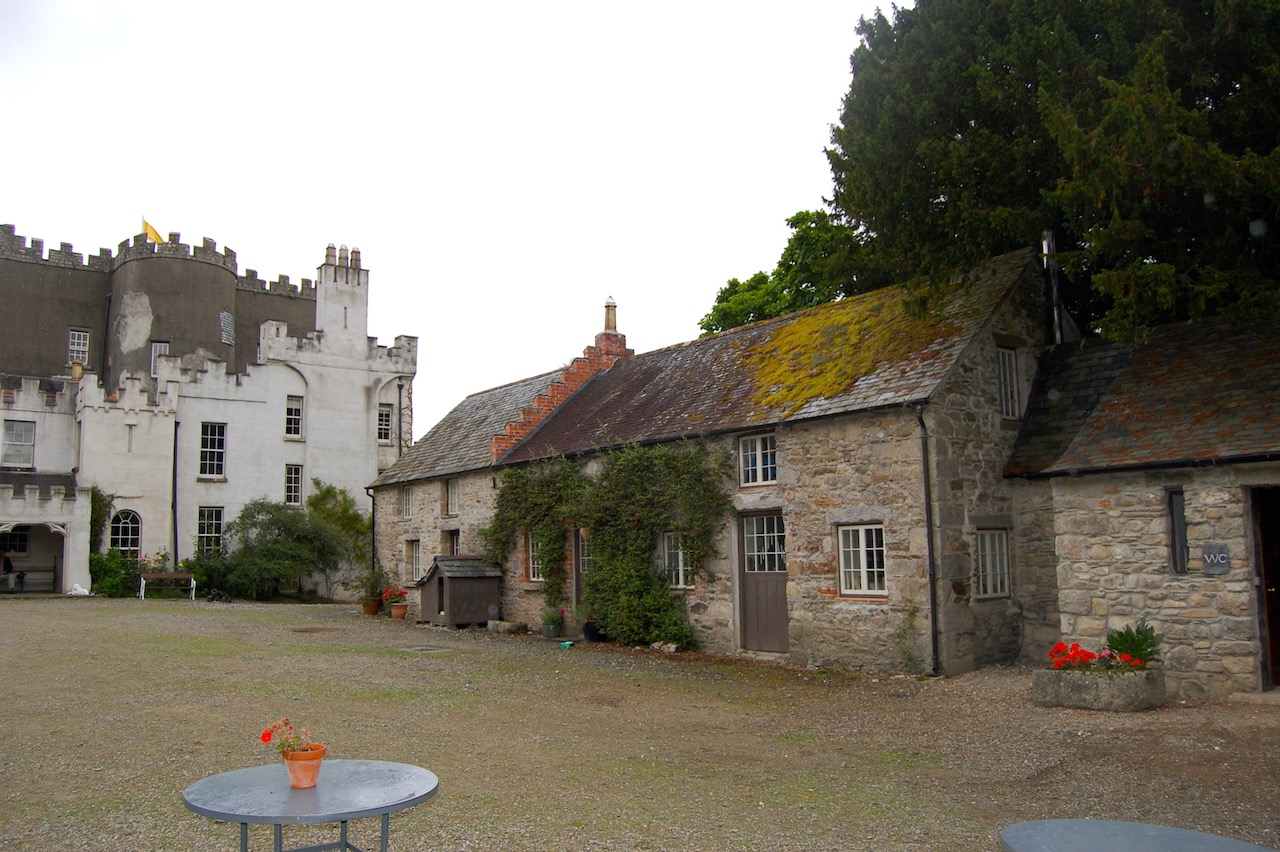
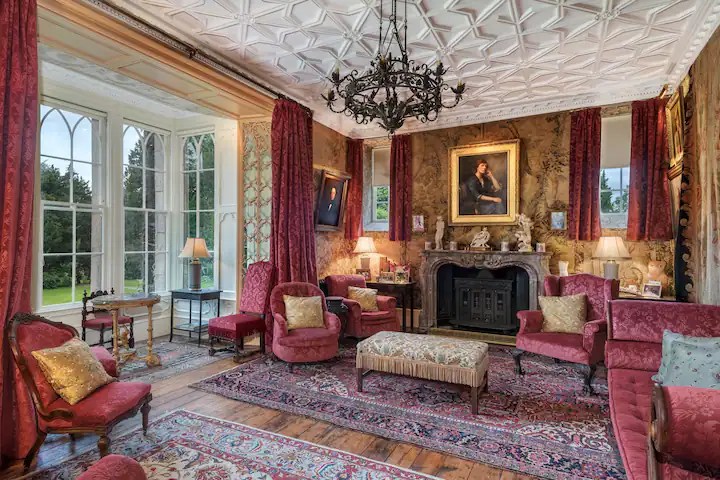

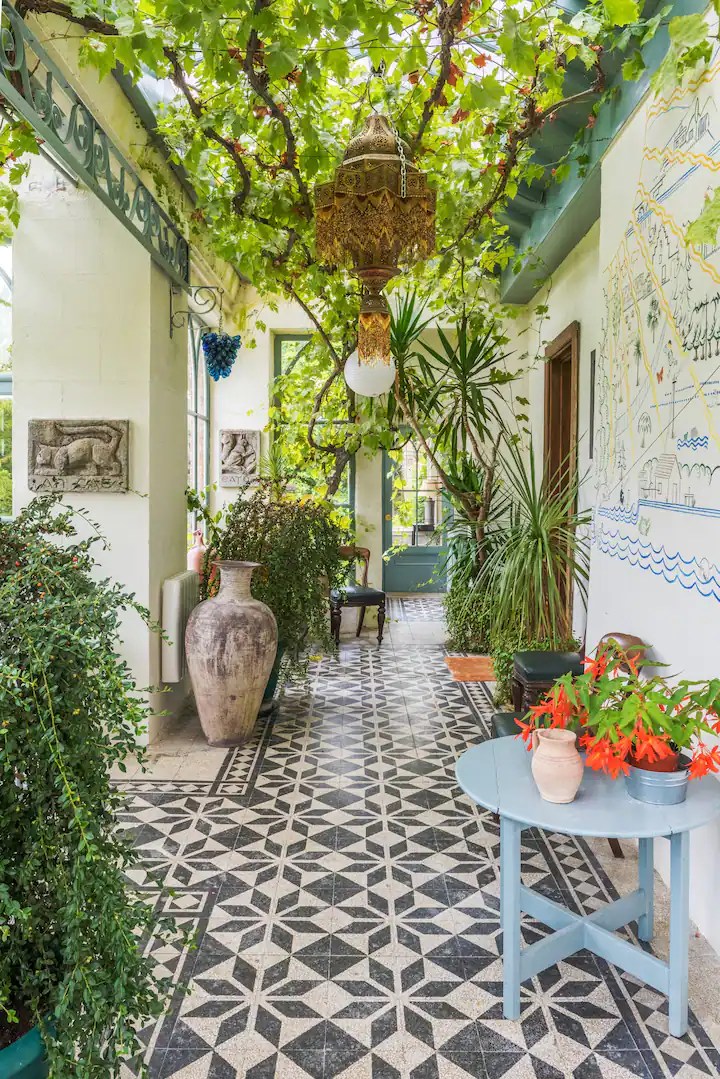
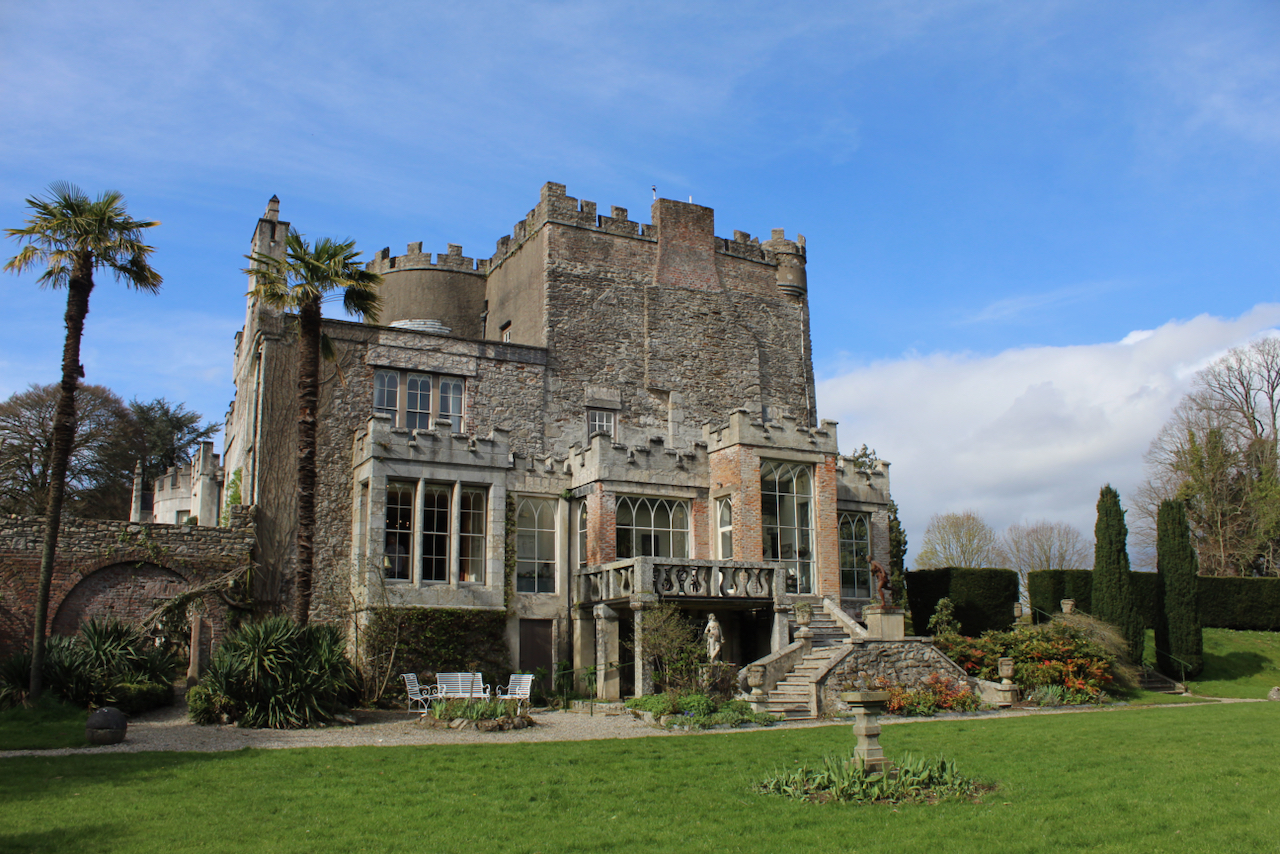
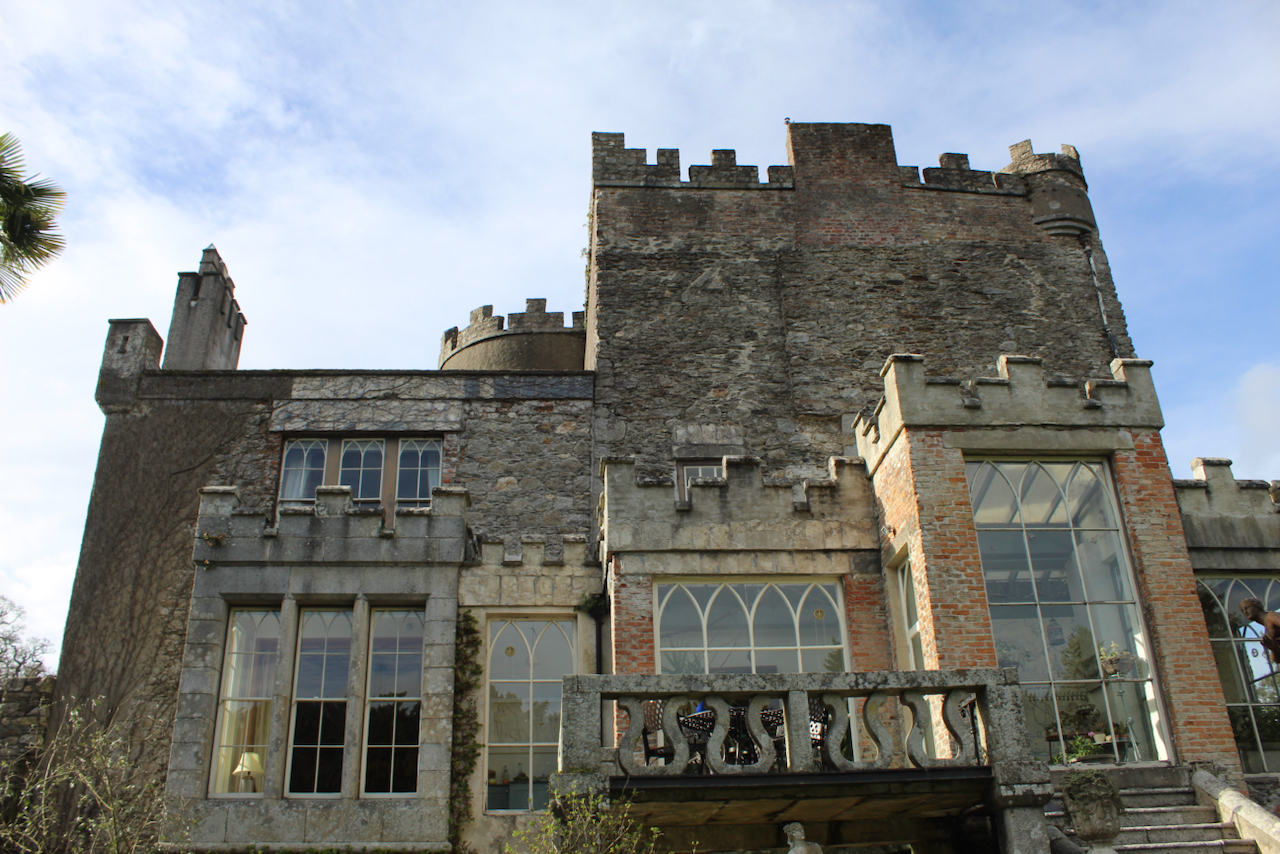

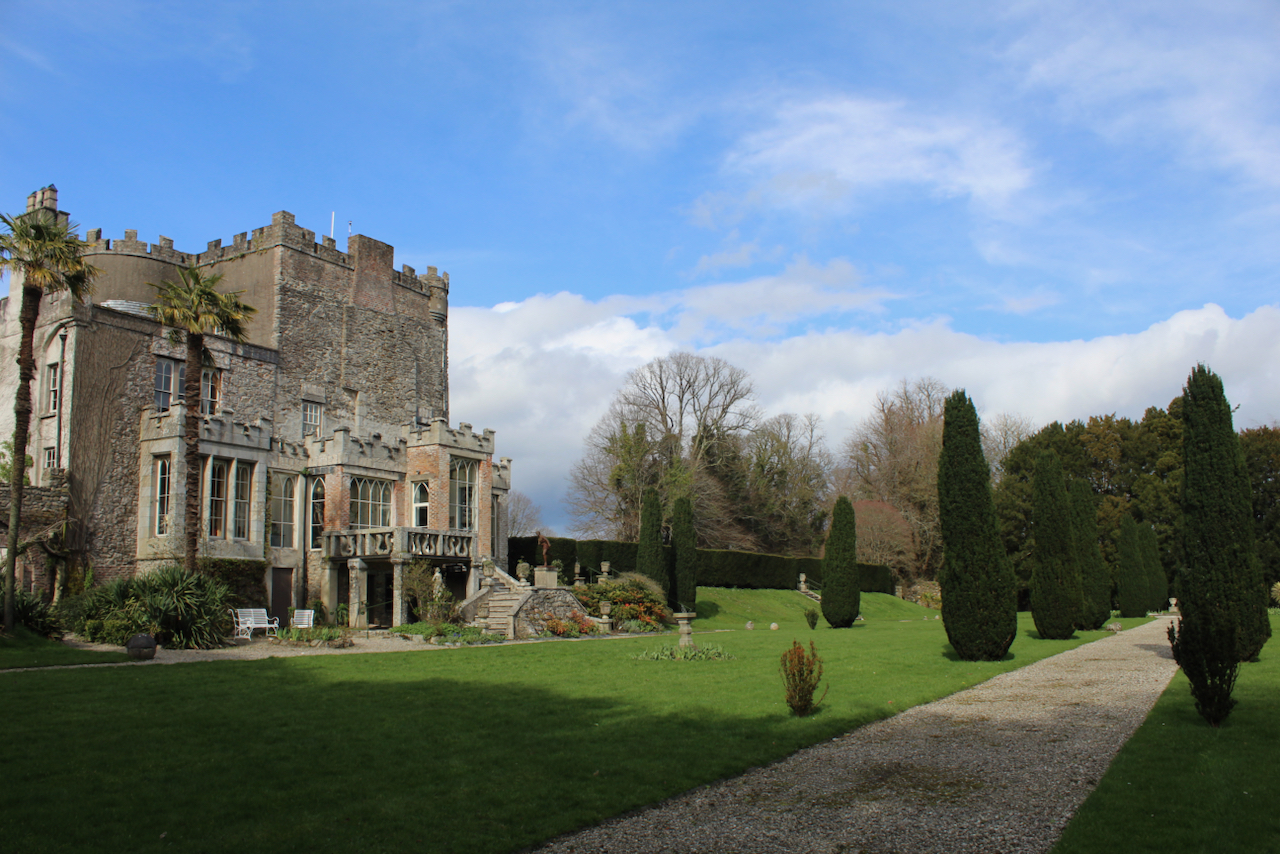
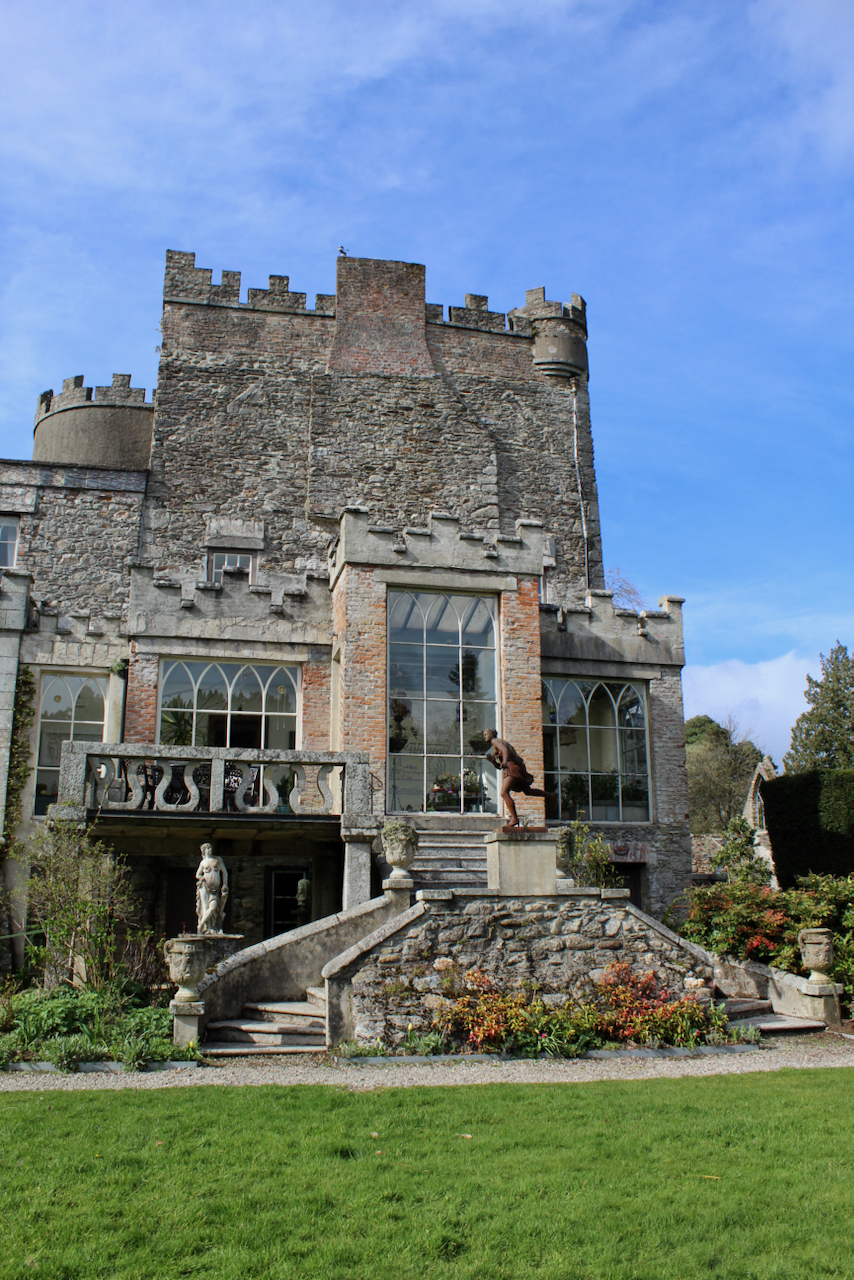

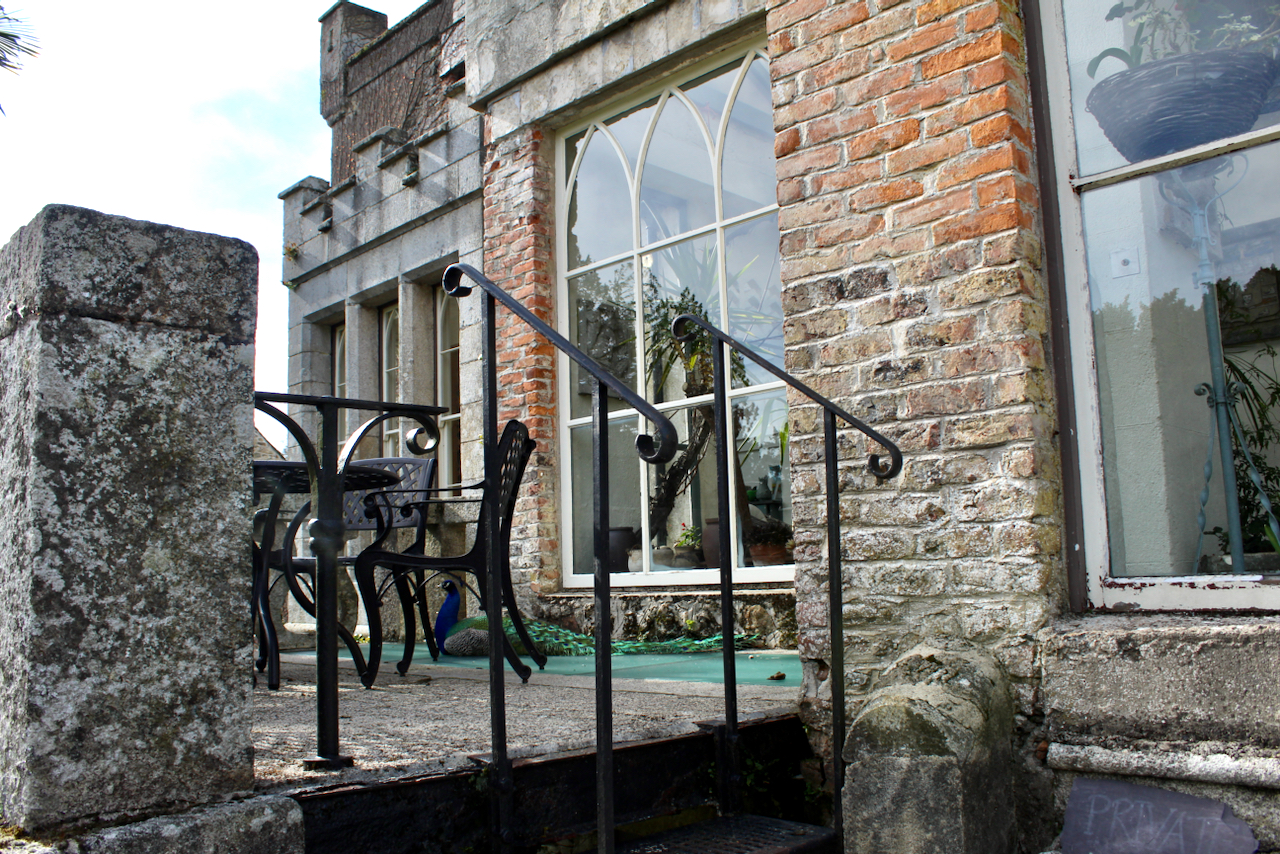


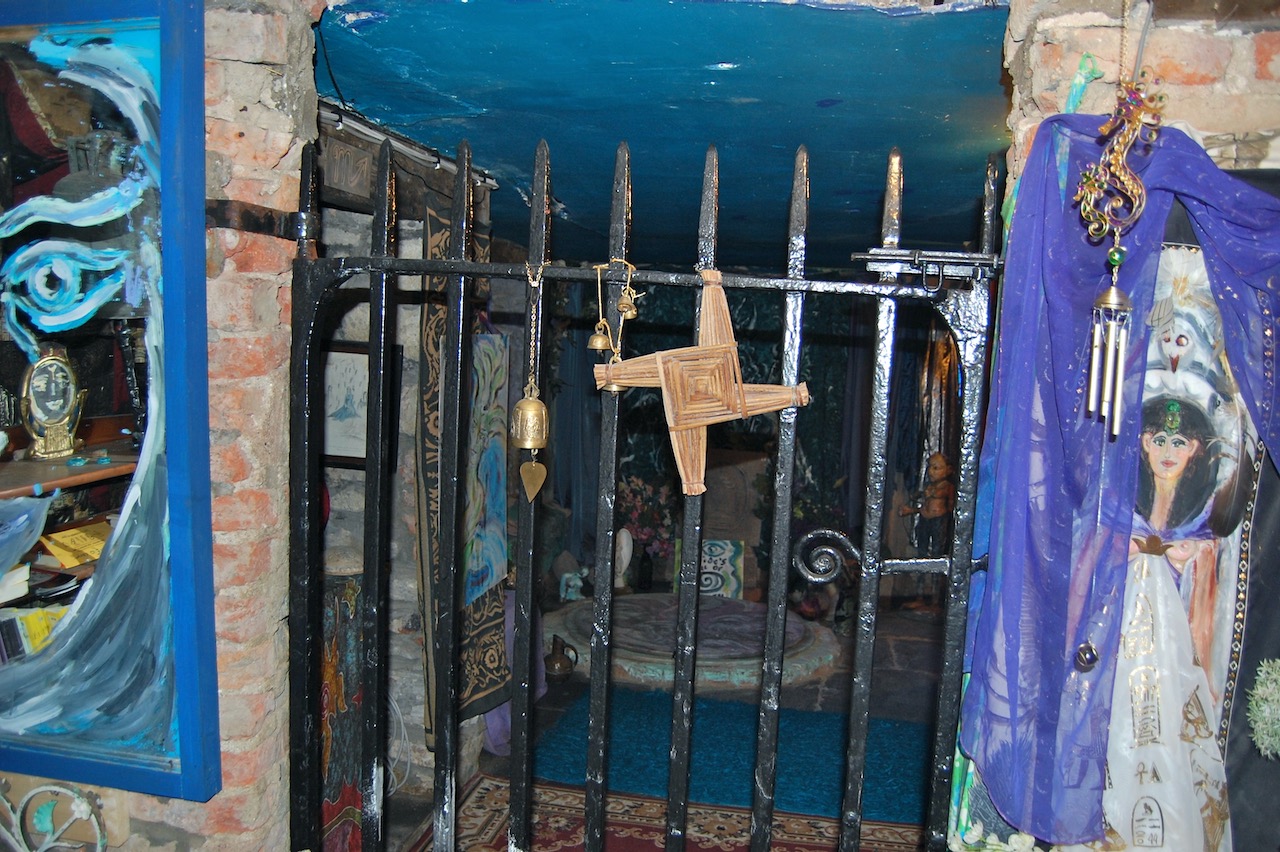
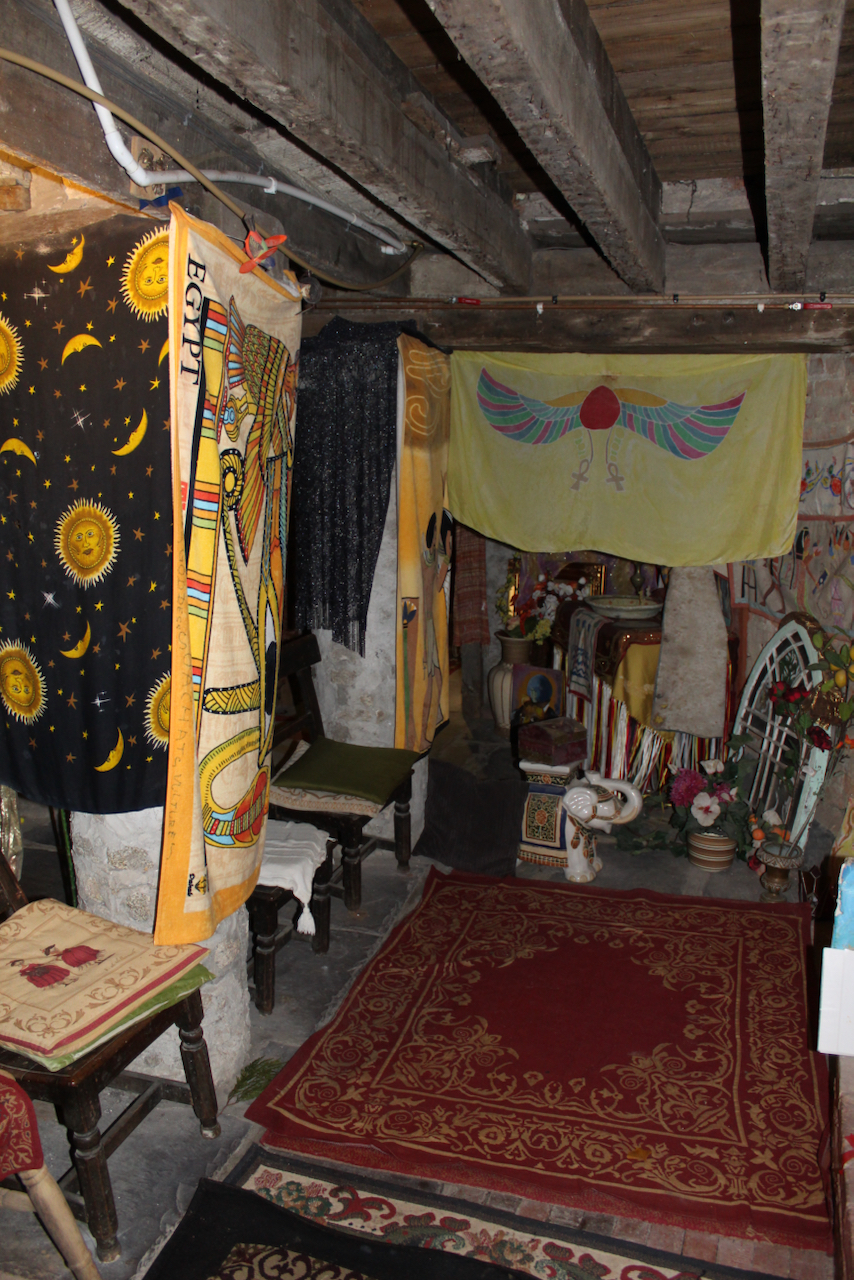
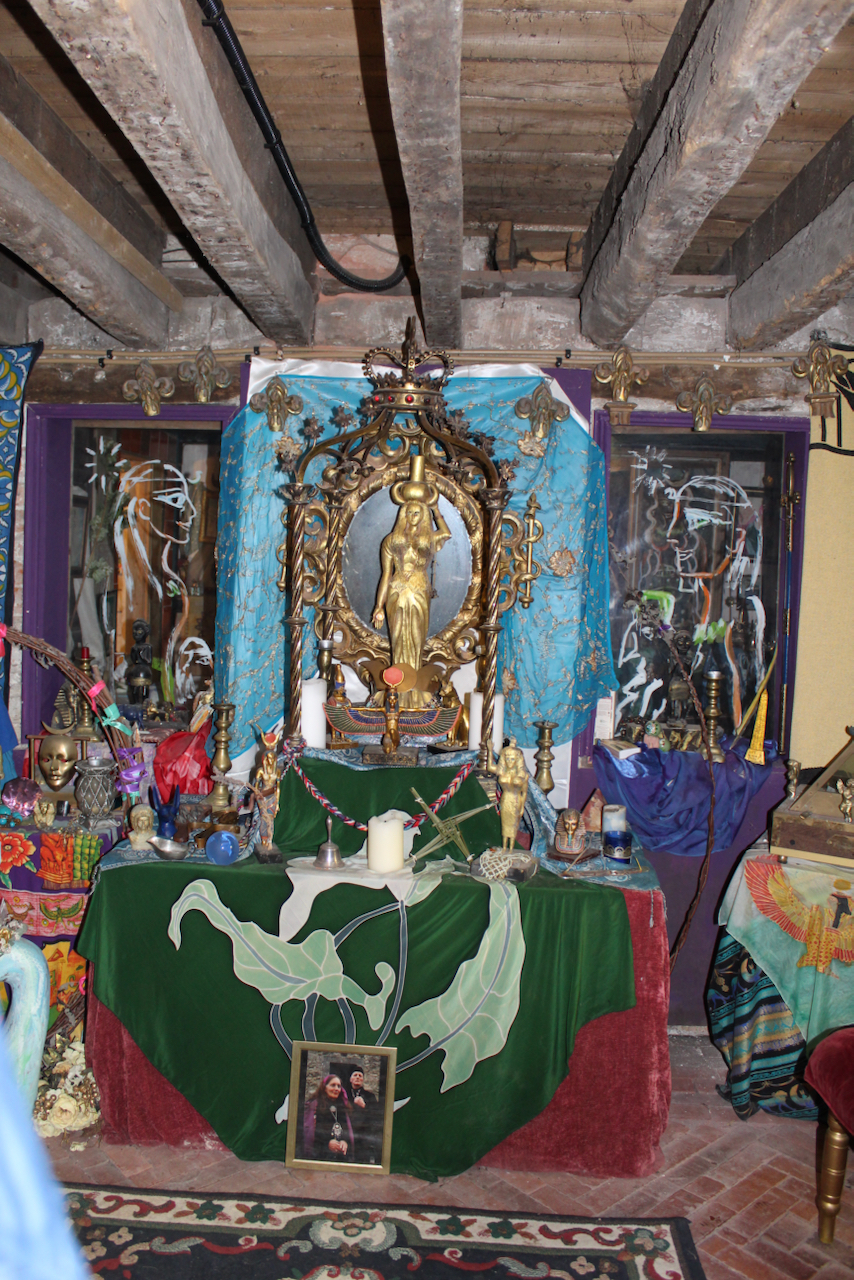


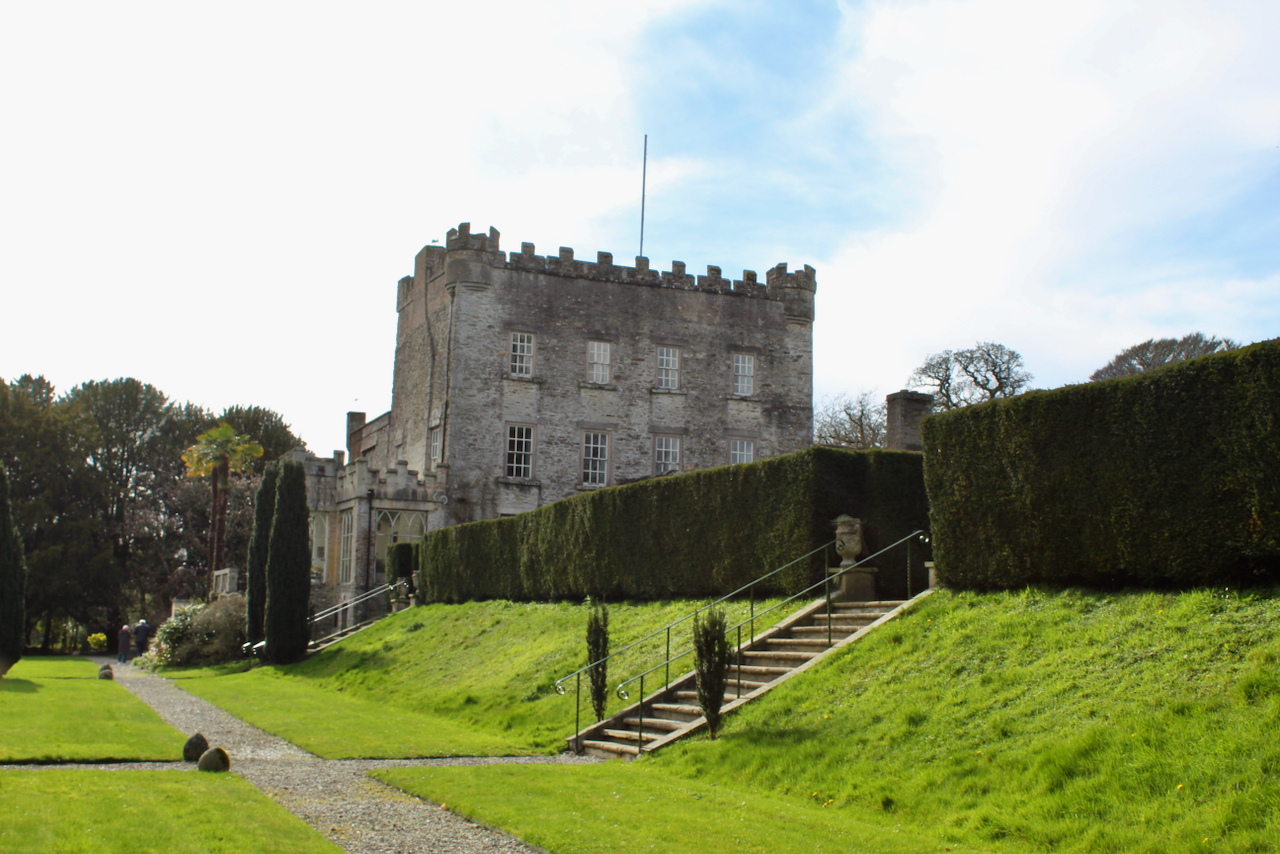
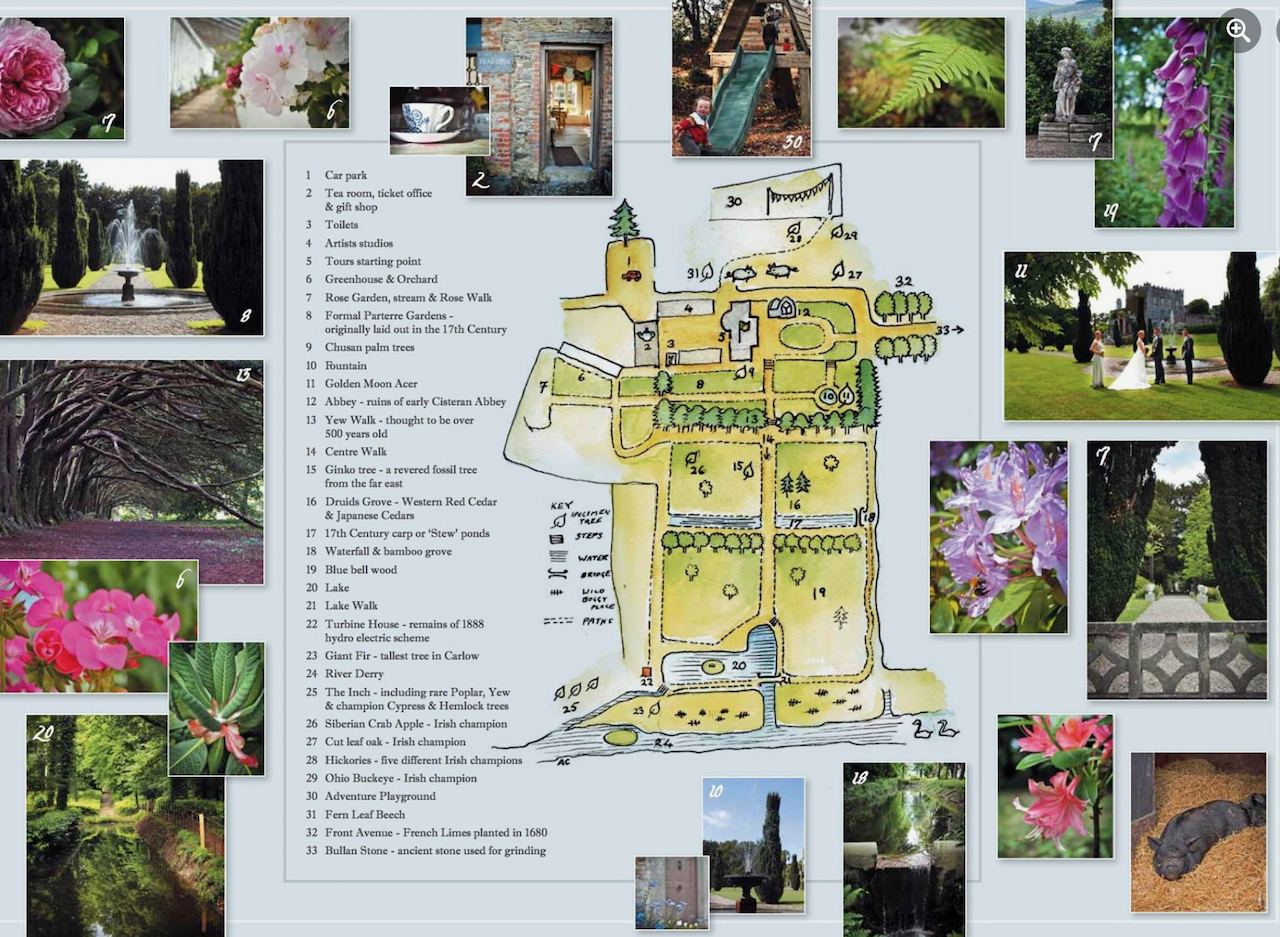


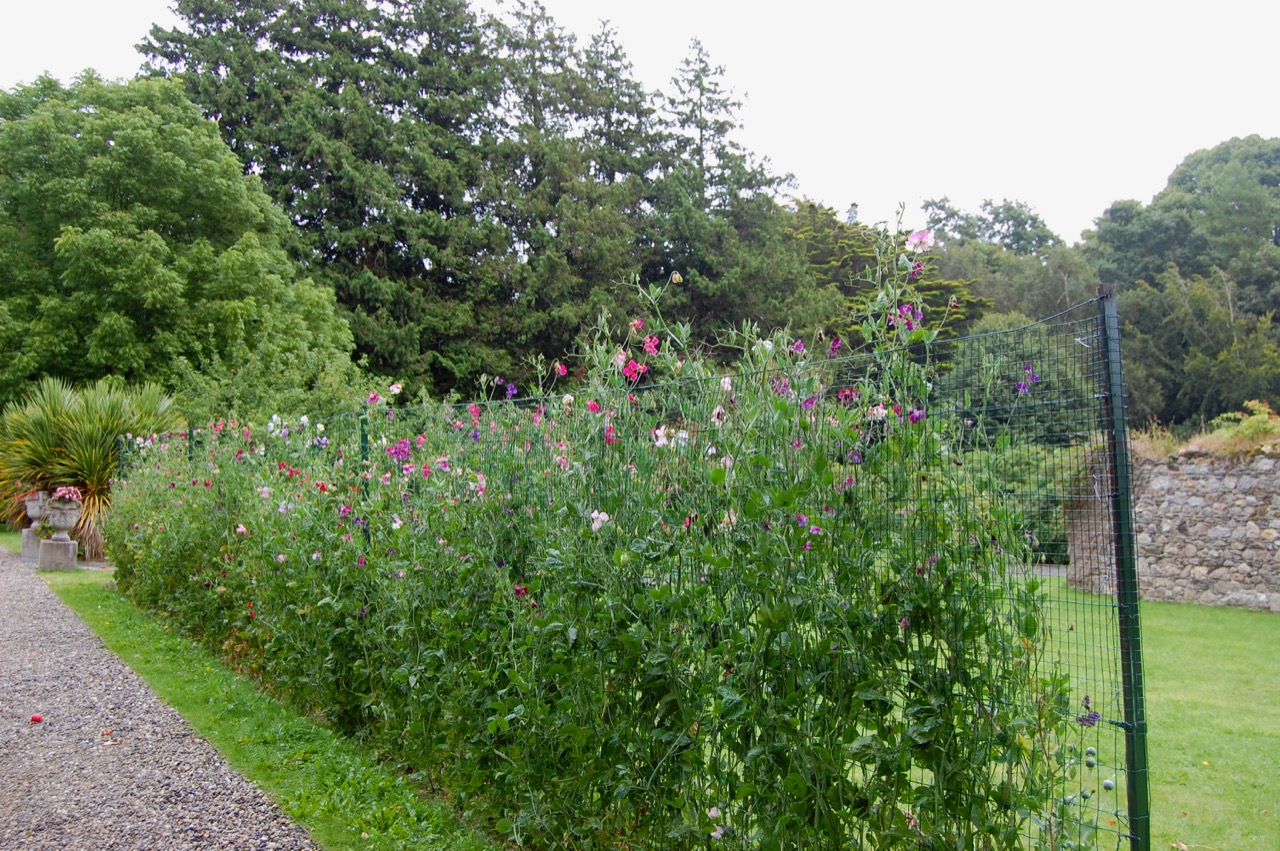
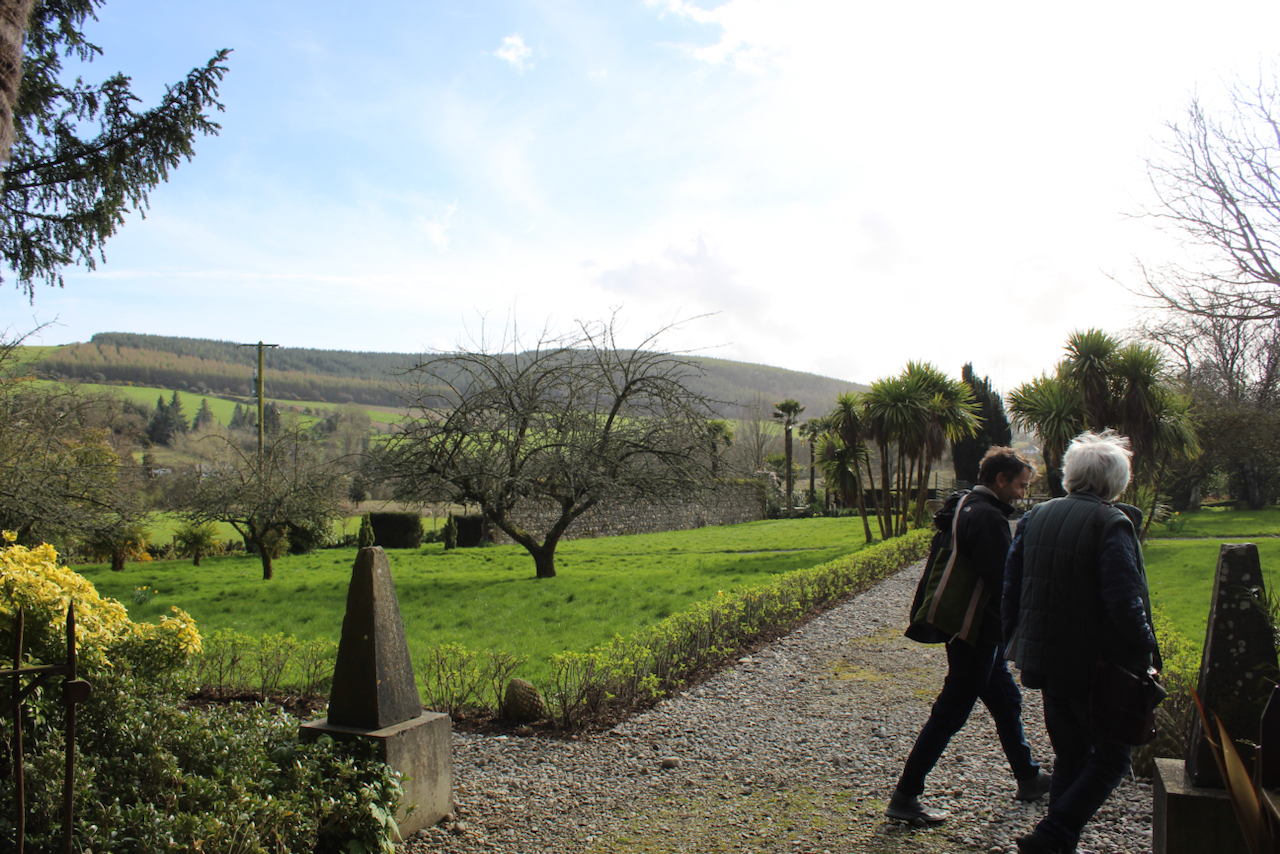
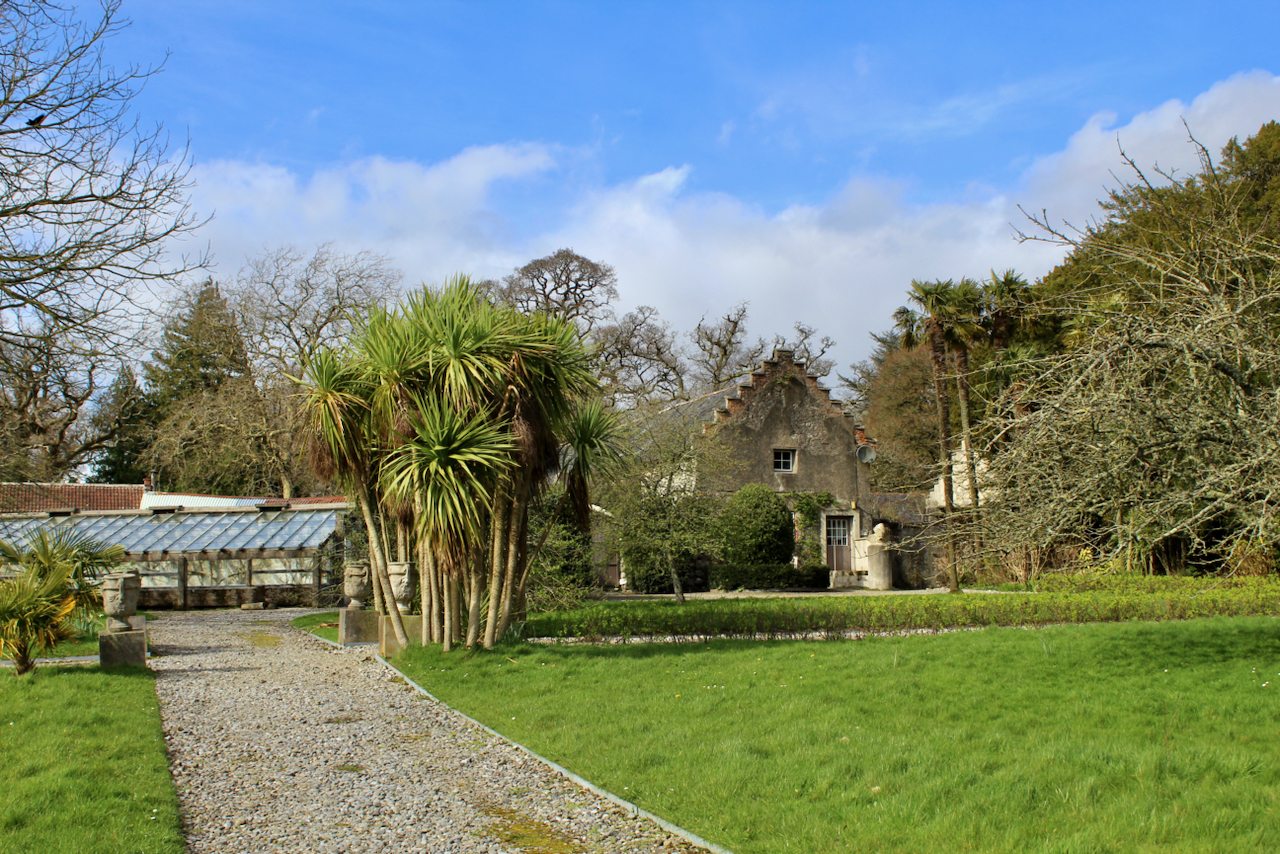
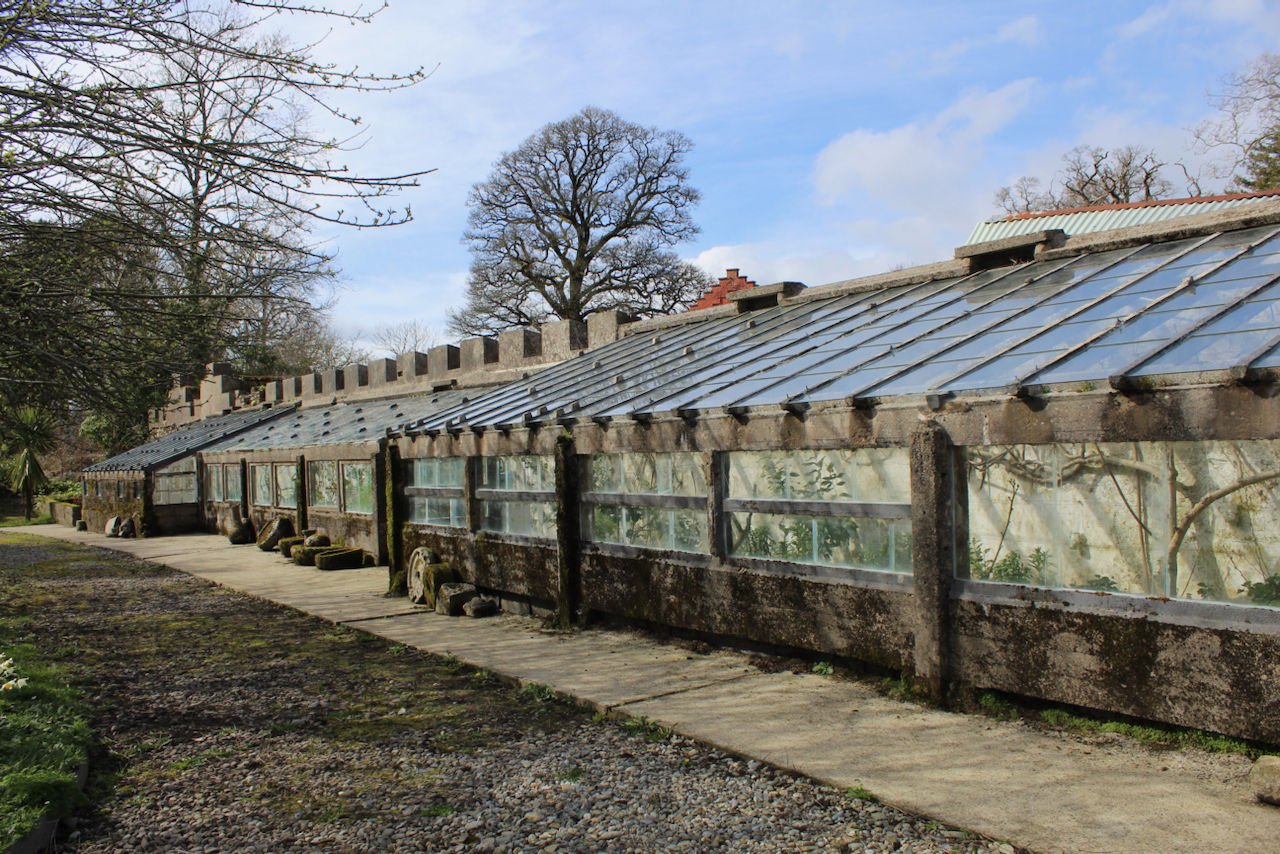
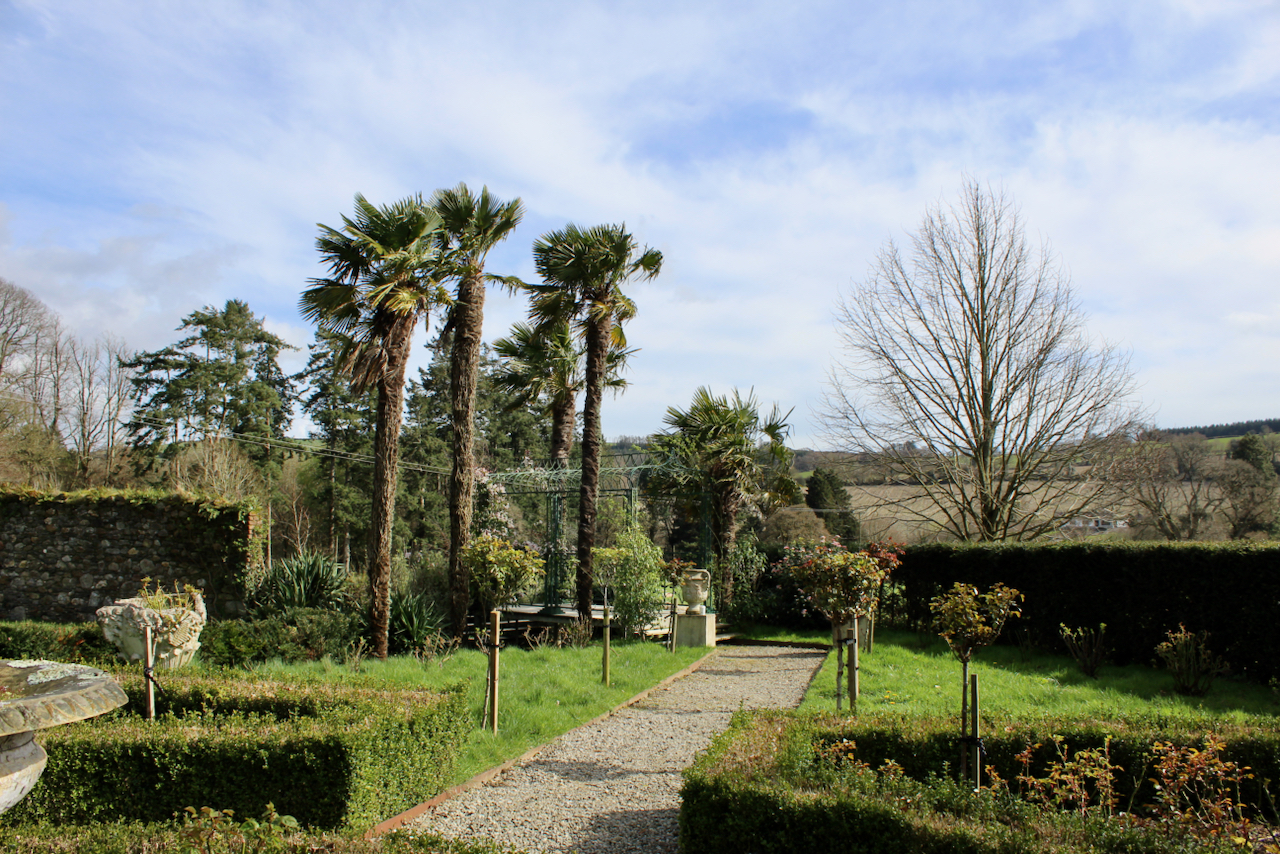
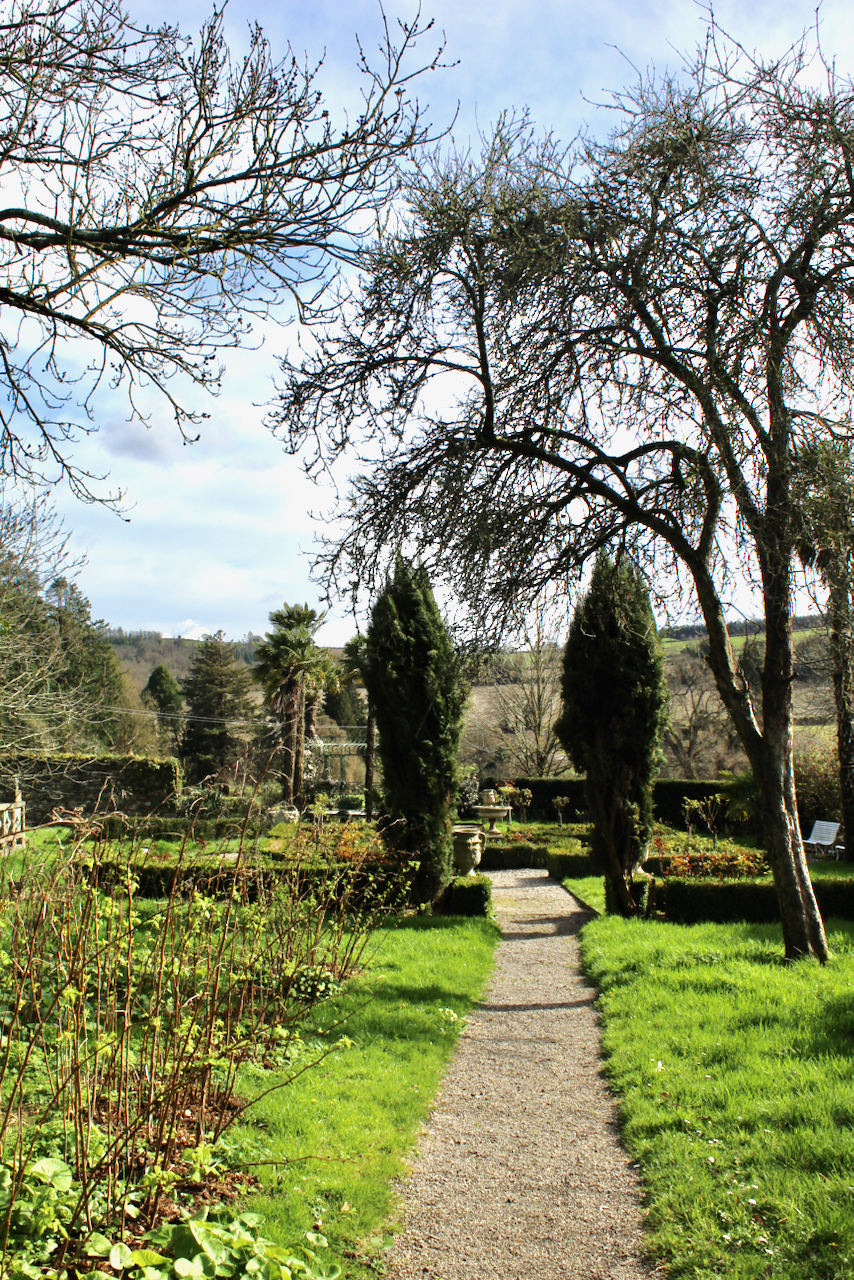
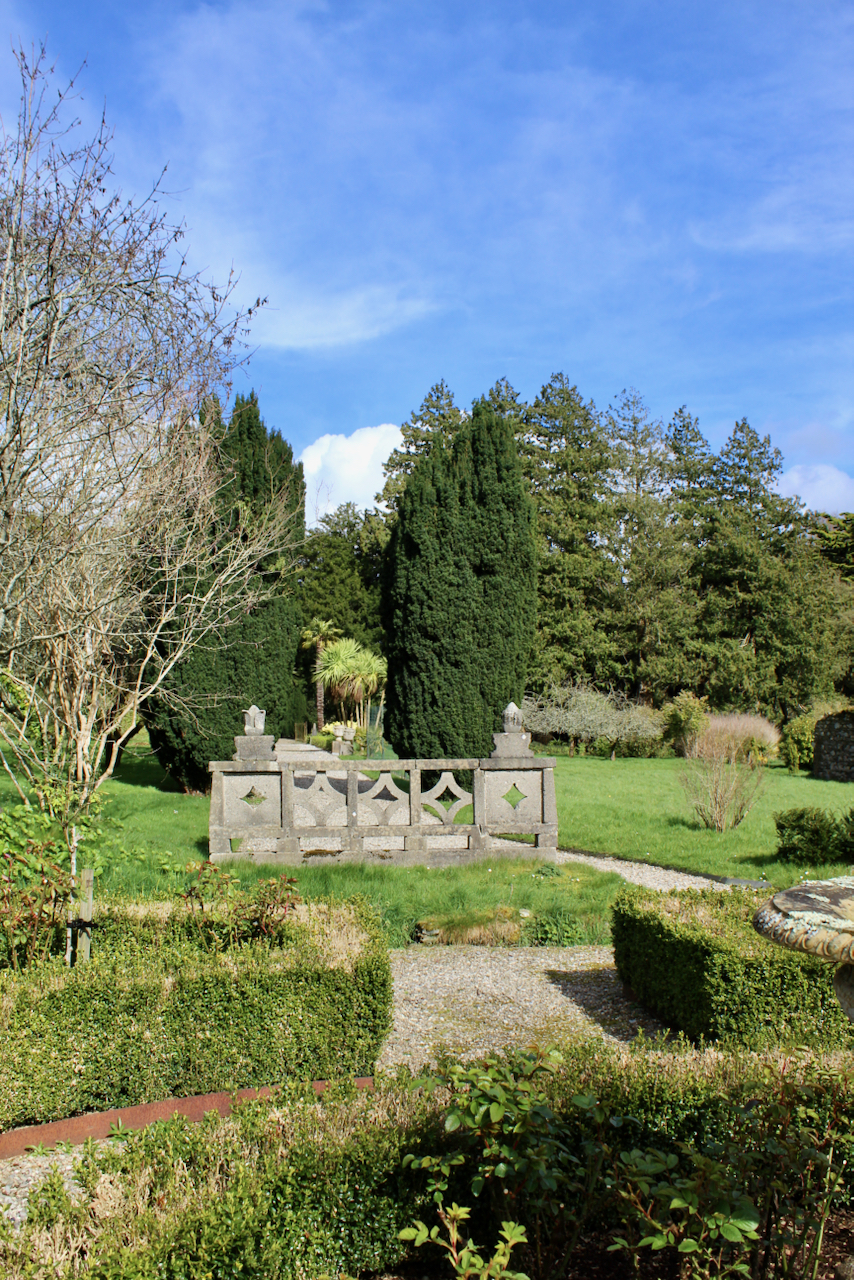

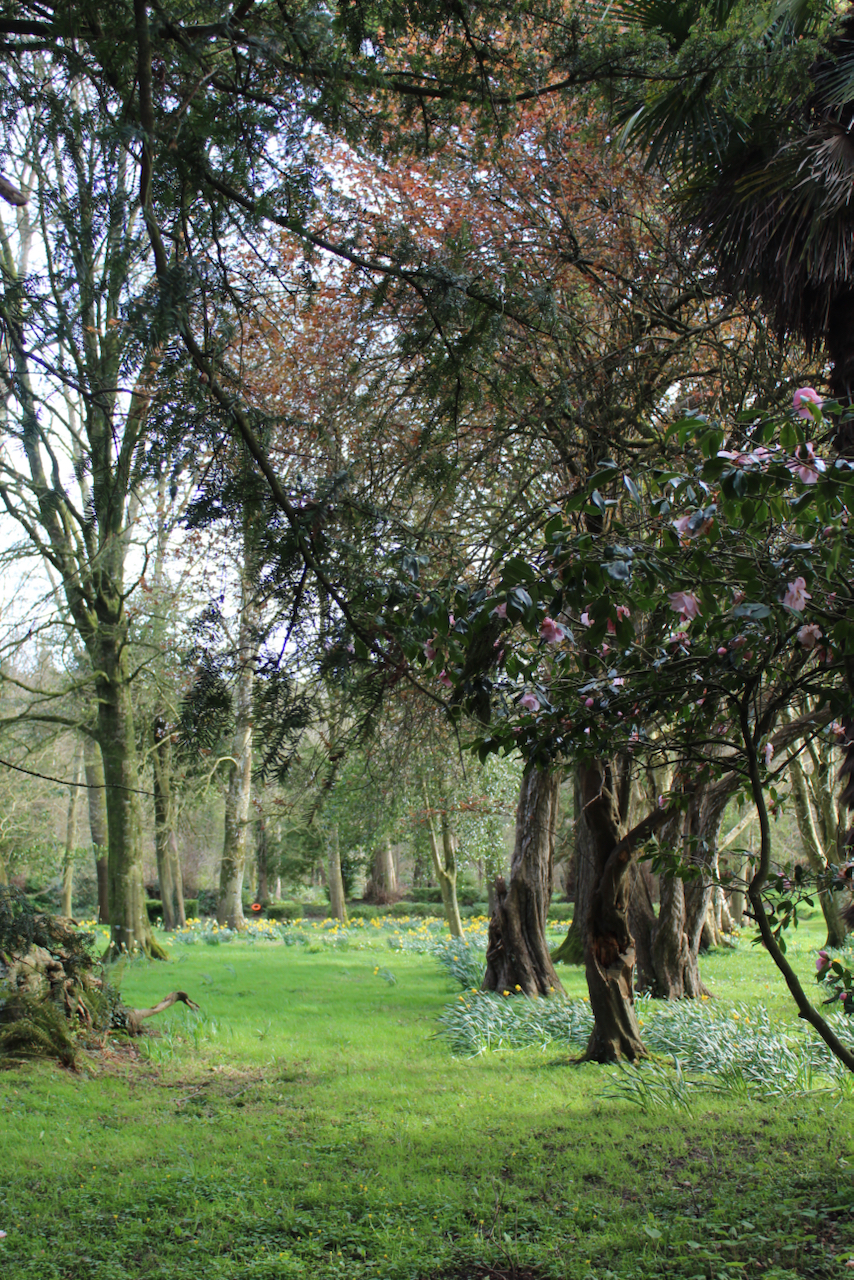

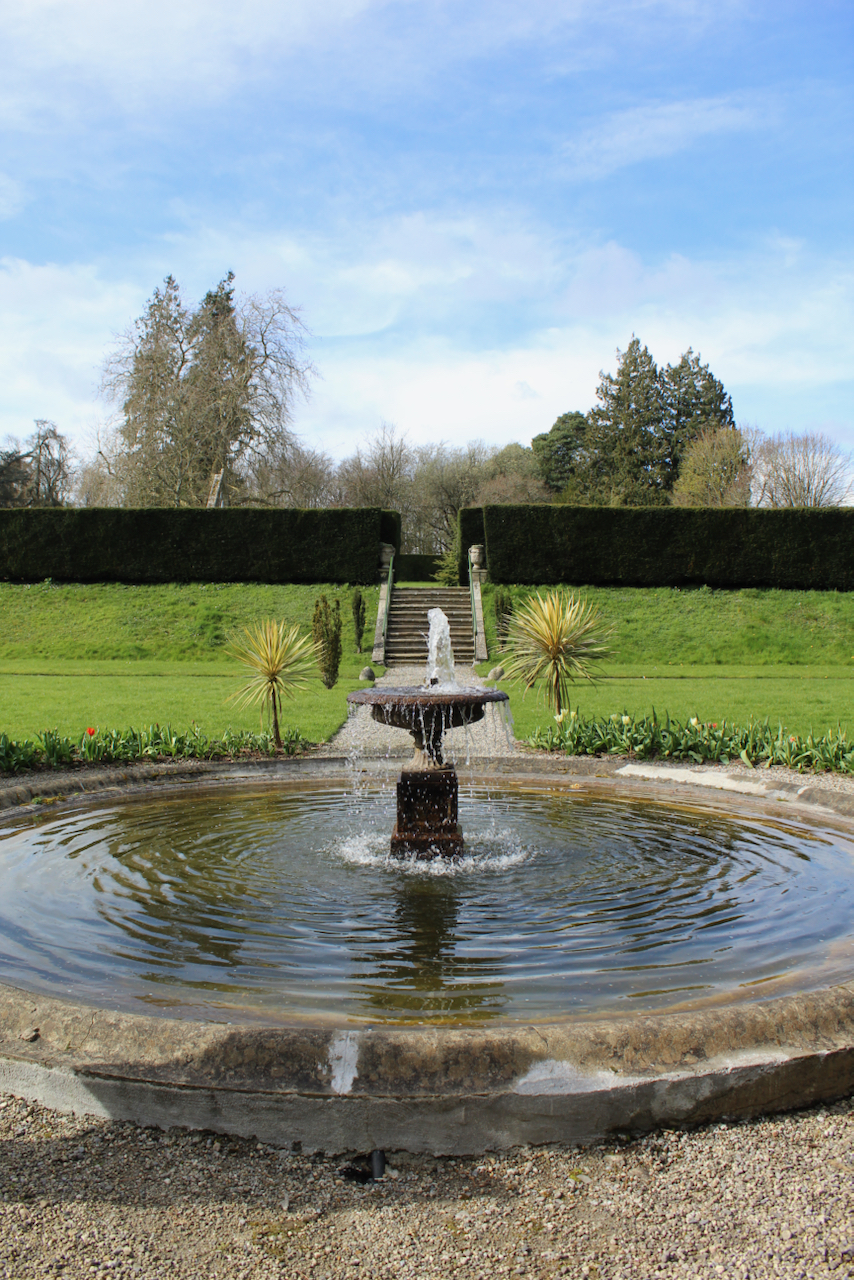
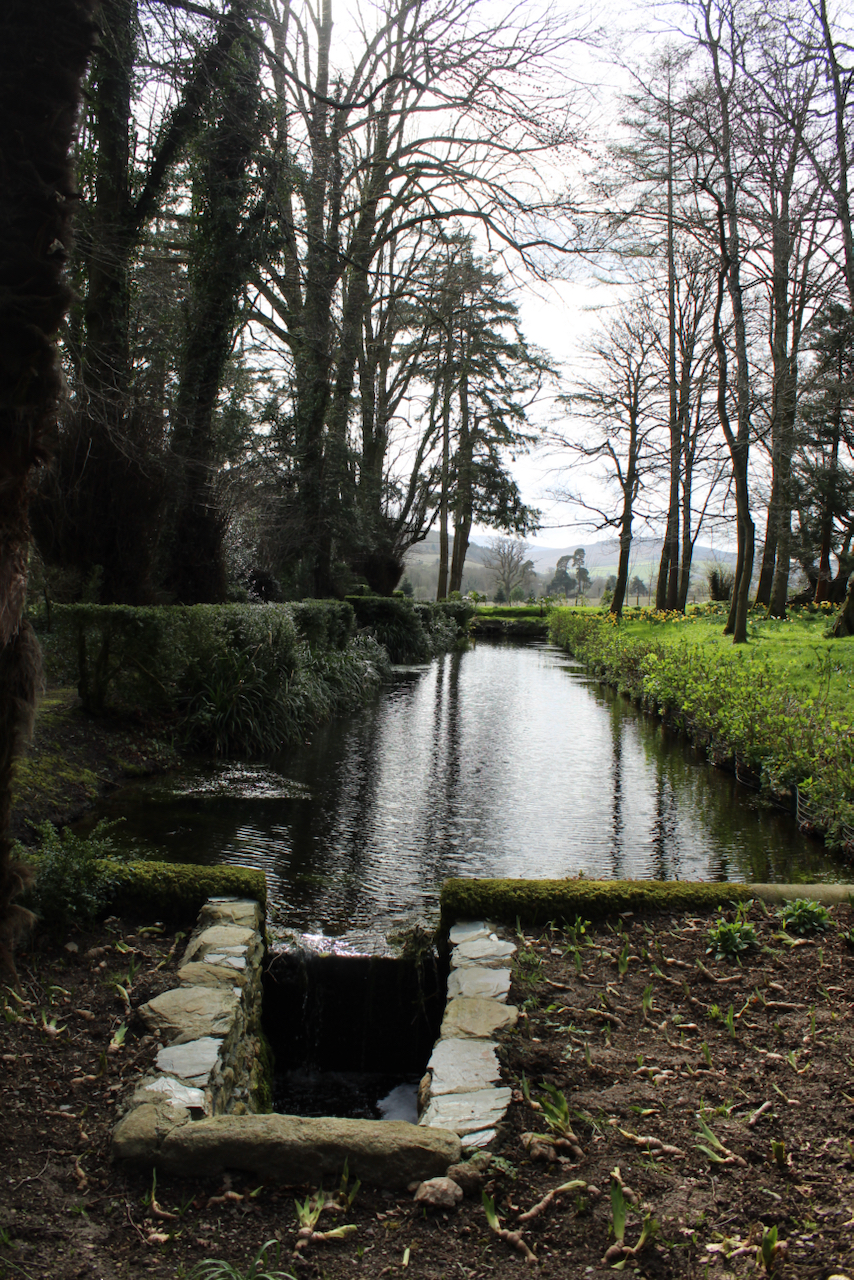
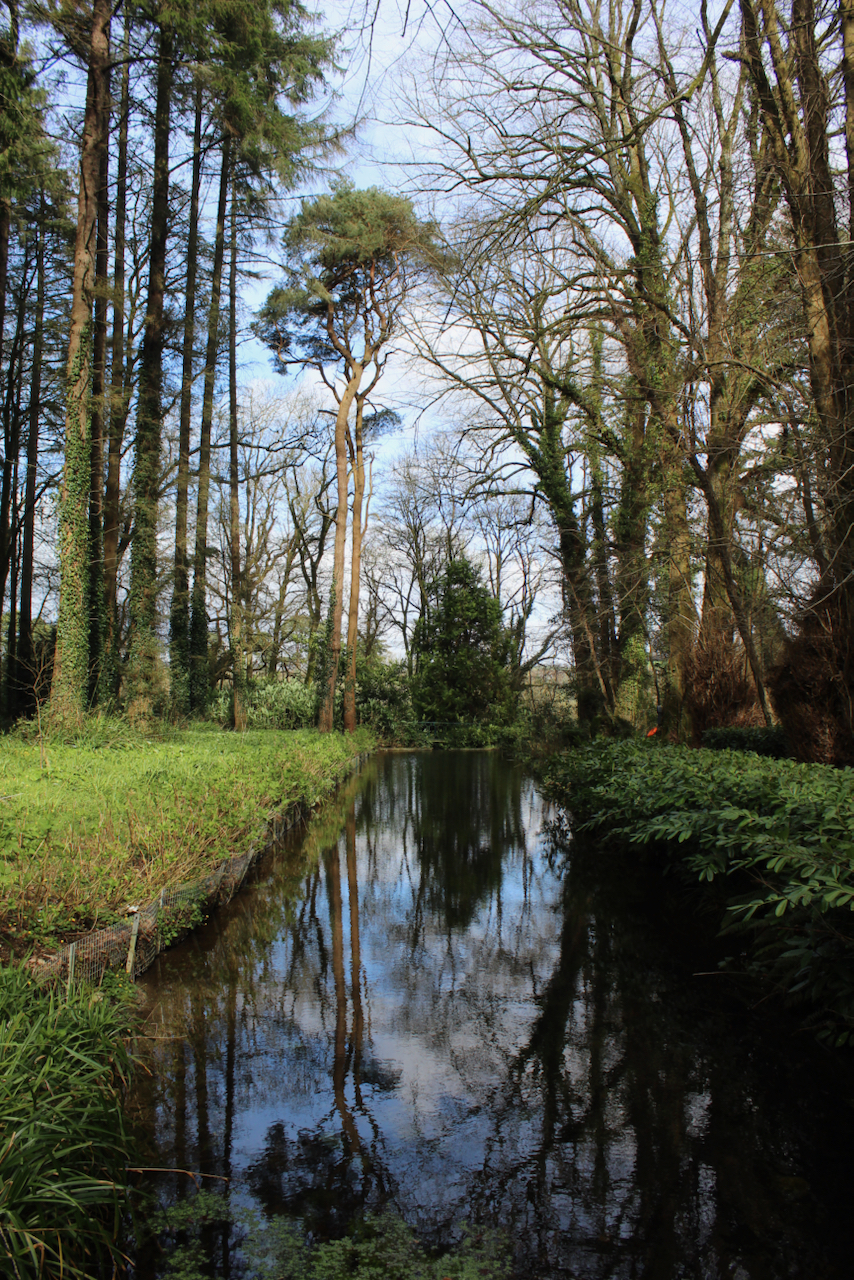
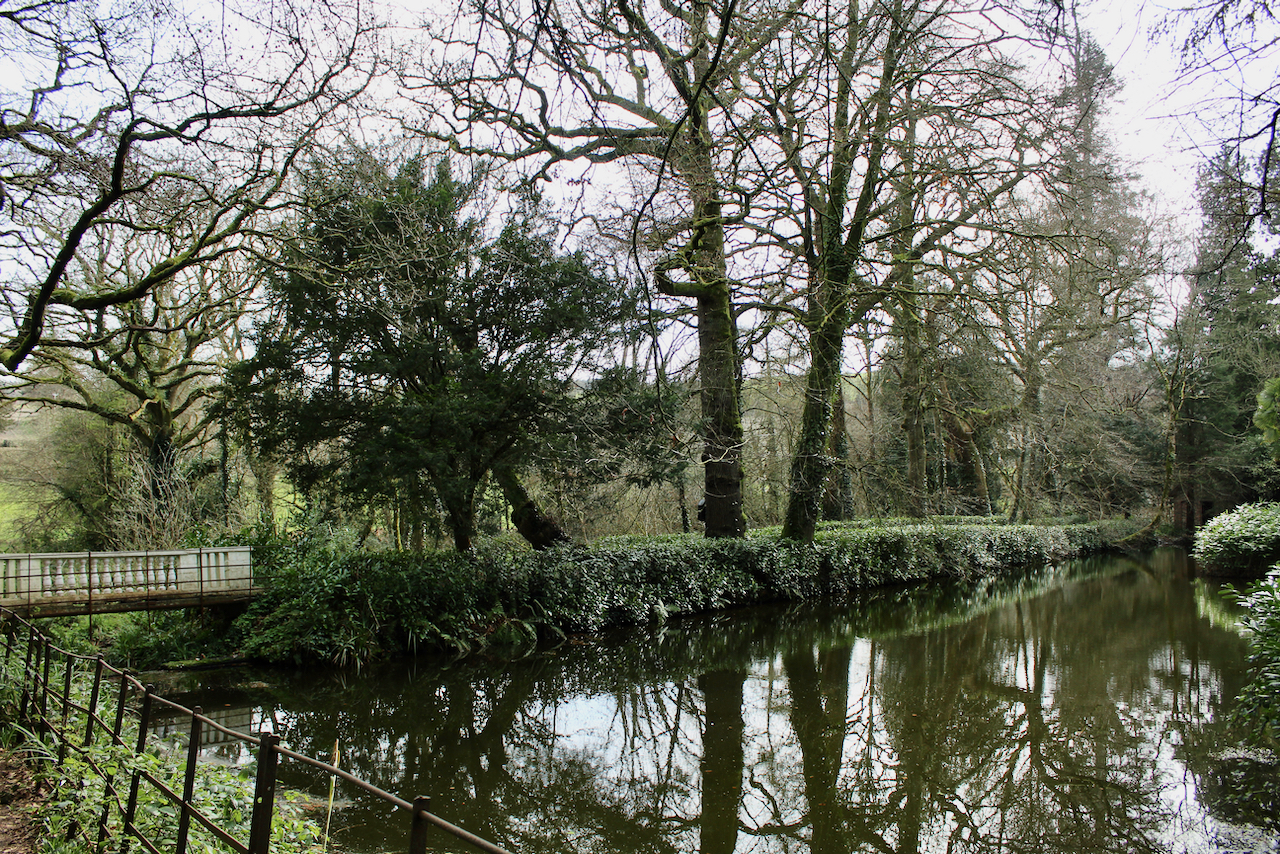
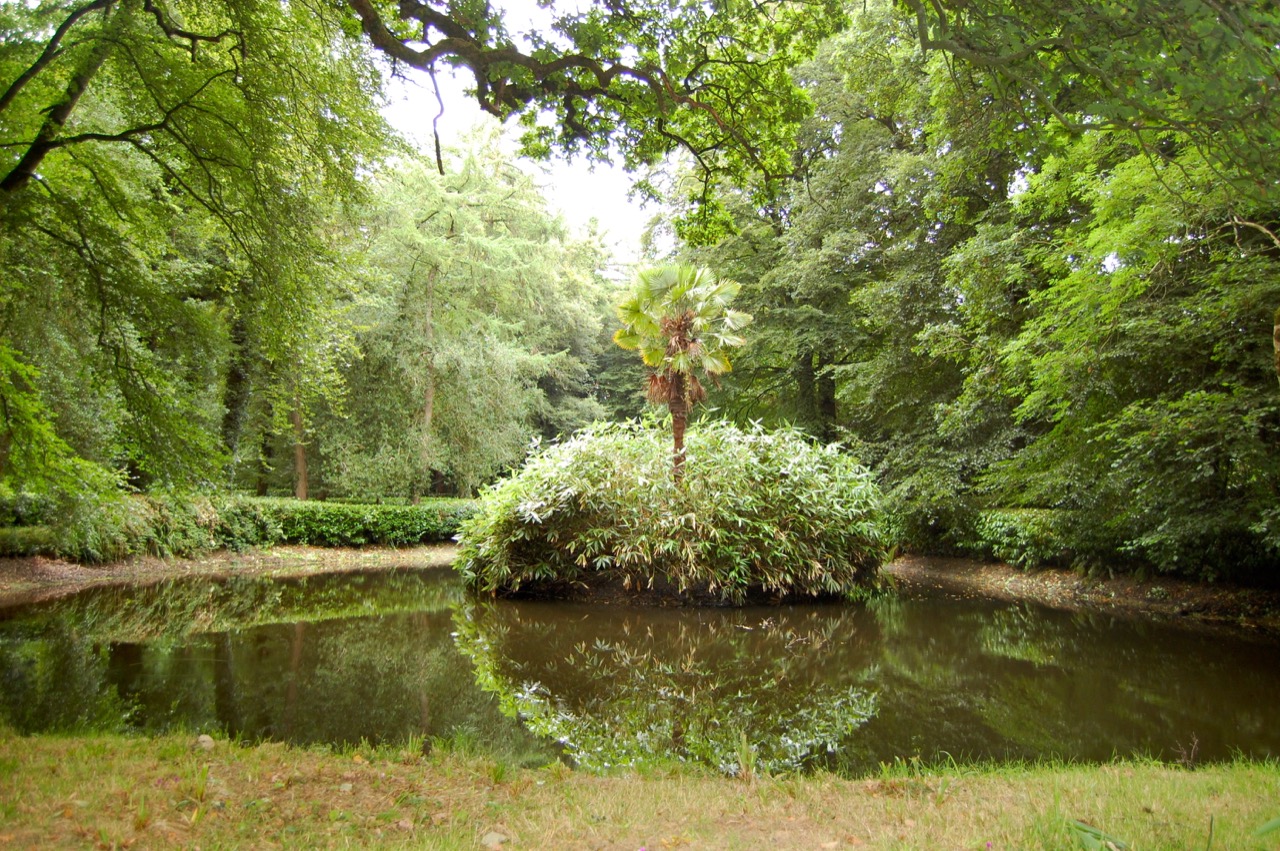
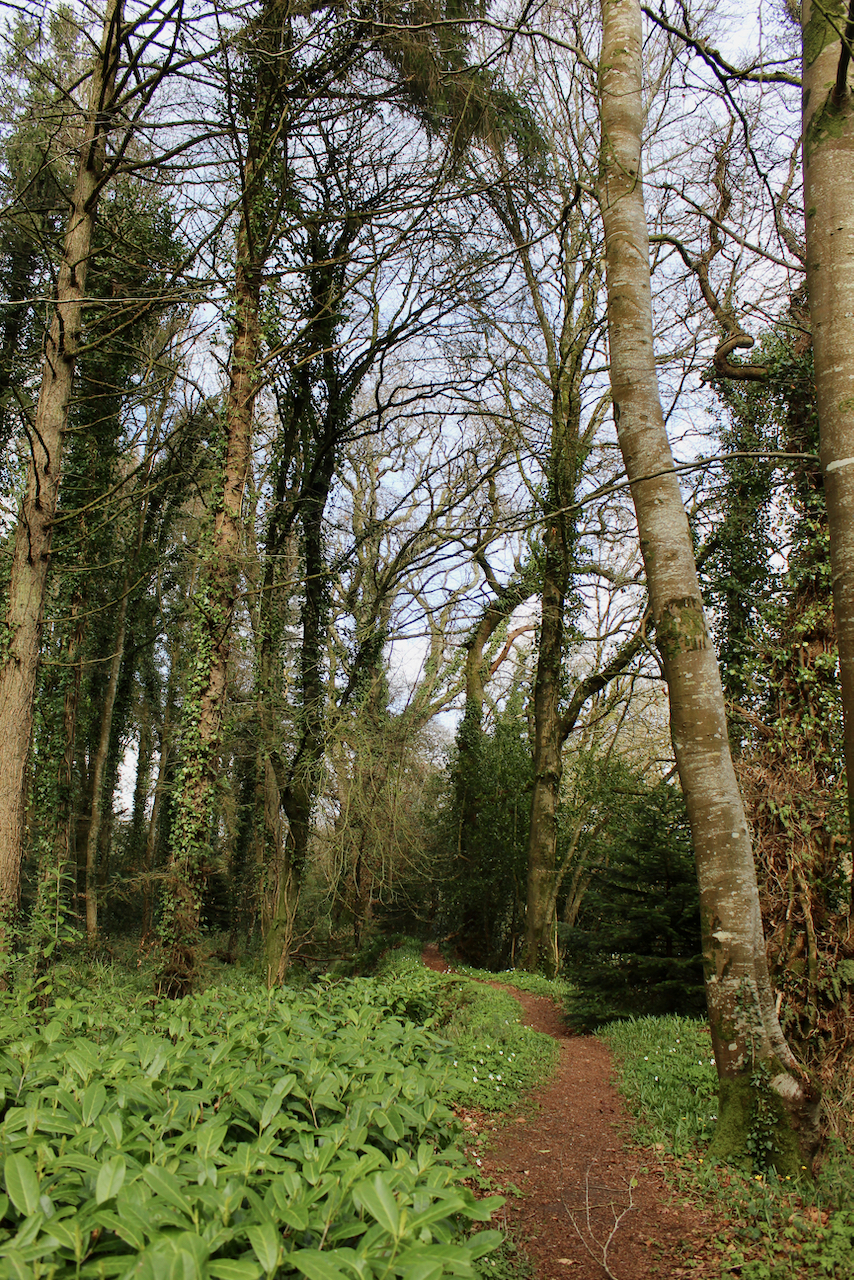

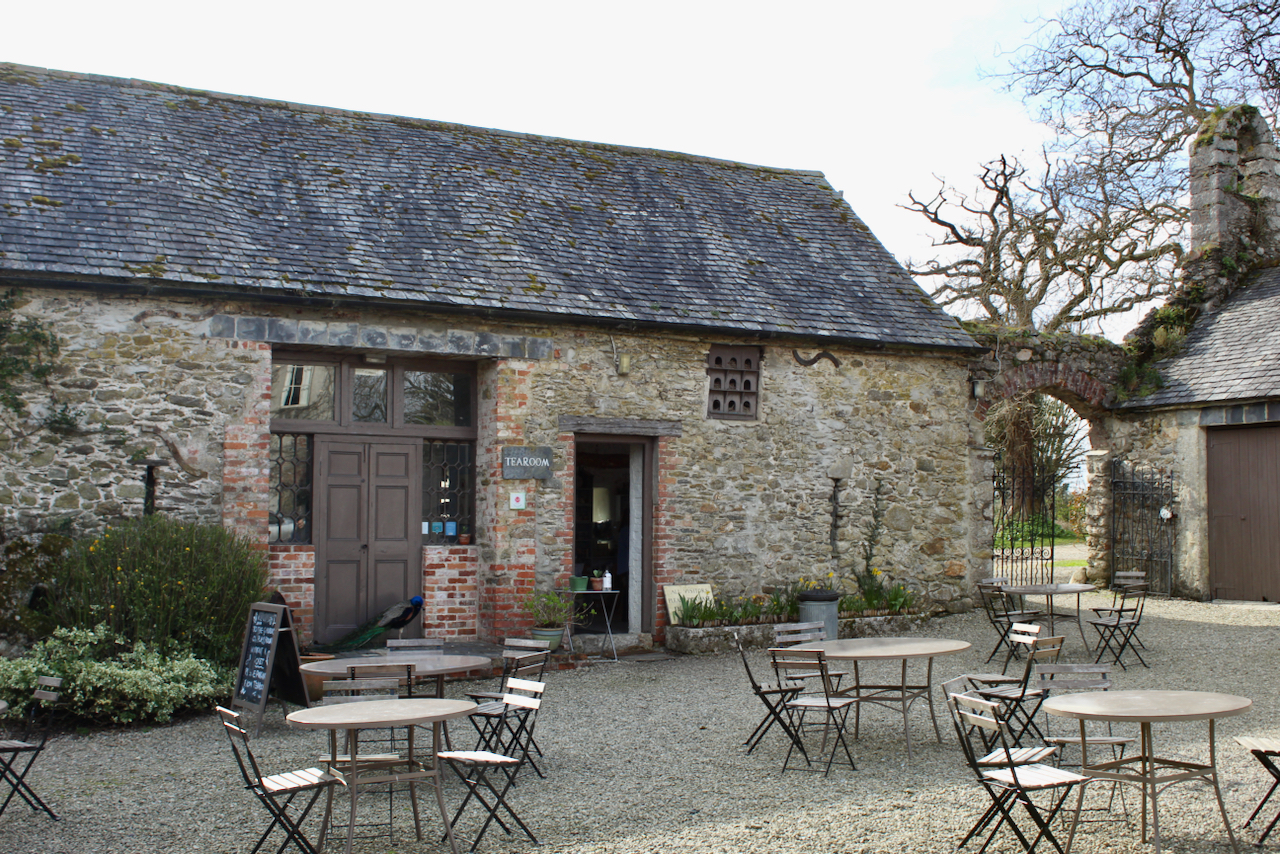
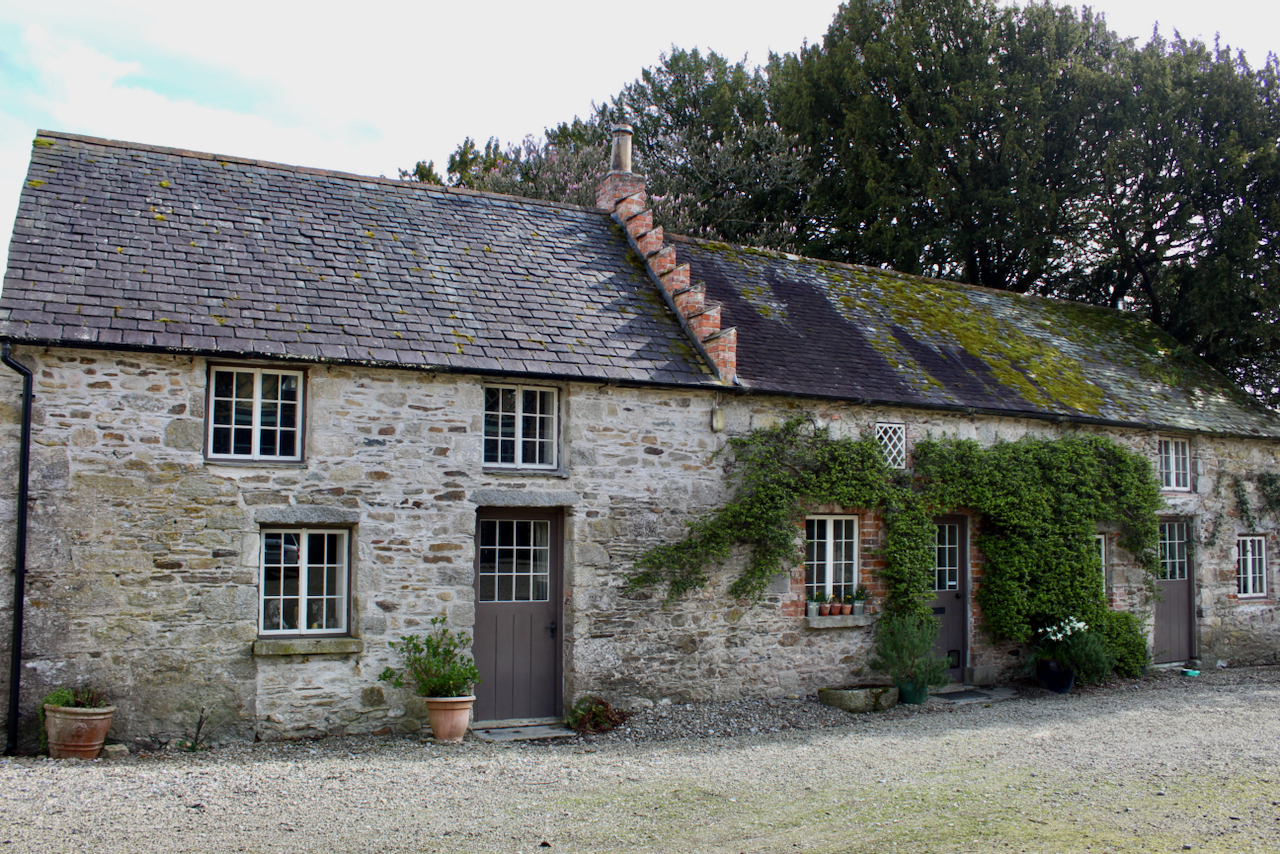
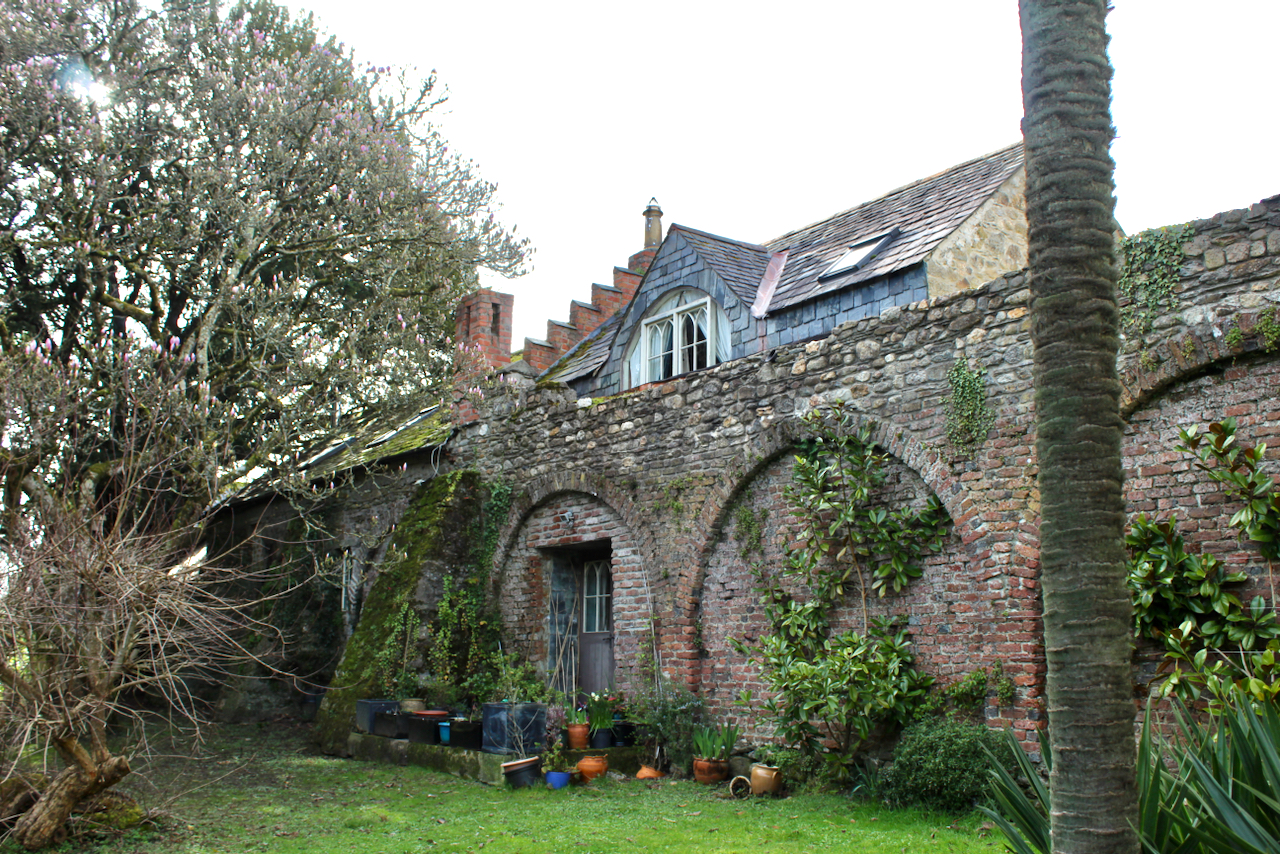
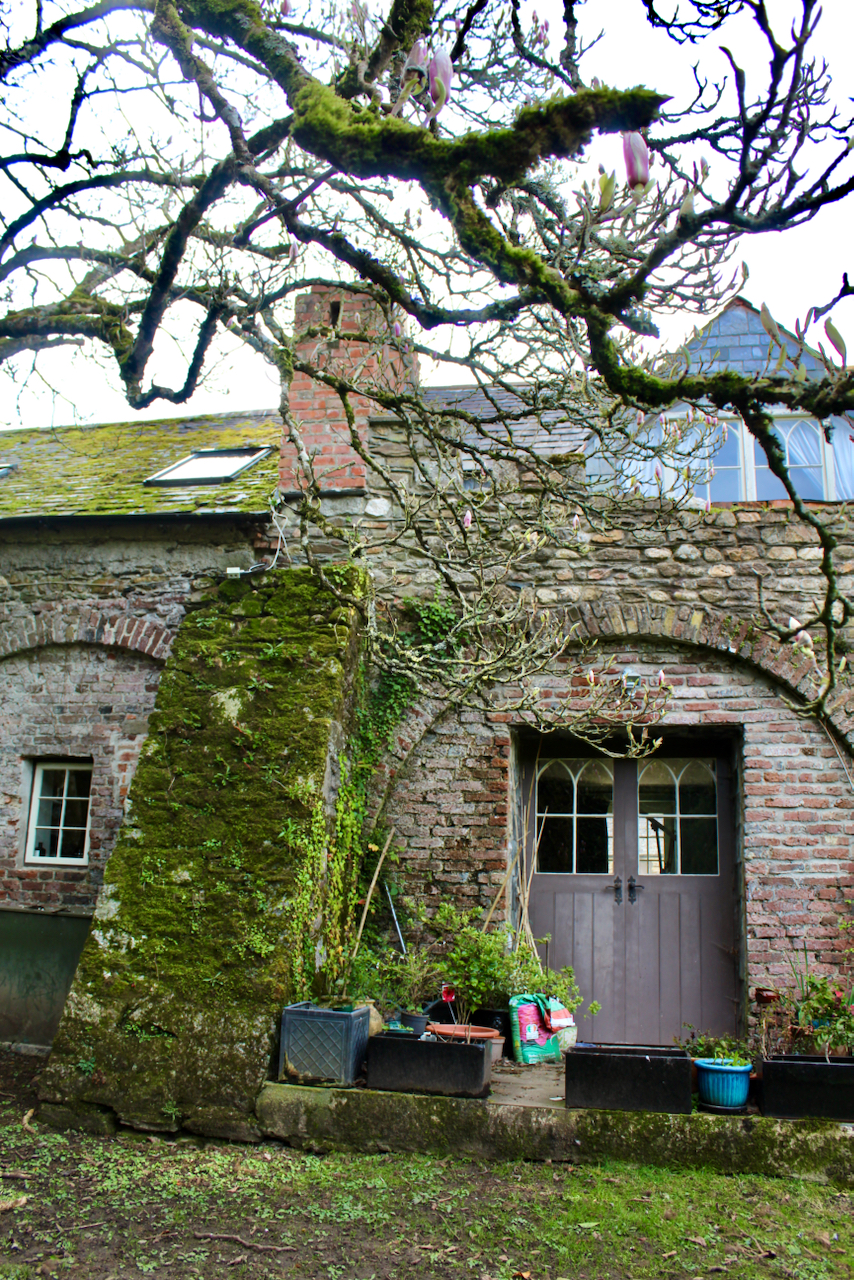
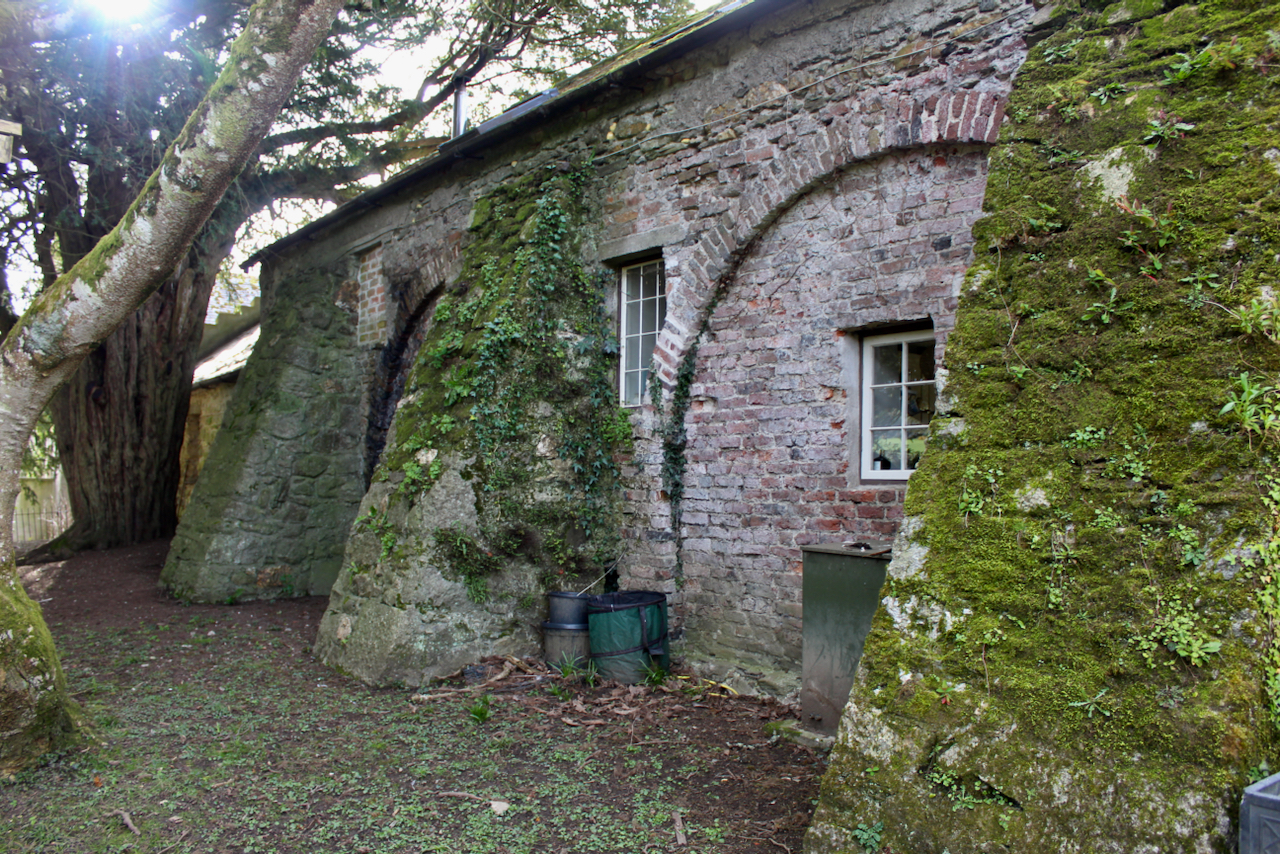
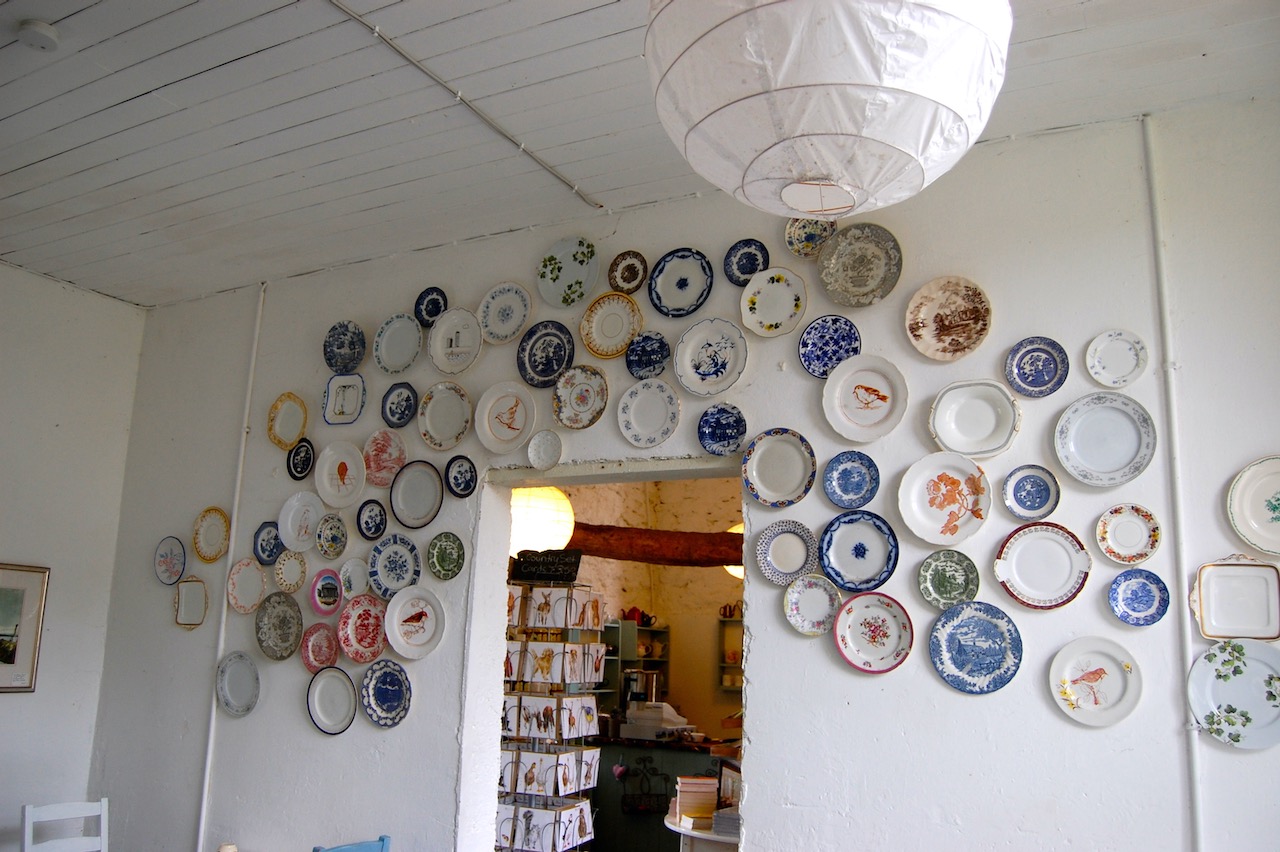
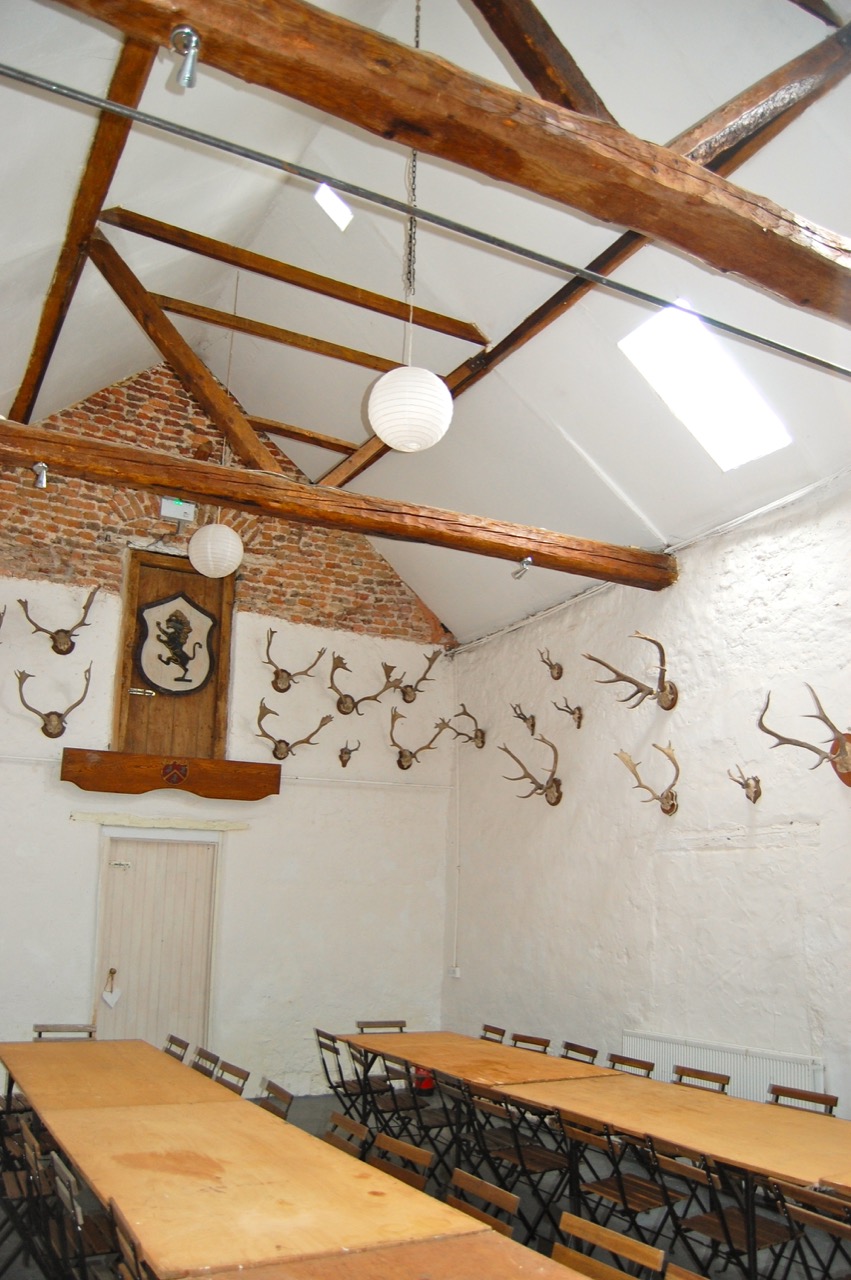
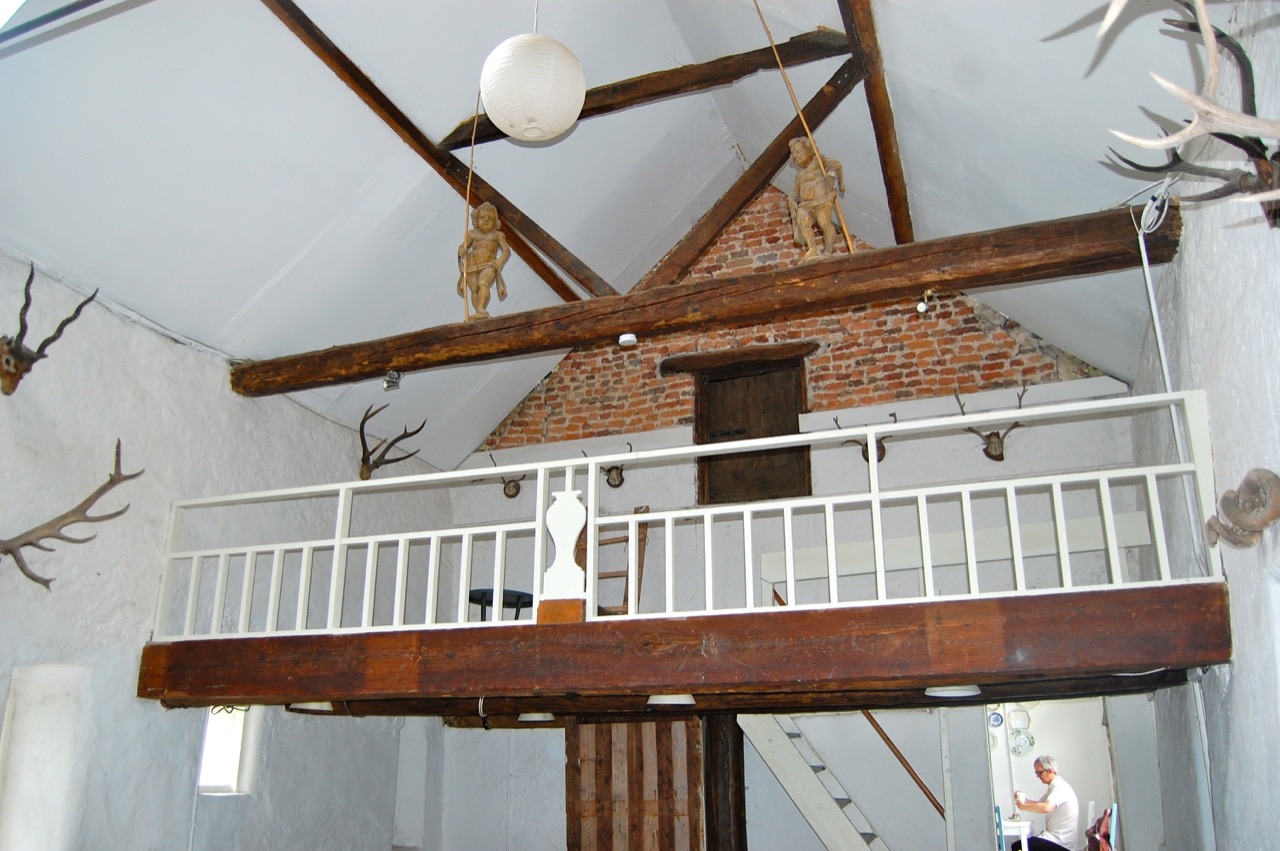




 Irish Historic Houses