Help me to pay the entrance fee to one of the houses on this website. This site is created purely out of love for the subject and I receive no payment so any donation is appreciated!
€15.00
Kerry:
1. Derrynane House, Caherdaniel, County Kerry – OPW
“Set on a peninsula at the head of Kilmackillogue Harbour and surrounded by the Caha Mountains, the garden at Derreen covers 60 acres.
“A network of winding paths passes through a mature woodland garden laid out 150 years ago with subtropical plants from around the world and incomparable views of the sea and mountains.“
“Dhu Varren Garden, owned by Mark and Laura Collins, began its development in 2001. Since then it has grown to contain one ofthe largest and most diverse plant collections of any private garden in Ireland. This continues to grow as new and exciting plantsare sourced from around the world. It has been described by visitors as ‘Kerry’s Botanical Garden’.“
4. Kells Bay House & Garden, Kells, Caherciveen, Co Kerry, V23 EP48 – section 482, garden only
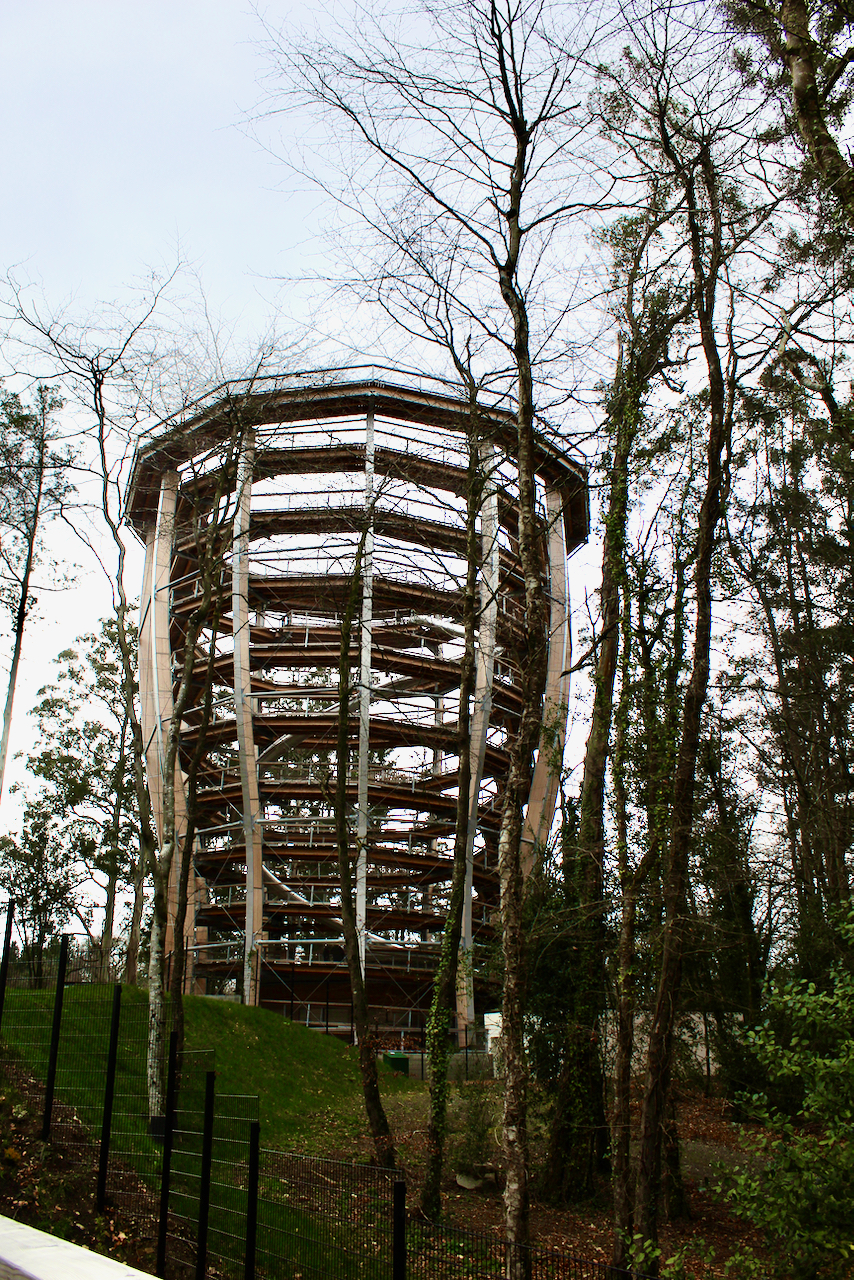
The website tells us: “Kells Bay Gardens is one of Europe’s premier horticultural experiences, containing a renowned collection of Tree-ferns and other exotic plants growing in its unique microclimate created by the Gulf Stream. It is the home of ‘The SkyWalk’ Ireland’s longest rope-bridge.“
Originally called Kenmare House. The stable block of Kenmare House was converted in 1830 into this house. The original Kenmare House was built in 1726 and was demolished in 1872 by Valentine Augustus Browne, 4th Earl of Kenmare. The succeeding house, called Killarney House, and was accidentally destroyed by fire in 1913 and never rebuilt; instead, in 1915 the stable block of the original Kenmare House was converted into the present Killarney House, although the Brownes called it Kenmare House.
John McShain, renowned architect and building contractor, acquired Killarney House, the former home of the Earls of Kenmare, in 1956. After the death of McShain’s wife, Mary, in 1998, the stately house, and its lavish gardens were sold to the State with the proviso that the property would be incorporated into the neighbouring Killarney National Park. The McShains were allowed to live in the house for the remainder of their lives, and they remodelled extensively. When Mrs. McShain died in 1998 the house reverted to the state. It sat empty and became derelict, but in 2011 restoration was begun. The gardens are open to the public and at some stage, the house also will be opened up.
“Found in County Kerry’s Killarney National Park, Knockreer House and Gardens are within walking distance of Killarney Town. The area includes a circular walk with excellent views of the Lower Lake.
“The Knockreer section of Killarney National Park is within walking distance of Killarney Town, County Kerry. This area was formerly part of the Kenmare Estate, which was laid out by Valentine Brown, the third Viscount of Kenmare. Deenagh Lodge Tearoom dates back to 1834 and was the gate lodge of the Kenmare Estate. The tearoom is a popular haunt with locals and visitors after a stroll in the park. It is located just inside Kings Bridge across from St Mary’s Cathedral.
“Knockreer House, a short walk up the hill, is the Killarney National Park Education Centre and is built on the site of the original Killarney House, which was destroyed by fire in 1913. The circular walk is signposted and offers excellent views of the Lower Lake. On the circular walk there is a pathway off to the right that leads up to the viewing point on top of the hill, which provides a wonderful panorama of the surrounding countryside.“
“This nineteenth century Victorian mansion is set against the stunning beauty of Killarney National Park. The house stands close to the shores of Muckross Lake, one of Killarney’s three lakes, famed world wide for their splendour and beauty. As a focal point within Killarney National Park, Muckross House is the ideal base from which to explore this landscape.
“Muckross House was built for Henry Arthur Herbert and his wife, the water-colourist Mary Balfour Herbert. This was actually the fourth house that successive generations of the Herbert family had occupied at Muckross over a period of almost two hundred years. William Burn, the well-known Scottish architect, was responsible for its design. Building commenced in 1839 and was completed in 1843.
“Originally it was intended that Muckross House should be a larger, more ornate, structure. The plans for a bigger servants’ wing, stable block, orangery and summer-house, are believed to have been altered at Mary’s request. Today the principal rooms are furnished in period style and portray the elegant lifestyle of the nineteenth century landowning class. In the basement, one can imagine the busy bustle of the servants as they went about their daily chores. “
“During the 1850s, the Herberts undertook extensive garden works in preparation for Queen Victoria’s visit in 1861. Later, the Bourn Vincent family continued this gardening tradition. They purchased the estate from Lord and Lady Ardilaun early in the twentieth century. It was at this time that the Sunken Garden, Rock Garden and the Stream Garden were developed.“
“Constructed entirely without mortar, Staigue cashel encloses an area of 27.4 m (90 ft) in diameter, with walls as tall as 5.5 m (18 ft) and a sturdy 4 m (13 ft) in thickness. It has one double-linteled entrance, a passageway 1.8 m (6 ft) long. In the virtual-reality environment (above) click the hotspots to proceed to the fort’s interior. It is similar in construction to the Grianan of Aileach in Co. Donegal, and was possibly constructed in the same period of the Early Medieval period (approximately fifth to eleventh century CE). The fort is surrounded by a large bank and ditch, most evident on its northern side. This may have been a part of Staigue’s defenses, or it may be a prehistoric feature that pre-dates the construction of the stone fort.“
The website continues: “In 1897 T.J. Westropp reported that the local peasantry called the building Staig an air, which he translated as “Windy House, or “Temple of the Father,” or “The Staired Place of Slaughter.” These different translations may inspire distinctly different conjectures about the builders of Staigue. It has been described as both a temple or an observatory, and has been attributed to many different cultures in the past, such as Druids, Phoenicians, Cyclopeans, and Danes. But it was, of course, built by the “Kerrymen of old.”
“The sign at the site explains that Staigue “was the home of the chieftain’s family, guards and servants, and would have been full of houses, out-buildings, and possibly tents or other temporary structures.” The illustration from this sign is in the gallery below. Cashels, of which Staigue is an impressive and probably high-status example, were enclosed and defendable farmsteads of the Irish Early Medieval period. They housed an extended family and, in high-status examples, their retinue. However archaeologist Peter Harbison was unable to explain why the ancient architects would have created so many (10) sets of X-shaped stairs climbing up the inner face of the wall to its ramparts.“
Open dates in 2025: Jan 1-4, 6-11, 13-18, 20-25, 27-31, May 1-3, 5-10, 12-17, 19-24, 26-31, July 1-5, 7-12, 14-19, 21-26, 28-30, Aug 1-2, 4-9, 11-31, 10am-12 noon, 2pm-4pm
Fee: adult/OAP/student €5, child free
Tarbert House, County Kerry, photograph from National Inventory of Architectural Heritage.
“Tarbert House, near the town of that name in County Kerry, stands in wooded parkland beside the River Shannon, a few miles downstream from Glin and just across the county bounds. The plain, square, seven-bay seat of James Leslie, erstwhile Bishop of Limerick, was built precisely in the middle of his diocese for convenience, and dates from the 1750s. The house, which is still owned by the bishop’s descendants, was given an additional storey in the mid-19th century but retains its mid-Georgian character and plan, with robust joinery and chimneypieces, and a fine collection of family portraits, furniture, papers and objects.” [3]
The website https://www.barrowhouse.ie/ tells us the House and Gardens are available for bed & breakfast guests or as an exclusive venue for corporate functions, private group rentals and intimate, small scale weddings. They are members of the Historic Houses of Ireland association, which tells us of the history of the house:
“Nestling on the shore of stunning Barrow Harbour with views of the glorious Slieve Mish Mountains, Barrow House in Co. Kerry has a rich history of ownership from knights to noblemen and smugglers.
“Built in around 1715, it possibly incorporates the fabric of an earlier house from during or after the Cromwellian period (1649-57). The sublime Georgian front elevation of Barrow House was added as part of the structural rebuild and enlargement work carried out at some point before 1760, while a second sympathetic addition was made at the rear towards the end of the 1800s. The house has changed little over the years. In fact, its still-visible four-feet thick internal walls, two gable end chimney stacks, original interior features, handcrafted ceiling mouldings and sash windows with antique glass exude the restrained, rational elegance typical of a noble dwelling.
“Alongside is a detached seven-bay single- and two-storey former boathouse, c. 1800, on a U-shaped plan. Barrow’s lands were originally part of the 6,000 acres granted by Elizabeth 1 in 1587 to Sir Edward Denny for his loyalty following the Desmond Rebellion. Nearby are the ruins of an ancient church referred to in Papal documents 1302-07 as “Ecclesia of Barun” or the Church of Barun (Barrow).
“Over the centuries, the house and the estate were passed on through marriage or by sale to different owners, including the notorious smuggler, John Collis. The smuggling of wines and tobacco was prevalent in Kerry during the 17th and 18th centuries in particular and Barrow Harbour was a natural rendezvous with its caves and narrow inlets. In the first half of the 20th century, the Knights of Kerry, the Fitzgerald family, affectionately referred to Barrow House as their summerhouse. In more recent years, it was purchased by an American, Maureen Erde, who published a popular account of running it as a golfers’ guesthouse entitled “Help me, I’m an Irish Inn Keeper”. After she sold it in 1999, the house was restored as a resort estate, flourishing for some years before enduring a period of neglect and abandonment. Barrow House’s current owner, Daragh McDonagh, purchased it in 2016 and has lovingly restored it to welcome guests.“
4. Cahernane (or Cahirnane) House, Killarney, Co Kerry – hotel
Cahernane House, County Kerry, photograph from National Inventory of Architectural Heritage, which tells us it is a seven-bay two-storey over part-raised basement Ruskinesque Gothic Revival style country house with dormer attic, dated 1877, possibly incorporating fabric of earlier house. Designed by James Franklin Fuller.
The website tells us:
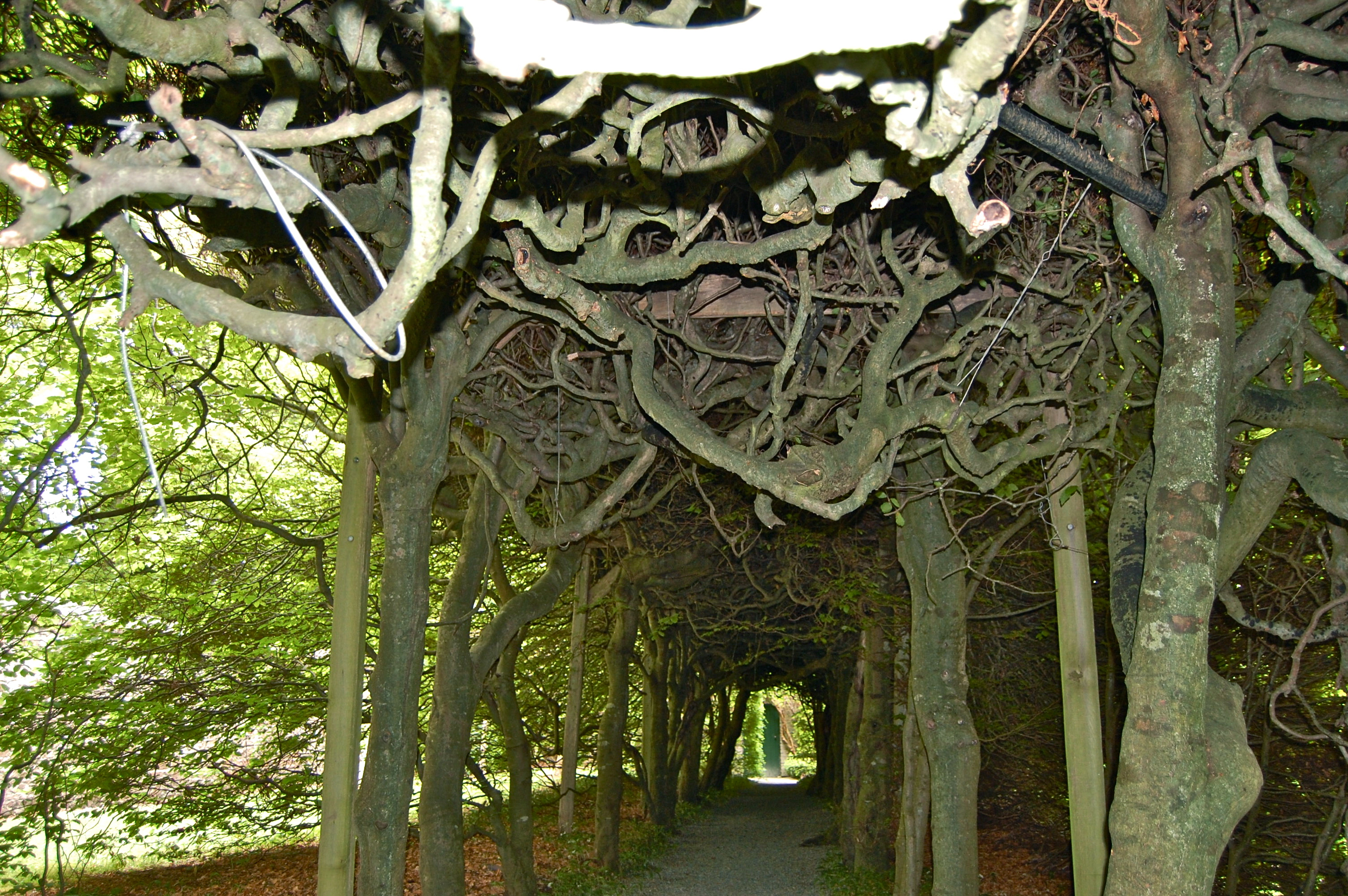
“Beautifully situated on a private estate on the edge of Killarney National Park, our luxury four-star hotel is located just twenty minutes’ walk from Killarney town centre. The entrance to the hotel is framed by a tunnel of greenery which unfurls to reveal the beauty of this imposing manor house, constructed in 1877 and formerly home to the Herbert Family.
“Cahernane House Hotel exudes a sense of relaxation and peacefulness where you can retreat from the hectic pace of life into a cocoon of calmness and serenity. The only sounds you may hear are the lambs bleating or the birds singing.
“Cahernane House was built as the family residence of Henry Herbert in 1877 at a cost of £5,992. The work was carried out by Collen Brothers Contractors. The original plans by architect James Franklin Fuller, whose portfolio included Ballyseedy Castle, Dromquinna Manor and the Parknasilla Hotel, was for a mansion three times the present size.“
The website tells us: “If you are looking for the perfect hideaway which offers peace, tranquility, plus a wonderful restaurant on the lake, Carrig House on the Ring of Kerry and Wild Atlantic Way is the place for you. The beautifully appointed bedrooms, drawing rooms and The Lakeside Restaurant, overlooking Caragh Lake and surrounded by Kerry’s Reeks District mountains, rivers and lakes create the perfect getaway.
“Carrig House was built originally circa 1850 as a hunting lodge, it was part of the Blennerhassett Estate. It has been mainly owned and used by British Aristocracy who came here to hunt and fish during the different seasons.
“The house was purchased by Senator Arthur Rose Vincentin the early 20th. Century. Vincent moved here after he and his wealthy Californian father in law Mr. Bowers Bourne gave Muckross House & Estate in Killarney to the Irish Government for a wonderful National Park.
“Bourne had originally purchased Muckross House from the Guinness family and gave it to his daughter Maud as a present on her marriage to Arthur Rose Vincent. However, Maud died at a young age prompting Bourne and Vincent to donate the estate to the Irish State.
“Vincent remarried a French lady and lived at Carrig for about 6 years, they then moved to the France. The country house history doesn’t end there, Carrig has had many other illustrious owners, such as Lady Cuffe , Sir Aubrey Metcalfe, who retired as the British Viceroy in India and Lord Brocket Snr, whose main residence was Brocket Hall in England.
“Frank & Mary Slattery, the current owners purchased the house in 1996. They are the first Irish owners of Carrig since it was originally built and have renovated and meticulously restored the Victorian residence to its former glory.
“For over two decades Frank & Mary have operated a very successful Country House & Restaurant and have won many rewards for their hospitality and their Lakeside Restaurant. They are members of Ireland’s prestigious Blue Book.
“Carrig House has 17 bedrooms, each individually decorated in period style with antique furniture. Each room enjoys spectacular views of Caragh Lake and the surrounding mountains. All rooms are en suite with bath and shower. Those who like to indulge can enjoy the sumptuous comfort of the Presidential Suite with its own separate panoramic sitting room, male and female dressing rooms and bathroom with Jacuzzi bath.
“The restaurant is wonderfully situated overlooking the lake. The atmosphere is friendly, warm and one of total relaxation. The menu covers a wide range of the freshest Irish cuisine.
“Irish trout and salmon from the lake and succulent Kerry lamb feature alongside organic vegetables. Interesting selections of old and new world wines are offered to compliment dinner whilst aperitifs and after-dinner drinks are served in the airy drawing room beside open peat fires.
“Within the house, chess, cards and board games are available in the games room.“
6. Castlemorris House, Tralee, County Kerry€
Castlemorris House, Tralee, County Kerry, photograph from National Inventory of Architectural Heritage.
Castlemorris is now a bed and breakfast. The National Inventory tells us it is a detached five-bay three-storey over basement house, built c. 1830, with single- and two-storey extensions to rear. Formerly residence of army officer in neighbouring barracks.
Drumquinna Manor, photograph from the National Inventory of Architectural Heritage, which tells us that the house is an eleven-bay two-storey Jacobean Revival style country house with dormer attic, built c. 1890, designed by James Franklin Fuller.
It was constructed for Sir John Columb around 1889-90. The website tells us:
“There are many elements to Dromquinna Manor. Firstly it is a stunning waterside estate unlike anything else. Set on 40 acres of parkland planted in the 1800s, the Estate offers an abundance of activities and facilities.
“The Manor, dating from the 1890s, is dedicated to catering for Weddings and events. The Oak Room is the heart of the Manor and is classical in every sense. Stylish beyond words with views of Kenmare Bay celebrations here are truly memorable. The Drawing Rooms and Terrace all make for a very special and memorable occassion for all. It is a real family and friends party as opposed to a hotel ballroom function.”
8. Killarney Country Clubcottage (formerlyFahagh Court) Beaufort, Co Kerry €
Mark Bence-Jones tells us about the main house (1988): p. 122. (Morrogh-Bernard/IFR) An irregular two storey house with a shallow battlemented bow and a rusticated doorcase of sandstone on its front, and a gable at the back. Now an hotel.” [4]
“A fantastic mid-terrace property in the grounds of Killarney Country Club just outside Faha near Beaufort in County Kerry, eight miles from Killarney.
“Stone built but with a modern feel and fantastic mountain views, this is an excellent base for a family or friends to come to County Kerry and do some sightseeing.
“There are two bedrooms upstairs, a double and a twin, along with a shower room, while on the ground floor there is an open plan living area with kitchen, dining area and living area, keeping everyone together while breakfast is being rustled up ahead of a day of exploring.
“French doors in the living area take you out to the rear garden, with spectacular views of Macgillycuddy’s Reeks mountain range, home to Carrauntoohil, the highest peak in Ireland.
“With a bar on site there will be no arguments about who the designated driver will be.
“With great scenery in the surrounding area, be sure to do a bit of sightseeing while out for a walk or a cycle in the fresh Irish air.
“Only a short drive down the road, Beaufort will tend to your basic needs while Killarney is only eight miles away, where you can sample a range of shops, restaurants and pubs with some good local Irish music being played.“
Glanleam, County Kerry, photograph from National Inventory.
The website tells us:
“Glanleam was built as a linen mill in 1775 and later converted into a house by the Knight of Kerry, who planted the magnificent sub-tropical gardens. In 1975 Meta Kreissig bought the estate which had declined for 50 years. She rescued the house, restored and enlarged the garden and, with her daughter Jessica, made it a delightful place to stay, with a mixture of antique and contemporary furniture and an extensive library. The setting looking out over the harbour is magical. There are green fields, a beach and a lighthouse, and Valentia Island is connected to the Kerry mainland by a car ferry and a bridge.
“Glanleam was converted into a country house by the 19th Knight of Kerry (1808-1889). His father had developed the famous Valentia slate quarry (the slates were especially in demand for billiard tables, then very much in vogue). The Knight, an enthusiastic botanist, recognised the unique potential of the island’s microclimate for sub-tropical plants and laid out a fifty acre garden, using species just introduced from South America. His efforts won him great acclaim at the time and today his gardens have matured into dense woodlands.
“Together Meta Kreissig and her daughter Jessica have refurbished the house, furnishing it with an amalgam of antique and modern pieces, and opened it to guests. There is an extensive library, several of the rooms have their original Valentia slate chimneypieces, and the bedrooms have luxurious Bonasck designer bathrooms. The gardens have also benefited from their attention. One recent visitor described the ‘radial planting of vegetables’ in the centre of the walled kitchen garden as ‘a jewel’.“
10. Keel House, Keel, Castlemaine, Co. KerryV93 A6 Y3
The website tells us that Muxnaw Lodge in Kenmare is an attractive Victorian house, with spectacular views of the Kenmare River and Suspension Bridge.
Muxnaw Lodge features in Jane O’Hea O’Keeffe’s Voices from the Great Houses: Cork and Kerry. Mercier Press, Cork, 2013:
p. 242. “John Desmond Calverley Oulton (konwn as Desmond), who was born at Clontarf Castle in 1921, is the son of John George Oulton and Sybil Mona Calverley. He has long and loving memories of his childhood home at Clontarf Castle, where he played with his siblings in truly magical surroundings…”
p. 245. “During his childhood days, Desmond and his family would travel to Kerry each summer to stay at Muxnaw Lodge at Kenmare, which had been owned for generations by his mother’s people, the Calverleys. A lovely gabled building, the Lodge was built in 1801 as a hunting and fishing lodge by the Calverley family. It is situated on a spectacular site overlooking the Kenmare River and is now run as an up-market guesthouse.
The name Muxnaw comes from the Irish Mucsnamh (the swimming place of the pigs). Joyce’s Irish Place Names gives this explanation:
“The natural explanation seems to be that wild pigs were formerly in the habit of crossing… at this narrow point. The Kenmare River narrowed at this point by a spit of land projecting from the northern shore, and here in past ages, wild pigs used to swim across so frequently, and in such numbers, that the place was called Muscnamh or Mucksna.”
p. 245. “Desmond explains the complexities of hisfamily history: “Colonel Vernon, owner of Clontarf Castle, had several daughters and a son. One daughter, Edith Vernon, married Walter Calverley who owned Muxnaw Lodge. They had two children, my mother, Sybil Mona Calverley, and Walter Calverley. Walter was killed during the first world war, and following the death of Walter Calverley Sr, Muxnaw Lodge went to his brother, Charles, who left it to his niece, my mother.” “
“Parknasilla Hotel, nestled in the shadows of the Kerry mountains amidst islands, inlets and hidden beaches.
“Come stay with us and feel the restorative power of nature and marvel in the splendour of the seascape and landscape that surrounds you here.
“The word Parknasilla ,(means the field of Sallys) [perhaps “salix” meaning Willow], for so many is evocative of so many things, tucked away in the corner of a subtropical paradise on the Kenmare river , it’s a place of beauty, of rare plants, islands linked by timber bridges and coral inlets.
“Where the sea, the light and clouds put on a continual show to delight the senses. A place where people come as guests and leave as friends, with its tradition of hospitality stretching back over 125 years. It has hosted royalty, dignitaries, family gatherings and romantic get aways.
“It has provided people with that peaceful haven for them to recalibrate and recharge their batteries but it has also been that place of quite inspiration for writers and artist from George Bernard Shaw to Ceclia Ahern .
“With its winding walks, this 200 acre estate walled gardens, golf course, island dotted bay and spa coupled with a world class resort with a 4 star hotel houses and apartments it provides one with that perfect retreat to suit all tastes.
“It is a place of many layers constantly evolving, seen through the prism of history it’s a place where people create their own be it in the friends formed or memories laid down to last a life time, a place to return to again.”
The website tells us about the history of Parknasilla:
“The origins of the rise of the Great Southern Hotels and Parknasilla arised from the middle of the 19th century. Despite the ravages of the famine, Ireland was seen as an exotic tourism destination and this was particularly true after Queen Victoria’s trip to Ireland and Kerry in 1861, that saw an explosion of tourism from overseas. Railway lines were developed in the mid 1850’s from Dubin to remote towns of Killarney, Dingle, Galway and Sligo and later new lines were developed from Killarney for instance to Kenmare.
“In the South of Ireland, the most import railway was the Great Southern and Western Dublin-Cork Link that opened in 1849. Excursions were promoted and resort hotels that were built were to supplied with customers by new railway line. New doors opened for Parknasilla around the start of the 1890’s, when in 1893 Kenmare became the terminuis of the branch line. Subsequently two years earlier, the Derryquin Estate was in 1891 by the Bland family in various lots. Bishop Graves of Limerick who had leased the part of the property for a long period off the Blands, purchased in one lot, and only a short time after sold the property to the Great Southern Hotel Group.
“On the 1st of May 1895, The Southern Hotel Parknasilla opened, the name Parknasilla which means “The field of the willows” began to appear on the maps. It was also refered to as the “Bishops House Hotel, Parknasilla”. The story of the construction of architecture is also an interesting one. Eminent architect James Franklin Fuller was chosen by the Great South and Western Railway, prior 1895. Fuller himself left an incredible legacy behind, he was responsible for the designs of some of Ireland’s most iconic buildings such as Kylemore Abbey, Ashford Castle, Kenmare Park (formely the Great Southern Kenmare) and Farmleigh House.
“Born in 1835 in Kerry, he was the only son of Thomas Harnett Fuller of Glashnacree by his first wife, Frances Diana, a daugther of the Francis Christopher Bland of Parknasilla dn Derryquin Castle. The Blands were indeed synomous with Parknasilla for over two centuries, and new chapter for Parknasilla future now had an incredible link with its past.
“The hotel originally started out in what was known as “The Bishops House”, however a better position was chosen in 1897 for a new purpose buillt hotel. The new Parknasilla Hotel faced down the Kenmare Bay an offered its guests uparelled views of the Atantic Ocean. The facilties of the new hotel included Turkish Hot and Cold Seawater Baths, reading and games rooms and bathrooms on every floor. This decision came after unprecedented demand that well exceed supply.“
The website also tells us about the early owners of the property:
“The Blands of Derryquin Castle Demense were a Yorkshire family, the first of whom Rev. James Bland came to Ireland in 1692 and from 1693 was vicar of Killarney. His son Nathaniel, a judge and vicar general of Ardfert and Aghadoe obtained a grant of land in 1732 which would later become the Derryquin Estate. Derryquin Castle was the third house of the Blands on this land but it is not known when it was first constructed, its earliest written mention being in 1837, however it was indicated some decades earlier by Nimmo in his 1812 map.
Nathaniel Bland (1695-1760), Vicar General of Diocese of Ardfert and Aghadoe, Picture from The Story of Dorothy Jordan by Clare Jerrold, 1914, courtesy of Teresa Stokes, flickr
“The estate is said to have reached its zenith under the guidance of James Franklin Bland (1799-1863). His nephew the well known architect James Franklin Fuller described the castle estate in his autobiography as a largely self-supporting community busy with sawmill, carpenter’s shop, forge as well as farming and gardening. A fish pond existed on the water’s edge just below the castle, alternatively described as being self-replenishing with the tide or restocked from a trawler.
“The castle itself consisted of a three-storey main block with a four-storey octagonal tower rising through the centre and a two storey partly curved wing branching off in a western direction. Major renovations were carried out and a significant additional wing running southwest, overlooking the coastline was added sometime between 1895 and 1904.
“James Franklin Bland’s death in 1863 the estate passed to his son Francis Christopher, the estate slipped into decline during the time that he was absent while travelling and preaching on Christian ministry, this being during the years of land agitation in Ireland. Part of the estate was sold in the landed estates court in 1873 but ultimately the decline continued with the remainder being sold in 1891.
“It was bought in 1891 for £30,000 by Colonel Charles Wallace Warden. He had retired in 1895 as Colonel of the Middlesex Regiment (previously known as the 57th) He had seen action in the Zulu War of 1879 and on his death on 9th March 1953 in his 98th year was its oldest survivor. He also fought with the Imperial Yeomanry in the Boer War. As landlord of Derryquin he was highly unpopular with tenants and neighbours alike, his behaviour regularly mentioned in Parliament. After the burning of Derryquin Castle he retired to Buckland-tout-Saints in Devon and acquired an estate there with his payment from the burning of Derryquin.
“However in 2014 Derryquin castle rose again out of the ashes to feature in a novel by Christopher Bland chairman of the BBC who having discovered a photo of his ancestors decided to write the novel Ashes in the Wind. it interweaves the destinies of two families: the Anglo-Irish Burkes and the Catholic Irish Sullivans, beginning in 1919 with a shocking murder and the burning of the Burkes’ ancestral castle in Kerry. Childhood friends John Burke and Tomas Sullivan will find themselves on opposite sides of an armed struggle that engulfs Ireland. Only 60 years later will the triumphant and redemptive finale of this enthralling story be played out.“
Whole House Rental County Kerry:
1. Ballywilliam House, Kinsale, County Kerry – whole house rental, up to 16
See above, https://www.barrowhouse.ie/ and “We invite you to celebrate, reconnect and escape with your friends and family to the idyllic West Coast of Ireland. Enjoy the benefits of exclusivity, privacy and tranquillity and make Barrow House your home. Unwind and relax as you enjoy a smouldering fire, or explore the lakes and mountains of our great outdoors. Our aim is to provide a beautiful backdrop steeped in rich history for you and your companions to create lingering memories. Your stay will be uniquely tailored to your preferences, choose your own pace of life, making it as restful or as active as you please.“
3. Churchtown House, Killarney, County Kerry(sleeps 12)
p. 83. “(Magill/IFR) A three storey 5 bay C18 house. Doorcase with entablature on console brackets flanked by narrow windows. Fine gate piers with pineapples.” [4]
The Hidden Ireland website tells us:
“Churchtown Estate incorporates both Churchtown House and Beaufort Golf Club. The centre piece is the Georgian Churchtown House built in 1740 by Sir Rowland Blennerhassett. In 1860 James MacGillycuddy Magill bought the estate and turned it into one of the largest dairy farms of its time in the south west region.
“James’s grandson and great grandson’s closed the farm in the early nineties and with the help of golf architect Arthur Spring, developed Beaufort Golf Course which was officially opened in 1995. The golf course went through further development in 2007 when it was re-designed by Tom Mackenzie of Mackenzie Ebert – Leading International Golf Architects.
“Churchtown House mixes traditional elegance with country house charm and modern facilities. 2 large elegant reception rooms, roaring fires and quiet reading rooms add to the atmosphere. There is also a home entertainment room and games room in the basement of the house for guests to enjoy.
“The House comfortably sleeps 12 in 6 spacious bedrooms, with a selection of King or twin rooms, with 2 additional ‘pull out’ beds if needed to accommodate 14 guests. All bedrooms have private bathrooms with modern facilities. The kitchen is fully equipped with an Aga and halogen hob, modern appliances and beautiful breakfast table looking out onto the courtyard and Ireland’s highest mountain Carrauntoohil.
“The ruins of 15th century Castle Corr standing on the 15th green was designed as a square tower house. Castle Corr (Castle of the round hill) was built circa 1480 by the MacGillycuddy’s, a branch of the O’Sullivan Mór Clan. Fearing that it would have been taken by the English forces Donagh MacGillycuddy burnt the castle in 1641 but restored it in 1660. Donagh went on to become High Sheriff of Kerry in 1687.
“The castle was abandoned by Donagh’s son Denis in 1696 when he married into the Blennerhassett family in nearby Killorglin Castle. The stone of Castle Corr was taken to build the Georgian manor Churchtown House.“
4. Coolclogher House, Killarney, County Kerry– whole house rental accommodation, up to 16 people
Coolclogher House, County Kerry, photograph from National Inventory of Architectural Heritage.
“Coolclogher House built in 1746 is a historic manor house set on a 68 acre walled estate near Killarney on the Ring of Kerry. The house has been restored to an exceptional standard by Mary and Maurice Harnett and has spacious reception rooms, a large conservatory containing a 170 year-old specimen camellia and seven large luxurious bedrooms, each with their own bathroom and with magnificent views over the gardens and pasture to the dramatic mountains of the Killarney National Park.
“This is an excellent base for exploring this ruggedly beautiful county and Coolclogher House specialises in vacation rental for groups of up to 16 people. It is right on the Ring of Kerry and Ross Castle and Killarney town are within walking distance while the Gap of Dunloe and Muckross House are in easy reach. It is the ideal special holiday destination for extended family groups, golfing groups or celebrating that special occasion.
“The famous Lakes of Killarney, the Killarney National Park, Muckross House and Abbey and Ross Castle are all within easy reach. Killarney is an ideal starting point on the famous Ring of Kerry, going by way of Kenmare, Parknasilla and Waterville, and returning via Cahirciveen, Glenbeigh and Killorglin, but there are also wonderful drives through Beaufort and the Gap of Dunloe, along Caragh Lake to Glencar or, for the more ambitious, a day trip to the Dingle Peninsula or the wonderful Ring of Beara. There are world famous golf courses at Waterville, Tralee and Ballybunion while boat trips on the famous Lakes of Killarney, fishing and horse riding can all be arranged.
“Situated 5 minutes from the historic town of Killarney, which boasts a number of excellent dining options and a wide variety of entertainment, this mansion house is the perfect base for a longer stay and a wonderful location for a family reunion or for celebrating a special occasion.“
[4] Bence-Jones, Mark. A Guide to Irish Country Houses (originally published as Burke’s Guide to Country Houses volume 1 Ireland by Burke’s Peerage Ltd. 1978); Revised edition 1988 Constable and Company Ltd, London.
Help me to pay the entrance fee to one of the houses on this website. This site is created purely out of love for the subject and I receive no payment so any donation is appreciated!
€15.00
Cork:
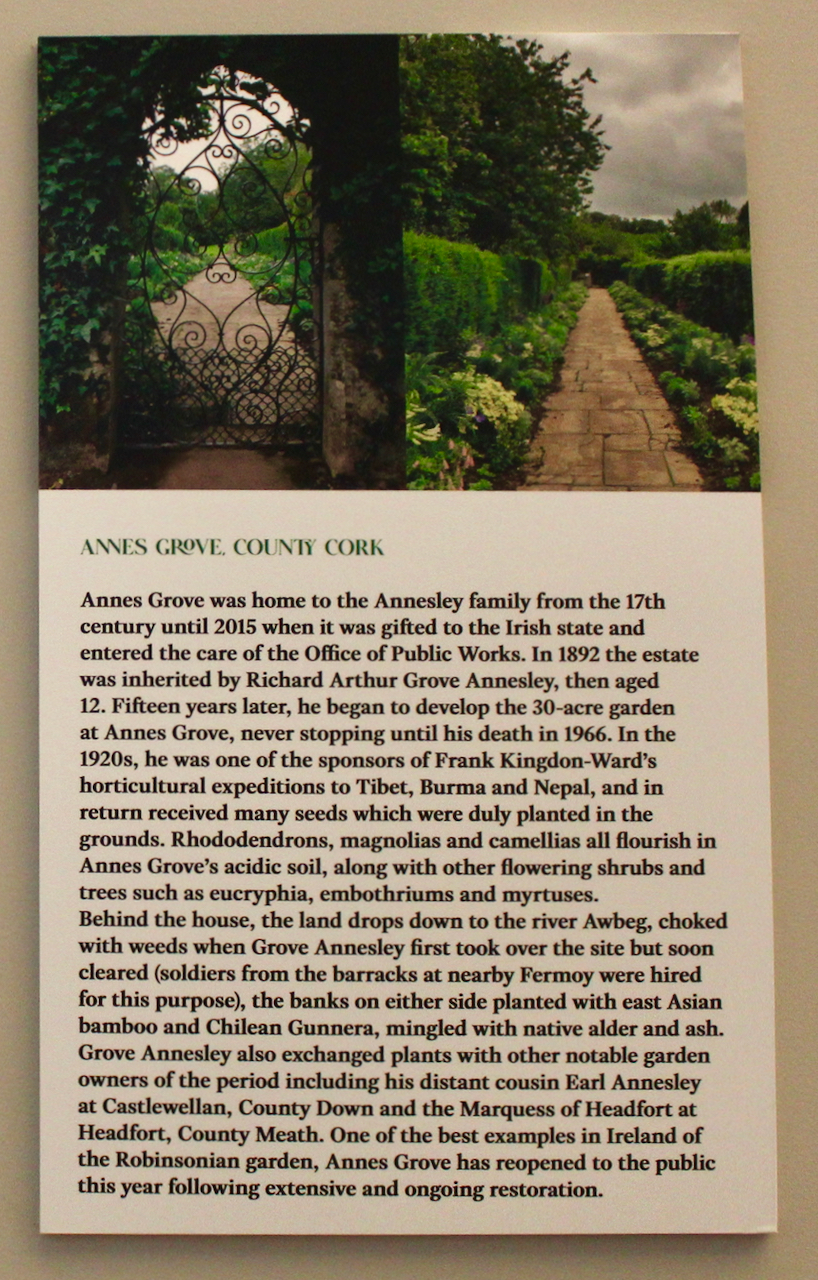
1. Annes Grove Gardens, County Cork – OPW
2. Ashton Grove, Ballingohig, Knockraha, Co. Cork – section 482
Open dates in 2025: Jan 7-10, 14-17, 21-24, Feb 10-14, 18, 25, Mar 4, May 1-5, 8-11, 13, 15-16, 20, 22-23, June 3-8, 10-15, 17-20, Aug 16-24, 8am-12 noon
Fee: adult €6, child €3, student/OAP free
The property has a facebook page and a contact email on it:
The Landed Estates database has an entry for Ashton Grove:
“This house is marked Ashton Grove on the first Ordnance Surve map. John Cotter was the proprietor of Ashton, Cork, in 1814 and T. Cleary of Ballingohig in 1837. Thomas J. Cleary held the property from Henry Braddell at the time of Griffith’s Valuation when the buildings were valued at £22. Cleary held a cornmill from Braddell in the townland of Kilrussane. James Fitzgerald held 122 acres of untenanted land and buildings valued at £26+ in 1906.” [2]
Under the Braddell family, the landed estates database tells us:
“This family appear to be descended from the Reverend Henry Braddell of Raheengraney, county Wicklow. Henry Braddell held land in the parish of Mallow, county Cork, from at least the early 19th century. Henry Braddell may have been agent to the Earl of Listowel. His nephew John Waller Braddell certainly fulfilled this role in the 1850s and early 1860s until he was murdered in 1863. At the time of Griffith’s Valuation Matthew Braddle held land in the parish of Mourneabbey, barony of Barretts, and Henry Braddle held land in the parishes of Mallow, barony of Fermoy, Castlelyons and Knockmourne, barony of Condons and Clangibbon, Killaspugmullane, barony of Barrymore, county Cork. In the 1870s Henry Braddell of Modelligo, Fermoy, owned 1,872 acres in county Cork.“
and about the Cleary family:
“Thomas J. Cleary held land in the parish of Killaspugmullane, barony of Barrymore, county Cork, at the time of Griffith’s Valuation. In January 1866 the estate of John Thomas Clery at Ashton Grove, Ballingohig, barony of Barrymore, was advertised for sale. His brother Henry Clery was selling his share of Ashton Grove in June 1866. Under tenure in this sale rental a detailed history of the Clerys’ land holding is given. By a fee farm grant dated December 1850 Henry Braddell granted the lands of Kilrossane and Ballingohig to Thomas John Clery, who by his will dated 6 February 1851 left his property divided between his six sons, John Thomas, Henry, Charles, William, George and Richard. In the 1870s William Henry Cleary of Cork owned 2,534 acres in the county.“
An article published on June 2nd 2013 in the Irish Examiner by Peter Dowdall gives a wonderful description of the garden. He writes:
“From tiny little details, such as a glimpse of a marble seat in the distance through an accidental gap in a hedge, to a perfectly-positioned specimen tree, this garden needs senses on high alert.
“If I am to be honest, I was expecting a garden recreated by the book and with a certain degree of interest from the owner. What I discovered was a garden being recreated by a man who is now thinking of the future generations and recreating this garden with a passionate attention to detail. Every plant that goes in is carefully considered; every stone and brick that went into creating an orangery from a derelict pig shed and a belfry from a cowshed were reused from the estate. Fallen slates, which weren’t good enough to use on buildings, create an edge around the rose beds.
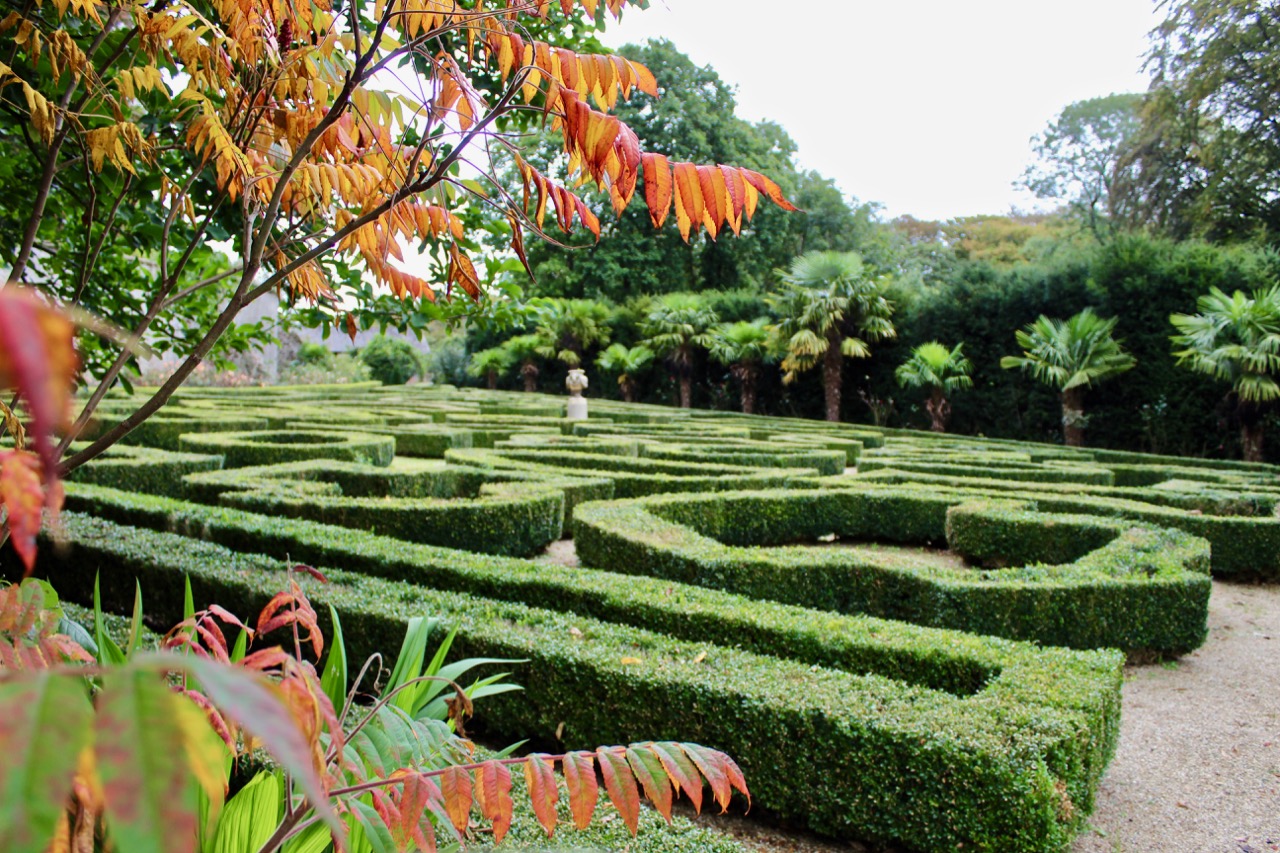
“What I love about the place is that the rule book is not evident, trial and error is the order of the day, which to me is real gardening. Except when it comes to the meticulous planning of the box hedges in the potager and the Horological Maze, which at this stage is on its third planting because the original Taxus (yew) failed due to a blight which struck again a few years later. The maze was replanted using Lonicera and is thriving, though it will be a few years before it is truly at its best…I can’t think of a more enjoyable way to spend a Sunday than roaming through the ‘garden rooms’ here.
“Looking down on this garden, which is next to the maze, from an elevated platform you could imagine yourself in the south of France, except for the single-figure temperatures. Other features to admire include the fantastic Anglo-Chinese Regency-style bridge, constructed by the owner’s brother, and the pergola, which has been planted with several climbers including Jasminum, Laburnum, David Austin roses, Wisteria and Passiflora.
“However, no account of a visit to this garden is complete without mentioning the Horological Maze.
“What, I hear you ask is a Horological Maze? Well it’s a design centred on a French mantle clock, which is surrounded by interlocking cog-wheels, pinions and coil springs, all inspired by the workings of a typical mechanism. It also reflects the owner’s interest in horology and provides a balance in its garden sculpture to the turret clock presiding over the courtyard.
“The owner took his inspiration for this creation from visits to Blenheim Palace and Weston Park in England, Shanagarry and Faithlegg in Ireland, and the Summer Palace in Vienna.” [3]
Ballymaloe House, 2017, photograph for Failte Ireland, Ireland’s Content Pool. [4]
The website tells us:
“Ballymaloe House is a family run Country House Hotel and restaurant on 300 acres of farmland located in beautiful East Cork countryside. Internationally recognised as the birthplace of Modern Irish Cuisine, Ballymaloe House offers you the very best of Irish hospitality and seasonal locally sourced or homegrown food. A unique Irish Country House experience.”
Ballymaloe House, photograph from National Inventory of Architectural Heritage. [5]
Mark Bence-Jones writes in A Guide to Irish Country Houses (1988):
p. 24. “[Boyle, Cork and Orrery, E/PB; Corker sub. Corcor/LGI1912] A castle built towards the end of C16 by the FitzGeralds of Imokilly, enlarged 1602 by Sir John FitzEdmund FitzGerald [b. 1555]; confiscated by Cromwell; occupied for a period after the Restoration by William Penn [1644-1718], of Pennsylvania, when he was managing his father’s estate at Shanagarry, nearby; subsequently occupied by 1st Earl of Orrery [Roger Boyle (1621-1679)], presumably while he was repairing and improving his nearby seat of Castle Martyr; acquired towards end of C17 by Lt-Col Edward Corker; sold by him ante his death 1734 to Hugh Lumley, who added some new buildings to the castle some time ante 1750. As a result of Lumley’s additions, Ballymaloe is now predominantly early C18 in character; consisting of a plain two storey six bay range with an old tower built into one end of it, and a three storey gable-ended range at right angles to the two storey range, and joined to it by a return; forming a house on a “L”- plan. Some of the windows have thick early C18 glazing-bars. A staircase with thin turned balusters rises from the inner end of the hall, which has a ceiling with simple Adamesque decoration. The large room to the right of the hall has simple Adamesque frieze. Ca 1800, Ballymaloe was the residence of the Penn Gaskell family, who were descended from William Penn. In 1814, it was the residence of William Abbott. In 1837, it was owned by a Mr Forster; in 1908, it was occupied by William Litchfield. Until ca 1947, it was the home of Mr and Mrs J.M. Simpson; since then, it has been the home of Mr and Mrs Ivan Allen.” [6]
Ballymaloe House, photograph from National Inventory of Architectural Heritage. (see [5])
The Ballymaloe website elaborates the history:
“Ballymaloe was a castle of the Imokilly Geraldines. Richard FitzMaurice FitzGerald was a son of the Knight of Kerry, who was appointed as Seneschal, or governor, of the area by the Earl of Desmond in 1440. The original castle was probably built by him shortly after that time. By the time of the Desmond rebellion, the occupant was John FitzEdmund FitzGerald who was known as ‘the Queen’s John FitzEdmond’ to distinguish him from the Seneschal of the same name who was a leader of the Insurrection and owned nearby Castlemartyr.“
“John FitzEdmund of Ballymaloe castle was an illegitimate son of Edmund by Honor Ni Donagh, ‘a woman of Muskerry’ and was well up in the list of efficient contrivers and gatherers of land of his time. John FitzEdmund appointed himself Sheriff of Cork in 1570 and during the Desmond rising he ‘dyd hang his (legitimate) brother James FitzEdmund’ in 1582. John refused to join O’Neill in 1599 and his lands were devastated, but he survived to be knighted by Mountjoy at Cloyne for his faithfulness in 1602.“
“Despite their differences, the close ties to the Geraldines were apparent when John FitzEdmund’s son, Edmund, was married to Honora, widow of his namesake, the late Seneschal. In 1611 this Edmund died and she was a widow again so old Sir John leased her the lands at a nominal rent before he died the following year aged 85.
“A daughter of her rebellious father, she housed the homeless friars at Ballymaloe. Her son John moved to Ballymaloe where he died in 1640.
“By the time of the Confederate War in 1641, the owner was her grandson, another Edmund and he lost the lands for taking the ‘rebel’ side. They passed to Broghill, (Roger Boyle, son of the Earl of Cork; newly-created Earl of Orrery, but living on a narrow edge of survival since he had escaped a charge of treason in London. Broghill lived at Ballymaloe after his enforced retirement as President of the court of Munster in 1672 before making his last home at Castlemartyr.“
Ballymaloe House, photograph from National Inventory of Architectural Heritage. (see [5])
“By the middle of the 18th Century, the occupier was Abraham Forster, and early in the 19th century, his grandson demolished parts of the old castle. It was he who largely build the house into its present form. Sometime later it passed to the Litchfield’s, and in 1924 Simpson, a nephew of the latter family came into possession. Mr. Simpson sold the house and farm to Myrtle and Ivan Allen in 1948 and it remains owned by the Allen family to this day.“
Ballymaloe House, photograph from National Inventory of Architectural Heritage. (see [5])
“Myrtle and Ivan Allen bought Ballymaloe in 1948 from the Simpson family. The Simpsons were known in the area for their parties and Myrtle and Ivan had, in fact, met at Ballycotton Lifeboat fundraising dinner at Ballymaloe a few years previously. Ivan had wide farming interests, growing tomatoes and cucumbers in glasshouses and mushrooms in dark wooden sheds at nearby Kinoith as well as managing the orchards there.
“However, Ivan longed for a mixed farm and when Ballymaloe came up for sale he decided to buy it. Myrtle and Ivan spent the next sixteen years farming and bringing up their children. The farm was a success producing milk, butter, cream, eggs, home raised pork and veal as well as fruit and vegetables. Myrtle became highly knowledgeable about cooking their produce and began writing a cookery column in the Irish Farmers Journal.“
“In 1964, Myrtle, encouraged by Ivan, decided to open Ballymaloe as a restaurant. The children were growing up and she could see a different future ahead of her:
“On a winter’s day I sat by the fire alone and wondered what I would do in this big house when they were all grown up – Then I thought about a restaurant.”
“Her aim was to emulate the best Irish Country House cookery. Myrtle and Ivan then placed an advert in the Cork Examiner: Dine in a Historic Country House. Open Tuesday to Saturday. Booking essential. Phone Cloyne 16.
“So Myrtle scrubbed down the kitchen table, and with the help of two local women she began. They cooked on an Aga at first and she was helped front of house by Ivan and their daughter Wendy. Their shepherd Joe Cronin ran the bar.
“The food was good and the restaurant flourished. They cooked using their own produce- unpasteurised milk and cream, veal, pork, homemade sausages and black puddings, herbs, fruit and vegetables. Ivan went to Ballycotton every day for the fresh catch. Local beef and lamb came from Mr.Cuddigan, the butcher in Cloyne. Myrtle also encouraged local farmers’ wives to bring in their surplus produce and blackberries, elderflowers and watercress were brought in by children for pocket money.
“Although times have changed at Ballymaloe, the essential spirit of the place is rooted in these improvised beginnings and in the relationship of the farm to the table which underlies the elegance of Irish Country House cooking.“
Ballymaloe House, photograph from National Inventory of Architectural Heritage. (see [5])
The National Inventory describes it: “Detached six-bay two-storey country house, built c. 1780, with four stories to rear (north) elevation, three bays to rear forming central projection and having single-storey additions to rear. Tower house, c.1450, incorporated into west elevation and taller L-plan three-storey house c. 1730 to east, five-bay two-storey hipped-roofed block with slightly projecting east bay to north-east corner…The fascinating multiphase construction is evident in the variety of styles and blocks which form the house. Formerly the seat of the FitzGeralds of Imokilly, it was enlarged by Sir John FitzEdmund FitzGerald. It was occupied at one time by William Penn of Pennsylvania and by First Earl of Ornery. Its impressive size is enhanced by fine proportions and by the retention of various timber sliding sash windows. The central doorcase and large petal fanlight form the main artistic focus and enhance the impressive and symmetrical façade. The other blocks add tremendous context. The tower house incorporated into the main house is a very notable archaeological feature. The house retains much early fabric and forms a group with related outbuildings and gate lodge.” (see [5])
Ballymaloe House, photograph from National Inventory of Architectural Heritage. (see [5])Ballymaloe House, photograph from National Inventory of Architectural Heritage. (see [5])Ballymaloe House, photograph from National Inventory of Architectural Heritage. (see [5])Ballymaloe House, photograph from National Inventory of Architectural Heritage. (see [5])Ballymaloe House, photograph from National Inventory of Architectural Heritage. (see [5])
Bantry House, County Cork, photograph 1989 from the National Library, flickr constant commons.Bantry House, County Cork, photograph by Chris Hill, 2016 for Tourism Ireland, Ireland’s Content Pool. (see [4])
Open dates in 2025 but check website in advance as it may be closed for an event: Apr 12-30, May 1-16, 18-30, June 1-30, July 1-11, 13-24, 26-31, Aug 1-31, Sept 1-26, 28-30, 10am-5pm
Fee: adult €14, OAP/student €11.50, child €5, any other concessions groups 8-20 people €10 and groups of 21or more people €9
Barryscourt Castle by Julia Delio, flickr constant commons, August 2009.
6. Blackrock Castle Observatory, Cork
Blackrock Castle, Cork, from the National Library of Ireland, flickr constant commons.
The Archiseek website tells us:
“Blackrock Castle lies on the shore of the river Lee, in the city of Cork, in County Cork in Ireland.
“The circular watchtower of Blackrock Castle was built in 1604, on the site of an earlier fort. With its 2.2 meter thick walls, it was designed to withstand cannon fire. It was built to defend the city against attacks from pirates and the Spanish, who had landed at Kinsale 3 years earlier. But it also served to protect the English Lord Deputy Mountjoy against the citizens of Cork, who had been slow to acknowledge King James I.
“Later Blackrock Castle was used by the Mayors of Cork for the Admiralty Court. Also known as the Maritime Court, it exercised jurisdiction over all maritime caes and offences.
“In 1827 the castle was gutted by fire following the annual Corporation banquet. Two years later, in 1829, it was rebuilt and enlarged in Gothic Revival style.
“Later it was used as a meeting place, a private residence, a restaurant and commercial offices before it was acquired by the Cork City Council in 2001. At present the castle houses an astronomy center/museum especially aimed at children.” [7]
Blackrock Castle and the River Lee, County Cork 1796, from Views in Ireland after Thomas Sautelle Roberts, photograph courtesy of National Gallery of Ireland.
www.brideweir.ie Open dates in 2025: May 3-4, 10-11, Aug 1-31, Sept 1-30, Nov 1-7, 9am-1pm
Fee: adult €10, child/student €5, OAP free
Brideweir House, County Cork, photograph from National Inventory of Architectural Heritage.
The website tells us: “Every house has its tales to tell and Brideweir House in Conna, Co Cork is no exception. In the year 1822 famine had hit Ireland. In Conna the local Reverend Ludlow Tonson chaired a meeting of the parish on 29th July in favour of constructing a bridge over the River Bride.
“Its purpose was “to facilitate communications in the area, and to offer employment”. A petition was sent to Dublin Castle and the rest, as they say, is history. The bridge still has pride of place today over the River Bride.
“But it’s safe to say that the reverend Tonson must have had a vested interest in seeing the bridge built. It was to be just a stone’s throw from the location of his two storey over basement rectory, Brideweir House, built in 1822, the same year he helped raise the petition.
“The Reverend’s house, completed for the princely sum of £923 (thanks to a gift and a grant, both of £300 from the Board of First Fruits), was situated on a glebe of seven acres and boasted a fine coach house and stables, all still in existence today.“
10. Burton Park, Churchtown, Mallow, Co. Cork– section 482
“Fota House was designed by 19th century architects Richard and William Morrison. From the beautifully proportioned rooms with exquisite plasterwork, to the preserved service wing and kitchens, Fota House offers visitors an intimate look at how life was lived in the past, for the cooks, butlers, footmen and maids who supported the lavish lifestyle of the gentry. Our painting collection is considered to be one of the finest collections of landscape painting outside the National Gallery of Ireland and includes works by William Ashford PRHA, Robert Carver, Jonathan Fisher and Thomas Roberts.” [8]
Garrettstown House, County Cork, photograph from National Inventory of Architectural Heritage.
Mark Bence-Jones writes in his 1988 A Guide to Irish Country Houses (1988):
p. 132. “(Cuthbert-Kearney/LG1863; Franks/IFR) Some time ante mid-C18, the Kearney family – who, like other families along the south-west coast of Ireland, are reputed to have become rich through smuggling – began building themselves a grand house with two wings facing each other across a forecourt in the Palladian manner; levelling a site for it out of the solid rock above the sea at great expense. The two wings, of an attractive golden stone, their handsome pedimented facades, each with a rusticated doorway, facing each other across the forecourt, fwere completed. But whether the house itself was actually built is uncertain; though Charles Smith (writing 1750) implies that it was. If it existed, it cannot have survived very long; for one of the wings subsequently became the house, being enlarge dfor this purpose…Towards the end of C19, Garrettstown was inherited by the Franks family, who sold it ca 1950. It is now ruinous.” It is no longer ruinous and has undergone major renovation.
The National Inventory of Architectural Heritage gives the following appraisal:
“Built by the Kearney family between the years 1702 and 1720, with changes and additions being made until 1740, this building was originally a wing of a substantial country house. The main house was never started due to financial reasons and this, one of the flanking buildings, was subsequently turned into a stable block. The money saved by not building the main house was spent on improving the gardens and grounds. The house was passed down through the female line, staying within that lineage until 1950 when it was sold to the Land Commission. Although now in use as offices, the building retains much of its original form and character seen in the tooled limestone detailing and its grand scale. The retention of many of the original outbuildings and the extensive gardens on the site give further evidence to the wealth and status of this former country house.”
Inish Beg estate, Baltimore, County Cork, photograph by George Karbus 2016 for Tourism Ireland, Ireland’s Content Pool (see [4])
The website tells us:
“Inish Beg, Irish for “small island”, is the most northerly of the Carbery Hundred Islands of County Cork Ireland and lies in the unspoilt tidal estuary of the Ilen River. There is a bronze age Cromlech (boulder burial) within the grounds, as well as a tree covered Lissaghaun (little fort or fairy mound) in front of the main house.The local saint, St. Fachtna is recorded as having been given the “Book of Dues” on the island in the 6th century.The island belonged to a Richard White in the 17th Century and was acquired by the MacCarthy Morrough family in 1830. Initially used as a sporting estate, the main house was finally finished in 1899.The population of the island followed a familiar pattern to that of much of the rural west of Ireland. Lewis quotes 109 inhabitants in 1837, but the numbers then declined to 11 by 1901 following the famine years of the mid nineteenth century and the agricultural depression of the 1880’s.
“In 1908 Kay Summersby was born at Inish Beg House. She came to notoriety as a close companion of Dwight D. Eisenhower.“
Inish Beg estate, Baltimore, County Cork, photograph by George Karbus 2016 for Tourism Ireland, Ireland’s Content Pool (see [4])Inis Beg House, County Cork, photograph by Robert French (between ca. 1865-1914), Lawrence Photograph Collection, National Library of Ireland.
Inish Beg Estate comprises 97 acres;
42 of these are birdsong-filled woodlands which are sympathetically managed and include exceptional tree ferns, bamboo, several ponds, bird hides and carriage drives,
42 acres are green fields sweeping down to the Ilen Estuary where sheep and ponies graze, for this is a working farm run on organic principles.
the remaining 13 acres is taken up with buildings, a walled garden with glass house and fruit cages, a sunken garden with fountain, a cherry drive, an orchard, a daffodil lined avenue and two woodland gardens.
Open dates in 2025: March 18-19, 21, 24, 26-27, April 2, 4-7, 9, 11-13, 21, 23, 25, May 12, 14, 16-17, 19, 21, 23-26, 28, 30, June 2, 4, 6-9, 11, 13, 16, 25, 27-29, July 2, 4-7, 14, 16, 18-20, 28, 30, Aug 1- 4, 6, 8, 11, 13, 15-25, Sept 18, 20, 22-25, 27, 29, 8.30am-3pm,
Fee: adult €14, OAP €12, student €10, child €8
22. Liss Ard Sky Garden, County Cork
Liss Ard estate is now a hotel, but you can book lunch and a visit to the Sky Garden, and wander around the gardens of the estate. The hotel is surrounded by miles of trails, which weave whimsically and which reveal magical settings with artfully placed walls and steps. It is also the site of a ring fort: the Irish “Lios Aird” means high fort. For more about the hotel, see the accommodation section below.
The art dealers/collectors Claudia and Veith Turske purchased Liss Ard estate and in the 1990s and created public gardens with waterfalls, an arboretum with 10,000 newly-planted trees and had plans to create further land artworks after James Turrell’s installation, which was created in 1992. The property has since changed hands. It first came to my attention when a music festival was held in its grounds.
The website describes James Turrell’s The Irish Sky Garden
“For over half a century, the internationally renowned landscape artist James Turrell has worked directly with light and space to create artworks that engage viewers with the limits and wonder of human perception. New Yorker critic Calvin Tompkins writes, “His work is not about light, or a record of light; it is light — the physical presence of light made manifest in sensory form.” ”
The Sky Garden at Liss Ard by James Turrell.
The Irish Public Art directory describes the Sky Garden:
“The ‘Irish Sky Garden’ is a giant earth and stone crater embedded into the landscape of the Liss Ard Estate gardens. The artwork consists of an archway, a long megalithic-like passage, and stairs leading to an oval shaped, grass-lined crater, which measures 50 x 25 metres.In the centre of the crater’s ‘bowl’ is a large stone ‘vault purchase’ or plinth (not unlike an Egyptian sarcophagus). This is where the visitor should lie back and look at the sky, which is framed by the edges of the elliptical crater.
”The most important thing is that inside turns into outside and the other way around, in the sense that relationships between the Irish landscape and the Irish sky changes” (James Turrell).”
Open dates in 2025: May 1-3, 8-10, 15-17, 22-24, 29-31, June 5-7, 12-14, 19-21, 26-27, July 3-5, 10-12, 17-19, 24-26, 31, Aug 1-2, 7-9, 14-24, 28-30, Sept 4-6, 2pm-6pm
The website tells us: “Ballinacurra House is an elegant Georgian Mansion built c.1770 which has been fully renovated and upgraded over the past 20 years. The Estate consists of the main Manor House, Stone Cottage and Coach House – set behind 10 foot high stone walls with lawns, fields, river jetty and forest – and only 5 minutes’ drive from Ireland’s premier tourist town of Kinsale. Whether it’s for a holiday or some type of event … we’ve got you covered. The Owners’ 30 years of experience in event management is one of the reasons that Ballinacurra House is known as Ireland’s Premier Events House with a guarantee of privacy, discretion and style. And is the ideal venue for corporate retreats, client hosting, birthday parties, team-building events, golf groups, family reunions, private parties, friend gatherings and … weddings with a difference.
“For the first time we are now opening up the property to give groups of various sizes the opportunity to enjoy the uniqueness of the property! So depending on the size of your family or group, we have developed a range of options for self-catering (minimum 3 days) and our fully staffed and catered premium product for Private Groups (price on request). So now you can choose from:
Estate Cottage 1 – The Coach House – up to 7 people – Self Catering – from €1,200 A 3 bedroom/4 bathroom separate 1,200 square foot home with a private outdoor dining terrace. This building has been renovated from the original coach house for the main manor house – and perfect for up to 7 people.
Estate Cottage 2 – The Stone Cottage – up to 10 people – Self Catering – from €2,200 A stand-alone 1,800 square foot home with 4 bedrooms/4.5 bathrooms with its own private garden. This building was the original gardener’s cottage for the main manor house – now fully renovated that will sleep up to 10 people comfortably.
Manor House (Partial) – up to 20 people – Self Catering – from €8,800 You will enjoy private use of Two Wings of the Manor House including 8 ensuite bedrooms and a range of living rooms, dining rooms, country style kitchen and outdoor dining options (can be catered or staffed by request).
Manor House (Whole) – from 28 to 36 people – Full Catered & Staffed Only – on request There are 14 Bedrooms in the Manor House that can accommodate up to 36 adults + 3 children sharing and a whole range of living and entertainment spaces. Due to the numbers, this is only available on a fully catered and staffed basis.
Whole Estate – from 44 to 54 people – Fully Catered & Staffed Only – on request The entire Estate consisting of the Manor House, Stone Cottage and Coach House for your private and exclusive use. A total of 22 ensuite bedrooms which is fully staffed and catered. This can cater for up to 54 adults + 4 children sharing.”
4. Ballinterry House, Rathcormac, Co Cork – accommodation
Ballinterry House, County Cork, photograph from National Inventory of Architectural Heritage.Ballinterry House, County Cork, photograph from National Inventory of Architectural Heritage.
Frank Keohane writes in his Buildings of Ireland: Cork City and County that:
p. 21. “After the Williamite wars, landowners had the confidence to invest in their property and improve their estates, building new houses and offices, and creating enclosed landscaped demesnes. Of the minor gentry, most aspired to nothing more than a house that was solidly built, symmetrical and convenient. At first, middling houses were unsophisticated in their form and planning, often only one room deep but sometimes having a return containing a staircase or service rooms, thus forming an L-plan or T-plan. Steep gable-ended roofs were almost universal, hipped roofs and the use of parapets the exception. This arrangement continued throughout the 18th century for gentry houses, and well into the C19 for larger farmhouses. Early examples include Ballinterry (Rathcormac), Velvetstown (Buttevant), Rosehill at Ballynacorra (Midleton) and Aghadoe at Killeagh.” [9]
Mark Bence-Jones writes of Ballinterry House in A Guide to Irish Country Houses (1988):
p. 290. “(Barry/IFR) An early C18 house built on the site of a castle which in 1699 belonged to Andrew Morrough or Murragh, an attainted Jacobite; the house was until comparatively recently surrounded by old fortifications including four round towers, of which one and the fragments of another survive. Gable ended main block of two storeys with attic lit by windows in gable-ends; five bay front, originally seven bay, the windows on either side of the centre having been blocked up; presumably in the late Georgian period, when the other windows of the front appear to have been reduced in size and the interior walls rearranged. Simple fanlighted doorway. Original grass terrace with flagged pavement along front. Two storey return wing; central projection at rear of main block containing late-Georgian stairs with balustrade of plain sturdy wooden uprights. Stairs now open to hall; formerly separated from it by screen of C18 panelling with Gothic fanlight, now removed to first floor lobby of wing. Bought 1703 by the 4th Earl of Barrymore [James Barry (1667-1747)]; afterwards passed to the Ross family and then by marriage and descent to the Ryders and Henleys successively. From 1821 to 1862 the home of Archdeacon (“Black Billy”) Ryder, remembered for his part in the “Gortroe Massacre” in 1834, a tragic episode of the Tithe War. Ballinterry is now the home of Mr Hurd Maguire Hatfield, the stage and screen actor, who has carried out a sympathetic restoration of the house [who sold it to the current owners, Michael and Anne in 2007].”
James Barry (1667-1747) Lieutenant Colonel and 4th Earl of Barrymore, National Trust, Public domain, via Wikimedia Commons.
The interior extensively damaged by a fire in 1991. Michael and Anne bought the period propety as a restoration project and realised it would be suitable for taking guests. An article in the Irish Times on Oct 3 2013 by Ellen Lynch tells us about the renovation:
“Michael and Ann spent three years taking up rotting floors, dismantling partitions, uncovering windows and other original features, and taking the house “back to the future” by renovating and modernising it in a way which was wholly sympathetic to its origins.
“In December 2007, without power and with no floorboards, the couple had no choice but to decamp with their young children to a cottage in outbuildings on the property. They moved back in during the spring of 2009.
“They managed to complete the work with the help of a conservation architect and the encouragement and blessing of Cork County Council’s conservation officer, Mona Hallinan. The Georgian Society declared it one of the most sympathetic restorations they’ve seen.
“Ann credits Michael’s unerring eye for detail and his capacity for hard work in bringing everything together to make Ballinterry House what it is today – a splendid country house with a truly authentic feel. “
5. Ballymacmoy, Killavullen, Co Cork – coach house airbnb €
The website tells us: “Ballymacmoy is the estate of origin of the wild geese family, the Hennessy’s of Cognac and is still owned and inhabited by their descendants. 40 kilometres from Cork International Airport, Ballymacmoy is a 23 acre estate located at the edge of the little village of Killavullen (200 inhabitants). It is made up of grasslands and wooded areas with 3.5 miles of exclusive fishing rights along the Blackwater river, it includes a 1 acre walled garden and a unique prehistoric private cave reserved for guests.”
Mark Bence-Jones writes of Ballymacmoy in A Guide to Irish Country Houses (1988):
p. 24. “[Hennessy/IFR] A two storey late-Georgian house on a rock overhanging the River Blackwater. Entrance front of three bays and curved bow; Wyatt windows, subsequently reglazed with central mullions; fanlighted doorway now obscured by plain porch. Simple battlemented arch at opposite end of house. Hall with elaborate early to mid-C19 plasterwork; reeded cornice with rosettes, central oval of acanthus. Partly curving stair with slender wooden balusters at inner end of hall beyond arch with rope ornament. Fine doorcases with Doric entablatures and rope ornament on architraves. Cornices of oakleaves in drawing room and ante room. Bow-ended ballroom with higher ceiling than the other principal rooms and simpler and presumably earlier C19 plasterwork; oval moulding in centre of ceiling, with flat pan pendentives at corners. Fluted pilasters on walls. Oak chimneypiece in the “Arts and Crafts” style, with overmantel incorporating needlework panel, carved in 1905 by Harriette, widow of J.W. Hennessy. There is a similar oak fireplace in the dining-room, which has been entirely done over in Edwardian Tudor; with a beamed ceiling, timber-studded walls and painted coat-of-arms. Sold 1932 by Mr. C.J. Hennessy to his kinsman, the late Monsieur J.R. Hennessy, of La Billarderie, Cognac. Recently tenanted by Mr. Ian Sherriff, who ran it as a guest house.”
6. Ballymaloe, Cloyne, Co Cork – accommodation – see above€€
Open dates in 2025: April 1-Sept 30, Jan, Feb Mar, Nov, Dec 3-20 Wed-Sat, Oct Tue-Sat
Fee: adult €7, family €18-2 adults and 3 children Although listed under Accommodation Facility they have a fee on this listing so if you contact them in advance perhaps they will give you a tour.
Ballyvolane, County Cork, photo taken 2014 for Tourism Ireland, Ireland’s Content Pool. (see [4])
The website tells us: “Welcome to Ballyvolane House, a historic Irish country house of extraordinary warmth, style and comfort that provides luxury manor house accommodation, bespoke intimate weddings, glamping and private house parties/exclusive house rentals, located in the beautiful North Cork countryside of southern Ireland. Ballyvolane House is also home to Bertha’s Revenge Gin.“
Ballyvolane, County Cork, photo taken 2014 for Tourism Ireland, Ireland’s Content Pool. (see [4])Ballyvolane, County Cork, photo taken 2014 for Tourism Ireland, Ireland’s Content Pool. (see [4])
The National Inventory describes the house: “Ballyvolane House is a fine example of the Victorian Italianate domestic architecture, in this case being applied to a house which was originally a three-storey early eighteenth-century structure. The top storey was removed when the house was remodelled in 1847. The classically proportioned façade is enlivened by the decorative render dressings including oak-leaf brackets to the eaves, window surrounds and heavy continuous sill course. The porch constitutes the decorative focus of the house and is articulated by pilasters. The doorway is flanked by skillfully carved marble engaged columns with ornate foliate capitals which add further artistic interest to the façade. The block to the west was built to house the servants and is of a simpler design and treatment. This building, together with extensive outbuildings and walled gardens, adds valuable context to the site.“
Ballyvolane, County Cork, photo taken 2014 for Tourism Ireland, Ireland’s Content Pool. (see [4])
The website tells us about the history:
“There is an inescapable air of frivolity at Ballyvolane – the name itself means ‘the place of springing heifers’ and is testament to the fertility, richness and natural diversity of the land on which the estate lies.
“Originally built in 1728 by Sir Richard Pyne, a retired Lord Chief Justice of Ireland, Ballyvolane was designed in the classic Georgian country house style with three storeys… An amorous descendent, Arthur Pyne, acquired sufficient capital from his marriage to three wealthy women to have the house considerably enlarged in the early 19th century.
“The three-storey house was again modified in 1872 by George Pyne. He had the building pulled apart and then, by removing the top storey, recreated a two-storey house rendered in Italianate style, with an extensive west end wing.“
Ballyvolane, County Cork, photo taken 2014 for Tourism Ireland, Ireland’s Content Pool. (see [4])
The website continues: “Recent research carried out Terence Reeves-Smyth unearthed tender documents for the remodelling of Ballyvolane from this time – the architect was Richard Rolt Brash (1817-1876), a Cork architect, whose father and brother were well known builders in the city. RB Brash is better known as a very active antiquarian and friend of John Windele – he was especially interested in round towers.
“The rebuilding/remodelling in the early 1870s followed the re-acquisition of the house and demesne by the Pyne family in 1869. Arthur Pyne (1747-1839) who probably built the present house around c1800 and laid out the present parkland (which looks Regency in date), was succeeded by his eldest son Jasper Pyne. Unfortunately, when Jasper died in 1860-1 he left no male heirs and as a result his wife and daughters did not inherit the property (the estate had been left by his father Arthur entailed for a life and could only be inherited by male issue). Consequently, following a big court case in May 1861 the property passed to Jasper’s younger brother, the Rev. William Masters Pyne, Rector of Oxted in Surrey. In March 1864 the Rev Pyne put the place on the market through the Encumbered Estates Courts. It remained on the market until bought by another member of the Pyne family in January 1869.
“It appears that Ballyvolane was originally purchased by Sir Richard Pyne in 1702-3 for £696; prior to this it had been the property of Sir Richard Nagle and Edmond Barry, but had been granted (forfeited lands) to Viscount Sidney. At the same time Sir Richard Pyne also purchased three other Co Cork properties from the Commissioners for Sale of Forfeited Estates; one was Blarney, the others were the estates of Ballinaneala and Ardra. He also in England bought Great Codham Hall in Essex, where the family continued to live well into the 19th century.“
“The Pynes built the present house and lived here until 1953, when it was bought by the late Cyril Hall Green (known as Squirrel Green) and his wife Joyce (née Blake), on their return from Malaya, where Squirrel had managed rubber plantations since the 1920’s. Ballyvolane was passed on to Squirrel’s son, Jeremy, who ran it as a mixed tillage and dairy farm until the mid 1980’s when it became one the founding members of the Hidden Ireland group, an association of town and country houses offering a unique and exclusive style of accommodation and chosen for their architectural merit and interesting characteristics.
“Ballyvolane was managed as a successful country house bed and breakfast by Jeremy and his wife, Merrie until January 2004, when the reins were handed to his son Justin and his wife, Jenny. Justin and Jenny are experienced hoteliers having gained international management experience in some of the best hotels in the world namely Mandarin Oriental in Hong Kong, The Legian in Bali, Jumeirah Beach Hotel in Dubai and prior to moving home, Justin was GM of Babington House (part of Soho House) in Somerset. Three generations of the Green Family now live at Ballyvolane.“
Ballyvolane, County Cork, photo taken 2014 for Tourism Ireland, Ireland’s Content Pool. (see [4])Ballyvolane, County Cork, photo taken 2014 for Tourism Ireland, Ireland’s Content Pool. (see [4])Ballyvolane, County Cork, photo taken 2014 for Tourism Ireland, Ireland’s Content Pool. (see [4])Ballyvolane, County Cork, photo taken 2014 for Tourism Ireland, Ireland’s Content Pool. (see [4])Ballyvolane, County Cork, photo taken 2014 for Tourism Ireland, Ireland’s Content Pool. (see [4])
8. Bantry House & Garden, Bantry, Co. Cork– see above €€
Bantry House, County Cork, photograph from the National Library of Ireland, flickr constant commons.
9. Blairscove House, County Cork: accommodation in the Piggery, Smoke House and Loft. Also weddings€
“Blairscove House is situated on the picturesque inlet of Dunmanus Bay in West Cork on the Wild Atlantic Way. Not touched by mass tourism, it appeals to visitors who want to get away ‘far from the madding crowd,’ yet desire premium facilities in terms of service and food, with home from home comforts in terms of welcome and accommodation.
“Around the courtyard of a Georgian House, beautifully restored with cobbled paths, shrubs and flowers, are the restaurant and four stylish suites or small apartments which can be rented on a bed and breakfast or self-catering basis. Formerly a piggery, coach house and servants’ quarters, each suite is individually and very lovingly decorated with a quirky mix of contemporary and antique furnishings.
“We also have another holiday cottage on Dunmanus Pier in West Cork, just 12km from Blairscove, in the direction of Mizen Head, again on the Wild Atlantic Way driving route.“
Mark Bence-Jones writes in 1988 of Castle Martyr in A Guide to Irish Country Houses:
p. 72. “(Boyle, Cork and Orrery, E/PB; Boyle, Shannon, E/PB; Arnott, Bt/PB) Originally an old castle of the FitzGeralds, Seneschals of Imokilly, to which an early C17 domestic range was added by Richard Boyle, the “Great” Earl of Cork, who bought it from Sir Walter Raleigh, to whom it had been granted, along with other confiscated Geraldine estates. Having been damaged during the Civil Wards, it was repaired and made “English like” by Lord Cork’s third son, 1st Earl of Orrery, to whom it had passed; only to suffer worse damage in the Williamiate War, after which it was left a ruin, and a new house built alongside it early in C18 by Henry Boyle, who became Speaker of the Irish House of Commons and eventually 1st Earl of Shannon. The house was greatly enlarged by 2nd Earl between 1764/71, and further remodelled in late-Georgian period. While giving it an abnormally long facade, the subsequent additions did not take away from the house’s early C18 character, beign on the same scale and in the same style as the original building. Entrance front of two storeys and 17 bays, consisting of a five bay recessed centre with a giant pedimented portico between projecint wings, the forward-facing one bay ends of which are prolonged by a further five bays on either side. The ends of the projecting wings on either side of the centre are framed by rusticated pilasters, and formerly had Venetian windows in their lower storey, which have now been made into ordinary triple windows; there is also a rusticated pilaster at either end of the facade. The front is unusual in having three entrance doorways, of similar size, one under the portico and one in the centre of the five outer bays on either side; originally these doorways had plain architraves, but they were replaced by rusticated doorcases early this century. High-pitched, slightly sprocketed roofs. Irregular garden front; range of three bays on either side of a curved central bow, then a four bay range set slightly back with a balustraded colonnade of coupled Doric columns along its lower storey, then a range set further back again, of the same height as the rest of the facade but of one storey only, with three tall windows. Long, narrow and low-ceilinged hall with bifurcating wooden staircase at one end; late-Georgian frieze. A wide pilastered corridor runs from the staircase end of the hall, opening into a series of reception rooms along the garden front’ they are of modest size, low-ceilinged and simply decorated. In contrast to them is the magnificent double cube saloon or ballroom at the opposite end of the hall., which rises the full height of the house and is lit by the three tall windows in the single-storey part of the garden front. It has a coved ceiling with splendid rococo plasterwork in the manner of Robert West – birds, swags, flowers, foliage and cornucopiae in high relief – and a doorcase with fluted Ionic columns and a broken pediment. This room was one of 2nd Earl’s additions; it was finished by 1771, when it was seen by Arthur Young, who considered it to be the best room he had seen in Ireland. It certainly rates among the dozen or so finest Irish country house interiors; or anyhow whould have done when it had its chimneypiece and its original pictures and furnishings. The entrance front of the house overlooks a sheet of water which is part of the remarkable artificial river made ante 1750 by 1st Earl; it winds its way between wooded banks through the demesne and round the neighbouring town of Castlemartyr; broad and deep enough to be navigable by what was described in C18 as “an handsome boat.” The entrance gates from the town are flanked by tall battlemented walls shaped to look like Gothic towers; from the side they reveal themselves to be no more than stage scenery. Castle Martyr was sold early in the present century to the Arnott family; it was subsequently re-sold and is now a Carmelite College.”
Note that Henry Boyle (1682-1764), 1st Earl of Shannon, who owned Castlemartyr, also owned a townouse at 11 Henrietta Street in Dublin. See Melanie Hayes’s wonderful book The Best Address in Town: Henrietta Street, Dublin and its First Residents, 1720-80 published by Four Courts Press, Dublin 8, in 2020.
Henry Boyle, M.P. (1682-1764), Speaker of the Irish House of Commons, later 1st Earl of Shannon Date: 1742, Engraver John Brooks, Irish, fl.1730-1756 After Unknown Artist, England, 18th century, English, courtesy of National Gallery of Ireland.
We visited the Castle of Castletownshend when on holidays in County Cork in June 2022. The Castle is a hidden gem, full of history. We definitely look forward to a return visit, to stay in the Castle.
“In the picturesque village of Castletownshend, past ‘The Two Trees’ at the bottom of the hill, you’ll find our family-run boutique B&B. Nestled at the edge of a scenic harbour and natural woodlands for you to explore, The Castle is a truly unique place to stay. It has the warm, homely feel of a traditional Irish B&B, but with a few extra special touches.
The airbnb posting tells us you can rent a room in the house:
“A beautiful Georgian house set in wonderful countryside, amongst old and established trees with lawns and a walled vegetable garden with exceptional views overlooking the Nagle Mountains and the Blackwater River running below.
“Situated between Mallow and Fermoy approx 12 miles from either with three local villages Killavullen, Castletownroche and Ballyhooly each a 2.5 miles away. Cork city is 45 minutes drive.
The space
“This is the perfect place to relax, unwind or position yourselves for a weekend of fishing and relaxation. You are welcome to walk around the grounds, relax in the sitting room in front of the fire read or watch TV.
Guest access
“The double bedroom is comfortable and spacious with a king size bed with en suite bathroom which has been recently upgraded.“
The National Inventory of Architectural Heritage tells us: “This solid and handsome country house was built by Richard Martin on a prominent position overlooking the River Blackwater. It developed over the centuries, as evidenced by the various additions. The house is notable for the quantity and quality of historic fabric retained such as the varied small-paned sash windows and slate roof, helping to maintain the integrity of the composition. The cut limestone piers with pineapple caps are a most decorative feature.”
13. Drishane House whole house rental and holiday cottages – see above
The Hidden Ireland website tells us: “An elegant Italiante style Manor house in mature beech woodland and gardens close to Cork City (15km).
“The house is spacious and bright and beautifully decorated and it is set in 12 acres of mature beech woodland and landscaped gardens. Accommodation is exceptionally generous and gracious with antique furnishings, a grand piano and full-sized billiard table.
“Situated 9 miles from Blarney, 38 miles from Killarney and 10 miles from Cork city and airpor, this is an ideal location for touring both Cork and Kerry and perfect for family reunions / anniversaries. It is available for self catering and catered rental, with accommodation for up to 16 people. Perfect for vacation rentals.Ten 18-hole golf courses are within 25km. Children welcome.“
17. Galley Head Lighthouse Keepers House, County Cork € for 3-4
“A fantastic option for travellers looking for a quiet stay, in a strategic location, to explore Kinsale, West Cork and beyond. We offer Warm hospitality with a romantic and relaxed atmosphere.
“Our facilities are fully equipped with all the comforts you need, as well as beautiful formal gardens with a Lavender walk, Partier and Rose Garden. We have areas for walks, an enclosed garden for our dog guests, and easy access to the main tourist attractions of Blarney, Kinsale and West Cork.
“Under the hospitable ownership of Gill and Caroline, this classically proportioned Georgian Rectory has been providing a restful retreat for guests since 1989, and everybody loves it for its genuine country house feeling and friendliness.
“Spacious reception rooms have the feeling of a large family home, and generous, stylishly decorated bedrooms have good bathrooms, fast Internet connection, and tea/coffee making facilities. The Rose Room, on the ground floor, has French doors to the garden.
“Set in two acres of beautiful, well-tended gardens (including a productive kitchen garden), this charming old rectory near Kinsale has a lovely wisteria over the front door and it is a place full of interest.
“Check in is between 4.00pm and 6.00pm when Complimentary Afternoon Tea is served. Please let us know if you require check in at a different time and we can arrange it.”
19. Glenlohane, Kanturk, Cork – B&B accommodationand self-catering cottage€€ in house; Pink Cottage € for 3-5 for one week
Glenlohane, County Cork, photograph from National Inventory of Architectural Heritage.
The website tells us: “Desmond, Melanie and their son, Gordon, run Glenlohane as an extremely private house with an air of friendly informality so unique to Irish Country House Bed and Breakfasts. Certainly not considered a ‘room for the night’ type of B&B, there are no public signs at the roadside to draw the attention of casual visitors. Guests are welcomed on a pre-arranged basis and know where they are going by the detailed directions in this web site. There are no public and private quarters as in a professional place and guests may use facilities of the entire house as if staying with friends.
“There are family dogs and a cat in the background and animals play a large part of life at Glenlohane. Less than a quarter of a mile away, and still on the farm, is a Self Catering Cottage that can be rented on a weekly basis. Apart from farm animals, there are also horses, ponies, fantail pigeons and bantam hens in the traditional stable yard.
“Whether it be at Glenlohane for B&B or Glenlohane Cottage for self catering, staying is for the discerning visitor who wishes to learn more about Ireland’s history and culture through personal contact with the owners. One is also well positioned for sightseeing throughout the Scenic Southwest of the country.“
“Glenlohane Cottage has been part of the Sharp Bolster family who are celebrating 275 years in Glenlohane House in 2016. It is an exceptional period cottage built in the 1600’s and added onto over the centuries. Centered in the Glenlohane farm estate, this geographic location is one of the very best locations for touring the Scenic Southwest of Ireland. The Wild Atlantic Way, the Burren, Cliffs of Moher, Dingle, Rock of Cashel, Cork City, Blarney, Ring of Kerry, Killarney, Kinsale, Bantry & the Beara, and even Schull are all easy day trips.“
Glenlohane, County Cork, photograph from National Inventory of Architectural Heritage.
The Glenlohane website gives us a history of the house:
“Glenlohane Country House was built by Desmond’s antecedents in 1741. Your hosts, Desmond, Melanie and their son Gordon represent the 9th and 10th generations of the same family living at Glenlohane since its inception. Surrounded by terraced lawns overlooking a park like setting, the house was built by John Sharp, of Mount Conway, near Cork City in 1741. Mount Conway still stands.
“Early records show the Sharp family in the parish of St. Katherine, Dublin in 1535. As a prominent Quaker family that became eminently successful in the woolen industry in the mid 1600’s, they also built Roundwood House in Co Laois at the same time that Glenlohane was being built in Co Cork. Anthony Sharp was reputed to employ 500 people at the time, which would have made him one of Ireland’s largest employers. For Dublin, that is a sizeable concern even by today’s standards! As sizeable land owners, the Bolsters have been within 5-6 miles of Glenlohane since Elizabethan times and John Hawkes Bolster of Egmont House, Churchtown, Co Cork married Sarah Sharp of Glenlohane in the early 1800’s. The house was extended to its present size shortly thereafter. We now have the opportunity to share our family’s heritage by offering guests Irish Country House Accommodation in the heart of the Co Cork countryside.“
Glenlohane, County Cork, photograph from National Inventory of Architectural Heritage.
20. Glenville Park, Glenville, County Cork (previously known as The Manor and as Mount Pleasant) – accommodation €
This is the home of the late Mark Bence-Jones, whom I refer to so much on this website! Stephen and I were very excited to discover that his daughter rents rooms in the house for visitor accommodation.
Mark Bence-Jones tells us:
p. 139. (Hudson-Kinahan, sub Kinahan/IFR; Bence-Jones/IFR) Originally a two storey five bay C18 house, of rendered rubble with block window surrounds of cut stone; it was fronted by a semi-circular forecourt or enclosure, with a gate at either end. The seat of a branch of the Coppinger or Copinger family, the estate having originally belonged to the O’Keefes. Bought between 1776-1788 by Dr Edward Hudson, who built a new house a short distance from the old one, and at right angles to it; consisting of three storey three bay gable-ended centre, with a fanlighted doorway, and two storey one bay gable-ended wings. This house was the home of Dr Edward Hudson’s son, William Elliot Hudson [1796-1853], composer, collector of ancient Irish music and Irish patriot [his Dublin home was St. Enda’s in Rathfarnham, previously called The Hermitage and Fields of Odin]. The estate eventually passed to Wm Elliot Hudson’s nephew, Sir Edward Hudson-Kinahan, 1st Bt [the son of William Elliot’s sister Charlotte, who married Robert Henry Kinahan], who enlarged and remodelled the house to the design of Sandham Symes 1887. A new two storey front was built onto the house, making it twice as deep, other additions were built at the back, and the original part of the house was reconstructed with two storeys instead of the original three, so as to make the rooms as high as those in the new additions. The new front is in the Victorian-Georgian style, faced in grey cement and of considerable length; it has a small pedimented breakfront with a pair of round-headed windows above a balustraded and fanlighted porch. On either side of the centre is a three sided bow between two bays; the façade being prolonged at one end by an additional bay, beyond which is a three storey one bay wing set back.“
Mark Bence-Jones continues: “Entablatures on console brackets above ground floor windows, shouldered window surrounds in upper storey, parapeted roof. At the back of the house is a bow fronted pavilion like wing, containing a single large room, joined to the main building by a corridor. Long hall running the full depth of the house, with staircase at its inner end, behind an arch with plasterwork mouldings; modillion cornice. Doorcases with segmental pediments in the hall and principal receptions rooms, which have Victorian plasterwork cornices of flowers and foliage; the drawing room has an original C19 wallpaper in faded lemon and grey. Spacious landing or upper hall at head of stairs.”
The Historic Houses of Ireland website tells us: “The Hudson-Kinahan family died out with the third baronet, Sir Robert, and the house became the home of Colonel Philip Bence-Jones and his wife, who purchased Glenville from the trustees in 1949. The Bence-Jones family, who originally came from Lisselane, near Clonakilty in West Cork, were looking for a new home after their house, Annemount on Cork Harbour, had been destroyed by fire.” [12]
Mark Bence-Jones continues his description: “Walled garden with old beech hedges and walls of faded pink brick; the back of the Coppinger house being at one side of it. Glen garden containing a noteable collection of rhododendrons and other shrubs and trees; long flight of steps down hillside to formal pool. Bought 1949 from the trustees of Sir Robert Hudson-Kinahan, 3rd Bt, by Col Philip Bence-Jones, who carried out various alterations to the house and threw three small rooms together to make a chapel, which has stained glass windows by Mr Stanley Tomlin and Mr Patckick Pollen, and a stone altar by the late Seamus Murphy, above which is a statue of the Madonna which survived the fire at Annemount.”
Once one of a number of bothies stretching along this quiet country lane, Killee Cottage and its neighbour are now the only two thatched cottages remaining.
“The beautiful Kilmahon House, built in 1780, is a fully restored Georgian Country House offering elegant Bed & Breakfast accommodation. The house is also available for smaller events on special request. Just 30 minutes from Cork airport and the Historic city of Cork, Kilmahon is situated in the East Cork Village of Shanagarry. It is only a short walk to Ballymaloe Cookery School and the blueflag beaches along Ballycotton Bay.
“Kilmahon is an impressive listed Glebe Heritage House of Ireland and has been lovingly restored over a number of years. The result is a seamless blend of original period features and modern facilities, set within the idyllic coastal surroundings of County Cork’s nature.
“Spending a few days in this secluded ancient environment offers a chance to rejuvenate in comfort and peace. Weather with a good book in front of a warm fire or a stroll through the old gardens, you will find yourself uplifted and reset from the stresses of everyday life.
THE GROUNDS
“While the house was restored so too were the gardens surrounding it. The walled rose garden has been brought back to life and is a feast of colour through the summer months; a perfect and private space for guests to relax in. An expansive lawn to the front provides a large open space and stunning views over fields toward the ocean, while old stone walls and mature trees in abundance maintain the sense of privacy at Kilmahon.
THE RECEPTION ROOMS “Period fireplaces with log fires set a welcoming tone in each of the elegant reception rooms in Kilmahon House. Rooms are tastefully furnished with antiques and original art work effortlessly combining style and comfort. Large Georgian windows provide idyllic views onto the formal gardens below and Ballycotton Bay beyond.
THE BEDROOMS
“A wonderful nights rest in one of the six individually designed en-suite bedrooms awaits guests at Kilmahon House. Recent restorations allow for the inclusion of modern power showers and super-king beds whilst still enjoying the ambience of antique furniture, sumptuous furnishings and spectacular scenic views.
BOOKING YOUR STAY
“Kilmahon offers guests luxury Bed & Breakfast accommodation or the house also can be taken for exclusive rental where guests can enjoy staying in this outstanding Georgian house and its beautiful surroundings. Julia will be happy to organise with you any catering requirements you have. Kilmahon House is an ideal setting for family breaks. Contact the house directly to check availability.“
24. Kilshannig, County Cork holiday accommodation – see above
We visited Liss Ard in June 2022, in order to see the Sky Garden by James Turrell. James Turrell is a “light artist” and a Quaker, and his works aim to cause contemplation. I was excited to see his work, and to see Liss Ard. The house has been converted to a hotel but still has the feel of a historic house, while at the same time being modern, stylish and spacious.
Upon our visit I learned that there is more to the gardens than the Sky Garden. The hotel is surrounded by miles of trails, which weave whimsically and which reveal magical settings with artfully placed walls and steps. It is also the site of a ring fort: the Irish “Lios Aird” means high fort.
The website invites us to “Escape to 163 acres of pristine nature with manicured gardens, a 40 acre private lake and James Turrell’s renowned Irish Sky Garden. The Estate features 26 unique guest rooms in the heart of West Cork, the culinary capital of Ireland.” For more about the Sky Garden and the garden trails, see my entry above, in Places to Visit.
We booked in for lunch, in order to make a booking to spend time in the Sky Garden. The house is two storey over basement, built in 1853. The National Inventory describes it as a fine early Victorian country house built by H.W. O’Donovan, who succeeded his brother as “The O’Donovan” in 1870. The Victorian Lake House, also available to guests, was built in 1870.
The garden front has a central canted bay. The inventory suggests that the house was reoriented and extended in the nineteenth century.
“Longueville House is a stunning 302 year old listed Georgian Country House hidden in the heart of a 400-acre wooded estate overlooking The Blackwater Valley, County Cork – the scenic gateway to the Southwest of Ireland.
“Steeped in history and packed with character, this owner-occupied 4-star Country House Hotel operates in two distinctly different ways.
“Firstly Longueville House warmly welcomes overnight guests for weekend and midweek stays with various themed and seasonal breaks to experience.
“Secondly, Longueville House may be booked privately for Small themed groups, multigenerational families and Corporate delegates who prefer the privacy and pace of an Exclusive Hire Venue. Longueville House sleeps 2 – 29 guests at full capacity.
“Longueville is a family story where for generations The O’Callaghans have preserved and merged their passion for the house, the land, food and entertaining, with the kitchen garden being at the heart of it all.
“Maintaining and modernising the house and grounds has been a labour of love for William and Aisling your hosts. A home-from-home, classic but informal, where open log fires crackle in vintage hearths and intriguing heirlooms jostle with fresh flowers from the garden.
“For years The O’Callaghans have made an ongoing commitment to only using home grown and local produce, celebrating the seasons, incorporating the most authentic and freshest of ingredients, thus enabling William to create menus bursting with flavour. What’s not grown or reared in Longueville is sourced from local farms and artisan suppliers.
“Our ethos is simple, our style is unstuffy, less formal. Conserving the beauty of Longueville through generations of love, to be shared with future generations to come.”
Longueville House, photograph from myhome.ie
Mark Bence-Jones tells us of Longueville:
p. 191. “(Longfield/IFR) A three storey five bay C18 block, enlarged by the addition of two storey three bay wings in the late Georgian period, probably between 1800-5 by John Longfield, MP; the centre being refaced and some of its windows altered at the same time so as to make the front uniform. One bay central breakfront, Wyatt windows in two upper storeys above a fanlighted doorway beneath a single-storey portico. One of the wings was extended at right angles to the front ca 1866, and a charming Victorian conservatory of curved ironwork was added, probably at the same time. The principal reception rooms, which have simple early C19 plasterwork and doors of inlaid mahogany, extend on either side of the entrance hall, which has a floor of Portland stone. Behind is the staircase hall, with bifurcating staircase which is most unusual in rising to the top of the house; the central ramp and two returns being repeated in the storey above. Longueville was sold by the Longfields to the late Senator William O’Callaghan, whose son and daughter-in-law have opened it as an hotel.”
The National Inventory tells us of the Turner conservatory:
“Constructed in 1862, this glasshouse was the last designed by Richard Turner, whose portfolio includes the conservatory at the famous Kew Gardens in London. The cast-iron framework and attractively flawed glass are of considerable technical interest and create a focal point for Longueville House, to which it is attached.“
27. Lough Ine House and Lodge, Skibereen, County Cork– whole house or gate lodge€€€ for two, € for 5-8; or gate lodge €
“This beautiful holiday house and cottage are set on stunning Lough Ine sometimes spelt Lough Hyne – which is well known as one of the most romantic spots in West Cork.
“Just 85km from Cork airport, Lough Ine is easily accessible but also far enough off the beaten track to be the perfect place to get away for either a romantic break or a fabulous family holiday.“
The House: “This elegant Regency house was built in 1830 as a hunting lodge for Lord Carbery and maintains several original features to this day. It is surrounded by its own 15 acre estate on the edge of Lough Ine and includes a patio garden, beautiful walkways through the woods and gardens and a private shingle beach. The Lough is a famous beauty spot 5km from Skibbereen and 4km from Baltimore in West Cork, Ireland. The estate is located in a conservation area of outstanding natural beauty.
“Elegantly furnished for comfortable country life, polished oak floors and period furniture add to the unique charm of this house. The unique vine-filled conservatory has a large breakfast area and elegant seating area with rattan furniture. Sun pours through the French windows in the interconnecting reception rooms, offering spectacular views of the garden, lough and surrounding hills.
“From the elegant panelled hall, a striking curved staircase leads you to the first floor where you will find 3 double bedrooms and a large bathroom. The two front bedrooms overlook the sea and are elegantly decorated with material on the walls and fine furniture. One has an eighteenth century four-poster bed, the others have twin beds. The charming third room overlooks the gardens. The bathroom is worth noting for its historic bathtub, which used to belong to Winston Churchill!
“On the ground floor there are two further wood panelled twin bedrooms each with their own bathroom containing bathtub and shower. The rowing boat is at your disposal to explore the island where you can see the remains of an O’Driscoll castle and picnic on the beach, or visit the shoreline and rapids that lead out to the sea.“
The Gate Lodge: “The gate lodge is an 18th Century, small cosy house at the entrance of the property on the edge of the lough, with wonderful view of the sea, the island and the fields.
“The ground floor is an open plan living room with a large fireplace, a dining area, a kitchenette and a spiral staircase leading to a twin bedroom overlooking the lough, a single bedroom and a bathroom with basin, W.C, bath and shower.“
“The Courtyard, Mallow has been lovingly renovated and is at the rear of the main Georgian house which was built in 1780 and was the original home of the Carpenter family. The Courtyard, Mallow is situated on a working farm and equestrian centre.
“Comprising of two 2-bedroomed self-catering apartments, and one 1-bedroomed self-catering apartment we can provide for couples and friend/family groups alike. Your home-from-home, each apartment at The Courtyard is equipped with all cooking facilities that you need, WiFi, and television sets with endless channels and movies to choose from. Catering and shopping is available upon prior request and subject to availability.“
All three apartments have been recently refurbished and each apartment is elegantly decorated with its own unique style and story. We have scoured vintage and antique shops around the country to add that extra flare and individuality to the living spaces of The Courtyard apartments. We use White & Green luxury organic cotton bed linen on all beds and Dalkey liquid handmade soap to ensure our guests can fully unwind during their stay. All bedrooms are ensuite for your comfort and privacy.
29. Maryborough, Douglas, Co Cork – Maryborough Hotel€€
“Located in the leafy suburbs of Douglas, yet minutes from Cork City Centre, The Maryborough has a character and style all of its own. Set in 18 acres of 300-year-old listed gardens and woodland, our family-owned boutique hotel affords guests an experience in luxury itself and is among the top hotels in Cork. The Maryborough Hotel is unique with its charming 18th Century Mansion accompanied by the creatively designed contemporary extension. All of this combined makes The Maryborough the perfect destination.
“The hotel delivers a unique experience in an exceptional atmosphere. From the moment you enter, we will guarantee you a level of personal service and care designed to match the exquisite surroundings of our 300-year-old listed gardens. Guests can enjoy an award-winning restaurant in Cork, state of the art Leisure Club and luxurious ESPA spa.
Our History
“The Maryborough Hotel & Spa is one of the most renowned 4 star hotels in Cork today. The Maryborough’s Georgian Manor House was built in 1710 by Mr Richard Newenham [note that a Richard Newenham of Maryborough married Sarah Devonsher, niece of Abraham Devonsher of Kilshannig]. Descendants of the Newenhams as well as other families lived there up until the 1990s when it was purchased by the O’Sullivan family. In 1997 the family opened what is now The Maryborough Hotel, a 4 star luxury hotel in Cork with 93 bedrooms.
“Since becoming a hotel, the Mansion House has fortunately retained its striking original architectural features. Some of the rooms at The Maryborough still showcase Adam style decoration – notably the entrance hall and some mantelpieces. This adds to the historical relevance of the manor house and contributes to the decadence and luxury of this boutique hotel in Cork.
“The former eighteenth-century stately home is set amid acres of woods and beautiful gardens, just south of Cork’s historical city centre in Douglas. John Newenham, a younger brother of the last Newenham owner of The Maryborough was a great gardener and collector of trees. Thanks to his inspired work the gardens at The Maryborough still host quite a collection, in particular of rhododendrons, making it one of the reasons for The Maryborough being one of the best hotels in Cork.
“The Maryborough works to continually develop a deluxe guest experience merging the hotels history with beautifully appointed accommodations. In order to incorporate the elegant grandeur of the old house into the hotel, several splendid suites were built on the upper floors of the Mansion House. Read more about our luxury suites in Cork.
“To compliment the opulent charm of the old house, the hotel’s contemporary extension was built. It is here you will find our Deluxe, Executive and Family Rooms. Spectacular architecture blended with effortless service and genuine hospitality makes the Maryborough one of the top hotels in Cork.“
“Take an elegant townhouse in a spectacular location, add a gourmet cafe with a mouth watering array of local produce, mix well with the locals who love the atmosphere here, bring it all together with a very warm welcome and a pinch of kinsale humour… and you’ll have the Old Bank Townhouse.
“Set in the heart of Kinsale, this beautifully renovated Bank House is both elegant and welcoming. Just a short walk from the of world renowned restaurants, inviting bars and interesting boutiques of Kinsale… yet only 25 minutes from cork city, the Old Bank Townhouse is popular with golfers and those with a passion for food.
“Steeped in history, this Kinsale accommodation was originally the Munster & Leinster Bank.The beautiful Georgian facade with impressive sash windows used to front a waterway for passing ships that berthed in the quays running from the site of on old mill.“
31. Orchard Cottage, Dunowen House, Co Cork(sleeps 5)€
“Orchard Cottage is a beautifully refurbished three bedroom house nestled within the peaceful one acre walled garden of Dunowen House.
“This characterful old building, dating back to the 1800’s, has been sympathetically restored to a very high standard. It has three cosy bedrooms, two bathrooms, a wood burning stove and an open plan kitchen living area, offering accommodation for up to five guests. The cottage is suitable for up to three children within that number.
“Orchard Cottage is available to rent with Dunowen House or on its own as a cute tranquil hideaway for short-breaks or longer holidays.“
“Perryville House is an elegant and distinctive period townhouse overlooking Kinsale Harbour, County Cork in the south of Ireland. Originally built in 1820 and lovingly restored by us, Perryville House is now a warm, gracious and light-filled boutique guesthouse.
“True to its original role as a private residence, Perryville House welcomes guests from all over the world to share and enjoy the finest Irish hospitality and luxury accommodation in Kinsale — your first stop on the Wild Atlantic Way. We invite you to savour a one-of-a-kind, historic hotel experience.
“A masterpiece of Georgian architecture with later Victorian embellishment, Perryville House was built in 1820 by Captain Adam Warren Perry for his family whose ancestors continued to reside here until the late 1950s. It had various owners from then until 1997 when fired by the beauty, character and history of this lovely house, Andrew & Laura Corcoran undertook the mammoth task of refurbishing and bringing it back to its former glory. Situated in the heart of Kinsale, overlooking the harbour, Perryville House welcomes guests from April to October each year.“
33. Rincolisky Castle, Whitehall, co Cork – renovated, whole house€€€ for 2, € for 5.
“Rincolisky Castle, sometimes also called Whitehall Castle, lies on a hill on the southern shore or Roaringwater Bay, in County Cork in Ireland.
“Rincolisky Castle, originally a 5 storey high, square tower house was built in 1495 by the powerful local O’Driscoll clan.
“In 1602, after the Battle of Kinsale, the castle was easily taken by English forces. It was then given to Sir Walter Coppinger. He changed the name of the castle into Whitehall, after the townland in which it is situated. The Coppingers lost their possessions in 1690 for supporting James II.
“It was then given to Samuel Townsend. The Townsends built a new mansion nearby; Whitehall House. They removed the 3 upper floors of Rincolisky Castle to provide building material for their new mansion. From then on the truncated 2 storeys high remnant of Rincolisky Castle fell to ruin. It is said that there is a tunnel leading from the castle to the mansion. One of the Townsends sent his little page boy down the passage to see if it was clear. The boy was never seen again.
“In 2000, the ivy covered ruin of Rincolisky Castle was restored and made habitable again.” [13]
34. Seaview House Hotel(formerlyBallylickey House), Bantry, Co Cork – hotel €€
“Welcome to Seaview House Hotel, a delightful 4 star country house hotel full of character, set in private and well tended grounds in the quiet village of Ballylickey beside Bantry in the heart of West Cork.
“Offering award-winning cuisine, luxurious B&B and a modern Spa & Bath House.“
Mark Bence-Jones writes of Ballylickey House in A Guide to Irish Country Houses (1988):
p. 290. “(Petty-Fitzmaurice, Lansdowne, M/PB) A two storey house of mid C19 appearance; pillared porch between two three sided bows, the front being prolonged on one side by a similar bow, and on the other by a lower service wing ending in a gable. Orignally a shooting box of the Marquesses of Lansdowne (see Derreen); acquired by the Graves family who made a noteable garden here and added an extra storey to the house ca 1950 when they turned it into a hotel. After a serious fire 1984, the house was rebuilt without the additional storey, regaining its original C19 character.”
35. Southernmost House, Cape Clear Island, County Cork€
“A unique Irish cottage for two overlooking the beautiful seascapes and landscape of Cape Clear Island. Cape Clear Island is located off the coast of West Cork on the Wild Atlantic Way. The Island could be considered as part of the Hidden Ireland that is rarely encountered by visitors to the West of Ireland. The house is situated in a secluded location overlooking the Atlantic Ocean, Mizen Head, Roaring Water Bay and the South Harbour of Cape Clear.
“Built pre-famine in approximately 1830 and occupied until 1890-1894. It was subsequently used as a cow house for many years before being restored in the mid 1990’s. There are no other houses between Southernmost House and the Atlantic Ocean, which suggests that the house is the most Southerly house in Ireland.
“Beautiful sunrises to the East and unsurpassed sunsets to the West are daily occurrences at Southernmost House. The natural night time light and early morning light give another dimension to the magnificent views from each window. The landscape and seascapes never fail to captivate during all seasons of the year. There is always a magical aura to the regular cloudless starry nights. Southernmost House is a unique haven, offering guests among other things an opportunity to regain and engage in the quiet and simple enrichment of body and soul.
“Southernmost House has been prepared specifically for the enjoyment and pleasure of one or two people. The house comprises a large sitting area with an open turf fire and large sun receiving windows. A dining area with panoramic views and a loft over in the traditional Irish style. A study for scripting reflective thoughts. A meditation room, to embrace calmness and serenity. Kitchen with all necessary cooking and storage facilities. Bathroom with bath and power shower. One double bedroom with traditional style super king bed and high quality bed linen. The house is presented and furnished in an authentic manner to reflect the resources available locally and with an aesthetic sympathic to the simple origins of the house.
“There is no television in Southernmost House. There is a mobile internet ‘dongle’ available if required and a music unit with radio and c d player. A cross section of c d’s are on hand as well as selection of board and card games. Also a selection of Irish and classic books. There are two restaurants and two pubs on the Island. Costs include linen, heating, gas, turf and kindling etc for the open fire. We will be on hand to render assistance at any stage. A few non perishable cupboard basics are provided. Unfortunately, we cannot accommodate children or pets. The house is strictly ‘no smoking’. A full list of terms and conditions will be available before confirmation of booking.“
“Tucked away amid tranquil woodlands , Springfort Hall Country House Hotel is a hotel for all seasons . The gardens and lawns at this 4 Star Hotel are a delight during the Summer , while in the Winter months, there’s no better place to relax with a glass of red wine than in The Baltydaniel Bar. Add to this , impeccably maintained 4 Star Accommodation and Sumptuous dining in The Limetree Restaurant and you will discover a wonderful 18th Century Country House Hotel Countryside. Explore one of the finest 4 Star Springfort Hall Country House Hotel.“
Mark Bence-Jones tells us Springfort is (1988):
“(Foott/LGI1912; Grove-White/IFR; Clarke/IFR) A two storey early C19 house with two deep curved bows on each side of its two principal fronts. Open porch with square piers on entrance front, between the two bows and below a central Wyatt window; large triple windows in lower storey of bows. Service wing at side. Spacious bow-eded reception rooms; ceilings and surrounds of early C19 plasterwork. Plaster Gothic vaulting in staircase hall.”
37. Vienna Woods Hotel (formerly Lota Lodge), Glanmire, Co Cork €
Mark Bence-Jones writes of Lota Lodge (1988): p. 191. “(Sharman-Crawford/LGI1912) A two storey Regency house with circular projections and iron veranda. Eaved roof. Partly destroyed by fire 1902, rebuilt 1903.”
The website tells us:
“Cork’s Vienna Woods Country House Hotel has a history as dramatic as the rich mustard tone that sets the building apart from the surrounding woodlands on the peaks of Glanmire, Co. Cork.
“The building, perched on a height overlooking the Glashaboy River, has stood proudly since 1756. Built by Davis Ducart as a summer leisure lodge for Lord Barrymore, the building was designed in the Regency Style, a style that was very popular in the latter part of the 18th century.
“Characteristic traits of the Regency Style include an emphasis on the classical form, and the forging of a close relationship between structure and the landscape, evident in The Vienna Woods Country House Hotel, which nestles in to the surrounding mountainous woodlands.
“Vienna Woods, or Lota Lodge as it was originally titled, forms part of a collection of grand country houses in the Glanmire area of Cork, like; Dunkathel House, Glenkeen, Glyntown House, Lauriston House and Brooklodge House.
“The house was home to AF Sharman Crawford and his family from 1875-1946, who was thankfully here to restore the house to its original glory after a fire in the early 1900s destroyed some of the original building. Crawford was a managing director of the Beamish and Crawford Brewery, (which was founded by his uncle, William Crawford II), and the city of Cork benefited from his philanthropic disposition, particularly in the arts; in fact the Crawford family funded the establishment of the Crawford Art Gallery and the Crawford School of Art.
“As with so many other grand houses in 20th century Ireland, the building was purchased by a religious order in 1951, and was used as a seminary for 13 years, until it was converted into a hotel in 1964 by Joan Shubuek renamed the building ‘Vienna Woods’, because of the parallels she drew between the area, and the Austrian capital city where she had lived for a number of years.
“The Fitzgerald family along with Michael Magner, bought the hotel in 2006 and renamed it ‘The Vienna Woods Country House Hotel’. Michael Magner, one of the co-owners, is also the General Manager of the hotel, and this close level of personal care and involvement is most evident in the building’s most dramatic makeover to date, which has taken almost fifteen years to complete. The Fitzgeralds/Magners have lovingly and painstakingly restored much of the original protected features of the building.“
38. Willowhill, Carrigaline, County Cork – airbnb €
“Our home Willowhill House is nestled in the Cork countryside, surrounded with beautiful rolling green fields and farmland. We are only 20 mins from Cork Airport, and 10 minutes from stunning coastline. We welcome you to come and stay with us and enjoy our home.
“Willowhill House is an old country residence., dating back to 1791. We have 4 rooms available to rent, all are double rooms, So we can accommodate up to 8 people. All of our rooms are en suite. We have baths and showers in three of these, and one without a shower and bath only .
“We have a sunroom which is beautiful in the summer, a drawing room to relax and read by the fire and a dining room where we will serve you a light breakfast in the morning. We also have beautiful gardens and an old wall garden that you are welcome to wander around.“
Whole House Rental County Cork:
1. Ballincurra House, County Cork – coach house, estate cottages, and whole house rental– see above
2. Barnabrow, Cloyne, Co Cork – accommodation(22 bedrooms)
The website tells us: “Barnabrow Country House: in idyllic East Cork is discreet – it is like a secret garden that beckons. Visitors may happen upon it nestled in the rolling hills of East Cork with distant but tantalising glimpses of Ballycotton Bay. At first glance it appears contained – its banqueting hall, high on the hill, is not obvious, the twenty-two bedrooms are tucked away in various courtyards and the cottages are not apparent.
“The meandering passages entice the curious to explore, its various decks with their pleasing views invite others to relax while the menagerie of animals offers solace. Combined, these elements make Barnbrow Country House an atmospheric, intimate setting where memories, that last a lifetime, are created.
“Barnabrow Country House in East Cork is one of the most idyllic locations for romantic weddings, corporate events, special celebrations and group gatherings.
“The family and staff at Barnabrow are proud to act as caretaker of this lovingly-restored manor house and 30-acre estate which dates back to the 17th century. A recurrent comment of our guests is an appreciation of the relaxed and warm atmosphere here. Primarily we wish to share this great house with you.
“For the past four years, Head Chef, Stuart Bowes, who is Michelin Star-trained, has ensured a new level of excellence in our food: jus is prepared over three days, handmade sweets are on the pillows, herbal aromas pervade the air.
“Mary Russell’s discerning eye adds an artistic dab here and there to enhance the visual feast that Barnabrow has gradually become. Liam Irwan, our steadfast gardener, preserves its organic nature and tends to the donkeys, goats and fowl that so add to its ambiance.“
Mark Bence-Jones writes in A Guide to Irish Country Houses (1988):
p. 32. “A three storey 3 bay double gable-ended C18 house with single-storey 2 bay C19 wings. Wyatt windows in 2 lower storeys of C18 block. In 1814 the residence of Timothy Lane; in 1837, of J.R. Wilkinson; in recent years, of Lt-Cmdr and Mrs Whitehouse.”
3. Blackwater Castle (Castle Widenham, or Blackwater Valley Castle) Castletownroache, Co Cork, Whole House Rental
“A medieval Castle for rent in Ireland, the spectacular home of the former Viscount of Fermoy and Lords of the Barony of Fermoy, is a truly unique heritage site of international significance. Blackwater Castle, with a history extending back some 10,000 years to the Mesolithic period, is available to hire as a private Castle experience for exclusive Castle weddings, private parties, and family gatherings.
“The Castle was first erected in the twelfth century on the site of the Bronze Age fortress of Dún Cruadha, an inland promontory fort which was established some 2,500 years ago or more on a rocky outcrop on the banks of the River Awbeg. Beautifully appointed suites, welcoming reception rooms, historical tours, and extensive activities from zip-lining to fly fishing are all on offer at one of Ireland’s more interesting and best preserved castles set on a 50 acre estate of mature native Irish trees with a private stretch of the River Awbeg.
“Visitors gracing the Castle down through the centuries include Early Mesolithic hunter-gatherers, Druids and Chieftains, Strongbow’s Men at Arms, Sir Walter Raleigh, and Michael Jackson while Oliver Cromwell and his army also laid siege to the Castle. More recently we have received the President of Ireland Uachtarán Michael D. Higgins who described the Castle as a “beautiful place” and set in “a majestic and pastoral environment”. This exquisite Castle is available for private exclusive hire as the perfect venue for castle weddings, private parties and self catering holiday vacation rentals. Guesthouse options are also available for group bookings.
“The Castle is a highly recommended venue with a coveted 5 star rating on Tripadvisor where we rank as the Best Speciality Accommodation in Cork. We were winners of the Best Hospitality, Tourism and Food Venue in the North Cork Business Awards 2017 while we have been selected for five consecutive years by One Fab Day as one of the best wedding venues in Ireland. in October 2015 The Irish Times listed us among the top ten Castles in Ireland while The Irish Examiner declared on 6 May 2015 that Blackwater Castle was one of only six Irish wedding venues you ever need in your “wedding venue little black book”.
“Blackwater Castle is the original seat of the FitzHugh/Roche Family who travelled to Ireland with Strongbow in the late twelfth century. The Castle is located on an elevated site (and former inland promontory fort) above the River Awbeg with magnificent views of the surrounding countryside from the Norman Tower which is reputed to be one of the best preserved medieval keeps in Ireland. Blackwater Castle is blessed with a rich historical legacy the traces of which, dating from the early Mesolithic period or some 10,000 years ago, are visible today and are entertainingly and enthusiastically revealed and interpreted via guided tour with the owner Patrick Nordstrom.“
Mark Bence-Jones also tells us of the castle (1988):
p. 79. Castle Widenham: “(Roche of Fermoy, V/DEP; Brasier-Creagh/IFR; Smyth/IFR; Cotter, Bt/PB)
The old castle of the Viscounts Roche of Fermoy, on a rock high above the Awbeg River; consisting of a tall keep and a baily enclosed by a curtain wall with bastions and other fortifications. During the Civil War the castle was heroically defended against the Cromwellian forces by the Lady Roche of the time but she was eventually obliged to surrender. The estate was confiscated and granted to the Widenham family [to Colonel John Widenham in 1666, when it became known as Castle Widenham]; Lord Roche failed to recover it after the Restoration and was reduced to dire poverty. Later, in C17 or early C18 a house of two storeys and an attic was built onto the keep, incorporating some of the walls of the old castle; it stood within the bailey, the wall of which was still intact 1790s. Ca 1820s, Henry Mitchell Smyth [1795-1870, from Ballynatray, the gardens of which are on the Section 482 listing], whose wife Patricia (nee Brasier-Creagh) [1802-1837]was the eventual heiress of the Widenhams [via her mother, Elizabeth Widenham], castellated the house and extended it at the opposite end to the old keep; giving it a skyline of battlements and machiolations and a turreted porch on its entrance front. Probably at the same time, the bailey wall was largely demolished; though parts of it still survive, together with some of the outworks and a detached building which is thought to have been a chapel. A terrace ws built along the garden front later in C19 by H.J. Smyth. The rooms of the house have plain cornices and charming Georgian-Gothic shutters in the deep window recesses; the drawing room has segmental pointed doorways with rope ornament. The principal staircase has slender turned balusters, there is also a delightful little spiral staircase of wood, rather similar to that at Dunsany Castle, which goes up to the attic storey, whence a door leads into an upper room of the keep. From ca 1963-76, Castle Widenham was the home of Sir Delaval Cotter, 6th and present Bt [6th Baronet Cotter, of Rockforest, co. Cork] – whose old family seat, Rockforest, was nearby. Sir Deleval and Lady Cotter carried out an admirable restoration of the castle, which was in poor condition when they bought it; the rooms, as redecorated by them, were greatly improved and gained much from their fine furniture and the Cotter family portraits. They also made a garden in the outworks of the castle and opened up the views down to the river, which had become completely overgrown. Unfortunately, in 1976, circumstances oblighed them to sell it and move to England.”
4. Blairscove House, County Cork: accommodation in the Piggery, Smoke House and Loft. Also weddings.
“Blairscove House is situated on the picturesque inlet of Dunmanus Bay in West Cork on the Wild Atlantic Way. Not touched by mass tourism, it appeals to visitors who want to get away ‘far from the madding crowd,’ yet desire premium facilities in terms of service and food, with home from home comforts in terms of welcome and accommodation.
“Around the courtyard of a Georgian House, beautifully restored with cobbled paths, shrubs and flowers, are the restaurant and four stylish suites or small apartments which can be rented on a bed and breakfast or self-catering basis. Formerly a piggery, coach house and servants’ quarters, each suite is individually and very lovingly decorated with a quirky mix of contemporary and antique furnishings.
“We also have another holiday cottage on Dunmanus Pier in West Cork, just 12km from Blairscove, in the direction of Mizen Head, again on the Wild Atlantic Way driving route.“
“Careysville House sits on an escarpment overlooking the fishery, with stunning views of the Blackwater valley. Guests can look out of their bedroom window and see one of the most stunning stretches of salmon fishing in Ireland, not to mention watch the salmon jumping in the pools below. It was built in 1812 in the Georgian style, on the site of the old ruined Ballymacpatrick Castle.“
Mark Bence-Jones writes in A Guide to Irish Country Houses (1988):
p. 56. “[Montgomery of Killee; Cavendish, Devonshire] “A C18 house of 2 storeys over a high basement and 5 bays, above the River Blackwater. Subtly spaced windows. The seat of the Carey family; passed by inheritance to the Montgomery family, from whom it was bought by the Duke of Devonshire, whose Irish seat, Lismore Castle, is a few miles further down the river.”
The National Inventory tells us: “Built on the site of Ballypatrick Castle, this house has been used as a fishing lodge by the Duke of Devonshire for many years. It is a substantial house with elegant proportions and articulated by its cut limestone plinth course. The building retains many notable features and materials such as the varied timber sash windows and slate roof. The classically inspired porch retains its timber panelled doors and flanking pilasters. The different window treatments to the side and rear provide further interest to the house. The site retains associated structures such as the solidly constructed outbuildings, which provide valuable context to the side. The piers are finely crafted and indicative of the quality of late eighteenth and early nineteenth-century craftsmanship.”
6. Crosshaven House, Crosshaven, Co. Cork – whole house rental
“Crosshaven House is an elegant eighteenth century country house set in the picturesque village of Crosshaven, overlooking Currabinny Wood and Cork Harbour. It is where the spaci
“Crosshaven House, sited in Knocknagore townland, was in the ownership of the Hayes family since the lands were first purchased by Richard Hayes of Cork City in 1656 from Peyton Le Hunte, a Cromwellian grantee. The land was bought for a sum of £247 and 10 shillings. Richard Hayes built a residence, which stood from 1656 until 1769, when a descendant in line, William Hayes II, decided to demolish this old mansion, and construct a new one a short distance away. This became known as Crosshaven House.
“Crosshaven House was built by the Sardinian architect Daviso de Arcort, who was better known as Davis Ducart. Well known in Ireland for his work in smaller country houses, large houses and civic buildings around Ireland, prior to designing aesthetically pleasing grand buildings, Ducart was involved in industrial construction, most notably the Newry Canal completed in 1741, the first inland waterway to be constructed on the British Isles. Ducart was responsible for the design of the Limerick Custom House in 1765; Castletown Cox, Co Kilkenny built in the 1760s for Michael Cox, Archbishop of Cashel; Kilshannig, Co. Cork, commenced in 1756; the Mansion House, Cork, was commissioned by the City Corporation in 1765; and Lota House, Cork in 1765.
“Although built in 1769, as indicated on the datestone inscribed “W. Hayes 1769” which is fixed to the wall surface of the attic with iron pegs, the interior of Crosshaven House was left unfinished until 1810. A study of the Hayes family-tree offers a possible explanation for the difference in date of the basic structure and the interior of Crosshaven House. The original owner of Crosshaven House, William Hayes II, died unmarried in 1770, just one year after its construction. His new mansion and estate of 1,571 acres passed to his brother Richard who was established in business in Cork City and did not marry until 1776.
“Upon his death, Richard’s youngest son Thomas inherited the House, married in 1807 and died in 1817.
“This fact conforms to the stylistic evidence which suggests the House was not finished until the time of his marriage in 1807 or soon after. In the past, access from the main part of the house was available to the two stable wings through a tunnel. Since there was no service yard around the north of the main block, the tunnel was used to bring in supplies. There was evidence that another tunnel was used in the original house in 1659 for smuggling purposes, but no evidence for this remains today.
“Most of the decorative interior details of Crosshaven House, such as the ceiling plasterwork and cornicing, the joinery and ironmongery date from circa 1810. Expert Italian craftsmen carried out the plasterwork at the beginning of the nineteenth Century, and this was carefully conserved and restored in 2006. The last member of the Hayes family to have possession of Crosshaven House was Colonel Hayes, until he sold it in 1973 to Mr Graham Flint of Florida. In recent years the house was meticulously restored to its former glory while enjoying the comforts of contemporary living.”
7. Drishane House whole house rental and holiday cottages – see above
8. Dunowen House, Co Cork, and Orchard Cottage – Blue Book Accommodation, Whole House Rental(sleeps 16)
“Dunowen House is a luxury 18th Century Private Rental Property, situated in a stunning coastal location ten minutes from vibrant Clonakilty town. Surrounded by private coves and sandy beaches, it offers guests the chance to totally escape and experience West Cork life.
“When you book Dunowen House it is yours exclusively making it perfect for extended families, groups of friends, bespoke celebrations and intimate weddings.
“It offers the comforts of a luxury small hotel with the privacy of an historic country estate – all to yourself.”
“Orchard Cottage is a beautifully refurbished three bedroom house nestled within the peaceful one acre walled garden of Dunowen House.
“This characterful old building, dating back to the 1800’s, has been sympathetically restored to a very high standard. It has three cosy bedrooms, two bathrooms, a wood burning stove and an open plan kitchen living area, offering accommodation for up to five guests. The cottage is suitable for up to three children within that number.
“Orchard Cottage is available to rent with Dunowen House or on its own as a cute tranquil hideaway for short-breaks or longer holidays.“
8. Longueville, Mallow, Co Cork – Blue Book accommodation(2-29 people), €€€
[6] Bence-Jones, Mark. A Guide to Irish Country Houses (originally published as Burke’s Guide to Country Houses volume 1 Ireland by Burke’s Peerage Ltd. 1978); Revised edition 1988 Constable and Company Ltd, London.
9. The Lower House Rooms, Donaghmore, Dungannon, Co. Tyrone, BT70 3EZ€
10. Spice Cottages, Dungannon, County Tyrone€€
donation
Help me to pay the entrance fee to one of the houses on this website. This site is created purely out of love for the subject and I receive no payment so any donation is appreciated!
€15.00
Fermanagh:
1. Castle Archdale Countryside Centre & War Museum – demolished in 1970 but the stables remain intact.
Mark Bence-Jones writes in his A Guide to Irish Country Houses (1988):
p. 61. (Archdale/IFR) “A noble house of 1773 on the shores of Lough Erne, built by Colonel Mervyn Archdall in 1773 to replace a “Plantation castle” originally built by John Archdale 1615.
“Three storeys over a basement; a six bay entrance front with a two bay breakfront centre; and a tripartite doorway with Ionic pilasters, entablature and pediment, the latter breaking forwards on two Ionic columns to form a porch, which appears to have been a subsequent alteration.
The side elevation was of three bays, the bottom storey having Venetian windows with Gothic astragals in its outer bays. The quoins were rusticated and bold; with a solid roof parapet. Derelict since 1959 and now ruinous.” [1]
Castle Archdale, County Fermanagh, from Discover Northern Ireland website.
Built in about 1618 by Sir James Balfour, a Scottish planter, the castle was in continuous occupation until the early 19th century. Open all year.
Timothy William Ferres tells us: “CASTLE BALFOUR formed the nucleus of the town [Lisnaskea]. It stands beside the parish church, in the graveyard. The Castle was built with local stone ca 1618 by Sir James Balfour. Sandstone was used for the quoins and dressings. The main block consists of a rectangular block, 78 feet by 24 feet, with a large wing projecting to the east and west, comprising two L-shaped units. The northern block has three storeys with attics. The kitchen is vaulted, with a fireplace and oven. Corbelled turrets and gun-slits are a feature.
“During the Irish Rebellion of 1641, Castle Balfour and the village were burnt but later reoccupied. In 1689, the Castle was again badly damaged by the Jacobite armies but was repaired after the Williamite victory at Limerick. About 1780, Castle Balfour was sold to the 1st Earl of Erne, and the Balfours subsequently left County Fermanagh.
“The last person to inhabit the Castle was James Haire (1737-1833), of Nutfield, who leased the Castle from Lord Erne. James Haire and his family ceased to occupy the castle after it was destroyed by an arson-based fire in 1803 (his mother, Phoebe, was killed in the rubble caused by the fire).
“Thereafter the Castle remained ruinous, until it was placed in state care by the 6th Earl of Erne in 1960.
“Major conservation work was carried out between 1966-68 and again during the late 1990s.” [2]
“Castle Coole is one of the greatest neo-classical country houses in Ireland. Home to the Earls of Belmore, it was commissioned and built to impress by the first Earl of Belmore by Amar Lowry Corry, 1st Earl Belmore (1740-1802) and furnished largely by Somerset Lowry Corry, 2nd Earl (1774-1841).”
The castle is still in private hands but the grounds are open to the public.
Mark Bence-Jones writes in his A Guide to Irish Country Houses (1988):
p. 95. “(Crichton, Erne, E/PB) A large castellated mansion combining Baronial and Tudor-Revival elements, by the side of one of the many inlets of Upper Lough Erne, built 1829 to the design of Edward Blore. The entrance front has a gabled projection with a corbelled oriel at each end, but they are not entirely similar; while the tall, battlemented entrance tower, which incorporates a porte-cochere, is not central but to one side, against the left hand gable. The adjoining garden front is symmetrical, dominated by a very tall central tower with slender octagonal turrets, inspired by various Tudor gatehouse towers in England, but without a doorway. On either side of it is a gable and oriel. In the park are the ruins of the earlier Crom Castle, a Plantation castle of 1611, destroyed by fire in 1764.”
Enniskillen Castle by Gardiner Mitchell 2015 for Tourism Ireland, Ireland’s Content Pool (see [3]).
The website tells us: “Enniskillen Castle, situated beside the River Erne in County Fermanagh, was built almost 600 years ago by Gaelic Maguires.
“Guarding one of the few passes into Ulster, it was strategically important throughout its history. In the 17th century it became an English garrison fort and later served as part of a military barracks. This historic site houses two museums, Fermanagh County Museum and The Inniskillings Museum.“
Mark Bence-Jones writes in his A Guide to Irish Country Houses (1988):
p. 121. (Cole, Enniskillen, E/PB) A large and impressive fortress at one side of the island in the River Erne on which the town of Enniskillen is built; with walls enclosing a ward of courtyard, an inner keep and a tall and frowning water gate with two conical-roofed bartizans. Until C18 the castle stood on a small island of its own, separated from the rest of the island by a ditch of water crossed by a draw-bridge. The castle was originally built C15 by the Maguires; it was granted 1607 to Captain William Cole, who rebuilt the keep as a house for himself, and renovated all the fortifications; the water gate probably dates from his time. The Coles continued to live on and off at the castle until 1739; afterwards, they established themselves permanently at Florence Court. The castle then became barracks, and the keep was rebuilt once again. The buildings remain in good repair.”
Enniskillen Castle by Chris Hill 2018 for Tourism Ireland, Ireland’s Content Pool (see [3]).
6. Florence Court, County Fermanagh
Florence Court, formerly the home of the Cole family, Earls of Enniskillen, is surrounded by a large area of parkland, garden and woodland, with beautiful views to Benaughlin and the Cuilcagh Mountains. photo Courtesy of Tourism Northern Ireland by Brian Morrison 2008 (see [3]).
1. Belle Isle Courtyard cottages and castle accommodation, Lisbellaw, Enniskillen, County Fermanagh Northern Ireland€(self-catering)
Nestling close to the water’s edge and set within a landscape of lakes and islands of gently rolling hills and fragrantwoods, Belle Isle Castle provides self-catering or fully catered accommodation. Situated at the heart of Belle Isle Estate and dating from the early 17th century the castle has been extensively yet sensitively refurbished, ensuring that a full range of modern facilities blends seamlessly with original period grandeur. Photo for Tourism Ireland, 2008. (see [3])
“Belle Isle provides an outstanding mix of natural beauty and authentic heritage on a private 400 acre estate designated a Special Area of Conservation with a range of accommodation options including castle rental, luxury cottages and self-catering apartments. Whether you are looking to host your wedding, enjoy a private event with friends and family or just have a relaxing weekend with your pets, we have something for everyone. Enjoy a Summer Getaway to the Belle Isle Estate with one of our great special offers.
“Belle Isle has a rich history dating back to before the 15th century as the place where the Annals of Ulster were written. Belle Isle Castle was built in the early 17th century as the home to many generations of nobles and has been hosting events since as early as 1760. In 1991, the castle was fully refurbished to open its doors to more visitors. Belle Isle Estate stretches over 470-acres across Lisbellaw, County Fermanagh, Northern Ireland. It is a private estate with access to its estate grounds and trails open solely its visitors. If you are looking for the ultimate experience in luxury, Belle Isle Estate is one of the best hotels Fermanagh can offer.“
Mark Bence-Jones writes in his A Guide to Irish Country Houses (1988):
p. 38. “(Gore, Bt/PB; Porter, sub Baird/IFR) A house beautifully situated on an island in Upper Lough Erne; the seat of a distinguished C18 soldier, Sir Ralph Gore, 6th Bt, 1st and last Earl of Ross and Viscount Bellisle, who was C-in-C in Ireland 1788. Bought early in C19 by Rev. J.G. Porter.“
Ralph Gore (1725–1802), 6th Bt, Later 1st Earl of Rosse, on His Bay Hunt, attriibuted to Thomas Spencer, courtesy of National Trust.
“The present house appears to incorporate a two storey C18 range with a three sided bow at one end, to which a range of 1820-30 was added at right angles, with a staircase hall, top-lit by an octangular lantern, in the re-entrant. The house was re-modelled post 1880 in the plain English Tudor manor house style made popular by Norman Shaw and his disciples; producing a gable entrance front with mullioned windows, a projecting porch and a tall, church-like battlemented tower at the corner of th 1820-30 range. The latter range, which is the garden front facing the lough, remains unaltered apart from having Victorian plate-glass windows; at one end is the end bow of C18 range, with Georgian astragals. Inside the house, arches were opened up between the staircase hall and the rooms at either end of it, to make a much larger hall; the staircase hall was also widened at the expense of the rooms in 1820-30 range, the old wall being replaced by a massive oak beam. An oak staircase with barleysugar balusters replaced the original stairs; the walls were panelled in oak, or decorated with half-timbering. The octangular ceiling lantern, however, was left undisturbed. The drawing room, in 1820-30 range, was redecorated, having been reduced in width, and given a chimneypiece of old oak carving, possibly of more than one period and nationality. The room extending into the bow of C18 range, which is now the drawing room, was given a stone Tudor fireplace; but it still keeps its original doors with shouldered C18 architraves. In 1907 the entrance front was prolonged by a wing in Tudor style containing a long and lofty gallery, with a timbered roof, an elaborate Tudor fireplace and overmantel and a minstrels’ gallery, the balustrade of which has slender turned uprights and would appear to be late C17 or early C18 woodwork brought from elsewhere. At this end of the entrance front stands a pedimented and gable-ended office wing which would appear to date from quite early C18. After the death of N.H.A. Porter 1973, Belle Isle was inherited by his niece, Miss Olivia Baird.”
Belle Isle Estate, photo by Brian Morrison 2008 for Tourism Ireland. (see [3])
“Castle Irvine, also known as Necarne Castle, lies south of the town of Irvinestown, in County Fermanagh, in Northern Ireland.
“The core of Necarne Castle is a castle which was built in the 17th century by Gerard Lowther as part of the plantation of Ulster. In 1629, the lands were leased to Christopher Irvine and the Irvines remained there until 1922.
“In the 1830’s the castle and park were rebuild and a Victorian style wing was built against its south west facade amongst other things.
“In 1925, Captain Richard Outram Hermon, from Sussex, bought the castle. In 1927 an extensive restoration of the castle and its gardens was started while Captain Hermon and his new wife went off on a world cruise. The estate was turned into a haven for shooting parties and Lord Mountbatten and Prince Bernhard of the Netherlands were once guests at Necarne Castle.
“In 1941 Necarne Castle was requisitioned by the United States Navy. It originally had 200 beds but was soon enlarged to a 500 bed institution and released to the American Army. The castle, then the 28th Station Hospital, cared for recuperating American soldiers and RAF personnel. After the war the castle was never inhabited again and fell to ruin.
“Fermanagh District Council bought the Necarne Castle estate in 1981; and in 1988 The NI Department of Agriculture leased the estate on a 25-year basis from them. In the last decades the outbuildings of the castle have been used as a student facility for the Enniskillen Agricultural College as the Necarne Castle Equine College.
“Fermangh & Omagh District Council began the search for a new operator for the estate in 2014 following the Agricultural College relocating their Equine Courses to Enniskillen.
“Gardrum Holdings Ltd agreed a lease of the estate from 2020.
“The park around Necarne Castle can freely be visited during daytime. The ruin of the castle itself is boarded up, so its interior can not be visited.”
2. Colebrooke gate lodge,Colebrooke Park, County Fermanagh€ for 4
“Colebrooke Estate in Co. Fermanagh, N.Ireland offers guests a haven of peace and privacy with over 1000 acres to play in. The 5 star Whitehill Cottage and 5 star Woodcock Corner Cottage are sensitively restored original Estate workers cottages. Rossbeg Cottage is located in a stunning part of Co. Donegal, overlooking the Atlantic Ocean. We are proud of all the properties, which offer high standards of comfort, with all the modern conveniences you would expect to find in quality accommodation.“
“A converted farm building with a spacious living area and views of the Lough Erne.
“Erne View is the largest in a row of holiday cottages on the shores of Lough Erne. The cottage boasts stunning views, an open fire and a wet room on the ground floor.
“Enjoy a coffee whilst taking in the view over to the Island of Inishfendra before heading down to the nearby jetty for a stroll along the shoreline.
“Adventurers might want to take advantage of the Lough Erne Canoe Trail which offers guided trips and canoe hire. Further afield, the pretty town of Enniskillen, with its historic castle, is just 20 miles away.“
5. Florence Court, County Fermanagh – Butler’s Apartment
“Butler’s Apartment served as living quarters for the male servants at Florence Court, the 18th-century mansion next door to the holiday home. This atmospheric first floor apartment overlooks the laundry courtyard and adjoining woodland garden. Inside, you’ll find many historical quirks such as the period fireplaces, large sash windows and wooden floorboards.“
6. Manor House Hotel (formerly Killadeas Manor and before that, Rockfield), County Fermanagh
Mark Bence-Jones writes in his A Guide to Irish Country Houses (1988):
p. 168. “(Irvine/LGI1912) A two storey Victorian Italianate house, in a splendid position on the shores of Lough Erne. Entrance front with pediment and porch in the form of a three arched loggia, flanked by a square tower with glazed belvedere and urns on its parapet. Now a hotel.”
A younger son of the Irvines of Castle Irvine [now dilapidated but you can visit the grounds], John Irvine, acquired the estate in 1660. It was known as Rockfield. The website tells us it remained as Rockfield until it was rebuilt in 1860 by Colonel John Gerard Irvine (1823-1902), who brought workmen from Italy to do the interior decoration which exists to this day.
The name of Rockfield was changed to Killadeas Manor House by Major John Irvine who succeeded to Killadeas in 1835 and died in 1860. It was his son, Colonel John Gerard Irvine, who rebuilt Killadeas, incorporated some parts of the old house into the new mansion.
The website adds that in a directory of Fermanagh, published in 1879, the author states that Rockfield was built in 1710, and greatly altered and added to in 1868 by Colonel Irvine under the direction of that able and artistic architect, Mr Armstrong of Belleek. There are some obvious similarities between the architecture of the Belleek Pottery and The Manor House not least the unusual narrow, arched windows.
During the 1939-45 war it was requisitioned by the Government and was for a time used by the American Forces. The house itself was used as an Officers’ Mess and Headquarters for the Seaplane base of Killadeas. It was a plane from this base which sighted the ‘Bismarck’ and consequently resulted in the destruction of this mighty battleship. The Manor House remained in the Irvine family until 1957 when it was acquired for a Hotel.
Ashbrooke is the Dower House for the Colebrooke Estate it has been in the Brooke family for over 200 years. Formerly the home of Viscount and Viscountess Brookeborough the house has recently been fully restored and renovated to provide luxurious accommodation.
Mark Bence-Jones writes of Colebrook Park in his A Guide to Irish Country Houses (1988):
p. 89. “(Brooke, Brookeborough, V.PB) An austere Classical house of 1825 by William Farrell; built for Sir Henry Brooke [1770-1834], 1st Bt of 2nd creation. Two storey nine bay front, with a pedimented portico of four giant Ionic columns; three storey irregular side; eaved roof. Of cut-stone, with a sprinking of red sandstone ashlars which gives the elevation a pleasant reddish tinge. Large entrance hall; double staircase in back hall. Drawing room with original white and gold damask wallpaper. Sitting room with C19 arabesques. Large dining room, which Lord Craigavon, 1st Prime Minister of Northern Ireland, christened “Golgotha” on account of the numerous deer skulls covering the walls. The home of Sir Basil Brooke, 5th Bt and 1st Viscount Brookeborough, Prime Minister of Northern Ireland 1943-63; he and the late Lady Brookeborough made an attractive sunken garden at one end of the house. The house stood empty for some years after the death of 1st Viscount, 2nd Viscount living in Ashbrooke, a smaller house on the estate. But the present Lord and Lady Brookeborough have moved back into Colebrook.”
2. Belle Isle Courtyard cottages and castle accommodation, Lisbellaw, Enniskillen, County Fermanagh Northern Ireland – see above
“Colebrooke Park in County Fermanagh, Northern Ireland is first and foremost a family home, the seat of Viscount & Viscountess Brookeborough and one of region’s most important and historic stately homes. It is exclusive, discreet and offers a taste of a unique lifestyle which guests may experience whilst staying in an Irish Stately Home. Set in a lush 1,000 acre working estate, Colebrooke Park is only 90 minutes from Belfast, 40 minutes from the West Coast of Ireland and a short distance from the tranquility of beautiful Lough Erne.
“Lady Brookeborough has skilfully recreated the style and grandeur of the past with family portraits, original Victorian wallpaper, 18th Century porcelain and fine furniture used to decorate the grand rooms. Modern additions such as en-suite bathrooms, central heating, a Business Conference Unit and Day Spa makes Colebrooke a discerning choice of venue for business away days and conferences.
“Standing on the banks of the Colebrooke River, fishing, clay pigeon shooting, archery and other outdoor activities are available for guests’ enjoyment. For those who may wish to enjoy a less energetic stay there are long riverside and shrub garden walks and there are purpose built ‘hides’ for watching the abundant wildlife in this remarkable haven. These include deer, otters, mink, buzzards, kingfishers and many others.
“The combination of historic grandeur, modern business facilities, outdoor pursuits and the renowned hospitality of the Brooke family means Colebrooke Park is a truly unique location for special events.
“Colebrooke Park is a brilliant example of how comfortable an historic Irish Stately home can become in the 21st Century; the ultimate in luxury. Above all it is a place where guests can stay in complete privacy. The estate is ideal for weddings, house party breaks, family gatherings and as a corporate venue with a difference, all in the heart of Northern Ireland’s lush countryside.Having approached the house along the sweeping avenue, guests enter through the grand entrance beneath the portico into a large hall overlooked by the impressive main staircase.
“Then guests can make their way to the Library or the Drawing Room and relax in great comfort in magnificent surroundings. In addition to these large reception rooms, there is a large billiard room. The Dining Room seats up to 30 guests at one large table and more in other formats – making it particularly well suited for corporate entertaining, private dinner parties and weddings.
“Within the house, located towards the rear, is the fully equipped Conference Suite. Accommodating up to 70, the suite provides all necessary facilities for business users including overhead projector and screen.Colebrooke Park can accommodate up to 300 guests for receptions with a great deal of flexibility and with that all important personal touch that is so often missing in large hotels. There are 12 comfortable double bedrooms with private bathrooms, all of which have been individually and tastefully decorated by Lady Brookeborough.
“The landscaped gardens, parkland and ancient woodland with 3 miles of the Colebrooke river meandering through it, form this stunning 1000 acre estate which is a haven of tranquility. There is also a dry grassed lawn at the side of the house suitable for a large marquee, demonstrations and exhibits or as a pleasant area to congregate on sunny days.“
The website also tells us of the history, quoting an article in Country Life magazine:
“A sprawling barracks* of a country house, in the heart of terrorist-torn Northern Ireland, encumbered with death duties and overdraft, is an unenviable inheritance. Particularly when, abandoned to patching, the fabric has begun to rot; the extensive stables and outbuildings are in ruins; the Victorian wallpaper is peeling from the walls of rooms empty from a house sale seven years earlier. Income from the beautiful – but agriculturally poor – 1,100 acre estate cannot conceivably support the maintenance, let alone restoration, of the house. [* Someone else’s description – not ours!]This was the situation that confronted Lord Brookeborough and his wife in 1980. The Brookes are a fairly typical Anglo-Irish ‘plantation’ family. They arrived in the 1590’s and were granted a large portion of confiscated lands at Brookeborough as reward for services during the 1641 Rebellion (the name Colebrooke derives from the 17th century marriage of Maj Thomas Brooke to Catharine Cole). Thereafter they displayed a record of competent – often enlightened – land-holding, combined with remarkable honours for military and public service (the family includes both Field Marsh Viscount Alanbrooke and a Prime Minister of Northern Ireland).
“The present house was built in 1820 by Henry Brooke (1770 – 1834), created baronet (2nd creation) in 1822, as the culmination of some three decades of frugal living aimed at restoring the fortunes of the estate after the excesses of his uncle. In common with Irish building tradition, the new house, a severe neo-Classical block, subsumed an earlier building of unknown appearance. In his ‘Specification of works’ of 1820, William Farrell – a Dublin architect who practised mainly in Ulster – wrote ‘All the old house except the present Drawing Room and Dining Parlour (the present south range) to be taken down.’ In its place, Farrell attached two ranges of red sandstone (quarried at Alterbrock on the estate and by 1835 covered with Roman cement) containing a palatial entrance hall, stone staircase, reception rooms and bedrooms. This switched the main front from south to east, leaving an untidy arrangement of windows on the south-east corner where the new two-storey building met, under the same roof, the three storeys of what remained of the old. The only ornament to this austere addition was an ashlar cornice and a free-standing giant Greek-Ionic pedimented portico, on a base of two steps, in front of the central three bays. The cost was £10,381.
“Despite the sandstone in place of Portland stone, the shallow, eaved roof and lack of balustrade, the resemblance of the main front to neighbouring Castlecoole, Wyatt’s neo-Classical masterpiece is striking. This is no accident. A drawing in the Brookeborough papers held by the Public Record Office of Northern Ireland, reveals that Farrell discarded a more modest, and in many ways more appropriate design – the central three bays broken forward with an attached Ionic porch – for a direct quote of the Castlecoole portico. In a note to Henry Brooke of May 23, 1821, he approves an increase in the dimensions of the house, apparently with the sole purpose of eclipsing those of its illustrious neighbour, commenting that these changes would make the new ensemble ‘far superior to any in Castle Cool House’.
“Other notes reveal ideas of increasing grandeur through the summer. First, the dining parlour was extended from the original measurements; then in September, the rooms to the left of the hall were altered ‘by taking down the partition wall and the floor over it to form a Room for a library of 36ft by 18ft …’ (In earlier plans and elevations the library is a modest, two-bay room between the drawing room and the dining parlour in the north range; this now became a breakfast room – currently the billiard room.) In 1823 additional offices were also agreed.
“For the next 50 years, alterations and additions continued in a steady stream – the dower house, Ashbrooke (a plaque in the stableyard is dated 1830); lodges (a plan is dated 1833); a triumphal arch gate. These became most significant with the succession of Sir Victor (1843-91), 3rd Bt, in 1864. ‘Few houses in Britain showed more distinctly their owner’s proclivities,’ wrote Oscar Stephen in Sir Victor Brooke, Sportsman and Naturalist (1894). ‘From floor to ceiling, heads of every variety were to be seen; … bison, wild boar, moufflon, Neilgherry ibex, Pyrenean bouquetin … every known variety of red deer … markor, brahsing, ovis ammon, burrel … a grand series of roe’s heads … over the chimney piece in the hall the huge horns of an Irish elk and two enormous German red deer … two of the tigers he had killed in India … the famous black panther, and, most valued of all, the monster tusk of the great elephant, whose mighty bones … lay in mighty massiveness round the foot of the billiard table.’ It was a taste in interior decoration which prompted Lord Craigavon, first Prime Minister of Northern Ireland, to christen the dining room ‘Golgotha’.
“Given that he occupied Colebrooke permanently for only seven years – thereafter paying visits only in the summer and autumn, after the delicate health of his wife prompted a move to Pau in the south of France – Sir Victor’s legacy was considerable. He introduced sika deer into the park and built the splendid ‘Conservatory with the curved projection’, mentioned in an account of October 1864 from the celebrated William Turner of Dublin. Presumably it was Sir Victor, also, who commissioned the unexecuted colour-washed designs (signed C.W.W.), for panelling the library and dining room, which have Classical and hunting themes and the Classical stained-glass window over the stone stairs.
“By the 1876 return of Landowners in Ireland, the estate was almost 28,000 acres, the third largest in the county – only slightly smaller than Crom or Florence Court. However, there was a sharp change in fortunes when all but 1,300 acres were sold under the Ashbourne and subsequent Land Acts, leaving, as with so many Irish houses, a ‘demesne’ scarcely able to support a large country house. This development, combined with the agricultural depression of the 1880s which left most of the gentry even worse off than they had been in the years following the Famine, suggests that when the 4thBt, Sir Douglas Brooke, had the ‘house and demesne’ valued in 1893 (for £22.035 6s 3d) it was with a view to selling the whole property.
“By 1910 Sir Basil Brooke (1888 – 1973), 5th Bt, (Prime Minister of Northern Ireland 1943 – 63), who from childhood had nursed a powerful affection for the house – as a pupil at Winchester he wrote of it as ‘always tugging at my heart’ – was writing of his desire ‘to get it on its legs’. By the time of his return after the war, high taxation had eaten into the depleted income of the neglected property. Farm profits were low and the long-term trend of food prices was down. However, by reclamation and innovation over the decades the estate became a model of efficient farming. Changes to the house included repainting, removing the cement render, demolishing the conservatory and creating a sunken formal garden on the south front.
“In the early 1930’s a Minister of Agriculture official described the house as ‘comfortable but with many rooms unused’. By December 1939, Sir Basil’s letters reveal the felling of trees as ‘the only way to save Colebrooke’ and clear the overdraft. All might have been well, however, had some tax planning been made before Lord Brookeborough (as he was from 1952) died in 1973. As it was there was no alternative but to sell up, leaving the house in the condition in which the present Lord Brookeborough found it in 1980.
“The question was whether a house in such a state could ever again be made to support itself, let alone remain a home. The London-based architect Paul Hyett was called in to help arrange a feasibility study and devise ways of raising capital. For a time, conversion to a golf club looked the only possibility, although it was realised that the character of the house and its setting would be unlikely to survive such a change.
“Fortunately, by 1985 Lord Brookeborough’s business idea had begun to take off. The Colebrooke estate offers one of the best driven snipe-shooting anywhere, excellent stalking of sika, fallow and red deer over 10,000 acres and pheasant shooting and fishing, all of which had the potential to be developed along the one guiding principal; that all these activities must bring paying guests into the house. As the idea developed, hope returned, especially when the Northern Ireland Tourist Board agreed to provide up to 50% of the necessary capital.
“Problems, however, were not long in surfacing. Government grants, geared to the provision of commercial accommodation, tended to insist on features hardly compatible with the preservation of the fragile character of a historic house; from en suite facilities to numbers on bedroom doors. Planning permission for such a change of use also triggered an avalanche of fire provisions. Although at times the differences between the parties seemed irreconcilable a spirit of compromise won through. Bedrooms were permitted with designated rather than en suite bathrooms with the ample recompense to visitors today of splendid airy proportions and traditional full-length, cast-iron baths with ball plugs. Fire signs were accepted. Numbers on doors were not.
“Having addressed the major structural problems, and prepared four new bedrooms and bathrooms in the south wing, in addition to the principal bedrooms in the main front, Lord Brookeborough, guided by the conviction that just three ingredients are critical to happy apres-hunting: food, comfortable beds and never ending supplies of hot water, put this equation to work. For the rest, the main difficulty was refurbishing – on a shoestring – the vast, bare reception rooms. A friend who had bought one of the original gilt drawing room looking-glasses donated it. Marble busts of Sir Victor Brooke and his wife, by a local artist, Joseph Watkins, were retrieved from a Dublin antique shop.“
Monaghan:
1. Castle Leslie, Glaslough, Co. Monaghan(hotel)–
www.castleleslie.com Tourist Accommodation Facility – since it is listed under Revenue Section 482 as Tourist Accommodation Facility, it does not have to open to the public. It may have events during Heritage Week – see the hotel website.
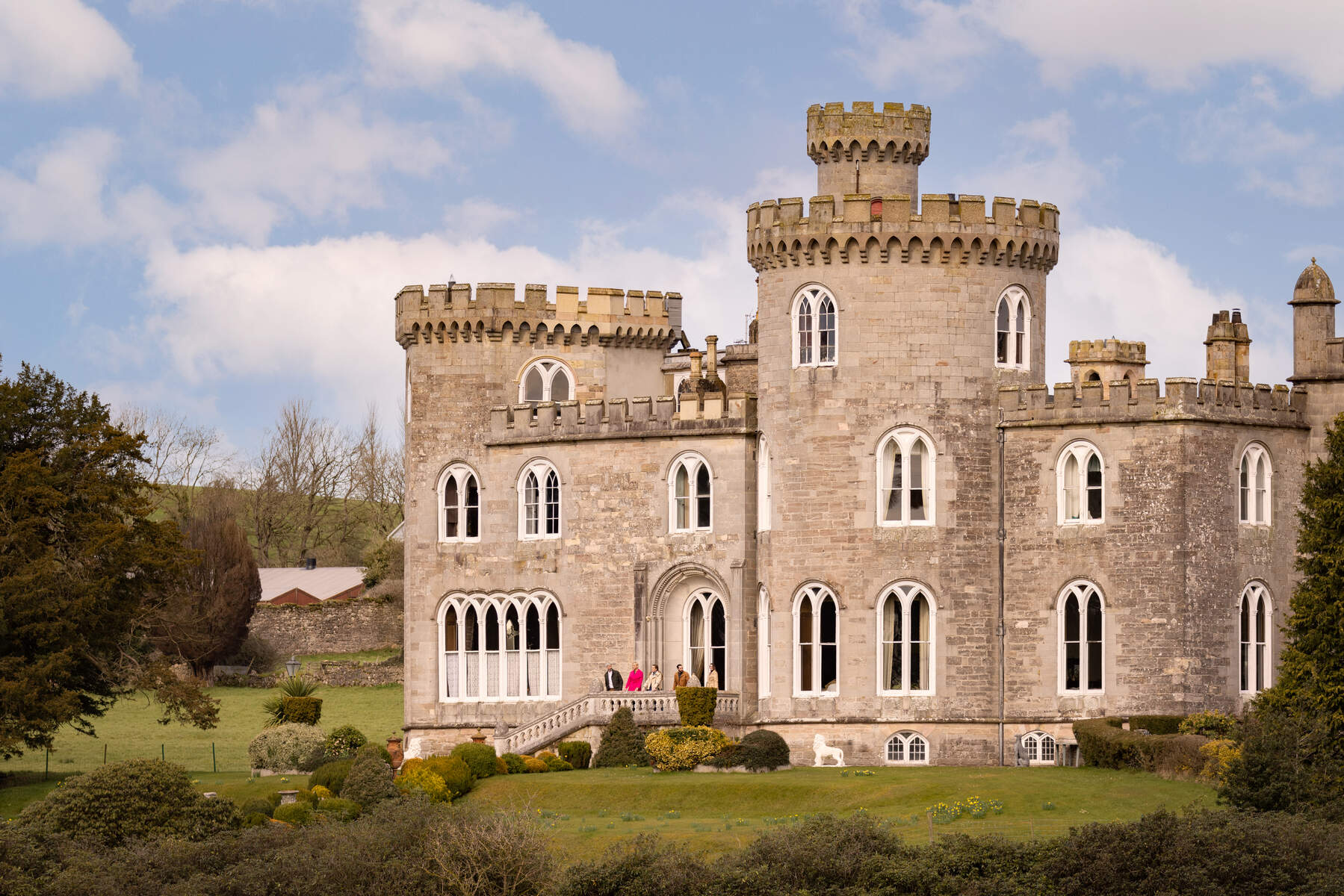
2. Hilton Park House, Clones, Co. Monaghan– section 482
www.hiltonpark.ie Tourist Accommodation Facility – since it is listed under Revenue Section 482 as Tourist Accommodation Facility, it does not have to open to the public. However, check the website as it is open to visitors on some dates.
Hilton Park, Monaghan, photograph taken 2018 for Tourism Ireland. (see [3])
Blessingbourne, County Tyrone, photograph courtesy of Tourism Northern Ireland, 2019. (see [3])
The website tells us:
“Blessingbourne Estate came into the Montgomery family by marriage to the Armar family in the early 18th century. The builder of Blessingbourne was a man of taste; Hugh De Fellenberg known as “Colonel Eclipse”, Montgomery, grandfather of Captain Peter Montgomery.
“Blessingbourne originally belonged to the Armars. The Estate came to the Montgomerys in the eighteenth century when Elizabeth Armar married Hugh Montgomery [b. 1692], of Derrygonnelly Castle in Fermanagh.
“The first Montgomery to live at Blessingbourne was another Hugh. Hugh was born in 1779 and known for some reason as “Colonel Eclipse”. His portrait, which he gave to his old school, Eton, shows him to have been very handsome. However, he was unlucky in love.
“He vowed he would never marry and built himself a bachelor retreat at Blessingbourne, a romantic thatched cottage. He also built the charming little Gate Lodge (transformed to the present day 5 star Gate Lodge)
“But his bachelorhood ended after a few years, for he married a Spanish girl and had a son. His son’s godmother was Lady Byron, who remained a close friend and was greatly attached to his sister Mary, a key figure in the development of Blessingbourne.
“It descended in the family to Peter Montgomery, Vice-Lord Lieutenant of Tyrone, who died childless, after which it passed to a cousin. The property was ultimately the inheritance of Captain Robert Lowry, a direct descendant of Colonel Eclipse, and now belongs to Colleen and Nicholas Lowry.
“The Classic Tour encompasses everything well loved about the Estate. Current estate owners Nicholas and Colleen Lowry host all Tours personally. This tour includes a walk through the Victorian gardens, with their majestic setting overlooking the beautiful Lough Fadda. As well as, a private tour of main ground floor rooms of the impressive Manor House. The Manor House was built in 1871-74 and designed by Pepy’s Cockerall a close friend of William Morris. After that, enjoy a guided stroll around the extensive Coach , Carriage and Costume Collections from yesteryear.“
Mark Bence-Jones writes in his A Guide to Irish Country Houses (1988):
p. 44. “(Montgomery/IFR) There was originally no house at Blessingbourne, an estate which came to the Montgomerys through marriage early in C18; the family seat being Derrygonnelly Castle in County Fermanagh, which was burnt later in C18 and not rebuilt. The family lived for some years at Castle Hume, which they rented; then, at the beginning of C19, a romantic thatched cottage was built by the side of the lough at Blessingbourne by Hugh Montgomery (known as Colonel Eclipse) as a bachelor retreat for himself after he had been crossed in love. His bachelorhood ended in 1821, when he married a Spanish girl; but during the next 50 years the family lived mainly abroad, so that his cottage was all they needed for their occasional visits to County Tyrone. The present Victorian Elizabethan house was built by his grandson, Hugh de Fellenberg Montgomery, between 1870 and 1874, to the design of F. Pepys Cockerell. Pepys Cockerell, son of the better-known C.R. Cockerell, as an artist as much as an architect; his patron and his patron’s wife were also people of tate; so that Blessingbourne is an unusually attractive and successful example of it style and period. The grey stone elevations are not overloaded with ornament; such as there is had restraint: caps on the chimneys, small finials on the gables, curved and scrolled pediments over some of the mullioned windows. The interior of the house is comfortable, with great character. The hall has a staircase incorporated in a screen of tapering wooden piers. Through glazed arches one looks across an inner hall to the lough and mountains. The principal rooms have chimneypieces of carved sone in a Tudor design, flanked by niches for logs: some of them being decorated with William de Morgan tiles. The dining room still keeps its original William Morris wallpaper of blue and green grapes and foliage; while there is another original Morris paper in the library. The late owner, Capt P. S. Montgomery, former President of th Northern Ireland Arts Council, stylishly redecorated much of the interior, which houses his collection of modern Irish art. Blessingbourne has passed to his nephew, Captain R.H.Lowry.”
Hill of The O’Neill and Ranfurly House Arts Visitor Centre, Tyrone, by Brian Morrison 2014, for Tourism Northern Ireland (see [3]).
The website tells us:
“The O’Neills were perhaps the greatest of the Irish clans, whose origins date back as far as the 10th century and whose lineage includes two High Kings of Ireland.
“Hugh O’Neill became leader of the clan in 1595 and as such was known as The O’Neill. A charismatic, even romantic figure, he had a long, tempestuous and complicated relationship with the English Crown, a relationship largely of convenience – for both parties. It was characterised by double-crossing by each side, building and abandoning strategic alliances. And ultimately, by all-out war.
“In this story Hugh O’Neill, Earl of Tyrone and the last inaugurated chief of the O’Neills, plays the central role. Dungannon was at the eye of an international political storm from 1594 to 1603, during which time The O’Neill would lead mighty armies, would win and lose battles, and create problems for at least four monarchs.
“And the repercussions were serious. Some might say that the consequences are still being felt today. When Hugh O’Neill was ultimately outmanoeuvred, his defeat paved the way for two connected seismic events that would forever transform his kingdom.
“The O’Neill was a military genius who repeatedly got the better of the Crown’s generals in Ulster. However, after a bitter defeat at the Battle of Kinsale, he was driven to bid farewell to the Hill of the O’Neill and the lands he ruled over.
“O’Neill’s departure for Spain, with the Earl of Tyrconnell and 90 followers, became known as the Flight of the Earls. It was a pivotal event in Irish history, effectively marking the end of the Gaelic way of life.
“With The O’Neill and his followers effectively gone into exile, the way was clear for the organised colonisation of their lands by wealthy settlers, largely from Scotland and England under King James I. This was known as the Plantation, a plan conceived to subdue, control and ‘civilise’ the wayward Irish. Instrumental in managing the process and distributing the lands was the Lord Deputy of Ireland – Arthur Chichester, who had defeated Hugh O’Neill in the Nine Years War. (Chichester would go on to become a major figure in the founding of Belfast.)
“The Plantation is the point that marks the shift in Ulster from an ancient Gaelic tradition to a new Anglo-Scottish ethos. It is in effect, the beginning of another age in the history of Ireland, Ulster, Dungannon and, of course, of the Hill.“
Killymoon Castle, County Tyrone, photograph @ChristopherHeaney for Tourism Ireland 2022, Ireland’s Content Pool. (see [3])
The website tells us:
“Killymoon castle sits in picturesque surroundings overlooking the Ballinderry River on the outskirts of Cookstown just 50 miles from Belfast by car. The castle is a grade A listed building designed by the famous John Nash who also designed the Regent Street area of London and its most famous landmark Buckingham Palace. The castle was originally built in 1600 for James Stewart, six generations of the Stewarts lived in the castle until 1852. It was described in the Irish Penny Journal of 1841 ‘as one of the most aristocratic residences in the province of Ulster’.”
“The original castle, built in 1671 by James Stewart on the substantial demesne had been granted to him under the Plantation Settlement. Stewarts ancestors had come from Scotland during the plantation to settle in Cookstown, and in 1666 James bought the land lease for the castle site from Alan Cooke – the founder of Cookstown. The castle was destroyed by fire in 1801 and in 1802, Colonel William Stewart had a new, more imposing castle built, designed by John Nash, the famous London Architect.“
James Stewart (1741-1821) of Killymoon, County Tyrone, by Pompeo Batoni, Ulster Museum, National Museum of Northern Ireland.
“Killymoon was Nash’s first castle in Ireland, and reputedly cost £80,000 to build (about £7.4 million today). It was described in the Irish Penny Journal of 1841 as “one of the most aristocratic residences in the province of Ulster”, with state apartments consisting of “a breakfast-parlour, dining room, ante-room and drawing-room, all of which are of noble proportions and their woodwork of polished oak”.
“The Killymoon estate remained the property of the Stewart family for six generations; however, their extravagant lifestyle caused the Stewart family to fall on hard times, especially during the years of the Irish famine. The estate was sold in 1852 for £100,000. In 1857, the castle had again been sold to the Cooper family; and, in 1865, Colonel Bolton, an English gentleman, purchased the castle.
“A mere ten years later, Mervyn Stuart Thomas Moutray JP, became the owner of Killymoon Castle until 1916, when Gerald Macura bought the castle and town of Cookstown for almost £100,000. By 1918, Macura was also in financial difficulties and was compelled to sell off his assets. John Coulter bought the castle and grounds in 1922 and it remains the home of the Coulter family to this day.“
Killymoon Castle, County Tyrone, photograph @ChristopherHeaney for Tourism Ireland 2022, Ireland’s Content Pool. (see [3])
“Take a tour of Killymoon Castle and step back in time. Visit Lady Molesworth’s morning room, the oval dining room whose restrained plasterwork and marble fireplace show the dignity of their Georgian origin. Ascend the magnificent cantilever style staircase and admire the fragile plasterwork like sugar spires on an inverted wedding cake .
“Colonel Stewart was only 27 when this castle was built and it must have been a truly wonderful fairy tale to bring his beautiful bride to this romantic spot.
“Fortunes and families rise and fall and this fabulous fairy dwelling which cost £80.000 to build in 1807, was gambled in a game of poker and sold for an unbelieveable sum in the 1920’s
“Group tours can be arranged by clicking the button below and filling out a request form. Private tours also available.“
Killymoon Castle, County Tyrone, photograph @ChristopherHeaney for Tourism Ireland 2022, Ireland’s Content Pool. (see [3])
Mark Bence-Jones writes in his A Guide to Irish Country Houses (1988):
p. 173. “(Stewart/LGI1912; Moutray/LGI1912) One of John Nash’s earliest castles, built ca 1803 for William Stewart, MP, incorporating part of the previous house which was burnt ca 1800. A building with a romantic silhouette in a glorious position above the Ballinderry river with a backdrop of sweeping woods and parkland. The principal front dominated by an almost central battlemented and machicolated round tower and turret; at one end, an octagonal battlemented and machicolated tower; at the other, the profile of the square tower in the adjoining front, the base of which is arched to form a porte-cochere. The latter tower has slender octagonal corner turrets, with cupolas. Pointed windows grouped together under segmental hood-mouldings, which were regarded by Nash and his contemporaries as Saxon. Good interior planning with square, circular and octagonal rooms fitted together. Hall with double staircase, lit by Gothic lantern on plaster fan-vaulted ceiling. Drawing room with plain gilt plasterwork cornice of wreath and honeysuckle design. Library in form of Gothic chapel, with stained glass windows. Sold after William Stewart’s death 1850. Subsequently the seat of the Moutray family.”
Killymoon Castle, County Tyrone, photograph @ChristopherHeaney for Tourism Ireland 2022, Ireland’s Content Pool. (see [3])Killymoon Castle, County Tyrone, photograph @ChristopherHeaney for Tourism Ireland 2022, Ireland’s Content Pool. (see [3])Killymoon Castle, County Tyrone, photograph @ChristopherHeaney for Tourism Ireland 2022, Ireland’s Content Pool. (see [3])
The house is open from Easter to mid September on Saturdays and Sundays, and during July and August it is open Thursday to Sunday. Opening hours are from 12:00 – 17:00. 3 guided tours per day at 12:30, 14:00 and 15:30.
“Lissan House is an enchanting country residence set within a 260 acre demesne of ancient woodland and forestry.
“The estate was created in the 17th century and remained the home of the Staples family for nearly 400 years. Lissan came to prominence in 2003 when its popularity helped it reach the final of the BBC Restoration programme.
“Following extensive redevelopment, the house opened its doors in spring 2012 to reveal modern interactive exhibits and original family furnishings which take you on a unique journey through the history of the estate and the family characters that have shaped it. Children will be kept entertained in the house with the teddy bear treasure hunt. The demesne also features a challenging adventure playground for children, a wooded picnic area, walled garden.“
Lissan House and estate is now run and managed by a charitable board, who help secure the future of the property for the benefit of the community.
Robert Staples (1772-1832) 8th Baronet, courtesy of National Trust Springhill.
Mark Bence-Jones writes in his A Guide to Irish Country Houses (1988):
p. 188. “(Staples, Bt/PB) A plain three storey 9 bay Georgian house with later additions. At one end, a single-storey wing with a three-sided mullioned bow. At the other, a gable-ended office range. And in the middle of the entrance front, a single-storey protuberance of unusual depth, embodying a porch and a bow-fronted porte-cochere with windows. Some time post mid-C18, a garden was laid out here by the architect, Davis Duckart; with an “artificial sheet of water with cascades, and a picturesque bridge.”
Nestled in the heart of the estate’s historic courtyard the collection of 5 award-winning self-catering apartments are ideal for family breaks, romantic breaks and groups. Guests can enjoy a relaxing country estate experience.
Guests can choose from 1 bedroom or 2 bedroom self-catering accommodation, all of which are pet friendly. Experience a home from home environment with the apartment’s warm and inviting décor. All apartments feature open plan Living, Dining and Kitchen areas. On-site laundry facilities are available.
5. Cobblers Cottage Omagh, County Tyrone(sleeps 5)€
The lovingly renovated Cobblers Cottage has a cosy living/kitchen/dining area, 2 spacious bedrooms (sleeps 5) & a bathroom.
Enjoy the simplicity of this recently renovated 200 year old traditional Irish cottage in peaceful surroundings of Tyrone at the foot of the Sperrin Mountains between Omagh and Cookstown, in the area of Creggan.
Stay with us in our Castle Lodge, located in the grounds of Killymoon Castle on the banks of the Ballinderry River, offers the most tranquil of breaks. Only a short distance from Cookstown town centre and a one hour drive to the north coast, Donegal or Belfast. With Killymoon golf club and the Ballinderry River on your doorstep what better way to relax.
9. The Lower House Rooms, Donaghmore, Dungannon, Co. Tyrone, BT70 3EZ€
Located in Donaghmore in the heart of Mid-Ulster, the conversion of The Lower House into 7 rooms of accomodation has been our pride and joy. Renovated with the finest fixtures, fittings and decoration, a stay at The Lower House rooms is an experience full of character and luxury.
4 Stunning self catering family cottages situated in the Dungannon countryside, Co. Tyrone, Northern Ireland
[1] Bence-Jones, Mark. A Guide to Irish Country Houses (originally published as Burke’s Guide to Country Houses volume 1 Ireland by Burke’s Peerage Ltd. 1978); Revised edition 1988 Constable and Company Ltd, London.
Just to finish up my entries about Office of Public Works properties: Carlow, Dublin, Kildare, Kilkenny, Laois, Longford, Louth, Meath, Offaly, Westmeath, Wexford and Wicklow are the counties that make up the Leinster region.
Carlow:
1. Altamont Gardens
Kildare:
2. Castletown House, County Kildare
3. Maynooth Castle, County Kildare
Carlow:
1. Altamont House and Gardens, Bunclody Road, Altamont, Ballon, County Carlow:
Altamont House and Gardens, photograph by Sonder Visuals, 2015, for Tourism Ireland, from Ireland’s Content Pool. [1]
“A large and beautiful estate covering 16 hectares in total, Altamont Gardens is laid out in the style of William Robinson, which strives for ‘honest simplicity’. The design situates an excellent plant collection perfectly within the natural landscape.
“For example, there are lawns and sculpted yews that slope down to a lake ringed by rare trees and rhododendrons. A fascinating walk through the Arboretum, Bog Garden and Ice Age Glen, sheltered by ancient oaks and flanked by huge stone outcrops, leads to the banks of the River Slaney. Visit in summer to experience the glorious perfume of roses and herbaceous plants in the air.
“With their sensitive balance of formal and informal, nature and artistry, Altamont Gardens have a unique – and wholly enchanting – character.” [2]
From “In Harmony with Nature, The Irish Country House Garden 1600-1900” in the Irish Georgian Society, July 2022, curated by Robert O’Byrne.Altamont, photograph by Sonder Visuals 2017 for Tourism Ireland, Ireland’s Content Pool. [see 1]
From Living Legacies: Ireland’s National Historic Properties in the care of the OPW, Government Publications, Dublin, 2018:
“Altamont House was constructed in the 1720s, incorporating parts of an earlier structure said to have been a medieval nunnery. In the 1850s, a lake was excavated in the grounds of the house, but it was when the Lecky-Watsons, a local Quaker family, acquired Altamont in 1924 that the gardens truly came into their own.
“Feilding Lecky-Watson had worked as a tea planter in Ceylon (Sri Lanka) where he nurtured his love of exotic plants, and of rhododendrons in particular. Back in Ireland, he became an expert in the species, cultivating plants for the botanical gardnes at Glasnevin, Kew and Edinburgh. So passionate was he about these plants that when his wife, Isobel, gave birth to a daughter in 1922, she was named Corona, after his favourite variety of rhododendron.” [3]
Altamont House and Gardens lake, photograph by Sonder Visuals, 2015, for Tourism Ireland, from Ireland’s Content Pool. [see 1]
Around the lake are mature conifers that were planted in the 1800s, including a giant Wellingtonia which commemorates the Battle of Waterloo. [3] Corona continued in her father’s footsteps, planing rhododendrons, magnolia and Japanese maples. Another feature is the “100 steps” hand-cut in granite, leading down to the River Slaney. There are red squirrels, otters in the lake and river, and peacocks. Before her death, Corona handed Altamont over to the Irish state to ensure its preservation.
The Temple,Altamont House and Gardens, photograph by Sonder Visuals, 2015, for Tourism Ireland, from Ireland’s Content Pool. [see 1]
Kildare:
2.Castletown House and Parklands, Celbridge, County Kildare.
Castletown House, County Kildare, Photo by Mark Wesley 2016, Tourism Ireland, from Ireland’s Content Pool. [see 1]
The Obelisk, or Conolly Folly, was reputedly built to give employment during an episode of famine. It was restored by the Irish Georgian Society in 1960.
“This majestic stone castle was founded in the early thirteenth century. It became the seat of power for the FitzGeralds, the earls of Kildare, as they emerged as one of the most powerful families in Ireland. Garret Mór, known as the Great Earl of Kildare, governed Ireland in the name of the king from 1487 to 1513.
Maynooth Castle was one of the largest and richest Geraldine dwellings. The original keep, begun around 1200, was one of the largest of its kind in Ireland. Inside, the great hall was a nerve centre of political power and culture.
Only 30 kilometres from Dublin, Maynooth Castle occupies a deceptively secluded spot in the centre of the town, with well-kept grounds and plenty of greenery. There is a captivating exhibition in the keep on the history of the castle and the family.“
[3] p. 8, Living Legacies: Ireland’s National Historic Properties in the Care of the OPW. Government Publications, Dublin 2, 2018.
[4] p. xiii, Jennings, Marie-Louise and Gabrielle M. Ashford (eds.), The Letters of Katherine Conolly, 1707-1747. Irish Manuscripts Commission 2018. The editors reference TCD, MS 3974/121-125; Capel Street and environs, draft architectural conservation area (Dublin City Council) and Olwyn James, Capel Street, a study of the past, a vision of the future (Dublin, 2001), pp. 9, 13, 15-17.
[7] p. 75. Bence-Jones, Mark. A Guide to Irish Country Houses (originally published as Burke’s Guide to Country Houses volume 1 Ireland by Burke’s Peerage Ltd. 1978); Revised edition 1988 Constable and Company Ltd, London.
[8] p. 129. Great Irish Houses. Forewards by Desmond FitzGerald, Desmond Guinness. IMAGE Publications, 2008.
Continuing my posts about Office of Public Works sites, we visited several last year. The five counties of Connacht are Galway, Leitrim, Mayo, Roscommon and Sligo.
I will be writing of more Section 482 properties soon! We visited the lovely Ballysallagh House in County Kilkenny last weekend. The 2022 Section 482 list should be out this month, in February, but it is not available yet.
Galway:
1. Athenry Castle, County Galway
2. Aughnanure Castle, County Galway
3. Dun Aonghasa, County Galway
4. Ionad Culturtha an Phiarsaigh (Pearse’s Cottage), County Galway
5. Portumna Castle, County Galway
Galway:
1. Athenry Castle, County Galway:
Athenry Castle 1938, from Dublin City Library and Archives. [1]
General information: 091 844797, athenrycastle@opw.ie
“Guarding a strategic ford on the Clarinbridge River is the monumental bulk of Athenry Castle. The imposing three-storey hall-keep survives from the mid-thirteenth century. It is solidly impressive from the outside, although the interior was simply built, containing only a hall at first-floor level and dark storerooms below.
“Despite the simplicity of the layout, fine carvings bear witness to the hall’s eminence. The doorway and two of the window openings are decorated with floral motifs in the remarkable local School of the West style. The battlements, through whose tall arrow-loops the castle was defended against various attackers across the centuries, are original.
“Visitors come to Athenry Castle to soak up the authentic atmosphere of medieval power that the mighty fortress still exudes”. [2]
“The castle Keep was built in 1253 by Meiler de Bermingham [ancestor of the Lords of Athenry] and after an attack in 1316 the large town wall were added [in 1316 Richard “of the Battles” 4th Lord of Athenry defeated Felim O’Connor in the Battle of Athenry]. Not long after the completion of the walls, one of Ireland’s bloodiest battles was fought outside the town between the King of Connaught and the Normans. Until that time the area and castle were of great importance but the story changed after the battle.
“Meiler’s son raised the height of the first floor; he also embellished the entrance with a fine arched door at the south east end of the castle which was reached by a wooden staircase. During the reordering the banqueting hall was also enhanced with narrow trefoil headed windows; very rare in Irish castles.
“In the 15th century the tower was raised by two floors to include an attic and two gable ends and battlements were added. The basement only previously accessible by a trap door and ladder also benefited from having a new entrance.
“In 1596 the castle fell into the hands of the O’Donnell clan and never recovered from the great damage it sustained during the battle for its title and it wasn’t until the late 1980s that the National Monuments branch of the Office of Public Works in Ireland started work on its restoration.” [3]
I found a wonderful history on the website The Standing Stone by Dr. Thomas P. Nelligan:
“The area had been conquered by the Normans in the early 13th century and following the death of the King of Connacht, Cathal Crovderg O’Conor, the province was granted to Richard de Burgo by the King of England who invaded and area and subdued it. He, in turn, granted the area around Athenry to Peter de Bermingham. The castle was subsequently built between 1235 and 1240 by Meiler de Bermingham, Peter’s son. It is often called King John’s Castle, despite being built some 20 years after his death. Meiler was granted, in 1244, the right to hold a market at the town, and an annual 8-day fair. He is also responsible for the founding of the nearby Dominican Friary in 1241. As the Connacht region didn’t receive a large influx of Norman settlers at this time, there was resistance to the de Bermingham’s rule. In 1249, an Irish army was defeated by the de Berminghams at Athenry.
“The castle was attacked in 1316 and following this the town walls were constructed. This attack was led by the Irish Felim O’Conor, the Gaelic king of Connacht. He fought the Lord of Connacht, William Liath de Burgo, and the 4th Lord of Athenry, Richard de Bermingham. The Irish king was killed during the battle and thousands of Irish were killed owing their custom of not wearing armor and the Normans heavy use of the bow.
“The de Berminghams stopped using the castle as their primary residence in the 15th century and moved elsewhere in the town [Richard de Bermingham who died in 1580 moved to Dunmore, County Galway]. In 1574 the town was burned to the ground by the sons of the Earl of Clanricarde, Ulick and John Burke, who rebelled. The town was rebuilt in 1576 only for it to be attacked again a year later by the Burkes. Further rebuilding works were carried out in 1584, but during the Nine Years’ War the town was captured and burnt by Red Hugh O’Donnel, and the castle fell into his hands.” [4]
2. Aughnanure Castle, Oughterard, County Galway:
Aughnanure Castle, County Galway, photograph by Brian Morrison, 2014 for Tourism Ireland, Ireland’s Content Pool. [5]
General information: 091 552214, aughnanurecastle@opw.ie
“The fearsome O’Flaherty family, whose motto was ‘Fortune favours the strong’, ruled west Connacht for 300 years from this fine six-storey tower on the shores of Lough Corrib.
“In 1546 the O’Flahertys joined forces with the Mayo O’Malleys when Donal an Chogaidh O’Flaherty married Grace O’Malley, later known as Granuaile, the formidable pirate queen. The O’Malley motto, ‘Powerful by land and by sea,’ showed the awe in which that family, too, was held.
“At Aughanure today you can inspect the remains of a banqueting hall, a watch tower, an unusual double bawn and bastions and a dry harbour. Keep your eyes peeled for glimpses of the three species of bat that now live in the castle.“
Grace O’Malley, 18th century Irish school, courtesy of Fonsie Mealy auction.
It was captured in 1572 by Sir Edward Fitton, then president of Connacht, but later reclaimed by the O’Flahertys. In 1618 King James I granted the castle to Hugh O’Flaherty but shortly after it fell into the hands of the Marquis of Clanrickarde who used it as a base against Cromwell’s forces. In 1687 the castle was back in the hands of the O’Flaherty clan for a rent of 76 per annum. In 1719 Bryan O’Flaherty bought the castle with the help of a mortgage of 1,600 which he borrowed from Lord Saint George but was unable to keep up the repayments and so the castle was lost again. [6] The Commissioners of Public Works obtained the castle in 1952 before declaring it a National Monument and undertaking restoration of the parapet, chimney and roof in 1963.
Aughnanure Castle, County Galway, photograph by Robert French, Lawrence Photographic Collection, National Library of Ireland.
3. Dun Aonghasa, County Galway:
Dun Aengus, Inishmore, Aran Islands, County Galway, by Gareth McCormack, 2019 for Tourism Ireland, Ireland’s Content Pool. [see 5]
General information: 099 61008, dunaonghasa@opw.ie
“Dún Aonghasa is about 1km from the Visitor Centre and is approached over rising ground. The last section of the path is over rough, natural rock and care is needed, especially when descending. Boots or strong walking shoes are recommended. There is no fence or barrier at the edge of the cliff.
“Perilously perched on a sheer sea-cliff, Dún Aonghasa defiantly faces the Atlantic Ocean. It is the largest of the prehistoric stone forts of the Aran Islands.
“The fort consists of three massive drystone defence walls. Outside them is a chevaux-de-frise – that is, a dense band of jagged, upright stones, thousands in number. A devastatingly effective way to impede intruders, the chevaux-de-frise surrounds the entire fort from cliff to cliff.
“Dún Aonghasa is over 3,000 years old. Excavations have revealed significant evidence of prehistoric metalworking, as well as several houses and burials. The whole complex was refortified in AD 700–800.
“The visit involves a short hike over rising ground and rough, natural rock, so come prepared with boots or strong walking shoes. Be careful, too, when walking near the cliff – there is no fence or barrier at the edge of the 87-metre drop.“
4. Ionad Culturtha an Phiarsaigh (Pearse’s Cottage), County Galway:
Ionad Culturtha an Phiarsaigh (Pearse’s Cottage), County Galway, photograph by Christian McLeod, 2016 for Failte Ireland, Ireland’s Content Pool. [see 5]
general information: 091 574292, icpconamara@opw.ie
“Ionad Cultúrtha an Phiarsaigh is located in Ros Muc, in the heart of the Connemara Gaeltacht. It was here that Patrick Pearse, leader of the 1916 rebellion against British rule, built a summer cottage for himself.
“In the state-of-the-art visitor centre you can explore the things that drew Pearse to Connemara – the area’s unique landscape and the ancient Gaelic culture and language which is still alive today. You will get a warm welcome from our local guides, who are steeped in the local culture and take great pride in it.
“A short stroll across the bog will take you to the cottage itself. You will find it just as it was when Pearse left for the last time in 1915.“
Ionad Culturtha an Phiarsaigh (Pearse’s Cottage), County Galway, photograph by Stephen Duffy, 2019 for Failte Ireland, Ireland’s Content Pool. [see 5]
“Built by [Richard Bourke 1572-1635] the fourth earl of Clanricarde, Portumna Castle was the de Burgo family power base for centuries.
“The castle is a unique example of the transitional Irish architecture of the early 1600s. Its bold design combines elements of medieval and Renaissance style that complement each other perfectly.
“A major fire in 1826 left the castle a roofless shell, but the state began to bring it back from ruin in the 1960s. Restoration work continues to this day.
“The dramatic walk up to the building includes charming formal gardens, which create an enchanting sense of the original seventeenth-century setting. The walled kitchen garden is particularly memorable.
“The castle enjoys a sensational view of Lough Derg. The ground floor is open to the public and houses an exhibition that brings the story of the castle and the de Burgo family to life. It is right beside the River Shannon and Portumna Forest Park, which makes it a great choice for a delightful day out.“
Munster’s counties are Clare, Cork, Kerry, Limerick, Tipperary and Waterford.
I have noticed that an inordinate amount of OPW sites are closed ever since Covid restrictions, if not even before that (as in Emo, which seems to be perpetually closed).
Cork:
1. Annes Grove, County Cork
2. Barryscourt Castle, County Cork – currently closed (June 2022)
3. Charles Fort, County Cork
4. Desmond Castle, Kinsale, County Cork
5. Doneraile Court, County Cork
6. Fota House Arboretum and Gardens, County Cork (Fota House itself is maintained by the Heritage Trust)
7. Ilnacullin, Garanish Island, County Cork
donation
Help me to pay the entrance fee to one of the houses on this website. This site is created purely out of love for the subject and I receive no payment so any donation is appreciated!
€10.00
Cork:
1. Annes Grove, Castletownroche, County Cork:
Annes Grove, County Cork, 1981 from Dublin City Library and Archives. [1]
This is due to be open soon by the OPW. It does not have a website yet. In December 2015 Annes Grove House and Garden were donated to the state by the Annesley family.
“Nestled into an eighteenth century ornamental glen, adjacent to the River Awbeg, the demesne of Annes Grove in north County Cork is the setting for the most exquisite Robinsonian-style gardens in Ireland….
The Gardens at Annes Grove were largely the creation of Richard Grove Annesley in the first half of the twentieth century.” [2]
Annes Grove, County Cork, 1981 from Dublin City Library and Archives. [see 1]
The estate was previously known as Ballyhimmock, and it was acquired by William Grove around 1626.
In 1792 it was inherited by Arthur Grove Annesley (1774-1849) from an aunt by marriage, heiress to the Grove family, after which it was renamed by merging the two family names. [3] Arthur Grove Annesley’s uncle Francis Charles Annesley, 1st Earl Annesley of Castlewellan, County Down, married Mary Grove who inherited the estate from her father.
At the centre of the garden is a restored Gothic style summerhouse. The main house is of Queen Anne design, from the 18th century. Pergolas, a lily pond, Victorian stone fernery, a woodland walk and river garden, a rockery and wild water garden create an atmospheric setting.
From “In Harmony with Nature, The Irish Country House Garden 1600-1900” in the Irish Georgian Society, July 2022, curated by Robert O’Byrne.
2. Barryscourt Castle, County Cork:
Barryscourt Castle by Julia Delio, flickr constant commons, August 2009.
“Barryscourt Castle was the seat of the great Anglo-Norman Barry family and is one of the finest examples of a restored Irish Tower House. Dating from between 1392 and 1420, the Castle has an outer bawn wall and largely intact corner towers. The ground floor of the Tower House contains a dungeon into which prisoners were dropped via the ‘drop-hole’ located on the second floor.
“The Barrys supported the Fitzgeralds of Desmond during the Irish rebellions of the late sixteenth century. To prevent it being captured by Sir Walter Raleigh and his army, the Barrys [David Barry, 5th Viscount Barry (1550-1617)] partially destroyed the Castle.
Walter Raleigh (1552-1618) by Unknown English artist 1588, National Portrait Gallery of London ref. 7.
“During the Irish Confederate War of the seventeenth century Barryscourt Castle was once again successfully attacked. Cannon balls lodged in the wall above the Castle entrance bear witness to this conflict. The last head of the Barry family was Lord David Barry.
“Barryscourt Castle has been extensively restored. The Main Hall and Great Hall have been completed and fittings and furnishings reinstated. Within the Castle grounds, the herb and knot garden and the charming orchard have been restored to their original sixteenth century design.“
After David Barry’s death in 1617 the family made Castlelyons their principal seat (now a ruin). The castle was restored by the OPW and the Barryscourt Trust between 1987-1993, with reproduction furniture made by Victor Chinnery. [4]
An article in the Irish Examiner by Padraig Hoare published 22nd May 2021 tells us that the site is closed and will be for some time:
“A reopening date must be established for one of East Cork’s most historic landmarks after languishing in the midst of safety works for five years.
“That is according to Cork East TD Séan Sherlock, who said Barryscourt Castle in Carrigtwohill has to be a priority for the Government body in charge of the facility, the Office of Public Works (OPW).
“History enthusiasts and families alike were disappointed in the summer of 2020, when it emerged that Barryscourt Castle would remain closed for another 18 months.
“The latest update from the OPW given in response to a parliamentary question from Mr Sherlock suggests it may be even longer than the date anticipated a year ago.
“The Department of Public Expenditure said restrictions associated with the Covid-19 pandemic “has disrupted the good progress” of works being done to make the facility safe.
“It is not possible at this time to give a precise date for reopening to the public,” the department said.“
3. Charles Fort, Summer Cove, Kinsale, County Cork:
The Soldiers Quarters, the Hospital ward, the Lighthouse (by Robert Reading) and Magazine of the 17th Century Charles Fort, Kinsale, Co. Cork, Munster, Ireland. Photograph from Ireland’s Content Pool, photograph by Cahir Davitt, 2016, for Failte Ireland. [5]
General Enquiries: 021 477 2263, charlesfort@opw.ie
“As one of the country’s largest military installations, Charles Fort has been part of some of the most momentous events of Irish history. During the Williamite Wars, for example, it withstood a 13-day siege before it fell. Later, in the Civil War of the early 1920s, anti-Treaty forces on the retreat burned it out.
“Charles Fort is a massive star-shaped structure of the late seventeenth century, well preserved despite its history. William Robinson, architect of the Royal Hospital in Kilmainham, Dublin, is credited with designing it. Its dimensions are awe-inspiring – some of the outer defences are 16 metres high.
“The view from the ramparts looking out over Kinsale Harbour is spectacular.“
The Soldiers Quarters, and Magazine of the 17th Century Charles Fort, Kinsale, Co. Cork, Munster, Ireland.Photograph from Ireland’s Content Pool, photograph by Cahir Davitt, 2016, for Failte Ireland. [see 5]The seaward Devils Bastion and lighthouse of the 17th Century Charles Fort, with Kinsale boatyard in the background, Kinsale, Co. Cork, Munster, Ireland; Photograph from Ireland’s Content Pool, photograph by Cahir Davitt, 2016, for Failte Ireland. [see 5]
4. Desmond Castle (also known as the French Prison), Kinsale, County Cork:
Desmond Castle Kinsale 1941, photograph from Dublin City Library archives. [see 1]
General Enquiries: 021 477 4855, desmondcastle@opw.ie
“Desmond Castle in Kinsale dates from around 1500. It is a classic urban tower house, consisting of a three-storey keep with storehouses to the rear.
“Maurice Bacach Fitzgerald, the earl of Desmond, originally built the castle as the customs house for the town. [I think this must be the 9th Earl of Desmond – JWB] It served as a prison in the seventeenth and eighteenth centuries. Because it usually held French inmates, as well as Spaniards, Portuguese, Dutch and Americans, it became known locally as the French Prison and carries that name to this day. The building was co-opted as an ordnance store during the momentous Battle of Kinsale (1601) and served as a workhouse during the Great Famine.
“Desmond Castle certainly had a colourful history and this continued into the twentieth century. In the early 1900s it was used as a venue to host local Gaelic League meetings. Finally, in the 1930s, a thriving undertaking business operated from within the National Monument.“
The National Inventory of Architectural Heritage tells us:
“Freestanding three-bay three-storey tower house, commenced c.1500, abutting earthen terrace to rear. Attached cell blocks and exercise yards to rear (north-west) and platform to side (north-east). Historically used as magazine (1600-1601), as prison for foreign prisoners (1601-1790) and as borough jail (1791-1846). Restored in 1938 currently in use as museum.“
“Fota House was designed by 19th century architects Richard and William Morrison. From the beautifully proportioned rooms with exquisite plasterwork, to the preserved service wing and kitchens, Fota House offers visitors an intimate look at how life was lived in the past, for the cooks, butlers, footmen and maids who supported the lavish lifestyle of the gentry. Our painting collection is considered to be one of the finest collections of landscape painting outside the National Gallery of Ireland and includes works by William Ashford PRHA, Robert Carver, Jonathan Fisher and Thomas Roberts.” [9]
The arboretum and gardens on Fota Island, just 16 kilometres from Cork city centre, are an essential destination for any one of a horticultural bent.
The arboretum extends over 11 hectares and contains one of the finest collections of rare, tender trees and shrubs grown outdoors in Europe. The unique conditions at Fota – its warm soil and sheltered location – enable many excellent examples of exotics from the southern hemisphere to flourish.
The gardens include such stunning features as the ornamental pond, formal pleasure gardens, orangery and sun temple. James Hugh Smith-Barry laid them out in the first half of the nineteenth century. Fota House, the Smith-Barrys’ ancestral home, still stands. The house, arboretum and gardens share the island with a hotel and golf resort and a wildlife park. [10]
7. Ilnacullin, Garanish Island, Glengarriff, Bantry, County Cork:
Italian garden, Garnish Island, Glengarriff, Beara, Co. Cork, Photograph by Chris Hill 2014, Ireland’s Content Pool. [see 5]
general enquiries: (027) 63040
garanishisland@opw.ie
Ilnacullin is an island in the coastal harbour at Glengariff in Bantry Bay. It has an almost sub-tropical climate with mild winters and high levels of rainfall and humidity. These conditions favour the growth of exotic plants. The gardens were set out in the Arts and Crafts style and contain Italianate pavilions and follies, framed against a backdrop of beautiful views.
“Ilnacullin is an island garden of diminutive size and rare beauty. Nestled in the sheltered coastal harbour at Glengarriff in Bantry Bay, the gardens display a wealth of unique horticultural and architectural gems. Bryce House is a fitting memorial to the visionary creators of this unique place.
“The gardens of Ilnacullin owe their existence to the early twentieth-century creative partnership of John Annan and Violet Bryce, the island’s owners, and Harold Peto, an architect and garden designer. The area enjoys a mild and humid micro-climate that makes for spectacular and flourishing plant life all year round.
“Small ferry boats and 60-seater waterbuses take visitors to Ilnacullin regularly. The short crossing usually includes an extra treat – a visit to the nearby seal colony and an opportunity to glimpse majestic sea eagles.“
The Island was bequeathed to the Irish people by the Bryce’s son, Roland, in 1953 and is cared for by the OPW. Bryce House contains material from the Bryces’s lives, including John Annan Bryce’s collection of Burmese statues, Chinese ceramics, Japanese woodblock prints, metal works and rare exotic objects. There are also Old Master drawings by Salvator Rosa, Mauro Antonio Tesi and Giambattista Tiepolo. Over the years the Bryces hosted prominent cultural figures such as George (AE) Russell, George Bernard Shaw and Agatha Christie. [11] You can see a tour of the house and gardens on the website.
From “In Harmony with Nature, The Irish Country House Garden 1600-1900” in the Irish Georgian Society, July 2022, curated by Robert O’Byrne.From “In Harmony with Nature, The Irish Country House Garden 1600-1900” in the Irish Georgian Society, July 2022, curated by Robert O’Byrne.
[7] p. 377. Keohane, Frank. Buildings of Ireland: Cork City and County, Yale University Press, New Haven and London, 2020.
Another work Keohane identifies as being by Benjamin Crawley is Castle Bernard, now a ruin in County Cork:
Castle Bernard, County Cork, photograph from National Inventory of Architectural Heritage.
[8] p. 105. Mark Bence-Jones. A Guide to Irish Country Houses (originally published as Burke’s Guide to Country Houses volume 1 Ireland by Burke’s Peerage Ltd. 1978); Revised edition 1988 Constable and Company Ltd, London.
Castle, May 1-3, 8-10, 15-17, 22-24, 29-31, June 5-7, 12-14, 19-21, 26-28, July 3-5, 10-12, 17-19, Aug 1-2, 7-9, 14-24, 28-30, Sept 4-6, 11-13, 18-20, 11am-3pm
Garden, Mar 27-Sept 28, Thurs-Sundays, and Bank Holidays, National Heritage Week, Aug 16-24,11am-5pm
Fee: castle adult €16.50, child entry allowed for over 8 years €8.50, garden, adult €8.50, child €4, family ticket (2 adults + 2 children) €23, adult season ticket €56, family season ticket €70, special needs visitor with support carer €4, child 5 years or under is free
2025 Diary of Irish Historic Houses (section 482 properties)
To purchase an A5 size 2025 Diary of Historic Houses (opening times and days are not listed so the calendar is for use for recording appointments and not as a reference for opening times) send your postal address to jennifer.baggot@gmail.com along with €20 via this payment button. The calendar of 84 pages includes space for writing your appointments as well as photographs of the historic houses. The price includes postage within Ireland. Postage to U.S. is a further €10 for the A5 size calendar, so I would appreciate a donation toward the postage – you can click on the donation link.
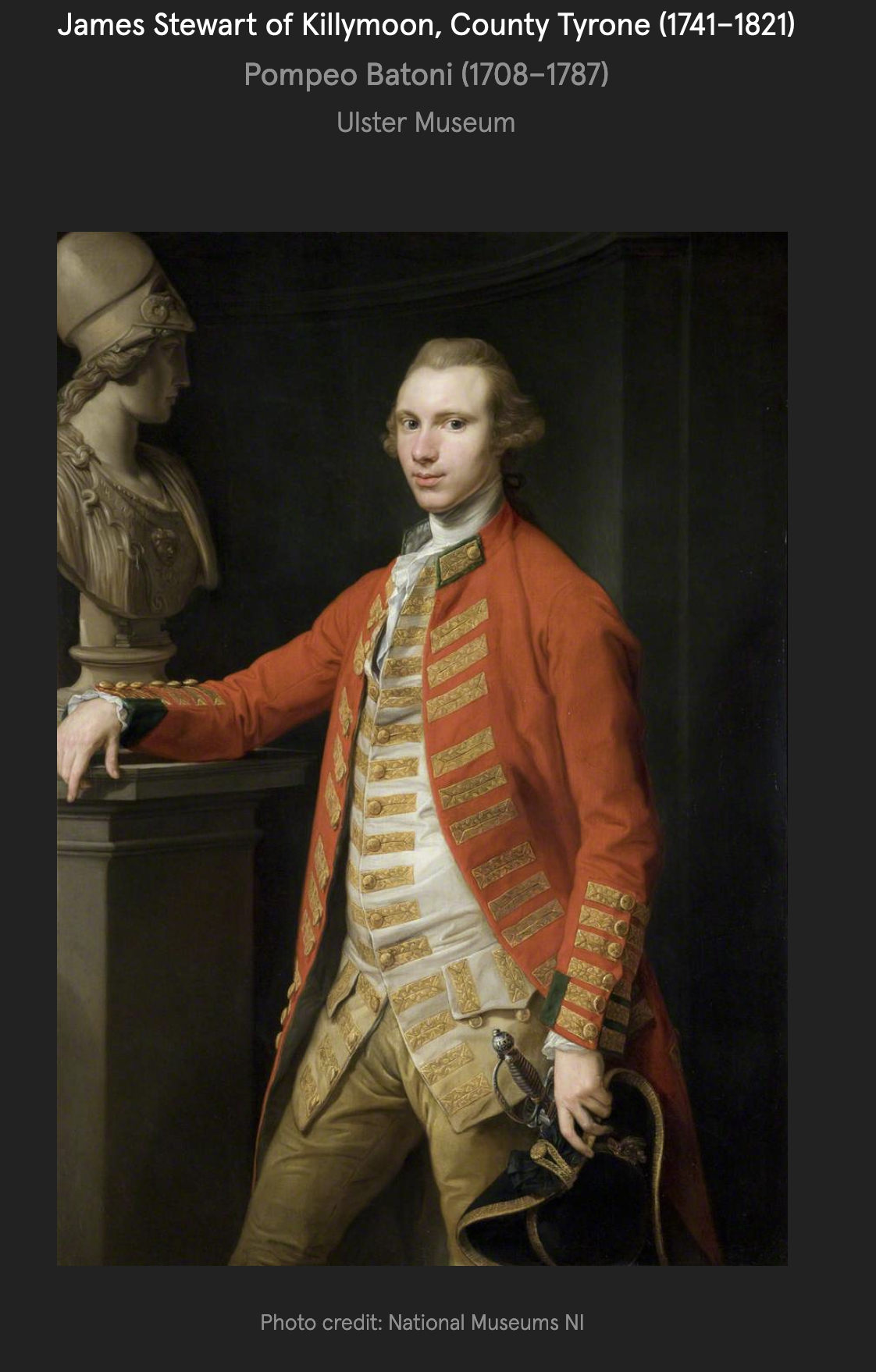
€20.00
donation
Help me to pay the entrance fee to one of the houses on this website. This site is created purely out of love for the subject and I receive no payment so any donation is appreciated!
We visited Tullynally Castle and Gardens when we were staying near Castlepollard with friends for the August bank holiday weekend in 2020. Unfortunately the house tour is only given during Heritage Week, but we were able to go on the Below Stairs tour, which is really excellent and well worth the price.
In 2021 I prioritised seeing Tullynally during Heritage Week, and we went on the upstairs tour!
According to Irish Historic Houses, by Kevin O’Connor, Tullynally Castle stretches for nearly a quarter of a mile: “a forest of towers and turrets pierced by a multitude of windows,” and is the largest castle still lived in by a family in Ireland [1]. It has nearly an acre of roof! It has been the seat of the Pakenham family since 1655. I love that it has stayed within the same family, and that they still live there. I was sad to hear of Valerie Pakenham’s death recently – she wrote wonderful books of history and on Irish historic houses.
The current incarnation of the Castle is in the romantic Gothic Revival style, and it stands in a large wooded demesne near Lake Derravaragh in County Westmeath.
We stayed for the weekend even closer to Lake Derravaragh, and I swam in it!
The lands of Tullynally, along with land in County Wexford, were granted to Henry Pakenham in 1655 in lieu of pay for his position as Captain of a troop of horse for Oliver Cromwell. [2] [3] His grandfather, Edward (or Edmund) Pakenham, had accompanied Sir Henry Sidney from England to Ireland when Sir Sidney, a cousin of Edward Pakenham, was appointed Lord Deputy of Ireland. [4]
A house existed on the site at the time and parts still exist in the current castle. It was originally a semi-fortified Plantation house. When Henry Pakenham moved to Tullynally the house became known as Pakenham Hall. It is only relatively recently that it reverted to its former name, Tullynally, which means “hill of the swans.”
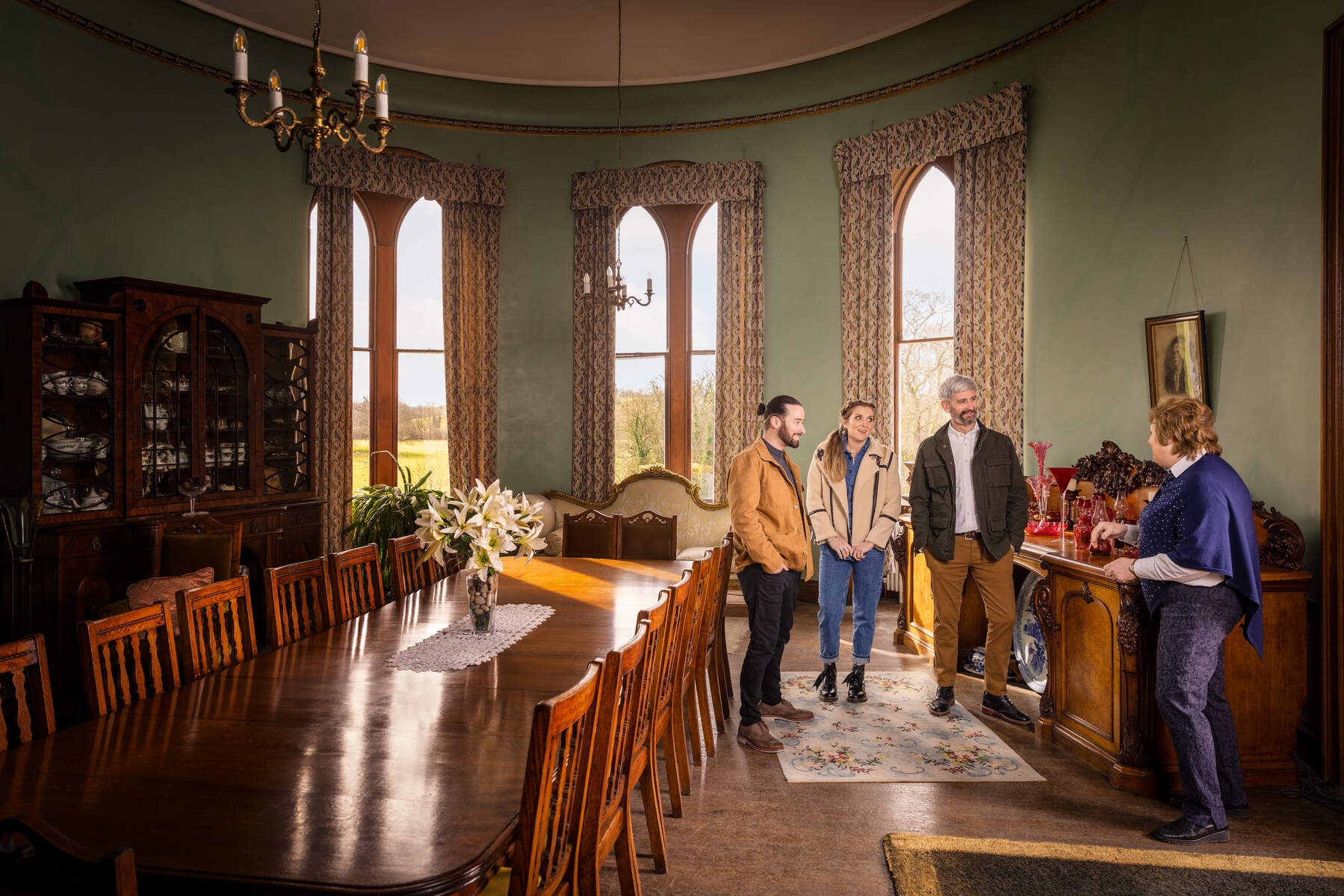
Henry was an MP for Navan in 1667. He settled at Tullynally. He married Mary Lill, the daughter of a Justice of the Peace in County Meath and left the property to his oldest son by this marriage, Thomas (1649-1706) who became a member of Parliament and an eminent lawyer. Henry remarried after his first wife died, this time to Anne Pigot and he had at least two more children with her.
Thomas, who held the office of Prime Sergeant-at-law in 1695, married first Mary Nelmes, daughter of an alderman in London. Thomas married a second time in 1696 after his first wife died, Mary Bellingham, daughter of Daniel, 1st Baronet Bellingham, of Dubber, Co. Dublin. His oldest son, by his first wife, Edward (1683-1721), became an MP for County Westmeath between 1714 and 1721. A younger son, Thomas (d. 1722) lived at Craddenstown, County Westmeath.
Edward (1683-1721) married Margaret Bradeston and was succeeded by his son, Thomas Pakenham (1713-1766) [see 3]. After her husband died in 1721, Margaret married Reverend Ossory Medlicott. Edward’s younger son George Edward (1717-1768) became a merchant in Hamburg.
Thomas (1713-1766) married Elizabeth Cuffe (1719-1794), the daughter of Michael Cuffe (1694-1744) of Ballinrobe, County Mayo. Her father was heir to Ambrose Aungier (d. 1704), 2nd and last Earl of Longford (1st creation). Michael Cuffe sat as a Member of Parliament for County Mayo and the Borough of Longford. In 1756 the Longford title held by his wife’s ancestors was revived when Thomas was raised to the peerage as Baron Longford. After his death, his wife Elizabeth was created Countess of Longford in her own right, or “suo jure,” in 1785.
Michael Cuffe had another daughter, Catherine Anne Cuffe, by the way, who married a Bagot, Captain John Lloyd Bagot (d. 1798). I haven’t found whether my Baggots are related to these Bagots but it would be nice to have such ancestry! Even nicer because his mother, Mary Herbert, came from Durrow Abbey near Tullamore, a very interesting looking house currently standing empty and unloved.
Thomas’s son, Edward Michael Pakenham, 2nd Baron Longford (1743-92) had Pakenham Hall enlarged in 1780 to designs by Graham Myers who in 1789 was appointed architect to Trinity College, Dublin. Myers created a Georgian house. The Buildings of Ireland website tells us that the original five bay house had a third floor added at this time. [5]
The oldest parts still surviving from the improvements carried out around 1780 are some doorcases in the upper rooms and a small study in the northwest corner of the house. We did not see these rooms, but Christine Casey and Alistair Rowan tell us that the study has a dentil cornice and a marble chimneypiece with a keystone of around 1740. [see 2] The oldest part of the castle is at the south end, and still holds the principal rooms.
Edward Michael Pakenham, 2nd Baron Longford, married Catherine Rowley, daughter of Hercules Langford Rowley of Summerhill, County Kilkenny, in 1768. He was in the Royal Navy but retired from the military in 1766, when he succeeded as 2nd Baron Longford. He was appointed Privy Counsellor in Ireland in 1777.
Admiral Thomas Pakenham (1757-1836), a younger brother of Edward Michael Pakenham, the 2nd Baron Longford, built another house on the Tullynally estate, Coolure House, around 1775, when he married Louisa Anne Staples, daughter of John Staples (1736-1820), MP for County Tyrone and owner of Lissan House in County Tyrone – which can now be visited, https://www.lissanhouse.com/ . Their son Edward Michael Pakenham (1786-1848) inherited Castletown in County Kildare and he legally changed his name to Edward Michael Conolly. Louisa Anne Staples’s mother was Harriet Conolly, daughter of William Conolly (1712-1754) of Castletown, County Kildare.
Coolure House, on the Tullynally estate, built for Admiral Thomas Pakenham around 1775. Photograph from the National Inventory of Architectural Heritage.
Edward Michael Pakenham 2nd Baron Longford and his wife Catherine née Rowley had many children. Their daughter Catherine (1773-1831) married Arthur Wellesley, Duke of Wellington, but it was an unhappy marriage. The daughter of the current occupant of Tullynally Thomas Pakenham and his wife Valerie, Eliza Pakenham, published Tom, Ned and Kitty: An Intimate History of an Irish Family, about the Duke of Wellington and the family’s relation to him. Kitty fell for the local naval man, Arthur Wellesley, but the family refused to let her marry him. He promised her that he would return and marry her. He went off to sea, and she was brokenhearted. He returned as the Duke of Wellington and did indeed marry her. He, however, was not a very nice man, and is reported to have said loudly as she walked up the aisle of the church to marry him, “Goodness, the years have not been kind.”
When Edward died in 1792 his son Thomas (1774-1835) inherited, and became the 3rd Baron Longford. When his grandmother Elizabeth née Cuffe, who had been made the Countess of Longford in her own right, died in 1794, Thomas became 2nd Earl of Longford.
Tullynally was gothicized by Francis Johnston to become a castle.
We came across Francis Johnson (1760-1829) the architect when I learned that he had been a pupil of Thomas Cooley, the architect for Richard Robinson, Archbishop of Armagh (who had Rokeby Hall in County Louth built as his home). Johnston took over Cooley’s projects when Cooley died and went on to become an illustrious architect, who designed the beautiful Townley Hall in County Louth which we visited recently. He also enlarged and gothicized Markree Castle for the Coopers, and Slane Castle for the Conynghams. His best known building is the General Post Office on O’Connell Street in Dublin. We recently saw his house in Dublin on Eccles Street, on a tour with Aaran Henderson of Dublin Decoded.
Thomas the 2nd Earl sat in the British House of Lords as one of the 28 original Irish Representative Peers. Casey and Rowan call Francis Johnston’s work on the house “little more than a Gothic face-lift for the earlier house.” He produced designs for the house from 1794 until 1806. On the south front he added two round towers projecting from the corners of the main block, and battlemented parapets. He added the central porch. To the north, he built a rectangular stable court, behind low battlemented walls. He added thin mouldings over the windows, and added the arched windows on either side of the entrance porch.
Terence Reeves-Smyth details the enlargement of Tullynally in his Big Irish Houses:
“Johnson designed battlements and label mouldings over the windows, but as work progressed it was felt this treatment was too tame, so between 1805 and 1806 more dramatic features were added, notably round corner turrets and a portcullis entrance, transforming the house with characteristic Irish nomenclature from Pakenham Hall House to Pakenham Hall Castle.”
“During the early nineteenth century, a craze for building sham castles spread across Ireland with remarkable speed, undoubtedly provoked by a sense of unease in the aftermath of the 1798 rebellion. Security was certainly a factor in Johnson’s 1801 to 1806 remodelling of Tullynally, otherwise known as Pakenham Hall, where practical defensive features such as a portcullis entrance were included in addition to romantic looking battlements and turrets. Later enlargements during the 1820s and 1830s were also fashioned in the castle style and made Tullynally into one of the largest castellated houses in Ireland – so vast, indeed, that it has been compared to a small fortified town.”
Thomas married Georgiana Emma Charlotte Lygon, daughter of William Lygon, 1st Earl Beauchamp (UK) in 1817. He was created 1st Baron Silchester, County Southampton [U.K.] on 17 July 1821, which gave him and his descendants an automatic seat in the House of Lords.
According to Rowan and Casey it may have been his wife Georgiana Lygon’s “advanced tastes” that led to the decision to make further enlargements in 1820. They chose James Sheil, a former clerk of Francis Johnston, who also did similar work at Killua Castle in County Westmeath, Knockdrin Castle (near Mullingar) and Killeen Castle (near Dunshaughlin, Co. Meath).
At Tullynally Sheil added a broad canted bay window (a bay with a straight front and angled sides) towards the north end of the east front, with bartizan turrets (round or square turrets that are corbelled out from a wall or tower), and wide mullioned windows under label mouldings (or hoodmouldings) in the new bay.
One enters into a large double height hall. It is, Terence Reeves-Smyth tells us, 40 feet square and 30 feet high. I found it impossible to capture in a photograph. It has a Gothic fan vaulted ceiling, and is wood panelled all around, with a fireplace on one side and an organ in place of a fireplace on the other side.
The hall, Casey and Rowan tell us, has a ceiling of “prismatic fan-vaults, angular and overscaled, with the same dowel-like mouldings marking the intersection of the different planes…The hall is indeed in a very curious taste, theatrical like an Italian Gothick stage set, and rendered especially strange by the smooth wooden wainscot which completely encloses the space and originally masked all the doors which opened off it.” [6] As this smooth wainscot and Gothic panelled doors are used throughout the other main rooms of the house and are unusual for Sheil, this is probably a later treatment.
“Visitors entering the castle will first arrive in the great hall – an enormous room forty-feet square and thirty feet high with no gallery to take away from its impressive sense of space. A central-heating system was designed for this room by Richard Lovell Edgeworth, who earlier in 1794 had fitted up the first semaphore telegraph system in Ireland between Edgeworthstown and Pakenham Hall, a distance of twelve miles. In a letter written in December 1807, his daughter Maria Edgeworth, a frequent visitor to Pakenham Hall, wrote that “the immense hall is so well warmed by hot air that the children play in it from morning to night. Lord L. seemed to take great pleasure in repeating twenty times that he was to thank Mr. Edgeworth for this.” Edgeworth’s heating system was, in fact, so effective that when Sheil remodelled the hall in 1820 he replaced one of the two fireplaces with a built-in organ that visitors can still see. James Sheil was also responsible for the Gothic vaulting of the ceiling, the Gothic niches containing the family crests, the high wood panelling around the base of the walls and the massive cast-iron Gothic fireplace. Other features of the room include a number of attractive early nineteenth century drawings of the castle, a collection of old weapons, family portraits and an Irish elk’s head dug up out of a bog once a familiar feature of Irish country house halls.” [see 1]
There is a long vaulted corridor that runs through the house at first-floor level which Rowan and Casey write is probably attributable to Sheil.
The ground floor of the main house contains Lord Longford’s study, the dining room, library, drawing room, Great Hall, Lady Longford’s sitting room, Plate room and Servant’s Library.
From the Great Hall we entered the dining room, which used to be the staircase room.
The dining room, drawing room and library were all decorated in Sheil’s favoured simple geometrical shaped plasterwork of squares and octagons on the ceiling. [6]
We can see that the windows in the dining room are in the canted bow which was added by James Shiel. The room is hung with portraits of family members. The ceiling drops at the walls into Gothic decoration ofprismatic fan-vaults with dowels similar to those in the Hall, though less detailed.
Tullynally Castle, Castlepollard, Co Westmeath, photograph by Thomas Pakenham for Failte Ireland, 2015.
Georgina née Lygon, wife of the 2nd Earl, was well-read and wealthy. She and her husband were friendly with the Edgeworths of nearby Edgeworthstown. She was responsible for developing the gardens, planting the trees which are now mature, and creating a formal garden. Her husband died in 1835 but she lived another forty-five years, until 1880. She and her husband had at least eight children. Their son Edward Michael Pakenham (1817-1860) succeeded to become 3rd Earl of Longford in 1835 while still a minor.
We then went to the library. The library was started by Elizabeth Cuffe, wife of the the 1st Baron Longford, and continued by Georgiana, wife if the 2nd Earl. Again, it’s hard to capture in a photograph, while also being on a tour.
The portrait over the fireplace in the library is Major General Edward Michael Pakenham (1778-1815), brother of the 2nd Earl of Longford. Major General Pakenham (whose sword in the red sheath is in the front Hall) was killed in the Battle of New Orleans in 1815, between Britain and the United States of America, in the “War of 1812.”
Another brother of the 2nd Earl of Longford was Lieutenant General Hercules Pakenham (1781-1850). He married Emily Stapleton, daughter of Thomas Stapleton, 13th Lord le Despenser, 6th Baronet Stapleton, of the Leeward Islands in the Caribbean. Hercules inherited Langford Lodge in County Antrim, from his mother Catherine Rowley (it no longer exists). Hercules served as MP for Westmeath.
When he reached his majority, the third Earl, Edward Michael, who was called “Fluffy,” along with his mother, made further enlargements from 1839-45 with two enormous wings and a central tower by another fashionable Irish architect, Sir Richard Morrison. The wings linked the house to the stable court which had been built by Francis Johnston. The addition included the large telescoping octagonal tower.
“Fluffy” Edward Michael Pakenham, 3rd Earl of Longford (1817-1860).A description of the castle, at Tullynally.
Terence Reeves-Smyth writes:
“More substantial additions followed between 1839 and 1846 when Richard Morrison, that other stalwart of the Irish architectural scene, was employed by the Dowager Countess to bring the house up to improved Victorian standards of convenience. Under Morrison’s direction the main house and Johnson’s stable court were linked by two parallel wings both of which were elaborately castellated and faced externally with grey limestone. Following the fashion recently made popular by the great Scottish architect William Burn, one of the new wings contained a private apartment for the family, while the other on the east side of the courtyard contained larger and more exactly differentiated servants’ quarters with elaborate laundries and a splendid kitchen.”
Casey and Rowan describe Morrison’s work: “On the entrance front the new work appears as a Tudoresque family wing, six bays by two storeys, marked off by tall octagonal turrets, with a lower section ending in an octagonal stair tower which joins the stable court. This was refaced and gained a battlemented gateway in the manner of the towers that Morrison had previously built as gatehouses at Borris House, County Carlow [see my entry on Borris House] and Glenarm Castle, County Antrim. The entrance porch, a wide archway in ashlar stonework, with miniature bartizans rising from the corners, was also rebuilt at this time. Though Morrison provided a link between the old house and the family wing by building a tall octagonal tower, very much in the manner of Johnston’s work at Charleville Forest, County Offaly [see my entry Places to visit and stay in County Offaly], the succession of facades from south to north hardly adds up to a coherent whole. The kitchen wing, which forms an extension of the east front, is much more convincingly massed, with a variety of stepped and pointed gables breaking the skyline and a large triple-light, round-headed window to light the kitchen in the middle of the facade.“
On the tour, our guide told us of the various additions. She told us that “Fluffy” lived with his mother and chose to follow the fashion of living in an apartment in a wing of the house.
On the “downstairs tour” we toured the wings of the castle that had been added by Fluffy and his mother. A wing was built for the staff, and it was state of the art in the 1840s when Richard Morrison built these additions. Fluffy never married, and unfortunately died in “mysterious circumstances” in a hotel in London.
When Fluffy died his brother William (1819-1887), an army general in the Crimean War and long-serving military man, became the 4th Earl of Longford.
Terence Reeves-Smyth continues:“After the third Earl’s death in 1860 his brother succeeded to the title and property and proceeded to modernise the castle with all the latest equipment for supplying water, heat and lighting. Except for a water tower erected in the stable court by the Dublin architect J. Rawson Carroll in the 1860s, these modifications did not involve altering the fabric of the building, which has remained remarkably unchanged to the present day.”
The further additions in 1860 are by James Rawson Carroll (d.1911), architect of Classiebawn, Co Sligo, built for Lord Palmerston and eventually Lord Mountbatten’s Irish holiday home in the 1860s.
The 4th Earl married Selina Rice-Trevor from Wales in 1862. Her family, our guide told us, “owned most of Wales.” His letters and a copy of his diary from when he arrived home from the Crimean War are all kept in Tullynally.
Tullynally, County Westmeath.Tullynally, County Westmeath.
We can even read his proposal to Selina:
Tullynally, County Westmeath.Tullynally, County Westmeath.
William the 4th Earl installed a new plumbing system. He also developed a gas system, generating gas to light the main hall. The gas was limited, so the rest of the light was provided by candles, and coal and peat fires. His neighbour Richard Lovell Edgeworth provided the heating system.
The next generation was the 5th Earl, son of the 4th Earl, Thomas Pakenham (1864-1915). He was also a military man. He married Mary Julia Child-Villiers, daughter of Victor Albert George Child-Villiers, 7th Earl of Island of Jersey and they had six children.
The family are lucky to have wonderful archives and diaries. Mary Julia Child-Villiers was left a widow with six children when her husband died during World War I in Gallipoli. The downstairs tour shows extracts from the Memoir of Mary Clive, daughter of the 5th Earl of Longford.
Tullynally, County Westmeath.Tullynally, County Westmeath.
Since 1915 the family have been writers (before that, they were mostly military). Edward the 6th Earl (1902-1961) was a prolific playwright who restored the Gate Theatre in Dublin and taught himself Irish, and with his wife Christine, created the Longford Players theatrical company which toured Ireland in the 30s and 40s. He served as a Senator for the Irish state between 1946 and 1948.
His sister Violet Georgiana, who married Anthony Dymoke Powell, wrote many books, and her husband was a published writer as well. Another sister, Mary Katherine, who married Major Meysey George Dallas Clive, also wrote and published. Their sister Margaret Pansy Felicia married a painter, Henry Taylor Lamb, and she wrote a biography of King Charles I.
A brother of Edward, Frank (1905-2001), who became the 7th Earl after Edward died in 1961, and his wife Elizabeth née Harman, wrote biographies, as did their children, Antonia Fraser, Rachel Billington and Thomas Pakenham the 8th Earl of Longford. Antonia Fraser, who wrote amongst other things a terrific biography of Marie Antoinette and another wonderful one of King Charles II of England, is one of my favourite writers. She is a sister of the current Earl of Longford, Thomas, who lives in the house. They did not grow up in Tullynally, but in England. Thomas’s wife Valerie has published amongst other books, The Big House in Ireland.
There was a handy chart of the recent family on the wall in the courtyard café:
Tullynally, County Westmeath.
Stephen noted with satisfaction that Thomas Pakenham does not use his title, the 8th Earl of Longford. That makes sense of course since such titles are not recognised in the Republic of Ireland! In fact Stephen’s almost sure that it is against the Irish Constitution to use such titles. This fact corresponds well with the castle’s change in name – it was renamed Tullynally in 1963 to sound more Irish.
When we visited in 2020 we purchased our tickets in the café and had time for some coffee and cake and then a small wander around the courtyard and front of the Castle. One enters the stable courtyard, designed by Francis Johnston, to find the café and ticket office.
The coach was passed down to Olive Pakenham-Mahon of Strokestown, Roscommon (another section 482 property, see my entry), who was Dean Henry’s great granddaughter. Olive sold it to her cousin Thomas Pakenham, the present owner of Tullynally. It was restored by Eugene Larkin of Lisburn, and in July 1991 took its first drive in Tullynally for over a hundred years. Family legend has it that the coach would sometimes disappear from the coachhouse for a ghostly drive without horses or coachman! It was most recently used in 1993 for the wedding of Eliza Pakenham, Thomas’s daughter, to Alexander Chisholm.
Tullynally, County Westmeath.
The tour brought us through the arch from the first courtyard containing the café, into a smaller, Morrison courtyard.
Richard Morrison spent more time working on the laundry room than on any other part of the house.
Our guide described the life of a laundress. After the installation of the new laundry, water was collected in a large watertank, and water was piped into the sinks into the laundry.
A laundry girl would earn, in the 1840s (which is during famine time), €12/year for a six day week, and start at about fourteen years of age. A governess would teach those who wanted to learn, to read and write, so that the girls could progress up in the hierarchy of household staff. There was even a servants’ library. This was separate of course from the Pakenham’s library, which is one of the oldest in Ireland. There was status in the village to be working for Lord Longford, as he was considered to be a good employer. His employees were fed, clothed in a uniform, housed, and if they remained long enough, even their funeral was funded. There was a full time carpenter employed on the estate and he made the coffins.
The laundry girls lived in a world apart from household staff. They ate in the laundry. Their first job in the morning would be to light the fire – you can see the brick fireplace in the first laundry picture above. A massive copper pot would be filled with water, heated, and soap flakes would be grated into the pot. The laundry girls would do the washing not only for their employers but also for all of the household staff – there were about forty staff in 1840. As well as soap they would use lemon juice, boiled milk and ivy leaf to clean – ivy leaves made clothes more black. The Countess managed the staff, with the head housekeeper and butler serving as go-between.
William, the 4th Earl of Longford, had a hunting lodge in England and since he had installed such a modern laundry in Tullynally, he would ship his laundry home to Pakenham Hall be washed!
Next, the washing would be put through the mangle.
The girls might have to bring laundry out to the bleaching green. A tunnel was installed so that the girls avoided the looks and chat of the stable boys, or being seen by the gentry. William also developed a drying room. Hot water ran through pipes to heat the room to dry the clothes.
The next room was a small museum with more information about the castle and family, and included a receipt for the iron end of a mangle, purchased from Ardee Street Foundry, Brass and Iron Works, Dublin. We live near Ardee Street!
Tullynally, County Westmeath.
This information board tells us details about the staff, as well as giving the layout of the basement:
The basement contained the Bake room, boot room, beer cellar, servant’s hall, brushing room, butler’s pantry, footman’s bedroom, and across the courtyard, the bacon room.
By 1860 Pakenham Castle was run in the high Victorian manner. The Butler and Housekeeper managed a team of footmen, valets, housemaids and laundry maids, whilst Cook controlled kitchen maids, stillroom maid and scullery maids. A stillroom maid was in a distillery room, which was used for distilling potions and medicines, and where she also made jams, chutneys etc. There was also a dairy, brewery and wine cellar. The Coachman supervised grooms and stable boys, while a carpenter worked in the outer yard and a blacksmith in the farmyard. Further information contains extracts from Mrs. Beeton’s Book of Household Management (1859), detailed duties of a housemaid, a laundry-maid, and treatment of servants. The estate was self-sufficient. Staff lived across the courtyard, with separate areas for men and women. There were also farm cottages on the estate. Servants for the higher positions were often recruited by word of mouth, from other gentry houses, and often servants came from Scotland or England, and chefs from France.
Tullynally, County Westmeath.Tullynally, County Westmeath.Tullynally, County Westmeath.Tullynally, County Westmeath.Tullynally, County Westmeath.
We are also given the figures for servants’ wages in 1860.
Tullynally, County Westmeath.
Next, we headed over toward the kitchen. On the way we passed a water filter system, which was a ceramic jar containing an asbestos and charcoal filter system. However, staff were given beer to drink as it was safer at the time than water. We saw a container used to bring food out to staff in the fields – the food would be wrapped in hay inside the container, which would hold in the heat and even continue to cook the food. We stopped to learn about an ice chest:
The ice chest would be filled with ice from the icehouse. We were also shown the coat of a serving boy, which our tour guide had a boy on the tour don – which just goes to show how young the serving boys were:
A serving boy wearing this uniform would carry dishes from the kitchen to the dining room, which was as far from the kitchen as possible to prevent the various smells emanating from the kitchen from reaching the delicate nostrils of the gentry. The serving boy would turn his back to the table, and watch mirrors to see when his service was needed at the table, under the management of the butler. Later, when the ladies had withdrawn to the Drawing Room, to leave the men to drink their port and talk politics, the serving boy would produce “pee pots” from a sideboard cupboard, and place a pot under each gentleman! Our guide told us that perhaps, though she is not sure about this, men used their cane to direct the stream of urine into the pot. The poor serving boy would then have to collect the used pots to empty them. Women would relieve themselves behind a screen in the Drawing Room.
In the large impressively stocked kitchen, we saw many tools and implements used by the cooks. Richard Morrison ensured that the kitchen was filled with light from a large window.
This kitchen was used until around 1965. The yellow colour on the walls is meant to deter flies. Often a kitchen is painted in blue either, called “Cook’s blue,” also reputed to deter flies. Because this kitchen remained in continuous use its huge 1875 range was replaced by an Aga in the 1940s.
Candles were made from whale blubber. Candles made from blubber closer to the whale’s head were of better quality.
The housekeeper would have her own room, which our guide told us, was called the “pug room” due to the, apparently, sour face of of the housekeeper, but also because she often kept a pug dog!
Next we were taken to see Taylor’s room. Taylor was the last Butler of the house. We passed an interesting fire-quenching system on the way.
This would normally be the end of the tour, but since we were such a fascinated, attentive group, the guide took us into the basement to see the old servants’ dining hall.
The gardens, covering nearly 30 acres, were laid out in the early 19th century and have been restored. They include a walled flower garden, a grotto and two ornamental lakes.
Here is the description of the gardens, from the Irish Historic Houses website:“The gardens, illustrated by a younger son in the early eighteenth century, originally consisted of a series of cascades and formal avenues to the south of the house. These were later romanticised in the Loudonesque style, with lakes, grottoes and winding paths, by the second Earl and his wife [Thomas (1774-1835) and Georgiana Lygon (1774-1880)]. They have been extensively restored and adapted by the present owners, Thomas and Valerie Pakenham, with flower borders in the old walled gardens and new plantings of magnolias, rhododendron and giant lilies in the woodland gardens, many collected as seed by Thomas while travelling in China and Tibet. He has recently added a Chinese garden, complete with pagoda, while the surrounding park contains a huge collection of fine specimen trees.” [7]
Open dates in 2025: Jan 6-8, Feb 10-14, Mar 3-5, 18-20, June 4-7, 9-11, 23-28, July 7-12, 21-24, Aug 16-24, Sept 1-6, 13, 20, 28-30, Oct 1, 6-8, 9am-1pm
Fee: adult €8.50, OAP/student €6.50, child €5
donation
Help me to pay the entrance fee to one of the houses on this website. This site is created purely out of love for the subject and I receive no payment so any donation is appreciated!
Wicklow is full of stunning gems of houses, unfortunately nearly all are private [1]. We are lucky to be able to visit Castle Howard as it is on the revenue 482 list. Stephen and I went to Castle Howard on Saturday September 14th 2019. Don’t be confused with the Castle Howard in the UK, setting for the original filmed version of Brideshead Revisited (the one with Jeremy Irons, not the excellent more recent version starring Ben Whishaw).
Photograph taken from the National Inventory of Architectural Heritage [2].
The house was built around the fabric of an earlier house in 1811 for Lieutenant Colonel Robert Howard to the design of Richard Morrison. It is designed to combine two archaic styles: a castle and an abbey [3].
Lieutenant Colonel Robert Howard was the son of William Howard (1759-1818) 3rd Earl of Wicklow. The 3rd Earl of Wicklow was the son of Ralph Howard (d. 1789) 1st Viscount Wicklow.
Ralph Howard, later 1st Viscount Wicklow (1726 ‑ 1786) by Pompeo Batoni, courtesy of Speed Art Museum.
After the 1st Viscount died his widow, Alice née Forward, was created Countess of Wicklow in 1793 in the Peerage of Ireland with remainder to her male heirs. Her son Robert Howard became 2nd Viscount Wicklow and 2nd Baron Clonmore, of Clonmore Castle, County Carlow in 1789 when his father died. Before his father’s death he served in the Irish House of Commons. When his father died in 1789 he had to resign from the Irish House of Commons and to join the British House of Lords. When his mother died in 1815 he inherited her title to become the 2nd Earl of Wicklow. He died unmarried in 1815 and the titles passed to his brother, William Howard (1759-1818), who became 3rd Earl of Wicklow.
In 1780 William Howard took the surname of Forward after succeeding to the estates of his mother’s family, Castle Forward in County Donegal, and 6,000 acres in the barony of Raphoe, County Donegal. When William became the 3rd Viscount Wicklow, and later 3rd Earl of Wicklow, he resumed the name of William Howard.
William Howard married Eleanor Caulfeild, daughter of Francis Caulfeild and granddaughter of James Caulfeild, 3rd Viscount Charlemont. His son William became the 4th Earl of Wicklow, and John, who purchased the land at Castle Howard, was a younger son.
“In 1811 Col Robert Howard purchased a house then called Cronebane Lodge, romantically perched above the Meeting of the Waters, a spot made famous thanks to a poem written by Thomas Moore four years before. Its location, combined with the desire to build a residence evoking an ancient past, encouraged Col Howard to commission a design from architect Richard Morrison that would appear part-castle and part-abbey. The interiors owe much to the English Perpendicular style, not least the splendid staircase. Lit by a large arched Gothic window, the cantilevered Portland stone steps with brass banisters spiral up to the first floor below a plasterwork ceiling replete with coats of arms featuring families associated with the Howards. Although no longer with descendants of the original owners, Castle Howard remains in private hands and in excellent condition.” [5]
The “English Perpendicular” style is a style of Gothic architecture developed in England in the 14th to 17th century.
The earlier house on the site, Cronebane Lodge, belonged to the director of the Avoca Copper Mines. [6] The mines had their own coinage: one can find halfpenny coins stating “payable at Cronebeg Lodge or in Dublin” for sale on the internet! The coins picture St. Patrick in his Bishop’s Mitre on one side and a shield on the other. The Associated Irish Mine Company was founded in 1787 by Abraham Mills, William Roe, Thomas Weaver, Thomas Smith, Charles Caldwell and Brabazon Noble and its head office at 184 Great Britain Street, Dublin. It existed until 1798. [7]
Richard Morrison (b. 1767) studied under William Gandon. He became an architect and often collaborated with his son, William Vitruvius Morrison.
Richard and William Vitruvius Morrison also remodelled Shelton Abbey in County Wicklow, in 1819, for the Howard family. [8] Shelton Abbey was owned for nearly three hundred years by the Howard family, the Earls of Wicklow, into which Robert Howard was born.
Shelton Abbey in County Wicklow, remodelled by Richard Morrison in 1819. Photo from the National Inventory of Architectural Heritage. It is now an open prison, sold by the 8th Earl of Wicklow, William Howard, to the Irish state in 1951.Shelton Abbey, photograph courtesy of National Library of Ireland NLI Ref: EAS_3838 Eason Photographic Collection Date: c.1900-1939.
Among Richard Morrison’s public works include the court-house and gaol at Galway, court-houses in Carlow, Clonmel, Roscommon, Wexford and elsewhere, and St Mary’s Pro-Cathedral in Dublin. He built or altered very many mansions of the nobility and gentry in Ireland, and was knighted by the Lord Lieutenant of Ireland in 1841. [9]
He and his son also designed renovations for Killruddery House, near Bray in County Wicklow, which is another section 482 house; Ballyfin House in County Laois (now a five star hotel); and Fota, in County Cork, which Stephen and I visited this year (October 2020). Richard Morrison also designed Knockdrin Castle, just north of Mullingar in County Westmeath.
There is a wonderful pyramid mausoleum of the Howard family in Old Kilbride Cemetery in Arklow, County Wicklow, built in 1785.
A mausoleum erected by Ralph Howard (1726-86), first Viscount Wicklow of Shelton Abbey, attributed to Simon Vierpyl (c.1725-1810) of Dublin and London. Photograph from National Inventory of Architectural Heritage.
I rang the house beforehand and made a time for our visit in order to have a tour. We had a lovely drive out to Wicklow, and rang when we reached the gates. Someone drove up in a tractor to open them for us.
We drove past a lovely gate lodge, and through some gorgeous scenery.
We crossed a small stone bridge to reach the castle. This bridge used to be topped by a lion, the symbol of the Howard family. Unfortunately the lion stands no longer.
One cannot see the whole house as one drives up, and it becomes even more impressive as it is when one walks around it.
We parked, and knocked on the front door, which was picturesque in its Gothic pointed arched stone setting, with roses growing over the top of the door. The medieval-style studded door with ancient looking pull handle and Georgian door knocker is in the castellated two storey wing.
Mark Bence-Jones describes the abbey-like section of the house as a two-storey wing ending in a gable with pinnacles and a Perpendicular window. A gable is a peaked end wall, often triangular, at the end of a double pitched roof, or sometimes just refers to an end wall.
The “castle” side of the house has two turreted towers, and two bows. There is a conservatory at the south-east side. The building is finished with render with stone dressing.
As the Lieutenant Colonel Howard and his wife Letitia Deborah Brooke had no children, the house passed to a nephew, Richard Brooke, the son of Letitia Deborah’s brother, Henry Brooke (1770-1834), who was created the 1st Baronet Brooke of Colebrook, County Fermanagh, in 1822. Richard (1801-1877) took the surname Howard-Brooke in 1835. His son and heir was also a Lieutenant Colonel, Robert Howard-Brooke (1840-1902). Robert married Florence Elizabeth Johnston of Kinlough House, Co Leitrim but they had no children. Robert held the office of High Sheriff of County Wicklow in 1880. Florence died in 1893.
Langlois Massy Lefroy (1886-1957) and his wife Sheelah, who was the daughter of Benjamin Bloomfield Trench who lived in Loughton, County Offaly, the subject of last week’s blog, purchased Castle Howard in 1924. Lefroy sold it in 1954 when he inherited Carriglas Manor (he was a descendant of Tom Lefroy, a suitor of Jane Austen, who lived in Carriglas Manor, County Longford). When he died his wife Sheelagh moved back to Loughton to live with her unmarried sister Thora. [13].
The house is currently owned by Ivor Fitzpatrick, a prominent Dublin solicitor and property developer, and his wife, Susan Stapleton.
There were visitors leaving as we were coming, so the tour guide was kept busy! Mark Sinnott, who was listed as the contact person, is not the owner, but works on the estate. The estate has an Equestrian centre and the house occasionally hosts shooting, and our tour guide helps with that. He has been working there for eighteen years, so knows the house and estate intimately.
In the front hall, our guide Mark told us the history of the house. He explained that the front hall had been renovated by previous owners and the ceiling lowered so it is less impressive than the original entry hall would have been.
There is a beautiful curved brass-banistered spiral stairway, which is pictured in a book of photographs (simply called Photographs) by Paddy Rossmore, edited by the Irish Aesthete Robert O’Byrne, published this year by Lilliput Press and reviewed in January in the Irish Times. [see 5]
Photograph by Paddy Rossmore from Photographs, taken from Irish Times article. [see 5]
The library has terrific plasterwork on the ceiling, especially in the round towers – very intricate work. The round towers form little rooms off the main room. We only saw one storey so didn’t get to see the tower room sections on the upper floors. Impressive antlers adorned one wall, of the Giant Irish Elk. Most antlers found in Ireland are about 11,000 years old! These “elk” were not unique to Ireland; they lived across Eurasia all the way into China. The most recent remains discovered date back 7,700 years, and were found in Siberia. They are called “Irish” as they are most commonly found in Ireland, preserved in bogs. They are not near relations of “elk” found today, such as moose, and are more properly called deer. Irish Elk are the largest species of deer that ever lived. The antlers in Castle Howard were attached to a skull. Not all sets of antlers found are attached to a skull, as Giant Elk, just like deer today, shed their horns regularly, and regrew them during mating season. [11]
In the records of children in Duchas.ie, Winnie Doyle writes in 1928 that there is an underground tunnel from the kitchen to the garden. [12]
A straight path leads through formal gardens including a maze and an orchard, alongside a tall wall which appeared to lead into woodland and to a walled garden – it was rainy so we didn’t explore as much as I might have liked. At the end of this path are stables and outbuildings. To one side of the path is a clock tower folly and a bricked terraced area and small temple area with a water fountain – it is extremely romantic. The house itself backs onto a large tree filled lawn.
A wall extends from the folly tower, to frame a courtyard on the far side of the wall from the house. On the house side of the wall is a picturesque pond area.
[3] Mark Bence-Jones A Guide to Irish Country Houses (originally published as Burke’s Guide to Country Houses volume 1 Ireland by Burke’s Peerage Ltd. 1978); Revised edition 1988 Constable and Company Ltd, London.
www.borrishouse.com Open dates in 2025: Apr 1-3, 8-10, 15-17, 23-24, 29-30, May 1, 7-22, 27-29, June 17-19, 24-26, 28-29, July 1-3, 8-10, 15-17, 22-24, 29-31, Aug 16-24, 12pm-4pm
Fee: adult/OAP €12, child under 12 free, group rate on request
Borris House, Carlow, photograph by Suzanne Clarke, 2016 for Tourism Ireland, Ireland’s Content Pool.
donation
Help me to pay the entrance fee to one of the houses on this website. This site is created purely out of love for the subject and I receive no payment so any donation is appreciated!
I had been particularly looking forward to visiting Borris House. It feels like I have a personal link to it, because my great great grandmother’s name is Harriet Cavanagh, from Carlow, and Borris House is the home of the family of Kavanaghs of Carlow, and the most famous resident of the house, Arthur MacMurrough Kavanagh, was the son of a Harriet Kavanagh! Unfortunately I don’t think there’s a connection.
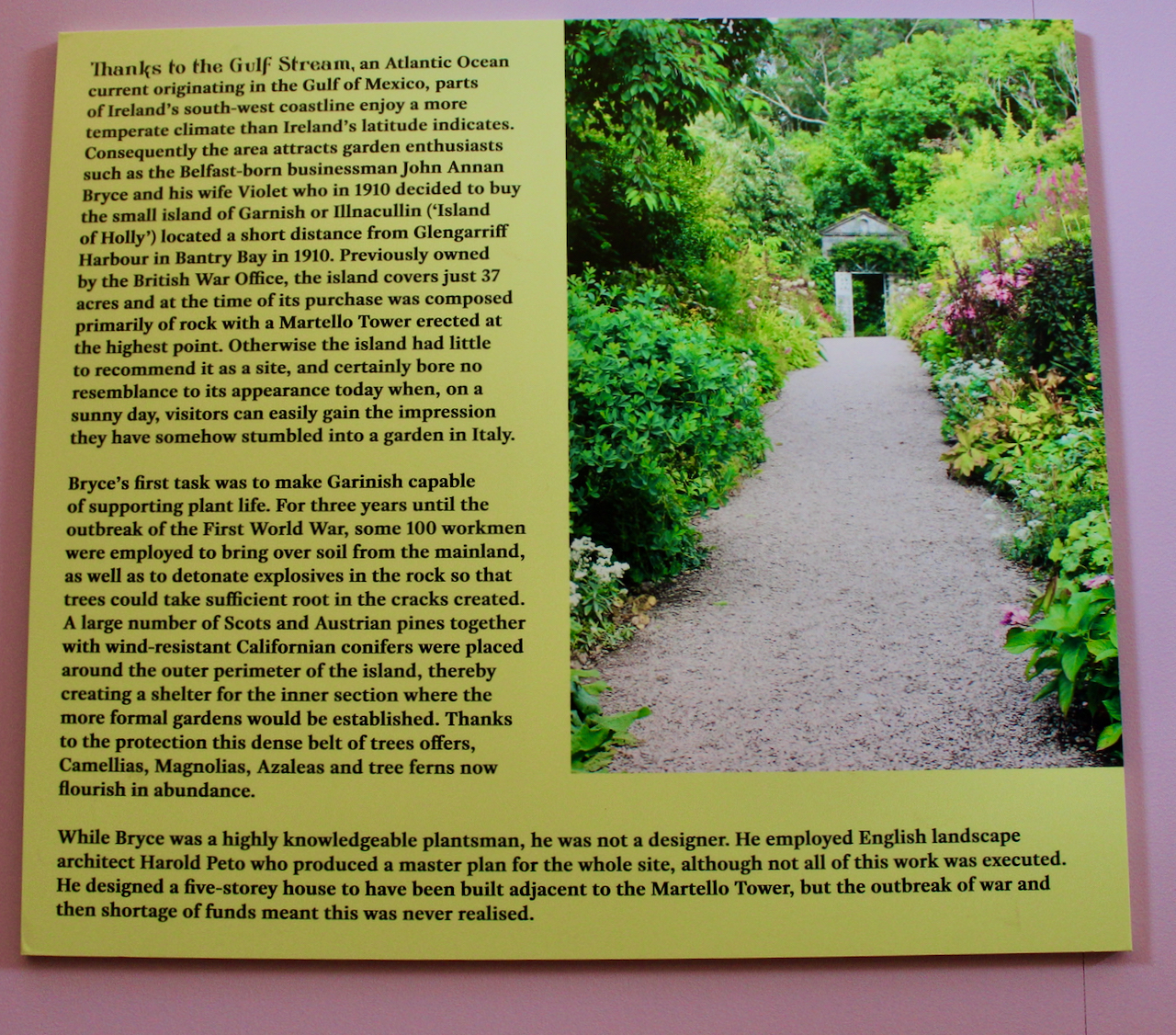
We were able to park right outside on the main street of Borris, across from the entrance. My fond familial feelings immediately faded when faced with the grandeur of the entrance to Borris House. I shrank into a awestruck tourist and meekly followed instructions at the Gate Lodge to make my way across the sweep of grass to the front entrance of the huge castle of a house.
Unlike other section 482 houses – with the few exceptions such as Birr Castle and Tullynally – Borris House has a very professional set-up to welcome visitors as one goes through the gate lodge. The website does not convey this, as it emphasises the house’s potential as a wedding venue, but the property is in fact fully set up for daily guided tours, and has a small gift shop in the gate lodge, through which one enters to the demesne. Borris House is still a family home and is inhabited by descendants of the original owners.
Originally a castle would have been built in the location on the River Barrow to guard the area. From the house one can see Mount Leinster and the Blackstairs Mountains. The current owner, Morgan Kavanagh, can trace his ancestry back to the rather notorious Dermot MacMurrough (Diarmait mac Murchadha in Irish), who “invited the British in to Ireland” or rather, asked for help in protecting his Kingship. The MacMurroughs, or Murchadhas, were Celtic kings of Leinster. “MacMurrough” was the title of an elected Lord. Dermot pledged an oath of allegiance to King Henry II of Britain and the Norman “Strongbow,” or Richard de Clare, Earl of Pembroke, came to Ireland to fight alongside Dermot MacMurrough against Dermot’s enemies. As a reward, Dermot MacMurrough offered Strongbow the hand of his daughter Aoife. Succeeding generations of MacMurrough family controlled the area, maintaining their Gaelic traditions.
In the late 14th century, Art mac Murchadha was one of the Irish kings who was offered the a knighthood by King Richard II of England. Henry VIII, in the 1500s, sought to reduce the power of the Irish kings and to have them swear loyalty to him. In 1550 Charles MacMurrough Kavanagh (the Anglicised version of the name ‘Cahir MacArt’ MacMurrough Kavanagh) “submitted himself, and publicly renounced the title and dignity of MacMorrough, as borne by his ancestors.” [2] (note the various spellings of MacMorrough/MacMurrough).
We gathered with a few others to wait outside the front of the house for our tour guide on a gloriously sunny day in July 2019. Some of the others seemed to be staying at the house. For weddings there is accommodation in the house and also five Victorian cottages. We did not get to see these in the tour but you can see them on the website. Unfortunately our tour guide was not a member of the family but she was knowledgeable about the house and its history.
The current house was built originally as a three storey square house, in 1731, incorporating part of an old castle. We can gather that this was the date of completion of the house from a carved date stone. It was built for Morgan Kavanagh, according to the Borris House website, a descendent of Charles MacMurrough Kavanagh. [3] It was damaged in the 1798 Rebellion and rebuilt and altered by Richard and William Vitruvius Morrison into what one can see today. According to Edmund Joyce in his book Borris House, Co. Carlow, and elite regency patronage, it was Walter Kavanagh who commissioned the work, which was taken over by brother Thomas when Walter died in 1818. [4]. The Morrisons gave it a Tudor exterior although as Mark Bence-Jones points out in his Guide to Irish Country Houses, the interiors by the Morrisons are mostly Classical.
The Morrisons kept the original square three storey building symmetrical. Edmund Joyce references McCullough, Irish Building Traditions, writing that “The Anglo-Irish landlords at the beginning of the 19th century who wanted to establish a strong family history with positive Irish associations were beginning to use the castle form – which had long been a status of power both in Ireland and further afield – to embed the notion of a long and powerful lineage into the mindset of the audience.” In keeping with this castle ideal, the Morrisons added battlemented parapets with finials, and the crenellated arcaded porch on the entrance, with slightly pointed arches, as well as four square corner turrets to the house, topped with cupolas (which are no longer there). They also created rather fantastical Tudor Gothic curvilinear hood mouldings over the windows, some “ogee” shaped (convex and concave curves; found in Gothic and Gothic-Revival architecture) [5]. These mouldings drop down from the top of the windows to finish with sculptured of heads of kings and queens. These are not representations of anyone in particular, the guide told us, but are idealised sculptures representing royalty to remind one of the Celtic kingship of the Kavanaghs. As well as illustrating their heritage in architecture, Walter commissioned an illustrated book of the family pedigree, tracing the family tree back to 1670 BC! It highlights the marriages with prominent families, which are also illustrated in the stained glass window in the main stairwell at Borris.
The guide pointed to the many configurations of windows on the front facade of the house. They were deliberately made different, she told us, to create the illusion that the different types of windows are from different periods, even though they are not! This was to reflect the fact that various parts of the building were built at different times.
The crest of the family on the front of the house on the portico features a crescent moon for peace, sheaf of wheat for plenty and a lion passant for royalty. The motto is written in Irish, to show the Celtic heredity of the Kavanaghs, and means “peace and plenty.”
Charles MacMurrough Kavanagh’s son Brian (c. 1526-1576) converted to Protestantism and sent his children to be educated in England. One of them, Sir Morgan Kavanagh, acquired the estate of Borris when he was granted the forfeited estates of the O’Ryans of Idrone in County Carlow. When Protestants were attacked in 1641 by a Catholic rebellion, the MacMurrough Kavanaghs were spared due to their ancient Irish lineage. Later, when Cromwell rampaged through Ireland, they were spared since they were Protestant, so they had the best of both worlds during those turbulent times.
The tour guide took us first towards the chapel. She explained the structure of the house as we trooped across the lawn. She pointed out the partially demolished stretch between the square part of the house and the chapel. All that remains of this demolished section is a wall. The octagonal towerlike structures built into the wall were chimneys and the demolished part was the kitchen. The square tower that joins the house to the demolished kitchen contained the nursery. The wing was demolished to reduce the amount of rates to be paid. The house was reoriented during rebuilding, the guide told us, and a walled garden was built with a gap between the walls which could be filled with coal and heated! I love learning of novel mechanisms in homes and gardens, techniques which are no longer used but which may be useful to resurrect as we try to develop more sustainable ways of living (not that we’d want to go back to using coal).
As I mentioned, the house was badly damaged in 1798, when the United Irishmen rose up in an attempt to create an independent Ireland. Although the Kavanaghs are of Irish descent and are not a Norman or English family, this did not save them from the 1798 raids. The house was not badly damaged in a siege but outbuildings were. The invaders were looking for weapons inside the house, the guide told us. The Irish Aesthete writes tells us: “Walter MacMurrough Kavanagh wrote to his brother-in-law that although a turf and coal house were set on fire and efforts made to bring ‘fire up to the front door under cover of a car on which were raised feather beds and mattresses’ [their efforts] were unsuccessful.” [6]
Edmund Joyce describes the raid in his book on Borris House (pg. 21-22):
“The rebels who had marched overnight from Vinegar Hill in Wexford…arrived at Borris House on the morning of 12 June. They were met by a strong opposing group of Donegal militia, who had taken up their quarters in the house. It seems that the MacMurrough Kavanaghs had expected such unrest and in anticipation had the lower windows…lately built up with strong masonry work. Despite the energetic battle, those defending the house appear to have been indefatigable, and the rebels, ‘whose cannons were too small to have any effect on the castle…’ the mob retreated back to their camps in Wexford.”
The estate was 30,000 acres at one point, but the Land Acts reduced it in the 1930s to 750 acres, which the present owner farms organically. The outbuildings which were built originally to house the workings of the house – abbatoir, blacksmith, dairy etc, were burnt in one of the sieges and so all the outbuildings now to be seen, the guide told us, were built in the nineteenth century.
It is worth outlining some of the genealogy of this ancient family, as they intermarried with many prominent families of their day. Morgan Kavanagh who probably commissioned the building of the 1730s house, married Frances Esmonde, daughter of Laurence Esmonde of Huntington Castle (another section 482 property I visited). His son Brian married Mary Butler, daughter of Thomas Butler of Kilcash. Their son Thomas (1727-1790) married another Butler, Susanna, daughter of the 16th Earl of Ormonde. It was the following generation, another Thomas (1767-1837), who is relevant to our visit to the chapel.
This Thomas was originally a Catholic. He married yet another Butler, Elizabeth Wandesford Butler, in 1825. At some time he converted to Protestantism. It must have been before 1798 because in that year he represented Kilkenny City in Parliament and at that time only members of the Established Church could serve in Parliament. His second wife, Harriet Le Poer Trench, daughter of the 2nd Earl of Clancarty, was of staunch Scottish Protestant persuasion [7]. When he converted, the chapel had to be reconsecrated as a Protestant chapel. According to legend, Lady Harriet had a statue of the Virgin Mary removed from the chapel and asked the workmen to get rid of it. The workmen, staunch Catholics, buried the statue in the garden. People believed that for this act, Lady Harriet was cursed, and it was said that one day her family would be “led by a cripple.”
The story probably came about because Harriet’s third son, Arthur, was born without arms or legs. As she had given birth to two older sons, and he had another half-brother, Walter, son of Thomas’s first wife, it seemed unlikely that Arthur would be the heir. However, the three older brothers all died before Arthur and Arthur did indeed become the heir to Borris House.
Arthur MacMorrough Kavanagh, M.P., (1831-1839), Politician and Sportsman Date after 1889 Engraver Morris & Co. Photograph courtesy of the National Gallery of Ireland.
The plasterwork in the chapel, which is called the Chapel of St. Molin, is by Michael Stapleton.
While we sat in the chapel, our guide told us about the amazing Arthur MacMurrough Kavanagh. When her husband Walter died, Harriet and her children went travelling. They travelled broadly, and she painted, and collected objects which she brought back to Ireland, including a collection of artefacts from Egypt now in the National Museum of Ireland. When Arthur was 17 years old his mother sent him travelling again, to get him away from his high jinks with the local girls. Arthur kept diaries, which are available for perusal in the National Library. I must have a look! I have a special interest in diaries, since I have been keeping my own since I was twelve years old. Some of Arthur’s adventures include being captured and being cruelly put on display by a tribe. He also fell ill and found himself being nursed back to health in a harem – little did the Sultan or head of the harem realise that Arthur was perfectly capable of impregnating the ladies!
Arthur’s brother and tutor died on their travels and Arthur found himself alone in India. He joined the East India Company as a dispatch rider – he was an excellent horseman, as he could be strapped in to a special saddle, which we saw inside the house, now mounted on a children’s riding horse! I was also thrilled to see his wheelchair, in the Dining Room, which is now converted into a dining chair.
Arthur MacMurrough’s saddle in mounted on the rocking horse. Photograph by Paul Barker, 2011, for Country Life.
When Arthur came home as heir, he found his mother had set up a school of lacemaking, now called Borris Lace, to help the local women to earn money during the difficult Famine years. The lace became famous and was sold to Russian and English royalty. The rest of the estate, however, was in poor shape. Arthur set about making it profitable, bringing the railway to Borris, building a nearby viaduct, which cost €20,000 to build. He also built cottages in the town, winning a design medal from the Royal Dublin Society, and he set up a sawmill, from which tenants were given free timber to roof their houses. He set up limekilns for building material, and also experimented (unsuccessfully) with “water gas” to power the crane used to built the viaduct. His mother built a fever house, dower house and a Protestant school, and Arthur’s sisters built a Catholic school. There is a little schoolhouse (with bell, in the picture below) behind the chapel.
Arthur seems to have had a great sense of humour. On one of his visits to Abbeyleix, he remarked to Lady De Vesci, “It’s an extraordinary thing – I haven’t been here for five years but the stationmaster recognised me.”
Arthur married Mary Frances Forde-Leathley and fathered six children. He became an MP for Carlow and Kilkenny, and sat in the House of Commons in England, which he reached by sailing as far as London, where he was then carried in to the houses of Parliament.
He lost when he ran again for Parliament in 1880, beaten by the Home Rule candidates. He returned from London after his defeat and saw bonfires, which were often lit by his tenants to celebrate his return. However, this time, horrifically, he saw his effigy being burned on the bonfires by tenants celebrating the triumph of the Home Rule candidates. He must have been devastated, as he had worked so hard for his tenants and treated them generously. For more about him, see the Irish Aesthete’s entry about him. [8]
Jimmy O’Toole’s book gives a detailed description of politics at the time of Arthur’s defeat and explains why the tenants behaved in such a brutal way. Elections grew heated and dangerous in the days of the Land League and of Charles Stewart Parnell, when tenants hoped to own their own land. In the 1841 election, tenants of the Kavanaghs were forced to vote for the Tory candidate against Daniel O’Connell Jr., despite a visit from Daniel O’Connell Sr, “The Liberator” who fought for Catholic emancipation. The land agent for the Kavanaghs, Charles Doyne, threatened the tenants with eviction if they did not vote for his favoured candidate. In response to threats of eviction, members of the Land League forced tenants to support their cause by publicly shaming anyone who dared to oppose them. People were locked into buildings to prevent them from voting, or on the other hand, were locked in to protect them from attacks which took place if they planned to support the Tory candidate. Not all Irish Catholics supported the Land League. Labourers realised that landlords provided employment which would be lost if the land was divided for small farmers.
It was Arthur’s grandfather, Thomas, who undertook much of the renovation work at Borris in the 1800s, with money brought into the family by his wife, Susanna Butler. [9] Under her influence, Italian workmen were employed and ceilings were decorated and Scagliola pillars installed. After hearing the stories about amazing Arthur, we returned across the lawn to enter the main house.
The front hall is square but is decorated with a circular ceiling of rich plasterwork, “treated as a rotunda with segmental pointed arches and scagliola columns; eagles in high relief in the spandrels of the arches and festoons above,” as Mark Bence-Jones describes in his inimitable style [see 5, p. 45]. We were not allowed to take photographs but the Irish Aesthete’s site has terrific photographs [see 3]. The eagles represent strength and power. There are also the sheafs of wheat, crescent moons and lion heads, symbols from the family crest. Another common motif in the house is a Grecian key pattern.
The craftwork and furnishings of the house are all built by Irish craftsmen, including mahogany doors. There is a clever vent in the wall that brings hot air from the kitchens to heat the room.
We next went into the music room which has a beautiful domed oval ceiling with intricate plasterwork. It includes the oak leaf for strength and longevity.
The drawing room has another pretty Stapleton ceiling, more feminine, as this was a Ladies’ room. It has lovely pale blue walls, and was originally the front entrance to the house. When it was made into a circular room the leftover bits of the original rectangular room form small triangular spaces, which were used as a room for preparing the tea, a small library with a bookcase, and a bathroom. The curved mahogany doors were also made by Irish craftsmen in Dublin, Mack, Williams and Gibton.
The dining room has more scagliola columns at one end, framing the serving sideboard, commissioned specially by Morrison for Borris House. It was sold in the 1950s but bought back by later owners. [10] The room has more rich plasterwork by Michael Stapleton: a Celtic design on the ceiling, and ox skulls represent the feasting of Chieftains. With the aid of portraits in the dining room, the guide told us more stories about the family. It was sad to hear how Arthur had to put an end to the tradition of the locals standing outside the dining room windows, and gentry inside, to observe the diners. He did not like to be seen eating, as he had to be fed.
We saw the portrait of Lady Susanna’s husband, whom her sister Charlotte Eleanor dubbed “Fat Thomas.” Eleanor formed a relationship with Sarah Ponsonby, and they ran away from their families to be together. As a result, Eleanor was taken to stay with her sister’s family in Borris House, and she must have felt imprisoned by her sister’s husband, hence the insulting moniker. Eleanor managed to escape and to make her way to Woodstock, the house in County Kilkenny where Sarah was staying. Finally their families capitulated and accepted their plans to live together. They set up house in Wales, in Llangollen, and were known as The Ladies of Llangollen They were visited by many famous people, including Anna Seward, William Wordsworth, Sir Walter Scott, Charles and Erasmus Darwin, Sir Arthur Wellesley and Josiah Wedgewood.
Mark Bence-Jones describes an upstairs library with ceiling of alternate barrel and rib vaults, above a frieze of wreaths that is a hallmark of the Morrisons, which unfortunately we did not get to see. We didn’t get to go upstairs but we saw the grand Bath stone cantilevered staircase. The room was originally an open courtyard.
We then went out to the Ballroom, which was originally built by Arthur as a billiard room, with a gun room at one end and a planned upper level of five bedrooms. The building was not finished as planned as Arthur died. It is now used for weddings and entertainment.
In 1958 the house faced ruin, when Joane Kavanagh’s husband, Lieutenant Colonel Archibald Macalpine-Downie, died, and she decided to move to a smaller house. However,her son, Andrew Macalpine-Downie, born 1948, after a career as a jockey in England, returned to Borris, with his wife Tina Murray, he assumed the name Kavanagh, and set himself the task of preventing the house becoming a ruin. [11]
[2] p. 33, MacDonnell, Randal. The Lost Houses of Ireland. A chronicle of great houses and the families who lived in them. Weidenfeld and Nicolson. London, 2002.
The Borris website claims that the 1731 house was built for Morgan Kavanagh, but the Irish Aesthete Robert O’Byrne writes that the 1731 house was built by Brian Kavanagh, incorporating part of the fifteenth century castle. I have the date of 1720 as the death for Morgan Kavanagh and he has a son, Brian, so it could be the case that the house was commissioned by Morgan and completed by his son Brian.
[4] Joyce, Edmond. Borris House, Co. Carlow, and elite regency patronage. Four Courts Press, Dublin, 2013.
and Mark Bence-Jones. A Guide to Irish Country Houses [originally published as Burke’s Guide to Country Houses volume 1 Ireland by Burke’s Peerage Ltd. 1978]; Revised edition 1988 Constable and Company Ltd, London.
This entry also has lovely pictures of the inside of Borris House and more details about the history of the house and family.
[7] p. 130. O’Toole, Jimmy. The Carlow Gentry: What will the neighbours say! Published by Jimmy O’Toole, Carlow, Ireland, 1993. Printed by Leinster Leader Ltd, Naas, Kildare.
[9] for more on the Butlers see John Kirwan’s book, The Chief Butlers of Ireland and the House of Ormond, An Illustrated Genealogical Guide, published by Irish Academic Press, Newbridge, County Kildare, 2018. Stephen and I went to see John Kirwan give a fascinating talk on his book at the Irish Georgian Society’s Assembly House in Dublin.
[10] p. 115. Fitzgerald, Desmond et al. Great Irish Houses. Published by IMAGE Publications Ltd, Dublin, 2008.
[11] p. 134. O’Toole, Jimmy. The Carlow Gentry: What will the neighbours say! Published by Jimmy O’Toole, Carlow, Ireland, 1993. Printed by Leinster Leader Ltd, Naas, Kildare.
Open dates in 2025: Feb 4-7, 10-14, 17-21, 24-28, May 1-2, 6-30, June 3-6, 9, Aug 16-24, Mon-Fri, 1pm-5pm, May and Aug, Sat-Sun, 9am-1pm
Fee: house €10, gardens €6
donation
Help me to pay the entrance fee to one of the houses on this website. This site is created purely out of love for the subject and I receive no payment so any donation is appreciated!
This was the least personal of our tours to date, when we went on Saturday May 18th 2019, as there was no sign of the owners, the Rohan family, living in the grand reception rooms, although it is their family home. Ken and Brenda Rohan purchased the house in 1981. A visit to a house that is no longer owned by descendants of the early occupiers resonates less history, although in this case one must admit the current owners are probably no less invested than if their ancestors had occupied it for centuries, as they have maintained it to a high standard, and have carried out sensitive restoration to both house and garden. Dublin architect John O’Connell oversaw work on the interiors.
We are told in Great Irish Houses that the demesne is intact, with the original estate walls and entrance gates surviving. [1]
The National Inventory of Architectural Heritage website tells us that Charleville is a detached nine bay two storey Palladian style mansion, built in 1797 to designs by Whitmore Davis, an architect originally from County Antrim, who was then based in Dublin [2]. He also built another Section 482 house, Harristown House in County Kildare [3].
The house has a three-storey pedimented breakfront, the pediment is carried on four Ionic columns at the second and third storey level of the house, the ground floor level of the breakfront being “rusticated” as if it were a basement. [4] The windows on the ground floor level in the breakfront are arched. The Buildings of Ireland website claims that the breakfront facade is inspired by Lucan House in County Dublin, which is indeed very similar. Lucan House was designed by its owner, Agmondisham Vesey, consulting with architect William Chambers, a British architect who also designed the wonderful Casino at Marino in Dublin, as well as Charlemont House in Dublin (now the Hugh Lane Municipal Art Gallery) and the Examination Hall and Chapel in Trinity College Dublin.
It was hard to find, as we were directed to the back entrance, and the gps gave us directions to a different entrance. However the person to whom I’d spoken, from Rohan Holdings, specified where to go. We found someone waiting to let us in. He was very friendly and when I stated my name, for him to write down along with licence plate of car, for security, he asked was I related to the Baggots of Abbeyleix! Indeed, I am the daughter of a Baggot of Abbeyleix! And are they related to the Clara Baggots, he asked? Yes indeed, they are my cousins! So that was a great welcome! He opened the gates for us and said he would see us on the way out, and he directed us down the driveway, toward visitor parking.
Our tour guide came outside to meet us and invited us into the house. We entered a large impressive entry room. The guide told us that George IV was due to visit the house, but never came, as he was “inebriated.” After visiting Slane Castle, we knew all about George IV’s visit, and why he did not get to Charleville – he was too busy with his mistress in Slane Castle! The marquentry wooden flooring (applying pieces of veneer to a structure to form decorative patterns, designs or pictures) in the front hall was installed at great expense in preparation for his visit to the house. It’s still in excellent condition.
The well-informed guide told us about the previous owners and shared details about the furniture and paintings. The house is perfectly suitably decorated, sumptuous and beautiful. The main reception rooms lead off the entrance hall and run the length of the facade. The house was built for Charles Stanley Monck (1754-1802), 1st Viscount Monck of Ballytrammon, County Wexford, after his former house on the property was destroyed by fire in 1792.
Charles Stanley Monck succeeded his uncle Henry Monck to the estate when his uncle died in 1787. Henry Monck had inherited from his father, Charles Monck (1678-1752). Charles Monck, a barrister who lived on St. Stephen’s Green in Dublin, came into the property of Charleville through his marriage in 1705 to Agneta Hitchcock, the daughter and heiress of Major Walter Hitchcock. [5]
Although Henry Monck had no son to inherit his estate, he had a daughter, Elizabeth, who married George de la Poer Beresford (January 1734/35-1800), 1st Marquess of Waterford, of Curraghmore.
The Honourable George de la Poer Beresford (1735–1800), 2nd Earl of Tyrone, Later 1st Marquis of Waterford by Johann Zoffany, courtesy of National Trust Images.
Charles Stanley Monck was the son of Henry’s brother Thomas Monck (1723-1772) and Judith Mason (1733-1814) from Masonbrook, County Galway. Thomas Monck was a barrister, and served as MP for Old Leighlin in County Carlow.
Charles Stanley Monck married Anne Quin in 1784, daughter of Dr. Henry Quin and Anne Monck (she was a daughter of Charles Monck and Agneta Hitchcock so was a first cousin). He rebuilt the house in the same year that he was raised to the peerage as Baron Monck of Ballytrammon, County Wexford. He served as MP for Gorey, County Wexford from 1790 to 1798. In 1801, as a reward for voting for the Union of Britain and Ireland, he was awarded a Viscountcy.
As well as having Charleville rebuilt, he had a terrace of houses built in Upper Merrion Street in Dublin. Number 22 of this terrace was known as “Monck House,” and number 24 was Mornington House (where some say the Duke of Wellington was born) – the terrace is better known today for housing the Merrion Hotel.
The large entry hall has fluted Ionic columns, a ceiling with coving and central rosette plasterwork, an impressive fireplace and several doors. It is full of portraits, including, over the fireplace, a painting of the family of the Verekers, Viscount Gort. The double-door leading to the staircase hall is topped with a decorative archway, and the passageway between the front hall and the staircase hall is vaulted.
Leading off the hallway were large double doors, “elevator style” (see Salterbridge), the guide pointed out that they are not hinged, and are held in place by the top and bottom instead, swinging on a small bolt from frame into door on top and bottom. They are extremely sturdy, smooth and effective.
The tour is limited to the outer and inner entrance halls, the morning, drawing and dining rooms.
Charles Stanley did not have long to enjoy his house as he died just a few years later in 1802. He was succeeded by his son Henry Stanley Monck (1785-1848), 2nd Viscount, who was also given the title the Earl of Rathdowne. It was this Henry who made the alterations to the house in preparation for the visit of George IV in 1821.
The Earl of Rathdowne married Frances Mary Trench, daughter of William Power Keating Trench, 1st Earl of Clancarty.
William Power Keating Trench (1741-1805) (later first Earl of Clancarty) by Hugh Douglas Hamilton (1739-1808), courtesy Adam’s 28 March 2012. He was the father of Frances Mary, who married Henry Stanley Monck, 2nd Viscount of Ballytrammon, County Wexford and 1st Earl of Rathdowne.
Mark Bence-Jones in his A Guide to Irish Country Houses tells us that the Grecian Revival plasterwork is probably designed by Richard Morrison. There are also floor length Wyatt windows to the side of the house, similar to ones added to Carton in Kildare in 1817 by Richard Morrison.
The staircase hall contains a cantilevered Portland stone staircase and a balustrade of brass banisters. Hanging prominently over the stairs is a huge portrait of George IV’s visit to Ireland, picturing the people saying goodbye to him at the quay of Dun Laoghaire. He stands tall and slim in the middle. The painter flatters the King who in reality was overweight. The other faces were all painted by the artist from life, as each went to pose for him in his studio. The scene never took place, our guide told us, as George IV was too drunk to stand on the quays as pictured!
The sitting room has a barrel-vaulted ceiling and the decorative plasterwork features musical instruments, gardening implements and sheaves of corn. Desmond Guinness pointed out that the plasterwork installed at Powerscourt for the royal visit is similar to decoration found at Charleville. [6] The dining room’s centrepiece of shamrock and foliage is probably earlier than 1820 but the acanthus frieze may have been added. The impressive gilt pelmets were purchased in the sale of the contents after fire destroyed the house at neighbouring Powerscourt. The drawing room also has impressive ceilings. It is furnished beautifully and has magnificent curtains framing views. The trellis-pattern rose-pink and red carpet was woven specially for the room, and the wallpaper replicates a found fragment. In their attention to detail, the Rohans had the wallpaper replicated by Cowtan of London.
The Library and Morning Room sit behind the front reception rooms. The regency plasterwork in Greek-Revival style contains laurel and vine leaves.
An Irish Times article sums up the continuation of the Monck family in Charleville:
“As Henry had no living sons (but 11 daughters), when he died in 1848, the Earldom went with him. His brother became 3rd Viscount for a year until his own death in 1849, and his son, Charles, became 4th Viscount for almost the remainder of the century, until 1894. Charles married his cousin—one of Henry’s 11 daughters who had lost out on their inheritance because of their gender. He was Governor General of Canada from 1861 – 1868. The last Monck to live at Charleville was Charles’ son, Henry, 5th Viscount who died in 1927. As he was pre-deceased by his two sons and his only brother, he was the last Viscount Monck. There are extensive files in the National Library for the Monck family.” [7]
Charles the 4th Viscount entertained Prime Minister Gladstone at some point in Charleville and Gladstone planted a tree near the house to mark the occasion. Later Charles fell out with Gladstone over Home Rule in 1886 as Charles maintained the strongly Unionist views of his family. He married Elizabeth Louise Mary Monck (d. 1892). Charles Monck (1819-1894) 4th Viscount served as Lord-Lieutenant of County Dublin between 1874 and 1892.
Henry Power Charles Stanley Monck, 5th Viscount Monck of Ballytrammon (1849-1927) gained the rank of Captain in the Coldstream Guards. He held the office of Vice-Lord-Lieutenant of County Wicklow, High Sheriff of County Wicklow and Justice of the Peace for County Dublin. He married Edith Caroline Sophia Scott, daughter of John Henry Scott, 3rd Earl of Clonmell.
Henry the 5th Viscount’s widow Edith continued to live in Charleville after his death. She died in 1929. Their daughter married Arthur William de Brito Savile Foljambe, 2nd Earl of Liverpool and lived in England. Their son the 6th Viscount married but predeceased his father, and his children moved away. The house was then purchased by Donald Davies. He established one of his “shirt dress” manufacturing bases in the stables.
Davies and his family lived in the house for forty years. His only daughter, Lucy, married first, Michael Edward Lindsay-Hogg, 5th Baronet of Rotherfield Hall, Rotherfield, County Sussex, but they divorced in 1971 and she married Antony Charles Robert Armstrong-Jones, 1st Earl of Snowdon, the photographer son of Anne née Messel, Countess of Rosse of Birr Castle. He had been previously married to Princess Margaret, Queen Elizabeth II’s sister. He and Lucy later divorced, but had a daughter together.
According to the article in the Irish Times:
“before the Rohan family became owners, the place was popular for film settings. An American couple called Hawthorne were the previous owners, and filled it in summertime with orphaned children. Before the Hawthornes, it was owned by Donald Davies, famous for his handwoven, fine wool clothes, who had his workshops in the courtyard to the back of the house.”
The gardens are also beautiful. I believe they are open to the public at certain times of the year. [8]
The article goes on to mention the gardens:
“And then there are the gardens….It was wet and lovely, along the hedged walks and bowers, by the Latinate barbeque terrace where a lime tree was in fruit, in the rose garden, and orchard. Old flowers clustered in bursts of colour – lupins and peony roses, forget-me-not and hydrangea, wisteria covering a wall.
One steps out of the house and goes around one side, by the courtyard and stables, through that courtyard to the tennis courts. One passes along the tennis court to reach the central part of the garden.
We liked the sundial especially, which in itself as a pillar was the dial in a way, though there was a proper sundial on the top also, on the sides of the pillar, on two sides.
[1] Great Irish Houses. Forwards by Desmond FitzGerald, Knight of Glin; The Hon Desmond Guinness; photography by Trevor Hart. Image Publications Ltd, Dublin, 2008.
[5] Charles Monck married and came into Charleville. Charles’s sister Rebecca married John Foster and had a daugther who married Bishop George Berkeley, the famous philosopher! My husband Stephen is also distantly related to the Monck family as his third great aunt, Jane Alicia Winder, married William Charles Monck Mason.
Jane Winder
Charles’s older brother, George (1675-1752) married Mary Molesworth and had a daughter, Sarah, who married Robert Mason, and they were parents of Henry Monck Mason who was the father of William Charles Monck Mason.
[6] p. 257. Montgomery-Massingberd, Hugh and Christopher Simon Sykes. Great Houses of Ireland. Laurence King Publishing, London, 1999.