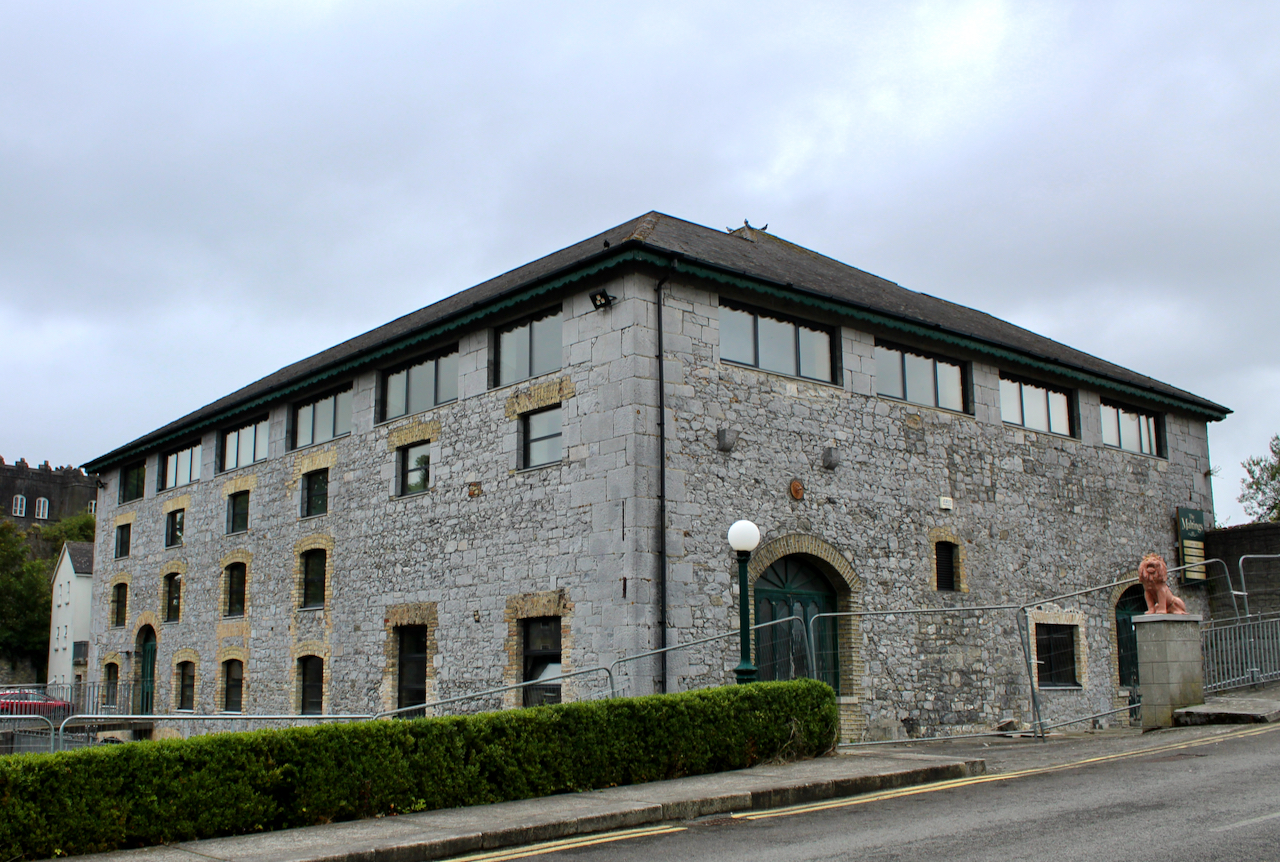
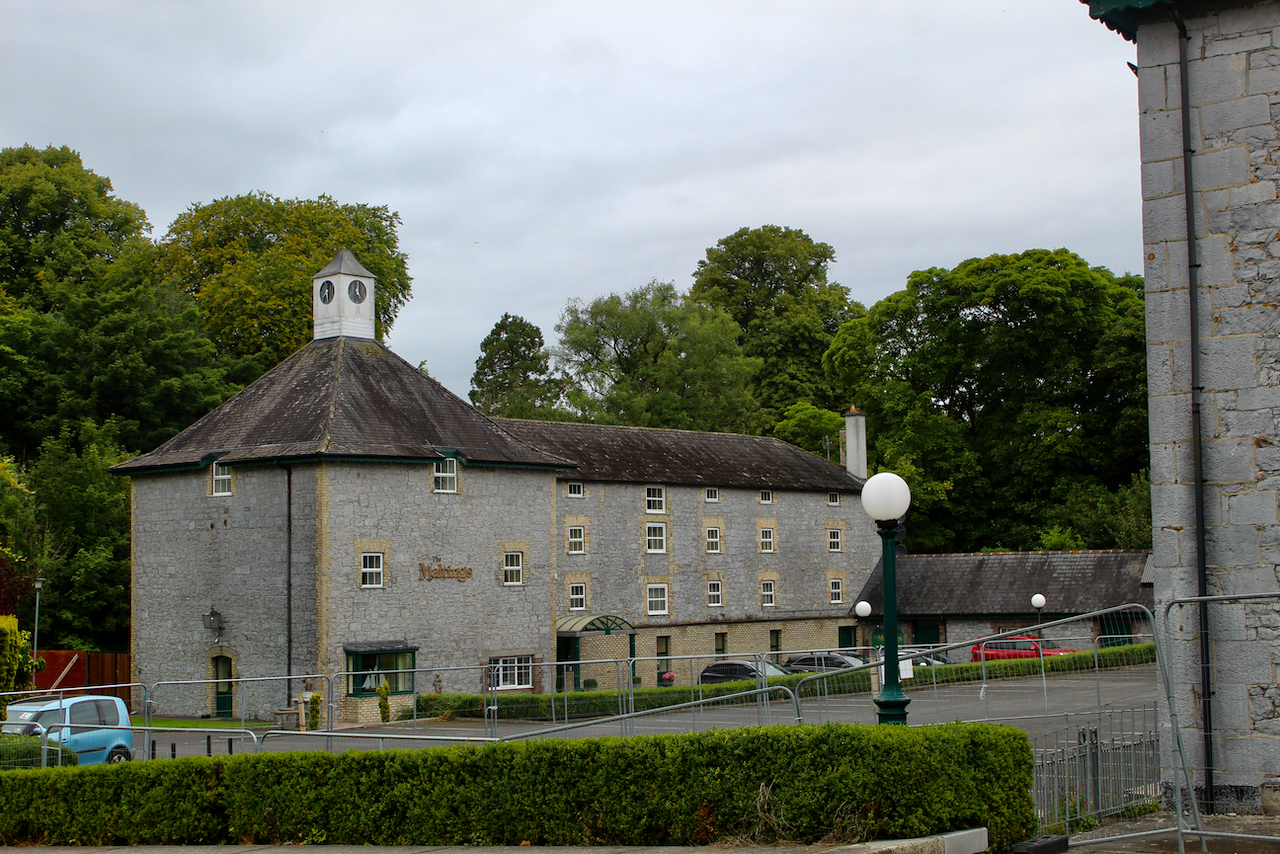
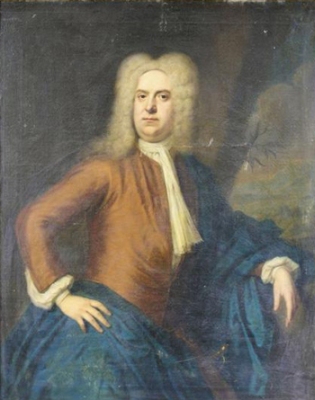
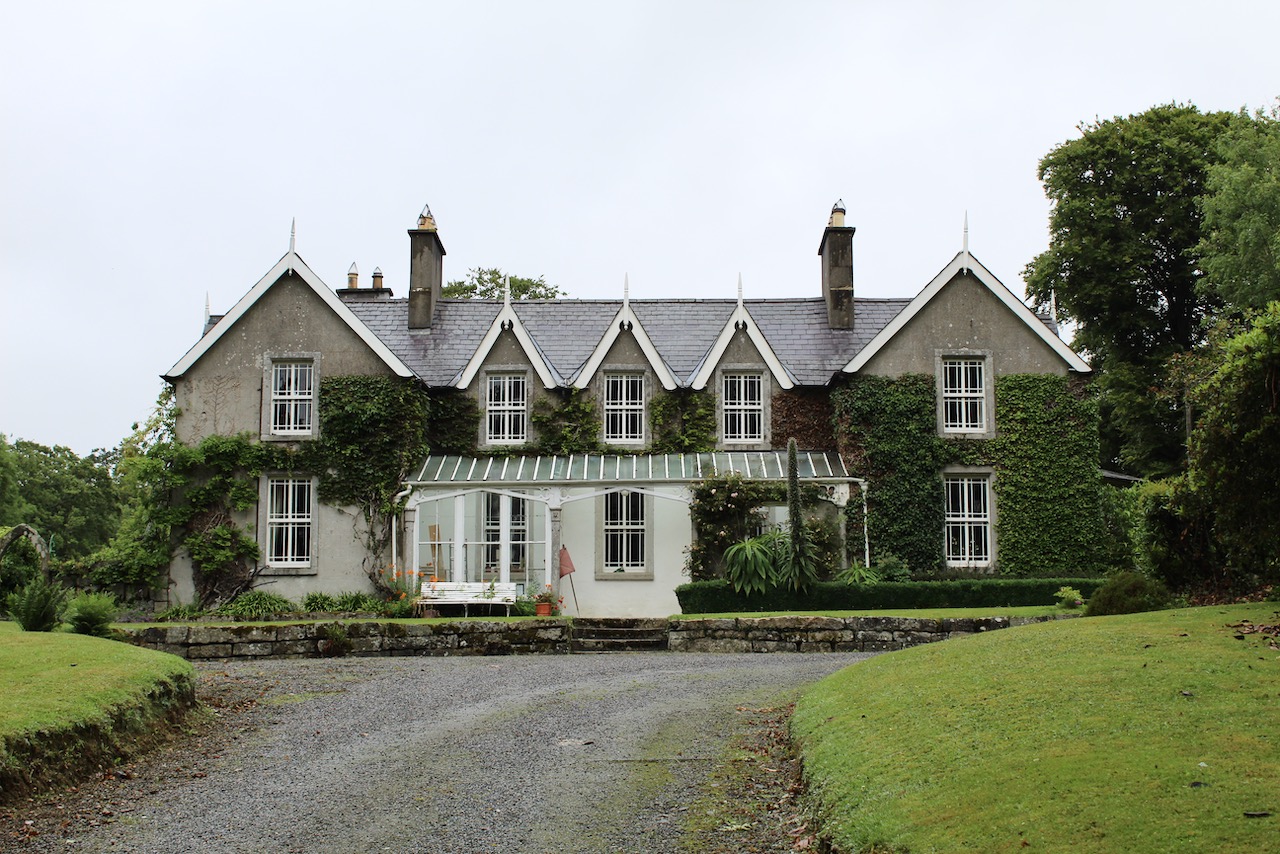
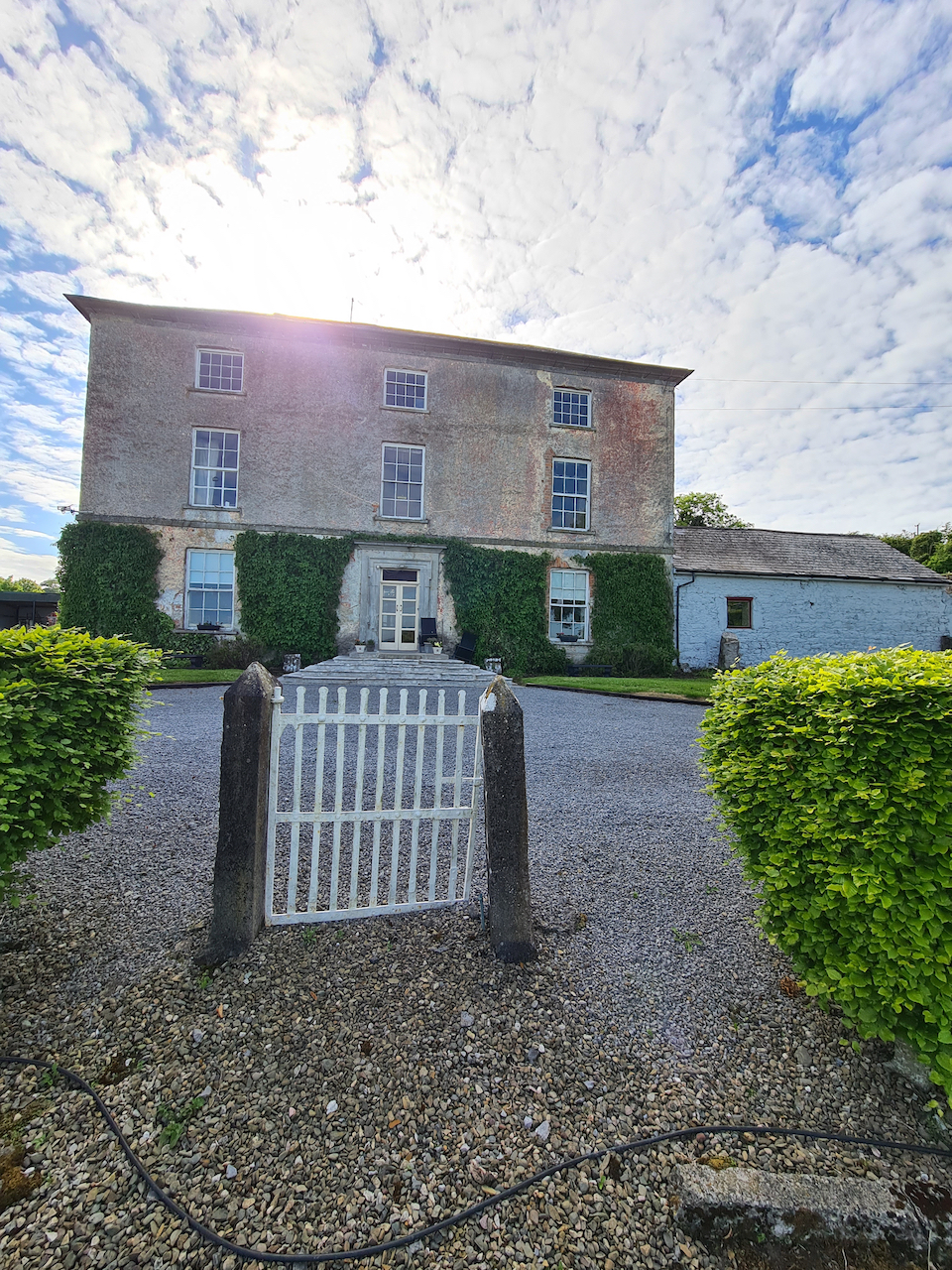
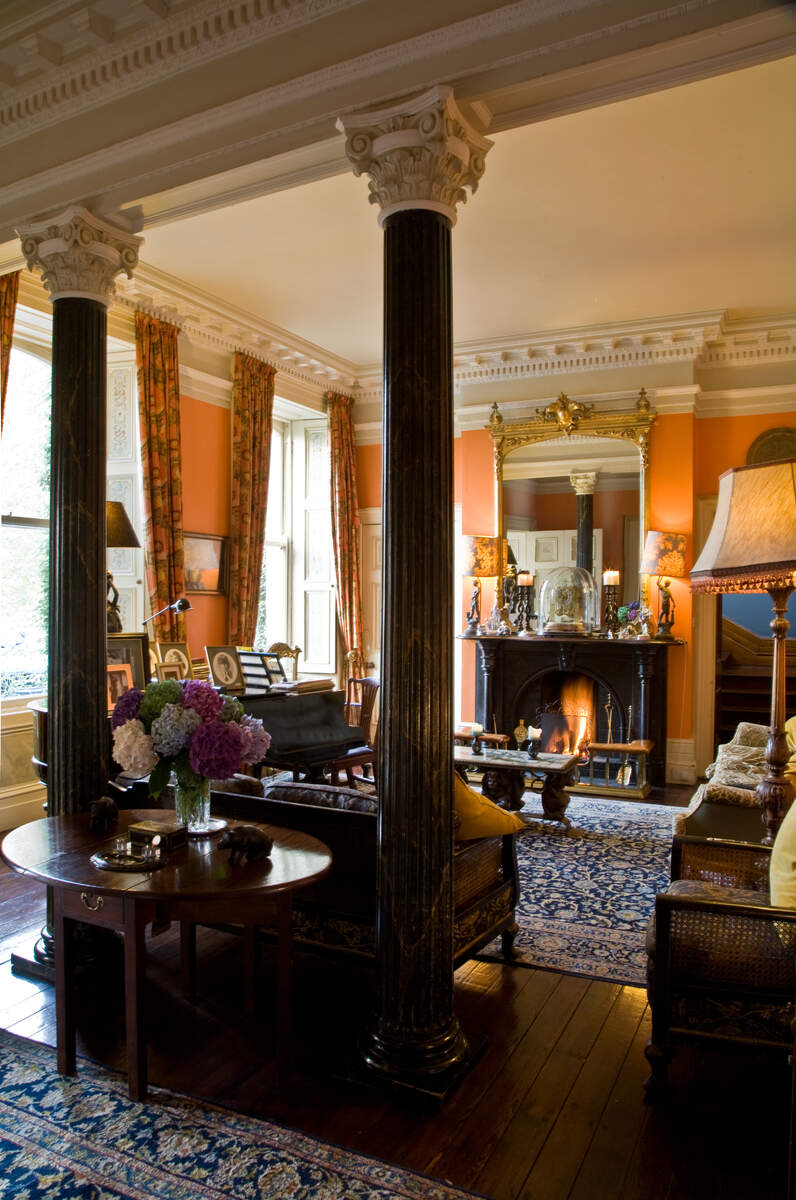
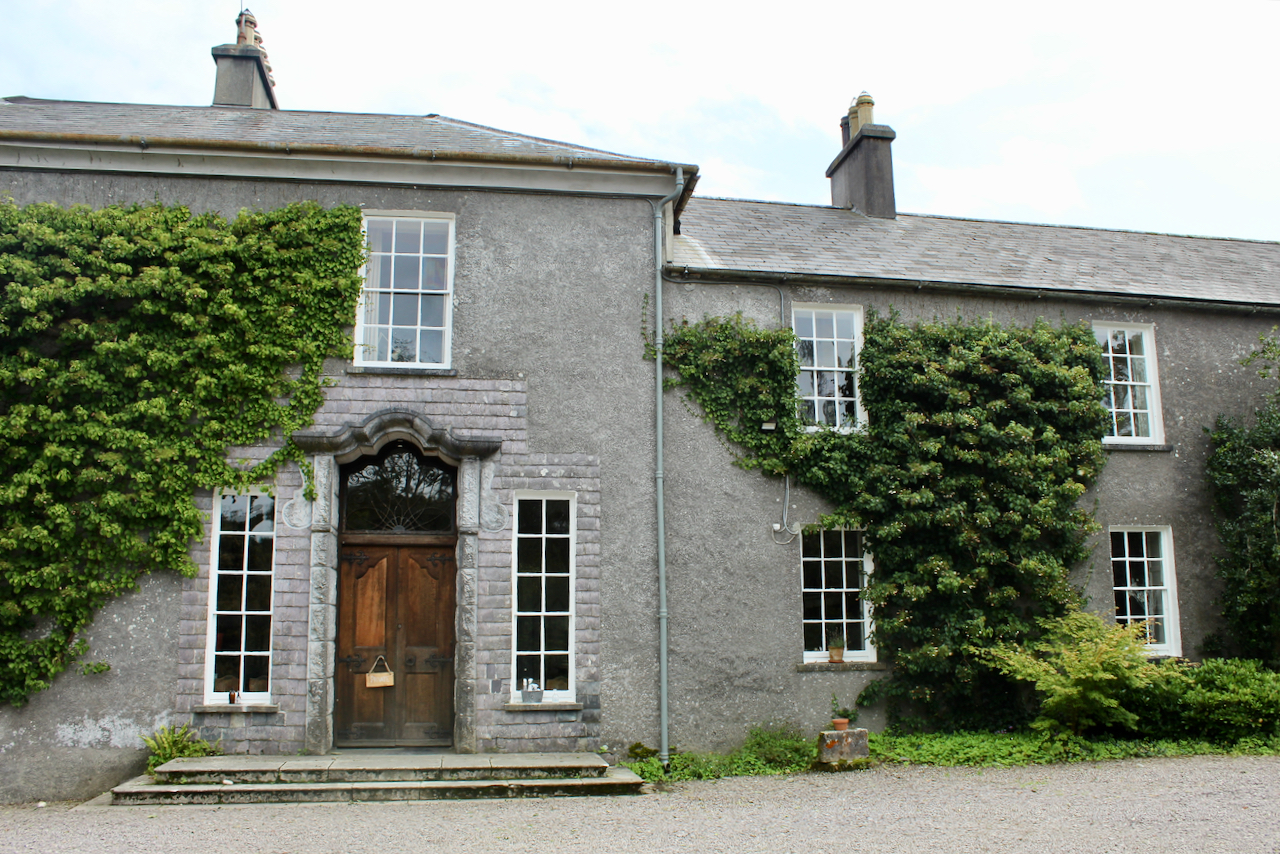
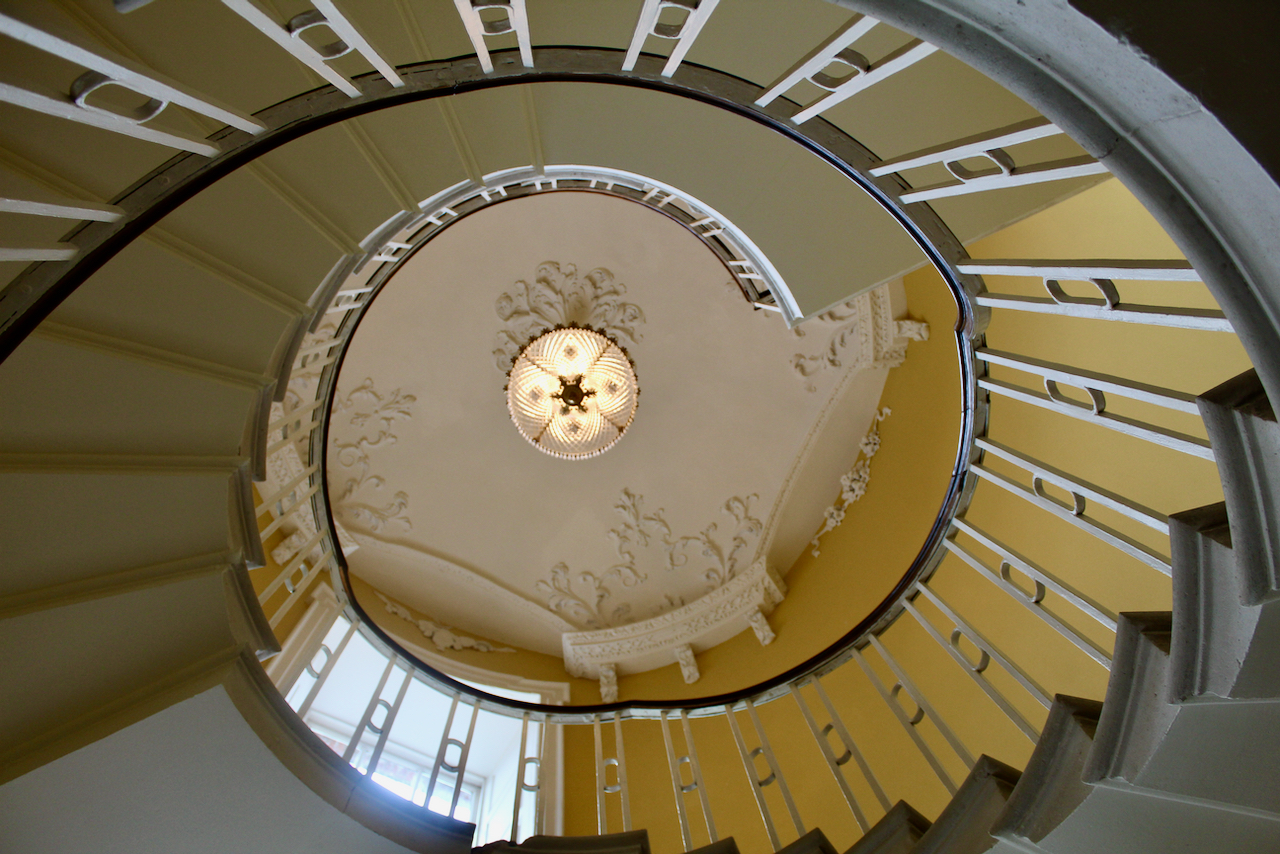
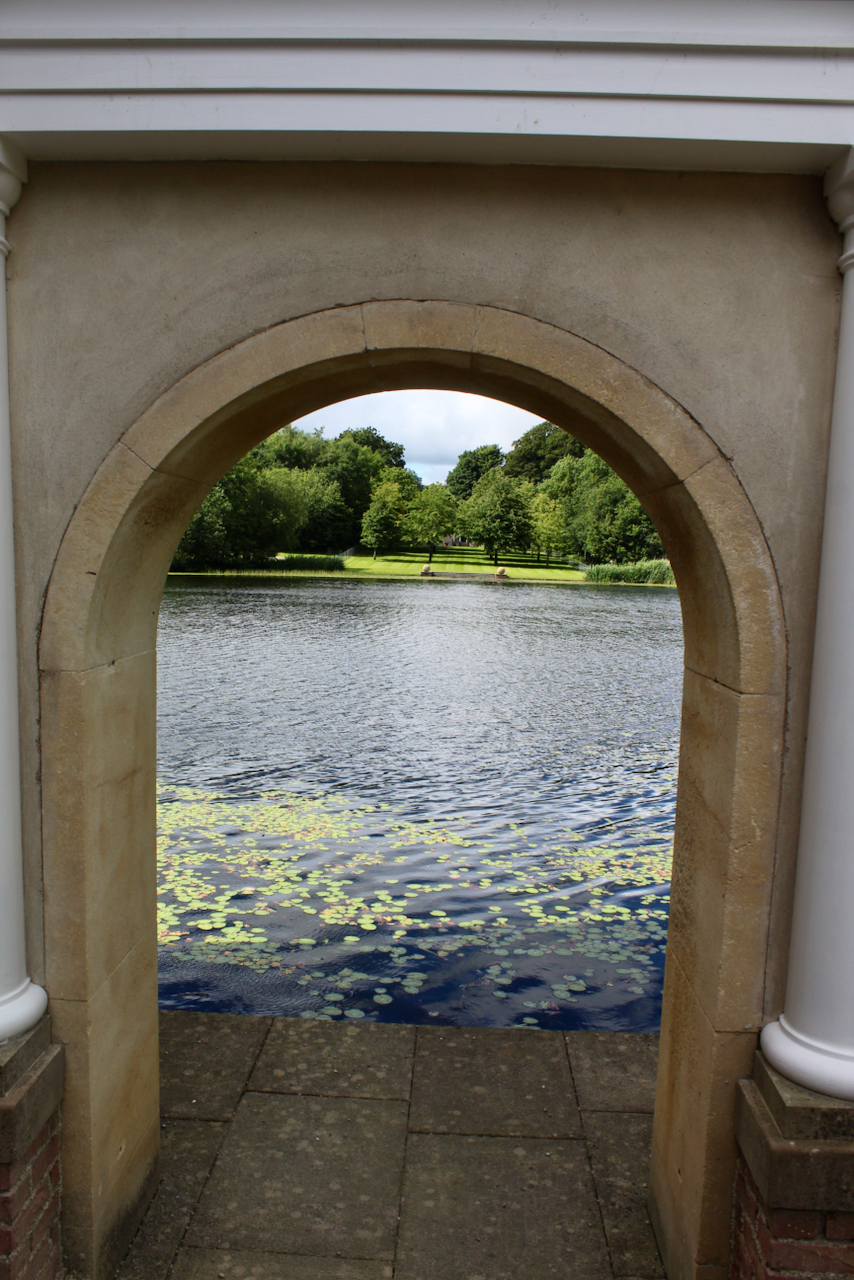
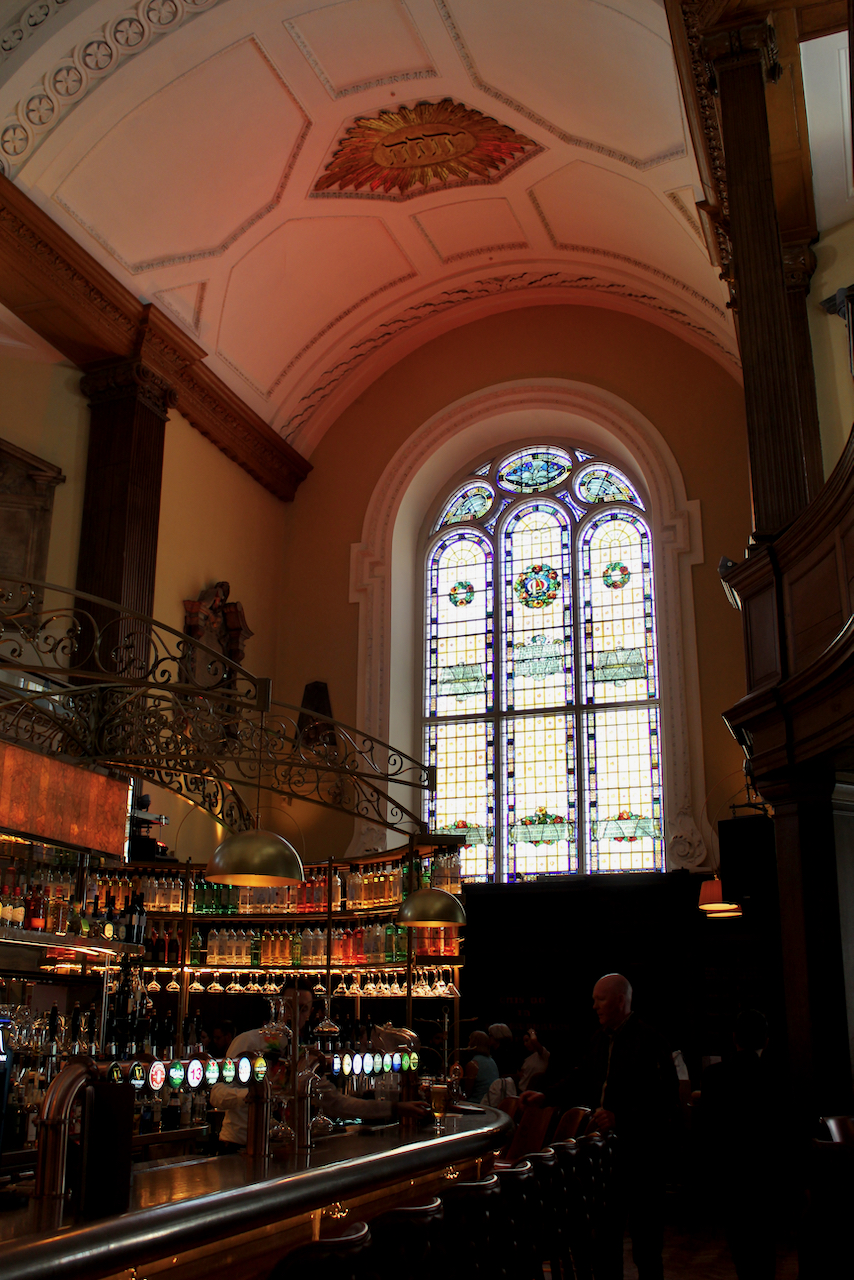
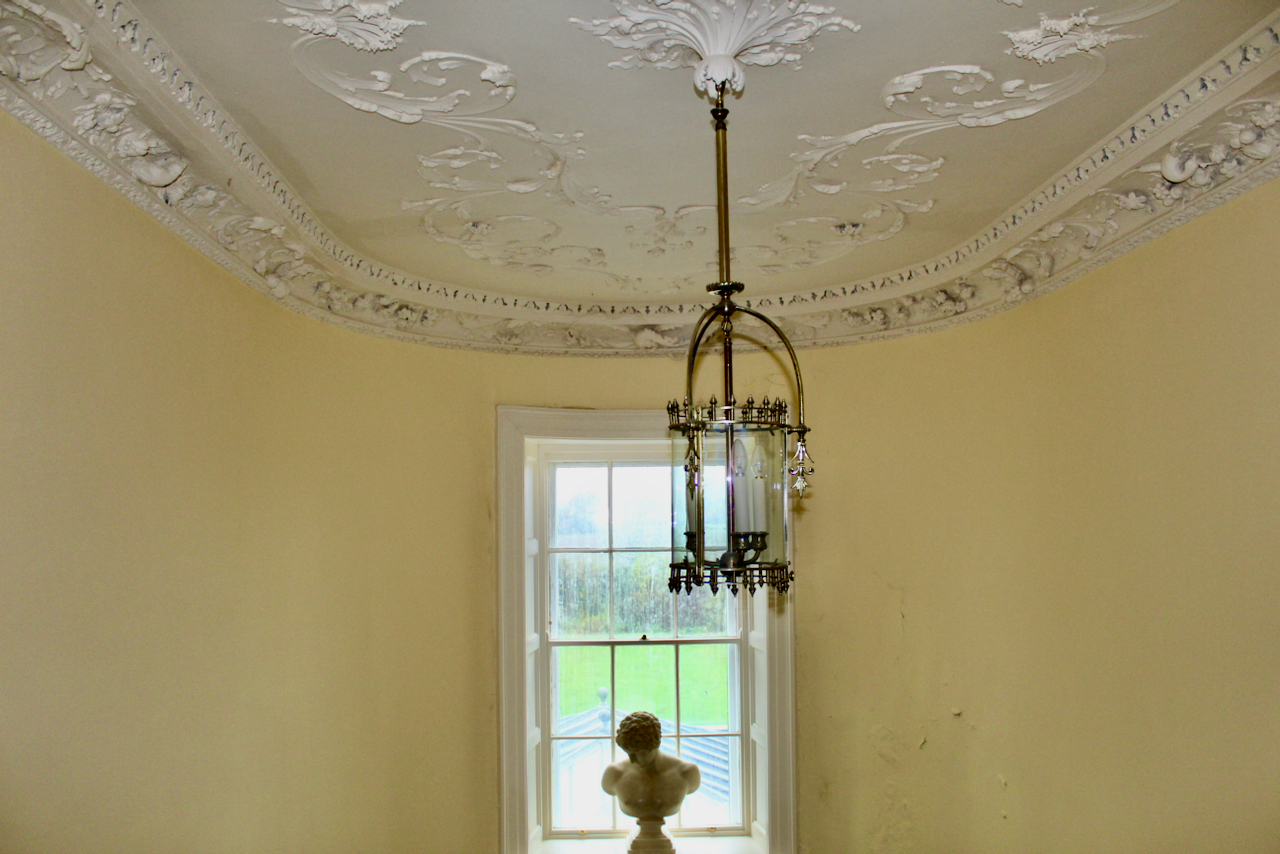
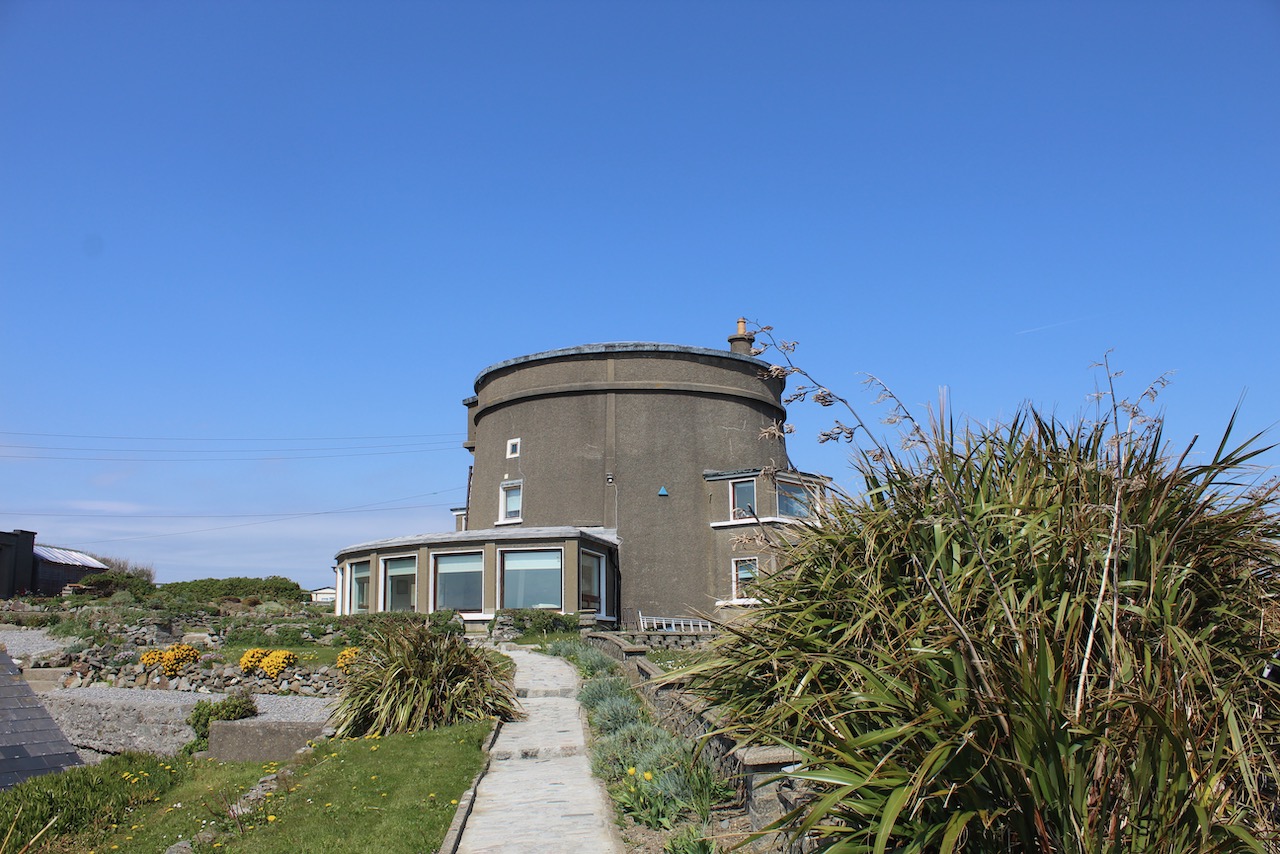
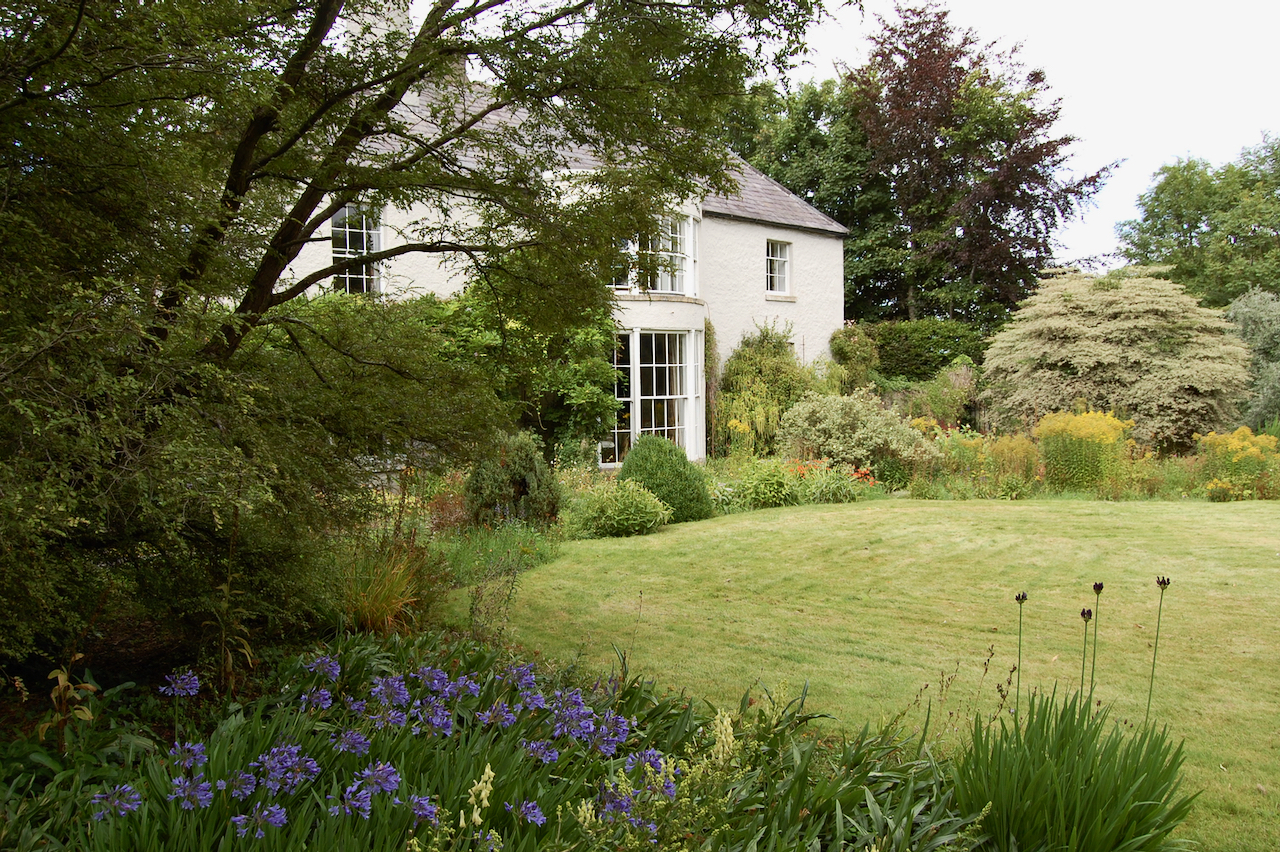
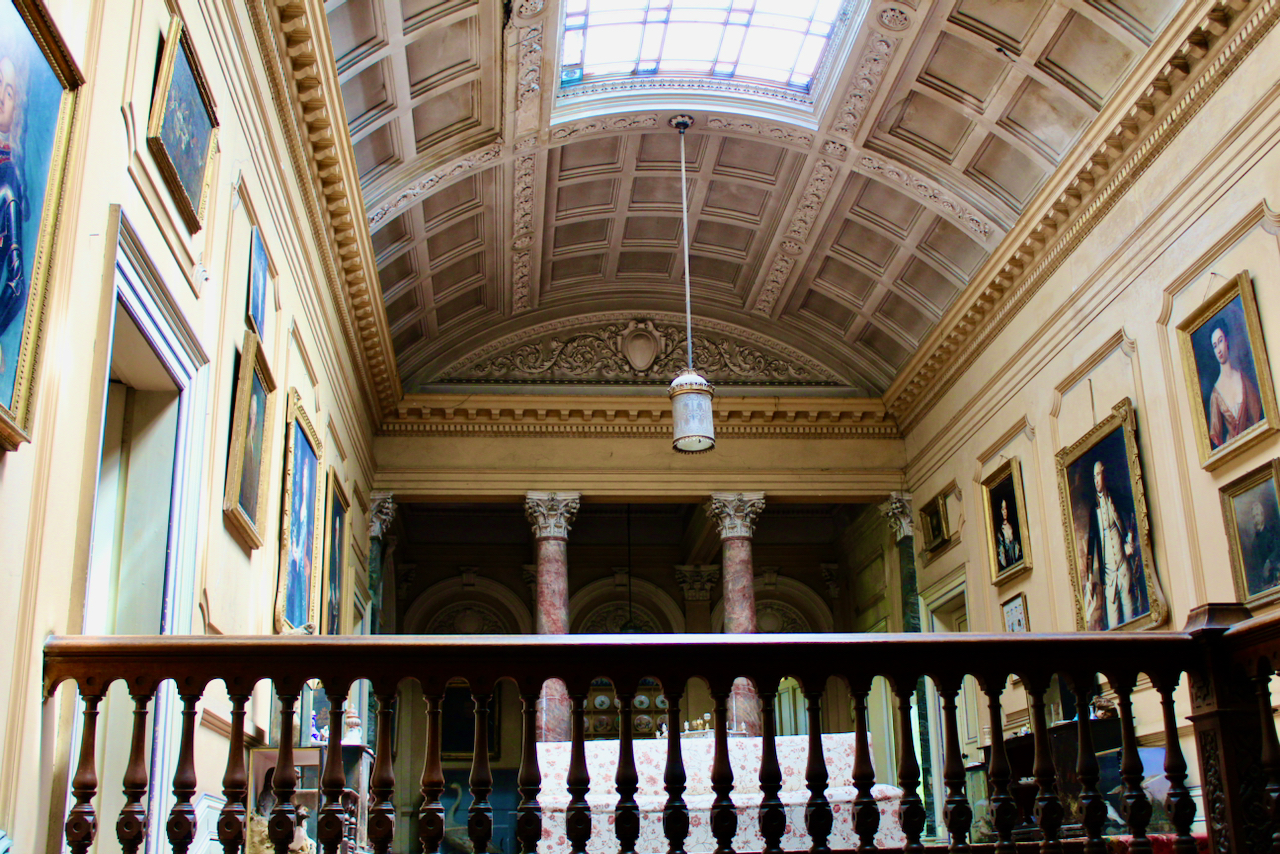
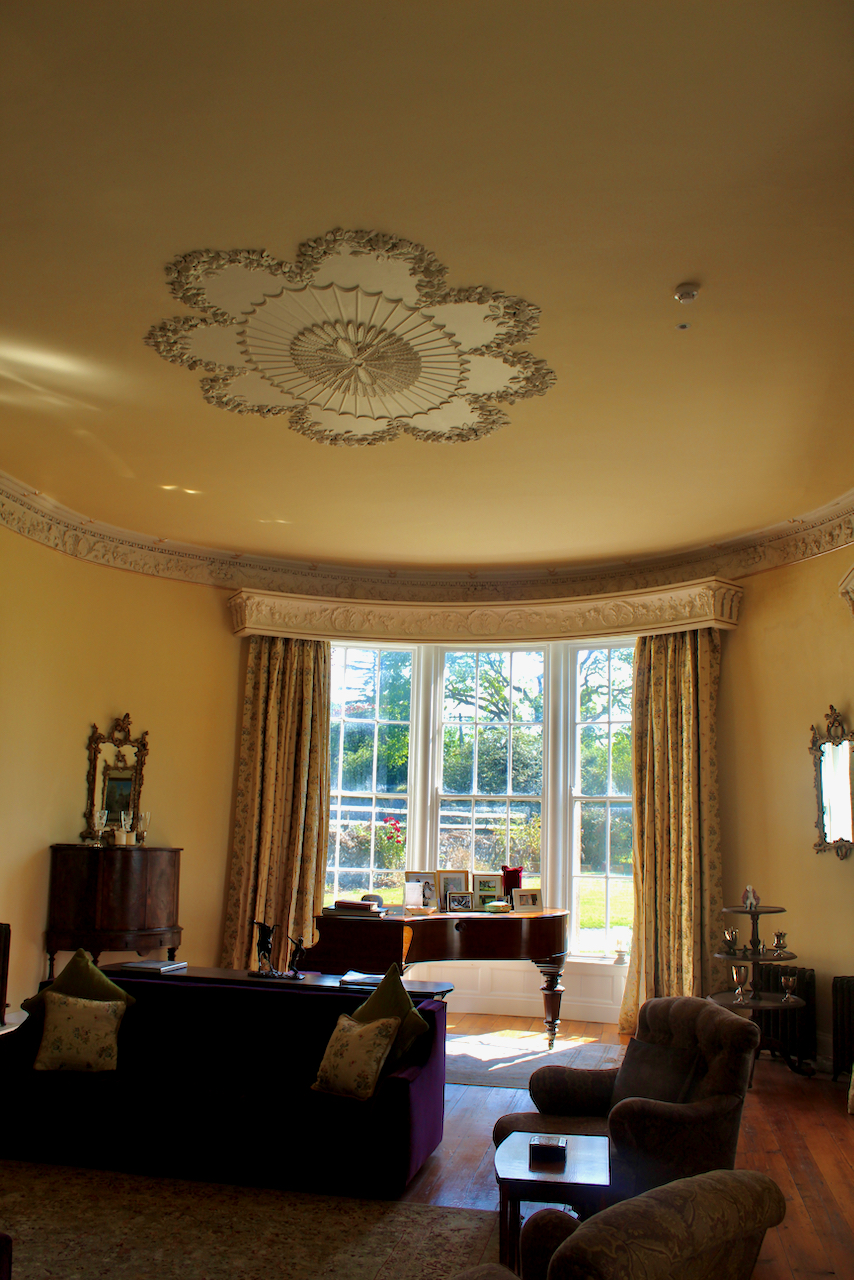
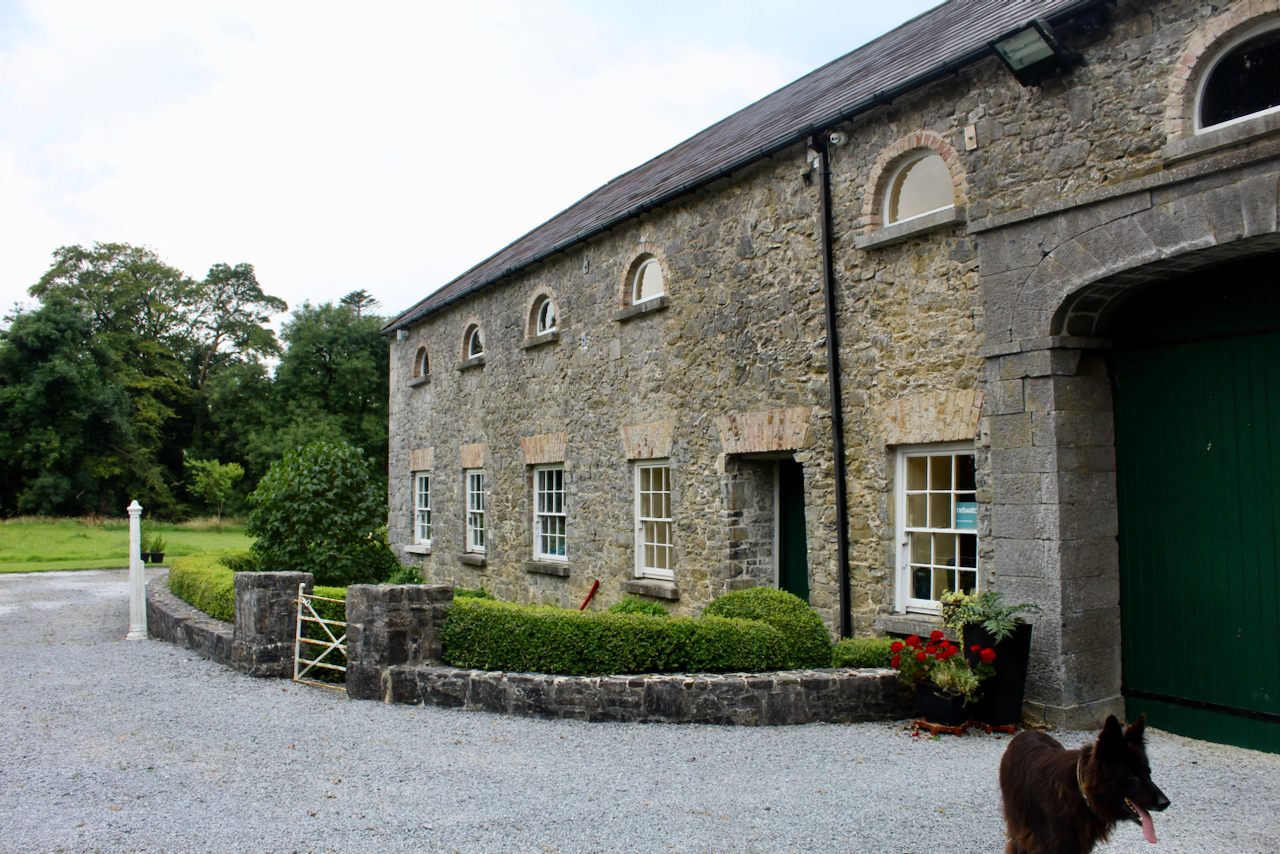
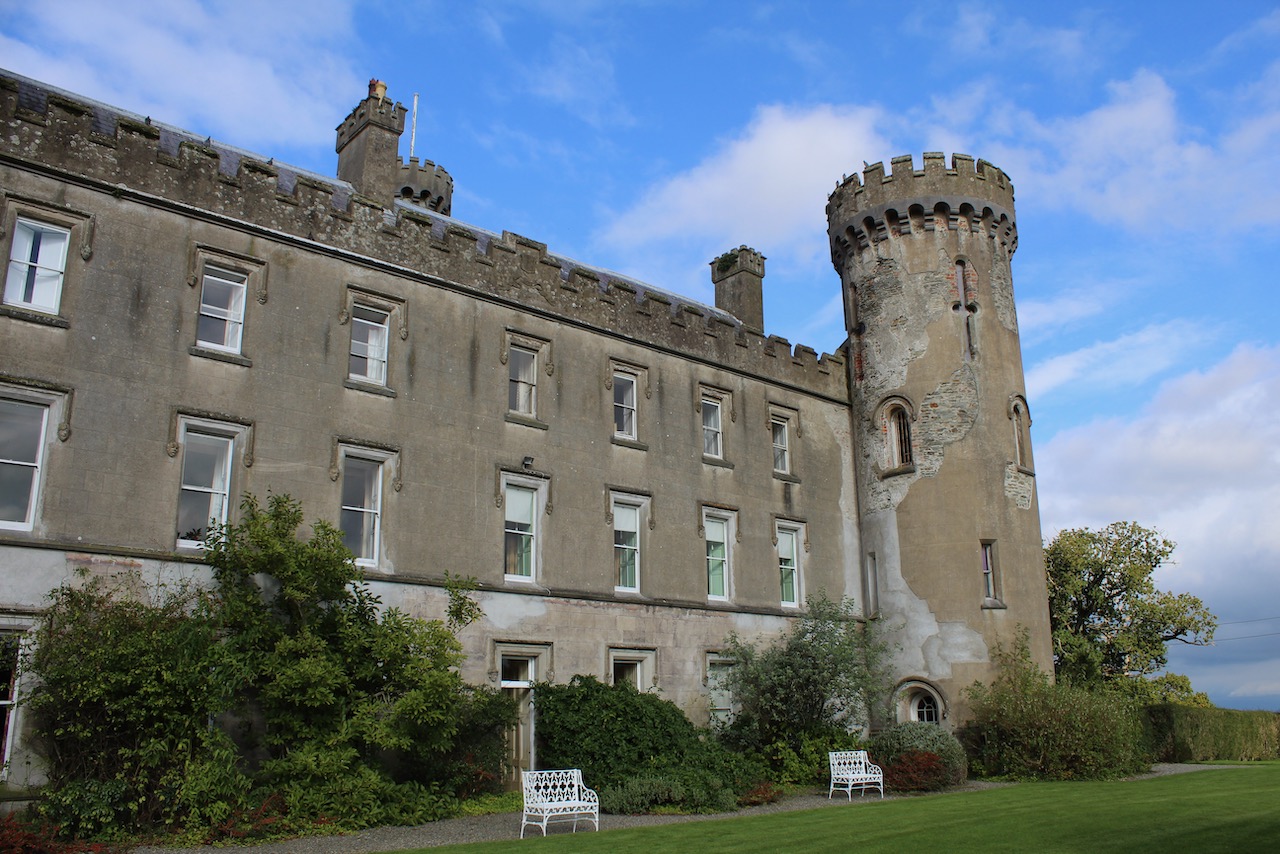
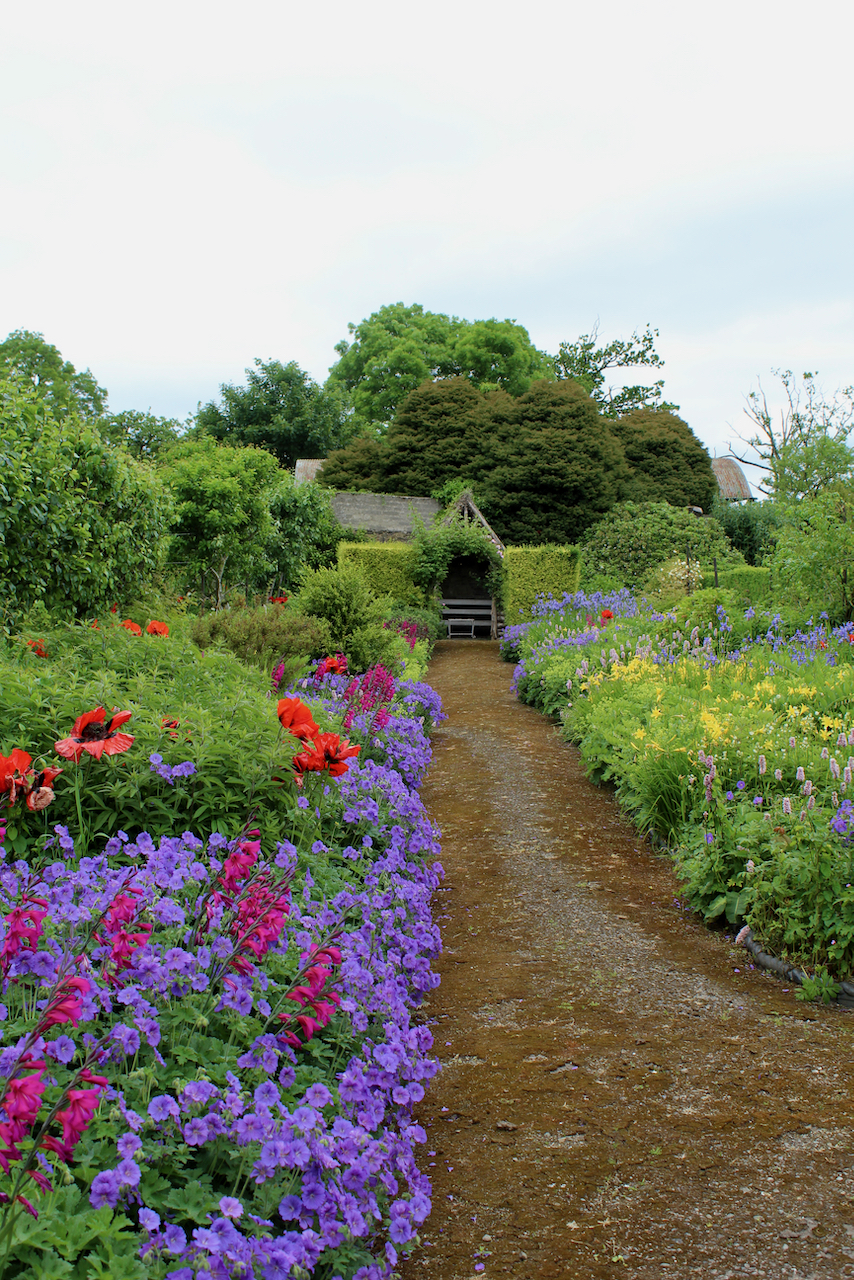
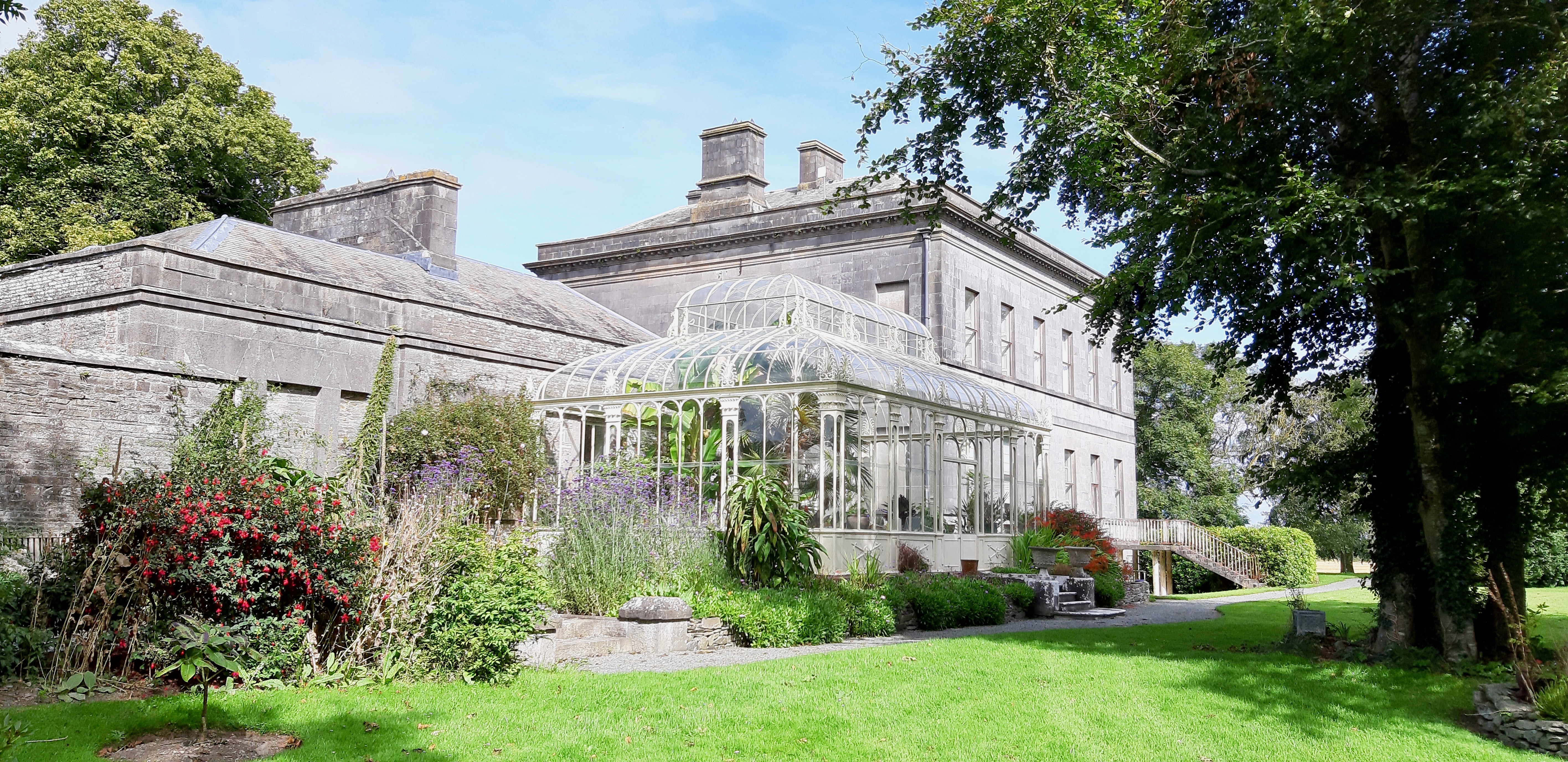
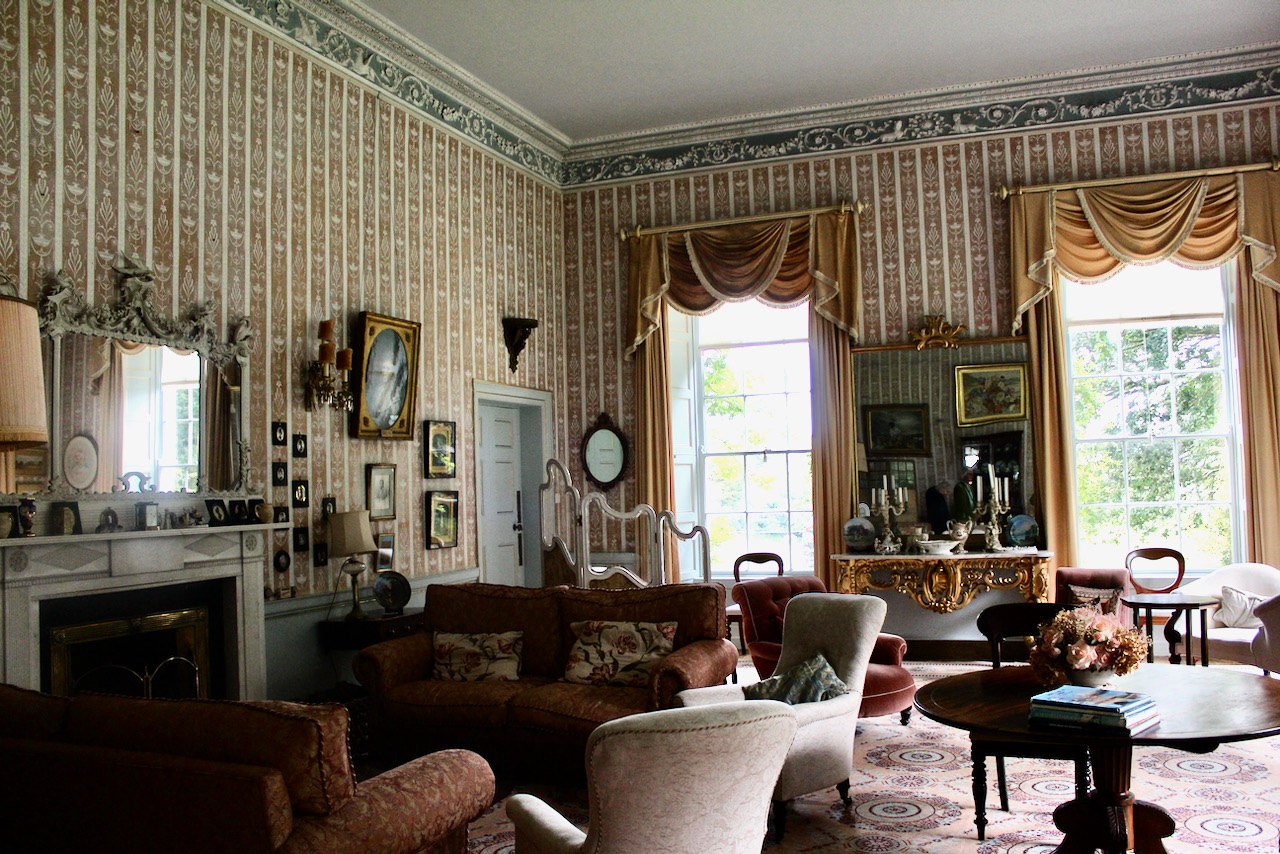
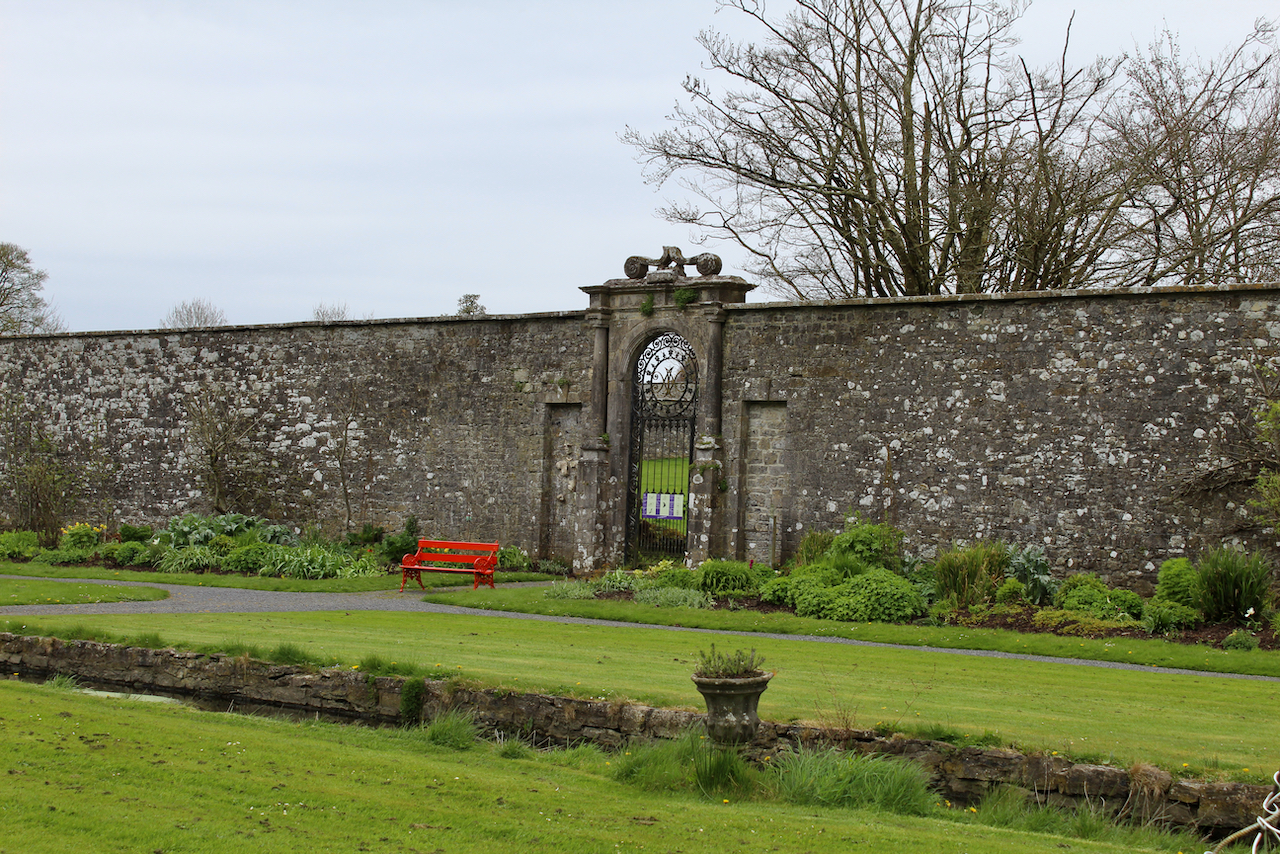
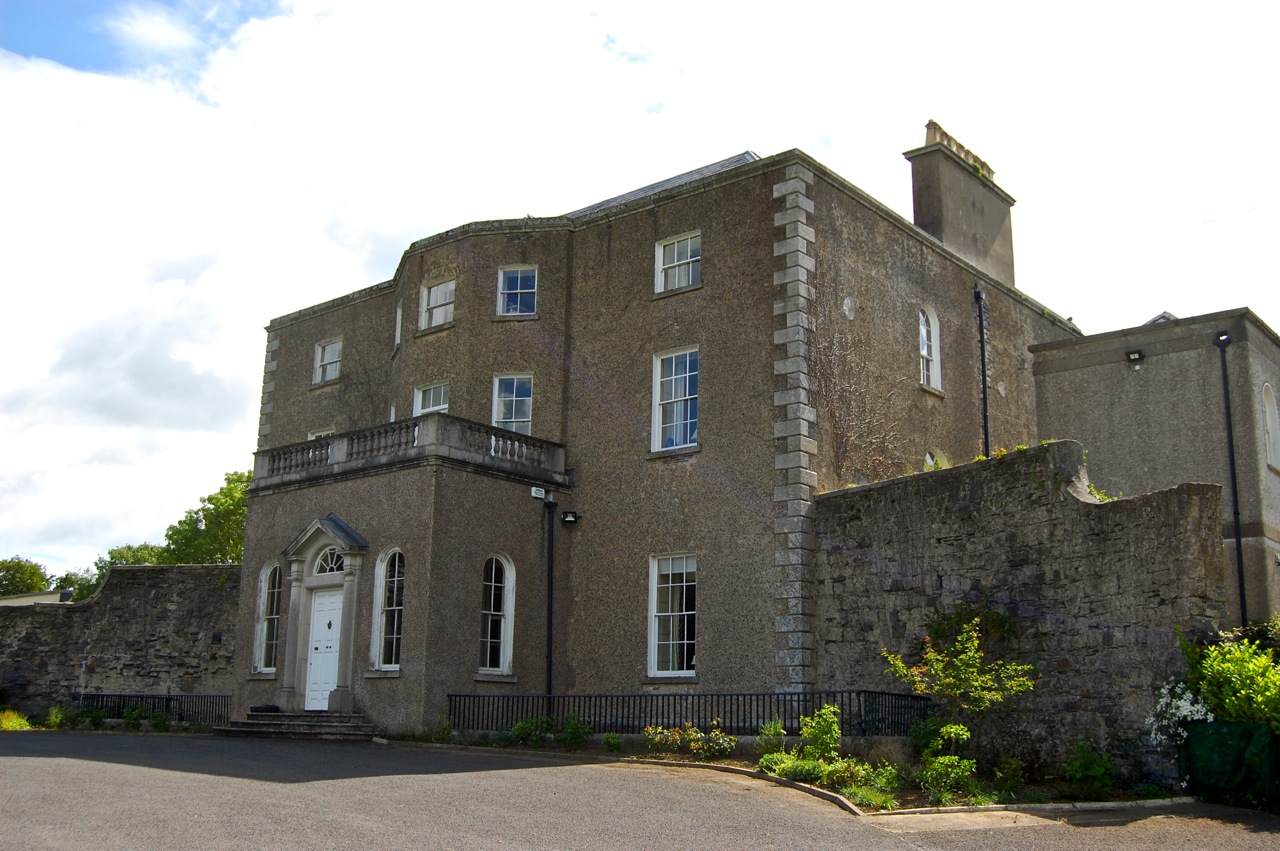
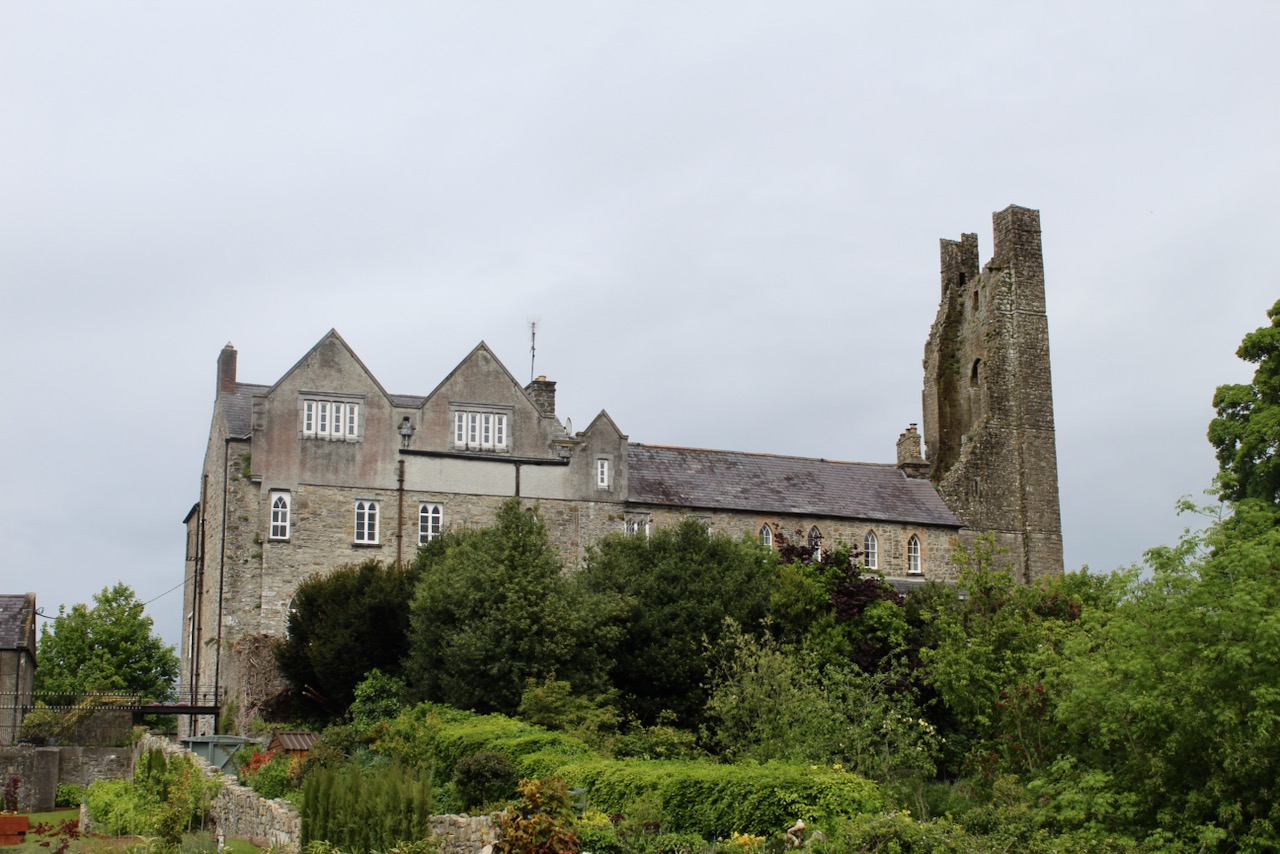
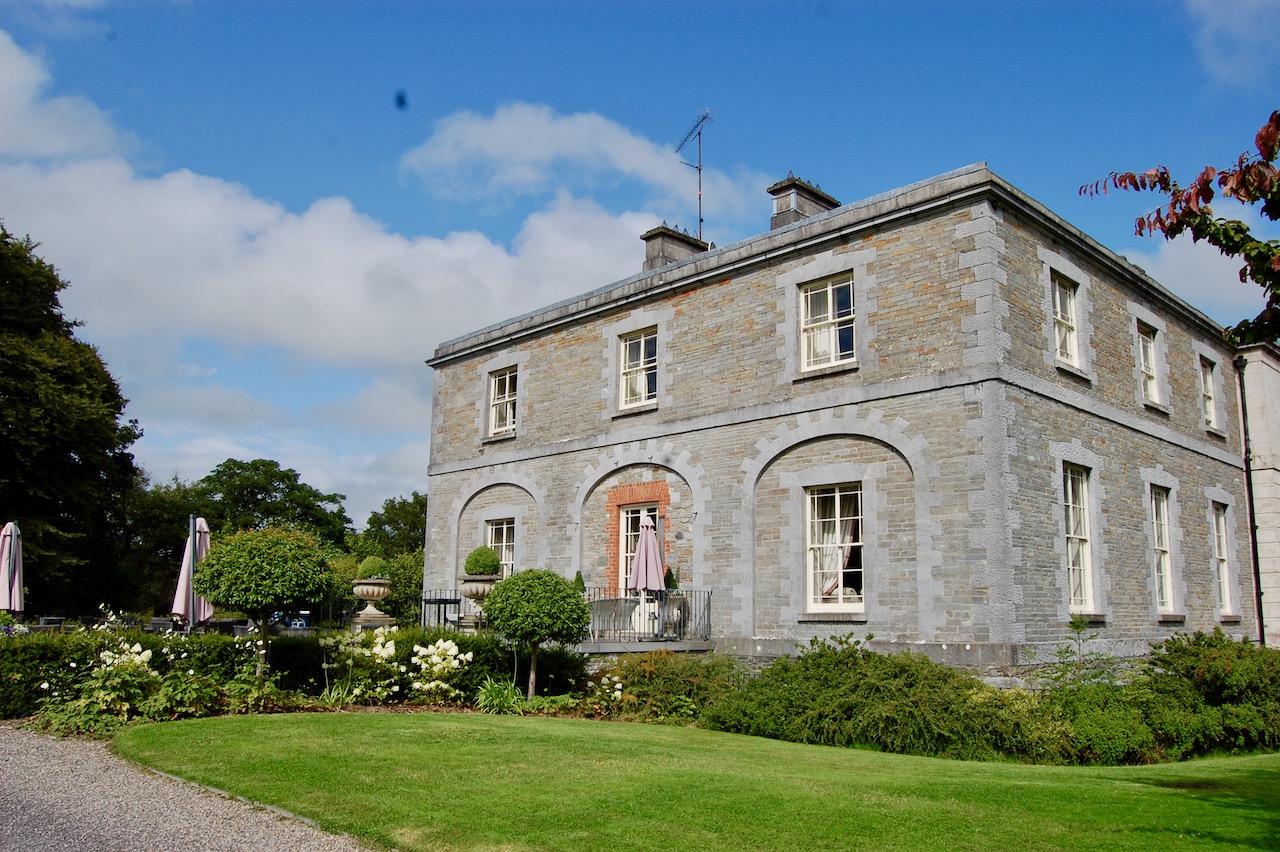
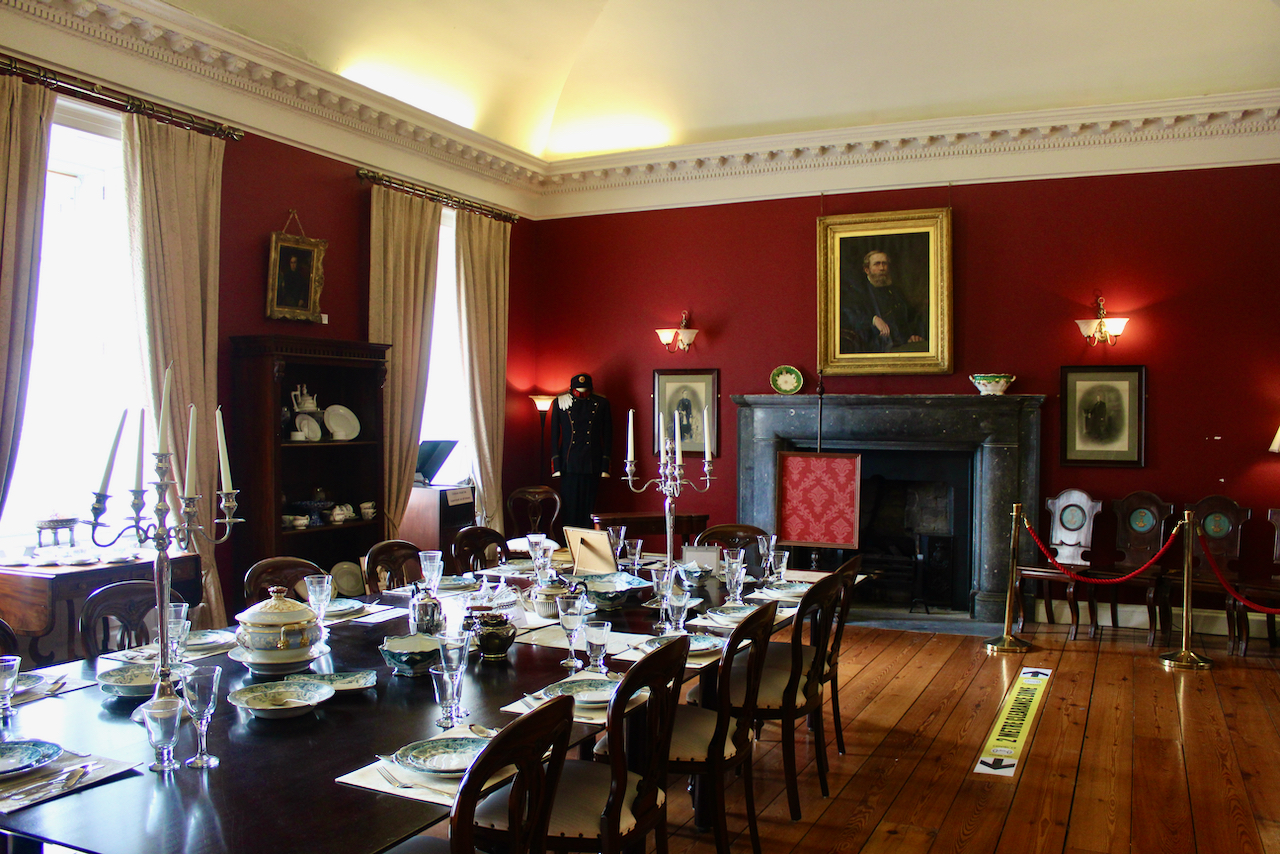
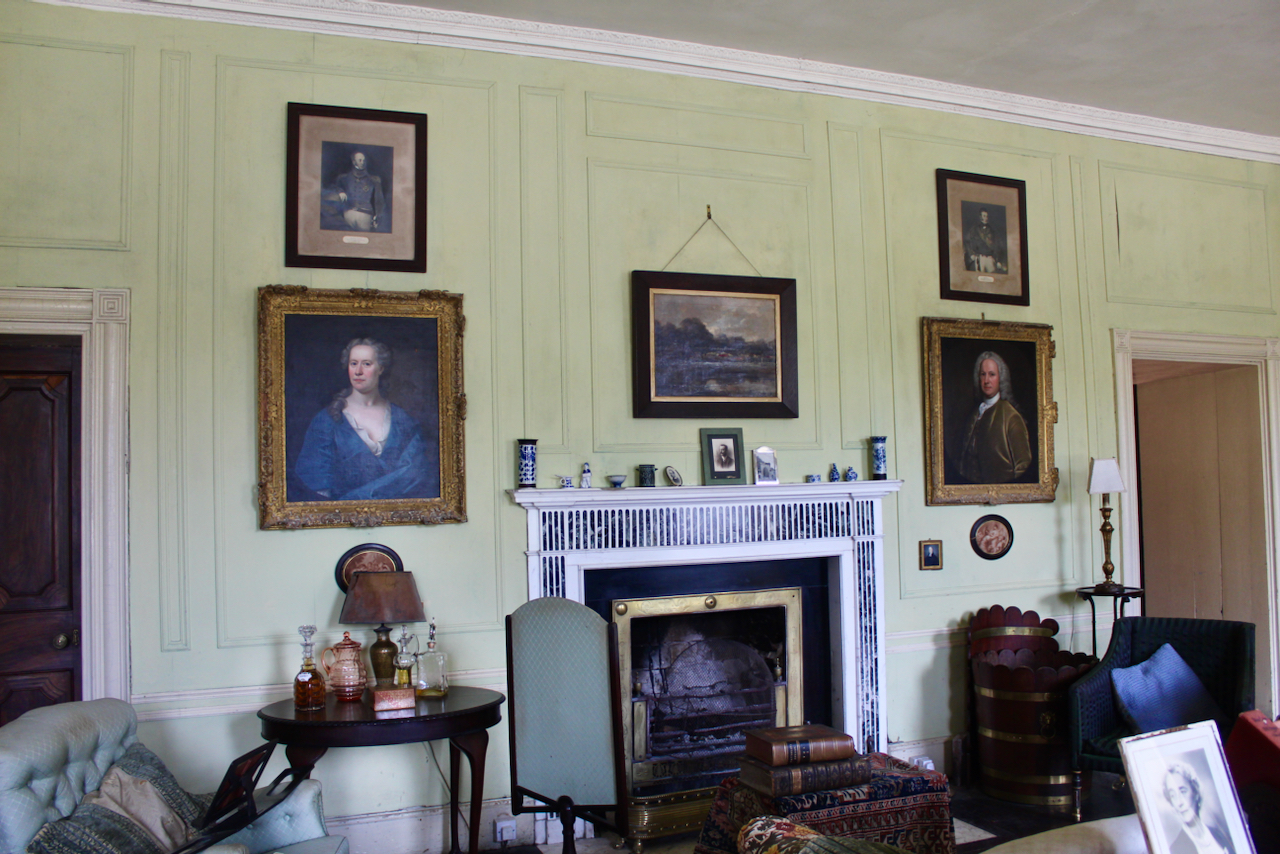
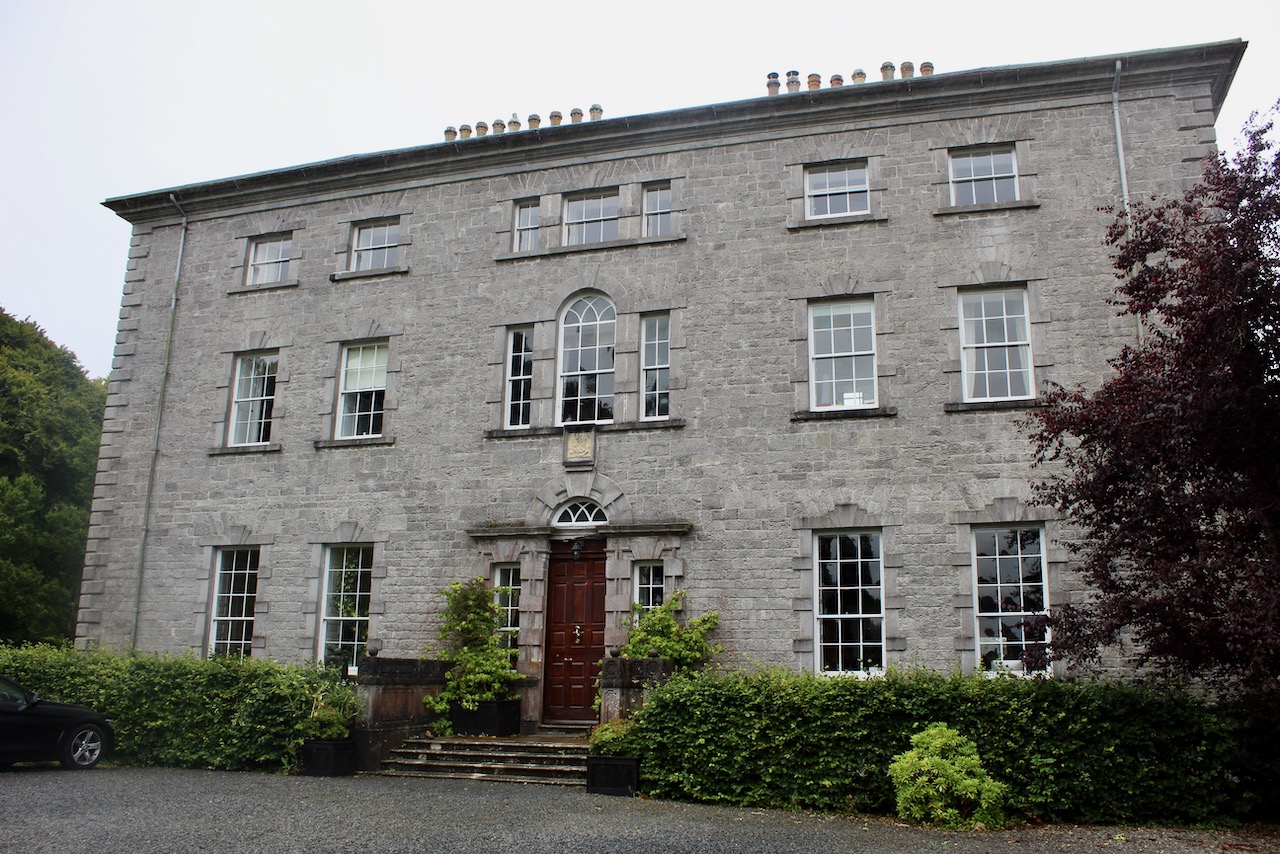
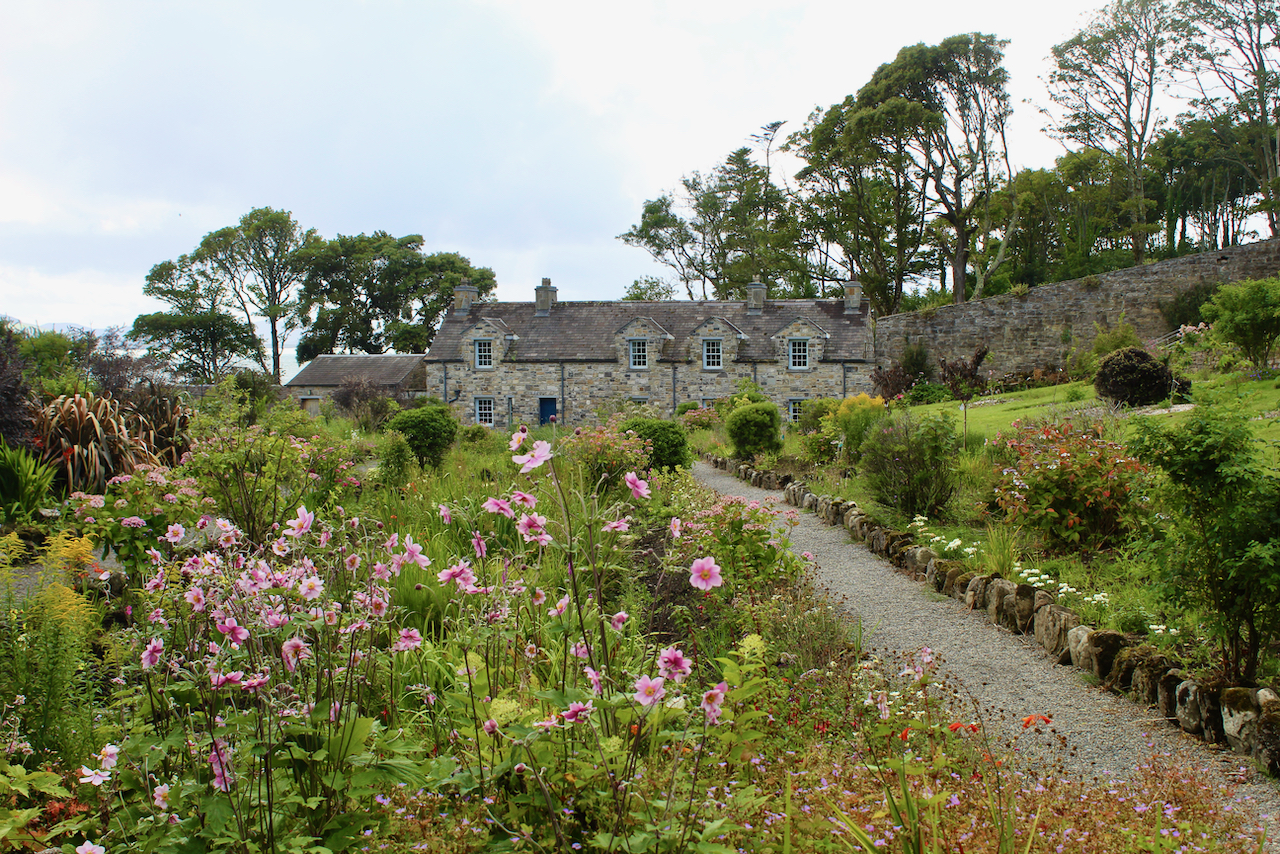
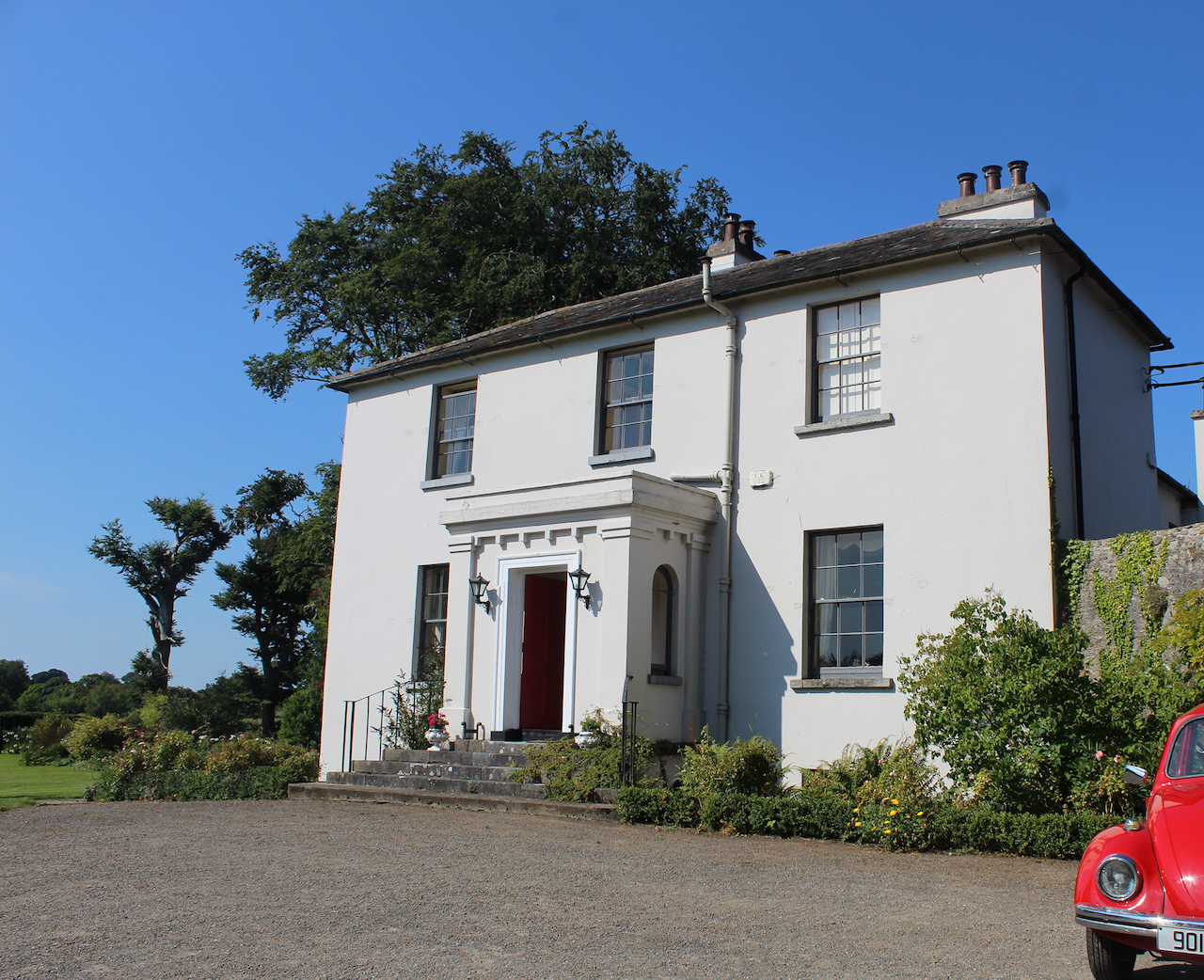
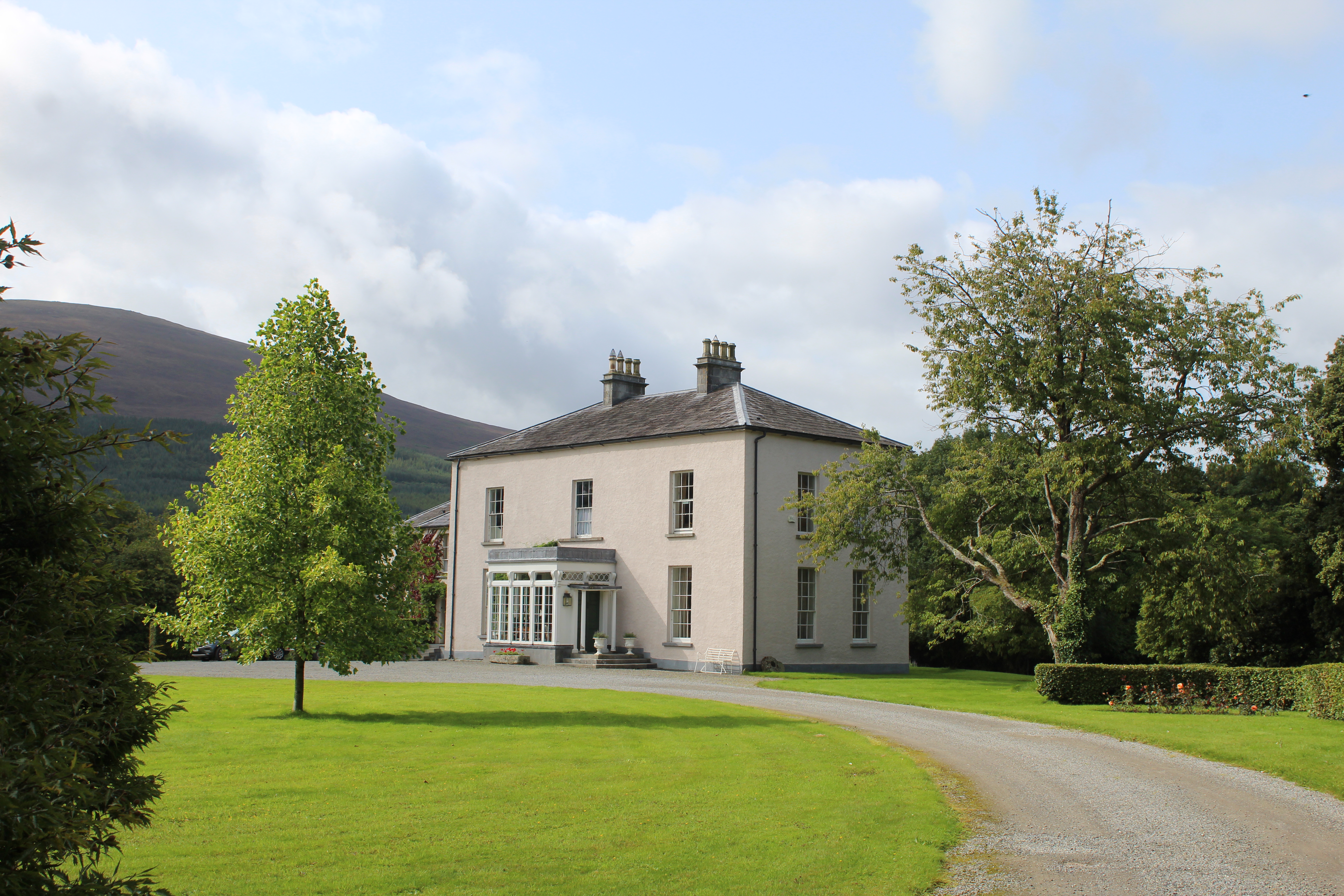
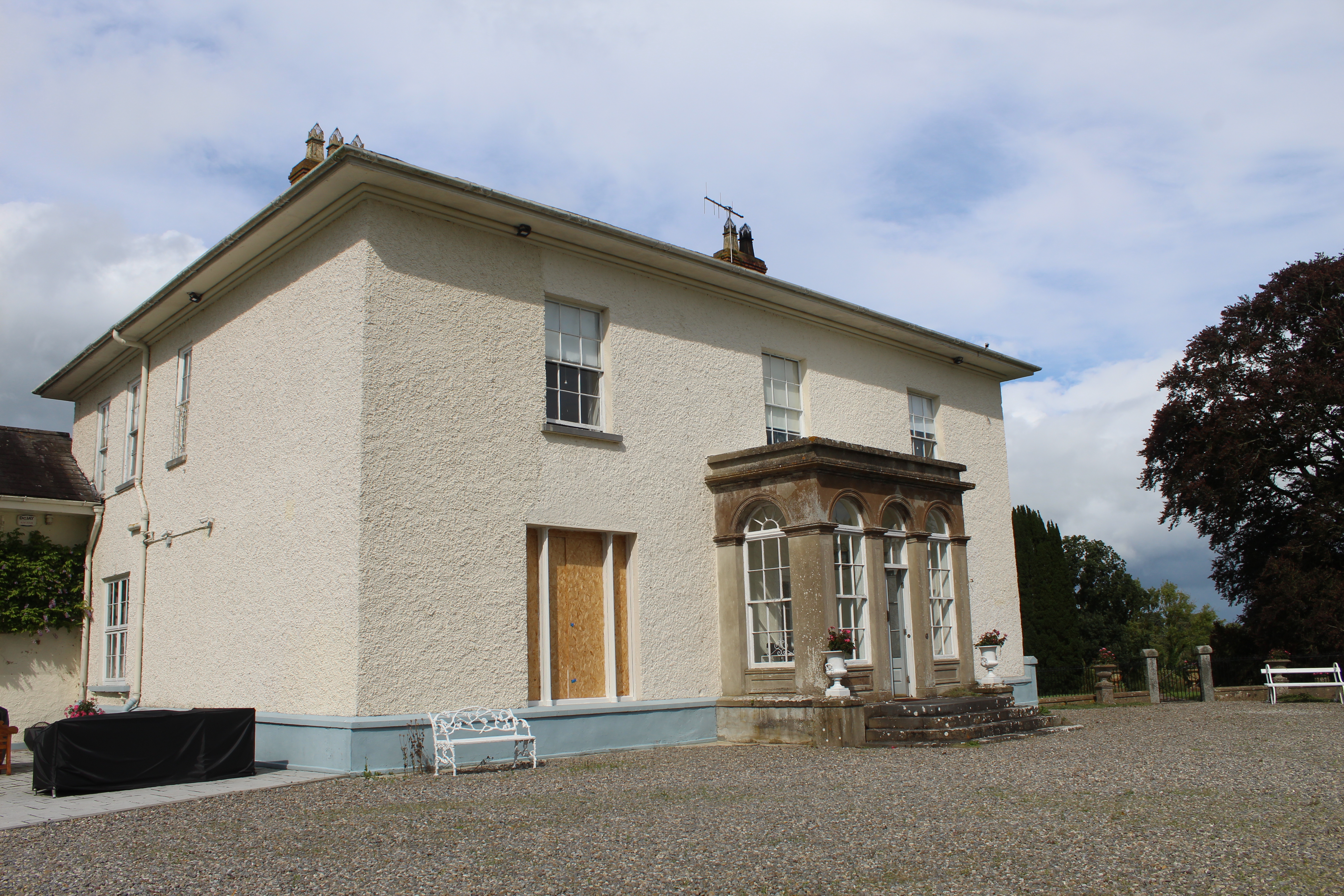
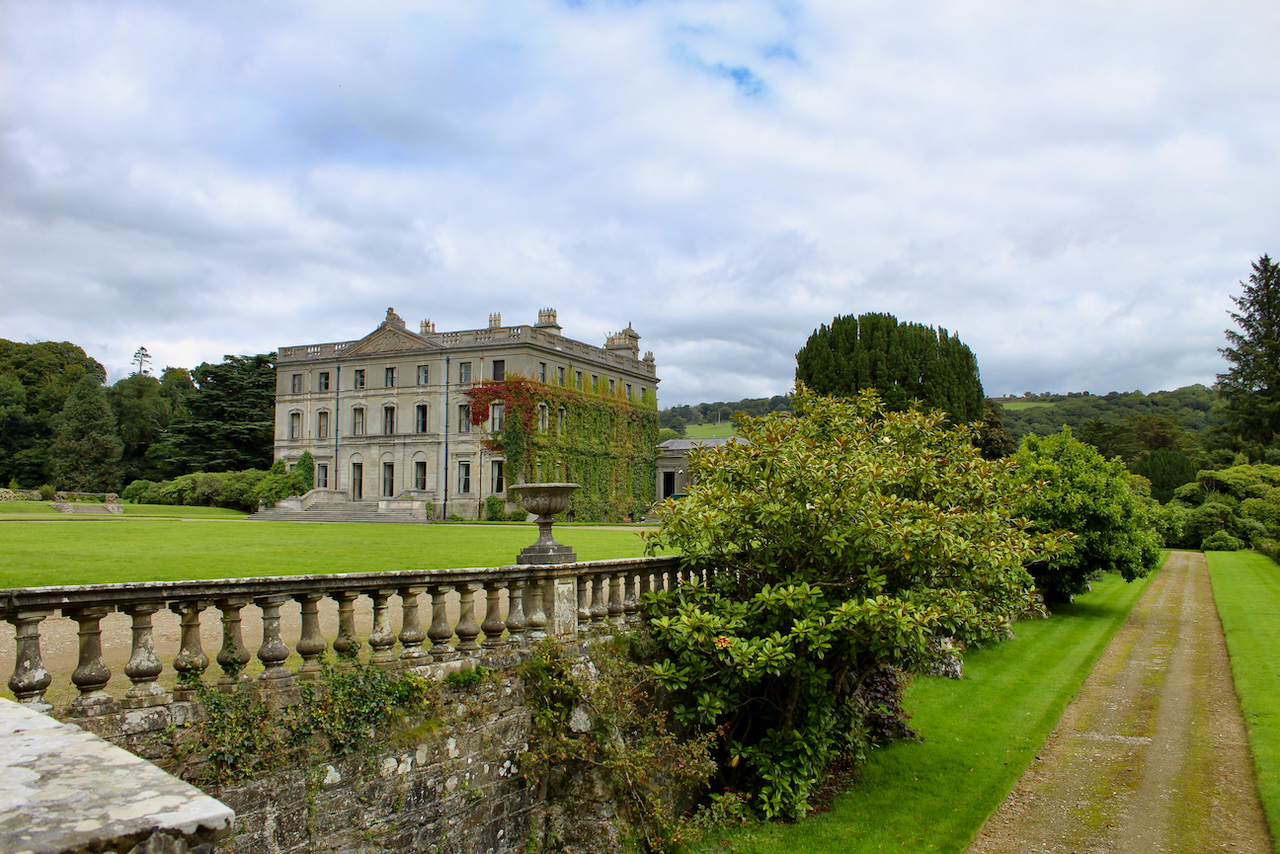
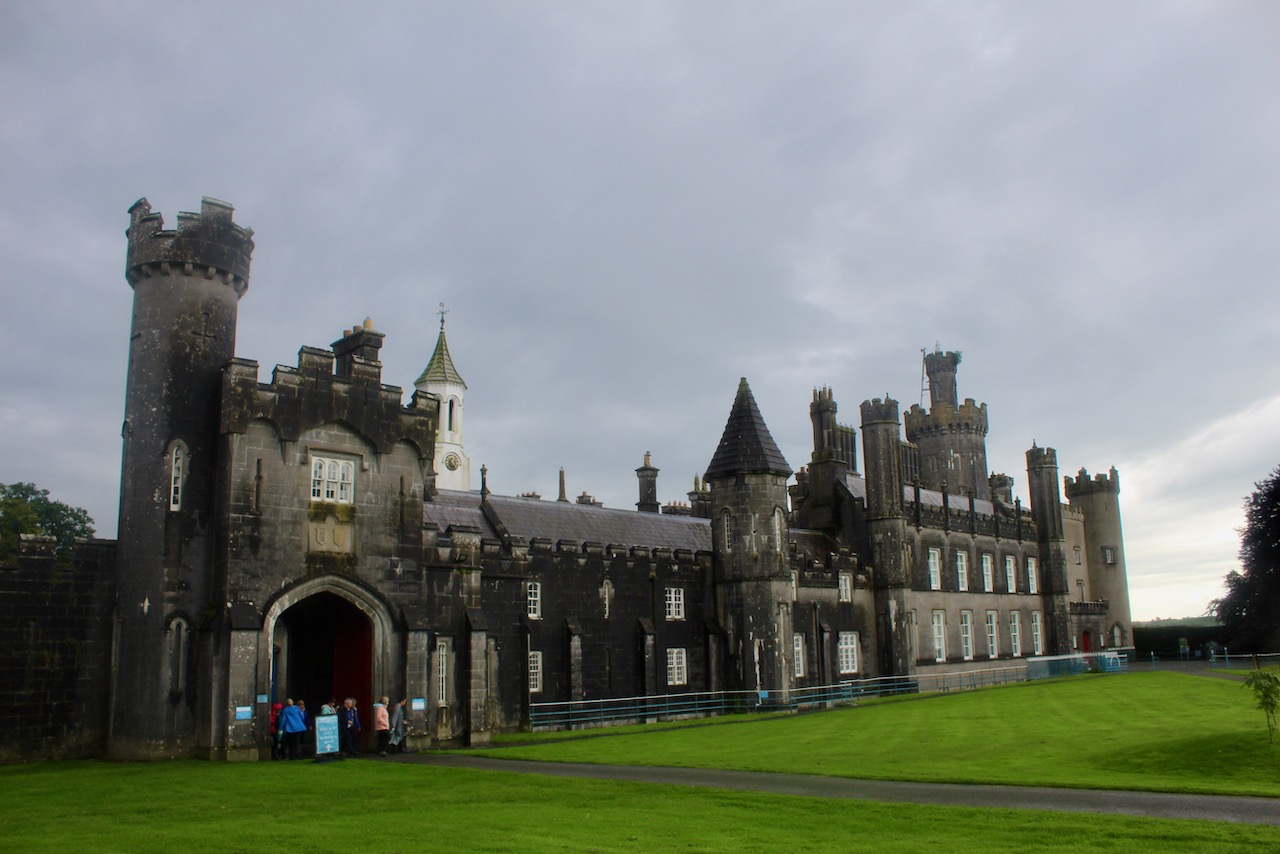
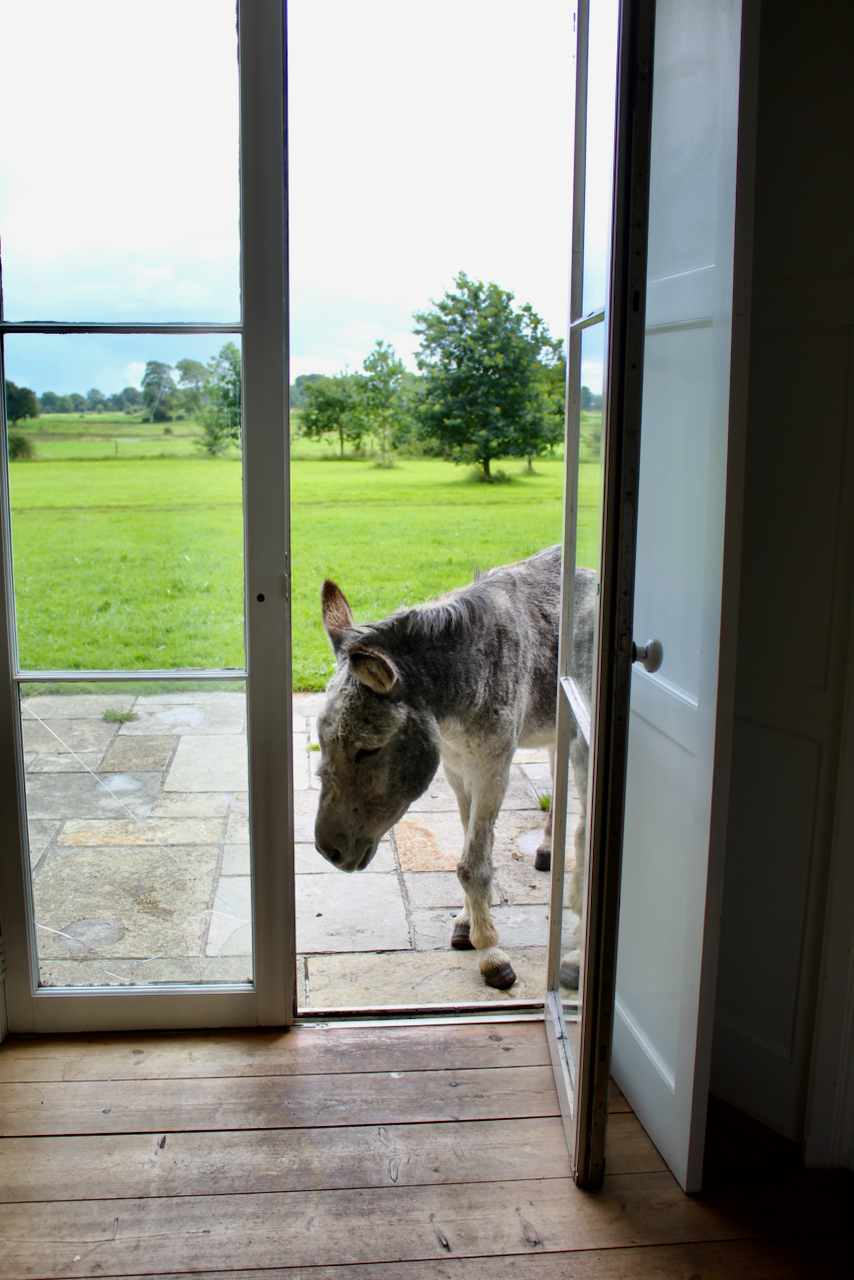
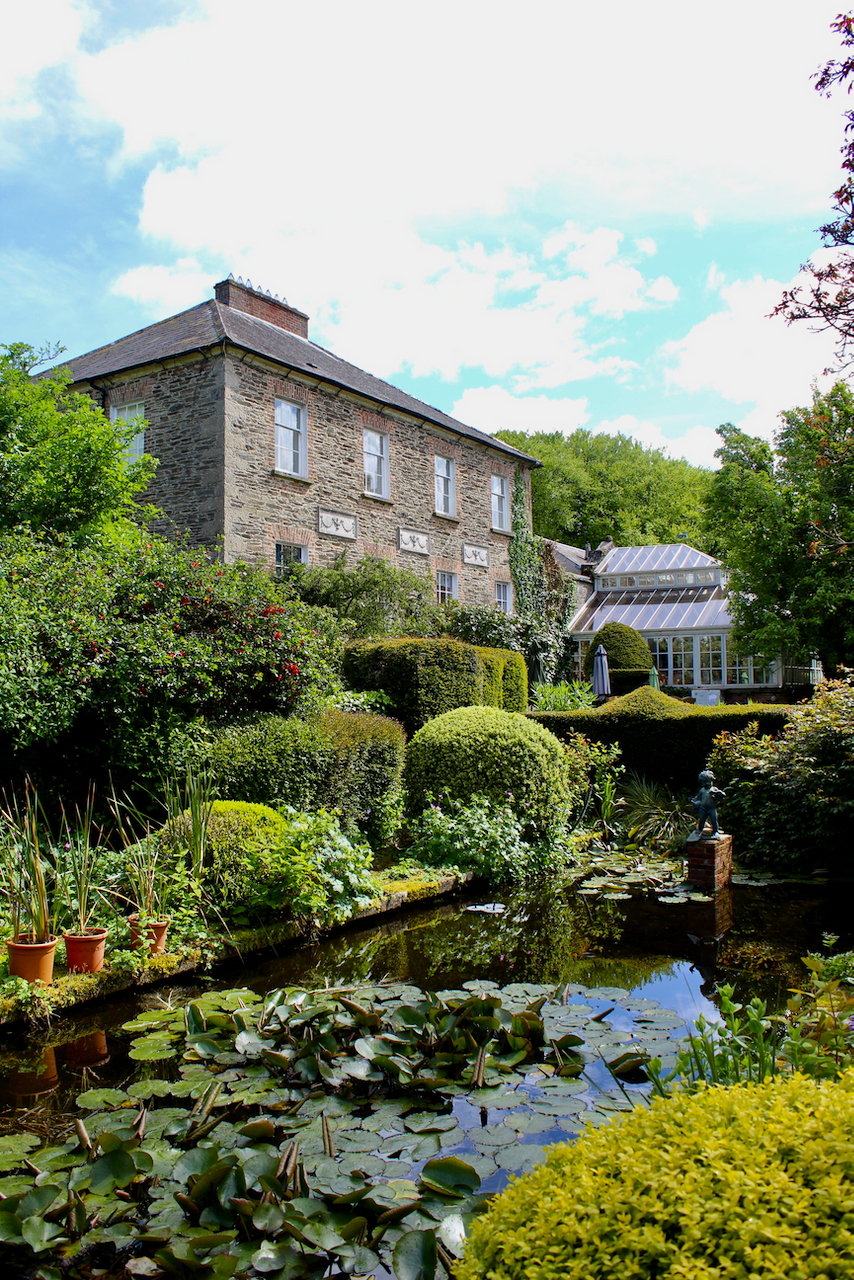
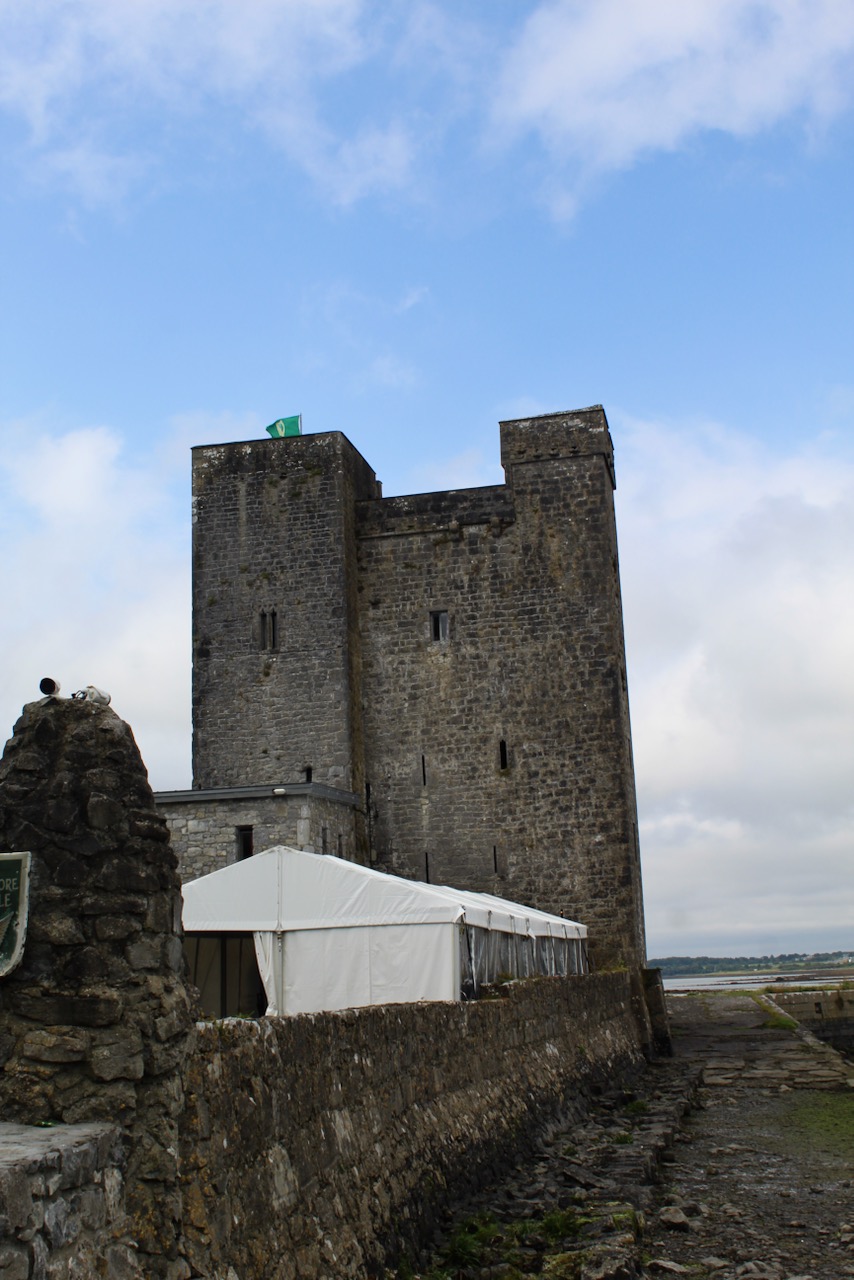
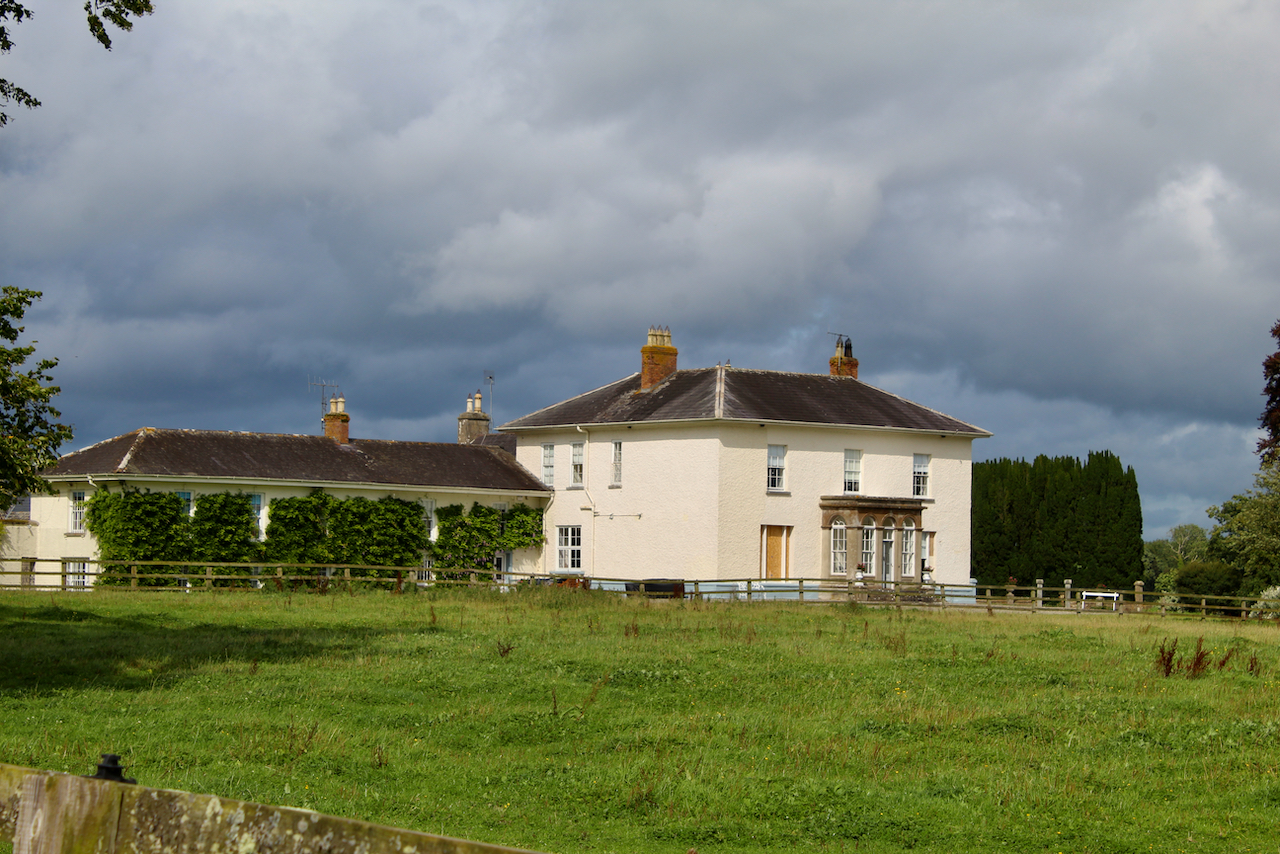
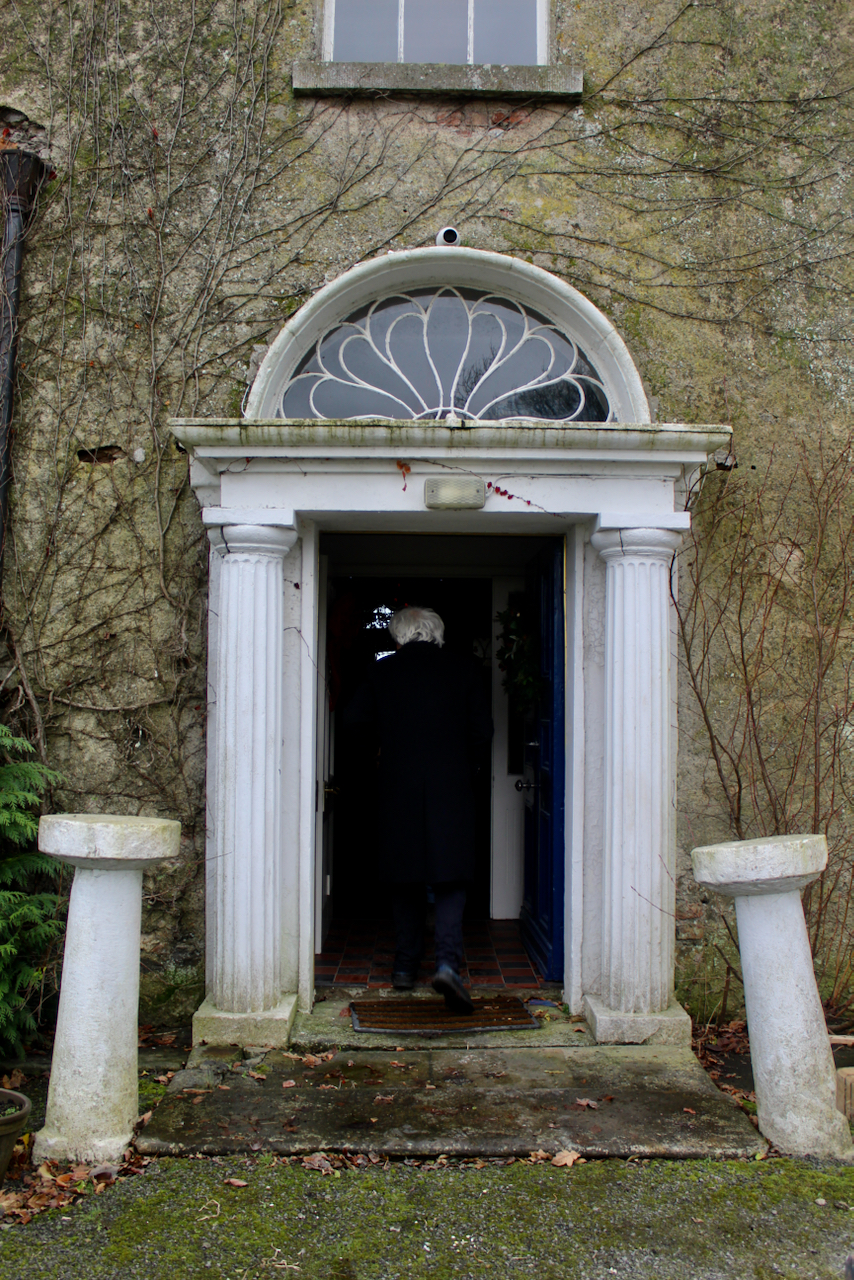
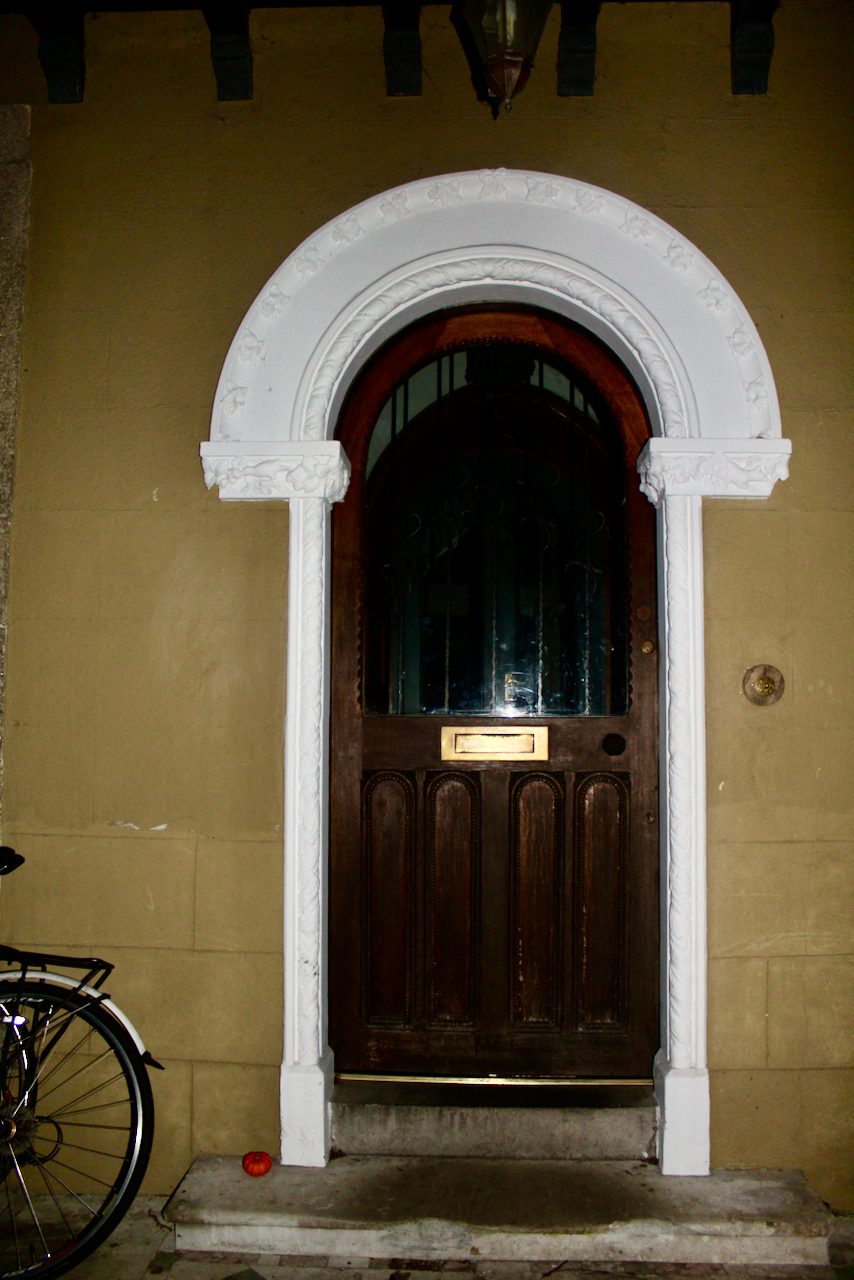
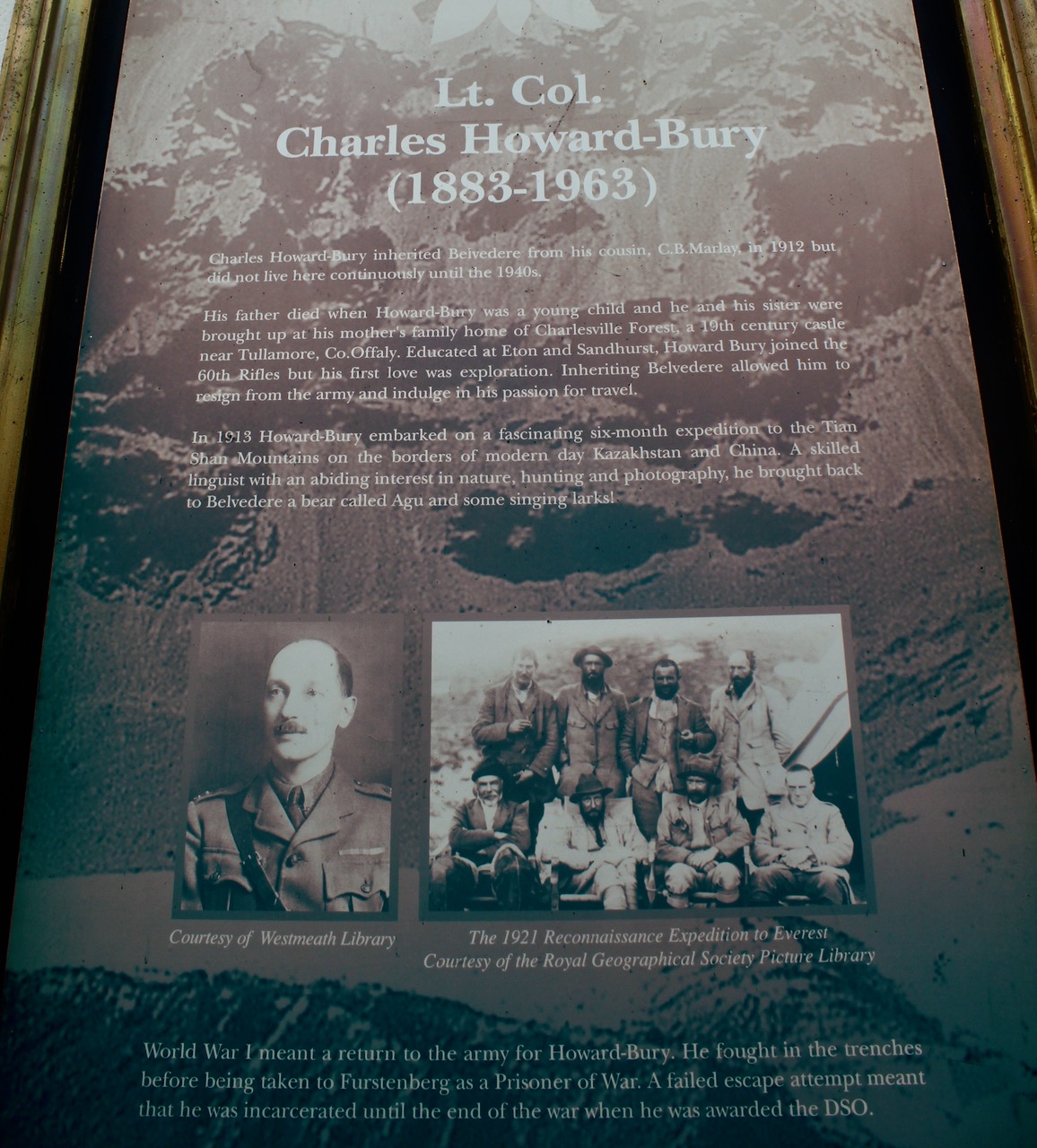
Yeomanstown Corn Mill, Naas, Co. Kildare, W91AFH1 for sale courtesy Lisney Sotheby’s

For sale October 2024, €1,650,000, courtesy Lisney Sotheby’s, 5 bedroom, 4 bath 641m2

Yeomanstown Corn Mill, Naas, Co. Kildare, W91AFH1 courtesy Lisney Sotheby’s.

Every once in a while a property is offered for sale which I think could become a Section 482 property. I can’t resist sharing this one, which is a joy. I have still to write of the other mill house, Millbrook, which we visited this year, and I have yet to visit Kilcarbry in Wexford, another corn mill, and Fancroft Mill in Tipperary.

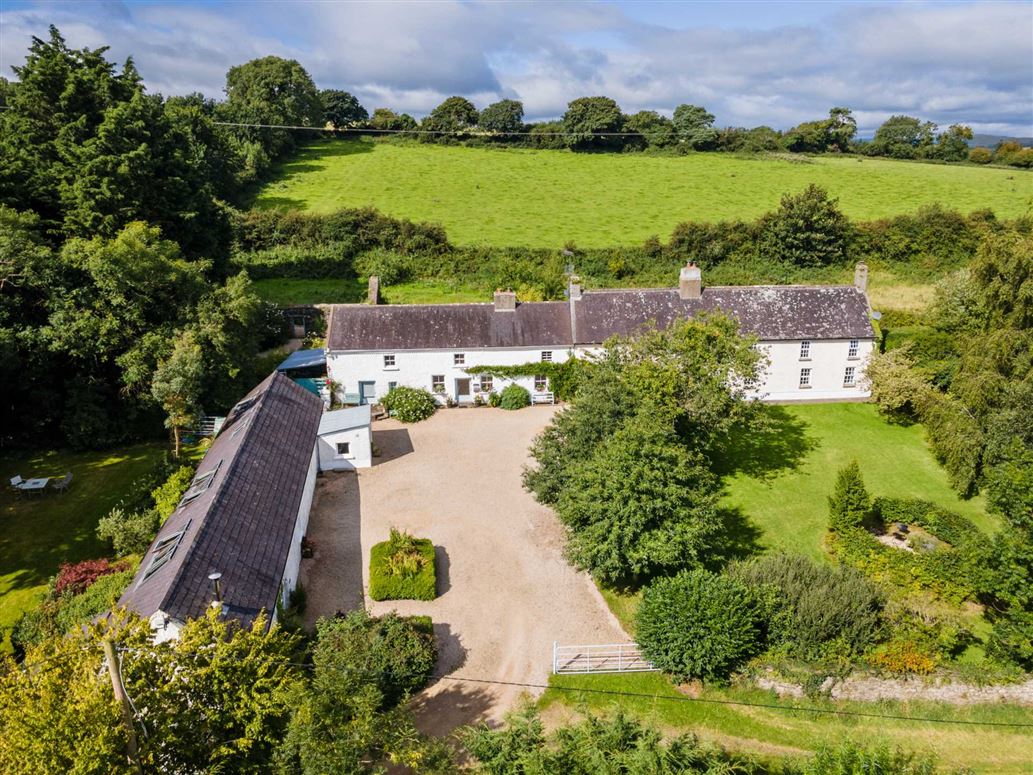
The advertisement reads: “An attractive and exquisite residence sympathetically set within the fabric of an historic corn mill and magically situated within private grounds, which extend to the banks of the river Liffey and include the original cascading mill race canal. In all about 3 acres or 1.2 hectares and some 6,900 square feet or 641 square metres of accommodation.”

Yeomanstown Corn Mill, Naas, Co. Kildare, W91AFH1 courtesy Lisney Sotheby’s.

The ad tells us: “Historically and architecturally significant Yeomanstown Corn Mill has a rare magical quality and retaining much of the original industrial mill equipment makes a truly unique and enchanting residence. Milling activity on the grounds of Yeomanstown Corn Mill is thought to date back to the 14th-century. The current mill is largely late Georgian, circa 1810, in composition but likely incorporates earlier structures. A mill illustrated on maps back to 1654 in the mid-17th-century.

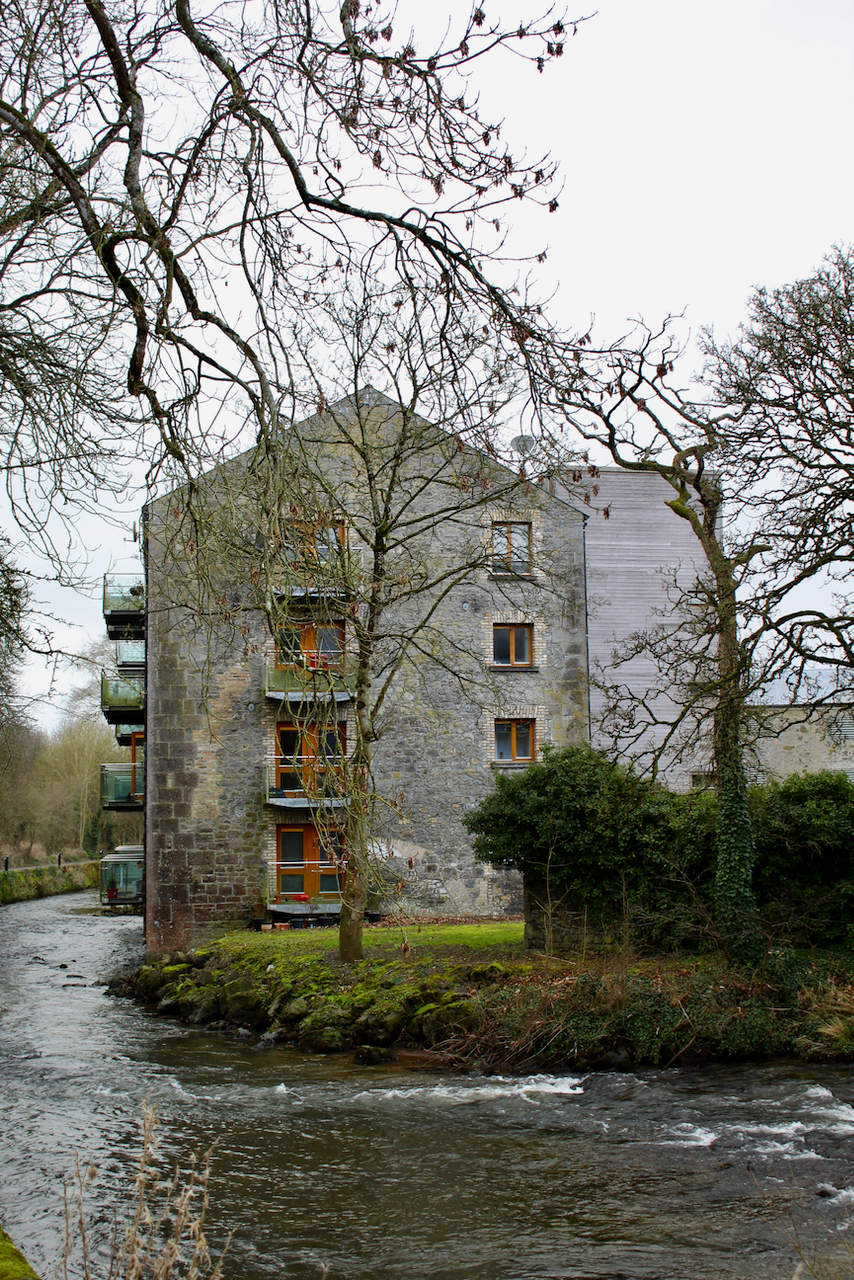
Yeomanstown Corn Mill, Naas, Co. Kildare, W91AFH1 courtesy Lisney Sotheby’s.

The ad continues: “With the resplendent red brick exterior stretching up to four and five floors and abutting the cascading mill wheel canal Yeomanstown Corn Mill is enchanting and extremely picturesque. The restoration and conversion of the building into a home magically marries the rare original industrial charm with contemporary living requirements, to create an utterly enticing and fun home. The unashamedly industrial themed interior incorporates well thought out living spaces punctuated with original millstones, corn elevator shafts, massive ceiling beams, rustic timber staircases and ladders, white washed walls and varying ceiling heights to alluring effect.

I love all the wood inside and the beautiful stone flooring.

Yeomanstown Corn Mill, Naas, Co. Kildare, W91AFH1 courtesy Lisney Sotheby’s.

A flagged stone reception hall retains the original corn milling wheels behind a glass wall and features the rustic mill staircase to the upper floors and leads to a study, an office, a spacious bathroom with a large bath, a shower and a sauna and two bedrooms, one with a hobbit like door to an enclosed walled garden.

Yeomanstown Corn Mill, Naas, Co. Kildare, W91AFH1 courtesy Lisney Sotheby’s.

The first floor has a large open plan kitchen with a fully fitted kitchen, large breakfast counter worktop, industrial themed lighting and incorporating original mill fittings and equipment to great effect. It leads to a fine living room with a large cast iron stove and used as a dining and television space, off the kitchen there is a large pantry.

Yeomanstown Corn Mill, Naas, Co. Kildare, W91AFH1 courtesy Lisney Sotheby’s.

The second floor has an incredible double height studio space with an evocative mix of tall white washed walls and exposed timber beams and boards and, again, incorporating original mill components. A large cast iron stove ample warms the space and there are two stairs to an upper mezzanine library floor. Itself opening onto the third-floor landing, which leads to the marvellously generous master bedroom suite with a large bedroom and interconnecting shower room and dressing room. There are two further bedrooms (on the second floor) one with a shower room ensuite and the other served by a second shower room on the landing hall. The final fifth or attic floor was previously utilised as an art studio space and is currently used as a gym and store.

Yeomanstown Corn Mill, Naas, Co. Kildare, W91AFH1 courtesy Lisney Sotheby’s.

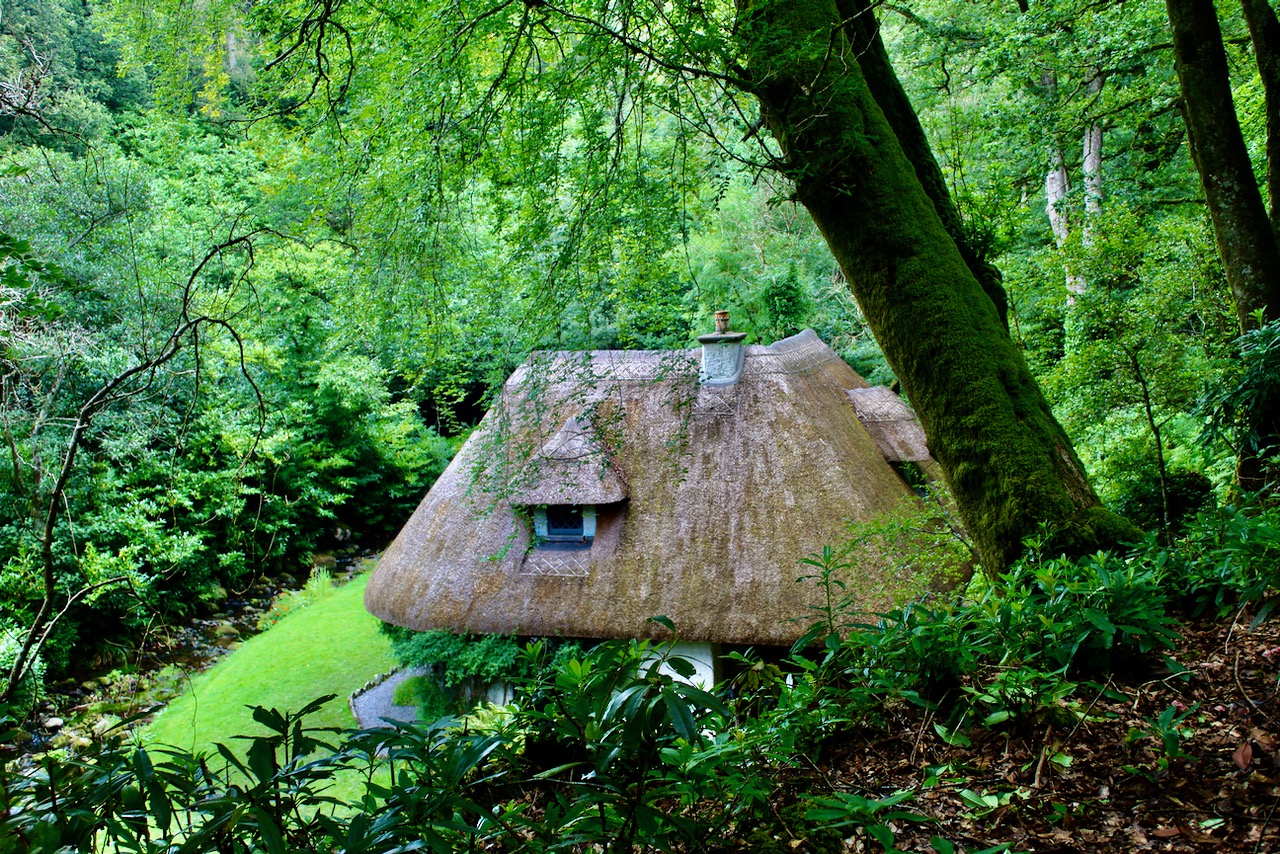
Bounding the river Liffey and including a fine riverbank stretch, one part opening into a natural river swimming hole or pool, the gardens are well-timbered and private. A striking cut-stone aqueduct bridge, Victoria Bridge, dates to 1837 and forms a great folly backdrop to the gardens. An original wrought iron bridge beside the impressive and large timber mill wheel leads to the gardens, abundant with wildlife and having an island like feel, being bounded by the canal and river. Although usefully also be accessed by vehicular gate. The mill wheel is thought capable of generating 3kw of electricity per hour, or more, in a recent appraisal.

I always think we should use water power again! I thought years ago I read that a hotel on Charlemount Street was going to tap into the Poddle below to generate electricity, but I never heard more about it – let me know if you know about it!

Yeomanstown Corn Mill, Naas, Co. Kildare, W91AFH1 courtesy Lisney Sotheby’s.

Yeomanstown is a highly fashionable area and links easily to Dublin city and airport. The nearby village of Caragh is quaint and includes a school, petrol station, grocery store, take-away restaurants and a hair salon. Naas town is just 7.7miles miles or 12.3km away and has a hospital and array of shopping, pubs, eateries and restaurants. Sallins village, just a 12 minutes drive away, provides train access with extensive commuter services into Dublin city.

Forgive me for once again not publishing about a Section 482 property – I am on a prolonged hiatus, as we were so busy trying to buy ourselves a small country hideaway for writing and growing fruit and vegetables. We are finally nearly completed the process, I think! Unfortunately we can’t buy something like this, an absolute dream home, but I’m delighted with what we have found.

Yeomanstown Corn Mill, Naas, Co. Kildare, W91AFH1 courtesy Lisney Sotheby’s.

Dunluce Castle (ruin), County Antrim, Northern Ireland

I am republishing this as a separate entry. Sorry not to have a Section 482 property to write about this week – still one to write up, and we haven’t been visiting as we’ve been looking for our own house to buy in the countryside – it won’t be a Georgian house, unfortunately! I hope to get back to visiting Section 482 properties eventually….

https://discovernorthernireland.com/things-to-do/dunluce-castle-medieval-irish-castle-on-the-antrim-coast-p675011

Dunluce Castle Co Antrim by Robert French, Lawrence Collection National Library of Ireland, flickr constant commons.
Dunluce Castle by Matthew Woodhouse 2015 for Tourism Ireland [1]

The website tells us:

With evidence of settlement from the first millennium, the present castle ruins date mainly from the 16th and 17th centuries. It was inhabited by both the feuding MacQuillan and MacDonnell clans. Historical and archaeological exhibits are on display for public viewing.

Opening Hours: Please check before visiting as public access may be restricted.

We visited in June 2023.

Dunluce, June 2023. Photograph © Jennifer Winder-Baggot, www.irishhistorichouses.com
Before the MacDonnells, the area was inhabited by the MacQuillan family. The area was called “The Route” meaning small private army. They built a castle in around 1480. Around 1540, Rory MacQuillan looked for help from mercenaries to help him to hold his area. They hired the MacDonnells, who came from the Scottish island of Islay in the 14th century. The MacDonnells soon overthrew the MacQuillans and took control of Dunluce Castle.
The early MacDonnell story.

The storyboards tell us that Colla MacDonnell was head of the clan and overthrew the MacQuillans, and that when he died in 1558, Dunluce passed to his brother, Sorley Boy MacDonnell. The MacDonnells had more castles up along the coast. Sorley Boy had to spend much time in battle defending his territory. In 1565 he was captured by Shane O’Neill and held hostage for two years.

Sorley Boy married Mary O’Neill, daughter of Conn Baccach O’Neill (1484-1559), 1st Earl of Tyrone. Families intermarried to form alliances.

In 1563, an expedition of the Walter Devereux, 1st Earl of Essex, massacred Sorley Boy’s troops on Rathlin Island, across the bay from his castle, when they had fled there for safety.

Dunluce Castle was captured in 1584 by John Perrot, Lord Deputy of Ireland. Sorley Boy’s troops scaled the cliffs to attack and recapture the castle. Sorley Boy surrendered to Queen Elizabeth in order to be rewarded his lands again, under “Surrender and Regrant.” Sorley Boy died in 1589.

Sir John Perrot, (1527-1592) said to be a son of King Henry VIII, Soldier and Lord Deputy of Ireland, Date 1776 Engraver: Valentine Green (English, 1739 – 1813); Copyist: George Powle, (English, fl.1764-1771), courtesy of National Gallery of Ireland.
Portrait of Elizabeth I, Queen of England (1503-1603) Date c.1560, courtesy of National Gallery of Ireland.

The sign boards tell us that after Sorley Boy’s death in 1589 he was succeeded by his third son, James. James died in 1601 and was succeeded by his brother, Randall Arranach MacDonnell (1556-1635). He fought against the English in the Battle of Kinsale in 1601, but later sought to regain favour with the crown and again surrendered and was regranted the lands of “the Route” and the Glens of Antrim, owning 330,000 acres. He was made Viscount Dunluce in 1618 and Earl of Antrim in 1620.

The story of Randal Arranach MacDonnell, d. 1636, 1st Earl of Antrim. His name “Arranach” refers to the fact that he was brought up by a foster family in the Scottish Isle of Arran. It was common for one family to foster the children of another, to solidify social and political bonds.

Mark Bence-Jones writes in his A Guide to Irish Country Houses:

(McDonnell, Antrim, E/PB) The ancestral stronghold of the McDonnells, Earls of Antrim, dramatically situated at the end of a rocky promontory jutting out into the sea off the north Antrim coat. The castle, which was built at various periods from C14 to C17, eventually consisted of several round towers and a gatehouse with rather Scottish bartizans, joined by a curtain wall, with domestic buildings inside this enclosure. The latter included a mid-C16 loggia with sandstone columns, and a two storey Elizabethan or Jacobean house, with three large oriels. These two buildings were first of two courtyards into which the castle enclosure was divided; the other and lower yard containing offices and servants’ quarters. There were also buildings on the mainland, erected early C17. In 1639, part of the curtain wall of the castle collapsed into the sea, together with some of the servants’ quarters and a number of servants. After the Civil Wars, the castle was abandoned by the family in favour of Glenarm Castle, it is now a romantic ruin.” [2]

The entrance to the castle. Photograph © Jennifer Winder-Baggot, www.irishhistorichouses.com
The entrance was like a funnel. Photograph © Jennifer Winder-Baggot, www.irishhistorichouses.com
The entrance is still imposing. Photograph © Jennifer Winder-Baggot, www.irishhistorichouses.com
Part of the gate house built by Sorley Boy MacDonnell in the late 1580s. It would have had a drawbridge. Photograph © Jennifer Winder-Baggot, www.irishhistorichouses.com
The castle perches on the cliff. Photograph © Jennifer Winder-Baggot, www.irishhistorichouses.com
The view from the castle in one direction up the coast. Photograph © Jennifer Winder-Baggot, www.irishhistorichouses.com
Dunluce, June 2023. Photograph © Jennifer Winder-Baggot, www.irishhistorichouses.com
The view from the castle in the other direction. Photograph © Jennifer Winder-Baggot, www.irishhistorichouses.com
Photograph © Jennifer Winder-Baggot, www.irishhistorichouses.com

The structure consisted of the gatehouse and a curtain wall, with domestic buildings inside the enclosure. Signage tells us that Sorley Boy MacDonnell built the Scottish style gate house. About forty years later, Randal MacDonnell built a manor house, by 1620, inside the enclosure, of which we can see remnants. It was of two or three storeys and had three large oriel windows.

Signage about Manor House. Photograph © Jennifer Winder-Baggot, www.irishhistorichouses.com
Remnants of the Manor House of Dunluce Castle. Photograph © Jennifer Winder-Baggot, www.irishhistorichouses.com
The Oriel windows. Photograph © Jennifer Winder-Baggot, www.irishhistorichouses.com
The Oriel windows have been reconstructed, I believe. Photograph © Jennifer Winder-Baggot, www.irishhistorichouses.com
Remnants of the manor house and surrounding walls. Photograph © Jennifer Winder-Baggot, www.irishhistorichouses.com
Remnants of the Manor House. Photograph © Jennifer Winder-Baggot, www.irishhistorichouses.com
A picture of what the castle may have looked like inside.
We saw this, a reproduction fireback of an original from Dunluce Castle, in Ballygally Castle. The fireback was commissioned by Randall MacDonnell around 1603. It has a heraldic leopard, a Tudor rose for England and a thistle for Scotland. It may commemorate King James VI of Scotland becoming James I of England. Under James I, Randall MacDonnell became the first Earl of Antrim. The fireback was discovered at Dunluce in 1929 and this copy was cast for the descendant of the 1st Earl, and his children installed in in Ballygally when they purchased Ballygally castle. The original has now been lost. Photograph © Jennifer Winder-Baggot, www.irishhistorichouses.com

As Mark Bence-Jones writes: “The castle, which was built at various periods from C14 to C17, eventually consisted of several round towers and a gatehouse with rather Scottish bartizans, joined by a curtain wall, with domestic buildings inside this enclosure. The latter included a mid-C16 loggia with sandstone columns, and a two storey Elizabethan or Jacobean house, with three large oriels. These two buildings were first of two courtyards into which the castle enclosure was divided; the other and lower yard containing offices and servants’ quarters.

Signage tells us that it was not just a castle that was located on the cliff but a whole town, established by Randal MacDonnell (1556-1635), 1st Earl of Antrim, in 1608.

Archaeologists have recently unearthed remains of merchants’ houses and a forge, cobbled streets 11 metres wide, and an array of personal artefacts.

Coins were unearthed from the time of King James I (1603-1625). Photograph © Jennifer Winder-Baggot, www.irishhistorichouses.com
Samples of pottery unearthed at the site. Photograph © Jennifer Winder-Baggot, www.irishhistorichouses.com
More pottery unearthed. Photograph © Jennifer Winder-Baggot, www.irishhistorichouses.com
A diorama of how Dunluce may have looked. Photograph © Jennifer Winder-Baggot, www.irishhistorichouses.com
Setting up the town at Dunluce. Photograph © Jennifer Winder-Baggot, www.irishhistorichouses.com
Dunluce, June 2023. Photograph © Jennifer Winder-Baggot, www.irishhistorichouses.com

In 1642 Dunluce was burned to the ground. At that time, the next generation, Randal Macdonnell (1610-1682) 1st Marquess of Antrim and 2nd Earl of Antrim inhabited the castle, with his wife Katherine Manners, who was the widow of George Villiers, 1st Duke of Buckingham.

The town as well as the castle was devastated in the 1641 Rebellion.
Randal Macdonnell, 2nd Earl of Antrim.
Katherine was painted by Rubens.

Before walking across to the Castle, you pass remains of ancilliary buildings.

The Lodgings, for visitors. Photograph © Jennifer Winder-Baggot, www.irishhistorichouses.com
Ancilliary buildings to the castle.

[1] https://www.irelandscontentpool.com/en

[2] p. 116. Bence-Jones, Mark. A Guide to Irish Country Houses (originally published as Burke’s Guide to Country Houses volume 1 Ireland by Burke’s Peerage Ltd. 1978); Revised edition 1988 Constable and Company Ltd, London.

Portraits E

I am separating my Portraits E from F as I have too many under F and the entry is too long!

E

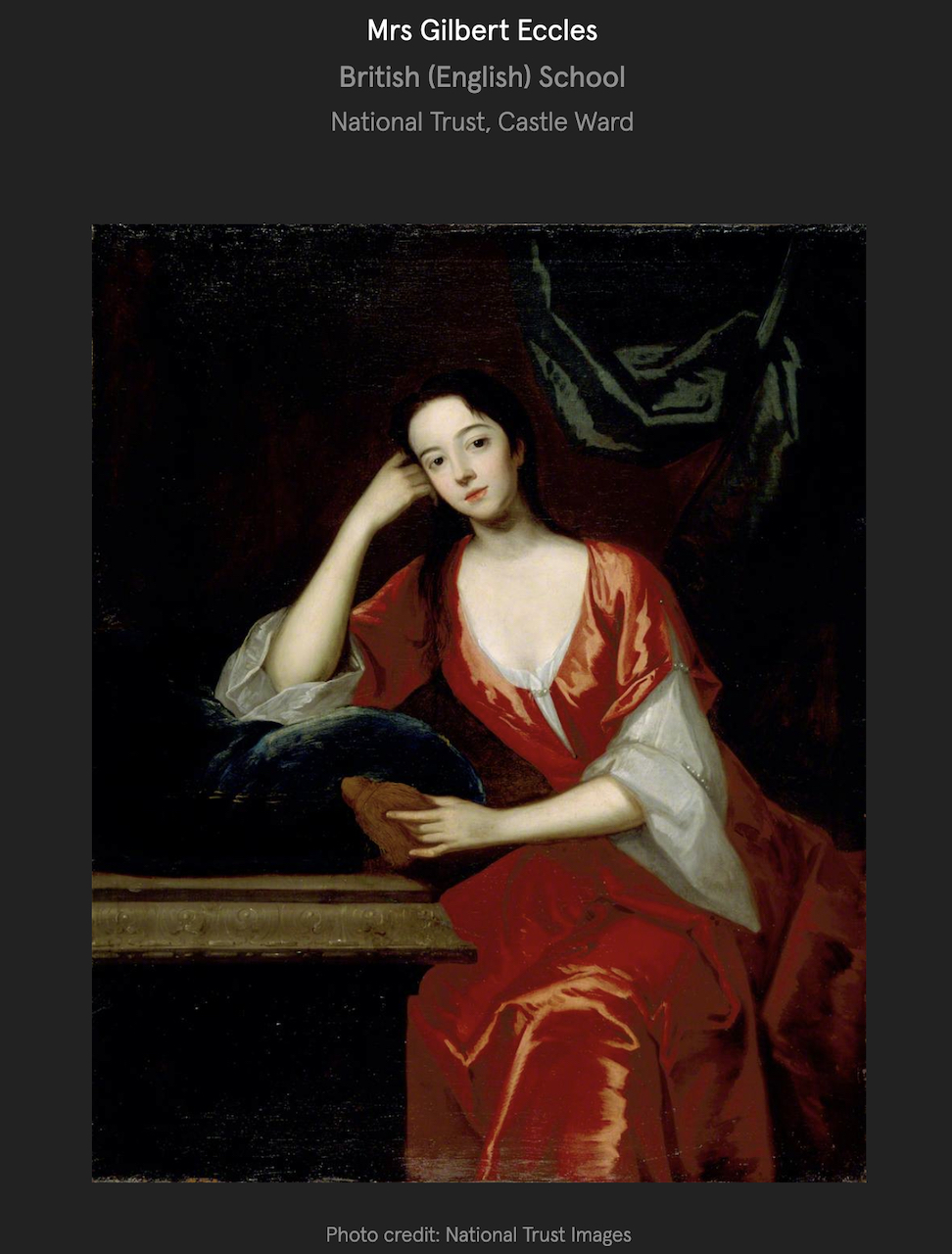
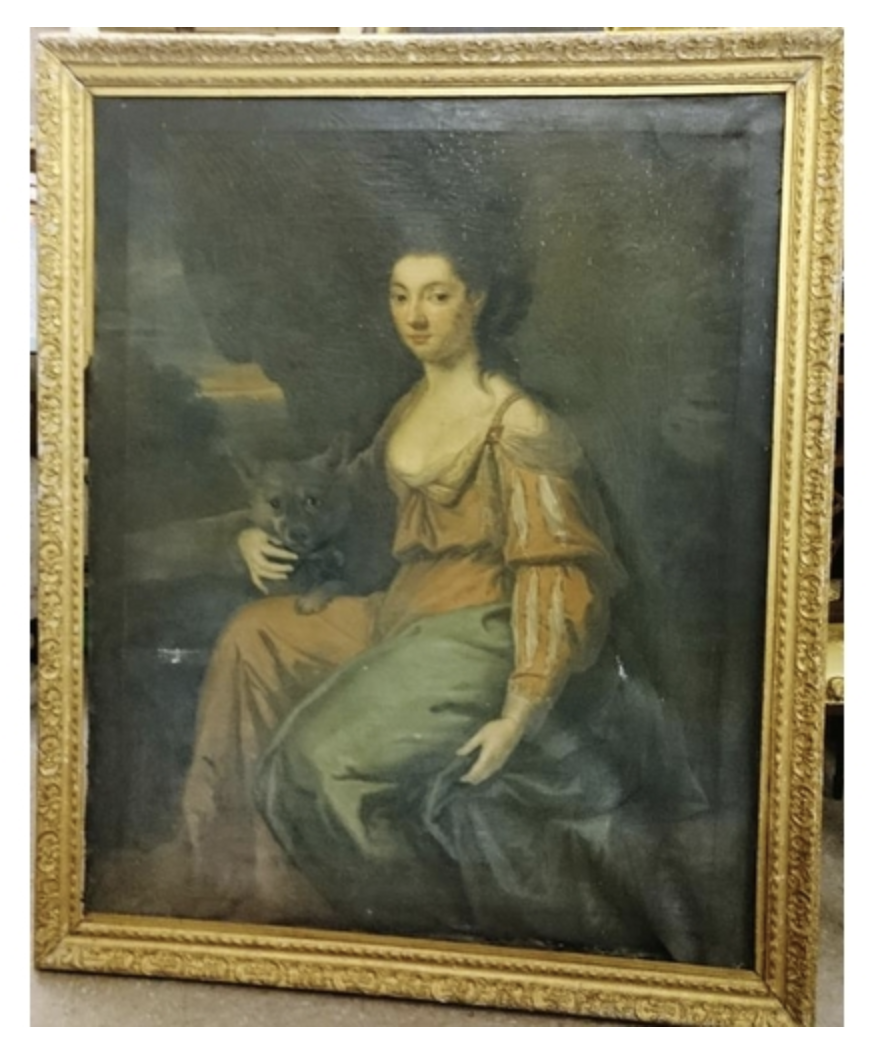
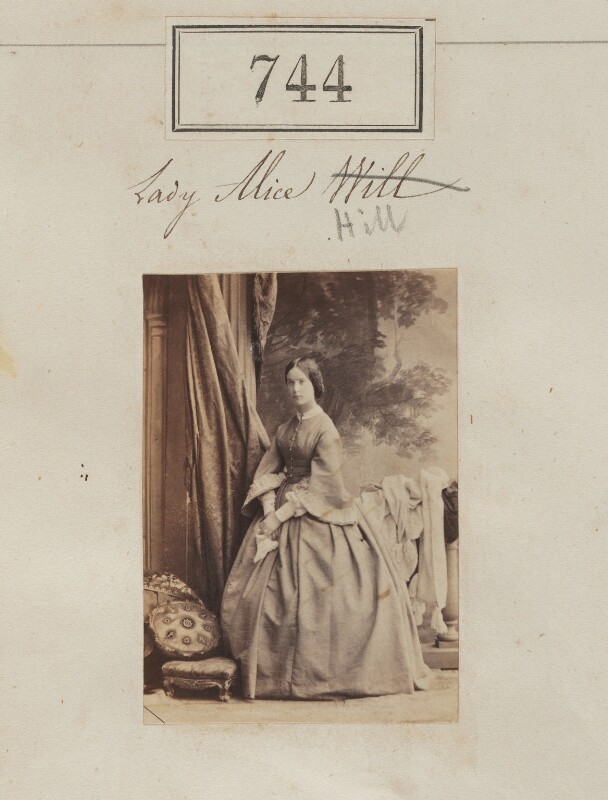
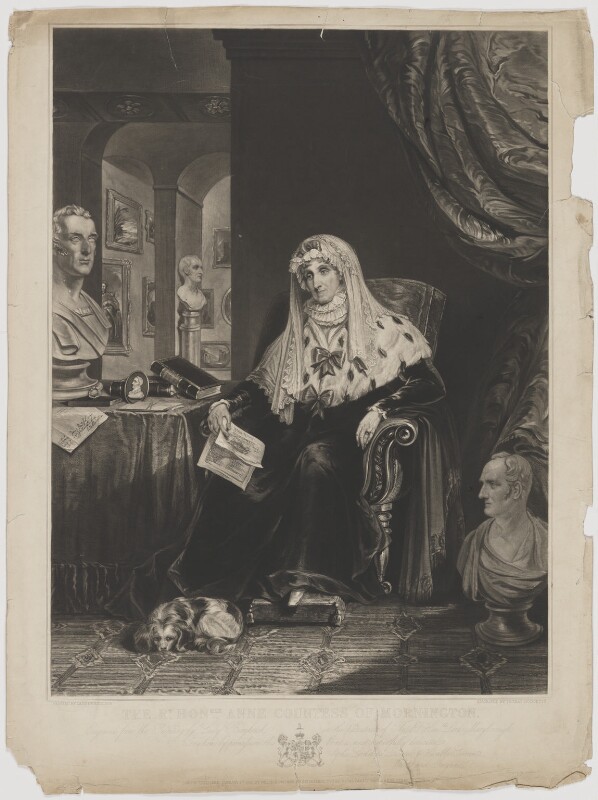
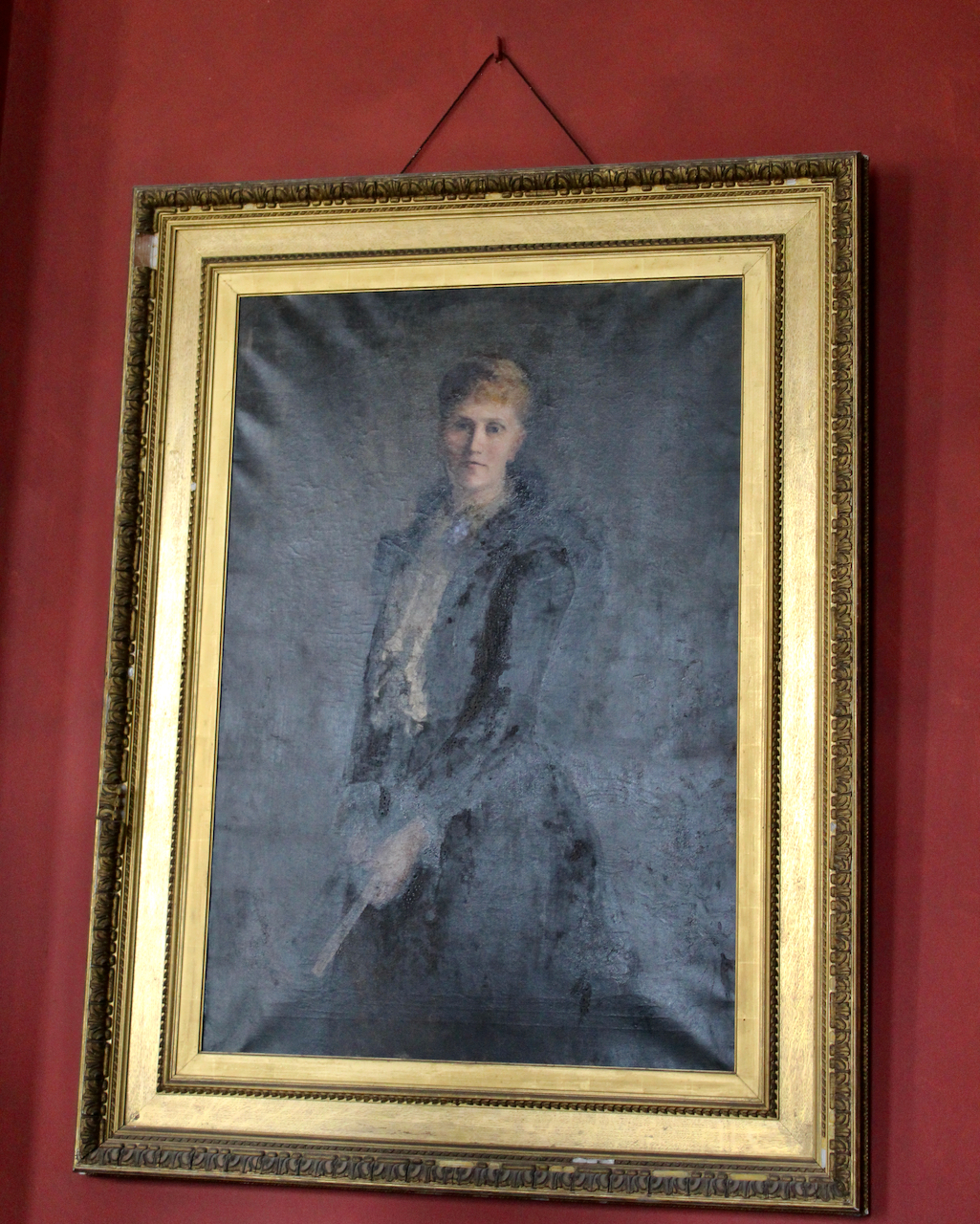
Mrs Gilbert Eccles British school courtesy of National Trust Castle Ward. Ann Cockburn married Gilbert Eccles (1602-1694), High Sheriff of County Tyrone and County Fermanagh, and they were grandparents of John Eccles (1664-1727) Lord Mayor of Dublin. I presume this is a portrait of Ann Cockburn.
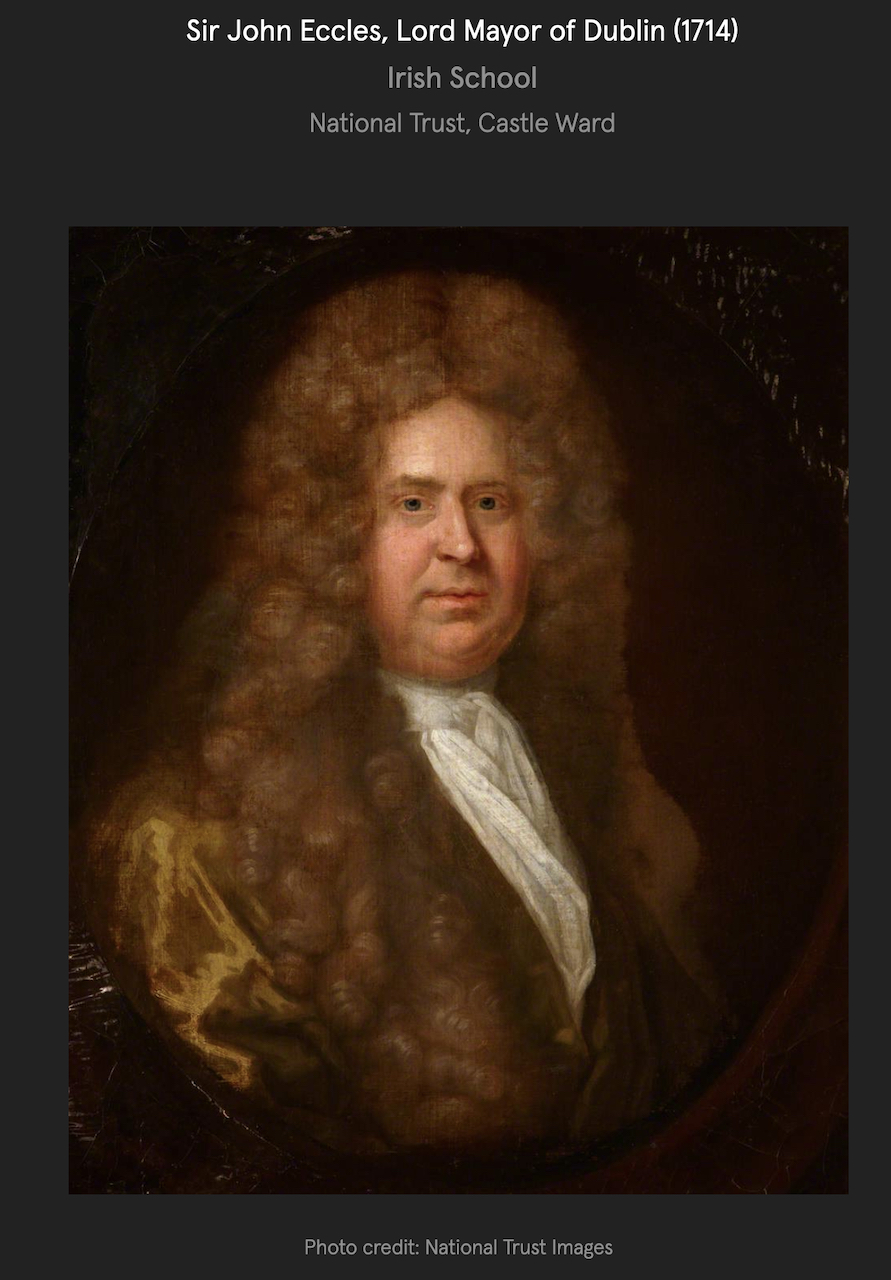
John Eccles (1664-1727) Lord Mayor of Dublin (1714), courtesy of National Trust Castle Ward.
Elizabeth Eccles née Best, wife of John Eccles Lord Mayor of Dublin, Irish school courtesy of National Trust Castle Ward.
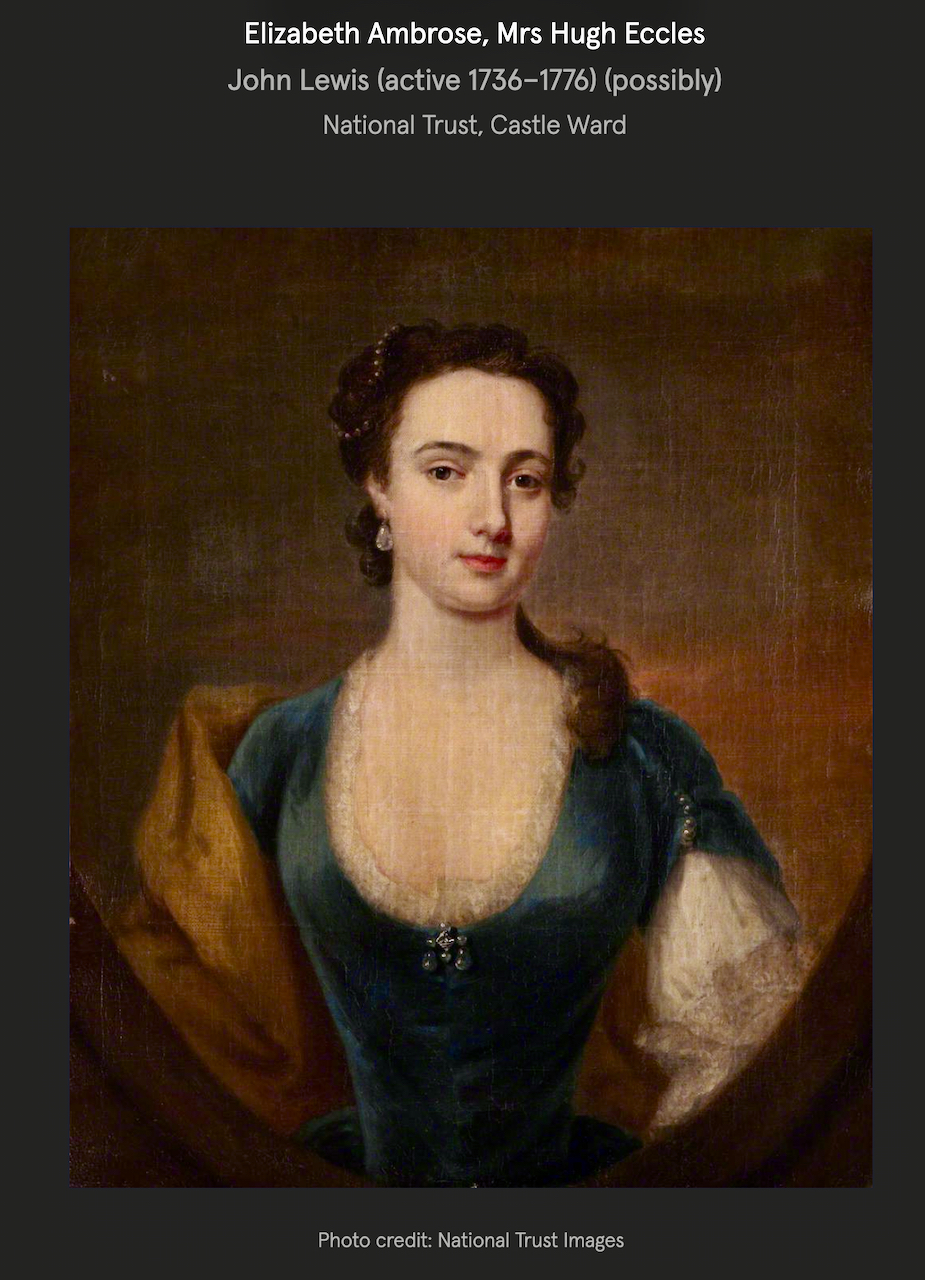
Elizabeth née Ambrose (b. 1706) possibly by John Lewis. She marries Hugh Eccles (1701-1761) who was the son of John Eccles (1664-1727). She was daugher of Isaac Ambrose (1680-1736), courtesy of National Trust Castle Ward.
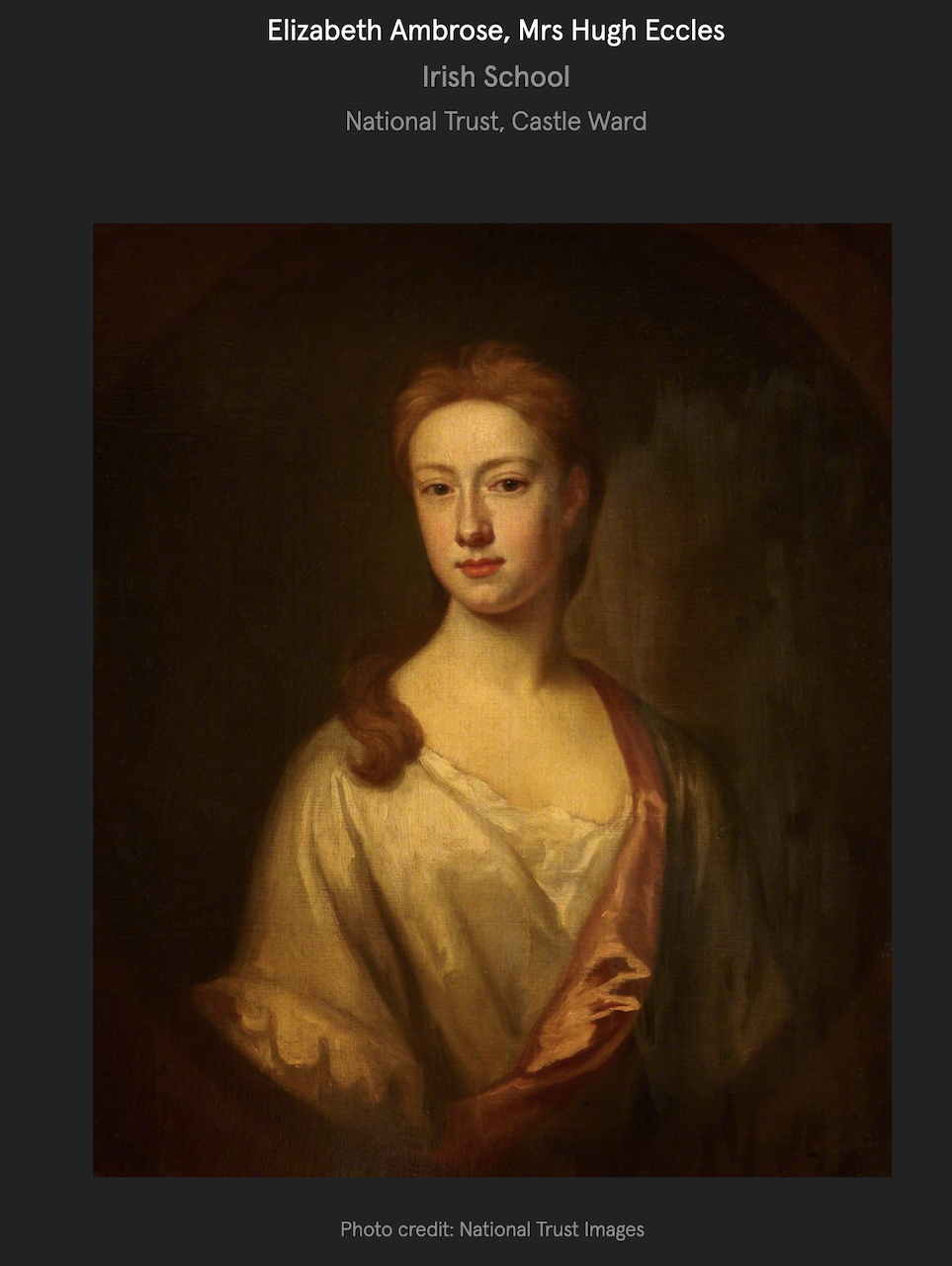
Elizabeth née Ambrose (b. 1706) who marries Hugh Eccles (1701-1761), daugher of Isaac Ambrose (1680-1736), Irish school courtesy of National Trust Castle Ward.
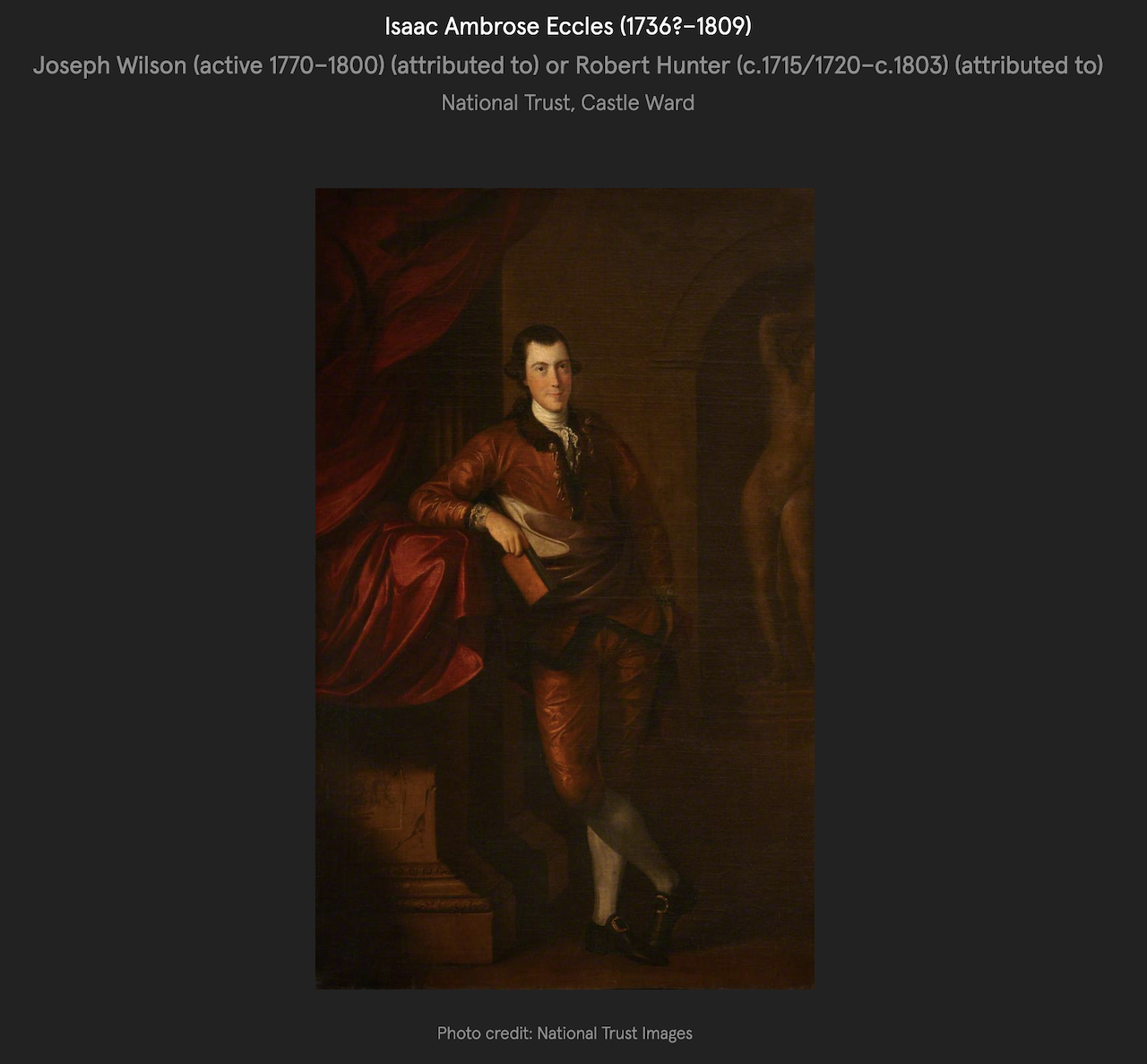
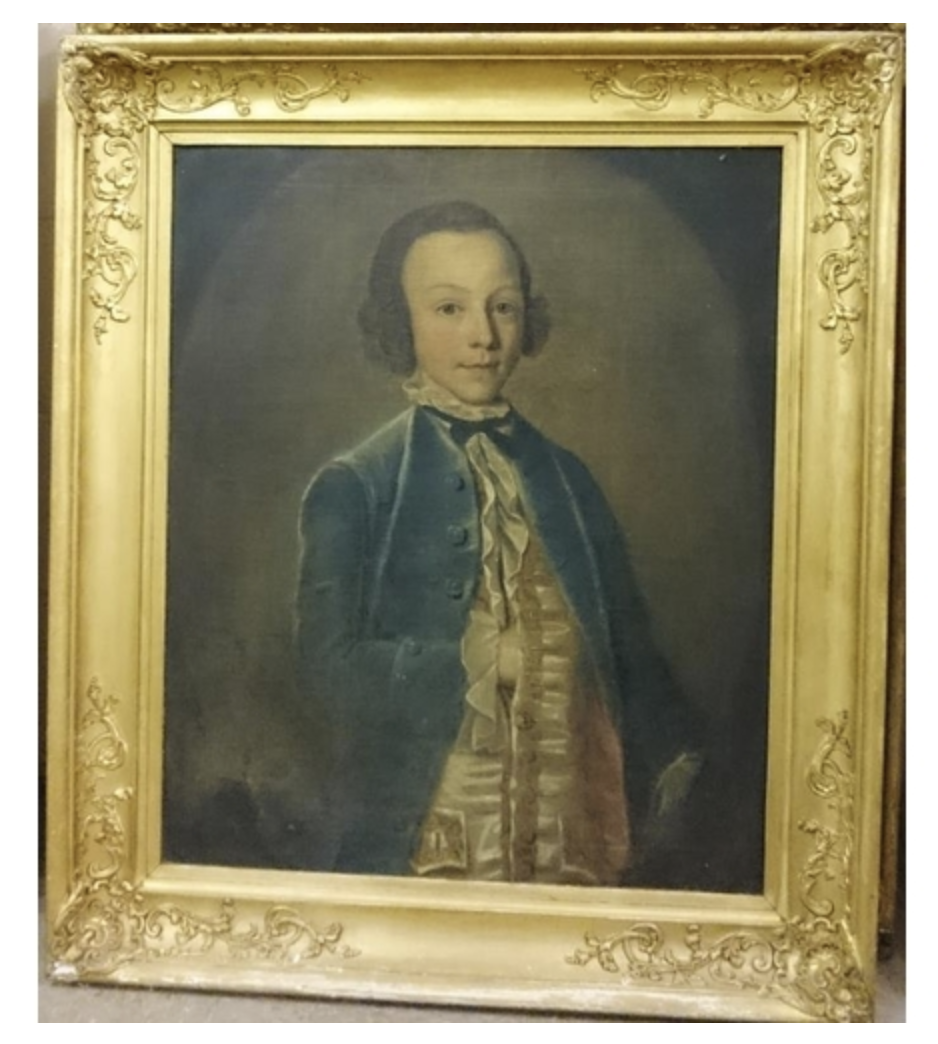
Isaac Ambrose Eccles (1736?-1809) attributed to Joseph Wilson or Robert Hunter courtesy of National Trust Castle Ward. He was the son of Hugh Eccles and Elizabeth née Ambrose.
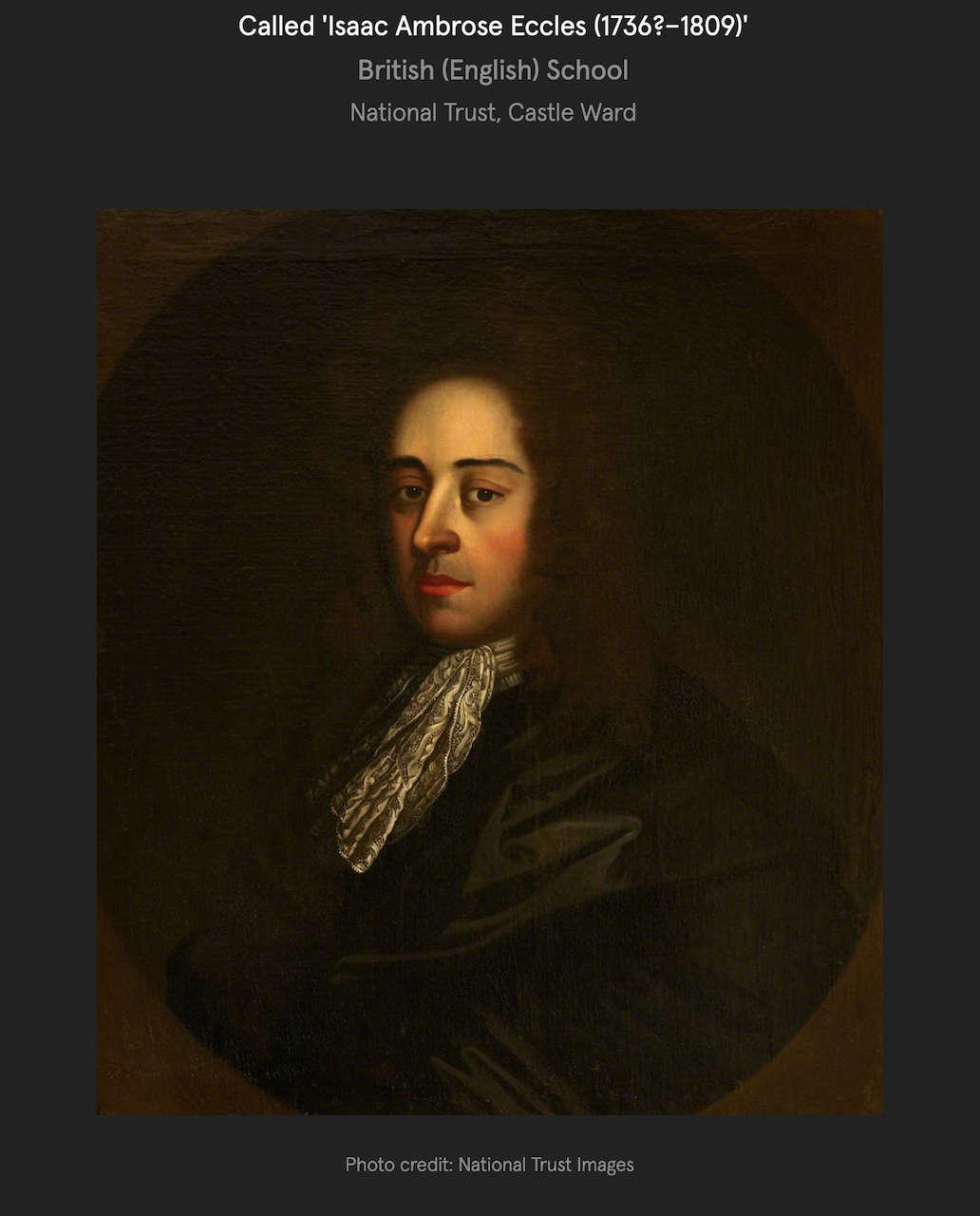
Called Isaac Ambrose Eccles (1736?-1809) English school courtesy of National Trust Castle Ward. He was Esquire of Cronroe, a gentleman of distinguished literary attainments, his father’s heir, a magistrate of County Wicklow. He was the grandson of John Eccles Lord Mayor of Dublin (1714).
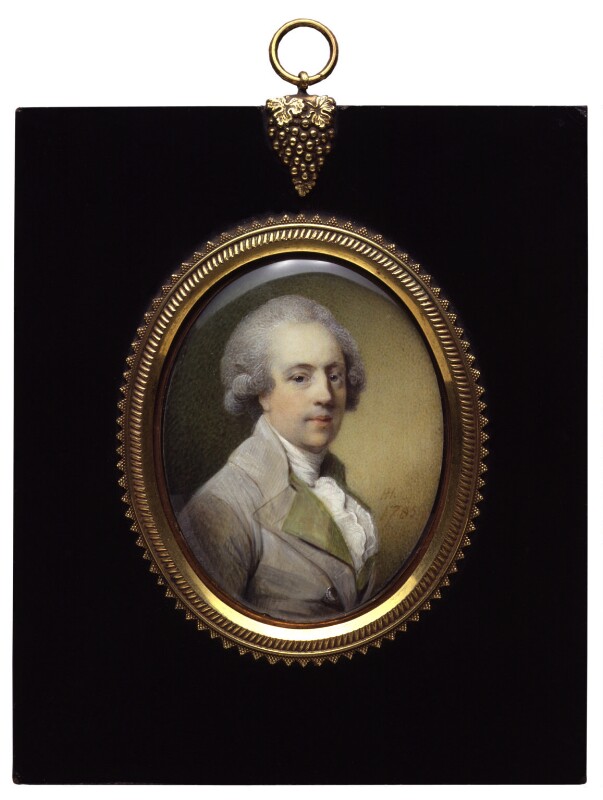
Richard Lovell Edgeworth (1744-1817), by Horace Hone 1785, National Portrait Gallery of London 5069.
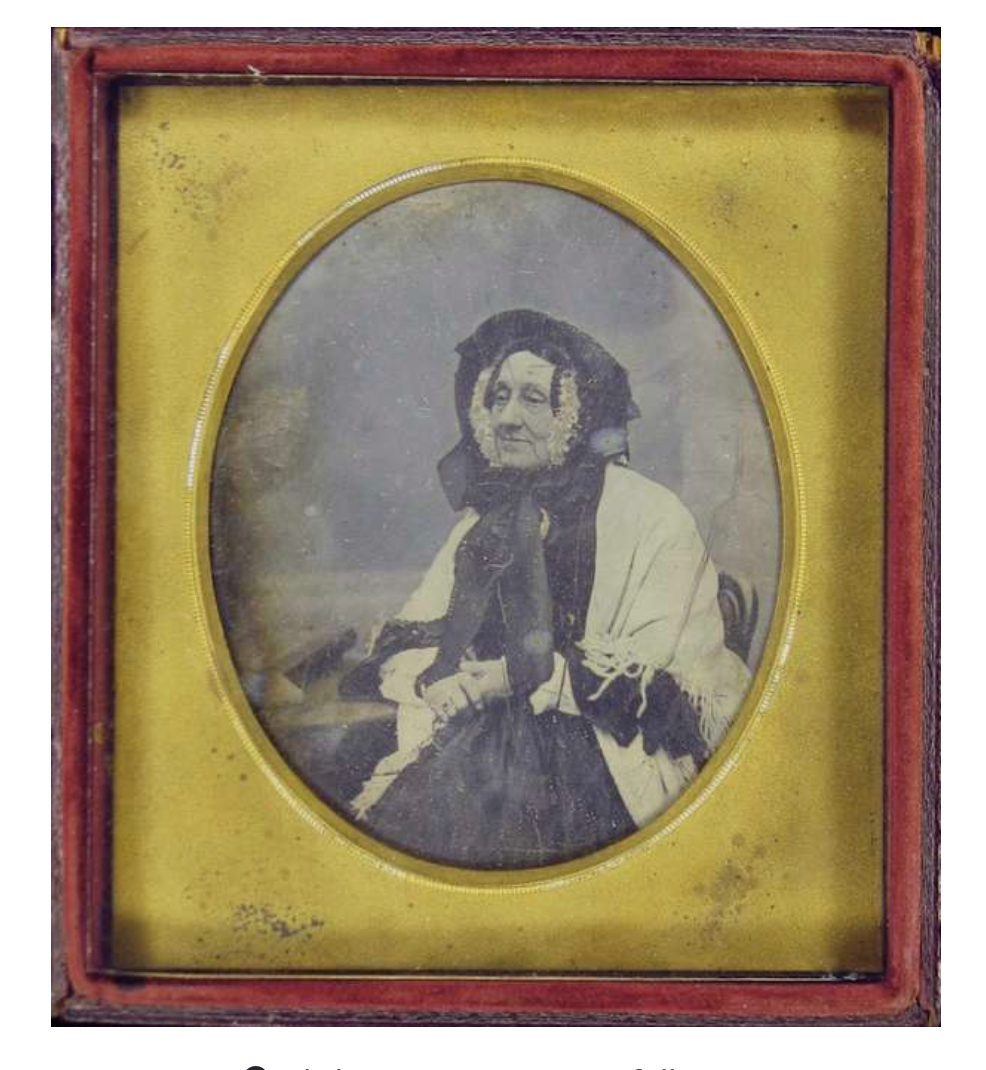
Maria Edgeworth, c. 1841 A daguerreotype photograph of the Irish author by Richard Beard (1801 – 1885) courtesy of Adam’s auction 30 April 2013
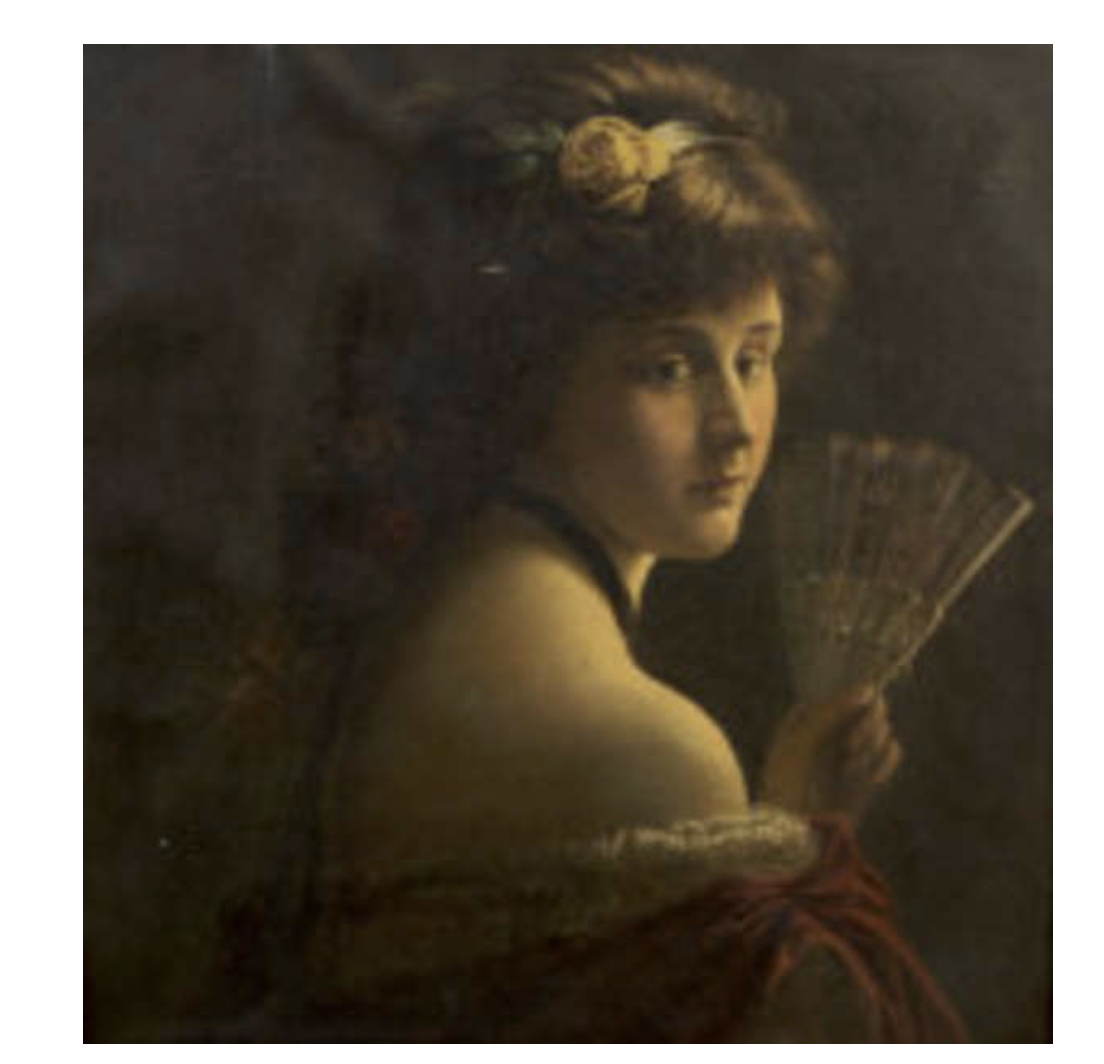
Victorian School Portrait of a young woman of the Edgeworth family courtesy Adam’s 28 June 2010
Young Woman of the Edgeworth Family, Victorian School, courtesy of Adam’s auction 27 Nov 2016 and courtesy Adam’s 28 June 2010.
Victorian School Portrait of a gentleman of the Edgeworth family courtesy Adam’s 28 June 2010.
Mrs. Anne Edgeworth by Follower of Sir Peter Lely courtesy of Adam’s 28 June 2010.
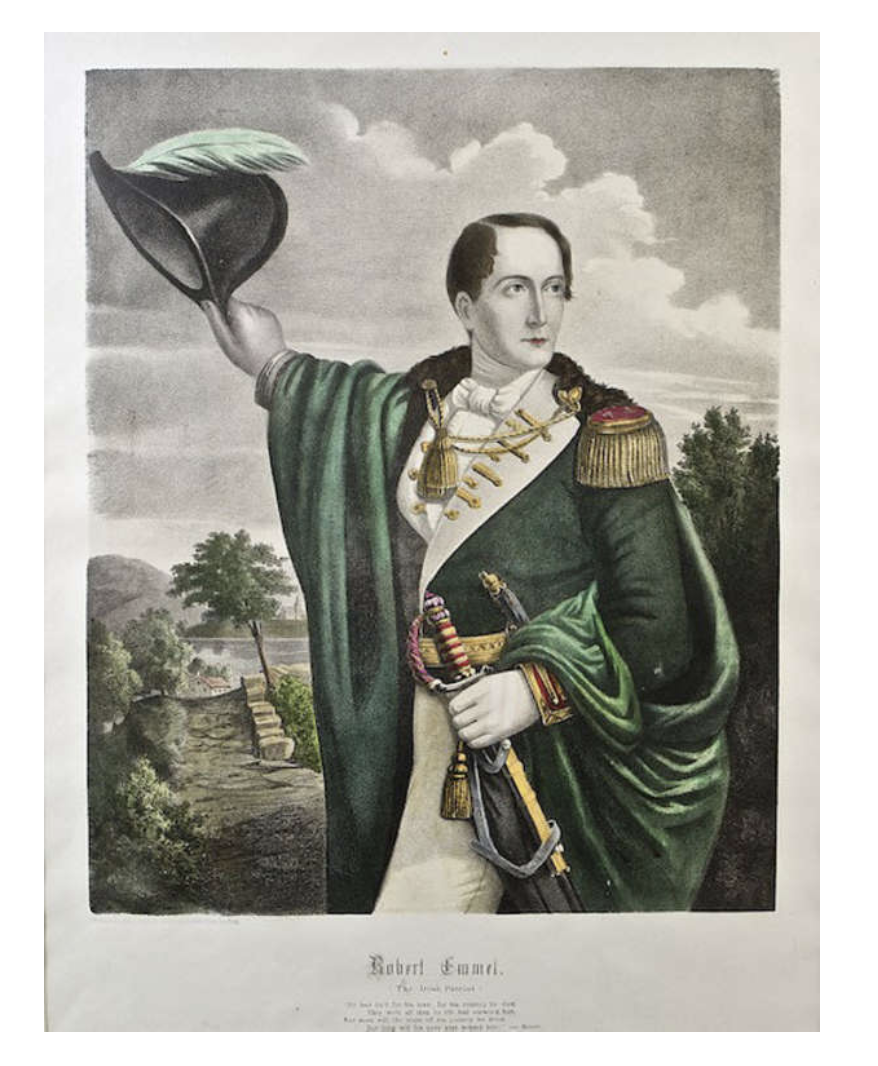
Robert Emmet. Published by Fishel, Alder & Schwartz 64 Fulton St. New York (1880), coloured and framed and entitled ”Robert Emmett, The Irish Patriot” courtesy Adam’s auction 18 April 2012
Thomas Addis Emmett (1764-1827) by William Carroll, bearing insription on back Thomas Addis Emmet by William O’Carroll, 57 Henry St Dublin, courtesy of Adam’s auction 22 Nov 2015.
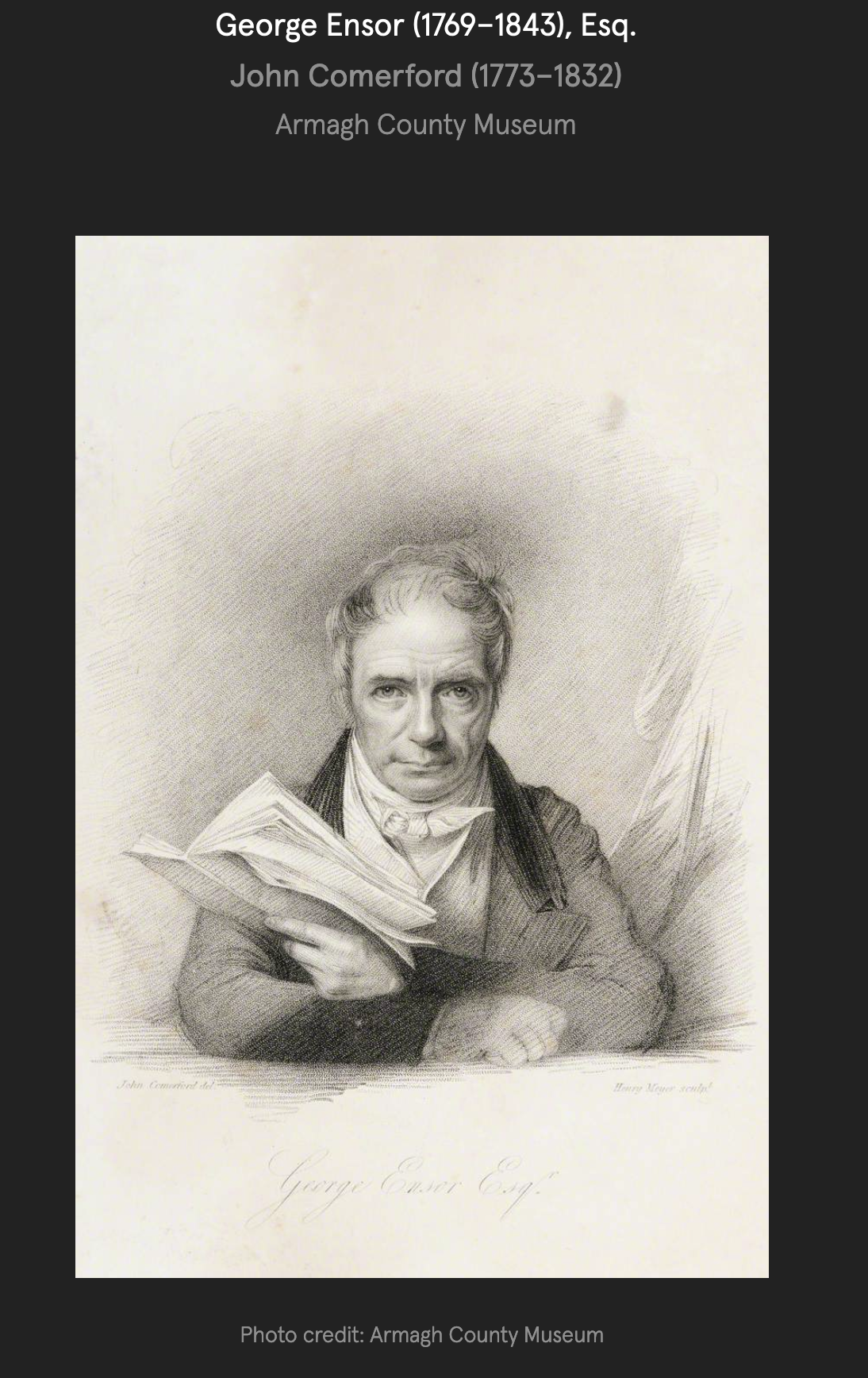
George Ensor (1769-1843) of Ardress House, County Armagh, by John Comerford, courtesy of Armagh County Museum.
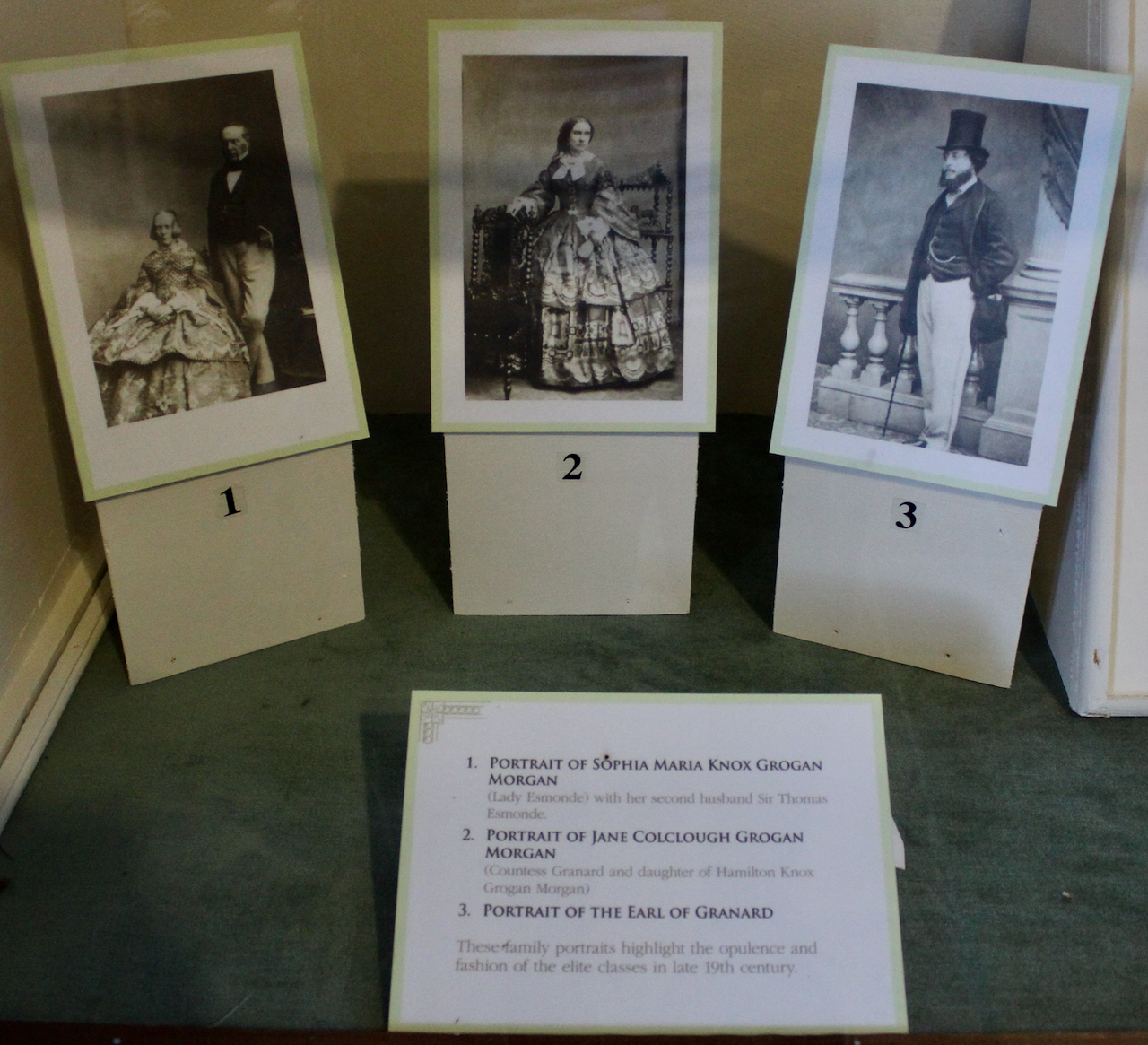
Sophia Maria Knox Grogan Morgan (1805-1867) née Rowe, with her second husband Thomas Esmonde 9th Baronet (1786-1868); Jane Colclough Grogan Morgan (1834-1872), she married George Arthur Forbes (1833-1889), 7th Earl of Granard, who is in the third portrait. Photograph © Jennifer Winder-Baggot, www.irishhistorichouses.com
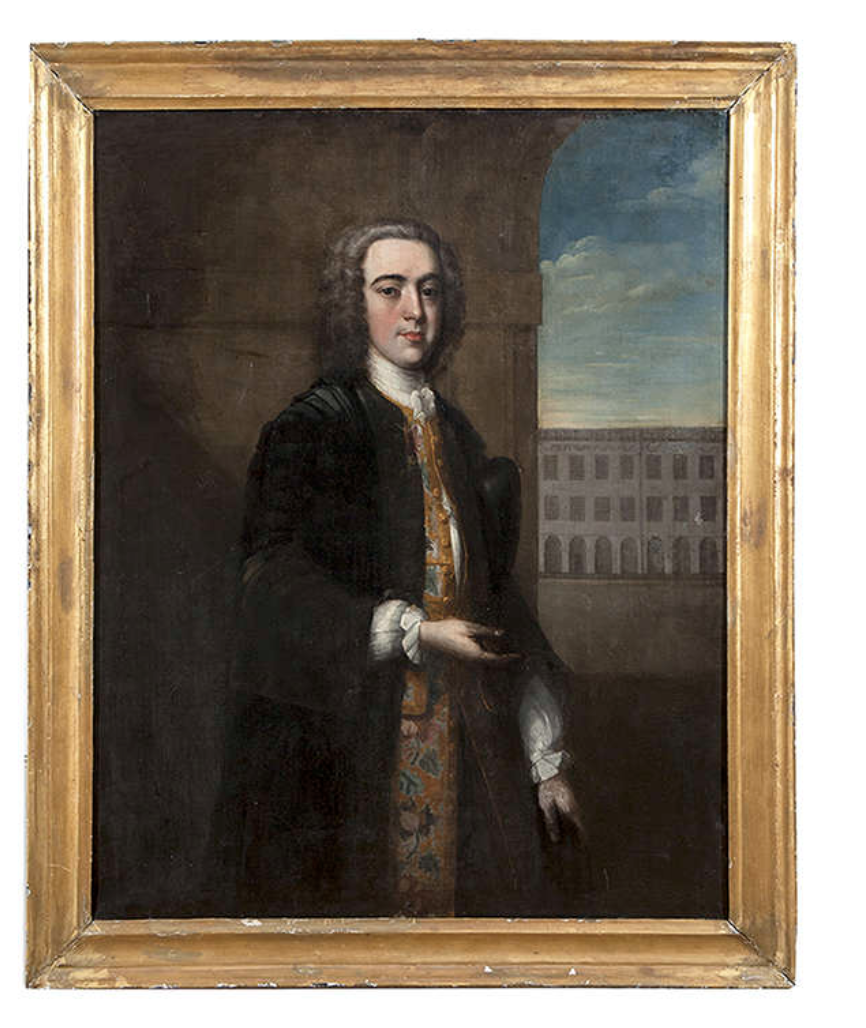
Maurice Eustace, Attributed to Philip Hussey (1713-1783), provenance Castlemore House and by descent. Hussey specialised in portraits of lawyers, possibly the setting is the Four Courts before rebuilt by Gandon, courtesy of Adam’s auction 12 Oct 2014.
Thomas Everard, 18th Century Irish School courtesy Adam’s 12 July 2011.
Lord Chief Justice Sir Robert Eyre, Vice Chancellor to the Prince of Wales (1666-1735), courtesy Purcell Auctioneers Feb 2016.

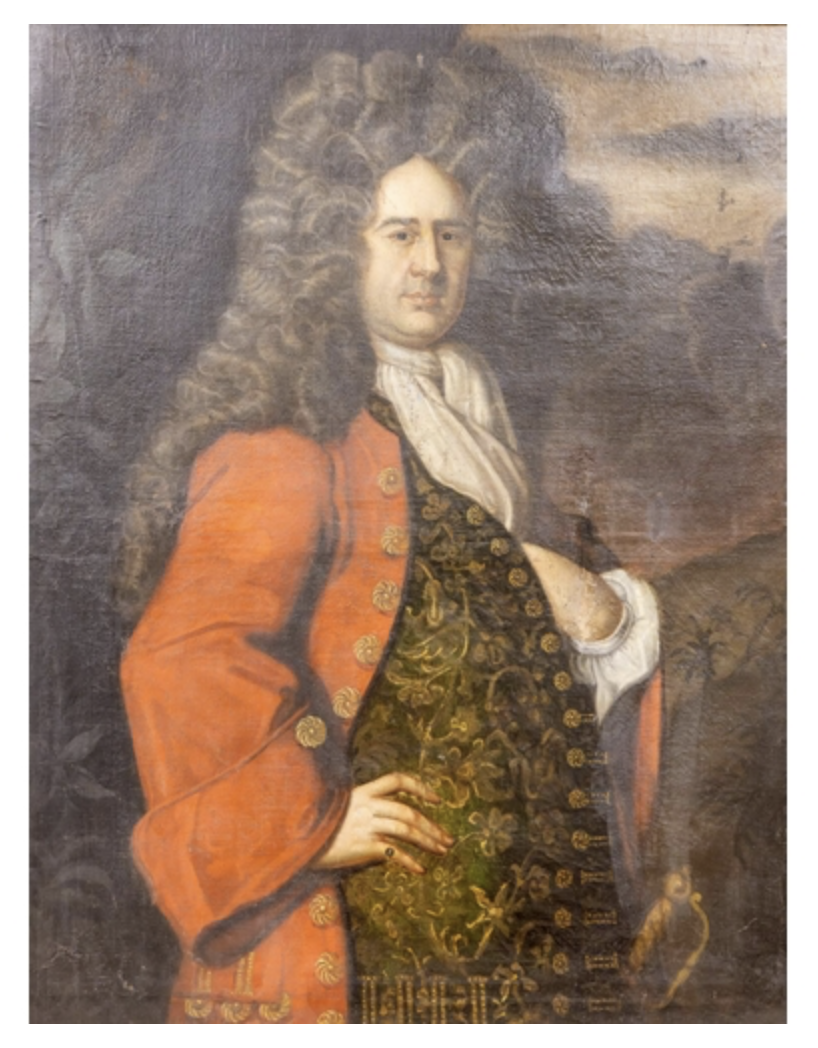
Colonel Rt. Hon. John Eyre (1623-1685) was the son of Giles Eyre. John married Mary Bigoe, daughter of Phillip Bigoe. John Eyre accompanied General Ludlow to Ireland. He acquired large estates in counties Galway, Tipperary, Clare and King’s County, and he built Eyrecourt Castle in County Galway. He was appointed Privy Counsellor (P.C.), and he held the office of Member of Parliament (M.P.) for Galway. He held the office of High Sheriff of County Galway in 1681.

John and Mary née Bigoe had a son John (1659-1709) and Samuel (1663-1728). John “Proud” Eyre (1659-1709) inherited Eyre Court. He married, first, Margery Preston, daughter of George Baronet Preston, of Craigmillar in Scotland. Her sister Elizabeth Preston married William Parsons 2nd Baronet of Birr Castle, County Offaly. Margery and “Proud” John had several children. After his first wife died, “Proud” John married Anne Hamilton, daughter of William Hamilton of Liscloony County Offaly.

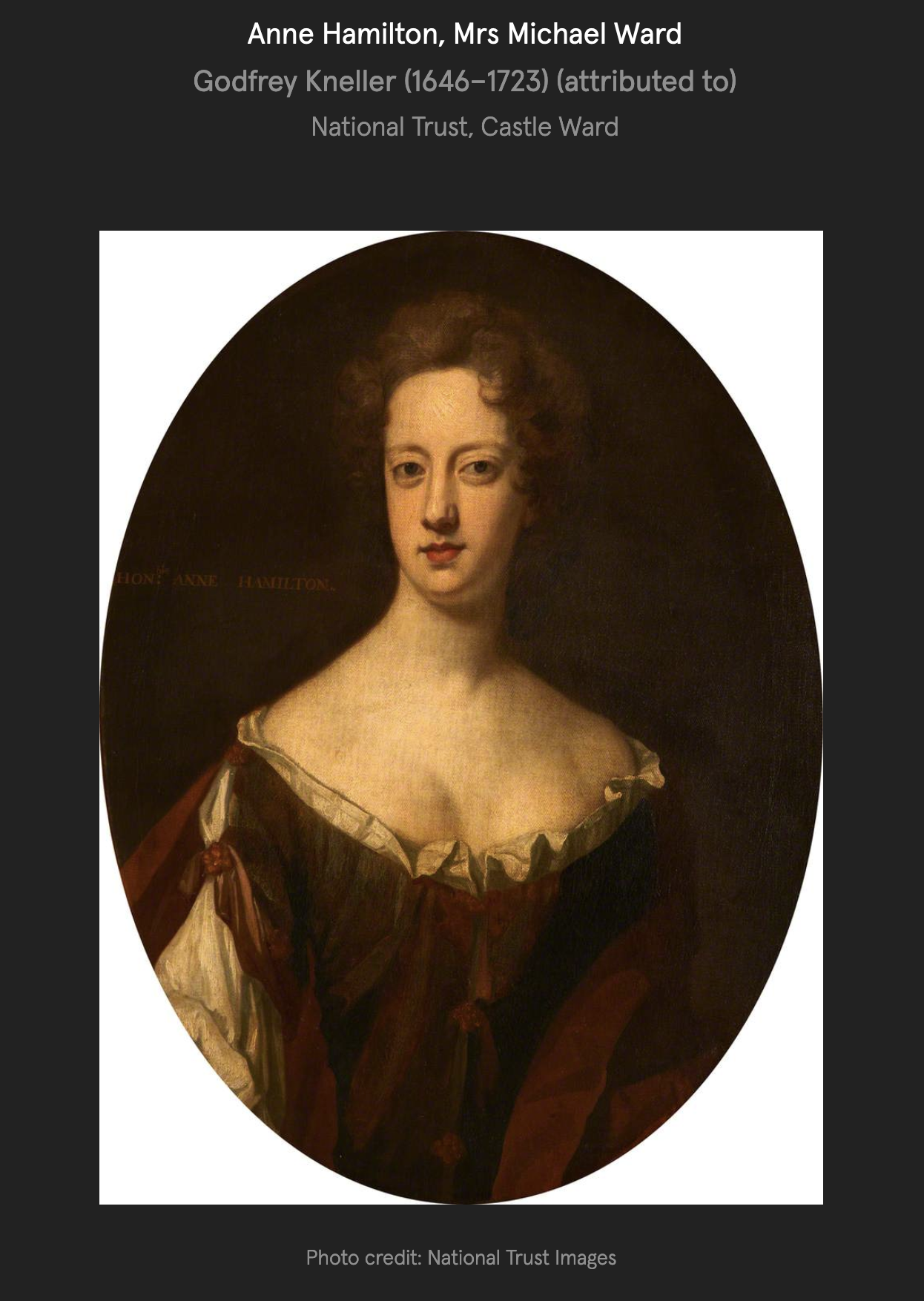
Eyre Family Portrait of Lady Anne née Hamilton (daughter of William Hamilton of Liscloony County Offaly), wife of John Eyre (1659-1709) the 2nd of Eyrecourt , courtesy Purcells Auctioneer Feb 2016. She had been previously married to Matthew Plunkett, 7th Baron of Louth.

Children of John Eyre and Margery Preston

  • Elizabeth Eyre m. Frederick Richard Trench (1681-1752)
  • Very Rev. Giles Eyre d. 17 Jan 1750, married Mary Cox. They had a son Richard Eyre (d. 1780) who married firstly, Emily Trench, daughter of Frederick Richard Trench and Elizabeth Eyre, on 21 June 1752. He married, secondly, Anchoretta Eyre, daughter of Colonel Samuel Eyre and Charity Dancer, on 13 January 1764. He held the office of High Sheriff of County Galway in 1749. He lived at Eyrecourt, County Galway, Ireland.
  • John Eyre d. Oct 1745. Married first Rose Plunkett, daughter of Matthew Plunkett 7th Baron Louth, and second, Jane Waller, daughter of Robert.
  • Emilia Eyre d. 23 Aug 1770, m. John Rochfort (1690-1771)
  • Jane Eyre, died unmarried.
  • Mary Eyre b. a 1677, married Thomas Baldwin of Corolanty, County Offaly (see my entry)
  • George Eyre b. 1680, d. 1710, married Barbara, daughter of Thomas Coningsby, the 1st Earl of Coningsby.
  • Margery Eyre b. c 1690, d. b 1743, married Lt.-Col. Shuckburgh Whitney.

John and Mary née Bigoe’s second son was Samuel Eyre (1663-1728). He married, firstly, Jane Eyre, daughter of Edward Eyre. He married, secondly, Anne Stratford, daughter of Robert Stratford and Mary Walsh, in November 1696.

Samuel gained the rank of Colonel in 1690 in the the Army, before Limerick. He held the office of High Sheriff of County Galway in 1696 and the office of Governor of County Galway and then served as Member of Parliament (M.P.) for Galway in 1715. He lived also lived at Eyreville, County Galway, Ireland.

Child of Samuel Eyre and Jane Eyre

  • John Eyre d. c Sep 1741, of Woodfield, County Galway. He married Mary Willington.

Children of Samuel Eyre and Anne Stratford

  • George Stratford Eyre. He married, firstly, Mary D’artiquenave, and married, secondly, Mary Ann (?) on 6 August 1762. He held the office of High Sheriff of County Galway in 1731, and the office of Governor of Galway in 1740. He also held the office of Vice-Admiral of Munster.
(George) Stratford Eyre of Eyreville, Governor of Galway, son of Colonel Samuel Eyre, 2nd son of the Founder of Eyrecourt courtesy Purcells Auctioneer Feb 2016.
Eyre Family Portrait of Mary D’Artiquernave, First Wife of George Stratford Eyre (1697-1767), courtesy of Purcells Auctioneer Feb 2016.
  • Anne Eyre m. Robert Powell
  • Mary Eyre married Colonel Thomas Croasdaile
  • Frances Eyre married Willington Driffield
  • Barbara Eyre married John Hawkes
  • Colonel Thomas Eyre b. 1720, d. 1772, married Anne Cooke.
Colonel Thomas Eyre (c.1720-1772), son of Col Samuel of Eyreville, in the uniform of the 49th Foot; and Anne Eyre née Cook, courtesy of Christie’s Irish Sale 2001.

Colonel Samuel Eyre (d. 1789) was the son of John Eyre (d. circa 1741) of Woodfield, County Galway, and Mary Willington. Samuel married Charity Dancer, daughter of Thomas, 4th Baronet Dancer, of Modreeny, Co. Tipperary.

Eyre Family Portrait of Colonel Samuel Eyre (d. 1789) of Eyreville courtesy Purcells Auctioneers Feb 2016.
Charity Dancer (baptised 1718), married Samuel Eyre in 1741, mother of Thomas Dancer Eyre, Elizabeth Eyre, Chichester Eyre, Anchorette Eyre and Mary Eyre. Courtesy Purcell Auctioneer Feb 2016. She was the daughter of Thomas, 4th Baronet Dancer, of Modreeny, Co. Tipperary.
Thomas Dancer Eyre courtesy Purcells Auctioneer Feb 2016.
Captain Thomas Dancer Eyre (1742-1799) of 4th Dragoon Guards, m. Letitia Cole in 1788, courtesy Purcell Auctioneers 2016.
Eyre Family Portrait of Robert Hedges Eyre, son of Richard Hedges Eyre of Macroom Castle, Co. Cork , courtesy Purcell Auctioneers Feb 2016.
Helena Hedges Eyre, daughter of Richard Hedges Eyre of Macroom Castle, Co. Cork, and Frances Browne, married to Reverend George Maunsell Dean of Leighlin courtesy of Purcells Auctioneer Feb 2016.

Portraits S

S

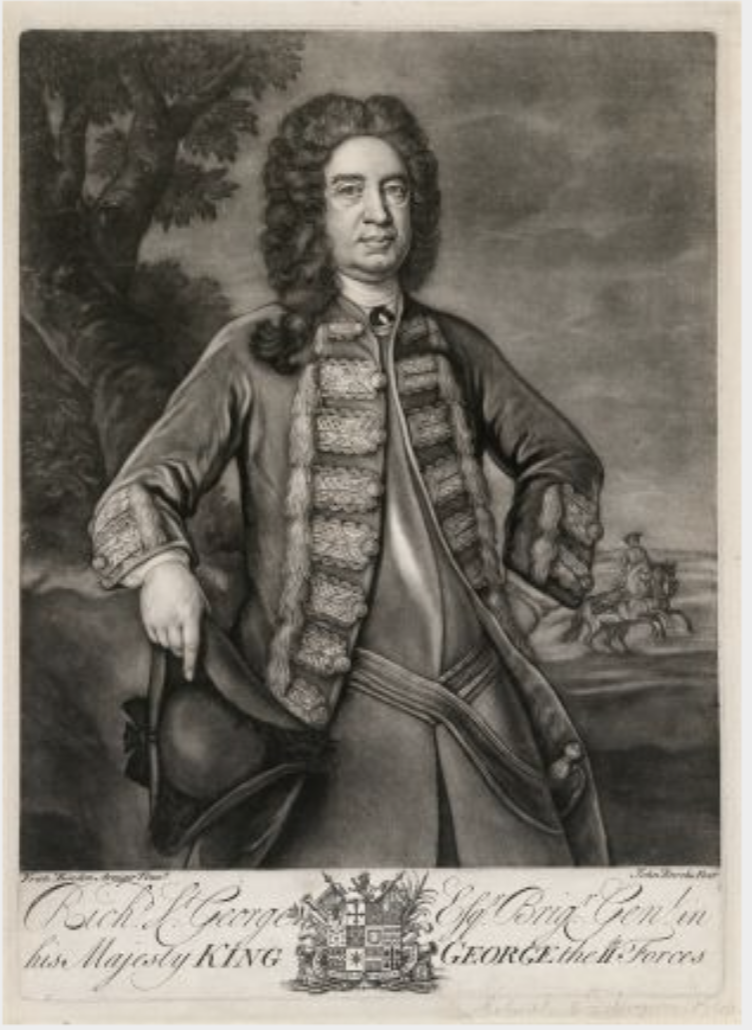
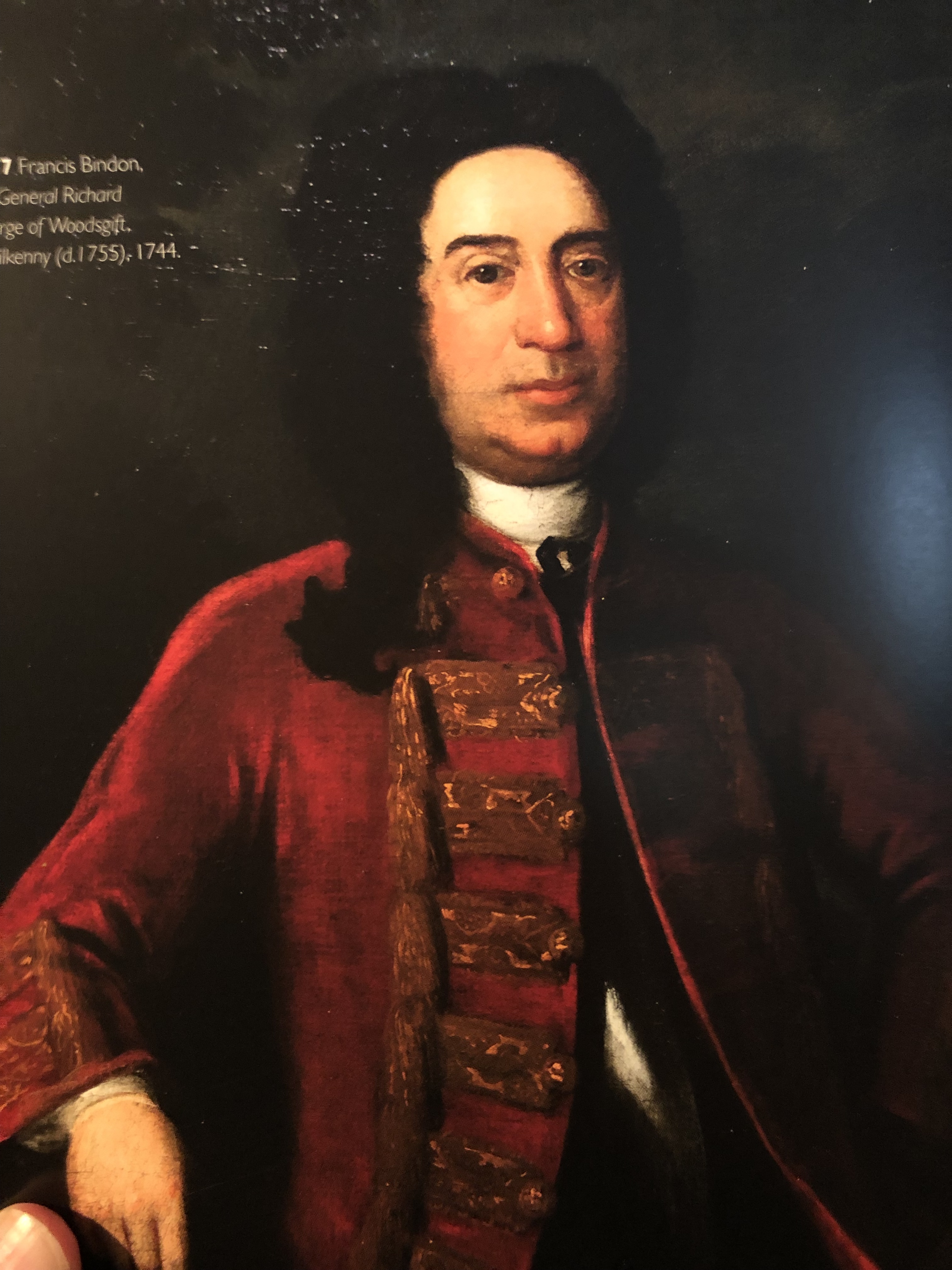
Richard Saint George of Woodsgift, County Kilkenny (d. 1755), (Brigadier General ), 1744 After Francis Bindon, Irish, 1690-1765 engraver John Brooks, Irish.
Richard St. George (1670-1755) of Woodsgift and Kilrush, County Kilkenny and 8 Henrietta Street by Francis Bindon.
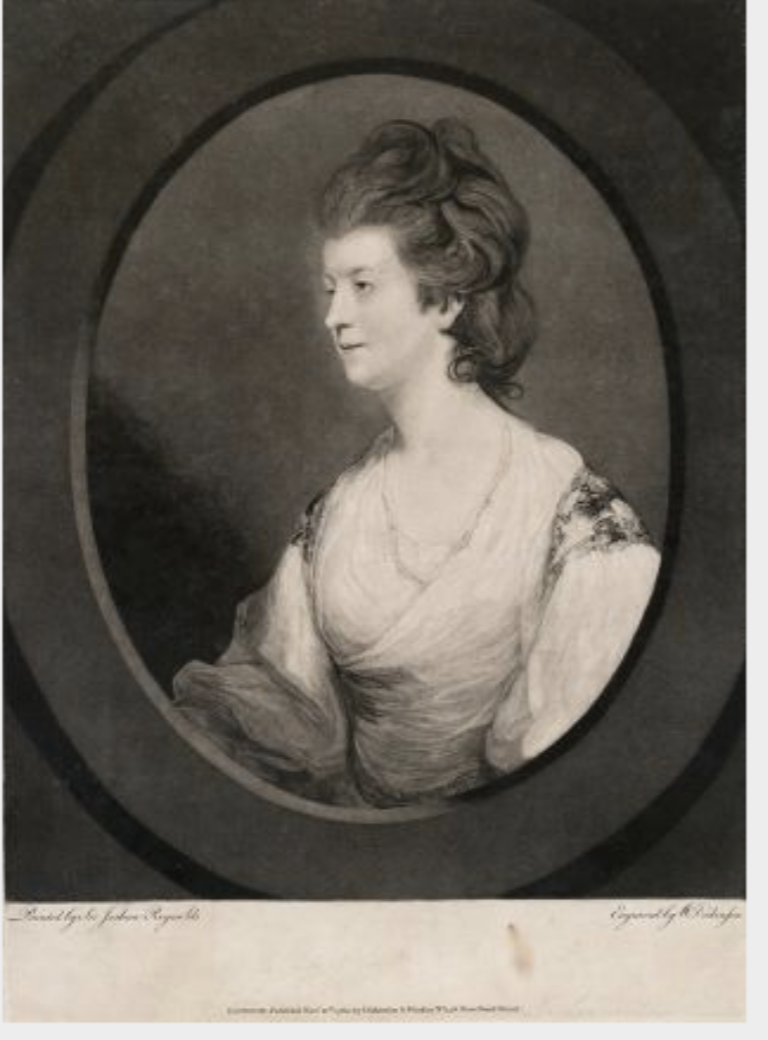
Hugh Douglas Hamilton portrait of Emilia Olivia née St. George, 2nd Duchess of Leinster courtesy of Bonhams Old Master Paintings 2018.
Emilia Olivia Ussher-St. George, the Duchess of Leinster by Hugh Douglas Hamilton courtesy of Old Master Paintings Part II by Christie’s 2012.
Emilia Olivia née Usher St. George (1759-1798), Duchess of Leinster, wife of 2nd Duke, 1780 engraver William Dickinson after Joshua Reynolds, courtesy of National Gallery of Ireland.
Anne St. George née Stepney of Durrow Abbey County Offaly, and Child, 1971, by George Romney courtesy of August Heckscher Collection 1959.147
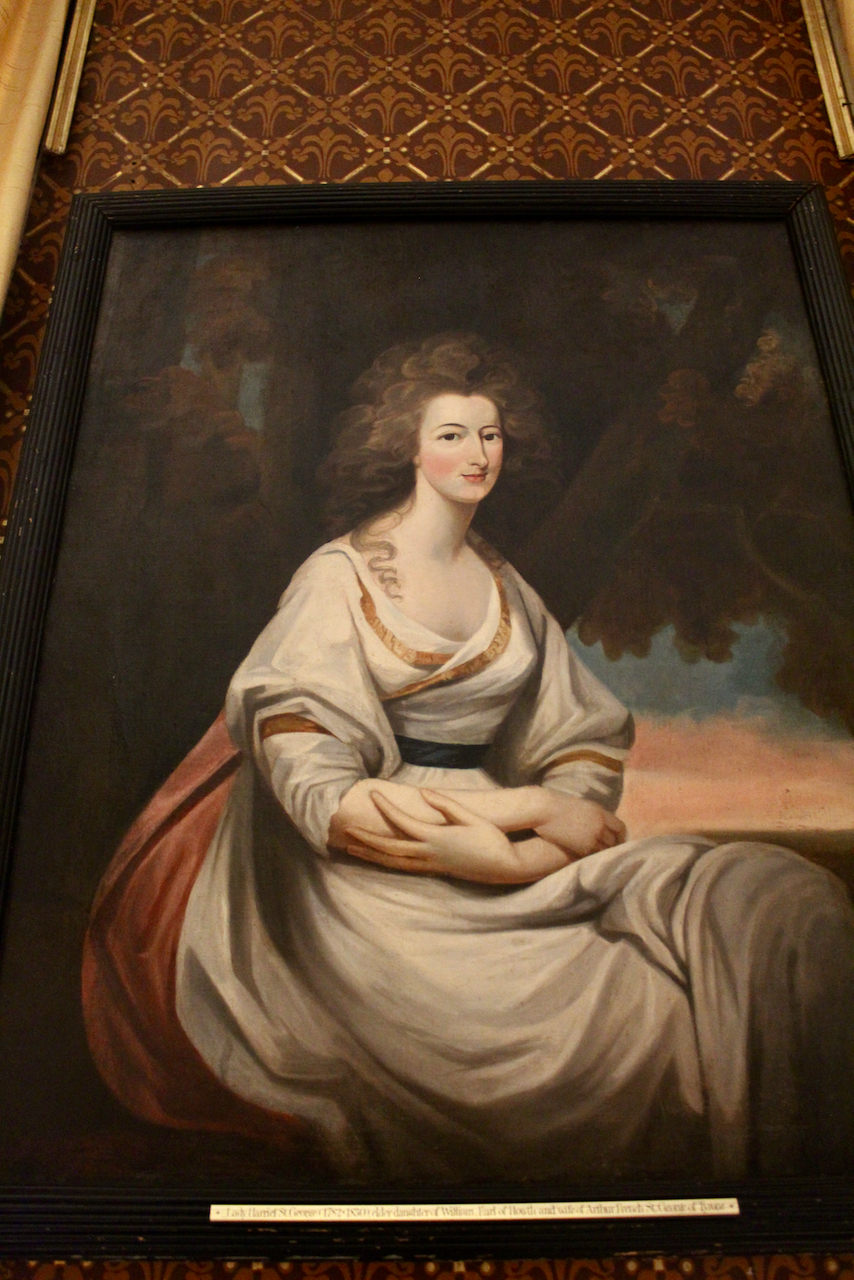
Harriet St. Lawrence (d. 1830), daughter of William 2nd Earl of Howth. She married Arthur French St. George (1780-1844). Photograph © Jennifer Winder-Baggot, www.irishhistorichouses.com
Elizabeth Aldworth née St. Leger (1693-1773), the first female Freemason. https://commons.wikimedia.org/wiki/File:MrsAldworth.jpg#/media/File:MrsAldworth.jpg
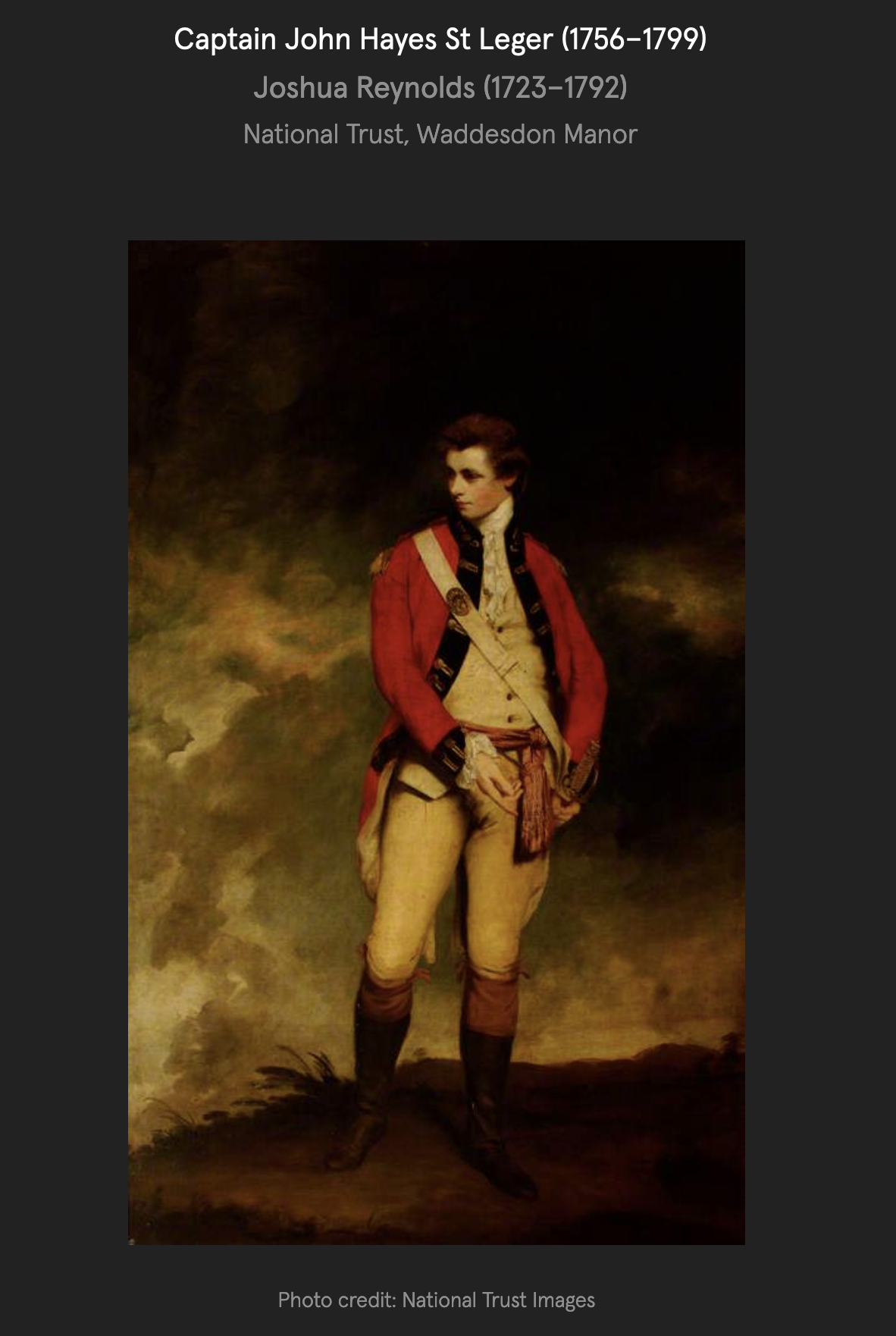
John Hayes St. Leger (1756-1799) courtesy of National Trust Waddesdon Manor.
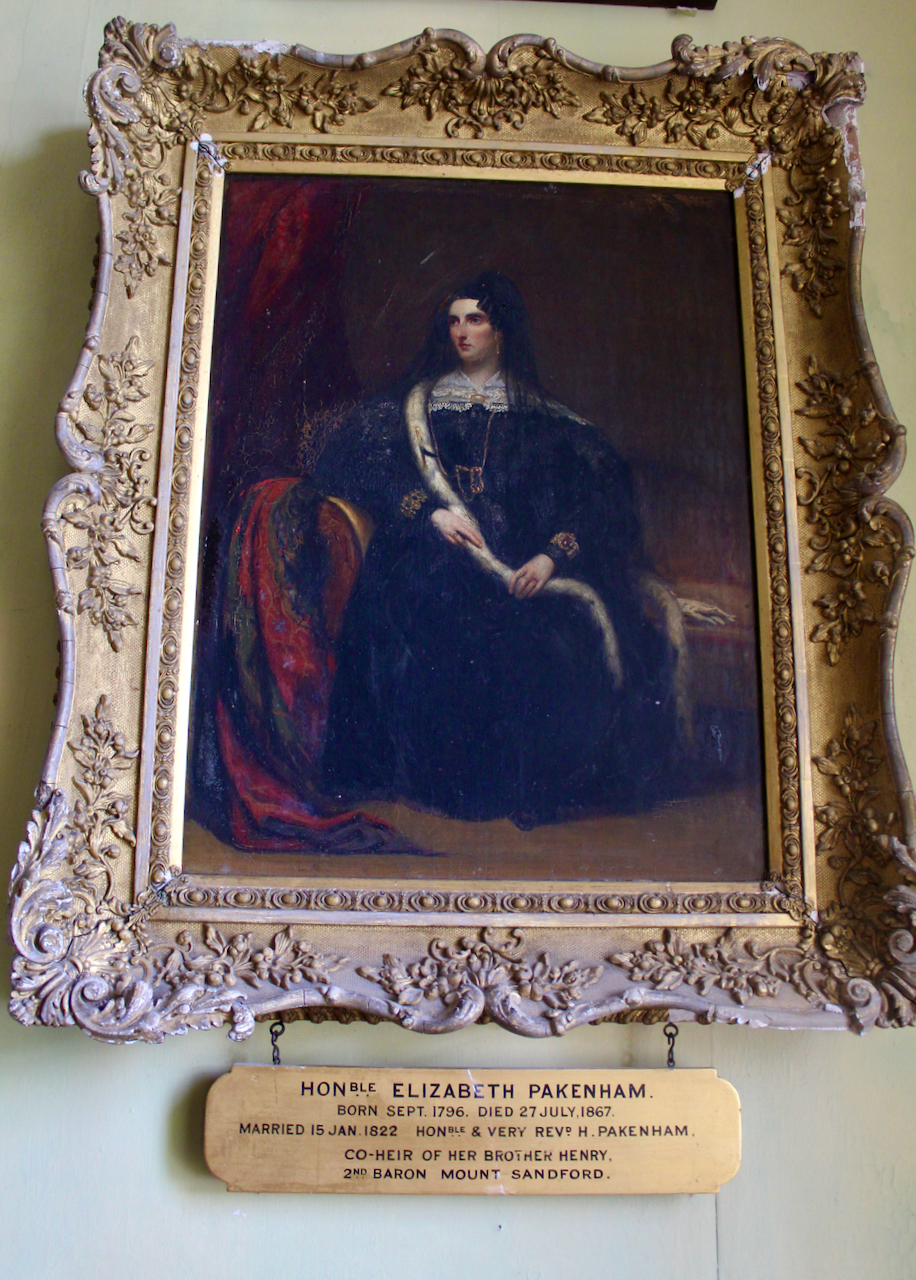
Elizabeth Sandford, mother of Henry Sandford Pakenham, wife of Reverend Henry Pakenham, Dean of St. Patrick’s Cathedral in Dublin. Henry Sandford Pakenham married the heiress Grace Catherine Mahon and changed his surname to Pakenham Mahon. Photograph © Jennifer Winder-Baggot, www.irishhistorichouses.com
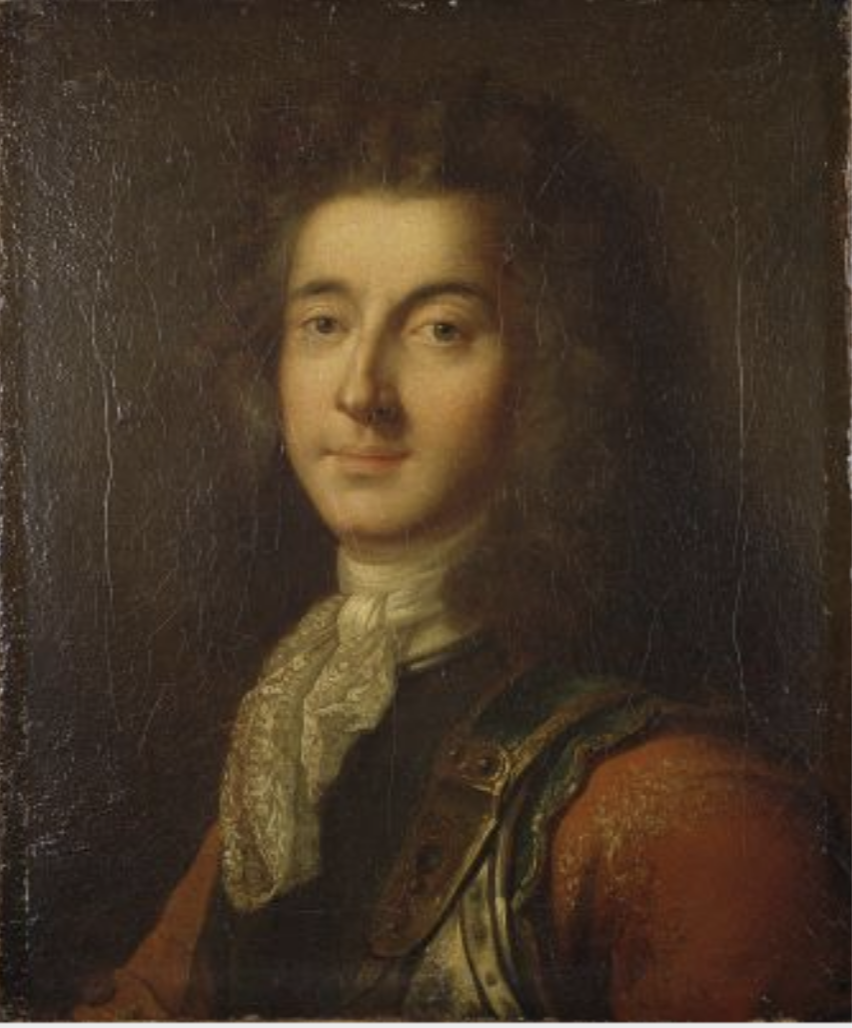
Patrick Sarsfield 1st Earl of Lucan (1620-1693) attributed to Hyacinthe Rigaud, French, 1659-1743.
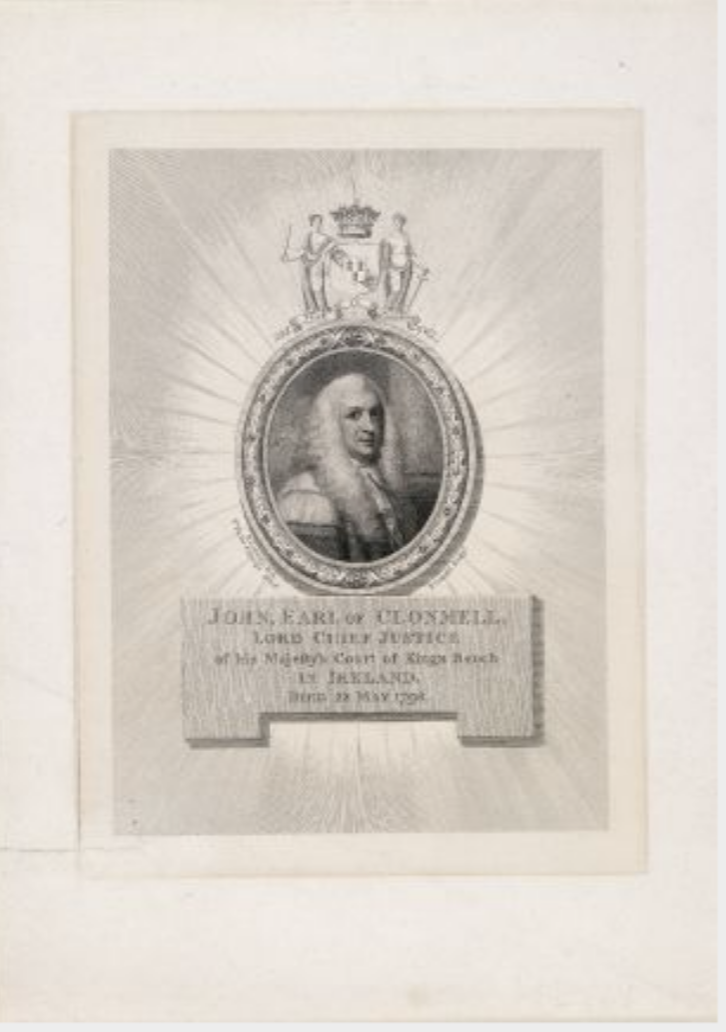
John Scott (1739-1798) 1st Earl of Clonmel, engraver Pierre Conde French after Richard Cosway, courtesy of National Gallery of Ireland.
Dorothy Scott (1765-1837) second wife of John Keane, 1st Baronet, by George Romney courtesy of Philadelphia Museum of Art.
Mary Seymour, who according to Mealy’s sales catalogue married John Dawson 1st Earl of Portarlington of Emo Court, by Thomas Heaphey, courtesy of Fonsie Mealy auction; I think she married George Lionel Dawson-Damer, son of 1st Earl. She was the daughter of Hugh Seymour Conway 1st Marquess of Hertford.
Sarah Eliza Conolly née Shaw (1845-1921), wife of Thomas of Castletown. Photograph © Jennifer Winder-Baggot, www.irishhistorichouses.com
Robert Shaw, 1774-1849, first baronet of Bushy Park Co. Dublin attributed to Hugh Douglas Hamilton courtesy of Mealys Autumn Sale 2015.
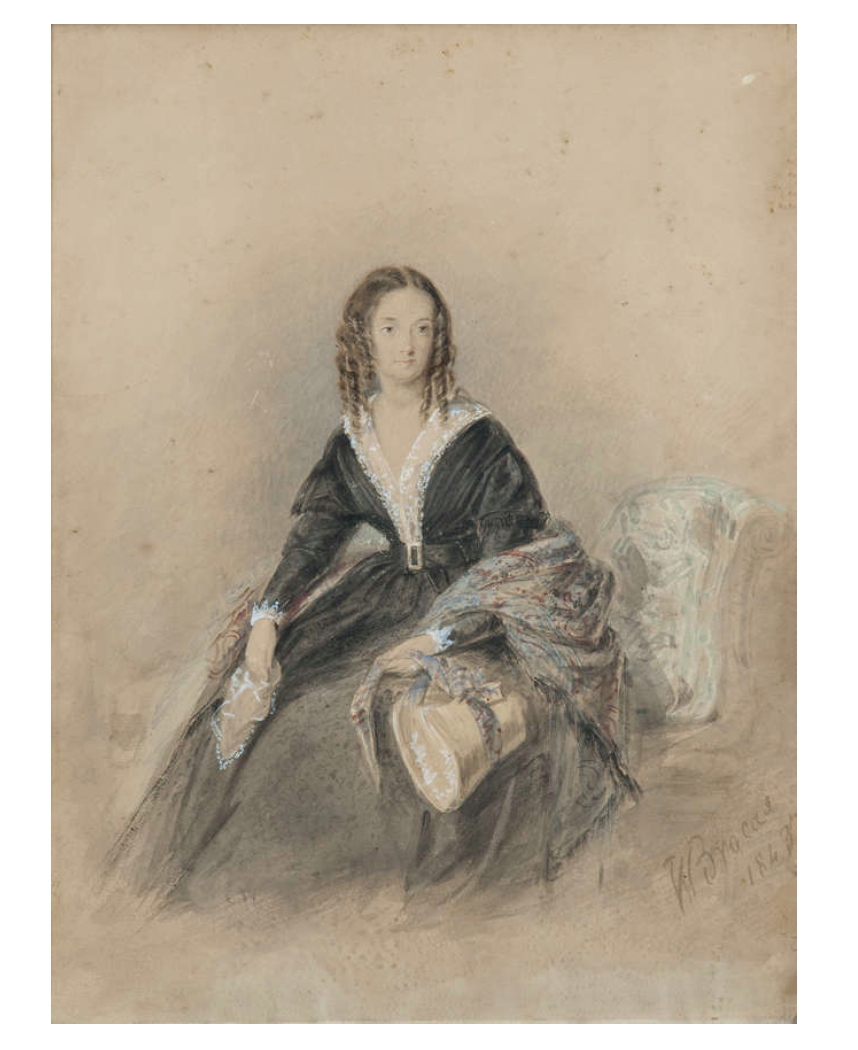
Maria Shaw (1838-1875), Daughter of Sir Frederick Shaw 3rd Bt of Bushy Park, Dublin, by William Brocas, courtesy of Adam’s auction 23 March 2016.
Helena Selina Blackwood née Sheridan (1807-1867), Writer, Wife of 4th Baron Dufferin and Clandeboye, later Countess of Gifford Date 1849, Engraver John Henry Robinson, English, 1796 – 1871 After Frank Stone, English, 1800-1859.
Sir Henry Sidney (1529-1586), Lord Deputy of Ireland, after painter Arnold Van Brounkhorst, courtesy of National Gallery of Ireland.
Philip Sidney in a painted oval Provenance Estate of The Late Basil Collins courtesy Adam’s 8 March 2006.
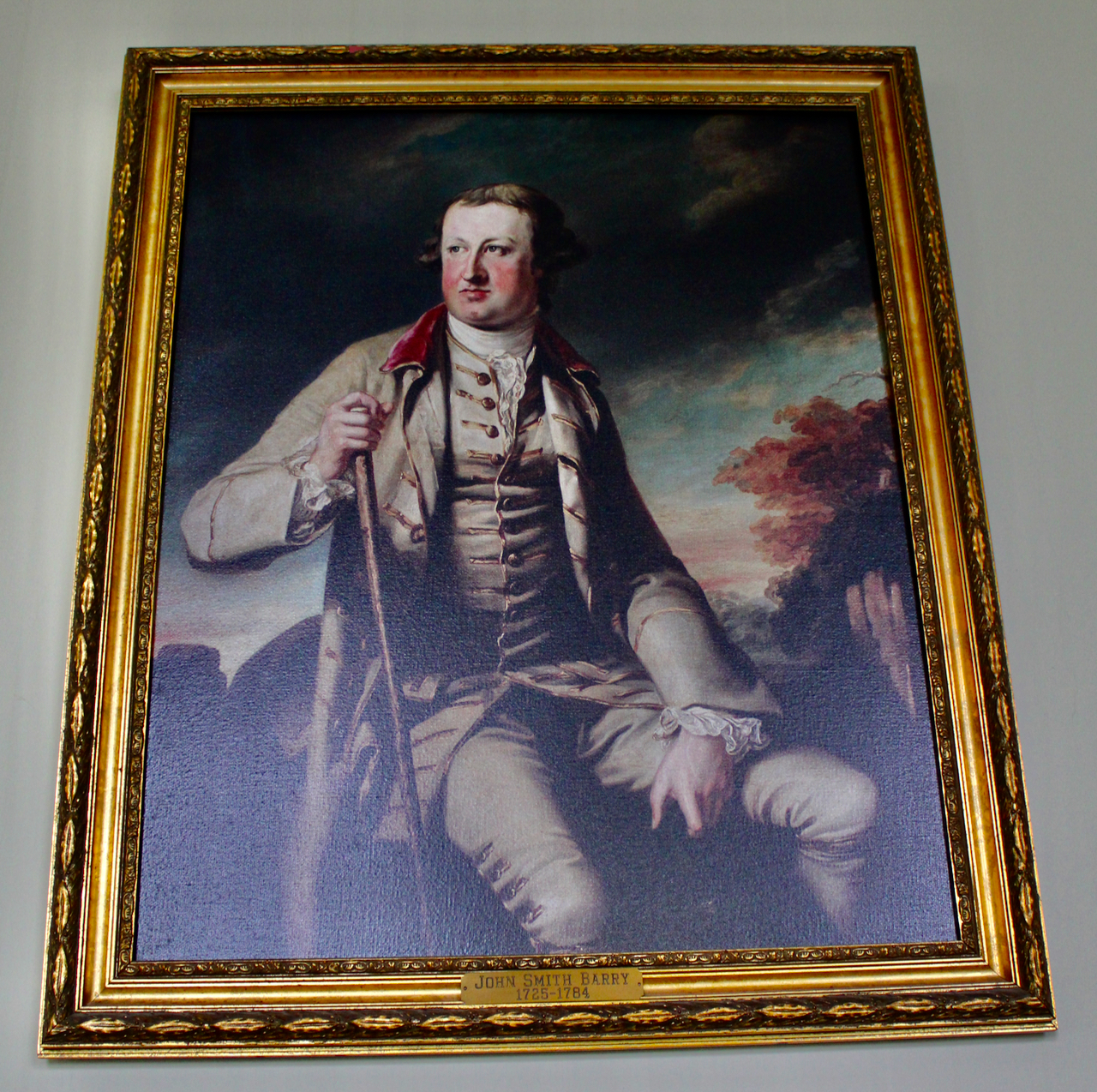
John Smith-Barry (1725-1784) of Fota, County Cork. Photograph © Jennifer Winder-Baggot, www.irishhistorichouses.com

John Barry (1725-1784), who added the name Smith to his surname after his marriage to a wealthy heiress, was the son of James Barry, 4th Earl of Barrymore, of Castlelyons, County Cork, and Barry’s third wife, Anne Chichester, daughter of Arthur Chichester, 3rd Earl of Donegall (it was spelled with two ‘l’s in the title, unlike the county). He married Dorothy Smith, daughter of Hugh Smith of Weald Hall, Essex, and John added Smith to his surname.

Hugh Smith (1673-1745) of Weald Hall, father of Dorothy Smith who married John Barry (1725-1784), of Fota House, County Cork. Photograph © Jennifer Winder-Baggot, www.irishhistorichouses.com
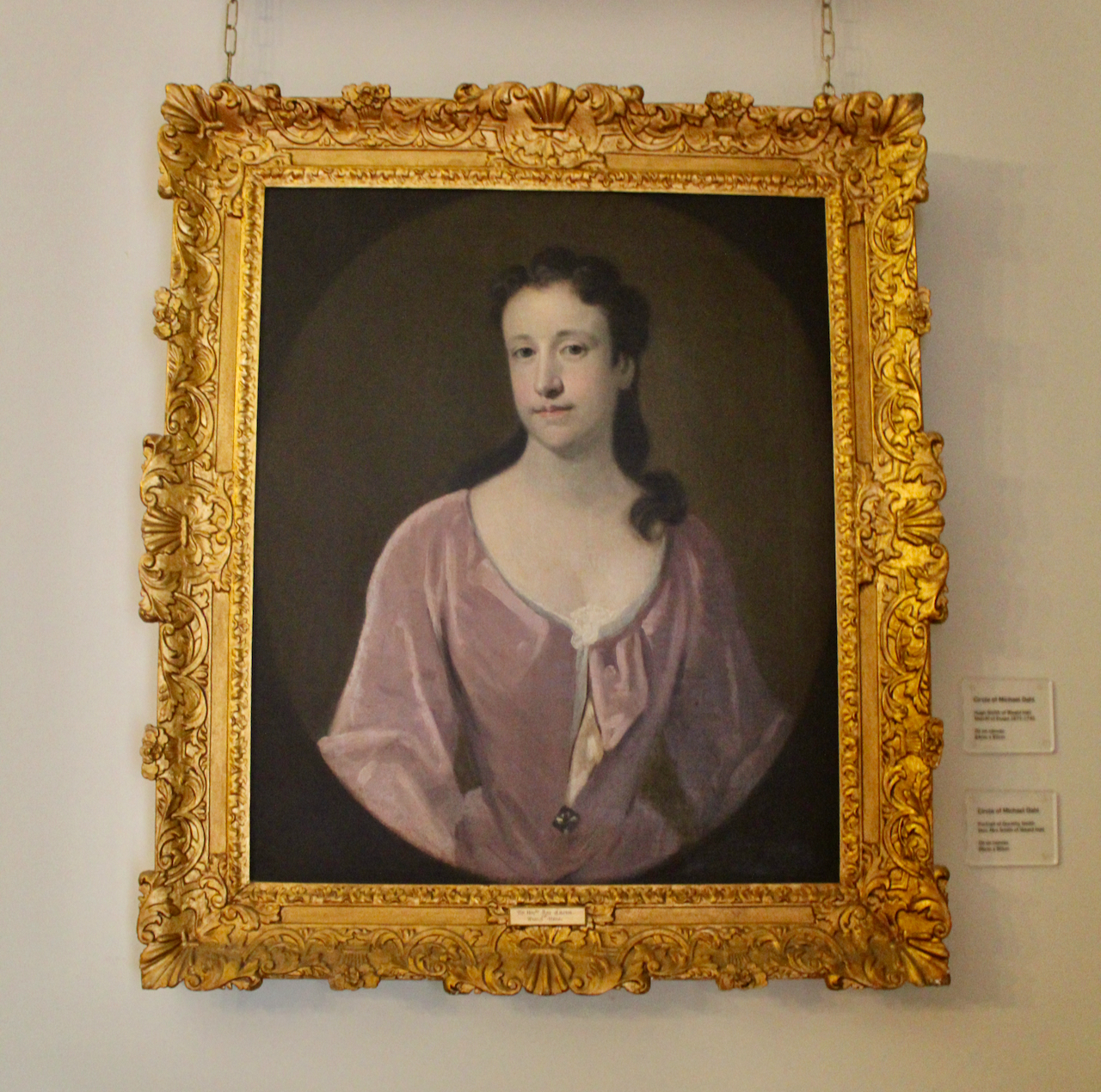
Dorothy Smith née Barrett, wife of Hugh Smith (1673-1745) of Weald Hall. Photograph © Jennifer Winder-Baggot, www.irishhistorichouses.com
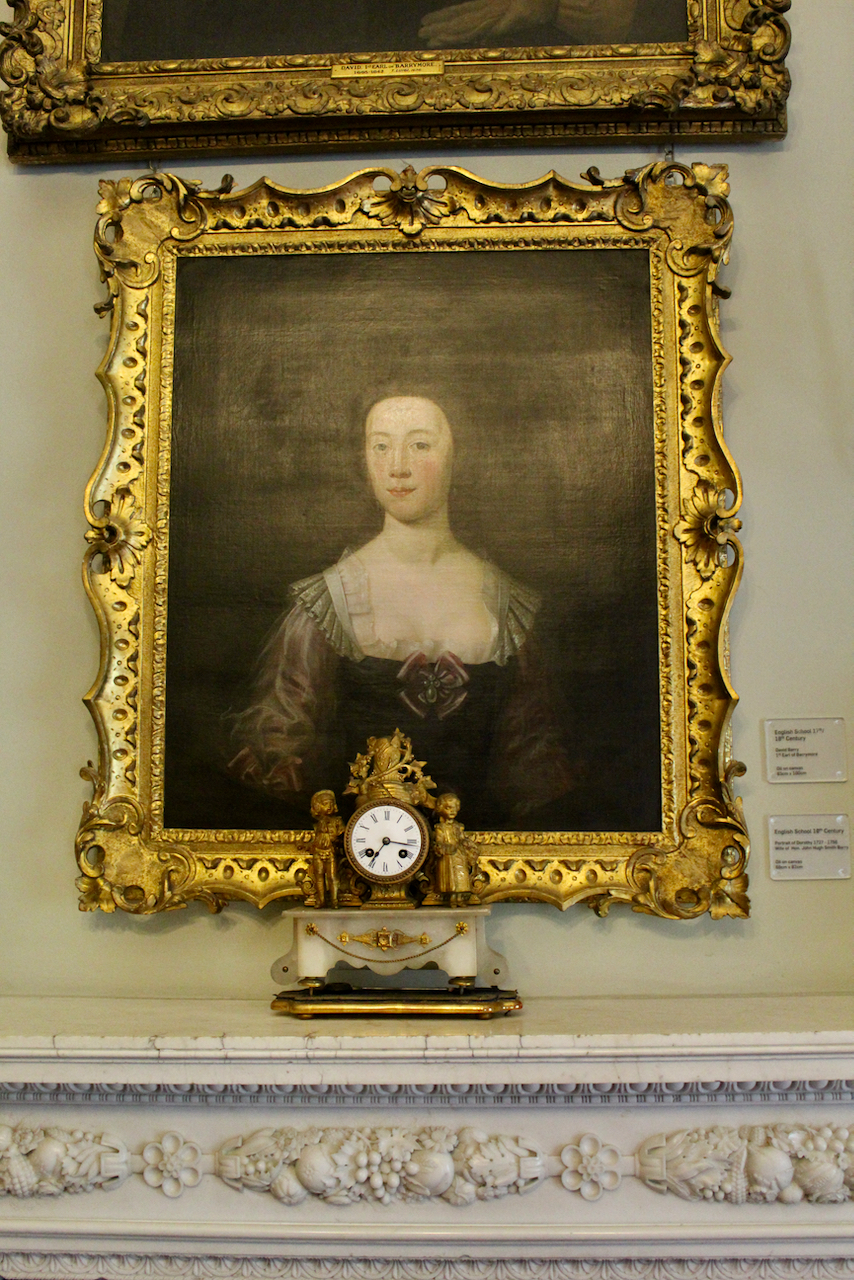
Dorothy Smith-Barry née Smith (1727-1756) wife of John Hugh Smith Barry (1725-1784). Photograph © Jennifer Winder-Baggot, www.irishhistorichouses.com

John and Dorothy’s oldest son and heir was James Hugh Smith-Barry (1746-1801). He never married, but had several children.

James Hugh Smith-Barry (1746-1801). Photograph © Jennifer Winder-Baggot, www.irishhistorichouses.com
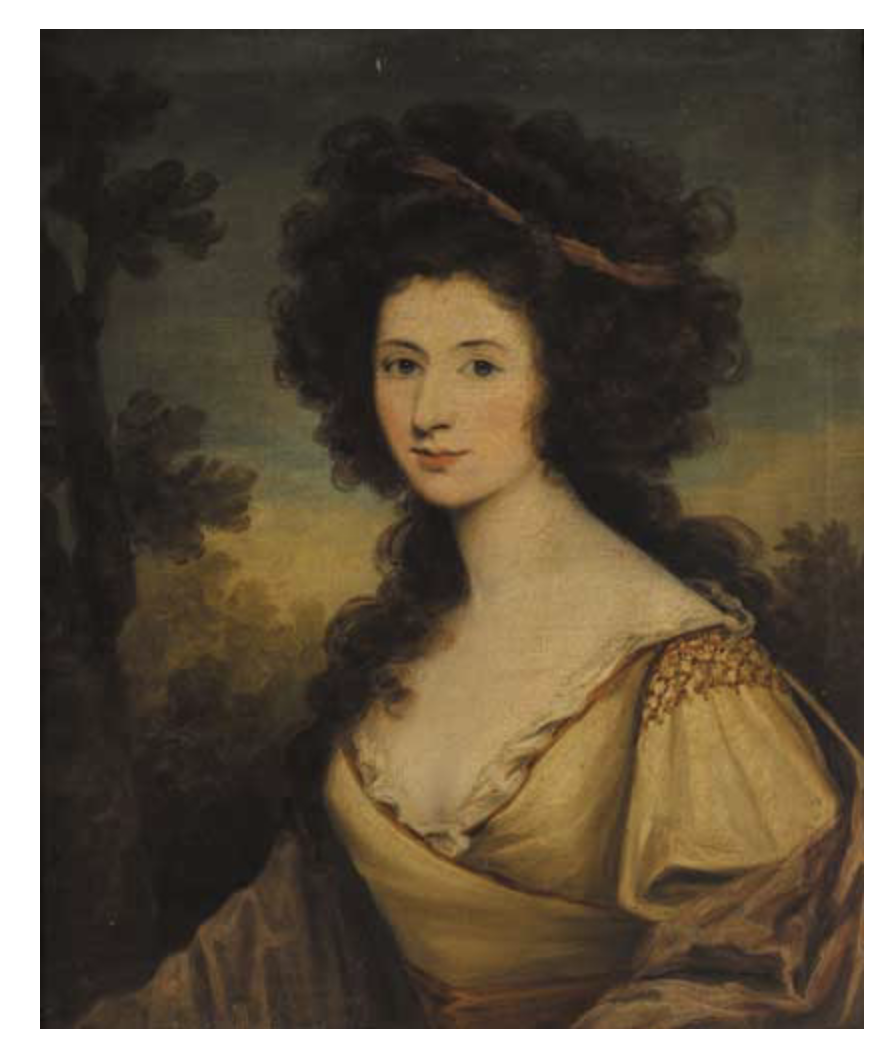
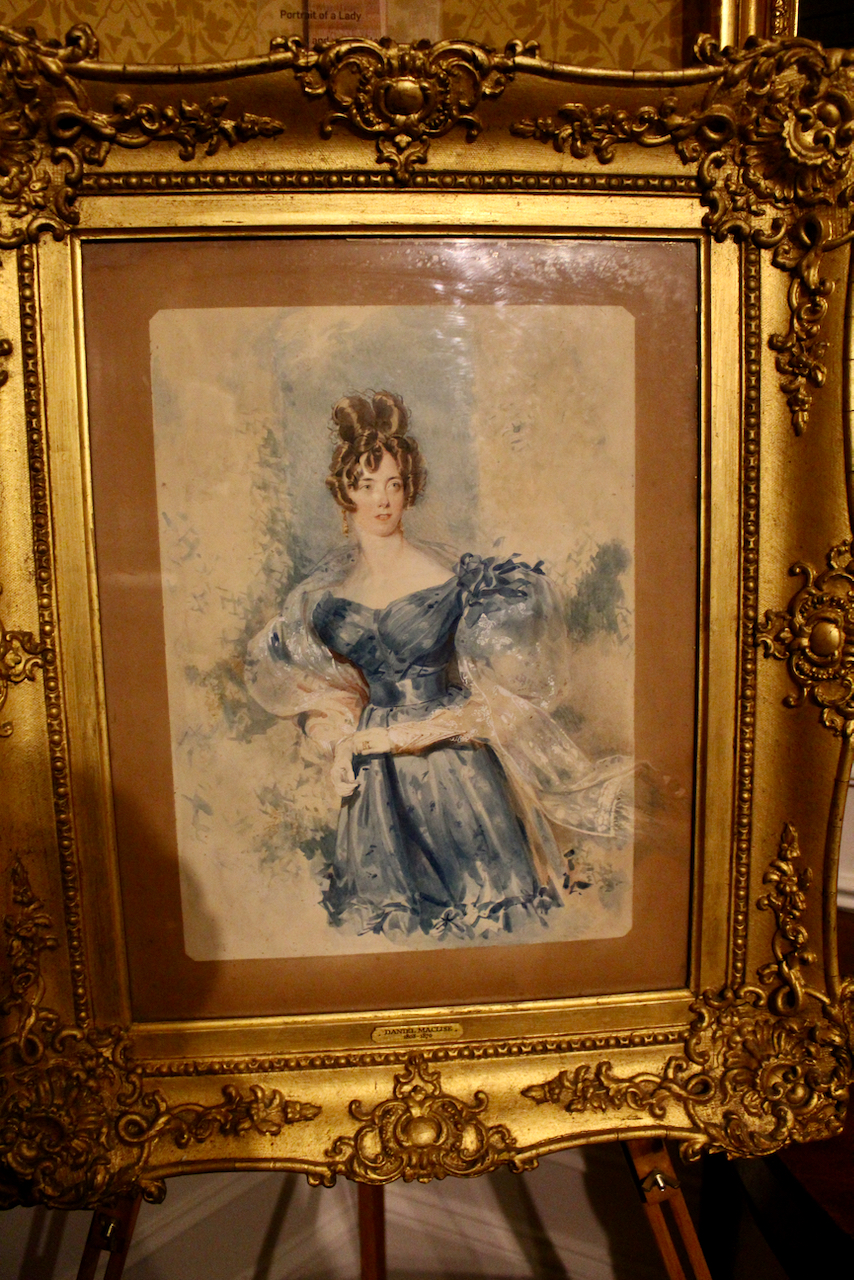
Portrait Of A Lady traditionally identified as Caroline Courtenay Née Smith-Barry, courtesy of Whyte’s Sept 2007, daughter of James Smith-Barry (1746-1801) of Fota House, County Cork, she married George Courtenay of Ballyedmond House, County Cork (no longer exists).

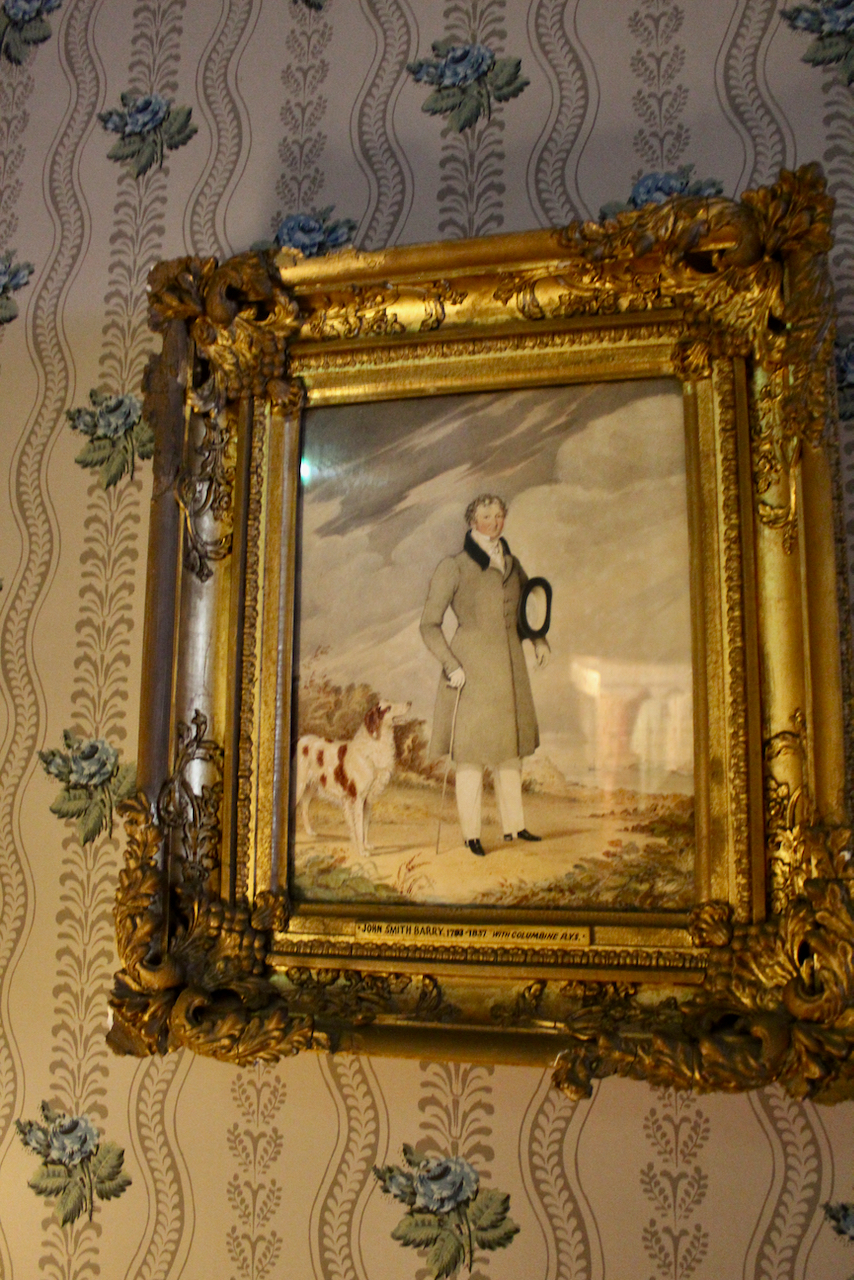
John Smith-Barry (1783-1837), son of James Hugh Smith-Barry (1746-1801) settled in Fota, County Cork, after his marriage to Eliza Courtenay of Ballyedmond, Midleton, County Cork.

John Smith-Barry (1783-1837), who hired the Morrisons to enlarge Fota house, County Cork. Photograph © Jennifer Winder-Baggot, www.irishhistorichouses.com
John Smith-Barry (1783-1837), who hired the Morrisons to enlarge Fota house. Photograph © Jennifer Winder-Baggot, www.irishhistorichouses.com
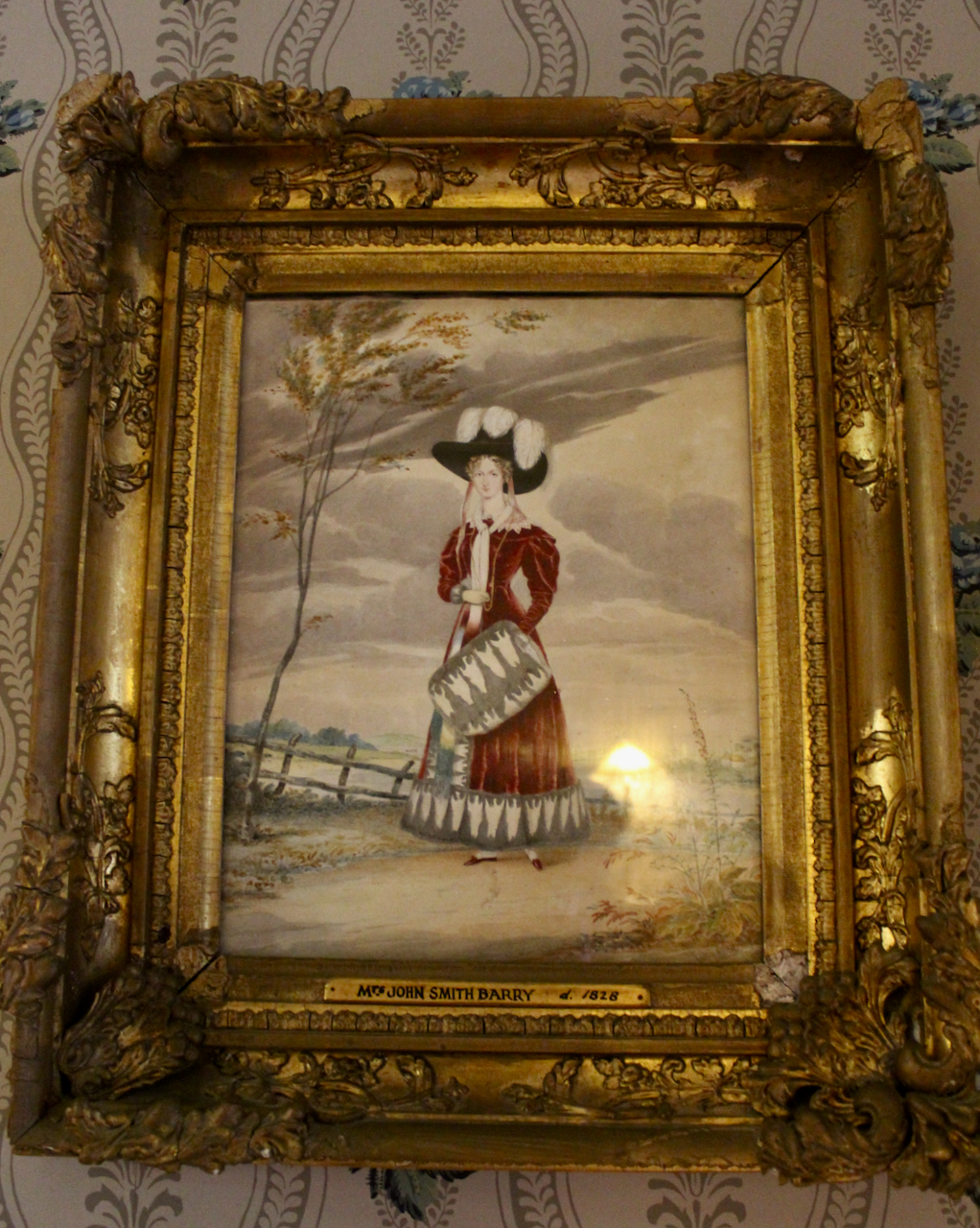
I think this is probably Eliza Mary née Courtenay (1797-1828) who married John Smith-Barry, Fota House, County Cork, August 2023. Photograph © Jennifer Winder-Baggot, www.irishhistorichouses.com
Eliza Mary née Courtenay (1797-1828) who married John Smith-Barry. She was the daughter of Robert Courteney of Ballyedmond in County Cork. Photograph © Jennifer Winder-Baggot, www.irishhistorichouses.com

James Hugh Smith-Barry (1816-1856) inherited Fota and also Marbury Hall in Cheshire. He served as Deputy Lieutenant, Justice of the Peace and High Sheriff of County Cork. He married Elizabeth Jacson of Cheshire. After her husband died, she married George Fleming Warren, 2nd Baron de Tabley of Tabley House, County Chester.

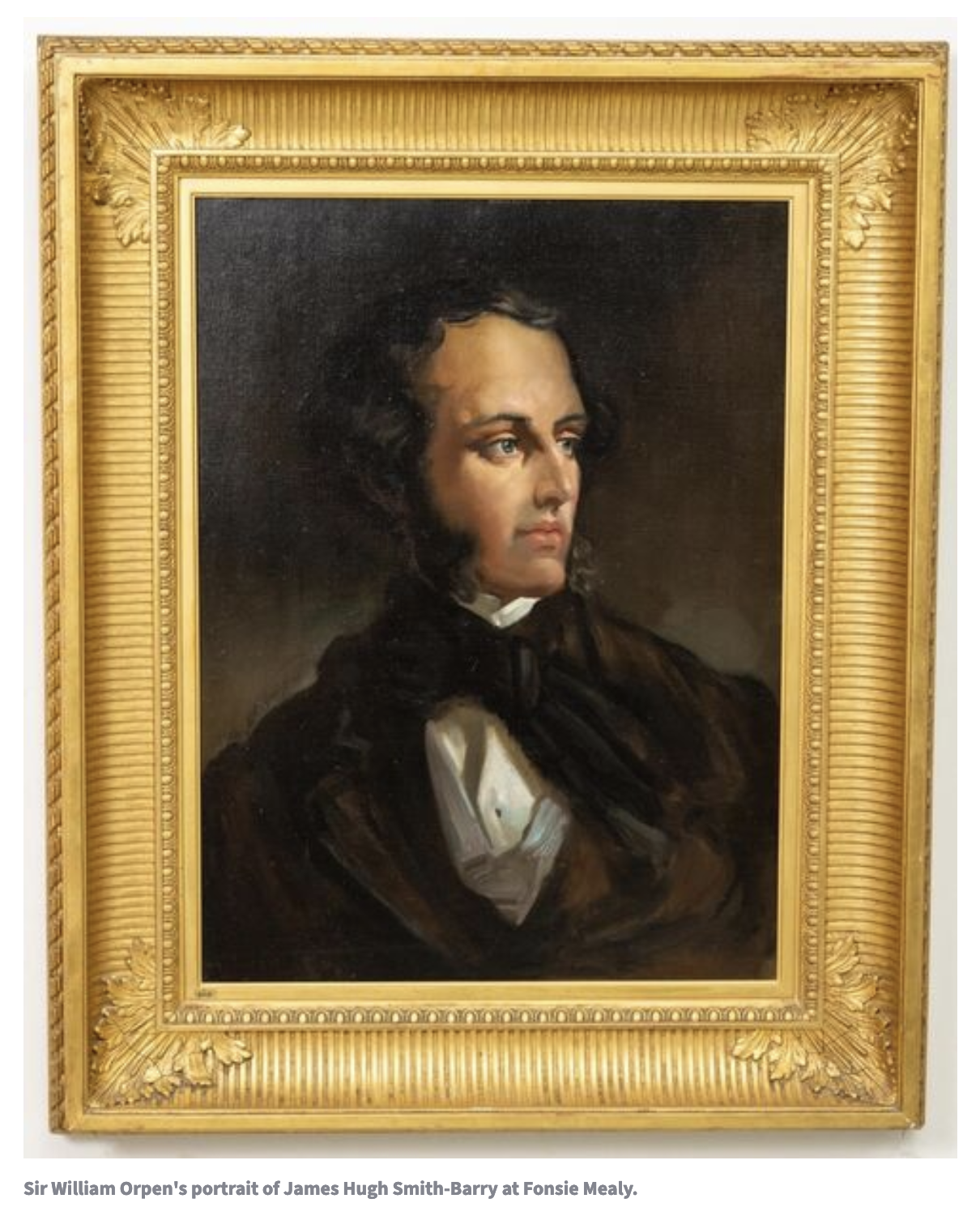
James Hugh Smith-Barry by William Orpen 1904, courtesy of Fonsie Mealy auction 2022.

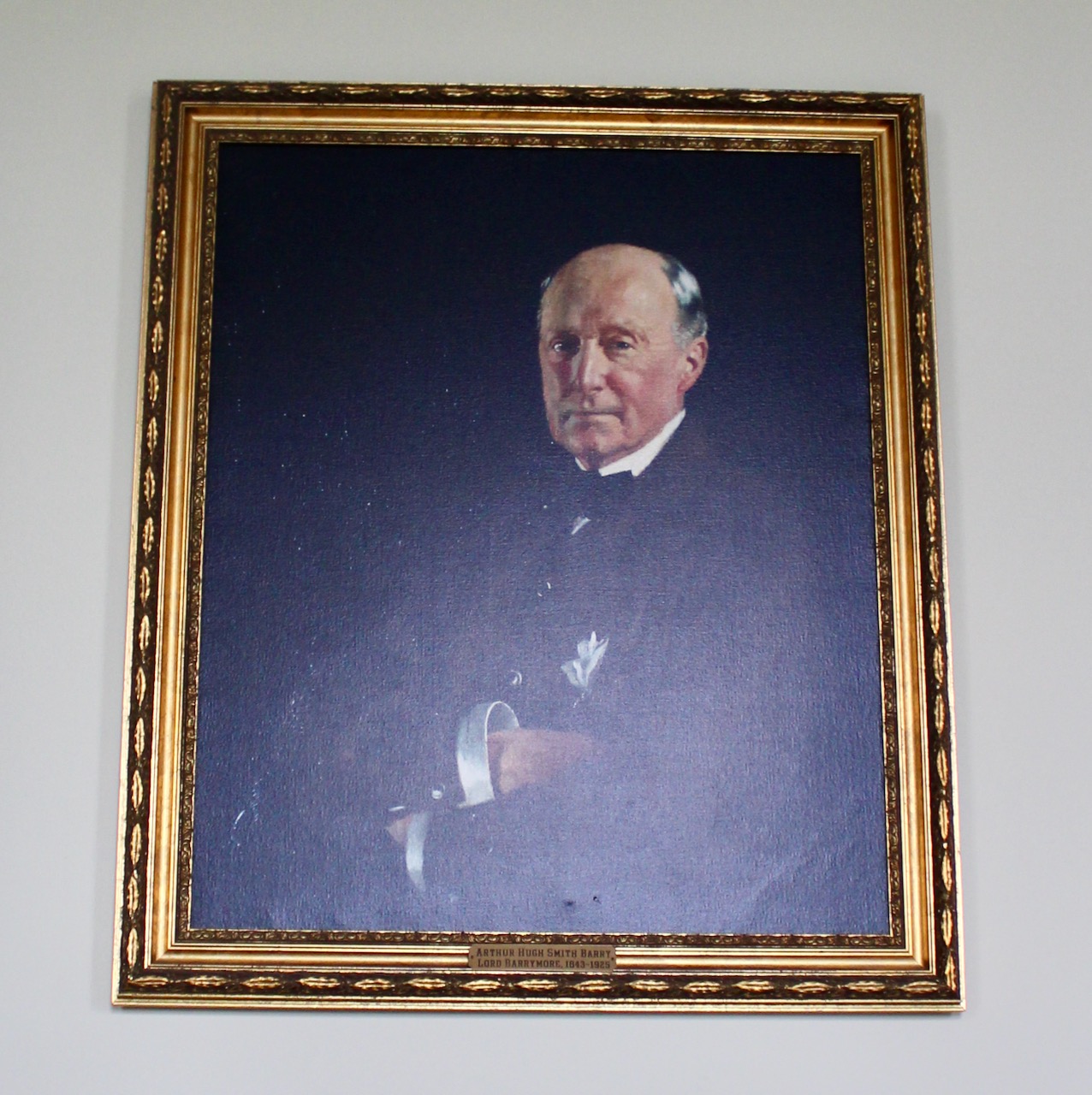
Arthur Hugh Smith-Barry (1843-1925), the oldest son of James and Elizabeth, inherited Fota and also Marbury Hall. He too served as Deputy Lieutenant, Justice of the Peace and High Sheriff of County Cork as well as Member of Parliament (M.P.) (Conservative) for County Cork between 1867 and 1874. He held the office of Member of Parliament (M.P.) (Conservative) for South Huntingdonshire in England between 1886 and 1900. In 1902 he was created 1st (and last) Baron Barrymore of County Cork.

Arthur Hugh Smith-Barry (1843-1925) of Fota House, 1st Viscount Barrymore. Photograph © Jennifer Winder-Baggot, www.irishhistorichouses.com
Captain Richard Hugh Smith-Barry (1823-1894) of Fota House, County Cork.
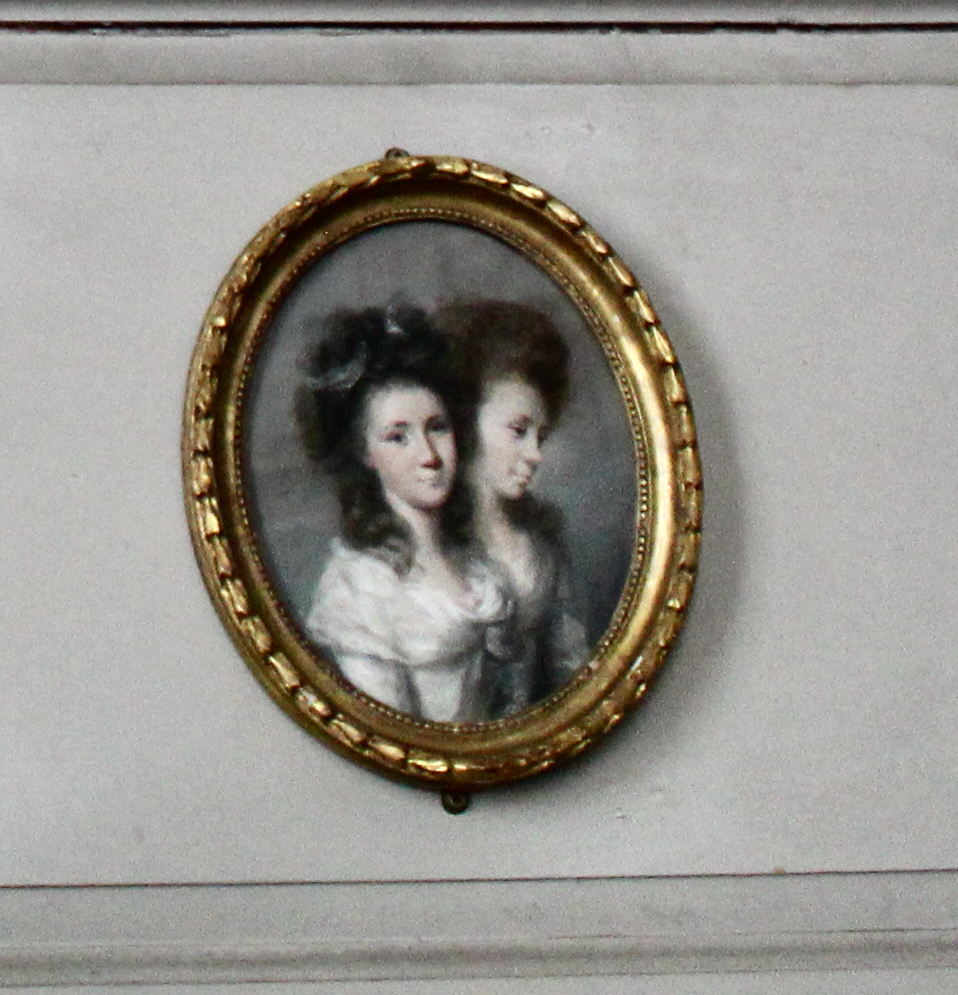
Charlotte Mary Smyth with a Landscape View of Ballynatray by James Butler Brenan courtesy of Adam’s 6 Oct 2009, provenance Ballynatray House. She married Charles William Moore 5th Earl of Mountcashell.
Richard Smyth of Ballynatray (1796-1858) who married in 1821 Harriet St. Leger of Doneraile, Irish school, courtesy of Adam’s auction 6 Oct 2009.
Percy Ellen Frederick William Smythe (1825-1869) 8th Viscount Strangford and Philippa Eliza Sydney Smythe (d. 1854) daughter of 6th Viscount Strangford, wife of Henry J. Baillie (d. 1885) of Scotland by William Fisher, 1817 – 1895.
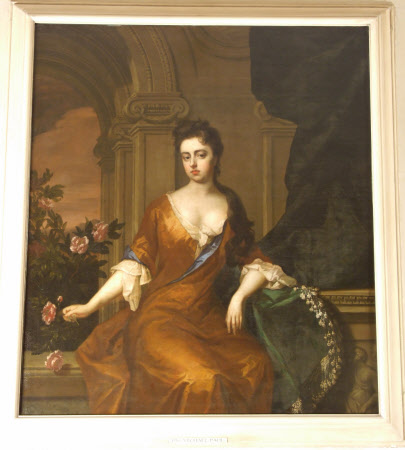
Mary Somerset (1665-1733), Duchess of Ormond, wife of James Butler 2nd Duke of Ormond (1665-1745), painted by Michael Dahl. Photograph © Jennifer Winder-Baggot, www.irishhistorichouses.com
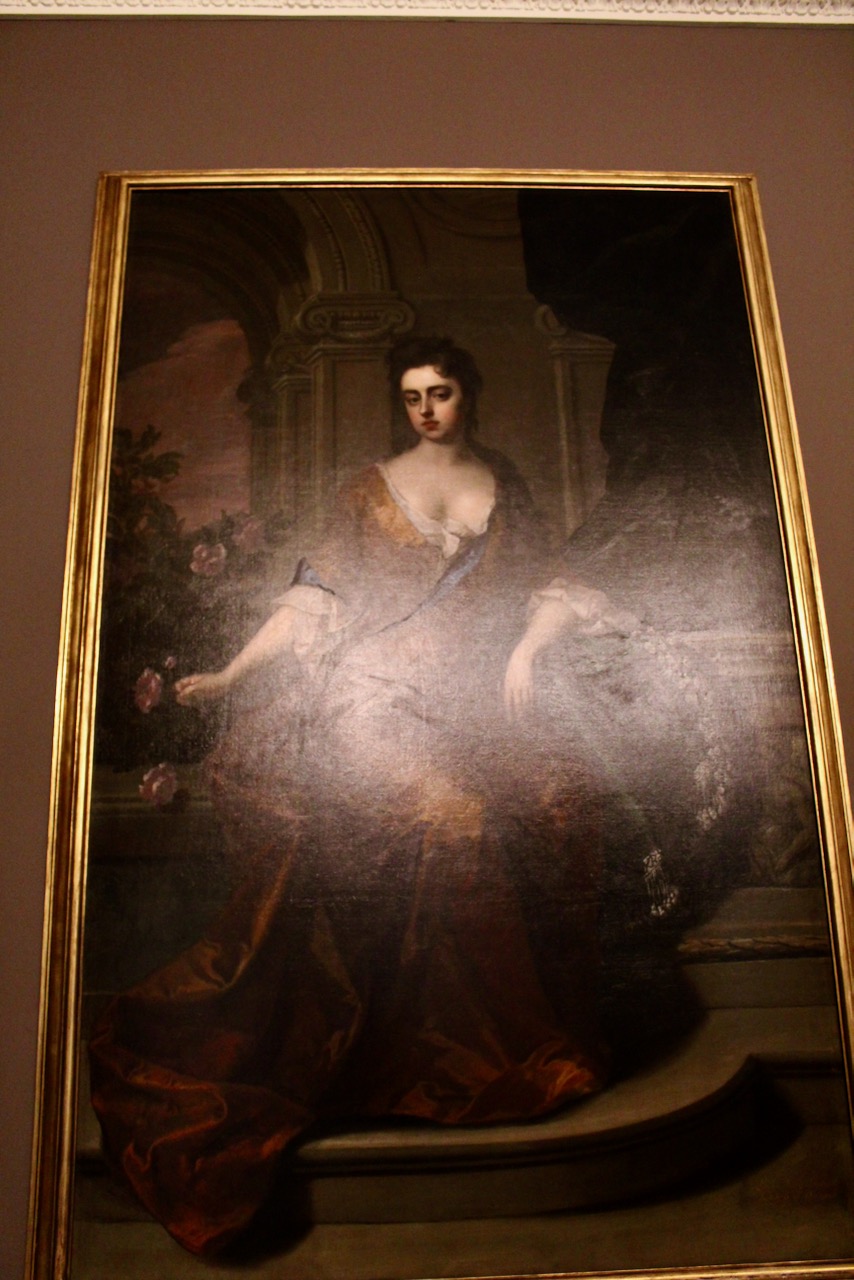
Lady Mary Somerset, Duchess of Ormonde (1665-1733) by Michael Dahl (Stockholm 1656/9 ? London 1743), 1690s. Three-quarter-length portrait, of a young woman, seated, full front, her head three-quarters left. She is wearing a deep brown-gold dress, blue lined and is holding a rose in her right hand. A bottle green curtain is to the right and an arcade in the left background.
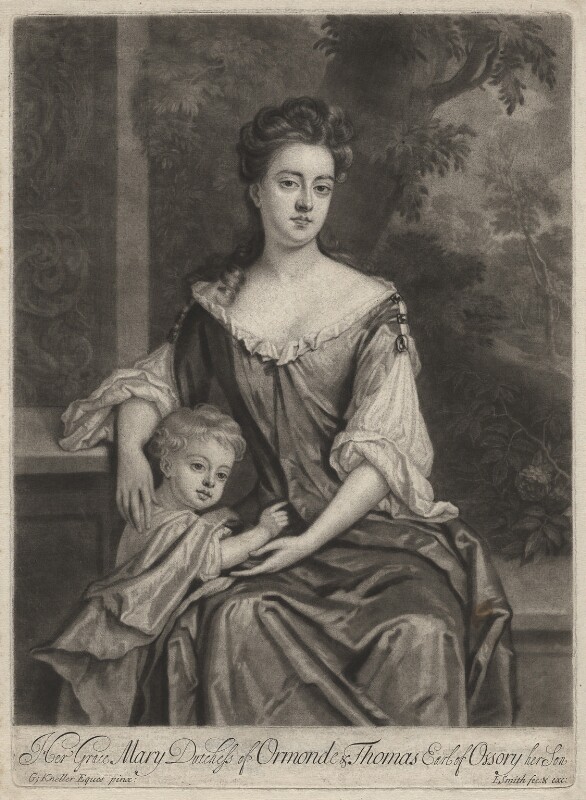
Mary Butler née Somerset (1665-1733) Duchess of Ormonde, Engraver John Smith, After Godfrey Kneller.
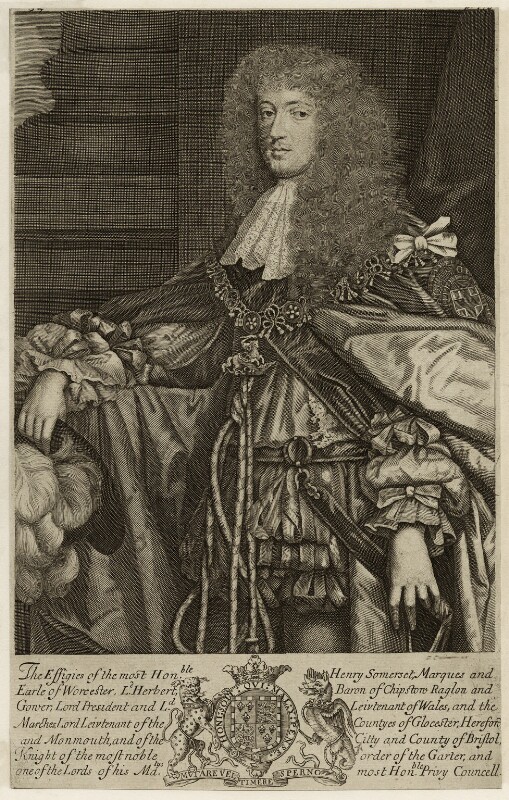
Henry Somerset (1629-1700) 1st Duke of Beaufort by Robert White, after Sir Godfrey Kneller, Bt, NPG D28194.
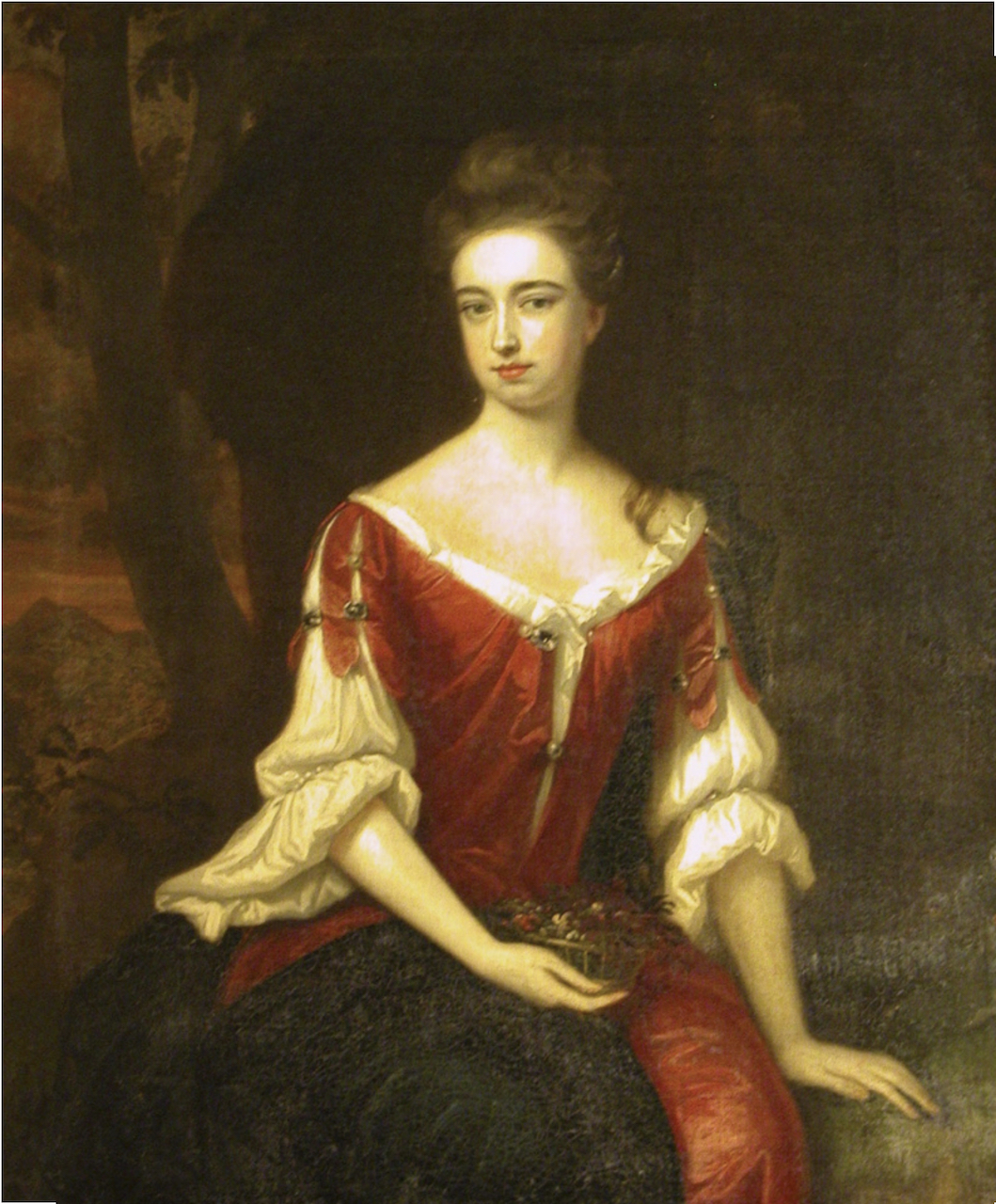
Mary Isabella Manners née Somerset, Duchess of Rutland, daughter of Charles Somerset 4th Duke of Beaufort and Elizabeth Berkeley, wife of Charles Manners, 4th Duke of Beaufort, Vice Regent of Ireland. Photograph © Jennifer Winder-Baggot, www.irishhistorichouses.com
Mary Sackville (1637-1678) Countess of Orrery later Viscountess Shannon (d.1714) by Godfrey Kneller courtesy of National Trust Knole. She was the wife of Roger Boyle, 2nd Earl of Orrery.
Charlotte née Seymour (1835-1903) Countess Spencer, wife of John Poyntz Spencer 5th Earl Spencer, by John Leslie, 1860. She was the daughter of Frederick Charles William Seymour. Photograph © Jennifer Winder-Baggot, www.irishhistorichouses.com
Thomas Southwell (1610-1680), 1st Baron Southwell by Balthazar Denner. He lived in Castle Matrix, County Limerick.
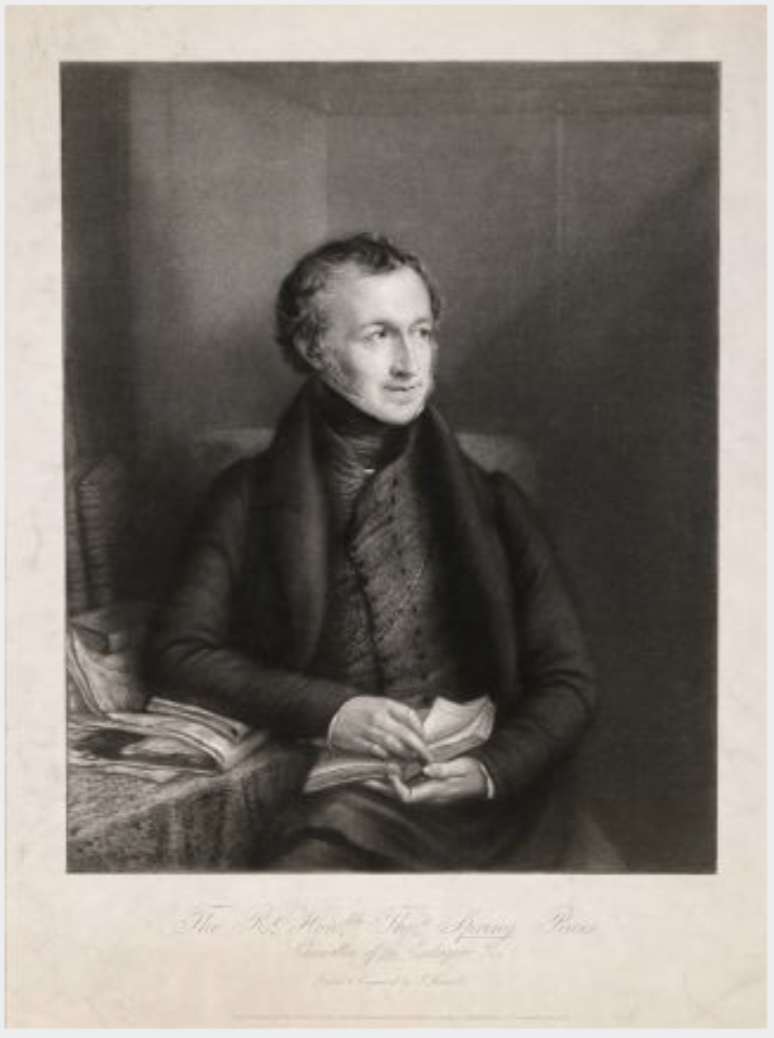
Thomas Spring-Rice (1760-1866), Chancellor of the Exchequer and later 1st Baron Monteagle, photograph courtesy of National Gallery of Ireland.
Thomas Spring-Rice (1849-1926) 2nd Baron Monteagle by Charles Wellington Furse, photograph courtesy of National Gallery of Ireland.
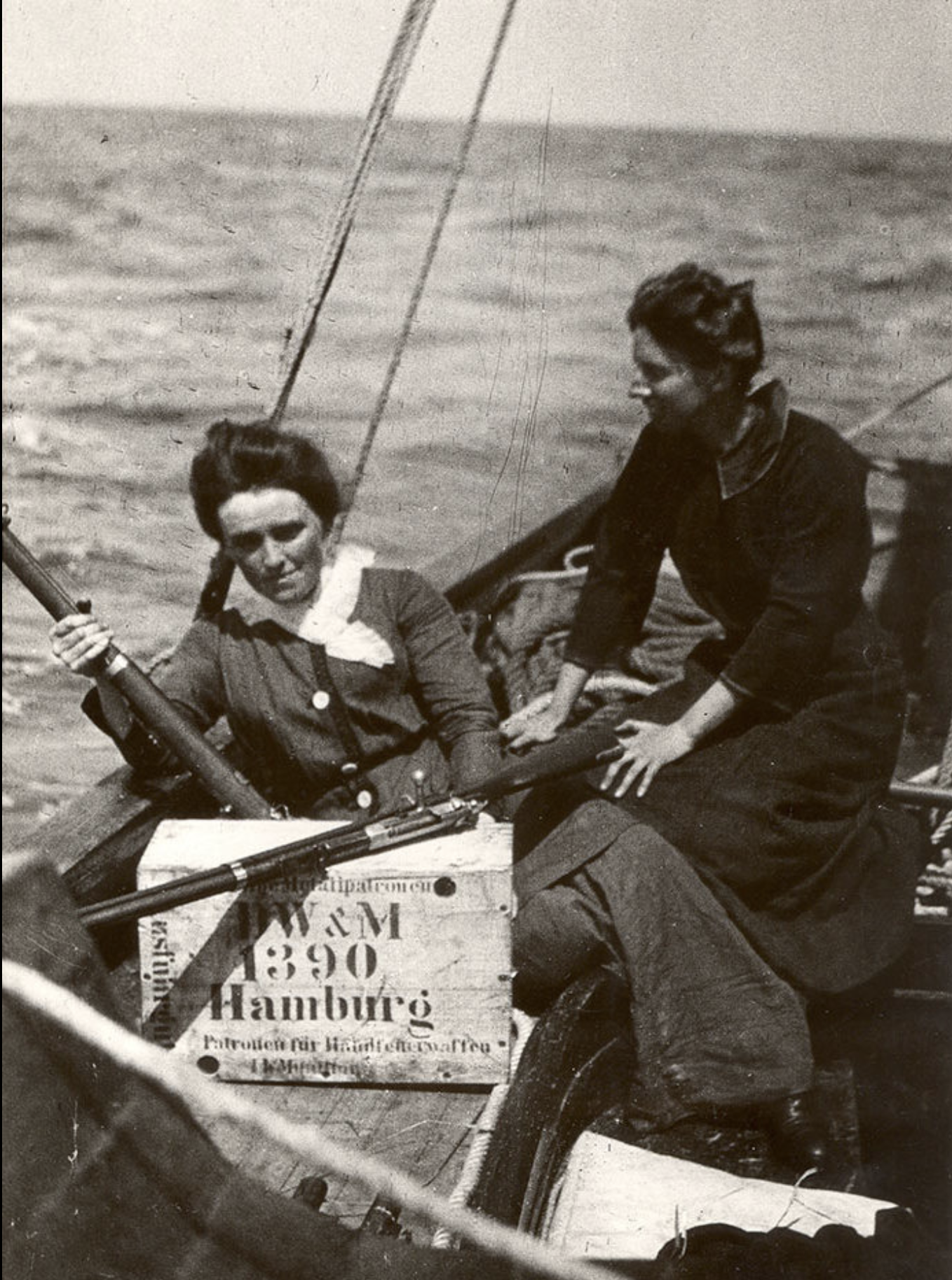
Mary Spring Rice (1880-1924) and Molly Childers aboard the Asgard during the Howth gun-running.
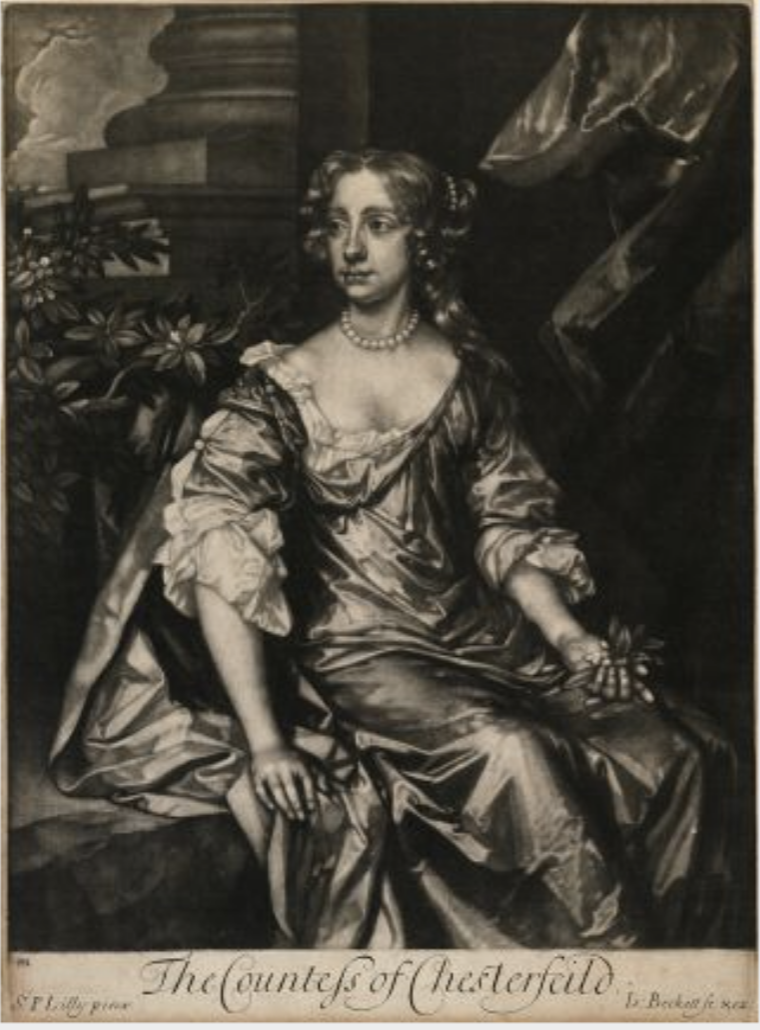
Elizabeth Stanhope née Butler (1640-1665), daughter of the 1st Duke of Ormonde and 2nd wife of Philip Stanhope 2nd Earl of Chesterfield Date: 1681/1688 Engraver: Isaac Beckett, English, c.1653-c.1715/19 After Peter Lely, Dutch, 1618-1680, courtesy of National Gallery of Ireland.
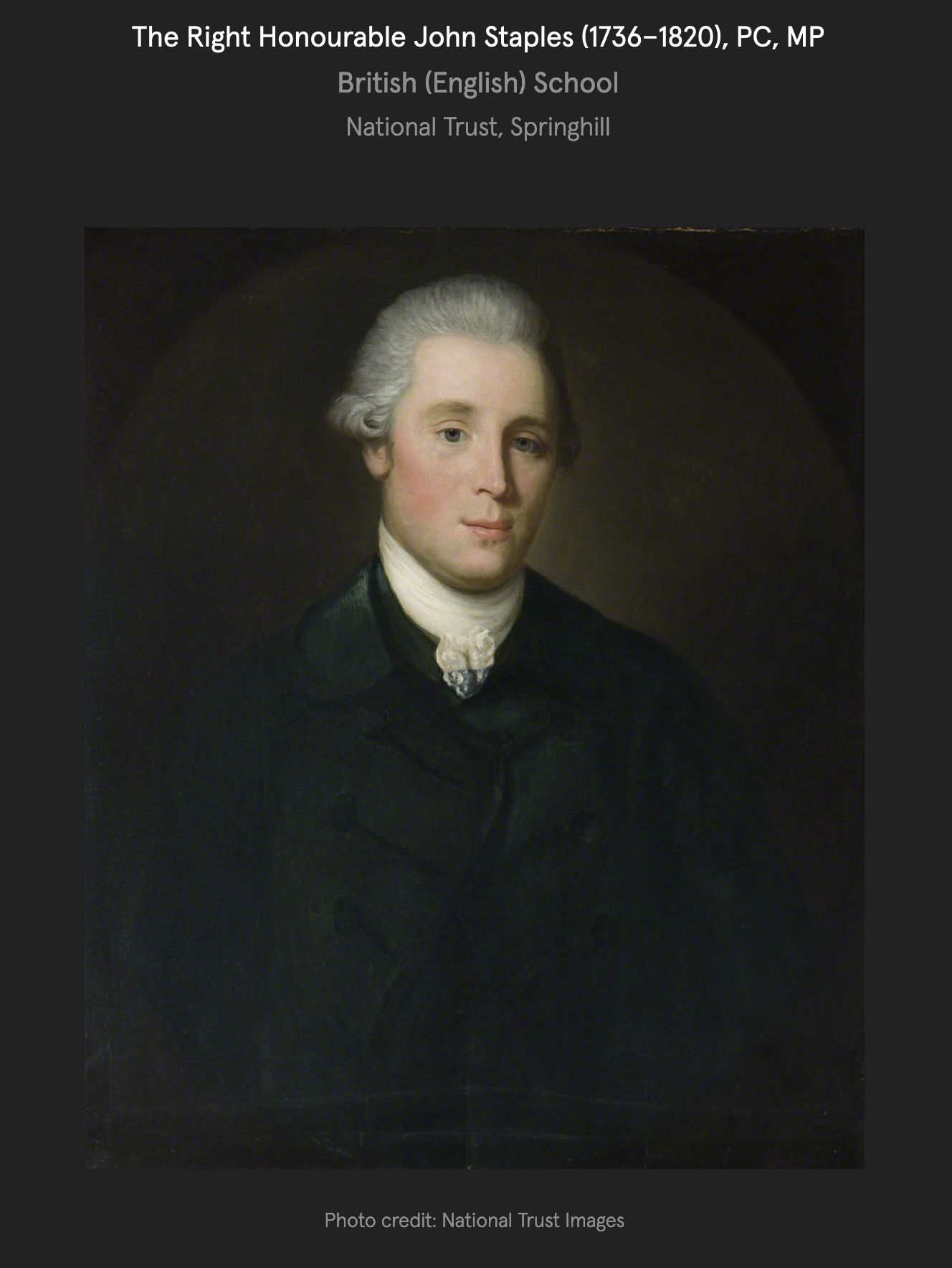
John Staples (1736-1820), of Lissan, County Tyrone, courtesy of National Trust. Springhill, County Derry.
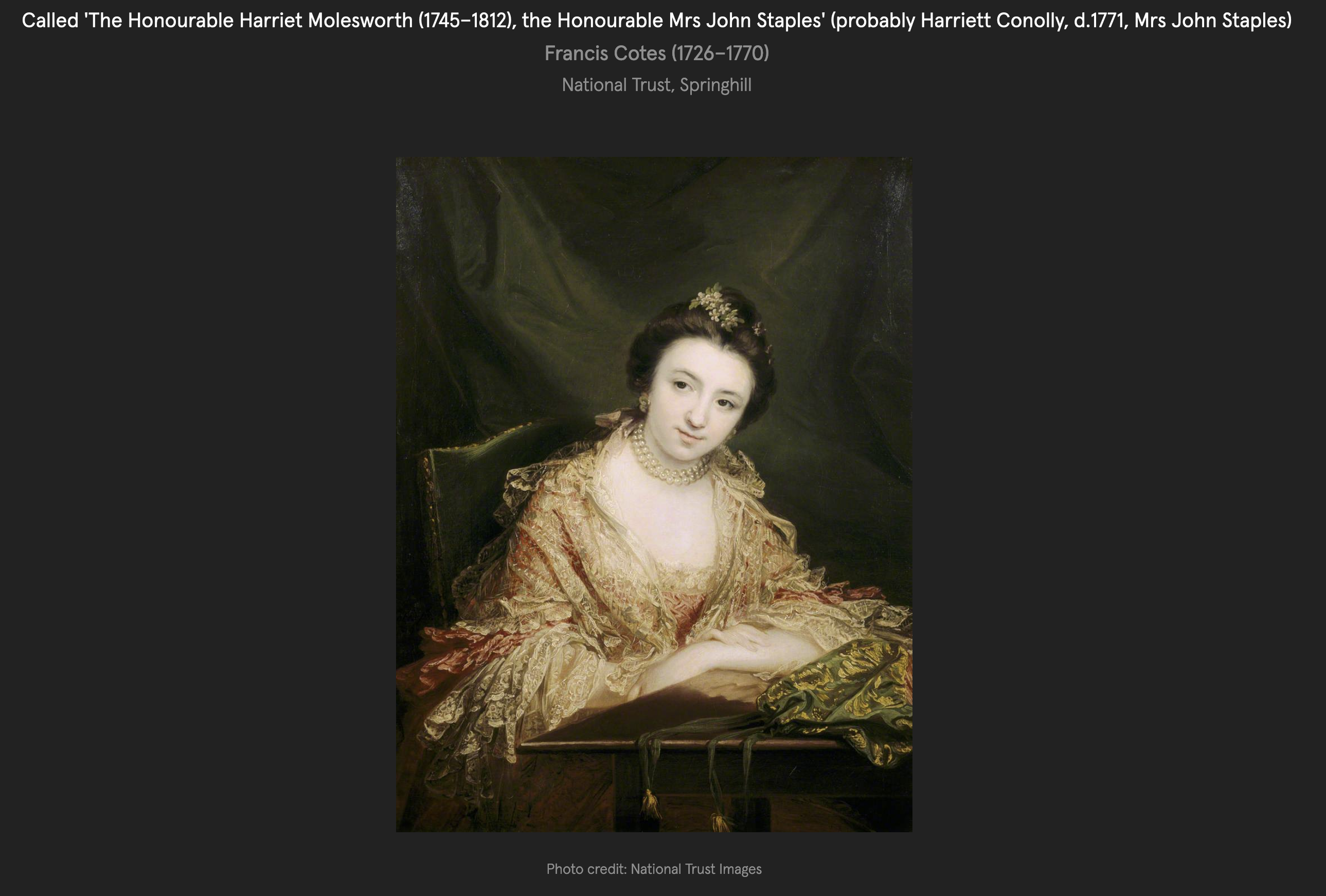
Portrait called The Honourable Harriet Molesworth (1745-1812), wife of John Staples (1736-1820) (probably Harriet Conolly, d. 1771), by Francis Cotes, courtesy of National Trust. Springhill, County Derry.
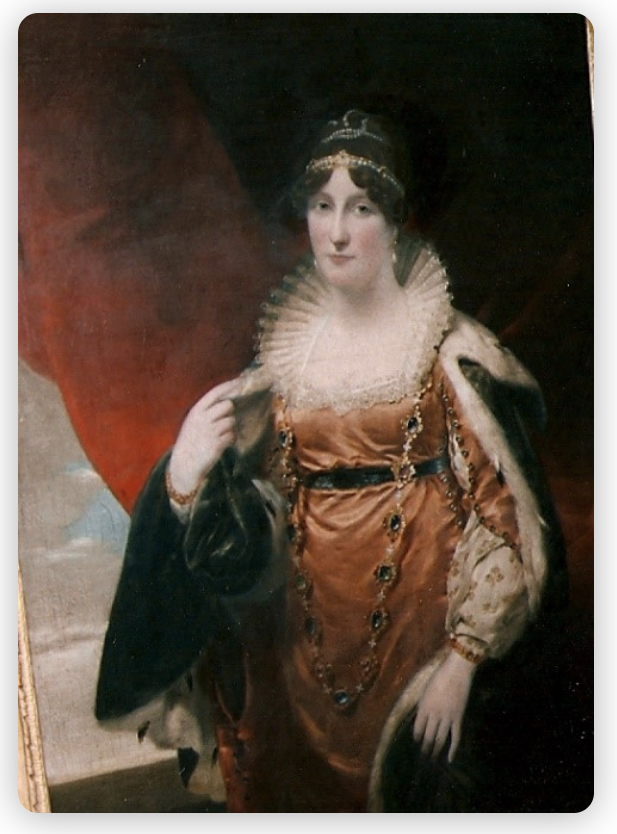
Grace Louisa Staples (1779-1860) Marchioness of Ormonde by John Saunders. She was the wife of James Wandesford Butler, 1st Marquess of Ormonde, and daughter of John Staples (1736-1820) of Lissan, County Tyrone.
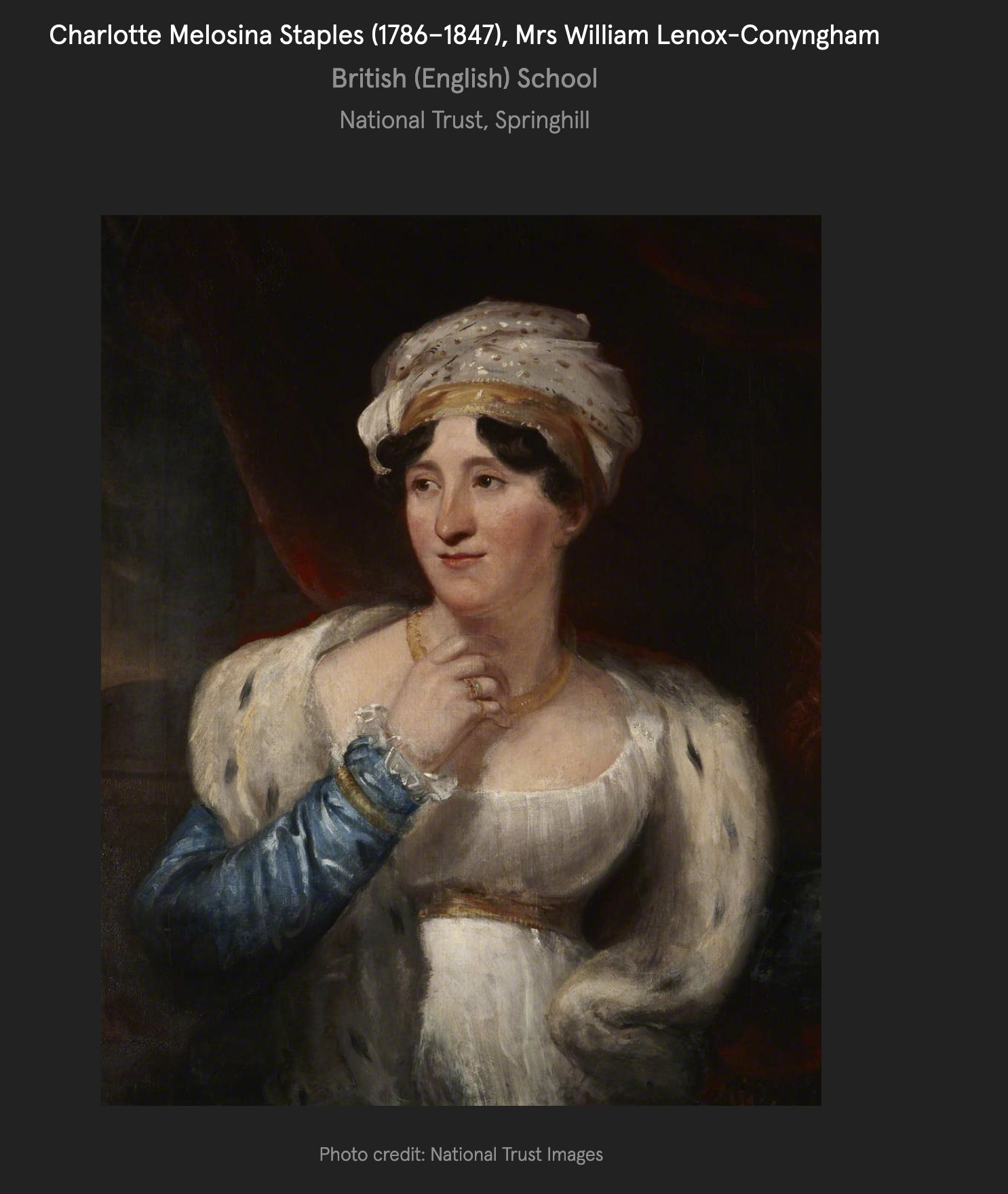
Chalotte Melosina Staples (1786-1847), wife of William Lenox-Conyngham (1792-1858), daughter of John Staples (1736-1820) of Lissan, County Tyrone, courtesy of National Trust. Springhill, County Derry.
Louisa Anne Pakenham née Staples (1770-1833) and her sister Henrietta Margaret Trench née Staples (1770-1847) Countess of Clancarty (c.1770-1847) by Hugh Douglas Hamilton. Louisa was married to Thomas Pakenham (1757-1836) and Henrietta was married to Richard Power Keating Le Poer Trench (1767-1837) 2nd Earl of Clancarty. Their father was John Staples (1736-1820) of County Tyrone, and their mother was Harriet Conolly (1739-1771) of Castletown House, County Kildare. Photograph © Jennifer Winder-Baggot, www.irishhistorichouses.com
Robert Staples (1772-1832) 8th Baronet, of Springhill, County Derry and Lissan, County Tyrone, courtesy of National Trust. Springhill, County Derry.
Charles Stewart Parnell’s mother Delia. She was an American, daughter of the famous “Old Ironsides,” Admiral Charles Stewart.
William Stewart of Killymoon (1710-1797), British (Irish) School, mid 18th century, inscribed. Oil painting on canvas, A half-length portrait, wearing a gold trimmed blue coat.
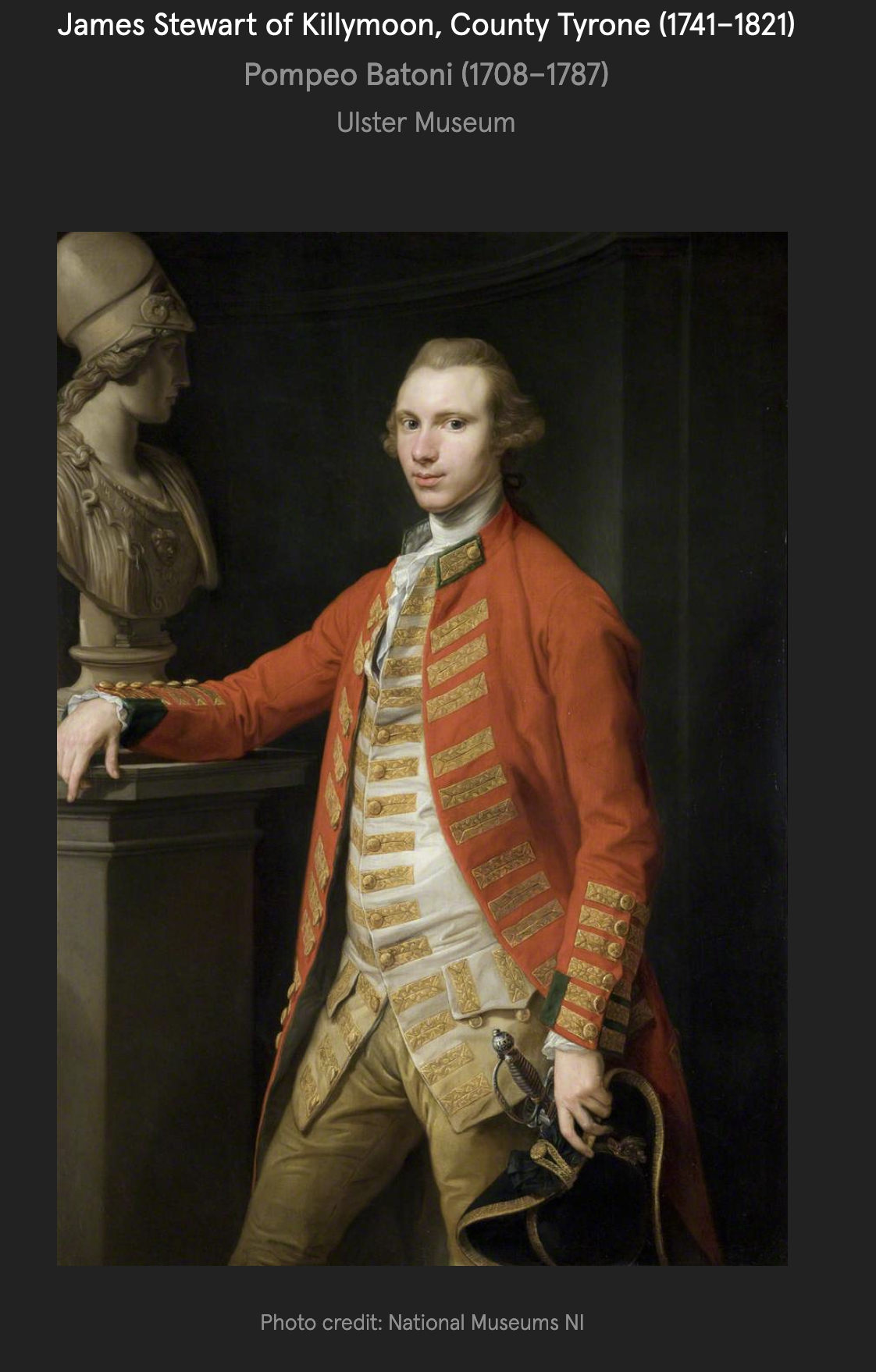
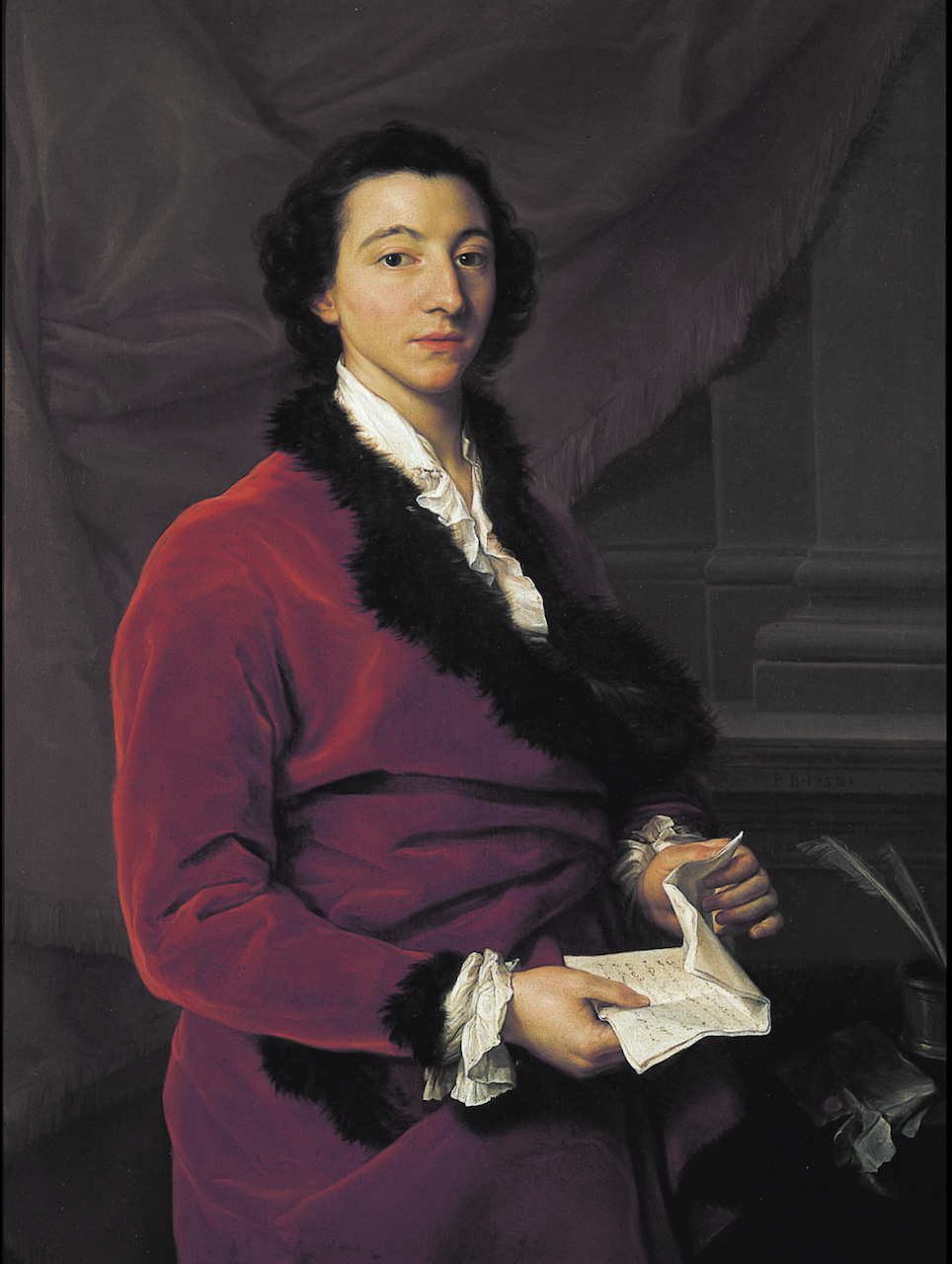
James Stewart (1741-1821) of Killymoon, County Tyrone, by Pompeo Batoni, courtesy of Ulster Museum. He was a son of William Stewart of Killymoon (1710-1797).
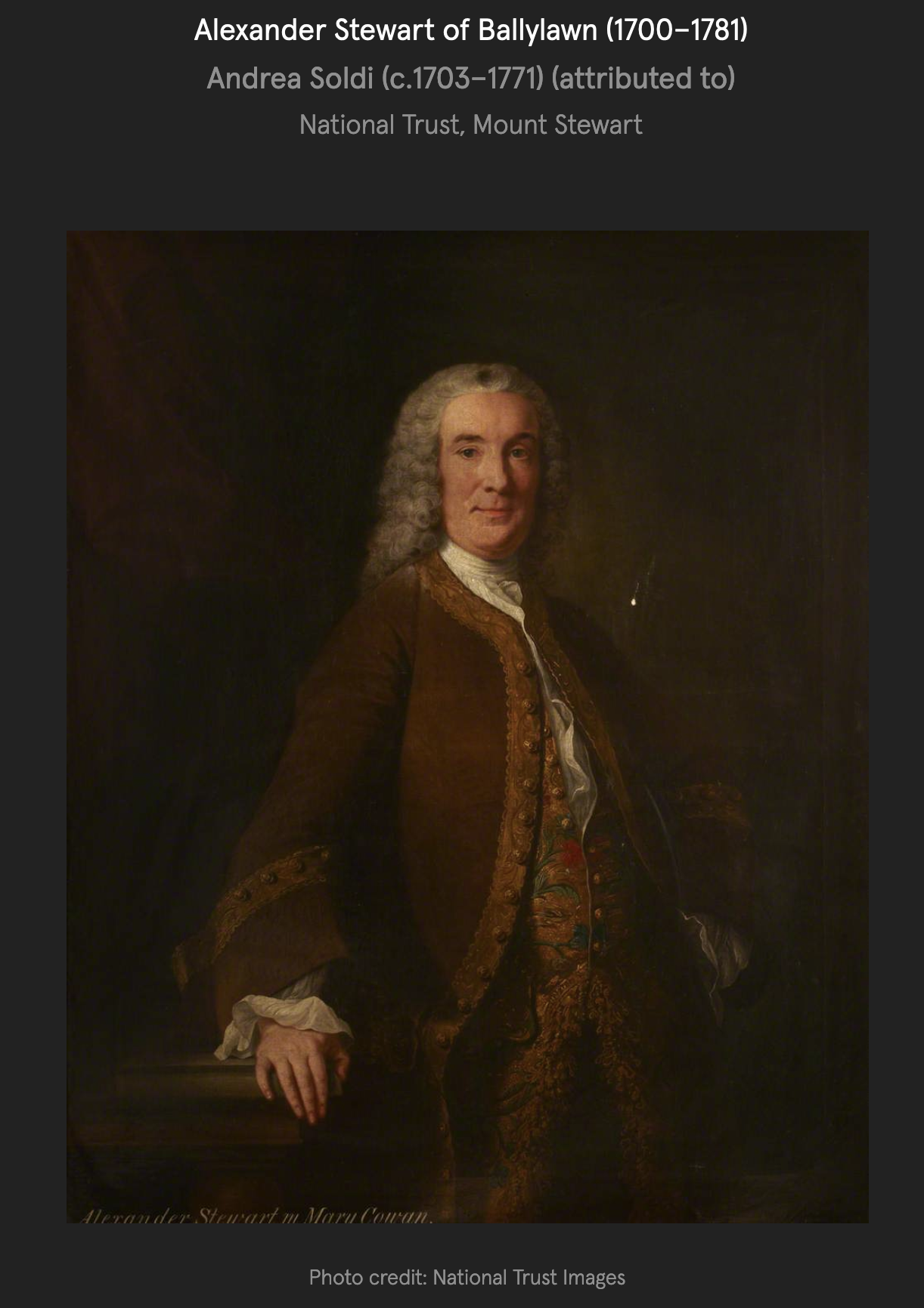
Alexander Stewart (1699/1700-1781) of Ballylawn, by Andrea Soldi, courtesy of National Trust, Mount Stewart.

Alexander Stewart (1699/1700-1781) and his wife, Mary Cowan, bought a large area of land in County Down in 1744, part of which became Mount Stewart demesne.

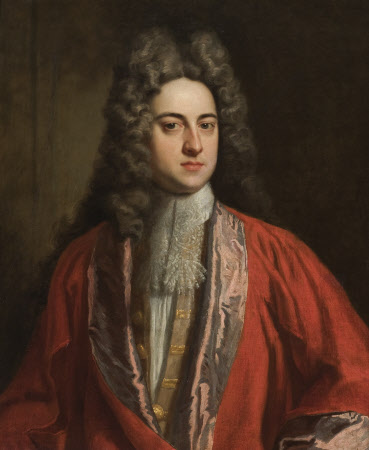
Oil painting on canvas, Alexander Stewart of Mount Stewart (1700-1781), school of Sir Godfrey Kneller (Lubeck 1646/9 – London 1723). A half-length portrait of Alexander Stewart, father of the 1st Marquess of Londonderry, facing the viewer, with his head turned slightly to the right, wearing a red coat and a cravat over a gold-embroidered jacket. By Unknown author – https://www.artuk.org/discover/artworks/alexander-stewart-of-ballylawn-17001781-132900, Public Domain, https://commons.wikimedia.org/w/index.php?curid=72556779
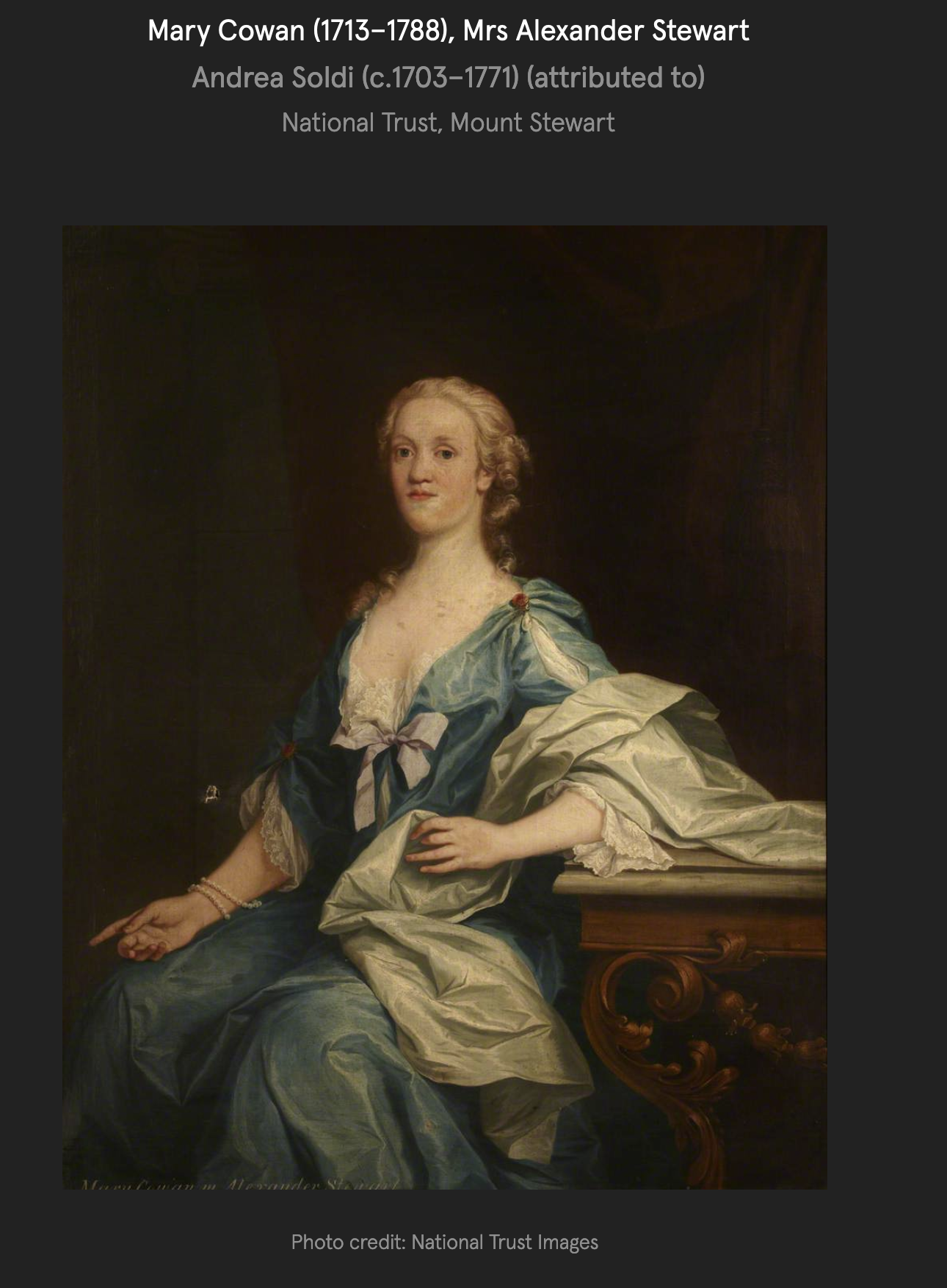
Mary Cowan (1713-1788) who married Alexander Stewart, by Andrea Soldi, courtesy of National Trust, Mount Stewart.
Robert Stewart (1739-1821) later 1st Marquess Londonderry, by Anton Raphael Mengs, courtesy of National Trust, Mount Stewart. He was the son of Alexander Stewart (1700-1781) of Ballylawn and Mary née Cowan.
Oil painting on paper laid down on canvas, A Conversation Piece with Robert, 1st Marquess of Londonderry (1739-1821), his Second Wife, Frances (1750-1833), their Son Charles William (1778-1854), and their Four Younger Daughters, Selina, Matilda, Emily Jane and Octavia by Thomas Robinson (Windermere before 1770 – Dublin 1810), 1803-08. The daughters shown are Lady Selina Stewart, later Lady Selina Kerr (d.1871), Lady Emily Jane Stewart, Viscountess Hardinge (1789-1865), Lady Octavia Catherine Stewart, later Baroness Ellenborough (d.1819) and Lady Matilda Stewart, later Lady Matilda Ward (d.1842). Their elder three daughters Georgiana (d. 1804), Caroline (1865) and France Anne (1777 – 1810) are not present.
Alexander Stewart of Ards, brother of 1st Marquess Londonderry, by Pompeo Batoni, courtesy of National Trust, Mount Stewart. He was the son of Alexander Stewart (1700-1781) of Ballylawn and Mary née Cowan.
Robert Stewart (1769-1822) Viscount Castlereagh, later 2nd Marquess of Londonderry, by Hugh Douglas Hamilton, courtesy of National Trust, Mount Stewart.
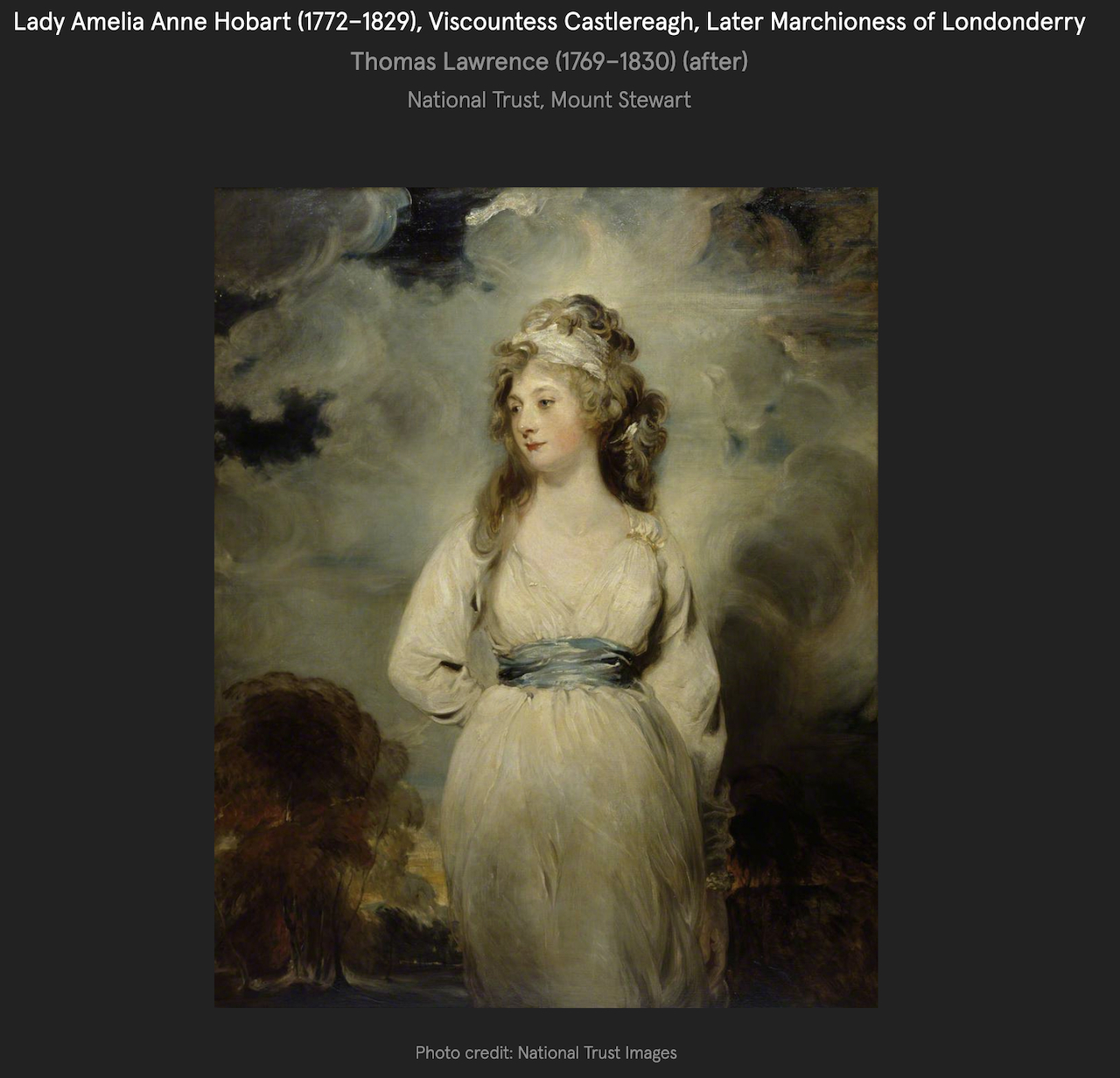
Amelia Anne Hobart (1772-1829) wife of Robert Stewart, 1st Viscount Castlereagh, by Thomas Lawrence, courtesy of National Trust Mount Stewart.
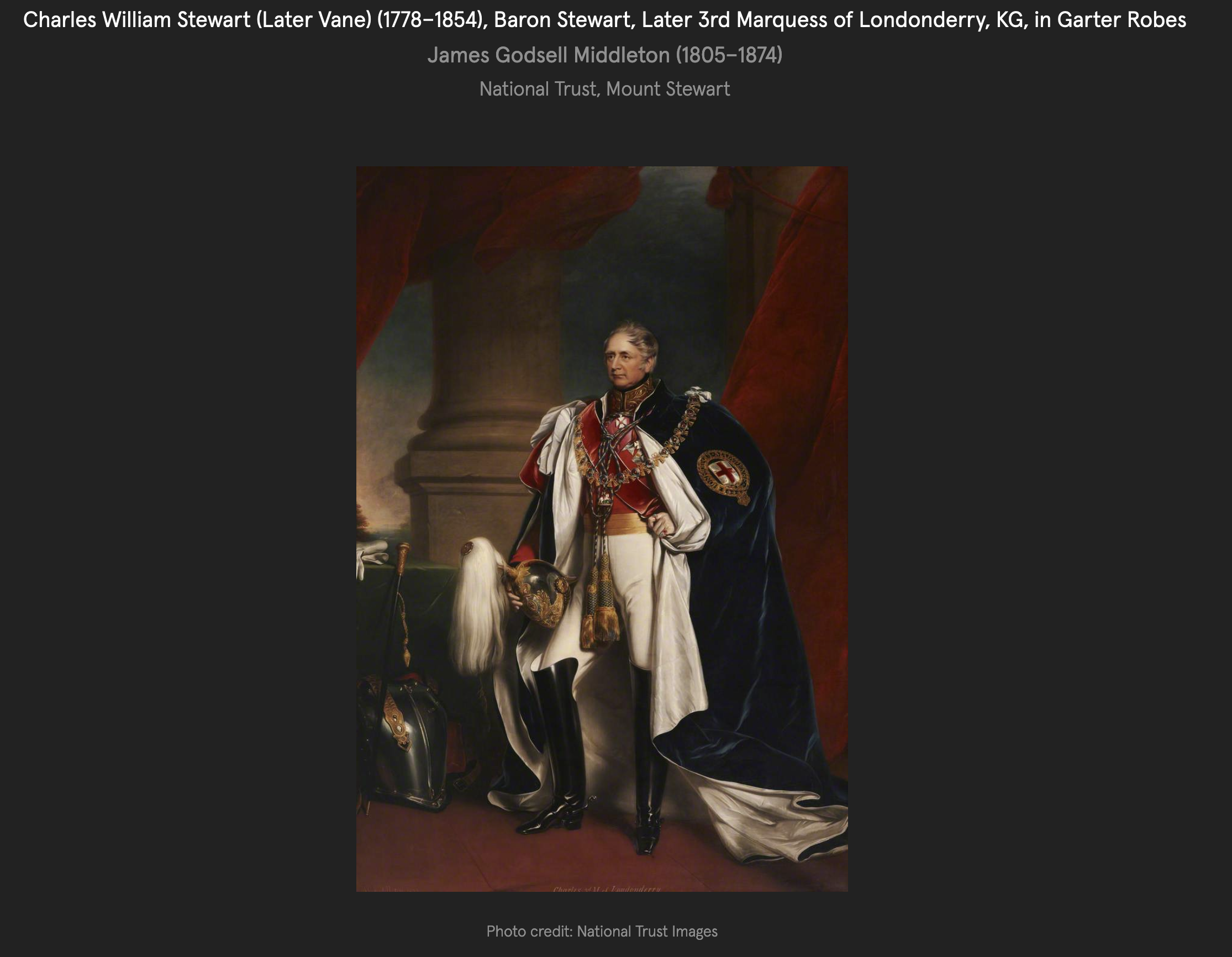
Charles William Stewart (later Vane) (1778-1854), later 3rd Marquess of Londonderry, in Garter Robes, by James Godsell Middleton, courtesy of National Trust, Mount Stewart. He was the half-brother of Robert Stewart (1769-1822) Viscount Castlereagh.
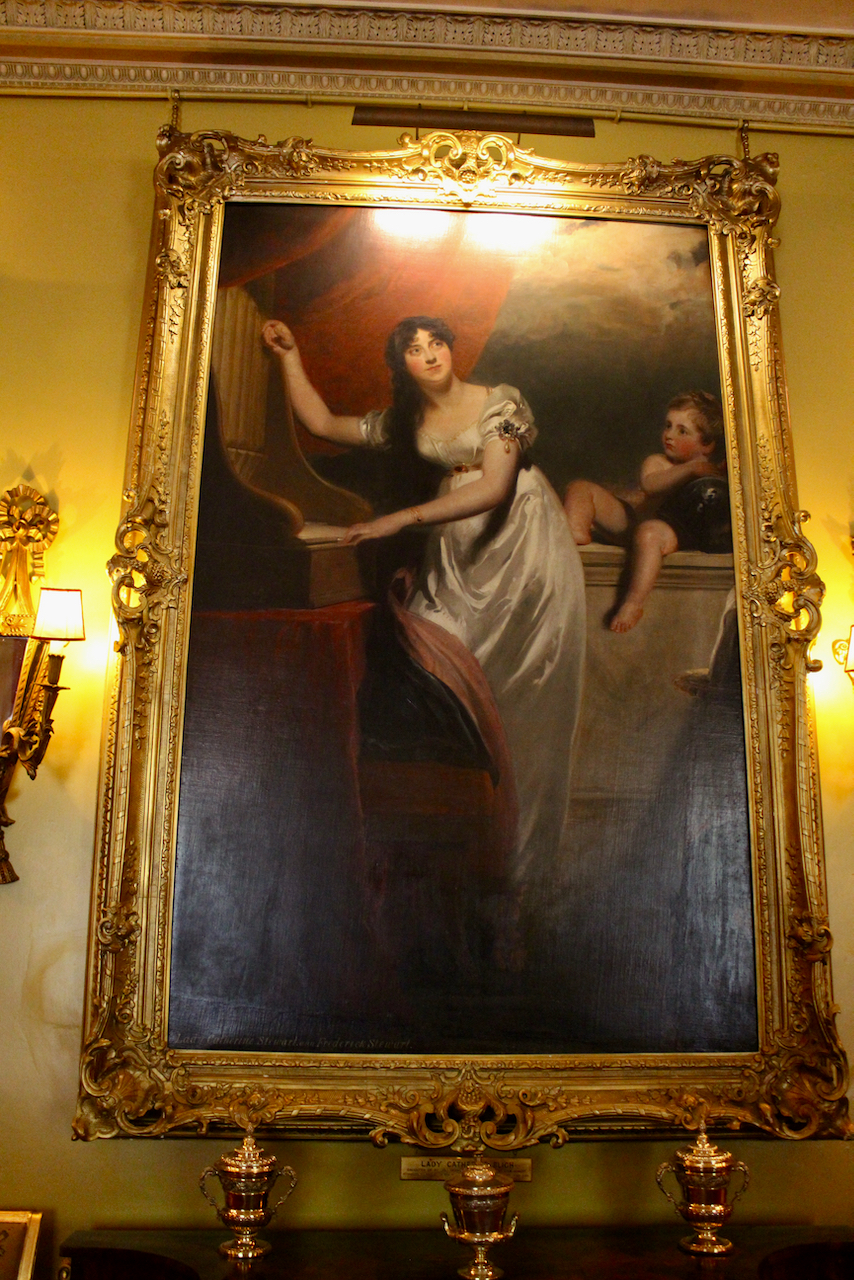
Painting by Thomas Lawrence of Catherine Bligh, daughter of 3rd Lord Darnley, with her son Frederick Wililam Robert, who became 4th Marquess of Londonderry. Mount Stewart, County Down, June 2023. She married Charles William Stewart (later Vane) (1778-1854), later 3rd Marquess of Londonderry. Photograph © Jennifer Winder-Baggot, www.irishhistorichouses.com
Frances Anne (1800-1865) Marchioness of Londonderry, and her son George Henry (1827-1828) Viscount Seaham, by Thomas Lawrence, courtesy of National Trust, Mount Stewart. She married Charles Stewart later Vane, 3rd Marquess of Londonderry.
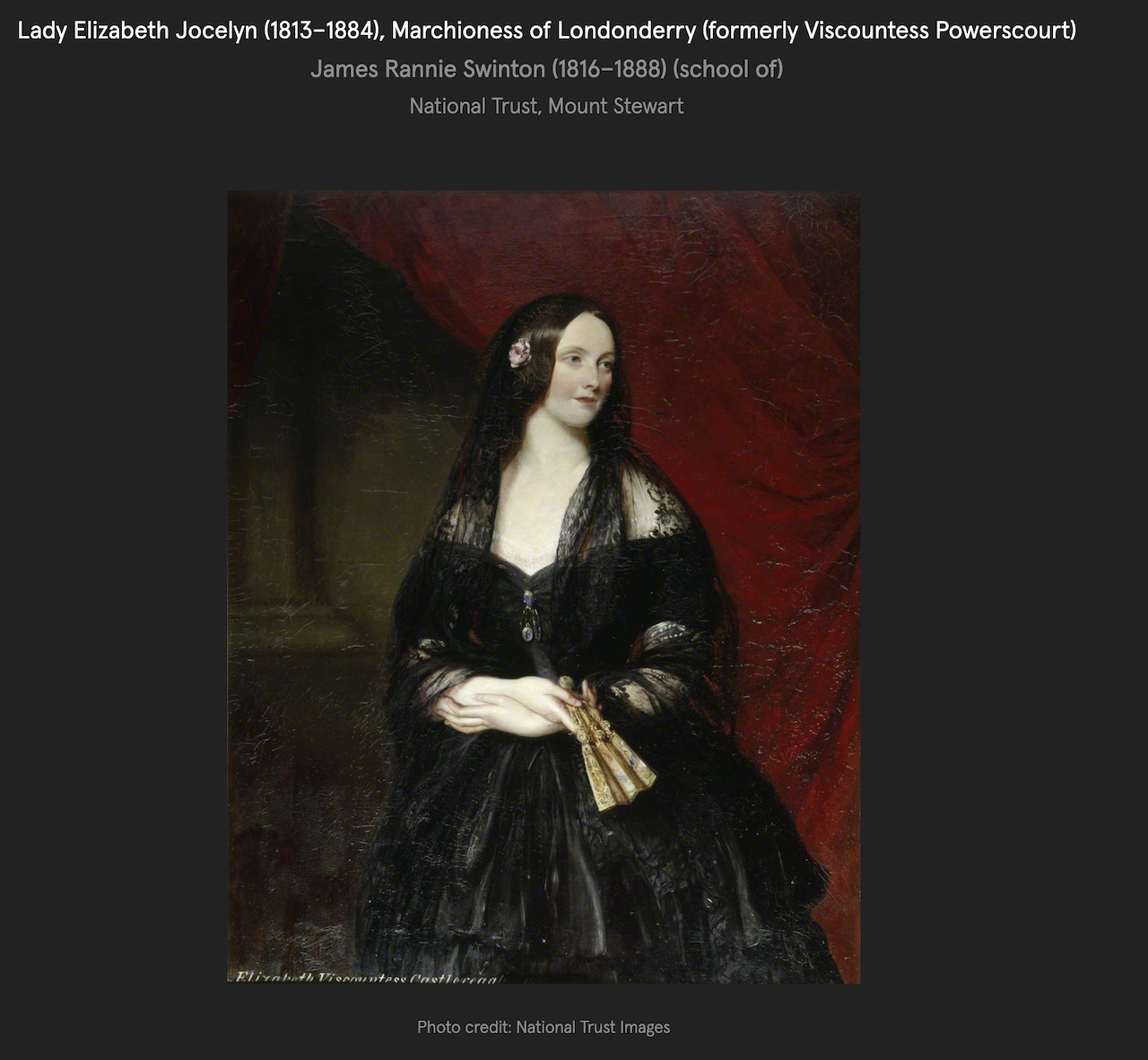
Elizabeth Jocelyn (1813-1884), Marchioness of Londonderry, formerly Viscountess Powerscourt, by James Rannie Swinton, courtesy of Mount Stewart National Trust. She was married to the 6th Viscount Powerscourt. She was the daughter of Robert Jocelyn 3rd Earl of Roden. After her husband’s death she married Frederick William Robert Stewart, 4th Marquess of Londonderry, of Mount Stewart, County Down.
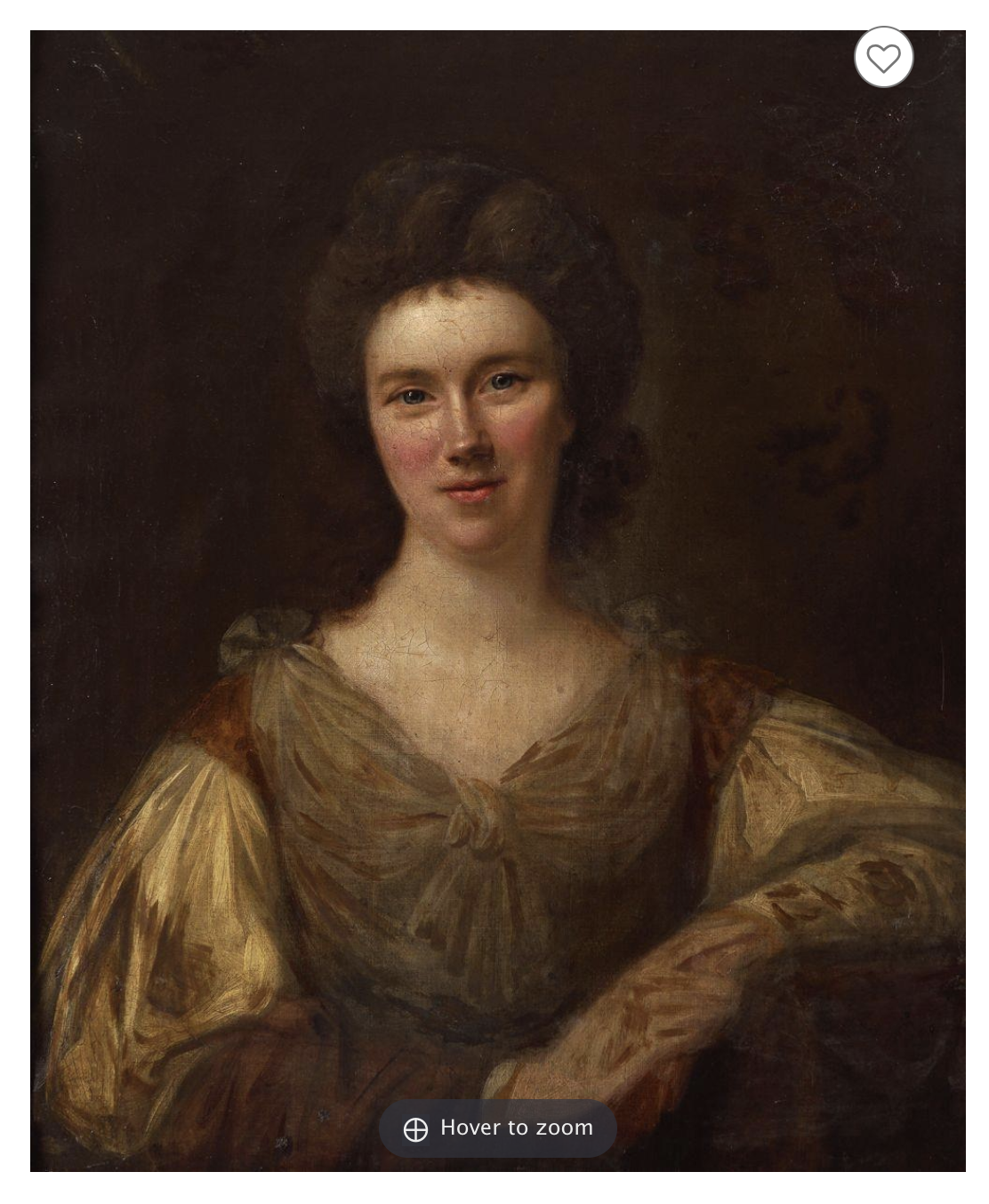
Anna Stewart (née Garner), of Lisburn Co. Down, Second Wife of William Stewart of Wilmont, by Nathaniel Hone, courtesy of Shepphards auctions.
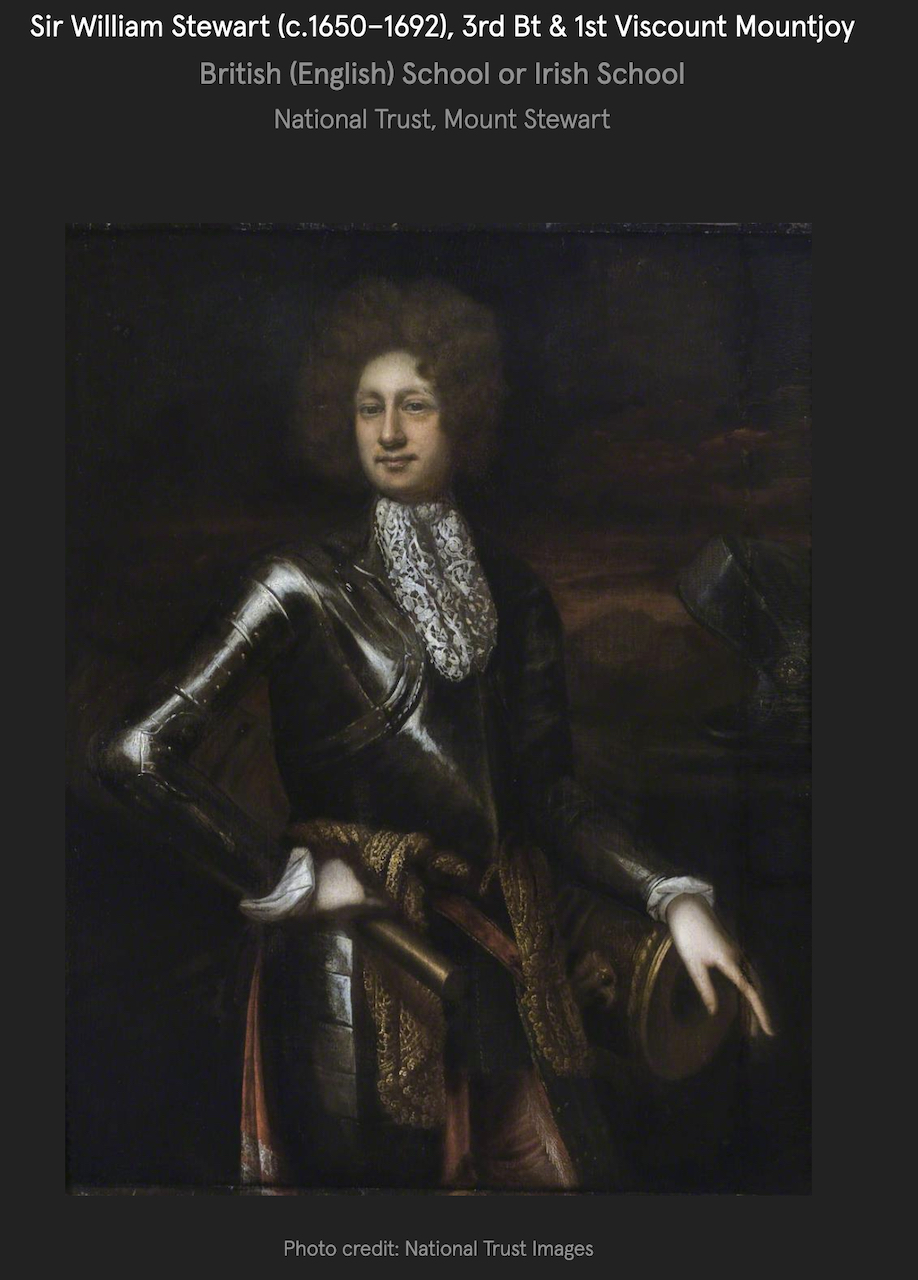
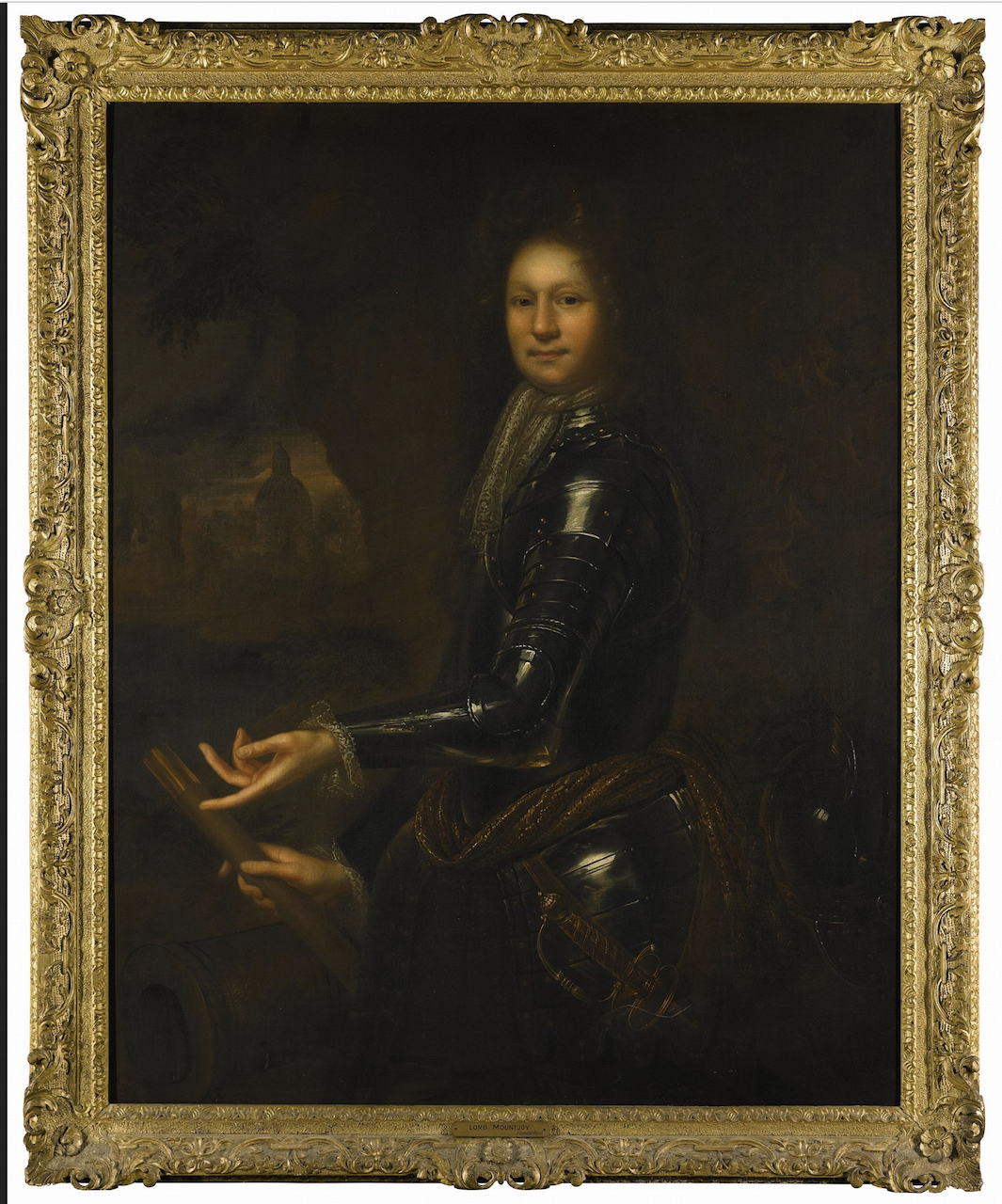
William Stewart (c. 1650-1692) 3rd Bt and 1st Viscount Mountjoy courtesy of National Trust Mount Stewart.
William Stewart (c. 1650-1692) 3rd Bt and 1st Viscount Mountjoy.
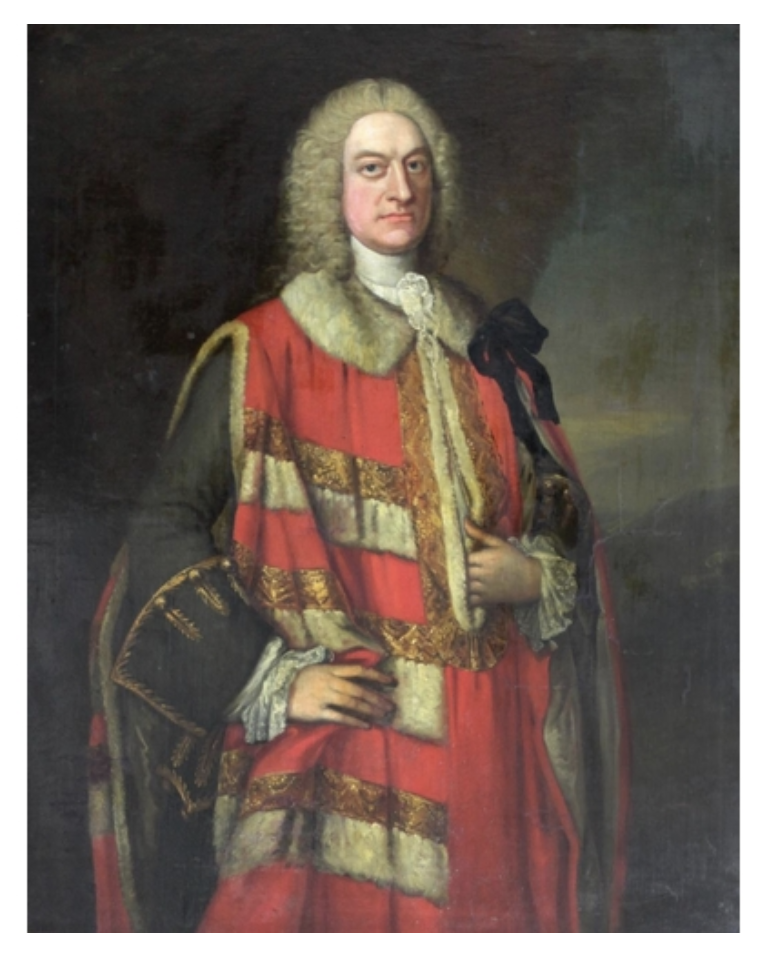
Anne Boyle (1700-1742) 2nd Lady Mountjoy, wife of William Stewart 2nd Viscount Mountjoy by Garrett Morphy Adams auction 19 Oct 2021. She was the daughter of Murrough Boyle, 1st Viscount of Blessington.
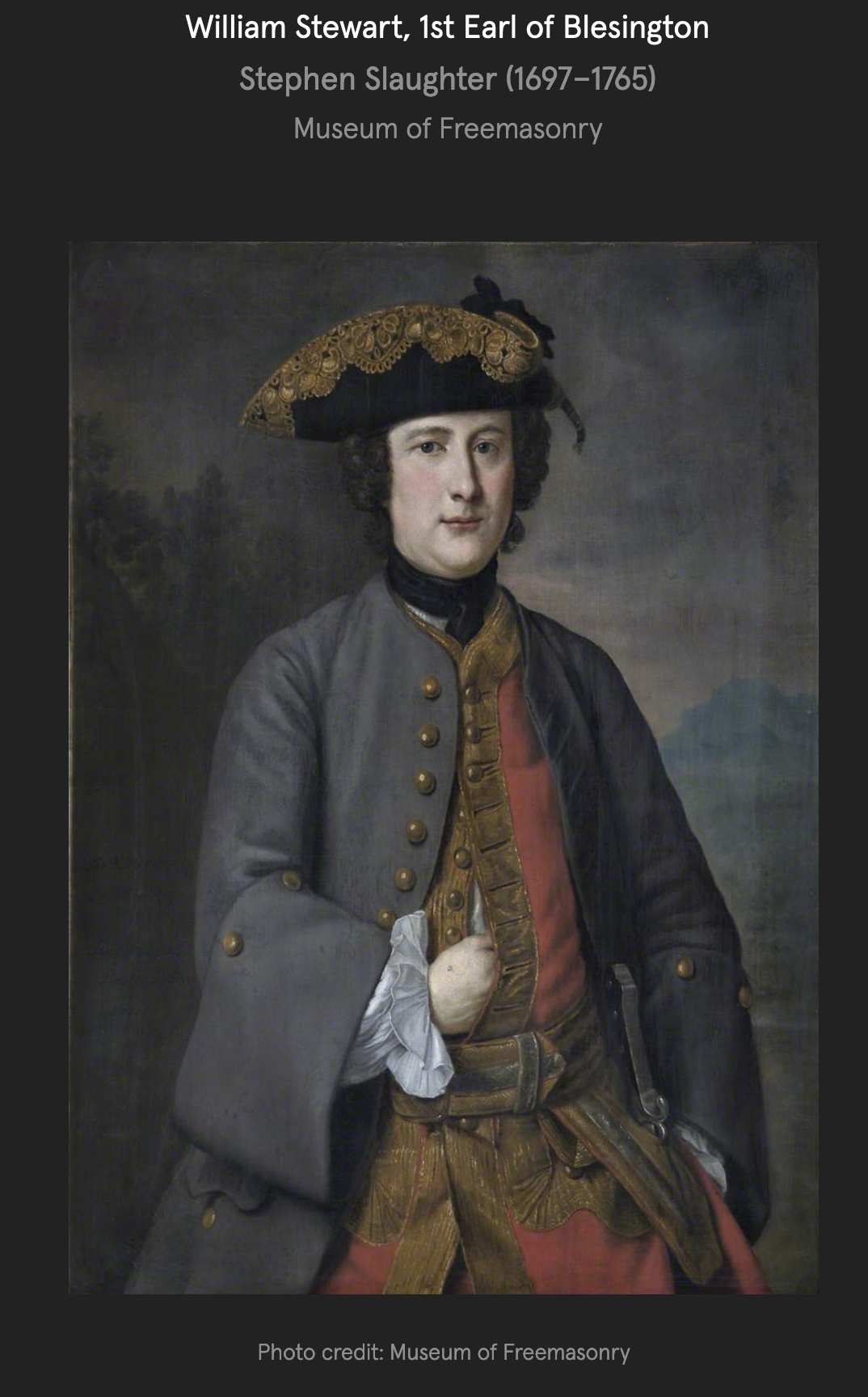
William Stewart (1709-1769) 1st Earl of Blesington by Stephen Slaughter courtesy of Museum of Freemasonry. He was the son of William Stewart 2nd Earl of Mountjoy and Anne née Boyle.
James Stopford (1794-1858) 4th Earl of Courtown, attributed to Joseph Slater, courtesy of Fonsie Mealy auction. He married Charlotte Albina Montagu Scott.
Col. E. Stratford” attributed to Charles Jervas, courtesy Fonsie Mealy Fortgranite auction. It could be Edward Stratford (1663-1740) father of John Stratford (d. 1777) 1st Earl of Aldborough. He lived at Belan, County Kildare.
John Stratford (d. 1777) 1st Earl of Aldborough courtesy of Fonsie Mealy Fortgranite auction. He lived at Belan in County Kildare. He married Martha O’Neale, daughter of Benjamin, Archdeacon of Leighlin and Ferns.
Martha O’Neale, daughter of Benjamin, Archdeacon of Leighlin and Ferns, 1st Countess Aldborough, courtesy of Fonsie Mealy Fortgranite auction.
Martha, Countess of Aldborough courtesy of Fonsie Mealy Fortgranite auction.
Edward Stratford (1736-1801) 2nd Earl of Aldborough in ceremonial robes, and with painted coat of arms, by Philip Hussey courtesy of Fonsie Mealy Fortgranite. He lived in Belan House, County Kildare.
Elizabeth Countess of Aldborough (1759-1811) by Hugh Douglas Hamilton, as Hebe. Elizabeth Hamilton was wife of John Stratford 3rd Earl of Aldborough. She was the daughter of Frederick Hamilton, Dean of Raphoe, County Donegal.
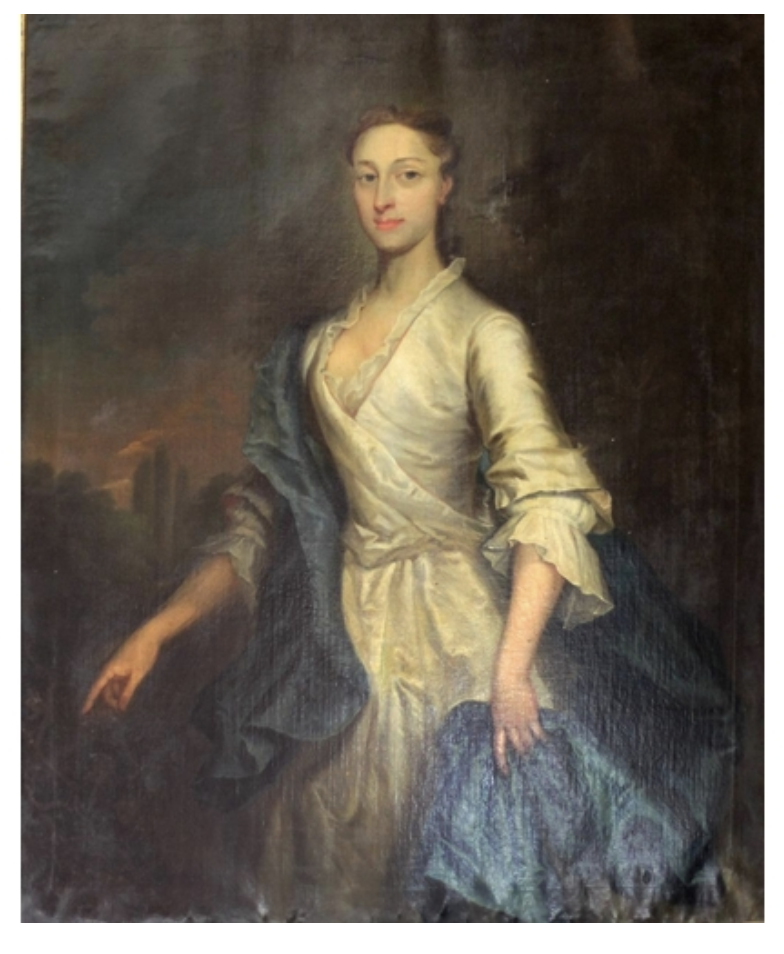
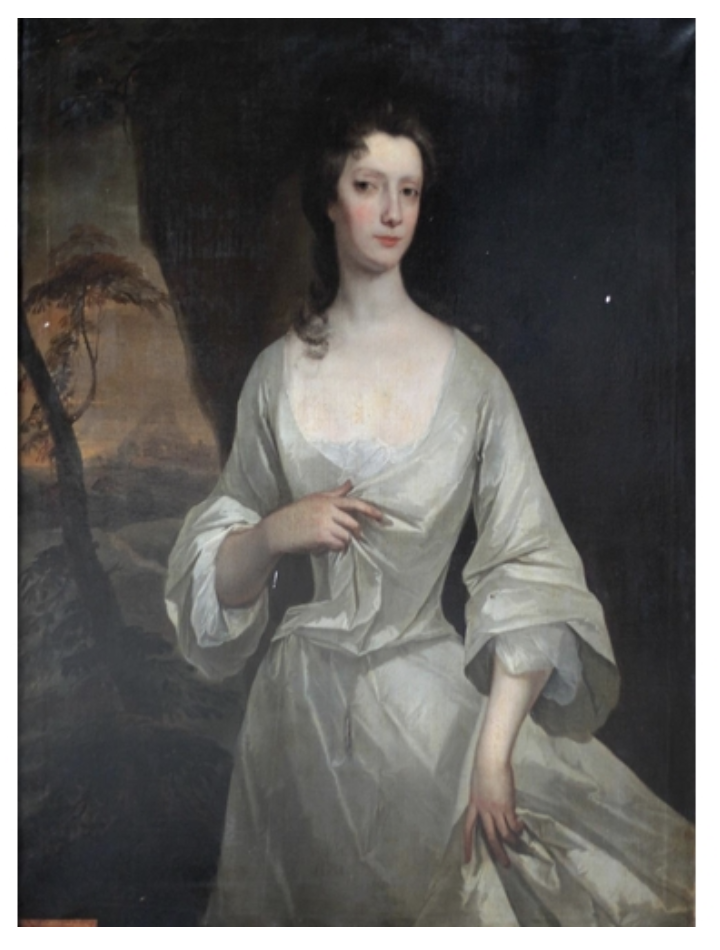
Maria Stratford, daughter of 1st Earl of Aldborough, standing by a tree, landscape in background, wearing full length white silk dress, Attributed to James Latham (1696 – 1747) courtesy Fonsie Mealy Fortgranite.
Archbishop George Stone (1708-1754), Primate of Ireland by Alan Ramsay.
James Stuart (1612-1655) 1st Duke of Richmond and 4th Duke of Lennox, son of King Charles II.
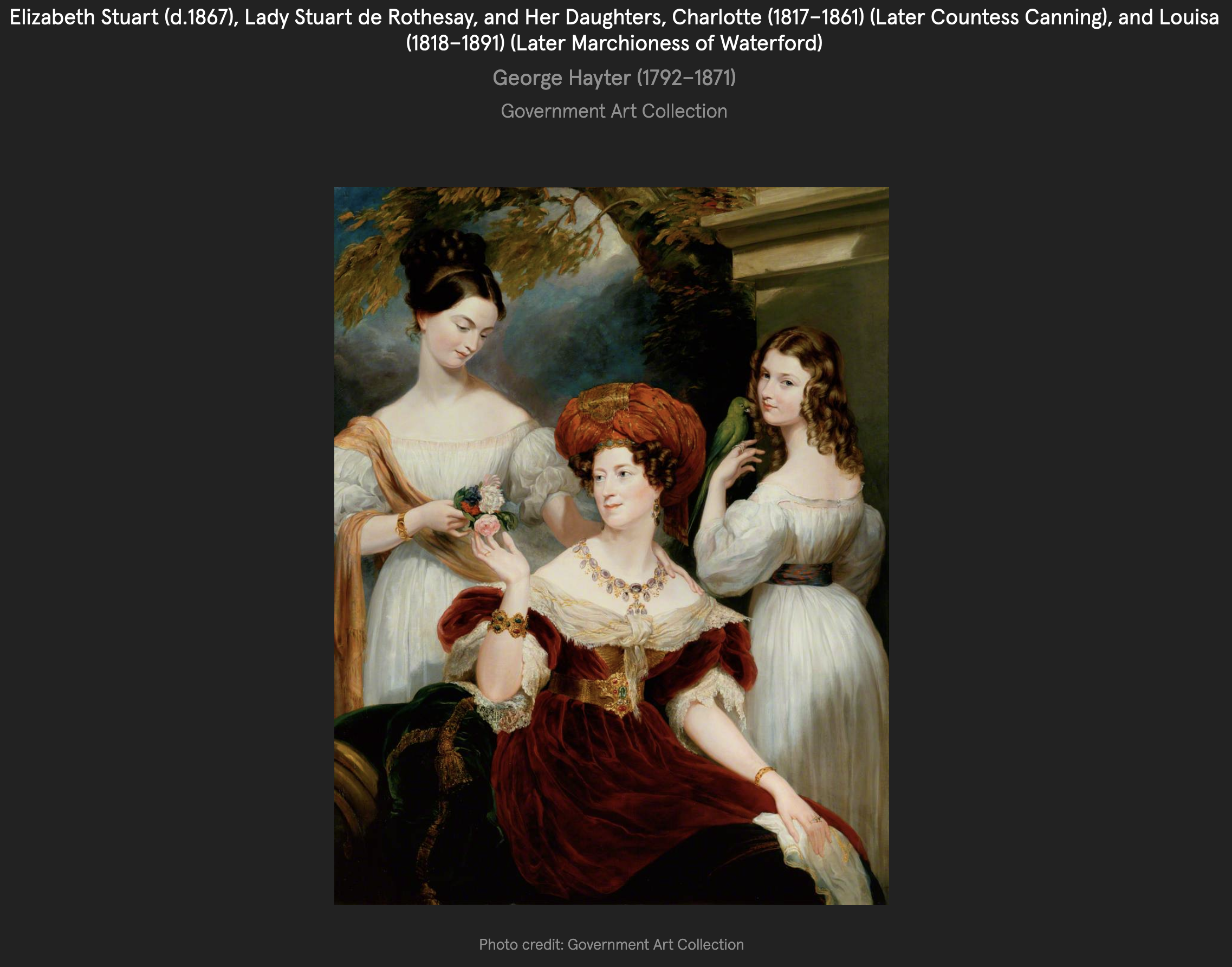
Elizabeth Stuart née Yorke (1789-1867). Lady Stuart de Rothesay, with her daughters Charlotte (1817-1861) and Louisa (1818-1891) by George Hayter, photograph courtesy of UK Government Art Collection. Elizabeth was the daughter of Philip Yorke 3rd Earl of Hardwicke; Louisa married Henry de la Poer Beresford 3rd Marquis of Waterford; Charlotte married Charles John Canning 1st Viceroy of India , 2nd Viscount Canning, 1st Earl Canning.
Louisa Anne Beresford née Stuart (1818-1891) by Sir Francis Grant 1859-1860, NPG 3176. The National Portrait Gallery tells us: “Louisa Stuart was brought up mostly in Paris, where her father was British Ambassador to the French court. She was taught to draw from an early age and art, along with religion and philanthropy, was one of her main interests throughout her life. A gifted amateur watercolourist, she did not exhibit at professional galleries until the 1870s. With a strong interest in the welfare of the tenants on her Northumberland estate, she rebuilt the village of Ford. She provided a school and started a temperance society in the village. Her greatest artistic achievement was the decoration of the new school with life sized scenes from the Old and New testaments that used children and adults from the village as models.”
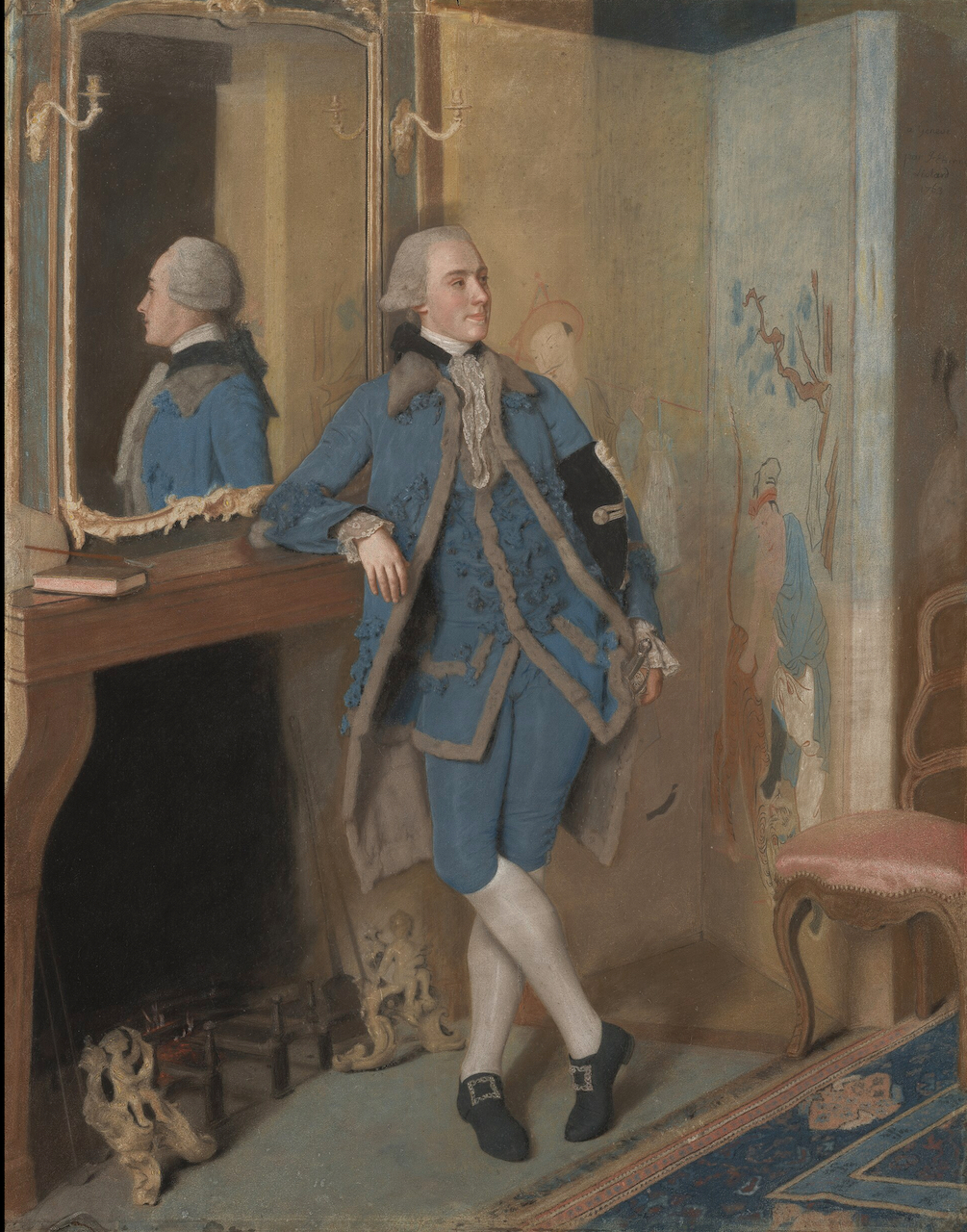
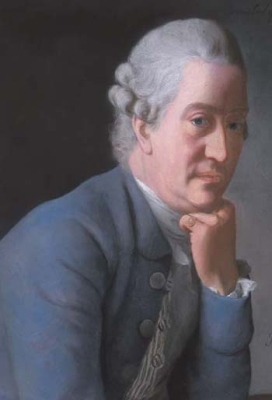
John Stuart (1744-1814), Lord Mountstuart, later 4th Earl and 1st Marquess of Bute by Jean Etienne Liotard, 1763.
Lady Mary Wortley Montagu (1718-1794), Wife of John Patrick Crichton Stuart 3rd Earl of Bute, print after Christian Friedrich Zincke, 1830s, courtesy of National Portrait Gallery of London, NPG D34619.
Caroline née Sutherland Leveson Gower (1827-1887), wife of 4th Duke of Leinster, courtesy of National Gallery of Ireland.
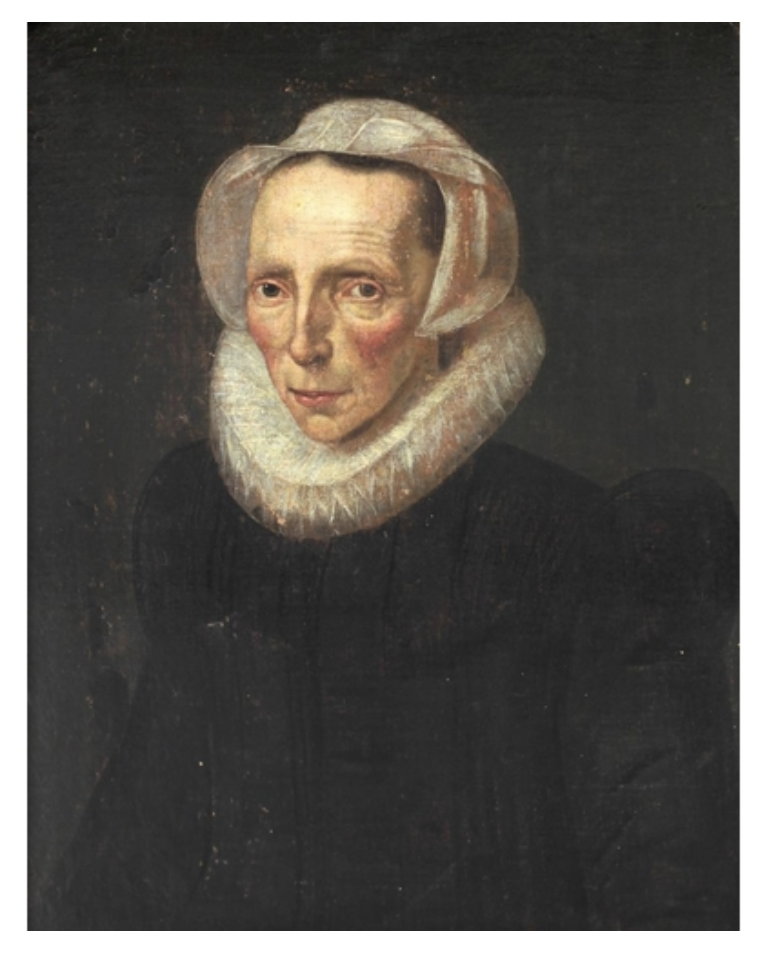
Late 16th / Early 17th Century English School “Mrs. William Swifte” courtesy Fonsie Mealy Fortgranite auction.

Burke’s Landed Gentry of Ireland tells us that Francis Swifte, son of Henry of Sheffield, County York, was knighted in 1616 and died in 1642. Henry of Sheffield’s other son was Thomas, who was buried in Canterbury Cathedral, who married Margaret, daughter and heir of the Right Rev. Thomas Godwin, Bishop of Bath & Wells. Many generations of Swift after him had the forename “Godwin.” Thomas and Margaret had a son William, born in 1566, who was Rector of Herbaldown and who married Mary Philpott.

17th Century English School “Portrait of a Gentleman in Armour, Sir Francis Swifte,” courtesy Fonsie Mealy Fortgranite auction. Probably Francis Swifte, son of Henry of Sheffield, County York, was knighted in 1616 and died in 1642.
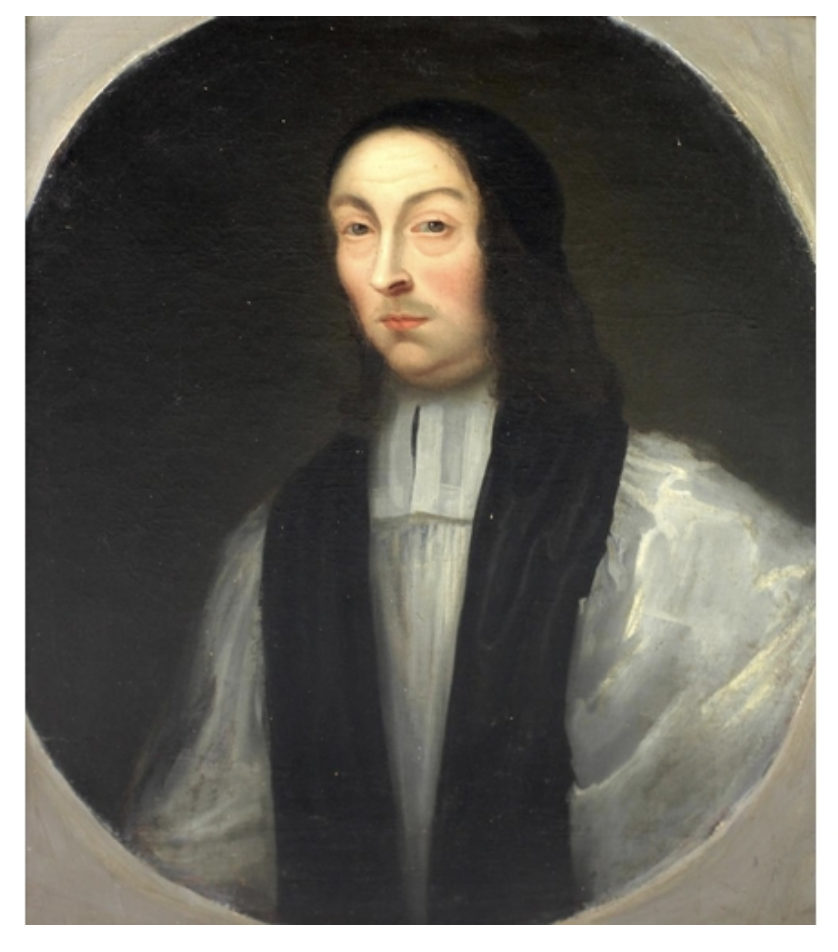
Reverend Thomas Swifte, 17th Century Irish School. He was born in Canterbury in 1561, and married Margaret, daughter and heir of the Right Rev. Thomas Godwin, Bishop of Bath & Wells. He was the son of Henry Swifte; courtesy of Fonsie Mealy’s Fortgranite auction. Many generations of Swift after him had the forename “Godwin.”
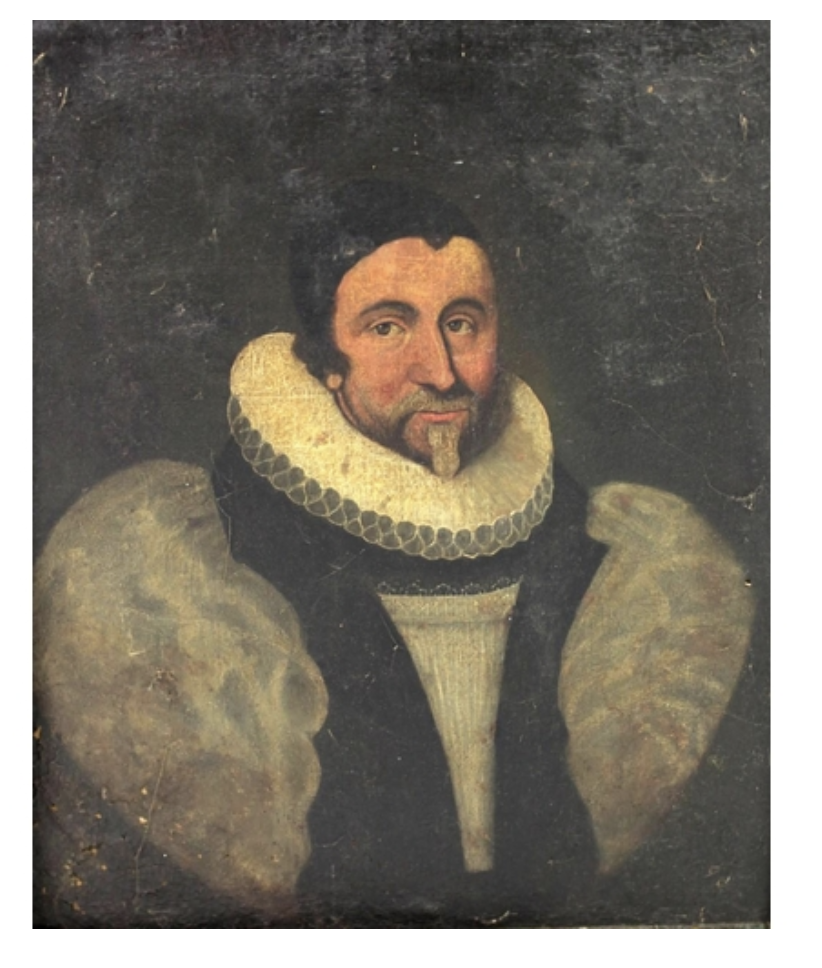
Late 16th / early 17th Century English School, “Right Reverend Thomas Godwin, courtesy Fonsie Mealy Fortgranite auction.

Thomas and Mary’s son Reverend Thomas (1595-1658) of Goodrich, Herefordshire, England, and Bristow, was ancestor of the Irish Swift family of Swiftsheath and Lionsden. He was devoted to King Charles I and the son of Charles I who was to become King Charles II.

Thomas married Elizabeth Dryden (c. 1605-1658). They had many children, many of whom lived in Ireland. His son Jonathan (d. 1667) was a solicitor in Dublin, who married Abigail Erick of County Leicester, and they had a son, born after his death in Hoey’s Court, Dublin, right next to Dublin Castle, in 1667, also named Jonathan, the famed writer, Dean of St Patrick’s Cathedral in Dublin. He wrote many anecdotes about his grandfather in his manuscript The Family of Swift which is preserved in the library at Trinity College, Dublin (I must go to see it!). He died in 1745.

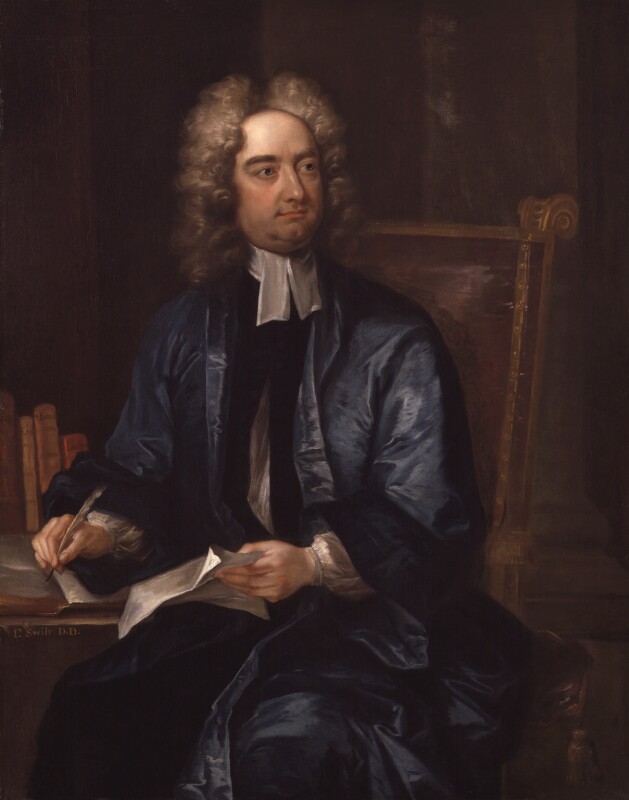
Jonathan Swift (1667-1745) by Charles Jervas circa 1718, National Portrait Gallery in London, 278.
Portrait of Dean Swift attributed to Rupert Barber (1719-1772), courtesy of Adam’s auction 12 May 2013. This must be Jonathan Swift who died in 1745, Dean of St. Patrick’s Cathedral.
Portrait of Stella courtesy of Adam’s auction 12 May 2013, attributed to Rupert Barber (1719-1772).
“Portrait of Esther Johnson (Stella),” Late 18th / Early 19th Century after James Latham (1696 – 1747) courtesy of Fonsie Mealy Fortgranite sale.

Reverend Thomas Swift (1595-1658) had another son, Godwin Swift (d. 1695), who was Attorney-General to the Duke of Ormonde, and married four times. Geoffrey Marescaux tells us that Godwin Swift paid the famous Jonathan Swift’s school fees. His heir was child of his second wife, Katherine Webster, Godwin Swift (1672-1739), later of Dunbrow, County Dublin and Swiftsheath, County Kilkenny. For information on Swiftsheath, see https://kilkennyarchaeologicalsociety.ie/wp-content/uploads/2021/03/OKR1978-356-Geoffrey-Marescaux-Swiftes-Heath.pdf

Godwin Swift (1672-1739) married his cousin, Elizabeth, who was daughter of another son of Reverend Thomas Swift Vicar at Goodrich and Elizabeth née Dryden, William, who had land in Carlow, Kilkenny, Leitrim and Roscommon.

Godwin Swift (1672-1739) and Elizabeth had a son Godwin who inherited Swiftsheath and also owned Tidenton, County Kilkenny. He married a cousin, Elizabeth Swift, who was daughter of Deane Swift (c. 1674-1714) of Castle Rickard, County Westmeath. Deane Swift (c. 1674-1714) was another son of Godwin Swift Attorney-General to the Duke of Ormonde, by his 3rd wife, Hannah Deane.

Their son Godwin Swift (c. 1734-1815) lived in Swiftsheath and Lionsden, County Meath. He also married a cousin, Maria Swift, daughter of Deane Swift (c. 1707-1783) and Mary née Harrison, daughter of Theophilus Harrison. To add confusion to the family tree, Theophilus Harrison, Reverend of Clonmacnois, married twice, and one of his wives, Eleanor Meade, daughter of William Meade Lt Col of Ballintober, County Cork, had been previously married to Godwin Swift Attorney-General to the Duke of Ormonde as his fourth wife! Mary Harrison’s mother was Theophilus Harrison’s second wife, Martha Swift – yes, another Swift! She was the daughter of Adam Swift of Greencastle, County Down, who was another son of Thomas Swift Vicar at Goodrich and Elizabeth née Dryden.

Reverend Deane Swifte, 17th Century Irish School, cousin and biographer of Dean Jonathan Swift. This is be Deane Swift (1703-1783), son of Deane Swift of Castle Rickard, County Westmeath. His great grandfather was a Regicide, ie. signed the death warrant of King Charles I, but fortunately died before Charles II was restored to the throne, according to Jonathan Swift!
Admiral Richard Deane (Regicide) 17th Century English School courtesy Fonsie Mealy Fortgranite auction. The Fonsie Mealy site adds: “Note: Major Joseph Deane (Inistiogue, 1661-66), of Crumlin, County Dublin, and Ballicocksoust, County Kilkenny (formerly the estate of Richard Strange), was the youngest son of Edward Deane, of Pinnock, Gloucestershire, by his 2nd wife, Anne Wase, and was born at Pinnock, 2nd February, 1624. His elder brother, Colonel Richard Deane, a leading member of the Republican party, was one of the Judges who sat on the trial of Charles I, and signed the death warrant of the King. Colonel Richard Deane was entrusted with the settlement of Scotland, which he speedily effected by his temperance and sagacity. He was next appointed one of the “Generals at Sea”, having for his colleague the famous Robert Blake, but was killed in action against the Dutch on 2nd June, 1653. He was honoured with a public funeral and buried in Henry VII’s Chapel at Westminster, but in 1661 his body (being that of a Regicide) was exhumed and cast out of the Abbey. Joseph Deane was educated at Winchester School, and entered the Parliamentary Army as Cornet in Rainsborough’s Horse. He volunteered for service in Ireland under Oliver Cromwell, in whose army he held the rank of Major. Under the Act of Settlement he had two grants of land (16th January, 1666, and 22nd June, 1669), comprising 9,324 statute acres, situated in the counties of Meath, Down, and Kilkenny, 3,859 acres being in Kilkenny. He purchased from Richard Talbot (afterwards Earl and Duke of Tyrconnell) the Manor of Terenure, in county Dublin, for œ4,000. He was named on some important committees of the House of Commons, but was fined œ10 for absence on 31st January 1665. In 1664 he paid 4s. hearth money for “Ballicagbsust”. In 1677 he served as High Sheriff of county Dublin. He died 21st December, 1699, having been twice married. By his 1st wife Anne —-, he had one son and two daughters – Joseph, of Crumlin, whose son, Joseph, became Lord Chief Baron of the Exchequer, and died without male issue. (1) Anne, married in May, 1673 (as his 3rd wife), Godwin Swift, Attorney-General to the Duke of Ormonde. (2) Elizabeth, married 1st in May, 1672, Captain Henry Grey; 2nd in July, 1677, Donogh O’Brien, of Lemenagh, County Clare. Major Deane married, 2ndly, in 1659, Elizabeth, daughter of Maurice Cuffe, and sister of Captain Joseph Cuffe, of Castle Inch, elected M.P. for Knocktopher in 1665, and by her, who died 3rd April, 1698, had a son and a daughter – Edward whom hereafter M.P. for Inistiogue; and Dorothy, married Maurice Berkeley, of Glasnevin county Dublin.THE MEMBERS OF PARLIAMENT FOR THE COUNTY, CITY AND BOROUGHS OF KILKENNYBY G.D. BURTCHAELL, M.A., LL.B [Written for the KILKENNY MODERATOR]
Mrs Godwin Swifte of Swifte’s Heath, courtesy of Fonsie Mealy’s Fortgranite sale.

Godwin Swift (c. 1734-1815) of Swiftsheath and Lionsden and his cousin, Maria Swift had another son called Godwin Swift (c. 1779-1814), of Lionsden. This Godwin Swift married yet another cousin, Jane Sophia Swift (1785-1851), in 1803. She was the daughter of Richard Swift (1750-1796) who was the son of John L’Estrange Swift (1709-1793) of Lynn, County Westmeath, who was the son of Meade Swift (1682-1739) of Lynn, County Westmeath, who was the son of Godwin Swift Attorney-General to the Duke of Ormonde and Eleanor née Meade!

Jane Sophia Swift (1785-1851) married secondly, in 1818, Louis Auguste Alexander, Comte Lepelletier de Molende.

Countess Molende née Swift and her granddaughter Luigina de Sadre, Gifted by the artist to W.R. Swifte as a token, as his predecessor Jonathan Swifte served as Rector at Agher Church from 1699 – 1745, courtesy Fonsie Mealy Fortgranite auction.

Godwin Swift (c. 1779-1814), of Lionsden and Jane Sophia Swift (1785-1851) had a son Godwin Meade Pratt Swift (1805-1864) of Swiftsheath and Lionsden.

Identified as “Godwin Pratt Meade Swifte Lord Carlingford (m. MJ Clarke), Leahy, Dixon & Mulvanney, 19th Century Irish School, standing in a landscape by a grey horse with Foulksrath Castle, Co. Kilkenny in the distance”, courtesy of Fonsie Mealy Fortgranite. Godwin Meade Pratt Swift (1805-1864) of Swiftsheath and Lionsden married Mary Jane Clarke of Bansha Castle, County Tipperary. He took the title Viscount Carlingford.
Jane Christina Swifte (1810-1854), the wife of “Chevalier Sergio Demacdo, Minister Plenipotentiary of HM Emperor of Brazil,” Early 19th Century Irish School, courtesy Fonsie Mealy Fortgranite. She was the daughter of Godwin Swift of Lionsden and Jane Sophia.

Godwin called himself Viscount Carlingford, reviving a title created in 1627 for another branch of the Swift family. Godwin also added the “e” back to the end of the name Swift. He married first, Maria Theresa Plankenstern, Baroness de Wetzlar of Austria at Paris in 1830 after the birth of their son Ferdinando. [see https://www.youwho.ie/swifte.html ].

Godwin secondly married Jane Anne Hopkins on 18 Mar 1845 at Liverpool after an non legal
ceremony some years earlier. Godwin returned with his family from the continent in 1845 to take
up residence at Swiftesheath. Jane died at Lionsden, Castle Rickard in 1848 and was buried in the
family vault. Godwin thirdly married Mary Jane Clarke on 4 Feb 1863 at Kilkenny and declared himself a widower. Mary was the daughter of Robert Hare Clarke. Godwin died 4 Jul 1864.

He created a flying machine which he hoisted to the top of Foulkesrathe Castle, which stood on the property of Swiftesheath, but it failed to fly and a butler who was piloting the plane broke a leg in his fall.

Identified as Pratt Swifte, Early 19th Century Irish School, courtesy of Fonsie Mealy Fortgranite sale.
Mrs. Swifte, grandmother of Thomas Dennis courtesy Fonsie Mealy Fortgranite Auction.
19th Century Irish School, Portrait of Mrs. Godwin Swifte courtesy Fonsie Mealy Fortgranite auction. There were so many Godwin Swifts it is hard to identify the sitter.
Godwin Butler Meade Swifte (1864-1923) son of “Viscount Carlingford,” wearing uniform of the High Sheriff of Kilkenny, seated holding a sword, D.L. was the High Sheriff of Kilkenny and later Carlow, and resided at Swifte’s Heath, Co. Kilkenny, courtesy of Fonsie Mealy Fortgranite.
Ernest Godwin Swifte K.C., with a companion painting of Lady Francis Swifte courtesy of Fonsie Mealy Fortgranite sale. He was the son of William Richard Swift (1807-1890), son of Godwin Swift of Lionsden and Jane Sophia.
Lady Francis Swifte,” with a companion painting of Ernest Godwin Swifte K.C., courtesy of Fonsie Mealy Fortgranite sale. Perhaps it is Ernest Godwin’s sister Julia Frances Swift, who did not marry.

Castle Coole, County Fermanagh – a National Trust property

https://www.nationaltrust.org.uk/castle-coole

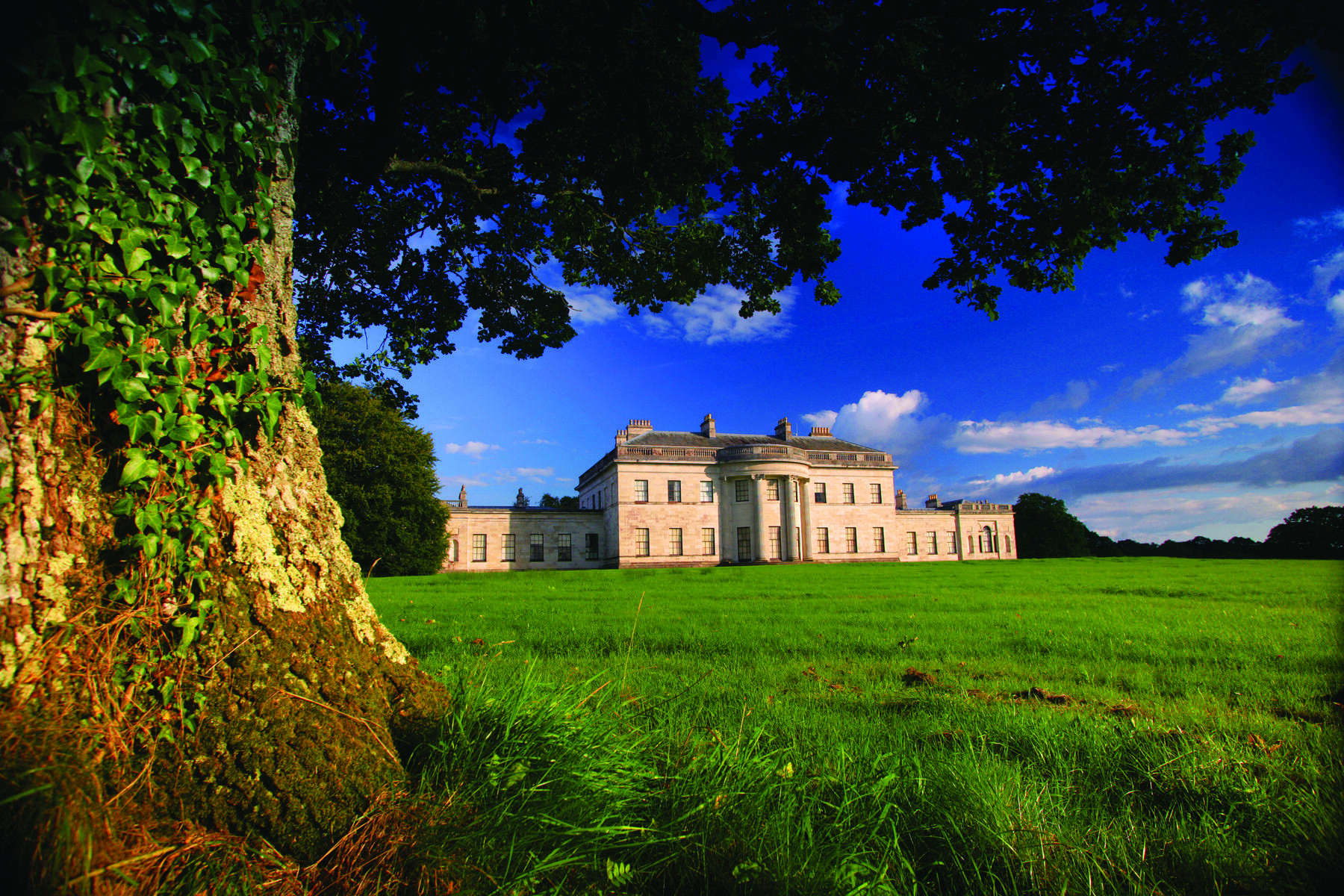
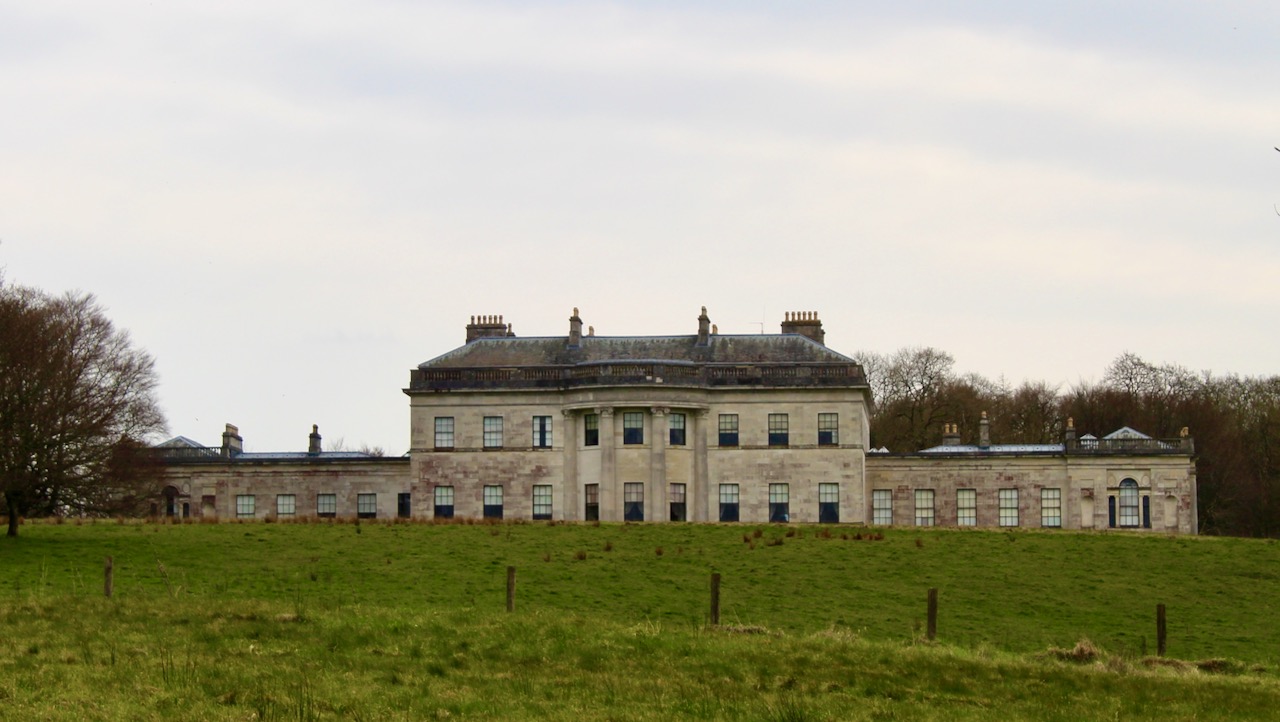
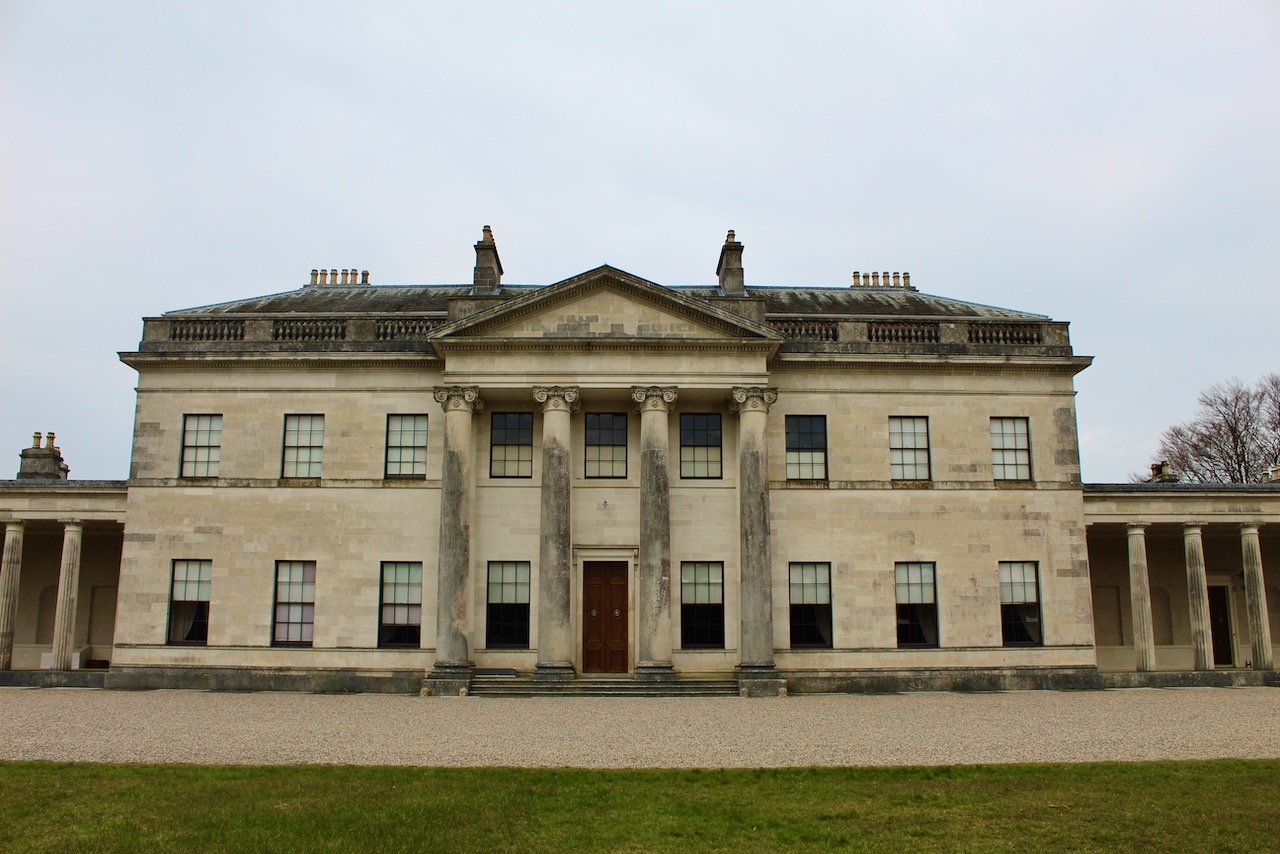
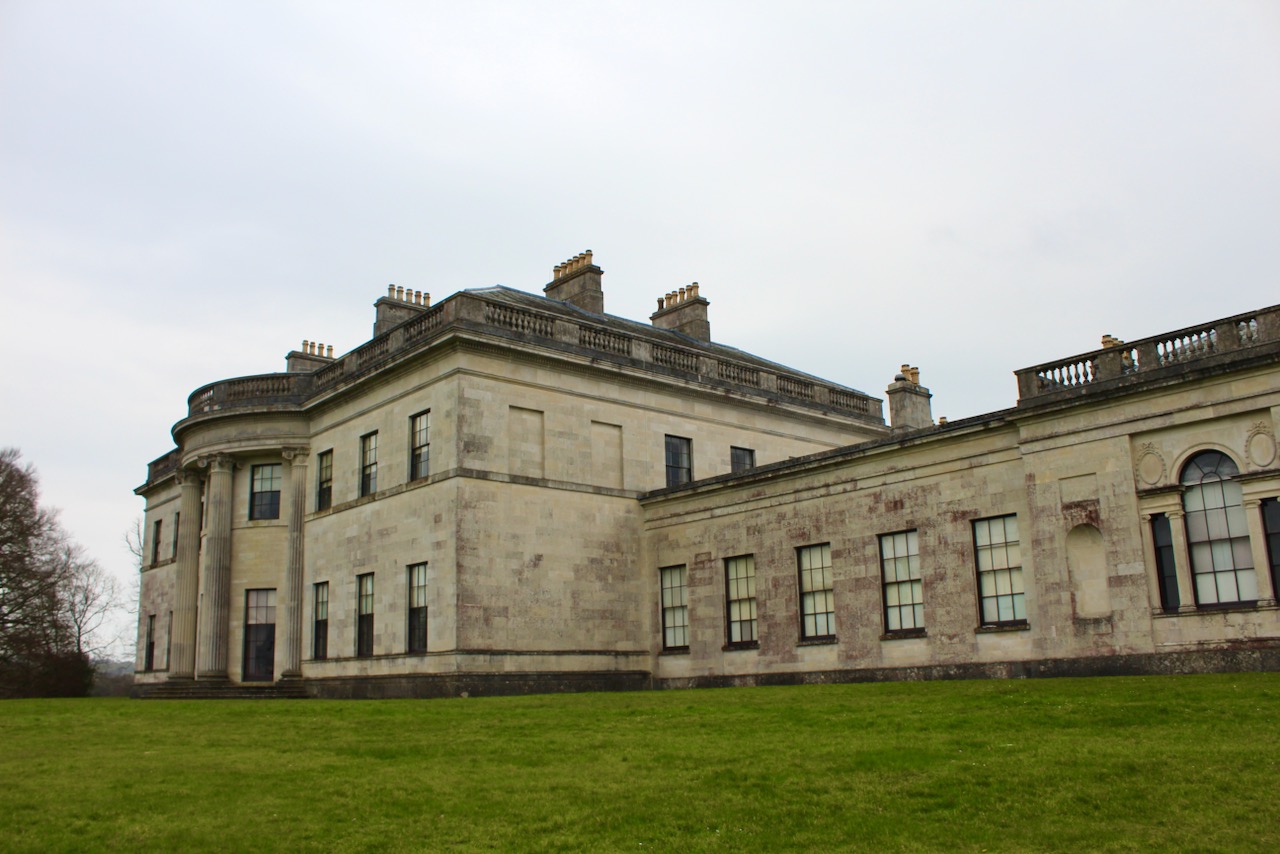
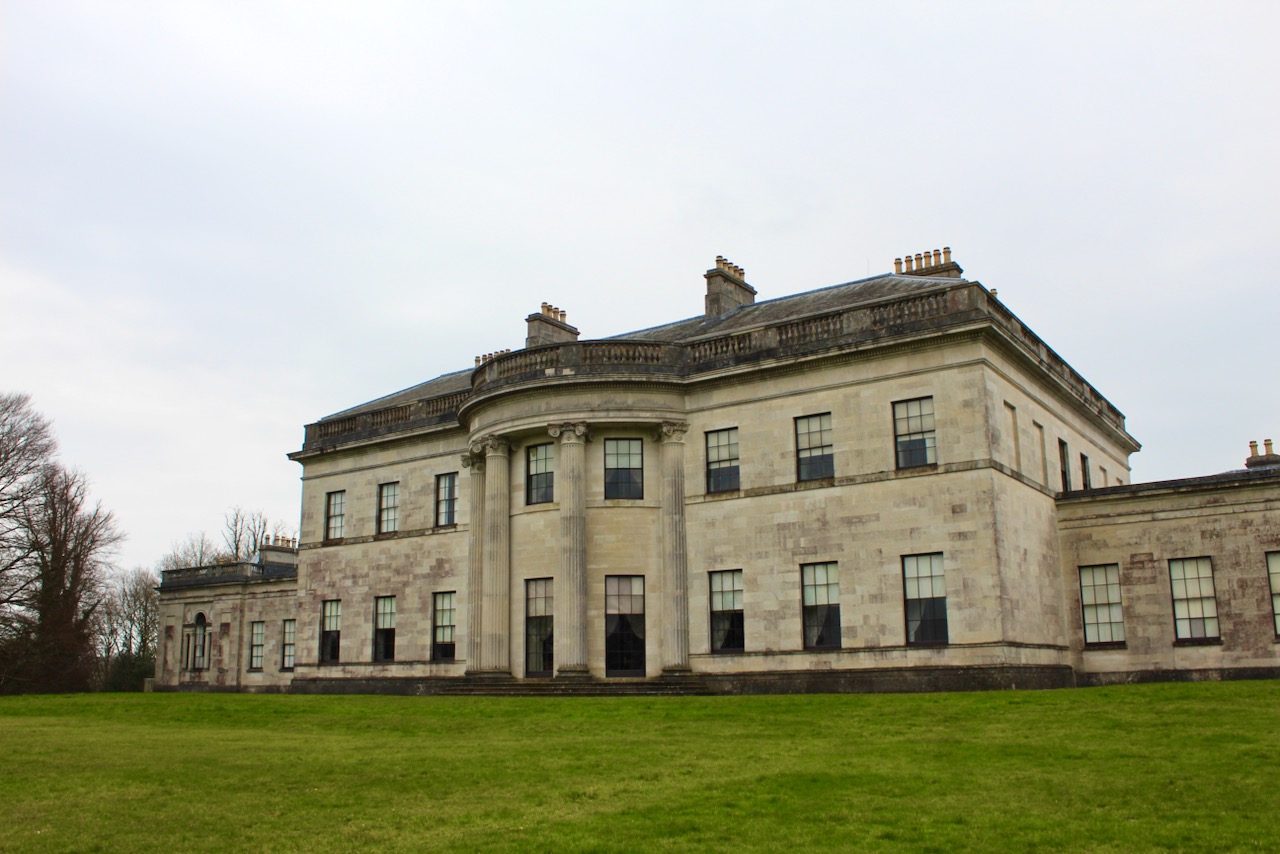
Castle Coole (pronounced cool) is a late-eighteenth-century neo-classical mansion situated in Enniskillen, County Fermanagh, Northern Ireland. Set in a 1200 acre (5 km²) wooded estate, Castle Coole was constructed between 1789 and 1798 as the summer retreat of Armar Lowry-Corry, the 1st Earl of Belmore. Photo by Brian Morrison, Tourism Northern Ireland 2008. [1]
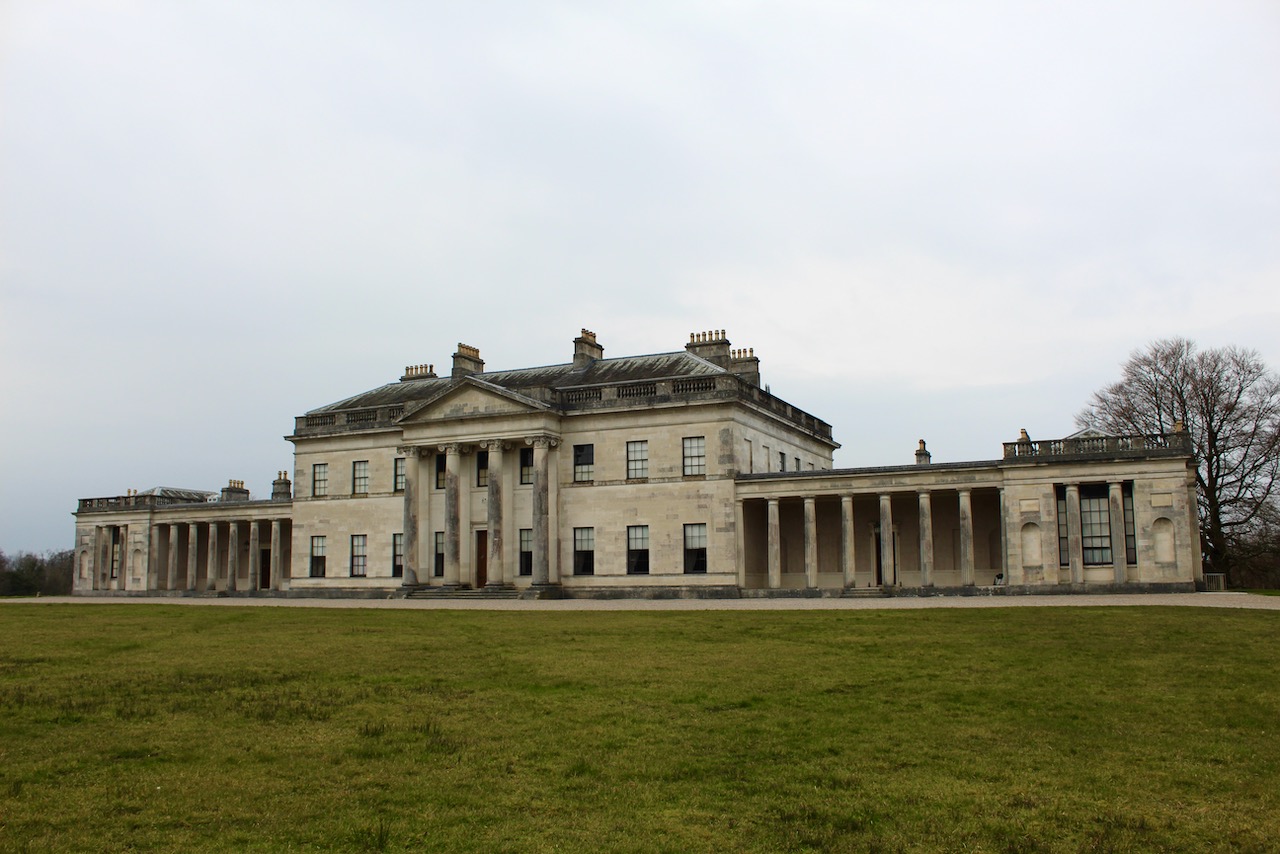
Castle Coole, County Fermanagh, March 2022, built to impress by the first Earl of Belmore by Amar Lowry-Corry, 1st Earl Belmore (1740-1802) and furnished largely by Somerset Lowry Corry, 2nd Earl (1774-1841). It was designed by James Wyatt. Photograph © Jennifer Winder-Baggot, www.irishhistorichouses.com

The website tells us:

Castle Coole is one of the greatest neo-classical country houses in Ireland. Home to the Earls of Belmore, it was commissioned and built to impress by the first Earl of Belmore by Amar Lowry Corry, 1st Earl Belmore (1740-1802) and furnished largely by Somerset Lowry Corry, 2nd Earl (1774-1841).” 

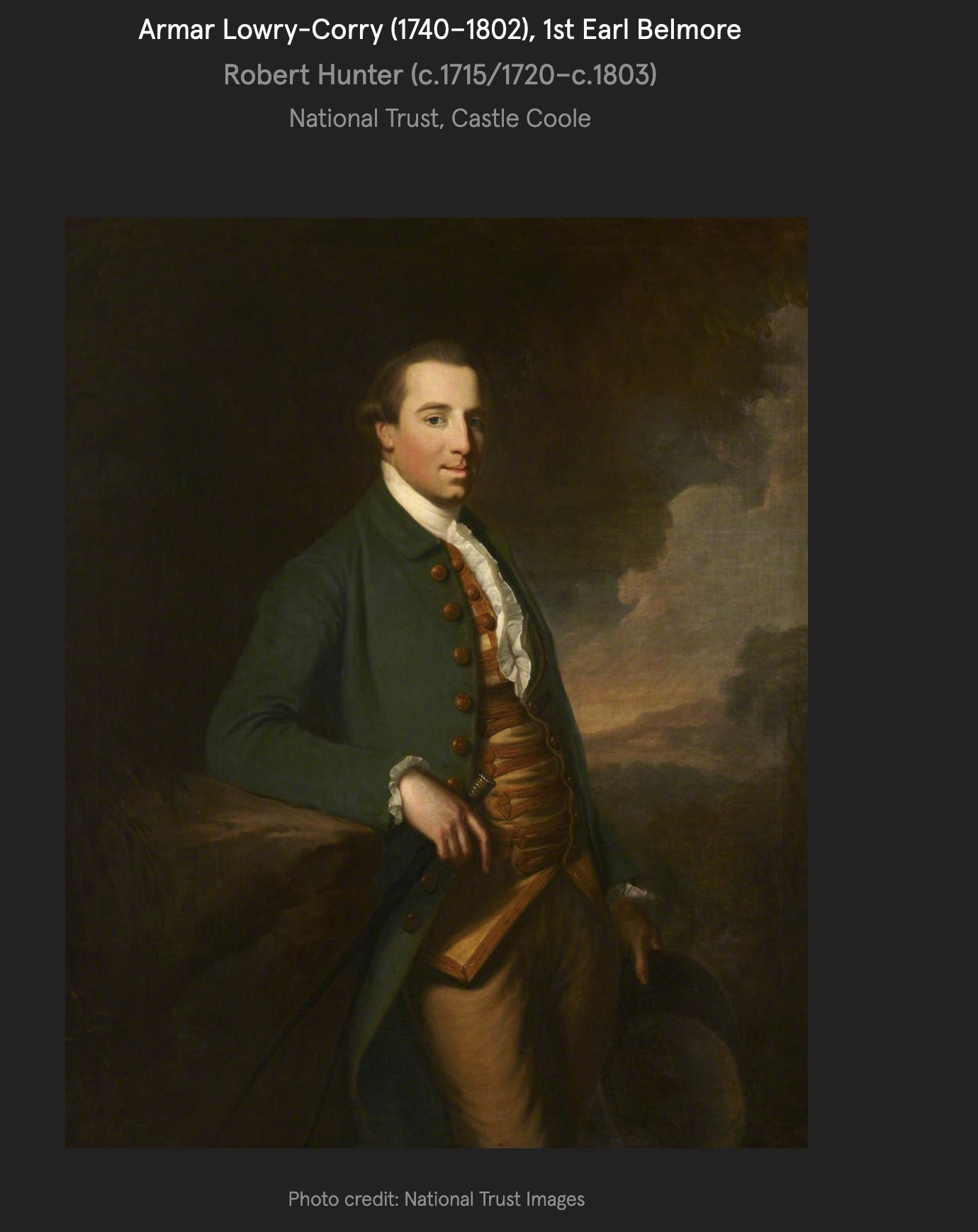
Armar Lowry-Corry (1740-1802) 1st Earl Belmore.

Mark Bence-Jones writes in his A Guide to Irish Country Houses (1988):

p. 64. “(Lowry-Corry, Belmore, E/PB) The most palatial late C18 house in Ireland, built 1790-98 by 1st Earl Belmore to the design of James Wyatt, who adapted earlier designs by Richard Johnston, and also showed himself to be much influenced by Stuart and Revett’s Antiquities of Athens, so that the house is an unusually perfect example of late C18 Hellenism, massive and unrestrained; yet keeping certain Palladian features such as Venetian windows and a balustraded roof parapet; and following the traditional Palladian plan of a centre block and wings.” [2]

James Wyatt (1746-1813) was an English architect who, despite living in England, had a flourishing country house practice in Ireland from the early 1770s until his appointment as Surveyor General of the King’s Works in England in 1796. [3] He designed Abbeyleix House in County Laois around 1772. We came across work by Wyatt at Slane Castle in County Meath and at Curraghmore in County Waterford.

The property came into ownership of the Lowry-Corry family in 1655 when it was purchased by John Corry, a merchant from Scotland, from one of the settlers who came to Ireland during the Ulster Plantation. He filled the office of High Sheriff of County Fermanagh.

His son James was a supporter of William of Orange, and a castle at Coole was burned down during the fighting between Williamites and Jacobites. James also acted as High Sheriff for County Fermanagh, as well as for County Monaghan, and was Member of Parliament (M.P.) for County Fermanagh between 1692 and 1718. He died in 1718.

James married Sarah Anketell, daughter of Oliver Anketell of Anketell Grove in County Monaghan. They had a son, John (1666-1726). He too served in the role of High Sheriff and of MP for County Fermanagh.

Colonel John Corry, MP (1666–1726), courtesy of National Trust Castle Coole.

The Castle Coole website tells us that a replacement habitation was built around 1707. This building was of brick, with sash windows and tall chimneys, which indicate that the inhabitants did not expect an attack as the building was not fortified.

John Corry married Sarah Leslie. They had several children, and named their son Leslie (1712-1741). Leslie inherited the estate of Castle Coole in 1726 when he was still a minor. The estate was managed by his cousin, Margetson Armar, who married Leslie’s sister Mary in 1736. Sarah Leslie’s sister Martha married Reverend William Armar, Archdeacon of Connor and Margetson Armar was their son.

Leslie died unmarried.

John Corry and Sarah Leslie’s other children were all daughters. Only one of the daughters, Sarah, went on to have children of her own, so the property passed to her offspring. Sarah married Galbraith Lowry (1706-1769). Due to the fact that she brought an inheritance with her to the marriage, Galbraith added Corry to his surname to become Lowry-Corry. He came from County Tyrone, and served as High Sheriff for County Tyrone and also for County Monaghan, and was MP for County Tyrone. His wife gave birth to their heir, Armar Lowry-Corry (1740-1802) who built Castle Coole. A daughter, Anne, married William Willoughby Cole, 1st Earl of Enniskillen, of Florence Court in County Fermanagh.

Sarah née Corry (1709-1779) who married Galbraith Lowry (1706-1779) who added Corry to his surname.
Galbraith Lowry (1706-1779) who added Corry to his surname.

The website continues: “Through marriages and connections, the combined estates of the Lowry, Corry and Armar families (amounting to over 70,000 acres of tenanted land by 1779) were all inherited by Armar Lowry Corry in 1779. Armar, MP for Tyrone, was raised to the peerage as Lord Belmore in 1780 (and earl in 1797) and began to plan a new house, more suited to contemporary taste and his position in society. Architect Richard Johnston from Dublin was employed in 1789 but Belmore switched to James Wyatt, then at the height of his career and particularly skilled in the neoclassical style. Wyatt never visited the site, sending all his drawings from England. Much of the building work was carried out by skilled Irish builders and craftsmen and some of the furniture designed by Wyatt was made by the Irish joiners, including a great mahogany sideboard, and a large wine cooler for the dining room. The house is faced with Portland limestone from England; specialist plasterers under Joseph Rose created the decoration to the ceilings and walls; marble chimneypieces were commissioned from Richard Westmacott and Domenico Bartoli created scagliola columns and pilasters.

Castle Coole, County Fermanagh, March 2022: the entrance front has four giant Ionic columns, and the centre block of two storeys and nine bays. On the entrance front, the wings are single storey and consist of deep colonnades of fluted Doric columns ending in small Doric pavilions. The basement is completely hidden from view. Attic windows are also not visible, as they are behind the balustrade. Photograph © Jennifer Winder-Baggot, www.irishhistorichouses.com

Armar had the house built in a new location, at the top of the hill, since he suffered from rheumatism so wanted to avoid damp. The old house burned down in 1797 while the new house was being built.

Mark Bence-Jones writes: “The centre block is of two storeys and nine bays, with a pedimented portico of four giant Ionic columns on the entrance front, and a curved central bow lined with giant fluted Ionic columns on the garden front; the wings single storey and consisting, on the entrance front, of deep colonnades of fluted Doric columns ending in small Doric pavilions, and on the garden front of five bay links and end pavilions with Venetian windows. The ends of the wings have central features of four fluted Doric columns and are as perfectly finished as the major elevations; all being of beautifully cut masonry in a pale silvery Portland stone which was brought here at great expense, being shipped to Ballyshannon, taken overland to Lough Erne, shipped to Enniskillen and taken the last two miles in bullock carts.” [see 2]

The Park Front has a curved central bow lined with giant fluted Ionic columns, and the wings on the garden front are of five bay links and end pavilions with Venetian windows. The Park front overlooks Lough Coole. The ground floor sash windows in the bow extend down to to floor to allow direct access from the Saloon to the park. [4] Photograph © Jennifer Winder-Baggot, www.irishhistorichouses.com
The entrance front of Castle Coole. The windows are severe by design and have no moulding of any kind. Photograph © Jennifer Winder-Baggot, www.irishhistorichouses.com
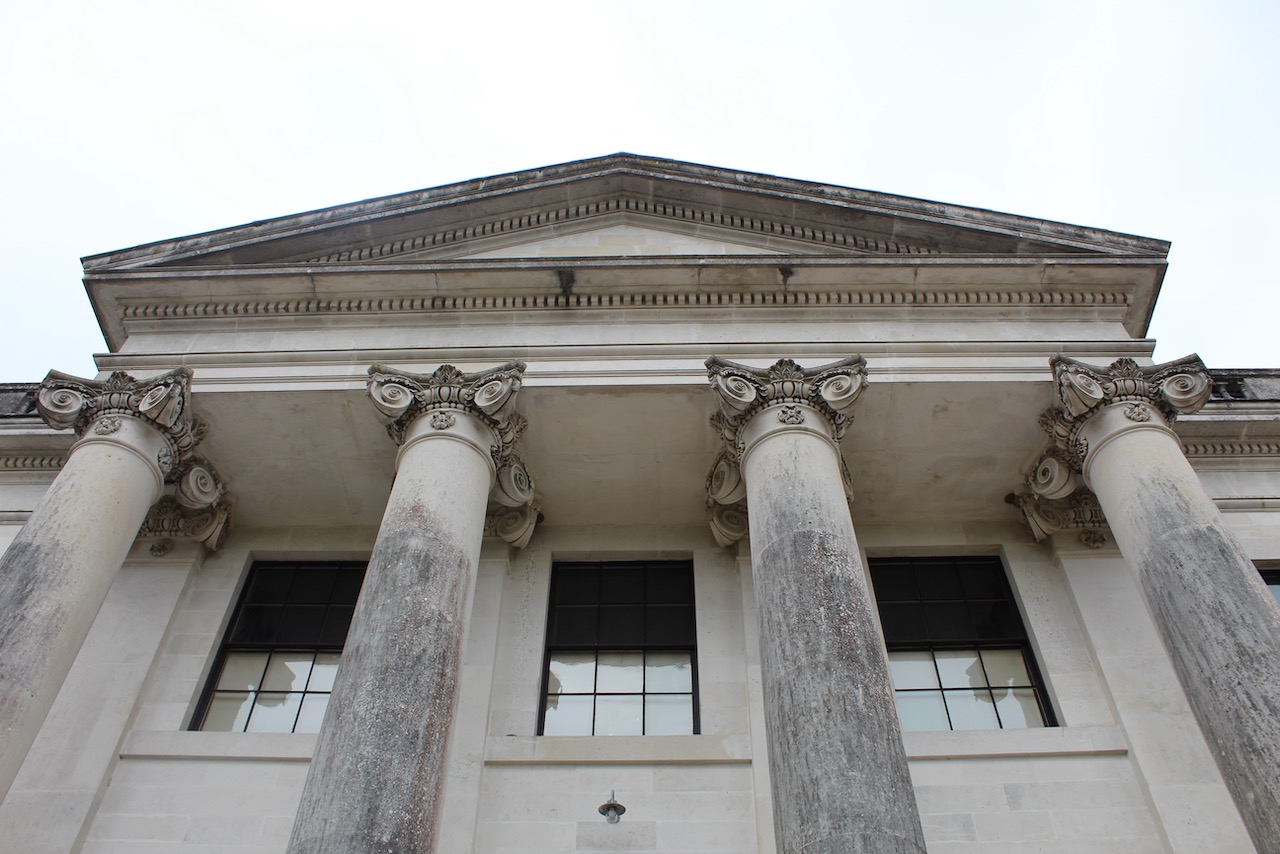
The entrance front of Castle Coole. The capitals of the columns are unusal as they are set at 45 degree angle to the facade. The pediment above is plain. Photograph © Jennifer Winder-Baggot, www.irishhistorichouses.com
The entrance front of Castle Coole. Photograph © Jennifer Winder-Baggot, www.irishhistorichouses.com
The Doric baseless fluted columns of the wing of the entrance front. Photograph © Jennifer Winder-Baggot, www.irishhistorichouses.com
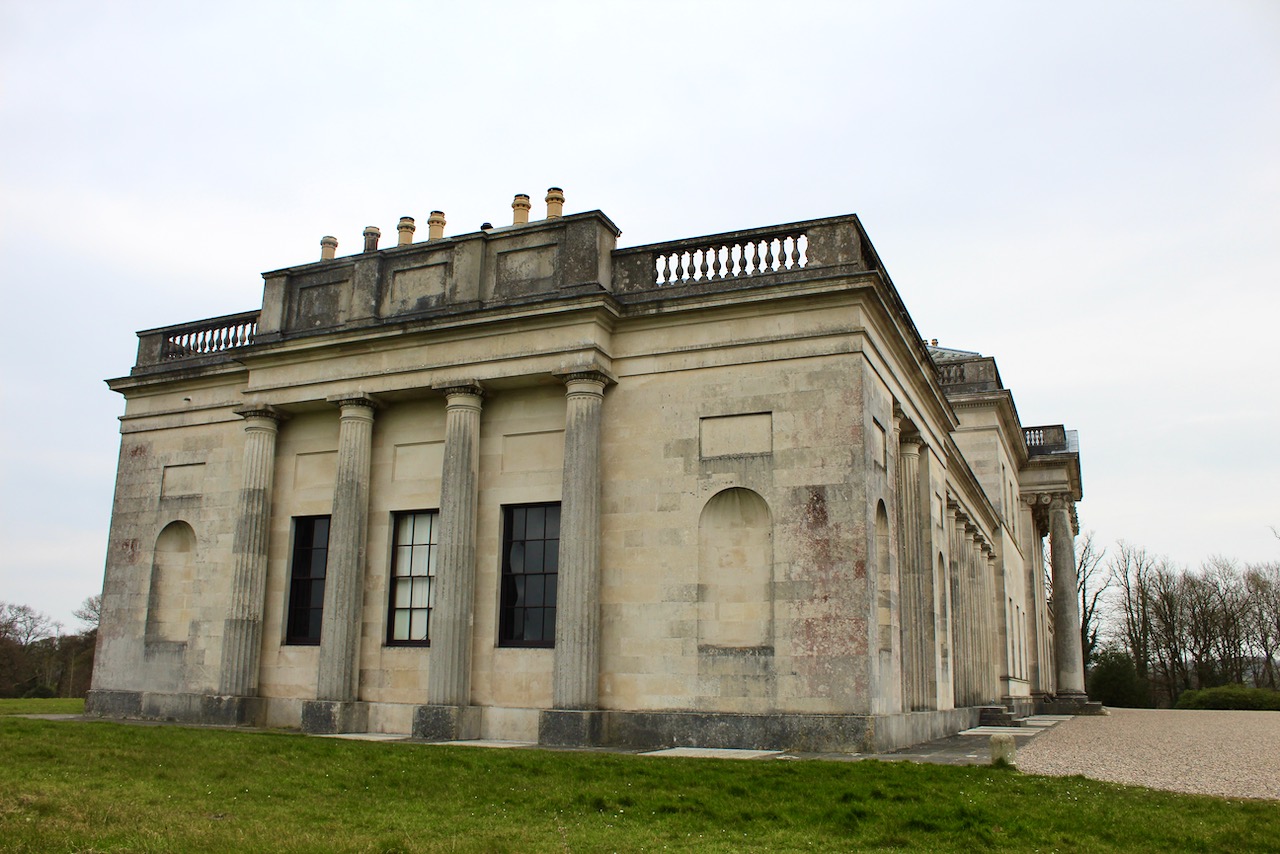
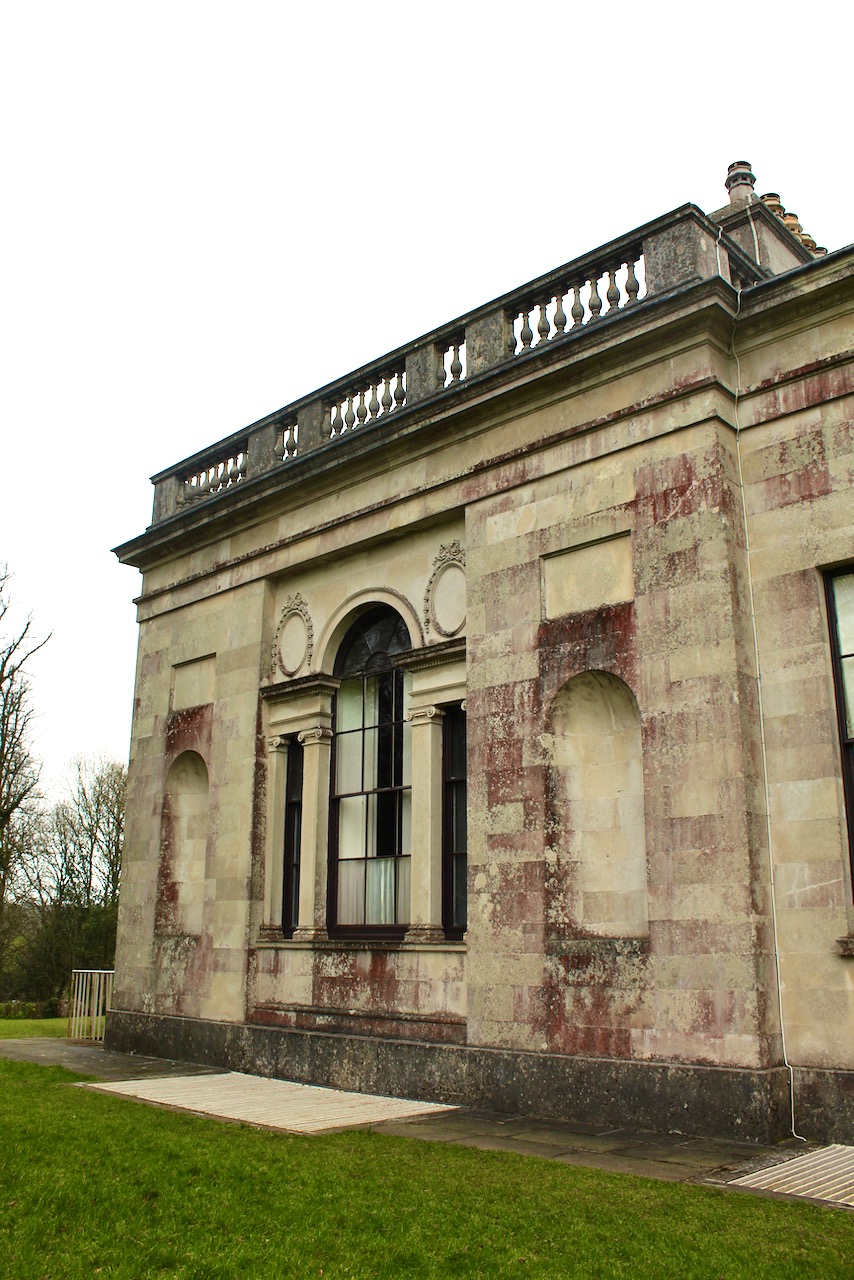
The side of an end pavilion of Castle Coole. The Doric columns continue on the pavilions and they too are topped with balustrades. The semicircular niches on the ends of the pavilions have always been empty. [4] Photograph © Jennifer Winder-Baggot, www.irishhistorichouses.com
The park front of Castle Coole. Photograph © Jennifer Winder-Baggot, www.irishhistorichouses.com
Wing of the park front of Castle Coole. The side pavilions have Venetian windows with medallions above and niches on either side. Photograph © Jennifer Winder-Baggot, www.irishhistorichouses.com
Garden front of pavilion of Castle Coole. Photograph © Jennifer Winder-Baggot, www.irishhistorichouses.com

The website continues: “Castle Coole boasts some of the finest neoclassical architecture, interiors, furniture and Regency furnishings in Ireland. Original drawings by the architects, the building records, inventories and invoices recording the daily work of the joiners, plasterers and painters in the 1790s and the furnishing of the house 1807 to 1821 helped guide the restoration of Castle Coole in the 1980s. This combination of place, collection and archival record must be unique in Ireland where so many records and collections have been dispersed. It speaks of careful husbandry by generations of the family who cherished the past.

The website continues its description of Castle Coole: “The ground floor of the central block contains the principal receptions rooms. The wings and first floor bedrooms were the family’s private quarters. The vast basement contains service rooms with separate areas governed by Housekeeper, Butler and Cook, who could come and go via a large service tunnel that connected the basement to the service yards.

One is not allowed to photograph inside, because the furnishings are owned by the present 8th Earl. You can see photographs of the sumptuous interiors on the website. The house was handed to the National Trust by the 7th Earl in 1951 but the family still occupy a wing.

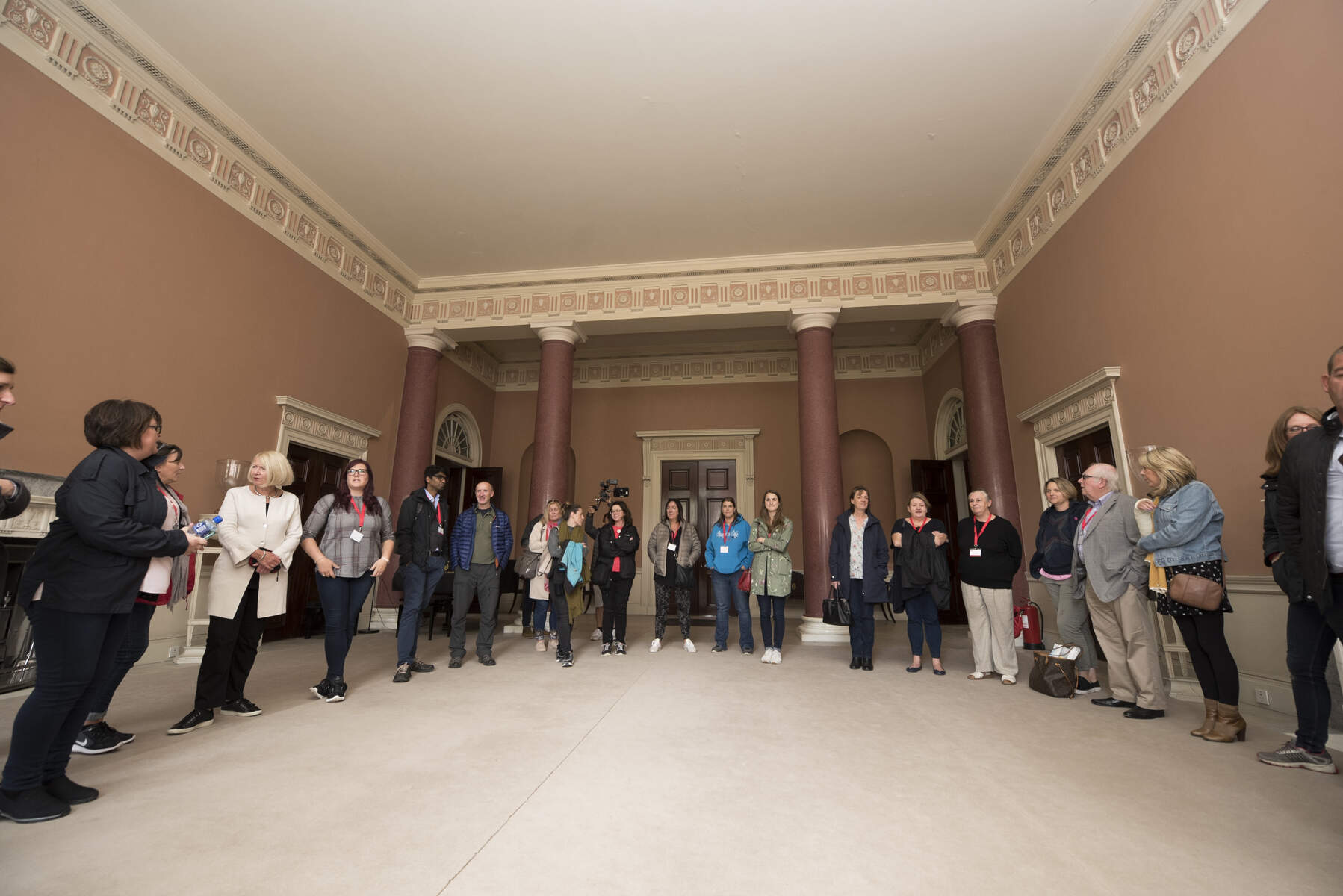
Bence-Jones continues: “it seems that the austerity of the interior plasterwork was to some degree for reasons of economy; though in fact it is entirely suited to the Grecian purity of the house. The single-storey hall is of great depth and dramatic simplicity, its only adornments being a Doric frieze, a pair of small Doric chimneypieces by Westmacott facing each other on either side and a screen of Doric columns in porphyry scagliola at the inner end.

Castle Coole, Fermanagh, Tourism Northern Ireland 2018 (see [1]). It has a wonderfully large front hall, intended to resemble a Roman atrium, with scagliola (imitation marble, the recipe for scagliola died with the man who created it) Doric columns and lovely plasterwork, which matches the Carrara marble fireplace. Specialist plasterers under Joseph Rose created the decoration to the ceilings and walls; marble chimneypieces were commissioned from Richard Westmacott and Domenico Bartoli created scagliola columns and pilasters. The rosettes in the frieze are from an old Corry coat of arms, and chalices are from the Lowry coat of arms.

For more about the wonderful interior of the house, of which one can take a tour, see the website. The tour takes in the centre block. It includes the library, drawing room, dining room, morning breakfast room, and the round impressive Saloon with its bow front.

Mark Bence-Jones writes: “The splendour is reserved for the oval saloon in the middle of the garden front, which is lined with grey scagliola Corinthian pilasters and has a frieze of swags and delicate ornament on the flat of the ceiling; it is flanked by the drawing room and the dining room, forming a magnificent enfilade. The library, which has its original delicately moulded bookcases, is on one side of the hall, separated from the drawing room by the staircase hall, which contains a double stone staircase of great length, leading up to a landing with a screen of yellow and brown scagliola Doric columns.”

The Library, which has a particularly impressive pelmet which end with what our guide told us have been called griffin heads but she thinks, and I agree, that they look more like camels, reflecting the 2nd Earl’s passion for travel. He travelled extensively in Egypt, travelling up the Nile, and he sponsored excavations and began a collection of Egyptian antiquities. He sold some of these later to the British Museum in 1842 to pay off debts. The unusual tentlike ceiling of the kitchens is made of a special fireproof material as it is underneath the room where the 2nd Earl stored his treasures.

The stair hall has a staircase that breaks into two, to create a “floating” imperial staircase, with iron balusters that contain gilded rosettes, with a slim mahogany handrail. At the bottom of the stairs is a table with many lamps for the residents and guests to bring up to their room at night.

Bence-Jones describes: “The first floor lobby, lit by glass domes, rises into an attic storey which is not visible from the outside of the house; and is surrounded by a gallery with a colonnade probably inspired by the interiors of the Parthenon and the Temple of Poseidon at Paestuum. In 1797, just before the present house was completed, the earlier house, which was small, built 1709 and with a rather heavy pediment, was burnt to the ground. The earlier family pictures and furniture were probably lost in this fire, which would explain why the house contains comparatively few portraits, making for large stretches of unrelieved wall, again very much in keeping with the Grecian simplicity. As a contrast, however, there is the sumptuous gilt Regency furniture in the saloon, introduced by 2nd Earl, and the bed, festooned with flame silk, in the state bedroom, said to have been decorated for George IV, who, however, never slept here. The garden front of the house overlooks a lake on which there is the oldest nonmigratory flock of greylag geese in the British Isles; it is said that if ever they go, the Belmores will also go. There are some wonderful trees in the park, and fine stables by Sir Richard Morrison. Castlecoole has been maintained by the Northern Ireland National Trust since 1951 and is open to the public.” 

Upstairs above the saloon is the bow room, decorated with Chinese style wallpaper, curtains and covered furniture. This room was used by the ladies during the day for sewing, reading and playing cards. Also upstairs is a lovely double-height lobby that has more pretty plasterwork, and the state bedroom decorated for King George IV, with a particularly beautiful tester bed with gorgeous folded swags of curtains, original tassels and fringes, pleated sunburst lining and a generous rosette of scarlet silk above the bed inside the curtains. Bed steps flank the bed, like the ones we came across and used during our stay in “Norman’s Room” in Castle Leslie, and the bed is topped with gold coronets and gilt poles), as we have come across before in other houses (Charleville in County Wicklow and Loughton in Offaly). The lobby is lit by an impressive oval skylight and two further circular skylights. On the upper, attic, floor, that one can see from the lobby, are more Doric columns painted to look like marble, and a iron balustrade that matches the staircase. Doors off the lobby lead to the bow room and the state room, and two doors either side lead to the four principal bedrooms in the corners.

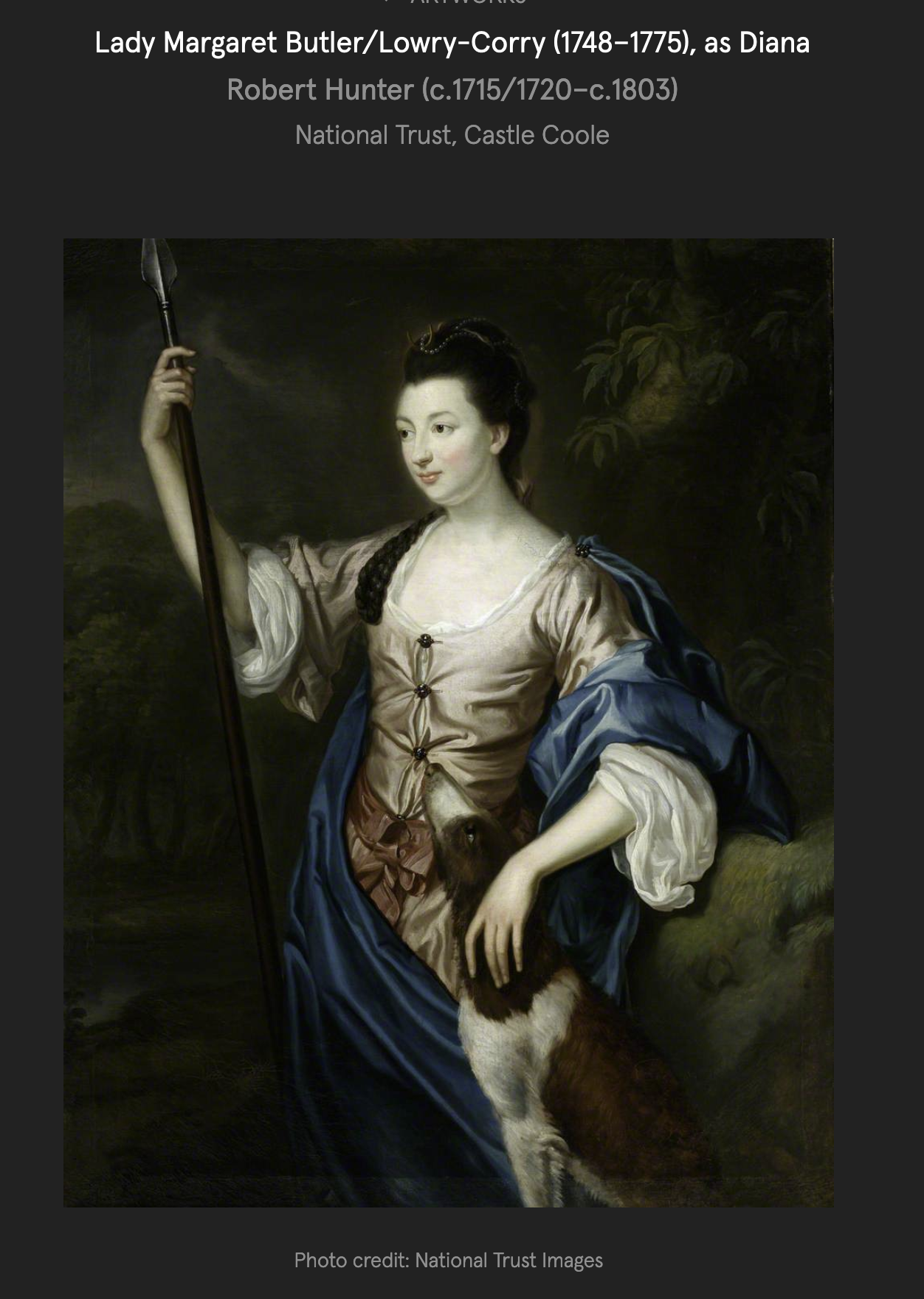
Armar Lowry-Corry served as MP and High Sheriff for County Tyrone and after he inherited Castle Coole, High Sheriff of County Fermanagh. He married Margaret Butler, daughter of Somerset Butler, the 1st Earl of Carrick, County Tipperary.

Armar Lowry-Corry was married to Margaret Butler (1748-1775) daughter of Somerset Hamilton Butler, 8th Viscount Ikerrin, 1st Earl of Carrick, County Tipperary.
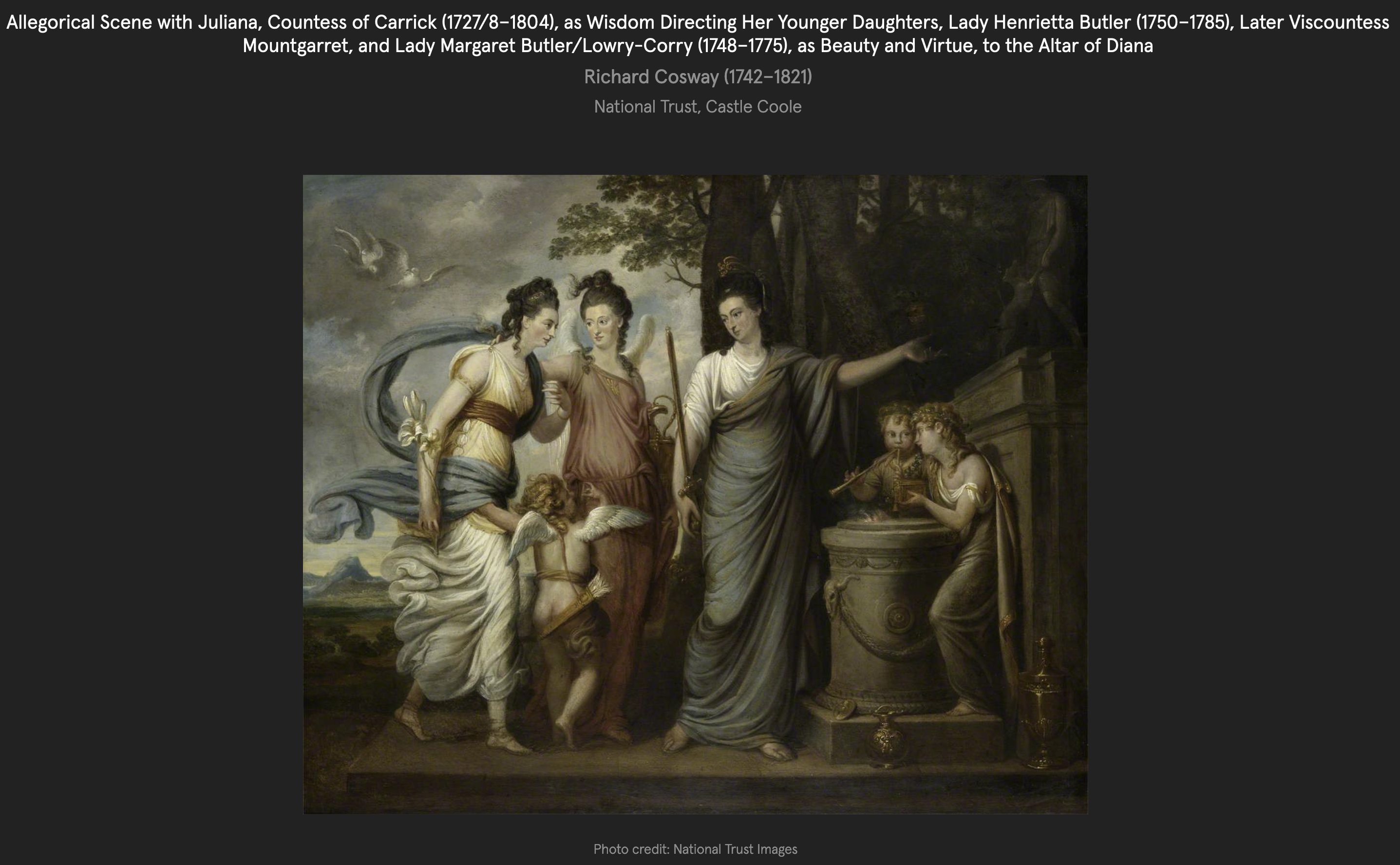
Allegorical scene with Juliana, Countess of Carrick as Wisdom directing her younger daughters, Lady Henrietta Butler and Lady Margaret Butler/Lowry-Corry, as Beauty and Virtue, by Richard Cosway, courtesy of National Trust Castle Coole.

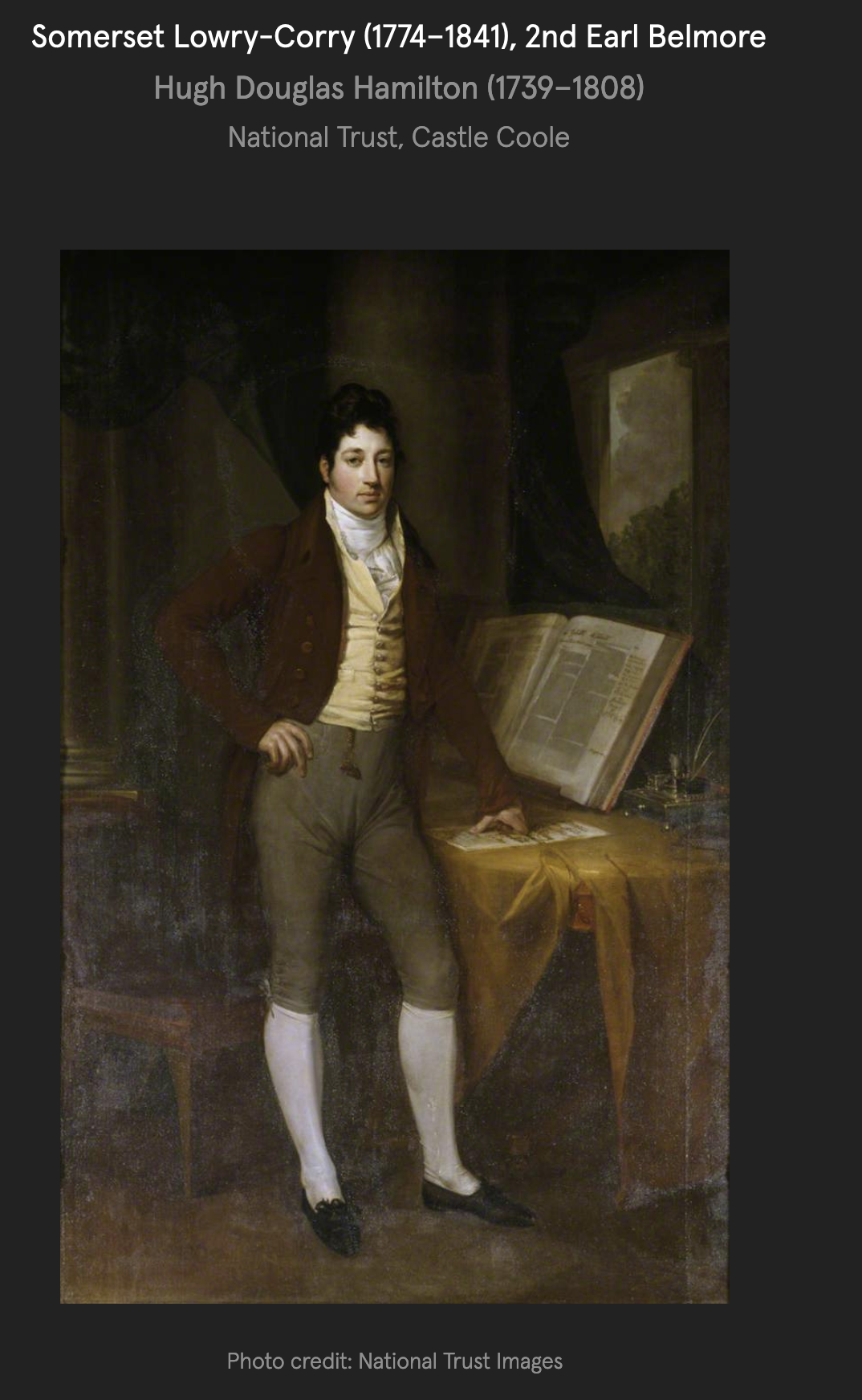
They had a son, Somerset (1774-1841) who became the 2nd Earl of Belmore. Margaret died young, and Armar remarried, this time to Lady Henrietta Hobart, the daughter of the Earl of Buckinghamshire, who was Lord Lieutenant at the time. Henrietta however was not happy at Castle Coole and was twenty two years younger than her husband so they divorced, which would have been unusual at the time. He married a third time, this time to Mary Anne Caldwell, in 1794, from nearby Castle Caldwell in County Fermanagh (now a ruin).

Somerset Lowry-Corry, 2nd Earl of Belmore by Hugh Douglas Hamilton, courtesy of National Trust Castle Coole.

Somerset held the office of Member of Parliament (M.P.) (Tory) for Tyrone between 1797 and 1802. In 1800 he married Juliana Butler, daughter of Henry Thomas Butler, 2nd Earl of Carrick

The website continues: “The 2nd Earl [Somerset (1774-1841)] had campaigned fiercely against the Act of Union of 1800 which led to the abolition of the independent Irish parliament. He lost his parliamentary seat, only becoming a representative peer in the British House of Lords in 1819. In the meantime, he concentrated on the furnishing of Castle Coole, commissioning John and Nathaniel Preston of Dublin to supply complete rooms of furniture from 1807 onwards. Inspired no doubt by the interiors he saw in London where he had a house, Castle Coole was as lavishly furnished as the greatest Regency interiors. 

To add to the splendour the Second Earl of Belmore commissioned furniture from Preston’s of Dublin in 1807, in lavish French Empire style. Preston’s also made the most extravagant piece of furniture in the house, the State bed, which was commissioned for the visit of George IV in 1821, although in the end he never visited Castle Coole meaning the ornate decoration has stayed in perfect condition.

Perhaps to escape creditors, Somerset took his family away for a 4-year tour of the Mediterranean in 1816, visiting Malta, Egypt and the Holy Land. He acquired a paid position as Governor of Jamaica [appointed by his friend the Duke of Wellington, who was prime minister at the time] in 1828 finding himself in the middle of a highly volatile situation. Leading up to the abolition of slavery, the British government sought to improve the living conditions of the [300,000] enslaved people, but this was resented by the plantation owners who dominated the local assembly [in Jamaica]. Belmore’s attempts at moderation were not welcomed by either side. In December 1831 many of the enslaved people rebelled, martial law declared, and the leaders executed. Belmore was blamed for mis-handling the situation and recalled to London. His conduct was subsequently vindicated, but it must have been a bitter end to his posting.

Somerset’s son Armar Lowry-Corry (1801-1845) became the 3rd Earl of Belmore but died a few years after his father and his brother Somerset (1835-1913) succeeded as the 4th Earl.

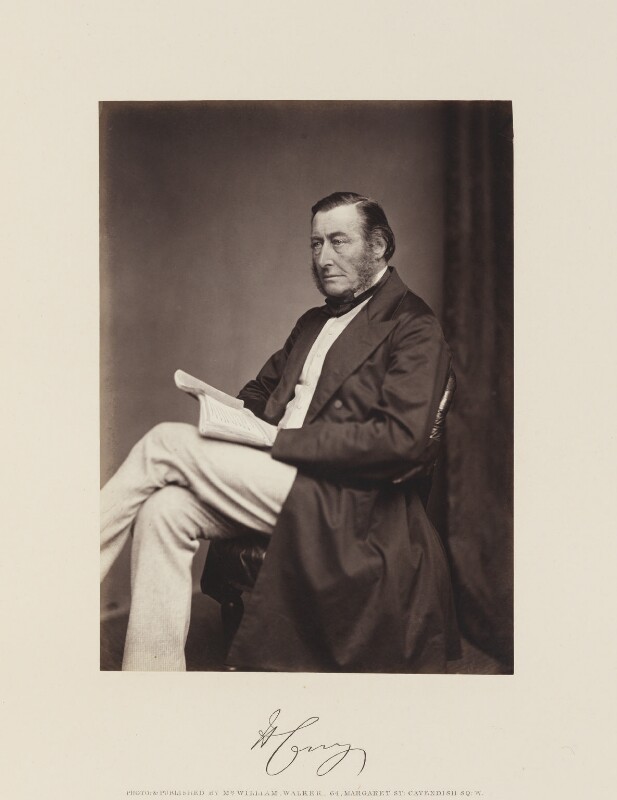
Henry Thomas Lowry-Corry (1803-1873) by and published by William Walker 1867, NPG Ax15852. He was the son of Somerset Lowry-Corry (1774-1841) 2nd Earl of Belmore and Juliana née Butler, daughter of Henry Thomas Butler (1746-1813) 2nd Earl of Carrick.

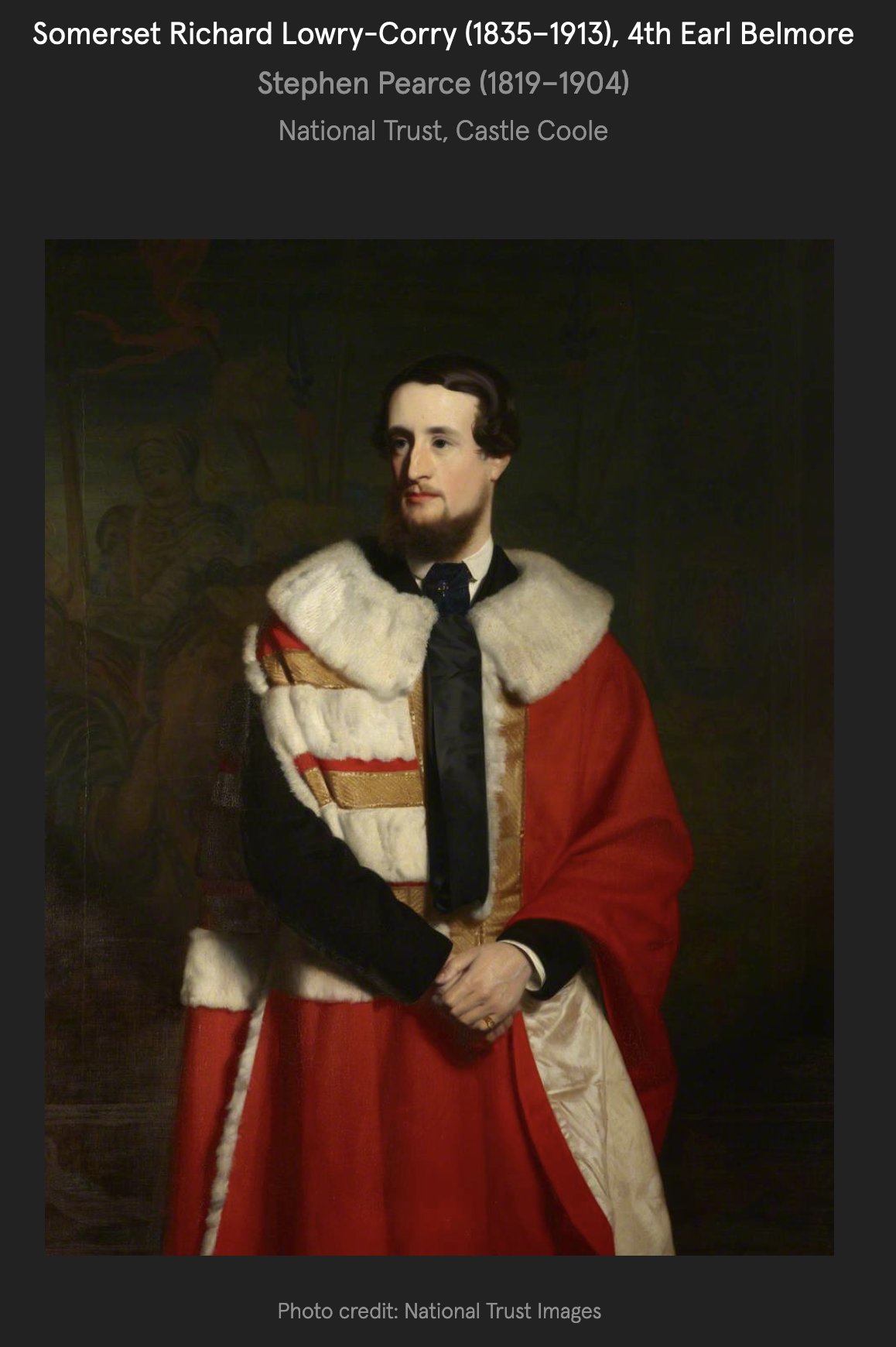
The website continues: “The 4th Earl, Somerset (1835-1913), rescued the family’s finances by selling land, reducing the estate to some 20,000 acres, enabling a partial redecoration of Castle Coole. In 1867 Somerset was appointed Governor General of New South Wales, where he supported the development of the railways. The 5thEarl never married but lived on modestly at Castle Coole with five unmarried siblings [one of whom was his brother Cecil the 6th Earl]. By the time the 7thEarl [a great nephew of the 4th Earl, grandson of the 3rd Earl, Major Galbraith Lowry-Corry (1913-1960)] inherited in 1949, the burden of taxes and the expense of maintaining the house led to the house and 70 acres of land being transferred to the National Trust with a grant from the Ulster Land Fund, the contents remaining on loan.

Somerset Richard Lowry-Corry 4th Earl of Belmore by Stephen Pearse courtesy of National Trust Castle Coole.

The present 8th Earl lives nearby and continues to take an active interest in the house and demesne.

Castle Coole, Fermanagh, Tourism Northern Ireland 2018 (see [1]).

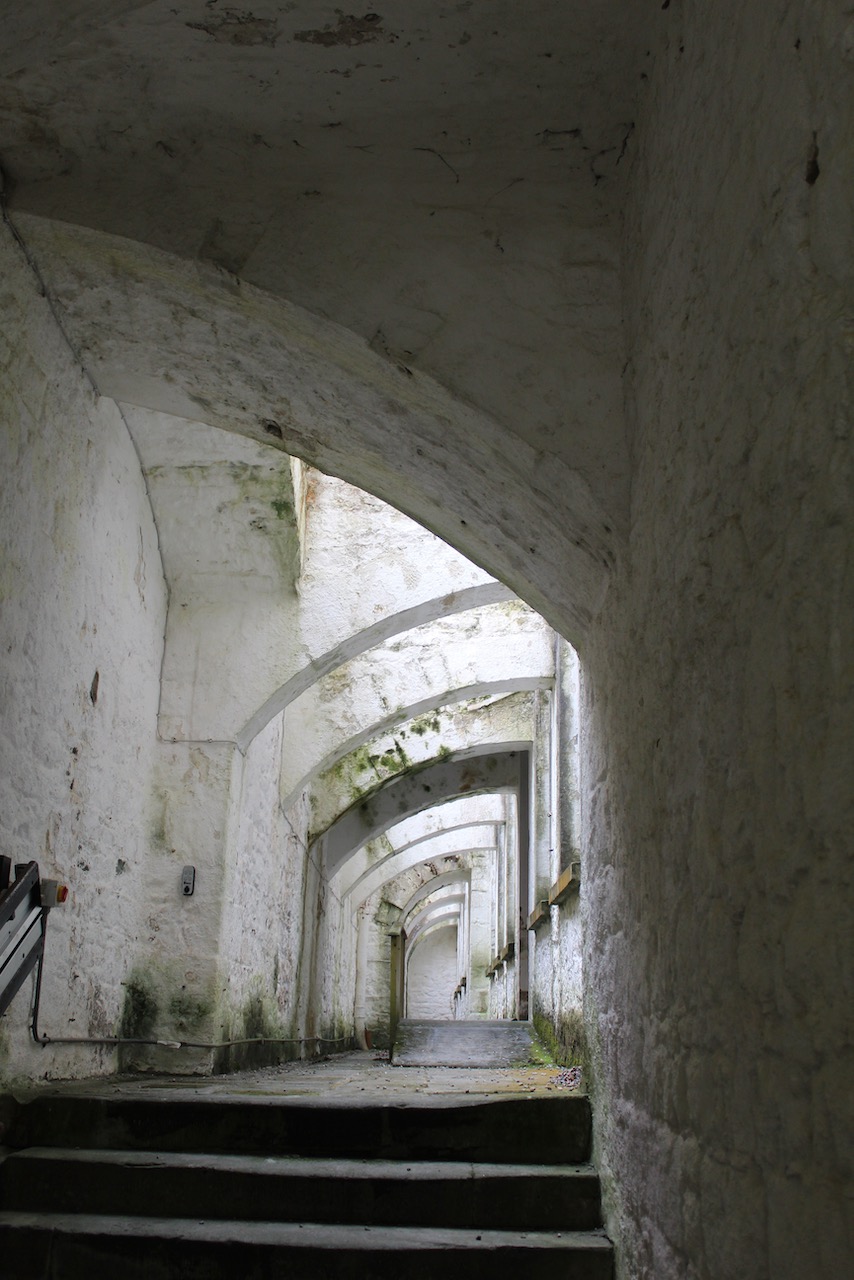
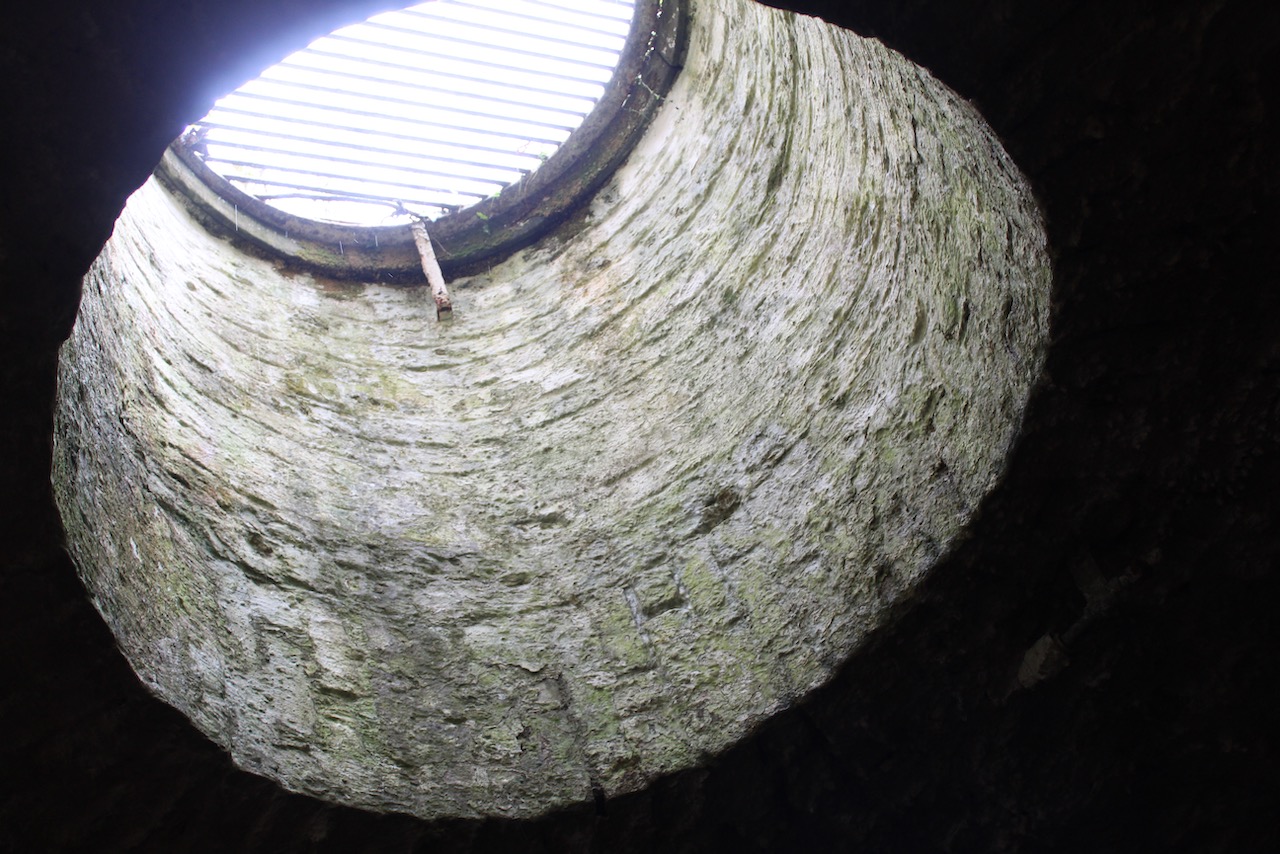
The house is very cleverly surrounded by tunnels for the servants, which run along the basement level outside the house. The tunnels allow light to reach down to the tall sash windows of the basement. There is a special entrance for horse riders, where they can enter the tunnels after their hunt to go into the basement of the house where a special area for changing and washing was created in the basement with a unique Roman bath-style plunge pool down a few steps for the home owners and their guests, which would be filled by the servants with heated water. The changing area is beautifully designed and the tunnels are covered with grills which let in the light, so that the basement lets in the sunlight.

The basement level tunnels for servants or horseriders. Photograph © Jennifer Winder-Baggot, www.irishhistorichouses.com

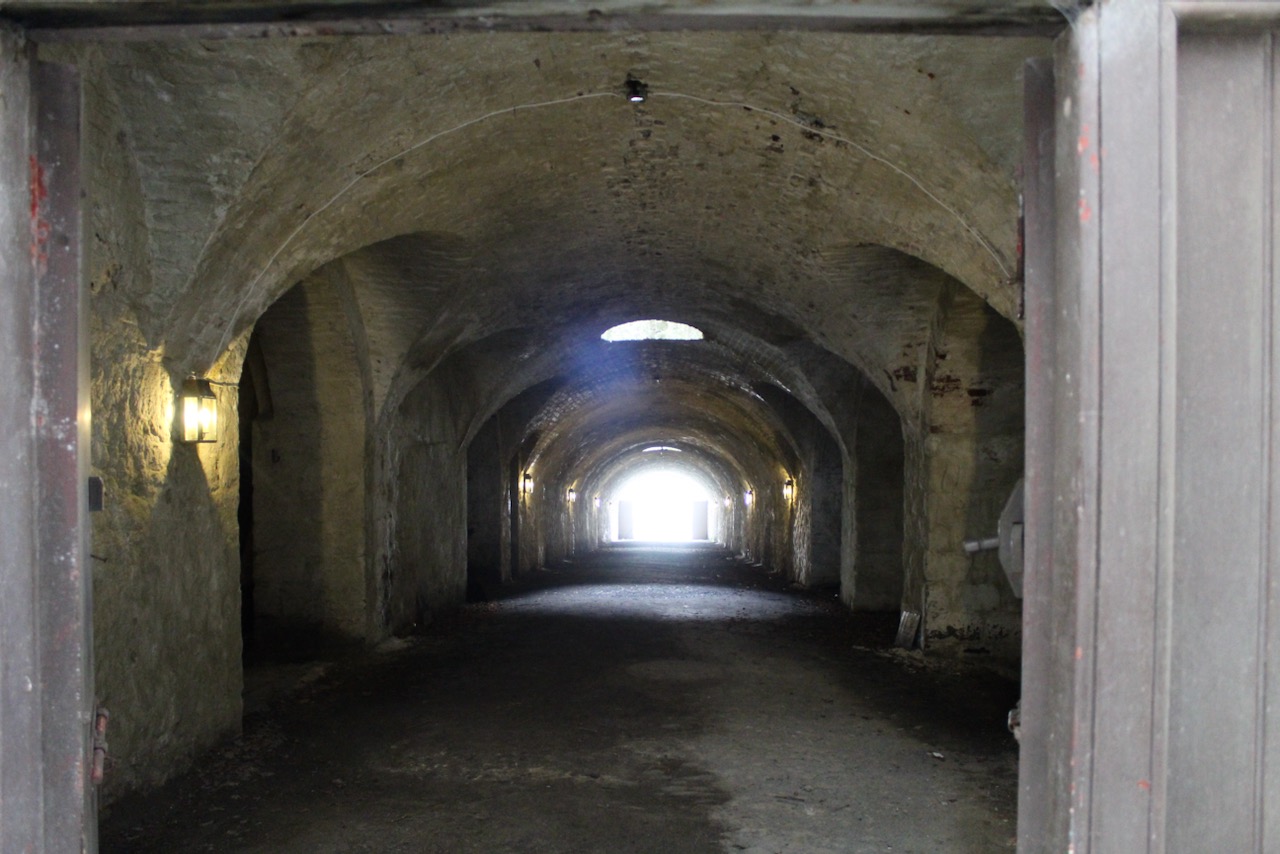
Another underground tunnel leads down to the Grand Yard. It was created in order to avoid a servants’ entrance at ground level. Deliveries could be made by driving up the tunnel to a back door into the basement area.

The delivery tunnel. It has rooms off the sides, where turf and coal were stored. It leads from the basement of the house down to the Grand Yard. Photograph © Jennifer Winder-Baggot, www.irishhistorichouses.com
Grill covered holes let in the light to the tunnels. Photograph © Jennifer Winder-Baggot, www.irishhistorichouses.com
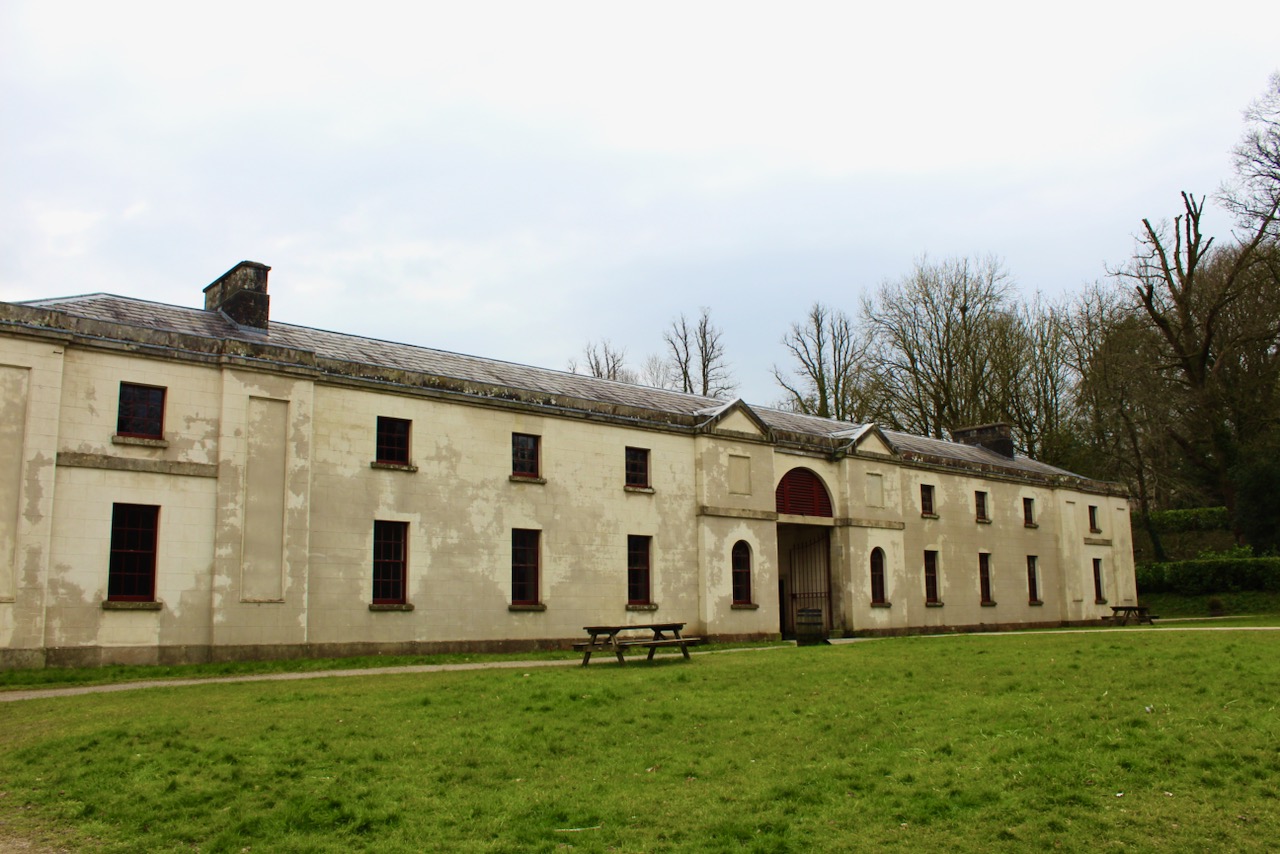
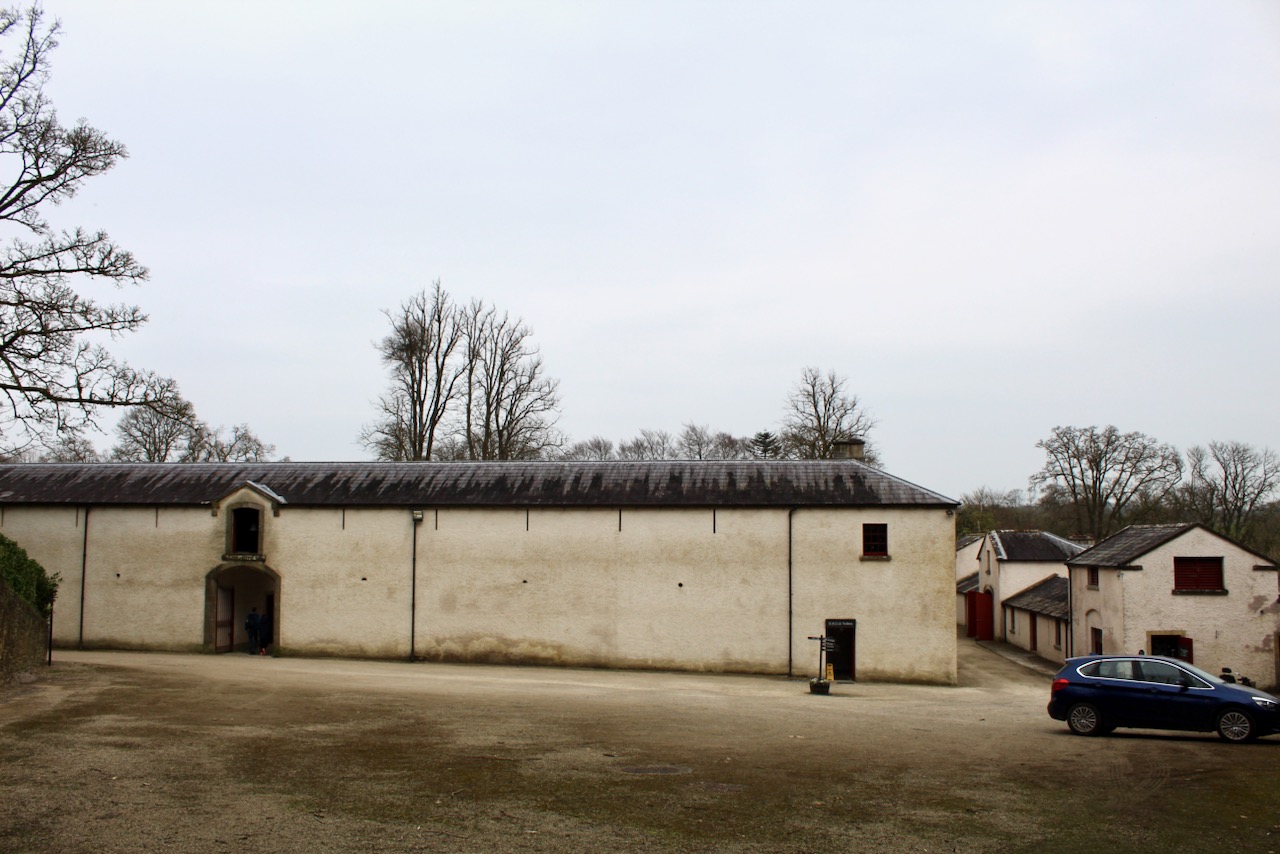
The stable yard of Castle Coole, designed by Richard Morrison, commissioned by the Somerset, 2nd Earl of Belmore, in 1810. Photograph © Jennifer Winder-Baggot, www.irishhistorichouses.com

The Castle Coole website tells us: “The Grand Yard was designed by Richard Morrison for the 2nd Earl of Belmore in 1817. The area was used for several purposes including dairy, stables, laundry house, candle factory and servants accommodation quarters [including the Steward’s House, which is still owned by Lord Belmore, as well as the farm yard]

The Grand Yard is surrounded by stables and coach houses. The stables and coach houses not only housed the family’s work horses, coach horses and coaches but also had space available to accommodate visitor’s horses and coaches – Strangers Stables and Coachhouses as they were referred to on plans.

The stable yard of Castle Coole, designed by Richard Morrison. Photograph © Jennifer Winder-Baggot, www.irishhistorichouses.com
The Stables were on the ground floor of the yard and the stable hands and feed above. Photograph © Jennifer Winder-Baggot, www.irishhistorichouses.com
The stable yard of Castle Coole, designed by Richard Morrison. Photograph © Jennifer Winder-Baggot, www.irishhistorichouses.com

[1] Ireland’s Content Pool, https://www.irelandscontentpool.com/en

[2] Bence-Jones, Mark. A Guide to Irish Country Houses (originally published as Burke’s Guide to Country Houses volume 1 Ireland by Burke’s Peerage Ltd. 1978); Revised edition 1988 Constable and Company Ltd, London.

[3] Dictionary of Irish Architects, https://www.dia.ie/architects/view/5104/WYATT%2C+JAMES+%23

[4] Castle Coole, County Fermanagh, booklet published by the National Trust, originally written by Peter Marlow, revised by Oliver Garnett, with a forward by the 8th Earl of Belmore, 2013.

Text © Jennifer Winder-Baggot, www.irishhistorichouses.com

2024 Section 482 list

As I mentioned last week, the new list is published. Here it is:

According to Revenue website:

“Section 482 of the Taxes Consolidation Act, 1997, as amended, provides tax relief to the owner/occupier of an approved building (including surrounding garden), or an approved garden existing independently, in respect of expenditure incurred on its repair, maintenance or restoration.”

donation

Help me to pay the entrance fee to one of the houses on this website. This site is created purely out of love for the subject and I receive no payment so any donation is appreciated!

€10.00

Donation towards accommodation

I receive no funding nor aid to create and maintain this website, it is a labour of love. I travel all over Ireland to visit Section 482 properties and sometimes this entails an overnight stay. A donation would help to fund my accommodation.

€150.00

Note that properties which list with the Revenue as Accommodation have different requirements and do not have to open to the public.

County Carlow

Borris House, Borris, County Carlow

See my entry: https://irishhistorichouses.com/2020/10/04/borris-house-county-carlow/

www.borrishouse.com
Open dates in 2024: Apr 2-4, 9-11, 16-18, 23-25, 30, May 1-5, 8-9, 15-19, 22-26, June 11-16, 18-20, 25-27, July 2-4, 9-11, 16-18, 23-25, 30-31, Aug 1, 6-8, 17-25, 27-29, 12 noon- 4pm

Fee: adult/OAP €12, child €8, contact info@borrishouse.com for group rates

Borris House, County Carlow. Photograph © Jennifer Winder-Baggot, www.irishhistorichouses.com

Huntington Castle, Clonegal, Co Carlow Y21 K237

See my entry: https://irishhistorichouses.com/2019/06/28/huntington-castle-county-carlow/
Open dates in 2024, but check website as sometimes closed for special events:

Castle Tours:

Open – February, March & April Saturdays & Sundays 1pm, 2pm & 3pm

Open – May, June, July, August & September Daily 1pm, 2pm, 3pm & 4pm

Open – October, November & December
Saturdays & Sundays 1pm, 2pm & 3pm
Fee: house/garden, adult €12.95, garden €6.50, OAP/student, house/garden €12, garden €6, child, house/garden €6.50, garden €3.50, group and family discounts available

Huntington Castle, County Carlow. Photograph © Jennifer Winder-Baggot, www.irishhistorichouses.com

The Old Rectory, Killedmond, Borris, Co Carlow R95 N1K7

See my entry: https://irishhistorichouses.com/2020/07/16/the-old-rectory-killedmond-borris-co-carlow/

https://www.blackstairsecotrails.ie/
Open dates in 2024: July 1-31, Aug 1-31, 9am-1pm
Fee: adult €10, OAP/student €6, child free.

Old Rectory Killedmond, Borris, County Carlow. Photograph © Jennifer Winder-Baggot, www.irishhistorichouses.com

County Cavan

Cabra Castle, Kingscourt, County Cavan, A82 EC64 (hotel)

see my entry: https://irishhistorichouses.com/2021/03/28/cabra-castle-kingscourt-county-cavan/

www.cabracastle.com
Open: all year, except Dec 24, 25, 26, 11am-4pm
Fee: Free

Cabra Castle, County Cavan. Photograph © Jennifer Winder-Baggot, www.irishhistorichouses.com

Corravahan House & Gardens, Drung, Ballyhaise, Co. Cavan H12 D860

see my entry: https://irishhistorichouses.com/2020/08/28/corravahan-house-and-gardens-drung-county-cavan/

www.corravahan.com
Open dates in 2024: Jan 4-5, 11-12, 18-19, 25-26, Feb 1-2, 8-9, 15-16, 22-23, 29, Mar 1, 7-8, May 2-4, 9-11, 16-18, 23-25, 30-31, June 1, 6-8, 13-15, 20-22, 27-29, July 4-6, Aug 16-25, 9am-1pm, Sundays, 2pm-6pm

Fee: adult €10, OAP/student/child €5

Tours on the hour, or by appointment. Last admission 1 hour before closing time. CCTV in operation

Corravahan, County Cavan, July 2020. Photograph © Jennifer Winder-Baggot, www.irishhistorichouses.com

County Clare

Barntick House, Clarecastle Co. Clare V95 FH00

See my entry: https://irishhistorichouses.com/2022/11/06/barntick-house-clarecastle-county-clare/

Contact: Ciarán Murphy Tel: 086-1701060

Open dates in 2024: May 4-31, July 1-31 Mon-Sat, 4.30pm-8.30pm, Aug 17-25, 2pm-6pm

Fee: Free

Barntick County Clare, photograph courtesy of Ciarán Murphy, May 2022.

Loughnane’s, Main Street, Feakle, Co. Clare
www.clareecolodge.ie
Open dates in 2024: June 1-August 31, Wed-Sun, Aug 17-25, 2pm-6pm Fee: Free

Newtown Castle, Newtown, Ballyvaughan, Co. Clare
www.newtowncastle.com 
Open dates in 2024: Jan 8-12, 15-19, 22-26, 29-31, Feb 1-2, 5-9, 12-16, 19-23, 26-29, March 1, 4-8, 11-15, 18-22, 25-29, Apr 1-6, 8-12, 15-19, 22-26, 29-30, May 1-3, 6-10, 13-17, 20-24, 27-31,  June 3-7, 10-14, 17-21, 24-28, July 1-5, 8-12, 15-19, 22-26, 29-31, Aug 1-31,  Sept 1-6, 9-13, 16-20, 23-27, 30, Oct 1-4, 7-11, 14-18, 21-25, 28-31, Nov 1, 4-8, 11-15, 18-22, 25-29, Dec 2-6, 9-13,10am-5pm
Fee: Free

Newtown Castle, County Clare, courtesy of National Inventory of Architectural Heritage.

County Cork

Ashton Grove, Ballingohig, Knockraha, County Cork

https://irishhistorichouses.com/2022/11/04/ashton-grove-ballingohig-knockraha-co-cork/
Open dates in 2024: Jan 2, 9, 13-14, 16, 23, 30, Feb 5, 13, 17-18, 20, 27, Mar 5, 12, 19, 23-24, 26, Apr 9, 16, 23, May 7-8, 14-15, 25-26, 28-29, June 4-5, 8-12, 17-19, 24-26, July 2-3, 6-7, 9-10, Aug 17-25, Sept 3-4, 10-11, 17-18, 24-25, 8am-12 noon, Wednesdays 2pm-6pm

Fee: adult €5, child/OAP/student free

Ballyvolane House, Castlelyons, County Cork P61 FP70
Tourist Accommodation Facility

www.ballyvolanehouse.ie

Open for accommodation: all year
Although listed under Accommodation Facility they have a fee on this listing so if you contact them in advance perhaps they will give you a tour: adult €6, family €16

Ballyvolane, County Cork, photo taken 2014 for Tourism Ireland, Ireland’s Content Pool.

Bantry House & Garden, Bantry, County Cork 975 T293

See my entry: https://irishhistorichouses.com/2022/12/01/bantry-house-garden-bantry-co-cork/

www.bantryhouse.com
Open dates in 2024: Apr 1-Oct 31, 10am-5pm but check the website in advance.
Fee: adult €14, OAP/student €11.50, child €5, groups over 8-20, €9 and groups of 21 or more €8

Bantry House, County Cork. Photograph © Jennifer Winder-Baggot, www.irishhistorichouses.com

Blarney Castle & Rock Close, Blarney, County Cork

See my entry: https://irishhistorichouses.com/2022/09/23/blarney-castle-rock-close-blarney-co-cork/

www.blarneycastle.ie
Open: all year except Christmas Eve & Christmas Day, Jan-Feb, Oct-Dec, 9am-4pm, Mar-Sept, 9am-5pm

Fee: adult €20, OAP/student €16, child €9

Blarney Castle, County Cork. Photograph © Jennifer Winder-Baggot, www.irishhistorichouses.com

Blarney House & Gardens, Blarney, County Cork

See my entry: https://irishhistorichouses.com/2022/09/30/blarney-house-gardens-blarney-co-cork/

www.blarneycastle.ie
Open dates in 2024: June 1-Aug 31, Mon-Sat, National Heritage Week, Aug 17-25, 10am-2pm

Fee: adult €10, OAP/student €8, child €5

Blarney House, County Cork. Photograph © Jennifer Winder-Baggot, www.irishhistorichouses.com

Brideweir House, Aghern, Conna, County Cork P51 FD36
www.brideweir.ie
Open dates in 2024: Jan 1-Dec 24, 9am-1pm
Fee: adult €10, child/student €5, OAP free

Check before visiting!

Burton Park, Churchtown, Mallow, County Cork P51 VN8H
www.slieile.ie 

Open dates in 2024: Apr 1-Oct 12, Sat-Sun, National Heritage Week, Aug 17-25, 2pm-6pm

Free
See my entry https://irishhistorichouses.com/2024/02/08/burton-park-churchtown-mallow-county-cork-p51-vn8h/

Burton Park, County Cork, August 17th 2023. Photograph © Jennifer Winder-Baggot, www.irishhistorichouses.com

Drishane Castle & Gardens, Drishanemore, Millstreet Town, County Cork
www.millstreet.ie
Open dates in 2024: Jan 2- May 31, Mon-Fri, June 1- Sept 30, Mon-Sat, Oct 1- Dec 31, Mon- Fri, National Heritage Week, Aug 17-25, 9am-5pm

Fee: adult €5, OAP/student free, child free when accompanied by adult

See my entry https://irishhistorichouses.com/2024/01/11/drishane-castle-gardens-drishanemore-millstreet-town-co-cork/

Drishane Castle, County Cork. Photograph © Jennifer Winder-Baggot, www.irishhistorichouses.com

Drishane House, Castletownshend, County Cork

See my entry: https://irishhistorichouses.com/2021/03/07/drishane-house-castletownshend-co-cork/

www.drishane.com
Open dates in 2024: May 1-21, 29-31, June 1-7, Aug 17-25, Oct 2-21, 11am-3pm

Fee: adult €12, OAP €10, student/child €8, child under 6 free

Drishane House, County Cork, former home of Edith Somerville, who wrote novels with her cousin Violet Martin, as “Somerville and Ross” – the latter the name of Violet Martin’s childhood home. Photograph © Jennifer Winder-Baggot, www.irishhistorichouses.com

Dún Na Séad Castle, Baltimore, County Cork 981 X968
www.baltimorecastle.ie
Open dates in 2024: April 1st – Sept 30, 11am -5pm
Fee: adult/OAP/student €5, children under 12 free

See my entry https://irishhistorichouses.com/2023/12/28/dun-na-sead-castle-baltimore-co-cork-981-x968/

Baltimore Castle, County Cork. Photograph © Jennifer Winder-Baggot, www.irishhistorichouses.com

Garrettstown House, Garrettstown, Kinsale, County Cork
www.garrettstownhouse.com
Open dates in 2024: May 14-Sept 6, 12 noon-5pm
Fee: adult €10, OAP/student/child €5, groups of 10+ adults €5 per person

Kilcascan Castle, Ballineen, County Cork 947 R286
Open dates in 2024: Aug 1-31, Sept 1-30, 9.30am-1.30pm
Fee: Free

See my entry https://irishhistorichouses.com/2023/12/14/kilcascan-castle-ballineen-co-cork-947-r286/

Kilcascan Castle, County Cork, 15th August 2023. Photograph © Jennifer Winder-Baggot, www.irishhistorichouses.com

Kilshannig House, Rathcormac, County Cork P61 AW77

See my entry: https://irishhistorichouses.com/2020/12/10/kilshannig-house-rathcormac-county-cork/

Open dates in 2024: May 1, 3-4, 9-12, June 1, 3-8, 10-15, 17-22, 24-29, July 1-6, 8-13, 15-20, 22-27, 29-31, Aug 1-3, 5-10, 12-31, Sept 1-10, 21, 23, 25, 8.30am-3pm,

Fee: adult €12, child/OAP/student €10

Kilshannig, County Cork. Photograph © Jennifer Winder-Baggot, www.irishhistorichouses.com

Riverstown House, Riverstown, Glanmire, County Cork T45 HY45

See my entry: https://irishhistorichouses.com/2023/02/25/riverstown-house-riverstown-glanmire-county-cork-t45-hy45/

Open dates in 2024: May 2-Sept 7, Thurs, Fri, Sat, National Heritage Week, Aug 17-25, 2pm-6pm

Fee: adult €8, OAP €5, student €3

Riverstown, County Cork. Photograph © Jennifer Winder-Baggot, www.irishhistorichouses.com

Woodford Bourne Warehouse, Sheares Street, Cork City
www.woodfordbournewarehouse.com
Open: all year except Christmas Eve, Christmas Day, 1pm-11pm
Fee: Free

County Donegal

Cavanacor House, Ballindrait, Lifford, Co. Donegal F93 F573
www.cavanacorgallery.ie
Open dates in 2024: Feb 1-20, May 1-31, Aug 17-25, 1pm-5pm

Fee: adult €8, OAP/student/child €6 

Oakfield Park Garden, Oakfield Demesne, Raphoe, Co. Donegal – garden only

See my entry: https://irishhistorichouses.com/2022/11/03/oakfield-park-oakfield-demesne-raphoe-co-donegal-garden-only/

www.oakfieldpark.com

Open dates in 2024: Mar 20-24, 27-31, Apr 1, 3-7, 10-14, 17-21, 24-28, May 1-5, 8-12, 15-19, 22-26, 29-31, June 1-30, July 1-31, Aug 1-31, Sept 1, 4-8, 11-15, 18-22, 25-29, Oct 5-13, Nov 27-30, Dec 1, 4-8, 11-15, 18-22, Mar, Apr, May, Sept, Oct, 12 noon-6pm, June, July, Aug, 11am-6pm, Nov, Dec, 4pm-10pm, Sundays, 4.30pm-10pm

Fee: adult €9, child €6, under 3 years free

Oakfield Park, County Donegal. Photograph © Jennifer Winder-Baggot, www.irishhistorichouses.com

Portnason House, Portnason, Ballyshannon, Co. Donegal

Open dates in 2024: May 20-25, June 24-29, July 22-27, Aug 17-31, Sept 24-30, Oct 21-25, Nov 18-22, 25-29, Dec 16-20, 9am-1pm

Fee: adult €10, OAP/student/child €6

Salthill Garden, Salthill House, Mountcharles, Co. Donegal F94 H524 – garden only

See my entry: https://irishhistorichouses.com/2021/10/06/salthill-garden-salthill-house-mountcharles-county-donegal/

www.donegalgardens.com

Open dates in 2024: May 3-4, 10-11, 17-18, 24-25, 31, June 1, 7-8, 14-15, 21-22, 28-29, July 2-6, 9-13, 16-20, 23-27, Aug 1, 3, 6-10, 12-25, 27- 31, Sept 5-6, 12-13, 19-20, 26-27, 2pm-6pm

Fee: adult/OAP/student €6, child under 3 free, otherwise €2 

At Salthill Garden, County Donegal. Photograph © Jennifer Winder-Baggot, www.irishhistorichouses.com

Dublin City

Bewley’s, 78-79 Grafton Street/234 Johnson’s Court, Dublin 2
www.bewleys.com
Open: all year except Christmas Day, 9am-5pm

Fee: Free

Bewleys, Dublin. Photograph © Jennifer Winder-Baggot, www.irishhistorichouses.com

Doheny & Nesbitt, 4/5 Lower Baggot Street, Dublin 2

www.dohenyandnesbitts.ie

Open: all year except Christmas Day, Mon-Thurs, 9am-11.30pm, Fri-Sat, 9am-12.30am, Sun, 10am-12 midnight
Fee: Free

Hibernian/National Irish Bank, 23-27 College Green, Dublin 2

See my entry: https://irishhistorichouses.com/2023/01/28/hibernian-national-irish-bank-23-27-college-green-dublin-2/
www.clarendonproperties.ie

Open: all year, except Jan 1, and Dec 24-25, Mon-Sat, 9.30am-8pm, Sun, 11am-7pm

Fee: Free

Former Hibernian Bank, College Green, Dublin. Photograph © Jennifer Winder-Baggot, www.irishhistorichouses.com

11 North Great George’s Street, Dublin 1

see my entry: https://irishhistorichouses.com/2019/12/31/11-north-great-georges-street-dublin-1/

www.number11dublin.ie
Open dates in 2024: April 8-12, 22-26, May 7-11, June 3-8, July 8-13, Aug 5-10, 17-26, Sept 2-8, Oct 7-11, 21-25,

12 noon-4pm

Fee: adult €7, students/OAP €3, child free

11 North Great Georges Street, Dublin. Photograph © Jennifer Winder-Baggot, www.irishhistorichouses.com

39 North Great George’s Street, Dublin 1
http://www.39northgreatgeorgesstreet.com

Open dates in 2024: May 13-26, June 14-23, July 8-21, Aug 10-31, 1pm-5pm

Fee: adult €7, students/OAP €5, child free with adult, group €5 per person

See my entry https://irishhistorichouses.com/2023/07/06/39-north-great-georges-street-dublin/

39 North Great Georges Street, Dublin. Photograph © Jennifer Winder-Baggot, www.irishhistorichouses.com

81 North King Street, Smithfield, Dublin 7
Open dates in 2024: Apr 1-6, 8-13, 15-20, 22-27, June 1, 3-8, 10-15, 17-22, 24-29, Aug 1-3, 5-10, 12-31, 12 noon-4pm
Fee: Free

The Odeon (formerly the Old Harcourt Street Railway Station), 57 Harcourt Street, Dublin 2
www.odeon.ie
Open in 2024: all year Tue-Sat, National Heritage Week, Aug 17-25, 12 noon to 12 midnight

Fee: Free

The Odeon, formerly the Harcourt Street tram station. Photograph © Jennifer Winder-Baggot, www.irishhistorichouses.com

Powerscourt Townhouse Centre, 59 South William Street, Dublin 2

see my entry: https://irishhistorichouses.com/2020/04/02/powerscourt-townhouse-59-south-william-street-dublin-2/

https://www.powerscourtcentre.ie/
Open in 2024: all year, except New Year’s Day, Christmas Eve, Christmas Day, Mon-Sat, 9am-6pm, Sunday, 12 noon-6pm
Fee: Free

Powerscourt townhouse, Dublin. Photograph © Jennifer Winder-Baggot, www.irishhistorichouses.com

10 South Frederick Street, Dublin 2 DO2 YT54
Open dates in 2024: Jan 1-5, 8-12, 15-19, 22-26, May 1-31, Aug 17-25, 2pm-6pm

Fee: Free

The Church, Junction of Mary’s Street/Jervis Street, Dublin 1

see my entry: https://irishhistorichouses.com/2022/11/09/the-church-junction-of-marys-street-jervis-street-dublin/

www.thechurch.ie
Open: Jan 1-Dec 23, 27-31, 11am-10pm

Fee: Free

St. Mary’s church, Dublin, now a bar, it was one of the oldest parishes on the north side of Dublin. Photograph © Jennifer Winder-Baggot, www.irishhistorichouses.com

County Dublin

Clonskeagh Castle, 80 Whitebeam Road, Clonskeagh, Dublin 14

www.clonskeaghcastle.com

Open dates in 2024: Feb 6-10, Mar 5-9, Apr 10-14, May 1-10, June 1-10, July 1-10, Aug 17-25, Nov 4-7, Dec 4-7, 10am-4pm

Fee: Adult €6, child OAP/student €3

Clonskeagh Castle, photograph courtesy of myhome.ie

Colganstown House, Hazelhatch Road, Newcastle, Co. Dublin D22 PK16

see my entry: https://irishhistorichouses.com/2020/05/21/colganstown-house-hazelhatch-road-newcastle-county-dublin/

Open dates in 2024: Apr 15-21, May 1-16, 21-28, June 10-16, Aug 17-25, Nov 11-23, 9am-1pm

Fee: adult/OAP €10, student/child free

Colganstown, County Dublin, with its Robert West ceilings. Photograph © Jennifer Winder-Baggot, www.irishhistorichouses.com

Corke Lodge Garden, Shankill, Co. Dublin A98 X264 – garden only
Postal address Woodbrook, Bray, Co. Wicklow
www.corkelodge.com
Open dates in 2024: June 3-28, Mon-Fri, July 2-27, Tue-Sat, Aug 5-25, 10am-2pm

Fee: €8, paid voluntarily in honesty box to benefit Our Lady’s Hospice

Fahanmura, 2 Knocksina, Foxrock, Dublin 18, D18 W3F2

See my entry https://irishhistorichouses.com/2023/08/10/fahanmura-2-knocksinna-foxrock-dublin-18-d18-w3f2/
www.fahanmura.ie
Open dates in 2024: Apr 8-12, 15-19, 22-26, May 7-11, 14-18, June 2-8, 11-15, July 2-6, 9-13, Aug 17-25, Sept 9-14, 9am-1pm

Fee: adult €5, student €2, OAP/child free

Fahanmura, photograph courtesy of Colliers estate agent and myhome.ie in 2023.

Farm Complex, Toberburr Road, Killeek, St Margaret’s, Co. Dublin
Open dates in 2024Jan 4-7, 12-14, 19-21, 26-28, Mon-Fri, 9.30pm-1.30pm, Sat-Sun, 1pm-5pm, May17-20, June 1-4, 7-10, 14-17, 21-23, Mon- Fri, 9.30am-1.30pm, Sat-Sun, 2pm-6pm, Aug 16-25, 2pm-6pm, Sept 13-14, 16, 20-23, 27-30, Oct 18-20, 26-29, Mon- Fri, 9.30-1.30pm, Sat-Sun, 2pm-6pm,

Fee: adult €6, student/OAP/child €5

Lambay Castle, Lambay Island, Malahide, Co. Dublin R36 XH75
www.lambayisland.ie
Tourist Accommodation Facility – not open to the public

Open for accommodation: April 1- September 30 2024

They do give tours if booked in advance – see the website.

The Old Glebe, Upper Main Street, Newcastle, Co. Dublin

See my entry: https://irishhistorichouses.com/2019/12/31/the-old-glebe-newcastle-lyons-county-dublin/
Open dates in 2024: Apr 29-30, May 1-31, June 1, 3-8, 9-15, 17-22, 24-29, Aug 17-25, 10am-2pm

Fee: Free

back of “The Old Glebe” Newcastle, County Dublin, 2012. Photograph © Jennifer Winder-Baggot, www.irishhistorichouses.com

Martello Tower, Portrane, Co. Dublin

See my entry: https://irishhistorichouses.com/2022/07/29/martello-tower-portrane-co-dublin/
Open dates in 2024: March 2- Sept 22, Sat & Sun, National Heritage Week, Aug 17-25, 9am-1pm

Fee: adult €6, student/OAP €2, child free

Martello Tower, Portrane. Photograph © Jennifer Winder-Baggot, www.irishhistorichouses.com

Meander, Westminister Road, Foxrock, Dublin 18, D18 E2T9
Open dates in 2024: Jan 8-9, 10-12, 15-19, 22-26, 29-31, Feb 1-2, May 7-11, 15-18, 21-25, June 4-8, 10-15, 17-22, Aug 17-25, 9am-1pm

Fee: adult €5, OAP/child/student €2

Primrose Hill, Very Top of Primrose Lane, Lucan, Co. Dublin
Open dates in 2024: Feb 1-28, June 1-30, July 1-7, Aug 17-25, 2pm-6pm

Fee: adult/OAP €6, child free

Primrose Hill, County Dublin. Photograph © Jennifer Winder-Baggot, www.irishhistorichouses.com

St. George’s, St. George’s Avenue, Killiney, Co. Dublin

See my entry: https://irishhistorichouses.com/2022/11/24/st-georges-st-georges-avenue-killiney-co-dublin/
Open dates in 2024: July 1-31, Aug 1-31, 9am-1pm
Fee: adult €5, OAP/student/child €3.50

St. George’s, Killiney, County Dublin. Photograph © Jennifer Winder-Baggot, www.irishhistorichouses.com

Tibradden House, Mutton Lane, Rathfarnham, Dublin 16 D16 XV97
Open dates in 2024: Jan 15-19, Feb 19-23, Mar 4-8, Apr 8-12, May 4-5, 6-10, 13-17, 20-24, June 4-7, 11-14, Aug 17-25, Sept 21-22, 26-29, Jan-Apr and June, 9am-1pm, May and Sept, Sat-Sun 10am-2pm, Mon-Fri, 9am-1pm, Aug, 2pm-6pm  

Fee: adult/OAP €8, student €5, child free, Members of An Taisce and The Irish Georgian Society (with membership card) €5

County Galway

Castle Ellen House, Athenry, Co. Galway
http://www.castleellen.ie/
Open dates in 2024: May 22-23, 26-30, June 2-6, 9-13, 16-20, 23-27, 30, July 1-4, 7-11, 14-18, 21-25, 28-31, Aug 17-25, 12 noon-4pm

Fee: Free

Claregalway Castle, Claregalway, Co. Galway H91 E9T3

Tourist Accommodation Facility – not open to the public
www.claregalwaycastle.com
Open for accommodation: January 2-December 24

See my entry https://irishhistorichouses.com/2023/04/20/claregalway-castle-claregalway-co-galway/

At Claregalway Castle, County Galway. Photograph © Jennifer Winder-Baggot, www.irishhistorichouses.com

Lisdonagh House, Caherlistrane, Co. Galway H91 PFW6
Tourist Accommodation Facility – not open to the public
www.lisdonagh.com
Open for accommodation: May 1-Nov 1

The Grammer School, College Road, Galway
www.yeatscollege.ie
Open dates in 2024: May 4-5, 11-12, 18-19, 25-26, June 8-9, July 1-31, Aug 1-12, 17-25, 9am-5pm

Fee: adult/OAP/student €5, child under 12 free

Signal Tower & Lighthouse, Eochaill, Inis Mór, Aran Islands, Co. Galway
www.aranislands.ie
Open in 2024: June-Sept, 9am-5pm.

Fee: adult €2.50, child €.50, OAP/student free, family €5, group rates depending on numbers

Woodville House Dovecote & Walls of Walled Garden – garden only
Craughwell, Co. Galway

www.woodvillewalledgarden.com
Open dates in 2024: Feb 2-5, 9-12, 16-19, 23-26, Mar 1-4, June 1-30, Aug 17-26, Feb-Mar, 12 noon-4pm, June and August, 11am-5pm-last entry 4.30pm    

Fee: adult €10, OAP €8, student, €6, child €3 must be accompanied by adult, family €25, 2 adults and 2 children

County Kerry

Ballyseede Castle, Tralee, Co. Kerry (hotel)
www.ballyseedecastle.com
Open: Jan 1-Dec 22, 8am-12 midnight
Fee: Free

See my entry https://irishhistorichouses.com/2023/09/02/ballyseede-castle-ballyseede-tralee-co-kerry/

Ballyseede Castle, March 2023. Photograph © Jennifer Winder-Baggot, www.irishhistorichouses.com

Derreen Gardens, Lauragh, Tuosist, Kenmare, Co. Kerry – garden only
https://www.derreengarden.com/
Open: all year, 10am-6pm
Fee: adult/OAP/student €9, child €4, family ticket (2 adults and all children + 2 maps) €25

See my entry https://irishhistorichouses.com/2023/09/07/derreen-gardens-lauragh-tuosist-kenmare-co-kerry/

Derreen, County Kerry, March 2023. Photograph © Jennifer Winder-Baggot, www.irishhistorichouses.com

Kells Bay House & Garden, Kells, Caherciveen, Co Kerry V23 EP48 – garden only

www.kellsbay.ie 

Open in 2024: Jan 1-7, Feb 3-Dec 21, 28-31, Jan-Mar, Nov-Dec 9.30am-5pm, Apr-Oct 9.30am-6pm

Fee: adult €8.75, purchase in the gardens €9.50, child €6.75, purchase in the garden €7.50, family €28, purchase in the gardens €30, OAP/student free, any other concessions see: http://www.kellsgardens.ie/garden-tickets/

See my entry https://irishhistorichouses.com/2023/09/13/kells-bay-house-garden-kells-caherciveen-county-kerry/

The rope bridge crosses the river. Kells Bay, March 2023. Photograph © Jennifer Winder-Baggot, www.irishhistorichouses.com

Tarbert House, Tarbert, Co. Kerry
Open dates in 2024: May 1- July 31, Mon-Sat, Aug 1-31,10am-12 noon, 2pm-4pm

Fee: adult/OAP €5, student/child free

County Kildare

Blackhall Castle, Calverstown, Kilcullen, Co. Kildare R56 CR68

See my entry: https://irishhistorichouses.com/2020/05/14/blackhall-castle-calverstown-kilcullen-county-kildare/
Open dates in 2024: May 1-31, Aug 17-25, Sept 1-15, Dec 1-20, 2pm-6pm

Fee: Free

Blackhall Castle, County Kildare, a former Eustace home. Photograph © Jennifer Winder-Baggot, www.irishhistorichouses.com

Burtown House and Garden, Athy, Co. Kildare R14 AE67
www.burtownhouse.ie
Open dates in 2024: May 1-4, 8-11, 15-18, 22-25, 29-31, June 5-8, 12-15, 19-22, 26-29, August 17-25, Sept 4-7, 11-14, 18-21, 25-28, 9am-1pm

Fee: adult €8, OAP/student/child €5

Burtown, County Kildare. Photograph © Jennifer Winder-Baggot, www.irishhistorichouses.com

Coolcarrigan House & Gardens, Coolcarrigan, Coill Dubh, Naas, Co. Kildare

See my entry: https://irishhistorichouses.com/2020/05/31/coolcarrigan-house-and-gardens-coill-dubh-naas-county-kildare/

www.coolcarrigan.ie
Open dates in 2024: Feb 12-16, 19-23, Aug 1-2, 6-31, Sept 1-8, 23-27, 30, Oct 1-4, 7-9, 9am-1pm
Fee: adult €8, OAP/student €5, child free

Coolcarrigan, County Kildare. Photograph © Jennifer Winder-Baggot, www.irishhistorichouses.com

Farmersvale House, Badgerhill, Kill, Co. Kildare W91 PP99
Open dates in 2024: Jan 12-31, July 17-31, Aug 1-25, 9.30am-1.30pm
Fee: adult €5, student/child/OAP €3, (Irish Georgian Society members free)

Griesemount House, Ballitore, Co Kildare R14 WF64
www.griesemounthouse.ie
Open dates in 2024: Feb 12-25, 26, May 13-24, June 17-28, July 8-19, Aug 17-25, 2pm-6pm

Fee: adult €6, OAP €5, child/student €3

Harristown House, Brannockstown, Co. Kildare W91 E710

See my entry: https://irishhistorichouses.com/2020/09/27/harristown-brannockstown-county-kildare/

https://www.harristownhouse.ie/
Open dates in 2024: Feb19-27, Mar 11-22, May 6-17, July 8-26, Aug 13-25, 9am-1pm
Fee: adult/OAP/student/child €10

Harristown, County Kildare. Photograph © Jennifer Winder-Baggot, www.irishhistorichouses.com

Kildrought House, Celbridge Village, Co. Kildare W23 N9P2
Open dates in 2024: Jan 9-25, May 18-31, June 1-3, July 1-8, Aug 17-31, 10am-2pm

Fee: adult €10, OAP/student €5, child €5, (under 7 years free)

See my entry https://irishhistorichouses.com/2023/06/22/kildrought-house-celbridge-village-co-kildare-w23-n9p2/

Kildrought, County Kildare, a beautifully restored home and garden on the banks of the Liffey. Photograph © Jennifer Winder-Baggot, www.irishhistorichouses.com

Larchill, Kilcock, Co. Kildare W23 Y44P
See my entry: https://irishhistorichouses.com/2022/09/02/larchill-kilcock-co-kildare/
www.larchill.ie
Open dates in 2024: May 1-17, 20-24, 27-31, June 1-7, 11-14, 18-21, 25-28, Aug 17-25, 10am-2pm  

Fee: adult/OAP/student €8, child €4 (under 4 years free)

Larchill, County Kildare. Photograph © Jennifer Winder-Baggot, www.irishhistorichouses.com

Leixlip Castle, Leixlip, Co. Kildare W23 N8X6

See my entry: https://irishhistorichouses.com/2020/09/04/leixlip-castle-county-kildare-desmond-guinnesss-jewelbox-of-treasures/
Open dates in 2024: Feb 19-23, 26-29, Mar 1, 4-8, 11-15, May 13-24, June 10-21, Aug 17-25, Sept 2-8, 9am-1pm

Fee: adult €8, OAP/student/child €4, no charge for school groups

Leixlip Castle, County Kildare. Photograph © Jennifer Winder-Baggot, www.irishhistorichouses.com

Millbrook House, Kilkea, Beaconstown, Castledermot, Co. Kildare, R14Y319
Open in 2024: May 17- 31, Aug 12-31, Sept 7-16, Dec 17-31, 9am-1pm
Fee: Adult €8, student/OAP/groups €5

Moone Abbey House & Tower, Moone Abbey, Moone, Co. Kildare R14 XA40

See my entry: https://irishhistorichouses.com/2020/06/13/moone-abbey-house-and-tower-moone-county-kildare/
Open dates in 2024: May 1-31, Aug 17-25, Sept 1-20, 12 noon- 4pm

Fee: adult €8, OAP/student/child €4

View from Moone Abbey tower. Photograph © Jennifer Winder-Baggot, www.irishhistorichouses.com

Moyglare Glebe, Moyglare, Maynooth, Co. Kildare
Open dates in 2024: Jan 2-26, 29, May 1-31, Aug 17-25, 8.30am-12.30pm
Fee: adult €6, OAP/student/child €3

Steam Museum Lodge Park Heritage Centre, Lodge Park, Straffan, Co. Kildare
www.steam-museum.com
Open dates in 2024: Apr 30, May 4-6, 11-12, 18-19, 25-26, June 1-3, 7-9, 14-16, 21-23, 28-30, July 5-7, 12-14, 19-21, 26-28, Aug 2-5, 9-11, 16-25, 31, Sept 1, 7-8, 14-15, 21-22, 28-29, 1pm-5pm

Fee: Garden and Museum, adult Fri/Sat, €12, Sun €15 steam, child/OAP/student €6, family €25, scenic railway €5 when open

Templemills House, Newtown Road, Celbridge, Co. Kildare W23 YK26
Open dates in 2024: Jan 14-26, Feb 3-9, May 1-31, Aug 17-25, 9am-1pm

Fee: adult €12, child/student/OAP €8

County Kilkenny

Aylwardstown, Glenmore, Co Kilkenny 
www.kelvale.com
Open dates in 2024: Aug 1-31, Sept 1-30, 9am-5pm

Fee: adult €5, OAP/student €3, child free

Ballybur Castle
Ballybur Upper, Cuffesgrange, Co. Kilkenny
www.ballyburcastle.com
Open dates in 2024: Aug 1-31, Sept 1-30, 2pm-6pm
Fee: Free

Ballysallagh House, Johnswell, Co Kilkenny R95 A6P1

See my entry: https://irishhistorichouses.com/2022/06/17/ballysallagh-house-johnswell-co-kilkenny/
Open dates in 2024: Feb 1-20, May 1-7, 18-31, Aug 17-31, Sept 1-5, 9am-1pm

Fee: adult €7.50, child/OAP/student €5, discount free access to local community groups

Ballysallagh House, County Kilkenny. Photograph © Jennifer Winder-Baggot, www.irishhistorichouses.com

Kilfane Glen & Waterfall Garden, Thomastown, County Kilkenny R95 RXO5 – garden only

See my entry: https://irishhistorichouses.com/2021/12/16/kilfane-glen-waterfall-kilfane-thomastown-co-kilkenny/

www.kilfane.com

Open dates in 2024: July 1-31, Aug 1-31, 11am-6pm
Fee: adult €7, OAP/student €6.50, child €6, family €20

Kilfane, County Kilkenny, 23rd August 2021. Photograph © Jennifer Winder-Baggot, www.irishhistorichouses.com

Kilkenny Design Centre, Castle Yard, Kilkenny
www.kilkennydesign.com
Open: Jan 2-Dec 24, 28-31, Jan, Mar, Apr, June, Aug, Oct, 9am-8pm, Feb, May, July, Sept, Nov, Dec, 9am-5pm
Fee: Free

Shankill Castle, Paulstown, Co. Kilkenny 
www.shankillcastle.com
Open dates in 2024: Apr 6-7, 13-14, 20-21, 27-28, May 4-5, 11-13, 18-19, 25-26, June 1-2, 6-9, 13-16, 20-23, 27-30, July 4-7, 11-14, 18-21, 25-28, Aug 1-4, 8-11, 15-26, 29-30, Sept 1, 7-8, 14-15, 21-22, 28-29, Oct 5-6, 12-13, 19-20, 26-27, 11am-5pm

Fee: house & garden, adult €12 garden €6, OAP/student €10, garden €5, child, over 5 years €6, garden €3

See my entry https://irishhistorichouses.com/2023/11/30/shankill-castle-paulstown-county-kilkenny-r95-t8x7/

Shankill Castle County Kilkenny 3rd June 2023. Photograph © Jennifer Winder-Baggot, www.irishhistorichouses.com

Tybroughney Castle, Piltown, Co Kilkenny 
https://www.tybroughneycastle.com/

Open dates in 2024: May 1-31, June 1-30, Mon-Sat, National Heritage Week, Aug 17-25, 11am-3pm

Fee: free

County Laois

Ballaghmore Castle, Borris in Ossory, Co. Laois
www.castleballaghmore.com
Open dates in 2024: all year except Christmas Day, 10am-6pm

Fee: adult €15, child/OAP/student €5, family of 4, €25 with guide

Stradbally Hall, Stradbally, Co. Laois

See my entry: https://irishhistorichouses.com/2021/10/14/stradbally-hall-stradbally-co-laois/

www.stradballyhall.ie
Open dates in 2024: May 1-31, June 1-9, Aug 17-25, Oct 1-14, 9am-1pm

Fee: adult €10, OAP/student €5, child free

Stradbally, County Laois, 7th June 2021. Photograph © Jennifer Winder-Baggot, www.irishhistorichouses.com

County Leitrim

Manorhamilton Castle (Ruin), Castle St, Manorhamilton, Co. Leitrim

www.manorhamilton.ie

Open dates in 2024: May 1-5, 8-12, 15-19, 22-26, 29-31, June 1-2, 5-9, 12-16, 19-23, 26-30, July 3-7, 10-14, 17-24, 24-28, 31, Aug 1-4, 7-11, 14-25, 28-31, Sept 1, 4-8, 11-15, 18-22, 25-29, Oct 2-6, 9-13, 16-20, 23-27, 30-31, Nov 1-3, 6-10, 13-17, 20-24, 27-30, Dec 1, 4-8, 11-15, 18-22, 10am-4pm

Fee: adult €9, child free

Manorhamilton Castle, Leitrim. It was not open on the day we visited despite being listed as an open day during Heritage Week. Photograph © Jennifer Winder-Baggot, www.irishhistorichouses.com

County Limerick

Ash Hill, Kilmallock, Co. Limerick V35 W306
www.ashhill.com
(Tourist Accommodation Facility)

Open in 2024: May 1- Oct 31, 10am-4pm

Fee: Free

See my entry https://irishhistorichouses.com/2023/04/06/ash-hill-kilmallock-co-limerick/

Ash Hill, County Limerick. Photograph © Jennifer Winder-Baggot, www.irishhistorichouses.com

Glebe House, Holycross, Bruff, Co. Limerick
Open dates in 2024: Jan 4-5, 8-12, 15-19, 22-26, 29-31, June 10-14, Aug 17-25, Sept 2-27, Mon-Fri, 2pm-6pm, Sat-Sun, 8am-12 noon

Fee: Free

Glenville House, Glenville, Ardagh, Co. Limerick V42 X225
Open dates in 2024: Apr 2-30, May 1-31, June 1-12, Tue-Sat, Aug 17-25, 9.30am-1.30pm

Fee: adult €5, OAP/student €3, child free

See my entry https://irishhistorichouses.com/2023/03/19/glenville-house-glenville-ardagh-co-limerick-v42-x225/

Glenville, County Limerick, August 2022. Photograph © Jennifer Winder-Baggot, www.irishhistorichouses.com

Kilpeacon House, Crecora, Co. Limerick
Open dates in 2024: May 1-June 30, Mon- Sat, Aug 17-25, 10am-2pm

Fee: adult/child/OAP €8

Mount Trenchard House and Garden, Foynes, Co. Limerick
Open in 2024: June 3-7, 10-14, 17-21, 24-28, July 1-5, 8-12, 15-19, 22-26, 29-31, Aug 1-31, Sept 1, 9am-1pm

Fee: adult €10, OAP/student €8, child €5

See my entry https://irishhistorichouses.com/2023/04/01/mount-trenchard-house-and-garden-foynes-co-limerick/

Mount Trenchard, County Limerick. Photograph © Jennifer Winder-Baggot, www.irishhistorichouses.com

Odellville House, Ballingarry, Co. Limerick
www.odellville.simplesite.com
Open dates in 2024: May 1-31, June 1-30, Aug 17-25, 10am-2pm

Fee: adult €8, student/OAP/child €4

The Turret, Rylanes, Ballingarry, Co. Limerick V94 HV24
Open dates in 2024: May 1-31, Mon-Sat, Aug 1-31, Sept 2-21, Mon-Sat, 12 noon-4pm

Fee: adult €5, OAP/child/student/ free

See my entry: https://irishhistorichouses.com/2023/03/23/the-turret-ballingarry-co-limerick-v94-hv24/

The Turret, Limerick, Photograph courtesy of Sherry Fitzgerald Stack estate agents, June 2023.

The Old Rectory, Rathkeale, Co. Limerick
Open dates in 2024: May 4-Nov 30, Saturday and Sundays, National Heritage Week, Aug 17-25, 10am-2pm

Fee: adult €8, child/OAP/student €3

County Longford

Moorhill House, Castlenugent, Lisryan, Co. Longford
Open dates in 2024: Aug 1-31, Sept 1-29, 9.30am-1.30pm
Fee: adult/OAP/student/child €8

County Louth

Barmeath Castle, Dunleer, Drogheda, Co. Louth A92 P973

See my entry: https://irishhistorichouses.com/2020/10/23/barmeath-castle-dunleer-drogheda-county-louth/
Open dates in 2024: May 1-31, June 1-10, Aug 17-25, Oct 1-20, 9am-1pm

Fee: house, adult /OAP/student €5, garden, adult/OAP/student €5, child free

Barmeath, County Louth. Photograph © Jennifer Winder-Baggot, www.irishhistorichouses.com

Killineer House & Garden, Drogheda, Co. Louth A92 P8K7

See my entry: https://irishhistorichouses.com/2021/08/10/killineer-house-county-louth/

www.killineerhouse.ie
Open dates in 2024: Feb 1-20, May 1-31, Aug 17-25, 9am-1pm

Fee: house, adult/OAP/child/student, €4, garden €6

Killineer, County Louth. Photograph © Jennifer Winder-Baggot, www.irishhistorichouses.com

Rokeby Hall, Grangebellew, Co. Louth A92 HX52

See my entry: https://irishhistorichouses.com/2020/08/17/rokeby-hall-grangebellew-county-louth/
www.rokeby.ie
Open dates in 2024: May 1-31, Mon-Sat, Aug 17-25, Sept 1-30, Mon-Sat, 10am-2pm

Fee: adult/OAP €10, child/student €5

Rokeby, County Louth. Photograph © Jennifer Winder-Baggot, www.irishhistorichouses.com

County Mayo

Brookhill House, Brookhill, Claremorris, Co. Mayo
Open dates in 2024: Mar 13-26, Apr 17-25, June 12-26, July 8-24, Aug 15-26, 2pm-6pm

Fee: adult €8, OAP/student €3, National Heritage Week free

Enniscoe House & Gardens, Castlehill, Ballina, Co. Mayo F26 EA24

see my entry: https://irishhistorichouses.com/2021/11/25/enniscoe-house-gardens-castlehill-ballina-co-mayo/

www.enniscoe.com
(Tourist Accommodation Facility)
Open for accommodation: April 1-Oct 31

Although listed under accommodation they have open dates listed for the house and gardens – ring in advance if you would like to make a visit to the house.
Open: garden, April 1-Oct 31, closed Mondays 10am-4pm

Fee: garden & heritage centre, adult €8, OAP €6, child/student €3 under 4 years free, family 2 adults and 2 children €15, tour of house €5 per adult, free tour in National Heritage Week

Enniscoe, County Mayo, 17th August 2021. Photograph © Jennifer Winder-Baggot, www.irishhistorichouses.com

Old Coastguard Station, Rosmoney, Westport, Co. Mayo
www.jamescahill.com/coastguardstation.html
Open dates in 2024: July 1-6, 8-13, 15-20, 22-27, 29-31, Aug 1-3, 5-10, 12-31, Sept 2-7, 11am-4pm
Fee: adult €1, child/OAP/student free

Owenmore, Garranard, Ballina, Co. Mayo

Tourist Accommodation Facility – not open to the public

www.owenbeg.ie

Open for accommodation: all year except January, June Dec 21-31

Prison House
Prison North, Balla, Co. Mayo
(Tourist Accommodation Facility)
Open dates in 2024: April, May, June, July, Aug, Dec https://www.discoverireland.ie/accommodation/prison-house-self-catering

County Meath

Beauparc House, Beau Parc, Navan, Co. Meath C15 D2K6

See my entry https://irishhistorichouses.com/2022/07/22/beauparc-house-beau-parc-navan-co-meath/
Open dates in 2024: Mar 1-20, May 1-31, Aug 17-25, 10am-2 pm

Fee: adult €10, OAP/student/child €8

Beauparc House, County Meath. Photograph © Jennifer Winder-Baggot, www.irishhistorichouses.com

Cillghrian Glebe now known as Boyne House Slane, Chapel Street, Slane, Co. Meath C15 P657 (hotel)
www.boynehouseslane.ie
Open dates in 2024: all year, National Heritage Week, Aug 17-25, 9am-1pm

Fee: Free

“Boyne House Slane boasts 6 tastefully appointed luxury ensuite Heritage Bedrooms in the Main House along with 4 additional Bedrooms in the Coach House, offering luxurious accommodation and private rental in the heart of Slane village.” Photograph courtesy of website.

Dardistown Castle, Dardistown, Julianstown, Co. Meath

See my entry: https://irishhistorichouses.com/2019/07/19/dardistown-castle-county-meath/

www.dardistowncastle.ie
Open dates in 2024: Jan 9-31, July 23-31, August 1-31,10am-2pm

Fee: adult €6, student/OAP/child €3

Dardistown Castle, County Meath, July 2019. Photograph © Jennifer Winder-Baggot, www.irishhistorichouses.com

Dunsany Castle, Dunsany, Co. Meath
www.dunsany.com
Open dates in 2024: June 27-30, July 1-31, Aug 1-25, 10am-2pm
Fee: adult €25, OAP €20, student €15, child under 12 years free

Dunsany, County Meath, July 2019. Photograph © Jennifer Winder-Baggot, www.irishhistorichouses.com

Gravelmount House, Castletown, Kilpatrick, Navan, Co. Meath
Open dates in 2024: Jan 1-20, May 1-31, Aug 17-25, 9am-1pm

Fee: adult €6, OAP/student/child €3

Hamwood House, Dunboyne, Co. Meath
www.hamwood.ie
Open dates in 2024: March 4-8, 11-15, Apr 8-12, 15-19, May 24-31, June 21-28, July 24-31, August 17-25, Sept 2-6, 9-10, 11am-1pm, 3pm-5pm 
Fee: adult/OAP/student €10, child under 12 free

See my entry https://irishhistorichouses.com/2023/08/03/hamwood-house-dunboyne-co-meath/

Hamwood House, County Meath, photograph from Hamwood house website. This is better than my photographs since it was November when we visited and the light was fading.

Killeen Mill, Clavinstown, Drumree, Co. Meath

www.killeenmill.ie
Tourists Accommodation Facility – not open to the public

Open for accommodation: April 1- Sept 30

Loughcrew House, Loughcrew, Old Castle, Co. Meath
Tourist Accommodation Facility – gardens only

Open for accommodation: all year

www.loughcrew.com

The house is not open to the public but the gardens are.

Garden open dates in 2024: all year, 11am-5pm
Fee: €8, OAP/student €6, child €4, carers free

See my entry https://irishhistorichouses.com/2023/09/21/loughcrew-house-loughcrew-old-castle-co-meath/

Loughcrew, County Meath, April 2023. Photograph © Jennifer Winder-Baggot, www.irishhistorichouses.com

Moyglare House, Moyglare, Co. Meath

Postal address Maynooth Co. Kildare

See my entry: https://irishhistorichouses.com/2021/02/15/moyglare-house-county-meath/
https://moyglaremanor.ie/
Open dates in 2024: Jan 1-5, 8-12, 22-26, Feb 19-23, May 27-31, June 1-21, 24-28, Aug 17-25, 9am-1pm
Fee: adult/OAP/student €10, child €5

Moyglare House, Maynooth, on the border of Counties Kildare and Meath. Photograph © Jennifer Winder-Baggot, www.irishhistorichouses.com

St. Mary’s Abbey, High Street, Trim, Co. Meath

See my entry: https://irishhistorichouses.com/2022/09/17/st-marys-abbey-high-street-trim-co-meath/
Open dates in 2024: Jan 22-26, Feb 19-23, 26-29, Mar 1, 19-23, May 10-19, June 4-14, Aug 17-25, Sept 2-6, 9-13, 2pm-6pm
Fee: adult €5, OAP/student/child €2

St. Mary’s Abbey, Trim, County Meath. Photograph © Jennifer Winder-Baggot, www.irishhistorichouses.com

Swainstown House, Kilmessan, Co. Meath C15 Y60F

See my entry: https://irishhistorichouses.com/2020/10/10/swainstown-house-kilmessan-county-meath/
Open dates in 2024: Mar 4-5, 7-8, April 15-16, 18-19, May 6-12, June 10-16, July 8-14, Aug 17-25, Sept 2-6, 9-13, Oct 7-8, 10-11, Nov 4-5, 7-8, Dec 2-3, 5-6, 11am-3pm
Fee: adult €8, OAP/student/child €5, National Heritage Week free

Swainstown, County Meath. Photograph © Jennifer Winder-Baggot, www.irishhistorichouses.com

Tankardstown House, Rathkenny, Slane, Co. Meath (hotel)

See my entry: https://irishhistorichouses.com/2020/07/11/tankardstown-estate-demesne-rathkenny-slane-co-meath/
www.tankardstown.ie
Open dates in 2024: all year including National Heritage Week, Aug 17-25, 9am-1pm

Fee: Free

Tankardstown, County Meath. Photograph © Jennifer Winder-Baggot, www.irishhistorichouses.com

County Monaghan

Castle Leslie, Glaslough, Co. Monaghan

See my entry: https://irishhistorichouses.com/2020/08/07/castle-leslie-glaslough-county-monaghan/
www.castleleslie.com
Tourist Accommodation Facility
Open for accommodation dates in 2024: all year, National Heritage Week events August 17-25

Castle Leslie, County Monaghan, Photograph © Jennifer Winder-Baggot, www.irishhistorichouses.com

Hilton Park House, Clones, Co. Monaghan
www.hiltonpark.ie
Tourist Accommodation Facility
Open for accommodation: April- Sept

Listed open dates in 2024: Open: Jan 8-12, 15-19, Feb 1-2, 5-9, 27-29, May 1-3, 5-10, 12-17, 19-24, 26-31, June 2, 7-9, Aug 17-25, weekdays, 9am-1pm, Sunday, 1pm-5pm
Fee: adult €10, OAP/student €8, child €5

See my entry https://irishhistorichouses.com/2023/06/29/hilton-park-house-clones-co-monaghan/

Hilton Park, County Monaghan. Photograph © Jennifer Winder-Baggot, www.irishhistorichouses.com

Mullan Village and Mill, Mullan, Emyvale, Co. Monaghan
www.mullanvillage.com
Open dates in 2024: Aug 1-31, Sept 1-30, 2pm-6.30pm
Fee: €6

County Offaly

Ballybrittan Castle, Ballybrittan, Edenderry, Co. Offaly R45 PR27

www.ballybrittancastle.com

Open dates in 2024: Feb 1-20, July 23-31, Aug 1-31, 2pm-6pm.
Fee: Free, refreshments always offered 

Ballindoolin House, Edenderry, Co. Offaly
Open dates in 2024: Mar 4-7, 11-14, April 15-18, 22-25, May 1-2, 4-5, 6-8, 13-16, 22-24, June 3-6, 8-9, 10-13, 17-20, Aug 17-25, Sept 2-5, 9-12, 28-29, 10am-2pm

Fee: adult €10, student /OAP/child €5

Birr Castle, Birr, Co. Offaly

www.birrcastle.com

Open dates in 2024: May 13- Sept 7, Mon-Sat, National Heritage Week, Aug 17-25, 10am-2pm 
Fee: adult €20, groups €17

Birr Castle, Count Offaly, photograph by Chris Hill 2018, for Tourism Ireland, Ireland’s Content Pool.

Crotty Church, Castle Street, Birr, Co. Offaly
Open: all year, 1pm-5pm

Fee: Free

Gloster House, Brosna, Birr, Co. Offaly
Open dates in 2024: Jan 2-29, Mon-Fri, May 1-31, Aug 17-25, 9am-1pm
Fee: adult/child €10, OAP/student €8

Gloster, County Offaly, February 2023. Photograph © Jennifer Winder-Baggot, www.irishhistorichouses.com

High Street House, High Street, Tullamore, Co. Offaly R35 T189

www.no6highstreet.com

Open dates in 2024: Jan 4-31, Mon -Fri, May 2-19, Aug 17-25, Sept 1-24, 9.30am-1.30pm

Fee: adult €7, student/OAP €6, child €3

Loughton, Moneygall, Birr, Co. Offaly E53 WK16

See my entry: https://irishhistorichouses.com/2020/11/01/loughton-house-moneygall-county-offaly/
www.loughtonhouse.com
Open dates in 2024: May 1-4, 7-11, 14-18, 21-25, 28-31, June 4-8, 11-15, 18-22, 25-29, Aug 1-3, 6-10, 13-25, 11am-3pm
Fee: adult €10, OAP €7, student €5, child free for school children, family of four €20

Loughton, County Offaly. Photograph © Jennifer Winder-Baggot, www.irishhistorichouses.com

Springfield House, Mount Lucas, Daingean, Tullamore, Co. Offaly R35 NF89

See my entry: www.irishhistorichouses.com/2022/06/01/springfield-house-mount-lucas-daingean-tullamore-co-offaly/

www.springfieldhouse.ie

Open dates in 2024: Feb 24-25, May 20-27, June 7-9, 14-16, 21-23, 28-30, July 6-7, Aug 15-31, Sept 1, Oct 26-31, Nov 1-3, 28-30, Dec 1, 27-31, 2pm-6pm
Fee: Free

The Maltings, Castle Street, Birr, Co. Offaly

www.canbe.ie

Tourist Accommodation Facility – not open to the public

Open for accommodation: June 1- December 31

The Maltings, Birr, County Offaly. Photograph © Jennifer Winder-Baggot, www.irishhistorichouses.com

County Roscommon

Castlecoote House, Castlecoote, Co. Roscommon F42 H288
www.castlecootehouse.com
Open in 2024: June 4-9, 11-16, 18-23, 25-30, July 2-7, 9-14, 16-21, 23-28, 30-31, Aug 16-25, 2pm-5.30pm

Fee: adult €12, OAP/student €10, children under 12 free

Clonalis House, Castlerea, Co. Roscommon F45 H265

See my entry: https://irishhistorichouses.com/2020/10/16/clonalis-castlerea-county-roscommon/

Tourist Accommodation Facility
open for accommodation April 1-Oct 1
www.clonalishouse.com

Despite being listed as Accommodation, Clonalis has some listed Open dates in 2024. Check the website in advance to see if they are open for a visit in 2024: Jun 21-Aug 31, Mon-Sat, National Heritage Week, Aug 17-25, 11am-3.45pm

Fee: adult €14, OAP/student €11, child €5 (under 4 years free)                                                                                                                                                                               

Clonalis, County Roscommon, which is still the home of the O’Conor family, ancient High Kings of Ireland. Photograph © Jennifer Winder-Baggot, www.irishhistorichouses.com

King House, Main Street, Boyle, Co. Roscommon F52 HM50

See my entry https://irishhistorichouses.com/2023/02/02/king-house-main-street-boyle-co-roscommon/

www.visitkinghouse.ie

Open dates in 2024: April 2-7, 9-14, 16-21, 23-28, 30, May 1-5, 7-12, 14-19, 21-26, 28-31, June 1-30, July 1-31, Aug 1-31, Sept 1, 2-8, 10-15, 17-22, 24-29, Oct 1-6, 8-13, 15-20, 22-27, 29-31, weekdays 11am-5pm, Sun-11am-4pm

Fee: adult €10, OAP/student/child €7, groups €6, family €30 (2 adults & 2 children)  

King House, County Roscommon, August 2022. Photograph © Jennifer Winder-Baggot, www.irishhistorichouses.com

Shannonbridge Fortifications, Shannonbridge, Athlone, Co. Roscommon

www.shannonbridgefortifications.ie 

Open: May 1-Sept 30, noon-4pm

Fee: Free

Strokestown Park House, Strokestown Park House, Strokestown, Co. Roscommon

See my entry https://irishhistorichouses.com/2023/03/09/strokestown-park-house-strokestown-co-roscommon/
www.strokestownpark.ie www.irishheritagetrust.ie
Open dates in 2024: all year, Jan-Feb, Nov-Dec, 10.30am-4pm, Mar-May, Sept-Oct, 10am-5pm,
June-July, 10am-6pm
Fee: adult house €14.50, tour of house €18.50, child €7, tour of house €10, OAP/student €12, tour of house €14.50, family €31, tour of house €39

Strokestown, County Roscommon, August 2022. Photograph © Jennifer Winder-Baggot, www.irishhistorichouses.com

County Sligo

Coopershill House, Riverstown, Co. Sligo F52 EC52

www.coopershill.com

Tourist Accommodation Facility – not open to the public
Open for accommodation in 2024: May-October

See my entry: https://irishhistorichouses.com/2022/01/11/coopershill-house-riverstown-co-sligo/

Despite being listed as a Tourist Accommodation Facility, it might be open for a vist – check the website or call in advance: Open dates in 2024: April-Sept Tues-Sat, 11am-5pm
Fee: adult €10, OAP/student/child €5

Coopershill, County Sligo. Photograph © Jennifer Winder-Baggot, www.irishhistorichouses.com

Lissadell House & Gardens, Lissadell, Ballinfull, Co. Sligo
www.lissadell.com
Open dates in 2024: June 1-3, 5-9, 12-16, 19-26, 26-30, July 1-31, Aug 1-31, 10.30am-6pm 

Fee: adult €16 but discounted for groups, OAP/student €13.50, child over 5 years €8, group discounts €13  

See my entry https://irishhistorichouses.com/2023/04/27/lissadell-house-gardens-lissadell-ballinfull-co-sligo/

Gardens at Lissadell, County Sligo. Photograph © Jennifer Winder-Baggot, www.irishhistorichouses.com

Markree Castle, Collooney, Co Sligo (hotel)

See my entry: https://irishhistorichouses.com/2021/11/06/markree-castle-collooney-co-sligo/

www.markreecastle.ie

Open, but check in advance due to events and weddings: June, July, Aug, 12 noon-4pm 
Fee: Free

Markree Castle hotel, County Sligo, August 2021. Photograph © Jennifer Winder-Baggot, www.irishhistorichouses.com

Markree Castle Home Farm
Collooney, Co. Sligo
Open dates in 2024: Jun 1-30, July 1-31, closed Sundays, Aug 1-31, Sept 2-30, closed Sundays 10am-4pm
Fee: Free

Newpark House and Demesne, Newpark, Ballymote, Co. Sligo F56 X985

See my entry: https://irishhistorichouses.com/2021/11/30/newpark-house-and-demesne-newpark-ballymote-co-sligo/
Open dates in 2024: Jan 22-26, 29-31, Feb 1-2, 26-29, Mar 1, 4-8, May 14-18, 20-25, 27-31, June12-16, 19-23, 24-25, Aug 14-25, 9.30am-1.30pm
Fee: adult €7, OAP/student €5, child free

Rathcarrick House, Rathcarrick, Strandhill Road, Co. Sligo F91 PK58
Open dates in 2024: June, July, Aug, Tue-Sat, National Heritage Week Aug 17-25, 2pm-6pm

Fee: free

Temple House, Ballymote, Co. Sligo F56 NN50

Tourist Accommodation Facility – not open to the public

www.templehouse.ie

Open for accommodation in 2024: April 1-October 31

County Tipperary

Beechwood House, Ballbrunoge, Cullen, Co. Tipperary E34 HK00
Open dates in 2024: Jan 25-28, Feb 22-25, Mar 7-10, April 11-14, 18-21, May 9-12, 16-19, 23-26, June 6-9, 13-16, July 11-14, Aug 17-25, Sept 5-8, 12-15, 9.15am-1.15pm
Fee: adult €5, OAP/student €2, child free, fees donated to charity

See my entry https://irishhistorichouses.com/2023/07/13/beechwood-house-ballbrunoge-cullen-co-tipperary-e34-hk00/

Beechwood, County Tipperary, August 2022. Photograph © Jennifer Winder-Baggot, www.irishhistorichouses.com

Clashleigh House, Clogheen, Co. Tipperary
Open dates in 2024: Mar 5, 7, 12, 14, 19, 21, 26, 28, Apr 2, 4, 9, 11, 16, 18, 23, 25, 30, May 1-2, 7-9, 14-16, 21-23, 28-30, June 4-13, 15-16, 18, 20, 25, 27, 29-30, Aug 17-25, Sept 3, 5, 10, 9am-1pm
Fee: adult €8, OAP/student/child €4

See my entry https://irishhistorichouses.com/2024/02/16/clashleigh-house-clogheen-co-tipperary/

Clashleigh House, County Tipperary, August 2023. Photograph © Jennifer Winder-Baggot, www.irishhistorichouses.com

Fancroft Mill, Fancroft, Roscrea, Co. Tipperary

www.fancroft.ie

Open dates in 2024: Feb 1-9, 12-23, May 1-17, 27-31, June 10-18, Aug 17-25, 10am-2pm
Fee: adult €8, OAP/student €6, child free under 5 years, adult supervision essential, group rates available

Grenane House, Tipperary, Co. Tipperary E34 EP22

www.hfhtours.ie

Open dates in 2024: May 1-31 closed Sundays, Aug 17-25, Sept 1-30, closed Sundays, 2pm-6pm
Fee: adult €20, child > 12 years/student/OAP €10

Grenane House, County Tipperary, August 2023 – the front window has gone for repair. Photograph © Jennifer Winder-Baggot, www.irishhistorichouses.com

Killenure Castle, Dundrum, Co Tipperary
www.killenure.com
Open in 2024: Feb 1-20, May 1-31, Aug 17-25, 10.30am-2.30pm

Fee: adult €10, child /OAP/student €8

Lismacue House, Bansha, Co. Tipperary
www.lismacue.com
Tourist Accommodation Facility – not open to the public

Open for accommodation in 2024: Mar 1-Oct 31

Redwood Castle, Redwood, Lorrha, Nenagh, North Tipperary E45 HT38

Redwood is off the Birr/Portumna Rd

www.redwoodcastleireland.com

Open dates in 2024: June 7-28, July 9-31, Aug 6-25, 28-31, Sept 1-4, 2.30pm-6.30pm, Sunday 18 and 25 August, 10am-2pm
Fee: adult €10, OAP/student/child €5, cash only

The Rectory, Cashel Road, Cahir, Co. Tipperary

https://www.discoverireland.ie/accommodation/the-rectory

Tourist Accommodation Facility – not open to the public

Open for accommodation in 2024: May 1-Sept 30

Silversprings House, Clonmel, Co. Tipperary E91 NT32
Open dates in 2024: May 1-31, June 1-30, Aug 17-25, 12 noon-4pm
Fee: adult €5, OAP €3, child free

County Waterford

Cappagh House (Old and New), Cappagh, Dungarvan, Co Waterford X35 RH51
www.cappaghhouse.ie
Open dates in 2024: April, June, Aug, Wed & Thurs, May & Sept, Wed, Thurs & Sat, National Heritage Week, Aug 17-25, 9.30am-1.30pm

Fee: adult/OAP/student/€5, child under 12 free

See my entry https://irishhistorichouses.com/2023/12/09/cappagh-house-old-and-new-dungarvan-co-waterford/

Cappagh House, County Waterford August 14, 2023. Photograph © Jennifer Winder-Baggot, www.irishhistorichouses.com

Cappoquin House & Gardens, Cappoquin, Co. Waterford P51 D324

See my entry: https://irishhistorichouses.com/2021/01/24/cappoquin-house-gardens-cappoquin-co-waterford/
www.cappoquinhouseandgardens.com
Open dates in 2024: Apr 8-13, 15-20, 22-27, May 1-4, 6-18, 20-25, Aug 12-31, 9am-1pm 

Gardens open all year, except Sundays, 9am-4pm  

Fee: adult house/garden €15, house only €10, garden only €6

Cappoquin House, County Waterford, built for and still owned by the Keane family. Photograph © Jennifer Winder-Baggot, www.irishhistorichouses.com

Curraghmore House, Portlaw, Co. Waterford

See my entry: https://irishhistorichouses.com/2020/08/01/curraghmore-portlaw-county-waterford/
www.curraghmorehouse.ie
Open dates in 2024: May, June, July, Sept, Fri-Sun and Bank Holidays, National Heritage Week, Aug 17-25,10am-4pm

Fee: adult/OAP/student, house/garden/shell house tour €22, garden €9, child under12 years free

Curraghmore, 14th August 2023. Photograph © Jennifer Winder-Baggot, www.irishhistorichouses.com

Dromana House, Cappoquin, Co. Waterford

See my entry: https://irishhistorichouses.com/2021/02/06/dromana-house-cappoquin-co-waterford/
www.dromanahouse.com
Open dates in 2024: June 1-July 31, Tues-Sun and Bank Holidays, Aug 17-25, 2pm-6pm

Fee: adult/OAP/student, house €10, garden €6, both €15, child under 12 years free, R.H.S.I members 50% off 

Dromana, County Waterford. Photograph © Jennifer Winder-Baggot, www.irishhistorichouses.com

The Presentation Convent, Waterford Healthpark, Slievekeel Road, Waterford
Open dates in 2024: Jan 2-31, Feb 1-4, 6-29, Mar 1-17, 19-28, 30-31, April 2-30, May 1-5, 7-31, June 4-28, July 1-31, Aug 1-4, 6-30, Sept 2-30, Oct 1-27, 29-31, Nov 1-29, Dec 2-23, 27-30, closed Bank Holidays, 8.30am-5.30pm

Fee: Free

Tourin House & Gardens, Tourin, Cappoquin, Co. Waterford P51 YYIK

See my entry: https://irishhistorichouses.com/2020/04/30/tourin-house-gardens-cappoquin-county-waterford/
www.tourin-house.ie
Open dates in 2024: House, April 2- 30, May 1-31, June 4-29, Aug 1-31, Tue-Sat, National Heritage Week, Aug 17-25, 1pm-5pm

Garden April- Sept, Tue-Sat, 1am-5pm,

Fee: adult €6, OAP/student €4, child free.

Tourin House, County Waterford. Photograph © Jennifer Winder-Baggot, www.irishhistorichouses.com

County Westmeath

Lough Park House, Castlepollard, Co. Westmeath
Open dates in 2024: Mar 15-21, 28-31, Apr 1-3, May 1-7, June 1-9, July 12-25, Aug 1-7, 17-25, 2pm-6pm

Fee: adult €6

Rockfield Ecological Estate, Rathaspic, Rathowen, Mullingar, Co. Westmeath
Open dates in 2024: May 20-30, June 19-30, July 19-30, Aug 15-25, Sept 11-30, 2pm-6pm

Fee: Free

St. John’s Church, Loughstown, Drumcree, Collinstown, Co. Westmeath
Open in 2024: July 1-31, Aug 1-30, 2pm-6pm

Fee: Free

Tullynally Castle & Gardens, Castlepollard, Co. Westmeath N91 HV58

See my entry: https://irishhistorichouses.com/2020/11/19/tullynally-castle-and-gardens-castlepollard-county-westmeath/

www.tullynallycastle.com
Open dates in 2024: Castle, May 2-31, June 1-29, July 4-20, Aug 1-31, Sept 5-21, Thurs- Sat, National Heritage Week, Aug 17-25, 11am-3pm

Garden, May 2-Sept 29, Thurs-Sundays, and Bank Holidays, National Heritage Week, Aug 17-25, 11am-5pm

Fee: castle/garden adult €16.50, child over 10 years €8.50, OAP/student free, garden, adult €8.50, child €4, family ticket (2 adults + 2 children) €23, adult season ticket €56, family season ticket €70, special needs visitor with support carer €4

At Tullynally, County Westmeath. Photograph © Jennifer Winder-Baggot, www.irishhistorichouses.com

Turbotstown, Coole, Co. Westmeath
Open in 2024: Aug 1-31, Sept 1-9, Dec 1-20, 9am-1pm

Fee: adult/student/OAP €8, child €4

See my entry https://irishhistorichouses.com/2023/11/23/turbotstown-coole-co-westmeath/

Turbotstown, County Westmeath. Photograph © Jennifer Winder-Baggot, www.irishhistorichouses.com

County Wexford

Clougheast Cottage, Carne, Co. Wexford

contact: Jacinta Denieffe Tel: 086-1234322

Open dates in 2024: Jan 11-31, May 1-31, August 17-25, 9am-1pm

Fee: €5

Kilcarbry Mill Engine House, Sweetfarm, Enniscorthy, Co Wexford
Open dates in 2024: Apr 6-8, 15-16, May 1-10, 20-22, Aug 1-31, Dec 10-22, 12 noon-4pm

Fee: adult €10, student/OAP €5, child free

Kilmokea Country Manor & Gardens, Great Island, Campile, New Ross, Co. Wexford Y34 TH58
www.kilmokea.com
Tourist Accommodation Facility

See my entry https://irishhistorichouses.com/2023/10/12/kilmokea-country-manor-gardens-kilmokea-great-island-campile-new-ross-co-wexford-y34-th58/
Gardens Open in 2024: April 1-Nov 5 10am-5pm
Fee: Adult €10, OAP €7.50, student €6, child €5, family €25

Kilmokea, May 2023. Photograph © Jennifer Winder-Baggot, www.irishhistorichouses.com

Sigginstown Castle, Sigginstown, Tacumshane, Co. Wexford Y35 XK7D

See my entry https://irishhistorichouses.com/2023/11/16/sigginstown-castle-tacumshane-co-wexford-y35-xk7d/

www.sigginstowncastle.com
Open dates in 2024: Mar 29-31, April 1, 12-14, 26-28, May 10-12, 17-19, 24-26, June 7-9, 14-16, 21-23, 28-30, July 5-7, 12-14, 19-21, 26-28, Aug 2-11, 16-25, 30-31, Sept 6-8, 13-15, 20-22, 27-29, 1pm-5pm

Fee: adult €10, child/OAP/student €8, groups 6 or more €8 per person

Sigginstown Castle, County Wexford, May 2023. Photograph © Jennifer Winder-Baggot, www.irishhistorichouses.com

Wilton Castle, Bree, Enniscorthy, Co. Wexford Y21 V9P9

Tourist Accommodation Facility – not open to the public
See my entry: https://irishhistorichouses.com/2022/02/04/wilton-castle-bree-enniscorthy-co-wexford-and-a-trip-to-johnstown-castle/
www.wiltoncastleireland.com
Open for accommodation: all year

Wilton Castle, County Wexford. Photograph © Jennifer Winder-Baggot, www.irishhistorichouses.com

Woodbrook House, Killanne, Enniscorthy, Co. Wexford Y21 TP 92
Tourist Accommodation Facility – not open to the public
www.woodbrookhouse.ie
Open for accommodation: May 1-October 31

Woodville House, New Ross, Co. Wexford Y34 WP93

www.woodvillegardens.ie
Open dates in 2024: May 1-31, June 1-30, Aug 17-25, 10am-5pm

Fee: adult/OAP €8, student/child free

See my entry https://irishhistorichouses.com/2023/10/19/woodville-house-new-ross-co-wexford-y34-wp93/

Woodville House, County Wexford, May 2023. Photograph © Jennifer Winder-Baggot, www.irishhistorichouses.com

County Wicklow

Altidore Castle, Kilpeddar, Greystones, Co. Wicklow A63 X227

see my entry: https://irishhistorichouses.com/2020/06/25/altidore-castle-kilpeddar-greystones-county-wicklow/
Open dates in 2024: Mar 4-24, May 1-31, June 1-5, 1pm-5pm, Aug 17-25, 2pm-6pm

Fee: adult €10, OAP/child/student €5

Ballymurrin House, Kilbride, Wicklow, Co. Wicklow A67 PX56

see my entry: https://irishhistorichouses.com/2020/11/27/ballymurrin-kilbride-county-wicklow/
www.ballymurrinquakerfarmstead.eu
Open dates in 2024: Jan 2-21, July 23-31, Aug 1-31, 2pm-6pm  

Fee: adult €15, OAP €12, student €10, child 10-16 years €5 (under 10 years free)

Ballymurrin courtesy of Knight Frank estate agents.

Castle Howard, Avoca, Co. Wicklow

see my entry: https://irishhistorichouses.com/2020/11/13/castle-howard-avoca-county-wicklow/
Open dates in 2024: Jan 8-10, Feb 12-16, Mar 4-6, 19-21, June 5-8, 10-12, 24-29, July 8-13, 22-25, Aug 17-25, Sept 2-7, 14, 21, 30, Oct 1-2, 7-9, 9am-1pm

Fee: adult €8.50, OAP/student €6.50, child €5

Castle Howard, County Wicklow. Photograph © Jennifer Winder-Baggot, www.irishhistorichouses.com

Charleville, Enniskerry, Co. Wicklow A98 V293

See my entry: https://irishhistorichouses.com/2020/09/18/charleville-county-wicklow/
Open dates in 2024: Jan 1-2, 6-9, 12-16, 19-23, 26-29, May 1-3, 7-31, June 4-6, Aug 17-25, Feb and June, Mon-Fri, 1pm-5pm, May and Aug, 1pm-5pm, Sat-Sun, 9am-1pm

Fee: house €10, gardens €6

Charleville, County Wicklow. Photograph © Jennifer Winder-Baggot, www.irishhistorichouses.com

Greenan More, Ballintombay, Rathdrum, Co Wicklow
www.greenanmore.ie
Open dates in 2024: May 1-5, 8-12, 15-19, 22-26, 29-31, June 1-2, 5-9, 12-16, Aug 14-25, 28-31, Sept 1, 4-8, 11-15, 10am-3pm

Fee: adult €6, child/OAP/student €3

Killruddery House & Gardens, Southern Cross Road, Bray, Co. Wicklow
www.killruddery.com
Open dates in 2024: March 23, 26-30, Apr 1-7, 9-14, 16-21, 23-28, 30, May 1-12, 14-19, 21-26, 28-31, June 1-9, 11-16, 18-23, 25-30, July 2-7, 9-14, 16-21, 23-28, 30-31, Aug 1-11, 13-25, 27-31, Sept 1, 3-8, 10-18, 17-22, 24-29, Oct 1-6, 8-13, 15-20, 22-27, 29-31, Nov 1-3, Mar, Oct, Nov, 9.30- 5pm, Apr-Sept 9.30am-6pm

Fee: adult house and garden tour €15.50, garden €8.50, OAP/student house and garden tour €13, garden €7.50, child €3, house and garden tour €5.50, free entry for members

See my entry https://irishhistorichouses.com/2019/08/31/killruddery-southern-cross-road-bray-county-wicklow/

Killruddery, County Wicklow. Photograph © Jennifer Winder-Baggot, www.irishhistorichouses.com

Kiltimon House, Newcastle, Co. Wicklow
Open dates in 2024: May 7-27, Aug 17-25, Sept 1-30, 9am-1pm

Fee: adult €10, OAP/student/child €5

Kingston House, Rathdrum, Co. Wicklow A67 DV25
Open dates in 2024: Aug 1-31, Sept 1-30, 10am-2pm
Fee: adult €3, OAP/student/child €2

Knockanree Garden
Avoca, Co. Wicklow Y14 DY89
https://knockanree-gardens.business.site/?m=true
Open dates in 2024: Apr 7-11, 14-18, 21, 25, June 2-6, 9-13, 16-20, July 7-11, 14-18, 21, 25, Aug 12-25, 9.30am-1.30pm

Fee: Free

Mount Usher Gardens, Ashford, Co. Wicklow A67 VW22 – garden only

See my entry: https://irishhistorichouses.com/2021/06/30/mount-usher-gardens-ashford-co-wicklow/
www.mountushergardens.ie

www.avoca.com/en
Open dates in 2024: all year, Jan-Mar, Nov-Dec, 10am-5pm, Apr-Oct, 10am-5.30pm

Fee: adult €10, student/OAP €8, child €5 (4-16yrs) under 4 years free, adult rate of €7.50 for groups of 20+

Mount Usher, County Wicklow. Photograph © Jennifer Winder-Baggot, www.irishhistorichouses.com

Powerscourt House & Gardens, Powerscourt Estate, Enniskerry, Co. Wicklow A98 W0D0

See my entry: https://irishhistorichouses.com/2020/04/26/powerscourt-house-gardens-enniskerry-county-wicklow/
www.powerscourt.ie
Open dates in 2024: Jan 1-Dec 24, 27-31, house and garden, 9.30am-5.30pm, ballroom and garden rooms, 9.30am-1.30pm
Fee: Jan- Feb, adult €9, OAP, €8, student €7.50, child €4, family €20, Mar-Oct, adult €13.50, OAP €11.50, student €10, child €5, family ticket 2 adults and 3 children under 18 years €32

Nov-Dec, adult €10, OAP €9, student €8.50, child €5, family €25

Powerscourt estate, County Wicklow. Photograph © Jennifer Winder-Baggot, www.irishhistorichouses.com

Russborough, The Albert Beit Foundation, Blessington, Co. Wicklow W91 W284

See my entry: https://irishhistorichouses.com/2020/11/08/russborough-house-blessington-county-wicklow/
enc@russborough.ie
Open dates in 2024: Jan 1-Dec 23, 27-31

Jan-Feb Nov-Dec 9am-5.30pm, Mar-Oct 9am-6pm

Fee: adult €13, OAP/student €10.50, child €6.50, group rates on request

Russborough House; Wicklow. Photograph © Jennifer Winder-Baggot, www.irishhistorichouses.com

2024 list!

I just received the Revenue Section 482 list for 2024! Very exciting! I am sad to see, however, that there are no additions to last year, so far.

What changes have we this year, from last year?

I see that Lorum Rectory in County Carlow has dropped off the list. It is still open for accommodation, as far as I know, see their website https://lorum.com/

In County Cork, Fenns Quay, 4 & 5 Sheares Street, Cork City has been removed. I didn’t have time to visit it before it was removed from the listing.

Oranmore Castle has dropped off the list in County Galway.

Oranmore Castle, County Galway.

Creamery House, Castlecomer, Co Kilkenny is no longer listed, though the website tells us a restaurant is coming soon, https://www.creameryhouse.com

In County Meath, Slane Castle is no longer listed, and neither is the Former Parochial House in Slane. You may be able to book a tour for Slane Castle, but they have only selective open days for tours, see the website, https://www.slanecastle.ie/about/opening-hours

Slane Castle, County Meath.

Corolanty in County Offaly has dropped off the list this year. I didn’t get to visit Castletown Manor, Cottlestown, Co. Sligo, unfortunately, before it dropped off the list.

I’m not surprised that Ballynatray gardens in County Waterford is no longer listed. You can probably still book a cottage for accommodation in the lovely surroundings, but their website seems to have been taken down.

Ballynatray, County Waterford, 19th August 2023.

There is still plenty to see!

I made a tentative schedule for myself last December, but since we have been busy preparing a property to sell, and looking to buy something small in the countryside, I have not had time to visit any Section 482 properties yet this year. I still have a few places to write about that we have visited, so more posts soon!

Happy visiting!

Grenane House, County Tipperary, August 2023 – write up coming soon!
Stephen going into Gravelmount in December 2023.
Clonskeagh Castle, Dublin 14 – I have yet to write about it after our December visit.

Portraits H

H

The excellent site of Timothy William Ferres tells us of the Hamiltons, of Stackallen in County Meath:

GUSTAVUS HAMILTON (1642-1723), having abandoned the fortunes of JAMES II, to whom he was a privy counsellor, and distinguished himself as a military officer in the service of WILLIAM III, particularly at the battle of the Boyne, and the siege of Derry, was sworn of the Privy Council of the latter monarch, appointed Brigadier-General of his armies, and further rewarded with a grant of forfeited lands. General Hamilton was MP for County Donegal, 1692-1713, and for Strabane, 1713-15. He was elevated to the peerage, 1715, in the dignity of Baron Hamilton of Stackallan, County Meath. His lordship was advanced to a viscountcy, in 1717, as VISCOUNT BOYNE.

Gustavus Hamilton (1642-1723) 1st Viscount Boyne, c. 1680 unknown artist.

He married Elizabeth, second daughter of SIR HENRY BROOKE, Knight, of Brookeborough, County Fermanagh. They had issue:

FREDERICK (c. 1663-1715), father of GUSTAVUS, 2nd Viscount;
Gustavus, father of 3rd and 4th Viscounts;
Henry, MP for Donegal, 1725-43;
Elizabeth.

Mary Preston youngest daughter of the Hon. Henry Hamilton, MP for Donegal, 1725-43, by Hugh Douglas Hamilton, courtesy of Adam’s auction 20 Sept 2015. Mary Hamilton married in 1764 (as his second wife) the second Nathaniel Preston (1724-1796), Reverend, of Swainstown, Co. Meath. Her father was a younger son of Gustavus Hamilton 1st Viscount Boyne of Stackallan, Co. Meath and her parents were intimate with Mrs Delaney who of them said – “I never saw a couple better suited than Mr Hamilton and his wife, their house like themselves looks cheerful and neat…., they have four children, whose behaviour shows the sense of their parents”. Mary’s brother, Sackville Hamilton became a competent and respected Civil Servant.

The 1st Viscount was succeeded by his grandson, GUSTAVUS, 2nd Viscount (1710-46).

Gustavus Hamilton (1710-46) 2nd Viscount Boyne with a “bauta masque” i.e. the Venetian type supposedly worn by Cassanova, on his ear, by Rosalba Carriera around 1730. He was a founder member of The Society of Dilettanti (founded 1734), a British society of noblemen and scholars that sponsored the study of ancient Greek and Roman art, and the creation of new work in the style.
Gustavus Hamilton, 2nd Viscount Boyne, (1710-1746) Engraver Andrew Miller, English, fl.1737-1763 After William Hogarth, English, 1697-1764, courtesy of National Gallery of Ireland.
Gustavus Hamilton, 2nd Viscount Boyne, (1710-1746) courtesy of National Trust Castle Ward.

Gustavus 2nd Viscount died unmarried, and the honours devolved upon his cousin, Frederick, 3rd Viscount (1718-72).

James Hamilton (1559/1560 or 1568-1643) 1st Viscount Clandeboye, courtesy of National Trust Castle Ward.

James Hamilton (1559/1560 or 1568-1643) 1st Viscount Clandeboye married Ursula, daughter of Edward Brabazon, 1st Lord Brabazon, Baron of Ardee. They had no children and after her death he married Jane Philipps, who gave birth to their heir James Hamilton (1617/18-1643) 1st Earl of Clanbrassil, County Armagh.

James Hamilton (1617/1618-1659) 1st Earl of Clanbrassil and 2nd Viscount Clandeboye, courtesy of National Trust Castle Ward.

James Hamilton (1617/18-1643) 1st Earl of Clanbrassil married Anne Carey (d. 1688/89), who gave birth to their heir Henry Hamilton (1647-1675), 2nd Earl of Clanbrassil. They had no children and after his death the title became extinct. The name Claneboye was revived in a title in 1800 when his great-great-grandniece Dorcas Blackwood was made 1st Baroness Dufferin and Claneboye.

Van Dyck – Lady Anne Carey, Later Viscountess Claneboye and Countess of Clanbrassil, ca. 1636 ©The Frick Collection Photo Credit Michael Bodycomb. She married James Hamilton 1st Earl of Clanbrassil, Co Armagh.
Dorcas Blackwood née Stevenson (1730-1808), Baroness, by Gilbert Stuart 22.737 Museum of Fine Arts https://www.mfa.org/collections/object/dorcas-lady-blackwood-dorcas-stevenson-baroness-31992 She married John Blackwood 2nd Baronet of Ballyleidy, County Down.
Henry Hamilton (1647-1675), 2nd Earl of Clanbrassil; National Trust, Castle Ward, attributed to Jacob Huysmans 1650; http://www.artuk.org/artworks/henry-hamilton-16471675-2nd-earl-of-clanbrassil-132220 His family alleged that he was murdered by his wife, Lady Alice Moore (Lady Clanbrassil), so that she could inherit his estate.

There were lots of creations of Earls of Clanbrassil! There was James Hamilton (1697-1758) 1st Earl of Clanbrassill, Co. Armagh. He was the son of James Hamilton (d. 1693) and Anne Mordaunt.

Anne Hamilton née Mordaunt (b. 1666) later Mrs James Hamilton (d. 1693) of Tollymore, attributed to Mary Beale, courtesy of National Trust Castle Ward. She was the sister of Sophia Mordaunt who married James Hamilton of Bangor (1640-1707).
Sophia Hamilton née Mordaunt, wife of James Hamilton (1640-1707) of Bangor, in style of Charles Jervas, courtesy of National Trust Castle Ward.
James Hamilton (1730-1798) 2nd Earl of Clanbrassill by Jean Etienne Liotard 1773. James Hamilton, 2nd Earl of Clanbrassil, Viscount Limerick, Barron of Clanboye and Knight of the Most Illustrious Order of St. Patrick. Clanbrassil street is named after the Earldom. James Hamilton II was great horticulturist and was more interested in nature and flora. His residence was Dundalk House, on the site of the old Carrol’s building former cigarette factory. The area of Dundalk known as the Demesne was his gardens and lawns. His father James Hamilton was the 1st Earl and was instrumental in the development of the town of Dundalk. Encouraging manufacturing and industrialisation into the town, he was responsible for creating the harbour embankment and provided housing for the linen industry. A number of streets in the town of Dundalk named after the members of the Hamilton family, such as Anne Street. James Hamilton II died without an heir and all his land and estate was inherited by his sister Anne Countess of Roden, who was married to Robert Jocelyn, Earl of Roden.
Lord Clanbrassil (probably James Hamilton (1729-1798) 2nd Earl of Clanbrassil of second creation) by Thomas Hickey (Irish 1741-1824) courtesy of Wooley and Wallis sale 2010.
Anne Chichester née Hamilton, Countess of Donegall (1731-1780), who married Arthur Chichester 5th Earl of Donegall. She was the daughter of James Brandon Douglas Hamilton 5th Duke of Hamilton, Scotland. Photograph © Jennifer Winder-Baggot, www.irishhistorichouses.com
William Rowan Hamilton (1805-1865), Astronomer Royal and President of the Royal Irish Academy for Dublin University Magazine vol. xix January 1842, engraver John Kirkwood after Charles Grey, courtesy of National Gallery of Ireland.
Anne Hamilton (1692-1760) who married Michael Ward (1683-1759), by Godrey Kneller, courtesy of National Trust, Castle Ward. She was the daughter of James Hamilton (1640-1707) of Bangor and Sophia née Mordaunt.
Anne Hamilton (1692-1760) who married Michael Ward (1683-1759) by Charles Jervas, courtesy of National Trust, Castle Ward. She was the daughter of James Hamilton (1640-1707) of Bangor and Sophia née Mordaunt.

James Hamilton (1575-1618) 1st Earl of Abercorn, Co. Linlithgow [Scotland] was Member of the Council of the province of Munster on 20 May 1615. His son Claud Hamilton (d. 1638) was created 2nd Lord Hamilton, Baron of Strabane, County Tyrone. Another son was the heir, James Hamilton, 2nd Earl of Abercorn. The 2nd Earl had a son, George Hamilton who became 3rd Earl of Abercorn but had no children.

Claud Hamilton (d. 1638) 2nd Lord Hamilton, Baron of Strabane, County Tyrone was succeeded by his son James Hamilton (1633-1655) 3rd Lord Hamilton, Baron of Strabane but he died without issue and was succeeded by his brother, George Hamilton (d. 1668) 4th Lord Hamilton, Baron of Strabane.

George’s son Claud Hamilton (1659-1691) succeeded as 5th Lord Hamilton, Baron of Strabane, Co. Tyrone and 4th Earl of Abercorn. He held the office of Lord of the Bedchamber to King James II. He fought in the Battle of the Boyne on 1 July 1690. On 11 May 1691 he was outlawed in Ireland, and his Irish titles were forfeited. He fought in the Battle of Aughrim on 12 July 1691, where he commanded a regiment of horse. [1]

Claud Hamilton (1659–1691) 4th Earl of Abercorn courtesy of http://www.thepeerage.com

Claud Hamilton (1659–1691) 4th Earl of Abercorn didn’t have offspring and was succeeded by his brother, Charles (d. 1701) who became 5th Earl of Abercorn. His brother John (1713/4-1755) had a son, John James Hamilton, who succeeded as 5th Baronet Hamilton, of Donalong, Co. Tyrone and of Nenagh, Co. Tipperary, 9th Earl of Abercorn, and was later created 1st Marquess of Abercorn.

With his death, the senior line of the Abercorns and the Strabanes failed as he had no surviving offspring. With regard to the Abercorns, the succession reverted to the next of the cadet branches descending from the five sons of the 1st Earl of Abercorn as it already had done in about 1650 when George, the 3rd Earl, died unmarried in Padua. As the 1st Earl’s third son, William, 1st Baronet of Westport, had no children, the succession passed to the descendants of the fourth son, Sir George Hamilton (d. 1679) 1st Baronet, of Donalong, County Tyrone and his wife Mary Butler (d. 1680) daughter of Thomas Butler Viscount Thurles. The 5th Earl was therefore succeeded as Earl of Abercorn by his second cousin, James Hamilton (d. 1734) the grandson of Sir George. James Hamilton would thus become the 6th Earl of Abercorn.

James Hamilton, 6th Earl of Abercorn, also 2nd Baronet Hamilton, of Donalong, Co. Tyrone and of Nenagh, Co. Tipperary and 1st Baron Mountcastle, Co. Tyrone was succeeded by his son, James Hamilton, (1685/6-1743/4) 7th Earl of Abercorn, who was succeeded by his son, James Hamilton (1712-1789) 8th Earl of Abercorn, who died unmarried.

James Hamilton, 8th Earl of Abercorn (1712-1789) Engraver John Dean, British, c.1750-1798 After Thomas Gainsborough, English, 1727-1788, courtesy of National Gallery of Ireland.

The next in line was John James Hamilton (1756-1818) who succeed as 5th Baronet Hamilton, of Donalong, Co. Tyrone and of Nenagh, Co. Tipperary, 9th Earl of Abercorn and was later created 1st Marquess of Abercorn. He was the posthumous son of Captain Hon. John Hamilton and his wife Harriet, and grandson of James Hamilton, 7th Earl of Abercorn

Lawrence, Thomas; John James Hamilton (1756-1818) 1st Marquess of Abercorn; The National Trust for Scotland, Haddo House; http://www.artuk.org/artworks/john-james-hamilton-1st-marquess-of-abercorn-196780

John James Hamilton (1756-1818) 1st Marquess of Abercorn married first Catherine Copley and they had several children including a son James (1786-1814), called Viscount Hamilton. He married Harriet Douglas who gave birth to their heir James Hamilton (1811-1885), who was to become 1st Duke of Abercorn.

Cecil Frances Howard née Hamilton, Countess of Wicklow (1795-1860), Wife of William Howard (1788-1869) 4th Earl of Wicklow; After George Henry Harlow, British, 1787-1819, courtesy of National Gallery of Ireland. She was the daughter of John James Hamilton 1st Marquess and 9th Earl of Abercorn.
James Hamilton (1811-1885) 1st Duke of Abercorn, Landowner and politician; Lord Lieutenant of Ireland, possibly by John Watkins 1860s courtesy of National Portrait Gallery NPG Ax21858.

John James Hamilton (1756-1818) 1st Marquess of Abercorn married secondly a cousin, Cecil Hamilton, but they later divorced. He then married Anne Jane Gore, daughter of Arthur Saunders Gore, 2nd Earl of Arran of the Arran Islands.

Anne Jane née Gore daughter of Arthur Saunders Gore, 2nd Earl of Arran of the Arran Islands who married Henry Hatton of Great Clonard in County Wexford and secondly, John James Hamilton, 1st Marquess of Abercorn. Painting by John Opie.
Alexander Hamilton 1690-1768, of Hamwood House, County Meath, photograph courtesy of Hamwood house website.
Hugh Hamilton (1729-1805), Protestant Bishop of Ossory, by engraver William Evans, after artist Gilbert Stewart, courtesy of National Gallery of Ireland, NGI.10622. He was a son of Alexander Hamilton 1690-1768.
Charles Hamilton (1772-1857), of Hamwood House, County Meath, photograph courtesy of Hamwood house website.
Marianne Caroline Hamilton née Tighe (1777-1861), photograph courtesy of Hamwood house website. Wife of Charles Hamilton (1772-1857), daughter of William Tighe (1738-1782) of Rossana, County Wicklow.
Charles Hamilton (1738-1818) who built Hamwood, photograph courtesy of Hamwood House website.
Charles William Hamilton (1802-1880), photograph courtesy of Hamwood house website.
Charles Robert Hamilton (1846-1913), photograph courtesy of Hamwood house website. He is probably seated with his wife Louisa Caroline Elizabeth née Brooke (1850-1922).
Self Portrait, c.1906 by Eva Henrietta Hamilton (1876-1960), courtesy of Whyte’s auction Sept 2009.
Francis Charles Hamilton (1877-1961), photograph courtesy of Hamwood house website.
Charles Hamilton (1918-2005) was called “The Major,” photograph courtesy of Hamwood house website.
Simon Harcourt, 1st Earl Harcourt, (1714-1777), holding a plan of Nuneham, Oxfordshire, (later Lord Lieutenant of Ireland) Engraver James McArdell, Irish, c.1729-1765 After Benjamin Wilson, English, 1721-1788, courtesy of National Gallery of Ireland.
Samuel Hayes (1743-1795), who built Avondale House. Photograph © Jennifer Winder-Baggot, www.irishhistorichouses.com
Joseph Henry of Straffan, Co. Kildare by Francis Hayman, R.A. (c. 1708-1776) courtesy of Christies Irish Sale 2001.
The children of Charles John Herbert (d. 1823) of Muckross, County Kerry, and his wife Louisa Middleton, by Richard Rothwell, courtesy of National Trust Powis Castle.
Hervey, John, Baron Hervey of Ickworth by Jean-Baptiste van Loo (studio of) courtesy of National Portrait Gallery London.
John Hervey (1665-1751) 1st Earl of Bristol by John Fayram, courtesy of West Suffolk Heritage Service.
Frederick Augustus Hervey (1730-1803) 4th Earl of Bristol and Bishop of Derry, of Downhill Demesne, County Derry, by Hugh Douglas Hamilton, courtesy of National Trust, Ickworth.
Elizabeth Hervey née Davers (1730-1800) Countess of Bristol with her daughter Lady Louisa Theodosia Hervey (1770-1821) later Countess of Liverpool after Antonio de Bittio by Dorofield Hardy courtesy of National Trust Ickworth. She was wife of Frederick Augustus Hervey 4th Earl of Bristol, Bishop of Derry who built Downhill, Co Derry.
Mary née Hervey was George “Fighting Fitzgerald”s mother, of Turlough Park, County Mayo. She was the granddaughter of John Hervey 1st Earl of Bristol, sister of Frederick Augustus Hervey 4th Earl of Bristol, Bishop of Derry who built Downhill, Co Derry. She married George Fitzgerald (c. 1712-1782) of Turlough Park, County Mayo.
Lady Elizabeth Foster (1759-1824) née Hervey, as the Tiburtine Sibyl c. 1805 by Thomas Lawrence, National Gallery of Ireland NGI788. She was the daughter of Frederick Augustus Hervey 4th Earl of Bristol, Bishop of Derry who built Downhill, Co Derry. She married John Thomas Foster MP (1747-1796) and later, William Boyle Cavendish 5th Duke of Devonshire. Last, she married Valentine Richard Quin 1st Earl of Dunraven and Mount Earl. Photograph © Jennifer Winder-Baggot, www.irishhistorichouses.com
Elizabeth Foster née Hervey (1759-1824), later Duchess of Devonshire, c. 1805 by Thomas Lawrence, photograph courtesy of National Gallery of Ireland. She was the daughter of Frederick Augustus Hervey 4th Earl of Bristol, Bishop of Derry who built Downhill, Co Derry. She married John Thomas Foster MP (1747-1796) and later, William Boyle Cavendish 5th Duke of Devonshire. Last, she married Valentine Richard Quin 1st Earl of Dunraven and Mount Earl.
Elizabeth Christina Foster née Hervey (1759-1824) later Duchess of Devonshire by Angelica Kauffmann courtesy of National Trust Ickworth. She was the daughter of Frederick Augustus Hervey 4th Earl of Bristol, Bishop of Derry who built Downhill, Co Derry. She married John Thomas Foster MP (1747-1796) and later, William Boyle Cavendish 5th Duke of Devonshire. Last, she married Valentine Richard Quin 1st Earl of Dunraven and Mount Earl.
Frederick William Hervey (1769-1859) 1st Marquess of Bristol, courtesy of West Suffolk Heritage Service.
Wills Hill (1718-1793) 1st Earl of Hillsborough later 1st Marquess of Downshire, courtesy of National Gallery of Ireland.
Alice Maria Taylour née Hill (1842-1928), Countess of Bective, by Camille Silvy 1860, courtesy of National Portrait Gallery NPG Ax50375. She was from England and married Thomas Taylour Earl of Bective.
Anne Wellesley née Hill (1742-1831), Countess of Mornington, by Thomas Hodgetts, published by Welch & Gwynne, after Priscilla Anne Fane (née Wellesley-Pole) 1839, Countess of Westmorland, Courtesy of National Portrait Gallery NPG D39043. She was the daughter of Arthur Hill Trevor 1st Viscount Dungannon, and married Garret Wellesley or Wesley, 1st Earl of Mornington.
Georgina, Lady Gore-Booth, née Hill (1846-1927), by Sarah Purser. Photograph © Jennifer Winder-Baggot, www.irishhistorichouses.com
James Hoban (1755-1831), from information board in exhibition in Irish Architecture Foundation, Leinster House, a house with three lives.
Ralph Howard, later 1st Viscount Wicklow (1726-1786) by Pompeo Batoni, courtesy of Speed Art Museum.
Lt. Col. Charles Howard-Bury (1883-1963), of Belvedere, County Westmeath.
William Hoare Hume, of Humewood by ROBERT LUCIUS WEST (C.1774 – 1850) courtesy of Adam’s auction 10th Oct 2023.
Anne Hunt, daughter of John Hunt of Glangoole, Tipperary and Curragh Chase. She married William Odell (d. 1722) in 1712. By a follower of Godfrey Kneller, Provenance Castletown Cox, Co. Killkenny, courtesy of Adam’s auction 12 Oct 2014.
Walter Hussey Burgh, (1742-1783), Chief Baron of Exchequer in Ireland Date c.1779; Engraving Date 1779, courtesy of National Gallery of Ireland.
Henry Hyde (1638-1709 (?)) 2nd Earl of Clarendon, as Lord Privy Seal and Lord Lieutenant of Ireland, Irish school courtesy of National Trust Castle Ward.
Jane Hyde Daughter of Henry Hyde, Earl of Clarendon courtesy of Adam’s 14 Sept 2005. This is probably Jane (1694-1723/4) daughter of the 4th Earl, who married William Capell, 3rd Earl of Essex.

[1] G.E. Cokayne; with Vicary Gibbs, H.A. Doubleday, Geoffrey H. White, Duncan Warrand and Lord Howard de Walden, editors, The Complete Peerage of England, Scotland, Ireland, Great Britain and the United Kingdom, Extant, Extinct or Dormant, new ed., 13 volumes in 14 (1910-1959; reprint in 6 volumes, Gloucester, U.K.: Alan Sutton Publishing, 2000), volume I, page 4. Hereinafter cited as The Complete Peerage.

Portraits A

I have to split my portraits into one letter per entry as the entries are becoming too long! So here’s a start.

I am sorry not to have a Section 482 property to publish today – I have a few out with owners for review before posting, so hopefully I will have something to post next week. I didn’t post last week, as I have been busy beginning to look for my own country house to buy! Unfortunately it won’t be a big one, just a small place with room to grow my vegetables, hopefully within 1.5 hours of Dublin. Let me know if you have a property you think would suit! I’ll be selling my Dad’s two bedroom townhouse in Donnybrook in Dublin, if you want to do a trade!

I’m excited for the 2024 Revenue Section 482 list to be published. The new list has not been published yet.

A

Archibald Acheson, 1st Viscount Gosford (1717-1790) courtesy of Adam’s auction 8 March 2015. Archibald Acheson succeeded his father as 6th Baronet in 1749. He played an active role in the complicated politics of County Armagh and whilst with a tendency to independent action, his lust for a peerage kept him within the castles’ sphere of influence. He married his neighbour, Mary Richardson of Rich Hill, thereby consolidating his position in Armagh, much disputed by the Brownlows and Caulfields. However the increasing independence of the Protestant freeholders caused him to issue arms to his Catholic tenants (in itself illegal) for his protection. Never-the-less he entered the after-life as a peer of the realm. Provenance: The Acheson Family, by descent.
Arthur Acheson (d. 1807) 2nd Viscount and 1st Earl of Gosford by Gilbert Stuart (1755-1828) courtesy Adam’s auction 9 Oct 2012.
Theodosia Acheson née Brabazon (1811-1876), daughter of John Chambre Brabazon 10th Earl of Meath, she married Archibald French Acheson, 3rd Earl of Gosford.
Thomas Acton (1655-1750) of Kilmacurragh, County Wicklow.
Elinor née Kempston (d. 1747), wife of Thomas Acton (d. 1750) of Kilmacurragh, County Wicklow.
Robert Adam (1728-1792), Architect, attributed to George Willison, c. 1770, courtesy of National Portrait Gallery NPG 2953.
William Adam (1689-1748), Scottish architect, father of Robert Adam, architect, seated in a study, holding a letter in his right hand, with a view of the mountains through an arched window in the background, by ANDREW HENDERSON, sold by Shepphards.
General John Adlercron (Trapaud) (d. 1766) courtesy of Armagh County Museum.
John Adlercron by James Latham
‘John Adlercron Esq., Lieut in the 9th Dragoons. 1760 afterwards Captain in the 39th foot’ by circle of Joseph Highmore, courtesy Christies.
Elizabeth Agar (1708-1789) by Philip Hussey, the Countess of Brandon is holding the Charters of Gowran and Thomastown. Daughter of James Agar of Gowran Castle, Kilkenny, she married first Theobald Bourke 7th Vt Mayo then Francis Bermingham (1692–1750) 14th Baron of Athenry. In 1758 Ellis Bermingham was granted (for life only) the title “Countess of Brandon, in the County of Kilkenny”, a title in the Peerage of Ireland. The title became extinct on her death on 11 March 1789.
Isaac Ambrose (1680-1736), Clerk of the Irish House of Commons by Jonathan Richardson the elder courtesy of National Trust Castle Ward.
Mary Ambrose née Holroyd, Irish school courtesy of National Trust Castle Ward. She married Isaac Ambrose (1680-1736) and was the mother of Elizabeth Ambrose who married Hugh Eccles.
Elizabeth née Ambrose (b. 1706) who marries Hugh Eccles (1701-1761), daugher of Isaac Ambrose (1680-1736), possibly by John Lewis, courtesy of National Trust Castle Ward.
Francis Andrews (1718-1774), portrait by Antonio Maroni. He was the Provost who commissioned the building of the new Provost’s House, Trinity College Dublin, begun in 1759. He was Provost 1758-1774. Photograph © Jennifer Winder-Baggot, www.irishhistorichouses.com
Arthur Annesley (1614-1686) 1st Earl of Anglesey, Wales, after John Michael Wright based on a work of 1676, National Portrait Gallery of London ref. 3805. He was also 2nd Viscount Valentia of County Kerry and 2nd Baron Mountnorris of Mountnorris, County Armagh and 1st Baron Annesley of Newport Pagnel, Buckinghamshire, England.
James Annesley, (1715-1760), Claimant to the Annesley Peerage Date. after 1744 by Engraver John Brooks, after artist Justin Pope-Stevens, courtesy of National Gallery of Ireland. In 1728 he opposed his father’s raising money to fund a spendthrift way of life, hence apparently he was removed to an obscure school, and then his death announced. He was sold to an American planter as a slave by his uncle, Richard (who went on to assume his title of Baron Altham). He subsequently escaped to Jamaica. In 1737 he was de jure 5th Baron Altham, 7th Viscount of Valentia and 6th Earl of Anglesey (as which would normally have succeeded his father’s 1st cousin on latter’s death. In September 1740 he made his way back to England under the care of Admiral Vernon. On 11 November 1743 he took action against his uncle, Richard, to eject him as Baron Altham. His uncle’s defence was that James was not the legitimate son of Mary, but actually the illegitimate son of Joan Landy. The verdict was in James’ favour, and his estates were returned to him, although he never took up his titles. On 26 November 1743 the jury disagreed and found for the plaintiff, who got back the family estates. On 3 August 1744 his uncle was in addition found guilty of assault on his nephew (i.e., presumably the selling into slavery.)
Called Colonel Margetson Armar (1700-1773) Irish school courtesy of National Trust Castle Coole.
Mary Armar née Corry (1710-1774) wife of Margetson Armar by Anthony Lee courtesy of National Trust Castle Coole. She was the daughter of Colonel John Corry, MP (1666–1726).
George Coppinger Ashlin (1837-1921), architect of St. George’s, County Dublin, courtesy of Irish Architectural Archive.
Mrs. Sydney Cosby, courtesy of National Gallery of Ireland. Could it be Emily Ashworth (d. 1863), of Shirley House, Twickenham, wife of Sydney Cosby (1807-1840), of Stradbally Hall, County Laois.
Matthew Aylmer (c. 1655-1720) 1st Lord Aylmer Baron of Balrath by Peter Lely courtesy of National Maritime Museum.
Peter Aylward, husband of Elizabeth Butler (1674-1708), daughter of Richard Butler, 2nd Baronet of Paulstown (or Poulstown), County Kilkenny. Portrait by Garret Morphy. Photograph © Jennifer Winder-Baggot, www.irishhistorichouses.com
Elizabeth Butler (1674-1708), wife of Peter Aylward, daughter of Richard Butler, 2nd Baronet of Paulstown (or Poulstown), County Kilkenny. Photograph © Jennifer Winder-Baggot, www.irishhistorichouses.com

Portraits M

I have been going through my previous posts and adding portraits when I can find them for the various home owners. This means I have to split my previous portrait entries as they are too long!

A new year means a new Section 482 list, but unfortunately the list is not usually published until late February. However, some of the properties that were open last January may be open this month, as properties often list similar dates year after year, so you may want to try a visit! I hope we will get to visit somewhere later in the month, maybe Moyglare Glebe, Moyglare, Maynooth, Co. Kildare or Templemills House, Newtown Road, Celbridge, Co. Kildare, W23 YK26, or Meander, Westminister Road, Foxrock, Dublin 18, D18 E2T9 if it is still on the list, or Ballaghmore Castle, Borris in Ossory, Co. Laois,
www.castleballaghmore.com

2025 Diary of Irish Historic Houses (section 482 properties)

To purchase an A5 size 2025 Diary of Historic Houses (opening times and days are not listed so the calendar is for use for recording appointments and not as a reference for opening times) send your postal address to jennifer.baggot@gmail.com along with €20 via this payment button. The calendar of 84 pages includes space for writing your appointments as well as photographs of the historic houses. The price includes postage within Ireland. Postage to U.S. is a further €10 for the A5 size calendar, so I would appreciate a donation toward the postage – you can click on the donation link.

€20.00

donation

Help me to pay the entrance fee to one of the houses on this website. This site is created purely out of love for the subject and I receive no payment so any donation is appreciated!

€10.00

Donation towards accommodation

I receive no funding nor aid to create and maintain this website, it is a labour of love. I travel all over Ireland to visit Section 482 properties and sometimes this entails an overnight stay. A donation would help to fund my accommodation.

€150.00

M

Captain John MacBride (c.1735-1800), later an Admiral Date, 1792 engraver: James Fittler, English, 1758-1835 After James Northcote, English, 1746-1831, courtesy of National Gallery of Ireland.
Donough MacCarthy (1594-1665), 2nd Viscount Muskerry, 1st Earl of Clancarty.
Called Frances Hales, Countess of Fingall, possibly Margaret MacCarty later Countess of Fingall, wife of Luke Plunkett (1639-1685) 3rd Earl of Fingall, by Simon Pietersz Verelst courtesy of National Trust Hatchlands. Margaret was daughter of Donough MacCarty (or MacCarthy) 1st Earl of Clancarty; 2nd Viscount Muskerry. Frances Hales married Peter Plunkett (1678-1717) 4th Earl of Fingall.
George Macartney, 1st Earl Macartney (1737-1806), Former Chief Secretary for Ireland and Ambassador to Russia and China, courtesy of National Gallery of Ireland.
George Macartney (1737-1806) 1st Earl, by Joshua Reynolds, courtesy of National Trust Petworth House.
George Macartney (1737-1806) 1st Earl and George Leonard Staunton 1st Bt by Lemuel Francis Abbott, circa 1785 courtesy of National Portrait Gallery London, NPG 329.
George, 1st Earl Macartney wearing the Order of the Bath by Thomas Hickey courtesy Christie’s China Trade Paintings selections from the Kelton Collection.
George Macartney, 1st Viscount and later 1st Earl Macartney (1737-1806), Former Chief Secretary for Ireland and Ambassador to Russia and China.
Randal Og MacDonnell (1610-1682), 1st Marquess and 2nd Earl of Antrim.
Anne Katherine MacDonnell, 2nd Countess of Antrim (1778-1834) by Anne Mee, watercolour painting on ivory. She was the daughter of Randal William MacDonnell 1st Marquess of Antrim and wife of Henry Vane-Tempest 2nd Baronet Vane, of Long Newton, co. Durham and later, Edmund Phelps who assumed the name of MacDonnell. She lived at Glenarm, County Antrim.
“Miss Anne Plunkett, niece of the first Lord Aldborough, Countess of Antrim,” 18th Century Irish School , courtesy of Fonsie Mealy Fortgranite. She was the daughter of Charles Patrick Plunkett of Dillonstown, County Louth and Elizabeth Stratford. She married Alexander MacDonnell the 5th Earl of Antrim.
Reverend Samuel Madden (1686-1765), attributed to Thomas Hickey, courtesy of National Gallery of Ireland.
Reverend Samuel Madden (1686-1765), photograph courtesy of National Gallery of Ireland.
Samuel Madden (1686-1765), dated 1760 by Philip Hussey, courtesy of National Gallery of Ireland.
I think the portrait is of Thomas Mahon (1701-1782), who employed Richard Castle to built a house at Strokestown. Photograph © Jennifer Winder-Baggot, www.irishhistorichouses.com
I think this is Jane Crosbie (c. 1713-1753), who married Thomas Mahon (1701-1782) of Strokestown, County Roscommon. She’s the daughter of Maurice Crosbie, 1st Baron Brandon. Photograph © Jennifer Winder-Baggot, www.irishhistorichouses.com
Katherine Manners (1603-1649), wife of Randal Og MacDonnell, widow of the Duke of Buckingham.
Richard Mansergh St George (c.1750-1798) 1791, Hugh Douglas Hamilton courtesy of military-history.fandom.com/wiki/Richard_St_George_Mansergh-St_George.
Ishbel Hamilton-Gordon née Marjoribanks (1857-1939), Countess of Aberdeen, later Marchioness, 1897 by Alphonse Jongers. Photograph © Jennifer Winder-Baggot, www.irishhistorichouses.com
Casimir Markievicz attributed to John Butler Yeats, courtesy of Adam’s auction 12 June 2016.
Charles Brinsley Marlay of Belvedere House County Westmeath, courtesy of The Fitzwilliam Museum.
Narcissus Marsh (1638-1713), Provost of Trinity ca. 1690, then Archbishop of Dublin. Photograph © Jennifer Winder-Baggot, www.irishhistorichouses.com
Violet Martin (1862-1915), one of the two writers published as “Somerville and Ross.” She called herself after the name of her house, Ross House in County Galway.
John Massy Beresford, by STEPHEN CATTERSON SMITH RHA (1806-1872) courtesy of Adams Country House Collections auction Oct 2023, probably Rev. John Maunsell Massy who added Beresford to surname in 1871, married Emily Sarah Beresford.
The Countess of Farnham, probably Sarah née Cosby (1730-1775), wife of Robert Maxwell (d. 1779) 1st and last Earl of Farnham (of the first creation), 2nd Baron, painted by Hugh Douglas Hamilton, courtesy of Sothebys 2001. She was the daughter of Pole Cosby (1703-1766) of Stradbally Hall, County Laois, and she was previously married to Arthur Upton (d. 1763) of Castle Upton. Robert Maxwell was the son of John Maxwell 1st Baron Farnham.
Henrietta Diana (1728-1761) née Cantillon, Dowager Countess of Stafford, by Allan Ramsay, Glasgow Museums; http://www.artuk.org/artworks/henrietta-diana-17281761-dowager-countess-of-stafford-85788. She married, first, William Matthias Stafford-Howard, 3rd Earl of Stafford, and after his death, Robert Maxwell, 2nd Baron and 1st Earl of Farnham.
Henry Maxwell (d. 1798) Bishop of Meath Irish school courtesy of National Trust Castle Ward. He was the son of John Maxwell 1st Baron Farnham. He married Margaret Foster (1737-1778), daughter of Anthony Foster, Chief Baron of the Irish Exchequer. She gave birth to the 5th and 6th Barons Farnham.
Portrait of Barry Maxwell (1723-1800) 1st Earl Farnham by George Romney courtesy of www.christies.com/en/lot/lot-4507942 He was the son of John Maxwell, 1st Baron Farnham and Judith Barry. When his mother died in 1771 he must have inherited as he changed his name to Barry Barry. Then when his elder brother Robert Maxwell, 1st and last Earl of Farnham, died in 1779, he inherited and his name was changed back to Barry Maxwell, and he succeeded as the 3rd Baron Farnham, of Farnham, Co. Cavan. He was created 1st Earl of Farnham, Co. Cavan [Ireland] on 22 June 1785.
Sarah Maxwell (1801-1870), daughter of Reverend Henry Maxwell, 6th Baron Farnham of County Cavan, who married Alexander Saunderson of Castle Saunderson.
Harriet Margaret Maxwell (1805-1880) Viscountess Bangor, wife of Edward Southwell Ward (1790-1837) 3rd Viscount Bangor, daughter of Reverend Henry Maxwell, 6th Baron Farnham, of Farnham Estate, County Cavan. Painting by Edwin Long, courtesy of National Trust, Castle Ward.
Reverend Thomas McCalmont, 2nd Son of Hugh McCalmont, of Abbey Lands, Belfast. Born 1809, Died 1872, courtesy Sheppard’s Nov 7 2023.
Inscription verso reads, ‘Harriette / Née McClintock – wife of Richard Longfield of Longueville Co. Cork.’ courtesy of Whyte’s May 2016. Harriet Elizabeth (c. 1814-1834) was the daughter of John McClintock (1770-1855) of County Louth and Elizabeth Trench (1784-1877), and she married Richard Longfield (1802-1889) of Longueville, County Cork.
Joshua McGeough (1747-1817) of Drumsill and The Argory, County Armagh. Painting by Joseph Wilson, courtesy of National Trust Images.
Walter McGeough Bond (1790-1866) of The Argory, County Armagh, courtesy of the National Trust, The Argory. Portrait by Francis Grant.
Melosina Adelaide Brabazon née Meade (1780-1866), wife of 10th Earl of Meath.
Theodosia Hawkins-Magill (1743-1817) Countess of Clanwilliam with her son Richard (1766-1805) later 2nd Earl of Clanwilliam attributed to Strickland Lowry courtesy of National Trust Castle Ward. She married John Meade 1st Earl of Clanwilliam, County Tipperary.
Robert Molesworth, 1st Viscount Molesworth, M.P. (1656-1725), Envoy in Denmark Date 1721 engraver Peter Pelham, English, c.1697-1751 After Thomas Gibson, English, c.1680-1751, courtesy of National Gallery of Ireland.
Richard Molesworth (1680-1758) 3rd Viscount Molesworth of Swords, 14 Henrietta Street’s first occupant. 14 Henrietta Street, Dublin, 10th September 2023. Photograph © Jennifer Winder-Baggot, www.irishhistorichouses.com
Mary Jenny Ussher (1682-1763), who married Richard Molesworth 3rd Viscount of Swords, Dublin. 14 Henrietta Street, Dublin, 10th September 2023. Photograph © Jennifer Winder-Baggot, www.irishhistorichouses.com
Mary Molesworth, Lady Belvedere. She married Robert Rochfort 1st Earl of Belvedere and was daughter of Richard Molesworth (1680-1758) 3rd Viscount Molesworth.
William Molyneux (1656-1698) by Unknown, circa 1696 National Portrait Gallery 5386.
William Molyneux (1658-1698), portrait in Trinity College Dublin exam hall. Photograph © Jennifer Winder-Baggot, www.irishhistorichouses.com
William Molyneux, 4th Viscount Molyneaux of Maryborough portrait (c. 1700) by Garret Morphy at National Gallery of Ireland.
Lady Neill O’Neill, Frances née Molyneux daughter of 3rd Viscount who married Neil O’Neill of Killelagh in 1677, by Garrett Morphy.
John Monck Mason, M.P., (1726-1809), Commissioner of Revenue for Ireland and Shakespearean Critic, courtesy of National Gallery of Ireland.
Barbara Montgomery (?1757-1788), second wife of John Beresford (1738-1805) by Hugh Douglas Hamilton, courtesy of National Gallery of Ireland P5547. His first wife was Anne Constantia Ligondes.
Montgomery sisters, Barbara, Elizabeth and Anne, as Three Ladies Adorning a Term of Hymen, 1773 by Joshua Reynolds courtesy of Tate Gallery, London. Elizabeth married Luke Gardiner 1st Viscount Mountjoy.
Hugh Montgomery (1779-1838) of Blessingbourne, County Tyrone, by Martin Archer Shee, courtesy of Eton College.
Portrait of Stephen Moore, 1st Earl of Mountcashell (d. c. 1790) by George Engleheart courtesy of Christie’s auction.
Charles Moore (1730-1821), 1st Marquess of Drogheda Date. 1865, Engraver Robert Bowyer Parkes, British, 1830 – 1891, After Joshua Reynolds, English, 1723-1792 Publisher: H. Graves & Co., London, courtesy of National Gallery of Ireland.
Stephen James Moore (1792-1883) 3rd Earl Mount Cashell 1792-1883, Irish School, 19th Century (after the original portrait) copied in 1861 inscribed verso Provenance Ballynatray House, courtesy Adam’s auction 6 Oct 2009.
Charles William Moore 5th Earl Mount Cashell by James Butler Brenan, courtesy of Adam’s auction 6 Oct 2009.
Charlotte Mary Smyth with a Landscape View of Ballynatray by James Butler Brenan courtesy of Adam’s 6 Oct 2009, provenance Ballynatray House. She married Charles William Moore 5th Earl of Mountcashell.
Portrait Of Richard Charles Moore-Smyth (b.1959) of Ballynatray, Lord Kilworth as a Little Boy by James Butler Brenan RHA (1825-1889) courtesy of Adam’s 6 Oct 2009.
Thomas Moore of Barne, courtesy of Adam’s auction 15th Oct 2019. The son of Richard Moore and Henrietta Taylour, the sitter married Charlotte Spencer of Co. Down in 1777 but died in 1780 without issue.
Thomas Moore (1779-1846) by E.F. Lambert, courtesy of Fonsie Mealy auction.
Richard More O’Ferrall, Governor of Malta 1847-1851, courtesy of Giuseppe Calì, National Archives of Malta, Photographic Collection, Creator Government of Malta, The Palace, Valletta
William Morris by John Butler Yeats (1839-1922) courtesy Adam’s auction
Anne Murray (1734-1827) who married Theophilus Jones (1725-1811). Her father was Colonel John Murray, MP, from Glenalla House, near Rathmullan in Donegal. Photograph © Jennifer Winder-Baggot, www.irishhistorichouses.com
Harriet Murray (1742-1822), daughter of Colonel John Murray, MP, from Glenalla House, near Rathmullan in Donegal. She married Henry Westenra (1742-1809) and Hester Westenra. The Hester identified could be Harriet’s daughter, 1775-1858 who married Edward Wingfield (1772-1859). Photograph © Jennifer Winder-Baggot, www.irishhistorichouses.com
Frances Fortescue née Murray (1724-1820) Countess of Clermont. Portrait after Sir Joshua Reynolds, 1864, National Portrait Gallery of London, D1470. She was the daughter of Colonel John Murray MP and she married William Henry Fortescue 1st Earl of Clermont, Sheriff of County Louth.
Dowager Lady Cunninghame, prob Elizabeth Murray who inherited vast estates of Alexander Cairnes. Adams auctioh house tells us she should be called Lady Rossmore, and that she married Bernard Cunninghame of Mount Kennedy, but I think she she married Robert Cuninghame, 1st Baron Rossmore. Courtesy Adam’s 5 Oct 2010, Hugh Douglas Hamilton (1739-1808). She was also a daughter of Colonel John Murray MP and his wife Mary Cairns.
Richard John Musgrave (1850-1930) 5th Baronet of Tourin, County Waterford, courtesy of National Gallery of Ireland.
Jane Tottenham-Loftus (née Myhill), 1740-1807, Marchioness of Ely. She was the daughter of Robert Myhill of Killarney, Co Kilkenny and she married Charles Tottenham Loftus 1st Marquess of Ely. Photograph © Jennifer Winder-Baggot, www.irishhistorichouses.com