Cahir Castle, County Tipperary, an Office of Public Works property

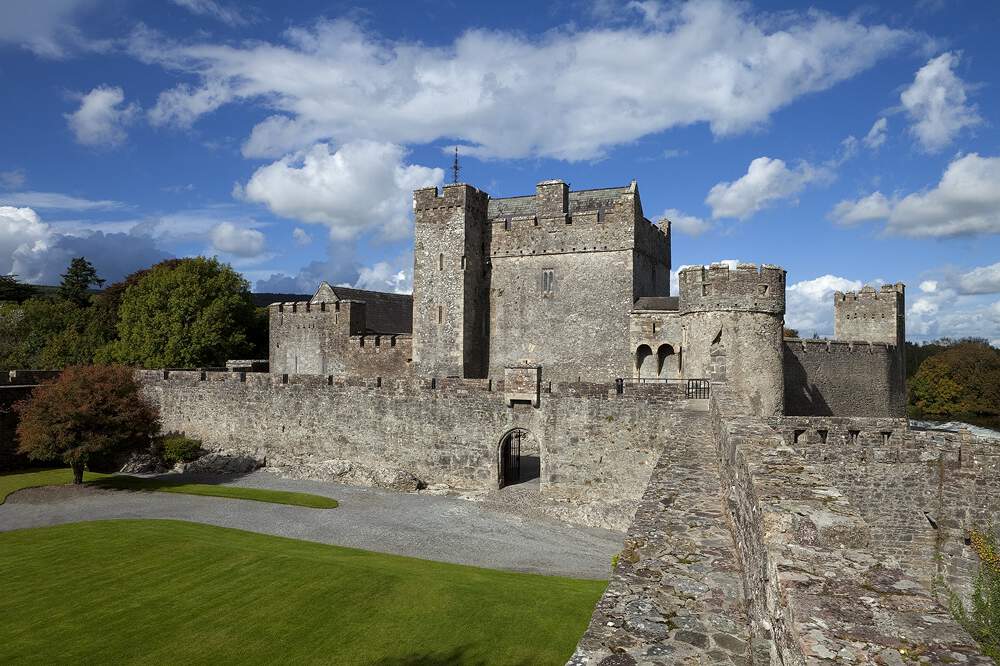
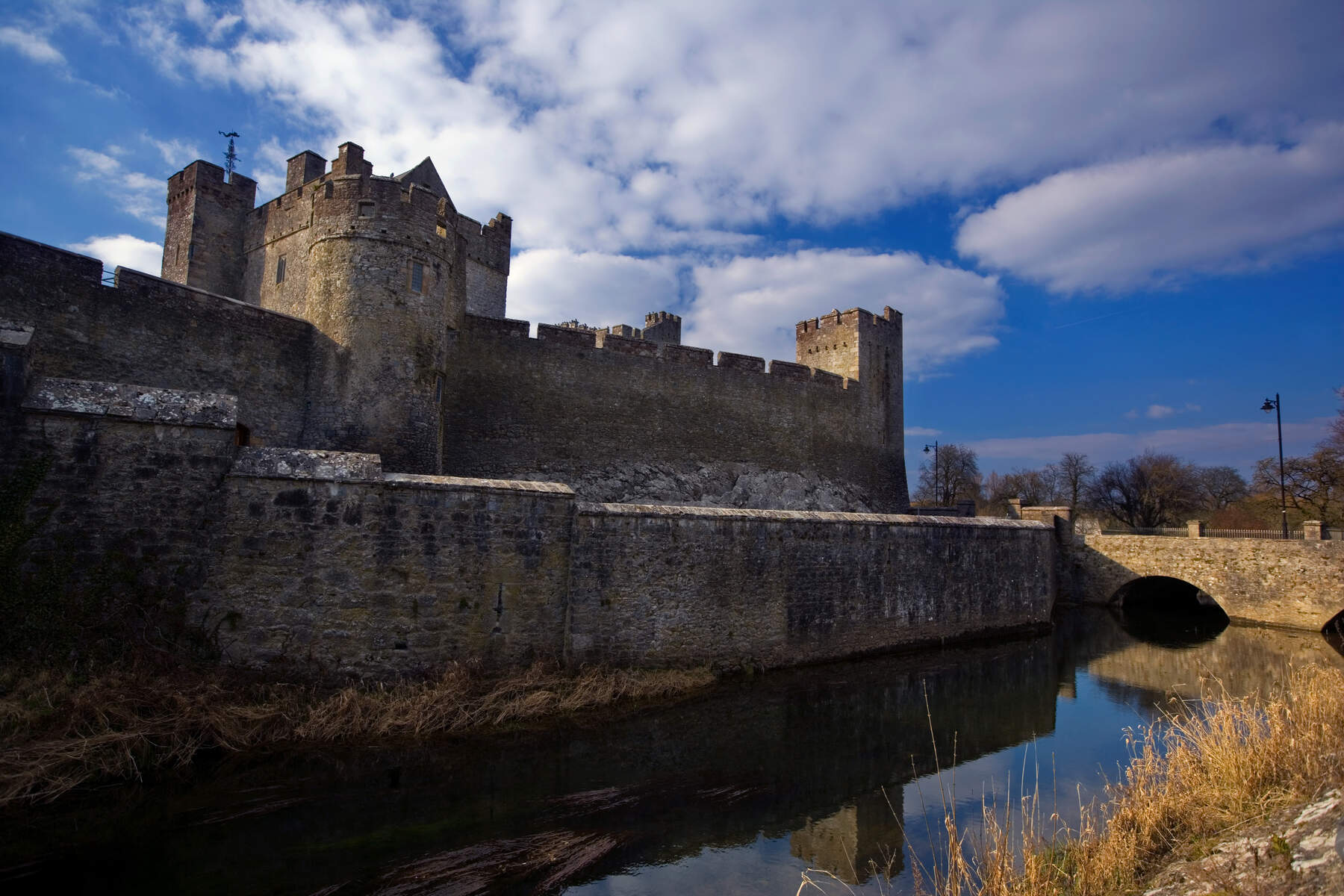
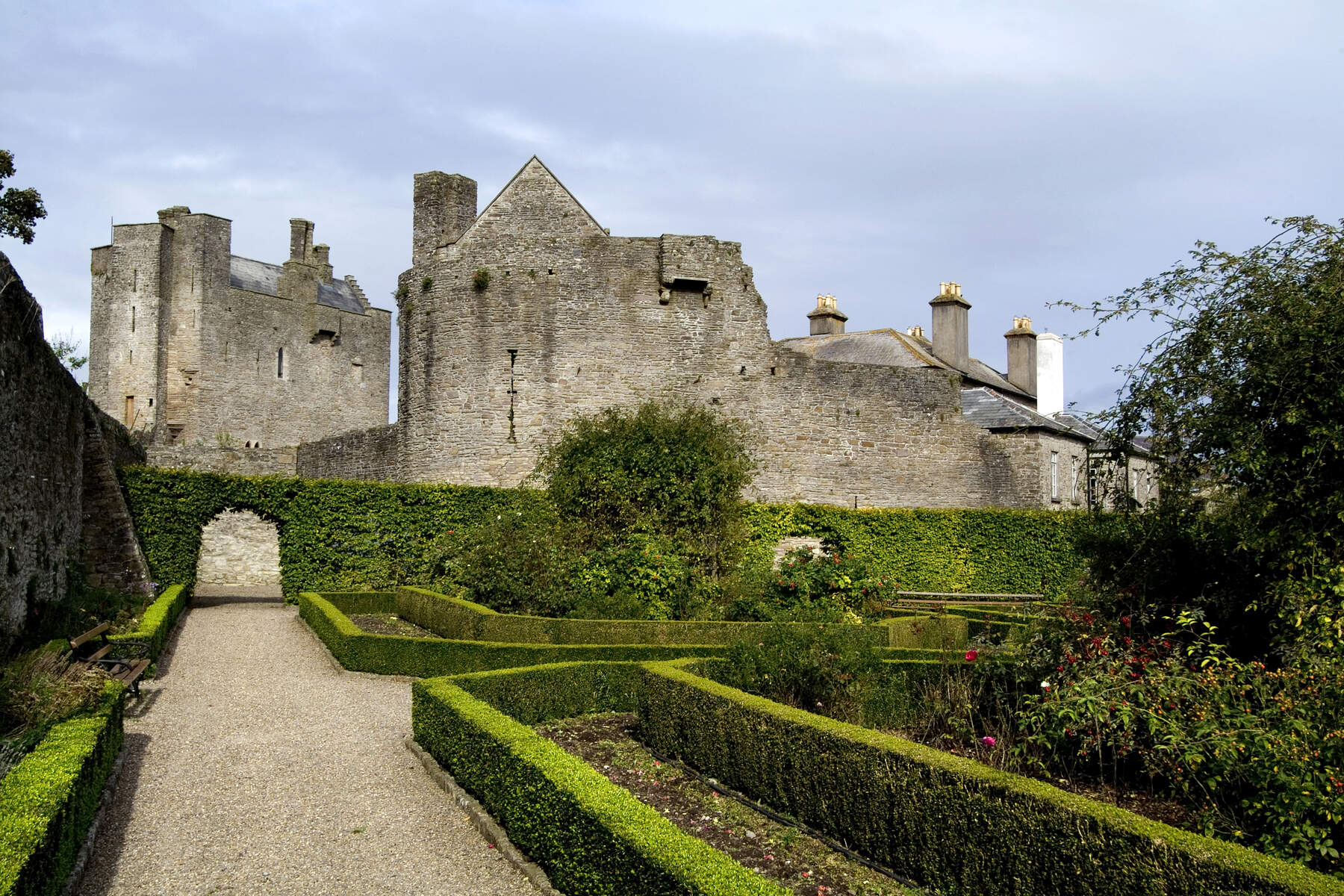
Cahir Castle, photograph from Ireland’s Content pool, by Brian Morrison 2014 for Failte Ireland. [see 1]
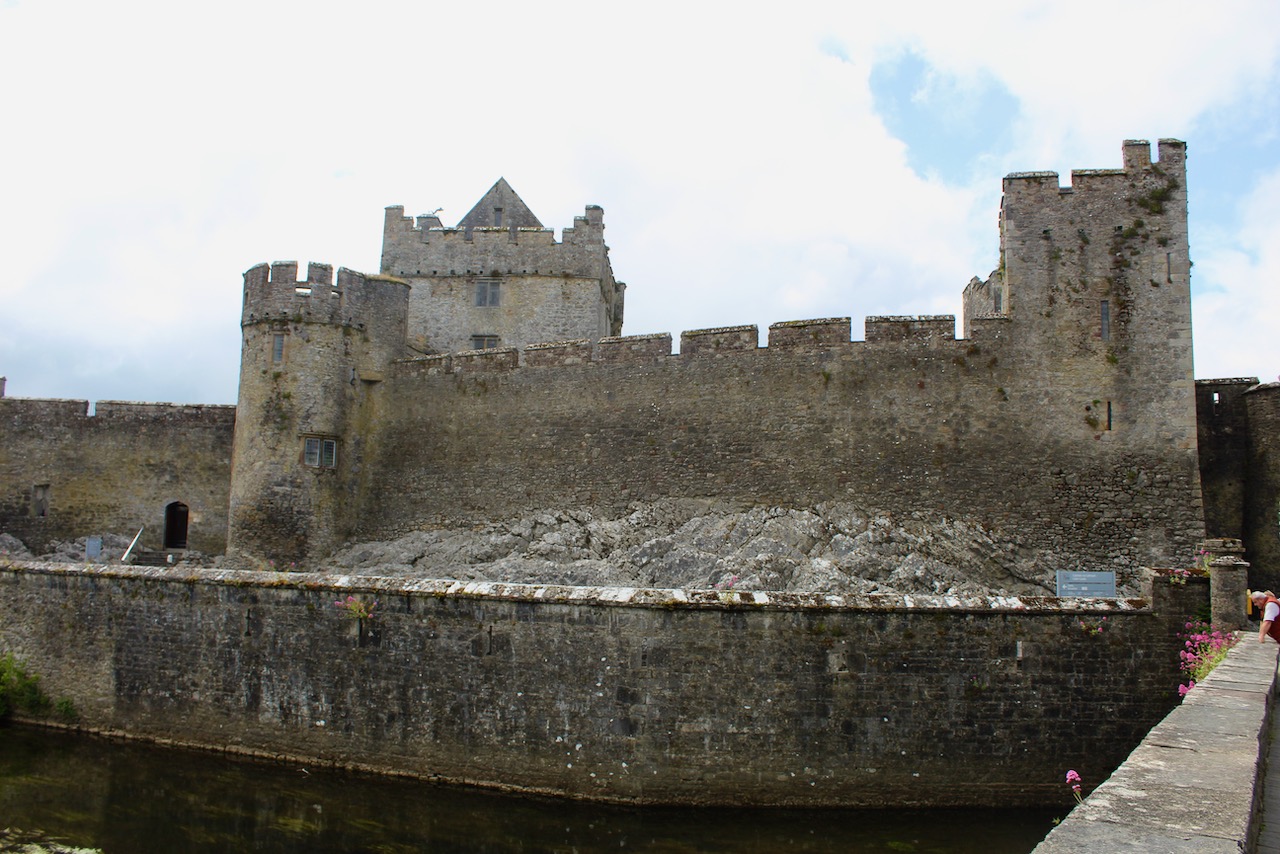
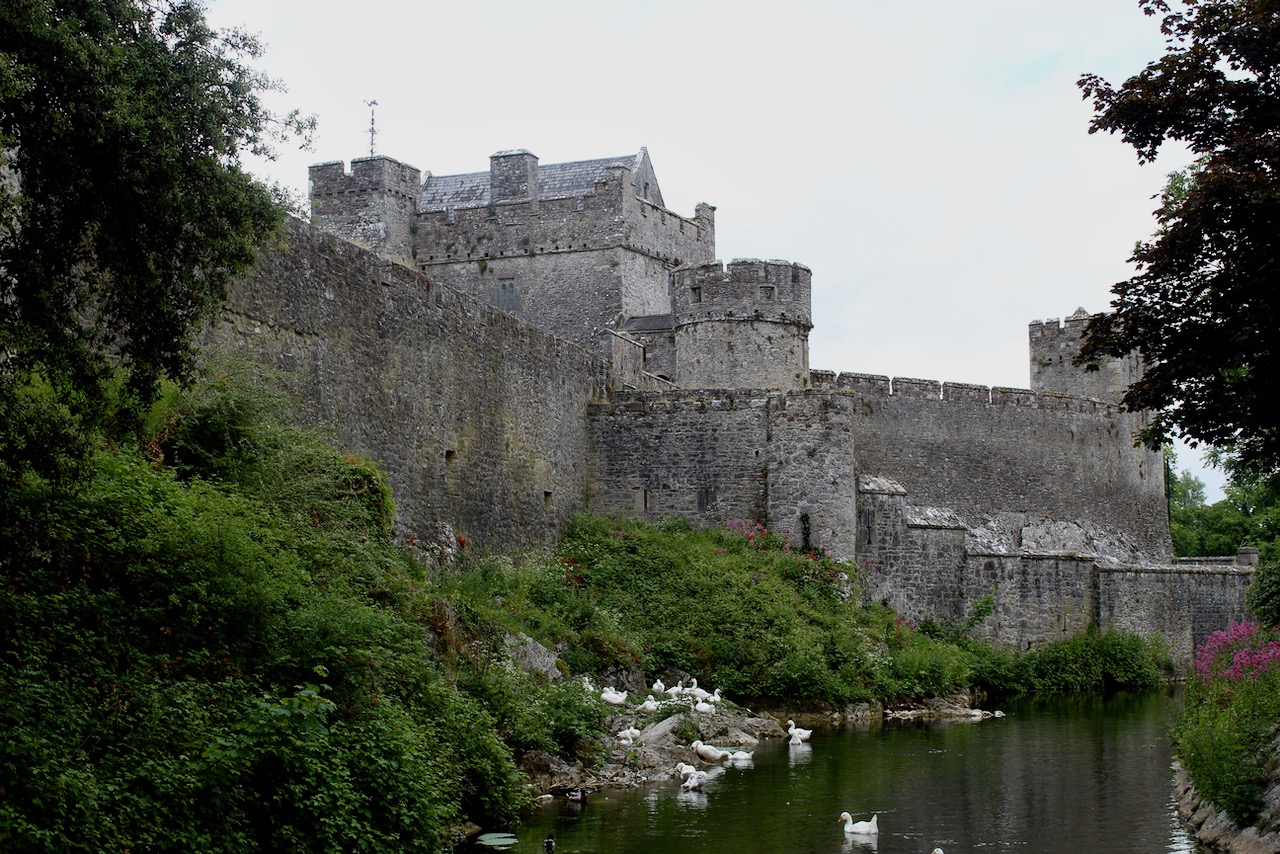
Cahir Castle, June 2022. The geese are particularly picturesque! The outer walls are called the Barbican. When breached, the attacking force gains entry to this area and are vulnerable to missiles fired by defenders and it would be difficult to retreat, due to the enclosed nature of the barbican. Photograph © Jennifer Winder-Baggot, www.irishhistorichouses.com

General information: 052 744 1011, cahircastle@opw.ie

Stephen and I visited Cahir Castle in June 2022, and I was very impressed. I had no idea that we have such an old castle in Ireland with so much intact.

From the OPW website https://heritageireland.ie/visit/places-to-visit/cahir-castle/:

Cahir Castle is one of Ireland’s largest and best-preserved castles. It stands proudly on a rocky island on the River Suir.

The castle was was built in the thirteenth century and served as the stronghold of the powerful Butler family. [The Archiseek website tells us it was built in 1142 by Conor O’Brien, Prince of Thomond] So effective was its design that it was believed to be impregnable, but it finally fell to the earl of Essex in 1599 when heavy artillery was used against it for the first time. During the Irish Confederate Wars it was besieged twice more.

At the time of building, Cahir Castle was at the cutting edge of defensive castle design and much of the original structure remains.

Cahir Castle, photograph from Ireland’s Content pool, by George Munday 2014 for Failte Ireland. [see 1] Barbican wall, courtyard, and gate with overhead machicolation, and the castle keep.
Cahir Caste, County Tipperary, June 2022. Photograph © Jennifer Winder-Baggot, www.irishhistorichouses.com

Our tour guide took us through the castle as if we were invaders and showed us all of the protective methods used. We were free then to roam the castle ourselves.

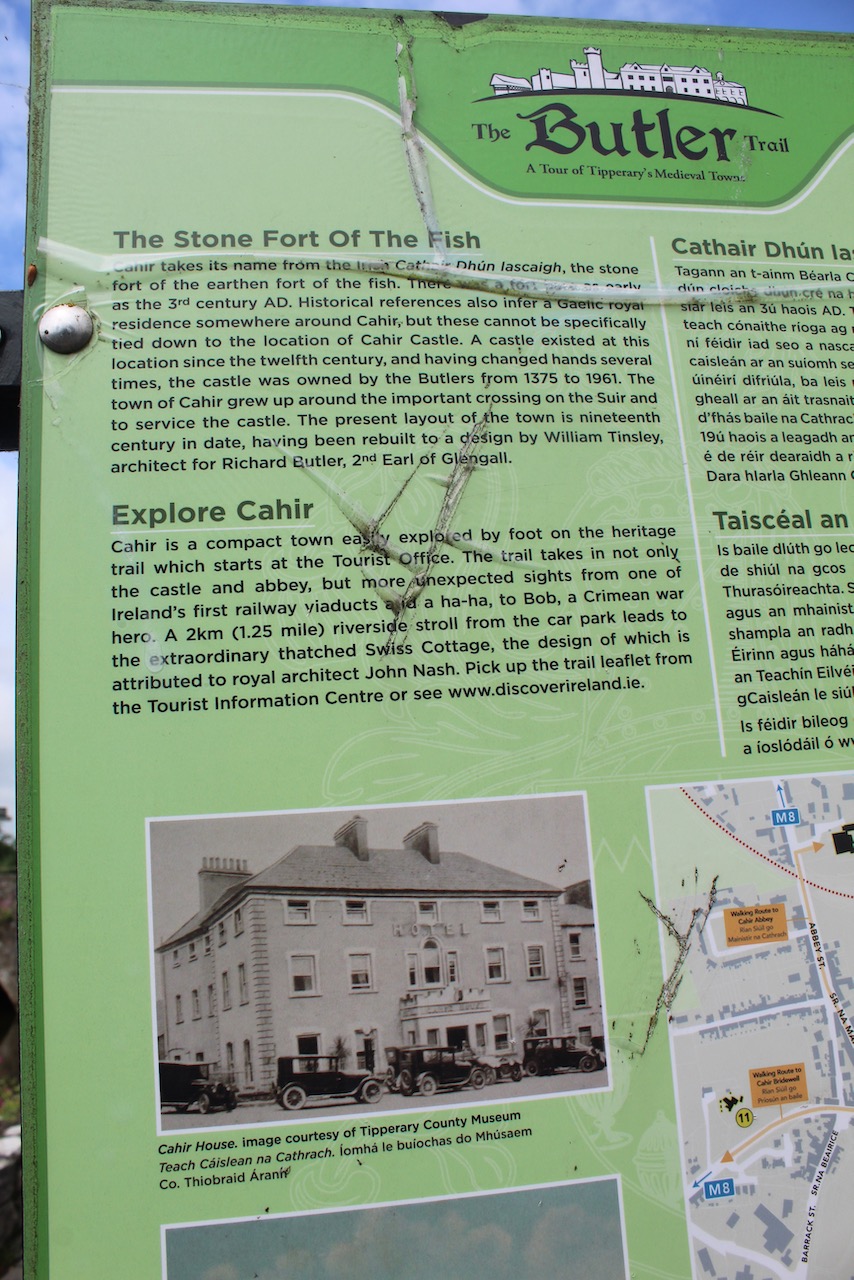
The name derives from the Irish ‘an Chathair Dhun Iascaigh’ meaning stone fort of the earthen fort of the fish.

Cahir Caste, County Tipperary, June 2022. The view of the castle from the parkland beyond. See how it seems to grow out of the rocks! Photograph © Jennifer Winder-Baggot, www.irishhistorichouses.com
Cahir Caste, County Tipperary, June 2022. Photograph © Jennifer Winder-Baggot, www.irishhistorichouses.com
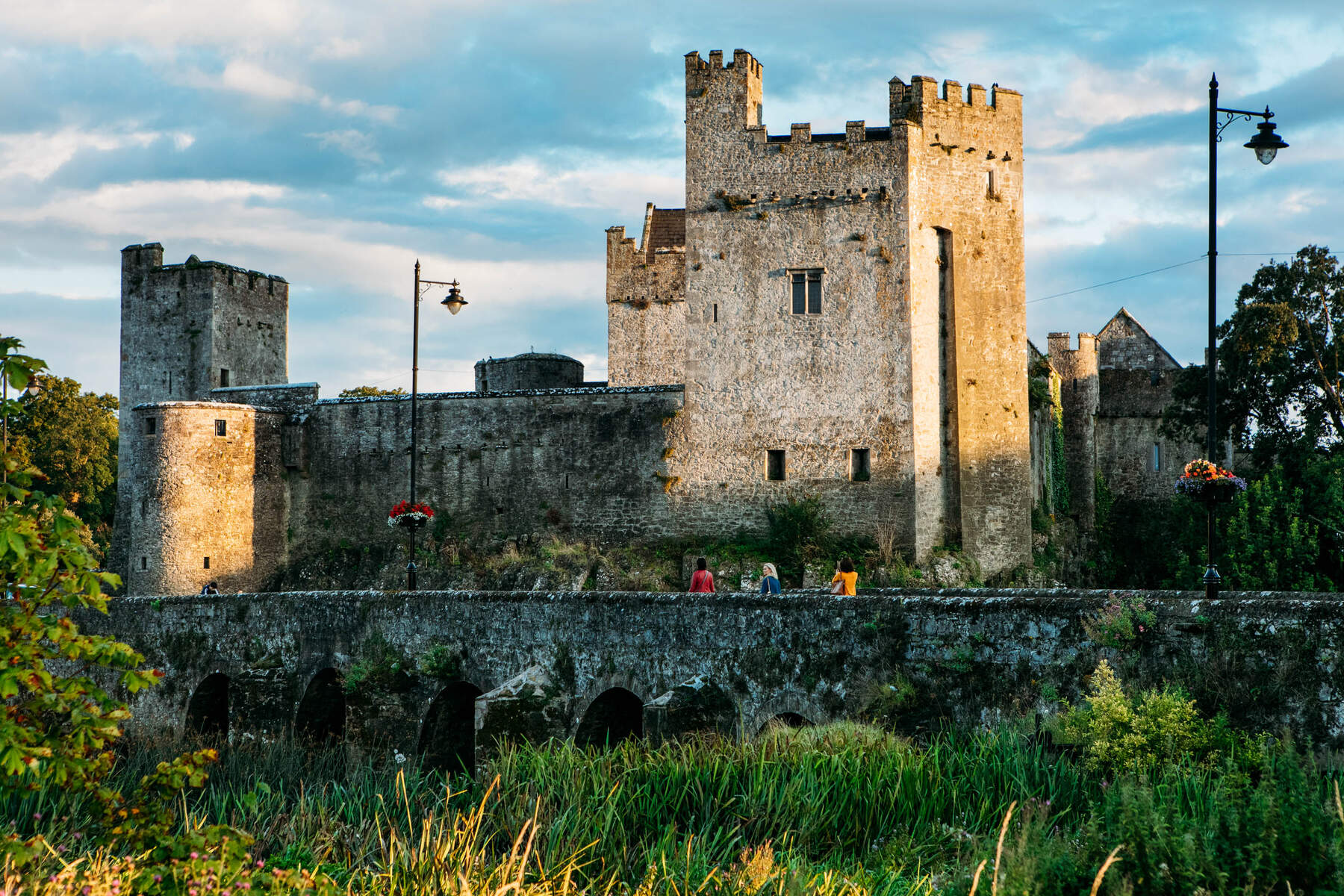
Cahir Castle, photograph from Ireland’s Content pool, by Liam Murphy 2016 for Failte Ireland. [see 1] The large square tower in the foreground was built later than the keep, for housing prisoners.
Cahir Castle, June 2022.

The information leaflet tells us that the area was owned by the O’Briens of Thomond in 1169 at the time of the Anglo-Norman invasion. The area around Cahir was granted to Phillip of Worcester in 1192 by John, Lord of Ireland, who later became King John. His nephew William was his heir – I’m not sure of his surname! But then his great-granddaughter, Basilia, married Milo (or Meiler) de Bermingham (he died in 1263). They lived in Athenry and their son was the 1st Lord Athenry, Piers Bermingham (died 1307).

Edward III (1312-1377) granted the castle to the James Butler 3rd Earl of Ormond in 1357 and also awarded him the title of Baron of Cahir in recognition of his loyalty. The 3rd Earl of Ormond purchased Kilkenny Castle in c. 1392. Cahir Castle passed to his illegitimate son James Gallda Butler. James Gallda was loyal to his mother’s family, the Desmonds, who were rivals to his father’s family, the Butlers.
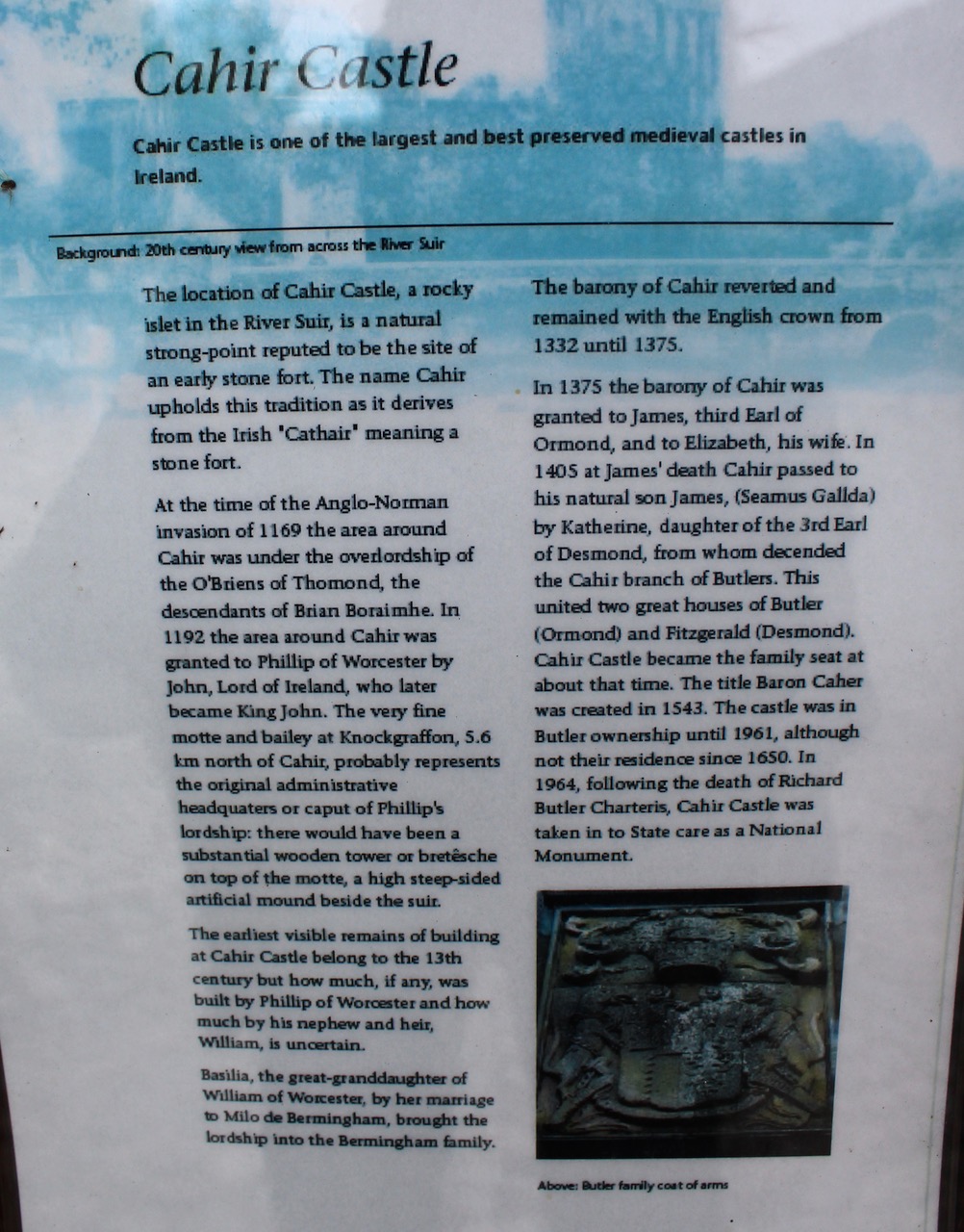
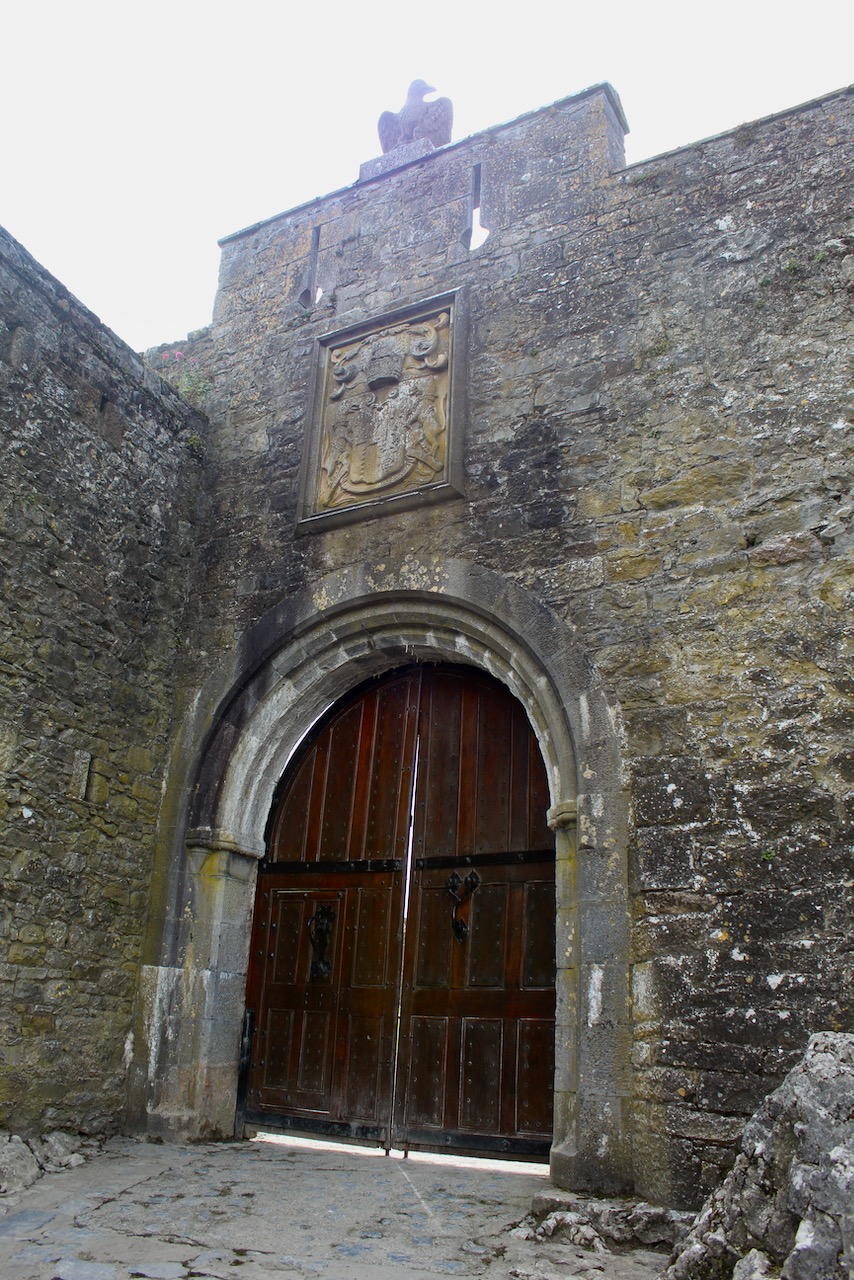
Cahir Castle, June 2022.
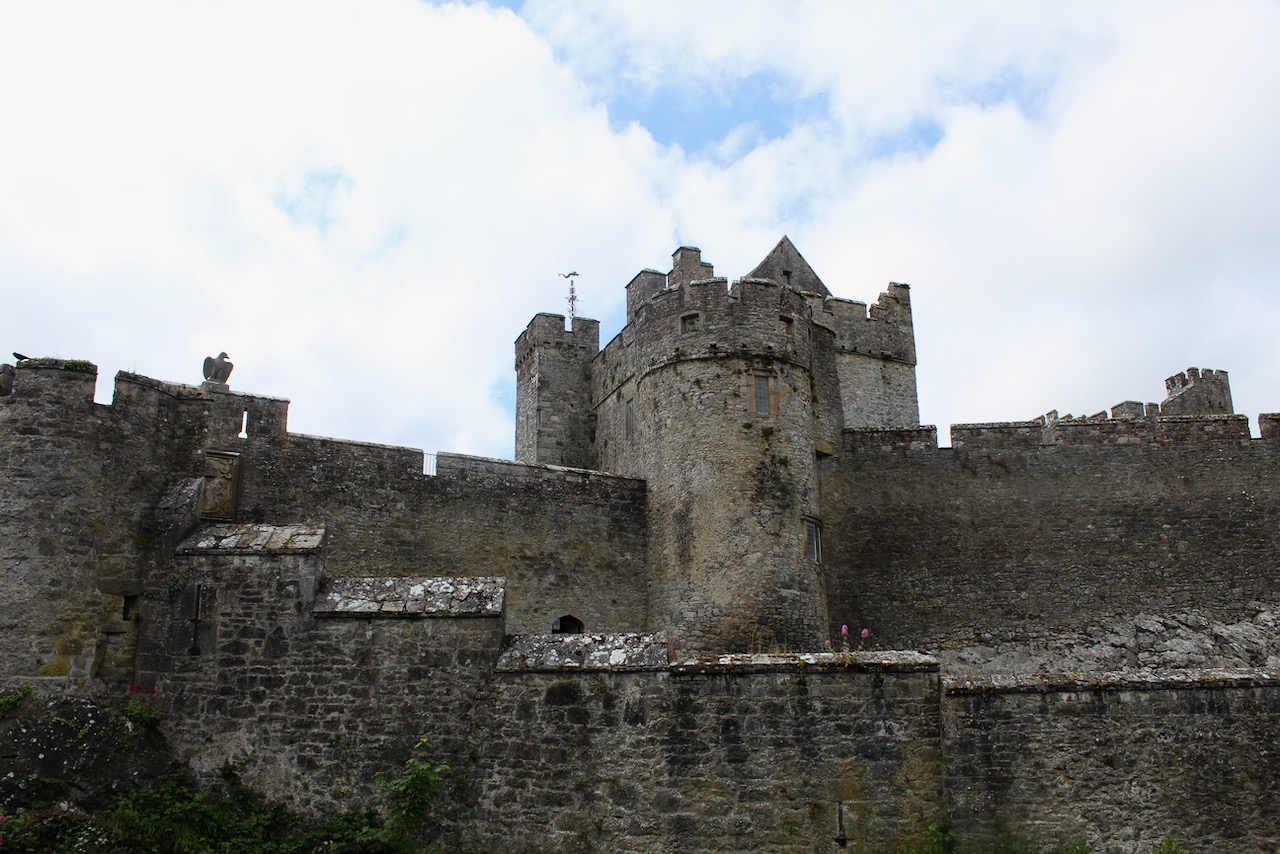
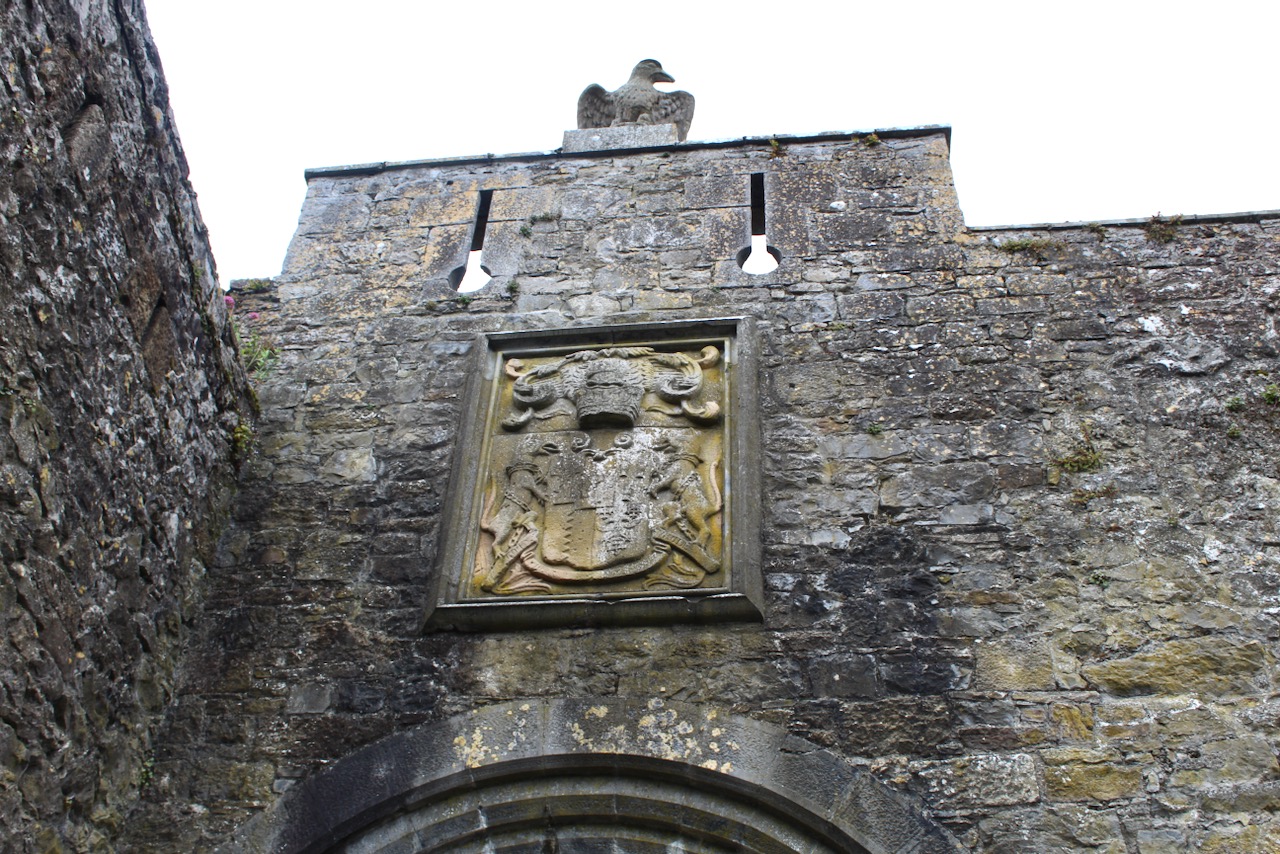
The first entrance gates, to the bawn (walled courtyard or outer enclosure) of Cahir Castle. Above the door on the top of the wall an eagle is perched, symbol of power. Below that is the crest of the Butlers of Cahir. Photograph © Jennifer Winder-Baggot, www.irishhistorichouses.com
Cahir Castle, June 2022. Photograph © Jennifer Winder-Baggot, www.irishhistorichouses.com

In their book The Tipperary Gentry, William Hayes and Art Kavanagh tell us that the rivalry between the Butlers of Ormond and the Fitzgeralds of Desmond turned to enmity when the War of the Roses broke out in England, with the Ormonds supporting the House of Lancaster and the Desmonds the House of York. The enmity found expression in the battle at Pilltown in 1462. The enmity continued for over a century, and the last private battle between the Ormonds and the Desmonds was the Battle of Affane, County Waterford, in 1565. [2]

A descendant of James Gallda Butler, Thomas Butler (d. 1558) was elevated to the peerage of Ireland, on 10 November 1543, by the title of Baron of Caher (of the second creation). He married Eleanor, a daughter of Piers Butler, 8th Earl of Ormond (d. 1539) and Margaret Fitzgerald, daughter of Gerald FitzGerald, 8th Earl of Kildare (d. 1513). His son Edmund became the 2nd Baron (d. 1560) but as there were no legitimate male heirs the title died out.

It was Piers Rua Butler, the 8th Earl of Ormond (c. 1467–1539), who brought peace between the warring factions of Fitzgeralds of Desmond and the Butlers of Ormond. He married Margaret Fitzgerald, daughter of Gerald (or Garret) Fitzgerald (1455-1513) 8th Earl of Kildare. His efforts culminated in a treaty called the Composition of Clonmel. It stated that Edmund Butler of Cahir should receive the manor of Cahir on condition that he and all his heirs “shall be in all things faithful to the Earl [of Ormond] and his heirs.” The Barons of Cahir were not allowed to keep their own private army nor to exact forced labour for the building or repair of their castle or houses. (see [2]).
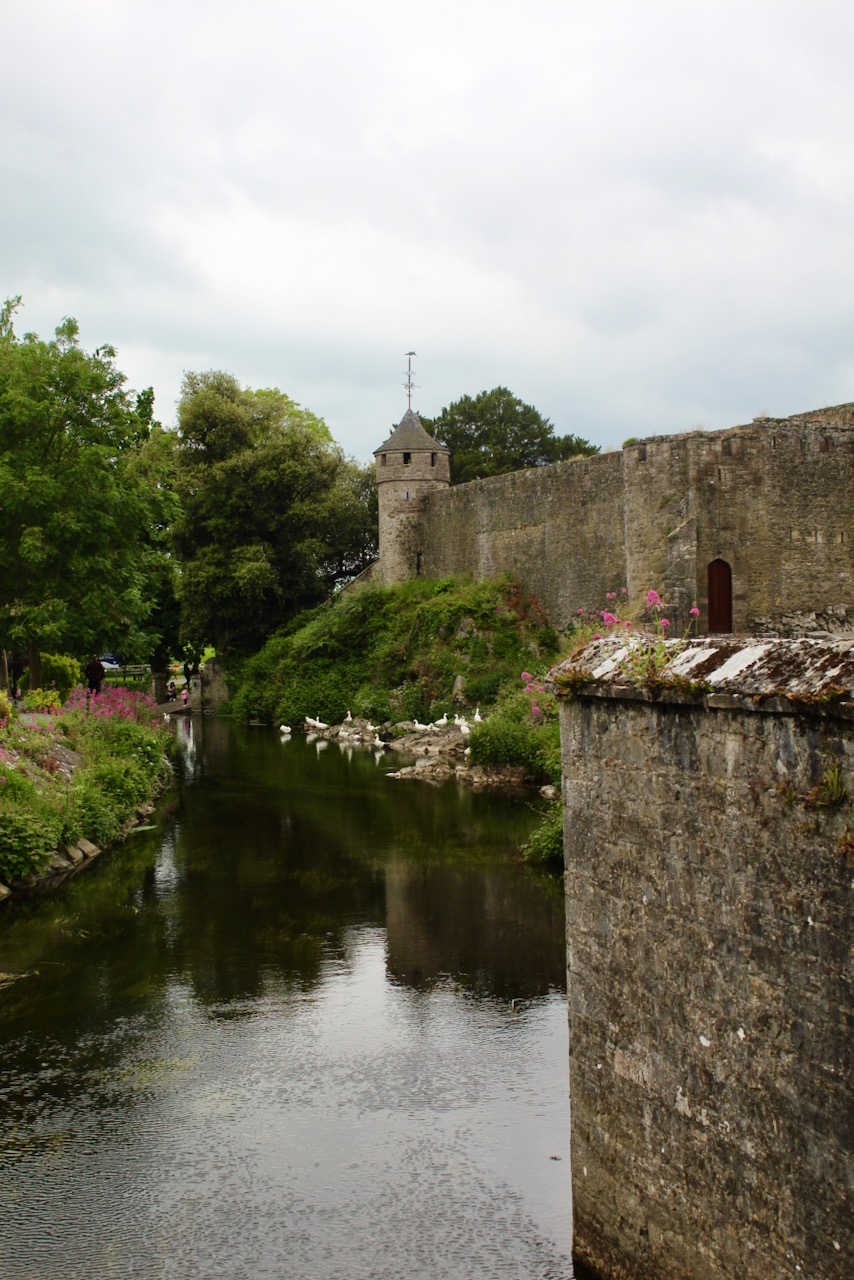
Cahir Castle, June 2022. Photograph © Jennifer Winder-Baggot, www.irishhistorichouses.com

The brother of Thomas 1st Baron Caher, Piers Butler (d. after February 1567/68) had a son Theobald (d. 1596) who was then created 1st Baron Caher (Ireland, of the 3rd creation) in 1583. [3]

There’s an excellent history of Cahir on the Cahir Social and Historical Website:

Throughout the reigns of Elizabeth I and Charles I, Cahir Castle appears as a frequent and important scene in the melancholy drama of which Ireland was a stage. The Castle was taken and re-taken, but rarely damaged and through it all remained in the hands of the Roman Catholic Butlers of Cahir. By this time Cahir had become a great centre of learning for poets and musicians. Theobald, Lord Cahir [I assume this was 1st Baron Cahir of second creation who died in 1596] was said by the Four Masters “to be a man of great benevolence and bounty, with the greatest collection of poems of any of the Normans in Ireland”. [4]

Cahir Castle, June 2022.

This storyboard tells us that Ireland was dramatically different from Renaissance England in its language, customs, religion, costume and law. It was divided into 90 or so individual “lordships” of which about 60 were ruled by independent Gaelic chieftains. The rest were ruled by Anglo-Irish lords. Queen Elizabeth saw Ireland as a source of much-needed revenue. She did not have sufficient resources nor a strong enough army to conquer Ireland so she encouraged her authorities in Dublin to form alliances between the crown and any local chieftains who would submit to her authority. Many chieftains who submitted did so in order to assist them in their own power struggles against their neighbours. Elizabeth especially needed this support in order to ensure that if Spain invaded Ireland she would be able to quell rebellion.
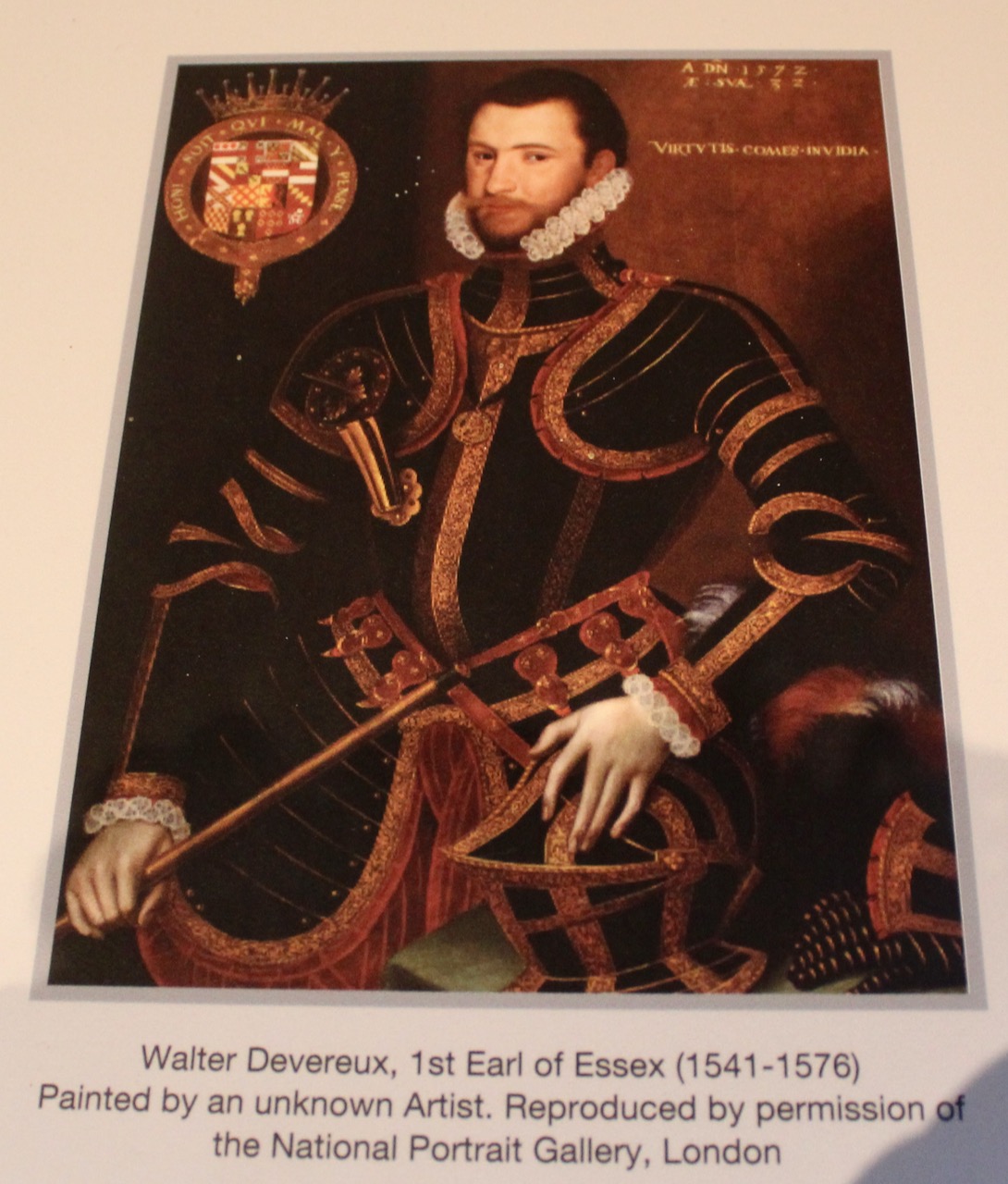
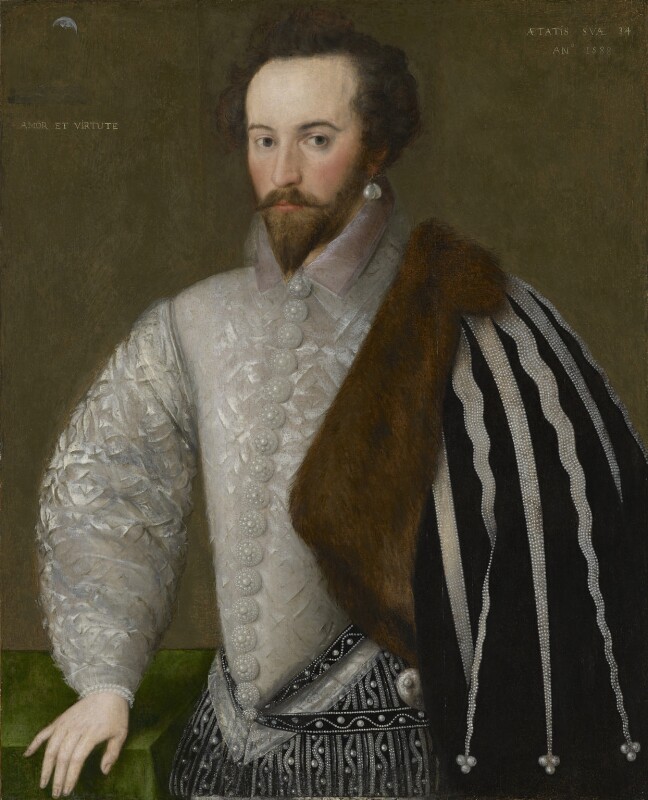
Walter Devereux (1541-1576) 1st Earl of Essex, courtesy of National Portrait Gallery, London.

Walter Devereux, 1st Earl of Essex, travelled to Ireland to subjugate Ulster and Shane O’Neill (“The O’Neill) in 1573. He failed, and had to sell of much of his land in England to pay debts accrued from raising an army. He died in Dublin of typhoid in 1576.

His son, the 2nd Earl of Essex came to Ireland to quell a rebellion which included the rise of Hugh O’Neill, 2nd Earl of Tyrone (1550-1616), cousin of Shane O’Neill.
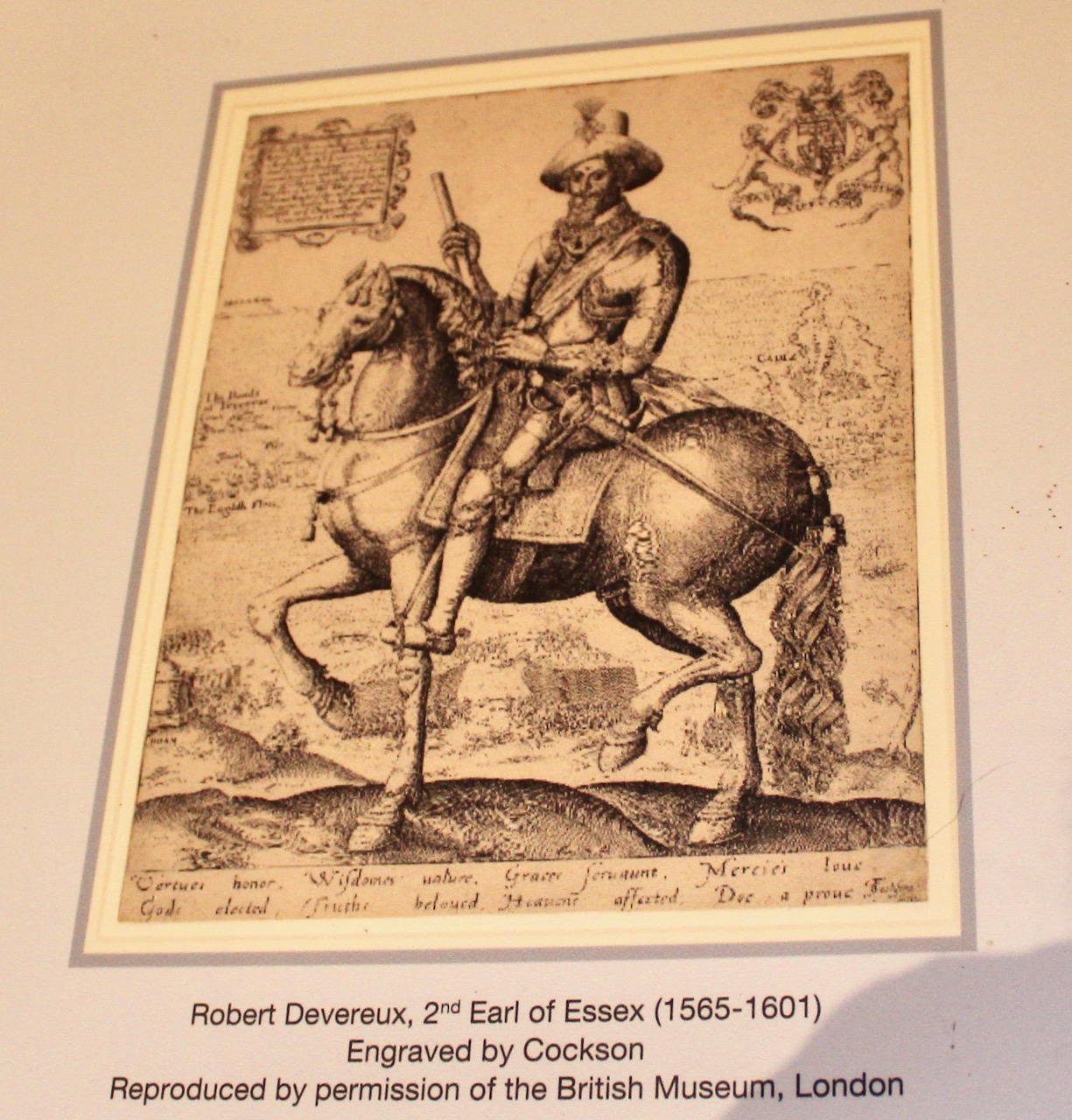
Cahir Castle, June 2022.

The storyboard tells us that Hugh O’Neill fought alongside the 1st Earl of Essex in Ulster between 1573 and 1575. He also fought for Queen Elizabeth in 1580 against the rebel Gerald Fitzgerald, 14th Earl of Desmond (circa 1533, d. 11 November 1583), and as thanks he was made Earl of Tyrone. However, he turned against the crown in 1594 and formed an alliance with Red Hugh O’Donnell to fight against the Queen’s troops, in the Nine Years War.

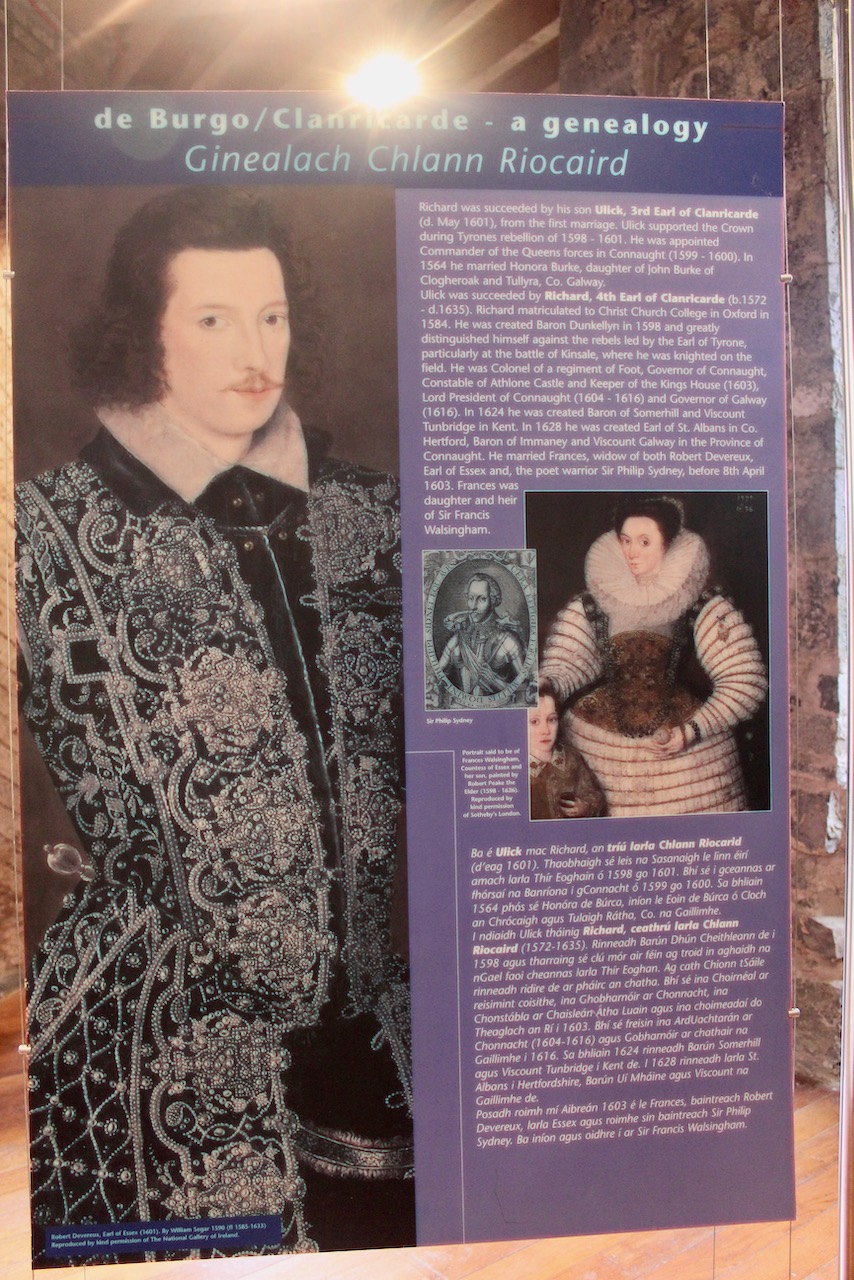
The ties between the Earls of Essex and Queen Elizabeth I are complicated. When Walter Devereux the 1st Earl died in Ireland, his wife, Lettice Knollys, remarried. She and Queen Elizabeth’s favourite, Robert Dudley Earl of Leicester, married secretly, a fact which enraged the disappointed Queen. It was Robert Dudley who introduced his stepson Robert Devereux 2nd Earl of Essex to Elizabeth and he subsequently became her favourite, alongside Walter Raleigh. However, Elizabeth was to be angered again when this next favourite, Devereux, also secretly married, this time to Frances Walsingham, who was the widow of Sir Philip Sidney. We came across her before when we visited Portumna Castle as she later married Richard Bourke 4th Earl of Clanricarde. Philip Sidney was the son of Henry Sidney (or Sydney) who had been Lord Deputy of Ireland.
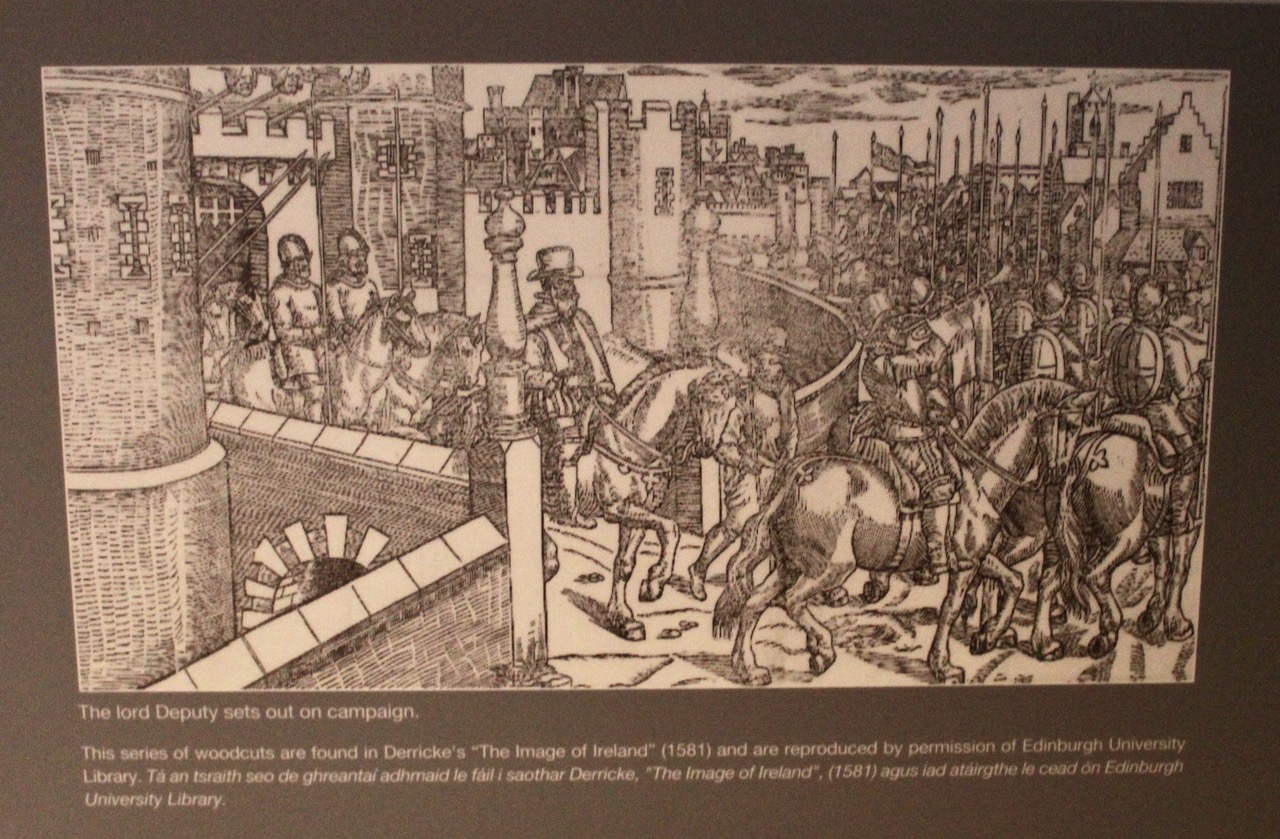
Lord Deputy Henry Sidney is shown crossing a moat leaving Dublin Castle, setting out on a campaign. Above the gate are a number of severed heads!
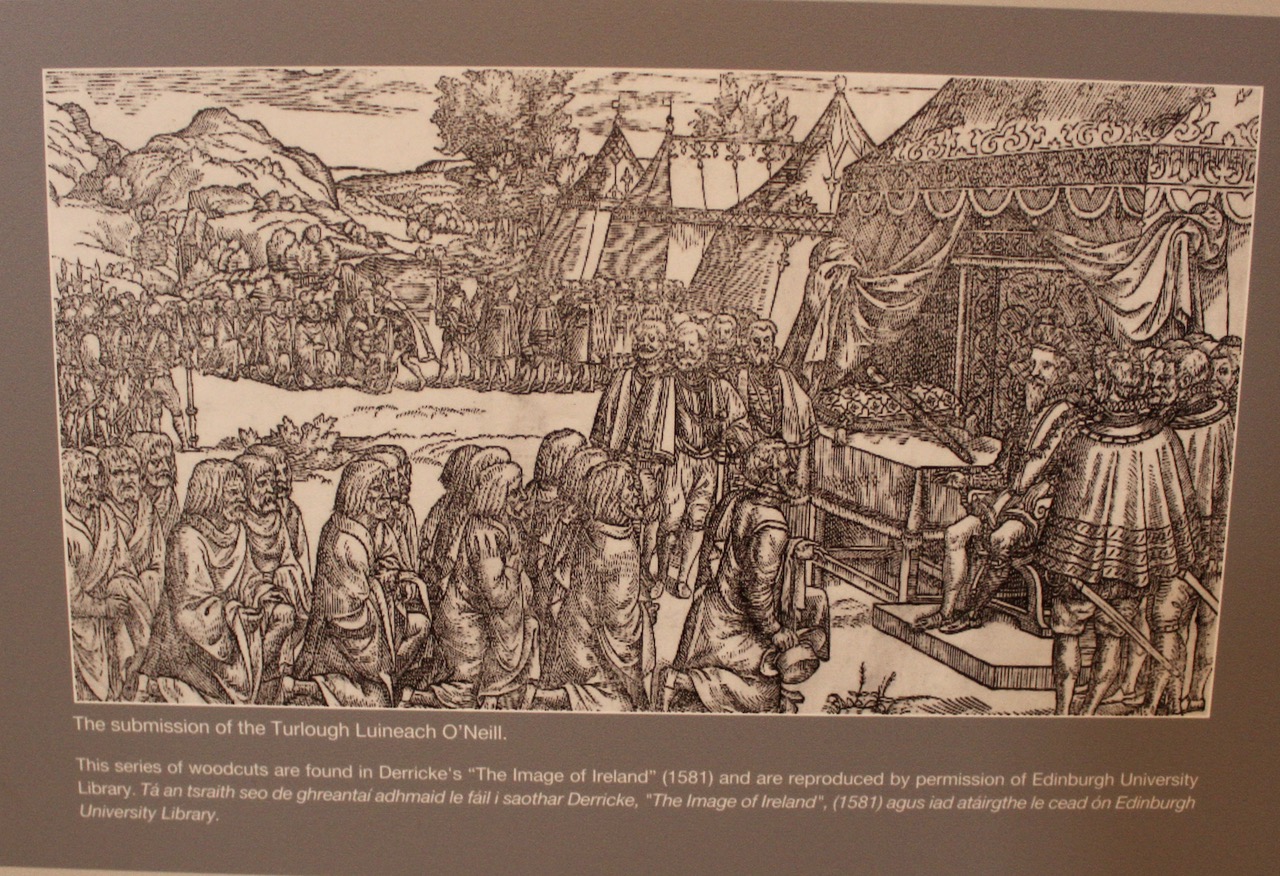
The submission of Turlough Luineach O’Neill to Lord Deputy Sir Henry Sidney in 1575.
Sir Henry Sidney (1529-1586), Lord Deputy of Ireland, after painter Arnold Van Brounkhorst, courtesy of National Gallery of Ireland.
Portrait of Frances Walsingham, along with her husband Robert Devereux, 2nd Earl of Essex, and in the small picture, Sir Philip Sydney, from information board in Portumna Castle.

Robert Devereux the 2nd Earl of Essex sought to re-win courtly favour by going to fight in Ireland, following the footsteps of his father, and persuaded Elizabeth to name him Lord Lieutenant of Ireland.

In May 1599, Essex and his troops besieged Cahir Castle. He arrived with around two to three thousand men, a cannon and a culverin, a smaller and more accurate piece of heavy artillery.

Thomas Butler the 10th Earl of Ormond, who owned the castle in Carrick-on-Suir and was another favourite of the Queen, as he had grown up with her in the English court. However, the storyboards tell us that he at first rebelled, alongside Thomas Butler 2nd Baron Cahir (or Caher – they seem to be spelled interchangeably in historical records) and Edmond Butler, 2nd Viscount Mountgarret (1540-1602), another titled branch of the Butler family.
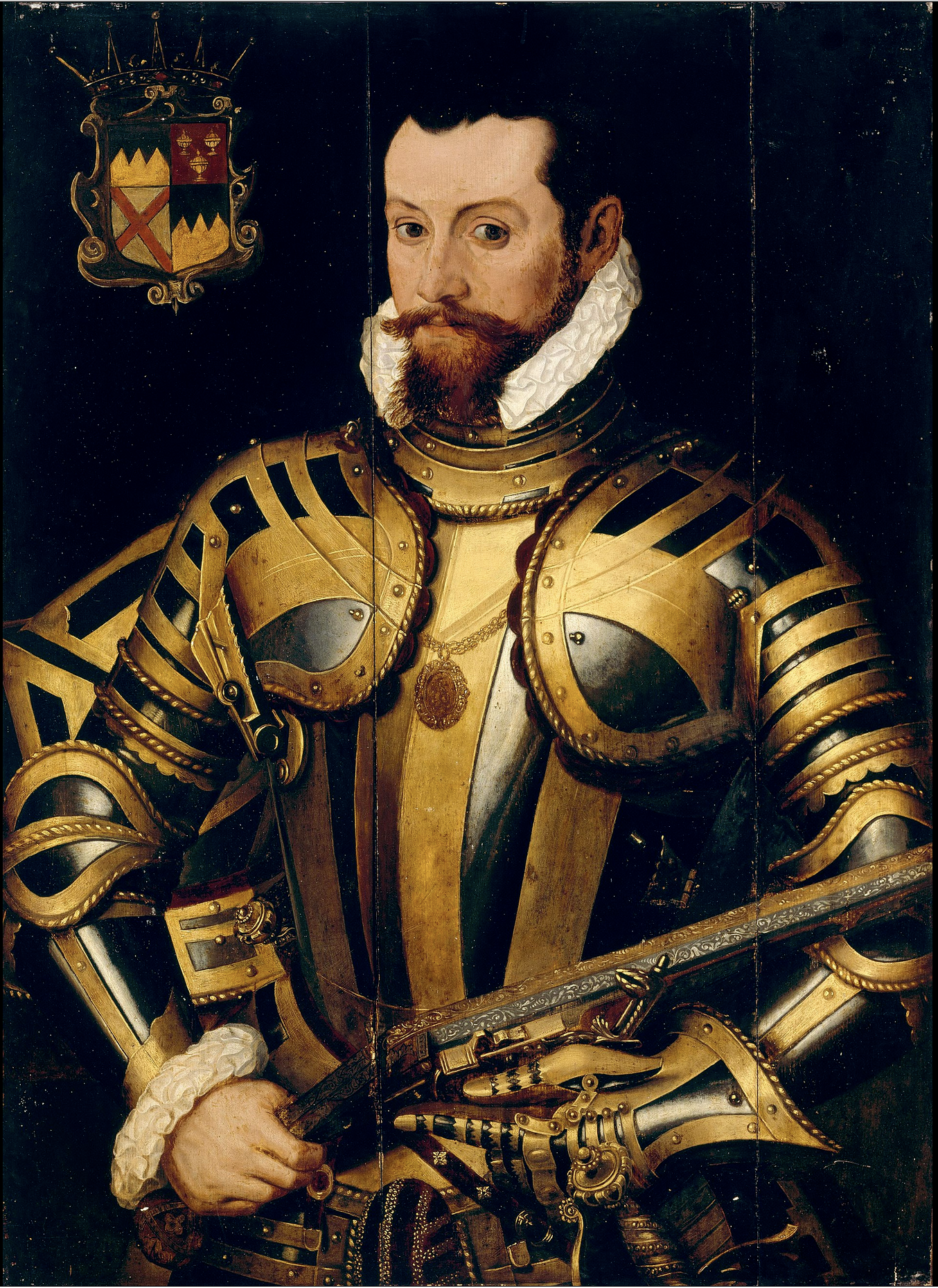
Thomas Butler 10th Earl of Ormond by Steven Van der Meulen. He is holding a wheelcock pistol with his coat of arms in the upper left corner.

By the time of the 1599 siege, the Earl of Ormond was fighting alongside Essex, and Cahir Castle was held by rebels, including Thomas Butler’s brother James Gallada Butler (not to be confused with the earlier James Galda Butler who died in 1434). Thomas Butler 2nd Baron Cahir travelled with Essex toward the castle. Baron Cahir sent messengers to ask his brother to surrender the castle but the rebels refused. Thomas Butler 2nd Baron Cahir was suspected of being involved with the rebels. Thomas was convicted of treason but received a full pardon in 1601 and occupied Cahir Castle until his death in 1627. James Gallada Butler claimed that he had been forced by the rebels to fight against Essex. Essex and his men managed to capture the castle.

During the three days of the siege, the castle incurred little damage, mostly because the larger cannon broke down on the first day! Eighty of the defenders of the castle were killed, but James Gallada Butler and a few others escaped by swimming under the water mill. This siege was to be the only time that castle was taken by force. James Gallada recaptured the castle the following year and held it for some months. The Butlers regained possession of the castle in 1601.
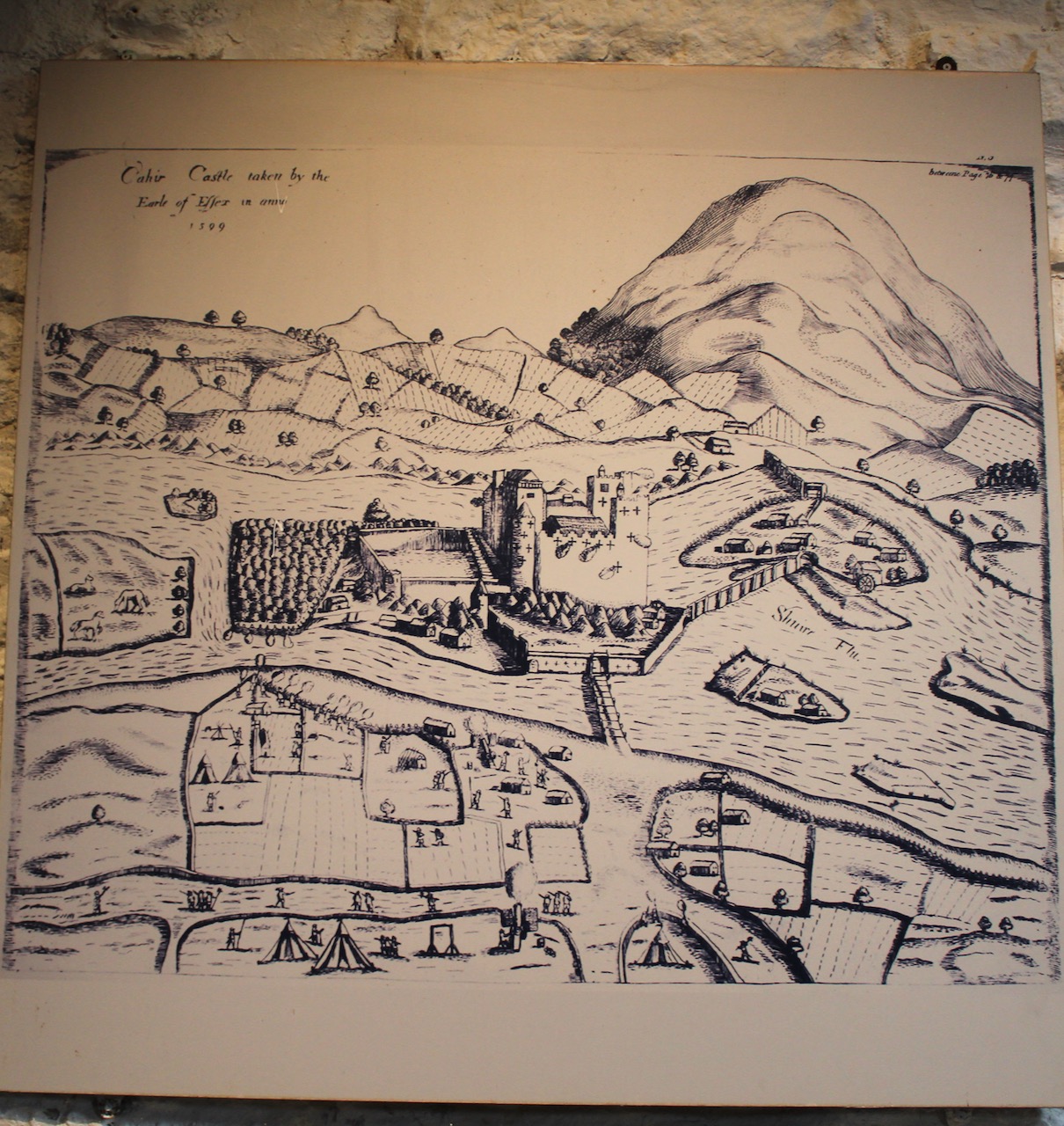
Cahir Castle taken by the 2nd Earl of Essex in 1599.
Cahir Castle, June 2022.

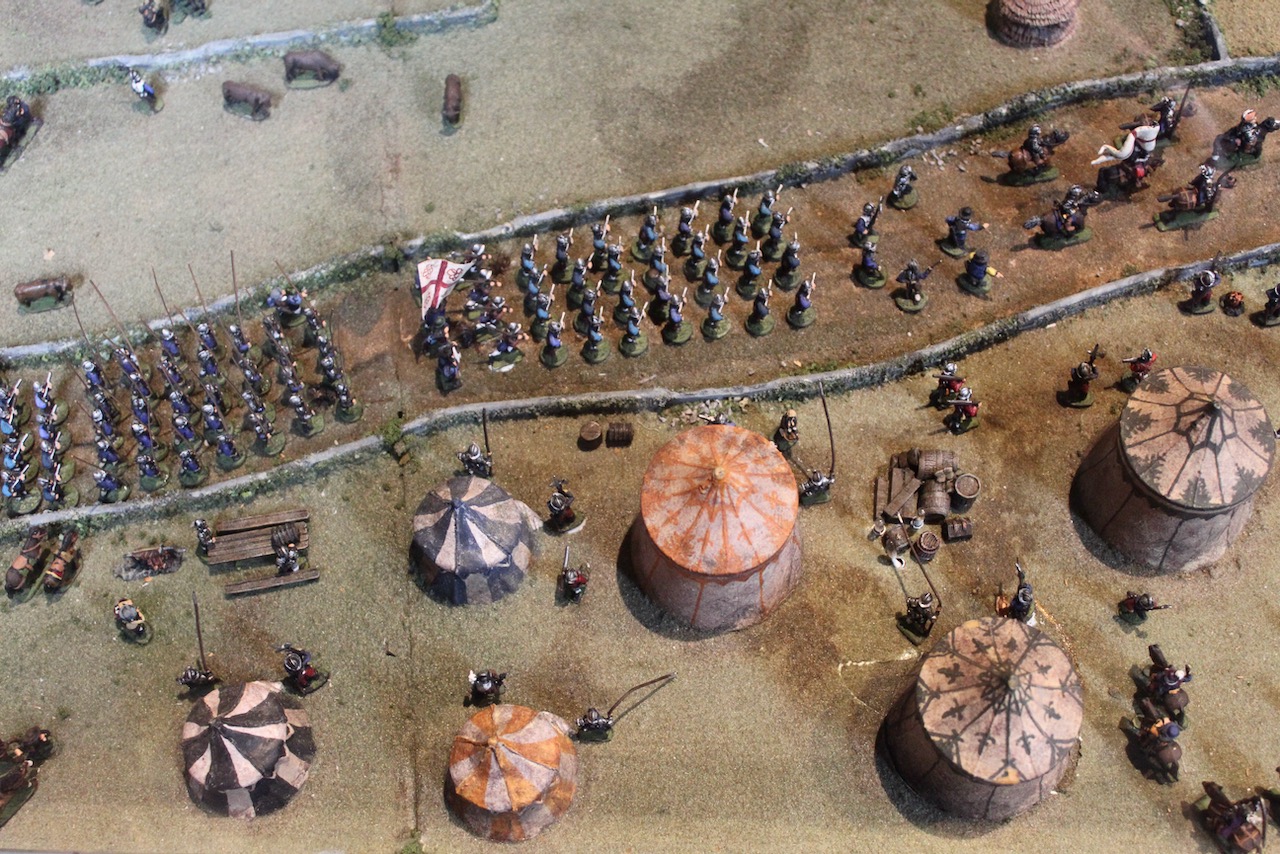
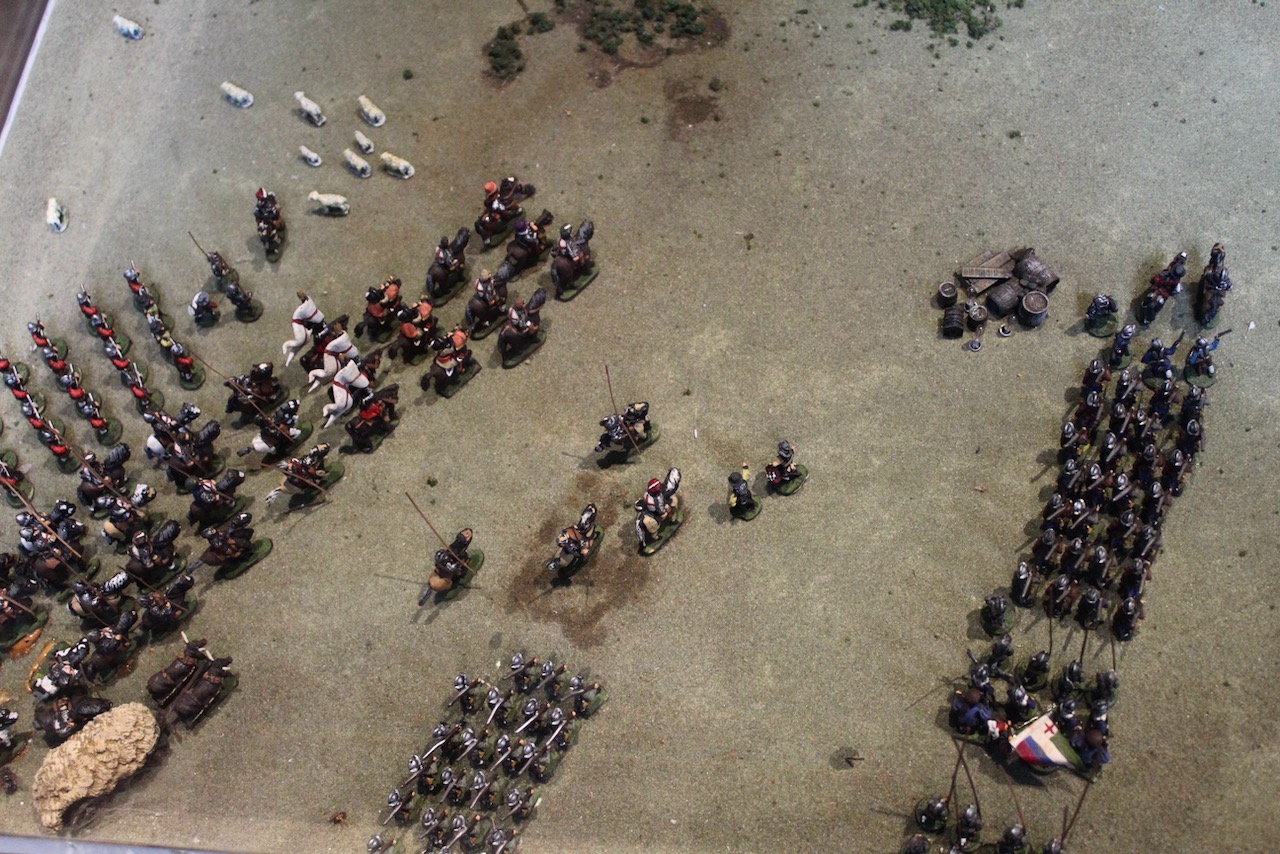
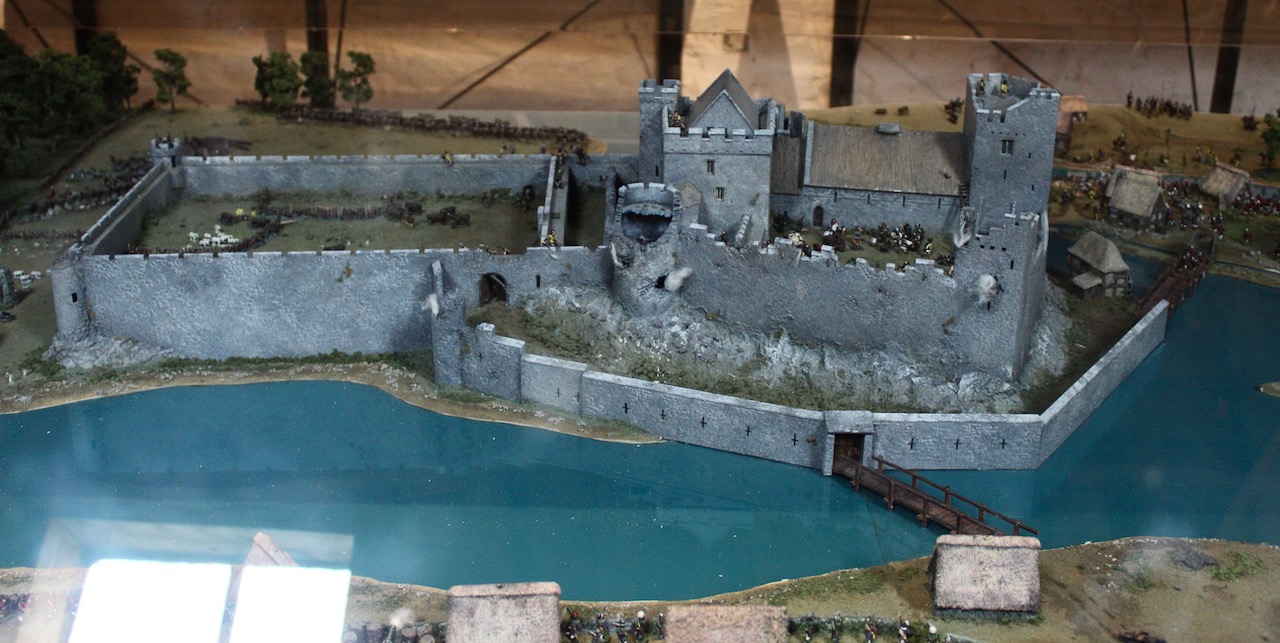
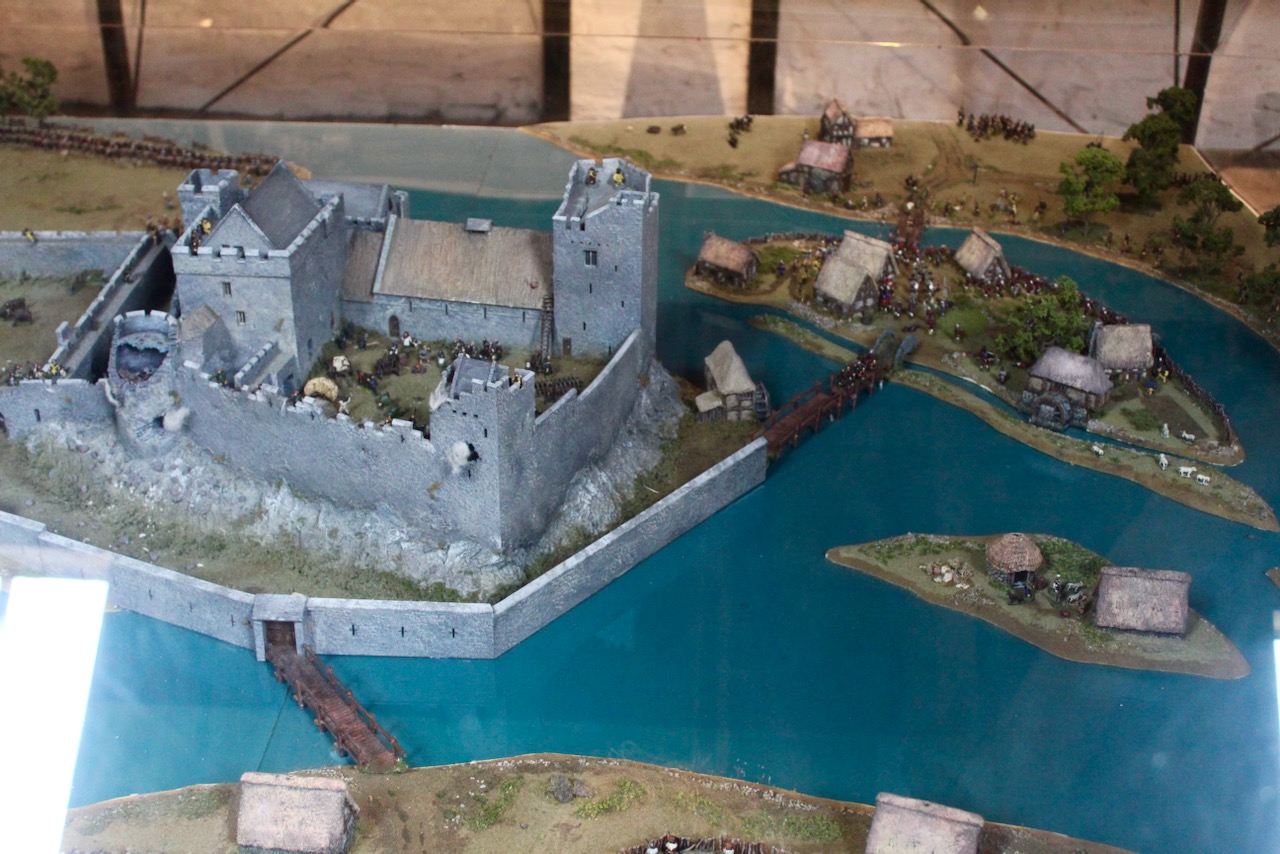
Inside the castle in one room was a wonderful diorama of this siege of Cahir Castle, with terrifically informative information boards.
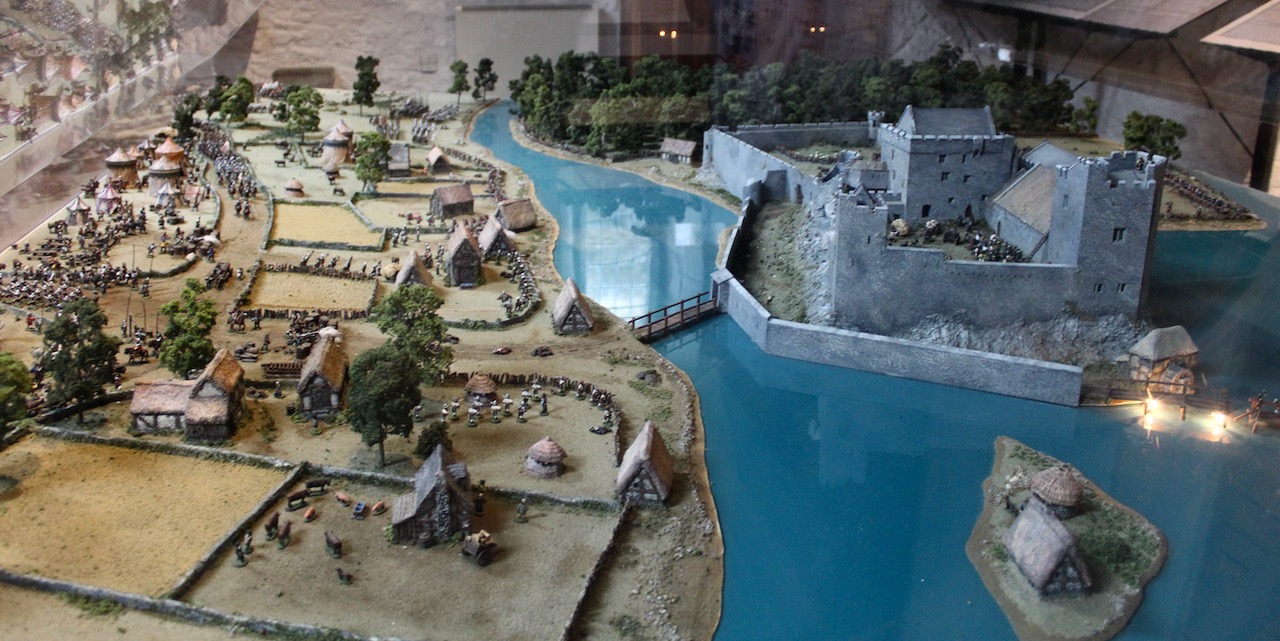
The Diorama of the 1599 Siege.
The Diorama of the 1599 Siege. The siege map and diorama show the wall of the barbican extending further than it does now, to the bridge across to the island. The plan also shows a number of buildings in the inner ward that no longer exist. The shape of the islands and riverbanks changed following construction of a weir.
The Diorama of the 1599 Siege.
Someone must have had great fun setting up the little toy soldiers in their fight formations in the diorama.
The Diorama of the 1599 Siege.

Failing to win in his battles in Ireland, however, Essex made an unauthorised truce with Hugh O’Neill. This made him a traitor. The Queen did not accept the truce and forbid Essex from returning from Ireland. He summoned the Irish Council in September 1599, put the Earl of Ormond in command of the army, and went to England. He tried to raise followers to oust his enemies at Elizabeth’s court but in doing so, he brought a small army to court and was found guilty of treason and executed.

The Cahir Social and Historical Website continues:

A study of the Butler Family in Cahir in the sixteenth and seventeenth centuries reveals the rise and fall of one of the minor branches of the House of Ormond. At the end of the fifteenth century, they possessed extensive powers, good territorial possessions and a tenuous link with the main branch of the Butler family. During the sixteenth century, their possession was strengthened by the grant of the title of Baron of Cahir with subsequent further acquisition of land, but they came under closer central government control.”

The Cahir website continues: “A complete reversal in their relations with the Earls of Ormond occurred, strengthened by various marriage alliances. They also participated in political action, both in the Liberty of Tipperary and at National Level. In the late sixteenth and early seventeenth centuries their position was affected by their adherence to Roman Catholicism, which resulted in their revolt during the Nine Years War, and subsequent exclusion from power by the Central Administration. They formed part of the Old English Group and as such, suffered from the discriminatory politics practiced by the Government. From 1641 they became minor landowners keeping their lands by virtue of the favour of their relative, the Duke of Ormond. In 1647 the Castle was surrendered to Lord Inchiquin for Parliament but re-taken in 1650 by Cromwell himself, whose letter describing acceptable terms of surrender still survives.

Murrough O’Brien (1614-1674) 1st Earl of Inchiquin by John Michael Wright courtesy of Manchester Art Gallery.

Murrough O’Brien fought on the side of the Crown – his ancestor Murrough O’Brien was created 1st Baron Inchiquin in 1543 by the Crown in return for converting to Protestantism and pledging allegiance to the King (Henry VIII). Since he took the castle for the crown, it implies that at this time Lord Caher fought against the crown again – and since the information boards tell us that the 1599 siege was the only time it was taken by force, force must not have been used at this later time.

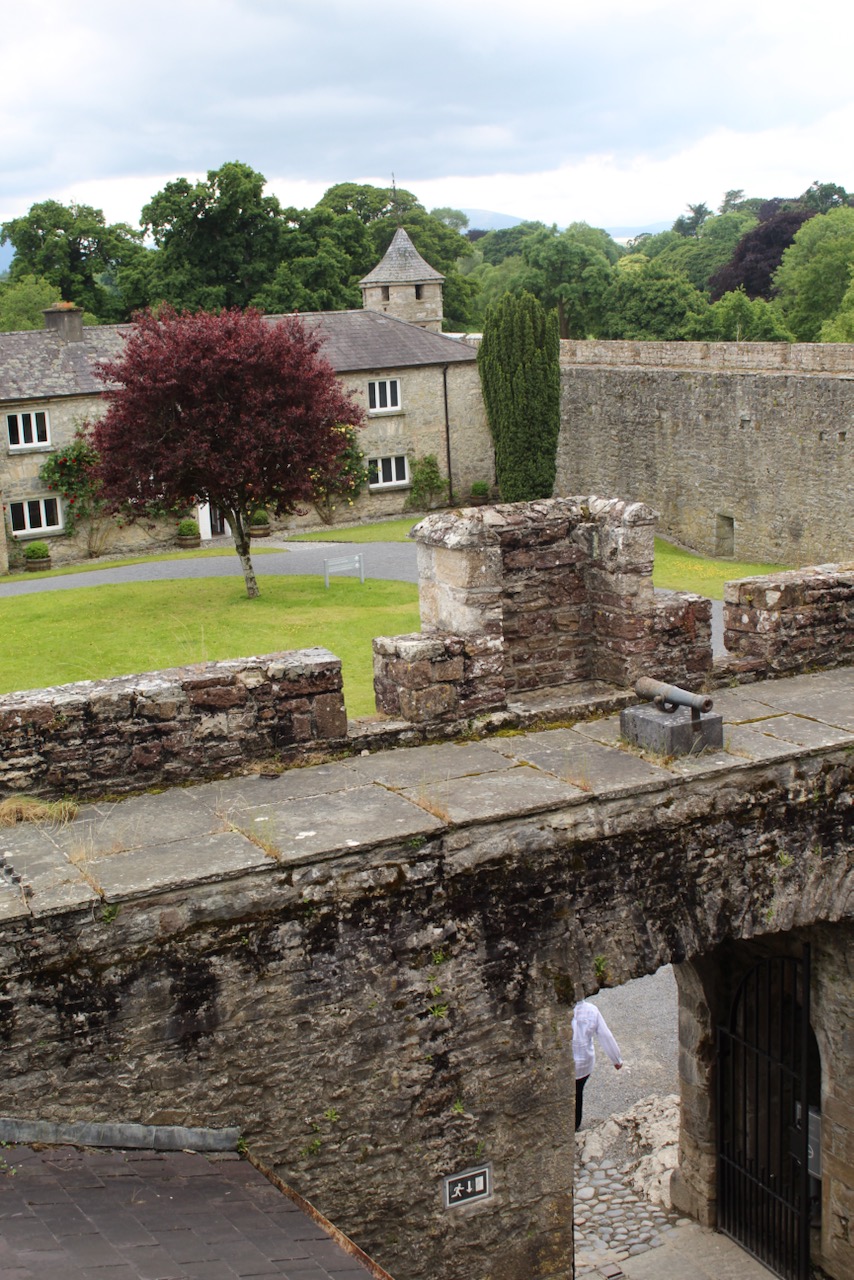
Round flaking towers are positioned at the outside corners acting as guard towers, accessed by wall walks that surmount the walls surrounding the courtyard. Photograph © Jennifer Winder-Baggot, www.irishhistorichouses.com
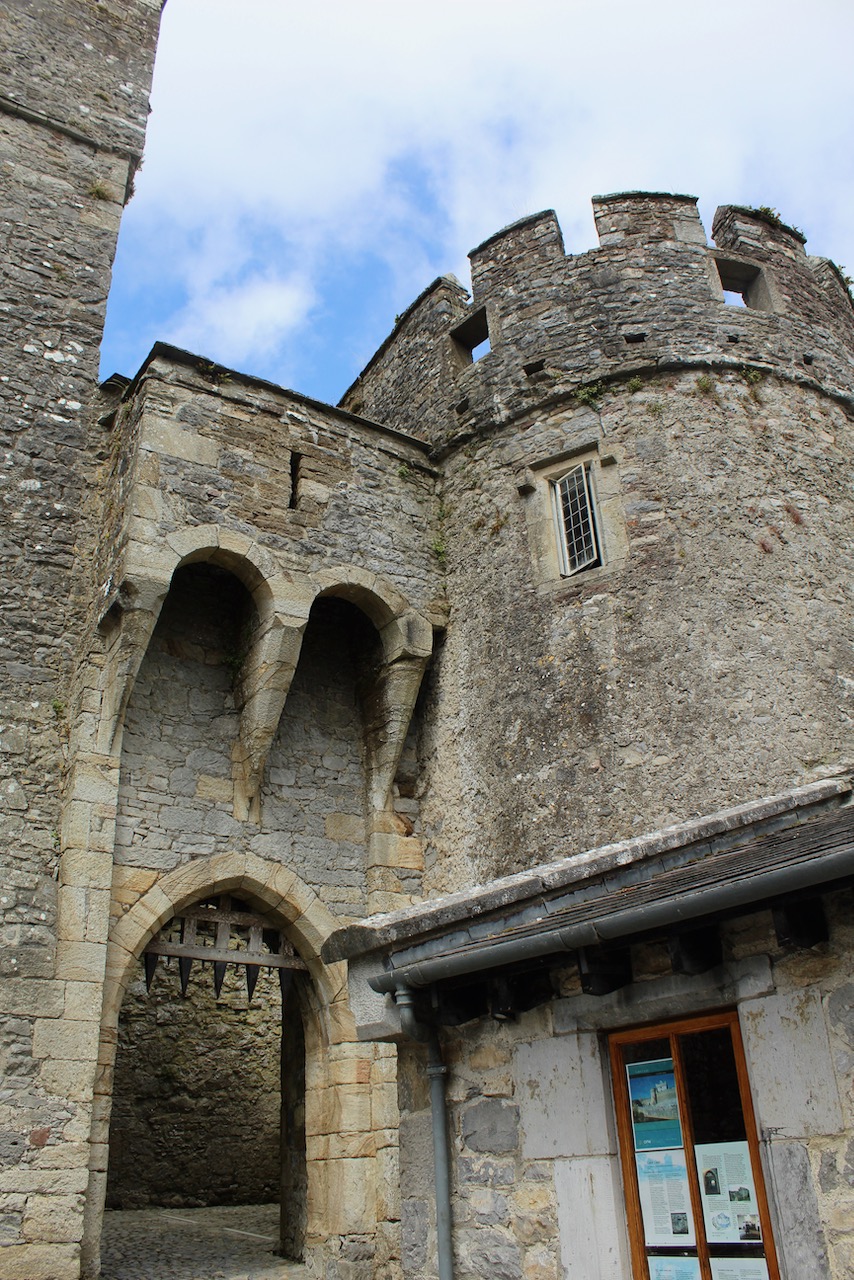
Once over the surrounding moat and river, and through the outer gate into the inner courtyard or bawn, one has another gate to go through, which is protected by a machicolation above the gate, through which things could be dropped on the invader, such as rocks, boiling water or hot sand. Photograph © Jennifer Winder-Baggot, www.irishhistorichouses.com
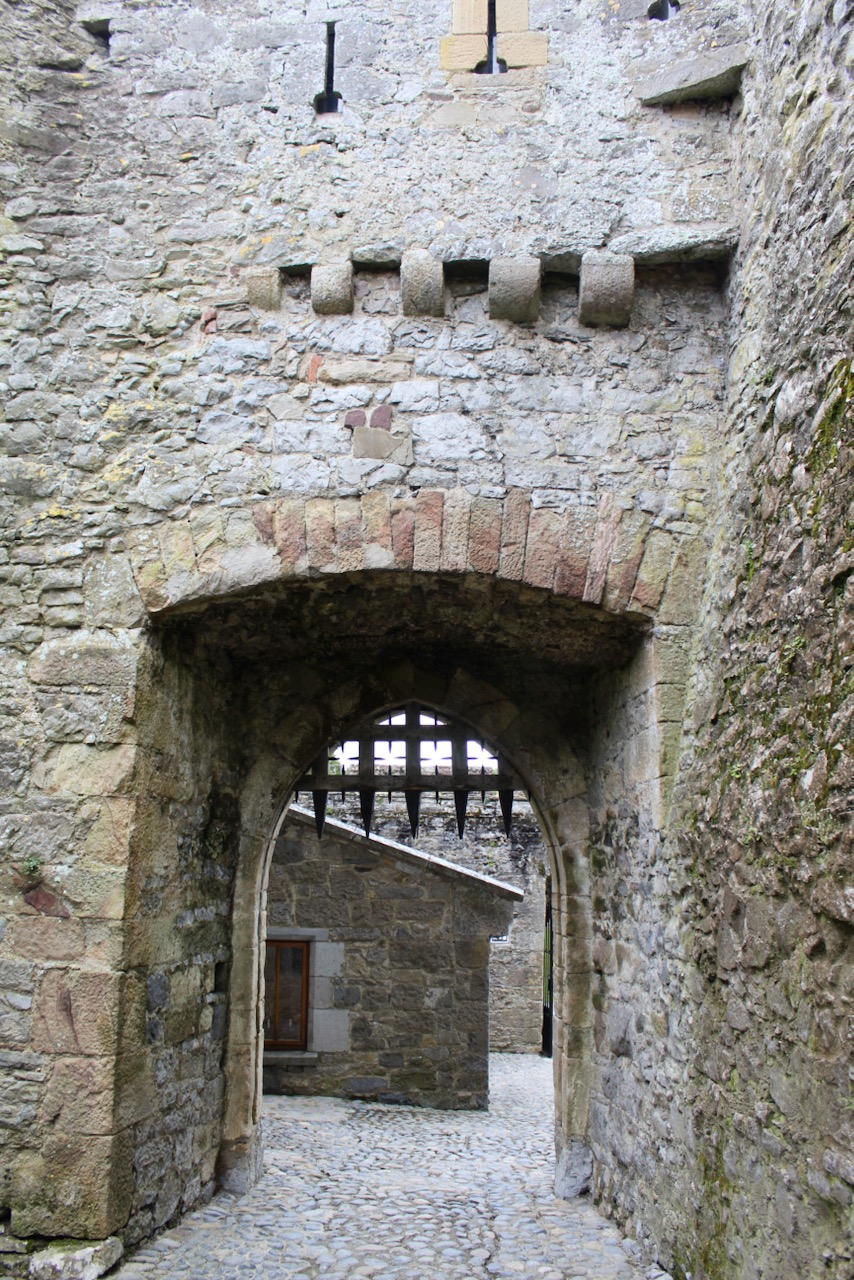
Once one gets through the second gate, the invader would have to get through the portcullis, pictured here. Photograph © Jennifer Winder-Baggot, www.irishhistorichouses.com
The portcullis, from the other side. Photograph © Jennifer Winder-Baggot, www.irishhistorichouses.com
The mechanism for working the portcullis. Photograph © Jennifer Winder-Baggot, www.irishhistorichouses.com

Once invaders get through the portcullis they are trapped in a small area, where defenders can fire arrows and stones at them. The walls of this area slope outwards towards the bottom, known as a base batter, so falling rocks bounce off them to hit the invaders.

The core of the castle is the keep.

The square central keep of Cahir Castle, with watch tower, and river as moat, and entrance gate topped by eagle. Photograph © Jennifer Winder-Baggot, www.irishhistorichouses.com
Cahir Castle, June 2022. Photograph © Jennifer Winder-Baggot, www.irishhistorichouses.com
The Castle Keep. The door is protected by a machicolation, and through the door you can see a cross shaped gun loop so the defenders can shoot invaders. Inside the door is the spiral staircase. Photograph © Jennifer Winder-Baggot, www.irishhistorichouses.com

Oliver Cromwell took the castle in 1650 and the occupants, under the 4th Baron Caher Piers Butler (d. 1676), surrendered peacefully.

The Butlers of Ormond also had to forfeit their land in the time of Oliver Cromwell’s Protectorate. Both branches of the Butlers had their lands restored with the restoration of the monarchy with Charles II in 1662.

The Cahir website continues: “At the restoration of Charles II, in 1660, George Matthews, (as Warden of Cahir Castle and half-brother to the Duke of Ormond), retained the Cahir lands for the Lord Cahir, then a minor.” [4] George Matthew (or “Mathew,” 1645-1735) was married to Eleanor Butler, daughter of Edmond Butler, 3rd/13th Baron Dunboyne. She seems to have married twice: first to Edmond Butler son of 3rd Baron Cahir, then to to George Matthew. Her son was Piers Butler, 4th Baron Cahir, who was just seven when his father died.

Piers Butler 4th Baron Cahir (1641-1676) married George Mathew’s niece, Elizabeth Mathew (1647-1704). They had no male issue, but two daughters. His daughter Margaret married Theobald Butler, 5th Baron Cahir (d. 1700), great-grandson of the 1st Baron Cahir.

Margaret Butler daughter of the 4th Baron Cahir was the 5th Baron Cahir’s second wife. His first wife, Mary Everard, gave birth to his heir, Thomas (1680-1744), 6th Baron Cahir. Thomas had several sons, who became 7th (d. 1786) and 8th Barons Cahir (d. 1788), but they did not have children, so that title went to a cousin, James Butler (d. 1788), who became 9th Baron Cahir.
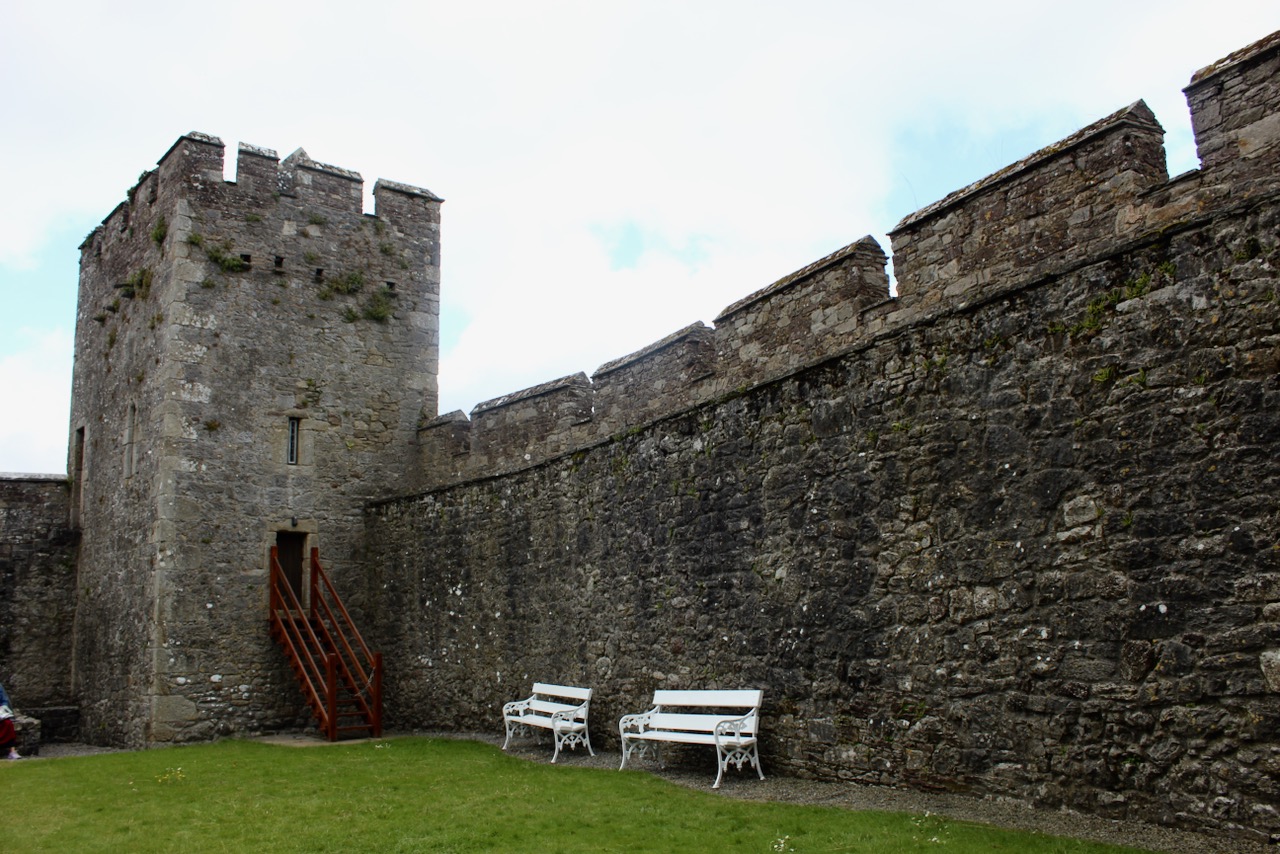
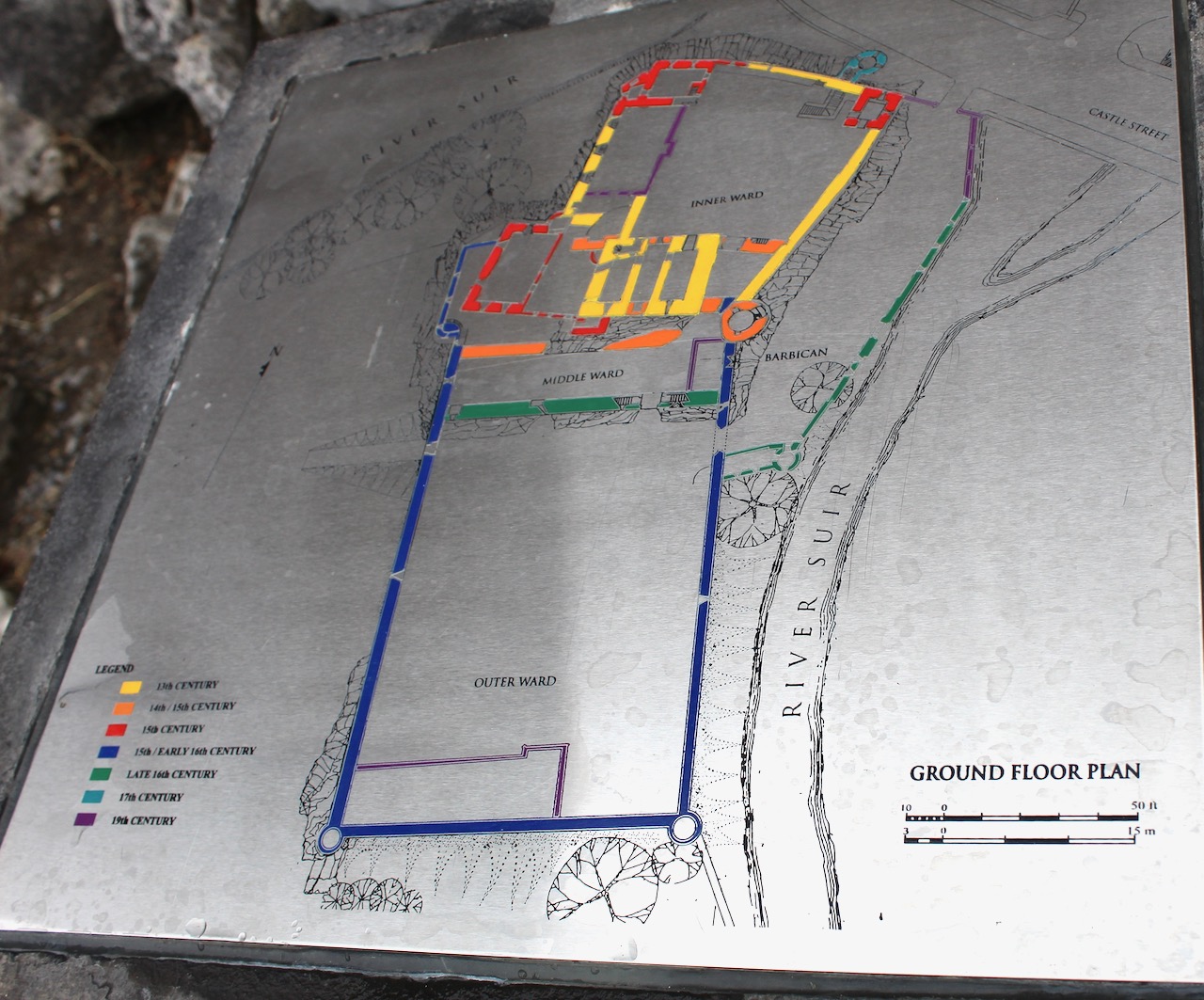
Prisoners’ tower at Cahir Castle. Photograph © Jennifer Winder-Baggot, www.irishhistorichouses.com
Cahir Castle, June 2022.
Cahir Castle, June 2022. Photograph © Jennifer Winder-Baggot, www.irishhistorichouses.com
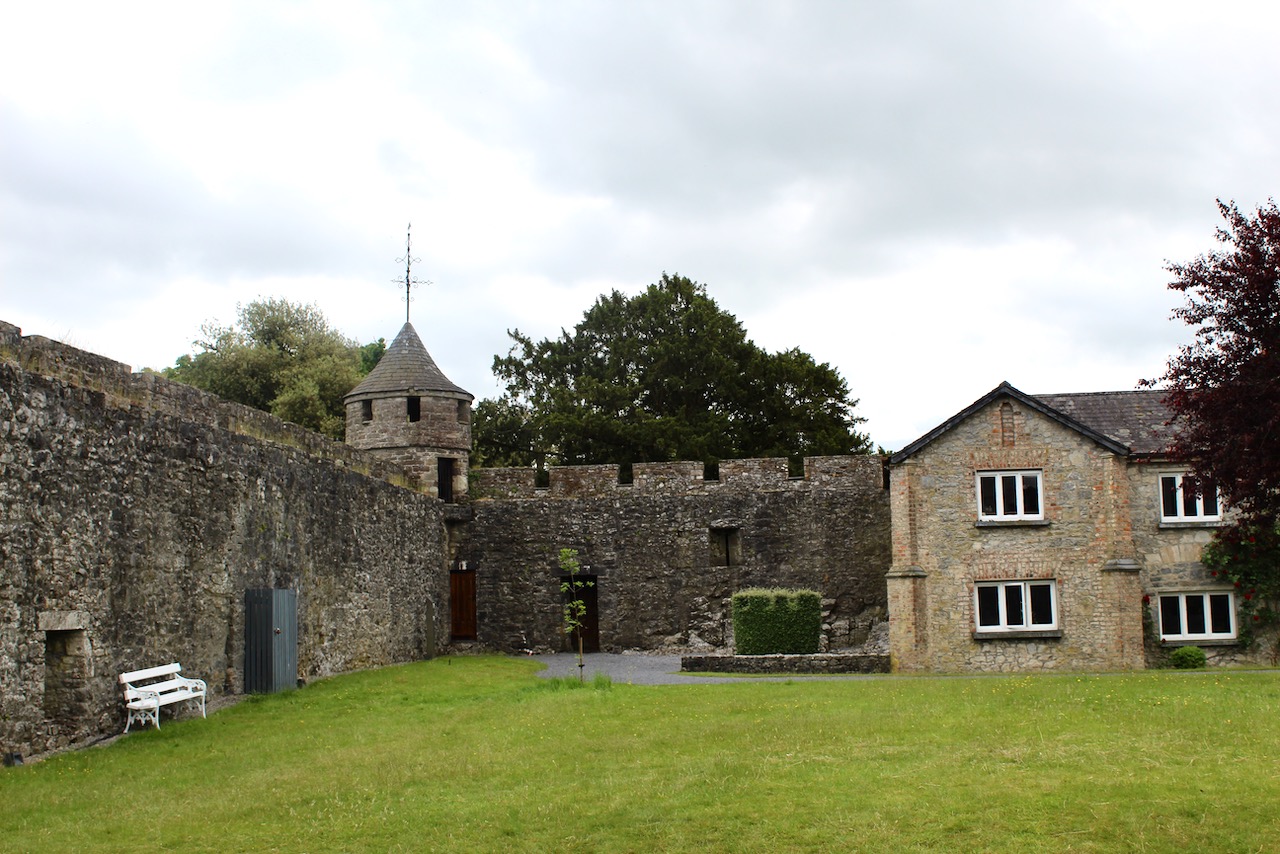
Inside the barbican walls, Cahir Castle. Cahir Cottage was built by the Butler family in the 19th century. Photograph © Jennifer Winder-Baggot, www.irishhistorichouses.com

The Cahir website tells us: “Despite embracing the Jacobite Cause in the Williamite Wars, the Cahir estate remained relatively intact. However, the Butlers never again lived at Cahir Castle but rather at their country manor, Rehill House, where they lived in peace and seclusion from the mid-seventeenth century, when not living abroad in England and France.

“…By 1700 a sizeable town had grown around the Castle, although hardly any other buildings survive from this period. Agriculture, milling and a wide range of trades would have brought quite a bustle to the muddy precursors of our present streets. At this time, the Castle was quite dilapidated and was let to the Quaker William Fennell, who resided and kept a number of wool combers at work there.” [4]

The castle layout was changed considerably and enlarged during work to repair some of the damage caused by the battles, but was then left abandoned until 1840 when the partial rebuilding of the Great Hall took place. [4]
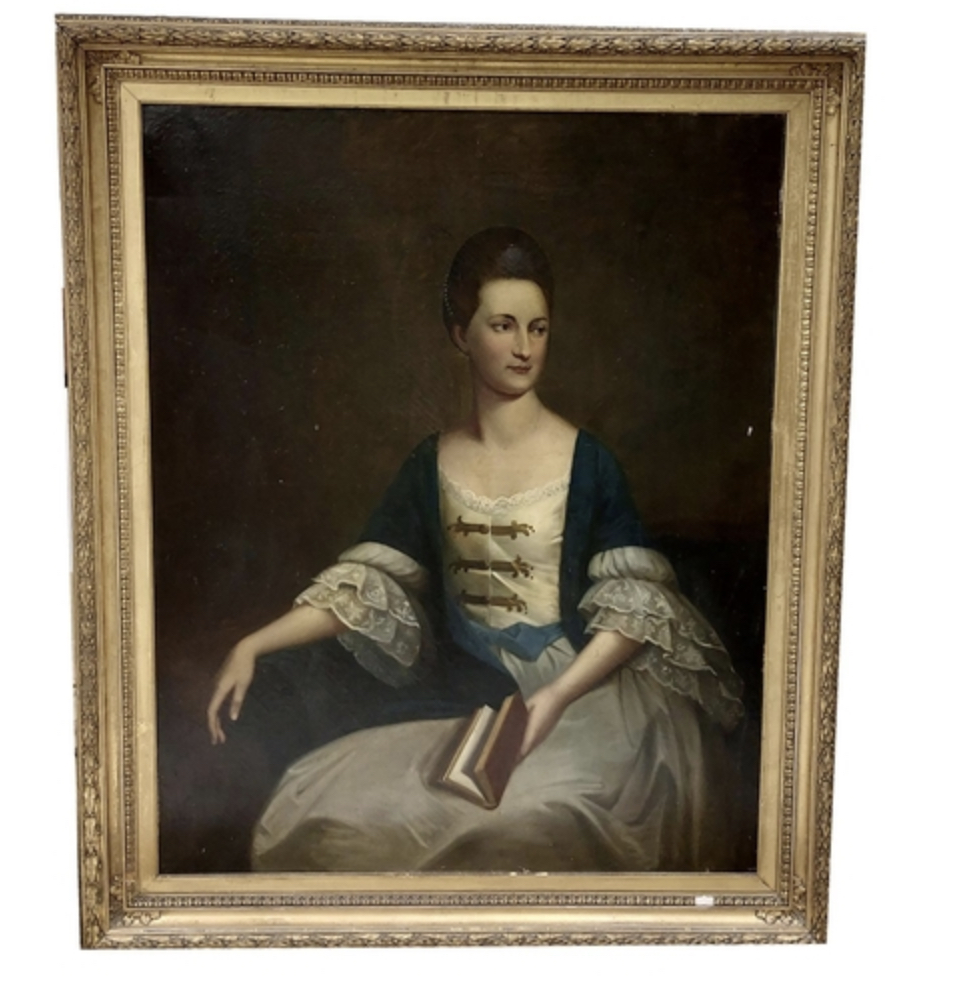
Female member of Butler family, Cahir Castle, courtesy of Fonsie Mealy auction.

The Cahir website tells us: “On the completion of Cahir House [in the town, now Cahir House Hotel] in the later 1770’s, Fennell rented Rehill House from Lord Cahir and lived there over half a century. [The Barons moved to Cahir House.] A strong Roman Catholic middle class emerged. James [d. 1788], 9th Lord Cahir [d. 1788], practiced his religion openly. He maintained strong links with Jacobite France, and paid regular visits to England. While not a permanent resident, he kept his Cahir Estates in impeccable order and was largely responsible for the general layout of the Town of Cahir. Under his patronage, some of the more prominent buildings such as Cahir House, the Market House and the Inn were built during the late 1770s and early 1780s. In addition, the Quakers built the Manor Mills on the Bridge of Cahir, the Suir Mills (Cahir Bakery), and the Cahir Abbey Mills in the period 1775-90.” [4]

The son of the 9th Baron Cahir, Richard (1775-1819), became 10th Baron and 1st Earl of Glengall. It was he and his wife who had the Swiss Cottage built outside Cahir.
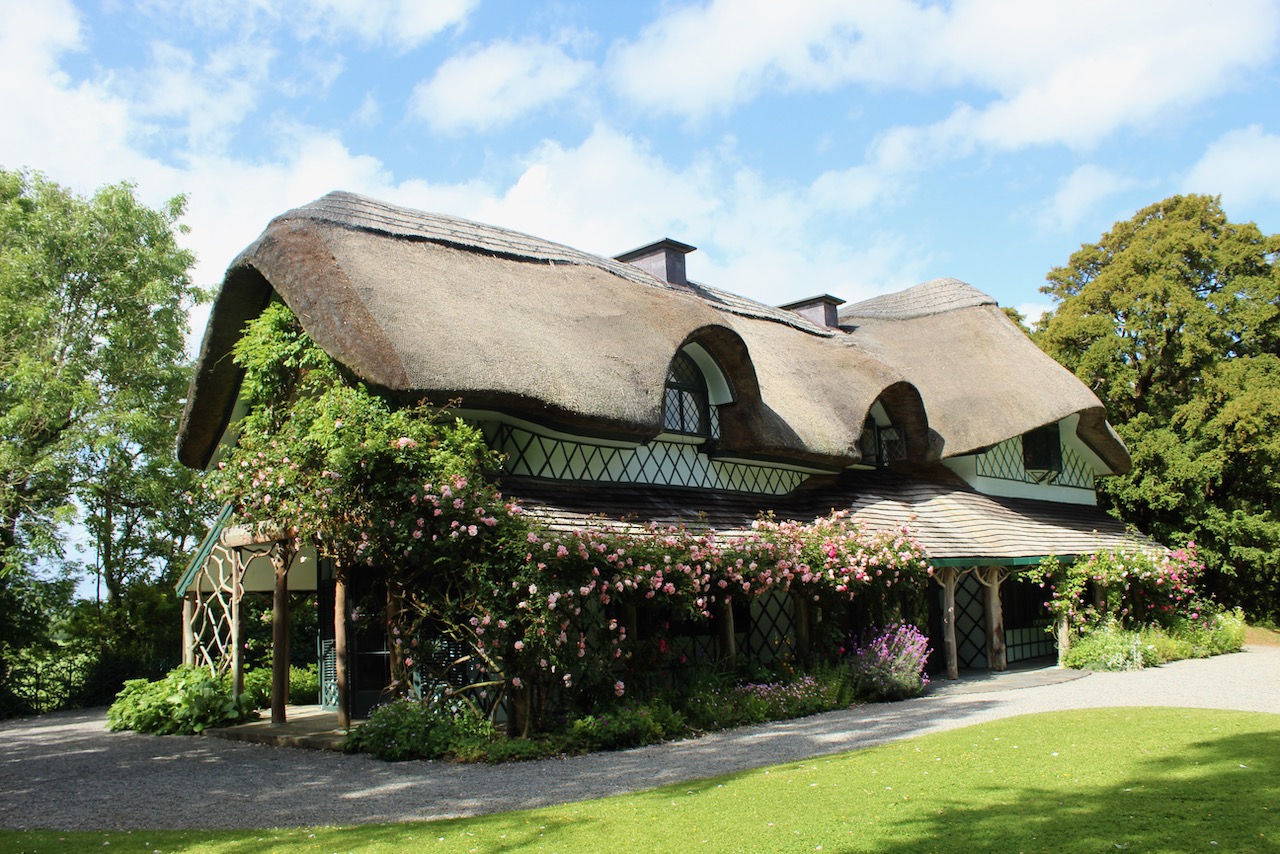
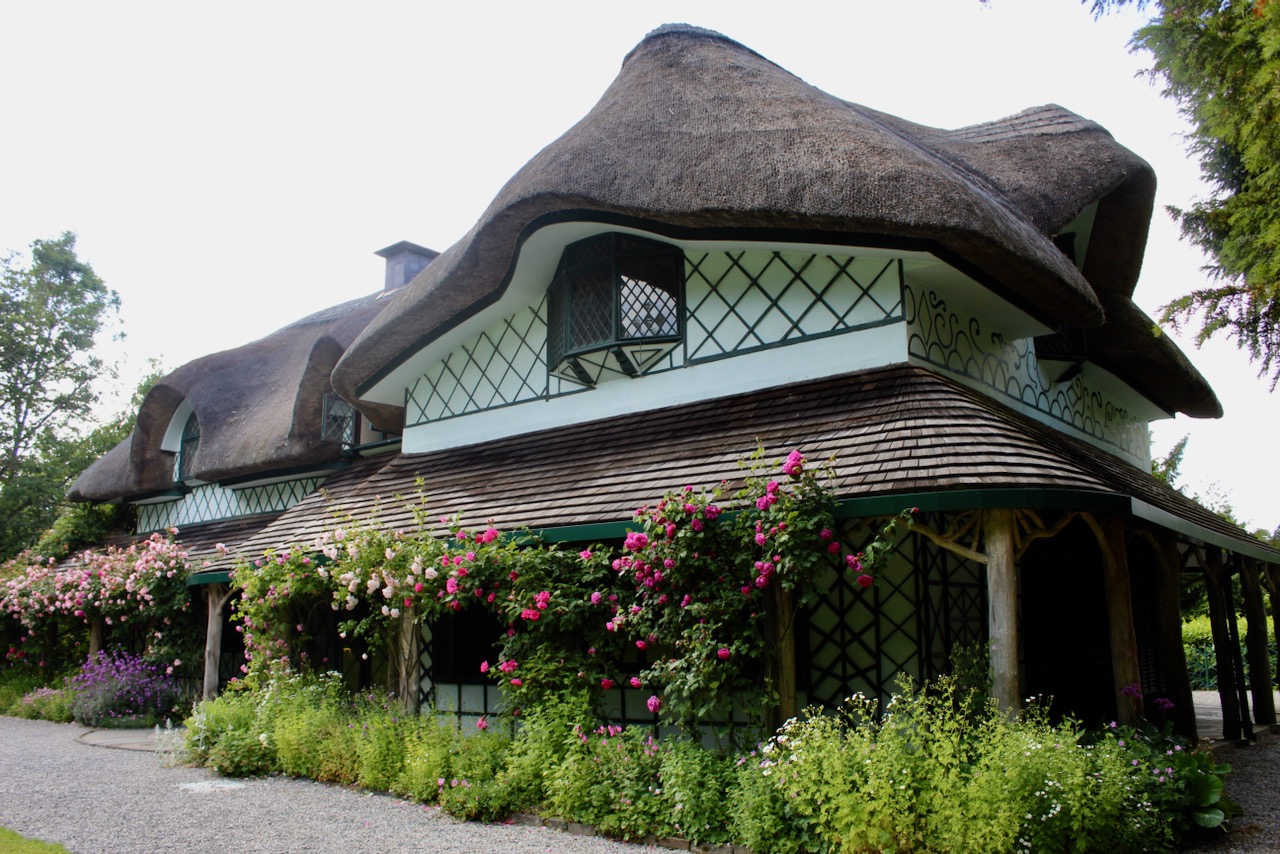
Swiss Cottage, County Tipperary. Photograph © Jennifer Winder-Baggot, www.irishhistorichouses.com

… The young Lord Cahir married Miss Emily Jeffereys of Blarney Castle and together they led Cahir through the most colourful period of its development…Richard, Lord Cahir, sat in The House of Lords as one of the Irish Representative Peers, and in 1816 was created Earl of Glengall, a title he enjoyed for just 3 years. He died at Cahir House of typhus in January 1819, at the age of 43 years. Richard, Viscount Caher, (now 2nd Earl of Glengall), had already taken his place in political circles while his mother, Emily, ran the Estate with an iron fist.” [4]

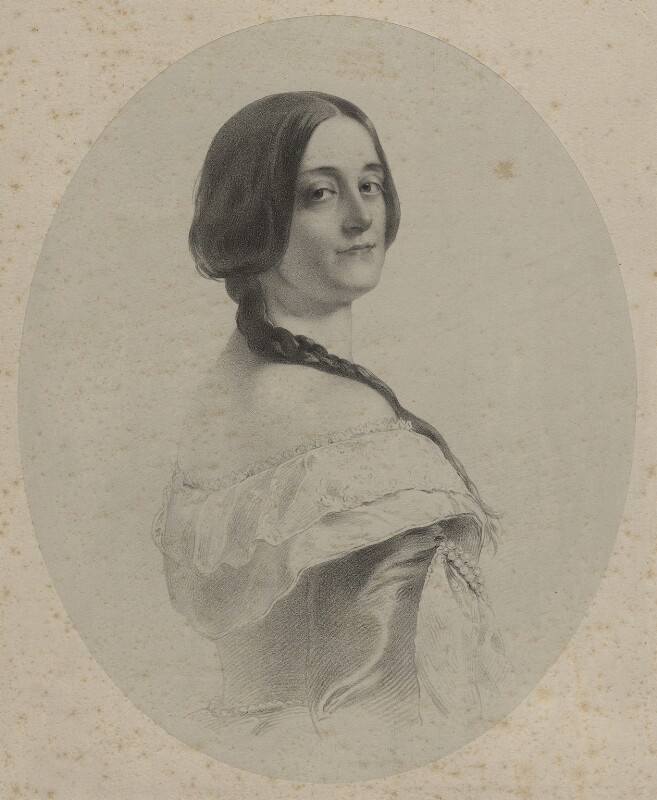
Richard Butler (1794-1858) 2nd Earl of Glengall, by Richard James Lane, lithograph, 1854, National Portrait Gallery of London D22384.
Margaret Lauretta Butler (née Mellish), Countess of Glengall, wife of the 2nd Earl of Glengall by Richard James Lane courtesy of National Portrait Gallery London NPG D22383.
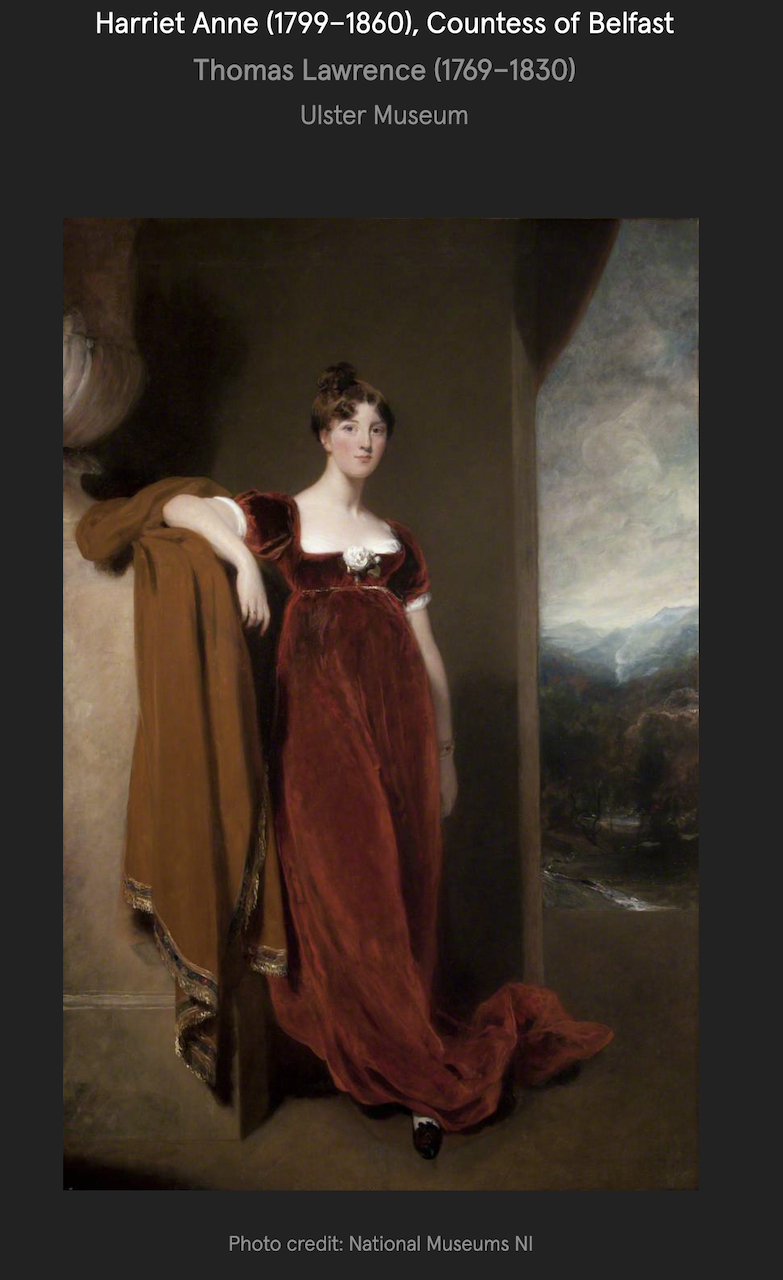
Harriet Anne née Butler (1799-1860) Countess of Belfast, wife of George Hamilton Chichester 3rd Marquess of Donegal and daughter of Richard Butler, 1st Earl of Glengall.
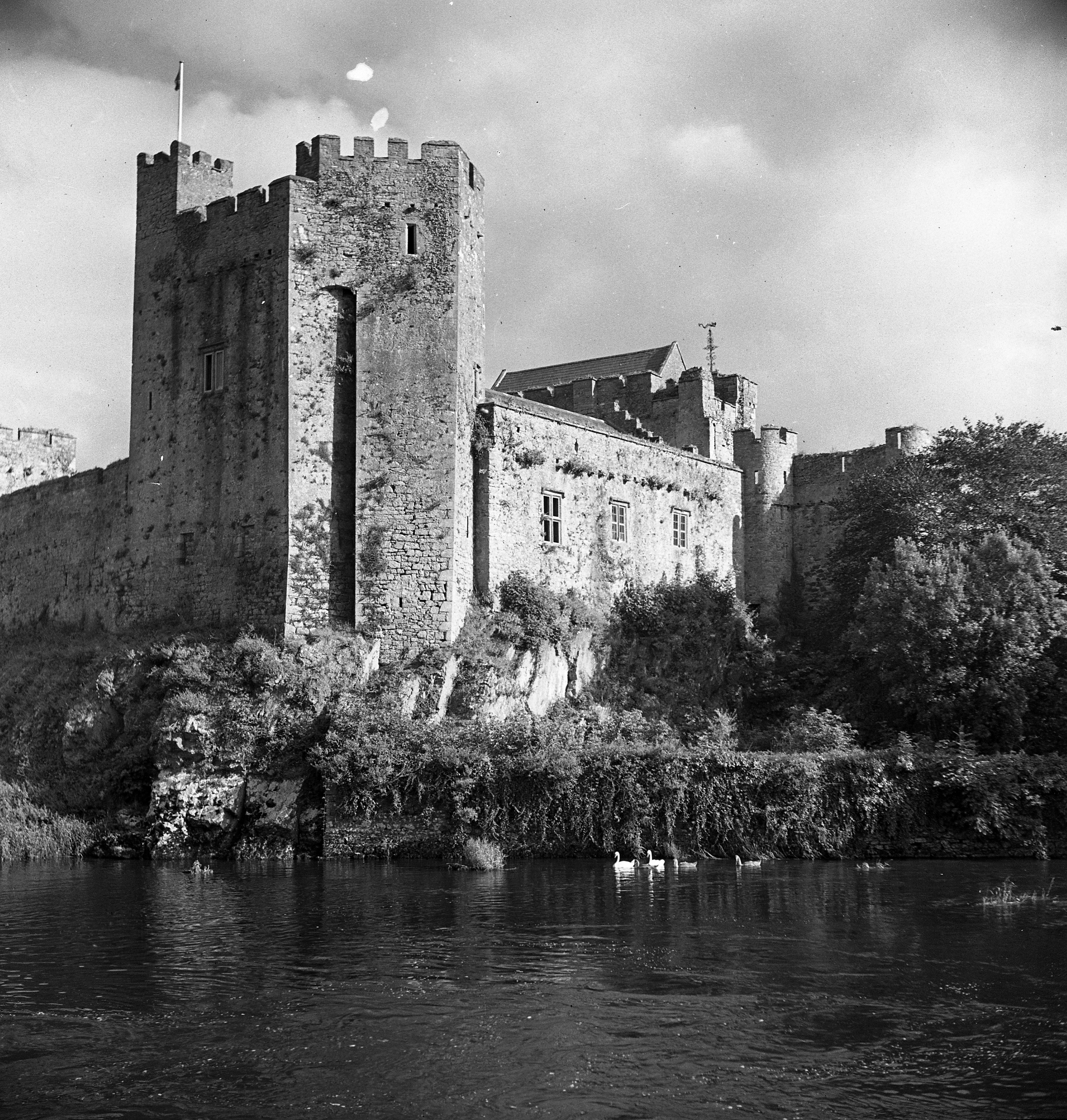
Cahir Castle 1943, photograph from Dublin City Library archives. [5]

During the Great Famine (1846-51), Lord and Lady Glengall did much for the relief of the poor and the starving. Lord Glengall’s town improvement plan was shelved in 1847 due to a resulting lack of funds and his wife’s fortune being tied up in a Trust Fund. The Cahir Estates were sold in 1853, the largest portion being purchased by the Trustees of Lady Glengall. This sale came about due to Lord Glengall being declared bankrupt. The Grubbs had by now become the most important Quaker family in the district and bought parts of the Cahir Estate during the 1853 sale...

In the interim, Lady Margaret Butler (elder daughter and heir of Lord Glengall) had married Lieut. Col. Hon. Richard Charteris, 2nd son of the 9th Earl of Wemyss & March. Using a combination of her mother’s Trust and Charteris funds, Cahir Town and Kilcommon Demesne were repurchased.  

Lady Margaret, although an absentee landlord, resident in London, kept a close watch on her Cahir Estates through two excellent managers, Major Hutchinson and his successor William Rochfort… Her son, Richard Butler Charteris took over her role in 1915 and remained resident in Cahir from 1916 until his death in 1961. In 1962, the House, and circa 750 acre estate core (within the walls of Cahir Park and Kilcommon Demesne) were auctioned…And so ended the direct line of Butler ownership in Cahir, almost 600 years. [4]

The castle became the property of the state after the death of Lord Cahir in 1961; it was classified as a national monument and taken into the care of the Office of Public Works. [6]
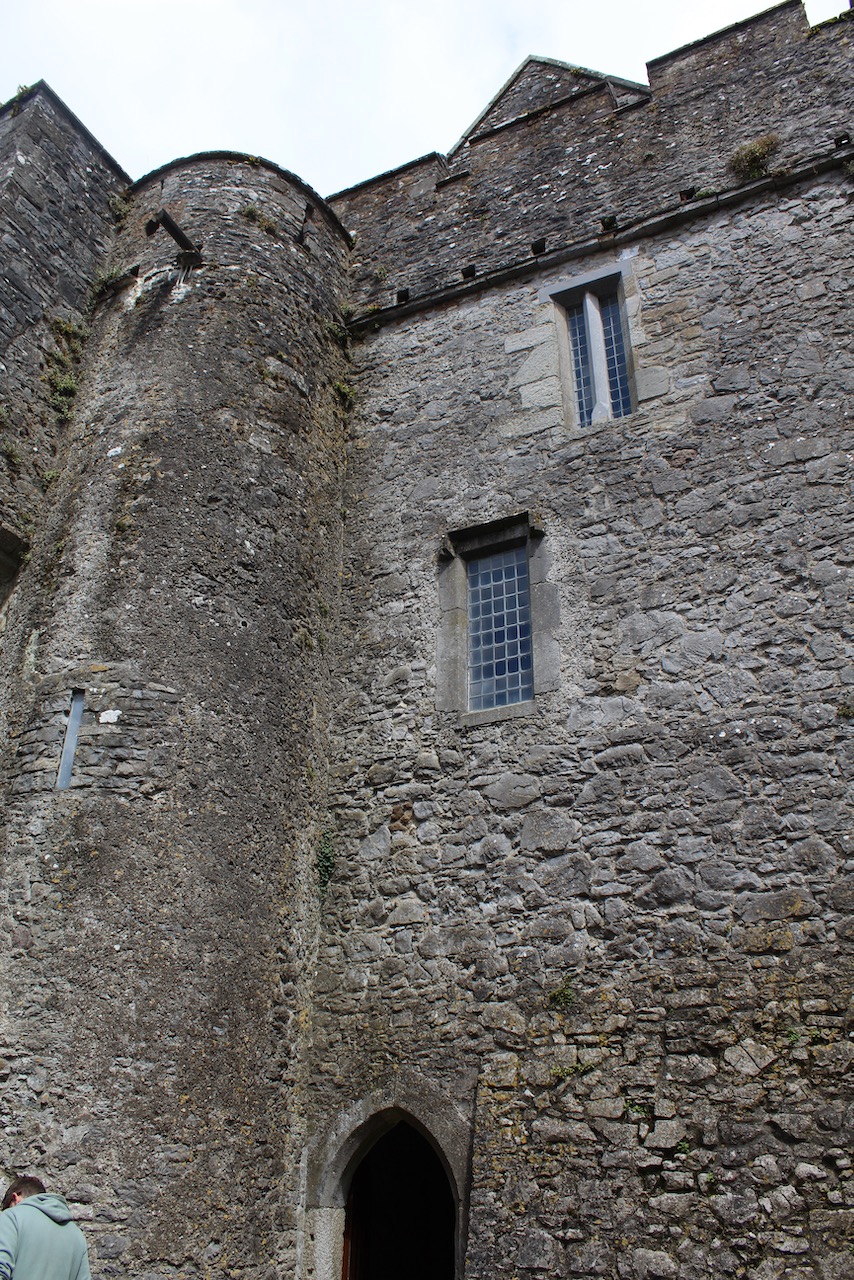
Cahir Castle, June 2022. Photograph © Jennifer Winder-Baggot, www.irishhistorichouses.com
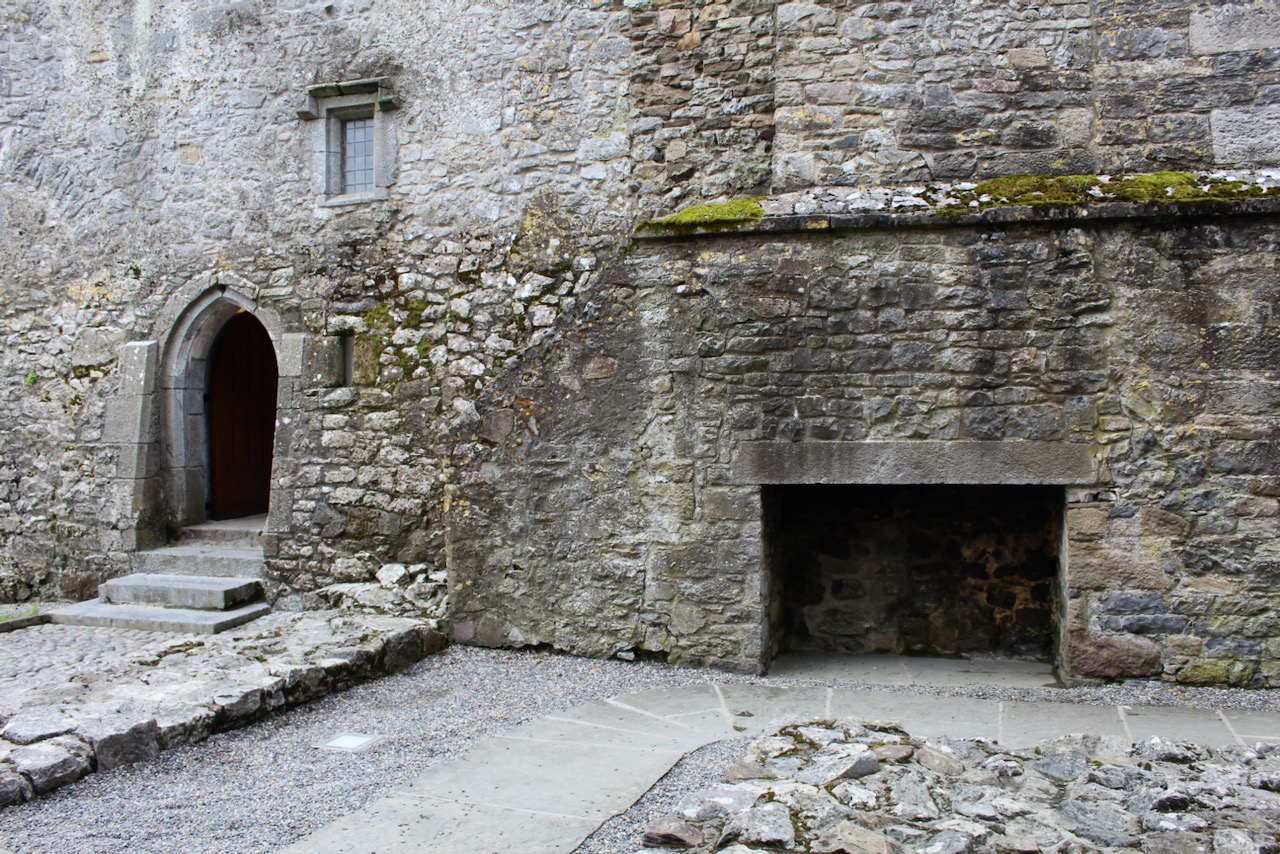
The great hall, and adjoining guest accommodation in the northwest tower. This 13th century building was attached to the keep, but in 1840 it was shortened, leaving the original fireplace in the open outside. Photograph © Jennifer Winder-Baggot, www.irishhistorichouses.com
Great Hall and northwest tower of Cahir Castle. Photograph © Jennifer Winder-Baggot, www.irishhistorichouses.com
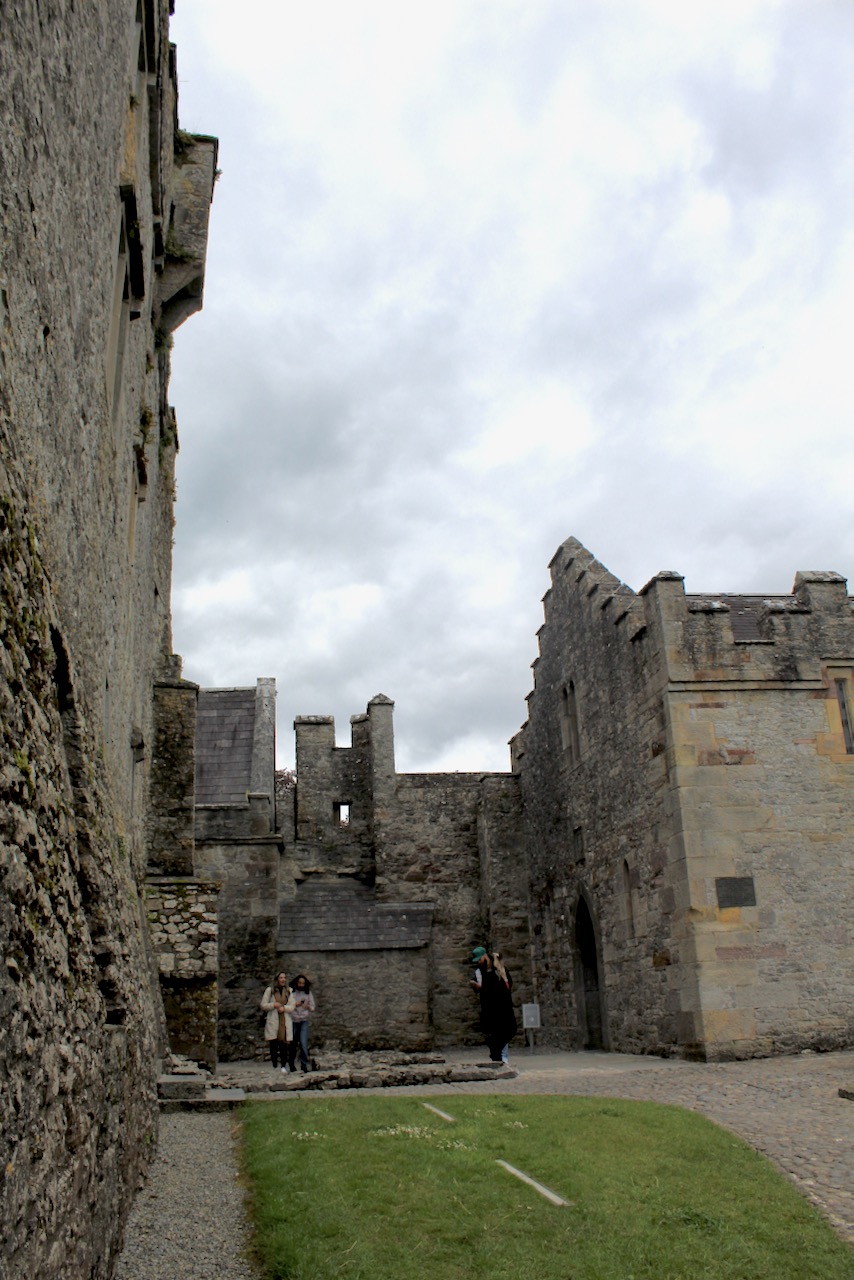
The end of the Great Hall, with its stepped gable. It was originally attached to the keep, pictured on the left. Photograph © Jennifer Winder-Baggot, www.irishhistorichouses.com
This is the exposed fireplace, which was in the now foreshortened Great Hall. Photograph © Jennifer Winder-Baggot, www.irishhistorichouses.com

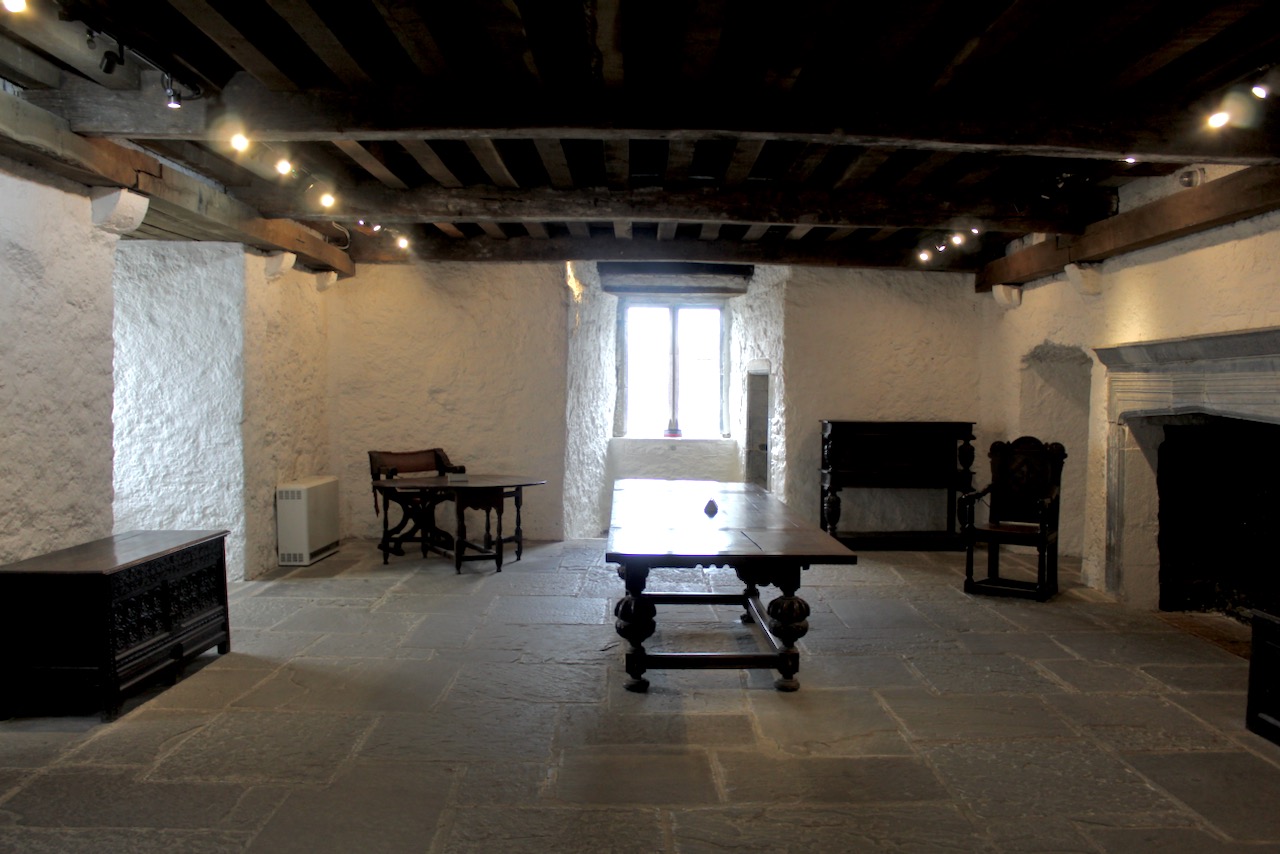
Our tour guide took us through the outside of the castle, showing us its defenses. Our tour ended inside the Great Hall, or dining hall.

The Great Hall, with giant Irish elk antlers. The fireplace is not genuine – it is made of papier mache and was installed for the filming of a movie. Photograph © Jennifer Winder-Baggot, www.irishhistorichouses.com p.s. we saw a movie recently filmed in Cahir Castle, “The Last Duel” with Matt Damon, Adam Driver and Jodie Comer, and it was brilliant! I highly recommend it.

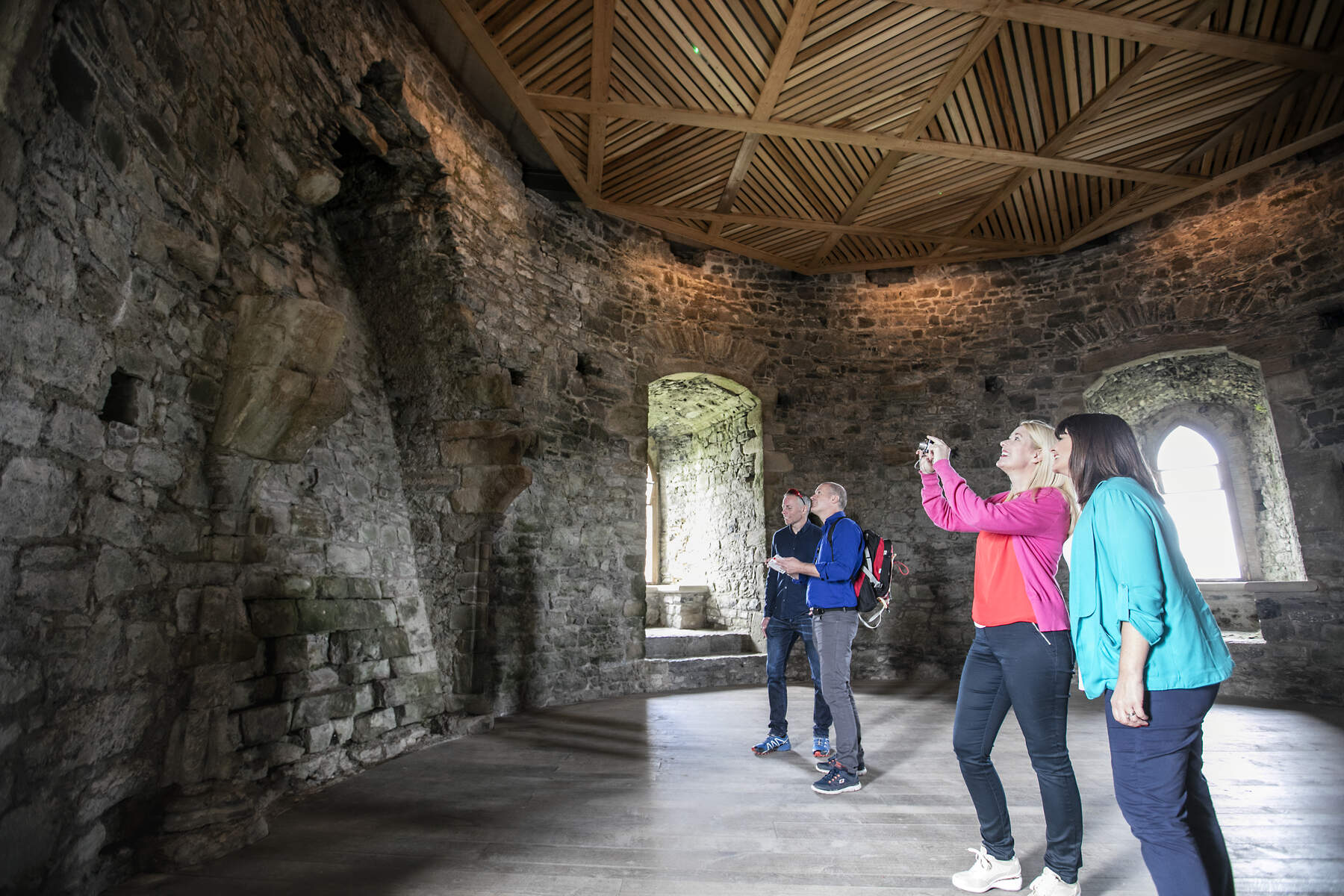
The dining hall has a magnificent ceiling. The building would have originally been of two storeys, and taller. The appearance today owes much to restoratation work carried out by William Tinsley in 1840, when the building was converted into a private chapel for the Butler family. The hammer-beam roof and the south and east wall belong to this period. The external wall dates from the 13th century.

Ceiling of the Great Hall, Cahir Castle. Photograph © Jennifer Winder-Baggot, www.irishhistorichouses.com
Inside the northwest tower of Cahir Castle. Photograph © Jennifer Winder-Baggot, www.irishhistorichouses.com
Upstairs in the northwest tower. It is fitted with fifteenth century windows and has a Tudor fireplace inserted where the original portcullis machinery was housed. Photograph © Jennifer Winder-Baggot, www.irishhistorichouses.com
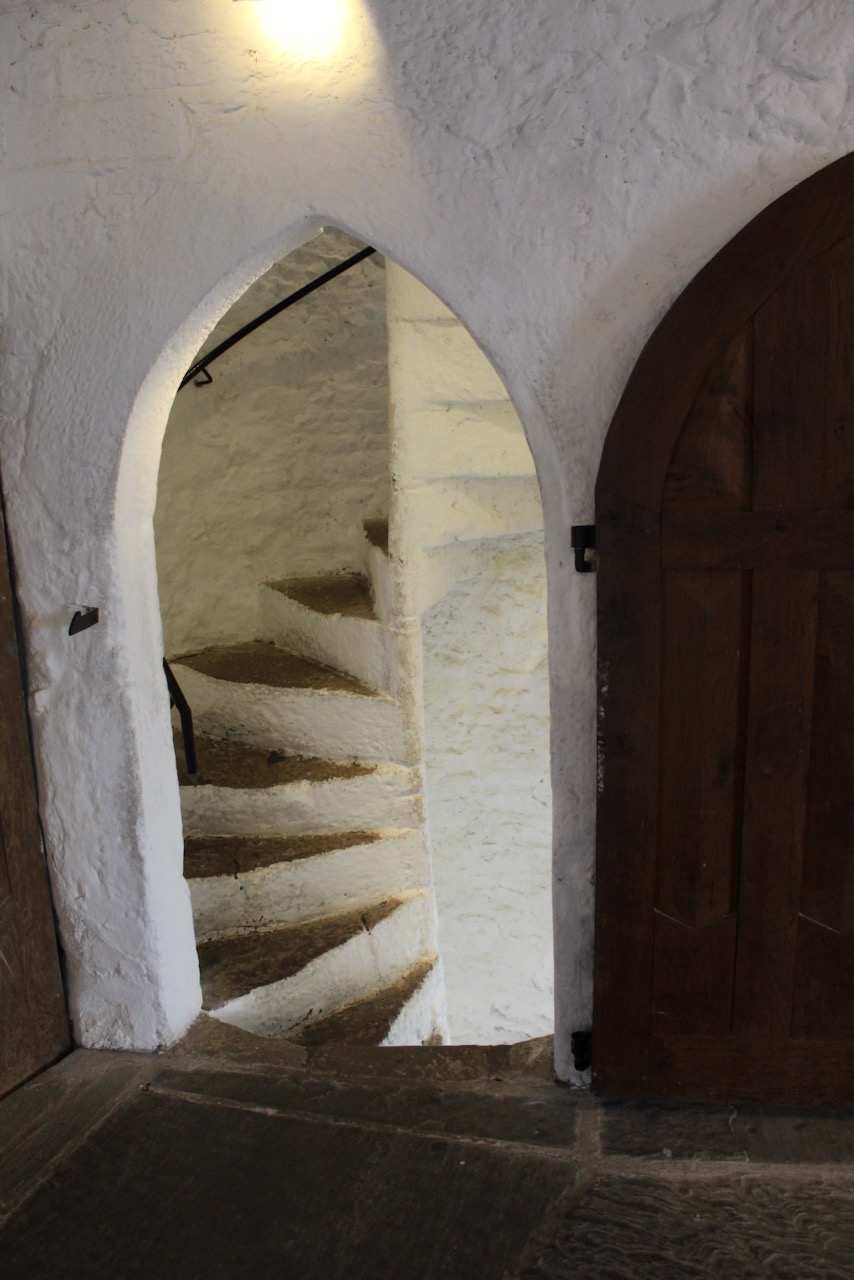
The stairs to the upper level of the northwest tower are spiral. Photograph © Jennifer Winder-Baggot, www.irishhistorichouses.com
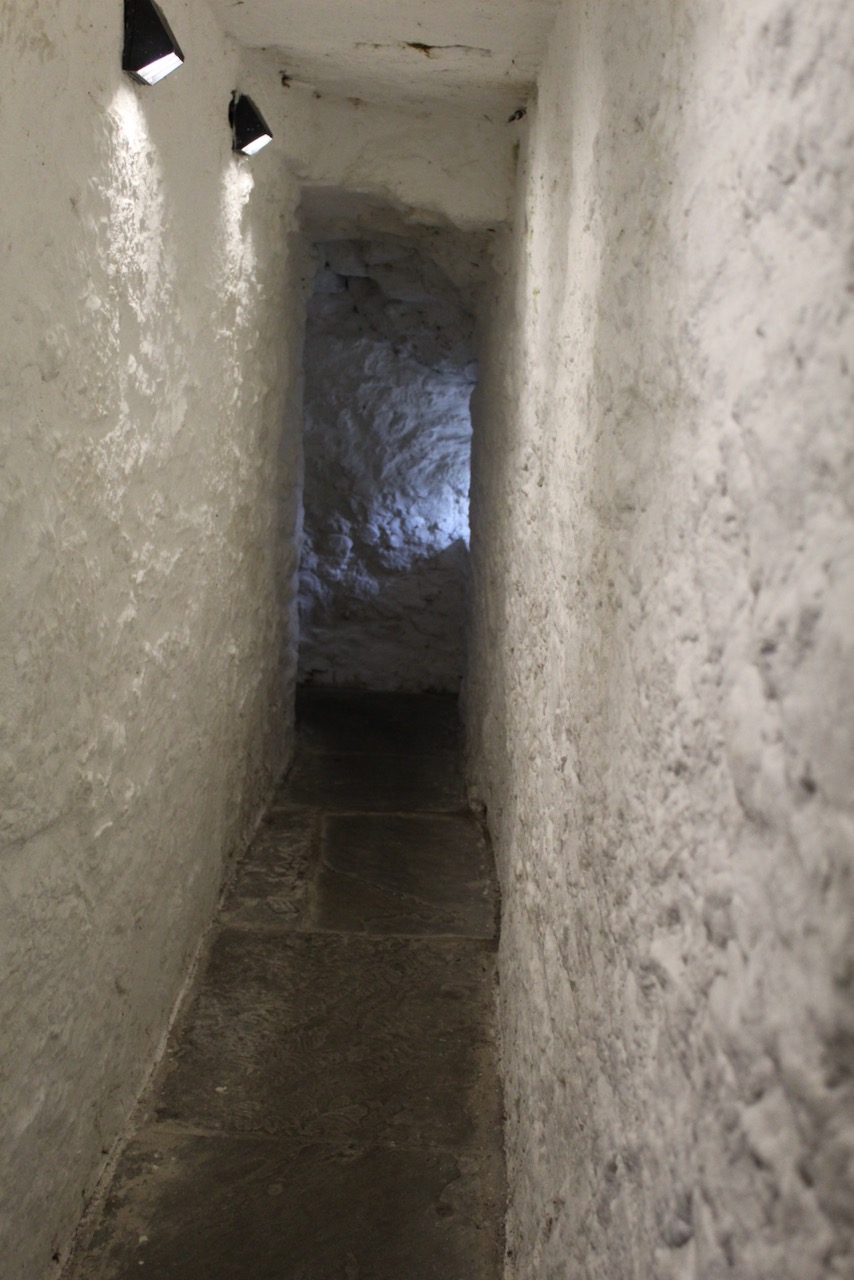
I love the passageways between the walls of the castle. Photograph © Jennifer Winder-Baggot, www.irishhistorichouses.com
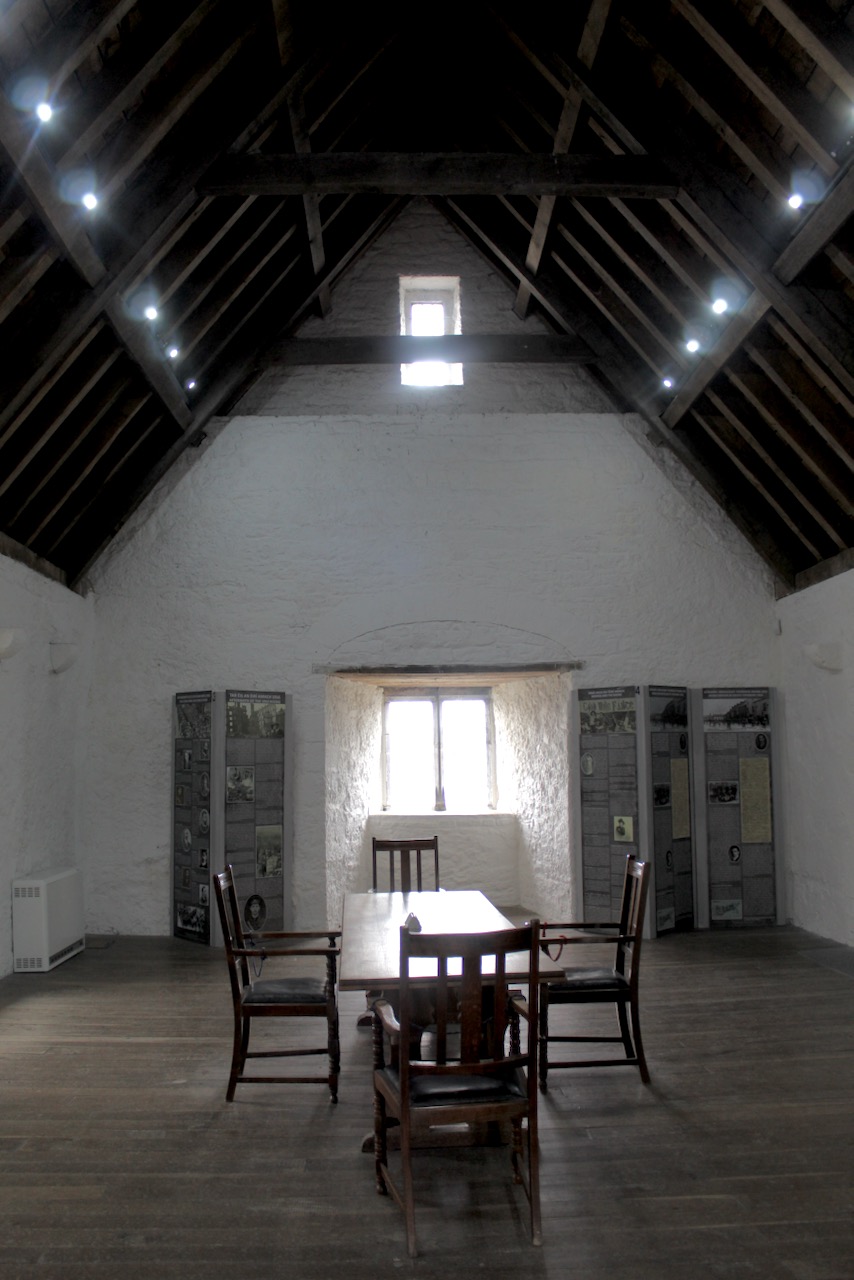
Top floor of the northwest tower. Photograph © Jennifer Winder-Baggot, www.irishhistorichouses.com

Next we explore the keep building.
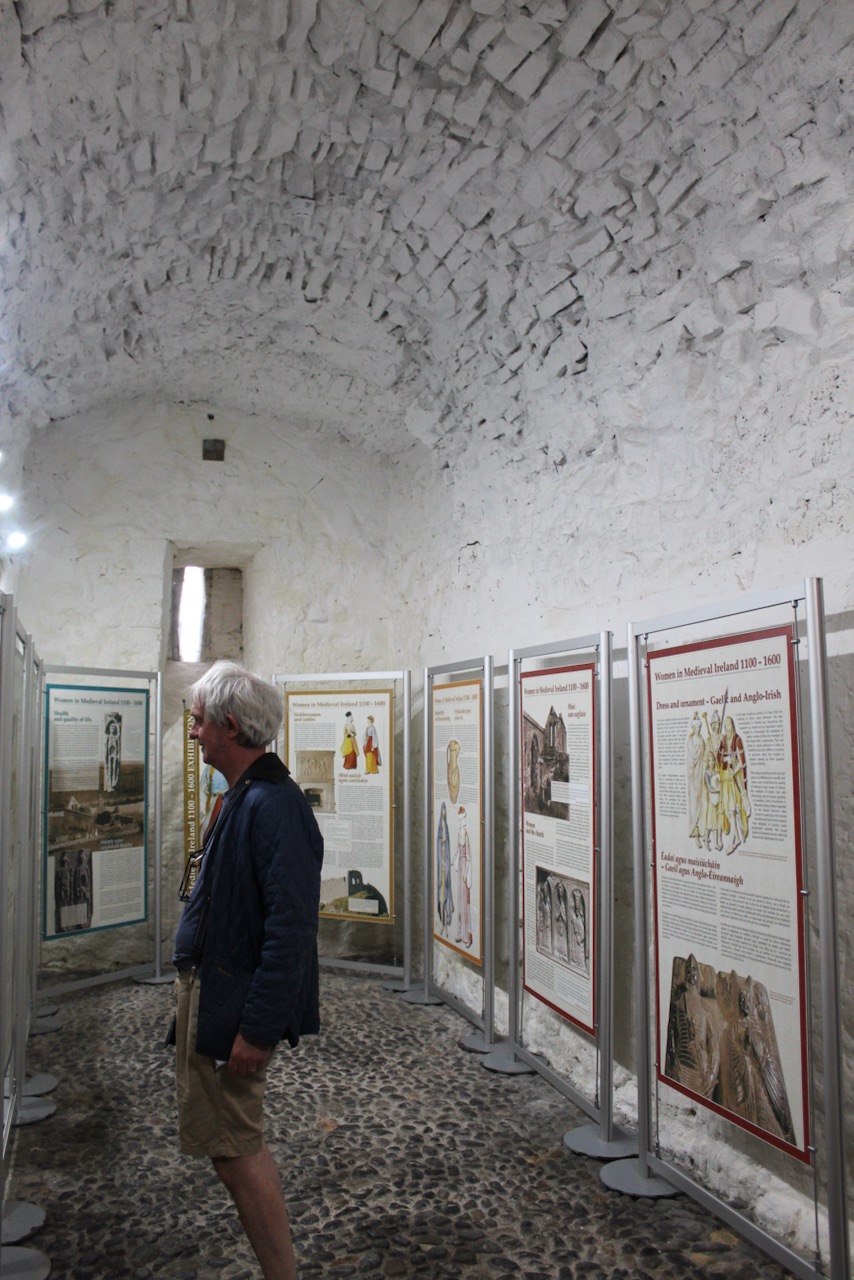
Cahir Castle, June 2022. Photograph © Jennifer Winder-Baggot, www.irishhistorichouses.com
One can descend these steps and up again on the other side for a view over the river. Photograph © Jennifer Winder-Baggot, www.irishhistorichouses.com

[1] https://www.irelandscontentpool.com/en

[2] p. 58. Hayes, William and Art Kavanagh, The Tipperary Gentry volume 1 published by Irish Family Names, c/o Eneclann, Unit 1, The Trinity Enterprise Centre, Pearse Street, Dublin 2, 2003.

[3] http://www.thepeerage.com/index.htm and G.E. Cokayne; with Vicary Gibbs, H.A. Doubleday, Geoffrey H. White, Duncan Warrand and Lord Howard de Walden, editors, The Complete Peerage of England, Scotland, Ireland, Great Britain and the United Kingdom, Extant, Extinct or Dormant, new ed., 13 volumes in 14 (1910-1959; reprint in 6 volumes, Gloucester, U.K.: Alan Sutton Publishing, 2000), volume IX, page 440.

[4] http://www.cahirhistoricalsociety.com/articles/cahirhistory.html

[5] https://repository.dri.ie/

[6] http://www.britainirelandcastles.com/Ireland/County-Tipperary/Cahir-Castle.html

Text © Jennifer Winder-Baggot, www.irishhistorichouses.com

Office of Public Works properties in County Tipperary

I had initially published the County Tipperary OPW sites along with Munster counties of Clare and Limerick but the entry is too long so I am dividing it.

OPW sites in County Tipperary:

1. Cahir Castle, County Tipperary

2. Damer House and Roscrea Castle, County Tipperary

3. Famine Warhouse 1848, County Tipperary

4. Holycross Abbey, County Tipperary – must prebook for tour

5. The Main Guard, County Tipperary – closed at present

6. Nenagh Castle, County Tipperary

7. Ormond Castle, Carrick-on-Suir, County Tipperary

8. Rock of Cashel, County Tipperary

see 2. Roscrea Castle and Damer House, County Tipperary

9. Swiss Cottage, County Tipperary

donation

Help me to pay the entrance fee to one of the houses on this website. This site is created purely out of love for the subject and I receive no payment so any donation is appreciated!

€15.00

Photograph © Jennifer Winder-Baggot, www.irishhistorichouses.com
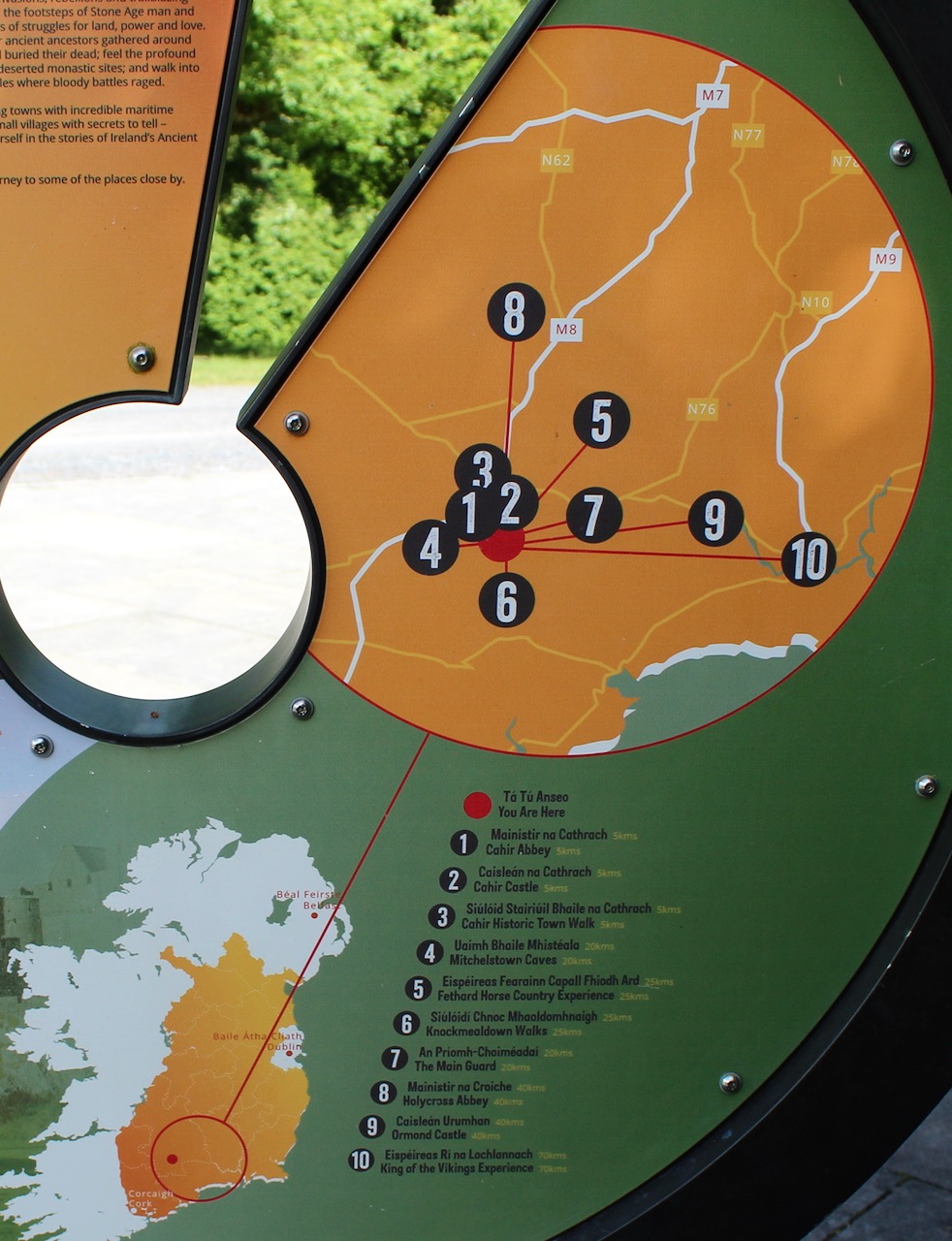
1. Cahir Castle, County Tipperary:

Cahir Castle, photograph from Ireland’s Content pool, by Brian Morrison 2014 for Failte Ireland. [see 1]
Cahir Castle, June 2022. The geese are particularly picturesque! The outer walls are called the Barbican. When breached, the attacking force gains entry to this area and are vulnerable to missiles fired by defenders and it would be difficult to retreat, due to the enclosed nature of the barbican. Photograph © Jennifer Winder-Baggot, www.irishhistorichouses.com

General information: 052 744 1011, cahircastle@opw.ie

Stephen and I visited Cahir Castle in June 2022, and I was very impressed. I had no idea that we have such an old castle in Ireland with so much intact. See my entry https://irishhistorichouses.com/2024/03/29/cahir-castle-county-tipperary-an-office-of-public-works-property/

From the OPW website https://heritageireland.ie/visit/places-to-visit/cahir-castle/:

Cahir Castle is one of Ireland’s largest and best-preserved castles. It stands proudly on a rocky island on the River Suir.

The castle was was built in the thirteenth century and served as the stronghold of the powerful Butler family. [The Archiseek website tells us it was built in 1142 by Conor O’Brien, Prince of Thomond] So effective was its design that it was believed to be impregnable, but it finally fell to the earl of Essex in 1599 when heavy artillery was used against it for the first time. During the Irish Confederate Wars it was besieged twice more.

At the time of building, Cahir Castle was at the cutting edge of defensive castle design and much of the original structure remains.

Our tour guide took us through the outside of the castle, showing us its defenses. Our tour ended inside the Great Hall, or dining hall.

The Great Hall, with giant Irish elk antlers. The fireplace is not genuine – it is made of papier mache and was installed for the filming of a movie. Photograph © Jennifer Winder-Baggot, www.irishhistorichouses.com

2. Damer House and Roscrea Castle, County Tipperary

https://heritageireland.ie/places-to-visit/roscrea-castle-gardens-damer-house-black-mills/

In the heart of Roscrea in County Tipperary, one of the oldest towns in Ireland, you will find a magnificent stone motte castle dating from the 1280s. It was used as a barracks from 1798, housing 350 soldiers, and later served as a school, a library and even a sanatorium.

Sharing the castle grounds is Damer House, named for local merchant John Damer, who came into possession of the castle in the eighteenth century. The house is a handsome example of pre-Palladian architecture. It has nine beautiful bay windows. One of the rooms has been furnished in period style.

The grounds also include an impressive garden with a fountain, which makes Roscrea Castle a very pleasant destination for a day out. There is also a restored mill displaying St Crónán’s high cross and pillar stone.” See my entry https://irishhistorichouses.com/2024/10/03/damer-house-and-roscrea-castle-county-tipperary-office-of-public-works-properties/

3. Famine Warhouse 1848, Ballingarry, County Tipperary:

General information: 087 908 9972, info@heritageireland.ie

From the OPW website https://heritageireland.ie/visit/places-to-visit/famine-warhouse-1848/:

How did an ordinary farmhouse near Ballingarry, County Tipperary, become the site of a bloody siege and a monument of the Young Irelander Rebellion of 1848?

It was here that rebels, under the leadership of Protestant aristocrat William Smith O’Brien, besieged 47 police officers who had barricaded themselves into the McCormack homestead, taking 5 children hostage. After two of their number were killed, the rebels finally gave in. They were later transported to penal colonies abroad.

The Warhouse, as it became known, is now a museum. Its contents illuminate the history of the Young Irelander Rebellion, the trials of its leaders, their exile in Australia and escape to the USA. The exhibition places the rebellion in the context of the Great Famine and the upheaval that rocked Europe during that turbulent year.

Traditionally it was known as Ballingarry Warhouse or The Widow McCormack’s House.

4. Holycross Abbey, County Tipperary:

Holycross Abbey, photograph from Ireland’s Content pool, by Liam Murphy 2016 for Failte Ireland [see 1]

From the OPW website https://heritageireland.ie/visit/places-to-visit/holycross-abbey/:

As destination for pilgrims, Holy Cross Abbey, near Thurles, County Tipperary, has a rich history. Pilgrims travelled here for eight centuries to venerate the relic after which the abbey and surrounding villages are named – a piece of the True Cross of Christ’s crucifixion.

Today this working parish church is a peaceful landmark and a place for quiet contemplation and historical discovery. As well as inspecting the relic of the cross, you can marvel at the building’s ornate stonework. The chancel is possibly the finest piece of fifteenth-century architecture in the country. The abbey also houses one of the only surviving medieval wall paintings in Ireland.

5. The Main Guard, Sarsfield Street, Clonmel, County Tipperary:

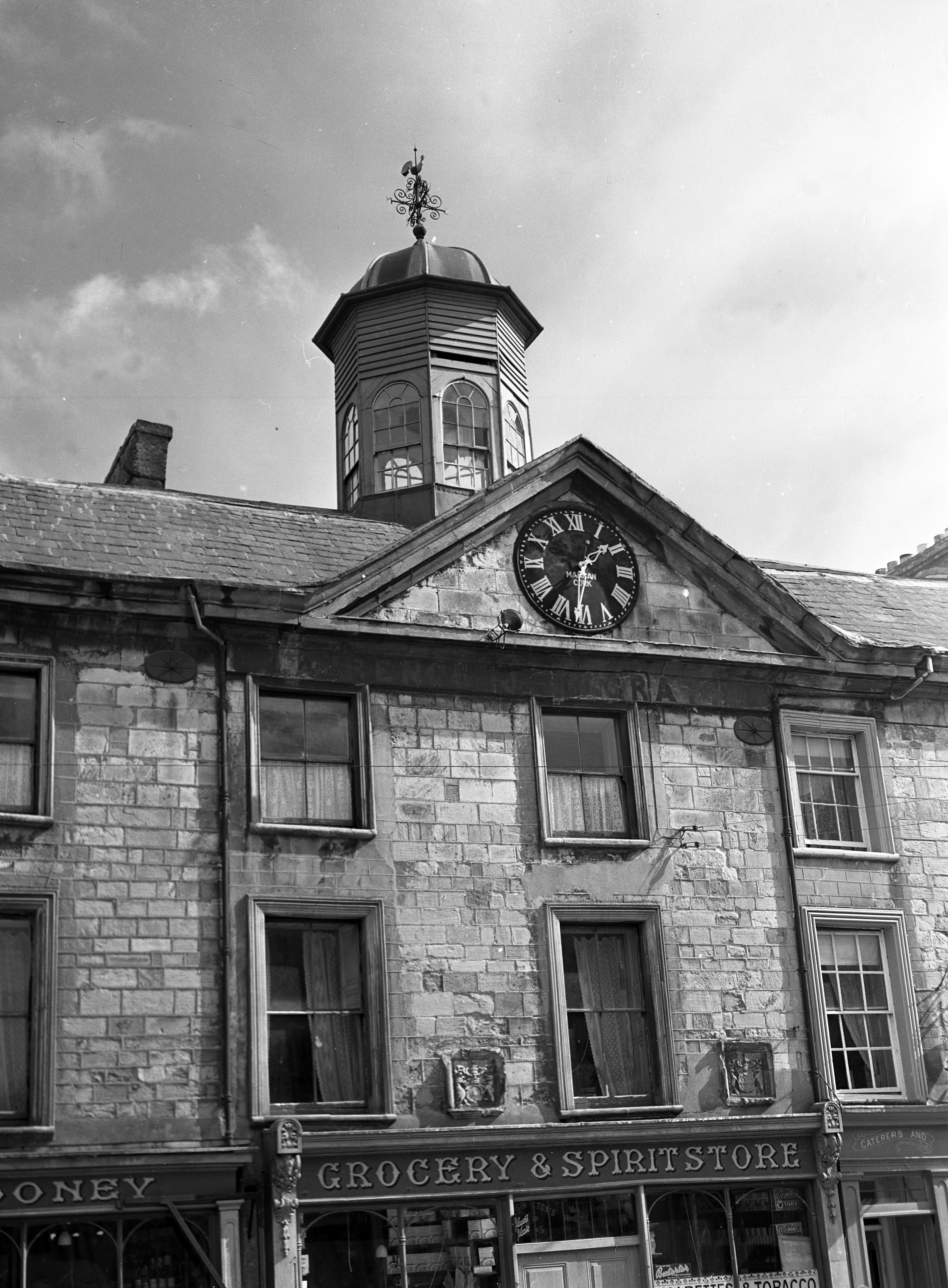
The Main Guard, or Clonmel Courthouse, County Tipperary. Photograph from National Inventory of Architectural Heritage: five-bay two-storey courthouse and market house, built 1673, with arcaded ground floor to front and north gable, and pediment and cupola to roof. Until restored c.2000, building had been five-bay three-storey with triple public house front to ground floor, and timber sliding sash windows. Now in use as museum. The columns of the arcaded facades were recycled from the ruins of the Cistercian abbey of Inislounaght, to the west of the town and retain some decorative elements that testify to this fact. 

General Information: 052 612 7484, mainguard@opw.ie

From the OPW website https://heritageireland.ie/visit/places-to-visit/the-main-guard/:

In the seventeenth century County Tipperary was a palatinate, ruled by James Butler, duke of Ormond. When the duke decided he needed a new courthouse, he built one in the heart of Clonmel [built in 1673]. Later, when it was used as a barracks, it became known as the Main Guard.

A fine two-storey symmetrical building, some elements of its design were based on works by the famous Sir Christopher Wren.

In the eighteenth century it was the venue for the Clonmel Assizes. The most notable trial it witnessed was that of Father Nicholas Sheehy, the anti-Penal Laws agitator. Sheehy was hanged, drawn and quartered.

In about 1810, the ground floor was converted into shops, but the building has recently undergone an award-winning restoration. The open arcade of sandstone columns is once again an attractive feature of the streetscape, while inside you will find a fantastic exhibition and event space.

Main Guard, 1948, photograph from Dublin City Library and Archives. [2]

6. Nenagh Castle, County Tipperary

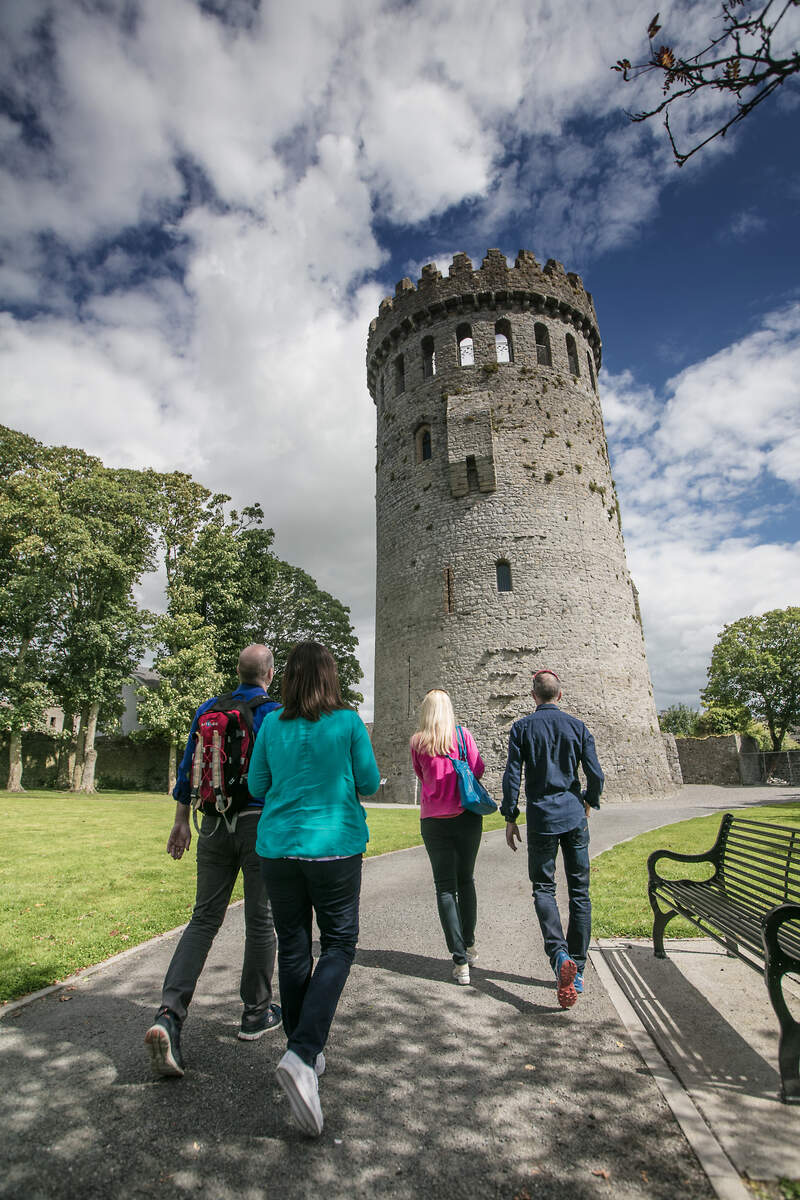
Nenagh Castle, photograph by Brian Morrison, 2017, for Tourism Ireland, Ireland’s Content Pool. [see 1]

General information: 067 33850, castlenenagh@gmail.com

The OPW doesn’t seem to have a site for this currently, but there is information at a site about Nenagh:

Nenagh Castle was built by Theobald Walter (the first of the Butlers of Ormond) around 1200. To this day the cylindrical keep adorns the town and like most keeps it formed part of the perimeter of the fortress. The walls have now almost disappeared, but fragments remain. 

Built from limestone Nenagh Castle measures fifty-five feet in external diameter at the base and rises to a height of one hundred feet. The Castle features four storeys and thanks to a recent renovation this wonderful landmark now represents the town’s premier tourist attraction.

The building and has stone spiral stairs to the top. There are 101 steps in all to the top.  Access to the tower is through a passageway within the base of the wall.  This has low head room and visitors will need to stoop to avoid hitting the stone above. All children under the age of 18 must be accompanied by an adult. [3]

Nenagh Castle, photograph by Brian Morrison, 2017, for Tourism Ireland, Ireland’s Content Pool. [see 1]

7. Ormond Castle, Carrick-on-Suir, County Tipperary:

Ormond Castle, Carrick-on-Suir, County Tipperary, May 2018. Maurice Craig tells us in The Architecture of Ireland from the earliest times to 1880 that in style Carrick-on-Suir is like hundreds of buildings in Northamptonshire or the Cotswolds, but like no other in Ireland. Photograph © Jennifer Winder-Baggot, www.irishhistorichouses.com
See my entry https://irishhistorichouses.com/2024/09/05/ormond-castle-carrick-on-suir-county-tipperary-an-opw-property/

General Information: 051 640787, ormondcastle@opw.ie

From the OPW website https://heritageireland.ie/visit/places-to-visit/ormond-castle/:

Joined on to an earlier medieval riverside castle, Ormond Castle Carrick-on-Suir is the finest example of an Elizabethan manor house in Ireland. Thomas, 10th Earl of Ormond [“Black Tom” (1531-1614)], built it in 1565 in honour of his distant cousin Queen Elizabeth. 

The magnificent great hall, which stretches almost the whole length of the building is decorated with some of the finest stucco plasterwork in the country. The plasterwork features portraits of Queen Elizabeth and her brother Edward VI and many motifs and emblems associated with the Tudor monarchy.

Ormond Castle, Carrick-on-Suir 1949, photograph from Dublin City Library and Archive. [see 2]

James Butler the 12th Earl of Ormond and 1st Duke of Ormond (1610-1688) spent much of his time here and was the last of the family to reside at the castle. On his death in 1688 the family abandoned the property and it was only handed over to the government in 1947, who then became responsible for its restoration. 

7. Rock of Cashel, County Tipperary:

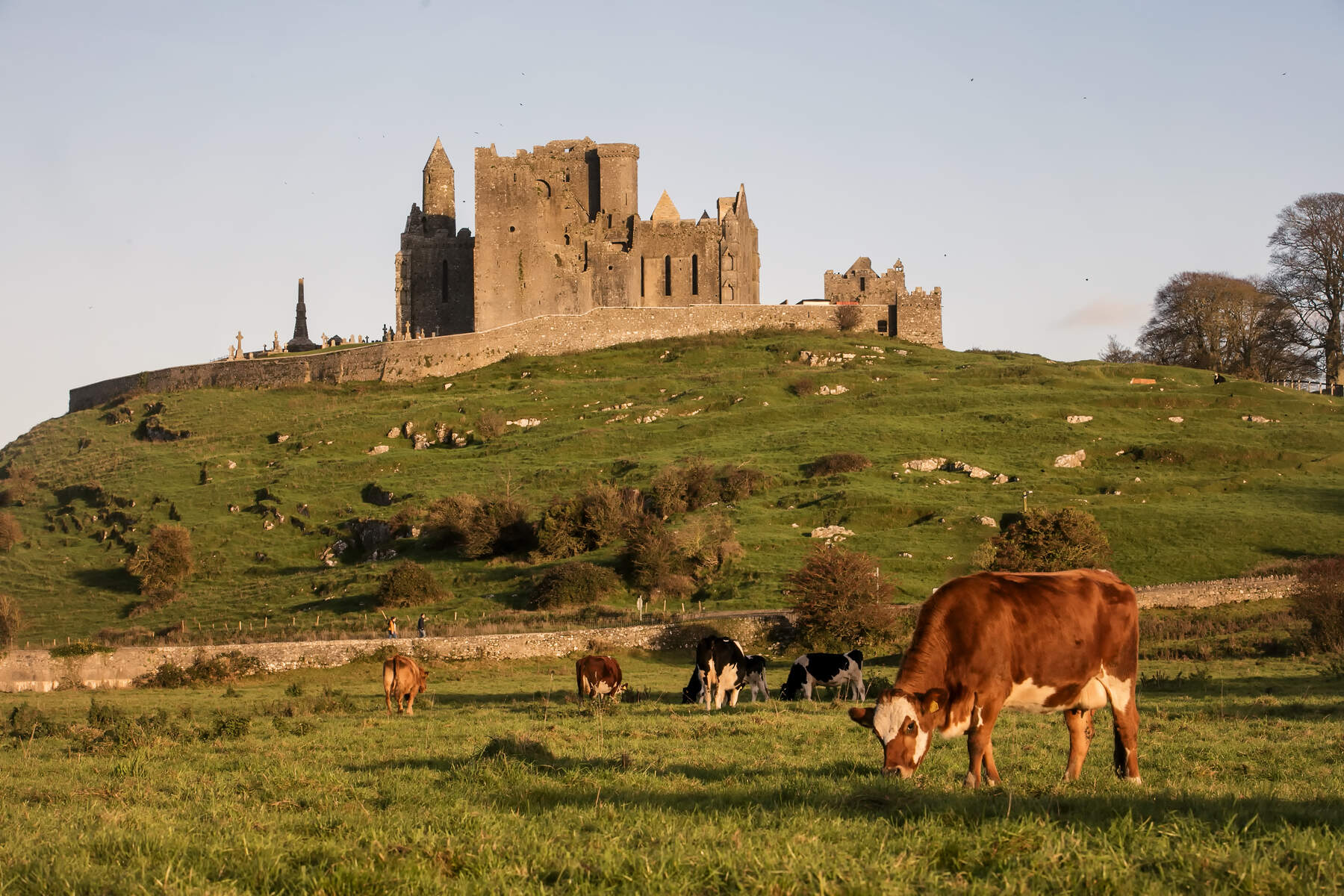
Rock of Cashel, Co Tipperary photograph from Ireland’s Content pool, by Brian Morrison 2018 for Failte Ireland. [see 1]

General Information: 062 61437, rockofcashel@opw.ie

From the OPW website https://heritageireland.ie/visit/places-to-visit/rock-of-cashel/:

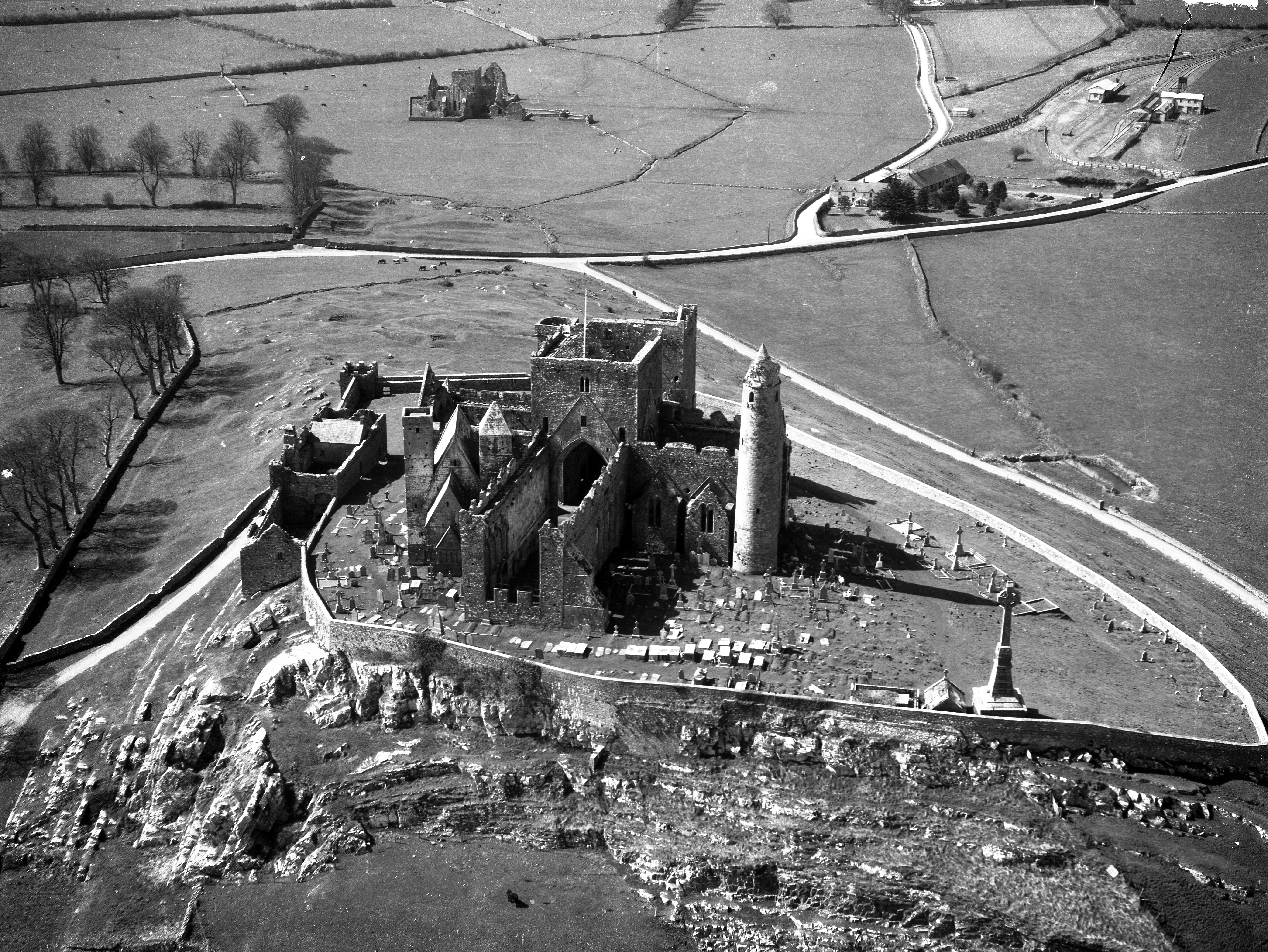
Set on a dramatic outcrop of limestone in the Golden Vale, the Rock of Cashel, iconic in its historic significance, possesses the most impressive cluster of medieval buildings in Ireland. Among the monuments to be found there is a round tower, a high cross, a Romanesque chapel, a Gothic cathedral, an abbey, the Hall of the Vicars Choral and a fifteenth-century Tower House.

Originally the seat of the kings of Munster, according to legend St. Patrick himself came here to convert King Aenghus to Christianity. Brian Boru was crowned High King at Cashel in 978 and made it his capital.

In 1101 the site was granted to the church and Cashel swiftly rose to prominence as one of the most significant centres of ecclesiastical power in the country.

The surviving buildings are remarkable. Cormac’s Chapel, for example, contains the only surviving Romanesque frescoes in Ireland.

Rock of Cashel, 1955, from Dublin City Library and Archives [see 2].
Rock of Cashel ca. 1901, photograph from National Library of Ireland Flickr constant commons.

8. Roscrea Castle and Damer House, County Tipperary:

Roscrea Castle, photograph from Ireland’s Content pool, by Chris Hill 2014 for Failte Ireland. [see 1]

General information: 0505 21850, roscreaheritage@opw.ie

From the OPW website https://heritageireland.ie/visit/places-to-visit/roscrea-heritage-centre-roscrea-castle-and-damer-house/:

In the heart of Roscrea in County Tipperary, one of the oldest towns in Ireland, you will find a magnificent stone motte castle dating from the 1280s. It was used as a barracks from 1798, housing 350 soldiers, and later served as a school, a library and even a sanatorium. 

Sharing the castle grounds is Damer House, named for local merchant John Damer, who came into possession of the castle in the eighteenth century. The house is a handsome example of pre-Palladian architecture. It has nine beautiful bay windows. One of the rooms has been furnished in period style.

The grounds also include an impressive garden with a fountain, which makes Roscrea Castle a very pleasant destination for a day out. There is also a restored mill displaying St Crónán’s high cross and pillar stone.

See my entry https://irishhistorichouses.com/2024/10/03/damer-house-and-roscrea-castle-county-tipperary-office-of-public-works-properties/

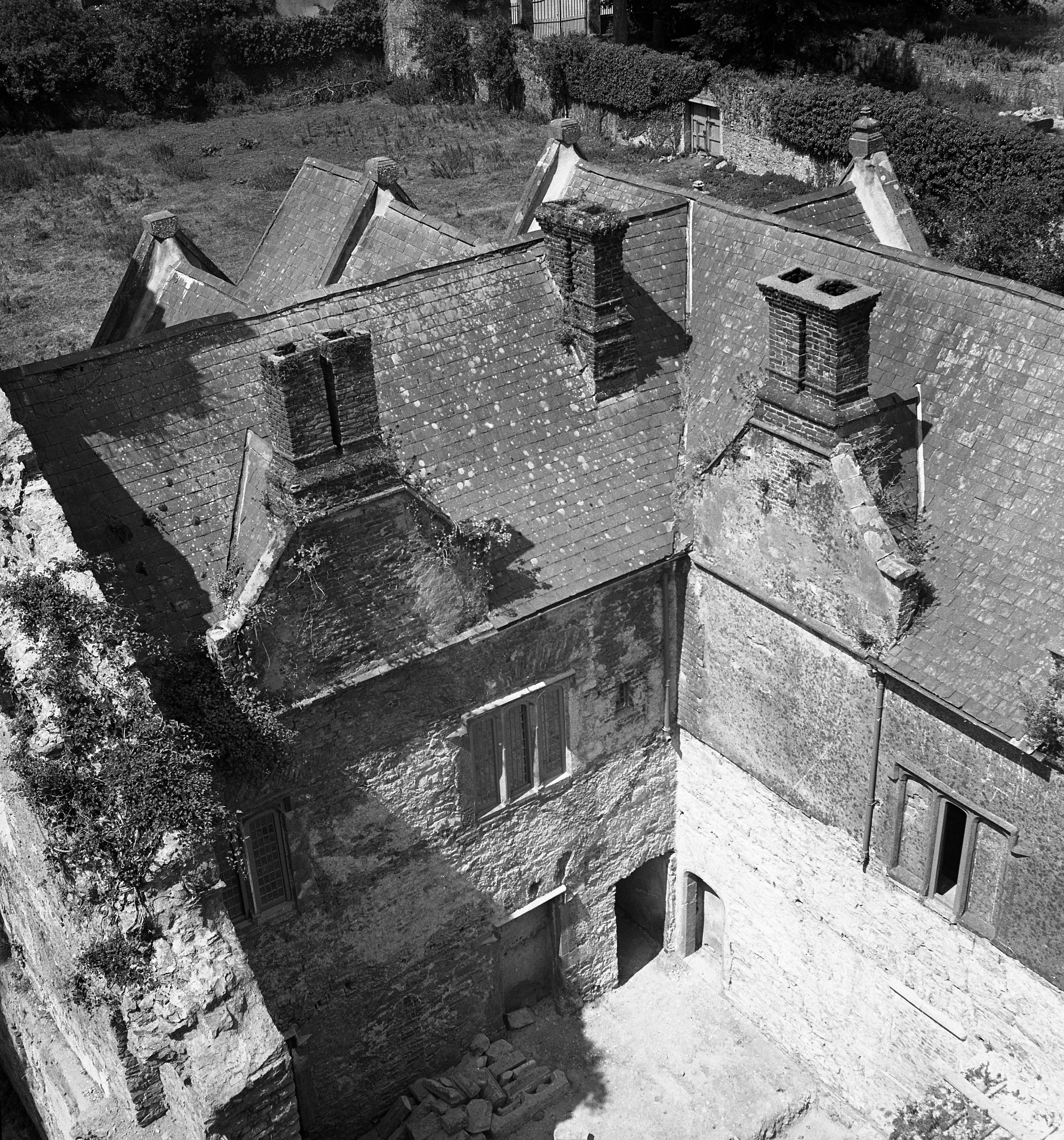
This was originally the site of a motte and bailey fortification known as King John’s Castle. The original wooden castle was destroyed in the late 13th century and was replaced with a stone structure built in 1274-1295 by John de Lydyard. The castle was originally surrounded by a river to the east and a moat on the other sides. [4] It was granted to the Butlers of Ormond in 1315 who held it until the early 18th Century. The castle as we see it today was built from 1332.

The castle was used as a barracks from 1798, housing 350 soldiers. It was used later as a school, a library, and a tuberculosis sanatorium. Roscrea Castle fell into disrepair in the 19th century, and when the roof collapsed extensive repairs were needed in the 1850s. It was named a national monument in 1892, and is now under the care of the OPW. 

Damer House is of three storeys and nine bays and has a scroll pediment doorway and inside, a magnificent carved staircase. The Irish Georgian Society was involved in saving it from demolition in the 1960s.

9. Swiss Cottage, Ardfinnan Road, Cahir, County Tipperary:

General Information: 052 744 1144, swisscottage@opw.ie

Swiss Cottage, June 2022. Photograph © Jennifer Winder-Baggot, www.irishhistorichouses.com
From the OPW website https://heritageireland.ie/visit/places-to-visit/swiss-cottage/:

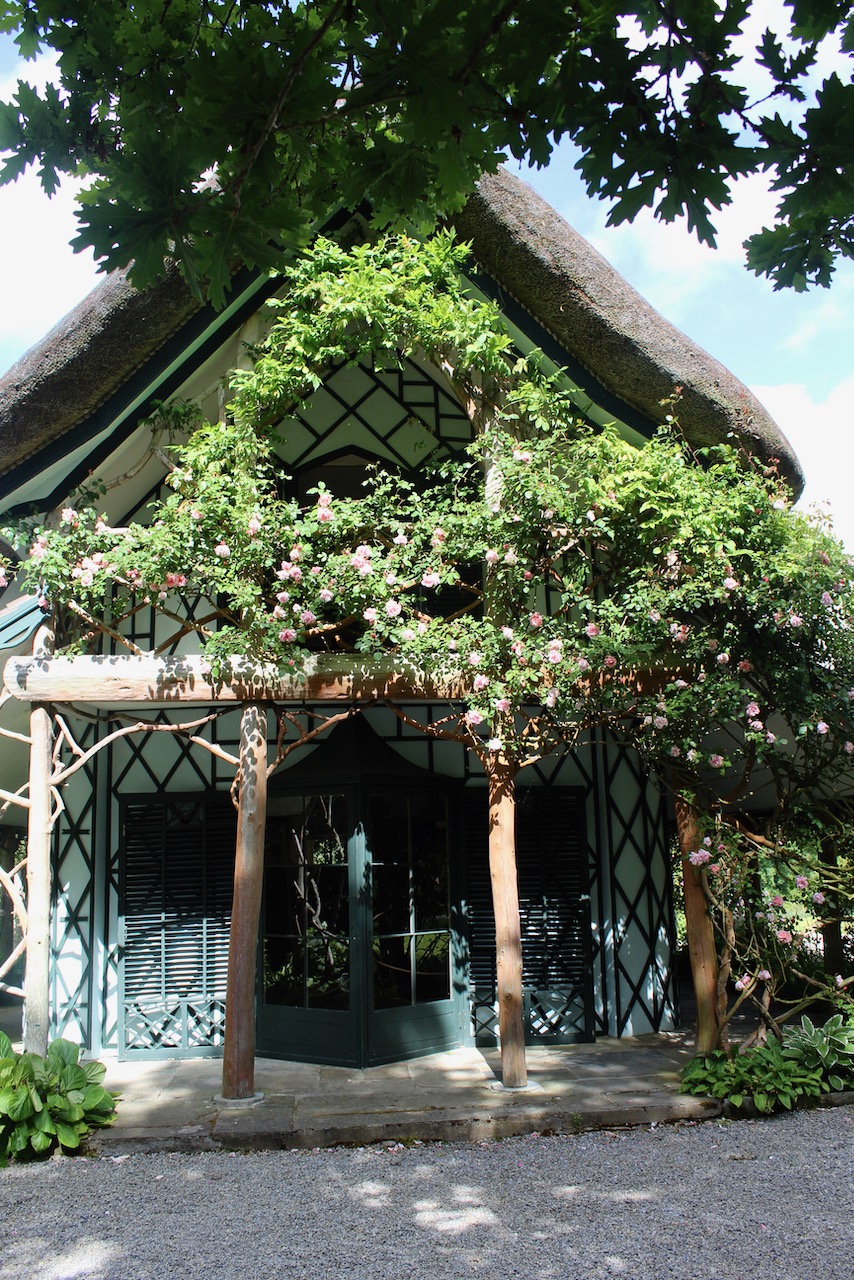
The Swiss Cottage, just outside the heritage town of Cahir, is a cottage orné – a fanciful realisation of an idealised countryside cottage used for picnics, small soirees and fishing and hunting parties and was also a peaceful retreat for those who lived in the nearby big house.

Built in the early 1800s [around 1810] by Richard Butler, 1st Earl of Glengall, who, we believe, managed to persuade world-famous Regency architect John Nash to design it [he also designed Buckingham Palace for the Crown]. Originally, simply known as “The Cottage” it appears to have acquired its present name because it was thought to resemble an Alpine cottage.”

See my write-up https://irishhistorichouses.com/2025/03/20/swiss-cottage-ardfinnan-road-cahir-county-tipperary-office-of-public-works/

Timber rustic oak posts with triangular arch detailing between posts to verandahs and to bowed bay, having latticework rail to balcony. Photograph © Jennifer Winder-Baggot, www.irishhistorichouses.com
Photograph © Jennifer Winder-Baggot, www.irishhistorichouses.com

[1] https://www.irelandscontentpool.com/en

[2] https://repository.dri.ie/

[3] https://www.nenagh.ie/places-of-interest/details/nenagh-castle

[4] See the blog of Patrick Comerford, http://www.patrickcomerford.com/search/label/castles?updated-max=2019-03-03T14:30:00Z&max-results=20&start=27&by-date=false

[5] https://www.buildingsofireland.ie/buildings-search/building/22208107/swiss-cottage-kilcommon-more-north-tipperary-south

Blarney Castle & Rock Close, Blarney, Co. Cork – section 482

www.blarneycastle.ie

Open dates in 2025: all year, Jan-Mar, Nov, Dec, 9am-5pm, Apr, Oct, 9am-5.30pm, May- Sept 9am-6pm,

Fee: adult €23, OAP/student €18, child €11

donation

Help me to pay the entrance fee to one of the houses on this website. This site is created purely out of love for the subject and I receive no payment so any donation is appreciated!

€15.00

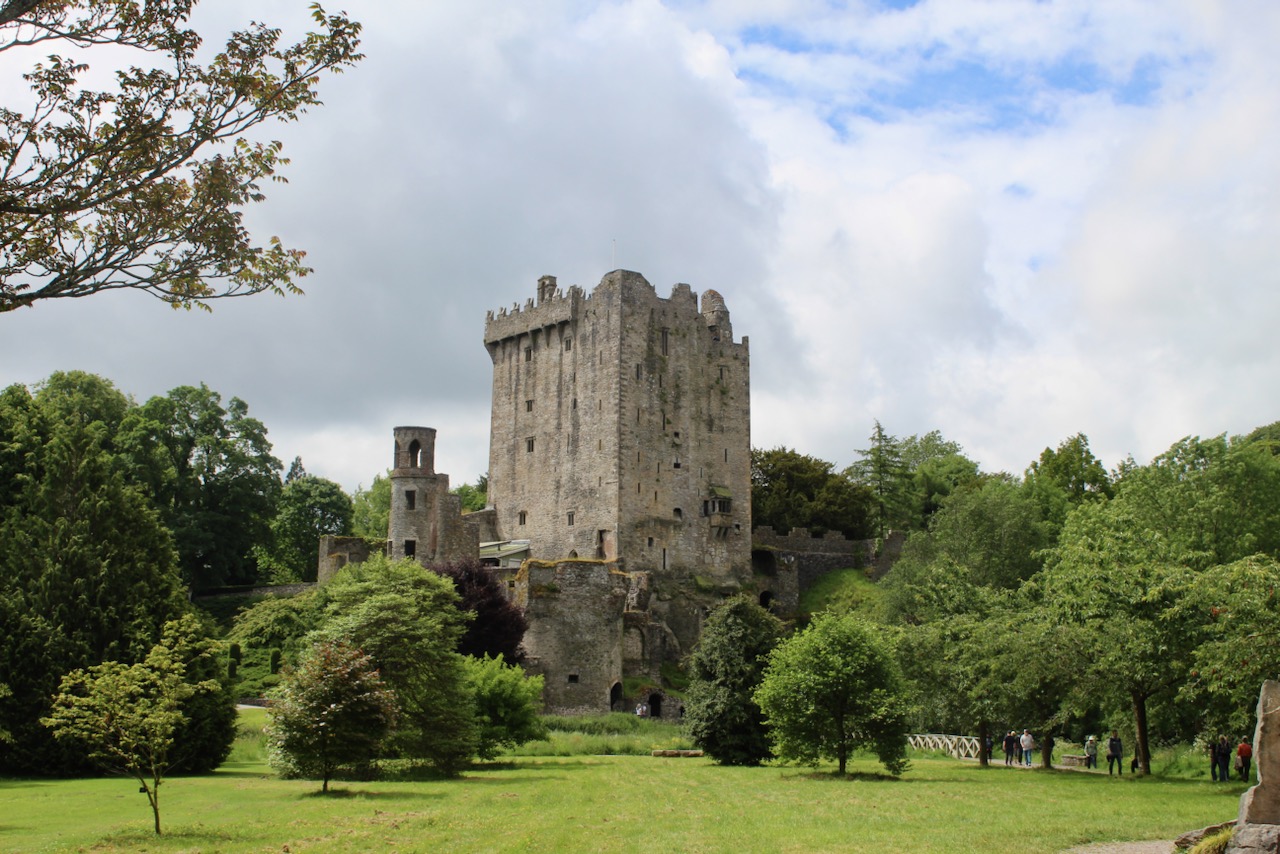
Blarney Castle, County Cork, June 2022. © Jennifer Winder-Baggot, www.irishhistorichouses.com
We visited Blarney Castle on a trip to Cork in June 2022, choosing to visit on a date when we could also visit Blarney House – see my entry https://irishhistorichouses.com/2022/09/30/blarney-house-gardens-blarney-co-cork/.

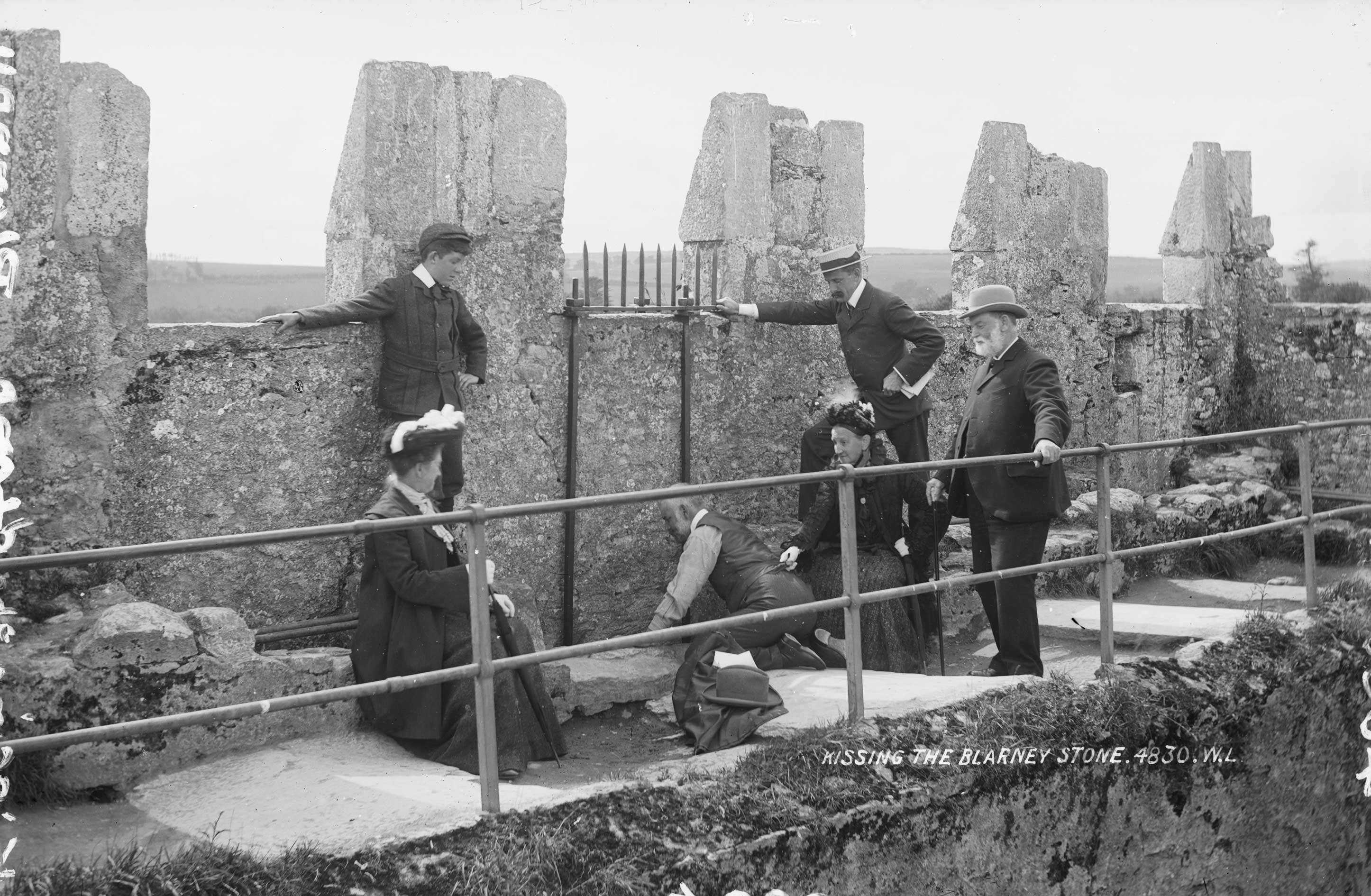
We have all heard that kissing the Blarney stone gives us the “gift of the gab,” but where did the story come from? Randal MacDonnell, in his book, The Lost Houses of Ireland, tells us that Queen Elizabeth I said of Cormac mac Diarmada MacCarthy (1552-1616), Lord of Muskerry, ‘This is all Blarney; what he says he never means!’ so the term was used as far back as Elizabethan times. The Blarney Stone, set high in the castle under the battlements, was said to have been a gift to the MacCarthy family after sending 5,000 soldiers to help Robert the Bruce (who died in 1329) in battle. It was reputedly the stone that gushed water after Moses struck it, or else it is said to be part of the Stone of Scone, on which the Kings of Scotland were inaugurated. It is also said to be the pillow that Jacob slept upon when he dreamed of angels ascending a ladder to heaven, that was brought from the Holy Land after the Crusades. Frank Keohane tells us bluntly in his description of Blarney Castle in Buildings of Ireland, Cork City and County (published 2020) that it is in fact the lintel to the central machicolation on the south side!

William Orpen (1878-1931) Kissing the Blarney Stone, courtesy of Whyte’s Important Irish Art sale 4 Dec 2023.

An Irish person can be reluctant to visit Blarney castle, thinking it “stage Irish” with its tradition of kissing the Blarney stone but it is really well worth a visit, including queueing to get to the top of the castle (to kiss the stone, which you can of course skip!), because along the way you can see the interior five storeys of the castle with its many rooms and corridors. Each year around 550,000 tourists visit Blarney Castle.

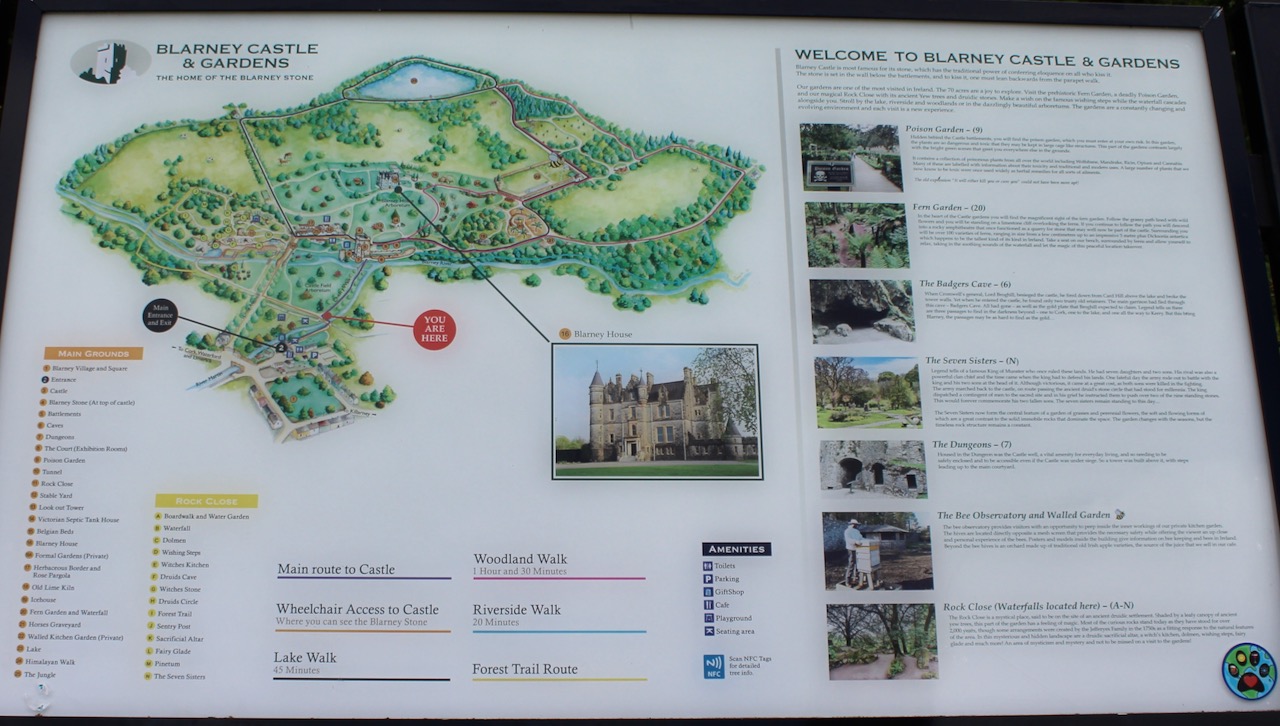
It is also worth visiting just to wander the seventy acres of gardens, which are beautiful. There’s a coffee shop in the stable yard.

Map of the extensive estate and gardens.
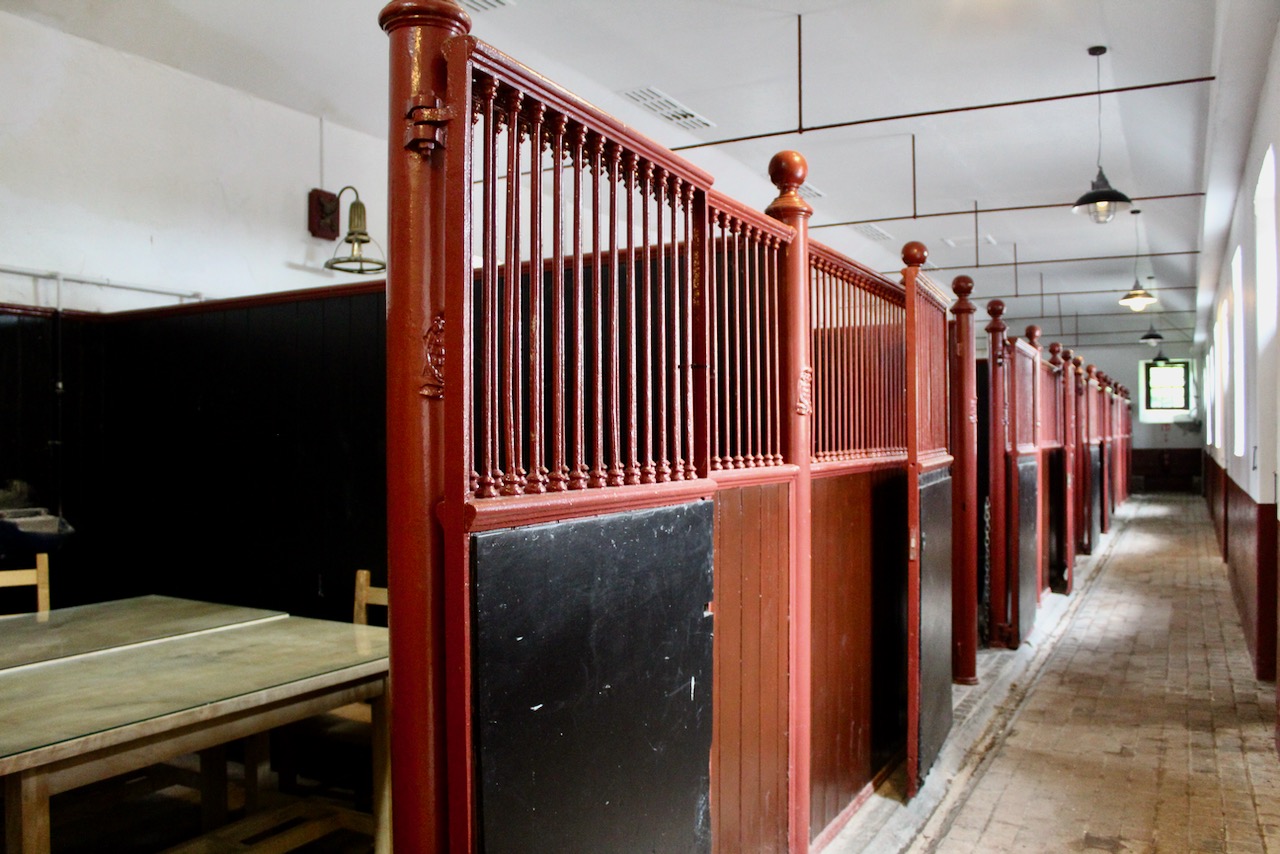
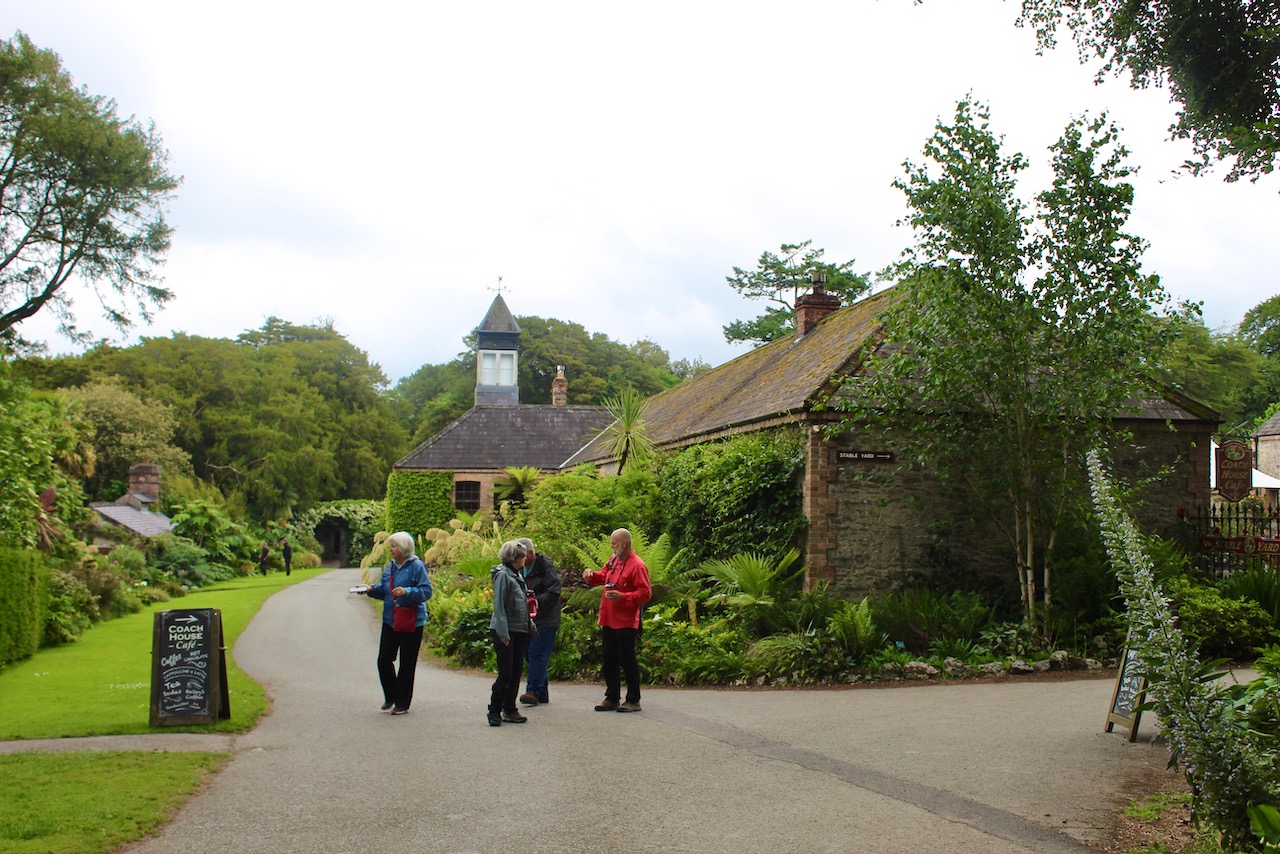
The Stables and Coach Yard have a coffee shop. © Jennifer Winder-Baggot, www.irishhistorichouses.com
Blarney Castle, June 2022. © Jennifer Winder-Baggot, www.irishhistorichouses.com
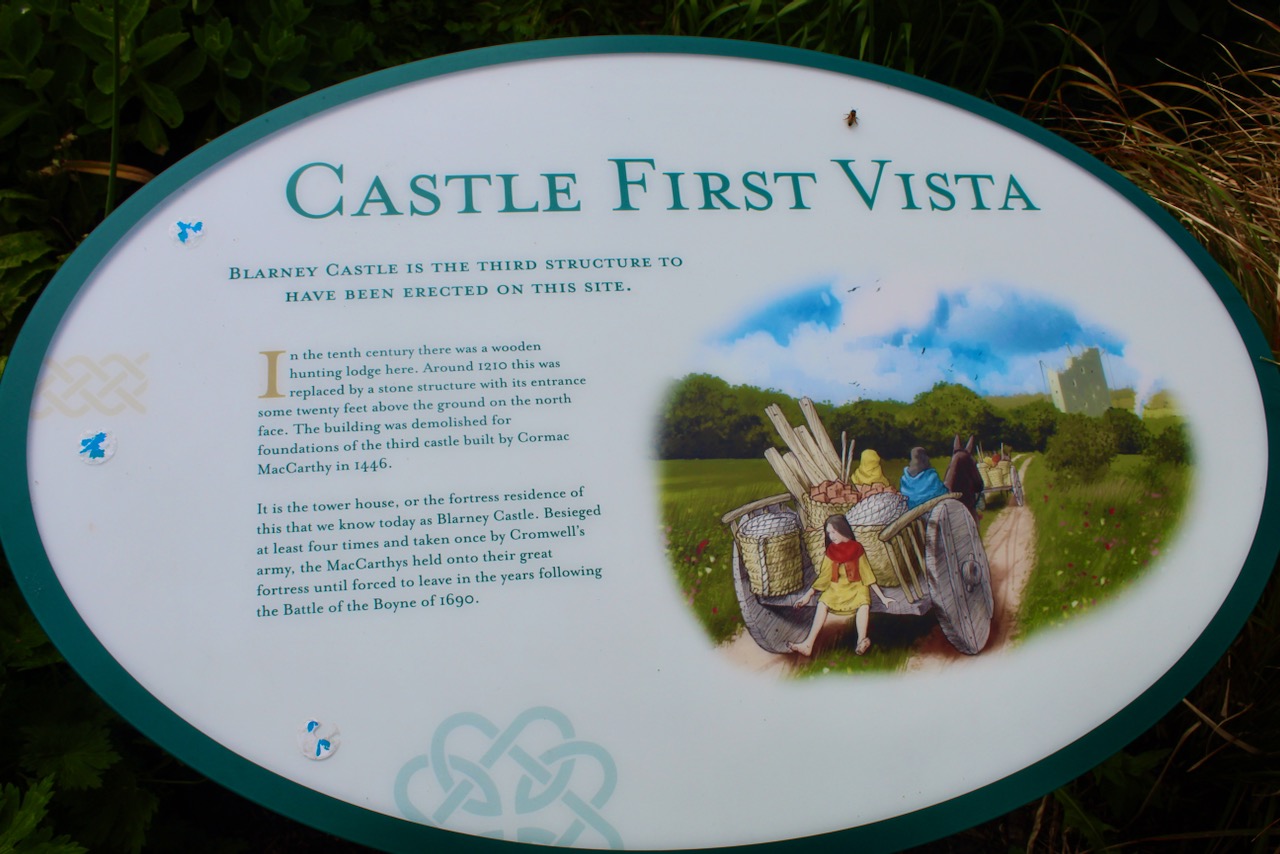
This sign board tells us that the castle we see today is the third structure that was erected on the site. In the tenth century there was a wooden hunting lodge. Around 1210 this was replaced by a stone structure, which was demolished for the foundations of the third, current, castle, built by Cormac MacCarthy in 1446.

The castle we see today is the third structure that was erected on the site. In the tenth century there was a wooden hunting lodge. Around 1210 this was replaced by a stone structure, which was demolished for the foundations of the third, current, castle, built by Cormac Laidir (‘the strong’) MacCarthy in 1446. To put it into chronological perspective, this is around the same time that Richard III deposed King Edward V and nearly fifty years before Christopher Columbus “discovered” the “New world” in 1492 (see the terrific chronology outlined in James Lyttelton’s Blarney Castle, An Irish Towerhouse). He built a slender self-contained four storey tower house, which is now called the northwest tower.

The MacCarthy clan had vast estates, and were recognised as Kings of Munster by the lesser Irish chiefs, the sign boards at Blarney tell us. They trace their ancestry back to a chieftain who was converted to Christianity by St. Patrick. Cormac MacCarthy built Cormac’s Chapel on the Rock of Cashel, 1127-1134, before the Anglo-Norman invasion of Ireland in 1169.

The second, larger, five storey tower was built in the early to mid 16th century.

In 1628 King Charles I created Cormac (Charles) MacCarthy (1564-1640/41) Viscount Muskerry. His father was the 16th Lord of Muskerry – the family gained the title from the English crown in 1353 – and his mother was Mary Butler, daughter of the 1st Baron Caher (of second creation), Theobald, of Cahir Castle in County Tipperary. Viscount Muskerry inherited Blarney in 1616 and undertook alterations, perhaps adding the tall machicolated parapets, and enlarging windows, fitting them with hooded twin and triple light mullioned windows. He married Margaret O’Brien, a daughter of the 4th Earl of Thomond, and secondly, Ellen, widow of Donall MacCarthy Reagh, and daughter of David, seventh Viscount Fermoy. [1]

Viscount Muskerry died in 1640/41, passing the title 2nd Viscount to his son Donnchadh (or Donough). Donough MacCarthy based himself in Macroom, County Cork, and Dublin. Donough and his father were Members of Parliament and sat in the House of Lords in Dublin. He was loyal to the crown in 1641 during the rebellion but afterwards supported the Catholics who sought to be able to keep their lands. The Duke of Ormond sought negotiation between the Confederate Catholics and the crown, and 2nd Viscount Muskerry played an active role in these negotiations. [2] Negotiations were complicated because the lines of disagreement were unclear and as time progressed and more negotiators became involved, goals changed. For some, it was about Catholics being able to own land, for others, to be able to practice their religion freely. Factions fought amongst themselves.

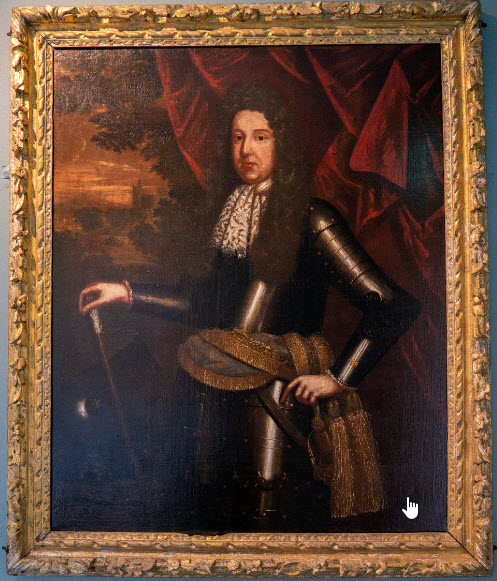
Donough MacCarthy (1594-1665), 2nd Viscount Muskerry and 1st Earl Clancarty, Painted portrait (oil on canvas) at the Hunt Museum, Limerick, Accession number HCP 004. The portrait is part of the original collection donated by antiquarian John Durell Hunt and wife Gertrude Hunt. Other sources suggest it is Donough MacCarthy the 4th Earl Clancarty. I will have to check this!

Further complications arose as Parliament in England was unhappy with the reign of Charles I. Viscount Muskerry was firmly Royalist, along with his brother-in-law the Duke of Ormond. It was at this time that Donough MacCarthy the 2nd Viscount married Eleanor Butler, twin sister of the 1st Duke of Ormond. In 1649, Lord Broghill (Roger Boyle, later created 1st Earl of Orrery) persuaded the towns of Cork, Youghal, Bandon, and Kinsale to declare for Parliament. The division was no longer between Catholics and English rule, but between Royalists and Parliament supporters.

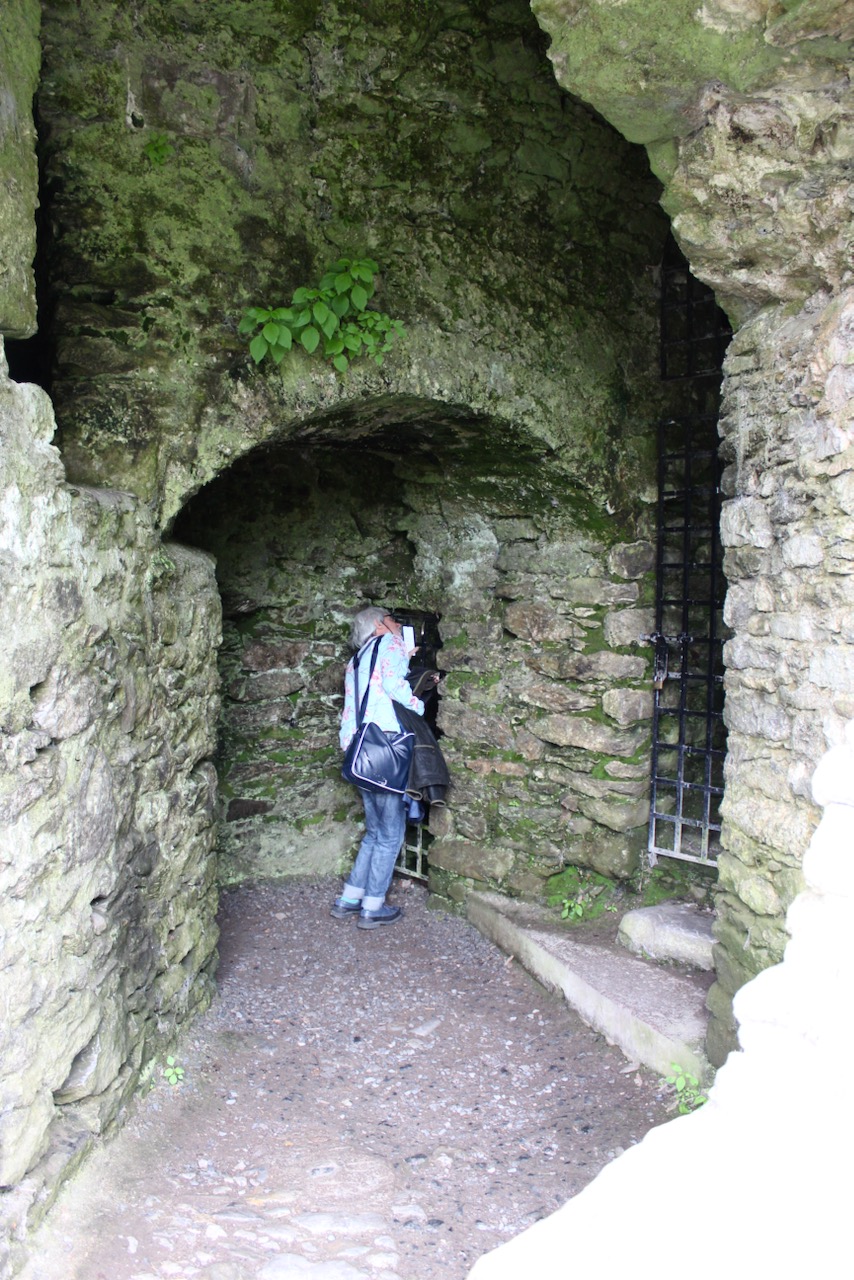
Blarney Castle was taken by Cromwell’s army under Lord Broghill in 1646 and again in 1649 by Oliver Cromwell. The inhabitants and defenders fled via the passageways below the castle and escaped.

It is said that the inhabitants of the castle escaped Cromwell’s army by these routes under the castle. © Jennifer Winder-Baggot, www.irishhistorichouses.com

The 2nd Viscount became the 1st Earl of Clancarty in 1658, raised to the title by the exiled son of King Charles I, who in 1660 became King Charles II. MacCarthy’s property was restored to him by the King.

Charles 3rd Viscount died in the same year as his father (1665), having joined first the French army when in exile from Ireland, and later, the regiment of the Duke of York (who later became King James II). It was therefore his son, Charles James MacCarthy, who became 2nd Earl of Clancarty. The 2nd Earl’s mother was Margaret de Burgh, or Bourke, daughter of the 1st Marquess Clanricarde. The 2nd Earl died in the following year, so the 1st Earl’s second son, Callaghan (1635-1676) became 3rd Earl of Clancarty in 1666. Callaghan converted to Protestantism. He married Elizabeth FitzGerald, daughter of the 16th Earl of Kildare. His younger brother, Justin, was given the title of Viscount Mountcashel.

Jane Ohlmeyer writes of the MacCarthys of Muskerry in her book Making Ireland English:

p. 108: “[the MacCarthys of Muskerry] The family thus enjoyed a formidable range of kinship ties that included the Butlers, of Ormond and Cahir, and the houses of Thomond, Fermoy, Buttevant, Courcy of Kinsale and Kerry. Like Viscount Roche, Muskerry enjoyed a close friendship with the earl of Cork and stood as godfather to one of his youngest children. …Blarney Castle..was the family’s principal residence…. They also resided at Macroom castle in mid-Cork…Though Muskerry retained the traditional customs associated with Gaelic lordship, he also acted as an anglicizing speculator, loaning money and securing lands through mortgages, and as an improving landlord who encouraged English settlers to his estates and especially his main town of Macroom, in mid-Cork.” [see 1]

We saw many means of defense illustrated on our tour of Cahir Castle recently during Heritage Week 2022, and many of these were utilised at Blarney. [see my entry on Cahir Castle in https://irishhistorichouses.com/2022/06/26/opw-sites-in-munster-clare-limerick-and-tipperary/ ] One can see the heavy machicolation, a series of openings in the floor of projecting parapets in castles and tower-houses through which offensive or injurious substances can be dropped on the enemy below.

See the machicolation at the top of Blarney Castle. Photograph © Jennifer Winder-Baggot, www.irishhistorichouses.com
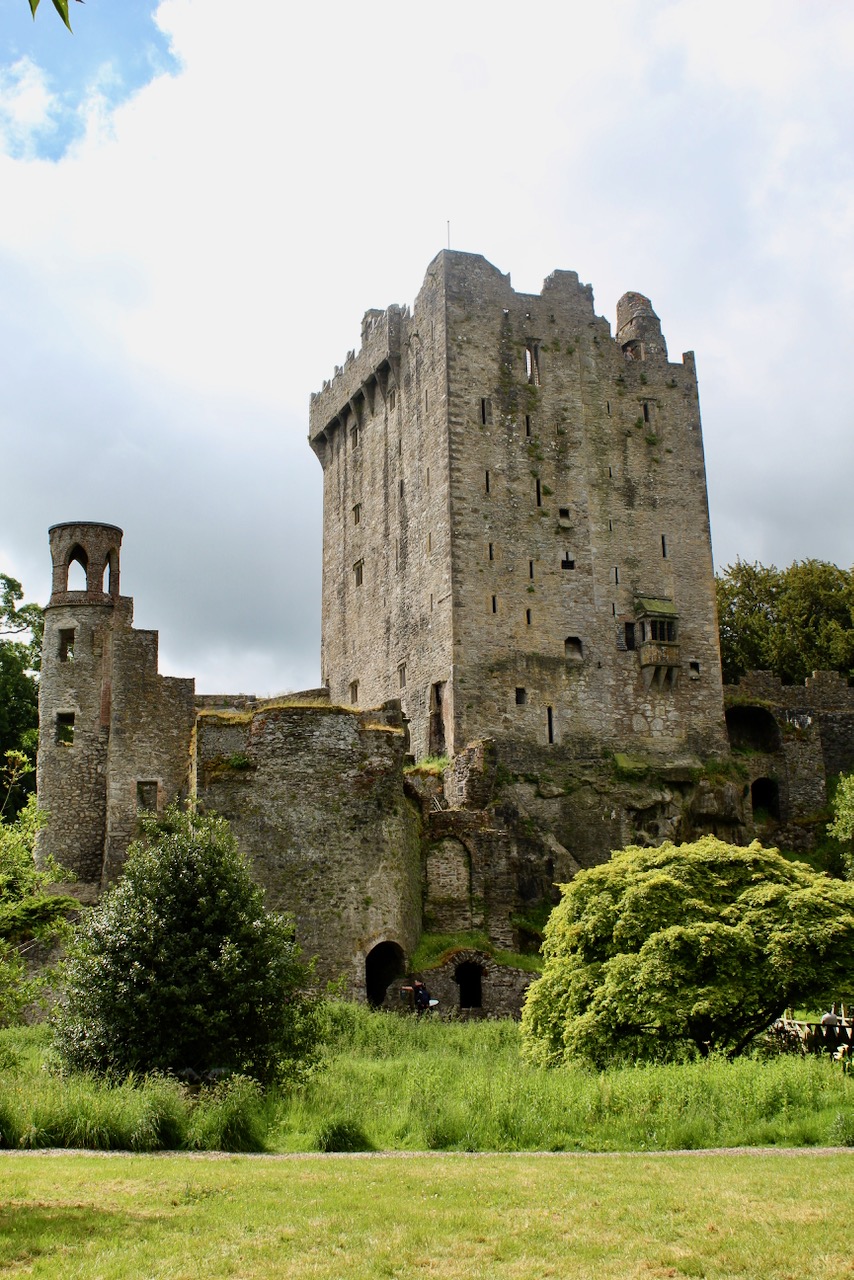
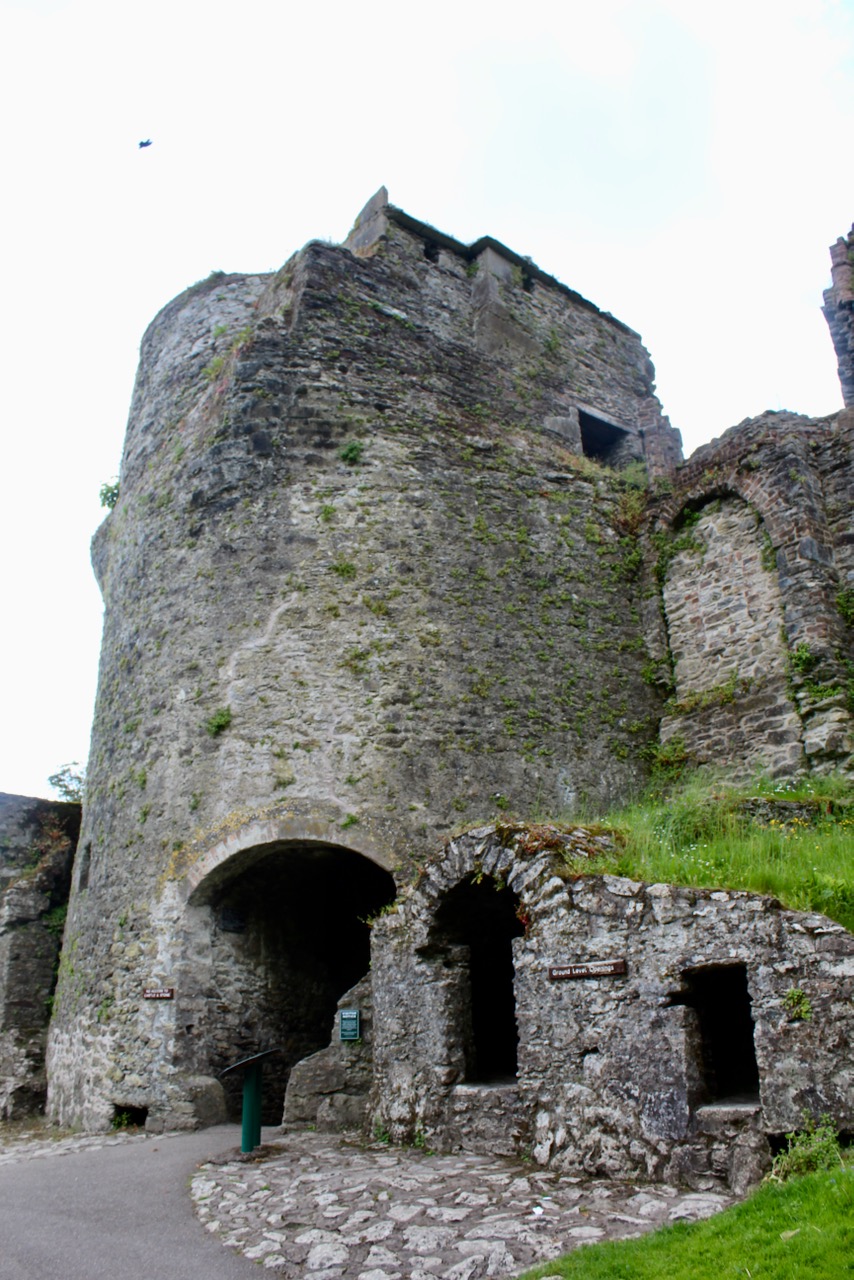
The castle rises formidably from the bedrock of solid limestone. Its height gives a view all around for defense.

The castle is built on a bedrock of solid limestone. Photograph © Jennifer Winder-Baggot, www.irishhistorichouses.com
Ground level openings. Photograph © Jennifer Winder-Baggot, www.irishhistorichouses.com
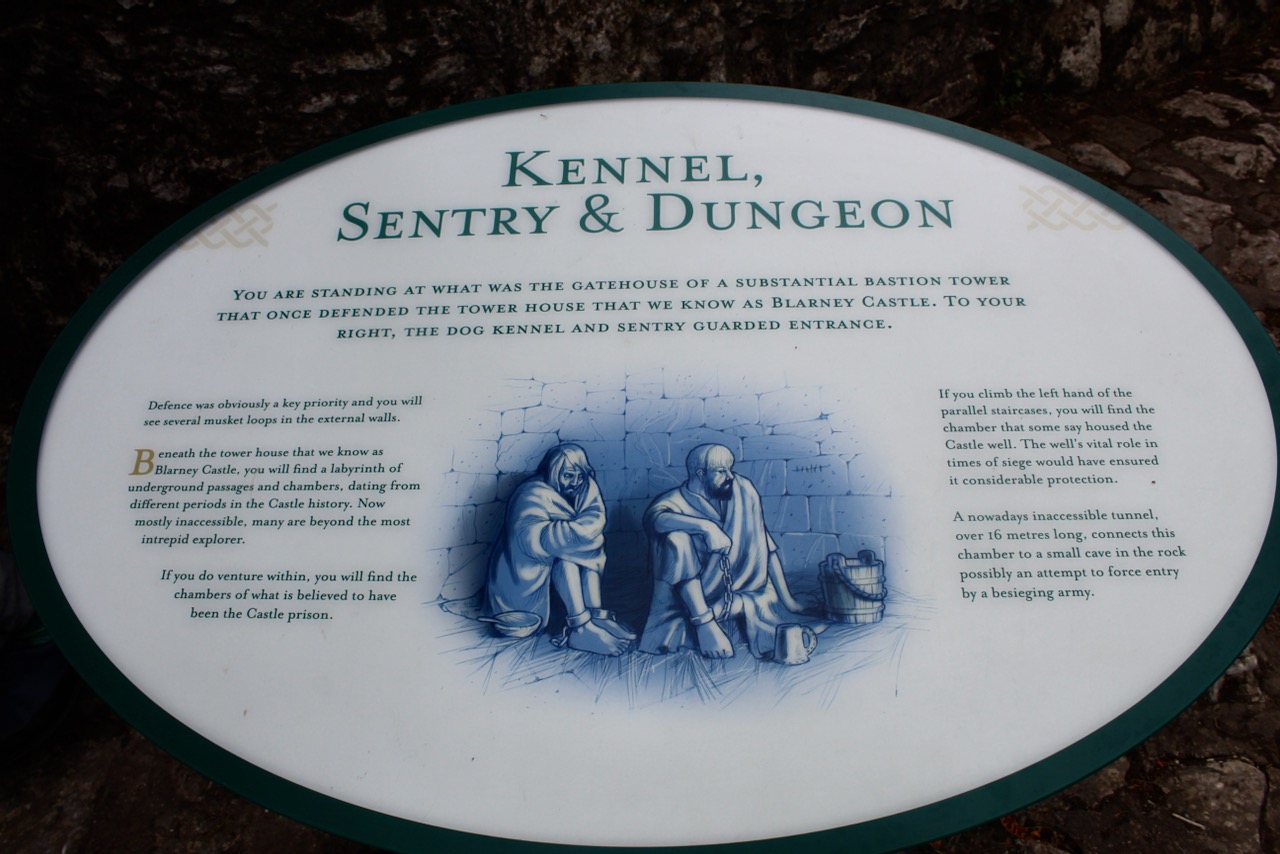
The ground level entrance we see was a gatehouse that defended the tower. Below the castle is a labyrinth of underground passages and chambers. One chamber may have been used as a prison. Another housed a well.
Blarney Castle, June 2022. Photograph © Jennifer Winder-Baggot, www.irishhistorichouses.com
A bawn surrounded the tower house: a defensive area of about eight acres surrounded by a wall. Maurice Craig tells us in his book The Architecture of Ireland from the Earliest Times to 1880 that the word bawn comes from the Irish name “bádhún” meaning an enclosure for cattle. Animals and people took shelter within the bawn in times of danger. The castle was self-sufficient and the bawn would have been a hive of activity with tanners, blacksmiths, masons, woodcutters, carpenters, livestock keepers, horses, cows, pigs, poultry, butchers, cooks, gardeners and attendants. Part of the bawn wall remains.

View of the bawn wall from the castle. Photograph © Jennifer Winder-Baggot, www.irishhistorichouses.com
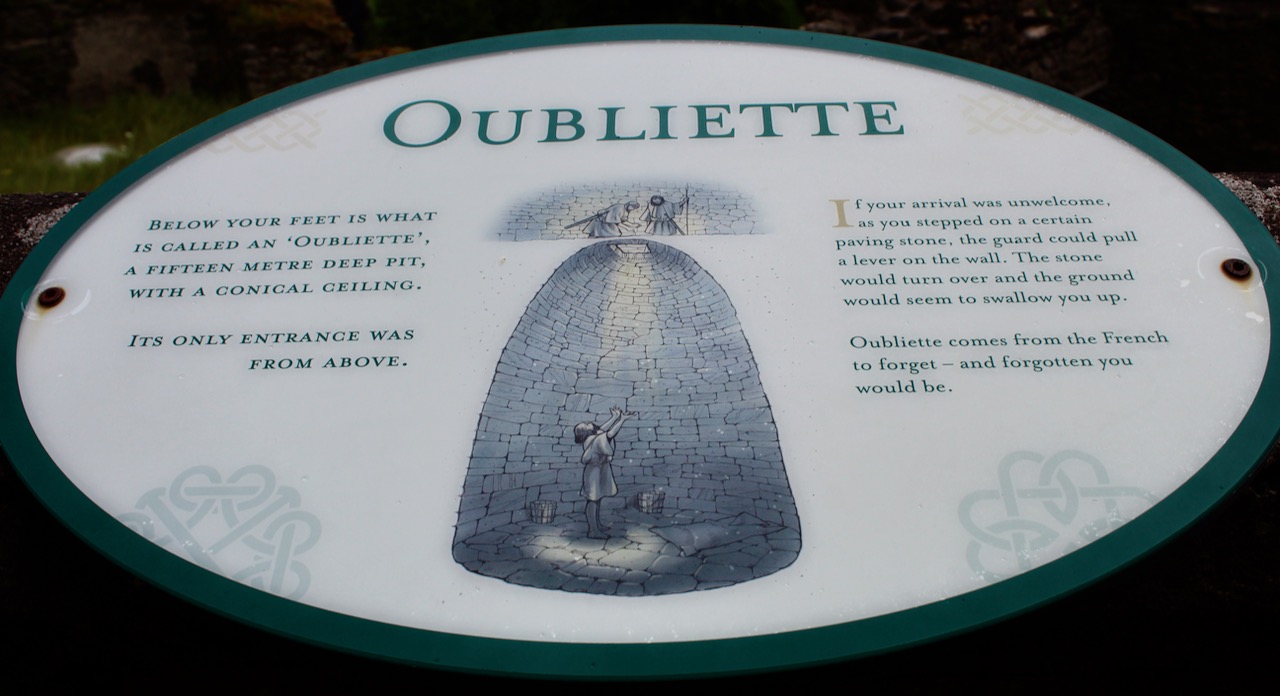
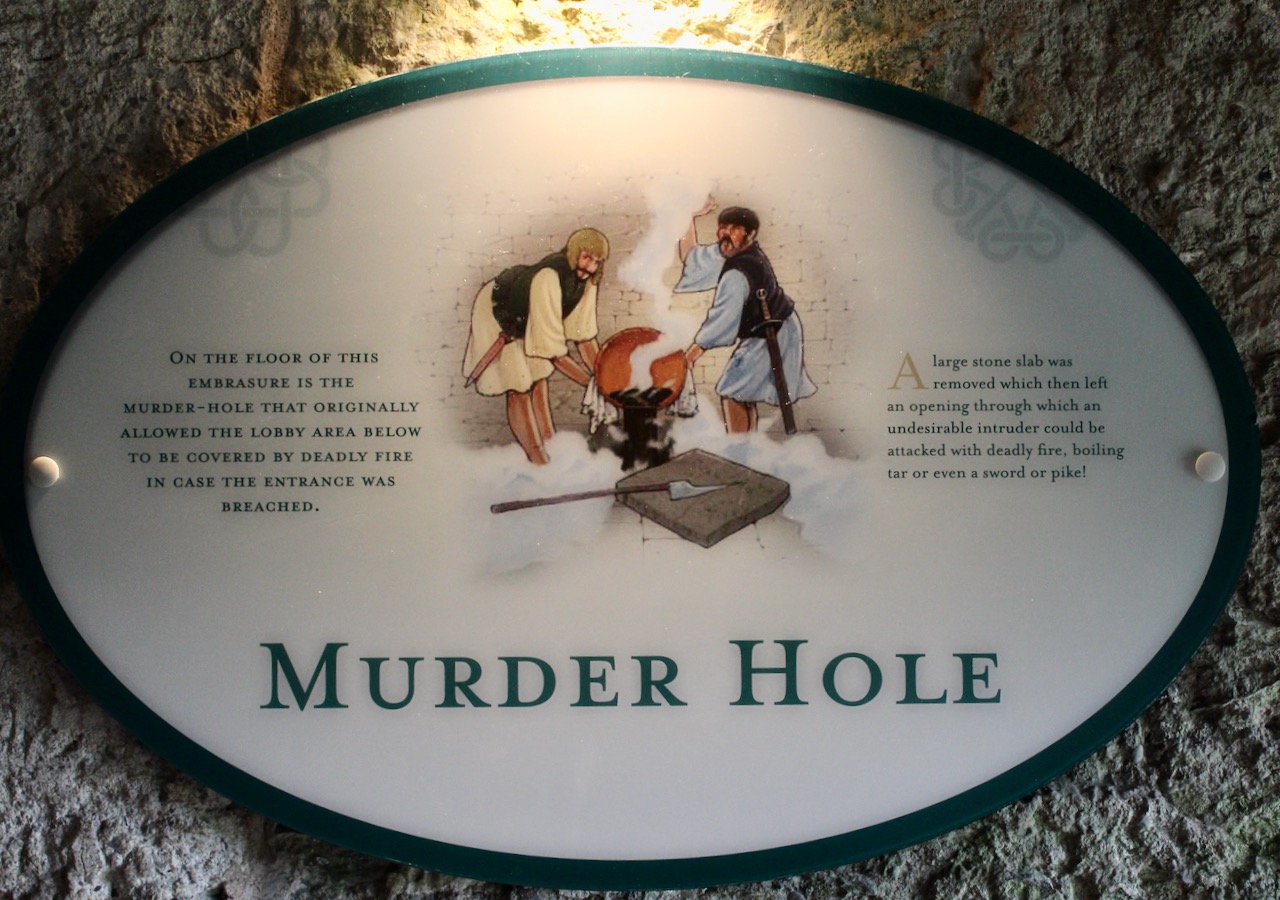
Defense measures include an Oubliette for unwanted guests, and a murder hole if you gain entry to the tower house.
Blarney Castle, June 2022.
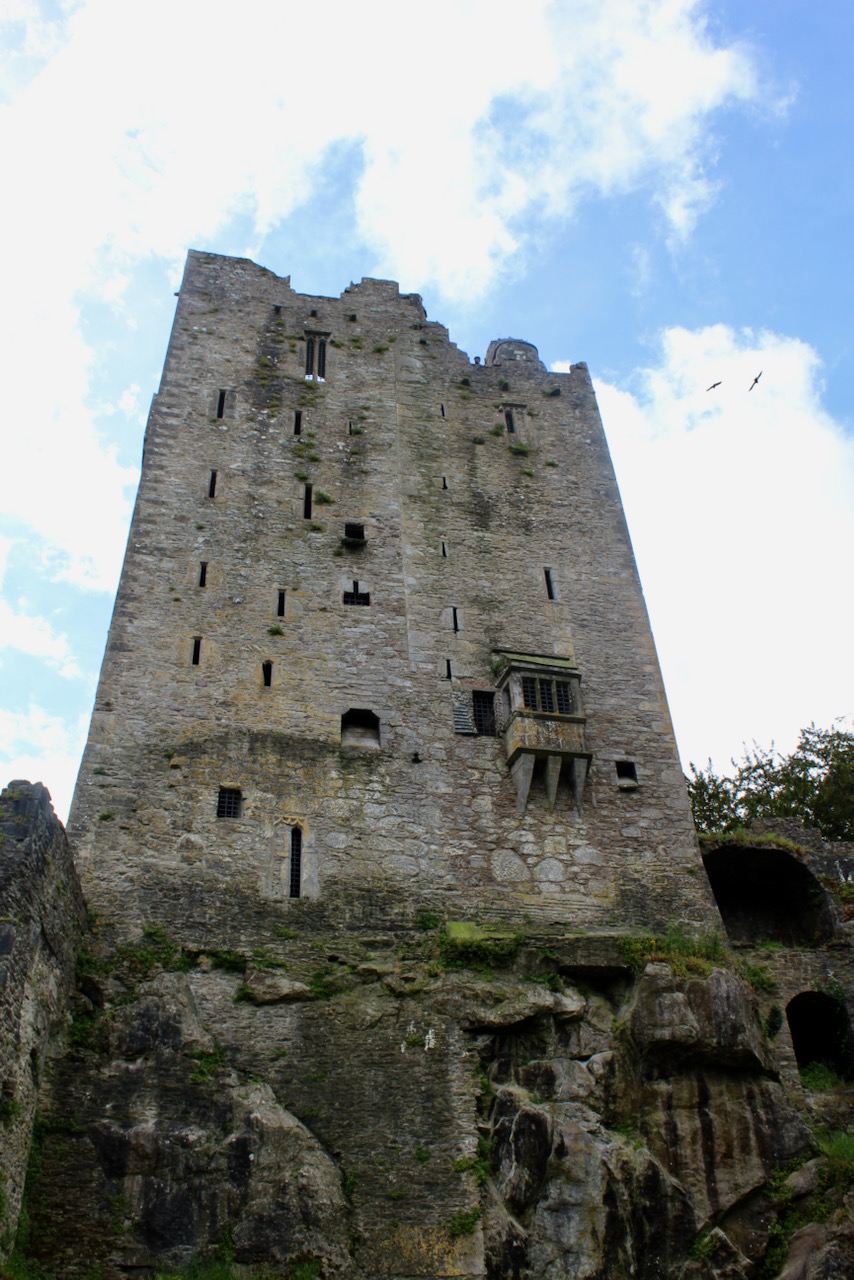
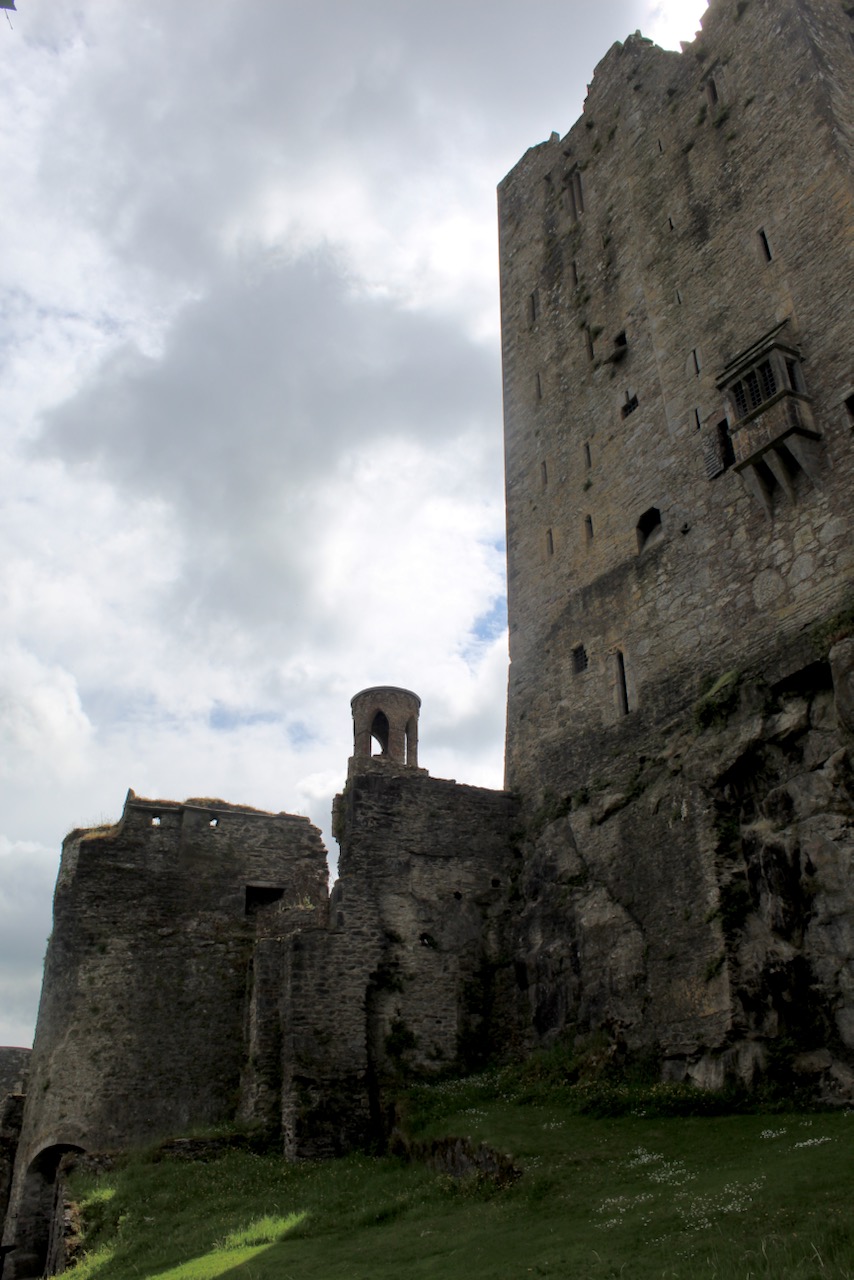
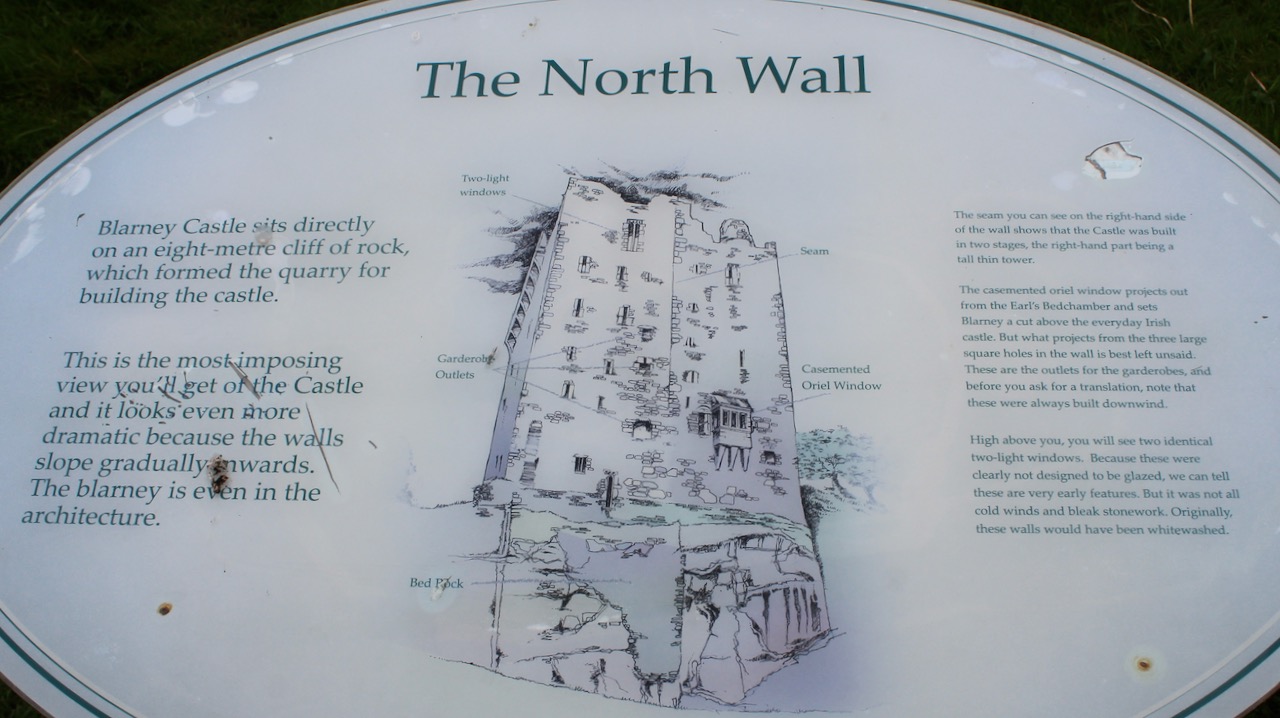
The tower house rising from the limestone bedrock. Photograph © Jennifer Winder-Baggot, www.irishhistorichouses.com
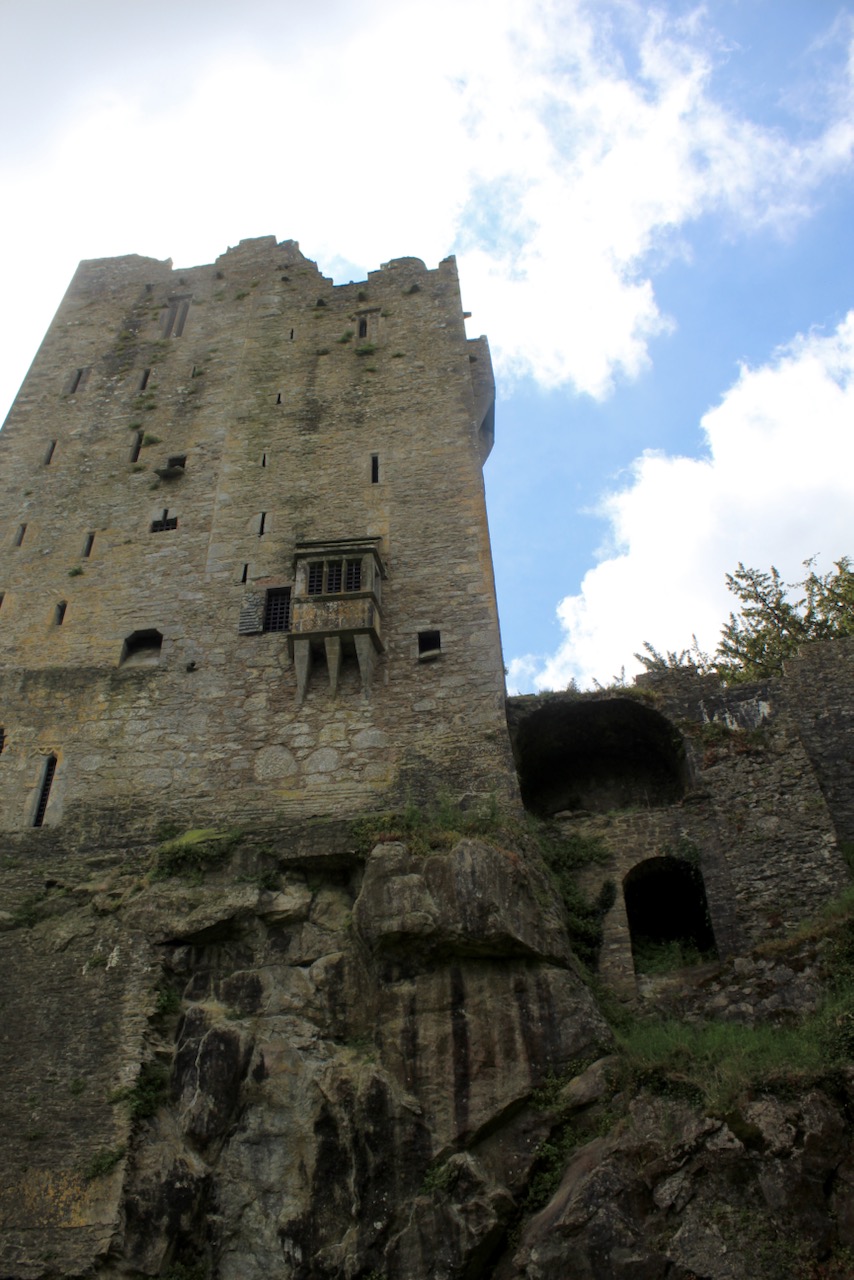
The impressively intact casement oriel window we can see here was the Earl of Clancarty’s bedchamber, probably added in 1616 when Cormac (Charles) MacCarthy (1564-1640/41) Viscount Muskerry inherited and undertook major alterations. Further up, there is a two-light window, which was not made to be glazed so is therefore very old. Photograph © Jennifer Winder-Baggot, www.irishhistorichouses.com
Blarney Castle, June 2022.

Blarney was a typical tower house with four or five storeys, with one or two main chambers and some smaller rooms on each floor. A vaulted stone ceiling served to keep the thin tower structurally sound by tying the walls together and also acted as a firebreak. Blarney was constructed as two towers, one built later (by about 100 years) than the other. At the bottom the walls are about 18 feet thick. When it was first built it would have been covered in plaster and whitewashed to protect it from rainy weather.

Blarney Castle, June 2022.

The MacCarthys retained Blarney Castle until forced to leave it in the years following the Battle of the Boyne in 1690. They were Jacobites, supporters of King James II, and not supporters of King William III, who was crowned King of England, along with his wife Mary, James II’s daughter, in 1689. Mark Bence-Jones tells us that the castle was fortified by Donogh MacCarthy (c. 1668-1734), 4th Earl of Clancarty, who fought for James II in the Williamite War. [3]

The Dictionary of Irish Biography tells us that Donogh MacCarthy the 4th Earl held the office of Lord of the Bedchamber to King James II in Ireland in 1689. MacCarthy fought in the Siege of Cork in 1690, where he was captured, and he was imprisoned in the Tower of London. He escaped and fled to France in May 1694. In 1698 he secretly returned to England but was betrayed by his brother-in-law, Charles Spencer, 3rd Earl of Sunderland, and was again imprisoned in the Tower. The Dictionary tells us that Lady Russell obtained a pardon for him, on condition he stayed permanently abroad. Lady Rachel Russell, nee Wriothesley, had previously petitioned unsuccessfully for the freedom of her husband, William Lord Russell, who had been arrested as part of the Rye House Plot to kill King Charles II and his brother James.

In exile in France in 1707, Donogh MacCarthy was Lord of the Bedchamber to the titular King James III (so called by the Jacobites who continued to support the Stuarts for the monarchy after William III and Mary had taken the throne). [4] This means he would have known John Baggot of County Cork and Baggotstown, County Limerick, whom I hope was an ancestor of mine (I haven’t been able to trace my family tree back that far). John Baggot married Eleanor Gould, daughter of Ignatius Gould, and fought at the Battle of Aughrim, where he lost an eye. The exiled monarchy recognised his sacrifice and in gratitude, made him groom of the bedchamber to the titular King James III in France also. Those that left Ireland at this time were called the Wild Geese. His son John Baggot subsequently fought in the French army and the other son, Ignatius, in the Spanish army.

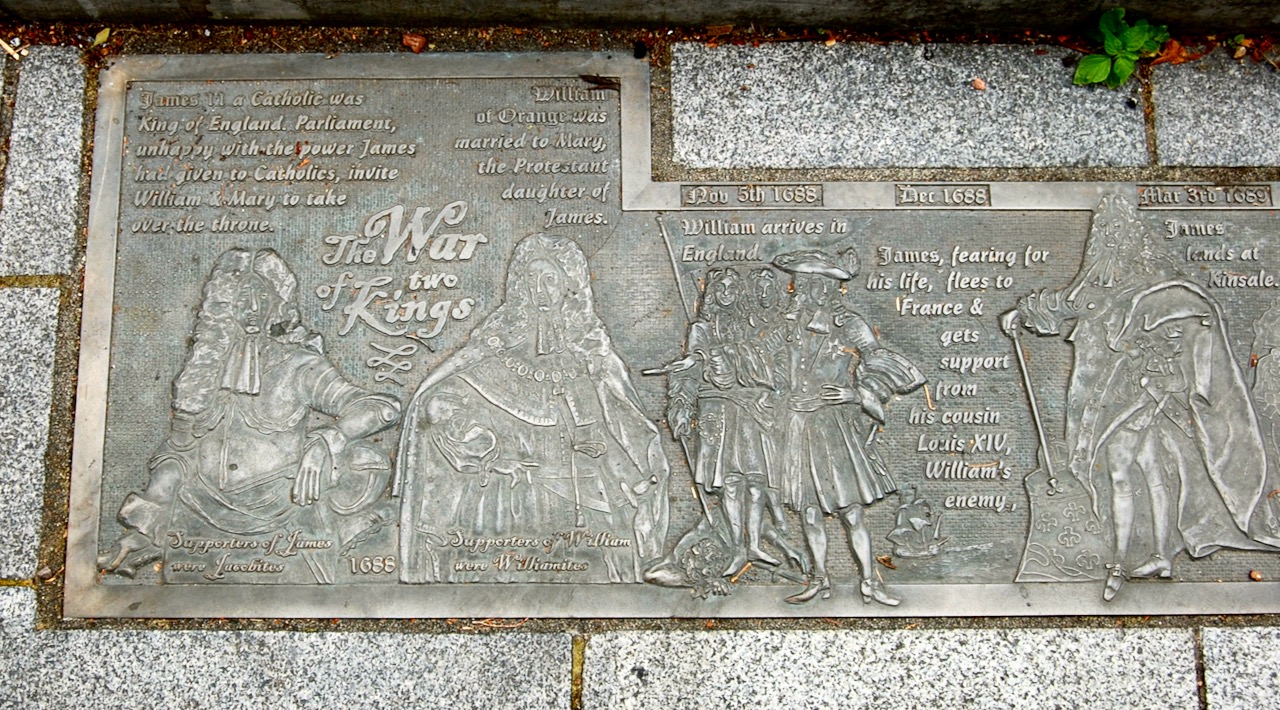
There is a terrific summary in plaques in the ground in Limerick city around the Treaty of Limerick stone, on which the Treaty of Limerick was signed in 1691, that tells of the series of battles fought between the troops supporting King James II and the troops supporting King William. One plaque tells us:

Sept 1690 King William returned to England leaving Baron de Ginkel in charge. Cork and Kinsale surrendered to William’s army. Sarsfield rejects Ginkel’s offer of peace. More French help arrives in Limerick as well as a new French leader, the Marquis St. Ruth. Avoiding Limerick, Ginkel attacked Athlone, which guarded the main route into Connaght. 30th June 1691, Athlone surrendered. St. Ruth withdrew to Aughrim. 12th July 1691 The Battle of Aughrim. The bloodiest battle ever fought on Irish soil. The Jacobites were heading for victory when St. Ruth was killed by a cannonball. Without leadership the resistance collapsed and by nightfall, the Williamites had won, with heavy losses on both sides. Most of the Jacobites withdrew to Limerick.

Plaques in the ground of Limerick City around the Treaty of Limerick Stone, about the War of two Kings.
Blarney Castle, June 2022. Photograph © Jennifer Winder-Baggot, www.irishhistorichouses.com
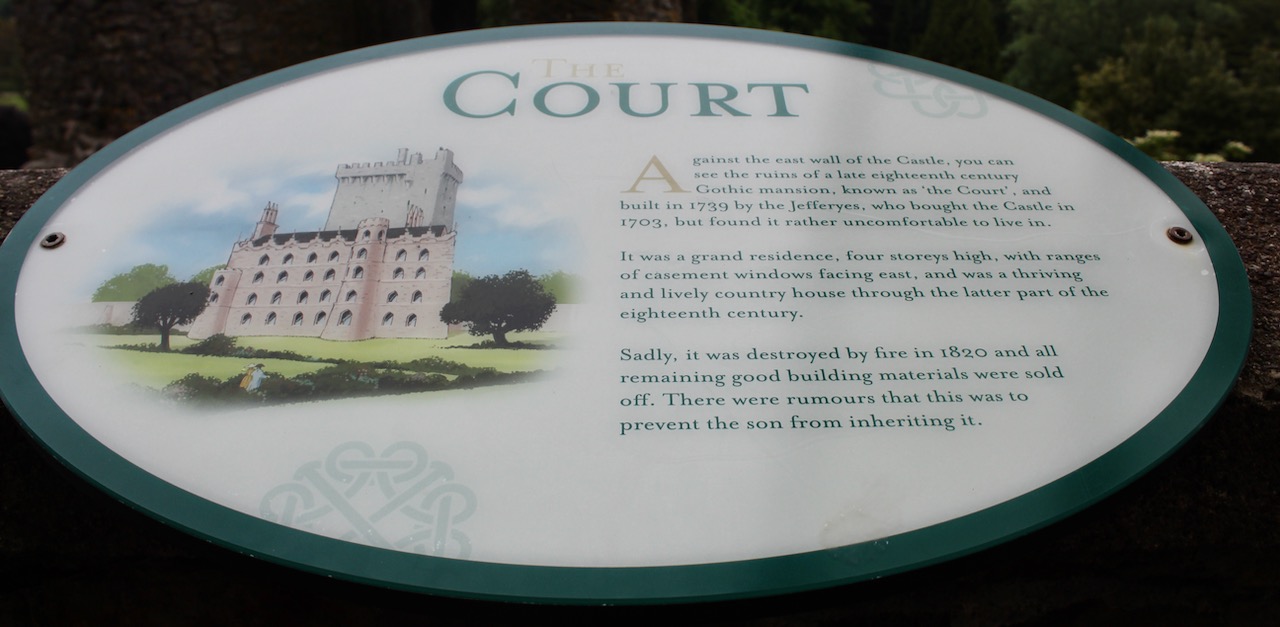
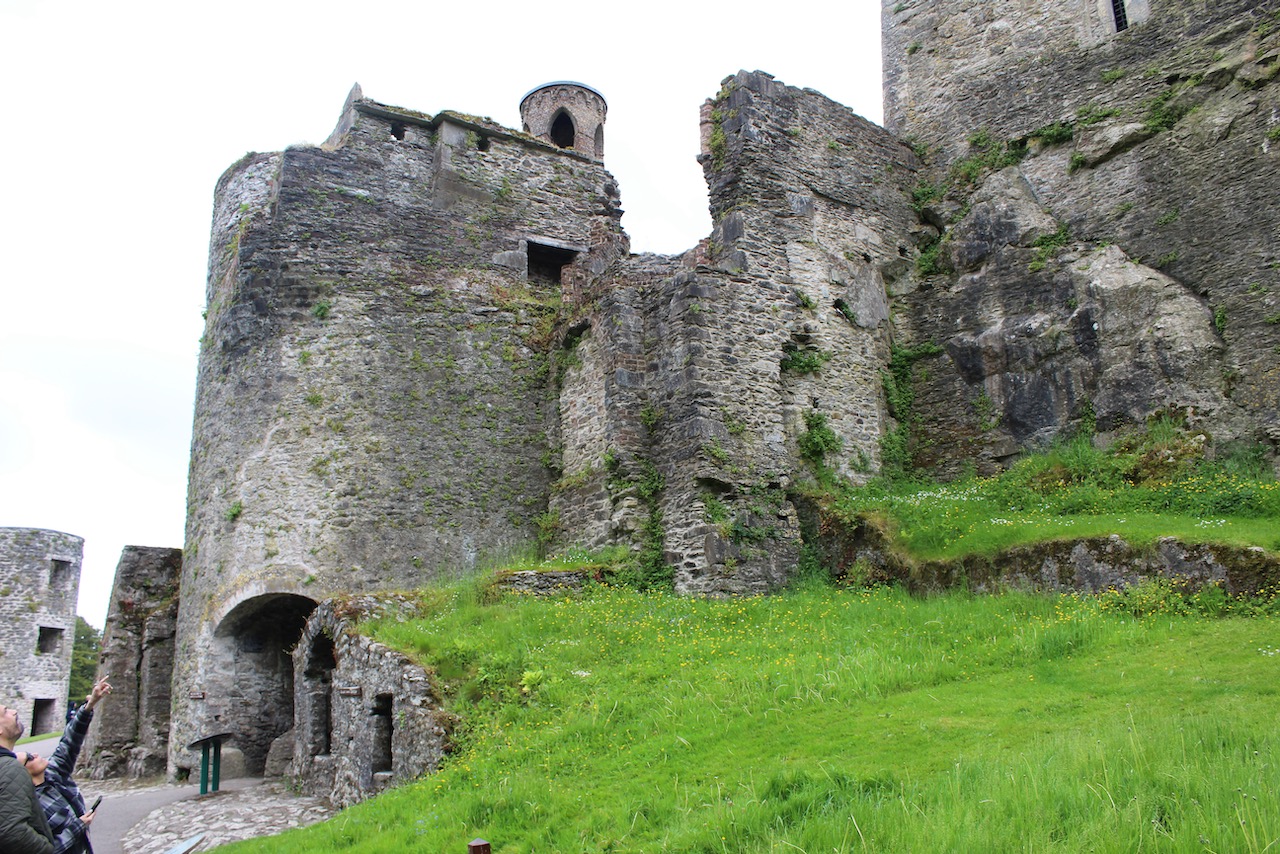
There are many additions to the castle as well as the main keep. This round tower was part of a Gothic mansion built on to the side of the castle by James Jefferyes in 1739. Photograph © Jennifer Winder-Baggot, www.irishhistorichouses.com
After the MacCarthys were forced to leave Blarney Castle, it was occupied by the Hollow Sword Blade Company from London. The Historic Houses of Ireland website tells us that this company was a forerunner of the disastrously speculative South Sea Company that was attempting to break the Bank of England’s monopoly over Government loans. [5] The Landed Estates database tells us:

The Hollow Sword Blades Company was set up in England in 1691 to make sword blades. In 1703 the company purchased some of the Irish estates forfeited under the Williamite settlement in counties Mayo, Sligo, Galway, and Roscommon. They also bought the forfeited estates of the Earl of Clancarty in counties Cork and Kerry and of Sir Patrick Trant in counties Kerry, Limerick, Kildare, Dublin, King and Queen’s counties (Offaly and Laois). Further lands in counties Limerick, Tipperary, Cork and other counties, formerly the estate of James II were also purchased, also part of the estate of Lord Cahir in county Tipperary. In June 1703 the company bought a large estate in county Cork, confiscated from a number of attainted persons and other lands in counties Waterford and Clare. However within about 10 years the company had sold most of its Irish estates. Francis Edwards, a London merchant, was one of the main purchasers.” [6]

In 1702 the castle was sold to Sir Richard Pyne, Lord Chief Justice of Ireland, who sold it the following year, in 1703, to the Governor of Cork, Sir James Jeffereyes (alternatively spelled “Jefferyes”). Richard Pyne also purchased land at Ballyvolane in County Cork, another section 482 property which we have yet to visit!

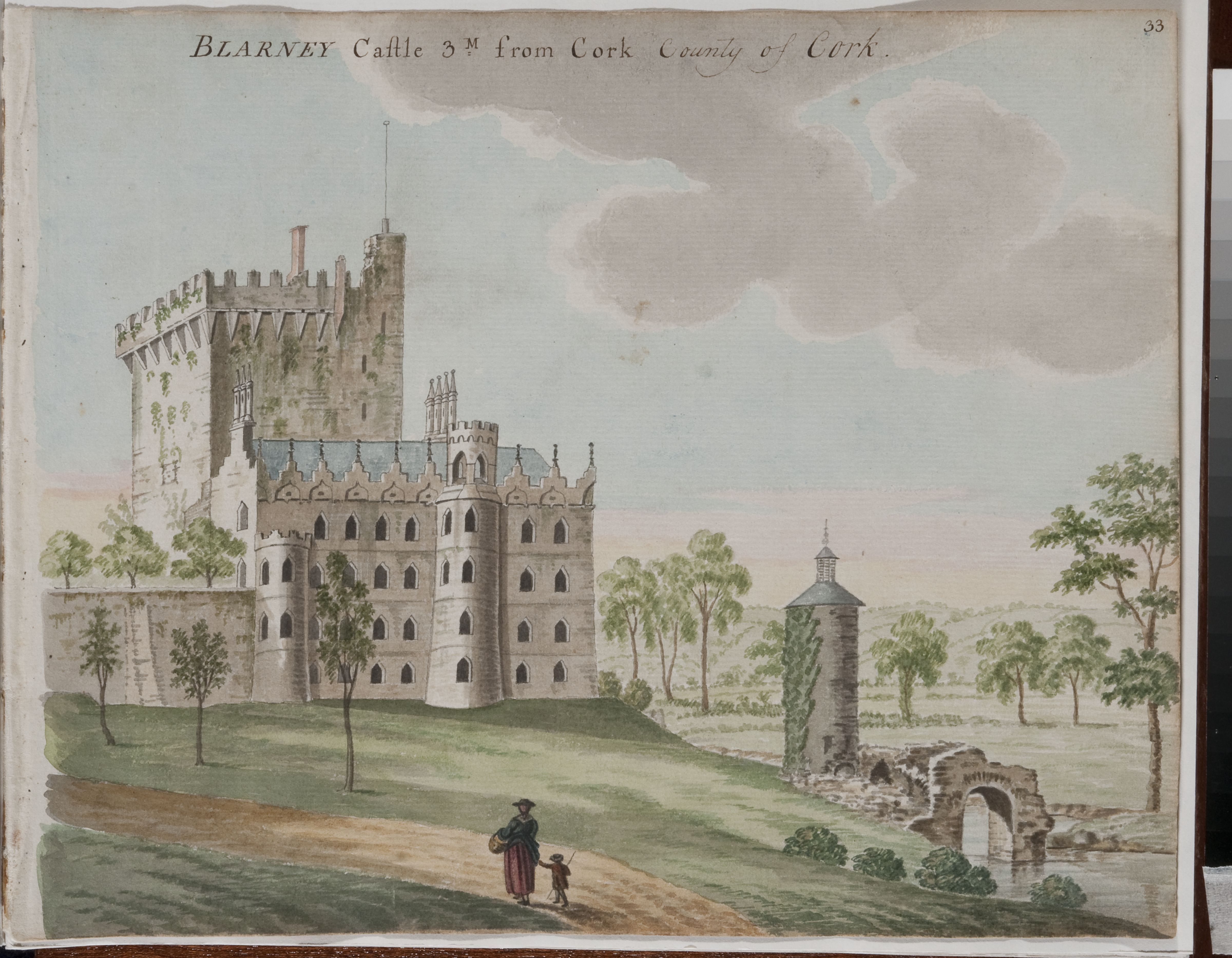
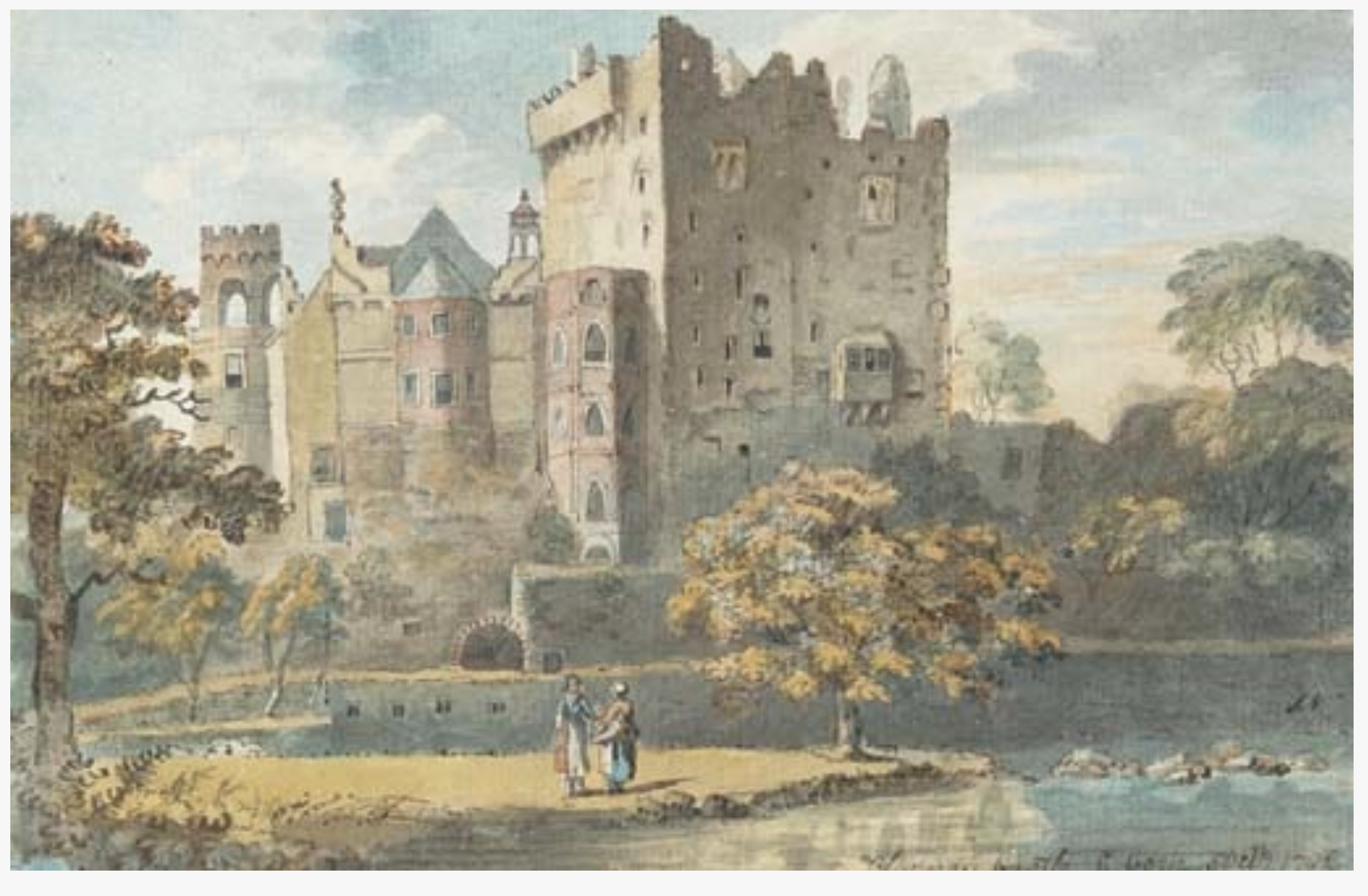
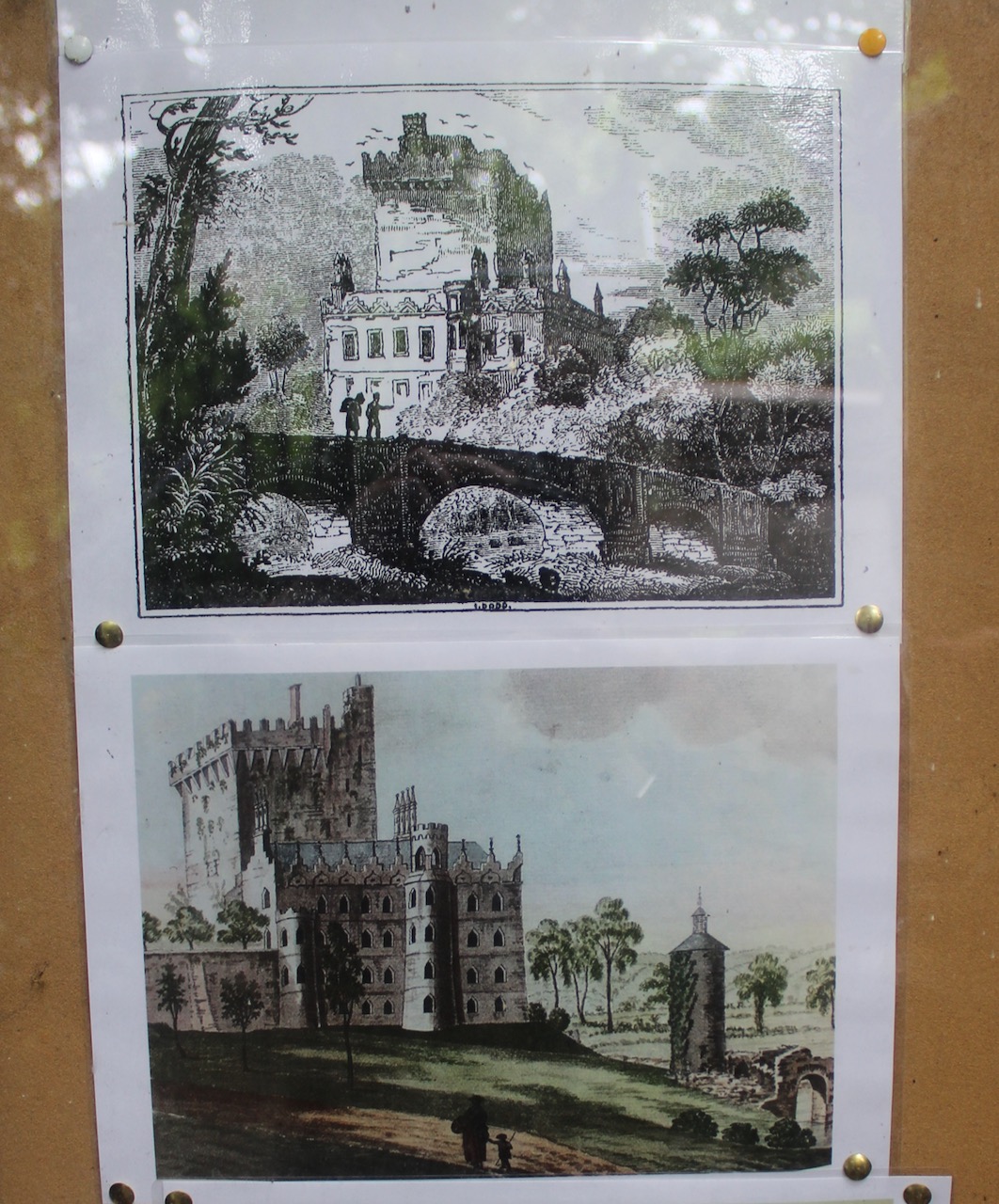
In 1739 James Jeffereyes built a four storey Gothic style mansion on to the side of the castle, which he called “The Court,” demolishing a former house the MacCarthys had added to the castle. Frank Keohane tells us that the architect may have been Christopher Myers, who had previously rebuilt Glenarm Castle in County Antrim. We can see glimpses of its appearance from the round towers and ruins to one side of the castle, which are the remnants of this grand mansion. The Jefferyes family also laid out a landscape garden at Blarney known as Rock Close, with great stones arranged to look as though they had been put there in prehistoric times. There is a stone over the “wishing steps” inscribed “G. Jefferyes 1759” which commemorates the date of birth of James Jefferyes’s heir. It was a popular tourist destination as early as the 1770s.

Blarney Castle, June 2022.
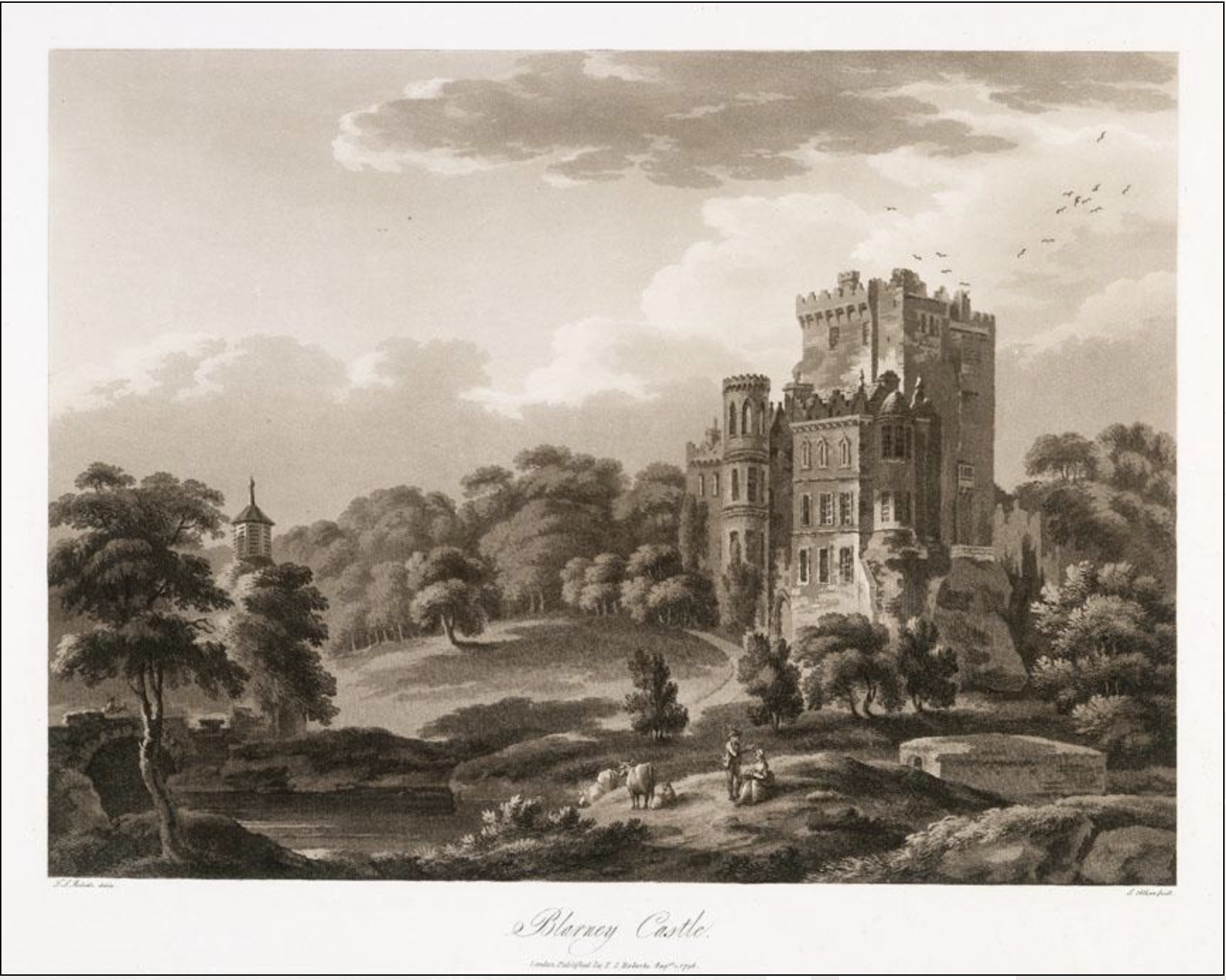
Blarney Castle, County Cork 1796 After Thomas Sautelle Roberts, Irish, 1760-1826, photograph courtesy of National Gallery of Ireland.
Blarney Castle, by Gabriel Berenger ca. 1770-1799, Copy of original drawing by Jonathan Fisher, Royal Irish Academy MS 3 C 30/33.
John Nixon (1750-1818) Blarney Castle, Co. Cork signed with a initials ‘J.N.’ (lower right) and inscribed and dated ‘Blarney Castle C Cork, 5 Octr, 1792’ courtesy Christies Irish Sale 2004.
Pictures of the Gothic house that was built on the side of the castle, on a noticeboard at Blarney.
Ruins of “the Court,” the Gothic house added to the side of the castle by the Jeffereyes. You can see the plaster decoration of a horse over the door. This must have been put up by later owners of the castle as the horse, or colt, is a symbol of the Colthurst family. Photograph © Jennifer Winder-Baggot, www.irishhistorichouses.com
We joined the queue to go up the tower. The ground floor is a large vaulted space. We saw the same sort of vaulting in Oranmore Castle in County Galway, which we visited later that week during Heritage Week 2022.

Ground floor of the Castle, a vaulted space. Photograph © Jennifer Winder-Baggot, www.irishhistorichouses.com
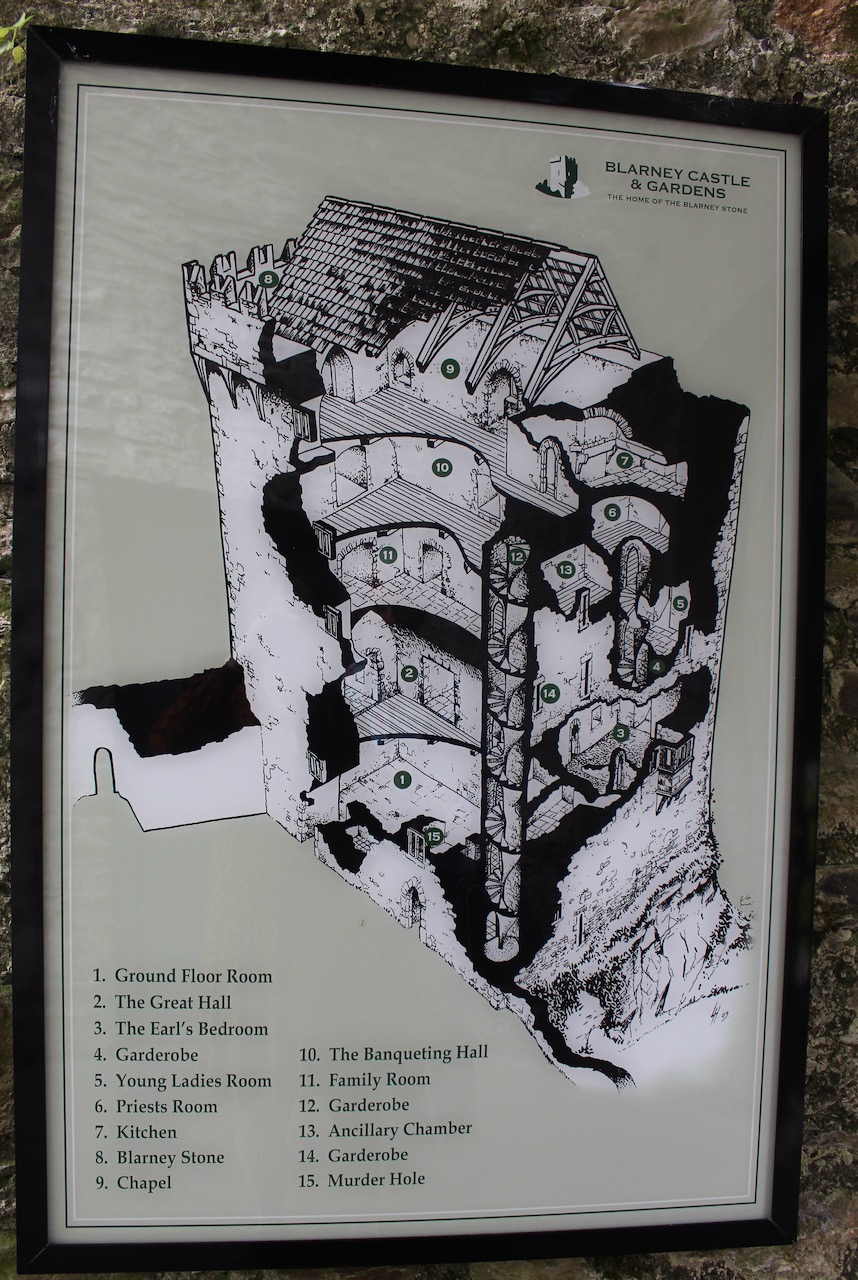
This room would have been the cellar chamber when first built, and would have had a wooden floor above, supported by still-present stone supports in the walls. The room on the upper wooden floor was the Great Hall. Originally, an information board tells us, the lower storey probably housed servants or junior members of the household. By the eighteenth and nineteenth centuries it had become a wine cellar, as evidenced by some brick-lined shelves.

Ground floor of Blarney Castle. Photograph © Jennifer Winder-Baggot, www.irishhistorichouses.com
Blarney Castle, June 2022.

We can see the arched vaulted ceiling from the ground floor, with indentations left from wickerwork mats that were used, on which the bed of mortar for the roof was set. We saw similar indentations at Trim Castle and the nearby house of St. Mary’s Abbey in Trim, in the basement [see https://irishhistorichouses.com/2022/09/17/st-marys-abbey-high-street-trim-co-meath/ ]. The walls would have been covered in tapestries, which were put on the floor at some stage, becoming carpets. The arched ceiling tied the walls of the tower together.

See the remnants of the wickerwork on the vaulted ceiling, and an impressive fireplace remains in what would have been the Great Hall. Photograph © Jennifer Winder-Baggot, www.irishhistorichouses.com

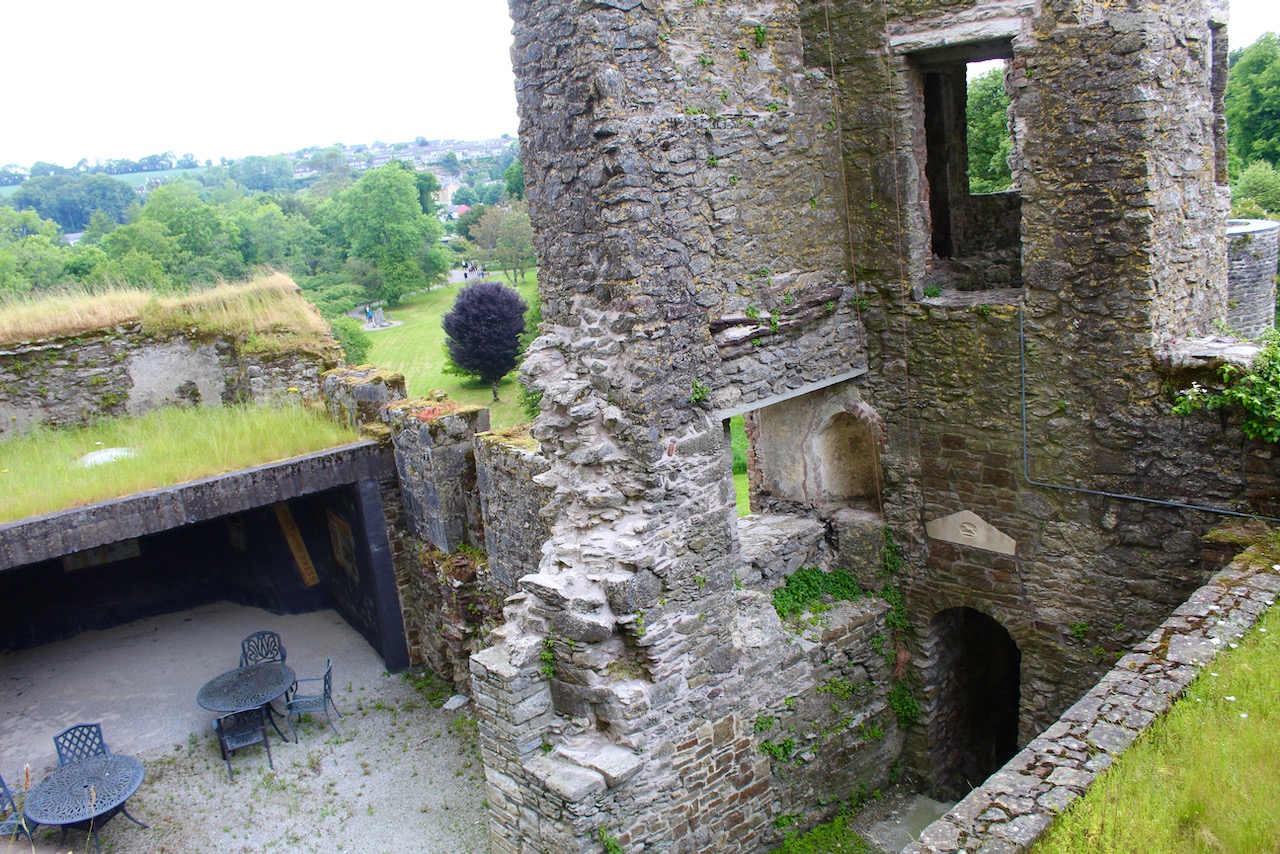
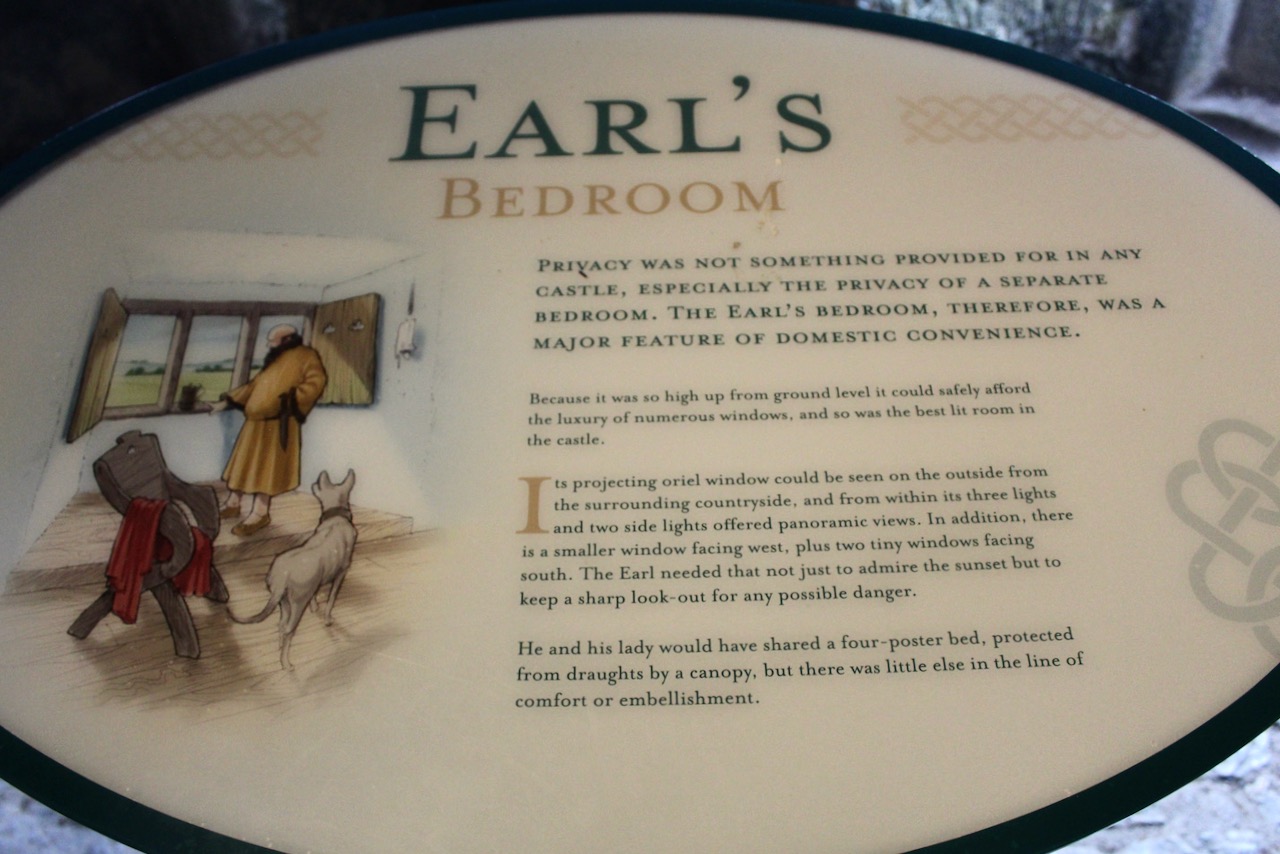
Next to the Great Hall was the Earl’s bedroom.

Blarney Castle, June 2022.

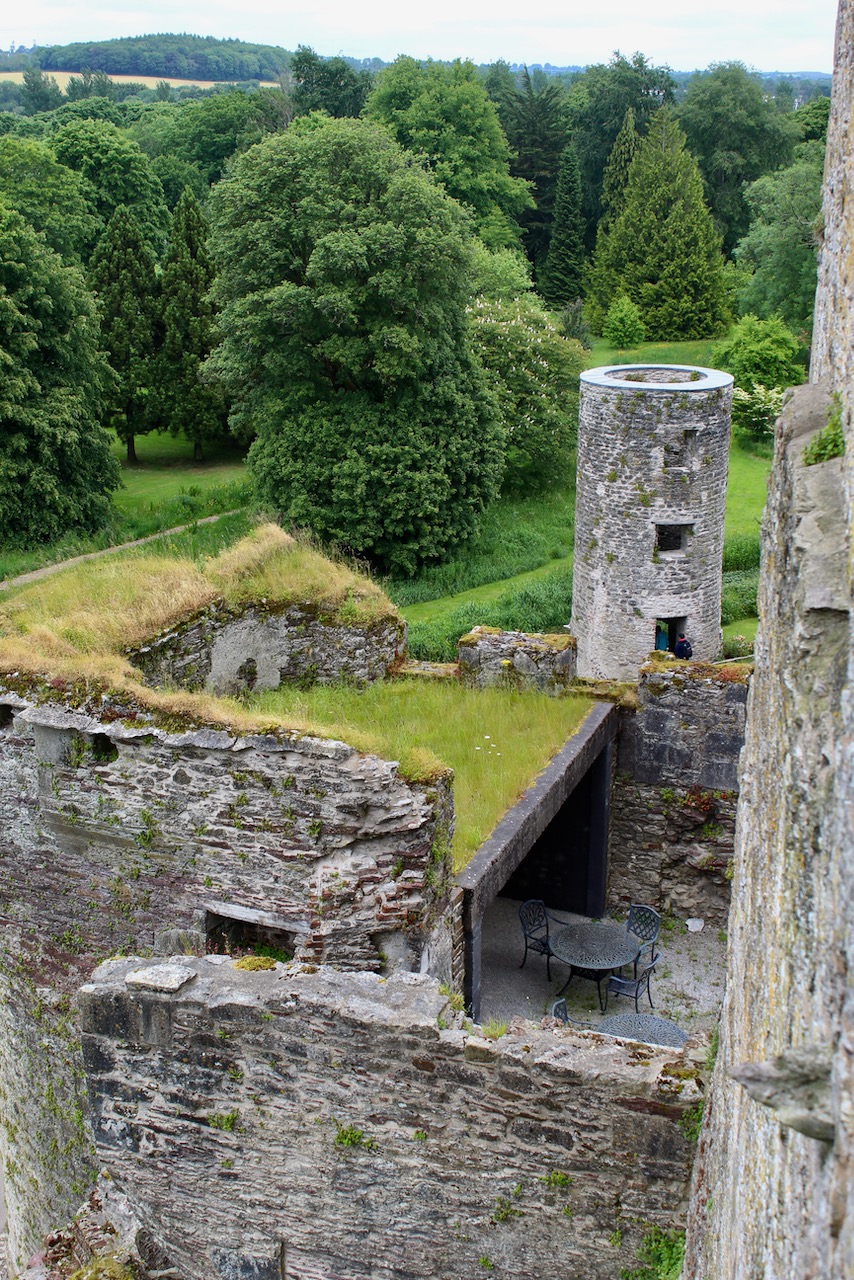
From here we have a good view of the remnants of the Gothic house remnants:

Remnants of the Gothic styled house which had been built onto the castle. Photograph © Jennifer Winder-Baggot, www.irishhistorichouses.com
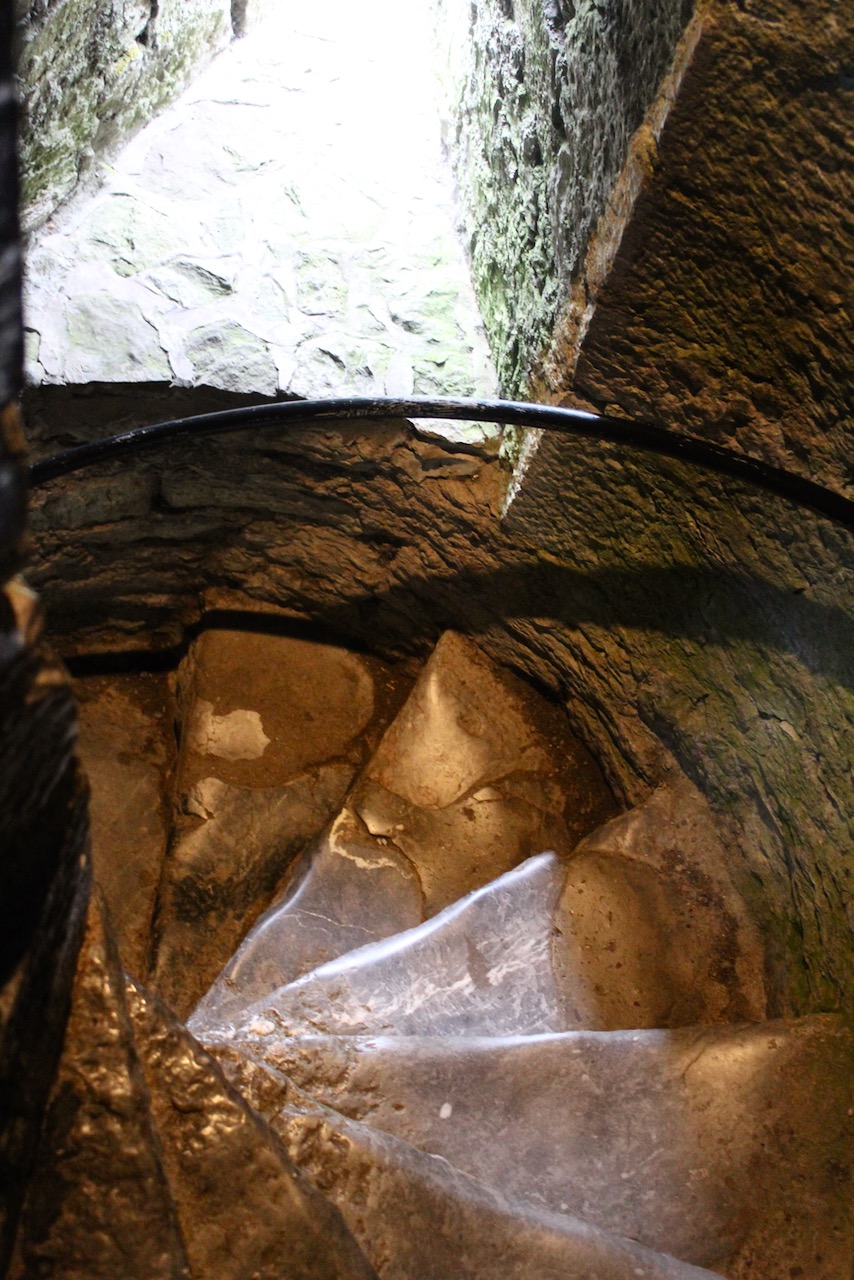
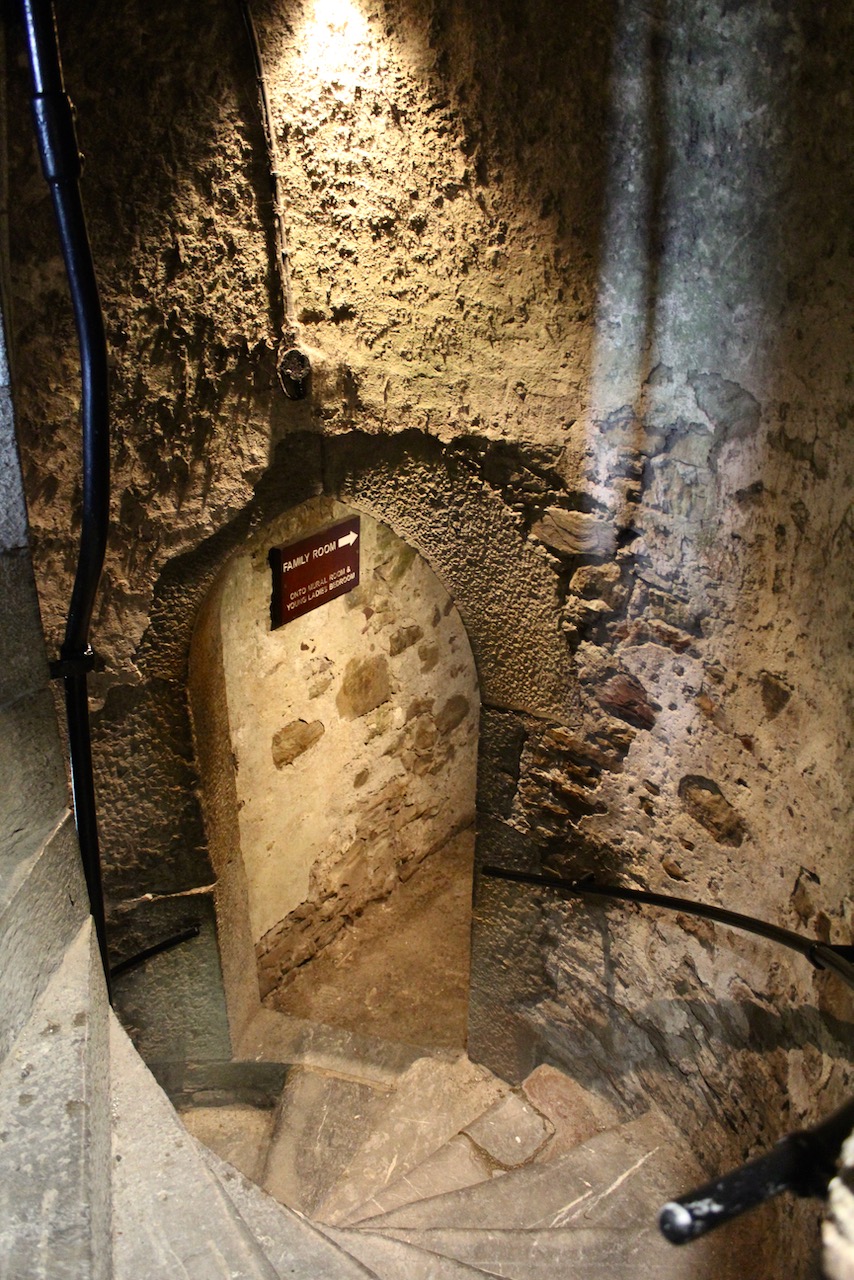
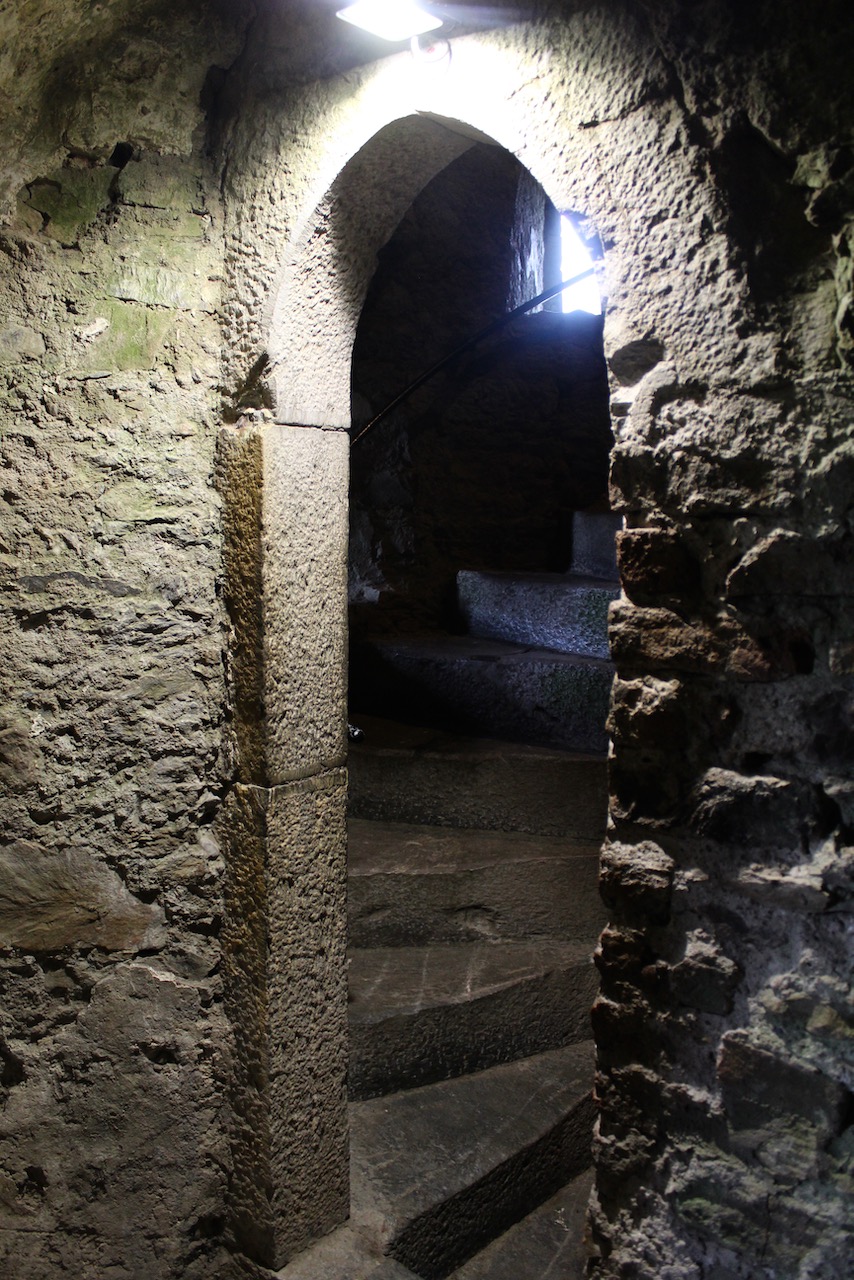
We climbed a stone spiral staircase inside the tower to see the upper chambers. As usual in tower houses, the narrow spiral staircase was built partly for defense.

Blarney Castle, June 2022. Photograph © Jennifer Winder-Baggot, www.irishhistorichouses.com
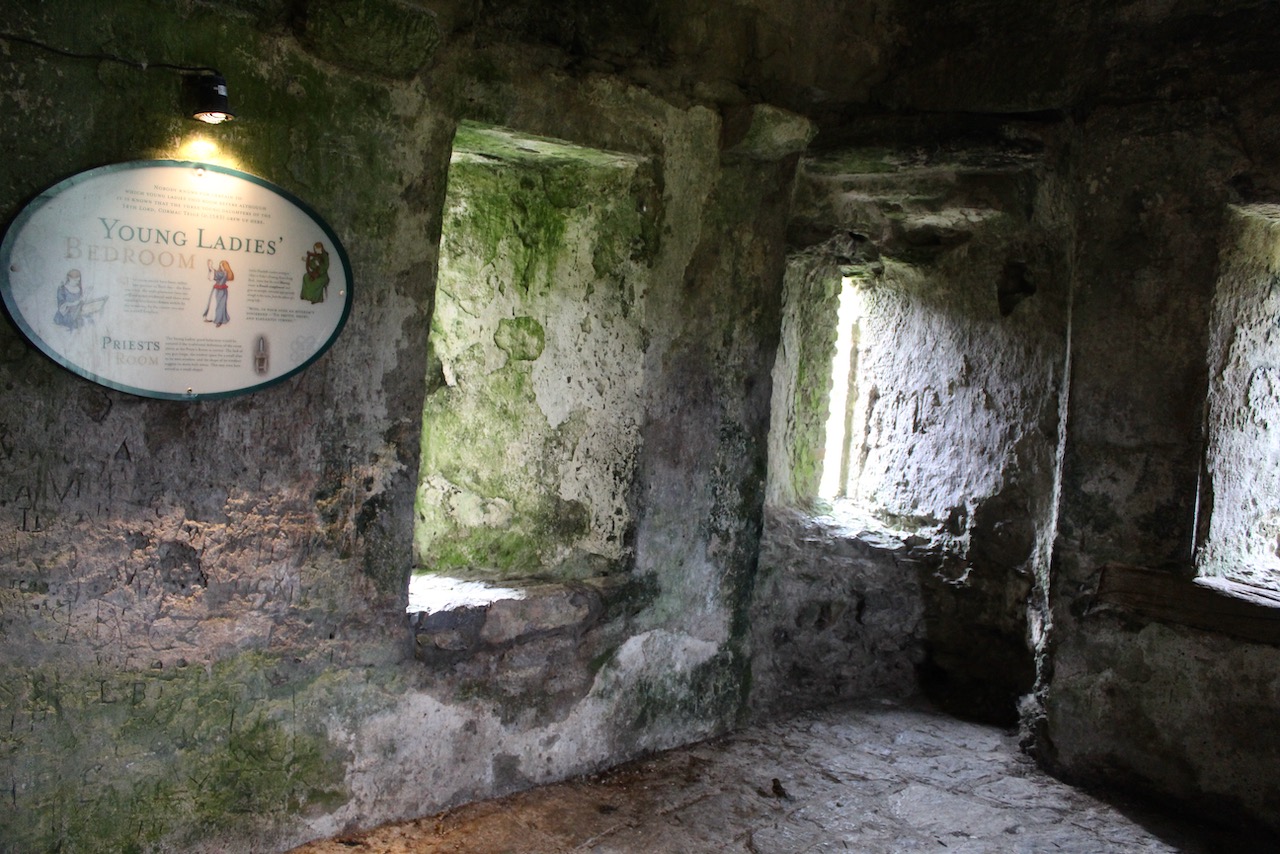
We next reached the “Young Ladies’ Bedroom.” The noticeboard tells us that three daughters of Cormac Teige MacCarthy (d. 1583), 14th Lord, grew up here.

Blarney Castle, June 2022. Photograph © Jennifer Winder-Baggot, www.irishhistorichouses.com
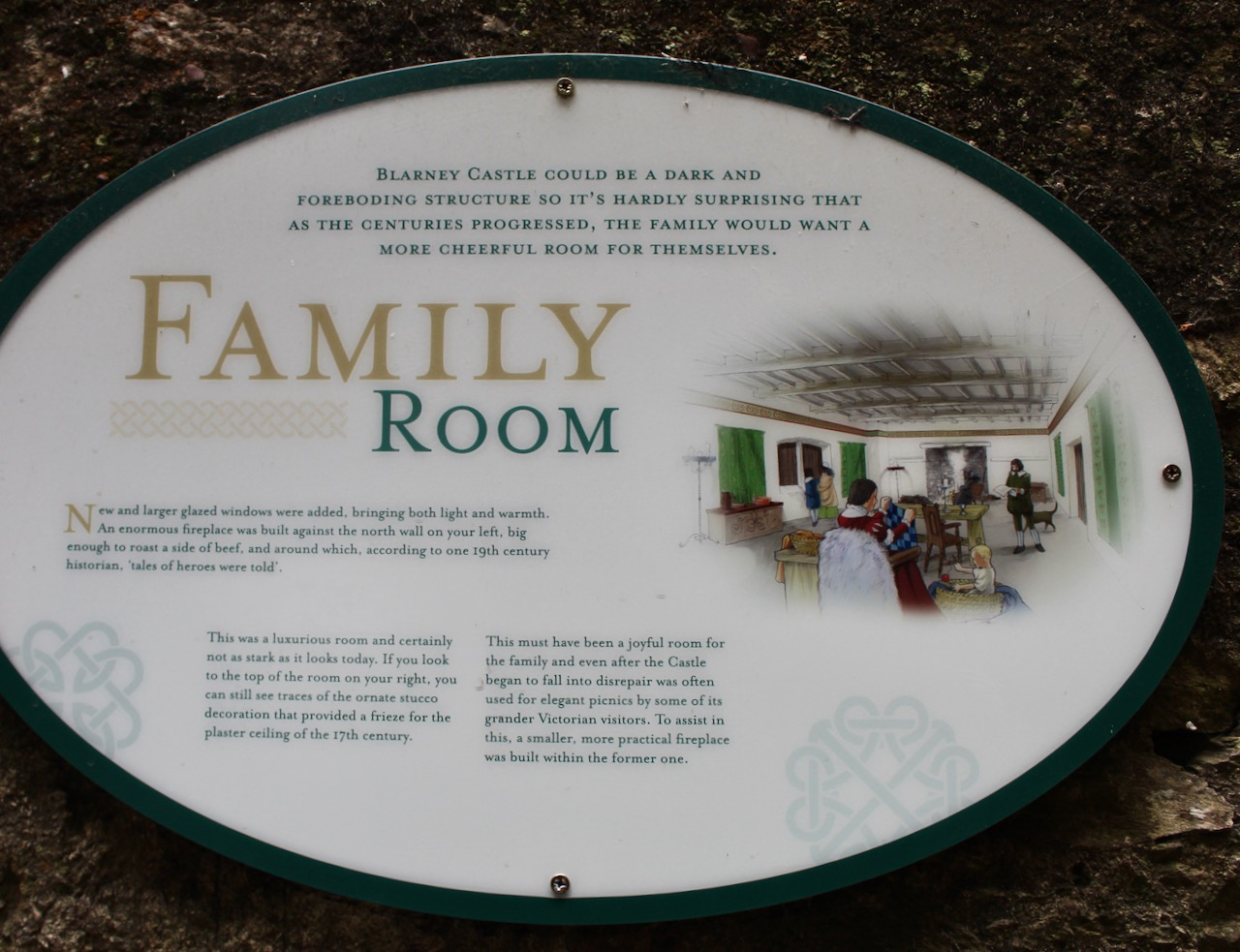
The room above the Great Hall in the tower would have been the family room.

Blarney Castle, June 2022.
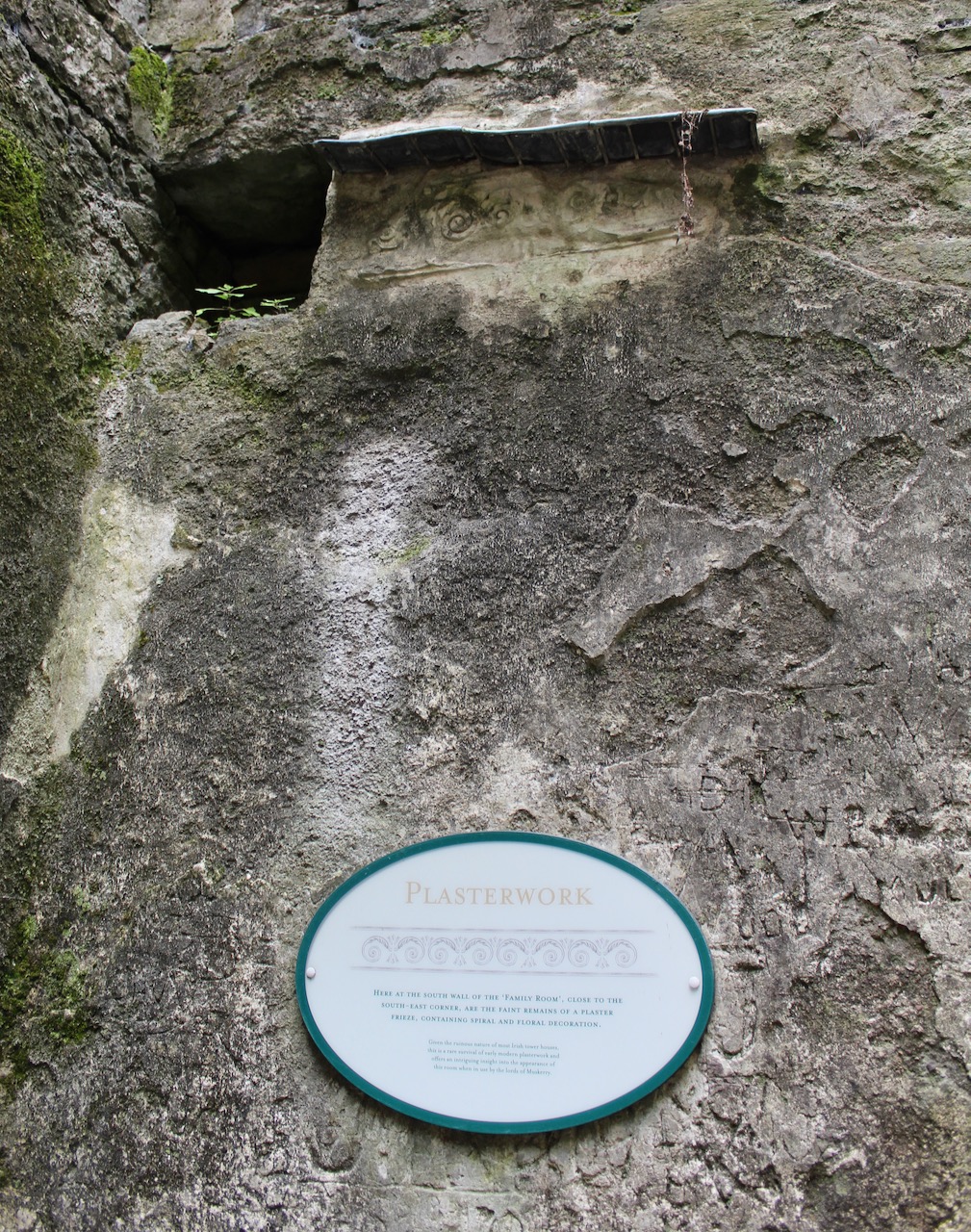
Remaining plasterwork on the wall in the family room. Photograph © Jennifer Winder-Baggot, www.irishhistorichouses.com
Blarney Castle, June 2022. Photograph © Jennifer Winder-Baggot, www.irishhistorichouses.com
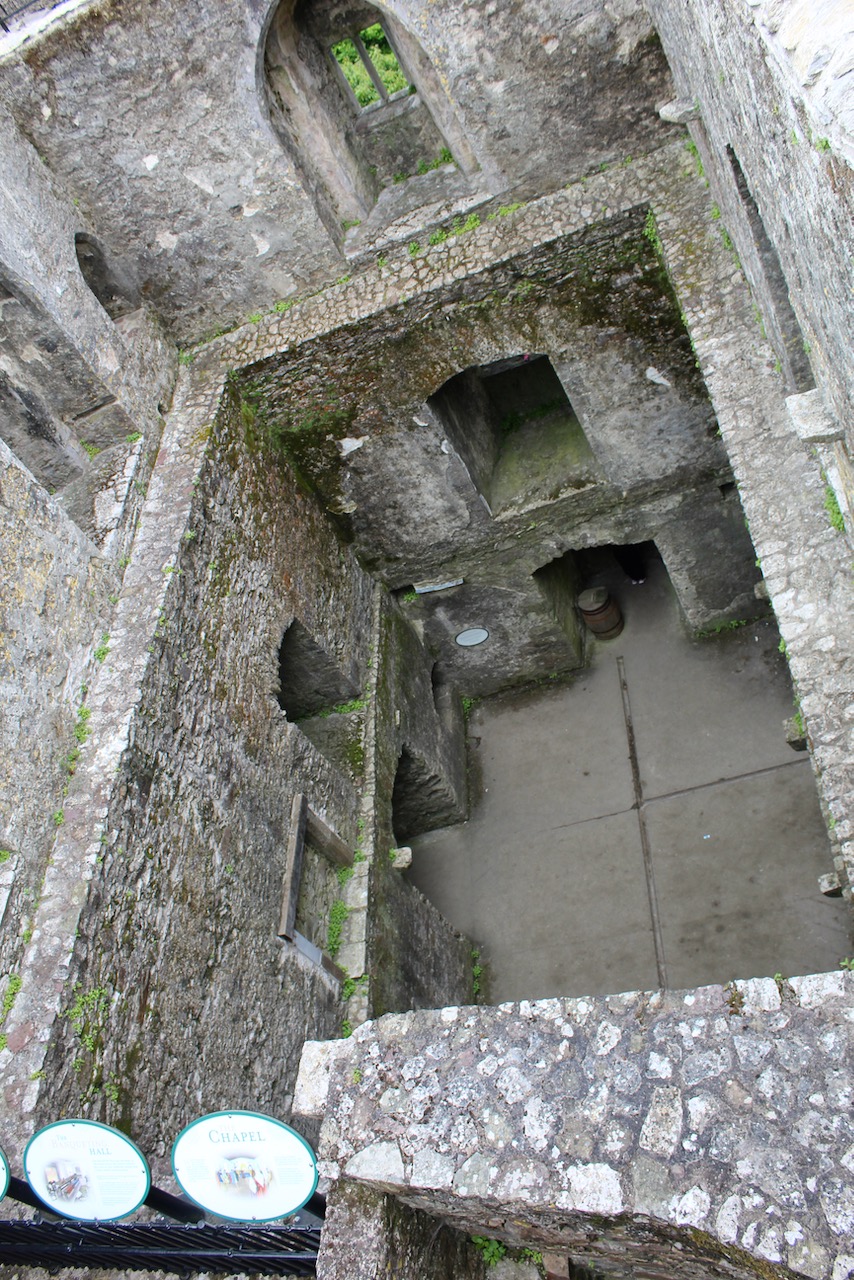
One end of the Family Room has a large fireplace, and the Banqueting Hall was on the storey above. The floor of the Banqueting Hall no longer exists, but you can see the fireplace of this room on the right hand side of the photograph. Photograph © Jennifer Winder-Baggot, www.irishhistorichouses.com
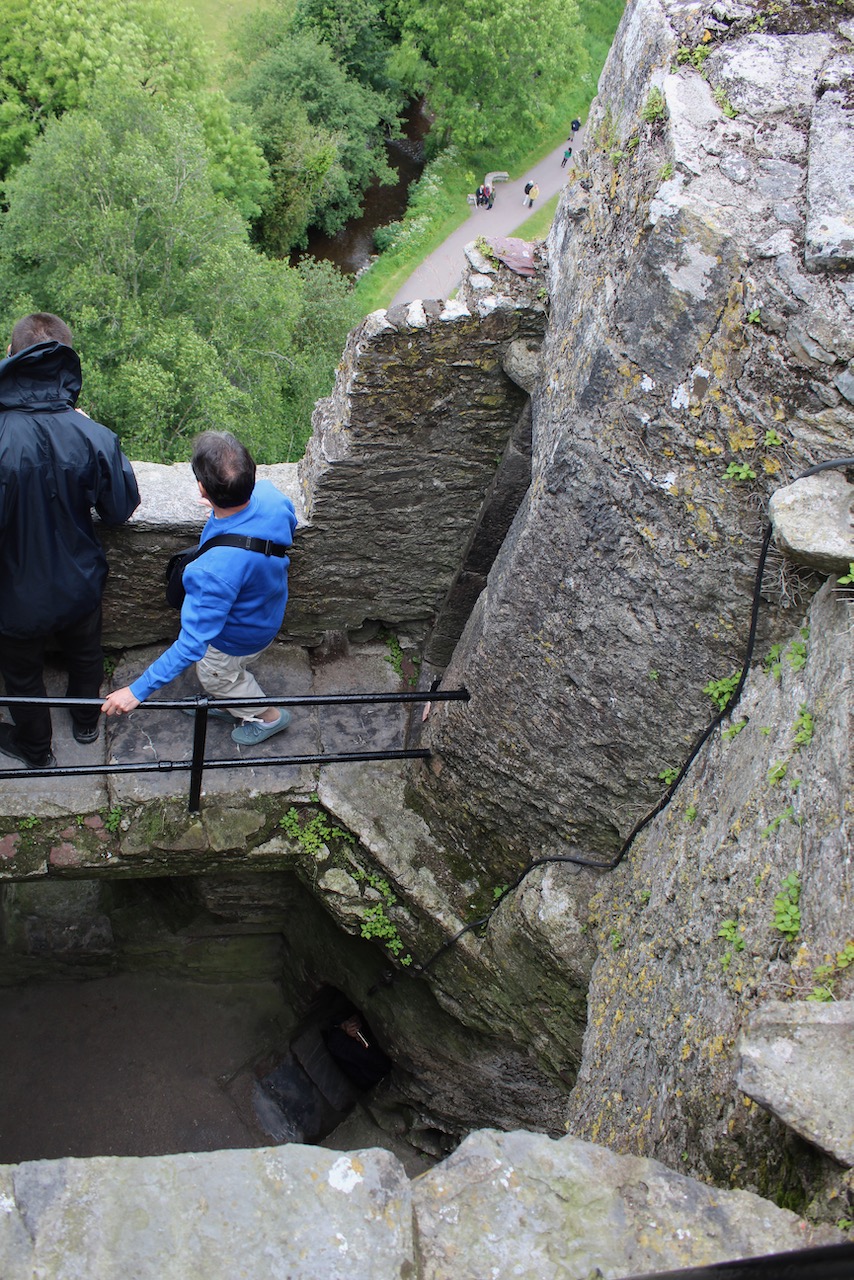
Continuing our climb up to the top of Blarney Castle, looking down. Photograph © Jennifer Winder-Baggot, www.irishhistorichouses.com
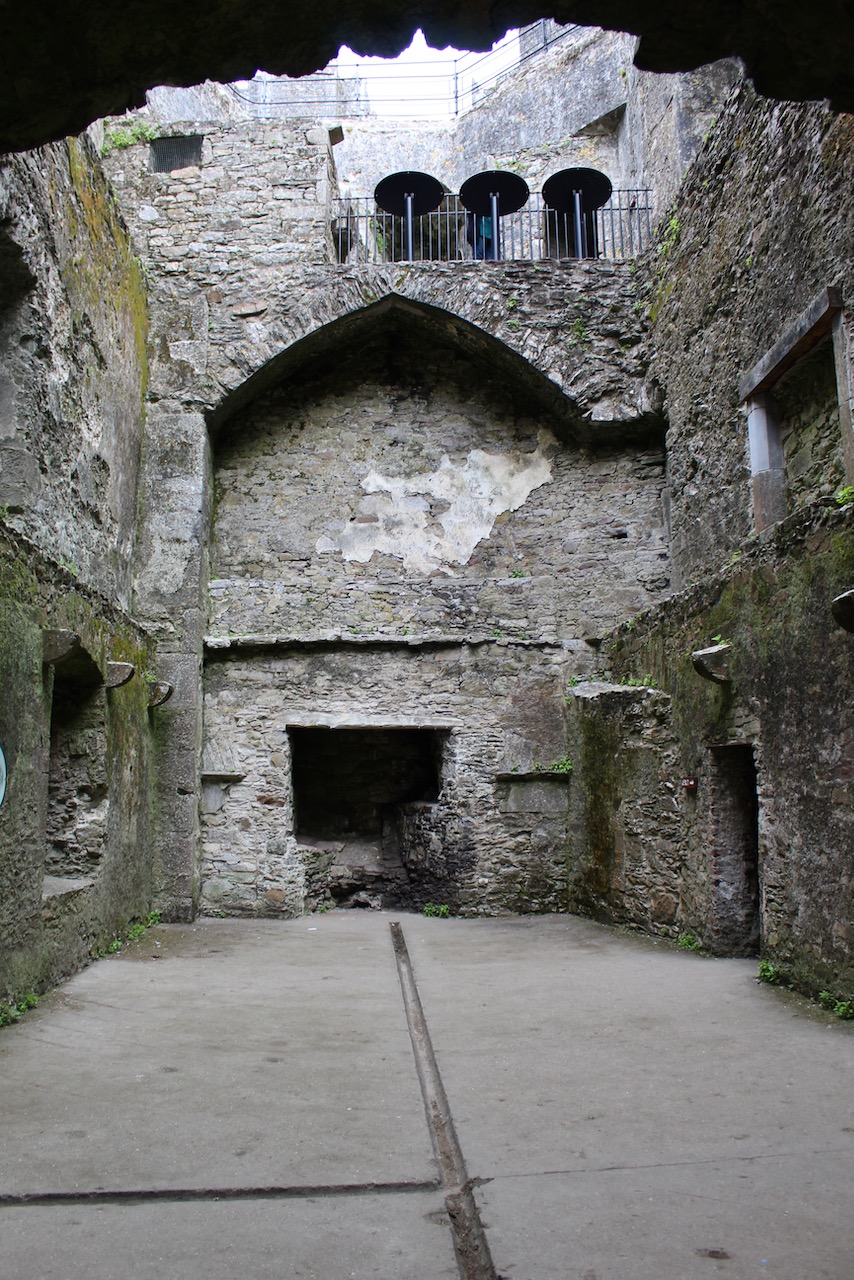
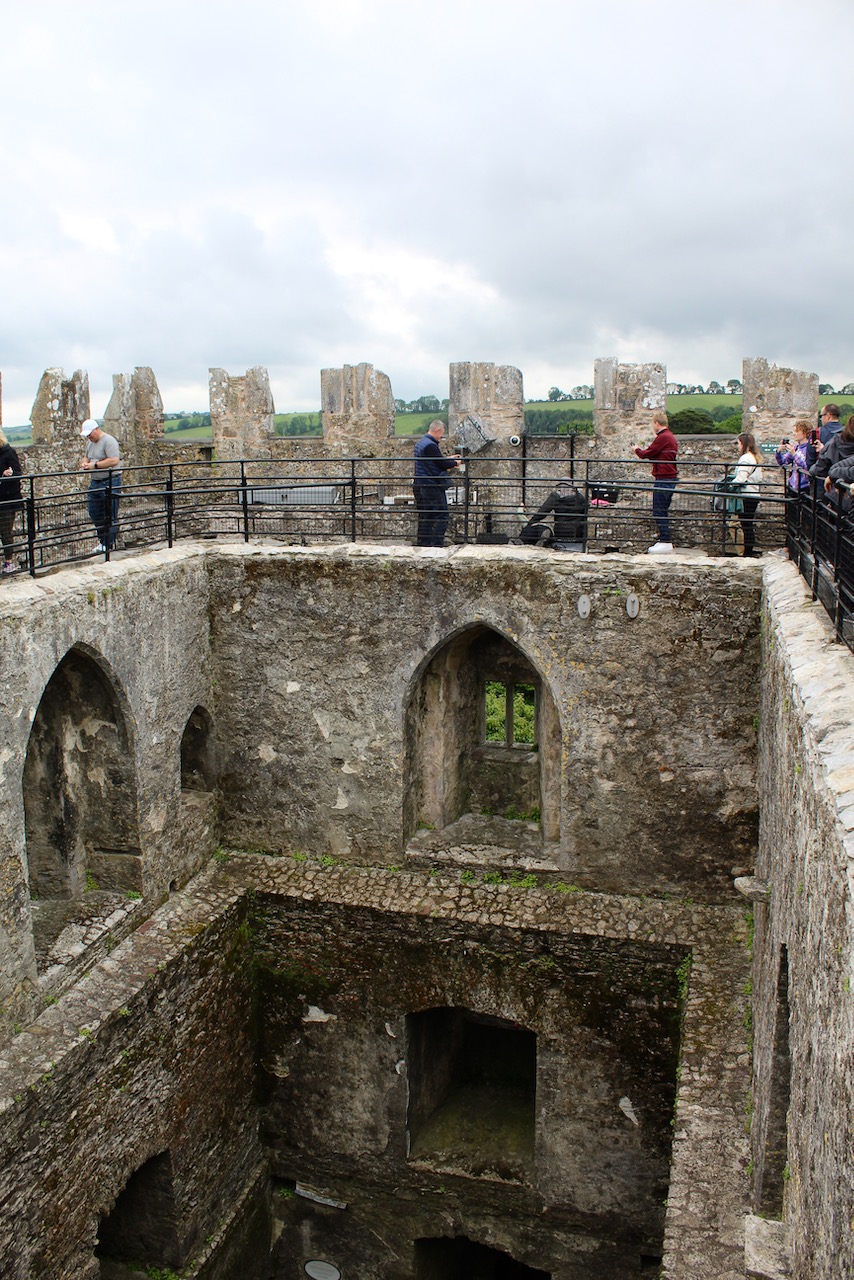
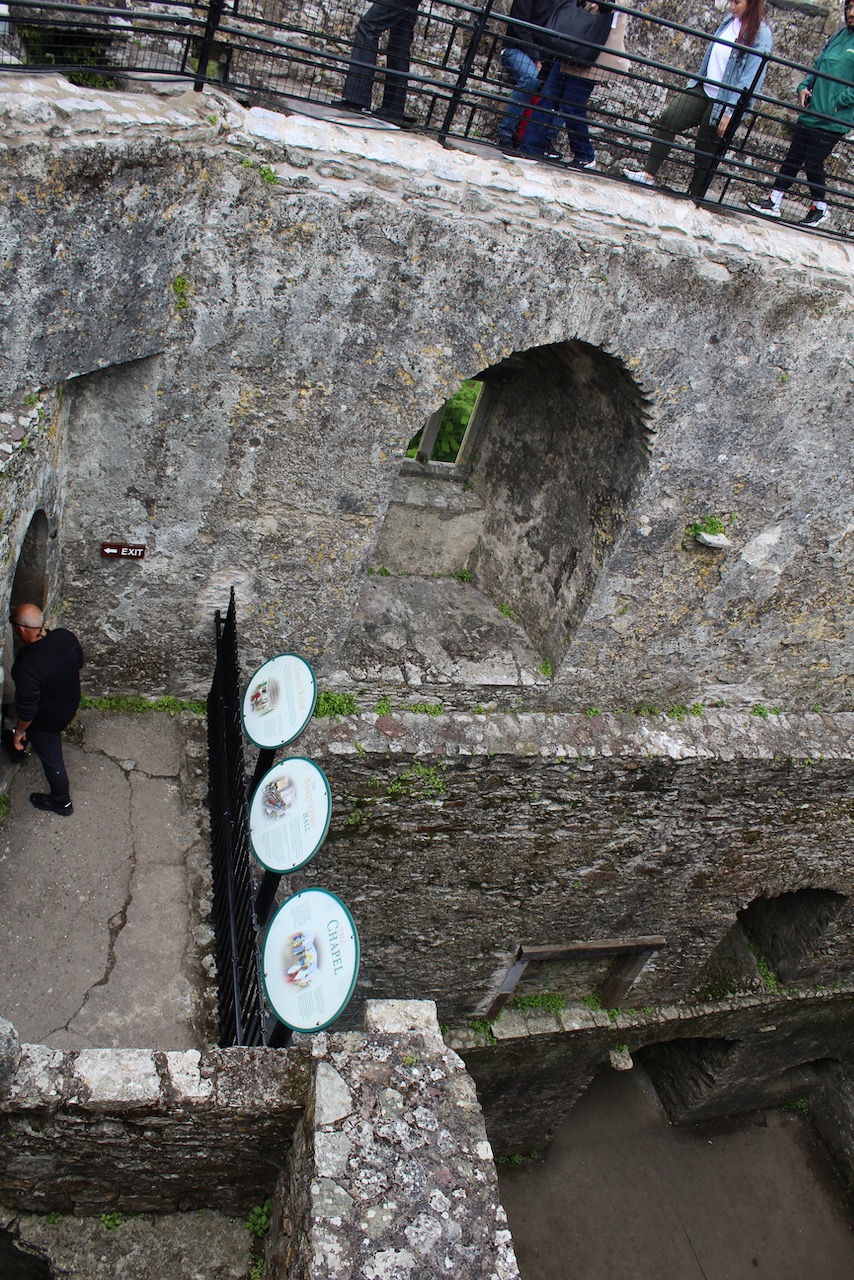
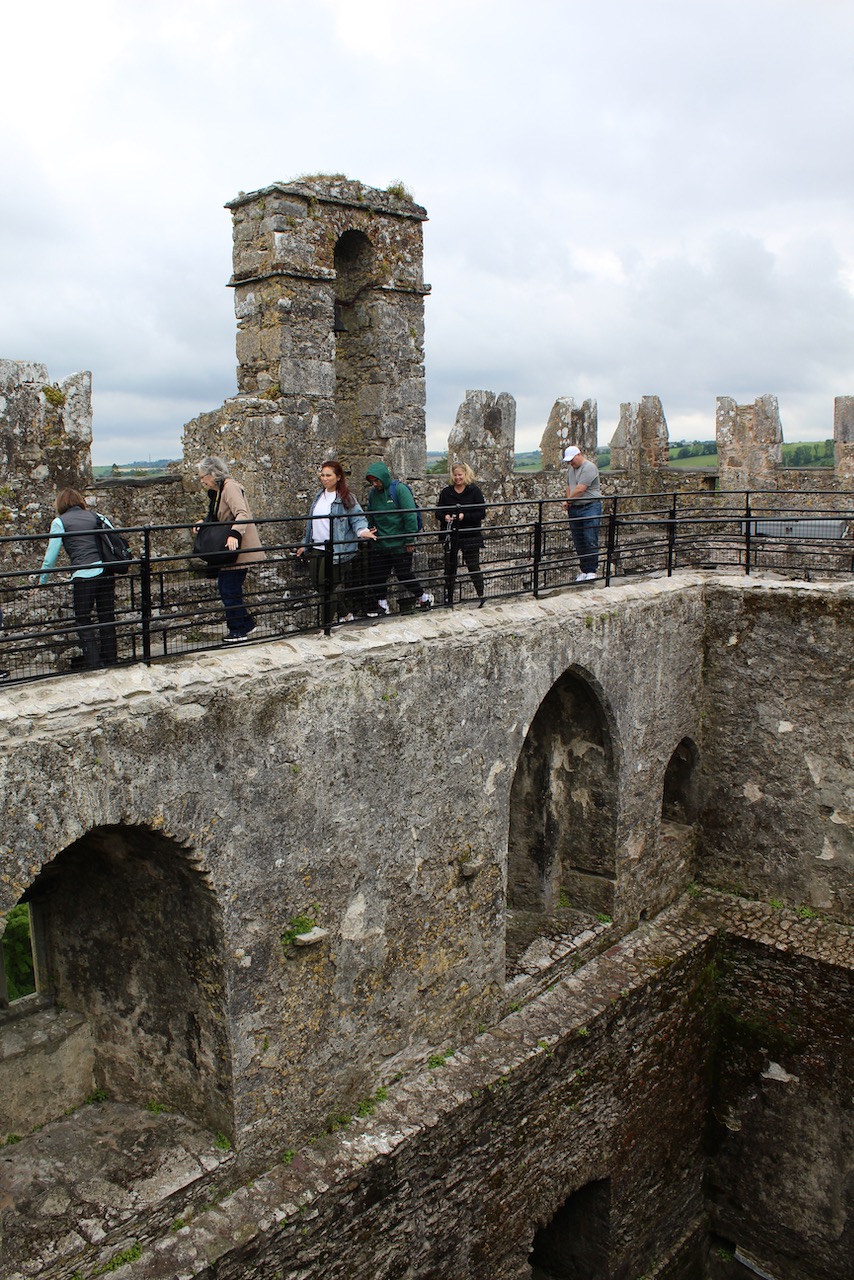
The floors of the banqueting hall, above the family room, and the chapel which would have been on the floor above the banqueting hall, are gone, so when you reach the top of the castle, you can look down inside.

Blarney Castle, June 2022. Photograph © Jennifer Winder-Baggot, www.irishhistorichouses.com
Looking down from the battlements at what would have been the chapel (with the arched windows) and the Banqueting Hall below. Photograph © Jennifer Winder-Baggot, www.irishhistorichouses.com
In the Chapel, mass would have been said in Latin, and the chaplain acted as tutor to the children also. The builder of Blarney Castle, Cormac Laidir MacCarthy, was a generous patron of the church and he built five churches, including Kilcrea Abbey where he was buried, which became the traditional burial place for the lords of Blarney.

Blarney Castle, June 2022. Photograph © Jennifer Winder-Baggot, www.irishhistorichouses.com
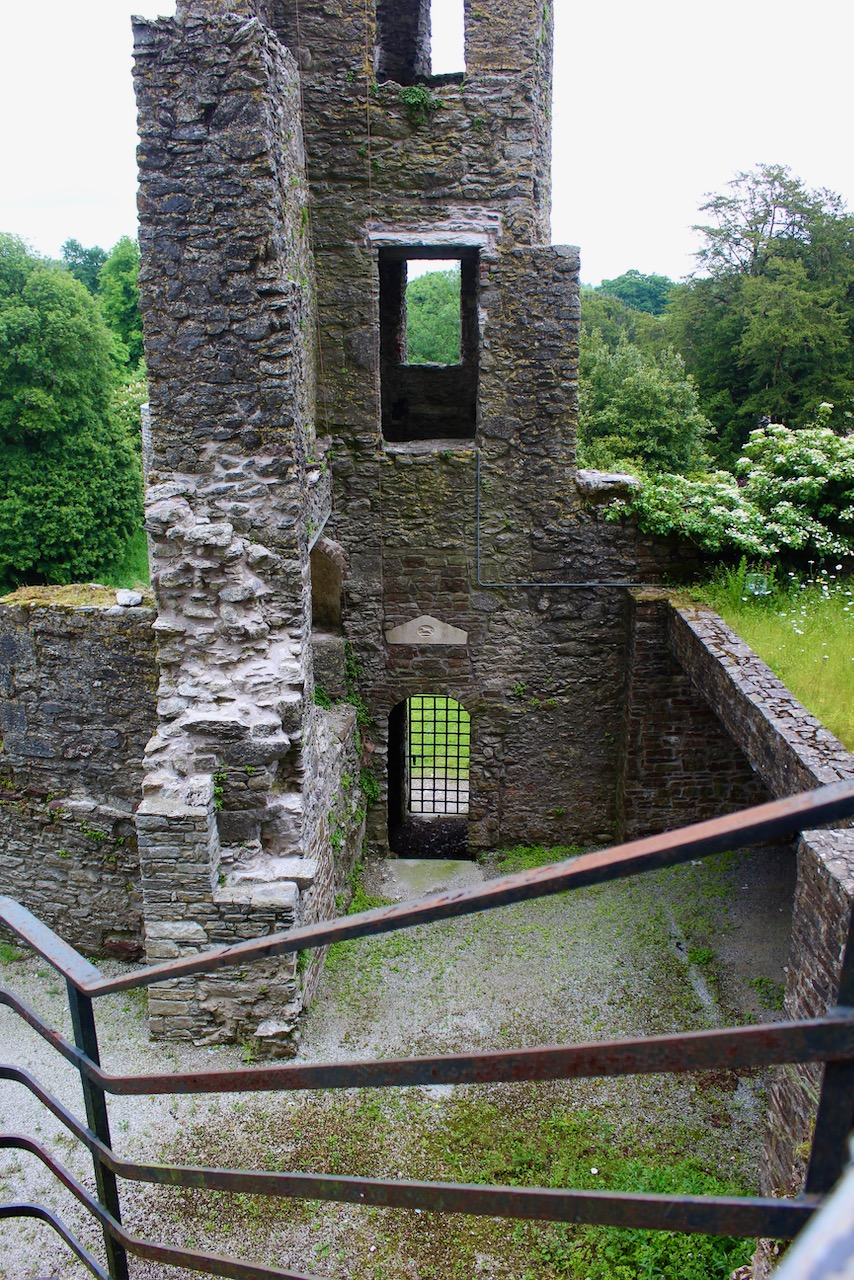
I love how well-preserved the stone door and window frames remain. Photograph © Jennifer Winder-Baggot, www.irishhistorichouses.com
The information boards tell us that feasting was part of the way of life at the time and a meal was combined with a night’s entertainment as part of the social life of the Castle. A series of courses would be served, with fish eggs, fowl and roast meat, all highly spiced to keep them fresh. Alcohol served included mead, beer, wine and whiskey. The high ranks sat near the Lord at the top of the table “above the salt” and others sat “below the salt.” As the meal progressed the Chieftain’s Bard would play his harp and sing songs celebrating the prowess of the MacCarthy clan.

Blarney Castle, June 2022. Photograph © Jennifer Winder-Baggot, www.irishhistorichouses.com
The bell-tower, midway along the top of the eastern battlements. The north pilaster supporting the arch is built on top of a chimneystack that served the fireplaces in the Great Hall and the Banqueting Hall. Photograph © Jennifer Winder-Baggot, www.irishhistorichouses.com
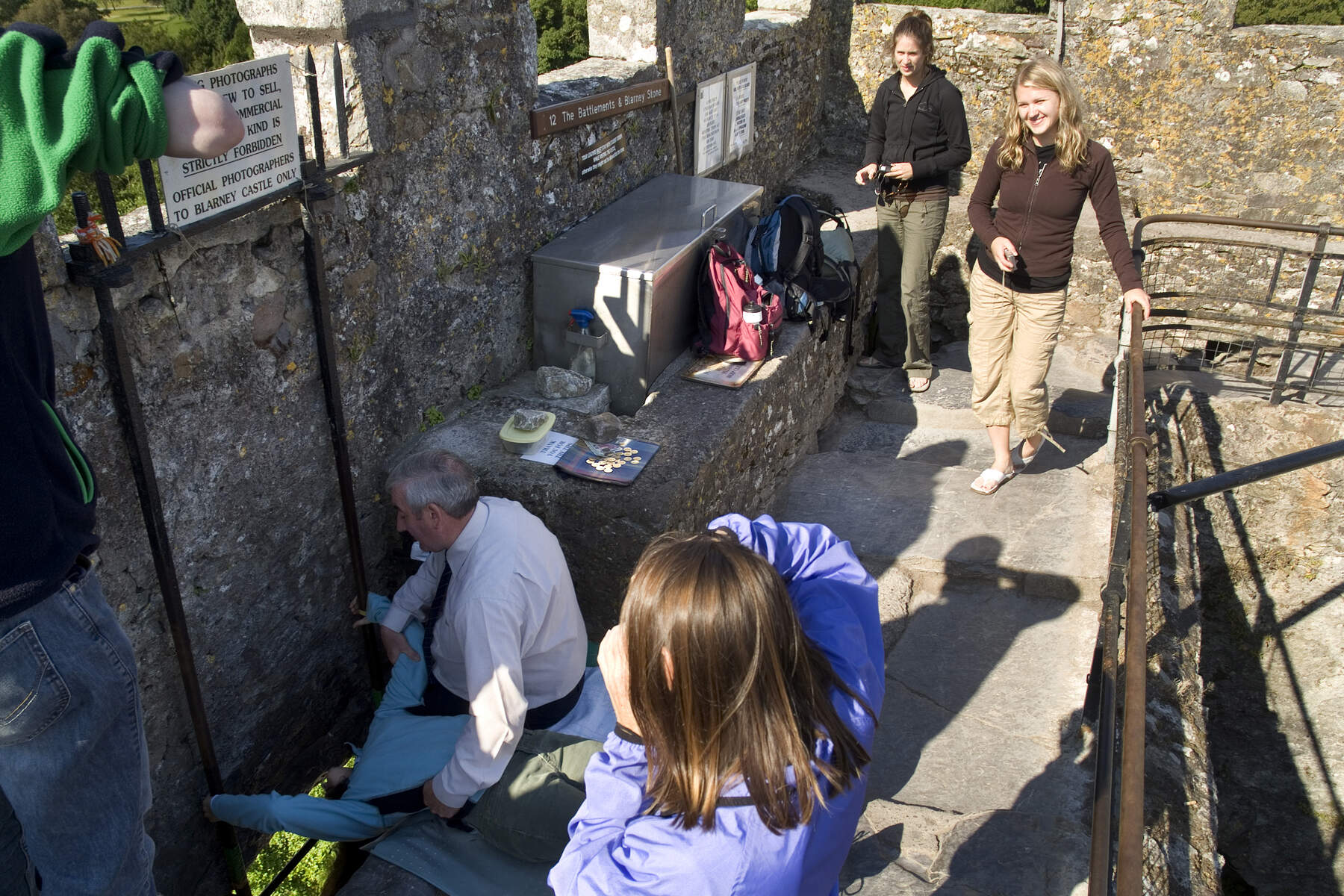
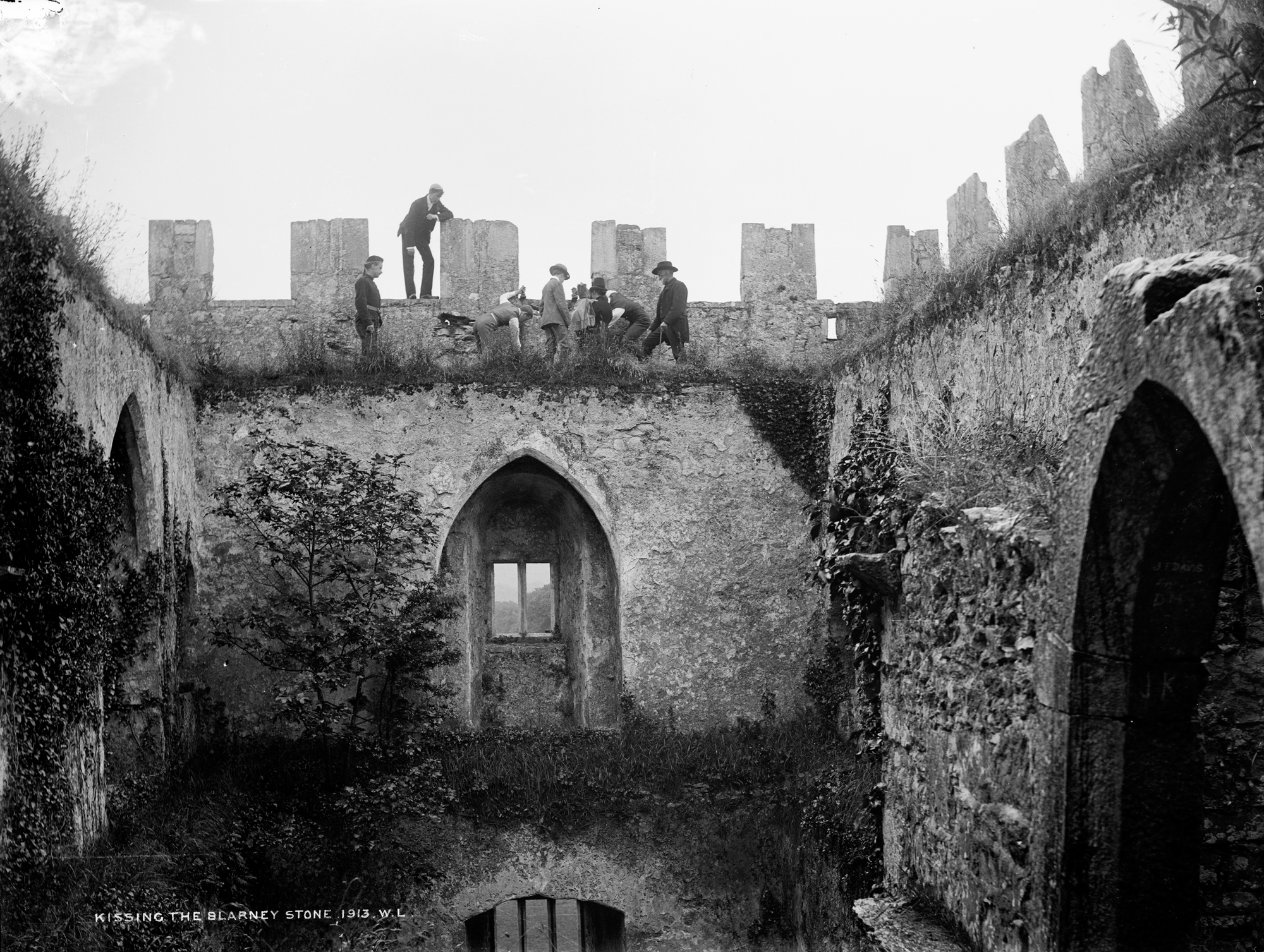
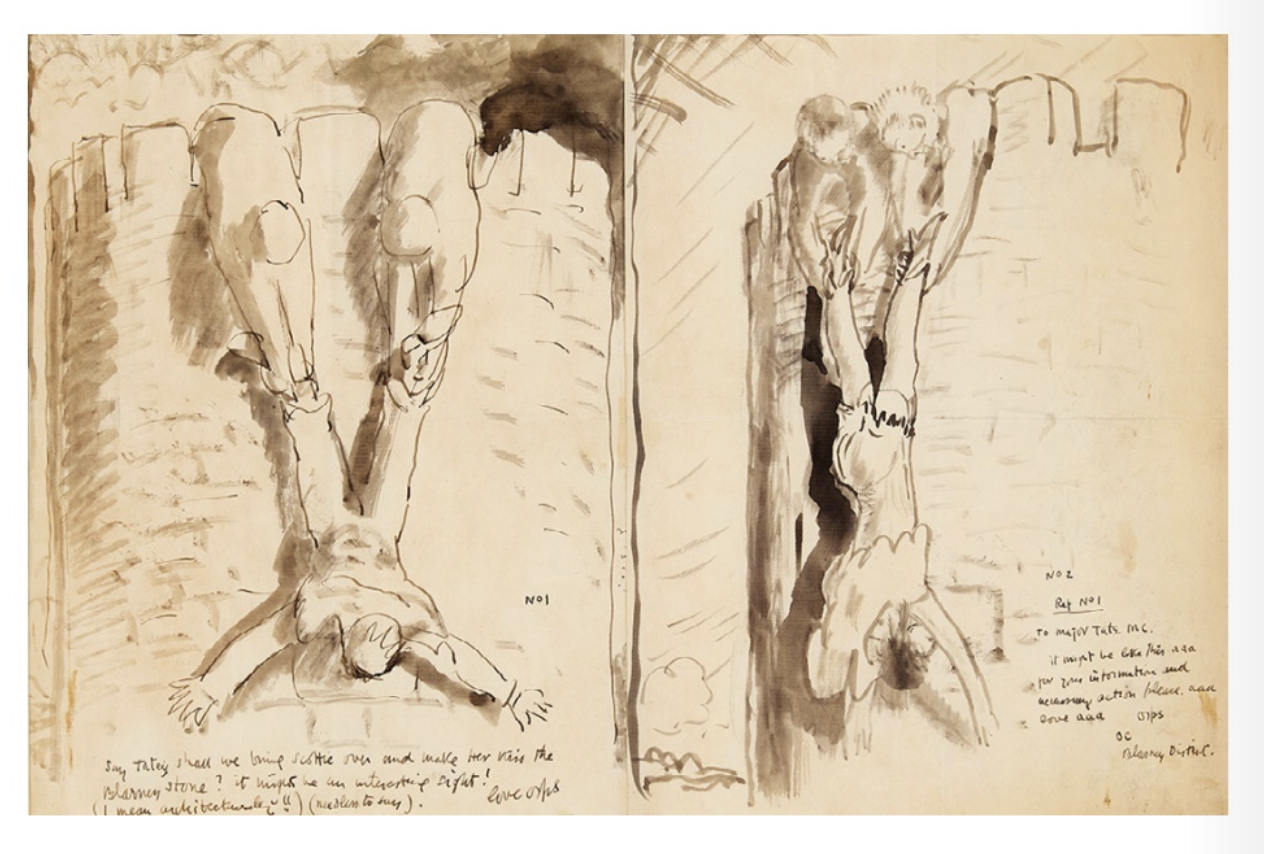
The Historic Houses of Ireland website tells us that in former times visitors were lowered over the parapet to kiss ‘The Stone’ while gripped firmly by the ankles. The process has become easier and safer today though one still has to lean very far back to kiss the stone, head dangling downward. It has been a popular tourist destination since the days of Queen Victoria. The keep and Blarney stone remains, “despite the osculatory attrition of the eponymous stone by thousands of tourists every year” as Burke’s Peerage tells us with verve! (107th Edition (2003) page 865)

Photograph dated around 1897, National Library of Ireland Creative Commons on flickr.
photo by Chris Hill, 2015, Tourism Ireland, Ireland’s Content Pool.
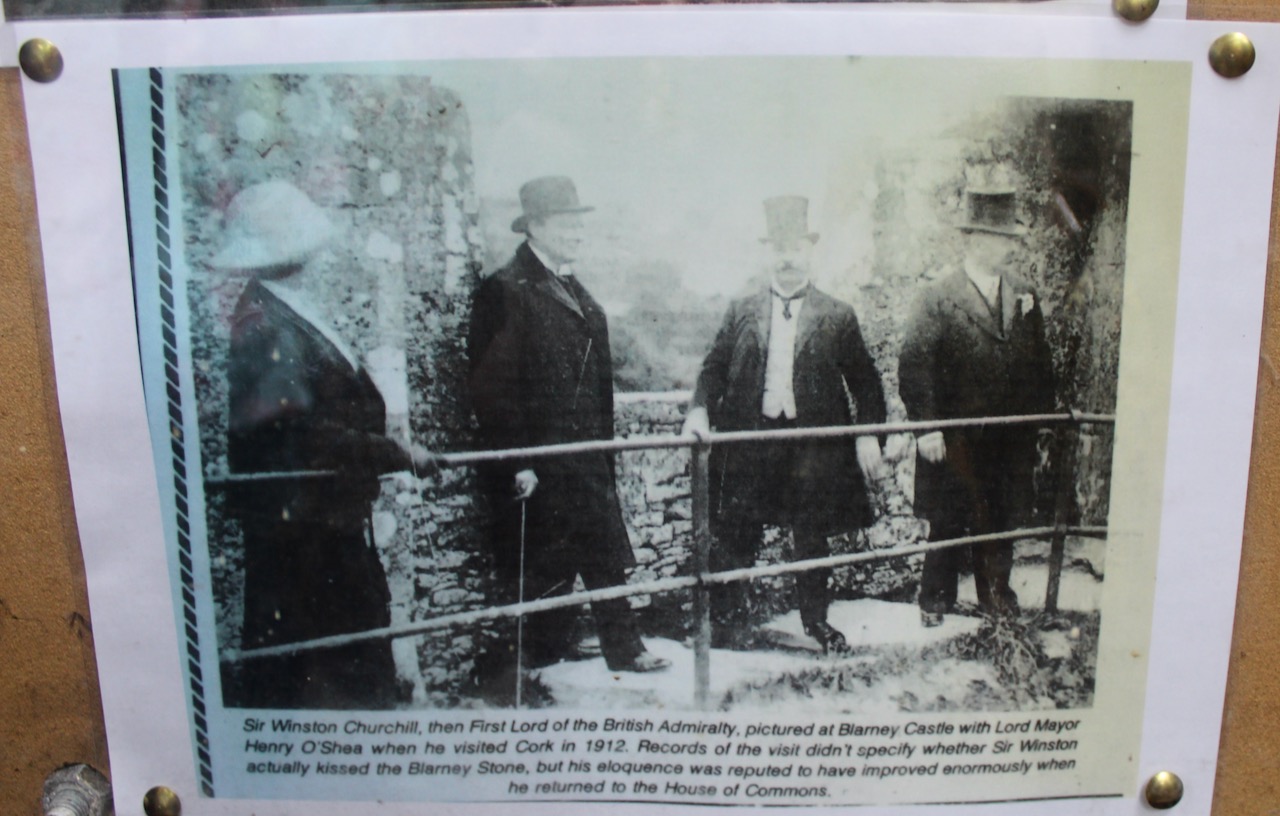
Winston Churchill at Blarney Stone, 1912.
Photograph from National Library of Ireland Creative Commons.

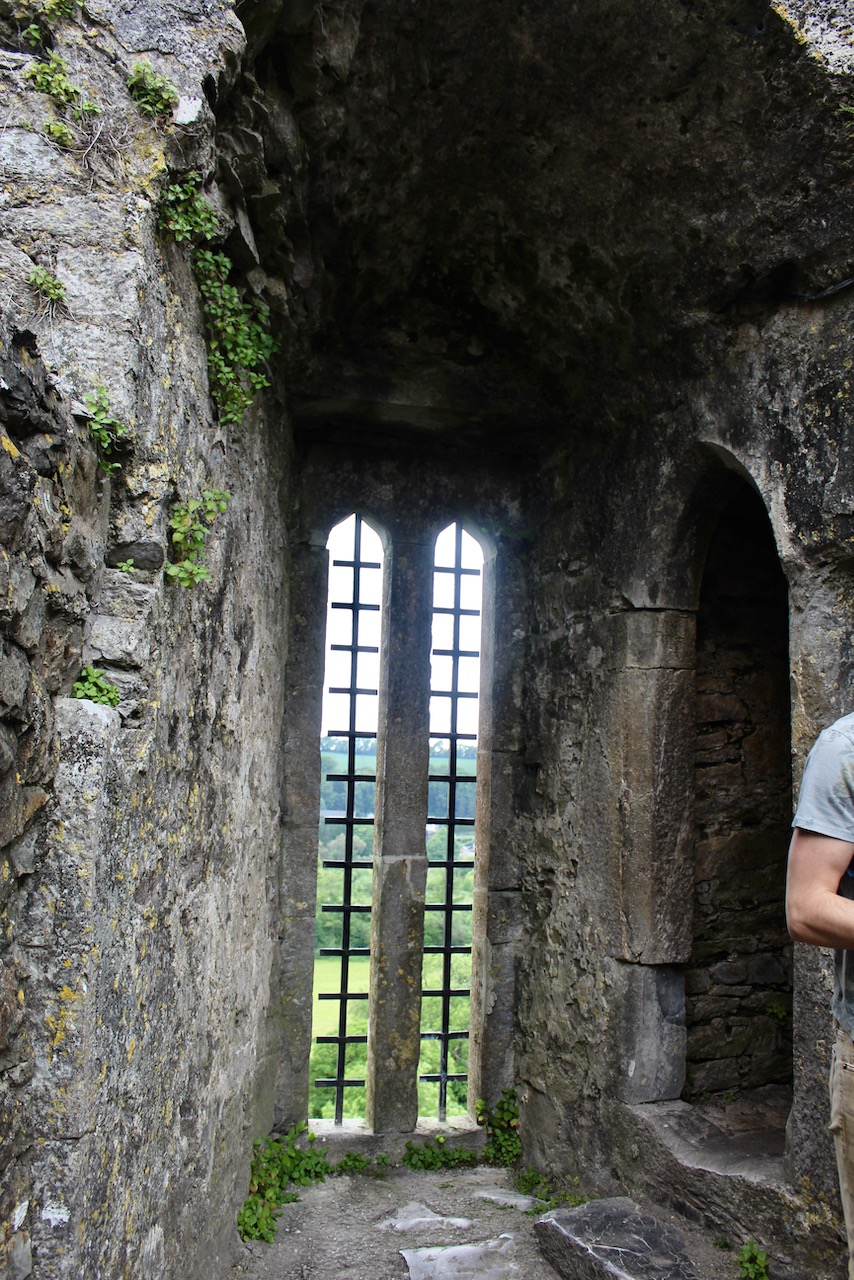
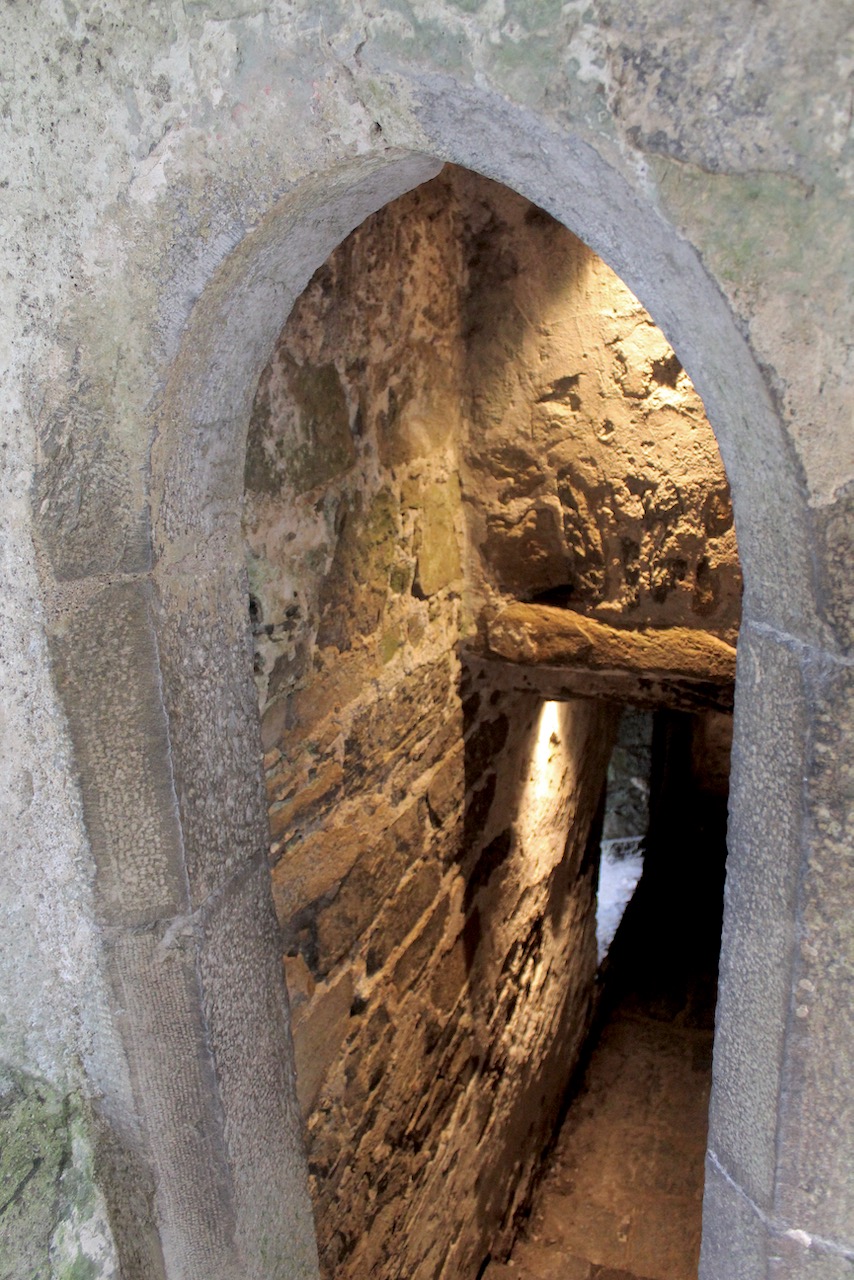
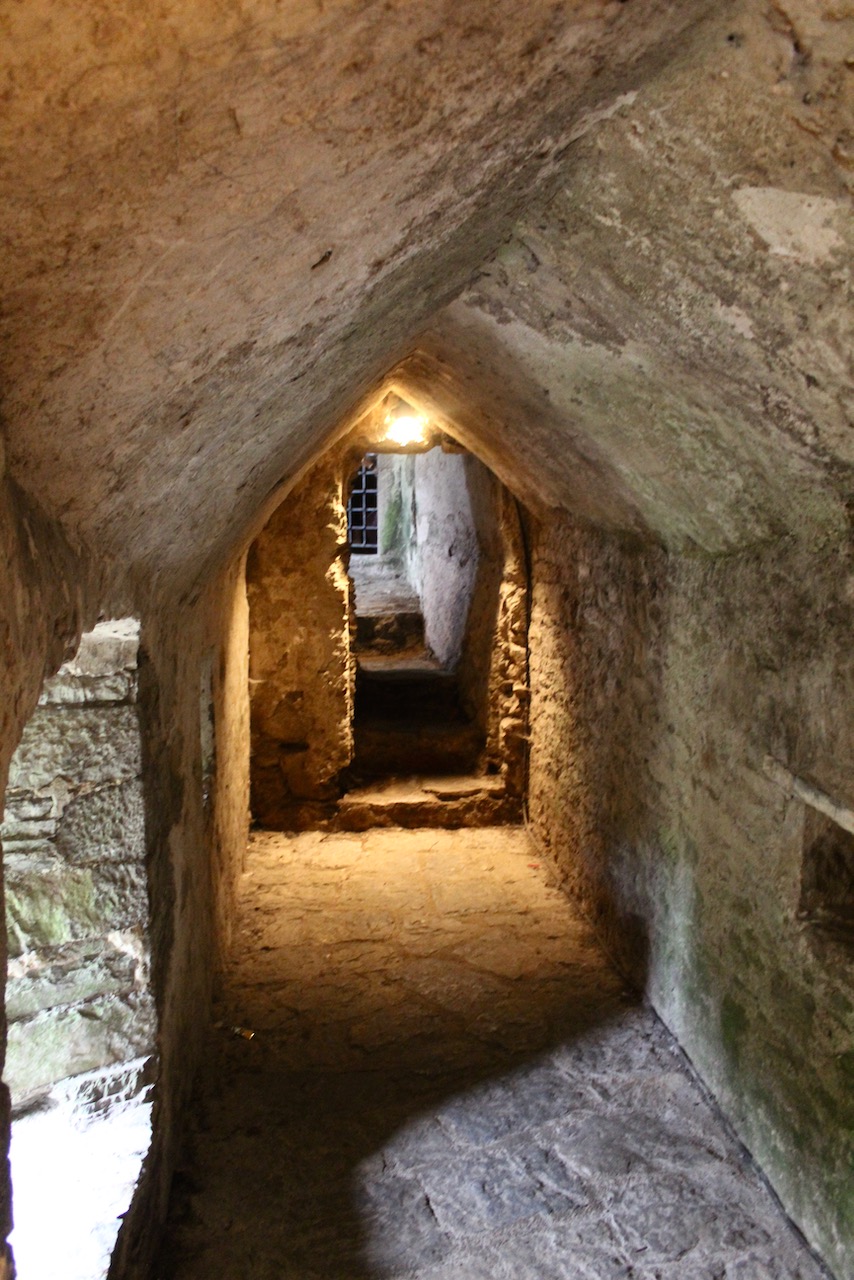
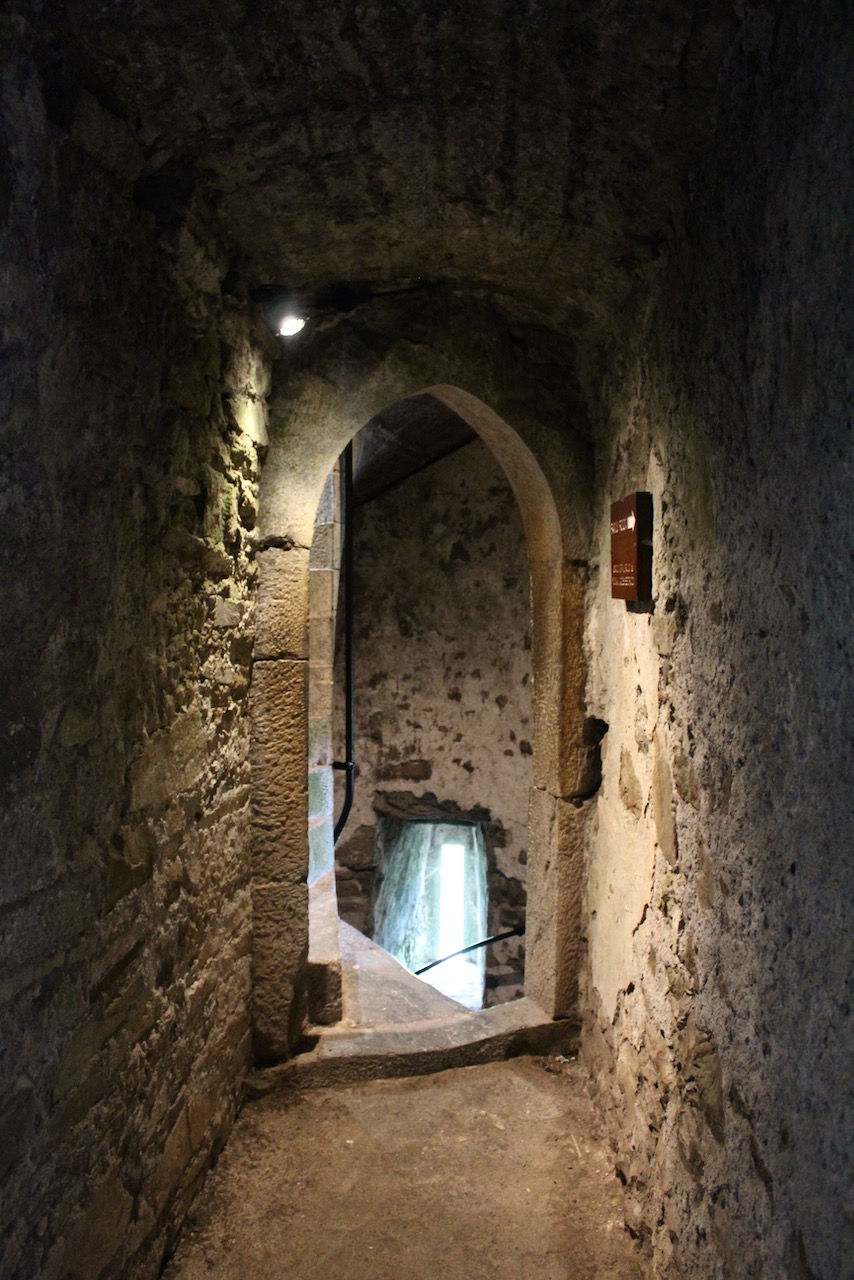
One can see from the window embrasures how thick the castle walls are. There are passageways within the walls.

Passageways within the thick walls of the castle. Photograph © Jennifer Winder-Baggot, www.irishhistorichouses.com

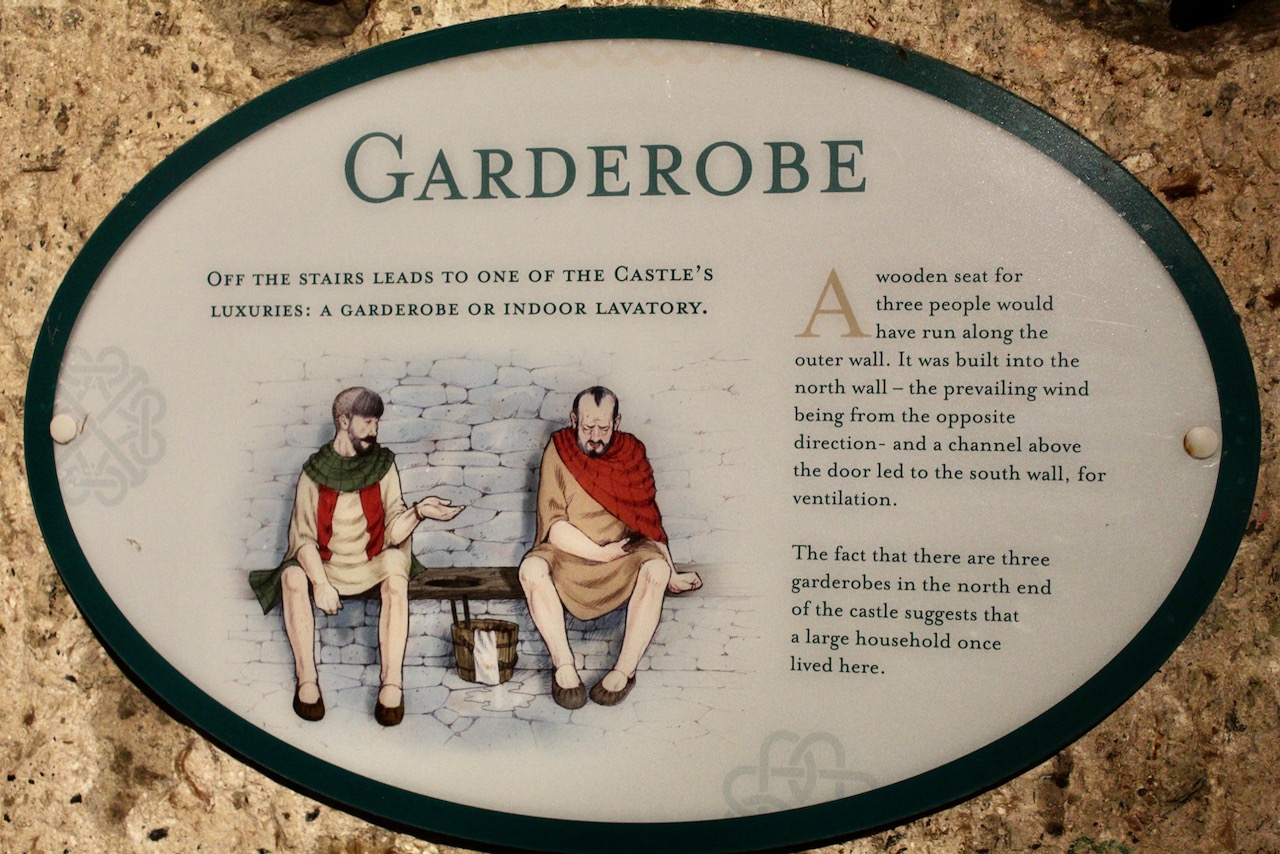
Some passageways lead to ancilliary rooms, sometimes to a garderobe or “bathroom.”

Blarney Castle, June 2022.
Blarney Castle, June 2022. Photograph © Jennifer Winder-Baggot, www.irishhistorichouses.com

James St. John Jeffereyes (1734-1780) inherited Blarney estate at the age of six. St. John Jeffereyes was an “improving” landlord who sought to aid the welfare of his tenants and maximise profits from his estates. He took an interest in the linen trade developing in County Cork, which processed locally grown flax into linen. St. John Jeffereyes created a village near Blarney Castle in 1765 with a linen mill, bleach mill, weavers’ cottages and a bleach green. The River Martin powered the mills. The rise of cotton, however, proved the downfall of the production of linen. In 1824, Martin Mahon moved his woollen manufacturing business to a former cotton mill in Blarney, to develop Blarney Woollen Mills. James St. John also, with three other landed gentlemen, established the Tonson Warren bank in Cork city (1768). It was a prominent institution in Cork until its failure in 1784, after Jeffereyes’s death.

James St. John Jeffereyes first married Elizabeth Cosby (1721-1788). We came across her when we visited Stradbally in County Laois, which is still owned by the Cosby family. Her father was William Cosby (1690-1736), who was Governor of New York. She had been previously married to Augustus Fitzroy, 2nd Duke of Grafton, who died in 1741. James St. John and Elizabeth’s daughter Lucia served as Maid of Honour to Queen Charlotte, wife of King George III.

James St. John Jeffereyes married secondly Arabella Fitzgibbon, sister of the 1st Earl of Clare, John Fitzgibbon (1748-1802) (who, by the way, married the daughter of Richard Chapell Whaley, who had the house on St. Stephen’s Green built which now houses the Museum of Literature Ireland (MOLI) – see my entry for MOLI on https://irishhistorichouses.com/2020/06/06/covid-19-lockdown-20km-limits-and-places-to-visit-in-dublin/. He was the Lord Chancellor of Ireland who forced the Act of Union through parliament). With Arabella, James had a son and heir, George Jeffereyes (1768-1841).

James’s son George Jeffereyes (1768-1841) married Anne, daughter of the Right Hon. David la Touche of Marlay, the richest man in Ireland and head of the banking dynasty. George’s sisters also married well: Marianne married George Frederick Nugent, 7th Earl of Westmeath; Albinia married Colonel Stephen Francis William Fremantle; and Emilia married Richard Butler, 1st Earl of Glengall.

The Court was destroyed by fire in 1820. Instead of rebuilding, George Jeffereyes and his family moved to Inishera House in West Cork. [7] George and Anne’s son St. John Jeffereyes (1798-1862) inherited Blarney. He had a son, also St. John, who lived in Paris and died in 1898. The estate passed to St. John’s sister Louisa, who married George Colthurst (1824-1878), 5th Baronet Colthurst, of Ardum, Co. Cork. He was a man of property, with another large estate at Ballyvourney near the border with County Kerry, along with Lucan House in County Dublin (currently the Italian ambassador’s residence in Ireland). Blarney remains in the hands of the Colthurst family. Blarney House was built for Louisa and George Colthurst, in 1874.

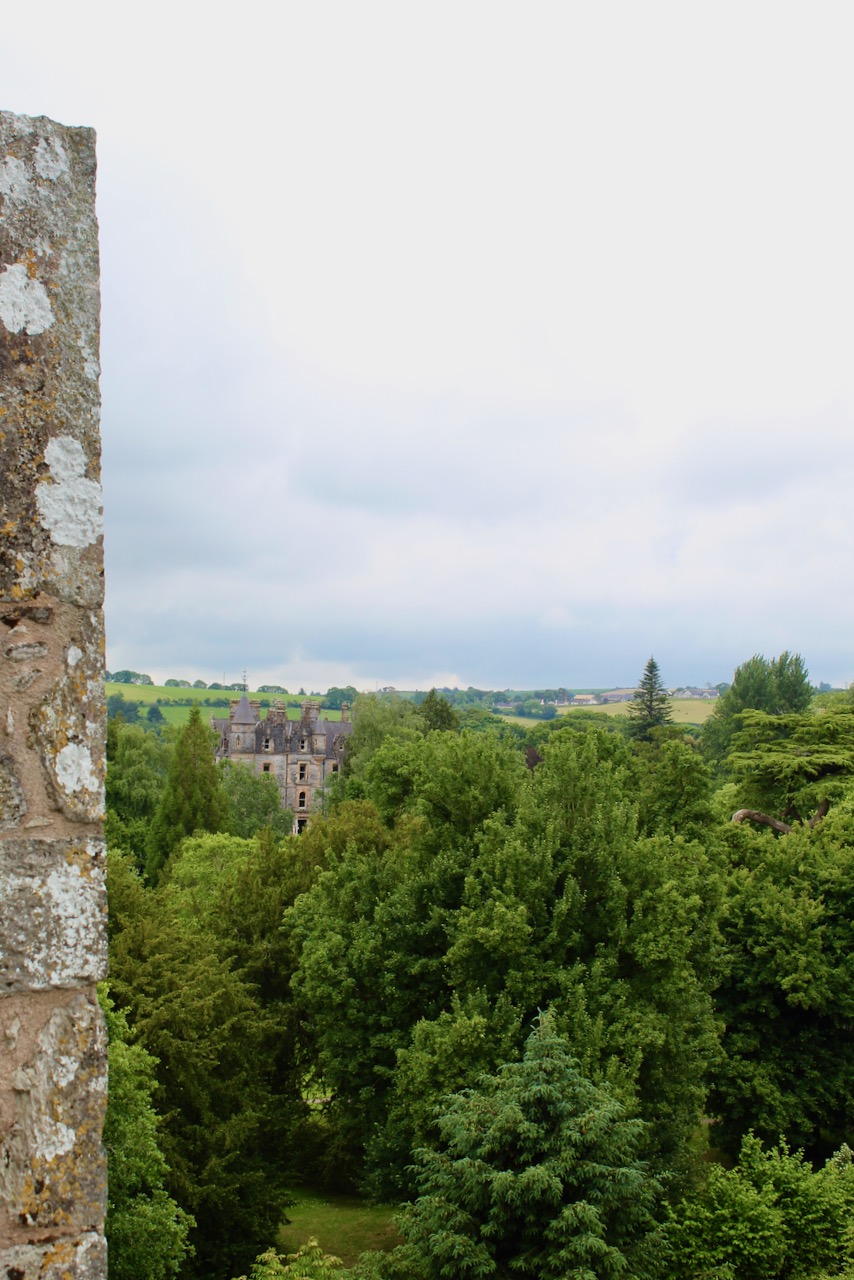
Blarney House, built for George Colthurst (1824-1878), 5th Baronet Colthurst and his wife Louisa Jeffereyes in 1874, as seen from the top of Blarney Castle. Photograph © Jennifer Winder-Baggot, www.irishhistorichouses.com

George Colthurst’s maternal grandmother was Emily La Touche, daughter of David La Touche and Elizabeth Marlay, and paternal grandmother was Emily La Touche’s sister Harriet. Their sister Anne had married George Charles Jeffereyes, Louisa’s grandmother, so Louisa and George were second cousins.

Randall MacDonald tells us in his book The Lost Houses of Ireland. A chronicle of great houses and the families who lived in them:

p. 29 “The Colthursts had arrived in Ireland from Yorkshire towards the end of Elizabeth I’s reign and settled in Cork. Christopher Colthurst was murdered by the rebels in 1641 near Macroom in County Cork. By the 1730s, they were High Sheriffs of County Cork, and in 1744 John Colthurst, who had married the daughter of the 1st Earl of Kerry, Lady Charlotte Fitzmaurice, was created a baronet. It would be uncharitable to suggest that it was his father-in-law’s influence that procured him this advancement. He was Member of Parliament for Doneraile from 1751 (and afterwards for Youghal and Castle Martyr). His son Sir John Colthurst, the 2nd Baronet, was killed in a duel with Dominick Trant in 1787 and the title passed to his brother (MP for Johnstown, Co Longford and then for Castle Martyr until 1795), who married Harriet, daughter of the Right Hon. David la Touche. Sir Nicholas Colthurst, the 4th Baronet, was the MP for the city of Cork from 1812-1829.

It was his son, Sir George Colthurst, the 5th Baronet, who married Louisa Jefferyes of Blarney Castle in 1846.” [8]

The 9th Baronet Colthurst, Richard La Touche Colthurst (1928-2003) married Janet Georgina Wilson Wright, from Coolcarrigan in County Kildare, another section 482 property [ https://irishhistorichouses.com/2020/05/31/coolcarrigan-house-and-gardens-coill-dubh-naas-county-kildare/ ]. Their son is the current owner of Blarney Castle and House.

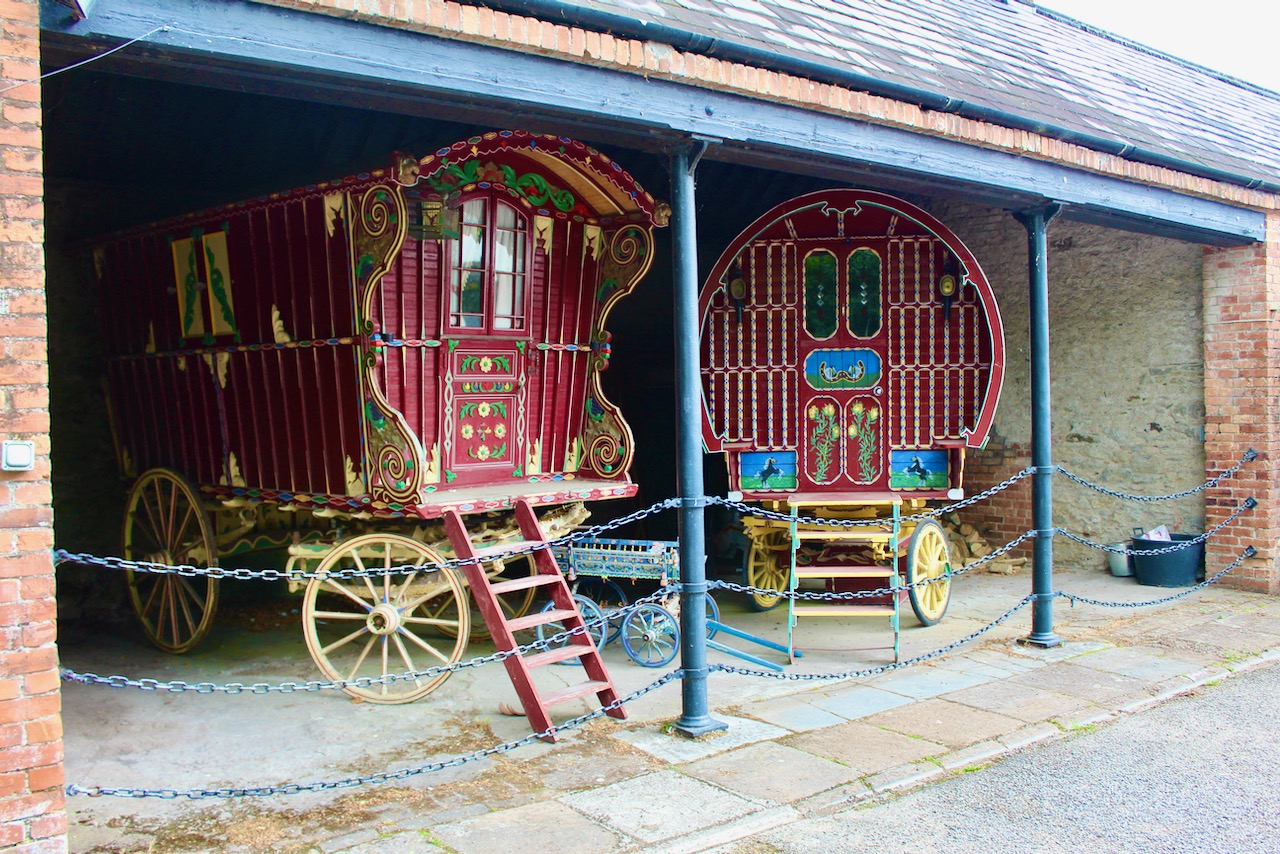
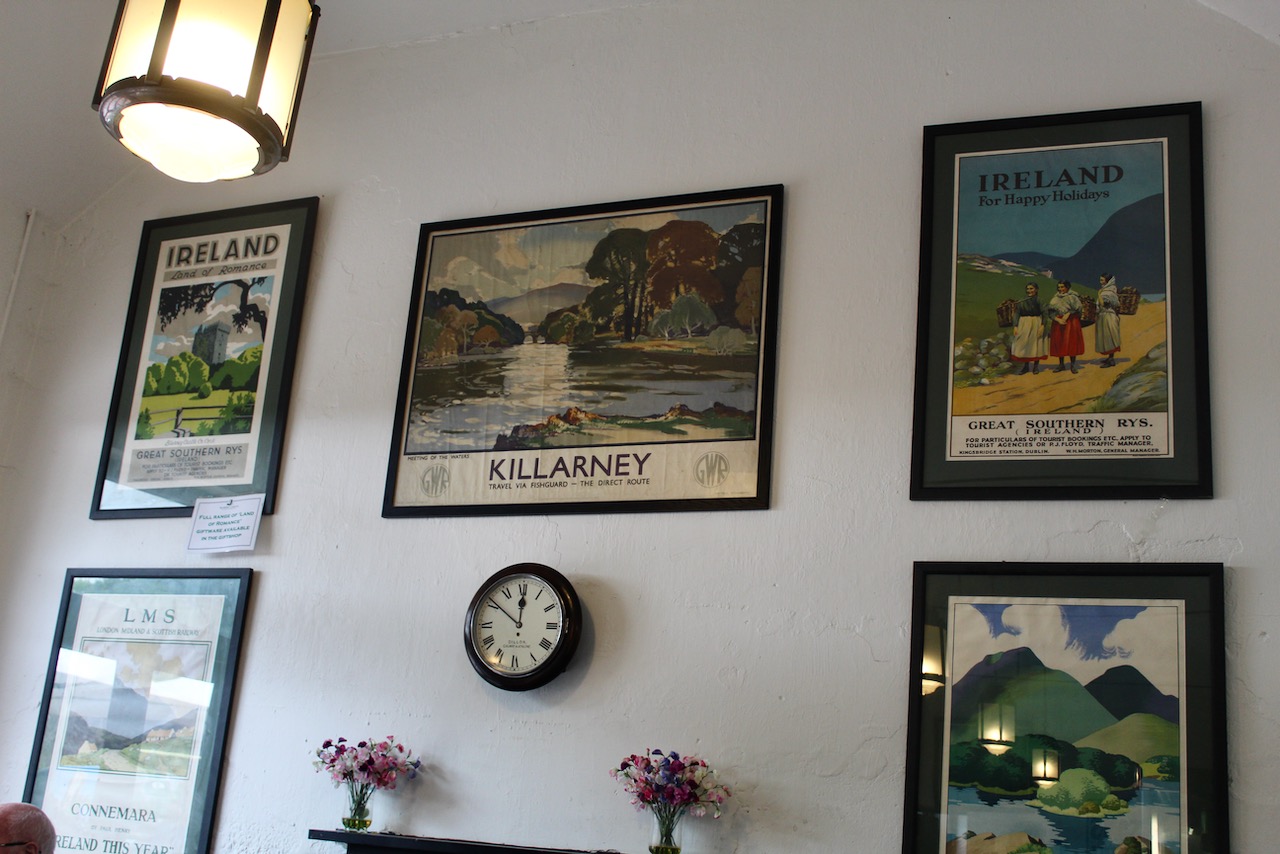
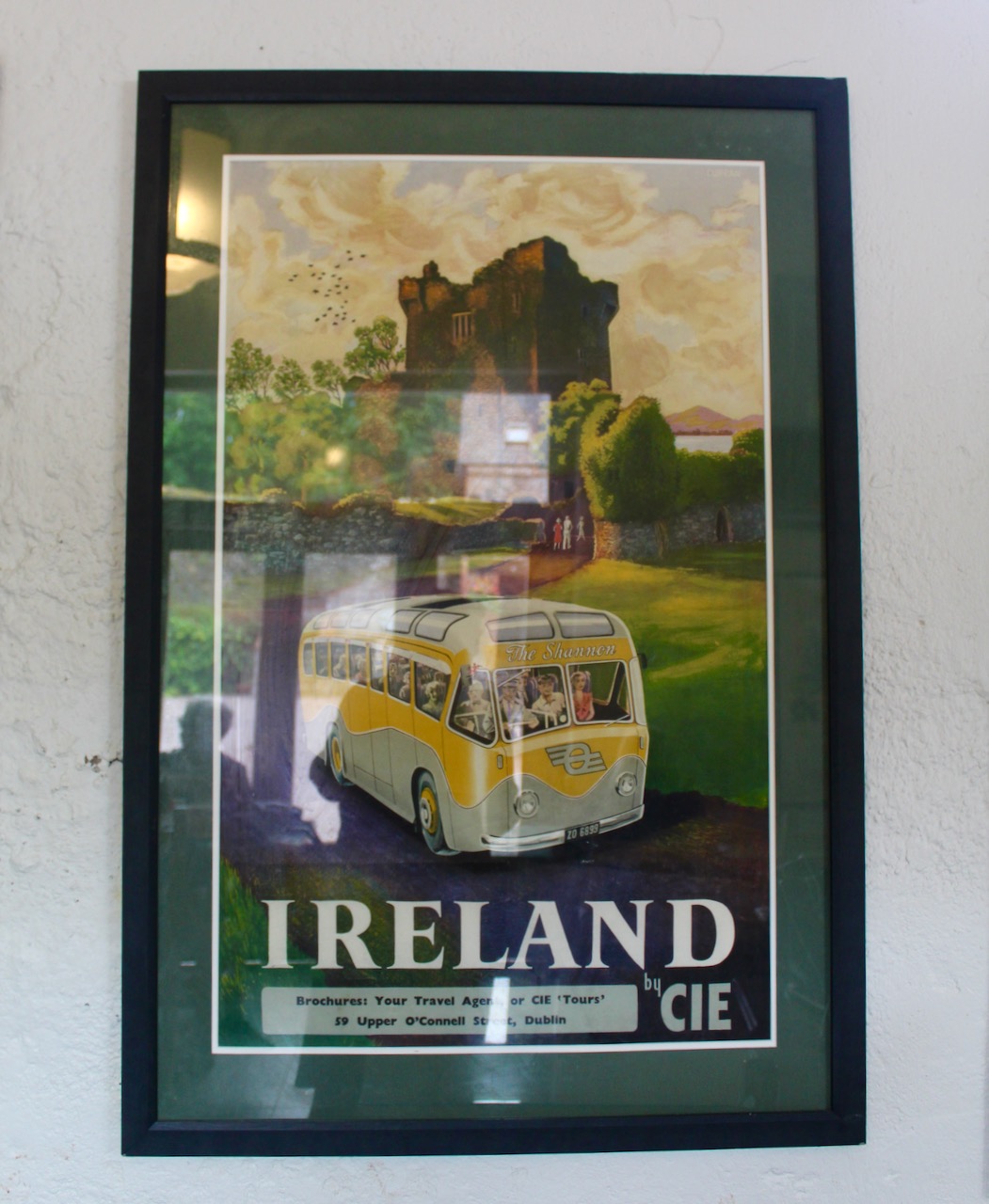
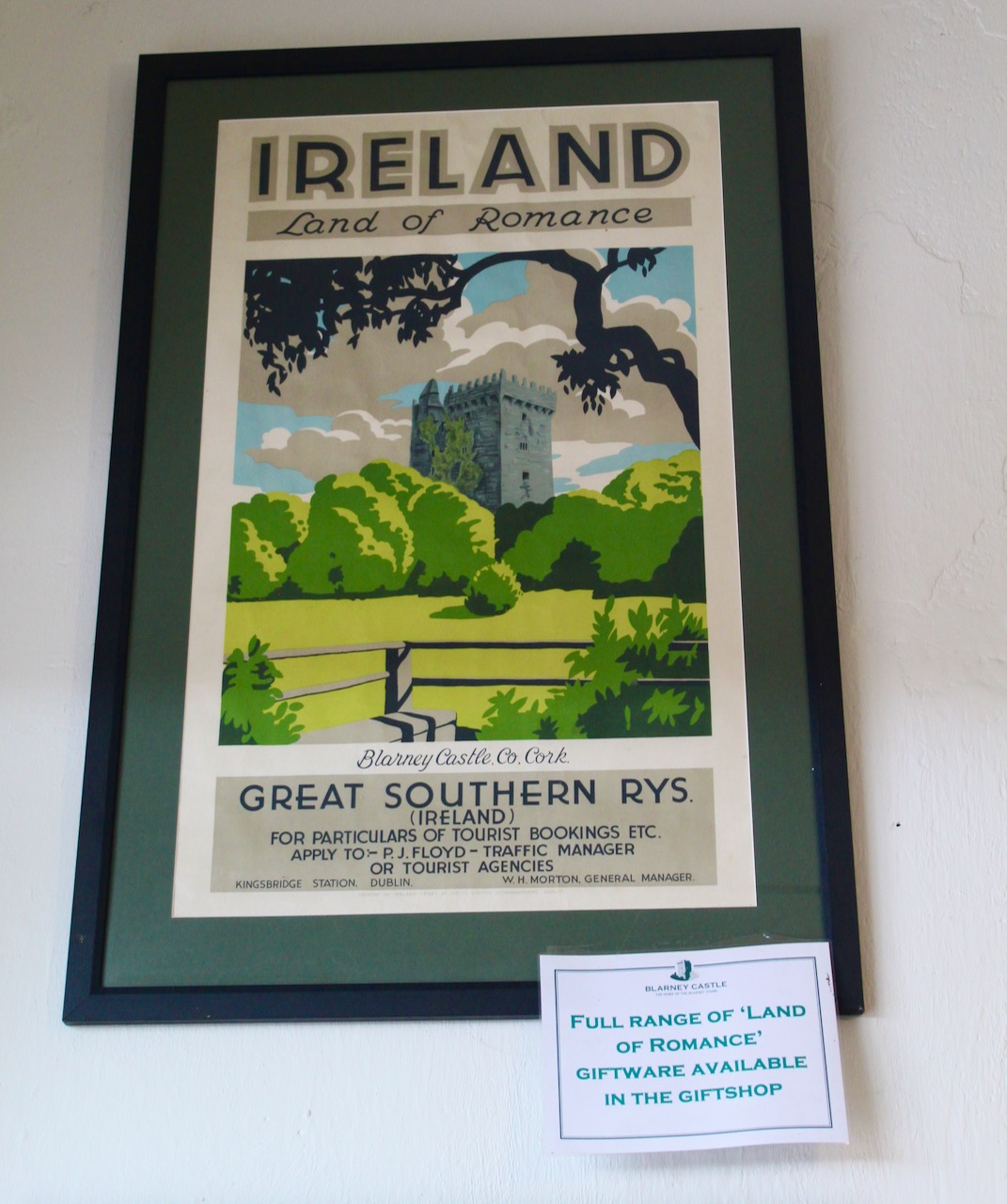
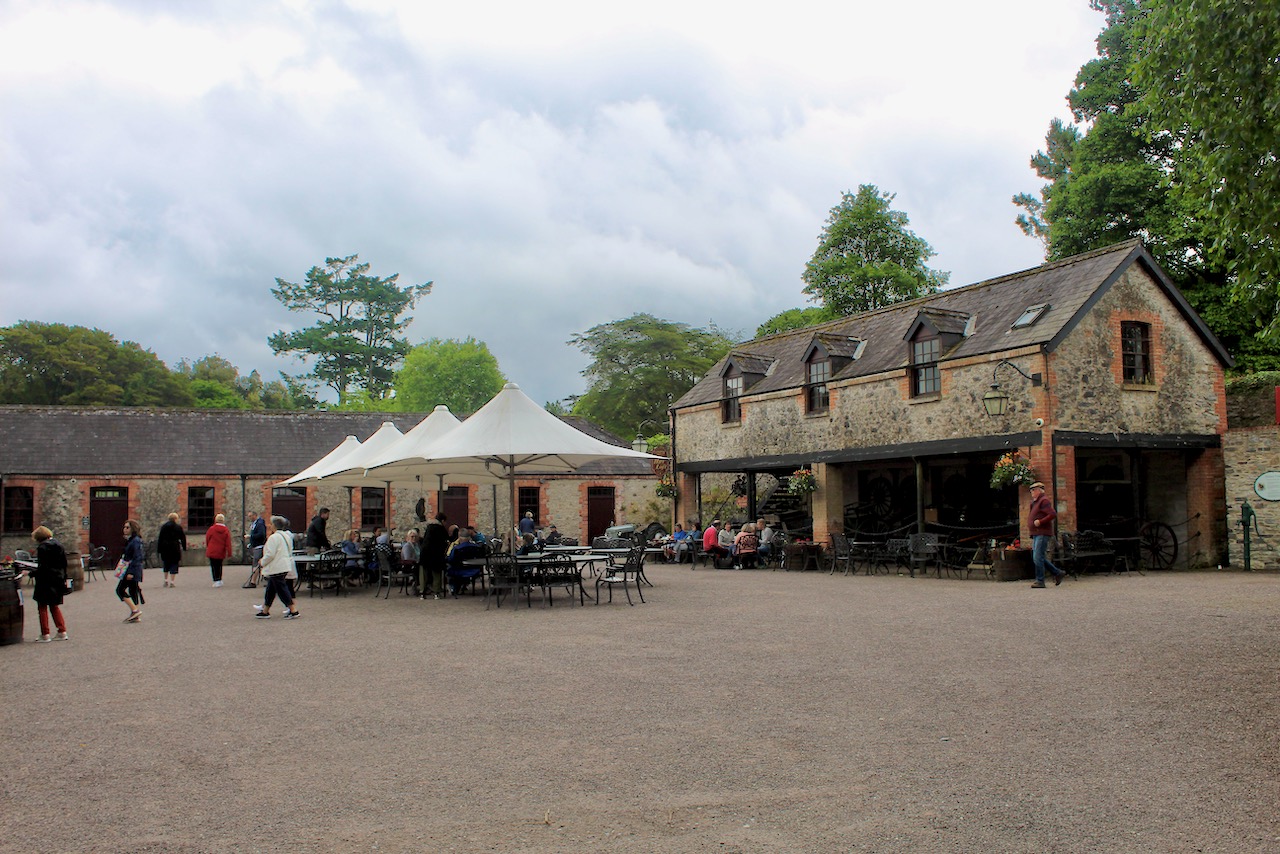
We headed for the coffee shop after our perusal of the Castle. In the yard they have beautiful barrell vaulted wagons, and in the cafe, lovely old travel advertisements.

Blarney Castle, June 2022. Photograph © Jennifer Winder-Baggot, www.irishhistorichouses.com
Individual stables have been made into “snugs” for snacks. Photograph © Jennifer Winder-Baggot, www.irishhistorichouses.com

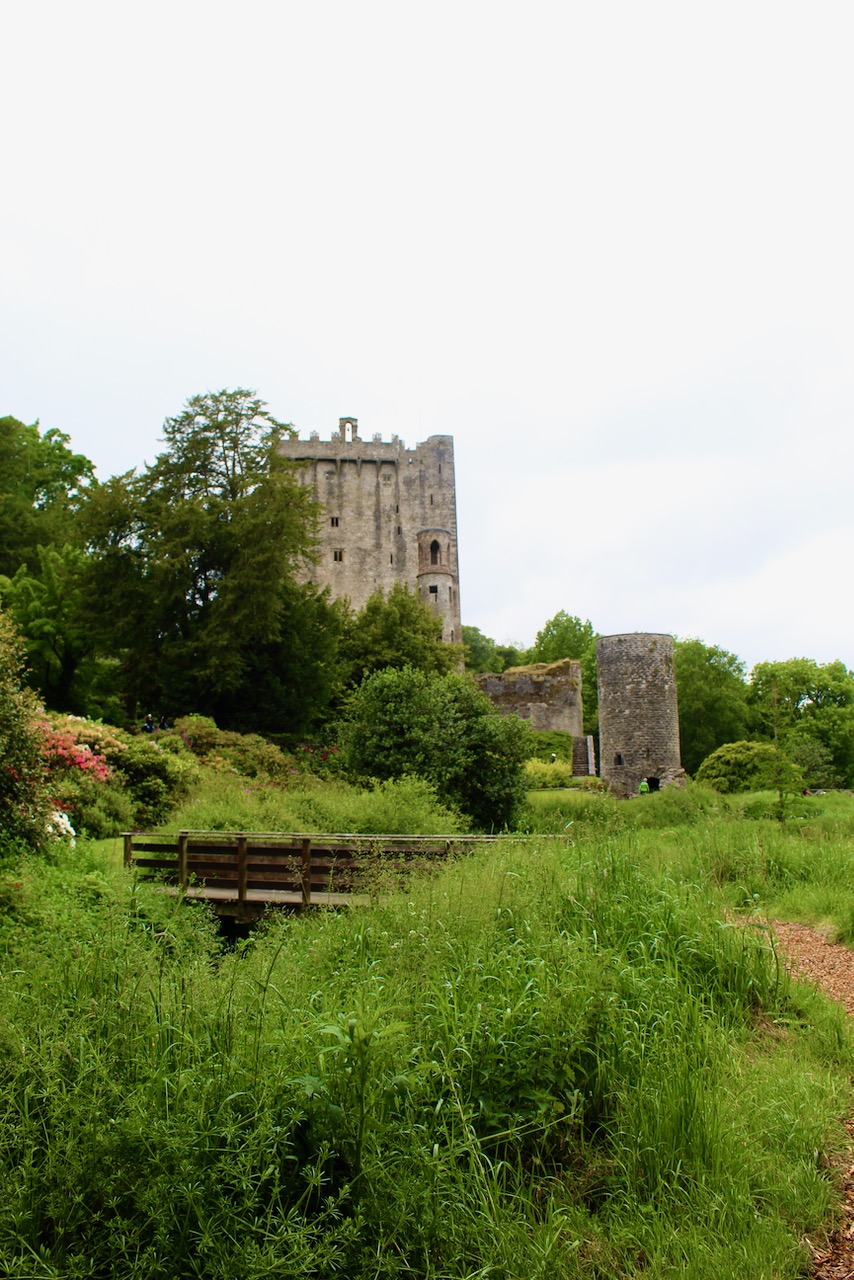
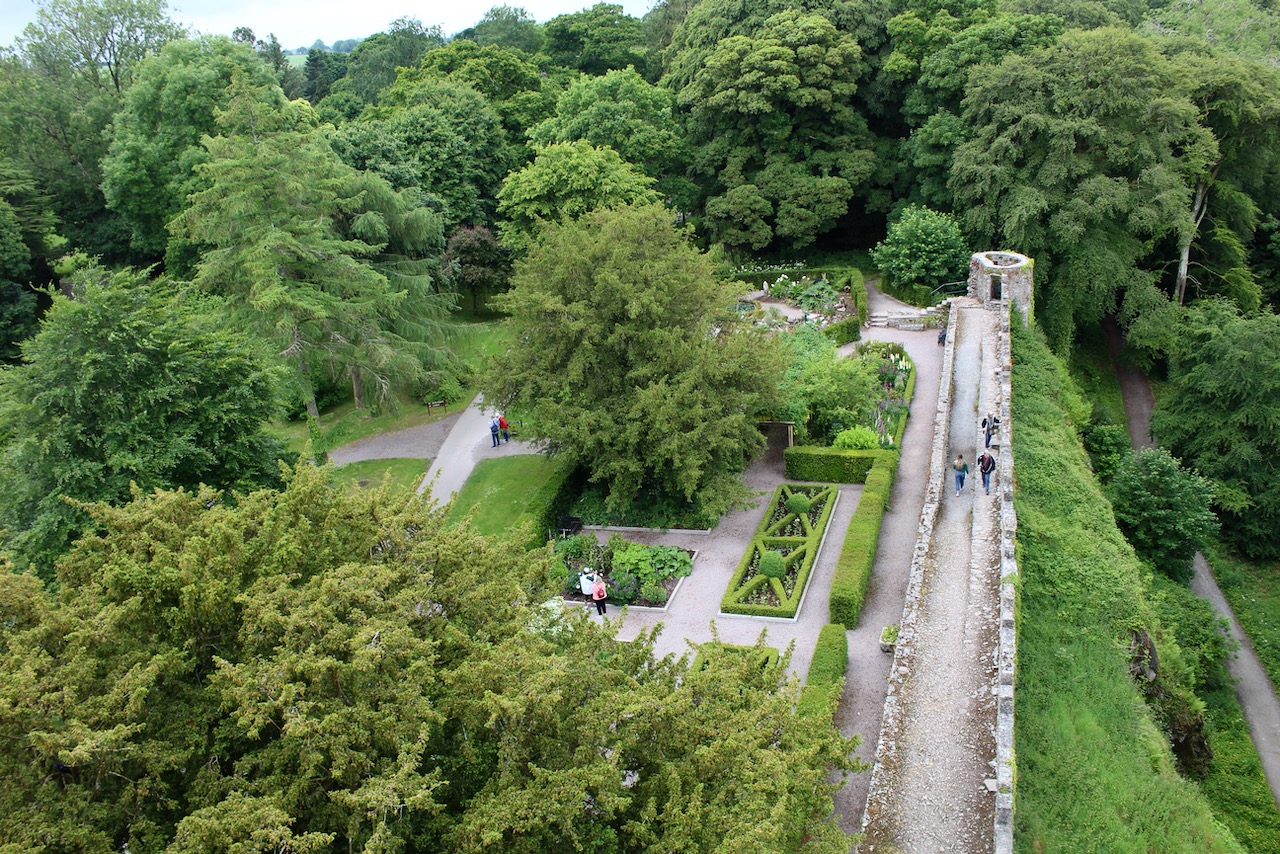
The seventy acres of gardens offer various landscapes. The bawn contains a Poison Garden, or medicinal garden, where various medicinal plants are grown, including poisons such as wolfsbane, ricin, mandrake, opium and cannabis.

The bawn wall and poison garden. Photograph © Jennifer Winder-Baggot, www.irishhistorichouses.com

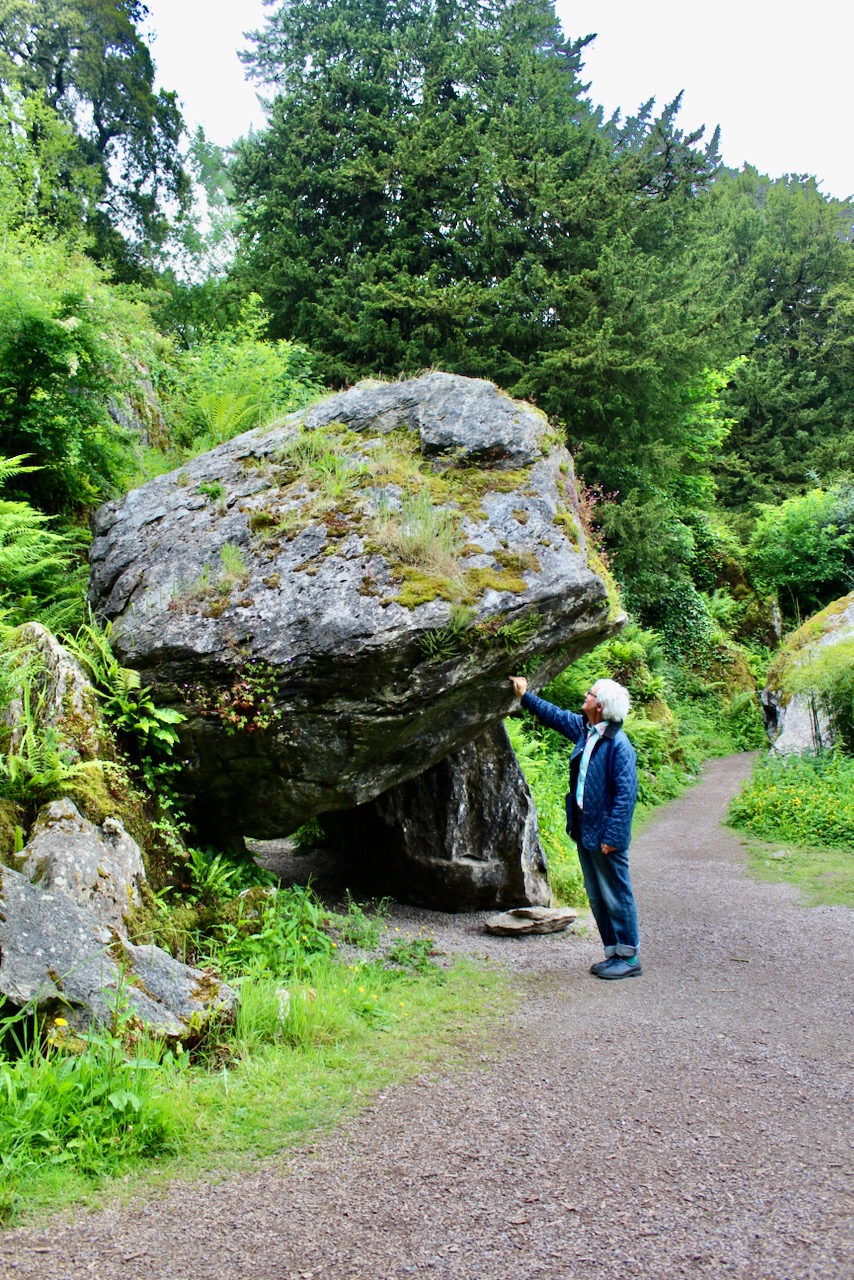
The Rock Close is the garden that was developed by the Jefferyes in the 1750s and echoes Ireland’s ancient past with giant rock formations and hints of Druidic culture. Water running through adds to the beauty, with a lovely waterfall.

Blarney Castle, June 2022. Photograph © Jennifer Winder-Baggot, www.irishhistorichouses.com
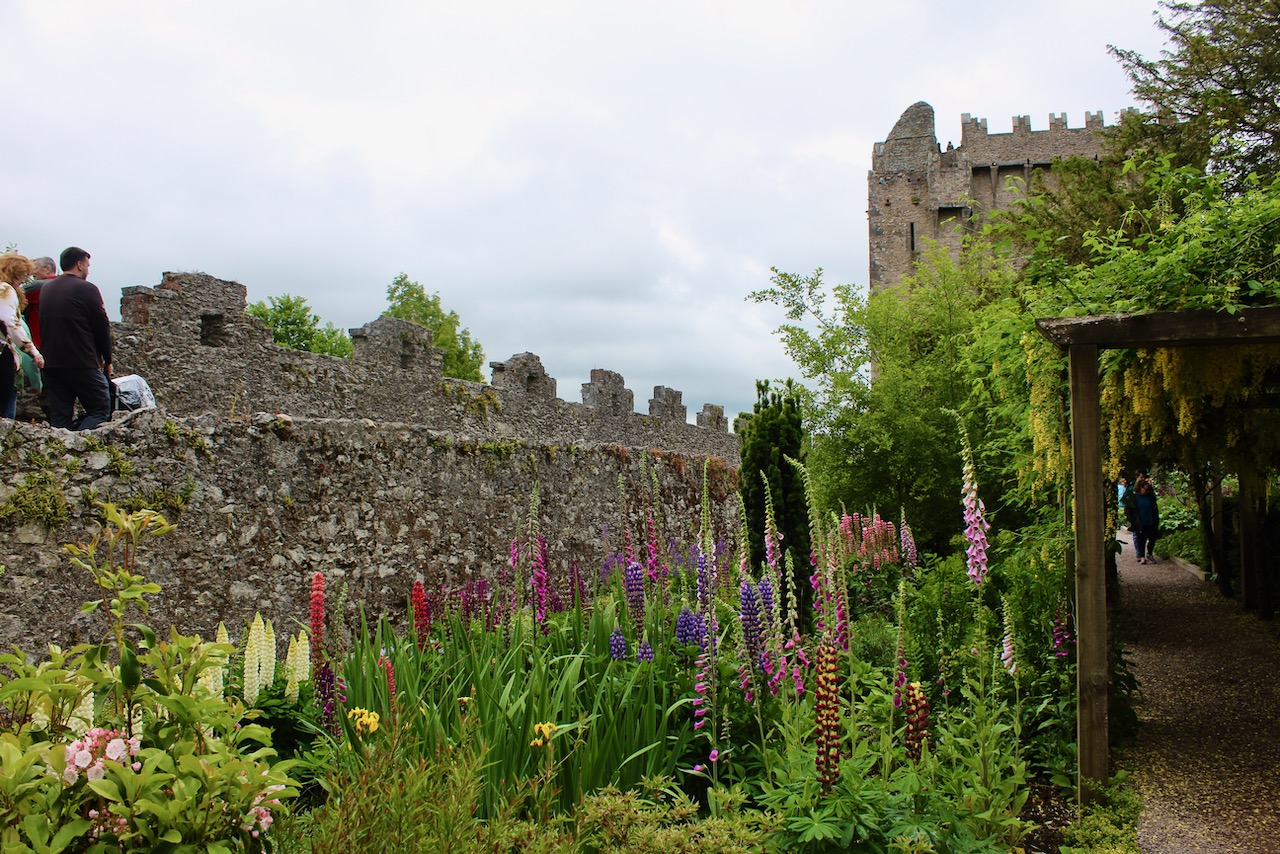
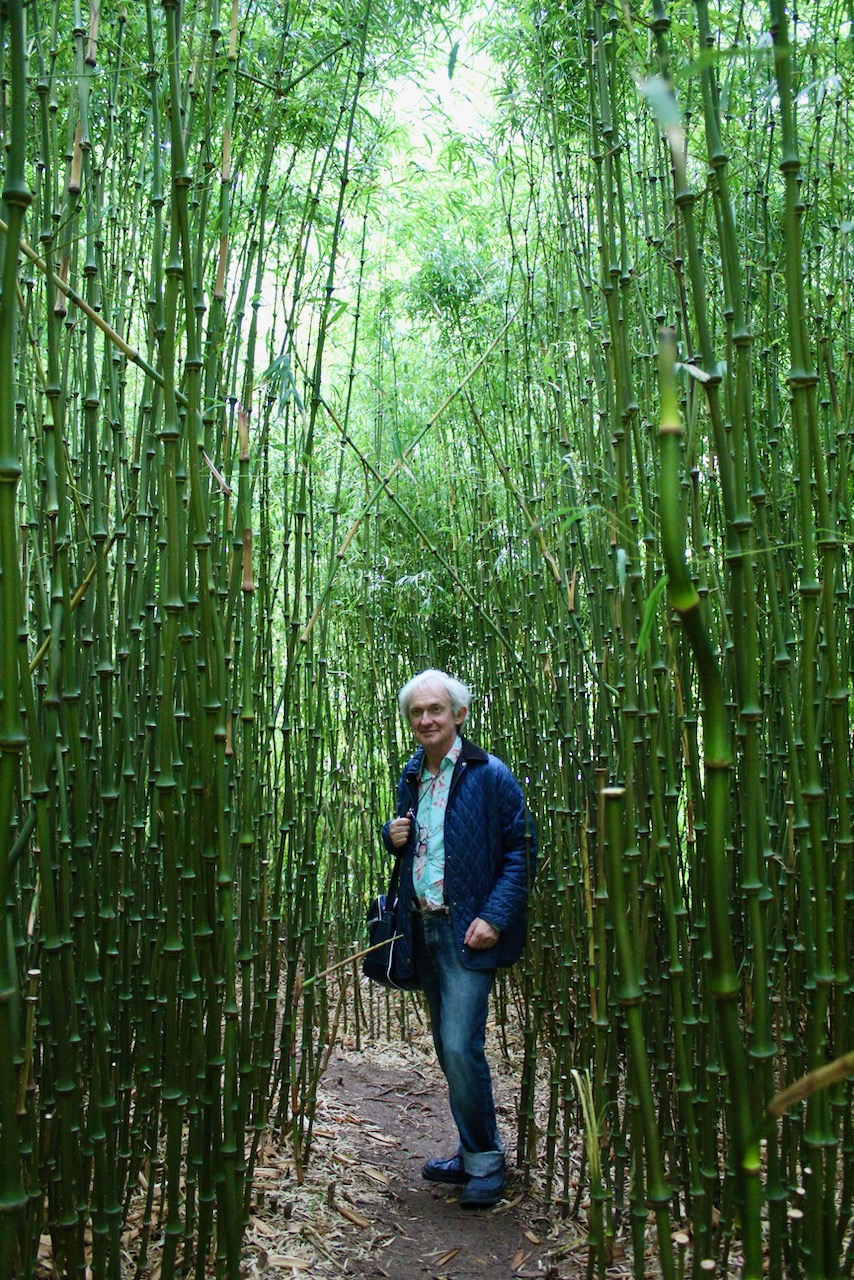
We were impressed by the bamboo maze. Photograph © Jennifer Winder-Baggot, www.irishhistorichouses.com
Blarney Castle, June 2022. Photograph © Jennifer Winder-Baggot, www.irishhistorichouses.com
Blarney Castle gardens, June 2022. Photograph © Jennifer Winder-Baggot, www.irishhistorichouses.com

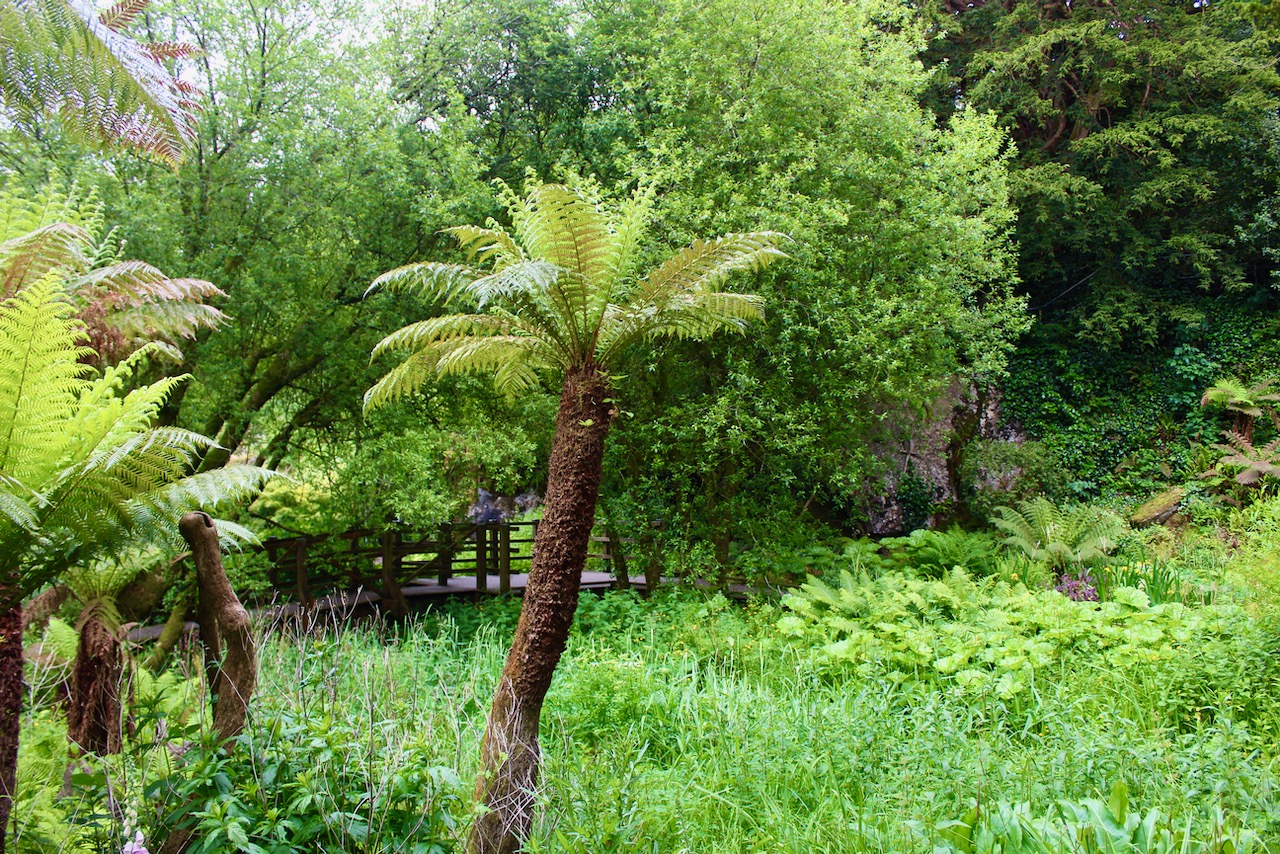
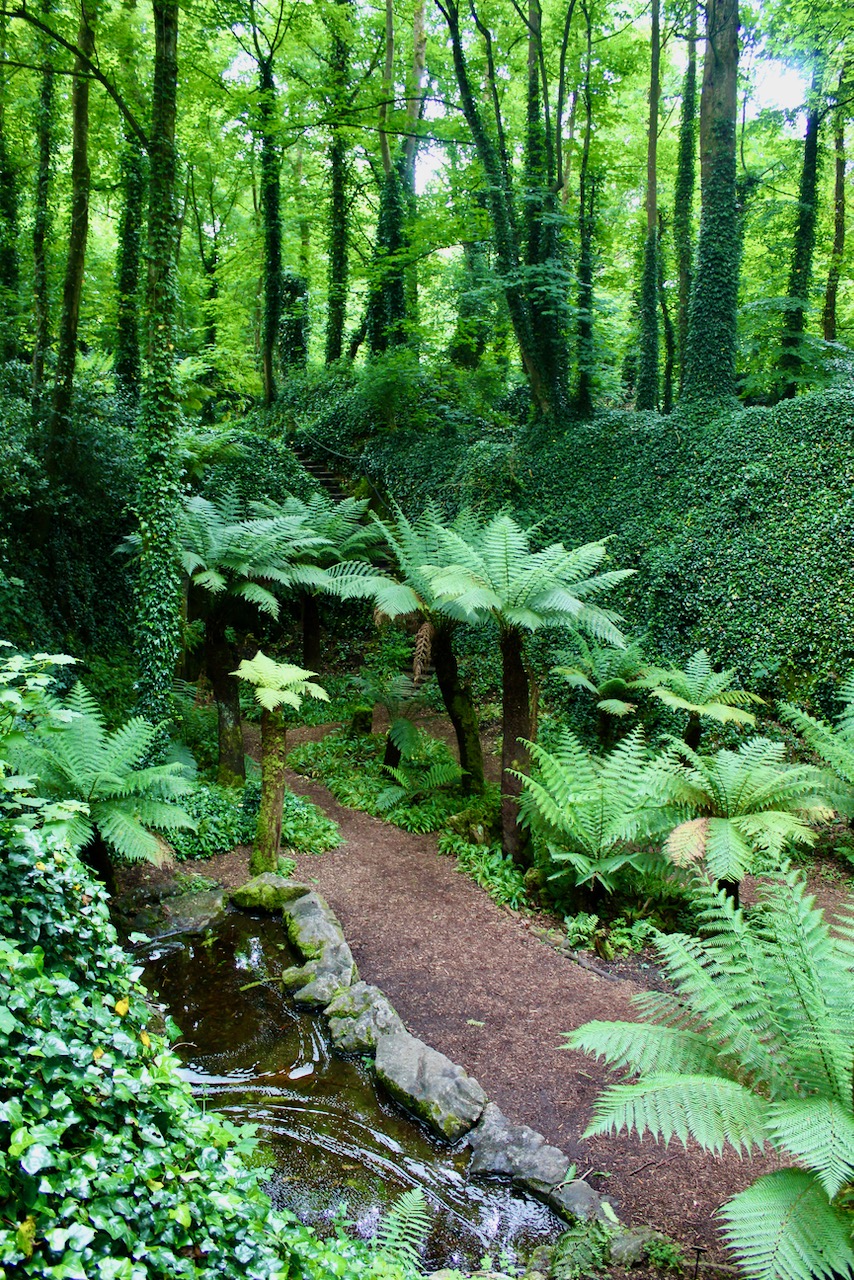
My favourite area is the Fern Garden, which feels prehistoric and is extremely picturesque, with raised wooden walkways. We headed to Blarney House, which will be my next entry!

The Fern Garden, which includes lovely wooden walkways. Photograph © Jennifer Winder-Baggot, www.irishhistorichouses.com
Blarney Castle gardens, June 2022. Photograph © Jennifer Winder-Baggot, www.irishhistorichouses.com

[1] p. 108. Ohlmeyer, Jane. Making Ireland English: The Irish Aristocracy in the 17th Century.

[2] See Ó Siochrú, Micheál’s entry in the Dictionary of Irish Biography: https://www.dib.ie/biography/maccarthy-donough-a5129

[3] Bence-Jones, Mark. A Guide to Irish Country Houses (originally published as Burke’s Guide to Country Houses volume 1 Ireland by Burke’s Peerage Ltd. 1978); Revised edition 1988 Constable and Company Ltd, London.

[4] G.E. Cokayne; with Vicary Gibbs, H.A. Doubleday, Geoffrey H. White, Duncan Warrand and Lord Howard de Walden, editors, The Complete Peerage of England, Scotland, Ireland, Great Britain and the United Kingdom, Extant, Extinct or Dormant, new ed., 13 volumes in 14 (1910-1959; reprint in 6 volumes, Gloucester, U.K.: Alan Sutton Publishing, 2000), volume III, page 216. Quoted on the website The Peerage.com. See also https://www.dib.ie/biography/maccarthy-donogh-a5128

[5] https://www.ihh.ie/index.cfm/houses/house/name/Blarney%20House

[6] https://landedestates.ie/family/2877

[7] see the timeline in James Lyttelton’s Blarney Castle, An Irish Towerhouse.

[8] MacDonnell, Randal. The Lost Houses of Ireland. A chronicle of great houses and the families who lived in them. Weidenfeld and Nicolson. London, 2002.

Text © Jennifer Winder-Baggot, www.irishhistorichouses.com
Office of Public Works properties County Cork, Munster

Munster’s counties are Clare, Cork, Kerry, Limerick, Tipperary and Waterford.

I have noticed that an inordinate amount of OPW sites are closed ever since Covid restrictions, if not even before that (as in Emo, which seems to be perpetually closed).

Cork:

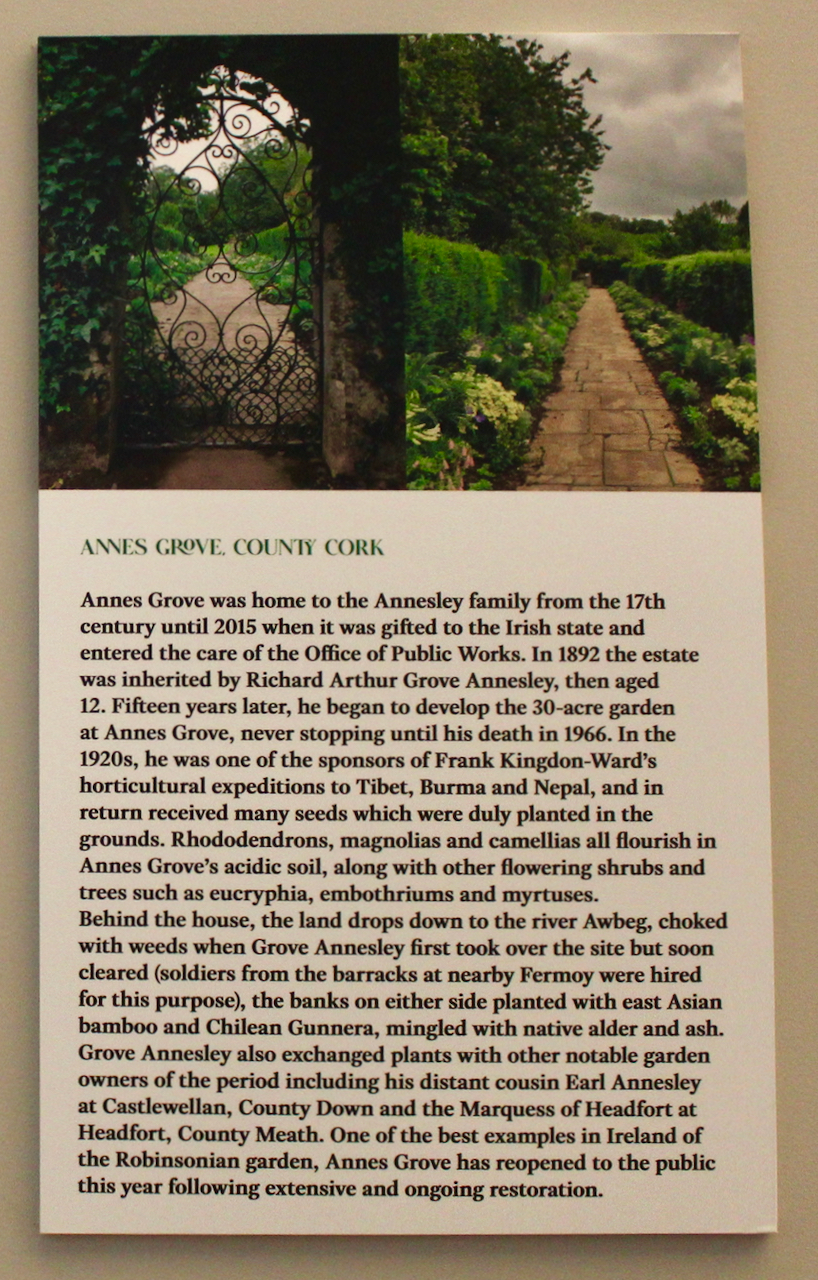
1. Annes Grove, County Cork

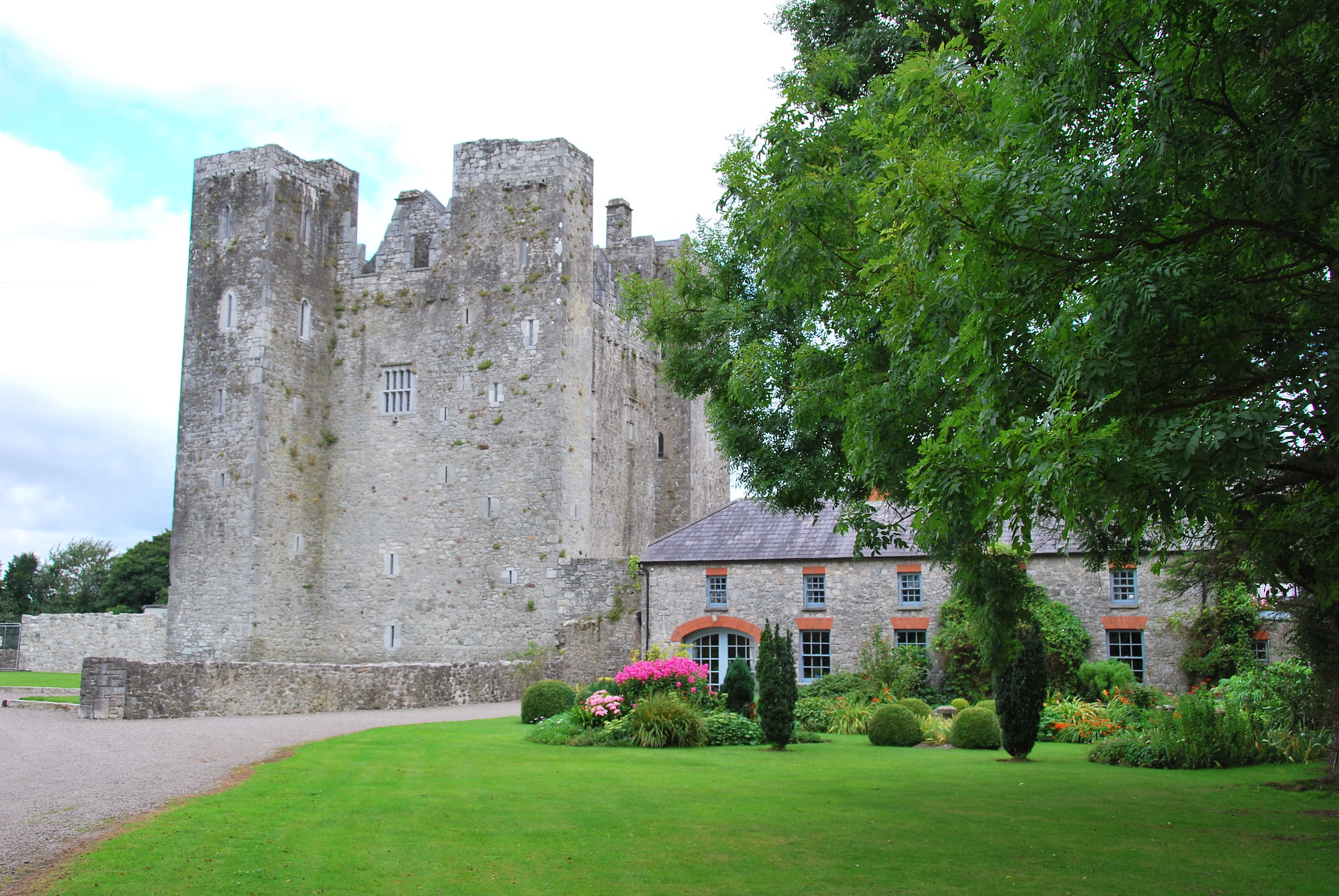
2. Barryscourt Castle, County Cork – currently closed (June 2022)

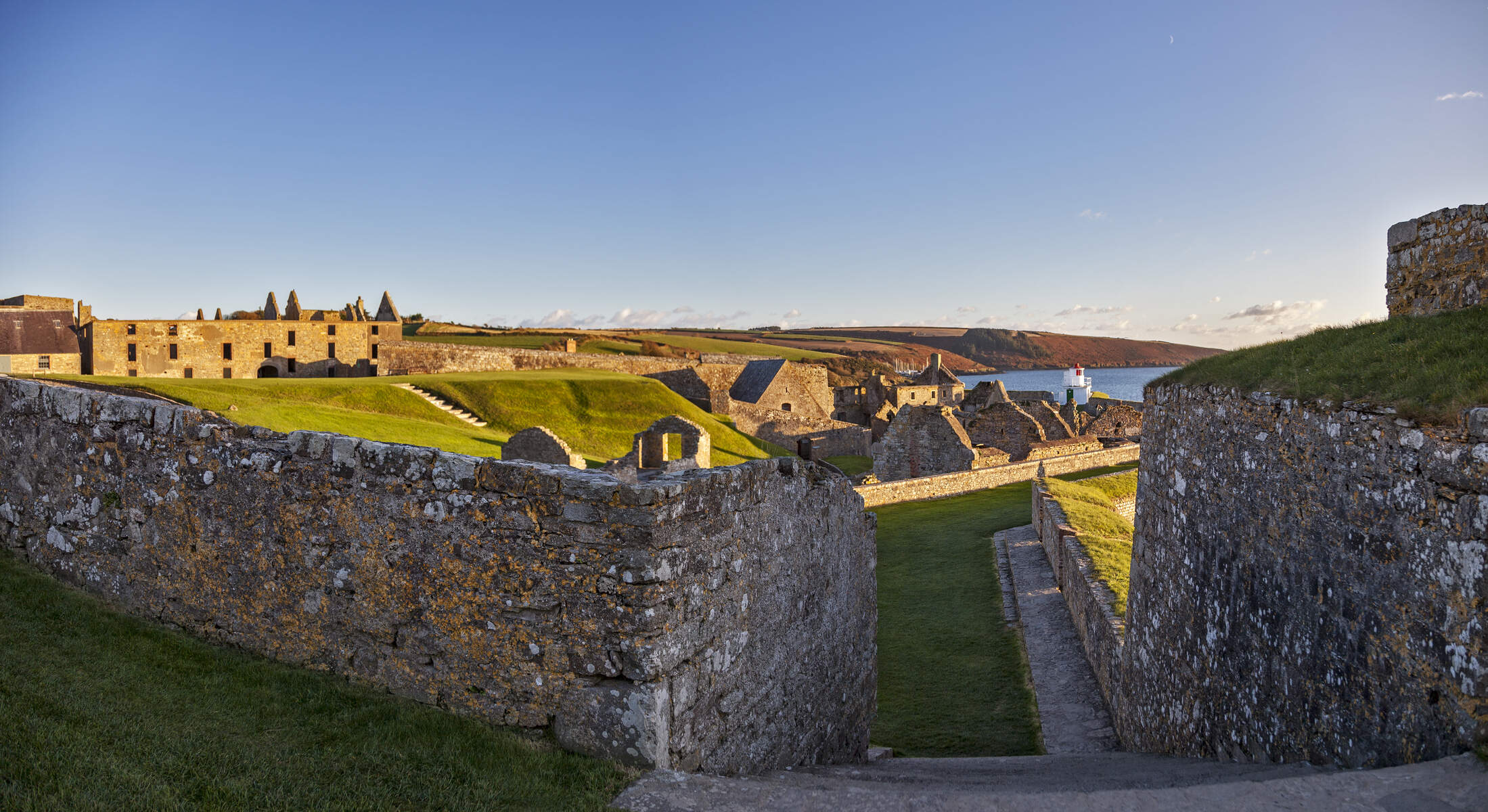
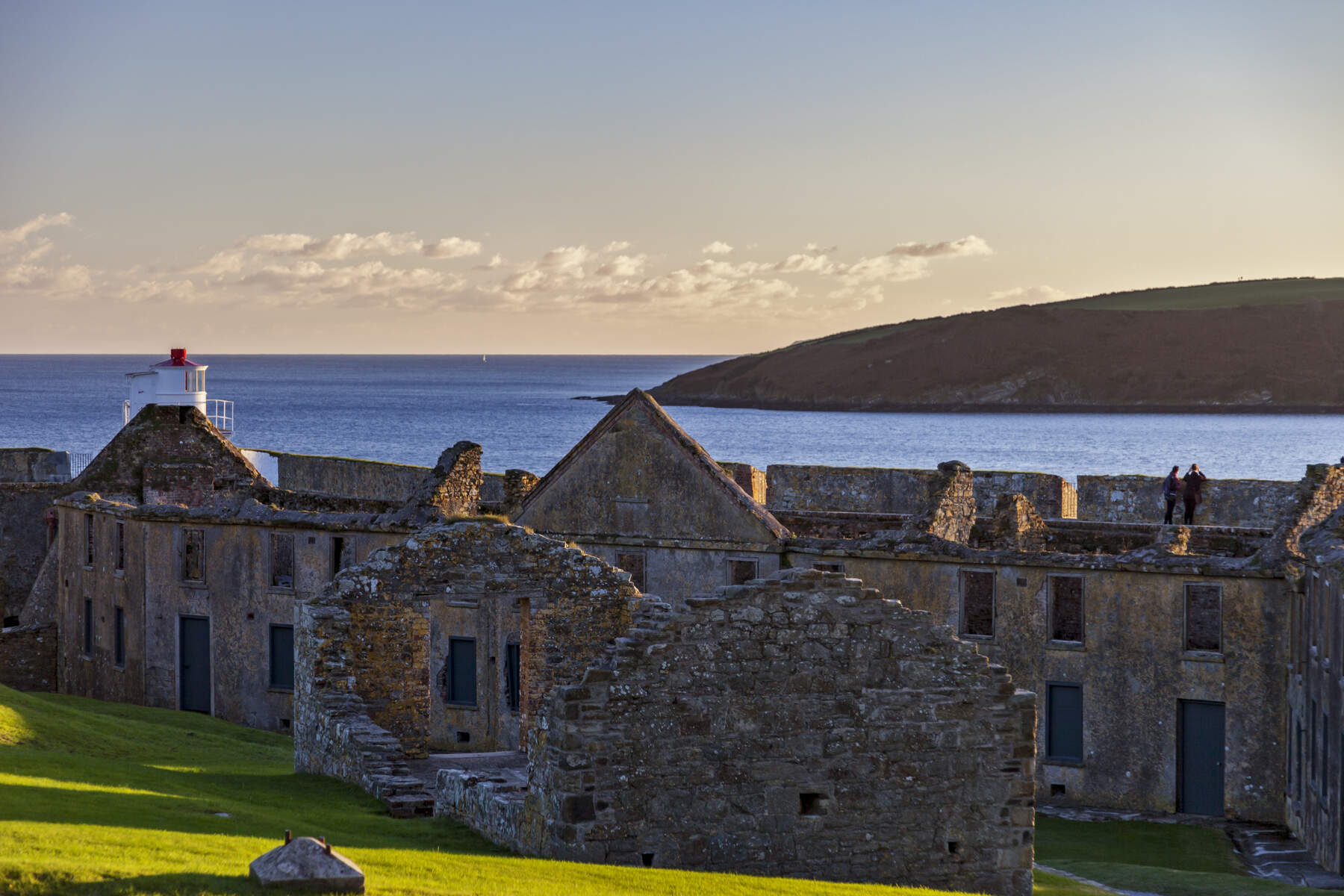
3. Charles Fort, County Cork

4. Desmond Castle, Kinsale, County Cork

5. Doneraile Court, County Cork

6. Fota House Arboretum and Gardens, County Cork (Fota House itself is maintained by the Heritage Trust)

7. Ilnacullin, Garanish Island, County Cork

donation

Help me to pay the entrance fee to one of the houses on this website. This site is created purely out of love for the subject and I receive no payment so any donation is appreciated!

€10.00

Cork:

1. Annes Grove, Castletownroche, County Cork:

Annes Grove, County Cork, 1981 from Dublin City Library and Archives. [1]

Tel: 022 26145, annesgrove@eircom.net

https://heritageireland.ie/visit/places-to-visit/annes-grove-gardens/

This is due to be open soon by the OPW. It does not have a website yet. In December 2015 Annes Grove House and Garden were donated to the state by the Annesley family.

Nestled into an eighteenth century ornamental glen, adjacent to the River Awbeg, the demesne of Annes Grove in north County Cork is the setting for the most exquisite Robinsonian-style gardens in Ireland….

The Gardens at Annes Grove were largely the creation of Richard Grove Annesley in the first half of the twentieth century.” [2]

Annes Grove, County Cork, 1981 from Dublin City Library and Archives. [see 1]

The estate was previously known as Ballyhimmock, and it was acquired by William Grove around 1626.

In 1792 it was inherited by Arthur Grove Annesley (1774-1849) from an aunt by marriage, heiress to the Grove family, after which it was renamed by merging the two family names. [3] Arthur Grove Annesley’s uncle Francis Charles Annesley, 1st Earl Annesley of Castlewellan, County Down, married Mary Grove who inherited the estate from her father.

At the centre of the garden is a restored Gothic style summerhouse. The main house is of Queen Anne design, from the 18th century. Pergolas, a lily pond, Victorian stone fernery, a woodland walk and river garden, a rockery and wild water garden create an atmospheric setting.

From “In Harmony with Nature, The Irish Country House Garden 1600-1900” in the Irish Georgian Society, July 2022, curated by Robert O’Byrne.

2. Barryscourt Castle, County Cork:

Barryscourt Castle by Julia Delio, flickr constant commons, August 2009.

From the OPW website https://heritageireland.ie/visit/places-to-visit/barryscourt-castle/:

Barryscourt Castle was the seat of the great Anglo-Norman Barry family and is one of the finest examples of a restored Irish Tower House. Dating from between 1392 and 1420, the Castle has an outer bawn wall and largely intact corner towers. The ground floor of the Tower House contains a dungeon into which prisoners were dropped via the ‘drop-hole’ located on the second floor.

The Barrys supported the Fitzgeralds of Desmond during the Irish rebellions of the late sixteenth century. To prevent it being captured by Sir Walter Raleigh and his army, the Barrys [David Barry, 5th Viscount Barry (1550-1617)] partially destroyed the Castle.

Walter Raleigh (1552-1618) by Unknown English artist 1588, National Portrait Gallery of London ref. 7.

During the Irish Confederate War of the seventeenth century Barryscourt Castle was once again successfully attacked.  Cannon balls lodged in the wall above the Castle entrance bear witness to this conflict. The last head of the Barry family was Lord David Barry.

Barryscourt Castle has been extensively restored. The Main Hall and Great Hall have been completed and fittings and furnishings reinstated. Within the Castle grounds, the herb and knot garden and the charming orchard have been restored to their original sixteenth century design.

After David Barry’s death in 1617 the family made Castlelyons their principal seat (now a ruin). The castle was restored by the OPW and the Barryscourt Trust between 1987-1993, with reproduction furniture made by Victor Chinnery. [4]

An article in the Irish Examiner by Padraig Hoare published 22nd May 2021 tells us that the site is closed and will be for some time:

A reopening date must be established for one of East Cork’s most historic landmarks after languishing in the midst of safety works for five years.

That is according to Cork East TD Séan Sherlock, who said Barryscourt Castle in Carrigtwohill has to be a priority for the Government body in charge of the facility, the Office of Public Works (OPW).

History enthusiasts and families alike were disappointed in the summer of 2020, when it emerged that Barryscourt Castle would remain closed for another 18 months.

The latest update from the OPW given in response to a parliamentary question from Mr Sherlock suggests it may be even longer than the date anticipated a year ago.

The Department of Public Expenditure said restrictions associated with the Covid-19 pandemic “has disrupted the good progress” of works being done to make the facility safe.

“It is not possible at this time to give a precise date for reopening to the public,” the department said.

3. Charles Fort, Summer Cove, Kinsale, County Cork:

The Soldiers Quarters, the Hospital ward, the Lighthouse (by Robert Reading) and Magazine of the 17th Century Charles Fort, Kinsale, Co. Cork, Munster, Ireland. Photograph from Ireland’s Content Pool, photograph by Cahir Davitt, 2016, for Failte Ireland. [5]

General Enquiries: 021 477 2263, charlesfort@opw.ie

https://heritageireland.ie/visit/places-to-visit/charles-fort-national-monument/

From the OPW website:

As one of the country’s largest military installations, Charles Fort has been part of some of the most momentous events of Irish history. During the Williamite Wars, for example, it withstood a 13-day siege before it fell. Later, in the Civil War of the early 1920s, anti-Treaty forces on the retreat burned it out.

Charles Fort is a massive star-shaped structure of the late seventeenth century, well preserved despite its history. William Robinson, architect of the Royal Hospital in Kilmainham, Dublin, is credited with designing it. Its dimensions are awe-inspiring – some of the outer defences are 16 metres high.

The view from the ramparts looking out over Kinsale Harbour is spectacular.

The Soldiers Quarters, and Magazine of the 17th Century Charles Fort, Kinsale, Co. Cork, Munster, Ireland. Photograph from Ireland’s Content Pool, photograph by Cahir Davitt, 2016, for Failte Ireland. [see 5]
The seaward Devils Bastion and lighthouse of the 17th Century Charles Fort, with Kinsale boatyard in the background, Kinsale, Co. Cork, Munster, Ireland; Photograph from Ireland’s Content Pool, photograph by Cahir Davitt, 2016, for Failte Ireland. [see 5]

4. Desmond Castle (also known as the French Prison), Kinsale, County Cork:

Desmond Castle Kinsale 1941, photograph from Dublin City Library archives. [see 1]

General Enquiries: 021 477 4855, desmondcastle@opw.ie

From the OPW website https://heritageireland.ie/visit/places-to-visit/desmond-castle-kinsale/:

Desmond Castle in Kinsale dates from around 1500. It is a classic urban tower house, consisting of a three-storey keep with storehouses to the rear.

Maurice Bacach Fitzgerald, the earl of Desmond, originally built the castle as the customs house for the town. [I think this must be the 9th Earl of Desmond – JWB] It served as a prison in the seventeenth and eighteenth centuries. Because it usually held French inmates, as well as Spaniards, Portuguese, Dutch and Americans, it became known locally as the French Prison and carries that name to this day. The building was co-opted as an ordnance store during the momentous Battle of Kinsale (1601) and served as a workhouse during the Great Famine.

Desmond Castle certainly had a colourful history and this continued into the twentieth century. In the early 1900s it was used as a venue to host local Gaelic League meetings. Finally, in the 1930s, a thriving undertaking business operated from within the National Monument.

The National Inventory of Architectural Heritage tells us:

Freestanding three-bay three-storey tower house, commenced c.1500, abutting earthen terrace to rear. Attached cell blocks and exercise yards to rear (north-west) and platform to side (north-east). Historically used as magazine (1600-1601), as prison for foreign prisoners (1601-1790) and as borough jail (1791-1846). Restored in 1938 currently in use as museum.

5. Doneraile Court, County Cork:

Doneraile Court, County Cork, August 2020. Photograph © Jennifer Winder-Baggot, www.irishhistorichouses.com
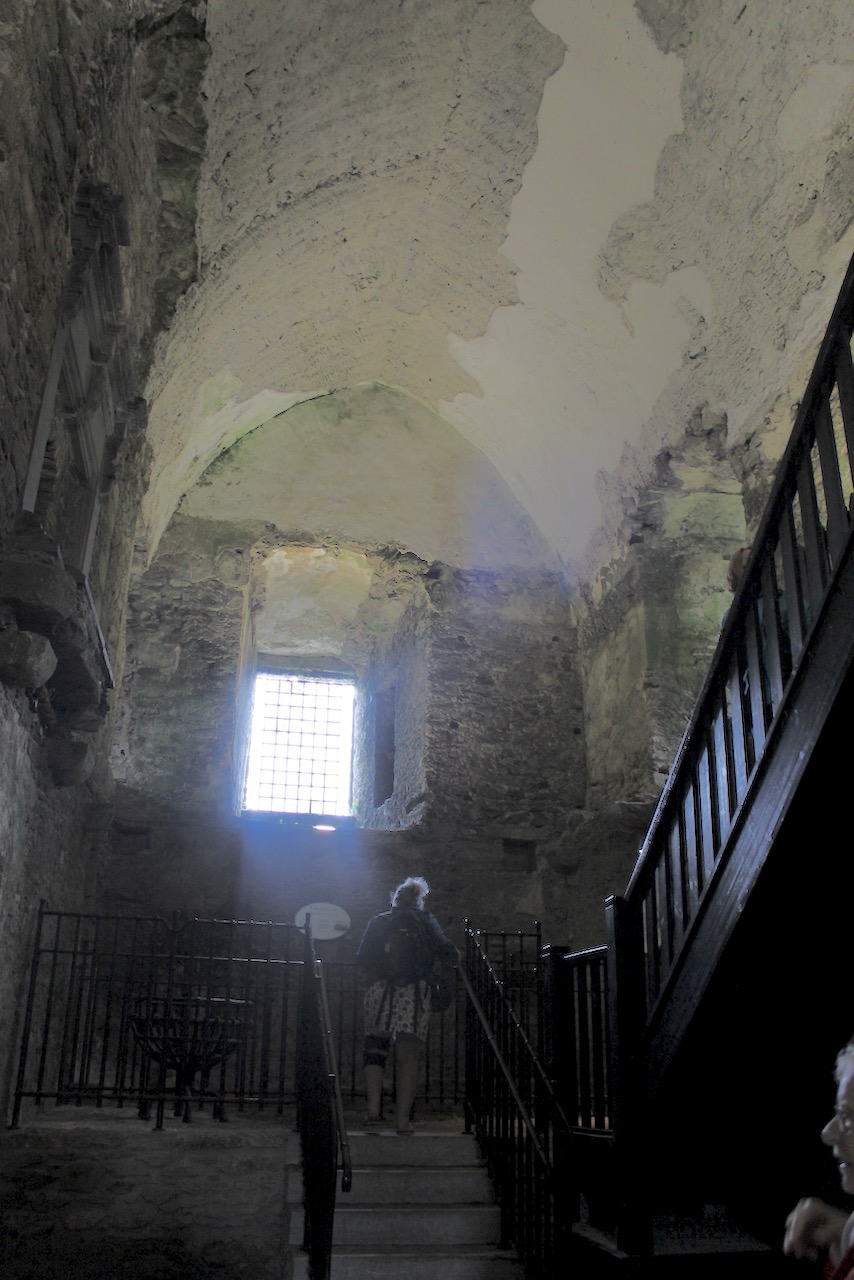
See my entry https://irishhistorichouses.com/2024/04/19/doneraile-court-county-cork-an-office-of-public-works-property/

https://doneraileestate.ie/

Doneraile Court, County Cork, August 2020. Photograph © Jennifer Winder-Baggot, www.irishhistorichouses.com
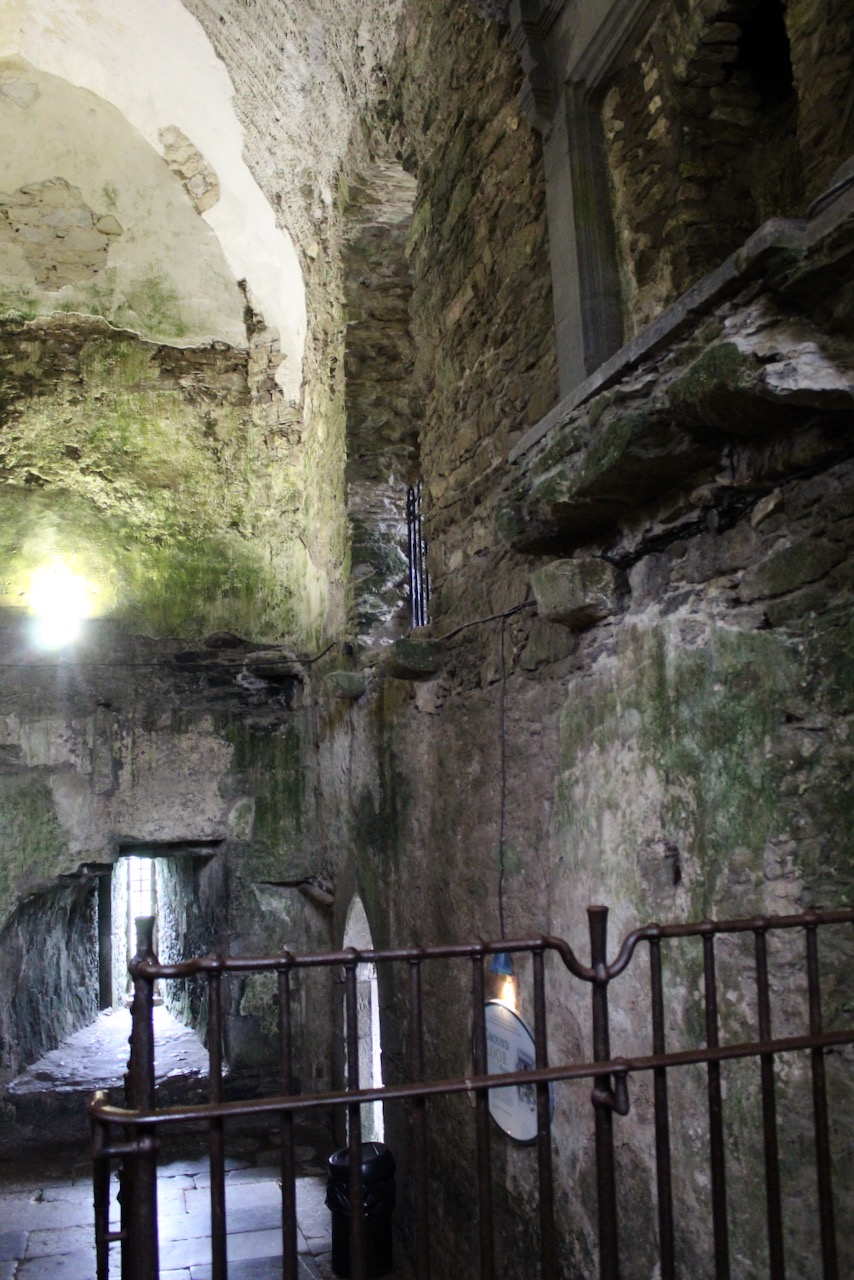
6. Fota Arboretum and Gardens, Carrigtwohill, County Cork

Photograph © Jennifer Winder-Baggot, www.irishhistorichouses.com
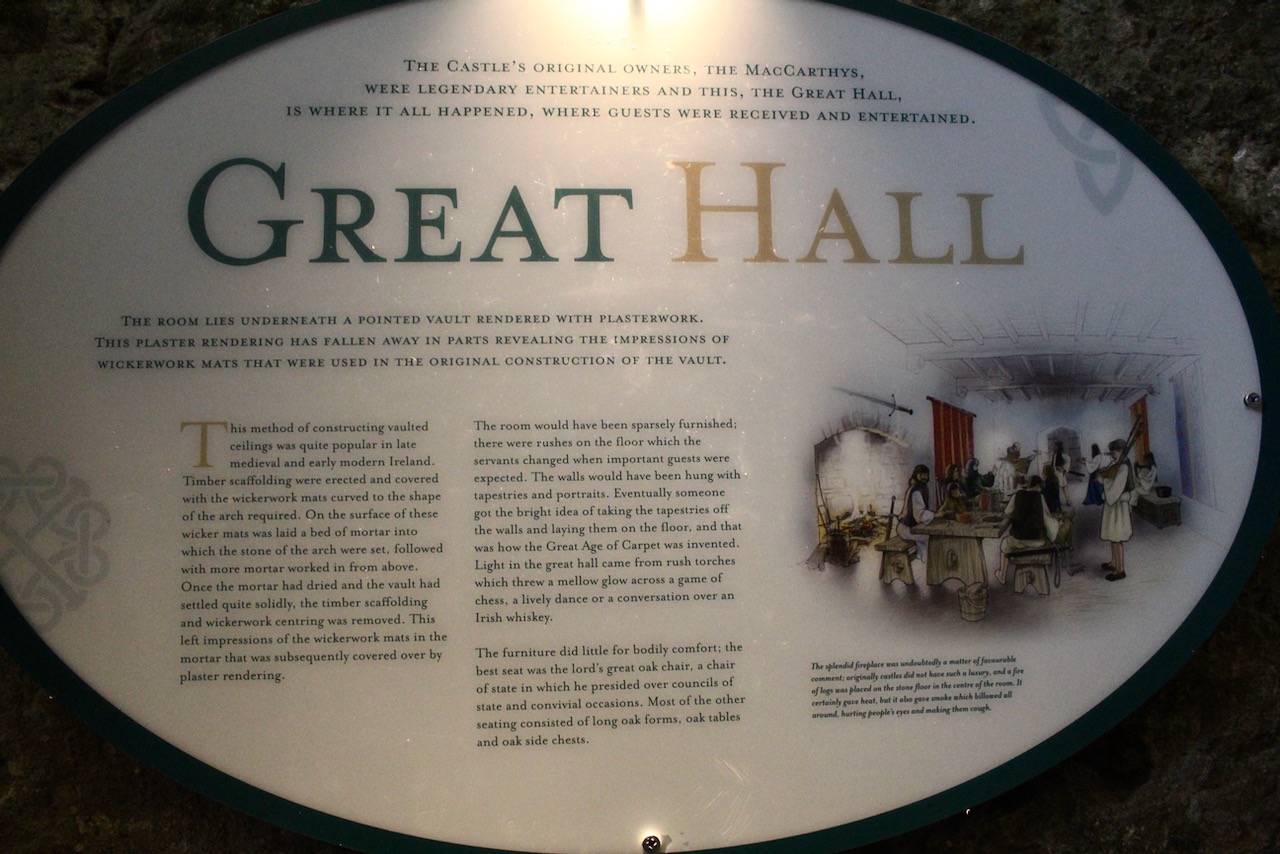
General enquiries: (021) 481 5543 https://fotahouse.com/

fota.arboretum@opw.ie

See my entry https://irishhistorichouses.com/2022/05/17/places-to-visit-and-stay-munster-county-cork/

From the OPW website: https://heritageireland.ie/visit/places-to-visit/fota-arboretum-and-gardens/

Fota House was designed by 19th century architects Richard and William Morrison. From the beautifully proportioned rooms with exquisite plasterwork, to the preserved service wing and kitchens, Fota House offers visitors an intimate look at how life was lived in the past, for the cooks, butlers, footmen and maids who supported the lavish lifestyle of the gentry. Our painting collection is considered to be one of the finest collections of landscape painting outside the National Gallery of Ireland and includes works by William Ashford PRHA, Robert Carver, Jonathan Fisher and Thomas Roberts.” [9]

Front porch of Fota House. Fluted baseless Green Doric columns support a weighty entablature in which wreaths alternate with the Barry crest in the metopes. Photograph © Jennifer Winder-Baggot, www.irishhistorichouses.com
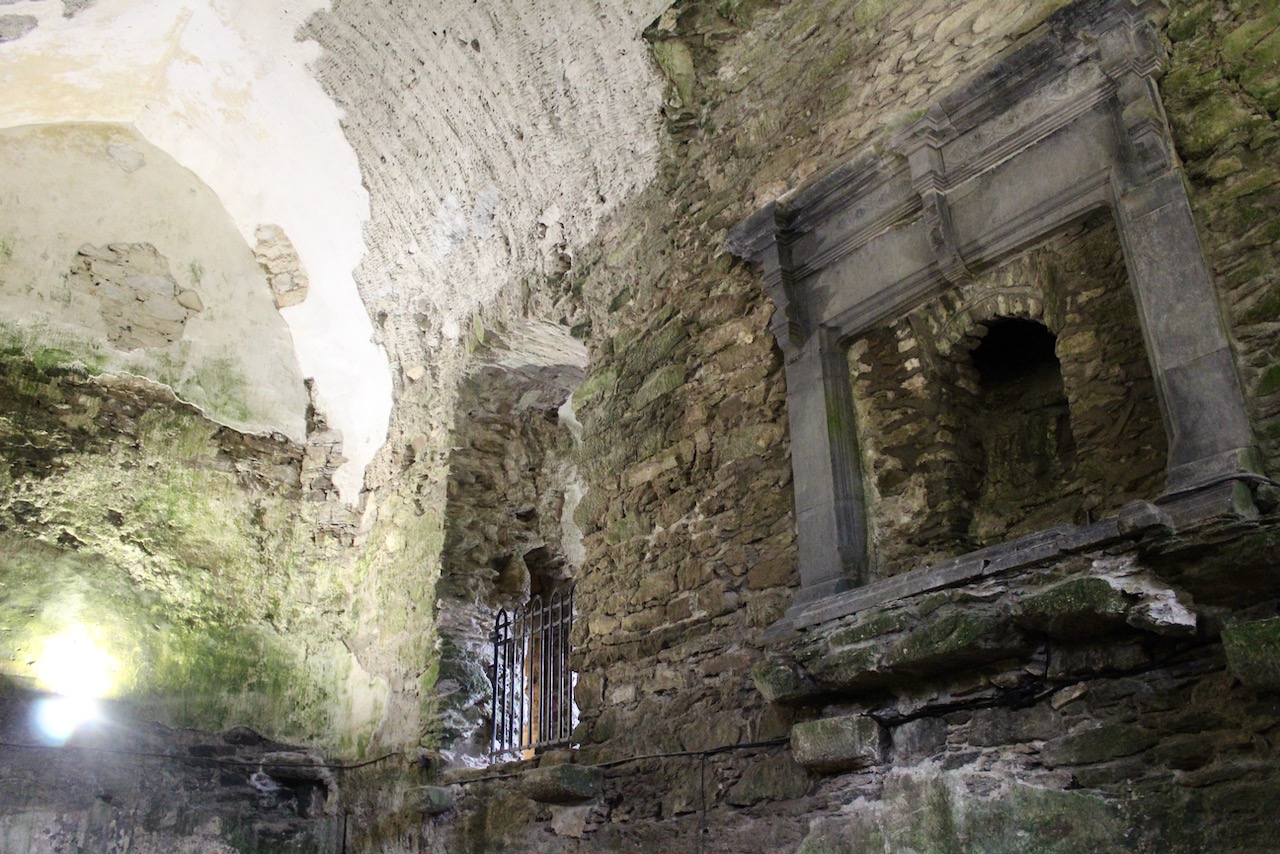
The OPW website tells us:

The arboretum and gardens on Fota Island, just 16 kilometres from Cork city centre, are an essential destination for any one of a horticultural bent.

The arboretum extends over 11 hectares and contains one of the finest collections of rare, tender trees and shrubs grown outdoors in Europe. The unique conditions at Fota – its warm soil and sheltered location – enable many excellent examples of exotics from the southern hemisphere to flourish.

The gardens include such stunning features as the ornamental pond, formal pleasure gardens, orangery and sun temple. James Hugh Smith-Barry laid them out in the first half of the nineteenth century. Fota House, the Smith-Barrys’ ancestral home, still stands. The house, arboretum and gardens share the island with a hotel and golf resort and a wildlife park. [10]

7. Ilnacullin, Garanish Island, Glengarriff, Bantry, County Cork:

https://garinishisland.ie/plan-a-visit/

Italian garden, Garnish Island, Glengarriff, Beara, Co. Cork, Photograph by Chris Hill 2014, Ireland’s Content Pool. [see 5]

general enquiries: (027) 63040

garanishisland@opw.ie

Ilnacullin is an island in the coastal harbour at Glengariff in Bantry Bay. It has an almost sub-tropical climate with mild winters and high levels of rainfall and humidity. These conditions favour the growth of exotic plants. The gardens were set out in the Arts and Crafts style and contain Italianate pavilions and follies, framed against a backdrop of beautiful views.

From the OPW website https://heritageireland.ie/visit/places-to-visit/ilnacullin-garinish-island/:

Ilnacullin is an island garden of diminutive size and rare beauty. Nestled in the sheltered coastal harbour at Glengarriff in Bantry Bay, the gardens display a wealth of unique horticultural and architectural gems. Bryce House is a fitting memorial to the visionary creators of this unique place. 

The gardens of Ilnacullin owe their existence to the early twentieth-century creative partnership of John Annan and Violet Bryce, the island’s owners, and Harold Peto, an architect and garden designer. The area enjoys a mild and humid micro-climate that makes for spectacular and flourishing plant life all year round.

Small ferry boats and 60-seater waterbuses take visitors to Ilnacullin regularly. The short crossing usually includes an extra treat – a visit to the nearby seal colony and an opportunity to glimpse majestic sea eagles.

The Island was bequeathed to the Irish people by the Bryce’s son, Roland, in 1953 and is cared for by the OPW. Bryce House contains material from the Bryces’s lives, including John Annan Bryce’s collection of Burmese statues, Chinese ceramics, Japanese woodblock prints, metal works and rare exotic objects. There are also Old Master drawings by Salvator Rosa, Mauro Antonio Tesi and Giambattista Tiepolo. Over the years the Bryces hosted prominent cultural figures such as George (AE) Russell, George Bernard Shaw and Agatha Christie. [11] You can see a tour of the house and gardens on the website.

From “In Harmony with Nature, The Irish Country House Garden 1600-1900” in the Irish Georgian Society, July 2022, curated by Robert O’Byrne.

[1] https://repository.dri.ie/

[2] p. 12, Living Legacies: Ireland’s National Historic Properties in the care of the OPW, Government Publications, Dublin, 2018.

[3] p. 310, Keohane, Frank. The Buildings of Ireland. Cork City and County. Yale University Press: New Haven and London. 2020.

[4] p. 261, Keohane, Frank. Buildings of Ireland: Cork City and County, Yale University Press, New Haven and London, 2020.

[5] https://www.irelandscontentpool.com/en

[6] See also https://doneraileestate.ie

[7] p. 377. Keohane, Frank. Buildings of Ireland: Cork City and County, Yale University Press, New Haven and London, 2020.

Another work Keohane identifies as being by Benjamin Crawley is Castle Bernard, now a ruin in County Cork:

Castle Bernard, County Cork, photograph from National Inventory of Architectural Heritage.

[8] p. 105. Mark Bence-Jones. A Guide to Irish Country Houses (originally published as Burke’s Guide to Country Houses volume 1 Ireland by Burke’s Peerage Ltd. 1978); Revised edition 1988 Constable and Company Ltd, London.

[9] fotahouse.com

[10] https://heritageireland.ie/visit/places-to-visit/fota-arboretum-and-gardens/

[11] https://garinishisland.ie/the-house-and-gardens/

Text © Jennifer Winder-Baggot, www.irishhistorichouses.com