Fee: adult/OAP/student €6, child free with an adult
2026 Diary of Irish Historic Houses (section 482 properties)
To purchase an A5 size 2026 Diary of Historic Houses (opening times and days are not listed so the calendar is for use for recording appointments and not as a reference for opening times) send your postal address to jennifer.baggot@gmail.com along with €20 via this payment button. The calendar of 84 pages includes space for writing your appointments as well as photographs of the historic houses. The price includes postage within Ireland. Postage to U.S. is a further €10 for the A5 size calendar, so I would appreciate a donation toward the postage – you can click on the donation link.
€20.00
donation
Help me to pay the entrance fee to one of the houses on this website. This site is created purely out of love for the subject and I receive no payment so any donation is appreciated!
The website tells us that the site of Dún na séad Castle has been fortified for a very long time. The first fortification might have been a ring fort. After that an Anglo-Norman castle was built here in 1215. In 1305 that castle was taken and destroyed by the MacCarthys. Subsequently the O’Driscolls took possession of the site and built a castle.
Baltimore Castle, April 2021.
The website tells us that the present Dún na séad Castle was built in the 1620s by the O’Driscolls, but Frank Keohane writes that it was built by Thomas Crooke before 1610 near an earlier O’Driscoll castle. Frank Keohane writes in his The Buildings of Ireland: Cork City and County:
“Baltimore or Dunasead Castle. Early C17 two-storey gable-ended block with an attic, set on a rock overlooking Baltimore Harbour. An O’Driscoll castle NE of the present building was occupied by an English force in 1602 after the Battle of Kinsale, during which it was substantially demolished. Sir Fineen O’Driscoll then leased Baltimore and its ‘castle’ to Thomas Crooke and William Coppinger. Crooke, who established an English settlement, appears to have built the present castle before 1610, possibly incorporating features such as the window surrounds from the O’Driscoll castle.” [1]
Keohane tells us: “[Baltimore is] a small pretty village… overlooking a broad deep bay sheltered from the Atlantic by Sherkin Island. An English settlement was first established here in the early C17 by Sir Thomas Crooke, later passing to Sir Walter Coppinger. By 1629 English settlers had built sixty houses here.“
Between 1997 and 2005 the ruined castle was rebuilt as a private residence. At present it is a small museum. The owners, the McCarthys, have done an amazing job restoring the castle and it is also their home.
Keohane continues: “Restored as a dwelling in 1997-2003. The contemporary interventions are well considered, with minimal conjecture and cleanly distinct materials….The castle is approached across a small enclosed bawn on the east or landward side. The lower floor served as stores, with living quarters above. Wall-walks behind parapets are provided on the long sides. These give access to a square bartizan over the SW corner; another bartizan was probably provided on the opposing NE corner. The West side is blind at the ground level but has generous two and three light first floor windows (all now missing mullions and transoms), with ogee heads, sunken spandrels and curious curved hoodmould terminals similar to those at Clodagh Castle (Crookstown). On the east side, two great reconstructed chimneystacks sit on corbels at first-floor level. Here, small rectangular lights serve the ground-floor rooms, while the first-floor rooms have wider windows. A narrow first-floor door at the south end led to a now destroyed garderobe turret. The upper rooms were approached by an internal stair rather than a forestair. Markings in the plaster suggest that there were three major rooms, divided by partitions, with attics at each end. The central “hall” had good sandstone window dressings with neat roll mouldings, and a fireplace with remains of a moulded and chamfered limestone jamb. A solar or parlour was provided to the south. The north room has a bread oven and a slop stone in addition to its fireplace, indicating use as a kitchen.”
But let us backtrack to the Castle’s fascinating history.
Information board in Baltimore Castle.
The information boards tell us that in 1215 Robert de Carew, Lord Sleynie, built the castle, and that his mother was a daughter of the chieftain Dermod MacCarthy of Cork.
Information board in Baltimore Castle.
After the Battle of Callan, the O’Driscoll family took possession of the castle at Baltimore. The O’Driscolls were fishermen and pirates.
Information board in Baltimore Castle.Information board in Baltimore Castle.Information board in Baltimore Castle.
The website tells us that the O’Driscolls were constantly under pressure from encroachments by Anglo-Norman settlers and rival Gaelic clans on their territory and trade interests, which resulted in the castle being attacked and destroyed numerous times in the following centuries.
The O’Driscolls imposed taxes on harbour trade and traffic in order to support their opulent lifestyle. They had no authority from the crown to impose such taxes, so in 1381 King Richard II appointed admirals for the ports of county Cork in an attempt to deal with the pirate menace to merchant shipping in the area. The admirals were commissioned to deal in particular with the O’Driscolls of Baltimore “who constantly remained upon the western ocean, preying in passing ships.” [2]
Information board in Baltimore Castle.Information board in Baltimore Castle.Information board in Baltimore Castle.
In the early 1600s Fineen O’Driscoll of Dún na Séad castle pledged loyalty to the Crown of England. He was knighted by Queen Elizabeth I.
In 1606 Thomas Crooke (b. 1574) was granted Baltimore Castle and the town of Baltimore as well as lands and islands formerly belonging to the O’Driscolls, in order to secure the area for the Crown and establish a Protestant colony. Bernie McCarthy tells us in her book that there is no evidence of the relationship between Fineen O’Driscoll and Thomas Crooke, and we do not know if the O’Driscolls stood aside willingly or whether Crooke had to engage in force to obtain the property. The portrait in the information board is not of Thomas Crooke but is of typical attire of an English planter at the time.
Crooke was meant to represent the Crown but he became involved in piracy, co-operating with English and Flemish pirates and profiting from their spoils.
There was, however, a system the Crown used for legitimising piracy by a system of “privateering” which was sanctioned by the State. A Privateer obtained a license, or letter of “Marque” to use their ships as a man-o-war against the State’s enemies in times of war. The marque permitted vessel owners to seize Crown enemies, acquire their cargo and make a profit. The captured ships were taken before the Prize Court and the captured cargo was referred to as the “prize,” and the privateer was awarded 90% of the prize, with 10% of the value going to the National Prize Fund. [3] Privateers took advantage of this legitimacy to capture illegitimate bounty, but in the case of Crooke, his work establishing a colony made the Crown turn a blind eye to his piracy.
Pirates would dock in Baltimore to repair ships or gather supplies, and this led to proliferation of taverns and brothels in Baltimore. A list of goods brought to Baltimore around 1615 by the pirate Campane includes wax, pepper, 100 Barbary hides, a chest of camphor, tobacco, cloves, elephants’ teeth (probably tusks), Muscovy hides, a chest of chenery roots and canopies of beds from the Canary Islands. [4]
In 1613, Baltimore was enabled by charter to send two MPs to the Dublin Parliament. Thomas Crooke was elected MP. Ironically, it was this parliament which introduced the Irish Statue against piracy.
Information board in Baltimore Castle.
By 1626, Crooke feared the consequences of foreign pirates, and he petitioned the House of Lords for protection of Baltimore. Unfortunately, any protection proved inadequate.
In 1631 a band of pirates from Algiers took 107 captives to a life of slavery in North Africa. Bernie McCarthy of Baltimore Castle has written a book called Pirates of Baltimore from the Middle Ages to the Seventeenth Century, Baltimore Castle Publications, 2012, which informs the educational material in the museum. [see 2]
Information board in Baltimore Castle.Information board in Baltimore Castle.Information board in Baltimore Castle.Information board in Baltimore Castle.Information board in Baltimore Castle.Information board in Baltimore Castle.Information board in Baltimore Castle.
At the time of the raid, Baltimore Castle was occupied by Thomas Bennett. He wrote to James Salmon of Castlehaven, County Cork, in an effort to send a ship from there to try to intercept the captives, and the Lord President of Munster ordered two of the king’s ships of war, the Lions Whelps, which were in Kinsale at the time, to go to the rescue, but none of the attempts were successful. [5]
In 1624 the House of Lords in London instructed the House of Commons to grant Letters Patent for a collection to be made for the redemption of English captives, and an “Algerian Duty” was set aside from Customs tax. There were also ransom charities, but at the same time, it was feared that paying ransoms would encourage the taking of captives. An account of Barbary pirates was written by a French priest who worked in Algeria trying to negotiate the release of captives, Pierre Dan, “Histoire de Barbarie et de ses corsairs.” He worked for the Catholic charity the Order of the Holy Trinity and Redemption of Slaves.
Courtesy of DePaul University, Chicago [6]
The website tells us that in the 1640s the castle was surrendered to Oliver Cromwell’s forces and passed to the Coppingers. In 1642 the O’Driscolls attempted to recover the castle by force. In the 1690s the Coppingers had to forfeit their property. After the 17th century the castle fell to ruin.
According to the information board in the castle, Percy Freke obtained the castle in 1703 from the investment company the Hollow Sword Blade Company. This company also owned Blarney Castle in County Cork for a period.
The Landed Estates database tells us:
“The Hollow Sword Blades Company was set up in England in 1691 to make sword blades. In 1703 the company purchased some of the Irish estates forfeited under the Williamite settlement in counties Mayo, Sligo, Galway, and Roscommon. They also bought the forfeited estates of the Earl of Clancarty in counties Cork and Kerry and of Sir Patrick Trant in counties Kerry, Limerick, Kildare, Dublin, King and Queen’s counties (Offaly and Laois). Further lands in counties Limerick, Tipperary, Cork and other counties, formerly the estate of James II were also purchased, also part of the estate of Lord Cahir in county Tipperary. In June 1703 the company bought a large estate in county Cork, confiscated from a number of attainted persons and other lands in counties Waterford and Clare. However within about 10 years the company had sold most of its Irish estates. Francis Edwards, a London merchant, was one of the main purchasers.” [7]
As well as her work on the Pirates of Baltimore, Bernie McCarthy has published a book about Baltimore Castle which we did not purchase, unfortunately. Called Baltimore Castle, An 800 Year History, I would love to read it, as I’d love to know more about how the McCarthys rebuilt the ruin. I will purchase a copy next time we are in the area!
Percy Freke’s son Ralph (1675-1718) gained the title of 1st Baronet Freke, of Rathbarry, County Cork. The property then passed to Ralph’s daughter Grace who married John Evans, and their son was John Evans-Freke (1743-1777), who became 1st Baronet Freke of Castle Freke, County Cork. He married Elizabeth Gore, daughter of Arthur Gore (1703-1773) 1st Earl of Arran, 3rd Baronet of Newtown, Viscount Sudley.
John and Elizabeth had a son named also named John Evans-Freke (1765-1845), who succeeded as 6th Baron Carbery. This John Evans-Freke married Catherine Charlotte Gore, daughter of Arthur Saunders Gore, 2nd Earl of Arran of the Arran Islands. John Evans-Freke was MP for Donegal from 1784-1790 and MP for Baltimore 1790-1800. He had Catherine Charlotte did not have surviving children and the title passed down to his nephew, son of his brother Percy Evans-Freke. I don’t think the castle was inhabited after Cromwell’s time, however. The 6th and 7th Barons of Carbery (George Patrick Percy Evans-Freke) did make some improvements to the town, Frank Keohane tells us.
Finally the castle was purchased by Patrick and Bernadette McCarthy, who restored it.
The castle now houses the museum and it contains wonderful artefacts and pieces of furniture. You can also go up to the ramparts and outside for beautiful views of the sea and of Baltimore.
Finally, I always assumed that Baltimore in Maryland was named after Baltimore in Cork. It turns out that this is not the case! It is indeed named after a Lord Baltimore who had ties with Ireland, but his title was for a property in County Longford!
Baltimore Castle 16 August 2023.The 1st Lord Baltimore was George Calvert (1582-1632).I lived on Calvert Street in Baltimore, Maryland, from 2003-2005!He was granted an Irish peerage but it was named not after Baltimore in Cork but Baltimore Manor in County Longford.George Calvert (1582-1632), 1st Baron Baltimore, Baltimore Castle 16 August 2023.
[1] p. 243. Keohane, Frank. The Buildings of Ireland. Cork City and County. Yale University Press: New Haven and London. 2020.
[2] p. 5, McCarthy, Bernie. Pirates of Baltimore from the Middle Ages to the Seventeenth Century, Baltimore Castle Publications, 2012. Footnoted reference is to Timothy O’Neill, Merchants and Mariners in Medieval Ireland, p. 30.
“Legend has it that from 1605 to 1607 when St. Vincent de Paul was a young priest he was captured by Algerian corsairs and sold to different masters before making a daring escape with one of his captors, a French renegade who wished to be reconciled with the Church. Although the account of Vincent’s captivity came from letters he wrote at the time to explain his two year disappearance, most historians today doubt the veracity of the account and speculate that the young Vincent had dropped out of sight because of his heavy debts, and the failure of his attempts to gain an ecclesiastical benefice. Nonetheless, the Vincentian (Lazarist) order also had missions in Algiers and Tunis to bring relief or freedom to captured Christians.
Fast fact: Between 1575 and 1869, there were 82 redemption missions where friars bought the freedom of an estimated 15,500 captives.“
orange: “whole house rental” i.e. those properties that are only for large group accommodations or weddings, e.g. 10 or more people.
green: gardens to visit
grey: ruins
2026 Diary of Irish Historic Houses (section 482 properties)
To purchase an A5 size 2026 Diary of Historic Houses (opening times and days are not listed so the calendar is for use for recording appointments and not as a reference for opening times) send your postal address to jennifer.baggot@gmail.com along with €20 via this payment button. The calendar of 84 pages includes space for writing your appointments as well as photographs of the historic houses. The price includes postage within Ireland. Postage to U.S. is a further €10 for the A5 size calendar, so I would appreciate a donation toward the postage – you can click on the donation link.
€20.00
donation
Help me to pay the entrance fee to one of the houses on this website. This site is created purely out of love for the subject and I receive no payment so any donation is appreciated!
€15.00
Wexford:
1. Ballyhack Castle, Co. Wexford – open to publicOPW
“Ballymore is an old family property located away from main routes in a particularly scenic part of North Wexford. It retains many features which have survived from past periods of occupation in an attractive setting of mature trees, ordered landscape and views of the surrounding countryside.“
It is a country house erected by Richard Donovan (1697-1763). The National Inventory tells us it is:
“an estate having long-standing connections with the Donovan family including Richard Donovan (1752-1816); Richard Donovan (1781-1849) ‘of Ballymore’ (cf. 15612001); Richard Donovan (1819-84) ‘late of Ballymore Camolin County Wexford’ (Calendars of Wills and Administrations 1885, 217); Richard Donovan JP DL (1858-1916), ‘Gentleman late of Ballymore County Wexford’ (Calendars of Wills and Administrations 1916, 172); Richard Charlie Donovan (1898-1952); and Richard Alexander Donovan (1927-2005).“
Ballymore, photograph courtesy of National Inventory of Architectural Heritage.The house itself is not open to the public.The house was built in 1721.
“A large scale map indicates the route visitors are requested to follow. This route allows a leisurely ramble around several interesting features including the tea room, the museum, art gallery and display of old farming equipment in part of the farmyard. The residence itself is private and not open to the public.
“In the surrounding grounds you will find the church and ancient graveyard, holy well, former site of a 1798 rebel camp and the 14th century Norman castle ruins, which now is a simple labyrinth.
“The present church was built in 1869 on the site of a medieval building, of which nothing now survives except a carved wooden door lintel which can be seen at the museum.
“The holy well is covered completely by a large boulder. This was done some centuries ago to discourage its continued use for prayer and devotion.“
Ballymore, photograph courtesy of National Inventory of Architectural Heritage.
“The castle mound is all that remains of the 14th century motte built by Norman settlers. The ruins of the stone-built tower were pulled down in the 19th century.
“The large reconstructed greenhouse is the setting for the tea room. Its design copies the original greenhouse built around 1820, along with the walled garden behind it.
“The museum and display area open out from the small courtyard. The museum itself is in a large converted hayloft in a period farmyard building. The contents of the museum are from the family home and farmyard. They illustrate many different aspects of earlier occupation and activity. Another feature is the old water wheel now on display in the same farm building.
“The old dairy room will take you back in time. It adjoins the 1798 Room, containing a display of items from this period and from the house and family records. The further display area includes pieces of older farm equipment and hand tools used when the horse was the only source of motive power.“
Ballymore, photograph courtesy of National Inventory of Architectural Heritage – the house is not open to the public.
“The art gallery is located below the museum in what was the farm stables. It displays a selection of paintings and drawings of local scenes and activities by the much admired artist Phoebe Donovan.
“Take one of our exclusive tours, which encompasses many features including the museum of local and family history spanning over 300 years, dairy and farming display, 1798 memorabilia room and the Phoebe Donovan art gallery.
“Venture out into the surrounding grounds and you will find the ruins of a Norman castle dating back to the 14th century, Ballymore Church and graveyard (1869), and a former 1798 rebel camp site. You may even spot a buzzard or some of the other varied wildlife in the area.
“Finally, relax and enjoy a beverage in our greenhouse tea room.Ballymore Historic Features is also part of the Wexford Heritage Trail.”
Berkeley Forest House, photograph courtesy of the house’s website.
This website tells us:
“Berkeley Forest is unusual as a period house as it has a bright and uncluttered look with a strong Scandinavian flavour -painted floors, hand stencilled wallpaper and bedcoverings designed by artist Ann Griffin-Bernstorff who lives and works here during part of the year.
“The house offers a beguiling experience. With a beautiful faded brick walled garden with a terrace, summer house and an outdoor fireplace, it is a delight throughout the day.
“In easy reach of the Wexford beaches to the South and East and the picturesque villages of Inistioge, Thomastown and Graiguenamanagh, the cities of Kilkenny (Medieval) and Waterford (Viking) are also nearby. Just off the N30, less than 2 hours from Dublin Airport, 45 mins from Kilkenny, 20 mins from Wexford or Waterford, the house is perfectly situated to visit a host of interesting historical, cultural or sporting amenities, or to hide away in complete peace and quiet.
“The house was once the home of the family of 18th century philosopher George Berkeley. It also houses a 19th Costume museum which was created by Ann Griffin-Bernstorff and is available to costume and fashion students on request (her original 18th century Costume Collection is now to be seen at Rathfarnham Castle in Dublin) She is also the designer of the internationally acclaimed Ros Tapestry.“
Berkeley Forest House, photograph courtesy of the house’s website.Berkeley Forest House, photograph courtesy of the house’s website.
“The property consists of the main house, lawns and gardens; beyond that are pasture and woodland, some mature, some more recently planted; as well as original farm buildings. All of which ideal for exploring and wandering. There is a beautifully proportioned upper drawing room (28ftx18ft) which is suitable for music rehearsal, fine dining and specialist conferences.”
Berkeley Forest House, photograph courtesy of the house’s website.George Berkeley (1685-1753), Philosopher; Bishop of Cloyne, by John Smibert 1730 courtesy of National Portrait Gallery NPG 653.
Enniscorthy castle, Co Wexford_Courtesy Patrick Brown 2014, for Tourism Ireland, Ireland’s Content Pool. [1]
The website tells us:
“Enniscorthy Castle, in the heart of Enniscorthy town, was originally built in the 13th century, and has been ‘home’ to Norman knights, English armies, Irish rebels and prisoners, and local merchant families. Why not visit our dungeon to see the rare medieval wall art –The Swordsman, or our battlements at the top of the castle to marvel at the amazing views of Vinegar Hill Battlefield, Enniscorthy town, and the sights, flora and fauna of the surrounding countryside. Enniscorthy Castle explores the development of the Castle and town from its earliest Anglo-Norman origins, with a special focus on the Castle as a family home. Visitors can also view the ‘Enniscorthy Industries ‘exhibition on the ground floor from the early 1600’s onwards when Enniscorthy began to grow and prosper as a market town. Visitors can explore the work of the renowned Irish furniture designer and architect Eileen Gray (born in 1878 just outside the town). The roof of the castle is also accessible, with spectacular views of the surrounding buildings, Vinegar Hill, and countryside. Note that access to the roof is only possible when accompanied by a staff member. Tours of the Castle are self guided. Last admission is 30 minutes before closing. Our facilities include: craft and gift shop, toilets and baby changing area, wheelchair access to all floors (including roof) , and visitor information point (tourist office for town). We look forward to welcoming you to our town’s most public ‘home’.“
Enniscorthy castle, Co Wexford_Courtesy Patrick Brown 2014, for Tourism Ireland, Ireland’s Content Pool. [1]
Mark Bence-Jones writes in his A Guide to Irish Country Houses (1988):
p. 121. “(Wallop, Portsmouth, E/IFR) A C13 four-towered keep, like the ruined castles at Carlow and Ferns, restored at various dates and rising above the surrounding rooftops of the town of Enniscorthy like a French chateau-fort, with its near row of tourelles. Once the home of Edmund Spenser, the poet. Now a museum.” [2]
The National Inventory of Architectural Heritage tells us that it is a two-bay three-stage over basement castle, built 1588, on a rectangular plan with single-bay full-height engaged drum towers to corners on circular plans. [3]
Enniscorthy, Co Wexford_Courtesy Celtic Routes 2019, for Tourism Ireland, Ireland’s Content Pool. (see [1])Enniscorthy, Co Wexford_Courtesy Celtic Routes 2020, for Tourism Ireland, Ireland’s Content Pool. (see [1])
The website tells us more about the history of the castle:
“Maud de Quency (granddaughter of the famous Strongbow) marries Philip de Prendergast (son of Anglo-Norman Knight Maurice de Prendergast) and they reside at Enniscorthy Castle from 1190 to his death in 1229. From then until the 1370’s, their descendants, and other Anglo-Norman families rule the Duffry and reside in Enniscorthy Castle.
“In 1375: The fief (a defined area of land or territory) of the Duffry and Enniscorthy Castle are forcefully retaken by Art MacMurrough Kavanagh who regains his ancestral lands. This marks a time of Gaelic Irish revival. The MacMurrough Kavanagh dynasty rule until they eventually surrender the Castle and lands to Lord Leonard Grey in 1536. At this time Enniscorthy Castle is reported be in a ruined condition.
Enniscorthy, Co Wexford_Courtesy Celtic Routes 2020, for Tourism Ireland, Ireland’s Content Pool. (see [1])
“In 1569, The Butlers of Kilkenny and the Earl of Kildare lead a raid on Enniscorthy town on a fair day, killing numerous civilians and burning the castle.In 1581, The poet Edmund Spenser leases the Castle but never lives in it. Historians speculate that this was because Spenser feared the MacMurrough Kavanaghs.
“In 1585, Henry Wallop receives ownership of the Duffry by Royal Appointment. He exploits the dense forests (the Duffry, An Dubh Tír in Irish, meaning “The Black Country”) surrounding Enniscorthy which brings considerable wealth to the town, and funds the rebuilding of Enniscorthy Castle which we see standing today. Enniscorthy begins to rapidly develop as a plantation town.
“1649: Oliver Cromwell arrives in Co. Wexford. Enniscorthy Castle is beseiged by his forces; its defenders surrender, leaving it intact. In December of the same year the Castle once again fell to the Irish (under Captain Daniel Farrell), but two months later Colonel Cooke, the Governor of Wexford, reoccupied the castle.
“1898: The Castle is leased by Patrick J. Roche from the Earl of Portsmouth. P.J. Roche restores and extends the Castle making it into a residence for his son Henry J. Roche.
“1951: Roche family leaves.
“1962: Castle opens as Wexford County Museum.“
Enniscorthy, Co Wexford_Courtesy Celtic Routes 2020, for Tourism Ireland, Ireland’s Content Pool. (see [1])
Open dates in 2026: Feb 4-5, 8-11, Mar 11-12, 16-19, May 10-11, 22-31, July 4-5, 13-14, Aug 3-30, Dec 19-22 12 noon-4pm
Fee: adult €10, student/OAP €5, child free
9. Kilmokea Country Manor & Gardens, Great Island, Campile, New Ross, Co. WexfordY34 TH58– section 482, gardens open to public
The main lawn at the rear of the house at Kilmokea – surrounded by perenniel borders – and some fine topiary, photograph 2014 by George Munday/Tourism Ireland. (see [1])
Newtownbarry House, County Wexford, photograph from National Inventory of Architectural Heritage.Newtownbarry House, County Wexford, photograph from National Inventory of Architectural Heritage.
Contact: Clody and Alice Norton
Tel: +353 (0) 53 937 6383
Email: clodynorton@gmail.com
Mark Bence-Jones writes (1988): p. 225. “(Barry/IFR; Maxwell, Farnham, B/PB; Hall-Dare;IFR) The estate of Newtownbarry originally belonged to a branch of the Barrys; passed to the Farnhams with the marriage of Judith Barry to John Maxwell, afterwards 1st Lord Farnham, 1719. Subsequently acquired by the Hall-Dare family, who built the present house 1860s, to the design of Sir Charles Lanyon. It is in a rather restrained Classical style, of rough ashlar; the windows have surrounds of smooth ashlar, with blocking. Two storey; asymmetrical entrance front, with two bays projecting at one end; against this projection is set a balustraded open porch. Lower two storey service wing. Eaved roof on plain cornice. Impressive staircase.”
Newtownbarry House, County Wexford, photograph from National Inventory of Architectural Heritage.
The National Inventory tells us that it is a five-bay (five-bay deep) two-storey country house, built 1863-9, on an L-shaped plan off-centred on single-bay single-storey flat-roofed projecting porch to ground floor abutting two-bay two-storey projecting end bay; eight-bay two-storey rear (south) elevation. It continues:
Newtownbarry House, County Wexford, photograph from National Inventory of Architectural Heritage.Newtownbarry House, County Wexford, photograph from National Inventory of Architectural Heritage.
“A country house erected for Robert Westley Hall-Dare JP DL (1840-76) to a design by Lanyon, Lynn and Lanyon (formed 1860) of Belfast and Dublin (Dublin Builder 1864, 66) representing an important component of the mid nineteenth-century domestic built heritage of County Wexford with the architectural value of the composition, one succeeding the eighteenth-century ‘Woodfield…[a] mansion of long standing and of cottage-like character in the Grecian style of architecture’ (Lacy 1863, 485), confirmed by such attributes as the deliberate alignment maximising on panoramic vistas overlooking the meandering River Slaney with its mountainous backdrop in the near distance; the asymmetrical footprint off-centred on an Italianate porch; the construction in a rough cut granite offset by silver-grey dressings not only demonstrating good quality workmanship, but also providing an interplay of light and shade in an otherwise monochrome palette; and the slight diminishing in scale of the openings on each floor producing a feint graduated visual impression. Having been well maintained, the elementary form and massing survive intact together with substantial quantities of the original fabric, both to the exterior and to the interior arranged around a top-lit staircase hall recalling the Lanyon, Lynn and Lanyon-designed Stradbally Hall (1866-7), County Laois, where contemporary joinery; Classical-style chimneypieces; and plasterwork enrichments, all highlight the considerable artistic potential of the composition. Furthermore, adjacent outbuildings; walled gardens; all continue to contribute positively to the group and setting values of an estate having historic connections with the Hall-Dare family including Captain Robert Westley Hall-Dare JP DL (1866-1939), one-time High Sheriff of County Wexford (fl. 1891); and Robert Westley Hall-Dare (1899-1972).”
Open dates in 2026: Mar 13-15, 20-22, 27-29, April 3-6, 10-12, 24-26, May 1-4, 8-10, 15-17, 22-24, June 4-7, 11-14, 25-28, July 2-5, 9-12, 16-19, 23-28, Aug 1-3, 6-9, 13-23, 27-30, Sept 4-6, 11-13, 18-20, 25-27, 12noon-5pm
Fee: adult €12, child/OAP/student €10, groups of 6 or more €10 per person
“Wells House has a stunning Victorian Terrace garden, parterre garden and arboretum designed by the renowned architect and landscape designer, Daniel Robertson.
“The terraced gardens which have been restored to their former glory sit beautifully into the large setting of his vast parkland design which spans for acres in the stunning Co. Wexford landscape.
“With two woodland walks, a craft courtyard, adventure playground, restaurant and a busy calendar of events this is a perfect day out for all the family. “
and “Discover the 400-year-old history of Wells House & Gardens by taking a guided exploration of the house. Our living house tour and expert guide in Victorian dress will bring you back to a time. To a time when the magnificent ground floor and bedrooms witnessed the stories of Cromwell, Rebellions and the Famine. Uncover the everyday lives of the wealthy, powerful families who lived in the estate and their famed architect Daniel Robertson. All giving you a unique insight into the life of previous generations all the way up until the current owners of Wells House.“
Places to Stay, County Wexford
1. Artramon House, Castlebridge, Co Wexford – B&B
Artramon House, County Wexford, photograph from National Inventory of Architectural Heritage.Artramon House, County Wexford, photograph from Artramon website.
Mark Bence-Jones writes: p. 12. “(Le Hunte/LGI 1912; Neave, Bt/Pb) A late C18 house, remodelled after being burnt 1923. 2 storey; entrance front with pediment of which the peak is level with the coping of the parapet, and the base is well below the level of the main cornice. In the breakfront central feature below the pediment are two windows and a tripartite Venetian doorway; two bays on either side of the central feature.”
Artramon – by Ulrike von Walderdorff in Wexford / Ireland
The National Inventory tells us it is a five-bay two-storey country house, rebuilt 1928-32, on an L-shaped plan centred on single-bay two-storey pedimented breakfront; seven-bay two-storey side (west) elevation… “A country house erected for Richard “Dick” Richards (Wexford County Council 17th June 1927) to a design by Patrick Joseph Brady (d. 1936) of Ballyhaise, County Cavan (Irish Builder 1928, 602), representing an important component of the domestic built heritage of County Wexford with the architectural value of the composition, one retaining at least the footings of an eighteenth-century house destroyed (1923) during “The Troubles” (1919-23), confirmed by such attributes as the deliberate alignment maximising on scenic vistas overlooking gently rolling grounds with ‘fine views of the estuary, harbour and town of Wexford’ as a backdrop (Fraser 1844, 118); the symmetrical frontage centred on a curiously compressed breakfront; the diminishing in scale of the openings on each floor producing a graduated visual impression; and the monolithic parapeted roofline. Having been well maintained, the elementary form and massing survive intact together with substantial quantities of the original fabric, both to the exterior and to the interior where contemporary joinery; reclaimed Classical-style chimneypieces; and sleek plasterwork refinements, all highlight the artistic potential of the composition. Furthermore, adjacent outbuildings (extant 1840); and a substantial walled garden (extant 1840), all continue to contribute positively to the group and setting values of an estate having historic connections with the Le Hunte family including Captain George Le Hunte (d. 1799); William Augustus Le Hunte (1774-1820), one-time High Sheriff of County Wexford (fl. 1817); George Le Hunte (1814-91), ‘late of Artramont [sic] County Waterford [sic]’ (Calendars of Wills and Administrations (1892, 481); and the largely absentee Sir George Ruthven Le Hunte KCMG (1852-1925), one-time Governor and Commander-in-Chief of Trinidad and Tobago (fl. 1908-15); and Major Sir Arundell Thomas Clifton Neave (1916-92), sixth Baronet.“
2. Ballytrent House, Broadway, Co Wexford– one wing rental.
p. 28. “Redmond/Hughes. A two storey Georgian house, 5 bays, projecting ends, each with a Wyatt window in both storeys. Adamesque plasterwork. Home of John Redmond MP, leader of Irish Parliamentary Party.”
The website tells us:
“Welcome to the Ballytrent website. Visitors to Wexford seeking a quiet, secluded location,could not choose a better location than Ballytrent. Ballytrent is a magnificent 18th century heritage house set in extensive grounds overlooking the sea towards Tuskar Rock Lighthouse.
“In the grounds of the house is located a Ráth or earthen mound dating back to prechristian times and, measuring 650 yards in circumference, is reputed to be the largest in Europe. The grounds also contain a large flag pole that was once the tallest mast in the British Isles. The Rath garden is a haven for songbirds & a visit, either early morning or late evening, is pure magic!
“Ballytrent is tranquil and secluded. The garden & lawns cover three acres and include some rare plants. Our farm is a mix of cattle, cereals and root crops. We extend a warm welcome to those interested in visiting the farm. We are fortunate in having the best weather in Ireland – the annual rainfall is approximately 35 inches and each year the Weather Station at Rosslare records the highest mean sunshine hours. We are indeed the Sunny South East!
“Situated in St Helen’s E.D., Ballytrent, with its double ringed ráth, is an 18th century home set in extensive ground. The history of Ballytrent is a collection of works and illustrations put together after several years of research by Mary Stratton Ryan, wife of the present owner, James Power Ryan.
“A brief look at this work could keep the most avid historian content for quite a while. It is from this book that the following list of names and facts are taken, all having connections to Ballytrent.
Aymer De Valance; Earl of Pembroke, buried in Westminster Abbey, London.
Robert Fitzstephens; Ballytrent bestowed on him by Strongbow.
John le Boteller (Butler); Constable of the Kings Castle at Ballytrent.
John Sinnot; Listed as a Juror of the Inquisition at Wexford (c1420).
Patrick Synnot; In a 1656 Curl Survey of Ireland shown as owner of 96 acres 24 perches at Ballytrent.
Abraham Deane; Given Ballytrent by Cromwell.
Sarah Hughes; Daughter of Abraham Deane.
Walter Redmond; Purchased Ballytrent from Henry Hughes.
William Archer Redmond MP; Father of John and William – both also MP’s.
John Redmond (1856-1918) by Harry Jones Thaddeus, 1901, National Gallery of Ireland NGI889.
John Edward Redmond MP; Represented North Wexford, succeeded Parnell as leader of the Nationalist Party.
William Hoey Kearney Redmond MP; MP for Wexford and Fermanagh.
John H. Talbot (the younger); Inherited Ballytrent from his sister Matilda Seagrave.
William Ryan; Grandson of Sir James Power. Purchased Ballytrent from Emily Talbot (nee Considine).
James Edward Power Ryan; Present owner and grandson of William Ryan.
“This clearly illustrates the influence and power that is part of the documented history of Ballytrent, without even considering the possibilities of the time when the ráth was in its prime.”
3. Bellfry at Old Boley, County Wexford – self catering
The website tells us: “Clonganny House is a fine country Georgian residence originally erected for Hawtry White (1758-1837) and sympathetically restored in the late twentieth century. Retaining many original features, Clonganny is a fine example of late Georgian architecture. Set in eight acres embracing gently rolling lawns, serene woodland, and a stunning walled garden, Clonganny House is only a short drive to a beautiful, award winning coastline and miles of golden sandy beaches.“
6. Dunbrody Park, Arthurstown, County Wexford – accommodation
Mark Bence-Jones writes (1988): p. 114. “(Chichester, Templemore, B/PB; and Donegall, M/PB) A pleasant, comfortable unassuming house of ca 1860 which from its appearance might be a C20 house of vaguely Queen Anne flavour. Two storey, five bay centre, with middle bay breaking forward and three-sided single-storey central bow; two bay projecting ends. Moderately high roof on bracket cornice; windows with cambered heads and astragals. Wyatt windows in side elevation.”
Dunbrody House, courtesy of their website.Dunbrody House, courtesy of their website.
The National Inventory tells us:
“nine-bay two-storey country house with dormer attic, extant 1819, on an E-shaped plan with two-bay two-storey advanced end bays centred on single-bay two-storey breakfront originally single-bay three-storey on a rectangular plan. “Improved”, 1909-10, producing present composition…A country house erected by Lord Spencer Stanley Chichester (1775-1819) representing an integral component of the domestic built heritage of south County Wexford with the architectural value of the composition, one sometimes known as “Dunbrody Park” (Lacy 1863, 516) or “Harriet’s Lodge” after Lady Anne Harriet Chichester (née Stewart) (c.1770-1850), suggested by such attributes as the deliberate alignment maximising on scenic vistas overlooking gently rolling grounds with Waterford Harbour as a backdrop; the near-symmetrical frontage centred on a truncated breakfront; the diminishing in scale of the openings on each floor producing a graduated visual impression; and the decorative timber work embellishing the roofline: meanwhile, a photograph (30th August 1910) by A.H. Poole of Waterford captures recent “improvements” to the country house with those works ‘[presenting the] appearance [of] a twentieth-century house of vaguely “Queen Anne” flavour’ (Bence-Jones 1978, 114). Having been well maintained, the elementary form and massing survive intact together with substantial quantities of the original or sympathetically replicated fabric, both to the exterior and to the interior where contemporary joinery; Classical-style chimneypieces; and sleek plasterwork refinements, all highlight the artistic potential of the composition. Furthermore, adjacent outbuildings (extant 1840); a private burial ground; and distant gate lodges, all continue to contribute positively to the group and setting values of an estate having historic connections with the Barons Templemore including Henry “Harry” Spencer Chichester (1821-1906), second Baron Templemore ‘late of Great Cumberland-place Middlesex’ (Calendars of Wills and Administrations 1907, 508); Arthur Henry Chichester (1854-1924), third Baron Templemore; Arthur Claud Spencer Chichester (1880-1953), fourth Baron Templemore; and Dermot Richard Claud Chichester (1916-2007), fifth Baron Templemore.“
7. Fruit Hill Cottages, Fruit Hill House, Campile, New Ross, County Wexford
“Set in the landscaped grounds of 18th Century Fruit Hill House, these traditional self-catering farm cottages make an ideal base for touring South-East Ireland.“
“The Crosbies take special care of people and justifiably garnered much praise in various publications and tour guides for the splendour and comfort of its rooms, and the hospitality of its proprietors, Tom and Ann. Glendine House was presented with Georgina Campbell’s Irish Farmhouse/Guesthouse of The Year award for 2006. This much-coveted accolade confirms Glendine’s status as the establishment par excellence. Glendine Country House has also been featured in the Irish Times, Sunday Independent, Food and Wine Magazine and several other publications.
Glendine Country House is a family run period house set on its own grounds and overlooking the Barrow Estuary on the Hook Peninsula. The 18th Century former Dower House of the Marquis of Donegal was built in 1830. It was first occupied by the Chichester family and later by land agents. Home to the Crosbie family for over 70 years, Glendine retains many of its original 1830 features and is full of old world charm. The House is set high up over the village of Arthurstown and all of the rooms are stylishly beautiful and have magnificent sea views.“
9. Killiane Castle, County Wexford– B&B and self-catering
The website tells us: “The castle history is a remarkable tale of survival. Killiane Castle, a landmark in this cornerstone of Ireland’s Ancient East, has been in the Mernagh family for over one hundred years. However, its origins date back to medieval times to the Norman conquests and possibly even further to the early Irish settlers 500 years ago.
“The name ‘Killiane’ derives from ‘Cill Liadhaine’ in Gaelic, meaning the church of St Leonard which lies within the grounds of the Castle. “
Killiane Castle, courtesy of their website.
Medieval Times
“Pre-dating the castle history, it is likely that there was some form of native Irish settlement here before the Normans. However, the first recorded owner of the lands wasRichard de Hayin the 13th century. Richard de Hay came over with Fitzstephen in the first Norman invasion.
“The Norman tower house is approximately 50ft high and measures 39ft x 27ft externally. The walls are between 4ft and 9ft in thick. The Normans built the tower around 1470. It is most likely one of the “£10 castles”. King Henry VIII awarded a grant of £10 for the building of fortresses in his kingdom that became known as the “£10 castles”. In recent years, an Australian visitor brought us a photo of the original deeds for Killiane Castle signed by King Henry VIII no less!
“Thomas Hay, a descendant of Richard, probably built the tower in the late 15th century c.1470. The present castle and surrounding walls bear testimony to the building genius of the Normans, over 500 years old and quite sound! Built in a prominent position, the tower most likely overlooked a harbour. However, in the intervening years, reclaimed land replaced the harbour. The surrounding lands feature a canal, slob lands and slightly further down the coast, Rosslare strand.
Local Legend…
“Legend has it that below the ground floor underneath the stair way is a dungeon leading to a passageway to a doorway that no longer exists.
“In the early 16th century c.1520, Killiane passed to the Cheevers family by marriage. They continued to fortify the site. By 1543 one Howard Cheevers held Killiane, 2000 acres of land and the office of Mayor of Wexford. The ‘Laughing Cheevers’, as they were then known, held prominence in Wexford for another 100 years until the great rebellion. They built the house sometime in the early 17th century.
“The 17th century was a tumultuous part of the castle history. George Cheevers took part in the Irish Rebellion of 1641. He played a role in both the Siege of Duncannon, and the Confederation of Kilkenny. Following the Sacking of Wexford, Cromwell dispossessed him for his part in these rebellions. Georges son, Didicus, was a blind Franciscan monk. Infamously, several clergy were murdered in Wexford town’s Bullring at this time. Didicus was one of them. Sent to Connaught by Cromwell, the Cheevers family left Killiane. Just a few remained as tenants. The last of the them, an old man, who died in 1849.
“Nearby stands the ruins of the small medieval church of Saint Helen which was in ruins by 1835. Enclosed by a wall is the adjoining cemetery. It is reputed to be the burial place of the Cheevers family.”
Killiane Castle, courtesy of their website.Killiane Castle, courtesy of their website.
Cromwell’s Rule
“In 1656 the property, along with 1500 acres, was granted to one of Cromwell’s soldiers, a Colonel Bunbury. He sold it on to his friends, the Harveys of Lyme Regis. The first of these, Francis Harvey, became MP for Clonmines and Mayor of Wexford, positions his son John also held. A famous beauty known as the Rose of Killiane, a daughter of the Harveys, married the Dean of Dublin in 1809.
Victorian Times
“As time went by, the Harveys increasingly became absentee landlords. They leased the land to their tenants. Both the condition of the castle and the size of the estate materially diminished during this dark time in the castle hsitory.
“Throughout the 19th century there are references to tenants ‘Aylward’, ‘Elard’ and ‘Ellard’, possibly all the one family. By this time, the Harveys overwintered in their townhouse in Wexford at 38 Selskar Street. The family considered Killiane Castle too damp to stay at in winter.
“In 1908 Crown Solicitor, Kennan Cooper, bought the property for £1515. Cooper, a renowned character, kept racehorses and the 1911 census shows Killiane occupied by his tenant, George Grant and family. The census records Grant’s occupation as a ‘Horse trainer/jockey’.
“In 1920John Mernagh, father of Jack the present owner, bought Killiane with 230 acres for £2000. At that time there was no roof on the tower-house. Ivy covered it. John re-roofed it and used it to store grain and potatoes. Today the castle is home to Jack & Kathleen Mernagh who run the property along with their son Paul & his wife Patrycja and their family.
The Structure of the Building
Original Norman Features
“The castle still contains one original window that dates from the 15th century. The original window is an ogee style window featuring two lights. Over the years, incumbents replaced the other windows. The main entrance to the castle was originally on the east side. It provided an adjoining door to the house at one time. The original door is bricked-up. On the south side of the tower a new door has been opened.
Murder Holes!
“Looking at the front of the castle. There are murder holes over each of the doors on the ground floor. Perfectly located to pour hot tar over any unwelcome visitors! This practice, we assure you, is not in place today!
“The third floor contains a fine granite fireplace. Small smooth stones from the beach line the chimney rising on the outer wall. Also in evidence on this floor, is a cupboard recess.
“Corrugated iron replaced the original slate roof. The parapet consists of large sloping slabs. The battlements are of the steeply stepped type. There is a square turret on each corner. On the outside of the southern turret is a carved head.
“The large bawn has a round tower on the south east corner and a square tower on the south west corner, castle occupying the north west corner. The north east tower has been removed. In order to accommodate the facade of the house, the northern apron wall was taken down.
Original 17th Century House
“The original 17th century house consisted of two storeys with a garret on top. The incumbents raised the roof at a date unknown to us. This action incorporated the original dormer windows of the garrets,converting it into a third storey. Furthermore, they also reduced the great slant on the original 17th-century roof. The staircase of the house is of a simple very wide design, typical of the 17th century. “
9. Kilmokea Country Manor & Gardens, Kilmokea, Great Island, Campile, New Ross, Co. Wexford – accommodation
The main lawn at the rear of the house at Kilmokea – surrounded by perenniel borders – and some fine topiary, photograph 2014 by George Munday/Tourism Ireland. (see [1])
Marlfield House, photograph courtesy of the website.
The website tells us:
“Marlfield House is renowned for its hospitality and service, welcoming guests for over 40 years, and is recognised as one of the most luxurious boutique hotels in Wexford, Ireland with the focus on environmentally sustainable practices. All rooms and suites at Marlfield House luxury hotel in County Wexford, Ireland are styled to provide you with elegant, comfortable interiors, furnished with antiques and paintings. Set in 36 acres of woodland, ornamental lake, rose, vegetable and herb gardens, it is a haven of tranquillity, with peacocks, hens, dogs and ponies waiting to greet you on your garden walk.“
Marlfield House, photograph courtesy of the website.Marlfield House, photograph courtesy of the website.Marlfield House, photograph courtesy of the website.
“The house is set in 40 acres of manicured gardens, encompassing a large kitchen garden, woodland walks, lake and fowl reserve, lawns and herbaceous borders. The interior bears all the signs of a much loved house filled with fresh flowers, gleaming antiques and mirrors, blazing fires and period paintings.“
Marlfield House, photograph courtesy of the website.
Mark Bence-Jones writes of Marlfield (1988):
Supplement
P. 299. (Stopford, Courtown, E/PB) “A three storey Regency house of random stone with brick facings; four bay front with two bay breakfront centre, eaved roof on bracket cornice, massive chimneystacks. Originally the dower house of the [Stopford] Earls of Courtown, it eventually replaced Courtown House as their Irish seat. Sold in 1979 to Mary Bowe, who has opened it as an hotel. As an extension to the dining room, a veranda and an elegant curvilinear conservatory were added to the front of the house 1983; the architects of this addition being Messrs Cochrane, Flynn-Rogers and Williams.”
Marlfield House, photograph courtesy of the website.Marlfield House, photograph courtesy of the website.
The National Inventory tells us it is a four-bay (two-bay deep) three-storey land agent’s house, built 1852, on a T-shaped plan; four-bay three-storey rear (south) elevation centred on two-bay full-height breakfront. Occupied, 1901; 1911. In occasional use, 1916-75. Vacated, 1975. Sold, 1977. Modified, 1989, producing present composition to accommodate continued alternative use… “A land agent’s house erected by James Thomas Stopford (1794-1858), fourth Earl of Courtown (Walsh 1996, 68), representing an important component of the mid nineteenth-century domestic built heritage of the outskirts of Gorey with the architectural value of the composition, one succeeding an adjacent house occupied by Reverend James Bentley Gordon (1750-1819), author of “History of the Rebellion in Ireland in the Year 1798” (1803), confirmed by such attributes as the compact plan form centred on a much-modified doorcase; the construction in an ochre-coloured fieldstone offset by vibrant red brick dressings producing a mild polychromatic palette; the diminishing in scale of the openings on each floor producing a graduated visual impression; and the monolithic timber work embellishing the roofline. Having been well maintained, the elementary form and massing survive intact together with substantial quantities of the original fabric, both to the exterior and to the interior, including some crown or cylinder glazing panels in hornless sash frames: meanwhile, contemporary joinery; Classical-style chimneypieces; and the decorative plasterwork enrichments, all highlight the artistic potential of the composition. Furthermore, adjacent outbuildings (extant 1904); a walled garden (extant 1904); and a nearby gate lodge (see 15700718), all continue to contribute positively to the group and setting values of a self-contained estate having historic connections with Colonel Robert Owen (1784-1867) and Charlotte Owen (1796-1853) ‘late of Marlfield County Wexford’ (Calendars of Wills and Administrations 1870, 447); and the Stopford family following the sale (1947) and demolition (1948-9) of Courtown House (see 15701216) including James Walter Milles Stopford (1853-1933), sixth Earl of Courtown; Major James Richard Neville Stopford DL OBE (1877-1957), seventh Earl of Courtown; and Brevet Colonel James Montagu Burgoyne Stopford OBE (1908-75), eighth Earl of Courtown.“
Marlfield House, photograph courtesy of the website.Marlfield House, photograph courtesy of the website.Marlfield House, photograph courtesy of the website.Marlfield House, photograph courtesy of the website.Marlfield House, photograph courtesy of the website.
Monart Spa Wexford Annica Jansson 2016, for Tourism Ireland, Ireland’s Content Pool.
Nestled in over 100 acres of lush countryside in County Wexford, Monart offers two types of accommodation, 68 deluxe bedrooms with lake or woodland views and two luxurious suites located in the 18th century Monart House.
Mark Bence-Jones writes (1988): p. 208. “Cookman/IFR) A three storey mid-C18 house of sandstone and limestone dressings Five bay front with breakfront centre; Venetian windows in centre of middle storey, with Diocletian windows over it; modified Gibbsian doorcase. Later additions.”
The National Inventory tells us:
“A country house erected by Edward Cookman JP (d. 1774), one-time High Sheriff of County Wexford (fl. 1763), representing an important component of the eighteenth-century domestic built heritage of County Wexford with the architectural value of the composition, ‘a handsome mansion pleasantly situated on a gentle eminence above the Urrin [River] in a highly improved and richly wooded demesne’ (Lewis 1837 II, 385), confirmed by such attributes as the neo-Palladian plan form centred on a Classically-detailed breakfront; the construction in an ochre-coloured fieldstone offset by silver-grey granite dressings not only demonstrating good quality workmanship, but also producing a mild polychromatic palette; the diminishing in scale of the openings on each floor producing a graduated visual impression; and the parapeted roofline. Having been sympathetically restored following a prolonged period of unoccupancy in the later twentieth century, the elementary form and massing survive intact together with substantial quantities of the original fabric, both to the exterior and to the interior, including crown or cylinder glazing panels in hornless sash frames: meanwhile, contemporary joinery; Classical-style chimneypieces; and “bas-relief” plasterwork enrichments, all highlight the artistic potential of a country house having historic connections with the Cookman family including Nathaniel Cookman (—-); Edward Rogers Cookman JP (1788-1865) ‘late of Monart House in the County of Wexford’ (Calendars of Wills and Administrations 1865, 70); Nathaniel Narcissus Cookman JP DL (1827-1908), ‘Country Gentleman late of Monart House Enniscorthy County Wexford’ (Calendars of Wills and Administrations 1908, 96; cf. 15701922); and Captain Nathaniel Edward Rogers Cookman JP DL (1894-1983); and a succession of tenants including Lowry Cliffe Tottenham (1858-1937), ‘Gentleman [and] District Inspector of Royal Irish Constabulary’ (NA 1911).”
“Located in the heart of the lush Waterford countryside, on the grounds of the historic 18th-century Mount Congreve estate, this tastefully restored gate lodge is the perfect choice if you’re looking for a luxury self-catering stay in Ireland.
“Originally built in 1775, the newly renovated Gate Lodge at Mount Congreve is home to a fully fitted galley kitchen with marble countertops, a living room with a 19th-century French walnut fold-out day bed, two mustard wingback armchairs, Smart TV, an antique bio-ethanol stove, and a bathroom complete with a walk-in shower.”Originally built in 1775, the newly renovated Gate Lodge at Mount Congreve is home to a fully fitted galley kitchen with marble countertops, a living room with a 19th-century French walnut fold-out day bed, two mustard wingback armchairs, Smart TV, an antique bio-ethanol stove, and a bathroom complete with a walk-in shower.
“With two cosy double bedrooms (sleeping up to four adults*), the Gate Lodge is the perfect choice if you’re looking for a luxury self-catering stay in Ireland.“
13. Rathaspeck Manor “doll’s house” gate lodge, County Wexfordand the Manor B&B
“Rathaspeck Manor Georgian House Wexford was built between 1680-1720 by the Codd Family who came to Ireland circa 1169. William Codd’s son Sir Osborne Codd settled at Rathaspeck and erected a castle there in 1351.
“A descendant Loftus Codd was succeeded by daughters, one of whom, Jane Codd, married Thomas Richards. The Richards Family came to Ireland in 1570 approx. It was this marriage which placed Rathaspeck in the Richards Family.
“Jane and Thomas had 6 sons and 2 daughters. The eldest son Thomas, born 1722 had a Family of two daughters, the oldest Martha married Count Willimsdorf from the Kingdom of Hannover in 1802. This couple had one son, Thomas William Fredrick Von Preberton Willimsdorf who died in 1834 unmarried. There were also three daughters, one of whom Elizabeth, born in 1778, died in 1863 in Holland.
“Elizabeth married Count Von Leinburg Slirrin on April 15th 1802 and they proceeded to have a Family of ten children born between 1803 and 1820 . It is believed that sometime after this the family moved to Holland. Rathaspeck was in the hands of an English Family called Moody after this until the early 1900’s. The Moody built the present gate lodge – or “Doll’s House” in 1900.
“The Meyler Family came to Rathaspeck in 1911 when it was offered for sale and it was from the Meyler Family that the Manor passed to the Cuddihy Family.
“The site of the original Castle is unknown, but it is considered that the present Rathaspeck Manor Georgian Country Home, Ireland is built on the site.
“Rath” means Fort , so the name of Rathaspeck stems from the Gaelic Ratheasbuig , meaning “Fort of the Bishop”. “
14. Riverbank House Hotel, The Bridge, Wexford, Ireland Y35 AH33
“Rosegarland Estate offers visitors a unique opportunity to stay on an extremely old and unspoilt country estate. It allows you to step back in time when you walk along the avenues, woodland paths and old bridle paths which pass through the ancient woodlands and beside the River Corach.
“Relax and unwind in one of our luxury self-catering cottages in Rosegarland Estate. Our four cottages are registered with Failte Ireland (the Irish Tourist Board) and have been awarded a 4 star rating. Old world charm has been combined with modern day luxury in the cottages which are set in a picturesque courtyard. A welcome basket of home baked goodies will greet you when you arrive.
“All the cottages have complimentary WiFi and satellite television channels which can be enjoyed in front of a Waterford Stanley wood burning stove.“
Rosegarland Estate, courtesy of website.Rosegarland Estate, courtesy of website.
Mark Bence-Jones writes (1988):
p. 245. “(Synnott/IFR; Leigh/IFR) An early C18 house of two storeys over a high basement was built by Leigh family, close to an old tower house of the Synnotts, the original owners of the estate. Later in C18, a larger two storey gable-ended range was added at right angles to the earlier building, giving the house a new seven bay front, with a very elegant columned and fanlighted doorway, in which the delicately leaded fanlight extends over the door and the sidelights. There is resemblance between this doorway and that of William Morris’s town house in Waterford (now the Chamber of Commerce) which is attributed to the Waterford architect, John Roberts; the fact is that it is also possible to see a resemblance between the gracefully curving and cantilevered top-lit staircase at Rosegarland – which is separated from the entrance hall by a doorway with an internal fanlight – and the staircase of the Morris house, would suggest that the newer range at Rosegarland and the Morris house are by the same architect. At the back of the house, the two ranges form a corner of a large and impressive office courtyard, one side of which has a pediment and a Venetian window. In another corner of the courtyard stands the old Synnott tower house, which, in C19, was decorated with little battlemented turrets and a tall and slender turret like a folly tower, with battlements and rectangular and pointed openings; this fantasy rises above the front of the house. The early C18 range contains a contemporary stair of good joinery, with panelling curved to reflect the curve of the handrail. The drawing room, in the later range, has a cornice of early C19 plasterowrk and an elaborately carved chimneypiece of white marble. The dining room, also in this range, was redecorated ca 1874, and given a timber ceiling and a carved oak chimneypiece.”
Rosegarland House, courtesy of National Inventory of Architectural Heritage.
The National Inventory tells us:
“A country house erected by Robert Leigh MP (1729-1803) representing an important component of the eighteenth-century domestic built heritage of south County Wexford with the architectural value of the composition, one attributable with near certainty to John Roberts (1712-96) of Waterford, confirmed by such attributes as the deliberate alignment maximising on scenic vistas overlooking gently rolling grounds and the meandering Corock River; the symmetrical footprint centred on a Classically-detailed doorcase not only demonstrating good quality workmanship, but also showing a pretty fanlight; and the diminishing in scale of the openings on each floor producing a graduated visual impression. A prolonged period of unoccupancy notwithstanding, the elementary form and massing survive intact together with substantial quantities of the original fabric, both to the exterior and to the interior including not only crown or cylinder glazing panels in hornless sash frames, but also a partial slate hung surface finish widely regarded as an increasingly endangered hallmark of the architectural heritage of County Wexford: meanwhile, contemporary joinery; ‘elaborately carved chimneypieces of white marble’ (Bence-Jones 1978, 246); plasterwork enrichments; and a top-lit staircase recalling the Roberts-designed Morris House [Chamber of Commerce] in neighbouring Waterford (Craig and Garner 1975, 68), all highlight the considerable artistic potential of the composition. Furthermore, an adjacent stable complex (see 15704041); a walled garden (see 15704042); a nearby farmyard complex (extant 1902; coordinates 685132,615236); and a distant gate lodge (extant 1840; coordinates 685381,616928), all continue to contribute positively to the group and setting values of an estate having long-standing connections with the Leigh family including Francis Robert Leigh MP (1758-1839); Francis Augustine Leigh (1822-1900), ‘late of Rosegarland County Wexford’ (Calendars of Wills and Administrations 1900, 277); Francis Robert Leigh DL (1853-1916), ‘late of Rosegarland Wellington Bridge County Wexford’ (Calendars of Wills and Administrations 1916, 371); Francis Edward Leigh (1907-2003); and Robert Edward Francis Leigh (1937-2005).“
16. Wells House, County Wexford – self-catering cottage accommodation, see above
Woodbrook, County Wexford, courtesy Hidden Ireland.
The Historic Houses of Ireland website tells us:
“Nestling beneath the Backstairs Mountains near Enniscorthy in County Wexford, Woodbrook, which was first built in the 1770s, was occupied by a group of local rebels during the 1798 rebellion. Allegedly the leader was John Kelly, the ‘giant with the gold curling hair’ in the well known song ‘The Boy from Killanne’. It is said that Kelly made a will leaving Woodbrook to his sons but he was hanged on Wexford bridge, along with many others after the rebels defeat at Vinegar Hill. He was later given an imposing monument in nearby Killanne cemetery.
“Arthur Jacob, who originally came from Enniscorthy and became Archdeacon of Armagh, built Woodbrook for his daughter Susan, who had married Captain William Blacker, a younger son of the family at Carrigblacker near Portadown. The house was badly knocked about by the rebels and substantially rebuilt in about 1820 as a regular three storey Regency pile with overhanging eaves, a correct Ionic porch surmounted by a balcony and three bays of unusually large Wyatt windows on each floor of the facade.“
Woodbrook House, photograph courtesy of Woodbrook website.Woodbrook House, photograph courtesy of Woodbrook website.
“Woodbrook lay empty for some years after E. C. Blacker’s death in 1932. The house was occupied by the Irish army during the Second World War and was then extensively modernised when his nephew Robert moved back to County Wexford with his wife and family after the sale of Carrickblacker in the 1950s. Eventually sold in the mid 1990s, Woodbrook and the remains of a once substantial estate was bought by Giles and Alexandra FitzHerbert in 1998. They continue to live in the house with their family today.” https://www.ihh.ie/index.cfm/houses/house/name/Woodbrook
19. Woodlands Country House, Killinierin, County WexfordB&B
“Relax in comfortable old world charm in the heart of the Wexford Countryside at Woodlands Country House, a magnificently well preserved Georgian House with beautiful antiques. It is a charming and intimate place to relax, where fine food and furnishings are matched by warm and impeccable service that says you are special.
“Woodlands Country House Bed & Breakfast is ideally situated near the market town of Gorey and the picturesque seaside resort of Courtown Harbour on the Wexford/Wicklow border in South East Ireland. The Country House B&B is only 1 hour from Dublin off the M11 making it an ideal location for touring the South East of Ireland.“
Whole House rental County Wexford:
1. Ballinkeele, whole house rental(sleeps up to 19 people)
Ballinkeele House, photograph courtesy of website.Ballinkeele House, photograph courtesy of website.
The website says:
“Make yourselves comfortable in your grand home from home. This Irish country house was built to entertain and is perfect for gathering family & friends together for a holiday, a special birthday or anniversary. With 7 bedrooms and dining table for 19 guests – there’s space for everyone. You’ll be the hero for booking Ballinkeele!
“Built in the 1840s by your host’s family, it’s a the perfect blend of modern and antique with a bespoke modern kitchen, WiFi and (Joy of Joys!) a modern heating system!”
Ballinkeele House, photograph courtesy of website.
The Historic Houses of Ireland website tells us:
“In the first quarter of the 19th century the Maher family, who were famous for their hunting and racing exploits in County Tipperary, moved to County Wexford. They purchased Ballinkeele, near Enniscorthy, from the Hay family, one of whose members had been hanged for rebellion on Wexford bridge in 1798. John Maher, MP for County Wexford, began work on a new house in 1840 and Ballinkeele is one of Daniel Robertson’s few houses in the classical taste. The other was Lord Carew’s magnificent Castleboro, on the opposite side of the River Slaney, sadly burnt by the IRA in 1922 and now a spectacular ruin.
“The house is comprised of a ground floor and a single upper storey, with a long, slightly lower, service wing to one side in lieu of a basement. The facades are rendered with cut-granite decoration, including a grandiose central porch, supported by six Tuscan columns and surmounted by an elaborate balustrade, which projects to form a porte cochère.”
Ballinkeele House, photograph courtesy of website.
“The garden front has a central breakfront with a shallow bow, flanked by wide piers of rusticated granite. These are repeated at each corner as coigns.
“The interior is classical, with baroque overtones, and is largely unaltered with most of its original contents. The hall runs from left to right and is consequently lit from one side, with a screen of scagliola Corinthian columns at one end and an elaborate cast-iron stove at the other.
“The library and drawing room both have splendid chimneypieces of inlaid marble in the manner of Pietro Bossi, while the fine suite of interconnecting rooms on the garden front open onto a raised terrace.”
Ballinkeele House, photograph courtesy of website.
“The staircase hall has a spectacularly cantilevered stone staircase, with decorative metal balusters. As it approaches the ground floor the swooping mahogany handrail wraps itself around a Tuscan column supporting a bronze statue of Mercury, in a style that anticipates Art Nouveau by more than forty years.
“Outside, two avenues approach the house, one which provides a glimpse of a ruined keep reflected in an artificial lake, while both entrances were built to Robertson’s designs.
The present owners are Valentine and Laura Maher who live at Ballinkeele with their children.”
“Horetown House is a private country house wedding venue in County Wexford in the South-East corner of Ireland. Situated among rolling hills in the heart of rural Wexford, Horetown House is the perfect venue for a stylish, laid back wedding. Our charming country house is yours exclusively for the duration of your stay with us.
“Family owned and run, we can take care of everything from delicious food, bedrooms and Shepherds huts, to a fully licensed pub in the cellar. Horetown House is perfect for couples looking for something a little bit different, your very own country house to create your dream wedding.“
Mark Bence-Jones writes (1988): p. 155. “(Davis-Goff, Bt/PB) A three storey Georgian house. Front with two bays on either side of a recessed centre. Triple windows in centre and pillared portico joining the two projections.”
The National Inventory tells us it is:
“A country house erected to designs signed (1843) by Martin Day (d. 1861) of Gallagh (DIA; NLI) representing an important component of the mid nineteenth-century domestic built heritage of County Wexford with the architectural value of the composition, one succeeding a seventeenth-century house (1693) annotated as “Hoarstown [of] Goff Esquire” by Taylor and Skinner (1778 pl. 149), confirmed by such attributes as the deliberate alignment maximising on panoramic vistas overlooking gently rolling grounds; the symmetrical frontage centred on a pillared portico demonstrating good quality workmanship in a silver-grey granite; the diminishing in scale of the openings on each floor producing a graduated visual impression; and the parapeted roofline. Having been well maintained, the elementary form and massing survive intact together with substantial quantities of the original fabric, both to the exterior and to the interior where contemporary joinery; restrained chimneypieces; and decorative plasterwork enrichments, all highlight the artistic potential of the composition. Furthermore, a nearby quadrangle erected (1846) by ‘S.D. Goff Esq Architect [and] Johnson Builder’ continues to contribute positively to the group and setting values of an estate having historic connections with the Goff family including Strangman Davis Goff (né Davis) (1810-83) ‘late of Horetown House County Wexford’ (Calendars of Wills and Administration 1883, 318); and Sir William Goff Davis Goff (1838-1918) of Glenville, County Waterford; a succession of tenants including Joseph Russell Morris (NA 1901) and Edward Naim Townsend (NA 1911); and Major Michael Lawrence Lakin DSO (1881-1960) and Kathleen Lakin (née FitzGerald) (1892-30) of Johnstown Castle.”
“A stunning period house set on its own 16 acres of gardens and woodland on the outskirts of Wexford Town and within 2 hours from Dublin.
“Newbay House has been lovingly restored to blend its historic past with a dash of contemporary elegance. Once through the doors, it shares its elegant character and friendly hospitable atmosphere that combines informality with quality.
“In addition to boasting the most intimate of atmospheres and dedication to traditional hospitality and service, this cherished period house is sure to capture your heart.“
History:
“According to Hore’s History of Wexford there was a township called ‘Newbane’ consisting of a castle and 60 acres of land in the tenure of Patrick Roche and belonging to the Prioy of Selskar situated at what we now call Newbay. Around 1641 198 acreas of land at Newbane was owned by John Roche but ended up forfeited to Cromwell and was given to one of his officers Colonel Thomas Scott who still had possession up to 1674. In 1715 Henry Hatton, a former Mayor of Wexford, owned Newbay and it remained in the Hatton family for the next century.
“Newbay House as it is now was the product of Architect John Meason whom worked on the house for Henry Hatton between June 29th 1822 and November 13th 1824. Notable additions during this time were the present front avenue and gatelodge. However by 1853 it was now owned by the Dowager Countess of Donoghmore and consisted of 138 acres leased to four tenants with Henry Lyster residing in the big house. The Countess herself lived at Belmont.
“Thomas Jefferies of Carne House purchased the house, offices and land at Newbay on Friday 16th July 1869 when he paid £1030 for it at a public auction in the Landed Estates Court in Dublin. He officially gained ownership on November 1st 1869. Jeffries added a wing to the house circa 1886. Jefferies daughter Annie Elizabeth married George Arthur French in 1899 and it was via this matrimony that the house and lands now passed to the French family.
“Circa 1952 the porch was taken down and the door was replaced by the existing front facing window. The present porch was built from the doors and windows of the old one and the same granite steps.
“Also around this time mains electricity was brought to the house and it was in 1955 that drinking water was provided from a well dug in the garden. (Prior to this it had been brought by pony and cart to Newbay from Clonard Hill).
“In 1959 a flat was made for Mrs French who was the first member of the French family to be born in Newbay – on March 11th 1870. She died September 3rd 1963.
“Mrs French was the last surviving member of the family of seven. Mrs French was described as “one of the most beautiful women in County Wexford in the last century and she retained her lovely looks right up to the end of her long and very Christian life” in her obituary in The Free Press (September 6th 1963). Mrs French’s last surviving son, Lieutenant-Colonel George French died at Newbay in 1979. Four years later his two son’s Dominic and Arthur sold the house to Paul Drumm from Dublin. Drumm opened the house and began accommodating guests and tourists.
“In 1996 Jane Coyle purchased and refurbished Newbay House, reopening its doors as a country house hotel in 1999.“
donation
Help me to pay the entrance fee to one of the houses on this website. This site is created purely out of love for the subject and I receive no payment so any donation is appreciated!
[2] Bence-Jones, Mark. A Guide to Irish Country Houses (originally published as Burke’s Guide to Country Houses volume 1 Ireland by Burke’s Peerage Ltd. 1978); Revised edition 1988 Constable and Company Ltd, London.
orange: “whole house rental” i.e. those properties that are only for large group accommodations or weddings, e.g. 10 or more people.
green: gardens to visit
grey: ruins
donation
Help me to pay the entrance fee to one of the houses on this website. This site is created purely out of love for the subject and I receive no payment so any donation is appreciated!
€15.00
Galway
1. Ardamullivan Castle, Galway – national monument, to be open to public in future – check status
2. Athenry Castle, County Galway – open to public
3. Aughnanure Castle, County Galway (OPW)
4. Coole Park, County Galway – house gone but stables visitor site open
5. Gleane Aoibheann, Clifden, Galway – gardens
6. Kylemore Abbey, County Galway – open to visitors
7. The Grammer School, College Road, Galway– section 482
19. Lough Cutra Castle, County Galway, holiday cottages
20. Lough Ina Lodge Hotel, County Galway
21. Oranmore Castle, County Galway – section 482 accommodation
22. Oranmore Lodge Hotel(previously Thorn Park), Oranmore, Co Galway
23. The Quay House, Clifden, Co Galway – accommodation
24. Renvyle, Letterfrack, Co Galway – hotel
25. Rosleague Manor, Galway – accommodation
26. Ross, Moycullen, Co Galway – accommodation
27. Ross Lake House Hotel, Oughterard, County Galway
28. Screebe House, Camus Bay, County Galway – accommodation
Whole House Accommodation and Weddings, County Galway:
1. Carraigin Castle, County Galway – sleeps 10
2. Cloghan Castle, near Loughrea, County Galway – whole castle accommodation and weddings
Galway
1. Ardamullivan Castle, Galway – national monument, to be open to public in future – check status
Ardamullivan Castle County Galway photograph courtesy of SA 2.0 Mike Searle cc, Sept 2009, file 1543253
“The castle is a is a restored six storey tower house. Part of the original defensive wall remains. Ardamullivan Castle was built in the 16th century by the O’Shaughnessy family. Although there is no history of the exact date of when the castle was built, it is believed it was built in the 16th century as it was first mentioned in 1567 due to the death of Sir Roger O’Shaughnessey who held the castle at the time.
“Sir Roger was succeeded by his brother Dermot, ‘the Swarthy’, known as ‘the Queen’s O’Shaughnessy’ due to his support shown to the Crown. Dermot became very unpopular among the public and even among his own family after he betrayed Dr Creagh, the Roman Catholic Archbishop of Armagh, who had sought refuge in the woods on O’Shaughnessy territory.
“Tensions came to a boil in 1579, when John, the nephew of Dermot, fought with Dermot outside the south gate of the castle in dispute over possession of the castle. Both men were killed in the fight. After this period the castle fell into ruin until the last century where it was restored to its former glory.” [1]
2. Athenry Castle, County Galway – open to public
Athenry Castle, County Galway, photograph courtesy of OPW website.
“Coole Park, in the early 20th century, was the centre of the Irish Literary Revival. William Butler Yeats, George Bernard Shaw, John Millington Synge and Sean O’ Casey all came to experience its magic. They and many others carved their initials on the Autograph Tree, an old Copper beech still standing in the walled garden today.
“At that time it was home to Lady Gregory, dramatist and folklorist. She is perhaps best known as a co-founder of the Abbey Theatre with Edward Martyn of nearby Tullira Castle and Nobel prize-winning poet William Butler Yeats. The seven woods celebrated by W.B. Yeats are part of the many kilometres of nature trails taking in woods, river, turlough, bare limestone and Coole lake.
“At Coole, we invite you to investigate for yourself the magic and serenity of this unique landscape. Although the house no longer stands, you can still appreciate the environment that drew so many here. You will experience the natural world that Yeats captured in his poetry. Through this website, you can learn about this special place and its wildlife, as well as Gregory family history and literary connections.“
The website tells us: “Nestled in the heart of Connemara, on the Wild Atlantic Way, Kylemore Abbey is a haven of history, beauty and serenity. Home to a Benedictine order of Nuns for the past 100 years, Kylemore Abbey welcomes visitors from all over the world each year to embrace the magic of the magnificent 1,000-acre estate.“
“Kylemore Castle was built in the late 1800s by Mitchell Henry MP, a wealthy businessman, and liberal politician. Inspired by his love for his wife Margaret, and his hopes for his beloved Ireland, Henry created an estate boasting ‘all the innovations of the modern age’. An enlightened landlord and vocal advocate of the Irish people, Henry poured his life’s energy into creating an estate that would showcase what could be achieved in the remote wilds of Connemara. Today Kylemore Abbey is owned and run by the Benedictine community who have been in residence here since 1920.
“Come to Kylemore and enjoy the new visitor experience in the Abbey, From Generation to Generation…..the story of Kylemore Abbey. Experience woodland and lakeshore walks, magnificent buildings and Ireland’s largest Walled Garden. Enjoy wholesome food and delicious home-baking in our Café or Garden Tea House. History talks take place three times a day in the Abbey and tours of the Walled Garden take place throughout the summer. Browse our Craft and Design Shop for unique gifts including Kylemore Abbey Pottery and award-winning chocolates handmade by the Benedictine nuns. Discover the beauty, history, and romance of Ireland’s most intriguing estate in the heart of the Connemara countryside.“
“Although Mitchell Henry was born in Manchester he proudly proclaimed that every drop of blood that ran in his veins was Irish. The son of a wealthy Manchester cotton merchant of Irish origin, Mitchell was a skilled pathologist and eye surgeon. In fact, before he was thirty years of age, he had a successful Harley Street practise and is known to have been one of the youngest ever speakers at the Royal College of Surgeons in London.
“On his father’s death, Mitchell inherited a hugely successful family business and became one of the wealthiest young men in Britain at the time. Mitchell lost no time in quitting his medical career and turning instead to liberal politics where he felt he could change the world for the better. His newfound wealth allowed him to buy Kylemore Lodge and construct the castle and enabled him to bring change, employment, and economic growth to the Connemara region which was at the time stricken with hunger, disease, and desperation.
“On exiting the castle, turn around and look up, you will notice the beautiful carved angel which guards over it. In the hands of that angel is the coat of arms of Margaret Henry’s birth family, the Vaughan’s of County Down. Margaret’s arms over the front door proudly proclaim this as her castle. Look more closely and you will also see charming carvings of birds which were a favourite motif of the Henry’s. The birds represented the Henry’s hope that Kylemore would become the ‘nesting’ place of their family. Indeed, Kylemore did provide an idyllic retreat from the hustle and bustle of life in London where, even for the very wealthy, life was made difficult by the polluted atmosphere caused by the Industrial Age.
“At Kylemore Margaret, Mitchell and their large family revelled in the outdoor life of the ‘Connemara Highlands’. Margaret took on the role of the country lady and became much loved by the local tenants. Her passion for travel and eye for beauty were reflected in the sumptuous interiors where Italian and Irish craftsmen worked side by side to create the ‘family nest’. Sadly the idyllic life did not last long for the Henrys.
“In 1874 just a few years after the castle was completed, the Henry family departed Kylemore for a luxurious holiday in Egypt. Margaret was struck ill while travelling and despite all efforts, nothing could be done. After two weeks of suffering Margaret had died. She was 45 years old and her youngest daughter, Violet, was just two years of age. Mitchell was heartbroken. Margaret’s body was beautifully embalmed in Cairo before being returned to Kylemore. According to local lore Margaret lay in a glass coffin which was placed beneath the grand staircase in the front hall, where family and tenants alike could come to pay their respects. In an age when all funerals were held in the home, this is not as unusual as it may first seem. In time Margaret’s remains were placed in a modest red brick mausoleum in the woodlands of her beloved Kylemore.
“Although Henry remained on at Kylemore life for him there was never the same again. His older children helped him to manage the estate and care for the younger ones, as he attempted to continue his vision for improvements and hold on to his political career. By now he had become a prominent figure in Irish politics and was a founding member of Isaac Butt’s Home Rule movement. In 1878 work began on the neo-Gothic Church which was built as a beautiful and lasting testament to Henry’s love for his wife. Margaret’s remains were, for some reason, never moved to the vaults beneath the church and to this day she lays alongside Mitchell in the little Mausoleum nestled in the Kylemore woodlands.
“The Kylemore Estate, like the rest of Connemara, was made up of mountain, lakes and bog. In keeping with his policy of improvement and advancement, Henry began reclaiming bogland almost immediately and encouraged his tenants to do likewise. Forty years under the guiding hand of Mitchell Henry turned thousands of acres of waste land into the productive Kylemore Estate. He developed the Kylemore Estate as a commercial and political experiment and the result brought material and social benefits to the entire region and left a lasting impression on the landscape and in the memory of the local people. Mitchell Henry introduced many improvements for the locals who were recovering from the Great Irish Famine, providing work, shelter and later a school for his workers children. He represented Galway in the House of Commons for 14 years and put great passion and effort into rallying for a more proactive and compassionate approach to the “Irish problem”. Mitchell Henry gave the tenants at Kylemore a landlord hard to be equalled not just in Connemara but throughout Ireland.
“Despite the tragedies that befell the family and Mitchell’s hard work, life at Kylemore was certainly very luxurious. The castle itself was beautifully decorated and provided all that was needed for a family used to a lavish London lifestyle. The Walled Gardens provided a wide range of fruit and vegetables that included luxuries unthinkable to ordinary Irish people such as grapes, nectarines, melons and even bananas. Fruit and vegetable grown at Kylemore were often served at the Henry’s London dinner parties. Salmon caught in Kylemore’s lakes could also be wrapped in cabbage leaves and posted to London where they made a novel addition to the table. As well as a well-equipped kitchen, Kylemore also had several pantries, an ice house, fish and meat larder and a beer and wine cellar. The still room was used for a myriad of ingenious way to preserve and store food stuffs throughout the year.
“Guests at Kylemore were presented with a bouquet of violets to be worn at dinner. Violets were a craze in Victorian London as they represented loyalty and friendship. Kylemore castle was well equipped for entertaining and throughout the Salmon season from march to September the Henry’s welcomed many guests from Manchester and London. After dinner, entertainment was provided in the beautiful ballroom with its sprung oak floor for dancing with much of the music and plays being performed by the family themselves.
“The older Henry sons enjoyed such pastimes as photography and keeping exotic pets. Alexander Henry is responsible for many of the black and white photographs displayed at Kylemore today. His darkroom was located where Mitchell’s Café stands today. Lorenzo Henry kept a building called the ‘Powder House’ where he experimented with explosives. Indeed, Lorenzo had a brilliant mind like his father’s and went on to develop a number of successful inventions including the Henrite Cartridge for pigeon shooting. All of the family, including the girls enjoyed the outdoor life of fishing, shooting and horse riding. But the family were to suffer heartbreak again when Mitchell’s daughter Geraldine, was to be killed in a tragic carriage accident on the estate while out for a jaunt with her baby daughter and nurse. Both Geraldine’s daughter Elizabeth, and the baby’s nurse survived the accident but Geraldine’s death deeply affected the Henry Family and their connection to Kylemore.
“The Henry family eventually left Kylemore in 1902 when the estate was sold to the ninth Duke of Manchester. Mitchell Henry lived to be 84 years old but heartbreak had taken its toll and Mitchel died an aloof individual with a meagre sum of £700 in the bank.”
Kylemore Abbey, photograph for Tourism Ireland, Ireland’s Content Pool. (see [7])
“In 1903, Mitchell Henry sold Kylemore Castle to the Duke of Manchester (William Angus Drogo Montague) and his Duchess of Manchester, Helena Zimmerman. They lived a lavish lifestyle financed by the Duchess’ wealthy father, the American businessman, Eugene Zimmerman.
“On arrival at Kylemore in Connemara the couple set about a major renovation, removing much of the Henry’s Italian inspired interiors and making the castle more suitable for the lavish entertainments that they hoped to stage in their new home, including an anticipated visit from their friend King Edward VII.
“The renovation included the removal of the beautiful German stained-glass window in the staircase hall and ripping out large quantities of Italian and Connemara marble. Local people were unhappy with the developments and felt the changes represented a desecration of the memory of the much-loved Margaret Henry and her beloved Kylemore Castle.
“Born in March 1877, William Montagu – the Duke was educated at Eton and Trinity College, Cambridge, and succeeded his father when he was still a minor. The Duke inherited a grand estate which included lavish residences such as Tanderagee Castle in Co. Armagh and Kimbolton Castle in Huntington, England. However, his inheritance, which was administered by trustees was heavily indebted and together with his lavish lifestyle meant that by the age of 23 the Duke was bankrupt. When in 1900 the Duke married the Cincinatti born heiress, Helena Zimmerman, it seemed that his money problems could be forgotten. As Helena’s parents frowned on the relationship the couple eloped to Paris where they were married – a suitably glamorous start to the marriage of this sparkling and often talked about pair. It is thought that Helena’s father hoped the life of a country squire at Kylemore would help the Duke to leave behind his days of gambling and partying but this was not to be. The Duke and Duchess left Kylemore in 1914 following the death of Helena’s father. There were many stories in circulation which claimed that the Duke lost Kylemore in a late-night gambling session in the Castle however it seems more likely that following the death of Eugene Zimmerman there were insufficient funds available to the Duke to maintain the Kylemore estate.“
“Beginning in Brussels in 1598, following the suppression of religious houses in the British Isles when British Catholics left England and opened religious houses abroad, a number of monasteries originated from one Benedictine house in Brussels, founded by Lady Mary Percy. Houses founded from Lady Mary’s house in Brussels were at Cambray in France (now Stanbrook in England) and at Ghent (now Oulton Abbey) in Staffordshire. Ghent in turn founded several Benedictine Houses, one of which was at Ypres. Kylemore Abbey is the oldest of the Irish Benedictine Abbeys. The community of nuns, who have resided here since 1920, have a long history stretching back almost three hundred and forty years. Founded in Ypres, Belgium, in 1665, the house was formally made over to the Irish nation in 1682.The purpose of the abbey at Ypres was to provide an education and religious community for Irish women during times of persecution here in Ireland.
“Down through the centuries, Ypres Abbey attracted the daughters of the Irish nobility, both as students and postulants, and enjoyed the patronage of many influential Irish families living in exile.
“At the request of King James II the nuns moved to Dublin in 1688. However, they returned to Ypres following James’s defeat at the Battle of the Boyne in 1690. The community finally left Ypres after the Abbey was destroyed in the early days of World War One. The community first took refuge in England, and later in Co Wexford before eventually settling in Kylemore in December 1920.
“At Kylemore, the nuns reopened their international boarding school and established a day school for local girls. They also ran a farm and guesthouse; the guesthouse was closed after a devastating fire in 1959. In 2010, the Girl’s Boarding School was closed and the nuns have since been developing new education and retreat activities.“
Kylemore Abbey, Connemara by George Munday 2014 for Tourism Ireland, Ireland’s Content Pool. (see [7])
Display board from exhibition in the Irish Georgian Society, July 2022, The National Inventory of Architectural Heritage is compiling a Garden Survey.
From “In Harmony with Nature, The Irish Country House Garden 1600-1900” in the Irish Georgian Society, July 2022, curated by Robert O’Byrne.
“Kylemore Abbey’s Victorian Walled Garden is an oasis of ordered splendour in the wild Connemara Countryside. Developed along with the Castle in the late 1800s it once boasted 21 heated glasshouses and a workforce of 40 gardeners. One of the last walled gardens built during the Victorian period in Ireland it was so advanced for the time that it was compared in magnificence with Kew Gardens in London.
“Comprised of roughly 6 acres, the Garden is divided in two by a beautiful mountain stream. The eastern half includes the formal flower garden, glasshouses the head gardener’s house and the garden bothy. The western part of the garden includes the vegetable garden, herbaceous border, fruit trees, a rockery and herb garden. Leaving the Garden by the West Gate you can visit the plantation of young oak trees, waiting to be replanted around the estate. The Garden also contains a shaded fernery, an important feature of any Victorian Garden. Follow our self-guiding panels through the garden and learn more about its intriguing history and the extensive restoration work that it took to return the garden to its former glory after falling into disrepair.
“Today Kylemore is a Heritage Garden displaying only plant varieties from the Victorian era. The bedding is changed twice a year, for Spring and Summer and its colours change throughout the year. Be sure to visit us and fall in love with a garden that is surely the jewel in Connemara’s Crown.“
7. The Grammer School, College Road, Galway– section 482
Open dates in 2026: May 2-3, 9-10, 16-17, 23-24, June 6-7, July 1-31, Aug 1-12, 15-23, 9am-5pm
Fee: adult/OAP/student €5, child under 12 free
The Grammer School, Yeats College, County Galway, designed by Richard Morrison. Photograph from the National Inventory of Architectural Heritage [11]
The National Inventory tells us about it under the heading of Yeats College. I am not sure why the Revenue section 482 spells is “Grammer” rather than “Grammar” but as it is listed as that every year, I defer to their spelling!
“Freestanding H-plan five-bay three-storey school with basement, built 1815, having slightly advanced gable-fronted end bays to front, and having recent addition to rear… Round-headed recesses to end bays and to ground floor of middle bays. Tripartite Diocletian windows to top floor of end bays, their recesses encompassing blind square-headed openings to first floor…Square-headed door opening to front within segmental-headed recess, having replacement timber panelled door within tooled limestone doorcase comprising moulded limestone surround surmounted by panelled blocks and moulded cornice framing paned overlight and flanked by paned timber sidelights with chamfered limestone surround.
“This large-scale former school retains its original character. Designed by Richard Morrison in 1807, the school was named after Erasmus Smith who founded the original grammar school, located at the courthouse, in 1699. The building displays a host of classical architectural features and a variety of window types. Its impressive scale on the main approach to the city from the east makes it one of the most significant buildings in the city.” [11]
This was the home of Violet Martin, one half of the Somerville and Ross partnership of writers, with Edith Somerville.
Violet Florence Martin (1862-1915) by Edith Anna Oenone Somerville, oil on panel 1886 National Portrait Gallery of London, npg-4655
The website tells us of the house, which is open to accommodation:
“Ross Castle offers refined elegance for your special occasion or memorable holiday. The distinctive ambience of the Castle’s grand rooms and self catering cottages, accented with beautiful antique furnishings, will captivate you and up to 40 guests. This 120 acre estate is nestled in a picturesque setting of mountains, lake, and parkland.
“Constructed in 1539 by The “Ferocious” O’Flahertys, one of the most distinguished tribes of Galway, the property was later acquired by the Martin Family who built the present manor house upon the former castle’s foundation. After two fires and much neglect, the McLaughlin family acquired the property in the 1980s and have spent the past several decades restoring the estate to its present splendour.
“Upon entering the estate you are immediately awestruck by the grand front lawn; undulating to the lake and Parkland.
“From the Castle’s courtyard cottages and through the carriage entrance, a gothic archway entices you to explore the walled in Gardens.
“Stroll along the herbaceous bordered pathways while taking in the beauty and tranquility of your surroundings, shadowed by 6 massive yew trees hundreds of years old. Giant box hedges create unexpected surprises around every turn: stone sculptures, a red-brick pond, greenhouse, urns and statuary.“
Fee: adult €2.50, child €1.50, OAP/student free, family €5, group rates depending on numbers
Inis Oírr ( Inisheer) Lighthouse, Aran Islands, Co Galway, photograph Courtesy of Lukasz Warzecha for Tourism Ireland, 2015, Ireland’s Content Pool. (see [7])
11. Thoor Ballylee, County Galway
Thoor Ballylea 1984 Dublin City Library Archives [12]
“Thoor Ballylee is a fine and well-preserved fourteenth-century tower but its major significance is due to its close association with his fellow Nobel laureate for Literature, the poet W.B.Yeats. It was here the poet spent summers with his family and was inspired to write some of his finest poetry, making the tower his permanent symbol. Due to serious flood damage in the winter of 2009/10 the tower was closed for some years. A local group the Yeats Thoor Ballylee Society has come together and are actively seeking funds to ensure its permanent restoration. Because of an ongoing fundraising effort and extensive repair and restoration work, the tower and associated cottages can be viewed year round, and thanks to our volunteers are open for the summer months, complete with a new Yeats Thoor Ballylee exhibition for visitors to enjoy.“
12.Woodville House Dovecote & Walls of Walled Garden, Craughwell, Co. Galway– section 482, garden only
Open dates in 2026: Jan 30-31, Feb 1-28, June 1, 5-8, 12-15, 19-22, 26-29, July 3-6, 10-13, 17-20, 24-27, 31 Aug 1-3, 7-10, 14-23, 12 noon -4pm, Fee: adult €10, OAP €8, student, €7, child 4-16 years €5
Woodville House, County Galway, photograph from National Inventory of Architectural Heritage.
The website tells us Woodville is home to a restored walled kitchen garden along with a museum outlining the fascinating connection to Lady Augusta Gregory at Woodville. “Come for a visit to this romantic secret garden in the West of Ireland and enjoy the sights, scents and colours contained within the original stone walls.“
Outbuilding at Woodville House, County Galway, photograph from National Inventory of Architectural Heritage.
“The D’Arcy family most certainly have been at Woodville in 1750 when Francis D’Arcy left his initials on the keystone in the garden arch. The most famous member of the D’Arcy family to live at Woodville was Robert, who held the position of land agent to the estate of the first Marquis of Clanricarde for over 30 years – including the famine period. He does not seem to have been a popular figure in the local area, carrying out his duties with no small amount of vigour. After Robert’s death the estate passed to Francis Nicholas D’Arcy. He lived quietly at Woodville until his death in 1879.
“For the next 25 years little is known about Woodville. From the 1901 census we learn that Catherine Kelly was occupying the house and Lord Clanricarde was the landowner.
“On the 1st of May 1904 Henry Persse [1855-1928, brother of Augusta, who married William Henry Gregory of Coole Park] leased Woodville house and farm, which comprised of 460 acres, for a period of 29 years from the Marquise of Clanricarde. Henry Persse was the seventh son of Dudley Persse of Roxborogh, Kilchreest He was born on 14th of October 1855 and educated at Trinity College, Dublin. He went to India and served in the Indian police for some years, stationed at Madras. Coming into a legacy he returned to Ireland and married Eleanor Ada Beadon in 1888. They had two sons, Lovaine and Dermot, both born in Kilchreest.
“The grandparents of the present owners, Pat and Maria Donohue, took over the running of Woodville house and farm, and took a lease out on the farm in 1916 and purchased it outright in 1920. It is from the memories of their oldest daughter. Maureen Donohue, known as Sr. Austin of The Mercy Convent, Loughrea, that it was possible to collect information about what was grown in the walled garden at the time her parents came Maureen was just 3 years of age and her first memory as a child is of visiting the garden with her father and being given a lovely ripe peach picked from a tree by Harry Persse. There was an abundance of fruit trees of all different varieties at Wooville: peaches, pears, plums, greengage, damsons, cherries, quince, meddlers and apples, Cox’s Orange Pippins, Summers Eves, Brambly Seedlings, Beauty of Bath.
“Leading from the steps to the centre of the garden was an arch covered with climbing roses and in front of this were two bamboo trees on either side of the entrance. The central paths were lined with iron railings and box hedging. The garden was planted with poppies, lily of the valley, daffodils, snowdrops, and bluebells. It took four men to maintain the garden at Woodville and the head gardeners name was Tap Mannion and the cook in the house was Mary Lamb.Soft fruits included red and green gooseberries, Tay berries, loganberries, red and white currants and raspberries. There was also a fig tree in the south – east corner of the garden – demonstrating just what a microclimate the walls create.”
The Visit Galway website tells us “Built in 1832 by John d’Arcy, Abbeyglen Castle was shortly after leased to the then parish priest, and was named ‘Glenowen House’.
“The castle was later purchased for use as a Protestant orphanage by the Irish Church Mission Society. Here girls would have been trained for domestic service. In 1953, the orphanage became a mixed orphanage until 1955, where it closed due to financial difficulties.
“The castle fell derelict and was home to livestock for some time. It was then purchased by Padraig Joyce of Clifden and became a hotel. The castle continued to operate as a hotel after the Hughes family took over in 1969 and still remains a prestigious hotel to this day.” [13]
2. Ardilaun House Hotel(formerly Glenarde), Co Galway – hotel €
The Landed Estates database tells us it was the town house of the Persse family, built in the mid 19th century, bought by the Bolands of Bolands biscuits in the 1920s and since the early 1960s has functioned as the Ardilaun House Hotel.
Ballynahinch Castle Hotel, County Galway, 2014 Tourism Ireland, Ireland’s Content Pool (see [2])Ballynahinch Castle, photograph courtesy of hotel website.
The website tells us:
“Welcome to Ballynahinch Castle Hotel, one of Ireland’s finest luxury castle hotels. Voted #6 Resort Hotel in in the UK & Ireland by Travel & Leisure and #3 in Ireland by the readers of Condé Nast magazine. Set in a private 700 acre estate of woodland, rivers and walks in the heart of Connemara, Co. Galway. This authentic and unpretentious Castle Hotel stands proudly overlooking its famous salmon fishery, with a backdrop of the beautiful 12 Bens Mountain range.
“During your stay relax in your beautifully appointed bedroom or suite with wonderful views, wake up to the sound of the river meandering past your window before enjoying breakfast in the elegant restaurant, which was voted the best in Ireland in April 2017 by Georgina Campbell.”
Ballynahinch Castle, photograph courtesy of hotel website.
Mark Bence-Jones writes:
p. 25. “[Martin/IFR, Berridge/IFR] A long, many-windowed house built in late C18 by Richard Martin [1754-1834], who owned so much of Connemara that he could boast to George IV that he had “an approach from his gatehouse to his hall of thirty miles length” and who earned the nickname “Humanity Dick” for founding the RSPCA.
“When Maria Edgeworth came here 1833 the house had a “battlemented front” and “four pepperbox-looking towers stuck on at each corner”; but it seemed to her merely a “whitewashed dilapidated mansion with nothing of a castle about it.” The “pepperbox-looking towers” no longer exist; but both the front entrance and the 8 bay garden front have battlements, stepped gables, curvilinear dormers and hood mouldings; as does the end elevation.
“The principal rooms are low for their size. Entrance hall with mid-C19 plasterwork in ceiling. Staircase hall beyond; partly curving stair with balustrade of plain slender uprights. Long drawing room in garden front, oval of C18 plasterowrk foliage in ceiling, rather like the plasterwork at Castle Ffrench. Also reminiscent of Castle Ffrench are the elegant mouldings, with concave corners, in the panelling of the door and window recesses. The principal rooms still have their doors of “magnificently thick well-moulded mahogany” which Maria Edgeworth thought “gave an air at first sight of grandeur” though she complained that “not one of them would shut or keep open a single instant.” The drawing room now has a C19 chimneypiece of Connemara marble. The dining room has an unusually low fireplace, framed by a pair of Ionic half-columns. Humanity Dick was reknowned for his extravagant way of life, and in order to escape his creditors he retired to Bologne, where he died. He left the family estates heavily mortgaged, with the result that his granddaughter and eventual heiress, Mary Letitia Martin, known as “The Princess of Connemara” was utterly ruined after the Great Famine, when Ballynahinch and the rest of her property was sold by the Emcumbered Estates Court; she and her husband being obliged to emigrate to America, where she died in childbirth soon after her arrival Ballynahinch was bought by Richard Berridge, whose son sold it in 1925; after which it was acquired by the famous cricketer Maharaja Ranhisinhji, Jam Sahib of Nawanagar. It is now a hotel.”
Ballynahinch Castle, photograph courtesy of hotel website.
6. Caherkinmonwee (or Caher) Castle, Co Galway – on airbnb, €€
The airbnb entry tells us: “A beautiful, original medieval castle experience can be yours for a weekend, a week, or even longer. You’ll be staying in the master bedroom, the highest room in the castle.
“This castle has been restored to its original state by using traditional materials, and also by using cutting edge technology. We used traditional local stone, limestone, as well as oak beams, to make the castle as traditional as possible, but it also has modern conveniences, such as solar water heating. The castle was built sometime in the 1400s but was refurbished in the last decade.“
A visit Galway website tells us it has been recorded that in 1574, the castle was held by Myler Henry Burke. The castle was left in ruin for over two hundred years before being purchased by Peter Hayes in 1996. Under the ownership of Mr. Hayes, the castle underwent a large restoration project. The castle still retains some of the original features such as bartizans on all four corners, a spiral staircase and latrines on the second, third, and fourth storey levels.
7. Cashel House, Cashel, Connemara, Co Galway – hotel€€
The website tells us: “A perfect start on your venture on the Wild Atlantic Way, Cashel House Hotel overlooks the majestic Cashel Bay on the west coast of Ireland. Here a traditional welcome awaits guests in this classic country house retreat. Built in the 19th century this gracious country home was converted to a family run four star hotel in 1968 by the McEvilly family. Situated in the heart of Connemara and nestling in the peaceful surroundings of 50 acres of gardens and woodland walks this little bit of paradise offers an ideal base from which to enjoy walking, beaches, sea and lake fishing, golf and horse riding.“
Cashel House Hotel, County Galway, courtesy of hotel website
Mark Bence-Jones writes (1988):
p. 293. “(Browne-Clayton/IFR) A house of ca 1850, asymmetrical gabled elevations, built by Captain [Thomas] Hazel [or Hazell] for his land agent, Geoffrey Emerson, [a great great grandfather of the current owner] who is said to have designed it. From 1921-52 the home of the O’Meara family who remodelled the interior with chimneypieces salvaged from Dublin and laid out most of the garden. In 1952 it became the house of Lt-Col and Mrs William Patrick Browne-Clayton, formerly of Browne’s Hill, who gave the garden its notable collection of fuschias. Cashels is now owned by Mr and Mrs Dermot McEvilly, who run it as a hotel.”
The website continues the history:
“From 1919 to 1951 Cashel House was the home of Jim O`Mara T.D. and his family. Jim O`Mara was the first official representative of Ireland in the United States and he devoted his life and talents to make Ireland a nation. Jim O`Mara was a keen botanist and found happiness in Cashel House.
“Over the years he carried out a lot of work on the Gardens. The three streams, which flow through the Garden, were a delight to him with their banks clothed with bog plants and Spirea & Osmunda ferns. O`Mara turned the orchard field into a walled garden of rare trees, Azaleas, Heather’s and dwarf Rhododendrons, which his children named ‘the Secret Garden’.
“In 1952 Cashel House became the home of Lt Col and Mrs Brown Clayton, formerly of Brownes Hill in Carlow. During their time at Cashel House the Browne Clayton’s had Harold McMillian, the late British Prime Minister, stay as their guest. The Browne Clayton’s also gave the Garden its notable collection of Fuchisas.
“Dermot and Kay McEvilly purchased Cashel House in 1967. Total refurbishment began immediately, with a fine collection of antiques being added and offering all modern facilities. The house reopened in May 1968 and ‘Cashel House Hotel’ was born.“
Castlehacket, photograph courtesy of airbnb Castlehacket entry.
The entry tells us:
“CastleHacket House, steeped in Irish History. Built in 1703 by John Kirwan Mayor of Galway, the house is surrounded by nature and is very quiet and peaceful. Join in one of our “quiet “Yoga Classes, hike Connemara, stroll Knockma Woods, explore the lakes – world Famous for brown Trout fishing, or simply relax in the beautiful Park and Gardens.
“We are environmentally friendly and support green living, health and wellbeing.
“Ground Floor, West wing Guest Apartment in Historic CastleHacket House. Tastefully decorated, your own private door leads to 2 bedrooms, bathroom and kitchen-dining room. Tea and coffee facilities available and breakfast is included.
“Guest access to: Library, Reception/Lounge Room, Dining Room with tea and coffee facilaties, Sun Room, Outdoor Picnic area with bbq/pizza wood fired oven. Extensive gardens and woods. Safe car parking. Undercover area for Motorbikes and bicycles. Yoga classes and therapeutic Baths (extra cost). Wifi. Use of water hose, dry place to hang wet gear.“
Castlehacket takes its name from the Hackett family who owned the land prior to the Kirwans.
Mark Bence-Jones tells us (1988):
p. 70. “[Kirwan, sub Paley; Bernard, sub Bandon; Paley 1969] An early C18 centre block of 3 storeys over a basement, with 2 storey wings added later in C18, and a late C19 wing at the back. Burnt 1923; rebuilt 1928-9, without one of C18 wings and the top storey of the centre block. The seat of the Kirwans, inherited by Mrs. P.B. Bernard (nee Kirwan) 1875. Passed from Lt Gen Sir Denis Barnard 1956 to his nephew Percy Paley, who had a notable genealogical library here.”
The National Inventory describes it: “two-storey country house over basement, built c.1760 and rebuilt 1929 after being burnt in 1923. Eight-bay entrance front faces north onto large courtyard with gateway, has one-bay projections to each side of entrance bay, flat-roofed porch between projections, and two-bay east side elevation, and with slightly lower four-bay two-storey over basement service wing at west side and stables at east. Seven-bay garden front faces south, with pair of full-height canted bows on either side of central two bays, and is continued by slightly lower three-bay two-storey over basement block terminating in further rounded corner bay, to join with four-bay two-storey over basement service wing on west side of courtyard…Garden front has render frieze to parapet, with medallions separated by fluting…Porch has open arch to exterior, supported on columns with Temple of the Winds-style capitals, and approached by flight of steps. West bow of garden front has round-headed doorway with glazed timber door and fanlight and approached by three limestone steps. Garden to south of house bounded by low hedge, with parkland and sheep grazing beyond.
“This large country house displays mid-eighteenth-century, nineteenth-century and early twentieth-century work. The modestly presented front elevation is enhanced by the projecting bays and arched entrance. The brick bows to the garden elevation contrast nicely with the plain rendered walls elsewhere, and the decorated frieze and other details add interest and incident. The large lower block and service wing greatly enlarged the house and the fine accompanying stable block and demesne gateways provide a setting of considerable quality and interest.“
“Stay in one of our five beautiful rooms (Old Mill Rooms, Salmon Pool & Abbey Rooms). The River Room is situated beside the Castle on the banks of the River Clare in the village of Claregalway. Just 10km from Galway City Centre and within walking distance of a bus stop, restaurants/bars and the stunning Abbey. This family room is very comfortable with under-floor heating and luxurious bedding. Includes complimentary wine, tea/coffee & a generous continental breakfast.
“Claregalway Castle is a fully restored 15th century Anglo-Norman tower house and together with the castle grounds is a fabulous opportunity to savour the history while enjoying the comfort of your beautifully decorated and comfortable room.“
“Claregalway castle was the chief fortress of the powerful Clanricard de Burgo or Burke family from the early 1400s to the mid-1600s. The Clanricard Burkes were descended from William de Burgh, an English knight of Norman ancestry who led the colonial expansion into Connacht in the early 1200s. His brother Hubert was Justiciar of England. William became the progenitor of one of the most illustrious families in Ireland.“
The visit Galway website tells us: “Claregalway Castle was believed to have been built in the 1440’s as a stronghold to the De Burgo (Burke) family. The castle was strategically placed on a low crossing point of the Clare River, allowing the De Burgo family to control the water and land trade routes.
“In the past, the castle would have featured a high bawn/defensive wall, an imposing gate-house and a moat. The Battle of Knockdoe in 1504, was one of the largest pitched battles in Medieval Irish history, involving an estimated 10,000 combatants. On the eve of the battle, Ulick Finn Burke stayed at the Castle (which was 5km’s from the battle ground), drinking and playing cards with his troops. The Burke family lost the battle and the castle was later captured by the opponents, the Fitzgerald family.
“In the 1600’s, Ulick Burke, 5th Earl of Clanricarde [1st Marquess Clanricarde], held the castle however it was captured by Oliver Cromwell in 1651 who made the castle his headquarters. English military garrison occupied the castle in the early 1700’s and by the end of the 1700’s, the castle was described as going into decline and disrepair. During the War of Independence in 1919-21, the British once again used the castle as a garrison and a prison for I.R.A soldiers. In the later 1900’s, the famous actor Orson Welles is believed to have stayed at the castle as a 16 year old boy.
“Today, the castle has been fully restored to its former glory.” [6]
10. Cregg Castle, Corrandulla, Co Galway – Airbnb€
The listing tells us that “Cregg Castle is a magical place built in 1648 by the Kirwin Family, one of the 12 tribes of Galway. It is set on 180 acres of pasture and beautiful woodlands. Your host, Artist Alan Murray who currently hosts the Gallery of Angels in the main rooms.“
p. 94. “A tower house built 1648 by a member of the Kirwan family [I think it was Patrick Kirwan (c. 1625-1679)]. And said to have been the last fortified dwelling to be built west of the Shannon; given sash-windows and otherwise altered in Georgian times, and enlarged with a wing on either side: that to the right being as high as the original building, and with a gable; that to the left being lower, and battlemented. In C18 it was the home of the great chemist and natural philosopher Richard Kirwan [1733-1812], whose laboratory, now roofless, still stands in the garden. It was acquired ca 1780 by James Blake [c. 1755-1818].”
Richard Kirwan married Anne Blake, daughter of Thomas (1701-1749), 7th Baronet Blake of Galway.
Mark Bence-Jones continues: “The hall, entered through a rusticated round-headed doorway with a perron and double steps, has a black marble chimneypiece with the Blake coat of arms. The dining room has a plasterwork ceiling. Sold 1947 by Mrs Christopher Kerins (nee Blake) to Mr and Mrs Alexander Johnston. Re-sold 1972 to Mr Martin Murray, owner of the Salthill Hotel, near Galway.”
Alan who now lives in the castle is, I believe, a nephew of Martin Murray of the Salthill Hotel.
Cregg Castle, Corrandulla, County Galway, July 2021.
The National Inventory describes it:
“multi-period house, comprising tower house of 1648 at centre, later modified and refenestrated to three-bay two-storey over half-basement, flanked to west by lower two-bay two-storey with attic over half-basement block of c.1780 with two-bay gable elevation, and to east by slightly lower three-bay three-storey over half-basement L-plan block of c. 1870 with gables over eastmost bay of front and rear elevations. Lower four-storey return block at right angles to rear of middle and west blocks, having two-bay elevations. Further two-bay single-storey block to rear of four-storey return, two-bay two-storey block to west of west block and with single-storey block further west again.“
“Crocnaraw Country House is an Irish Georgian Country Guest House (note we’re not a Hotel as such) by Ballinakill Bay,10 kilometres from Clifden, Connemara-on the Galway-Westport road.Set in 8 hectares of gardens and fields with fine views,Crocnaraw Country House has been winner of the National Guest House Gardens Competition for 4 years. This independently run Country Inn is noted for Irish hospitality and informality but without a sense of casualness.The House is tastefully and cheerfully decorated, each of its bedrooms being distinctively furnished to ensure the personal well-being of Guests. Fully licensed Crocnaraw Country House’s excellent cuisine is based on locally sourced fish and meat as well as eggs,fresh vegetables, salads and fruits from kitchen garden and orchard. Moyard is centrally located for Salmon and Trout fishing, deep-sea Angling, Championship Golf-Courses and many more recreational activities in the Clifden and Letterfrack Region of Connemara in County Galway.”
The National Inventory tells us that the house is a L-plan six-bay two-storey two-pile house, built c.1850, having crenellated full-height canted bay to south-east side elevation. Recent flat-roof two-storey extension to north-east…”Originally named Rockfield House, this building has undergone many alterations over time, the crenellated bay being an interesting addition. The area was leased by Thomas Butler as a Protestant orphanage and was known locally as ‘The Forty Boys’. The retention of timber sash windows enhances the building. The road entrance sets the house off plesantly.“
12. Currarevagh, Oughterard, Co Galway – country house hotel€€
Currarevagh House, photograph from house website.Currarevagh House, photograph from house website.
The website tells us:
“Currarevagh House is a gracious early Victorian Country House, set in 180 acres of private parkland and woodland bordering on Lough Corrib. We offer an oasis of privacy for guests in an idyllic, undisturbed natural environment, providing exceptional personal service with a high standard of accommodation and old fashioned, traditional character. A genuine warm welcome from the owners.“
Currarevagh House, photograph from house website.
“Currarevagh House was built by the present owner’s great, great, great, great grandfather in 1842, however our history can be traced further back. The seat of the Hodgson Family in the 1600s was in Whitehaven, in the North of England, where they owned many mining interests. Towards the end of the 17th Century, Henry William Hodgson moved to Arklow and commenced mining for lead in Co Wicklow. A keen angler and shot he travelled much of Ireland to fulfil his sport (not too easy in those days), and during the course of a visit to the West of Ireland decided to prospect for copper. This he found along the Hill of Doon Road. At much the same time he discovered lead on the other side of Oughterard. So encouraged was he that he moved to Galway and bought Merlin Park (then a large house on the Eastern outskirts of Galway, now a Hospital) from the Blake family and commenced mining. As Galway was some distance from the mining activities he wanted a house closer to Oughterard. Currarevagh (not the present house, but an early 18th century house about 100m from the present house) was then owned by the O’Flaherties – the largest clan in Connaught – and, though no proof can be found, we believe that he purchased it from the O’Flaherties. However a more romantic story says he won it and 28,000 acres in a game of cards. The estate spread beyond Maam Cross in the heart of Connemara, and to beyond Maam Bridge in the North of Connemara. As the mining developed so the need for transportation of the ore became increasingly difficult until eventually two steamers (“the Lioness” and “the Tigress”) were bought. These, the first on Corrib, delivered the ore to Galway and returned with goods and passengers stopping at the piers of various villages on the way. All apparently went very well. The present house was built in 1842, suggesting a renewed wealth and success. No sooner however was present Currarevagh completed, then the 1850’s saw disaster. A combination of British export law changes, and vast seems of copper ore discovered in Spain and South America, heralded the end of mining activity in Ireland. The family, who were fairly substantial land owners at this stage, got involved in various projects, from fish farming to turf production – inventing the briquette in the process. Certainly Currarevagh was been run as a sporting lodge for paying guests by 1890 by my great grandfather; indeed we have a brochure dated 1900 with instructions from London Euston Railway Station. This we believe makes it the oldest in Ireland; certainly the oldest in continuous ownership. After the Irish Civil War of the 1920s the Free State was formed and many of the larger Estates were broken up for distribution amongst tenants. This included Currarevagh, even though they were not absentee landlords and had bought all their land in the first place. Landlords were assured they would be paid 5 shillings (approx 25c) an acre, however this redemption was never honoured, and effectively 10’s of thousands of acres were confiscated by the new state, leaving Currarevagh with no income, apart from the rare intrepid paying guest. At one stage a non local cell of the Free Staters (an early version of the IRA) tried to blow up Currarevagh, planting explosive under what is currently the dining room. However the plan was discovered before hand, and the explosive made safe. From then on a member of the local IRA cell remained at the gates of Currarevagh to warn off any of the marauding out of towners, saying Currarevagh was not to be touched. Evidently they were well integrated into the community, and indeed during the famine years it seems they did as much as they could to help alleviate local suffering. Indeed there is a famine graveyard on our estate; this was because the local people became too week to bring the dead to Oughterard. It is also one of the few burial grounds to contain a Protestant consecrated section. Having got through the 1920s and 30s, Currarevagh again got in financial trouble during the second world war: although paying guests did come to Ireland (mainly as rationing was not so strict here), the original house was put up for sale. It did not sell, and eventually was pulled down in 1946, leaving just Currarevagh House as it stands today. In 1947 it was the first country house to open as a restaurant to no staying guests; still, of course, the situation today.”
The website tells us: “A delightful 1830s country house, fishing lodge and hotel in one of the most spectacular settings in Connemara Ireland. It offers charming accommodation, glorious scenery, great food and total tranquillity. Located in a wild and unspoilt valley of extraordinary beauty, the 1000-acre Delphi estate is one of Ireland’s hidden treasures…
“The Marquis of Sligo (Westport House) builds Delphi Lodge as a hunting/fishing lodge and is reputed to have named it “Delphi” based on the valley’s alleged similarity to the home of the Oracle in Greece.“
Delphi Fishing Lodge, abt. 1842, photograph courtesy of National Gallery of Ireland.Delphi Lodge, 2014, for Tourism Ireland, Ireland’s Content Pool (see [7]).John Denis Browne, 1st Marquess of Sligo, 1806 by engraver William Whiston Barney after John Opie, courtesy of National Gallery of Ireland.
“Connemara cottage, four hundred yards off the coast road, 10 km from Roundstone and 4 km from Ballyconneely.
“Emlaghmore Cottage was built in stone in about 1905, with just three rooms, and was extended in the 1960s to make a holiday home for a family. It stands on about ¾ acre running down to Maumeen lake, and is about 400 yards off the coast road (The Wild Atlantic Way) in a secluded situation with fine views. It has a shed with a supply of turf for the open fire in the living room, and garden furniture. There is a boat for anglers on the lake.“
Mark Bence-Jones tells us (1988): p. 138. “(Palmer, sub De Stacpoole/IFR) A long plain two storey house built onto slender tower with pointed openings near the top. The seat of the Palmer family.”
The estate belonged to the Ffrench family in the 1750s, an Anglo-Norman family. It was originally named Kentfield House, before becoming Glenlow or Glenlo, derived from the Irish Gleann Locha meaning “glen of the lake.” The adjacent abbey was built in the 1790s as a private church for the family but was never consecrated. In 1846 the house was put up for sale. It was purchased by the Blakes.
In 1897 it was purchased by the Palmers. In the 1980s it was sold to the Bourke family, who converted it to a hotel.
In 1990s two carriages from the Orient Express train were purchased and they form a unique restaurant.
Kilcolgan Castle, photograph courtesy of airbnb castle entry.
Mark Bence-Jones tells us (1988):
p. 165. “(St. George, sub French/IFR; Blyth, B/PB; Ffrench, B/PB) A small early C19 castle, built ca 1801 by Christopher St. George, the builder of the nearby Tyrone House, who retired here with a “chere amie” having handed over Tyrone House to his son [Christopher St George was born Christopher French, adding St George to his surname to comply with his Great-Grandfather, George St George (c. 1658-1735) 1st Baron Saint George of Hatley Saint George in Counties Leitrim and Roscommon]. It consists of three storey square tower with battlements and crockets and a single-storey battlemented and buttressed range. The windows appear to have been subsequently altered. The castle served as a dower house for Tyrone, and was occupied by Miss Matilda St George after Tyrone was abandoned by the family 1905; it was sold after her death, 1925. Subsequent owners included Mr Martin Niland, TD; Mr Arthur Penberthy; Lord Blyth; and Mrs T.A.C.Agnew (sister of 7th and present Lord Ffrench); it is now owned by Mr John Maitland.”
Kilcolgan Castle, photograph courtesy of airbnb castle entry.Kilcolgan Castle, photograph courtesy of airbnb castle entry.Kilcolgan Castle, photograph courtesy of airbnb castle entry.Kilcolgan Castle, photograph courtesy of airbnb castle entry.
18. Lisdonagh House, Caherlistrane, Co. GalwayH91 PFW6 – section 482 – whole house rental and self-catering cottages.
“When looking for an authentic Irish country house to hire, the beautiful 18th century early Georgian Heritage home is the perfect choice. Lisdonagh House is large enough to accommodate families, friends and groups for private gatherings. This private manor house is available for exclusive hire when planning your next vacation or special event. Enchantingly elegant, Lisdonagh Manor House in Galway has been lovingly restored and boasts original features as well as an extensive antiques collection. Peacefully set in secluded woodland surrounded by green fields and magnificent private lake, this luxury rental in Galway is full of traditional character and charm. The tasteful decor pays homage to the history of Lisdonagh Manor with rich and warm colours in each room. The private estate in Galway is perfect for family holidays, celebrations and Board of Director strategy meetings. Lisdonagh is an excellent base for touring Galway, Mayo and the Wild Atlantic Way.“
Lisdonagh House, photograph from website.Lisdonagh House, photograph from website.Lisdonagh House, photograph from website.
It has two cottages, a coach house and gate lodge accommodation also.
Lughnasa Villa at Lisdonagh House, photograph from website.Coach House atLisdonagh House, photograph from website.Gate Lodge atLisdonagh House, photograph from website.
19. Lough Cutra Castle, County Galway, holiday cottages
“Nestled into the Northern corner of the courtyard, this beautifully appointed self catering cottage can sleep up to six guests – with private entrance and parking. Built during 1846 as part of a programme to provide famine relief during the Great Potato Famine of the time, it originally housed stabling for some of the many horses that were needed to run a large country estate such as Lough Cutra. In the 1920’s the Gough family, who were the then owners of the Estate, closed up the Castle and converted several areas of the courtyard including Cormorant into a large residence for themselves. They brought with them many original features from the Castle, such as wooden panelling and oak floorboards from the main Castle dining room and marble fireplaces from the bedrooms.
“We have furnished and decorated the home to provide a luxuriously comfortable and private stay to our guests. Each unique courtyard home combines the history and heritage of the estate and buildings with modern conveniences.“
Lough Cutra castle, photograph from Lough Cutra website.
The website gives us a detailed history of the castle:
“Lough Cutra Castle and Estate has a long and varied history, from famine relief to the billeting of soldiers, to a period as a convent and eventually life as a private home. It was designed by John Nash who worked on Buckingham Palace, and has been host to exclusive guests such as Irish President Michael D Higgins, His Royal Highness Prince Charles and Duchess of Cornwall Camilla, Bob Geldof, Lady Augusta Gregory and WB Yeats. The countryside surrounding Lough Cutra holds many a story, dating back centuries.“
Lough Cutra castle, photograph from Lough Cutra website.
“The extensive history of the Lough Cutra Castle and Estate can be traced back as far as 866 AD. It is quite likely that Ireland’s patron saint, Saint Patrick, passed Lough Cutra on his travels and also Saint Colman MacDuagh as he was a relative of nearby Gort’s King Guaire. The round tower Kilmacduagh built in his honour is an amazing site to visit near Lough Cutra. The countryside surrounding Lough Cutra holds stories for the centuries, all the way back to the Tuatha De Danann.
“The immediate grounds of the 600 acre estate are rich in remnants of churches, cells and monasteries due to the introduction of Christianity. A number of the islands on the lake contain the remnants of stone altars.
“The hillsides surrounding Lough Cutra contain evidence of the tribal struggle between the Firbolgs and the Tuatha De Danann (the Firbolgs and the Tuatha De Danann were tribes said to have existed in Ireland). These are from around the times of the Danish invasion. The ruined church of nearby Beagh on the North West shore was sacked by the Danes in 866 AD and war raged through the district for nearly 1000 years. In 1601 John O’Shaughnessy and Redmond Burke camped on the shores of the lake while they plundered the district.“
Lough Cutra castle, photograph from Lough Cutra website.
“In 1678, Sir Roger O’Shaughnessy inherited from Sir Dermot all the O’Shaughnessy’s Irish land – nearly 13,000 acres – and this included Gort and 2,000 acres around Lough Cutra and the lake itself. Following the revolution during which Sir Roger died of ill health, the Gort lands were seized and presented to Thomas Prendergast. This was one of the oldest families in Ireland. Sir Thomas came to Ireland on King William’s death in 1701 and lived in County Monaghan. The title to the lands was confused, but was in the process of being resolved when Sir Thomas was killed during the Spanish Wars in 1709. His widow, Lady Penelope decided to let the lands around the lake and the islands. On these islands, large numbers of apple, pear and cherry trees were planted, and some still survive today. The land struggle continued as the O’Shaughnessy’s tried to lay claim to the lands that had been taken from them by King William. In 1742 the government confirmed the Prendergast title, but it was not until 1753 that Roebuck O’Shaughnessy accepted a sum of money in return for giving up the claim.
“Following Sir Thomas’s death, John Prendergast Smyth inherited the Gort Estate. It was John who created the roads and planted trees, particularly around the Punchbowl where the Gort River disappears on its way to Gort and Coole. John lived next to the river bridge in Gort when in the area. This area is now known as the Convent, Bank of Ireland and the old Glynn’s Hotel which is now a local restaurant. When John died in 1797 he was succeeded by his nephew, Colonel Charles Vereker who in 1816 became Viscount Gort. The estate at this time was around 12,000 acres.“
Lough Cutra castle, photograph from Lough Cutra website.
“When the estate was inherited by Colonel Vereker in 1797 he decided to employ the world renowned architect John Nash to design the Gothic Style building now known as Lough Cutra Castle. Colonel Vereker had visited Nash’s East Cowes Castle on the Isle of Wight and was so taken with it that he commissioned the construction of a similar building on his lands on the shore of Lough Cutra. Nash also designed Mitchelstown Castle, Regents Park Crescent, his own East Cowes Castle, as well as being involved in the construction of Buckingham Palace.
“The Castle itself was built during the Gothic revival period and is idyllically situated overlooking the Estate’s 1000 acre lake. The building of the castle was overseen by the Pain brothers, who later designed and built the Gate House at Dromoland. The original building included 25 basement rooms and the cost of the building was estimated at 80,000 pounds. While the exact dates of construction are not known the building commenced around 1809 and went on for a number of years. We know that it had nearly been finished by 1817 due to a reference in a contemporary local paper.“
Colonel Charles Vereker, M.P., (1768-1842), Constable of Limerick Castle, later 2nd Viscount Gort Engraver James Heath, English, 1757-1834 After John Comerford, Irish, 1770-1832, photograph courtesy of National Gallery of Ireland.
“The Viscount Gort was forced to sell the Castle and Estate in the Late 1840s having bankrupted himself as a result of creating famine relief. The Estate was purchased by General Sir William Gough, an eminent British General. The Gough’s set about refurbishing the Castle to their own taste and undertook further construction work adding large extensions to the original building, including a clock tower and servant quarters. Great attention was paid to the planting of trees, location of the deer park, and creation of new avenues. An American garden was created to the south west of the Castle. The entire building operations were completed in 1858 and 1859.
“A further extension, known as the Museum Wing, was built at the end of the nineteenth century to house the war spoils of General Sir William Gough by his Grandson. This was subsequently demolished in the 1950s and the cut stone taken to rebuild Bunratty Castle in County Clare.
“In the 1920s the family moved out of the Castle as they could not afford the running costs. Some of the stables in the Courtyards were converted into a residence for them. The Castle was effectively closed up for the next forty years, although during WWII the Irish army was billeted within the Castle and on the Estate.“
Lough Cutra castle, photograph from Lough Cutra website.
“The Estate changed hands several times between the 1930s and the 1960s when it was purchased by descendants of the First Viscount Gort. They took on the task of refurbishing the Castle during the late 1960s. Having completed the project, it was then bought by the present owner’s family.
“In more recent years there has begun another refurbishment programme to the Castle and the Estate generally. In 2003 a new roof was completed on the main body of the Castle, with some of the tower roofs also being refurbished. There has been much done also to the internal dressings of the Castle bringing the building up to a modern standard. Around the Estate there has been reconstruction and rebuilding works in the gate lodges and courtyards. There has also begun extensive works to some of the woodlands in order to try and retain the earlier character of the Estate.
“It is envisaged that more works will be undertaken over the coming years as the history and legend of Lough Cutra continues to build.“
“Lough InaghLodge was built on the shores of Lough Inagh in the 1880. It was part of the Martin Estate (Richard “Humanity Dick” Martin of Ballynahinch Castle) as one of its fishing lodges. It was later purchased by Richard Berridge, a London brewer who used the building as a fishing lodge in the 1880’s. It passed through the hands of the Tennent family, and then to Carroll Industries until 1989 it was redeveloped by the O’Connor family back to its former glory into a modern bespoke boutique lodge.”
21. Oranmore Castle, County Galway, H91TFT6 – section 482 accommodation
“The Oranmore Lodge Hotel is a four-star family-run hotel that has earned the reputation of being a “home away from home”, situated in Oranmore, a popular village bursting with life and character. From the moment you arrive, take in the beautiful surroundings and unique character of the building that will encourage you to relax and leave it all behind. Guests have enjoyed our Irish hospitality for over 150 years.“
The National Inventory tells us:
“The Oranmore Lodge Hotel was formerly the residence of the Blake Butler family. The house was altered in the late nineteenth century and its name changed from Mount Vernon to Thornpark, and the steep gables, bay windows and crenellations are typical of that era. An interesting symmetrical elevation, enhanced by the family shield with motto. It retains much original fabric notwithstanding its extension on both sides.“
“Built for the Harbour Master nearly 200 years ago, The Quay House has been sensitively restored and now offers guest accommodation in fourteen bedrooms (all different) with full bathrooms – all but three overlook the Harbour. Family portraits, period furniture, cosy fires and a warm Irish welcome make for a unique atmosphere of comfort and fun.
“The owners, Paddy and Julia Foyle, are always on hand for advice on fishing, golfing, riding, walking, swimming, sailing, dining, etc – all close by.
“The Quay House is Clifden’s oldest building, dating from C1820. It was originally the Harbour Master’s house but later became a Franciscan monastery, then a convent and finally a hotel owned by the Pye family. Now providing Town House Accommodation in Clifen, it is run by the Foyle family, whose forebears have been entertaining guests in Connemara for nearly a century.
“The Quay House stands right on the harbour, just 7 minutes walk from Clifden town centre. All rooms are individually furnished with some good antiques and original paintings; several have working fireplaces. All have large bathrooms with tubs and showers and there is also one ground floor room for wheelchair users.“
The Quay House hotel, Clifden, County Galway, photograph by James Fennell 2014 for Tourism Ireland, Ireland’s Content Pool (see [7]).The Quay House hotel, Clifden, County Galway, photograph by James Fennell 2014 for Tourism Ireland, Ireland’s Content Pool (see [7]).The Quay House hotel, Clifden, County Galway, photograph by James Fennell 2014 for Tourism Ireland, Ireland’s Content Pool (see [7]).The Quay House hotel, Clifden, County Galway, photograph by James Fennell 2014 for Tourism Ireland, Ireland’s Content Pool (see [7]).
The website tells us: “First opened as a hotel in 1883, it is spectacularly located on a 150 acre estate on the shores of the Wild Atlantic Way in Connemara, Co. Galway. The grounds include a private freshwater lake for fishing and boating, a beach, woodlands, gardens and numerous activities on site including tennis, croquet, outdoor heated swimming pool, canoeing and shore angling. For a unique location, an award winning Restaurant, comfortable bedrooms and a truly uplifting break, here, the only stress is on relaxation.
“Its often-turbulent history has mirrored the change of circumstances and troubled history of Ireland, but it has been resilient and survived. Renvyle House was once home of the Chieftain and one of the oldest and most powerful Gaelic clans in Connacht; that of Donal O’Flaherty, who had a house on the site since the 12th Century where the hotel stands today.
“The Blakes (one of the 14 Tribes of Galway) bought 2,000 acres of confiscated O’Flaherty land in 1689. They leased it to the senior O’Flaherty family until the Blakes took up residence in 1822. Before then the ‘Big House’ was a thatched cabin 20ft by 60ft and one storey high. Henry Blake implemented major improvements to make it more compatible to a man of his means. The timber used in the building of the house extension was said to have been from a shipwreck in the bay. The thatch was replaced with slate roof and he added another storey. In 1825 the Blake family published the ‘Letters from the Irish Highlands’ describing the life and conditions in Connemara at that time. His widow, Caroline Johanna opened it first as a hotel in 1883. ‘Through Connemara in a Governess Cart’ published in 1893, written by Edith Somerville and Violet Martin. In this beautifully illustrated book, they visit Ballynahinch Castle, Kylemore Abbey and Renvyle House.“
I imagine that Edith Somerville, when she illustrated their book, Through Connemara in a Governess Cart (published 1893), had herself and her cousin in mind when she drew this picture. Photograph care of the British Library.
“The house was sold before the War of Independence In 1917 to surgeon, statesman and poet Oliver St.John Gogarty played host to countless distinguished friends including Augustus John, W.B. Yeats (who came on his honeymoon to Renvyle House and Yeat’s first Noh play was first performed in the Long Lounge). Indeed in 1928 Gogarty had a flying visit from aviator Lady Mary Heath and her husband which was well documented. The House was burned to the ground during the Irish Civil War in 1923 by the IRA, as were many other home of government supporters; along with Gogarty’s priceless library. The house was rebuilt by Gogarty as a hotel in the late 1920’s in the Arts & Crafts design of that era. “My house..stands on a lake, but it stands also on the sea – waterlilies meet the golden seaweed…at this, the world’s end” Oliver St. John Gogarty.
“The war years were difficult times although the hotel stayed open all year round. Dr. Donny Coyle visited Renvyle house in July 1944 with friends and as fate would have it, he bought it with friends Mr. John Allen and Mr. Michael O’Malley in 1952 from the Gogarty estate and they reopened it on the 4th July that year.
“The 1958 brochure announced new facilities in the hotel bedrooms. “Shoe cleaning. Shoe polishing and shining materials are in each room, just lift the lid of the wooden shoe rest.” Guests were also informed that dinner was served from 7.30pm to 9pm, and that they were not to go hungry through politeness. “Don’t be shy, if you’d like a little more, please ask.” – and that ethos of hospitality remains to this day.
“It remains in the Coyle family to this day, owned by Donny’s son John Coyle and his wife Sally.Their eldest daughter Zoë Fitzgerald is also involved with the hotel, is the Marketing Director and Chairman of the Board.“
The website tells us: “Resting on the quiet shores of Ballinakill Bay, and beautifully secluded within 30 acres of its own private woodland, Rosleague Manor in Connemara is one of Ireland’s finest regency hotels.“
The National Inventory tells us: “Attached L-plan three-bay two-storey house, built c.1830, facing north-east and having gabled two-storey block to rear and multiple recent additions to rear built 1950-2000, now in use as hotel…This house is notable for its margined timber sash windows and timber porch. The various additions have been built in a sympathetic fashion with many features echoing the historic models present in the original house.”
“Ross Lake House Hotel in Galway is a splendid 19th Century Georgian House. Built in 1850, this charming Galway hotel is formerly an estate house of the landed gentry, who prized it for its serenity. Set amidst rambling woods and rolling lawns, it is truly a haven of peace and tranquillity. Echoes of gracious living are carried throughout the house from the elegant drawing room to the cosy library bar and intimate dining room.“
“Tucked away in the idyllic surrounds of Camus Bay, experience the best of Connemara at one of Ireland’s finest Victorian country homes, Screebe House.
“Built in 1872 as a fishing lodge and lovingly restored by the Burkart family in 2010, Screebe House offers guests an experience of luxury comfort, and effortless charm. With open fireplaces, high ceilings and heritage décor, Screebe’s elegant spaces evoke a sense of grandeur and provide the perfect setting to read a good book or savour a delicious glass of wine while taking in the breathtaking Connemara scenery.
“Screebe, originating from the Irish word ‘scribe’ meaning destination, is ideally located for those who want to explore the stunning scenery of Connemara or partake in a wealth of activities available, from renting bikes to fishing, deer spotting, swimming, hiking, and more. Screebe’s privately owned estate extends 45,000 acres, one of the largest estates in the country.“
Whole House Accommodation and Weddings, County Galway:
“Surrounded by seven acres of lawns, park and woodland, Carraigin Castle is an idyllic holiday home in a beautiful setting on the shores of Lough Corrib, one of Ireland’s biggest lakes, famous for its brown trout and its multitude of picturesque islands. From the Castle one can enjoy boating and fishing on the lake, walking, riding and sightseeing all over Galway and Mayo, or just relax by the open hearth and contemplate the charm and simple grandeur of this ancient dwelling, a rare and beautiful example of a fortified, medieval “hall house”.
“Family groups or close friends will love the relaxed atmosphere of this authentic 13th-century manor house, which has been restored by the present owner after languishing for more than two centuries as a crumbling, roofless ruin. Carraigin’s church-like structure sits on a rise reached by an avenue across the tree-lined Pleasure Ground.“
The History:
“Despite its massive, castellated walls, Carraigin was never a mere fortress, but rather, an elegant home where a land-owning family could live securely in turbulent times. For some ten generations, the castle housed the descendants of its founder, Adam Gaynard III, grandson of a Norman adventurer who had taken part in the colonisation of the neighbourhood by the great de Burgo conquerors in 1238.
“Towards 1650, another military adventurer, George Staunton, acquired “the castle and lands of Cargin”, which his descendants continued to own until 1946. By, then, the castle had long been abandoned. Stripped of its roof in the early 18th century, Carraigin’s relatively recent upper storeys and finer stonework were demolished and burned to make lime for the construction of the nearby Georgian mansion which replaced it.
“However, the solid masonry core of the original 13th Century building had been constructed with such skill that it weathered centuries of neglect, surviving as a romantic, ivy-covered ruin until, in 1970, the castle was restored to its original form and purpose.“
The Interior: “The ancient-looking, nail-studded front door on the ground floor, often mistaken for an authentic antiquity, was actually made by the owner during the building’s restoration in the 1970s. Round the corner, an imposing stone staircase leads to another grand entrance, into the lofty, oak-beamed Great Hall featuring a wide, stone-arched fireplace that provides a comforting aroma of turf and wood-smoke.
“The Great Hall is the central living and dining area of the castle. It features a mix of old oak and comfortable modern furniture surrounding the welcoming hearth. Its white walls are extensively decorated with art including tapestries, brass rubbing portraits of ancient kings and knights and a magnificent triptych featuring a Galway galleon (as on that city’s coat of arms). There is a tiny but well-equipped kitchen next door with a view over the tall trees of the Pleasure Ground.
“On the same level as the Hall is an oak-beamed double bedroom with a king-size bed and bathroom. A stone staircase winds upwards over this master bedroom to a family loft room overlooking the Great Hall. Another winding stairs leads up to a little single bedroom in the corner tower. From both of these second-floor rooms you can stroll out onto the castle parapets with fabulous views of Lough Corrib and the hills of Connemara and Mayo, and even those of Clare, on the other side of Galway Bay.
“The rest of you sleep in the four cosy ‘Vaults’ on the ground floor below, their walls also lined with tapestries and other artworks. The Vaults have much picturesque charm with their oak-timbered partitions, arches and vaulted ceilings, and they work if you know each other well as the rooms lead one into the other. Vault I, the largest of the four, sleeps two in bunk-beds and features a fair-sized work table and chairs for busy teenagers and a mini-sofa for one or two in the window embrasure. Vault II (off No. 1) has a double bed and a similar window seat. Vault III (also off No.1) has one double and one single bed and a window seat. Vault III in turn gives access to Vault IV, a small single room with a three-light gothic window looking out at the standing stone sundial on the lawn.“
2. Cloghan Castle, near Loughrea, County Galway– whole castle accommodation and weddings, €€€ for two.
“An air of historic grandeur and authenticity is the initial impression upon arrival at Cloughan Castle. Follow the long sweeping driveway surrounded with breath-taking countryside views, to the beautifully restored castle with its ornamental stonework & imposing four storey tower. Sitting within several acres of matured woodlands with striking panoramic countryside views, this lovingly restored 13th-century castle holds its historic past with a character that blends effortlessly with elegance and comfort.
“Find yourself immersed in unrivalled castle comfort with the ultimate mix of homeliness & grandeur, the most appealing destination for those seeking exclusivity & privacy. A combination of seven magnificently appointed bedrooms, two versatile reception rooms, complete with an idyllic backdrop, ensures a truly memorable occasion to be long remembered. Cloughan Castle offers complete exclusivity for all occasions, from an intimate family getaway to a private party celebration, to a truly magical wedding location.“
The Visit Galway website tells us:
“Cloghan Castle near Loughrea in Galway, was originally built as an out-post fortification in the 12th century by an Anglo-Norman family. The castle was last inhabited by Hugh de Burgo, a son of Walter de Burgo, Earl of Ulster, in the 15th century.
“In 1973, Cloghan Castle was a derelict ruin and all that remained of the fortified Norman keep, built in 1239, were the walls of the tower house. Its current owner, Michael Burke, always had an interest in history and seeing the ruined castle on a neighbour’s land he thought it would be a nice idea to restore it.
“The aim of the restoration work was to recreate what it was like to live in a medieval castle, but without having to suffer the deprivation of 13th century living. The meticulous and historically accurate restoration programme was completed in the December of 1996 and the castle now plays host and venue to numerous weddings each year.“
[3] Bence-Jones, Mark. A Guide to Irish Country Houses (originally published as Burke’s Guide to Country Houses volume 1 Ireland by Burke’s Peerage Ltd. 1978); Revised edition 1988 Constable and Company Ltd, London.
Open dates in 2026: Apr 3-5, 7-12, 14-19, 21-26, 28-30, May 1-3, 5-10, 12-17, 19-24, 26-31, June 1-30, July 1-31, Aug 1-31, Sept 1-30, Oct 1-31, Mon-Sat 11am-5pm, Sun 11am-4pm
Help me to pay the entrance fee to one of the houses on this website. This site is created purely out of love for the subject and I receive no payment so any donation is appreciated!
Stephen and I visited King House during Heritage Week 2022. It is open to the public and is no longer a private home.
King House was built in 1720 for Henry King, 3rd Baronet. There was a house previously on the site built for his grandfather, Robert. It was used as a military barracks in later years. Now it is a museum that tells the story of the King family, the history of the military unit which occupied the building, and it also houses a collection of contemporary art, the Boyle Civic Art Collection and the McAleese Collection. You can take a “virtual tour” on their website.
John King arrived in Ireland from Staffordshire, England, in the time of Queen Elizabeth I, Anthony Lawrence King-Harmon tells us in his book, The Kings of King House. His family originally came from Feathercock Hall in Yorkshire.
The land had been previously controlled by the MacDermott clan. A room in King House tells us a few stories about the MacDermott clan. They had a rare victory over Queen Elizabeth I’s forces in the pass in the Curlew Mountains, near Boyle.
John King fought along with Sir Richard Bingham in Connaught during the Nine Years War. [1] In 1603 John King (1560-1636) was given, along with John Bingley, the lease of Boyle Abbey and its surrounding lands, in recognition for services rendered to the Crown. The Abbey had been used as a military barracks since the dissolution of the monasteries by King Henry VIII.
John married Catherine Drury, grand-niece of Sir William Drury, Lord Deputy of Ireland. They were the parents of Edward King, who was memorialised in John Milton’s poem, Lycidas, after he drowned in the Irish Sea. The King’s townhouse is now the home of the Society of Irish Pipers, Na Píobairí Uilleann, 15 Henrietta Street. A ceiling in the house features a bust of Milton, commemorating his poem to Edward King.
King House, 2022.King House, 2022.
The King House website tells us that John King’s main residence was in Dublin, in Baggotrath near what is now Baggot Street, but he built a “great castle” in 1607 in Boyle. By 1618 he had obtained an outright grant to the Abbey and and its 4127 acres. King-Harmon tells us that an “apocryphal” story claims that the title “Lay Abbot” gave the right to have more than one wife! He adds that this was not a privilege of which John King availed.
He was made “Muster General” of Ireland responsible for calling up personnel to assist with maintaining law and order in Ireland. At the time that he built his castle in Boyle, the population of Boyle was around 300, of whom thirty were English workmen or traders. Sir John was buried in Boyle Abbey.
As Muster Master, John King was in charge of weapons such as those above: a pike, musket, lance and sword.
Unfortunately we did not have time to visit Boyle Abbey this time, though we stopped to take a few photographs from the road – we will have to visit Boyle again.
Sir John’s daughters married well – Mary married William Caulfeild, 2nd Baron Caulfeild of Charlemont, County Armagh, who became the Master-General of the Ordnance for Ireland. Her sister Dorothy married Arthur Moore, son of Garret, 1st Viscount Moore of Drogheda.
John’s eldest son, Robert (d. 1657) was a supporter of Oliver Cromwell, and offered his services to the Parliamentarians. He fought in battles and has been credited with victory in the battle of Ballintubber. He was MP in the Cromwellian parliament in England, representing Roscommon, Sligo and Leitrim. He lived mostly in his home in Baggotrath in Dublin but built a house on the site of the present King House in Boyle. He died the year before Cromwell died, and the Kings immediately switched sides to support King Charles II.
King House, August 2022.
Robert King married twice (although not at the same time, so didn’t avail of the Lay Abbot’s rights!): first to Frances Folliott, daughter of Henry Folliott, 1st Lord Folliott, Baron of Ballyshannon (her sister married Richard Wingfield and was mother of 1st Viscount Powerscourt). Secondly, he married the widow of Edward Cecil, 1st Viscount Wimbledon, Sophia Zouche. Edward Cecil was the grandson of Queen Elizabeth I’s right hand man, William Cecil, 1st Baron Burghley.
Robert’s eldest son, John (1638-1676) first fought with the Cromwellians but then became a supporter of King Charles II. He married Catherine Fenton of Mitchelstown, County Cork. Her brothers predeceased her and she was heir to vast estates. John was created 1st Baron Kingston, of Kingston, County Dublin, in 1660, when he was also appointed as Privy Counsellor in Dublin.
Mitchelstown, County Cork, photograph courtesy of the National Library of Ireland.An older castle was demolished and it was rebuilt, as we see in this photograph, in the 1770s by Caroline Fitzgerald and her husband Robert King, 2nd Earl of Kingston.Mitchelstown, County Cork, photograph courtesy of the National Library of Ireland.
The land of Mitchelstown in County Cork passed into the hands of Maurice Fitzgibbon, the first White Knight, in the early part of the 14th century. The title of White Knight was an Anglo-Norman hereditary title in Ireland, one of three, the others being the Black Knight, or Knight of Glin, and Green Knight, or Knight of Kerry.
In 1608 Edmond Fitzgibbon the 9th White Knight died, as did his son Maurice, and it is said that they were poisoned. The inheritance of Mitchelstown passed to Edmond’s youngest granddaughter Margaret, who married Sir William Fenton. The castle then passed to Catherine Fenton, who brought the estate into the King family.
It was the descendants of John’s second son, Robert (abt. 1640-1707), who lived in County Roscommon, since descendants of the eldest son John 1st Baron Kingston lived in Mitchelstown Castle. John gave his younger brother Robert considerable lands in what was to become Rockingham, outside Boyle. John predeceased his brother Robert, dying in 1676, leaving two sons, who became 2nd and 3rd Barons Kingston.
In King House.Rockingham, County Roscommon entrance gate, photograph by Robert French, Lawrence Photograph Collection, National Library of Ireland.Robert King (1657–1693), 2nd Baron Kingston by John Michael Wright courtesy of Ulster Museum.
Robert (abt. 1640-1707) of County Roscommon held the office of Member of Parliament (M.P.) for Ballyshannon between 1661 and 1666. He built a sumptuous house at Rockingham in 1673, after he married Frances Gore, daughter of Lt.-Col. Henry Gore, around 1670. She had been previously married to Robert Choppyn of Newcastle, County Longford.
Robert King, (d. 1707) 1st Baronet of Boyle Abbey, County Roscommon from the circle of John Closterman, courtesy of “mutualart.com”
Robert was created 1st Baronet King, of Boyle Abbey, Co. Roscommon [Ireland] on 27 September 1682. He held the office of Member of Parliament (M.P.) for County Roscommon between 1692 and 1699. He was also appointed Privy Counsellor in Ireland, and he held the office of Member of Parliament (M.P.) for Boyle between 1703 and 1707.
Robert’s brothers’ sons, the 2nd and 3rd Barons Kingston, still owned the property in Boyle. Robert King, 2nd Baron Kingston, and his uncle Robert 1st Baronet King of Boyle Abbey both supported William III, whereas most English families in Counties Sligo and Roscommon supported King James II. Both Robert Kings became heavily involved in military operations. Robert 1st Baronet King played a major role in the Battle of Aughrim. Anthony Lawrence King-Harman tells us that it was during this battle that Robert saved the life of the head of the MacDermot family, the original owner of Rockingham.
To add to complications of the time, Robert 1st Baronet of Boyle Abbey’s son John (1673-1720) supported King James II. He sat in King James’s parliament in Dublin. Fortunately he later escaped retribution from William III when William was made King, and his father must have forgiven him also as he was his father’s heir. John became 2nd Baronet King of Boyle Abbey.
The brother of Robert 2nd Baron Kingston, John (abt. 1664-1727/28), or Jack as he was known, eloped with a servant girl from King House named Peggy O’Cahan (or Kane). They moved to France and married, and he joined court of “The Pretender,” son of James II, also known as James III. Jack converted to Catholicism. His brother did not have children so Jack would have been his brother’s heir. However, due to his Catholicism, his family took legal action to disinherit him. Robert 2nd Baron Kingston instead changed his will so that his uncle Robert, 1st Baronet King of Boyle Abbey, would inherit the Mitchelstown estates and the estate in Boyle. Jack, however, disputed this. King-Harmon tells us in The Kings of King House that Jack, with the support of James II and Catholic circles in London, launched a legal action to show that the actions of his family were in contravention of the marriage settlements of his father, and before that of William Fenton, his mother’s father. He was successful and he obtained possession of Mitchelstown in 1699, but not the estate lands. Jack, who had become 3rd Baron Kingston after his brother’s death, also achieved a Royal pardon from William III for his previous support of King James II and his son.
Margaret O’Cahan (c. 1662-1721), standing in a black habit, and holding a string of rosary beads, Attributed to Garret Morphy (c.1655-1715), courtesy Adam’s 6 Oct 2009 she married James King 3rd Baron Kingston.
Jack’s actions threatened the Baronets of Boyle Abbey and their ownership of Rockingham. However, they managed to hold on to their estate and the threat receded somewhat with the accession of William and Mary to the throne. Jack, with an eye to their future, raised his children as Protestants in Mitchelstown.
Robert 1st Baronet of Boyle Abbey’s daughter Mary married Chidley Coote of Cootehall, County Roscommon, son of Richard Coote 1st Lord Coote, Baron of Colloony, County Sligo. His son John, who became 2nd Baronet of Boyle Abbey upon his father’s death, married Elizabeth Sankey, but he had no children. Elizabeth went on to marry secondly, John Moore, 1st Baron Moore of Tullamore and thirdly, Brabazon Ponsonby, 1st Earl of Bessborough. Her mother, Eleanor Morgan, was from Cottlestown, County Sligo, a property added in 2022 to the Section 482 list, which we have yet to visit.
The 2nd Baronet moved from Rockingham back to the house in Boyle, which by this time may have been known as King House. He died in March 1720 and his brother Henry (1681-1739) became 3rd Baronet King of Boyle Abbey.
It was Henry 3rd Baronet who built the King House that we see today. Rockingham burnt down, probably sometime shortly after the death of the 1st Baronet. King House in Boyle was destroyed by fire in 1720, so Henry immediately started to rebuild. King-Harman tells us he hired either Edward Lovett Pearce, or William Halfpenny, an assistant to Edward Lovett Pearce, as architect. The newer house may incorporate walls of the earlier house. A pleasure garden was created across the river, and it is now a public park. It contains a plinth that used to hold a statue of King William III but that statue disappeared!
Henry (1681-1739) 3rd Baronet King of Boyle Abbey, by Robert Hunter.When the portrait was advertised for sale by Adam’s auctioneers, 6 Oct 2009, it was identified as being by Charles Jervas (1675-1739).The museum in King House is less certain as to who designed it, suggesting it could have been Edward Lovett Pearce, Richard Cassel (or Castle), or William Halfpenny.In King House.
Mark Bence-Jones points out in his A Guide to Irish Country Houses (1988) that King House is not situated in a demesne but in the centre of a town. It is surrounded by thick walls. He describes it as a large “u” shaped mansion of two storeys over basement with a partly gabled attic. [2]
The photograph from the National Inventory shows the eleven bay garden front which faces the river, with its three bay pedimented breakfront and large central Venetian window in the upper storey.
The side facades have three Venetian windows, one on top of another, the top being within a gable.
Bence-Jones points out that: “As at Ballyhaise, County Cavan and King’s Fort, County Meath, there is vaulting in other storeys than just the basement; in fact, all four storeys are vaulted over. This was, according to Rev Daniel Beaufort, a fire precaution, Sir Henry King having naturally been fire-conscious after the fire in the earlier house.“
Two wings project from the main centre block of the house, and are each two bays wide. The centre block is three bays wide with a centre triangular gable. Bence-Jones describes the deep cornice over the wings, and the round-headed ground floor windows with keystones and blocking.
On the front facade Bence-Jones describes a “plain massive doorway.” I find the entire centre front surprisingly plain with few windows, except the large arched ones either side of the doorway and the fanlight over the door, and two dormer windows in the roofline. Inside the museum, in a description of the building it is suggested that the front facade was not completed.
The National Inventory adds that there is “a seven-bay three-storey extension to south-west with pitched slated roof with piecrust cornice and red brick chimneystacks. Single-storey roughcast-rendered outbuildings to front. Site bounded by rubble stone wall with carved stone gate piers and cast-iron gates.“
Inside the front door is a long and narrow hall or gallery with lovely flagstone floor, which is original to the house. You can see also the vaulted ceiling, and wood panelling on the walls.
Sir Henry King, 3rd Baronet of Boyle Abbey, served as MP for either Boyle or County Roscommon for thirty three years. He married Isabella Wingfield, daughter of Edward Wingfield of Powerscourt, County Wicklow (her brother was the 1st Viscount of Powerscourt). Henry died in 1739 and was succeeded by his son Robert (1724-1755), 4th Baronet of Boyle Abbey.
Robert 4th Baronet became MP for Boyle also and was created Baron Kingsborough in 1748. It was he who bought the house in Henrietta Street in Dublin. He became Grand Master of the Freemasons in Ireland. He died unmarried. On his death, the Barony of Kingsborough became extinct.
On his death the entailed parts of the estate went to his younger brother Edward (1726-1797), who became 5th Baronet of Boyle Abbey. Edward was also a Grand Master for the Freemasons and MP for County Roscommon, and Privy Counsellor in Ireland. He inherited King House and large parts of the Sligo and Roscommon estates. However, a later will of his brother was found after his brother’s death, and all the unentailed land was left to their younger brother Henry. Henry did not marry but the dispute over inheritance led to lawsuits and caused family rifts, King-Harmon’s book The Kings of King House tells us.
Edward King (1726-1797), 5th Baronet of Boyle Abbey and eventually, 1st Earl of Kingston.
Edward the 5th Baronet married Jane Caulfeild, daughter of Thomas Caulfeild of Donamon Castle, County Roscommon (still standing, it now belongs to the Divine Word Missionaries). Edward was ambitious and when his cousin James King 4th Baron Kingston died in 1761 with no sons, he applied for a peerage and was granted it, becoming the 1st Baron Kingston of the second creation. He built a second mansion in Rockingham, which he called Kingston Hall.
Edward King, later 1st Earl Kingston courtesy Adam’s 6 Oct 2009 by Robert Hunter (c.1715/20-c.1803).
He arranged with 4th Baron Kingston that his son would marry the heir to Mitchelstown, Caroline Fitzgerald. The 4th Baron Kingston’s son William predeceased him in 1755, dying childless. The 4th Baron’s daughter Margaret married Richard Fitzgerald, son of the 19th Earl of Kildare. Their only child was a daughter, Caroline (1754-1823).
Robert Fitzgerald (1675-1744) 19th Earl of Kildare, after Frederick Graves, courtesy of Adam’s auction 15th Oct 2019.
By marrying into the family of the Barons of Kingston, Mitchelstown came into the family of the Baronets of Boyle Abbey. Caroline and Edward’s son Robert were to marry when just 15 and 16 years old.
King House, 2022.In King House.
Meanwhile Edward, after intense lobbying, had become Viscount Kingsborough in 1767 and Earl of Kingston in 1768.
King House, 2022.King House, 2022.King House, 2022.King House, 2022.In King House.
Edward, now Earl of Kingston, and his family moved into Kingston Hall in 1771, and King House was kept as a second residence, but following a fire in 1778, Edward decided to dispose of it. It was bought by the British army in 1795, and became the depot of the Connaught Rangers until taken over by the Irish army in 1922. It was abandoned and in ruins by 1987 when bought by Roscommon County Council, and it was restored and opened to the public in 1995.
King House, 2022.Information in King House about Boyle in the 1700s.King House, 2022.King House, 2022.In King House.
Edward Earl of Kingston’s daughter Jane married Laurence Harman Parsons (1749-1807), son of Laurence Parsons, 3rd Baronet, who was later created 1st Earl of Rosse, and Anne Harman. Lawrence Harman Parsons changed his surname to Harman.
In King House.
The 1st Earl of Kingston’s daughter Frances married Thomas Tenison, and their son Lt.-Col Edward King-Tenison lived in Kilronan Castle in County Roscommon and his wife, Lady Louisa Mary Anne Anson, was the origin of the use of the word “loo” for toilet! (according to The Peerage website). I’m not sure why! (Kilronan Castle is now also a hotel, https://www.kilronancastle.ie/ )
Edward’s heir, Robert (1754-1799) became the 2nd Earl of Kingston and married his cousin Caroline Fitzgerald of Mitchelstown when he was just 15.
Robert King, 2nd Earl of Kingston by Hugh Douglas Hamilton.Caroline, née Fitzgerald, Countess of Kingston, wife of Robert King 2nd Earl of Kingston, by Hugh Douglas Hamilton.
They had nine children but later separated. When young, they lived in London, and toured the world, until they took up residence at Mitchelstown Castle. Mary Wollstonecraft, who later died after giving birth to Mary Shelley née Godwin who wrote Frankenstein, was tutor to the 2nd Earl of Kingston’s children. Mary Wollstonecraft later became a writer, intellecutal and radical, spending time in Paris during the French Revolution, and wrote A Vindication of the Rights of Women, as well as several novels. She remained friendly with King’s daughters, who imbibed Mary’s feminism. Caroline, unhappy in her life with Robert, moved to England, and Robert took a lover, Elinor Hallenan, who bore him two more children.
Jeremiah Barrett (d.1770) A conversation portrait of the Children, William, Elizabeth and Margaret King, of James 4th (last) Baron Kingston of Mitchelstown with a pet doe and dog courtesy of Adam’s 6 Oct 2009. The surviving daughter Margaret, daughter of Elizabeth Meade (Clanwilliam), inherited the vast Mitchellstown Estate of the White Knights. She married Richard Fitzgerald of Mount Ophanlis, and their only daughter Caroline married, as arranged, the 2nd Earl of Kingston thus uniting the two branches of the King family. Life at Mitchellstown was recorded by two famous employees of the Kings, Arthur Young the agriculturalist and Mary Wollstonecruft who probably sketched out the basis of Vindication of the Rights of Women whilst governess to the King children. It was not without excitement, in 1799 Lord Kingston shot dead Colonel Fitzgerald, his wife’s illegitimate half-brother in the hotel in Mitchellstown for abducting his 17 year old daughter Mary Elizabeth and his eldest daughter Margaret having married the 2nd Earl of Mount Cashell left him to befriend Shelley in Italy and is The Lady in ‘The Sensitive Plant’. Provenance: Rockingham House.
On 18 May 1798 Robert 2nd Earl of Kingston was tried by his peers in the Irish House of Lords for the murder of Colonel Henry Gerald Fitzgerald, who had seduced the Earl’s daughter. He was acquitted as no witnesses came forward – a benefit of being in the House of Lords was that one was not tried in a general court, but tried in a court consisting of the other members of the House of Lords.
Colonel Henry Gerald Fitzgerald was the illegitimate son of Caroline’s half-brother. Her father had remarried after her mother died. Caroline raised Henry Gerald along with her own family. Caroline brought her daughter Mary with her when she separated her husband and moved to England. It was Mary who was seduced by her cousin, despite him having a wife. As Mary Wollstonecraft later had lovers, perhaps young Mary King was influenced by her governess’s romantic nature. Colonel Fitzgerald regularly visited Caroline and Mary in their new home in London. One day, Mary disappeared, and was found installed in a lodging house, regularly visited by her lover, Colonel Fitzgerald. King-Harman tells the story in The Kings of King House. Her father shot and killed Colonel Fitzgerald.
Another daughter, Margaret, married Stephen Moore, 2nd Earl Mountcashell. Also influenced by Mary Wollstonecraft’s radicalism, she supported the United Irishmen and Anthony Lawrence King-Harman writes that she may have been with Edward Fitzgerald when he was mortally wounded in Dublin. She left her husband for George Tighe (1776-1837) of Rossana, County Wicklow, an Irishman living in Rome, and became close friends with Wollstonecraft’s daughter Mary Shelley. She wrote children’s books and treatises on pre- and post-natal care.
Robert’s son George (1770-1839) became the 3rd Earl of Kingston upon his father’s death in 1797. Robert left the Boyle properties to his second son, Robert Edward (1773-1854), who later became Viscount Lorton, the name chosen from a local place-name.
Brothers George, 3rd Earl of Kingston, Robert, 1st Viscount Lorton, and Admiral James William King, by Hugh Douglas Hamilton.This large portrait in the dining room is General Robert King (1773-1854), 1st Viscount Lorton, who was the son of Robert King, 2nd Earl of Kingston.
Robert Edward King (1773-1854) inherited Kingston Hall at Rockingham. He joined the military and distinguished himself in the Caribbean. When he inherited in 1797, he returned to Ireland and joined the Roscommon Militia and worked his way up to become a General. With Rockingham, however, came debt. In 1799 he married his first cousin, Frances Parsons Harman, daughter of his aunt Jane who had married Lawrence Parsons Harman (1749-1807), who owned the Newcastle Estate in County Longford. Robert worked hard to reduce the debt, and was a tough landlord, evicting many tenants.
In the centre, Frances née Parsons Harman (1775-1841) who married Robert Edward King (1773-1854). She is flanked by their daughter Jane King, who married Anthony Lefroy, and Frances King, who married Right Reverend Charles Leslie of Corravahan.
Robert Edward was created Baron Erris of Boyle, County Roscommon in 1800 and in 1806, Viscount Lorton of Boyle, County Roscommon. His support of the Act of Union in 1800 would have helped in his rise within the Peerage.
Viscount Lorton decided to build a new house on the Rockingham estate, which is a few kilometers from Boyle. Robert O’Byrne tells us that the previous house, Kingston Hall, remained in use and became known as the Steward’s House. [4] The new house was designed by John Nash and was ready by 1810. Lorton also modernised the estate. Landscaper Humphrey Repton helped with the design of the outbuildings, gate houses and demesne. The house no longer exists, and the demesne is now part of Lough Key Park. An impressive gate lodge remains, and a chapel built by Lord Lorton in 1833 on the site of a 17th century church also built by the Kings. An icehouse, gazebo called the Temple and a tunnel which ran from the mansion to the lake and was used by tradesmen is open for visitors.
Rockingham House.Rockingham.Rockingham.Rockingham.Rockingham.Rockingham.Rockingham.Model of Rockingham House created by Leaving Certificate studentsof Ballinamore Vocational School Fergal Conefrey, Conor Lee and Declan Sammonwith construction teacher Mr. Tommy Flynn.The interior of Rockingham.The interior of Rockingham.Looking out from Rockingham.
It was a time of trouble with tenants, as outlined in The Kings of King House. Robert evicted Catholic tenants due to uprisings. In famine years, however, he lowered rents and provided work.
King House, 2022.King House, 2022.In King House.
Viscount Lorton’s daughters married well. Jane married Anthony Lefroy of Carriglass Manor, County Longford. Jane Austen had been in love with his father, Thomas Lefroy, and Mr. Darcy in Pride and Prejudice may have been based upon him. Caroline married Robert Gore-Booth, 4th Baronet, of Lissadell, County Sligo (another section 482 property). Frances married Right Reverend Charles Leslie, who we came across when we visited Corravahan, another Section 482 property, in County Cavan.
Viscount Lorton’s heir was Robert (1804-1869). He had an unhappy marriage, and his wife, Anne Gore-Booth, daughter of Robert Newcomen Gore-Booth, 3rd Baronet of Lissadell, had an affair which produced a son. Robert and his father sought to make sure that this son would not inherit the King estates.
The Kings of Rockingham were a “cadet branch” of the family of the Kings of Mitchelstown, County Cork. Viscount Lorton’s older brother inherited the Mitchelstown estate and the title of 3rd Earl of Kingston. Let’s make a diversion and look at what was happening at the Mitchelstown estate.
After her husband Robert 2nd Earl of Kingston’s death, Mitchelstown remained in the hands of Caroline (née Fitzgerald), and she returned to run the estate for a further twenty-five years. She kept her son George at arm’s length, King-Harman tells us.
George King (1779-1839), later 3rd Earl of Kingston, painting by Romney.
George did not inherit Mitchelstown until he was 53 years old. He was godson of King George III and was a friend of the Prince Regent who later became King George IV. He had several illegitimate children with a lover when he was in his twenties, with whom he lived in the Bahamas. He went on to marry Helena Moore, daughter of Stephen, 1st Earl of Mountcashell, County Tipperary. Before his father died, he was titled Viscount Kingsborough between 1797 and 1799, and he held the office of Member of Parliament (M.P.) for County Roscommon between 1797 and 1799. He became Colonel of the local Militia, the Mitchelstown Light Dragoons, part of the North Cork Militia.
When his father died, he succeeded as the 3rd Baron Kingston of Rockingham, Co. Roscommon, the 3rd Viscount Kingston of Kingsborough, Co. Sligo, 3rd Earl of Kingston, and 7th Baronet King, of Boyle Abbey, Co. Roscommon.
George 3rd Earl of Kingston’s eldest son, Edward, predeceased him. Edward, who was Viscount Kingsborough, became interested in Mexico while in Oxford and devoted his life and finances to the production of a monumental work, The Antiquities of Mexico. He fell into debt, partly because his father did not allow him enough to run Mitchelstown, and was imprisoned in Ireland, where he developed typhus and died in 1837. In his lifetime he presented a number of antiquities to Trinity College Dublin.
It was therefore George’s second son, Robert Henry (1796-1857) who became 4th Earl of Kingston in 1839. By 1844 the Mitchelstown estate had been taken over by the Encumbered Estaes Court. Outstanding debts went back to James 4th Baron, King-Harman tells us. Despite this, Robert Henry’s life continued at Mitchelstown in rather high style, also despite the famine. Sadly, parts of the estate were sold off bit by bit and eventually Robert Henry had a mental breakdown and ended up in an asylum in England. [for more about the 4th Earl of Kingston see the Irish Aesthete’s blog. [5]
His younger brother James became the 5th Earl of Kingston, but died two years later without issue, and with him the Barony of Kingston of Mitchelstown became extinct. He married Anna Brinkley from Parstonstown (Birr), who was thirty years his junior, and King-Harman tells us that she “was destined to play a major role in the affairs of Castle [of Mitchelstown] right through to the present century.” They had no children, so the estate would have gone to the Viscounts Lorton of Boyle.
James King (1800-1869), 5th Earl of Kingston, who married Anna Brinkley.Anna née Brinkley, wife of the 5th Earl of Kingston, who lived in Mitchelstown.
Robert, who was to become 2nd Viscount Lorton, and his wife Anne née Gore-Booth, had a son, Robert (1831-1871), and a daughter, Frances. Anne then had a son, Henry Ernest, with her lover, Vicomte Ernest Satgé St Jean. 1st Viscount Lorton tried to take action to ensure that Henry Ernest would not inherit.
In order to avoid Henry Ernest from inheriting Mitchelstown, they had to break the entail on Mitchelstown and James the 5th Earl of Kingston promised money from the Mitchelstown estate to the 3rd Viscount Lorton, for signing away the entail. Instead, Mitchelstown was left to his wife. The money promised to 3rd Viscount Lorton formed a debt, falling to Anna Brinkley, which gave her much difficulty later.
Before continuing, I must mention the youngest son of 1st Viscount Lorton, Laurence Harman King (1816-1875). He married Mary Cecilia Johnstone of Alva, Scotland. His father drew up a settlement which in the event that the 2nd Viscount’s legitimate son did not have an heir, Rockingham would go to his younger son, Laurence Harman, who in 1838 had legally changed his name to Laurence Harman King-Harman.
Laurence Harman King-Harman also inherited the estate of Newcastle in County Longford. He was chosen for the inheritance in preference to his dissipated brother. Lawrence’s mother, recall, was Frances Parsons, daughter of Laurence Harman Parsons and and Jane King (daughter of 1st Earl of Kingston). Laurence Harman Parsons’s father was Laurence Parsons, 3rd Baronet of Birr Castle, County Offaly, and his mother was Anne Harman, whose family owned Newcastle, County Longford.
The property of Newcastle had belonged to the Chappoyne family. A daughter of that family married Anthony Sheppard, and the property passed into the ownership of the Sheppard family. It then passed via a daughter, Frances Sheppard, who married Wentworth Harman (c. 1635-1714). On Frances’s death in 1766 the property passed to her son Reverend Cutts Harman (1706-1784), Dean of Waterford. He had no children, so he left the property to his nephew, Laurence Parsons, who had married Jane King. In return, Laurence Parsons added the name Harman to his surname in 1792 to become Laurence Harman Parsons-Harman.
Laurence Harman Parsons was created 1st Baron Oxmantown, Co. Wexford in 1792, and 1st Earl of Rosse in 1806.
Laurence and Jane had a daughter, Frances, and no son. Frances married Robert Edward King, 1st Viscount Lorton in 1799. Laurence left all of his property to his wife Jane, which included Newcastle and two houses in St. Stephen’s Green in Dublin. Upon the birth of Frances and Robert Edward’s second son, whom they named Laurence Harman King, Lady Rosse decided to leave Newcastle to him. In 1838 when Lady Rosse died, just a year after Laurence Harman King’s marriage, he inherited Newcastle. At that time he also added Harman to his surname to become Laurence Harman King-Harman. [6]
Let us go back, however, to his brother Robert, who was upon his father’s death to become 2nd Viscount Lorton. The reason that 1st Viscount Lorton was worried about the second, illegitimate grandson inheriting, is that the first grandson, Robert Edward, had suffered a serious illness and had only one child, a daughter.
The 1st Viscount Lorton died in 1854 and was buried in the family vault in Boyle Abbey.
Obituary for 1st Viscount Lorton.King House, 2022.King House, 2022.In King House.
The 1st Viscount Lorton’s son Robert had been a long time waiting to come into his inheritance and had meanwhile spent his time dissipating the family’s money and by the time of his marriage, according to The Kings of King House, had a reputation for drinking too much alcohol. In the same year that she was proven to have an affair, Robert became semi-paralysed, perhaps after severe attack of delirium tremens from his drinking.
Robert and his wife Anne moved to Frankfurt in 1840 and his health improved somewhat. However it was here that his wife met Vicomte Ernest de Satgé St Jean. He too was married. He and Anne accumulated debts at the gaming tables which Robert had to pay, and when his wife left him, Ernest de Satgé St Jean moved into the home of the Kings in Frankfurt!
When 1st Viscount Lorton heard of the shenanigans, he sent an old friend to bring his son and his son’s wife back to Ireland. He did not succeed, and the story of Robert’s wife’s debts reminds me of “Buck” Whaley’s, with the Vicomte entering in convoluted schemes in order to try to gain money to pay off his debts, as described in The Kings of King House.
When the 1st then 2nd Viscounts Lorton died, the 2nd Viscount’s legitimate son Robert Edward (1731-1771) came into ownership of Rockingham, and became 3rd Viscount Lorton and 7th Earl of Kingston. He died two years later, after felling large quantities of timber at Rockingham to pay off his debts.
In King House.
In the meantime, the younger son, Henry Ernest Newcomen King (named Ernest after his birth father) had not been legally recognised as illegitimate. Therefore when his brother died, he became 8th Earl of Kingston, although he did not inherit as much land as he could have, since the entail on Mitchelstown had been broken, and his uncle Laurence Harman inherited Newcastle and Rockingham. He joined the Connaught Rangers, which were housed in the old King home, and he gained the rank of Lieutenant-Colonel, and was a representative Irish peer in the House of Lords. He married Florence, daughter and co-heir of Colonel Edward King-Tenison of Kilronan Castle in County Roscommon. He changed his name to surname King-Tenison in 1883. He held the office of Lord-Lieutenant of County Roscommon between 1888 and 1896.
The Coronation Robe and Crown in the dining room of King House belong to his son the 9th Earl of Kingston’s wife, Ethel Lisette, made to be worn at the coronation of King Edward VIII in 1936, which did not happen since he abdicated the throne.
On the death of the 7th Earl of Kingston, the 1st Viscount Lorton’s youngest son, Harman King-Harman, inherited Rockingham and the Boyle estates as life tenant. He remained living in Newcastle, County Longford. He had six sons and his eldest Edward King-Harman (1838-1888) would inherit Rockingham and Newcastle.
To continue with the story of Mitchelstown, in 1873 Anna née Brinkley, wife of James 5th Earl of Kingston, remarried, to William Webber. King-Harman writes that Webber allowed his relationship to the tenants to deteriorate. Meanwhile, the old debts were paid off by selling off tenanted lands under the Wyndham Land Acts. Anna, the Countess of Kingston, expressed a wish that upon her husband’s death, Mitchelstown should revert to the King family, in the person of Lt Colonel Alec King-Harman of Newcastle, great grandson of the 1st Lord Lorton. However, the castle was burnt by the IRA during the Civil War in 1922, and Alec sold off the estate.
The 2nd Earl of Kingston laid out much of the town of Mitchelstown. King Square includes Georgian houses of Kingston College and its Protestant chapel and family vault built by James, 4th Baron Kingston, and the square also includes the building where James founded the first Grand Lodge of Freemasons in Ireland. The 3rd Earl erected a drinking fountain in the square. The inn at Kilworth where Colonel Fitzgerald was shot is now a private residence. [The Kings of King House]
Edward Robert King-Harman (1838-1888), son of Laurence Harman King-Harman, inherited Newcastle in County Longford and Rockingham in Roscommon. He joined the military and fought in the siege of Dehli during the Indian Mutiny, then returned to Ireland in 1859 and became Honorary Colonel of the 5th Battalion of the Connaught Rangers whose depot was now in King House. He developed an interest in politics and the cause of Home Rule and was returned to the House of Commons in Ireland as a Conservative Home Ruler for County Sligo. He moved from Newcastle into Rockingham. He managed to leave Rockingham to his daughter, Fay, although her brothers contested this. She managed to keep Rockingham, however, along with her husband, Dr. Thomas Stafford, who was a Catholic. Fay’s son took the name Edward Stafford King-Harman.
Meanwhile Edward’s younger brother Wentworth (1840-1919) inherited Newcastle from his brother. He joined the military in Britain. When he inherited, he immersed himself in running Newcastle. It was his son Alec who inherited Mitchelstown. Alec also joined the military. He left Newcastle to a cousin Douglas King-Harman, and by that time the estate was reduced to just 50 acres, and he sold it in 1951. Before leaving Newcastle, Douglas set aside most of the family records and took them to England with him and published a book in 1959, Kings Earls of Kingston.
Edward Stafford King-Harman died in WWI. His father was raised to the British peerage as 1st Baronet Stafford in 1914. Edward married Olive Pakenham Mahon from Strokestown in Roscommon – I will be writing about it soon as it is also a Section 482 property.
King House, 2022.In King House.
It was his second son, Cecil Stafford King-Harman, who inherited Rockingham and became 2nd Baronet Stafford. Having taken a degree in Agriculture in New Zealand, Cecil was able to bring the estate back into good working order. Unfortunately, Rockingham was destroyed by fire in 1957 and although most of the furniture and pictures were saved, Cecil decided to sell. The house was demolished, and half the estate became Lough Key Forest Park. On Cecil’s death the baronetcy became extinct.
When used as a Barracks, the military erected a mezzanine level in the Main Salon. After Independence, in the 1940s the Irish army used the room for dances every Wednesday.
King House is now home to the Connaught Rangers museum as well as the Boyle Civic Art Collection, and the house also plays host to musical, dramatic and cultural events.
The barracks in King House served as a recruitment centre. We can see some of the posters that encouraged Irish men to join the British Army during the wars.
King House, 2022.King House, 2022.In King House.
As home to the Connaught Rangers, Robert O’Byrne tells us that the house was able to accommodate 12 officers and 260 non-commissioned officers and private foot soldiers, as well as a 30-bed hospital and stabling for horses. [7]
In King House.
During the War of Independence, the Barracks was strongly garrisoned and the Royal Irish Constabulary and the Black and Tans were stationed outside the barracks near the main gate. Many arrests of Irishmen fighting for Independence were made, and prisoners were held in the barracks. Two prisoners managed to escape, James Molloy and Michael Dockery.
Sadly, reflecting the turbulent times in Ireland, Michael Dockery was later killed by anti-Treaty forces during the Irish Civil War that took place after Ireland gained Independence (the Civil War occurred because many did not agree with the Treaty signed to give Ireland independence since the British kept six counties in Ulster, leading to the division of the island of Ireland). When the new Republic of Ireland continued to use King House as a barracks it was called Dockery Barracks after Michael Dockery.
A couple of rooms in King House now contain the gifts which were given to President Mary McAleese, which is a lovely collection of the crafts of various nations.
King House, 2022.King House, 2022.King House, 2022.King House, 2022.King House, 2022.King House, 2022.King House, 2022.In King House.
Based in the courtyard, Úna Bhán Tourism Co-operative runs a traditional craft shop showcasing locally produced crafts as well as operating an accommodation booking service and at weekends there is a farmers market in the courtyard.
[1] Connolly, Paul. The Landed Estates of County Roscommon. Published by Paul Connolly, 2018.
[2] Bence-Jones, Mark. A Guide to Irish Country Houses (originally published as Burke’s Guide to Country Houses volume 1 Ireland by Burke’s Peerage Ltd. 1978), Revised edition 1988, Constable and Company Ltd, London.
Open dates in 2026: all year, Jan-Mar, Nov, Dec, 9am-5pm, Apr, Oct, 9am-5.30pm, May- Sept 9am-6pm
Fee: adult €24, OAP/student €19, child €12
donation
Help me to pay the entrance fee to one of the houses on this website. This site is created purely out of love for the subject and I receive no payment so any donation is appreciated!
We have all heard that kissing the Blarney stone gives us the “gift of the gab,” but where did the story come from? Randal MacDonnell, in his book, The Lost Houses of Ireland, tells us that Queen Elizabeth I said of Cormac mac Diarmada MacCarthy (1552-1616), Lord of Muskerry, ‘This is all Blarney; what he says he never means!’ so the term was used as far back as Elizabethan times. The Blarney Stone, set high in the castle under the battlements, was said to have been a gift to the MacCarthy family after sending 5,000 soldiers to help Robert the Bruce (who died in 1329) in battle. It was reputedly the stone that gushed water after Moses struck it, or else it is said to be part of the Stone of Scone, on which the Kings of Scotland were inaugurated. It is also said to be the pillow that Jacob slept upon when he dreamed of angels ascending a ladder to heaven, that was brought from the Holy Land after the Crusades. Frank Keohane tells us bluntly in his description of Blarney Castle in Buildings of Ireland, Cork City and County (published 2020) that it is in fact the lintel to the central machicolation on the south side!
William Orpen (1878-1931) Kissing the Blarney Stone, courtesy of Whyte’s Important Irish Art sale 4 Dec 2023.
An Irish person can be reluctant to visit Blarney castle, thinking it “stage Irish” with its tradition of kissing the Blarney stone but it is really well worth a visit, including queueing to get to the top of the castle (to kiss the stone, which you can of course skip!), because along the way you can see the interior five storeys of the castle with its many rooms and corridors. Each year around 550,000 tourists visit Blarney Castle.
It is also worth visiting just to wander the seventy acres of gardens, which are beautiful. There’s a coffee shop in the stable yard.
The castle we see today is the third structure that was erected on the site. In the tenth century there was a wooden hunting lodge. Around 1210 this was replaced by a stone structure, which was demolished for the foundations of the third, current, castle, built by Cormac Laidir (‘the strong’) MacCarthy in 1446. To put it into chronological perspective, this is around the same time that Richard III deposed King Edward V and nearly fifty years before Christopher Columbus “discovered” the “New world” in 1492 (see the terrific chronology outlined in James Lyttelton’s Blarney Castle, An Irish Towerhouse). He built a slender self-contained four storey tower house, which is now called the northwest tower.
The MacCarthy clan had vast estates, and were recognised as Kings of Munster by the lesser Irish chiefs, the sign boards at Blarney tell us. They trace their ancestry back to a chieftain who was converted to Christianity by St. Patrick. Cormac MacCarthy built Cormac’s Chapel on the Rock of Cashel, 1127-1134, before the Anglo-Norman invasion of Ireland in 1169.
The second, larger, five storey tower was built in the early to mid 16th century.
In 1628 King Charles I created Cormac (Charles) MacCarthy (1564-1640/41) Viscount Muskerry. His father was the 16th Lord of Muskerry – the family gained the title from the English crown in 1353 – and his mother was Mary Butler, daughter of the 1st Baron Caher (of second creation), Theobald, of Cahir Castle in County Tipperary. Viscount Muskerry inherited Blarney in 1616 and undertook alterations, perhaps adding the tall machicolated parapets, and enlarging windows, fitting them with hooded twin and triple light mullioned windows. He married Margaret O’Brien, a daughter of the 4th Earl of Thomond, and secondly, Ellen, widow of Donall MacCarthy Reagh, and daughter of David, seventh Viscount Fermoy. [1]
Viscount Muskerry died in 1640/41, passing the title 2nd Viscount to his son Donnchadh (or Donough). Donough MacCarthy based himself in Macroom, County Cork, and Dublin. Donough and his father were Members of Parliament and sat in the House of Lords in Dublin. He was loyal to the crown in 1641 during the rebellion but afterwards supported the Catholics who sought to be able to keep their lands. The Duke of Ormond sought negotiation between the Confederate Catholics and the crown, and 2nd Viscount Muskerry played an active role in these negotiations. [2] Negotiations were complicated because the lines of disagreement were unclear and as time progressed and more negotiators became involved, goals changed. For some, it was about Catholics being able to own land, for others, to be able to practice their religion freely. Factions fought amongst themselves.
Donough MacCarthy (1594-1665), 2nd Viscount Muskerry and 1st Earl Clancarty, Painted portrait (oil on canvas) at the Hunt Museum, Limerick, Accession number HCP 004. The portrait is part of the original collection donated by antiquarian John Durell Hunt and wife Gertrude Hunt.Other sources suggest it is Donough MacCarthy the 4th Earl Clancarty. I will have to check this!
Further complications arose as Parliament in England was unhappy with the reign of Charles I. Viscount Muskerry was firmly Royalist, along with his brother-in-law the Duke of Ormond. It was at this time that Donough MacCarthy the 2nd Viscount married Eleanor Butler, twin sister of the 1st Duke of Ormond. In 1649, Lord Broghill (Roger Boyle, later created 1st Earl of Orrery) persuaded the towns of Cork, Youghal, Bandon, and Kinsale to declare for Parliament. The division was no longer between Catholics and English rule, but between Royalists and Parliament supporters.
Blarney Castle was taken by Cromwell’s army under Lord Broghill in 1646 and again in 1649 by Oliver Cromwell. The inhabitants and defenders fled via the passageways below the castle and escaped.
The 2nd Viscount became the 1st Earl of Clancarty in 1658, raised to the title by the exiled son of King Charles I, who in 1660 became King Charles II. MacCarthy’s property was restored to him by the King.
Charles 3rd Viscount died in the same year as his father (1665), having joined first the French army when in exile from Ireland, and later, the regiment of the Duke of York (who later became King James II). It was therefore his son, Charles James MacCarthy, who became 2nd Earl of Clancarty. The 2nd Earl’s mother was Margaret de Burgh, or Bourke, daughter of the 1st Marquess Clanricarde. The 2nd Earl died in the following year, so the 1st Earl’s second son, Callaghan (1635-1676) became 3rd Earl of Clancarty in 1666. Callaghan converted to Protestantism. He married Elizabeth FitzGerald, daughter of the 16th Earl of Kildare. His younger brother, Justin, was given the title of Viscount Mountcashel.
Jane Ohlmeyer writes of the MacCarthys of Muskerry in her book Making Ireland English:
p. 108: “[the MacCarthys of Muskerry] The family thus enjoyed a formidable range of kinship ties that included the Butlers, of Ormond and Cahir, and the houses of Thomond, Fermoy, Buttevant, Courcy of Kinsale and Kerry. Like Viscount Roche, Muskerry enjoyed a close friendship with the earl of Cork and stood as godfather to one of his youngest children. …Blarney Castle..was the family’s principal residence…. They also resided at Macroom castle in mid-Cork…Though Muskerry retained the traditional customs associated with Gaelic lordship, he also acted as an anglicizing speculator, loaning money and securing lands through mortgages, and as an improving landlord who encouraged English settlers to his estates and especially his main town of Macroom, in mid-Cork.” [see 1]
We saw many means of defense illustrated on our tour of Cahir Castle recently during Heritage Week 2022, and many of these were utilised at Blarney. [see my entry on Cahir Castle in https://irishhistorichouses.com/2022/06/26/opw-sites-in-munster-clare-limerick-and-tipperary/ ] One can see the heavy machicolation, a series of openings in the floor of projecting parapets in castles and tower-houses through which offensive or injurious substances can be dropped on the enemy below.
A bawn surrounded the tower house: a defensive area of about eight acres surrounded by a wall. Maurice Craig tells us in his book The Architecture of Ireland from the Earliest Times to 1880 that the word bawn comes from the Irish name “bádhún” meaning an enclosure for cattle. Animals and people took shelter within the bawn in times of danger. The castle was self-sufficient and the bawn would have been a hive of activity with tanners, blacksmiths, masons, woodcutters, carpenters, livestock keepers, horses, cows, pigs, poultry, butchers, cooks, gardeners and attendants. Part of the bawn wall remains.
Blarney was a typical tower house with four or five storeys, with one or two main chambers and some smaller rooms on each floor. A vaulted stone ceiling served to keep the thin tower structurally sound by tying the walls together and also acted as a firebreak. Blarney was constructed as two towers, one built later (by about 100 years) than the other. At the bottom the walls are about 18 feet thick. When it was first built it would have been covered in plaster and whitewashed to protect it from rainy weather.
Blarney Castle, June 2022.
The MacCarthys retained Blarney Castle until forced to leave it in the years following the Battle of the Boyne in 1690. They were Jacobites, supporters of King James II, and not supporters of King William III, who was crowned King of England, along with his wife Mary, James II’s daughter, in 1689. Mark Bence-Jones tells us that the castle was fortified by Donogh MacCarthy (c. 1668-1734), 4th Earl of Clancarty, who fought for James II in the Williamite War. [3]
The Dictionary of Irish Biography tells us that Donogh MacCarthy the 4th Earl held the office of Lord of the Bedchamber to King James II in Ireland in 1689. MacCarthy fought in the Siege of Cork in 1690, where he was captured, and he was imprisoned in the Tower of London. He escaped and fled to France in May 1694. In 1698 he secretly returned to England but was betrayed by his brother-in-law, Charles Spencer, 3rd Earl of Sunderland, and was again imprisoned in the Tower. The Dictionary tells us that Lady Russell obtained a pardon for him, on condition he stayed permanently abroad. Lady Rachel Russell, nee Wriothesley, had previously petitioned unsuccessfully for the freedom of her husband, William Lord Russell, who had been arrested as part of the Rye House Plot to kill King Charles II and his brother James.
In exile in France in 1707, Donogh MacCarthy was Lord of the Bedchamber to the titular King James III (so called by the Jacobites who continued to support the Stuarts for the monarchy after William III and Mary had taken the throne). [4] This means he would have known John Baggot of County Cork and Baggotstown, County Limerick, whom I hope was an ancestor of mine (I haven’t been able to trace my family tree back that far). John Baggot married Eleanor Gould, daughter of Ignatius Gould, and fought at the Battle of Aughrim, where he lost an eye. The exiled monarchy recognised his sacrifice and in gratitude, made him groom of the bedchamber to the titular King James III in France also. Those that left Ireland at this time were called the Wild Geese. His son John Baggot subsequently fought in the French army and the other son, Ignatius, in the Spanish army.
There is a terrific summary in plaques in the ground in Limerick city around the Treaty of Limerick stone, on which the Treaty of Limerick was signed in 1691, that tells of the series of battles fought between the troops supporting King James II and the troops supporting King William. One plaque tells us:
“Sept 1690 King William returned to England leaving Baron de Ginkel in charge. Cork and Kinsale surrendered to William’s army. Sarsfield rejects Ginkel’s offer of peace. More French help arrives in Limerick as well as a new French leader, the Marquis St. Ruth. Avoiding Limerick, Ginkel attacked Athlone, which guarded the main route into Connaght. 30th June 1691, Athlone surrendered. St. Ruth withdrew to Aughrim. 12th July 1691 The Battle of Aughrim. The bloodiest battle ever fought on Irish soil. The Jacobites were heading for victory when St. Ruth was killed by a cannonball. Without leadership the resistance collapsed and by nightfall, the Williamites had won, with heavy losses on both sides. Most of the Jacobites withdrew to Limerick.“
After the MacCarthys were forced to leave Blarney Castle, it was occupied by the Hollow Sword Blade Company from London. The Historic Houses of Ireland website tells us that this company was a forerunner of the disastrously speculative South Sea Company that was attempting to break the Bank of England’s monopoly over Government loans. [5] The Landed Estates database tells us:
“The Hollow Sword Blades Company was set up in England in 1691 to make sword blades. In 1703 the company purchased some of the Irish estates forfeited under the Williamite settlement in counties Mayo, Sligo, Galway, and Roscommon. They also bought the forfeited estates of the Earl of Clancarty in counties Cork and Kerry and of Sir Patrick Trant in counties Kerry, Limerick, Kildare, Dublin, King and Queen’s counties (Offaly and Laois). Further lands in counties Limerick, Tipperary, Cork and other counties, formerly the estate of James II were also purchased, also part of the estate of Lord Cahir in county Tipperary. In June 1703 the company bought a large estate in county Cork, confiscated from a number of attainted persons and other lands in counties Waterford and Clare. However within about 10 years the company had sold most of its Irish estates. Francis Edwards, a London merchant, was one of the main purchasers.” [6]
In 1702 the castle was sold to Sir Richard Pyne, Lord Chief Justice of Ireland, who sold it the following year, in 1703, to the Governor of Cork, Sir James Jeffereyes (alternatively spelled “Jefferyes”). Richard Pyne also purchased land at Ballyvolane in County Cork, another section 482 property which we have yet to visit!
In 1739 James Jeffereyes built a four storey Gothic style mansion on to the side of the castle, which he called “The Court,” demolishing a former house the MacCarthys had added to the castle. Frank Keohane tells us that the architect may have been Christopher Myers, who had previously rebuilt Glenarm Castle in County Antrim. We can see glimpses of its appearance from the round towers and ruins to one side of the castle, which are the remnants of this grand mansion. The Jefferyes family also laid out a landscape garden at Blarney known as Rock Close, with great stones arranged to look as though they had been put there in prehistoric times. There is a stone over the “wishing steps” inscribed “G. Jefferyes 1759” which commemorates the date of birth of James Jefferyes’s heir. It was a popular tourist destination as early as the 1770s.
We joined the queue to go up the tower. The ground floor is a large vaulted space. We saw the same sort of vaulting in Oranmore Castle in County Galway, which we visited later that week during Heritage Week 2022.
This room would have been the cellar chamber when first built, and would have had a wooden floor above, supported by still-present stone supports in the walls. The room on the upper wooden floor was the Great Hall. Originally, an information board tells us, the lower storey probably housed servants or junior members of the household. By the eighteenth and nineteenth centuries it had become a wine cellar, as evidenced by some brick-lined shelves.
We can see the arched vaulted ceiling from the ground floor, with indentations left from wickerwork mats that were used, on which the bed of mortar for the roof was set. We saw similar indentations at Trim Castle and the nearby house of St. Mary’s Abbey in Trim, in the basement [see https://irishhistorichouses.com/2022/09/17/st-marys-abbey-high-street-trim-co-meath/ ]. The walls would have been covered in tapestries, which were put on the floor at some stage, becoming carpets. The arched ceiling tied the walls of the tower together.
We climbed a stone spiral staircase inside the tower to see the upper chambers. As usual in tower houses, the narrow spiral staircase was built partly for defense.
We next reached the “Young Ladies’ Bedroom.” The noticeboard tells us that three daughters of Cormac Teige MacCarthy (d. 1583), 14th Lord, grew up here.
The floors of the banqueting hall, above the family room, and the chapel which would have been on the floor above the banqueting hall, are gone, so when you reach the top of the castle, you can look down inside.
In the Chapel, mass would have been said in Latin, and the chaplain acted as tutor to the children also. The builder of Blarney Castle, Cormac Laidir MacCarthy, was a generous patron of the church and he built five churches, including Kilcrea Abbey where he was buried, which became the traditional burial place for the lords of Blarney.
The information boards tell us that feasting was part of the way of life at the time and a meal was combined with a night’s entertainment as part of the social life of the Castle. A series of courses would be served, with fish eggs, fowl and roast meat, all highly spiced to keep them fresh. Alcohol served included mead, beer, wine and whiskey. The high ranks sat near the Lord at the top of the table “above the salt” and others sat “below the salt.” As the meal progressed the Chieftain’s Bard would play his harp and sing songs celebrating the prowess of the MacCarthy clan.
The Historic Houses of Ireland website tells us that in former times visitors were lowered over the parapet to kiss ‘The Stone’ while gripped firmly by the ankles. The process has become easier and safer today though one still has to lean very far back to kiss the stone, head dangling downward. It has been a popular tourist destination since the days of Queen Victoria.The keep and Blarney stone remains, “despite the osculatory attrition of the eponymous stone by thousands of tourists every year” as Burke’s Peerage tells us with verve! (107th Edition (2003) page 865)
Photograph dated around 1897,National Library of Ireland Creative Commonson flickr.photo by Chris Hill, 2015, Tourism Ireland, Ireland’s Content Pool.Winston Churchill at Blarney Stone, 1912.Photograph from National Library of Ireland Creative Commons.
One can see from the window embrasures how thick the castle walls are. There are passageways within the walls.
James St. John Jeffereyes (1734-1780) inherited Blarney estate at the age of six. St. John Jeffereyes was an “improving” landlord who sought to aid the welfare of his tenants and maximise profits from his estates. He took an interest in the linen trade developing in County Cork, which processed locally grown flax into linen. St. John Jeffereyes created a village near Blarney Castle in 1765 with a linen mill, bleach mill, weavers’ cottages and a bleach green. The River Martin powered the mills. The rise of cotton, however, proved the downfall of the production of linen. In 1824, Martin Mahon moved his woollen manufacturing business to a former cotton mill in Blarney, to develop Blarney Woollen Mills. James St. John also, with three other landed gentlemen, established the Tonson Warren bank in Cork city (1768). It was a prominent institution in Cork until its failure in 1784, after Jeffereyes’s death.
James St. John Jeffereyes first married Elizabeth Cosby (1721-1788). We came across her when we visited Stradbally in County Laois, which is still owned by the Cosby family. Her father was William Cosby (1690-1736), who was Governor of New York. She had been previously married to Augustus Fitzroy, 2nd Duke of Grafton, who died in 1741. James St. John and Elizabeth’s daughter Lucia served as Maid of Honour to Queen Charlotte, wife of King George III.
James St. John Jeffereyes married secondly Arabella Fitzgibbon, sister of the 1st Earl of Clare, John Fitzgibbon (1748-1802) (who, by the way, married the daughter of Richard Chapell Whaley, who had the house on St. Stephen’s Green built which now houses the Museum of Literature Ireland (MOLI) – see my entry for MOLI on https://irishhistorichouses.com/2020/06/06/covid-19-lockdown-20km-limits-and-places-to-visit-in-dublin/. He was the Lord Chancellor of Ireland who forced the Act of Union through parliament). With Arabella, James had a son and heir, George Jeffereyes (1768-1841).
James’s son George Jeffereyes (1768-1841) married Anne, daughter of the Right Hon. David la Touche of Marlay, the richest man in Ireland and head of the banking dynasty. George’s sisters also married well: Marianne married George Frederick Nugent, 7th Earl of Westmeath; Albinia married Colonel Stephen Francis William Fremantle; and Emilia married Richard Butler, 1st Earl of Glengall.
Mary Ann Cavendish Bradshaw also known as the Countess of Westmeath. Portrait painted by Sir Thomas Lawrence in 1806. She was born Marianne Jeffreys, and married George Frederick Nugent, the 7th Earl of Westmeath and she became the Countess of Westmeath. In 1796 in a sensational court case she divorced Nugent and soon after married Augustus Cavendish Bradshaw.
The Court was destroyed by fire in 1820. Instead of rebuilding, George Jeffereyes and his family moved to Inishera House in West Cork. [7] George and Anne’s son St. John Jeffereyes (1798-1862) inherited Blarney. He had a son, also St. John, who lived in Paris and died in 1898. The estate passed to St. John’s sister Louisa, who married George Colthurst (1824-1878), 5th Baronet Colthurst, of Ardum, Co. Cork. He was a man of property, with another large estate at Ballyvourney near the border with County Kerry, along with Lucan House in County Dublin (currently the Italian ambassador’s residence in Ireland). Blarney remains in the hands of the Colthurst family. Blarney House was built for Louisa and George Colthurst, in 1874.
George Colthurst’s maternal grandmother was Emily La Touche, daughter of David La Touche and Elizabeth Marlay, and paternal grandmother was Emily La Touche’s sister Harriet. Their sister Anne had married George Charles Jeffereyes, Louisa’s grandmother, so Louisa and George were second cousins.
Randall MacDonald tells us in his book The Lost Houses of Ireland. A chronicle of great houses and the families who lived in them:
p. 29 “The Colthursts had arrived in Ireland from Yorkshire towards the end of Elizabeth I’s reign and settled in Cork. Christopher Colthurst was murdered by the rebels in 1641 near Macroom in County Cork. By the 1730s, they were High Sheriffs of County Cork, and in 1744 John Colthurst, who had married the daughter of the 1st Earl of Kerry, Lady Charlotte Fitzmaurice, was created a baronet. It would be uncharitable to suggest that it was his father-in-law’s influence that procured him this advancement. He was Member of Parliament for Doneraile from 1751 (and afterwards for Youghal and Castle Martyr). His son Sir John Colthurst, the 2nd Baronet, was killed in a duel with Dominick Trant in 1787 and the title passed to his brother (MP for Johnstown, Co Longford and then for Castle Martyr until 1795), who married Harriet, daughter of the Right Hon. David la Touche. Sir Nicholas Colthurst, the 4th Baronet, was the MP for the city of Cork from 1812-1829.
“It was his son, Sir George Colthurst, the 5th Baronet, who married Louisa Jefferyes of Blarney Castle in 1846.” [8]
We headed for the coffee shop after our perusal of the Castle. In the yard they have beautiful barrell vaulted wagons, and in the cafe, lovely old travel advertisements.
The seventy acres of gardens offer various landscapes. The bawn contains a Poison Garden, or medicinal garden, where various medicinal plants are grown, including poisons such as wolfsbane, ricin, mandrake, opium and cannabis.
The Rock Close is the garden that was developed by the Jefferyes in the 1750s and echoes Ireland’s ancient past with giant rock formations and hints of Druidic culture. Water running through adds to the beauty, with a lovely waterfall.
My favourite area is the Fern Garden, which feels prehistoric and is extremely picturesque, with raised wooden walkways. We headed to Blarney House, which will be my next entry!
[3] Bence-Jones, Mark. A Guide to Irish Country Houses (originally published as Burke’s Guide to Country Houses volume 1 Ireland by Burke’s Peerage Ltd. 1978); Revised edition 1988 Constable and Company Ltd, London.
[4] G.E. Cokayne; with Vicary Gibbs, H.A. Doubleday, Geoffrey H. White, Duncan Warrand and Lord Howard de Walden, editors, The Complete Peerage of England, Scotland, Ireland, Great Britain and the United Kingdom, Extant, Extinct or Dormant, new ed., 13 volumes in 14 (1910-1959; reprint in 6 volumes, Gloucester, U.K.: Alan Sutton Publishing, 2000), volume III, page 216. Quoted on the website The Peerage.com. See also https://www.dib.ie/biography/maccarthy-donogh-a5128
[7] see the timeline in James Lyttelton’s Blarney Castle, An Irish Towerhouse.
[8] MacDonnell, Randal. The Lost Houses of Ireland. A chronicle of great houses and the families who lived in them. Weidenfeld and Nicolson. London, 2002.
orange: “whole house rental” i.e. those properties that are only for large group accommodations or weddings, e.g. 10 or more people.
green: gardens to visit
grey: ruins
donation
Help me to pay the entrance fee to one of the houses on this website. This site is created purely out of love for the subject and I receive no payment so any donation is appreciated!
€15.00
Mayo:
1. Belleek Castle and Ballina House, originally Belleek Castle, Ballina, Mayo – hotel and gives tours
Belleek Manor, or Castle, courtesy of National Inventory of Architectural Heritage.
The website tells us:
“Welcome to your authentic Castle Experience in the beautiful West of Ireland in Ballina, County Mayo. An award winning hotel & wedding venue with a gourmet restaurant, cafe and museum on site!
“Explore Belleek Castle, an iconic Irish Country Home a restaurant, wedding venue, boutique hotel and spectacular exhibition of the eclectic Marshall Doran Collection of which one of our academically trained guides will be delighted to take you on a tour.
“Belleek Castle has been a member of the prestigious Ireland’s Blue Book since 2016. Ireland’s Blue Book is a romantic collection of Irish Country House Hotels, Manor Houses, Castles and Restaurants. Located throughout the island of Ireland these charming and stylish hideaways are the perfect choice for your holiday vacation in Ireland. They are also ideal for a midweek or weekend break and those seeking a romantic getaway.
Open dates in 2026: Mar 13-26, Apr 17-25, June 12-26, July 8-24, Aug 15-23, 2pm-6pm
Fee: adult €8, OAP/child/student €3, National Heritage Week free
Brookhill House, photograph from National Inventory of Architectural Heritage. [1]
The National Inventory tells us it is a:
“Detached three-bay two-storey double-pile over part raised basement country house with attic, built 1845, on a T-shaped plan centred on single-bay full-height gabled frontispiece; three- or five-bay two-storey rear (south) elevation centred on single-bay full-height gabled “bas-relief” breakfront… “Restored”, 1990-1…Tudor-headed central door opening approached by flight of thirteen drag edged tooled cut-limestone steps between wrought iron railings, trefoil leaf-embossed timber doorcase having engaged colonette-detailed moulded rebated reveals with hood moulding on polygonal label stops framing timber panelled door. Pointed-arch flanking window openings with creeper- or ivy-covered sills, timber Y-mullions, and carved timber surrounds framing timber casement windows. Square-headed window openings in tripartite arrangement with drag edged dragged cut-limestone sills, timber cruciform mullions, and rendered flush surrounds having chamfered reveals with hood mouldings framing two-over-two timber sash windows without horns. Hipped square-headed central door opening to rear (south) elevation approached by flight of nine drag edged tooled cut-limestone steps between replacement mild steel railings, tooled cut-limestone surround having chamfered reveals with hood moulding framing glazed timber panelled double doors having sidelights below overlight. Square-headed window openings with rendered flush surrounds having chamfered reveals framing timber casement windows. Interior including (ground floor): central hall on a square plan retaining carved timber lugged surrounds to door openings framing timber panelled doors, and moulded plasterwork cornice to ceiling; and carved timber surrounds to door openings to remainder framing timber panelled doors with carved timber surrounds to window openings framing timber panelled shutters on panelled risers. Set in landscaped grounds.
Appraisal
“A country house erected to a design attributed to Frederick Darley Junior (1798-1872) of Dublin representing an important component of the domestic built heritage of the rural environs of Claremorris with the architectural value of the composition, one enveloping a “four square” house annotated as “Brook hill [of] Kirwan Esquire” by Taylor and Skinner (1778 pl. 214), confirmed by such attributes as the deliberate alignment maximising on panoramic vistas overlooking landscaped grounds; the symmetrical frontage centred on a “medieval” doorcase demonstrating good quality workmanship with the corresponding Garden Front centred on a streamlined doorcase; the diminishing in scale of the multipartite openings on each floor producing a graduated tiered visual effect with the principal “apartments” defined by polygonal bay windows; and the robust timber work embellishing the roofline. Having been well maintained, the elementary form and massing survive intact together with substantial quantities of the original fabric, both to the exterior and to the interior where contemporary joinery; Classical-style chimneypieces; and decorative plasterwork enrichments, all highlight the artistic potential of the composition. Furthermore, adjacent outbuildings (extant 1893); a lengthy walled garden (extant 1893); and an abbreviated “Triumphal Column” erected over the burial place of Joseph Lambert JP (1793-1855), all continue to contribute positively to the group and setting values of an estate having historic connections with the Lambert family including Joseph Lambert (1760-1813), one-time High Sheriff of County Mayo (fl. 1796); Alexander Clendenning Lambert JP DL (1803-92), ‘County Treasurer late of Brookhill County Mayo’ (Calendars of Wills and Administrations 1893, 432); Colonel Joseph Alexander Lambert JP DL (1855-1907), ‘late of Brookhill Claremorris County Mayo and of Bouverie Road West Folkestone Kent’ (Calendars of Wills and Administrations 1908, 297); and Brigadier Alexander Fane Lambert DL (1887-1974), later of Auld Licht Manse, Angus, Scotland; and a succession of tenants including Valentine Joseph Blake JP (1842-1912), ‘Land Agent’ (NA 1901); Major General Reginald Henry Mahon (1859-1929; NA 1911); and Katharine Tynan Hinkson (1859-1931; occupant 1916-21), poet and author of the autobiographical “The Years of the Shadow” (1919) and “The Wandering Years” (1922).“
The Landed Estates database tells us:
“Brookhill was situated on church land held by the Gonnes, who leased the house to the Kirwans in the late 1770s. Occupied by the Lambert family from the 1790s to the 1940s when it was sold to Gerald Maguire, a solicitor in Claremorris. Now the home of the Noone family.” [2]
3. Old Coastguard Station, Rosmoney, Westport, Co. Mayo– section 482
Open dates in 2026: June 29-30, July 1-31, Aug 1-30, Sept 1-8, 11am-4pm
Fee: adult €1, child/OAP/student free
Old Coastguard Station, County Mayo, photograph from National Inventory of Architectural Heritage.
The National Inventory tells us it is “A coastguard station erected to a design examined (1876) by Enoch Trevor Owen (c.1833-81), Assistant Architect to the Board of Public Works (appointed 1863), representing an important component of the later nineteenth-century maritime architectural heritage of County Mayo. Having been reasonably well maintained, the elementary form and massing survive intact together with quantities of the original fabric, both to the exterior and to the interior: the introduction of replacement fittings to the openings, however, has not had a beneficial impact on the character or integrity of the composition. Nevertheless, an adjacent boathouse (extant 1897) continues to contribute positively to the group and setting values of a neat self-contained ensemble making a pleasing visual statement in a low hillside overlooking the islet-studded Westport Bay.“
4. Partry House, Mayo – part of Museums of Mayo– sometimes open to the public
“Partry House is a charming historic house in a unique and secluded old estate by the shores of Lough Carra.
“Built in 1667 on the site of an old Castle, it is set in just 250 acres of unspoilt woodland, bog, pasture and parkland.
Farm
“The farm and gardens are run on ecologically friendly and organic principles. Wildlife abounds on this peaceful sanctuary in scenic South County Mayo.
“Now restored in keeping with its age and character, Partry House is open in part to the public during July and August.
“Partry House dates from 1667 when it was built on the remains of Cloonlagheen Castle by Arthur Lynch as a dowager house for his mother Lady Ellis, widow of Sir Roebuck Lynch [2nd Baronet, 1621-1667] of Castle Carra.
“Sir Roebuck’s lands were seized by the Cromwellians and he was compensated by lands at Castle Carra during the first half of the seventeenth century. The Castle was named after Cloonlagheen (‘the meadow of the little lake’) townland on which it stands.
“Evidence of the original castle was discovered during restoration work in 1995 when slit windows opening inwards were found at knee level on the first floor. Old castle walls can be seen incorporated into stable walls.
“Knox’s ‘History of Mayo‘ (1910) clearly states that Cloonlagheen castle was owned in 1574 by Abbé MacEnvile who was over Ballintubber Abbey. This was part of the Elizabethan survey called the ‘Divisons of Connaught’.
“The Lynchs, of the noted Galway family, occupied Partry House from 1667 until 1991; over 330 years in residence. Many of the ancestors of the present Lynch family are buried in a ring-fort graveyard on the estate, where their achievemements are noted on a large stone obelisk. Military, Exploratory and Humanitarian, their dates and names are written in stone.
“The one-time islands Moynish, Creggaun and Leamnahaye are linked to the shore by means of the Famine Walk built between the lake and a bog area. This and the fine limestone shore edging date from famine times when the Lynchs looked after their tenants providing food and work for them. Two old cast iron pots used to cook cornmeal stand in the garden.
“The obelisk commemorates George Quested Lynch MD who returned at once to Partry from Euphrates on hearing of the famine and died here of Typhus in 1848, aged only 34. The Lynchs, along with Browns of Westport House and the Moores of Moore Hall chartered the ship the ‘Martha Washington’ to bring corn meal from America for their tenants.”
5. Turlough Park, County Mayo – National Museum of Ireland Museum of Country Life
“Turlough Park was built in 1865, to replace a much older building near the entrance to the park. The name of the village and estate derives from the Irish turlach, signifying a lake that dries up in the summer period.
“Turlough Park was the home of the Fitzgerald family, to whom the estate was granted under the Cromwellian land settlements of the mid-seventeenth century.
“At its largest, the Turlough estate consisted of almost 8,500 acres requiring many indoor servants and outdoor estate workers to maintain the house and lands. In 1915, the Congested Districts Board – established to initiate economic improvements along the western seaboard – purchased and re-distributed the Fitzgerald estate.“
“A notable family member was George Robert [c. 1712-1782], son of George and later known as the ‘Fighting Fitzgerald’. Famous for his brave and reckless horsemanship, and a renowned duellist, George Robert was involved in a number of disputes and family quarrels. He was found guilty of murder and hanged in Castlebar, Co. Mayo in 1786.“
Mary née Hervey was George “Fighting Fitzgerald”s mother.Johann Zoffany Portrait of George Fitzgerald (1748-1786) with his Sons George and Charles (roughly 1764) courtesy of National Gallery of Ireland and Crawford Gallery.
“His younger brother Charles Lionel would inherit the Turlough Park estate.
“The architect Thomas Newenham Deane designed Turlough Park House. Deane was also the designer of the National Museum of Ireland – Archaeology in Dublin.
“The architectural style of the house has been referred to as ‘Victorian Gothic’. The two-storey house built of limestone rises to a high-pitched roof with dormer windows. It incorporates an open central Gothic porch bearing the house’s 1865 date stone.
“A service area adjoining the house, which once accommodated the kitchen and stable block, now incorporates visitor facilities such as the gift shop and café. In such houses, the kitchen was detached from the main house to avoid cooking smells disturbing the family and their guests and to minimise the risk of fire.“
“An imposing stained glass window above the porch incorporates the Fitzgerald family crest and bears the motto Honor Probataque Virtus (Honour, Probity & Virtue).”
“While the library was used mostly for recreation and study, the room was also where tenant farmers paid their quarterly rents to their landlord, the Fitzgerald family. The agent, seated facing the glass doors where the tenants entered, would note the payment in his rent book and issue the tenant with a receipt. It is said that the landlord sometimes sat behind the concealed door to hear what the tenants had to say without being observed.“
This room is furnished and decorated the way it may have looked around 1900. Most families occupying a house for a long time accumulate a variety of furniture from different eras and in different styles. The furniture here is from the Decorative Arts & History collections of the Museum.“
“Among the items is a Lyrachord Piano, which is the only one of its kind in the world. The left side operates like a piano and the right like a harpsichord.“
“There is also a nest of tables with harp and shamrock inlay typical of the Killarney school of furniture, as well as an embroidered armchair from Adare Manor, Co. Limerick dating from 1850.
“Becoming part of the National Museum of Ireland, Turlough Park House remained in the same family until 1991 when it was purchased by Mayo County Council. The proposal to open the house as a museum was a local initiative which led eventually to a decision made in 1995 to locate part of the National Museum of Ireland here. The Museum’s Folklife collections had been stored for a long time in Daingean, Co. Offaly, awaiting a suitable venue.“
“As the house was not suitable as a major exhibition space, a new building was purpose-built alongside it. Housing the Museum galleries, this award winning design was created by the architectural branch of the Office of Public Works. As part of the project, the Office of Public Works also restored the original ‘Big House’. The grounds and gardens were restored by Mayo County Council.“
The website tells us: “One of the few privately-owned historic houses left in Ireland, Westport House was built by the Browne family whose connections to Mayo date back to the 1500s. Their lineage relates them and the house to the trail-blazing pirate queen and chieftain, Grace O’Malley.“
“In 2017, Westport House was bought by another local and historic family, the Hughes family, who hope to ensure its survival into the future.
“Built in the 18th century, Westport House was designed by the famous architects, Richard Cassels, James Wyatt and Thomas Ivory. Westport House is located west of the Shannon and is considered to be one of Ireland’s most beautiful historic homes open to visitors – and is today often described as being one of Ireland’s National Treasures. It is situated in a superb parkland setting with lake, terraces, gardens and magnificent views overlooking Clew Bay, the Atlantic Ocean, Clare Island and Ireland’s Holy Mountain, Croagh Patrick right in the heart of the Wild Atlantic Way. It was built … by the Browne family, who are direct descendants of the famous 16th century Pirate Queen – Grace O’Malley.
“After Grace O’Malley’s death, a report stated that for forty years she was the stay of all rebellions in the West. She was chief of the O’Malley Clan and ruled the seas around Mayo. Grace O’Malley had several castles in the West of Ireland and it was on the foundations of one of these that Westport House was actually built. There is still an area of her original castle in the basement of the House (now known as The Dungeons), which is on view to visitors.
“The original house which would have been smaller, was built by Colonel John Browne [1631-1712], a Jacobite, who was at the Siege of Limerick and his wife, Maude Burke [or Bourke, (1640-1690)] in 1679-83. Maude Burke was Grace O’Malley’s great-great granddaughter. The house did not have the lake or a dam and the tide rose and fell against the walls.
“The east front of the House, as it is today, was built in 1730 by Colonel John Browne’s grandson, also John- 1st Earl of Altamont [1709-1776]. He hired the famous German architect, Richard Cassels. It is built with the finest limestone taken from the quarry south of the estate farmyard and was executed by local craftsmen. Richard Cassels also designed Carton, Haselwood, Russborough and Leinster Houses.
John Browne (1709-1776), Baron Mount Eagle, 1st Earl of Altamont, of Westport, County Mayo, after Joshua Reynold, Adams auction 18 Oct 2022.
“From the plans made in 1773, the ground floor contained:
The Waiting Room – now The Library
Front Staircase – now the Ante- library
Living Room – now The Front Hall
Back staircase – now part of the present Drawing Room
Dressing Room – now the East end of The Long Gallery.
“It was only one room deep, built round an open courtyard.
“In 1778, Peter, the 2nd Earl Of Altamont built the south wing to the Thomas Ivory plans his father had commissioned but had not carried out. Ivory’s south façade has a delicacy quite unlike Cassel’s bolder work on the East. In the 1780’s Peter’s son John Denis, 3rd Earl of Altamont (who later became the 1st Marquess of Sligo), completed the square of the House. He engaged James Wyatt to decorate his new Long Gallery and Large Dining Room (one of the great English architects who is responsible for other significant buildings in the town of Westport and further afield).“
John Denis Browne (1756-1809) 1st Marquess of Sligo Date 1806 Engraver William Whiston Barney, British, fl. c. 1805 After John Opie, English, 1761-1807, courtesy of National Gallery of Ireland.
“In 1816, Howe Peter (2nd Marquess of Sligo) began his alterations to the House. He built on the north wing for men servants and between 1819-1825, he built on the south wing. The south wing was built as a two-tiered library designed by Benjamin Wyatt. This was warmed by hot air and due to defects in the system, it was destroyed by fire almost immediately in 1826.
“In the 1830s, the central open courtyard where the Marble Staircase now sits, was covered in and Howe Peter made a new library by running a gallery round the now enclosed wall. In 1858 his son George abolished his father’s Library, moving it to where it is today and replaced it with the Marble Staircase.
“On the west side of the house, the highly effective balustraded terraces’above the lake and the landing places were put in by George Ulick (6th Marquess of Sligo). These were designed by the English architect, Romaine Walker, whose main Irish work was the remodelling of Waterford Castle.“
The website continues, telling us about the Browne Family:
“The story of the Browne Family is a microcosm for the wider and, at times, turbulent history of Ireland. Each generation has had to contend with and adapt to the prevailing social, political and religious changes encountered along the way. Despite revolution, invasion, plantation, famine and confiscation, the bond uniting Westport House and its family remained right up until 2017.
“The Browne Family originally arrived into Mayo from Sussex in the 16th century. Through marriage with daughters of native Irish landowners and by purchase, they built up a small estate near The Neale. As a Catholic family, they were fortunate that their lands were situated in Connaught thereby escaping the notorious confiscations of Cromwell. It was with John Browne III (1638-1711) with whom the connection with Westport House commenced. A successful lawyer, he married Maud Burke, daughter of Viscount Mayo and great-great granddaughter of the Pirate Queen Grace O’Malley (Granuaile 1530-1603).
“John Browne greatly increased his estate in Mayo and Galway including Cathair-na-mart (Stone-fort of the Beeves), a ruinous O’Malley fortress on the shores of Clew Bay. John’s good fortune was swept away as Ireland was plunged into chaos in the Williamite Wars. A Catholic, John supported the Jacobite cause and was appointed a Colonel in the Jacobite army. From the iron mines on his lands near Westport, he supplied the army with cannon balls and weapons. The defeat of the Jacobite army at Aughrim and Limerick in 1691 brought financial ruin in the confiscations that followed. At his death in 1711, his estate was reduced to Cathair-na-Mart and a few hundred acres.
“The Penal Laws which followed left his grandson, John IV, with little option but to conform to the prevailing religion in hope of surviving the confiscations and political upheaval. John IV gradually revived the family fortune. Young and ambitious he set about extending his estate and transforming the old O’Malley castle into modern day Westport House. In 1767, he – along with architect, William Leeson – replaced the old village of Cathair-na-Mart with a new town of Westport where he established a thriving linen industry. An excellent farmer he set about improving the fertility of his lands, which for the most part were of poor quality. He became the 1st Earl of Altamont. In 1752, his son and heir, Peter, 2nd Earl Of Altamont, married the heiress Elizabeth Kelly from Co. Galway whose estates in Jamaica further enhanced the family fortune. It is said that – as part of the dowry – her father insisted that he take the Kelly name and he became known as Peter Browne Kelly.
“John, 3rd Earl of Altamont, continued the innovative farming tradition of his grandfather. He created the lake to the West of Westport House and planted trees. He laid out the principal streets of the present town of Westport and many of the streets in Westport today are named after Browne Family members such as Peter Street, James Street, Altamont Street and John’s Row. He also established a theatre at the Octagon and built the town of Louisburgh. In 1787, he married Louisa Catherine, daughter and heiress of the famous English Admiral Earl Howe. During his lifetime, the French inspired 1798 Rebellion occurred. Aided by the arbitrary actions of Denis Browne, his younger brother, against the Irish insurgents (which earned him the reputation of “ black sheep” of the family), the Rebellion was crushed.
“In 1800, there was an Act of Union with England. The 3rd Earl voted for it and became the 1st Marquess of Sligo and an Irish representative peer. The reason the title is Sligo when the family home is in Mayo, is that in 1800 there was already an Earl of Mayo, a Viscount Galway to the south and a Lord Roscommon to the East. West was the Atlantic Ocean, so it had to be North – the land of Yeats and black cattle – Sligo.
“His only son Howe Peter, 2nd Marquess of Sligo, inherited in 1809 at the age of twenty-one. Extravagant and generous, his early life subscribed to the popular image of a “regency buck”. Friend of Byron, de Quincy and the Prince Regent, he traveled extensively throughout Europe on the “grand tour”. He excavated at Mycenae and discovered the 3,000 year old columns of the Treasury of Atreus. To bring them back to Westport, he took some seamen from a British warship and was subsequently sentenced to 4 months in Newgate prison. He married Hester, the Earl of Conricard’s daughter, with whom he had 14 children and settled down to life in Westport. He bred many famous race horses both at Westport and the Curragh. One of his horses, Waxy, won the Derby. He owned the last two of the original breed of Irish Wolfhound. In 1834, he was appointed Governor of Jamaica with the difficult task of overseeing the “apprenticeship system” a period prior to the full emancipation of the slaves. He met with great opposition from plantation owners and other vested interests. He was first to emancipate the slaves on the family’s Jamaican plantations. The first “free village” in the world, Sligoville, was subsequently named in his honour. A liberal, he was one of the few Irish Peers to vote for Catholic Emancipation. He died in 1845 as the clouds of the Great Famine descended over Mayo.
“His son, George, the 3rd Marquess, inherited a terrible legacy. The West of Ireland was worst affected by the famine. Westport House was closed and with no rents forthcoming, George borrowed where he could, spending £50,000 of his own money to alleviate the suffering of the tenants. With the guidance of his mother, Hesther Catherine, he imported cargoes of meal to Westport Quay and sub-vented the local workhouse, then the only shelter available to the destitute. He wrote tirelessly to the British Government demanding that they do more to help the famine victims. He wrote and had published a pamphlet outlining many pioneering reforms of the economic and social conditions that had led to the famine. In 1854, on being offered the Order of St. Patrick, an honour once held by his father and grandfather, disillusioned by England’s Irish policy (a reoccurring sentiment at Westport House!), the 3rd Marquess wrote “ I have no desire for the honour.” An exhibition about the Great Famine is on display in Westport House as told through Hesther Catherine’s letters to the estate’s agent in Westport, Hildebrand.
“John succeeded his brother as 4th Marquess. He had to contend with the huge changes that occurred in the ownership of land in Ireland in the late nineteenth and early twentieth century. Above all he was a “professional” farmer whose main contribution was to transform a reduced and almost bankrupt estate into a profitable one solely from agriculture. This work was continued by the 6th Marquess who added a sawmill, a salmon hatchery and planted extensively. The compulsory acquisition of the main entrance to the House for local public housing occurred in the ownership of the 8th Marquess which altered the historic relationship that had existed between the House and the town of Westport.
“In 1960, in the midst of a great depression and facing rising death duties, the 10th Marquess, Denis Edward, his wife Jose and son Jeremy (11th Marquess) decided to open Westport House and the grounds to the visiting public. It was a pioneering venture in a place and at a time that was remote and depressed. Over the succeeding decades, the 11th Marquess and his family developed the Estate into a Tourist Attraction.
The Grounds & Gardens
“The Brownes of Westport House knew the value of trees in a landscape too, as the stunning woodland in the estate’s grounds attest. Westport Demesne retains 100 acres of historic woods dating back to the 1700s.
“Back in the day, these trees provided a number of resources for the Westport House Estate. They created a shelter belt from the harsh Atlantic weather systems, they provided a fuel and timber source for heating and building materials, and they created a lush green back drop for the ‘naturalised parkland’ design landscape.
“The lords and ladies loved to interact with the landscape by promenading along a deep networks of track and trails. They would bring their visitors along these paths too, impressing them with the grandeur and beauty of the estate’s stately woodlands. Aptly enough, these design pathways and the areas of woodlands they ventured through were known as ‘the pleasure grounds’.
“An elaborate network of serpentine pathways meandered along, softly curving – following the style of landscape design that was popular during the 1800s and remains timeless to this day. The trails led the walker deep into the woodlands and surrounding landscape, where they could discover hidden design elements, such as sculptural pieces of architecture, exotic plant and tree species and new views.
“The pyramidal cone of Croagh Patrick was one of the most emphasised views in the Westport House Demesne, and a number of the historic pathways were specifically designed to yield the most captivating vistas. The woodlands even had purposely made gaps to seduce the stroller with sudden framed glimpses of the famous Reek.
Opened to the Public in 1960
“By the early 1960s, most historic homes of its nature were either burnt, knocked down or abandoned. Not so for Westport House. Jeremy – 11th Marquess of Sligo (1939 – 2014), took the estate in a whole new direction with inspiration from the “Big Houses” in the UK who had opened their doors to the interested public who were keen to see how the “other half” lived. In 1960, when Jeremy and Jennifer opened the attraction, the admission price was 2/6 for adults and 1/- for children. Admission to the grounds was 6d for both adults and children. In 1960, 2,400 visitors visited Westport House.
“Jeremy had a remarkable passion for product development and marketing. He was inspired by other houses that were becoming sustainable and viable by diversifying their offering from not only heritage but including other leisure attractions. He felt strongly that Westport House needed to appeal to a wider audience than those solely interested in antiques and architecture. Over time, he introduced a number of fun attractions. In the 1970s, the Slippery Dip (Cannon Ball run) and the Miniature Railway (Westport House Express) were added discretely on the grounds. A Camping and Caravan Park was developed – as well as Horse Drawn Caravan tours of Connemara – and Gracy’s Restaurant (situated at the Farmyard was created from what was originally a cowshed) and a shop evolved from a similar situation. There were even one armed bandits in the basement at one point in time and the giant pink rabbit called Pinkie was introduced as the estate’s mascot. The Tennis Courts, Pitch and Putt, a Flume Ride (The Pirates Plunge), Jungle World (The Pirates Den), and of course The Giant Swans on the lake were also phased in. In 2008, the Ships Galleon (The Pirate Queen) was introduced.
“It was during this time that Jeremy and Jennifer realised that in order to be able to leave the estate to their daughters, drastic action would need to be taken. Jeremy had signed a family trust aged 21 to leave the estate and title to his son. They went on to have five wonderful daughters (with no sign of a male heir). With the help of Mary Robinson QC (and later, first female president of Ireland) and Michael Egan, solicitor from Castlebar, Jeremy succeeded in bringing the Altamont Act through the senate in 1992 allowing him to leave the estate to his daughters and break the trust. He did not enact the same for the title of Marquess of Sligo and today, the 12th Marquess of Sligo, Sebastian Browne, resides in Sydney, Australia.
“In 2003, Jeremy commissioned Michael Cooper, his brother-in-law, to create a sculpture of Grace O’Malley – the original of alabaster stone is situated in the House and a bronze casting is in the garden. This was the beginning of reinstating her back where she belongs – in her home, with her family, and where the re-branding of the estate in 2009 as Westport House and Pirates Adventure Park emanated from.
“It was around this time that Sheelyn and Karen Browne – the two eldest of Jeremy’s five daughters – took the reins and added an Adventure Activity Centre, a seasonal Events Programme as well as holding the first large music festivals on the estate while Clare and Alannah ran Gracy’s Bar. Fifth sister, Lucinda, was always happy to lend a hand when home from the U.K. In 2017, the Browne family sold the house and estate to the local Hughes family who own neighbouring Hotel Westport and workwear provider, Portwest. A new chapter in the history of Westport House & Estate has begun. The Hughes family immediately started working on the grounds and gardens of the estate. The adventure park has been upgraded with a variety of new attractions and rides and there are plans to further invest in adventure. In 2021, urgent and necessary restorative works to Westport House will begin. And our new CEO’s main focus – along with the Hughes family – has been to produce a master plan for the entire estate that will ensure the sustainability and viability of the house and estate into the future.“
Places to stay, County Mayo:
1. Ashford Castle, Mayo/Galway – hotel
Ashford Castle, photograph Courtesy Aervisions 2016for Tourism Ireland, Ireland’s Content Pool (see [5]).
The website tells us: “Unrivalled service, warm Irish hospitality and five-star luxury await at Ashford Castle, part of The Red Carnation Hotel Collection. Situated in a spectacular 350-acre estate, discover sumptuous rooms and suites, splendid interiors brimming with antique furniture, fine fabrics and unique features at every turn.“
It was built originally by the Norman De Burgo family around 1228.
Ashford Castle, Cong, County Mayo, photograph by Robert French, Lawrence Photographic Collection, National Library of Ireland.Ashford Castle, photograph by Brian Morrison 2015 for Tourism Ireland, Ireland’s Content Pool (see [5]).Ashford Castle, photograph by Brian Morrison 2015 for Tourism Ireland, Ireland’s Content Pool (see [5]).
Mark Bence-Jones writes in A Guide to Irish Country Houses (1988):
p. 12. “(Browne, Oranmore and Browne, B/PB; Guinness, Bt/PB) A vast and imposing Victorian-Baronial castle of rather harsh rough-hewn grey stone in a superb postion and the head of Lough Corrib…built onto an earlier house consisting of a 2 storey 5 bay Georgian shooting-box enlarged and remodelled in French chateau style. The shooting-box and estate originally belonged to the Oranmore and Browne family; they were sold by the Encumbered Estates Court in 1855 and bought by Benjamin Lee Guinness, afterwards 1st Bt., head of Guinness’s brewery, who transformed the shooting-box into the French chateau. From the 1870s onwards, his son, Arthur, 1st and Last Lord Ardilaun, added the castle, which was designed by James Franklin Fuller and George Ashlin. He also built the tremendous castellated 6 arch bridge across the river, with outworks and an embattled gateway surmounted by a gigantic A and a Baron’s coronet, which is the main approach; from the far side of this bridge the castle looks most impressive. Its interior, however, is a disappointment, like the interiors of so many late-Victorian houses. The rooms are not particularly large, and some of them are rather low; everything is light oak, with timbered ceilings and panelling. The main hall was formed out of 2 or more rooms in the earlier house, and has a somewhat makeshift air; it is surrounded by an oak gallery with thin uprights and a staircase rises straight from one side of it. Another room has an immense carved oak mantel with caryatids and the Guinness motto. Magnificent gardens and grounds; large fountain, vista up the hillside with steps; castellated terrace by the lake. Sold ca 1930, now a hotel.” (see [3])
Ashford Castle, Cong, County Mayo, photograph by Robert French, Lawrence Photographic Collection, National Library of Ireland.Ashford Castle, Cong, County Mayo, photograph by Robert French, Lawrence Photographic Collection, National Library of Ireland.Ashford Castle, Cong, County Mayo, photograph by Robert French, Lawrence Photographic Collection, National Library of Ireland.Ashford Castle, Cong, County Mayo, photograph by Robert French, Lawrence Photographic Collection, National Library of Ireland.Ashford Castle, photograph by Brian Morrison 2015 for Tourism Ireland, Ireland’s Content Pool (see [5]).George V Dining Room, Ashford Castle, Co Mayo, Courtesy Jack Hardy 2016for Tourism Ireland, Ireland’s Content Pool (see [5]).Billiards Room, Ashford Castle,Courtesy Jack Hardy 2016for Tourism Ireland, Ireland’s Content Pool (see [5]).Afternoon tea, Ashford Castle, Co Mayo Courtesy Kelvin Gillmor 2014. (see [5])Ashford Castle, photograph by Brian Morrison 2015 for Tourism Ireland, Ireland’s Content Pool (see [5]).Ashford Castle, photograph by unknown, for Tourism Ireland, Ireland’s Content Pool (see [5]).Ashford Castle, photograph by Brian Morrison 2015 for Tourism Ireland, Ireland’s Content Pool (see [5]).
2. Belleek Castle and Ballina House, originally Belleek Castle, Ballina, Mayo –
Belleek Manor, or Castle, courtesy of National Inventory of Architectural Heritage.
The website tells us:
“Welcome to your authentic Castle Experience in the beautiful West of Ireland in Ballina, County Mayo. An award winning hotel & wedding venue with a gourmet restaurant, cafe and museum on site!
“Explore Belleek Castle, an iconic Irish Country Home a restaurant, wedding venue, boutique hotel and spectacular exhibition of the eclectic Marshall Doran Collection of which one of our academically trained guides will be delighted to take you on a tour.
“Belleek Castle has been a member of the prestigious Ireland’s Blue Book since 2016. Ireland’s Blue Book is a romantic collection of Irish Country House Hotels, Manor Houses, Castles and Restaurants. Located throughout the island of Ireland these charming and stylish hideaways are the perfect choice for your holiday vacation in Ireland. They are also ideal for a midweek or weekend break and those seeking a romantic getaway.
“The neo-gothic Country House, dating from 1831, has not lost its flavour by over modernisation…This historic Belleek Castle is informal, hassle-free and friendly, rich in decor and antiquities, with many open log fires to warm your steps back through half a millennium.”
Belleek Manor, or Castle, courtesy of National Inventory of Architectural Heritage.Belleek Manor, or Castle, courtesy of National Inventory of Architectural Heritage.
It continues in the history section:
“Belleek Castle was built between 1825 and finished in 1831 for the cost of £10,000. The building was commissioned by Sir Arthur Francis Knox-Gore for the cost of £10,000 and . The manor house was designed by the prolific architect John Benjamin Keane, and the Neo-Gothic architecture met the taste of the time, when Medieval styles became fashionable again.”
John B. Keane began his career as assistant to Richard Morrison in the early 1820s and set up his own practice by 1823, David Hicks tells us in his Irish Country Houses, A Chronicle of Change. The stone for the house was quarried from nearby quarry in Moyne. Francis Arthur Francis Knox-Gore had inherited the estate in 1818 when he was 15, and the manor was built after his marriage to Sarah Nesbit Knox from Castle Lacken, County Mayo. It is thought to have replaced an earlier structure, as the basement area of the castle today appears to be older than the floors above.
The website continues: “The house is thought to have replaced an earlier structure & is named after the original Belleek Castle, a 13th Tower House Castle situated on the banks of the River Moy. Francis lived at Belleek Castle with his wife Sarah and his 9 children until his death in 1873. According to his wishes he was buried in Belleek Demense. A striking Neo-Gothic Monument, designed by James Franklin Fuller, now marks his grave and is situated in the middle of Belleek Woods. It is said that his wife & favourite horse are both buried beside him. His eldest son Charles Knox-Gore inherited & became the 2nd Baronet. Charles died without issue in 1890 & was also buried in Belleek Demense beside the River Moy, and his dog Phizzie was buried beside him. The house was inherited by his sister Matilda who married Major General William Boyd Saunders of Torquay. Their grandson William Arthur Cecil Saunders-Knox-Gore sold the house in 1942.
“The house was later purchased by the Beckett family who intended on converting the Manor House into a stud farm but later sold the house. Mayo County Council purchased the house in the 1950s and used the Manor House as a hospital & military barracks and was later abandoned it. It was at this time that Mayo County Council considered taking the roof of the building to avoid paying rates. Fortunately Marshall Doran, a merchant navy officer and an avid collector of fossils and medieval armour, acquired the run down property in 1961, restored it and opened it as a hotel in 1970. Some of the rooms are in 19th style, whilst most of the interior design has a medieval and nautical touch. Marshall, being quite a craftsman, did a lot of the work himself, assisted by John Mullen, and supervised the restoration expertly. Today, the Castle is managed by Marshall’s son Paul Doran and Ms. Maya Nikolaeva.“
Belleek Manor, or Castle, courtesy of National Inventory of Architectural Heritage.
And about the tour of the castle:
“The Belleek Castle Tour includes an explanation of the origins of the Castle and the history of its former owners, the Knox-Gore family, the Earls of Arran. Learn about the life of Marshall Doran an adventurer, sailor & smuggler who restored Belleek Castle in the 1960’s. Visitors will see private dining rooms, decorated in opulent romantic style, as well as rooms designed by Marshal such as the Medieval Banquet Hall, the Spanish Armada Bar and the Tween Deck. The highlight of the tour is The Marshall Doran Collection, which is one of the finest collections of Jurassic fossils, Medieval Weapons and Medieval armour in Ireland. Visitors will also see the Grace O’Malley “The Pirate Queen’s” bed, the last wolf shot in Connaught and other curiosities.”
Magherameena Castle, Belleek, County Fermanagh, also designed by John Benjamin Keane, no longer standing. National Library of Ireland NLI Ref L_CAB_04725 National Library of Ireland
3. Breaffy House Resort, Castlebar, Co Mayo (formerly Breaghwy)
The website tells us: “Breaffy House Resort is located in the heart of County Mayo and is the perfect destination if you are looking for a well-deserved and relaxing break! Set on 101 acres, the resort consists of 4* Breaffy House Hotel and Self-Catering Apartments, only a 2 minute stroll between House Hotel & Apartments.”
Mark Bence-Jones writes (1988):
p. 47. “(Browne/IFR) A large Victorian Baronial mansion of rough-hewn grey stone with red sandstone around the windows; unusually long for its height. Entrance front with single-storey battlemented porch. Garden front with stepped gables, polygonal corner turret with battlements and pointed roof, and another battlemented turret set at an obtuse angle to the façade. Sold ca 1960. Now an hotel.” (see [5])
Archiseek describes it: “Dominick Andrew Browne built the present Breaffy House in 1890. The house is a Scottish baronial mansion and is victorian in style and was designed by English architect William M. Fawcett from Cambridge. The house has boldly recessed facades, a polygonal corner turret with battlements and pointed roof, a second turret set at an obtuse angle to the facade and stepped gables. The entrance front has a single story battlement porch. The building has tall slender chimneys and there are dormer windows on the roof.” (see [3])
4. Enniscoe House, Castlehill, Ballina, Co Mayo – section 482accommodation
The website tells us: “Owned and run by Adrian & Geraldine Noonan, Knockranny House Hotel & Spa is one of Ireland’s finest 4 star hotels in Westport.
“Set in secluded grounds on a hillside, this luxury hotel stands proudly overlooking the picturesque town of Westport and enjoys breathtaking views of Croagh Patrick and Clew Bay’s islands to the west and the Nephin Mountains to the north, one of the best Westport hotels locations.
“The welcoming atmosphere at Knockranny House Hotel Westport begins with the open log fires in the reception hall, and is carried throughout the property with its antique furniture, excellent spa facilities, superb cuisine and friendly service, creating a genuine sense of relaxed warmth and hospitality. Previously voted as AA Irish hotel of the year. “
Mount Falcon Estate, Co Mayo_by Mount Falcon 2020 for Tourism Ireland, Ireland’s Content Pool. (see [5])
The website tells us:
“Mount Falcon Estate is a luxury 32 bedroom 4-star deluxe hotel with 45 luxury lodges located on the west bank of the River Moy and is situated perfectly for exploring the 2500km of rugged Irish coastline called The Wild Atlantic Way. Mount Falcon hotel offers 100 acres of magical woodlands, between Foxford and Ballina, in North County Mayo, the most beautiful part of the West of Ireland. Situated in the heart of the Moy Valley (which encompasses Mayo North and Co. Sligo) this Victorian Gothic manor house (est. 1876) exudes understated elegance from a bygone era. Originally constructed as a wedding gift, Mount Falcon Estate has subsequently become known as the most romantic house in Ireland.
“Mount Falcon’s owners, the Maloney Family fell in love with the Estate and transformed it into one of the top Hotels in Ballina and Mayo. The owners have invested heavily in an ongoing restoration programme, and have ensured that the integrity and charm of the Estate have been completely retained. AA Hotel of the Year 2009/2010 & IGTOA Boutique Hotel of the Year 2011. Best Manor House Hotel in Ireland 2015, Hotel of the year 2017 Manor House Hotel, Traditional Luxury Hotel 2018 Luxury Travel Diary, Irelands Favourite Place to Stay Connaught 2018 Gold Medal Awards People Choice Winner, Top 100 Best Wedding Venues 2018 One Fab Day.“
Mark Bence-Jones writes (1988): p. 213. “(Knox/IFR) A Victorian Gothic house of rough-hewn stone, built 1876 for U.A. Knox [Utred Augustus Knox JP DL (1825-1913)], probably to the design of James Franklin Fuller. Of two storeys with a three storey bock to which a tower was added. Plate glass windows. There is a similarity between Mount Falcon and Errew Grange. Mount Falcon is now a hotel.“
The National Inventory adds:
“A country house erected for Utred Augustus Knox JP DL (1825-1913) to a design signed by James Franklin Fuller (1835-1924) of Great Brunswick Street [Pearse Street], Dublin, representing an important component of the later nineteenth-century domestic built heritage of County Mayo with the architectural value of the composition, one evoking strong comparisons with the Fuller-designed Errew House (1872-7), Errew, confirmed by such attributes as the deliberate alignment maximising on scenic vistas overlooking gently rolling grounds; the compact, albeit multi-faceted plan form; the robust rock faced surface finish offset by sheer limestone dressings not only demonstrating good quality workmanship, but also compounding a ponderous two-tone palette; the slight diminishing in scale of the openings on each floor producing a feint graduated visual effect with the principal “apartments” defined by polygonal bay windows; and the spire-topped tower embellishing a multi-gabled roofline. Having been well maintained, the elementary form and massing survive intact together with substantial quantities of the original fabric, both to the exterior and to the interior where encaustic tile work; contemporary joinery; restrained chimneypieces carrying the monogram of the proprietor (“UAK”); and decorative plasterwork enrichments, all highlight the considerable artistic potential of a country house having subsequent connections with the Aldridge family including Major John Beauclerk Aldridge RA (1900-76), previously of Glenmore: meanwhile, a discreet benchmark remains of additional interest for the connections with cartography and the preparation of maps by the Ordnance Survey (established 1824).” [7]
7. Owenmore, Garranard, Ballina, Co. Mayo –section 482 accommodation
Tourist Accommodation Facility: Open in 2026: all year except Jan, Feb, Mar 1-9, July 1-23, Dec 22-31
Since it is listed in Revenue Section 482 under Tourist Accommodation Facility, it does not have to open to the public.
Originally called Millbrook, Mark Bence-Jones tells us (1988):
p. 229. “(Orme/LGI1912; McCausland/IFR) An early C19 house of two storeys over high basement. Entrance front of 5 bays; single-storey Doric portico with a die up broad flight of steps. Entablatures on console brackets over windows of lower storey. Side elevation of one bay with a curved bow; at the other side is a two storey bowed wing of the same height and style as the main block, set back from it and joined to it by a canted bay. Eaved roof on cornice. Two drawing rooms en suite with decoration of ca 1830; ceilings with plasterwork in compartments; pediment over double-doors. Dining room ceiling with delicate plasterwork in centre surrounded by rectangular frame with similar decoration.” [3]
Timothy William Ferres tells us it was built ca 1847, and when the estate was decimated by the Land Acts, about 1926, it was sold to the Knox family. It was sold again in 1950 to Major Marcus McCausland.” [4]
It seems to have been built for William Orme (1810-76), JP. The National Inventory adds:
“the compact plan form centred on a pillared portico demonstrating good quality workmanship in a blue-grey limestone; and the very slight diminishing in scale of the openings on each floor producing a graduated visual impression with those openings showing sleek “stucco” dressings. Having been well maintained, the form and massing survive intact together with substantial quantities of the original fabric, both to the exterior and to the interior, including crown or cylinder glazing panels in hornless sash frames: meanwhile, contemporary joinery; and ‘splendid ceilings [revealing] the superb skill of the Italian masters introduced for this work’ (Irish Tourist Association Report 1942), all highlight the artistic potential of the composition.”
8. Turin Castle, Turin, Kilmaine, Co. Mayo, Ireland – whole castle rental, up to 12 guest
“Turin Castle in County Mayo is a luxury self catering venue near Ballinrobe in County Mayo Ireland. It is a unique medieval castle set against the backdrop of picturesque countryside. This exclusive and intimate venue is the perfect location for a romantic, castle wedding or family gathering. Unfortuntately It is not suitable for stag or hen parties. It is the only privately owned castle in Ireland with en-suite facilities. The castle sleeps a maximum of 12 people and is hired on a self catering basis but catering can be arranged if required. Please ask for details.
“If you are looking for a truly exceptional medieval experience, Turin Castle in County Mayo will not disappoint. The castle is ideal for a family holiday with a difference or a special intimate wedding affording total privacy.
“Turin Castle is situated in the ancient barony of Kilmaine, the castle is surrounded by 16 acres of rich walled pasture land and is an ideal choice for couples searching for an idyllic but small wedding venue. The nearest town is Ballinrobe which is 8 km away offering a good selection of pubs and eateries. The picturesque village of Cong famous for the John Ford film ” The Quiet Man” and Ashford castle are also close by. The castle is conveniently located close to excellent golf courses.“
The website includes a good description of its history:
“1238 was a most auspicious year in the long and turbulent history of County Mayo. For we are told in the annals of the four Masters that the foreigners erected Castles In Conmacnaine Cuile(Kilmaine) and Muinter Murchadha.(Robeen).
“The Foreigners were Anglo-Normans led by Richard de Burgo, son of William de Burgo. One of the most powerful Lords in England. In 1228 Richard had received the Overlordship of the whole of Connacht from the English King, Henry II, making him the “ red Earl “ the most powerful man in Ireland.
“The de Burgo dynasty survived and flourished up until Elizabethan times when the two hereditary titles of upper and lower Mac William (From William de Burgo, known as the conqueror) were finally abolished. During this time the de Burgos had become completely integrated into Gaelic society adopting Gaelic customs, laws and language becoming “ Hiberniores Hibernis ipis”. More Irish than the Irish themselves .However this was the beginning of the end of the old Gaelic order in Ireland and opened the way for the final conquest and plantation of Ireland.
“The origins and history of Turin Castle Ireland and neighbouring castles are sadly mostly lost in the mists of time. According to the chronicler O’Donovan “ In the parish of Kilmaine there are several square Castles said to have been built by the Burkes ( de Burgos) There is one in Kilmaine, one in Cregduff, one in Elistron and one in Killernan”. Turin would appear to derive from the old Irish meaning ‘small bleaching field’. Which may suggest that Turin Castle Ireland was involved in the very lucrative trade of sheep farming. There was a growing market for hides, meat and wool in continental Europe and by the mid 16th Century Kilmaine, politically and economically was the most important barony in the county. In 1574 there were 41 castles in an area of just 10 miles long by eight broad, by far the highest concentration of castles in Connacht, an indication that agriculture was on an industrial scale. The producers were the owners or tenants of the estates who would have enjoyed the protection of the upper and lower Mac William and in turn the Mac Williams would profit from the duty imposed which would probably directly affect the commodity market price in Galway. Keeping the lines of communication open was essential hence the need for a line of Castles protecting the trade route from Lough Corrib to Galway. Apart from this liberal studding of castles in Kilmaine another possible indication of the profitability and importance of this trade was the presence of a large mercenary army loyal to the Mac Williams.
“In the division of Connacht 1570-1574 one Walter Mac Remon is listed as being resident of Turin Castle Ireland.The Mac Remons was a cadet branch of the clann Seonin who were one of the chief de Burgo clans of Ireland.
“Following the death of the Mac William Sir Richard Bourke, in September of 1586. The de Burgo clans and the Mac Donnells along with the O’Malleys and the Joys(Joyces) rose up against the English oppressors in an attempt to reinstate the Mac Williamship and other lordships which the English had abolished. One of the signatories to a document presented to the council of Connaught was Walter Mac Jonyn ( Seonin) of Towrin (Turin). This document attested that the principle reason for the rebellion was the abolition of the Mac Williamship and other titles.
“In 1589 the de Burgo clans along with the O’ Flaherties,Joys and Clandonnel rose up against the English forces and plundered the baronies of Clare,Kilmaine and Clanmorris.
“Sir Murrough O’Flaherty [(1540-1626)I believe he was a son of Grace O’Malley and Donal O’Flaherty] stayed with a few men at Keltyprichnane in Kilmaine and sent the rest under his son Teige to plunder the baronies of Clare and Dunmore where they burned 16 towns and gathered 3000 head of cattle and horses. The” rebel forces” gathered at the Carre in Kilmainham and engaged the English. Edward Bermingham of MilltownCastle and former Sherrif of Mayo joined the battle after being attacked by Teig O’ Flaherty. He described the battle in a letter written from Athlone on the 31st March:-
“The soldiers not neglecting their time went against them; there was a volley of shot on both sides.They came to the push of the pike with great courage, when the said Teig O’ Flaherty was slain with eight of his company. They were then disordered and I with six horsemen of mine and eight footmen, being beside our battle as a wing ready to charge upon the breach, did charge,
When I struck their Guidion (standard bearer) under his morion (helmet) with my staff and ran him through in the face of battle. I followed another and had him down, and so did my horseman Kill 5 more at that charge. We had not six score of ground to deal with them when they recovered a main bog. Three of my horsemen and eight footmen did kill of them in the bog 16.
Her majesties attorney in that province (Mr Comerford)understanding of their disordering, issued forth when he met of them and did slay 16.Divers others in the fight did kill of them, so that I account there is slain of them 80 and upwards. The attorney and I brought the head of Teige O’Flaherty to Sir Richard yester night that was wonderful glad, for this Teige was the stoutest man in the province and could do most.”
“According to a letter written by Comerford at Turin Castle Ireland dated 29th March Comerford rode two miles to the battle field and sallied forth on the fugitives with six shot, seven footmen and four horsemen killing 24.
“Following the subjugation and pacification of the Gaelic lords and subsequent plantation of Mayo. Many of the Castles were abandoned by their new English owners preferring the comfort of Manor houses. In some cases, incorporating the existing building or cannibalising materials from it. From records we know that Turin Castle Ireland had been abandoned for at least two hundred and fifty years up until its restoration in 1997.“
11. Westbrook Country House, Castlebar, County Mayo – boutique country house holiday rental
“A New Boutique Georgian Country House, Westbrook epitomises elegance & splendour. Located between the tourist meccas’ Westport & Castlebar, Westbrook Country House is the ideal base from which to explore the stunning West of Ireland Wild Atlantic Way, cycle the Greenway, sail on Clew Bay, climb Croagh Patrick, visit Knock Shrine or the National Museum of Country Life, or catch a show in the Castlebar Theatre Royal.
“As restful or as adventurous as you prefer your break to be, Westbrook Country House is the perfect place to base yourself; with world-class home cooked breakfasts, and stylish, spacious, immaculate five star hotel-grade guest rooms & suites complimented by a relaxed, friendly family atmosphere.
“Curl up on a leather armchair in front of a roaring fire with a first edition or your favourite novel in our library, climb in under crisp white linen sheets on one of our sumptuous beds or sink into a bubbling Jacuzzi bath with your favourite music & a lovely glass of Sauvingon Blanc, our vibe is opulent and fabulous but down to earth, and homely. We pride ourselves on guest consideration that is second to none.
“Arrive as a Guest, leave as a friend. We look forward to welcoming you to Westbrook.”
[3] Bence-Jones, Mark. A Guide to Irish Country Houses (originally published as Burke’s Guide to Country Houses volume 1 Ireland by Burke’s Peerage Ltd. 1978); Revised edition 1988 Constable and Company Ltd, London.
Help me to pay the entrance fee to one of the houses on this website. This site is created purely out of love for the subject and I receive no payment so any donation is appreciated!
€15.00
Beaulieu House, near Drogheda in County Louth, is not on the Section 482 list in 2019 or 2020, for the first time in many years. I visited, however, during Heritage Week in 2019, and it’s definitely worth a write-up. The front hall is magnificent, and the history of the house is a lesson in the history of Ireland. The history of Beaulieu encompasses the history of Ireland from the 1640s and its owners played an active role.
It is pronounced “Bewley” and sometimes written on earlier maps as “Bewly.” Nobody is sure where the name came from, but the website suggests that it may come from “booley,” the practice of the Irish in which cattle are moved from place to place to graze. It could of course be after the French for lovely place.
The house overlooks the River Boyne – you can see it beyond the garden at the side of the house:
Beaulieu is a very important house architecturally as it is one of the few Dutch influenced houses still surviving, in a style deriving from works of Inigo Jones. It was built around 1715 and incorporates an older building. The Irish Aesthete tells us that the architect was probably John Curle. [1] The Dictionary of Irish Architects tells us that John Curle may have come originally from Scotland, and was active in Counties Fermanagh, Louth, Meath and Monaghan in the late 1690s and first quarter of the 1700s. As well as working on Beaulieu, he designed the original house at Castle Coole, Co. Fermanagh, built in 1709, and in about 1709 he designed Conyngham Hall (later Slane Castle), Co. Meath (another Section 482 property). It has also been suggested that Curle also designed Stackallan House, Co. Meath, in 1712.
Stackallan House, County Meath. Photograph from the National Inventory of Architectural Heritage.
Cement-rendered with redbrick trim, Beaulieu has two show facades, the west front and the south garden front. The entrance is of seven bays, with the two end bays brought forward. The windows are framed with flat brick surrounds, and the doorcase, of brick, consists of two Corinthian pilasters supporting a large pediment with carved swags.
Beaulieu, photograph from the National Inventory of Architectural Heritage.
There are three dormer windows over the centre three bays, and one above each two-bay projection, and this type of dormer window is a classical mid-seventeenth century practice of construction. [2] The high eaved roof is carried on a massive wooden modillion cornice. Modillions are small consoles at regular intervals along the underside of some types of classical cornice.
Photograph from the National Inventory of Architectural Heritage, showing the modillion cornice.
The two tall moulded chimneystacks are also of brick. [3] There is a single-storey projecting billiard room in the back and a canted bay which I did not see, on the east side. [4]
Photograph from the National Inventory of Architectural Heritage, showing the billiard room extension.
The garden front is a six-bay elevation with two doorcases, one in the centre of each principal room, both with Ionic pilasters and crowned with large triangular pediments. It looks as though the doors open by lifting upwards on a sash, like the door/window we saw at Corravahan in County Cavan.
Photograph from the National Inventory of Architectural Heritage.
This side of the building has three dormer windows.
Beaulieu is now owned by Cara Konig-Brock, who inherited it in from her mother Gabriel de Freitas, who was the tenth generation of descendants since King Charles II granted the lands to Henry Tichbourne in 1666. Gabriel inherited the house from mother, Sidney nee Montgomery, who was married to Nesbit Waddington. [5] The house is unusual in that it has often passed through the female rather than male line.
We arrived early for the tour, so wandered the gardens first. We were excited to see the ramshackle remnants of a festival in the wooded part of the back garden – Vantastival takes place at Beaulieu. I love the magic, creativity and craftsmanship of the pop-up structures in the woods.
But before I discuss the garden, I’ll tell you about the tour and the house, to give a bit of perspective.
We were greeted by a guide when it was time to enter the house. The front hall which we entered is impressive and rather worn with age. It is double height, and I found it difficult to take in everything at once; when overwhelmed, I focus on one thing – in this case it was the couch. I was delighted to be invited sit in front of the huge fireplace to start the tour, to be able to take in my surroundings. Our guide told us we could take photographs as long as we don’t take pictures of the paintings. It was hard to take photographs, however, without including the paintings, as they covered the walls! So I didn’t take many photos, unfortunately. The large two storey hall is a late seventeenth century copy of a medieval hall.
The double height front hall, courtesy of Beaulieu website.The double height front hall, courtesy of Beaulieu website.The double height front hall, courtesy of Beaulieu website.Unknown artist, portraits of Sir William Tichborne (d.1694) and his wife Judith Bysse (d.1682) courtesy of Beaulieu website.Photograph of the double height front hall of Beaulieu, from Georgian Mansions in Ireland by Thomas U. Sadleir and Page L. Dickinson, printed for the authors at the Dublin University Press, by Ponsonby and Gibbs, 1915.
Before Henry Tichbourne, who acquired it around 1666, the land was owned by the Plunketts. According to the Beaulieu website, the Plunkett family may have first inhabited a tower house at the location. I came across the Plunketts when we visited Dunsany Castle, another Section 482 property. Sir Hugh de Plunkett, an Anglo-Norman, came to Ireland during the reign of Henry II. From then on the family owned lands in Louth and Meath. In 1418 Walter Plunkett obtained royal confirmation of his rights in Bewley and other land. [6] Christopher and Oliver Plunkett, the 6th Baron of Louth (1607-1679) took part in the 1641 Rebellion, and were outlawed. [7] The wide walls of the original tower house can be found in the fabric of the building today. [8] Our guide described these walls: rather contrary to expectations, the walls get thicker higher up. This makes sense if you consider that cannonballs would hit the upper part of a structure.
According to Mark Bence-Jones, it is one of the first country houses built in Ireland without fortification, although until the 19th century it was surrounded by a tall protective hedge, or palisade. [9] Also, the front door is hung with massive carved oak and iron studded shutters, which Bence-Jones explains are probably a vestige of military protection. We did not see these shutters as the door was open for visitors. In the 17th century, troops were garrisoned in the house for a time. We learned more about these troops during the tour.
A History of Beaulieu is a History of Ireland in the 1600’s
To begin chronologically, it’s best to start in 1641 during Phelim O’Neill’s uprising against the British. Phelim O’Neill (1604-1653) rose up to try to prevent a second wave of Plantation in Ireland. During the plantations, first in Laois and Offaly and then in Ulster, lands were taken from the native Irish and given to Protestant settlers to farm, in order to firm up the English King’s control in Ireland. Richard Plunkett, who owned the land at Beaulieu at the time and was a colonel in Phelim O’Neill’s army, allowed Phelim to station his troops in his fortified dwelling at Beaulieu. In his fight, Phelim attacked the walled city of Drogheda.
‘Chief Traytor of all Ireland’ – Sir Phelim O’Neill, (?1604-1653), Leader of the 1641 Irish Rebellion Date/ 17th century; Engraving Date/ 17th century. Photograph courtesy of the National Gallery of Ireland.
Henry Tichbourne (or Tichborne – different reference sources spell the name differently) at this time was governor of Lifford, County Donegal. [10] He had come to Ireland from England where as a younger son of Benjamin the 1st Baronet Tichborne of Titchborne, Co. Southampton, he had joined the military. He became commissioner for the Plantation of County Londonderry. Tichborne was sent to Drogheda to protect the city from Phelim O’Neill and his followers. Henry saved the city of Drogheda. His victory is celebrated in the incredible intricately carved wooden “trophy” over the front door in Beaulieu, which includes the “Barbican gate” of Drogheda, underneath the armoured soldier:
According to our guide, after the battle with Phelim O’Neill, the house at Beaulieu was left empty, and Henry Tichbourne moved in. Later, he purchased the land from the Plunketts. The Plunketts had mortgaged their land in order to raise funds for the rebellion of 1641. Tichbourne was able to take over the mortgages and pay them, and thus acquire the estate, thus buying the land and tower that had been formerly occupied by his enemies. [11]
In 1642 King Charles I appointed Tichbourne Lord Justice of Ireland, and he held office until January 1644. In 1644 he went to England with the aim of negotiating peace between the King and the Irish Confederacy. James Butler, 1st Duke of Ormonde, came to the aid of Tichbourne in Drogheda in 1642. This could explain why Tichbourne was involved with trying to negotiate an agreement between King Charles and the Confederates, as Ormonde was a leading negotiator. [12] Complications arose because at the same time, the Puritans were gaining support in the Parliament in England. They judged Charles I to be betraying his religion and his people. Tichbourne sided with Charles I. He was captured by Parliamentary forces and spent some months as a prisoner in the Tower of London.
Upon his release, he returned to Drogheda. When Oliver Cromwell and his troops came to Ireland in 1649 they laid siege to Drogheda. Tichborne decided that the Royalists could not retain control of Ireland, and decided to join Cromwell’s side, the “Parliamentarians.” When Charles II was restored to the throne in 1661, he forgave Tichborne for his submission to the Parliament loyal to Oliver Cromwell. Charles II was very forgiving. (see Antonia Fraser’s excellent biography of Charles II. Fraser, incidentally, grew up in another house on the Section 482 list, Tullynally.) Charles II confirmed Henry Tichbourne’s ownership of Beaulieu in 1666, and made Tichbourne Marshall of the Irish Army. [13]
The painting in the chimneypiece in the Hall is of Drogheda after Cromwell’s siege. Henry Tichbourne, the grandson of the Tichbourne who fought at Drogheda, commissioned Willem Van Der Hagen to paint a port-scape of Drogheda in the early 1720s. Van Der Hagen began a painting career in Ireland around 1718. He began by painting sets at the Smock Alley Theatre in Dublin – a theatre which has been re-established today after years of alternative use – and went on to become a founding father of Irish landscape painting. The panel painting is built into the overmantel, a picture that refers to Henry’s grandfather the military commander. It is a landscape of Drogheda, with, as the website describes: “its Cromwell-bombarded, medieval walls, gabled houses, (Dutch billies), numerous towers, gates, church spires, monastery gardens and a famous double barbican.”
Henry’s son William Tichborne was knighted in 1661 and sat in the Irish Parliament for the borough of Swords, 1661-1666. He was attainted by the Irish Parliament of King James II but was not dispossessed of his estates. He was M.P. for County Louth from 1692 until he died in 1693. He was married to Judith, daughter and co-heiress of John Bysse, Chief Baron of the Exchequer in Ireland. [14]
John Bysse, Chief Baron of the Irish Exchequer (c 1602-1680) by Sir James Thornhill (1675-1734), Public Domain, https://commons.wikimedia.org
William’s son Henry (1663-1731) also sat in the Irish House of Parliament, representing Ardee and later, County Louth. He also served as Mayor of Drogheda. He was High Sheriff of County Louth and of County Armagh in 1708. He was raised to the Irish peerage as Baron Ferrard of Beaulieu soon after the accession of George I, for promoting the cause of William III in Ireland. He was also Governor of Drogheda. It was probably Henry Baron Ferrard who started work creating the house as we see it today. It was originally thought that the house was begun in William Tichbourne’s time, but due to a letter found by Dr. Edward McPartland in the Molesworth papers in the National Library of Ireland between the then Lord Molesworth and the 1st Lord Ferrard of Beaulieu, it suggests that the building work was carried out between 1710-1720. [15]
The front hall is described in Sean O’Reilly’s Irish Houses and Gardens. From the Archives of Country Life:
“In the entrance hall the magnificence impresses itself on the visitor through architectural effect – the grandeur of the way it rises through two storeys, with the upper levels glazed, most unusually, on inner and outer walls. The internal windows, like those outside with sashes postdating the original construction, allow light to pass between the corridor and hall… the hall is interesting especially for its suggestion of the mixture of traditional or medieval and new Renaissance lifestyles. It is backward looking in the conception of a hall as public living room, a function it continues to serve today as it takes up such a huge proportion of the building… Yet the hall also looks ahead to the Renaissance in its classical articulation and enforced symmetry, all symbolising the power of intellectual discipline.” [16]
The guide told us that the front hall was actually the courtyard originally, and the front door of the house was the middle door at the back of the hall. There are even windows on the upper level of the hall, which were originally the front windows of the house, and they are part of the corridors upstairs and overlook the hall – see pictures on the website. None of my reference sources however state that this is the case, and the front hall was certainly built in the time of Henry Tichborne, Lord Ferrard.
There are more wooden carvings over two other doors in the Hall. One shows the coat of arms of Ferrard of Beaulieu, who commissioned the three carvings, and the other features musical instruments. The hall was probably used as a place for musical recitals and performances. The lovely plasterwork and panelling is original.
Henry Tichbourne Lord Ferrard wrote in a letter about his relief at finishing the current work on his house. He is proud of the staircase, which was probably delivered by boat, and assembled in Beaulieu, in 1723. The staircase has three flights, with carved balusters and the newels in the form of fluted Corinthian columns. As well as the staircase, it is said that the bricks were brought up the Boyne as ballast in boats, perhaps from Holland.
The wainscoted drawing room contains another work by Willem Van der Hagen, a magnificent trompe-l’oeil painting on the ceiling in a large plaster compartmental panel frame, with garlands of foliage and flowers. It pictures goddess Aurora descending in a chariot to her garden bower from the heavens [17].
Photograph by Paul Highnam 2015, from Country Life picture library.The wood panelled Drawing Room has a compartmental plasterwork ceiling in which the central panel depicts a classical trompe l’oeil scene; photograph courtesy of Christopher Simon Sykes/The Interior Archive Byline/ John Curle PhotoShelter ID/ I0000T4F4X0ZyN6o.
Most of the other reception rooms also have wood panelling. A fine Italian marble fireplace adorns one of the reception rooms, with a classical carving of Neptune being drawn in a conch shell.
Van der Haagen also designed the gardens, including the terracing and the walled garden. [18] William Aston employed men to create two lakes on the property, in order to provide work in times of scarcity. There is a painting of him in the front hall, pointing toward the lakes.
Lord Ferrard’s sons predeceased him – the eldest was drowned when crossing to England in 1709. The estate therefore passed to Henry Tichbourne’s daughter, Salisbury Tichbourne, and her husband William Aston. [19]
I was fascinated to see the crest with the arm carrying a broken sword, on the chairs in the front hall. I thought it was the crest for the family in Clonalis. On further questioning, the guide told us that it refers to a joust undertaken by King Henry II of France. In 1559 King Henry II wanted to joust against the best jouster of his court. The courtier, Gabriel Montgomery, did not want to joust against King Henry for fear of winning, but Henry promised that no retribution would be taken. The jouster however killed Henry, breaking his jousting stick – which can be seen in the crest. The jouster fled, as despite the king’s assurances for his safety, the jouster could not trust that the king’s widow, Catherine de Medici, would not seek revenge! The broken lance forms part of the Montgomery crest.
Salisbury and William had a son, Tichborne Aston, who was an M.P. for Ardee. In 1746, he married Jane Rowan, daughter of William Rowan. They had a son and a daughter and the property passed down through the generations to its current owners. [20] After Tichborne died, Jane remarried, this time to Gawin Hamilton (1729-1805), of Killyleagh, County Down.
I loved that from upstairs you can look over the railing onto the front hall. We saw a bedroom which can be hired out for b&b, which sounds like a treat!
“Four acres of walled garden and grassy terraces surrounding Beaulieu have remained largely original to their early design. Lime trees form an avenue along the short, straight drive and picturesque lakes complete the vista at the front of the house. Family letters [those of Sir Henry, Baron Ferrard] describing the walled garden from this period, tell us that fruits such as figs and nectarines were being grown and also describe crops of flax, hops and bear.”
A chapel on the grounds is St. Brigid’s of Beaulieu. According to our guide, it was originally built in 1413 by William Plunkett, a pre-Reformation bishop, and his crypt is inside. Sadlier and Dickinson’s Georgian Mansions of Ireland in fact tells us that John Plunkett of “Bewly” and his wife Alicia founded a church within their manor as far back as the close of the thirteenth century, in the reign of Edward II! The latest version was built in 1807. It contains also a “cadaver stone” the guide told us, which was found in the mud flats of the river, which has a carved skeleton on it. According to Casey and Rowan, it is one of the earliest representations of cadaver figures in Irish medieval sculpture. It displays a female in an advanced state of decomposition, with a lurid range of reptilian life. Worms, toads, newts and lizards slide in and around the shroud. [21]
Photograph by Paul Highnam, 2015, from Country Life Picture Library.
But instead of with death I leave you with life, of growth in the wonderful polytunnel.
[2] p. 154-155. Casey, Christine and Alistair Rowan, The Buildings of Ireland: North Leinster. The Counties of Longford, Louth, Meath and Westmeath. Penguin Books, London, 1993.
[3] Mark Bence-Jones. A Guide to Irish Country Houses.(originally published as Burke’s Guide to Country Houses volume 1 Ireland by Burke’s Peerage Ltd. 1978); Revised edition 1988 Constable and Company Ltd, London.
[6] p. 17-20. Sadlier, Thomas U. and Page L. Dickinson, Georgian Mansions in Ireland. Printed for the authors at the Dublin University Press, by Ponsonby and Gibbs, 1915.
“Though the Plunketts were deeply involved in the upheavals of the 1640s and 1689- 91, they survived with their lands intact. During the rebellion of 1641, the 6th Baron Louth, Oliver Plunkett, together with several other Catholic Old English lords of the Pale, formed an alliance with Irish rebel leaders from Ulster. The Catholic gentry of Louth appointed Lord Louth as colonel-general of the royalist forces to be raised in the county, though he declined the position. He was taken prisoner in 1642 and outlawed for high treason. Under the Cromwellian land settlement, his lands were forfeited. When Charles II returned to the throne in 1660, most of these lands were restored to Lord Louth and to his son Matthew.”
Also this site tells us of the earlier Plunketts at Beaulieu:
“The Plunkett family of Tallanstown, county Louth was descended from Sir Hugh de Plunkett, an Anglo-Norman who came to Ireland during the reign of Henry II. From then on the family owned lands in Louth. From the fourteenth century they lived at Bewley (Beaulieu) near Drogheda, and a branch of the family was associated with Tallanstown by the late fifteenth century. Early in the fourteenth century, John Plunkett of Bewley, a direct descendent of Sir Hugh, had two sons. One of these, Richard Plunkett, was the ancestor of two titled landowning families; the Earls of Fingall and the Barons of Dunsany, of Dunsany Castle, county Meath – Christopher Plunkett was created Lord Dunsany in 1461. The other son, John Plunkett of Bewley, was the ancestor of the Lords Louth. Of John Plunkett’s direct descendants, his grandson, Walter Plunkett of Bewley, was Sheriff of county Louth in 1401, a position later held by Sir John Plunkett of Bewley, Kilsaran and Tallanstown, who died in 1508. “
[9] Mark Bence-Jones. A Guide to Irish Country Houses.(originally published as Burke’s Guide to Country Houses volume 1 Ireland by Burke’s Peerage Ltd. 1978); Revised edition 1988 Constable and Company Ltd, London.
[11] see Sadlier, Thomas U. and Page L. Dickinson, Georgian Mansions in Ireland. Printed for the authors at the Dublin University Press, by Ponsonby and Gibbs, 1915. See also Great Irish Houses, edited by Amanda Cochrane, published by Image Publications, London, 2008. The text of this book is by many authors, and individual entries are not credited. Text is by Desmond Fitzgerald, Desmond Guinness, Kevin Kelly, Amanda Cochrane, Ben Webb, William Laffan, Deirdre Conroy, Kate O’Dowd, Elizabeth Mayes and Richard Power.
[12] The best piece I have read about the Catholic Confederacy of the 1640s is by Micheál Siochrú, Confederate Ireland 1642–1649 A constitutional and political analysis. Four Courts Press, 1998.
[13] p. 81. Montgomery Massingberd, Hugh and Christopher Simon Sykes. Great Houses of Ireland. Laurence King Publishing, London, 1999.
[14] p. 17-20. Sadlier, Thomas U. and Page L. Dickinson, Georgian Mansions in Ireland. Printed for the authors at the Dublin University Press, by Ponsonby and Gibbs, 1915.
[15] p. 85. Montgomery Massingberd, Hugh and Christopher Simon Sykes. Great Houses of Ireland. Laurence King Publishing, London, 1999.
[16] p. 130. O’Reilly, Sean. Irish Houses and Gardens. From the Archives of Country Life. Aurum Press Ltd, London, 1998.
[18] p. 86. Great Irish Houses. Forewards by Desmond FitgGerald, Desmond Guinness. IMAGE Publications, 2008.
[19] p. 17-20. Sadlier, Thomas U. and Page L. Dickinson, Georgian Mansions in Ireland. Printed for the authors at the Dublin University Press, by Ponsonby and Gibbs, 1915. According to The Peerage website, Salisbury was the granddaughter of Henry Tichbourne: her father Robert Charles Tichbourne was the son of Lord Ferrard but he predeceased his father so the property passed to his son-in-law William Aston who had married Salisbury Tichbourne. This genealogy makes sense as it accounts for Salisbury’s unusual name, as Robert Charles Tichbourne married Hester Salisbury.
[20] Henry Tichborne, married Jane, daughter of Sir Robert Newcomen of Kenagh, County Longford. They had five sons and three daughters: Sir William Tichborne, the second but eldest surviving son, married Judith Bysse, daughter of John Bysse, Chief Baron of the Irish Exchequer, by whom he was the father of Henry, first and last Baron Ferrard. Henry Baron Ferrard married Arabella Cotton. She was the daughter of Sir Robert Cotton, 1st Baronet of Combermere, in Cheshire. They had four sons (William, Cotton, Robert & Henry), all of whom died before their father leaving no male issue, so that at his death in 1731 his titles became extinct.
The son Robert Charles married Hester Salisbury and their only surviving daughter, Salisbury Tichborne, married William Aston, MP for Dunleer. They had a son, Tichborne Aston (1716-1748), who was an M.P. for Ardee. In 1746, he married Jane Rowan, daughter of William Rowan. Tichborne and Jane Aston had a son, William (1747-1769), and a daughter, Sophia.
According to Great Mansions of Ireland, while William Aston owned Beaulieu, the house had Lord Chief Justice Singleton as a tenant. This Chief Justice was a friend of the Lord Lieutenant, the four Earl of Chesterfield, which may explain why it is sometimes said that Lord Chesterfield himself occupied Beaulieu. In D’Alton’s History of Drogheda, a poet and bricklayer, Henry Jones, is said to have been born in Beaulieu. He was also a friend of the Earl of Chesterfield, and of Aston.
Sophia Aston married Thomas Tipping of Bellurgan, County Louth, who was M.P. for the borough of Kilbeggan. Her brother William died and Beaulieu passed to her. Their daughter Sophia-Mabella Tipping, married Rev Robert Montgomery, Rector of Monaghan, and the house passed to them. Another daughter, Elizabeth Tipping (d. 1775), married Lt.-Gen. Cadwallader Blayney, 9th Lord Blayney, Baron of Monaghan.
Mrs Sophia Tipping and her Daughter Wilhelmina Salisbury by Philip Hussey.
Rev Robert Montgomery and Sophia-Mabella had sons Rev. Alexander and (Captain)Thomas Montgomery.
Reverend Alexander Montgomery married Margaret Johnson, and they had a son Richard Thomas Montgomery (1813-1890). According to his grave, Alexander Montgomery took on his wife’s name and became Alexander Johnson. The son, Richard Thomas, married Frances Barbara Smith.
Their son Richard Johnson Montgomery (1855-1939) Maud Helenda Collingwood Robinson of Rokeby Hall.
Richard Johnston Montgomery’s daughter Sidney married Nesbit Waddington. They were parents of Gabriel and Penderell.
Gabriel Waddington married, and was mother of Cara, the current owner.
Tourist Accommodation Facility – since it is listed in Revenue Section 482 as Tourist Accommodation Facility, it does not have to open to the public. Open for accommodation in 2026: all year, National Heritage Week events August 15-23
donation
Help me to pay the entrance fee to one of the houses on this website. This site is created purely out of love for the subject and I receive no payment so any donation is appreciated!
As a treat for Stephen’s birthday we booked ourselves in to Castle Leslie for two nights at the end of November. What luxury! I assumed we could not afford it as I only heard of it when Paul McCartney married there in 2002. But it is amazingly reasonable! In Christmas regalia, its beauty and opulence took my breath away, as did the generosity of the owners, allowing us to wander every nook and cranny and to sleep in a bed that was made in the year 1617!
DAY 1: Our Castle Tour and the history of the Leslies
We had to make sure we left Dublin in time for the tour at 1pm, which does not run every day but several days a week. Our tour guide, Enda, shared only the tip of the iceberg of his knowledge of the castle and family in a tour that lasted an hour. We were able to mine him for even more tidbits later and still I felt we only scratched the surface!
The castle is a relative youngster at just 130 years old, a “grey stone Victorian pile” as Mark Bence-Jones calls it [2], or in Scottish Baronial style, according to Maurice Curtis and Desmond Fitzgerald [3]. It was designed by Sir Charles Lanyon and William Henry Lynn, built ca. 1870 for John Leslie, MP, incorporating part of an earlier house. William Henry Lynn (1821-71) was a Belfast based architect and the Castle is considered to be his masterpiece. It is set in a 1000 acre estate (much reduced from its original size) overlooking a lake, and the castle is near another residence, the Lodge (formerly the Hunting Lodge), which houses the bar and restaurant.
Charles Lanyon (1813-1889) courtesy of Queen’s University Belfast.
The Lodge was designed by one of the Leslies, Charles Powell Leslie II, and was built before the present castle. The hotel includes an excellent Equestrian centre on its grounds – a perfect way to explore the huge estate of lakes, forest, parkland and streams. The Estate has three lakes, Glaslough (Green Lake), Kilvey Lake and Dream Lake. [4] There is more accommodation in the restored Old Stable Mews, or in holiday cottages in the village.
We drove through the picturesque village of Glaslough to reach the “crow stepped gabled gate lodges” marking the entrance to the Castle Leslie estate. (see [1])
Our tour began in the front hall of the Castle, soon after we arrived, so we left our suitcases at the front desk, to check into our room afterwards. The front hall contained arms from the Leslie family.
Originally Hungarian, the first of the family moved to Ireland in 1633. They have lived at Castle Leslie since 1665. Our guide traced the family back to 1040. Their genealogy reaches even further back to Attila the Hun (he died in the year 453).
According to the Castle Leslie website, Bartholomew Leslie, a Hungarian nobleman, was the chamberlain and protector of Margaret Queen of Scotland, who was wife of King Malcolm III (he lived 1031-1093). One day, fleeing from enemies, Queen Margaret rode behind Bartholomew on his horse. When fording a river, the queen fell off and Bartholomew threw her the end of his belt and told her to “grip fast” the buckle. He saved the Queen’s life and from that day onwards she bestowed the motto “Grip Fast” on the Leslies. [5]
Our guide told us that King Malcolm’s sister Beatrice married Bartholomew Leslie. They moved to Aberdeenshire in Scotland.
Five hundred or so years later a descendent John Leslie was born in 1571 in Aberdeenshire. He received his Doctorate of Divinity from Cambridge and was Privy Councillor to Kings James I and Charles I. He was promoted to become Bishop of the Scottish Isles, and in 1633 transferred to Donegal to the Bishopric of Raphoe.
When Oliver Cromwell came to Ireland, John Leslie, friend of the monarchy, raised a private army to battle against Cromwell, as so he earned the moniker “The Fighting Bishop.” His troops beat Cromwell in the Battle of Raphoe. When King Charles II was restored to the throne in 1660, he rewarded the Bishop with £2000 – note that the Bishop was ninety years old by this time! Despite his age, he became Bishop of the Diocese of Clogher in 1661.
With the £2000, in 1665 Bishop Leslie bought the estate at Glaslough with an existing castle which had been built in 1608 by Sir Thomas Ridgeway. Bishop Leslie died at the age of one hundred, and left the estate to his wife, Catherine Cunningham (or Conyngham) of Mount Charles in Donegal (an ancestor of the present Lord Henry Mount Charles of Slane Castle), and children. He had married at the age of 67 the 18 year old Catherine and sired five (according to our guide) or 10 (according to Wikipedia, [6]) children! Only two of his children survived to adulthood and only one has descendants.
Due to the limitation of the tour’s length our guide jumped forward to the 1880s. I am guessing that it was he who wrote the history of the Leslies on the Castle’s website, so I will defer to that to fill in the gaps. We moved from the front hall into the hallway of the grand staircase, where our guide told us about the people in the various portraits. We then moved through a room with a large table, to the drawing room and the dining room, where the guide spoke about more of the family and their portraits.
The Bishop’s son John, another cleric, the Dean of Dromore, inherited the estate. He never married so when he died, the estate passed to his brother, Charles, at 71 years of age. Charles was a theologian and defended the Catholics, opposing the penal laws which prevented Catholics from participating in political life. King William III had him arrested for high treason, but he escaped to France. The next king, George I, pardoned him, saying “Let the old man go home to Glaslough to die.” (see [5], which provides most of my narrative)
Rev. Charles Leslie (1650-1722), Jacobite Religious Controversialist and Pamphleteer. Portrait After [i.e. print created from a portrait by] Alexis-Simon Belle, French, 1674-1734. Photograph courtesy of the National Gallery of Ireland.
Charles married Jane Griffith, daughter of the Very Reverend Richard Griffith, Dean of Ross [7] had three children: Robert, Henry, and the unusually named “Vinegar” Jane. Robert and Henry were friends with Jonathan Swift, who wrote the following about the family:
“Here I am in Castle Leslie
With rows and rows of books upon the shelves
Written by The Leslies
All about themselves.”
I’m not sure what was written at that stage, but certainly when we stayed, there were plenty of books by the Leslies! I had a good browse through them – more on them later.
Robert wedded, in 1730, Frances, daughter of Stephen Ludlow.
Their son Charles Powell Leslie (c. 1738-1800), took over the Estate in 1743. He devoted himself to the improvement of farming methods in the district. He was elected MP for Hillsborough in 1771 and MP for Monaghan in 1776. Like his grandfather, he supported the Catholics. At the time, due to Poynings Law, all Irish legislation had to be approved by the British Privy Council. Henry Grattan and others, including Charles Powell Leslie, sought legislative independence. Once this was achieved, Grattan fought in parliament for Catholic Emancipation from the Penal Laws, so that Catholics could be treated as equal citizens of Ireland. In his election speech of 1783, Charles Powell Leslie stated ”I desire a more equal representation of the people and a tax upon our Absentee Landlords”.
In 1765 Charles Powell married Prudence Penelope Hill-Trevor, daughter of Arthur Hill-Trevor, 1st Viscount Dungannon. They had two sons, Charles Powell II and John. After his first wife died, Charles Powell Leslie I married, in 1785, Mary Anne Tench, and had a third son. The heir, Charles Powell II, also represented Monaghan in parliament.
Arthur Hill-Trevor’s elder daughter, Anne, married Garret Wesley, the 1st Earl of Mornington, of Dangan Castle County Meath, and their son grew up to be the Duke of Wellington who defeated Napolean at Waterloo. According to the website, Charles Powell Leslie gave his impoverished brother-in-law, Lord Mornington, the money to educate his son Arthur, in Eton and then military school in France (Stephen and I found it ironic that the Duke of Wellington, who beat Napoleon, hence France, received his military training in France!). Arthur, the Duke of Wellington, married Kitty Pakenham of Tullynally, County Westmeath.
Charles Powell Leslie II, an amateur architect, designed the present farm buildings and the gate lodge. (see [8] for more about Charles Powell Leslie II). He died in 1831 and his wife Christiana took over the running of the estate. She managed to feed the needy during the great famine of 1845, setting up soup kitchens, and gave employment by having a wall built around the estate. The population of County Monaghan was 208,000 before the Famine. It went down to 51,000 during and after the Famine and is now only 61,000 – still far less than its pre-Famine population. It is said that nobody perished on the Leslie estate. As well as the soup kitchen, Christiana suspended rents.
Her son Charles Powell III (1821-71) also enjoyed architecture, and had flamboyant taste. He designed the entrance lodges at the main gates of the estate. He had many other grand building plans but died, choking on a fishbone, and it was his brother John (1822-1916) who built the new castle – to a much more modest design than Charles’s. Charles never married so John succeeded to the estate, in 1871.
John Leslie married Constance Dawson Damer, the daughter of Mary Seymour who was allegedly George IV’s daughter by Mrs. Fitzherbert.
Maria, born Smythe, was a Catholic. She married a wealthy Catholic landowner when she was just 18 years old. He died tragically, and she married a second time, but her second husband died when she was just 24! Her uncle decided to bring her out into society, and brought her to the opera. There, she met King George IV. He pursued her, and a marriage between them is recognised by the Catholic church, but not by the Monarchy. He moved her to Brighton and the Royal family took care of her, although George was married off to European Royalty, Princess Caroline.
Maria had two children, reputedly, with George IV. The daughter was adopted by a friend of George IV, Hugh Seymour. It was this Mary Seymour who married George Dawson Damer, and her daughter Constance married John Leslie. Constance burned all the evidence of her background, as it was not approved by the Royal Family. It is therefore not a definitive history, just, shall we say, rumour. Her descendant Shane Leslie wrote a biography of Mrs. Fitzherbert.
It was the portrait above, of Lady Constance, which a nurse, who had been attending the dying Leonie (wife of Constance and John’s heir, John), recognised as the lady who had visited Leonie’s deathbed – despite Constance having been dead for nearly twenty years!
Before his brother died, John brought Constance to live in the old castle. Constance must have wanted a place of her own so in 1860, they moved into the Hunting Lodge in order to live separately from Charles Powell III and his mother.
However, once they inherited the old castle, not content with her Lodge or the old castle, it was Constance who insisted that John build the new castle. While it was being built she and her husband went on a Grand Tour and collected much of the present furniture in the house including the blue and white Della Robbia chimneypiece in the drawing room, and a mosaic floor in the hall which is a replica of a two thousand year old Roman villa floor. Constance was a connoisseur of fine art and antiques.
Their travels influenced the style of the Castle, built by Sir Charles Lanyon and William Henry Lynn. An Italian Renaissance cloister (said to have been copied from Michaelangelo’s cloister at Santa Maria degli Angeli in Rome, according to Mark Bence Jones (see [2]) joins the main block of the castle to a single-storey wing containing the library and former billiard-room.
Behind the cloister runs a long top-lit gallery divided by many arches, with pre-Raphaelite style frescoes of angels and other figures, including portraits of members of the family, painted by John Leslie, a talented artist. One of his paintings was hung in the Royal Academy in the same year. He later become 1st Baronet of Glaslough.
The next to inherit the estate was the 2nd Baronet, Sir John Leslie (1857–1944). He married Leonie Jerome, one of the three beautiful daughters of Leonard Jerome of New York. Her sister Jenny married Lord Randolph Churchill and was the mother of Prime Minister Winston Churchill. Winston did not get on well with his mother but was very close to his aunt Leonie. The young Winston Churchill paid visits here to his uncle and aunt, except when he was temporarily banished by his uncle on account of his espousal of Home Rule! Leonie’s correspondence with Winston is in Blenheim Castle in England, the estate of the Churchills. When his beloved aunt died in August 1943, Winston couldn’t attend the funeral due to the war, but he telephoned Eamon de Valera to request permission for the flyover of an Royal Air Force Spitfire plane. It was her son, Desmond Leslie, who was in the RAF, who flew the Spitfire and dropped a huge wreath from Winston Churchill to the funeral.
Sir John Leslie died in 1944 and was succeeded by his son Sir Shane Leslie (1885–1971). Shane was one of four brothers: he was christened John, and changed his name to Shane in 1921 when he embraced Irish nationalism; the other brothers were Lionel, Norman and Seymour.
Shane Leslie.
Shane grew up to be an ardent nationalist (he joined the Irish Volunteers, a group founded in response to the Ulster Volunteers in Northern Ireland who opposed Home Rule – he thus rejected the support his father gave to the Ulster Volunteers!) and Irish speaker, and converted to Catholicism, under the influence of Cardinal Henry Newman, when he was in Cambridge. He hoped to retreat to a Monastery but instead married another American beauty, Majorie Ide of Vermont. According to the history of the Leslie family recounted on the website, Majorie’s father, Henry Clay Ide, was Chief Justice of Samoa, a tropical paradise where he and his daughters became great friends of fellow islander Robert Louis Stevenson. He was also Governor General of the Philippines. Later in our stay, our guide told us that before she married, Majorie and her sister accompanied U.S. President Teddy Roosevelt’s daughter on a trade mission to China. The President considered the women to be suitable ambassadors because the current monarch of China was an Empress (the last Empress of China). There are many Chinese objects in Castle Leslie which Majorie brought with her.
Sir Shane, as a poet and Nationalist, was not fond of running the estate so transferred it to his son John Norman Leslie (1916-2016), who became 4th Baronet. Shane Leslie travelled to London when Michael Collins was negotiating the Treaty granting Ireland its independence from the United Kingdom. Shane’s brother Norman on the other hand fought in the British army, and was killed by a sniper. The bedrooms in the Castle are now named after the family, and Stephen and I stayed in “Norman’s Room”!
Shane had three children: Anita, John (Jack) and Desmond. Jack transferred the estate over to his sister Anita, owing to ill health after five years in a prisoner of war camp. He had been Captain in the Irish Life Guards in WWII. He moved to Rome where he lived for forty years, finally returning to Castle Leslie in 1994. He died only a few years ago, at 99 years old, inheriting the hardy genes of the Fighting Bishop, and is obviously much missed in the castle which houses many of his mementos and memorabilia.
Later in our stay, Enda the guide told us more about Anita, as we were admiring the paintings of Anita, Jack and Desmond at the bottom of the grand staircase.
Anita married Pavel Rodzianko, a dashing soldier from Russia, Equerry to Tsar Nicholas and Alexandra. Anita was just 23 years old but bowled over by the 47 year old Pavel. The marriage lasted only three years. This marriage explains the presence of the paintings of Nicholas and Alexandra which Stephen and I had noticed in the bar area.
Pavel tried to rescue the Tsar and his family. He followed with other soldiers loyal to the Tsar, as the Royal family was moved from place to place by those who had overthrown the Tsar. When they caught up with the family Pavel and his companions were too late: the family had been shot in the basement and their bodies burned. Pavel found little Alexi’s dog Joy still alive. Pavel saved the dog and brought her to his home next to Windsor Castle in England, where Pavel lived after leaving Castle Leslie, where Joy lived the rest of her life. Pavel went on to train the Irish show-jumping team, who won the Agha Khan trophy in the Royal Dublin Society (RDS) Horse Show.
During World War II Anita joined the French army as an ambulance driver and married Bill King, a submarine commander. In the 1960s she moved to Oranmore in Galway (Oranmore Castle is a Section 482 property so I hope to visit it!) and transferred Glaslough to her younger brother Desmond (the Spitfire pilot). In 1991 he handed the Estate over to his five children and Castle Leslie Estate is now run by his daughter Samantha Leslie.
I mentioned earlier that many Leslies have written books. I browsed through books by Shane Leslie and Jack. Anita Leslie wrote about her time in the army in The Train to Nowhere. Desmond’s wife Agnes Bernaur is also a published writer. I copied the family tree from Shane Leslie’s book, and notice that the sister of John Leslie 2nd Baronet, Theodisia, married a Bagot! She married Josceline Fitzroy Bagot, of Levens Hall. I may be distantly related to this Bagot, as we are rumoured to be descended from the Bagots of Staffordshire! I confess I have not found the link.
After our tour, we were shown to our room. We were thrilled with it, and especially with our 1617 four poster oak bed. The bed was so high that it required steps to get up to it:
According to the website, Sammy started her ambition of bringing the Estate back to life by establishing tea rooms in the old conservatory. This had been a painting studio for John Leslie, as it was created to have lots of light.
“Between 1995 and 1997, Sammy refurbished fourteen of the Castle bedrooms and bathrooms, each in its own unique style, in an effort to maintain the individuality and uniqueness of the property. Dinners were served by candlelight in the original dining room, just as it had been in the old days, with pre-dinner drinks served in the Drawing Room or Fountain Garden. The Castle at Castle Leslie Estate was soon rewarded with The Good Hotel Guide Caesar Award for being ‘utterly enjoyable and mildly eccentric’.” [9]
Perhaps one of the mildly eccentric details referred to are the beautiful old fashioned porcelain toilets such as the one in our en suite:
After the tour, we still had so much of the castle to explore! The tour had only taken in a few of the rooms! We were tired after the tour and lay on our wonderful bed for a nap before dinner. While we were reading, we heard a knock on our door. The staff had brought us a much appreciated, delicious strong cup of coffee! Perfect!
We emerged for dinner. We chose to eat in the bistro rather than the fancier restaurant. The reception staff offered us a lift over to the Lodge, but we chose to walk the short distance up the drive, as it was a beautiful crisp night.
We did a little exploring back at the castle after dinner. We discovered more beautiful rooms to sit in, and a lovely library, and it was only now that we found the bar and the long painted gallery!
Many new features have been added to the estate, including a spa, a bar and restaurant, and a cookery school.
A new pavilion, adjacent to the long gallery of the main house, facilitates conferences, weddings and other large events – see the pathway leading to the pavilion in the photograph below.
The website tells us that five new sub-ground floor bedrooms were added to the castle in 2005: the Desmond Leslie room, the Agnes Bernelle Room, the Helen Strong Room, Sir Jack’s Room and the only room in the castle not named after a family member, The Calm Room.
DAY 2: Horse riding! And exploring the Lodge
Stephen and I only saw the castle in daylight the next day, as we had been too tired to explore outside after the tour. It was only then that we saw the cloisters, and the lake! We wandered outside in the evening. Earlier in the day, we decided to avail of the Equestrian Centre, since Stephen confided that he had never sat on a horse!
We booked a one hour walking session, a gentle wander through woods on the estate, hand-led by a guide. I felt safe enough walking without a guide at the reins, as I endured two years of weekly riding lessons when I was young! I say “endured” as I was scared of the horses and fell often! The horses we rode during my lessons in Australia were a more cantankerous brood than those that bless Castle Leslie!
Our guide, Chris, told us a bit more about the estate as we relaxed onto the hip swinging gait of our horses, and we passed one of the lodges. I knew Stephen would be imagining himself back in the 1700s, familiarising himself with the atmosphere of the former mode of transportation. We both lost our balance as we slid off our horses, Stephen doing the full topple onto the sand, but we were elated! You can see a map of the estate on the castle website. [10]
After lunch in the Lodge, we explored. I took some photographs inside the lodge.
Sammy’s most recent project (begun in 2015) is renovating the walled garden. I’m sorry I reached it so late in the day, compromising my photographs. These were built in 1860 by Charles Powell Leslie III.
According to information posted in the walled garden, they cover about four acres, and contain two forty metre greenhouses heated by individual underground boilers fed by rainwater collected from the glass roofs. The flues were built originally under the paths to chimneys hidden in the surrounding garden wall! Ingenious ancestors! Charles Leslie consulted with Joseph Paxton, the Duke of Devonshire’s head gardener, who created the “Crystal Palace” of the 1851 Great Exhibition in Hyde Park in London for Queen Victoria’s consort Prince Alfred.
Outside the Walled Garden was a third large greenhouse, a Tropical House. Charles Powell Leslie III, according to the information boards in the garden, wooed an opera singer with weekly hampers of bananas, melons and mangoes sent from Castle Leslie to her dressing room in Covent Gardens in London!
The Pump House, built from approximately 1848, was one of the first water systems to be constructed for a village and estate. One can still see the ornate cast iron fountains in the village, along with the statue of Charles Powell Leslie III.
Day Three: A walk to the stables and goodbye to Castle Leslie!
The next day dawned bright, a crisp November day. We followed our map of the estate to see the Stable Mews, for a bit of exercise before we had to depart.
[2] Mark Bence-Jones. A Guide to Irish Country Houses.[originally published as Burke’s Guide to Country Houses volume 1 Ireland by Burke’s Peerage Ltd. 1978; Revised edition 1988 Constable and Company Ltd, London.]
[3] Curtis, Maurice and Knight of Glin, Ireland Observed. Mercier Press, Dublin and Cork 1970.
Note that this website states that Charles and his wife had only one child whereas the Castle Leslie website claims that they had three children.
[8] see [7]. CHARLES POWELL LESLIE II, JP (c1767-1831), Colonel, County Monaghan Militia, High Sheriff of County Monaghan, 1788, MP for County Monaghan, 1801-26, New Ross, 1830-1, who espoused firstly, Anne, daughter of the Rev Dudley Charles Ryder, and had issue, three daughters.
He married secondly, in 1819, Christiana, daughter of George Fosbery, and had further issue,
Charles Powell (1821-71); JOHN, his heir; Thomas Slingsby; Prudentia Penelope; Christiana; Julia; Emily.
Today (Saturday 27th April 2019) my husband Stephen and I made our first official blog trip. We started in the “ancient east,” going to Slane Castle in County Meath. The land around the Boyne River is beautiful, rolling and fertile. It took almost exactly one hour to drive from our home in Dublin, taking the M1 which I find easier than the M2 through the city’s north side, with which I’m less familiar. Our timing was perfect, we arrived at 2:10pm, in time for the 2:15 tour – there are tours every hour on the quarter hour. [1]
The castle is three storeys over basement, in the Gothic Revival style. There is a bow on the back side of the castle, facing the river, and the basement serves as the ground floor on this side due to the steep slope down to the River Boyne. The bow forms a round tower, but you cannot see it as you approach the castle as the river is behind.
Our guide Matthew told us that the castle was reconstructed and enlarged by William Burton Conyngham (1733-1796). It was built on the foundations of a medieval castle of the Fleming family, replacing an earlier house.
William Burton Conyngham was a classicist and the front hall features Greek columns and key patterns on the walls and many marble Greek sculptures, including a sculpture of King George IV of England, donated by the king himself.
William Burton Conyngham (1733–1796) by Anton Raphael Mengs c. 1754-58, courtesy of wikipedia.
William Burton Conyngham argued with his architects, Matthew told us, so ended up having three architects for his castle: James Gandon, James Wyatt and Francis Johnston. According to Mark Bence-Jones in A Guide to Irish Country Houses, Francis Johnston completed the house for the the second Lord Conyngham’s son, nephew of William Burton Conyngham, Henry (1766-1832), who later became the 1st Marquess Conyngham.
Other architects were consulted at various times, including James Gandon, who most famously designed the Custom House and the Four Courts in Dublin, and Emo in County Laois. Francis Johnston designed the General Post Office in Dublin, and Townley Hall, County Louth. Another architect consulted was a favourite of King George IV, the English Thomas Hopper.
William Burton Conyngham, (1733-1796), Teller of the Irish Exchequer and Treasurer of the Royal Irish Academy Date 1780 Engraver Valentine Green, English, 1739 – 1813 After Hugh Douglas Hamilton, Irish, 1740-1808.
In 1785 the castle was remodelled to the design of James Wyatt (1746 – 1813). Wyatt also designed another house on the section 482 list this year, Curraghmore in County Waterford, and a house not on the list, unfortunately, as I would love to see inside, Abbeyleix House (incidentally, my father grew up in Abbeyleix and we used to enjoy the gardens which used to be open and which were reknowned for the bluebells. Also, coincidentally, according to wikipedia, Wyatt spent six years in Italy, 1762–68, in company with Richard Bagot of Staffordshire, who was Secretary to the Earl of Northampton’s embassy to the Venetian Republic. My family is rumoured to be descended from the Staffordshire Bagots, although I have not found the connection!).
The Conyngham family have owned the castle since 1703.
Slane Castle, County Meath, photograph by Robert French, (between ca. 1865-1914), Lawrence Photograph Collection, National Library of Ireland.
The Flemings of Slane
The Conynghams bought the land in Slane after it was confiscated from the Flemings. In 1175, Richard Le Fleming built a castle at the western end of Slane hill and, three generations later, Simon Fleming was created Baron of Slane. [4]
The Conynghams did not acquire Slane directly after it was confiscated from the Flemings – Terry Trench of the Slane History and Archaeology Society writes that the estate changed hands, at least on paper, seven times between 1641 and 1703. The estate was taken from the Flemings in 1641, when William Fleming, the 14th Baron Slane, joined the Catholic Irish forces in rebellion against the British. He remained loyal to the king, but objected to the laws that the British parliament passed to make the Irish parliament subservient to the British parliament. The estate was restored to William’s son Randall under the Act of Settlement and Distribution of Charles II’s reign, by decree dated 27th March 1663. [5] Many estates that had been confiscated by Cromwell’s parliament were restored when Charles II was restored to the throne in 1660.
The Flemings had their land confiscated again as Christopher, 17th Baron Slane (1669-1726), backed James II in his battles against William of Orange. He served in the Irish Parliament of King James II in 1689, and as colonel in James’s army in Ireland 1689-91, fighting in both the Battle of the Boyne and in Aughrim, where he was taken prisoner by William’s forces. Released, he emigrated and fought in the French and Portuguese armies, as did many of James II’s followers who were attainted and lost their estates, as they needed to be able to earn a living. He was later reconciled with Queen Anne of England (daughter of James II) and returned to Ireland, to live in Anticur, County Antrim. In 1703, Henry Conyngham purchased the estate of Slane.
The Conynghams of Slane
The Conyngham motto, Over Fork Over, recounts the way Duncan hid from Macbeth (familiar to us from Shakespeare). Matthew told us that Duncan hid in straw in a barn, having it forked over him. After that, he managed to defeat Macbeth and to become king. So the Conynghams are descendants of a Scottish king!
Alexander Conyngham moved from Scotland to Ireland when he was appointed in 1611 to be the first Protestant minister to Enver and Killymardin the diocese of Raphoe, County Donegal. [3] He was appointed dean of Raphoe in 1631.
He settled at Mount Charles, County Donegal, on an estate he leased from John Murray, earl of Annandale, the owner of ‘a vast estate’ in Scotland. Conyngham subsequently acquired the Mount Charles property through his marriage to the earl’s grand-neice, Marian, daughter of John Murray of Broughton, in Scotland (see [3]).
Alexander’s son Albert lived at Mountcharles. [2] Albert had fought with William III’s troops in the Battle of the Boyne, against Fleming and James II’s troops.
Albert Cunningham (d. 1691) first colonel of the 6th (Inniskilling) Dragoons, by Willem Wissing c. 1690, courtesy of British Cavalry Regiments website and wikipedia.
Albert married Mary, daughter of the Right Reverend Robert Leslie, Bishop of Raphoe – this Bishop is the ancestor of the Leslie family of Castle Leslie in County Monaghan, another property on the Section 482 list that I will be visiting. Albert was killed by Irish Royalist rebels, and succeeded by his only surviving son, Henry (1664-1705).
Henry, a military man who also served as MP for County Donegal, purchased the land in Slane in 1703.
He built himself a residence, which he called Conyngham Hall, on the foundations of an older castle formerly belonging to the Flemings.
Henry Conyngham (d. 1705) fought first in James II’s army, but then persuaded his regiment to transfer their loyalty to William III.
Henry’s son Henry (1705-1781) inherited the Slane estate. Henry became an Member of the Irish Parliament and was raised to the peerage in 1753 to the title of Baron Conyngham of Mount Charles, and later became Viscount and eventually, Earl. He died without a son so the Barony passed to his nephew, William Burton (his sister Mary had married Francis Burton).
William Burton (1733-1796) took the name of Conyngham upon inheriting the estate in 1781. It was he who rebuilt Slane Castle.
William Burton Conyngham, engraving After GILBERT STUART courtesy of Adams Country House Collections auction Oct 2023.
His brother Francis Pierpoint Burton also who then took the name of Conyngham in 1781 as he inherited the title to become 2nd Baron Conyngham of Mount Charles, Co. Donegal. He died six years later, in 1787. [see 3]. In 1750 he had married Elizabeth, the daughter of amateur architect Nathaniel Clements, whose work we will see later in other houses on the section 482 list of heritage properties. For himself, Nathaniel Clements built what is now the Áras an Uachtaráin, the residence of our President, Michael D. Higgins, in Phoenix Park in Dublin.
The castle and estate passed to Francis 2nd Baron Conyngham’s son Henry (1766-1832). Henry succeeded as the 3rd Baron Conyngham of Mount Charles, Co. Donegal in 1787. He served as a politician and moved quickly up the ranks of the peerage and was Lord Steward of the Royal household between 1821-30. He married Elizabeth Denison in 1794.
Elizabeth née Denison, Marchioness Conyngham (1769-1861), wife of Henry 1st Marquess.
In 1821 King George IV visited Ireland, and he spent time in the Castle with his lover, Elizabeth, wife of Frances Pierpoint Burton Conyngham. “In return,” as our guide told us, the king made Conyngham a Marquess, although this isn’t quite true as he became Marquess in 1816. [6].
Elizabeth Conyngham (née Denison), Marchioness Conyngham (1769–1861) by George Chinnery, English, 1774-1852.Elizabeth Conyngham née Denison, wife of Henry 1st Marquess by Thomas Lawrence 1821 courtesy of Calouste Gulbenkian Museum.Maria Conyngham (died 1843), daughter of 1st Marquess of Slane by Sir Thomas Lawrence courtesy of Metropolitan museum.
One of the rooms of the castle, the Smoking Room, has two cartoons from the period mocking the King and his consort Elizabeth, drawing them as overweight. In one, she aids her son when he has to move from the Castle of Windsor where he was Royal Chamberlain. It was he who announced to Victoria that she was Queen, upon death of the previous monarch. He was let go from his position when he tried to move his lover into his rooms in Windsor. His mother came to fetch him, with several wheelbarrows, the story goes, and she took all the furniture from his rooms. Somehow she brought a grand piano back from Windsor to Slane Castle where it sat in a specially made arbor for music in the Smoking room, until it was destroyed by a fire in Slane Castle in the 1990’s. One of the Punch style cartoons is of Elizabeth with a wheelbarrow fetching her son from Windsor. I can’t quite remember the other – it had King George IV and herself in a carriage. The Irish were very annoyed that when he came to Ireland he spent his entire time at Slane Castle!
“Neither the king nor his inamorata were in the first flush of youth, and both were equally corpulent. These circumstances however did nothing to dampen their ardour. As was written of them at the time, ‘Tis pleasant at seasons to see how they sit/ First cracking their nuts, and then cracking their wit/ Then quaffing their claret – then mingling their lips/ Or tickling the fat about each other’s hips.’ And according to one contemporary observer, Lady Conyngham ‘lived exclusively with him during the whole time he was in Ireland at the Phoenix Park. When he went to Slane, she received him dressed out as for a drawing-room; he saluted her, and they then retired alone to her apartments.’” [7]
Our tour started with a video of Charles Conyngham, now known as Lord Mount Charles, telling of his childhood in the Castle, growing up in a very old-world upper class manner. He did not join his parents at the dining table until he was twelve years old, dining until then in the Nursery. His nurse, Margaret Browne, came to the Castle at 16 years old, and he held her in such regard that he named his bar after her.
The menu in Browne’s Bar, which gives an explanation of the name, telling of the housekeeper.
Lord Mount Charles described how he started out, when he had to take over the Castle, with a restaurant, which is now the Gandon Restaurant. To further fund the Castle maintenance, Lord Mount Charles started concerts at the venue, beginning with Thin Lizzy in 1981. To seal the deal, the next show was the Rolling Stones! With such august imprimateur, the Castle’s concerts became world-famous and featured many top performers including David Bowie, Bob Dylan, Neil Young and Queen.
Lovely picture of Phil Lynnott of Thin Lizzy carrying a child at Slane.
Henry 1st Marquess Conyngham’s son, Francis Nathaniel Burton Conyngham (1797-1876) inherited the property and the title, to become 2nd Marquess Conyngham. His daughter Frances Caroline Maria married Gustavus William Lambart (1814-1886), who we will come across later as the owner of Beauparc in County Meath, another Section 482 property https://irishhistorichouses.com/2022/07/22/beauparc-house-beau-parc-navan-co-meath/ . The current owner of Slane inherited Beauparc from the Lambarts.
A son, George Henry (1825-1882) became 3rd Marquess Conyngham, and his son, Henry Francis the 4th Marquess. He married the daughter of the 4th Baron Mollens of Ventry, County Kerry. Their son the 5th Marquess died unmarried, so the title passed to his brother, Frederick William Burton, 6th Marquess. The current Marquess is the 8th, who is known as Lord Henry Mount Charles, but is officially 8th Marquess Conyngham since 2009.
A disasterous fire in the castle in 1991 destroyed the roof and one third of the castle.
Newspaper clippings about the fire, in the entry to pub and restaurant.At Slane, April 2019.
The magnificent library with its intricate ceiling and impressive wooden chandelier was saved by two firemen fighting the fire from within the room, battling for nine hours. The smoke was so thick that one couldn’t see the ceiling. I think they deserve a plaque in the room to recognise their effort! Meanwhile the family saved as many priceless historic paintings and antiques as they could, including a huge portrait of King George IV that is now hanging again in the library, by cutting it from its giant gilt frame then taking the frame apart into four pieces in order to get it out through the doors. Lord Mount Charles now suffers with his lungs, probably partially as a result of long exposure to the flames and smoke. It took ten years to reconstruct the castle, but it has been done excellently so traces of the fire barely remain.
Portrait of George IV which was saved from the fire, Slane Castle Tour, Slane, Co Meath, photograph by Nomos Productions, 2022, Courtesy Failte Ireland.
We weren’t allowed to take pictures inside, as usual with these properties. There is a picture of the ornate roof in the library on the wonderful blog of the Irish Aesthete [8].
Mark Bence-Jones describes the room in his 1988 book (published before the fire, but this room remained intact!), A Guide to Irish Country Houses:
“…the great circular ballroom or library which rises through two storeys of the round tower and is undoubtedly the finest Gothic Revival room in Ireland; with a ceiling of Gothic plasterwork so delicate and elaborate that it looks like filigree. Yet this, too, is basically a Classical room; the Gothic ceiling is, in fact, a dome; the deep apses on either side of the fireplace are such as one finds in many of Wyatt’s Classical interiors, except that the arches leading into them are pointed; they are decorated with plasterwork that can be recognised as a very slightly Gothicized version of the familiar Adam and Wyatt fan pattern.“
Slane Castle Tour, Slane, Co Meath, photograph by Nomos Productions, 2022, Courtesy Failte Ireland.Slane Castle Tour, Slane, Co Meath, photograph by Nomos Productions, 2022, Courtesy Failte Ireland.Slane Castle, Slane, Co Meath, photograph by Nomos Productions, 2022, Courtesy Failte Ireland
Of the tales on the tour, I especially enjoyed the story of the funeral of a soldier’s leg. Apparently it was quite the custom to have funerals for body parts – his leg had to be amputated on the field of battle and the soldier brought it back to be buried with a full-scale military funeral. It must have been to do with the fact that a person’s body is to be resurrected on the Last Day, so it’s good to know where all the parts are! Cremation used to be forbidden in the Catholic church, as somehow it would be too difficult for God to put the ashes back together – never mind a disintegrated body!
There is an adjoining distillery in what used to be the stables, and a tour of that can be purchased in combination if desired. Lord Charles’s mother bred horses before the stables were converted. The stables were designed by Capability Brown.
“Henry Conyngham, grandson of General Henry Conyngham who purchased the property, around 1770 invited Capability Brown around 1770 to produce a design both for the landscaping of the parkland at Slane, and also for a new stable block. In the collection of the Irish Architectural Archive in Dublin a drawing survives of Brown’s proposal for the latter. It is not unlike the finished building, but more elaborate than what we see today.” [9]
I found a blog by the Irish Aesthete on a portrait now in Slane, of Lady Elizabeth wife of the first Marqess’s daughter, Lady Maria Conyngham. Reportedly Lady Elizabeth looked very like her daughter – which one would not guess from the unflattering cartoons of her! [10]
Donation
Help me to fund my creation and update of this website. It is created purely out of love for the subject and I receive no payment so any donation is appreciated! For this entry I paid for petrol and entrance fee for myself and Stephen.
“She probably became his [George IV’s] lover in 1819, when he was Prince Regent, but finally supplanted her predecessor, Isabella Seymour-Conway, Marchioness of Hertford, after he became king in 1820. He became besotted with her, constantly “kissing her hand with a look of most devoted submission.” While his wife Caroline of Brunswick was on trial in 1820 as part of efforts to divorce her, the king could not be seen with Lady Conyngham and was consequently “bored and lonely.” During his coronation, George was constantly seen “nodding and winking” at her. “Lady Conyngham’s liaison with the king benefited her family. Her husband was raised to the rank of a marquess in the Peerage of the United Kingdom and sworn to the Privy Council, in the coronation honours of 1821. He was also given several other offices, including Lord Steward of the Household and the lieutenancy of Windsor Castle. Her second son was made Master of the Robes and First Groom of the Chamber.”
In the past, in August 2016, I visited Huntington Castle in Clonegal, County Carlow. www.huntingtoncastle.com Open dates in 2026, but check website as sometimes closed for special events:
Jan 31, Feb 1, 7-8, 14-15, 21-22, 28, Mar 1, 7-8, 14-15, 21-22, 28-31, Apr 1-6, 11-12, 18-19, 25-26, May 1-31, June 1-30, July 1-31, Aug 1-31, Sept 1-30, Oct 3-4, 10-11, 17-18, 24-31, Nov 1, 7-8, 14-15, 21-22, 28-29, Dec 5-6, 12-13, 19-20, 11am-5pm
Fee: house and garden, adult €13.95, garden only €6.95, OAP/student, house and garden €12.50, garden only €6, child, house and garden €6.50, garden €3.50, group and family discounts available
2026 Diary of Irish Historic Houses (section 482 properties)
To purchase an A5 size 2026 Diary of Historic Houses (opening times and days are not listed so the calendar is for use for recording appointments and not as a reference for opening times) send your postal address to jennifer.baggot@gmail.com along with €20 via this payment button. The calendar of 84 pages includes space for writing your appointments as well as photographs of the historic houses. The price includes postage within Ireland. Postage to U.S. is a further €10 for the A5 size calendar, so I would appreciate a donation toward the postage – you can click on the donation link.
€20.00
Donation
Help me to fund my creation and update of this website. It is created purely out of love for the subject and I receive no payment so any donation is appreciated!
It’s magical! And note that you can stay at this castle – see their website! [1]
Huntington Castle stands in the valley of the River Derry, a tributary of the River Slaney, on the borders of Counties Carlow and Wexford, near the village of Clonegal. Built in 1625, it is the ancient seat of the Esmonde family, and is presently lived in by the Durdin-Robertsons. It passed into the Durdin family from the Esmonde family by marriage in the nineteenth century, so actually still belongs to the original family.
It was built as a garrison on the strategically important Dublin-Wexford route to protect a pass in the Blackstairs Mountains, on the site of a 14th century stronghold and abbey. It was also a coach stop on the Dublin travel route to Wexford. There was a brewery and a distillery in the area at the time. After fifty years, the soldiers moved out and the family began to convert it into a family home. [2]
There is a chapter on the Esmonds of Ballynastragh in The Wexford Gentry by Art Kavanagh and Rory Murphy. They tell us that it is believed that Geoffrey de Estmont was one of the thirty knights who accompanied Robert FitzStephen to Ireland in 1169 when the latter led the advance force that landed at Bannow that year.
Sir Geoffrey built a motte and baily at Lymbrick in the Barony of Forth in Wexford, and his son Sir Maurice built a castle on the same site. After Maurice’s death in 1225 the castle was abandoned and his son John built a castle on a new site which was called Johnstown Castle. John died in 1261. [3]
After the Cromwellian Confiscations, since the Johnstown Esmondes were Catholic, their lands were granted to Colonel Overstreet, and later came into the possession of the Grogan family. The Ballynastragh/Lymbrick lands were also confiscated and the Ballytramont property was granted to the Duke of Ablemarle (General Monck). The Esmondes later regained Ballynastragh.
A descendant, Laurence Esmonde (about 1570-1645) converted to Anglicanism and served in the armies of British Queen Elizabeth I and then James I.
He fought in the Dutch Wars against Spain, and later, in 1599, he commanded 150 foot soldiers in the Nine Years War, the battle led by an Irish alliance led mainly by Hugh O’Neill 2nd Earl of Tyrone and Hugh Roe O’Donnell against the British rule in Ireland.
Hugh O’Neill (c. 1540-1616) 2nd Earl of Tyrone, courtesy of the Ulster Museum.He was one of the rebels in the Nine Years War, who fought against Laurence Esmonde (b. about 1570, d. 1645).
In 1602 Lawrence Esmonde built a castle and a church at Luimneach near the modern village of Killinerin and near Ballynastragh, which he named Lymbrick after the original Norman motte and bailey in the Barony of Forth. [see 3]
He governed the fort of Duncannon from 1606-1646. In reward for his services, he was raised to the peerage in 1622 as Baron of Lymbrick in County Wexford and it seems that a few years after receiving this honour he built the core of the present Huntington Castle on the site of an earlier military keep. He built a three-storey fortified tower house, which forms the front facing down the avenue, according to Mark Bence-Jones in A Guide to Irish Country Houses. [4]
This original tower-house is made of rough-hewn granite. In her discussion of marriage in Making Ireland English, Jane Ohlmeyer writes that for the Irish, legitimacy of children didn’t determine inheritance, and so attitudes toward marriage, including cohabitation and desertion, were very different than in England. She writes that the first Baron Esmonde behaved in a way reminiscent of medieval Gaelic practices when he repudiated his first wife and remarried without a formal divorce. Laurence met Ailish, the sister of Morrough O’Flaherty (note that Turtle Bunbury tells us that she was a granddaughter of the pirate queen Grace O’Malley!) on one of his expeditions to Ulster, and married her. However, after the birth of their son, Thomas, she returned to her family, fearing that her son would be raised as a Protestant. [5]
Esmonde went on to marry Elizabeth Butler, a granddaughter of the ninth earl of Ormond (daughter of Walter Butler, and she was already twice widowed). He had no children by his second marriage and despite acknowledging Thomas to be his son, he did not admit that his first marriage was lawful and consequently had no official heir and his title Baron of Lymbrick became extinct after his death.
Baron Esmonde died after a siege of Duncannon fort by General Thomas Preston, 1st Viscount Tara, of the Confederates, who considered Esmonde a defender of the Parliamentarians (i.e. Oliver Cromwell’s men, the “roundheads”). Although his son did not inherit his title, he did inherit his property. [6]
After Lawrence’s death the Huntington estate and castle was occupied as a military station by Dudley Colclough from 1649-1674. [see 3]
Lawrence’s son Thomas Esmonde started his military career as an officer in the continental army of King Charles I. For his service at the siege of La Rochelle he was made a baronet of Ireland while his father still lived, and became 1st Baronet Esmonde of Ballynastragh, County Wexford, in 1629. He did not return to Ireland, however, until 1646 after his father’s death. He joined the rebels, the Confederate forces, who were fighting against the British forts which his father held. Taking after his mother, he was a resolute Catholic.
He married well, into other prominent Catholic families: first to a daughter of the Lord of Decies, Ellice Fitzgerald. She was the widow of another Catholic, Thomas Butler, 2nd Baron Caher, and with him had one daughter, Margaret, who had married Edmond Butler, 3rd/13th Baron Dunboyne a couple of years before her mother remarried in around 1629. Thomas and Ellice had two sons. Ellice died in 1644/45 and Thomas married secondly Joanne, a daughter of Walter Butler 11th Earl of Ormond. She too had been married before, to George Bagenal who built Dunleckney Manor in County Carlow. Her sons by Bagenal were also prominent Confederate Colonels. She was also the widow of Theobald Purcell of Loughmoe, County Tipperary. We came across the Purcells of Loughmoe on our visit to Ballysallagh in County Kilkenny (see my entry).
Thomas served as Member of Parliament for Enniscorthy, County Wexford from 1641 to 1642, during the reign of King James II.
His son Laurence succeeded as 2nd Baronet, and reoccupied Huntington Castle in 1682. [see 3]
Laurence made additions to Huntington Castle around 1680, and named it “Huntington” after the Esmonde’s “ancestral pile” in Lincolnshire, England [7]. He is probably responsible for some of the formal garden planting. The Irish Aesthete Robert O’Byrne discusses this garden in another blog entry [8]. He tells us that the yew walk, which stretches 130 yards, dates from the time of the Franciscan friary in the Middle Ages!
Laurence 2nd Baronet married Lucia Butler, daughter of another Colonel who fought in the 1641 uprising, Richard Butler (d. 1701) of Garryricken. Their daughter Frances married Morgan Kavanagh, “The MacMorrough” of the powerful Irish Kavanagh family.
The 3rd Baronet, another Laurence, served for a while in the French army.
A wing was constructed by yet another Sir Laurence, 4th Baronet, in 1720. The castle, as you can see, is very higgeldy piggedly, reflecting the history of its additions. The 4th Baronet had no heir so his brother John became the 5th Baronet. He had a daughter, Helen, who married Richard Durdin of Shanagarry, County Cork. The went out to the United States and founded Huntington, Pennsylvania. He had no sons, and died before his brother, Walter, who became the 6th Baronet. Walter married Joan Butler, daughter of Theobald, 4th Baron Caher. Walter and Joan also had no sons, only daughters.
In The Wexford Gentry we are told that the widow of the 6th Baronet was left in “straitened circumstances” after her husband Walter died in 1767, and sold the estate of Huntington to Sir James Leslie (1704-1770), the Church of Ireland Bishop of Limerick, in 1751. He was from the Tarbert House branch of the Leslie family in County Kerry. Huntington remained in his family until 1825 when it was leased to Alexander Durdin (1821-1892) and later bought by his descendants. [see 3, p. 106].
The line of inheritance looks very convoluted. I have consulted Burke’s Peerage. John Durdin migrated from England to Cork in around 1639. His descendant Alexander Durdin, born in 1712, of Shanagarry, County Cork, married four times! His second wife, Mary Duncan of Kilmoon House, County Meath, died shortly after giving birth to her son Richard, born in 1747. Alexander then married Anne née Vaux, widow of the grandson of William Penn the founder of Pennsylvania. Finally, he married Barbara St. Leger, with whom he had seven more sons and several daughters.
It was Alexander’s son Richard who married Helen Esmonde, daughter of the 4th Baronet, according to Burke’s Peerage. Richard then married Frances Esmonde, daughter of the 7th Baronet.
The 6th Baronet had only daughter so the title went to a cousin. This cousin was a descendant of Thomas Esmonde 1st Baronet of Ballynastragh, Thomas’s son James. James had a son Laurence (1670-1760), and it was his son, James (1701-1767) who became the 7th Baronet of Ballynastragh. It was his daughter Frances who married Richard Durdin of Huntington Pennsylvania, who had been previously married to Helen Esmonde.
Despite his two marriages, Richard had no son. His brother William Leader Durdin (1778-1849) married Mary Anne Drury of Ballinderry, County Wicklow and it was their son Alexander (1821-1892) who either inherited Huntington, or at least, according to The Wexford Gentry, leased and later purchased Huntington, the home of his ancestors.
Alexander also had only daughters. In 1880, his daughter Helen married Herbert Robertson, Baron Strathloch (a Scots feudal barony) and MP for a London borough. She inherited Huntington Castle when her father died. Together they made a number of late Victorian additions at the rear of the castle while their professional architect son, Manning Durdin-Robertson, an early devotee of concrete, carried out yet further alterations in the 1920s. Manning also created W. B. Yeats’s grave, and social housing in Dublin.
There is an irregular two storey range with castellated battlements and a curved bow and battlemented gable in front of the earlier building, which rises above them. The front battlemented range was added in the mid 1890s.
The older part of the castle includes a full height semicircular tower. Inside, when one enters through the portico facing onto the stable yard, one can see the outside of this full height semicircular tower, curving into the room to one’s right hand side, where there is even a little stone window set in the curved wall, and the round tower bulges into the stairway hall, clad with timber and covered in armour.
We entered the castle through a door in the battlemented porticon next to the double height bow facing onto the stableyard and courtyard. Inside the portico are statues which may have been from the Abbey – I forgot to ask our tour guide, as there was just so much to see and learn about.
We were not allowed to take photos inside, except for in the basement, but you can see some pictures on the official website [1] and also on the wonderful blog of the Irish Aesthete [10].
There were wonderful old treasures in the house including armour chest protections in the hallway along the stairs, which was one of the first things to catch my attention as we entered. Our guide let us hold it – it was terribly heavy, and so a soldier must have been weighed down by his armour – wearing chain mail underneath his shielding armour. The chest protection piece we held was made of cast iron! She showed us the “proof mark” on the inside. Cast iron could shatter, our guide told us, so a piece of armour would be tested, leaving a little hole, which proved that it would not shatter when worn and hit by a projectile or sword. This piece dates all the way back to Oliver Cromwell’s time!
To the right when one enters is a room full of animal heads and weapons. There is a huge bison head from India and a black buck, and a sawfish from the Caribbean. A gharial crocodile hanging on the wall was killed by Nora Parsons at the age of seventeen in India! There is also the shell of an armadillo. The room also has a lovely wooden chimneypiece and there is another in the hallway, which has a Tudor style stucco ceiling. We went up a narrow stairway lined as Bence-Jones describes “with wainscot or half-timbered studding.”
Manning Durdin-Robertson married Nora Kathleen Parsons, from Birr Castle. She wrote The Crowned Harp. Memories of the Last Years of the Crown in Ireland, an important memorial of the last years of English rule in Ireland [11]. I ordered a copy of the book from my local library! It’s a lovely book and an enjoyable rather “chatty” read. She writes a bit about her heritage, which you can see in my entry on another section 482 castle, Birr Castle. She tells us about life at the time, which seems to have been very sociable! She writes a great description of social rank:
The hierarchy of Irish social order was not defined, it did not need to be, it was deeply implicit. In England the nobility were fewer and markedly more important than over here and they were seated in the mansions considered appropriate…. The top social rows were then too well-known and accepted to be written down but, because a new generation may be interested and amused, I will have a shot at defining an order so unreal and preposterous as to be like theatricals in fancy dress. Although breeding was essential it still had to be buttressed by money.
Row A: peers who were Lord or Deputy Lieutenants, High Sheriffs and Knights of St. Patrick. If married adequately their entrenchment was secure and their sons joined the Guards, the 10th Hussars or the R.N. [Royal Navy, I assume] Row B: Other peers with smaller seats, ditto baronets, solvent country gentry and young sons of Row A, (sons Green Jackets, Highland regiments, certain cavalry, gunners and R.N.). Row A used them for marrying their younger children. Row C: Less solvent country gentry, who could only allow their sons about £100 a year. These joined the Irish Regiments which were cheap; or transferred to the Indian army. They were recognised and respected by A and B and belonged to the Kildare Street Club. Row D: Loyal professional people, gentlemen professional farmers, trade, large retail or small wholesale, they could often afford more expensive Regiments than Row C managed. Such rarely cohabited with Rows A and B but formed useful cannon fodder at Protestant Bazaars and could, if they were really liked, achieve Kildare Street.
Absurd and irritating as it may seem today, this social hierarchy dominated our acceptances.
I had the benefit of always meeting a social cross section by playing a good deal of match tennis…. The top Rows rarely joined clubs and their play suffered….There were perhaps a dozen (also very loyal) Roman Catholic families who qualified for the first two Rows; many more, equally loyal but less distinguished, moved freely with the last two.
Amongst these “Row A” Roman Catholics were the Kenmares, living in a long gracious house at Killarney. Like Bantry House, in an equally lovely situation.…”
There are some notable structures inside the building, as Robert O’Byrne notes. “The drawing room has 18th century classical plaster panelled walls beneath a 19th century Perpendicular-Gothic ceiling. Some passages on the ground floor retain their original oak panelling, a number of bedrooms above being panelled in painted pine. The dining room has an immense granite chimneypiece bearing the date 1625, while those in other rooms are clearly from a century later.” [10]
The dining room, the original hall of the castle, is hung with Bedouin tents, brought back from Tunisia in the 1870s by Herbert Robertson, Helen Durdin’s husband. The large stone fireplace has the date stone 1625, and a stained glass window traces out the Esmonde and Durdin genealogy. We know that the room is very old by the thickness of the walls. The room has an Elizabethan ceiling, and portraits of family members hang on the walls. You can see a photograph of the room on the Castle Tours page of the website. There is a portrait of Barbara St. Leger, from Doneraile in Cork, who married Alexander Durdin (1712-1807), the one who also married the two Esmonde daughters. It is said that Barbara wore a set of keys at her waist, and that sometimes ghostly jingling can be heard in the castle.
Next to the dining room is a ladies drawing room with white panelled walls and a stucco ceiling with Gothic drop decoration and compartments. I think it was in this room the guide told us that the panelling is made of plaster, created to look like wood panelling. You can see some photographs of these rooms on the castle’s facebook page. The ceiling may seem low for an elegant room but we must remember that it originally housed a barracks! This room also is part of the original structure – the doorway into the next room shows how thick the wall is – about the length of two arms.
Another drawing room is hung with tapestry, which would have kept the residents a bit warmer in winter. There are beautiful stuccoed ceilings, which you can see on the website, and a deep bay window with Gothic arches in the bars of the window.
The Tapestry Room, Huntington Castle, photograph courtesy of Huntington Castle website.The portrait over the fireplace is, I believe, Helen Durdin who married Herbert Robertson.I think this room was added to the castle in 1760.
Huntington was one of the first country houses in Ireland to have electricity, and in order to satisfy local interest a light was kept burning on the front lawn so that the curious could come up and inspect it.
I loved the light and plant filled conservatory area, with a childish drawing on one wall. The glass ceiling is draped in grape vines. The picture is of the estate, drawn by the four children of the house in 1928, Olivia Durdin-Robertson and her brother Derry and sister Barbara, children of Manning and Nora. I loved the pictures of the children themselves swimming in the river, wearing little swimming hats! The picture even has the telephone wires in it. The conservatory area is part of an addition on the back of the castle, added around 1860.
The conservatory is in the brick and battlemented addition to one side of the castle. From the formal gardens to the side of the castle a different vantage shows more of the castle and one can see the original tower house, and the additions.
We were allowed to take photos in the basement, which used to house dungeons, and now holds the “Temple of Isis.” It also contains a well, which was the reason the castle was situated on this spot.
In the 1970s two of the four children of Manning Durdin-Robertson, the writer and mystic Olivia Durdin-Robertson, who was a friend of W.B. Yeats and A.E. Moore, and her brother Laurence (nicknamed Derry), and his wife Bobby, converted the undercroft into a temple to the Egyptian Goddess Isis, founding a new religion. In 1976 the temple became the foundation centre for the Fellowship of Isis [11]. I love the notion of a religion that celebrates the earthy aspects of womanhood, and I purchased a copy of Olivia Durdin-Robertson’s book in the coffee shop. The religion takes symbols from Egyptian religion, as you can see in my photos of this marvellous space:
Turtle Bunbury has a video of the Fellowship of Isis on his website [12]! You can get a flavour of what their rituals were like initially. Perhaps they are similar today. The religion celebrates the Divine Feminine.
After a tour of the castle, we then went to the back garden, coming out from the basement by a door under the stone balcony. According to its website:
“The Gardens were mainly laid out in the 1680s by the Esmondes. They feature impressive formal plantings and layouts including the Italian style ‘Parterre’ or formal gardens, as well the French lime Avenue (planted in 1680). The world famous yew walk is a significant feature which is thought to date to over 500 years old and should not be missed.
“Later plantings resulted in Huntington gaining a number of Champion trees including more than ten National Champions. The gardens also feature early water features such as stew ponds and an ornamental lake as well as plenty to see in the greenhouse and lots of unusual and exotic plants and shrubs.“”Later plantings resulted in Huntington gaining a number of Champion trees including more than ten National Champions. The gardens also feature early water features such as stew ponds and an ornamental lake as well as plenty to see in the greenhouse and lots of unusual and exotic plants and shrubs.“
There is space next to the cafe that can be rented out for events:
A few plants were for sale in the yard. A shop off the cafe sells local made craft, pottery, and books. The stables and farmyard buildings are kept in good condition and buzzed with with the business of upkeep of the house and gardens.
[3] Kavanagh, Art and Rory Murphy, The Wexford Gentry. Published by Irish Family Names, Bunclody, Co Wexford, Ireland, 1994.
[4] Bence-Jones, Mark. A Guide to Irish Country Houses (originally published as Burke’s Guide to Country Houses volume 1 Ireland by Burke’s Peerage Ltd. 1978); Revised edition 1988 Constable and Company Ltd, London.
[5] p. 171, Ohlmeyer, Jane. Making Ireland English. The Irish Aristocracy in the Seventeenth Century. Yale University Press, New Haven and London, 2012. See also pages 43, 273, 444 and 451.
Help me to fund my creation and update of this website. It is created purely out of love for the subject and I receive no payment so any donation is appreciated!


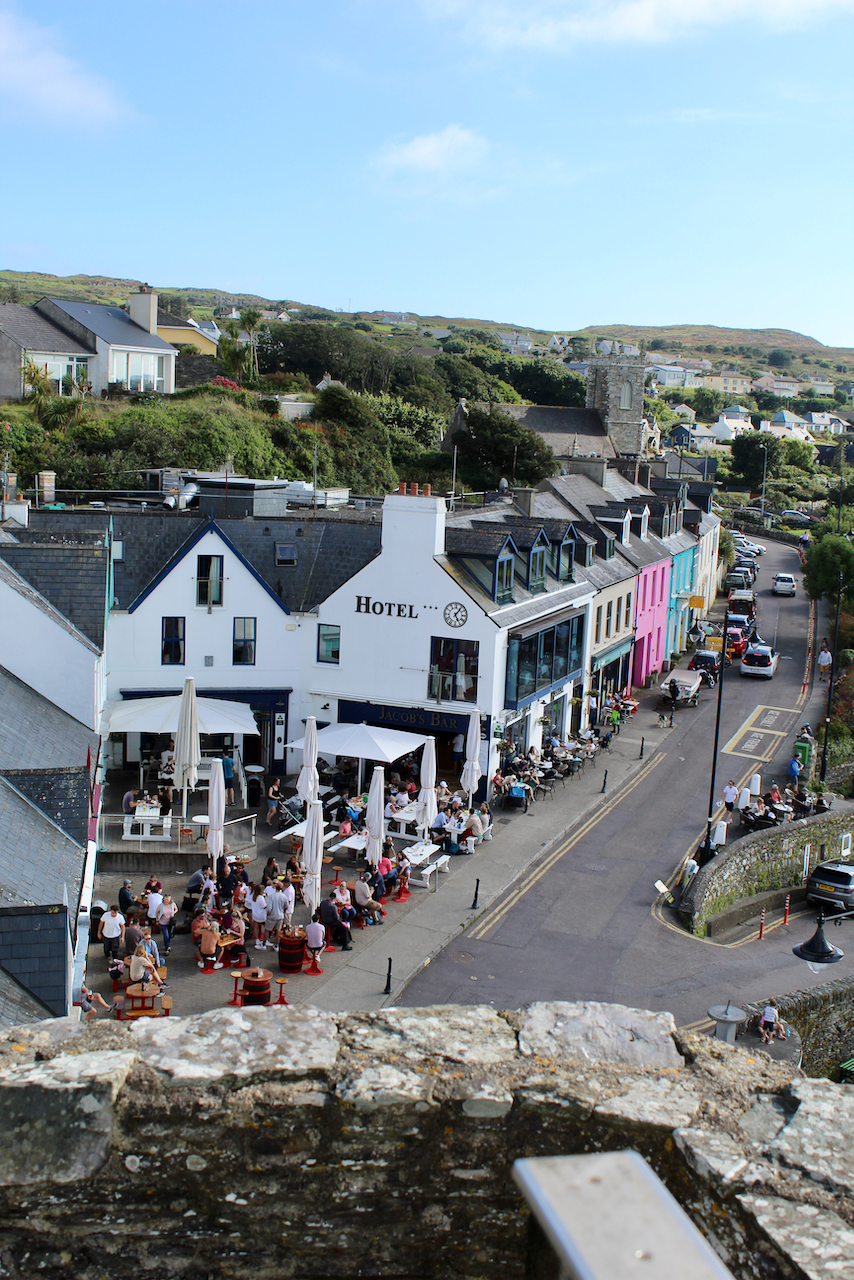

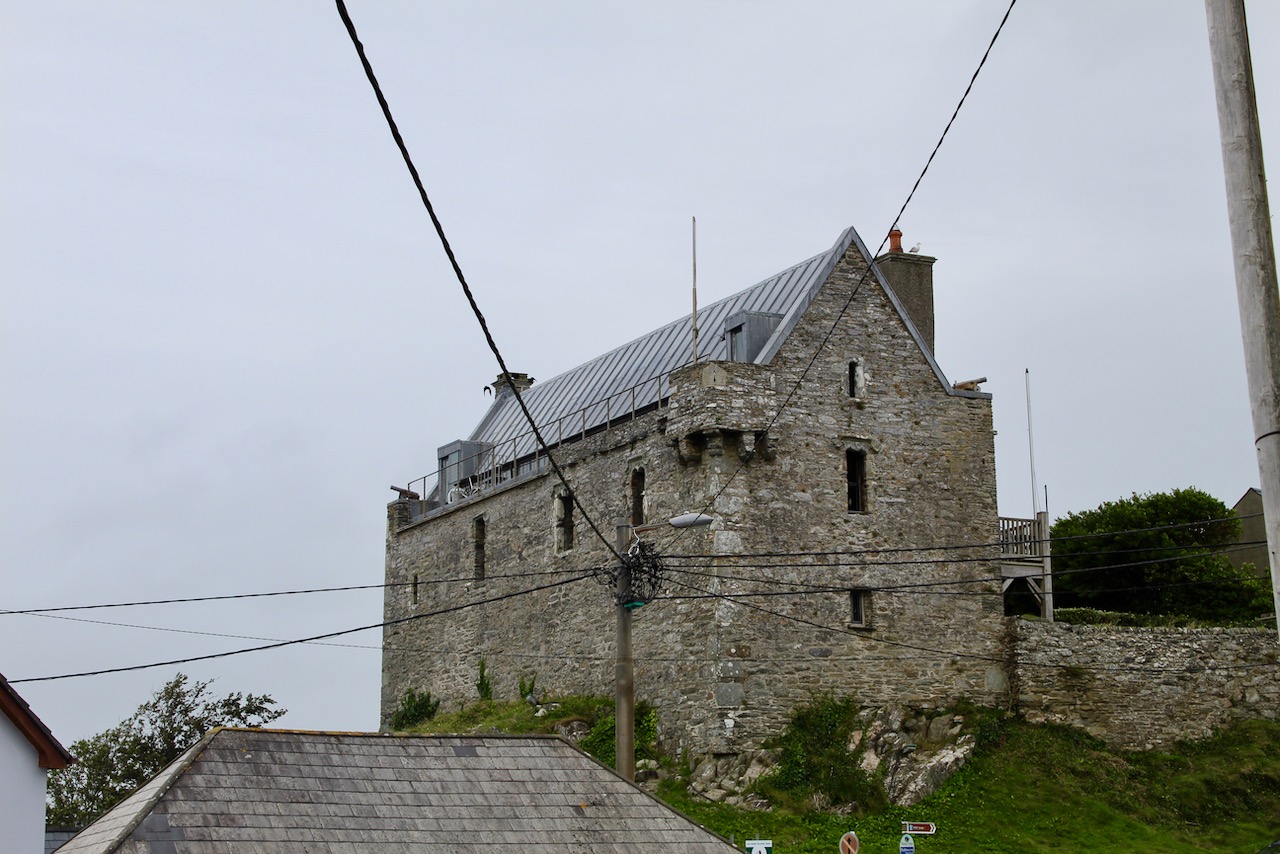

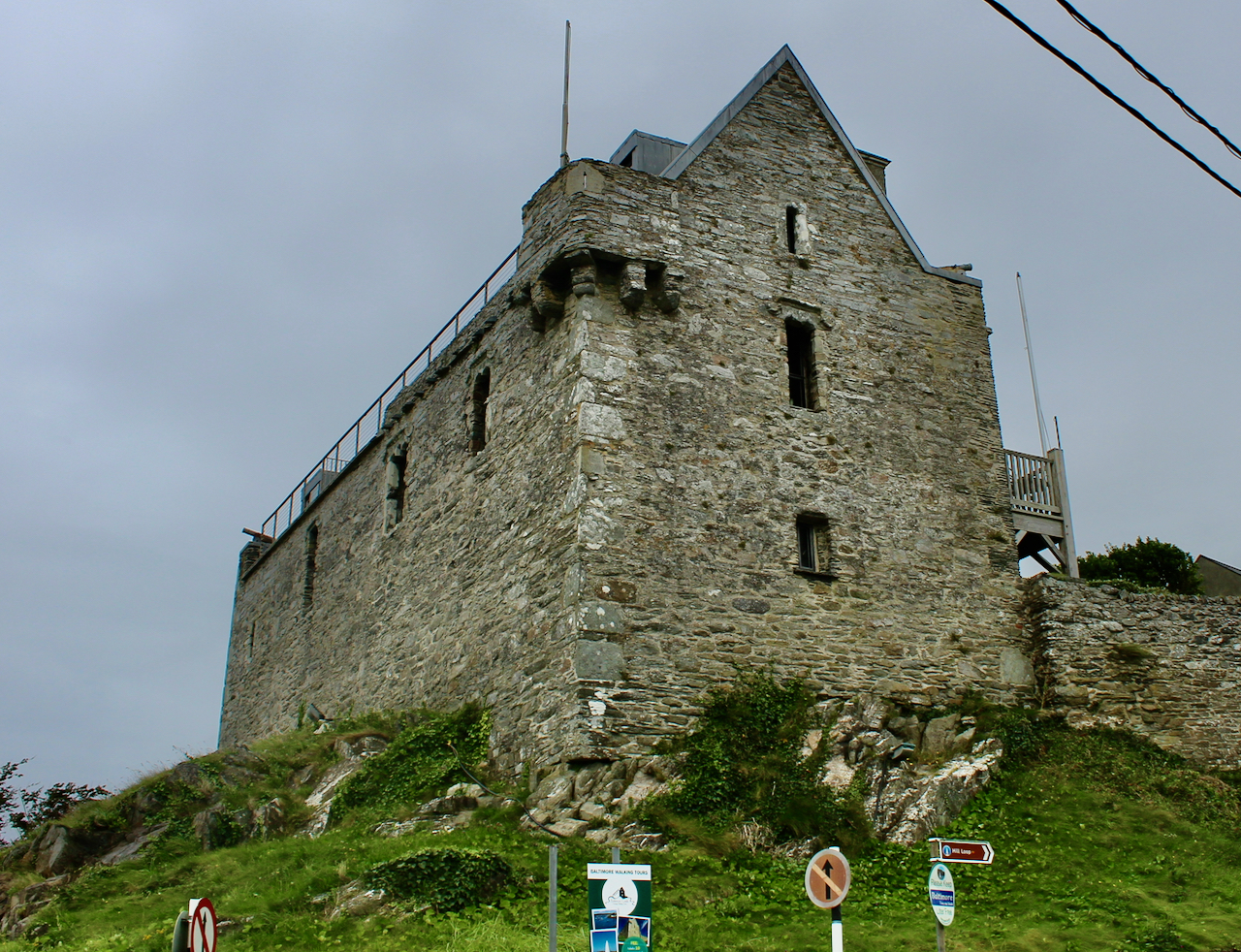
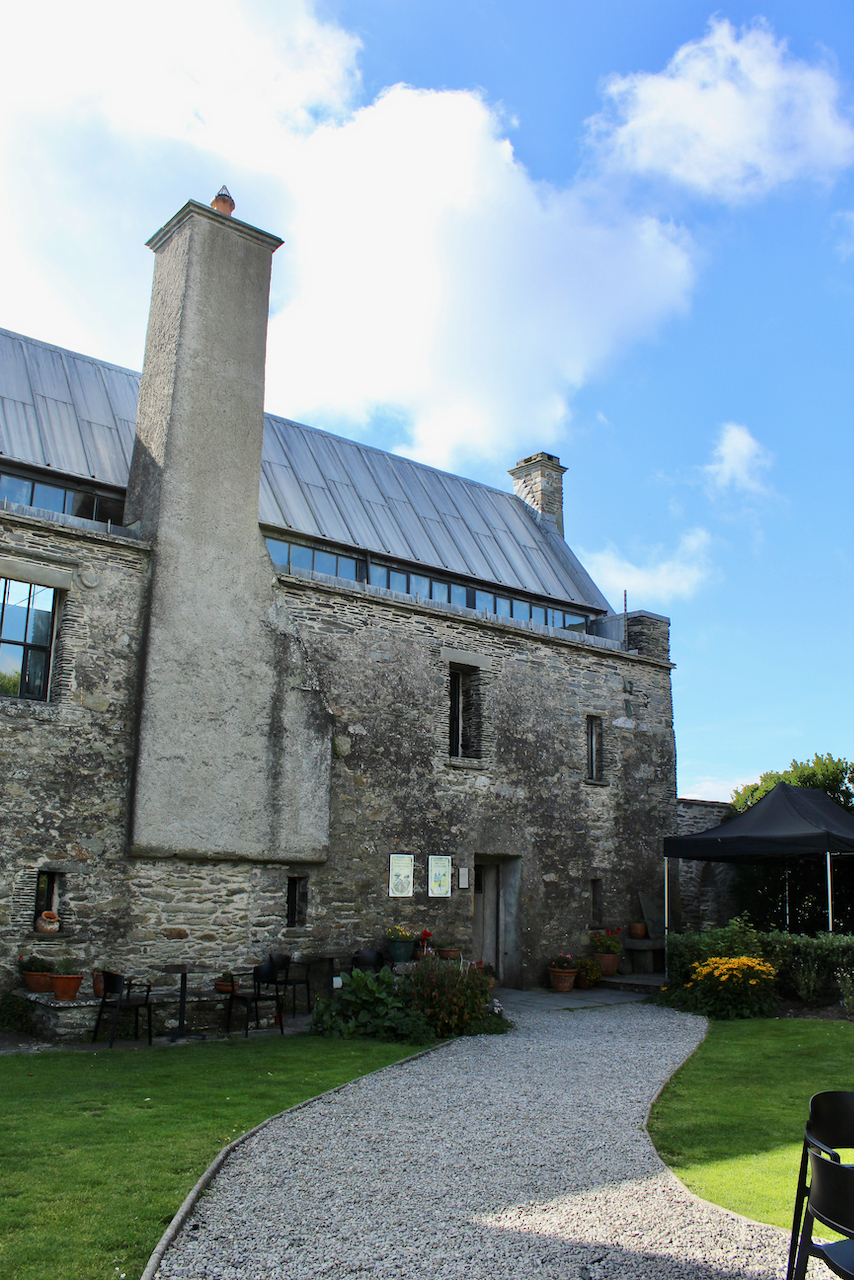
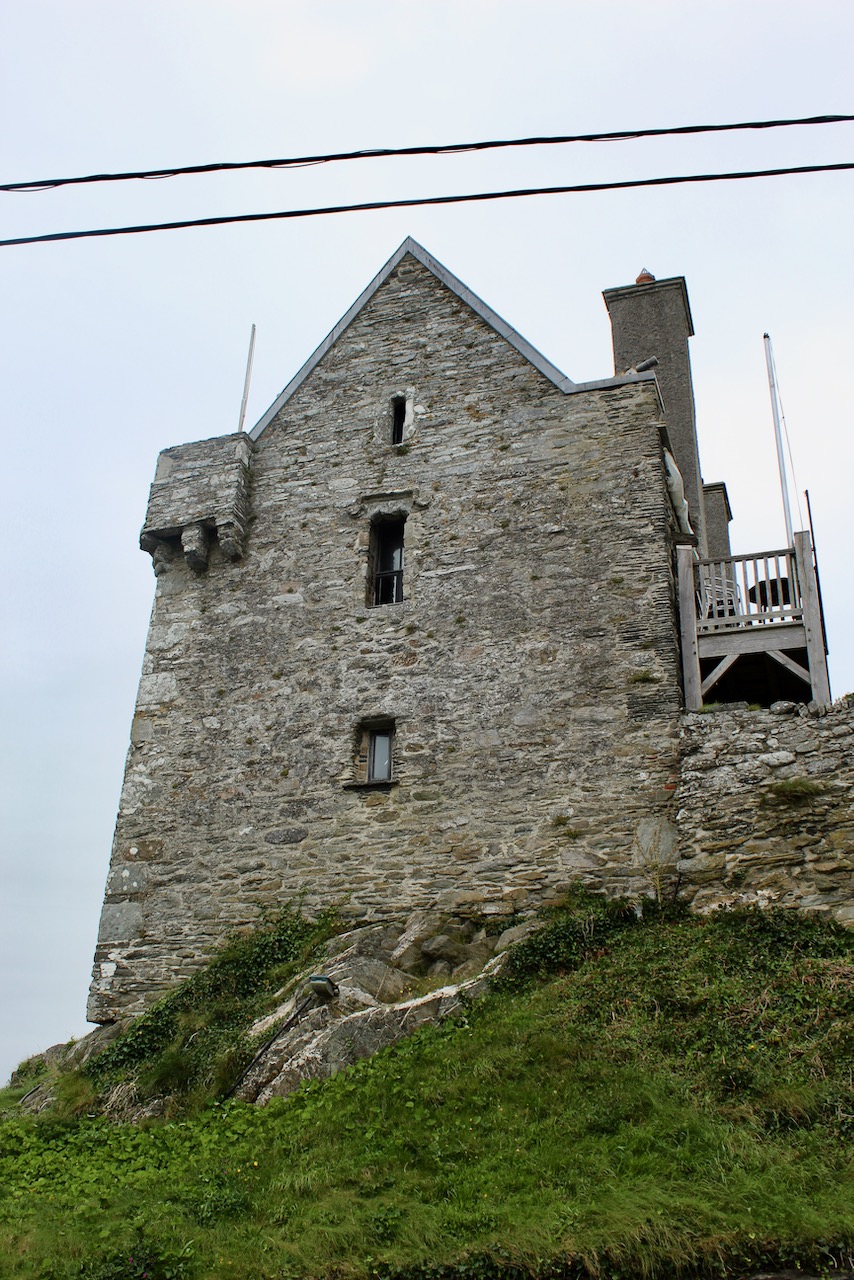

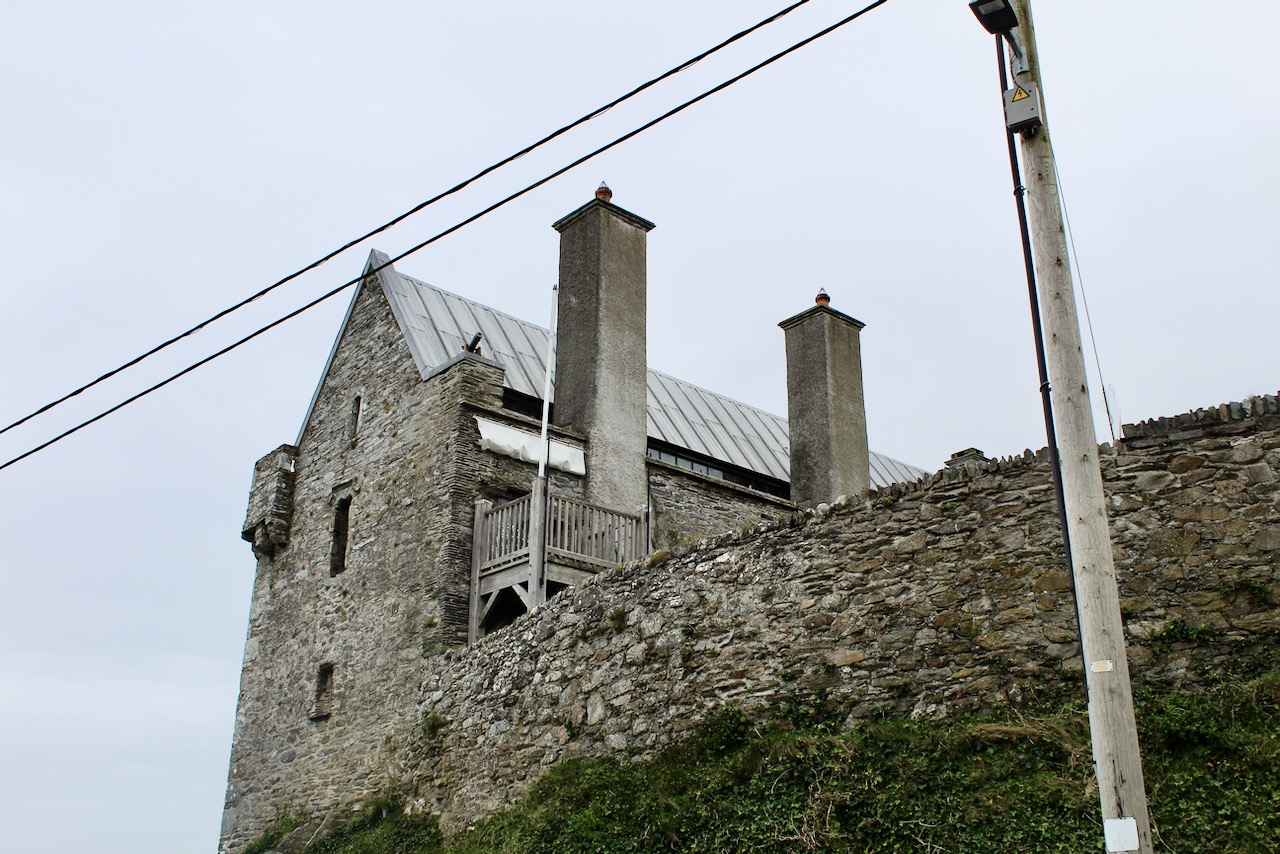
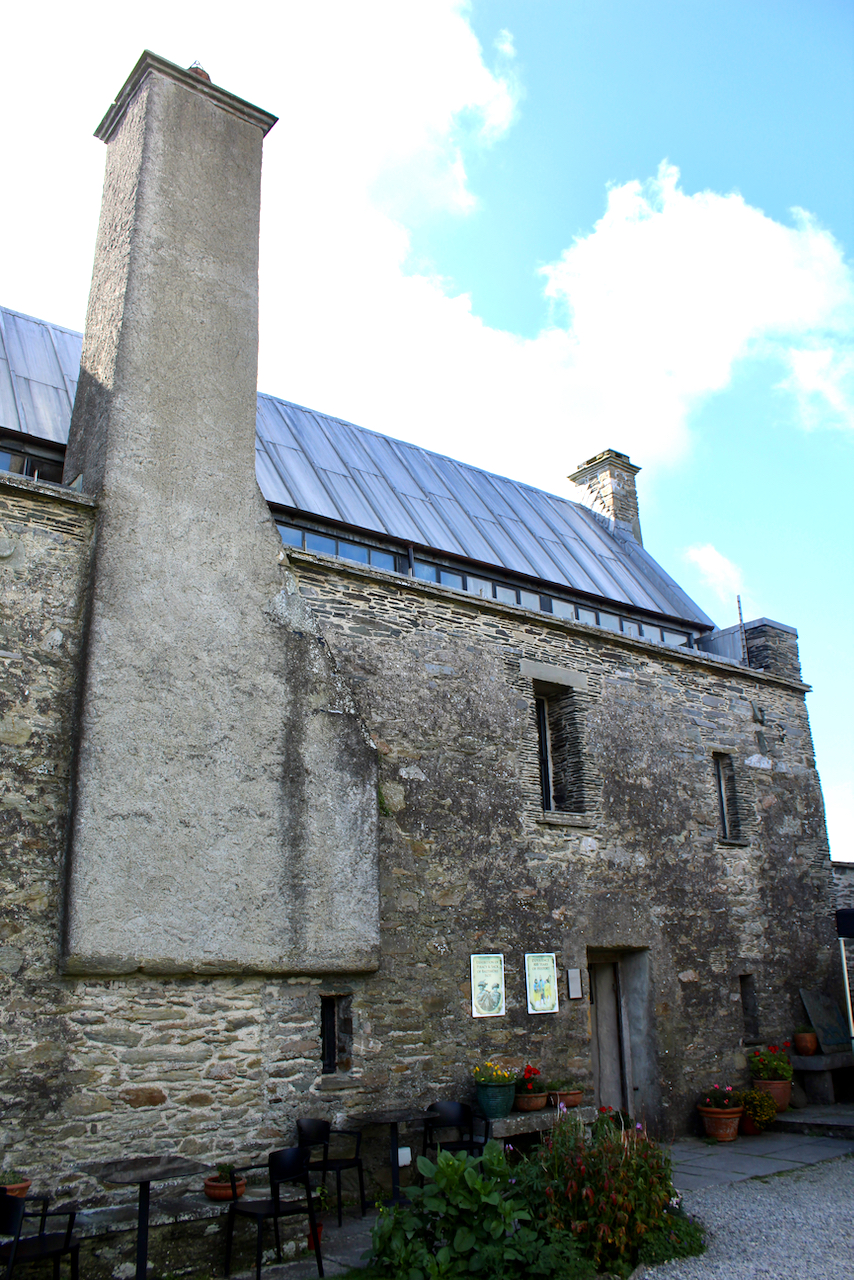
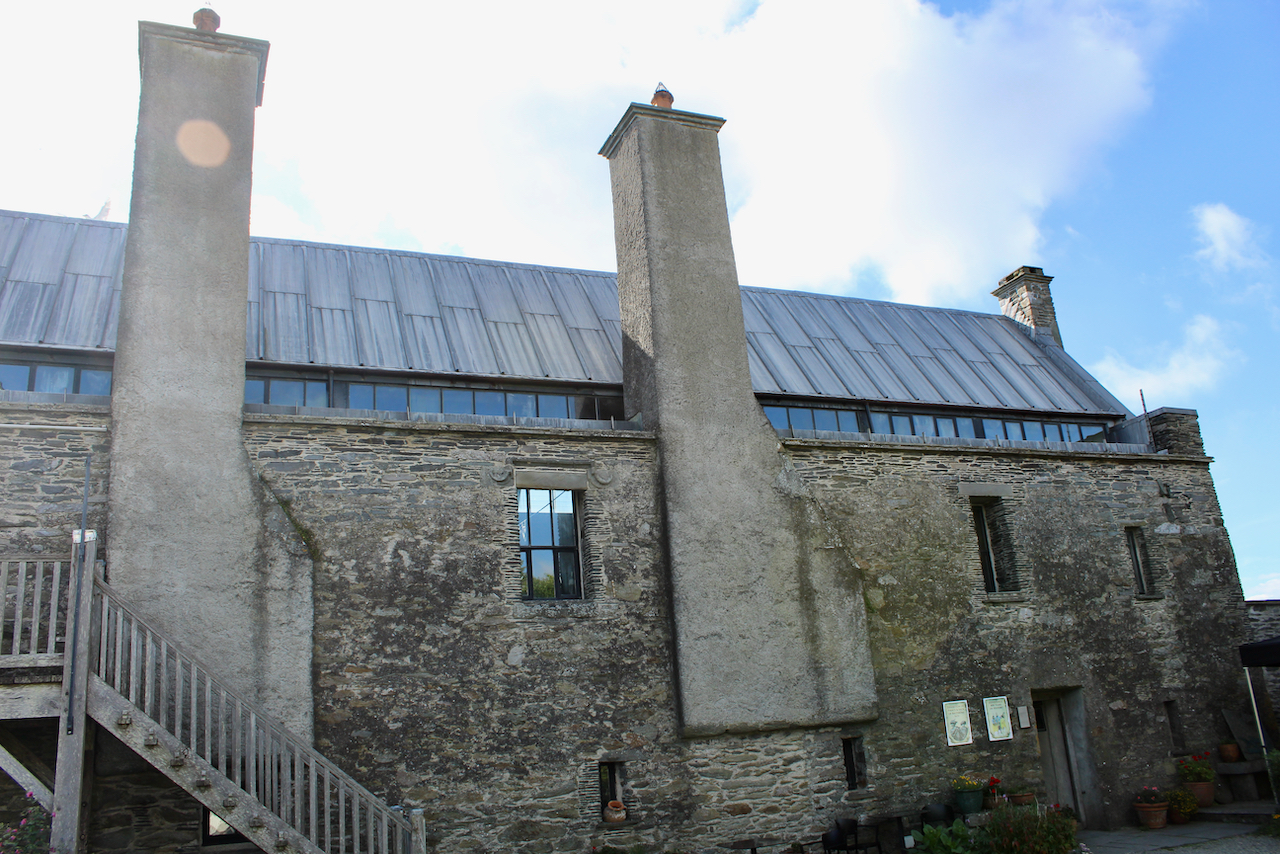


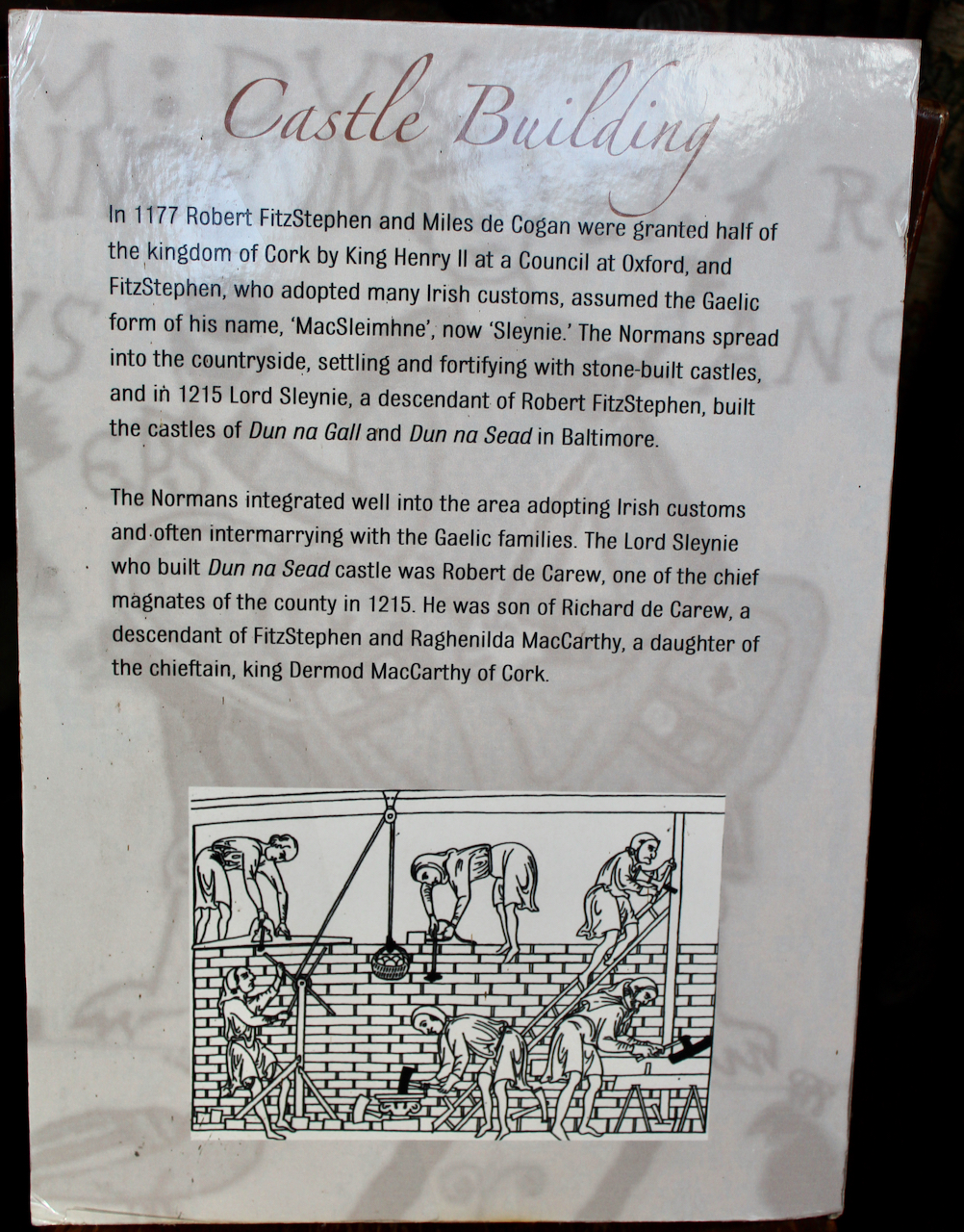
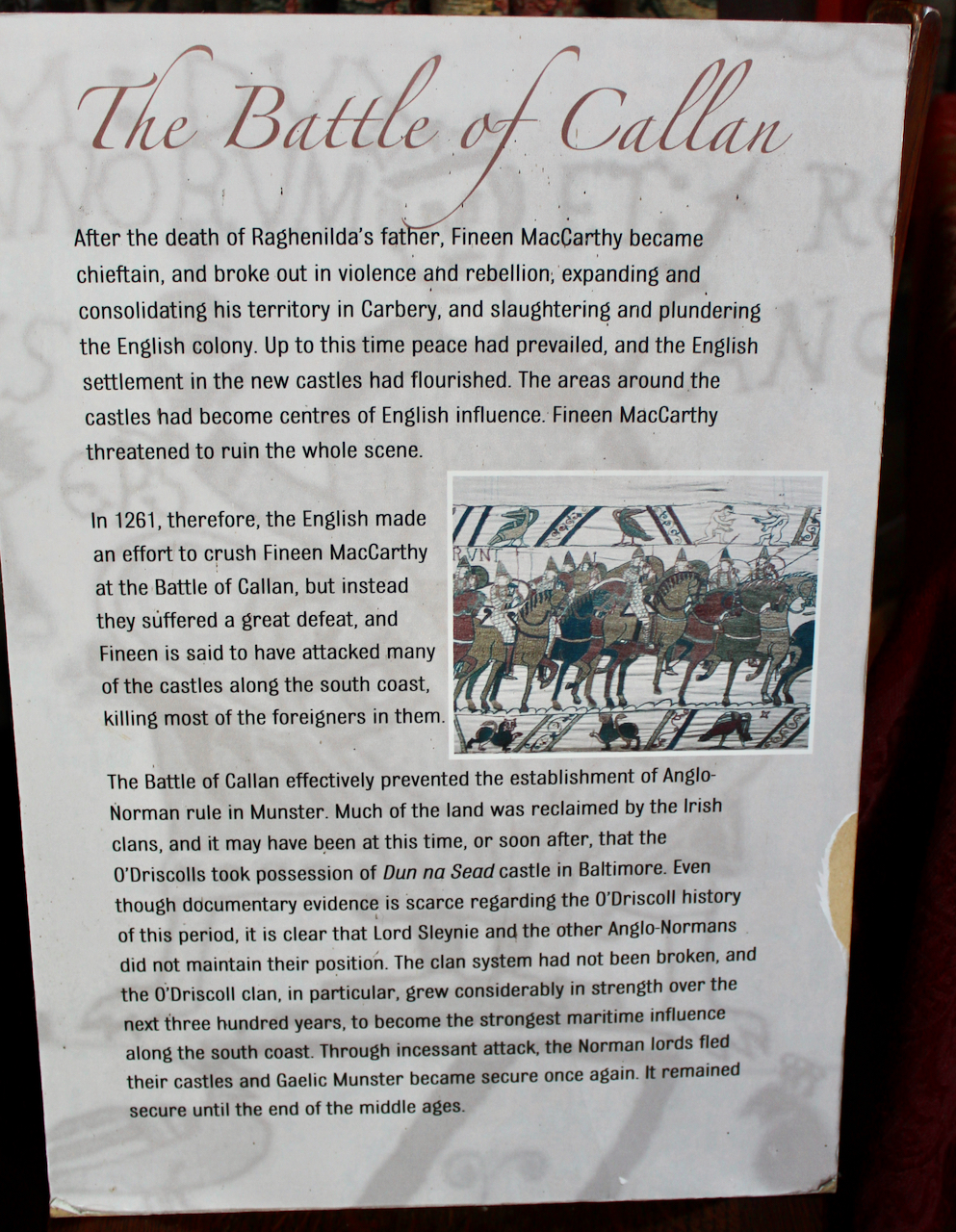
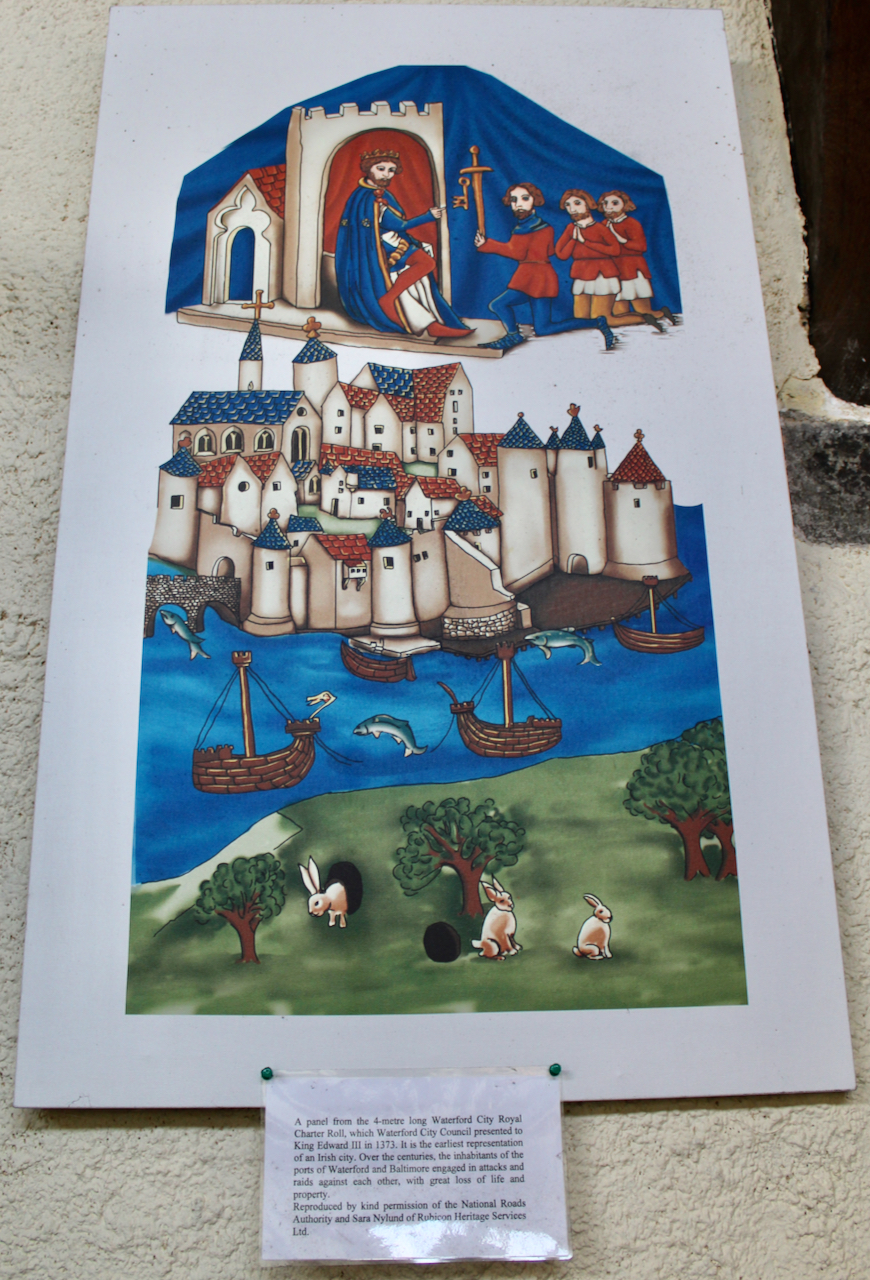

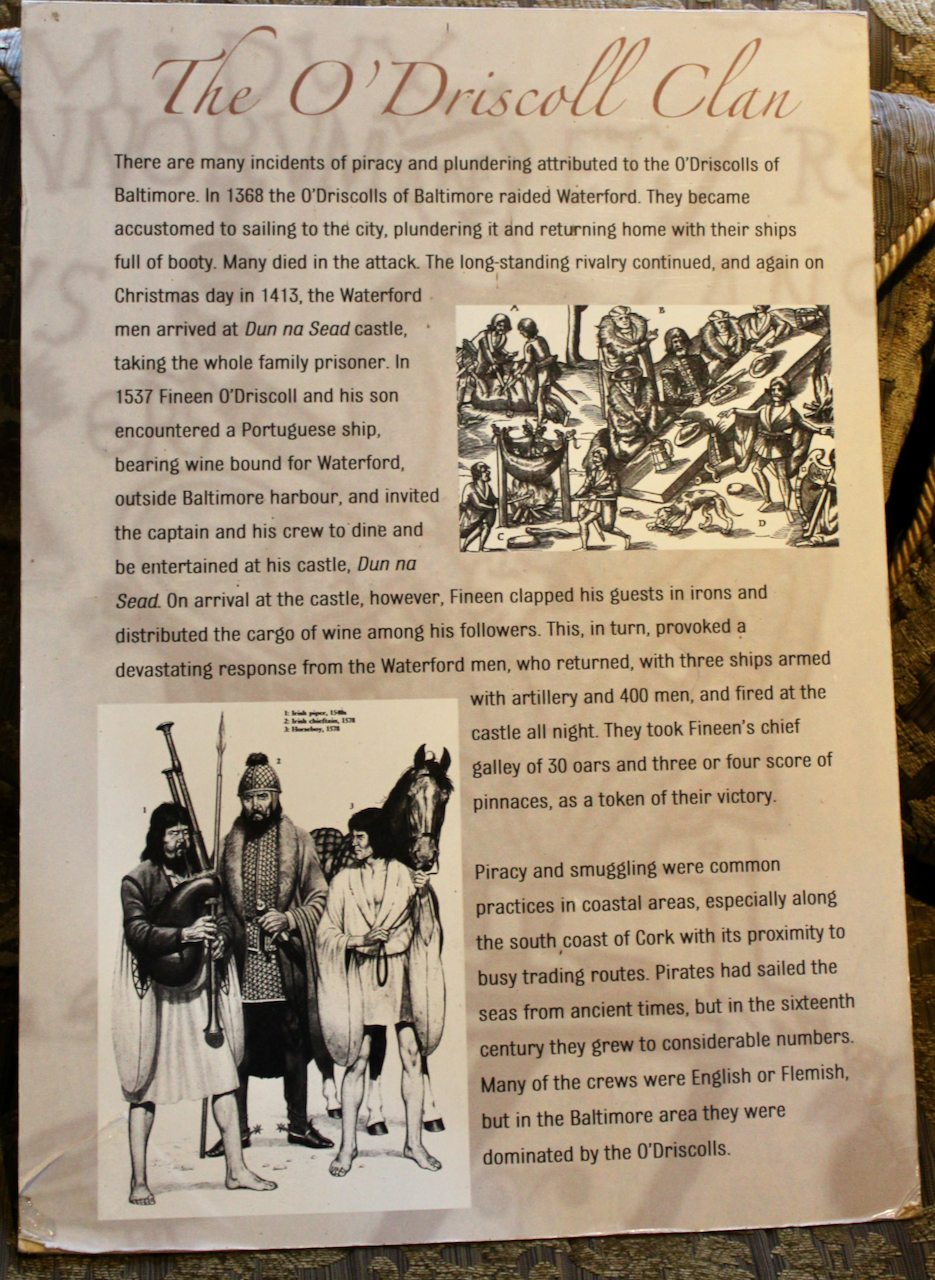
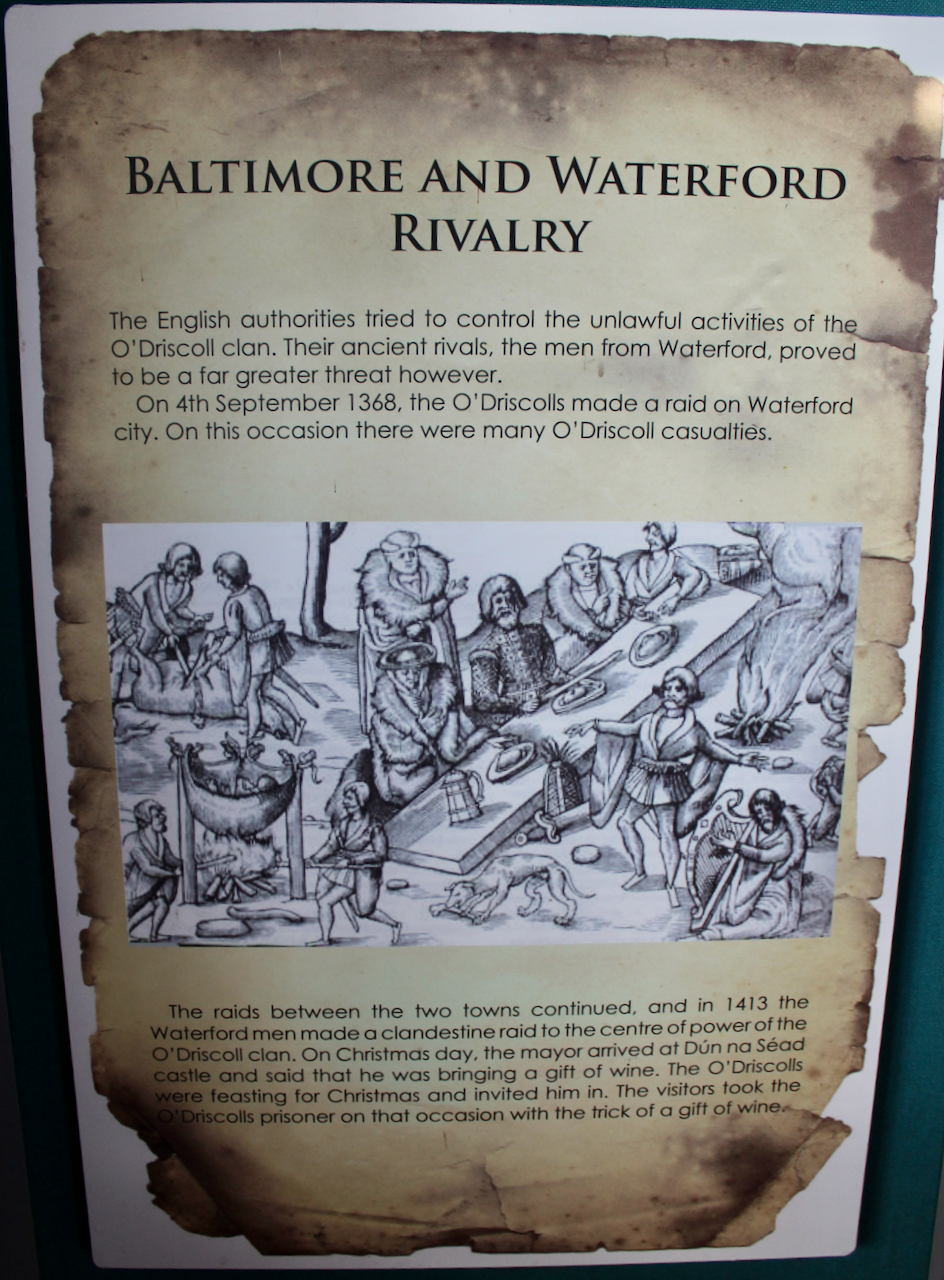
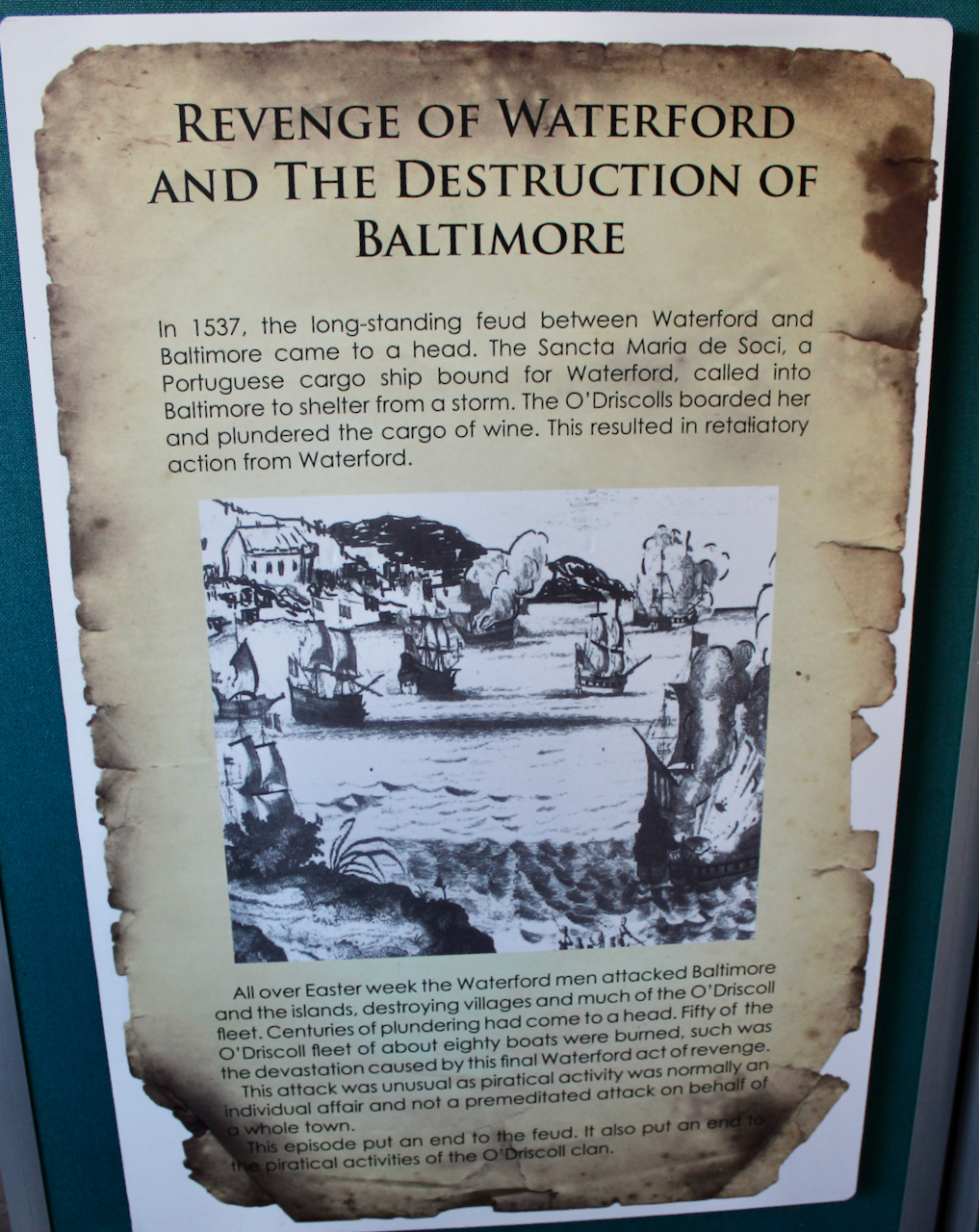


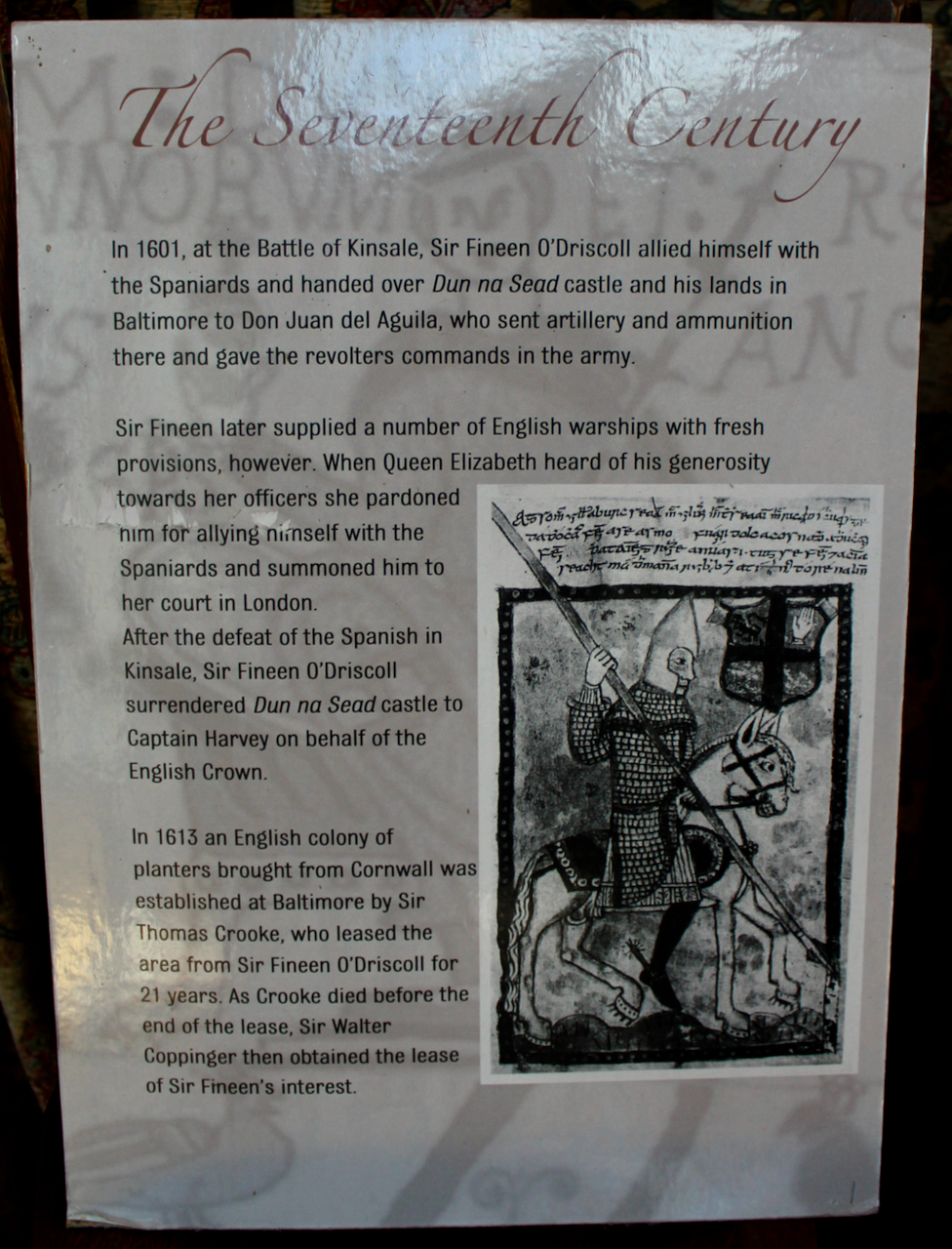
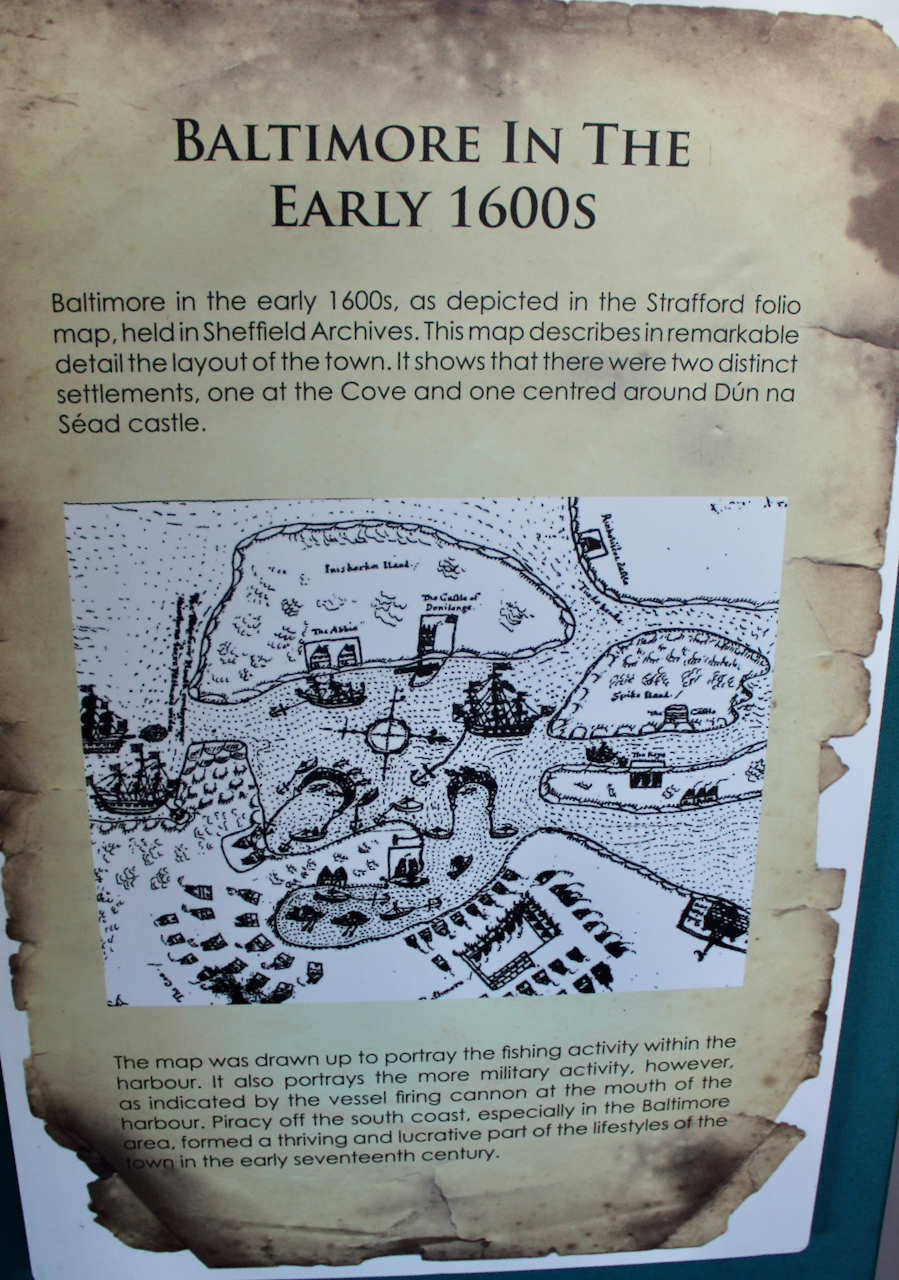
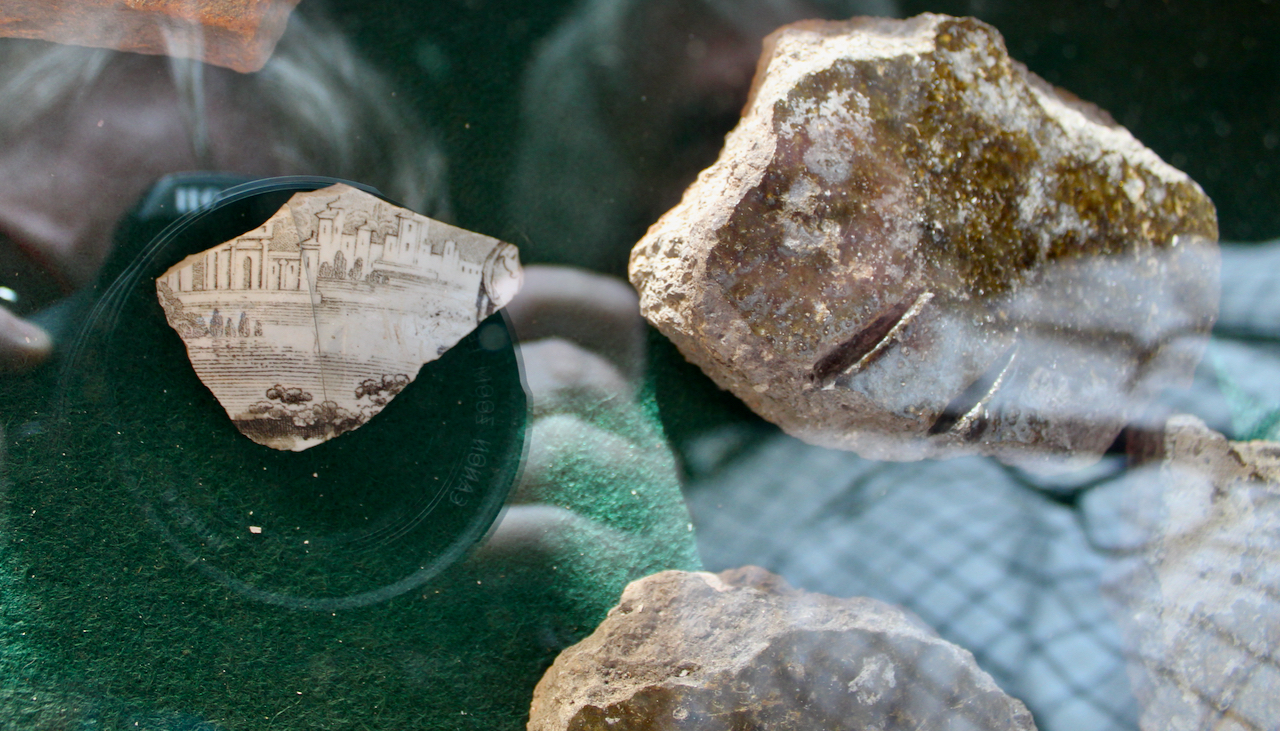


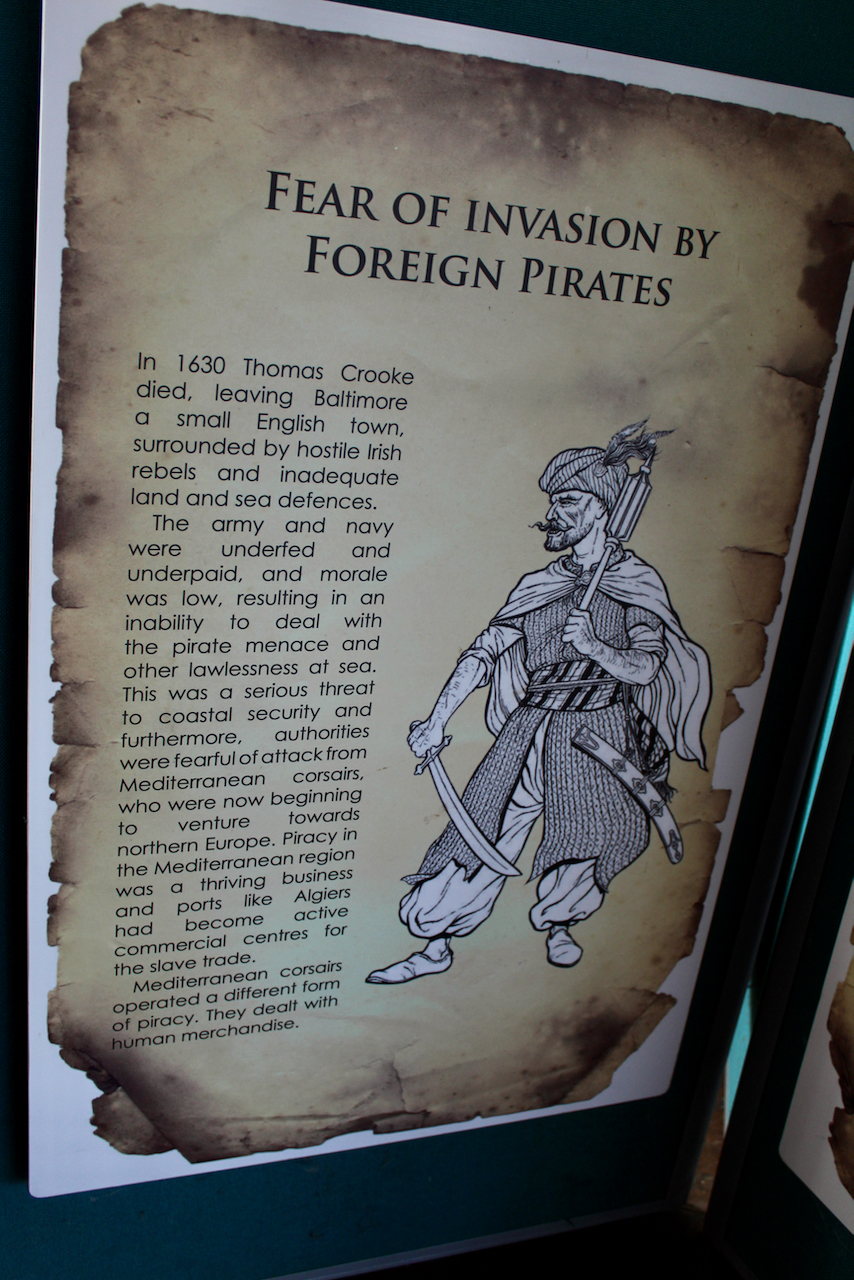
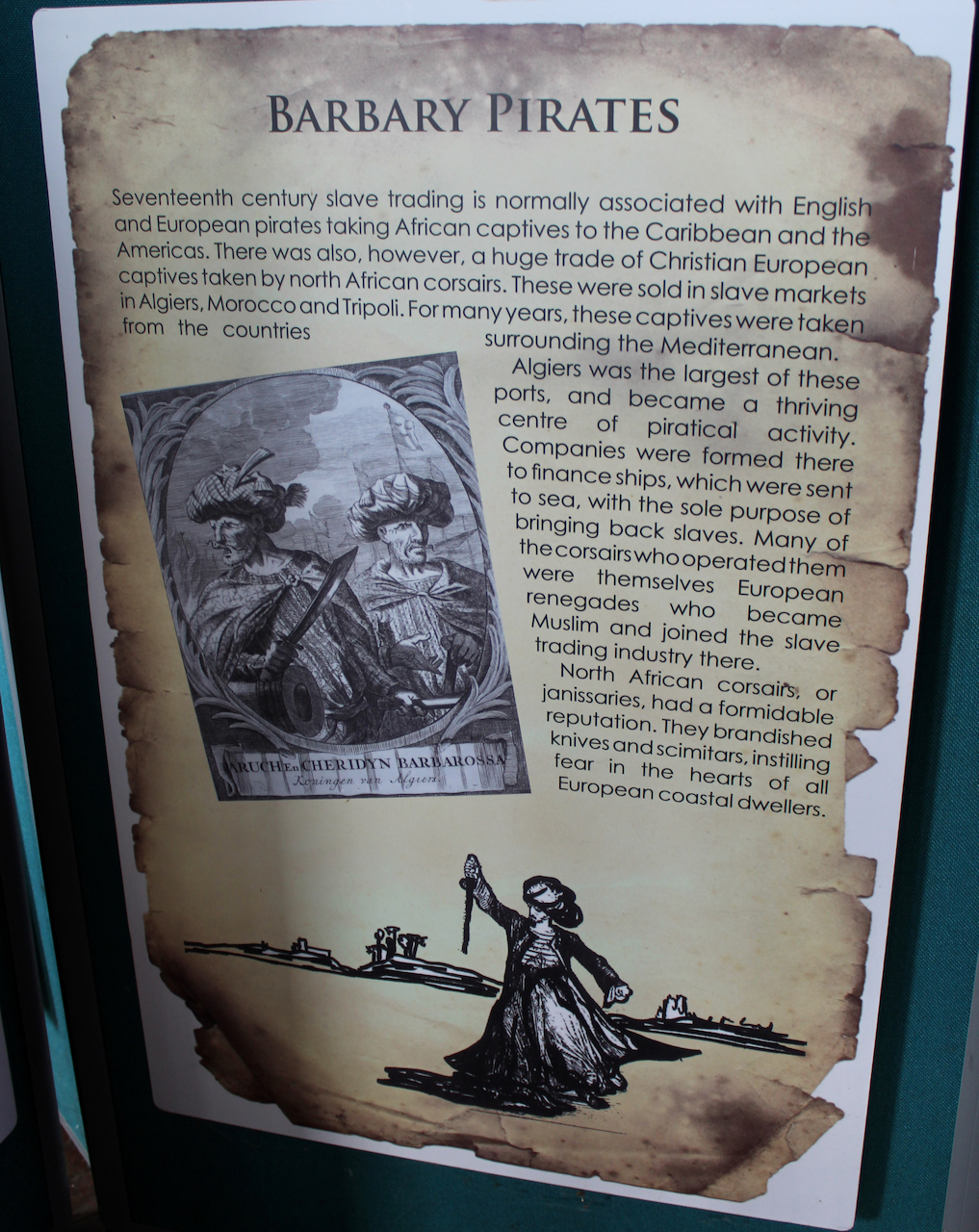

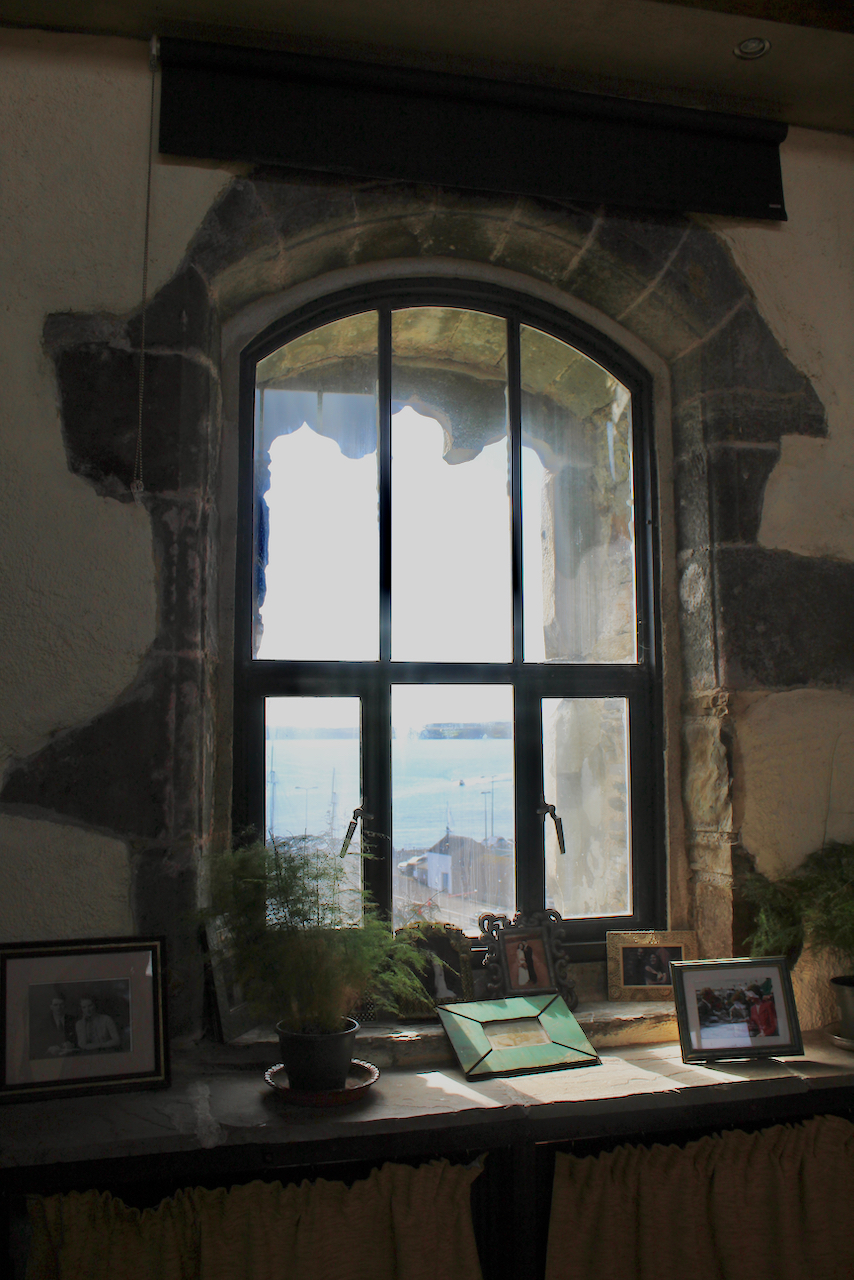
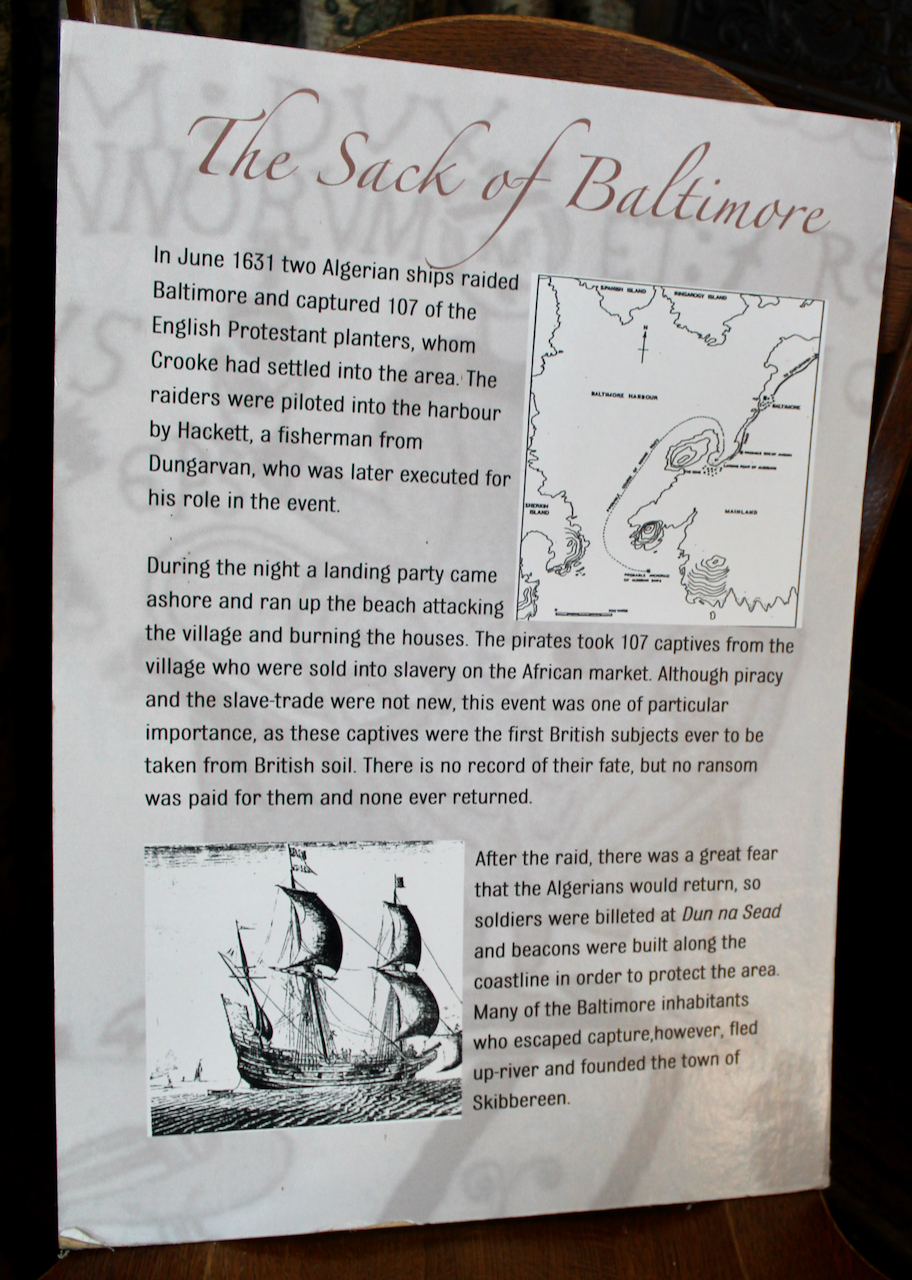
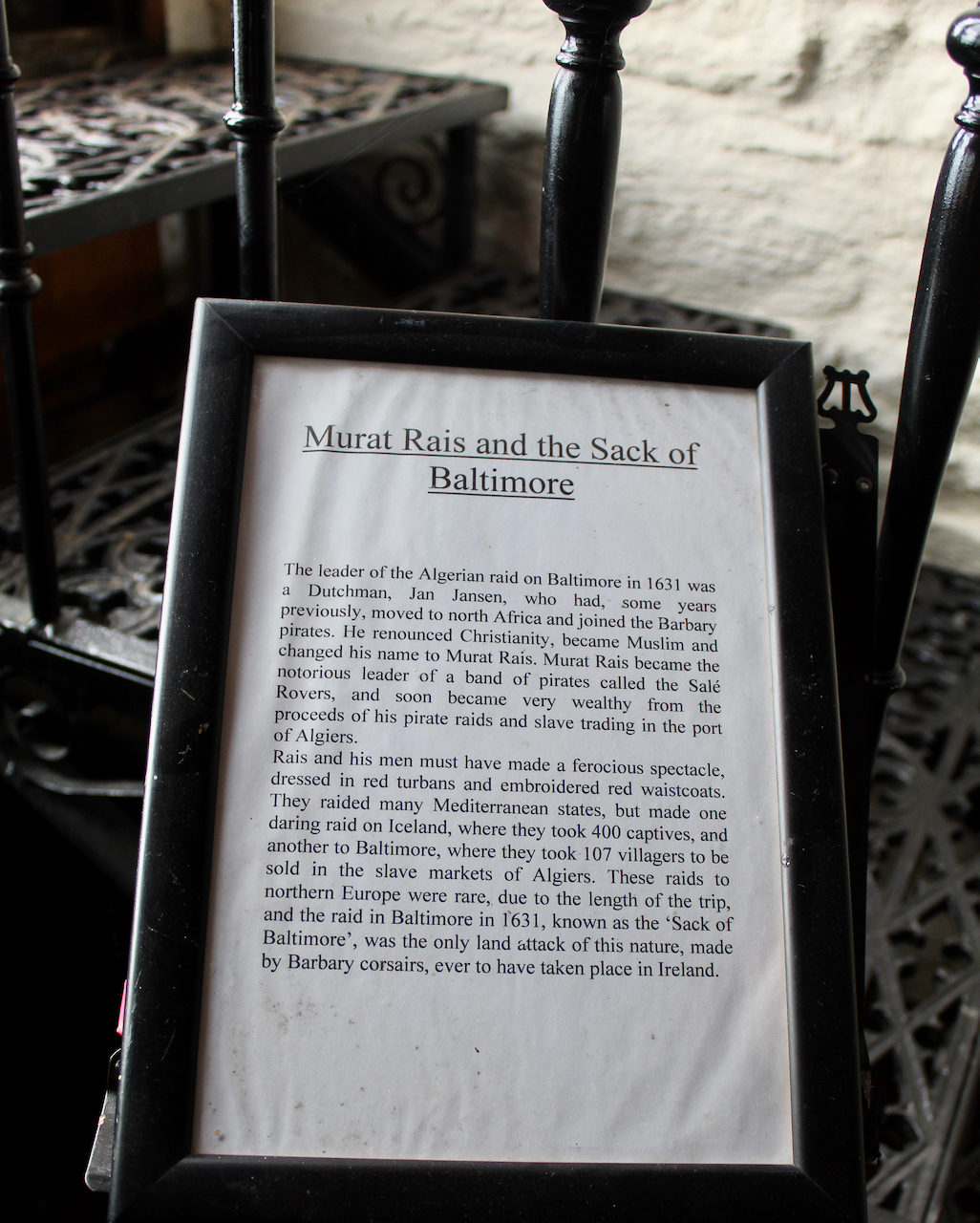
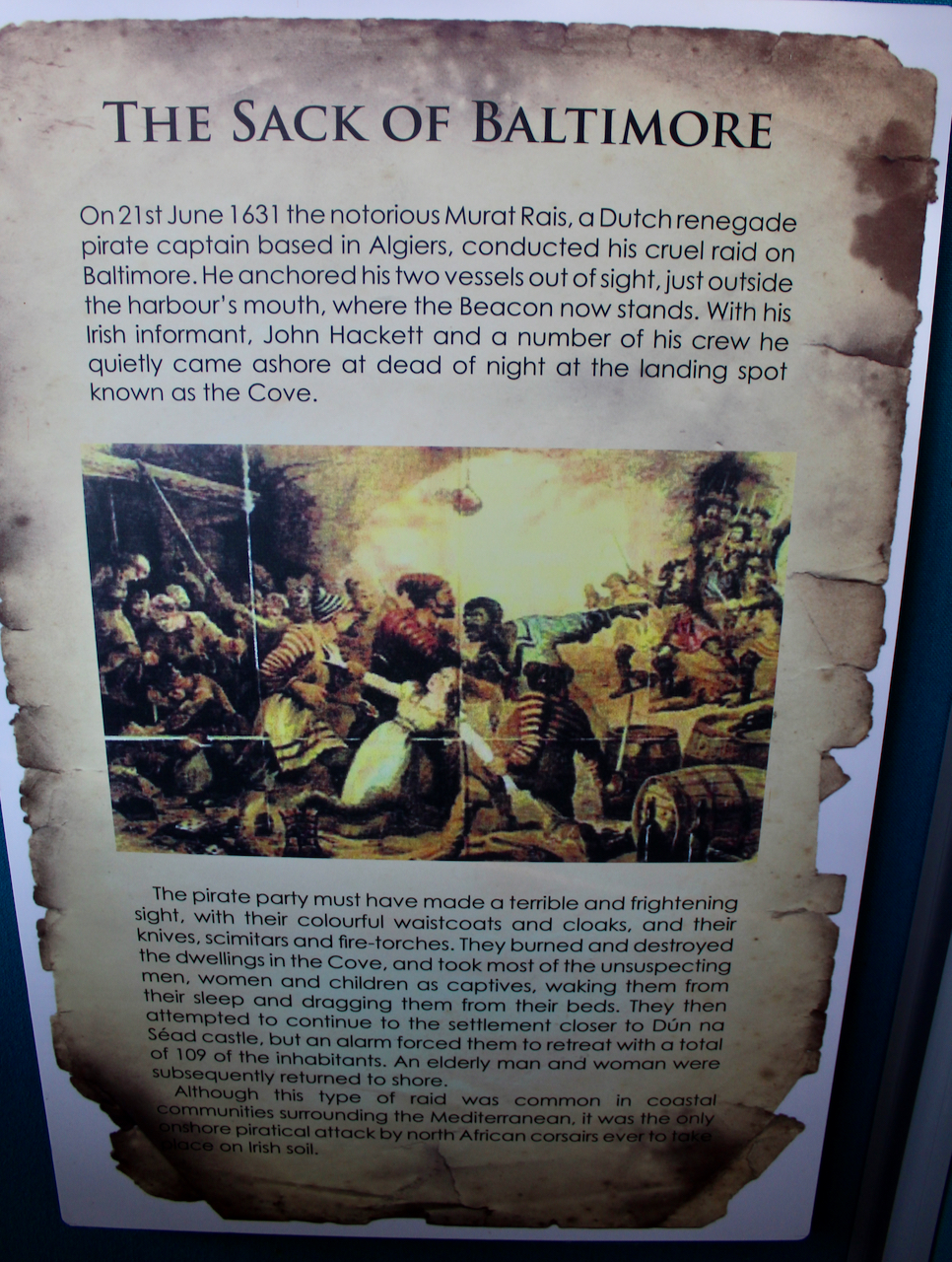


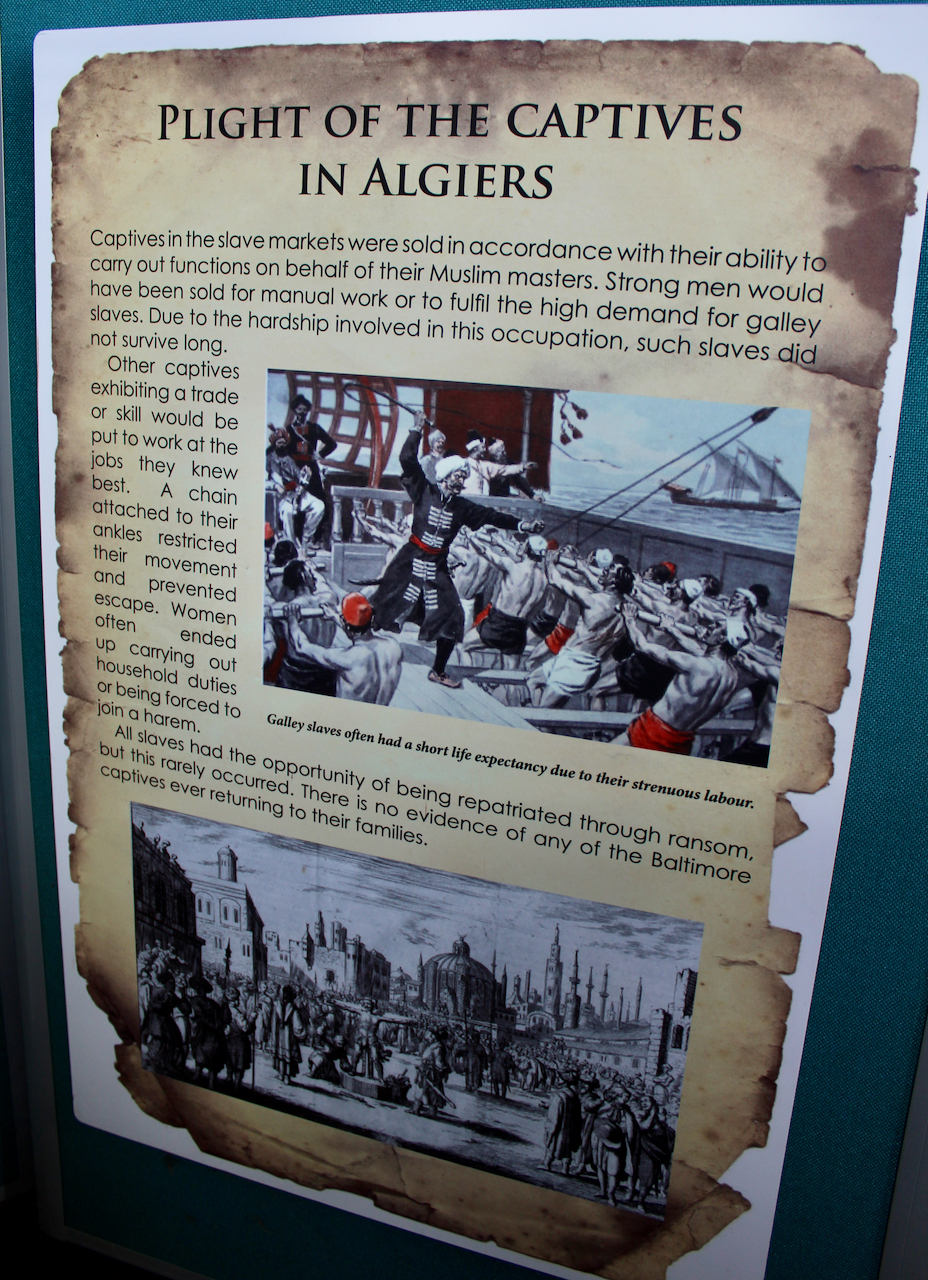
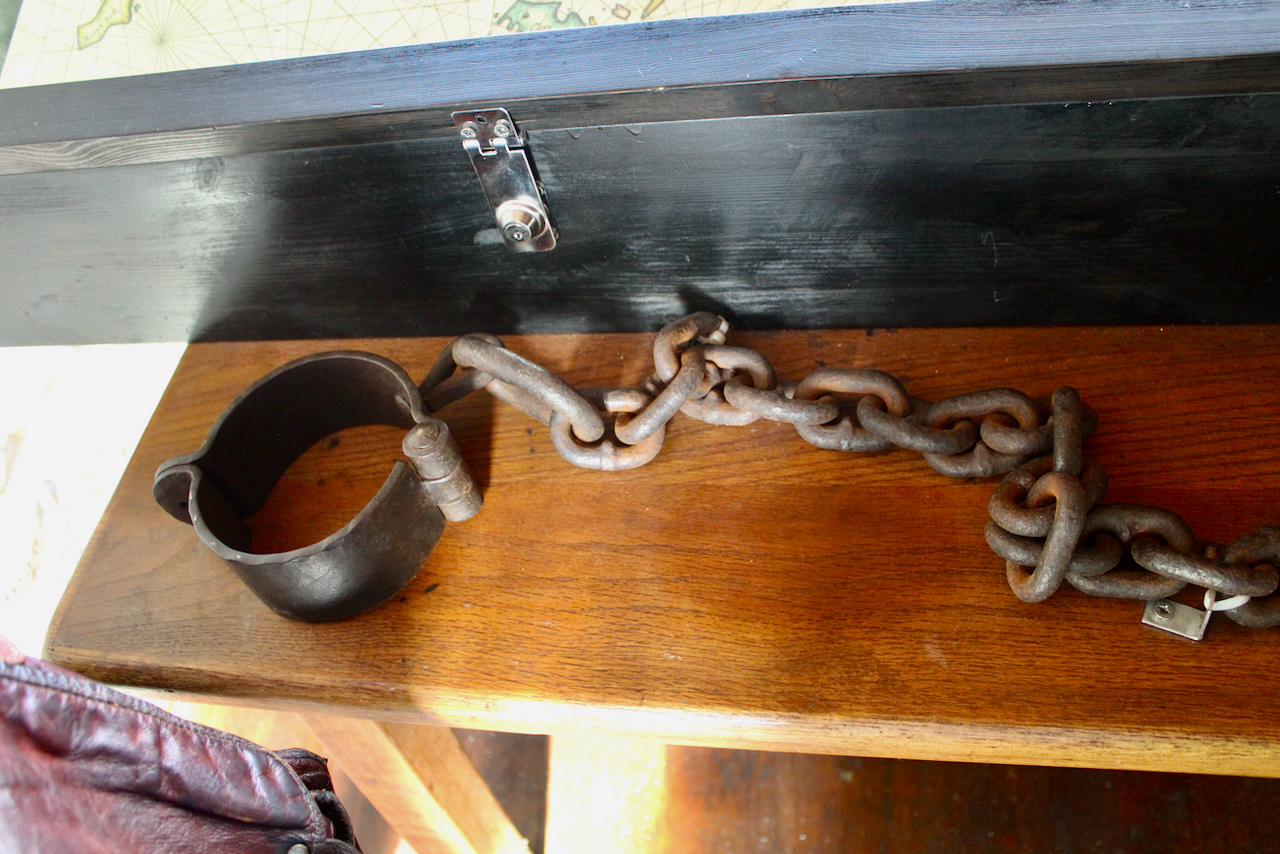
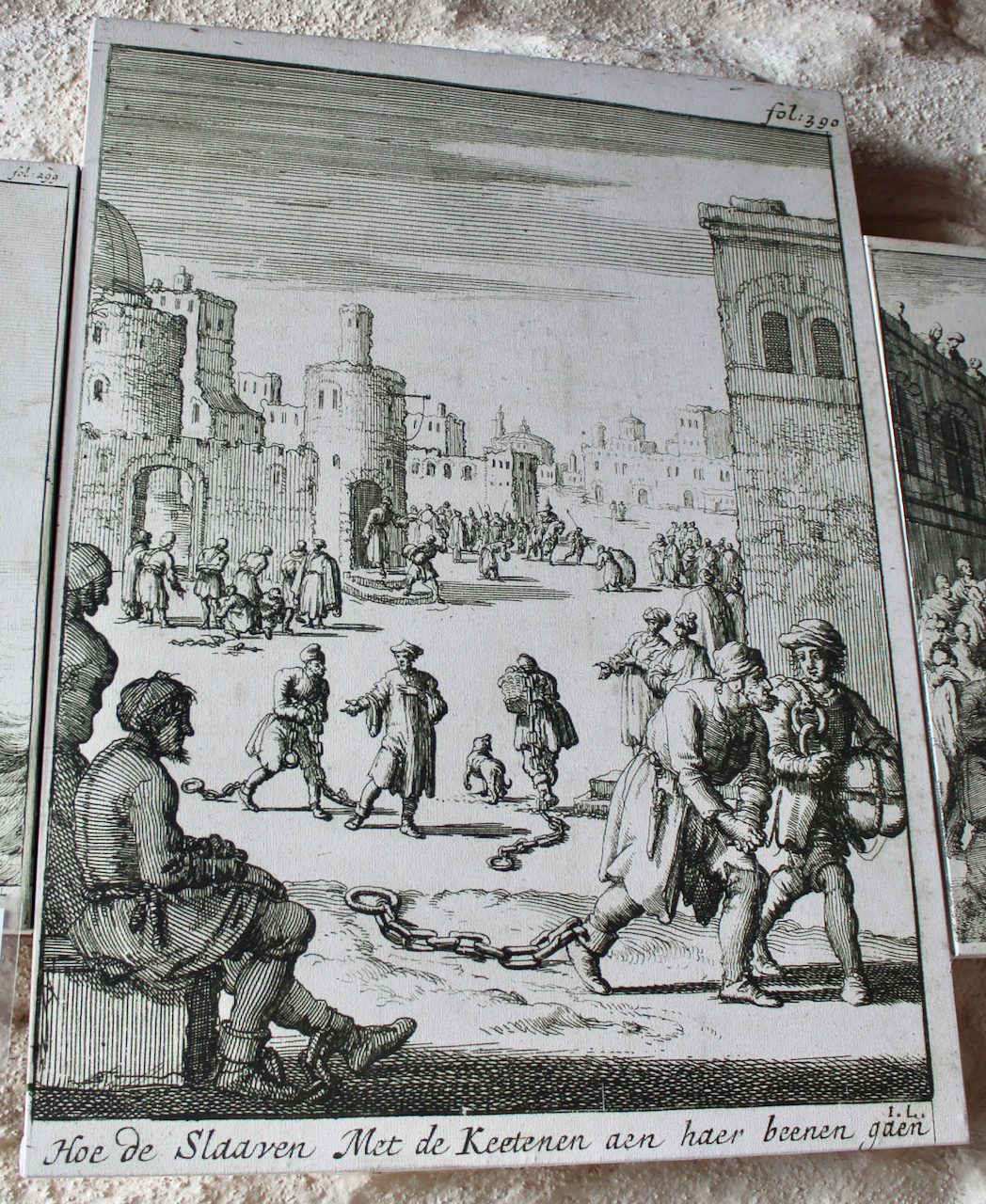
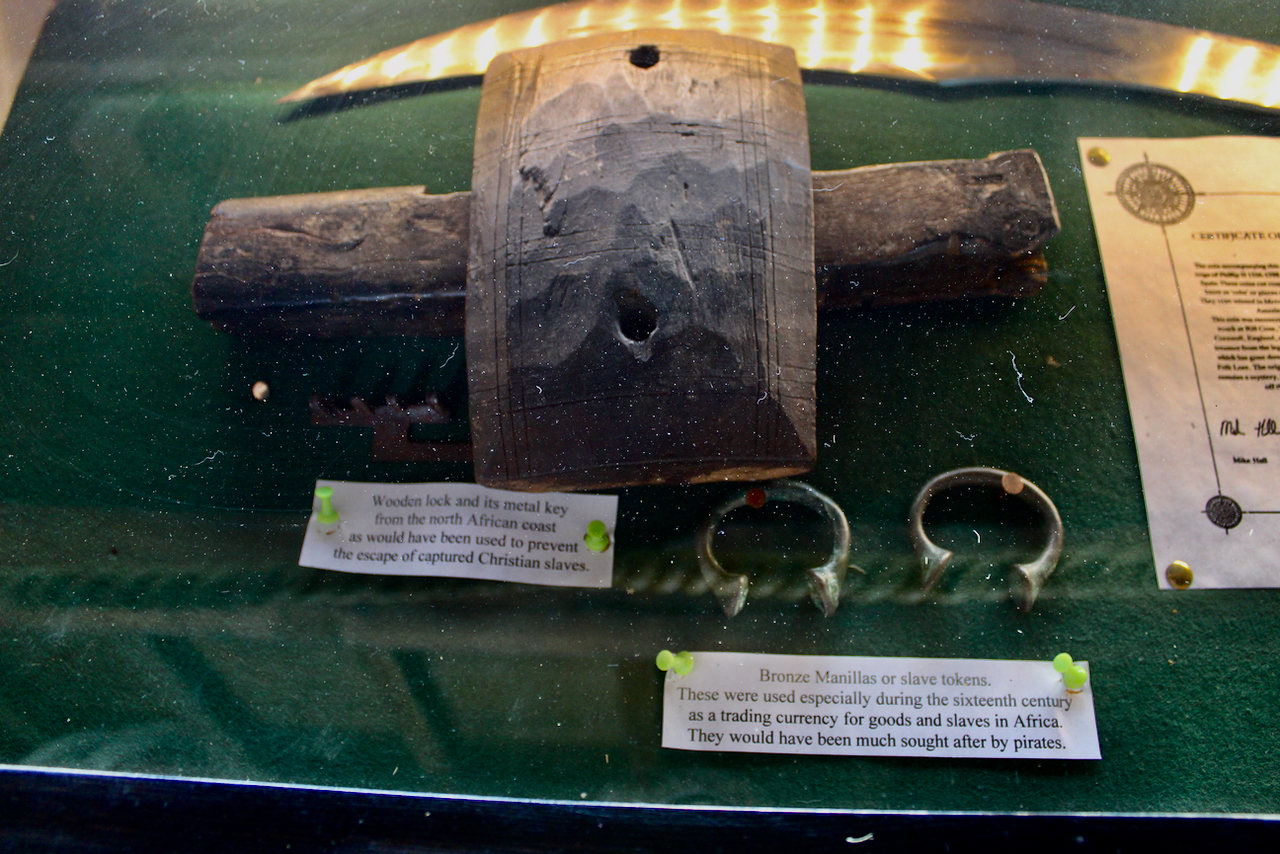
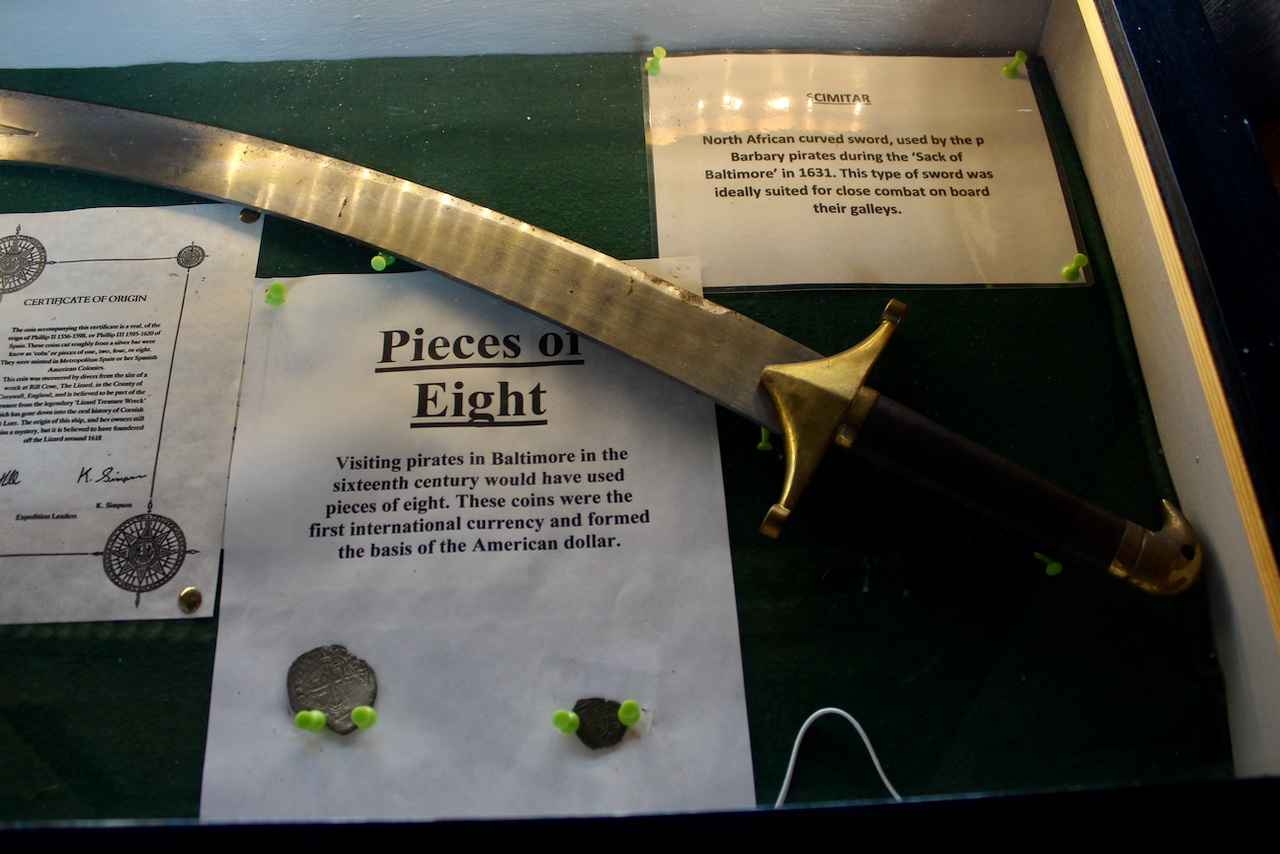
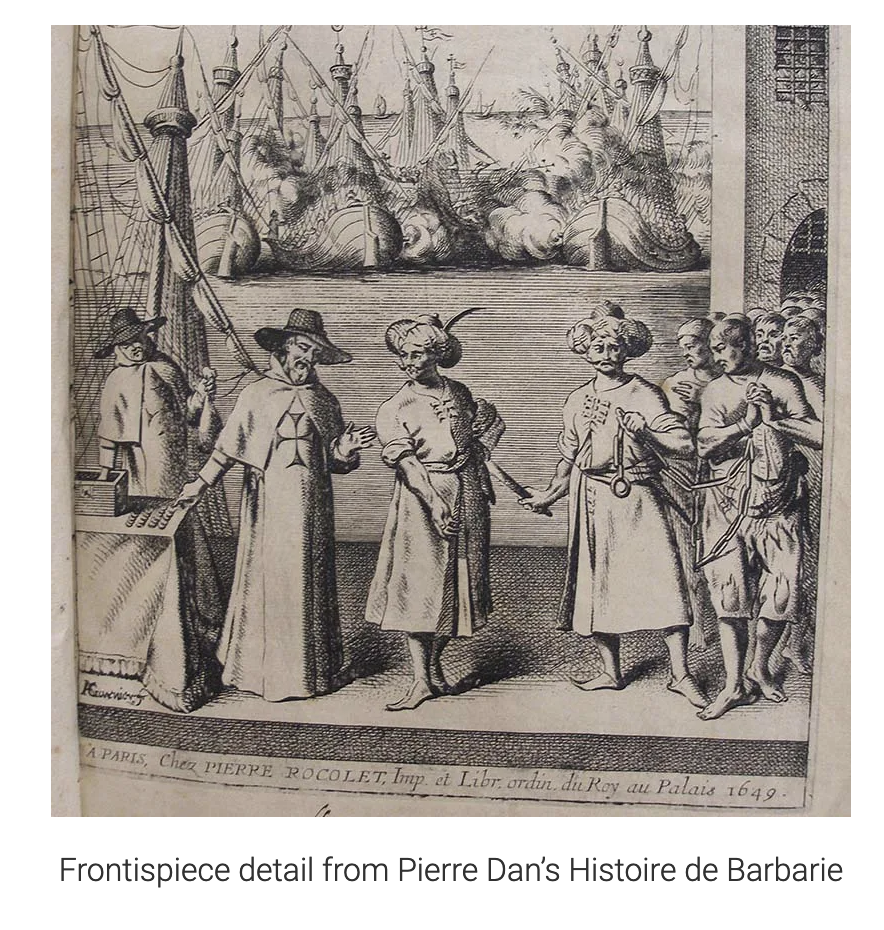
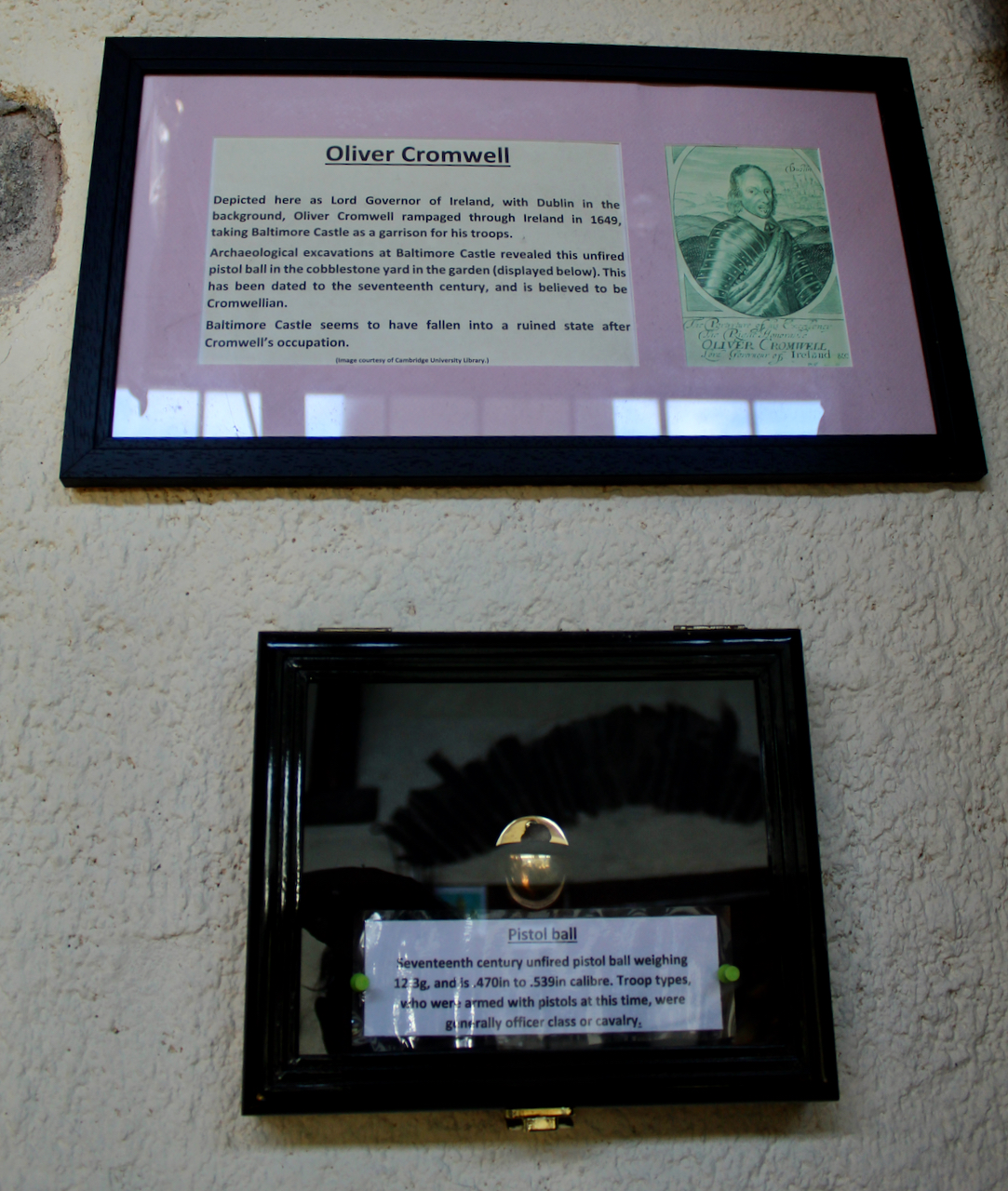


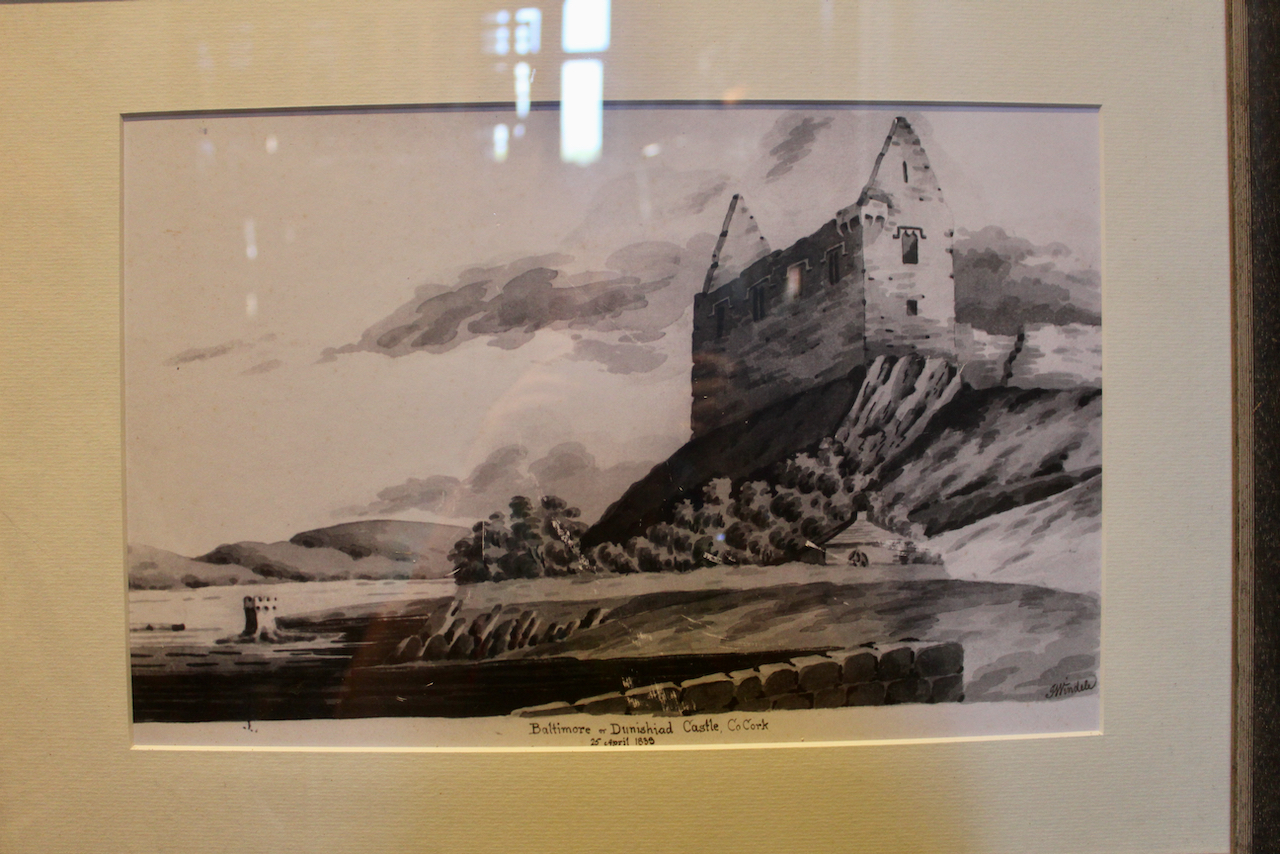
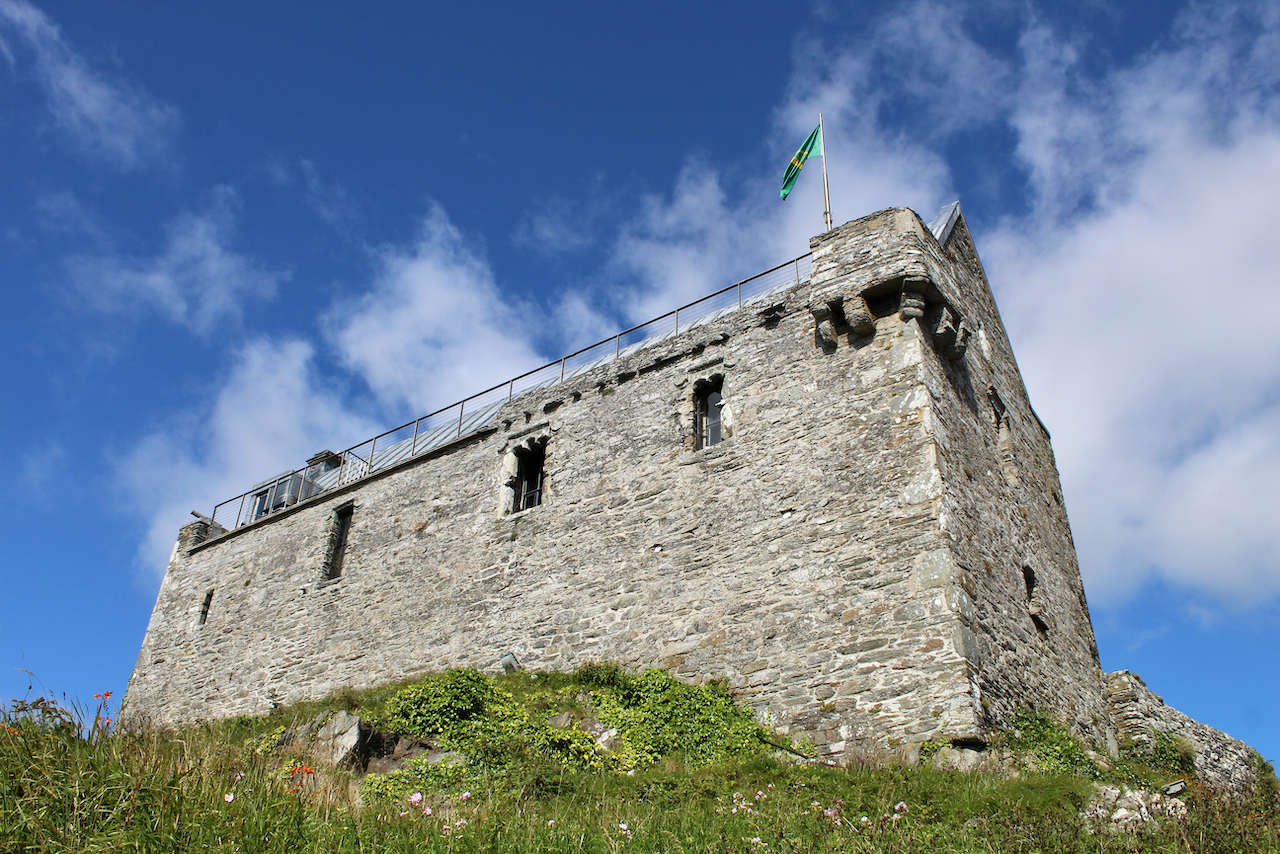
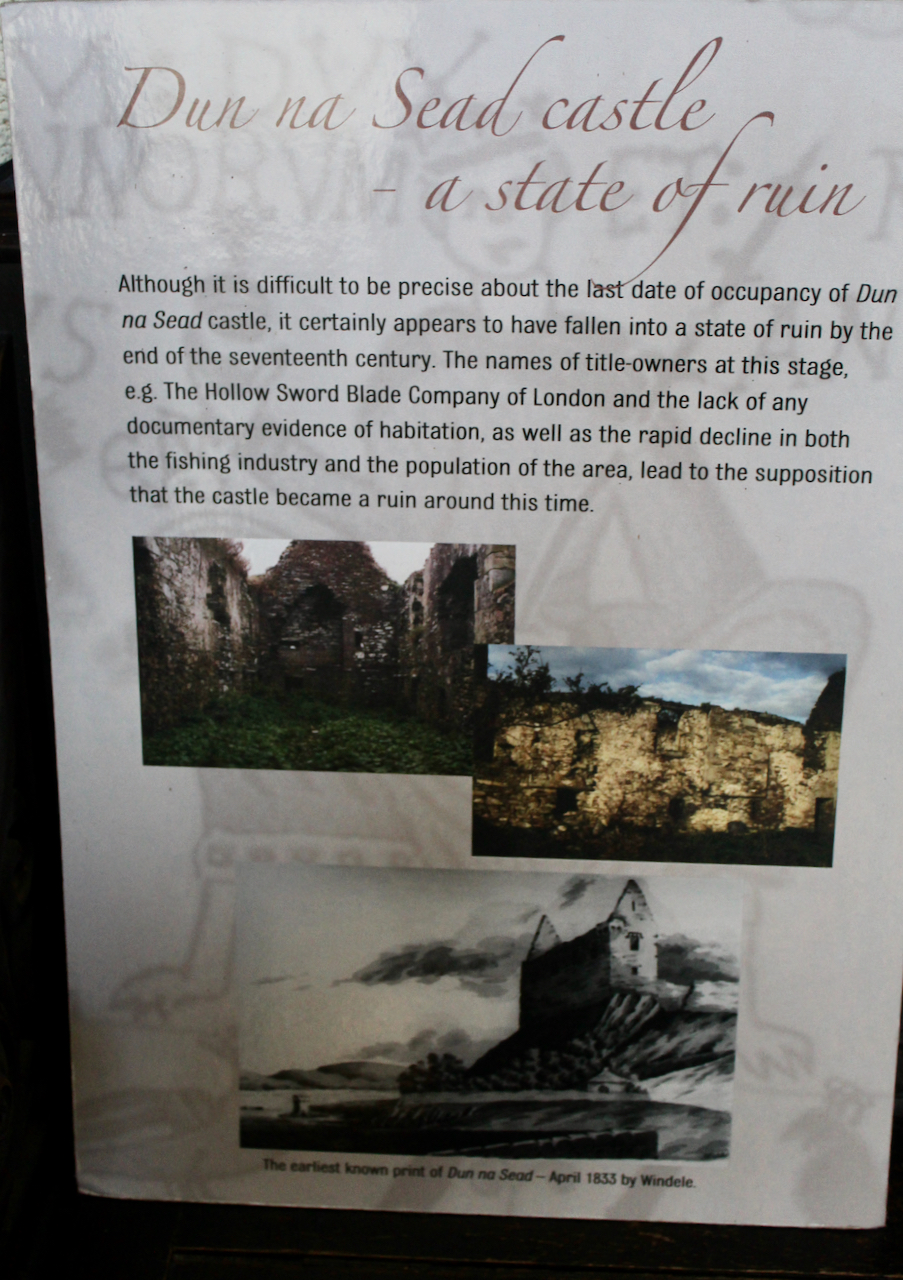
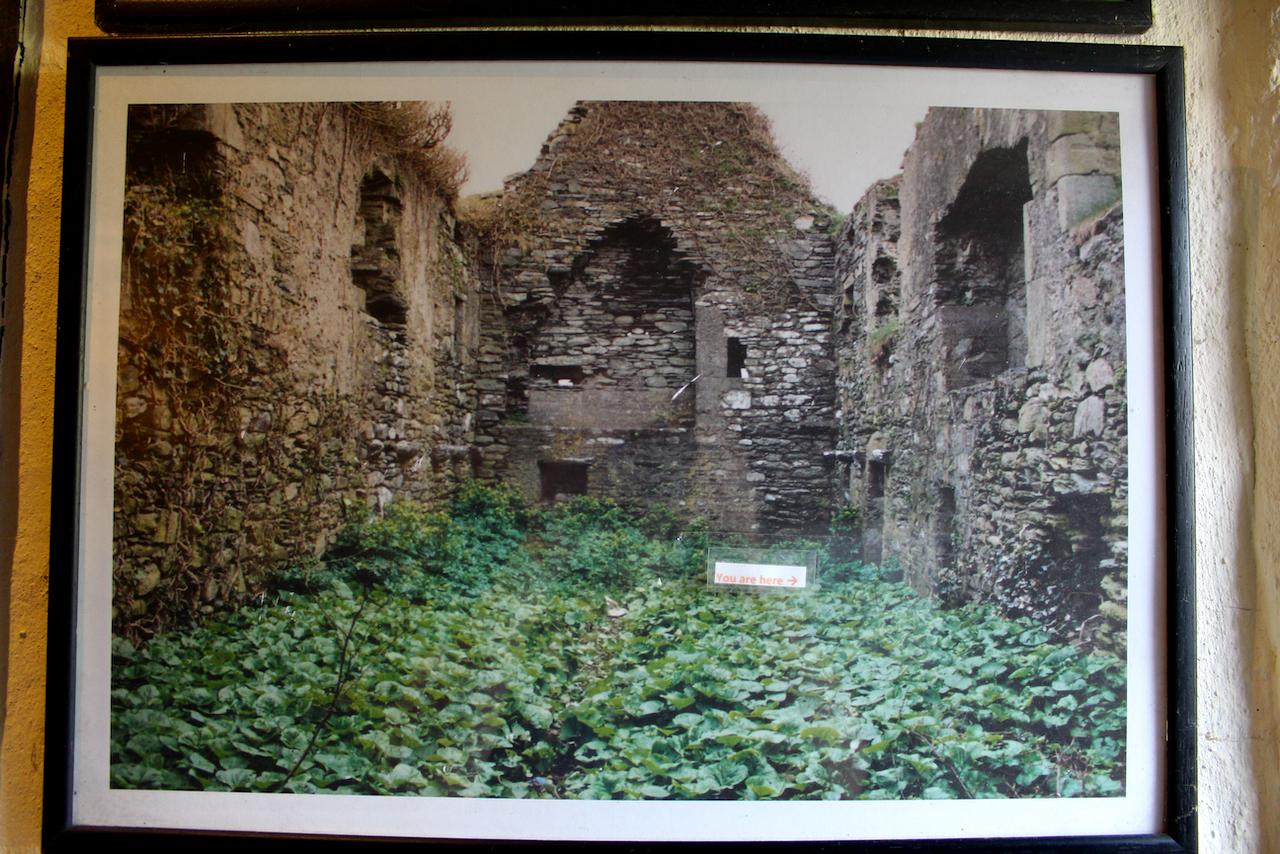
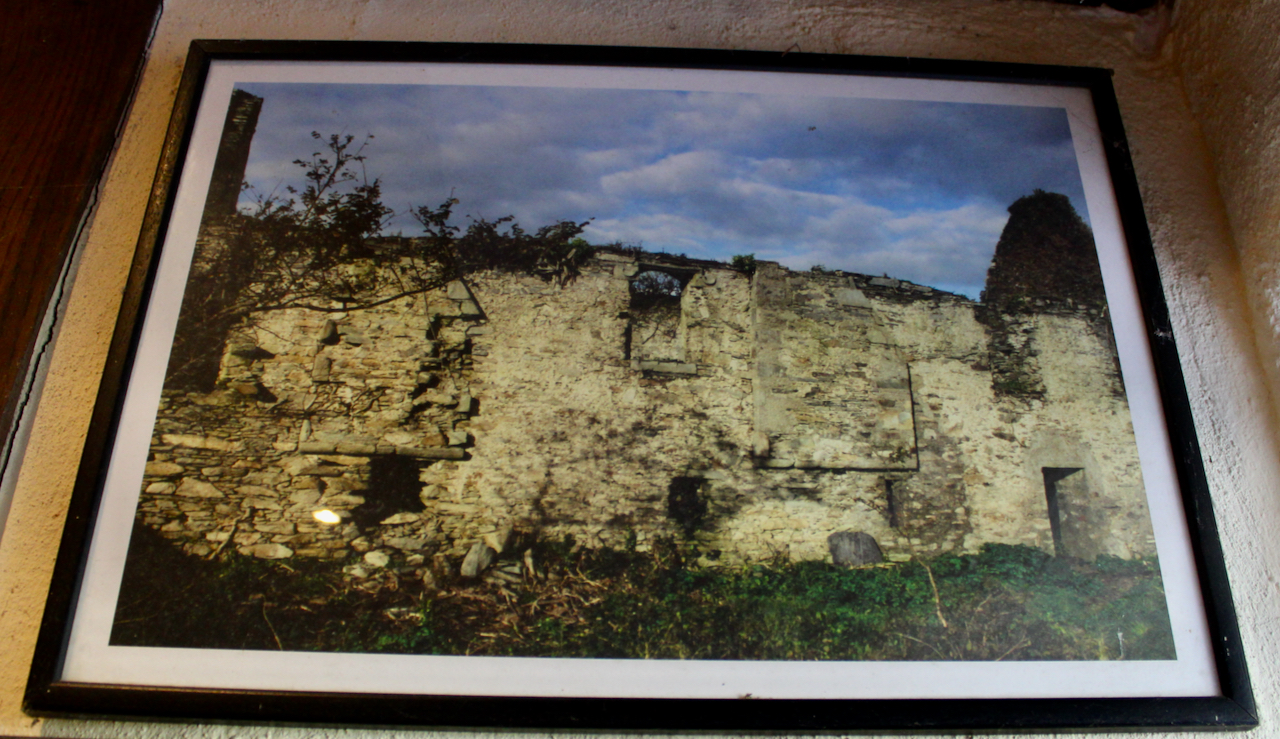
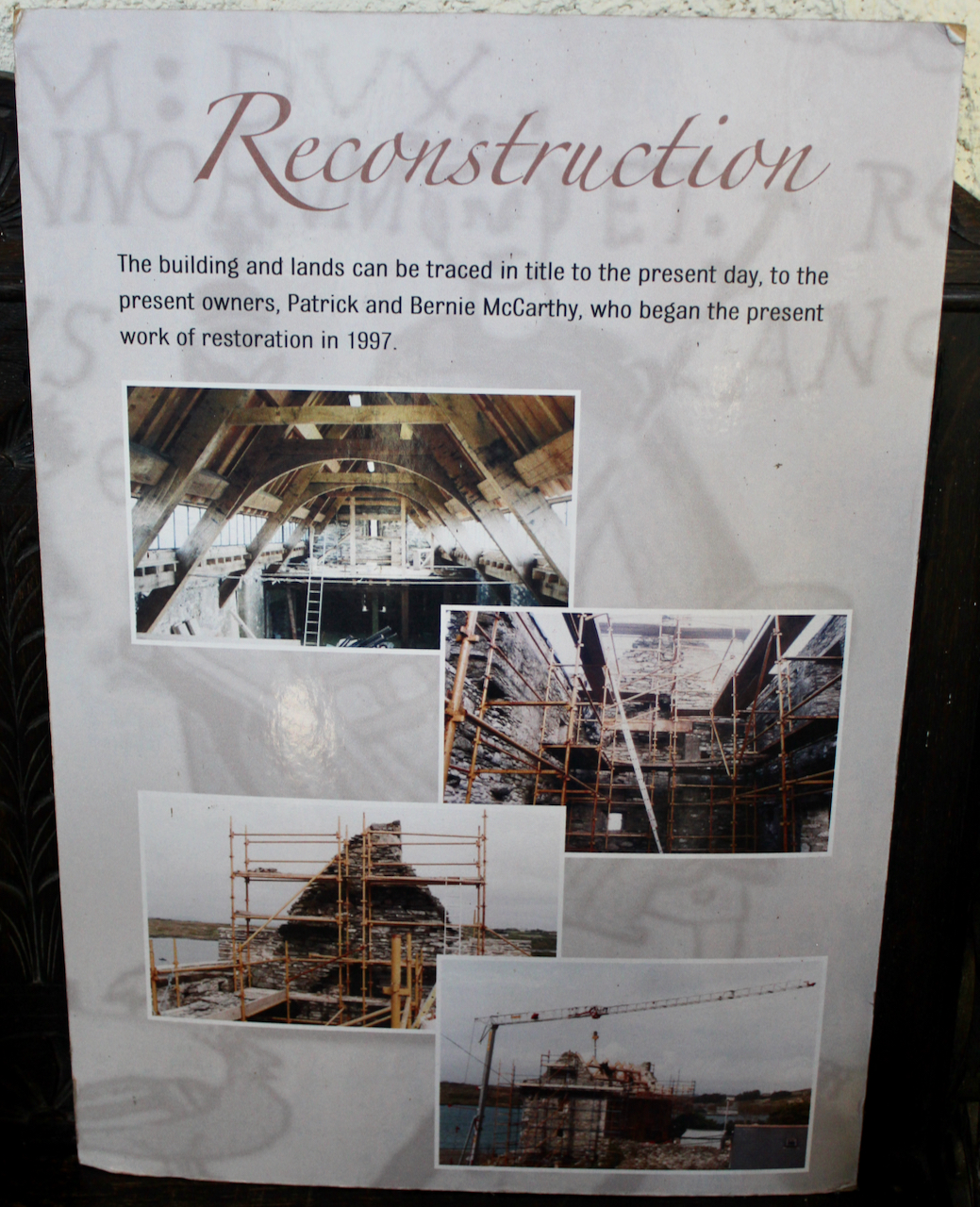
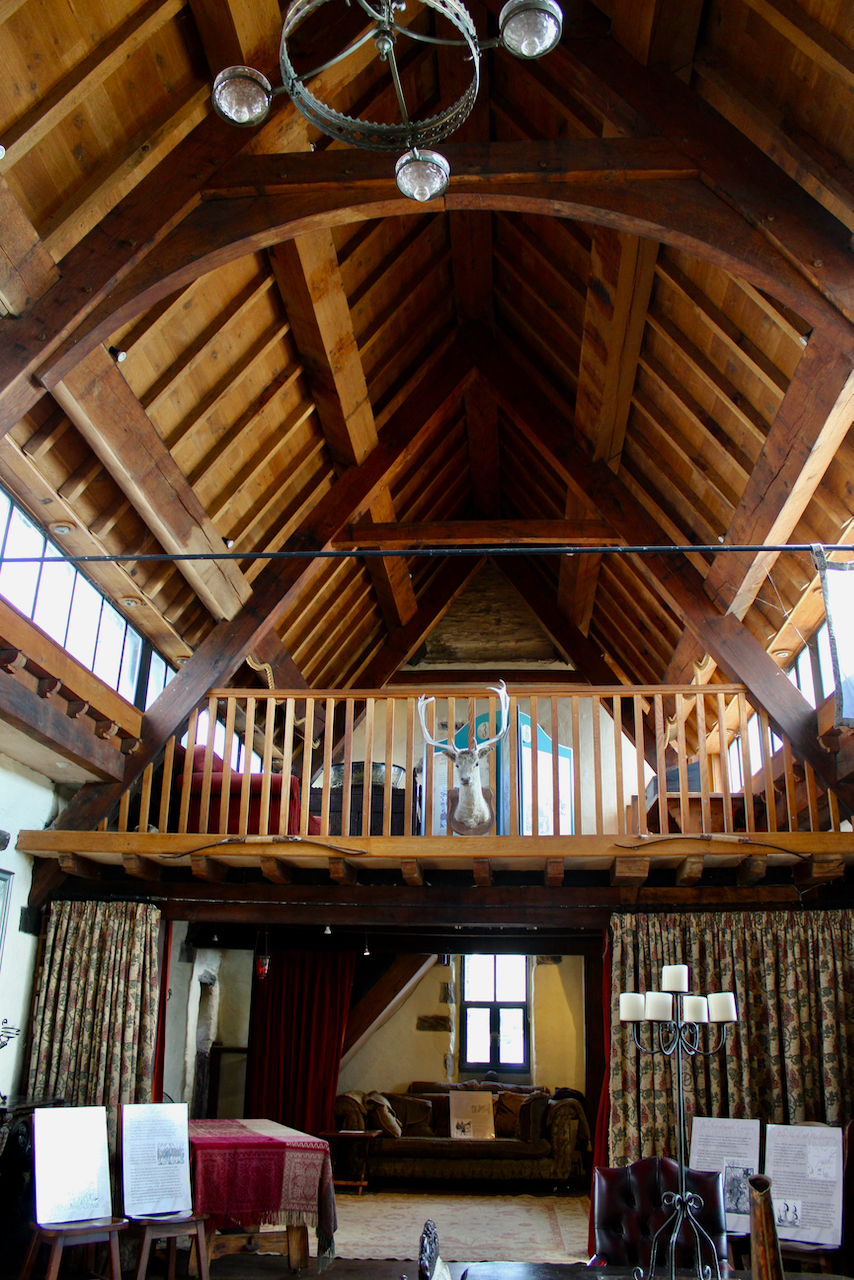
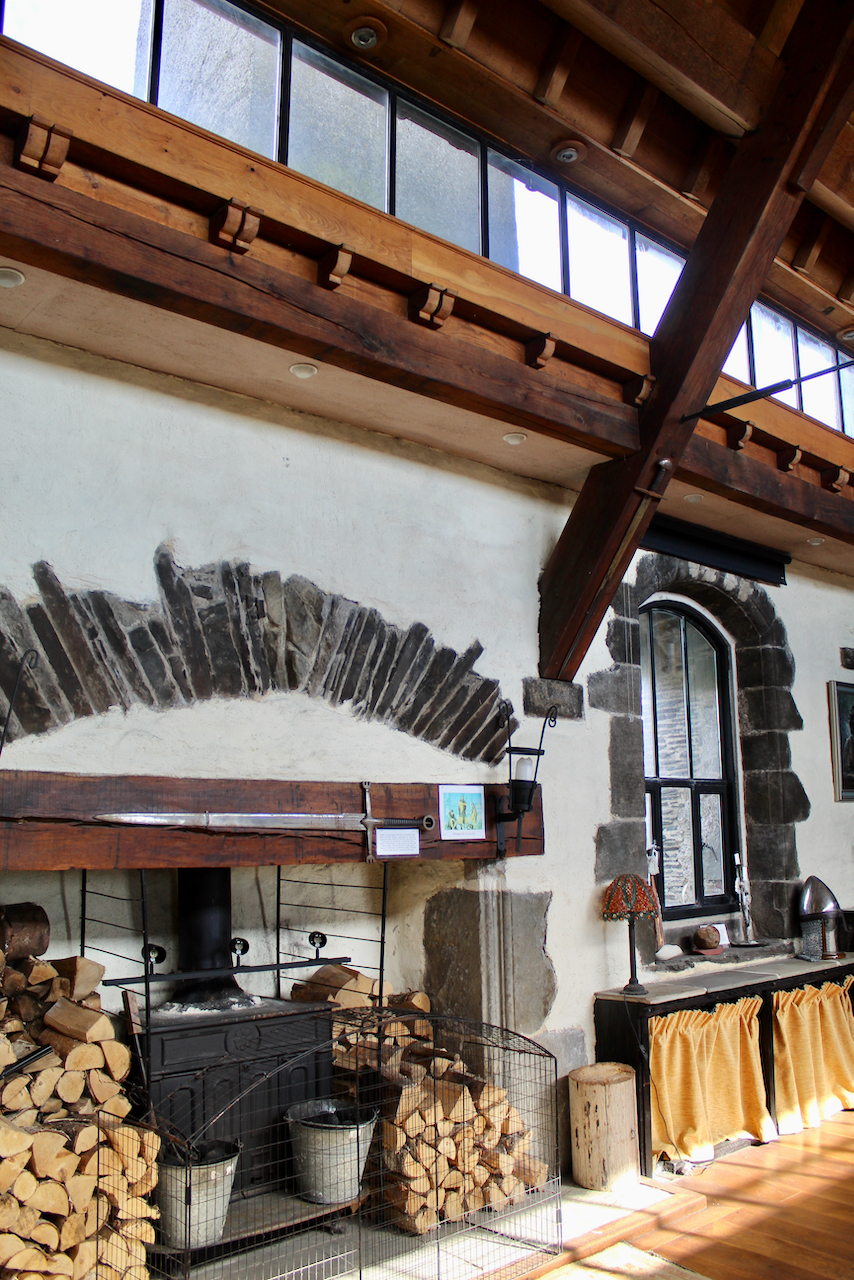


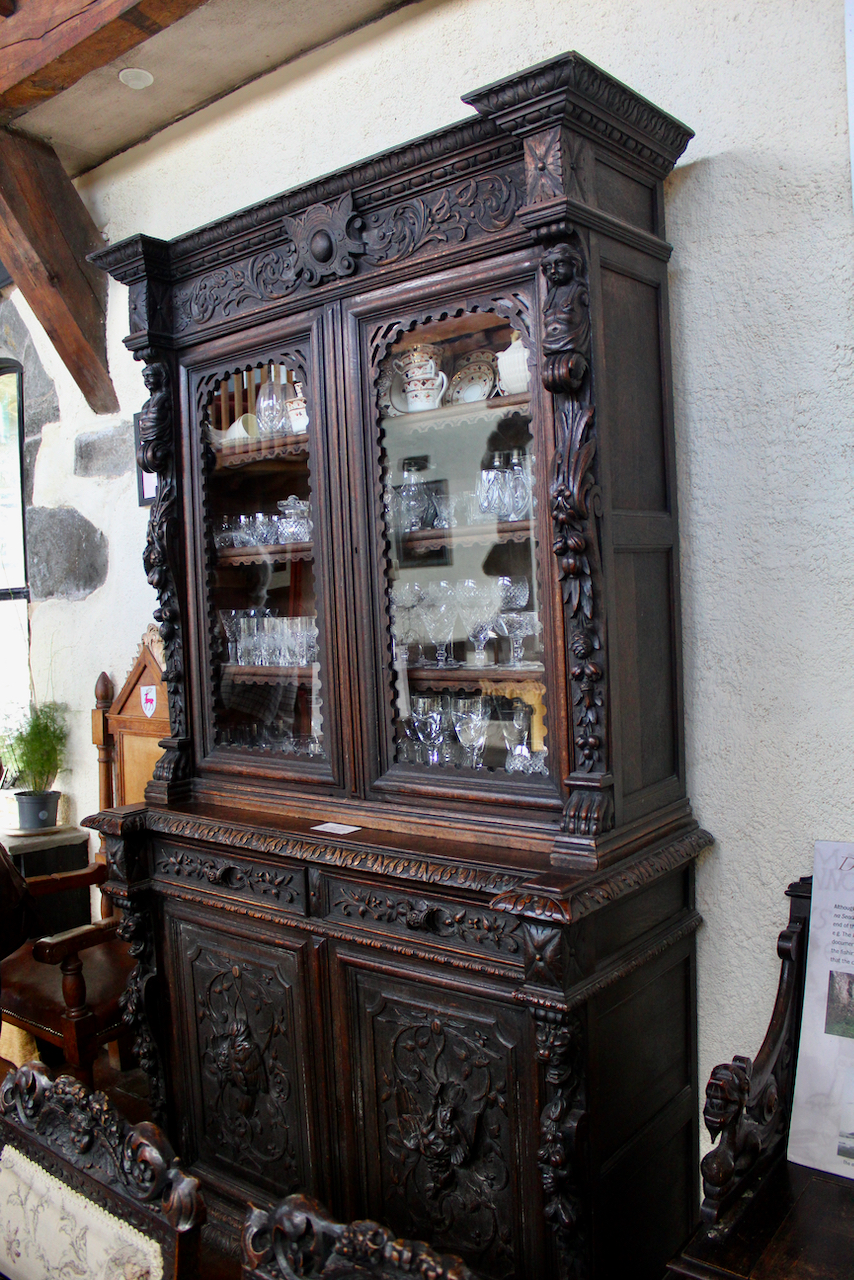
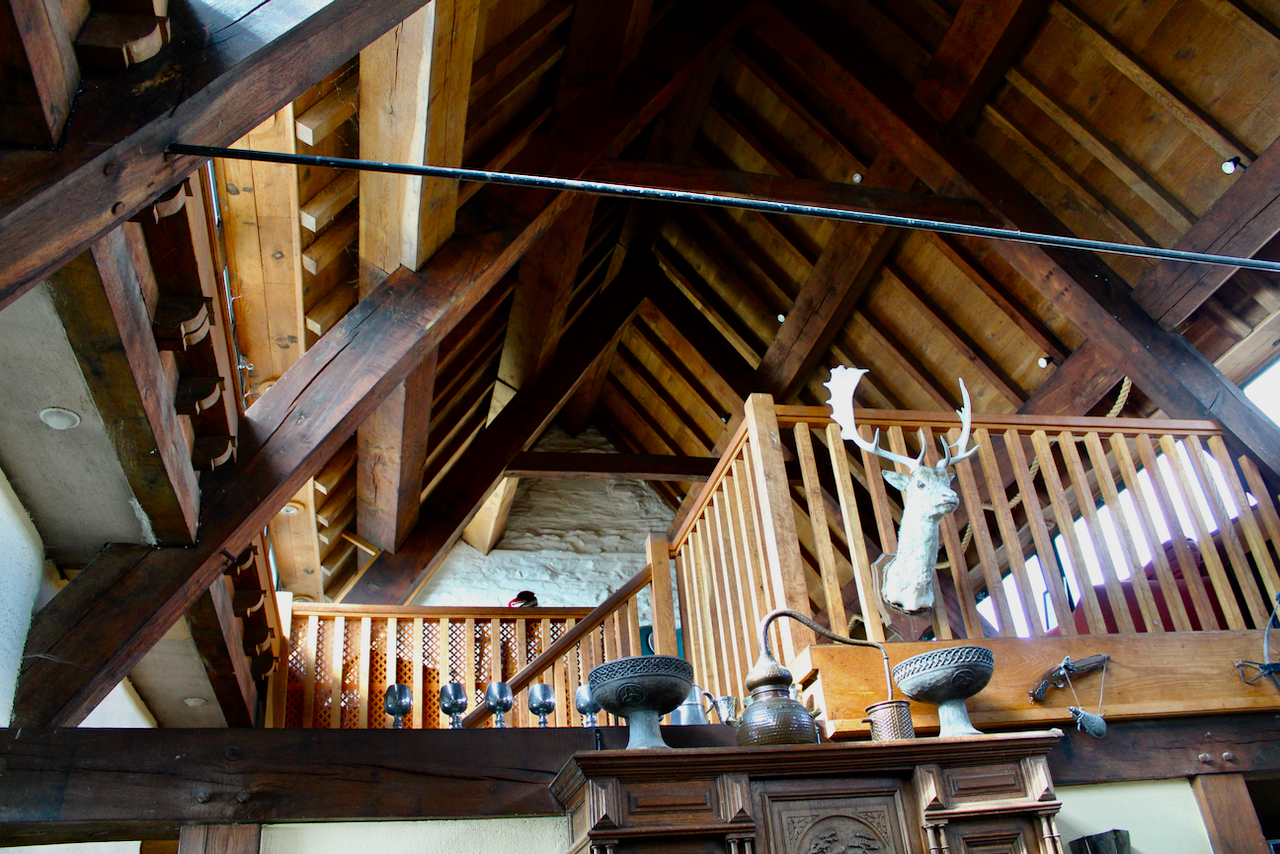

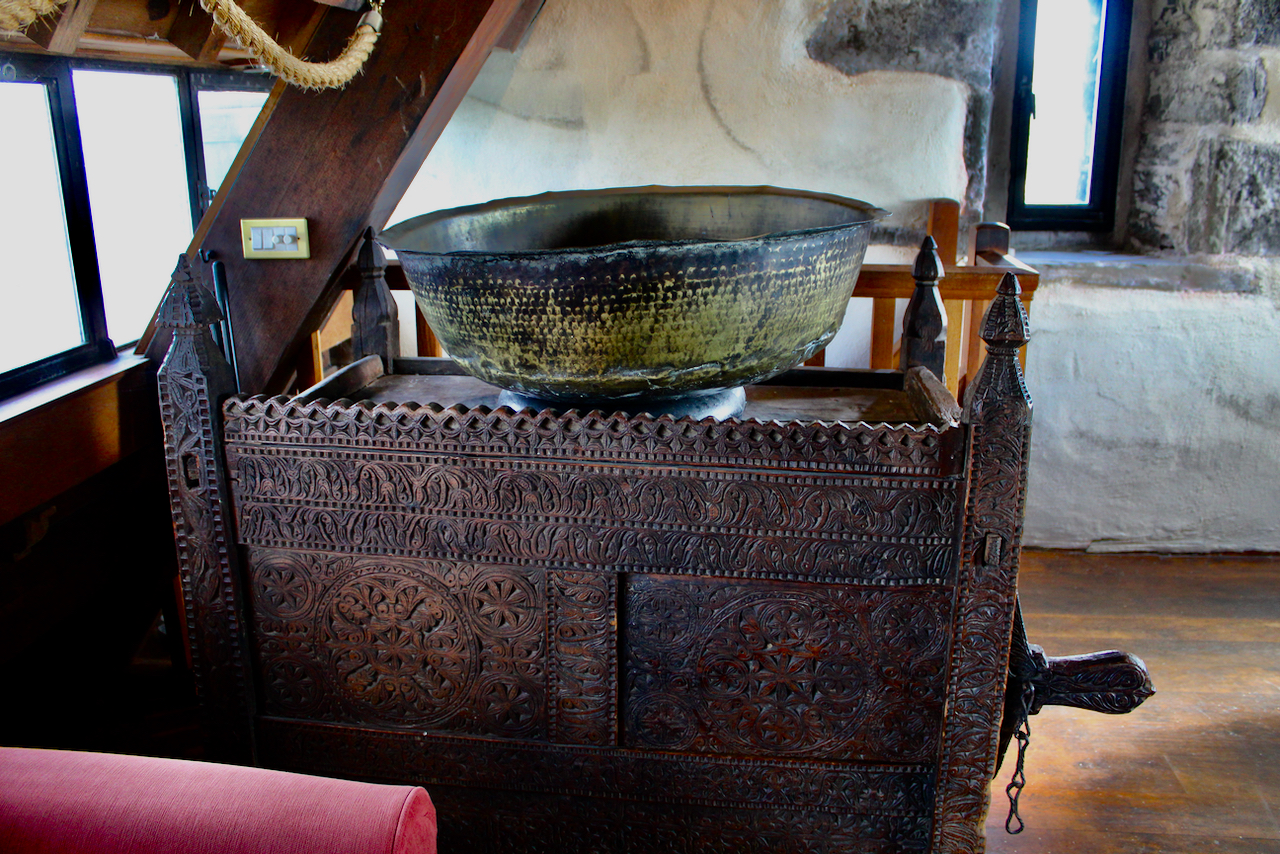

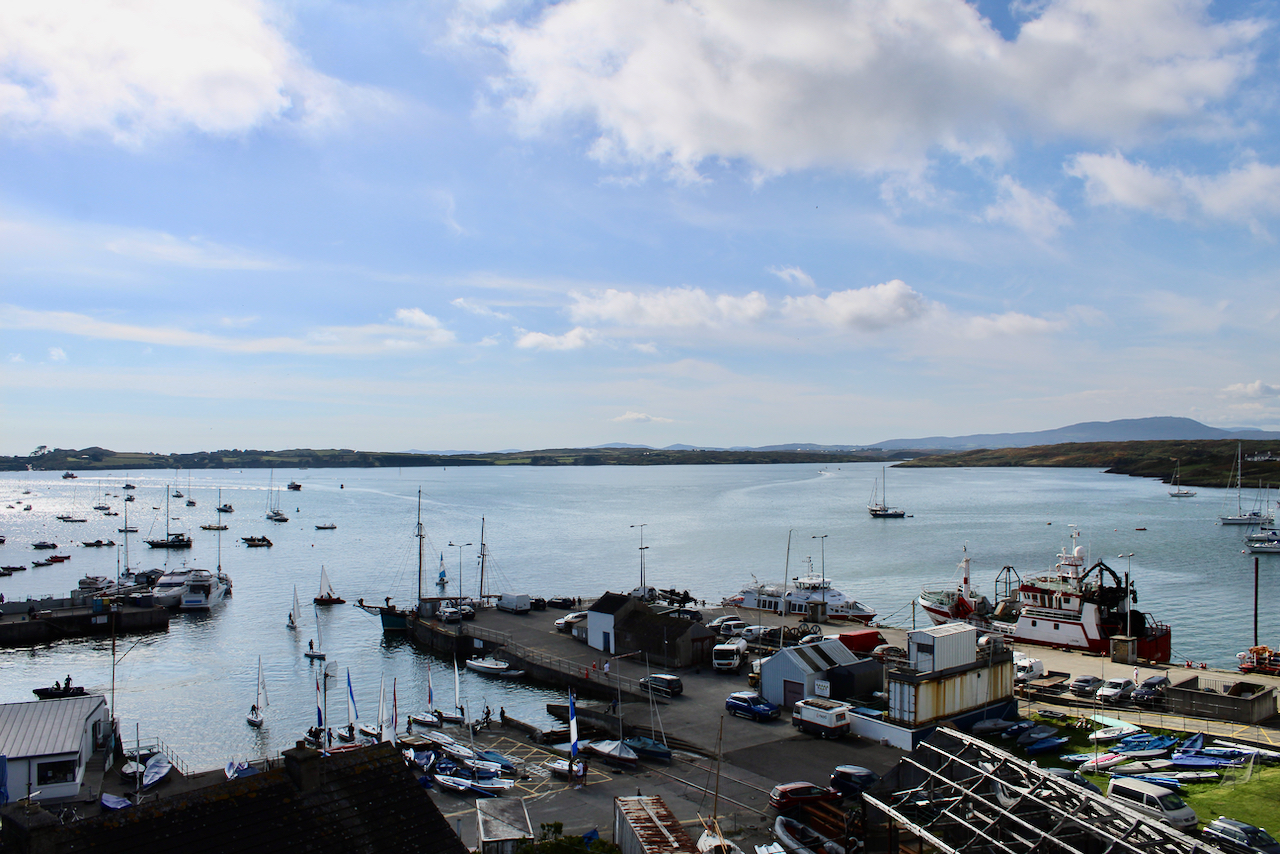
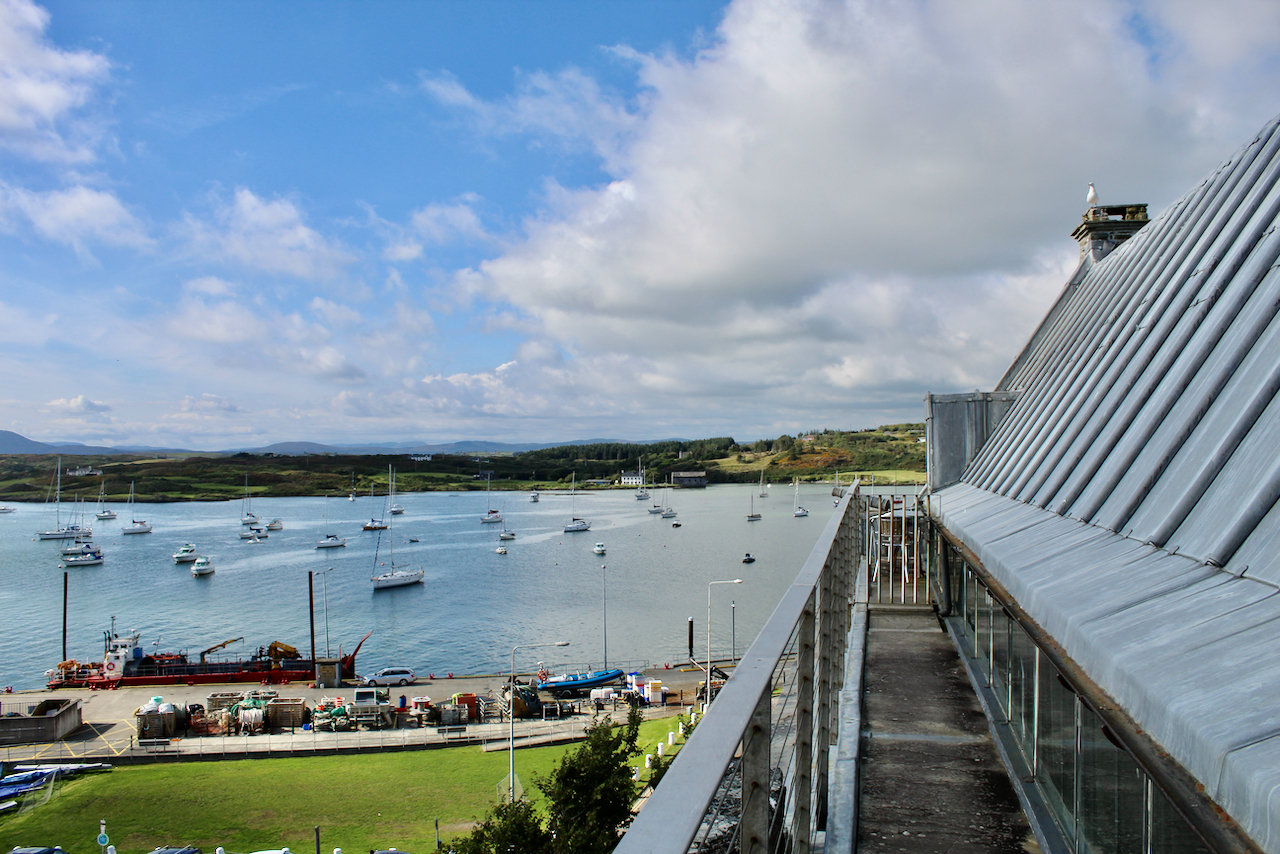
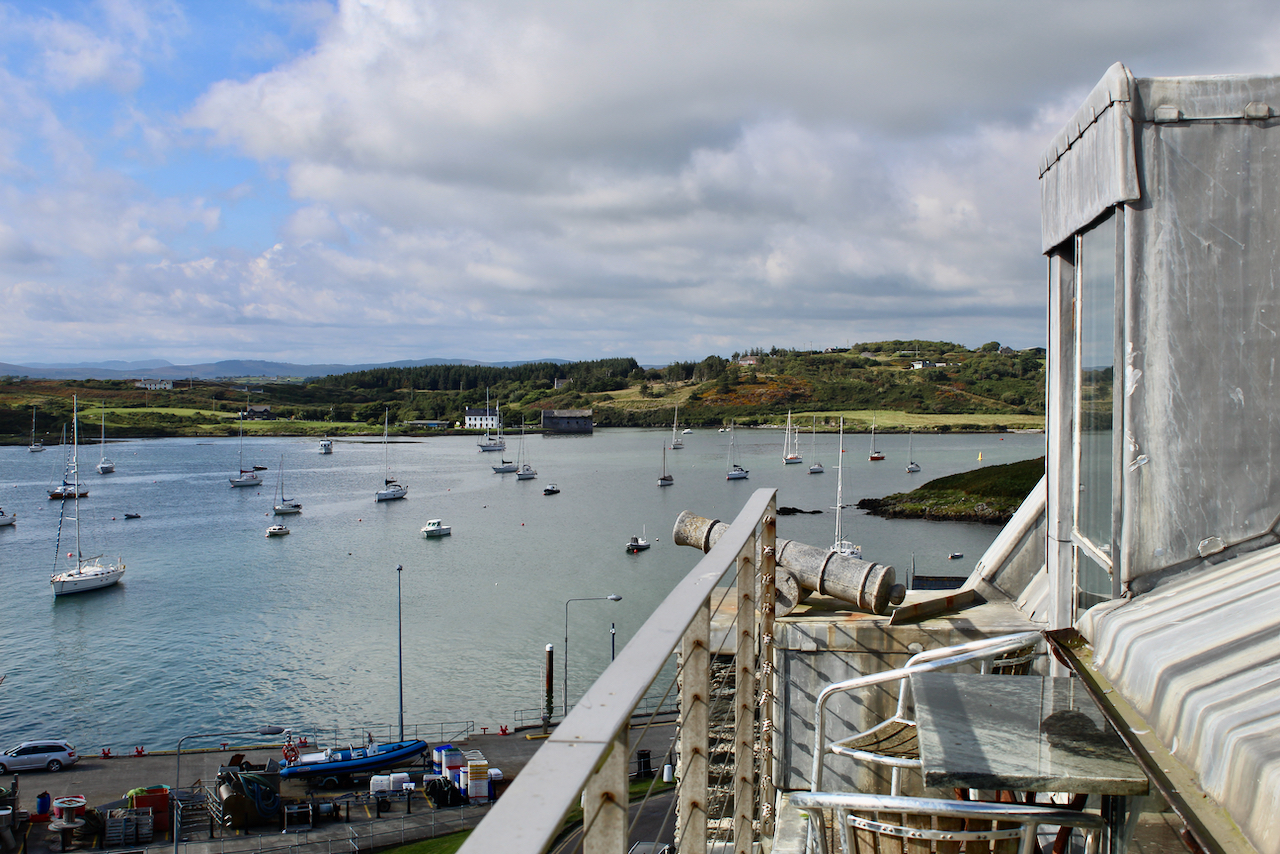

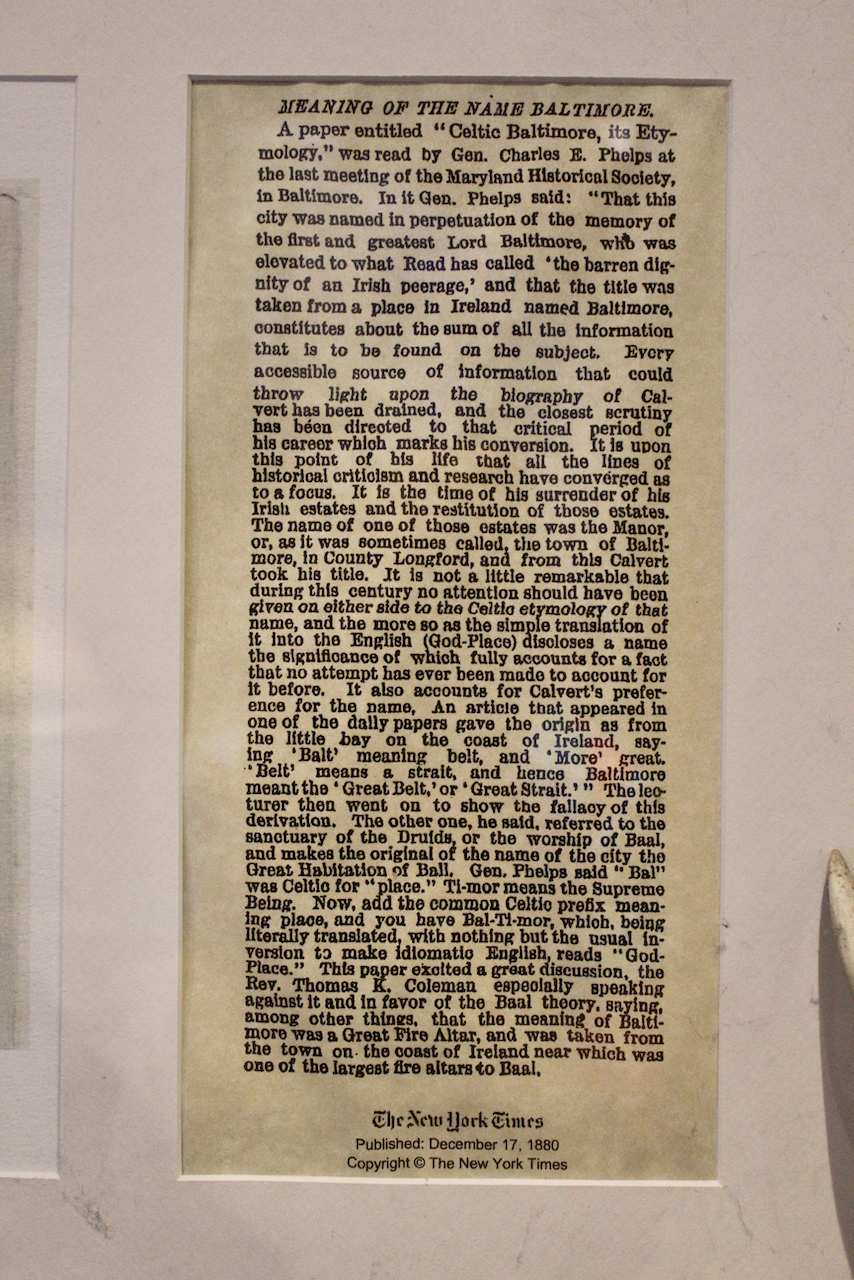


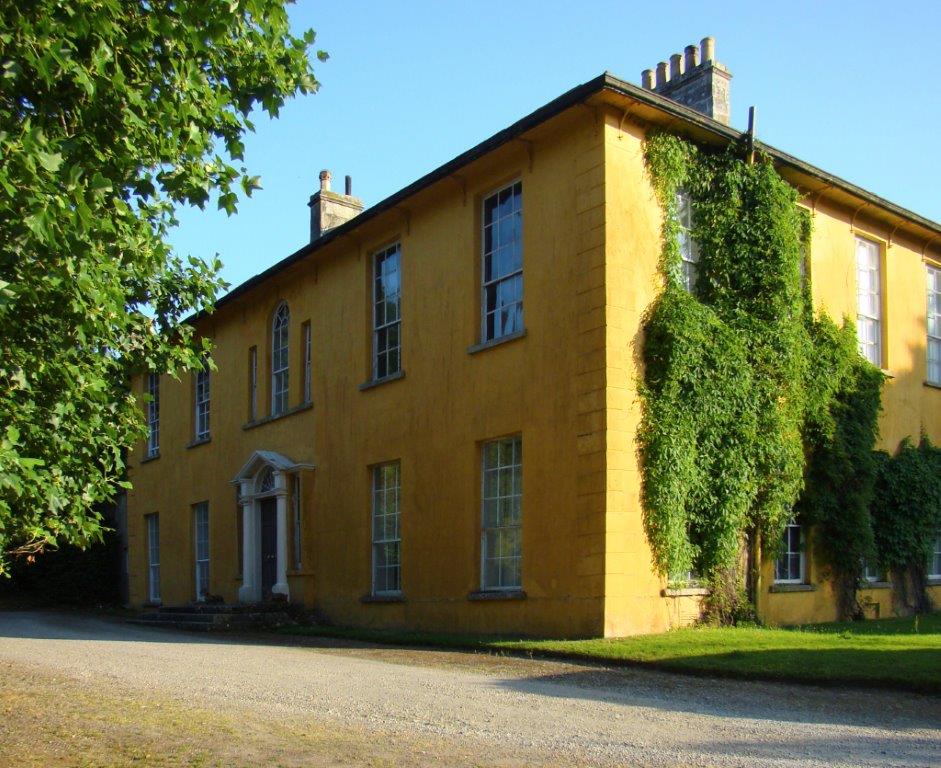
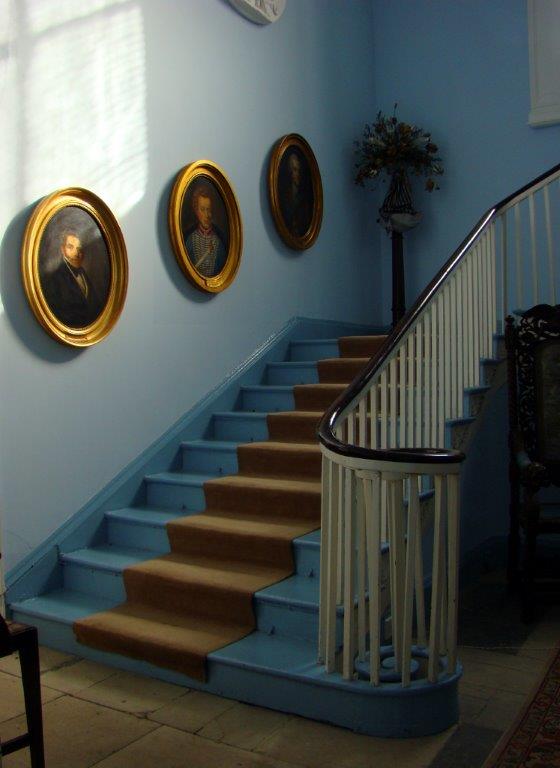


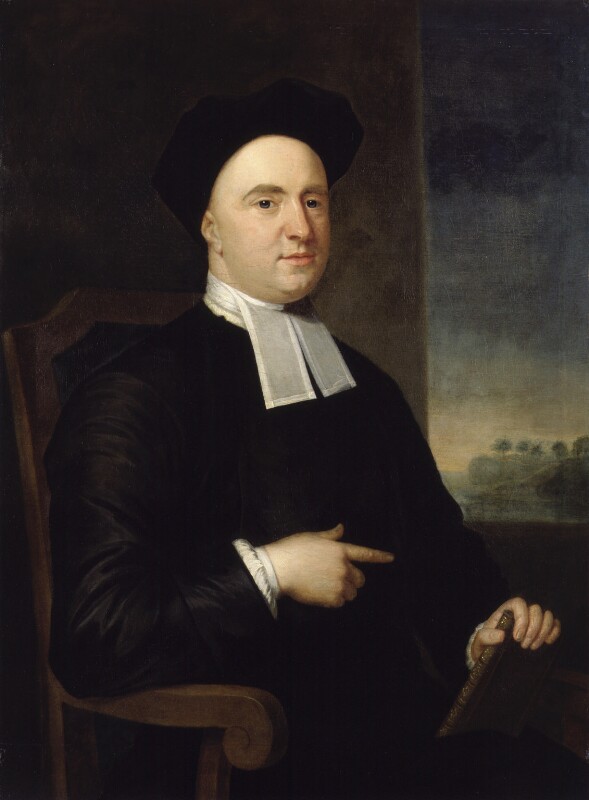
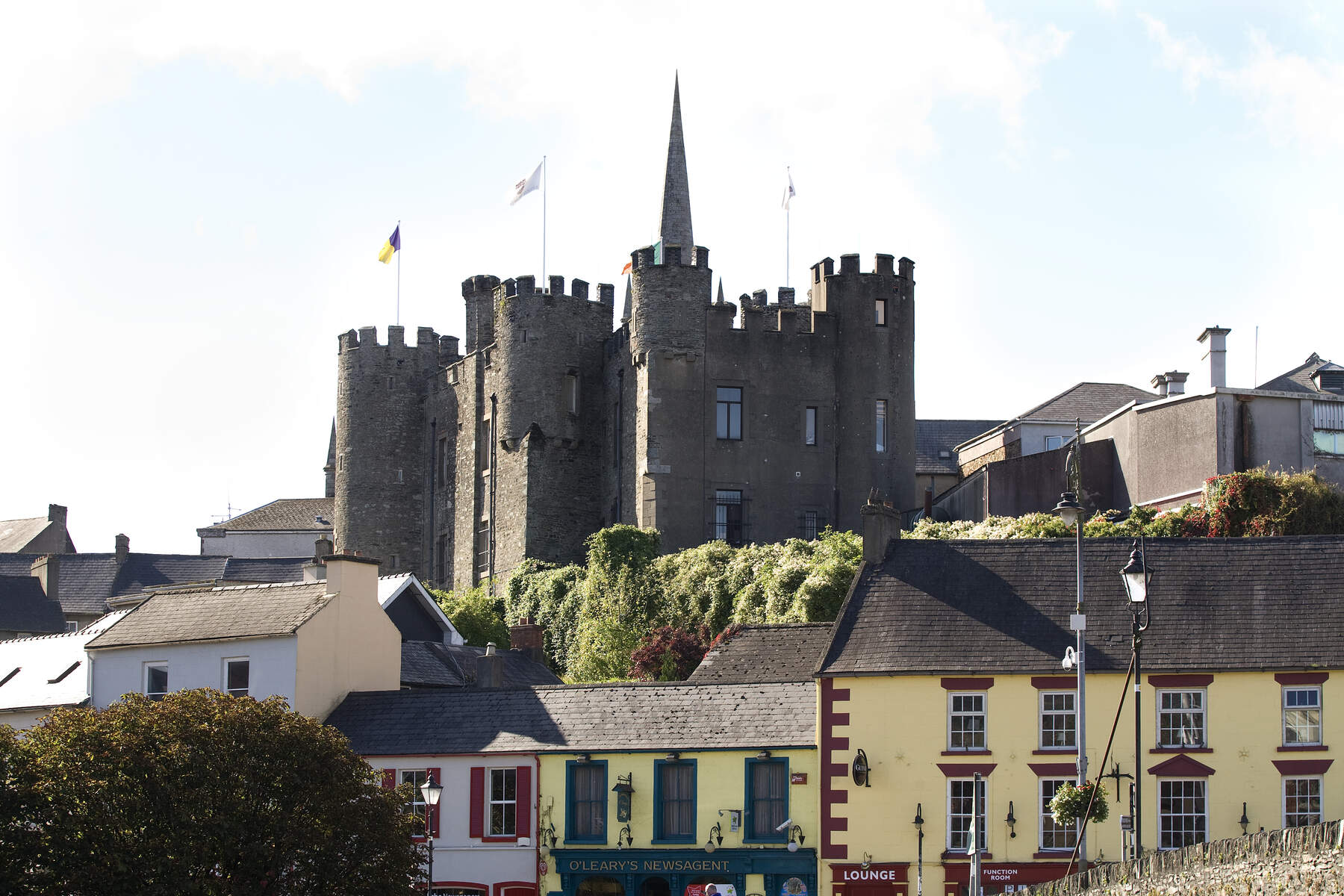


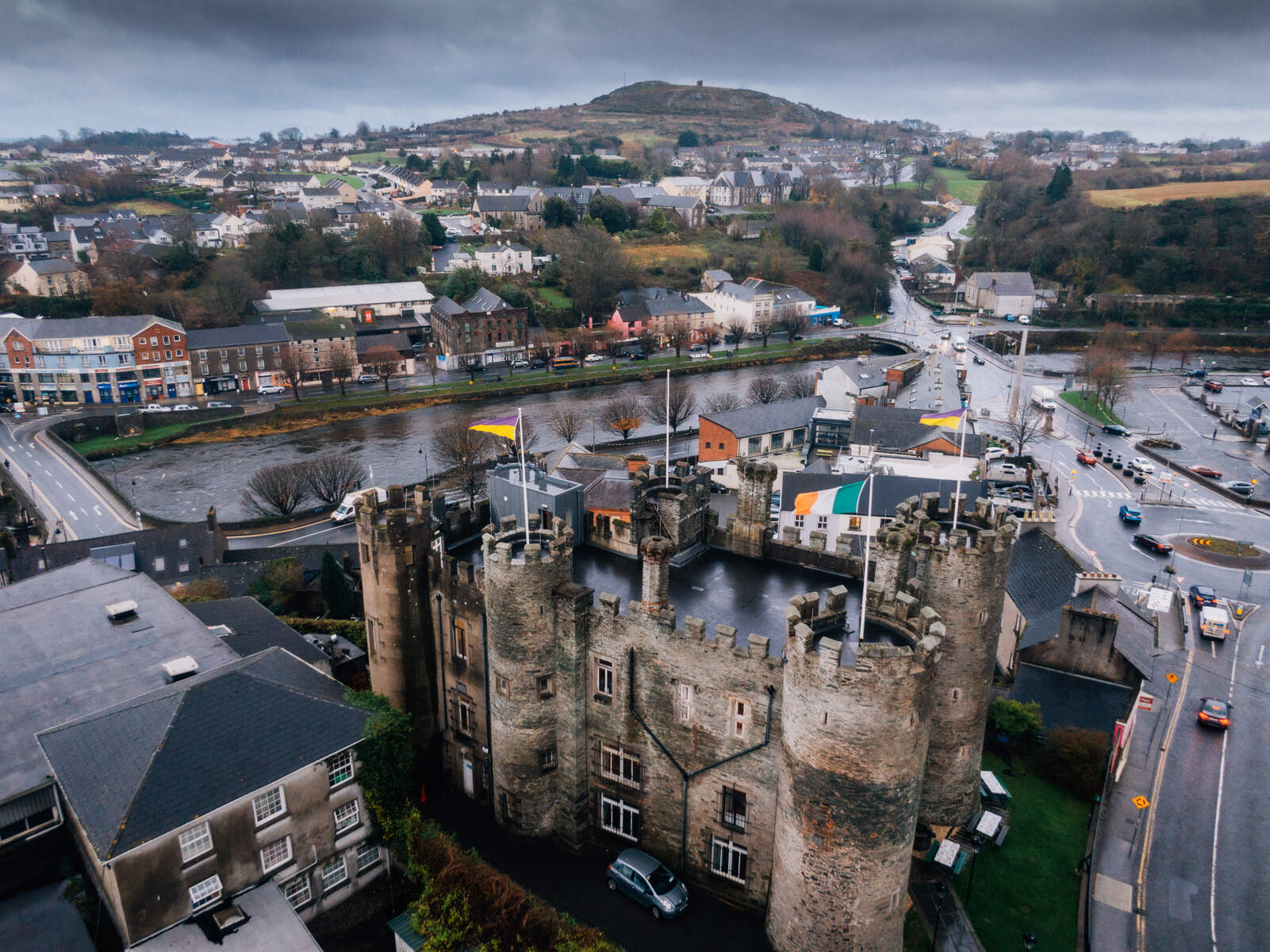

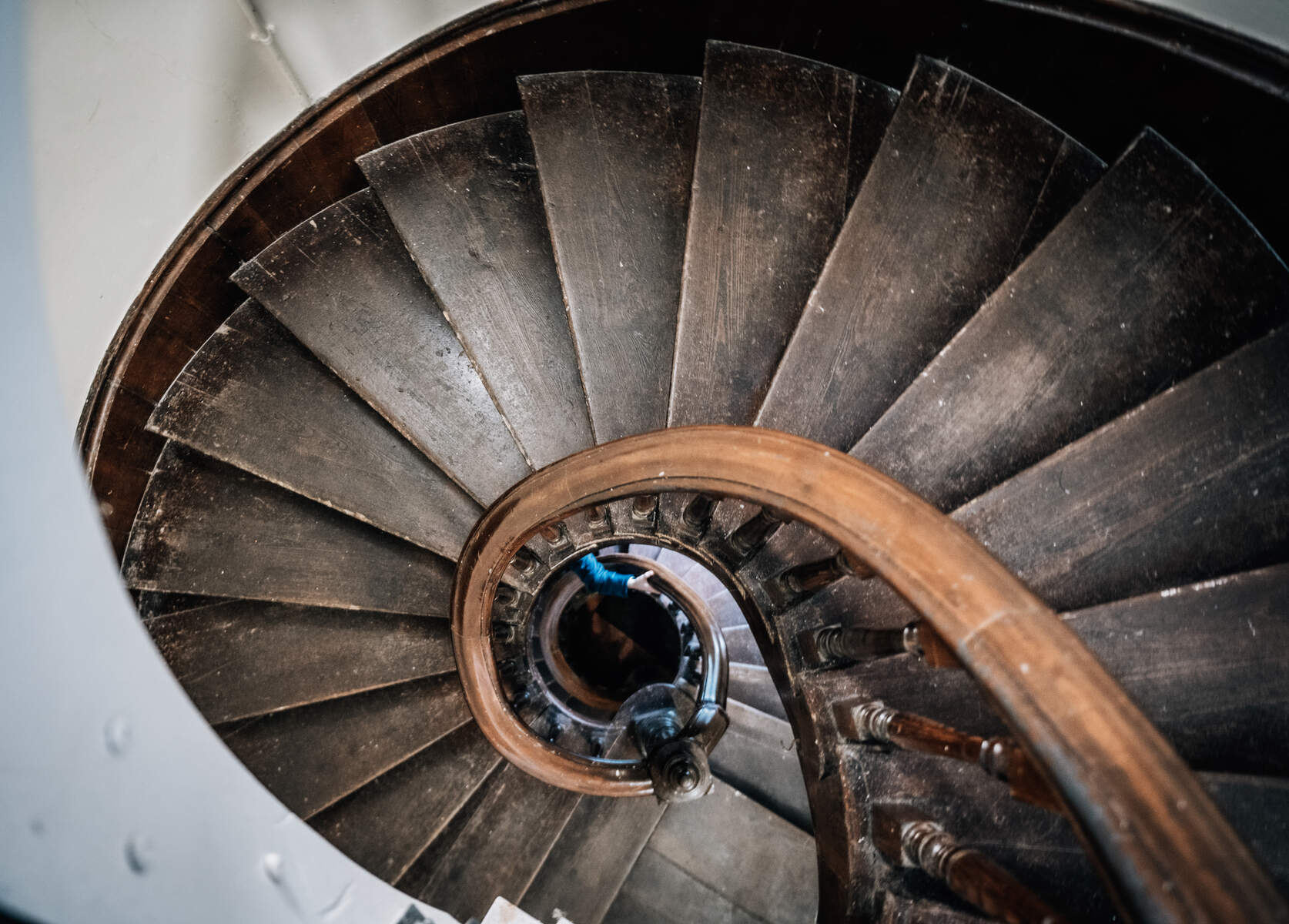
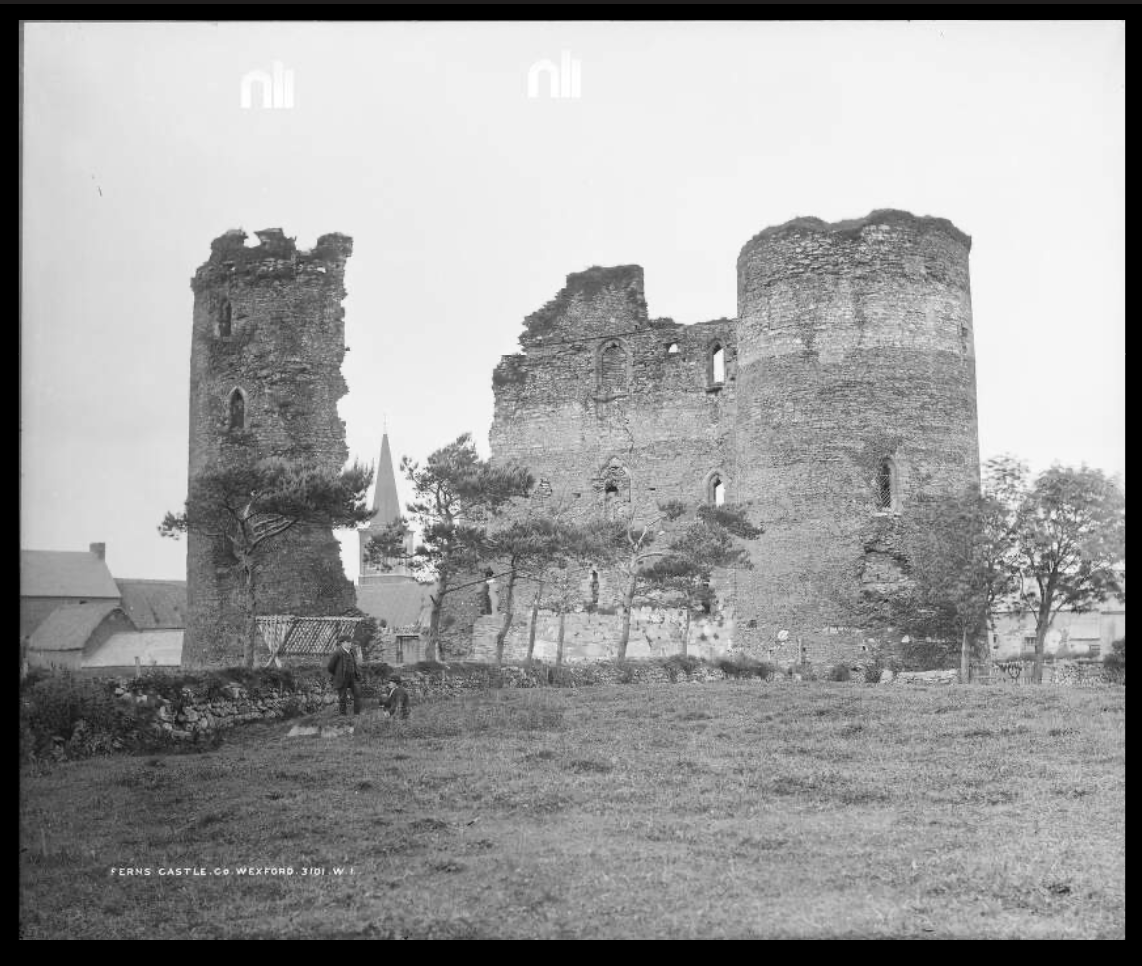
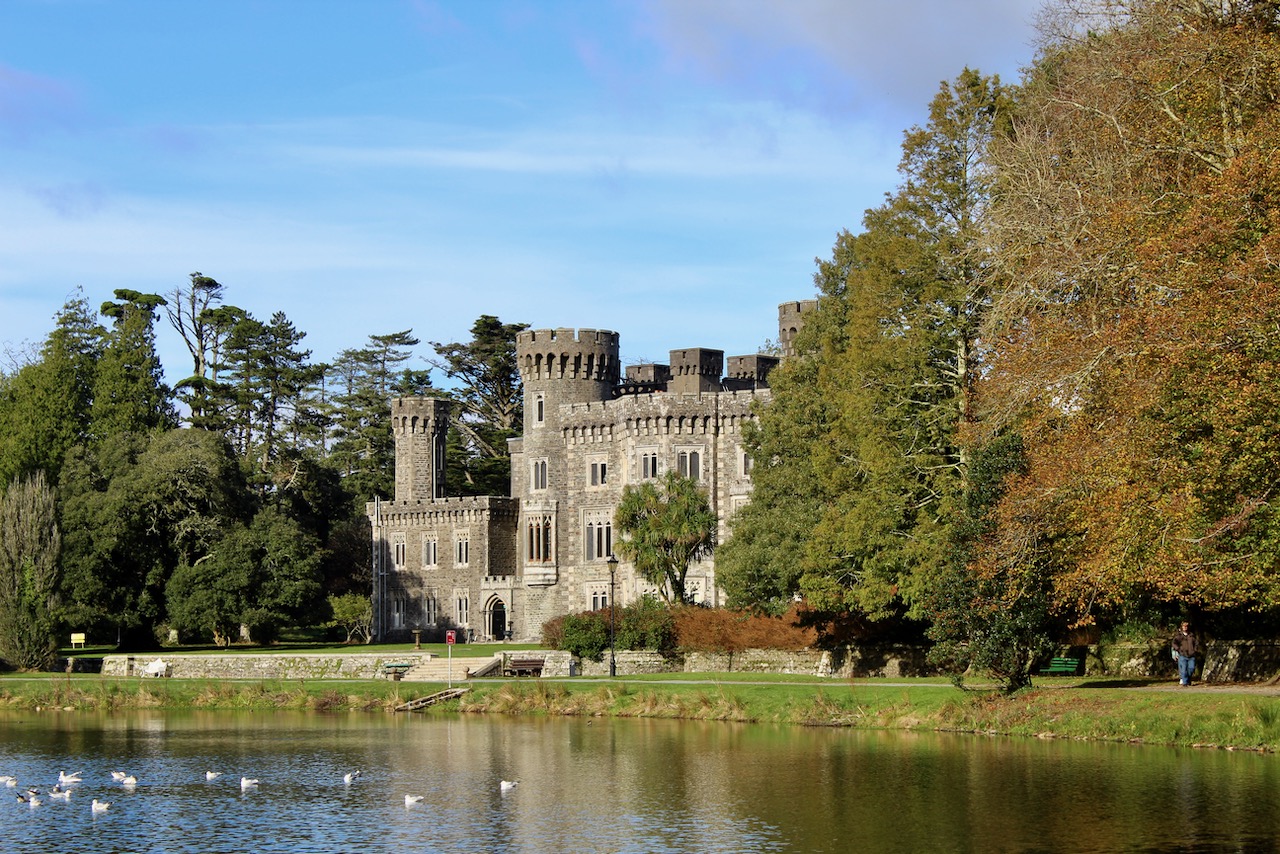
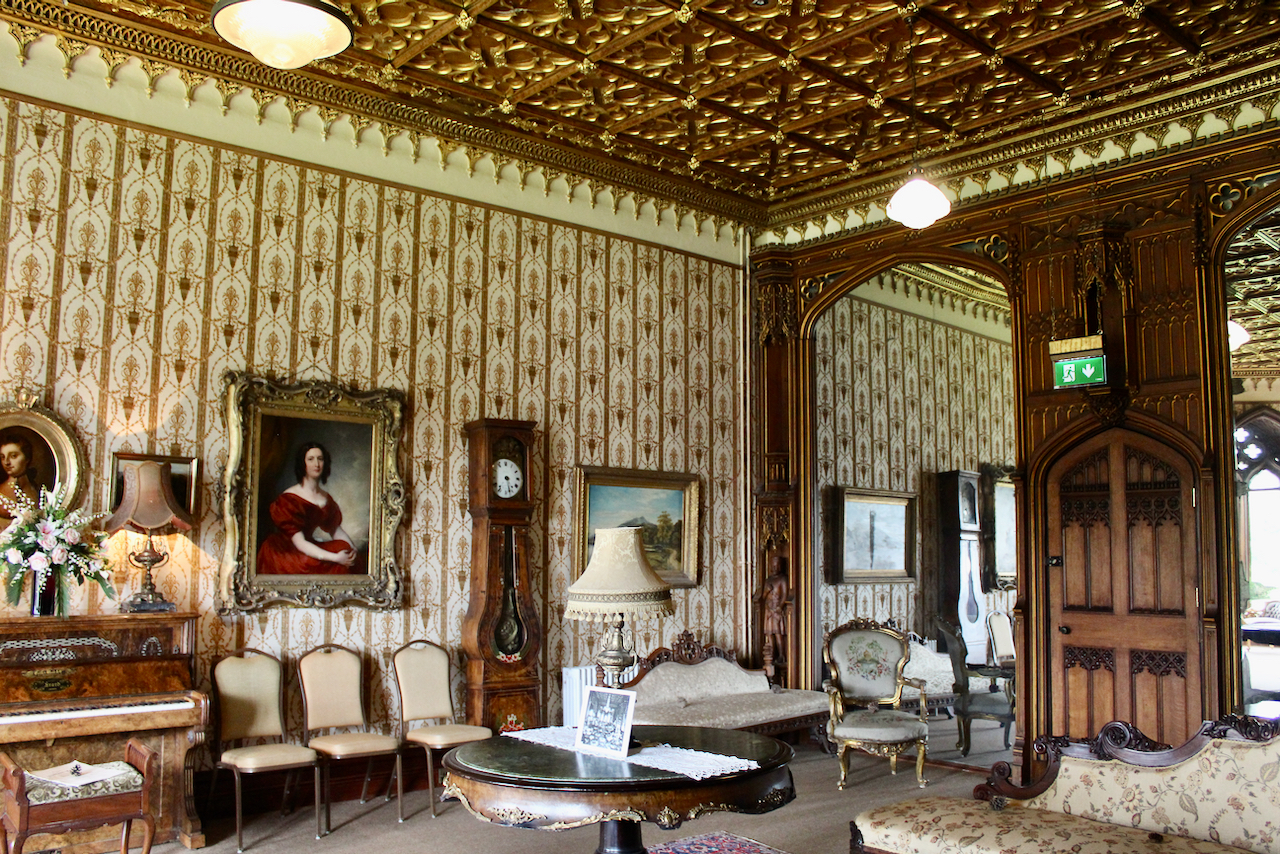
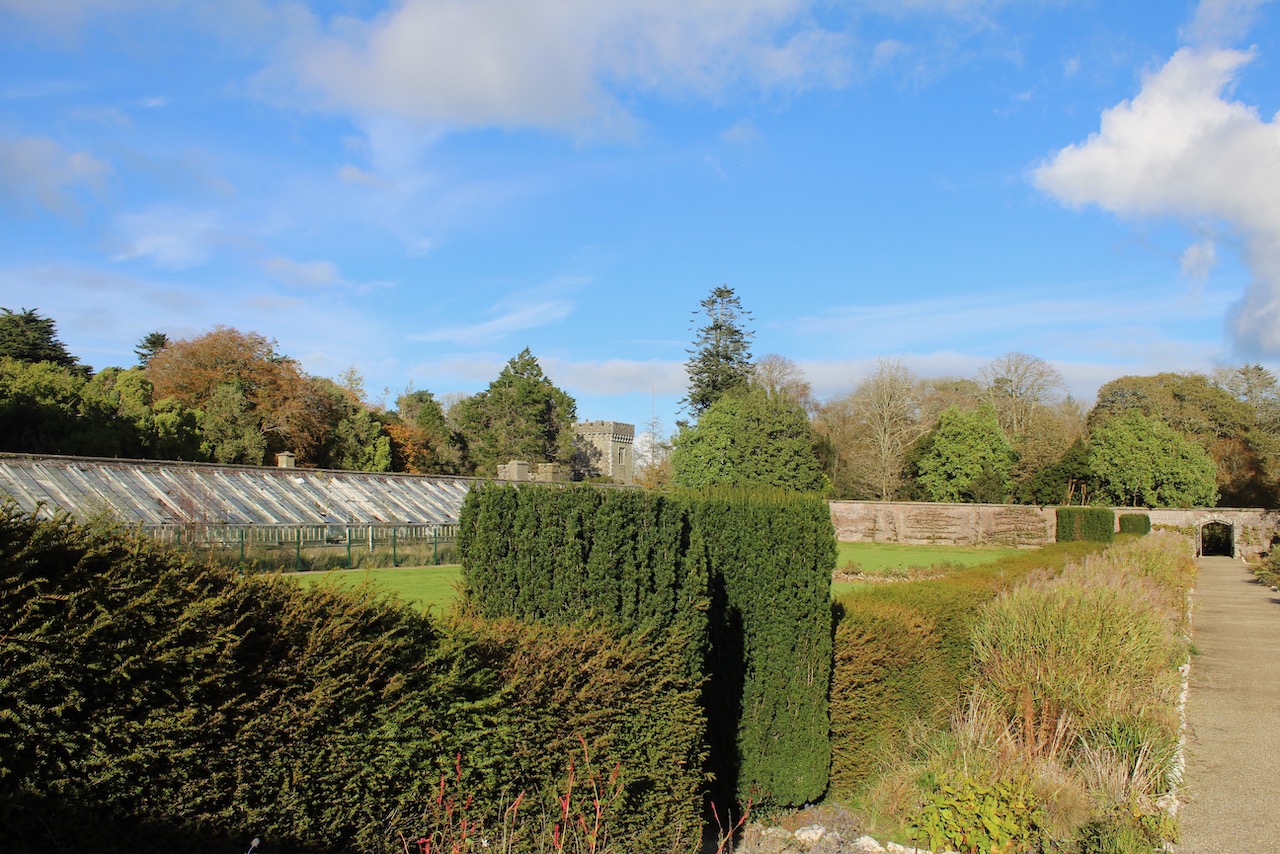

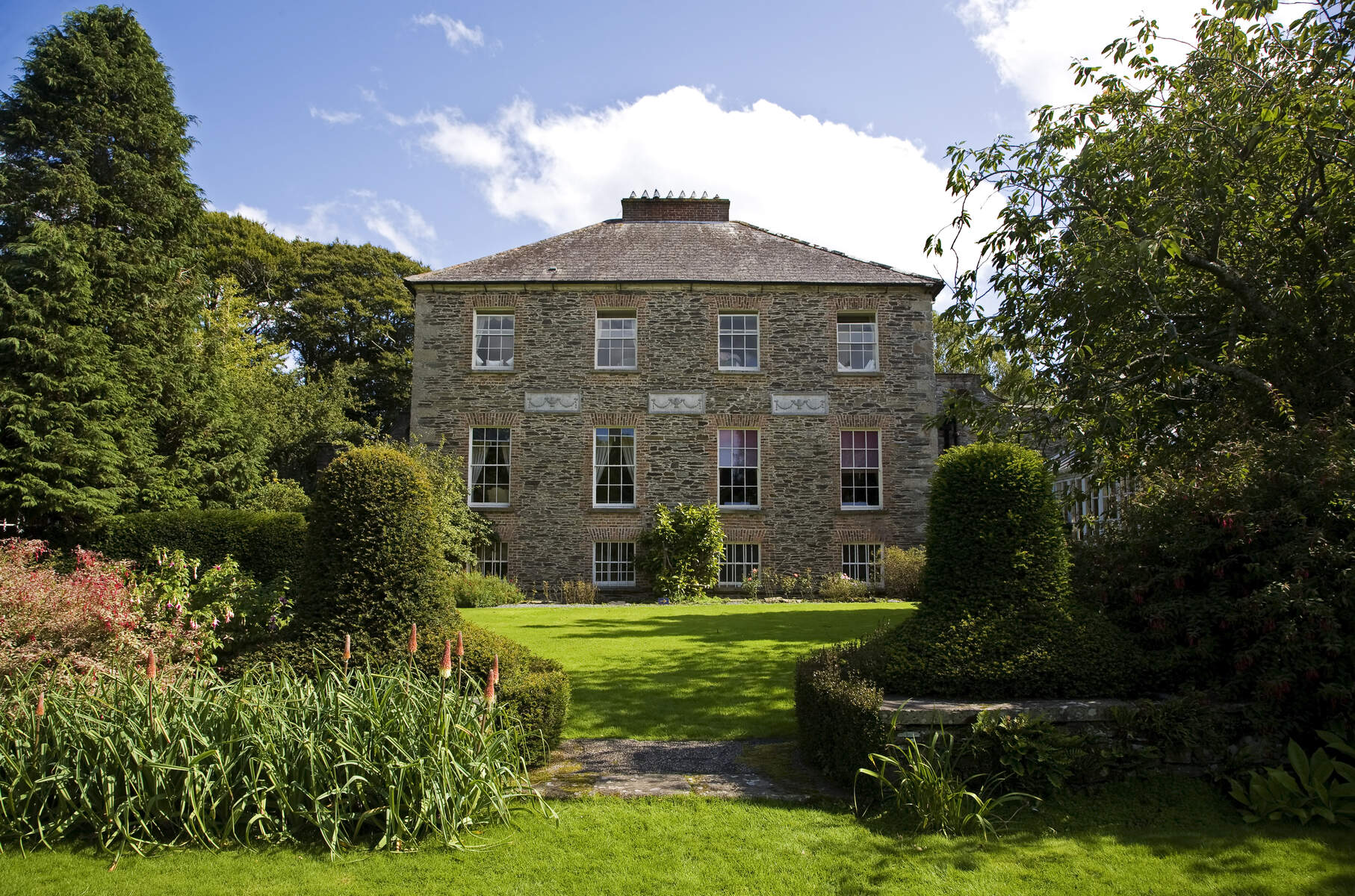
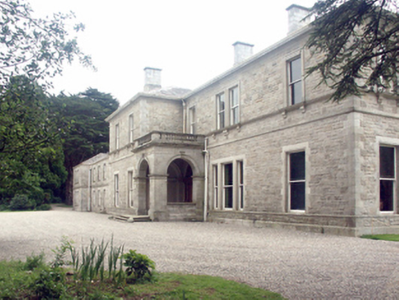


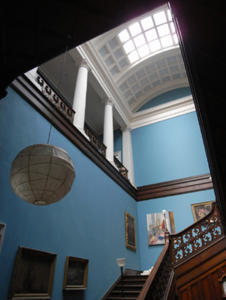
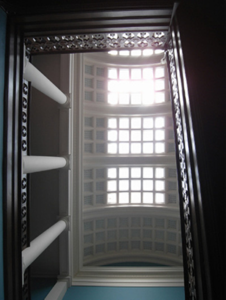
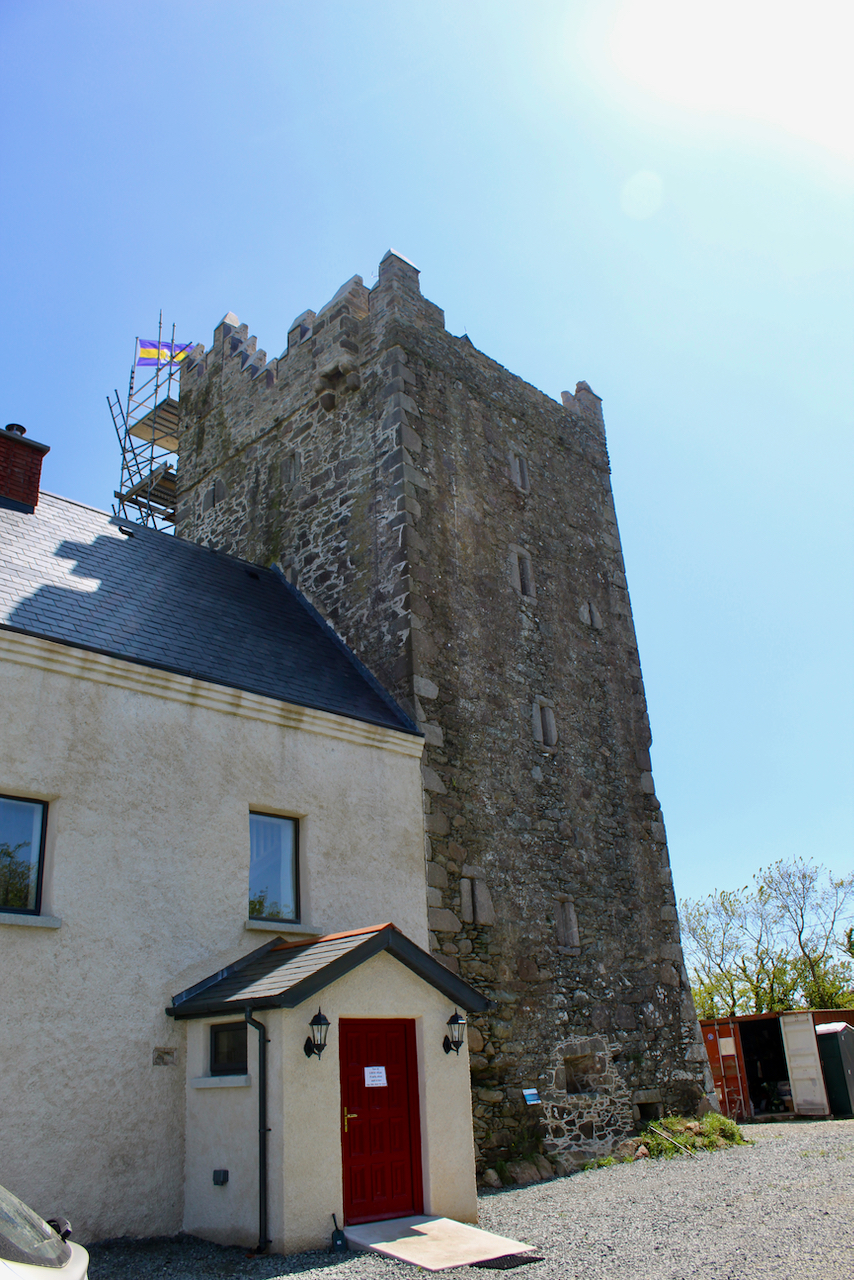

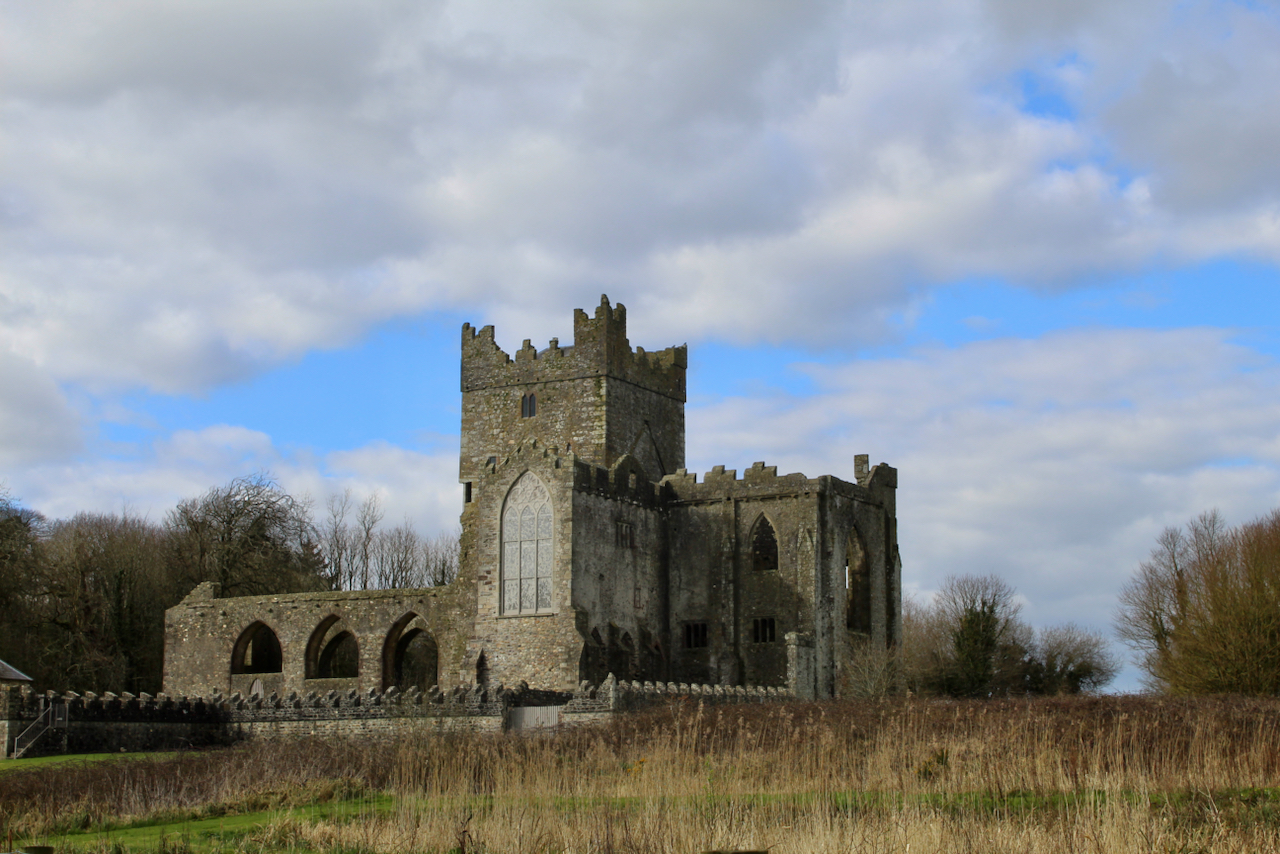
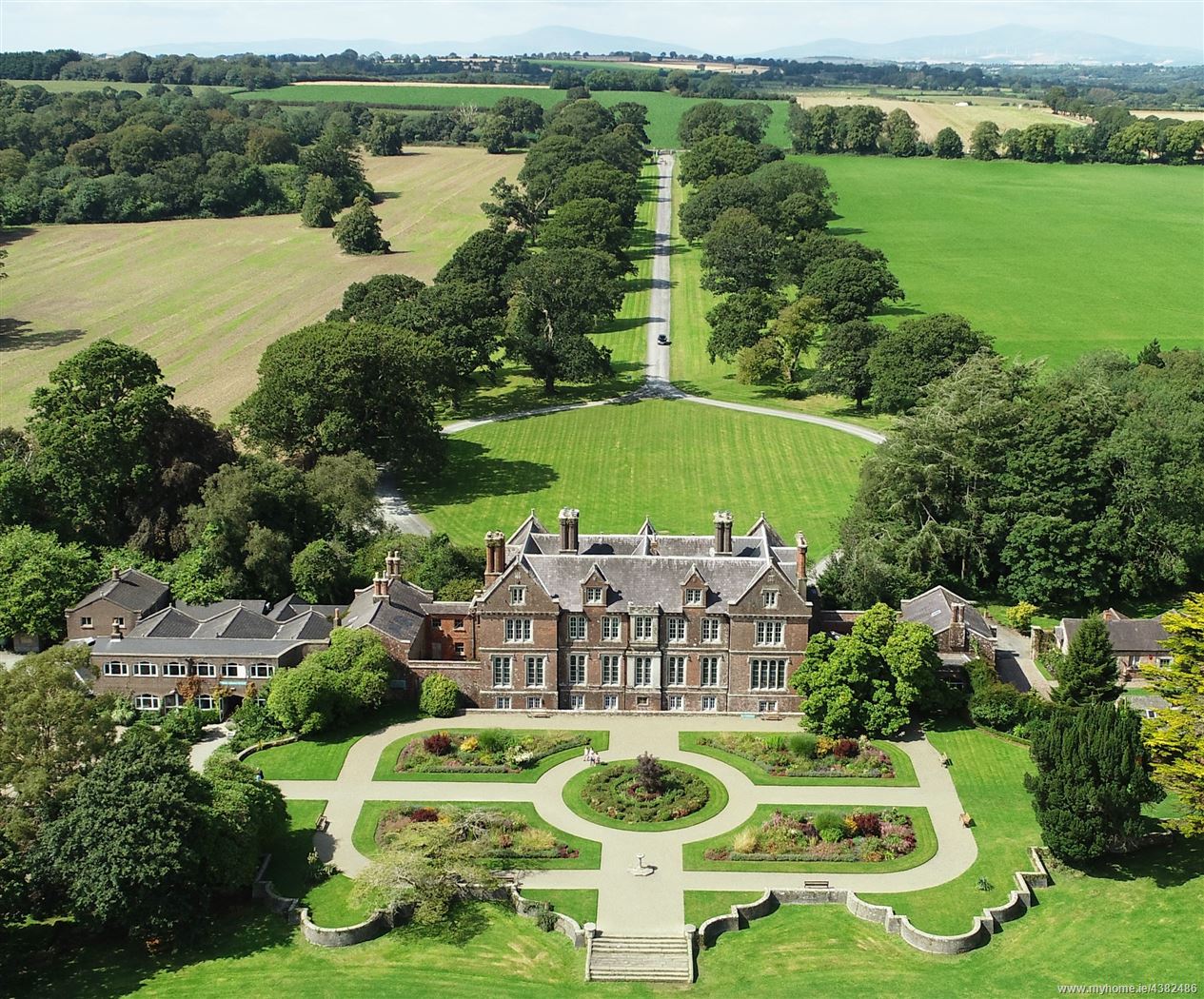
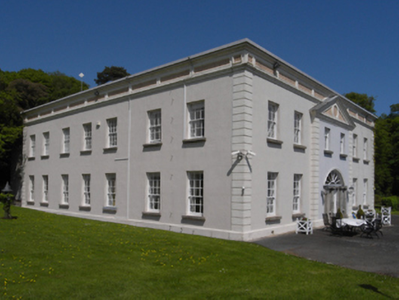
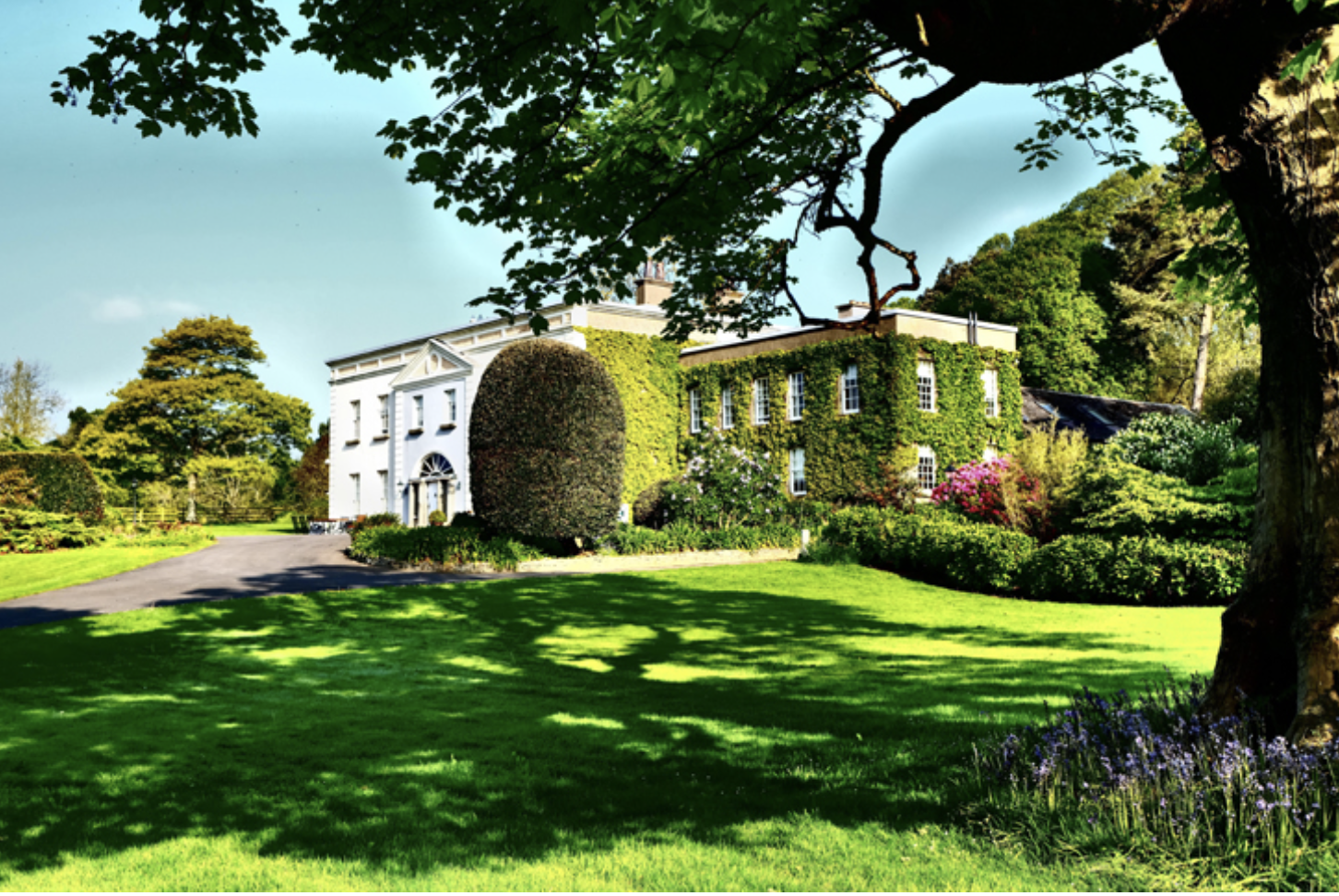

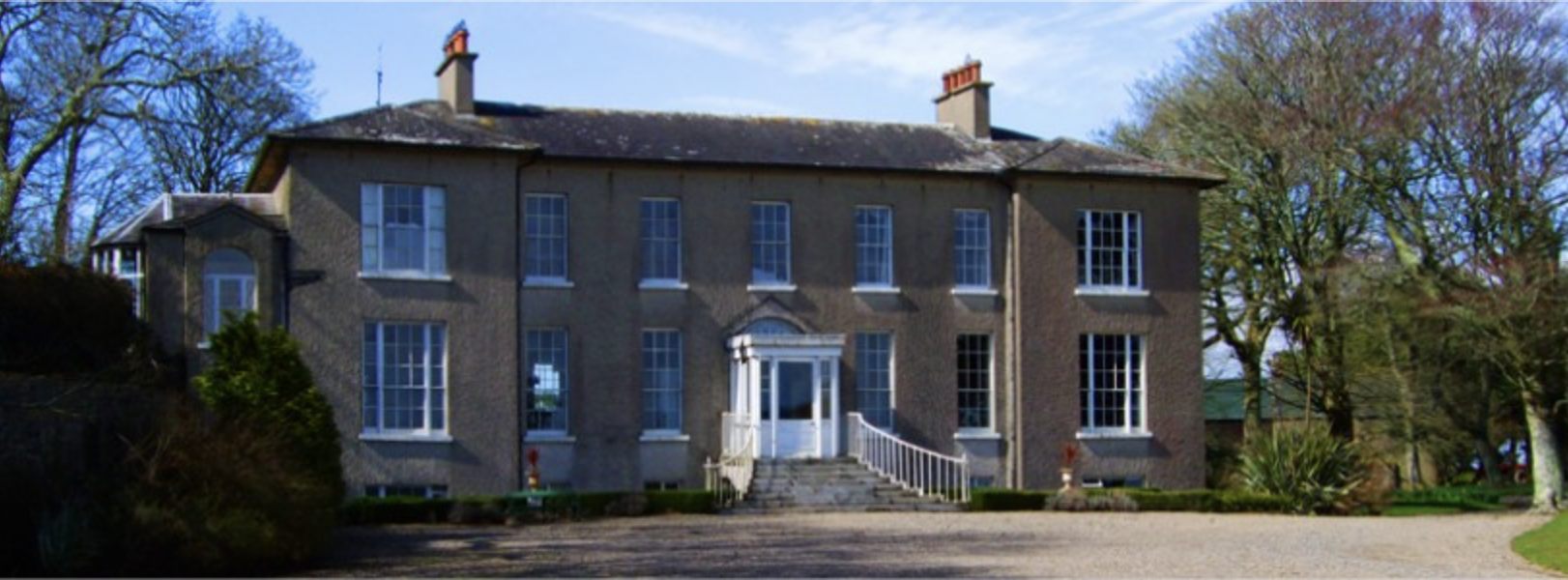

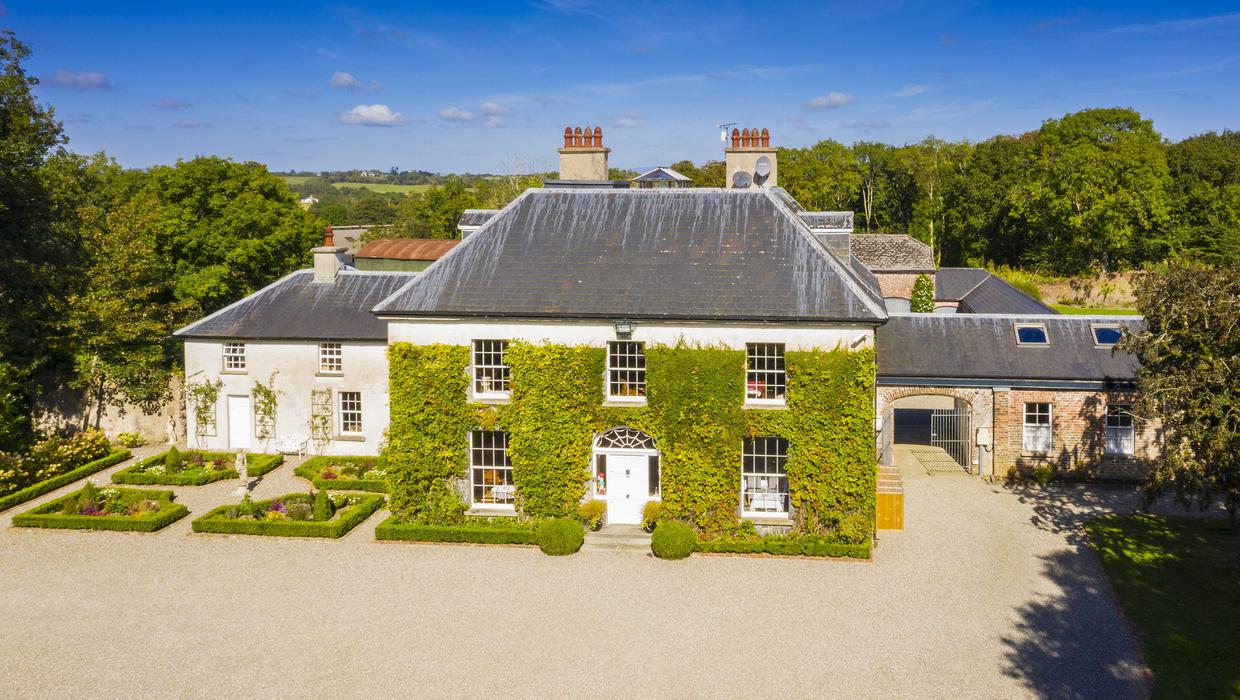

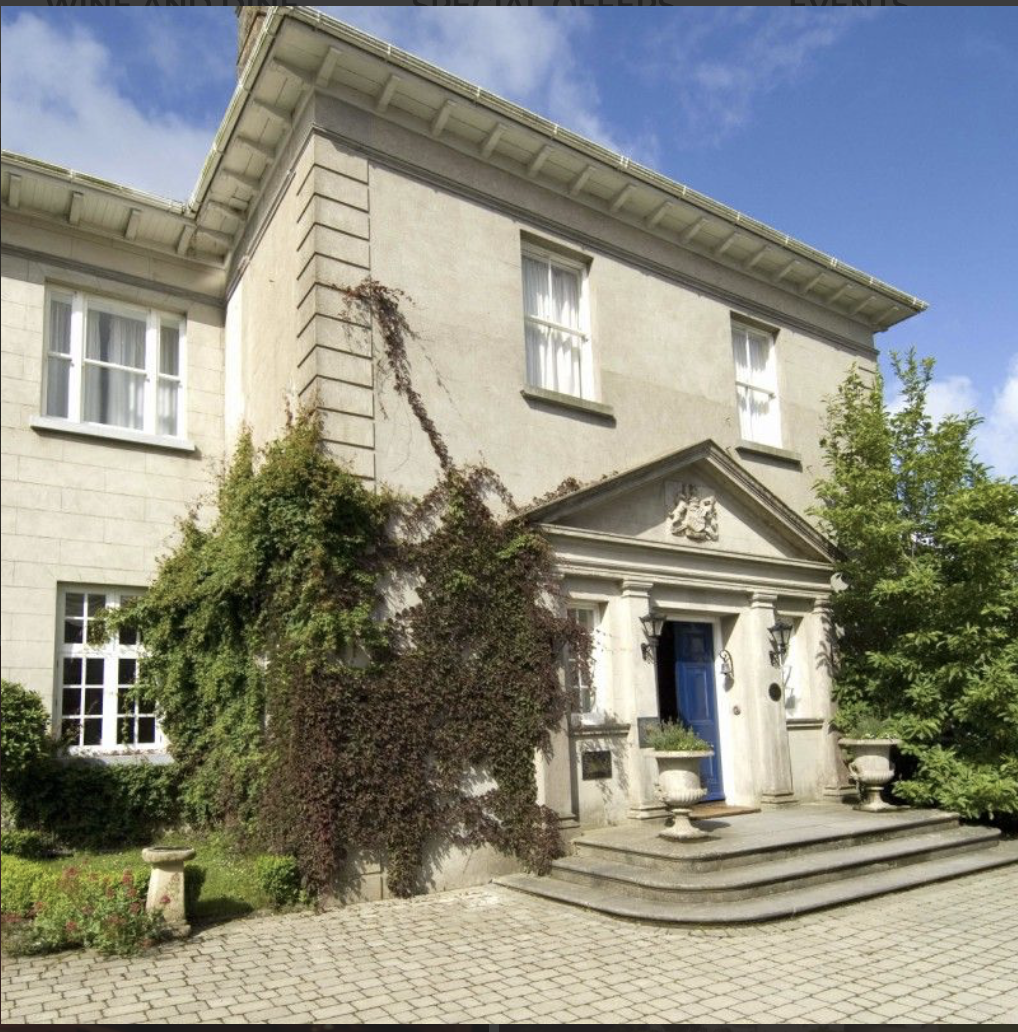

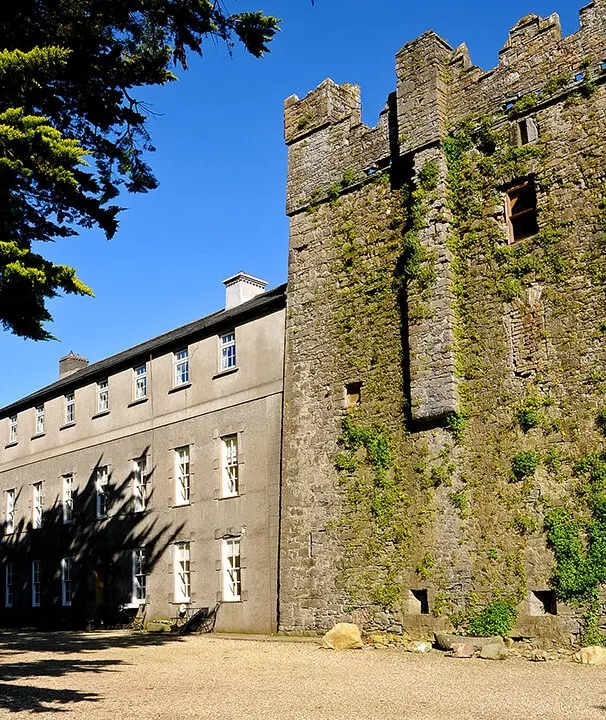

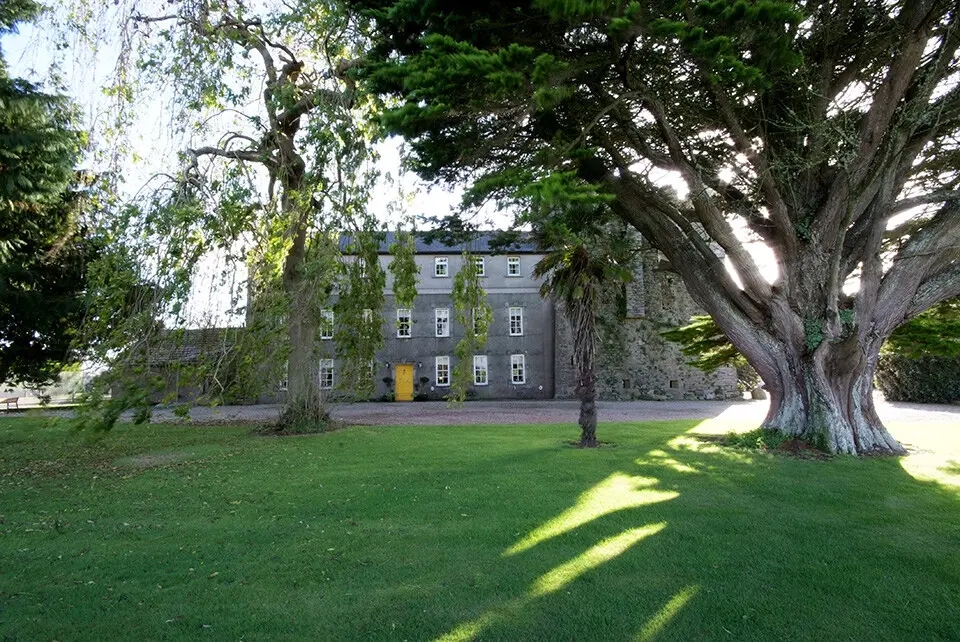
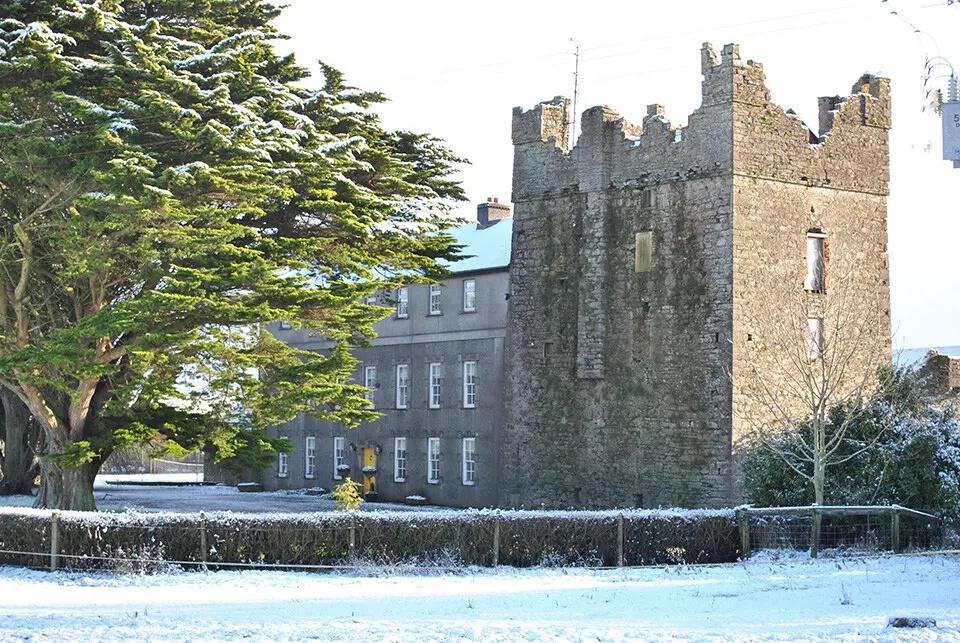
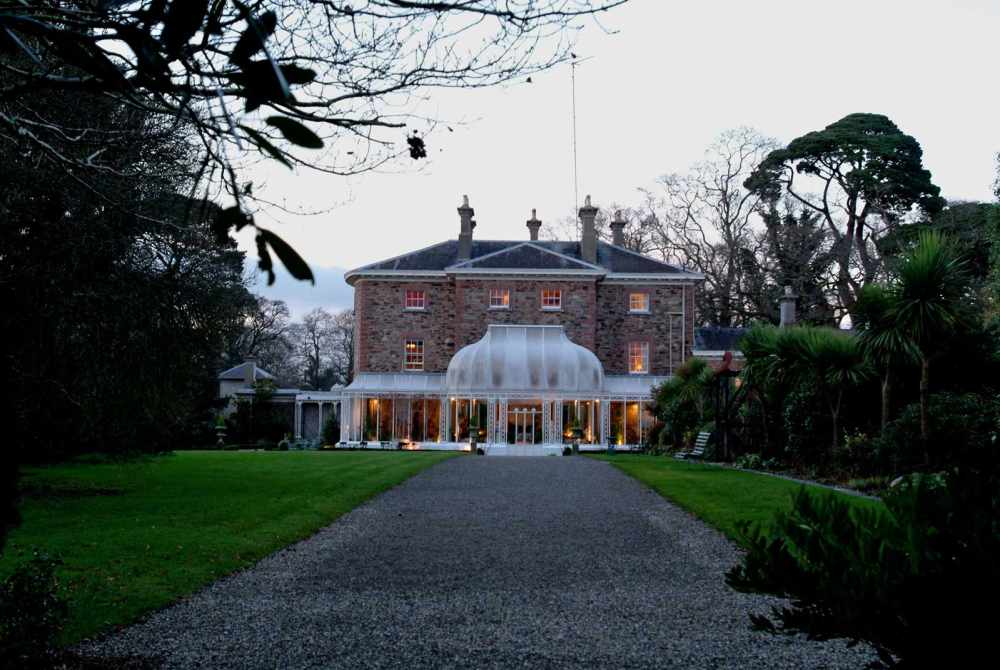


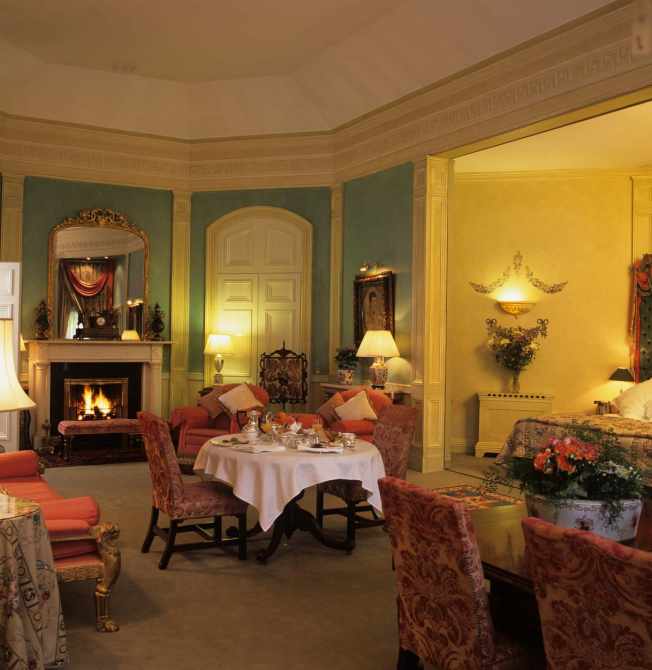

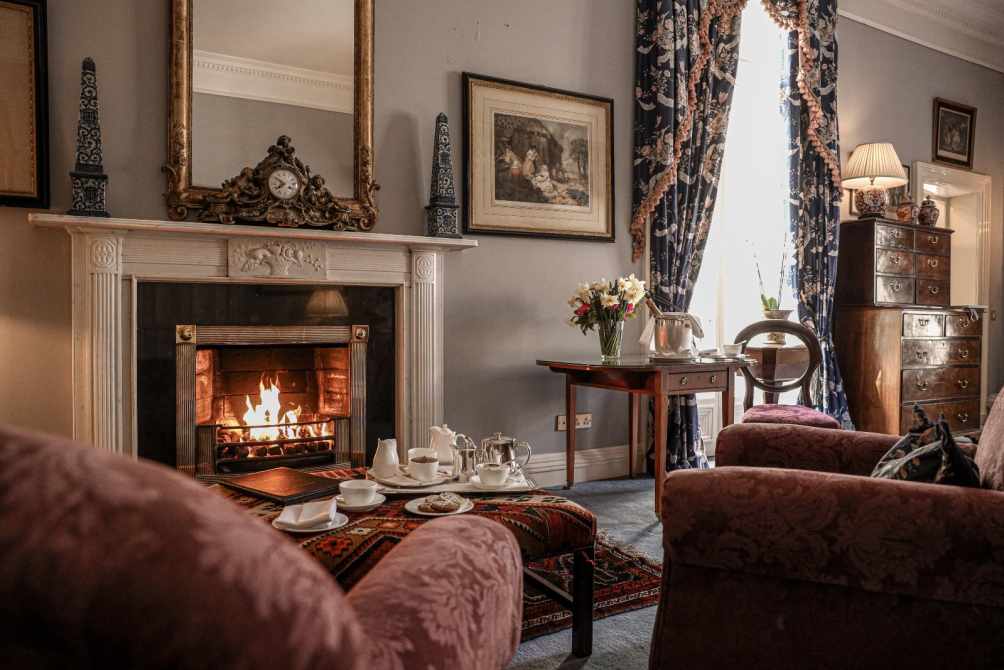
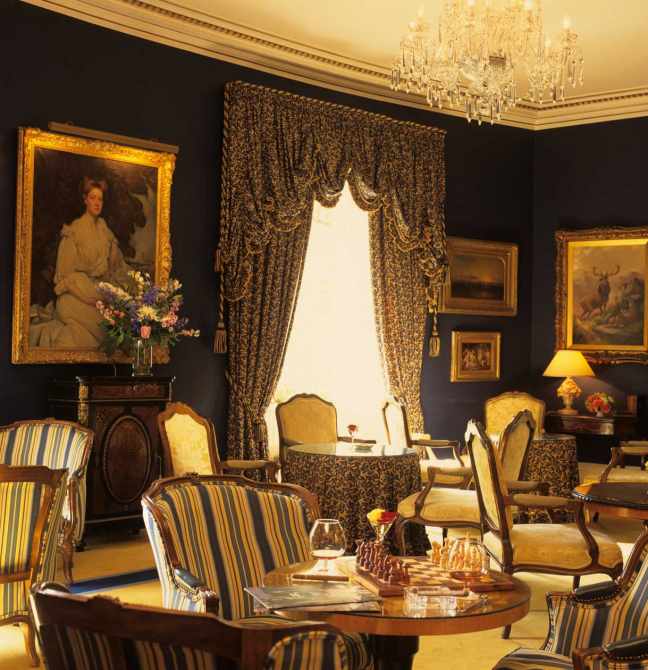
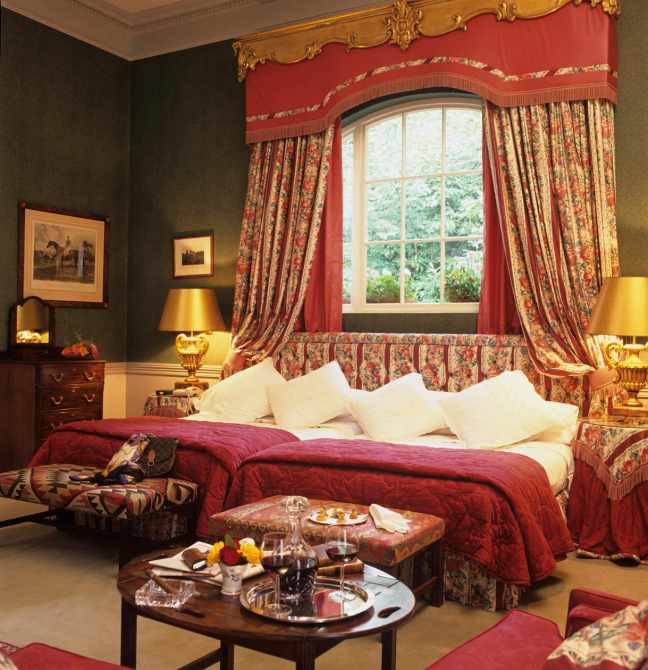
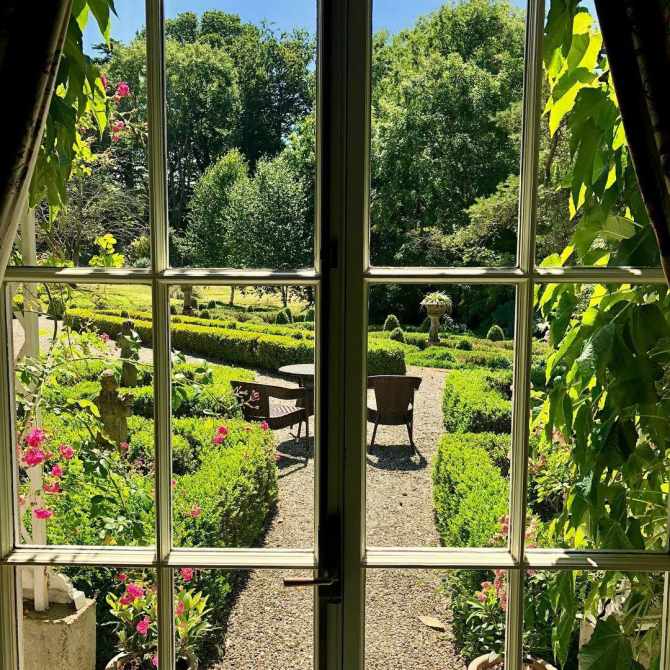
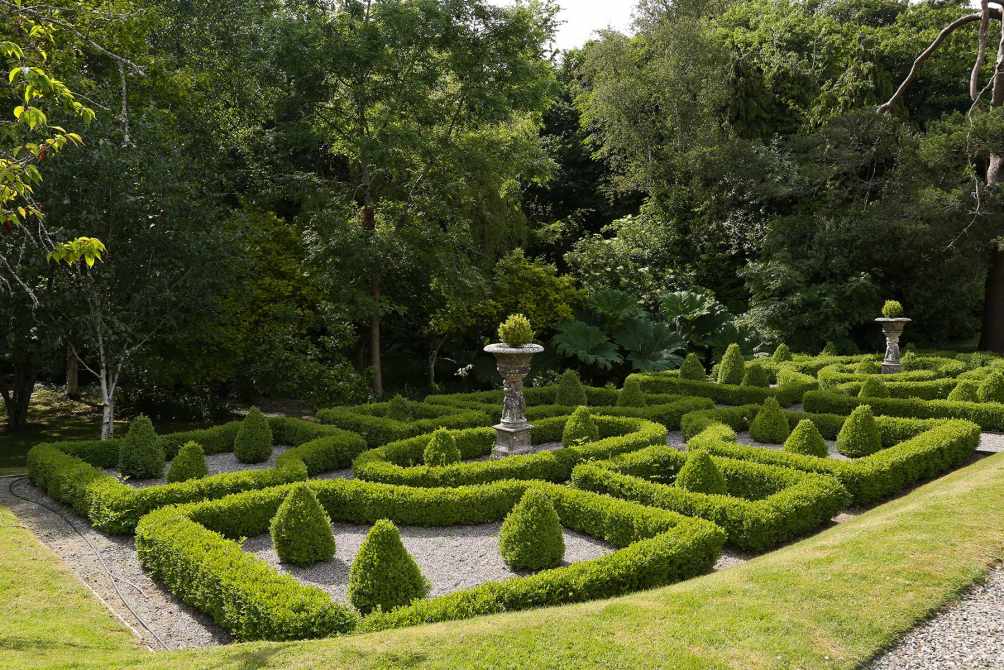

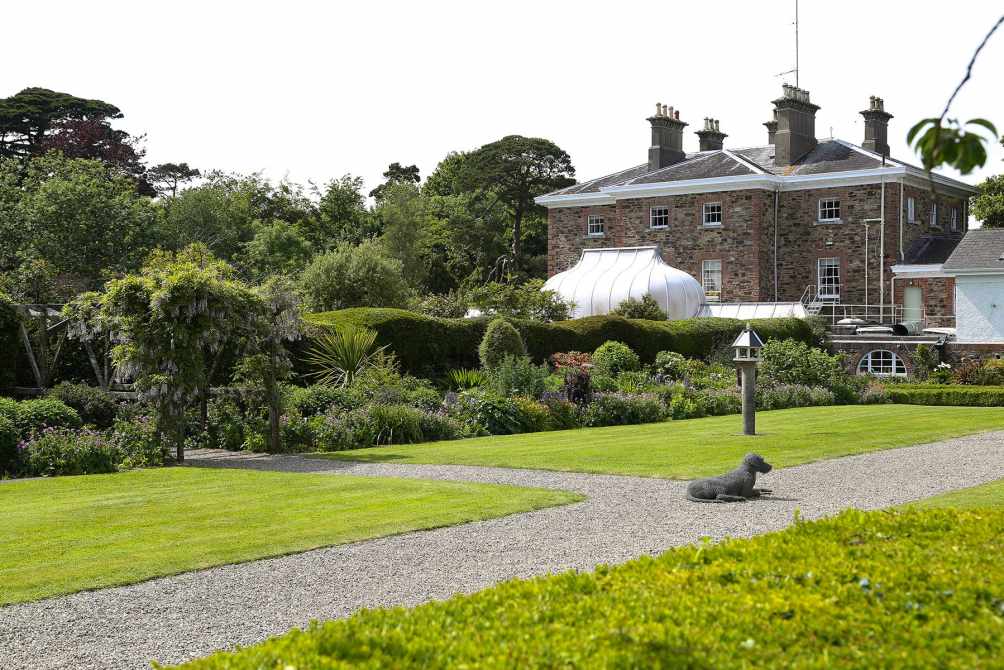
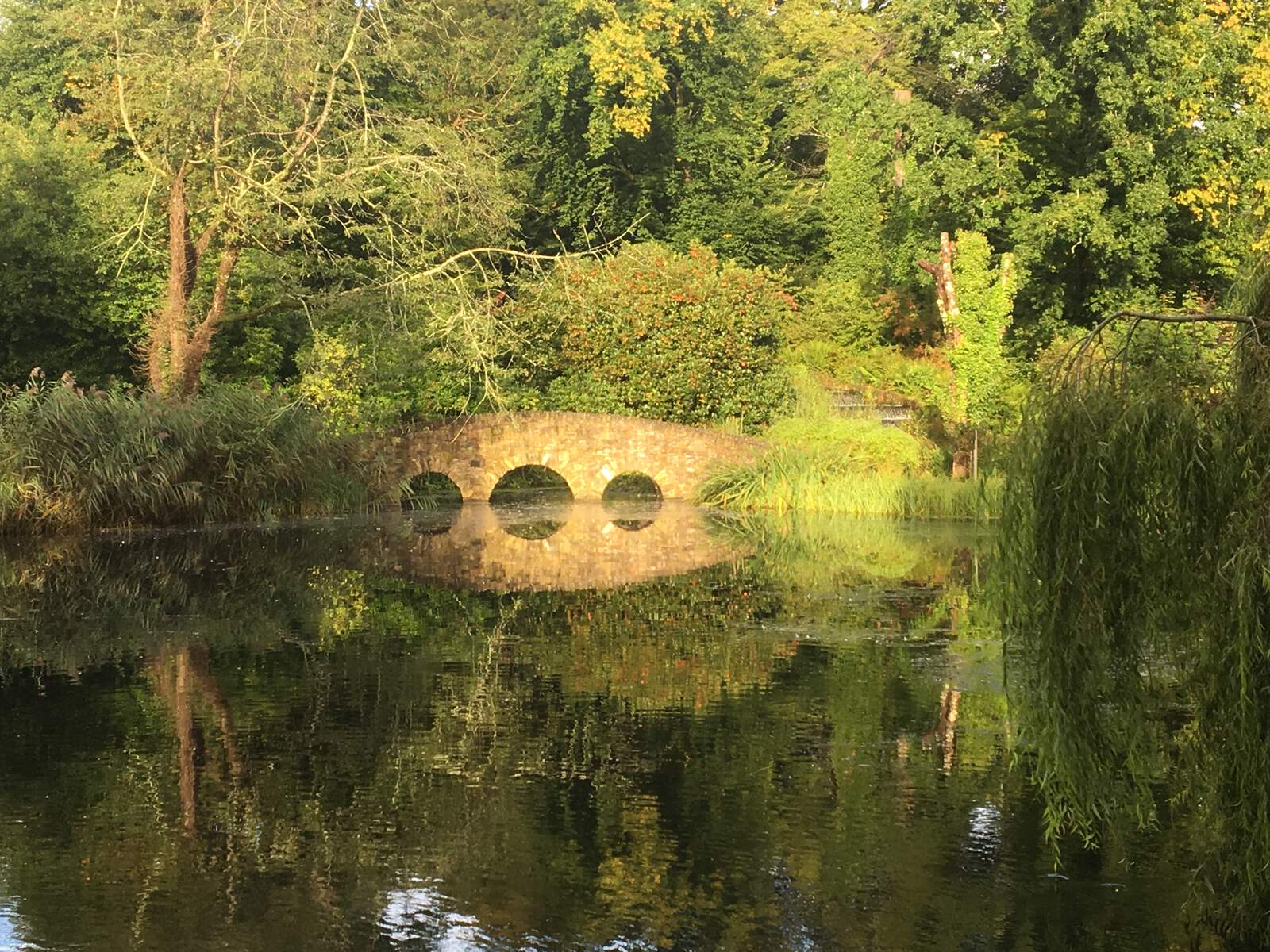


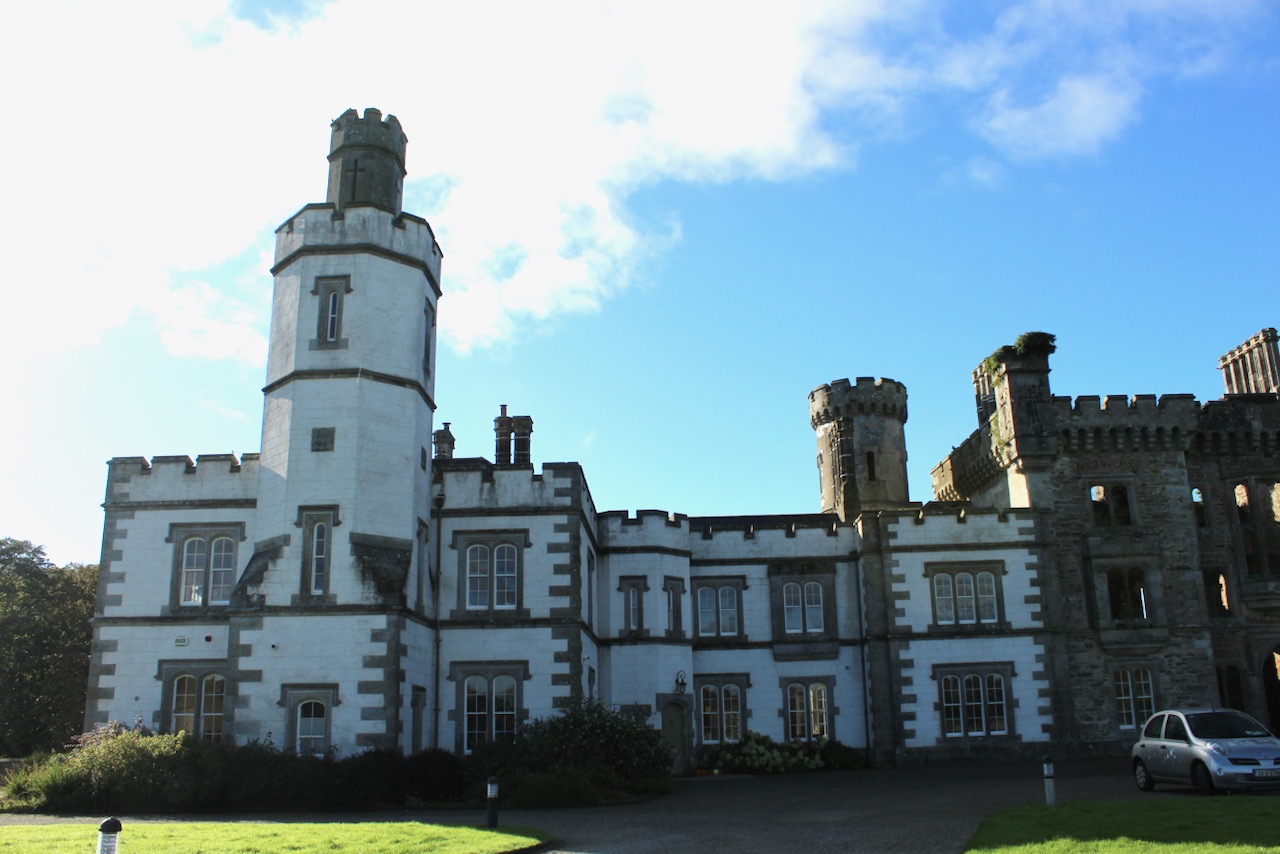
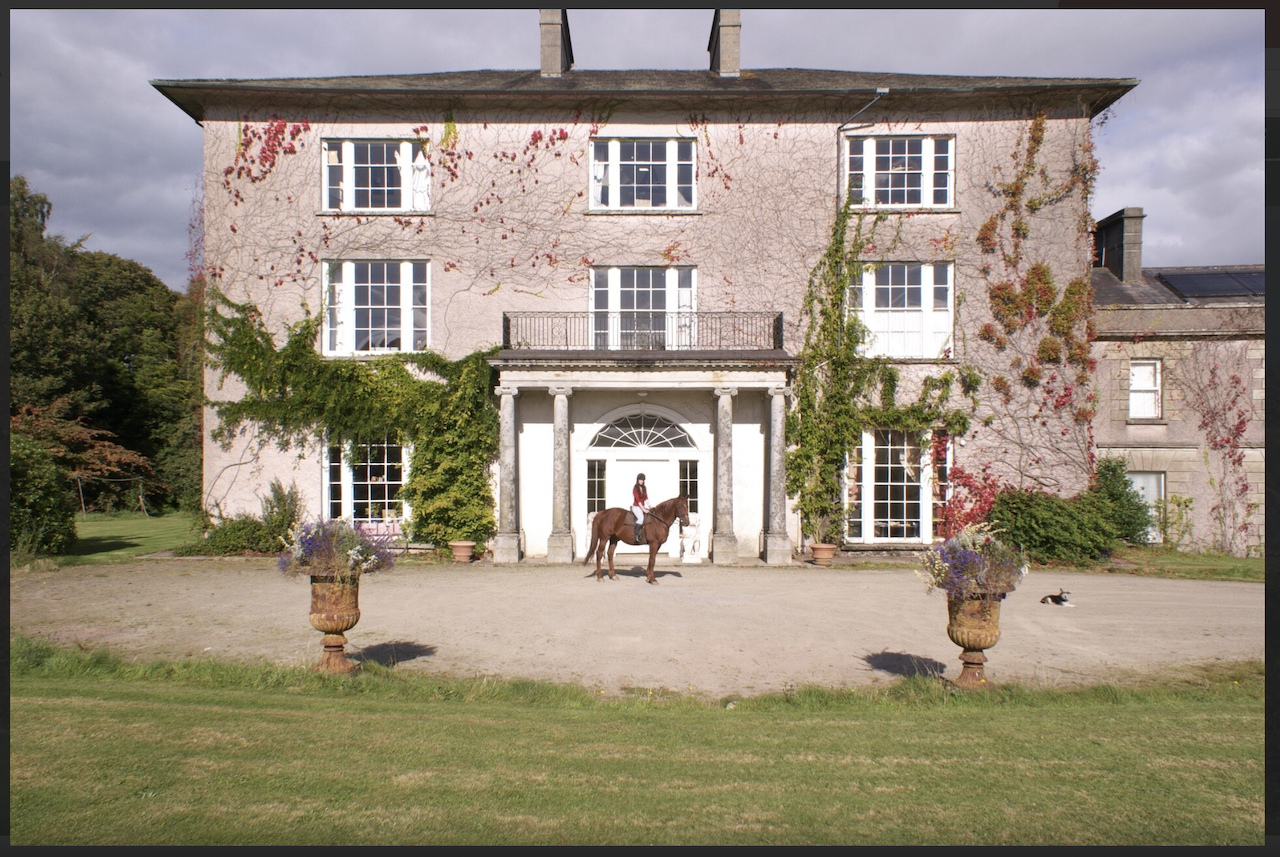
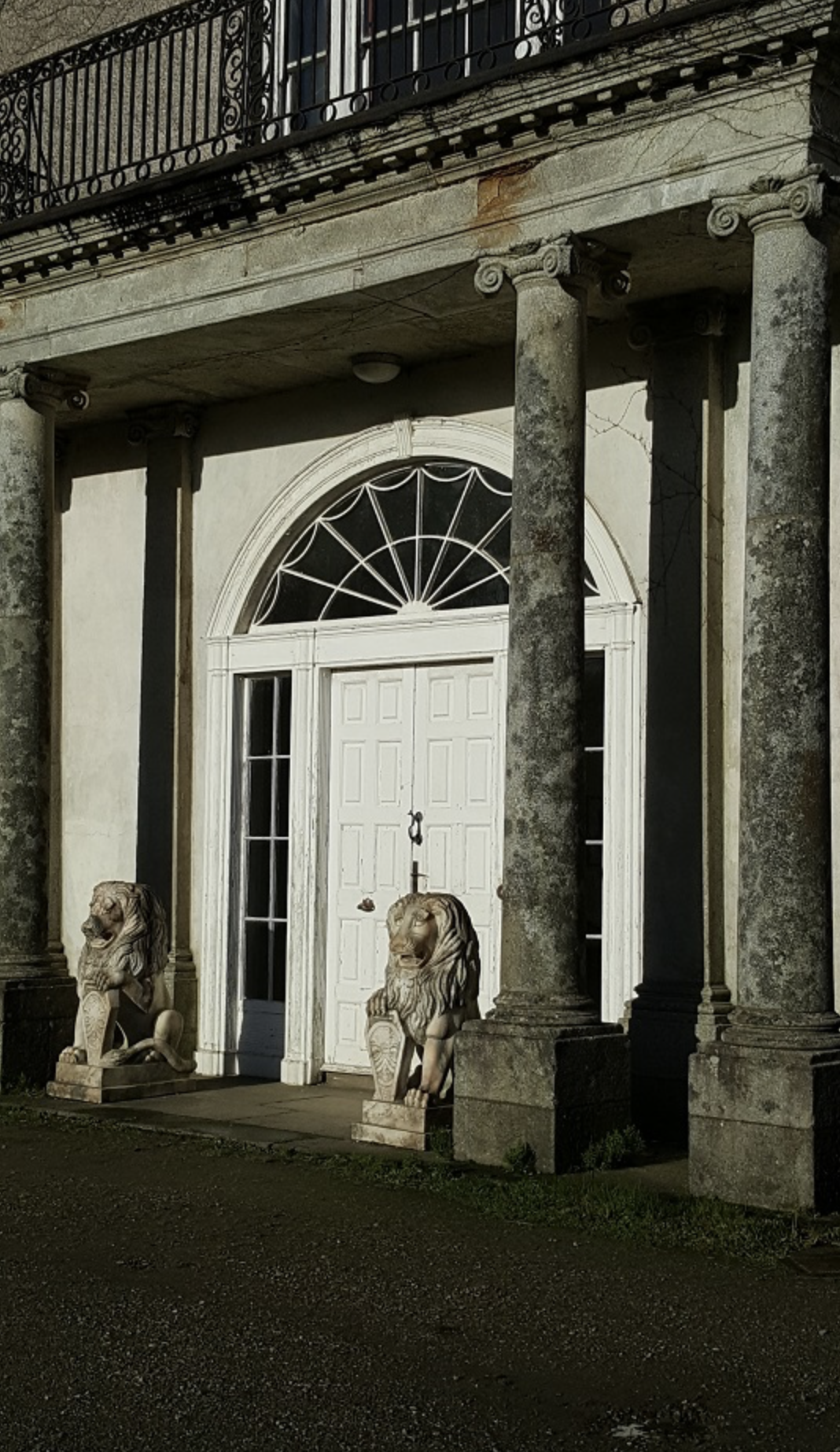


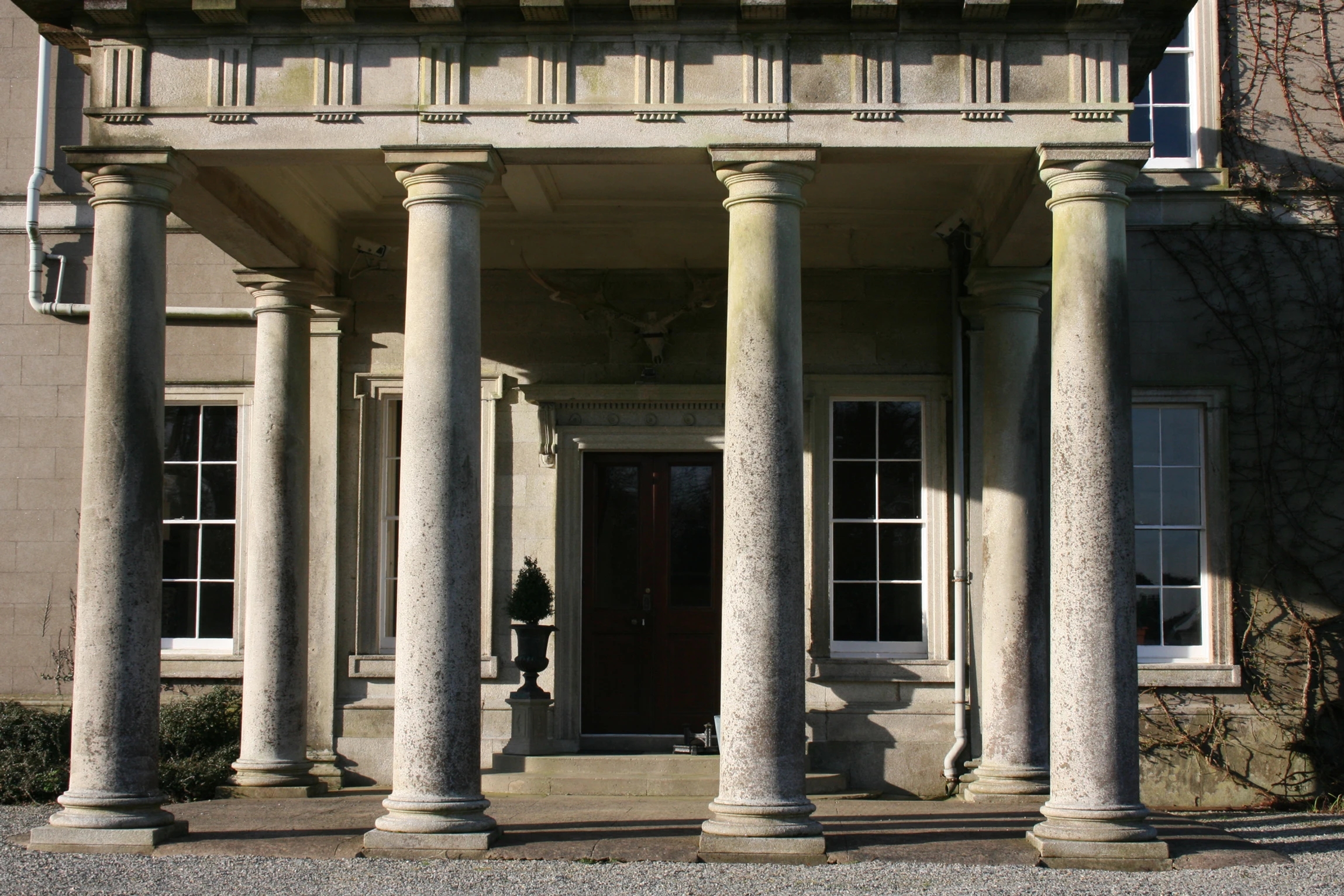


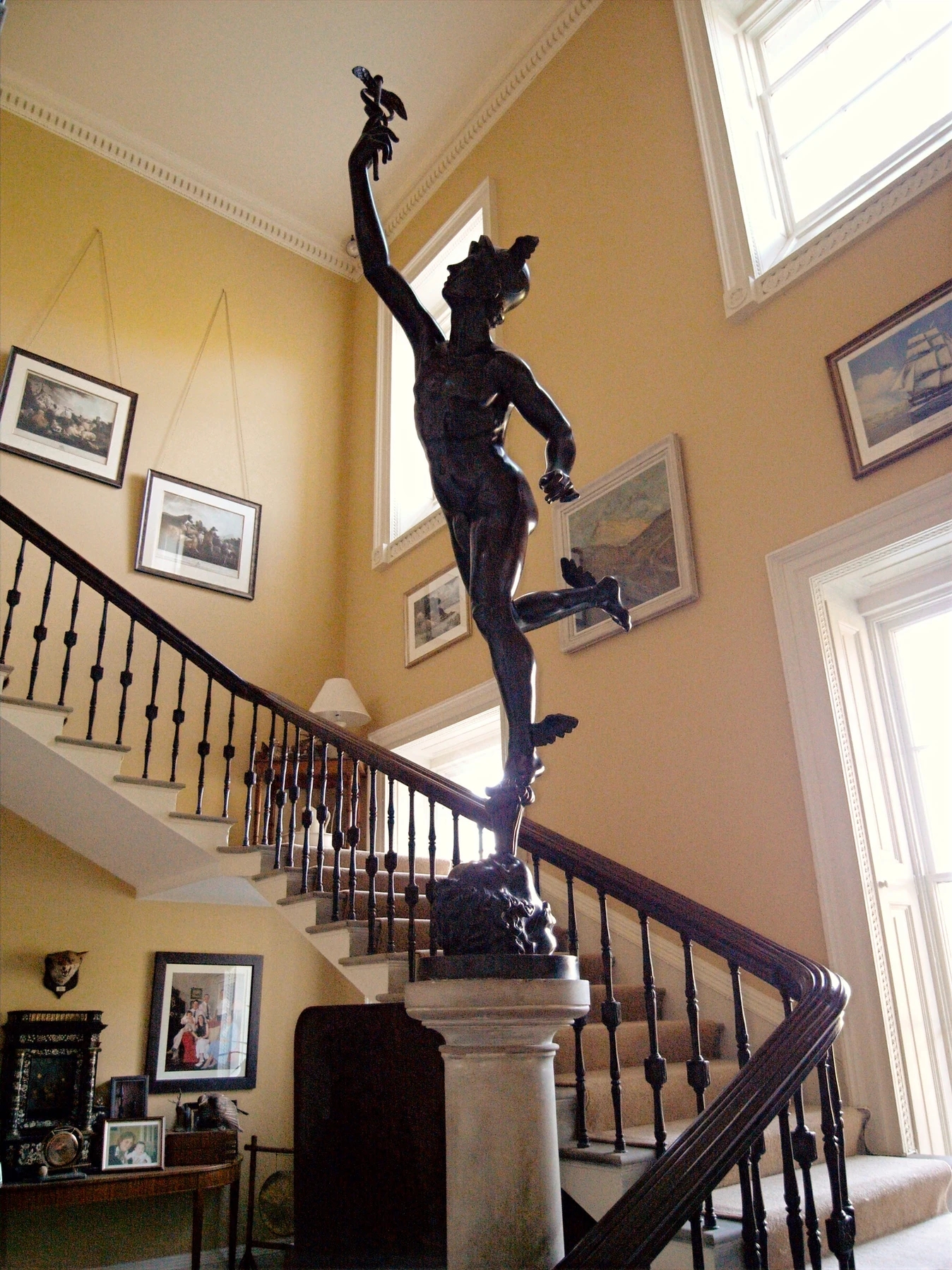

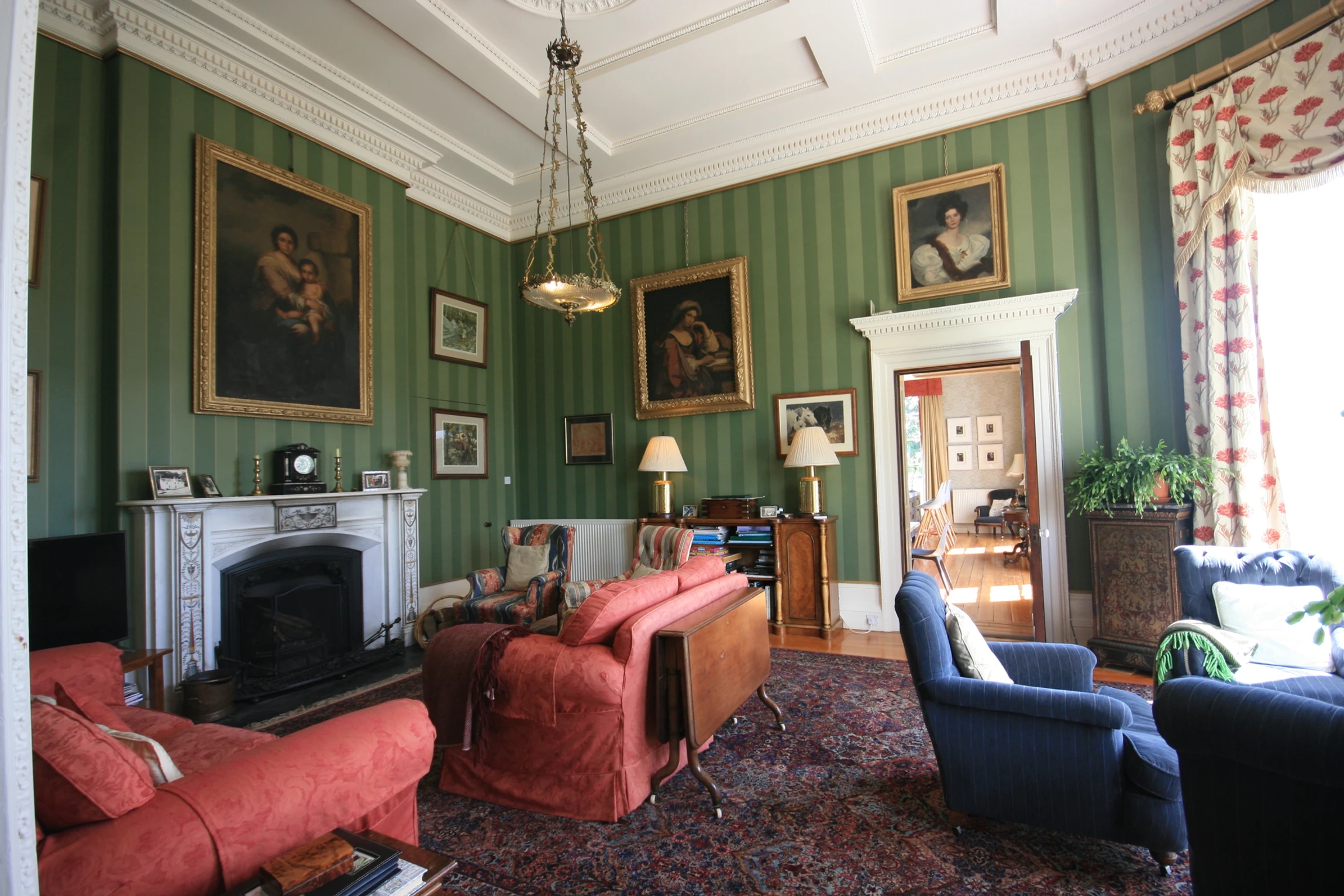
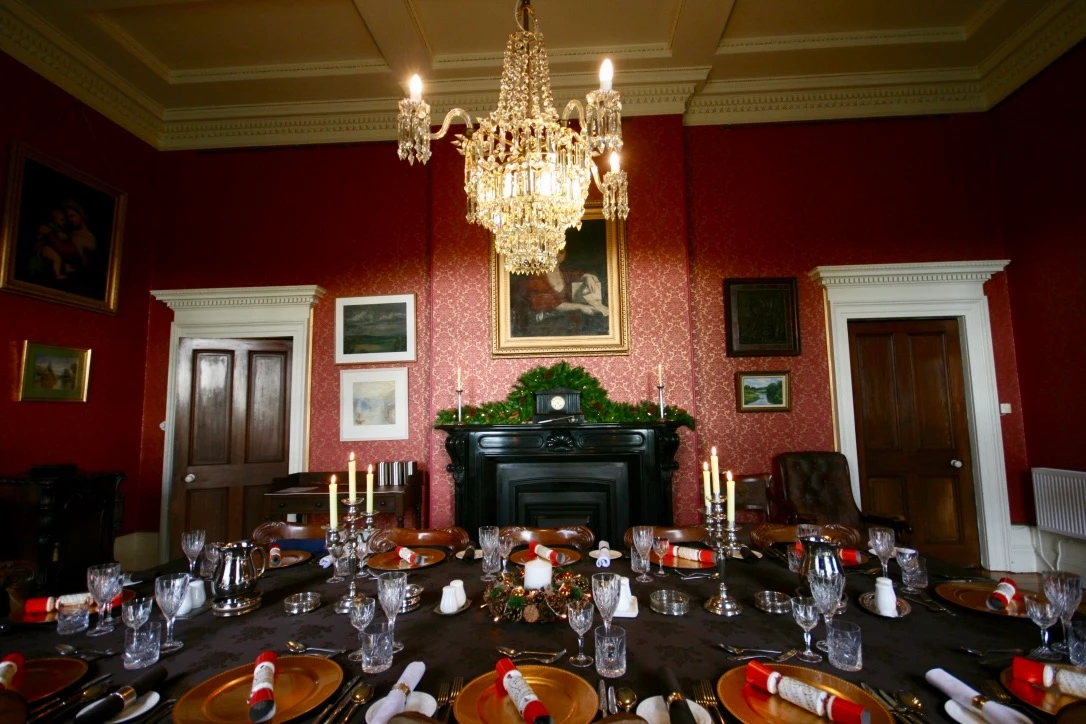
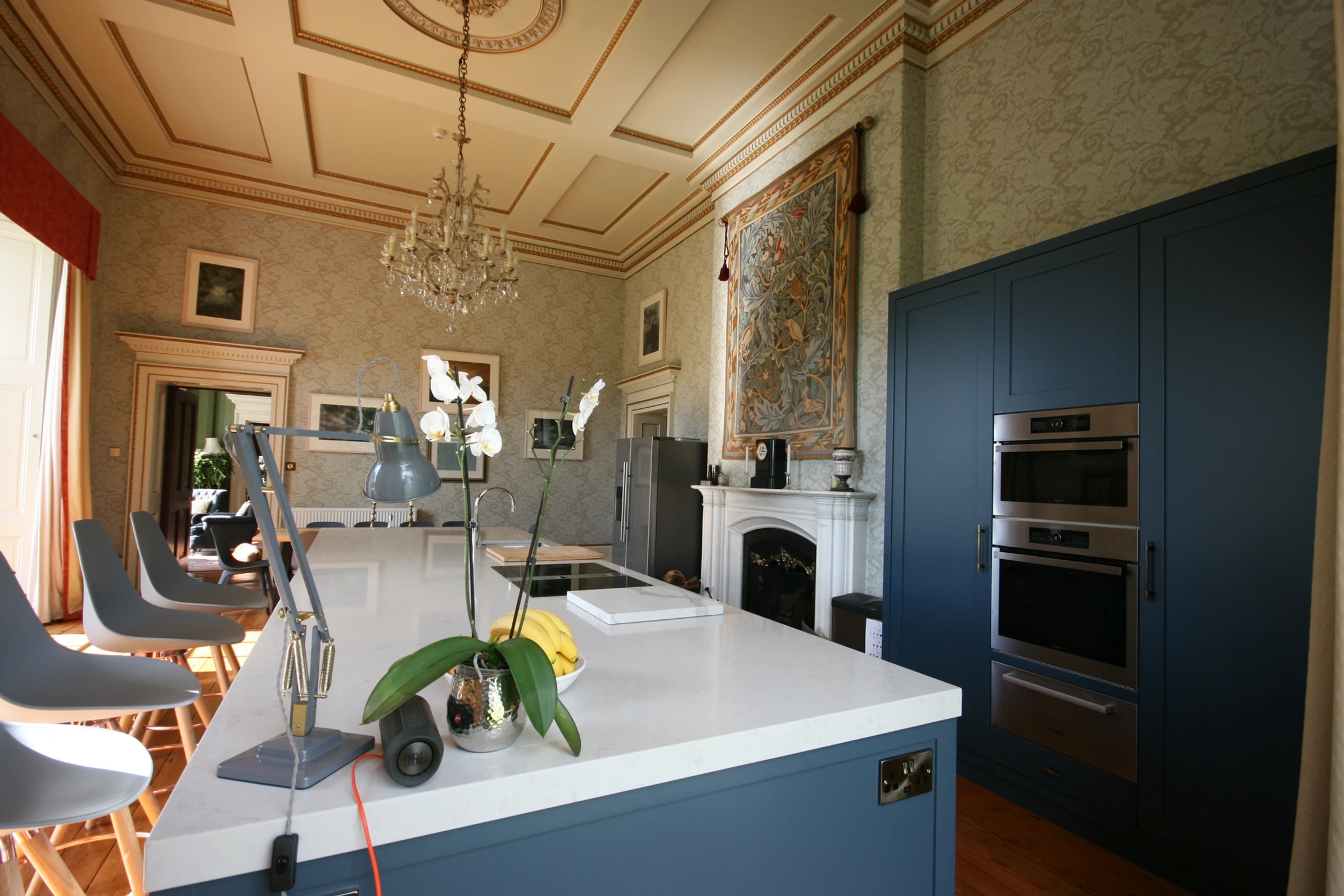
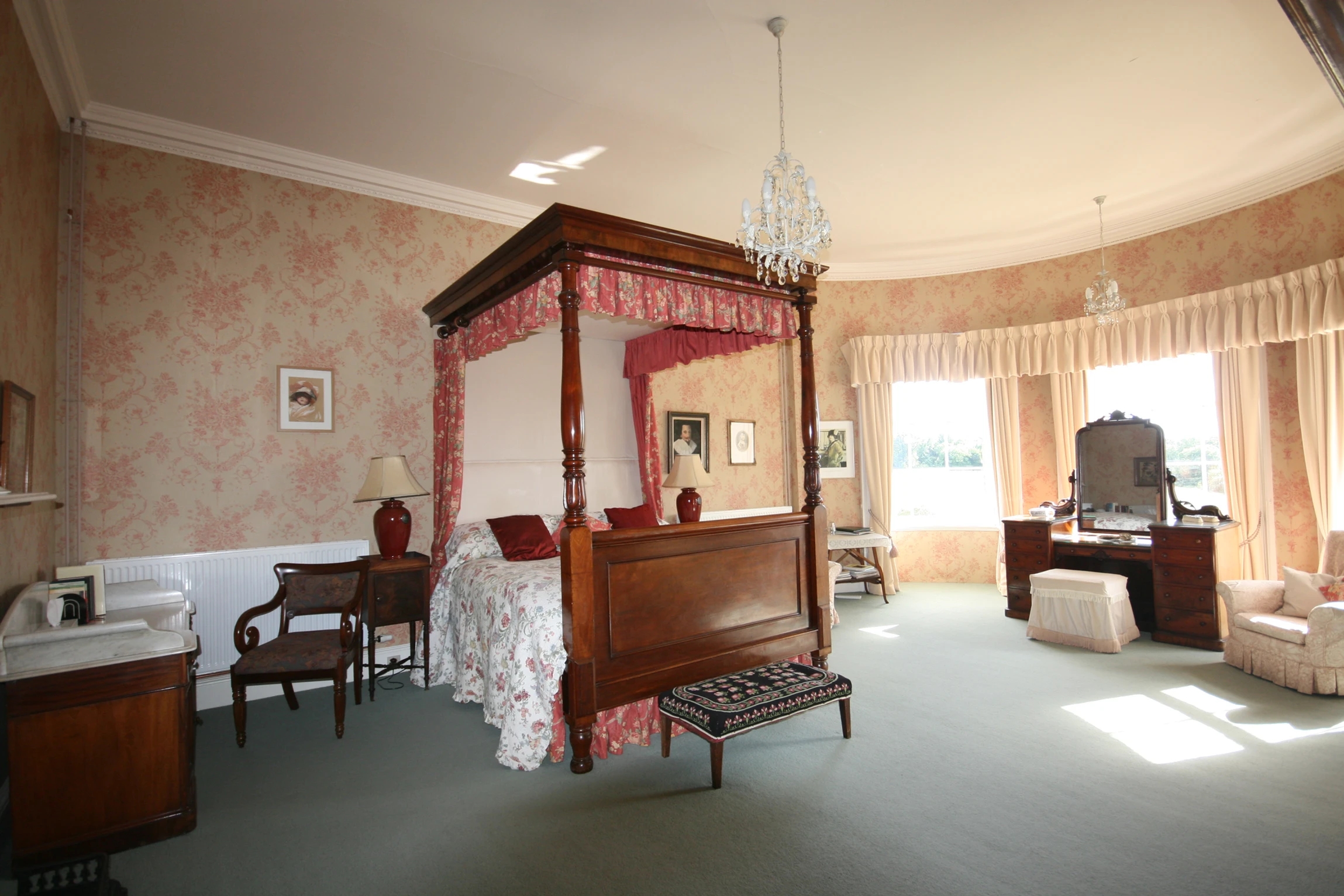
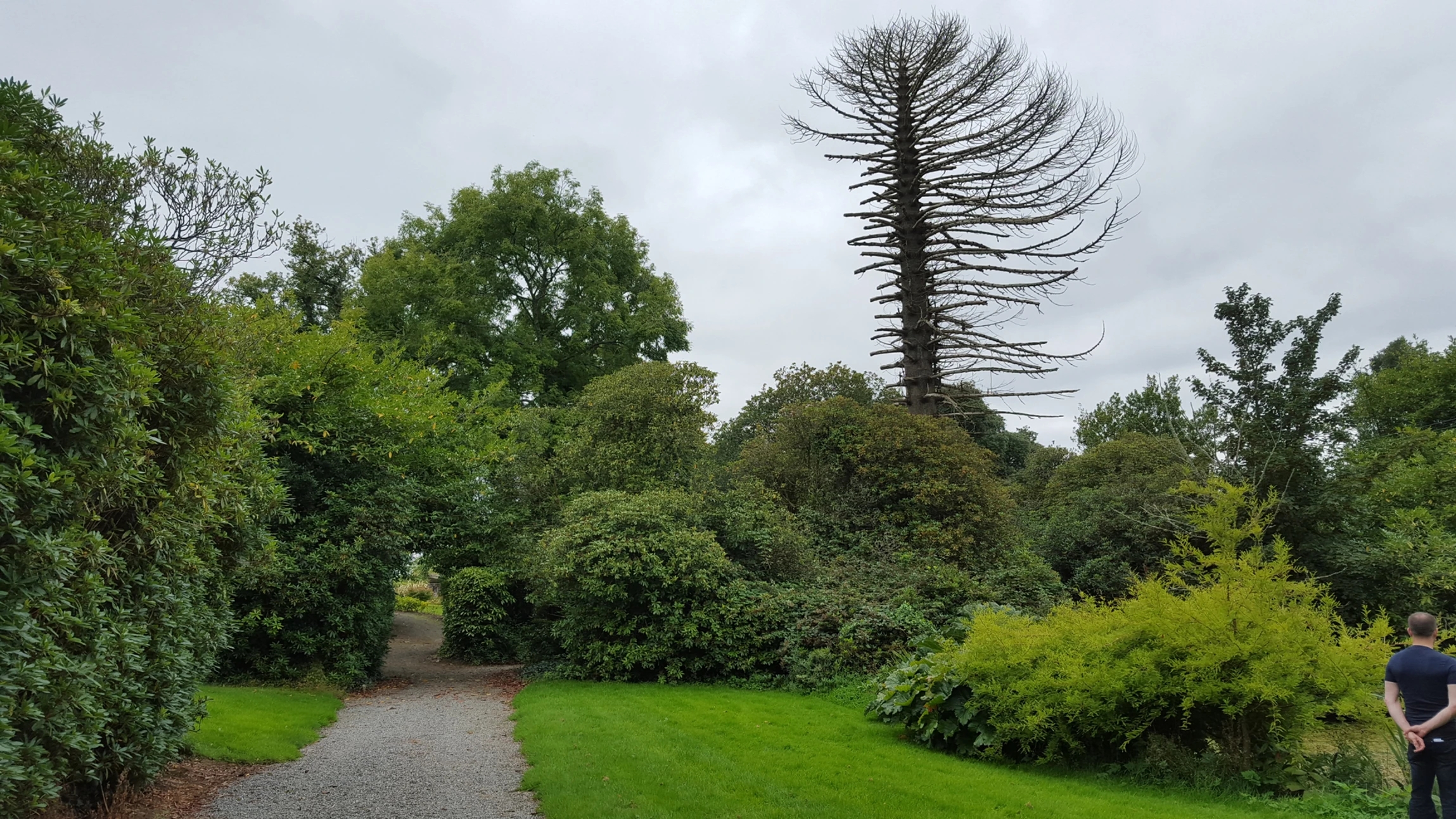
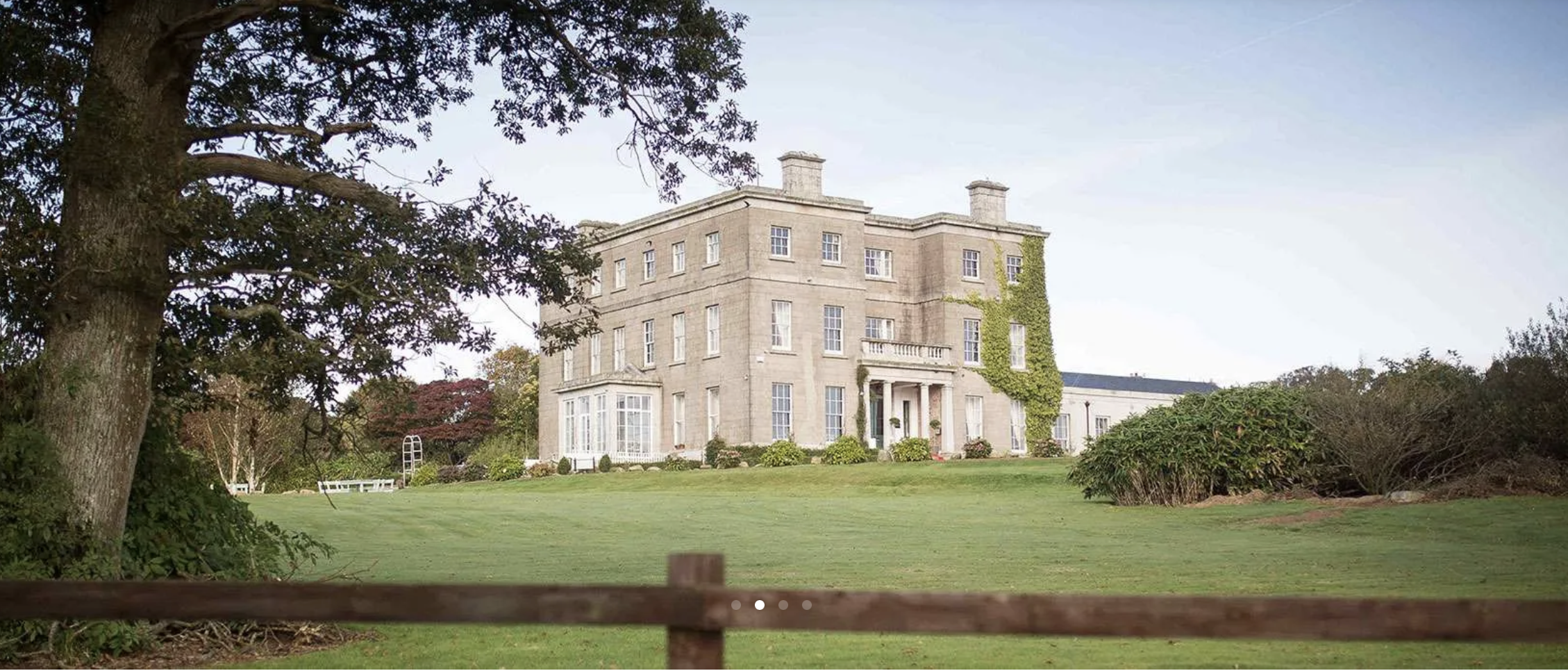
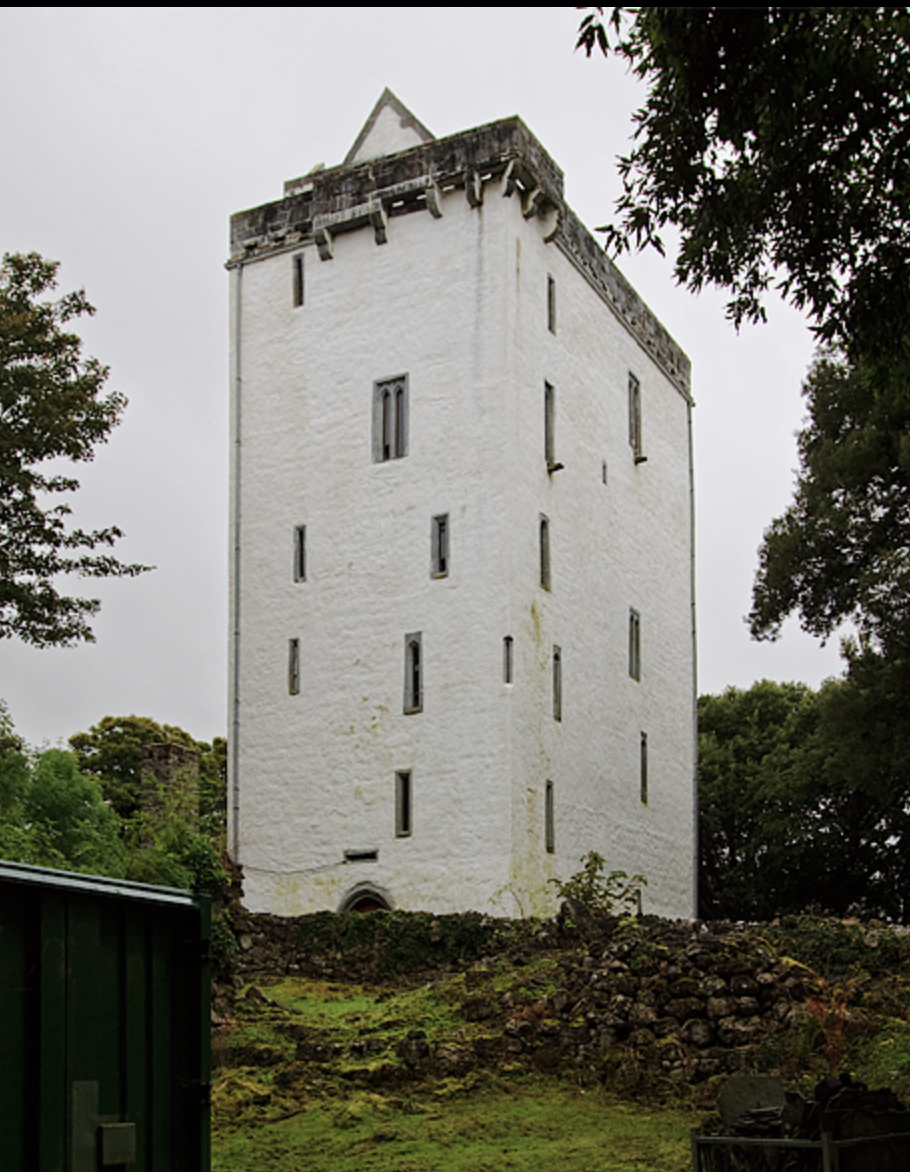

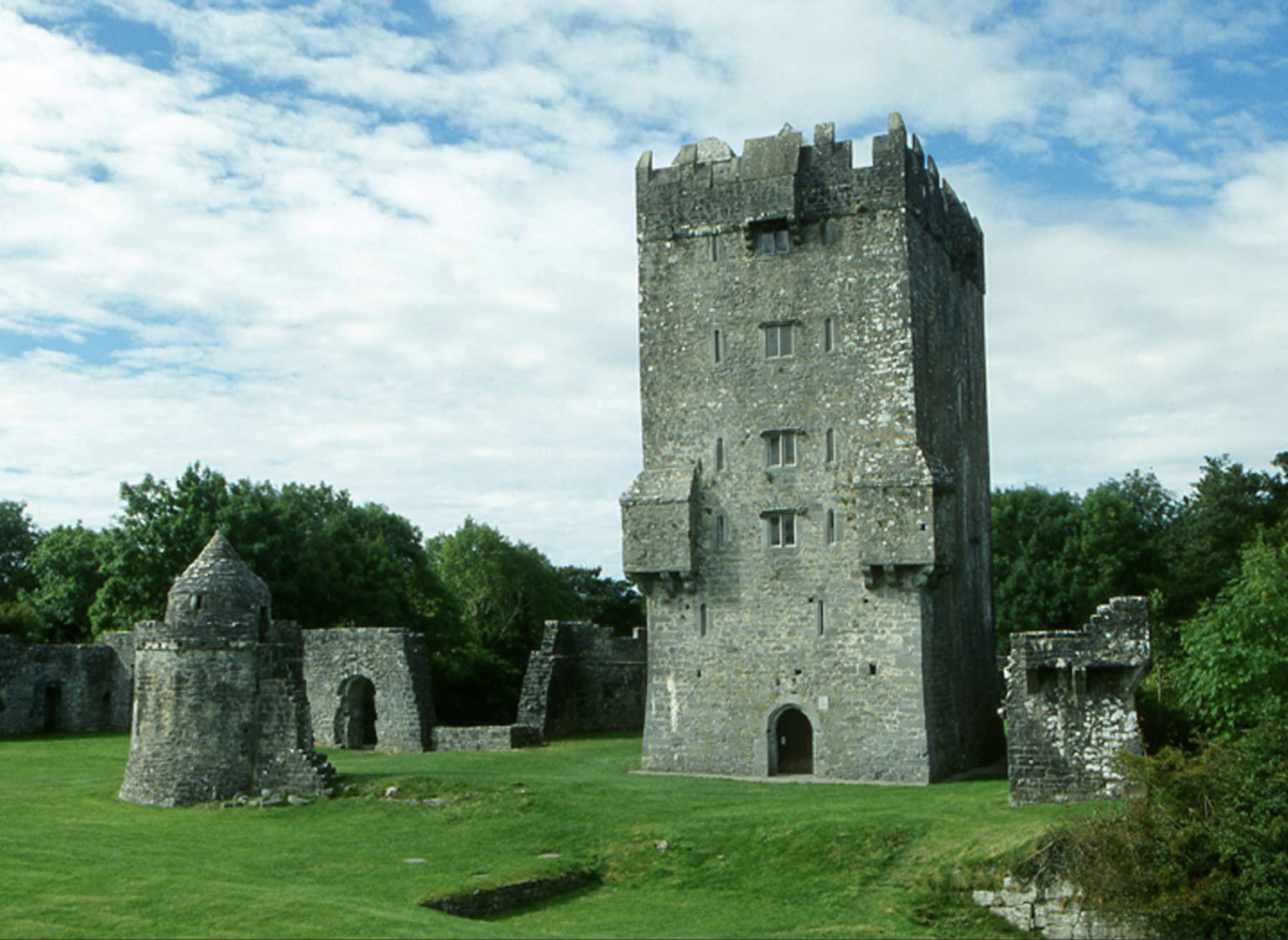
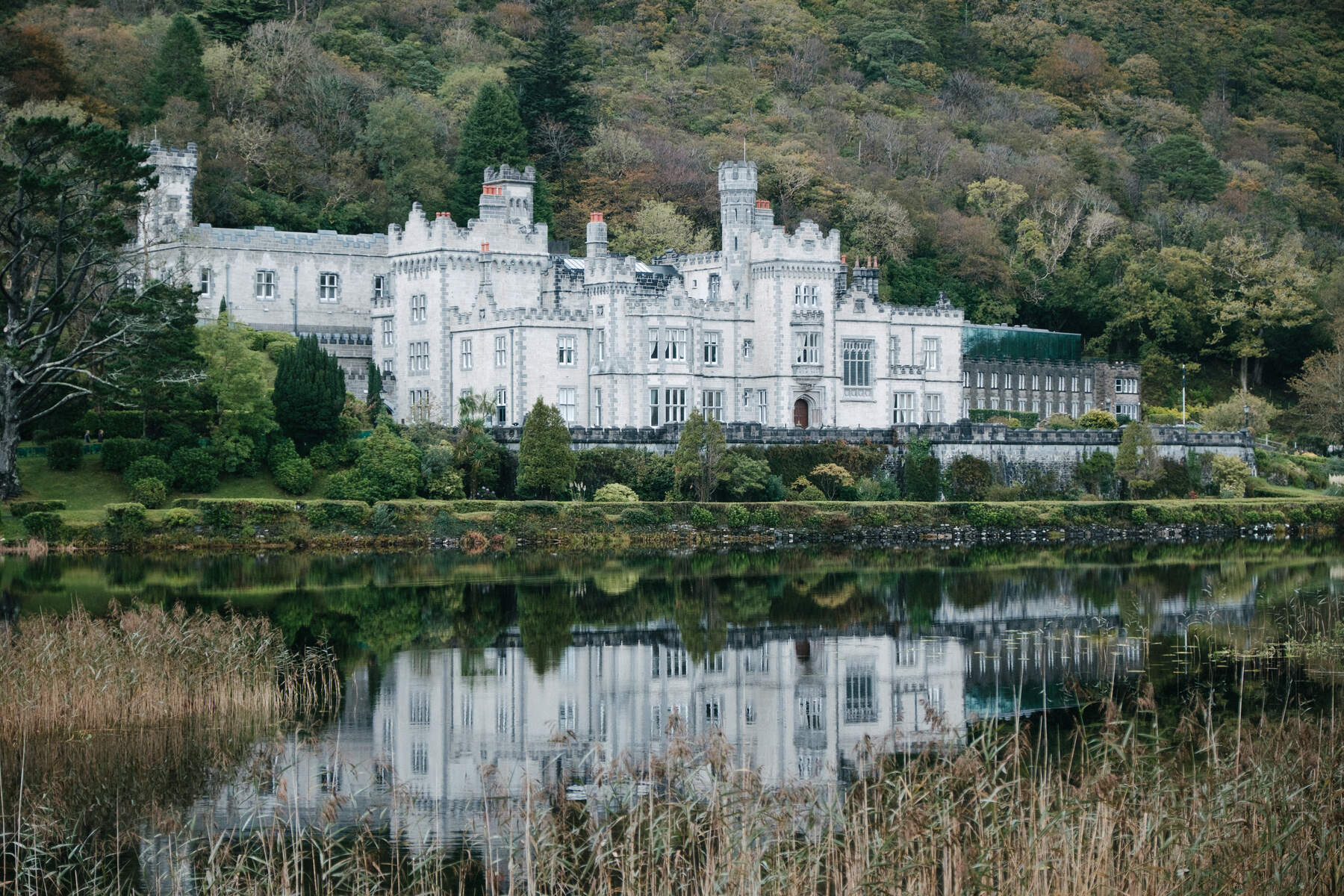
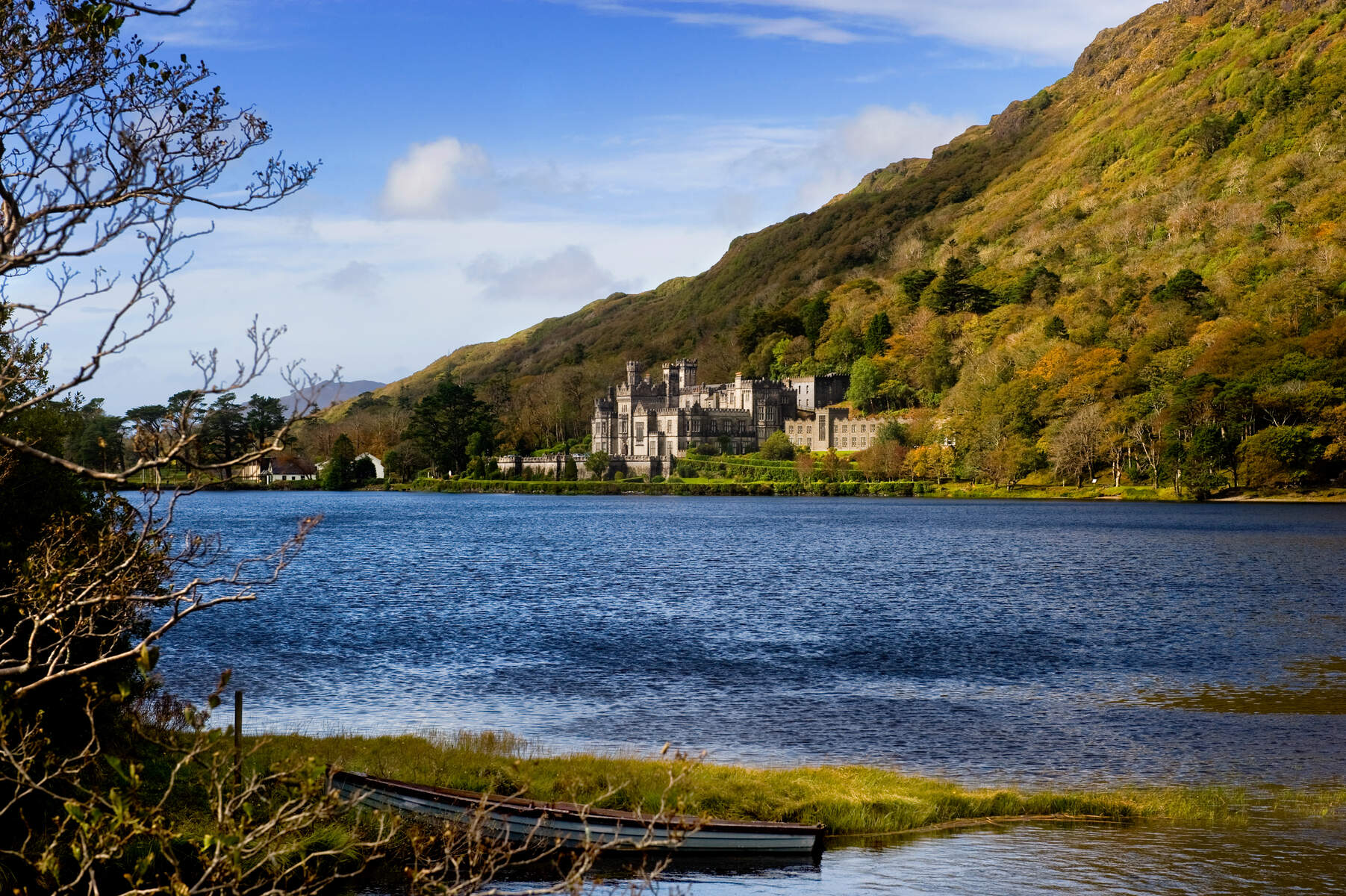
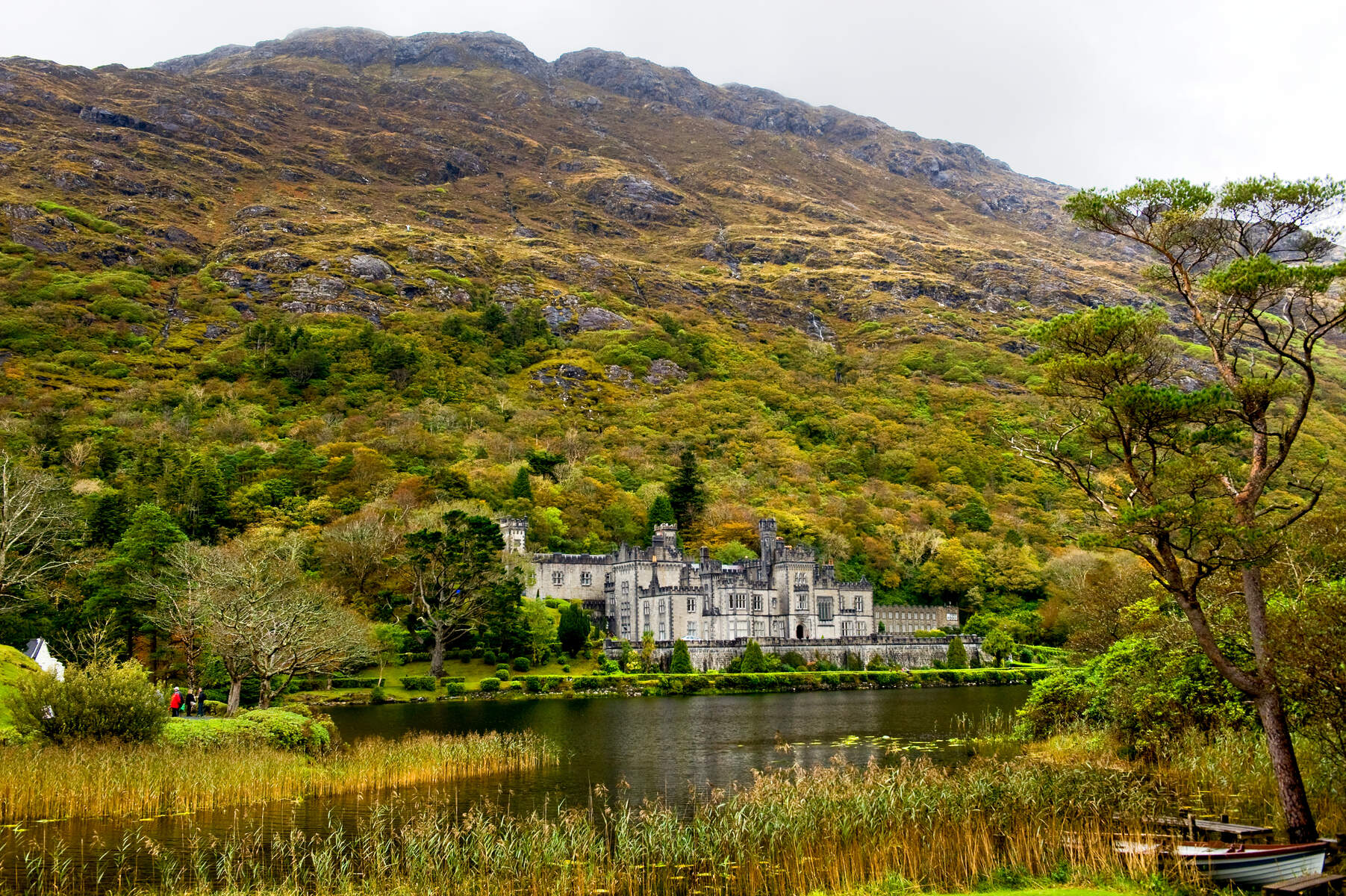

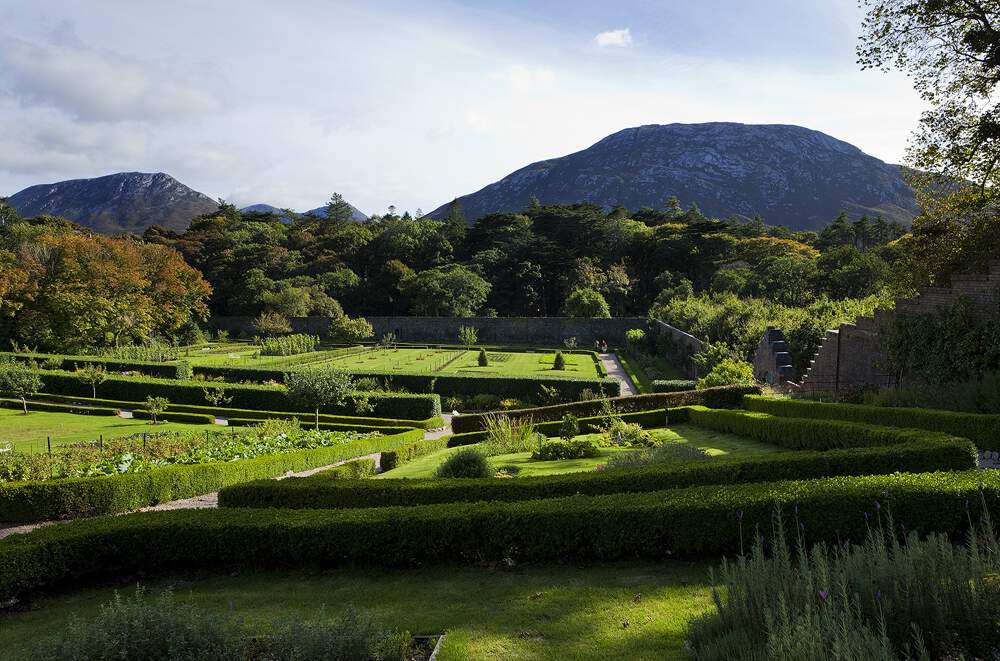
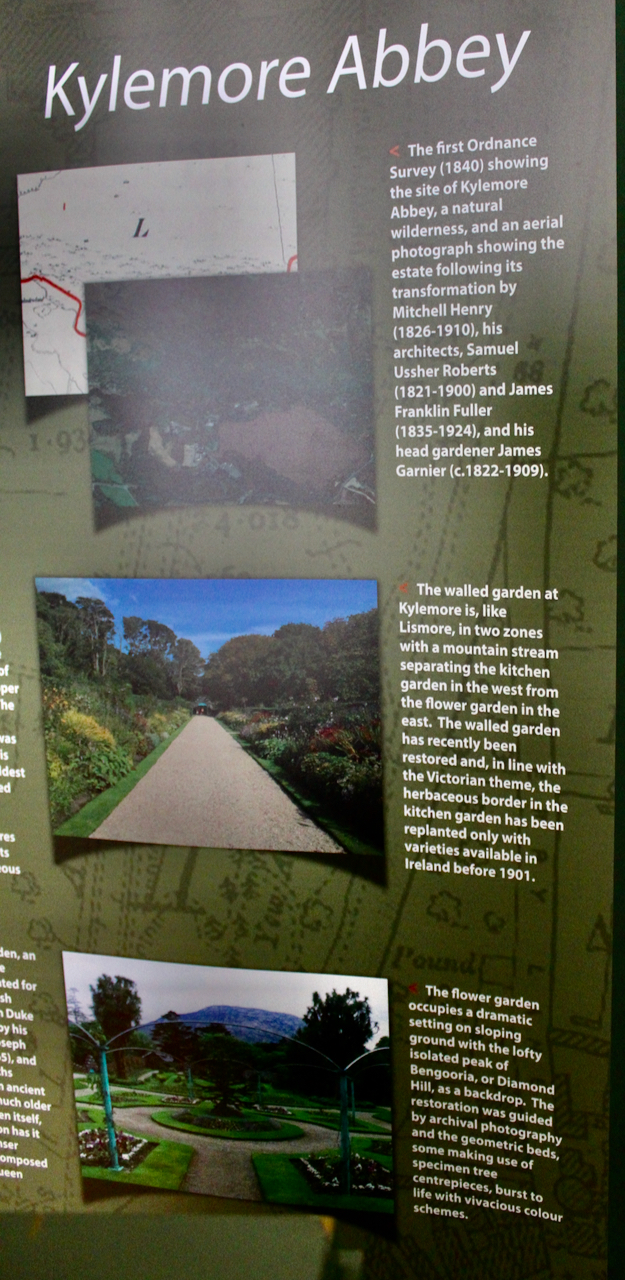
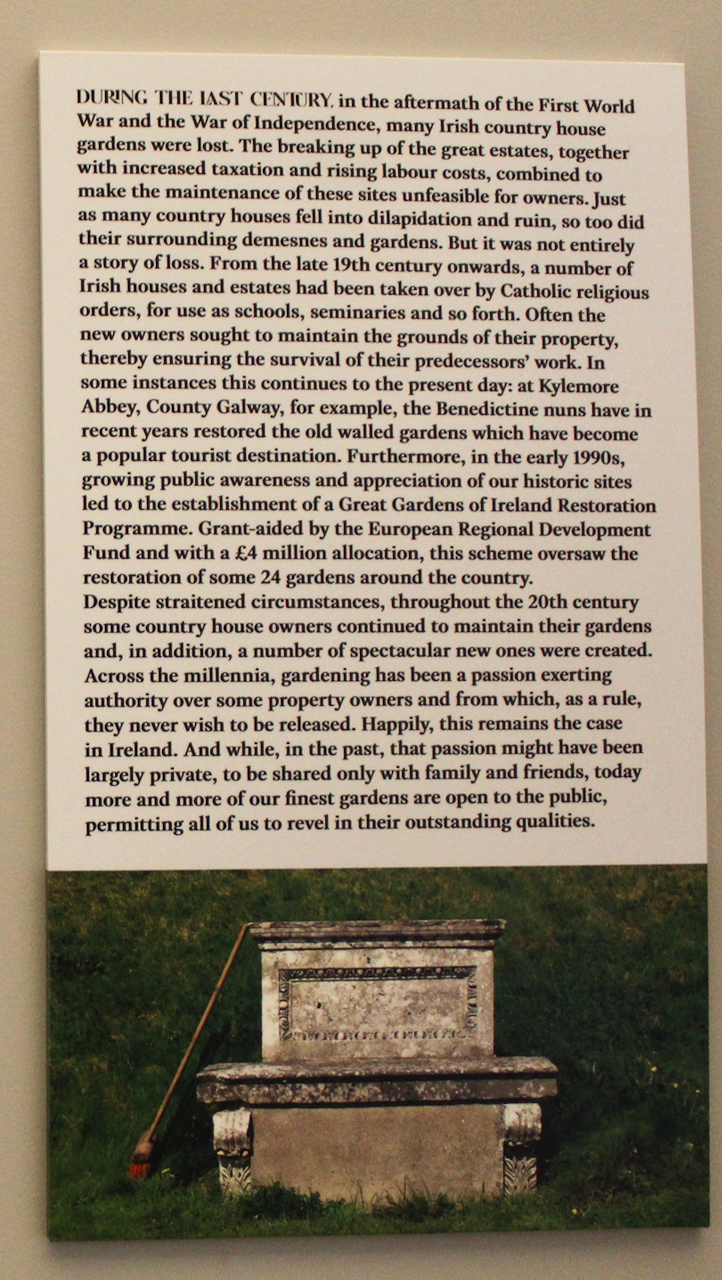
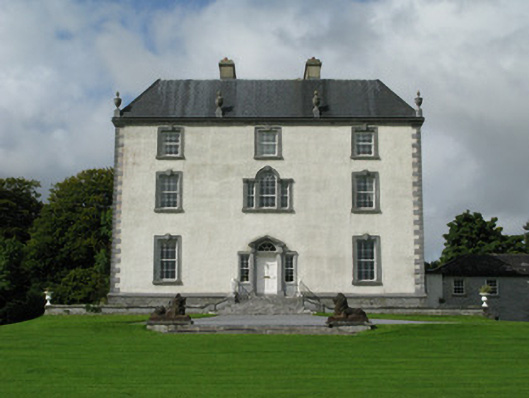
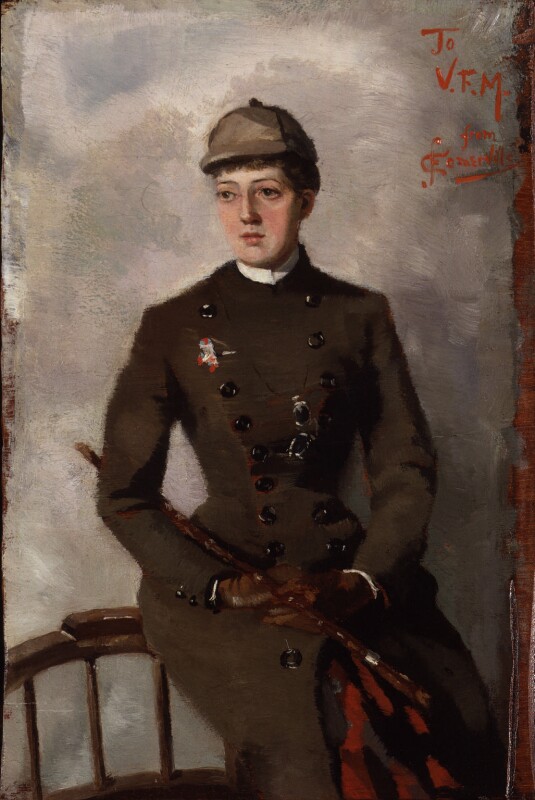

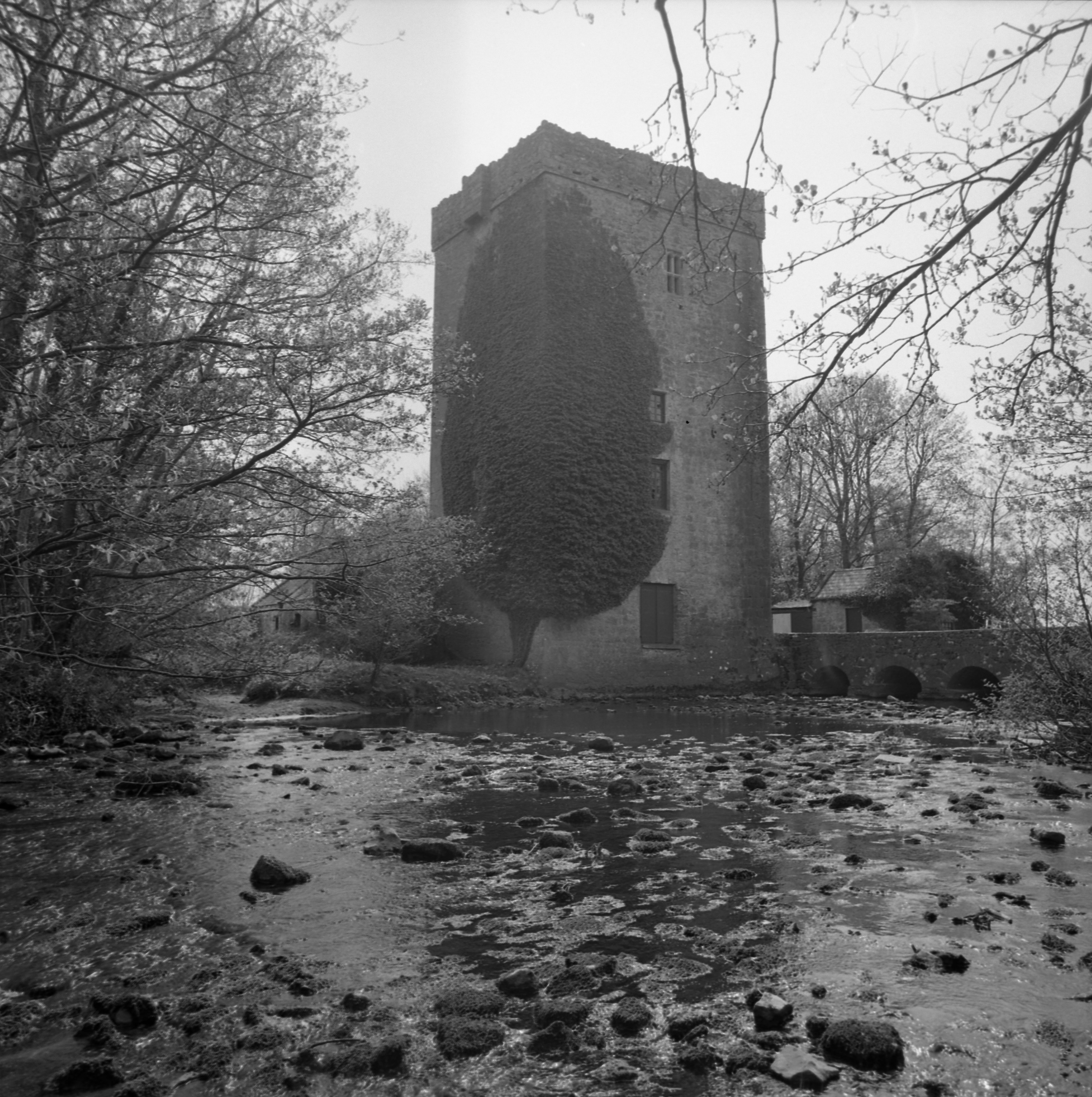
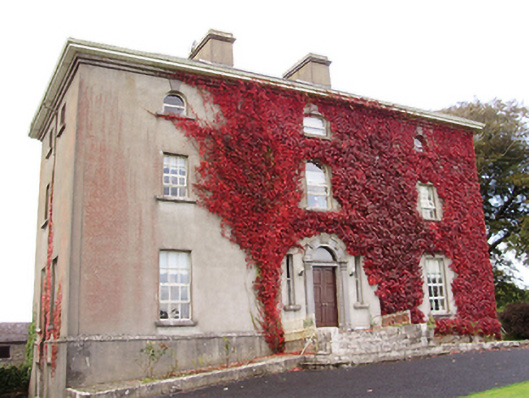
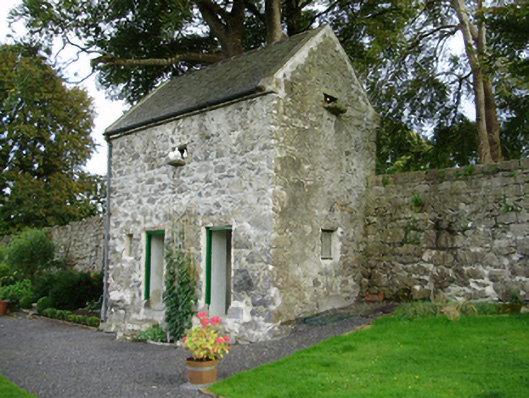
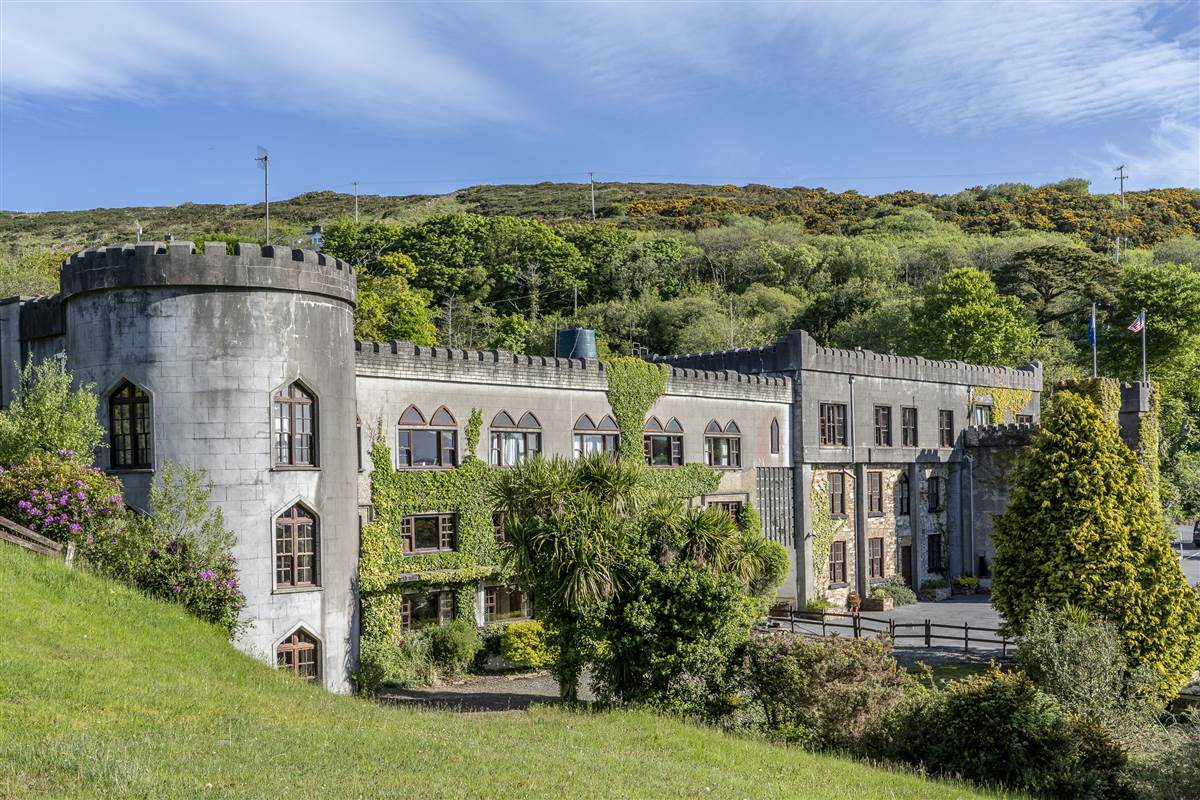
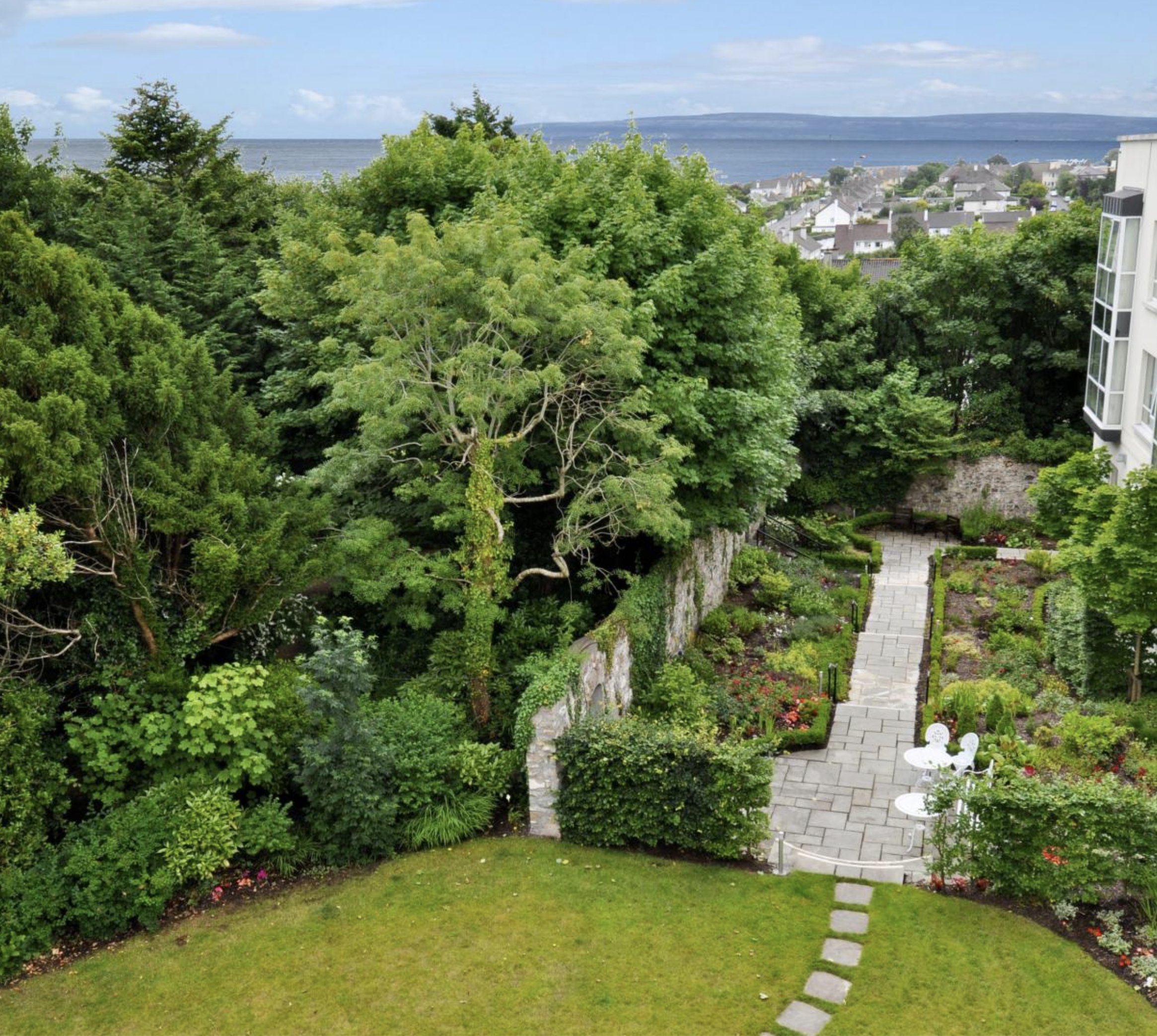
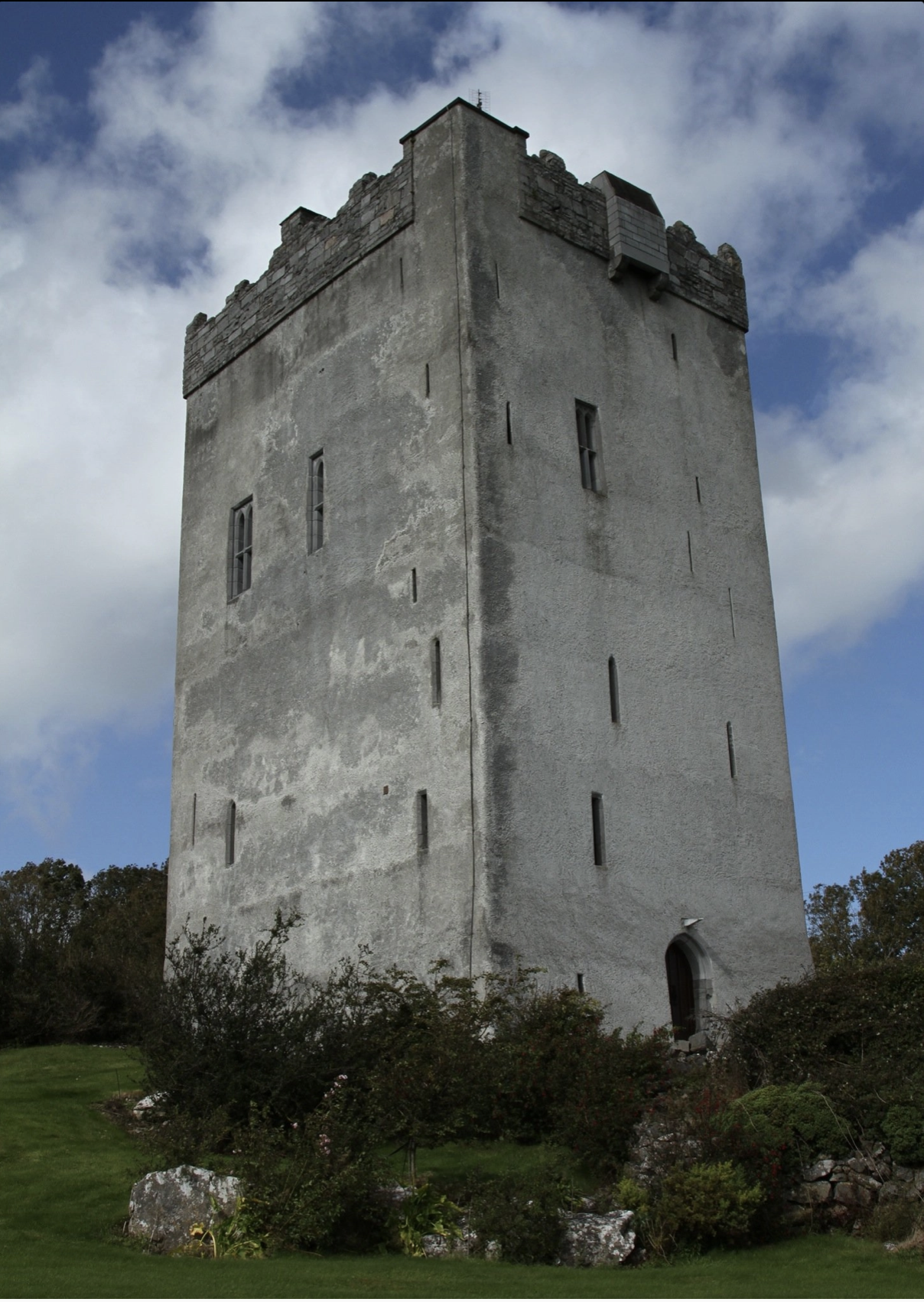
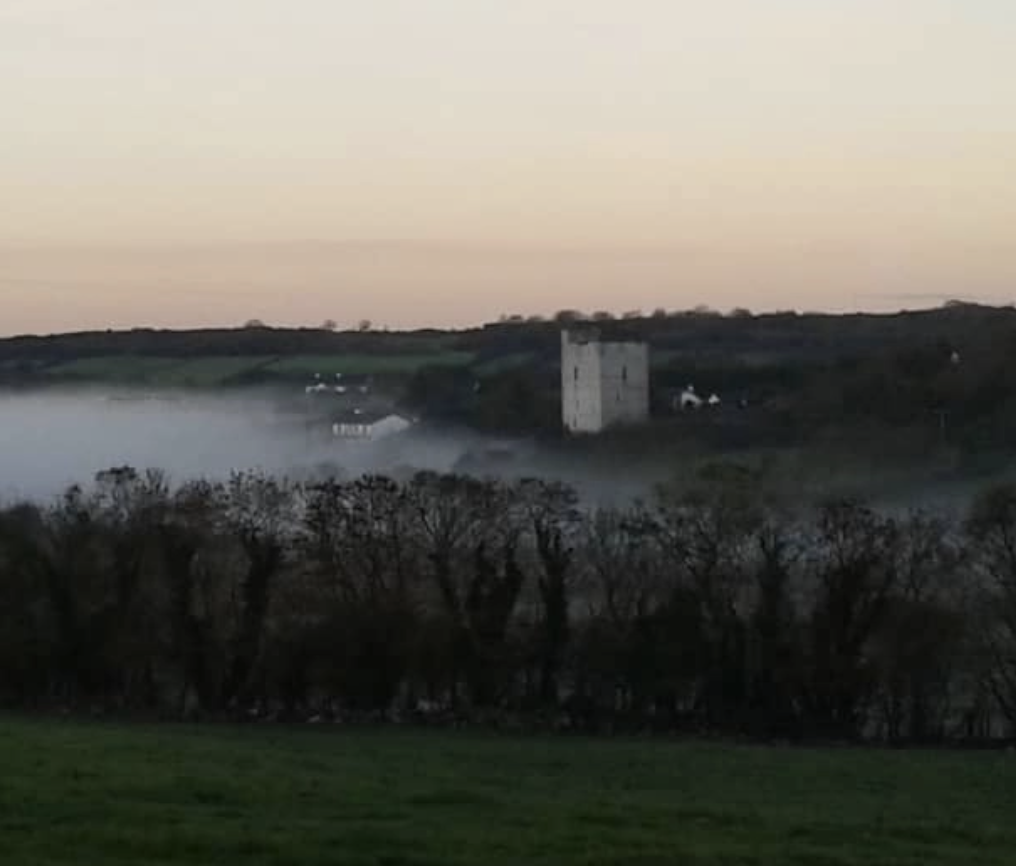

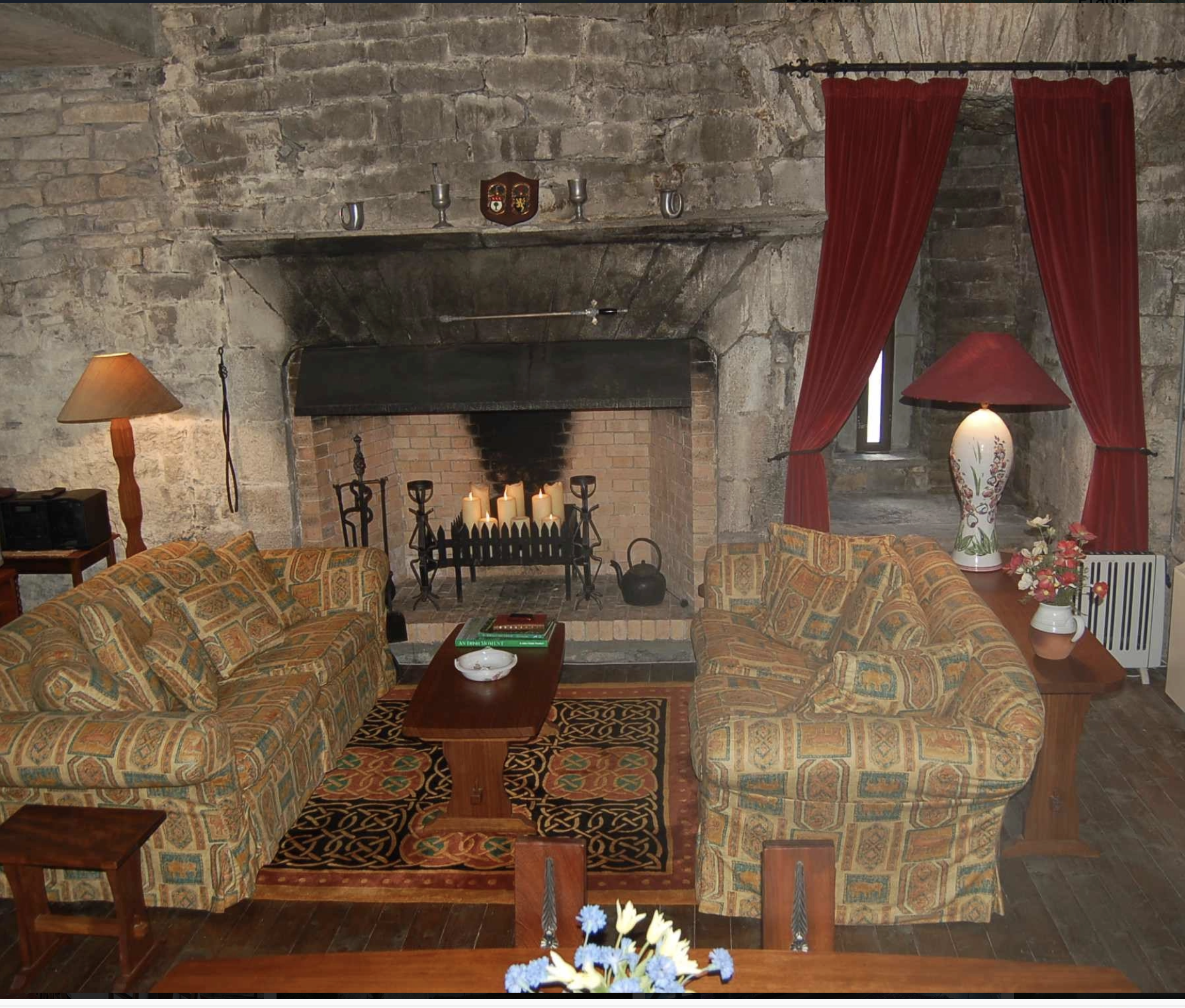
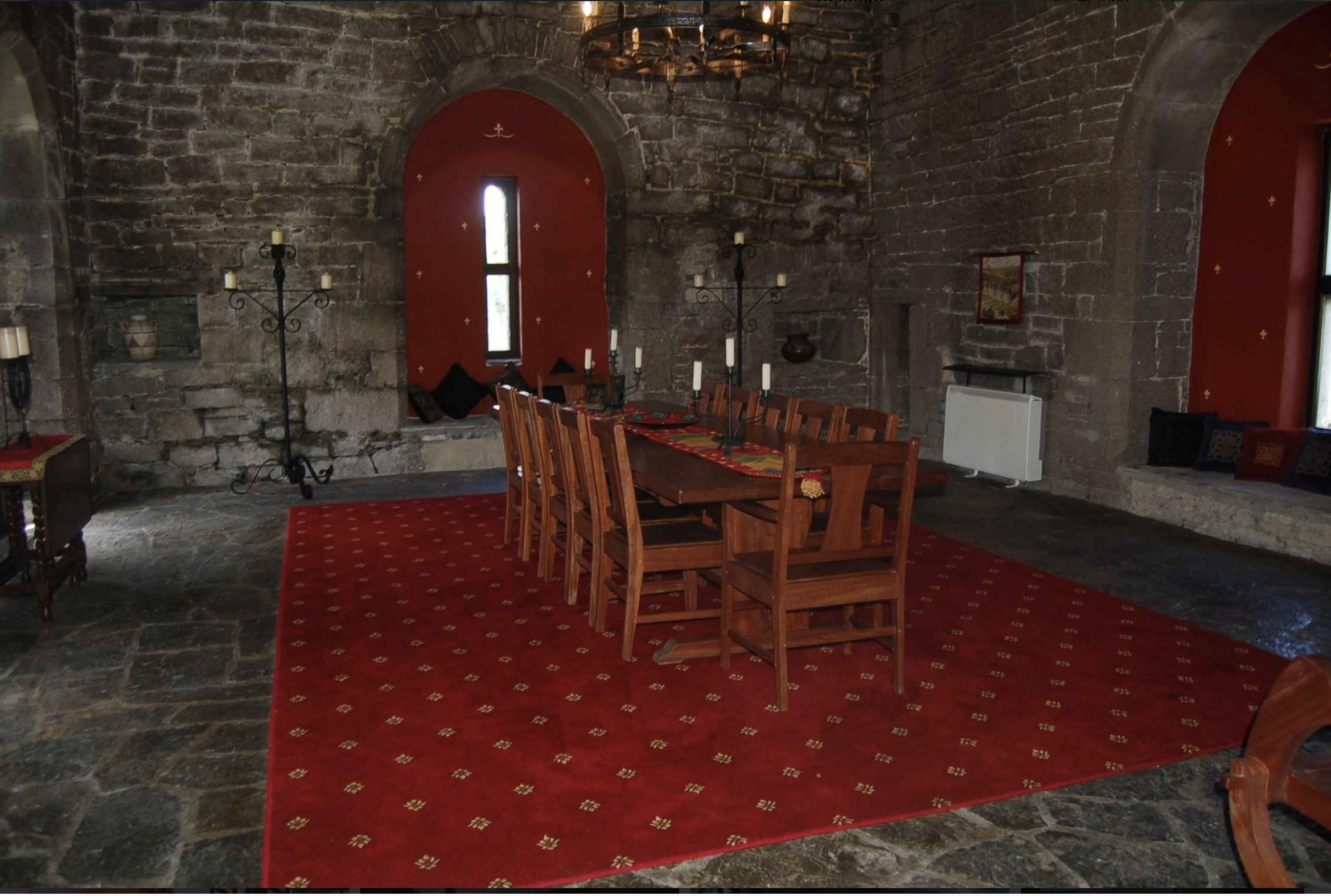
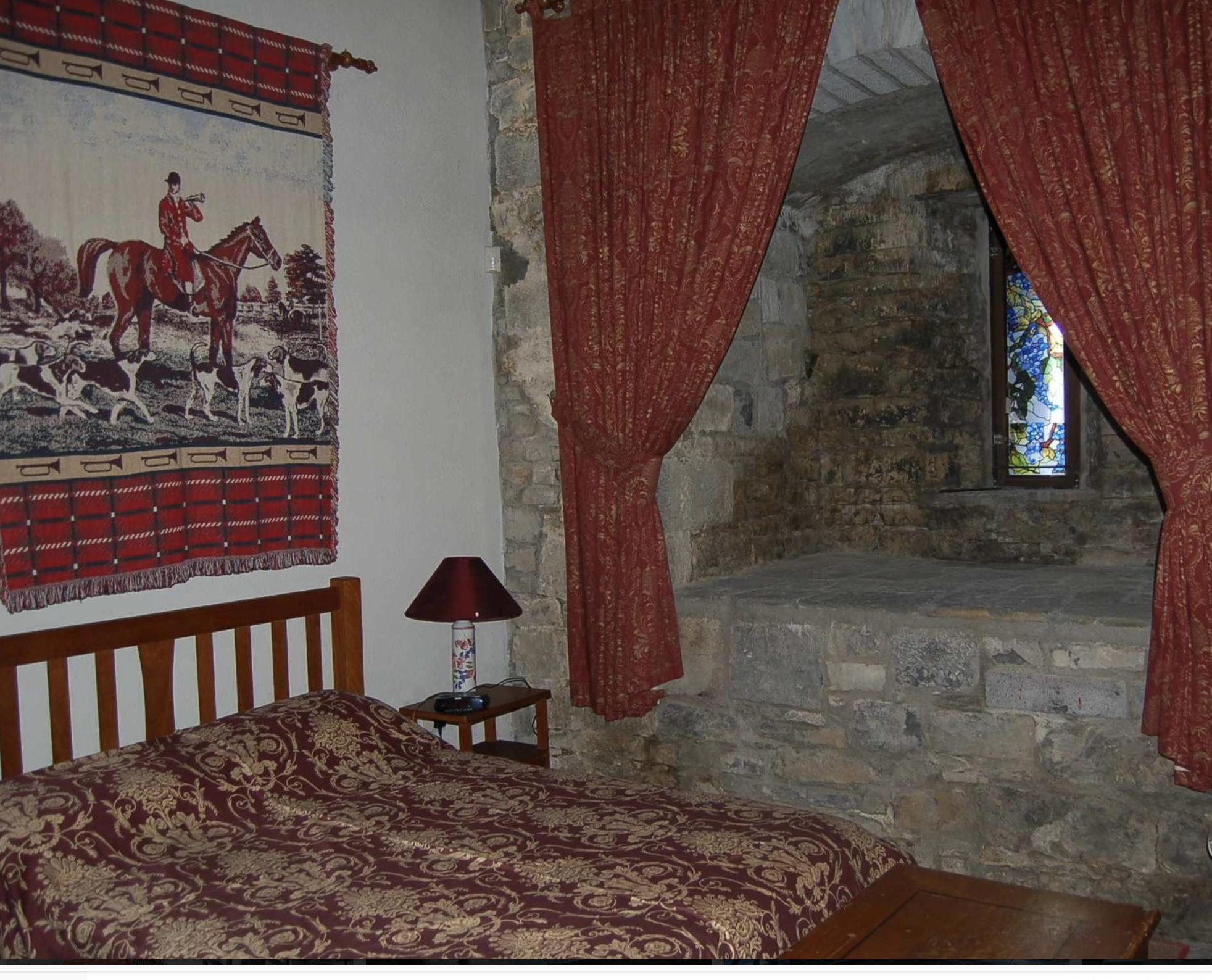

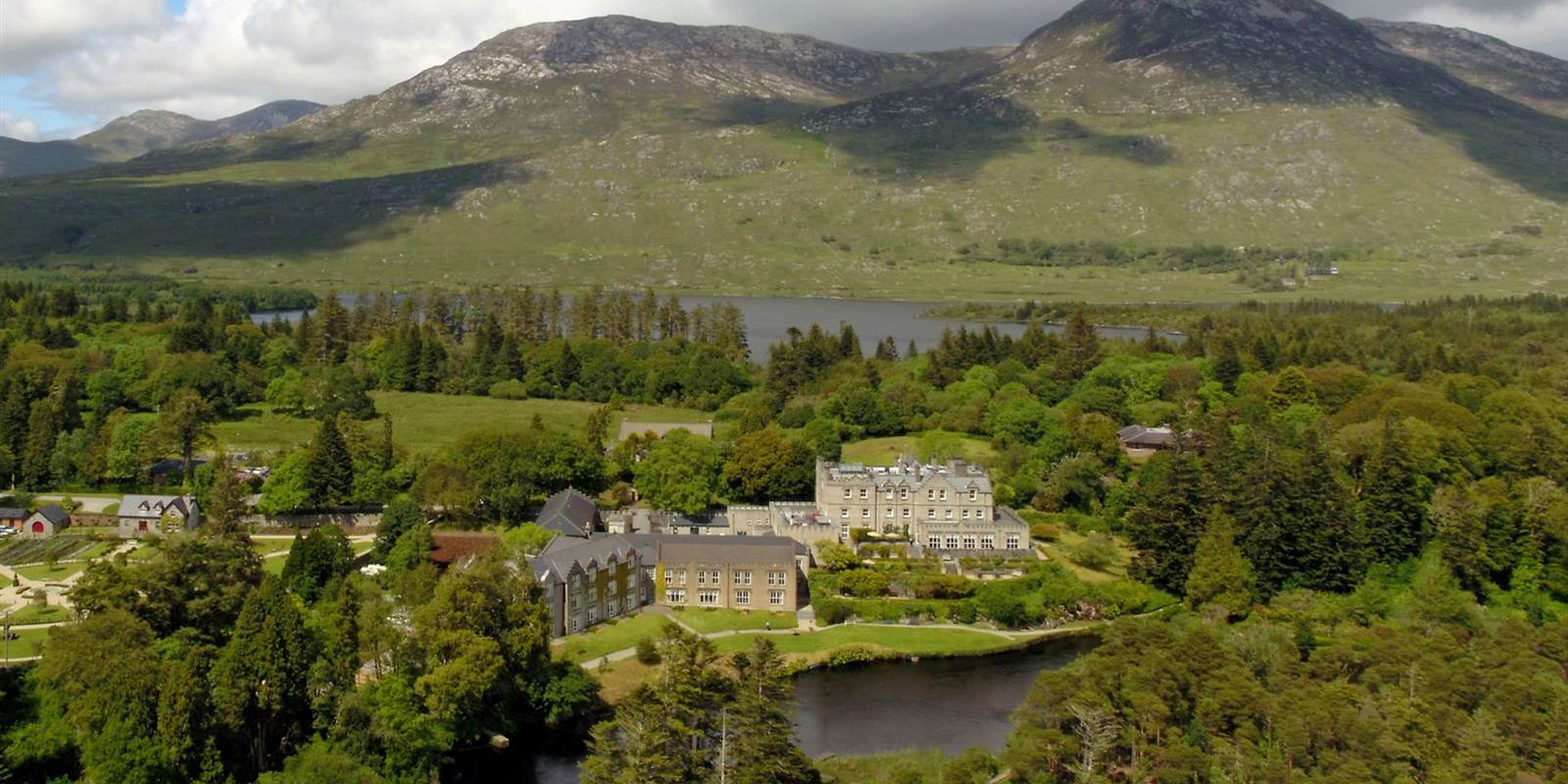
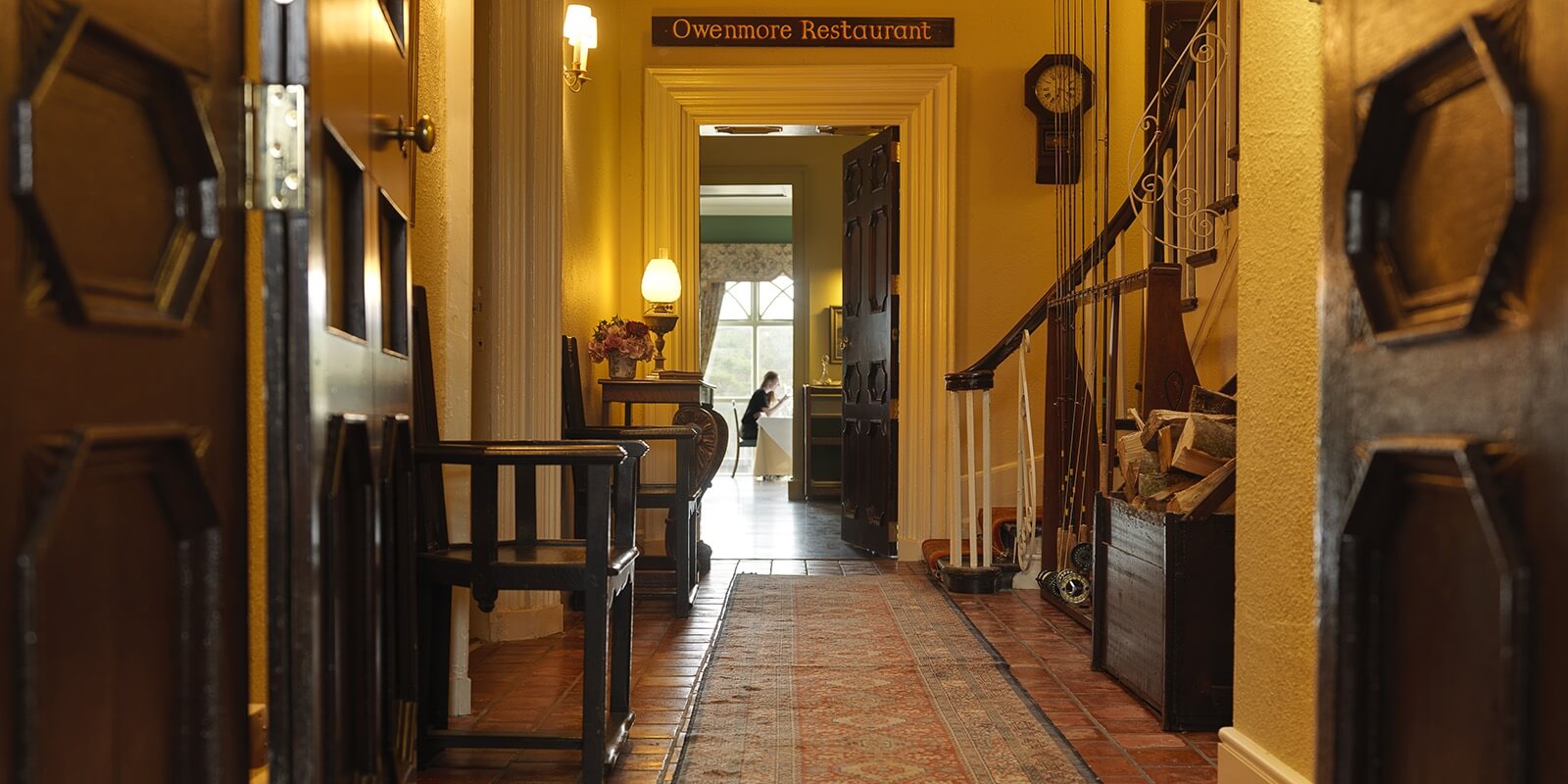
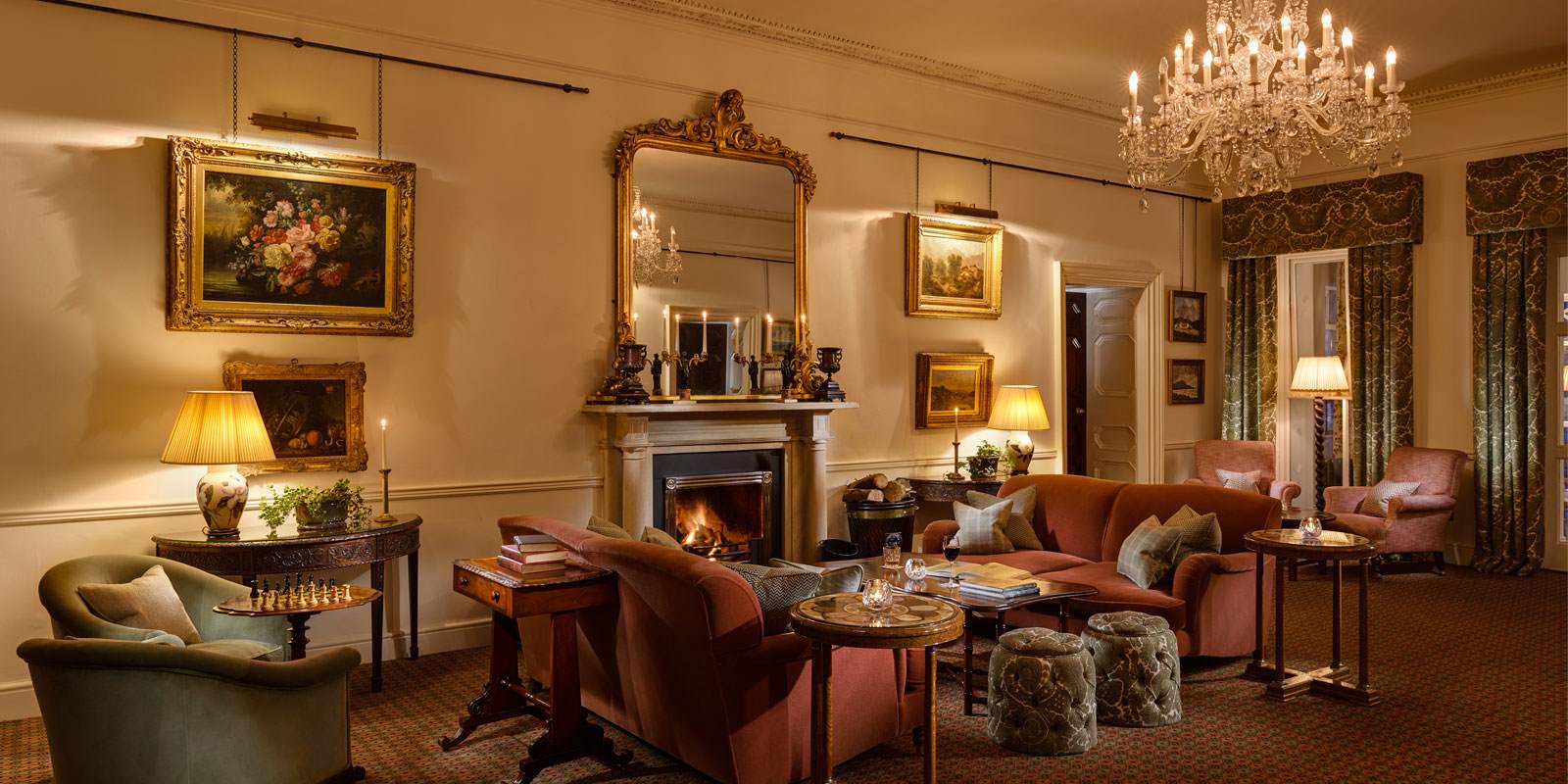
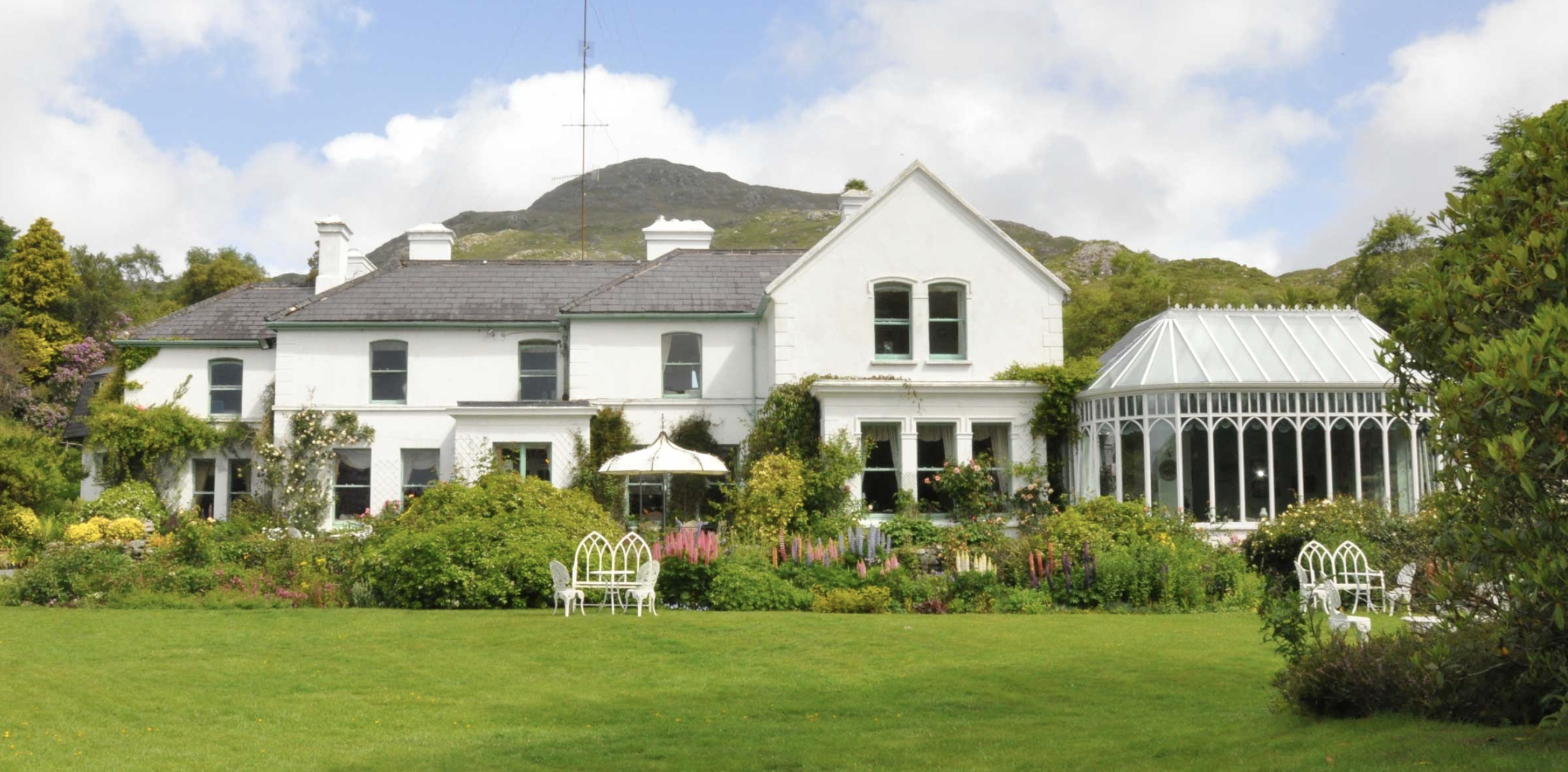
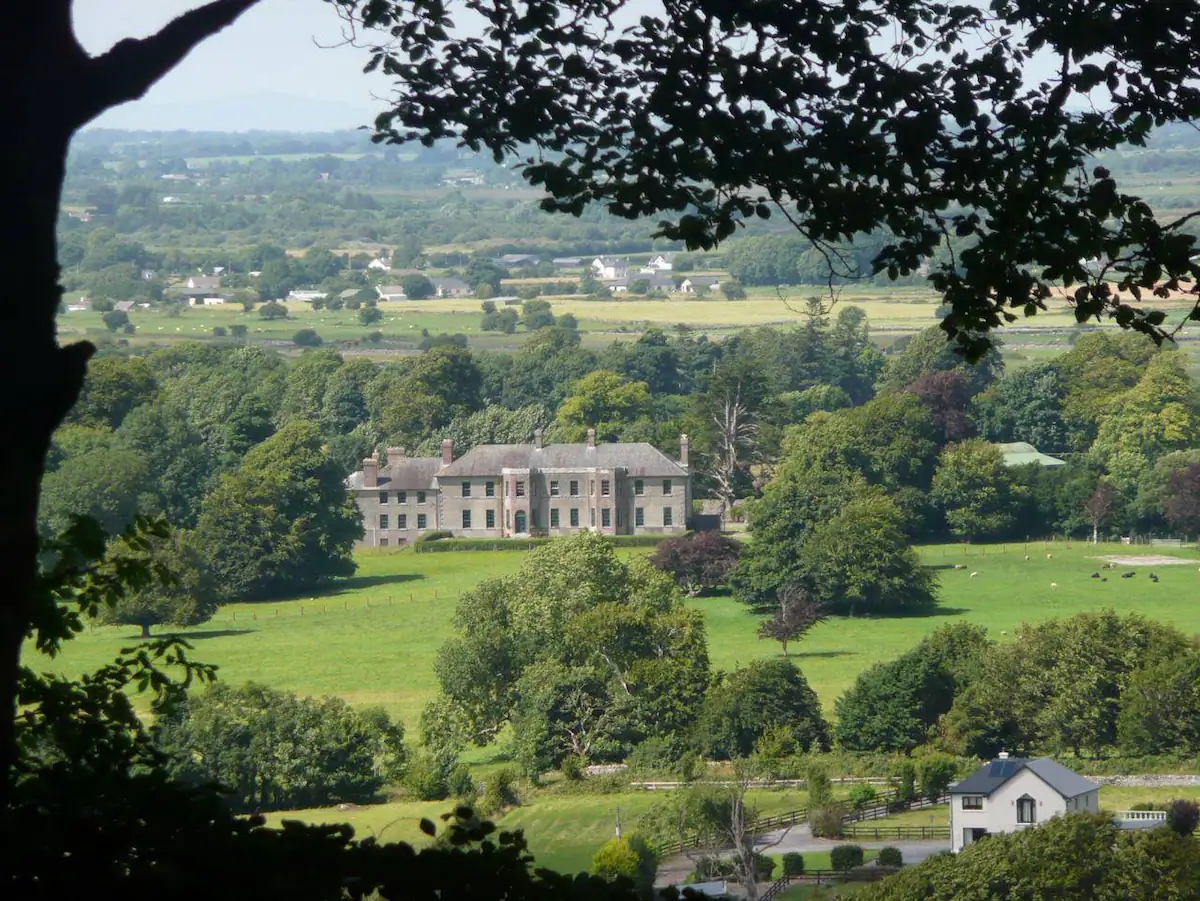


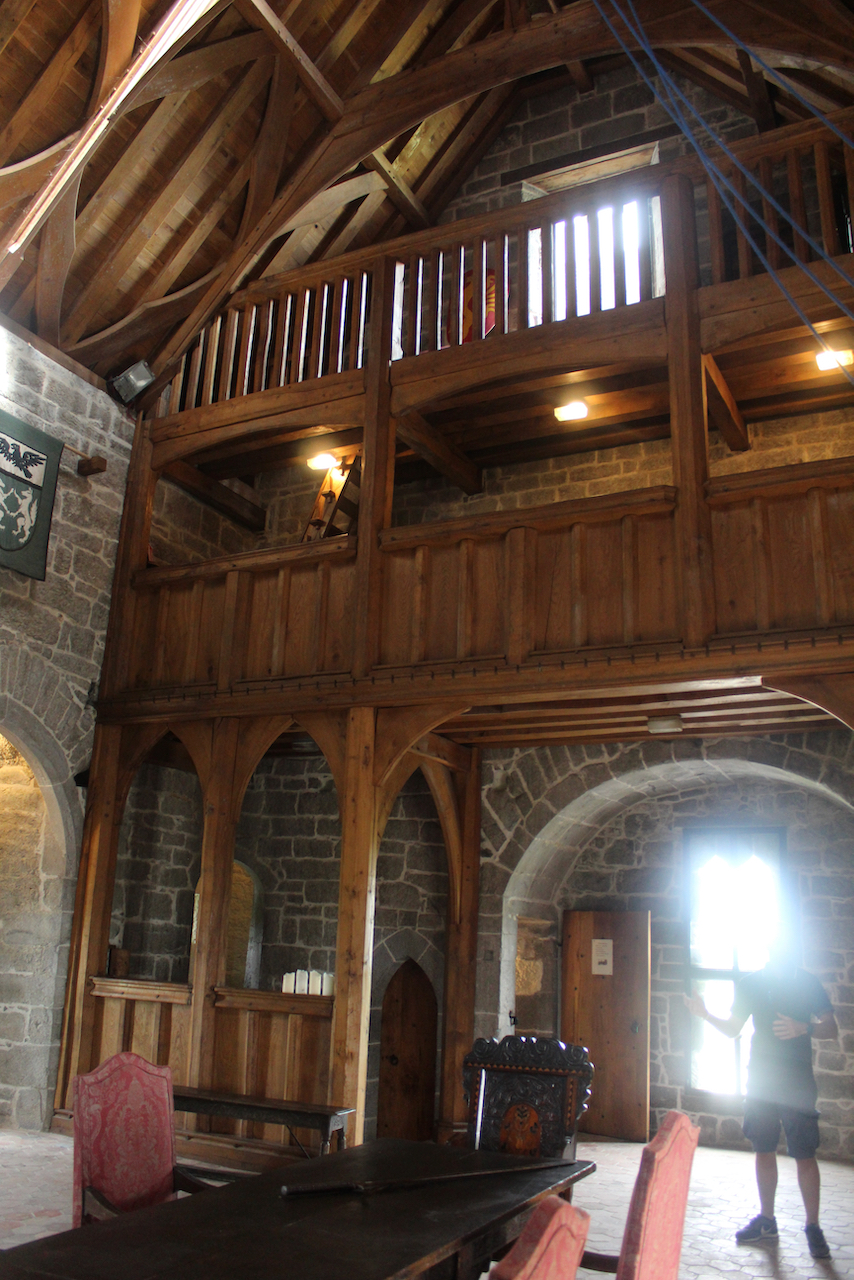
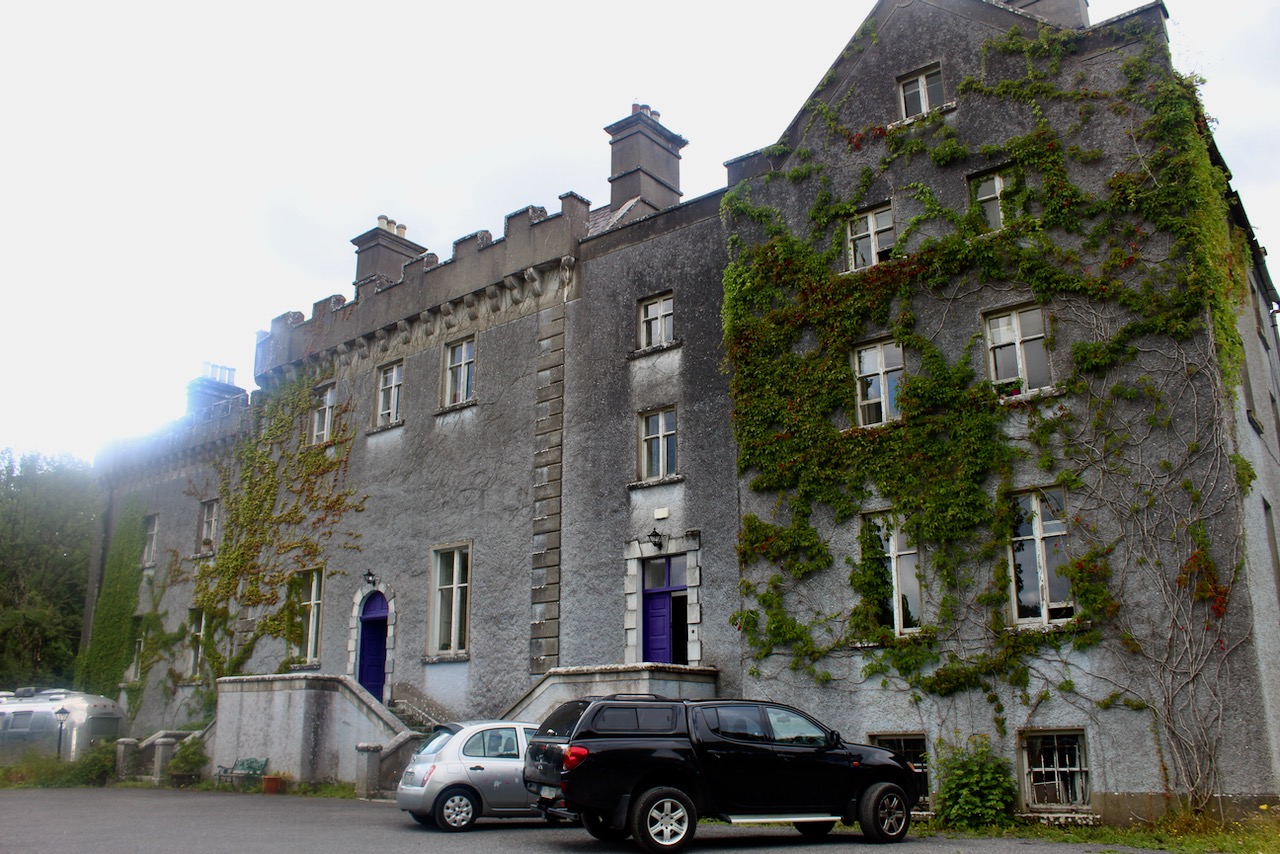

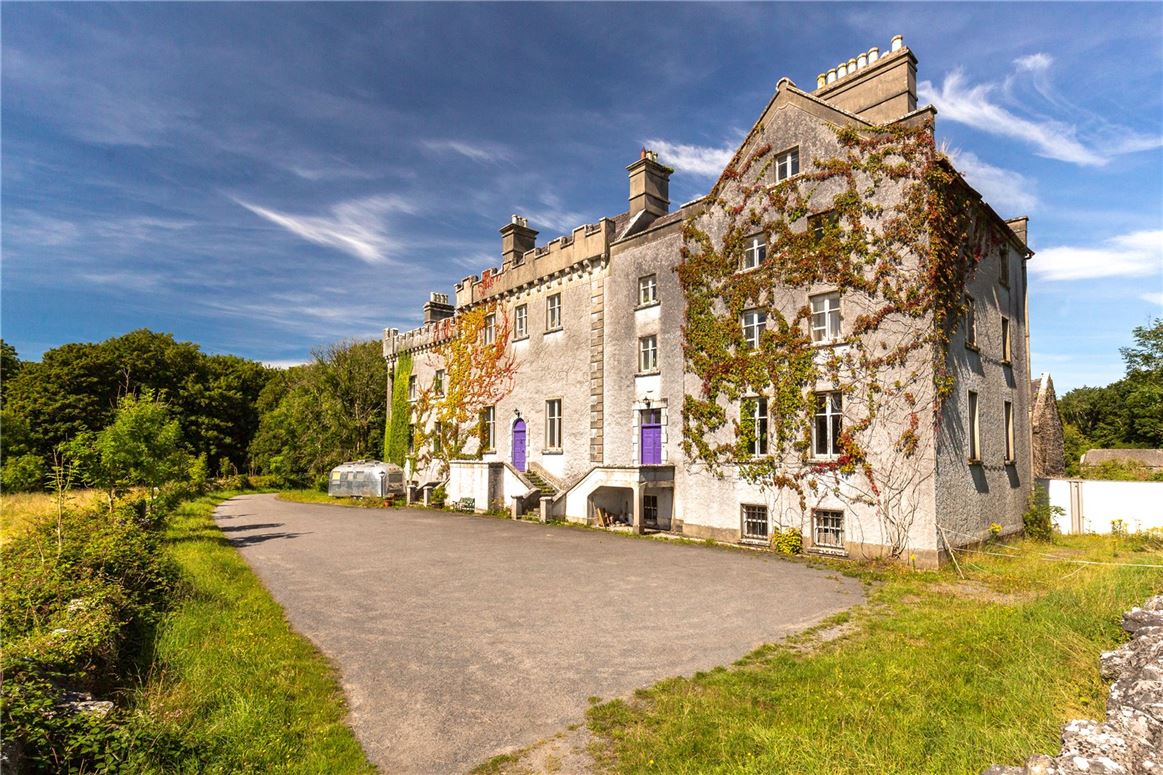
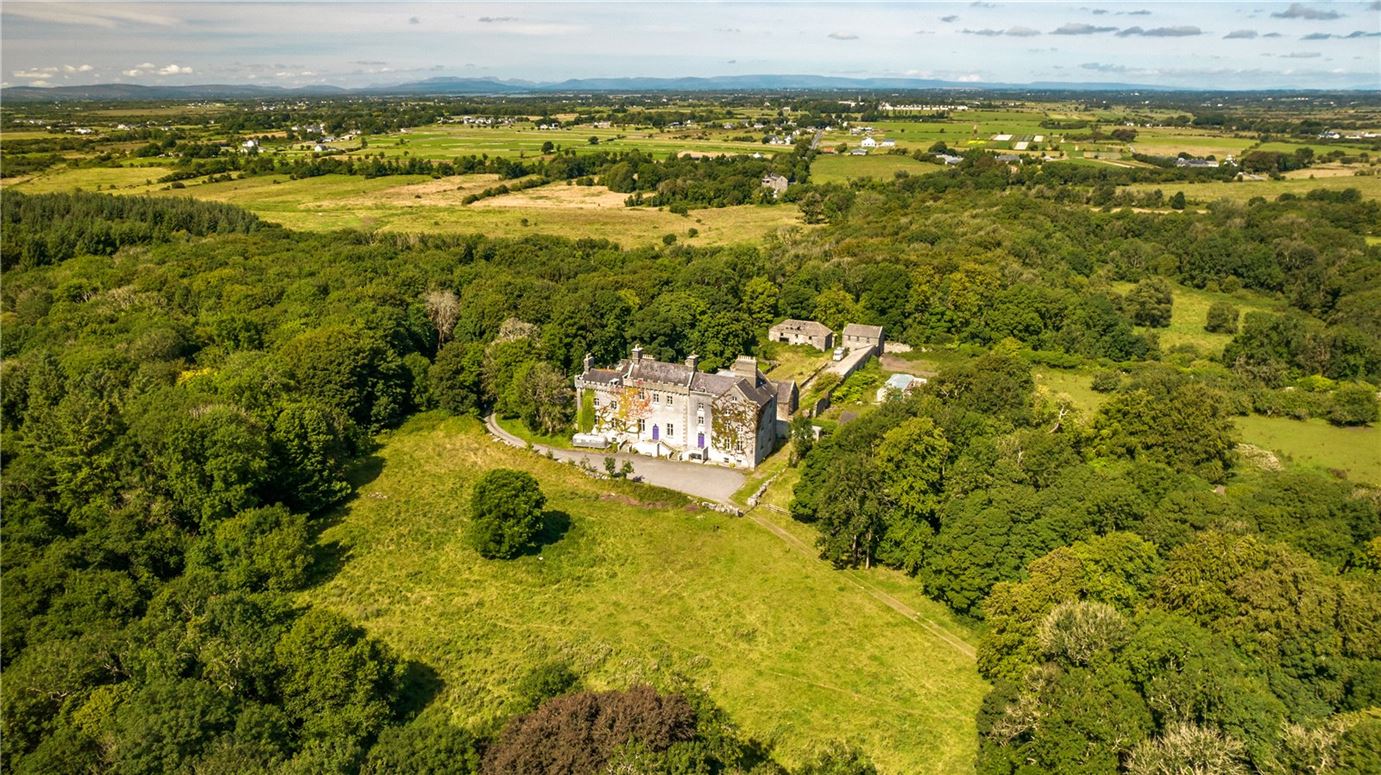
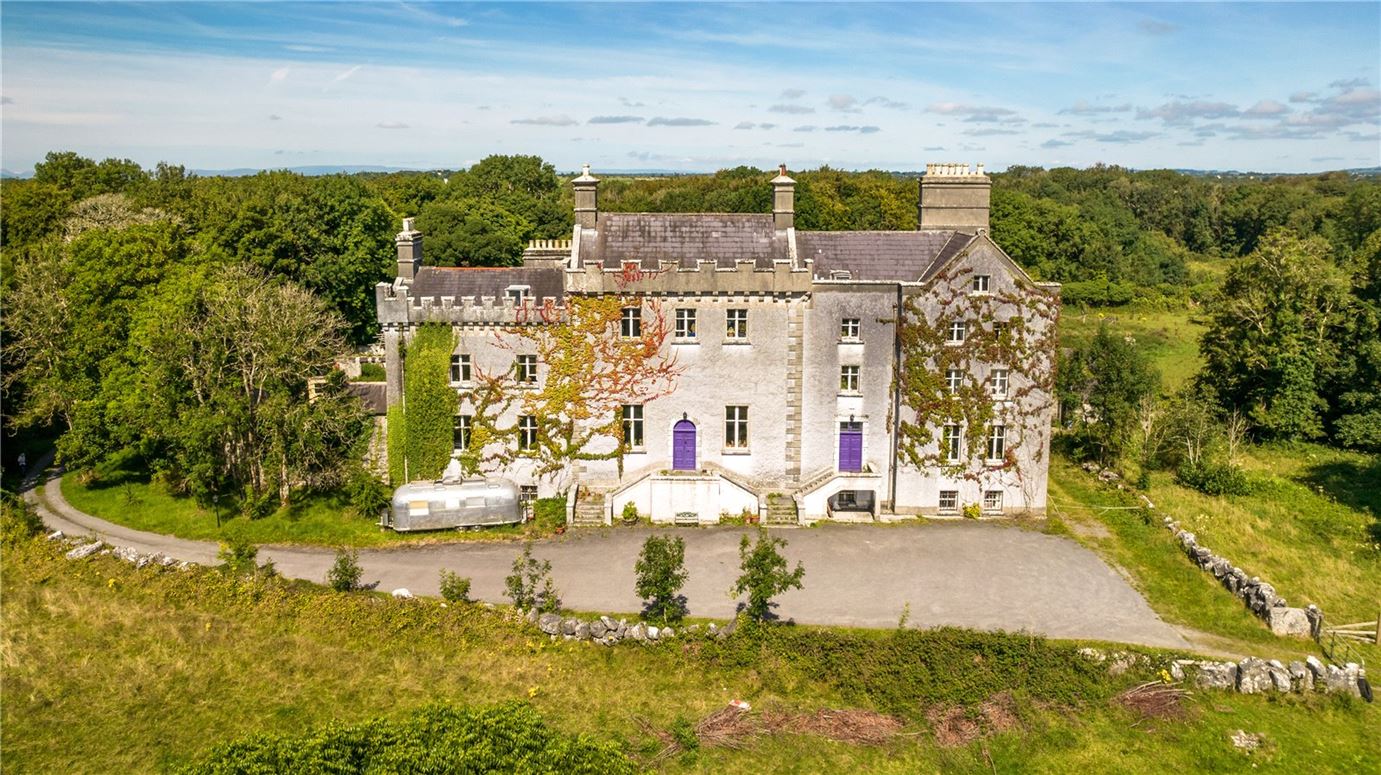


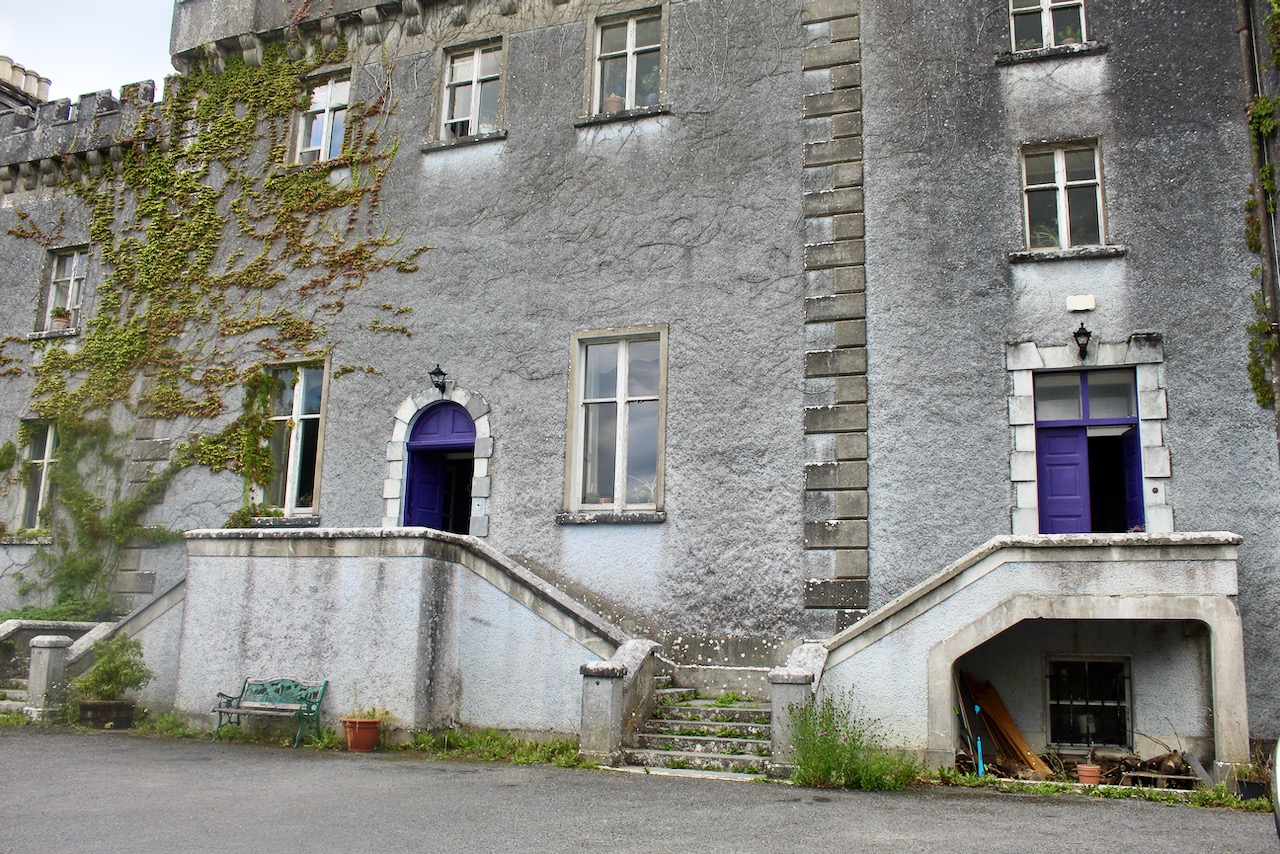

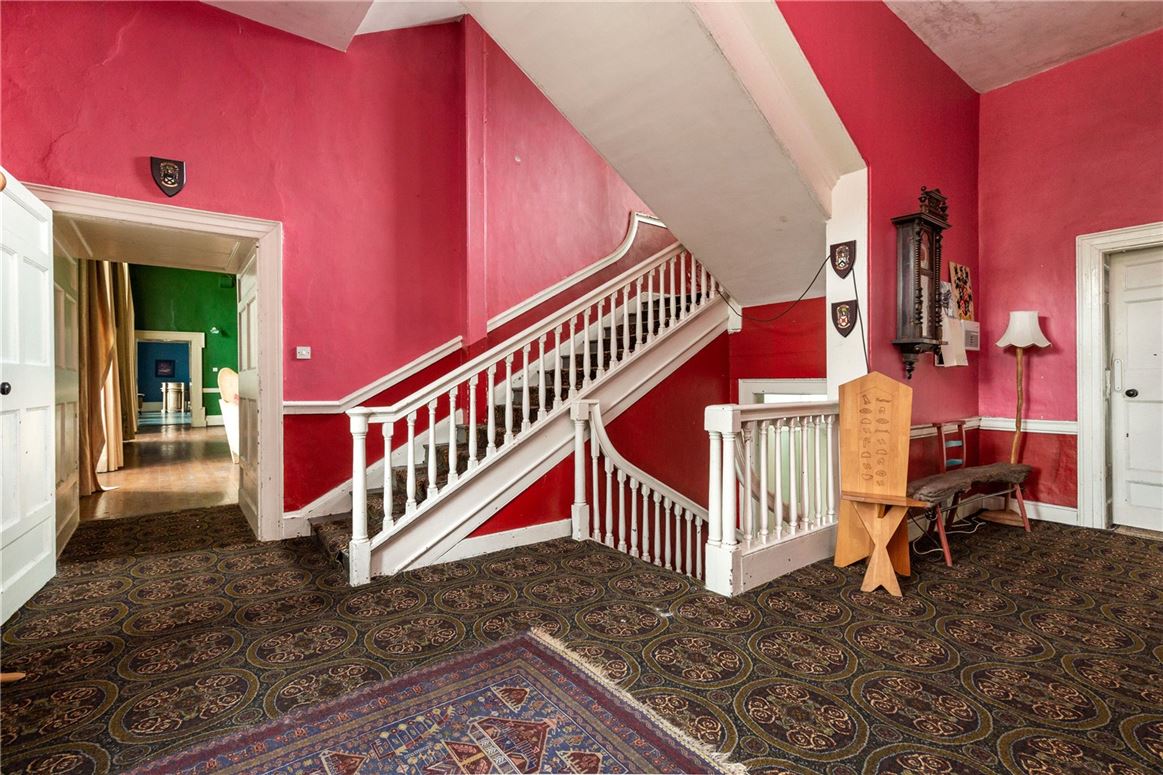
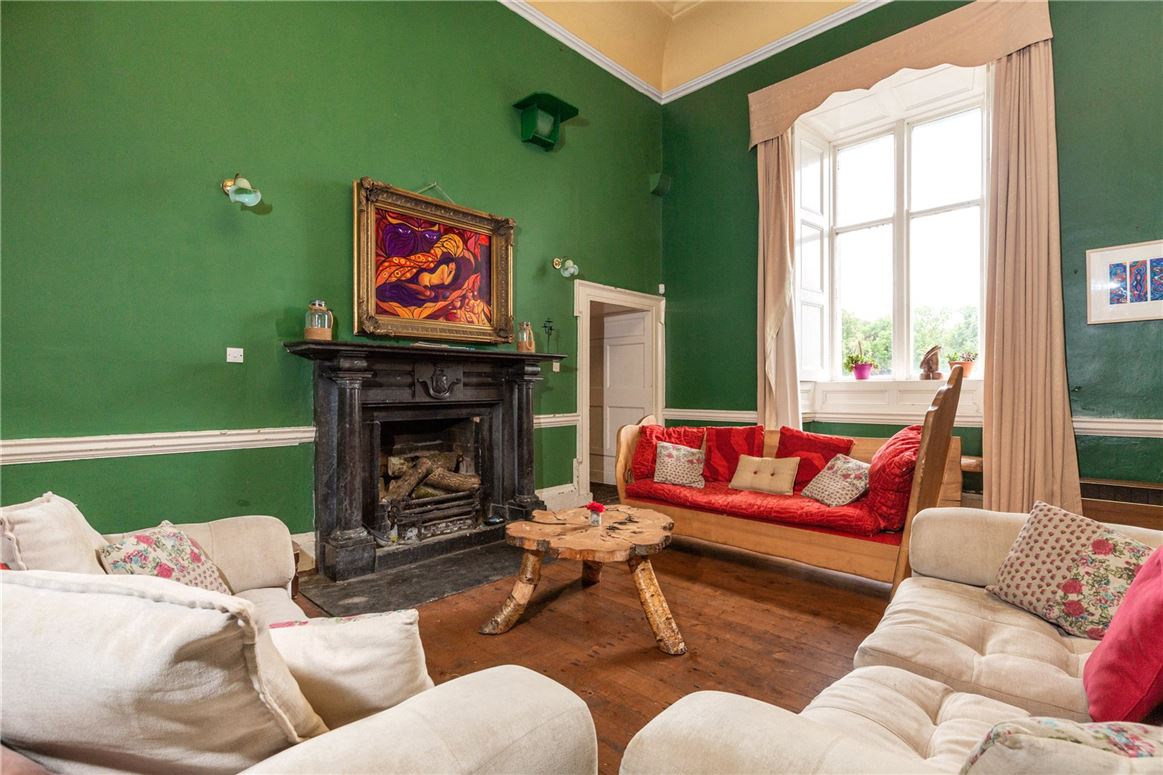
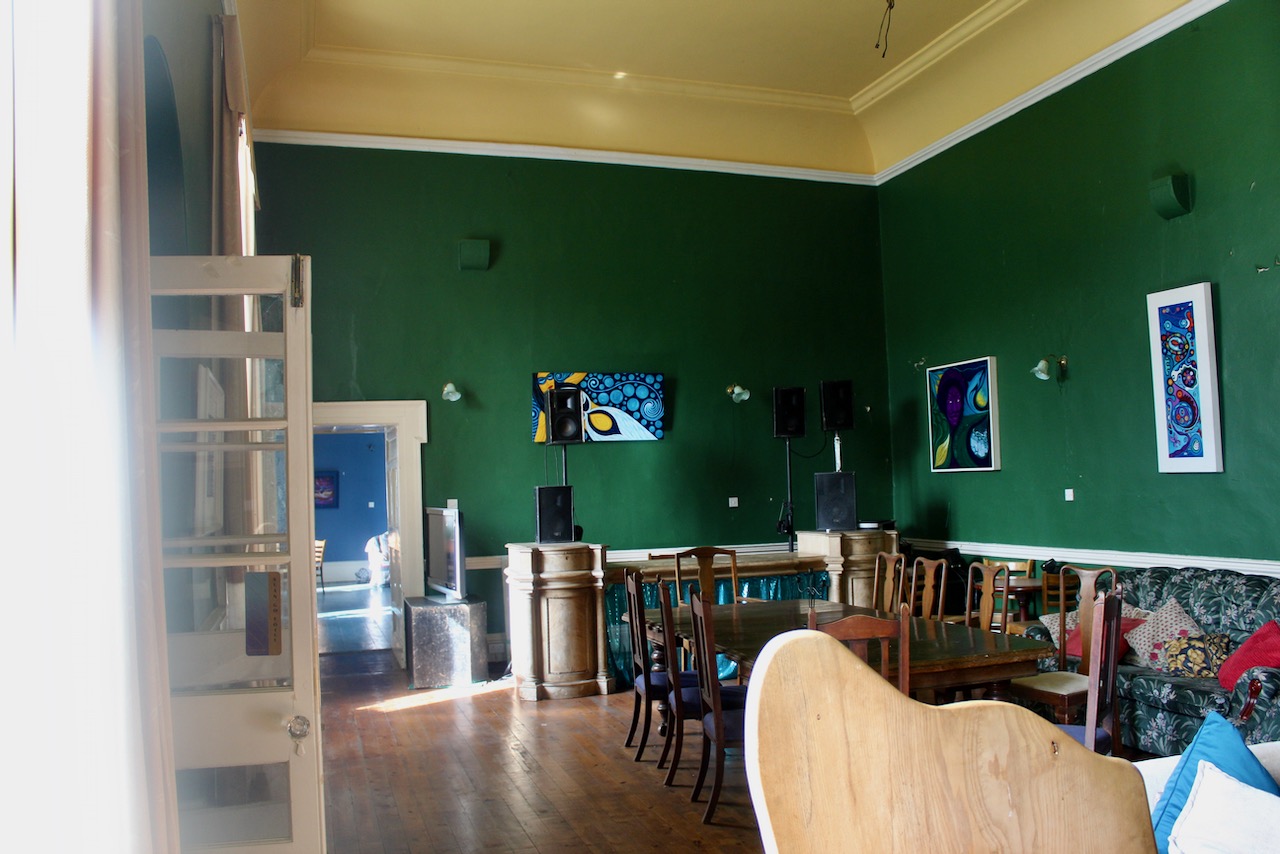
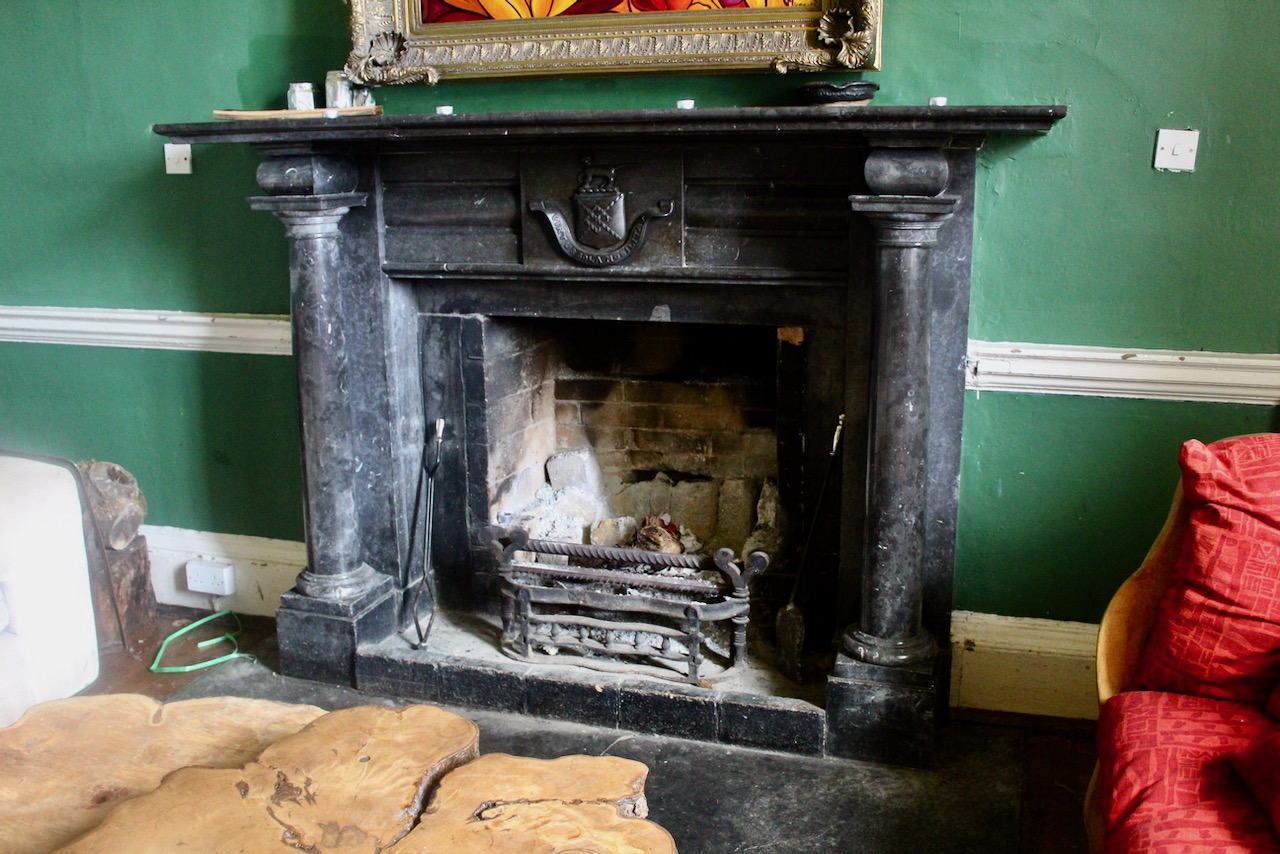
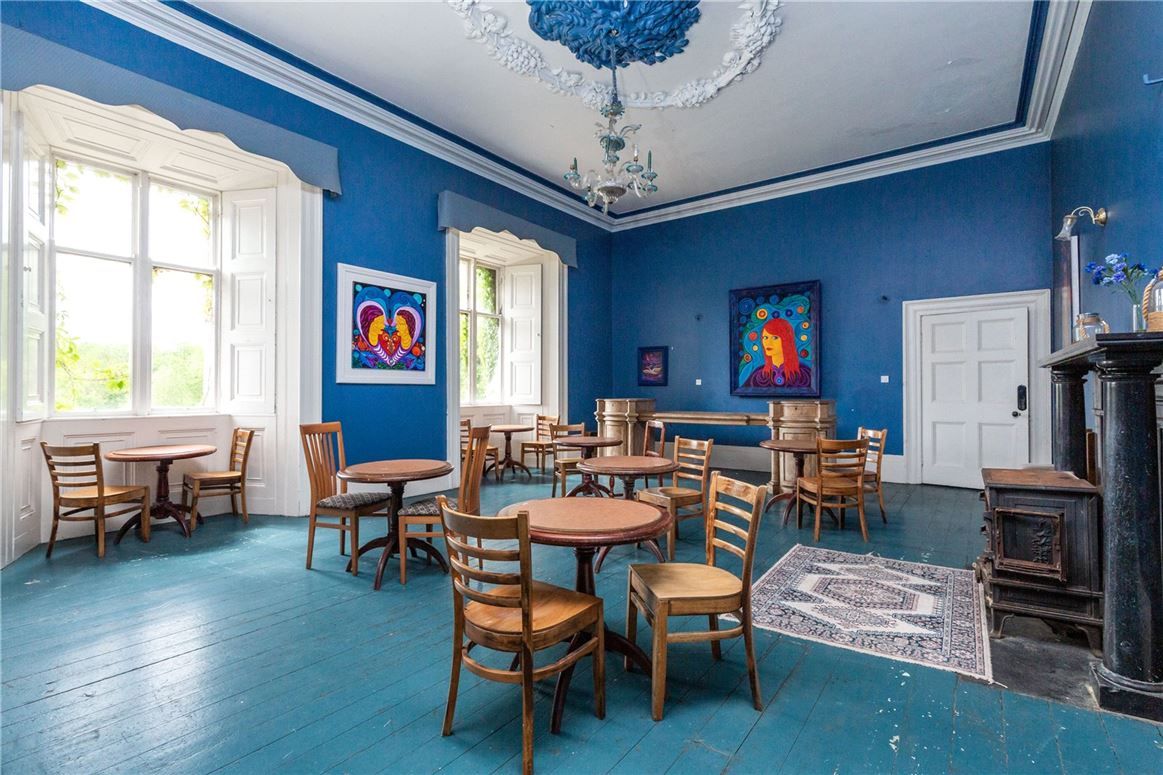

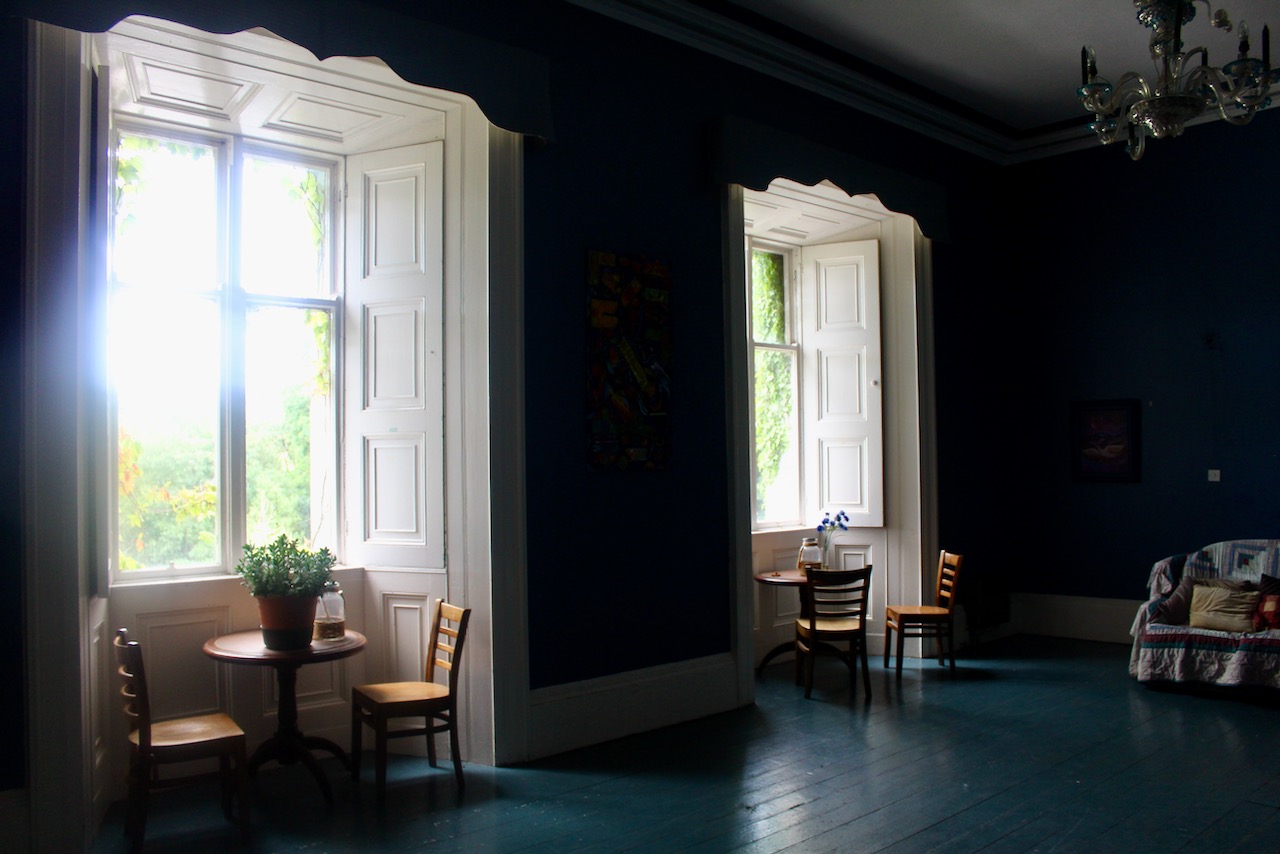


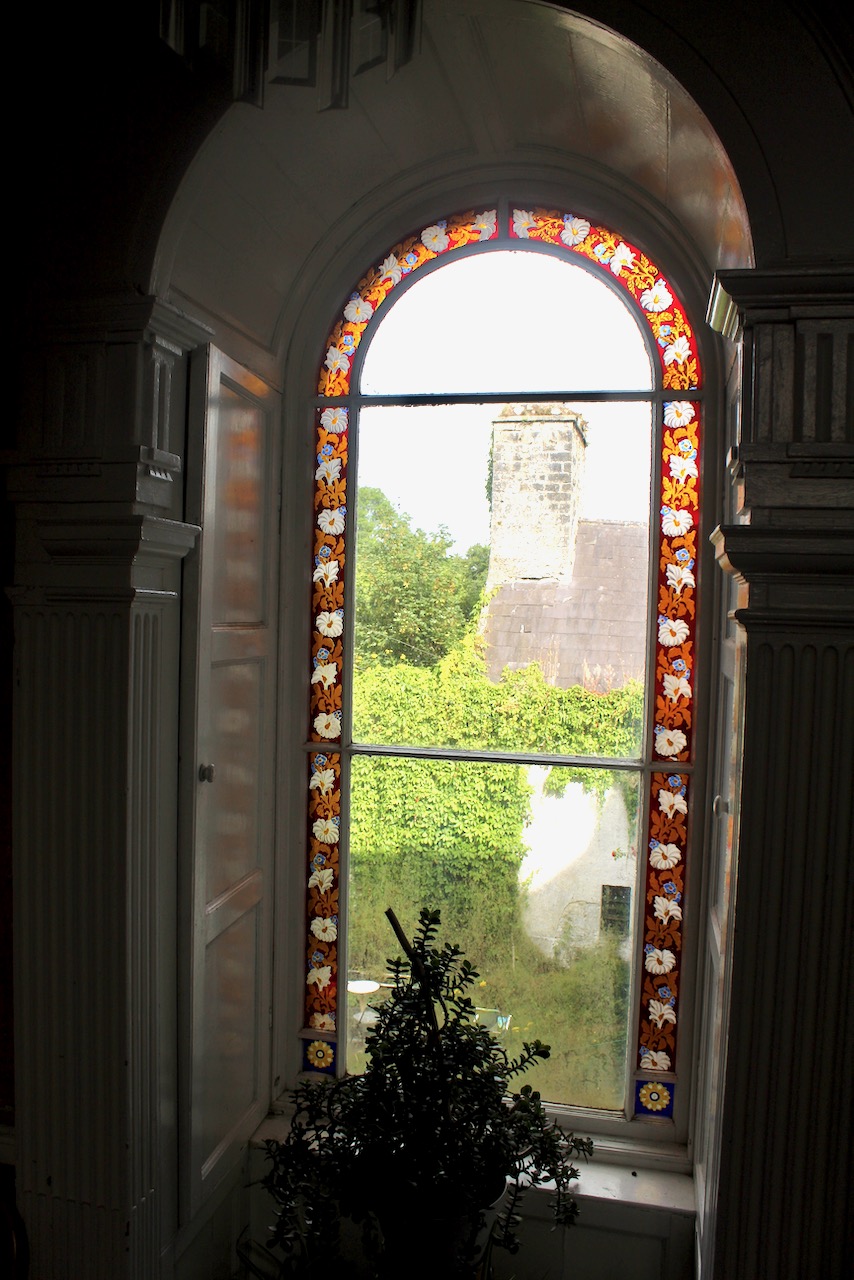
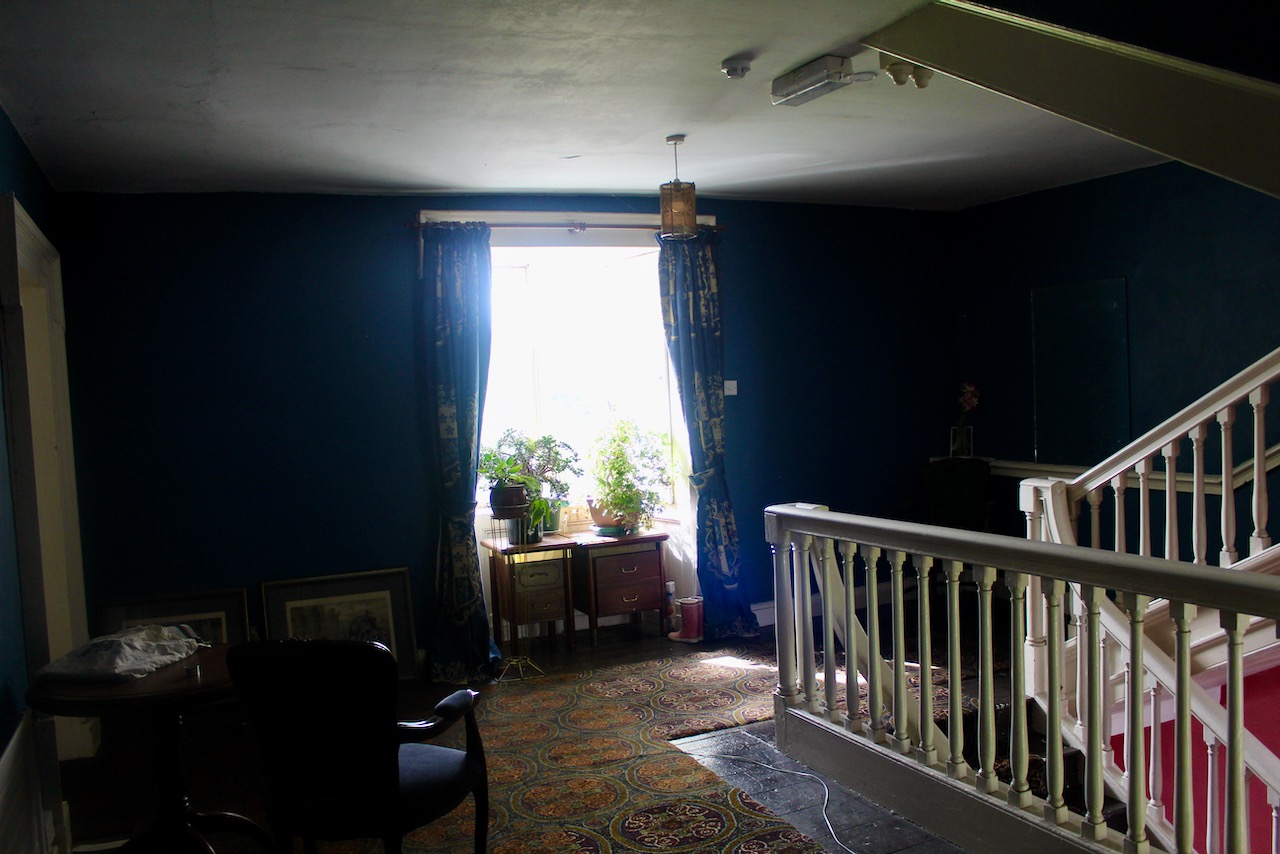
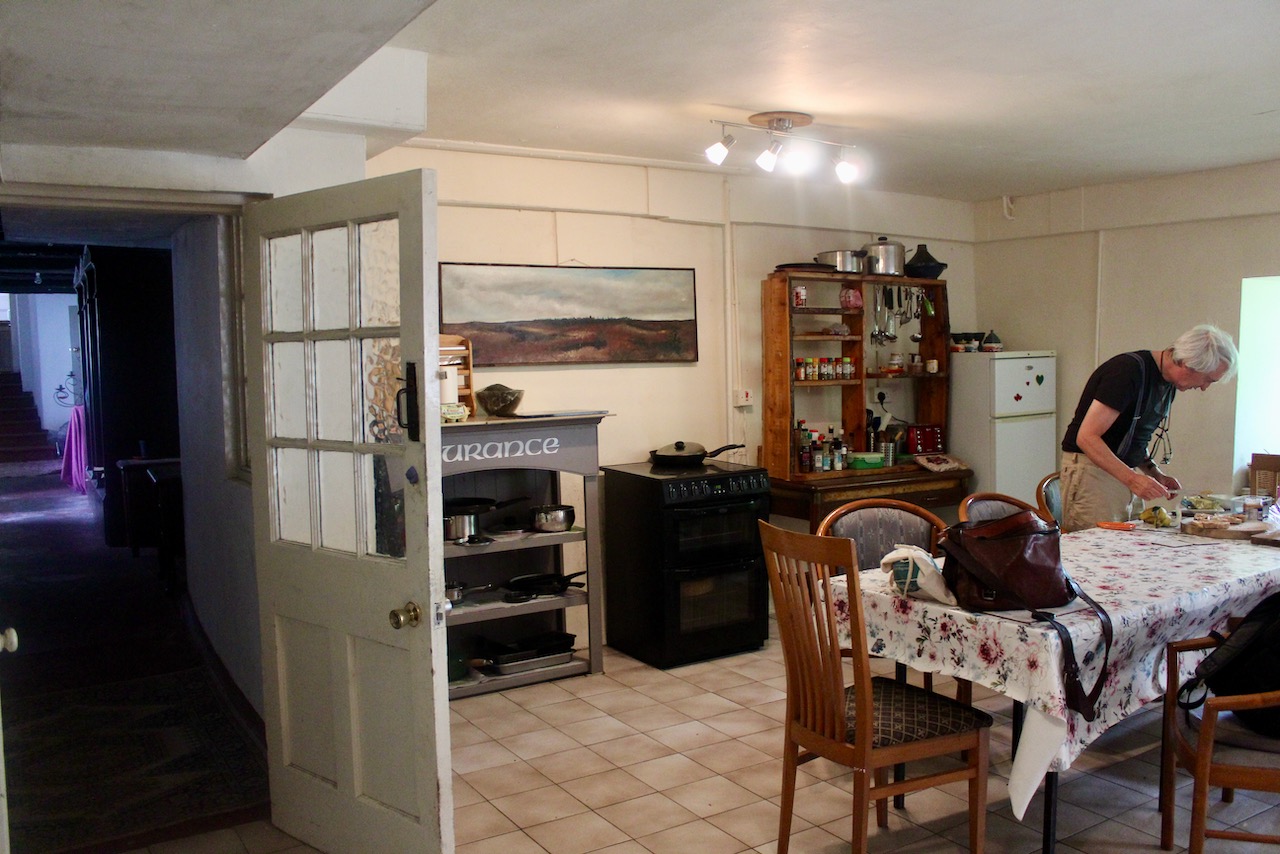
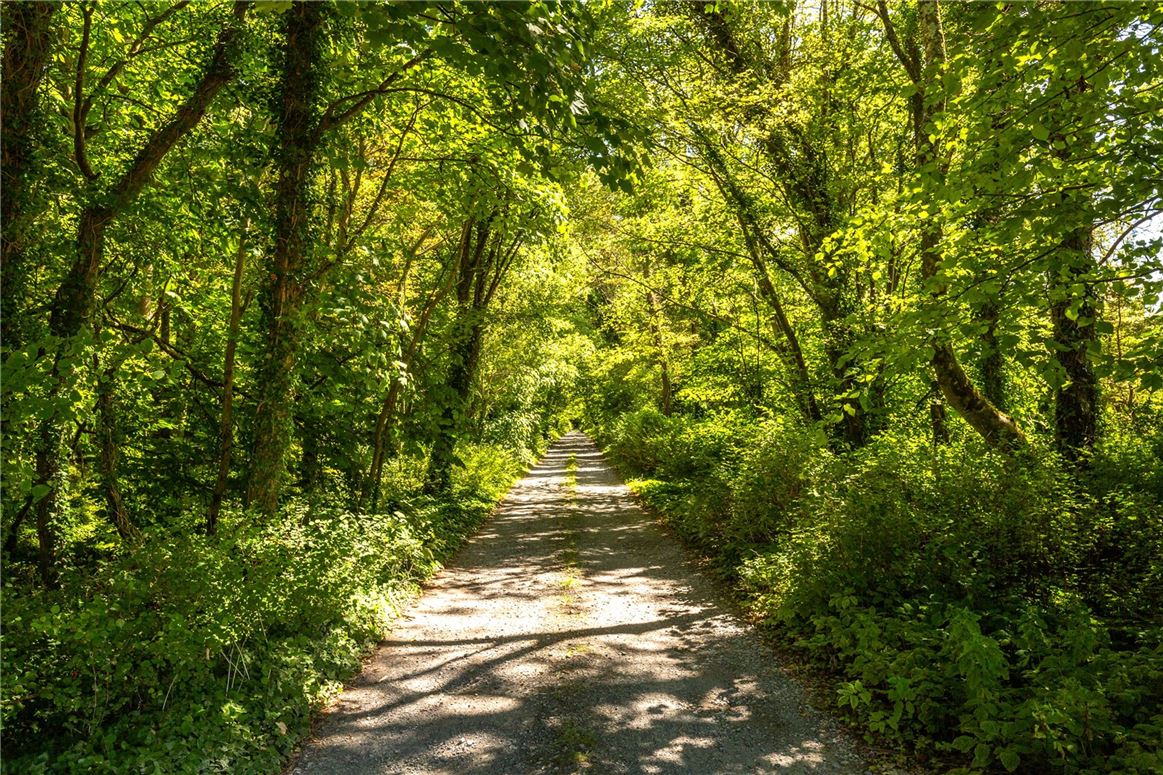
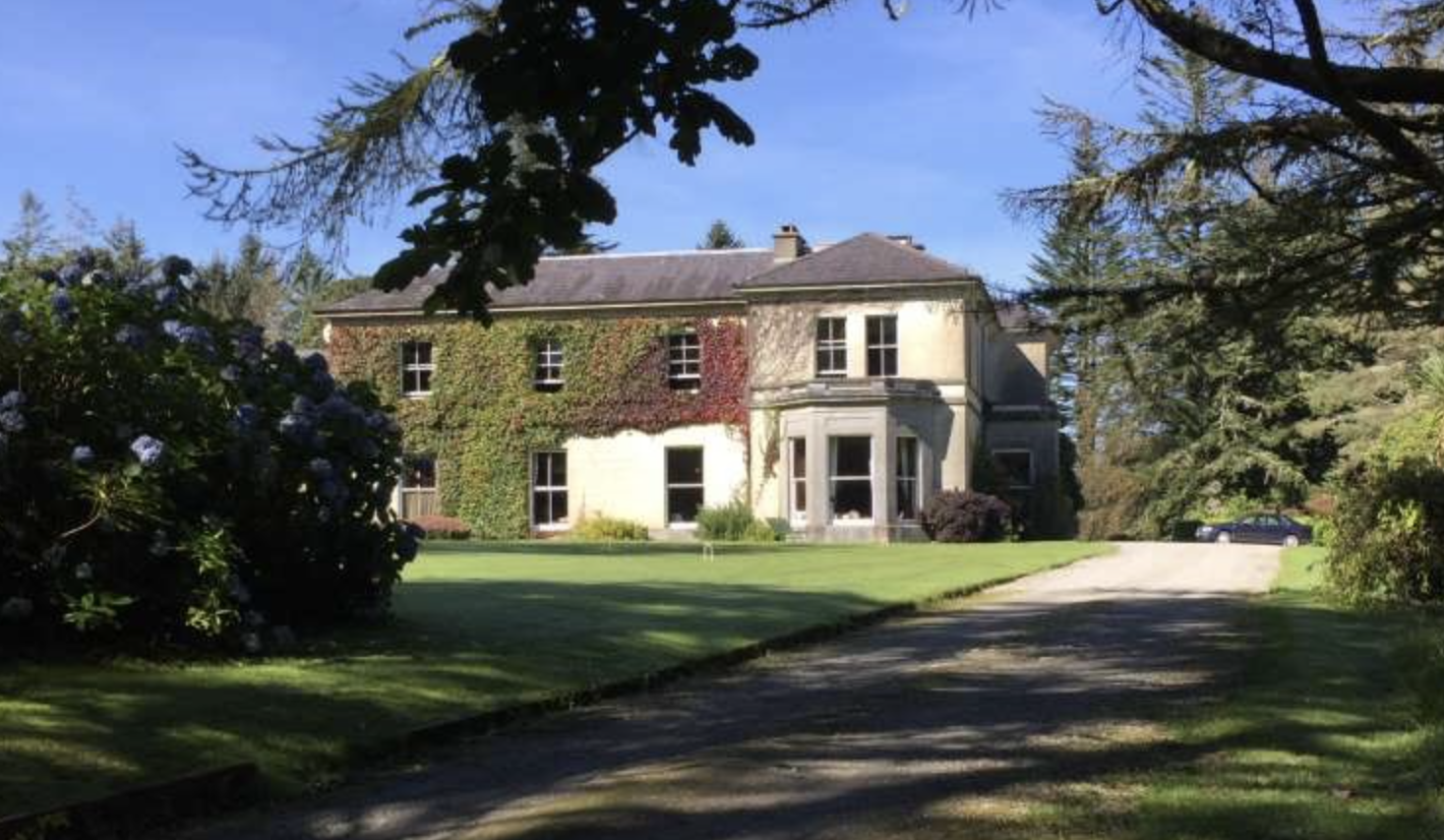
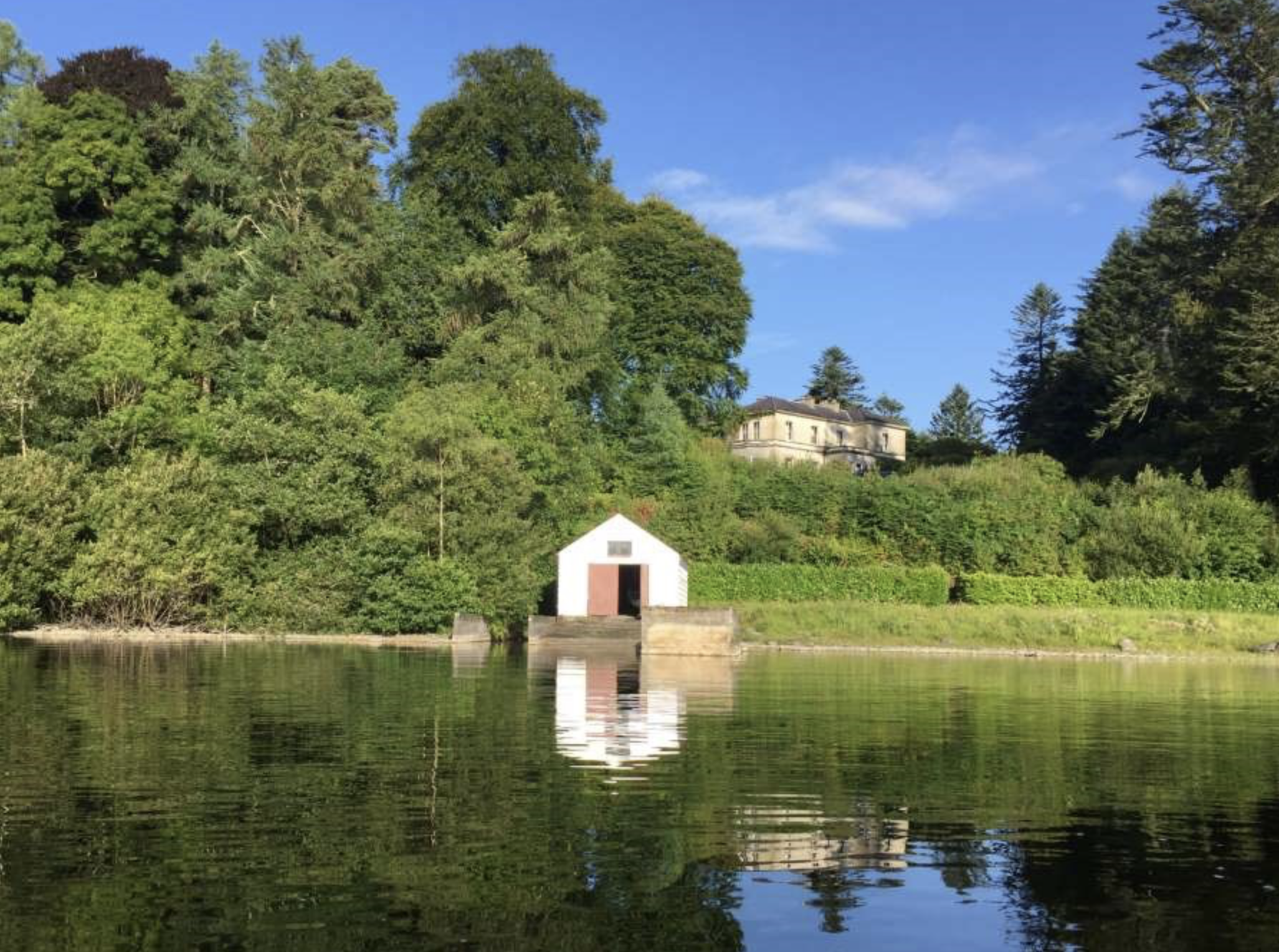
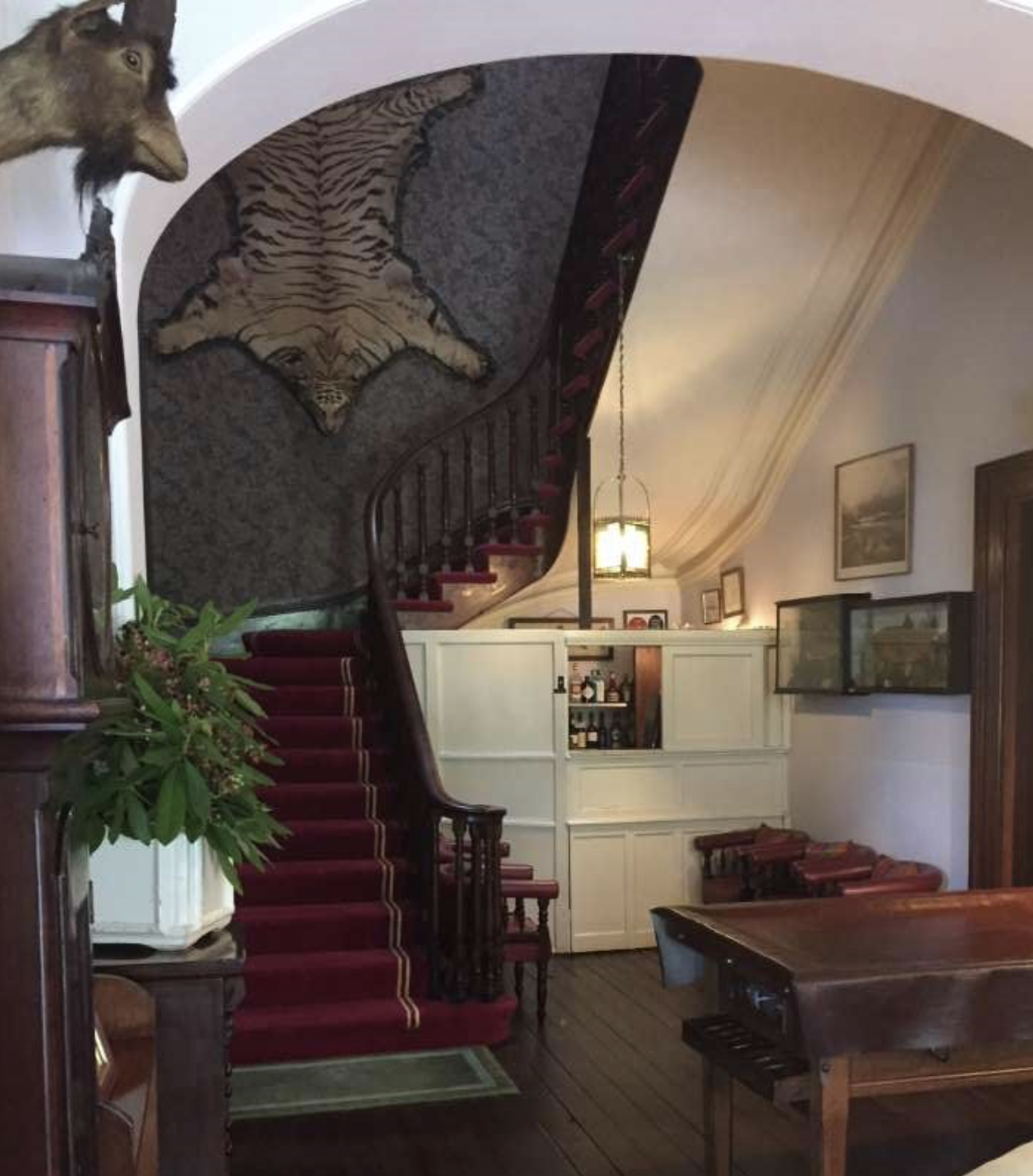
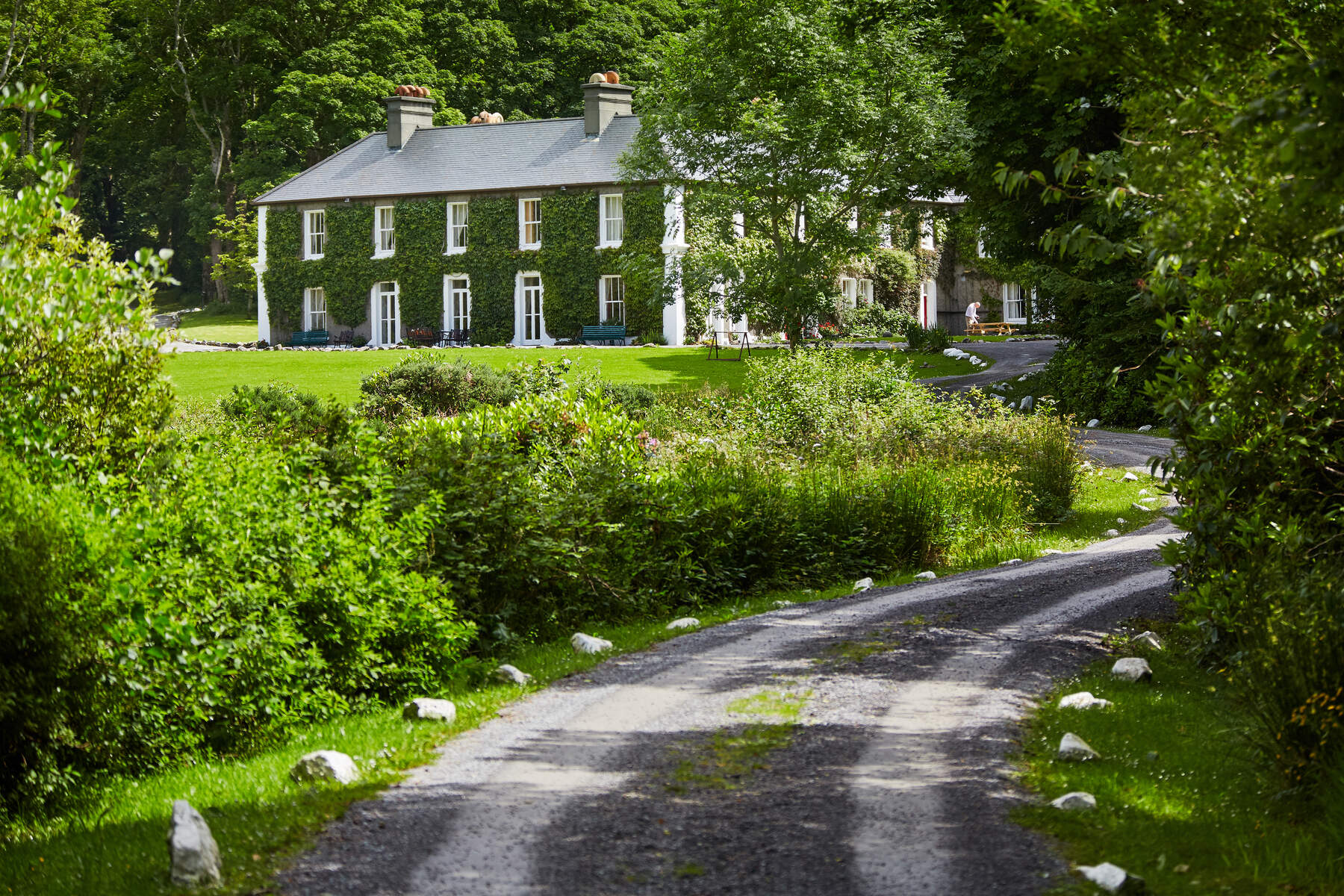
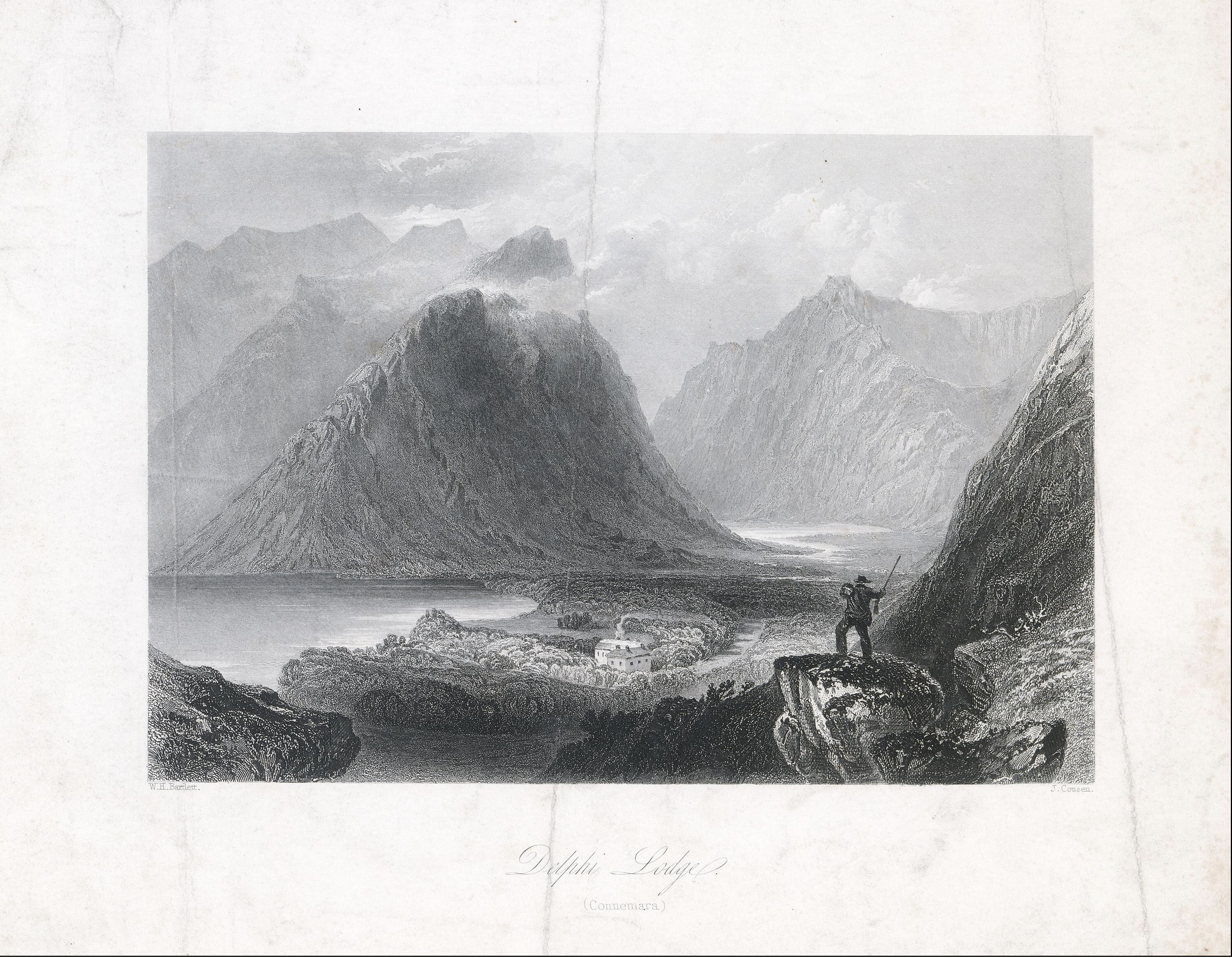

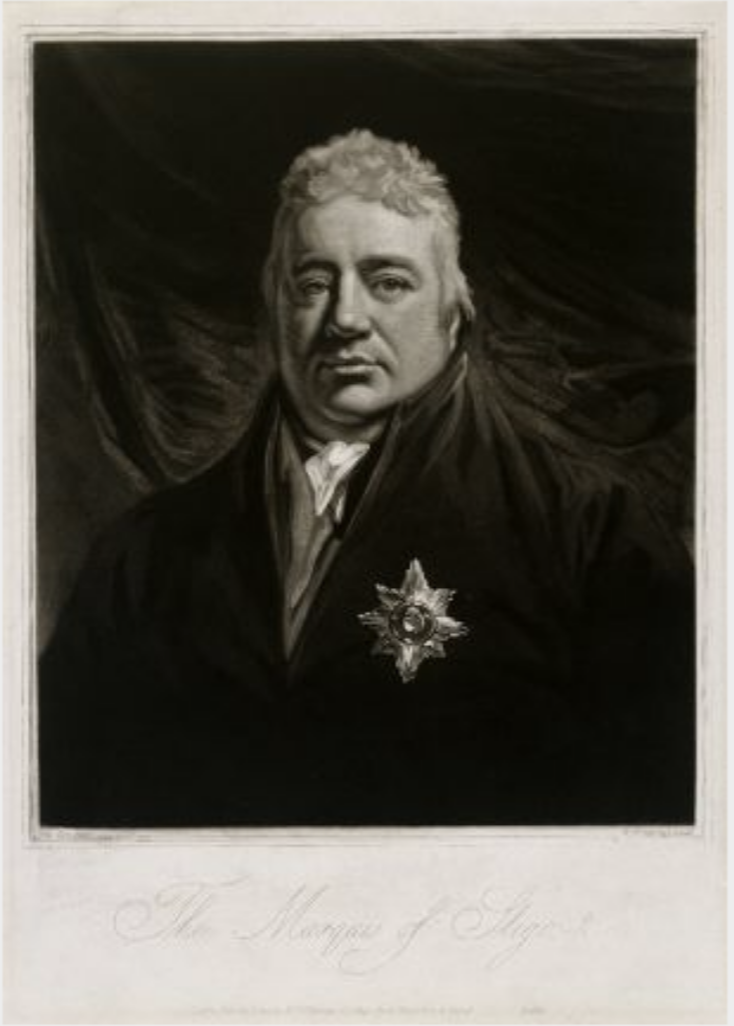

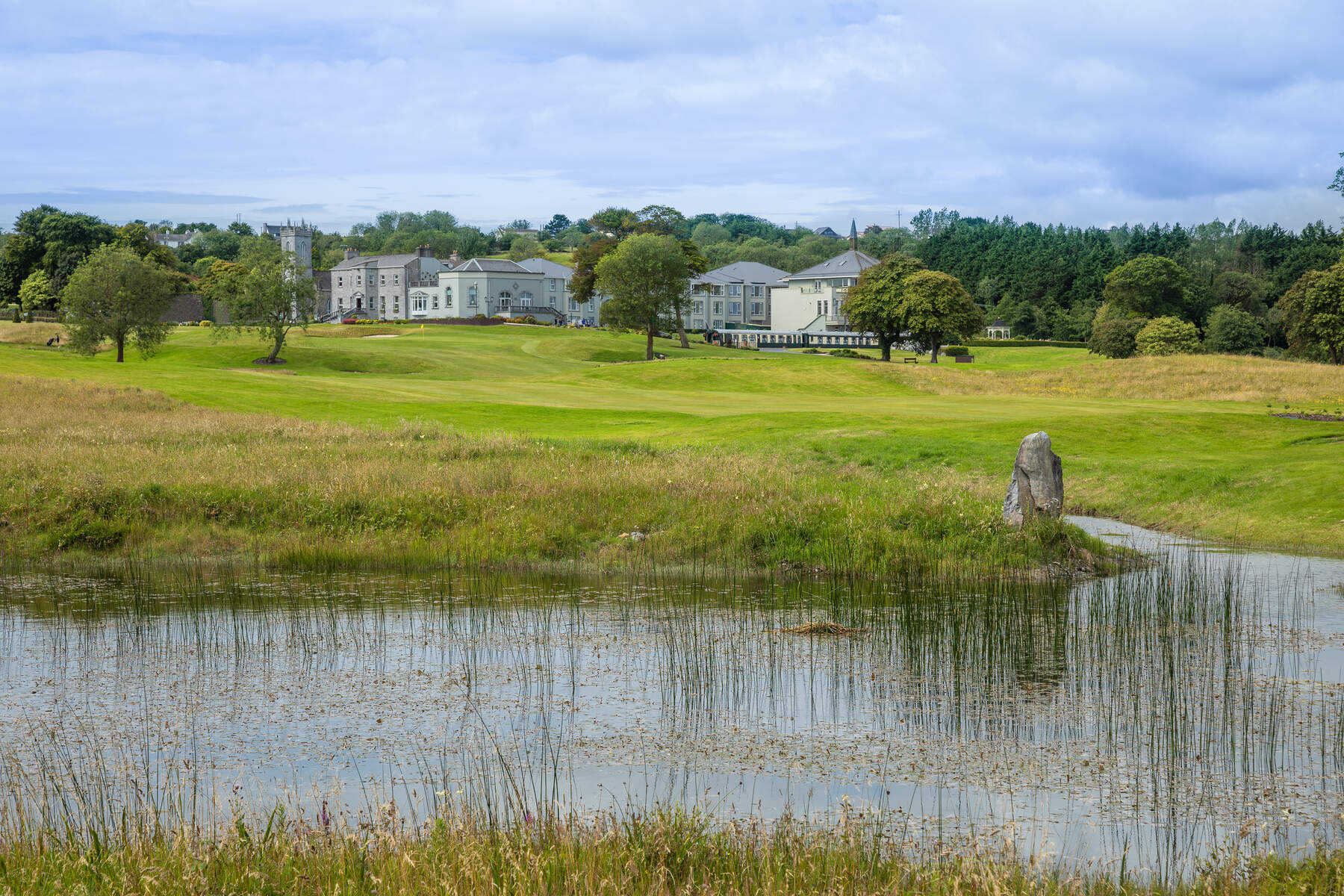
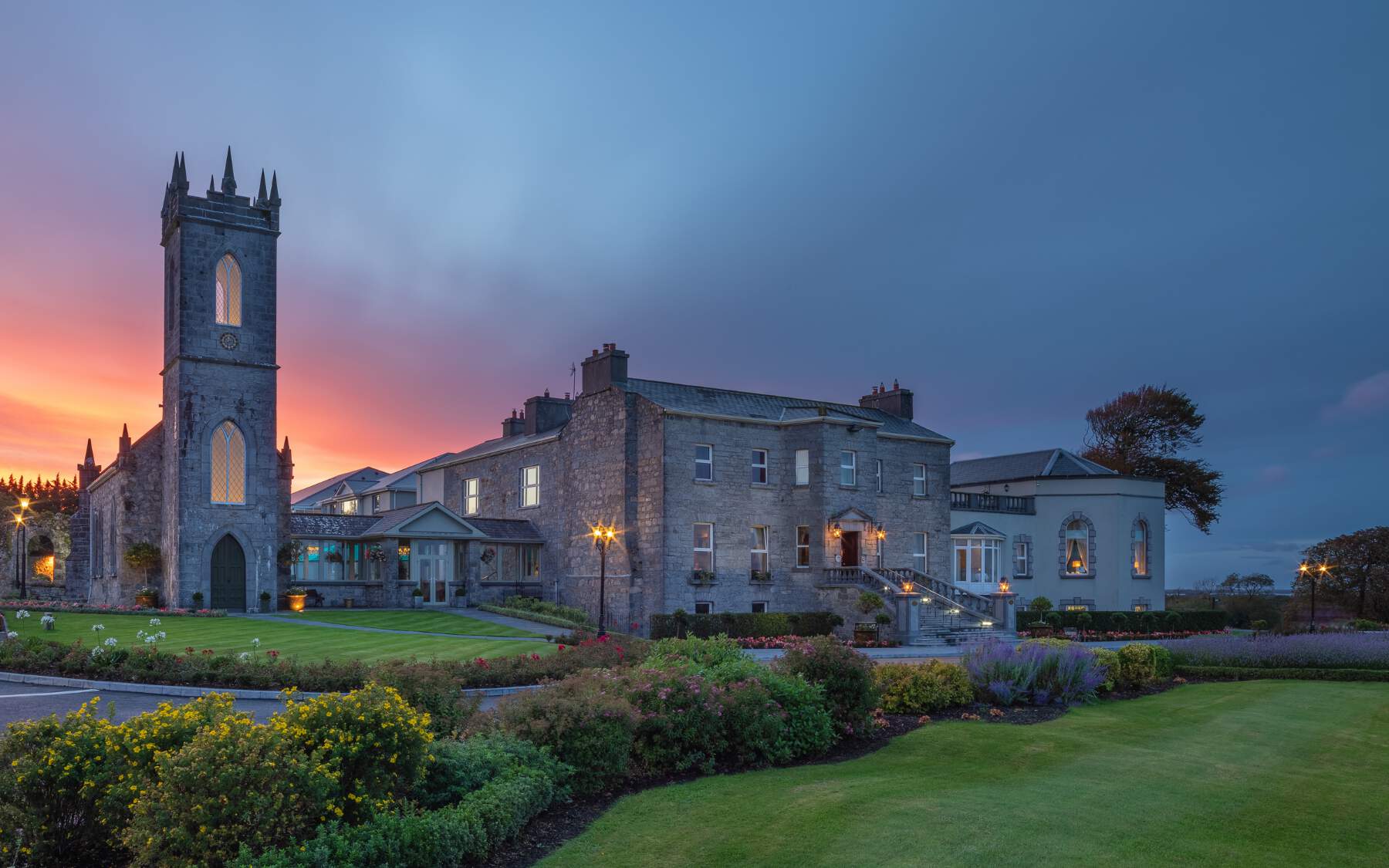


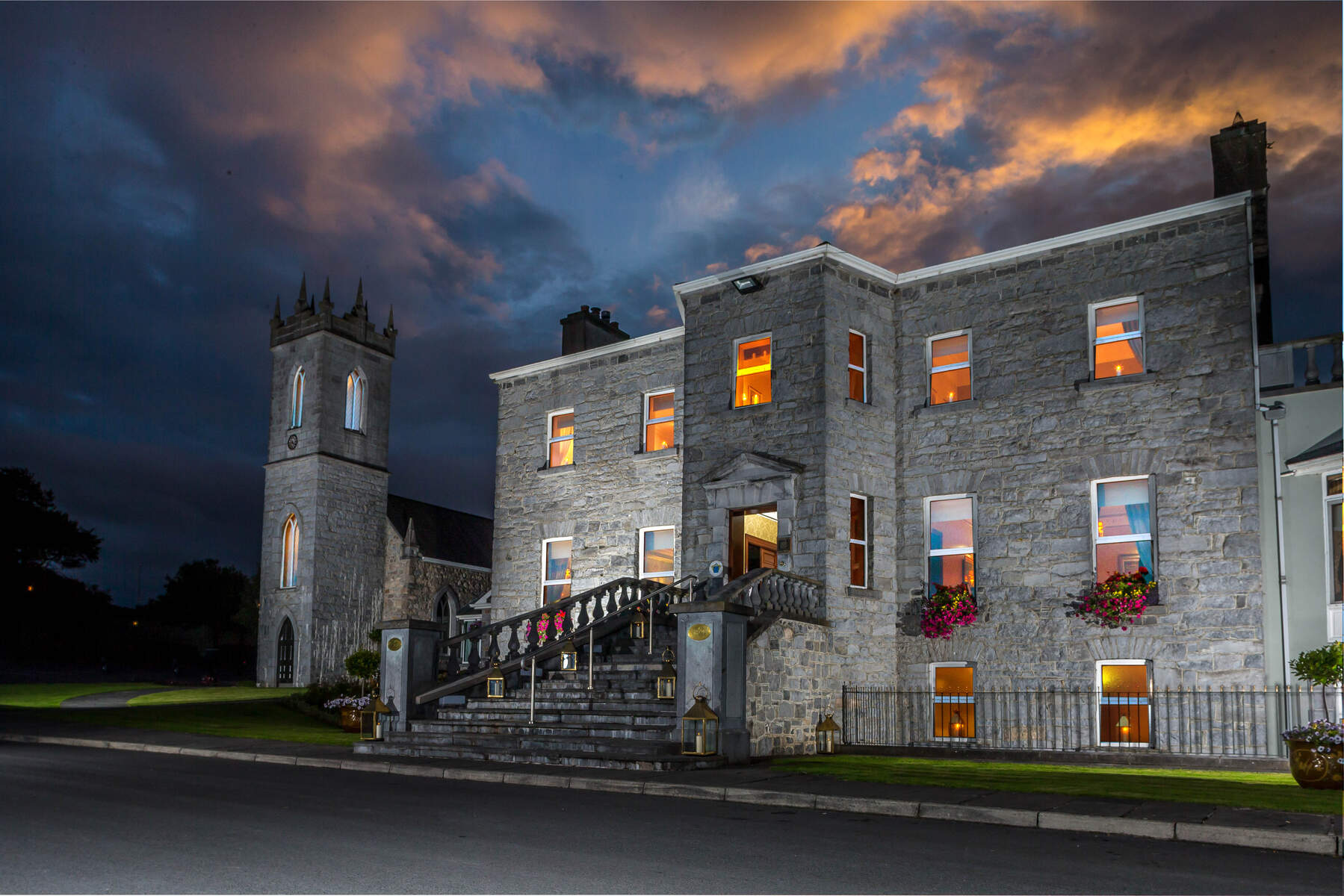


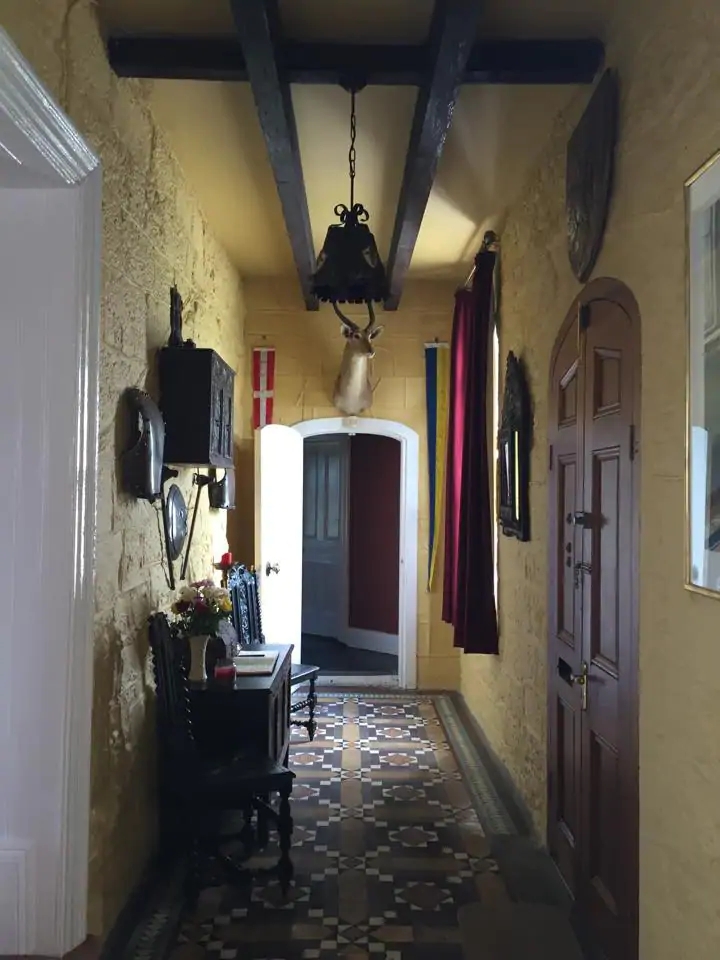

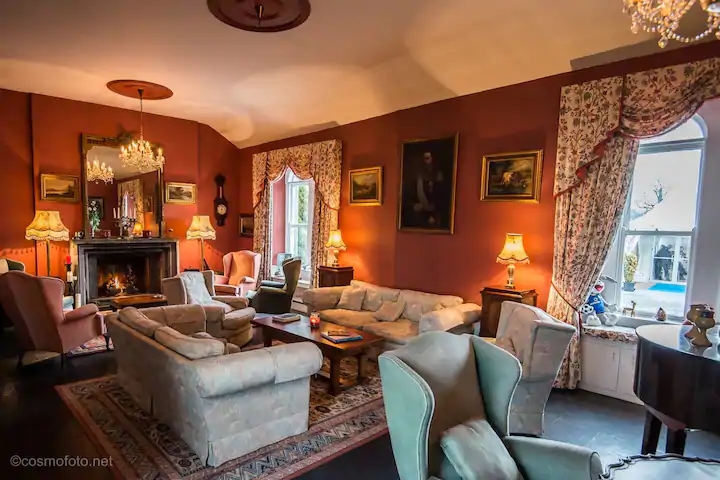
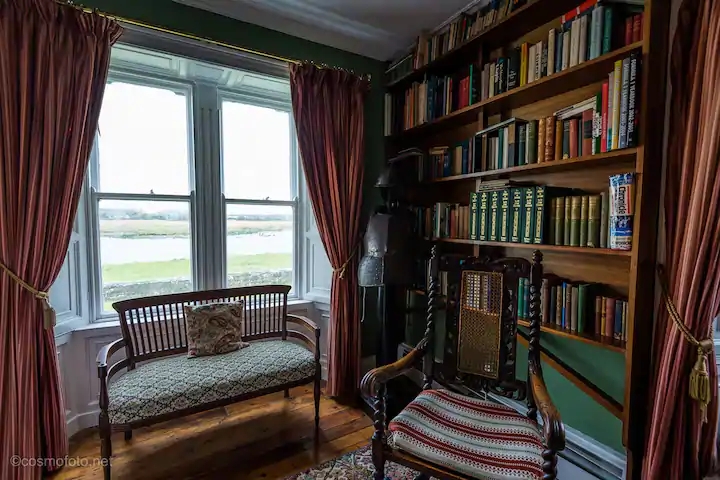


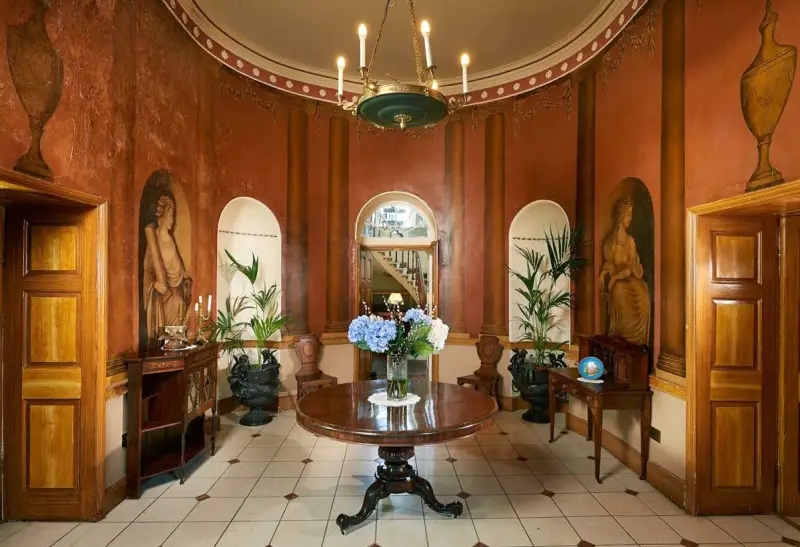


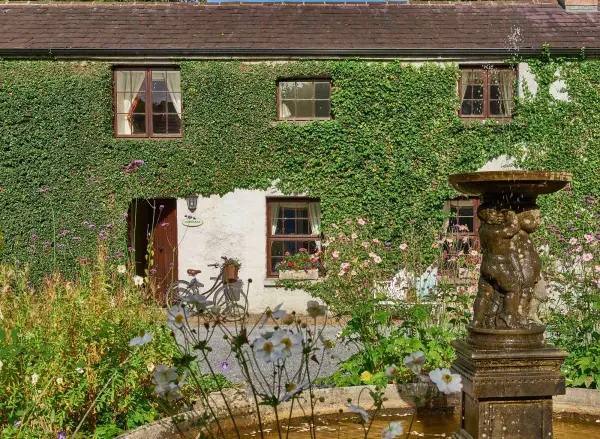
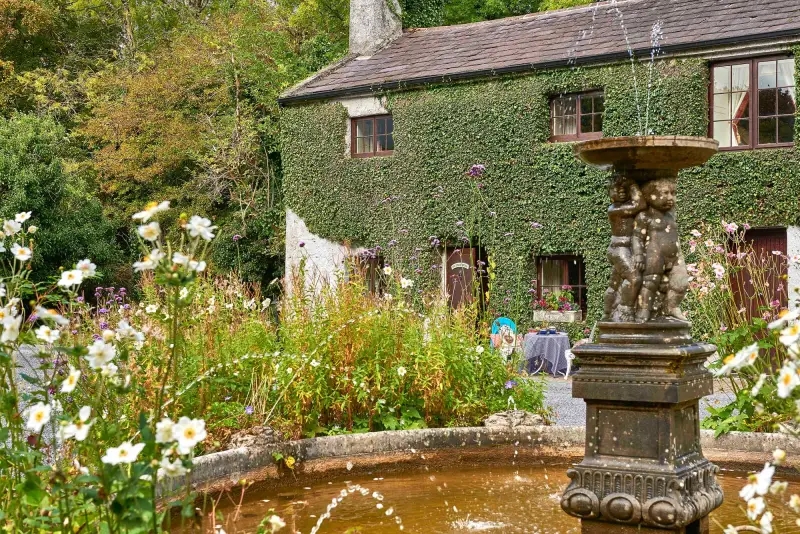


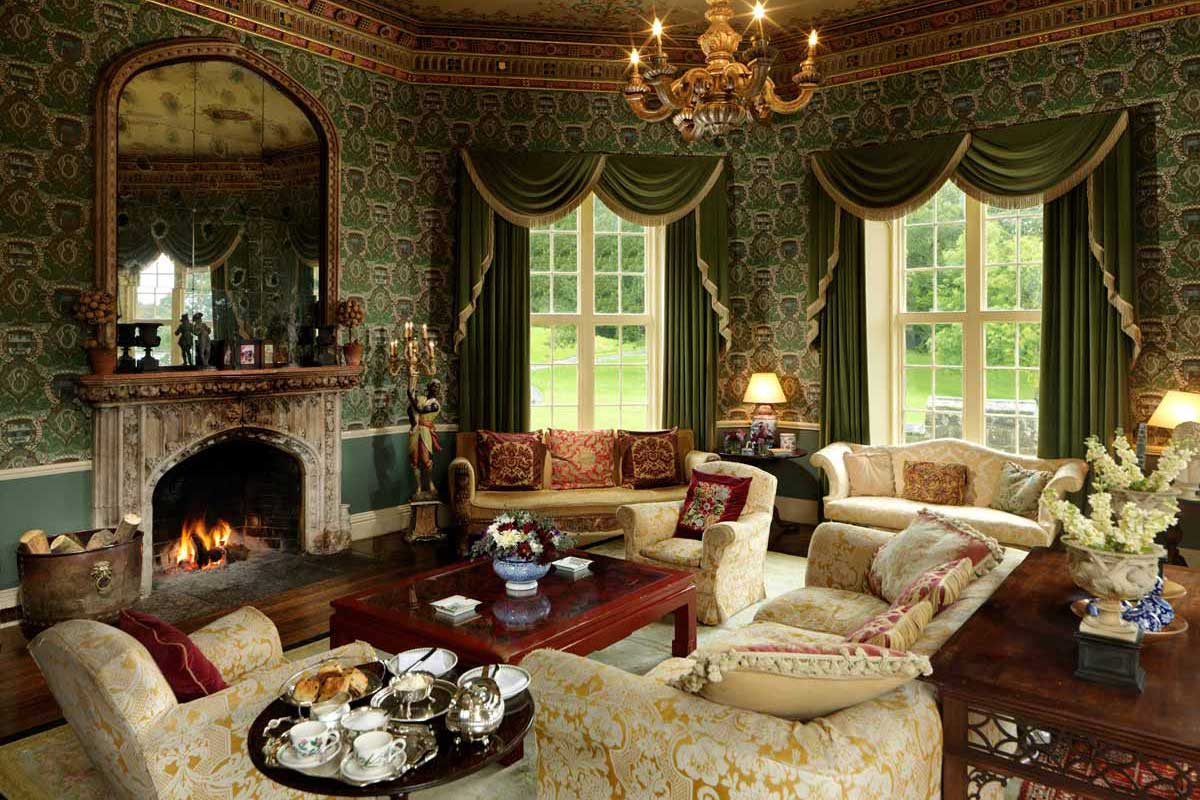
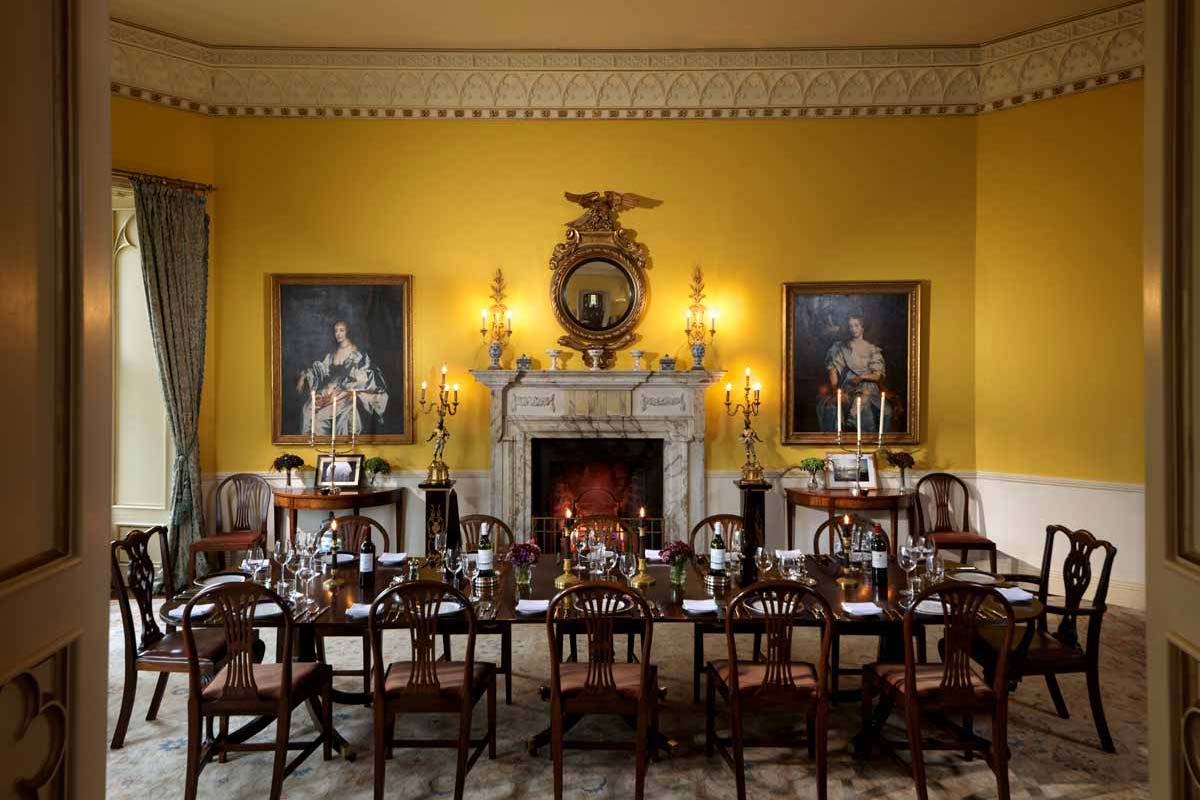
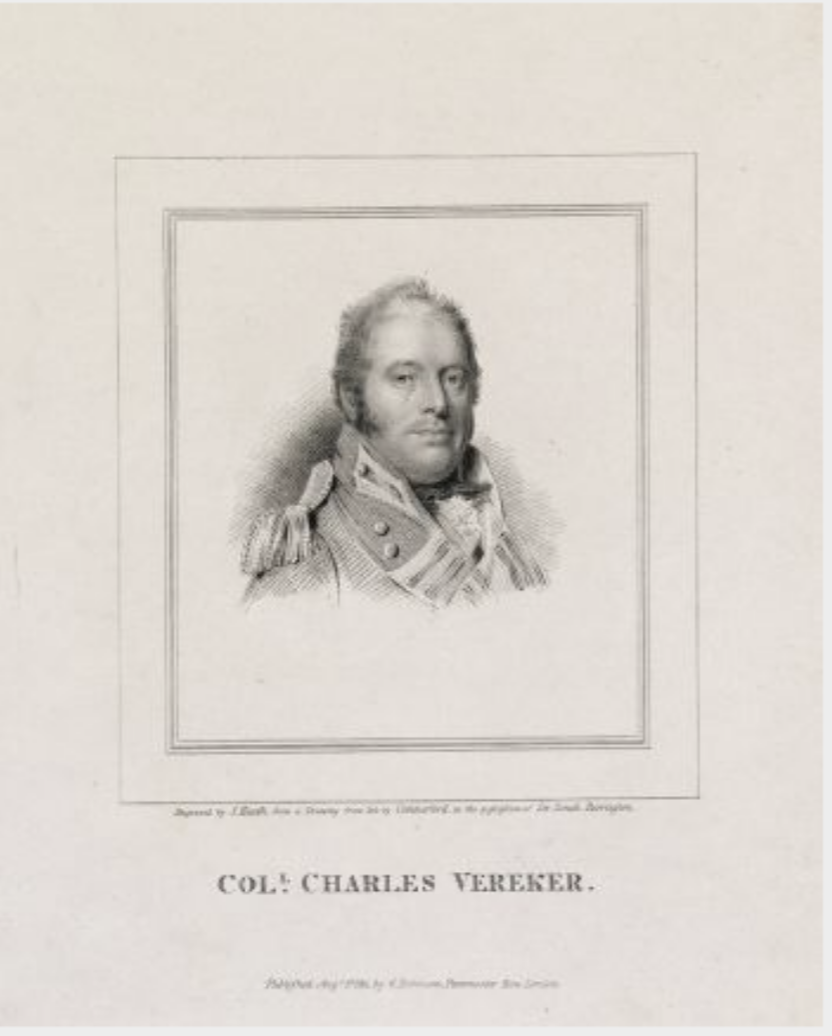


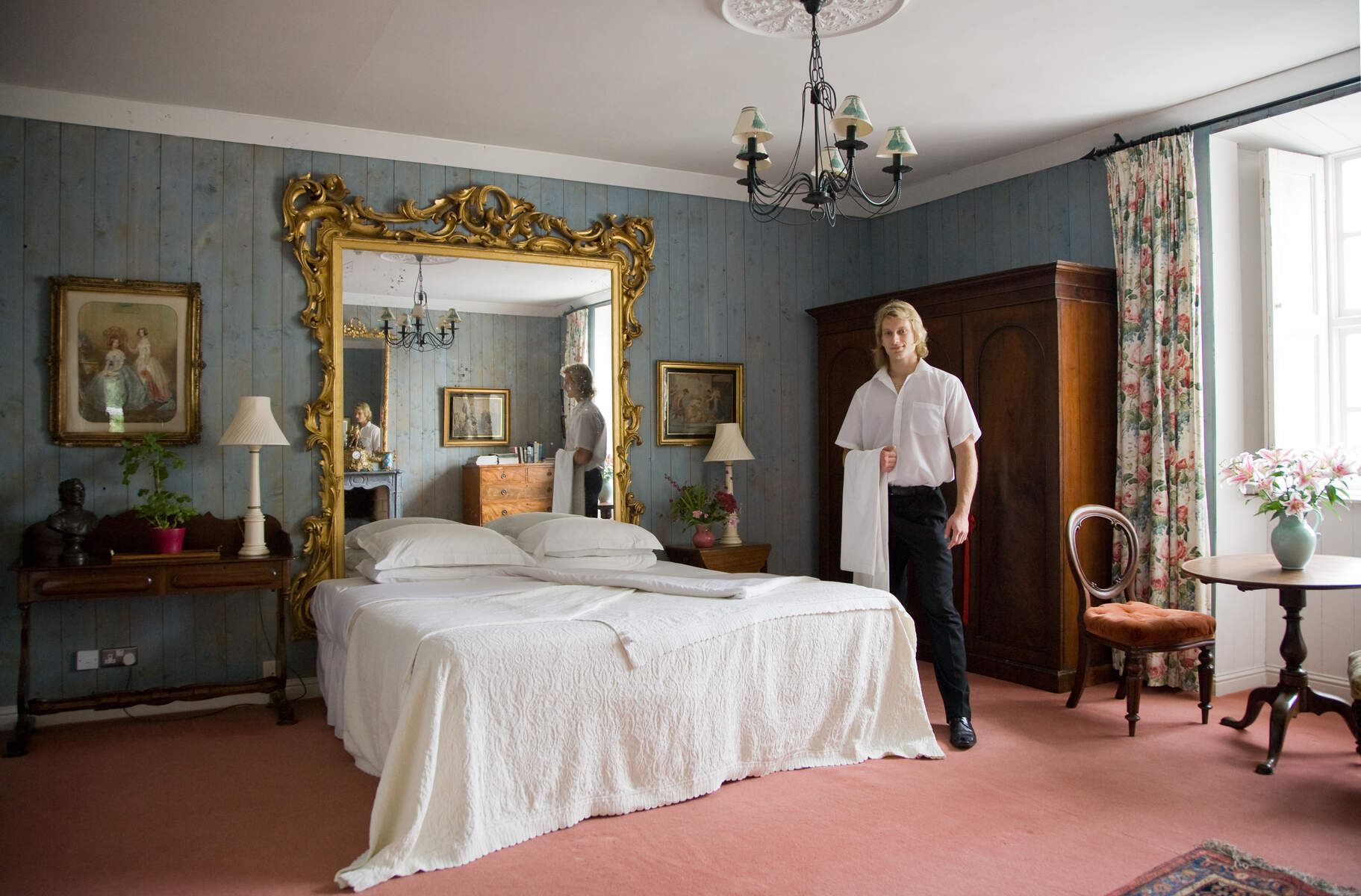
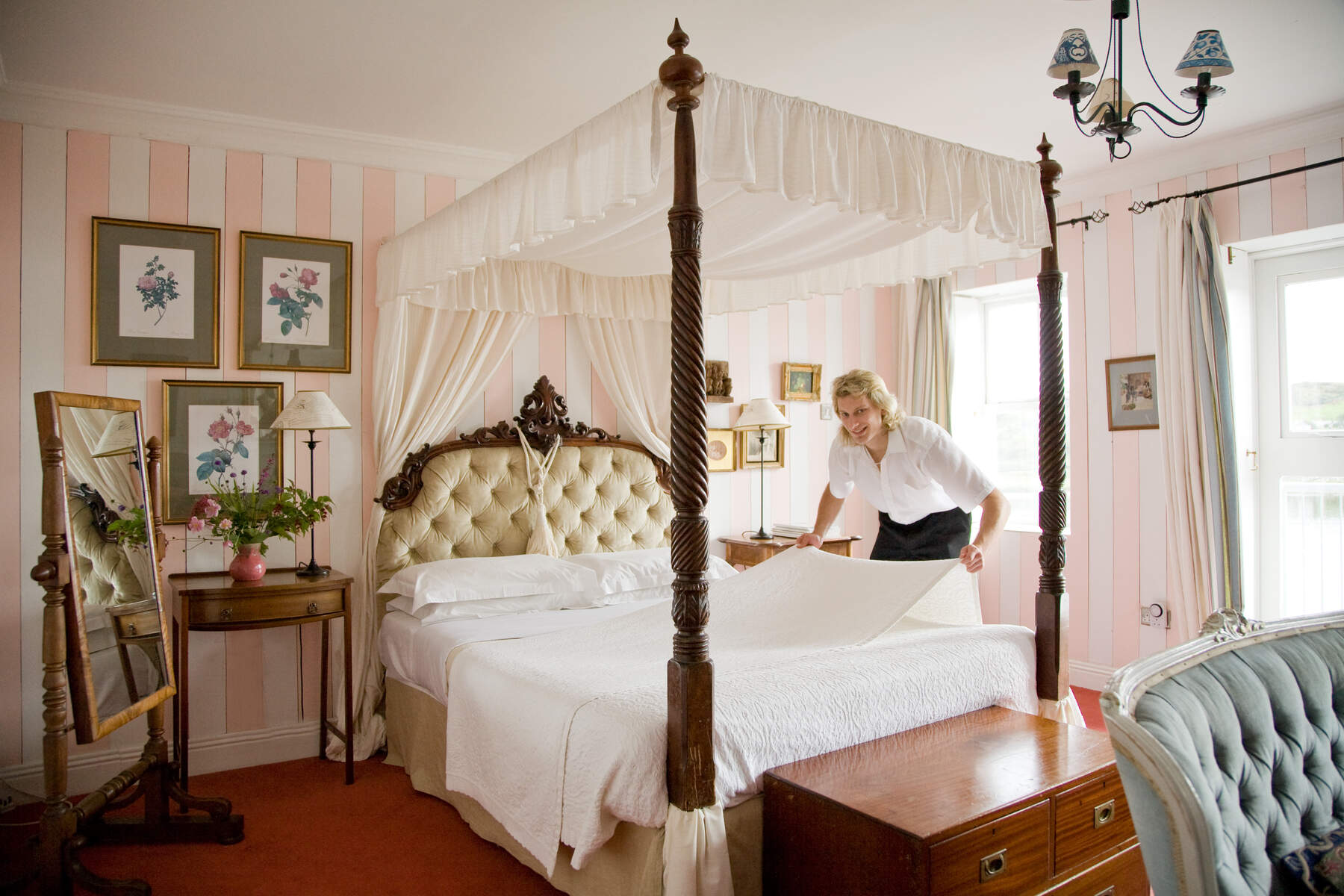
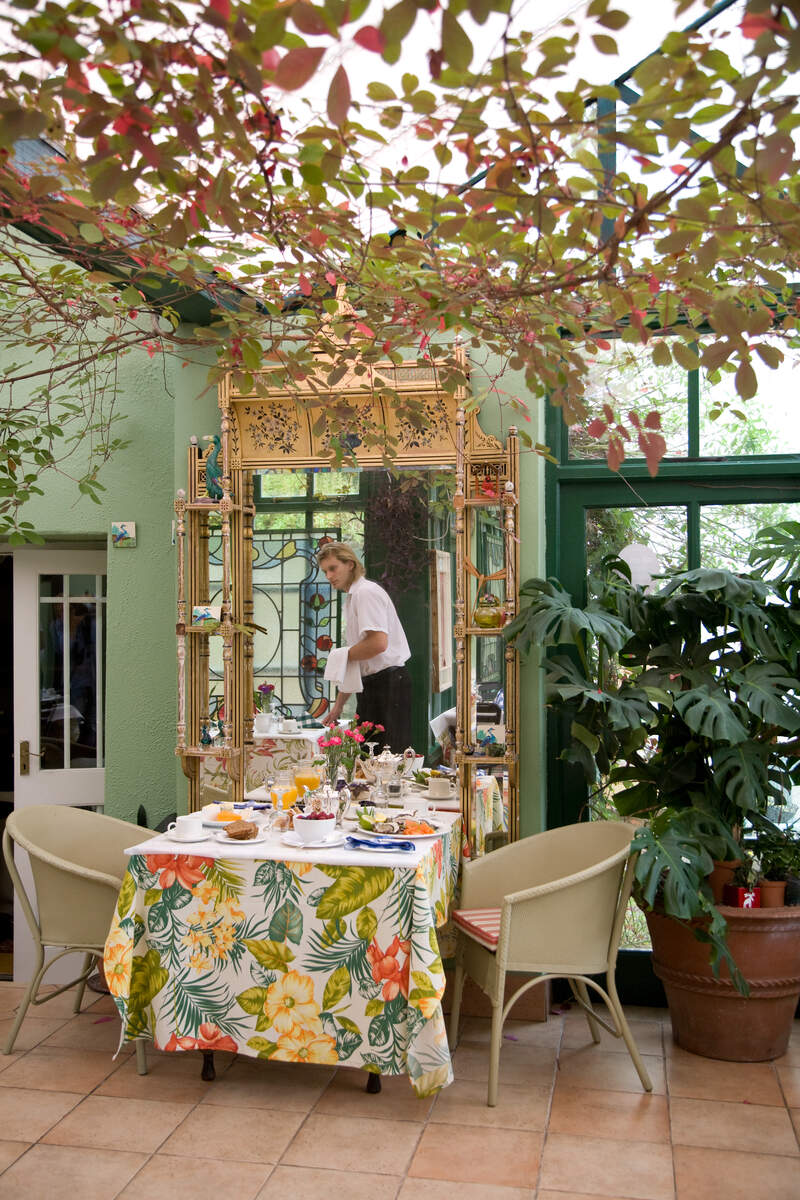
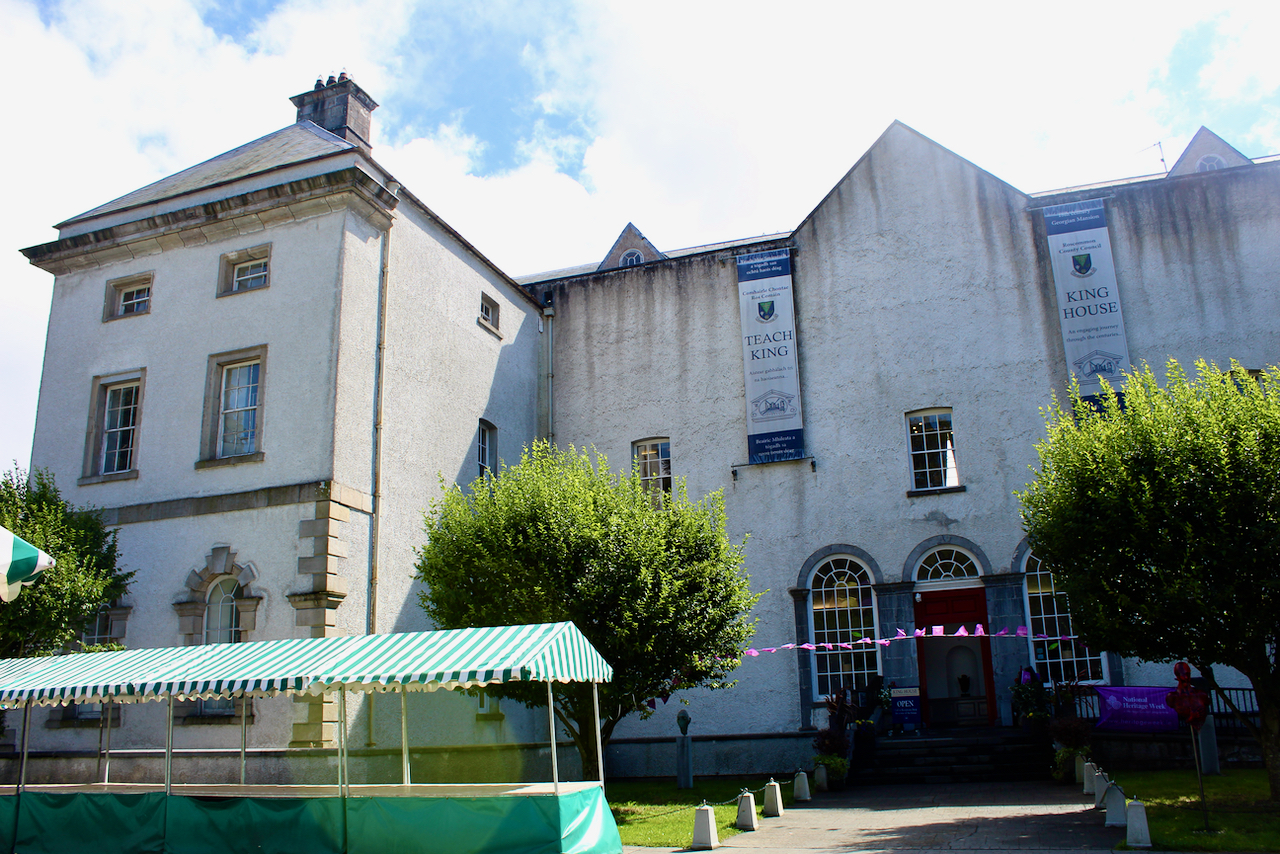
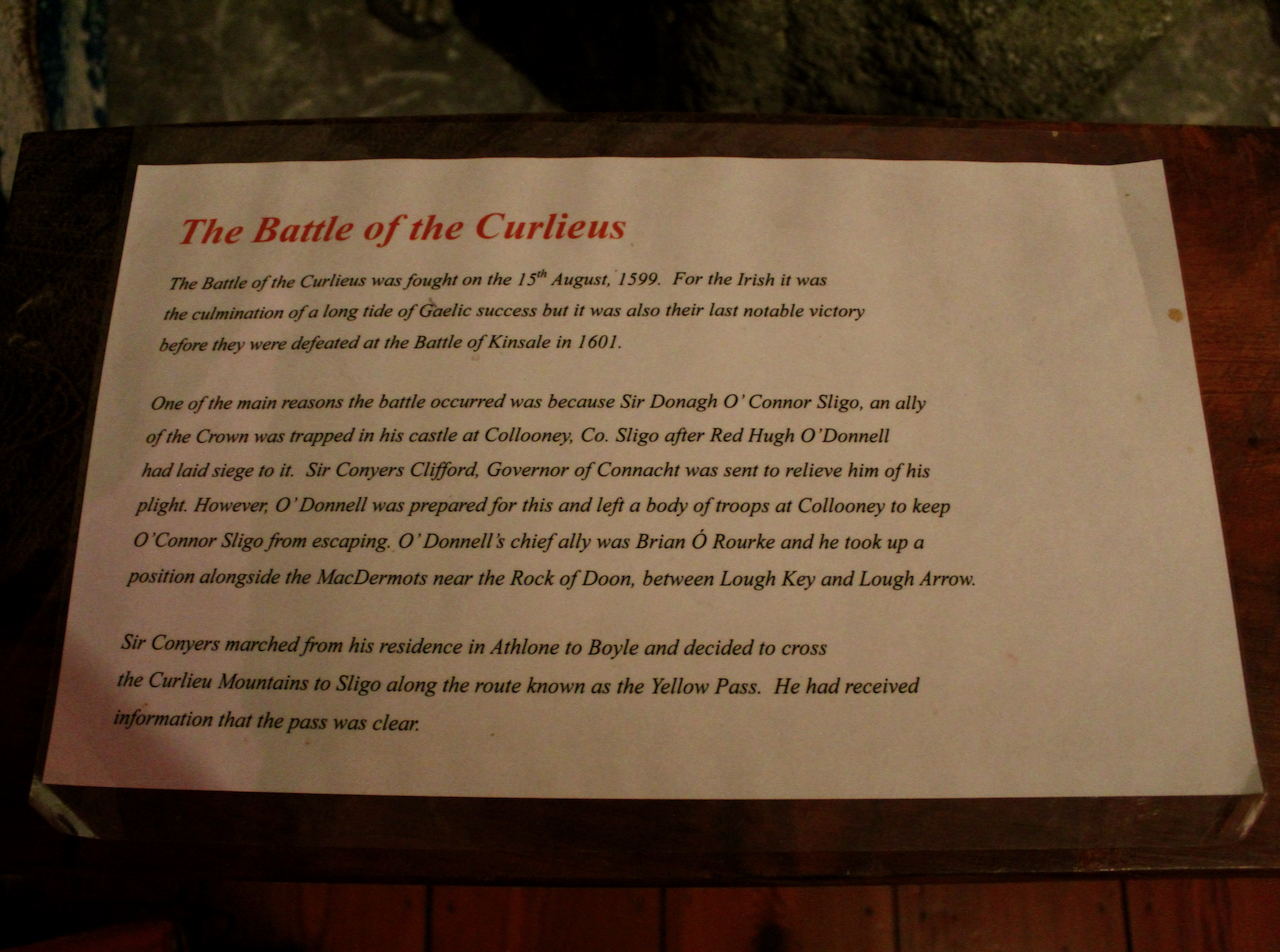
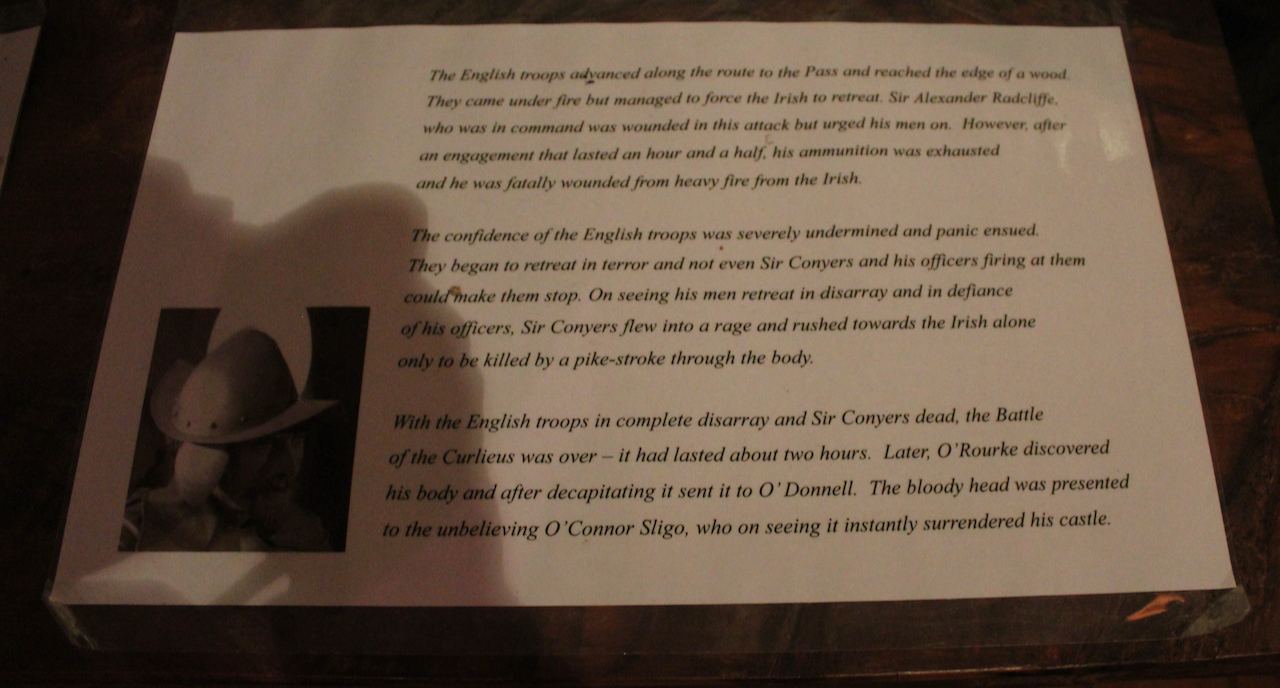
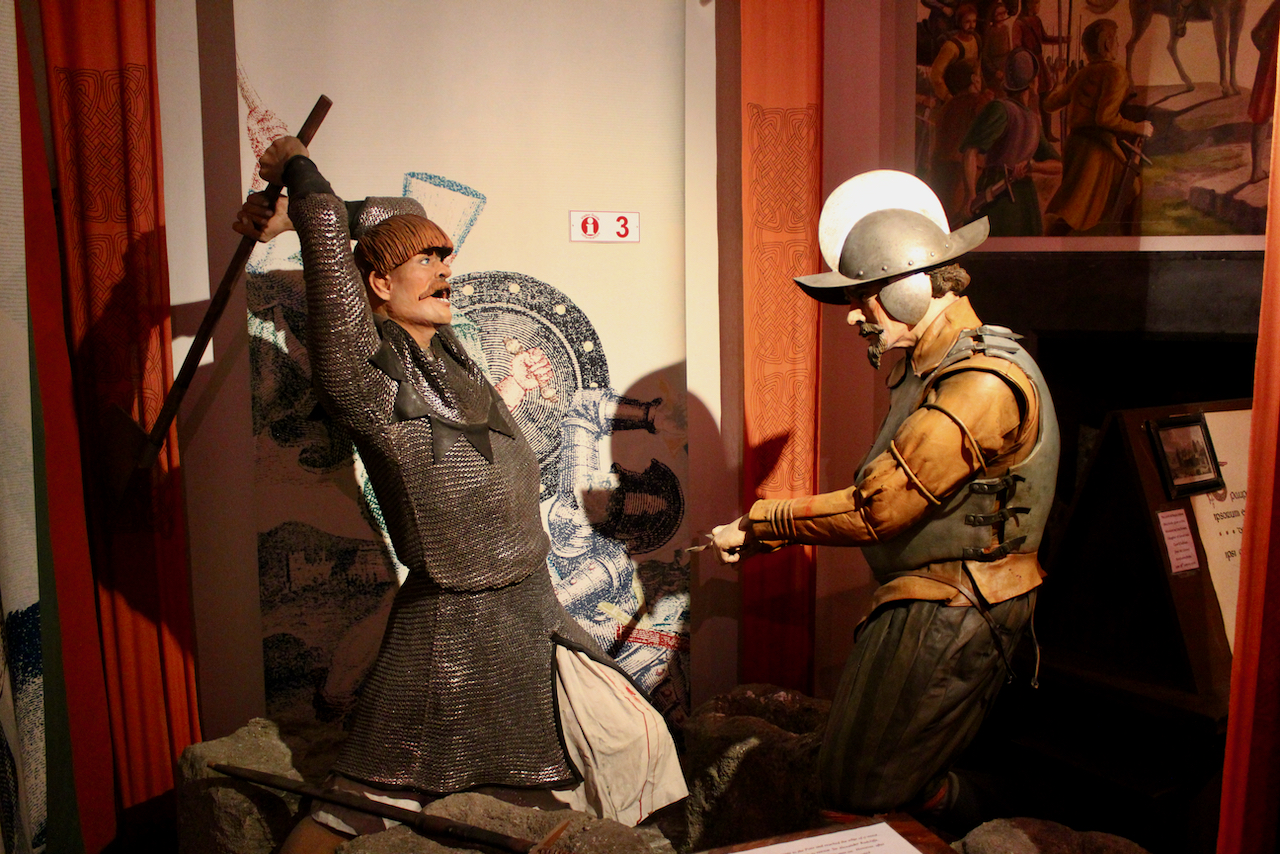
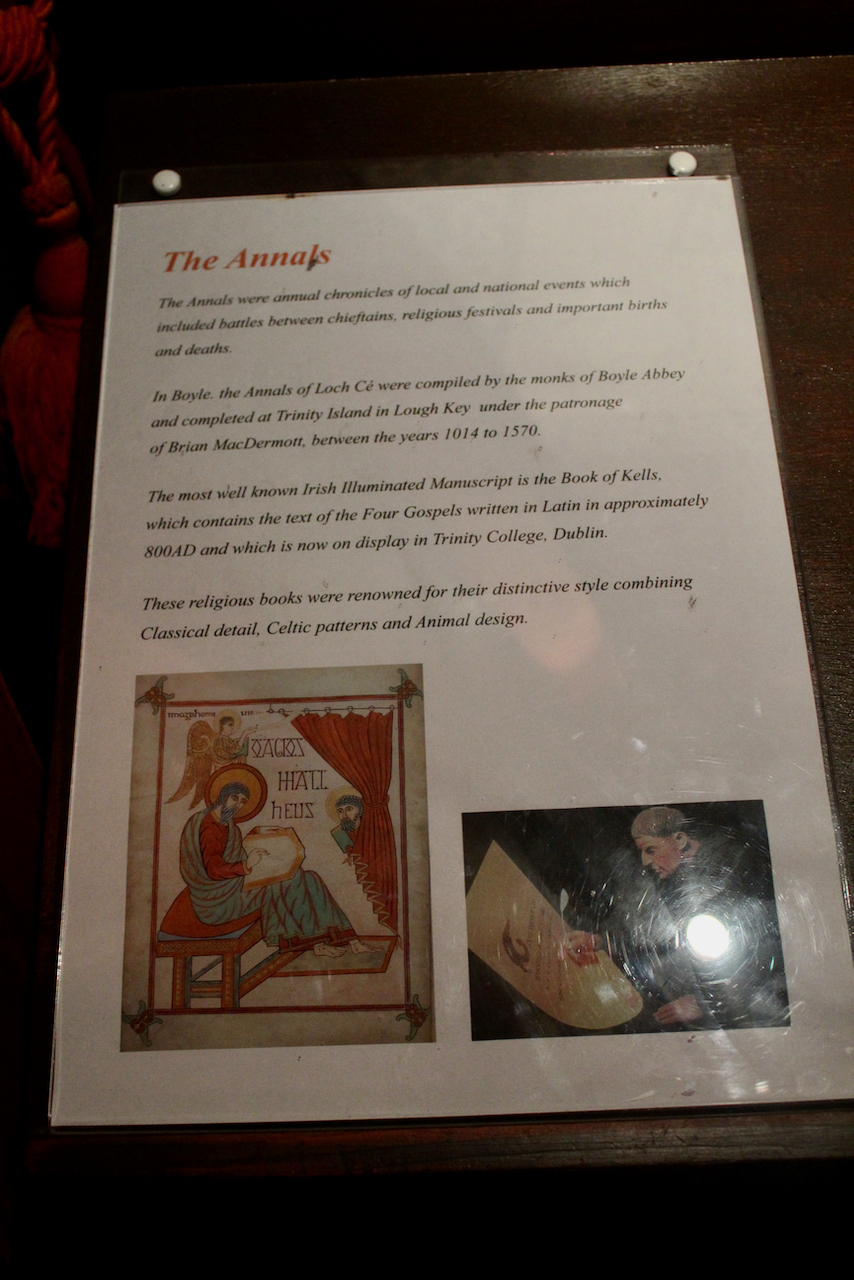
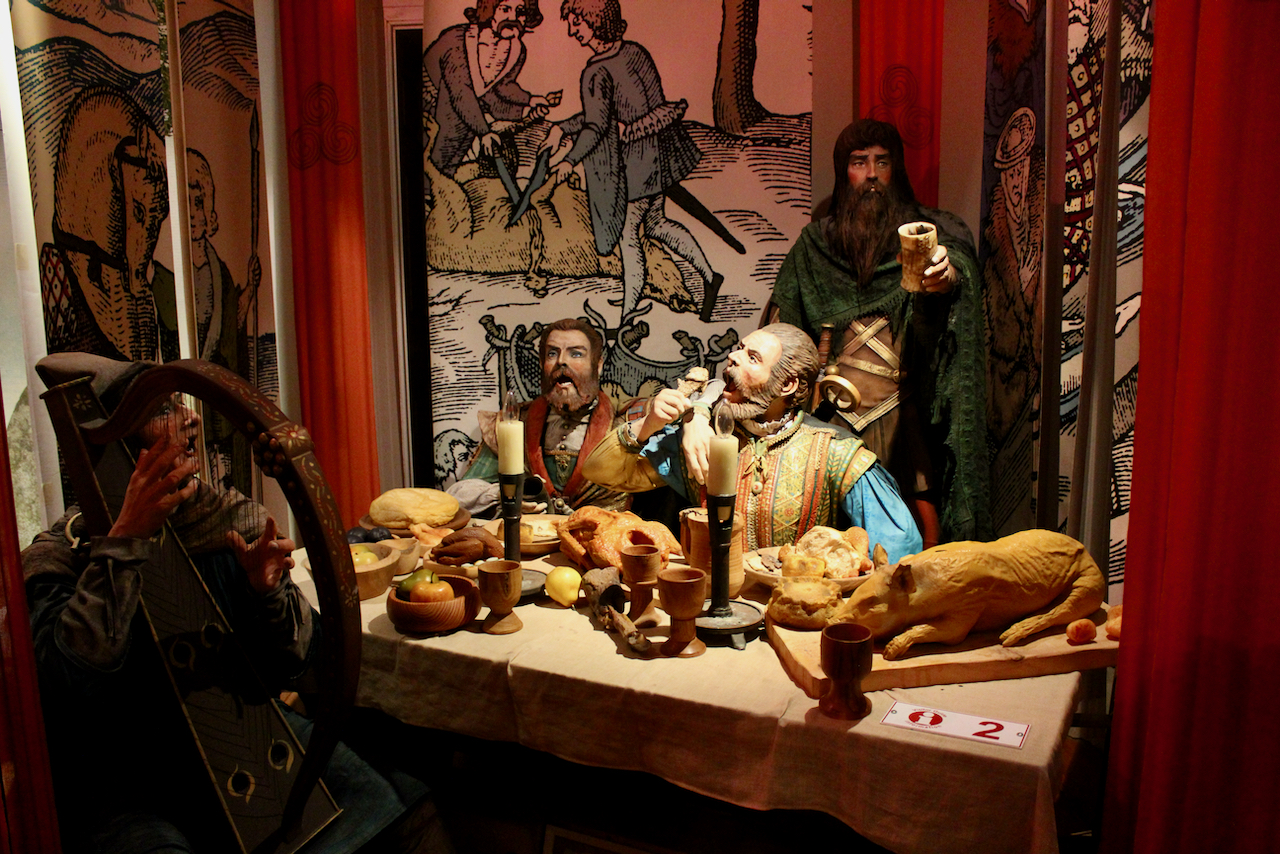
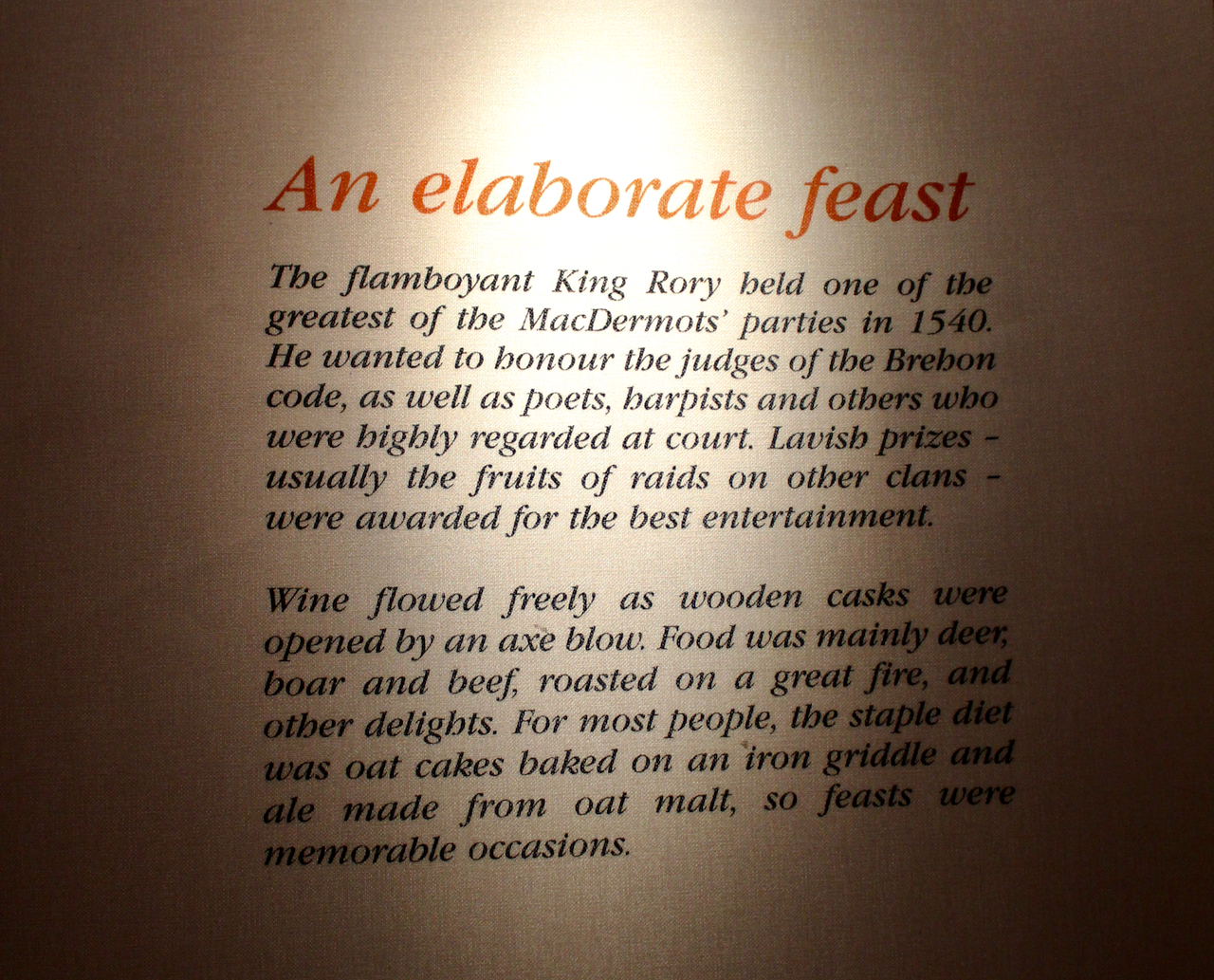
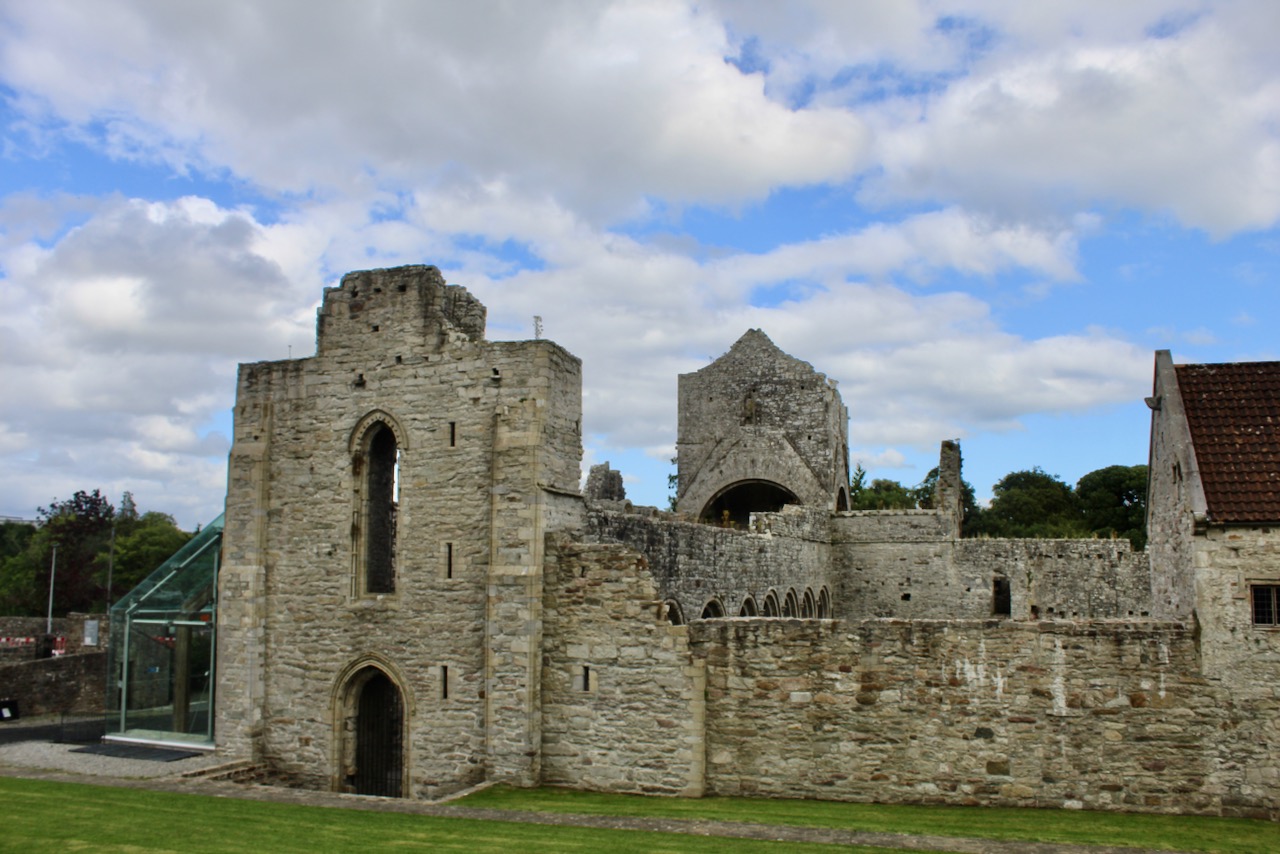

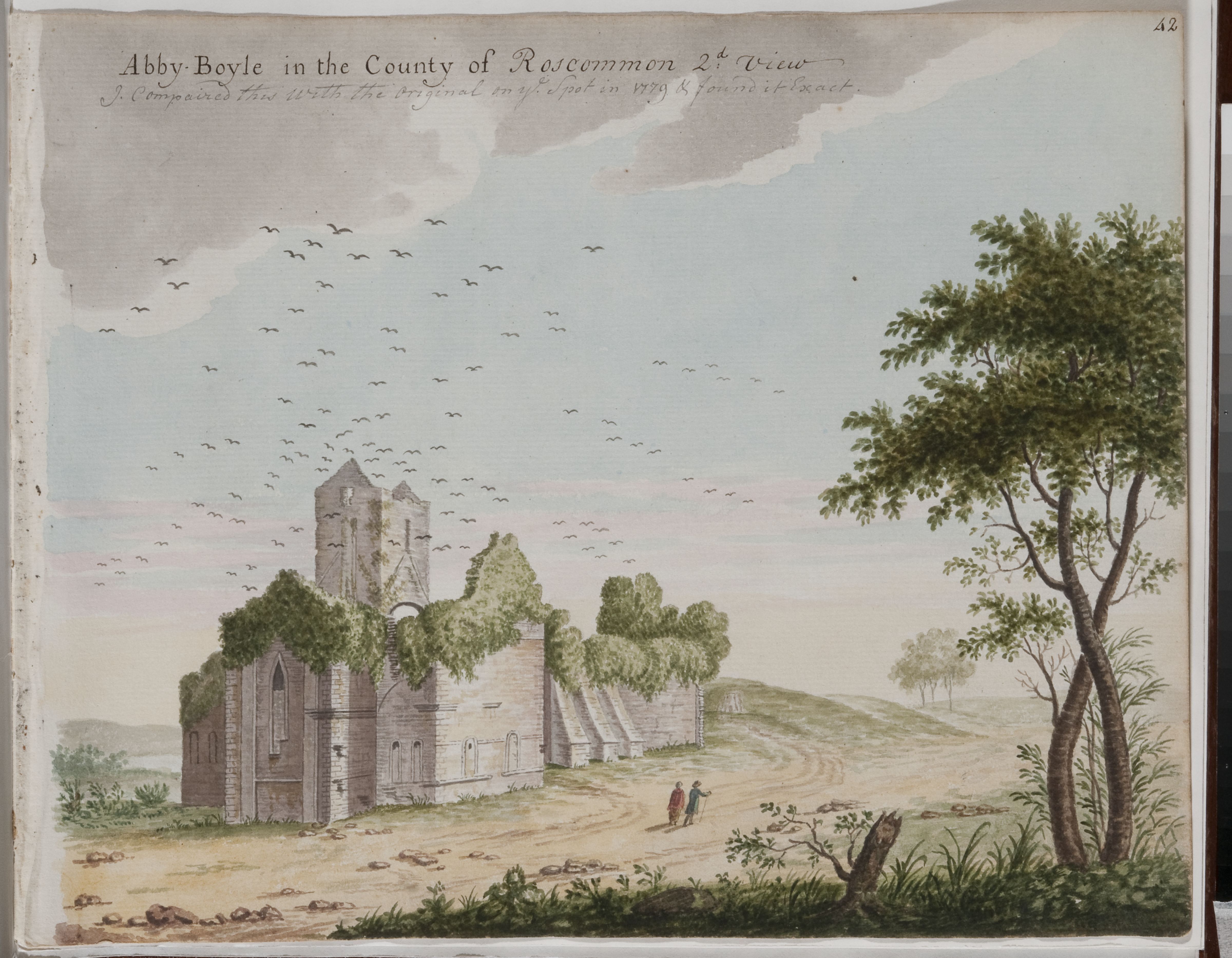

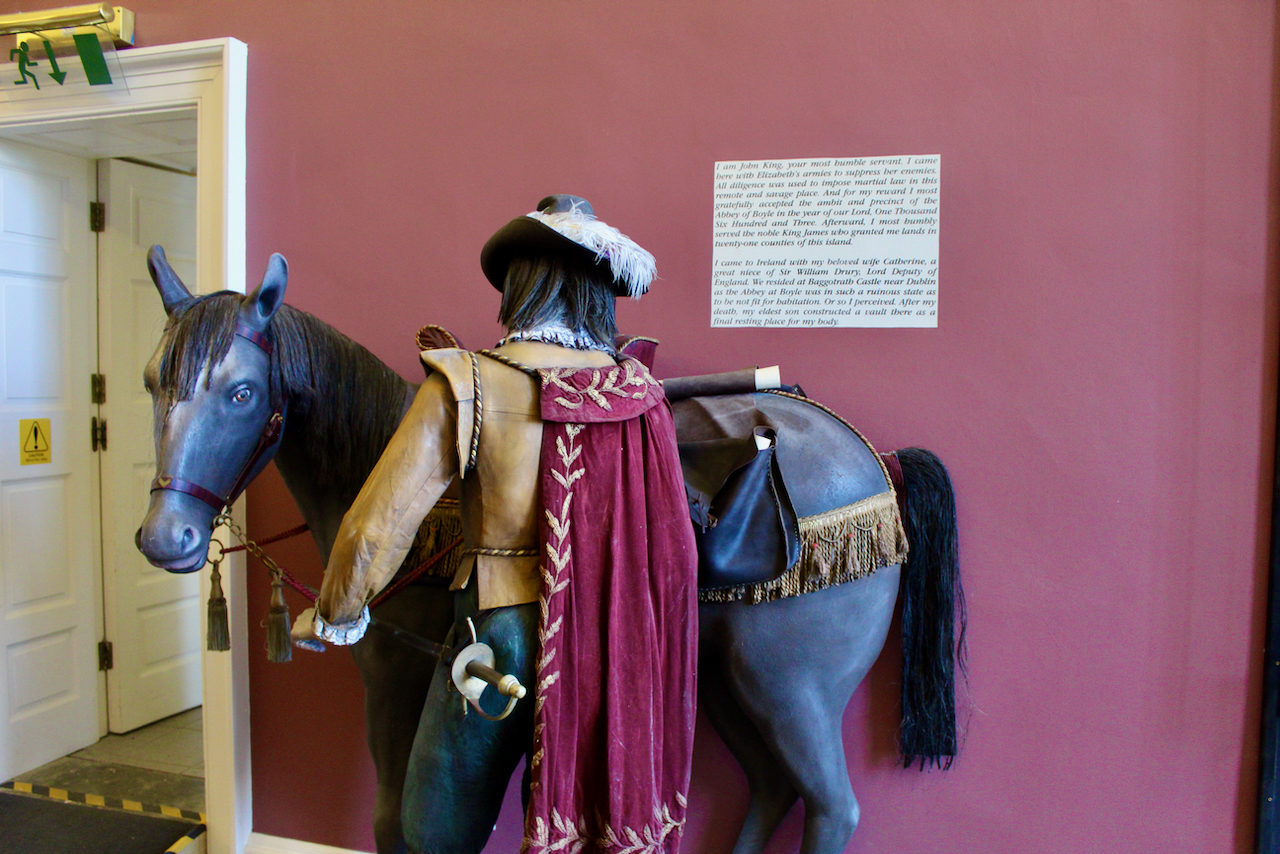
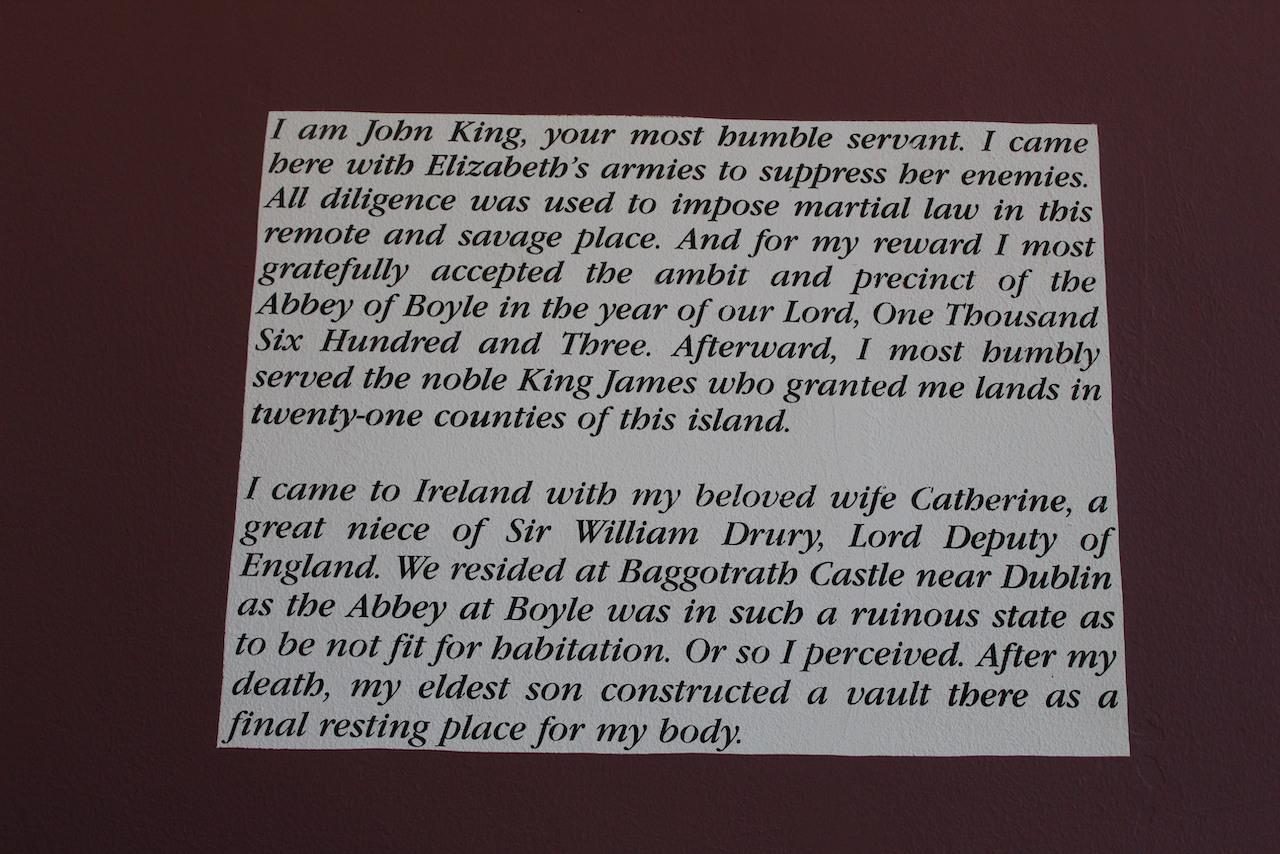
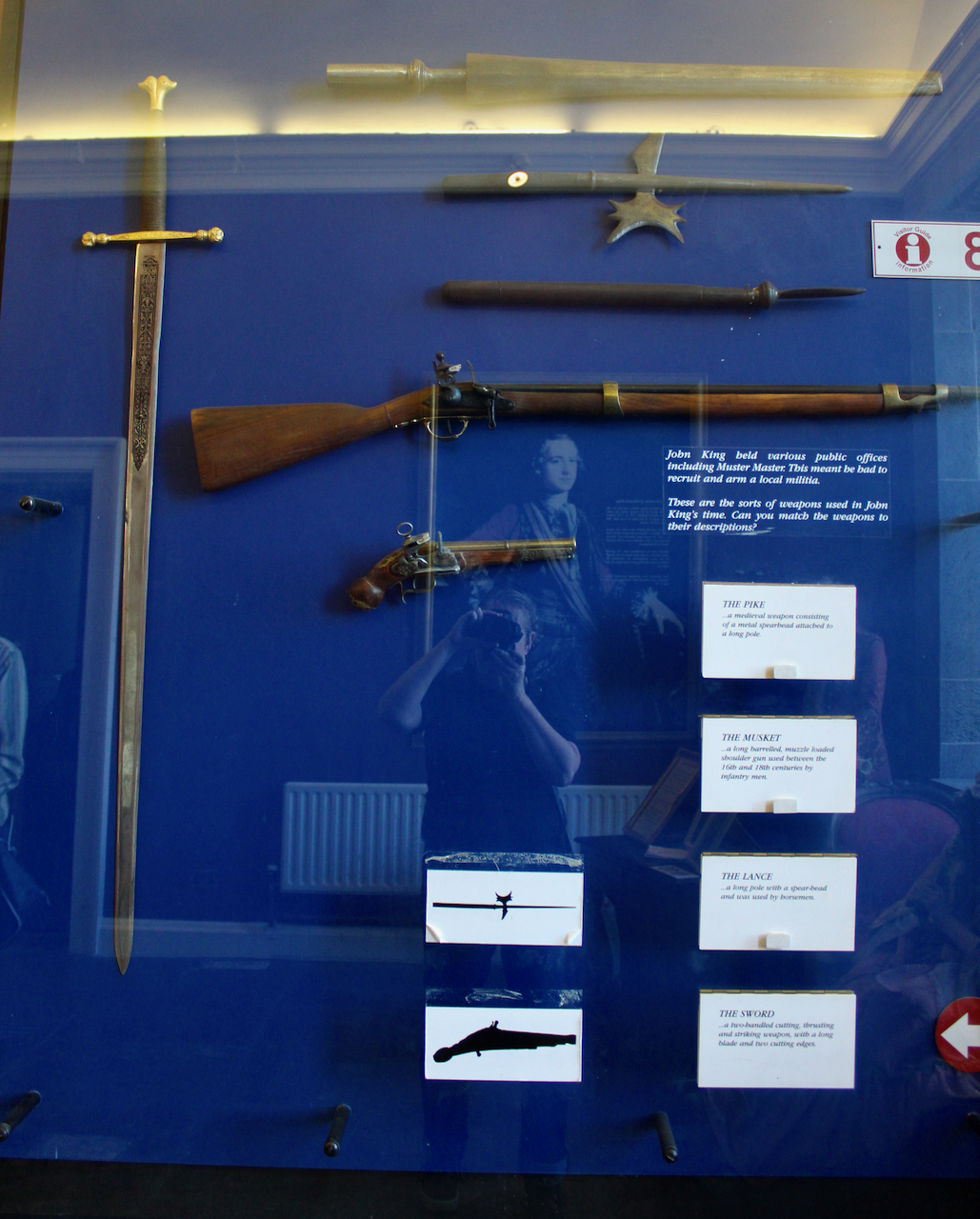

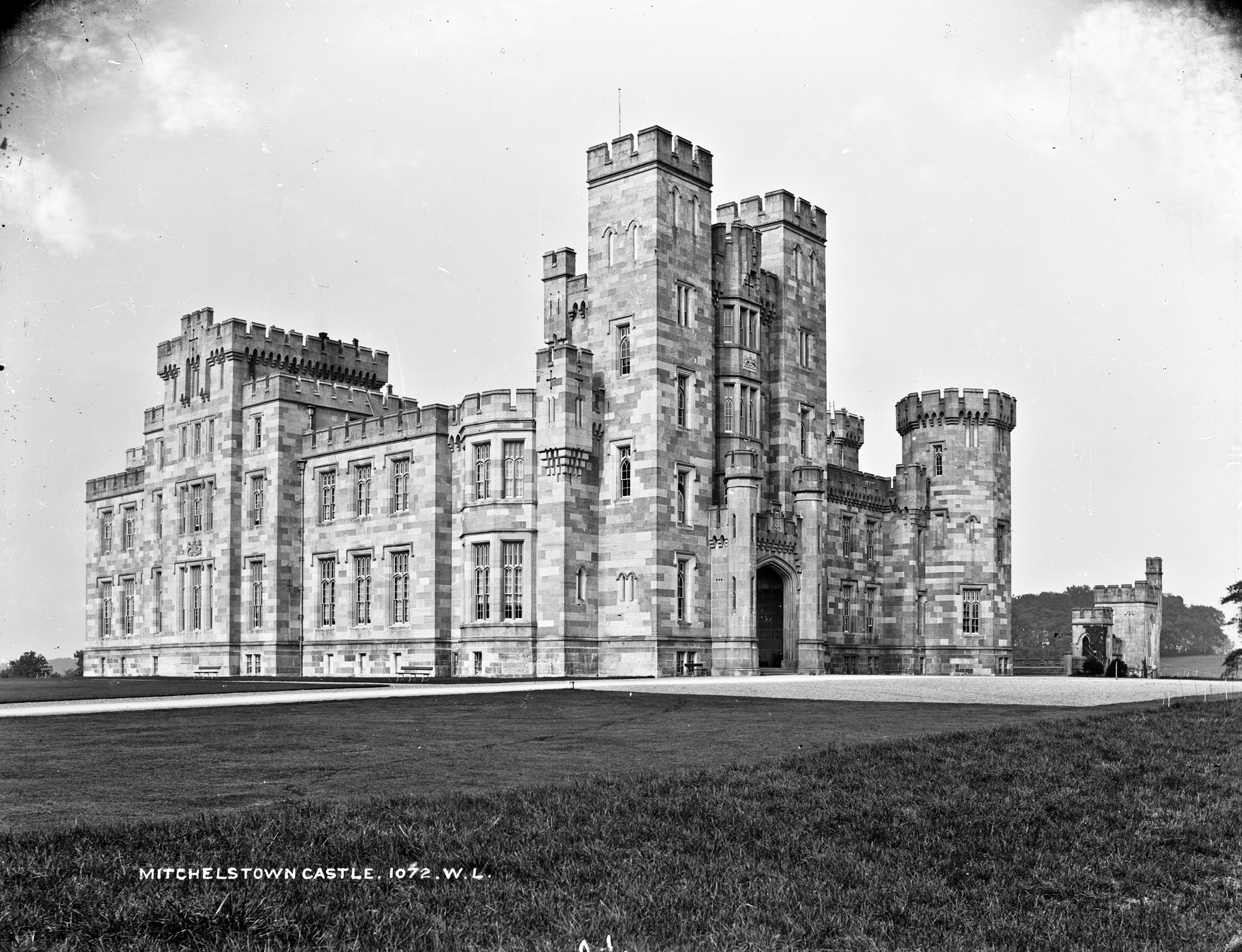
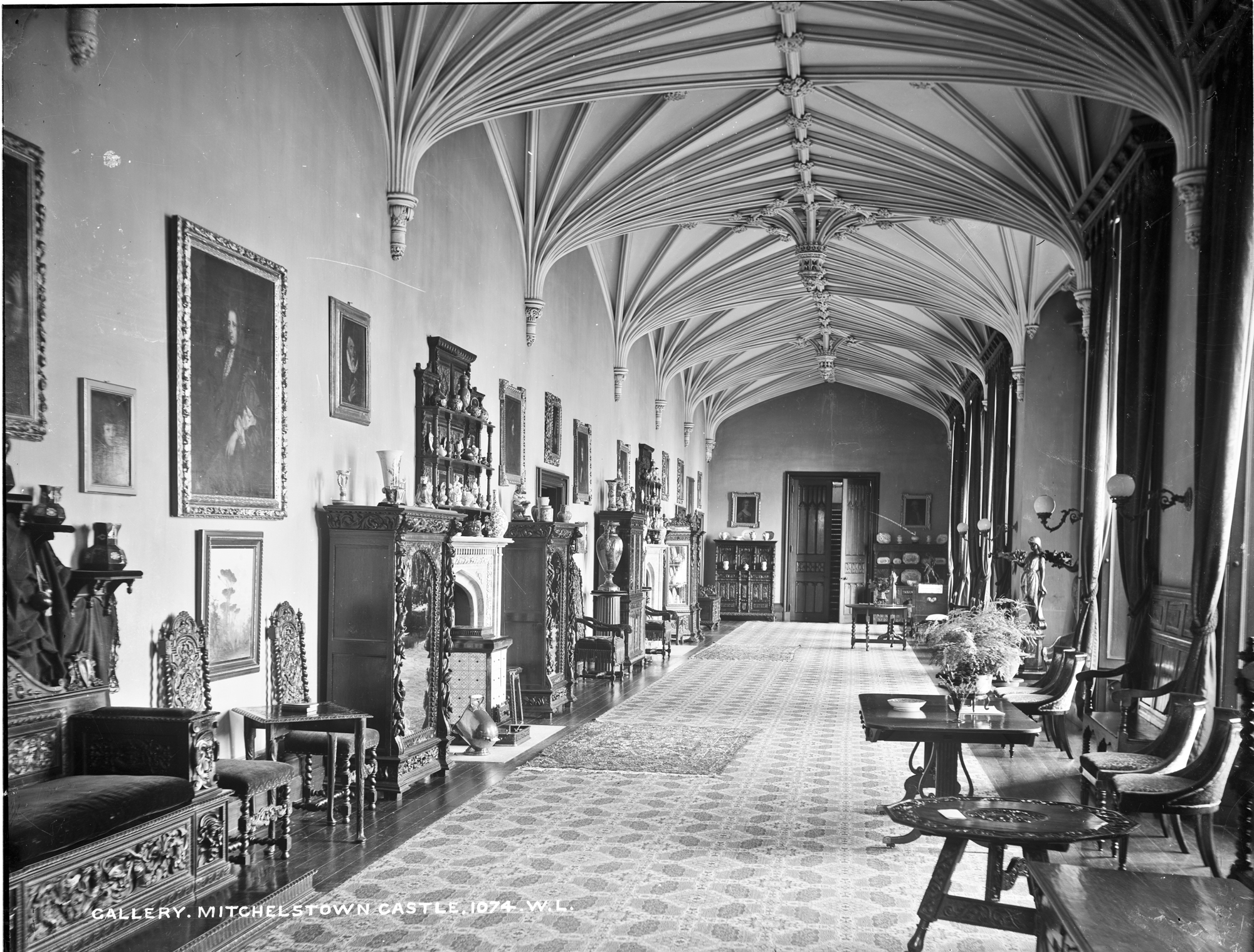
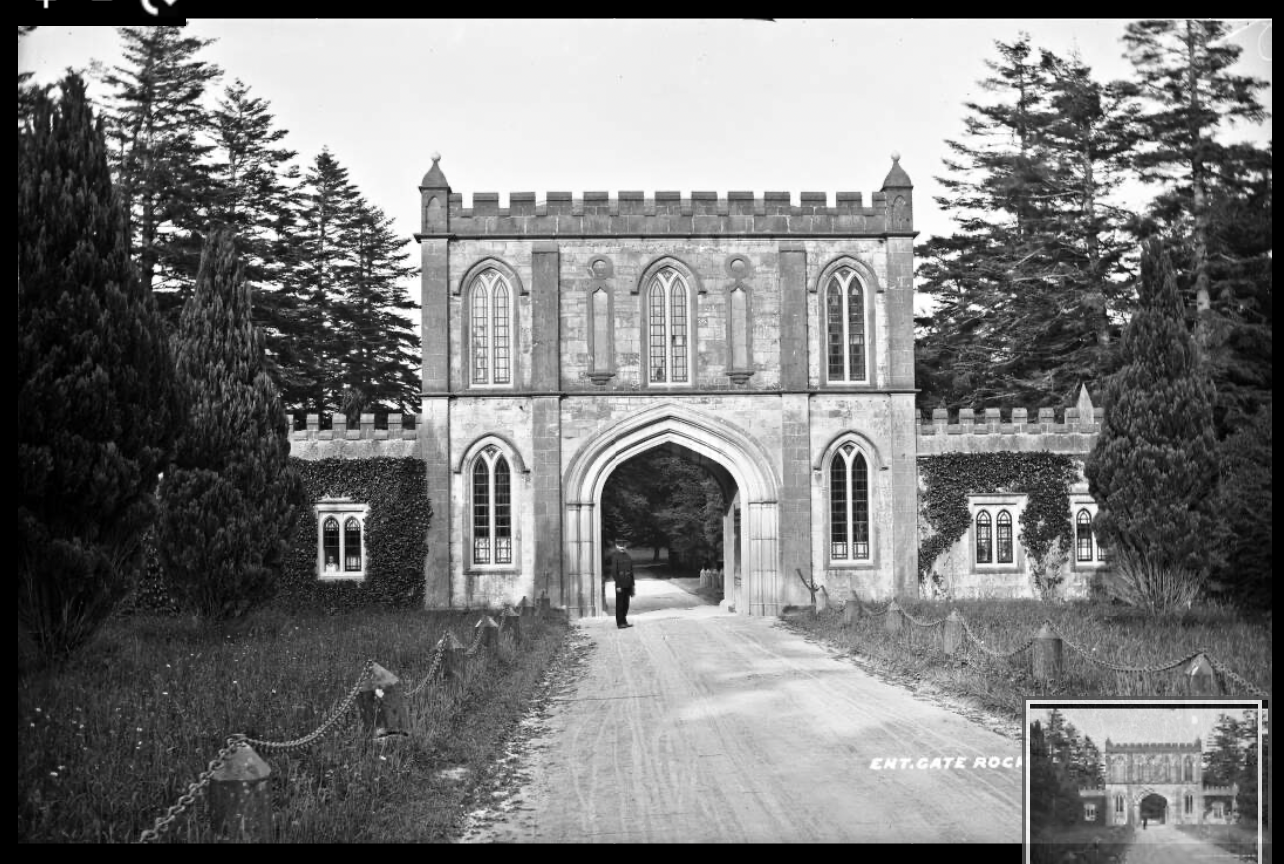
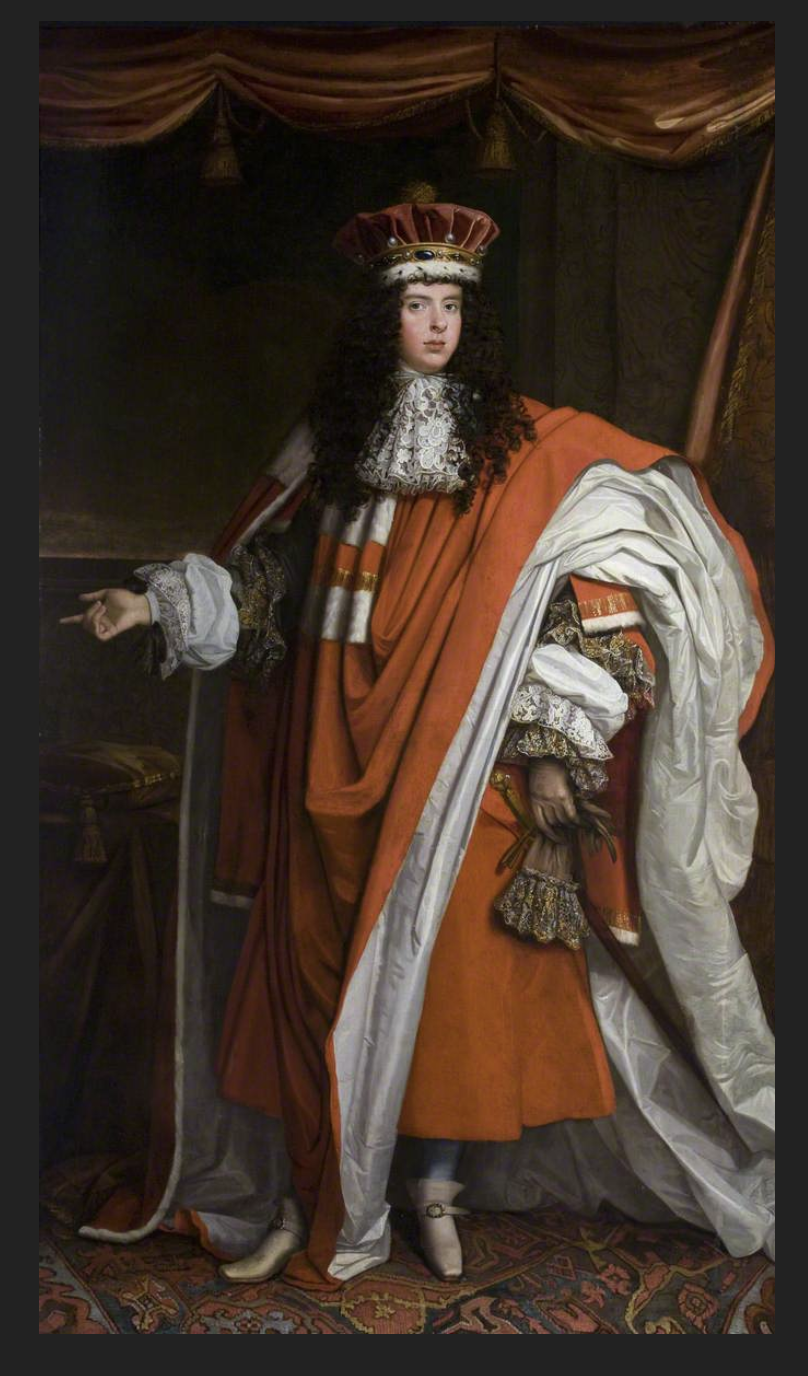

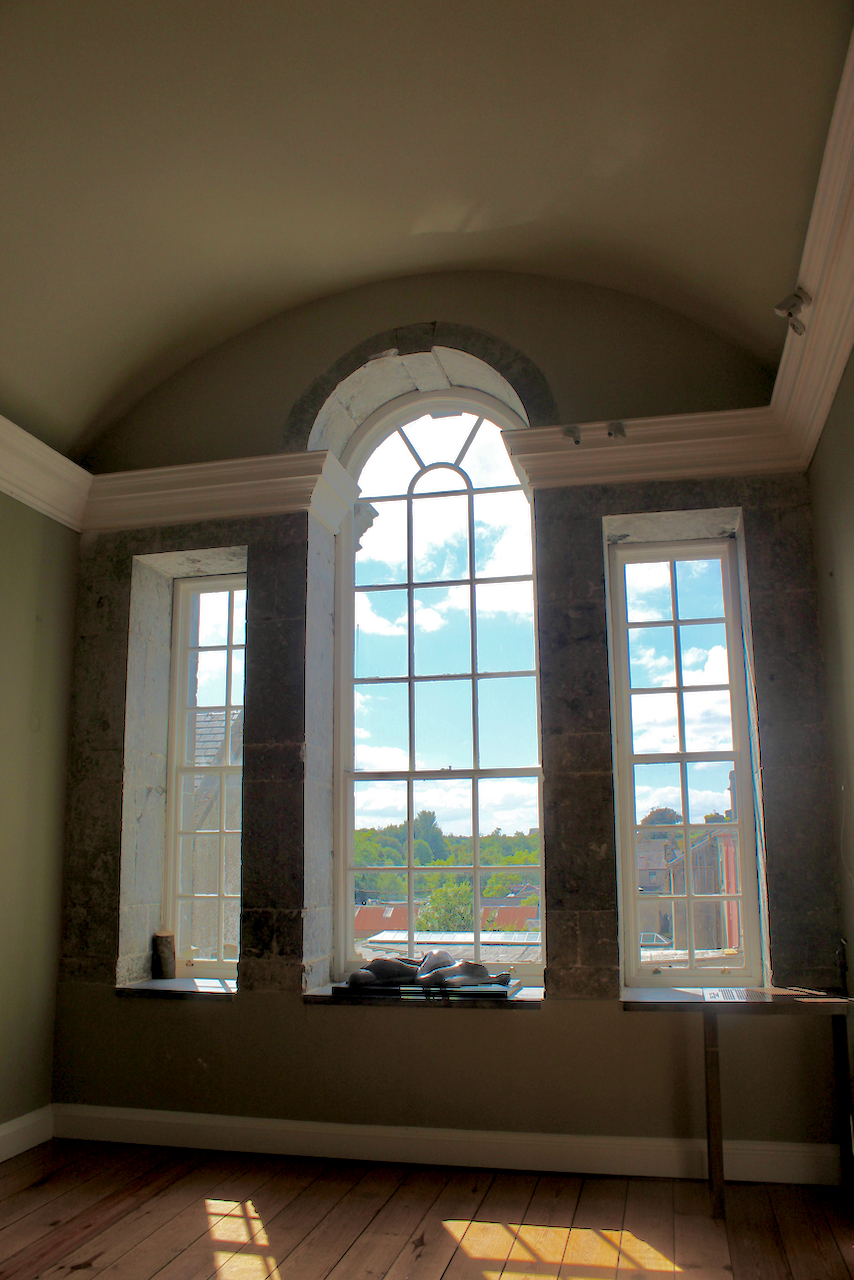
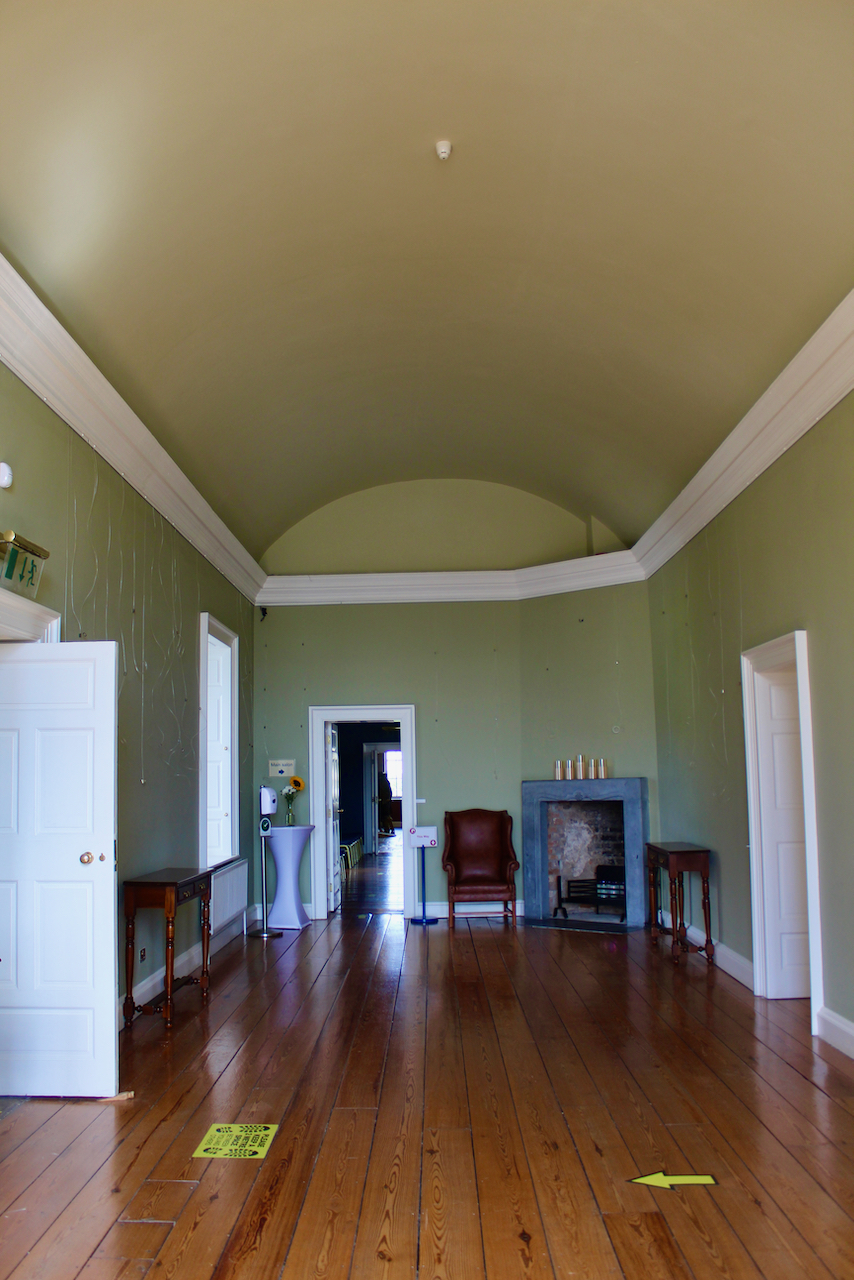
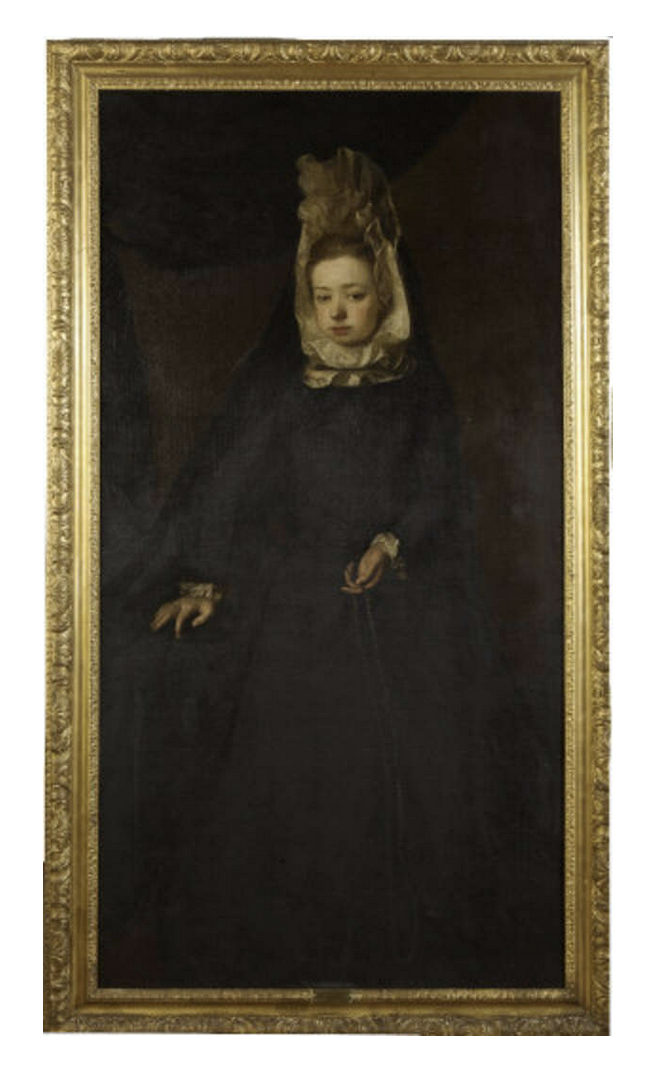
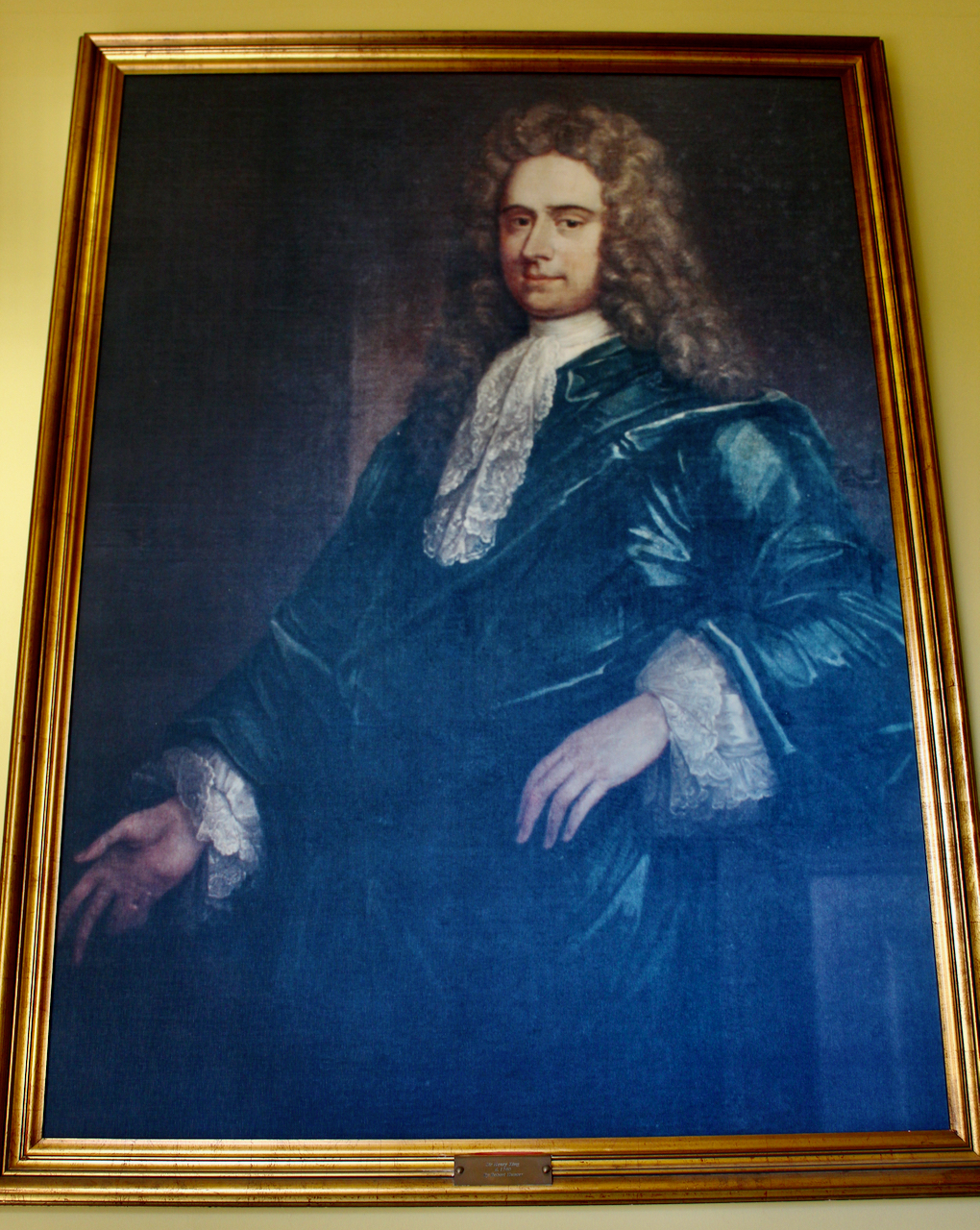
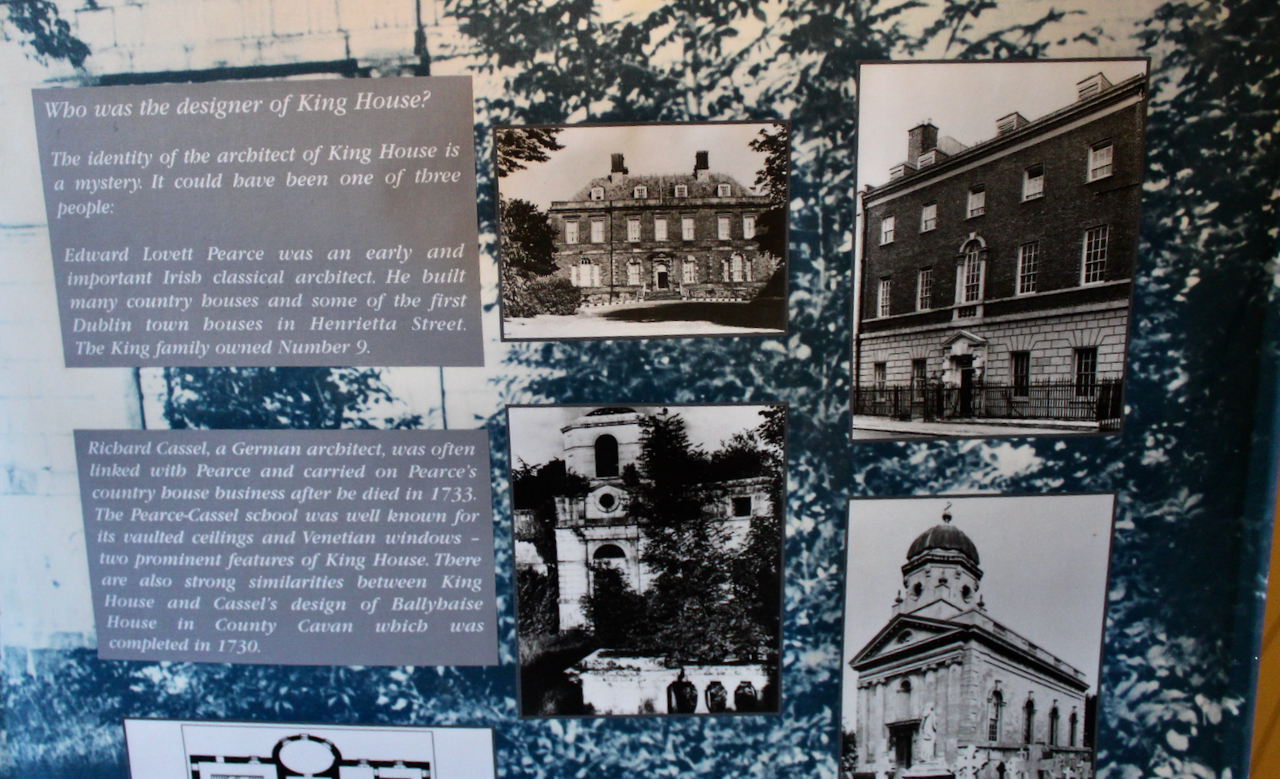

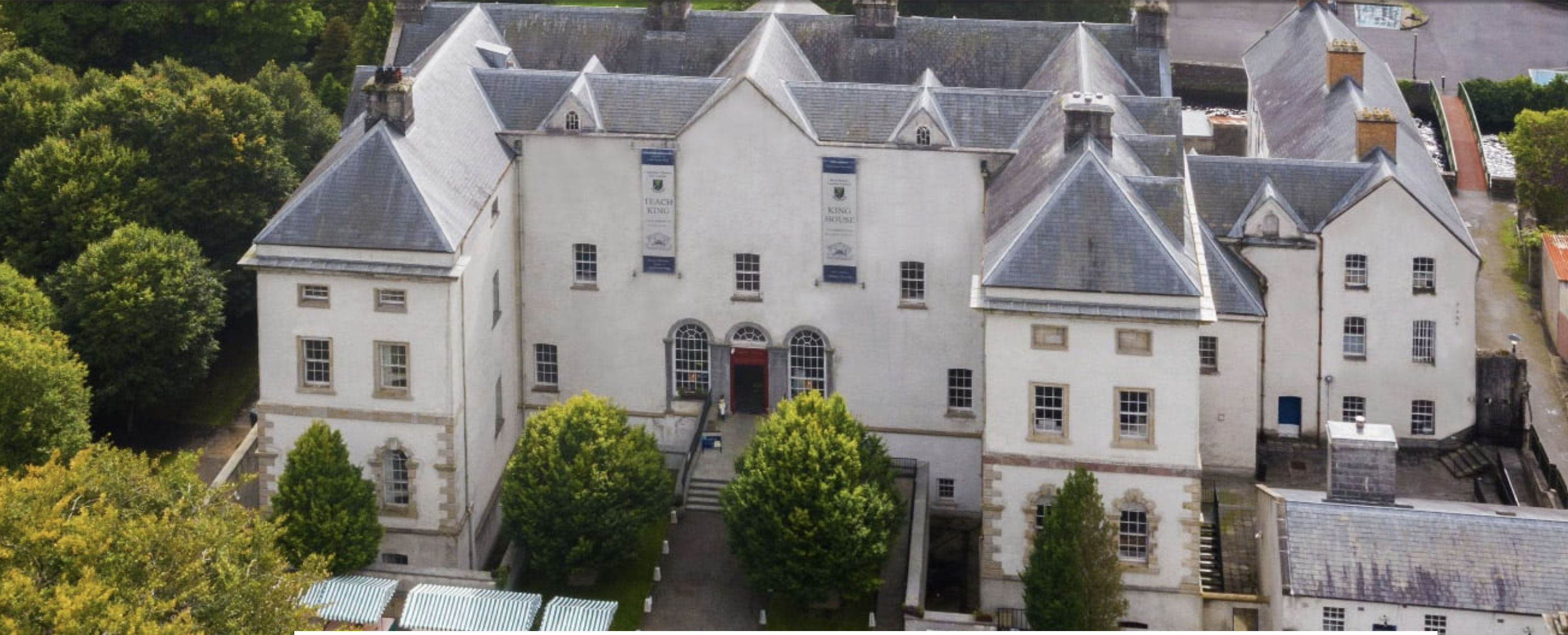
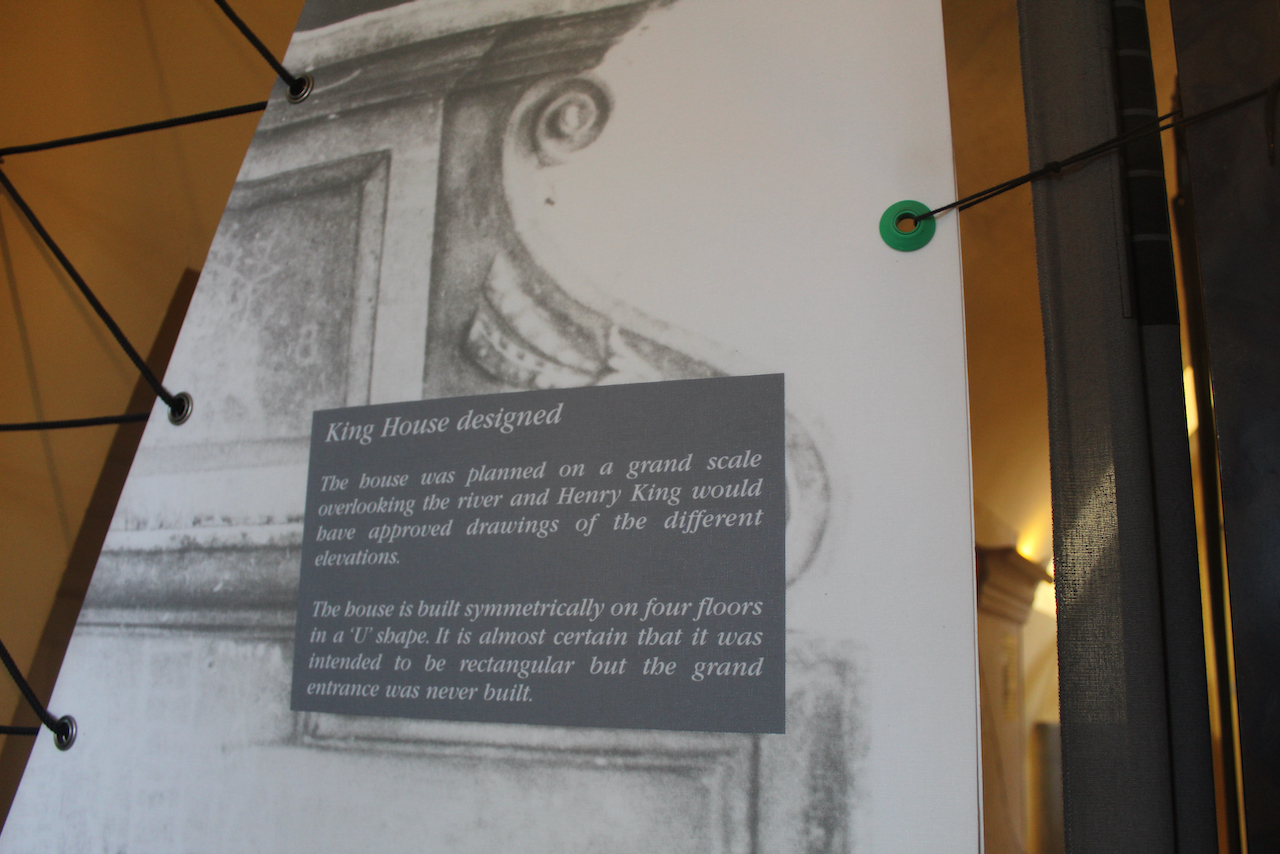


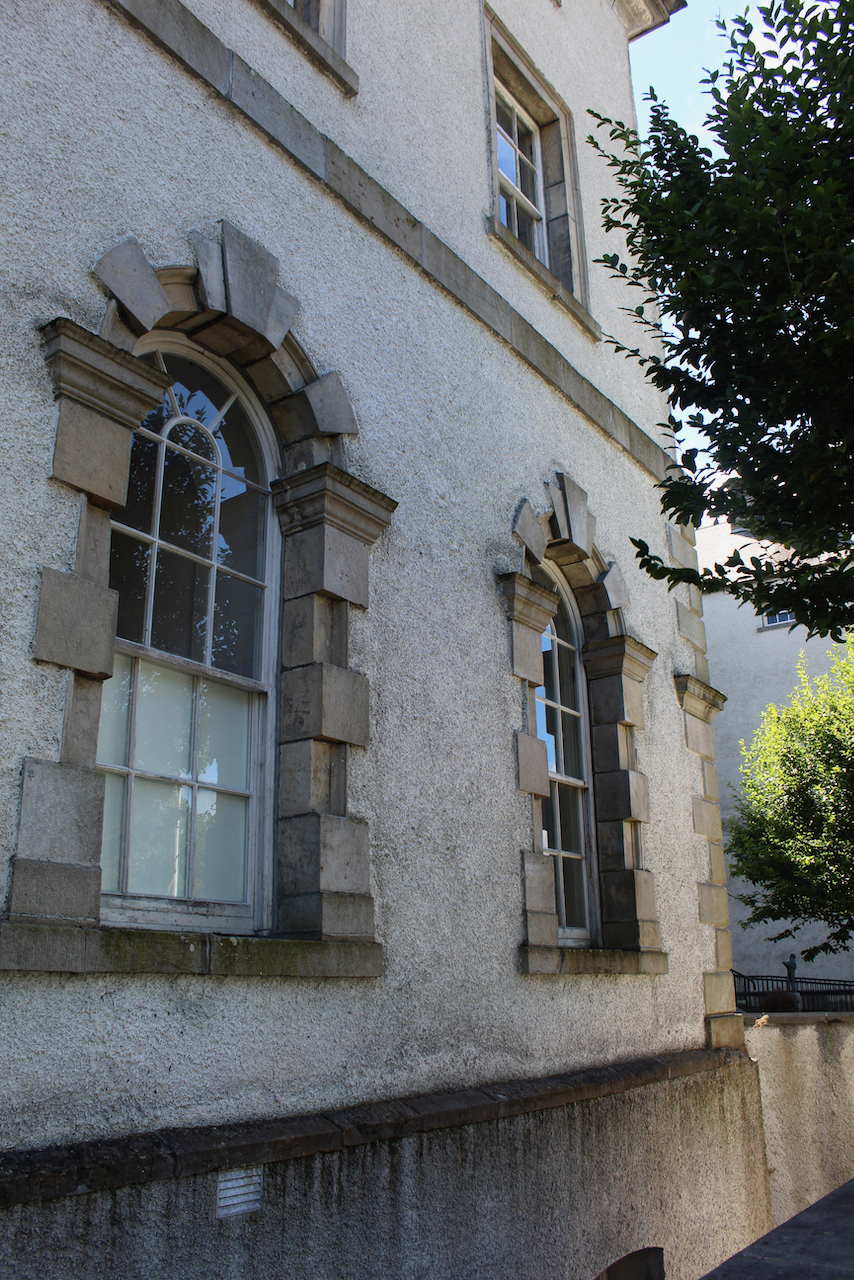
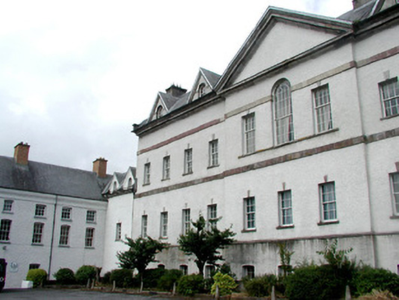
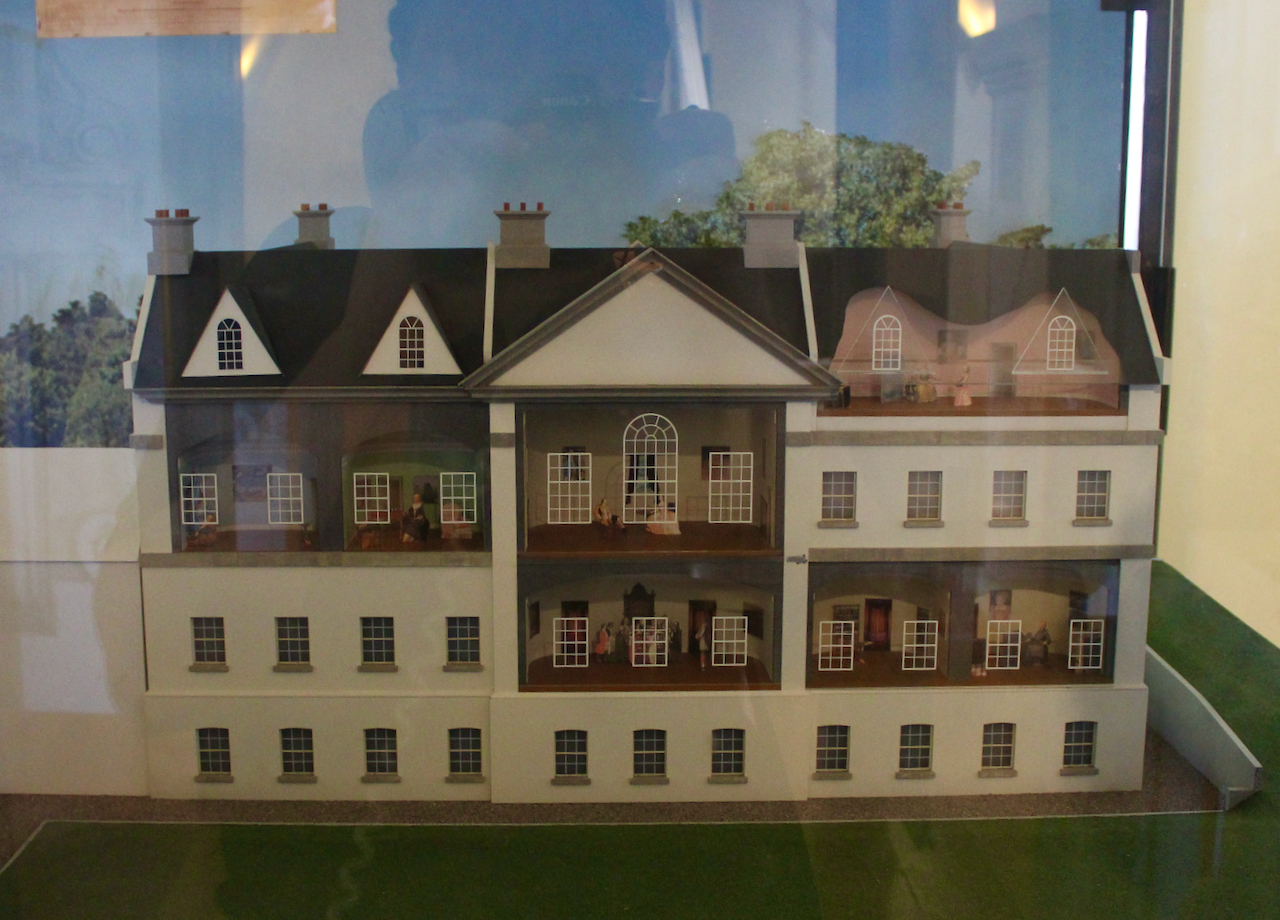
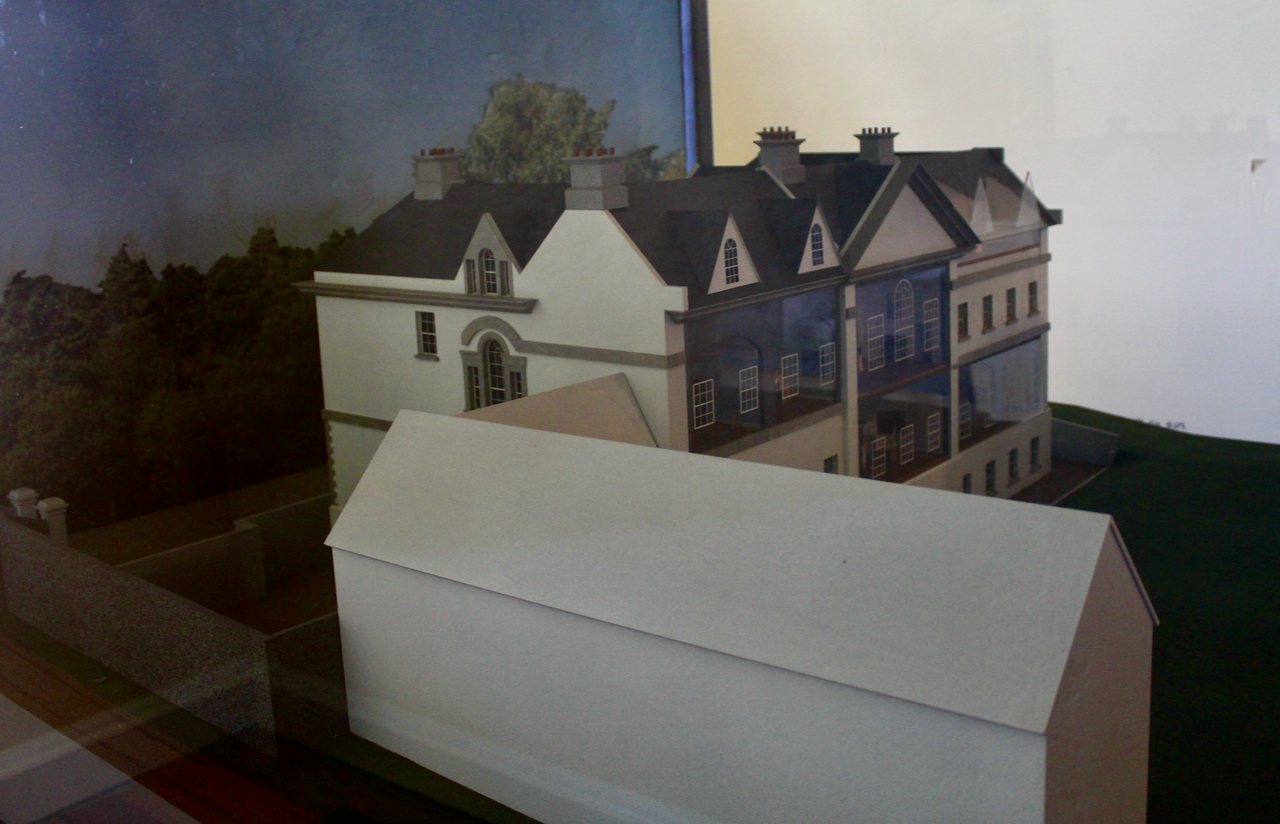
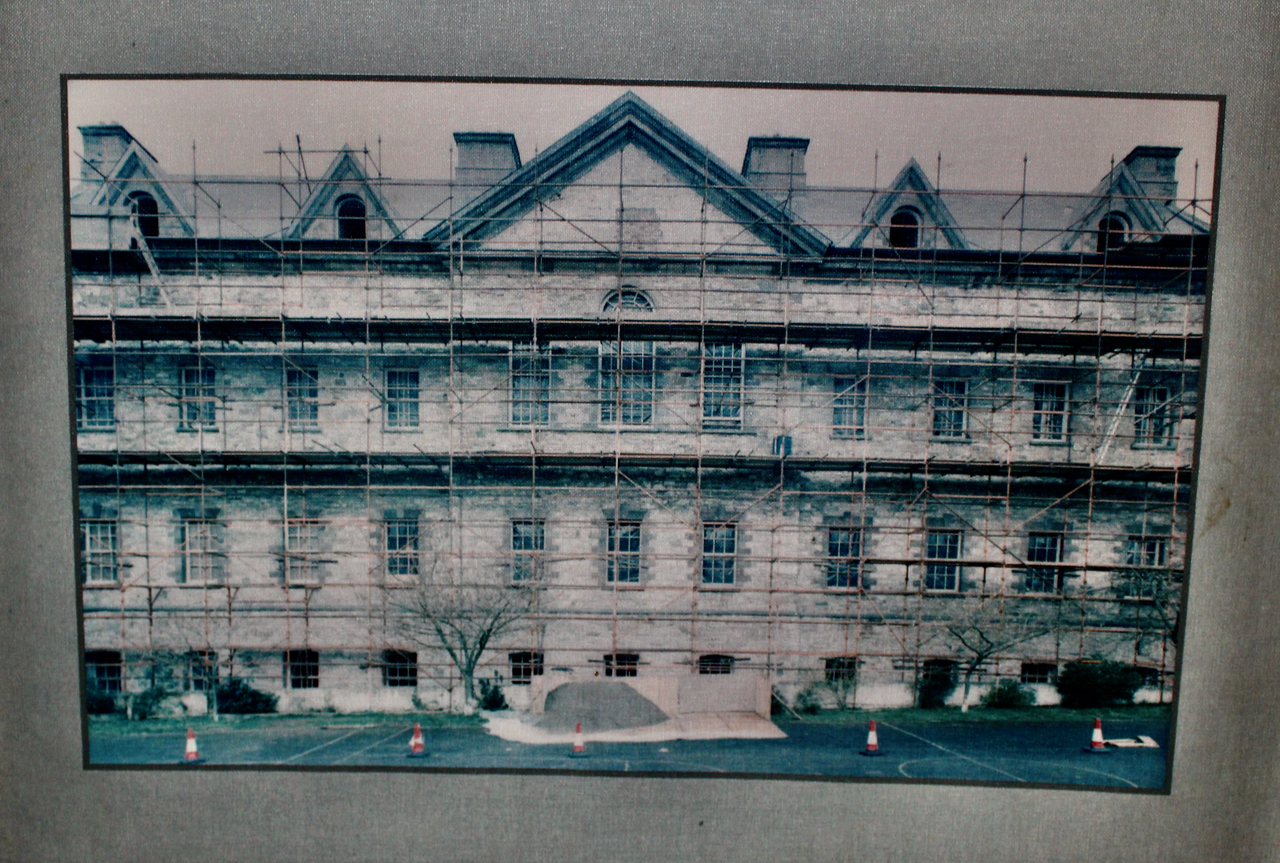


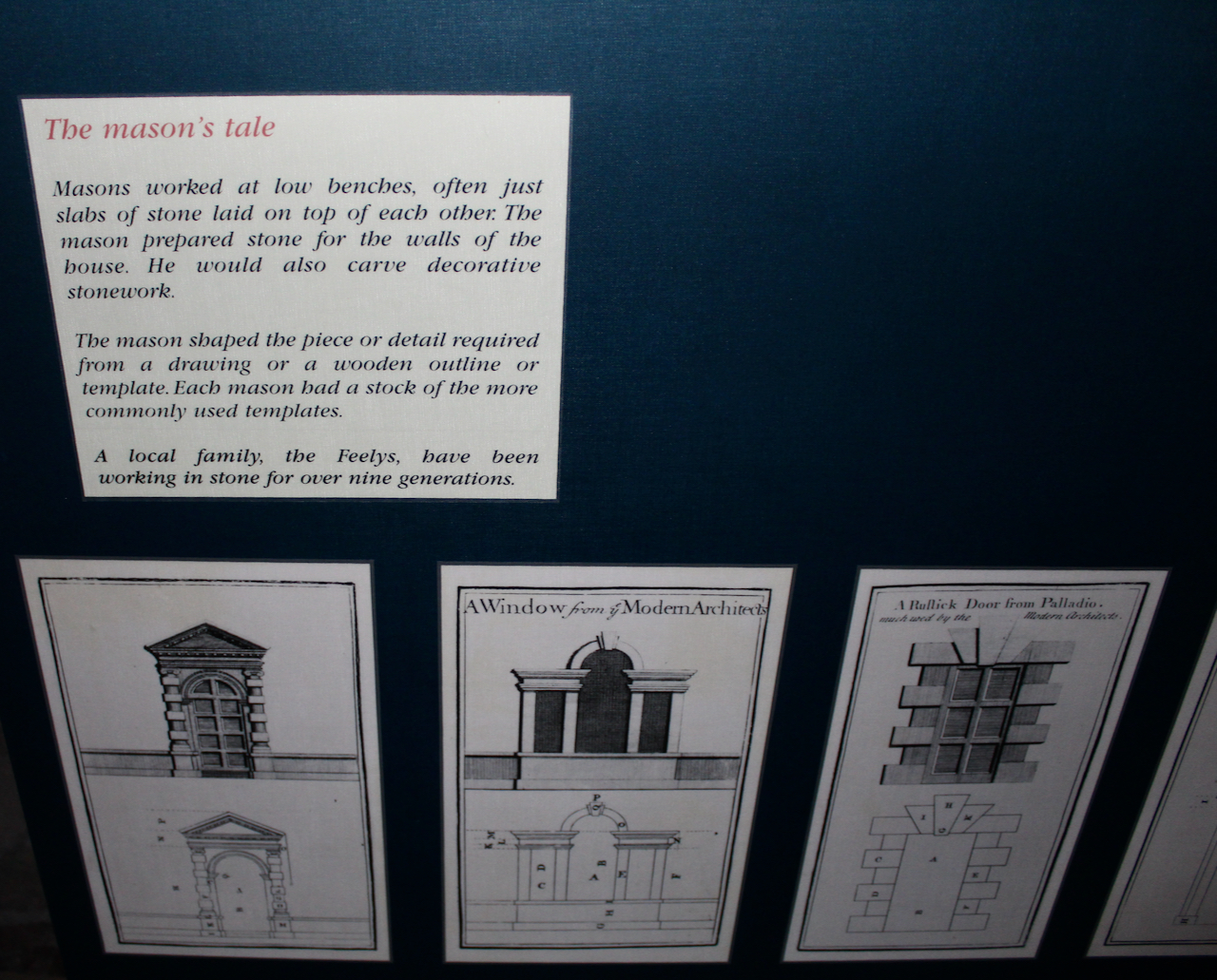
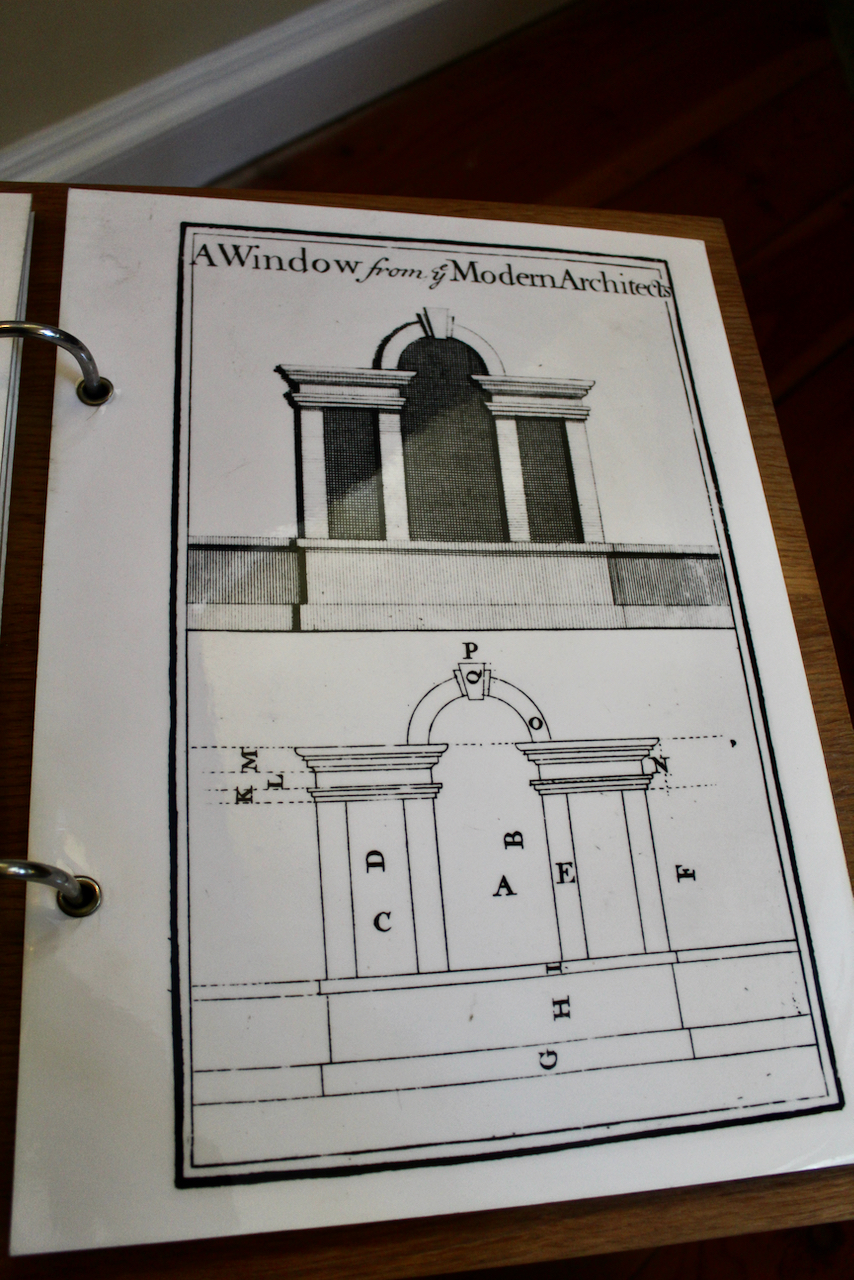

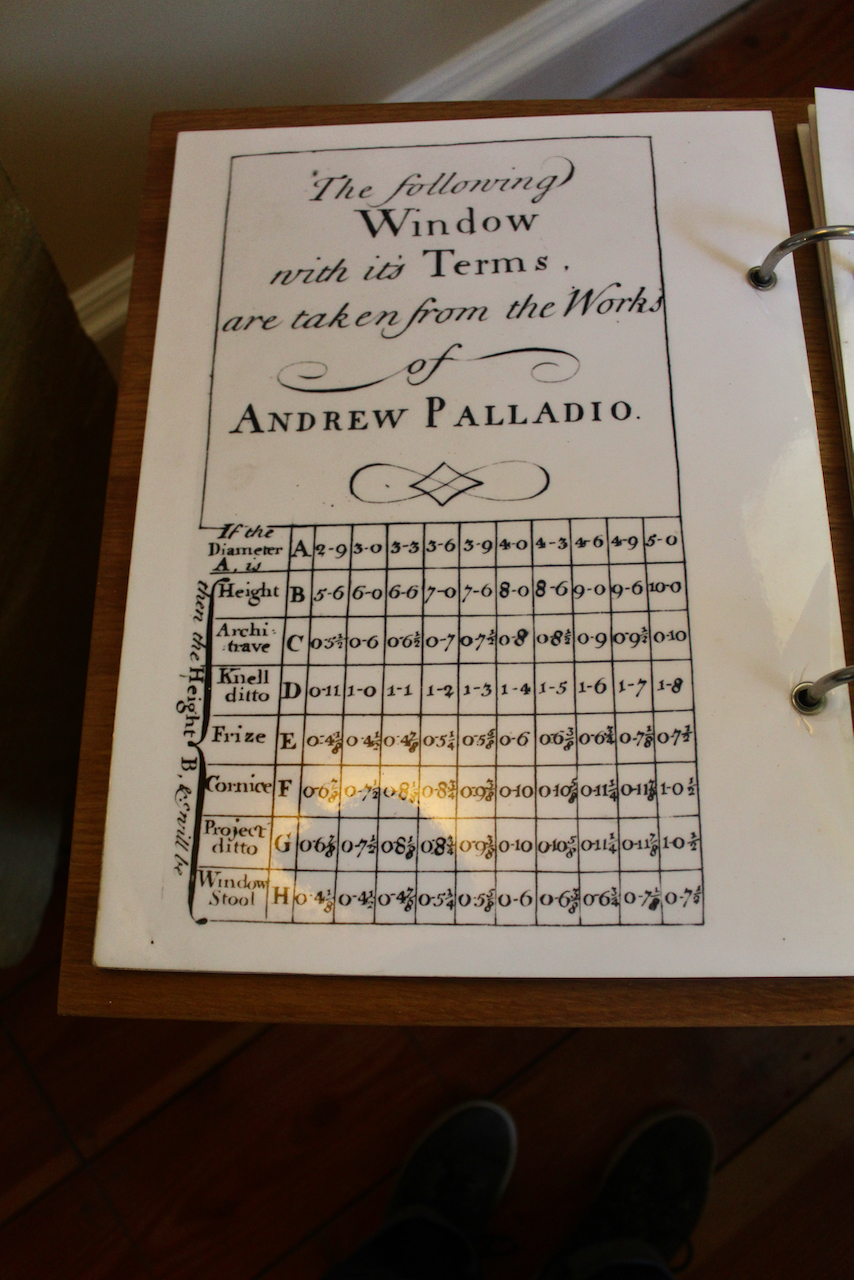
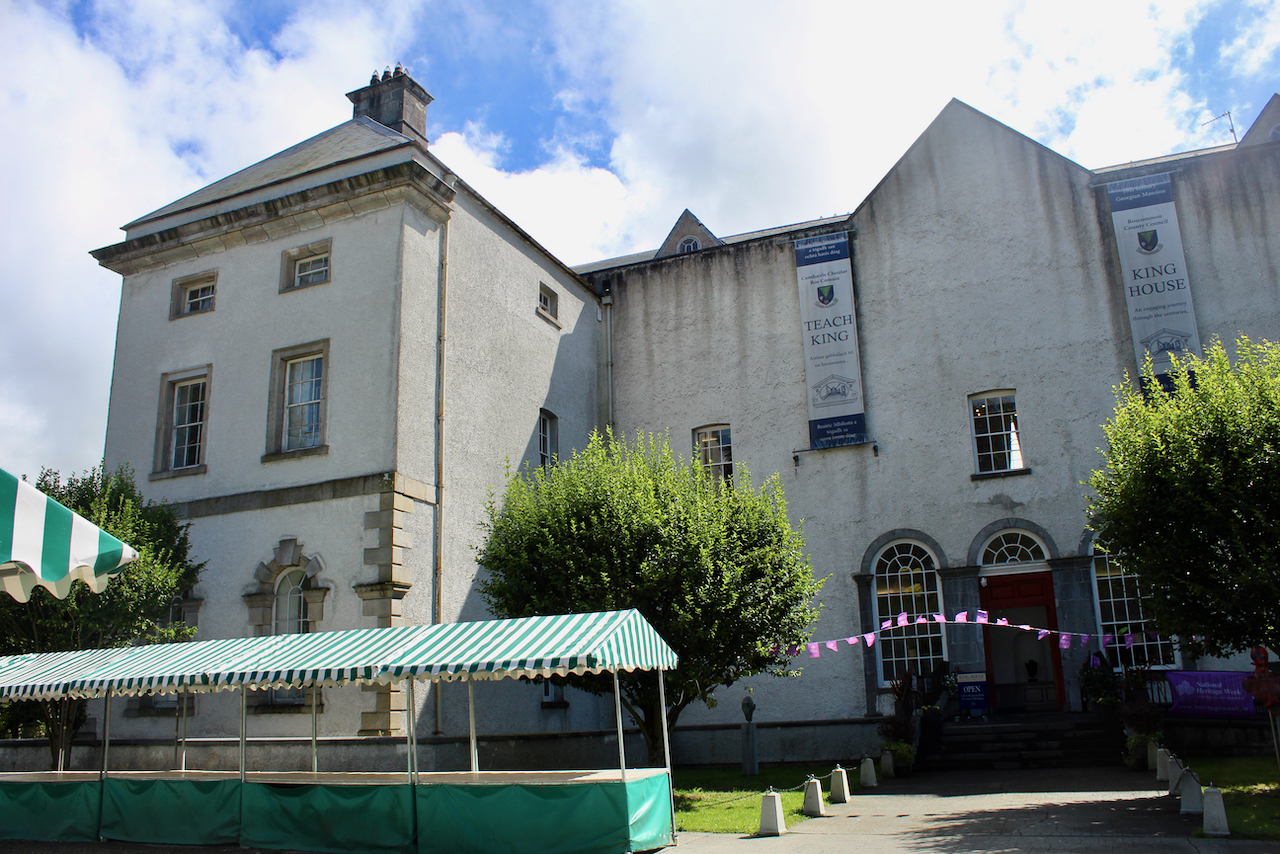
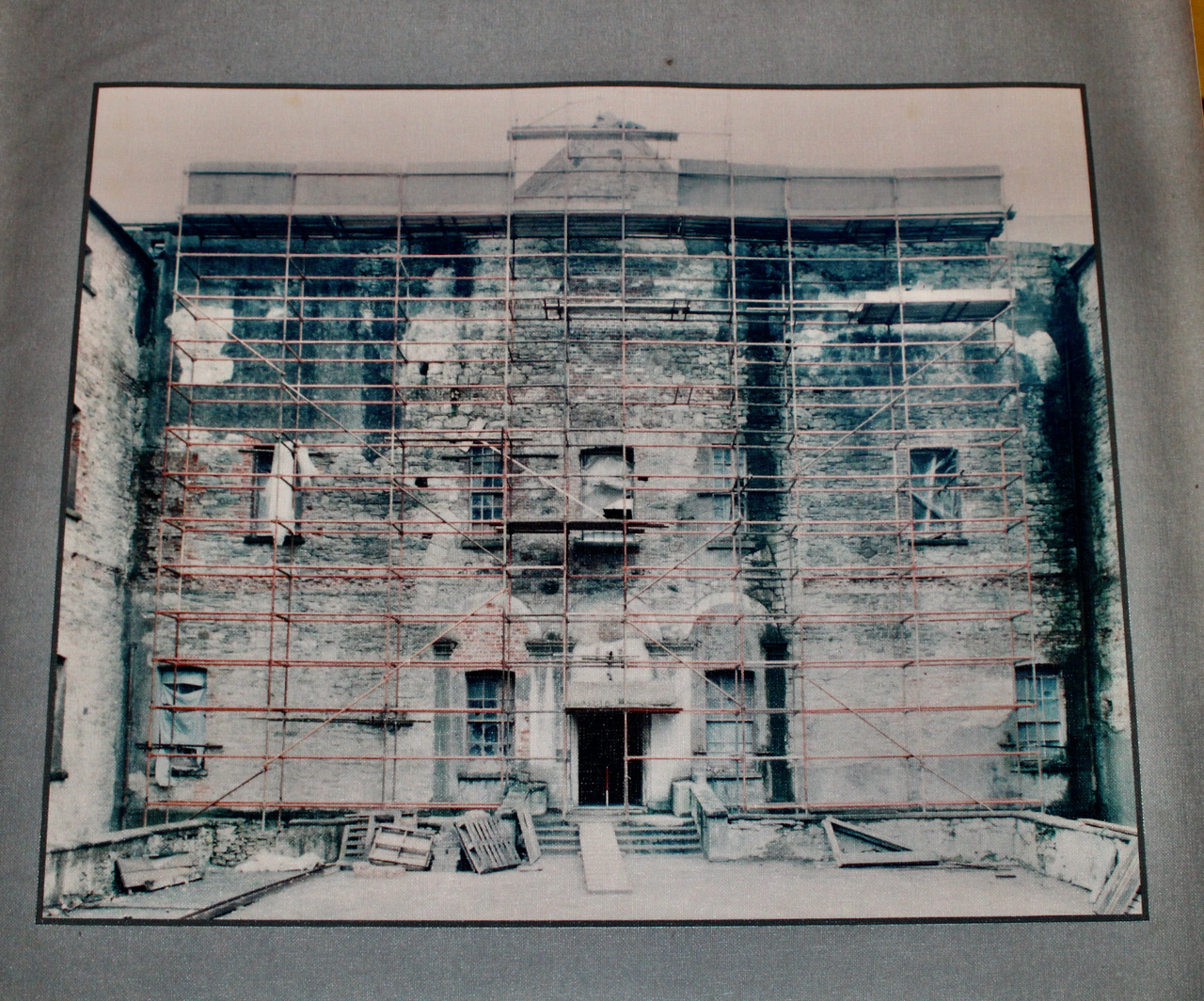

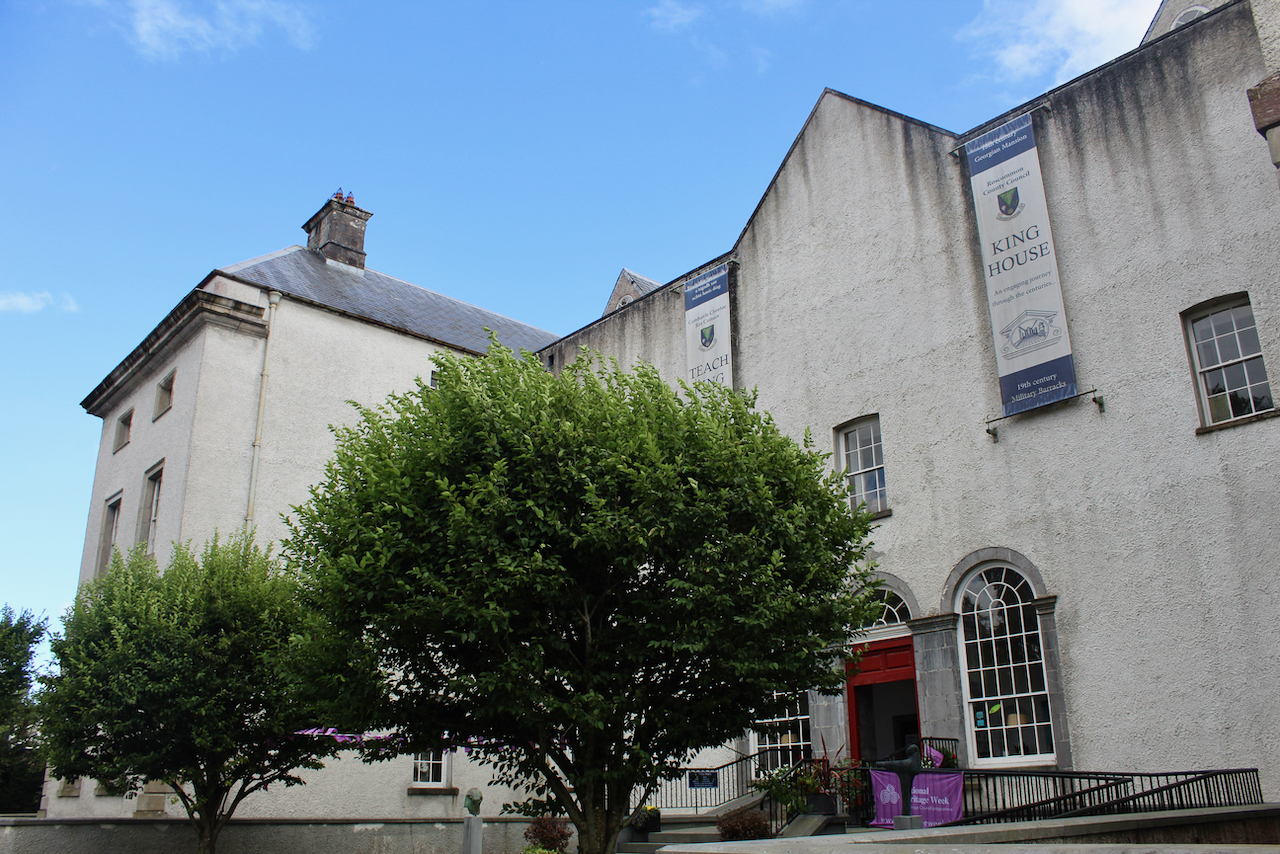
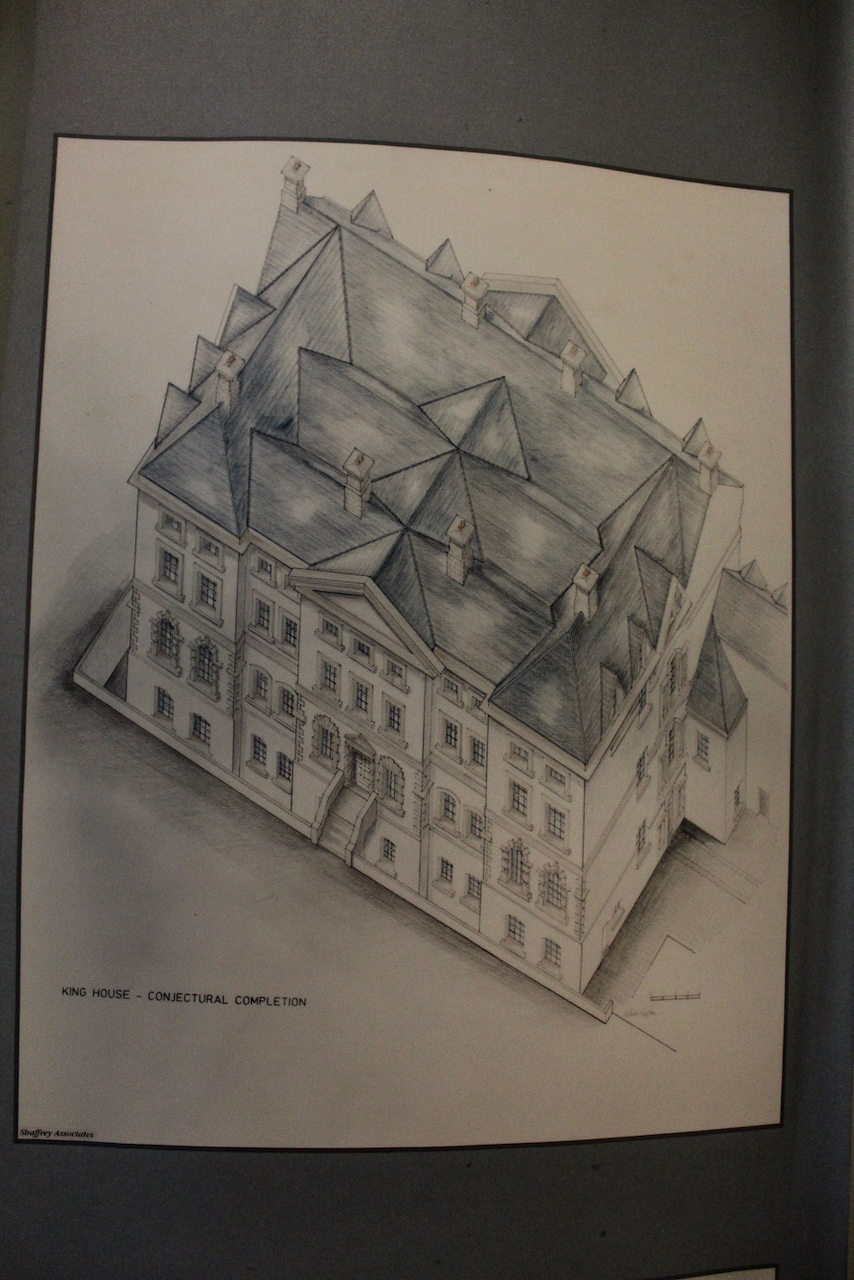
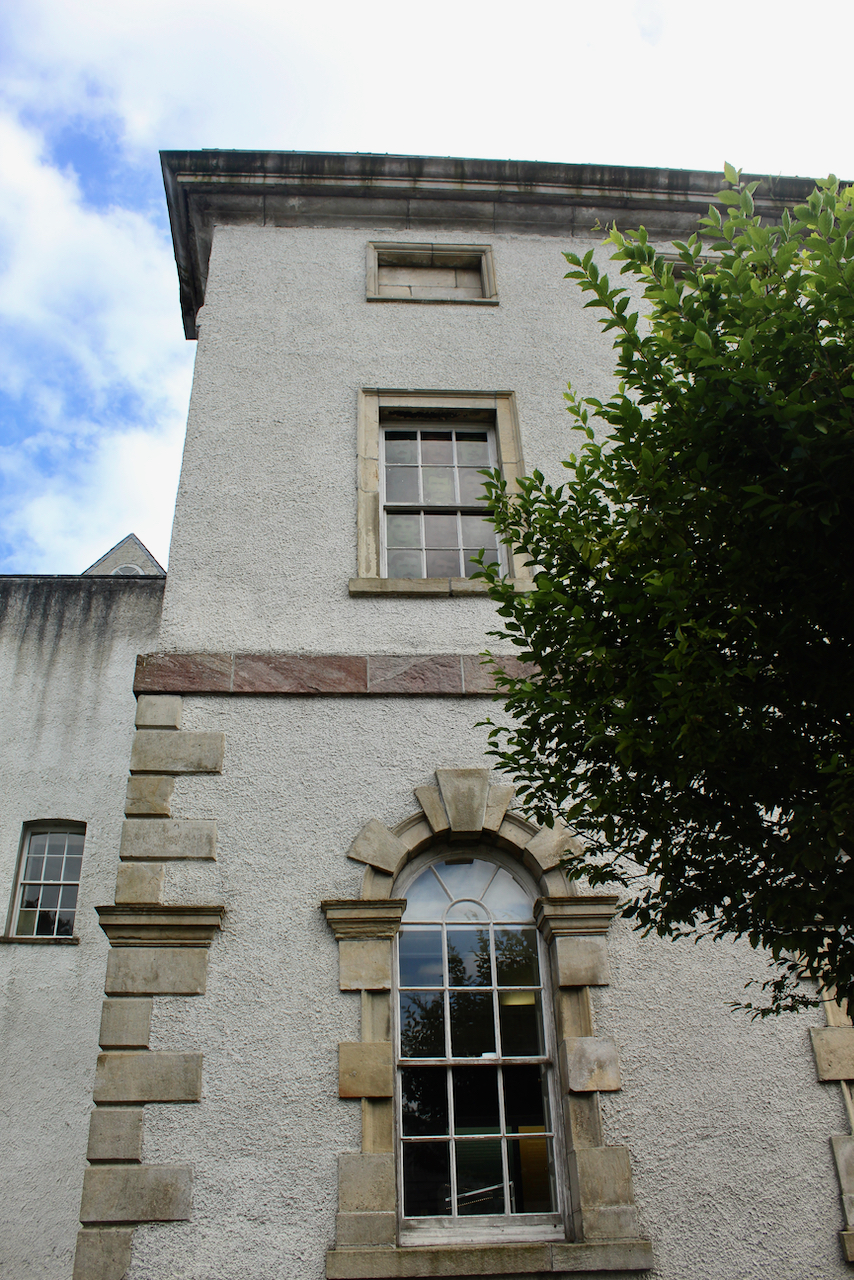

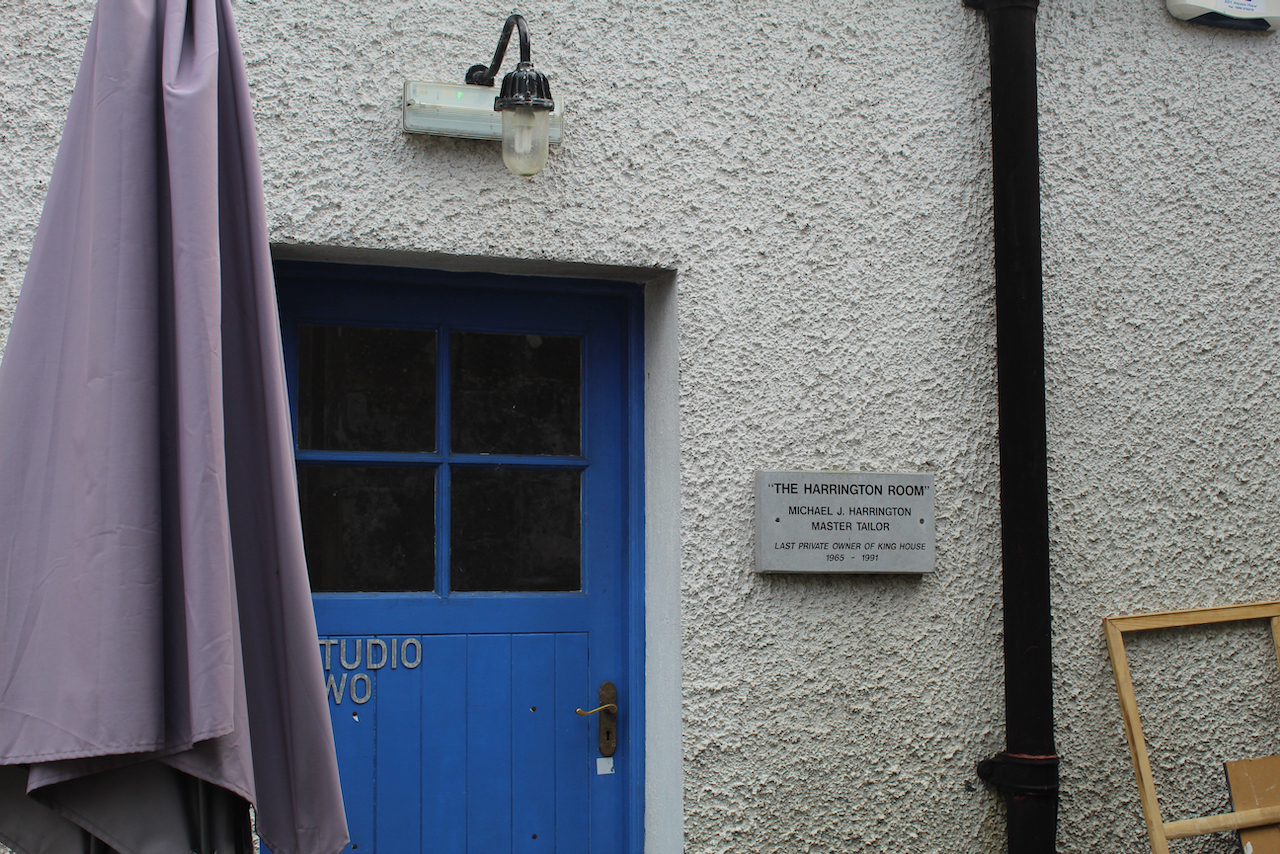
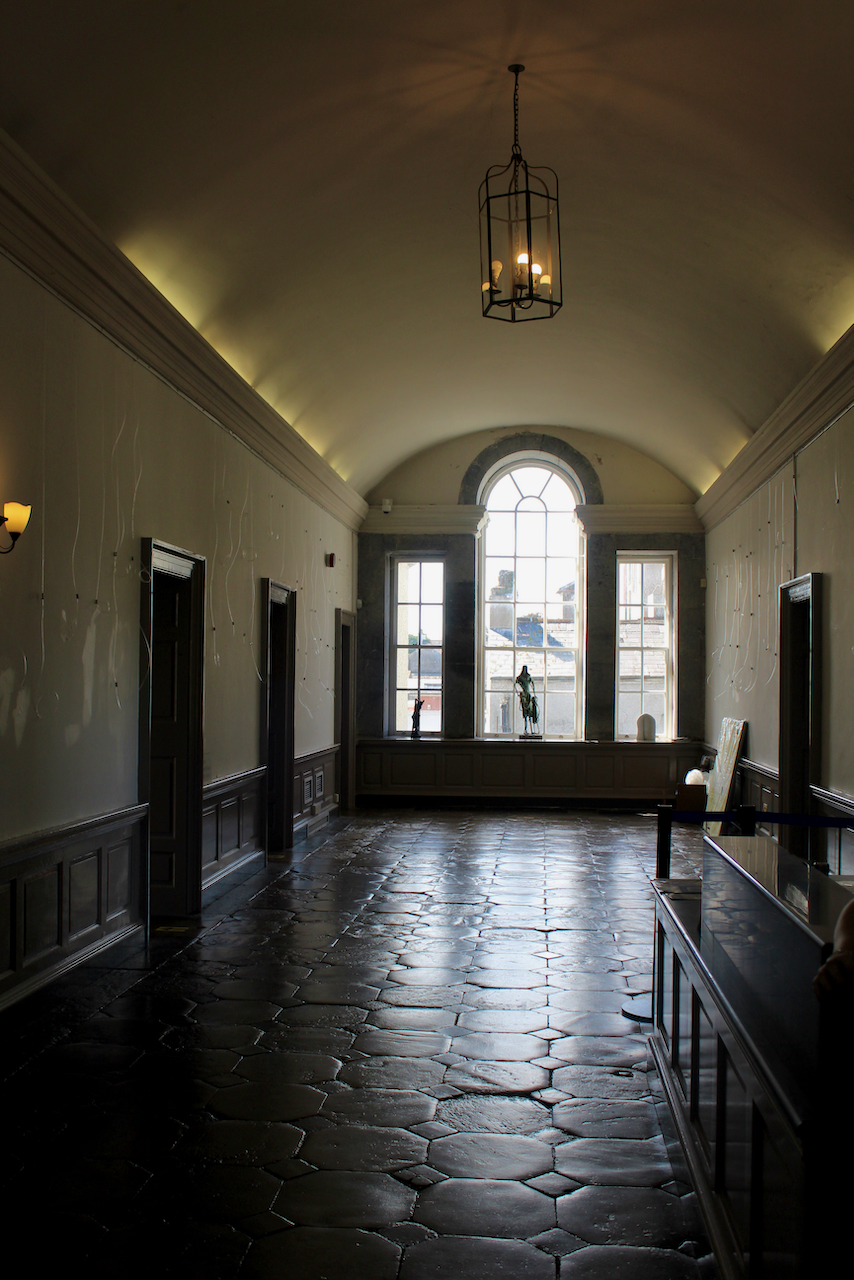


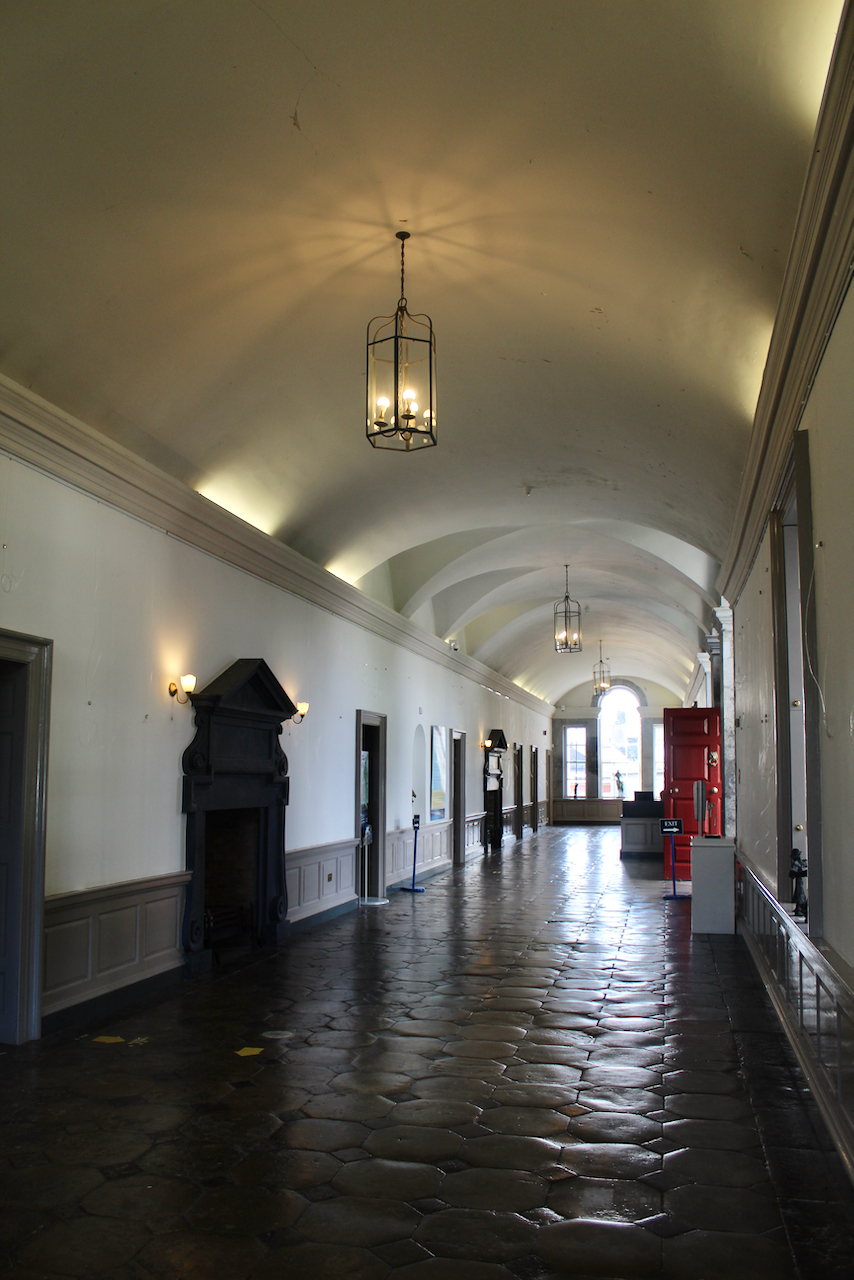



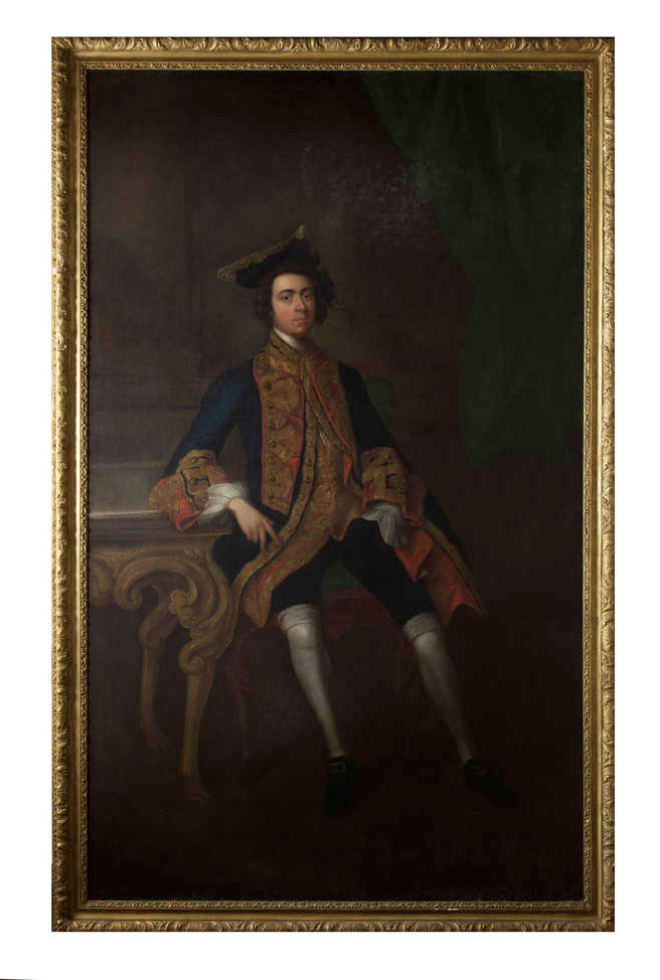


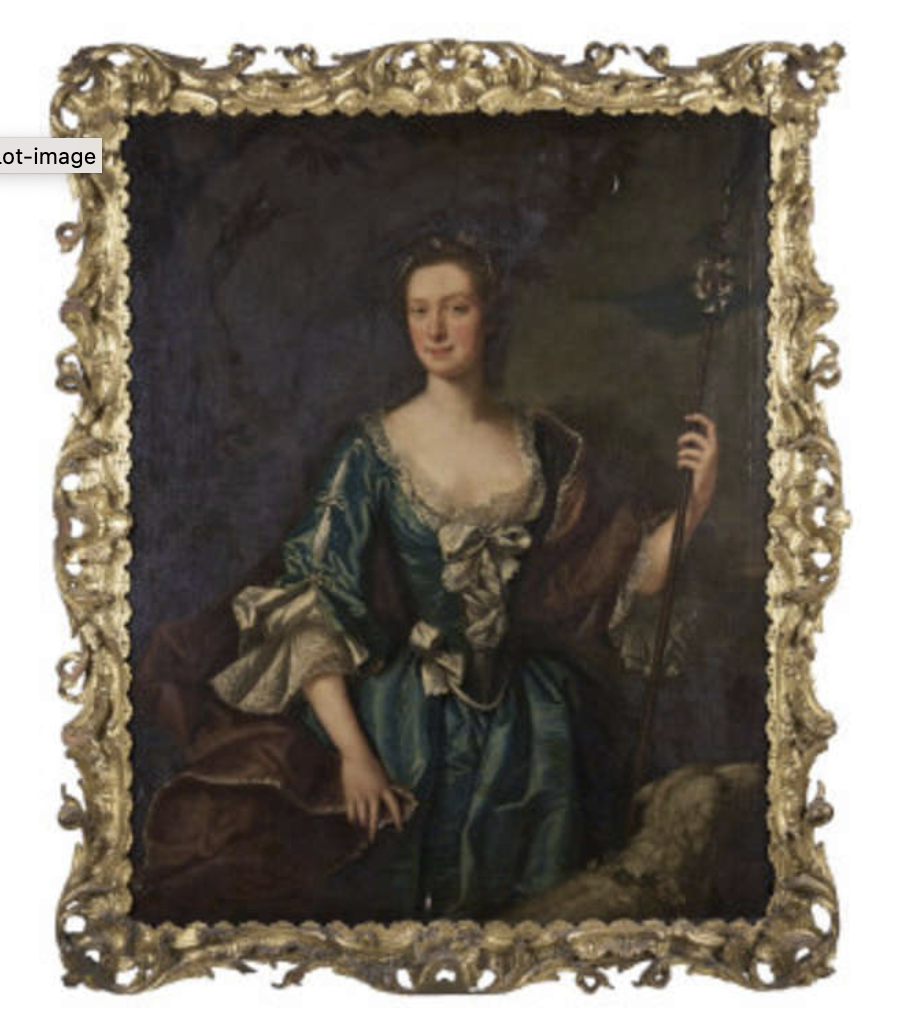

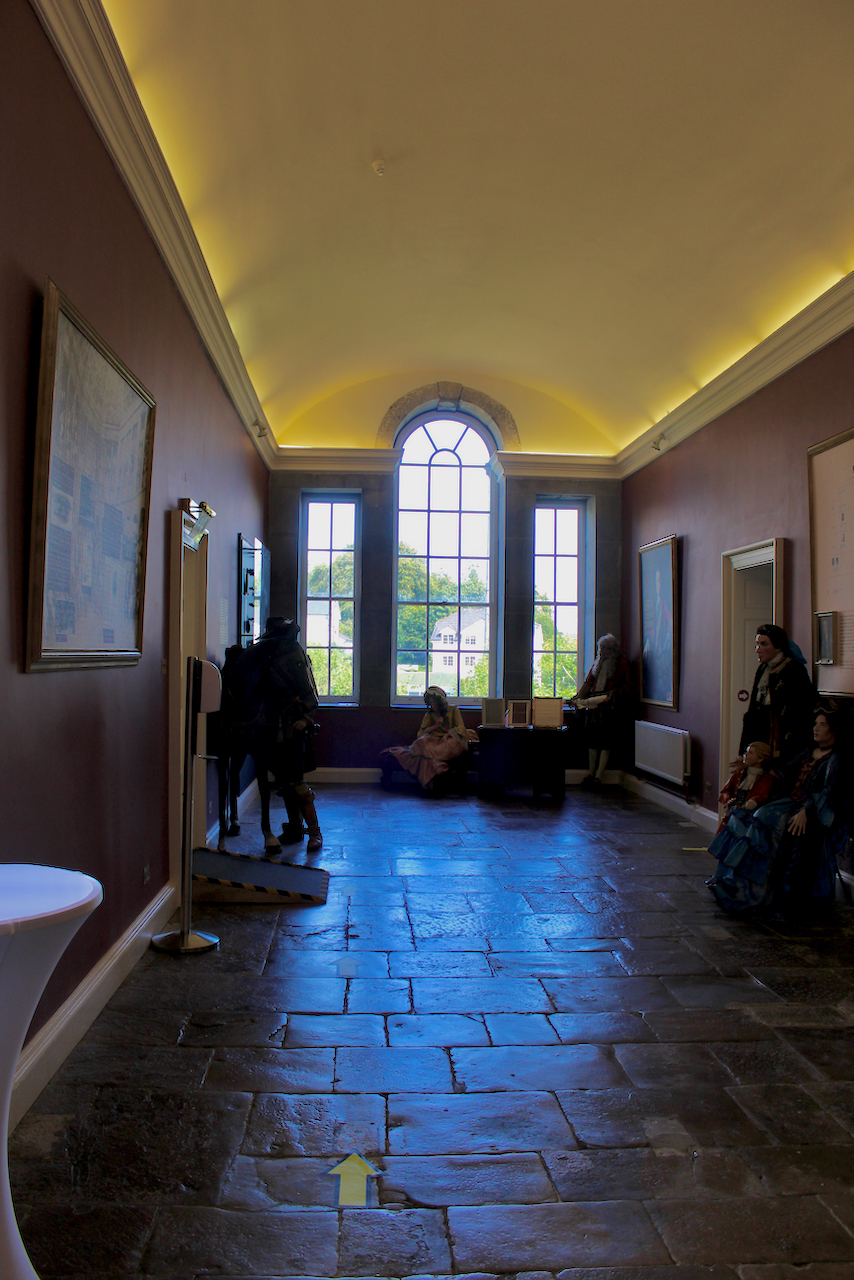

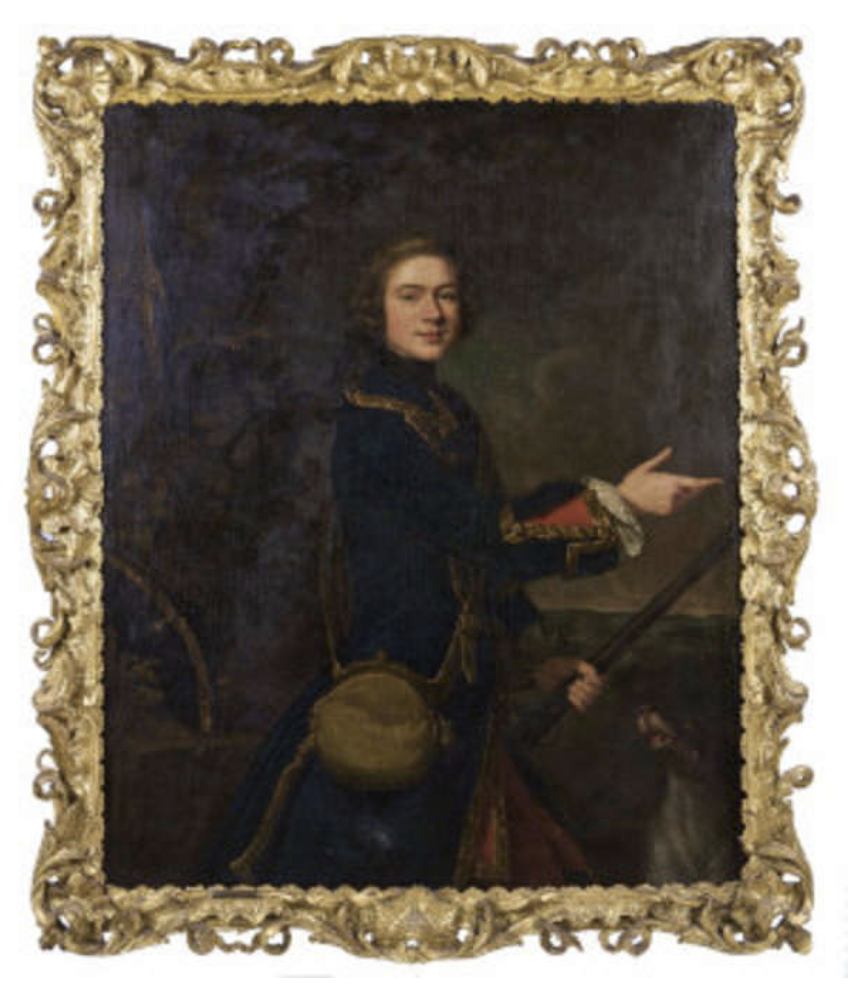


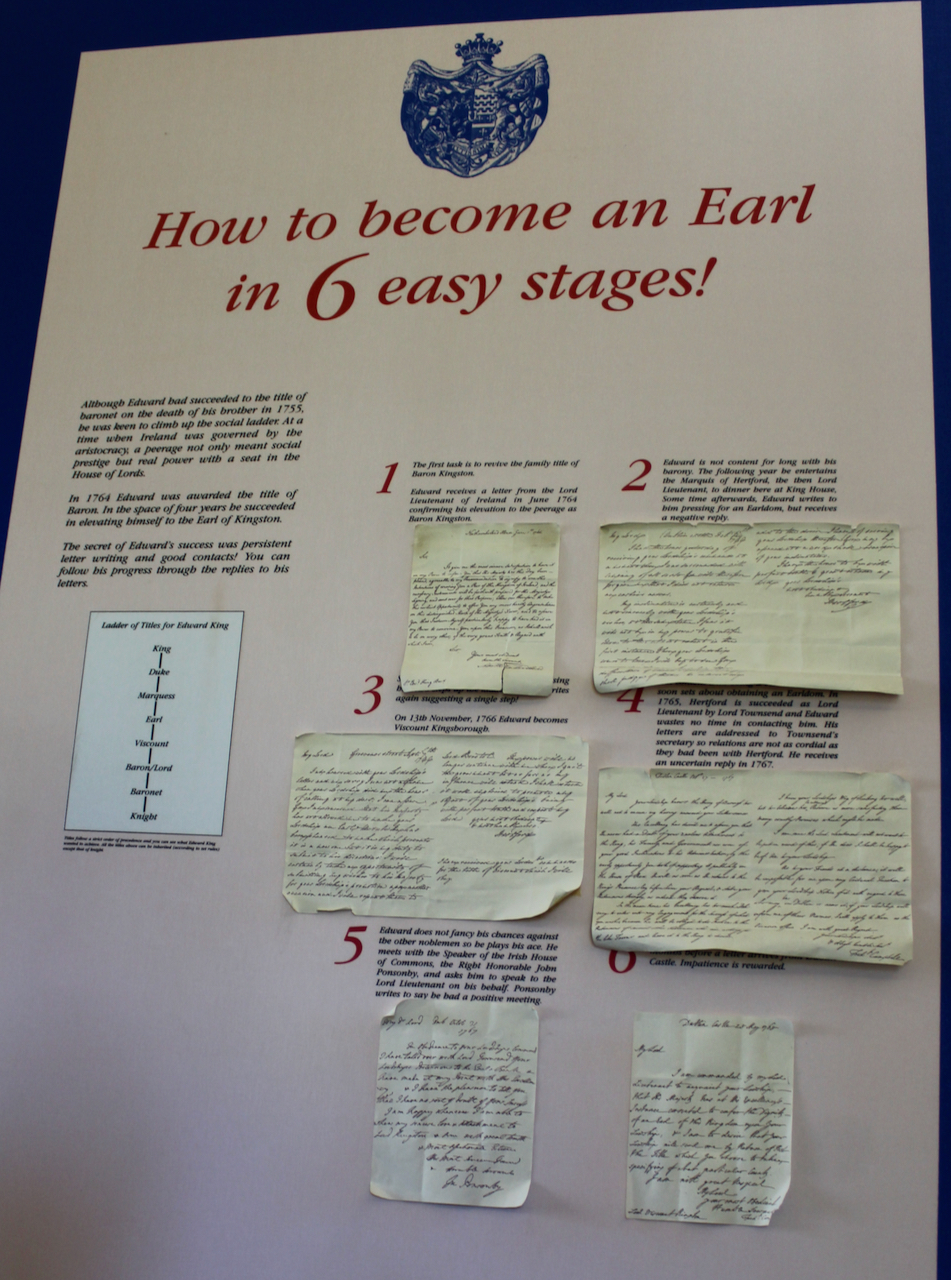

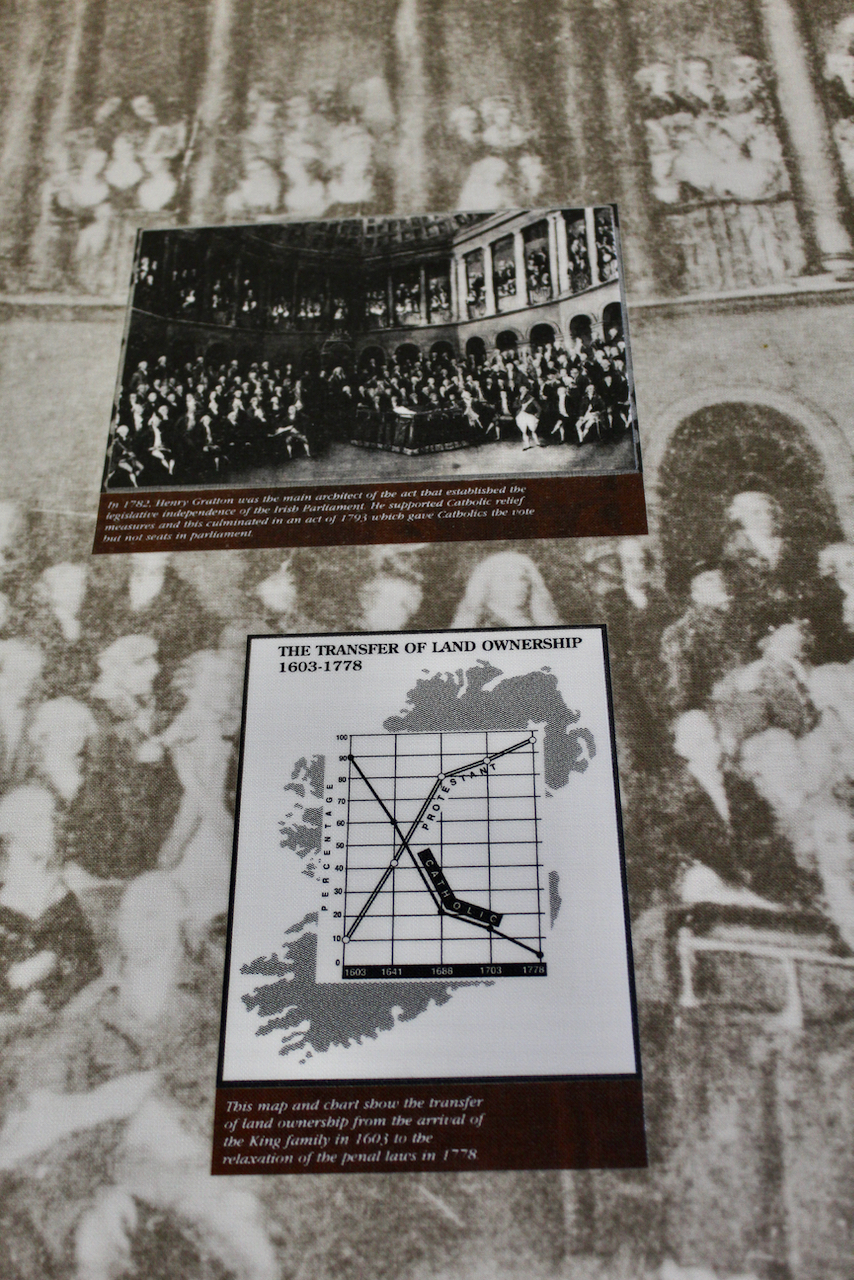
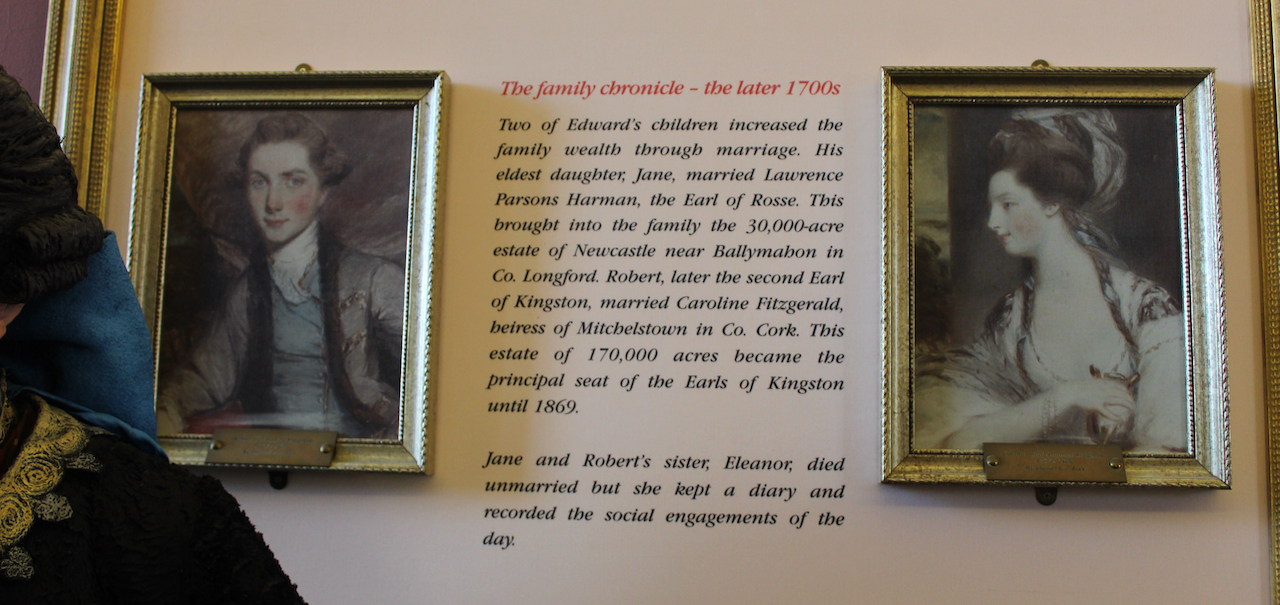
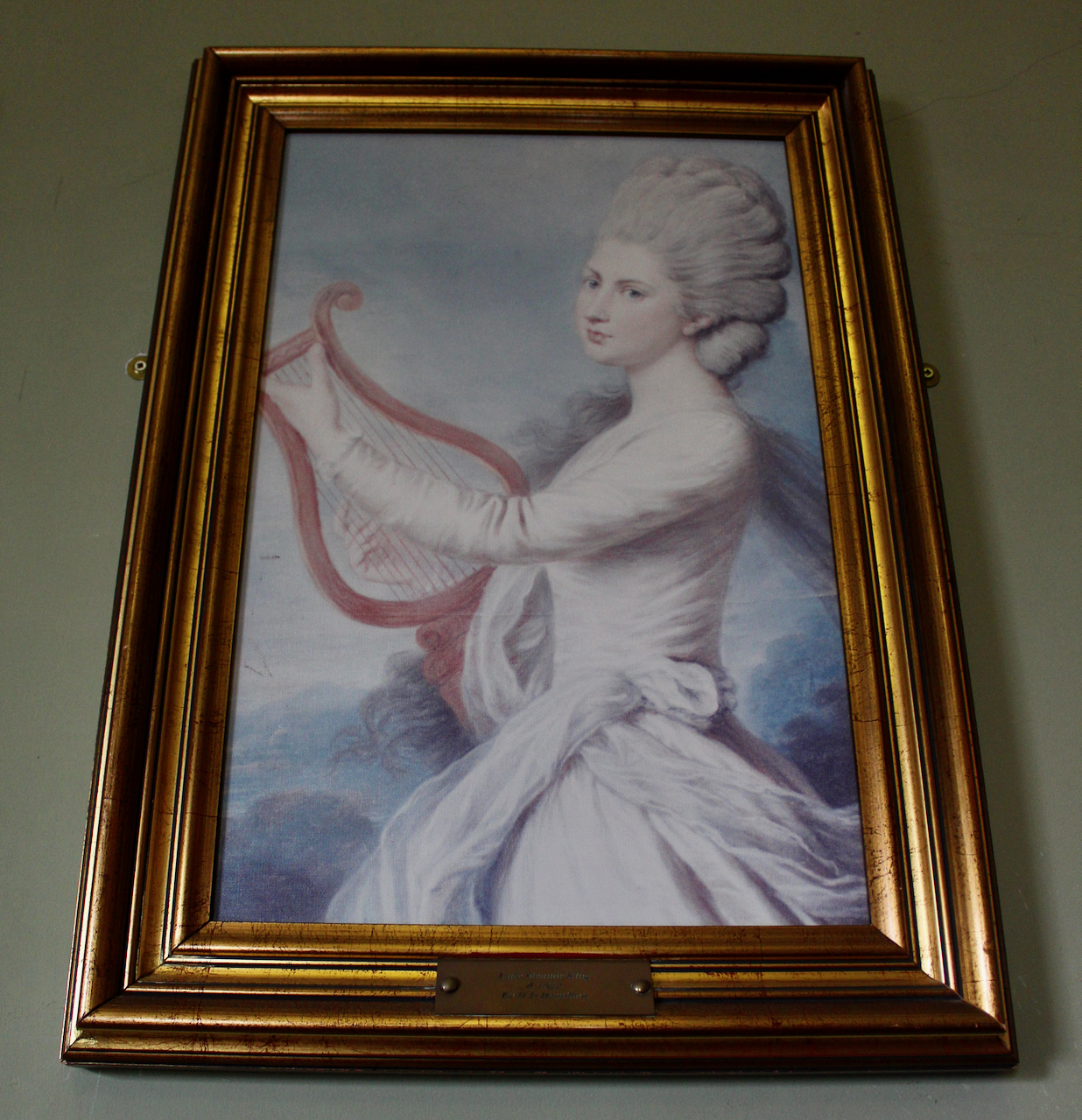

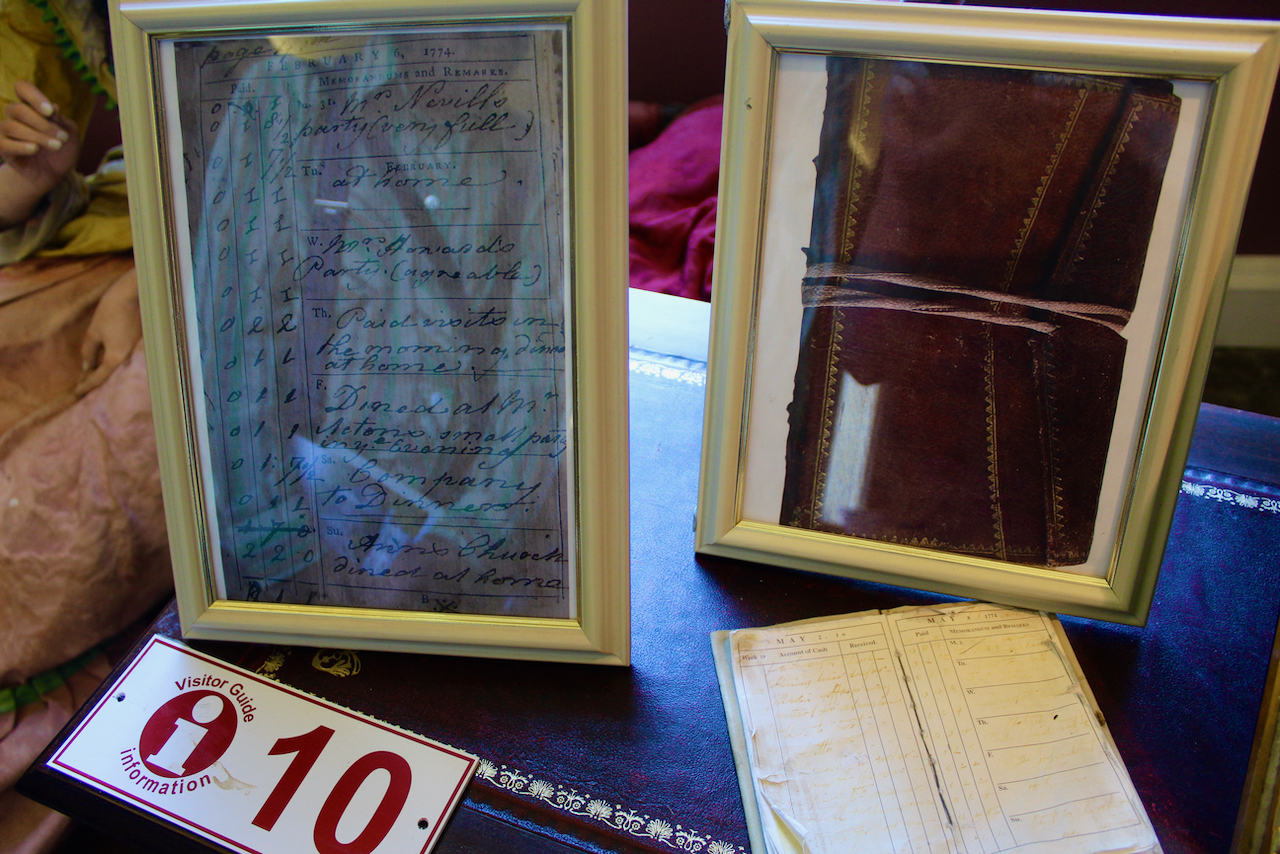


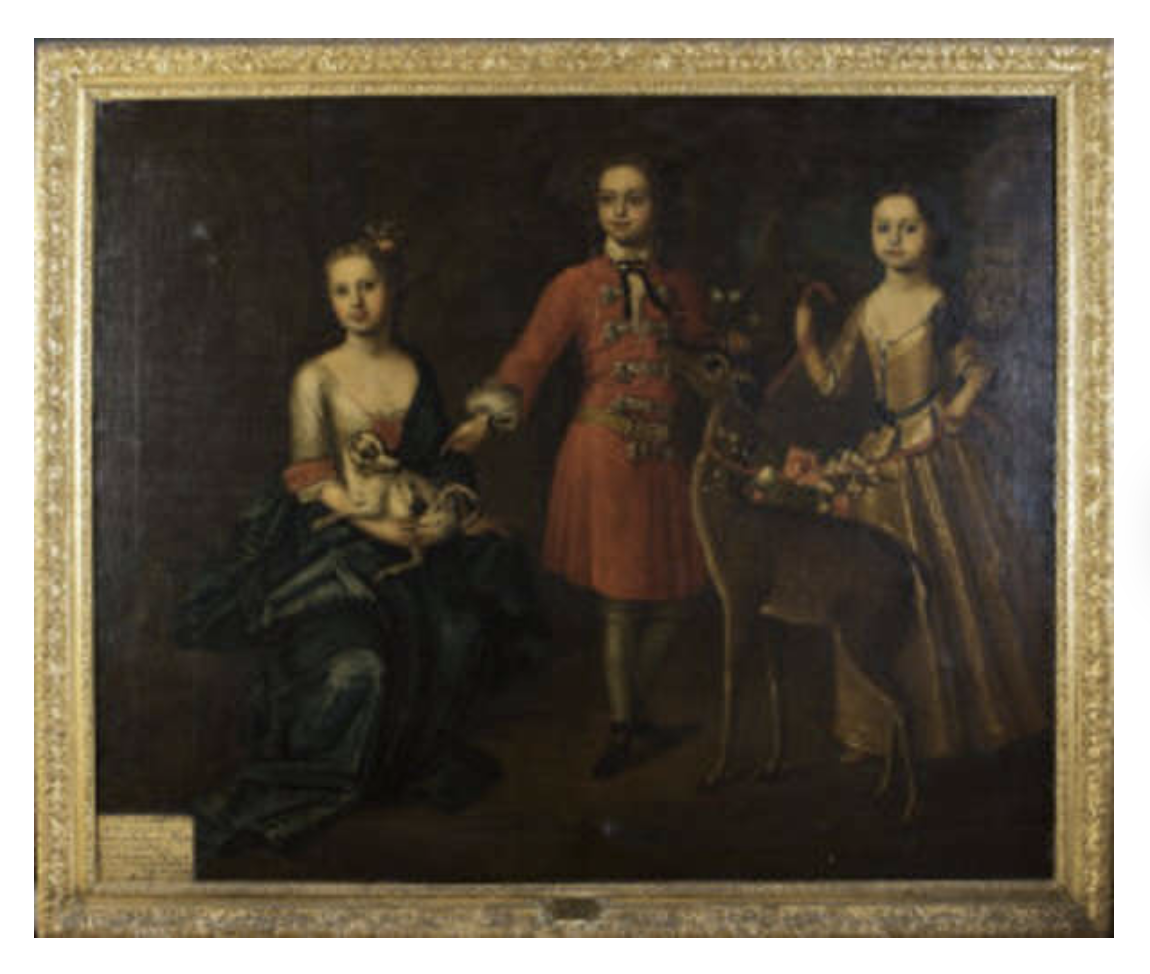

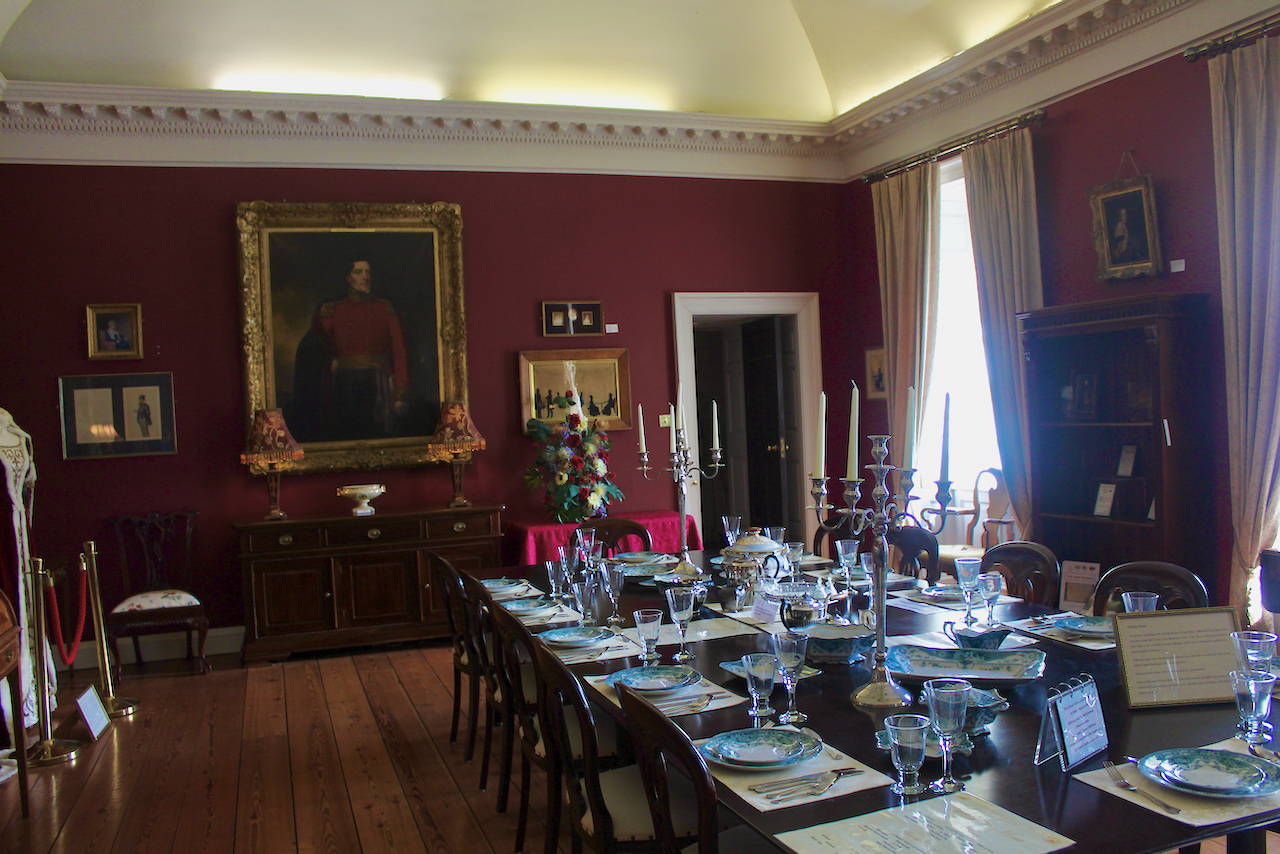
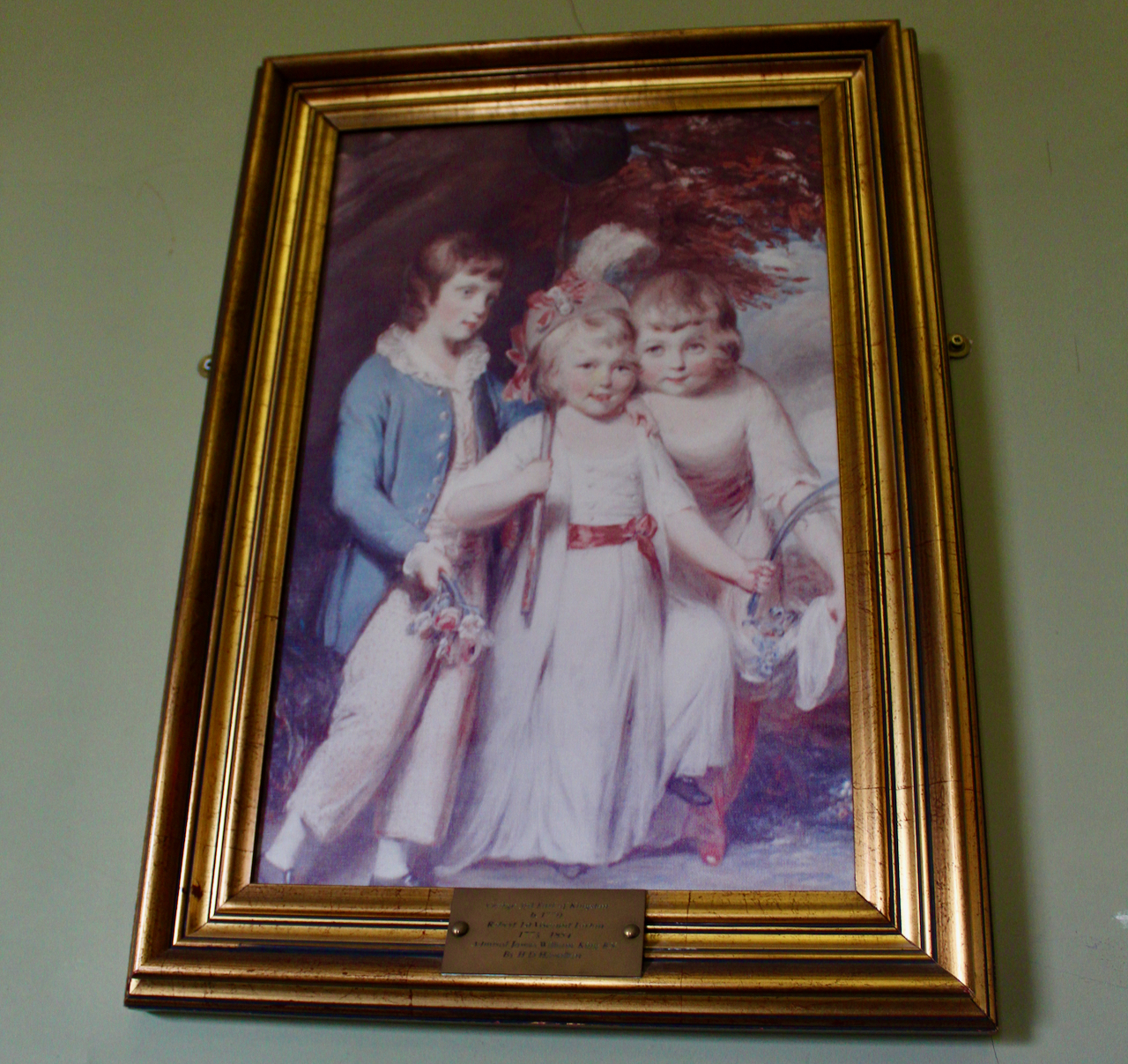


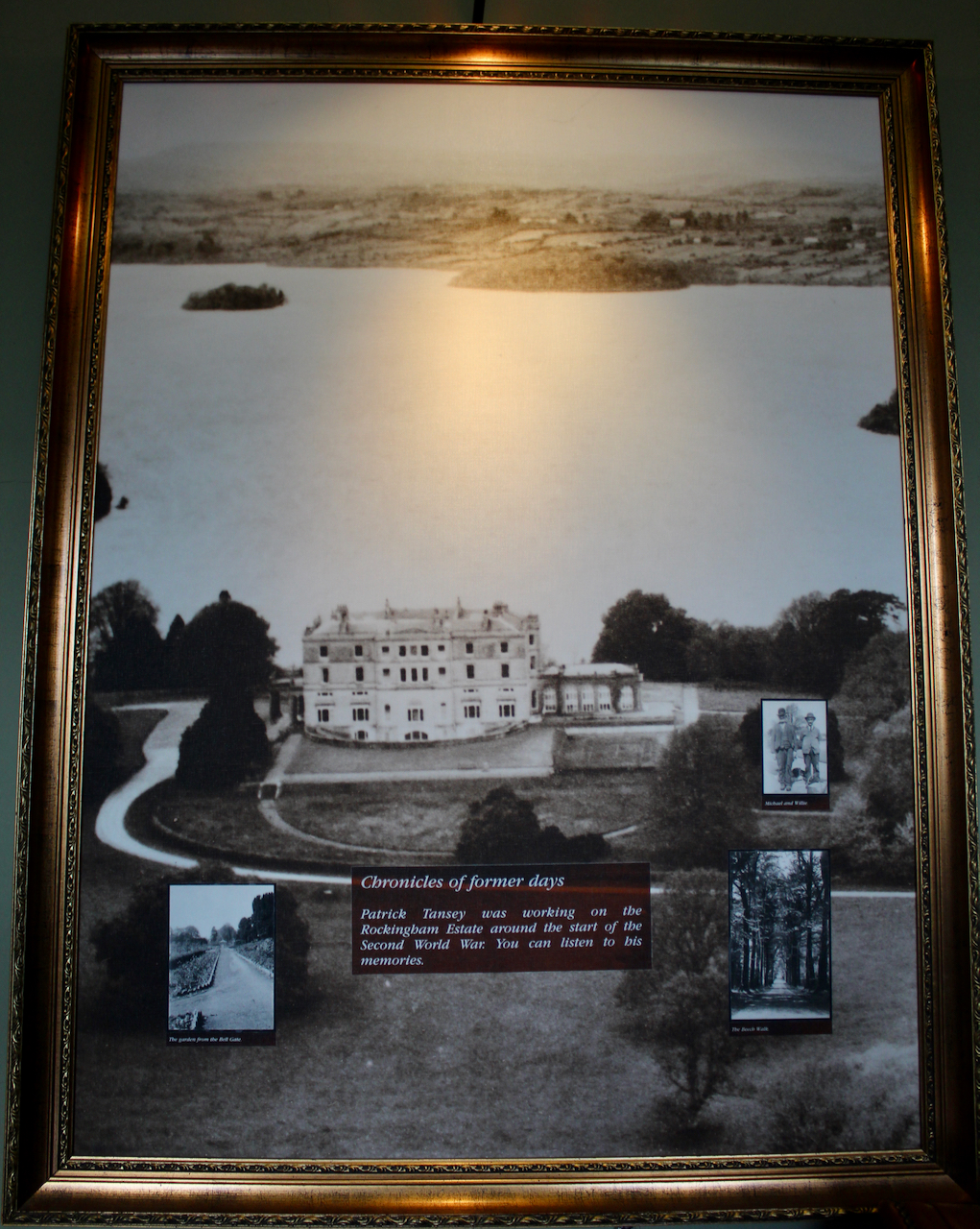
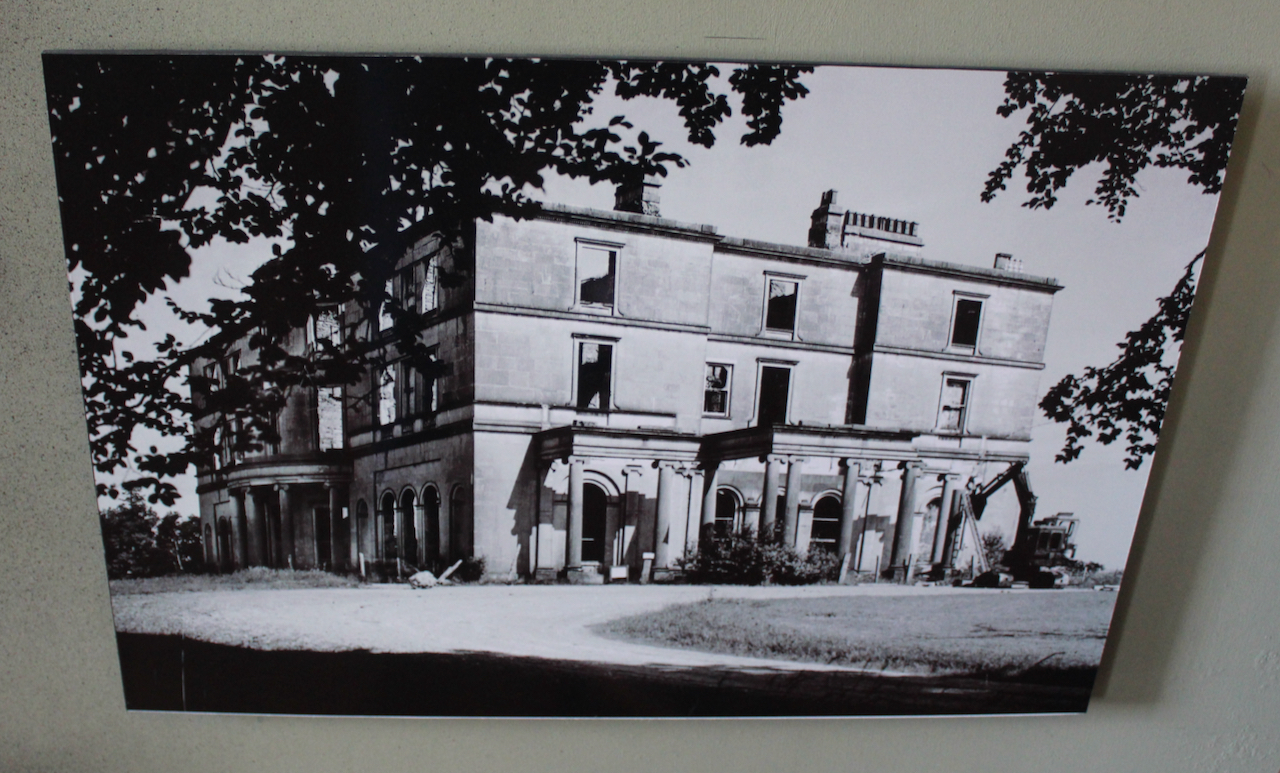
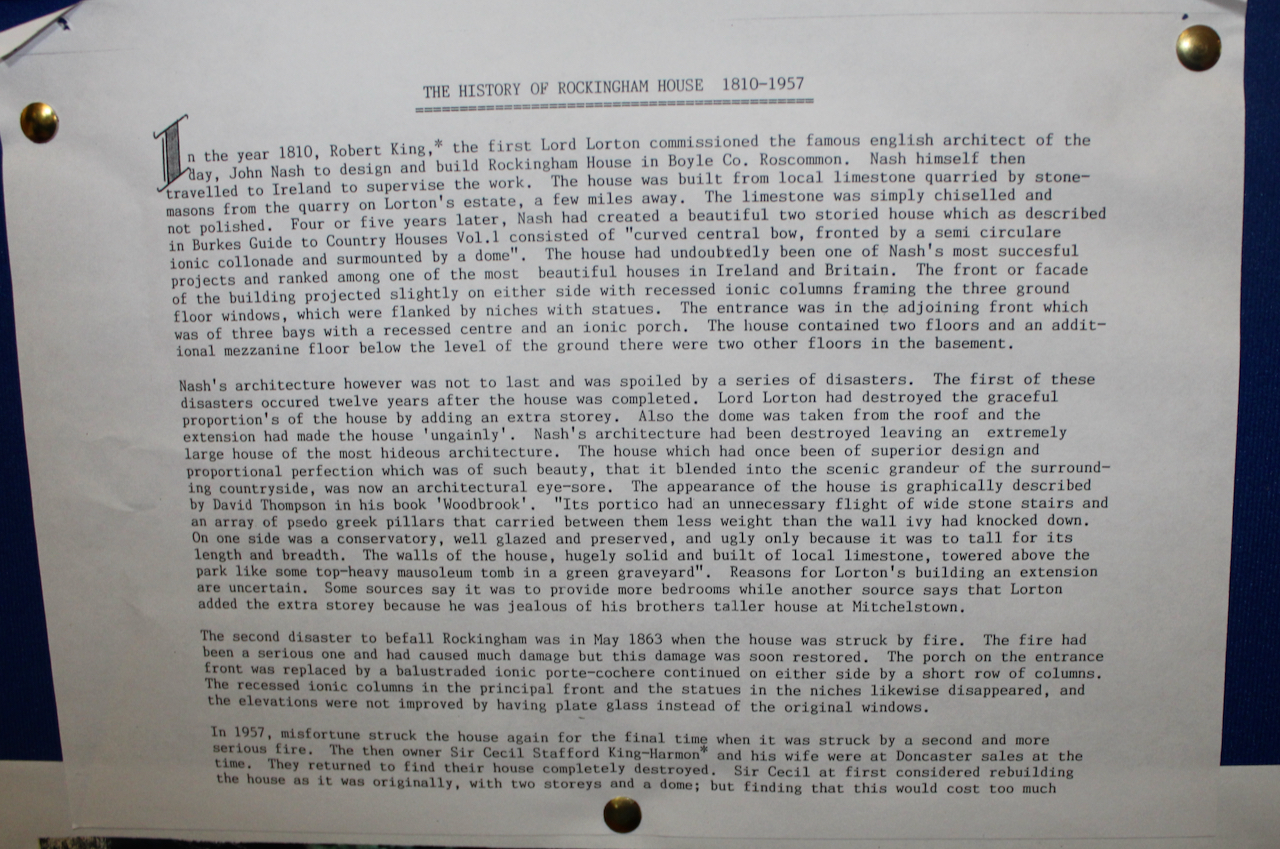

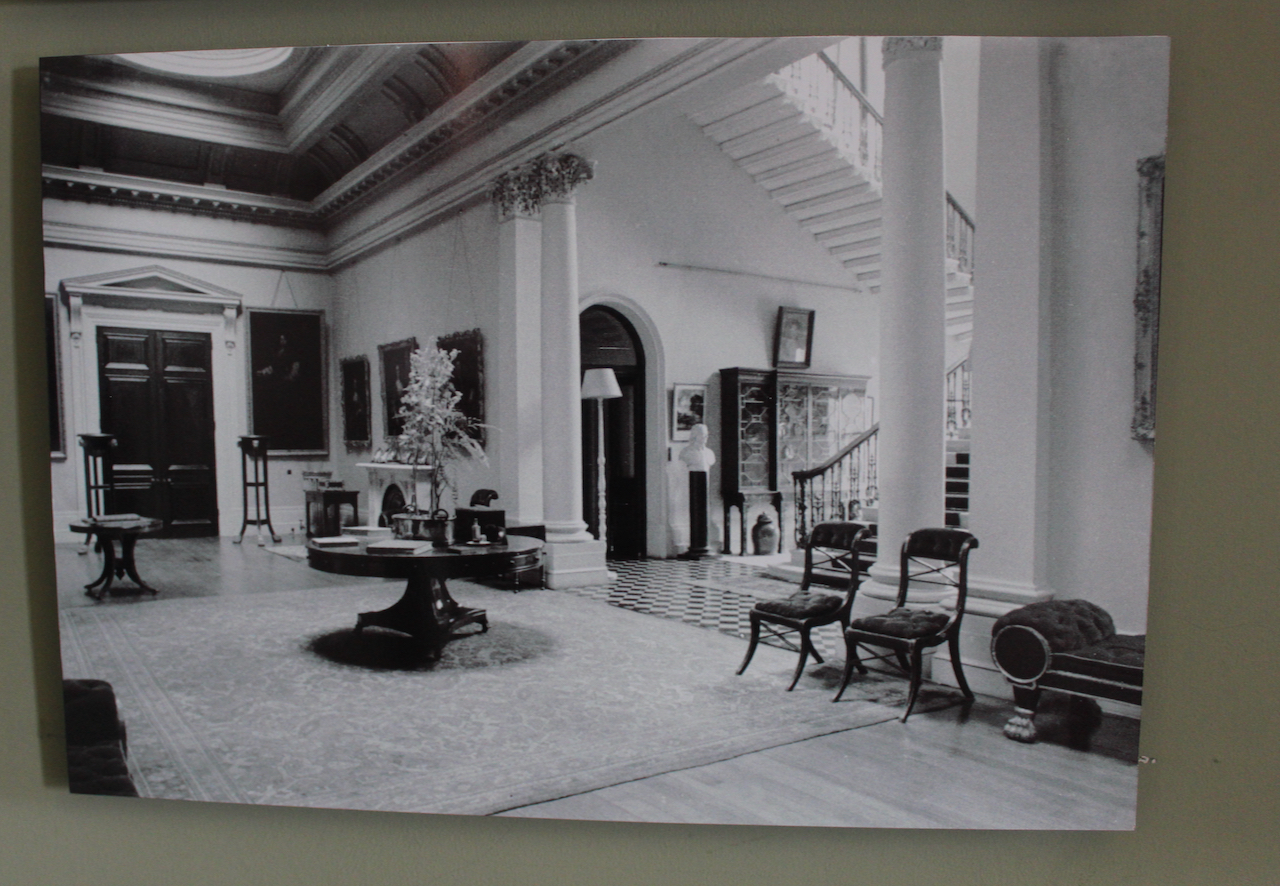
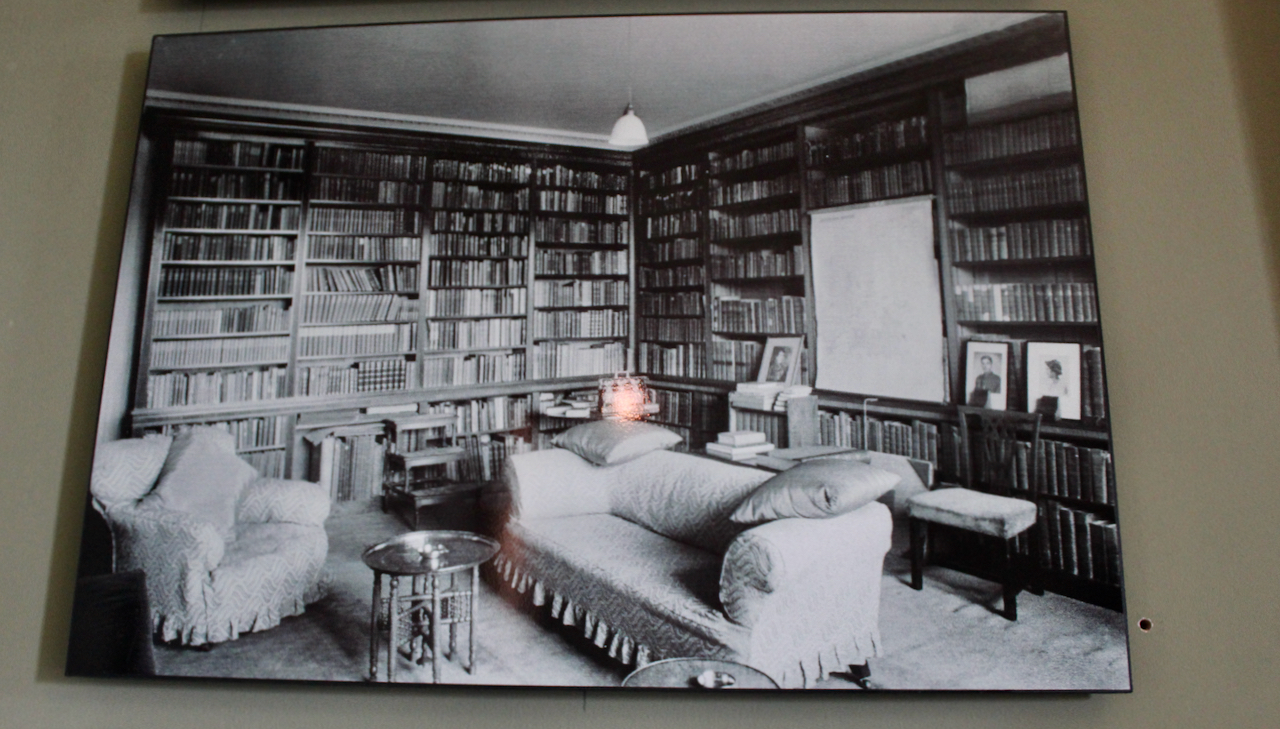
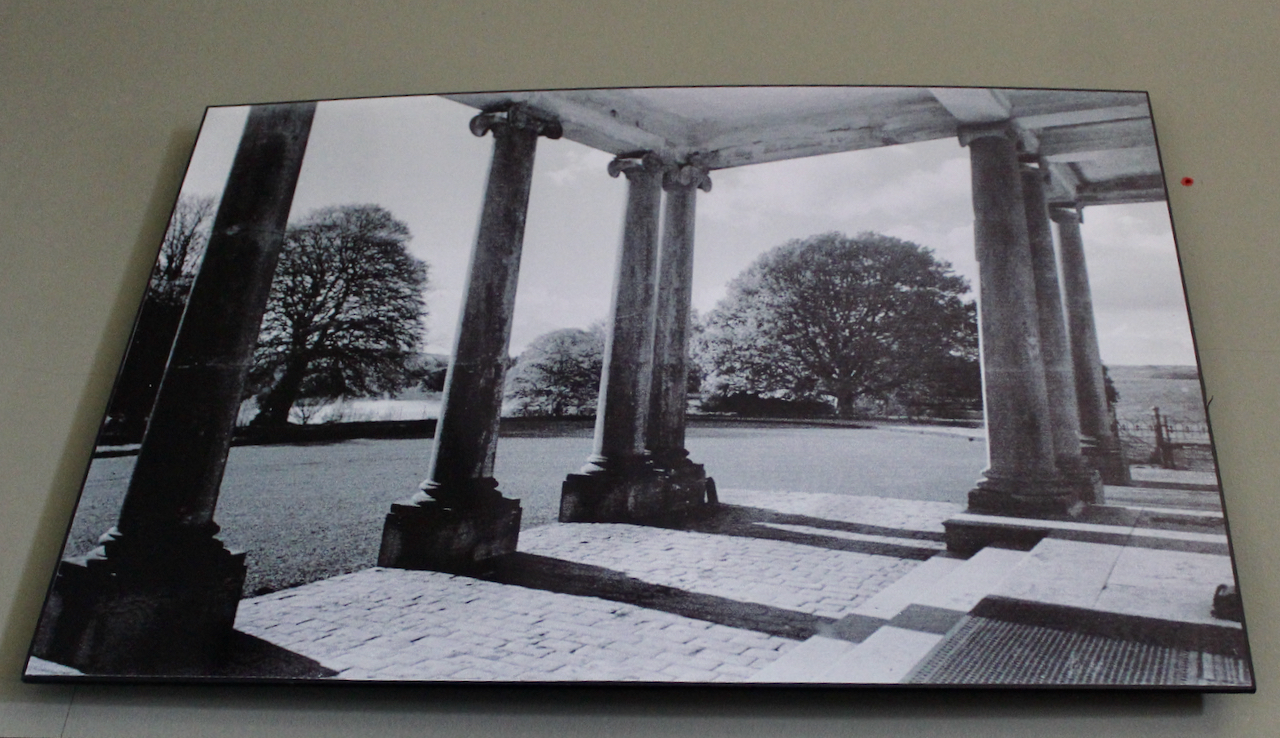
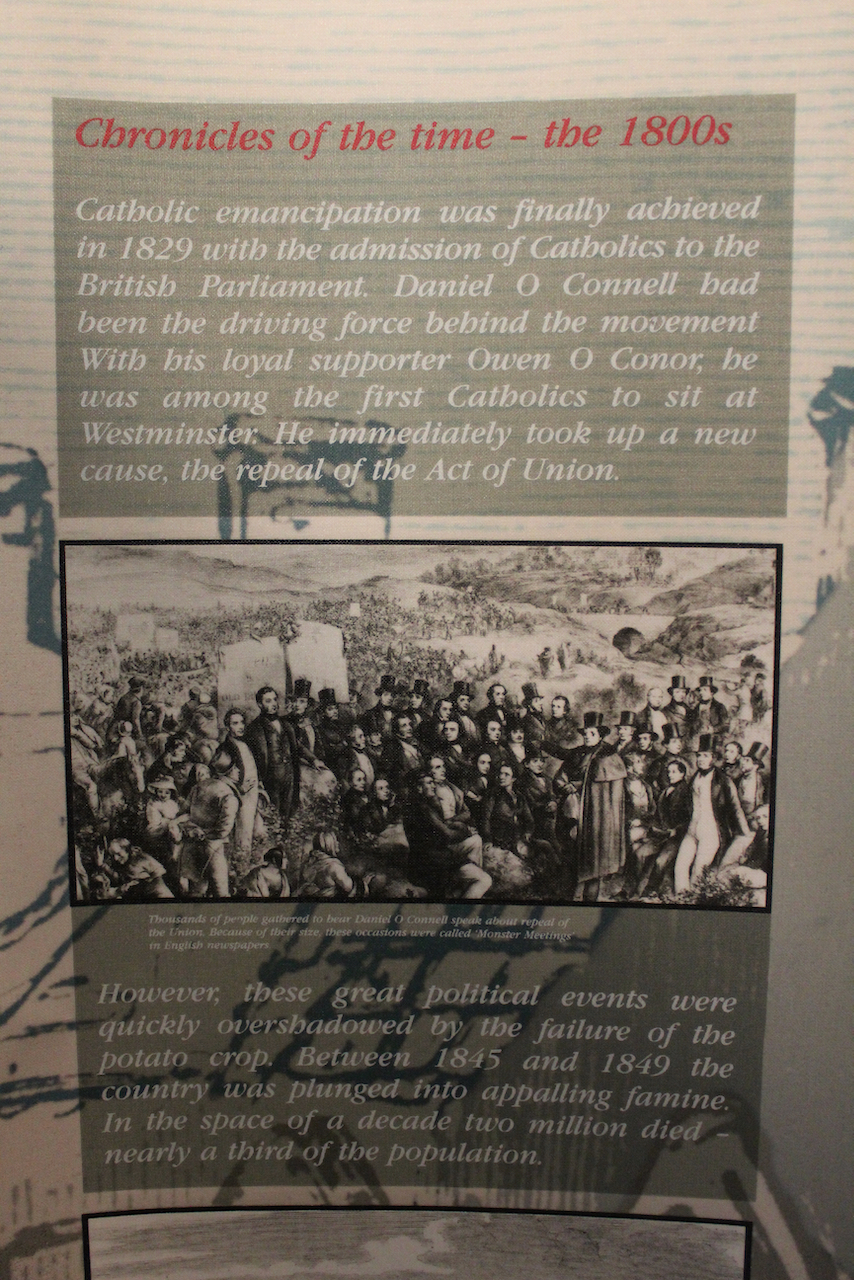


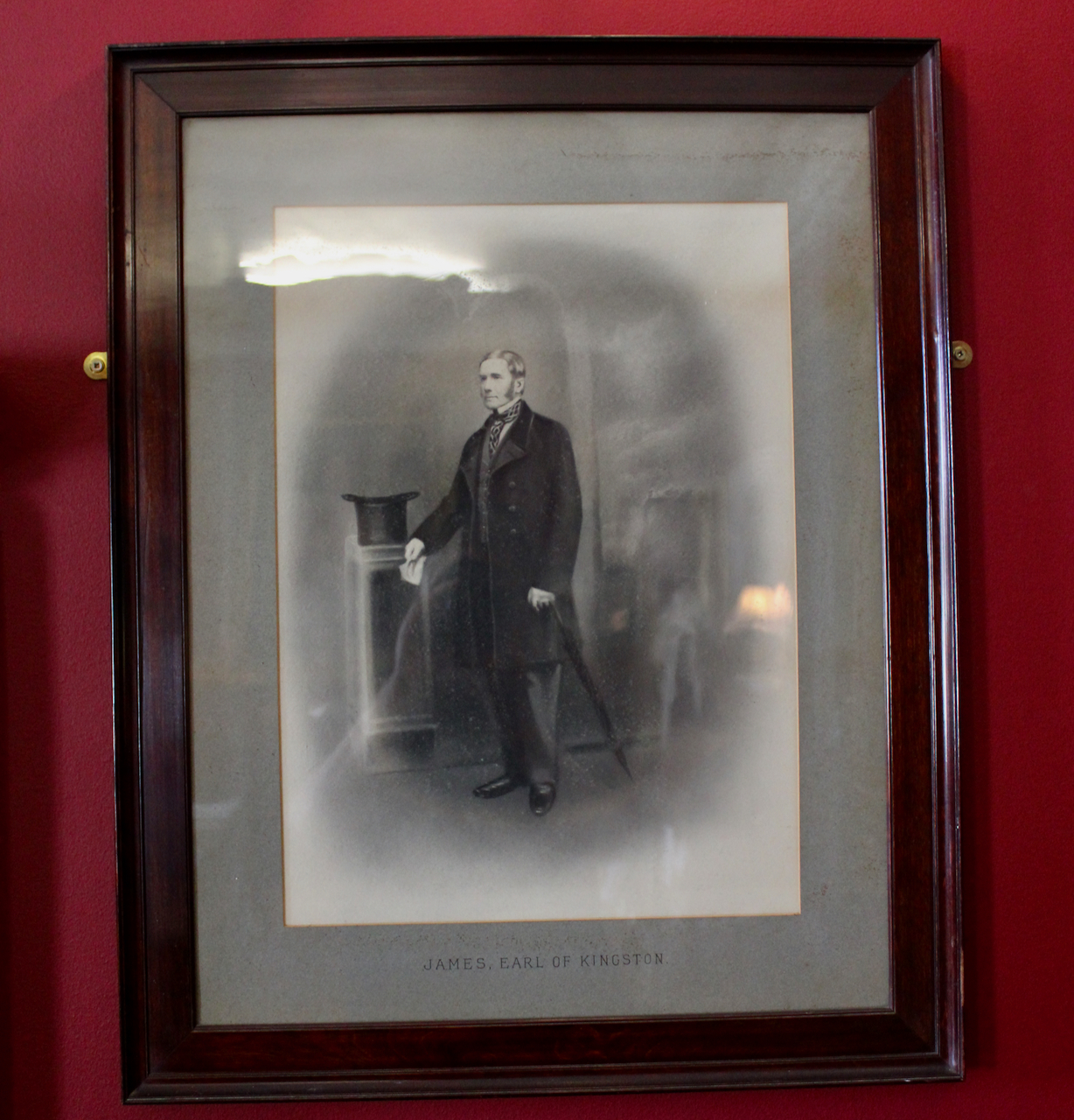
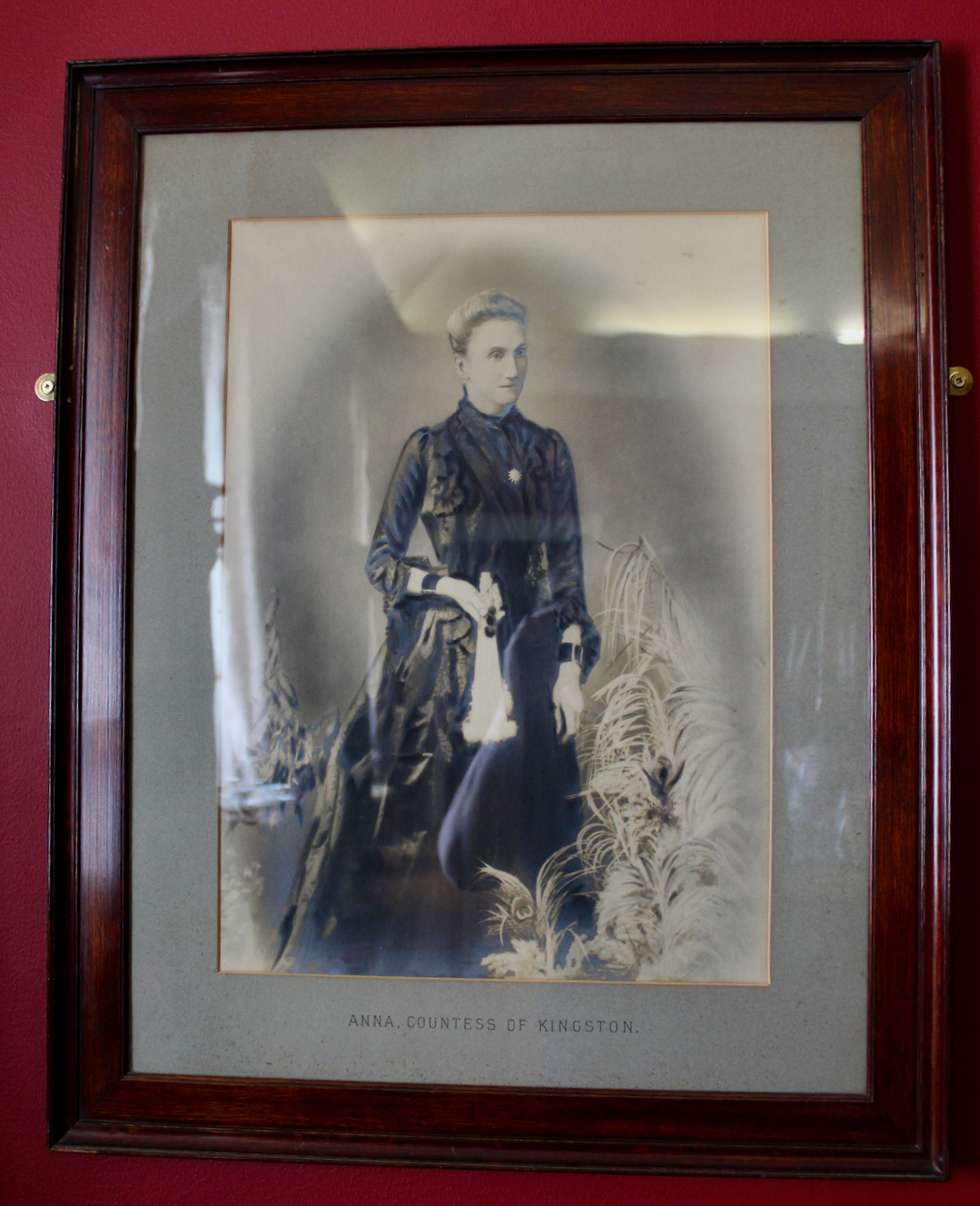


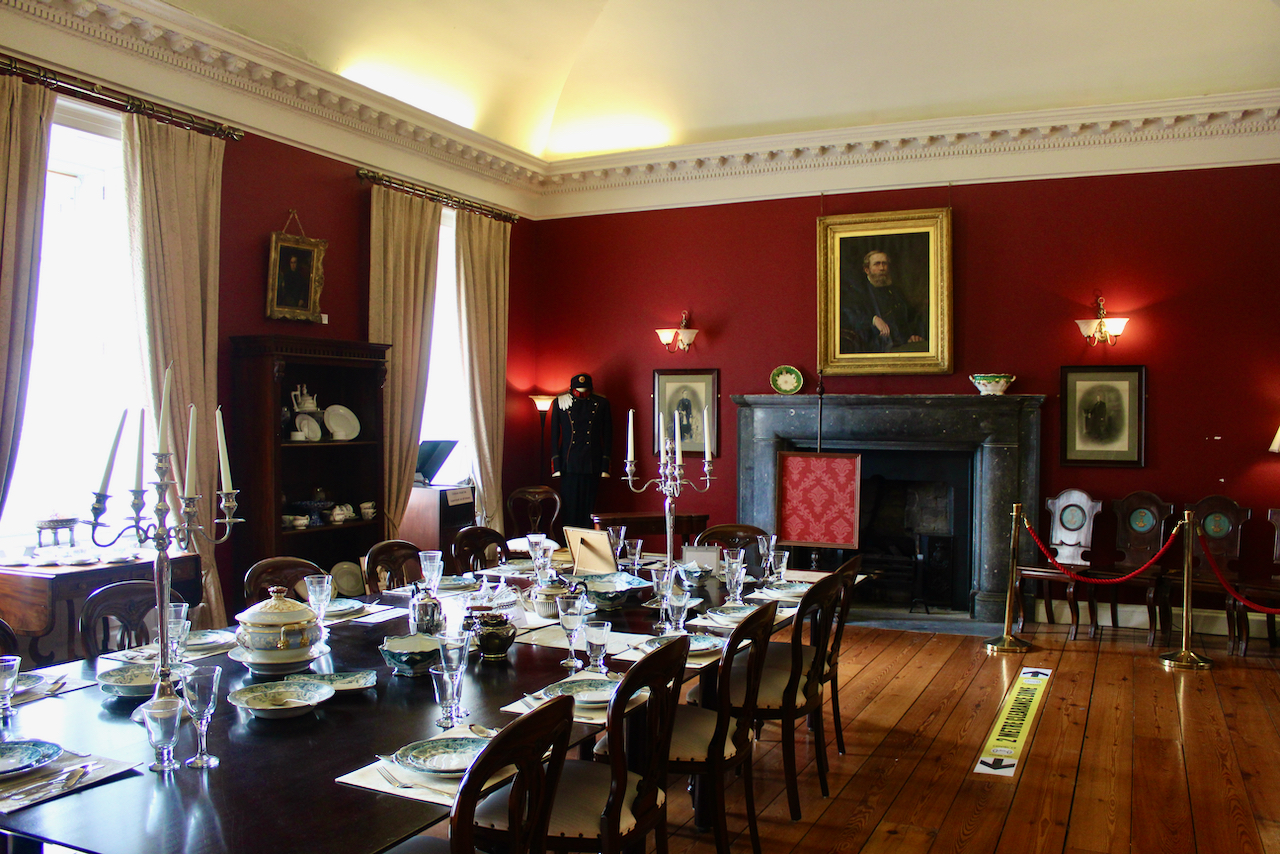
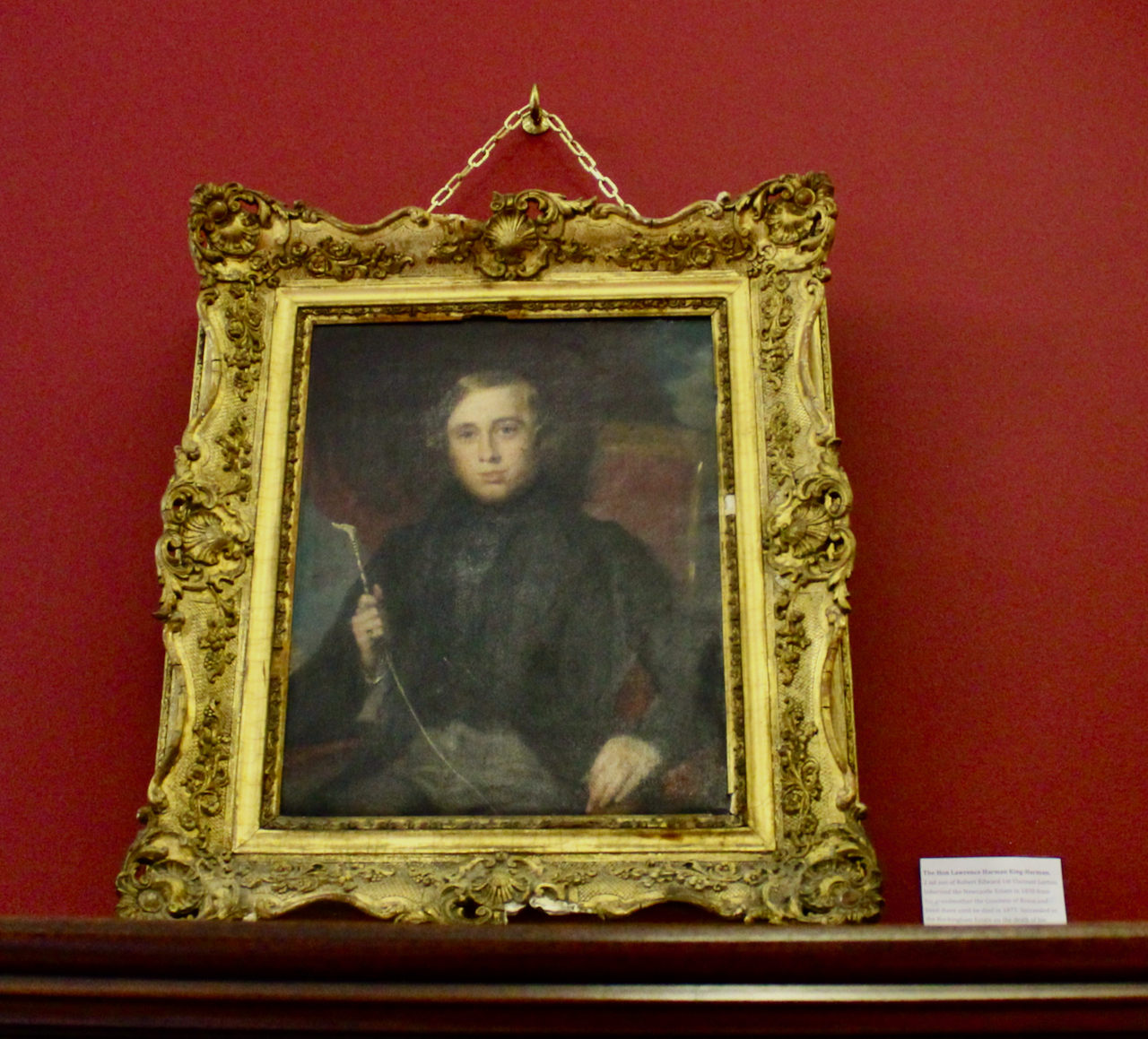



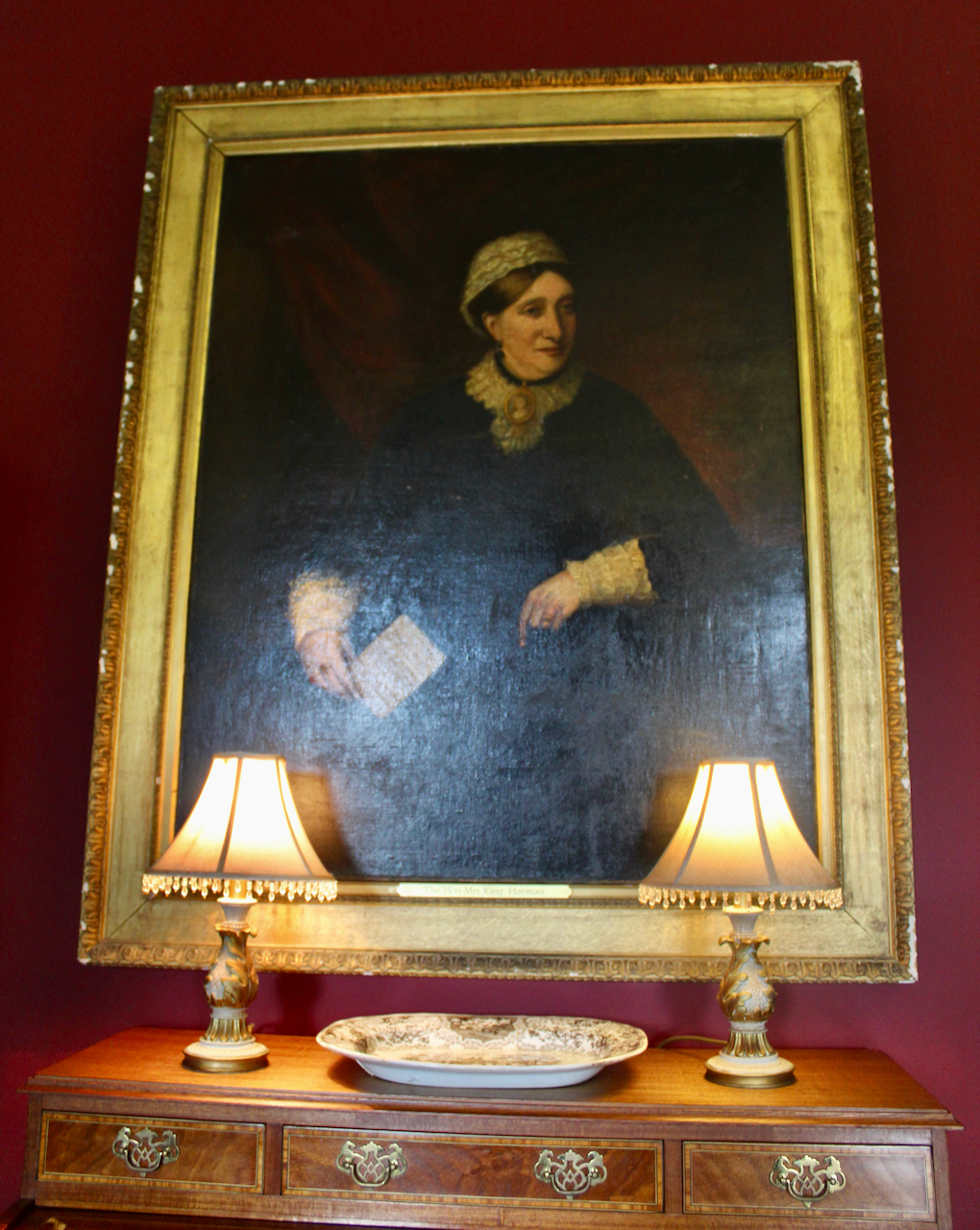

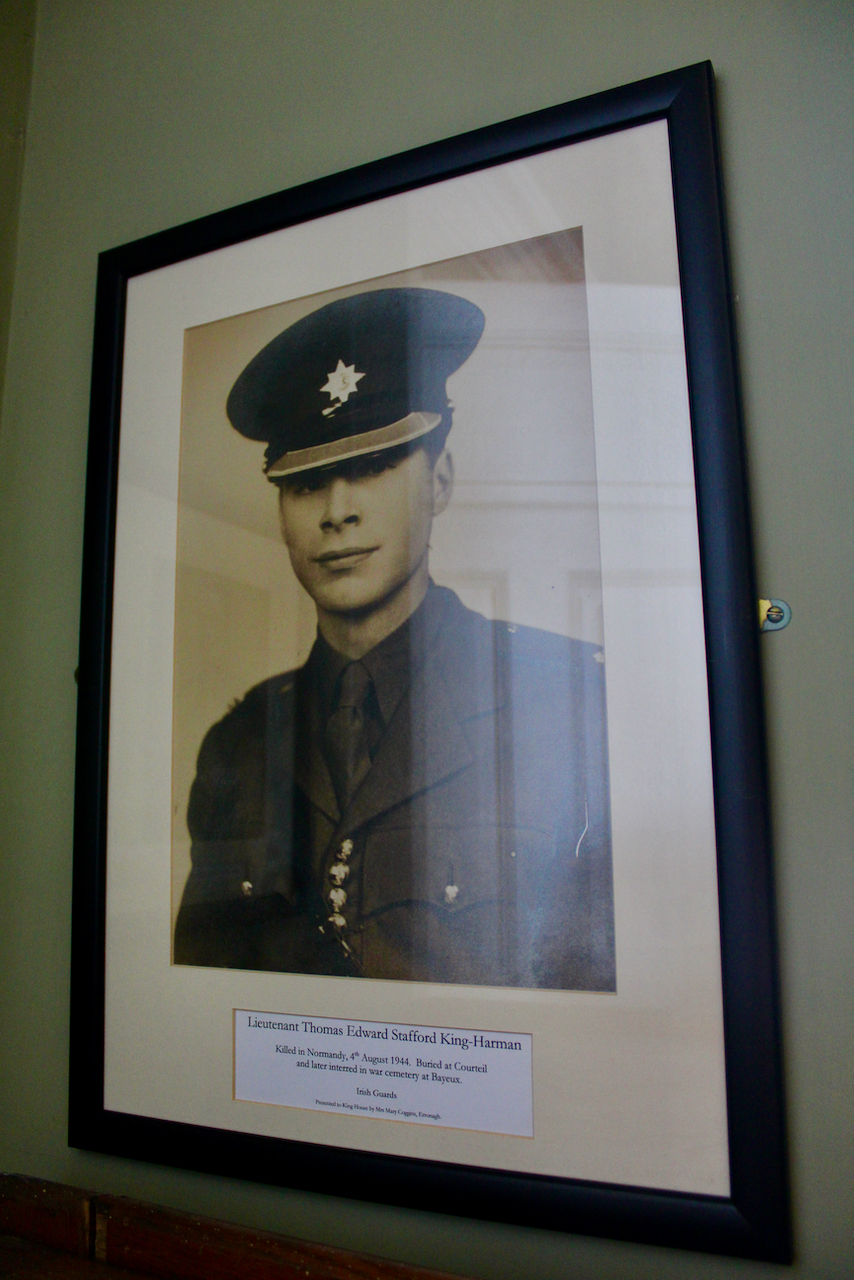
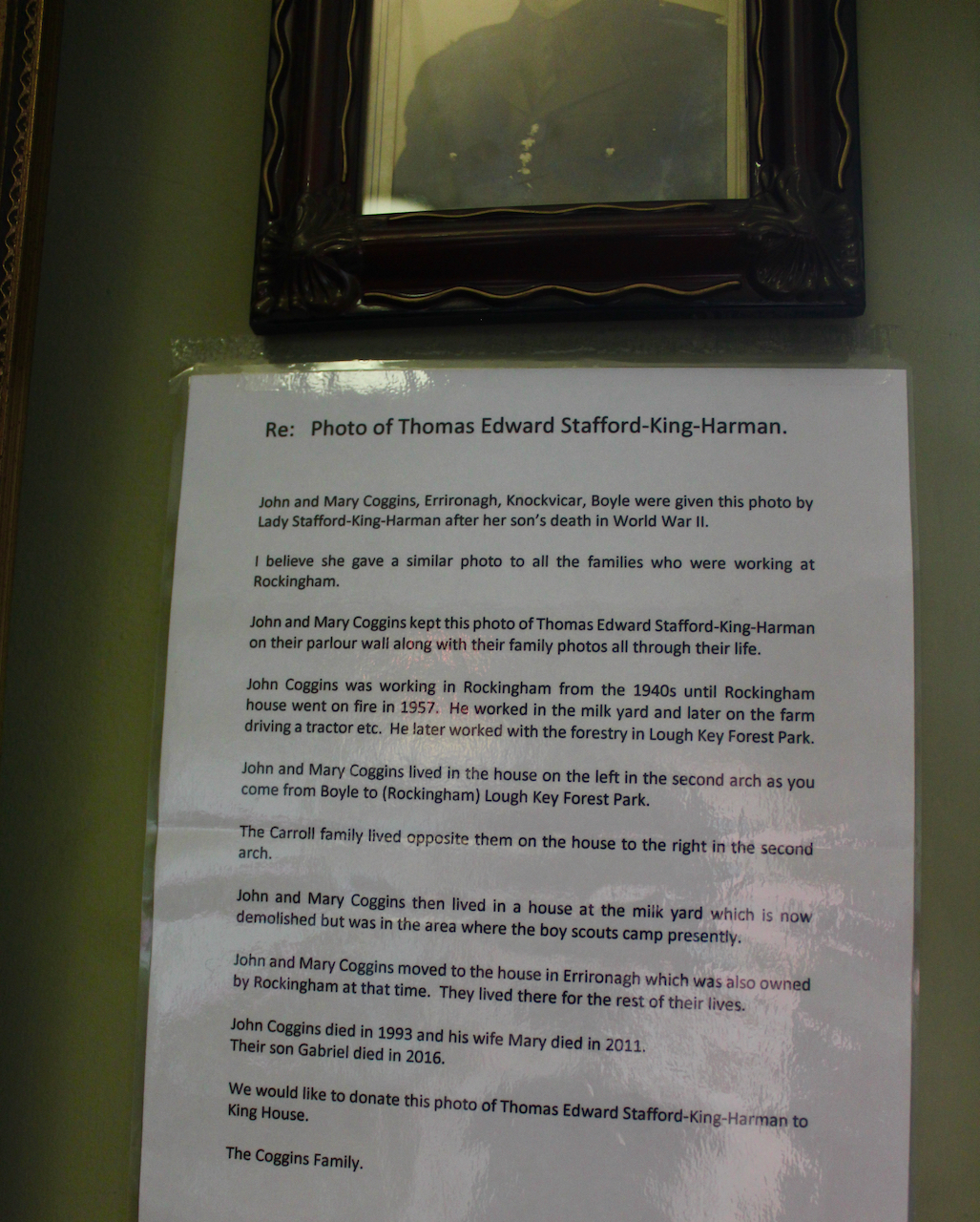

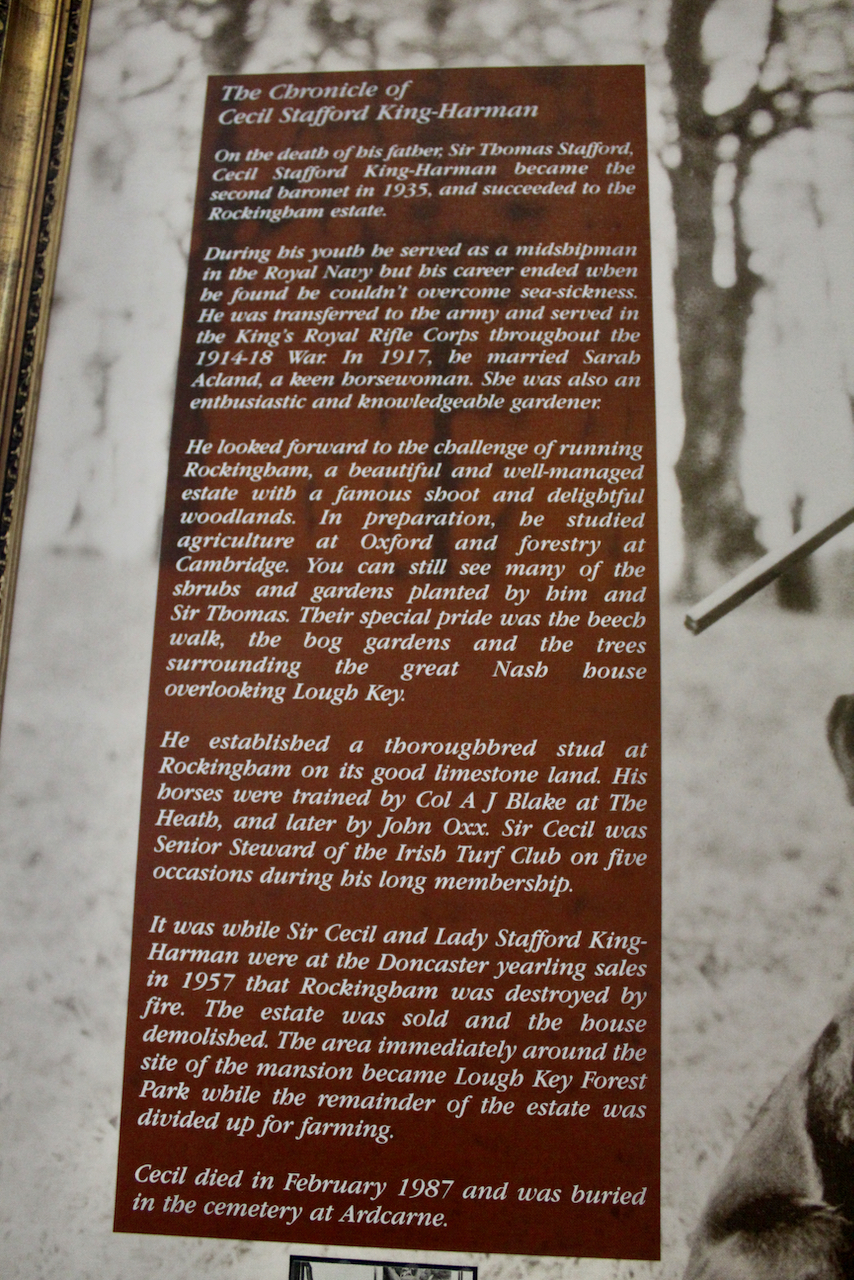

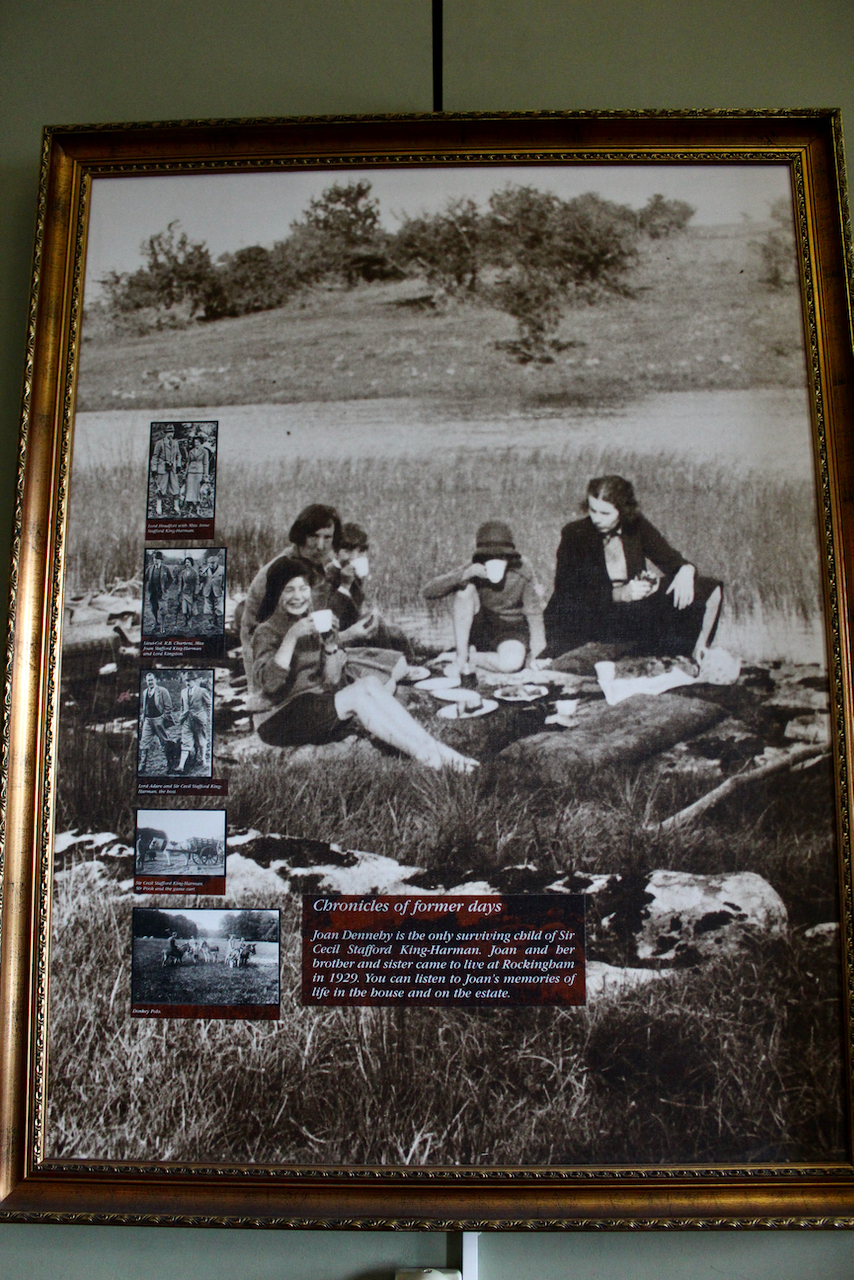
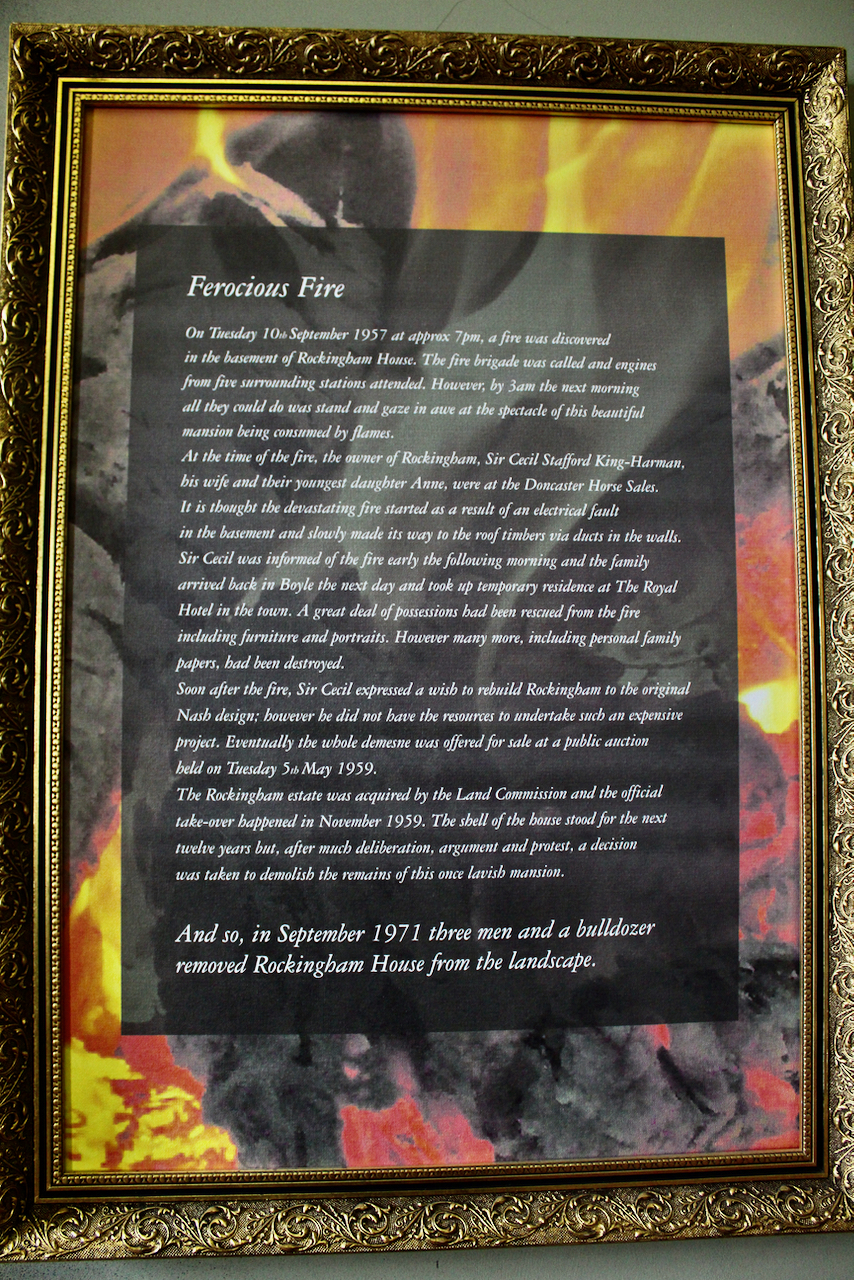
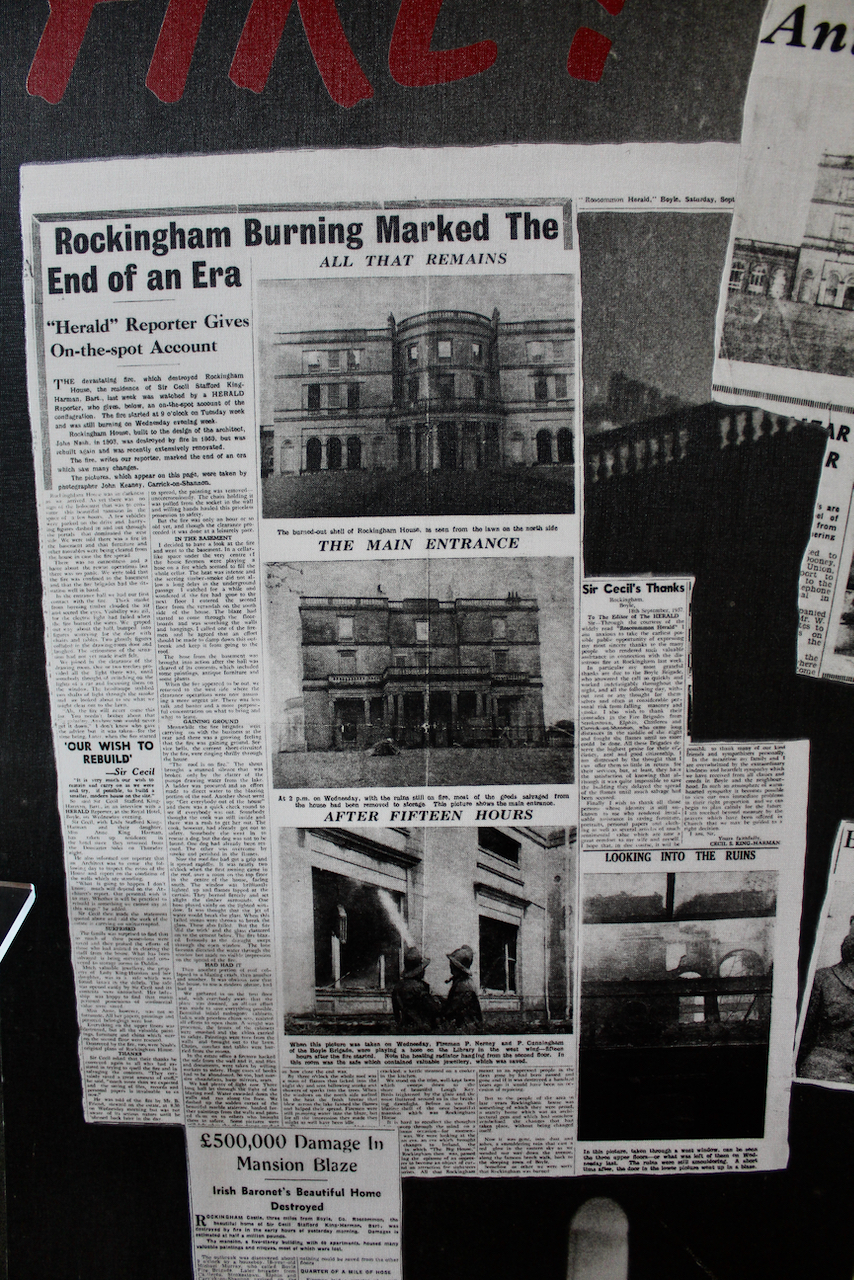
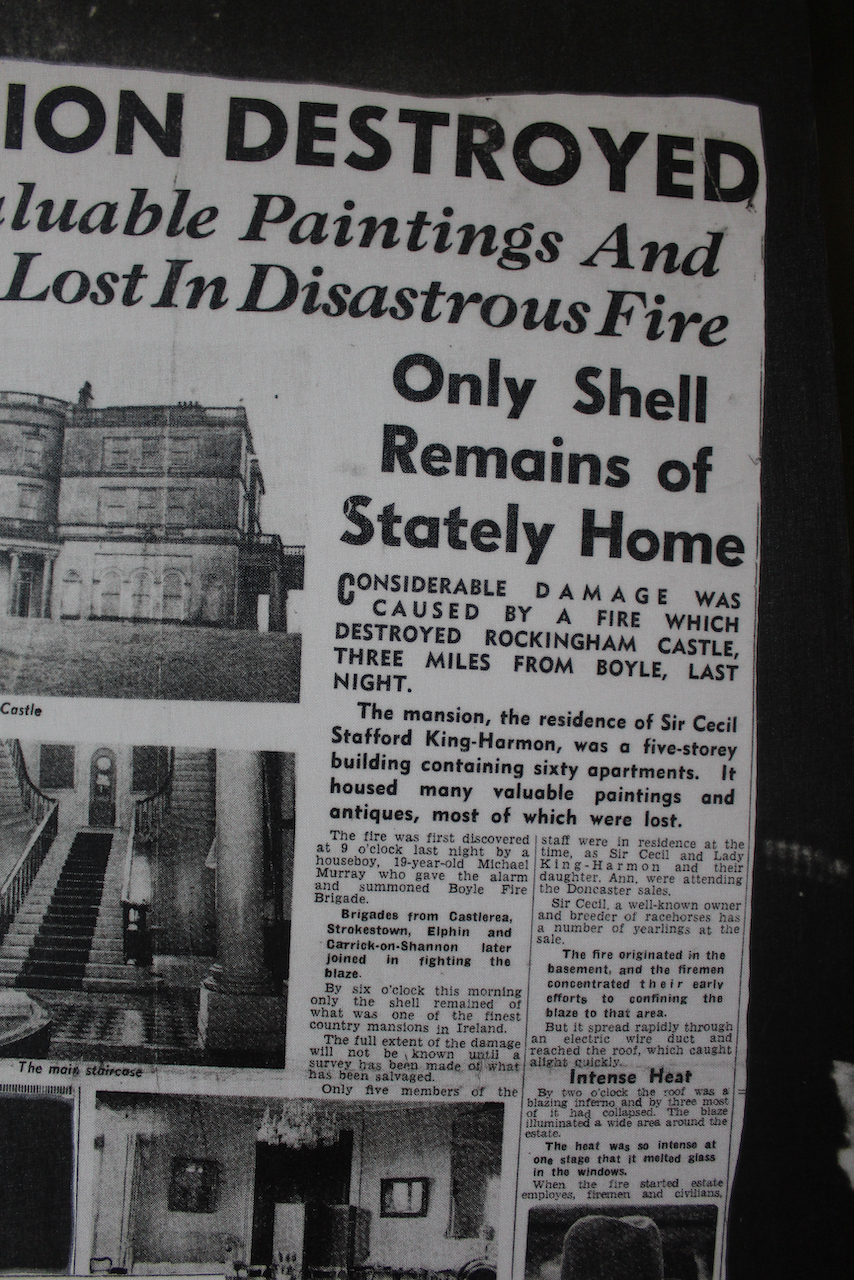

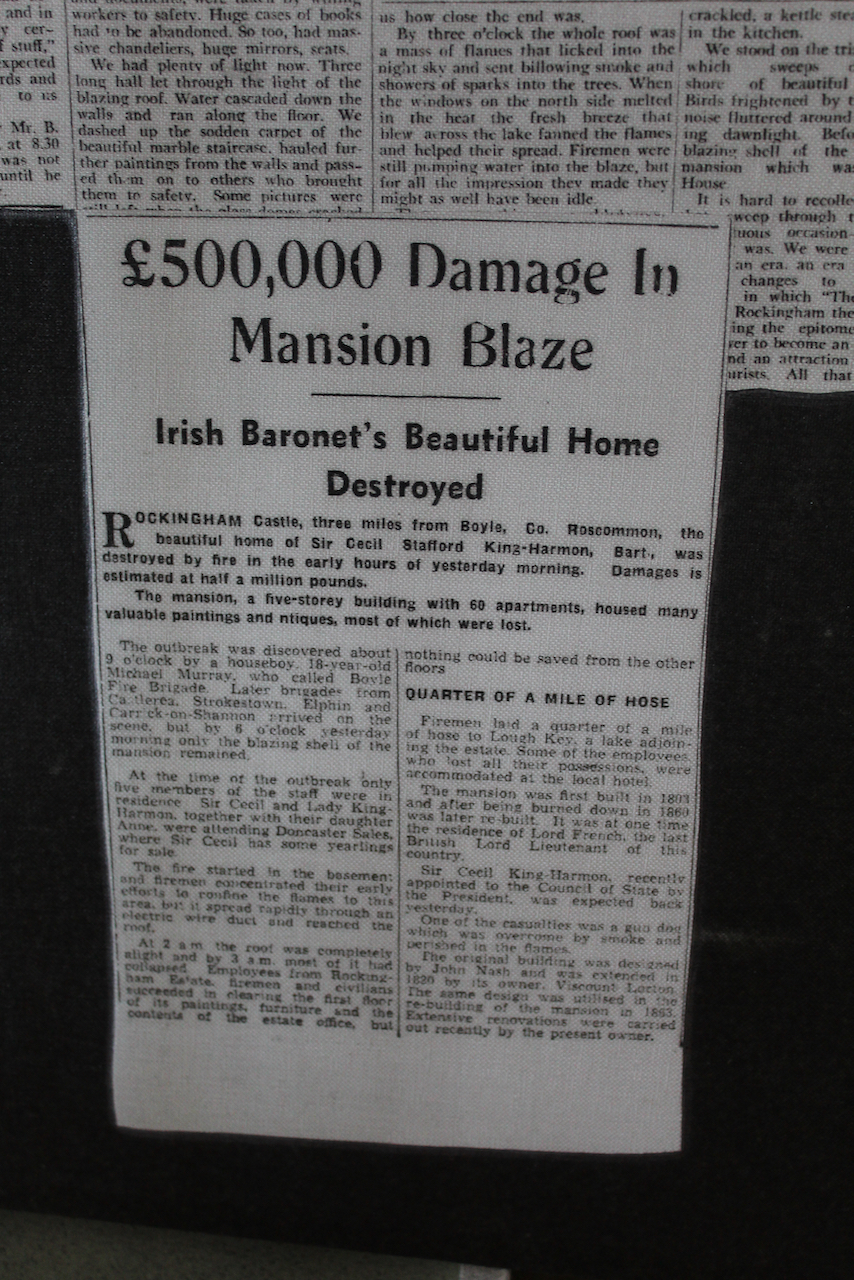

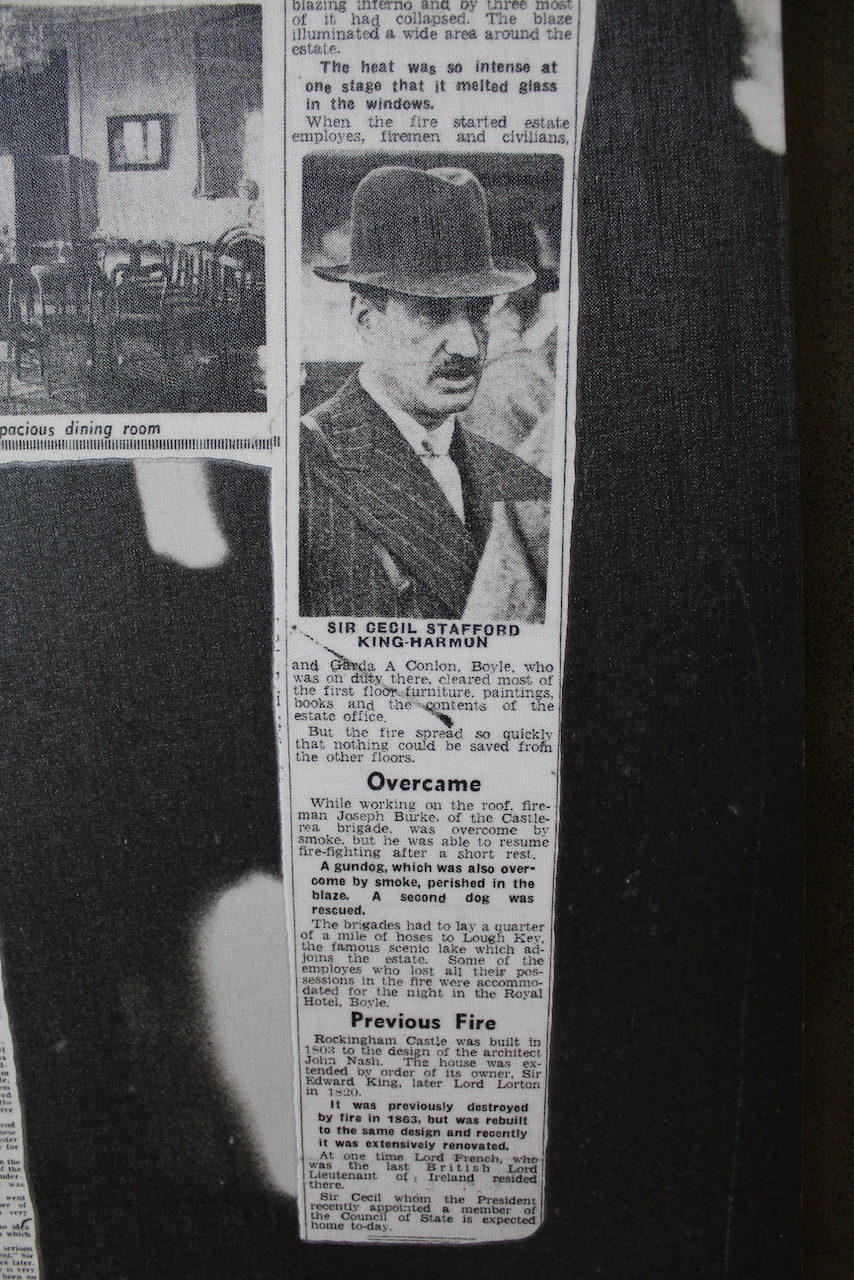

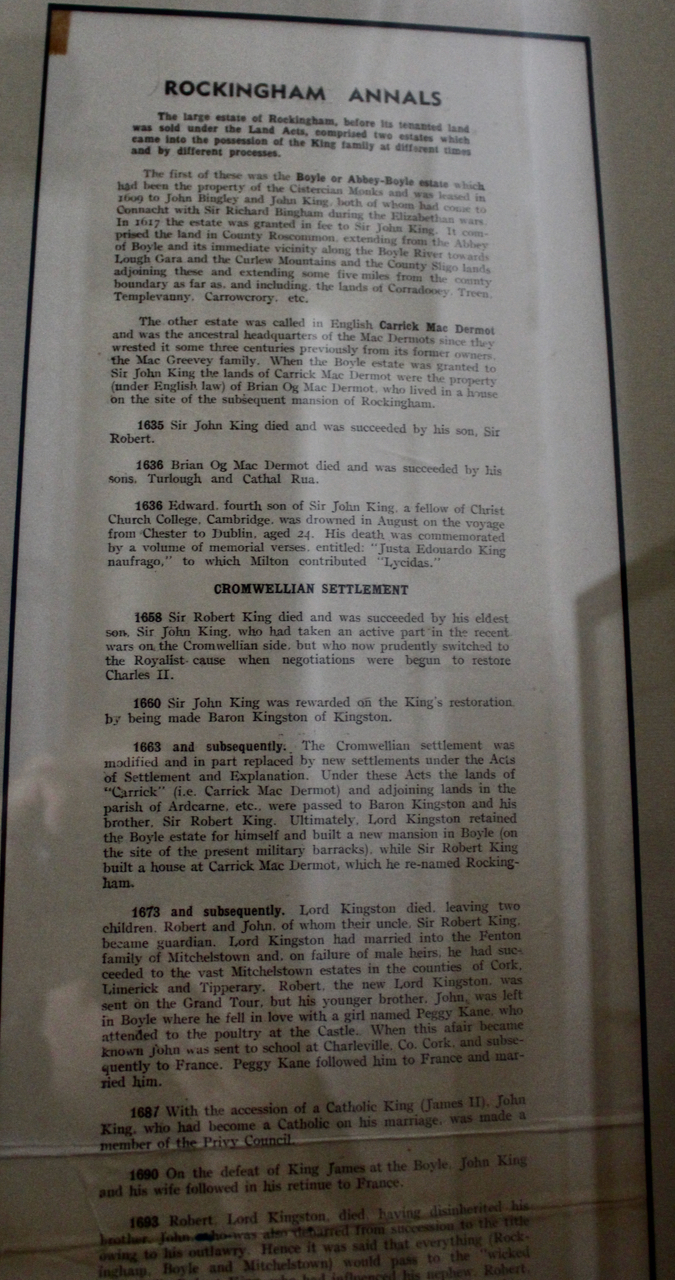





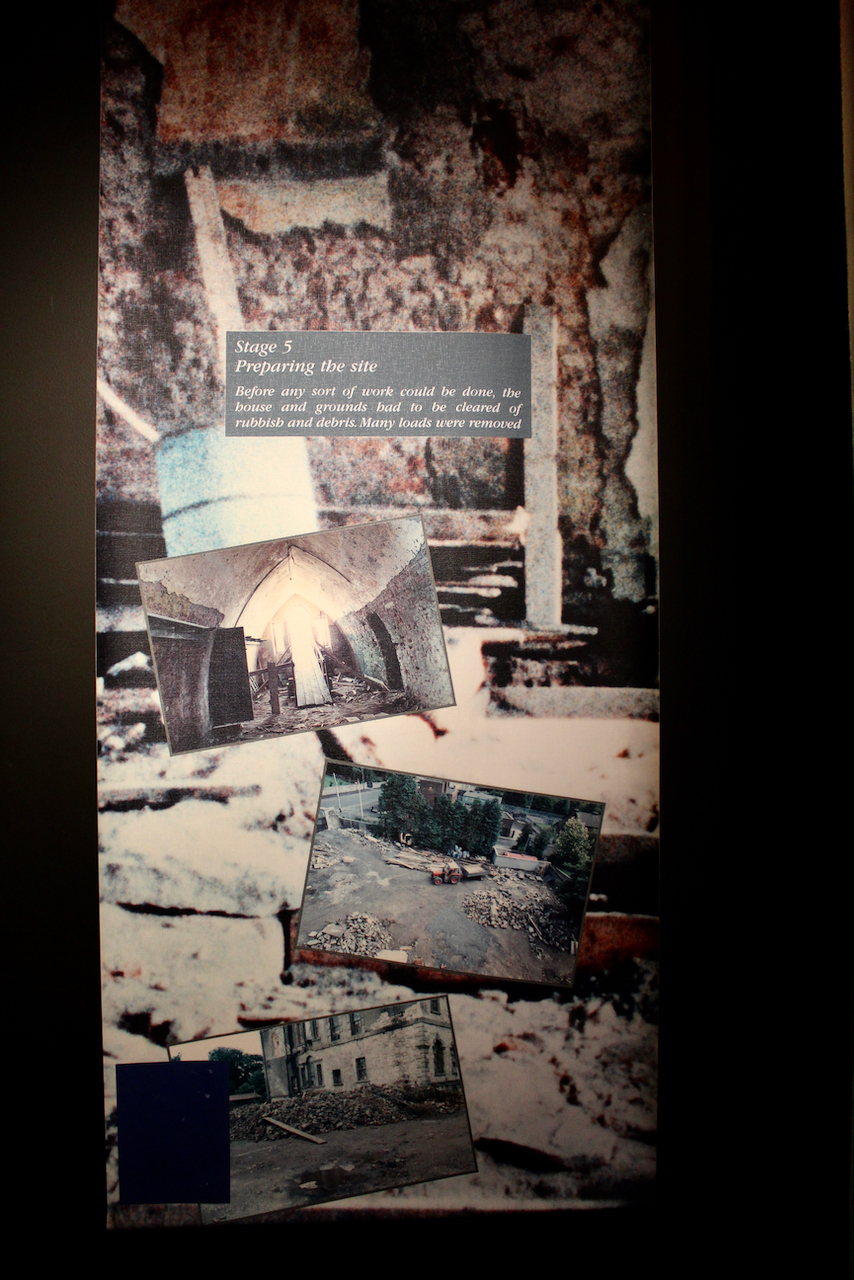
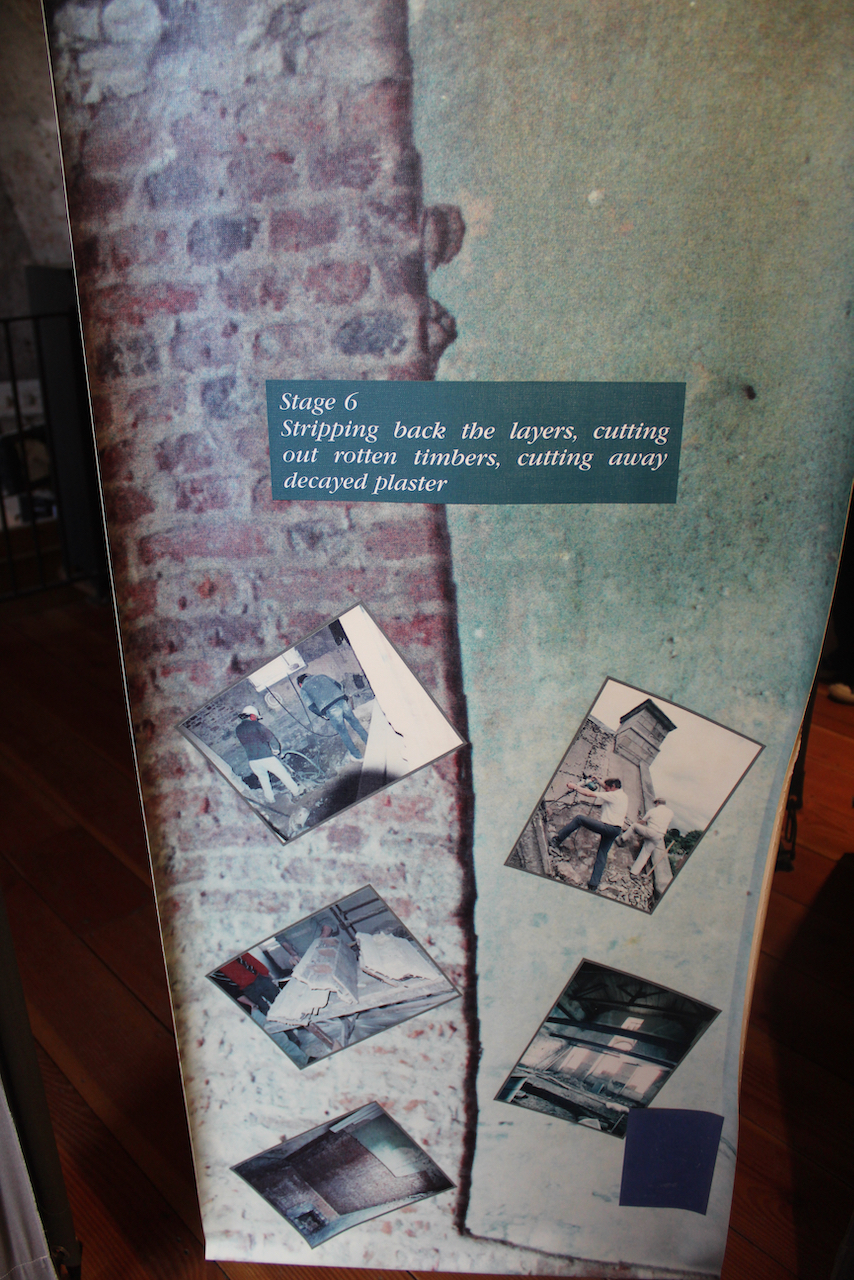
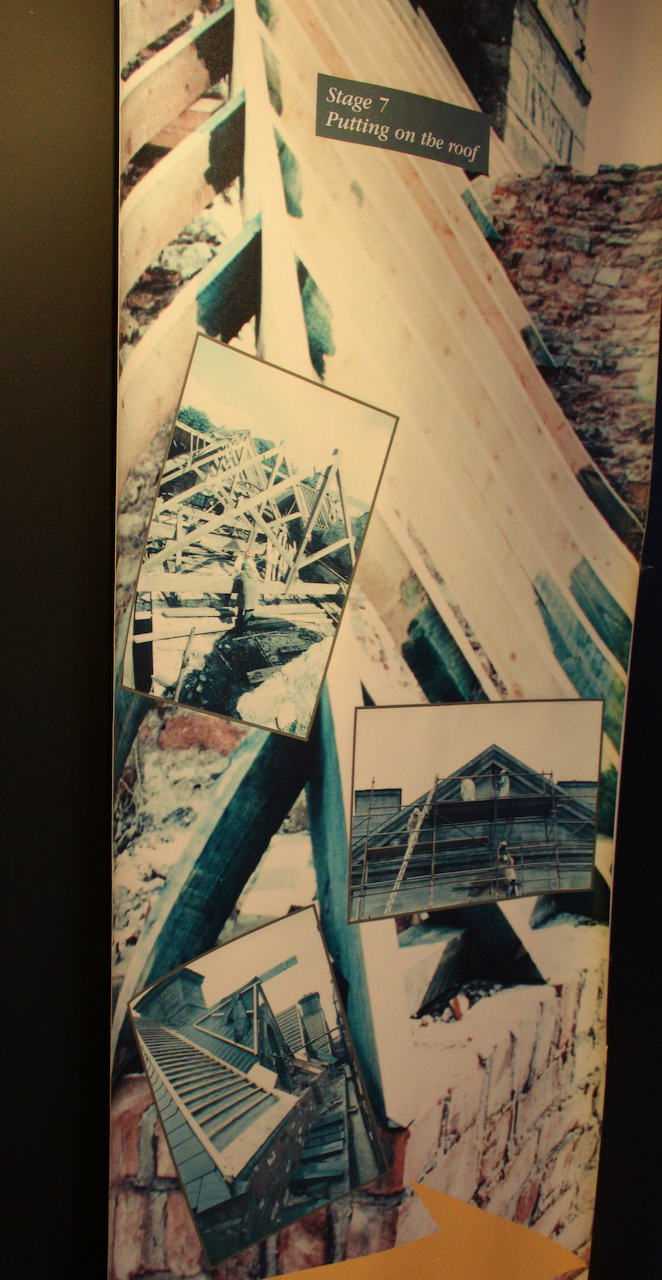
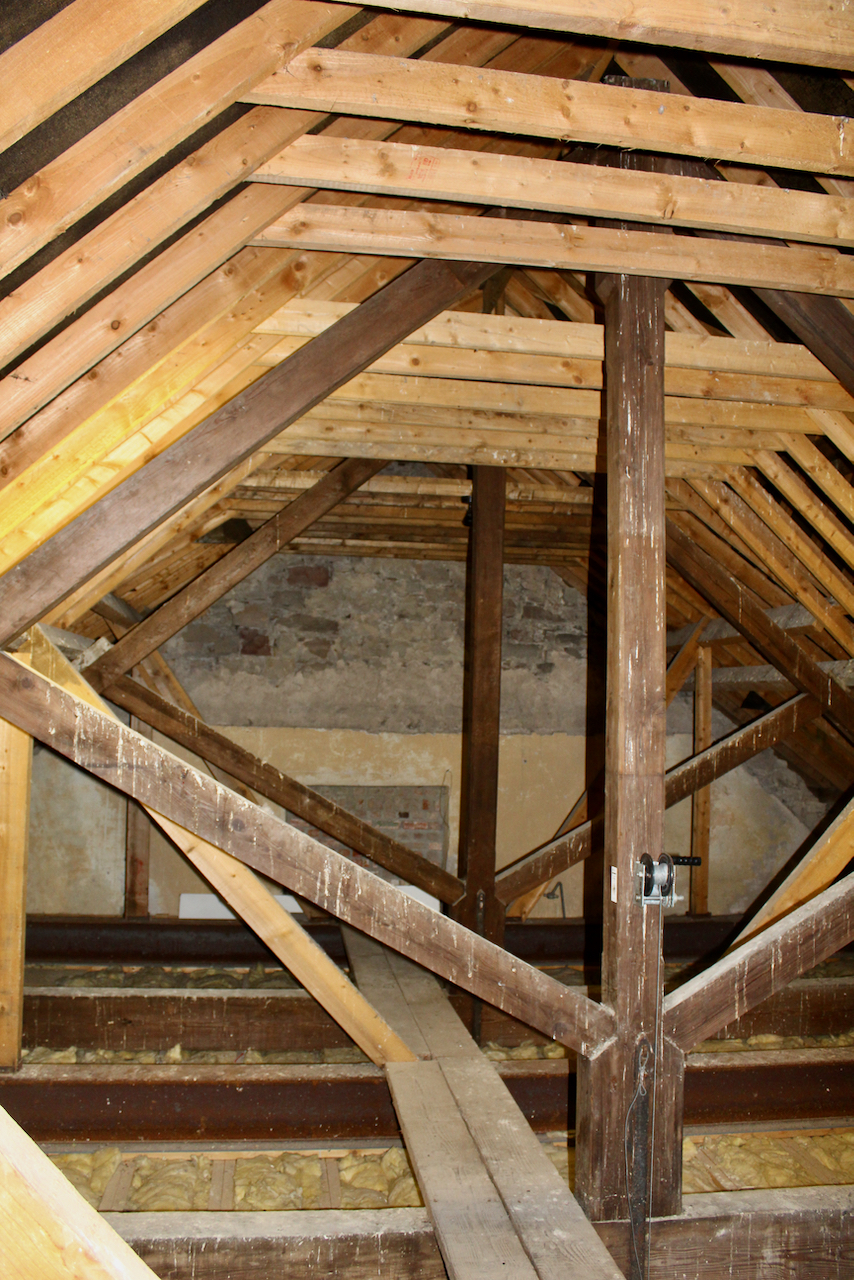


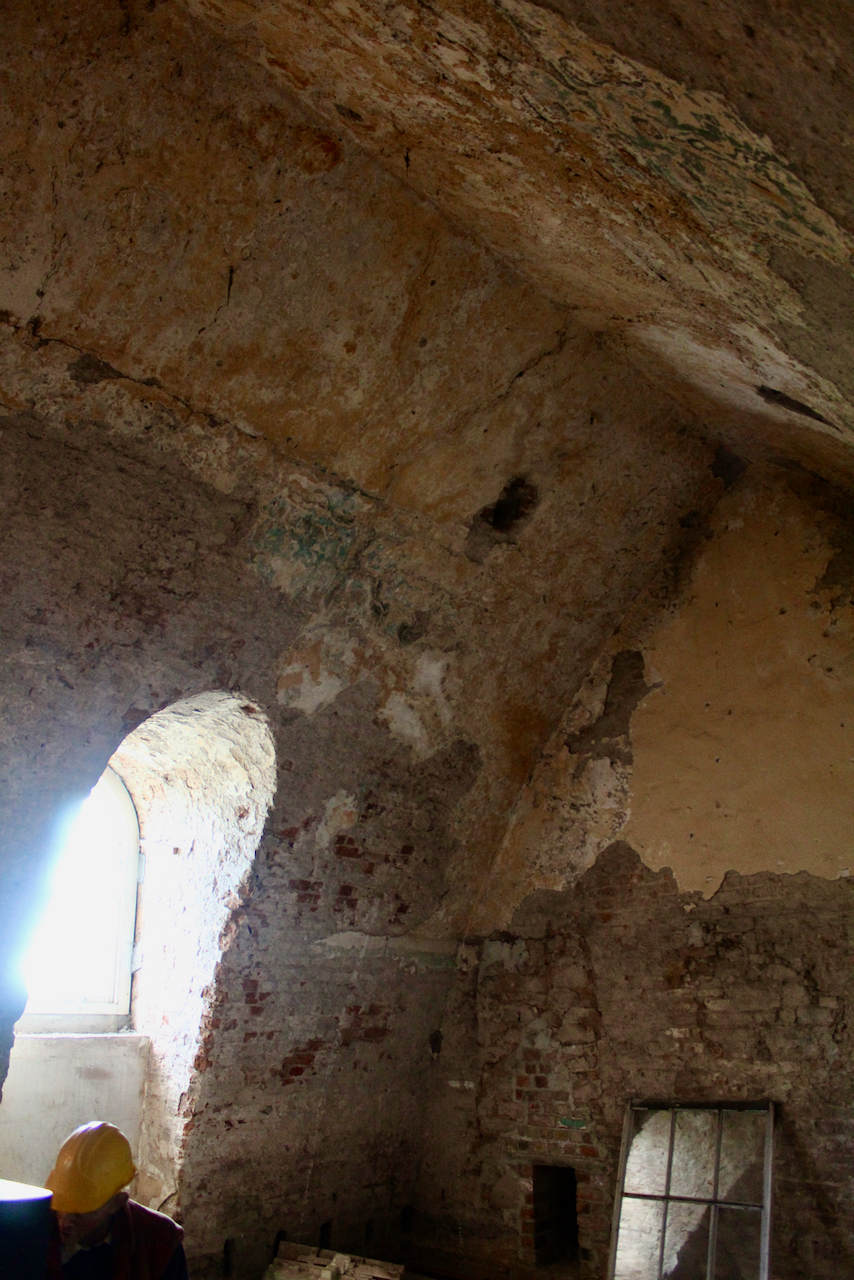
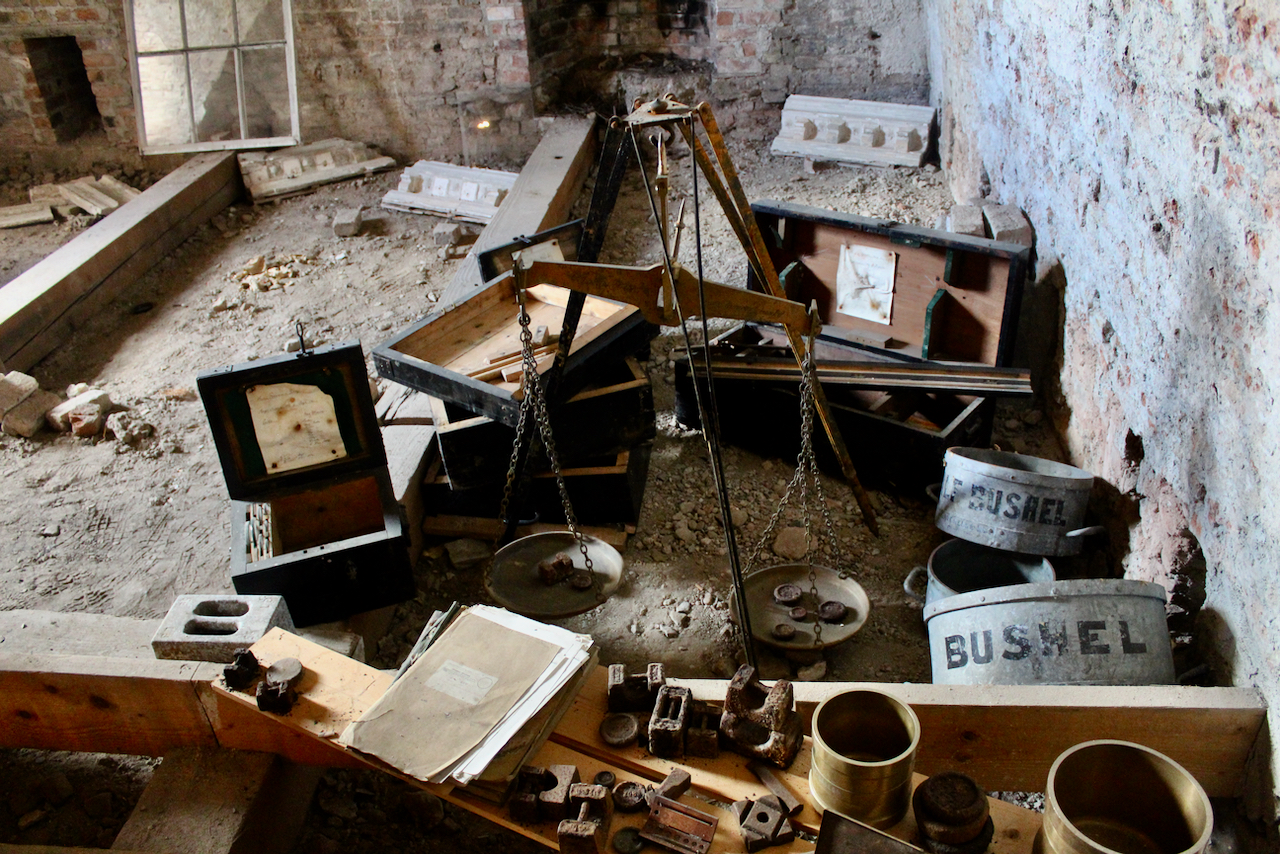

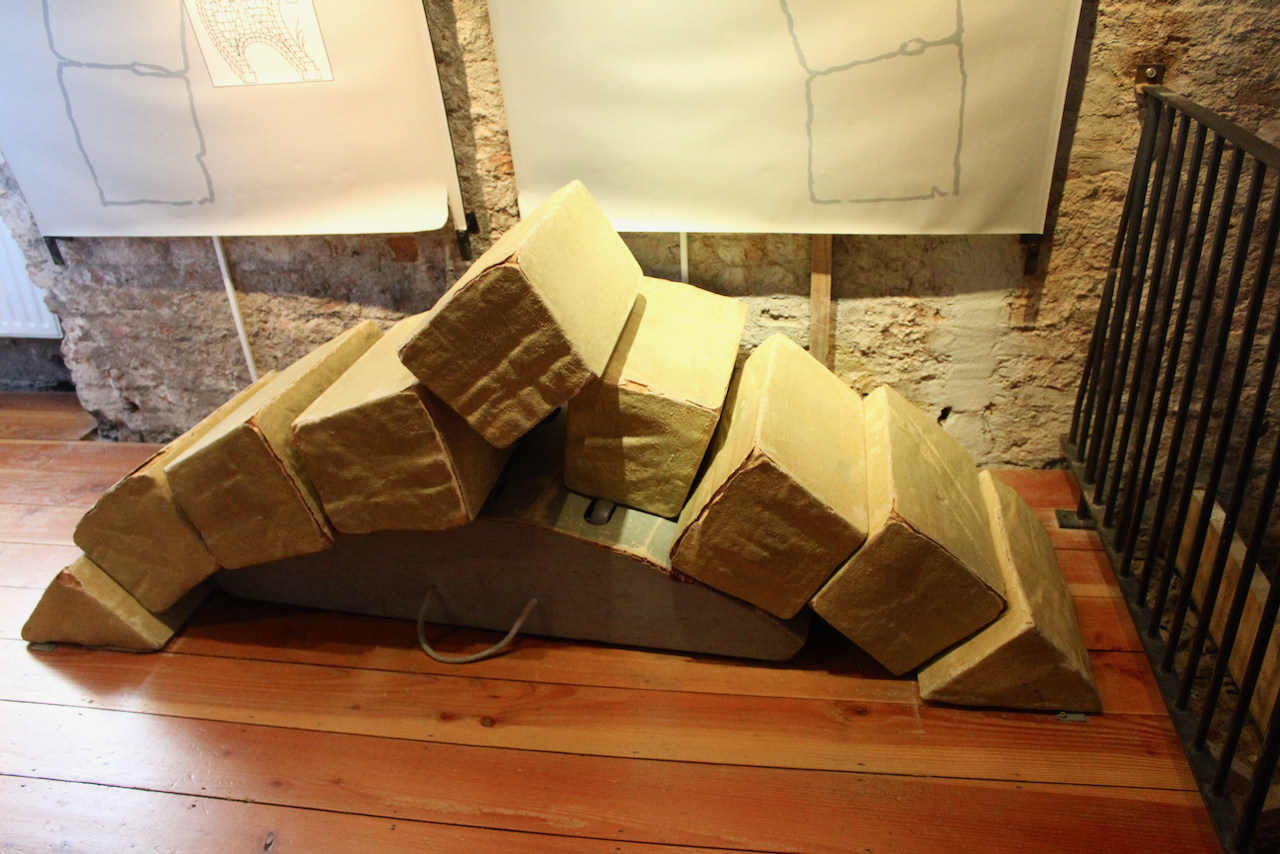


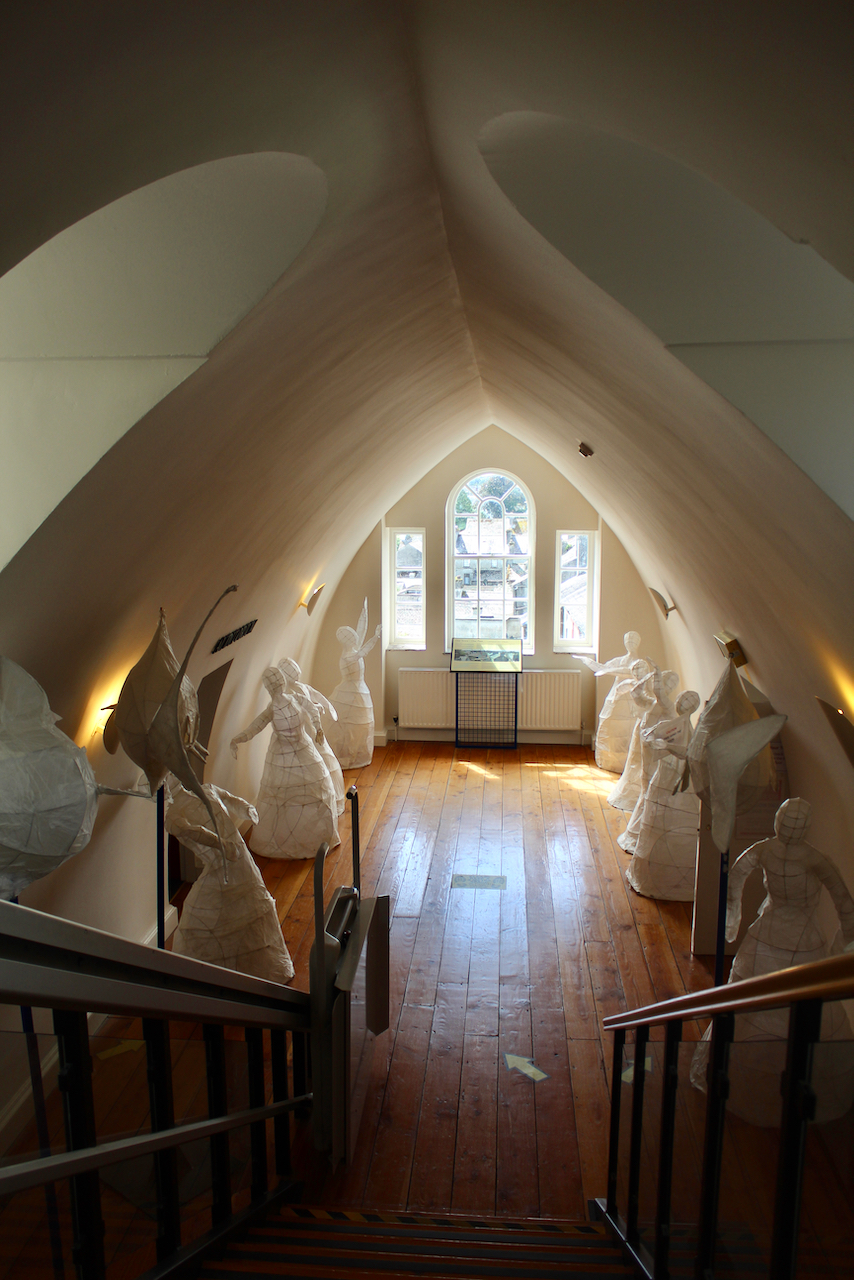
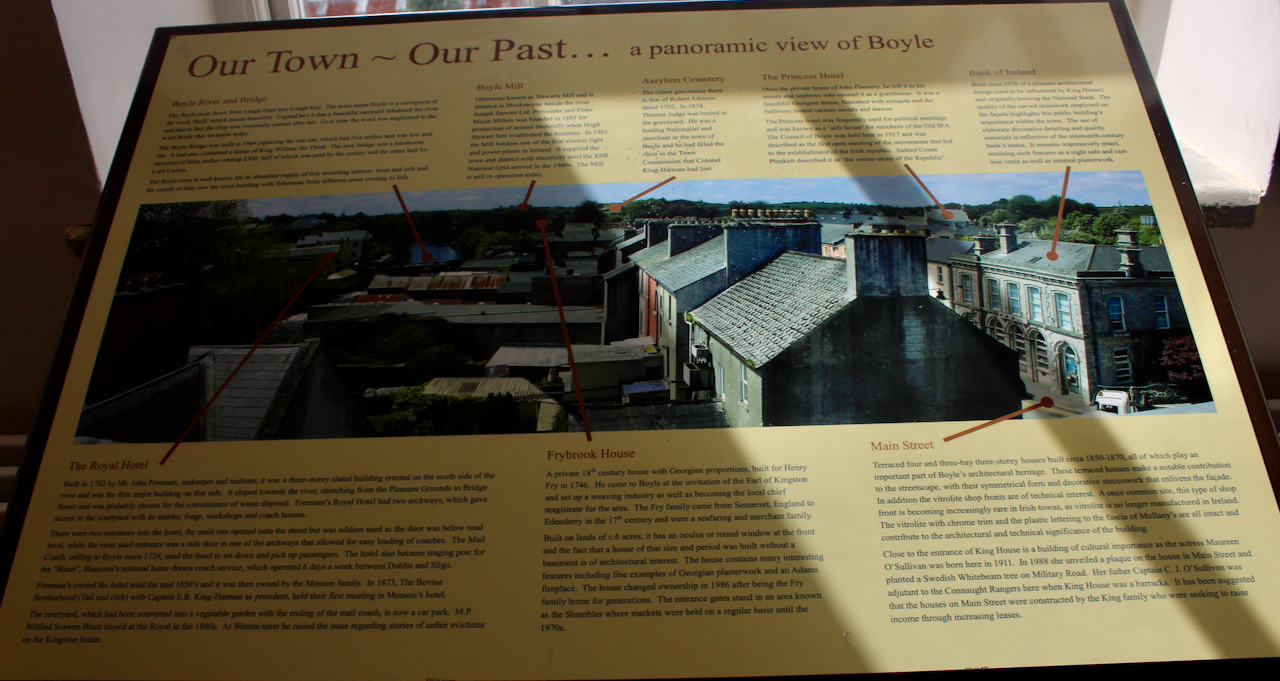


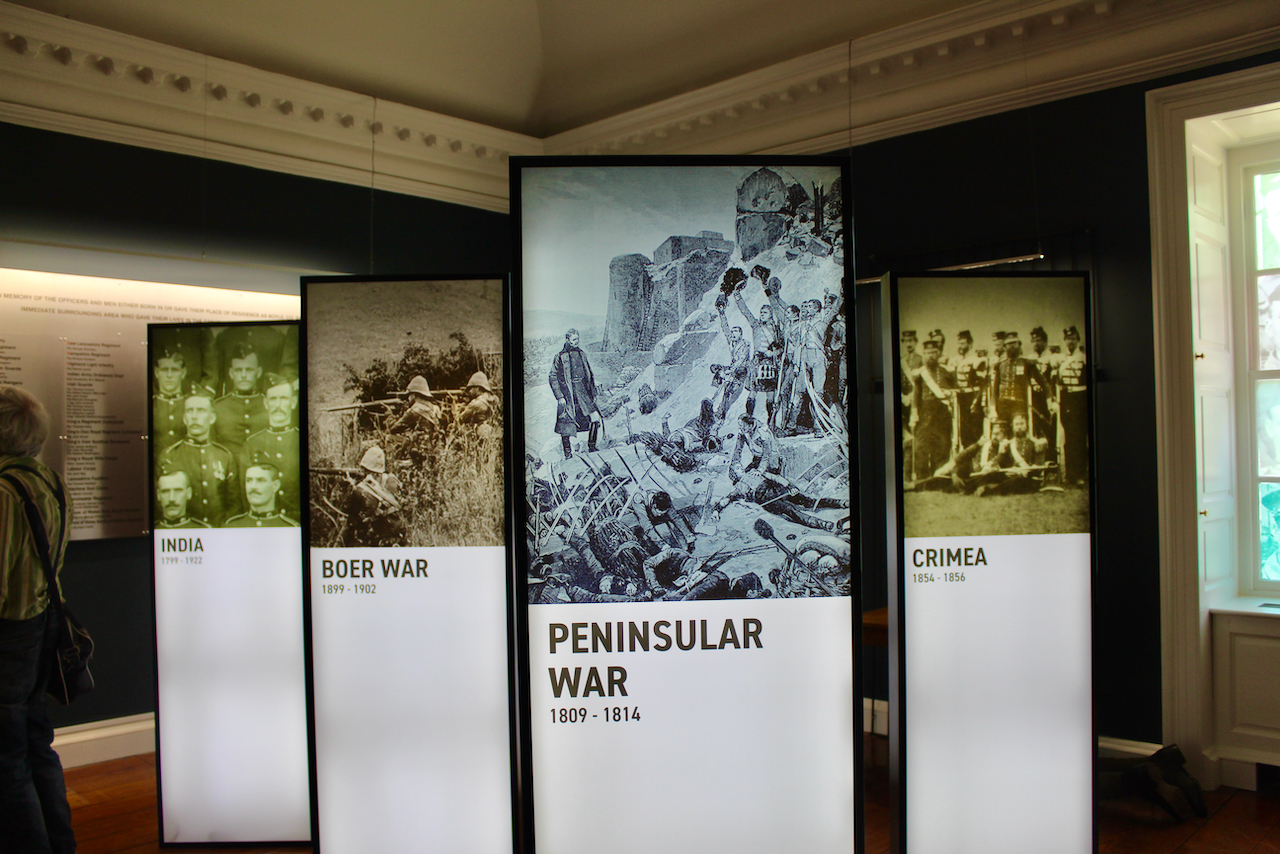










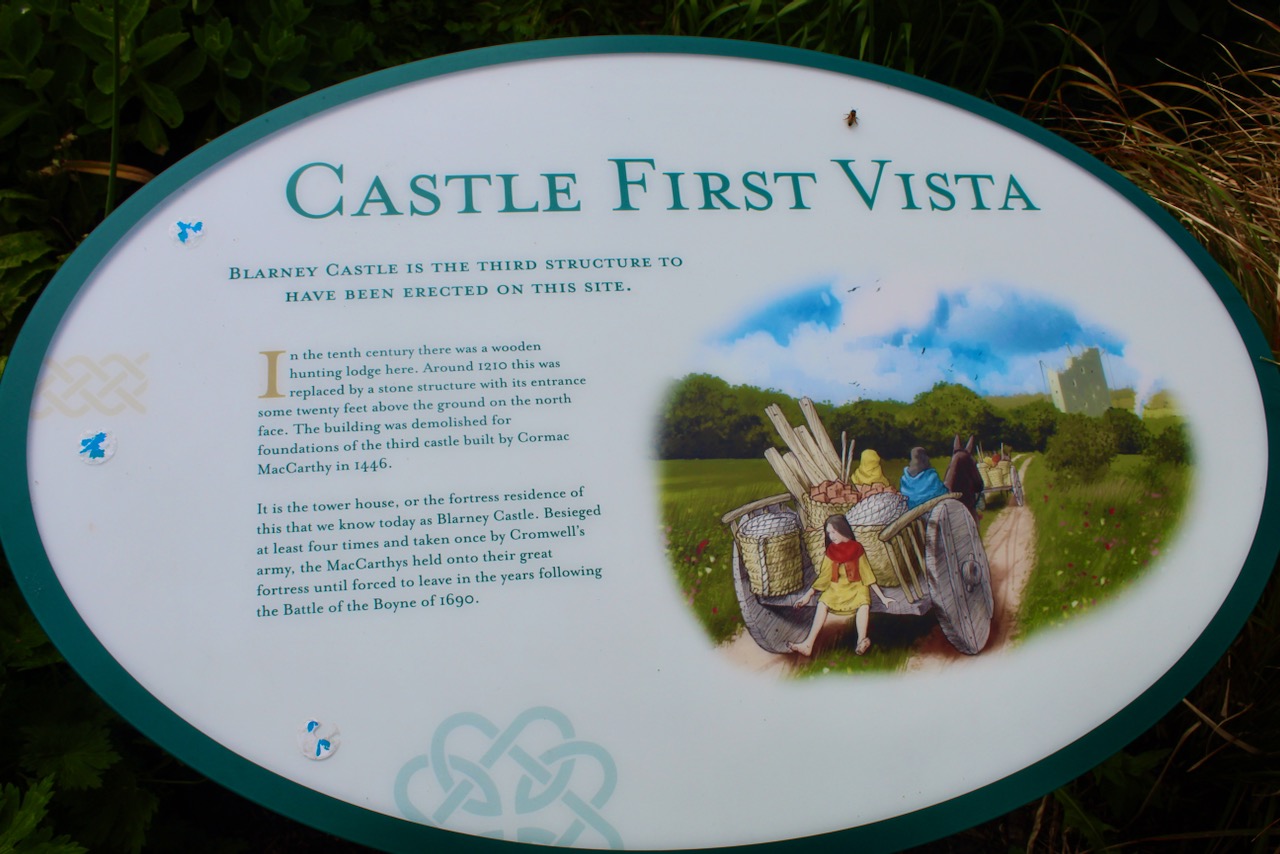
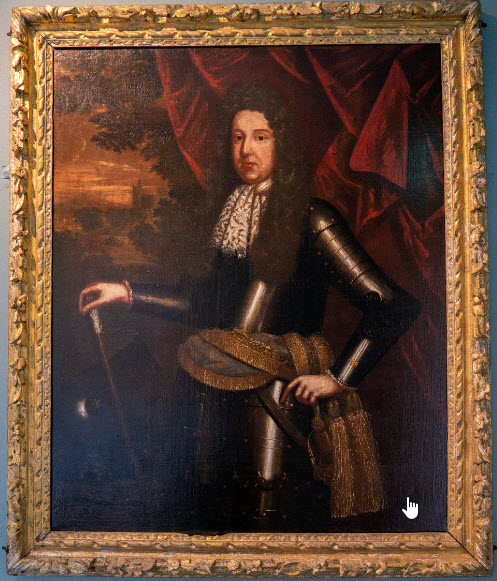
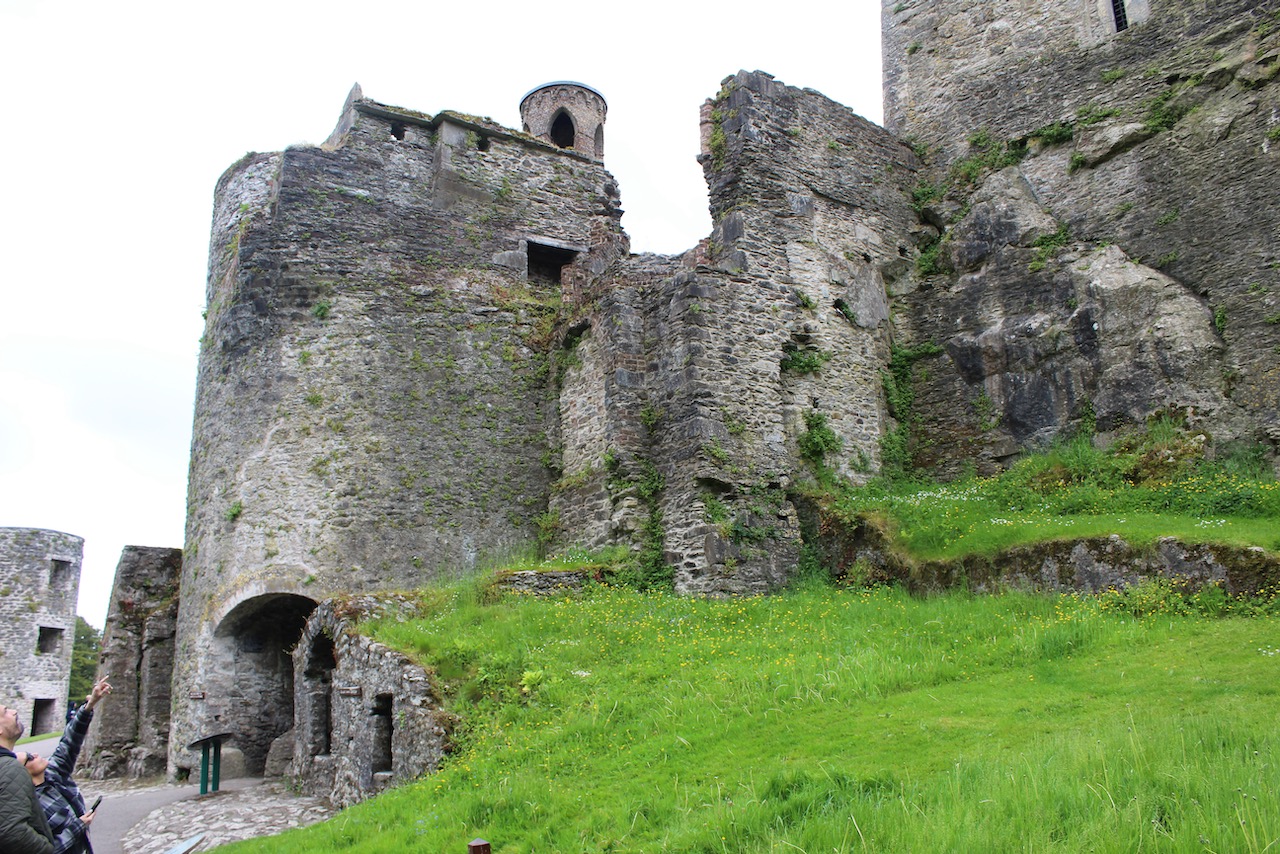

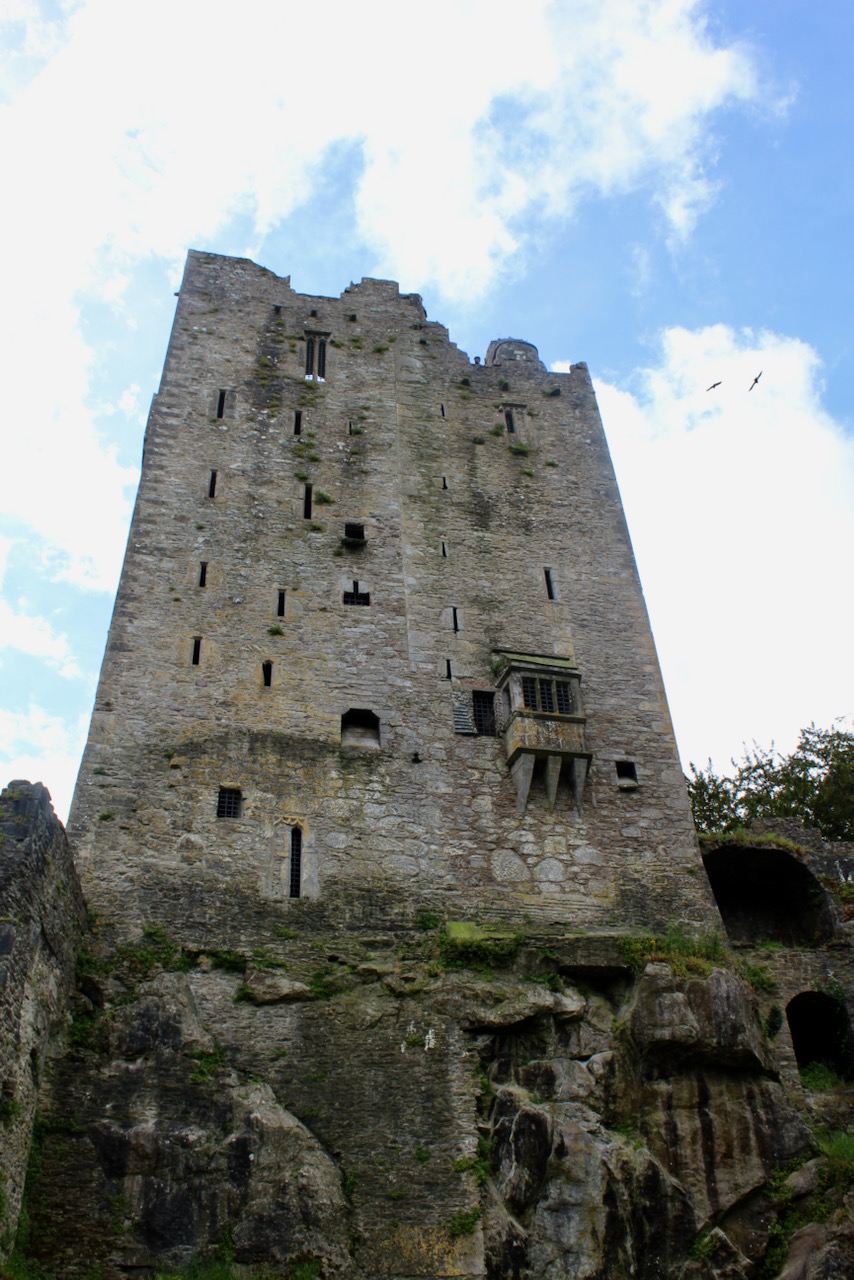
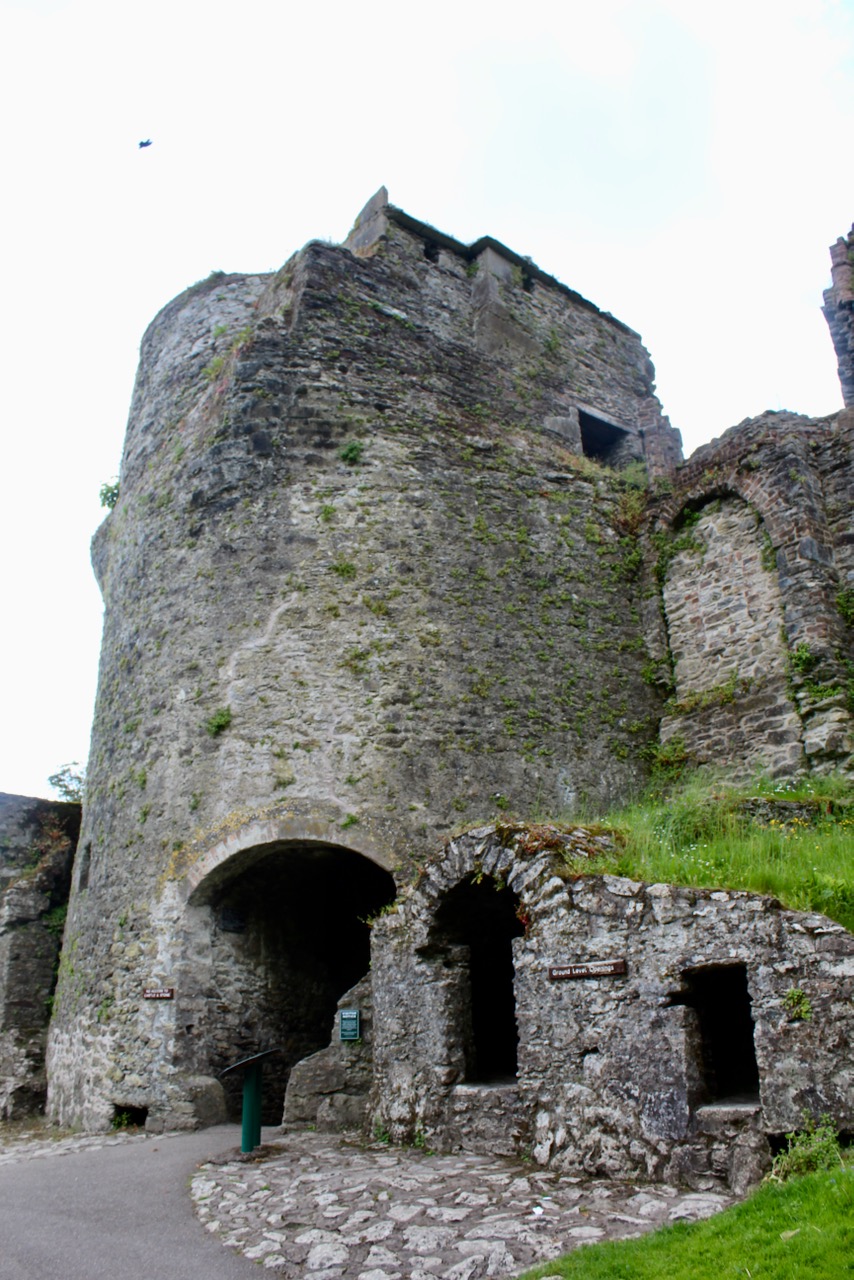
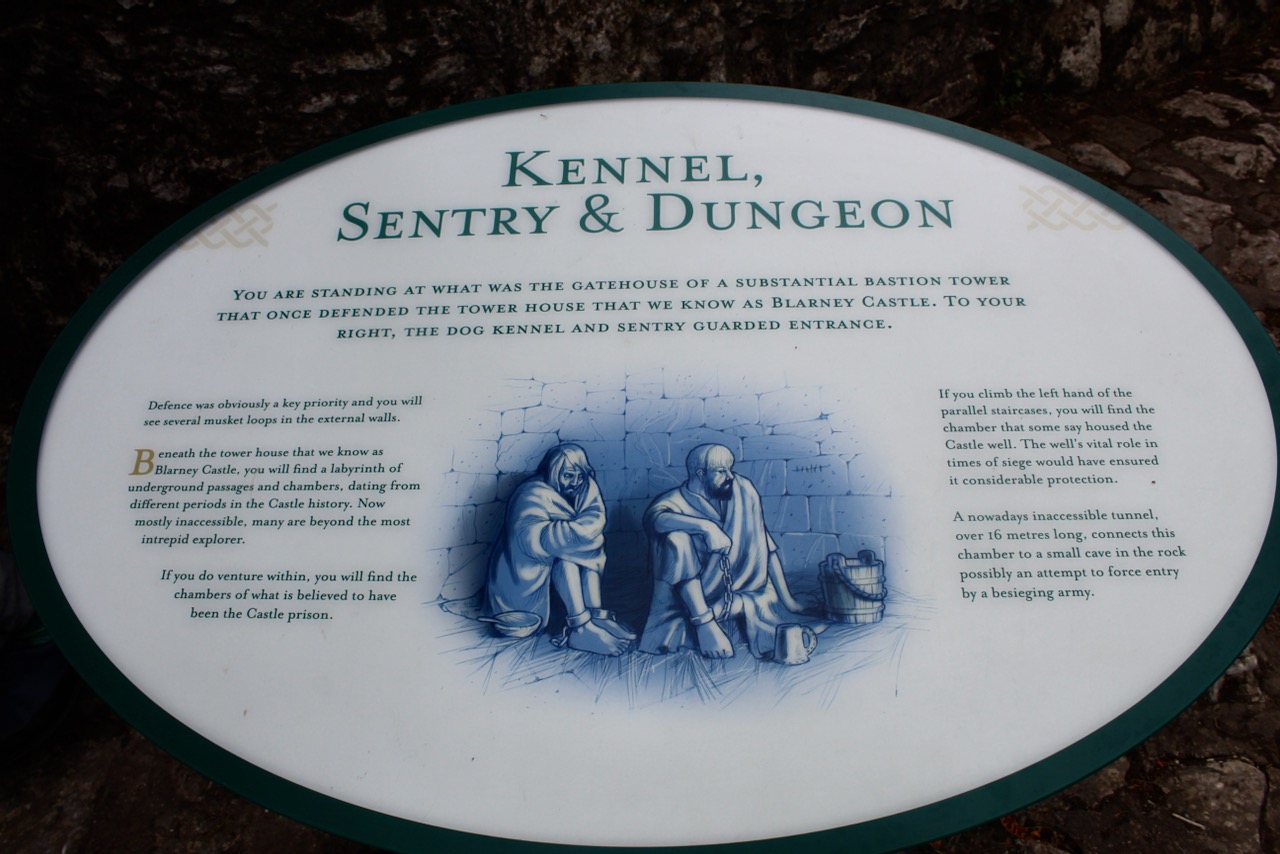
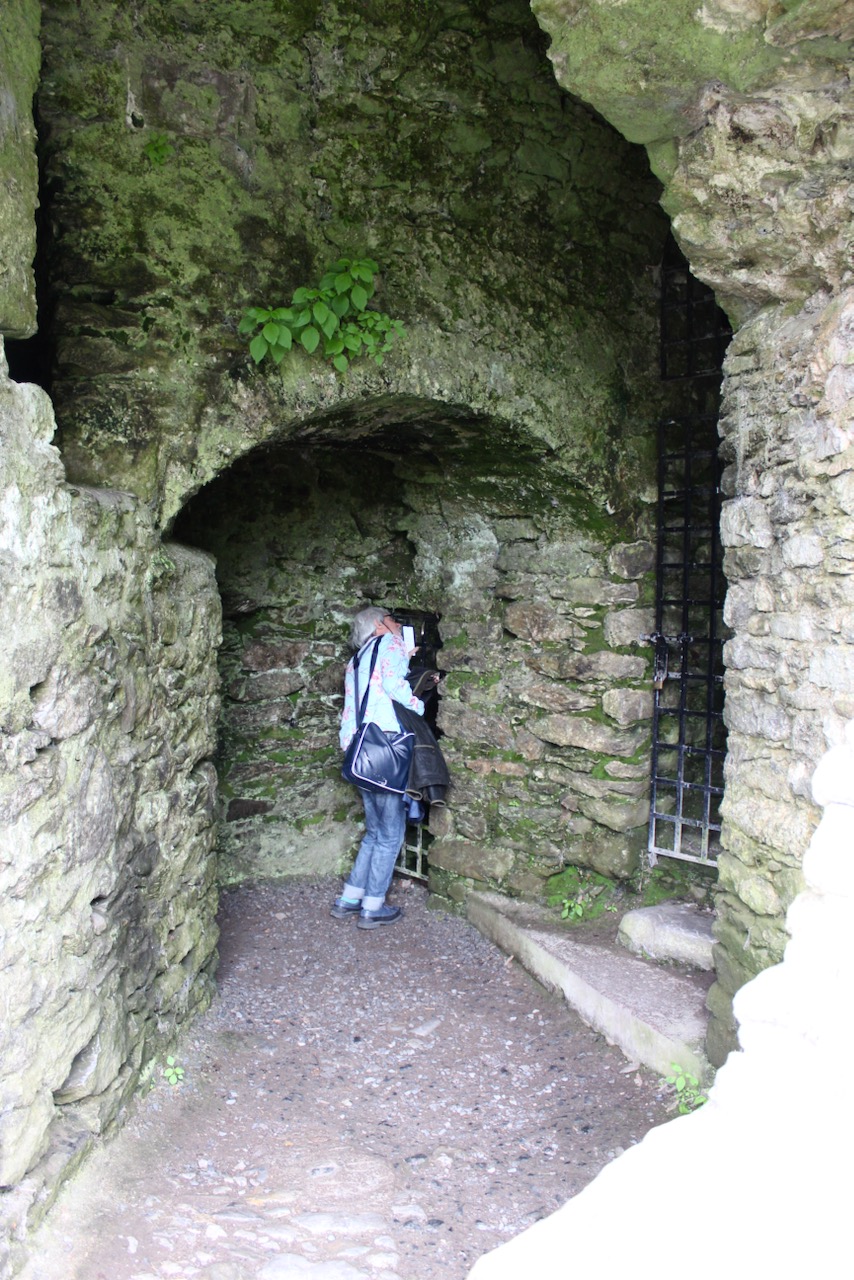
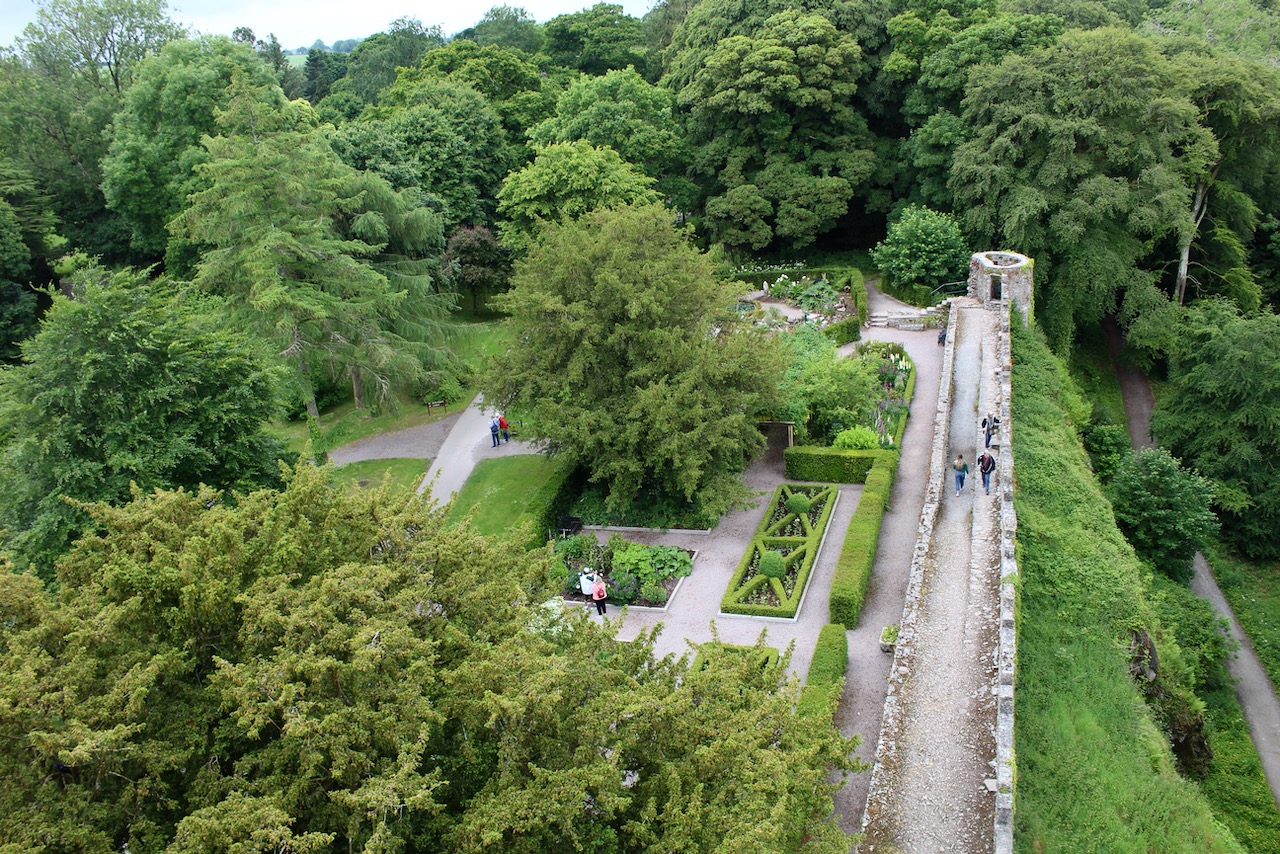
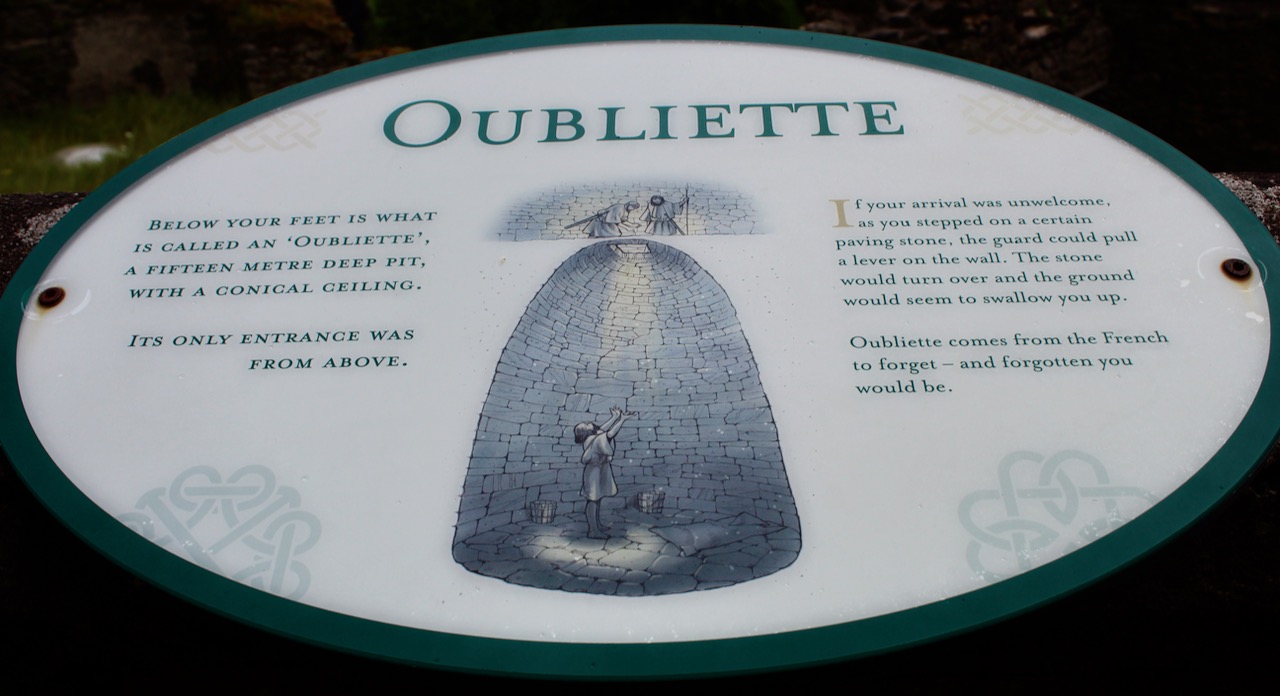
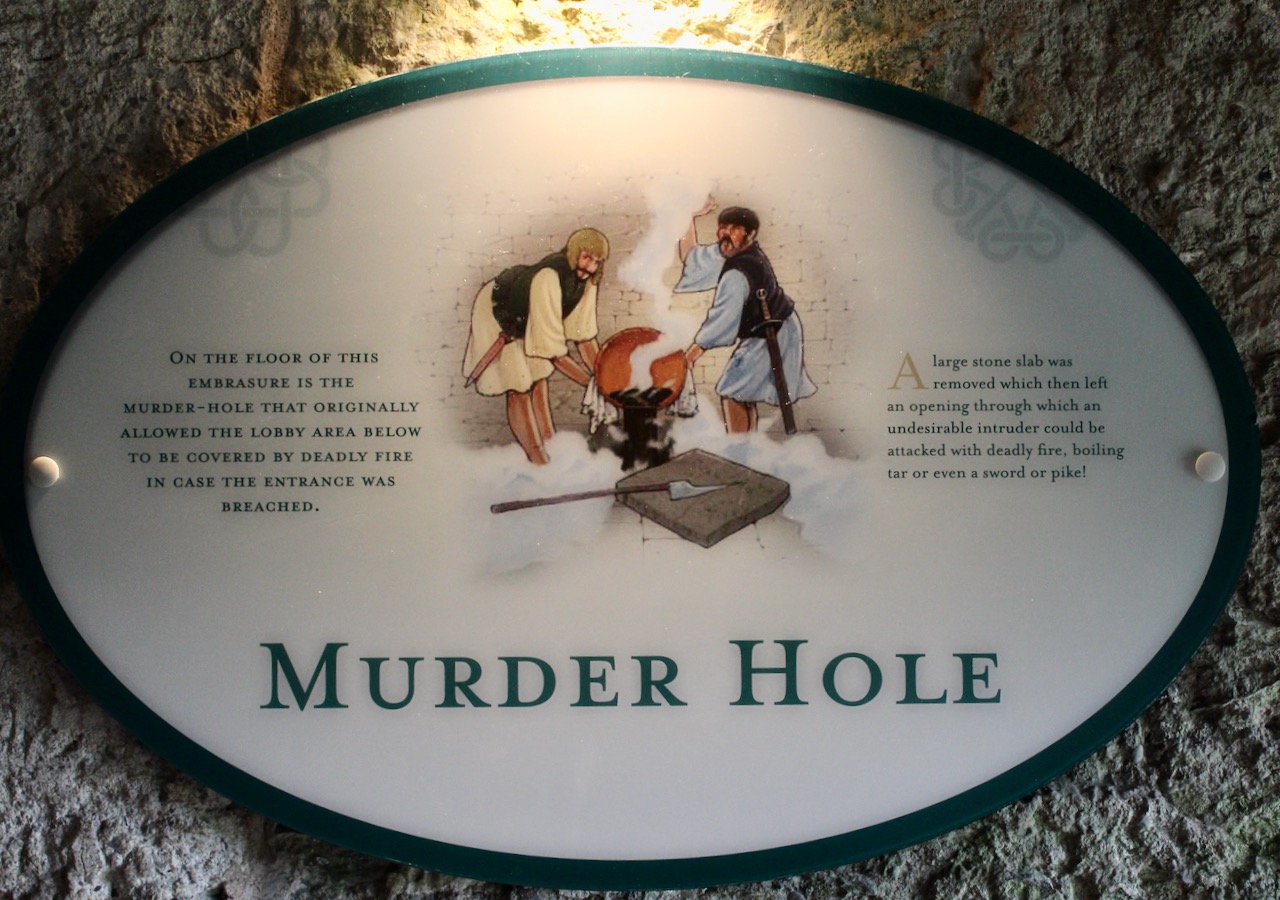
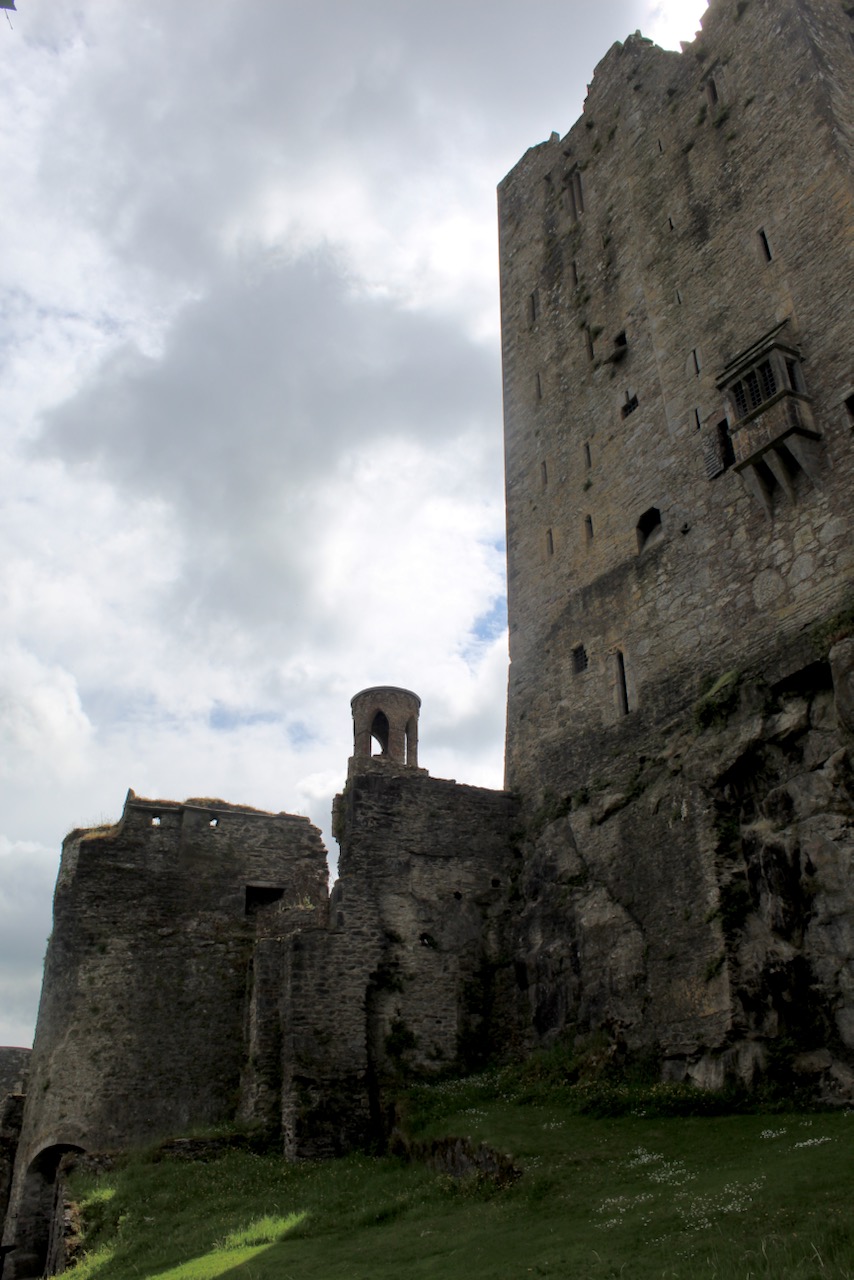
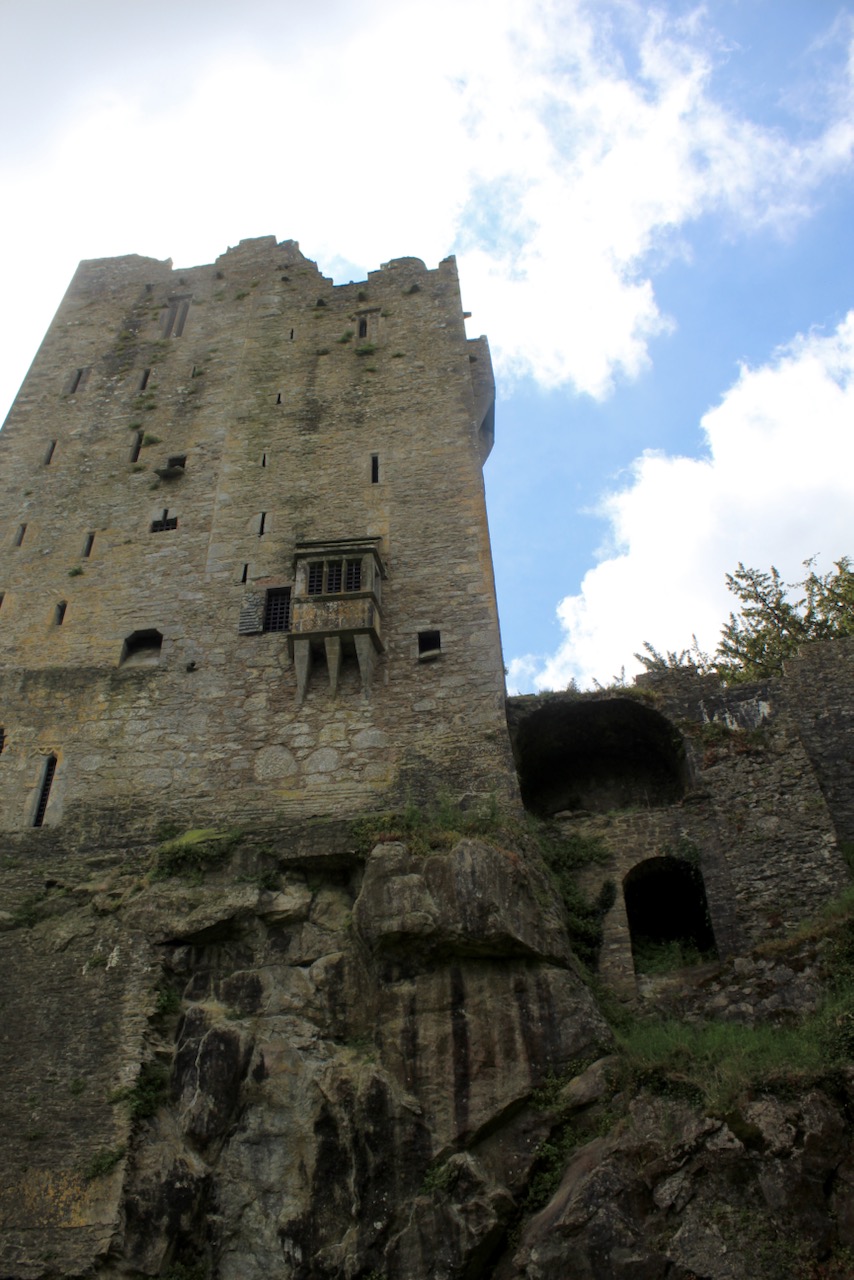
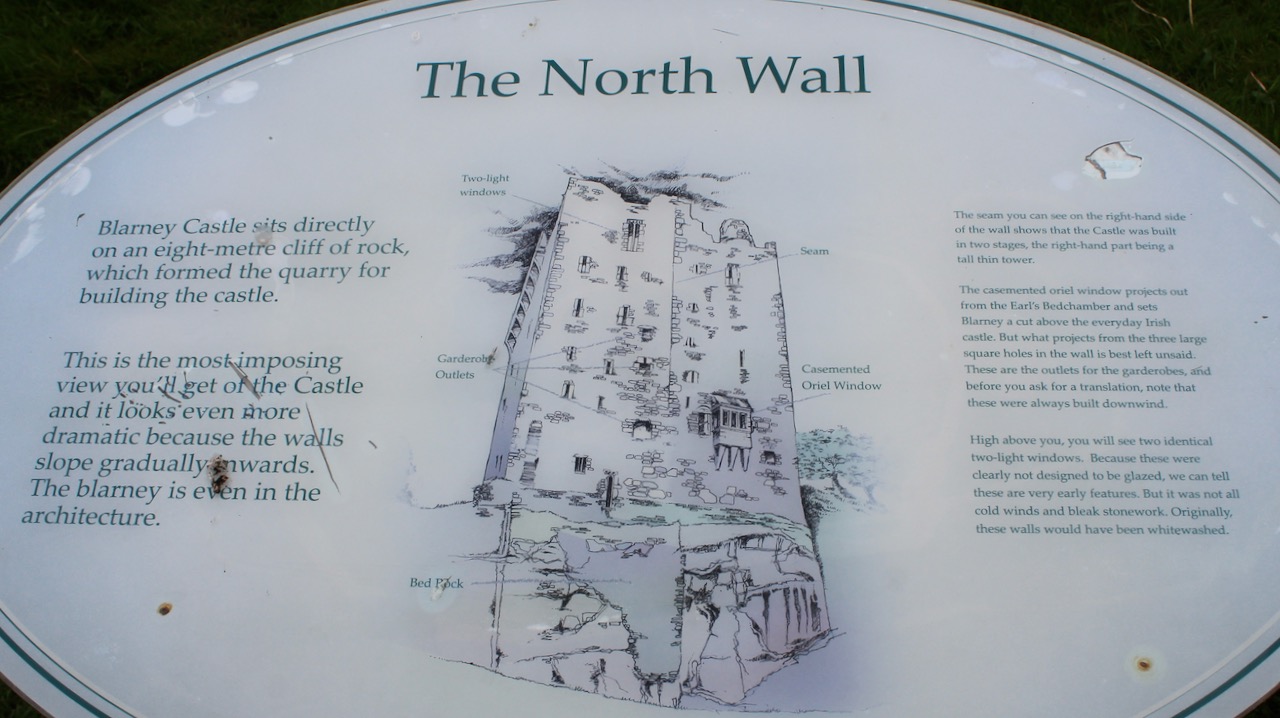
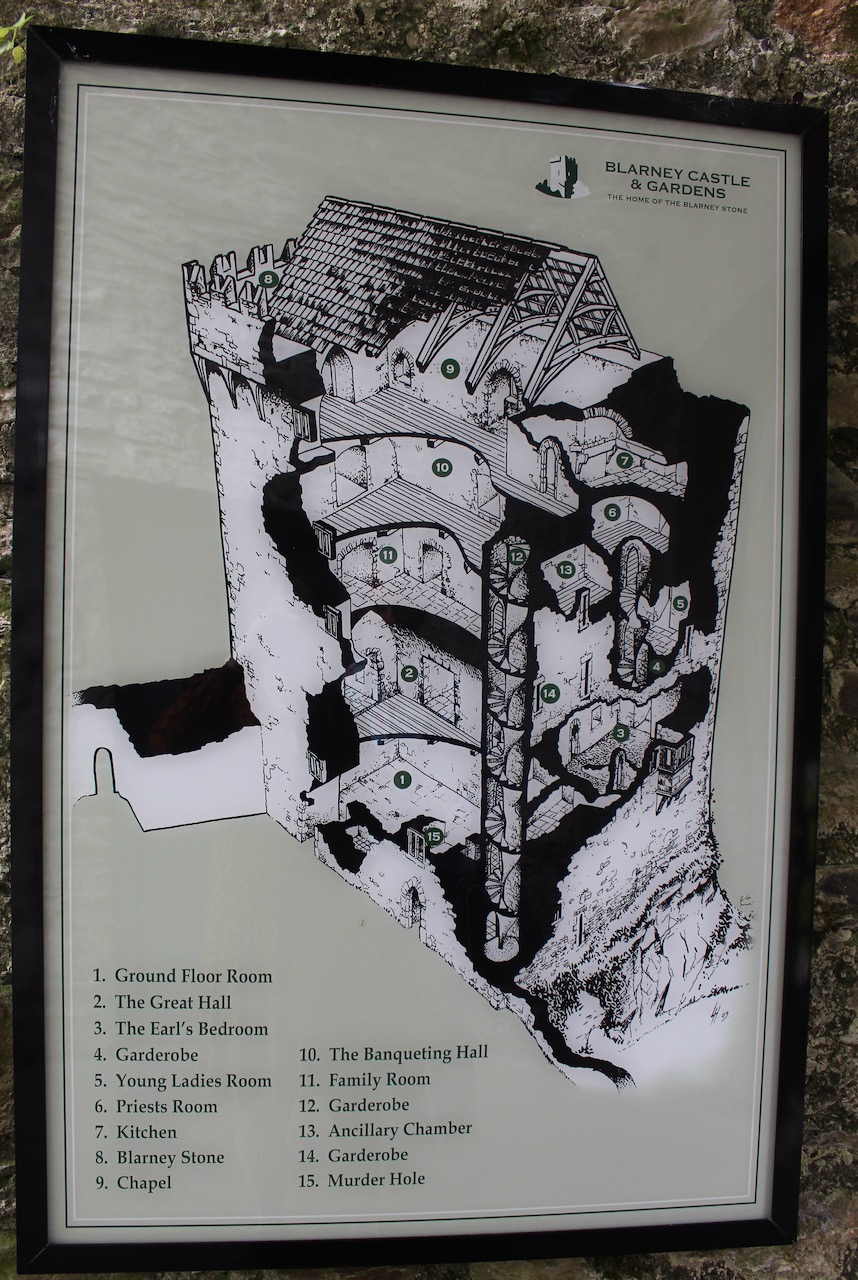
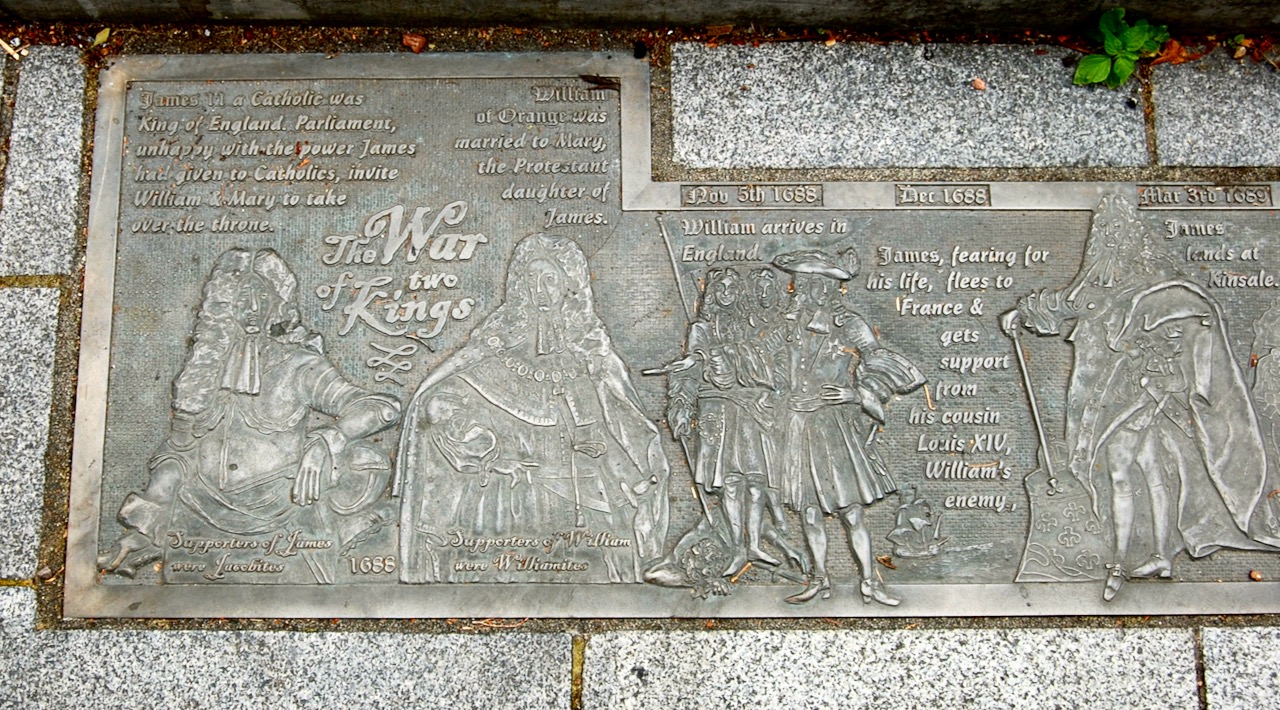
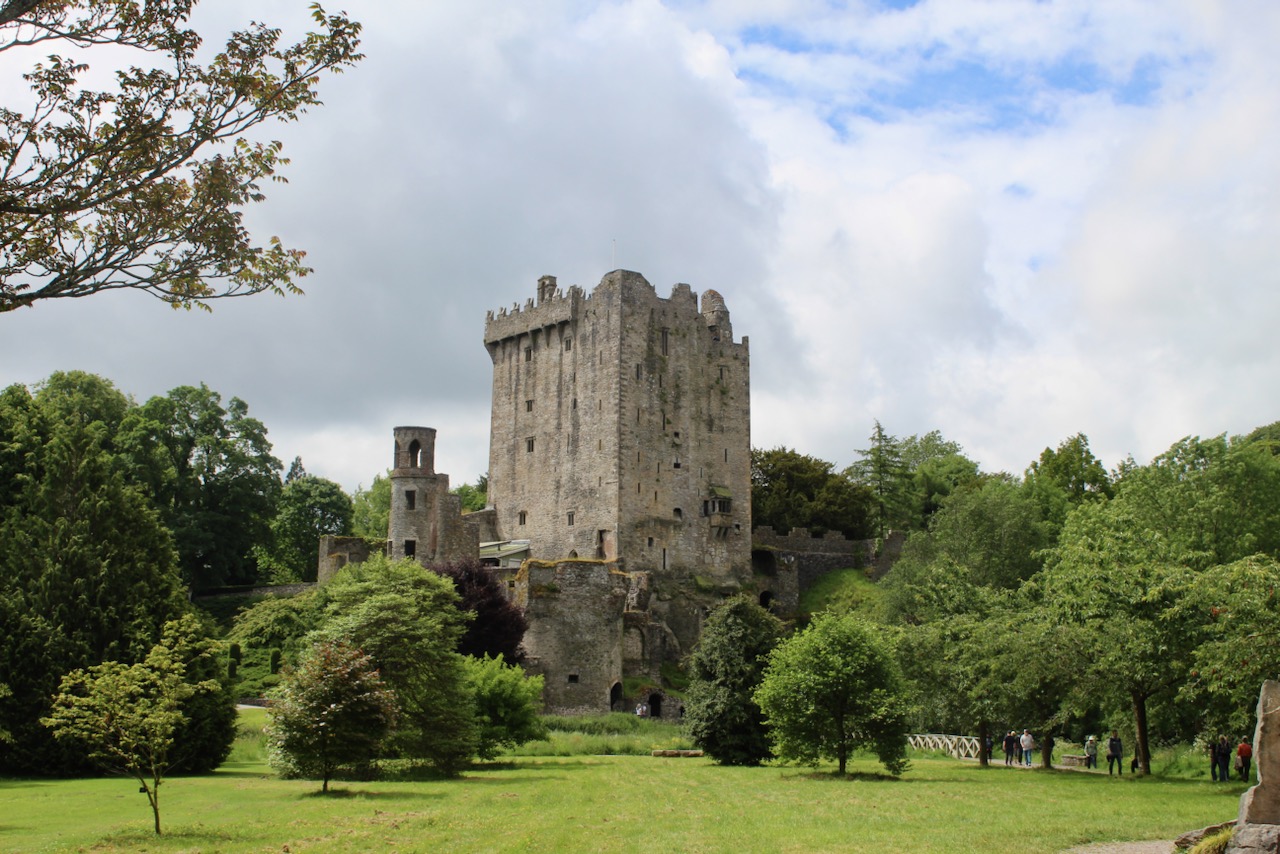

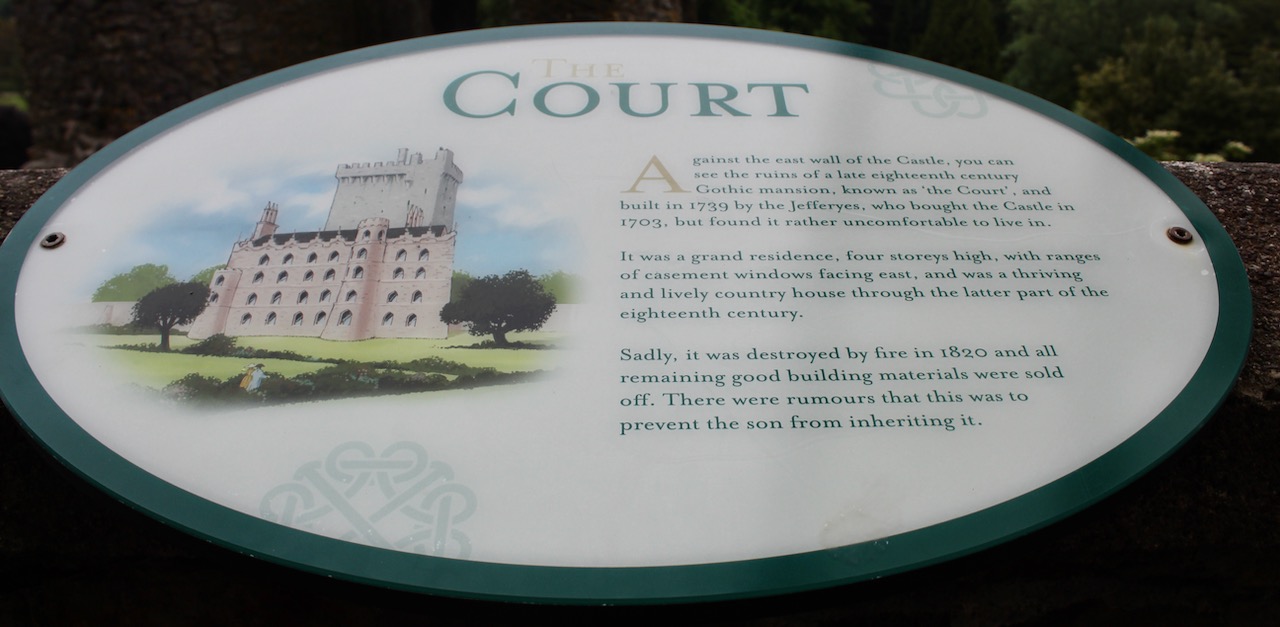
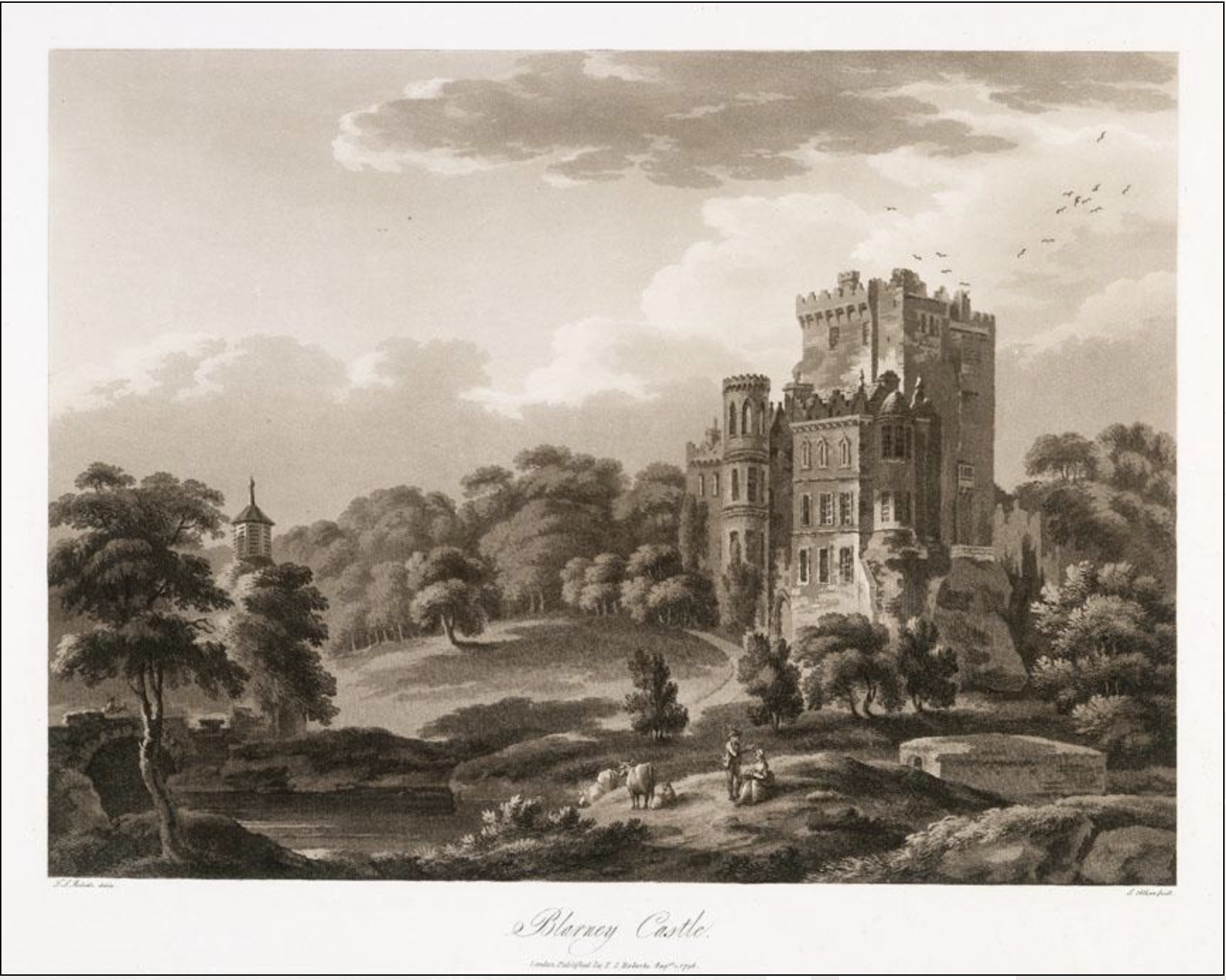
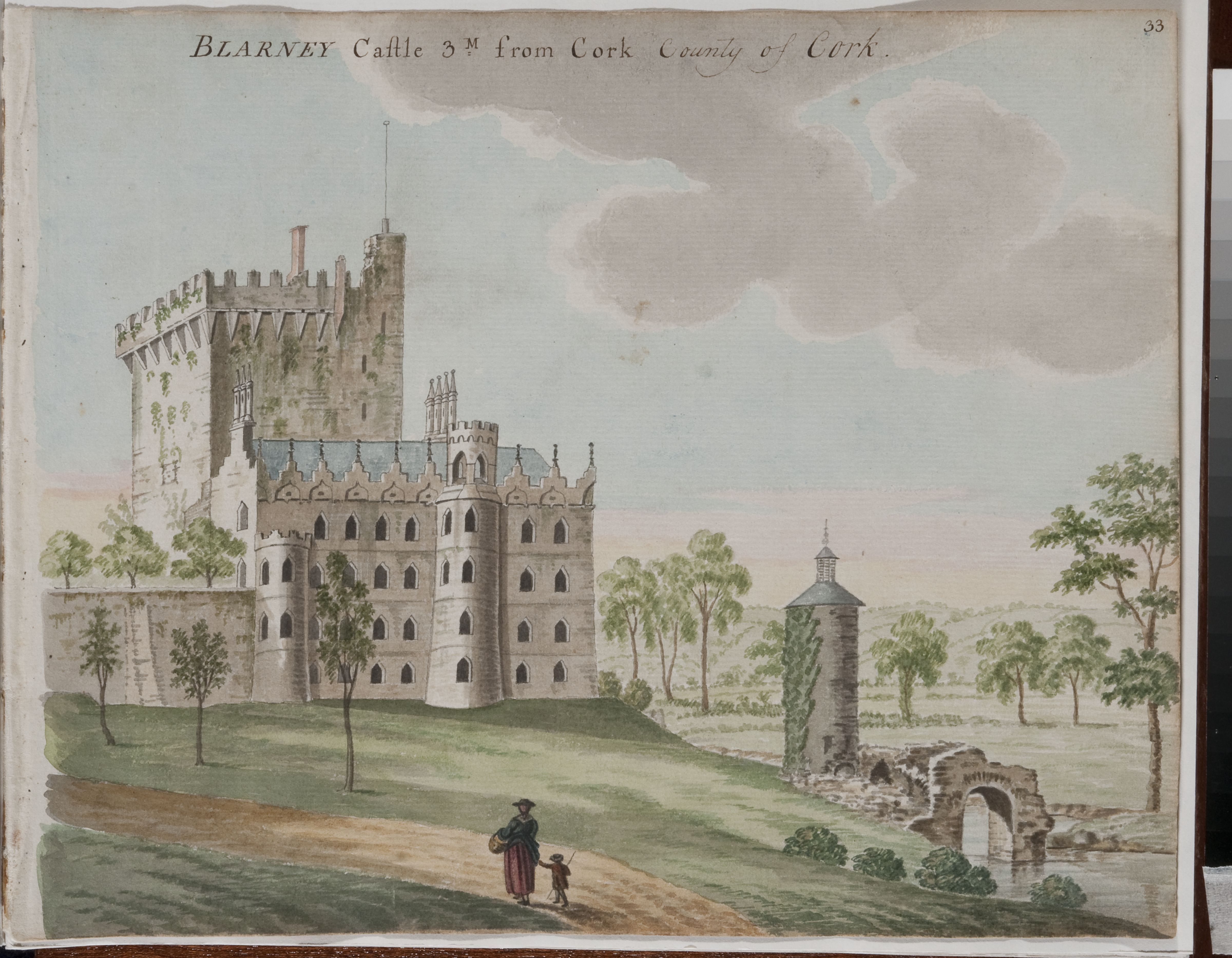
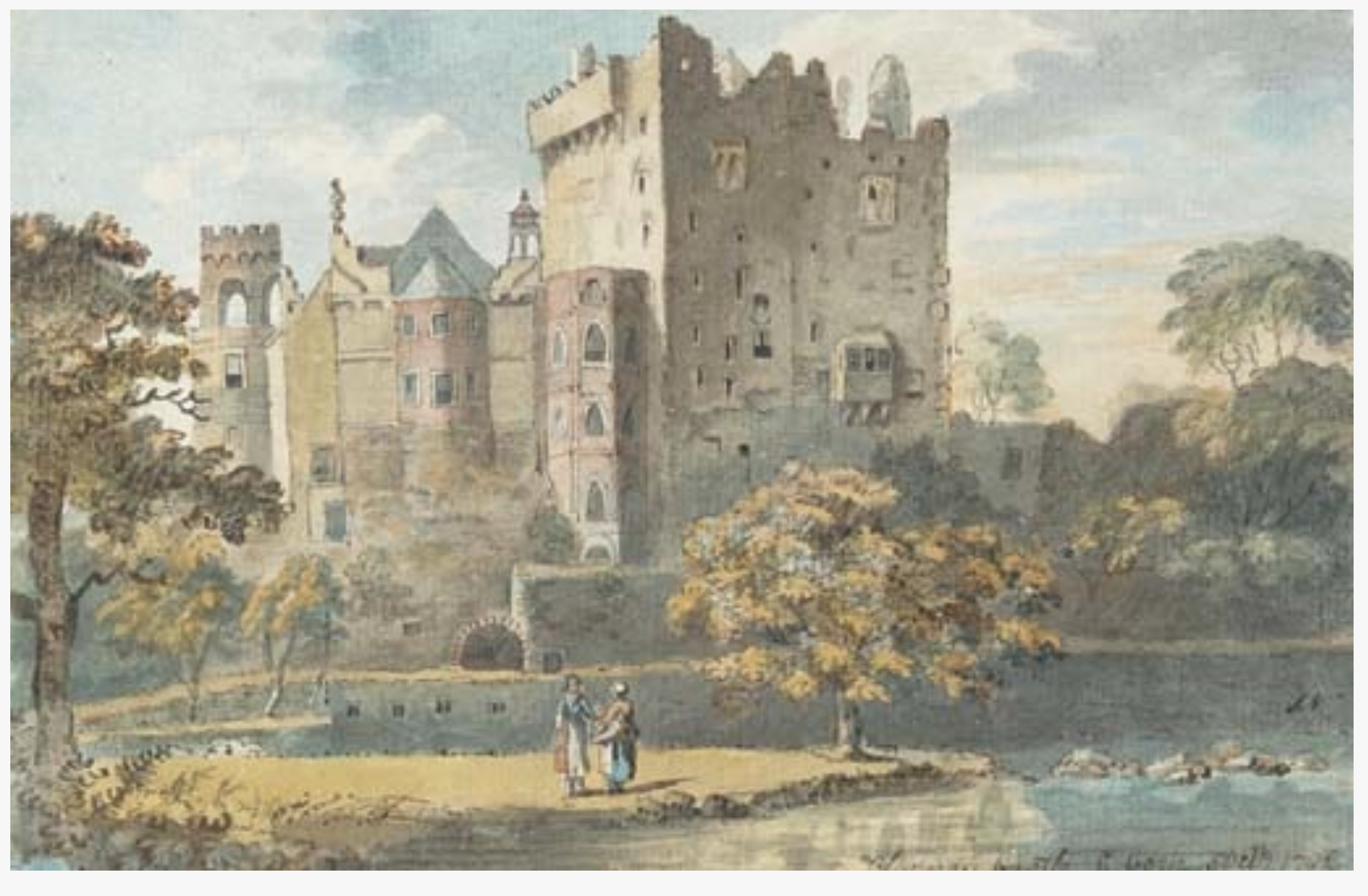
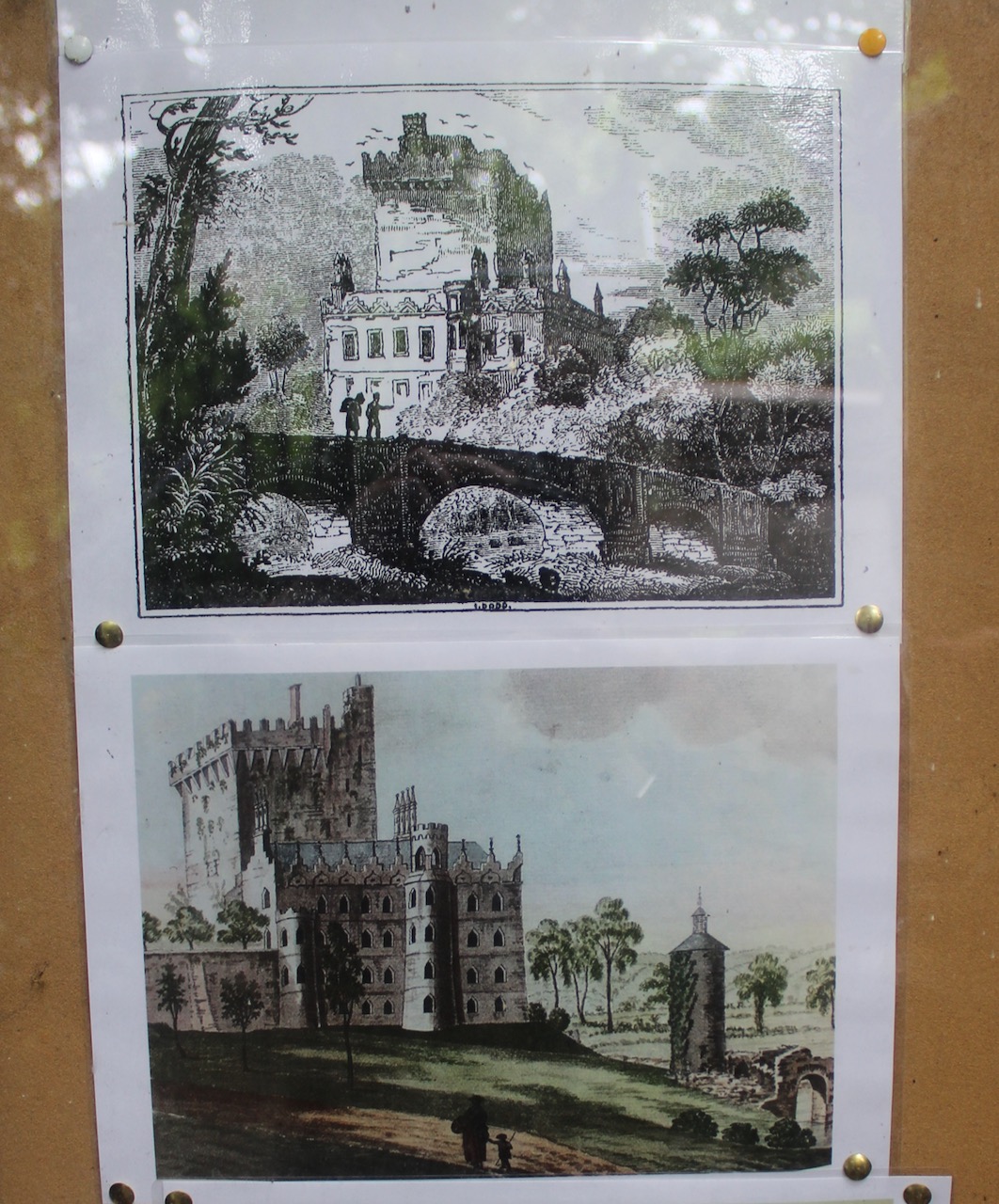
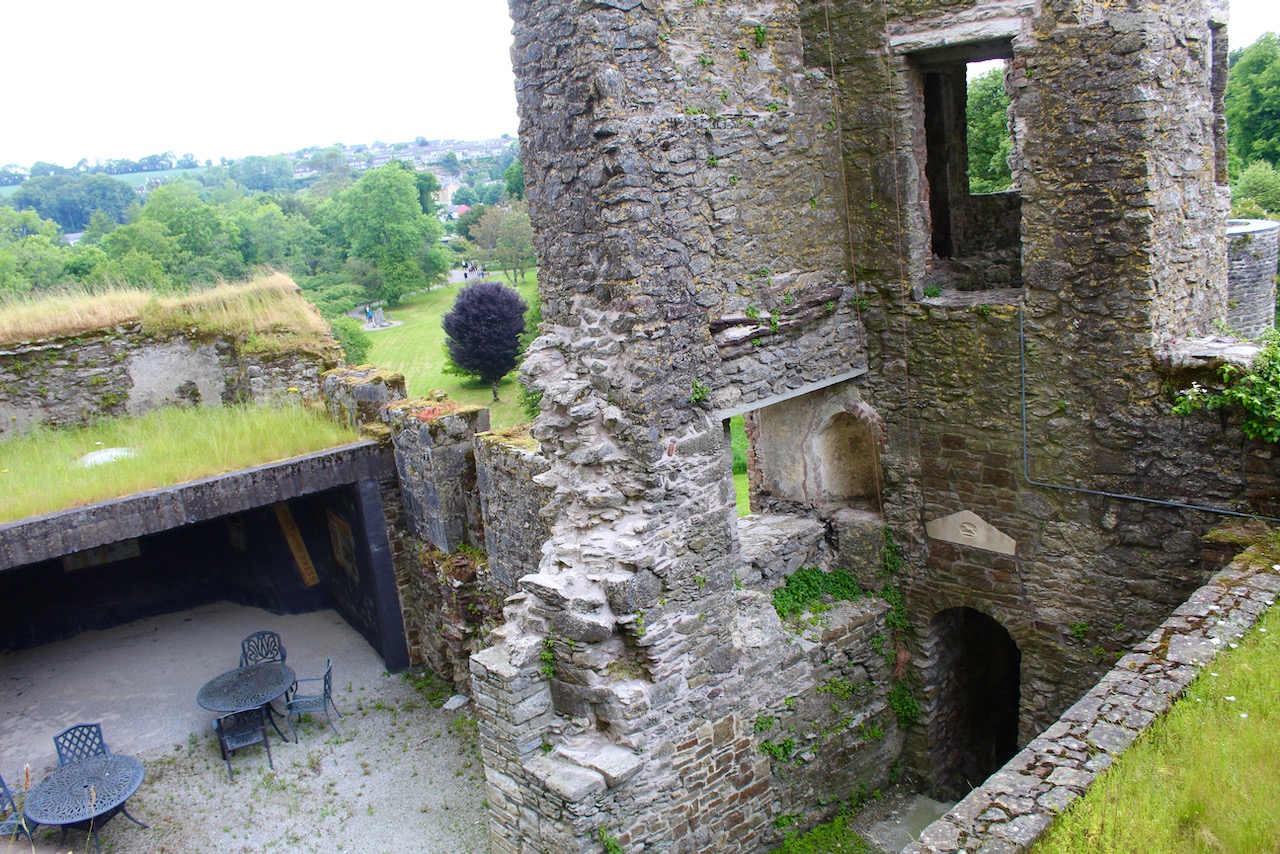
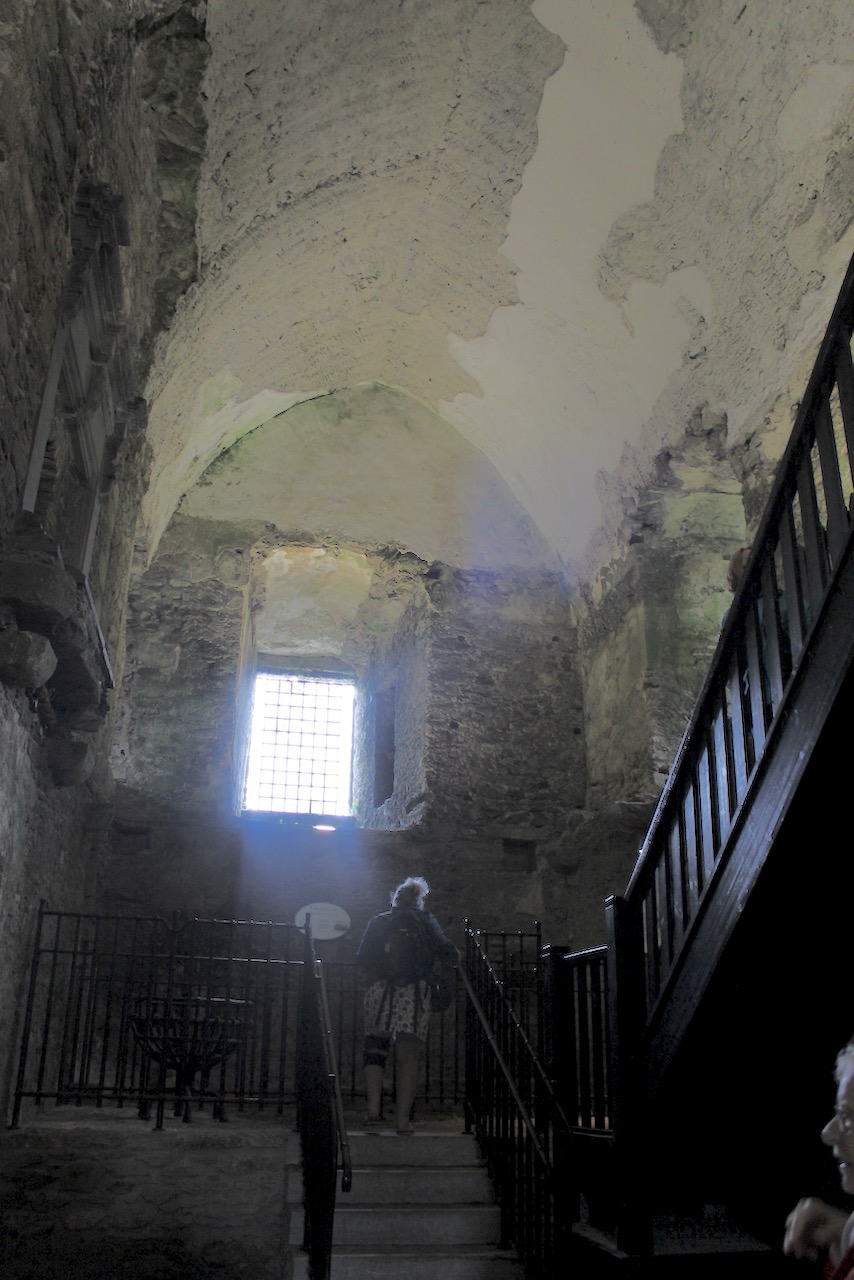
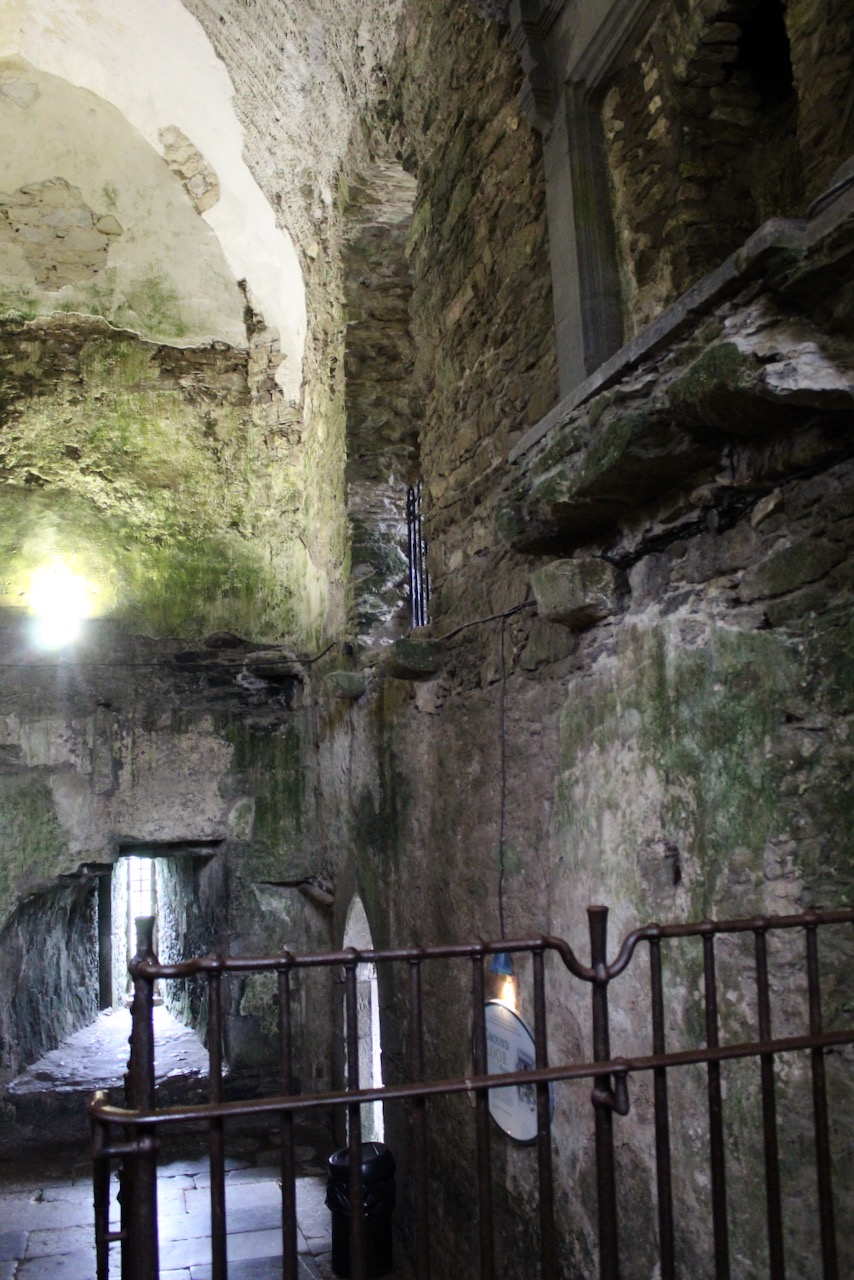
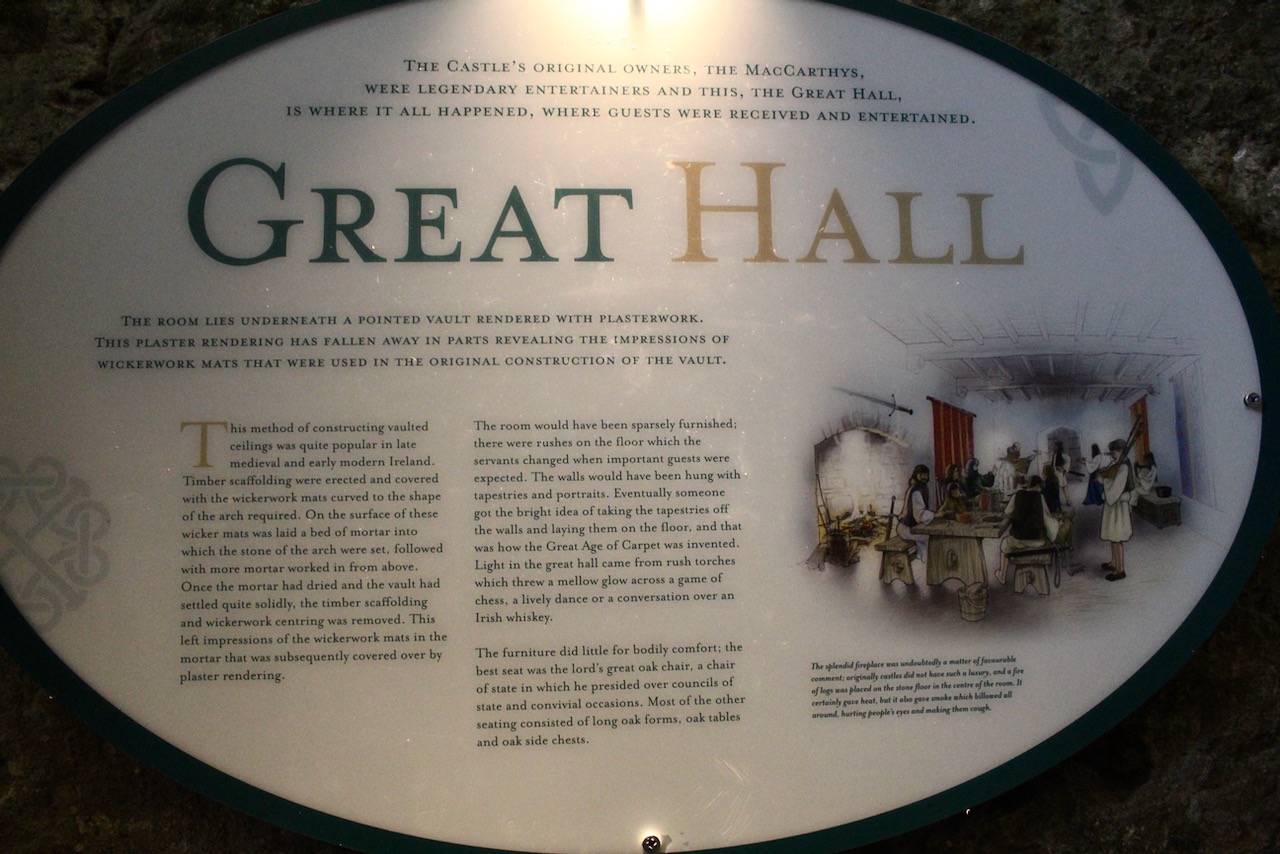
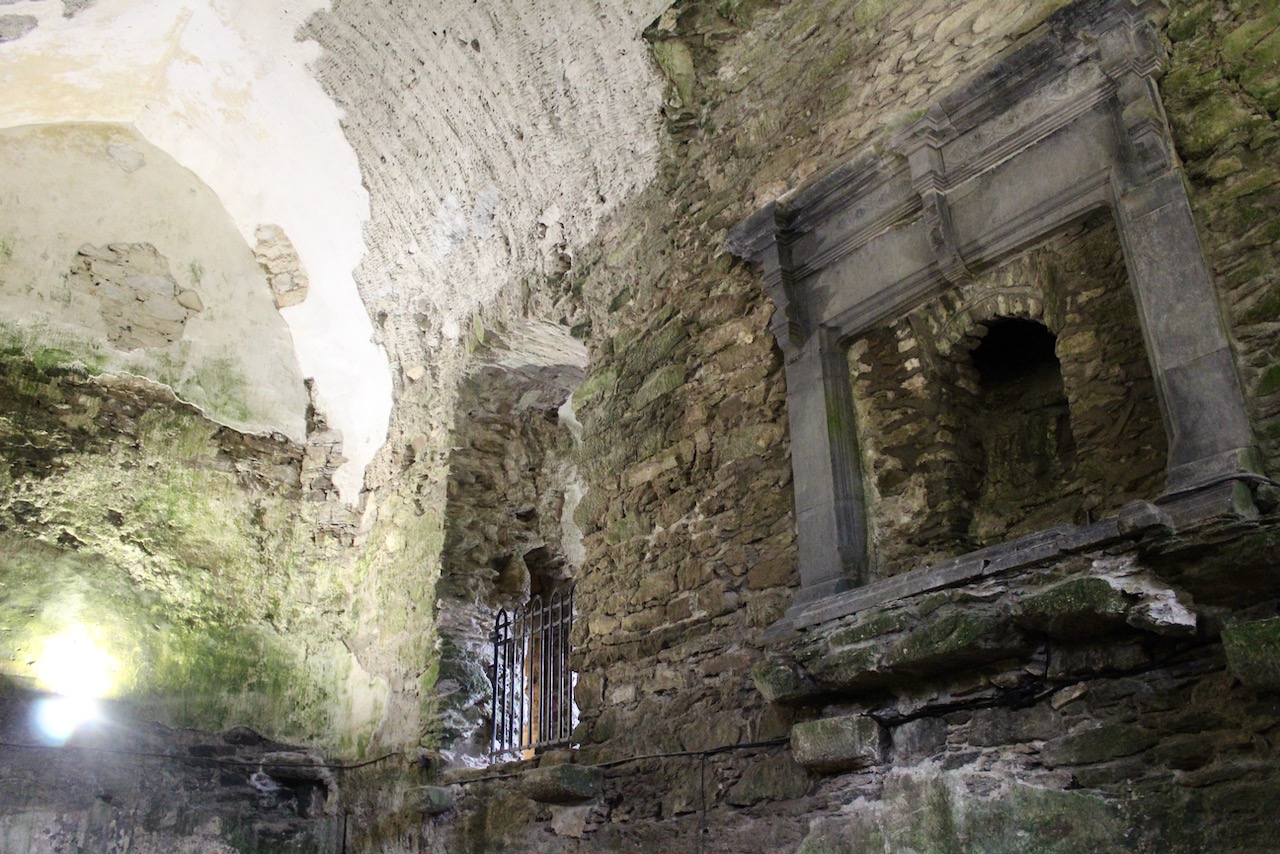
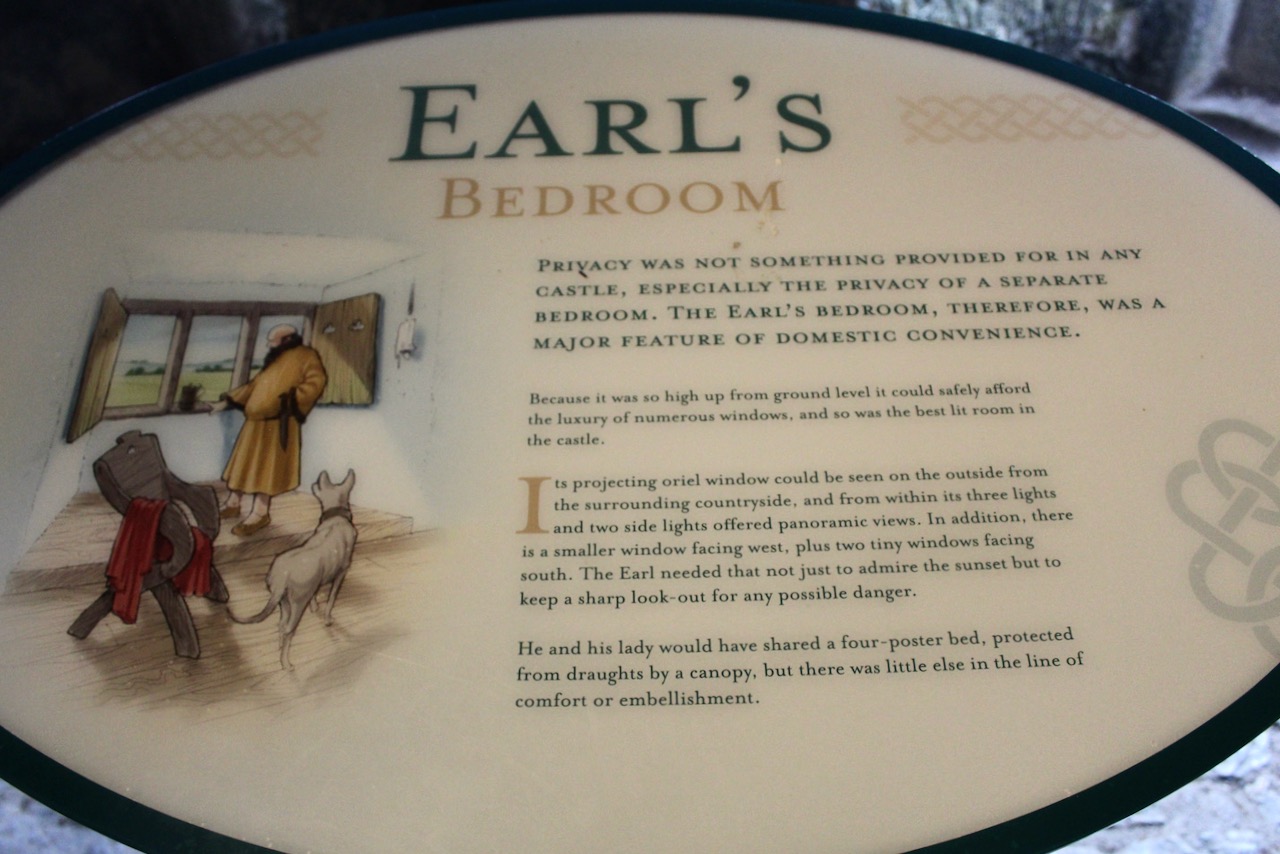
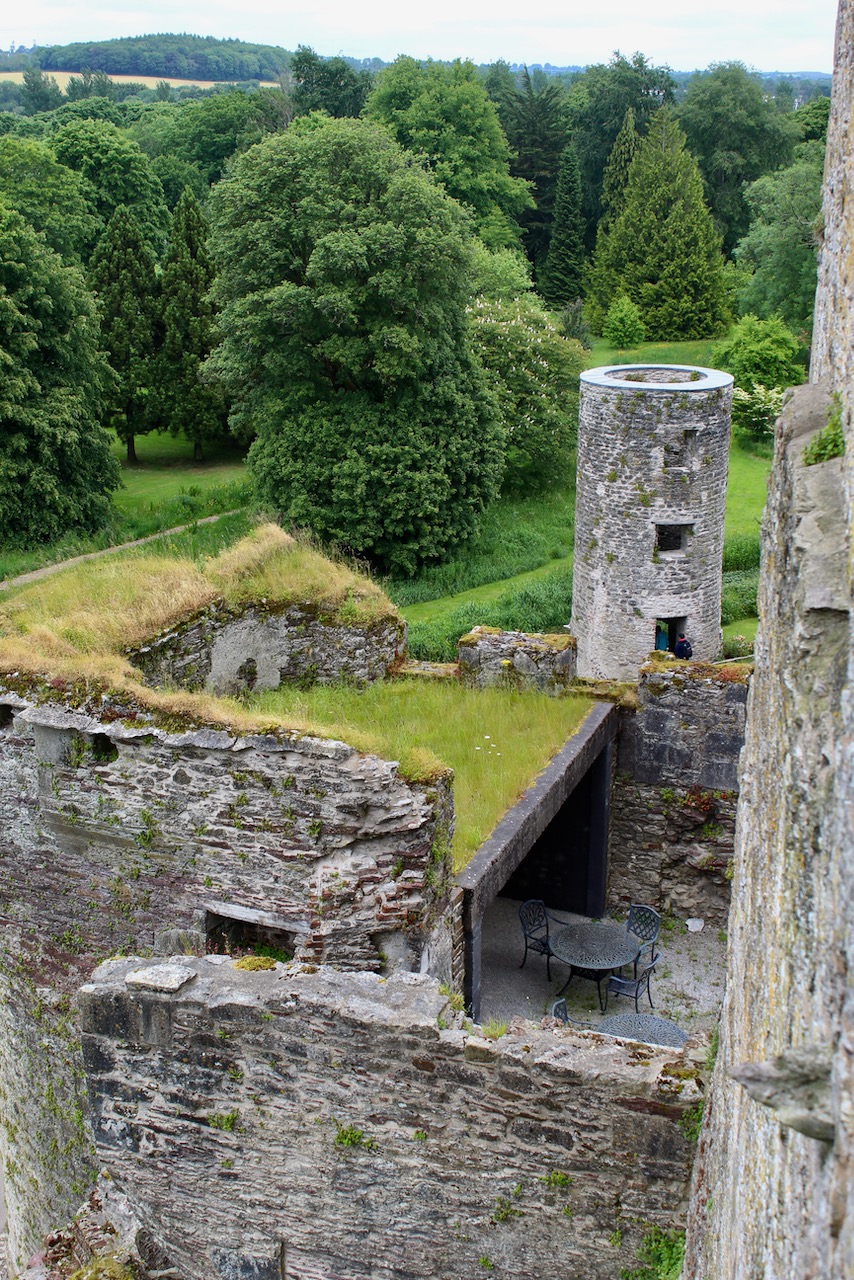
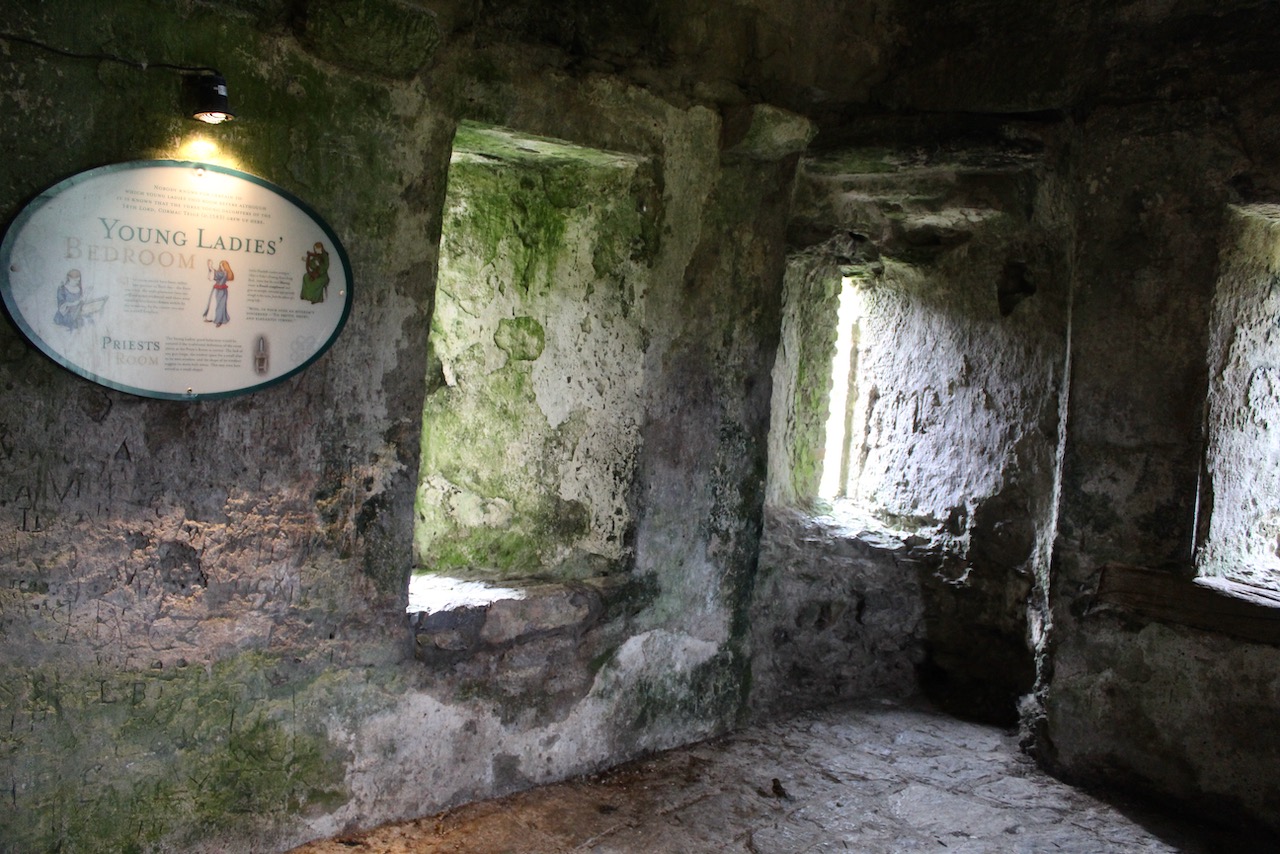
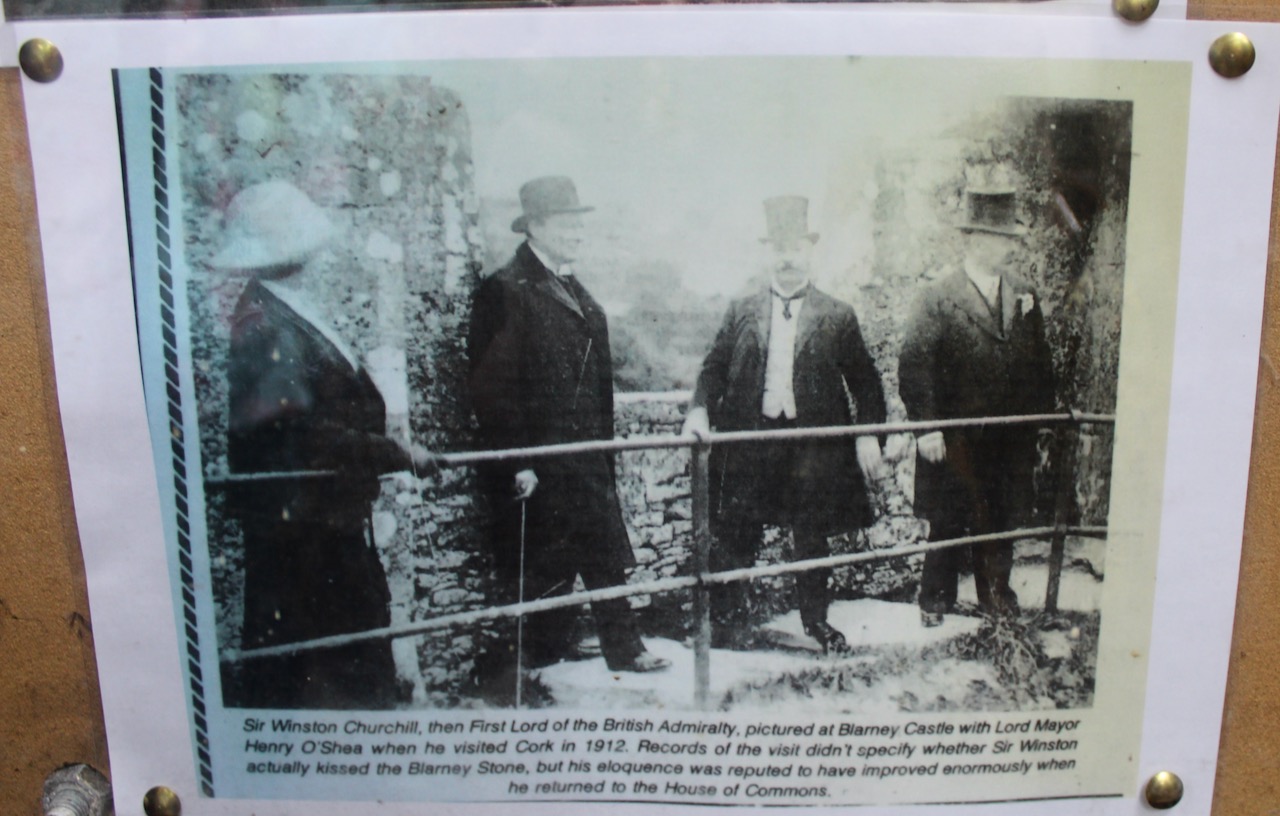
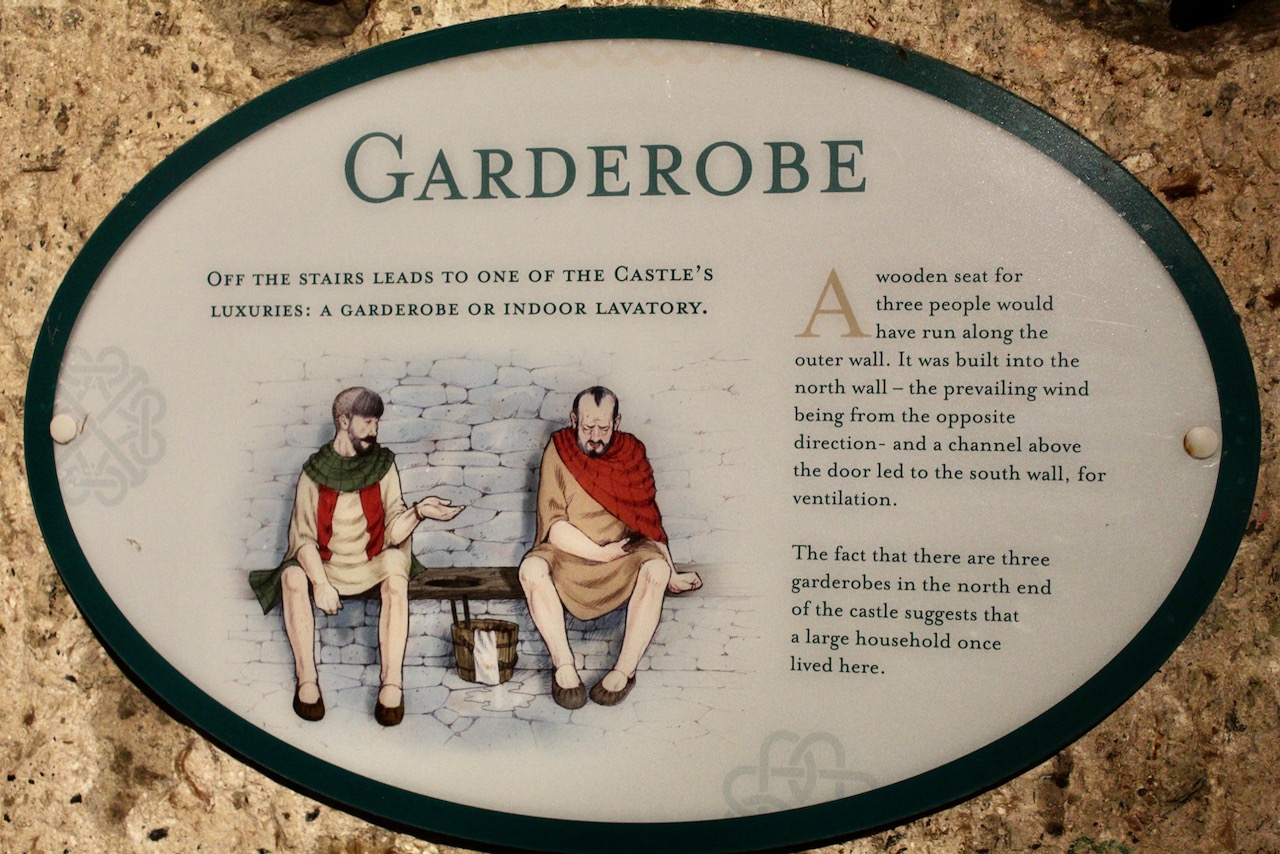
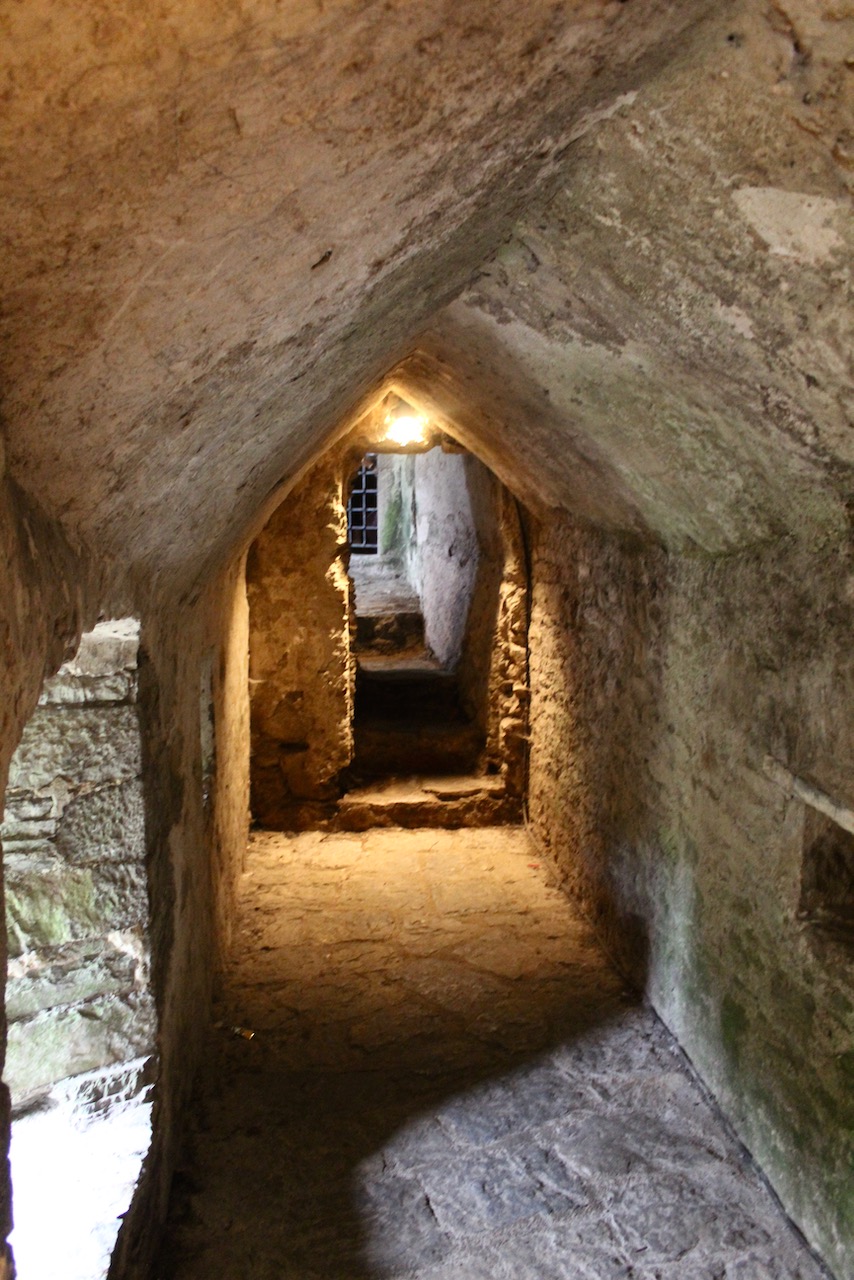
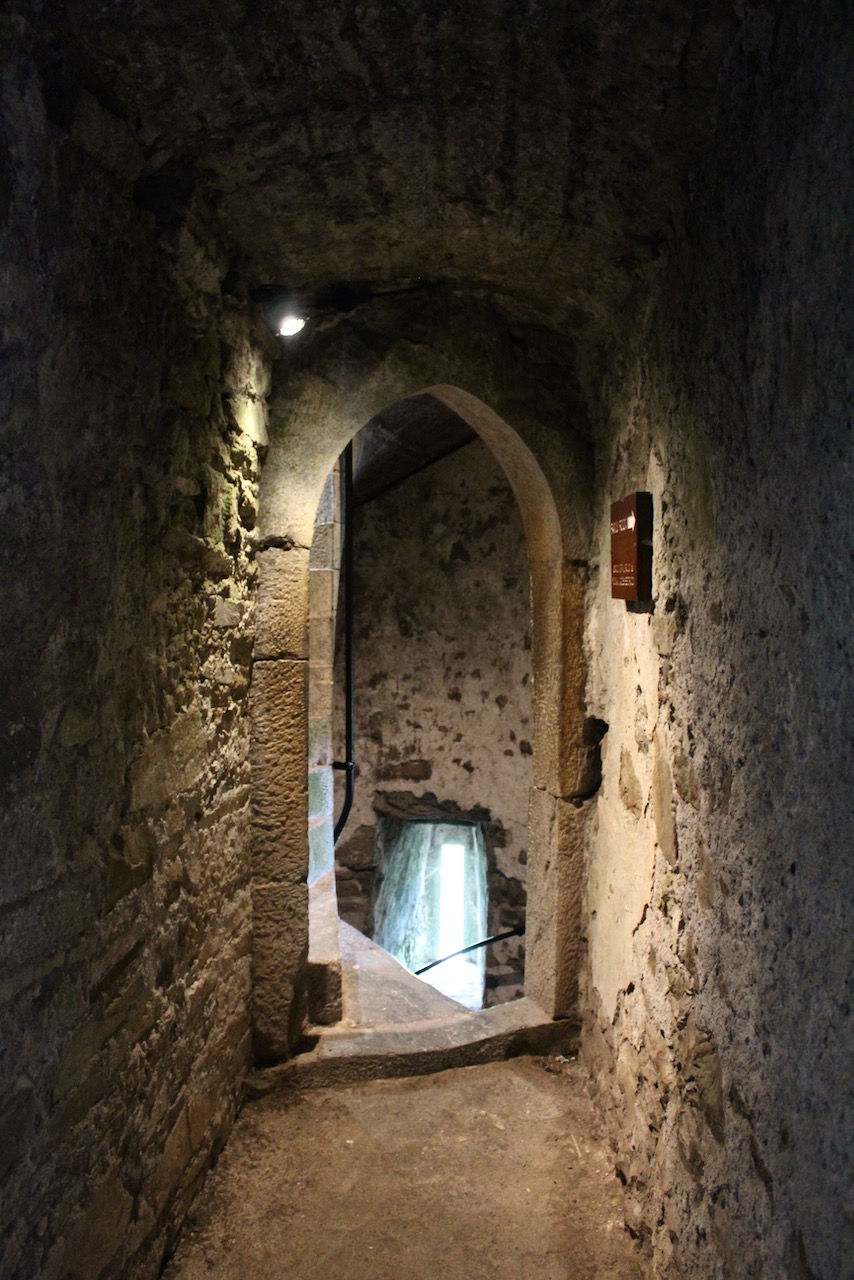
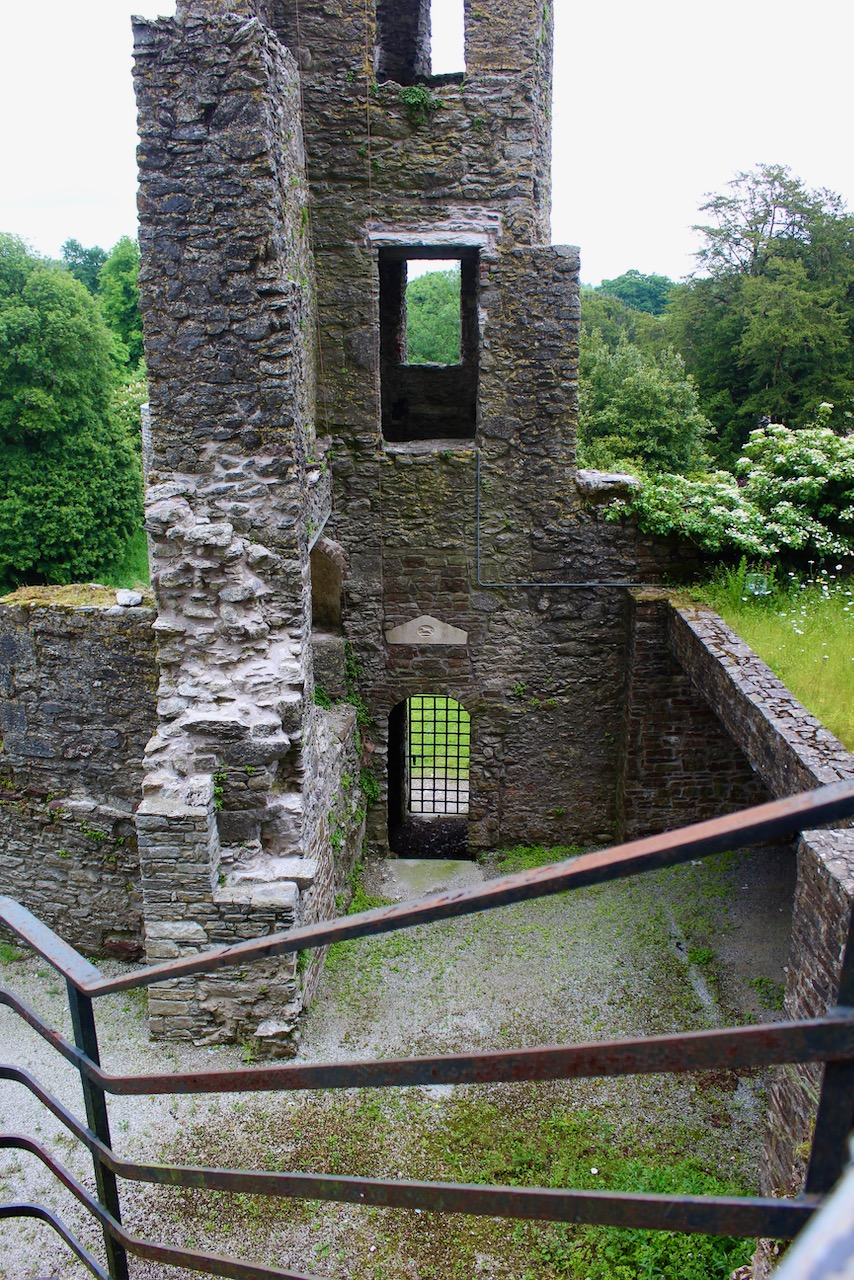
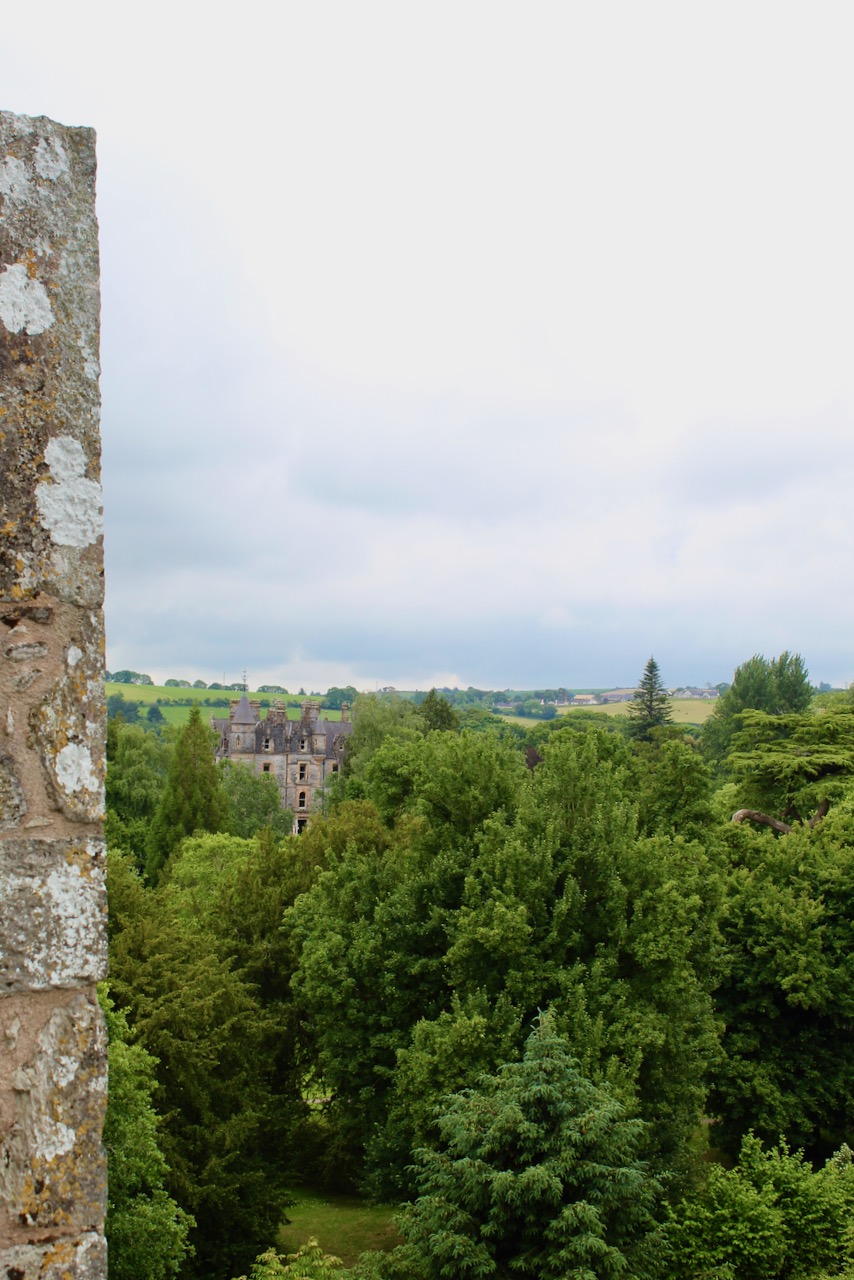
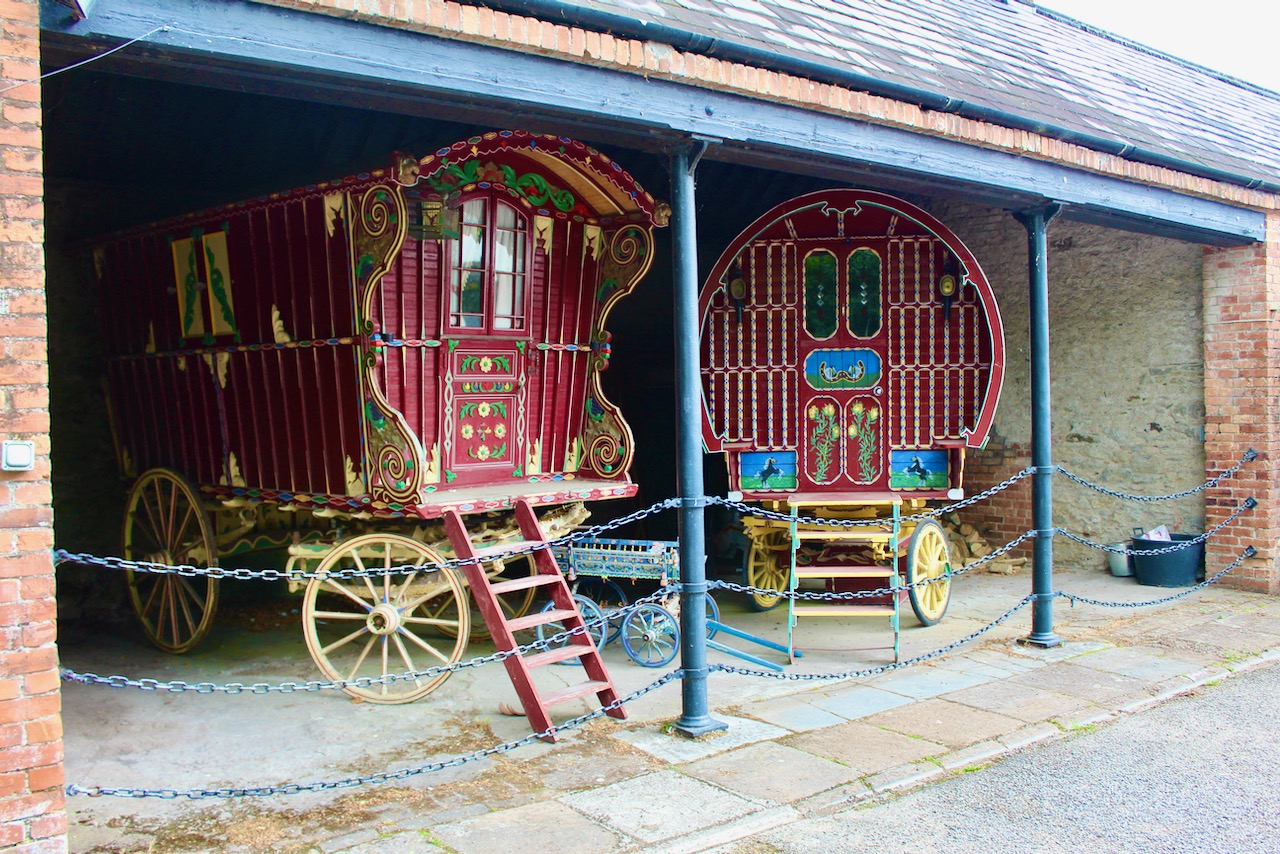
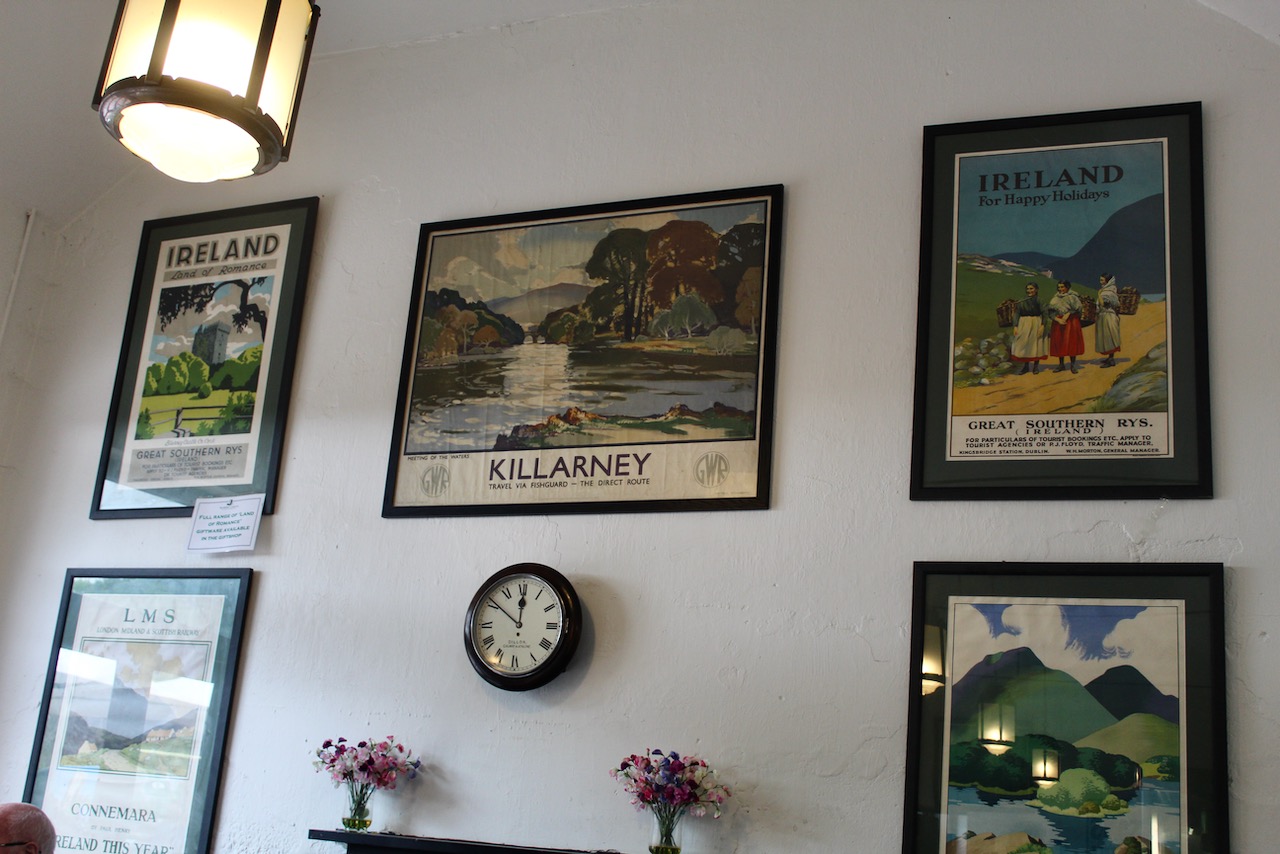

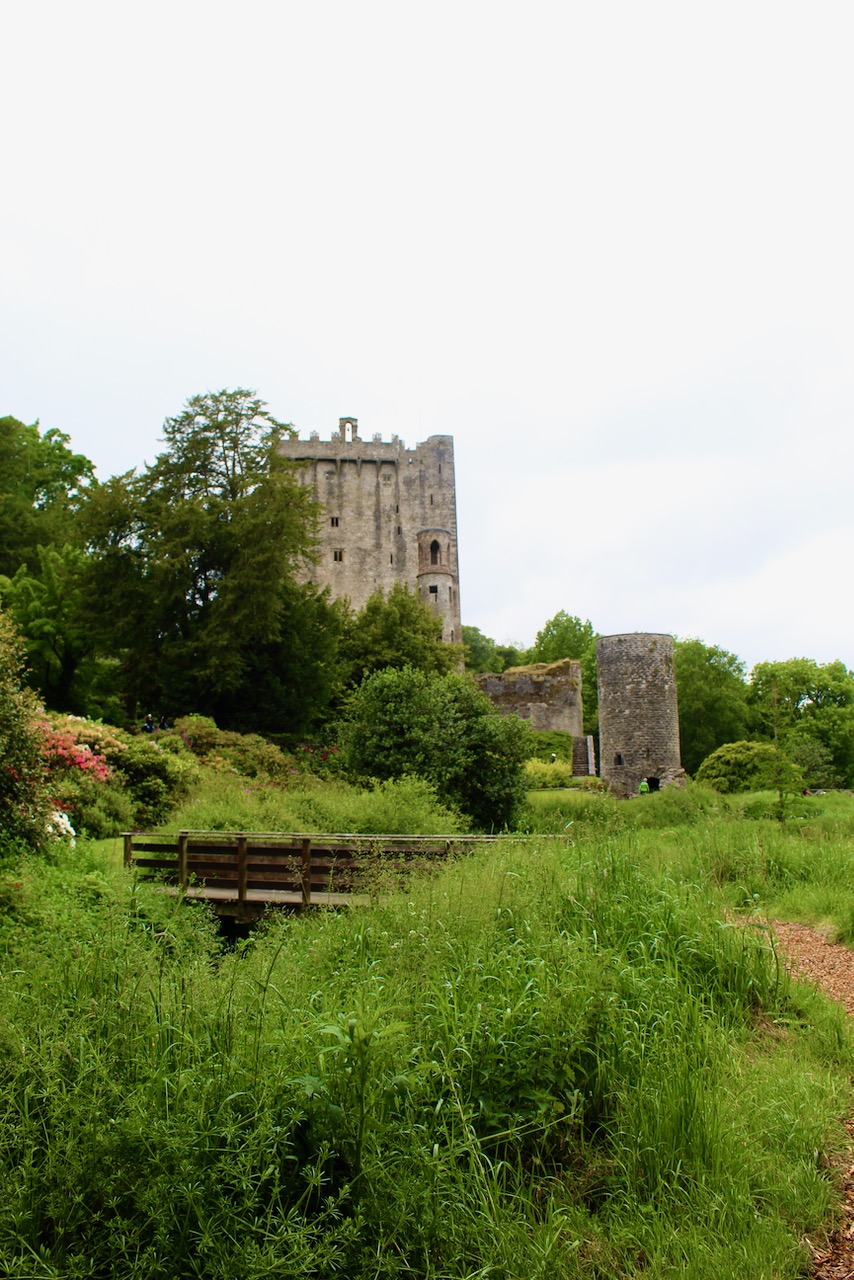
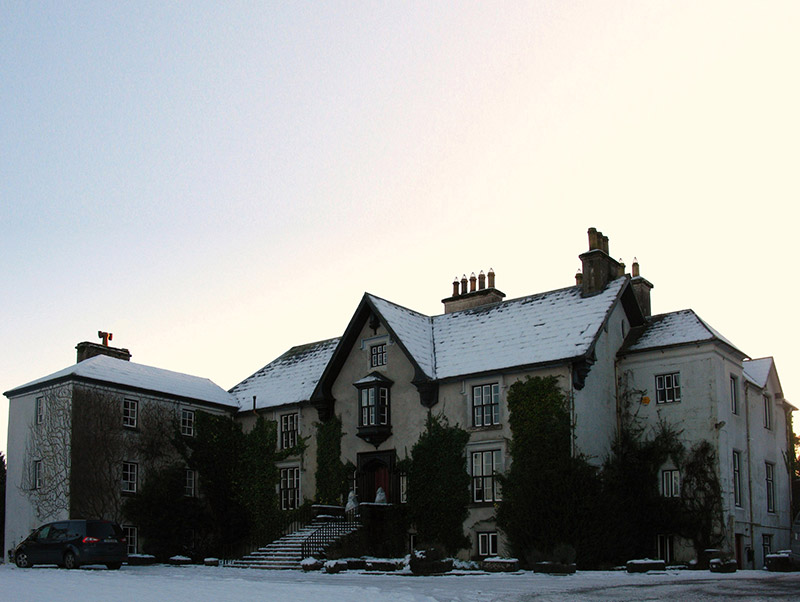

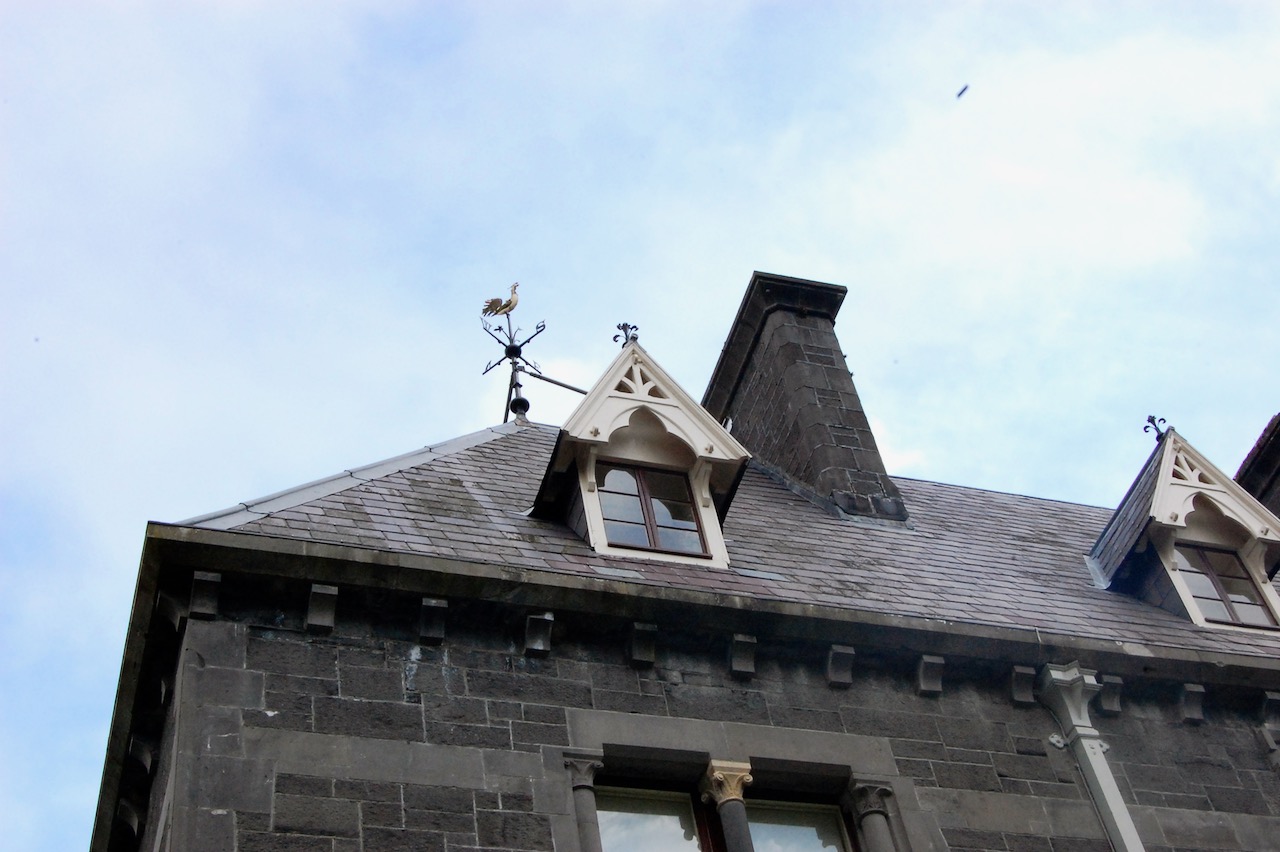

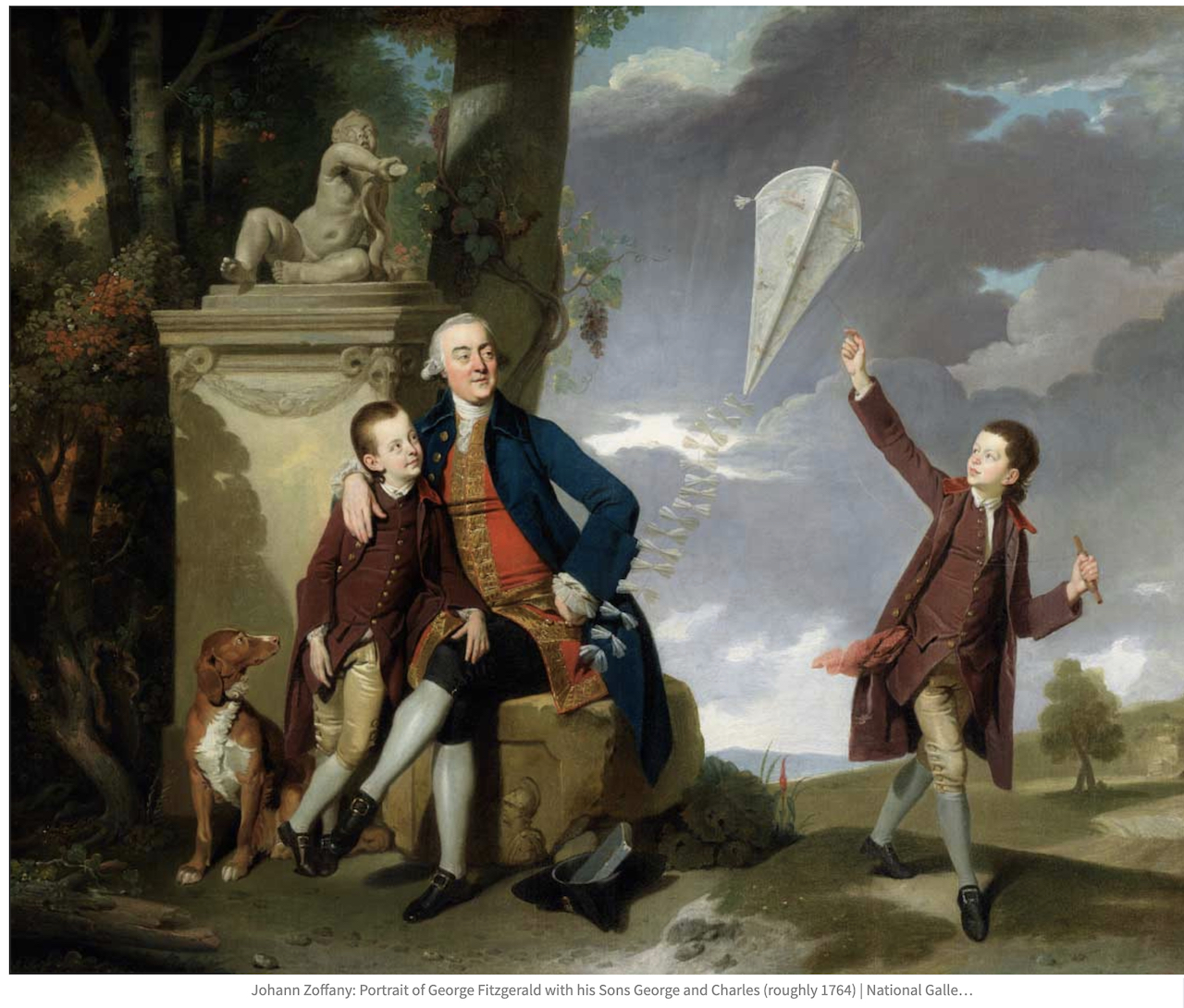
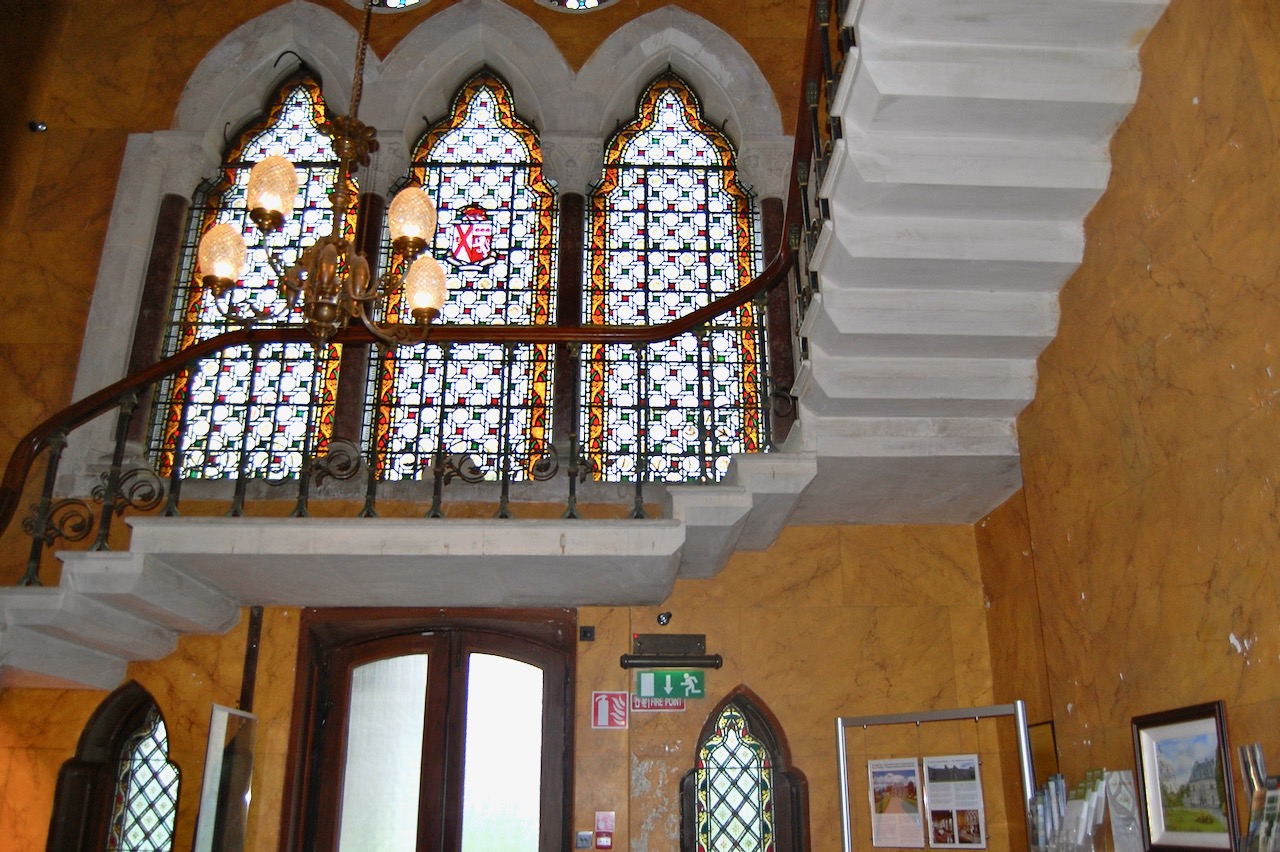
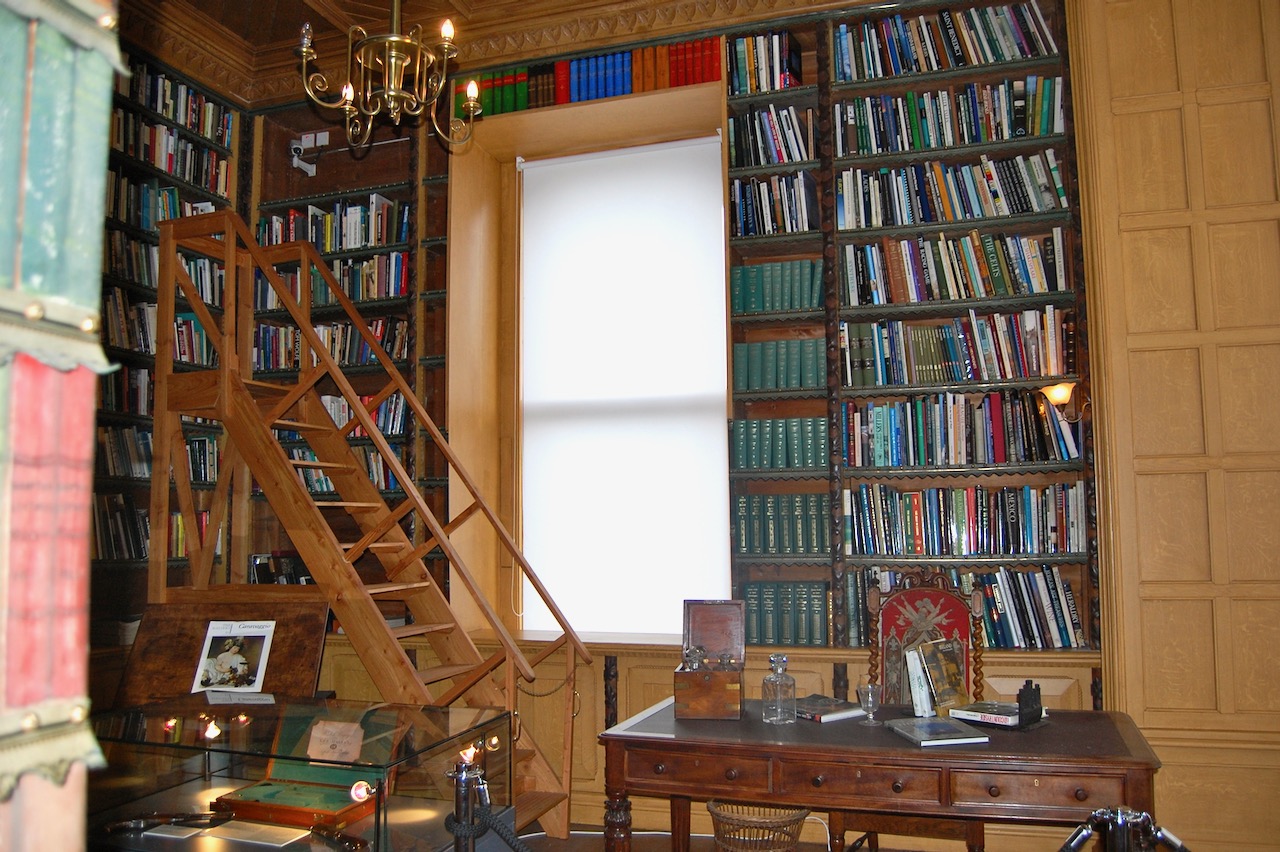
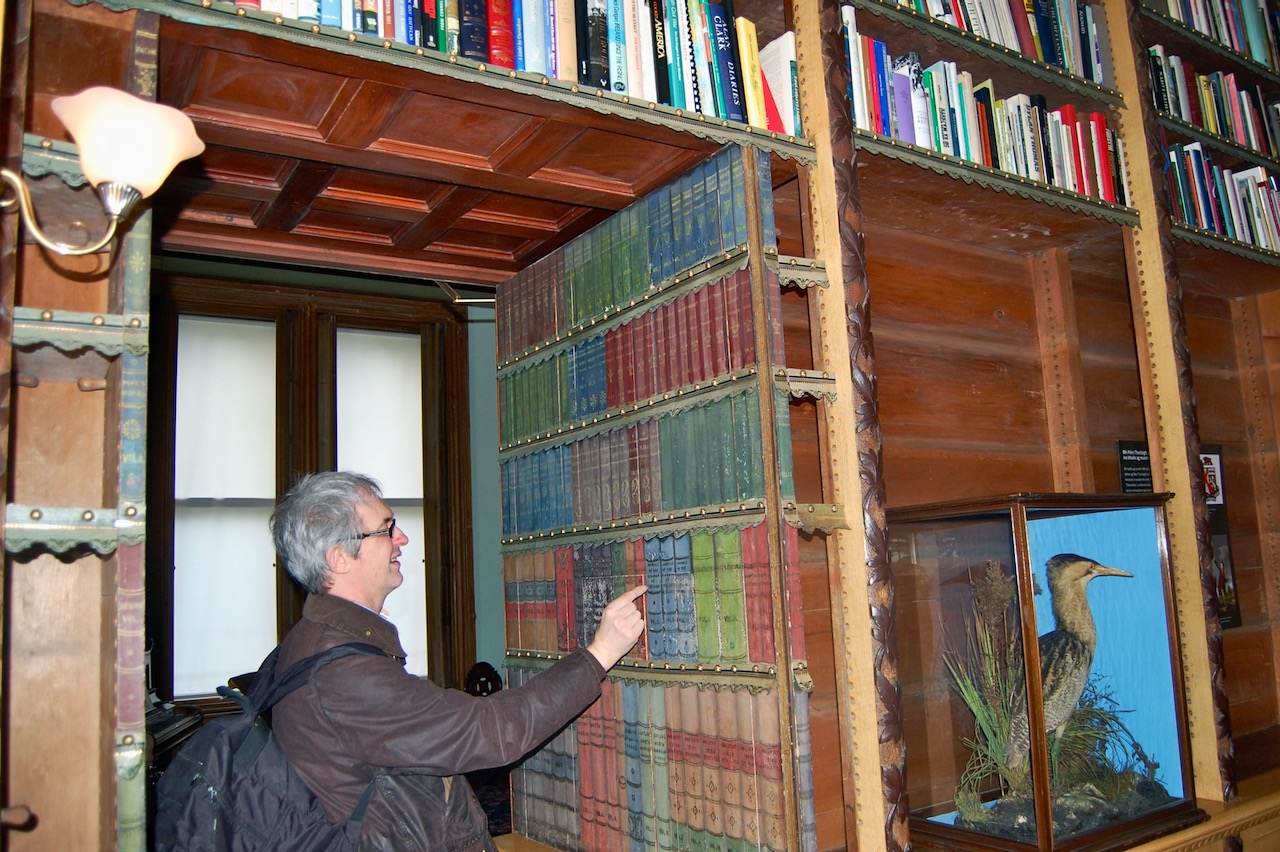
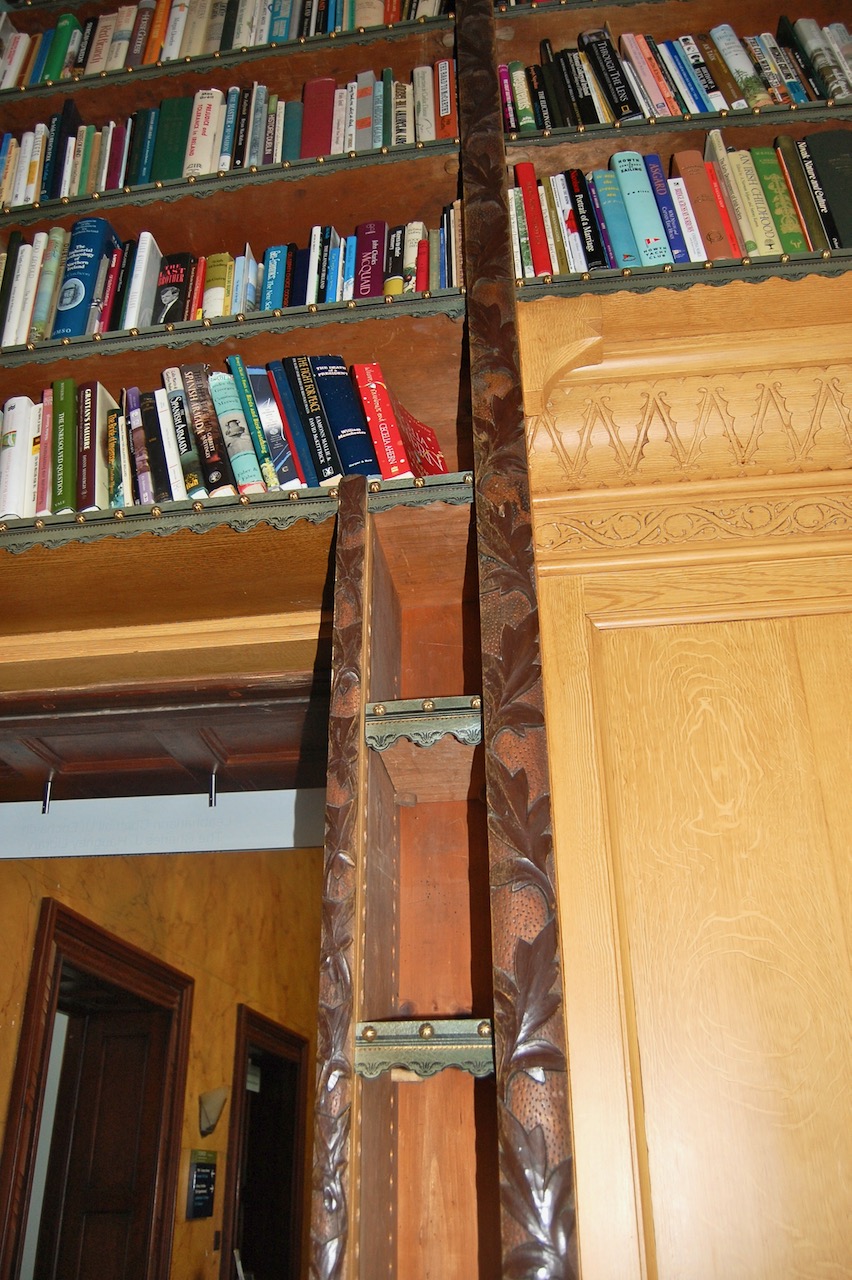
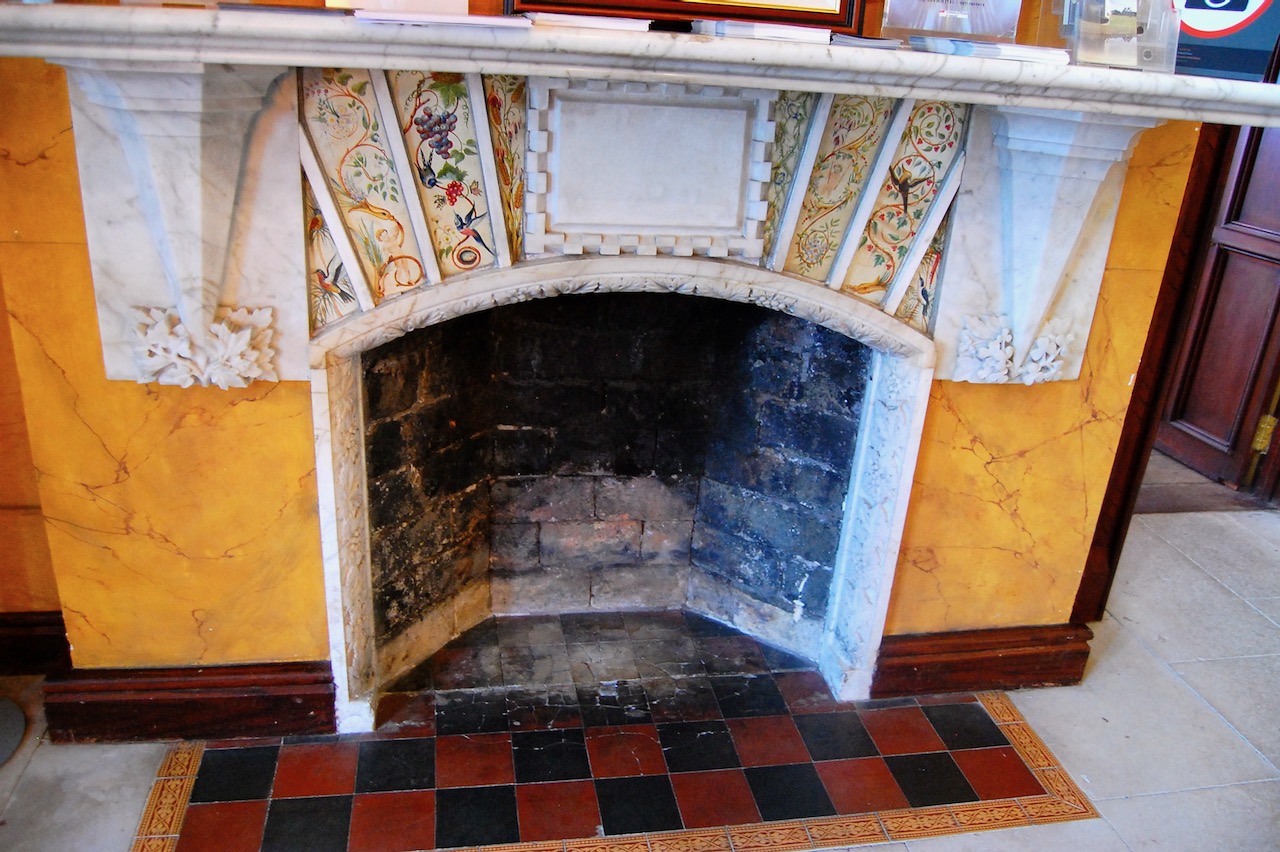
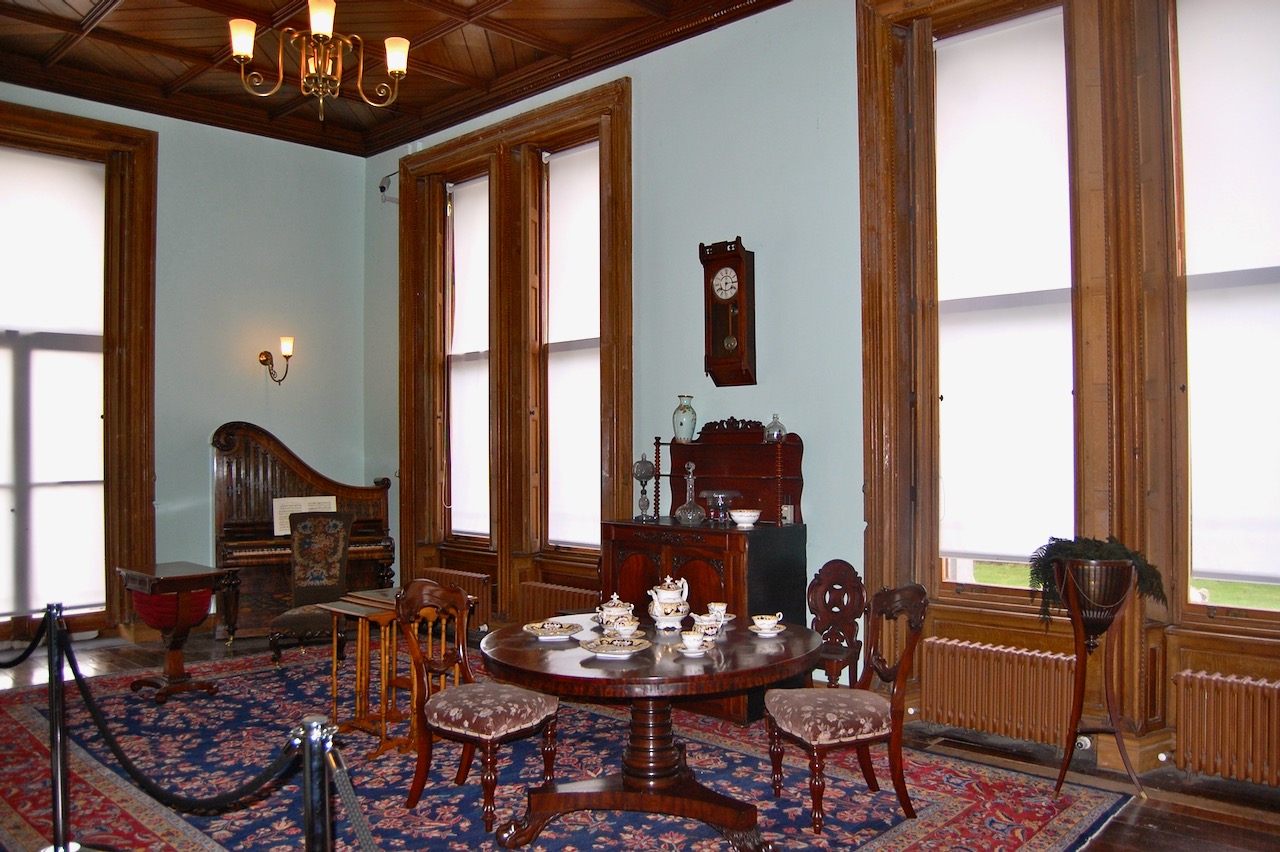
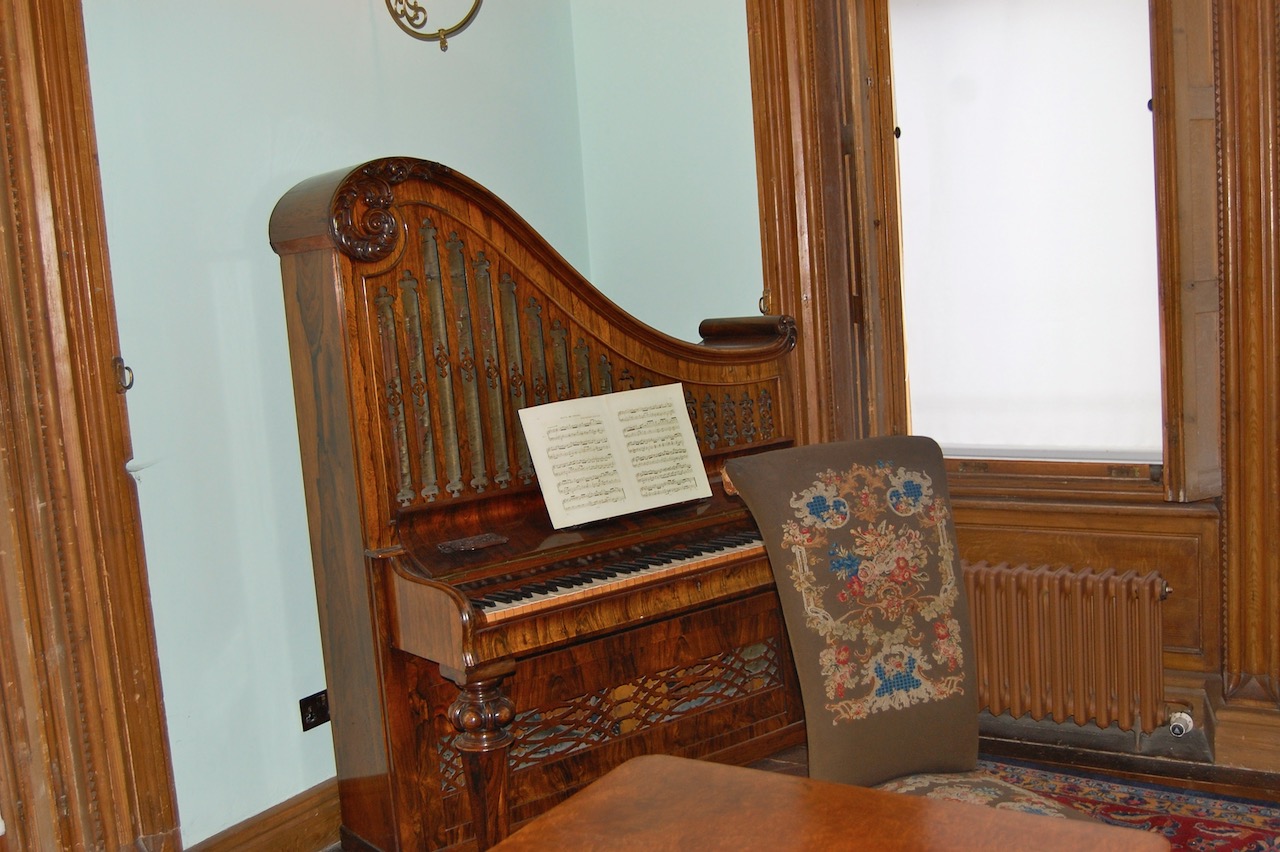


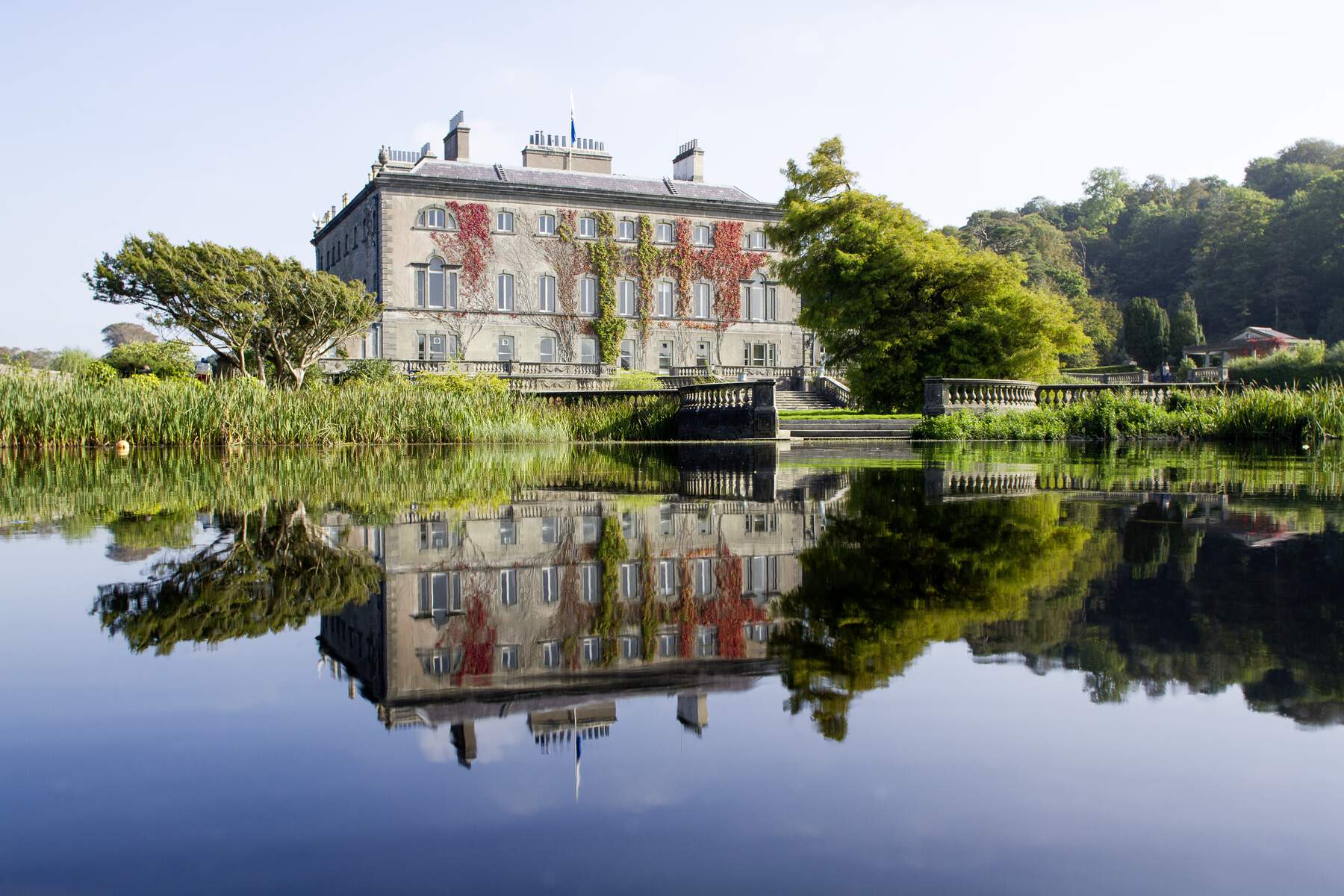
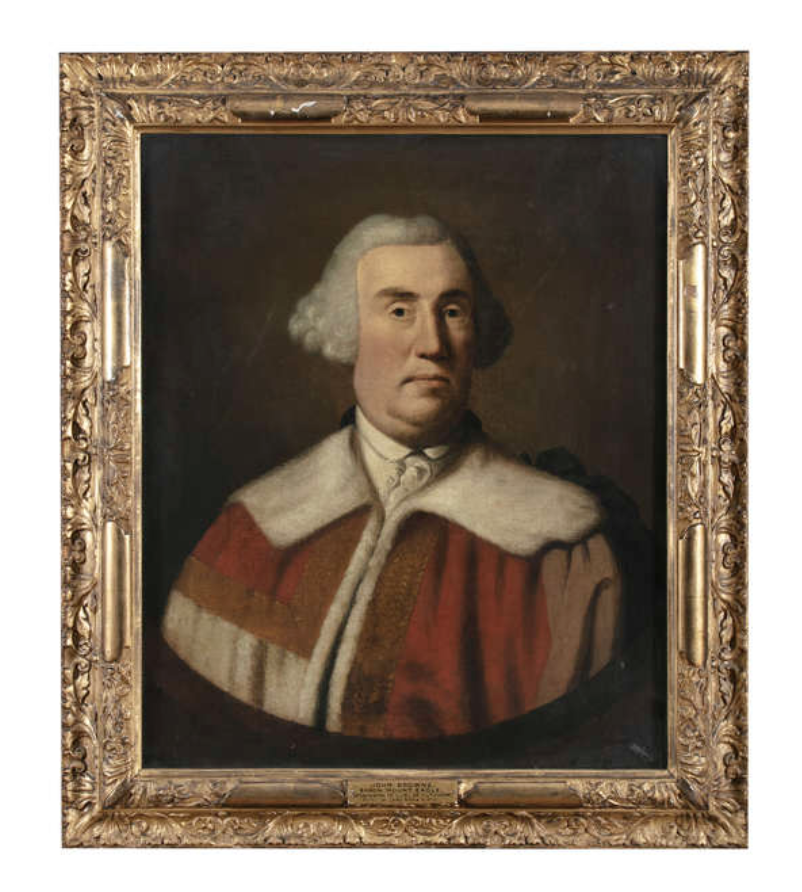
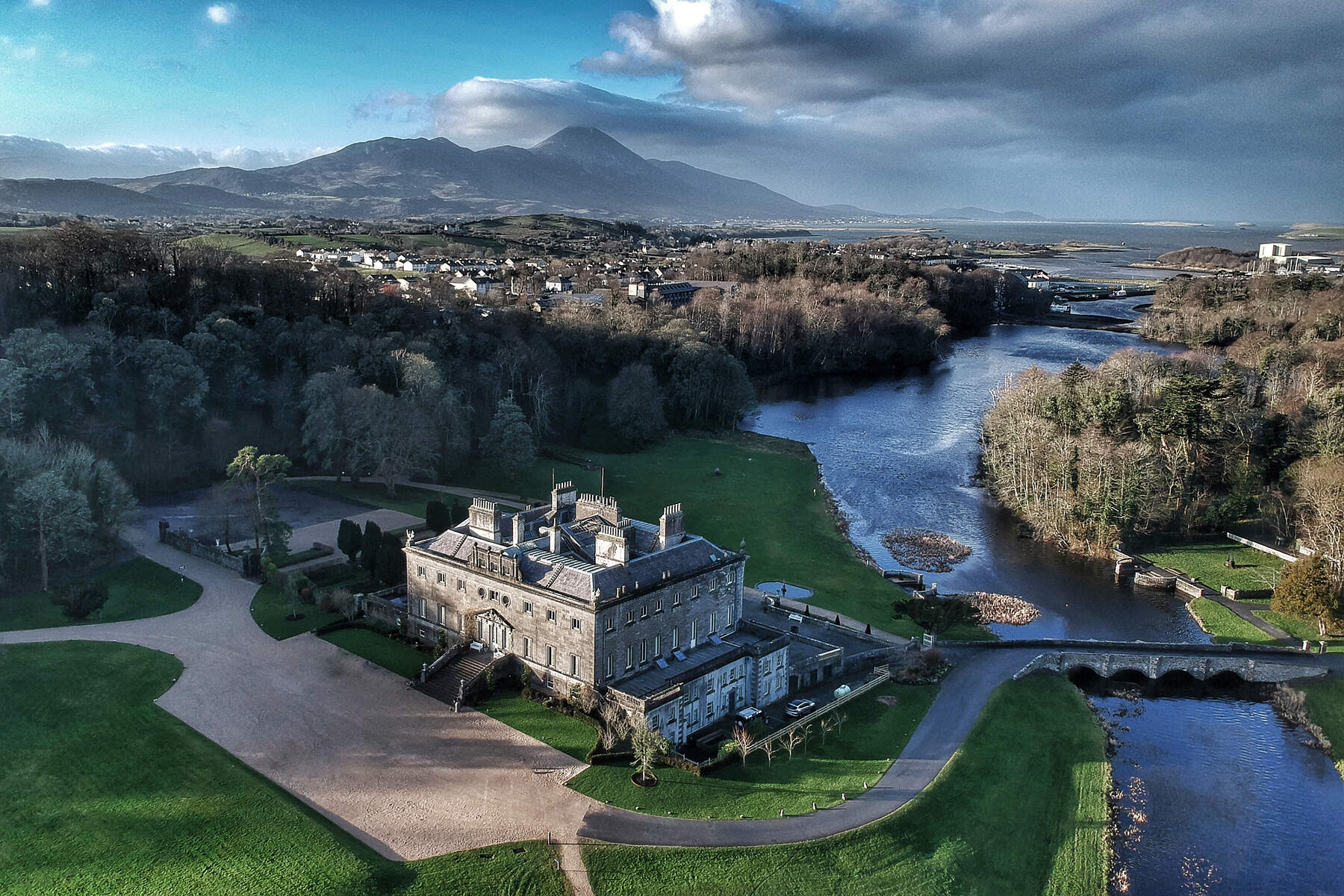

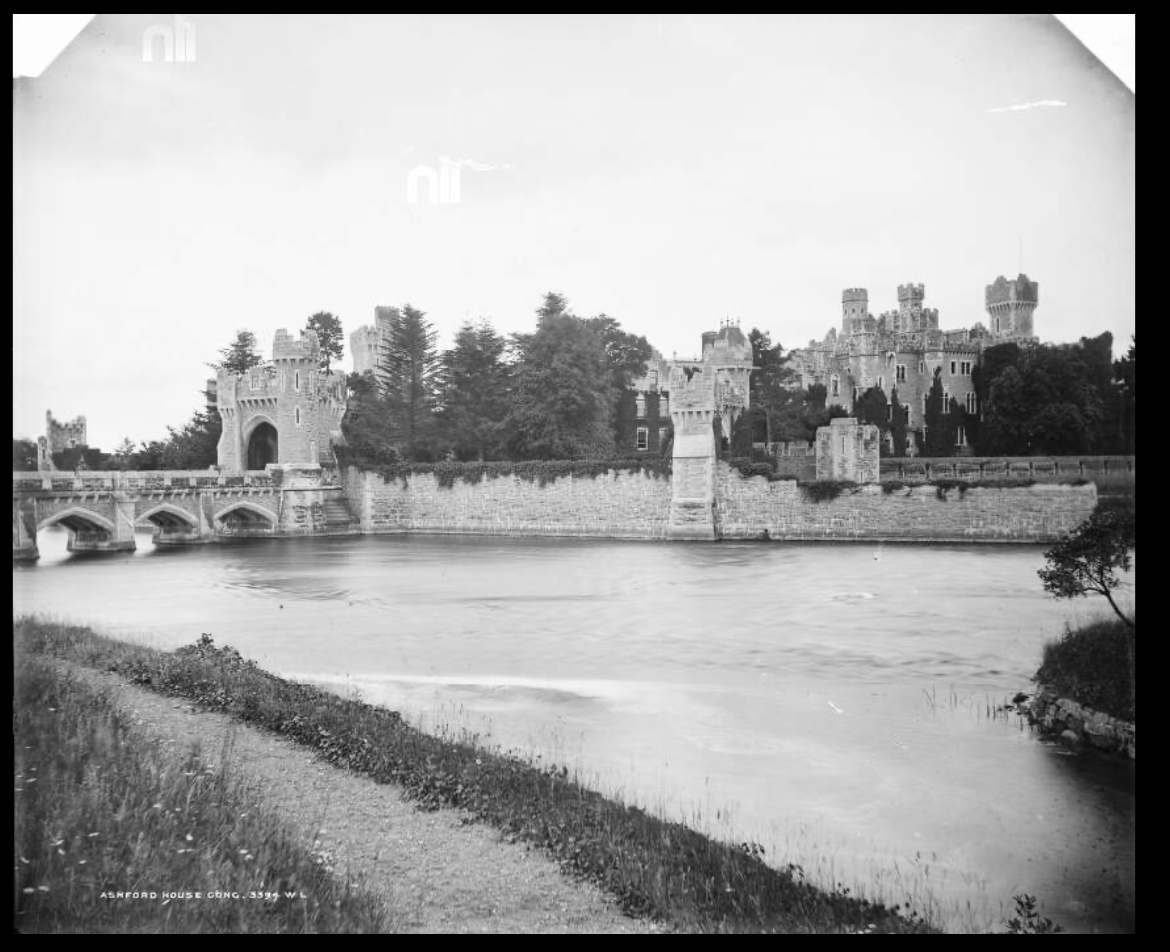
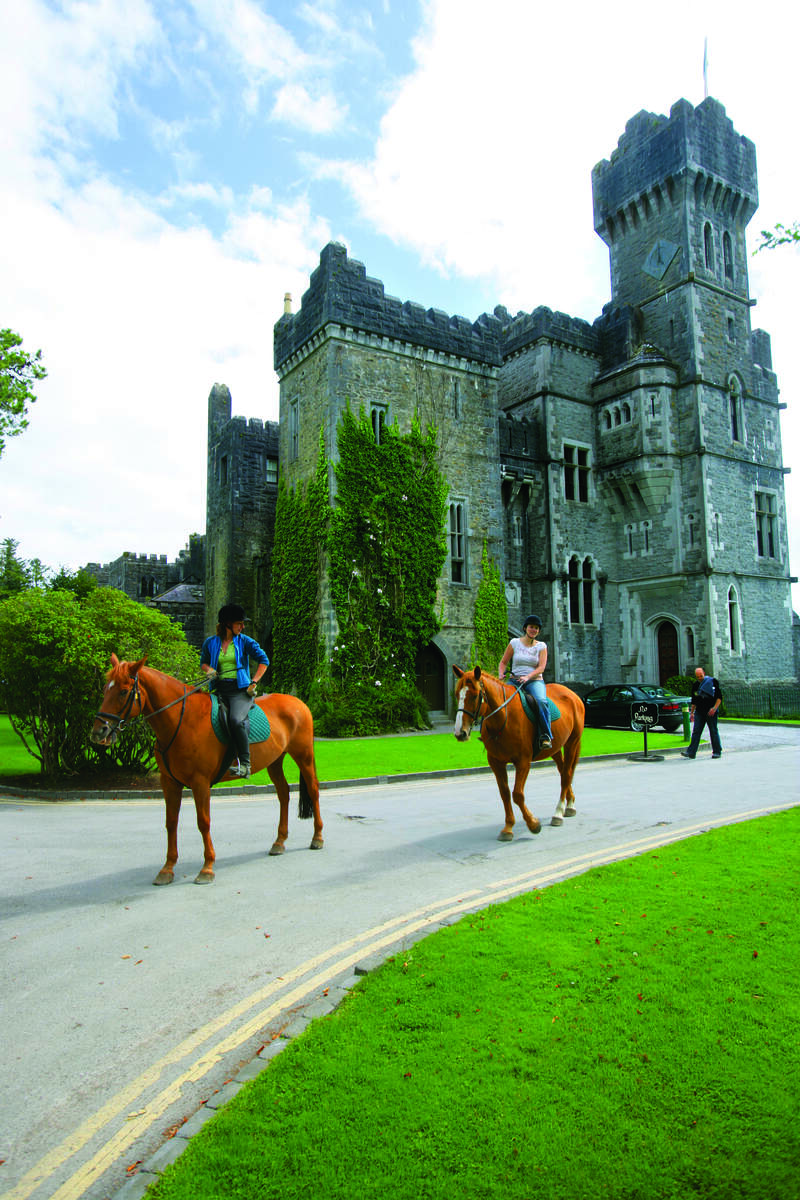
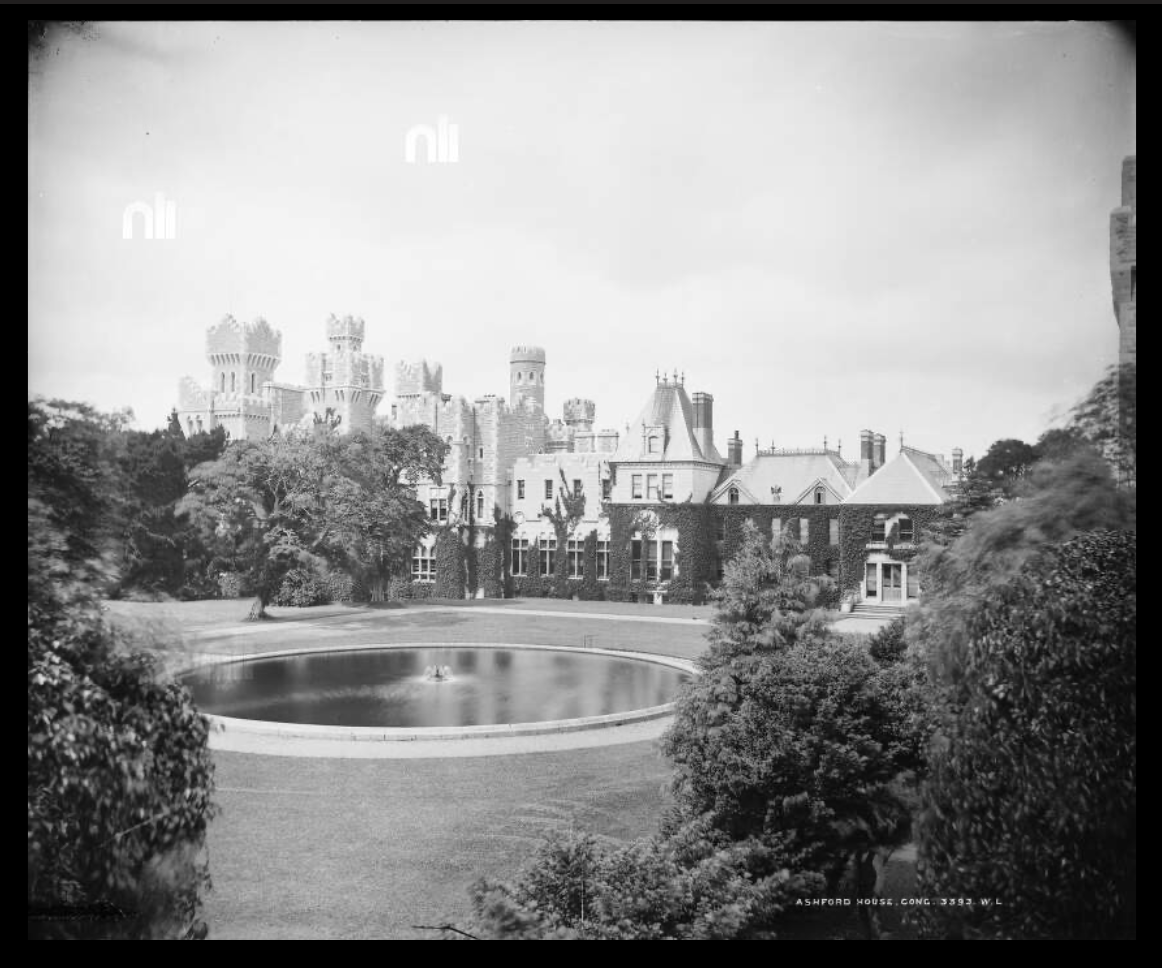
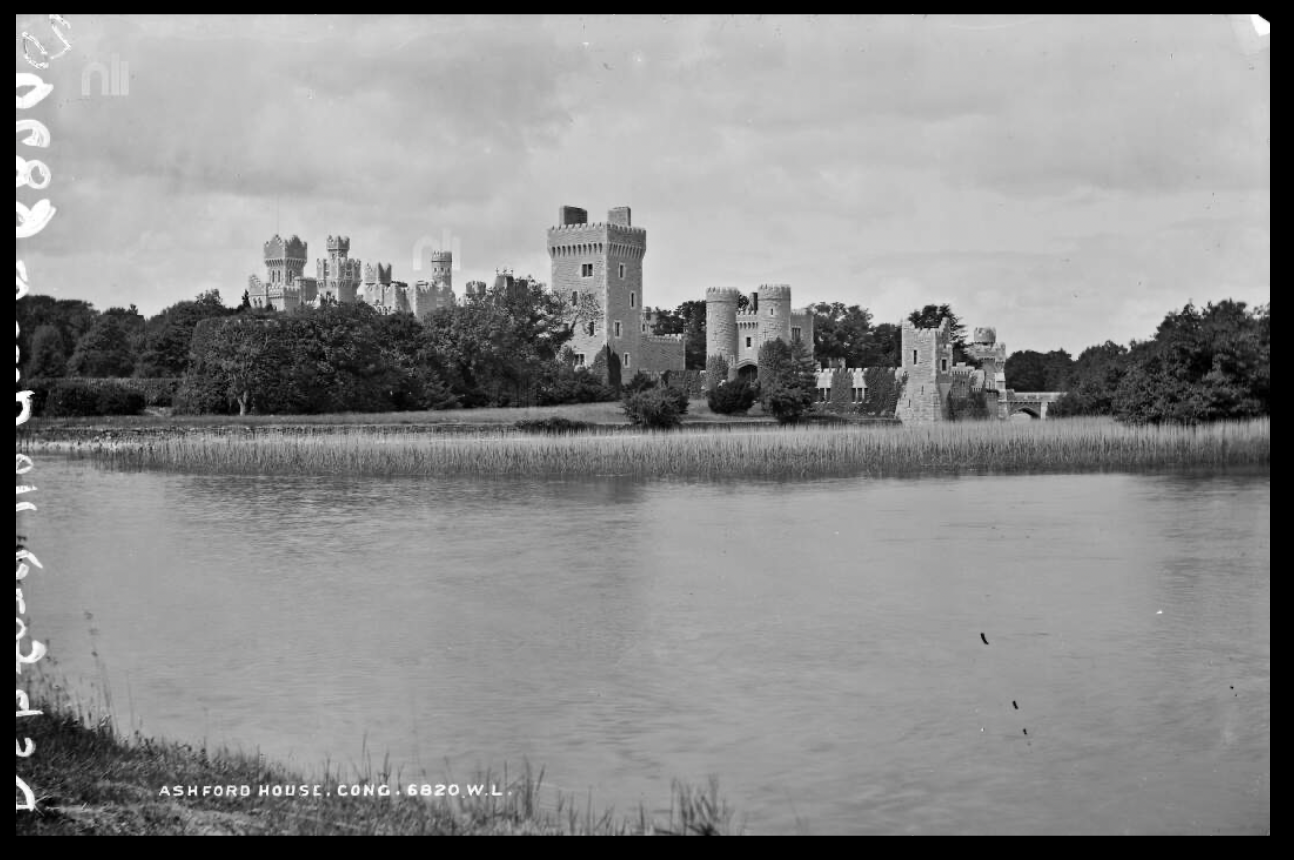
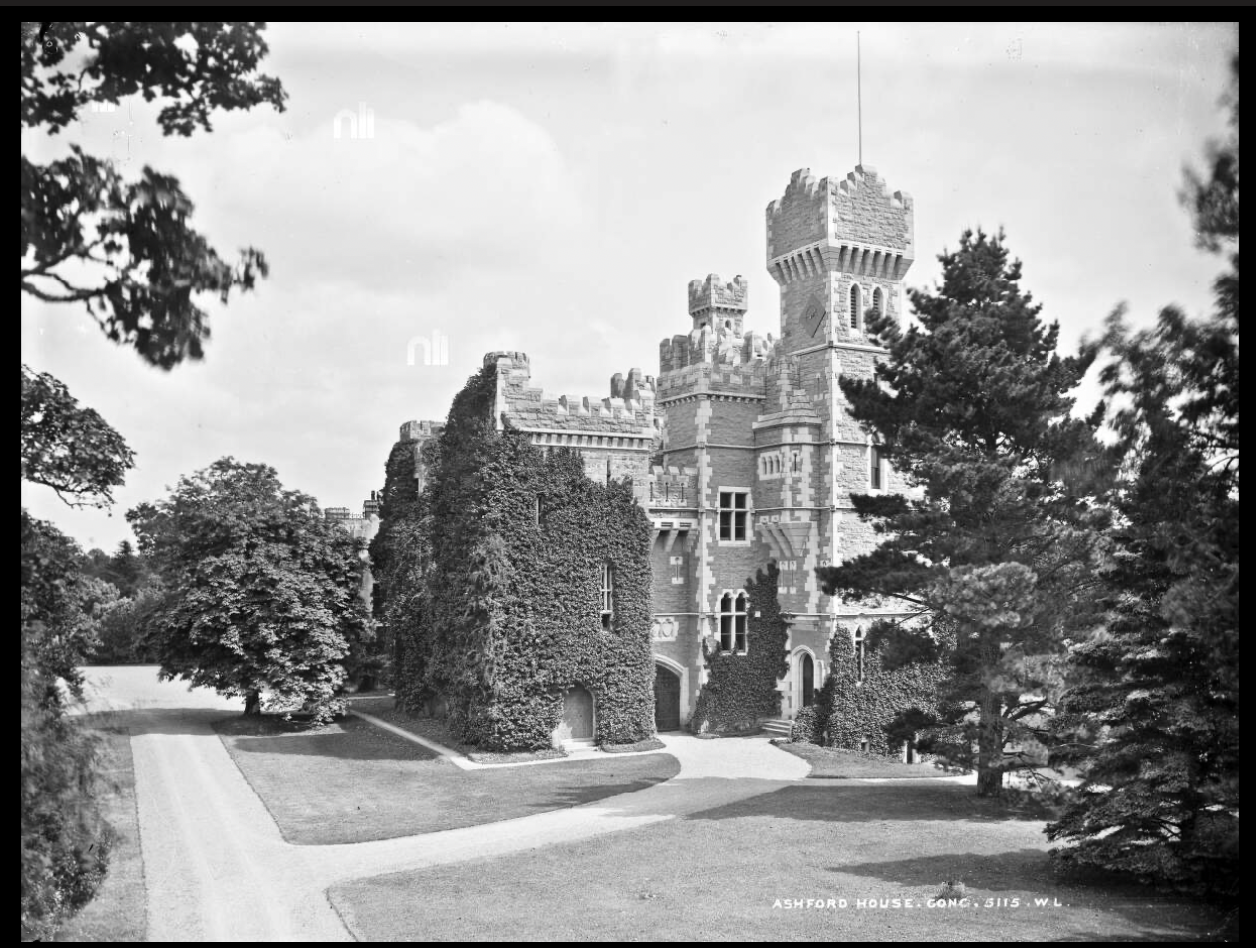
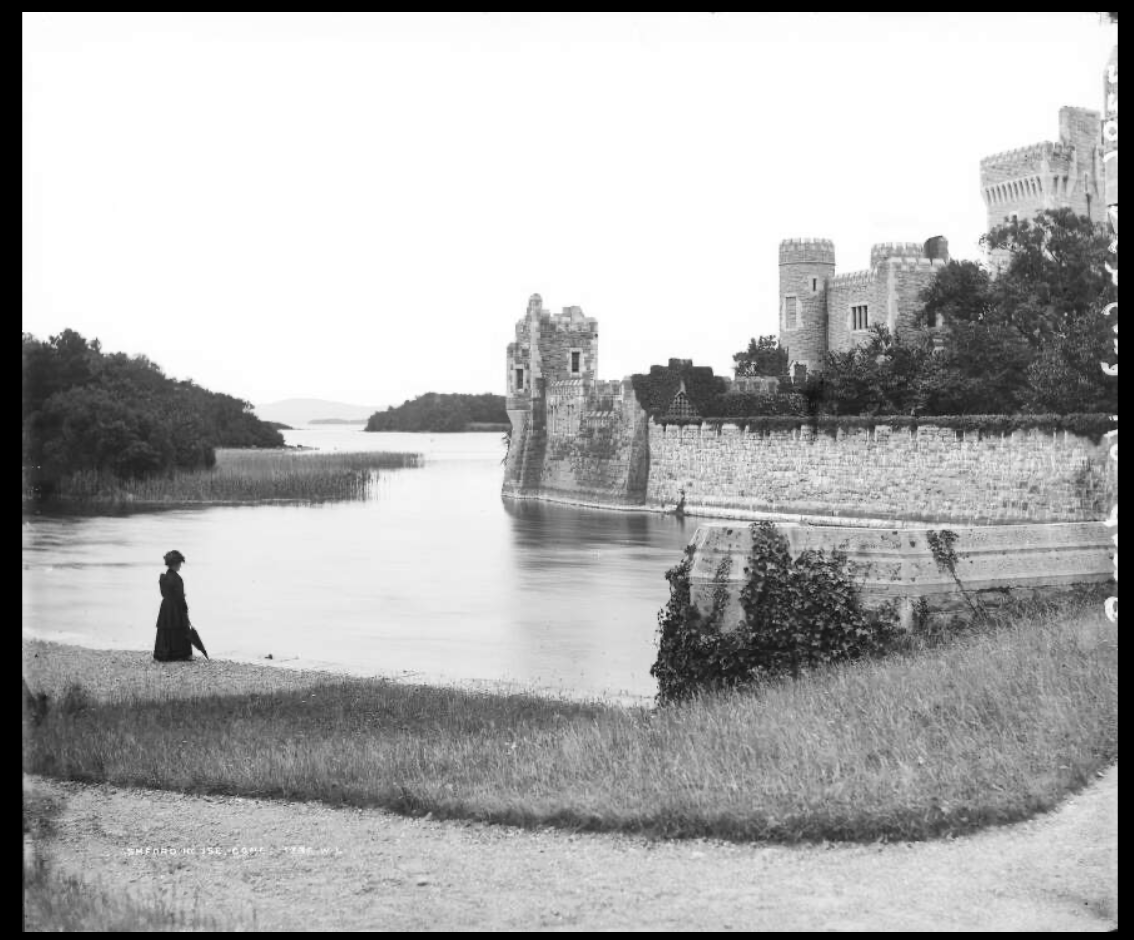

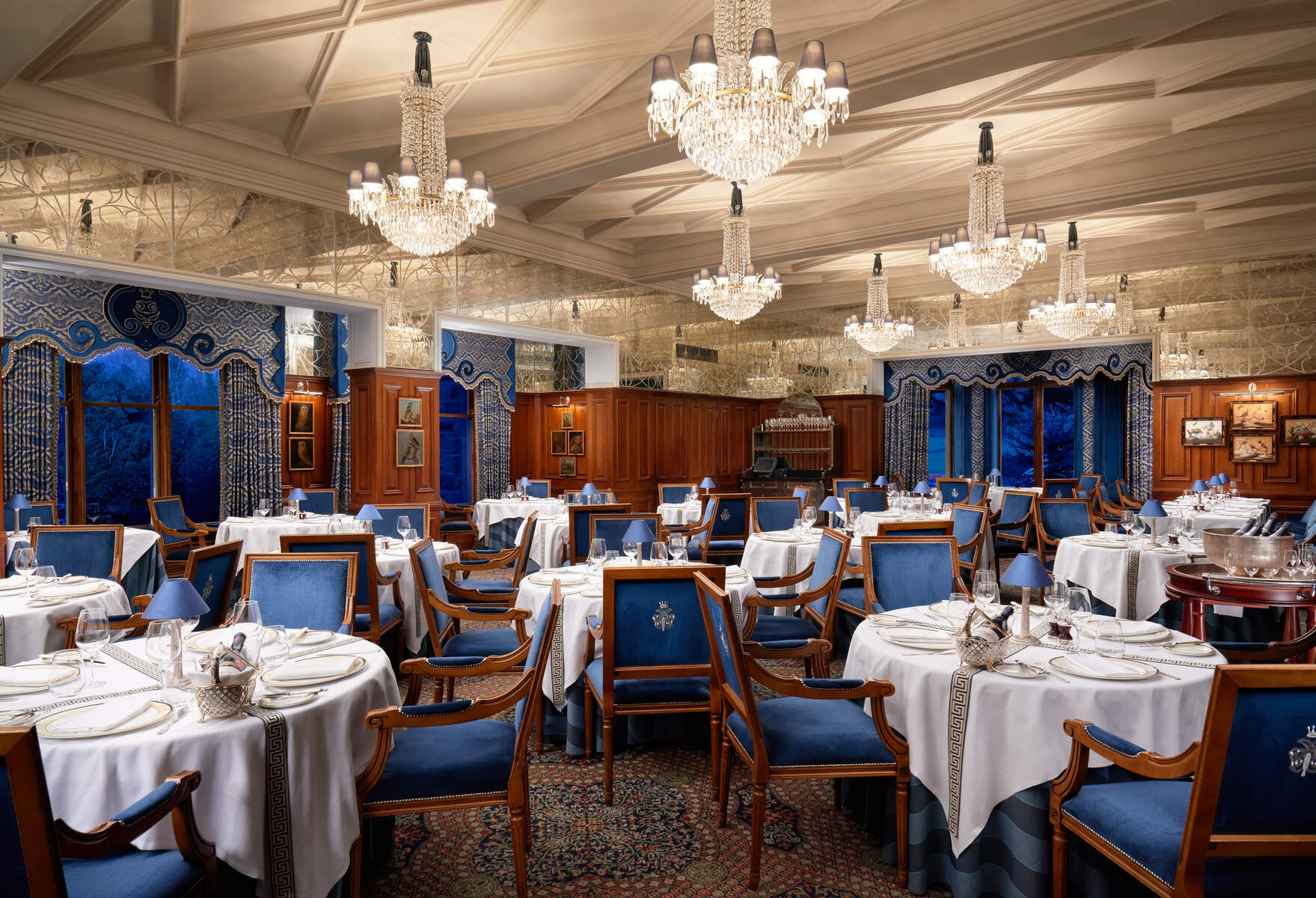

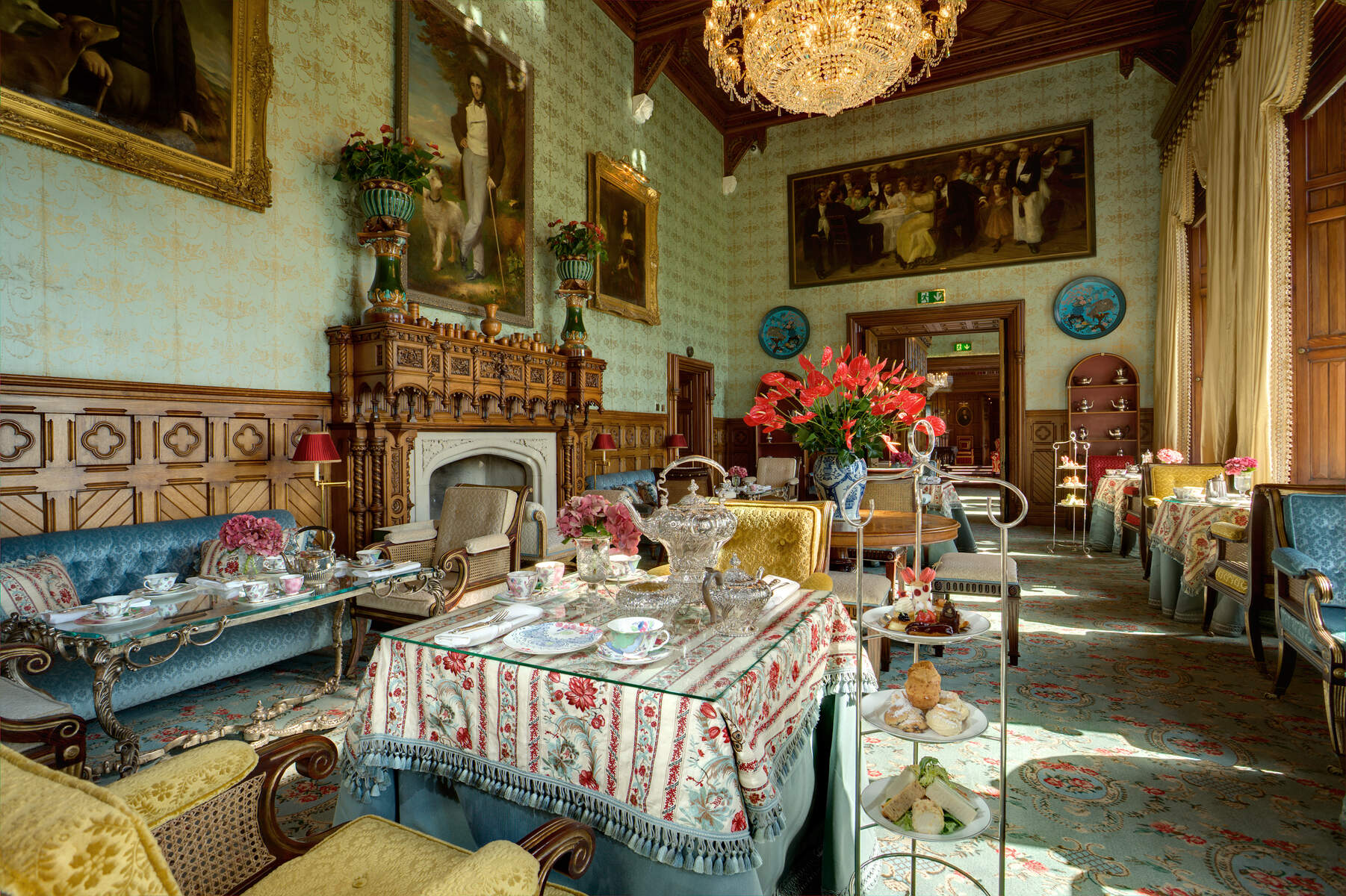




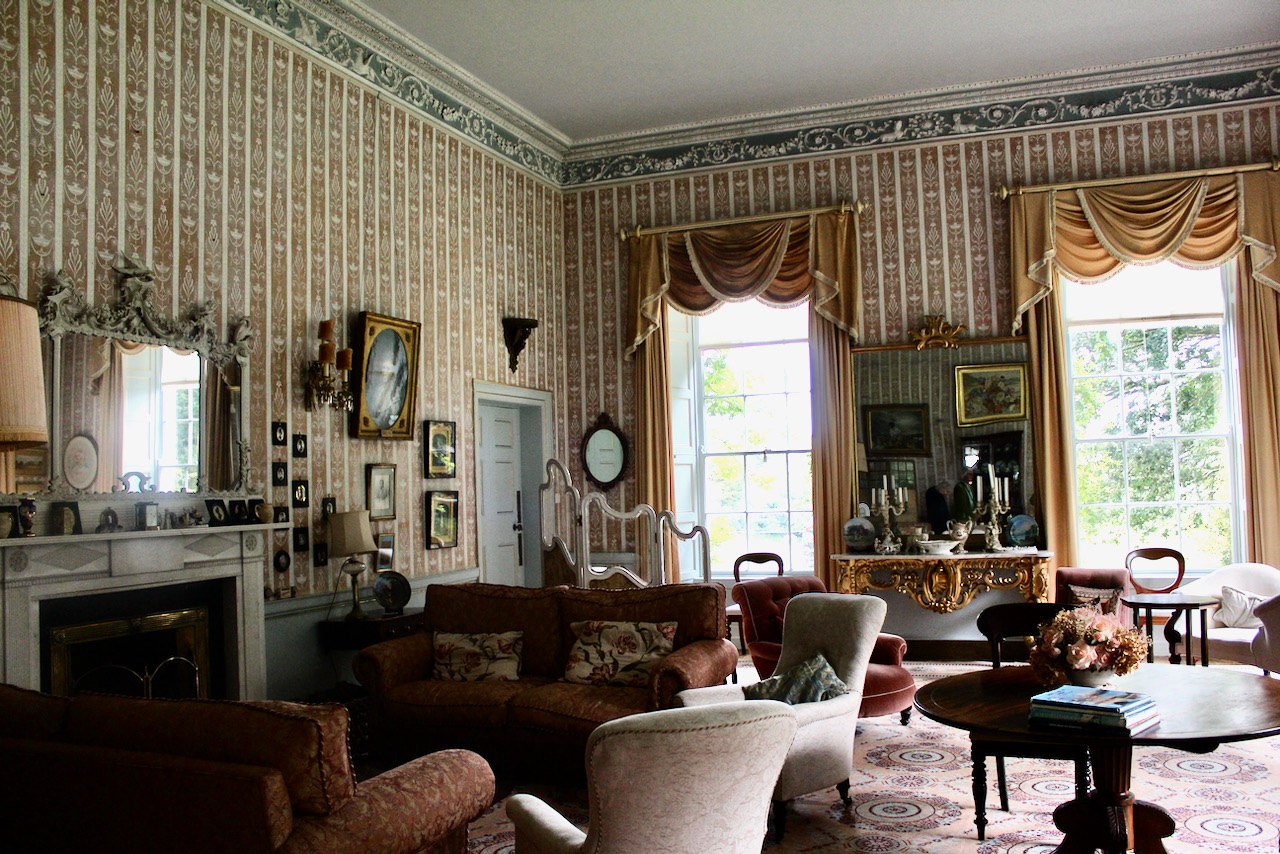
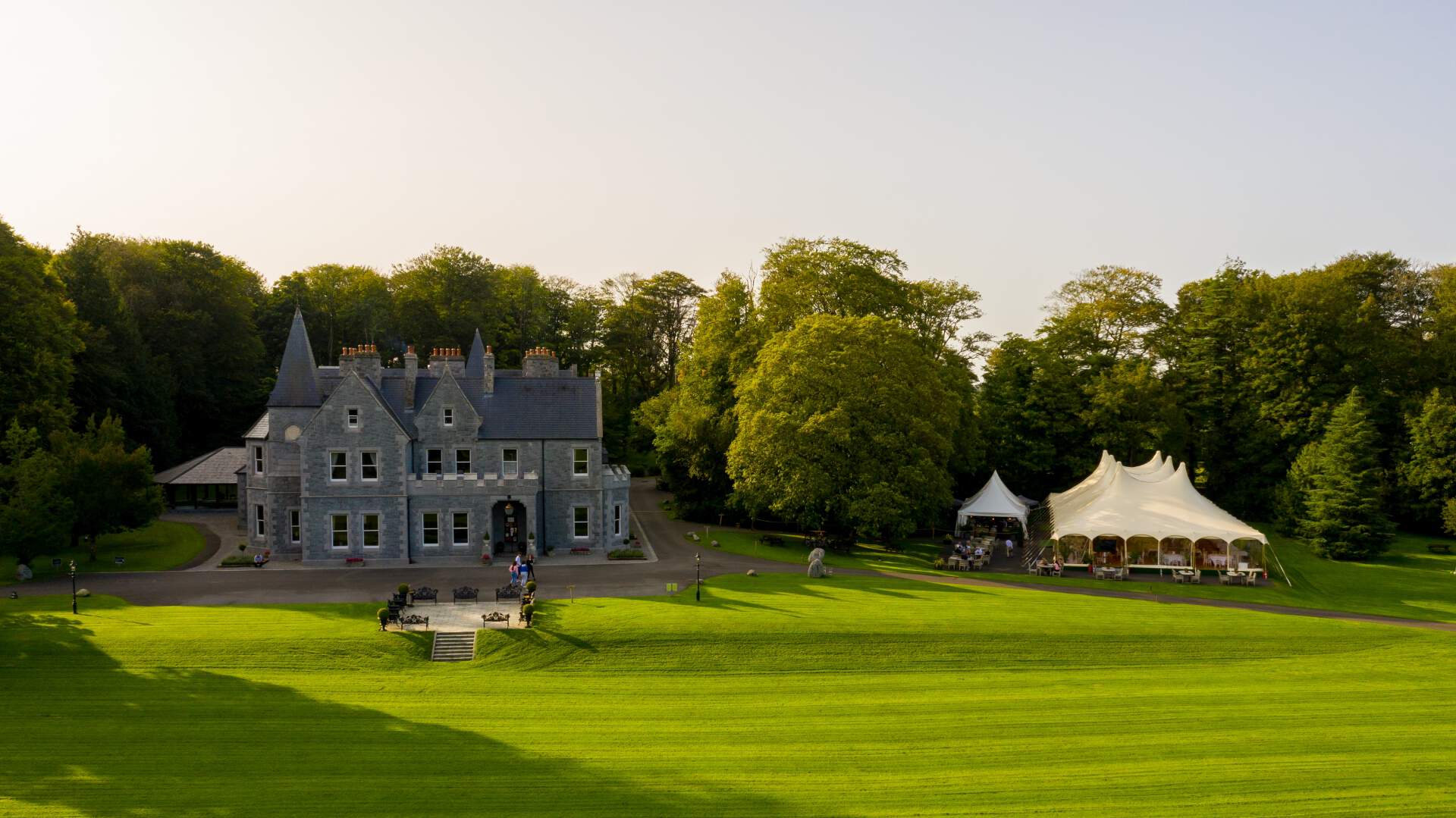
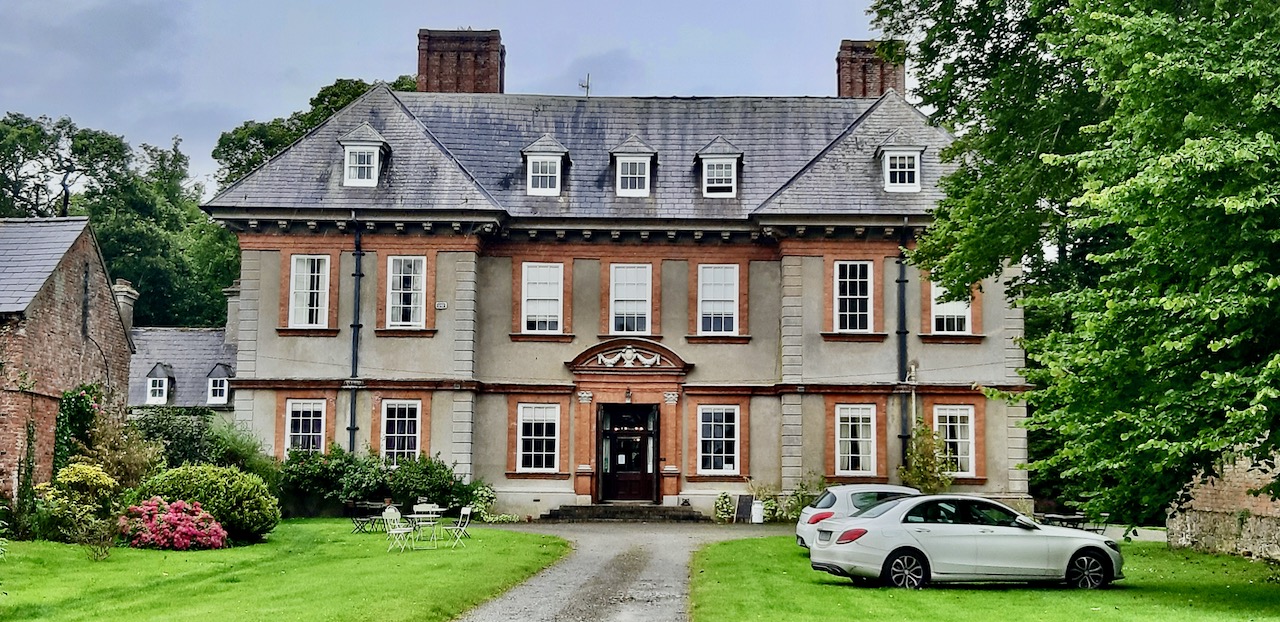
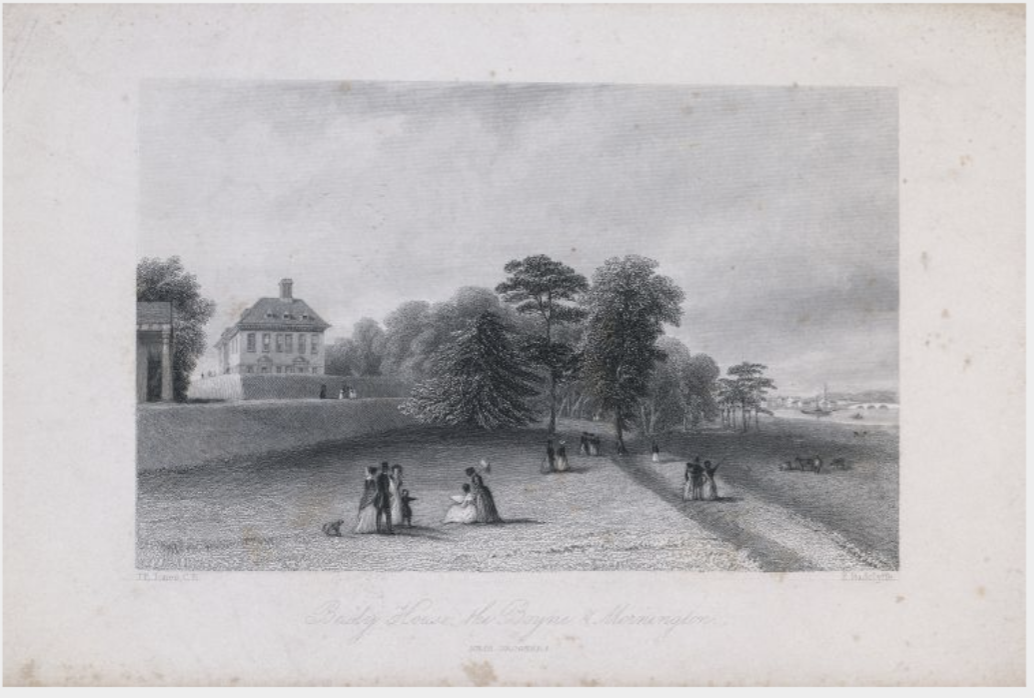
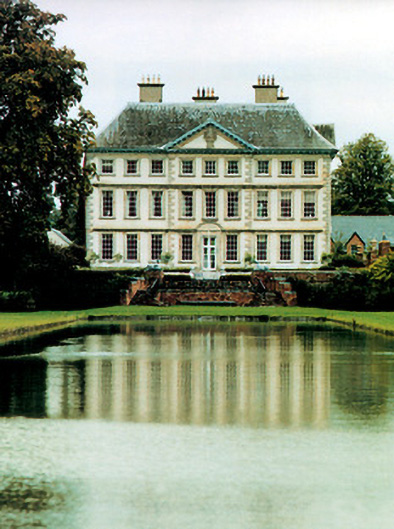
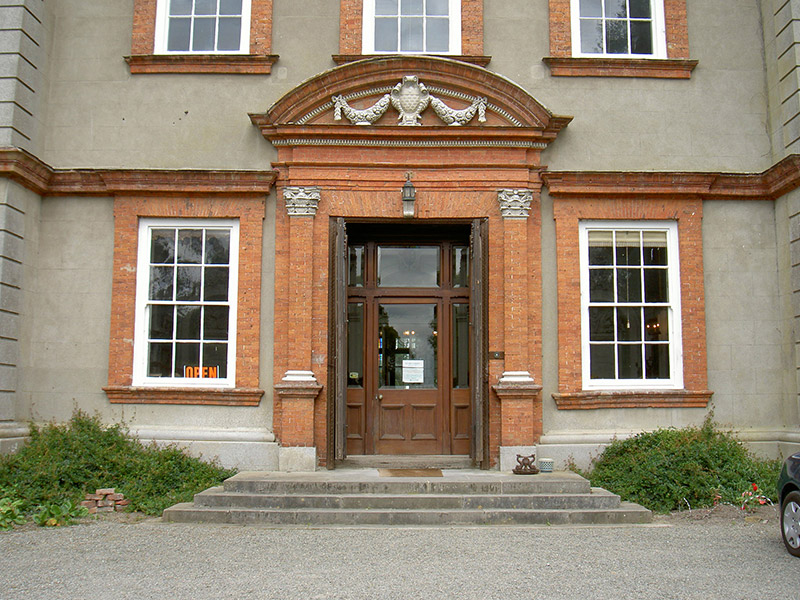
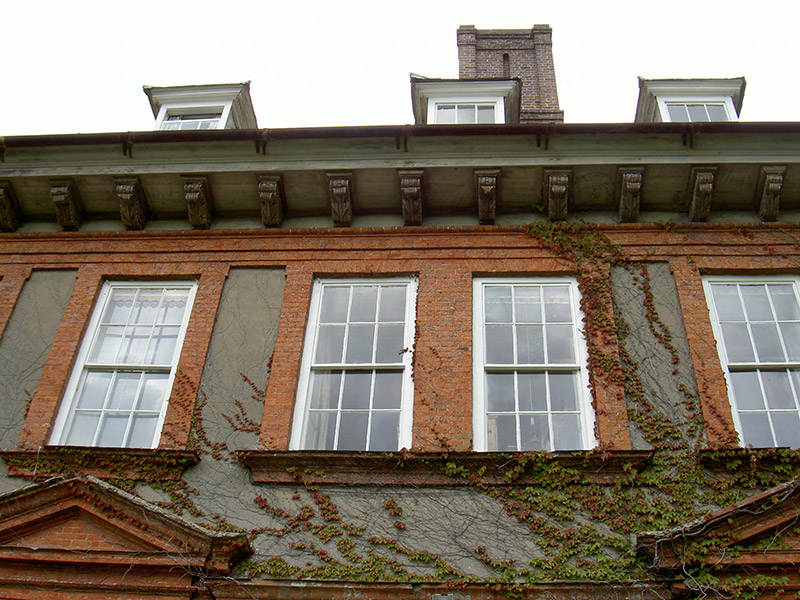
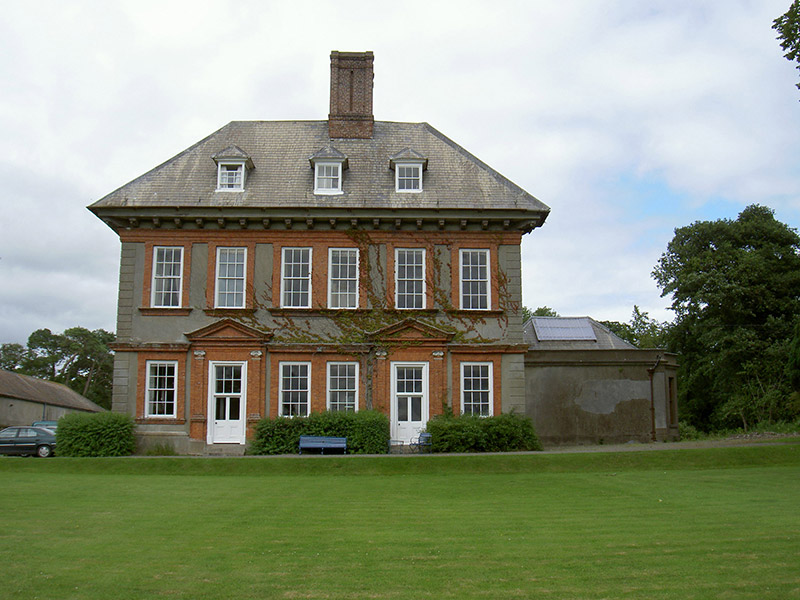
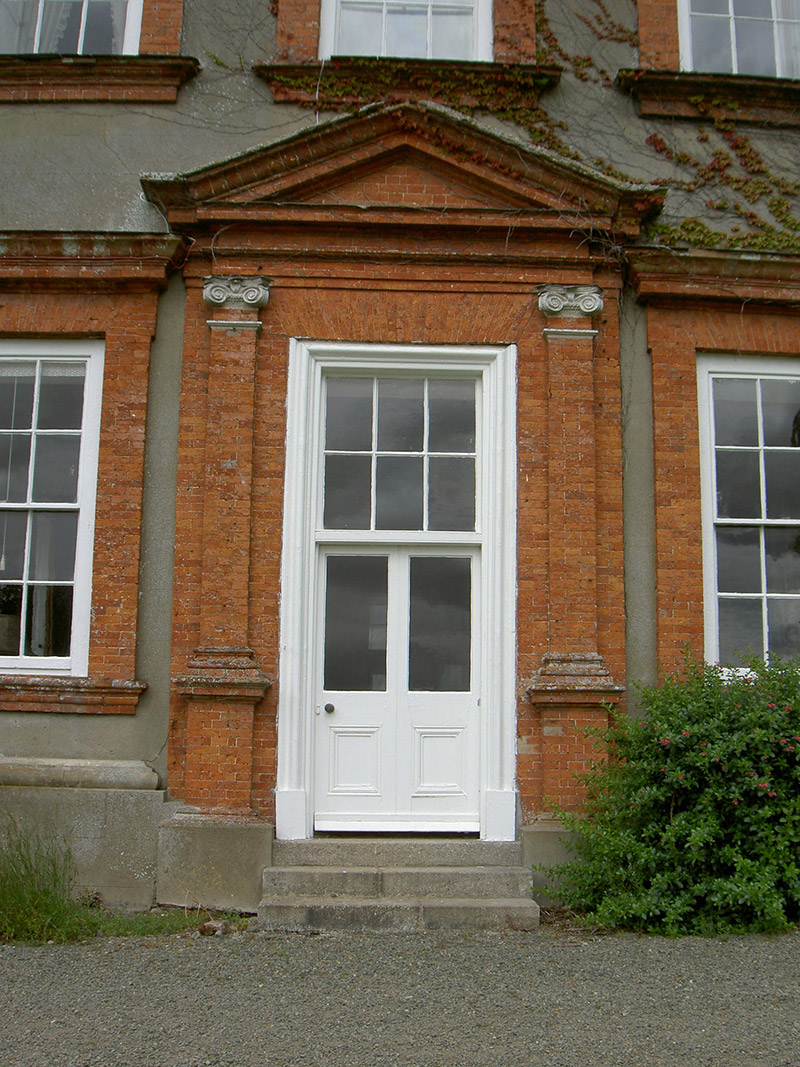

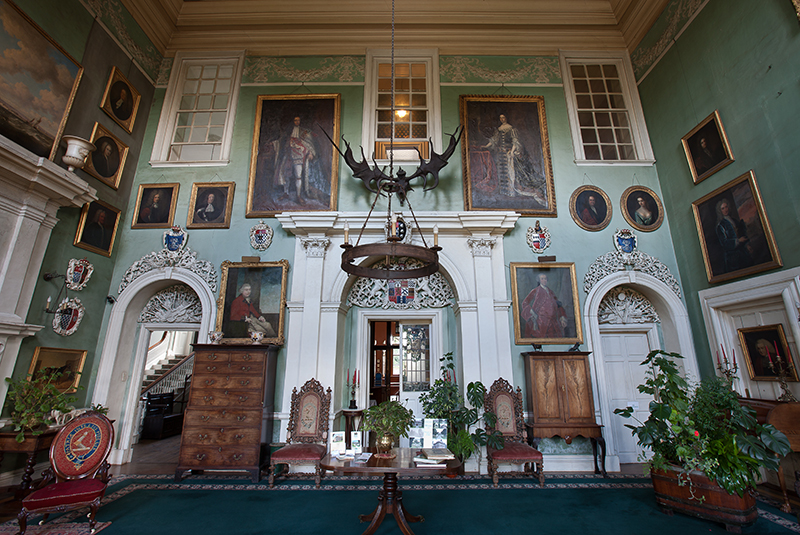
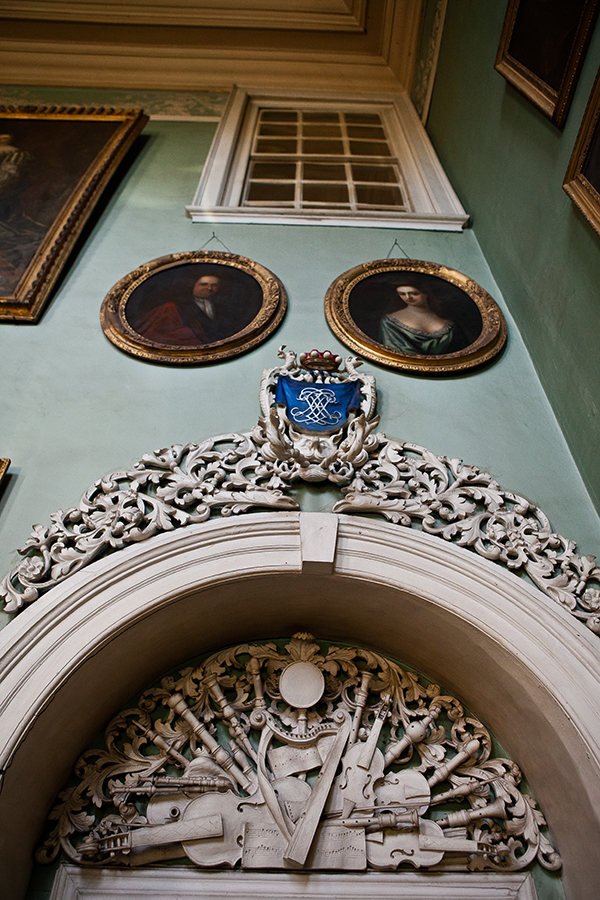

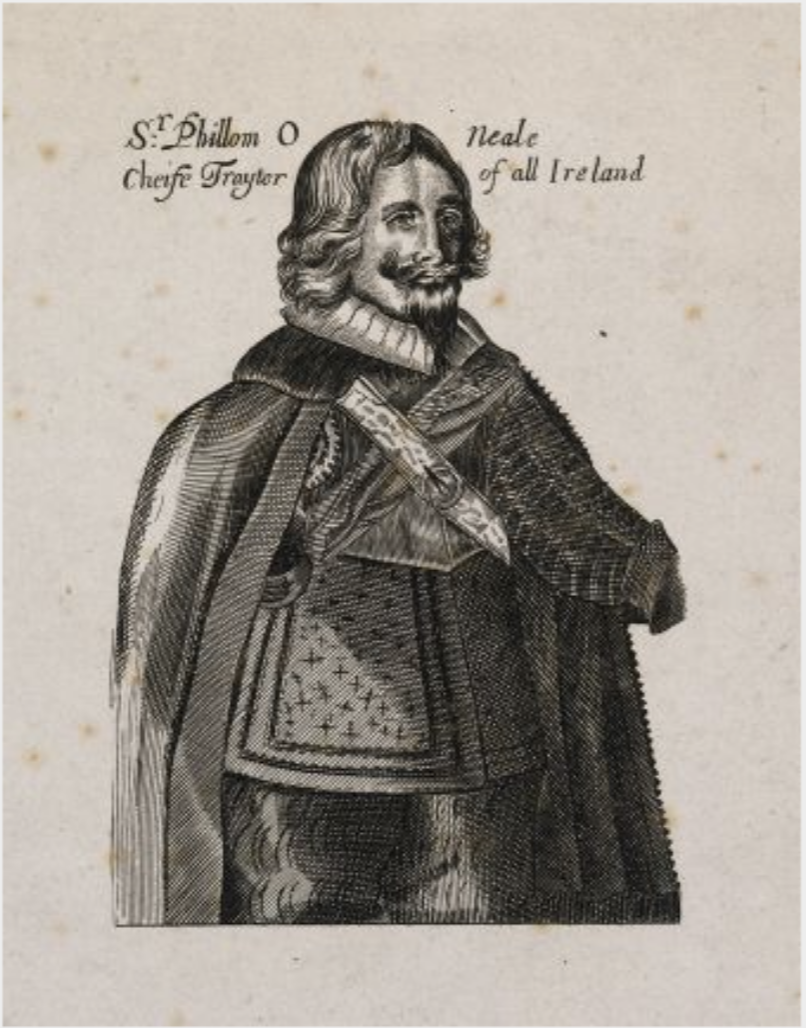

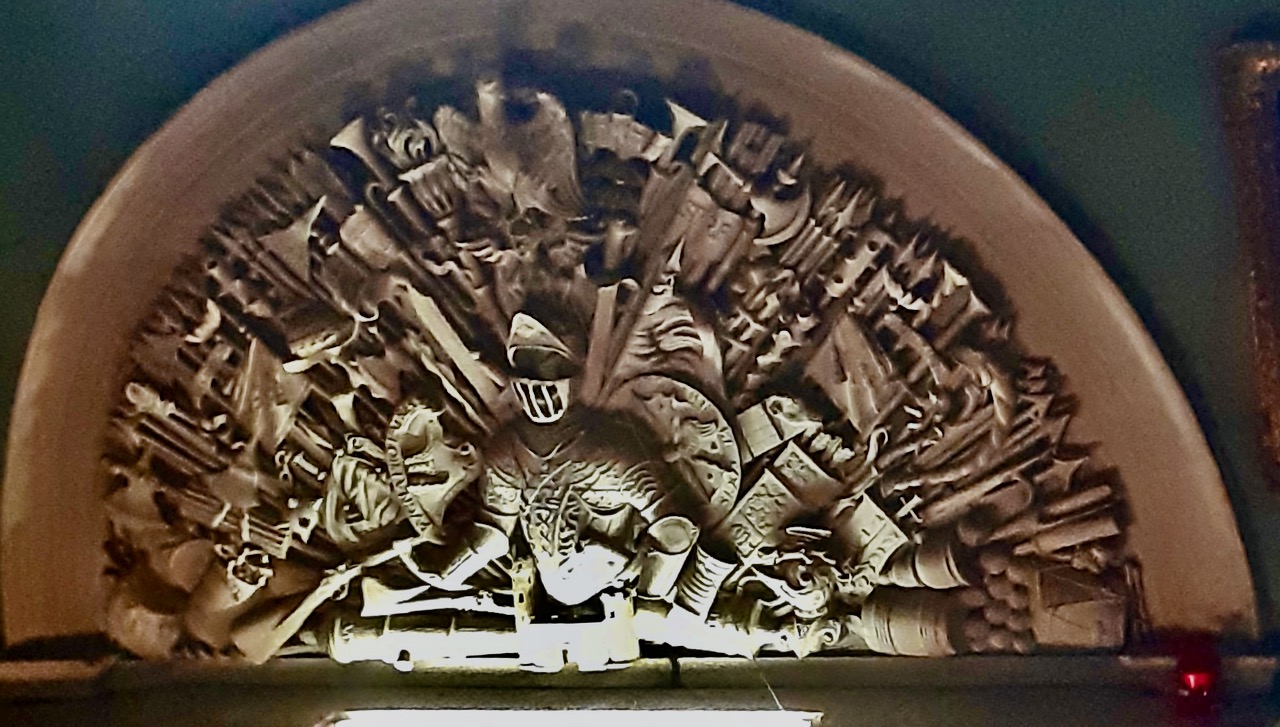

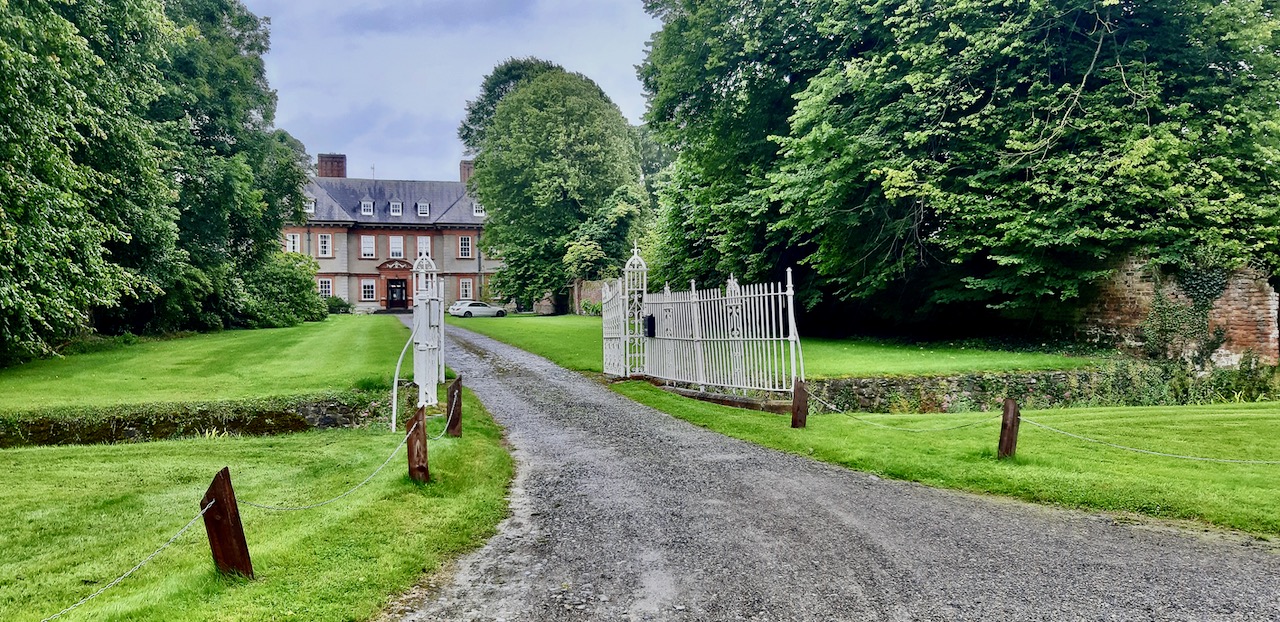

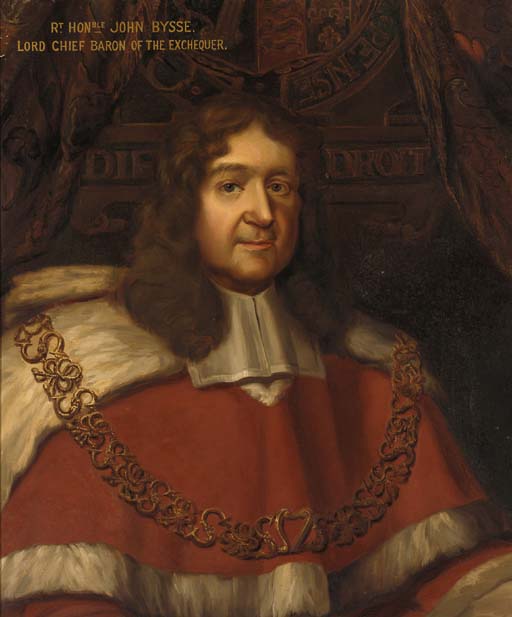





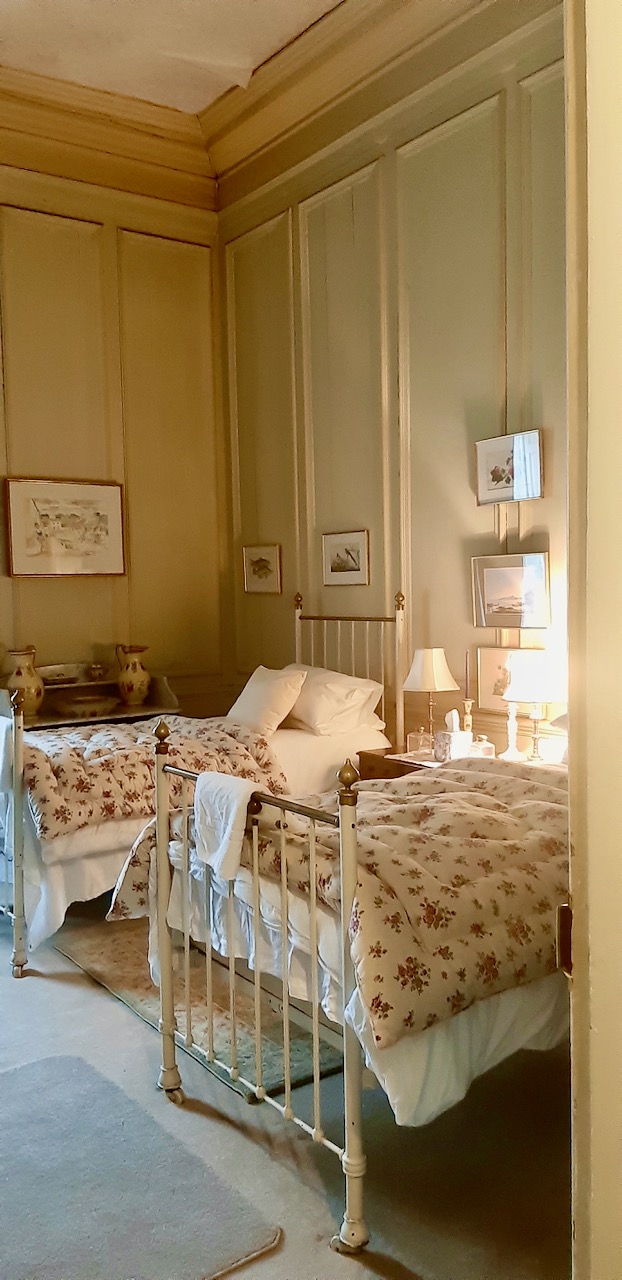
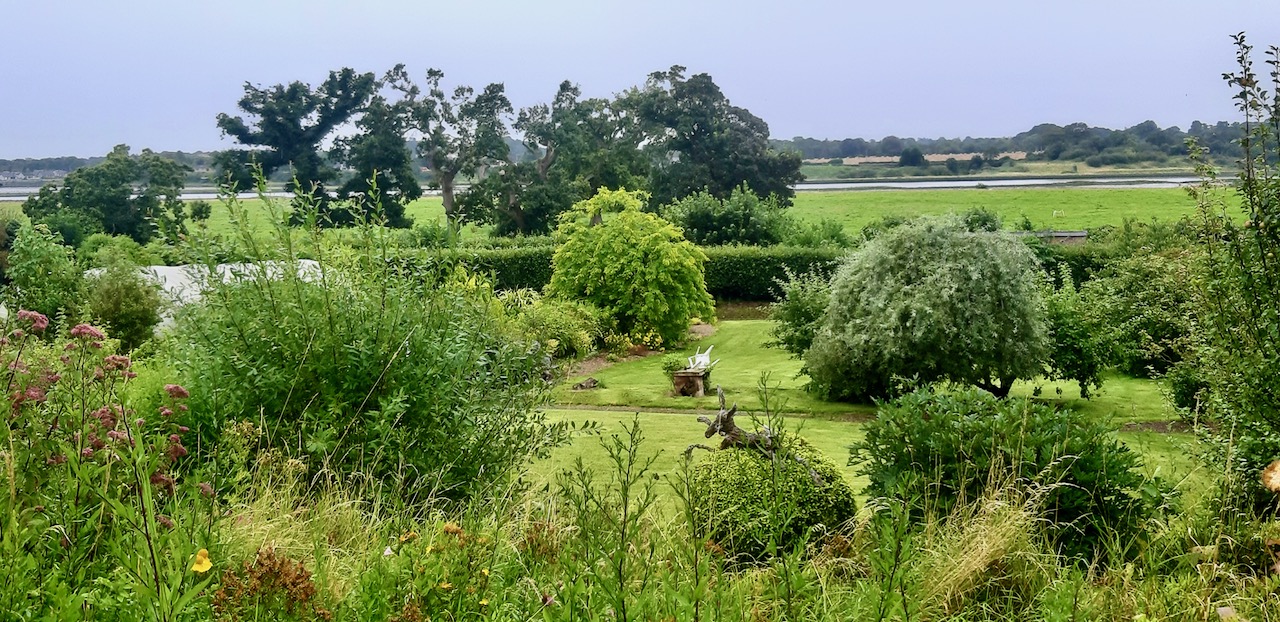
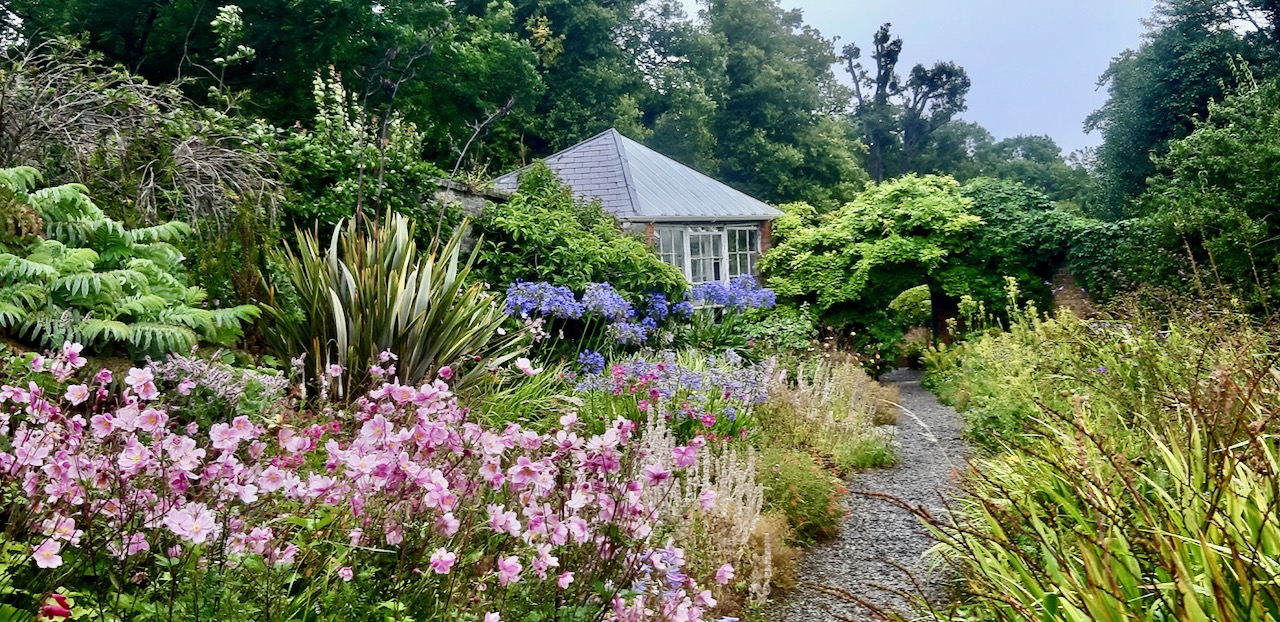
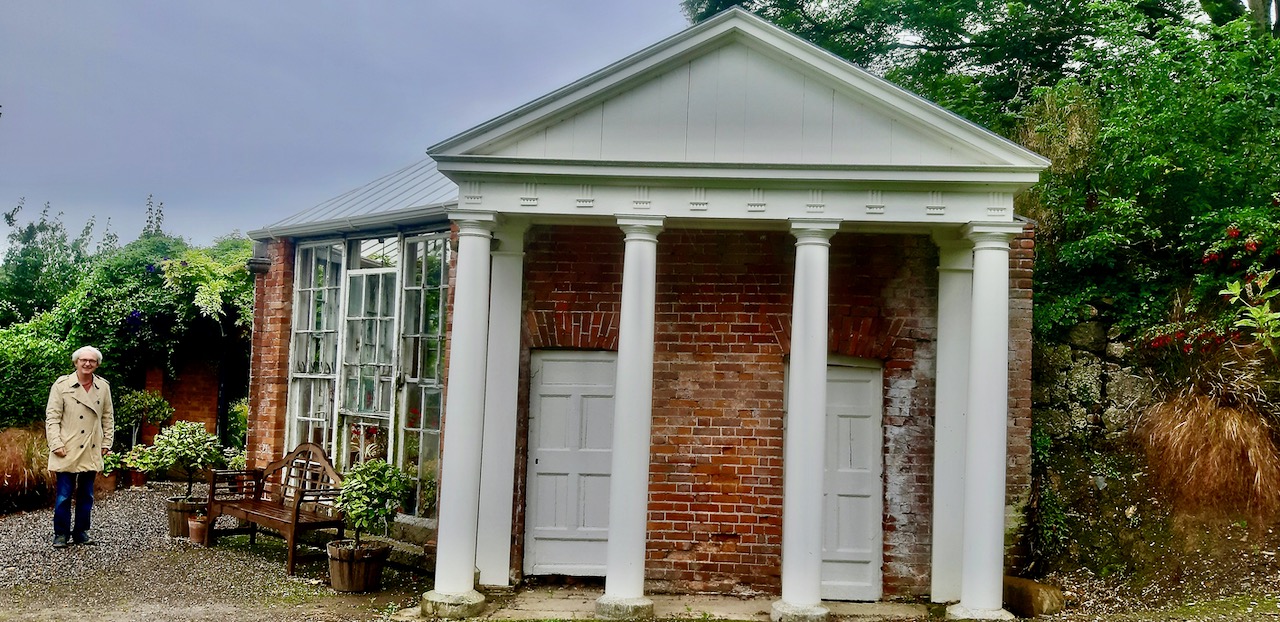
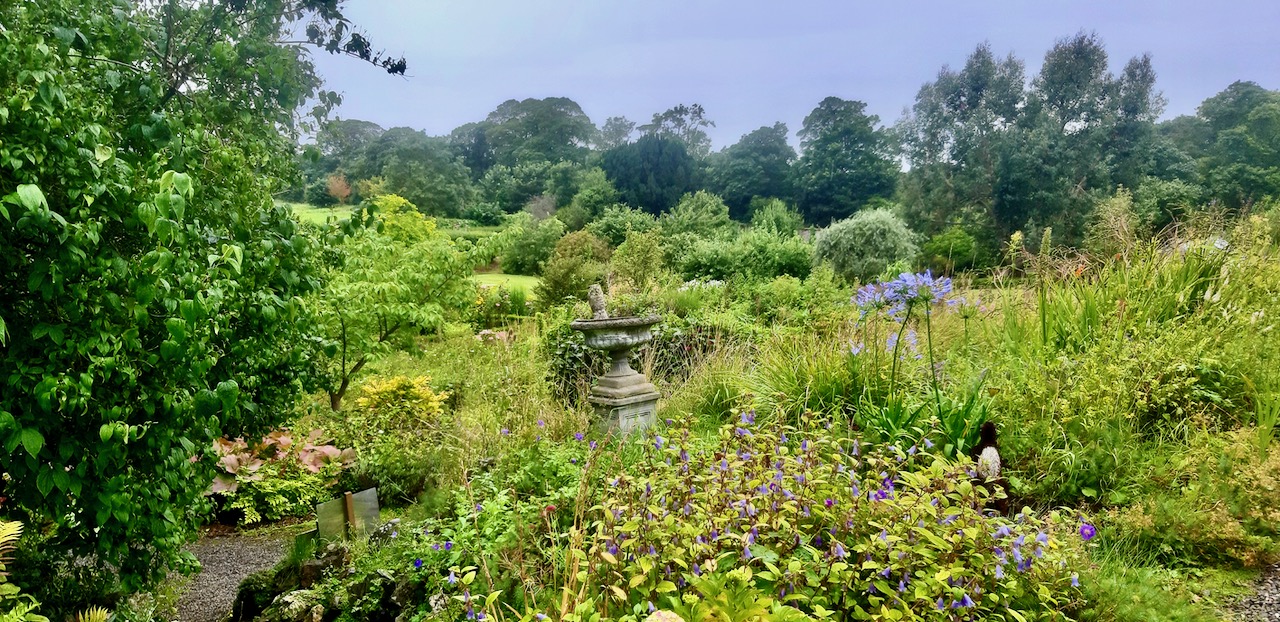
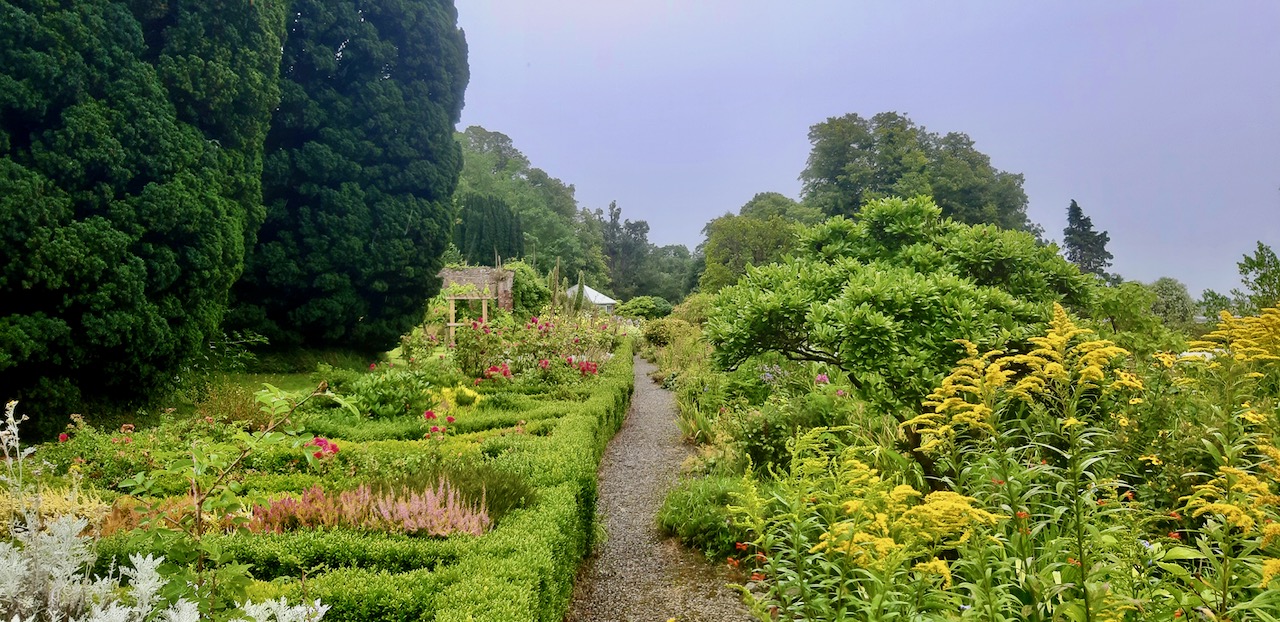

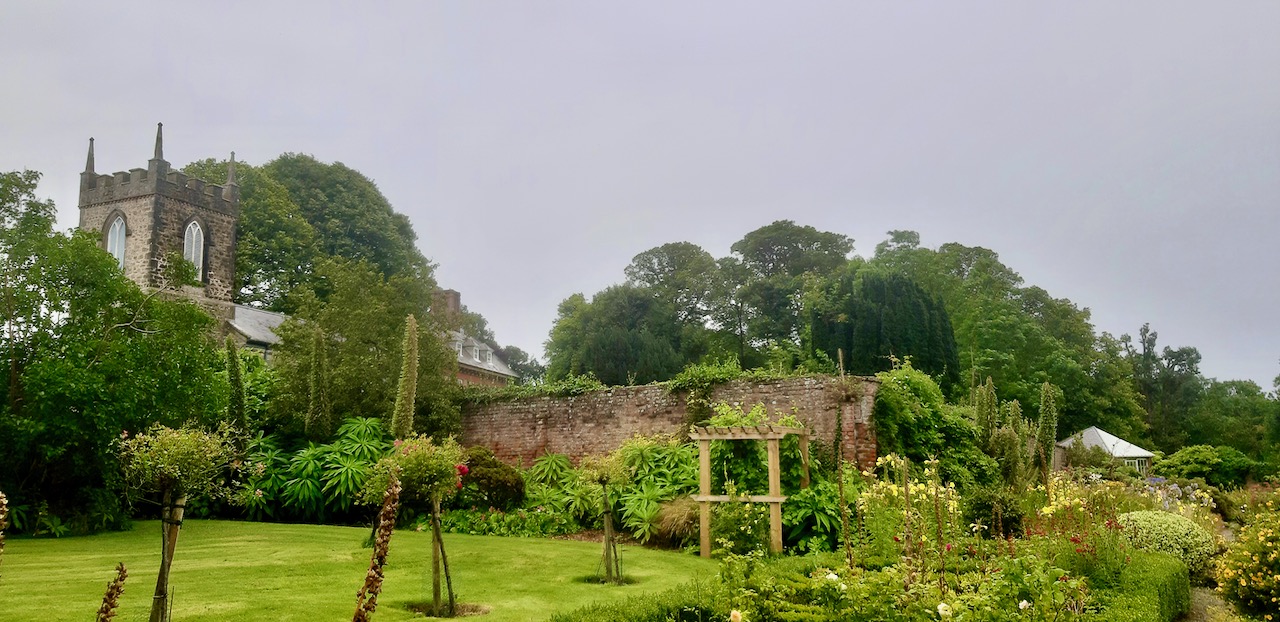
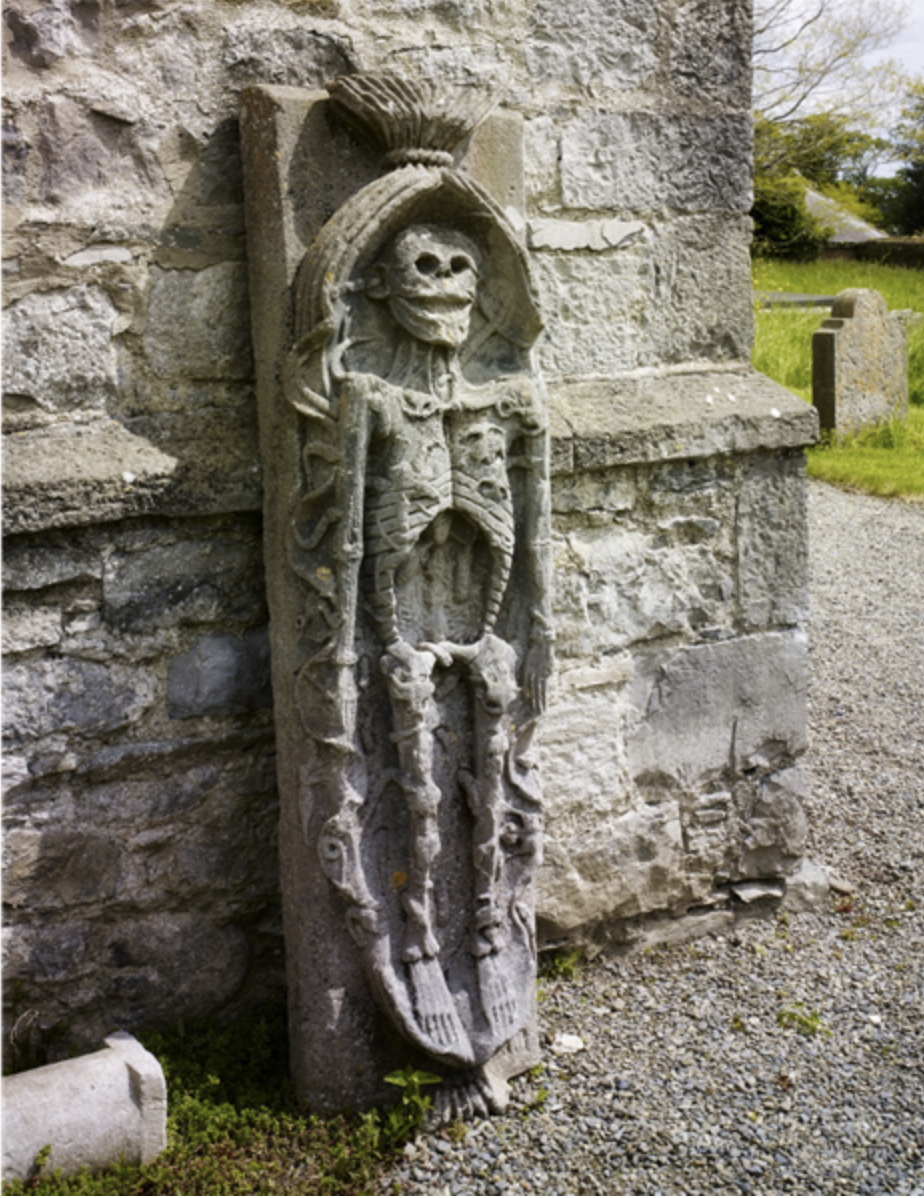
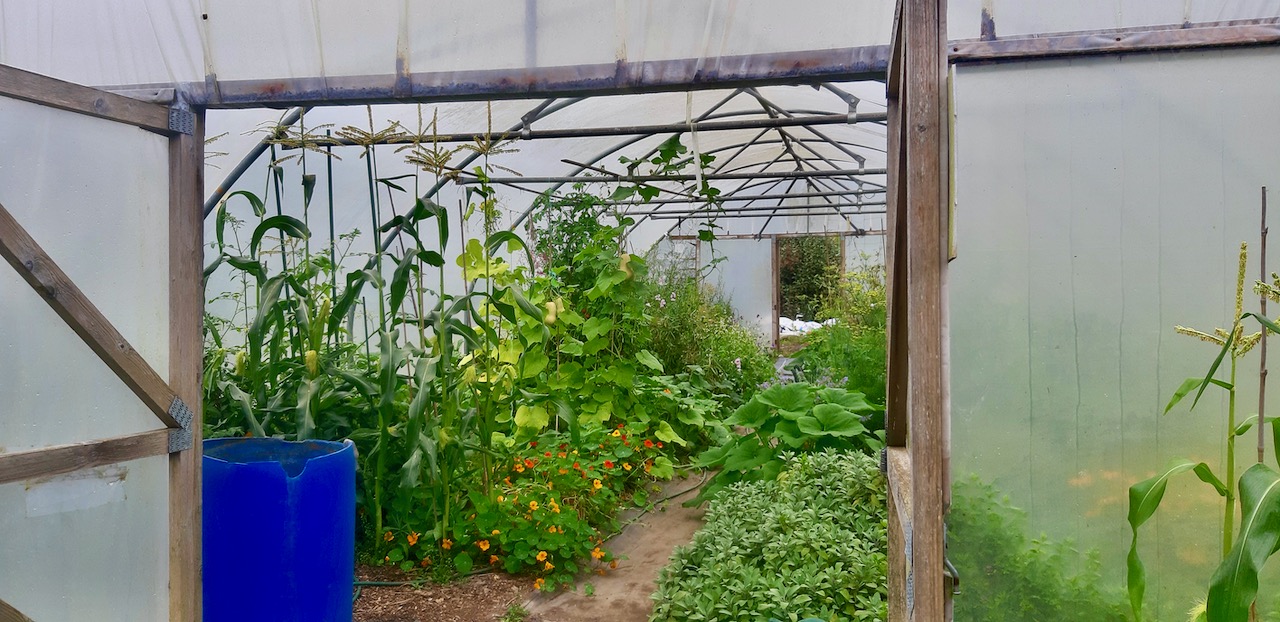
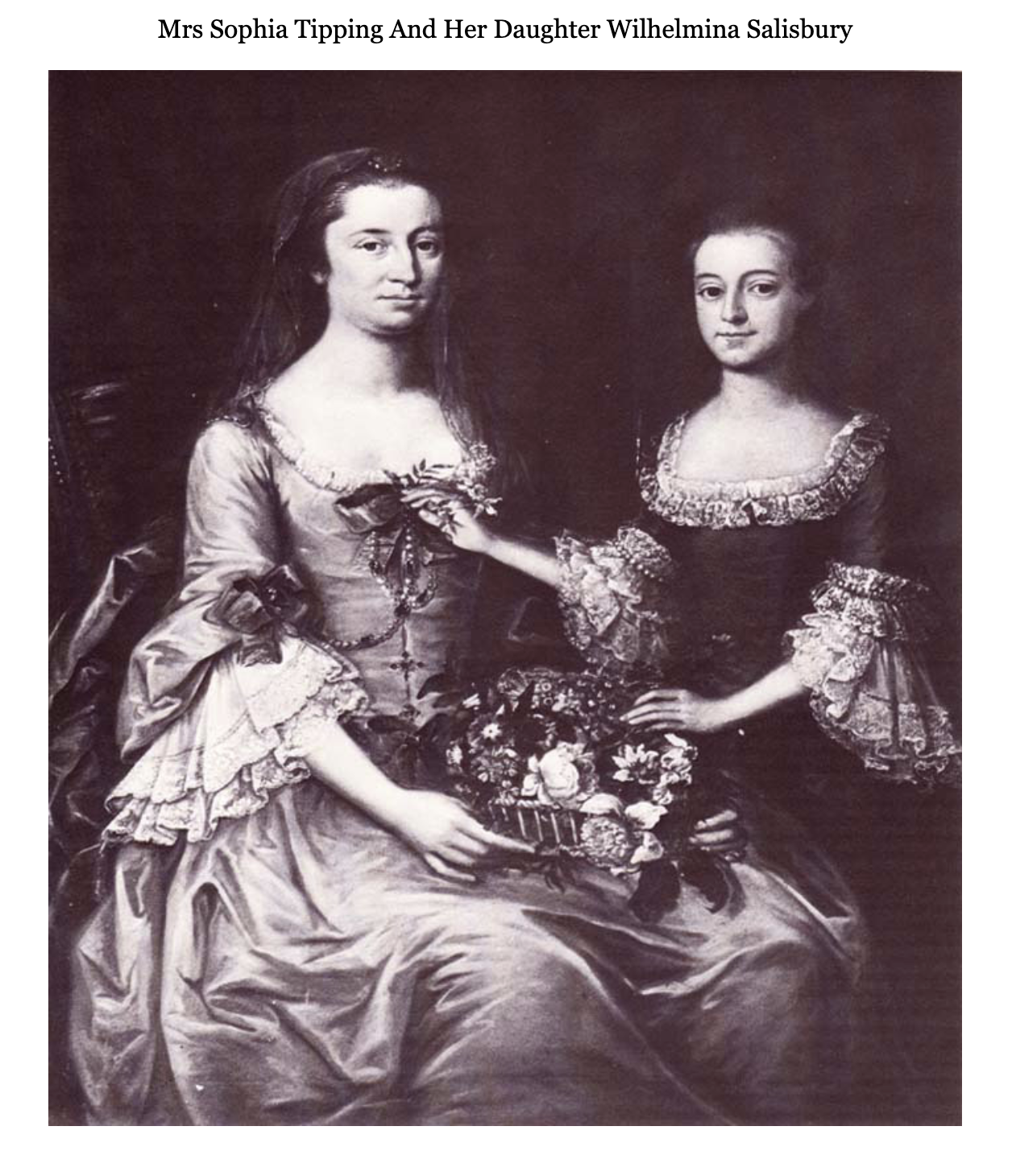
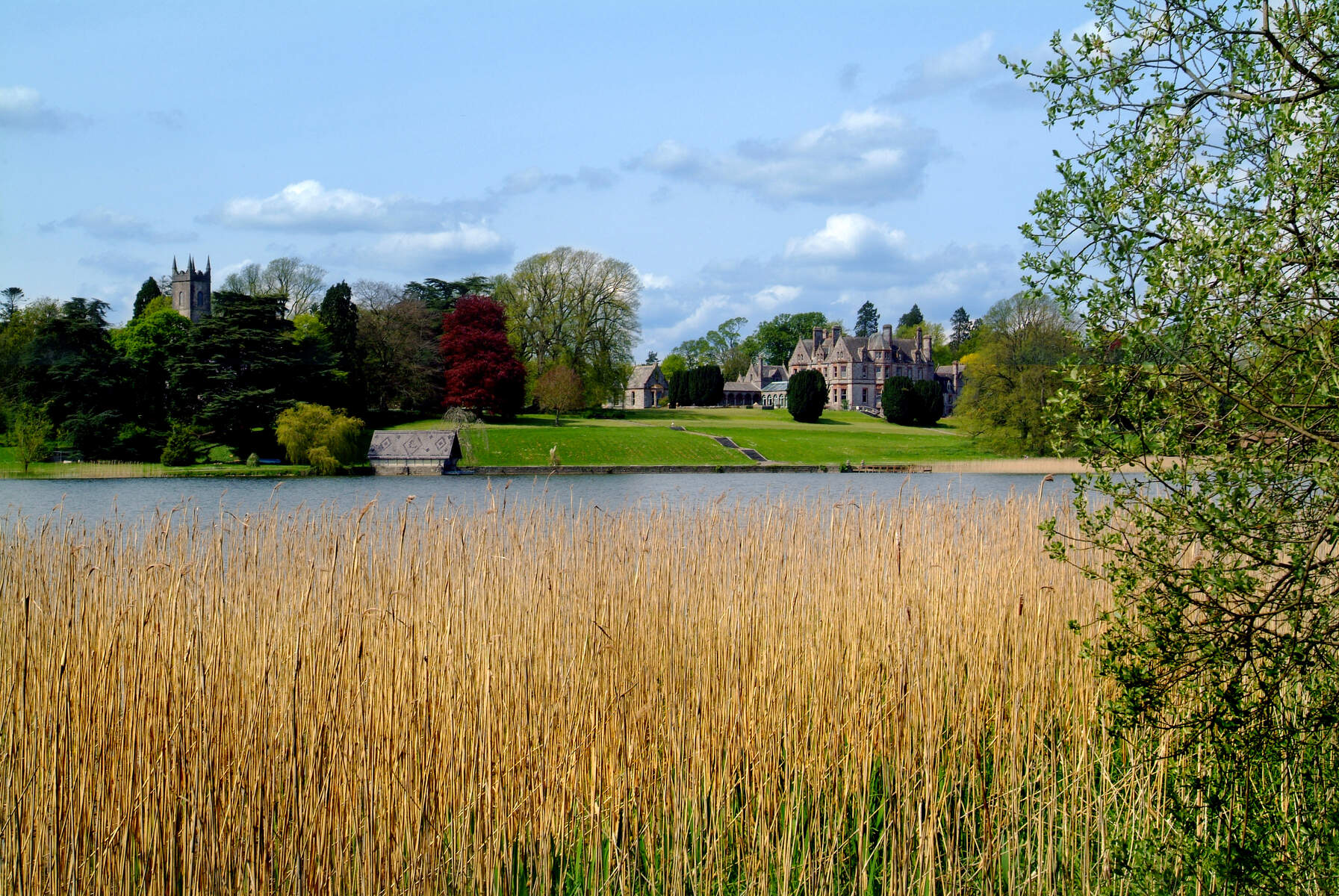

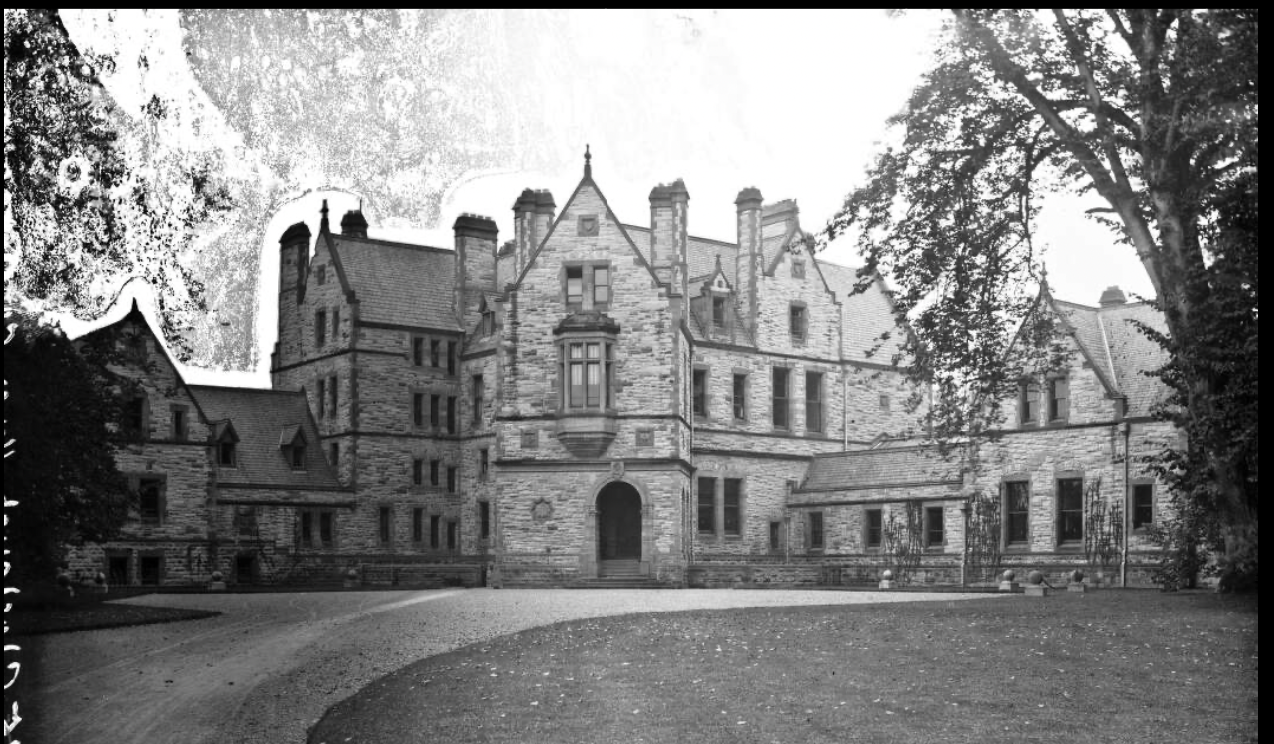
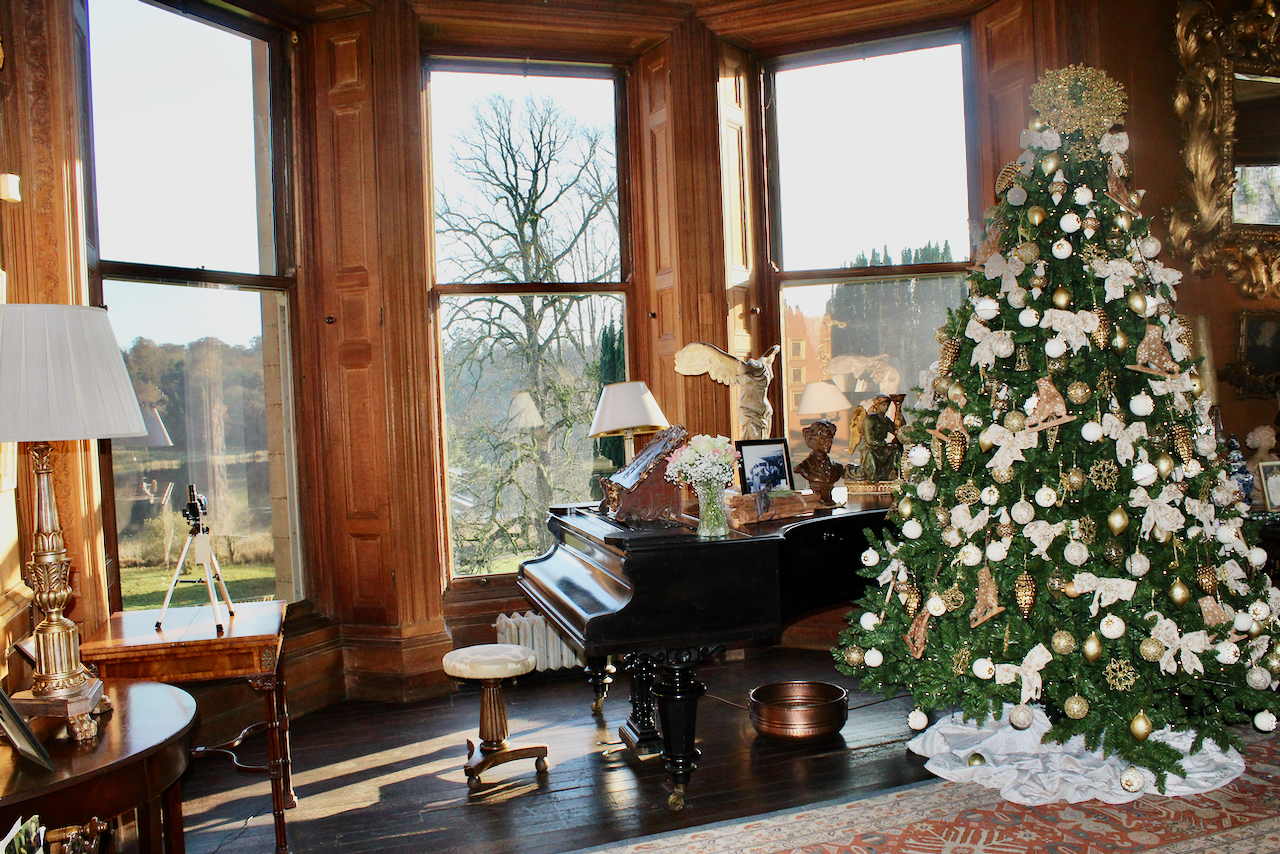

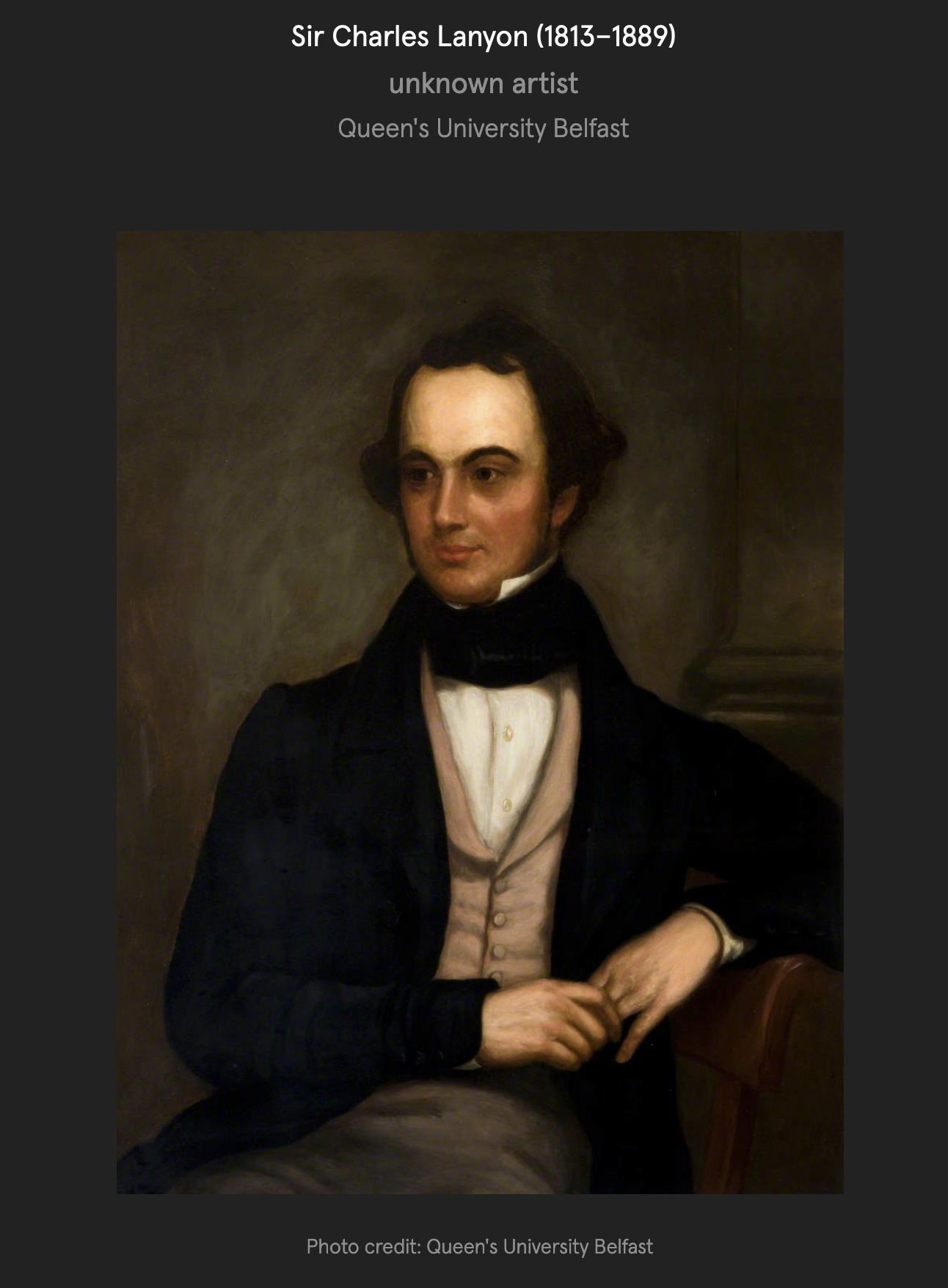
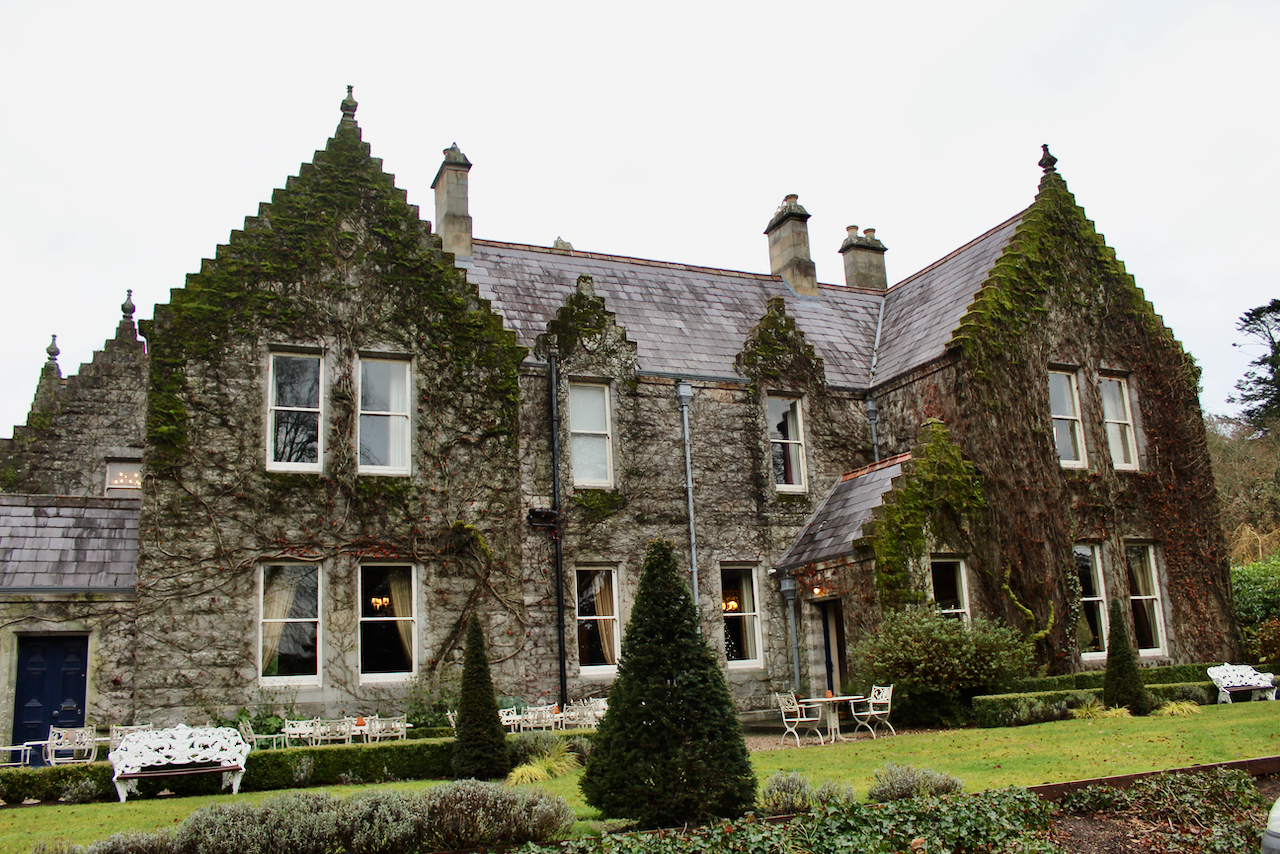


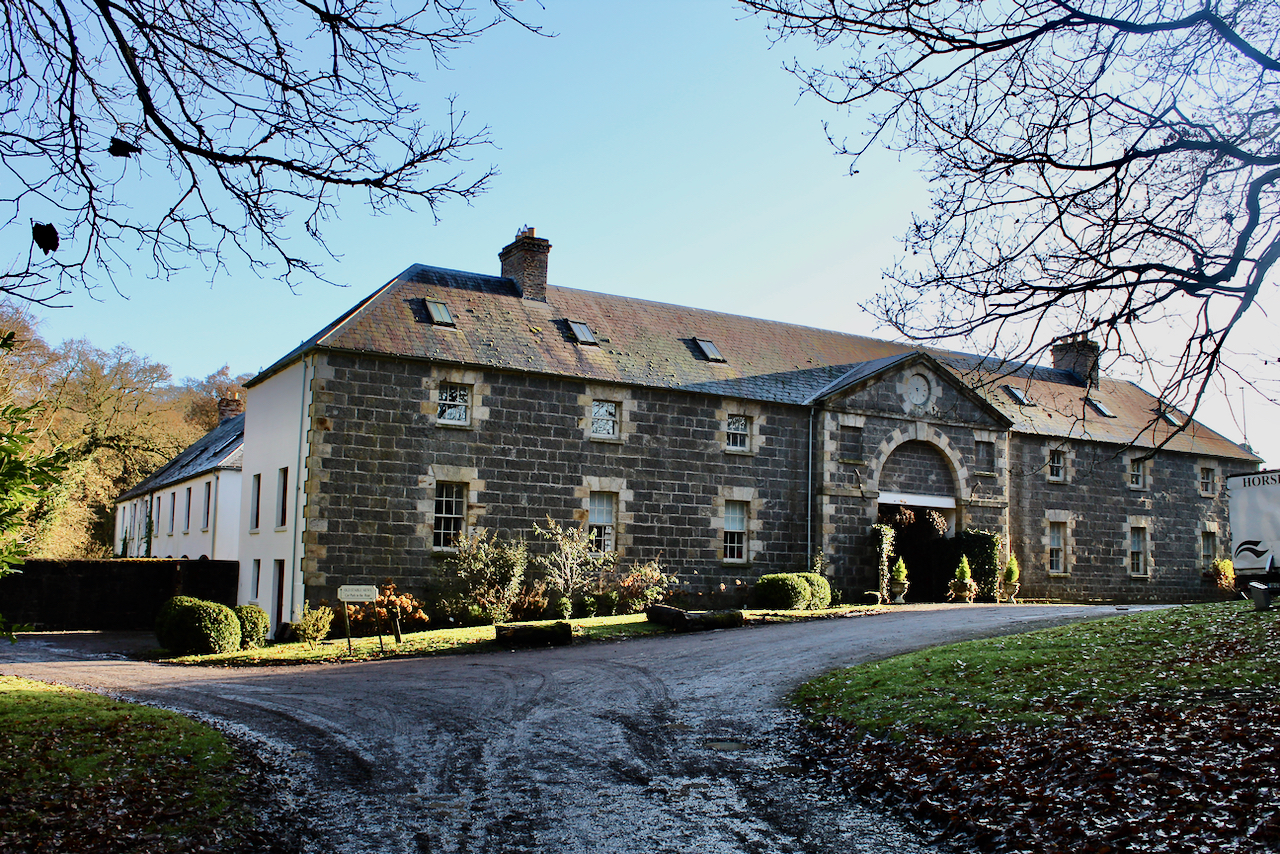



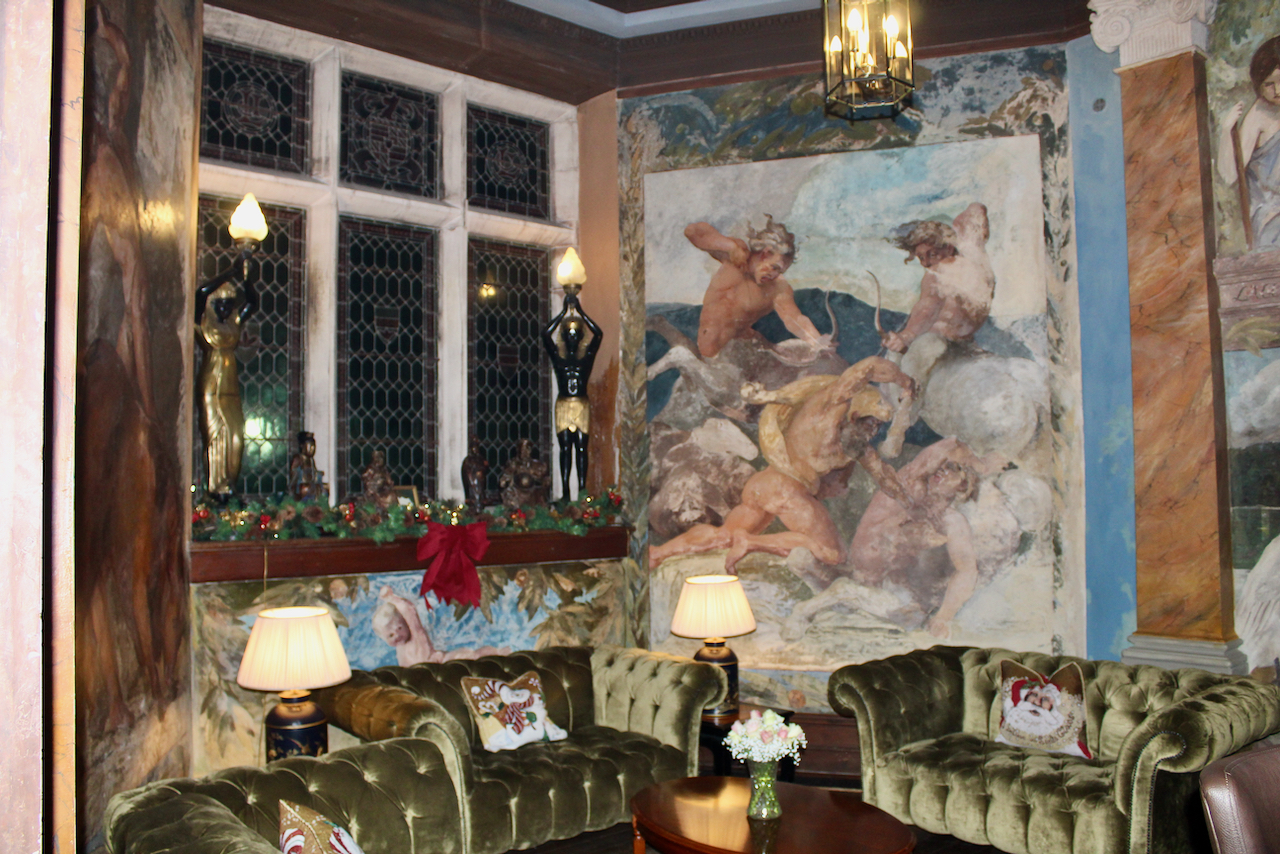

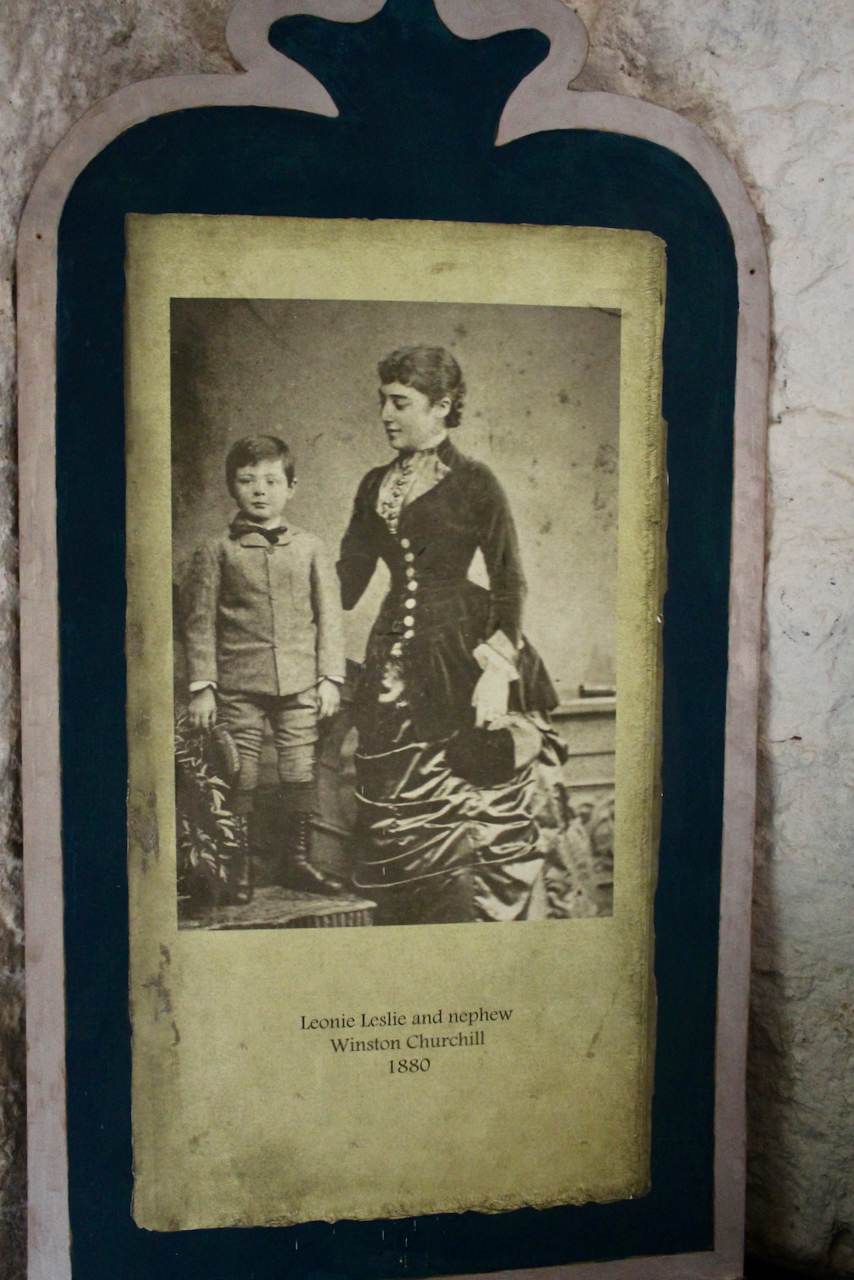


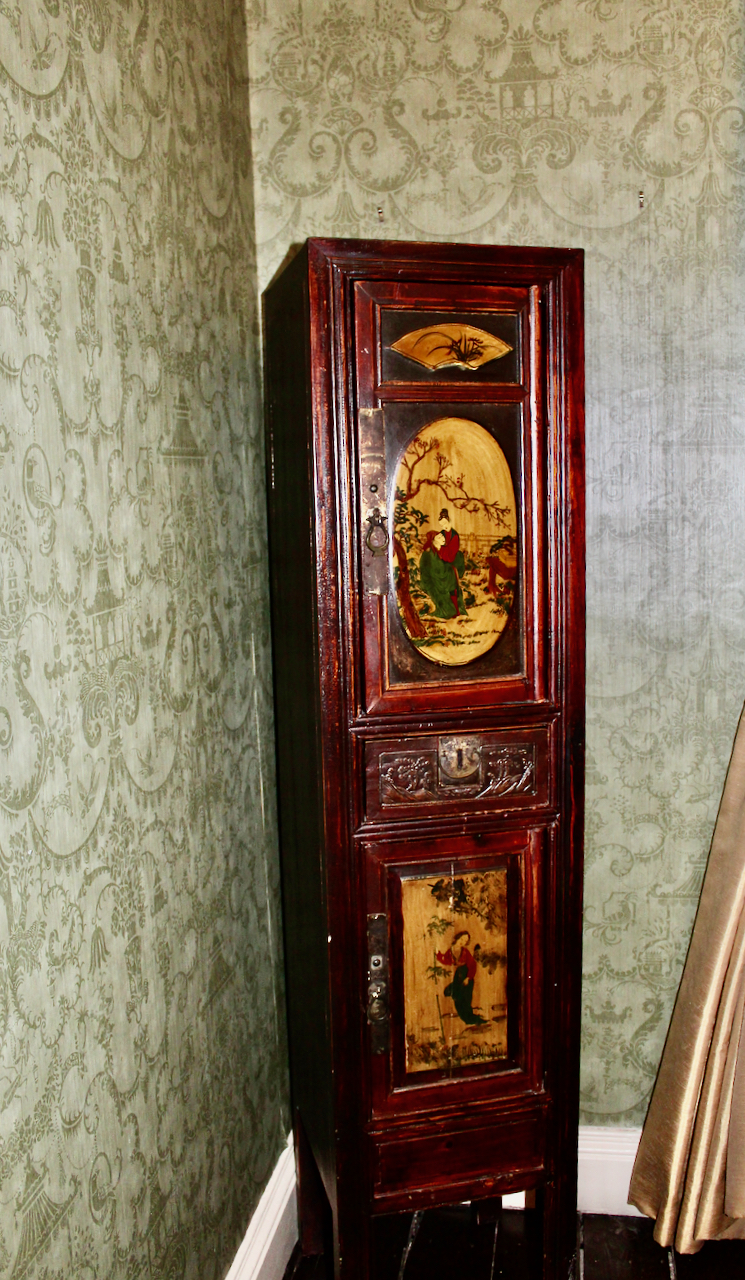
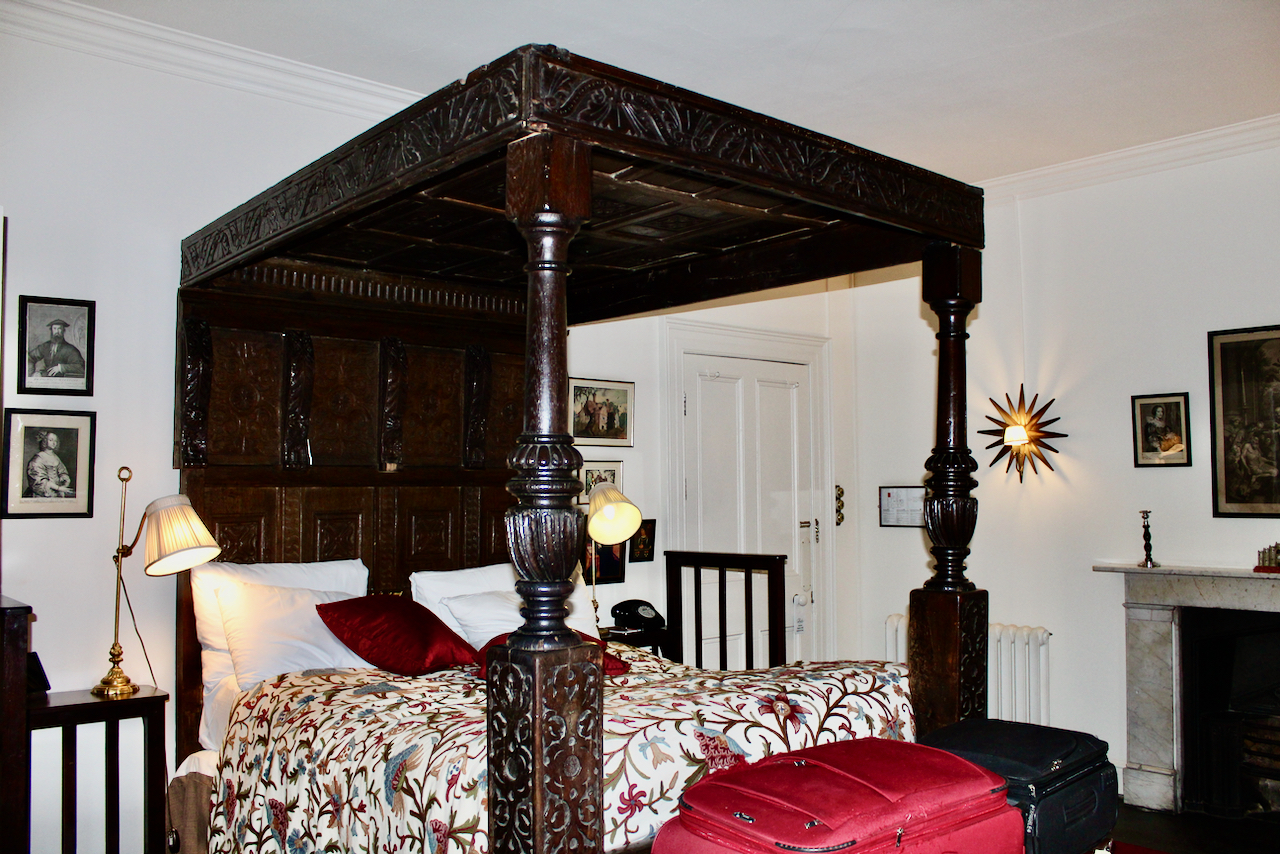
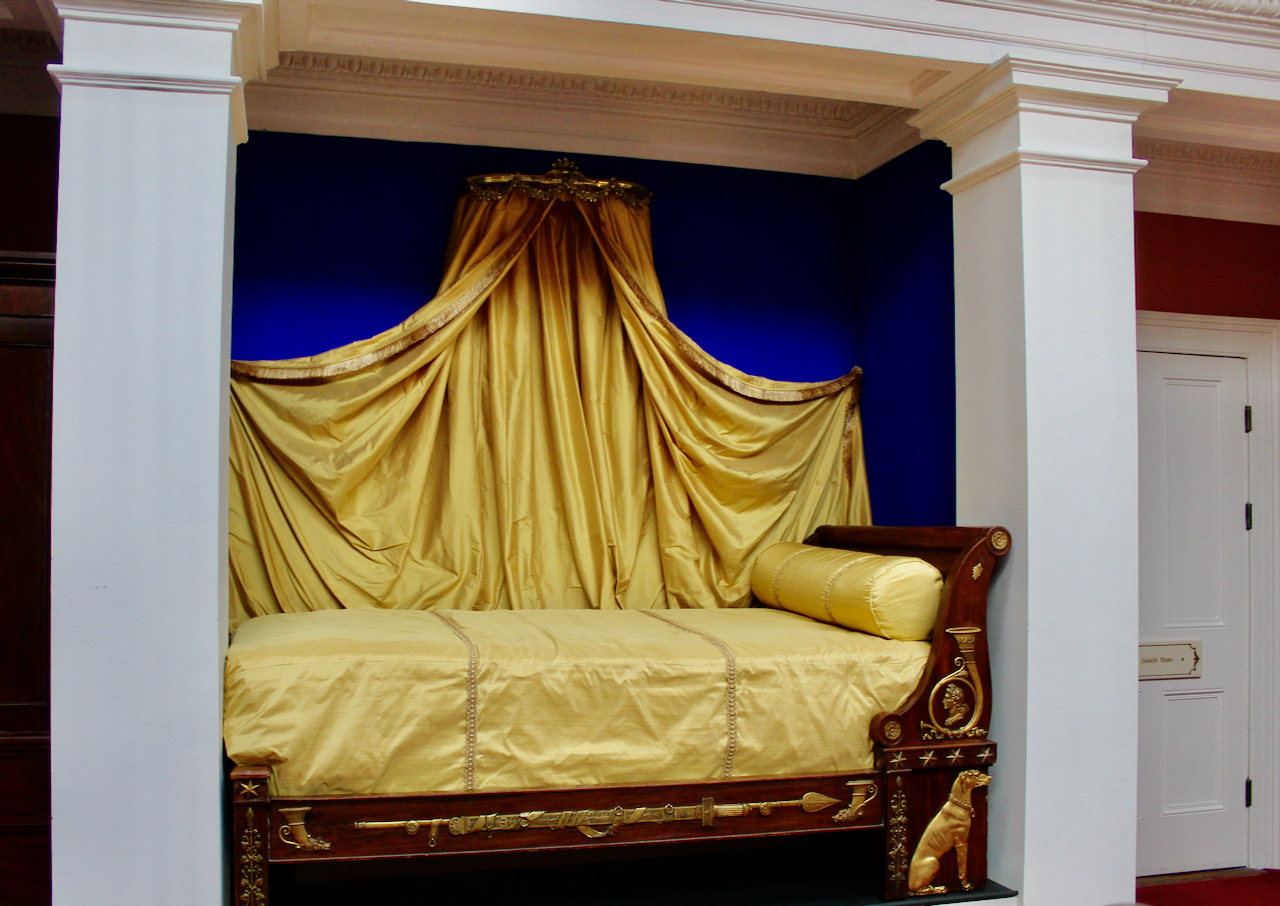

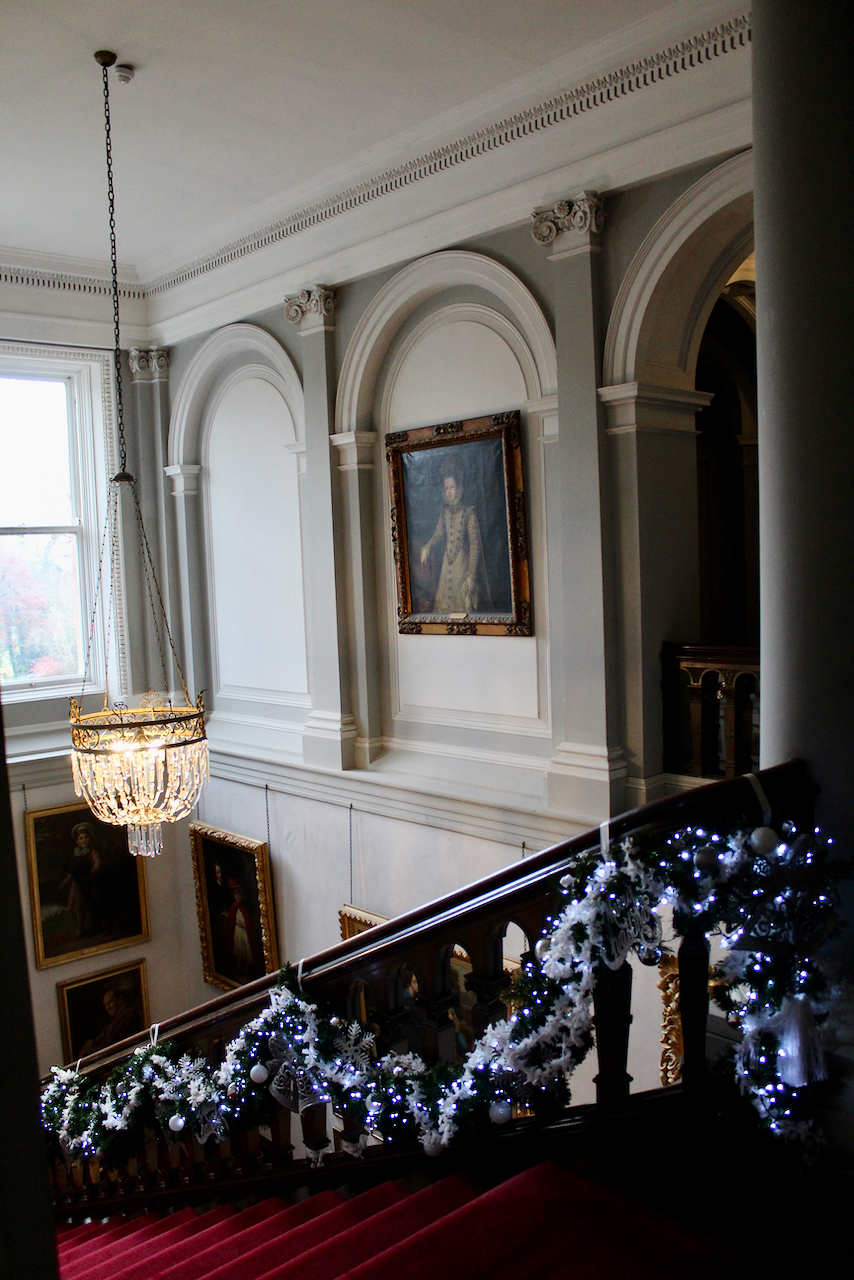
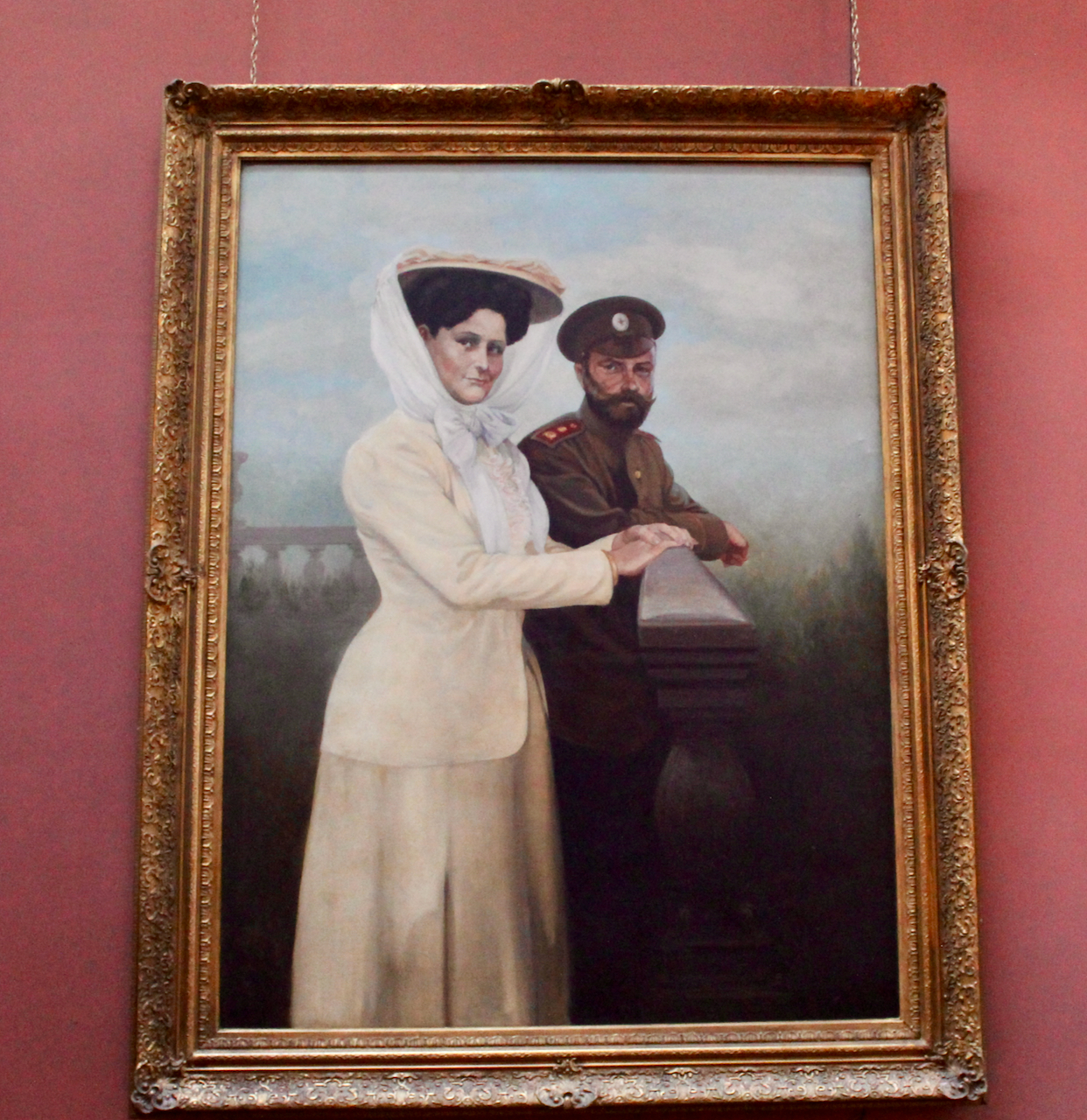
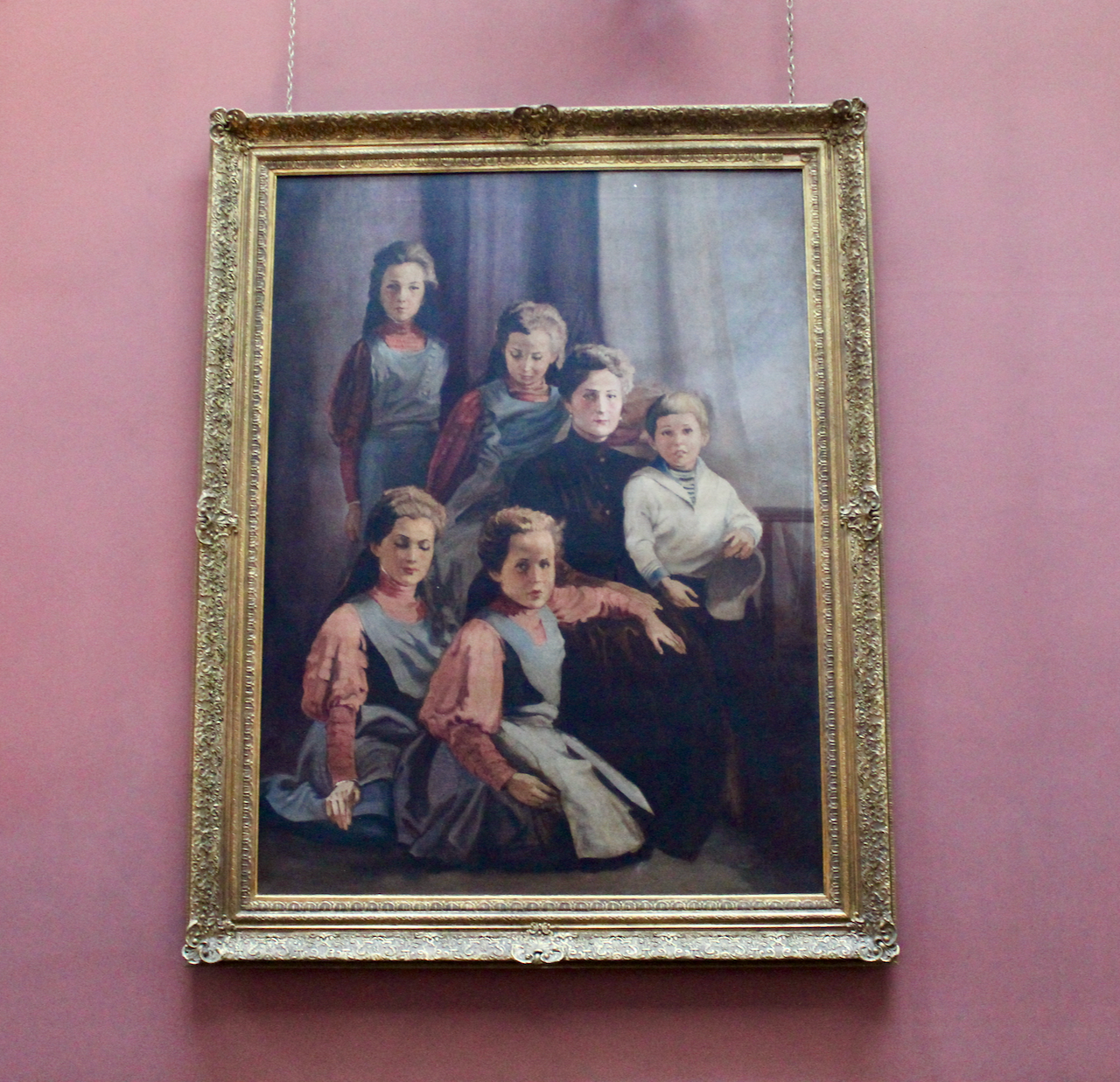
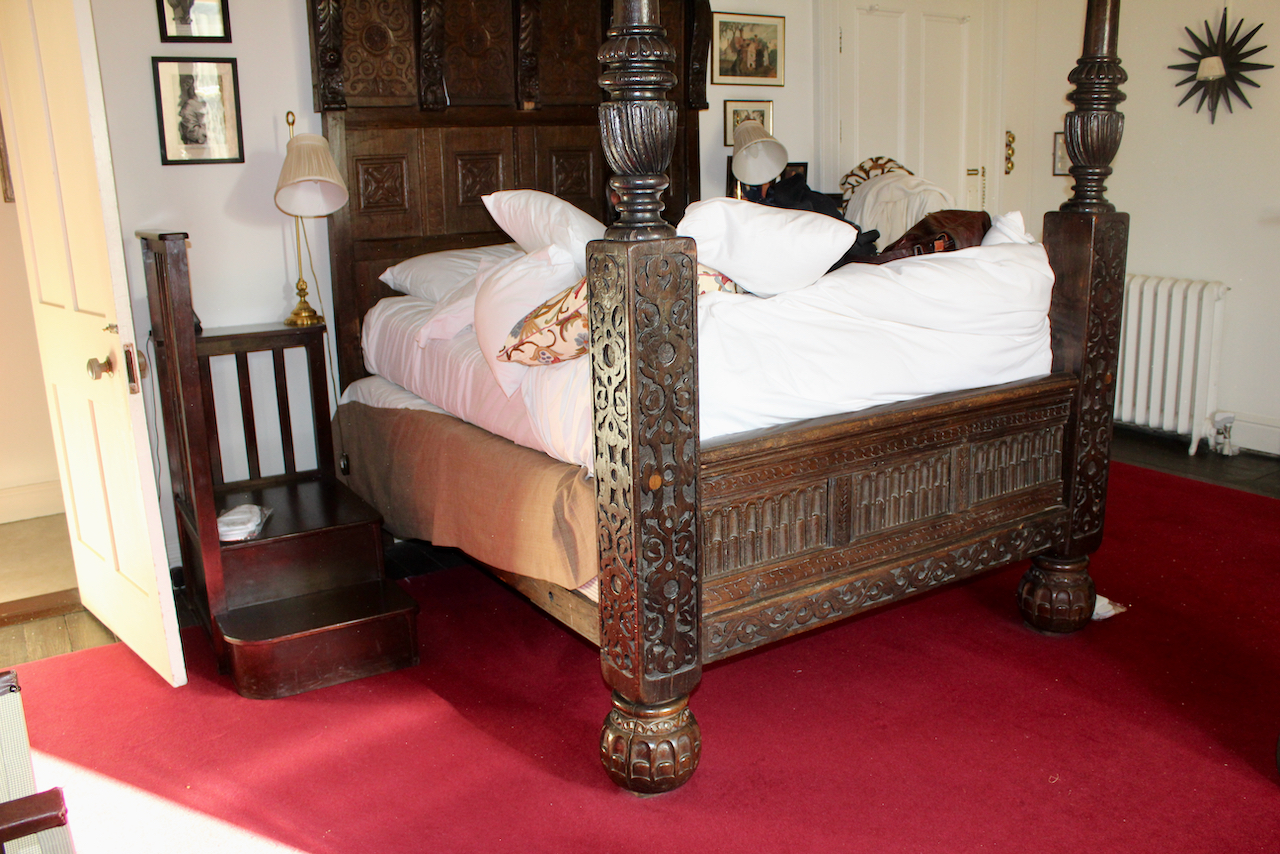

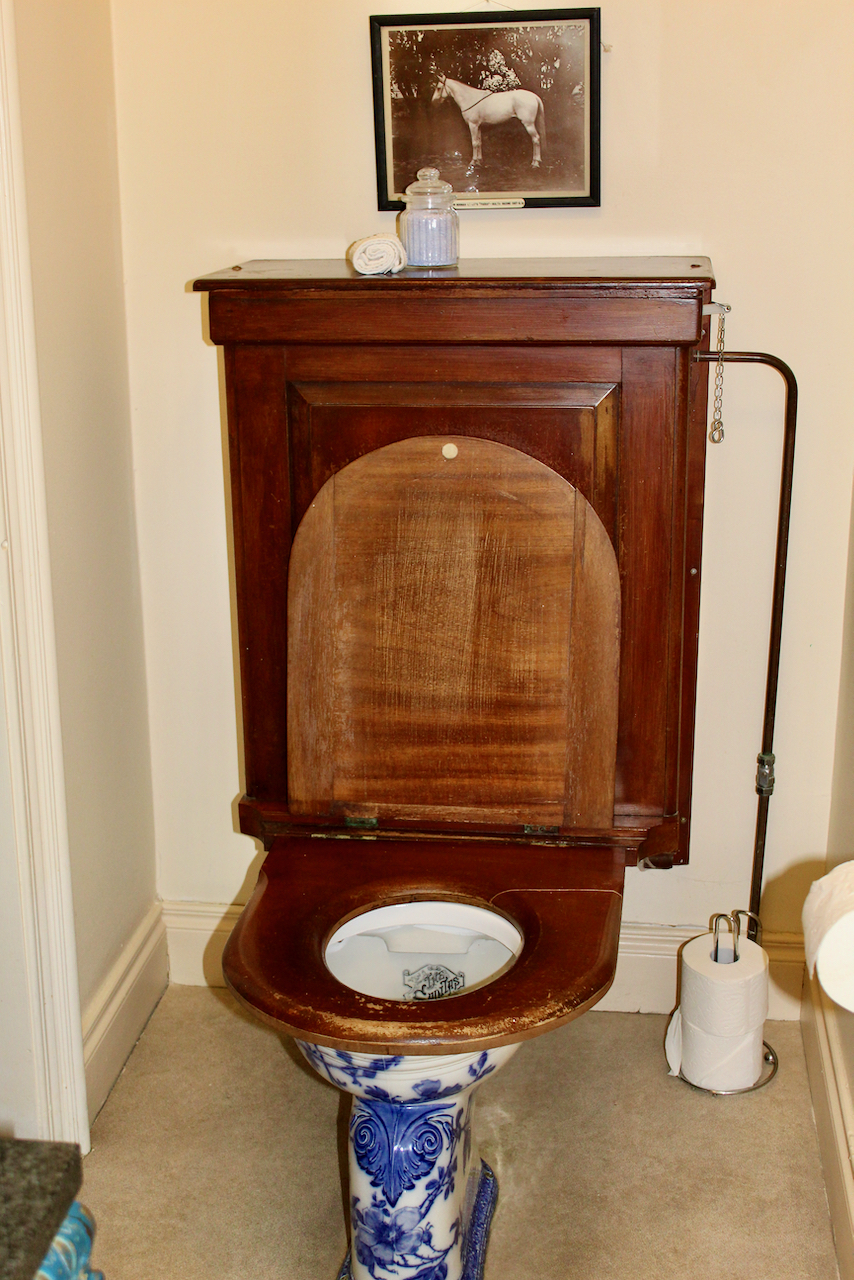
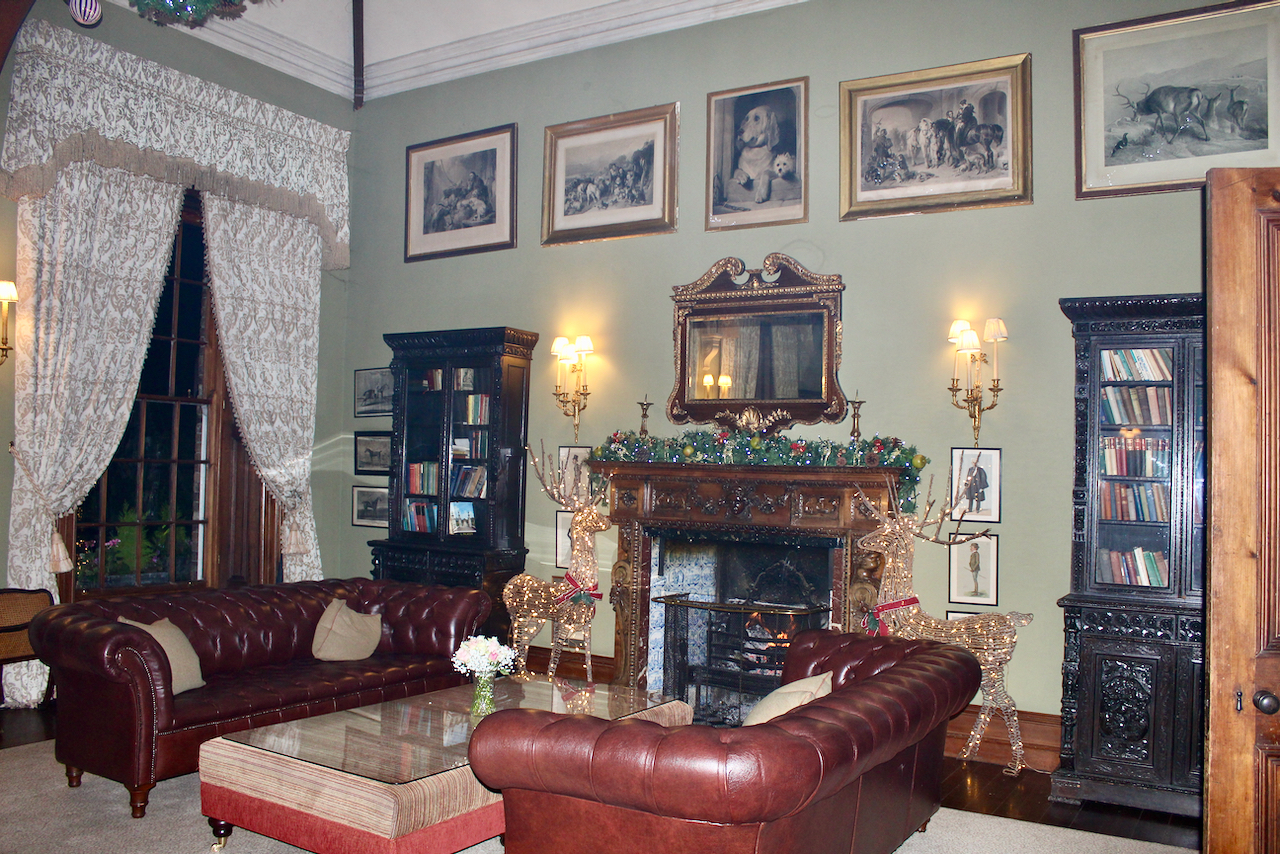

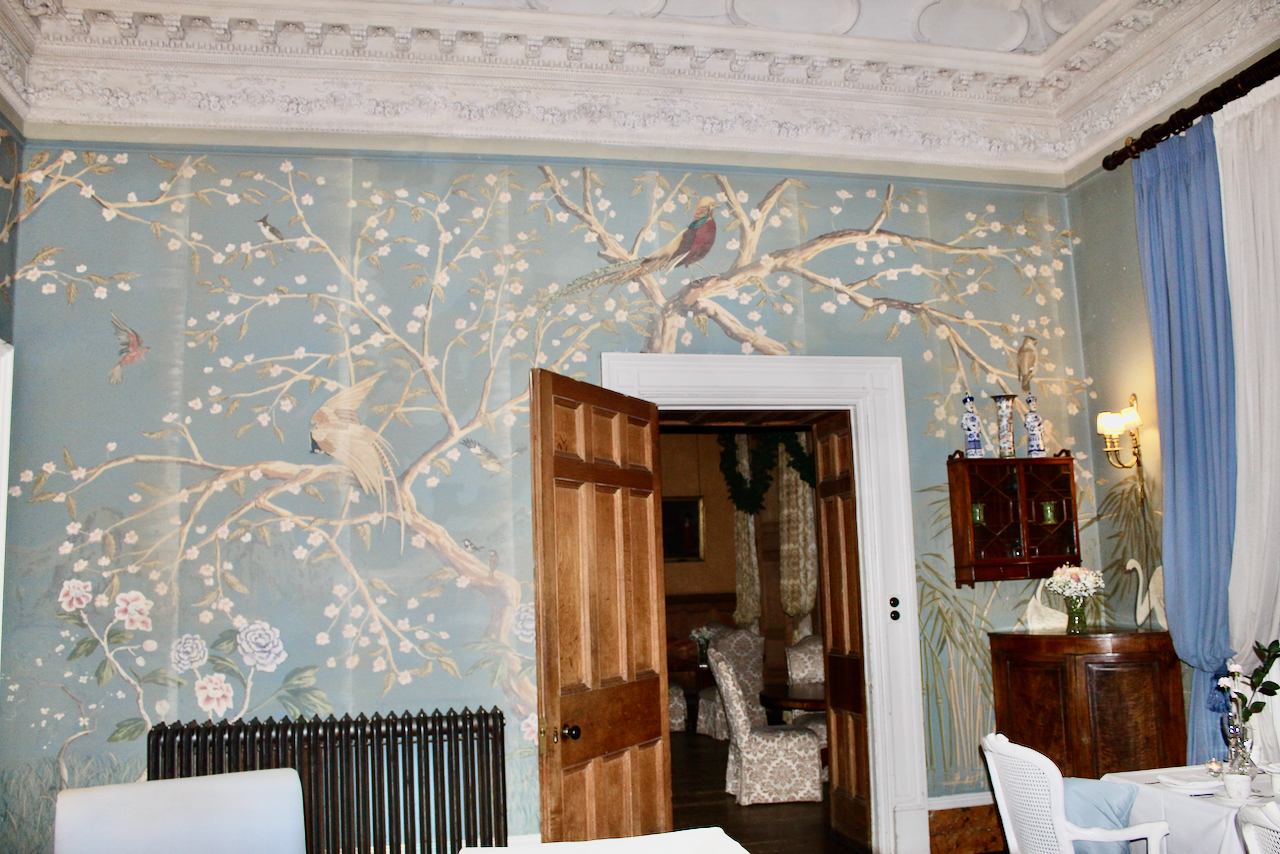

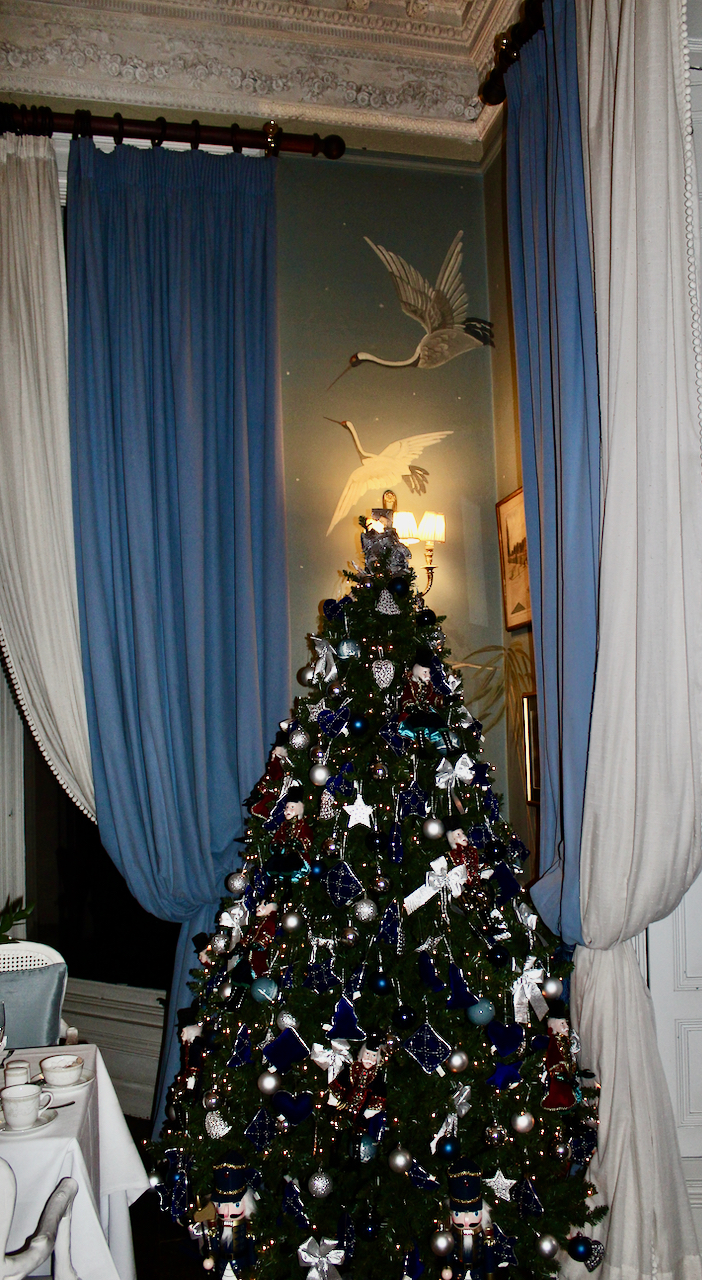


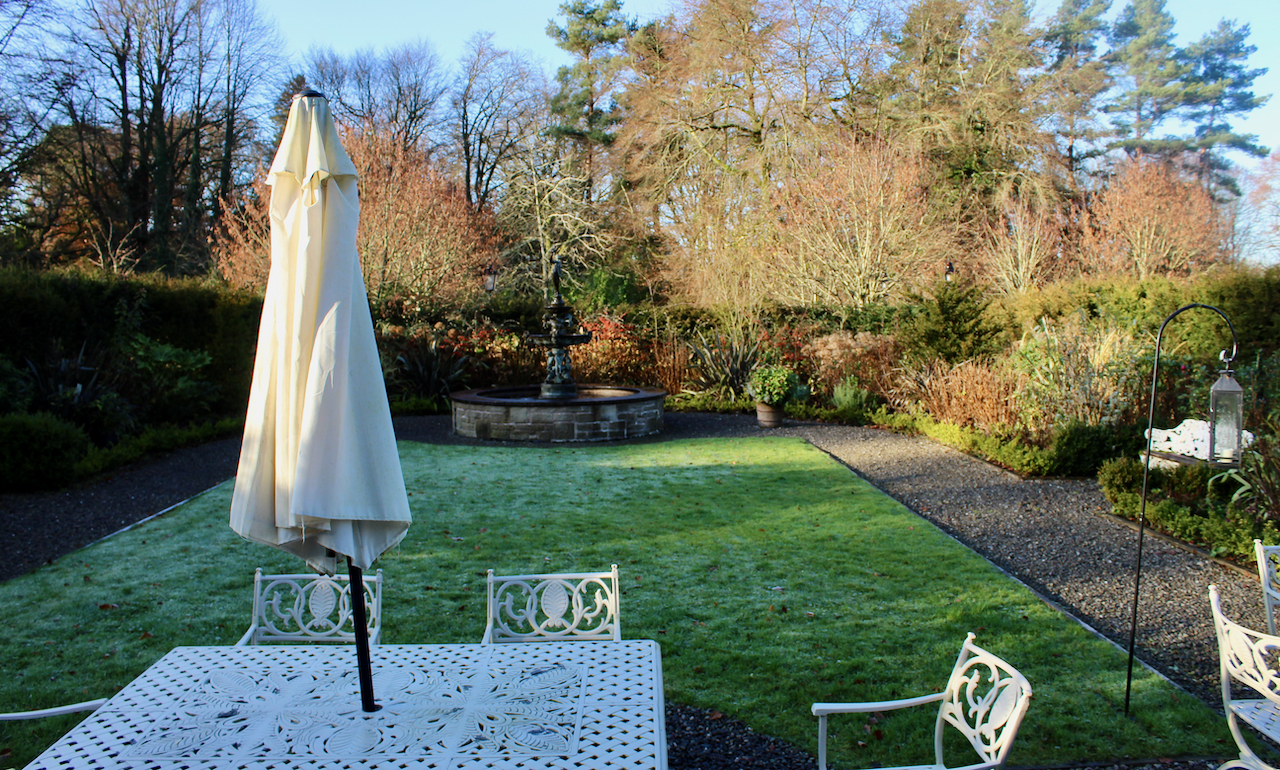


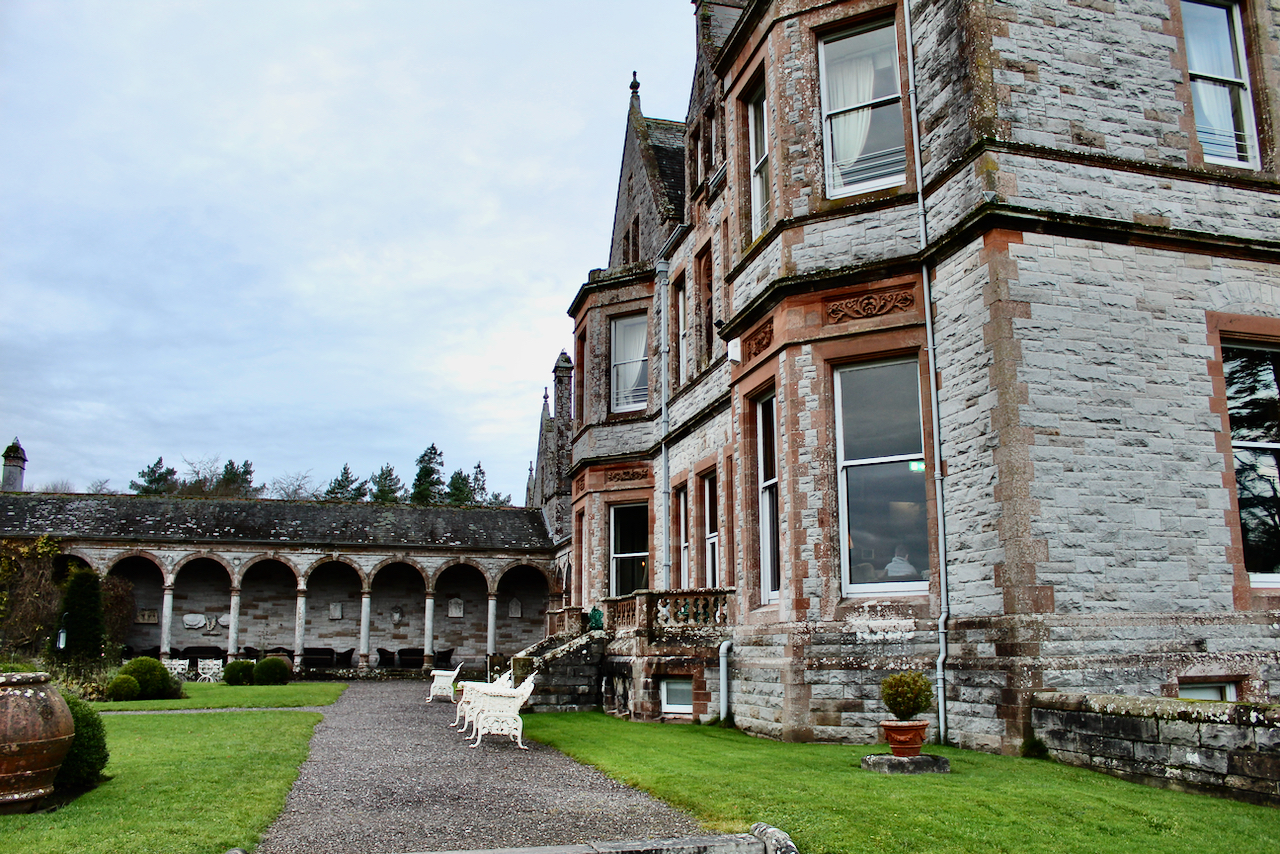


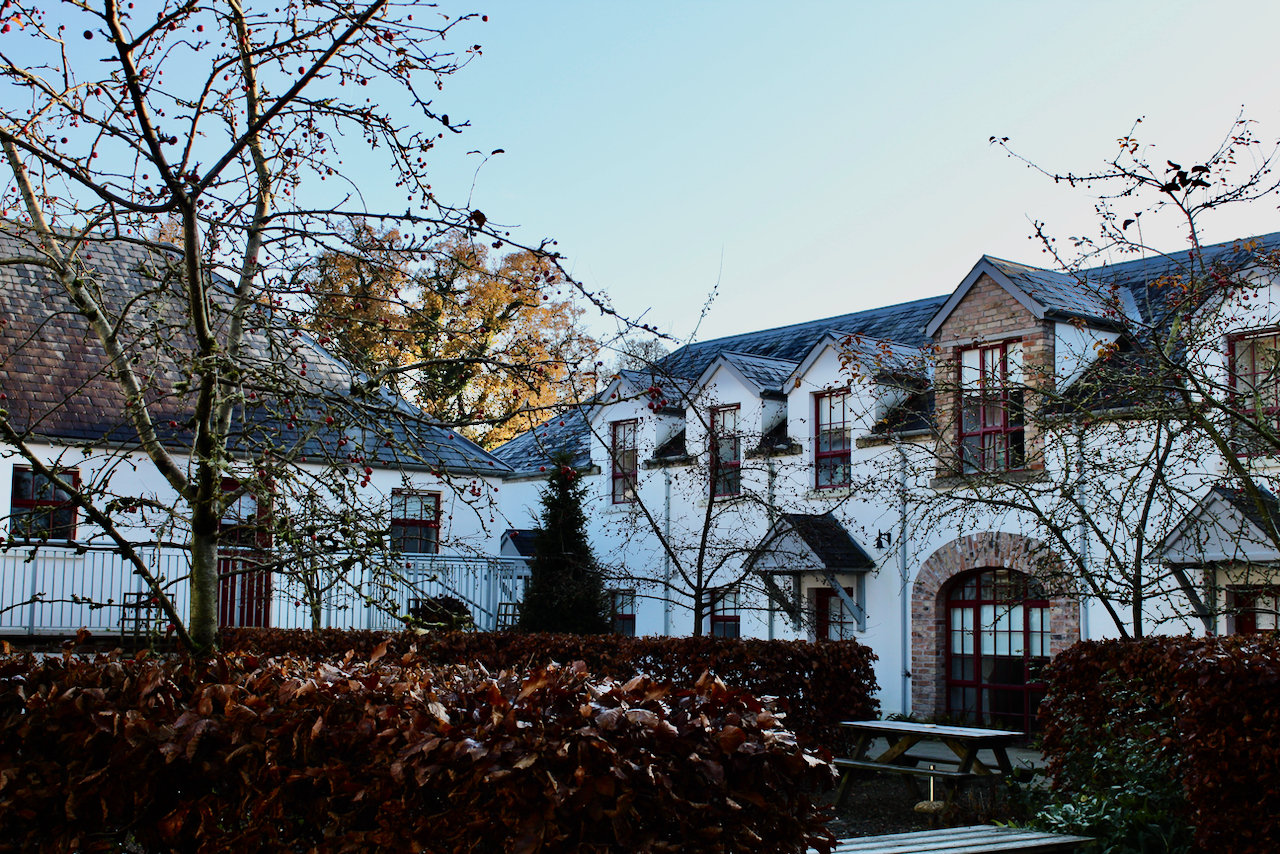

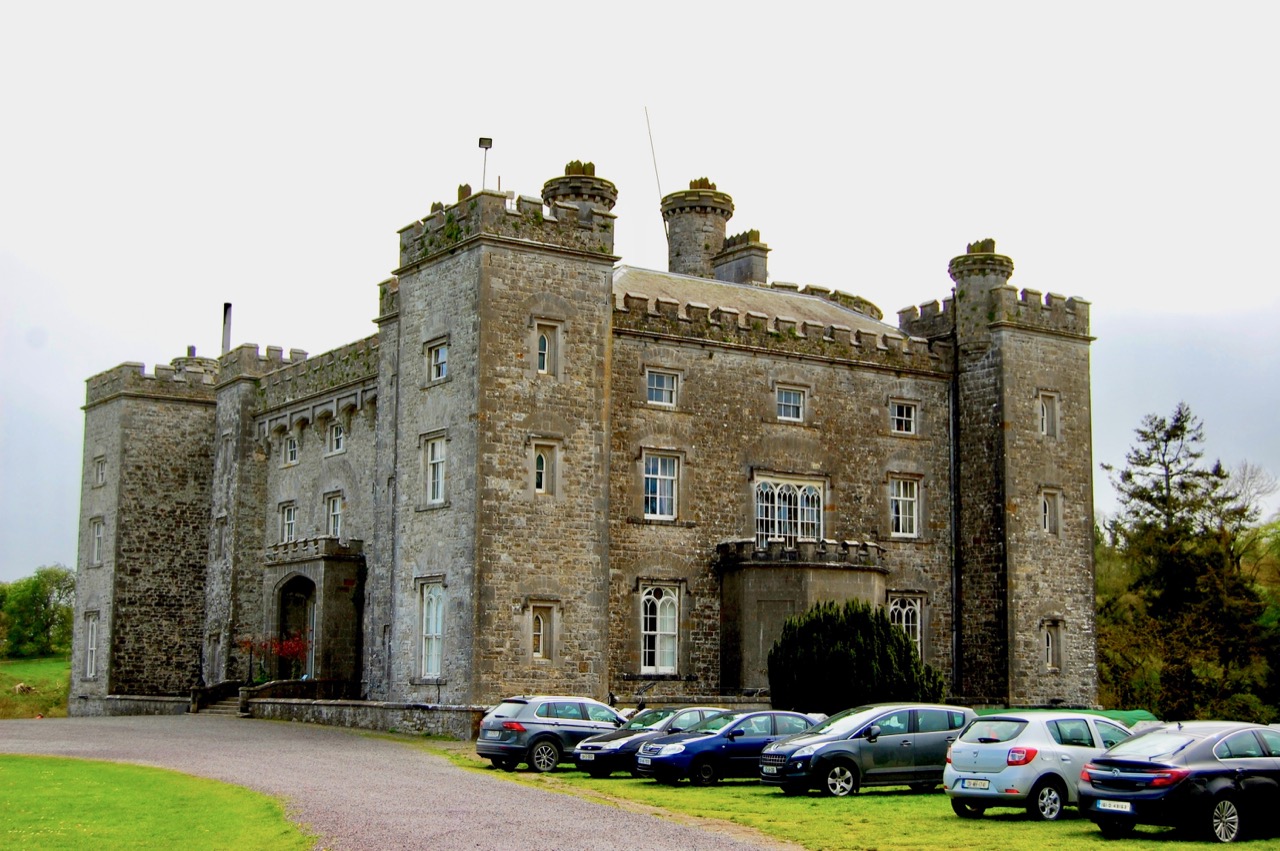
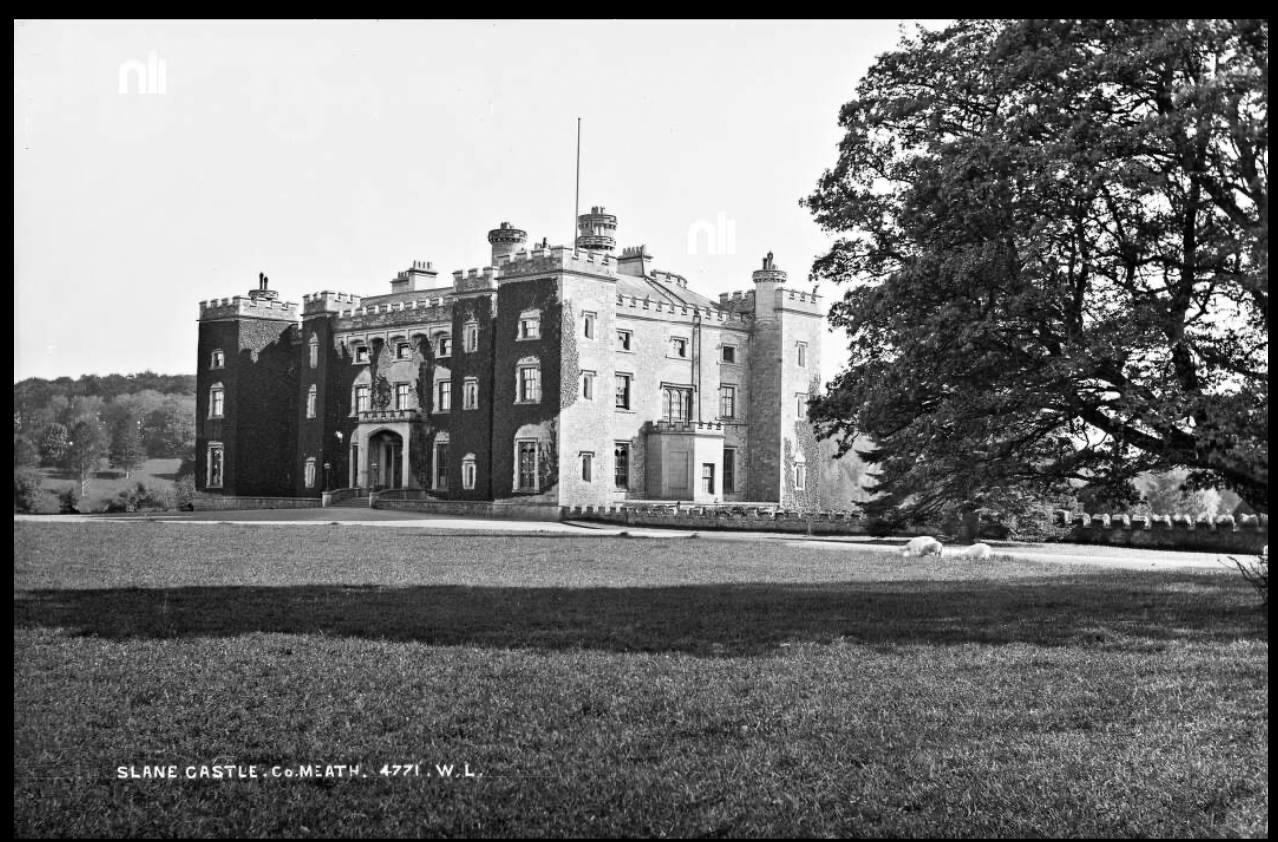
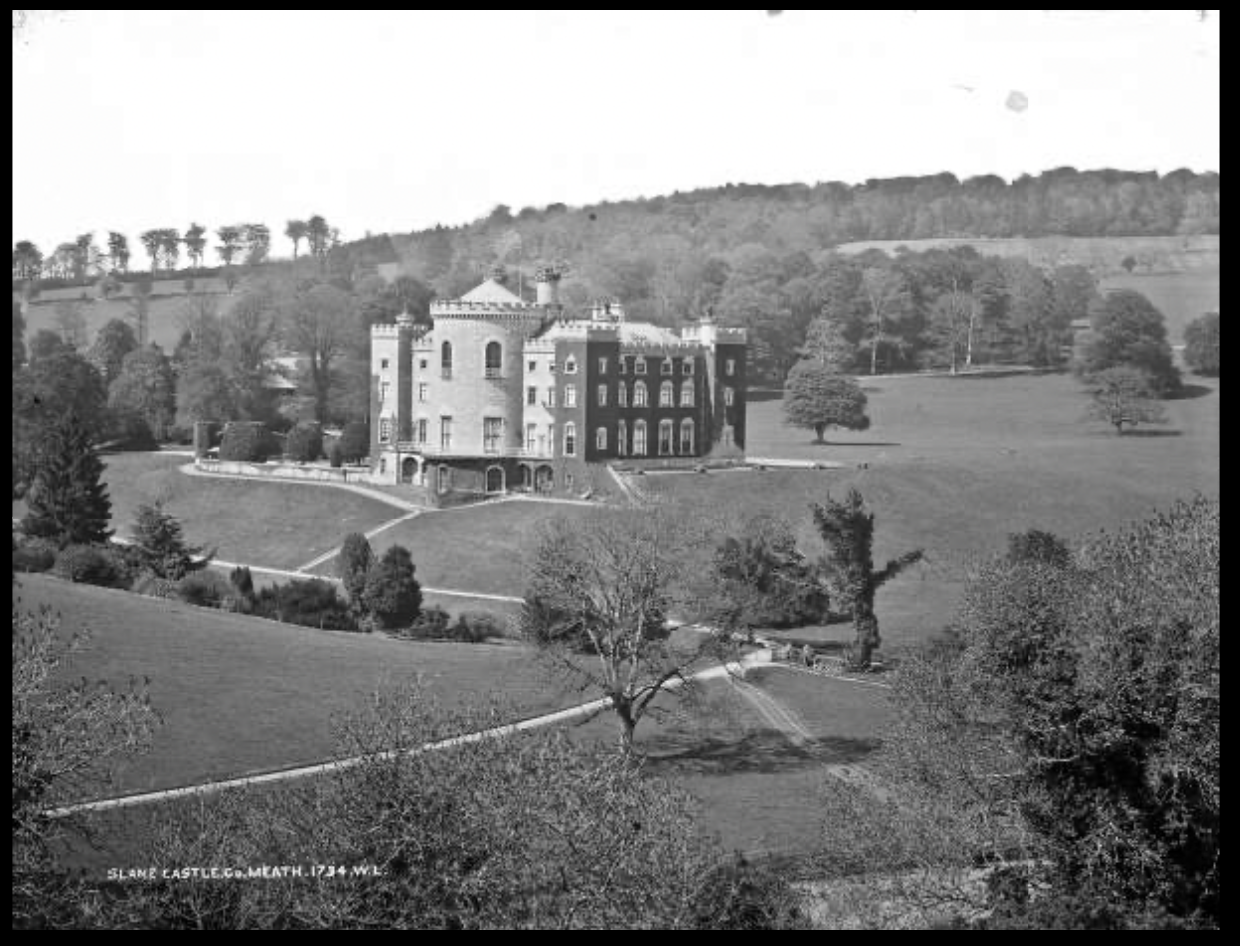
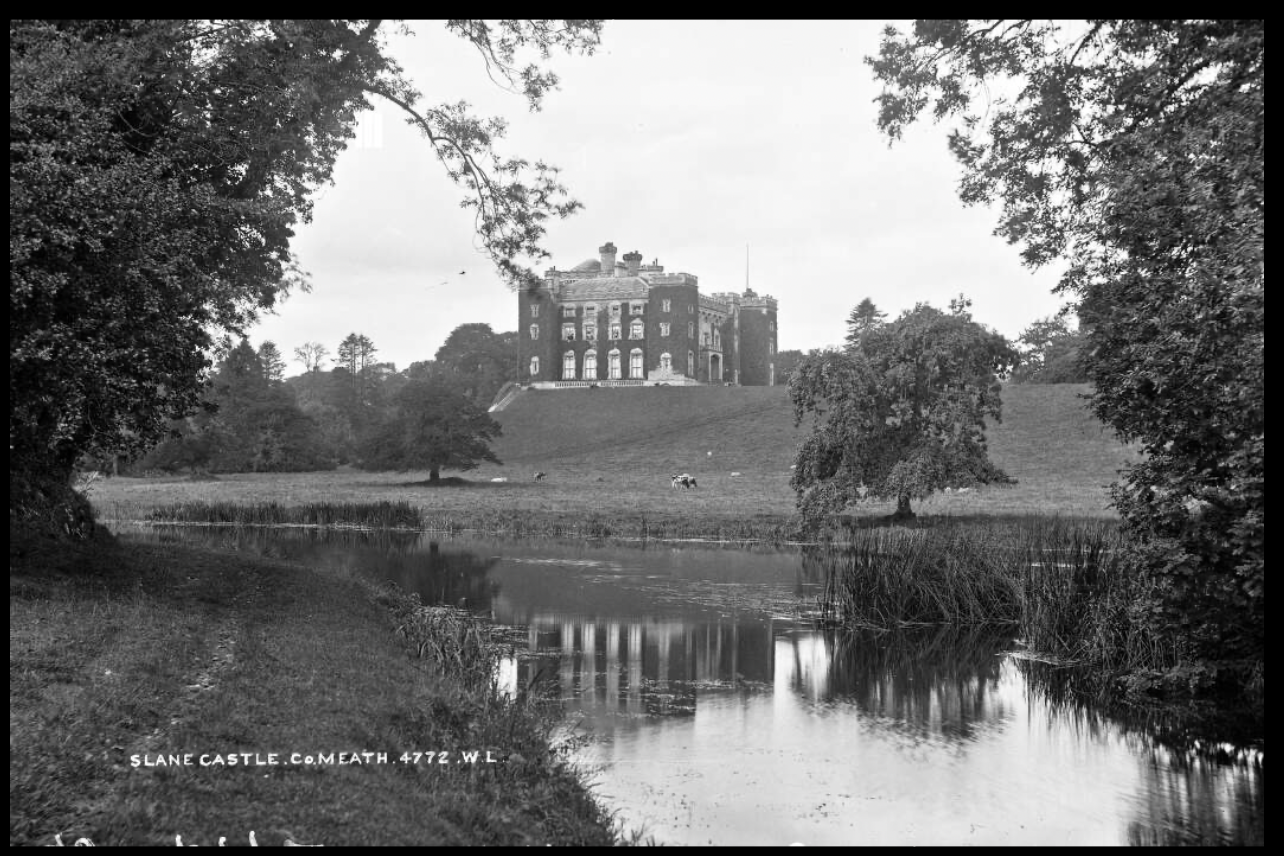
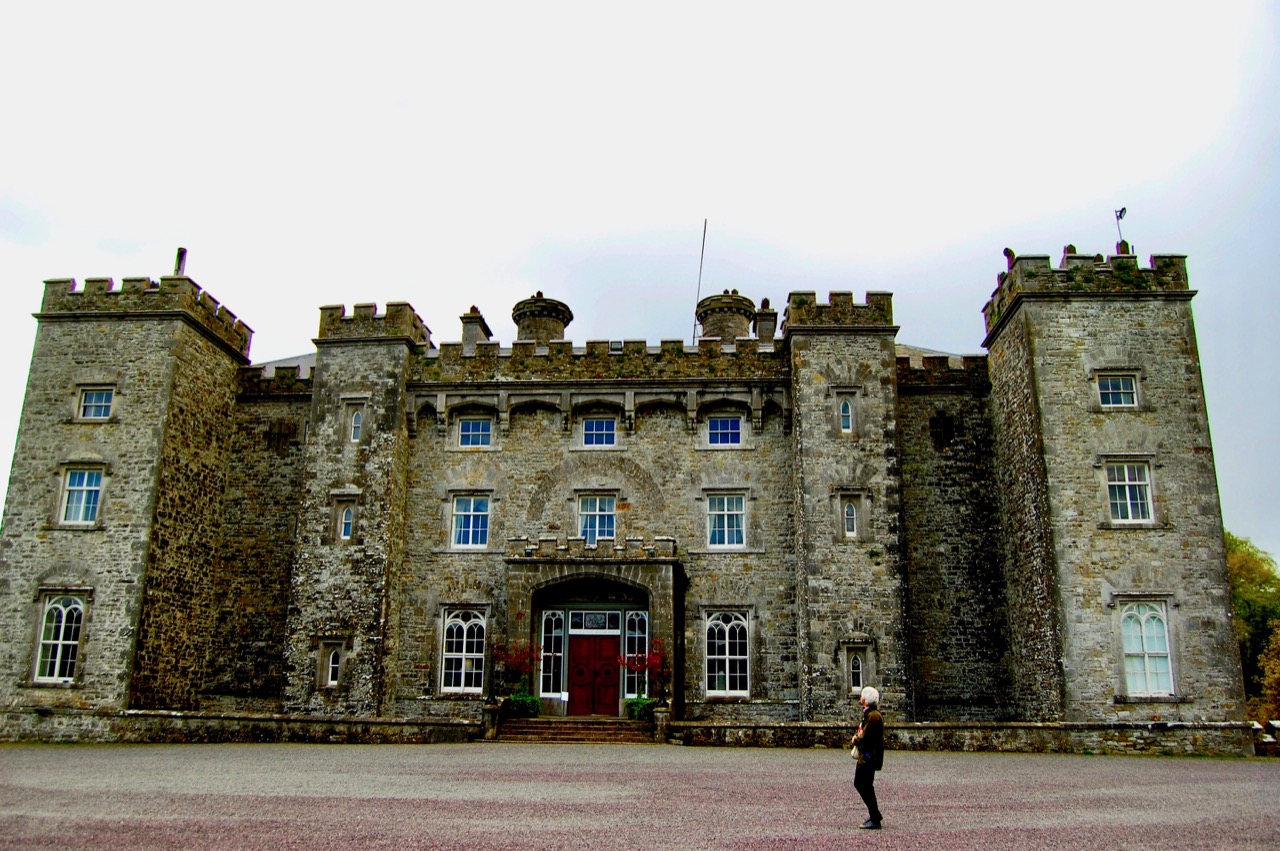
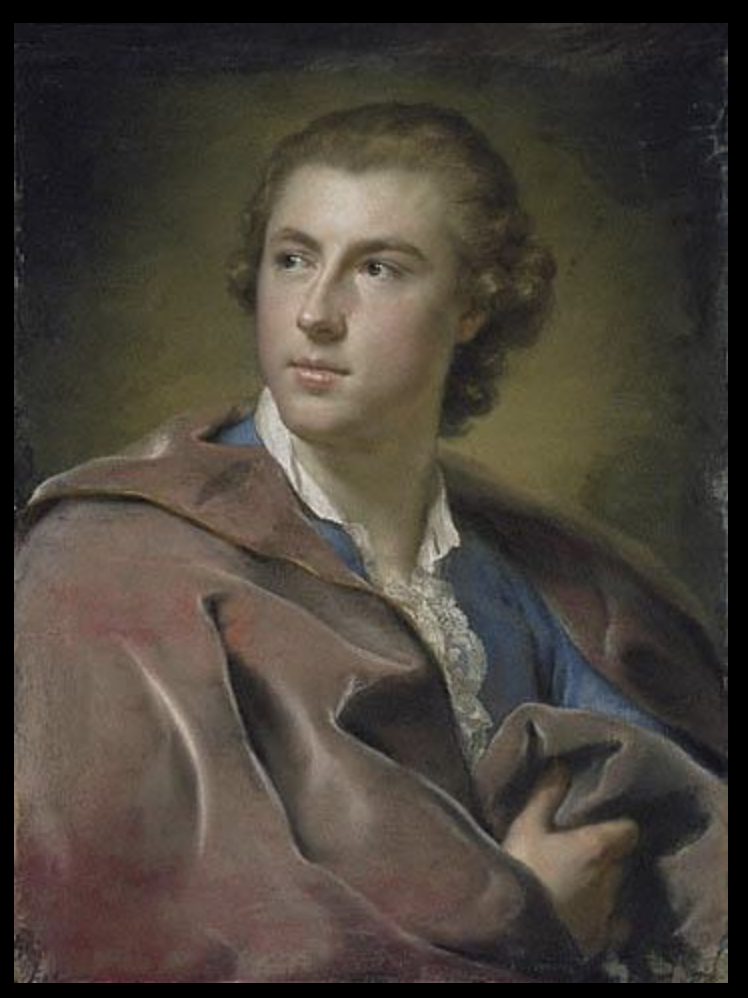
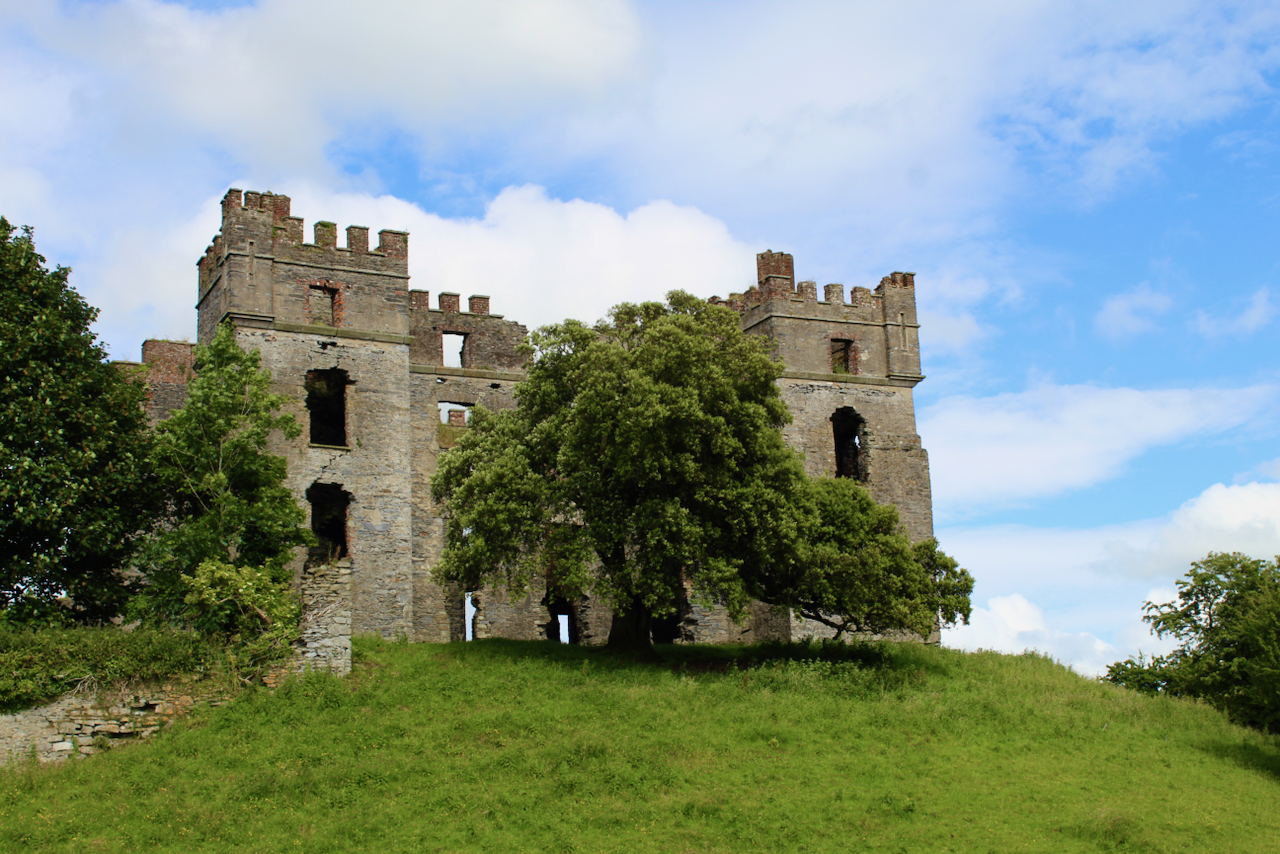
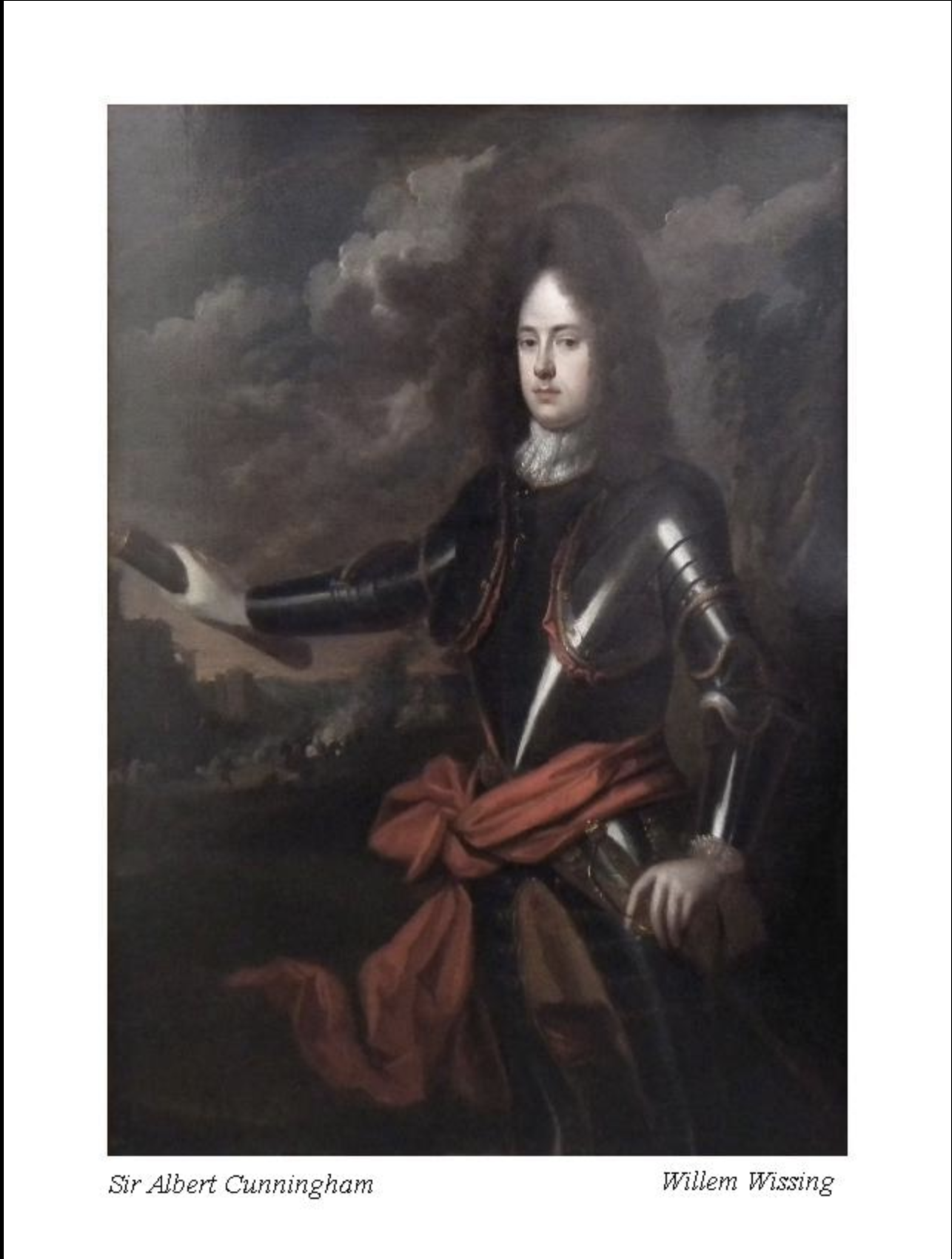
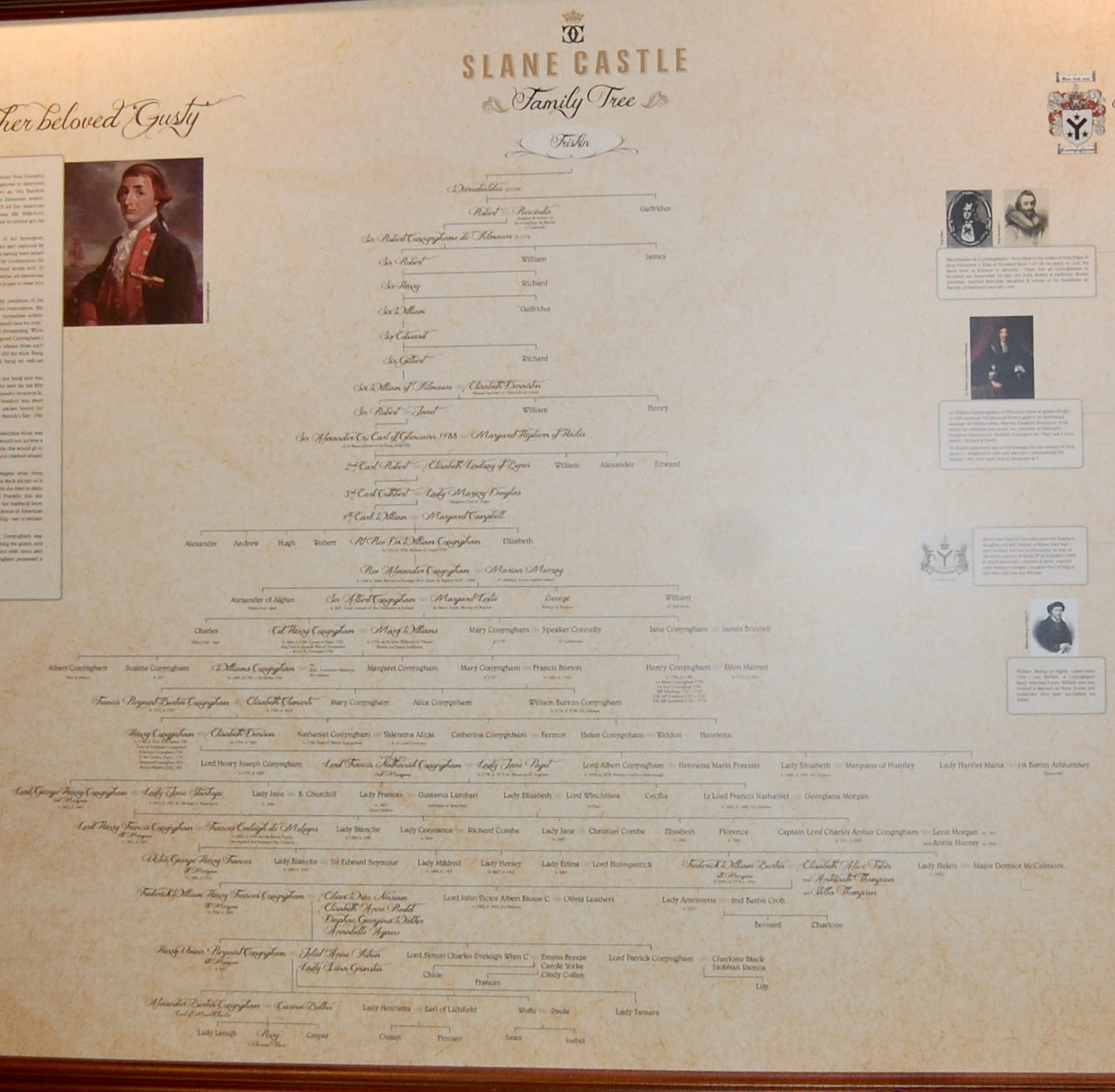
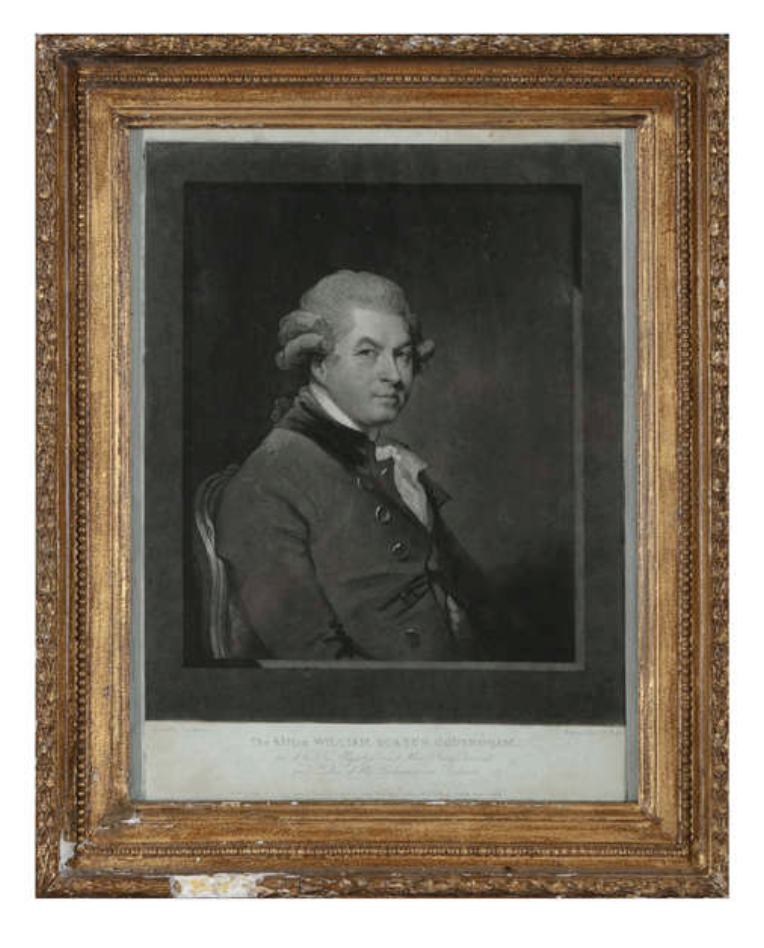


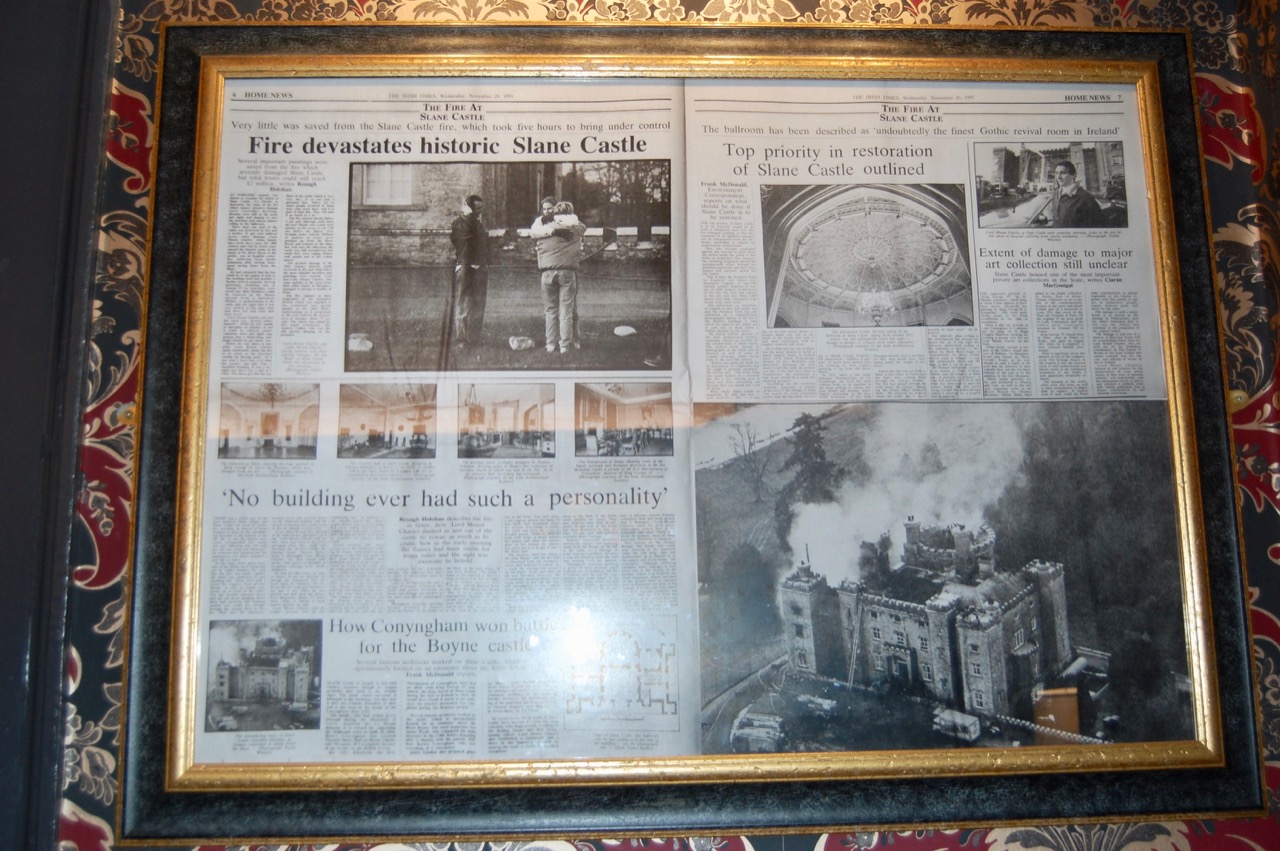


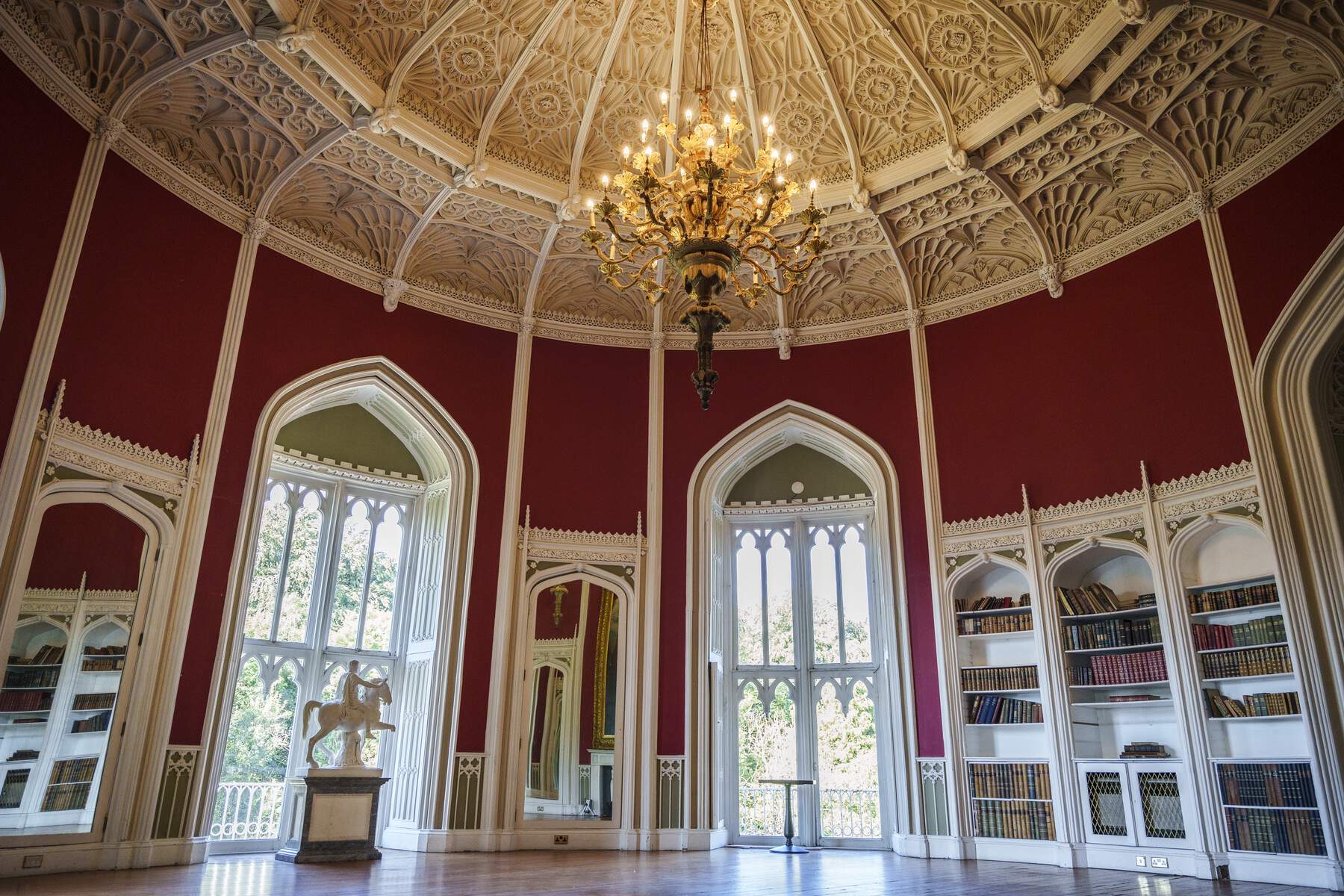
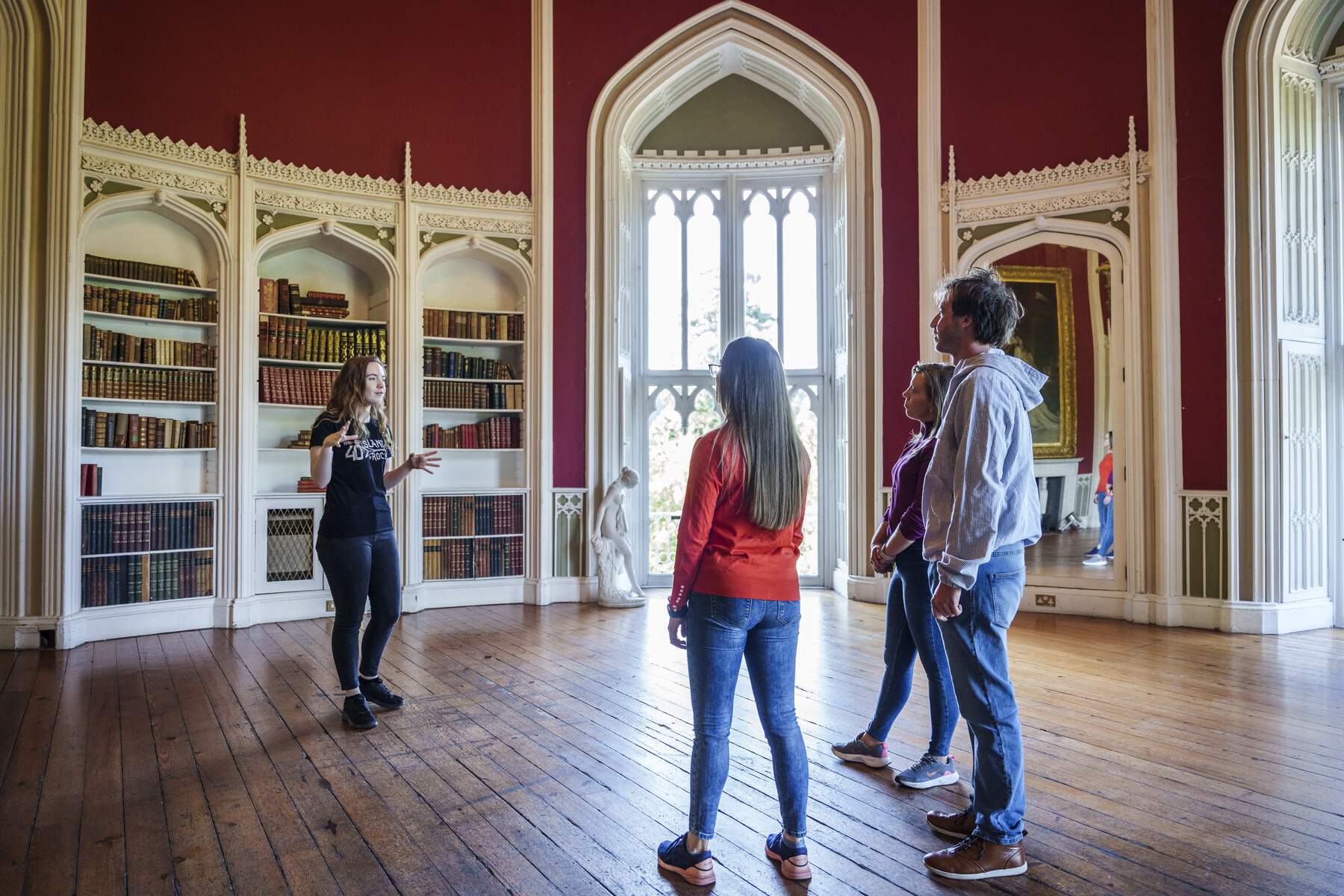
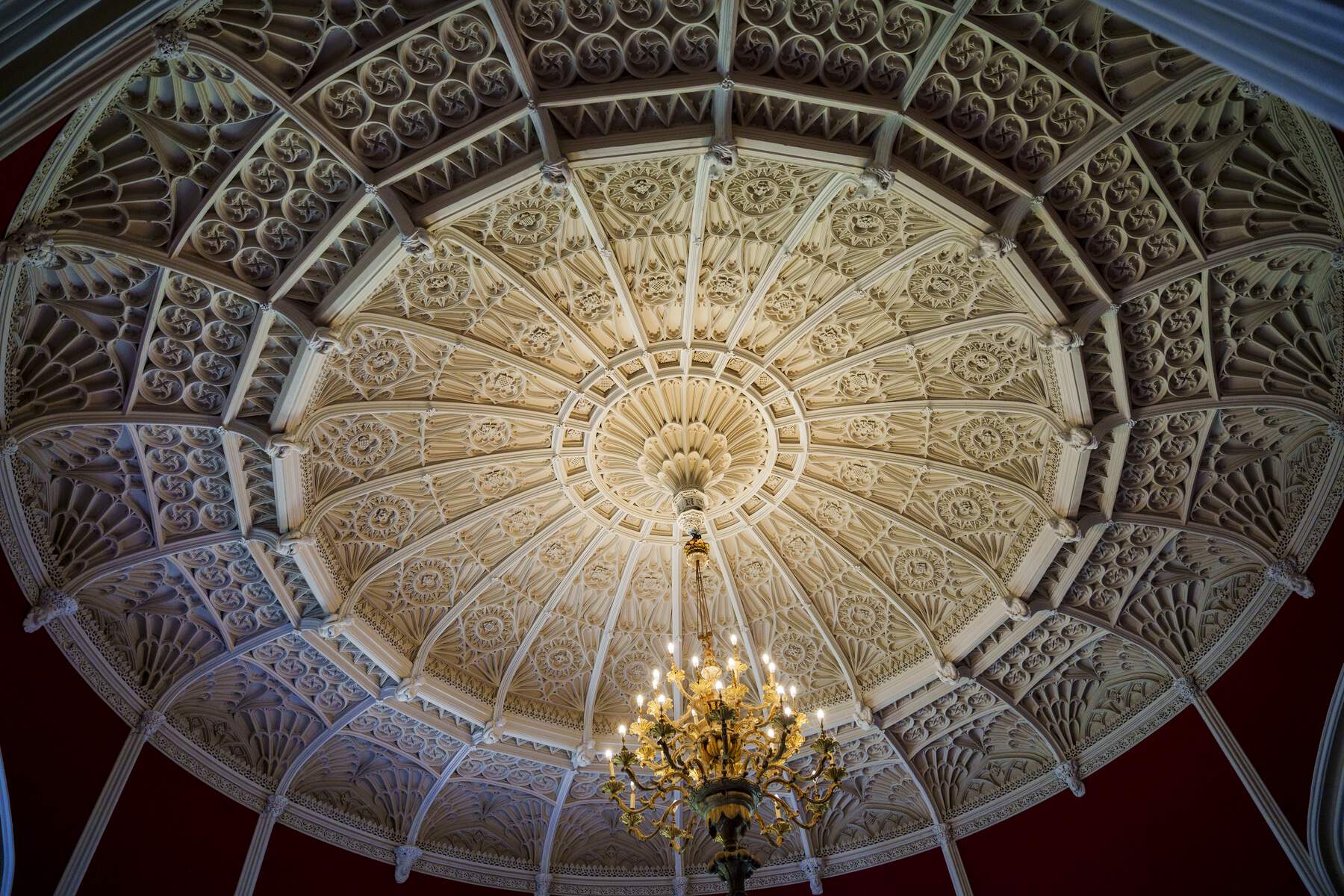
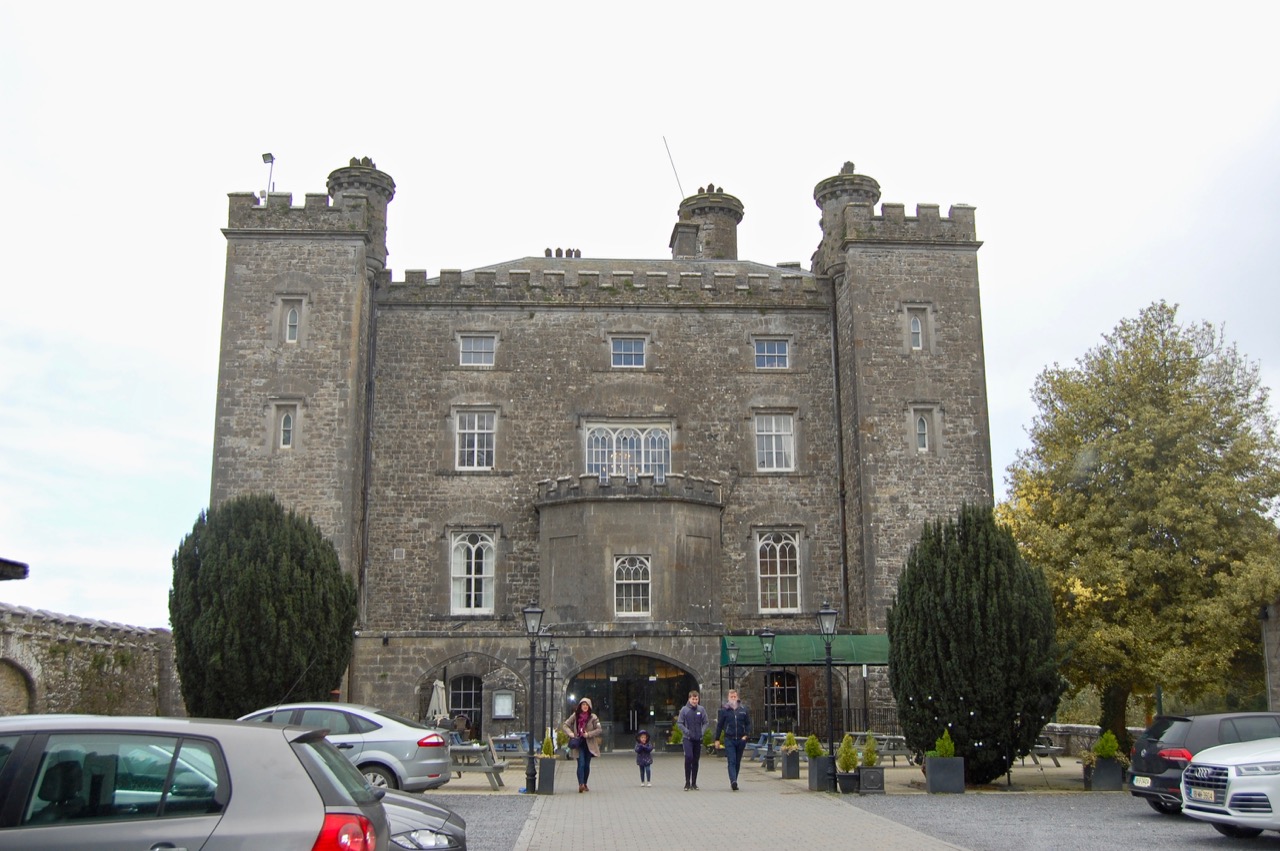




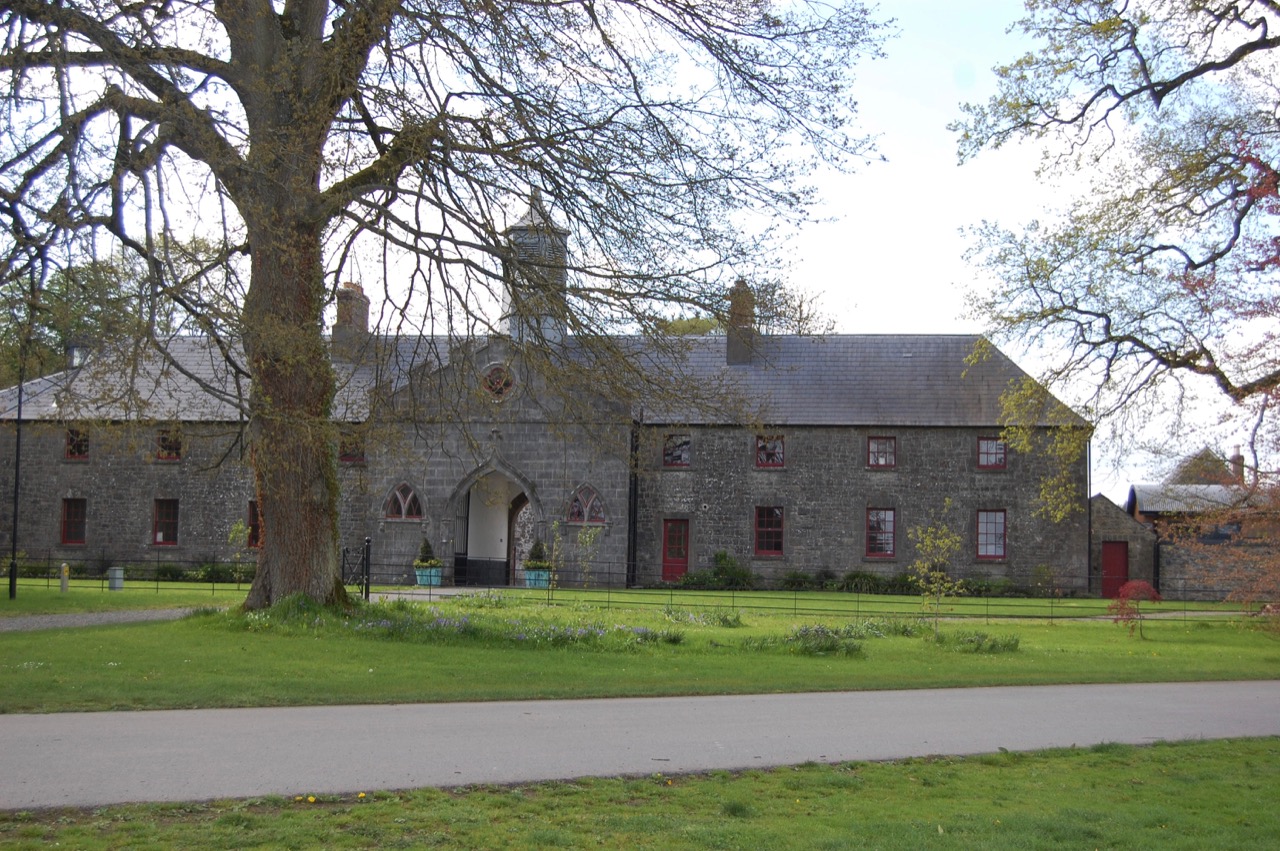
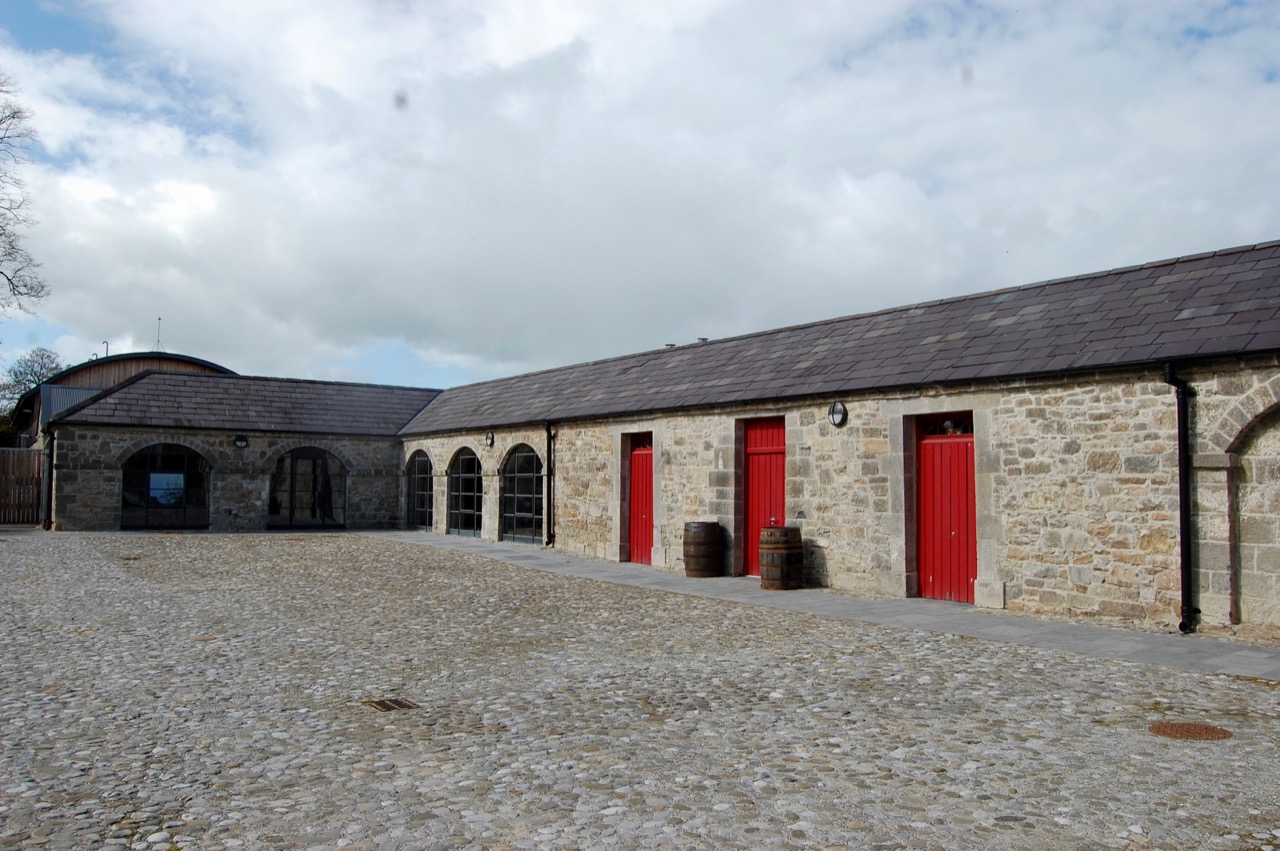


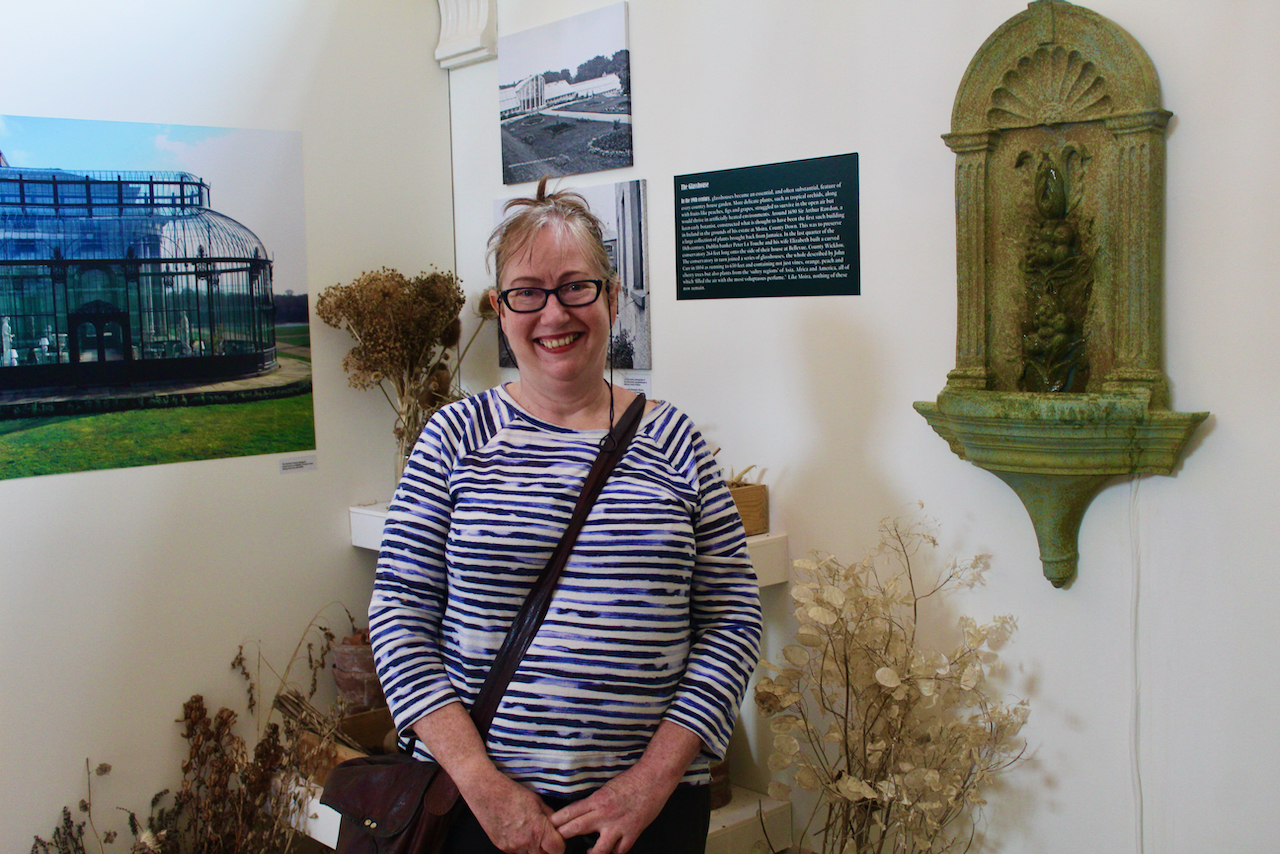
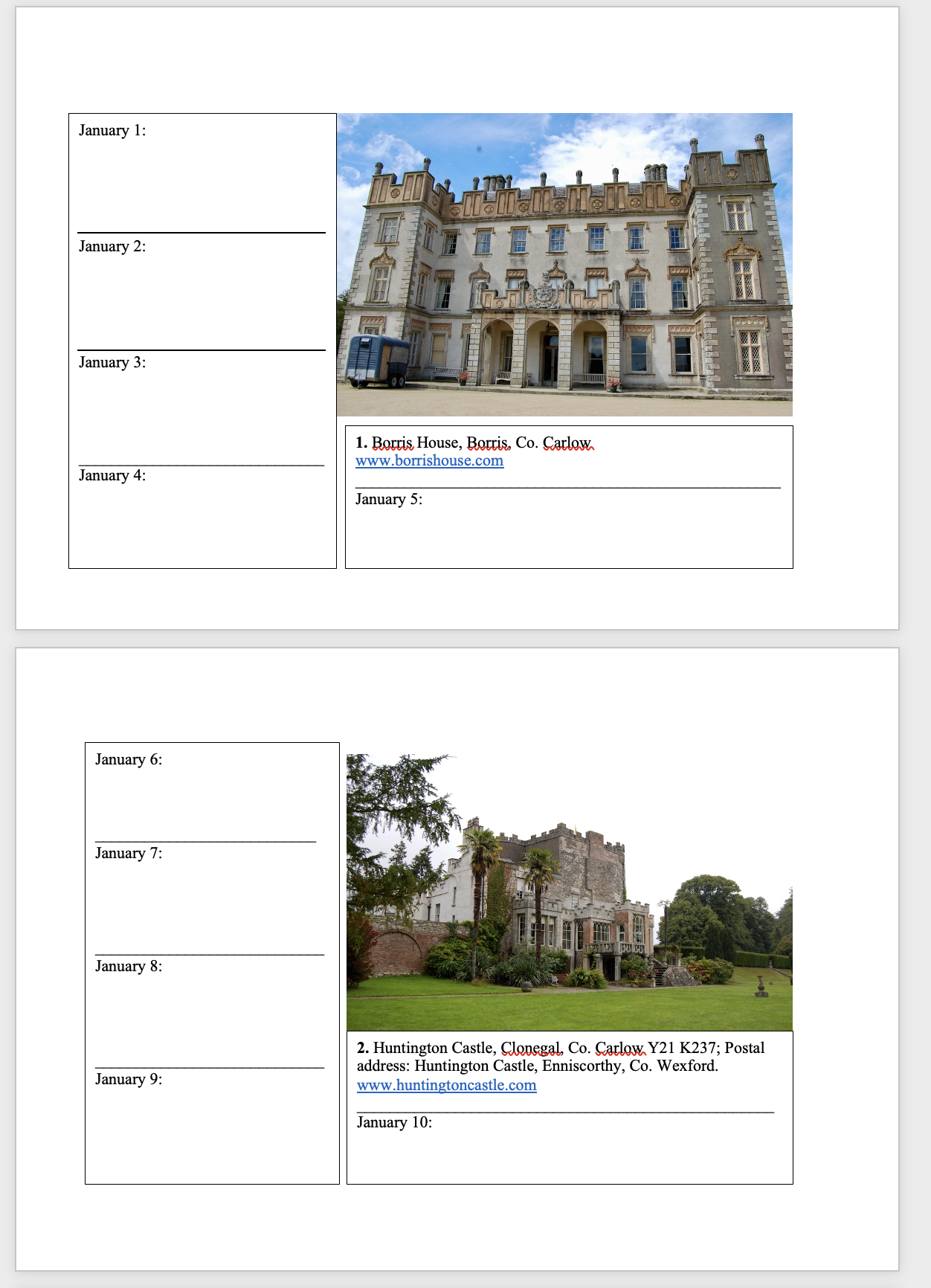
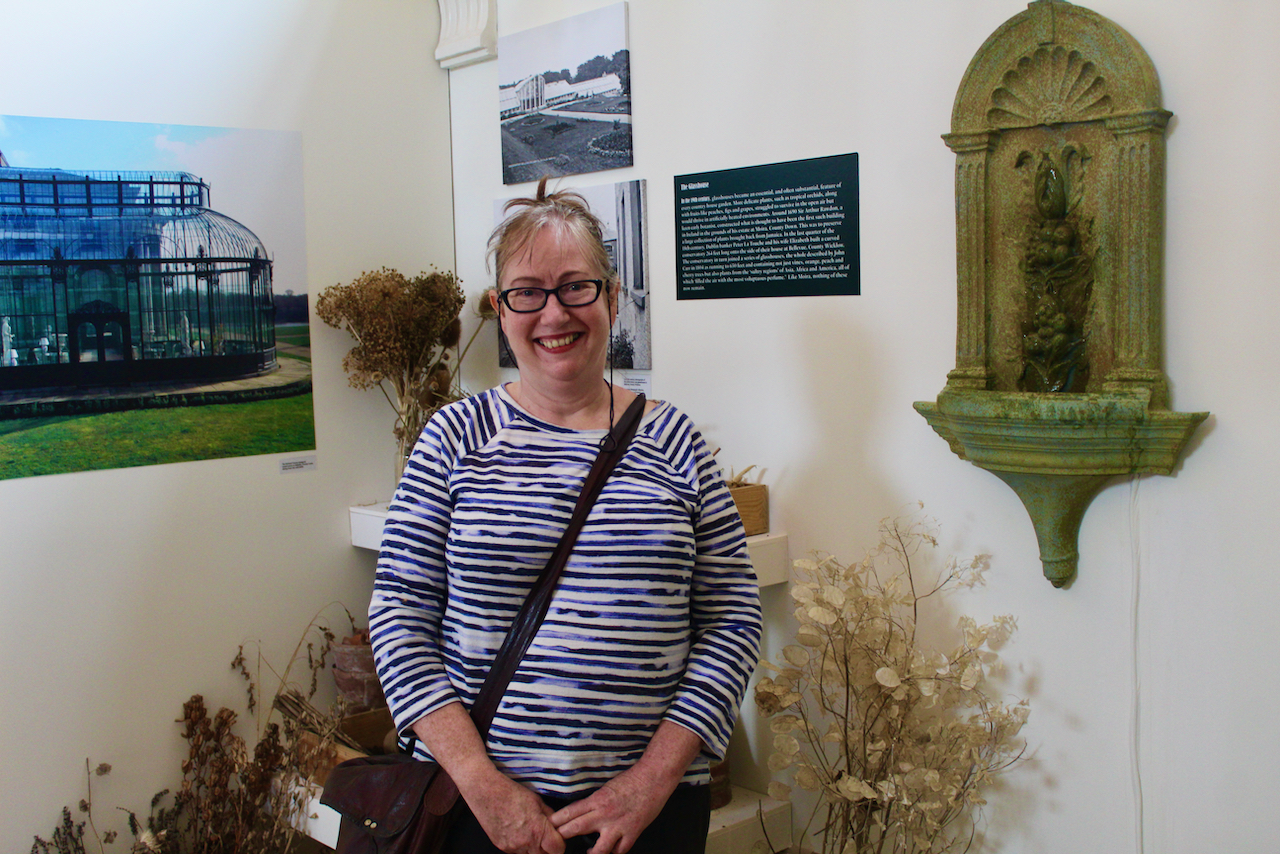
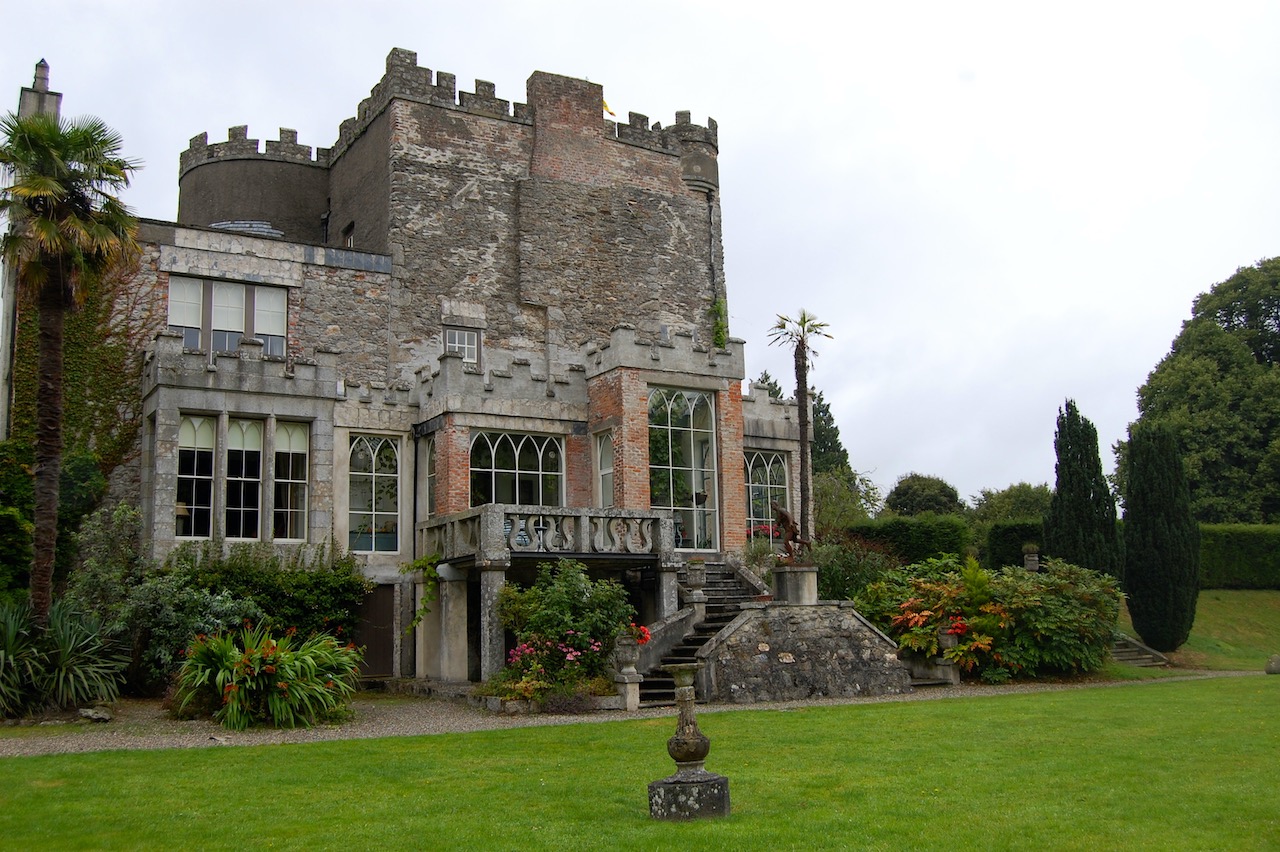

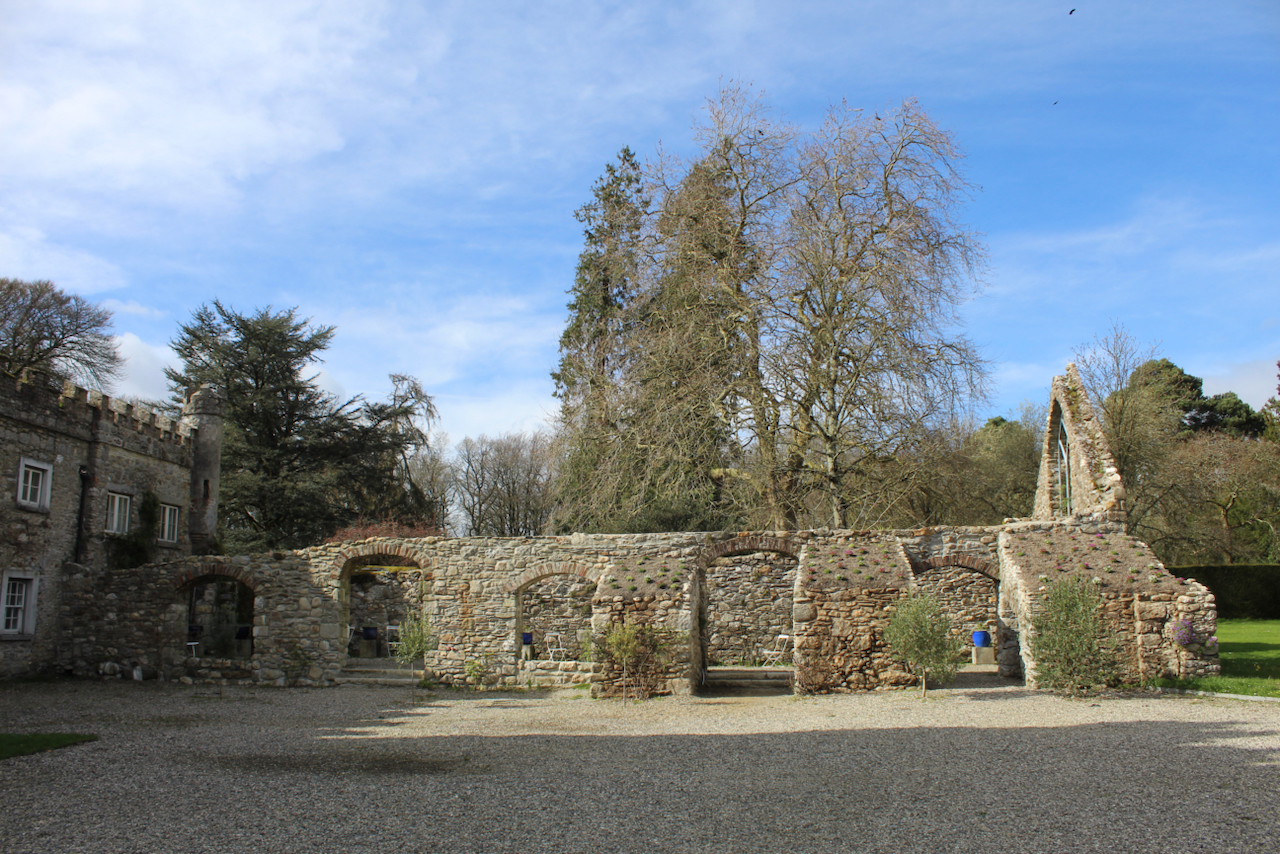
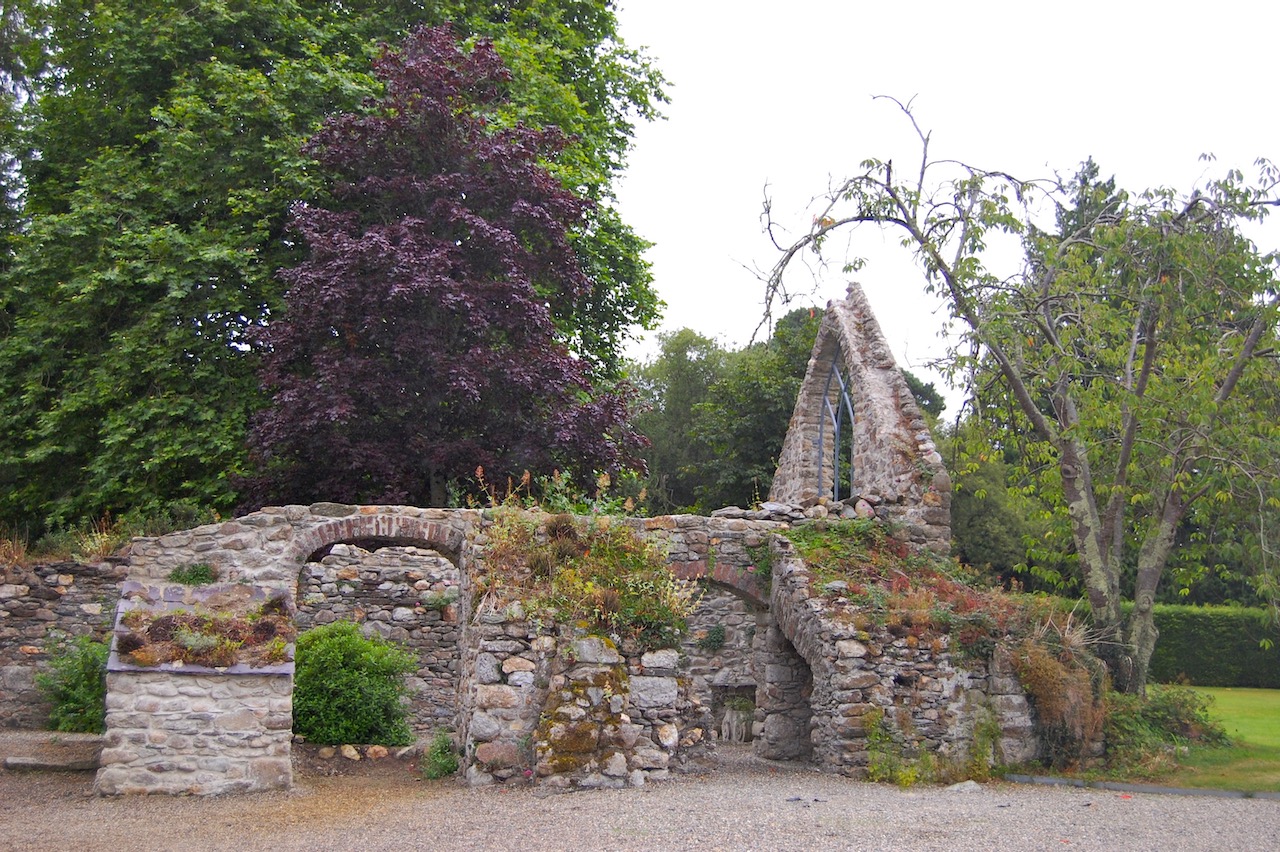

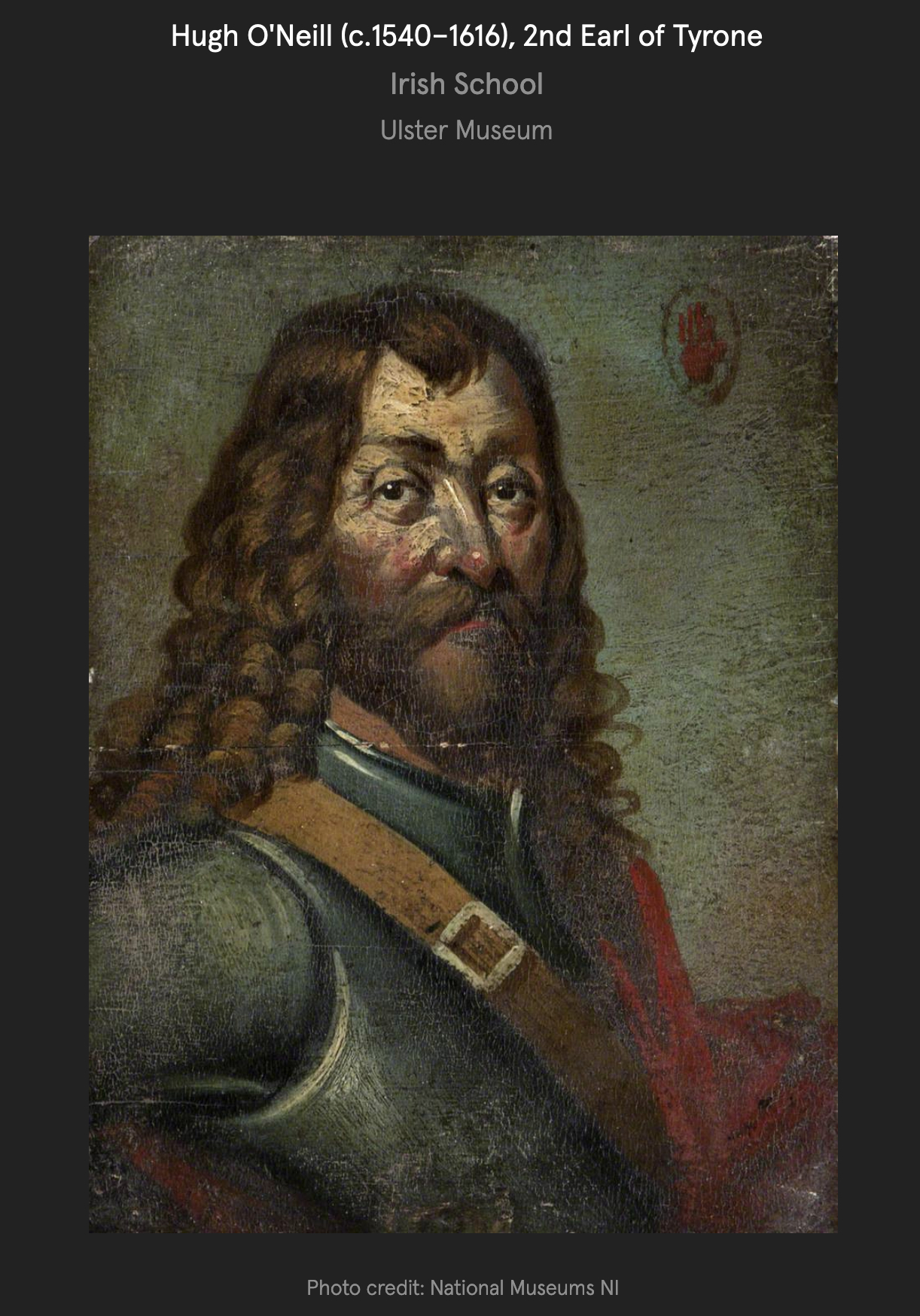
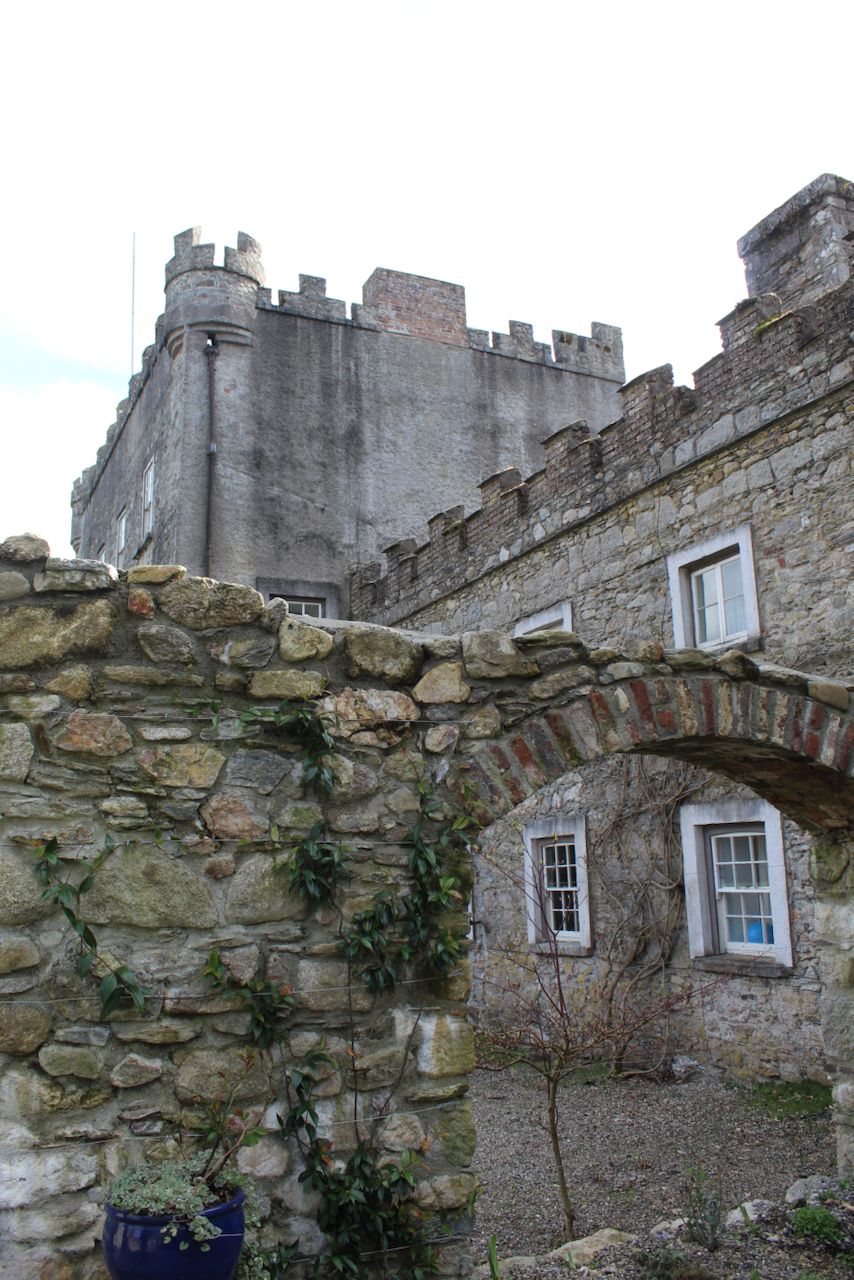
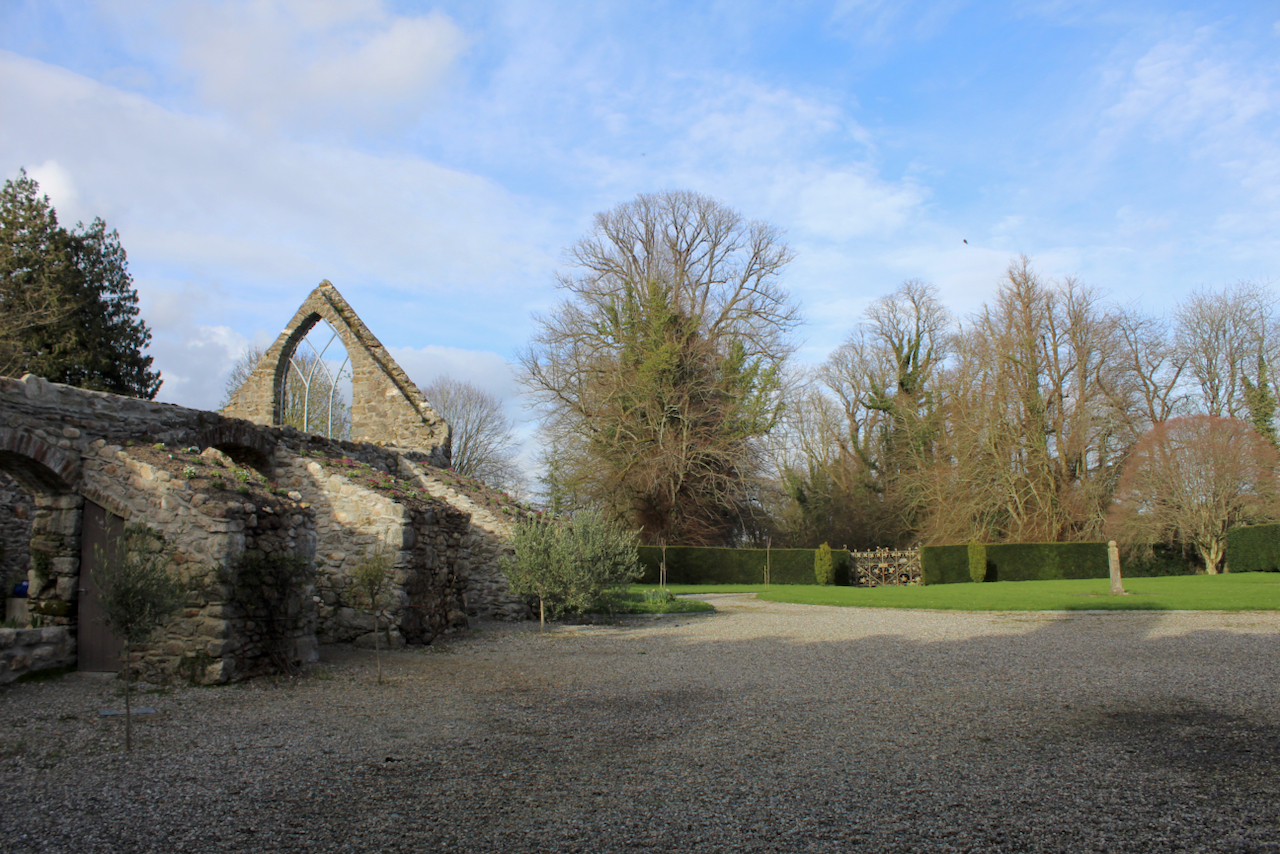
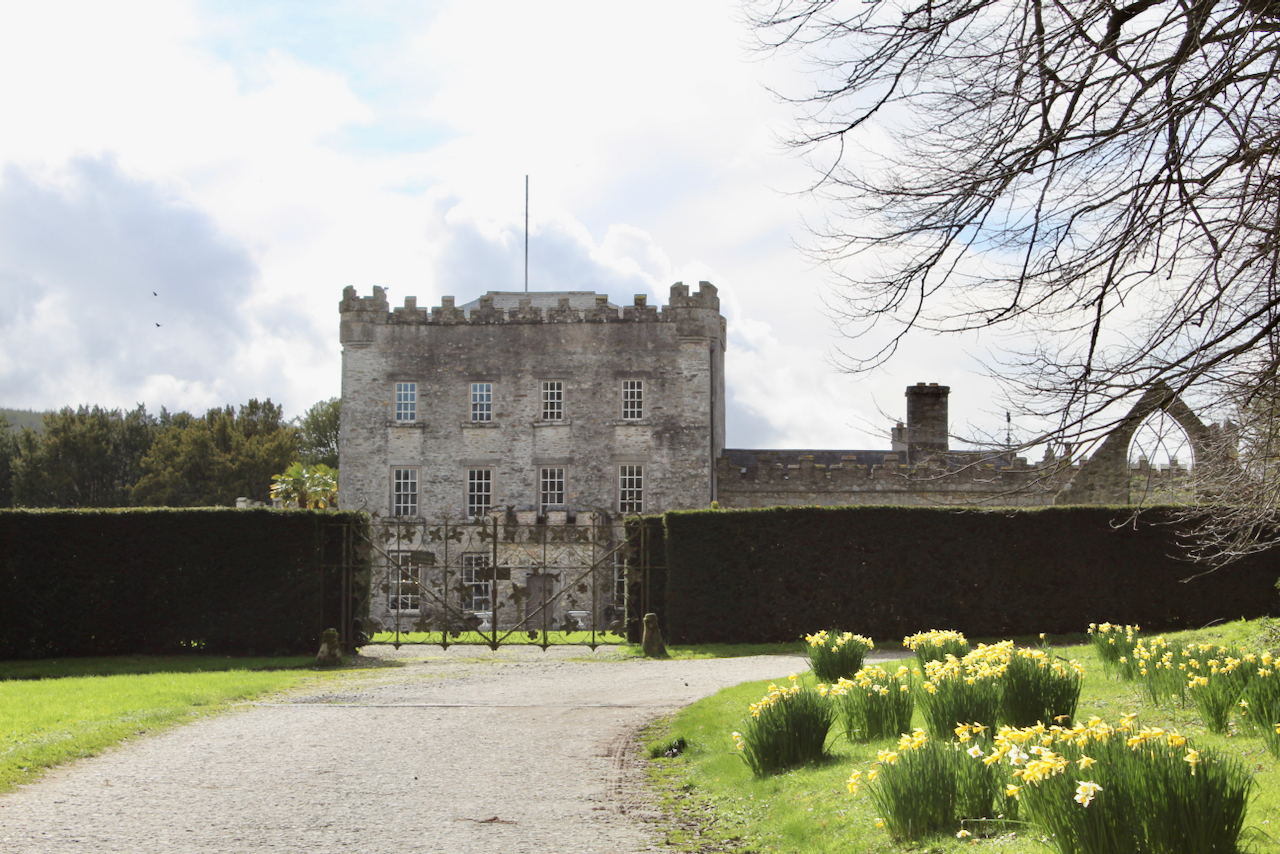

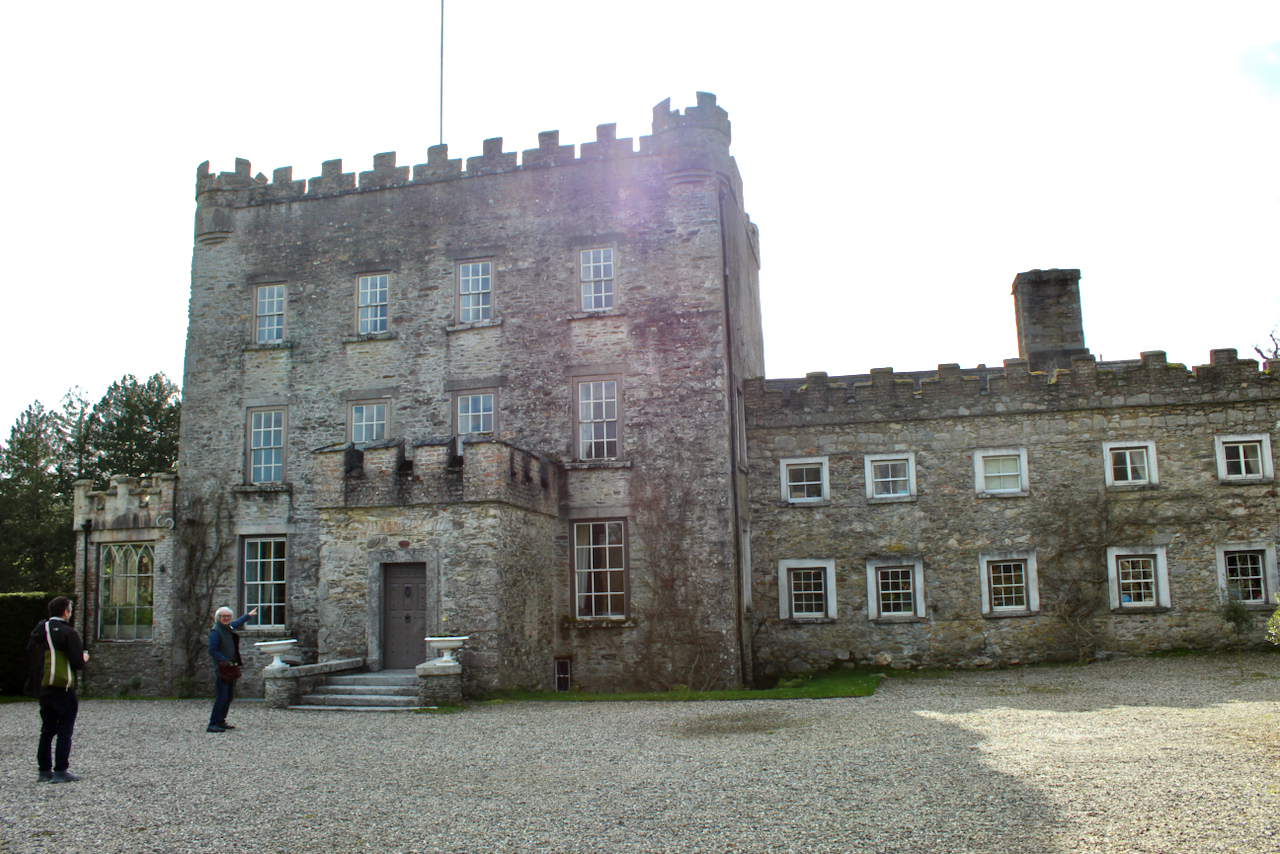
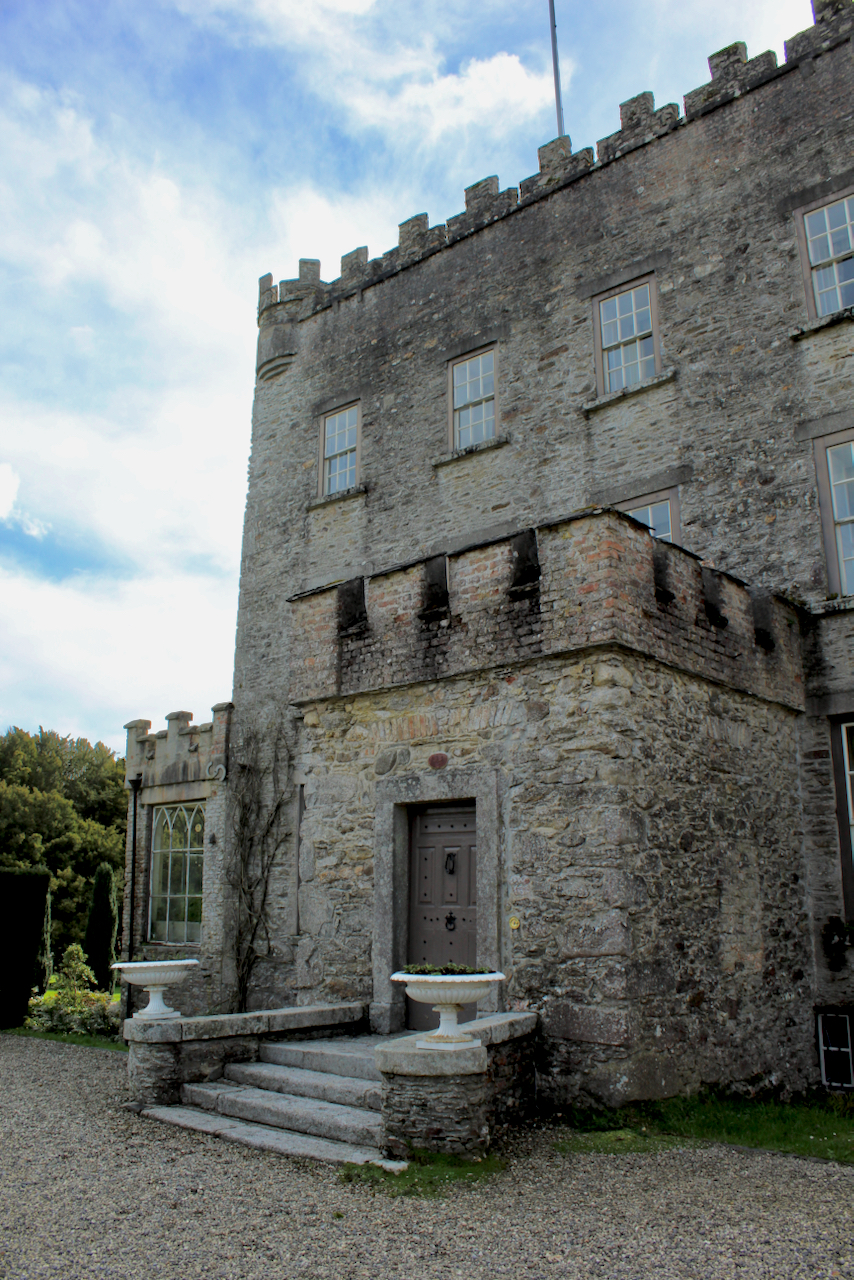


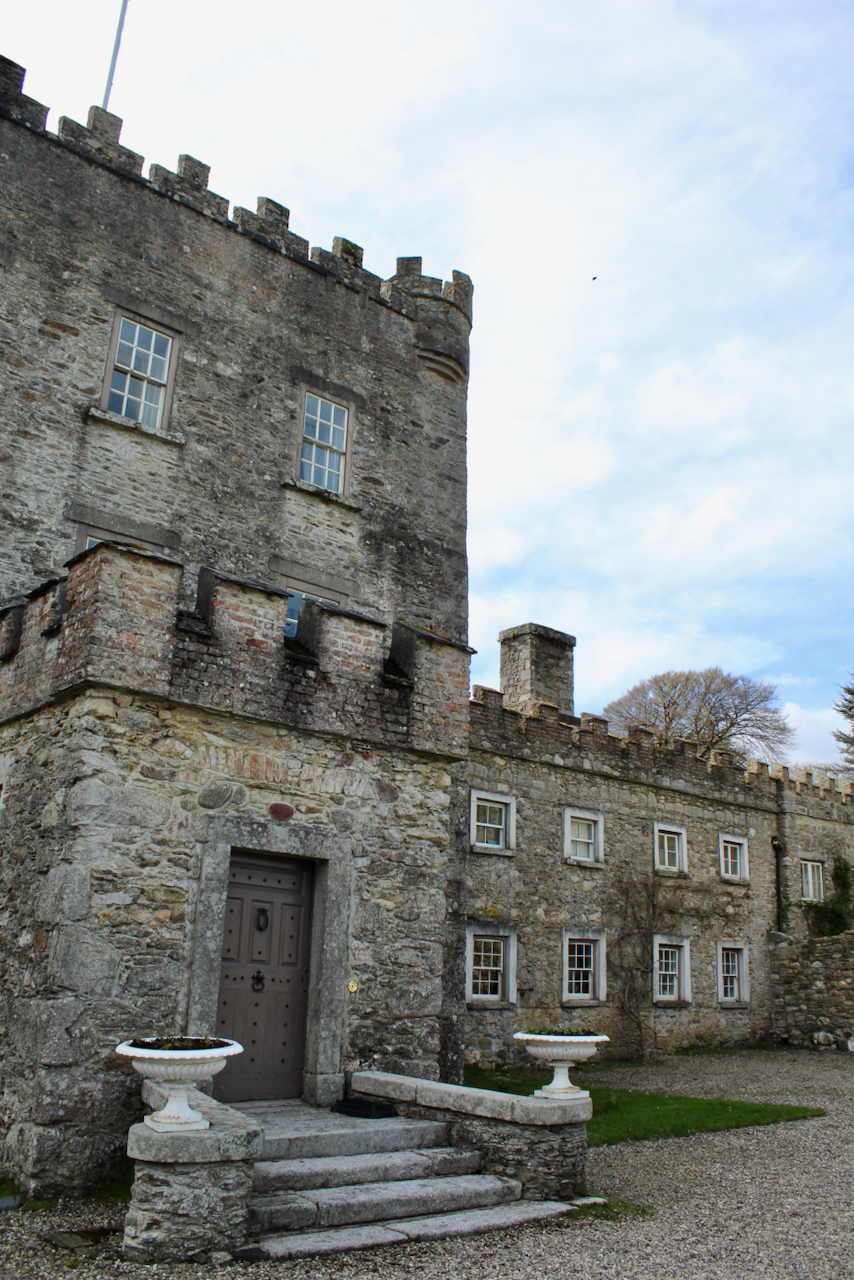
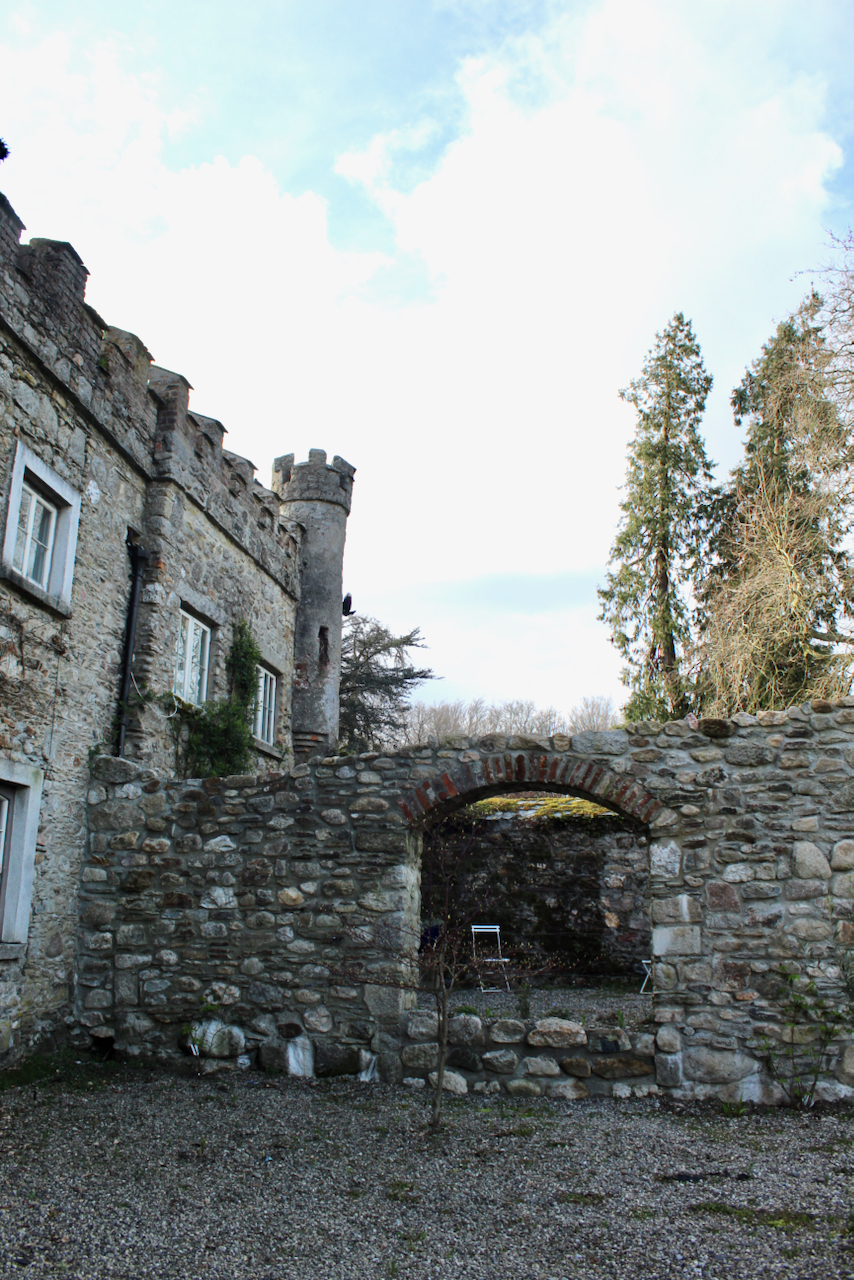
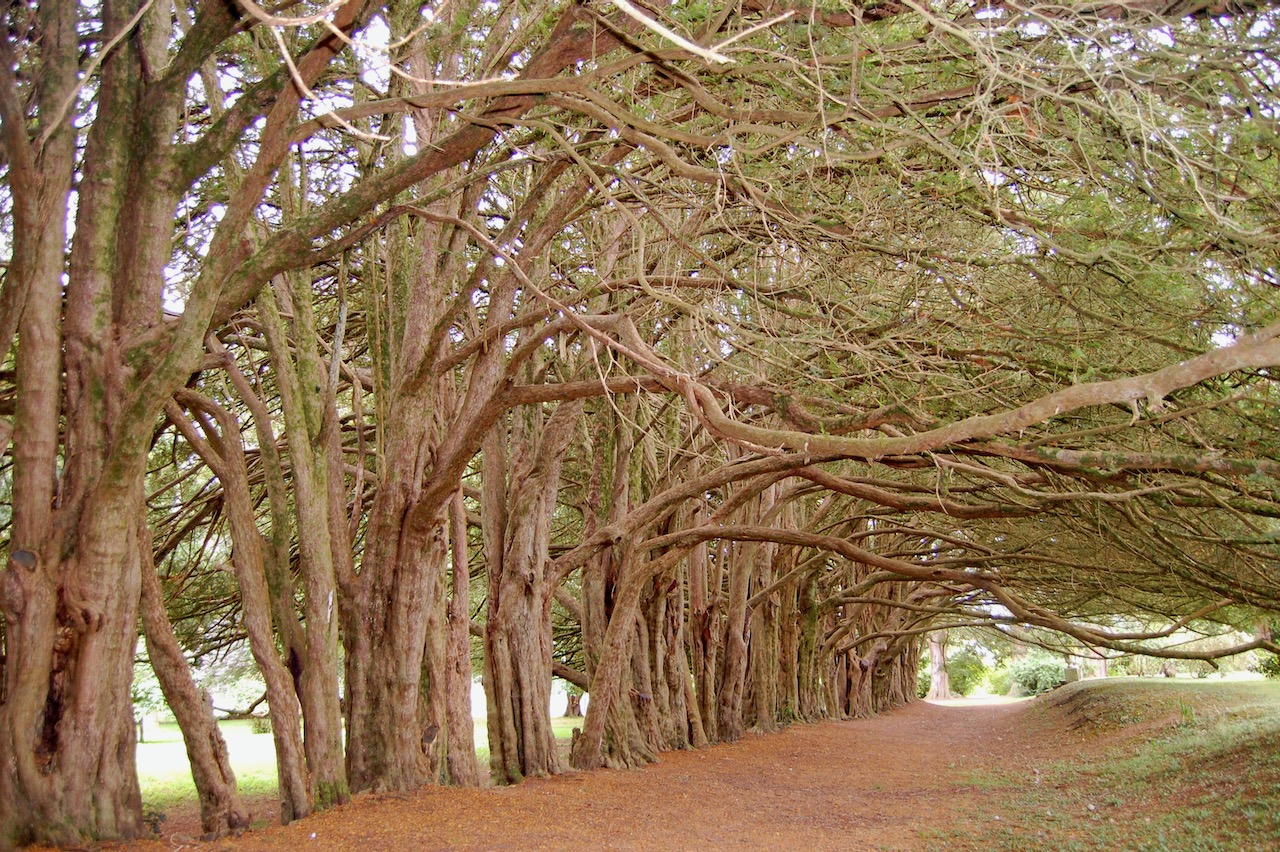

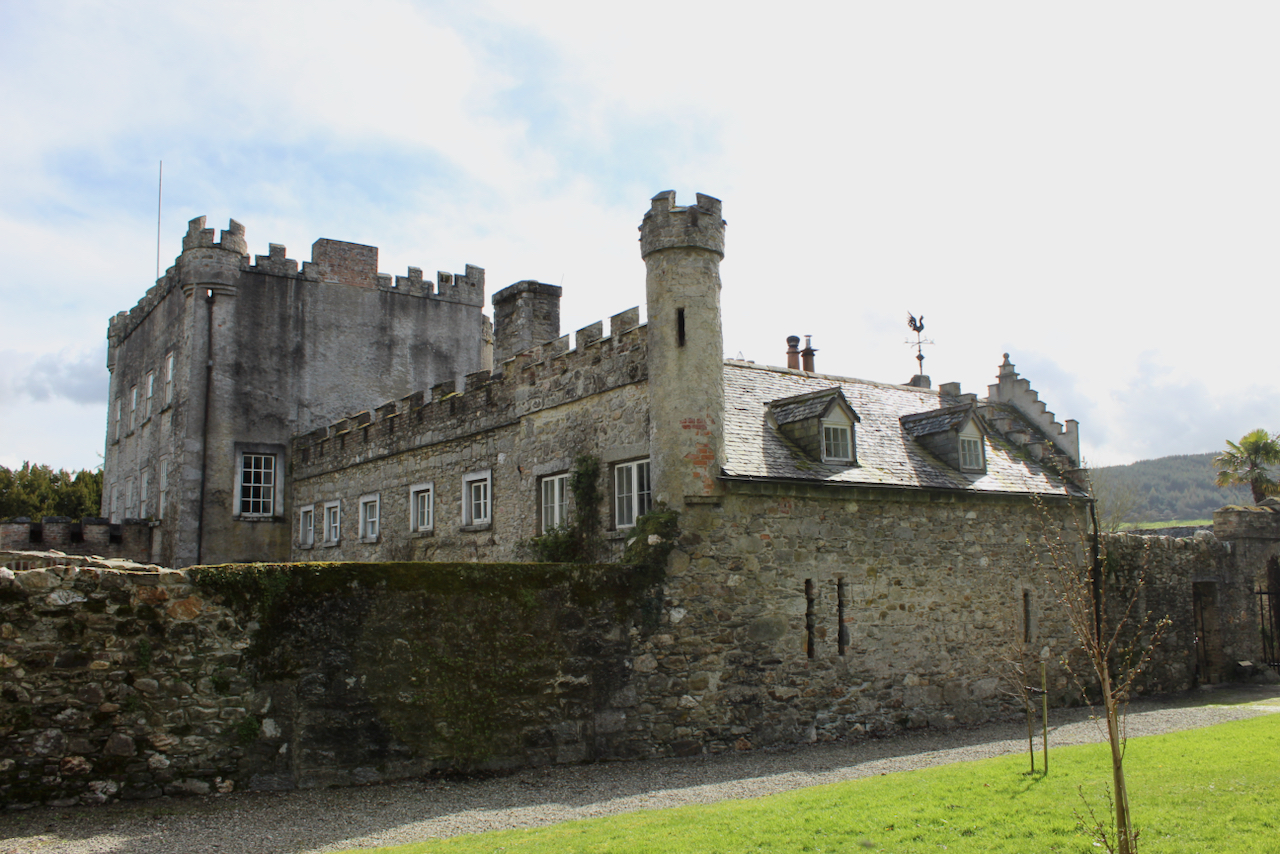

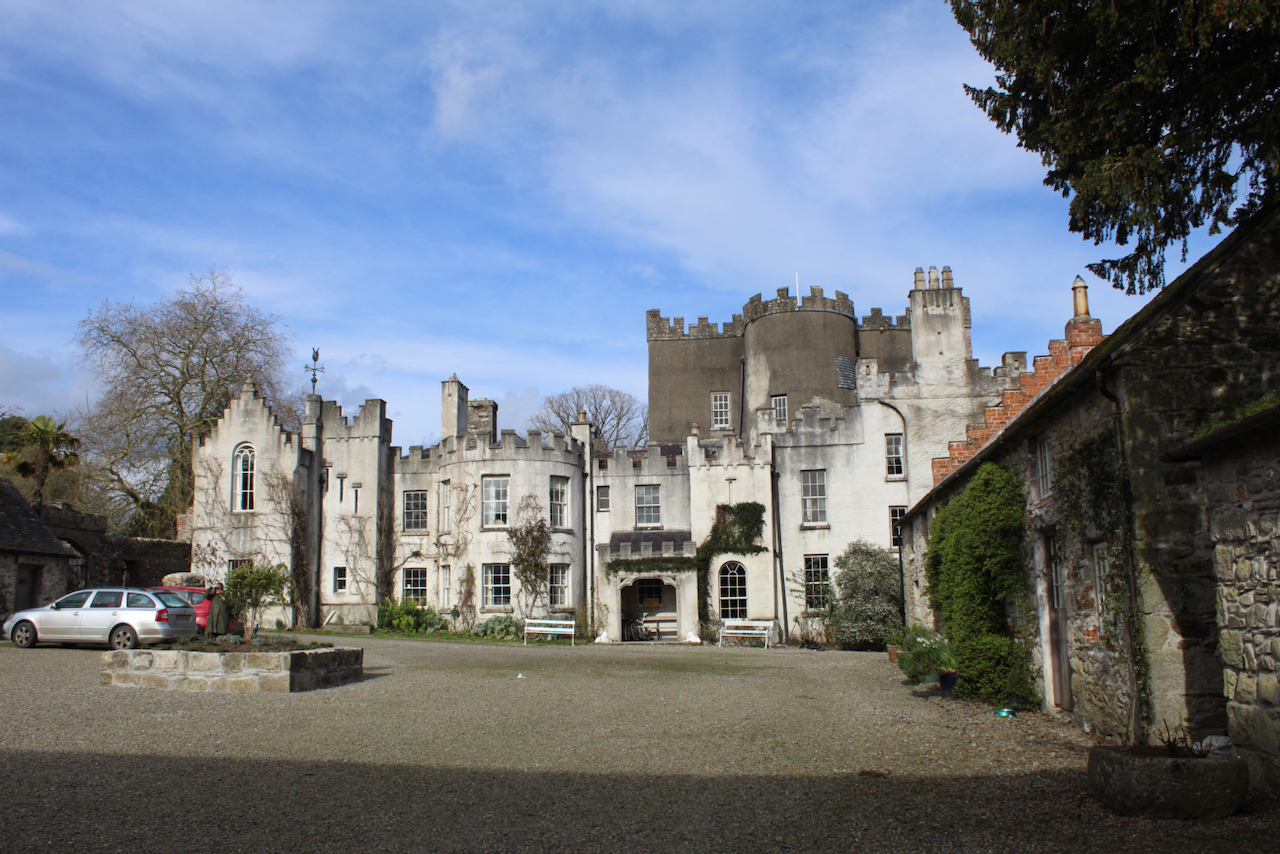


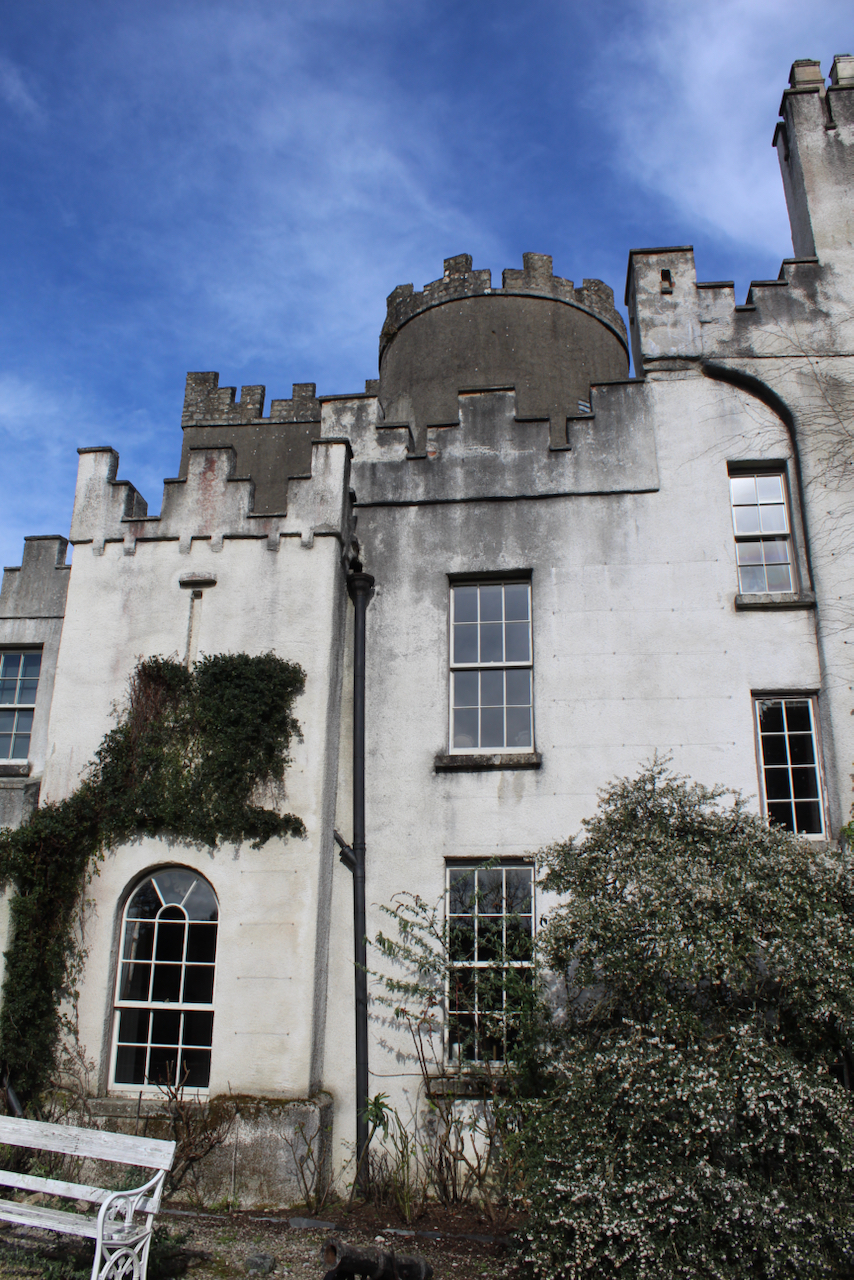
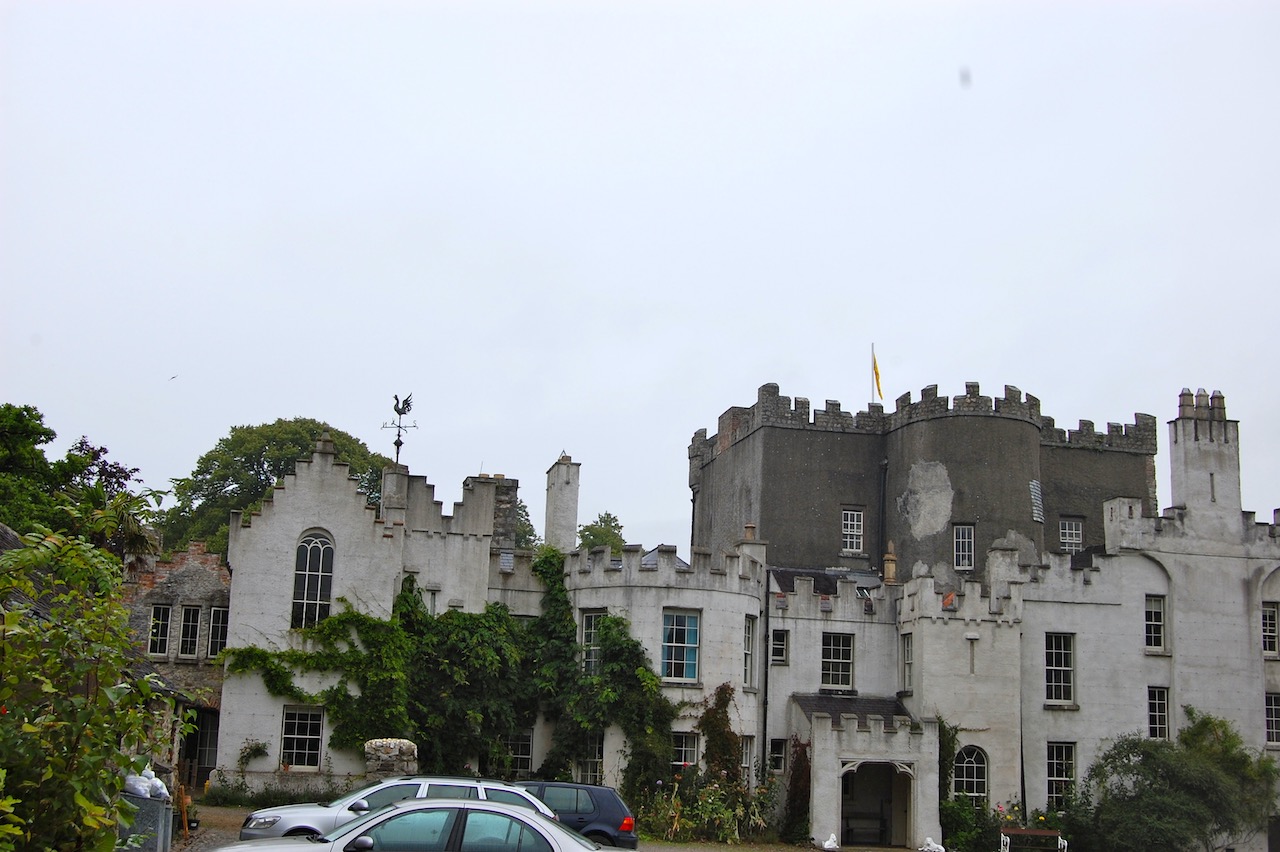
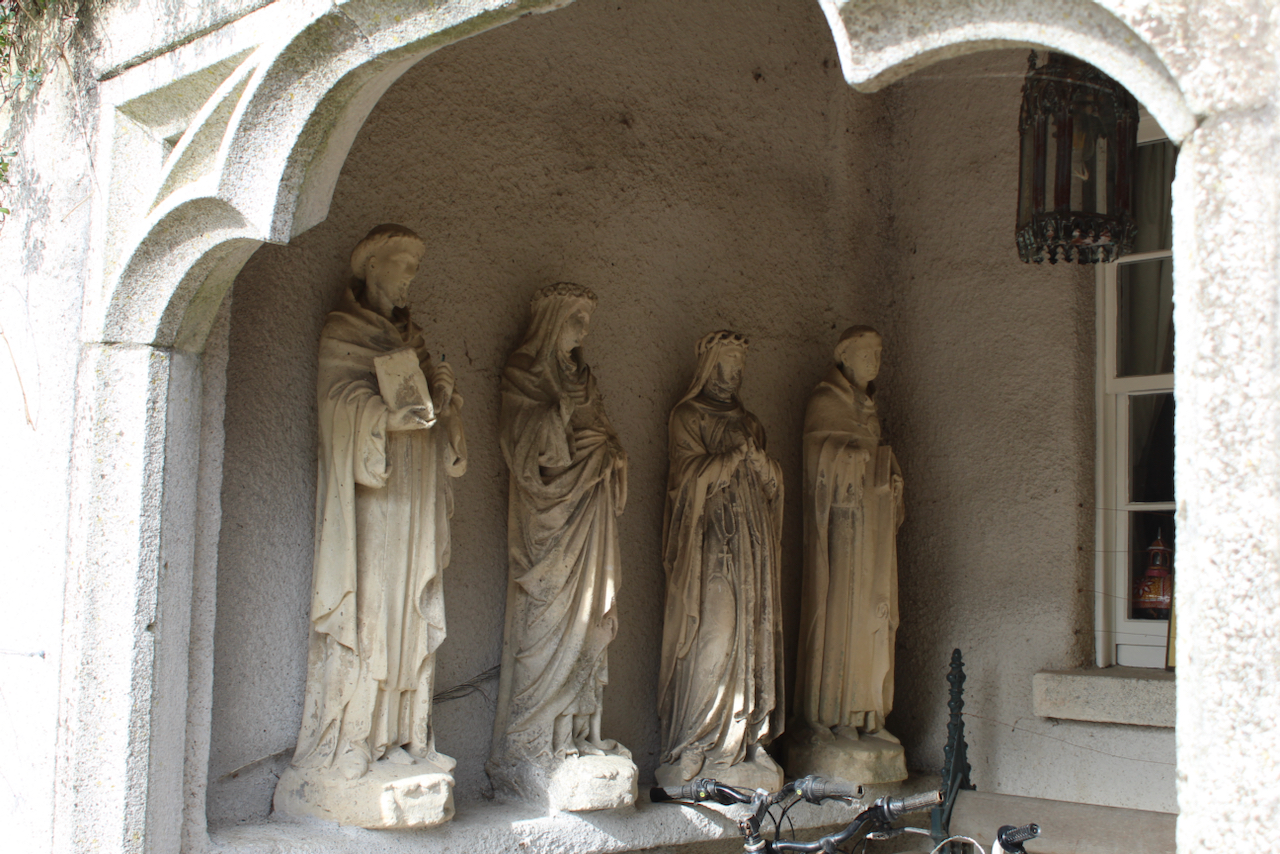
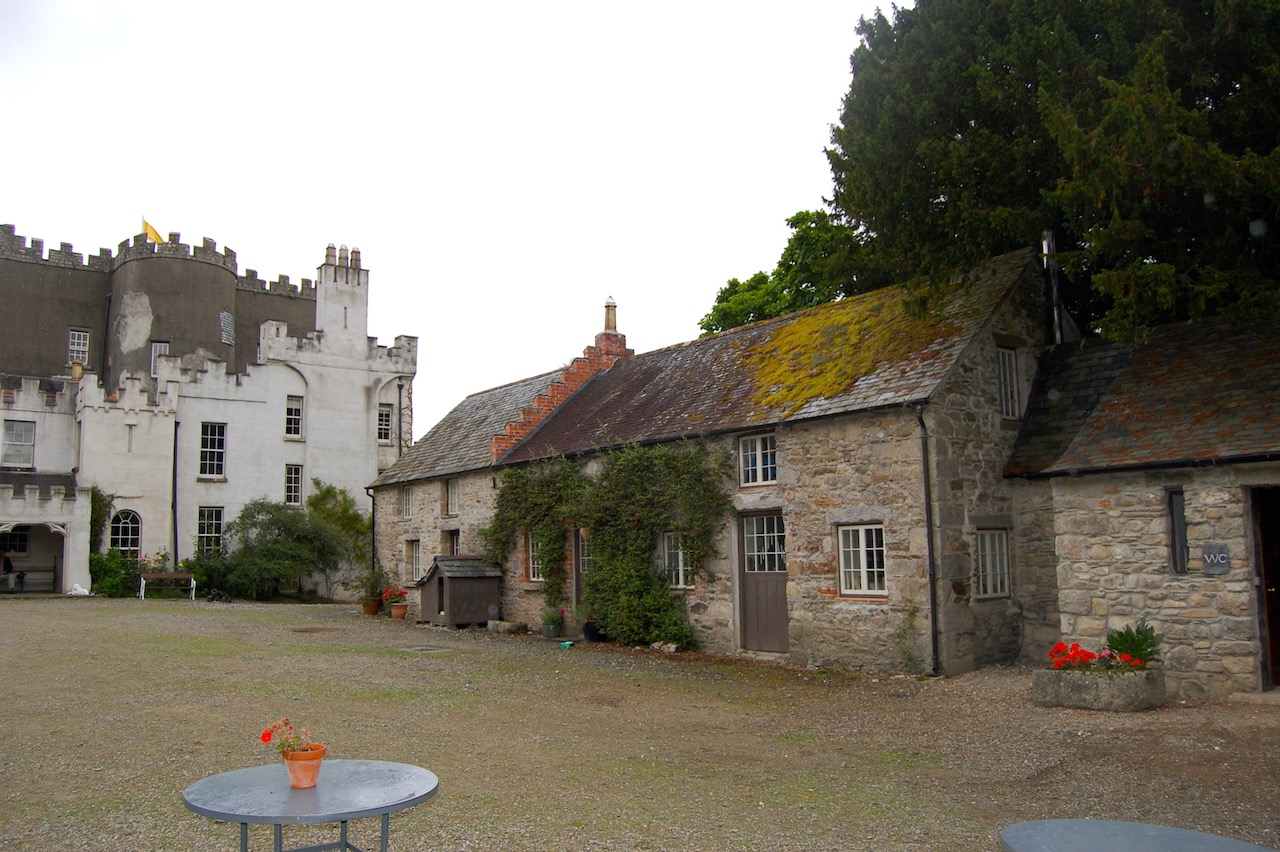
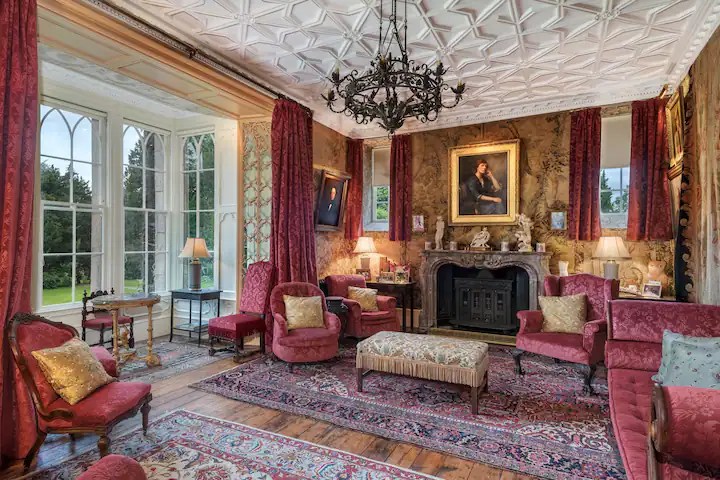

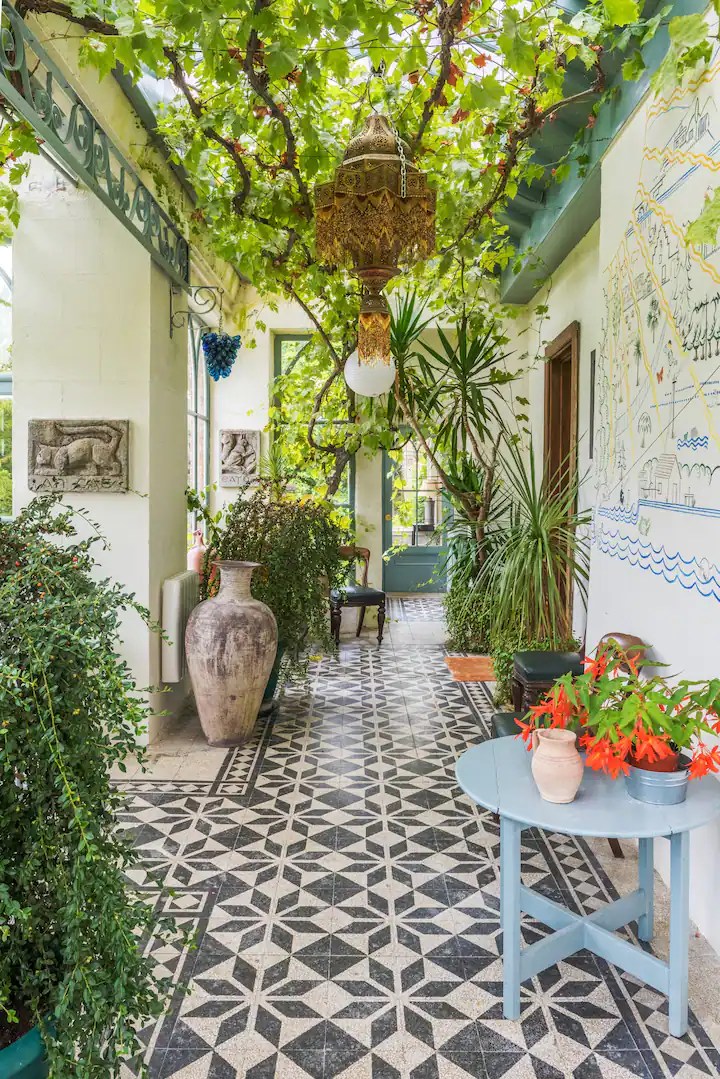
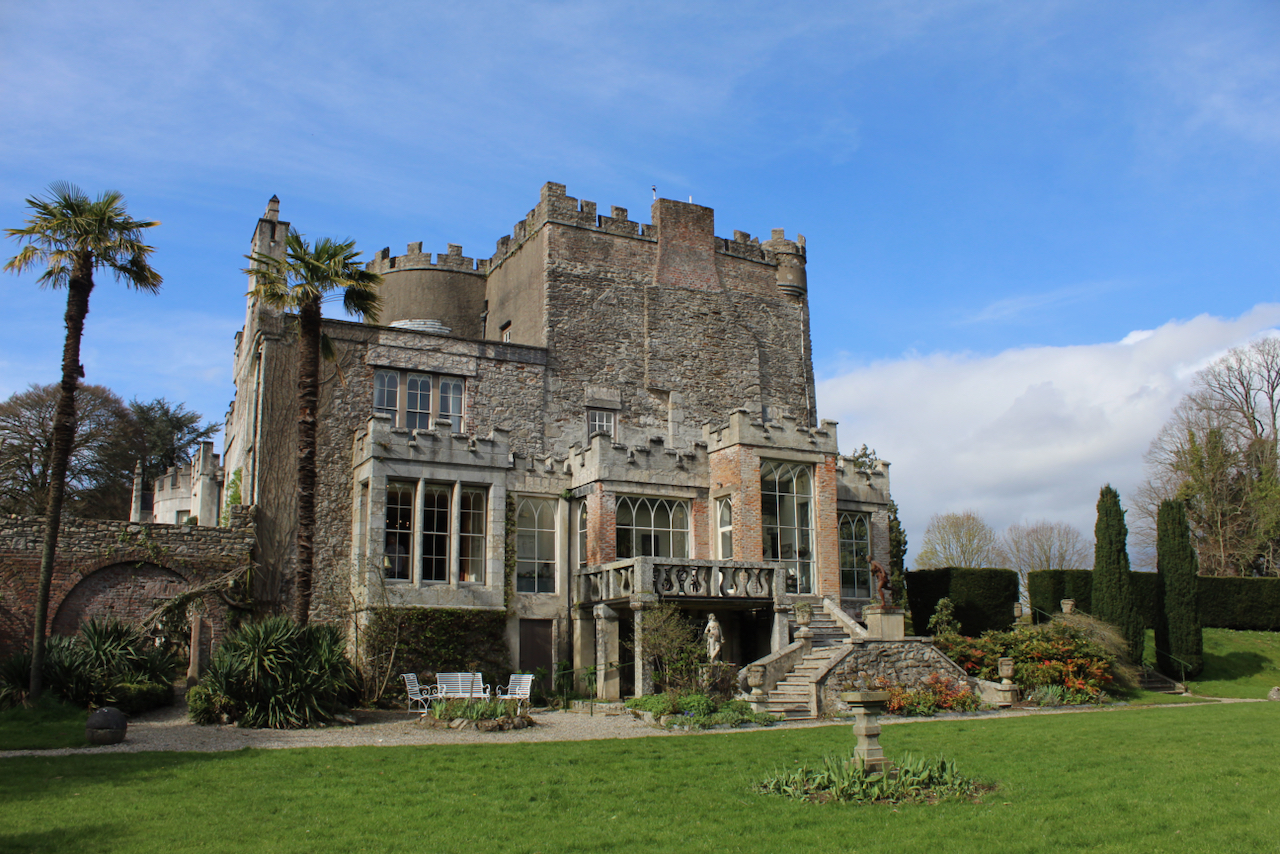
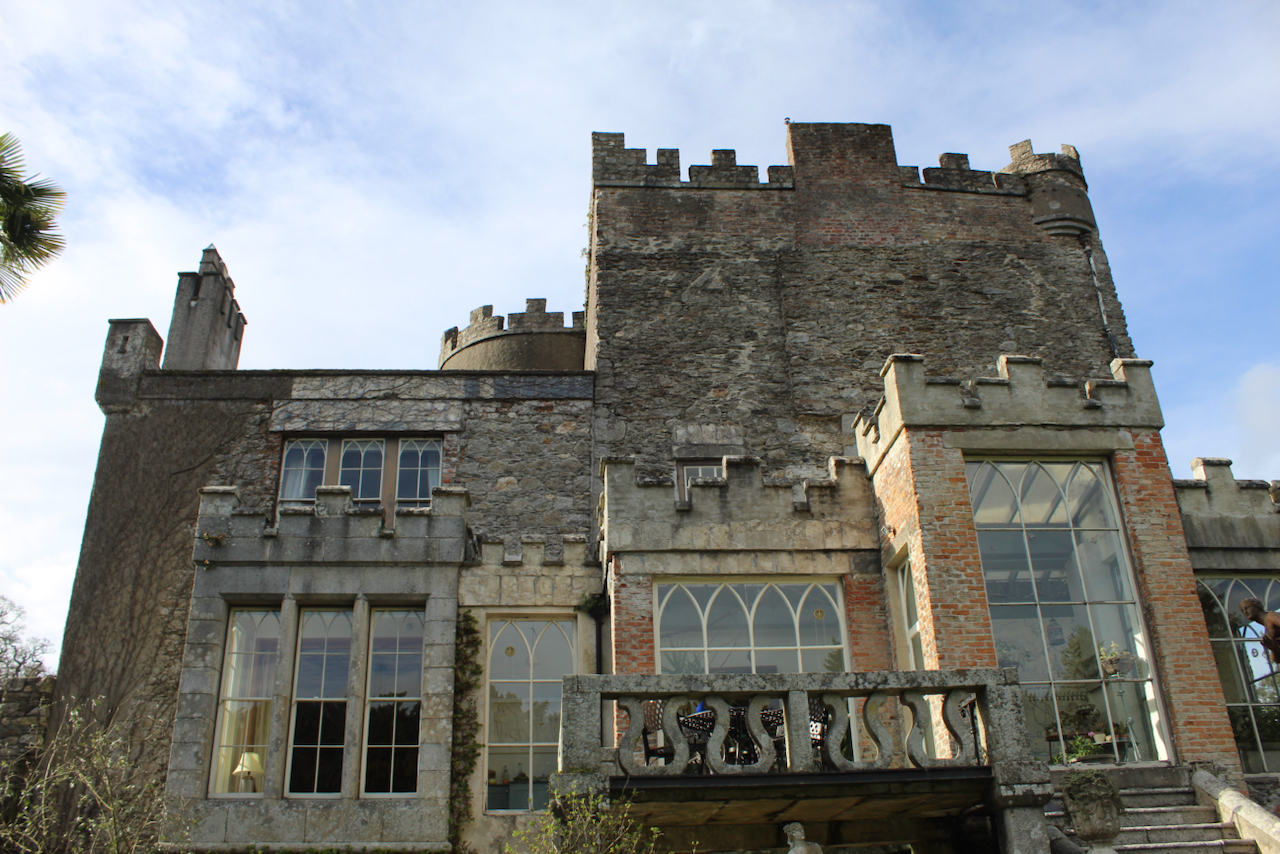

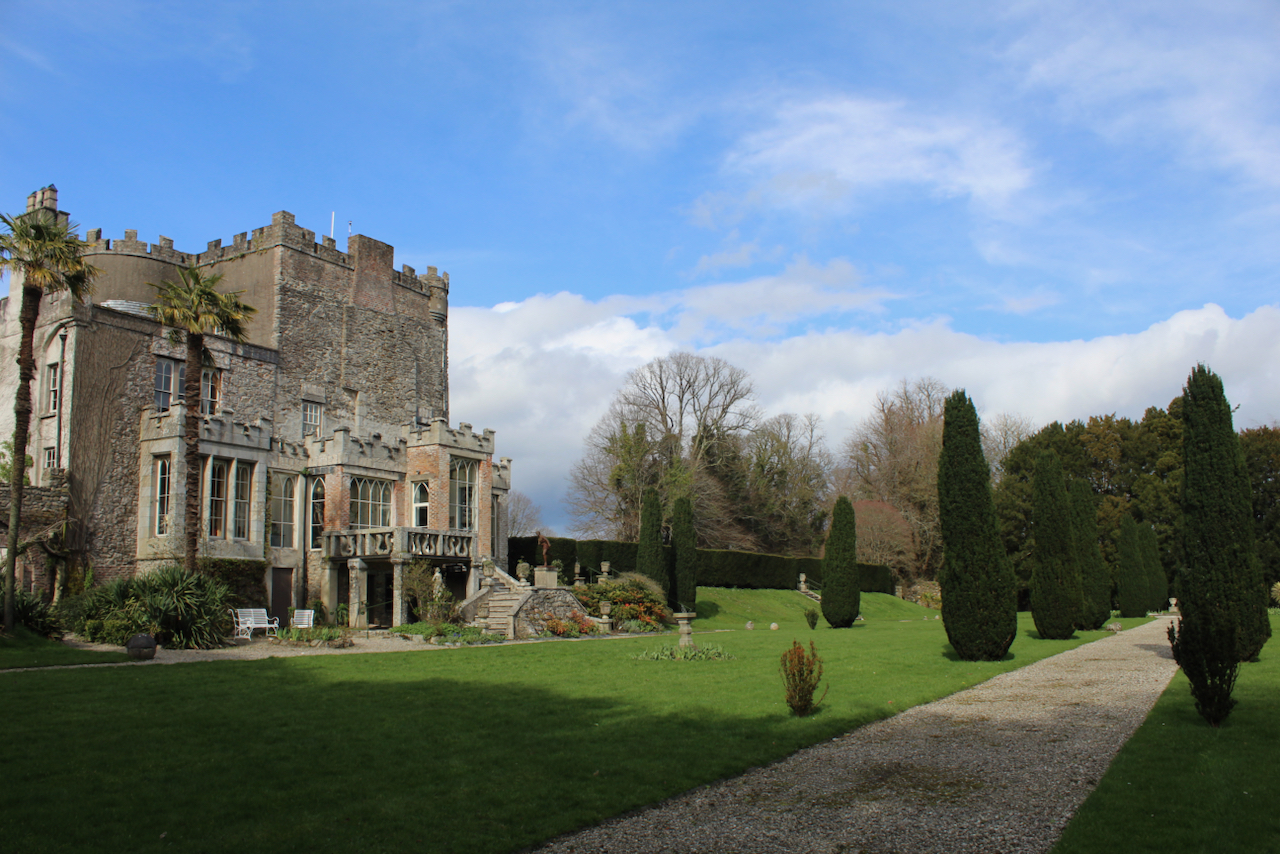
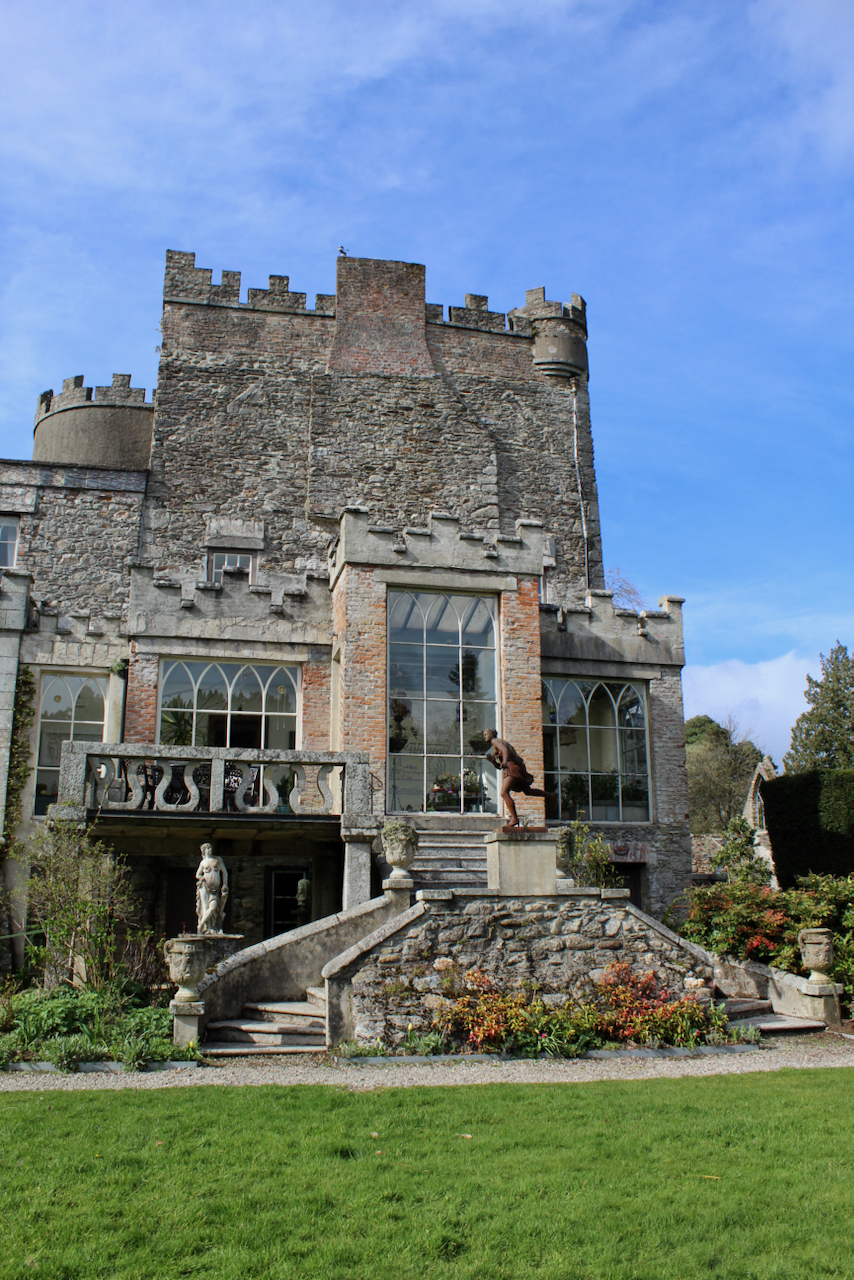





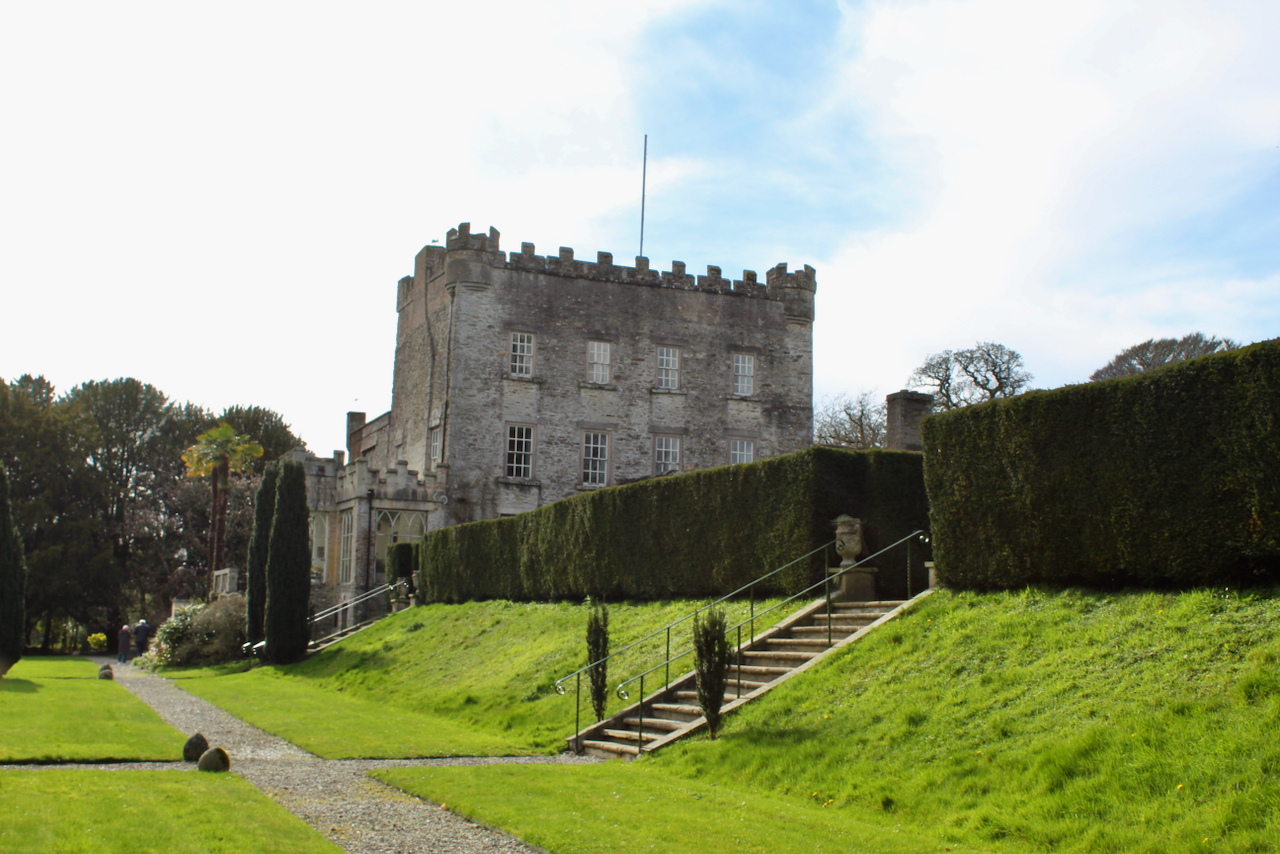
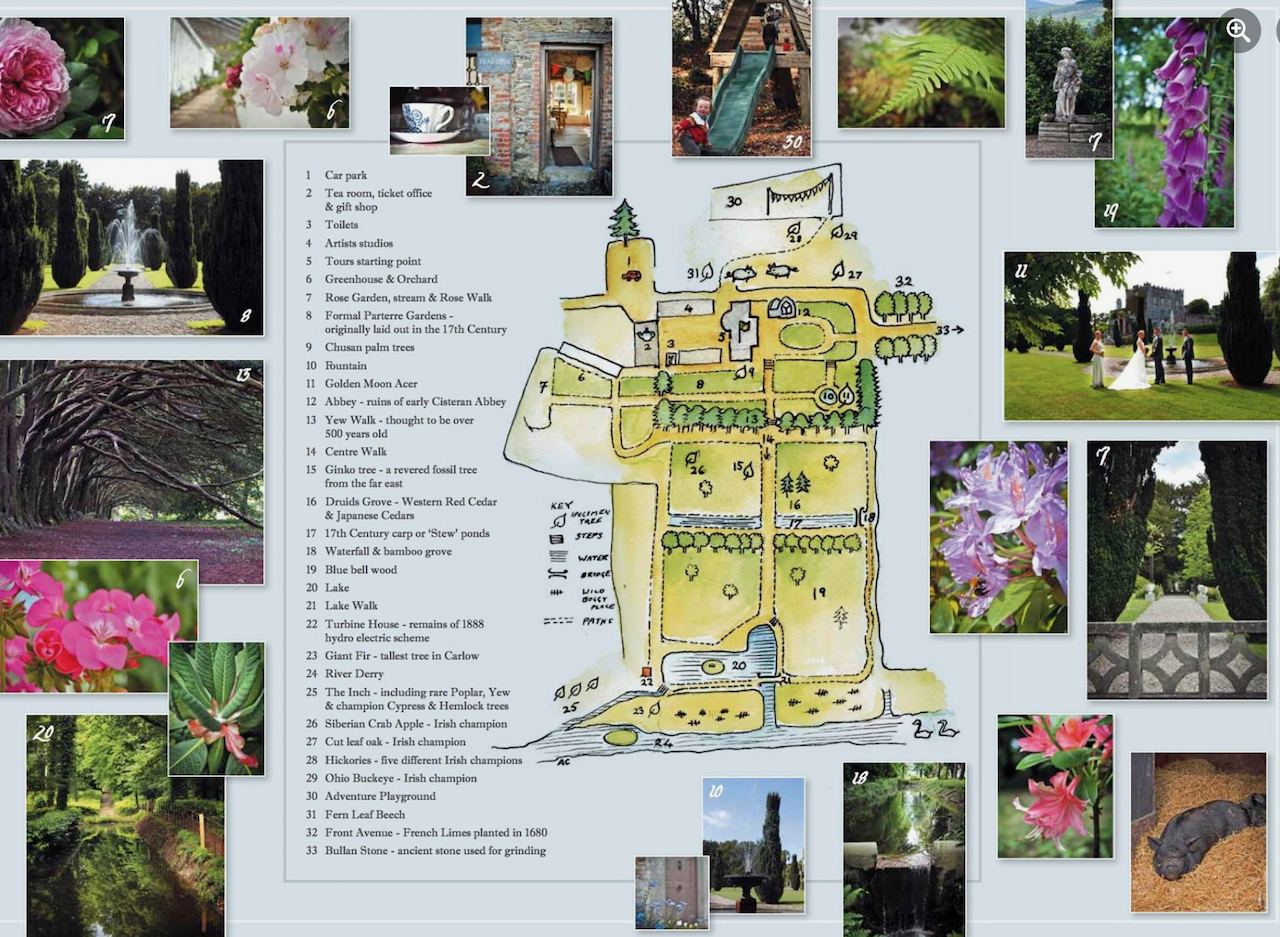


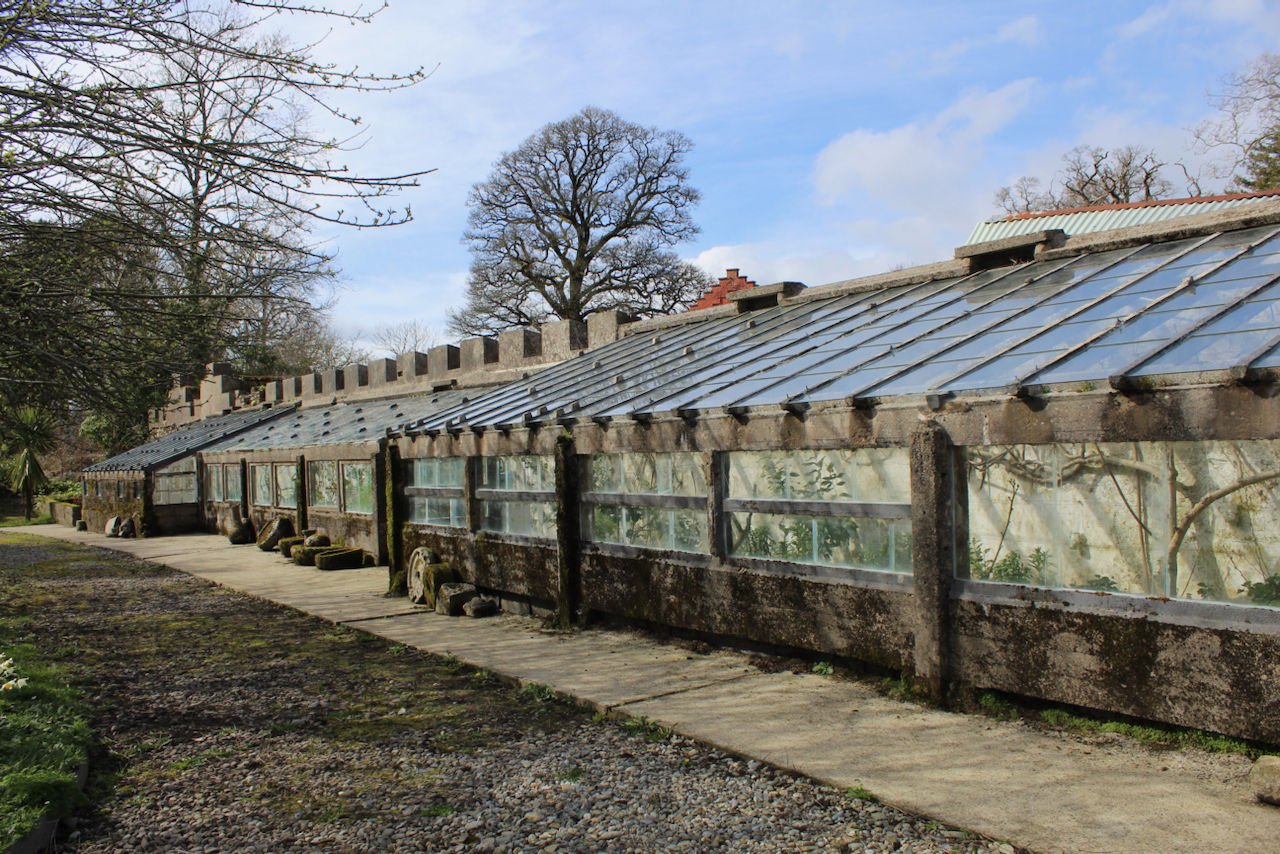
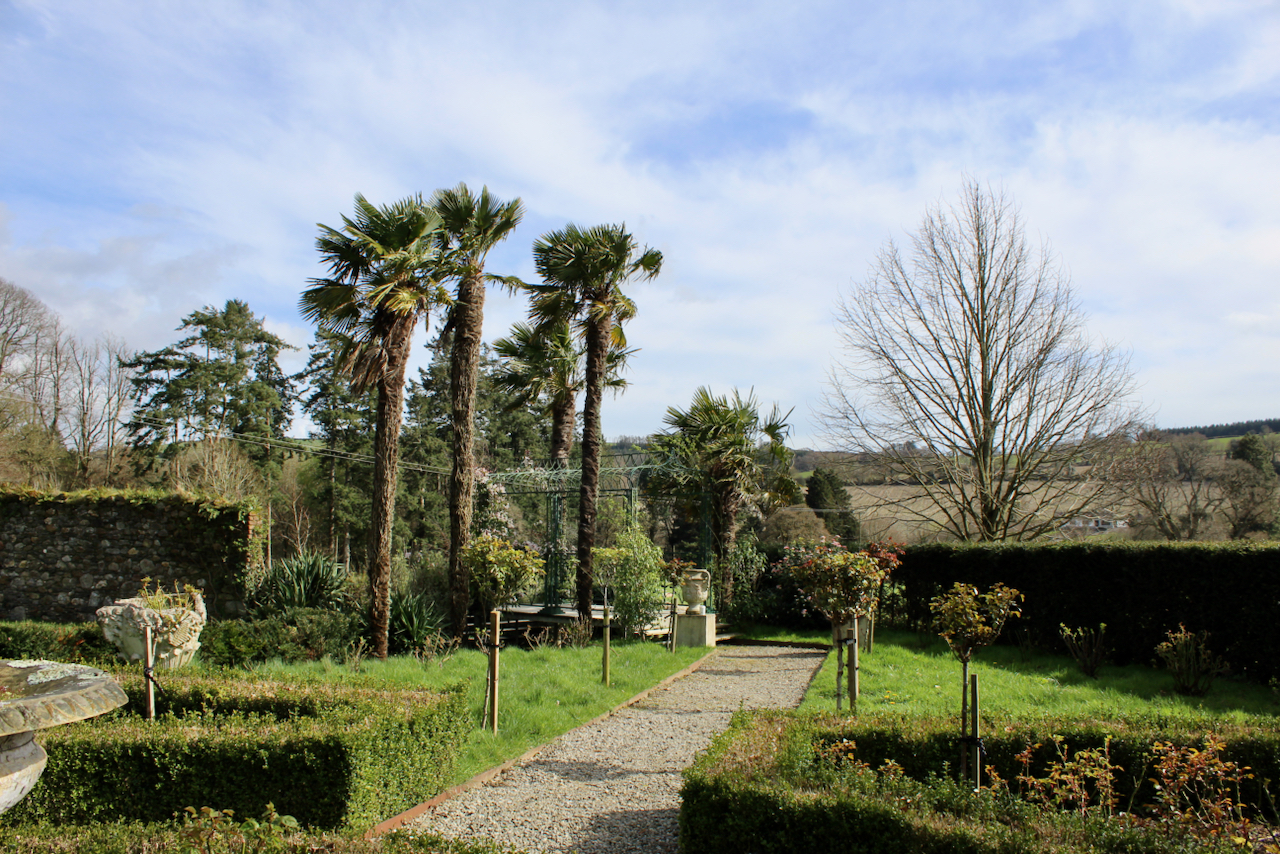
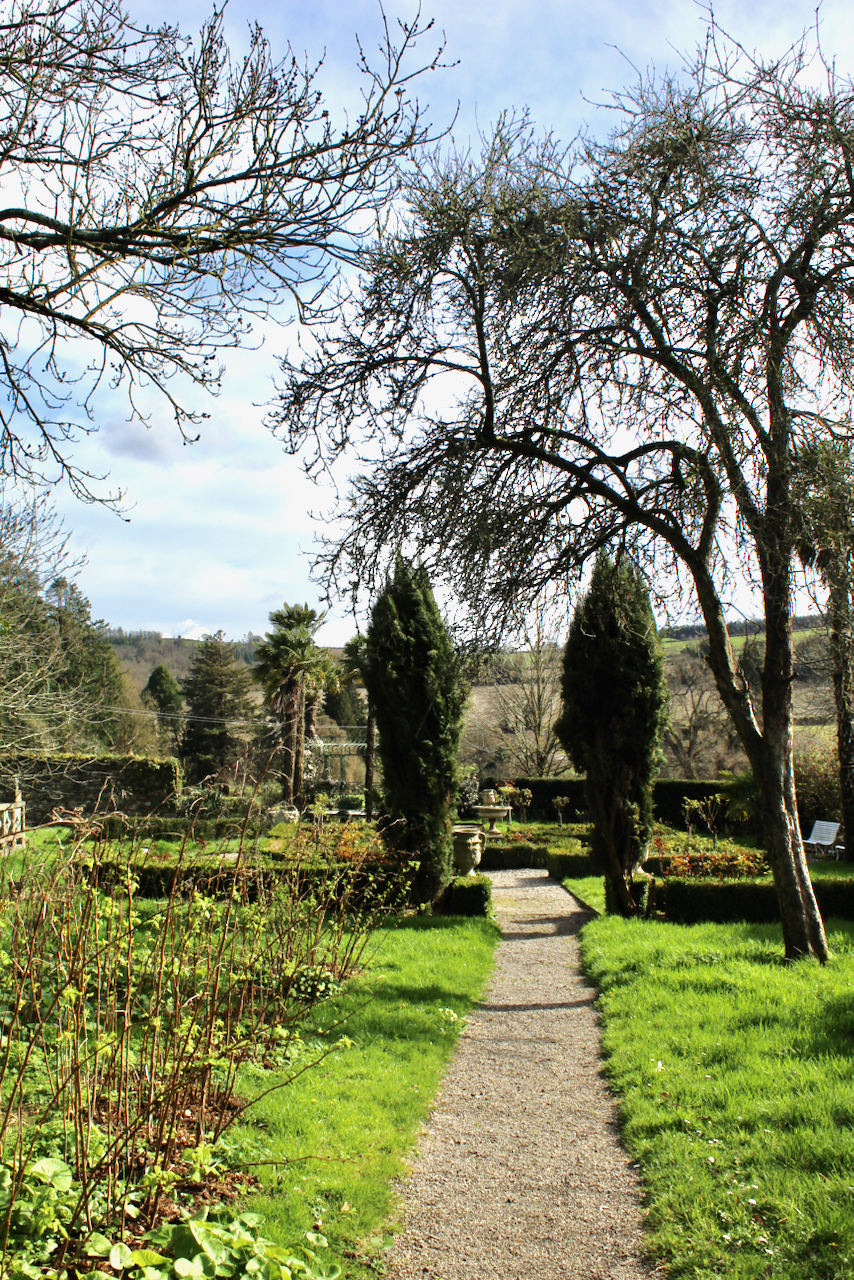
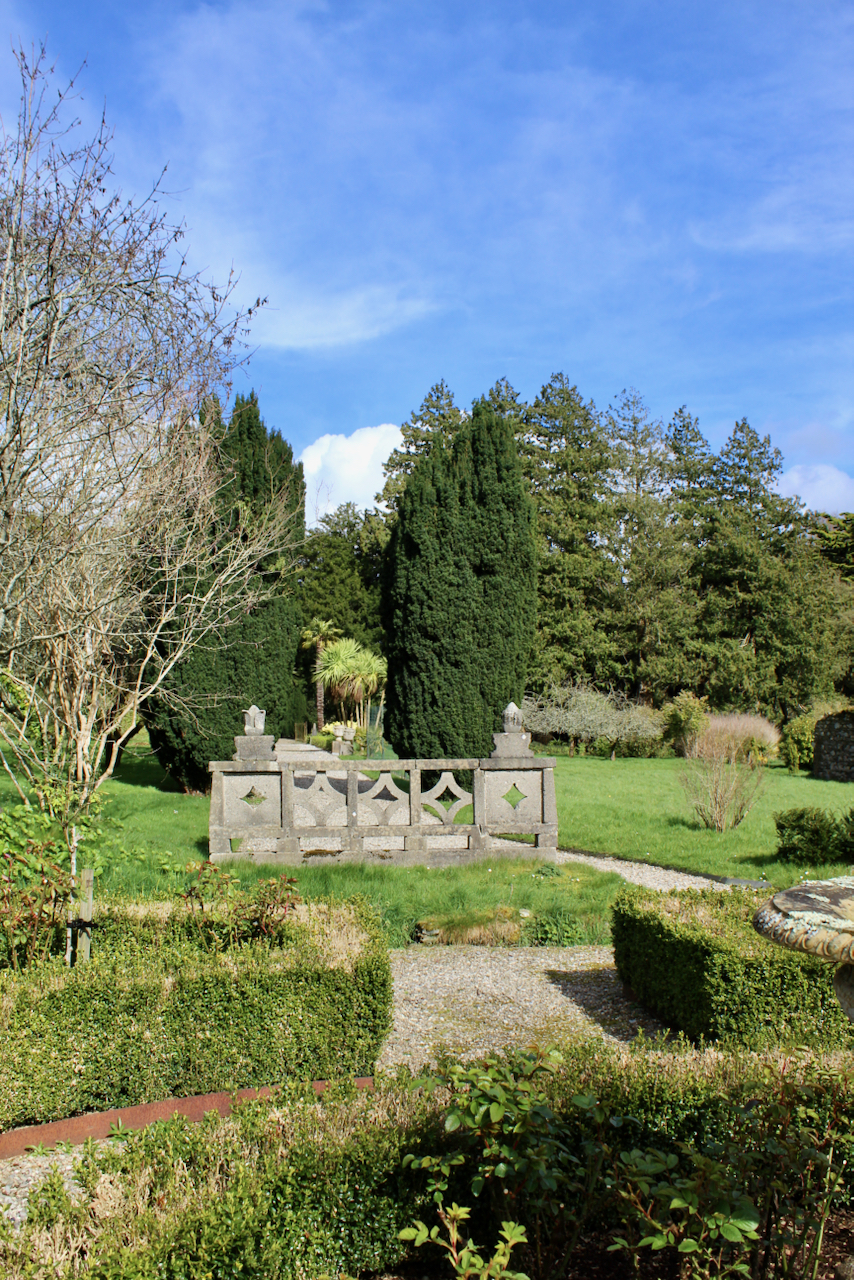


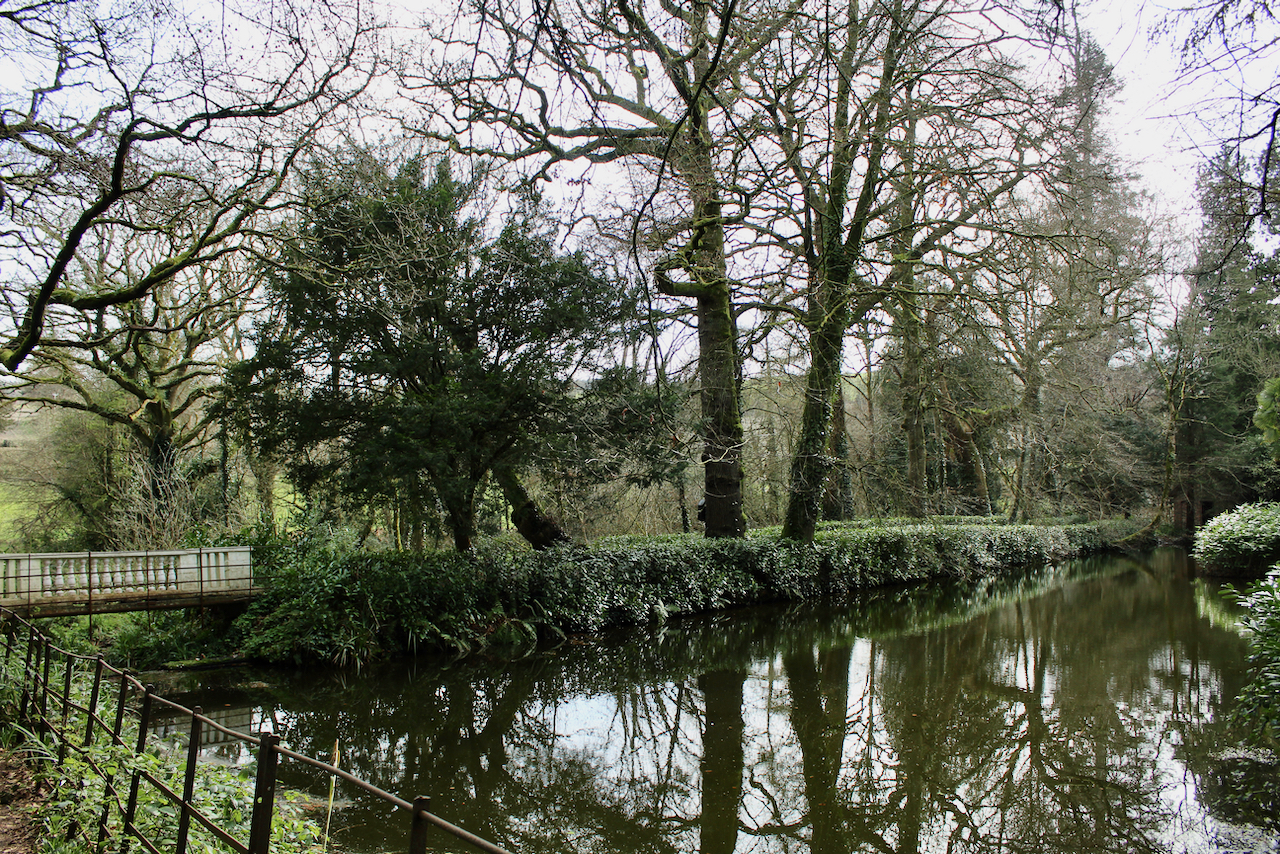
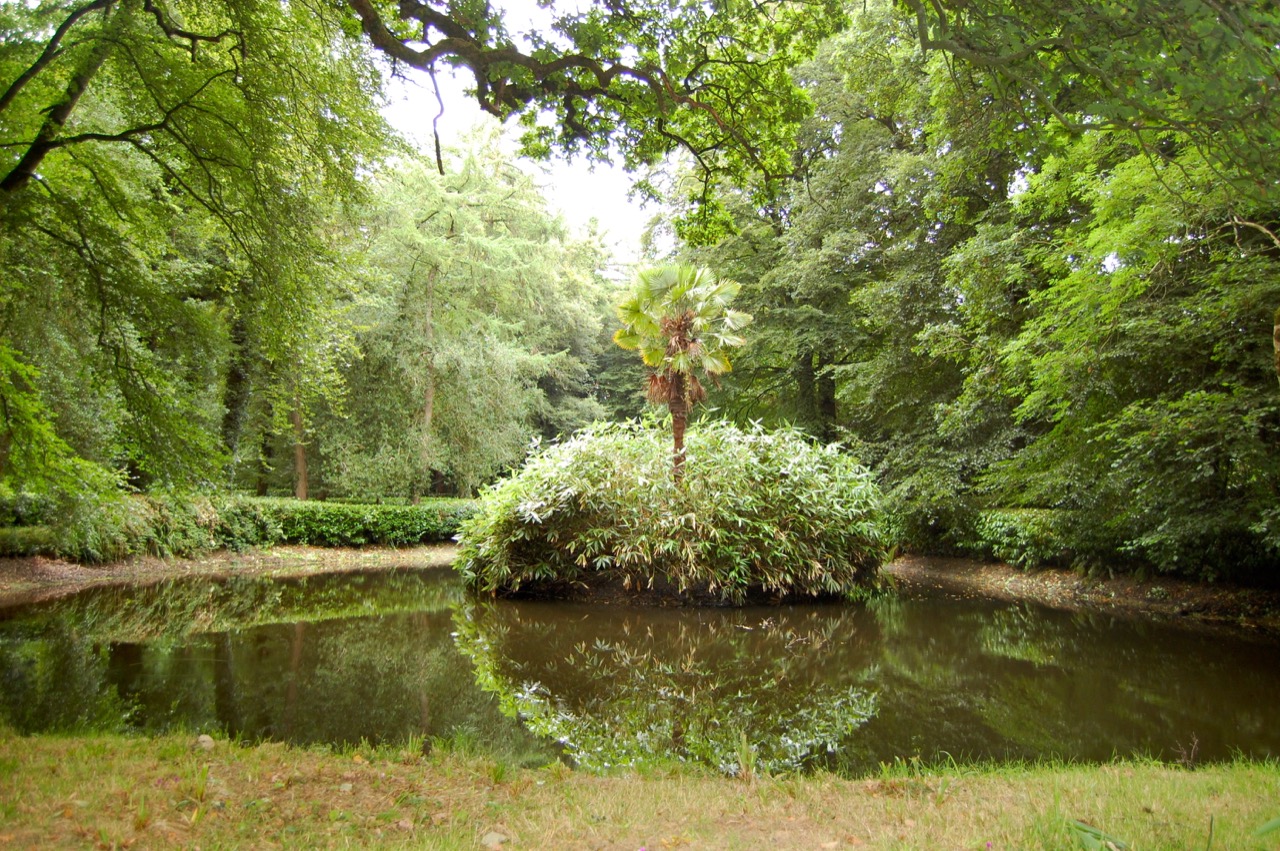

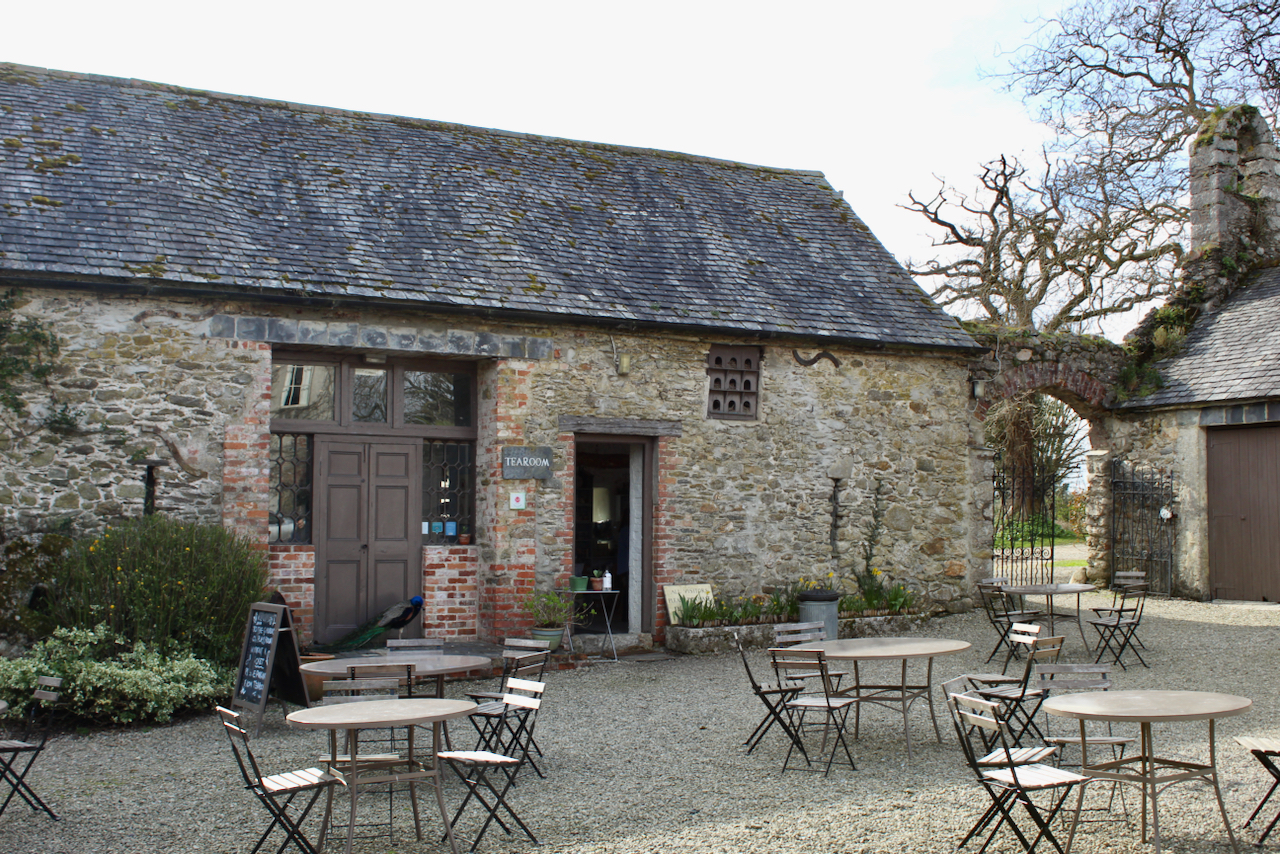
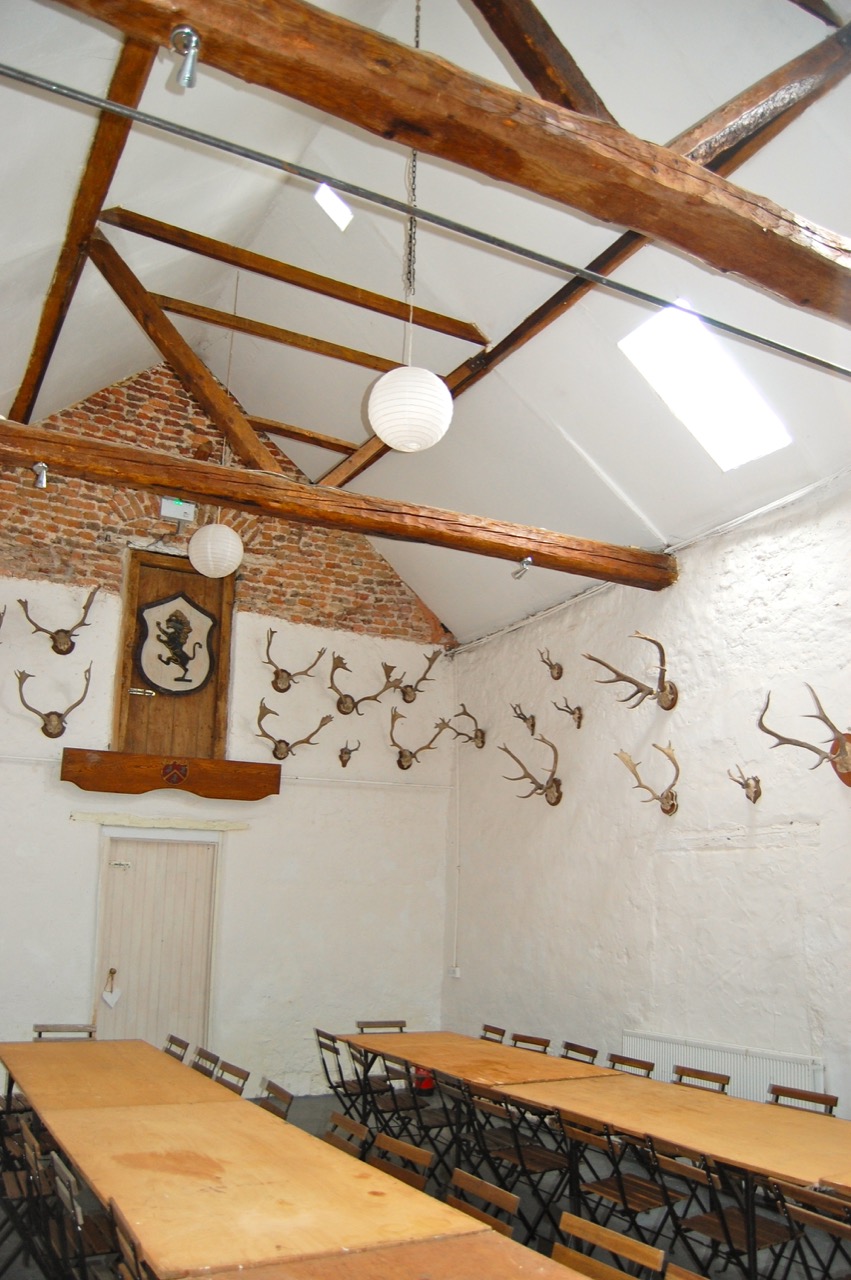
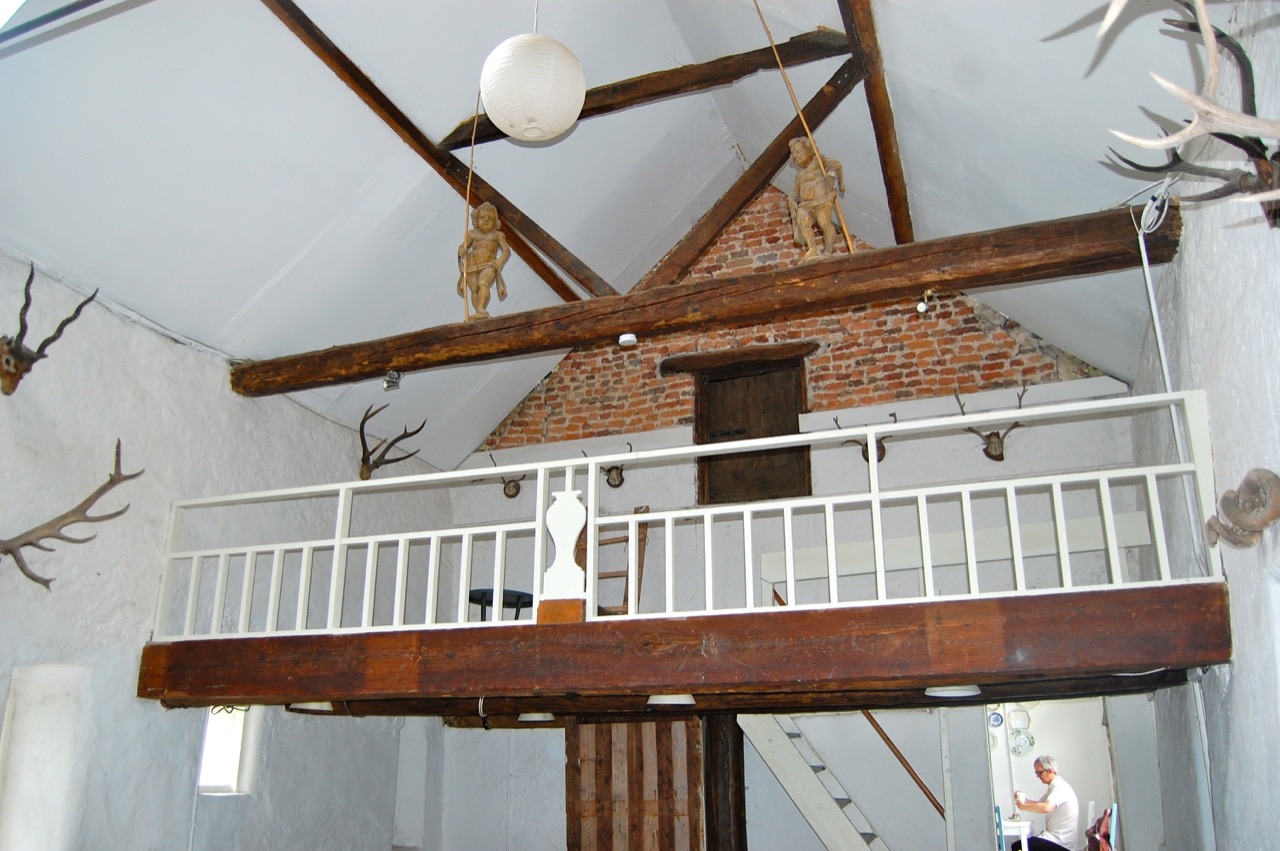


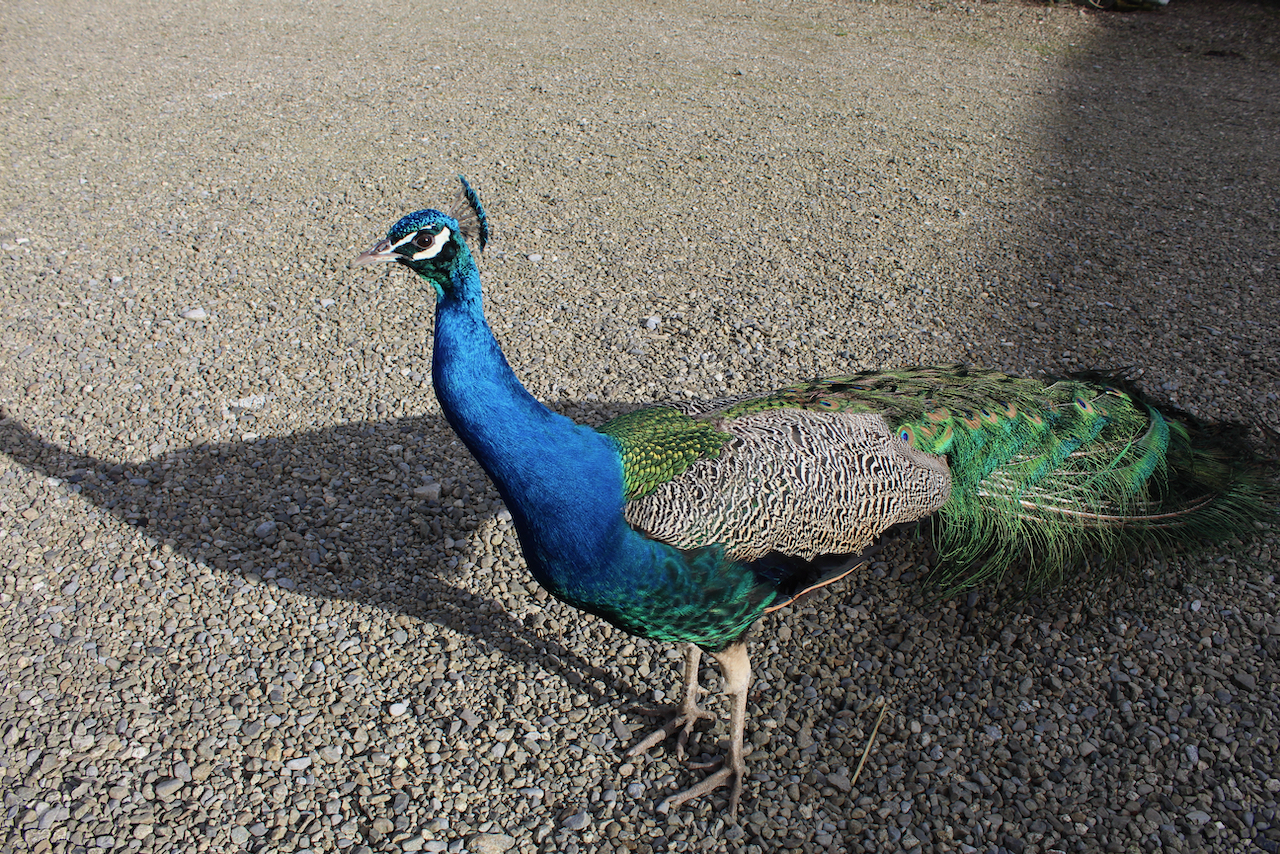


 Irish Historic Houses