On Saturday 4th May last year (2019), after visiting Salterbridge, we crossed the Blackwater over an impressive bridge, to visit Tourin House, the house of the other Musgrave brother. As I mentioned in my entry for Salterbridge, Richard Musgrave of Wortley, Yorkshire, settled in Ireland. He had two sons. The elder, Richard, acquired land from the Earl of Cork and built Salterbridge House in about 1750. The younger, Christopher, settled in Tourin. The website states that Richard Musgrave purchased Tourin in 1780 – he was Christopher’s son.
The house we visited is not the house which Christopher lived in. That house still exists, and is known as Tourin Castle and it is part of the estate. This is a tower house that dates from 1450, according to the National Inventory of Architectural History. [2] Before the Musgraves, the land was owned by the Roches, and then the Nettles. The Roches lived in the towerbuilding (the Landed Estates database mentions a “Sir John Roch of Tourin”). They added a later house built at right angles on to the fortress in the 1600’s, where people who worked on the estate later lived, and today it is still occupied by people who work on the estate! The tower itself is unoccupied, and uninhabitable, I believe. John Nettles, originally from Hereford, settled in county Waterford in the mid 17th century. He was granted land in counties Cork and Waterford by patent dated 1666. The Nettles lived at Tourin and Mahallagh, county Waterford and at Beare Forest and Nettleville, county Cork. [3] John Nettles was High Sheriff of County Waterford in 1670. His heir, also named John Nettles, became a Major in the army and was also High Sheriff of County Waterford (1690-1). His son and heir, John Nettles of Tourin, Mahallagh (or Mahillagh) and Beare Forest, Co Cork, passed the properties to his son, John Ryves Nettles, who sold Tourin and Beare Foreste in around 1780. [4]
Tourin Castle is part of the farmyard complex, which we visited after the house.
History of the Musgraves
According to the website of Timothy Ferres [5], Christopher Musgrave, the younger son of Richard Musgrave originally of Yorkshire who moved to Ireland, settled at Tourin and married Susannah, daughter of James Usher, of Ballintaylor. He was succeeded at his decease by his eldest son, Richard Musgrave (1746-1818), who was created a Baronet in 1782. He was Collector of Excise in the port of Dublin, MP for Lismore and sheriff of County Waterford, in 1778. As a political writer, he collected large amounts of information and evidence relating to the 1798 uprising, and published his findings in 1801 as Memoirs of the different rebellions in Ireland from the arrival of the English, with particular detail of that which broke out the 23rd of May, 1798; the history of the conspiracy which preceded it, and the characters of the principal actors in it. Although the work was detailed, Musgrave’s conclusions were sectarian and polemical. [6] He was fiercely anti-Catholic.
He married Deborah, daughter of Sir Henry Cavendish (2nd Baronet Cavendish, of Doveridge, Co. Derby, who was also an MP in the Irish parliament for Lismore), but had no children, so the title devolved to his brother, Christopher Frederick Musgrave (1738-1826), 2nd Baronet, who married, in 1781, Jane, daughter of John Beere, of Ballyboy, County Tipperary. His son by Jane, Richard (1790-1859) was the heir.
The heir, Richard, 3rd Baronet, married Frances, daughter of the Most Rev. William Newcome Lord Archbishop of Armagh. It was Richard the 3rd Baronet who built the new house, Tourin House, in 1840. He also served as a Member of Parliament for County Waterford. His son Richard 4th Baronet, then his son Richard 5th Baronet, inherited. The 5th Baronet had no sons, so his elder daughter, Joan Moira Maud Jameson (née Musgrave) inherited the Tourin estate and her descendants live at Tourin today.
William Newcome (1729–1800), Archbishop of Armagh.The 3rd Baronet Musgrave married his daughter, Frances.Sir Richard John Musgrave, 5th Baronet of Tourin (10 December 1850-1930), and High Sheriff of County Waterford in 1880 – pictured at his home in Cappoquin, Co. Waterford, Saturday, 18 February 1911. Photograph courtesy of National Library of Ireland, NLI Ref. P_WP_2264
Tourin House
According to the website:
Tourin House is an Italianate style villa with classical proportions, Tourin House was finished in 1841. Tourin is a lived in House where one of the family welcomes groups and will give tours of the House and Garden.
The Musgraves moved from Tourin Castle to their new house built on higher ground. Mark Bence-Jones describes the new house as a square two storey house with an eaved roof on an unusually deep and elaborately moulded bracket cornice, which is echoed by a wide string-course. The entrance front, as you can see in my photograph, has three bays between two end bays, each of which has a one storey projection with a door and pilasters. The four bay garden front has triple windows in both storeys of outer bays, and a single-storey curved bow in the centre (see my photograph below). [7]
“when the Musgraves gave up living in the old tower house and its additions at Tourin, County Waterford, they moved into a new residence on higher ground. Dating from the early 1840s the house’s rendered exterior, its design sometimes attributed to local architect Abraham Denny, is relieved by wonderfully crisp limestone used for window and door cases, quoins, pilasters, cornice and stringcourse.” [8]
The eldest daughter (Joan Maura Maud) of the fifth Baronet Musgrave inherited Tourin and married Thomas Ormsby Jameson (of the Jameson whiskey family) in 1920. Their son Shane Jameson inherited, and married Didi Wiborg, a Norwegian. Their three daughters then inherited, and now own, the estate.
Ancestor of the current owners of Tourin: John Jameson (1740-1823) who founded the Jameson Distillery at Bow Street, Smithfield. Painting by Henry Raeburn, around 1820, in the National Gallery of Ireland.John Jameson by Stephen Catterson Smith courtesy Christies 2006.
We were privileged to meet two of the sisters: Kristin and Tara. The third, Andrea, an artist, was giving an art class. We were greeted at the door, after we rang the bell, by Rose. She used to live in the gatehouse, and works in the gardens. She gave us an introduction to the house and took our photo in the front hall, and showed us photos of the house as it was before some additions, done, I think, by the current residents’ mother, Didi, who also chose the paint colours for the walls, which are maintained, and planted many of the trees in the garden.
In the sitting room we came across one of the sisters, Tara. She was vacuuming. They were in the process of trying to fix one of the curtains, as a fixture had come loose from the wall. To rehang the curtain, the entire pelmet must be taken down – it gives one an idea of how much effort is required to maintain a heritage house. We had a lovely chat about the area. We explained that it’s our first time in the area, and she gave us several recommendations, including Foley’s on the Mall in Lismore, where we consequently decided to go for dinner!
I was disappointed not to be shown the upstairs of Tourin House. The owners were so kind, however. We met Kristin in the hall and she told us of an art exhibition they’d had in the house, where several artists, including her sister Andrea, had two years to produce a piece in the garden, which were then exhibited in the house. The next exhibition of the group will be in Birr Castle.
We then headed out to the gardens, and to the enormous walled garden. The gardens were laid out at the beginning of the 20th century by Richard Musgrave, with the help of his friend, the Cork brewer Richard Beamish [5]. We were accompanied by an affectionate Red Setter. We learned later that one of the sisters breeds and shows Irish setters, and we met more in their kennels. They are lovely natured dogs.
“A long formal Broad Walk leads from the House to the pleasure grounds and beyond there to the walled garden, which belonged originally to the tower house. Successive generations of the Musgrave and Jameson family (Joan Jameson married Tommy Ormsby Jameson in 1920) have left their mark on the garden. The present owners’ mother, Norwegian born Didi Jameson, was a keen plants woman and the fine collection of trees and shrubs that she planted has now reached maturity.
“The Broad Walk leads to the more informal path of the pleasure garden past a colourful array of plants, shrubs and a rock garden to the walled garden, which has supplied the family with fruit and vegetables for generations. Today the Walled Garden is a mix of ornamental and productive planting and is at its best and most colourful in midsummer.
“The gardens at Tourin cover over 15 acres including the main garden, walled garden, and extended broad-leaved woodland walks, which lead to the banks of the Blackwater river and Tourin Quay.“
After the copse of bluebells, we ran into Kirsten out gardening. The sisters maintain the garden, which is often open to the public. She recommended that we walk to the river. We headed back out but her directions were not exact, and we took three wrong paths before heading back onto one we had already traversed! We met a woman walking her dog and she confirmed that we were on the correct path. She was the mother of the man who now lives in the old house next to the tower.
We had been only metres from the river already but had trekked left rather than going over a small hillock to the river! Corrected, we found the Quay of the Blackwater, and indeed it was worth it!
Help me to fund my creation and update of this website. It is created purely out of love for the subject and I receive no payment so any donation is appreciated! For this entry I paid for petrol and nearby accommodation.
[7] Mark Bence-Jones. A Guide to Irish Country Houses (originally published as Burke’s Guide to Country Houses volume 1 Ireland by Burke’s Peerage Ltd. 1978); Revised edition 1988 Constable and Company Ltd, London.
I haven’t revisited Powerscourt Estate this year but I have been there many times, and as the lockdown continues for Covid 19, I will write another entry from previous visits and research. I want to write about Powerscourt in continuation of our Wingfield run!
It used to be that one went to the estate to see the 47 acres of landscaped gardens, since the house was gutted by fire in November, 1974, and remained closed for many years. The fire was probably due to a chimney fire that ignited. Since then, it has been gradually renovated. The Slazenger family, living in the house at the time of the fire, moved into a section of the wing that was not destroyed by the fire. Nowadays inside is a shopping mecca and lovely Avoca cafe, with a growing exhibition about Powerscourt estate itself. My family has been visiting Powerscourt estate since I was a child. The ultimate in romantic, with terraces, groves of trees, stone sculptures, nooks, the mossy labyrinth in the Japanese gardens, the “secret” boat house with its view onto the surface of the lake, and the Versailles-like Neptune fountain, the memory of its purple and grey dampness was an aesthetic touchstone for me when I lived in hot, dry, bright Perth and California.
In 1974, David Hicks tells us in his Irish Country Houses, a Chronicle of Change, only months before the fire, Stanley Kubrick filmed Barry Lyndon in the house, and the film shows the interiors of the house before they were destroyed.
Powerscourt by George Barret the Elder, courtesy of Yale Centre for British Art.
The estate is named after previous owners of the land, the Powers, or Le Poers. The site was a strategic military position for the Anglo-Normans in the 12th century, and by 1300 the Le Poers had built a castle there. In 1609 the land was granted to Richard Wingfield, Marshall of Ireland.
Richard (1697-1751) 1st Viscount Powerscourt (of 3rd creation) built Powerscourt, designed by Richard Castle (or Cassells) in 1728.
Powerscourt, Hall, County Wicklow, photograph by Robert French, Lawrence Photograph Collection, National Library of Ireland.Isabella Wingfield by John Verelst, 1722, daughter of Edward Wingfield (1630-1728), sister of Richard 1st Viscount Powerscourt, wife of Henry King 3rd Baronetof Boyle Abbey.
In 1961 the estate was sold by the 9th Viscount, Mervyn Patrick Wingfield, to Mr. Ralph Slazenger, and the Slazenger family still own it. [1] The same family owned Durrow Abbey near Tullamore in County Offaly (which they purchased in 1950, but it now belongs to the OPW). [2][3]
According to the Dictionary of Irish Biography, Richard Wingfield (1551?–1634) 1st Viscount Powerscourt, a soldier, was eldest son of Sir Richard Wingfield, governor of Portsmouth, and his wife Christian Fitzwilliam of Milton. He was born into a family with a strong martial tradition: his brothers and uncles bore arms for the crown in the Low Countries, France, and Ireland. He came to Ireland c.1573 to serve as a soldier under his uncle Sir William Fitzwilliam (1526-1599) who was twice Lord Deputy of Ireland. Richard then returned to fight overseas but returned to Ireland, where he fought with the rebel forces of Hugh O’Neill, Earl of Tyrone.
On 27 January 1600 he was made marshal of the Irish army and was a member of the Irish privy council by 24 March. He played a key role in organising the royal army during the latter part of the Nine Years War.
He played a prominent role in both the siege and battle of Kinsale in late 1601. He was granted the lands of Rebane, Queen’s County, in March 1602. After the final suppression of the rebellion, he was granted in October 1603 a 21-year lease of the district of Ferncullen (formerly held by the O’Tooles) in north Co. Wicklow. He established his residence there at Powerscourt castle. [4]
Richard Wingfield appealed to James I for the land in order to secure the district from the incursions of native Irish lords and the families who had previously occupied the land, such as the O’Tooles. [5] In 1609 the King granted him full ownership.
Information board.Detail of an order given by King Henry VIII granting deed and title of Ferncullen, which is the land of Powerscourt, to the O’Tooles in around 1535. This chronology is on a board in the whiskey distillery, shop and cafe in the Millhouse on the grounds of Powerscourt.
He also received 1,000 acres at Ballnabarney as part of the Wexford plantation in November 1613. He sat as MP for Downpatrick in the 1613–15 parliament after being rejected by the largely Scottish electorate of Co. Down, acting as one of the chief government spokesmen in the house of commons. On 1 February 1619 he was created Viscount Powerscourt, having paid £2,000. He died on 9 September 1634. [see (4)]
He had no children so his cousin Edward Wingfield (d. 1638) succeeded him. Although they are both Wingfields they were actually cousins through the Cromwell line. Richard had married Frances Rugge, widow of 3rd Baron Cromwell. Edward Wingfield (d. 1638) married Anne Cromwell, daughter of the 3rd Baron Cromwell and Frances Rugge.
Edward Wingfield and Anne Cromwell had two sons: Lewis and Richard (d. 1644).
Richard (d. 1644), married Elizabeth Folliott daughter of Henry, 1st Lord Folliott, Baron of Ballyshannon, and they had a son Folliott Wingfield (1642-1717) who was created 1st Viscount Powerscourt in 1664/65. Folliott married Elizabeth, daughter of Roger Boyle, 1st Earl of Orrery. On his death, his title became extinct as they had no children.
The other son of Edward Wingfield and Anne Cromwell, Lewis, had a son Edward (d. 7 January 1728). Edward lived at Powerscourt, and was MP for County Wicklow. I suspect he moved to Powerscourt when Folliott Wingfield died. He married Eleanor Gore, daughter of Arthur, 1st Baronet Gore, of Newtown Gore, Co. Mayo. Their son Richard (1697-1751) was created 1st Viscount Powerscourt, of Powerscourt, Co. Wicklow in 1733/34. Their daughter Isabella married Henry King, 3rd Baronet of Boyle Abbey, County Roscommon [we will come across the King family when I write about King House in County Roscommon, a section 482 property.] Their daughter Sidney married Acheson Moore of County Tyrone. [6]
Richard (1697-1751) 1st Viscount Powerscourt was MP for Boyle, County Roscommon between 1727 and 1744, and was created a Privy Counsellor in 1746. He married twice. His first wife was Dorothy Ussher, daughter of William Ussher of Ussher’s Quay in Dublin. She died childless in 1723, and then he married Dorothy Rowley, daughter of Hercules Rowley of Summerhill, County Meath.
Richard Wingfield (1697-1751) 1st Viscount Powerscourt by Anthony Lee courtesy of Christie’s sale catalogue.
It was Richard 1st Viscount Powerscourt who built the Powerscourt house we see today. He incorporated some of the old building into a new residence he had built in 1728. According to Sean O’Reilly in Irish Houses and Gardens. From the Archives of Country Life, the 1974 fire exposed the fabric of the history of the house. He writes:
“The original structure consisted of a low range incorporated in the two bays to the left of the entrance. This appears to have been a long, two-storey, rectangular block, raised to a third storey in later development, and retaining, in one corner, a cross-shaped angle-loop. The vaulted room on the ground floor in this range survived into later remodellings. This earliest block, which dates from no later than the fifteenth century, was extended by a connecting block now incorporated in the garden front and, finally, by a third rectangular range fronted by the two bays on the right of the entrance, creating a U-plan.” [2]
The Wicklow house built for Richard Wingfield was designed by Richard Castle (or Cassels), who had worked with Edward Lovett Pearce. Both Lovett Pearce and Cassels favoured the Palladian style, and Cassels took over all of Lovett Pearce’s commissions after his untimely death aged just 34. Cassels worked on Carton, designed Russborough House(another section 482 house https://irishhistorichouses.com/2020/11/08/russborough-house-blessington-county-wicklow/ ) and Leinster House.
Powerscourt consists of a three storey centre block (see photograph above) joined by single-storey links to two storey wings, in the Palladian style. Borrowing from Mark Bence Jones’s description in his Irish Country Houses, the centre block has nine bays and the entrance front is made of granite. [6] There is a five bay breakfront in the centre of the middle block front facade, with a pediment of six Ionic pilasters (Ionic pillars have scrolls) standing on the bottom storey, which is, according to Bence-Jones, treated as a basement, and rusticated (rustication is the use of stone blocks with recessed joints and often with rough or specially treated faces, which is generally confined to the basement or lower part of a building). (see [6]) The pediment contains the arms of Richard Wingfield and his wife Dorothy Rowley.
Between the pilasters on the breakfront are rondels containing busts of Roman emperors, and a female in the centre rondel. The 7th Viscount called the bust in the middle “Empress Julia” after his wife. He purchased the busts of Caesar in London. They came from Maidenhead, Buckinghamshire, and once belonged to the Duke of Sussex.
The four bay links as well as the central block have balustraded parapets. The wings have four bays, and the facade is prolonged beyond them by quadrant walls, each interrupted by a pedimented Doric arch and ending in an obelisk carrying an eagle, the Wingfield crest. [8]
The garden front, pictured above, has seven bays between two bows on either end, and the bows are topped with copper domes. One side has a two storey wing. The garden slopes down to a lake in a magnificent series of terraces. Powerscourt was built with sixty-eight rooms!
Richard and Dorothy had two sons. The first, Edward, 2nd Viscount Powercourt, died childless, so his brother, Richard (1730-1788), became 3rd Viscount Powerscourt.
Portrait of a gentleman, traditionally identified as Edward 2nd Viscount Powerscourt, in a brown coat by circle of Francis Cotes, Hugh Douglas Hamilton.Richard Wingfield (1730-1788) 3rd Viscount Powerscourt.
I wrote about the history of the Wingfield family briefly in my entry for Powerscourt Townhouse. [9] Seven years after inheriting the title, Richard 3rd Viscount began the building of Powerscourt Townhouse, so that he had a grand Palladian home in Dublin for residing and entertaining, when not living in his estate in Wicklow. He married Amelia Stratford, daughter of John Stratford, the 1st Earl of Aldborough. For the rest of the Wingfield successors, see [10] and also the Powerscourt website and see my entry about Powerscourt Townhouse https://irishhistorichouses.com/2020/04/02/powerscourt-townhouse-59-south-william-street-dublin-2/
Powerscourt House front hall, County Wicklow, photograph by Robert French, Lawrence Photograph Collection, National Library of Ireland.
Richard and Amelia’s son Richard 4th Viscount Powerscourt was brave enough to vote against the Act of Union in 1800, upsetting his neighbours. He married, firstly, Lady Catherine Meade, daughter of John Meade, 1st Earl of Clanwilliam County Tipperary, who gave birth to the heir and “two spares.” Catherine’s sister married the 10th Earl of Meath. After her death, he married Isabella Brownlow, daughter of William, MP for Armagh, and they several more children.
His son Richard (1790-1823) became the 5th Viscount and Richard’s son Richard (1815-1844), the 6th Viscount. The 5th Viscount married Frances Theodosia Jocelyn, daughter of the 2nd Earl of Roden, and the 6th Viscount married Elizabeth Frances Charlotte Jocelyn, daughter of the 3rd Earl of Roden.
Richard Wingfield (1815-1844) 6th Viscount Powerscourt, portrait on display at the Irish Georgian Society.Richard Wingfield, 6th Viscount Powerscourt (1815-1844), photograph courtesy of National Gallery of Ireland.Elizabeth Jocelyn (1813-1884), Marchioness of Londonderry, formerly Viscountess Powerscourt, by James Rannie Swinton, courtesy of Mount Stewart National Trust. She was married to the 6th Viscount Powerscourt.She was the daughter of Robert Jocelyn 3rd Earl of Roden.After her husband’s death she married Frederick William Robert Stewart, 4th Marquess of Londonderry, of Mount Stewart, County Down(see my entry about Places to visit and stay in County Down https://irishhistorichouses.com/2023/10/06/places-to-visit-and-stay-in-county-down-northern-ireland/)
From 1842 onwards, the 6th Viscount of Powerscourt employed Daniel Robertson of Kilkenny to improve the gardens. Robertson created Italian gardens on the terraces, with broad steps and inlaid pavement, balustrades and statues. In the fountain below the “perron” of the main terrace, Mark Bence-Jones tells us, there is a pair of bronze figures of Eolus, “which came from the Palais Royale in Paris, having been sold by Prince Napolean 1872 to the 7th Viscount [Mervyn Edward Wingfield], who completed the garden.”
The garden work was continued by F.C. Penrose when Daniel Robertson died in 1849 while working on the gardens at Lisnavagh, County Carlow. Apparently Robertson was often the worse for wear during his work, as he was fond of the sherry. He took to directing from a wheelbarrow, as he had gout and difficulty walking – maybe not just due to the gout!
Quote above from “In Harmony with Nature, The Irish Country House Garden 1600-1900” in the Irish Georgian Society, July 2022, curated by Robert O’Byrne.See below also.
Robert O’Byrne tells us that Daniel Robertson was born in America, and that he was one of the most influential garden designers to work in Ireland in the second quarter of the 19th century.
From “In Harmony with Nature, The Irish Country House Garden 1600-1900” in the Irish Georgian Society, July 2022, curated by Robert O’Byrne.From “In Harmony with Nature, The Irish Country House Garden 1600-1900” in the Irish Georgian Society, July 2022, curated by Robert O’Byrne.
Mervyn Wingfield, 7th Viscount Powerscourt sought to create gardens similar to those he had seen in the Schonbrunn Palace in Vienna and at the Palace of Versailles. His task took twenty years, completed in 1880. He enlisted the help of Alexander Robertson.
There are many more elements of the garden to explore, such as the Japanese gardens, the pet cemetery, the pepperpot tower, and the walled gardens. I only recently discovered the pepperpot tower! When I visited the gardens with my parents, we must have always been too tired as a family, after exploring the rest, to walk up from the Japanese gardens to the pepperpot tower!
The dolphin pond, with fountain brought from Paris by the 7th Viscount (photograph by Jane Flanagan)The Pepper Pot Tower. Photograph from Tourism Ireland, photographer unknown. [9]The walled garden (photograph by Jane Flanagan)
I have always loved the Japanese gardens, which remind me of the Japanese tea gardens in San Francisco’s Golden Gate Park. I have a lovely memory of having a cup of tea and a fortune cookie in San Francisco’s Japanese gardens, and the cookie contained the fortune I’d seen photographed earlier that day in a large photograph on display in a museum: “You will have many interesting and artistic people to your home.” It seemed too much to me at the time to be a coincidence – and it would be, I thought, at the age of about twenty, a dream come true. I sellotaped the fortune onto a small bookshelf on my desk, hoping it would come true. And indeed it has!
Bence-Jones writes of an incident about Powerscourt Waterfall, which is further out on the estate:
“the waterfall, the highest in the British Isles, which, when George IV came to Powerscourt 1821, was dammed up in order that the monarch might have an even more exciting spectacle; the idea being to open the sluice while the Royal party watched from a specially-constructed bridge. The King took too long over his dinner and never got to the waterfall, which was fortunate; for when eventually the water was released, the bridge was swept away.“
The collection of statues, and the wrought iron gates, are beautiful.
Bamberg Gate in the Walled Garden, with its “vista” view of columns. Photograph by John Slazenger, 2014, from Tourism Ireland. [9]
The Irish Aesthete tells us that the Bamberg Gate:
“was originally constructed in Vienna in 1770 and installed in Bamberg Cathedral, Northern Bavaria. Probably in the late 1820s, when all Baroque additions were stripped from the building, the gate was removed and sold: around 1870 Mervyn Wingfield, 7th Viscount Powerscourt bought it from a London dealer and placed it in the present position. On the opposite side of the walled garden is the so-called Chorus Gate, the design supposedly based on a 17th century original (although this has not been found) and likewise purchased in London. Its intricate ironwork features myriad winged seraphim blowing trumpets. Both gates have recently been cleaned and re-gilded.” [10]
The National Inventory has two good pictures of the interior of the house, which is gradually being restored since the 1974 fire:
I cannot recall seeing this room. Is it because the house is now so full with everything going on, that I didn’t notice the decorative pillars and ceilng? That is quite possible! The columns and arches lead me to believe that this was the saloon, comparing it to archival photographs from before the fire, as seen in Sean O’Reilly’s book.Photograph from the National Inventory of Architectural Heritage, Buildings of Ireland.
The interior of Powerscourt before the fire was magnificently sumptuous and slightly crazy! Fortunately photographs exist, and some are in the National Library archives:
The entrance hall of Powerscourt before the fire. Photograph from the National Library archives, on flickr commons.
I have never seen shells on a ceiling decoration such as these, although I know the famous letter writer Mary Delaney made similar decoration on a fireplace as well as filling an outdoor shell house, similar to the one at Curraghmore [see my entry about Curraghmore]. The Wingfields must have prided themselves on their military connection, with their display of armour and guns, and their hunting prowess, with all the deer head and antler trophies and the skin rugs. There is even an antler chandelier, which Sean O’Reilly tells us is called an Austrian “Lusterweiblen.” Some of the antlers were made of papier-mache! O’Reilly published other old photographs of the interior in Irish Houses and Gardens, including of the saloon, which he explains is more in the Roman Renaissance than Palladian style, which is reflected somewhat in the rest of the house. (see [1])
The house was occupied by the Slazenger family in 1974 when the fire broke out on the top floor, leaving the main building completely destroyed. They had purchased the house complete with all of its contents. Fortunately, nobody was injured. The house was left abandoned for twenty years, but they opened the gardens to the public. In 1996 the family started the renovation process with a new roof and restoration of the windows. [13] (Surely not) coincidentally, Ralph Slazenger’s daughter Wendy (Ann Pauline) Slazenger married Mervyn Niall Wingfield, the 10th Viscount Powerscourt, in 1962. They divorced, however, the same year as the fire, in 1974.
Christies held a sale of the rescued contents of Powerscourt in 1984. Many of the belongings were purchased by Ken Rohan, owner of nearby Charleville House. When I visited Charleville, another section 482 house, the tour guide pointed out the grand decorative curtain pelments purchased in the Powerscourt sale. [see my entry on Charleville House https://irishhistorichouses.com/2020/09/18/charleville-county-wicklow/
Finally, there is a Bagot connection to the Wingfields, albeit indirectly, and I haven’t found any connection (yet!) of my family with this Irish Bagot family. Christopher Neville Bagot (1821-1877) married Alice Emily Verner. When Christopher died, he left a large estate. His son was born less than nine months after he married, and his brother contested the will, claiming that the son, William Hugh Neville Bagot (1875-1960) was not really Christopher Bagot’s son. Alice Emily and her son won the trial to the extent that her son inherited Christopher’s money, but Christopher’s brother inherited the land. Alice Emily came from a well-connected family. Her mother was a Pakenham. Her grandmother was Harriet Wingfield (1801-1877), a daughter of Edward Wingfield (1772-1859), who was the son of Richard Wingfield, 3rd Viscount Powerscourt – the one who built Powerscourt Townhouse!
Donation
Help me to fund my creation and update of this website. It is created purely out of love for the subject and I receive no payment so any donation is appreciated! For this entry I paid for petrol and entrance fee for myself and Stephen.
[2] A Bagot married into the Herbert family, who owned Durrow Abbey before the Slazenger family. John Bagot married Mary Herbert, daughter of the 2nd Baronet of Durrow Abbey in 1728.
[8] Mark Bence-Jones. A Guide to Irish Country Houses.[originally published as Burke’s Guide to Country Houses volume 1 Ireland by Burke’s Peerage Ltd. 1978]; Revised edition 1988 Constable and Company Ltd, London.
[10] For the continuation of the Wingfield line who lived in Powerscourt, I refer to Burke’s Peerage, and to the website of Timothy William Ferres, otherwise known as Lord Belmont:
The Wingfields married well. The 3rd Viscount’s son inherited the title and estate: Richard Wingfield, 4th Viscount (1762-1809).
He married firstly, in 1789, Catherine, second daughter of John Meade, 1st Earl of Clanwilliam, by whom he had his successor, Richard.
RICHARD, 5th Viscount (1790-1823), married Frances Theodosia, eldest daughter of Robert Jocelyn, 2nd Earl of Roden, and their son, Richard, became his successor.
RICHARD, 6th Viscount (1815-44), who married, in 1836, his cousin, the Lady Elizabeth Frances Charlotte Jocelyn, daughter of Robert Jocelyn, 3rd Earl of Roden. He was succeeded by his son, Mervyn Edward Wingfield.
MERVYN EDWARD, 7th Viscount (1836-1904), KP, Privy Counsellor, who wedded, in 1864, the Lady Julia Coke, daughter of Thomas William Coke, 2nd Earl of Leicester (of the seventh creation!). According to Turtle Bunbury [14], Mervyn published two books: “Wingfield Memorials” (1894) and “A History of Powerscourt” (1903). He was elected president of the Royal Dublin Society and was also a member of the Royal Irish Academy of Science. He was made a Knight of the Order of St. Patrick in 1871. He was later appointed to the Privy Council of Ireland, acting as one of the Lord Justices of Ireland in 1902.
Mervyn Edward and Julia’s son, Mervyn Wingfield (1880-1947), become the 8th Viscount and succeeded to Powerscourt. The 8th Viscount was the last Lord-Lieutenant of County Wicklow, from 1910 until 1922. After Irish Independence, he was elected by W.T. Cosgrave to serve as a Senator in 1921. His son, Mervyn Patrick Wingfield (1905–73) became the 9th Viscount.
The 9th Viscount followed in the family’s military tradition and served in WWII and was captured and became a prisoner of war. According to wikipedia [15], he suffered from shell shock. His wife and children moved to Bermuda during the war and returned to Powerscourt afterwards but their marriage fell apart, and Mervyn Patrick sold Powerscourt.
According to Turtle Bunbury, Richard Wingfield 1st Viscount had a daughter, Isabella, who in 1722 married Sir Henry King, MP for Boyle and Roscommon, who built King House in County Roscommon, another section 482 property.
Turtle Bunbury also tells us that the 6th Viscount Powerscourt purchased Luggala, also in County Wicklow, in 1840, from the “financially challenged” La Touche family. We will come across the La Touch family when I write about Harristown, another Section 482 property.
Open in 2026: all year, except New Year’s Day, Christmas Day, 10am-6pm
Fee: Free entry
This house was built for the 3rd Viscount Powerscourt, Richard Wingfield (1730-1788), in 1771, as his city residence. He already owned the Wicklow estate and grand house of Powerscourt in Enniskerry (see my entry for more about the Wingfield family and the Viscounts Powerscourt). I came across the Wingfield family first on my big house travels in 2019, when Stephen and I visited Salterbridge House in Cappoquin, County Waterford, which is owned by Philip and Susan Wingfield (Philip is the descendent of the 3rd Viscount Powerscourt, by seven generations! [1]).
Richard Wingfield (1730-1788) 3rd Viscount Powerscourt.
Kevin O’Connor writes in his Irish Historic Houses that “The palazzo was originally laid out around an open square. This has now been fitted (and covered) in to provide a centre specialising as a grand emporium for crafts, antiques, shopping and restaurants.”
I am writing this blog during the Covid-19 lockdown in March 2020! I started to take pictures of Powerscourt townhouse last December, when it was in its full glory inside with Christmas decorations, knowing that it is listed in section 482. Today I will write about the history of this house and share my photographs, although I have not yet contacted Mary Larkin, who must manage the Townhouse Centre. Last week before the lockdown, when most of Ireland and the world were already self-isolating and most shops were closed, Stephen and I walked into town. It was a wonderful photographic opportunity as the streets were nearly empty.
Above, by the wall of our favourite pub, Grogans, is the picture of the James Malton engraving (1795) of the neo-Palladian Powerscourt Townhouse. This sign tells us that the house was begun in 1771 and completed in 1774 and cost £8000.
Architectural historian Christine Casey describes Powerscourt Townhouse to be reminiscent of Richard Castle’s country-house practice, although she writes that it was designed by Robert Mack. [3] Mack was an amateur architect and stonemason. The west front of the house, Malton tells us, is faced with native stone from the Wicklow estate, with ornament of the more expensive Portland stone, from England.
Powerscourt Townhouse 1945, photograph from Dublin City Library and Archives. [2]
The house is historically and architecturally one of the most important pre-Union mansions of the Irish nobility. The Wingfields, Viscount Powerscourt and his wife Lady Amelia Stratford (daughter of John, Earl of Aldborough), would have stayed in their townhouse during the “Season,” when Parliament sat, which was in the nearby College Green in what is now a Bank of Ireland, and they would have attended the many balls and banquets held during the Season.
Richard was the younger son of the 1st Viscount Powerscourt, and he inherited the title after his older brother, Edward, died. He was educated in Trinity College, Dublin, and the Middle Temple in London. He served in the Irish House of Commons for Wicklow County from 1761-1764. In 1764 he became 3rd Viscount after the death of his brother, and assumed his seat in the Irish House of Lords.
The arch to the left of the house was a gateway leading to the kitchen and other offices and there is a similar gateway on the right, which led to the stables.
The house has four storey over basement frontage to South William Street, with “stunted and unequal niched quadrants” (see this in the photograph above, between the main block of the house, and the gateway) and pedimented rusticated arches. [4][5] Christine Casey describes the nine bay façade as faced with granite, and it has an advanced and pedimented centrepiece crowned by a solid attic storey with enormous volutes like that of Palladio’s Villa Malcontenta [5].
The attic storey housed an observatory. From this level, one could see Dublin Bay.
The ground floor has round-headed windows, while the piano nobile has alternating triangular and “segment-headed” pediments. A “Piano nobile” is Italian for “noble floor” or “noble level”, also sometimes referred to by the corresponding French term, bel étage, and is the principal floor of a large house. This floor contains the principal reception and bedrooms of the house. There is a Venetian window and tripartite window over the doorcase. Mark Bence-Jones tells us a Venetian window had three openings, that in the centre being round-headed and wider than those on either side; it is a very familiar feature of Palladian architecture.
The ground floor contained the grand dining room, the parlour, and Lord Powerscourt’s private rooms. Ascending to the first floor up the magnificent mahogany staircase, one entered the rooms for entertaining: the ballroom and drawing room.
Plan of Powerscourt Townhouse, from a sketch on display at Carton, County Kildare.Powerscourt townhouse.
An information board inside the house quotes the “Article of Agreement” between Lord Powerscourt and the stonemason Robert Mack:
“Two shillings for each foot of the moulded window stooles and cornice over the windows, two shillings and eight pence for the Balusters under the windows… three shillings and three pence for the great cornice over the upper storey. Three shillings for each foot of flagging in the Great Hall to be of Portland Stone, and black squares or dolles, one shilling and six pence for each yard of flagging in the kitchen and cellars of mountmellick or black flagges.”
This information board also tells us that the original setting of the house would have been a garden to the rear of the house, laid out in formal lawns with box hedging and gravel walks.
Powerscourt townhouse.
When one walks up the balustraded granite steps leading to the front door, through the hall and past the mahogany staircase, one enters what was the courtyard of the house.
The mahogany staircase rises in three flights to the first floor. The balusters are probably the most elaborately carved in Ireland, and the handrail ends in a large volute or “monkey’s tail” at the base of the stairs. The woodwork carving is by Ignatius McDonagh. I need to go back to take a better picture of the balustrade. We saw an even larger “monkey tail” volute end of a staircase in Barmeath (another section 482 property, see my entry), more like a dragon’s tail than a monkey, it was so large!
The Wingfield family descended from Robert, Lord Wingfield of Wingfield Castle in England, near Suffolk. The first member of the family who came from England was Sir Richard Wingfield, who came under the patronage of his uncle, Sir William Fitzwilliam, the Lord Deputy of Ireland from 1561 to 1588. In 1609 King James I granted Richard Wingfield, in reward for his services to the Crown, the lands of Powerscourt in County Wicklow. Richard was a military adventurer, and fought against the Irish, and advanced to the office of Marshal of Ireland. In May 1608 he marched into Ulster during “O’Doherty’s Rebellion” against Sir Cahir O’Doherty, and killed him and dispersed O’Doherty’s followers. For this, he was granted Powerscourt Estate, in 1609. [7]
In 1618 James I raised Richard to the Peerage as Viscount Powerscourt, Baron Wingfield. The family motto is “Fidelite est de Dieu,” faithfulness is from God.
Richard the 3rd Viscount Powerscourt succeeded to the title in 1764. He was not a direct descendant of the 1st Viscount Powerscourt. Richard the 1st Viscount had no children, so the peerage ended with the death of the 1st Viscount.
The Powerscourt estate in Wicklow passed to his cousin, Sir Edward Wingfield, a distinguished soldier under the Earl of Essex (Robert Devereux, 2nd Earl of Essex), and a person of great influence in Ireland. [8] Essex came to Ireland to quell a rebellion that became the Nine Years’ War. Sir Edward Wingfield married Anne, the daughter of Edward, 3rd Baron Cromwell (descendent of Henry VIII’s Thomas Cromwell). [9] It was this Edward Wingfield’s grandson Folliot (son of Richard Wingfield), who inherited the Powerscourt estates, for whom the Viscountcy was revived, the “second creation,” in 1665. [10]
However, once again the peerage expired as Folliot also had no offspring. Powerscourt Estate passed to his cousin, Edward Wingfield. Edward’s son Richard (1697-1751) of Powerscourt, MP for Boyle, was elevated to the peerage in 1743, by the titles of Baron Wingfield and Viscount Powerscourt (3rd Creation).
This Richard Wingfield was now the 1st Viscount (3rd creation). He married, first, Anne Usher, daughter of Christopher Usher of Usher’s Quay, but they had no children. He married secondly Dorothy, daughter of Hercules Rowley of Summerville, County Meath. Their son, Edward, became the 2nd Viscount. When he died in 1764, Richard, his brother, became 3rd Viscount. Seven years after inheriting the title, Richard 3rd Viscount began the building of Powerscourt Townhouse.
Inside just past the entrance hall, we can still climb the staircase and see the wonderful plasterwork by stuccodores James McCullagh assisted by Michael Reynolds.
The decoration on the upper walls consists of panels decorated with arabesque work interspersed with urns, acanthus scrolls [6], palms and portrait medallions. I haven’t discovered who is pictured in the portraits! Neither Christine Casey nor the Irish Aesthete tell us in their descriptions.
Ionic pilasters frame two windows high up in the east wall – we can see one in the photograph above. The lower walls are “rusticated in timber to resemble stone,” Casey tells us. I would have assumed that the brickwork was of stone, not of timber.
No expense was spared in furnishing the house. As well as the rococo plasterwork on the stairs there was neo-Classical work by stuccodore Michael Stapleton. According to the information board, much of the more sober neo-Classical work was cast using moulds, no longer created freehand the way the rococo plasterwork was done. The neo-Classical work was called the Adams style and in Powerscourt Townhouse, was created between 1778-1780. Stapleton’s work could have been seen in the Dining Room, Ballroom, Drawing room and Dome Room.
The ceiling in a room now occupied by The Town Bride, which was the original music room, and the ballroom, now occupied by the Powerscourt Gallery, contain Stapleton’s work.
The townhouse website tells us that Richard Wingfield was known as the “French Earl” because he made the Grand Tour in Europe and returned wearing the latest Parisian fashions. He died in 1788 and was laid out in state for two days in his townhouse, where the public were admitted to view him! His son Richard inherited the title and estates.
The garden front is of seven bays rather than nine, and has a broader three-bay advanced centrepiece.
After the house was sold by the Powerscourt family the gardens were built over between 1807 and 1815, when the house became the home of the Government Stamp Office. After the Act of Union, when the Irish Parliament was abolished and Ireland was ruled by Parliament in England, many Dublin mansions were sold. In July 1897 Richard 4th Lord Powerscourt petitioned Parliament to be allowed to sell his house to the Commissioner of Stamp Duties. The house was described as black from “floating films of soot” produced by the city’s coal fires. I can remember when Trinity was blackened by soot also before smoky coal was banned from Dublin, and extensive cleaning took place.
Powerscourt townhouse.
Several alterations were made to make the house suitable for its new purpose. This work was carried out by Francis Johnston, architect of the Board of Works, who designed the General Post Office on O’Connell Street. He designed additional buildings to form the courtyard of brown brick in Powerscourt townhouse, which served as offices. This consisted of three ranges of three storeys with sash windows. He also designed the clock tower and bell on Clarendon Street.
In 1835, the Government sold the property to Messrs Ferrier Pollock wholesale drapers, who occupied it for more than one hundred years. It was used as a warehouse. I’m sure the workers in the warehouse enjoyed going up and down the grand staircase!
In 1981 the buildings were converted into a shopping centre, by architect James Toomey, for Power Securities. The courtyard was glazed over to make a roof.
Powerscourt Townhouse was one of my haunts when I first moved to Dublin in 1986 (after leaving Dublin, where I was born, in 1969, at eight months old). I loved the antique stores with their small silver treasures and I bought an old pocket watch mounted on a strap and wore it as a watch for years. My sister, our friend Kerry and I would go to Hanky Pancakes at the back of the town centre, downstairs, for lemon and sugar coated thin pancakes, watching them cook on the large round griddle, being smoothed with a brush like that used to clean a windshield. For years, it was my favourite place in Dublin. Pictured below is the pianist, an old friend of Stephen’s, Maurice Culligan. My husband bought my engagement ring in one of the antique shops!
Despite the very helpful information boards, I find it impossible to imagine what the original house looked like. I took pictures walking around the outside of the shopping centre.
The grander side is opposite from Grogans, and next to the old Assembly House which is now the headquarters of the Irish Georgian Society. The walkway by Grogans leads down to the wonderful Victorian George’s Arcade buildings.
Help me to fund my creation and update of this website. It is created purely out of love for the subject and I receive no payment so any donation is appreciated!
€15.00
[1] I traced the genealogy of the owner of Salterbridge, Philip Wingfield. I traced him back to the owners of Powerscourt Townhouse. Richard 4th Viscount Powerscourt (1762-1809) has a son, Reverend Edward Wingfield (his third son) (b. 1792). He marries Louise Joan Jocelyn (by the way, he is not the only Wingfield who marries into the Jocelyn family, the Earls of Roden). They have a son, Captain Edward Ffolliott Wingfield (1823-1865). He marries Frances Emily Rice-Trevor, and they have a son, Edward Rhys Wingfield (1848-1901). He marries Edith Caroline Wood, and they have a son, Captain Cecil John Talbot Rhys Wingfiend. He marries Violet Nita, Lady Paulett, and they have a son, Major Edward William Rhys Wingfield. It is he who buys Salterbridge, along with his wife, Norah Jellicoe. They are the parents of Philip Wingfield.
[4] Casey, Christine. The Buildings of Ireland: Dublin. The City within the Grand and Royal Canals and the Circular Road with the Phoenix Park. Founding editors: Nikolaus Pevsner and Alistair Rowan. Yale University Press, New Haven and London, 2005.
pediment: “Originally the low-pitched triangular gable of the roof of a Classical temple, and of the roof of a portico; used as an ornamental feature, generally in the centre of a facade, without any structural purpose.”
portico: “an open porch consisting of a pediment or entablature carried on columns.”
entablature: “a horizontal member, properly consisting of an architrave, frieze and cornice, supported on columns, or on a wall, with or without columns or pilasters.”
architrave: “strictly speaking, the lowest member of the Classical entablature; used loosely to denote the moulded frame of a door or window opening.”
frieze: “strictly speaking, the middle part of an entablature in Classical architecture; used also to denote a band of ornament running round a room immediately below the ceiling.”
cornice: “strictly speaking, the crowning or upper projecting part of the Classical entablature; used to denote any projecting moulding along the top of a building, and in the angle between the walls and the ceiling of a room.”
pilasters: “a flat pillar projecting from a wall, usually with a capital of one of the principal Orders of architecture.”
volute: “a scroll derived from the scroll in the Ionic capital.”
Ionic Order: “the second Order of Classical architecture.”
Acanthus – decoration based on the leaf of the acanthus plant, which forms part of the Corinthian capital
Lewis Wingfield of Southampton married a Ms. Noon. He had a son Richard who married Christiana Fitzwilliam, and a son George. Richard the 1st Viscount who moved to Ireland is the son of Richard and Christiana. Edward Wingfield, who inherited Powerscourt Estate from Richard 1st Viscount, was the grandson of George (son of Lewis of Southampton), son of Richard Wingfield of Robertstown, County Limerick, who married Honora O’Brien, daughter of Tadh O’Brien (second son of Muragh O’Brien, 1st Lord Inchiquin).
[9] There was much intermarrying between the Cromwells and the Wingfields at this time! 1st Viscount Richard Wingfield, of the first creation, married Frances Rugge (or Repps), daughter of William Rugge (or Repps) and Thomasine Townshend, who was the widow of Edward Cromwell, 3rd Baron Cromwell. Frances Rugge and Edward Cromwell had two daughters, Frances and Anne. Frances Cromwell married Sir John Wingfield of Tickencote, Rutland, and Anne Cromwell married Sir Edward Wingfield of Carnew, County Wicklow. Anne and Edward’s grandson Folliott became the 1st Viscount Powerscourt of the 2ndcreation.
[10] Wikipedia has a different genealogy from Lord Belmont’s blog. Folliott Wingfield, 1st Vt of 2nd creation (1642-1717), according to Wikipedia, is the son of Richard Wingfield and Elizabeth Folliott, rather than the son of Anne Cromwell and Edward Wingfield of Carnew, County Wicklow, as the Lord Belmont blog claims. Burke’s Peerage however, agrees that Folliott Wingfield, 1st Vt 2nd Creation is not the son of Edward Wingfield of Carnew.
According to Burke’s Peerage, Edward Wingfield of Carnew, who married Anne Cromwell, and who inherits Powerscourt Estate, dies in 1638. They have six sons:
I. Richard is his heir;
II. Francis
III. Lewis, of Scurmore, Co Sligo, who married Sidney, daughter of Paul Gore, 1st Bart of Manor Gore, and they have three sons: Edward*, Lewis and Thomas. This Edward inherits Powerscourt Estate.
IV. Anthony, of London
V. Edward, of Newcastle, Co Wickow, d. 1706
Richard (d. 1644 or 1645), the heir, married Elizabeth Folliott, and is succeeded by his son Folliott Wingfield, who becomes 1st Vt, 2nd Creation. When he dies, the peerage ends again. However, his first cousin, Edward* inherits Powerscourt. Edward Wingfield Esq, of Powerscourt, Barrister-at-Law, marries first Eleanor Gore, daughter of Arthur Gore of Newtown Gore, County Mayo, and by her has a son, Richard. Richard inherited Powerscourt, became an MP and was elevated to the peerage in 1743, and became (1st) Viscount Powerscourt of the 3rd creation.
Today (Saturday 27th April 2019) my husband Stephen and I made our first official blog trip. We started in the “ancient east,” going to Slane Castle in County Meath. The land around the Boyne River is beautiful, rolling and fertile. It took almost exactly one hour to drive from our home in Dublin, taking the M1 which I find easier than the M2 through the city’s north side, with which I’m less familiar. Our timing was perfect, we arrived at 2:10pm, in time for the 2:15 tour – there are tours every hour on the quarter hour. [1]
The castle is three storeys over basement, in the Gothic Revival style. There is a bow on the back side of the castle, facing the river, and the basement serves as the ground floor on this side due to the steep slope down to the River Boyne. The bow forms a round tower, but you cannot see it as you approach the castle as the river is behind.
Our guide Matthew told us that the castle was reconstructed and enlarged by William Burton Conyngham (1733-1796). It was built on the foundations of a medieval castle of the Fleming family, replacing an earlier house.
William Burton Conyngham was a classicist and the front hall features Greek columns and key patterns on the walls and many marble Greek sculptures, including a sculpture of King George IV of England, donated by the king himself.
William Burton Conyngham (1733–1796) by Anton Raphael Mengs c. 1754-58, courtesy of wikipedia.
William Burton Conyngham argued with his architects, Matthew told us, so ended up having three architects for his castle: James Gandon, James Wyatt and Francis Johnston. According to Mark Bence-Jones in A Guide to Irish Country Houses, Francis Johnston completed the house for the the second Lord Conyngham’s son, nephew of William Burton Conyngham, Henry (1766-1832), who later became the 1st Marquess Conyngham.
Other architects were consulted at various times, including James Gandon, who most famously designed the Custom House and the Four Courts in Dublin, and Emo in County Laois. Francis Johnston designed the General Post Office in Dublin, and Townley Hall, County Louth. Another architect consulted was a favourite of King George IV, the English Thomas Hopper.
William Burton Conyngham, (1733-1796), Teller of the Irish Exchequer and Treasurer of the Royal Irish Academy Date 1780 Engraver Valentine Green, English, 1739 – 1813 After Hugh Douglas Hamilton, Irish, 1740-1808.
In 1785 the castle was remodelled to the design of James Wyatt (1746 – 1813). Wyatt also designed another house on the section 482 list this year, Curraghmore in County Waterford, and a house not on the list, unfortunately, as I would love to see inside, Abbeyleix House (incidentally, my father grew up in Abbeyleix and we used to enjoy the gardens which used to be open and which were reknowned for the bluebells. Also, coincidentally, according to wikipedia, Wyatt spent six years in Italy, 1762–68, in company with Richard Bagot of Staffordshire, who was Secretary to the Earl of Northampton’s embassy to the Venetian Republic. My family is rumoured to be descended from the Staffordshire Bagots, although I have not found the connection!).
The Conyngham family have owned the castle since 1703.
Slane Castle, County Meath, photograph by Robert French, (between ca. 1865-1914), Lawrence Photograph Collection, National Library of Ireland.
The Flemings of Slane
The Conynghams bought the land in Slane after it was confiscated from the Flemings. In 1175, Richard Le Fleming built a castle at the western end of Slane hill and, three generations later, Simon Fleming was created Baron of Slane. [4]
The Conynghams did not acquire Slane directly after it was confiscated from the Flemings – Terry Trench of the Slane History and Archaeology Society writes that the estate changed hands, at least on paper, seven times between 1641 and 1703. The estate was taken from the Flemings in 1641, when William Fleming, the 14th Baron Slane, joined the Catholic Irish forces in rebellion against the British. He remained loyal to the king, but objected to the laws that the British parliament passed to make the Irish parliament subservient to the British parliament. The estate was restored to William’s son Randall under the Act of Settlement and Distribution of Charles II’s reign, by decree dated 27th March 1663. [5] Many estates that had been confiscated by Cromwell’s parliament were restored when Charles II was restored to the throne in 1660.
The Flemings had their land confiscated again as Christopher, 17th Baron Slane (1669-1726), backed James II in his battles against William of Orange. He served in the Irish Parliament of King James II in 1689, and as colonel in James’s army in Ireland 1689-91, fighting in both the Battle of the Boyne and in Aughrim, where he was taken prisoner by William’s forces. Released, he emigrated and fought in the French and Portuguese armies, as did many of James II’s followers who were attainted and lost their estates, as they needed to be able to earn a living. He was later reconciled with Queen Anne of England (daughter of James II) and returned to Ireland, to live in Anticur, County Antrim. In 1703, Henry Conyngham purchased the estate of Slane.
The Conynghams of Slane
The Conyngham motto, Over Fork Over, recounts the way Duncan hid from Macbeth (familiar to us from Shakespeare). Matthew told us that Duncan hid in straw in a barn, having it forked over him. After that, he managed to defeat Macbeth and to become king. So the Conynghams are descendants of a Scottish king!
Alexander Conyngham moved from Scotland to Ireland when he was appointed in 1611 to be the first Protestant minister to Enver and Killymardin the diocese of Raphoe, County Donegal. [3] He was appointed dean of Raphoe in 1631.
He settled at Mount Charles, County Donegal, on an estate he leased from John Murray, earl of Annandale, the owner of ‘a vast estate’ in Scotland. Conyngham subsequently acquired the Mount Charles property through his marriage to the earl’s grand-neice, Marian, daughter of John Murray of Broughton, in Scotland (see [3]).
Alexander’s son Albert lived at Mountcharles. [2] Albert had fought with William III’s troops in the Battle of the Boyne, against Fleming and James II’s troops.
Albert Cunningham (d. 1691) first colonel of the 6th (Inniskilling) Dragoons, by Willem Wissing c. 1690, courtesy of British Cavalry Regiments website and wikipedia.
Albert married Mary, daughter of the Right Reverend Robert Leslie, Bishop of Raphoe – this Bishop is the ancestor of the Leslie family of Castle Leslie in County Monaghan, another property on the Section 482 list that I will be visiting. Albert was killed by Irish Royalist rebels, and succeeded by his only surviving son, Henry (1664-1705).
Henry, a military man who also served as MP for County Donegal, purchased the land in Slane in 1703.
He built himself a residence, which he called Conyngham Hall, on the foundations of an older castle formerly belonging to the Flemings.
Henry Conyngham (d. 1705) fought first in James II’s army, but then persuaded his regiment to transfer their loyalty to William III.
Henry’s son Henry (1705-1781) inherited the Slane estate. Henry became an Member of the Irish Parliament and was raised to the peerage in 1753 to the title of Baron Conyngham of Mount Charles, and later became Viscount and eventually, Earl. He died without a son so the Barony passed to his nephew, William Burton (his sister Mary had married Francis Burton).
William Burton (1733-1796) took the name of Conyngham upon inheriting the estate in 1781. It was he who rebuilt Slane Castle.
William Burton Conyngham, engraving After GILBERT STUART courtesy of Adams Country House Collections auction Oct 2023.
His brother Francis Pierpoint Burton also who then took the name of Conyngham in 1781 as he inherited the title to become 2nd Baron Conyngham of Mount Charles, Co. Donegal. He died six years later, in 1787. [see 3]. In 1750 he had married Elizabeth, the daughter of amateur architect Nathaniel Clements, whose work we will see later in other houses on the section 482 list of heritage properties. For himself, Nathaniel Clements built what is now the Áras an Uachtaráin, the residence of our President, Michael D. Higgins, in Phoenix Park in Dublin.
The castle and estate passed to Francis 2nd Baron Conyngham’s son Henry (1766-1832). Henry succeeded as the 3rd Baron Conyngham of Mount Charles, Co. Donegal in 1787. He served as a politician and moved quickly up the ranks of the peerage and was Lord Steward of the Royal household between 1821-30. He married Elizabeth Denison in 1794.
Elizabeth née Denison, Marchioness Conyngham (1769-1861), wife of Henry 1st Marquess.
In 1821 King George IV visited Ireland, and he spent time in the Castle with his lover, Elizabeth, wife of Frances Pierpoint Burton Conyngham. “In return,” as our guide told us, the king made Conyngham a Marquess, although this isn’t quite true as he became Marquess in 1816. [6].
Elizabeth Conyngham (née Denison), Marchioness Conyngham (1769–1861) by George Chinnery, English, 1774-1852.Elizabeth Conyngham née Denison, wife of Henry 1st Marquess by Thomas Lawrence 1821 courtesy of Calouste Gulbenkian Museum.Maria Conyngham (died 1843), daughter of 1st Marquess of Slane by Sir Thomas Lawrence courtesy of Metropolitan museum.
One of the rooms of the castle, the Smoking Room, has two cartoons from the period mocking the King and his consort Elizabeth, drawing them as overweight. In one, she aids her son when he has to move from the Castle of Windsor where he was Royal Chamberlain. It was he who announced to Victoria that she was Queen, upon death of the previous monarch. He was let go from his position when he tried to move his lover into his rooms in Windsor. His mother came to fetch him, with several wheelbarrows, the story goes, and she took all the furniture from his rooms. Somehow she brought a grand piano back from Windsor to Slane Castle where it sat in a specially made arbor for music in the Smoking room, until it was destroyed by a fire in Slane Castle in the 1990’s. One of the Punch style cartoons is of Elizabeth with a wheelbarrow fetching her son from Windsor. I can’t quite remember the other – it had King George IV and herself in a carriage. The Irish were very annoyed that when he came to Ireland he spent his entire time at Slane Castle!
“Neither the king nor his inamorata were in the first flush of youth, and both were equally corpulent. These circumstances however did nothing to dampen their ardour. As was written of them at the time, ‘Tis pleasant at seasons to see how they sit/ First cracking their nuts, and then cracking their wit/ Then quaffing their claret – then mingling their lips/ Or tickling the fat about each other’s hips.’ And according to one contemporary observer, Lady Conyngham ‘lived exclusively with him during the whole time he was in Ireland at the Phoenix Park. When he went to Slane, she received him dressed out as for a drawing-room; he saluted her, and they then retired alone to her apartments.’” [7]
Our tour started with a video of Charles Conyngham, now known as Lord Mount Charles, telling of his childhood in the Castle, growing up in a very old-world upper class manner. He did not join his parents at the dining table until he was twelve years old, dining until then in the Nursery. His nurse, Margaret Browne, came to the Castle at 16 years old, and he held her in such regard that he named his bar after her.
The menu in Browne’s Bar, which gives an explanation of the name, telling of the housekeeper.
Lord Mount Charles described how he started out, when he had to take over the Castle, with a restaurant, which is now the Gandon Restaurant. To further fund the Castle maintenance, Lord Mount Charles started concerts at the venue, beginning with Thin Lizzy in 1981. To seal the deal, the next show was the Rolling Stones! With such august imprimateur, the Castle’s concerts became world-famous and featured many top performers including David Bowie, Bob Dylan, Neil Young and Queen.
Lovely picture of Phil Lynnott of Thin Lizzy carrying a child at Slane.
Henry 1st Marquess Conyngham’s son, Francis Nathaniel Burton Conyngham (1797-1876) inherited the property and the title, to become 2nd Marquess Conyngham. His daughter Frances Caroline Maria married Gustavus William Lambart (1814-1886), who we will come across later as the owner of Beauparc in County Meath, another Section 482 property https://irishhistorichouses.com/2022/07/22/beauparc-house-beau-parc-navan-co-meath/ . The current owner of Slane inherited Beauparc from the Lambarts.
A son, George Henry (1825-1882) became 3rd Marquess Conyngham, and his son, Henry Francis the 4th Marquess. He married the daughter of the 4th Baron Mollens of Ventry, County Kerry. Their son the 5th Marquess died unmarried, so the title passed to his brother, Frederick William Burton, 6th Marquess. The current Marquess is the 8th, who is known as Lord Henry Mount Charles, but is officially 8th Marquess Conyngham since 2009.
A disasterous fire in the castle in 1991 destroyed the roof and one third of the castle.
Newspaper clippings about the fire, in the entry to pub and restaurant.At Slane, April 2019.
The magnificent library with its intricate ceiling and impressive wooden chandelier was saved by two firemen fighting the fire from within the room, battling for nine hours. The smoke was so thick that one couldn’t see the ceiling. I think they deserve a plaque in the room to recognise their effort! Meanwhile the family saved as many priceless historic paintings and antiques as they could, including a huge portrait of King George IV that is now hanging again in the library, by cutting it from its giant gilt frame then taking the frame apart into four pieces in order to get it out through the doors. Lord Mount Charles now suffers with his lungs, probably partially as a result of long exposure to the flames and smoke. It took ten years to reconstruct the castle, but it has been done excellently so traces of the fire barely remain.
Portrait of George IV which was saved from the fire, Slane Castle Tour, Slane, Co Meath, photograph by Nomos Productions, 2022, Courtesy Failte Ireland.
We weren’t allowed to take pictures inside, as usual with these properties. There is a picture of the ornate roof in the library on the wonderful blog of the Irish Aesthete [8].
Mark Bence-Jones describes the room in his 1988 book (published before the fire, but this room remained intact!), A Guide to Irish Country Houses:
“…the great circular ballroom or library which rises through two storeys of the round tower and is undoubtedly the finest Gothic Revival room in Ireland; with a ceiling of Gothic plasterwork so delicate and elaborate that it looks like filigree. Yet this, too, is basically a Classical room; the Gothic ceiling is, in fact, a dome; the deep apses on either side of the fireplace are such as one finds in many of Wyatt’s Classical interiors, except that the arches leading into them are pointed; they are decorated with plasterwork that can be recognised as a very slightly Gothicized version of the familiar Adam and Wyatt fan pattern.“
Slane Castle Tour, Slane, Co Meath, photograph by Nomos Productions, 2022, Courtesy Failte Ireland.Slane Castle Tour, Slane, Co Meath, photograph by Nomos Productions, 2022, Courtesy Failte Ireland.Slane Castle, Slane, Co Meath, photograph by Nomos Productions, 2022, Courtesy Failte Ireland
Of the tales on the tour, I especially enjoyed the story of the funeral of a soldier’s leg. Apparently it was quite the custom to have funerals for body parts – his leg had to be amputated on the field of battle and the soldier brought it back to be buried with a full-scale military funeral. It must have been to do with the fact that a person’s body is to be resurrected on the Last Day, so it’s good to know where all the parts are! Cremation used to be forbidden in the Catholic church, as somehow it would be too difficult for God to put the ashes back together – never mind a disintegrated body!
There is an adjoining distillery in what used to be the stables, and a tour of that can be purchased in combination if desired. Lord Charles’s mother bred horses before the stables were converted. The stables were designed by Capability Brown.
“Henry Conyngham, grandson of General Henry Conyngham who purchased the property, around 1770 invited Capability Brown around 1770 to produce a design both for the landscaping of the parkland at Slane, and also for a new stable block. In the collection of the Irish Architectural Archive in Dublin a drawing survives of Brown’s proposal for the latter. It is not unlike the finished building, but more elaborate than what we see today.” [9]
I found a blog by the Irish Aesthete on a portrait now in Slane, of Lady Elizabeth wife of the first Marqess’s daughter, Lady Maria Conyngham. Reportedly Lady Elizabeth looked very like her daughter – which one would not guess from the unflattering cartoons of her! [10]
Donation
Help me to fund my creation and update of this website. It is created purely out of love for the subject and I receive no payment so any donation is appreciated! For this entry I paid for petrol and entrance fee for myself and Stephen.
“She probably became his [George IV’s] lover in 1819, when he was Prince Regent, but finally supplanted her predecessor, Isabella Seymour-Conway, Marchioness of Hertford, after he became king in 1820. He became besotted with her, constantly “kissing her hand with a look of most devoted submission.” While his wife Caroline of Brunswick was on trial in 1820 as part of efforts to divorce her, the king could not be seen with Lady Conyngham and was consequently “bored and lonely.” During his coronation, George was constantly seen “nodding and winking” at her. “Lady Conyngham’s liaison with the king benefited her family. Her husband was raised to the rank of a marquess in the Peerage of the United Kingdom and sworn to the Privy Council, in the coronation honours of 1821. He was also given several other offices, including Lord Steward of the Household and the lieutenancy of Windsor Castle. Her second son was made Master of the Robes and First Groom of the Chamber.”
In the past, in August 2016, I visited Huntington Castle in Clonegal, County Carlow. www.huntingtoncastle.com Open dates in 2026, but check website as sometimes closed for special events:
Jan 31, Feb 1, 7-8, 14-15, 21-22, 28, Mar 1, 7-8, 14-15, 21-22, 28-31, Apr 1-6, 11-12, 18-19, 25-26, May 1-31, June 1-30, July 1-31, Aug 1-31, Sept 1-30, Oct 3-4, 10-11, 17-18, 24-31, Nov 1, 7-8, 14-15, 21-22, 28-29, Dec 5-6, 12-13, 19-20, 11am-5pm
Fee: house and garden, adult €13.95, garden only €6.95, OAP/student, house and garden €12.50, garden only €6, child, house and garden €6.50, garden €3.50, group and family discounts available
2026 Diary of Irish Historic Houses (section 482 properties)
To purchase an A5 size 2026 Diary of Historic Houses (opening times and days are not listed so the calendar is for use for recording appointments and not as a reference for opening times) send your postal address to jennifer.baggot@gmail.com along with €20 via this payment button. The calendar of 84 pages includes space for writing your appointments as well as photographs of the historic houses. The price includes postage within Ireland. Postage to U.S. is a further €10 for the A5 size calendar, so I would appreciate a donation toward the postage – you can click on the donation link.
€20.00
Donation
Help me to fund my creation and update of this website. It is created purely out of love for the subject and I receive no payment so any donation is appreciated!
It’s magical! And note that you can stay at this castle – see their website! [1]
Huntington Castle stands in the valley of the River Derry, a tributary of the River Slaney, on the borders of Counties Carlow and Wexford, near the village of Clonegal. Built in 1625, it is the ancient seat of the Esmonde family, and is presently lived in by the Durdin-Robertsons. It passed into the Durdin family from the Esmonde family by marriage in the nineteenth century, so actually still belongs to the original family.
It was built as a garrison on the strategically important Dublin-Wexford route to protect a pass in the Blackstairs Mountains, on the site of a 14th century stronghold and abbey. It was also a coach stop on the Dublin travel route to Wexford. There was a brewery and a distillery in the area at the time. After fifty years, the soldiers moved out and the family began to convert it into a family home. [2]
There is a chapter on the Esmonds of Ballynastragh in The Wexford Gentry by Art Kavanagh and Rory Murphy. They tell us that it is believed that Geoffrey de Estmont was one of the thirty knights who accompanied Robert FitzStephen to Ireland in 1169 when the latter led the advance force that landed at Bannow that year.
Sir Geoffrey built a motte and baily at Lymbrick in the Barony of Forth in Wexford, and his son Sir Maurice built a castle on the same site. After Maurice’s death in 1225 the castle was abandoned and his son John built a castle on a new site which was called Johnstown Castle. John died in 1261. [3]
After the Cromwellian Confiscations, since the Johnstown Esmondes were Catholic, their lands were granted to Colonel Overstreet, and later came into the possession of the Grogan family. The Ballynastragh/Lymbrick lands were also confiscated and the Ballytramont property was granted to the Duke of Ablemarle (General Monck). The Esmondes later regained Ballynastragh.
A descendant, Laurence Esmonde (about 1570-1645) converted to Anglicanism and served in the armies of British Queen Elizabeth I and then James I.
He fought in the Dutch Wars against Spain, and later, in 1599, he commanded 150 foot soldiers in the Nine Years War, the battle led by an Irish alliance led mainly by Hugh O’Neill 2nd Earl of Tyrone and Hugh Roe O’Donnell against the British rule in Ireland.
Hugh O’Neill (c. 1540-1616) 2nd Earl of Tyrone, courtesy of the Ulster Museum.He was one of the rebels in the Nine Years War, who fought against Laurence Esmonde (b. about 1570, d. 1645).
In 1602 Lawrence Esmonde built a castle and a church at Luimneach near the modern village of Killinerin and near Ballynastragh, which he named Lymbrick after the original Norman motte and bailey in the Barony of Forth. [see 3]
He governed the fort of Duncannon from 1606-1646. In reward for his services, he was raised to the peerage in 1622 as Baron of Lymbrick in County Wexford and it seems that a few years after receiving this honour he built the core of the present Huntington Castle on the site of an earlier military keep. He built a three-storey fortified tower house, which forms the front facing down the avenue, according to Mark Bence-Jones in A Guide to Irish Country Houses. [4]
This original tower-house is made of rough-hewn granite. In her discussion of marriage in Making Ireland English, Jane Ohlmeyer writes that for the Irish, legitimacy of children didn’t determine inheritance, and so attitudes toward marriage, including cohabitation and desertion, were very different than in England. She writes that the first Baron Esmonde behaved in a way reminiscent of medieval Gaelic practices when he repudiated his first wife and remarried without a formal divorce. Laurence met Ailish, the sister of Morrough O’Flaherty (note that Turtle Bunbury tells us that she was a granddaughter of the pirate queen Grace O’Malley!) on one of his expeditions to Ulster, and married her. However, after the birth of their son, Thomas, she returned to her family, fearing that her son would be raised as a Protestant. [5]
Esmonde went on to marry Elizabeth Butler, a granddaughter of the ninth earl of Ormond (daughter of Walter Butler, and she was already twice widowed). He had no children by his second marriage and despite acknowledging Thomas to be his son, he did not admit that his first marriage was lawful and consequently had no official heir and his title Baron of Lymbrick became extinct after his death.
Baron Esmonde died after a siege of Duncannon fort by General Thomas Preston, 1st Viscount Tara, of the Confederates, who considered Esmonde a defender of the Parliamentarians (i.e. Oliver Cromwell’s men, the “roundheads”). Although his son did not inherit his title, he did inherit his property. [6]
After Lawrence’s death the Huntington estate and castle was occupied as a military station by Dudley Colclough from 1649-1674. [see 3]
Lawrence’s son Thomas Esmonde started his military career as an officer in the continental army of King Charles I. For his service at the siege of La Rochelle he was made a baronet of Ireland while his father still lived, and became 1st Baronet Esmonde of Ballynastragh, County Wexford, in 1629. He did not return to Ireland, however, until 1646 after his father’s death. He joined the rebels, the Confederate forces, who were fighting against the British forts which his father held. Taking after his mother, he was a resolute Catholic.
He married well, into other prominent Catholic families: first to a daughter of the Lord of Decies, Ellice Fitzgerald. She was the widow of another Catholic, Thomas Butler, 2nd Baron Caher, and with him had one daughter, Margaret, who had married Edmond Butler, 3rd/13th Baron Dunboyne a couple of years before her mother remarried in around 1629. Thomas and Ellice had two sons. Ellice died in 1644/45 and Thomas married secondly Joanne, a daughter of Walter Butler 11th Earl of Ormond. She too had been married before, to George Bagenal who built Dunleckney Manor in County Carlow. Her sons by Bagenal were also prominent Confederate Colonels. She was also the widow of Theobald Purcell of Loughmoe, County Tipperary. We came across the Purcells of Loughmoe on our visit to Ballysallagh in County Kilkenny (see my entry).
Thomas served as Member of Parliament for Enniscorthy, County Wexford from 1641 to 1642, during the reign of King James II.
His son Laurence succeeded as 2nd Baronet, and reoccupied Huntington Castle in 1682. [see 3]
Laurence made additions to Huntington Castle around 1680, and named it “Huntington” after the Esmonde’s “ancestral pile” in Lincolnshire, England [7]. He is probably responsible for some of the formal garden planting. The Irish Aesthete Robert O’Byrne discusses this garden in another blog entry [8]. He tells us that the yew walk, which stretches 130 yards, dates from the time of the Franciscan friary in the Middle Ages!
Laurence 2nd Baronet married Lucia Butler, daughter of another Colonel who fought in the 1641 uprising, Richard Butler (d. 1701) of Garryricken. Their daughter Frances married Morgan Kavanagh, “The MacMorrough” of the powerful Irish Kavanagh family.
The 3rd Baronet, another Laurence, served for a while in the French army.
A wing was constructed by yet another Sir Laurence, 4th Baronet, in 1720. The castle, as you can see, is very higgeldy piggedly, reflecting the history of its additions. The 4th Baronet had no heir so his brother John became the 5th Baronet. He had a daughter, Helen, who married Richard Durdin of Shanagarry, County Cork. The went out to the United States and founded Huntington, Pennsylvania. He had no sons, and died before his brother, Walter, who became the 6th Baronet. Walter married Joan Butler, daughter of Theobald, 4th Baron Caher. Walter and Joan also had no sons, only daughters.
In The Wexford Gentry we are told that the widow of the 6th Baronet was left in “straitened circumstances” after her husband Walter died in 1767, and sold the estate of Huntington to Sir James Leslie (1704-1770), the Church of Ireland Bishop of Limerick, in 1751. He was from the Tarbert House branch of the Leslie family in County Kerry. Huntington remained in his family until 1825 when it was leased to Alexander Durdin (1821-1892) and later bought by his descendants. [see 3, p. 106].
The line of inheritance looks very convoluted. I have consulted Burke’s Peerage. John Durdin migrated from England to Cork in around 1639. His descendant Alexander Durdin, born in 1712, of Shanagarry, County Cork, married four times! His second wife, Mary Duncan of Kilmoon House, County Meath, died shortly after giving birth to her son Richard, born in 1747. Alexander then married Anne née Vaux, widow of the grandson of William Penn the founder of Pennsylvania. Finally, he married Barbara St. Leger, with whom he had seven more sons and several daughters.
It was Alexander’s son Richard who married Helen Esmonde, daughter of the 4th Baronet, according to Burke’s Peerage. Richard then married Frances Esmonde, daughter of the 7th Baronet.
The 6th Baronet had only daughter so the title went to a cousin. This cousin was a descendant of Thomas Esmonde 1st Baronet of Ballynastragh, Thomas’s son James. James had a son Laurence (1670-1760), and it was his son, James (1701-1767) who became the 7th Baronet of Ballynastragh. It was his daughter Frances who married Richard Durdin of Huntington Pennsylvania, who had been previously married to Helen Esmonde.
Despite his two marriages, Richard had no son. His brother William Leader Durdin (1778-1849) married Mary Anne Drury of Ballinderry, County Wicklow and it was their son Alexander (1821-1892) who either inherited Huntington, or at least, according to The Wexford Gentry, leased and later purchased Huntington, the home of his ancestors.
Alexander also had only daughters. In 1880, his daughter Helen married Herbert Robertson, Baron Strathloch (a Scots feudal barony) and MP for a London borough. She inherited Huntington Castle when her father died. Together they made a number of late Victorian additions at the rear of the castle while their professional architect son, Manning Durdin-Robertson, an early devotee of concrete, carried out yet further alterations in the 1920s. Manning also created W. B. Yeats’s grave, and social housing in Dublin.
There is an irregular two storey range with castellated battlements and a curved bow and battlemented gable in front of the earlier building, which rises above them. The front battlemented range was added in the mid 1890s.
The older part of the castle includes a full height semicircular tower. Inside, when one enters through the portico facing onto the stable yard, one can see the outside of this full height semicircular tower, curving into the room to one’s right hand side, where there is even a little stone window set in the curved wall, and the round tower bulges into the stairway hall, clad with timber and covered in armour.
We entered the castle through a door in the battlemented porticon next to the double height bow facing onto the stableyard and courtyard. Inside the portico are statues which may have been from the Abbey – I forgot to ask our tour guide, as there was just so much to see and learn about.
We were not allowed to take photos inside, except for in the basement, but you can see some pictures on the official website [1] and also on the wonderful blog of the Irish Aesthete [10].
There were wonderful old treasures in the house including armour chest protections in the hallway along the stairs, which was one of the first things to catch my attention as we entered. Our guide let us hold it – it was terribly heavy, and so a soldier must have been weighed down by his armour – wearing chain mail underneath his shielding armour. The chest protection piece we held was made of cast iron! She showed us the “proof mark” on the inside. Cast iron could shatter, our guide told us, so a piece of armour would be tested, leaving a little hole, which proved that it would not shatter when worn and hit by a projectile or sword. This piece dates all the way back to Oliver Cromwell’s time!
To the right when one enters is a room full of animal heads and weapons. There is a huge bison head from India and a black buck, and a sawfish from the Caribbean. A gharial crocodile hanging on the wall was killed by Nora Parsons at the age of seventeen in India! There is also the shell of an armadillo. The room also has a lovely wooden chimneypiece and there is another in the hallway, which has a Tudor style stucco ceiling. We went up a narrow stairway lined as Bence-Jones describes “with wainscot or half-timbered studding.”
Manning Durdin-Robertson married Nora Kathleen Parsons, from Birr Castle. She wrote The Crowned Harp. Memories of the Last Years of the Crown in Ireland, an important memorial of the last years of English rule in Ireland [11]. I ordered a copy of the book from my local library! It’s a lovely book and an enjoyable rather “chatty” read. She writes a bit about her heritage, which you can see in my entry on another section 482 castle, Birr Castle. She tells us about life at the time, which seems to have been very sociable! She writes a great description of social rank:
The hierarchy of Irish social order was not defined, it did not need to be, it was deeply implicit. In England the nobility were fewer and markedly more important than over here and they were seated in the mansions considered appropriate…. The top social rows were then too well-known and accepted to be written down but, because a new generation may be interested and amused, I will have a shot at defining an order so unreal and preposterous as to be like theatricals in fancy dress. Although breeding was essential it still had to be buttressed by money.
Row A: peers who were Lord or Deputy Lieutenants, High Sheriffs and Knights of St. Patrick. If married adequately their entrenchment was secure and their sons joined the Guards, the 10th Hussars or the R.N. [Royal Navy, I assume] Row B: Other peers with smaller seats, ditto baronets, solvent country gentry and young sons of Row A, (sons Green Jackets, Highland regiments, certain cavalry, gunners and R.N.). Row A used them for marrying their younger children. Row C: Less solvent country gentry, who could only allow their sons about £100 a year. These joined the Irish Regiments which were cheap; or transferred to the Indian army. They were recognised and respected by A and B and belonged to the Kildare Street Club. Row D: Loyal professional people, gentlemen professional farmers, trade, large retail or small wholesale, they could often afford more expensive Regiments than Row C managed. Such rarely cohabited with Rows A and B but formed useful cannon fodder at Protestant Bazaars and could, if they were really liked, achieve Kildare Street.
Absurd and irritating as it may seem today, this social hierarchy dominated our acceptances.
I had the benefit of always meeting a social cross section by playing a good deal of match tennis…. The top Rows rarely joined clubs and their play suffered….There were perhaps a dozen (also very loyal) Roman Catholic families who qualified for the first two Rows; many more, equally loyal but less distinguished, moved freely with the last two.
Amongst these “Row A” Roman Catholics were the Kenmares, living in a long gracious house at Killarney. Like Bantry House, in an equally lovely situation.…”
There are some notable structures inside the building, as Robert O’Byrne notes. “The drawing room has 18th century classical plaster panelled walls beneath a 19th century Perpendicular-Gothic ceiling. Some passages on the ground floor retain their original oak panelling, a number of bedrooms above being panelled in painted pine. The dining room has an immense granite chimneypiece bearing the date 1625, while those in other rooms are clearly from a century later.” [10]
The dining room, the original hall of the castle, is hung with Bedouin tents, brought back from Tunisia in the 1870s by Herbert Robertson, Helen Durdin’s husband. The large stone fireplace has the date stone 1625, and a stained glass window traces out the Esmonde and Durdin genealogy. We know that the room is very old by the thickness of the walls. The room has an Elizabethan ceiling, and portraits of family members hang on the walls. You can see a photograph of the room on the Castle Tours page of the website. There is a portrait of Barbara St. Leger, from Doneraile in Cork, who married Alexander Durdin (1712-1807), the one who also married the two Esmonde daughters. It is said that Barbara wore a set of keys at her waist, and that sometimes ghostly jingling can be heard in the castle.
Next to the dining room is a ladies drawing room with white panelled walls and a stucco ceiling with Gothic drop decoration and compartments. I think it was in this room the guide told us that the panelling is made of plaster, created to look like wood panelling. You can see some photographs of these rooms on the castle’s facebook page. The ceiling may seem low for an elegant room but we must remember that it originally housed a barracks! This room also is part of the original structure – the doorway into the next room shows how thick the wall is – about the length of two arms.
Another drawing room is hung with tapestry, which would have kept the residents a bit warmer in winter. There are beautiful stuccoed ceilings, which you can see on the website, and a deep bay window with Gothic arches in the bars of the window.
The Tapestry Room, Huntington Castle, photograph courtesy of Huntington Castle website.The portrait over the fireplace is, I believe, Helen Durdin who married Herbert Robertson.I think this room was added to the castle in 1760.
Huntington was one of the first country houses in Ireland to have electricity, and in order to satisfy local interest a light was kept burning on the front lawn so that the curious could come up and inspect it.
I loved the light and plant filled conservatory area, with a childish drawing on one wall. The glass ceiling is draped in grape vines. The picture is of the estate, drawn by the four children of the house in 1928, Olivia Durdin-Robertson and her brother Derry and sister Barbara, children of Manning and Nora. I loved the pictures of the children themselves swimming in the river, wearing little swimming hats! The picture even has the telephone wires in it. The conservatory area is part of an addition on the back of the castle, added around 1860.
The conservatory is in the brick and battlemented addition to one side of the castle. From the formal gardens to the side of the castle a different vantage shows more of the castle and one can see the original tower house, and the additions.
We were allowed to take photos in the basement, which used to house dungeons, and now holds the “Temple of Isis.” It also contains a well, which was the reason the castle was situated on this spot.
In the 1970s two of the four children of Manning Durdin-Robertson, the writer and mystic Olivia Durdin-Robertson, who was a friend of W.B. Yeats and A.E. Moore, and her brother Laurence (nicknamed Derry), and his wife Bobby, converted the undercroft into a temple to the Egyptian Goddess Isis, founding a new religion. In 1976 the temple became the foundation centre for the Fellowship of Isis [11]. I love the notion of a religion that celebrates the earthy aspects of womanhood, and I purchased a copy of Olivia Durdin-Robertson’s book in the coffee shop. The religion takes symbols from Egyptian religion, as you can see in my photos of this marvellous space:
Turtle Bunbury has a video of the Fellowship of Isis on his website [12]! You can get a flavour of what their rituals were like initially. Perhaps they are similar today. The religion celebrates the Divine Feminine.
After a tour of the castle, we then went to the back garden, coming out from the basement by a door under the stone balcony. According to its website:
“The Gardens were mainly laid out in the 1680s by the Esmondes. They feature impressive formal plantings and layouts including the Italian style ‘Parterre’ or formal gardens, as well the French lime Avenue (planted in 1680). The world famous yew walk is a significant feature which is thought to date to over 500 years old and should not be missed.
“Later plantings resulted in Huntington gaining a number of Champion trees including more than ten National Champions. The gardens also feature early water features such as stew ponds and an ornamental lake as well as plenty to see in the greenhouse and lots of unusual and exotic plants and shrubs.“”Later plantings resulted in Huntington gaining a number of Champion trees including more than ten National Champions. The gardens also feature early water features such as stew ponds and an ornamental lake as well as plenty to see in the greenhouse and lots of unusual and exotic plants and shrubs.“
There is space next to the cafe that can be rented out for events:
A few plants were for sale in the yard. A shop off the cafe sells local made craft, pottery, and books. The stables and farmyard buildings are kept in good condition and buzzed with with the business of upkeep of the house and gardens.
[3] Kavanagh, Art and Rory Murphy, The Wexford Gentry. Published by Irish Family Names, Bunclody, Co Wexford, Ireland, 1994.
[4] Bence-Jones, Mark. A Guide to Irish Country Houses (originally published as Burke’s Guide to Country Houses volume 1 Ireland by Burke’s Peerage Ltd. 1978); Revised edition 1988 Constable and Company Ltd, London.
[5] p. 171, Ohlmeyer, Jane. Making Ireland English. The Irish Aristocracy in the Seventeenth Century. Yale University Press, New Haven and London, 2012. See also pages 43, 273, 444 and 451.
Help me to fund my creation and update of this website. It is created purely out of love for the subject and I receive no payment so any donation is appreciated!


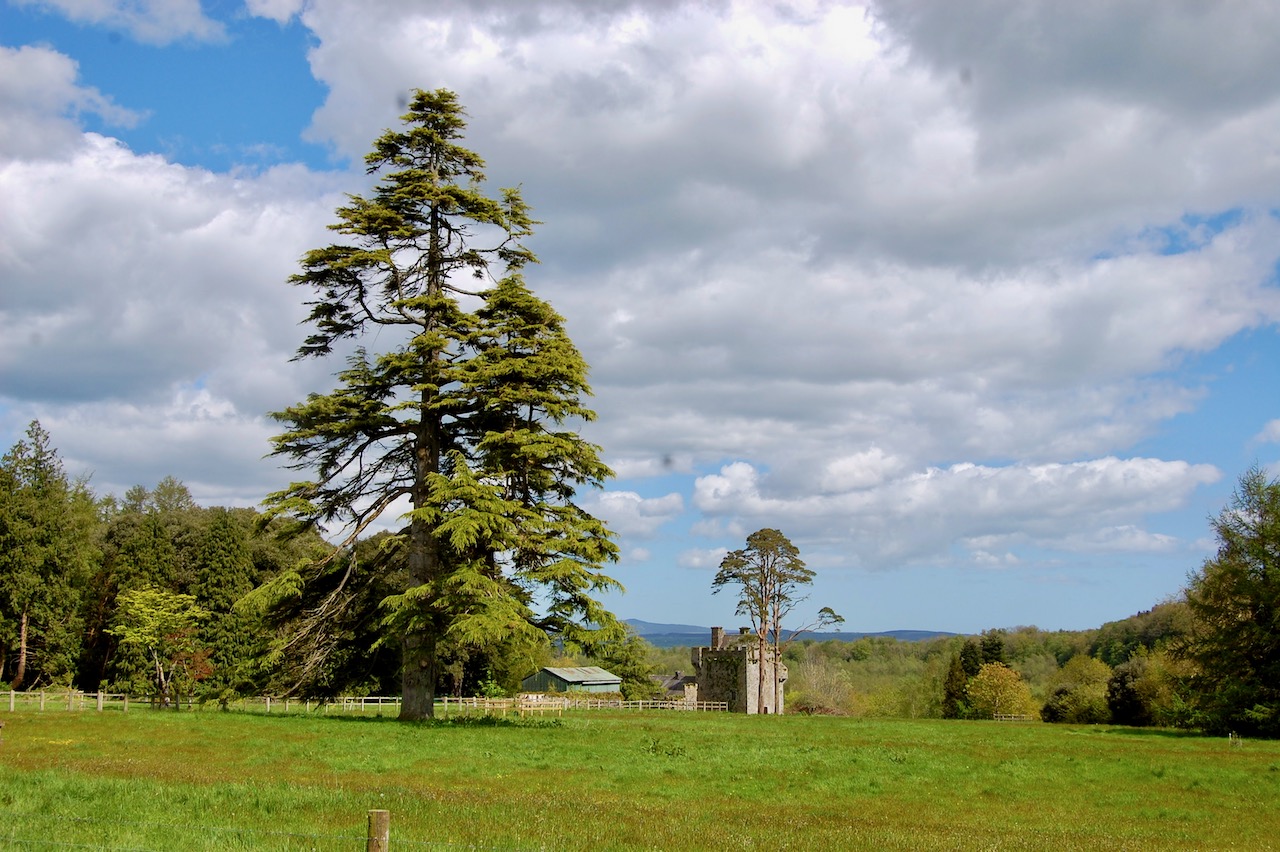

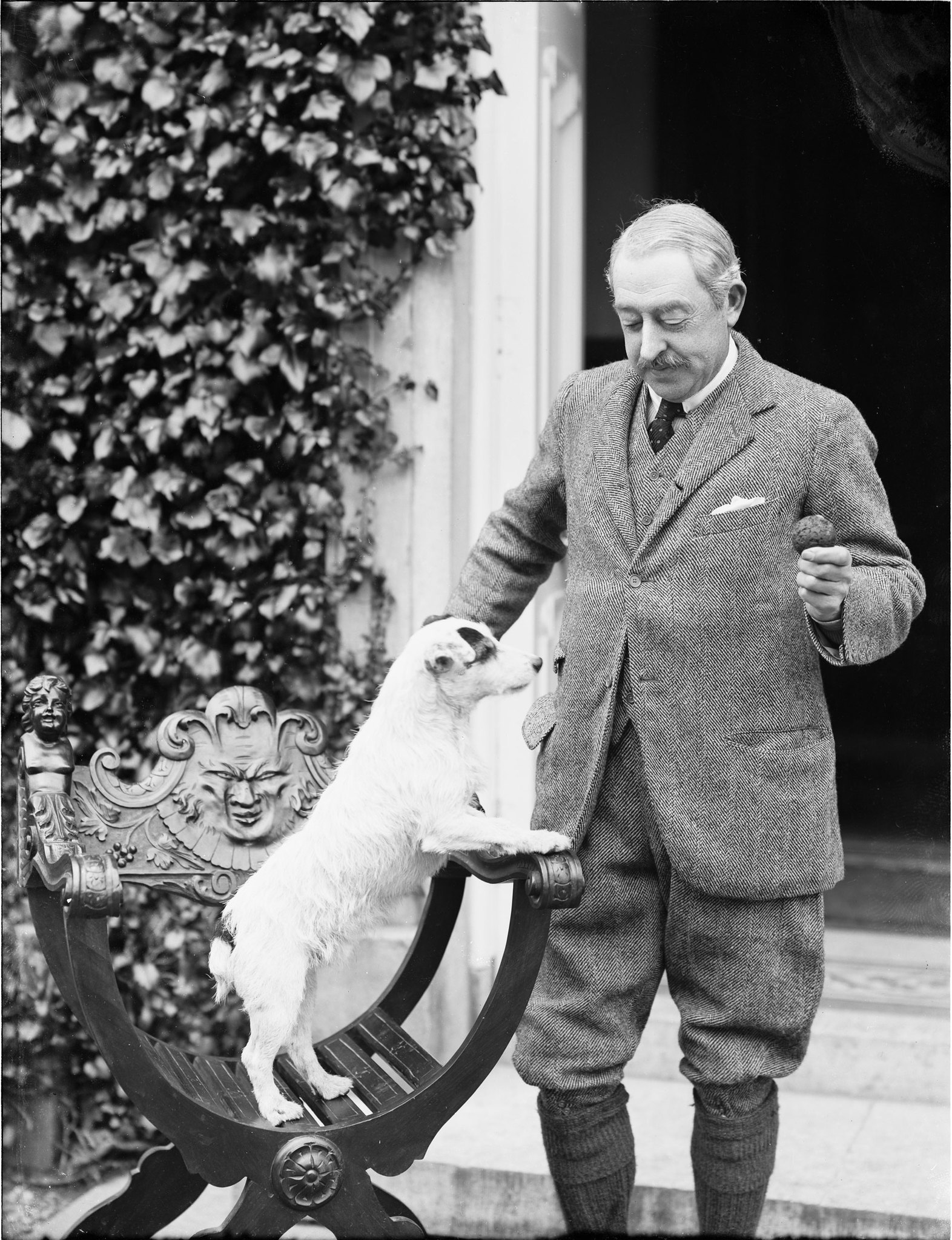
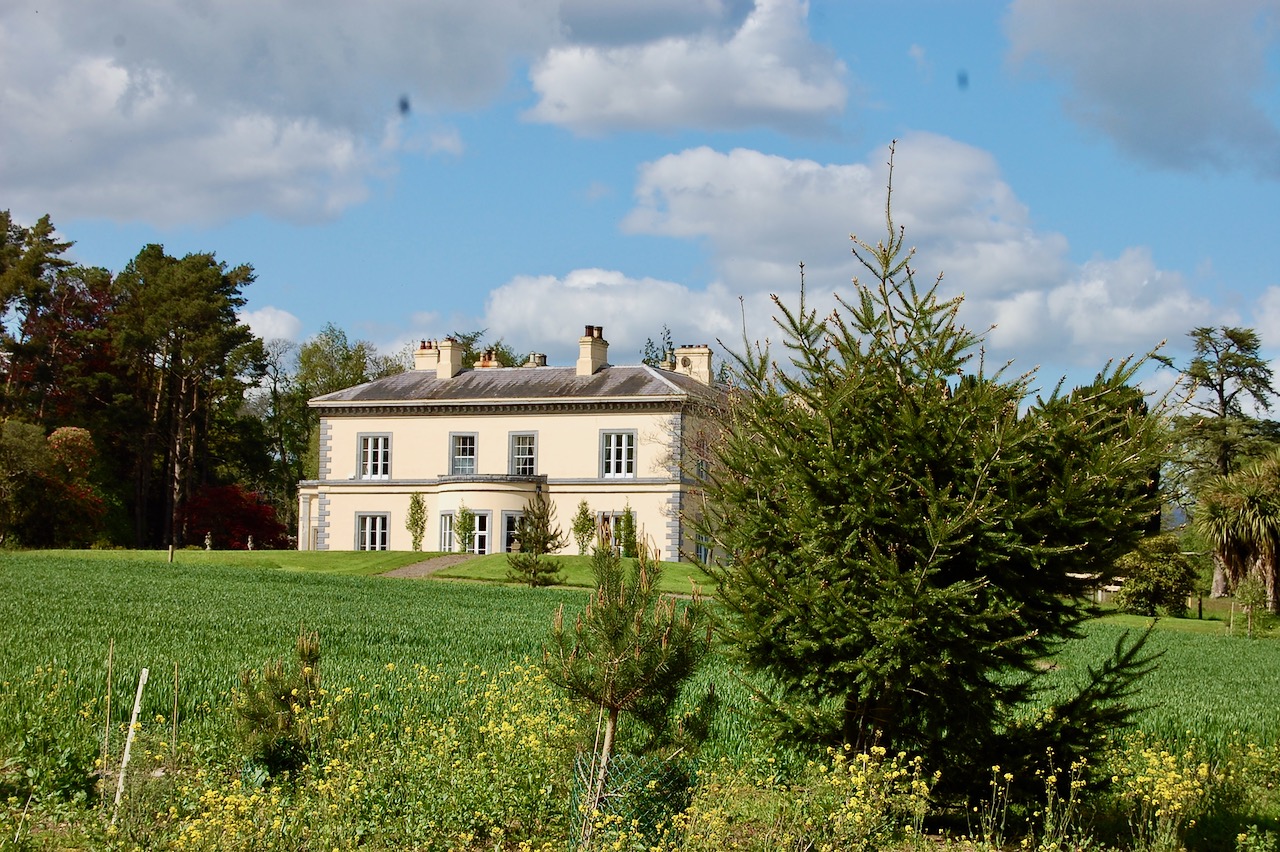
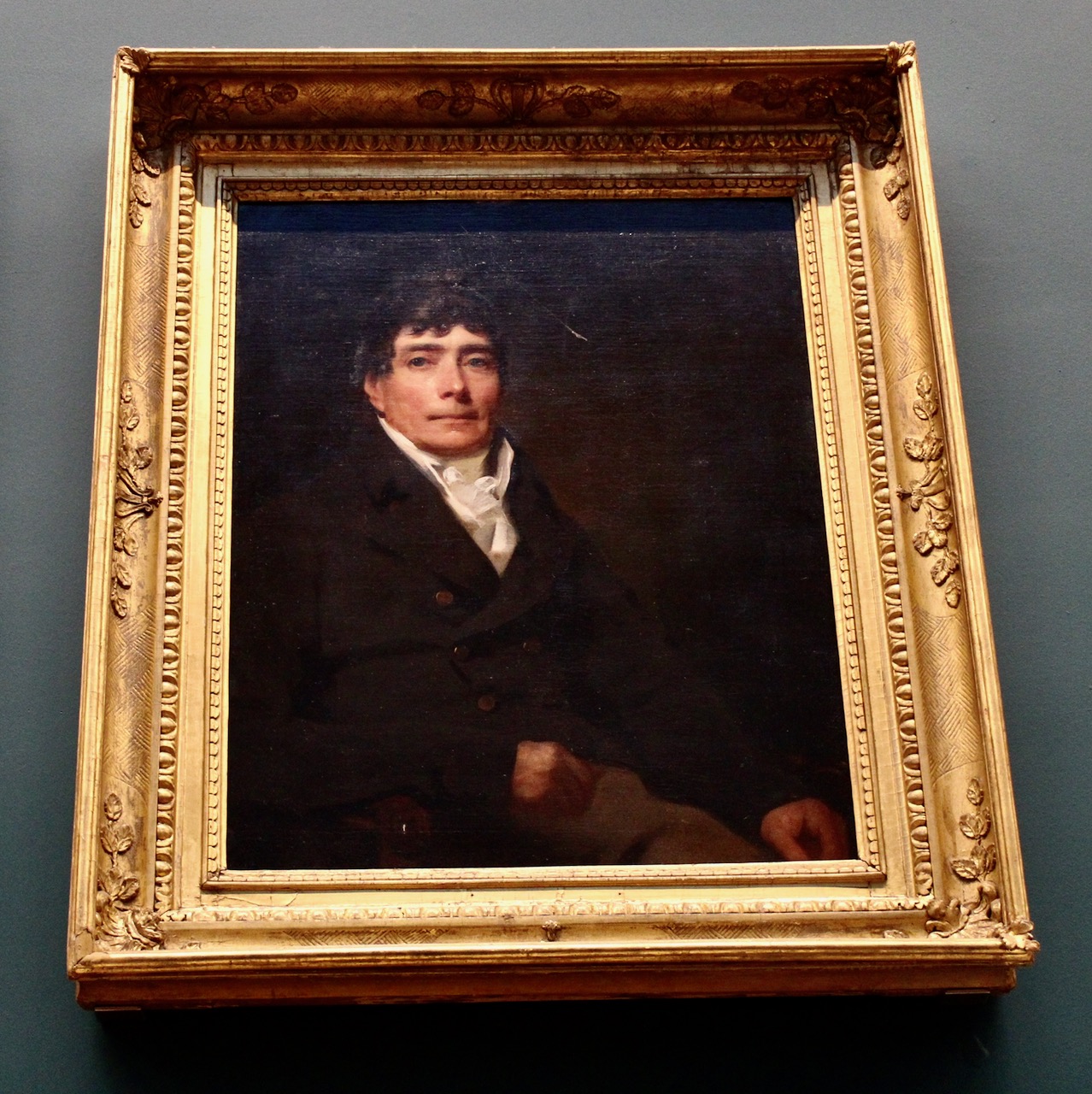
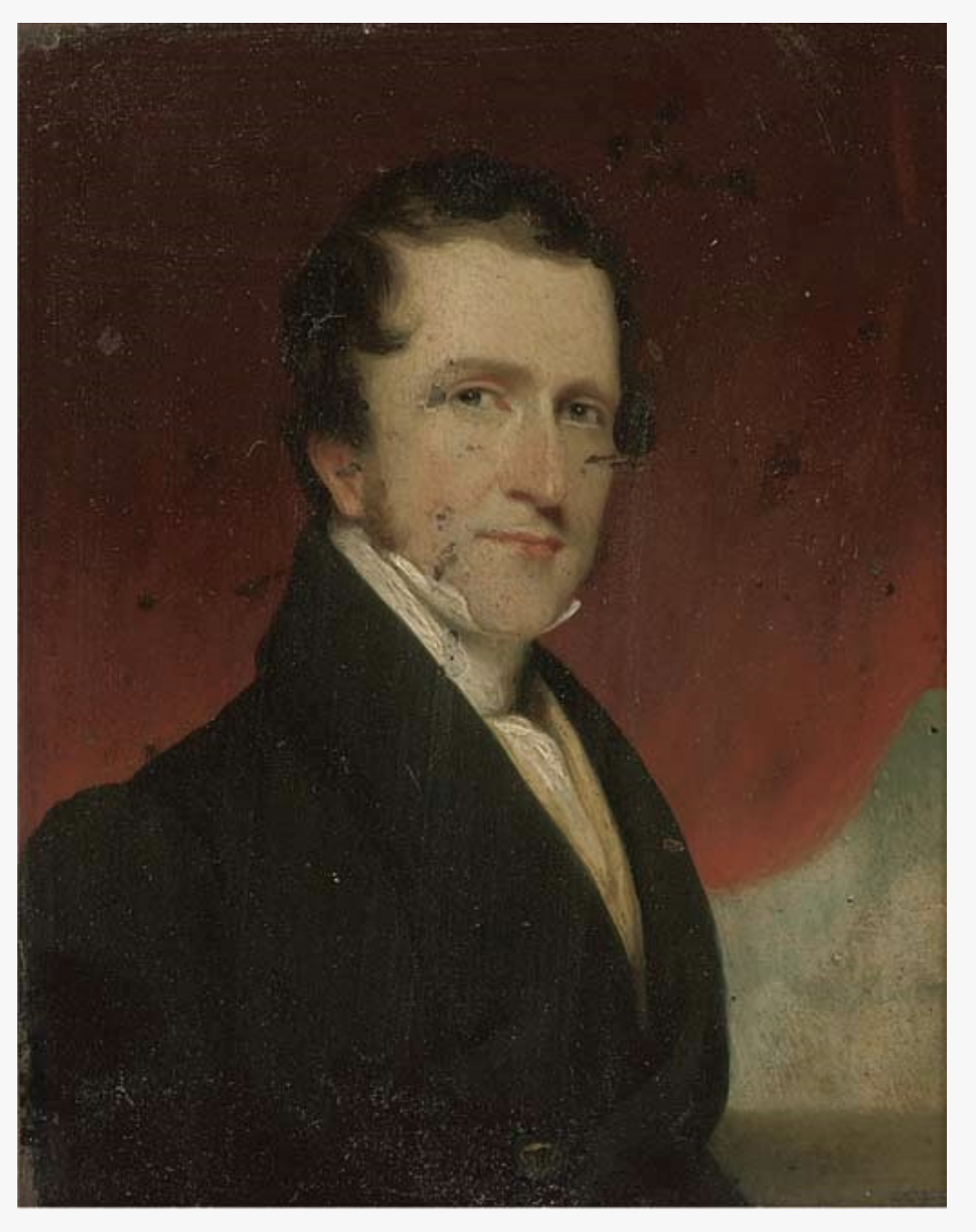
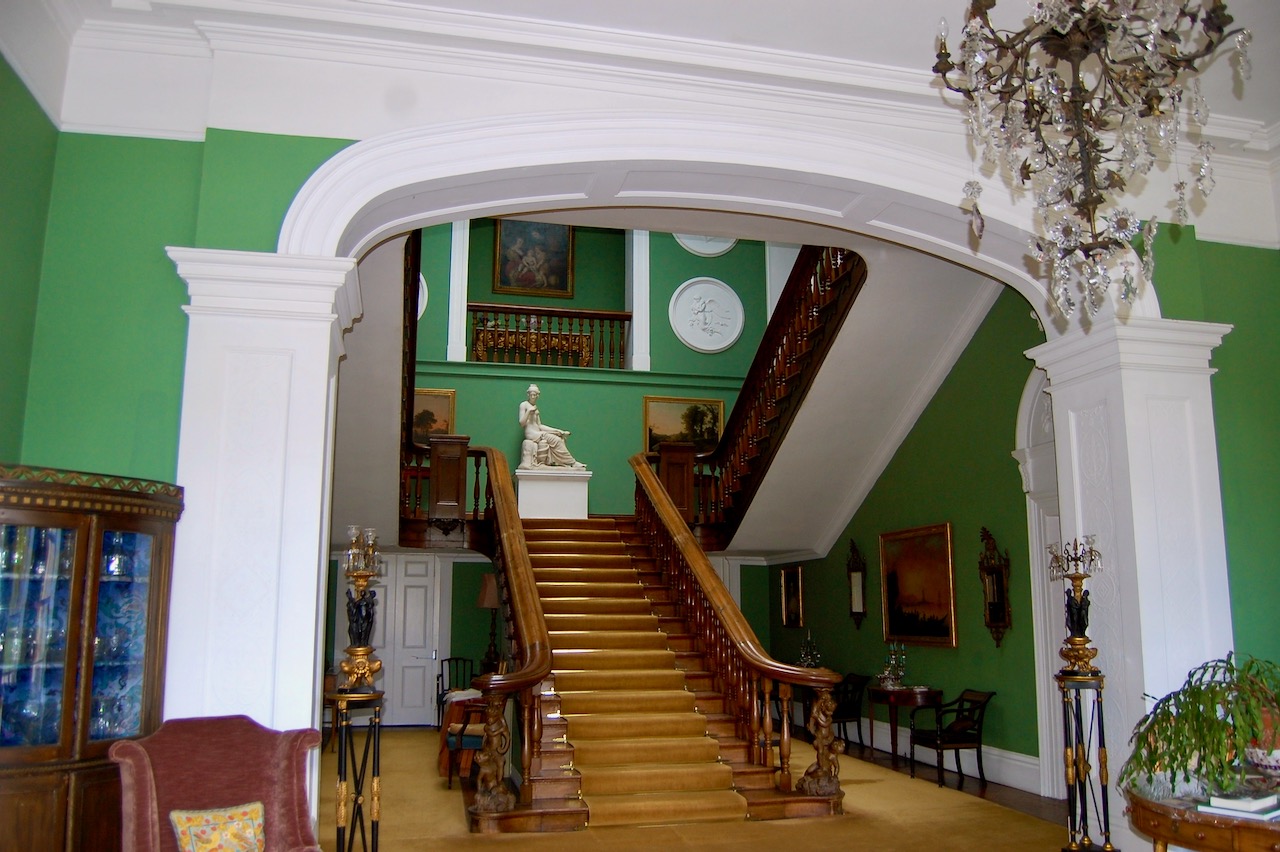




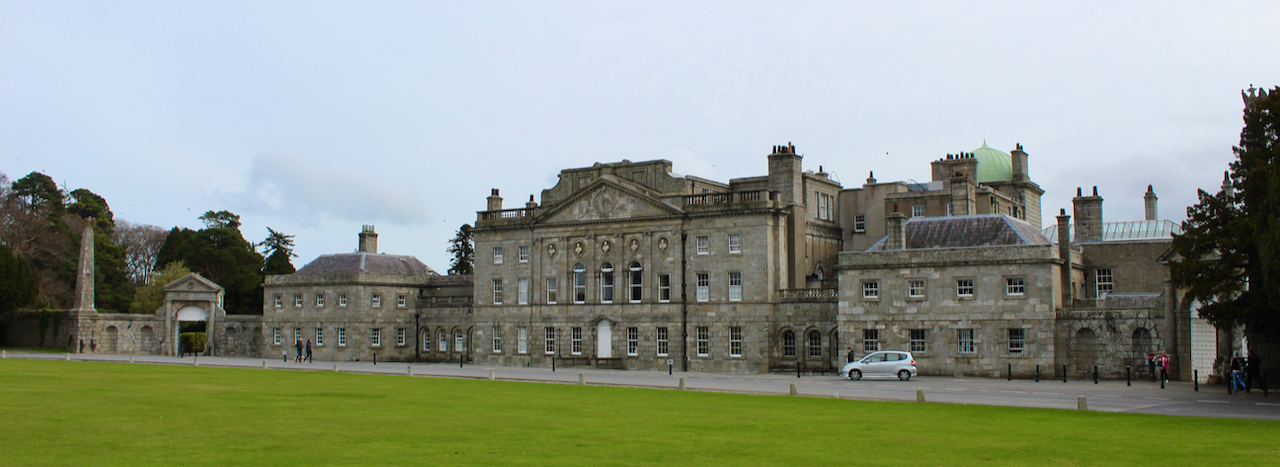


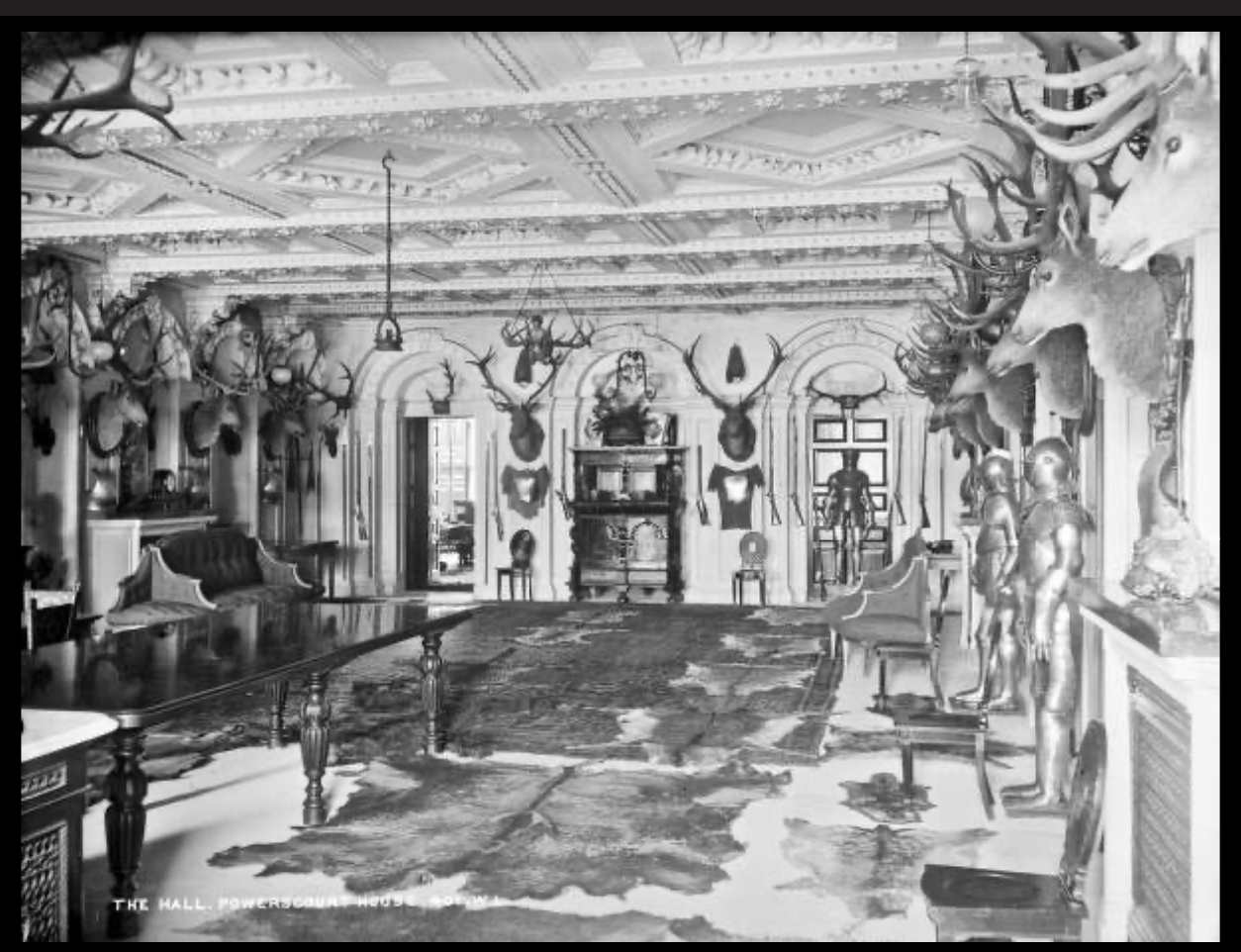

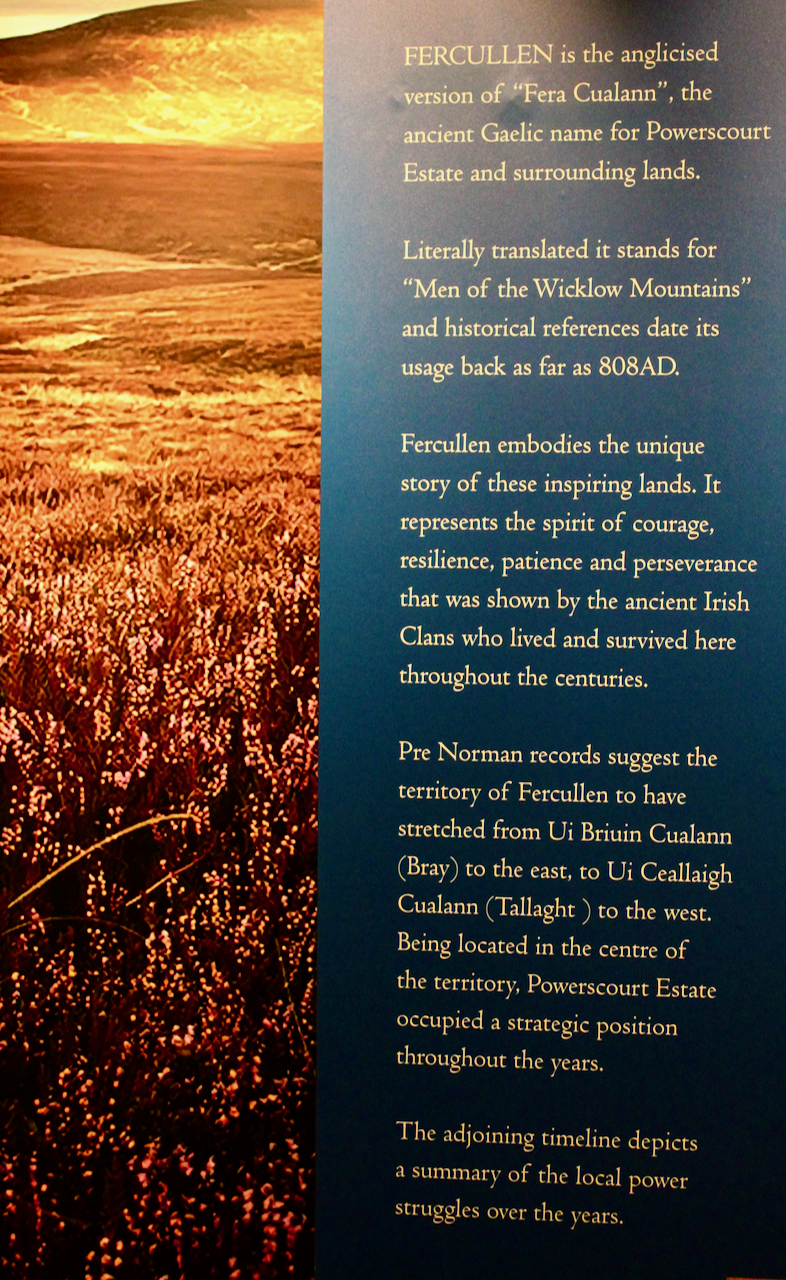
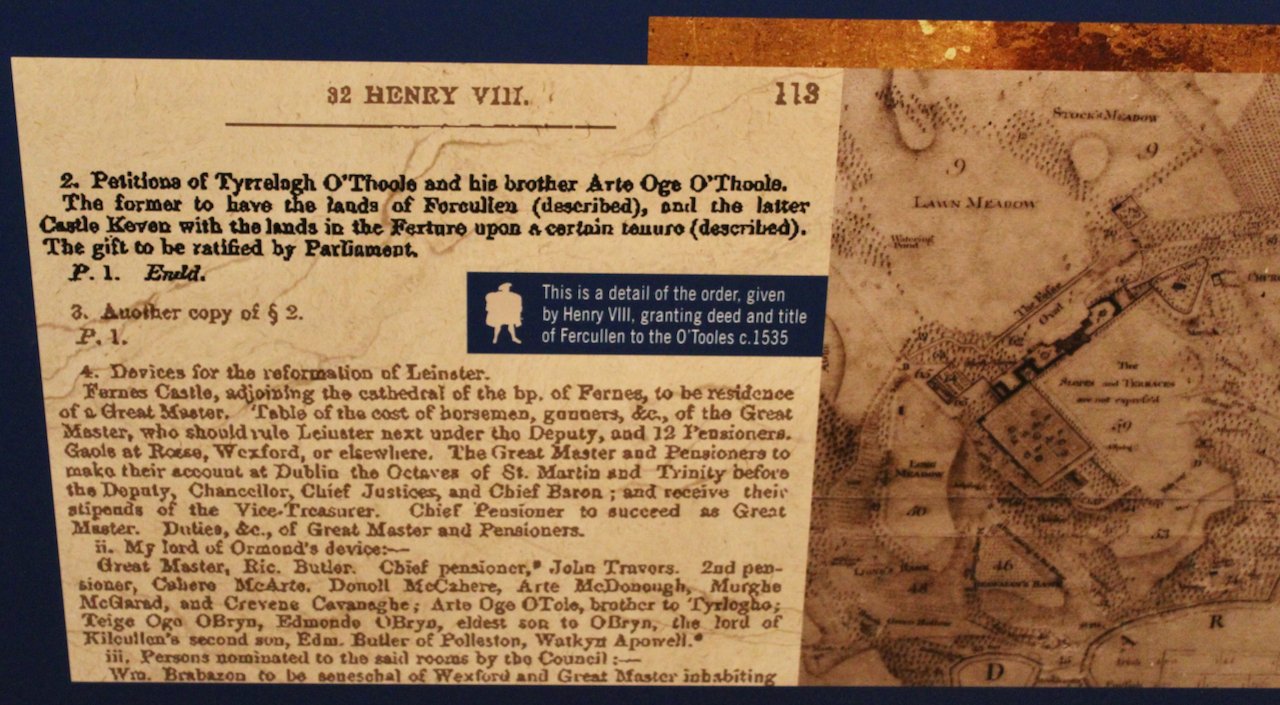
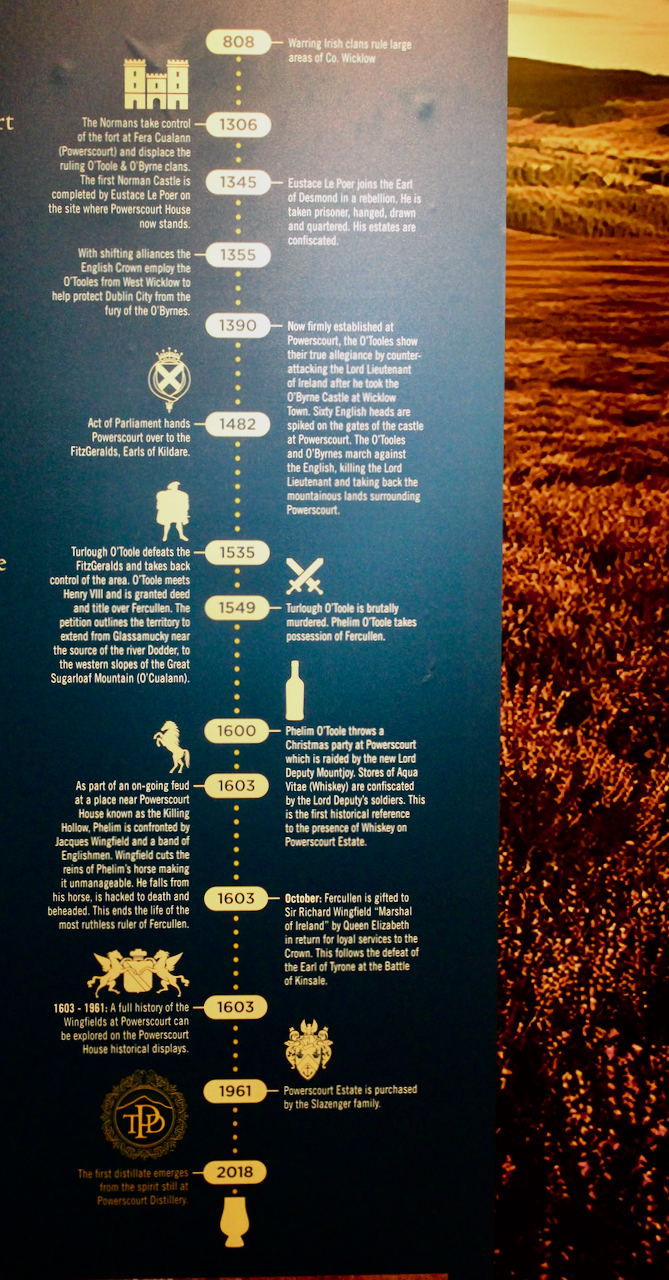
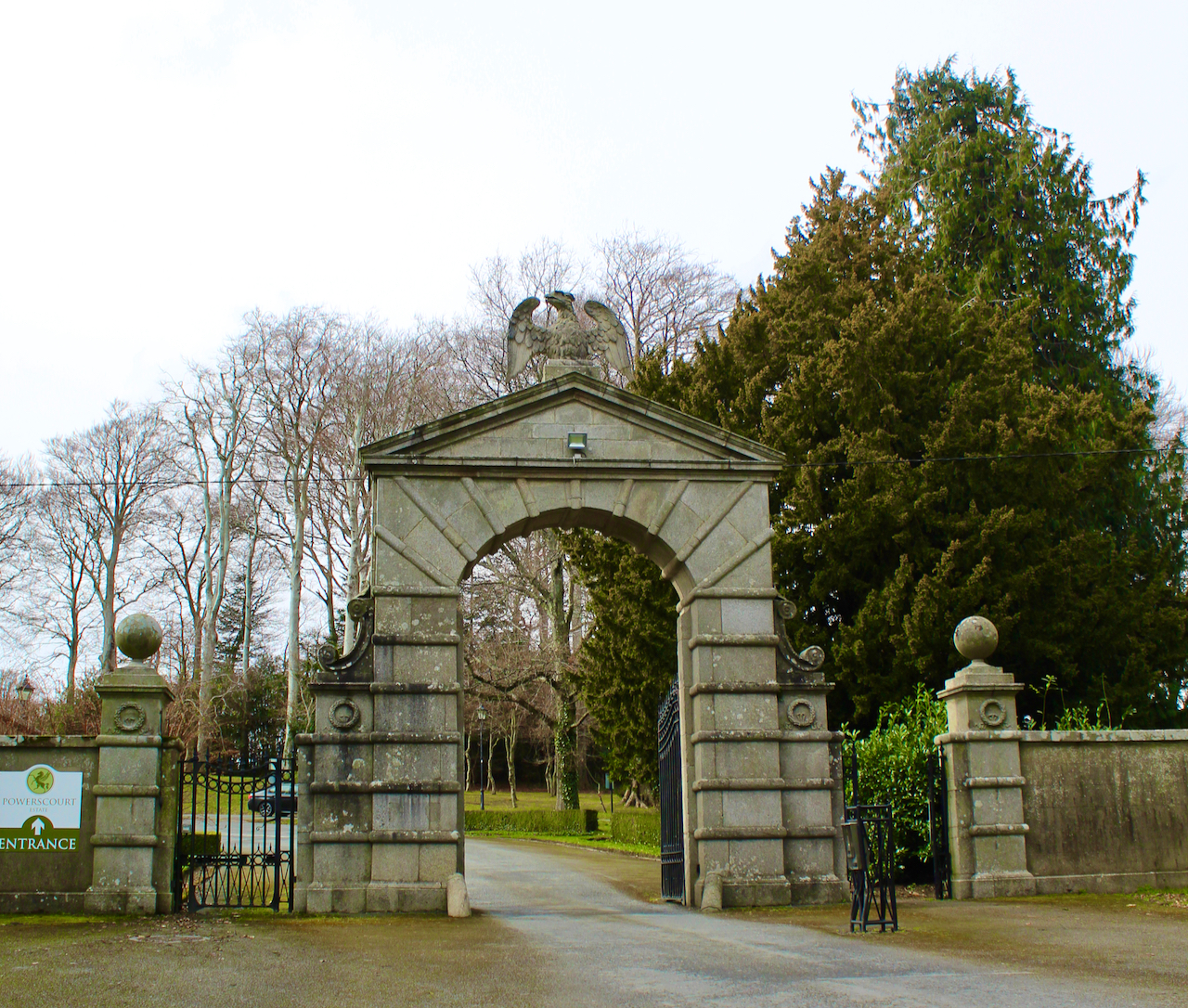

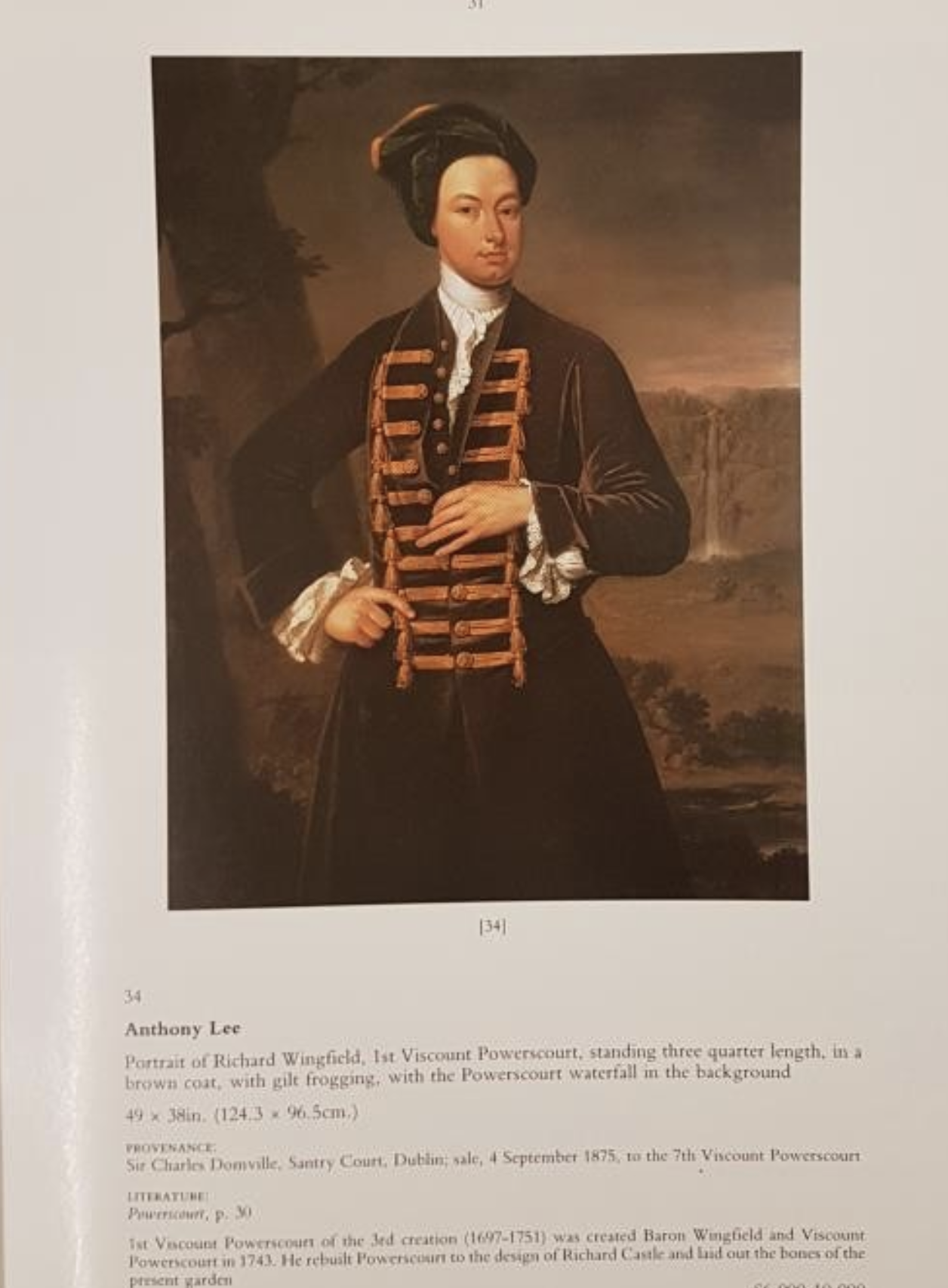
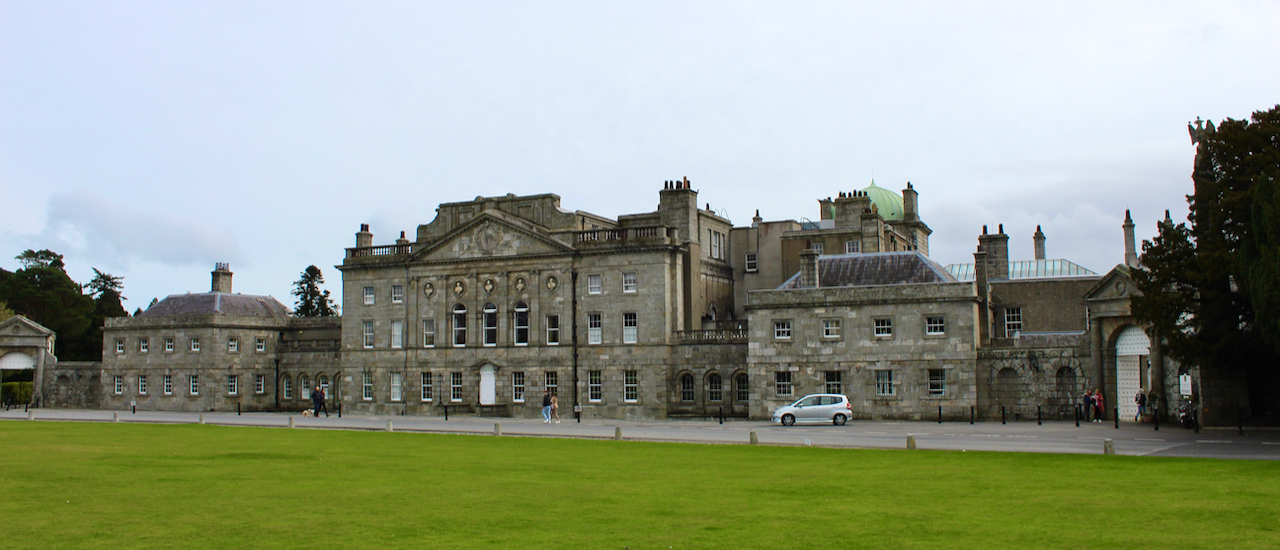

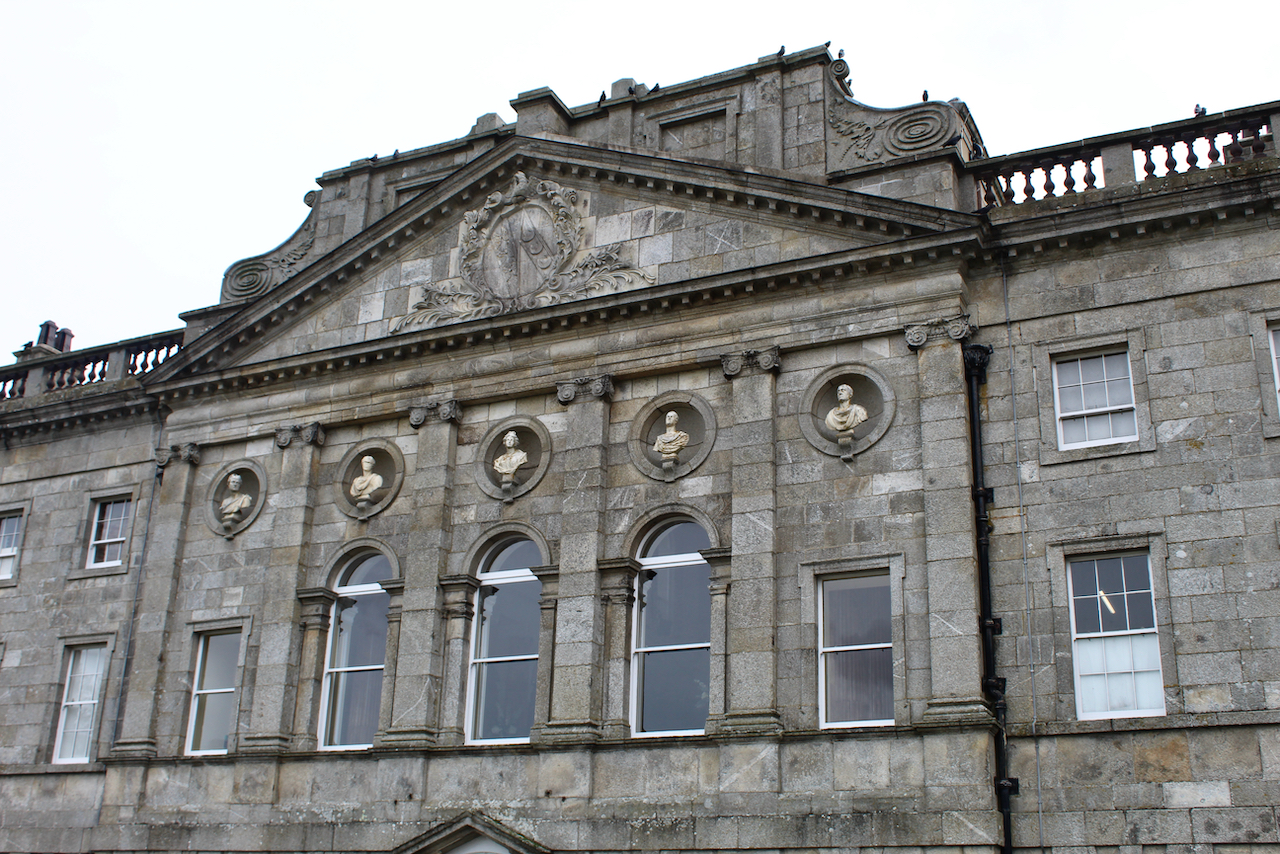
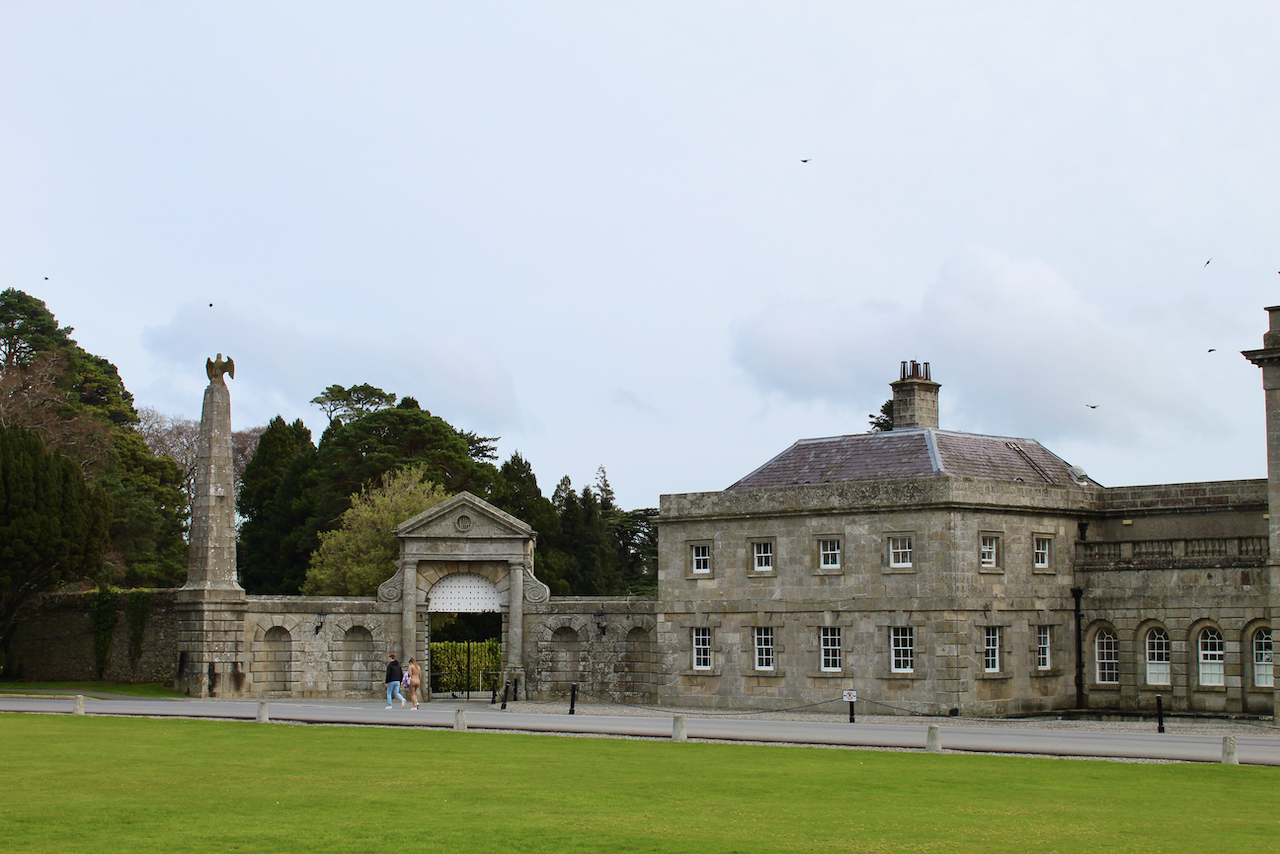
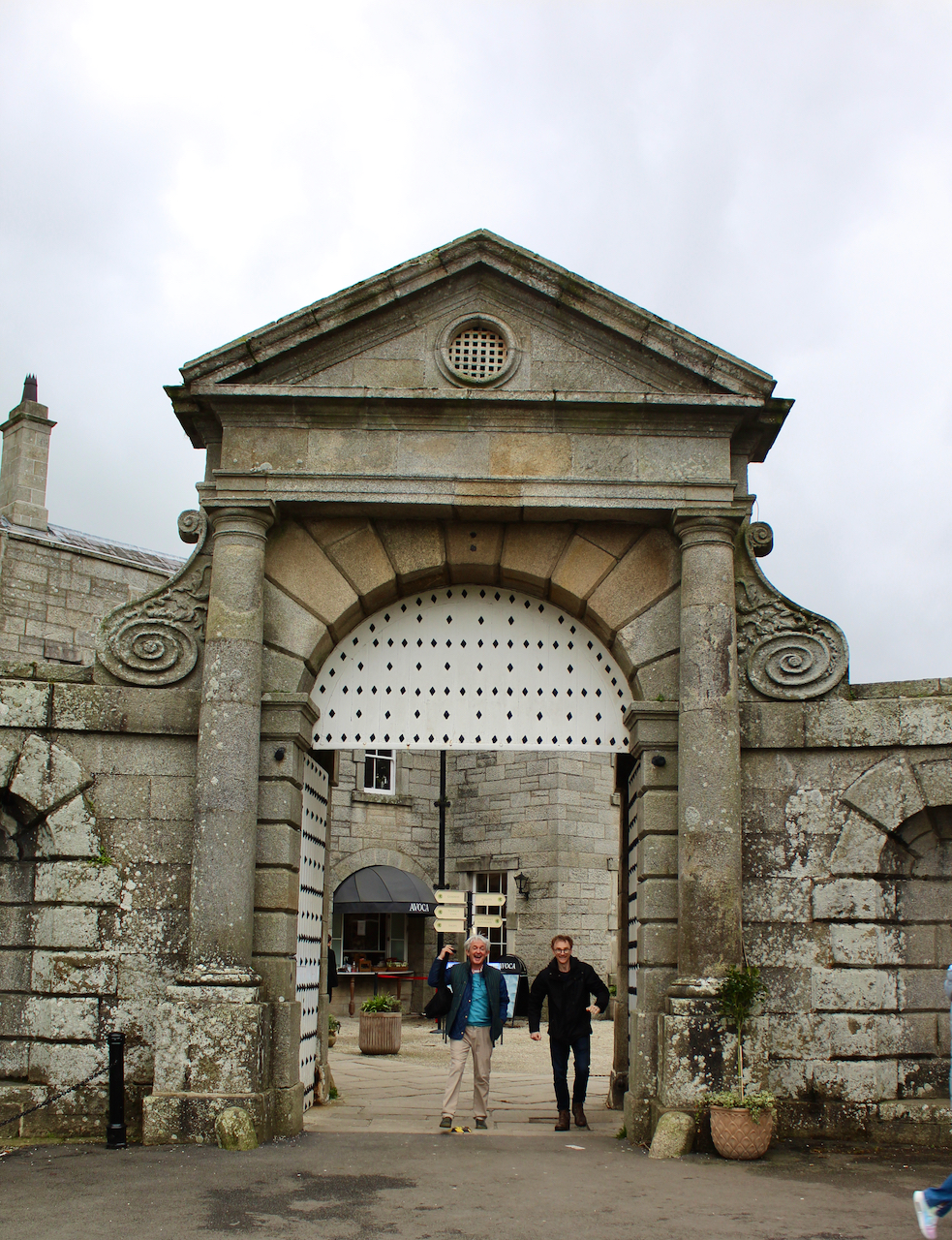
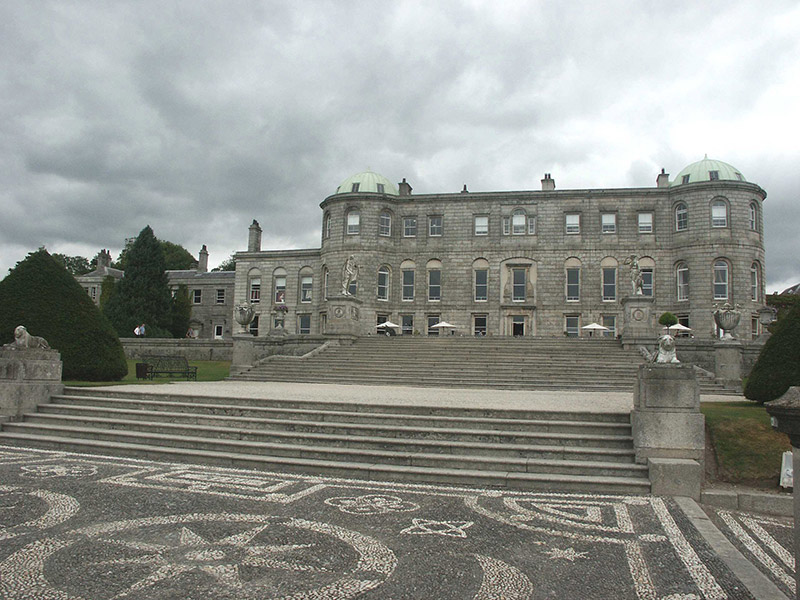
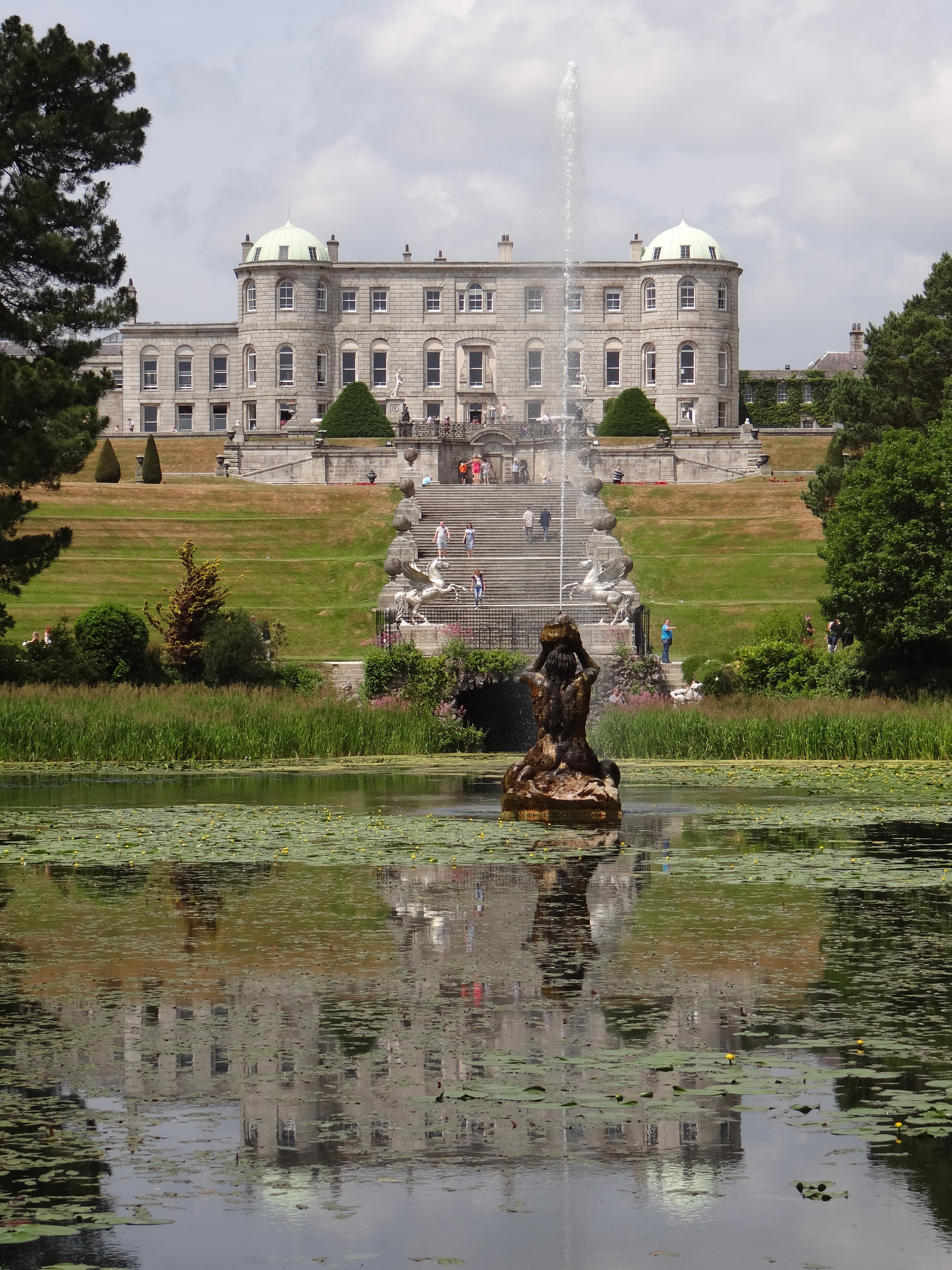
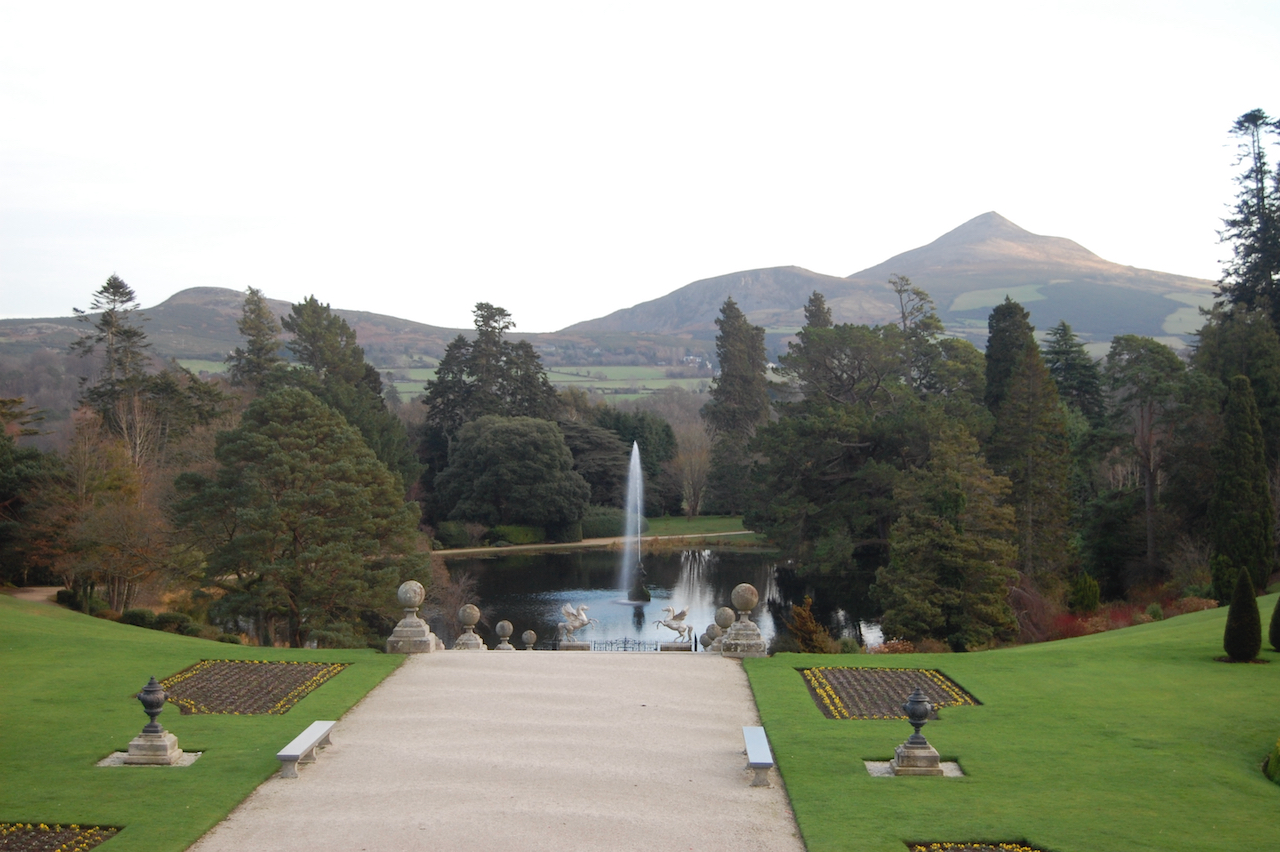

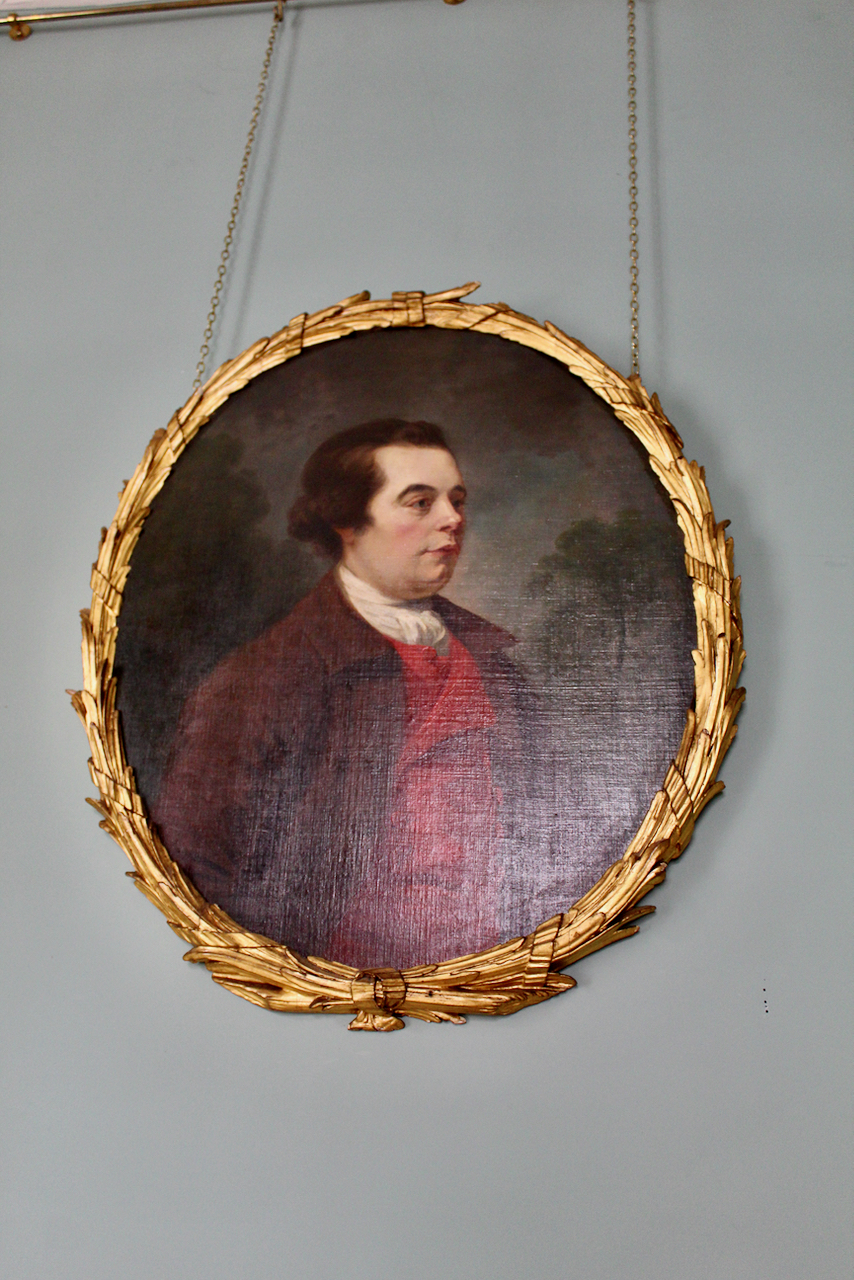
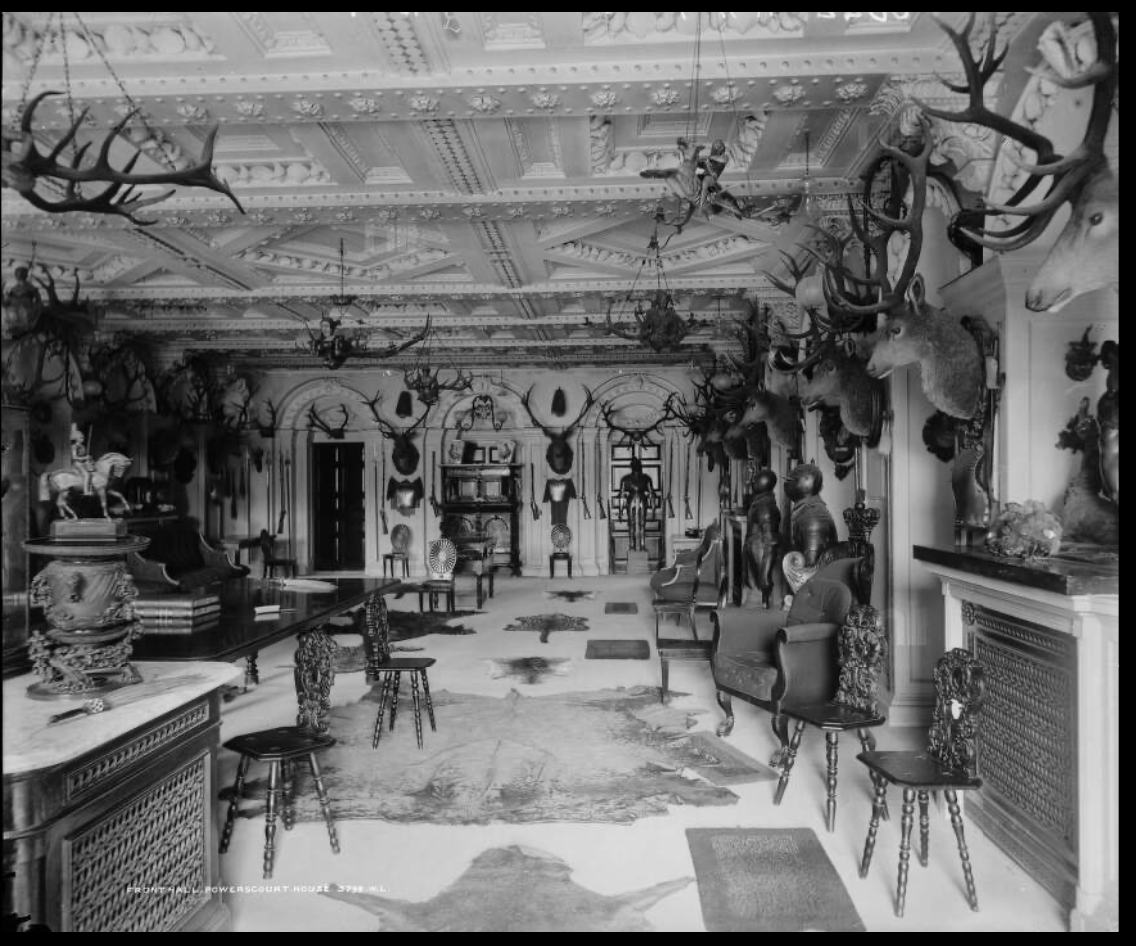


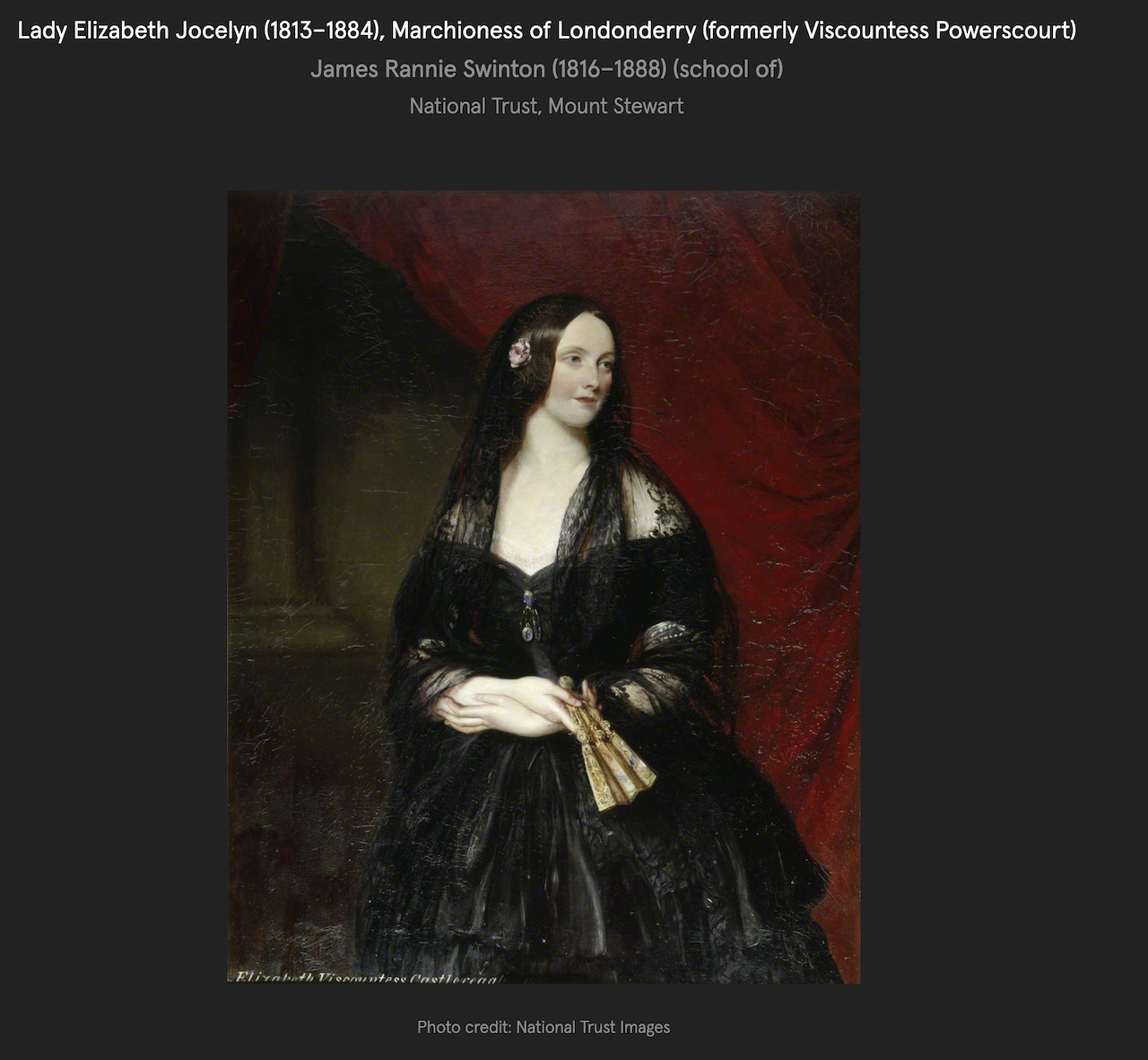
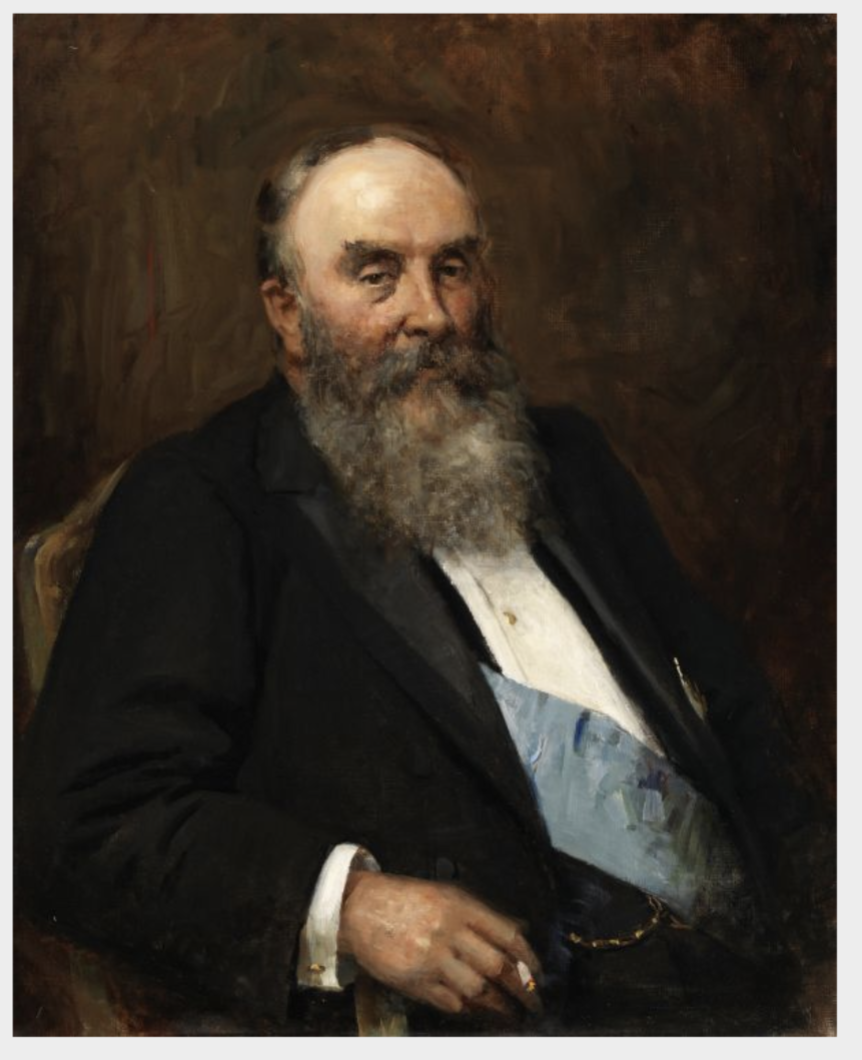
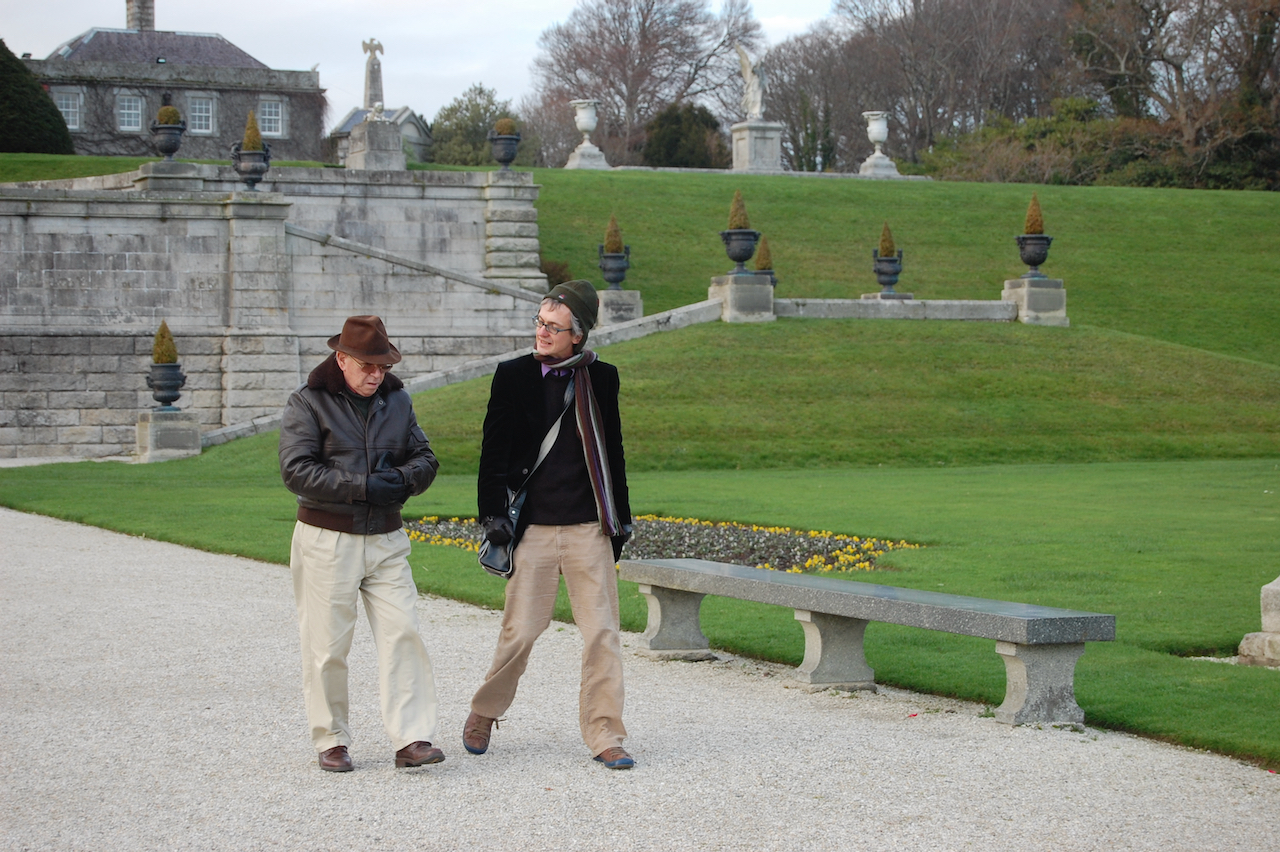

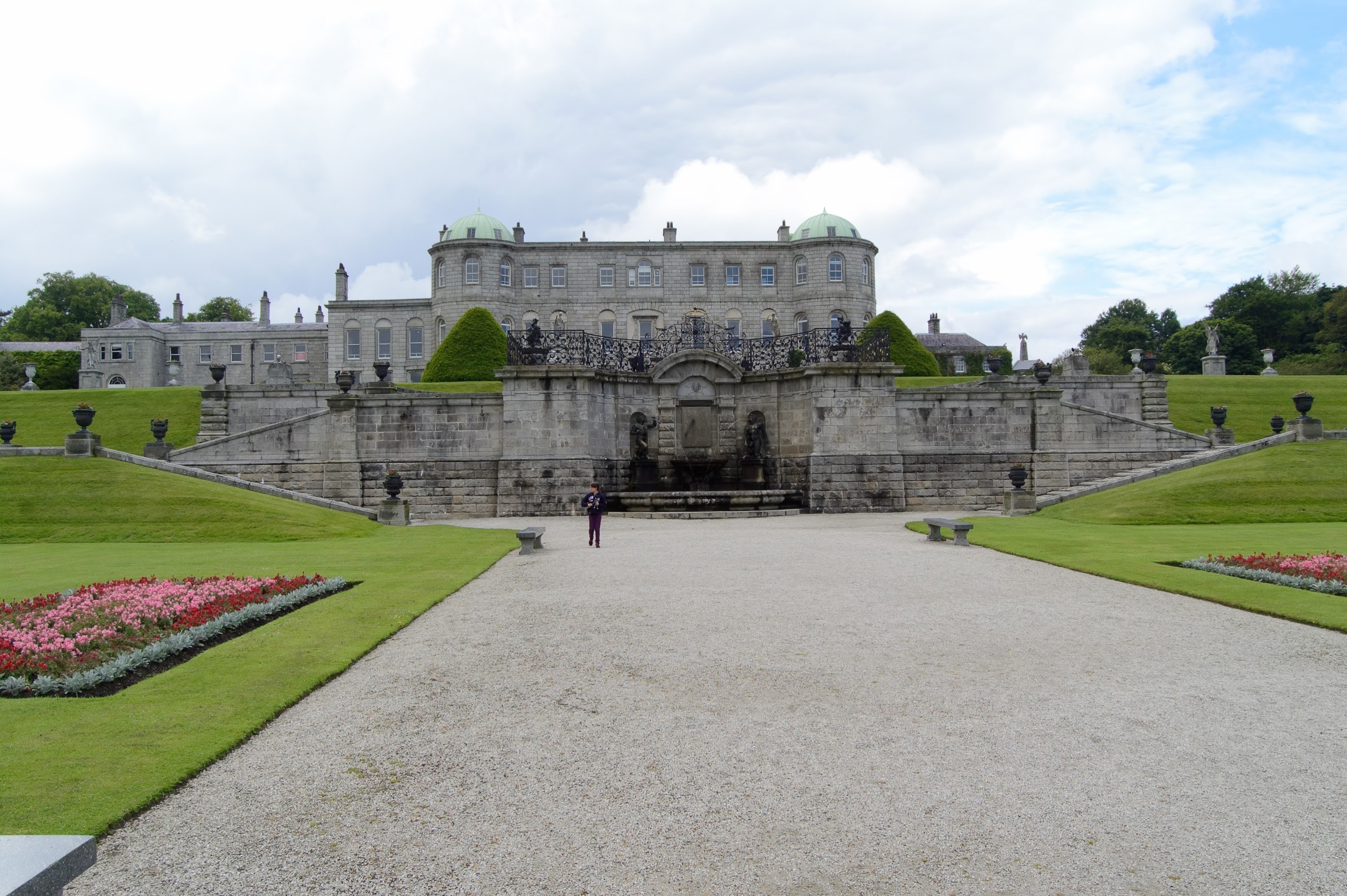
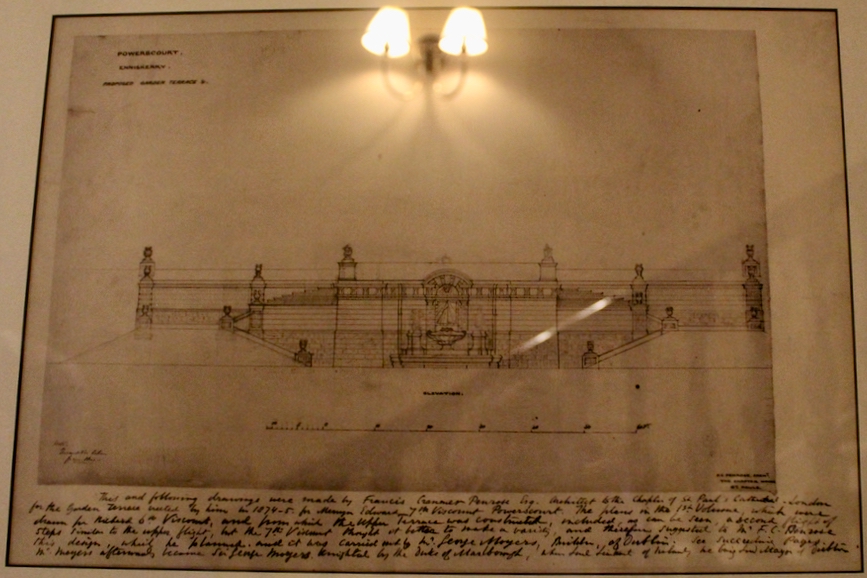
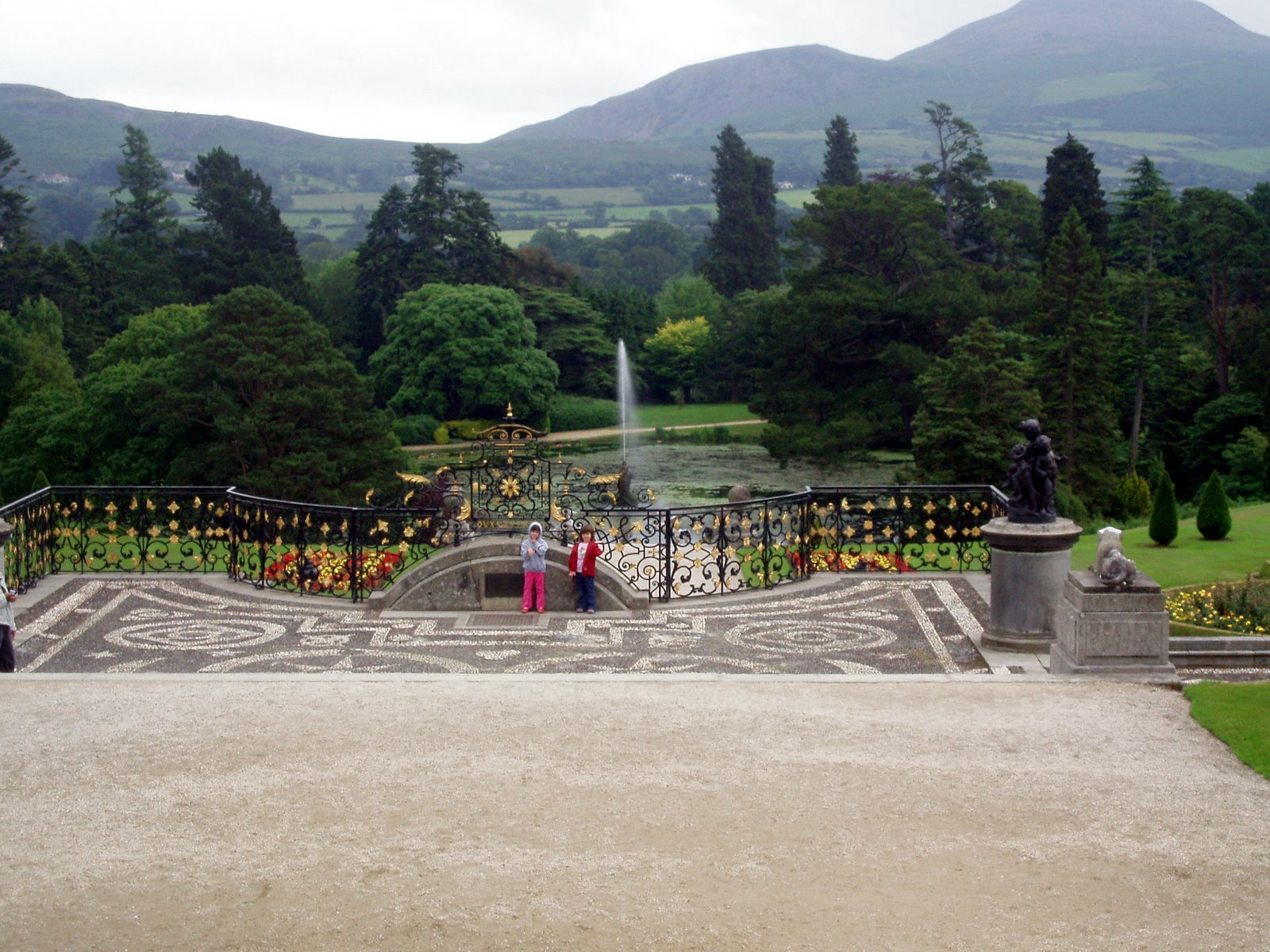
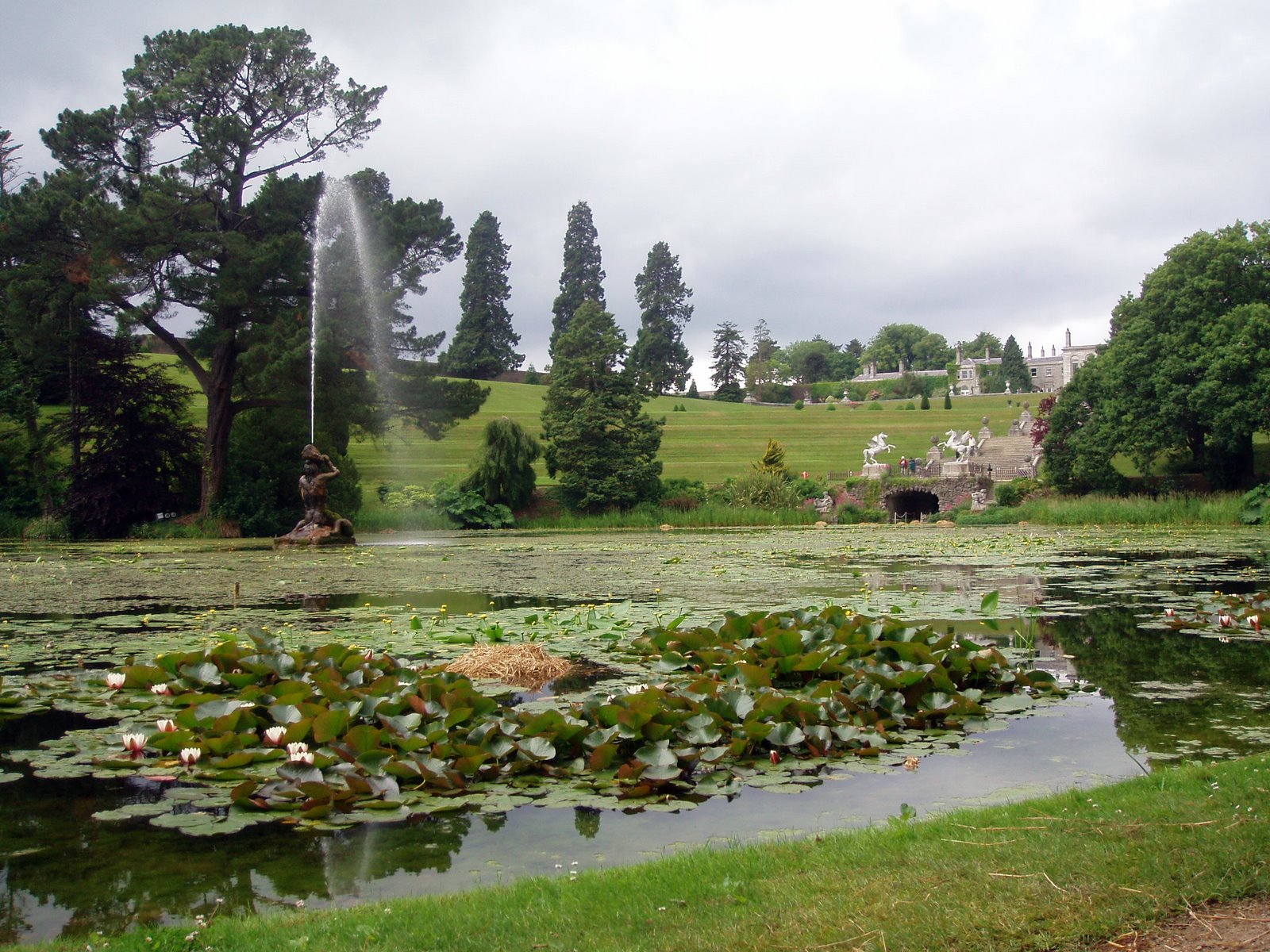
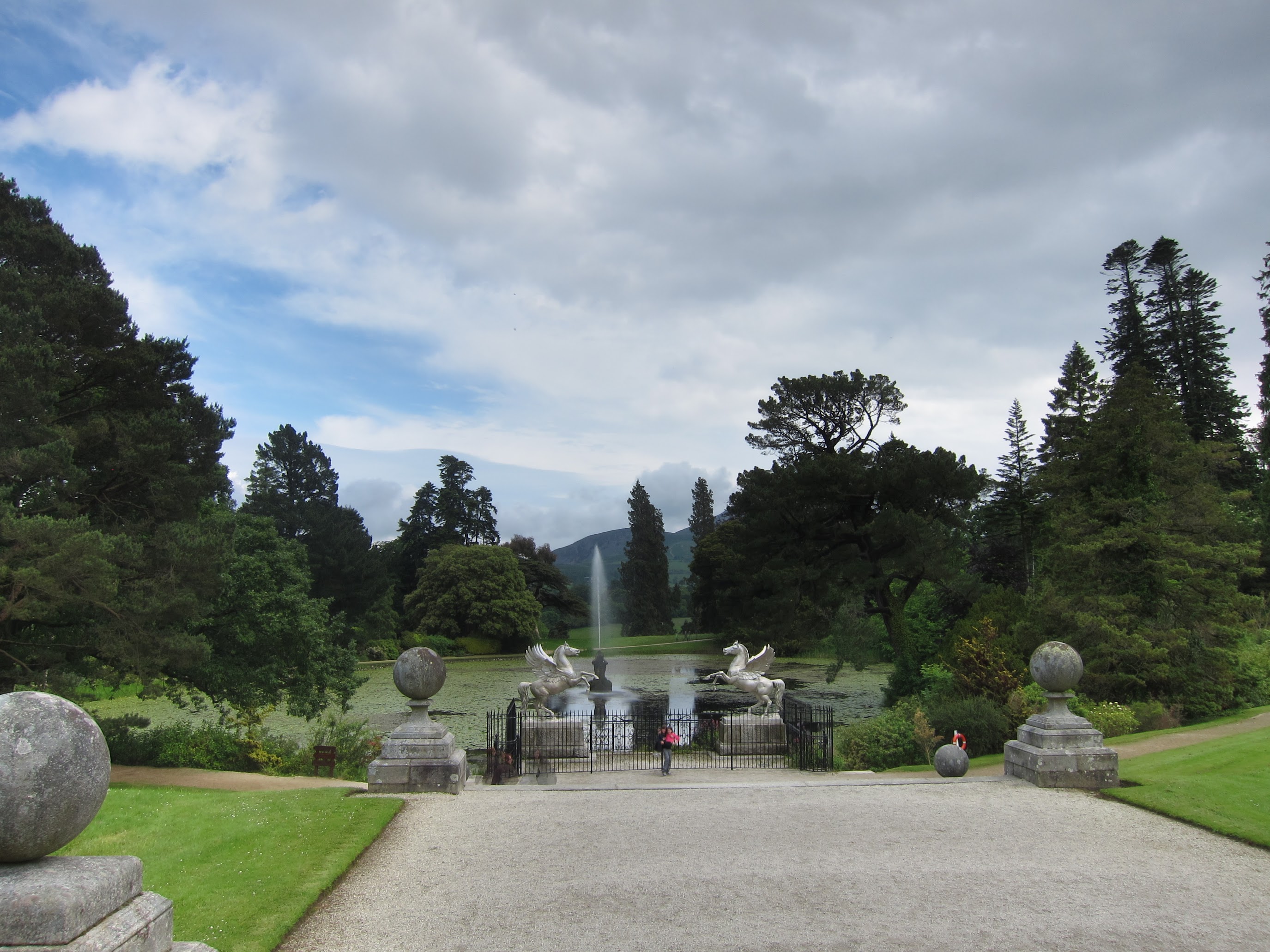
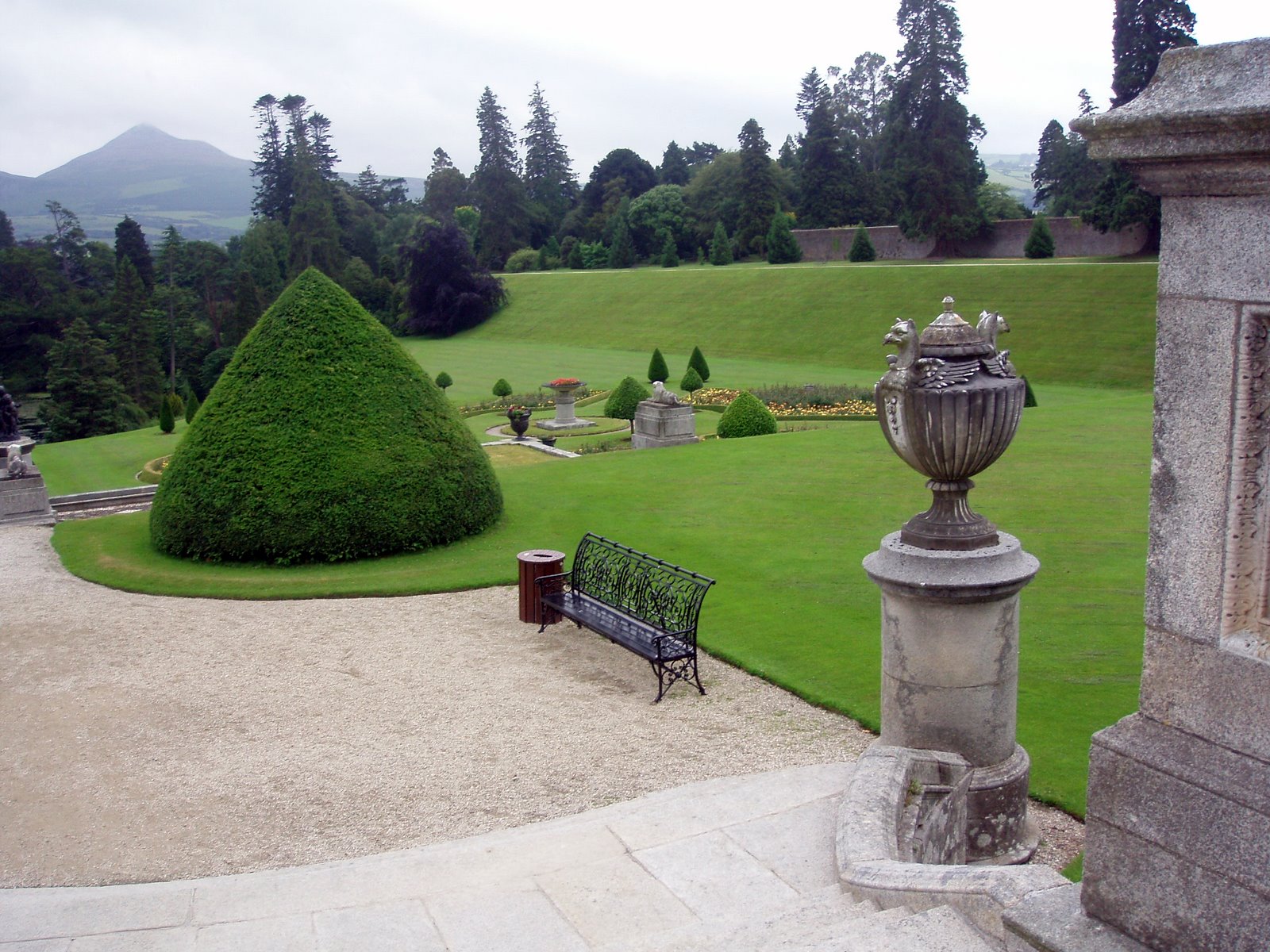
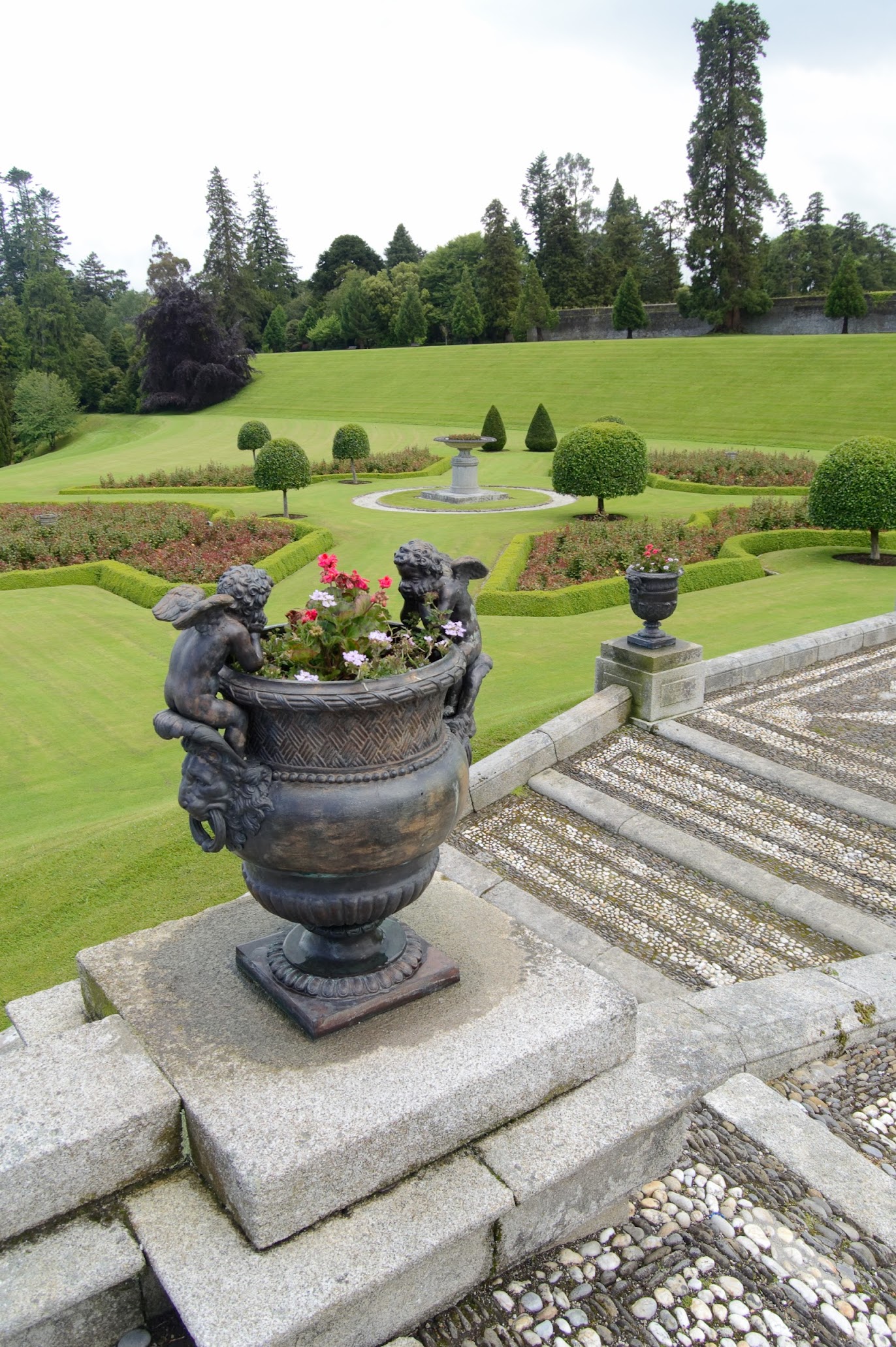
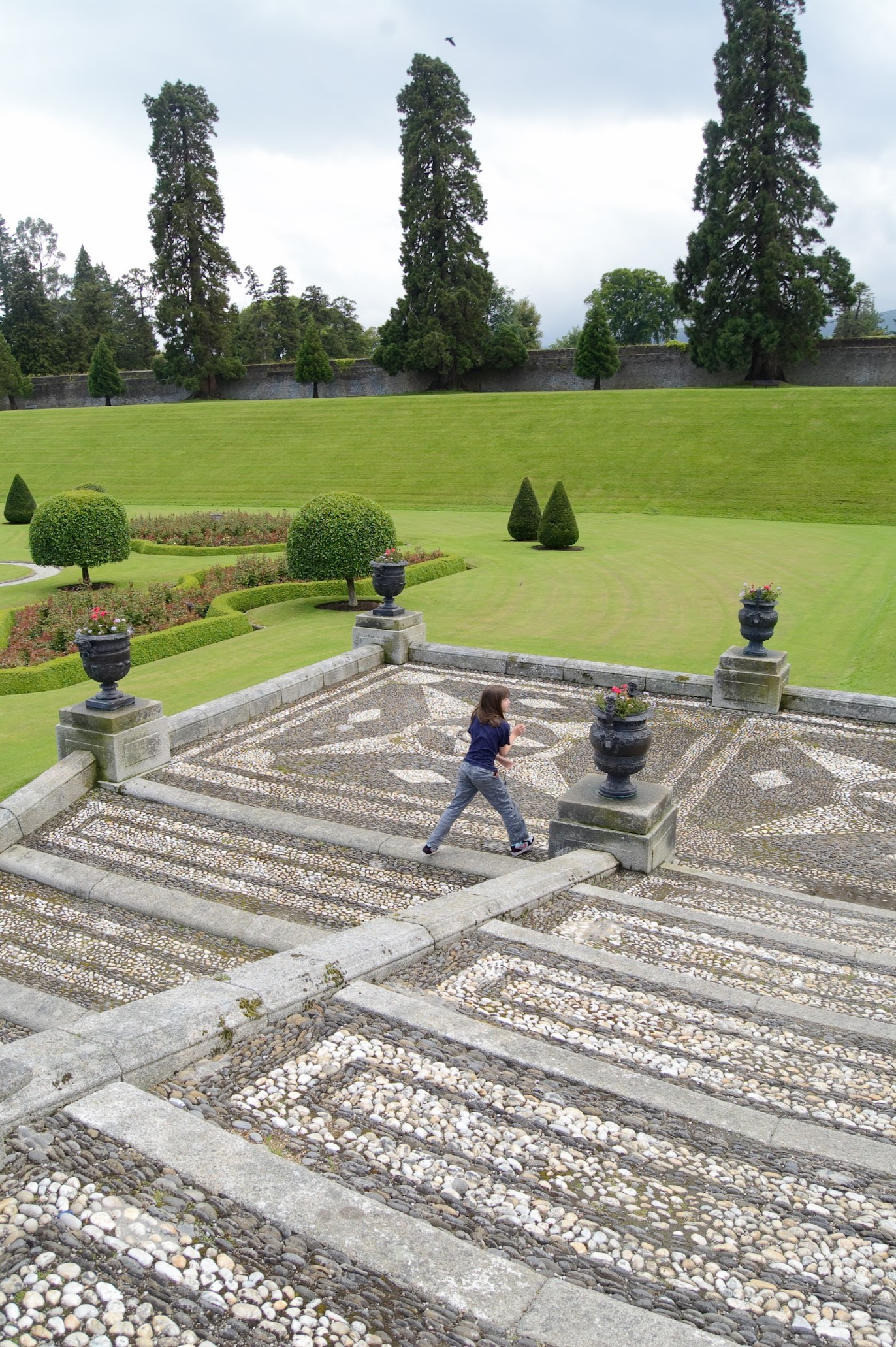
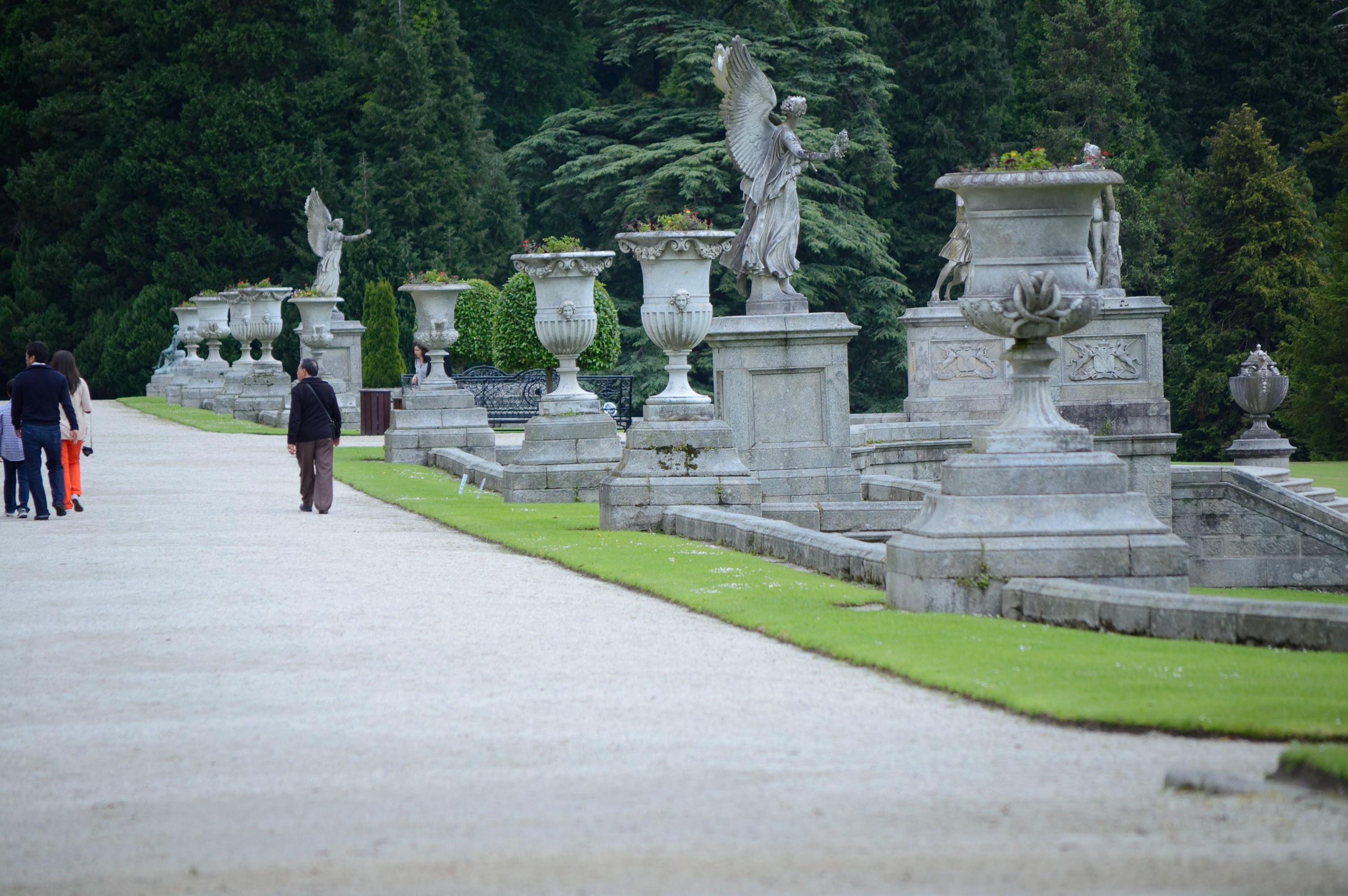


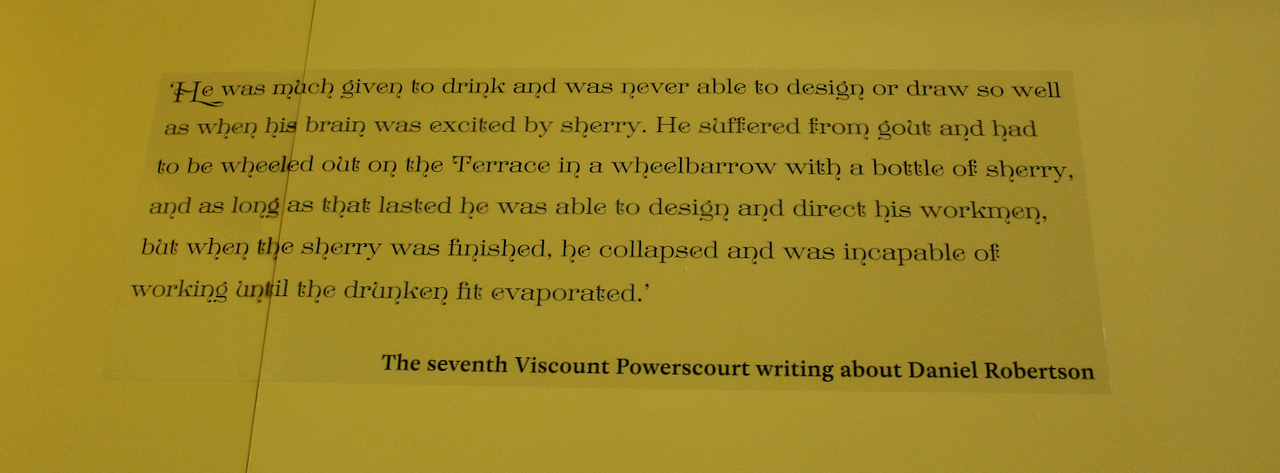
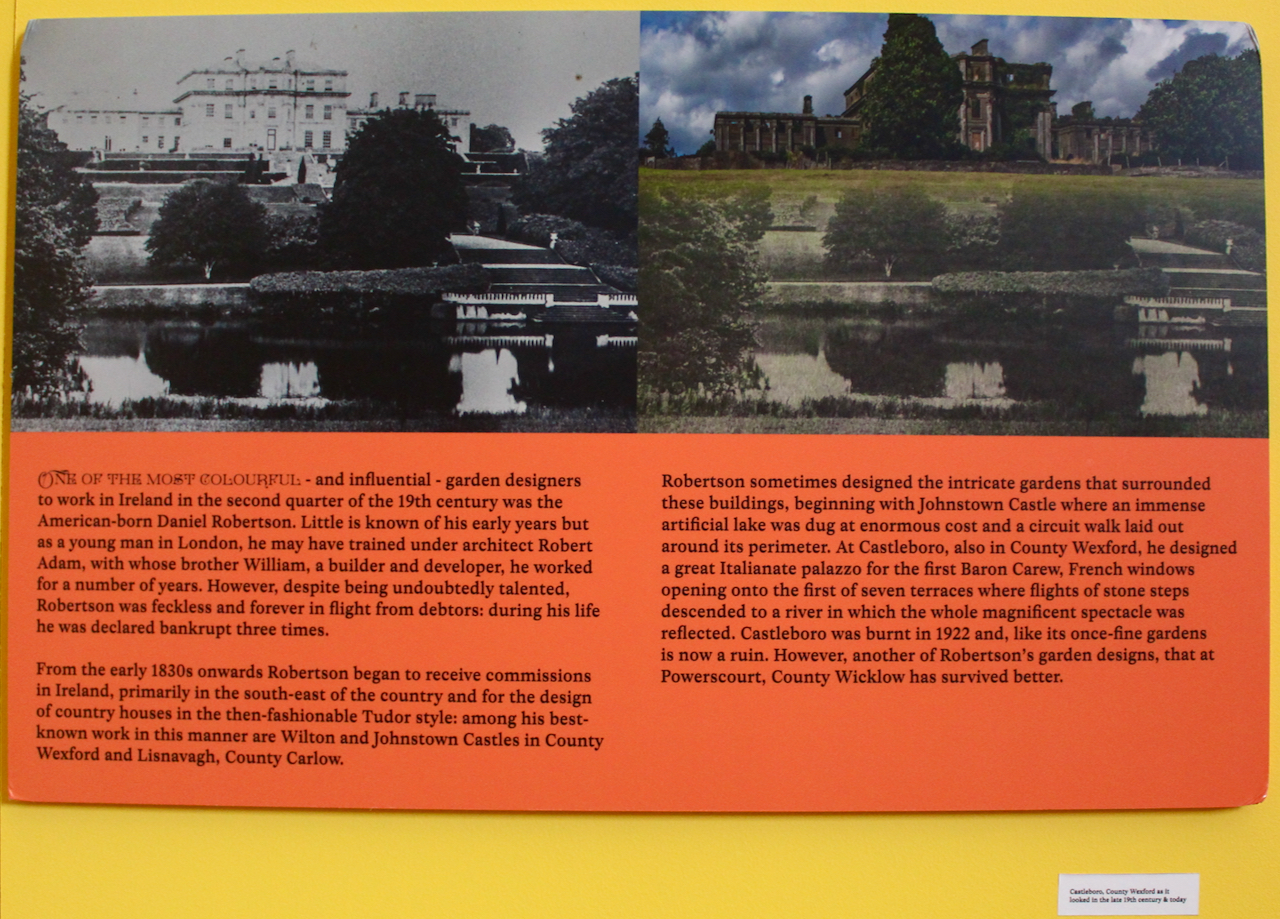
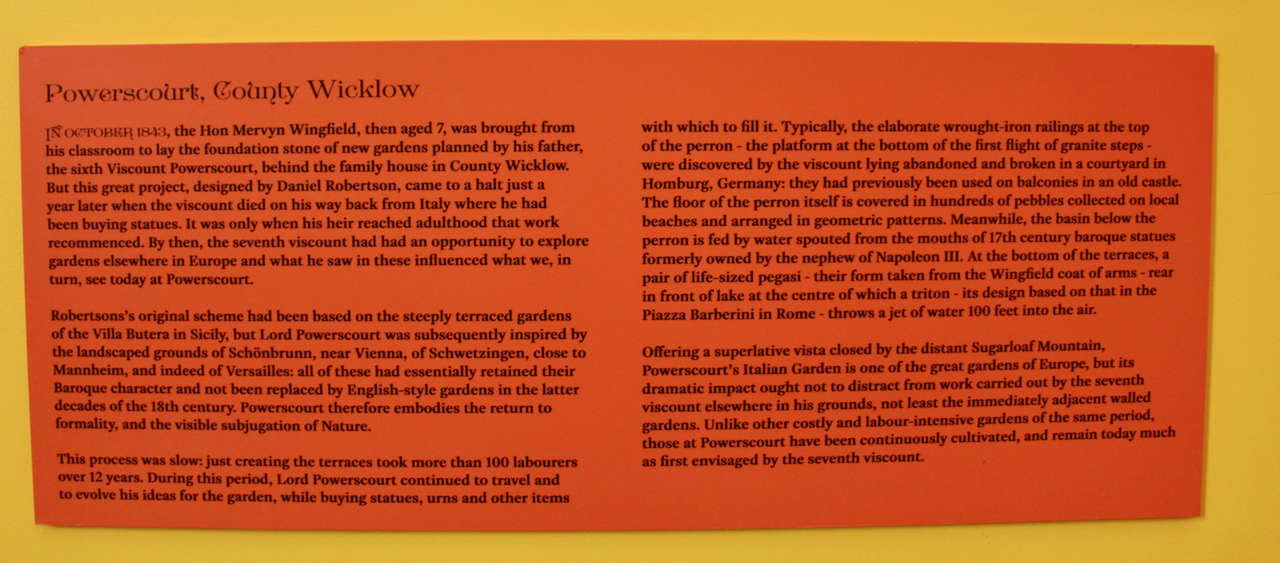
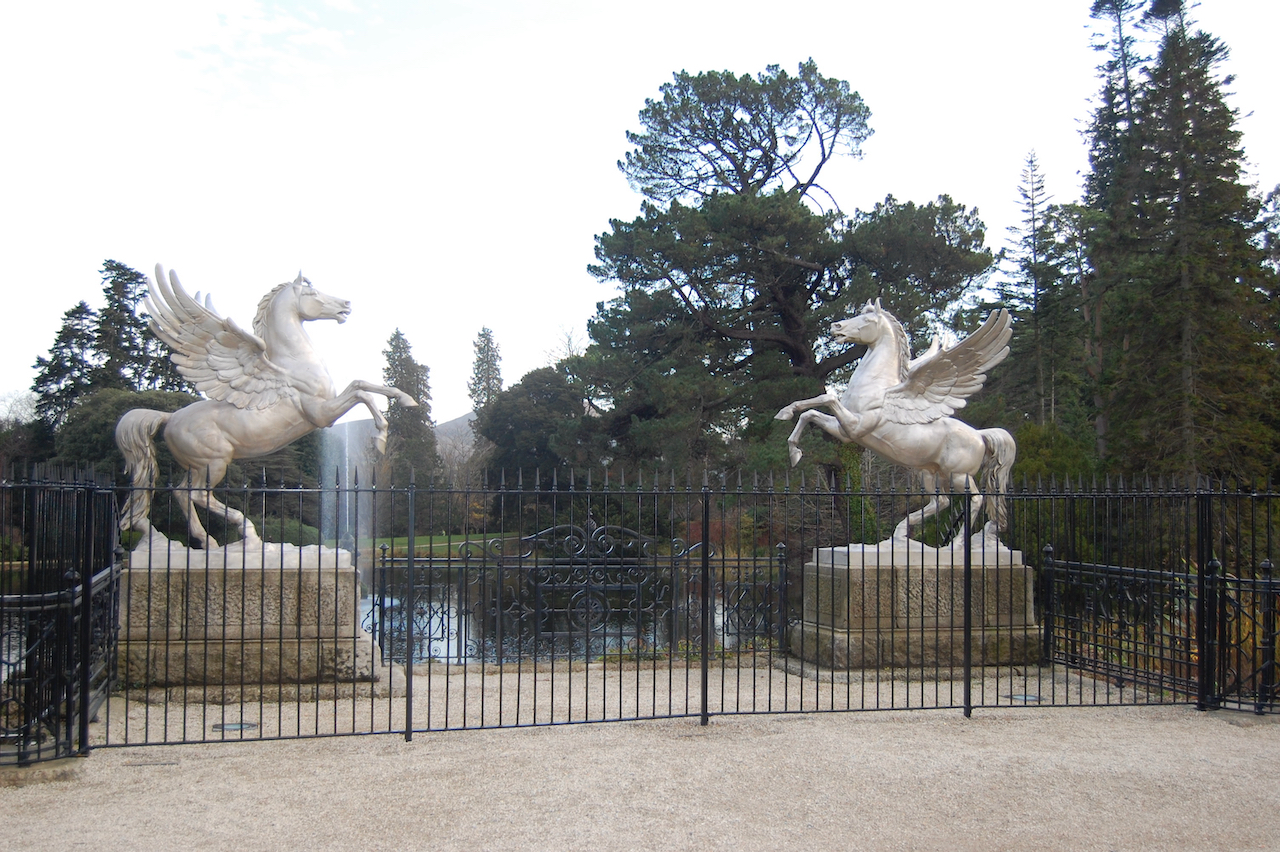
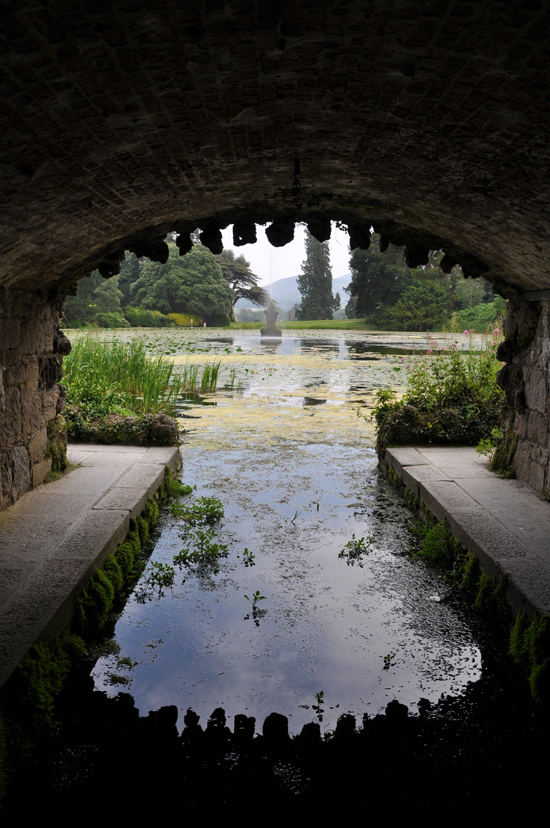
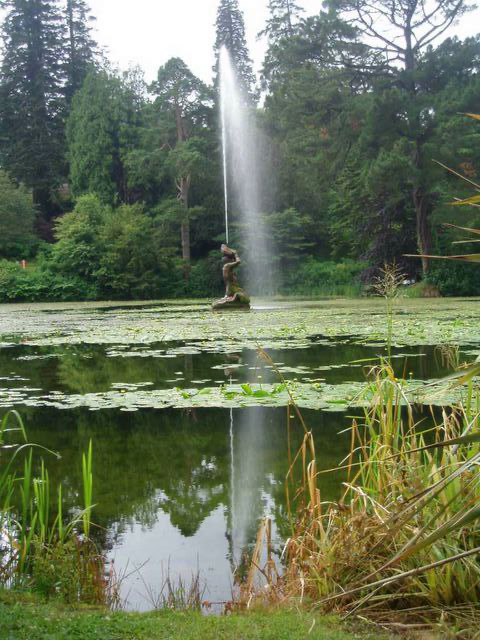
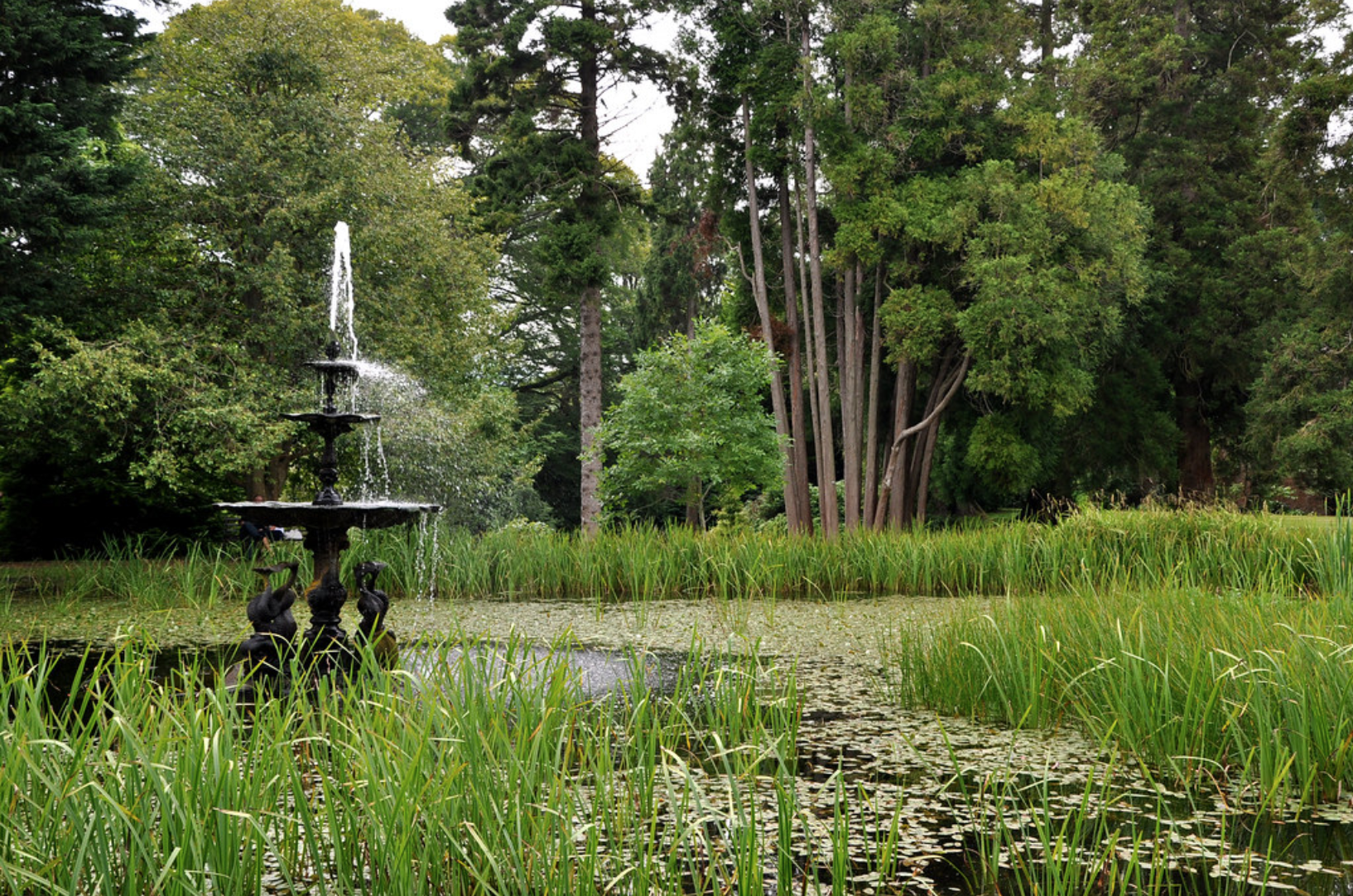
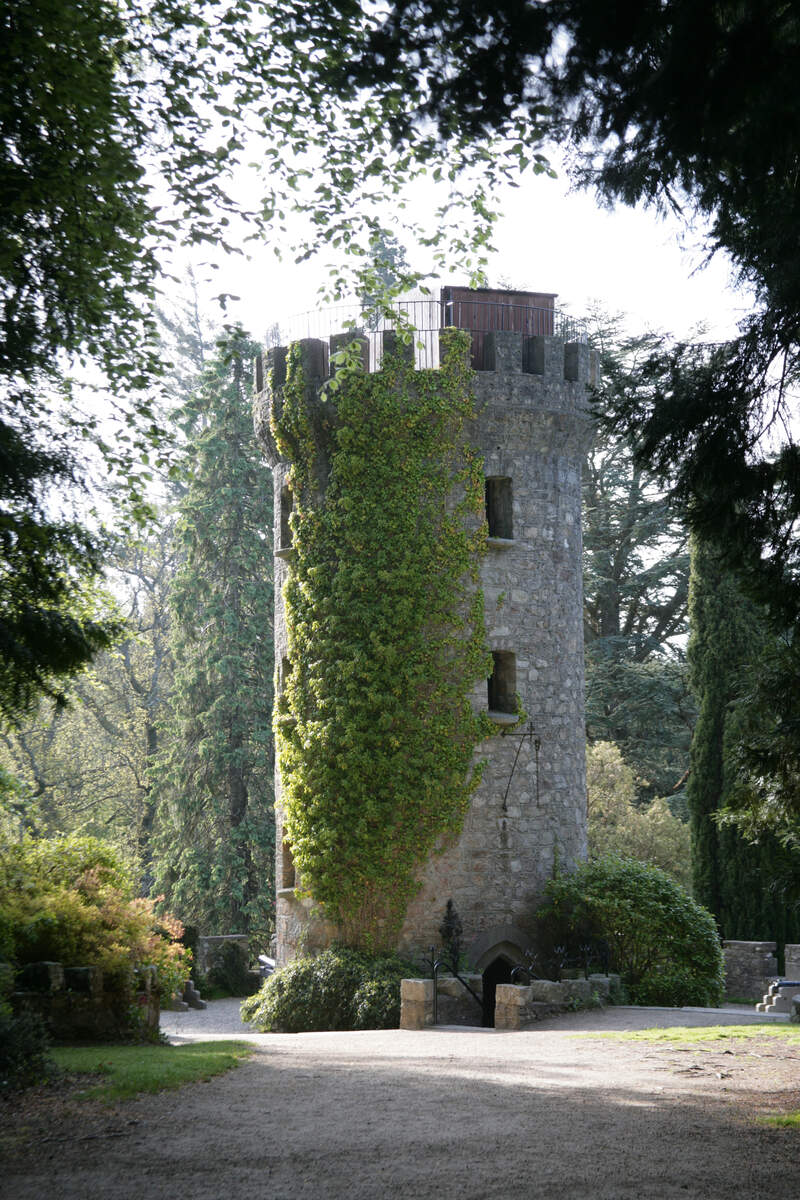
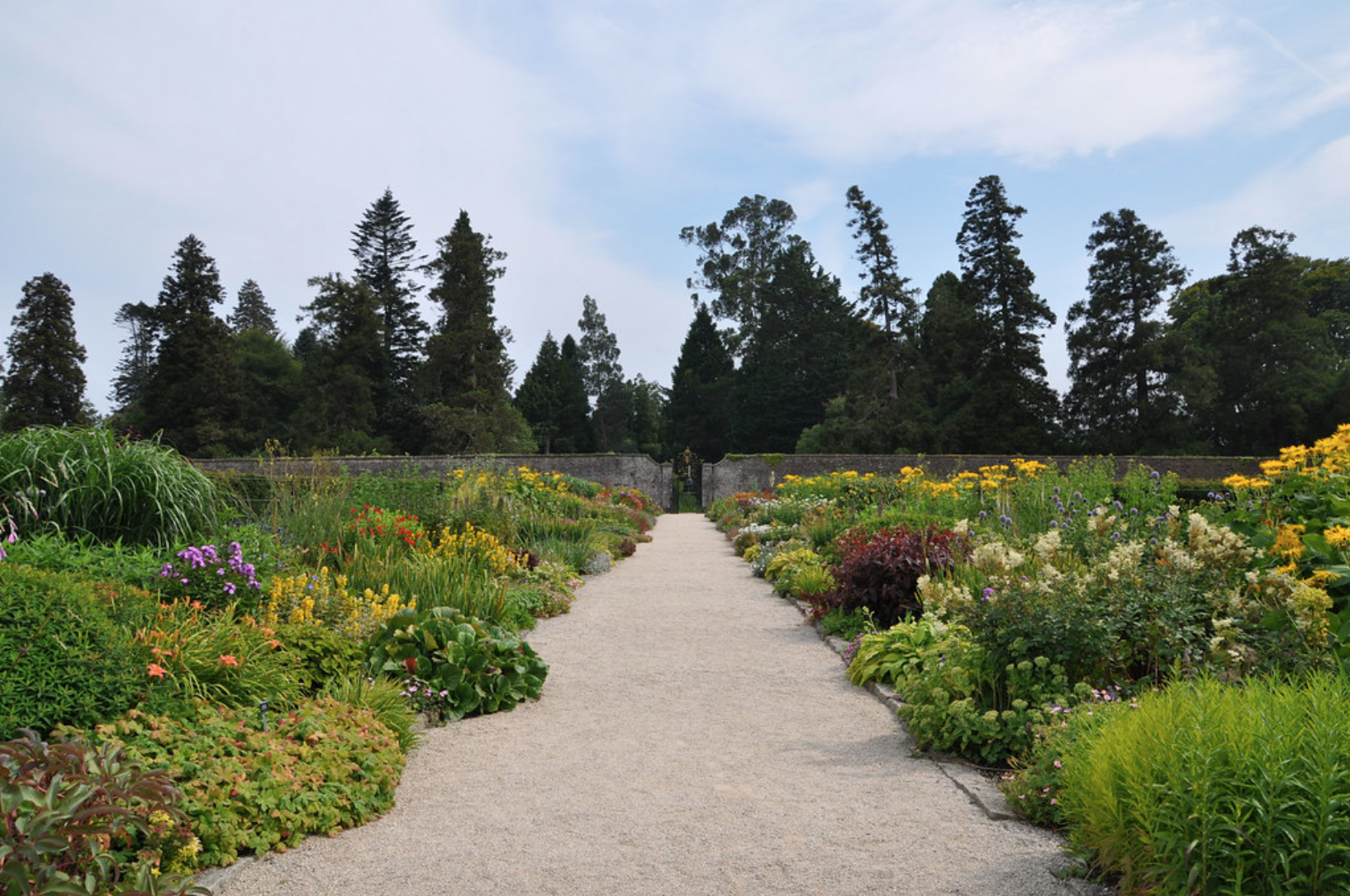
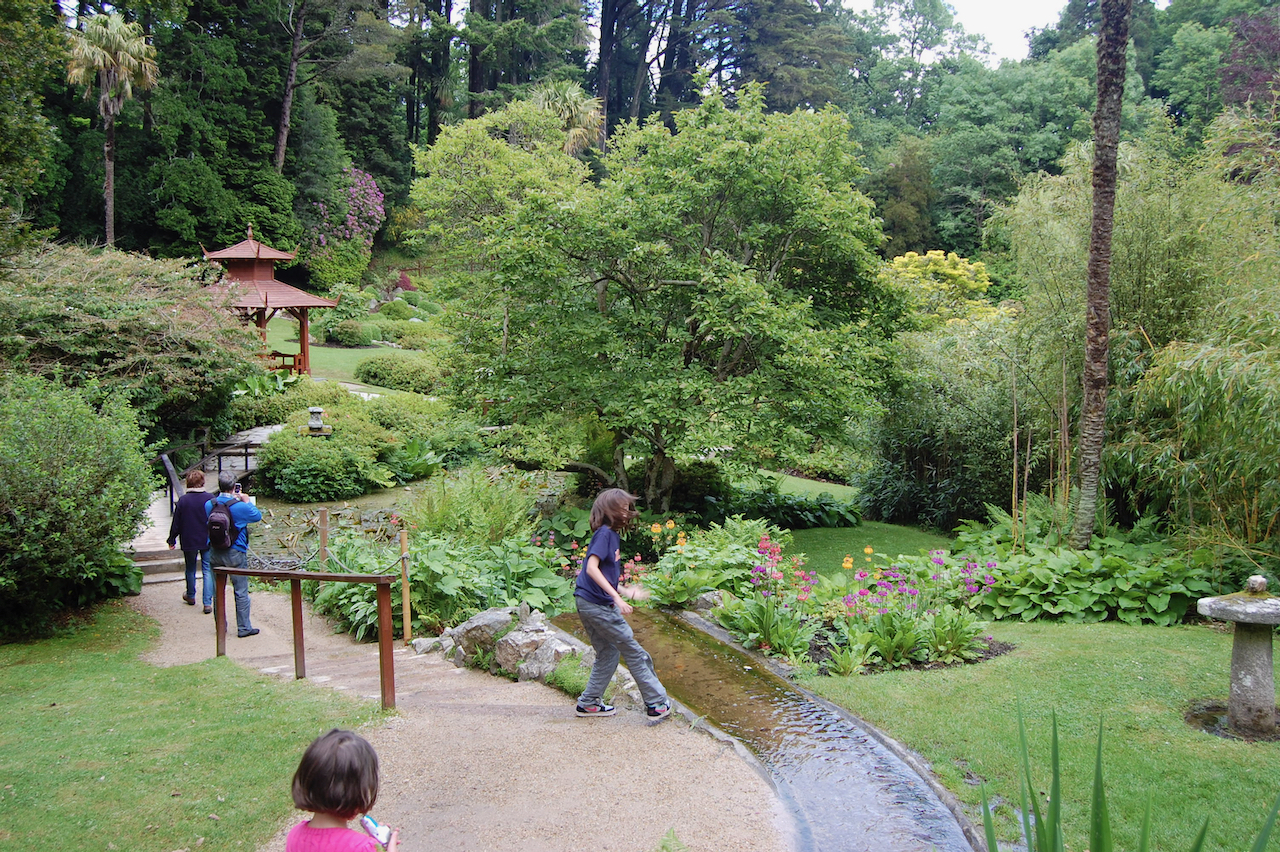
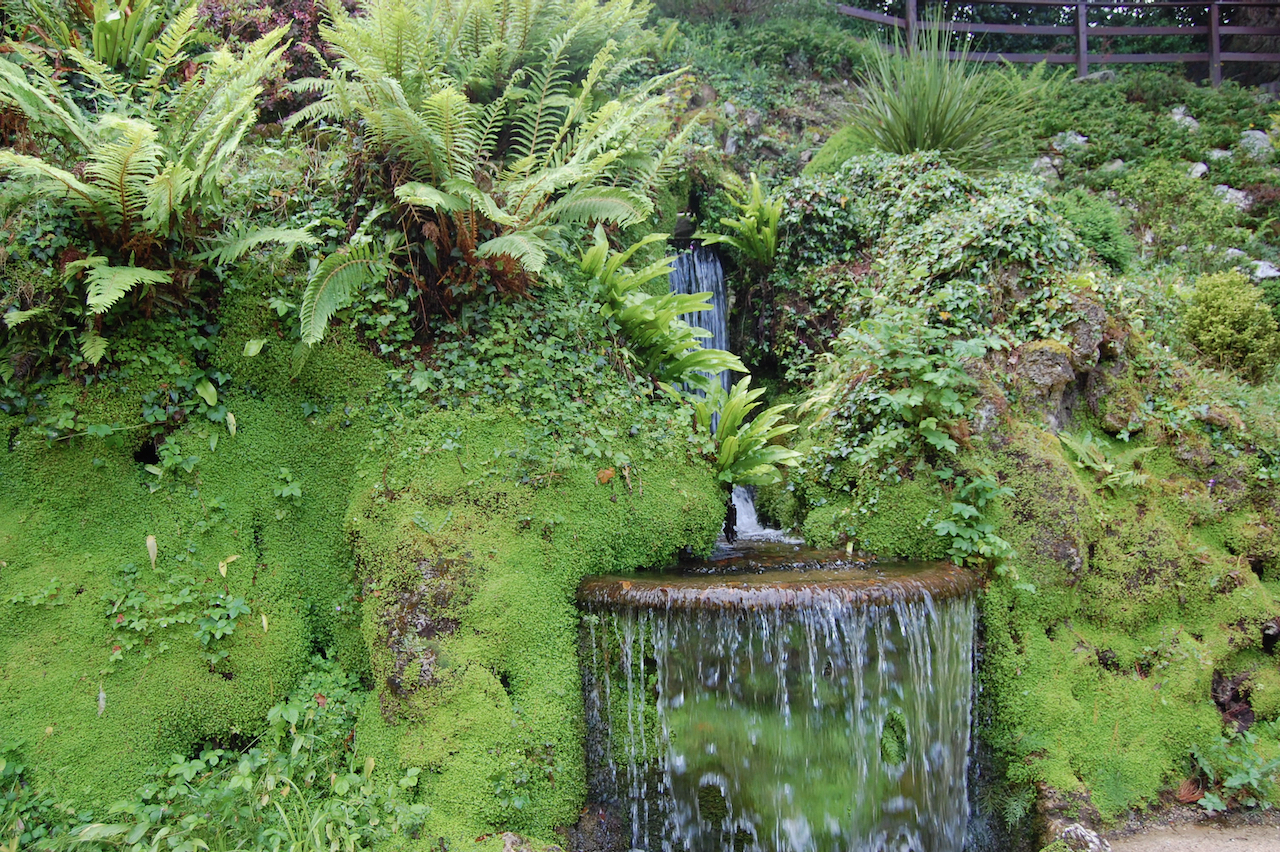


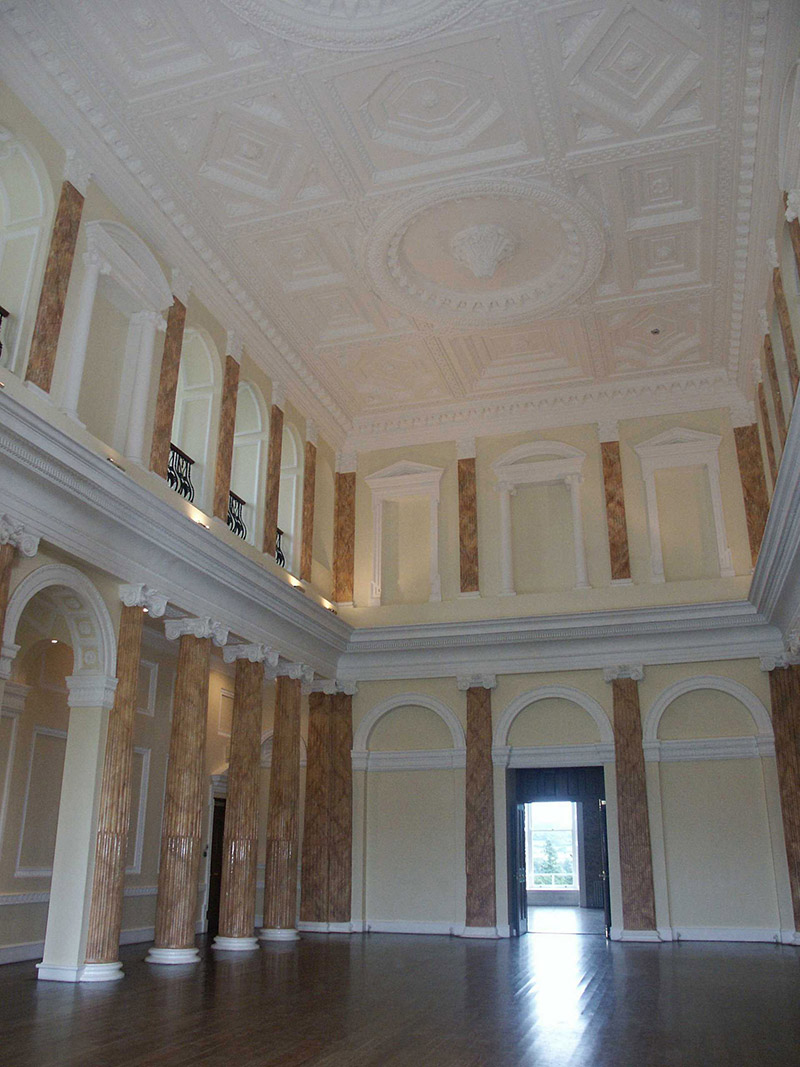

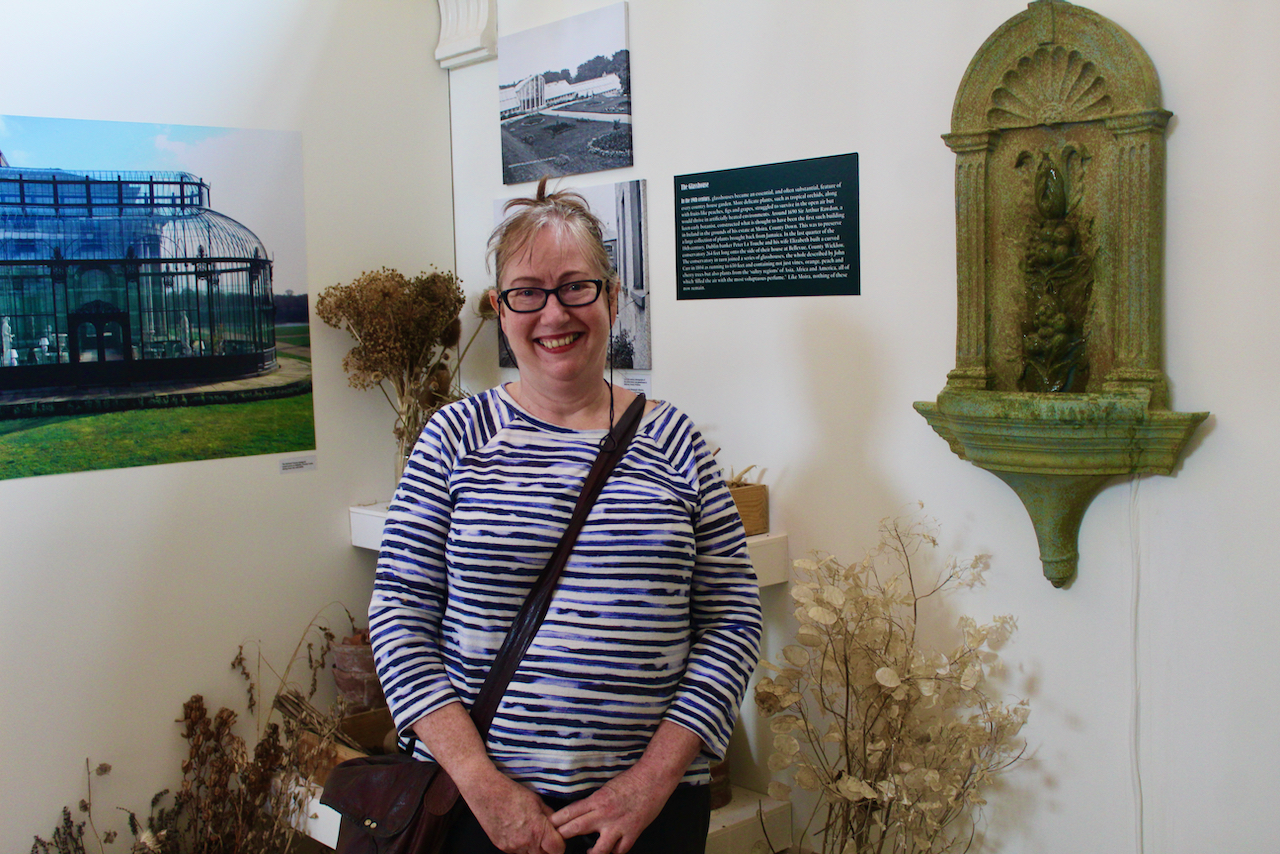
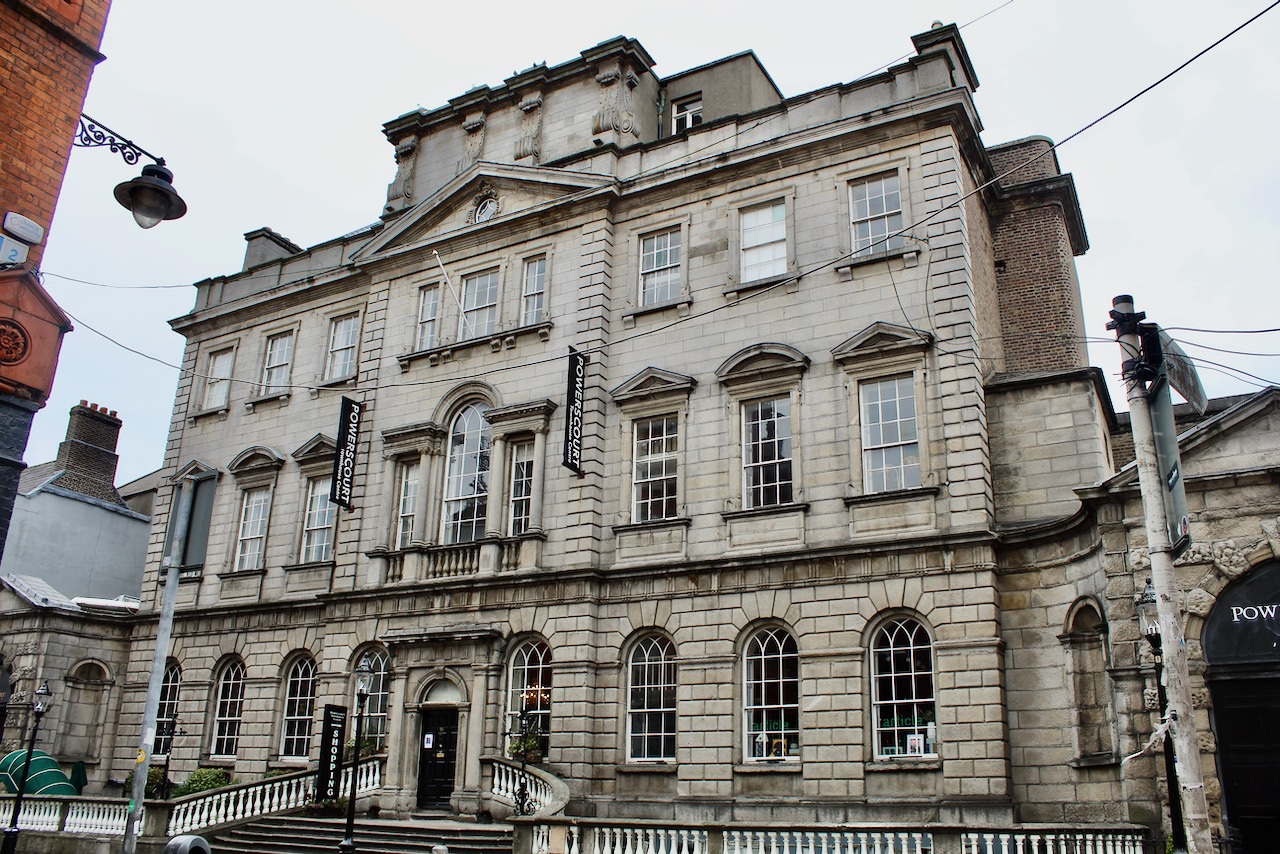
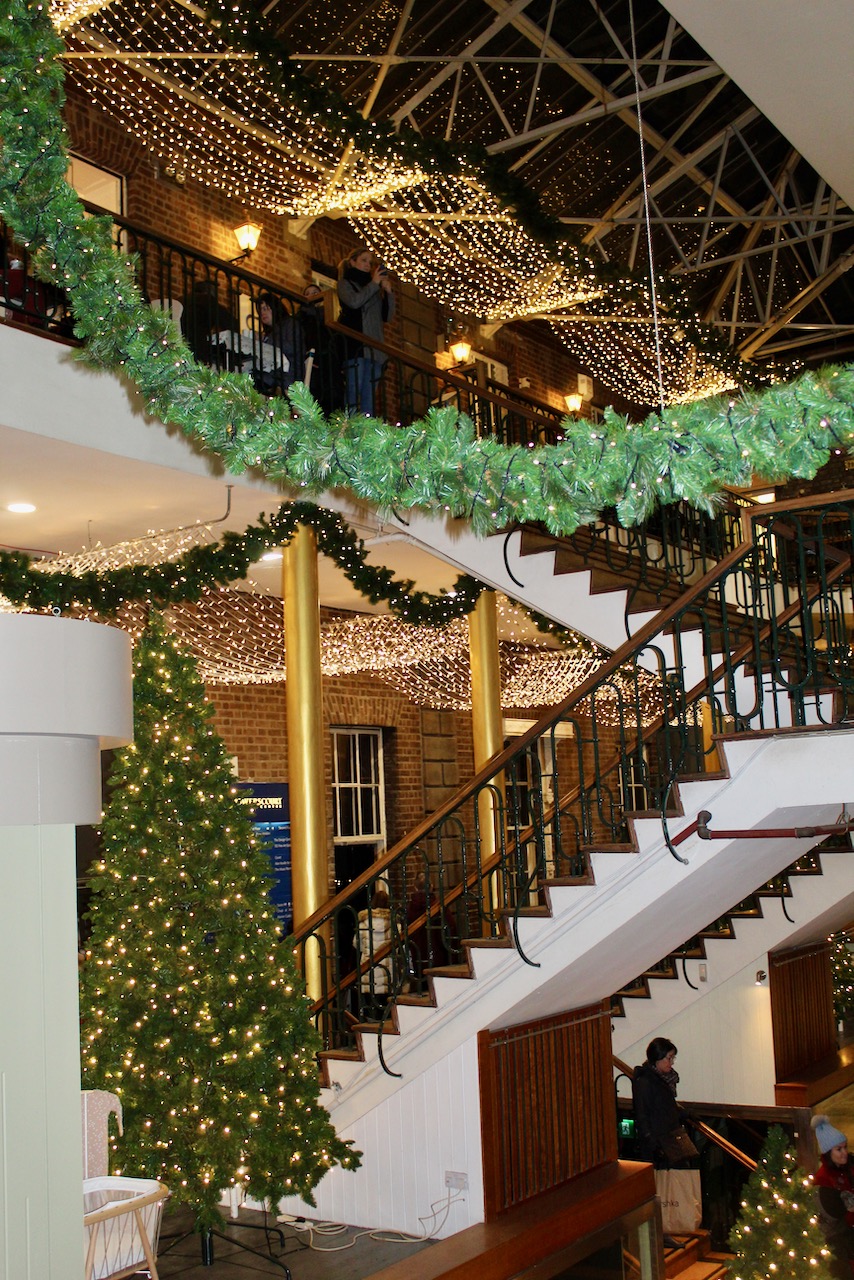
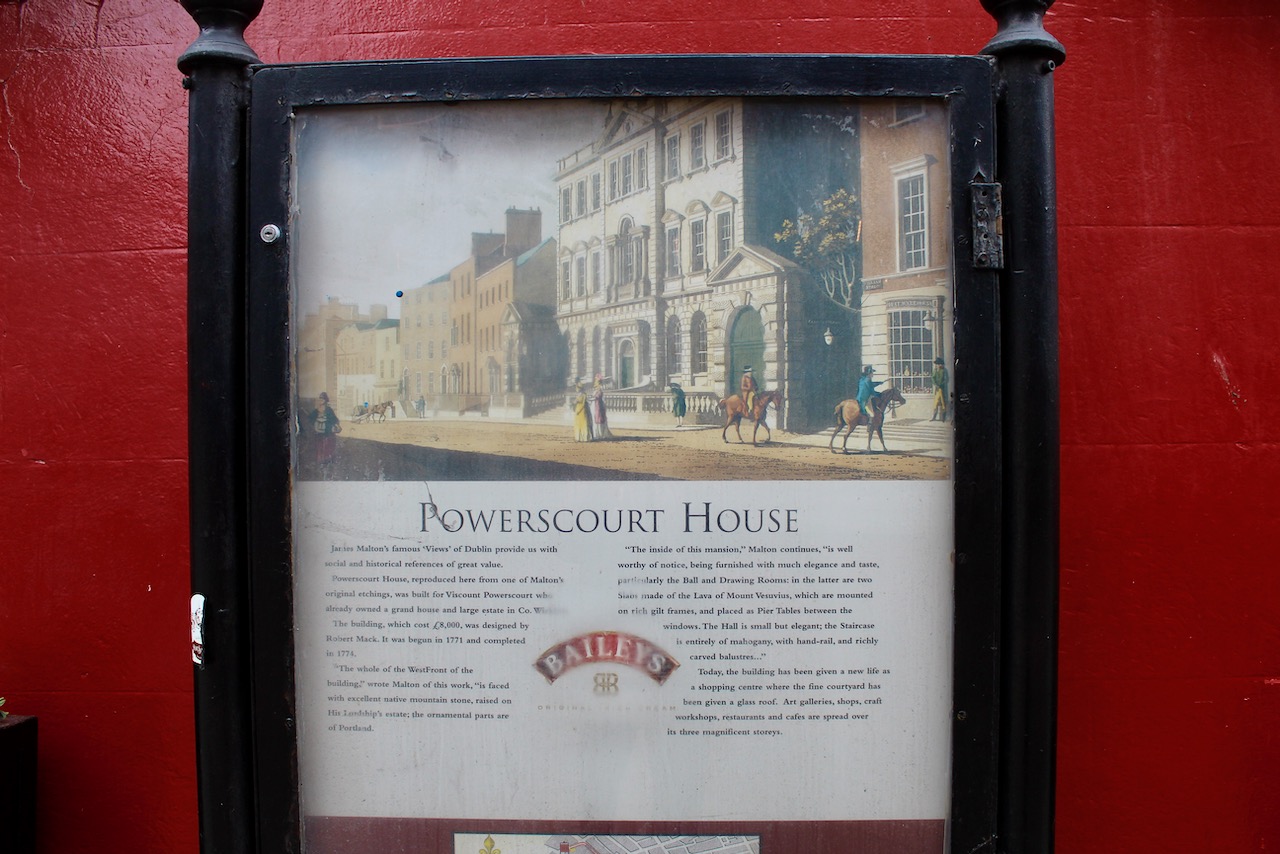

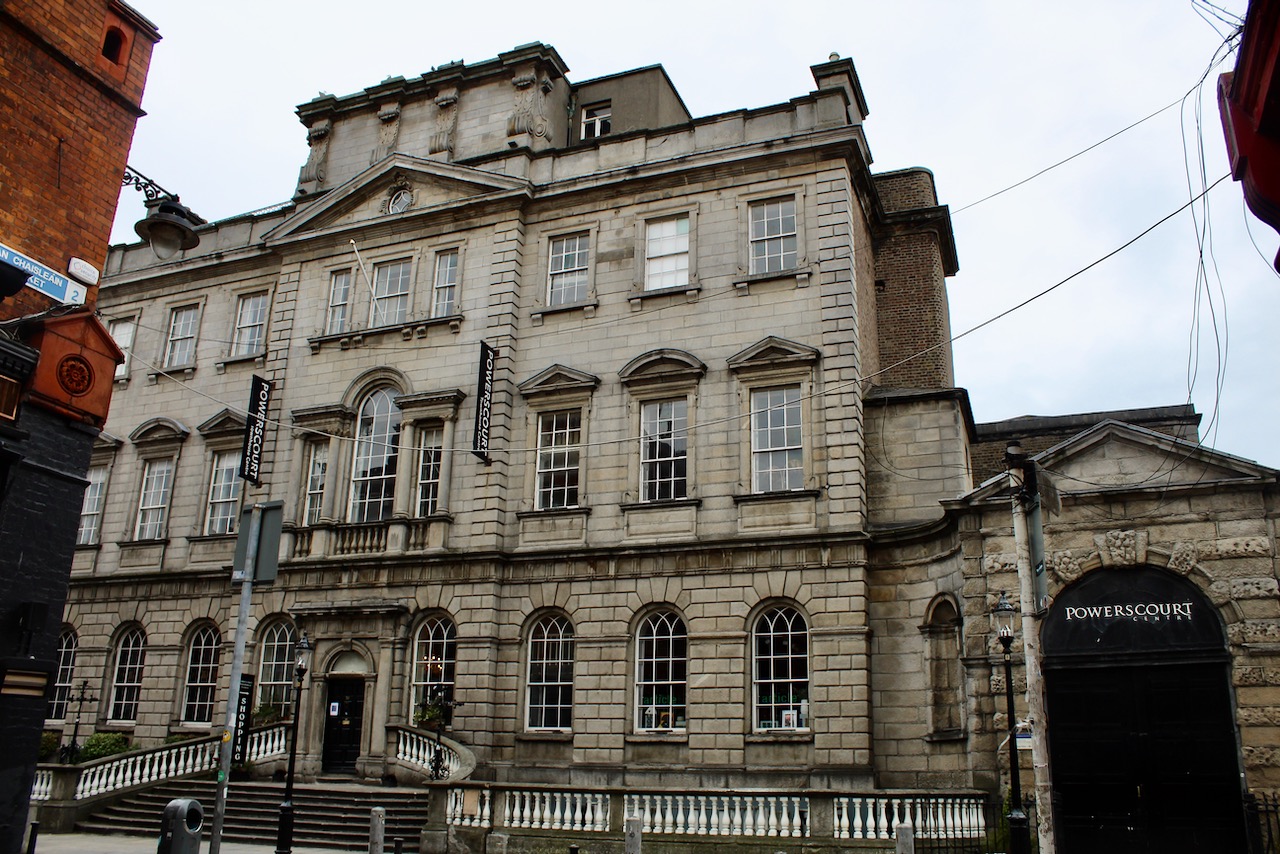
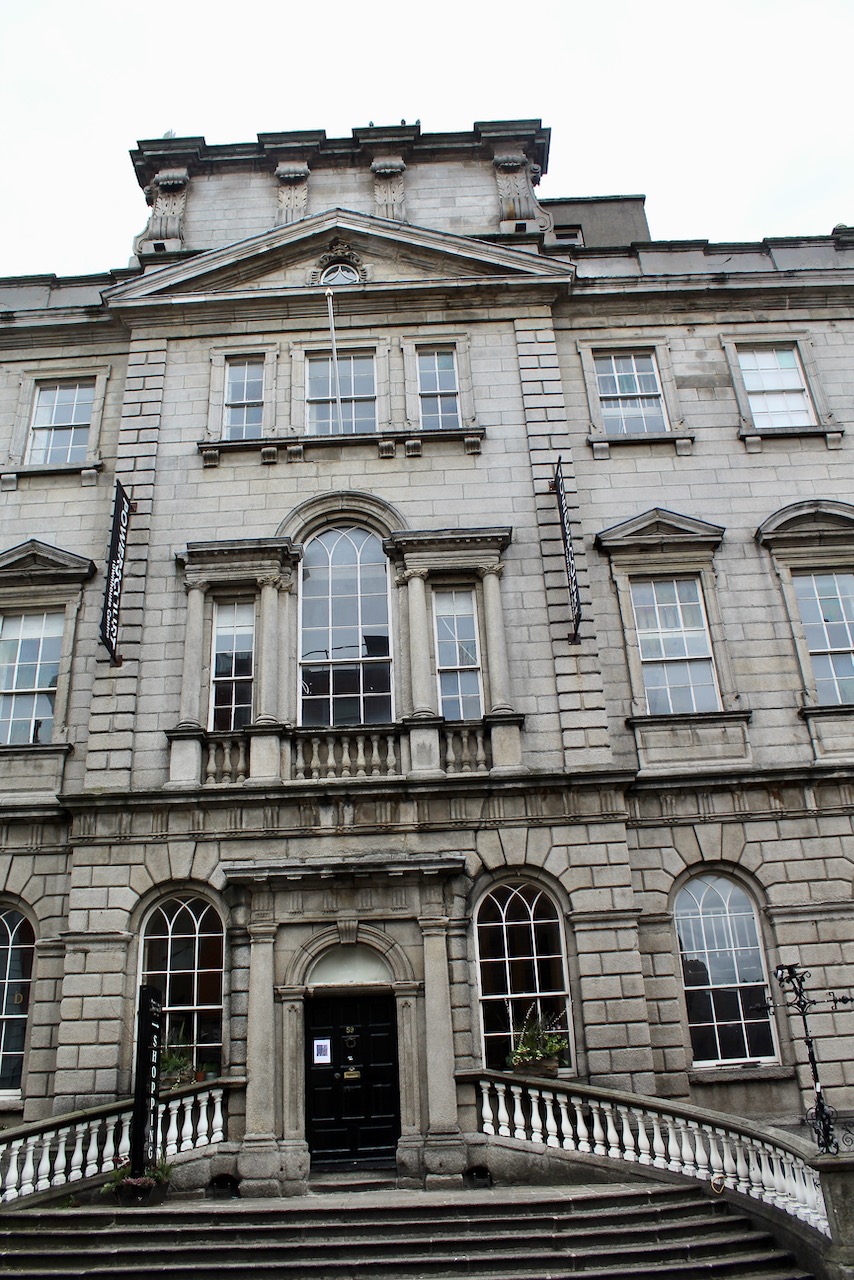
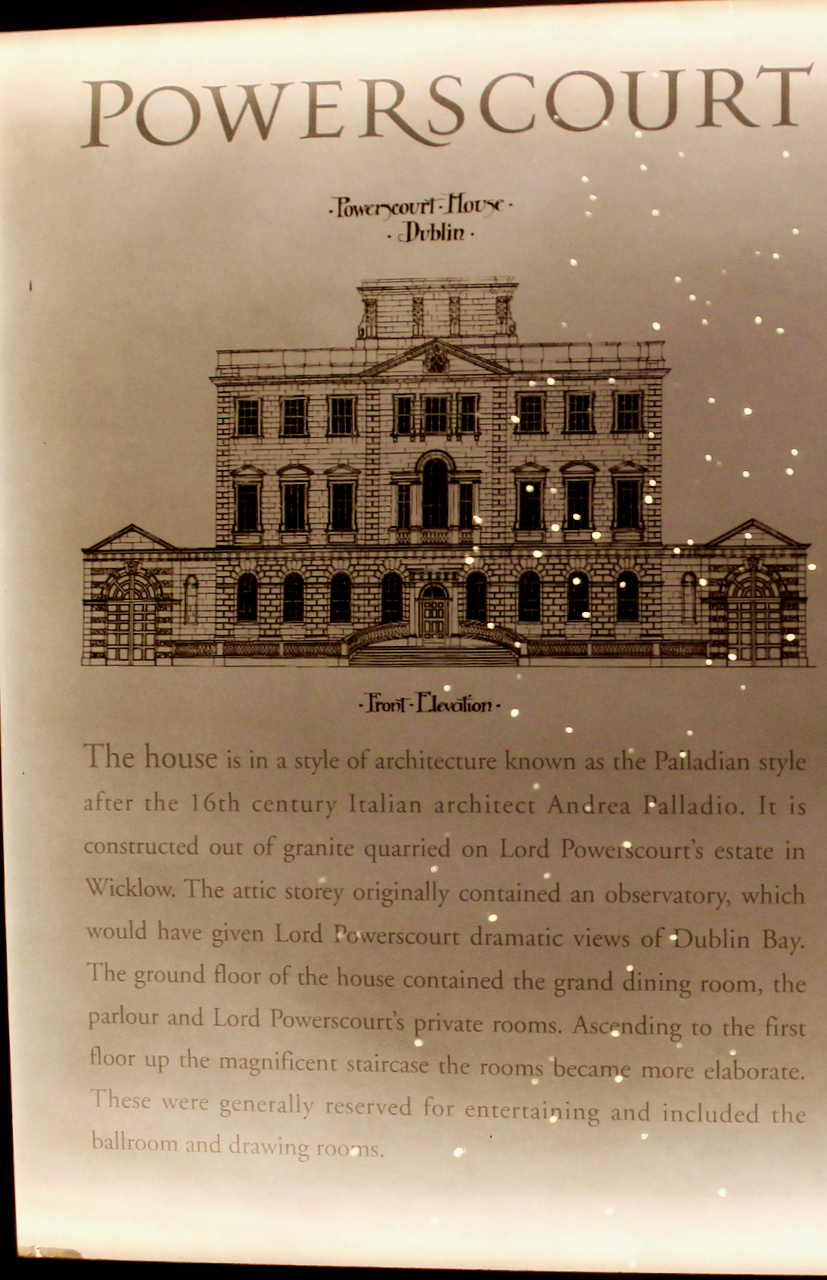
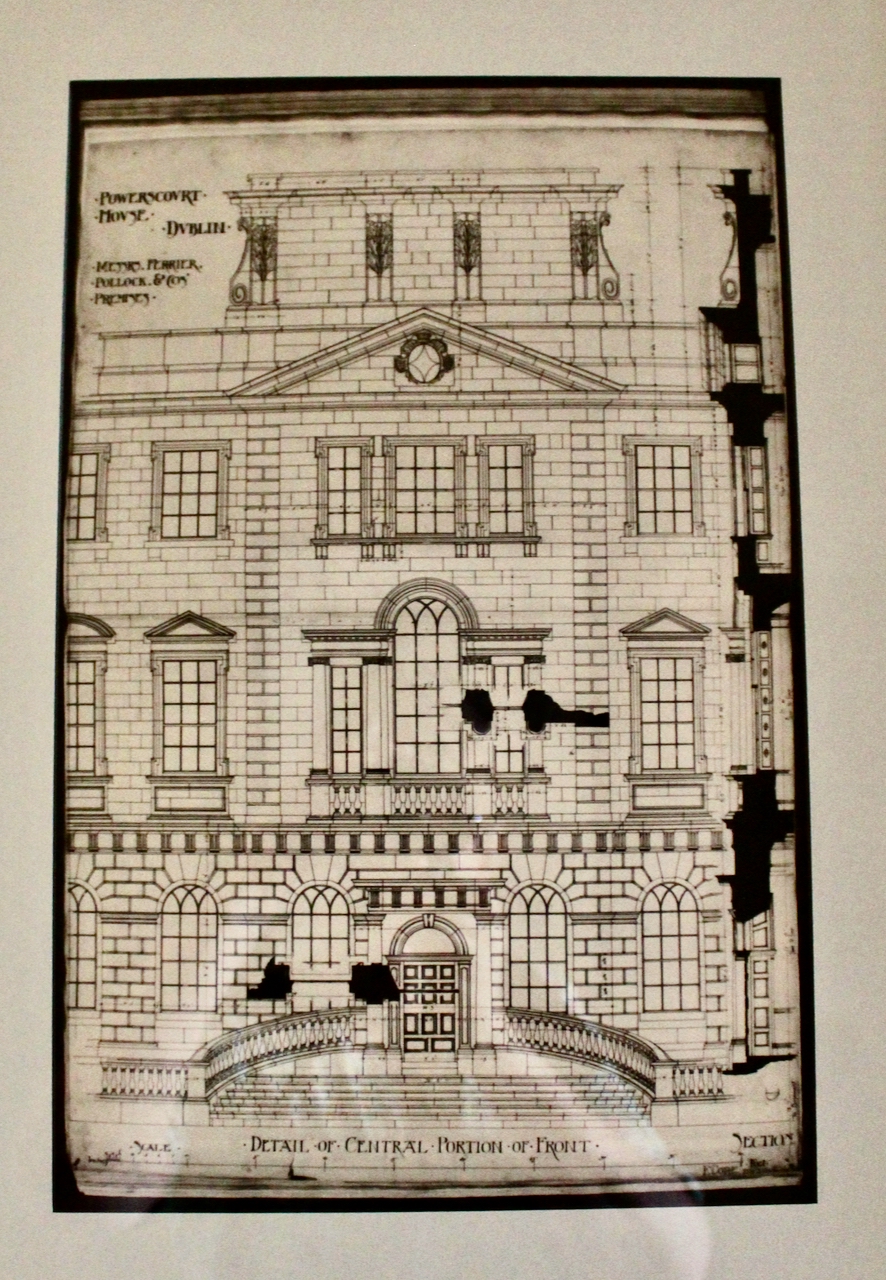
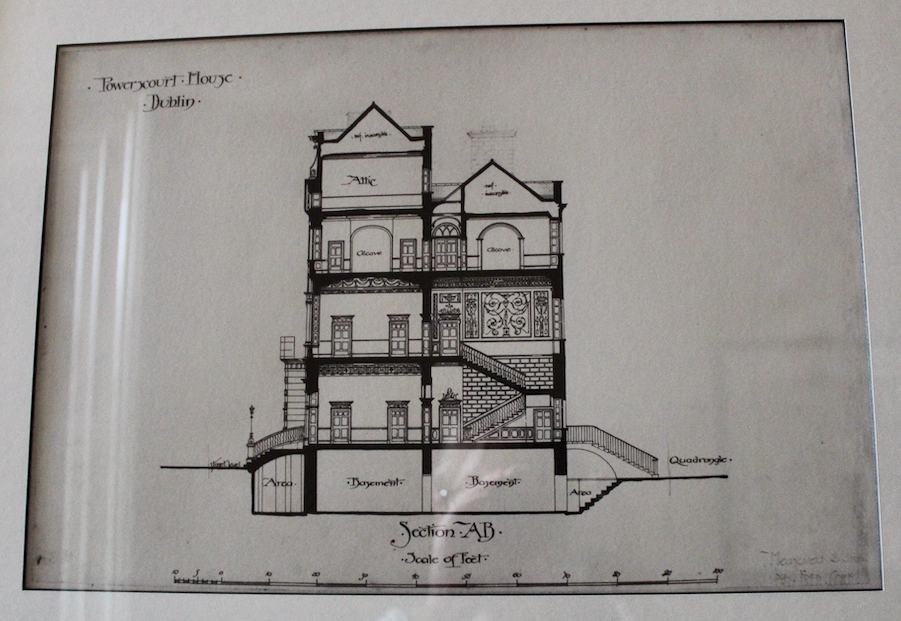

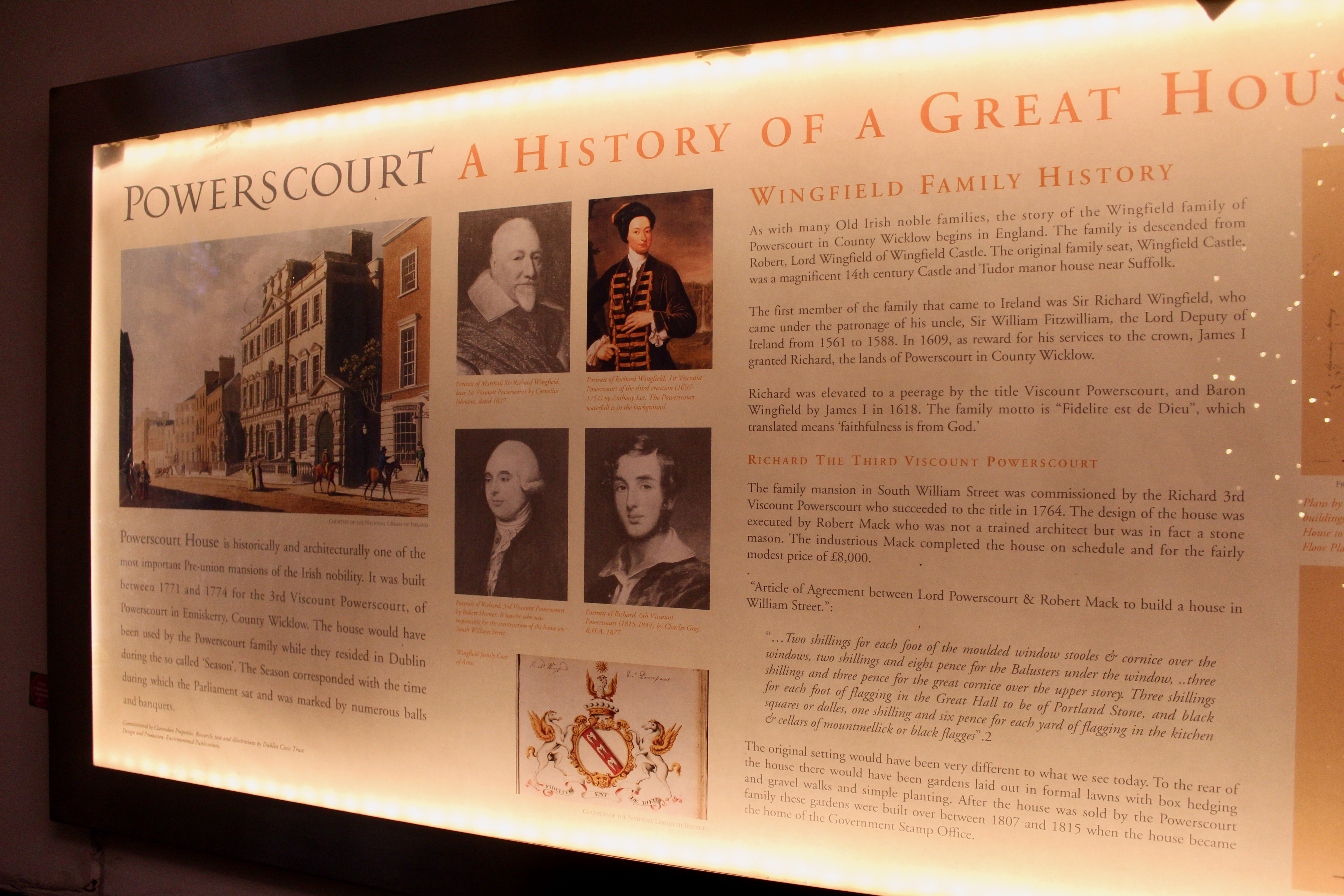

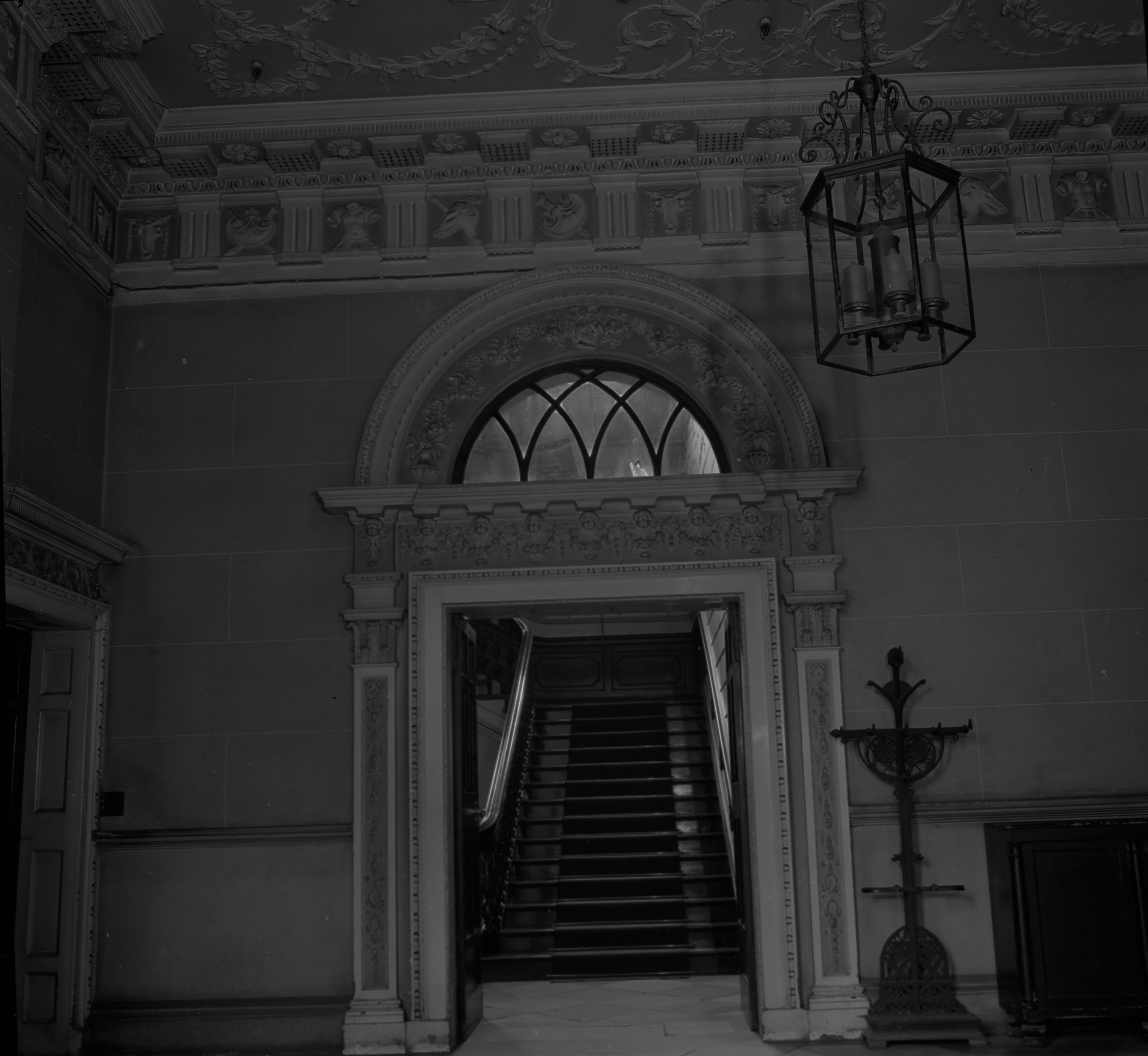

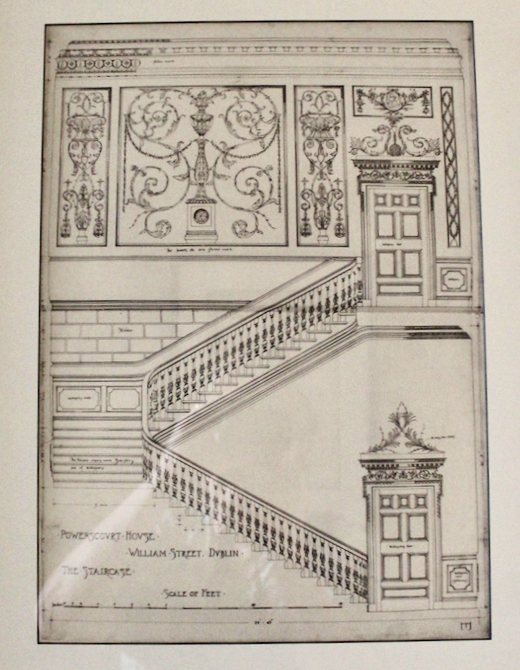
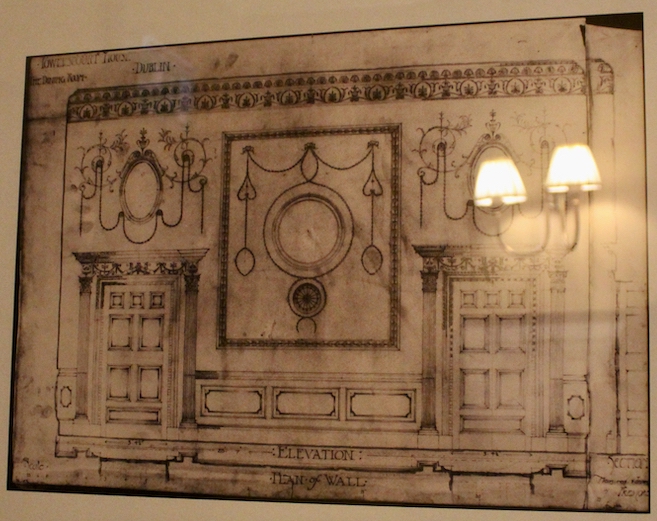
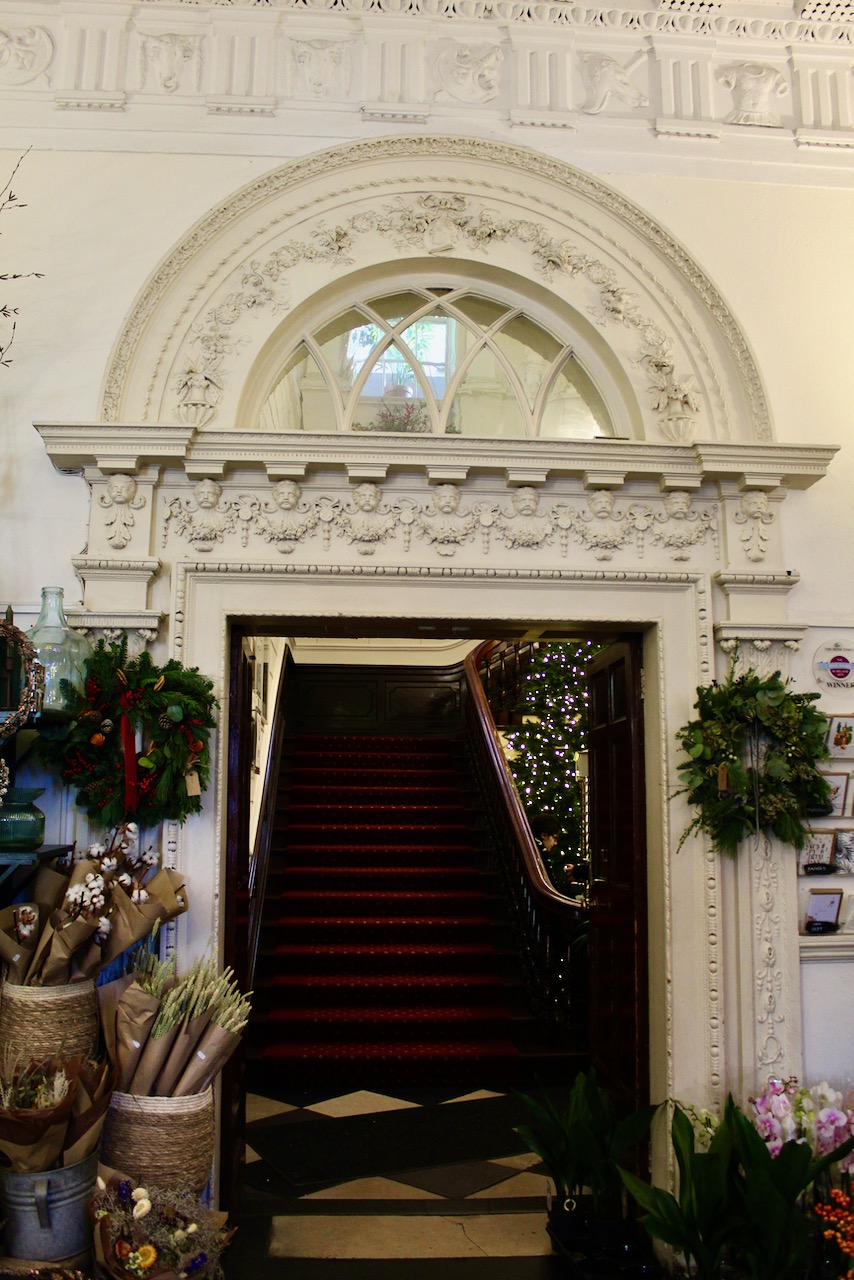

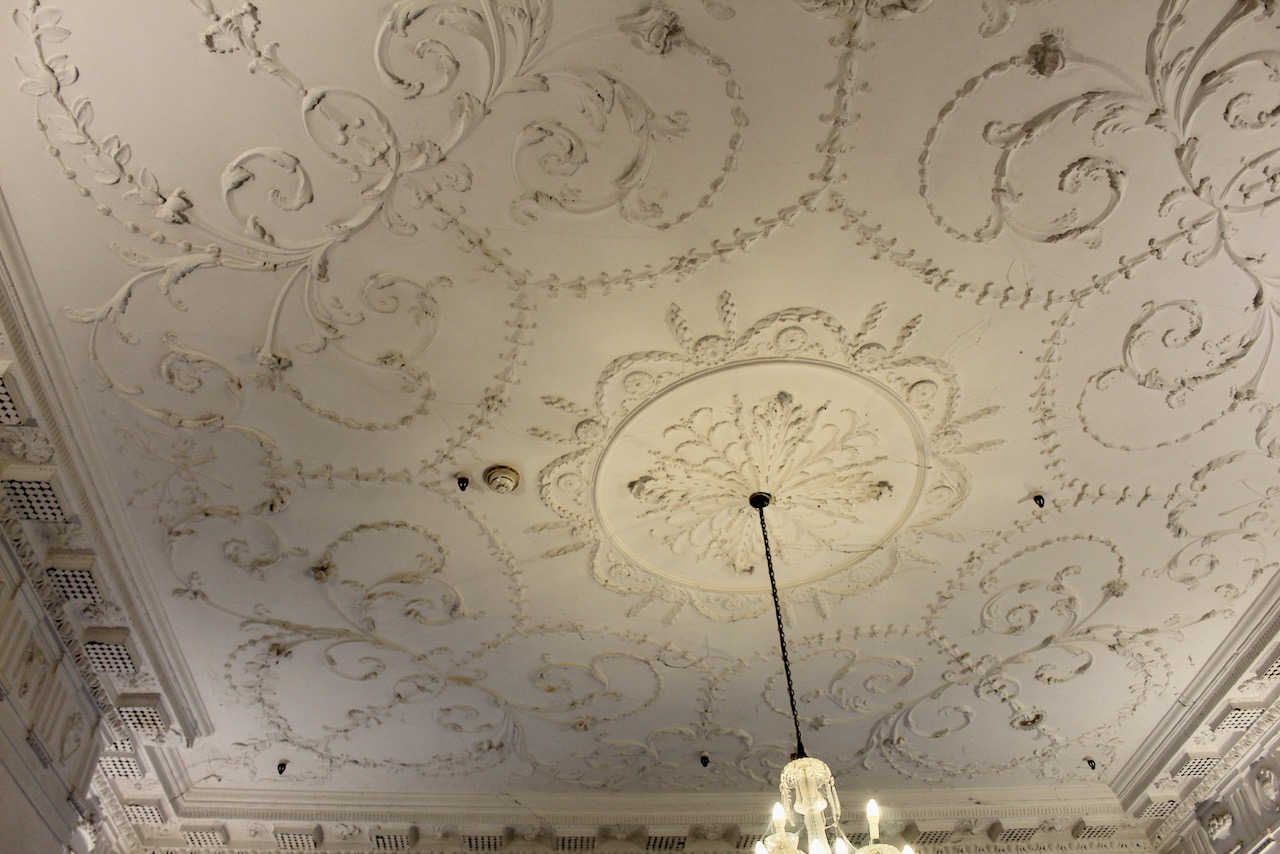
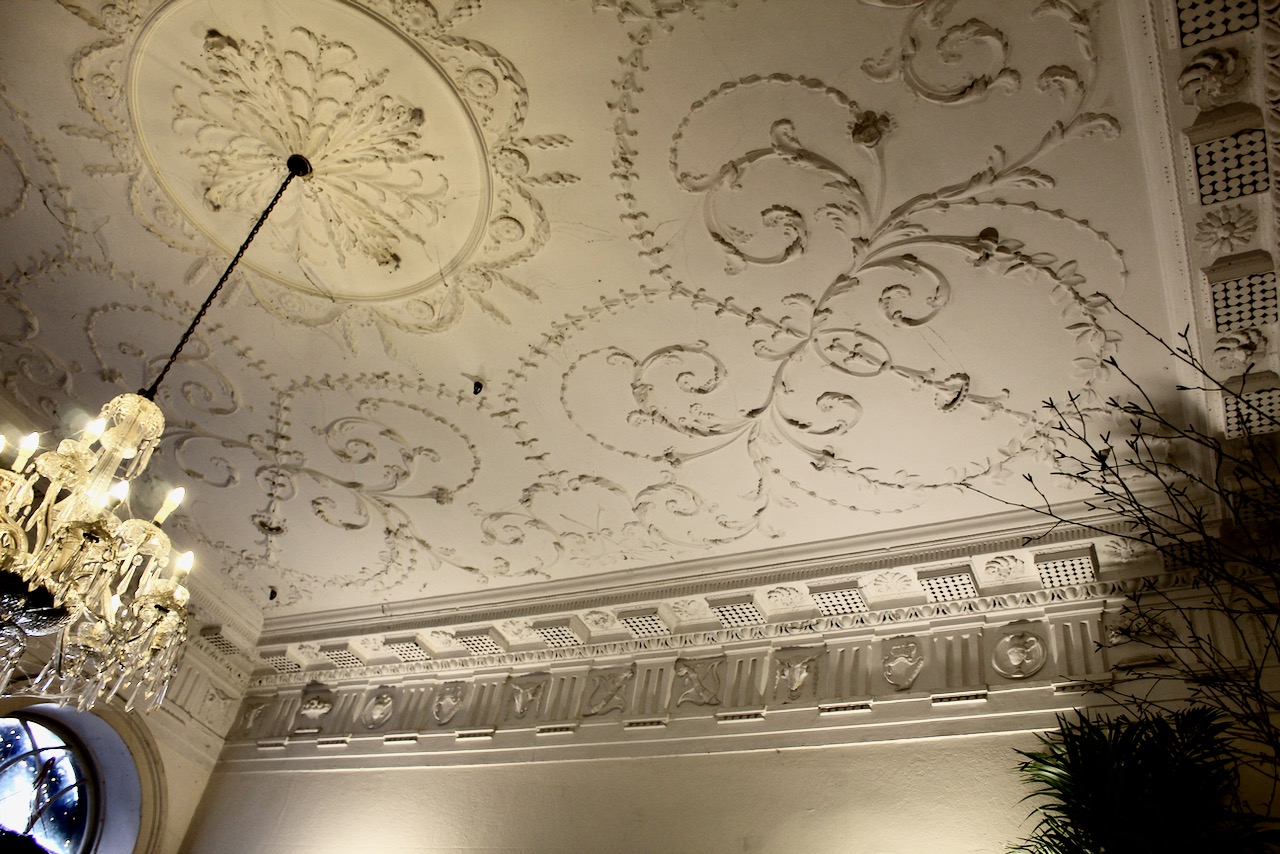
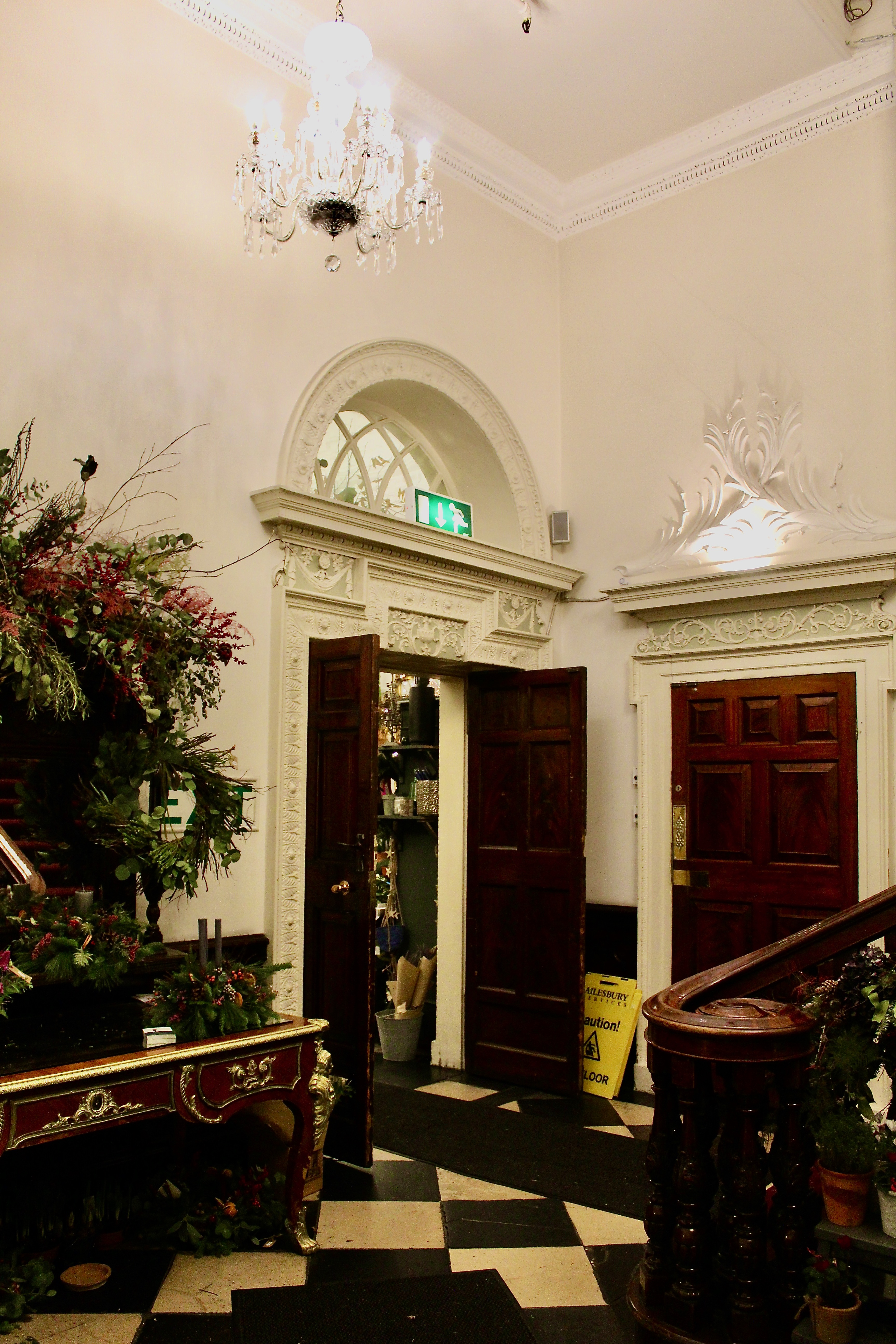
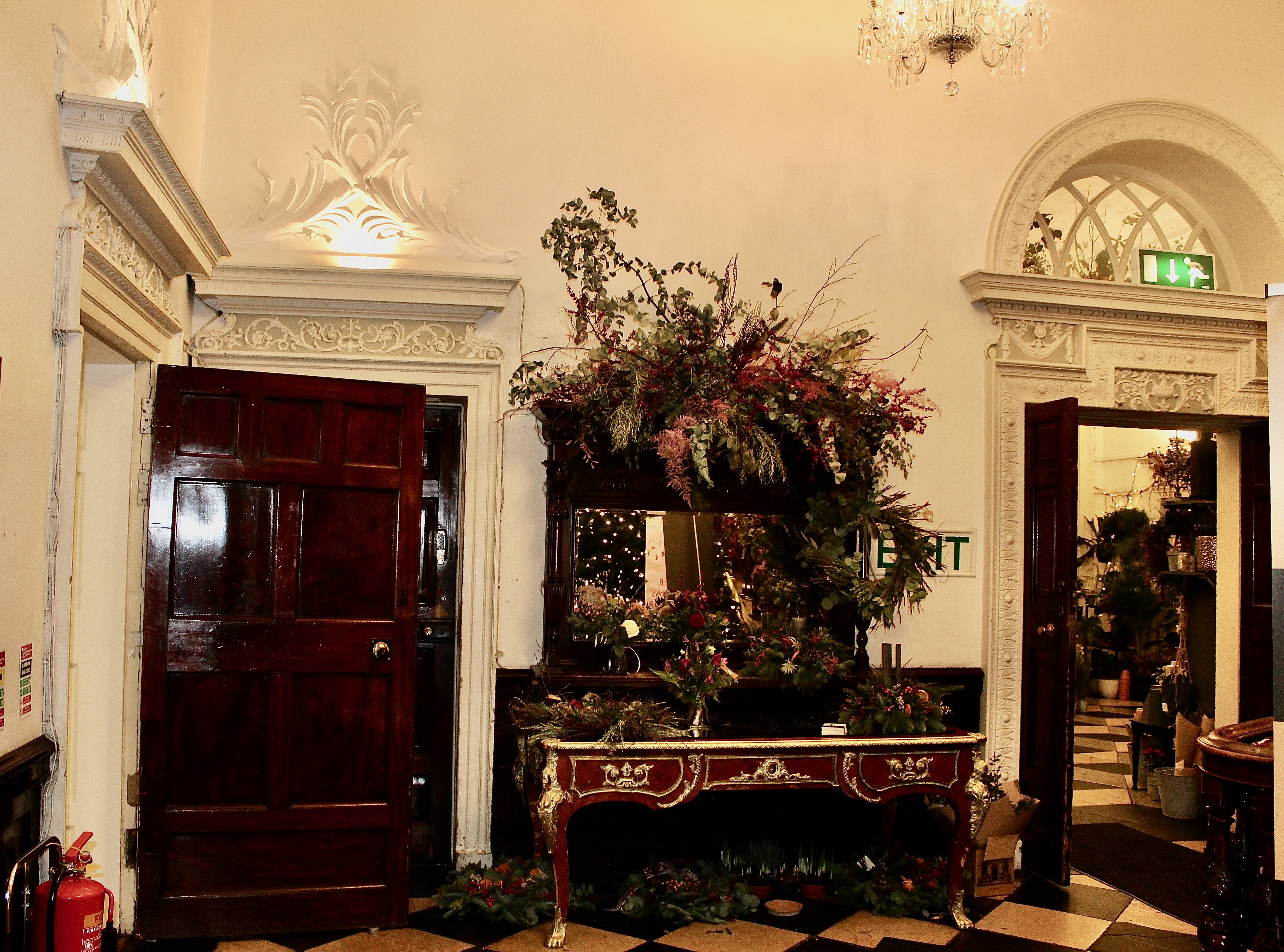
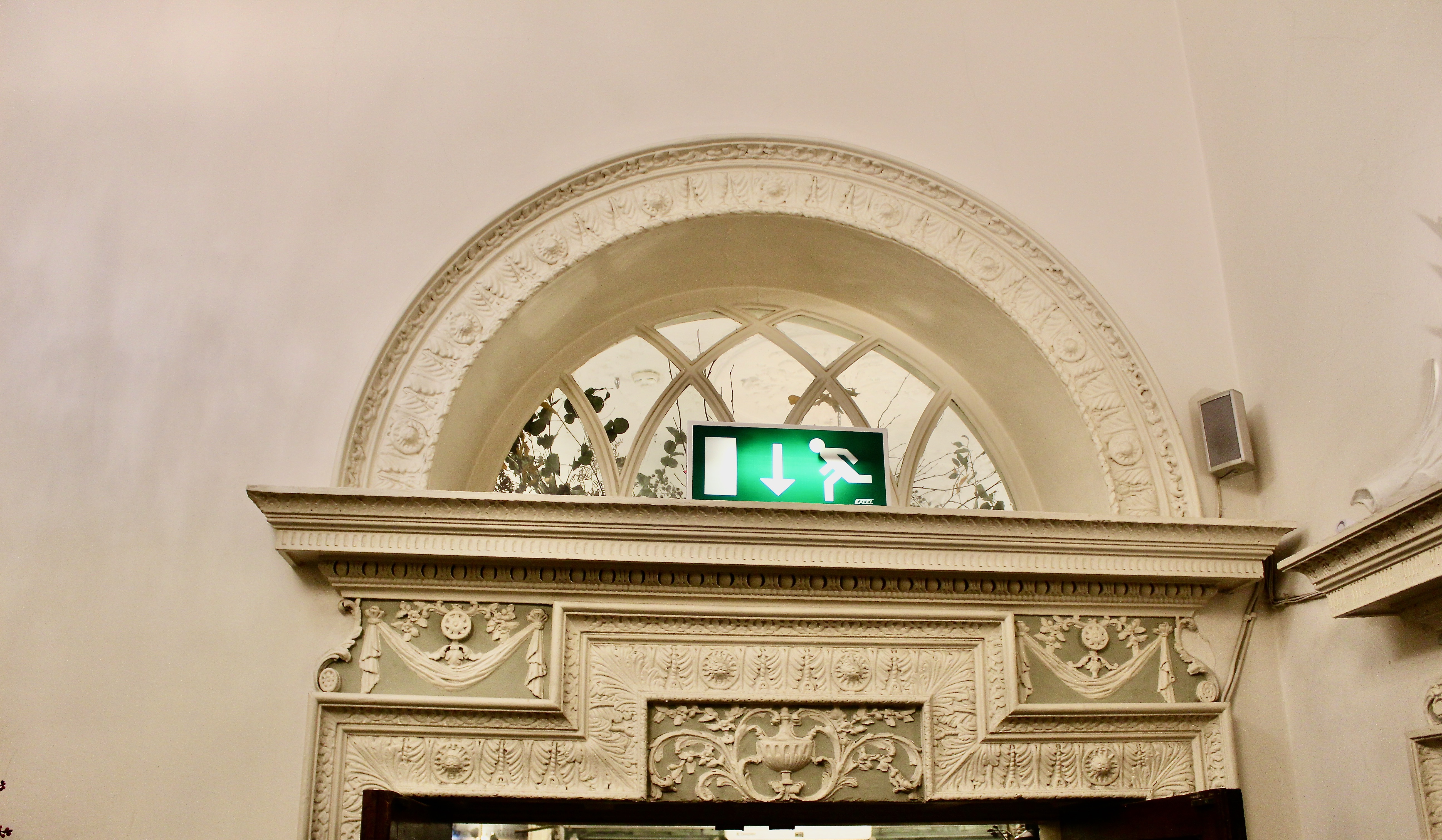
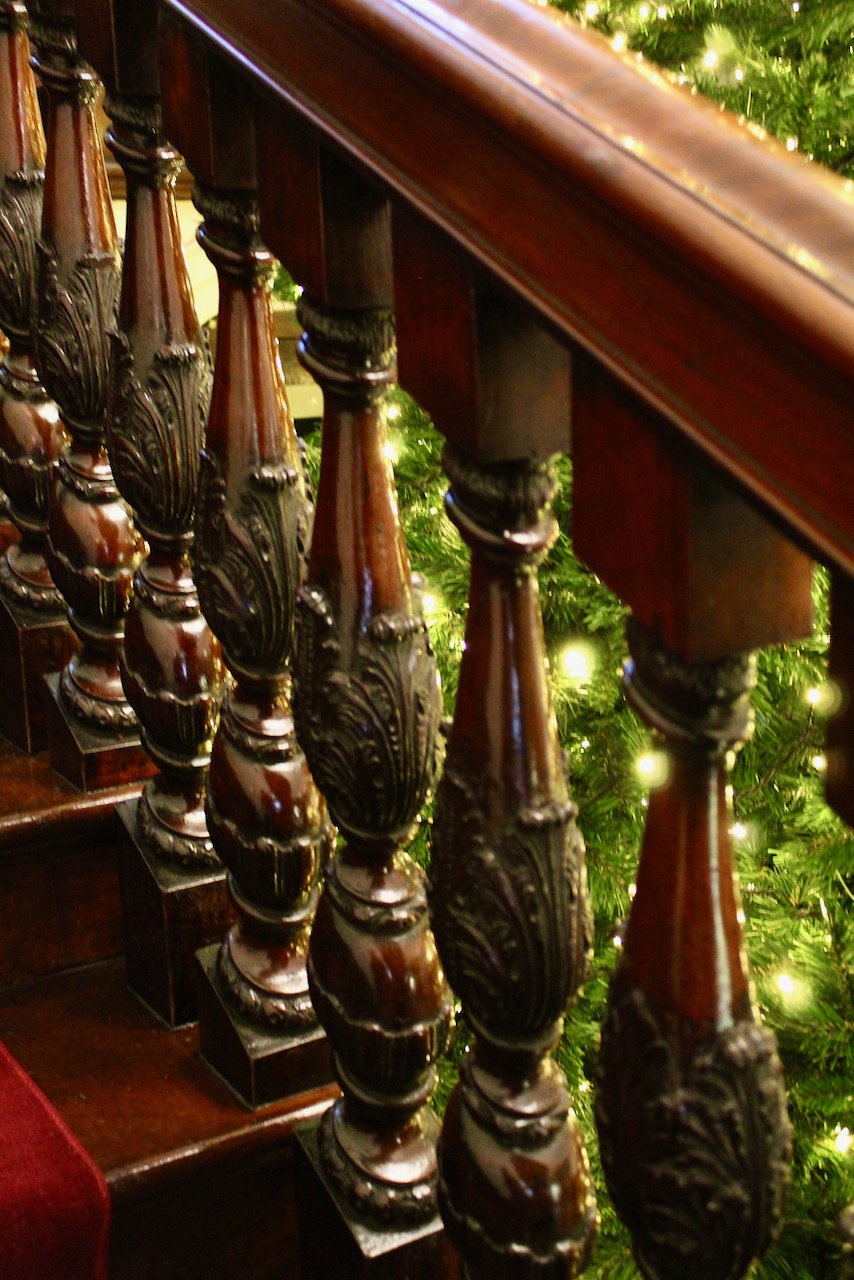
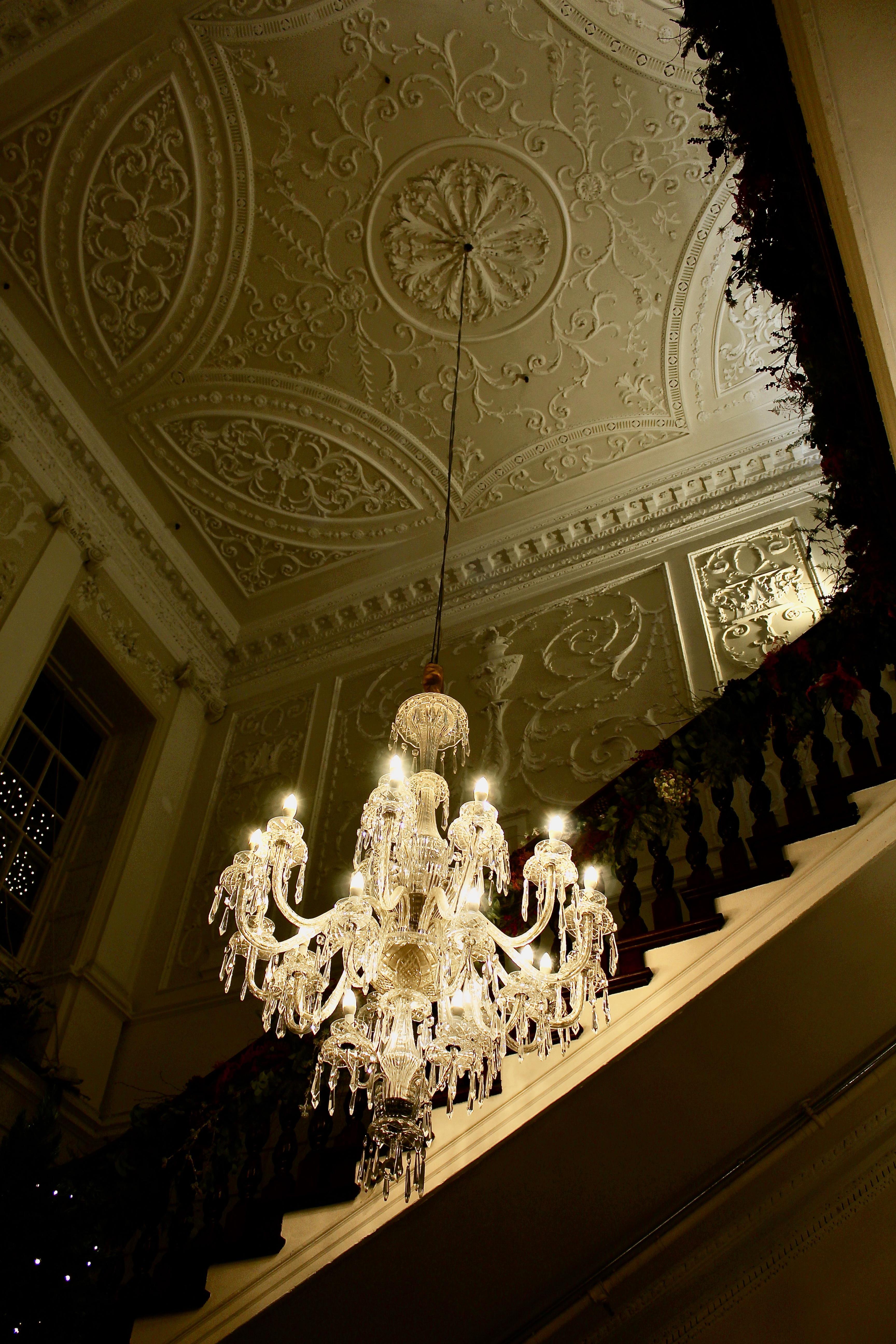


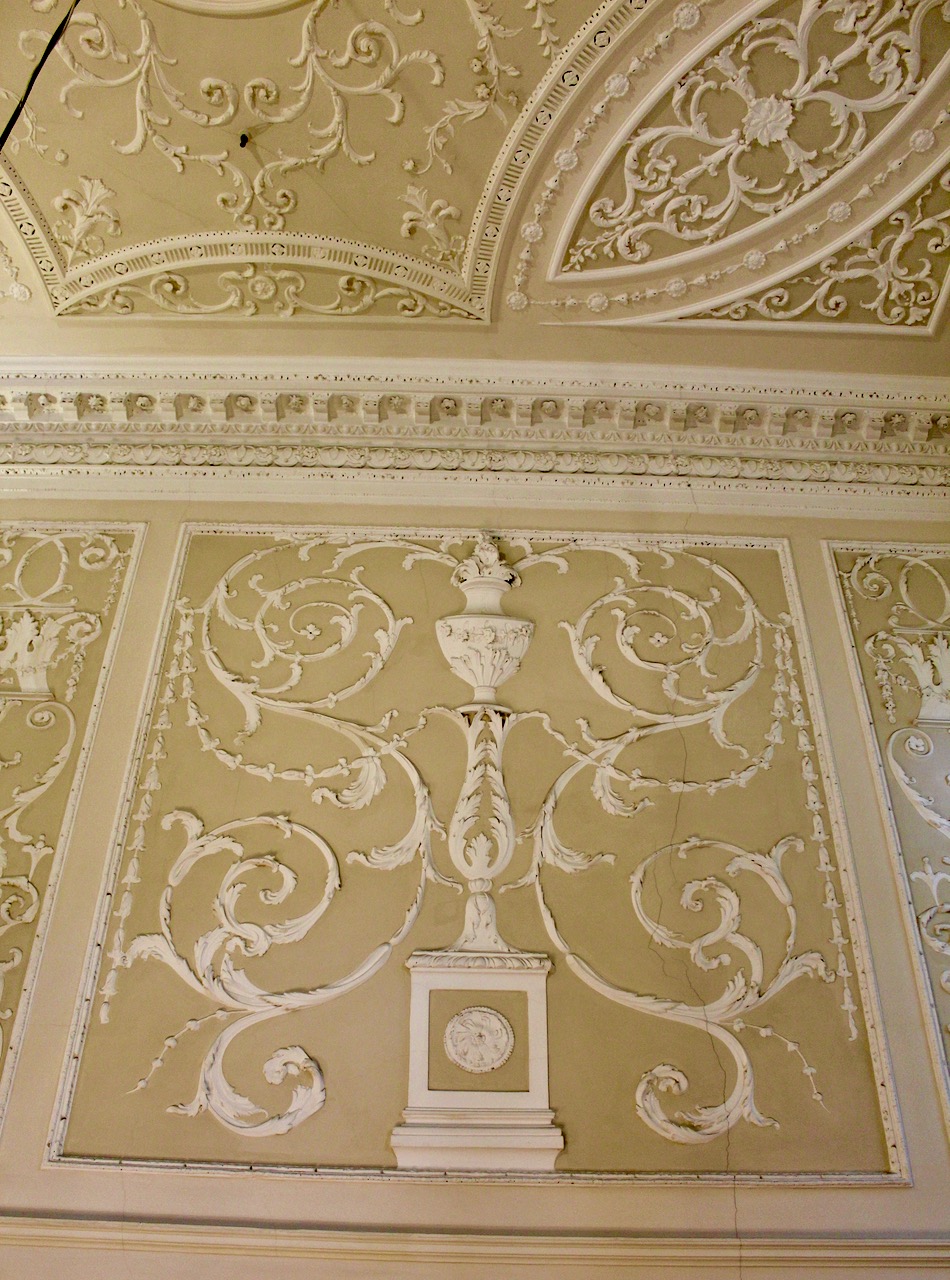


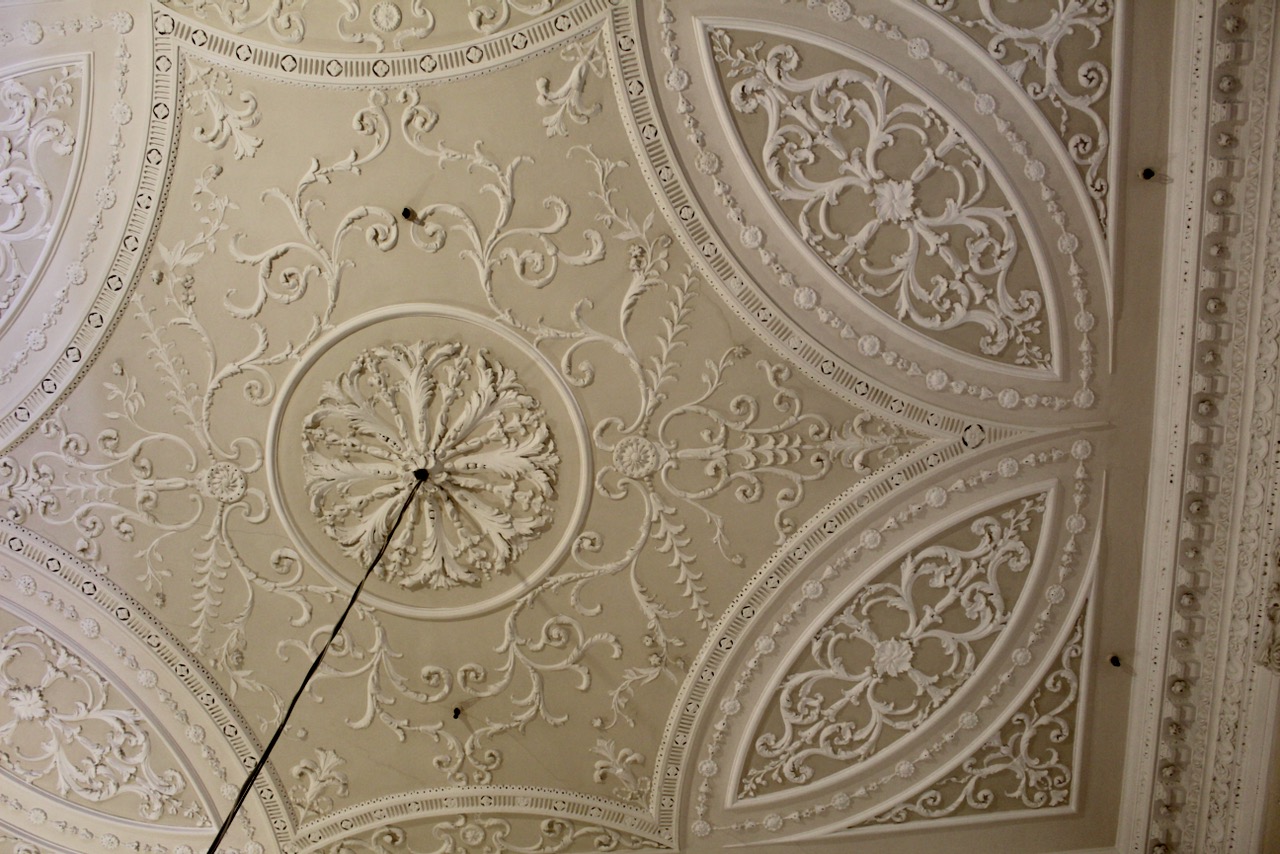
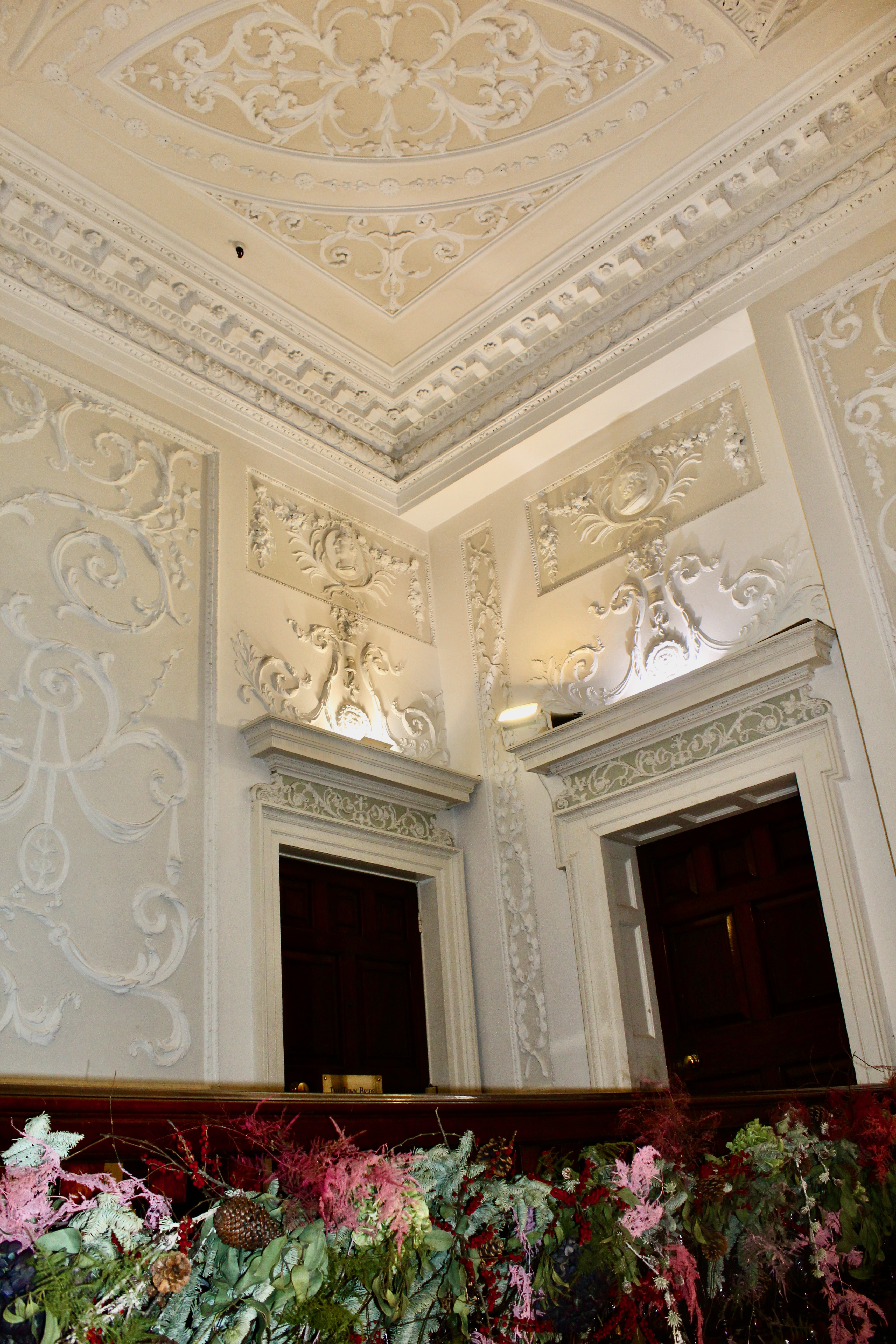
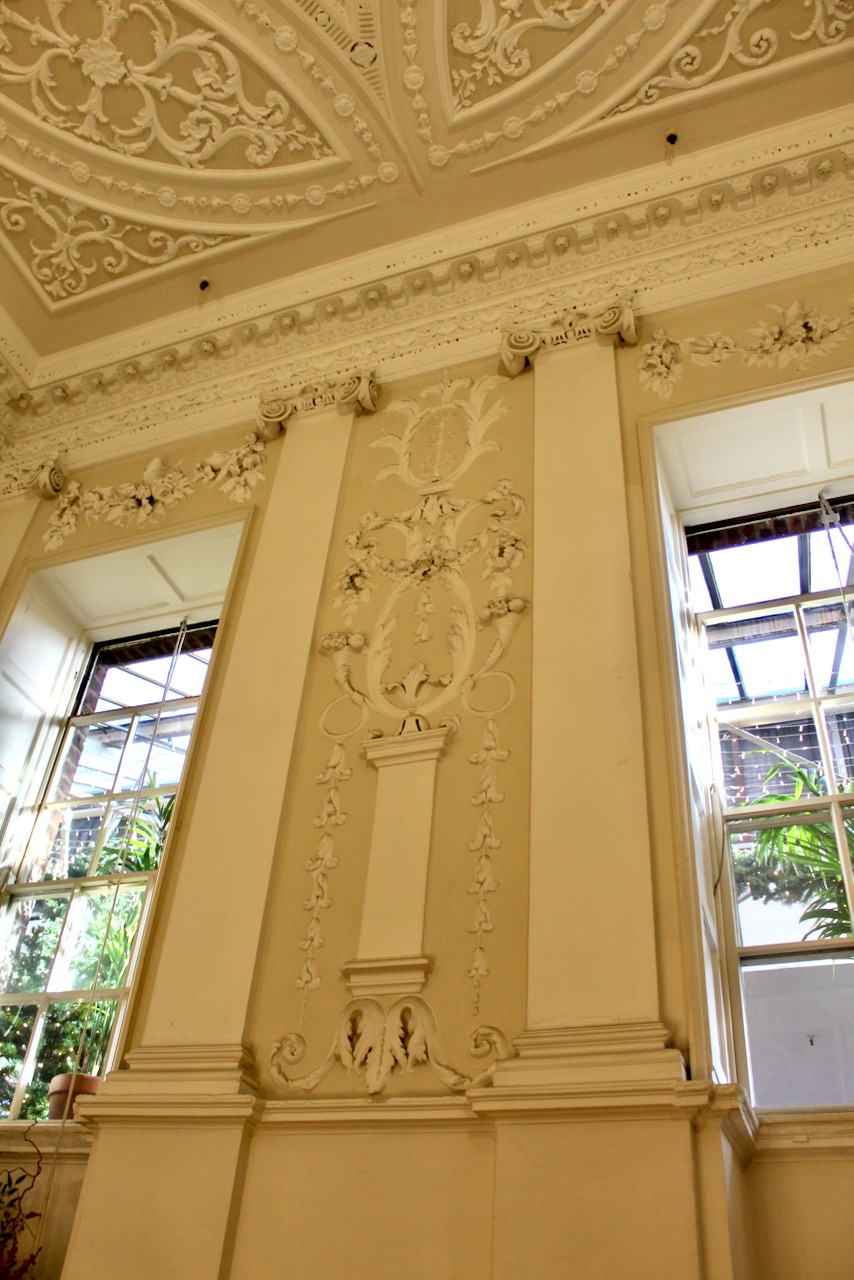
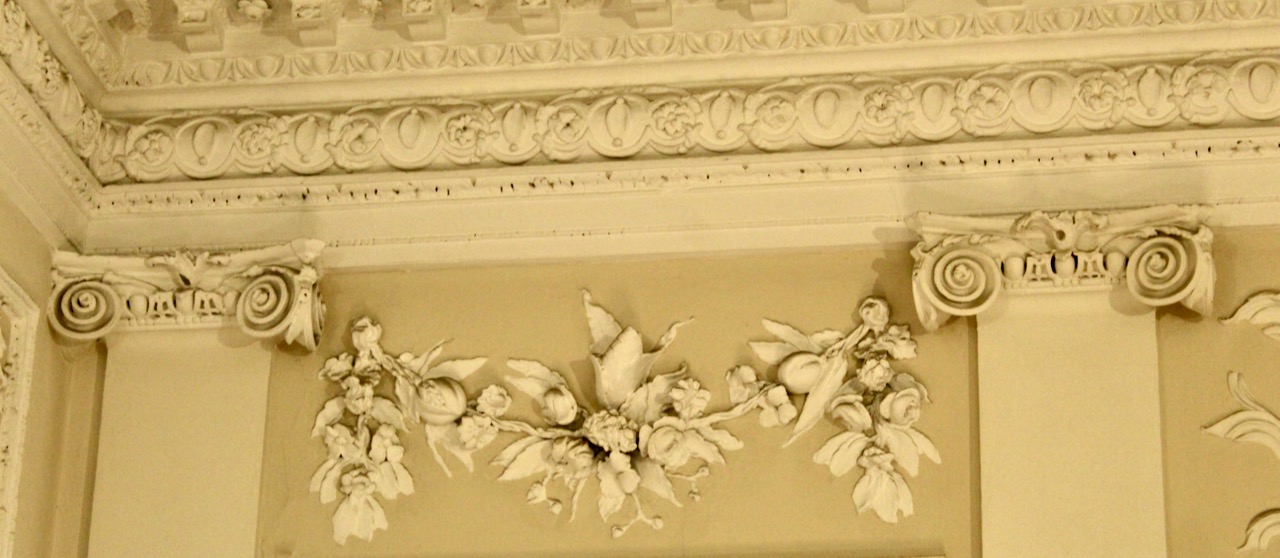
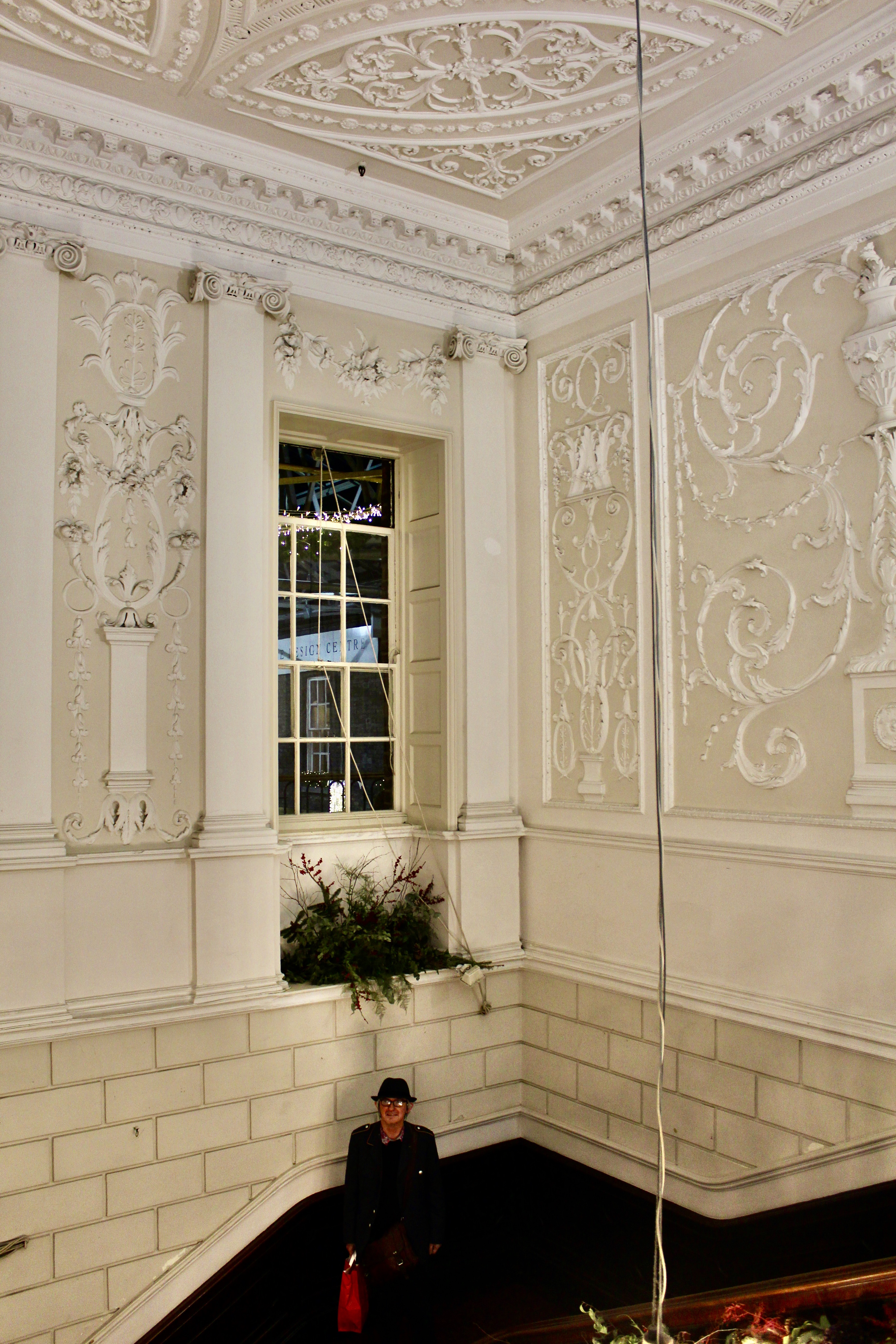

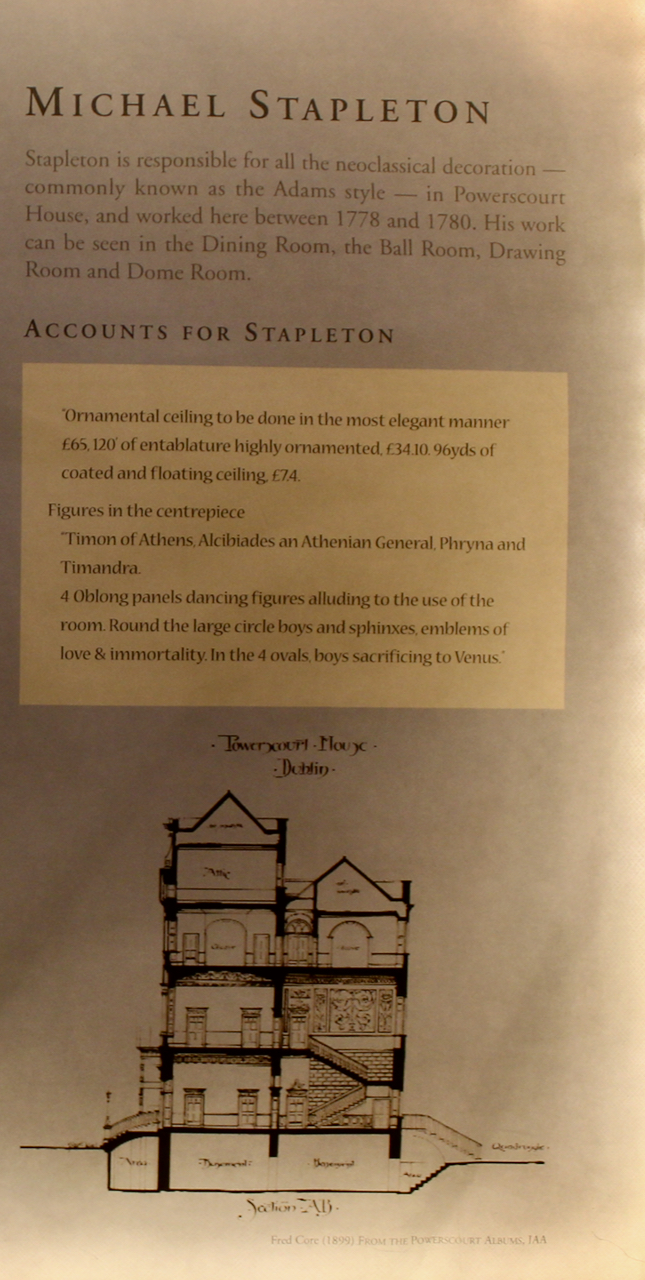


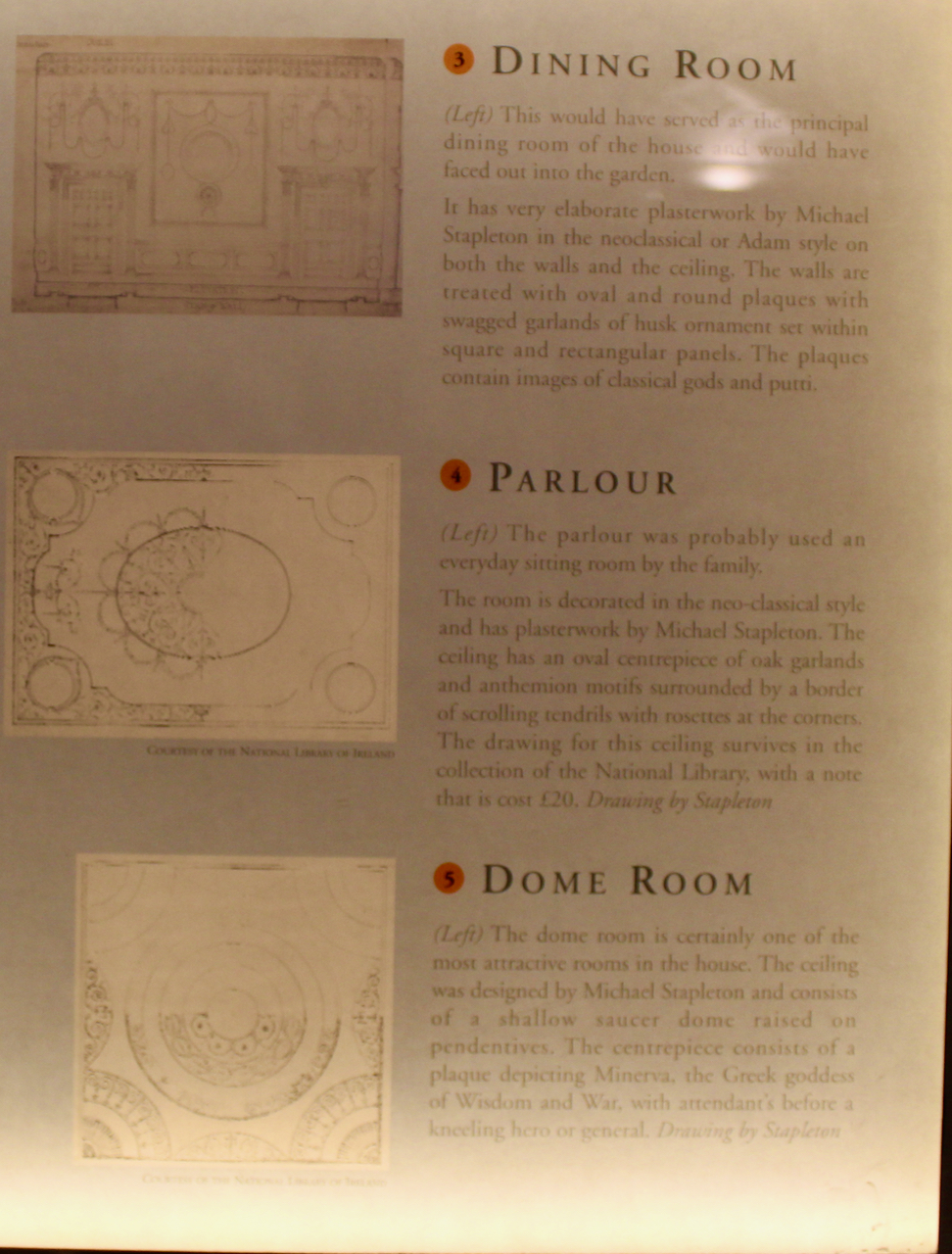
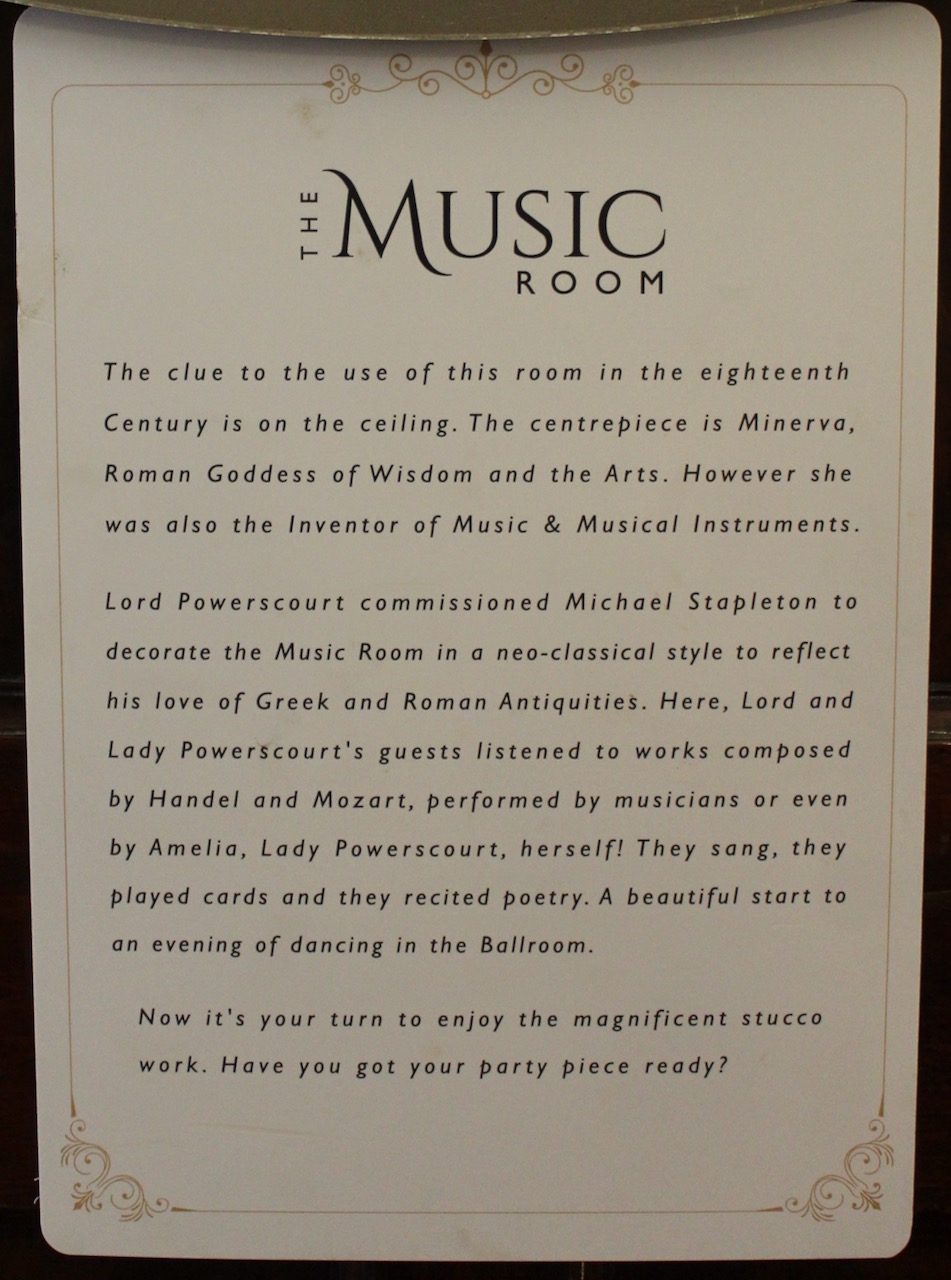

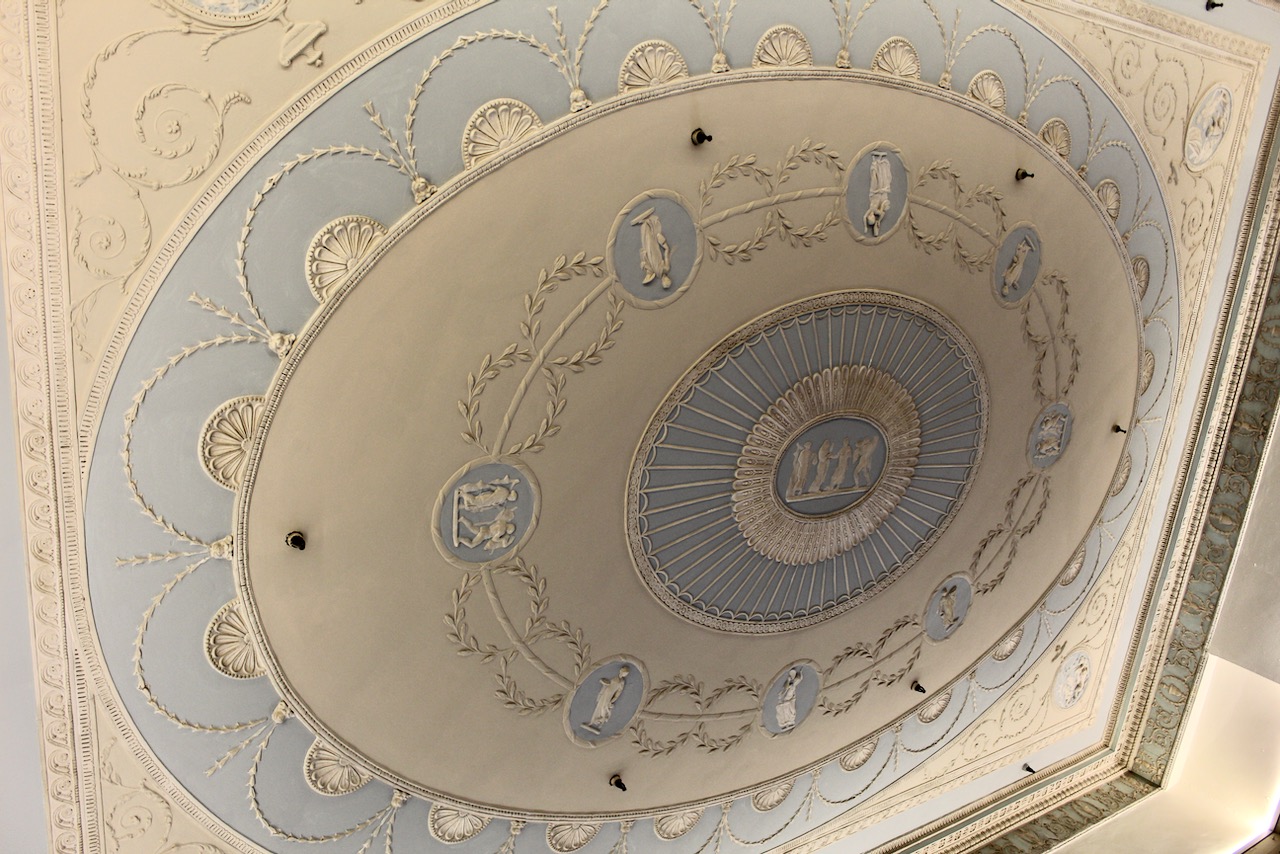


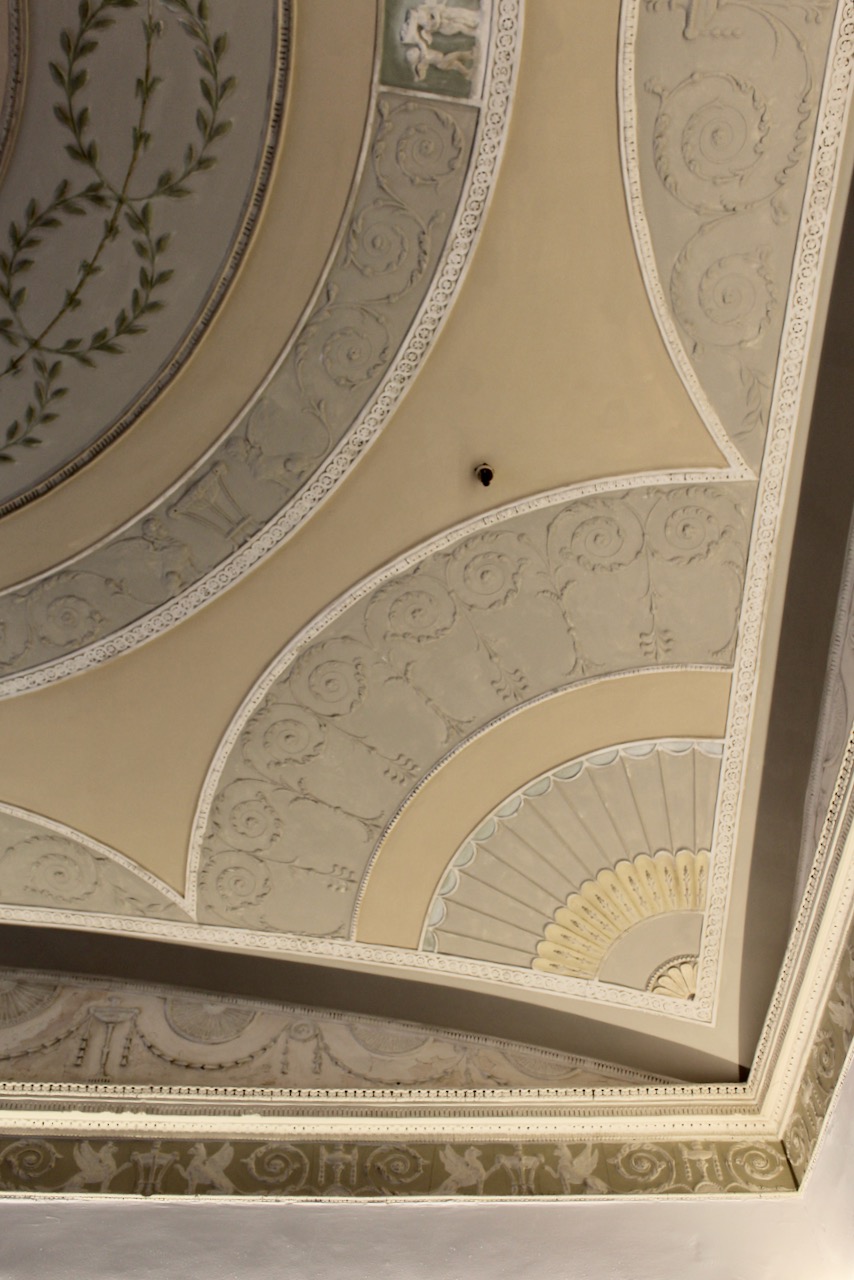
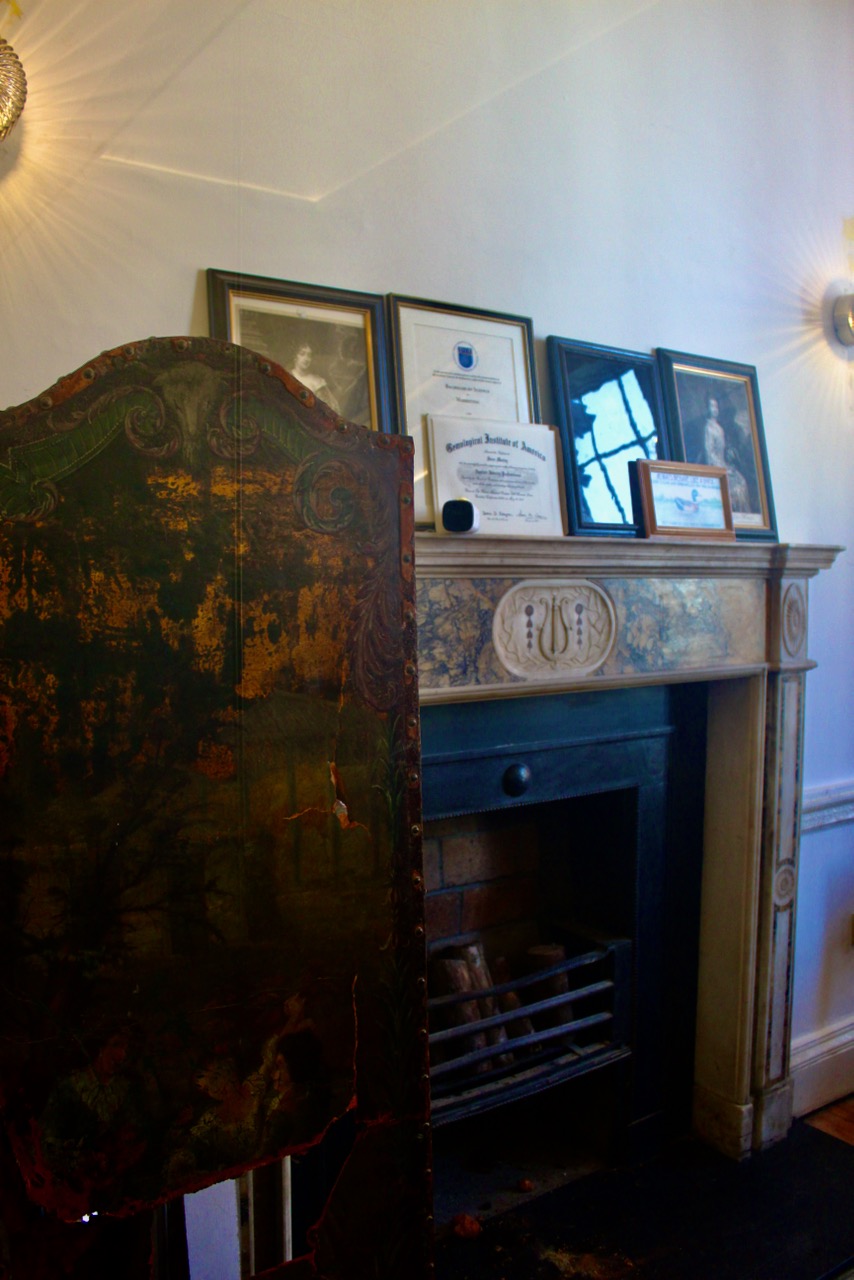


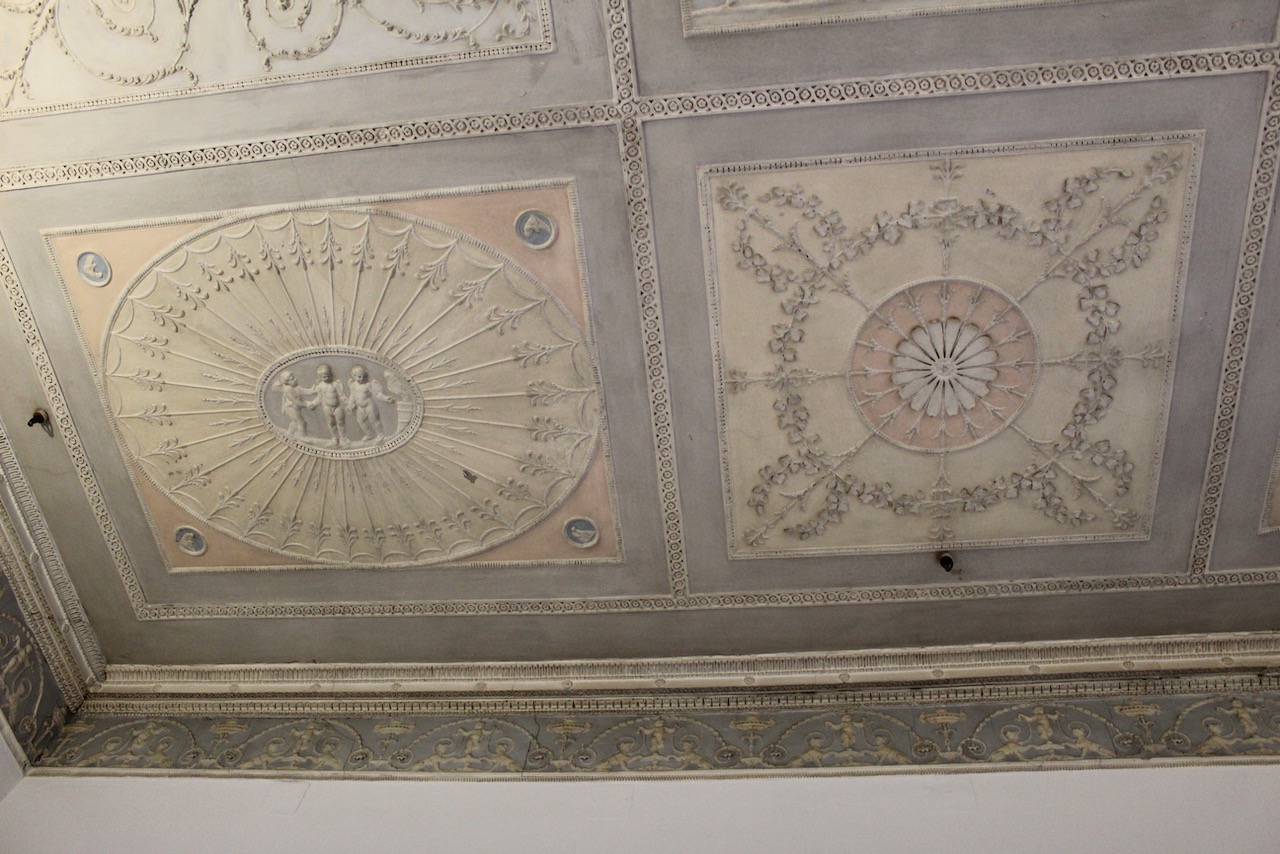
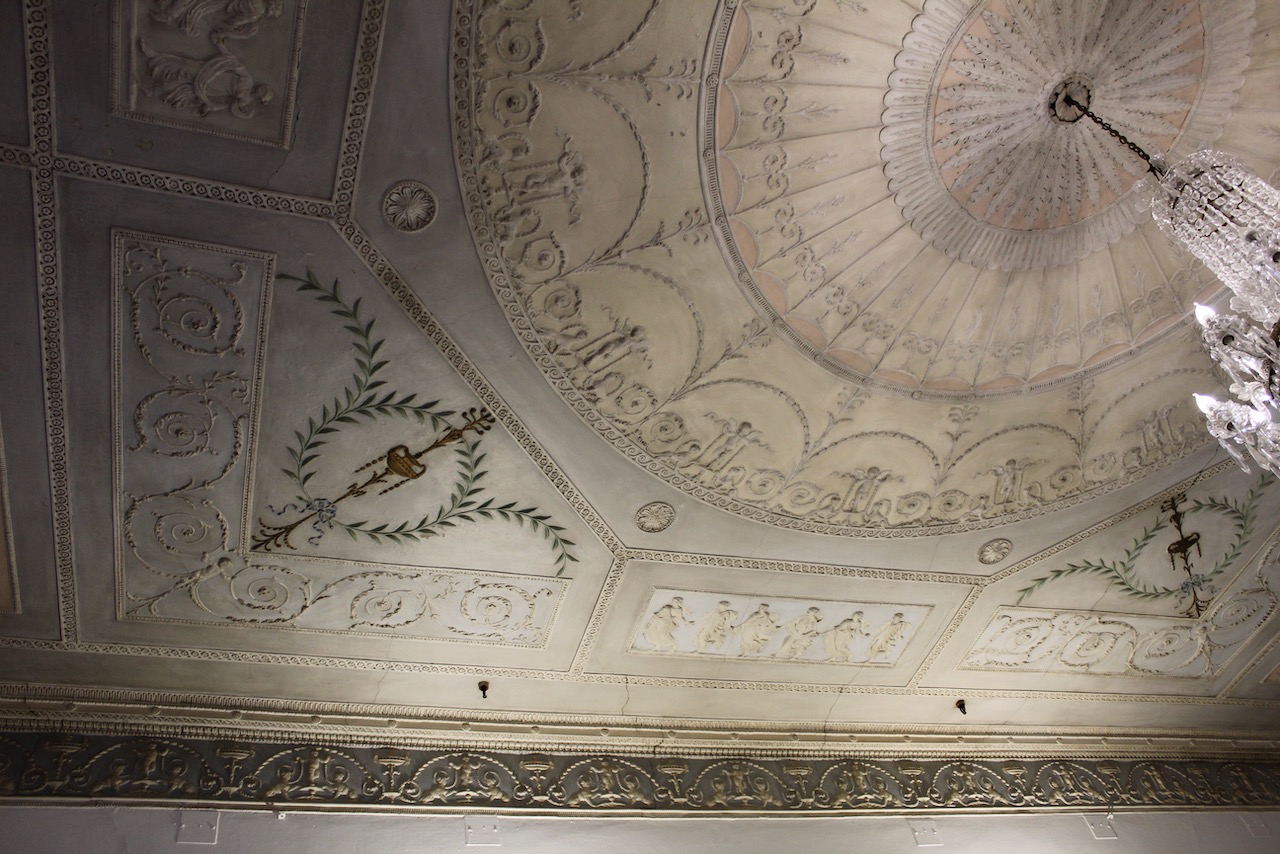
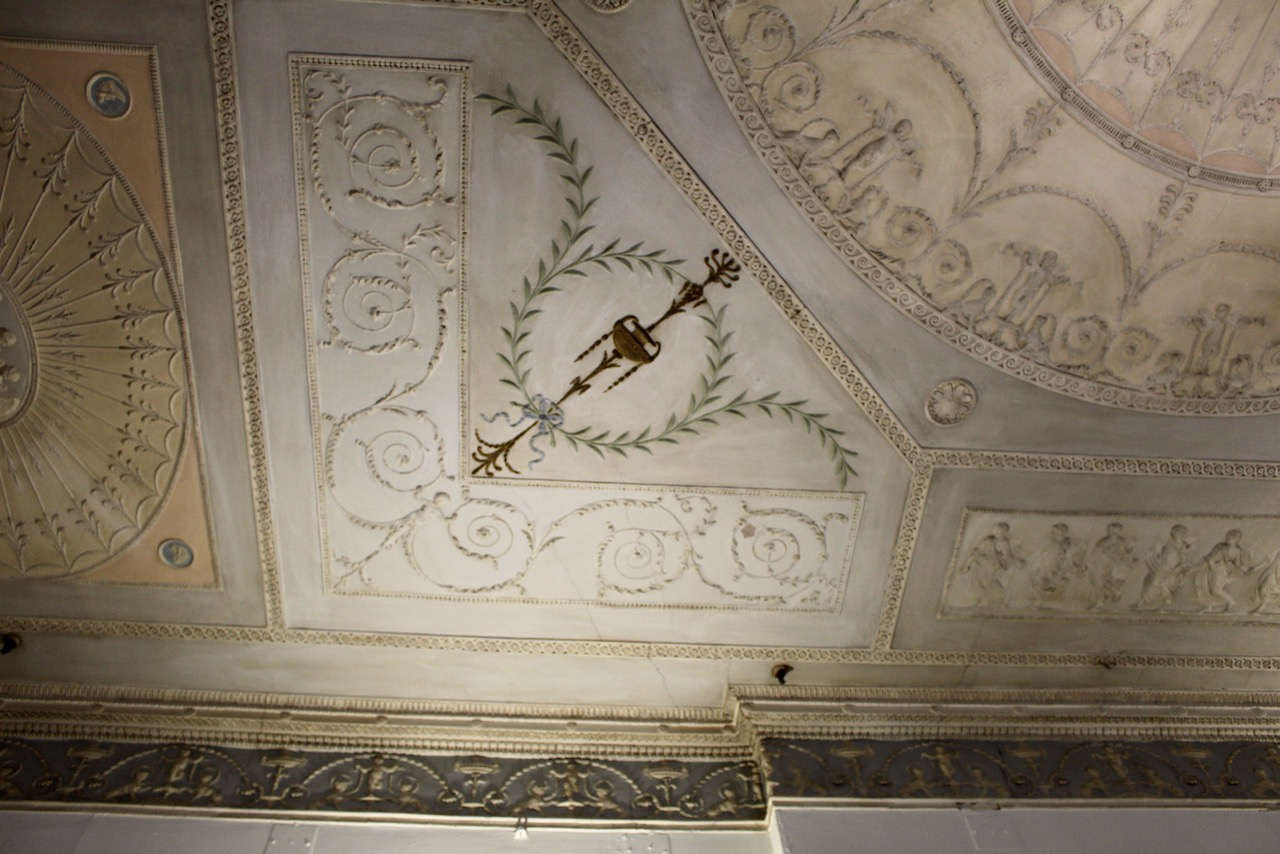


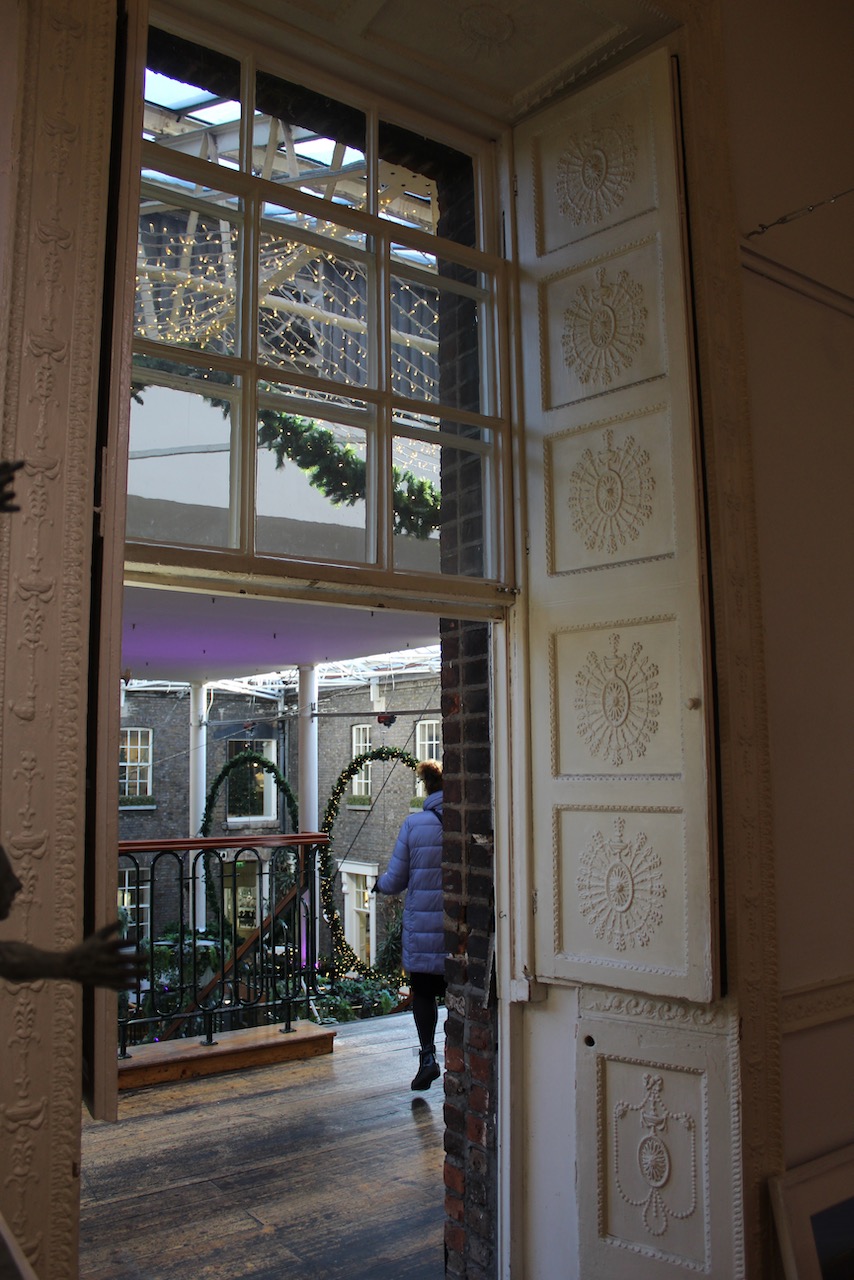


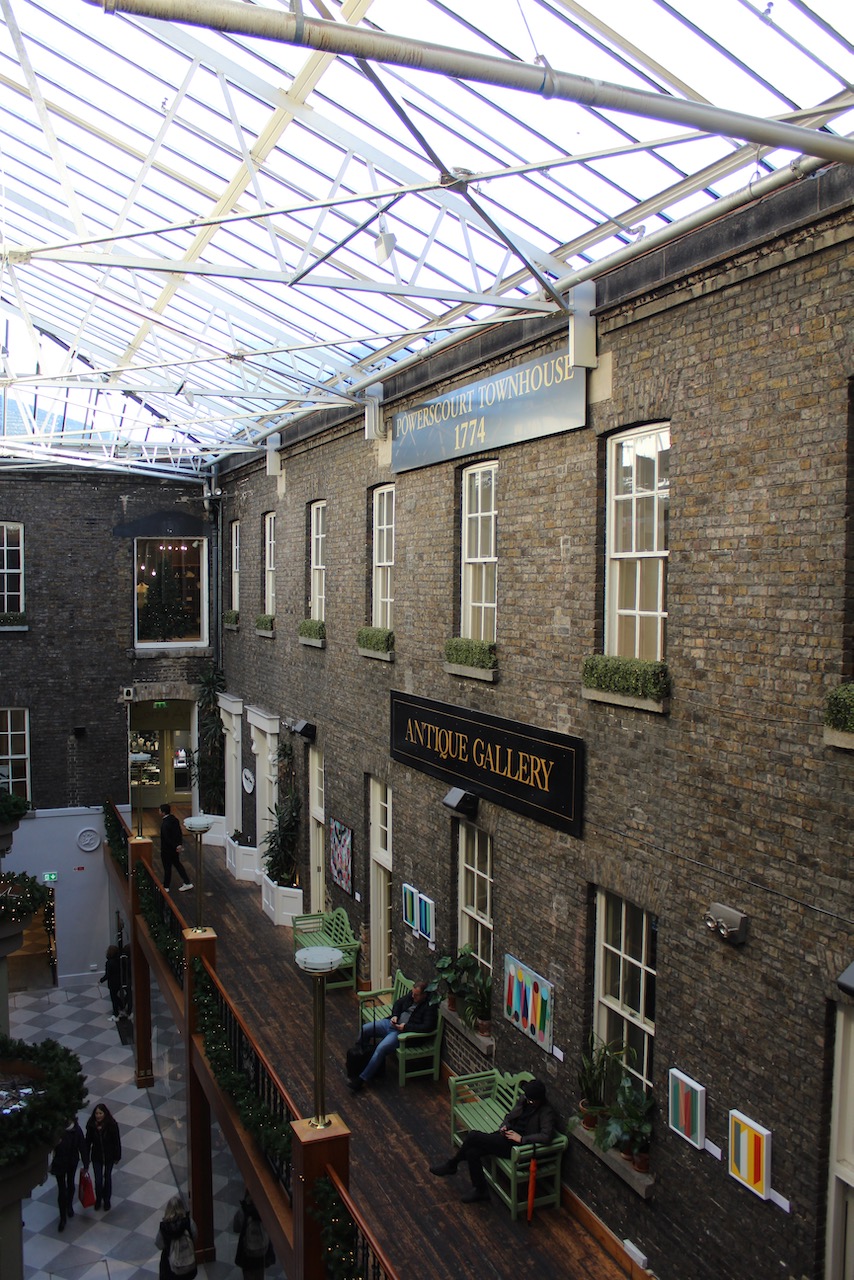
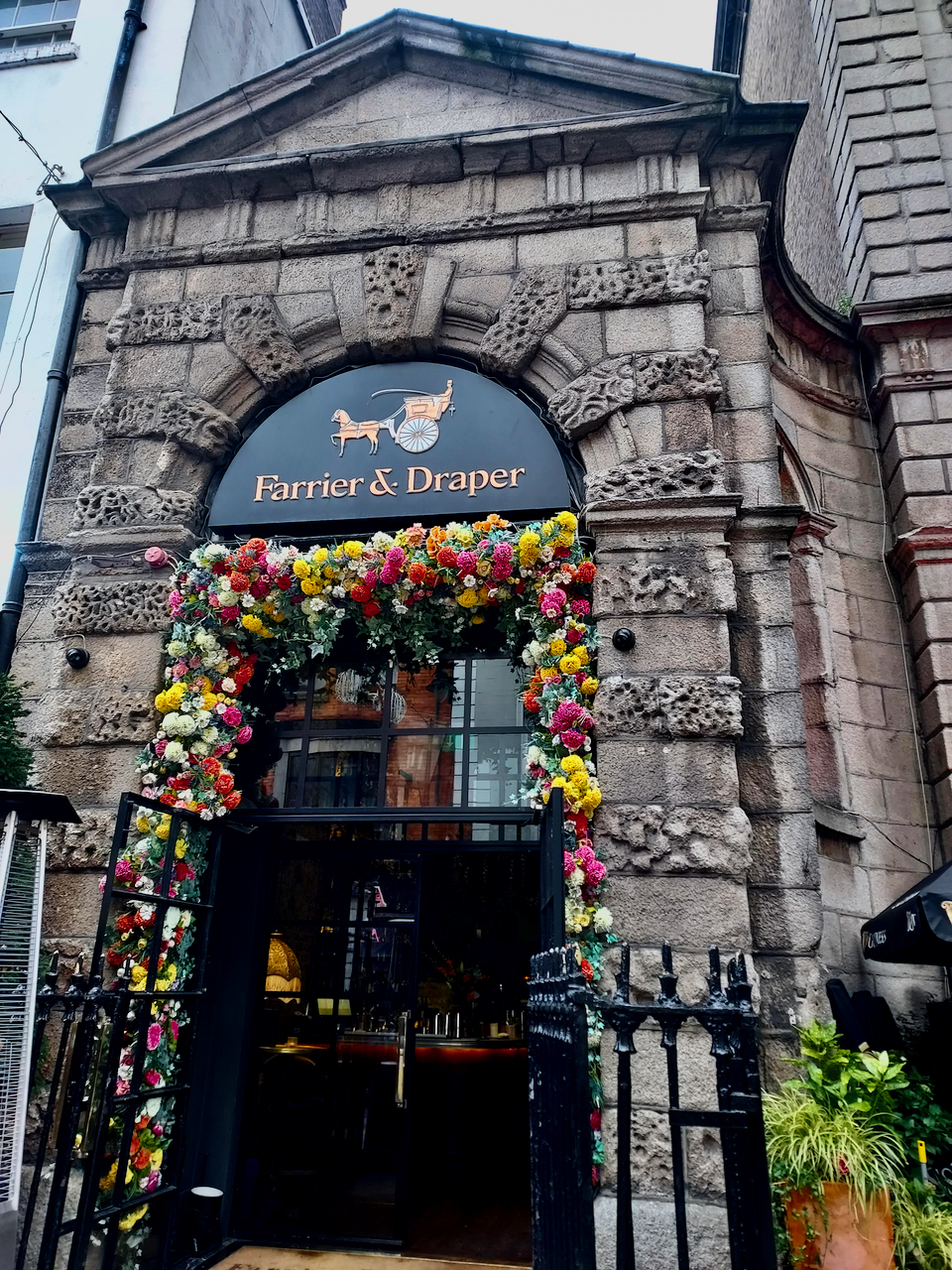
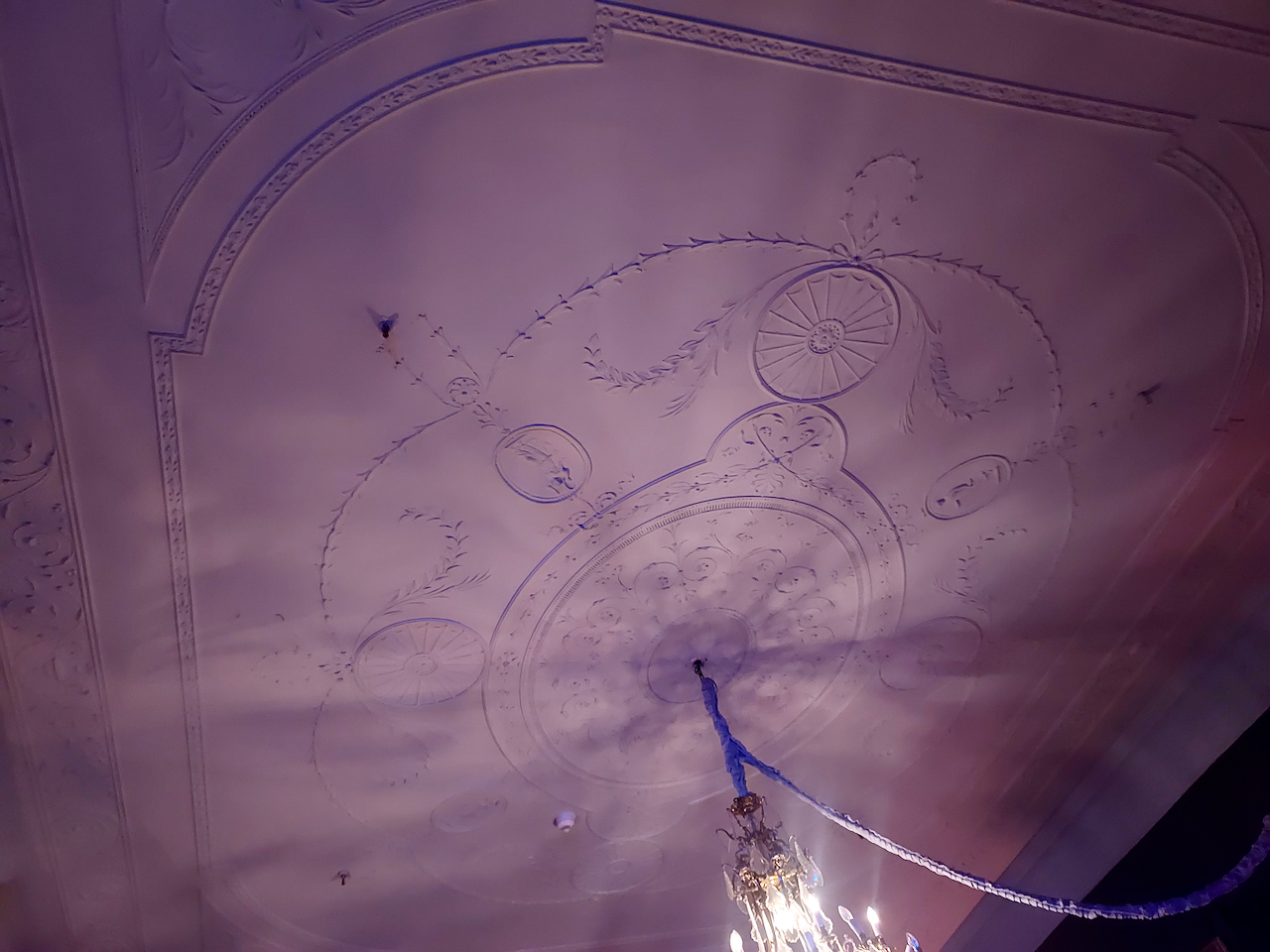


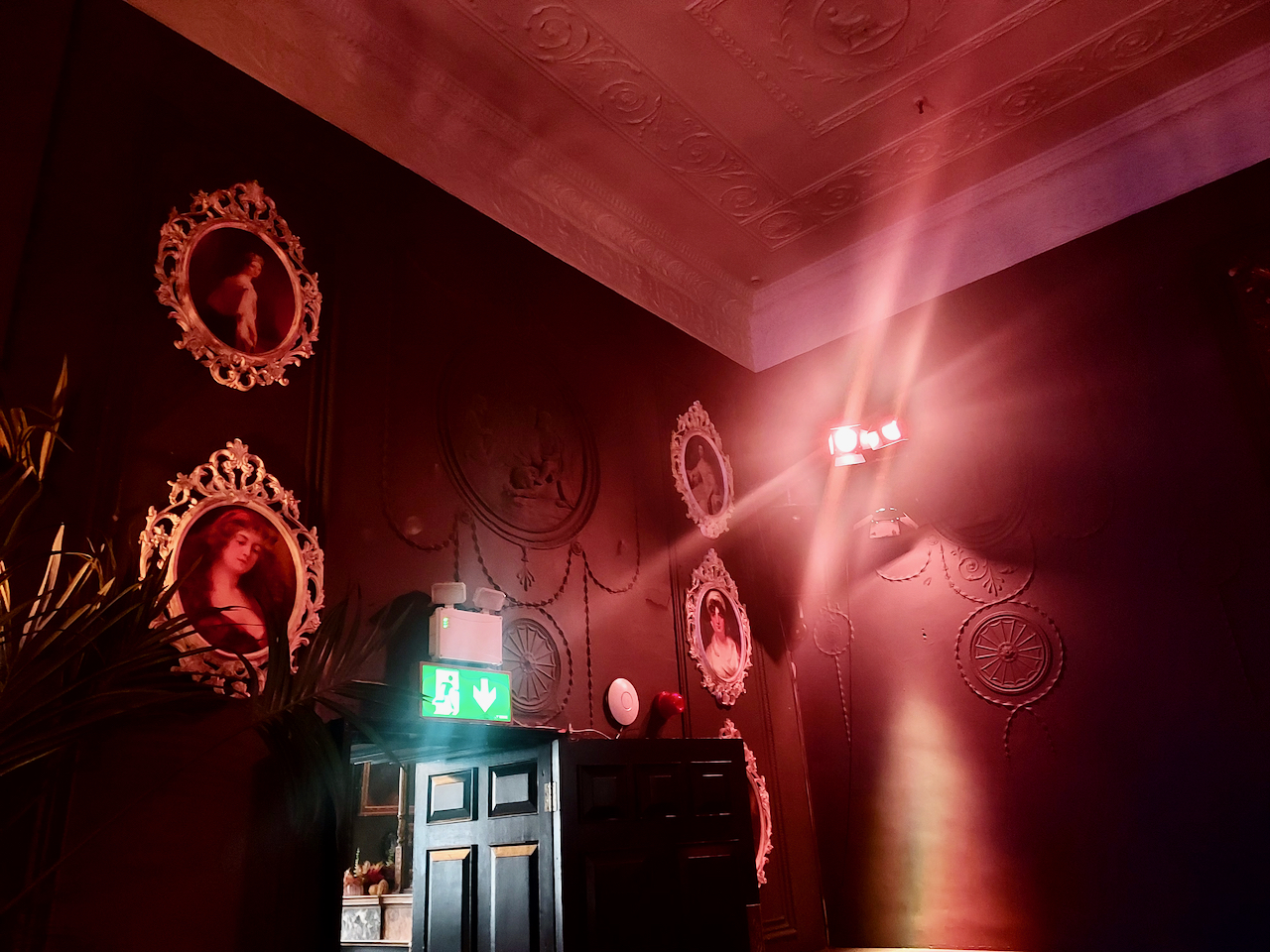
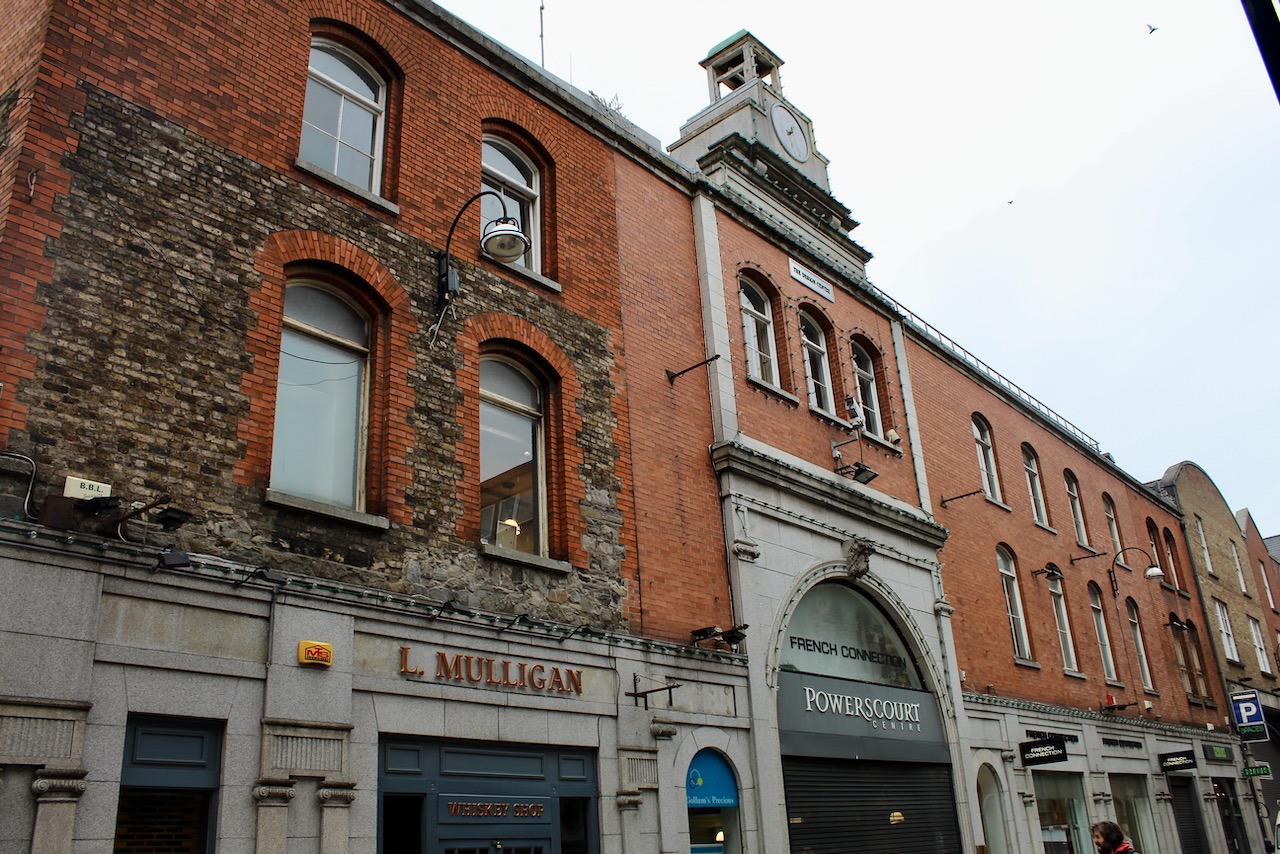

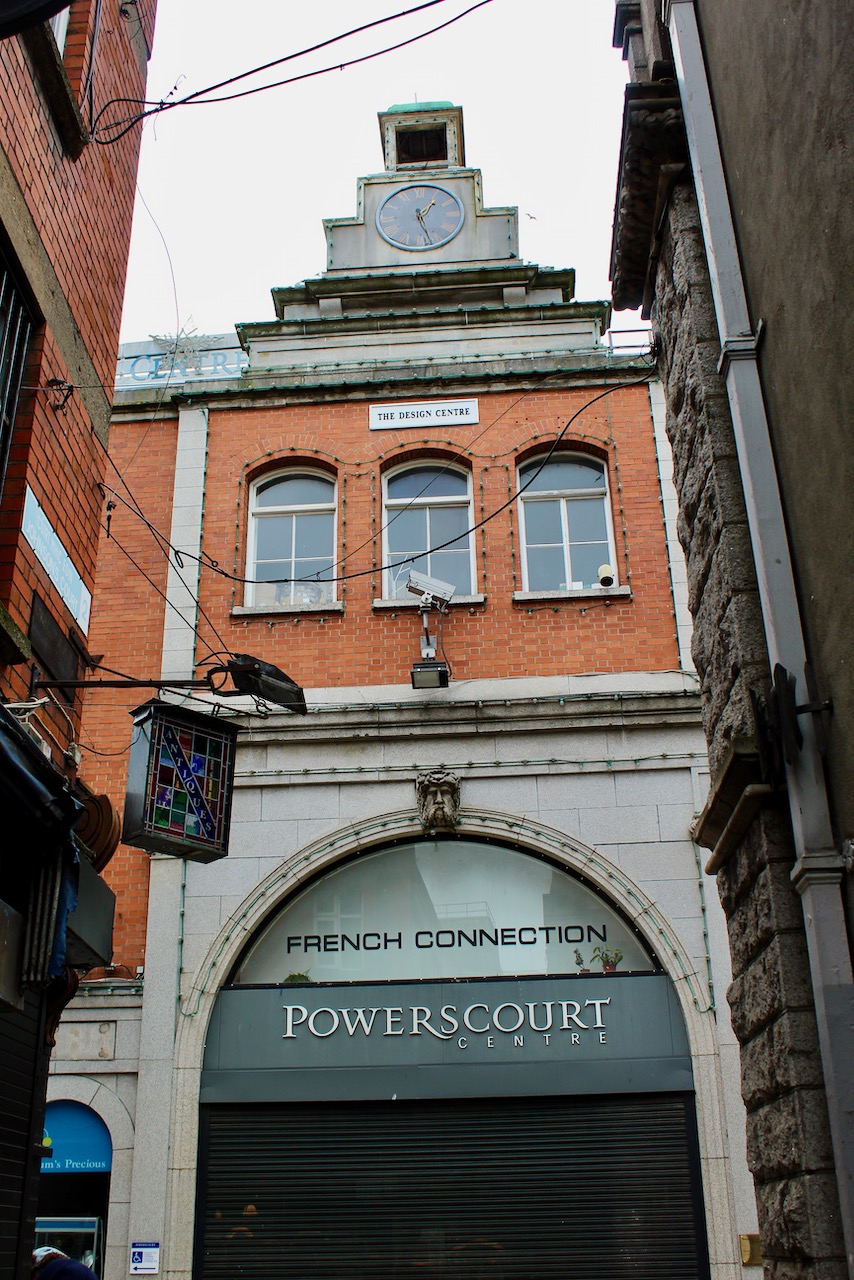
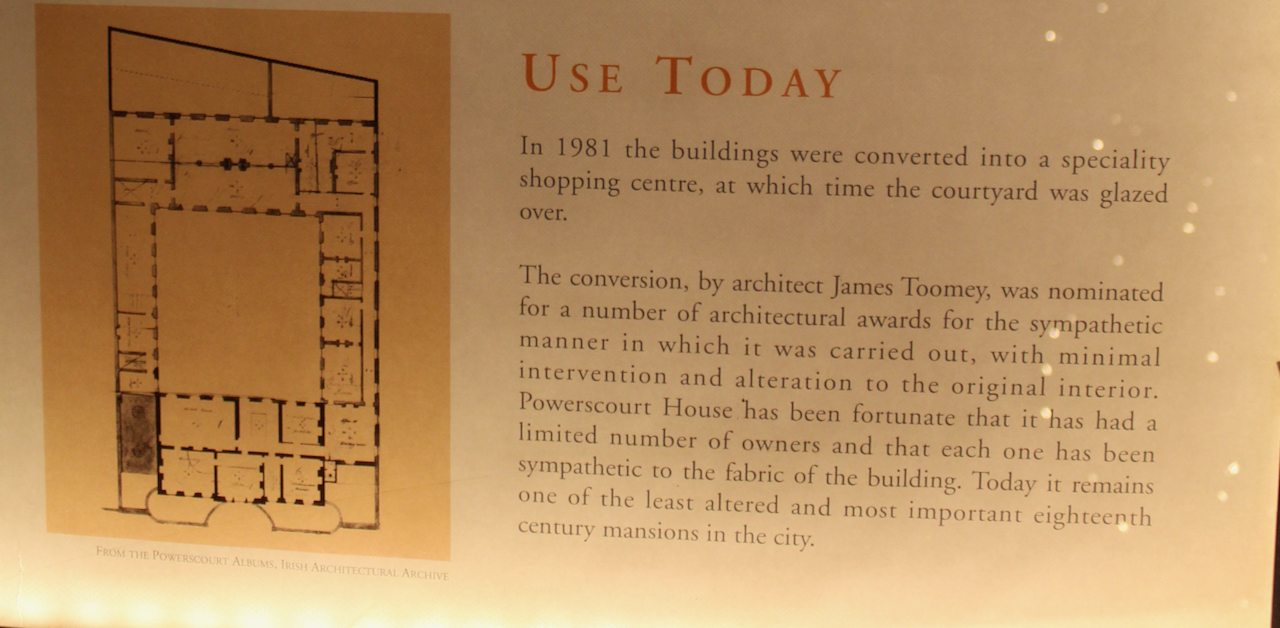
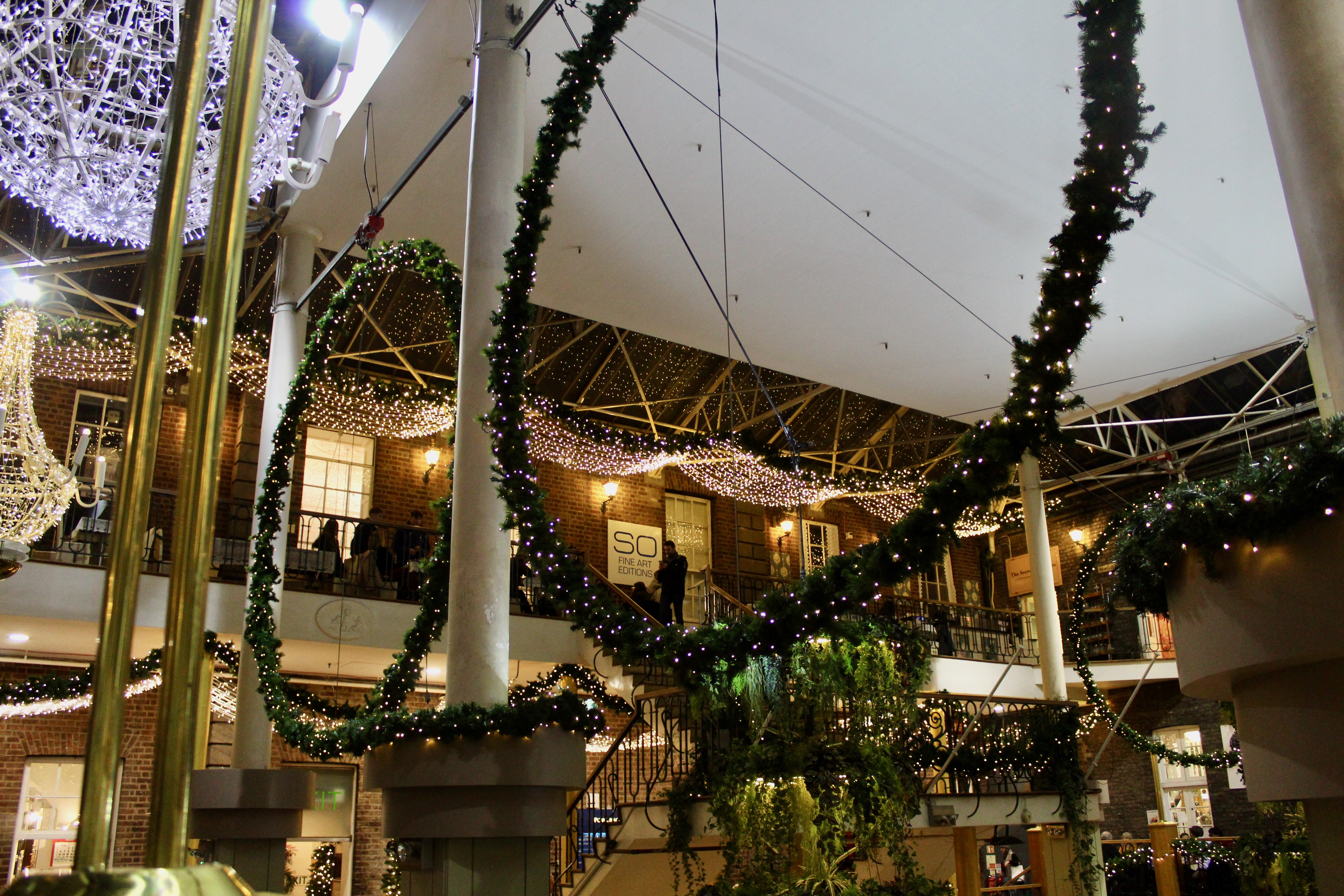

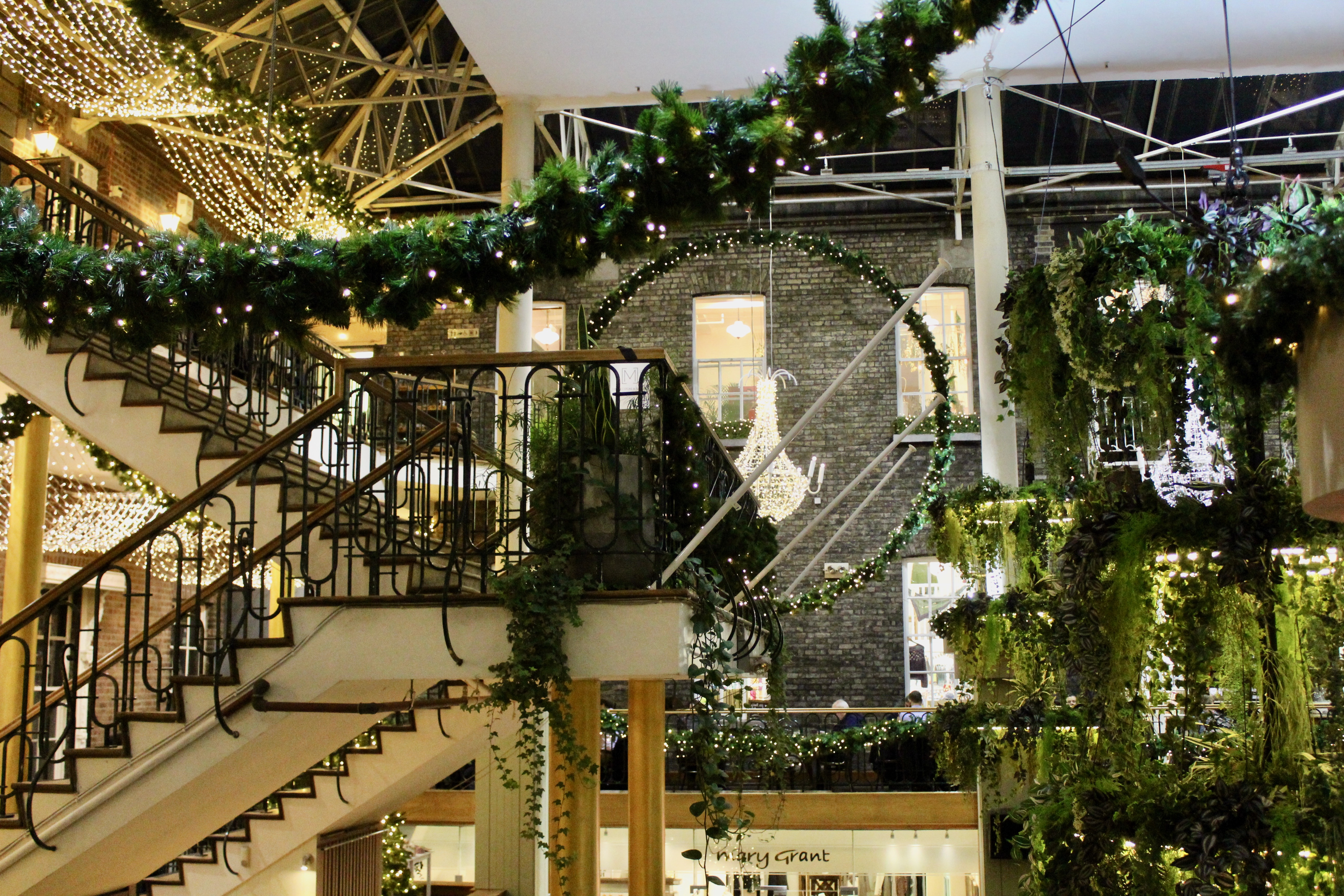
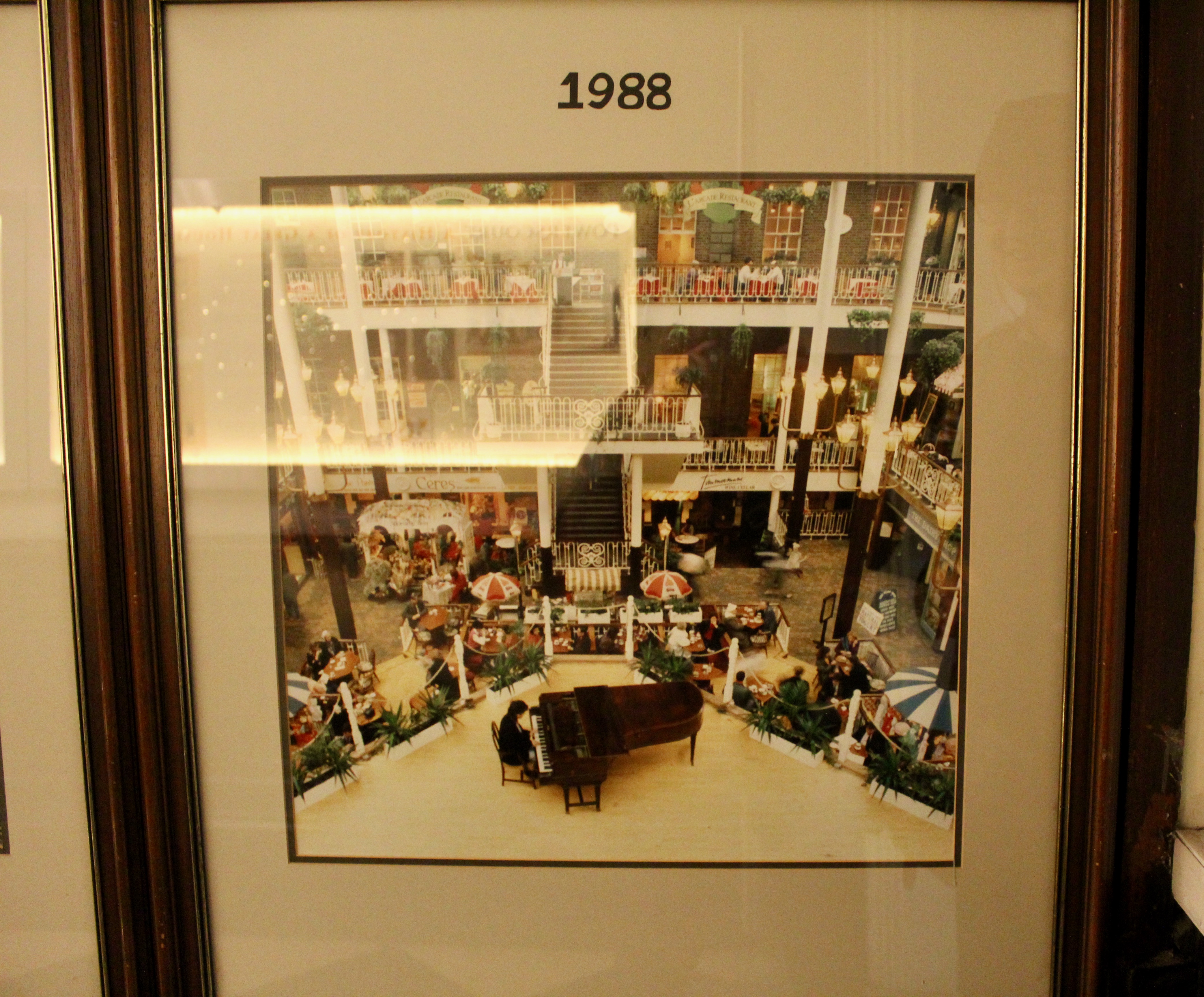
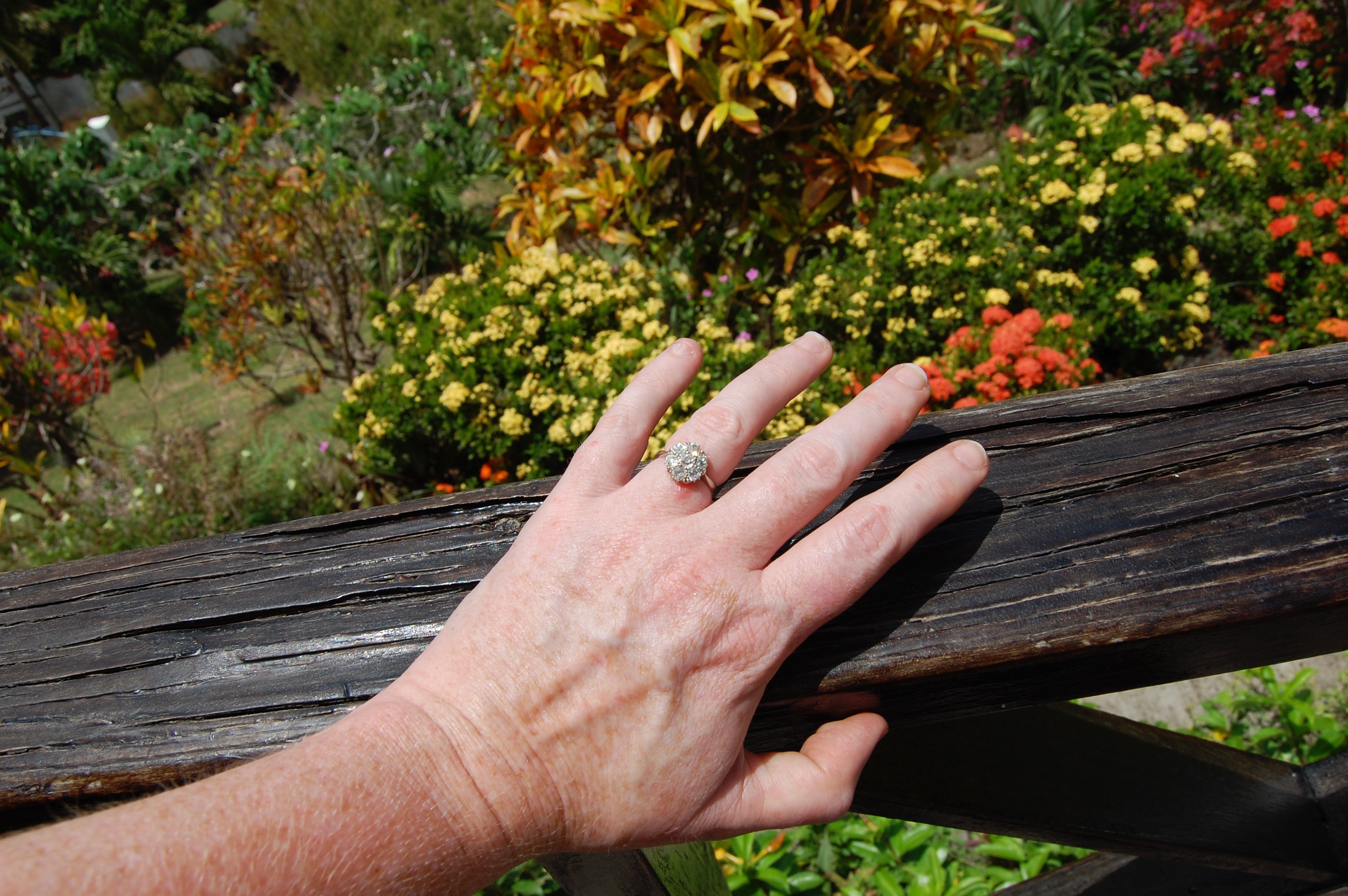

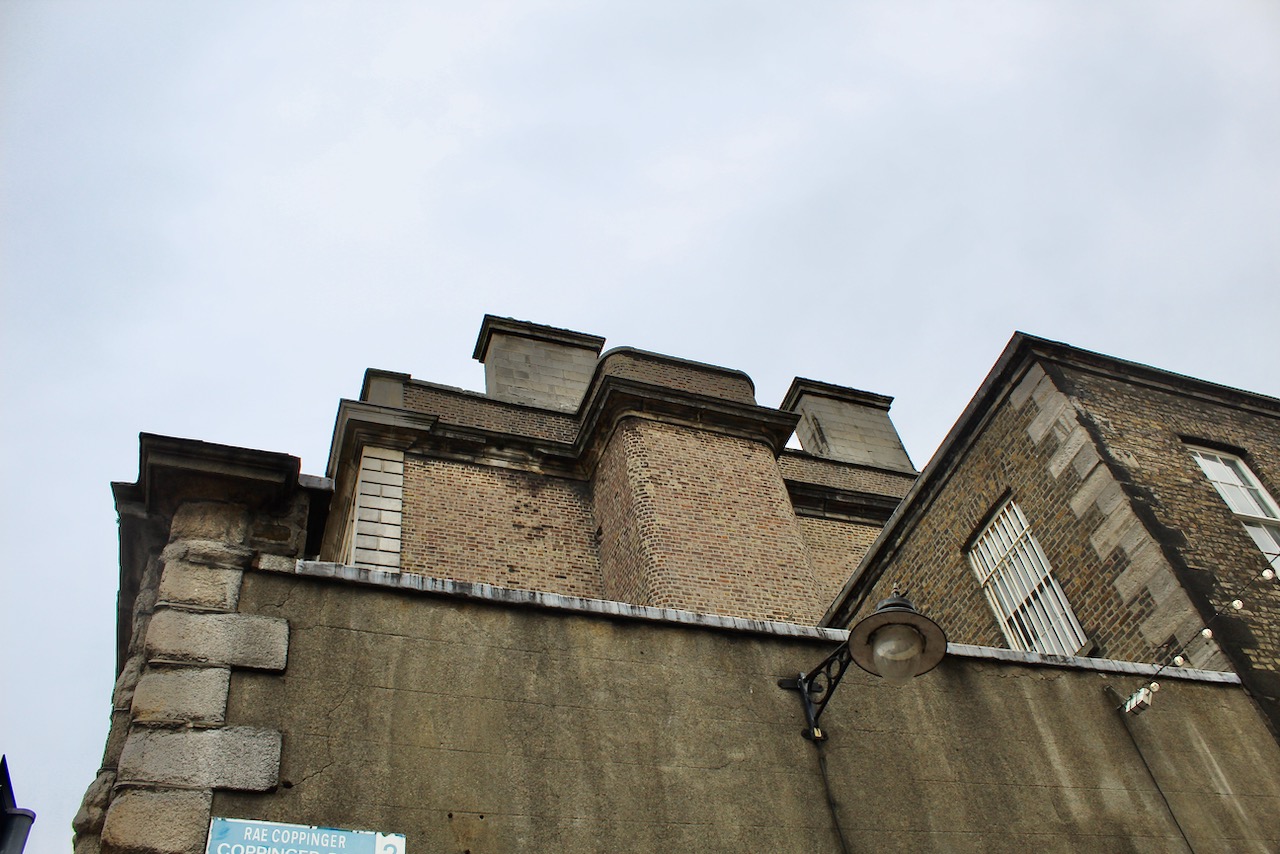

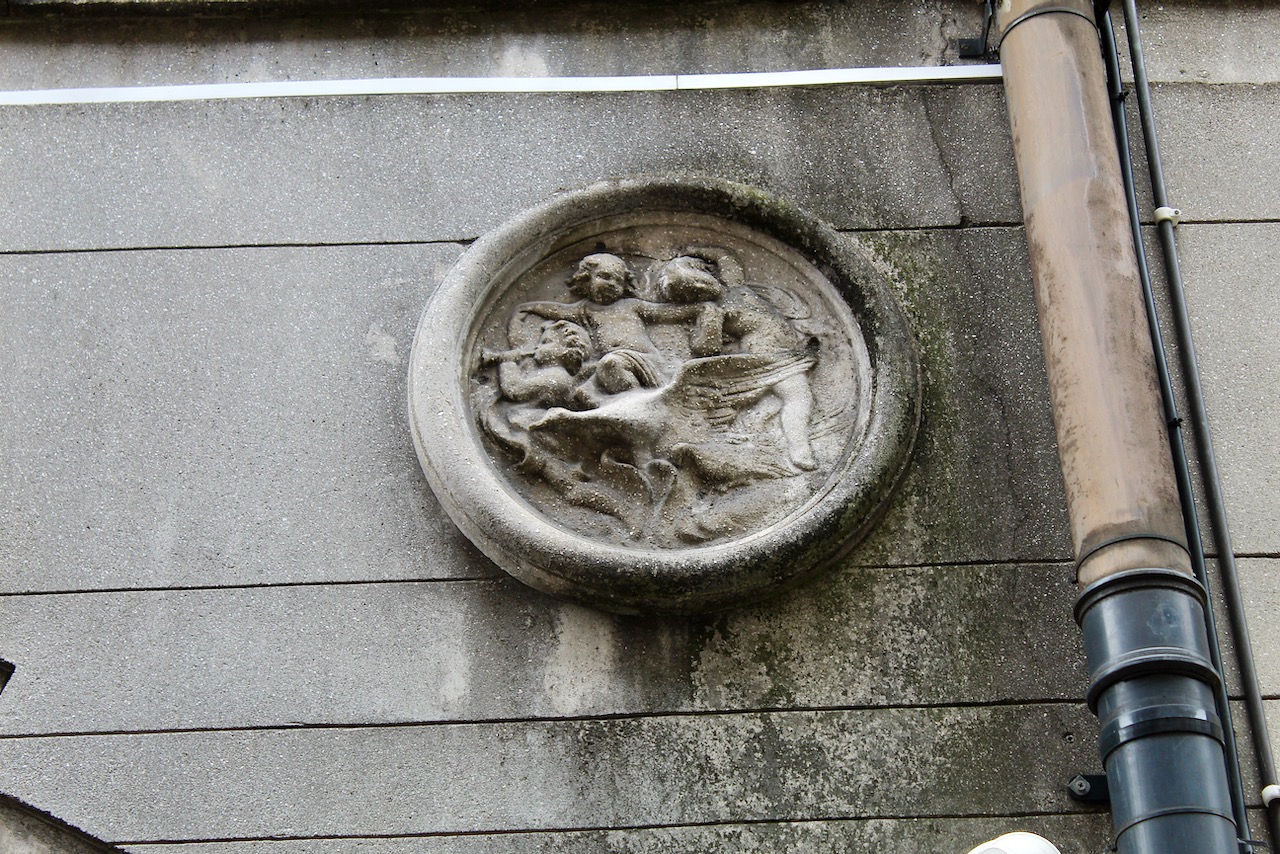
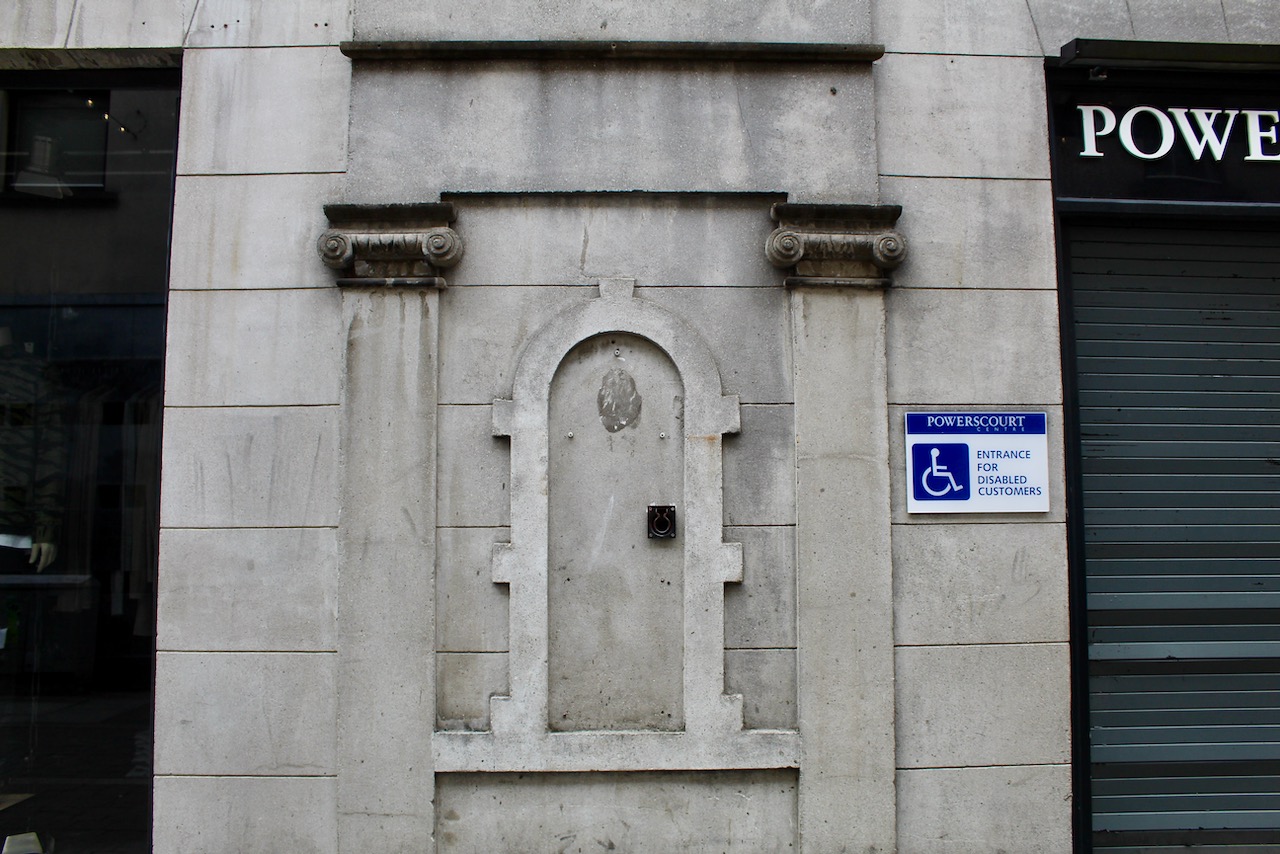
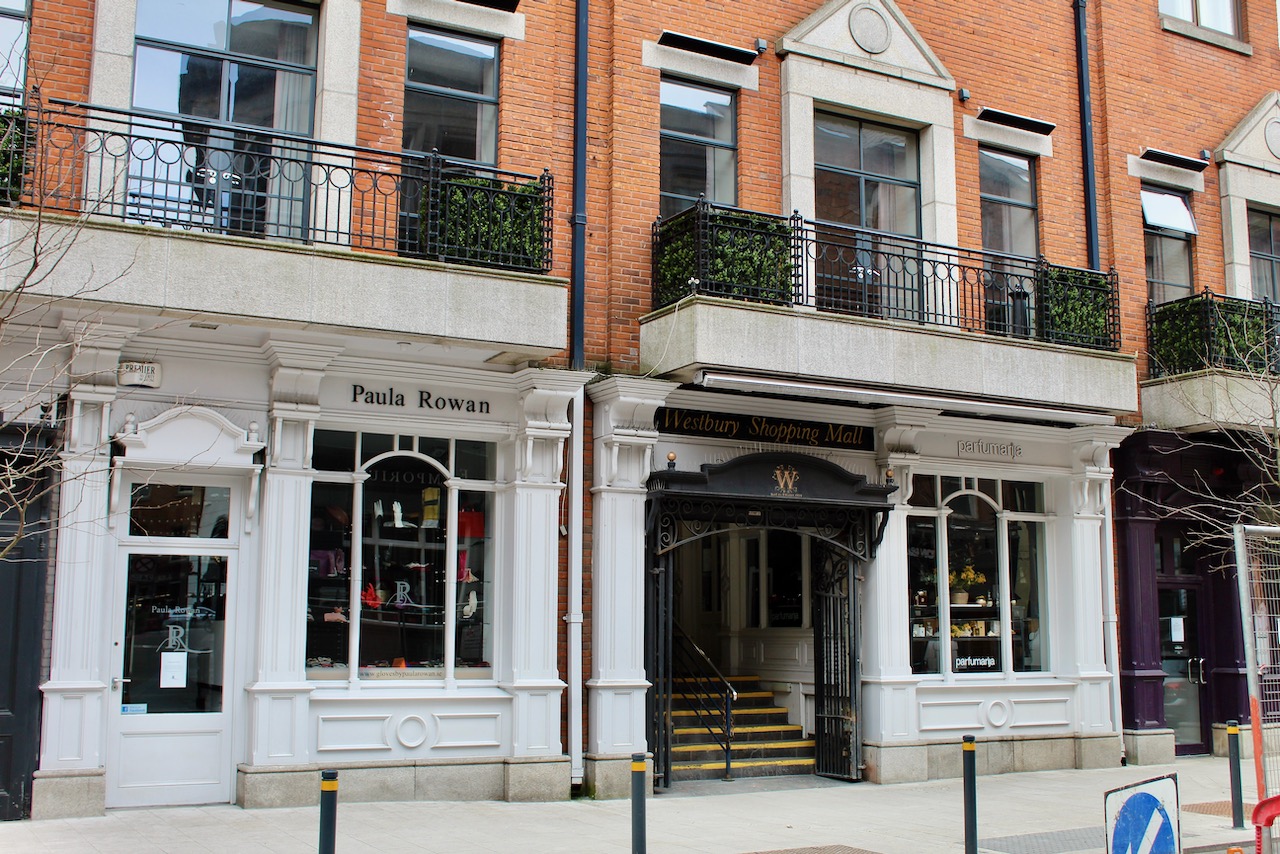

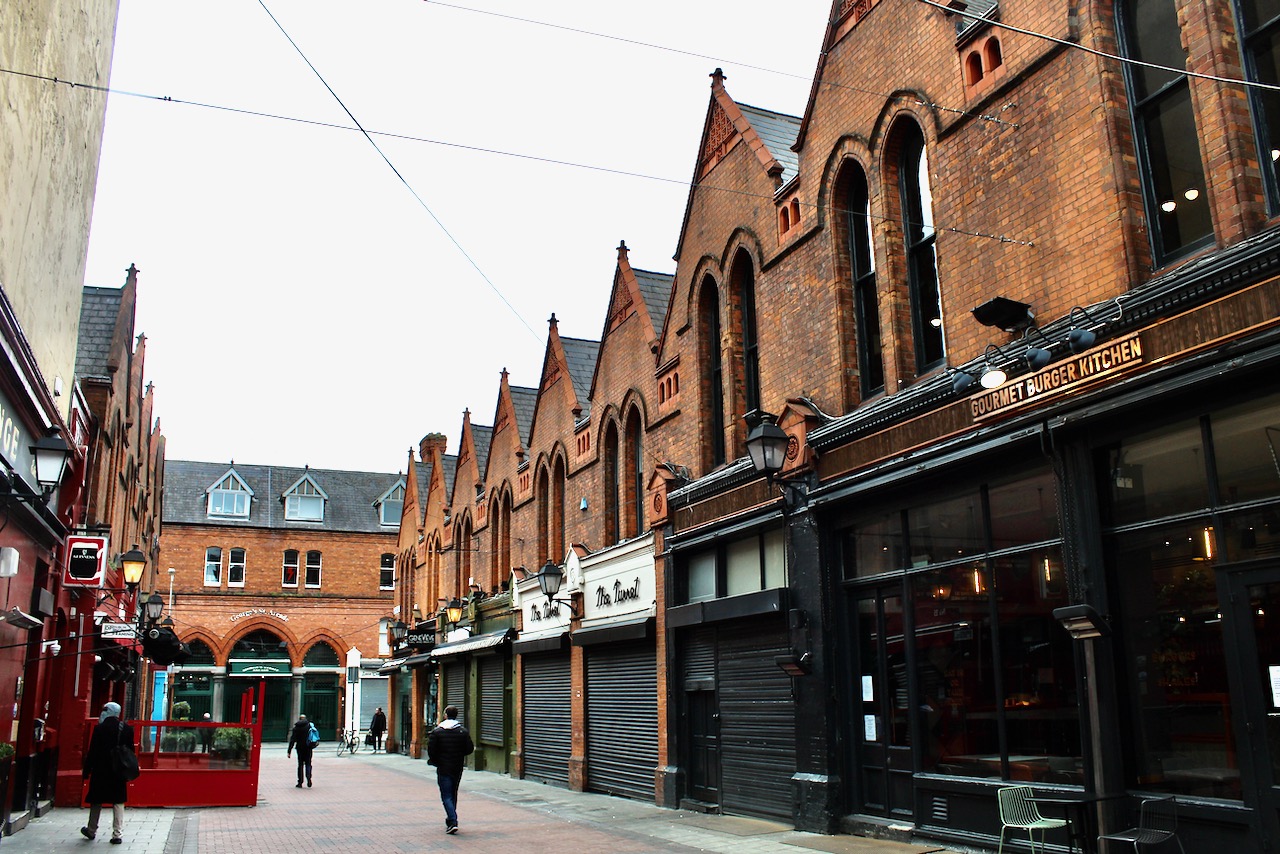

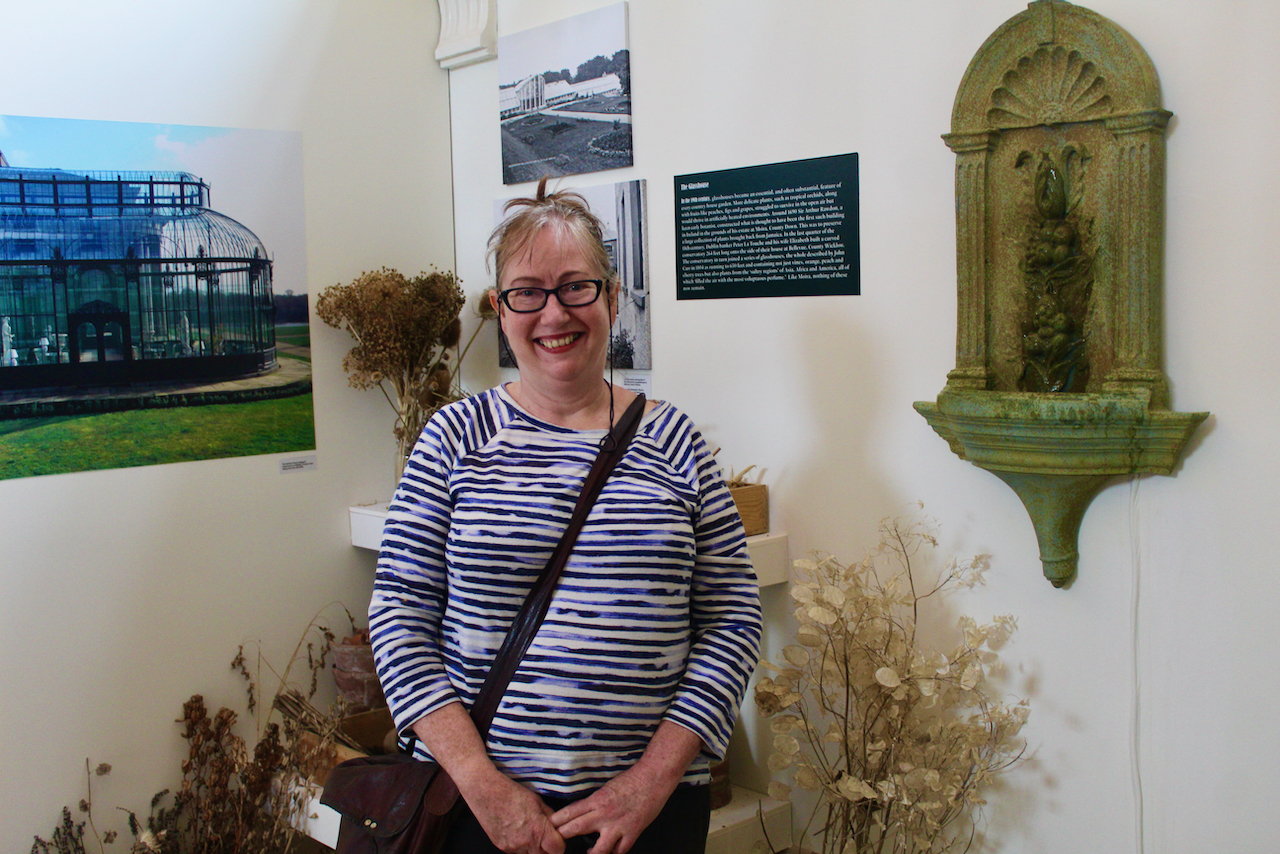

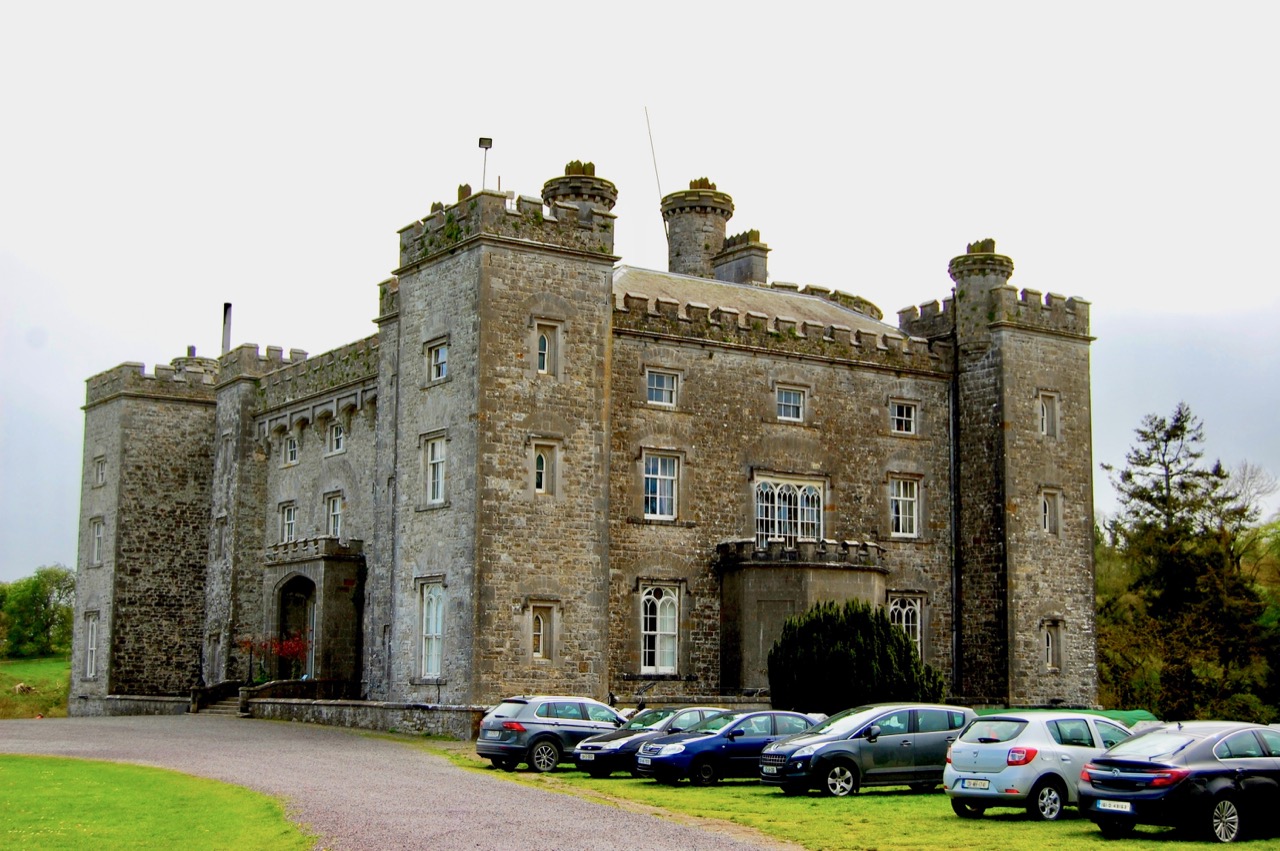
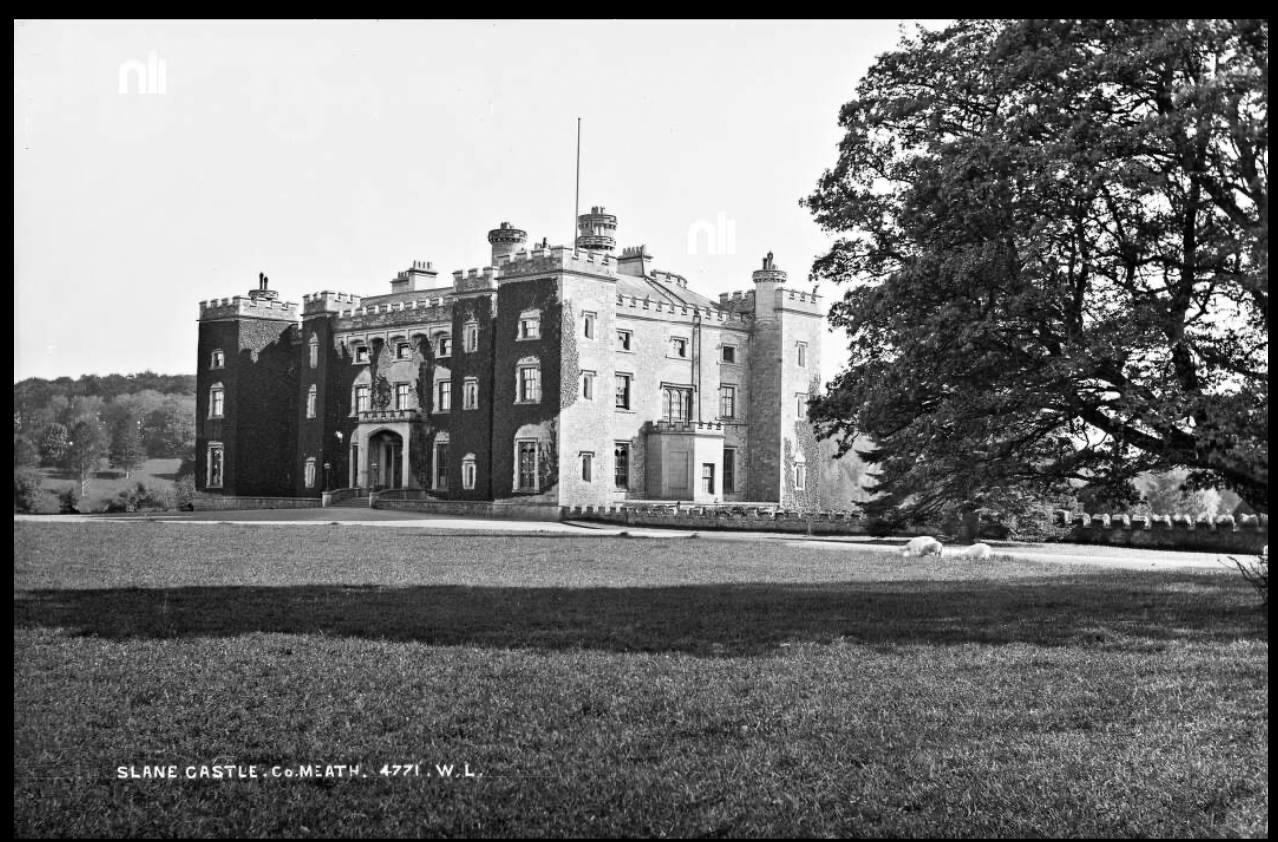
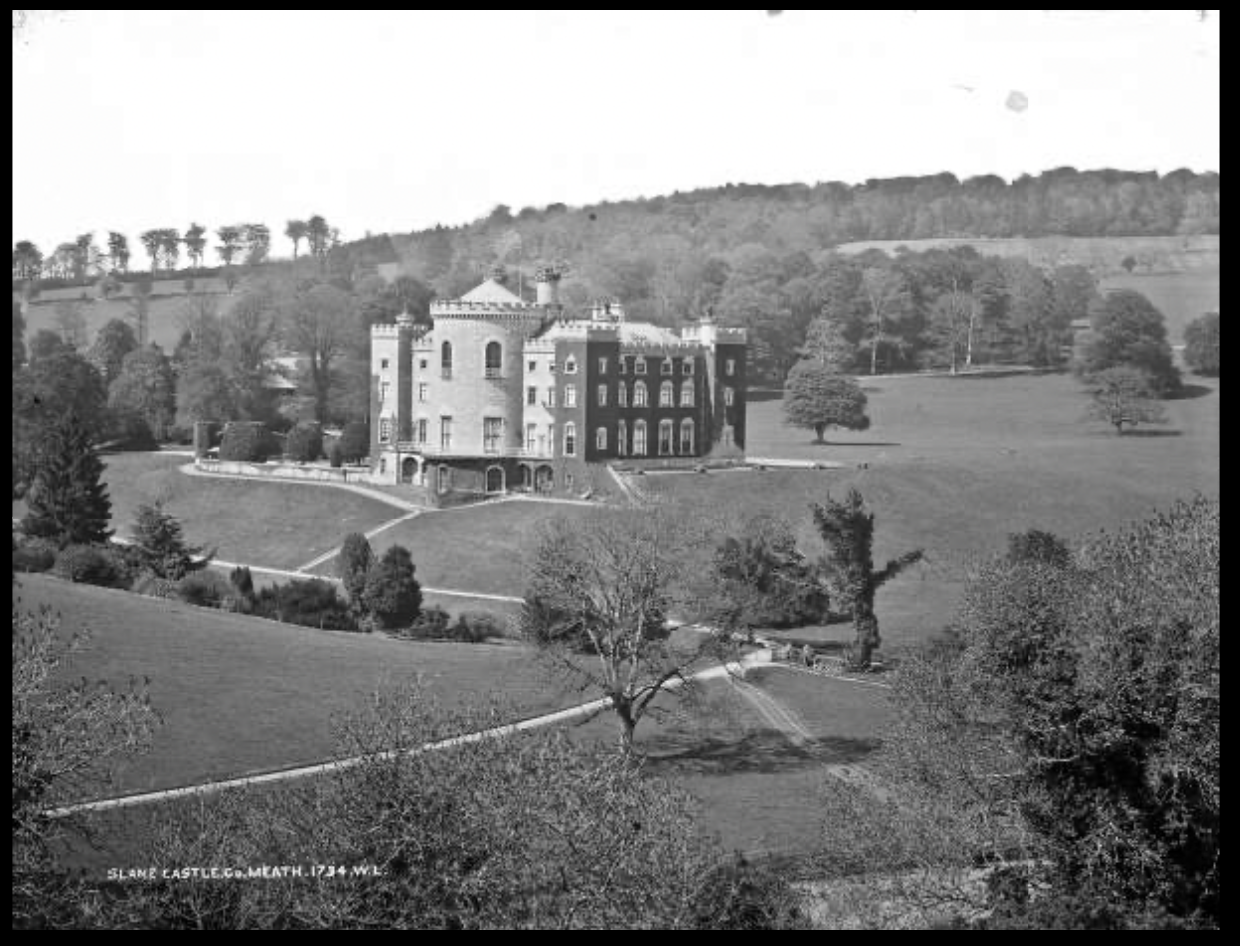
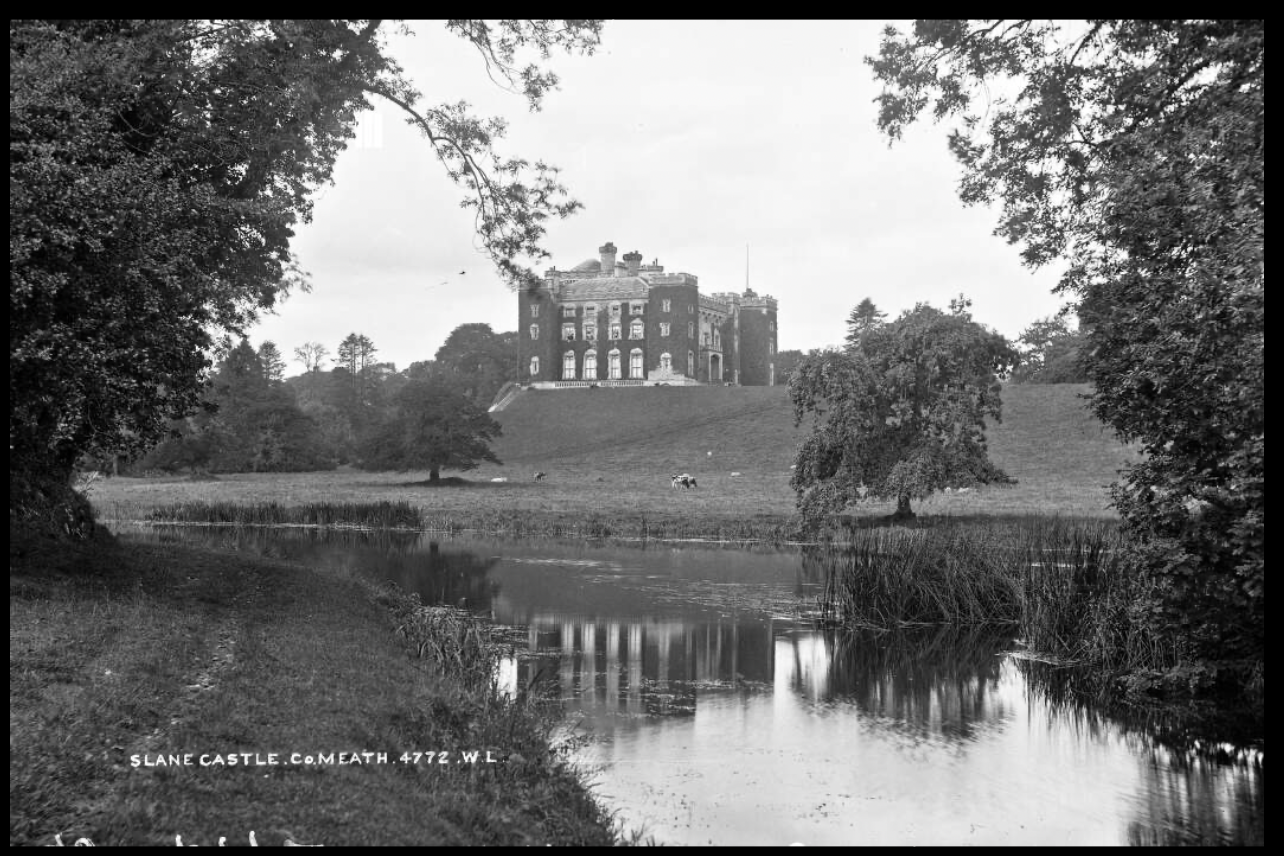
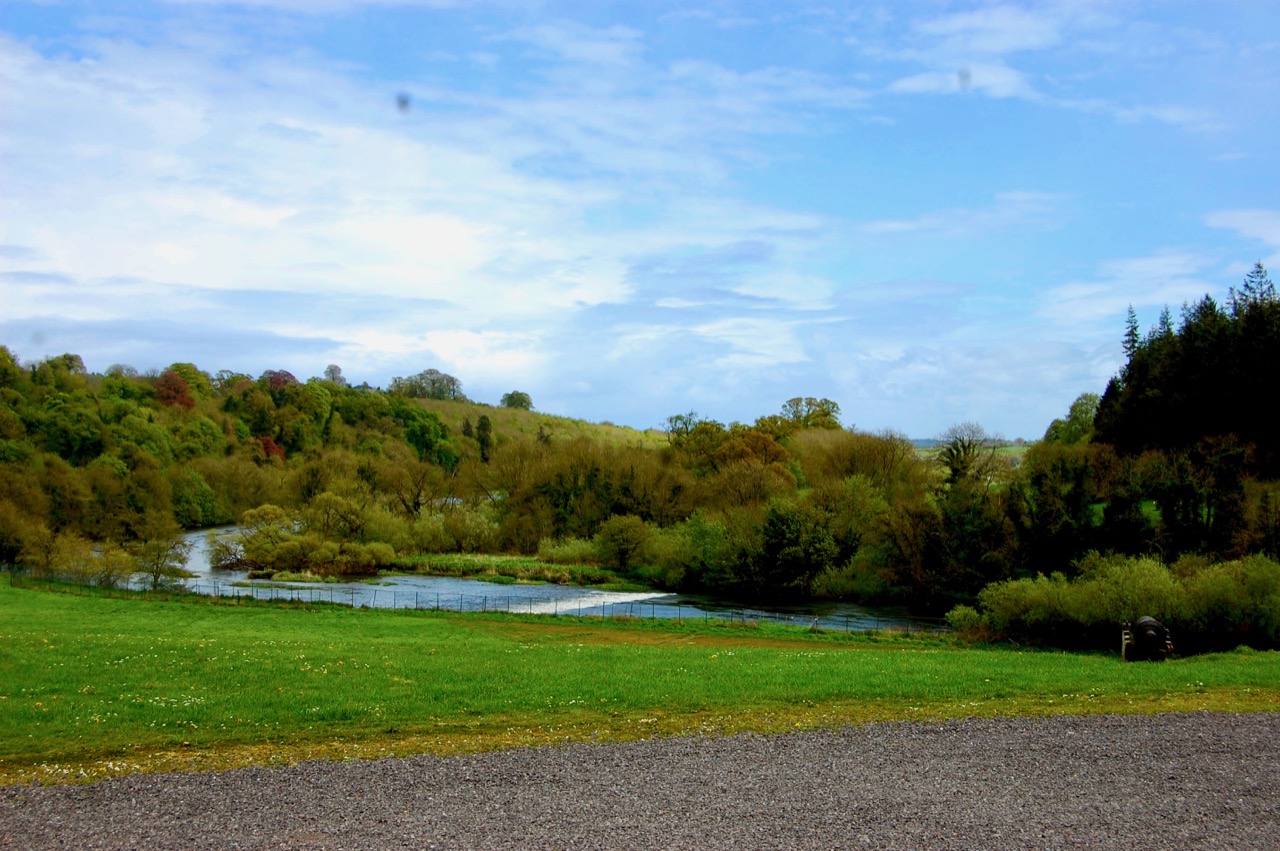
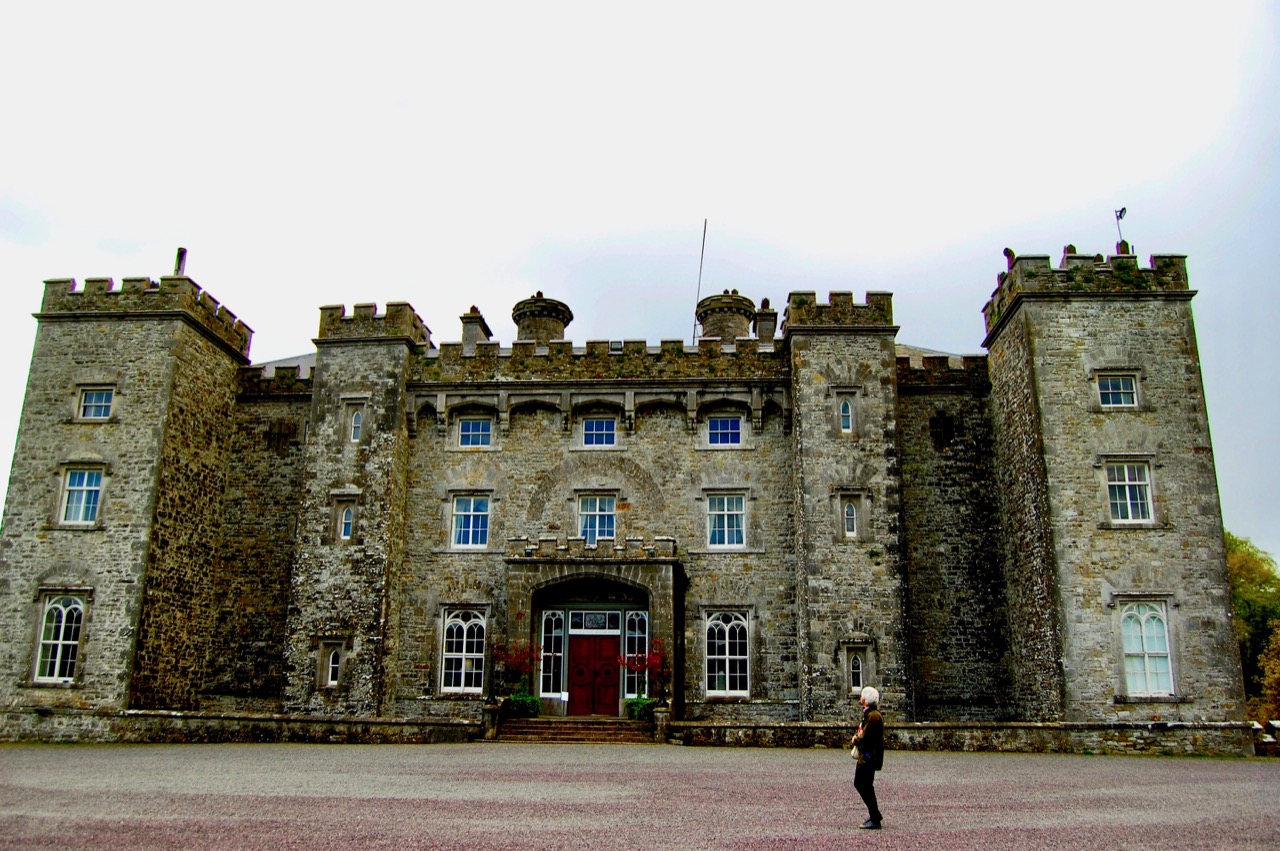
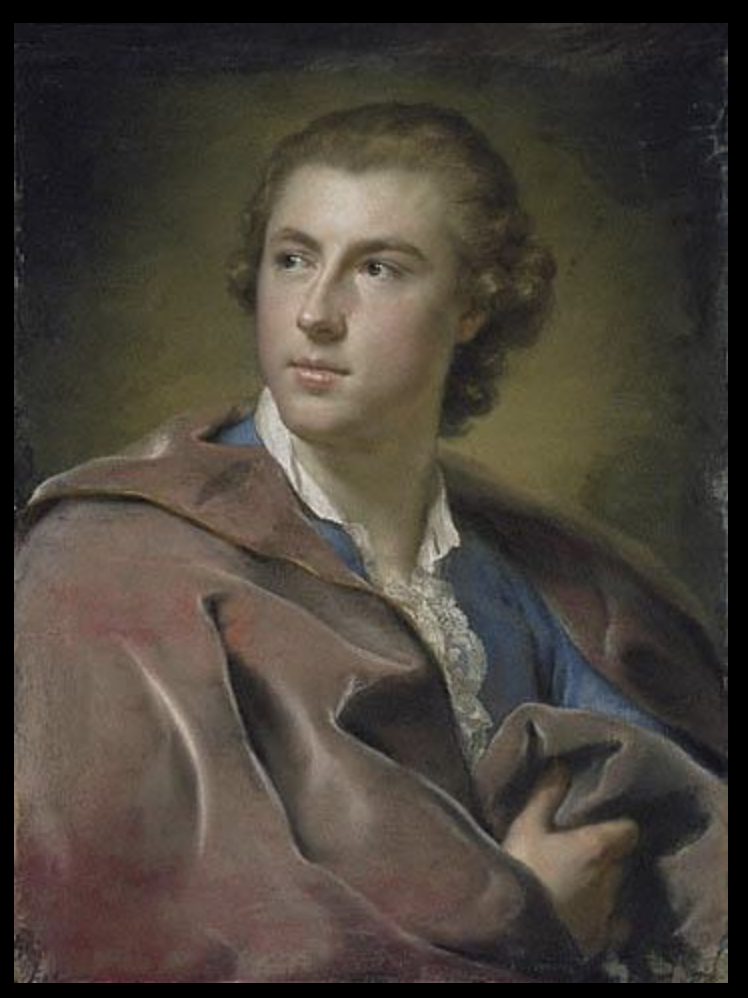
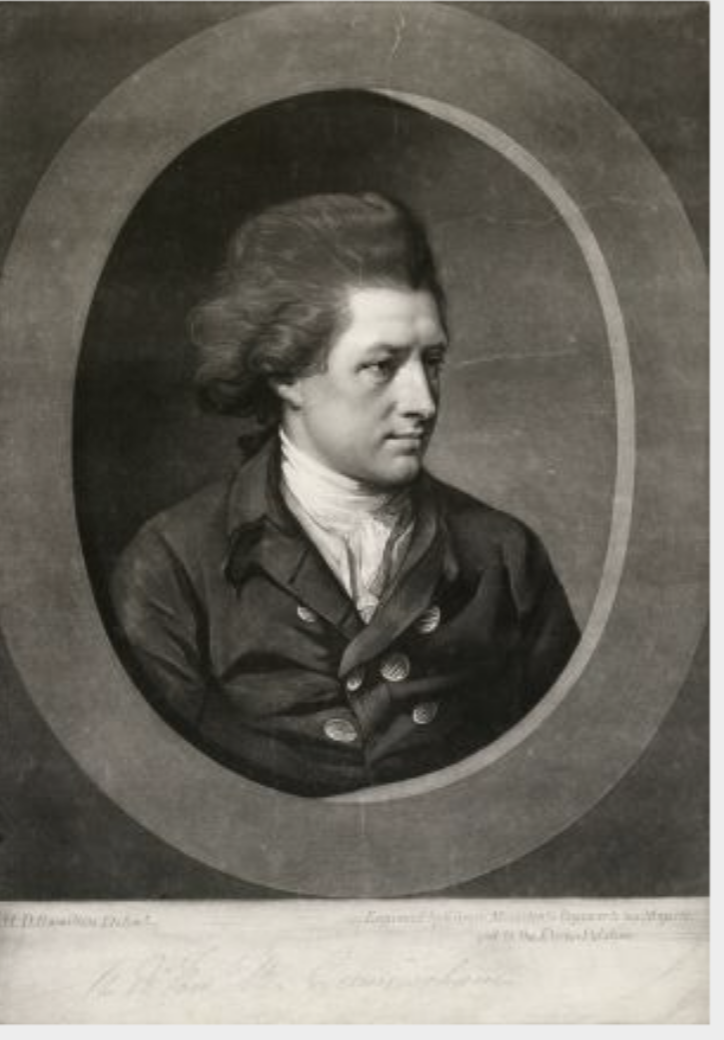
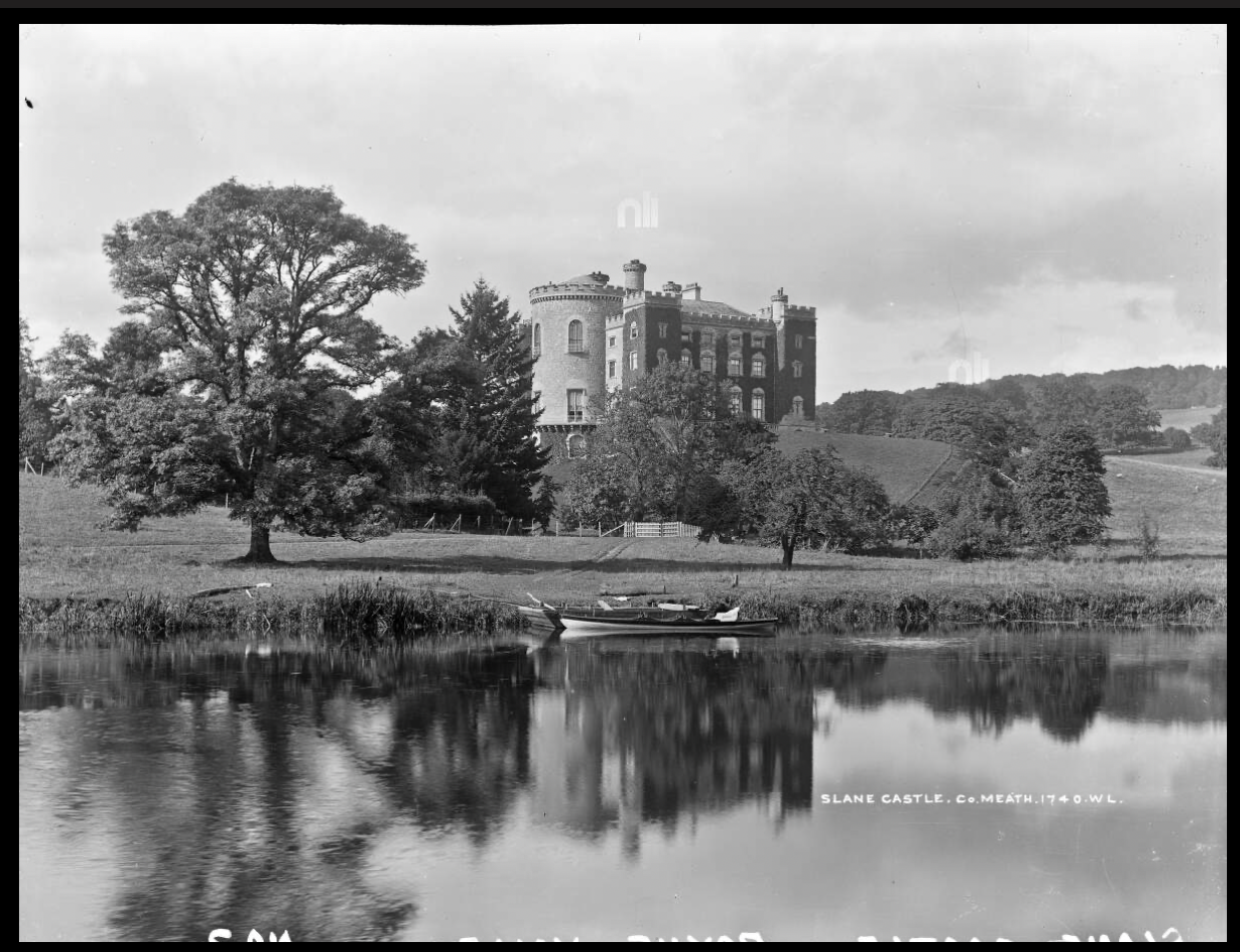
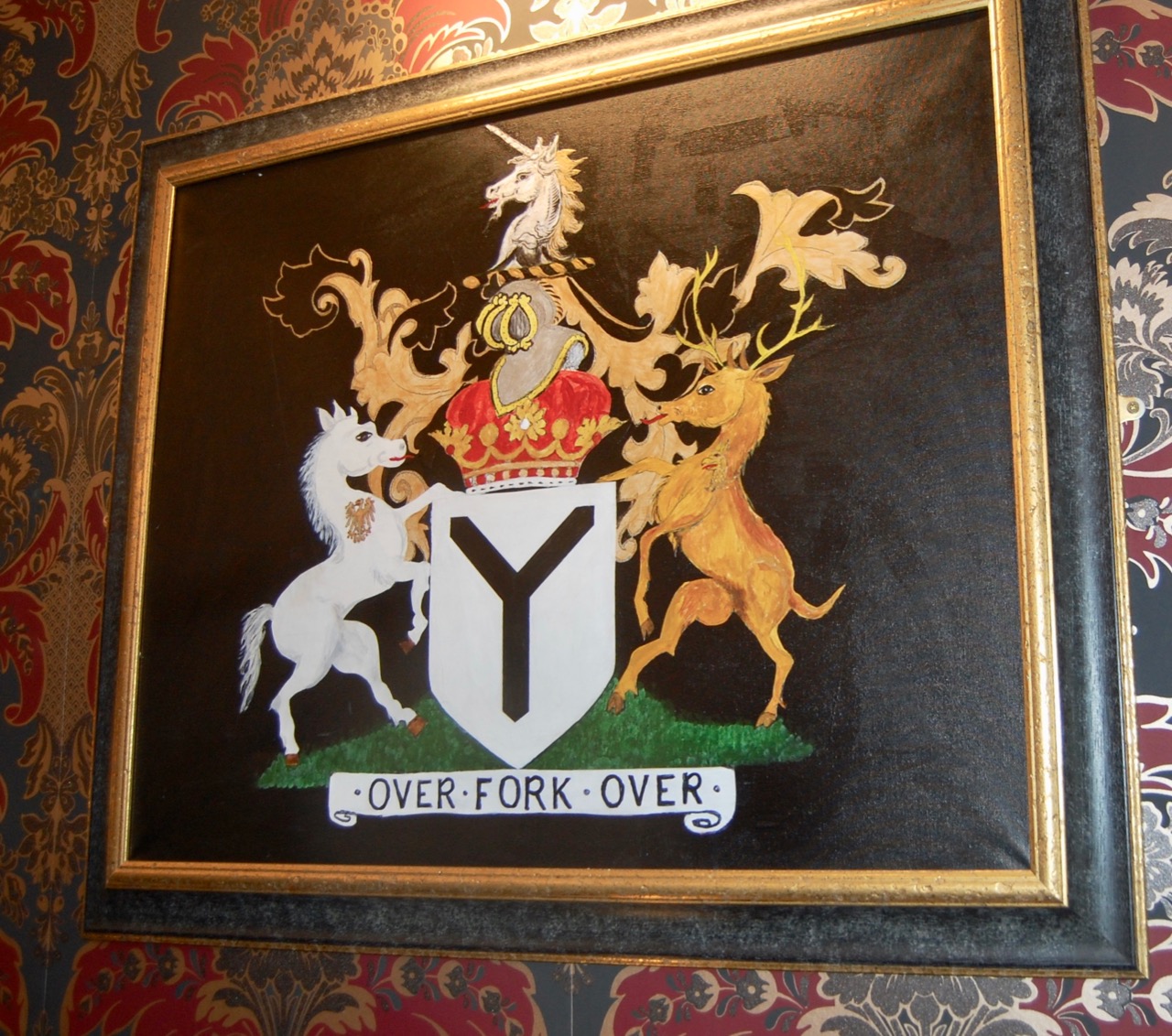
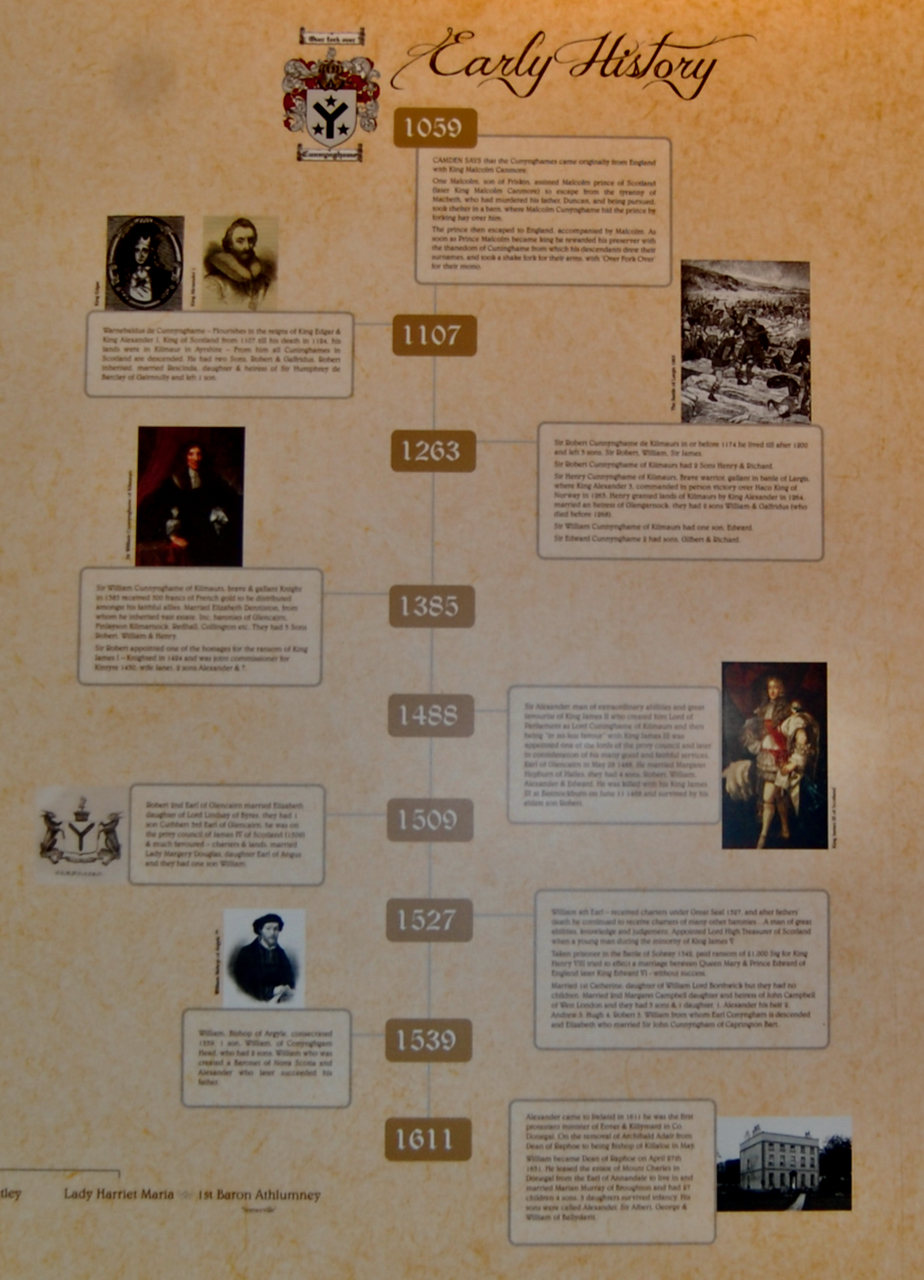
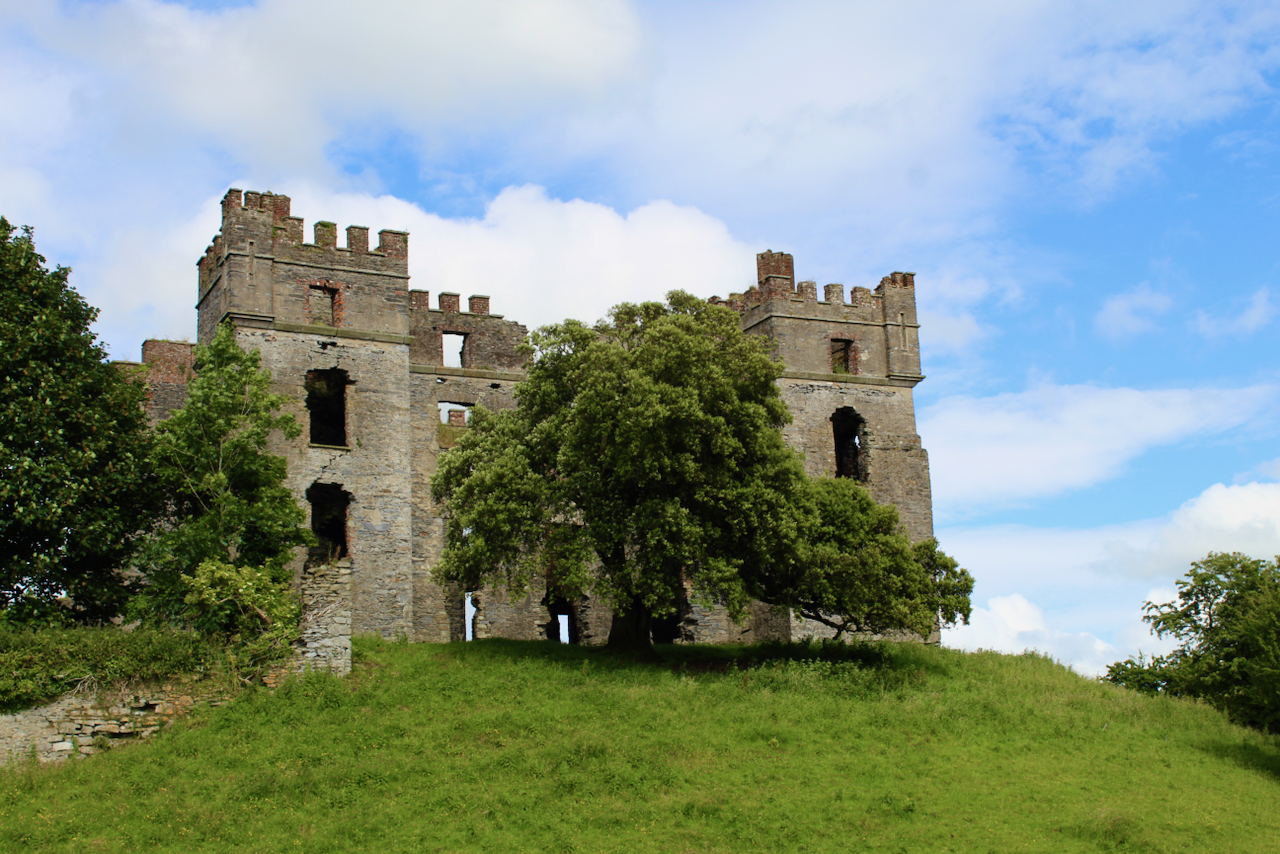
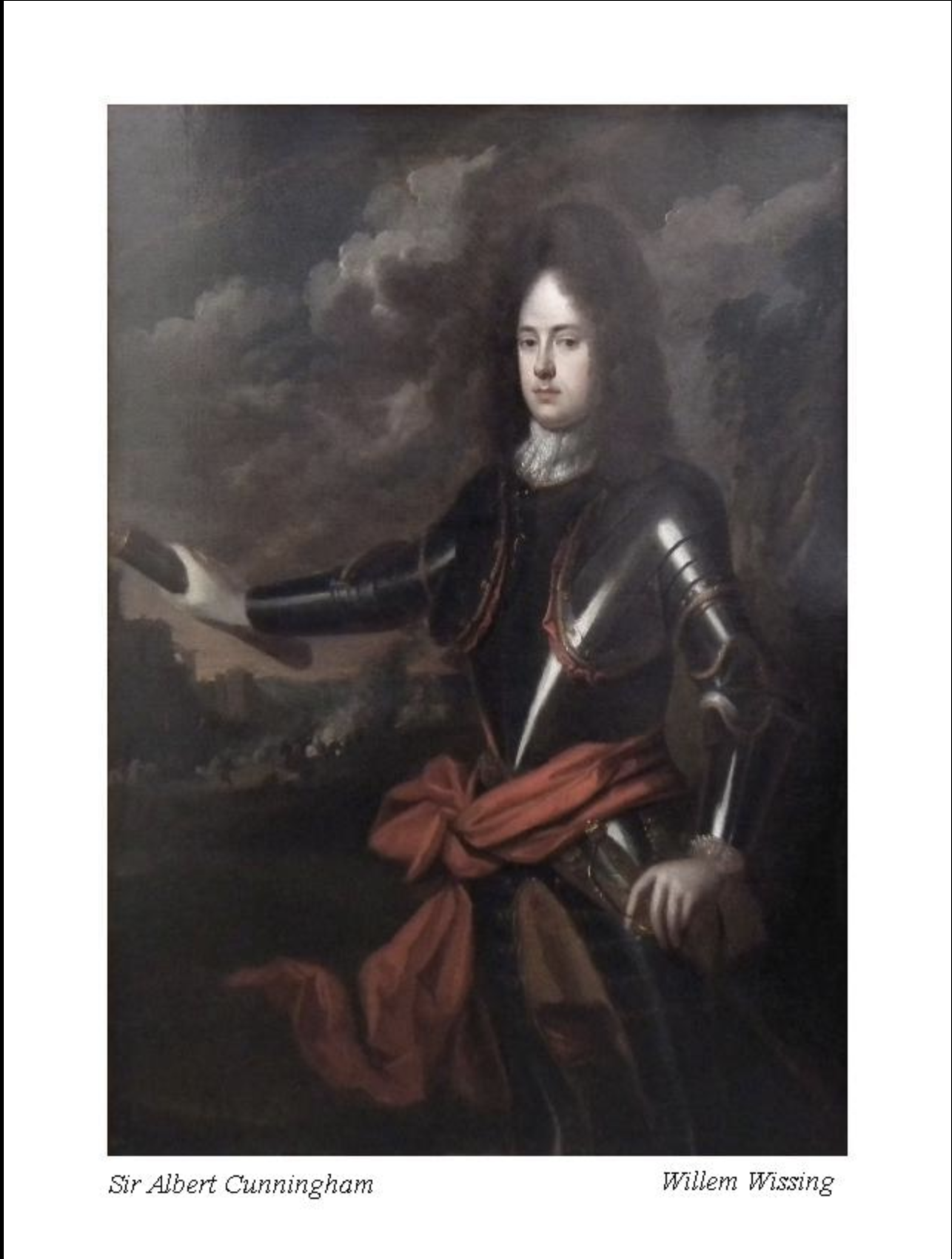
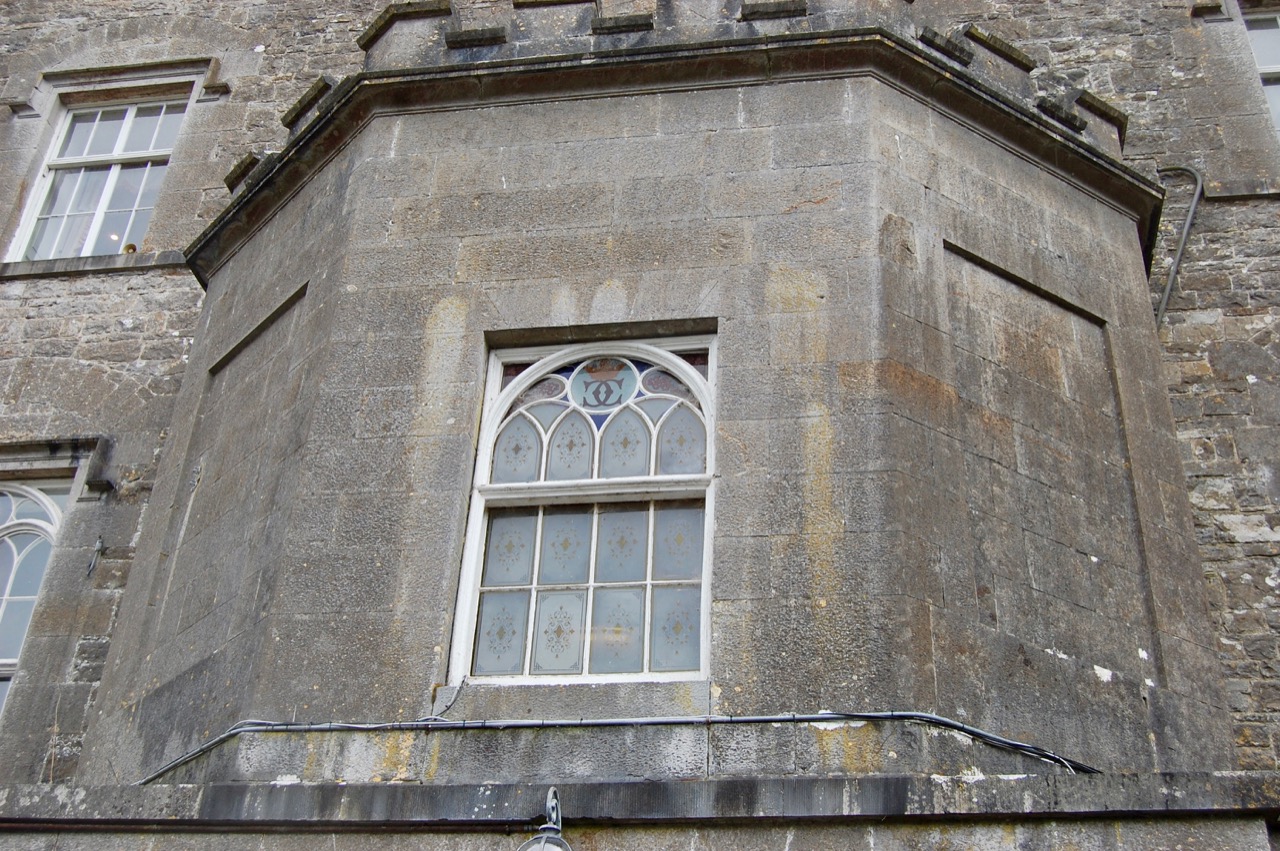
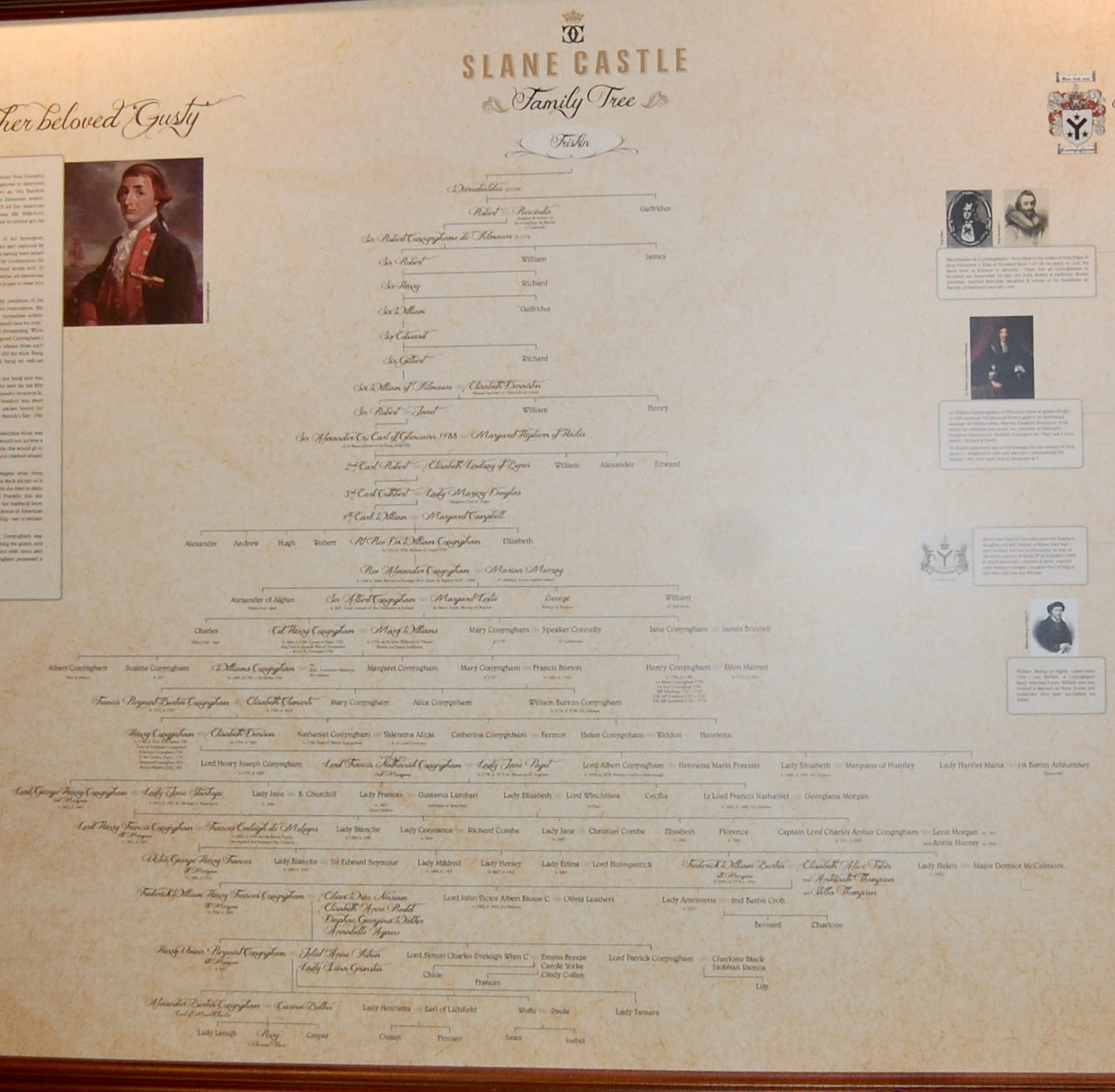
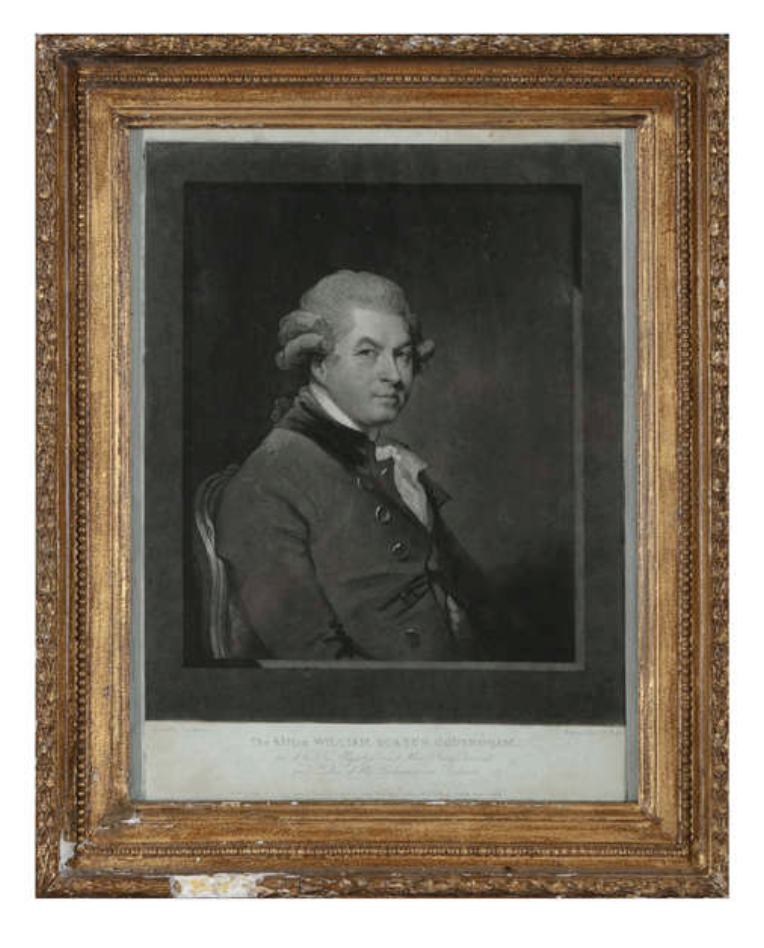


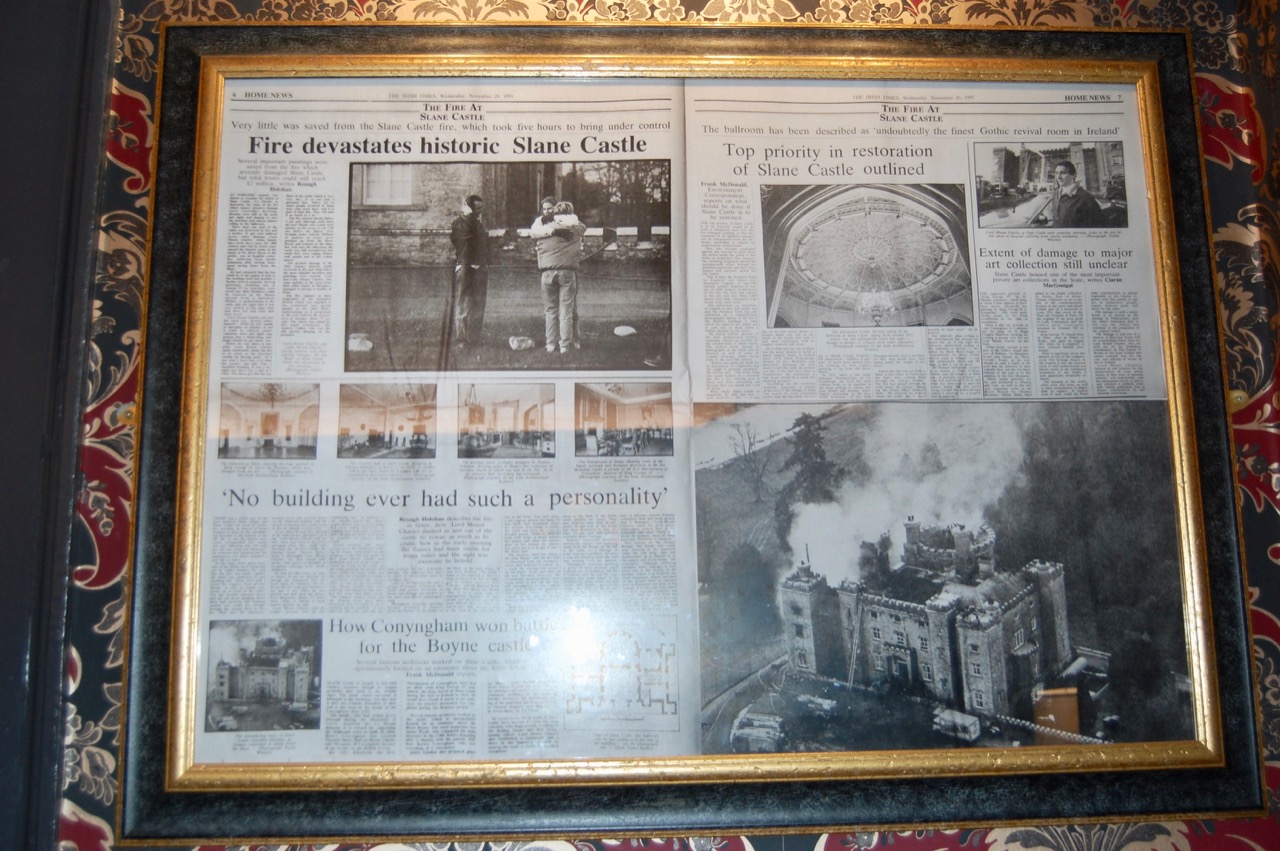


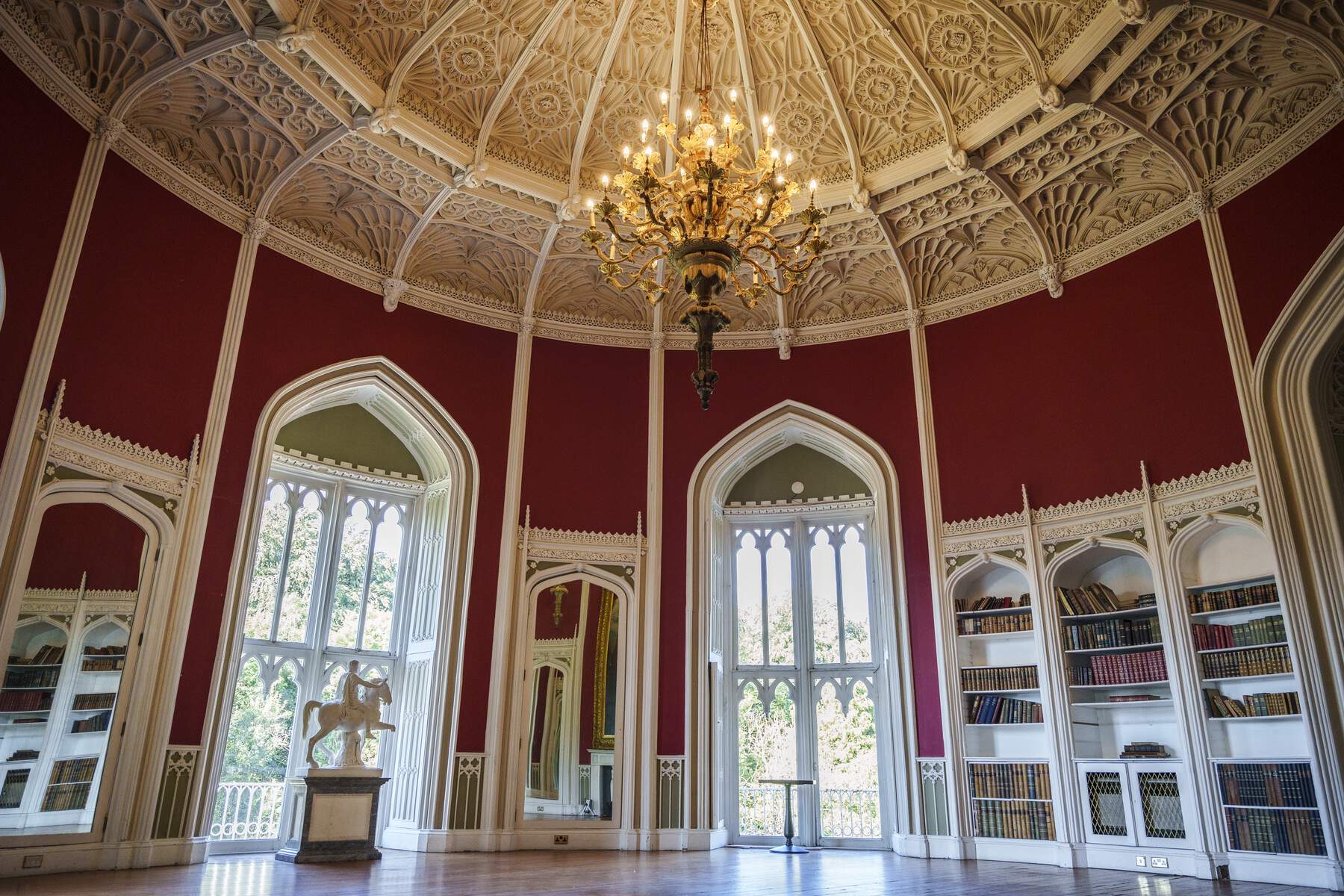
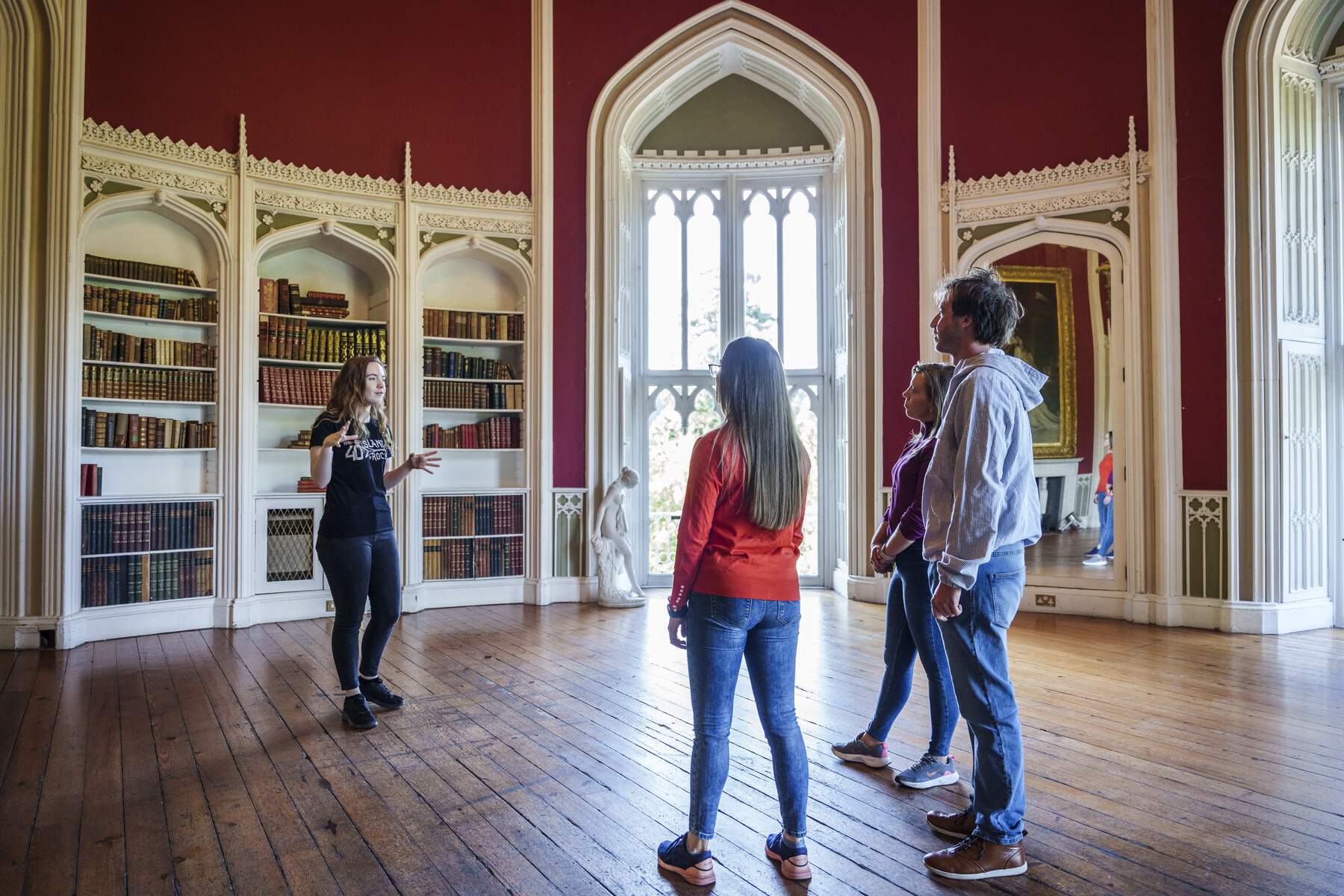
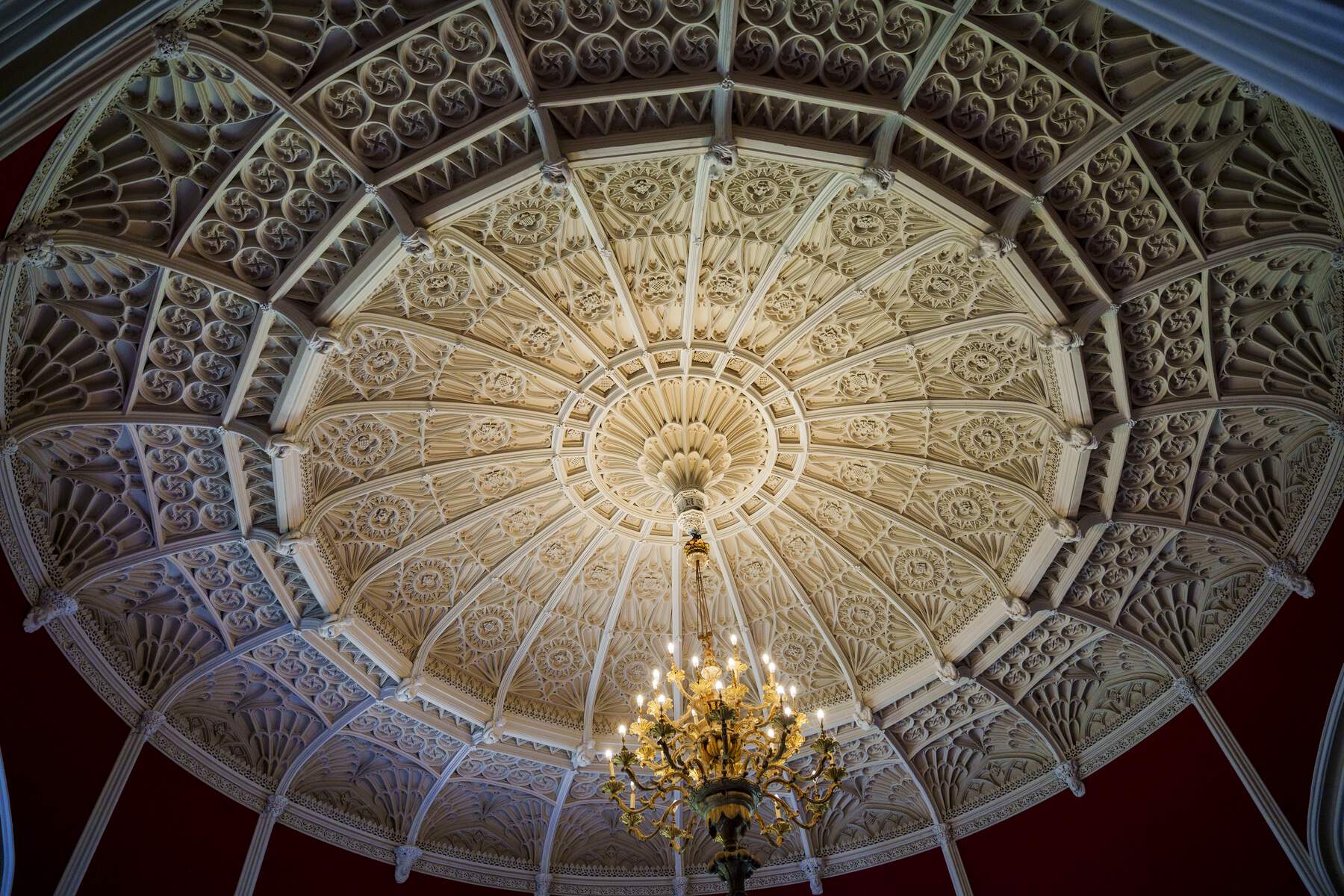
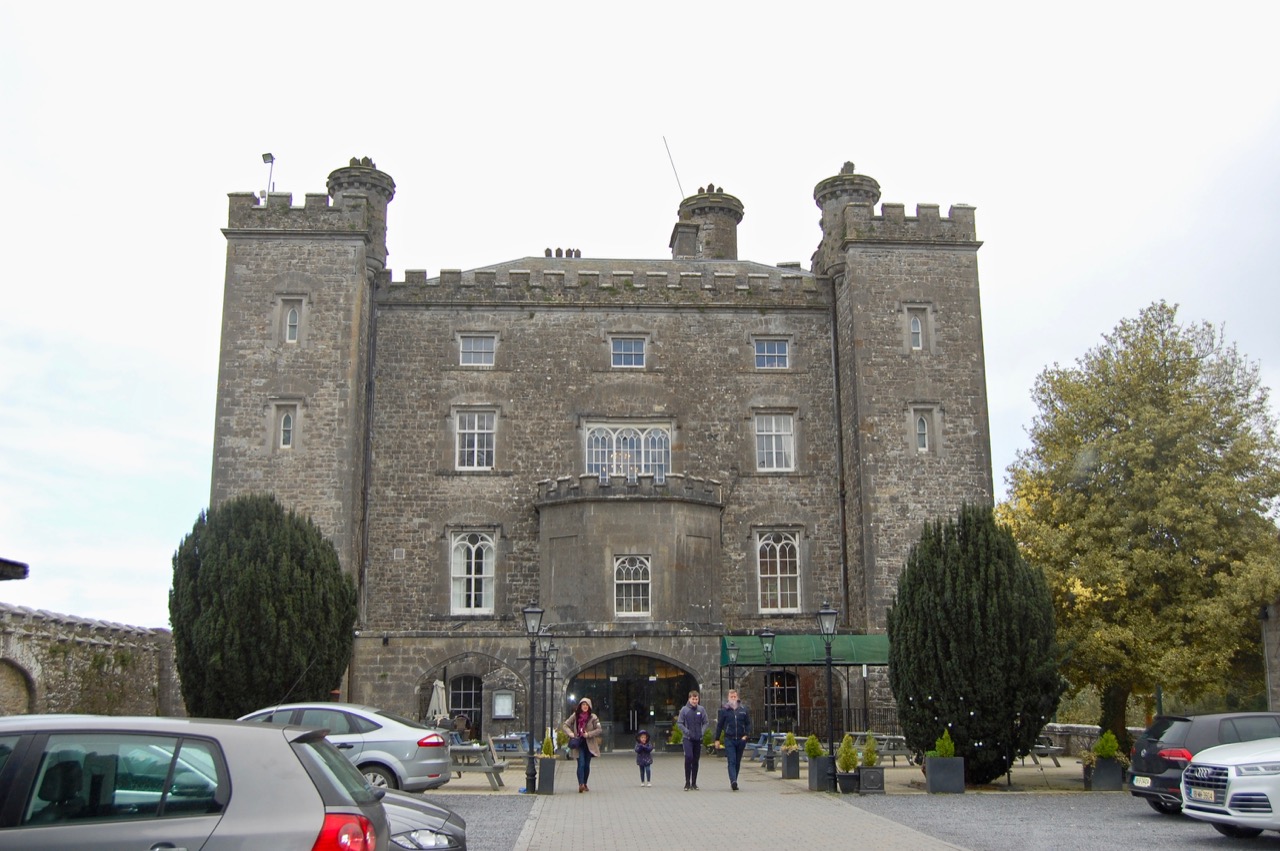


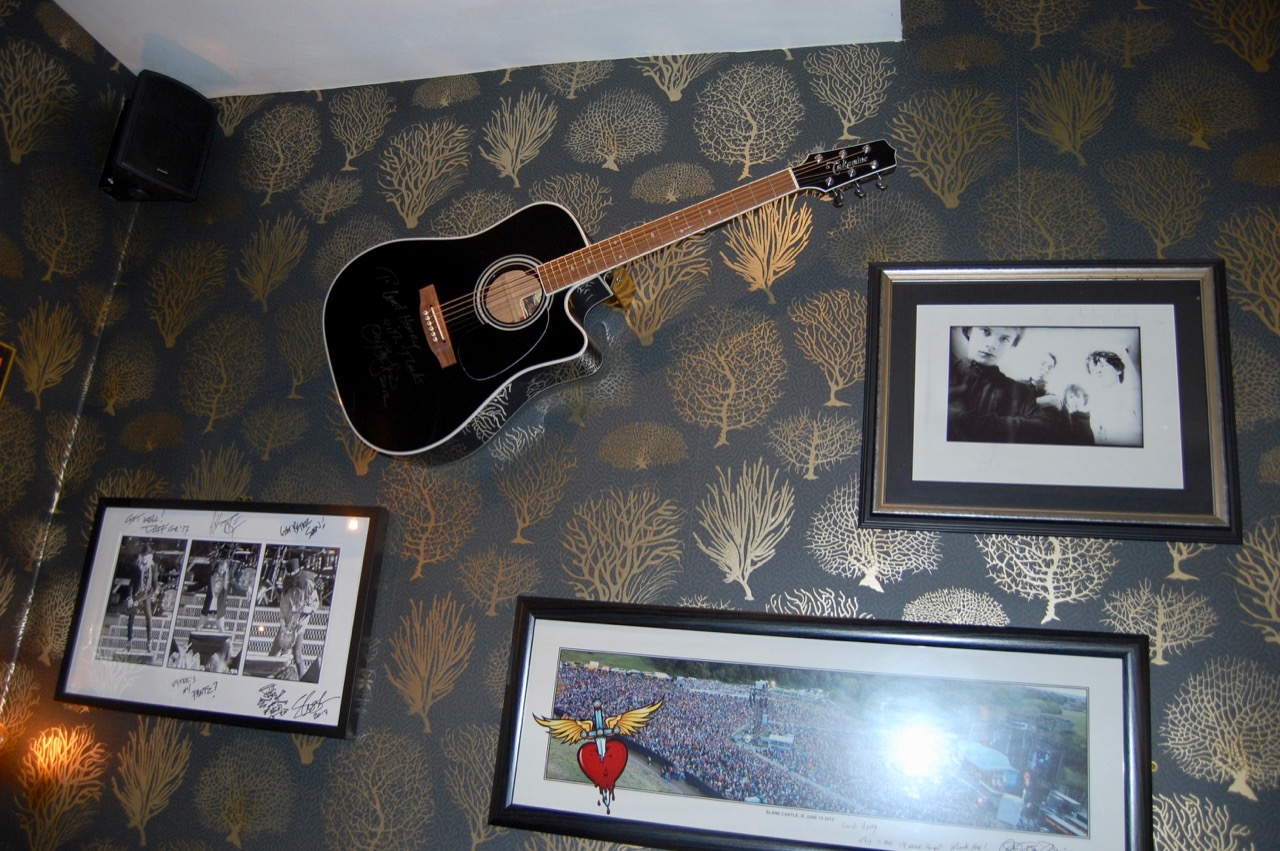


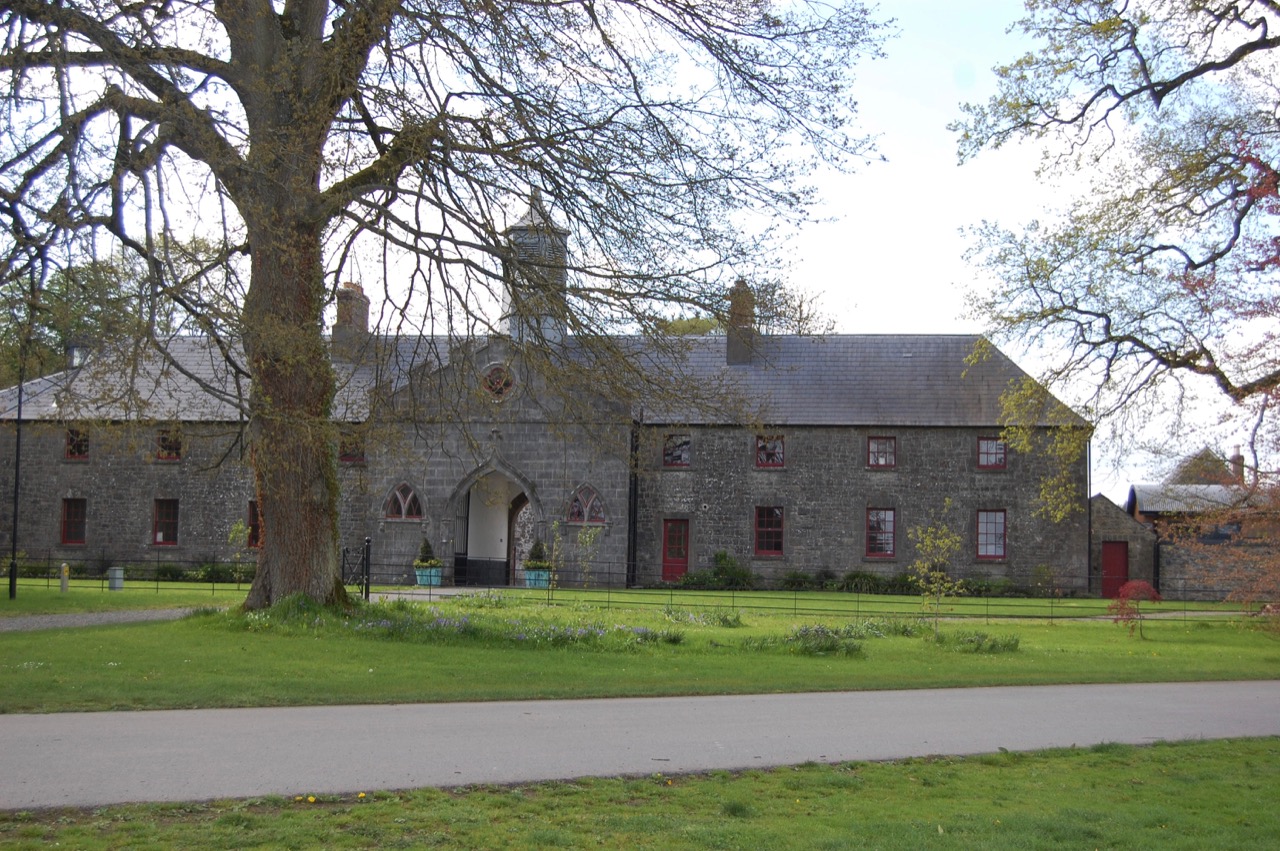
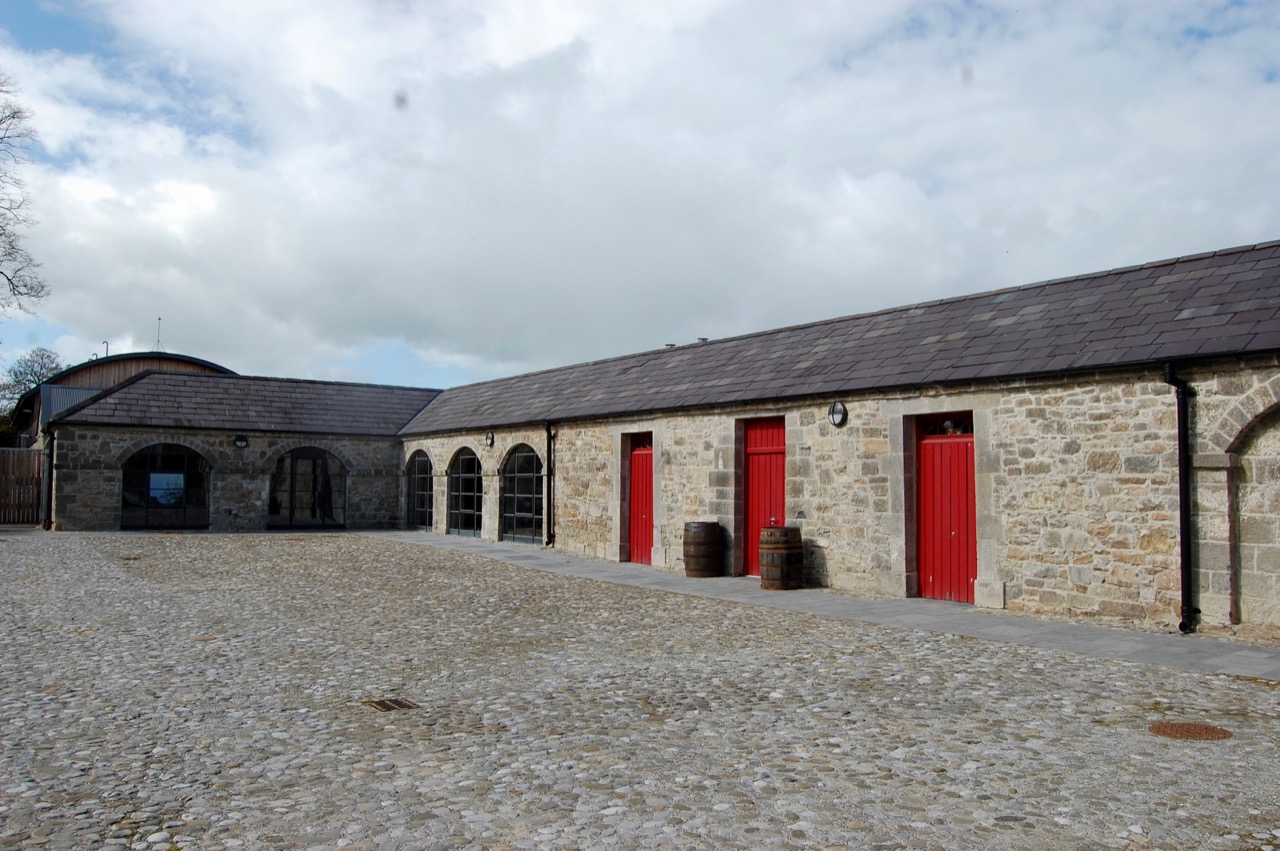


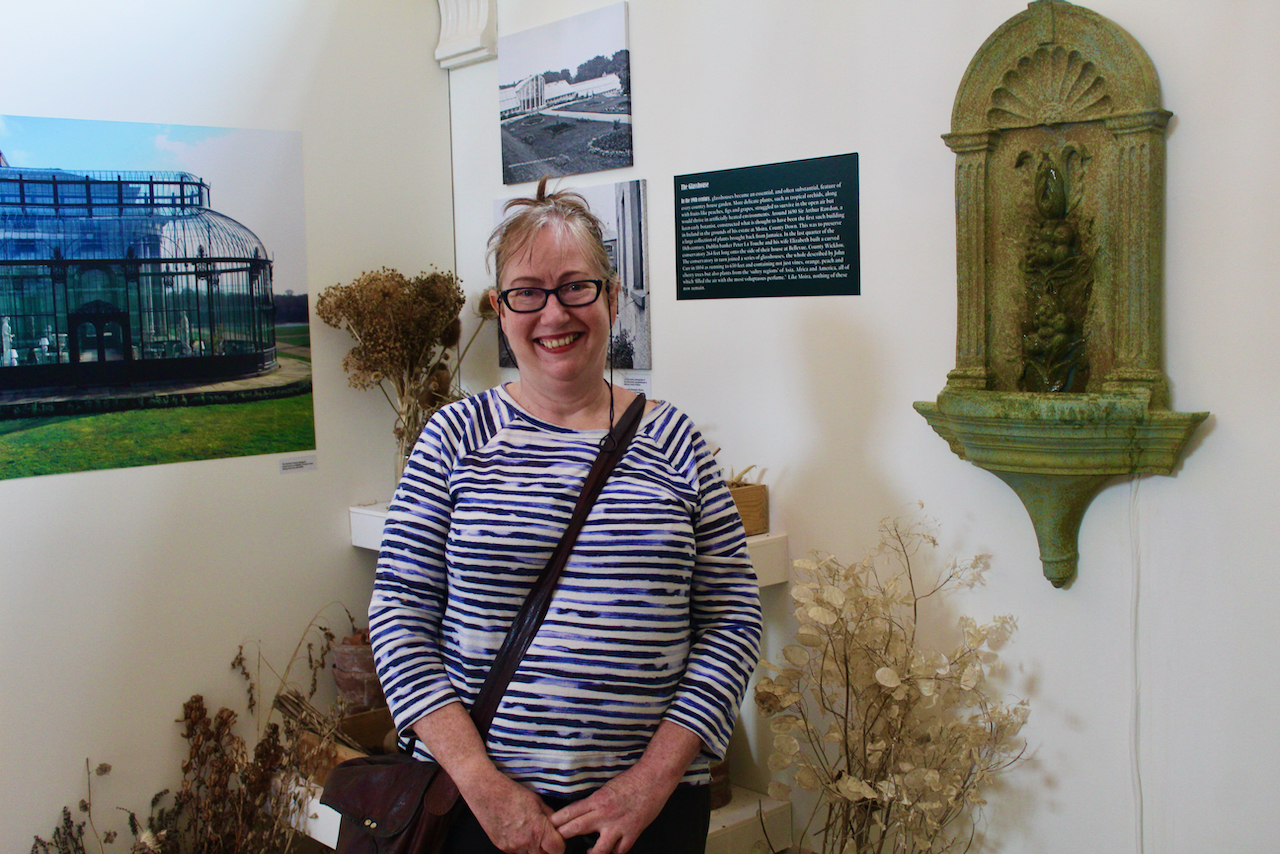
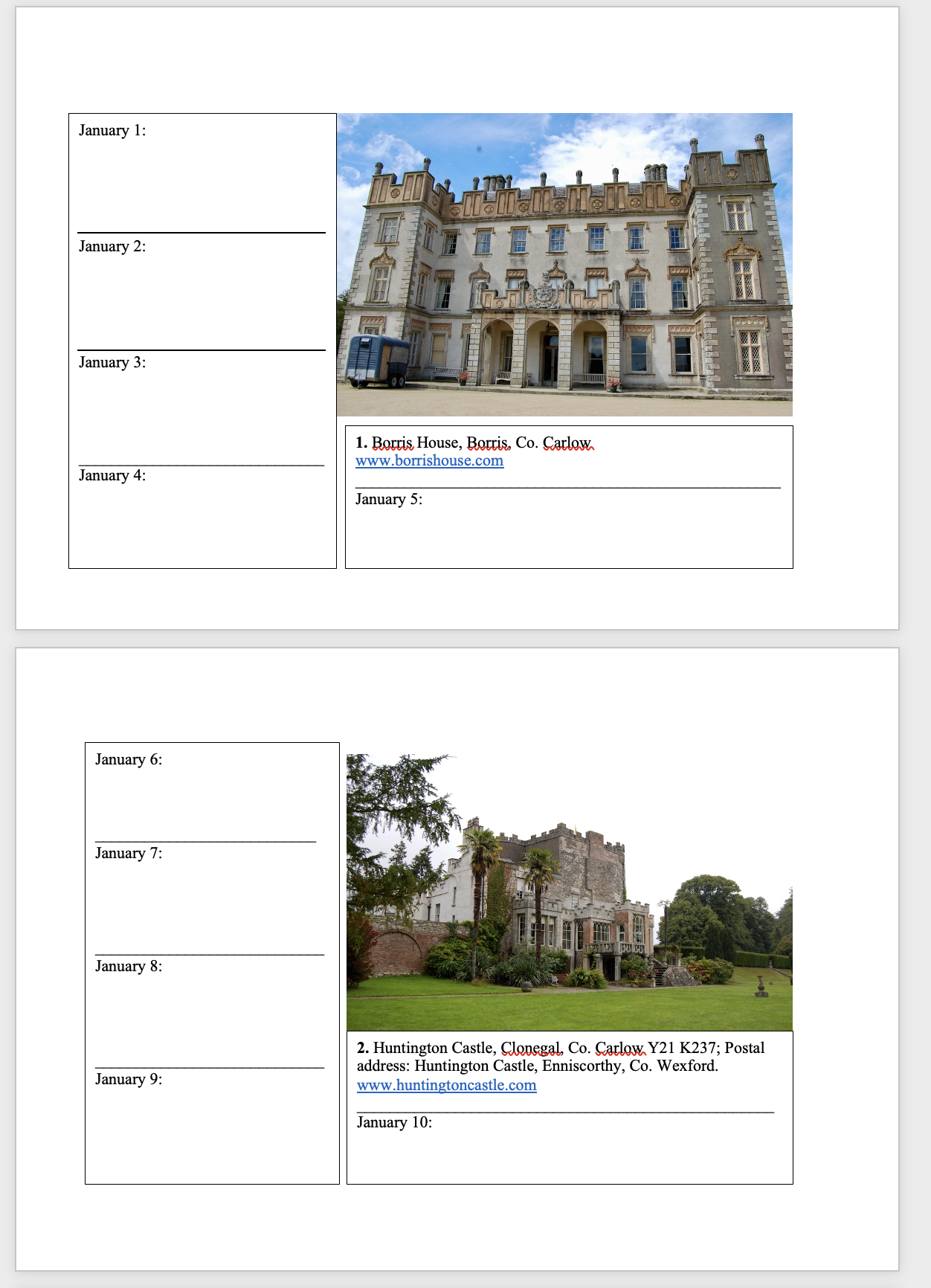
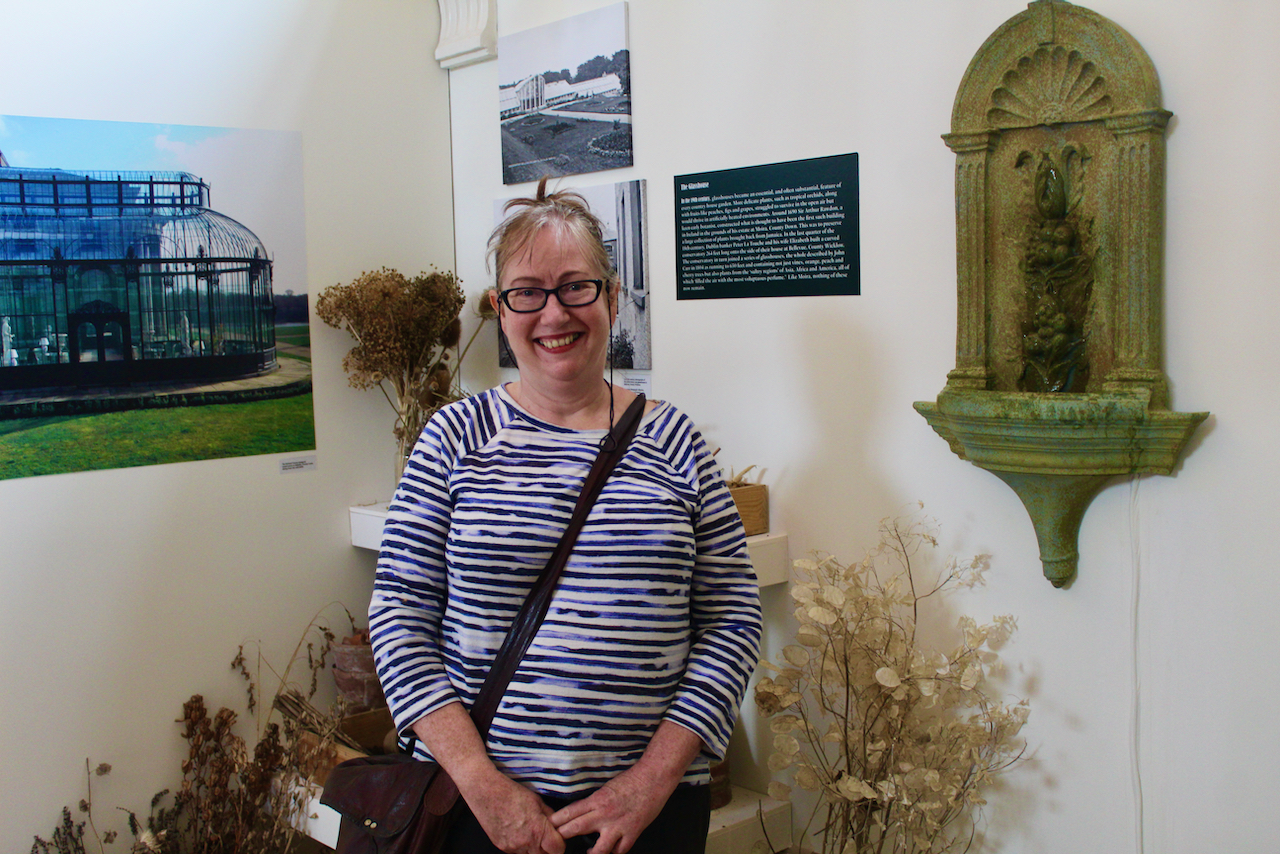
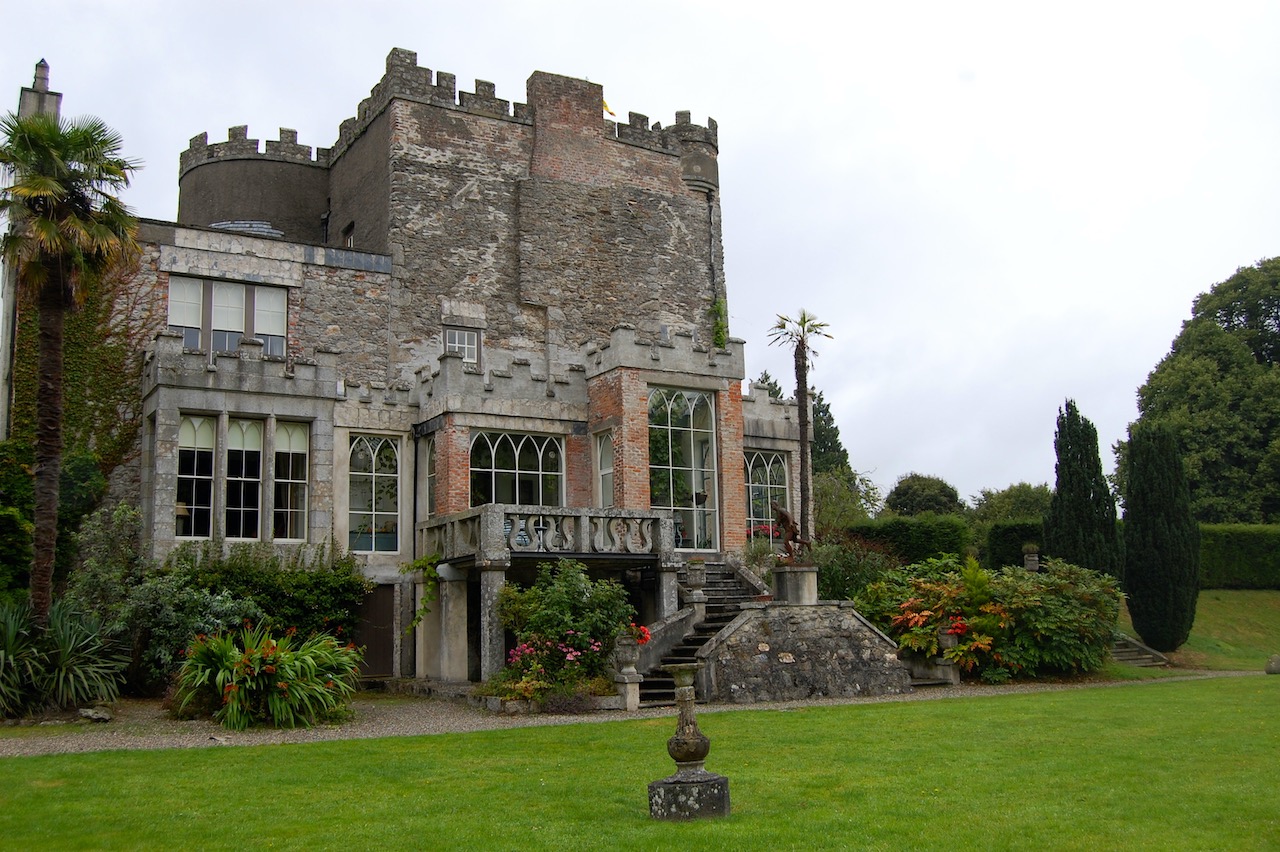

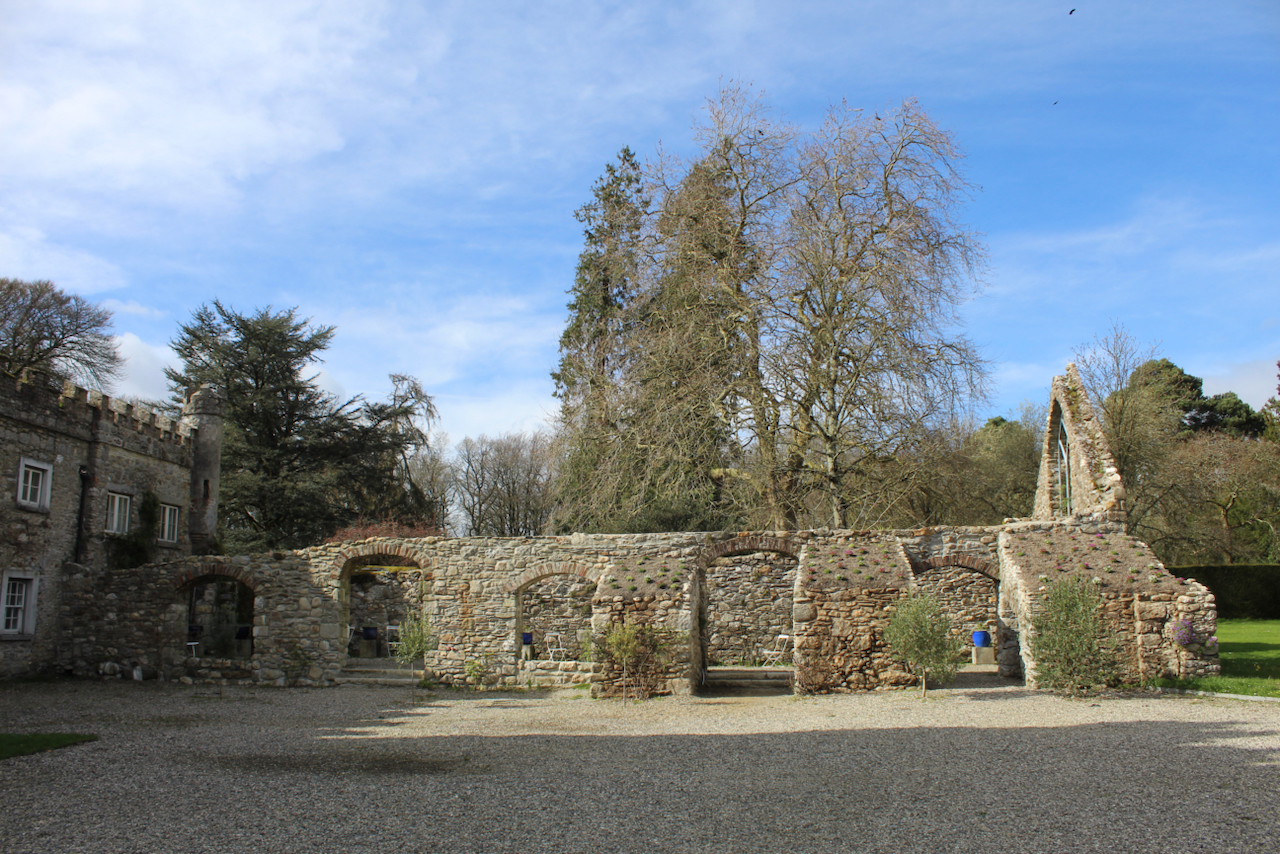
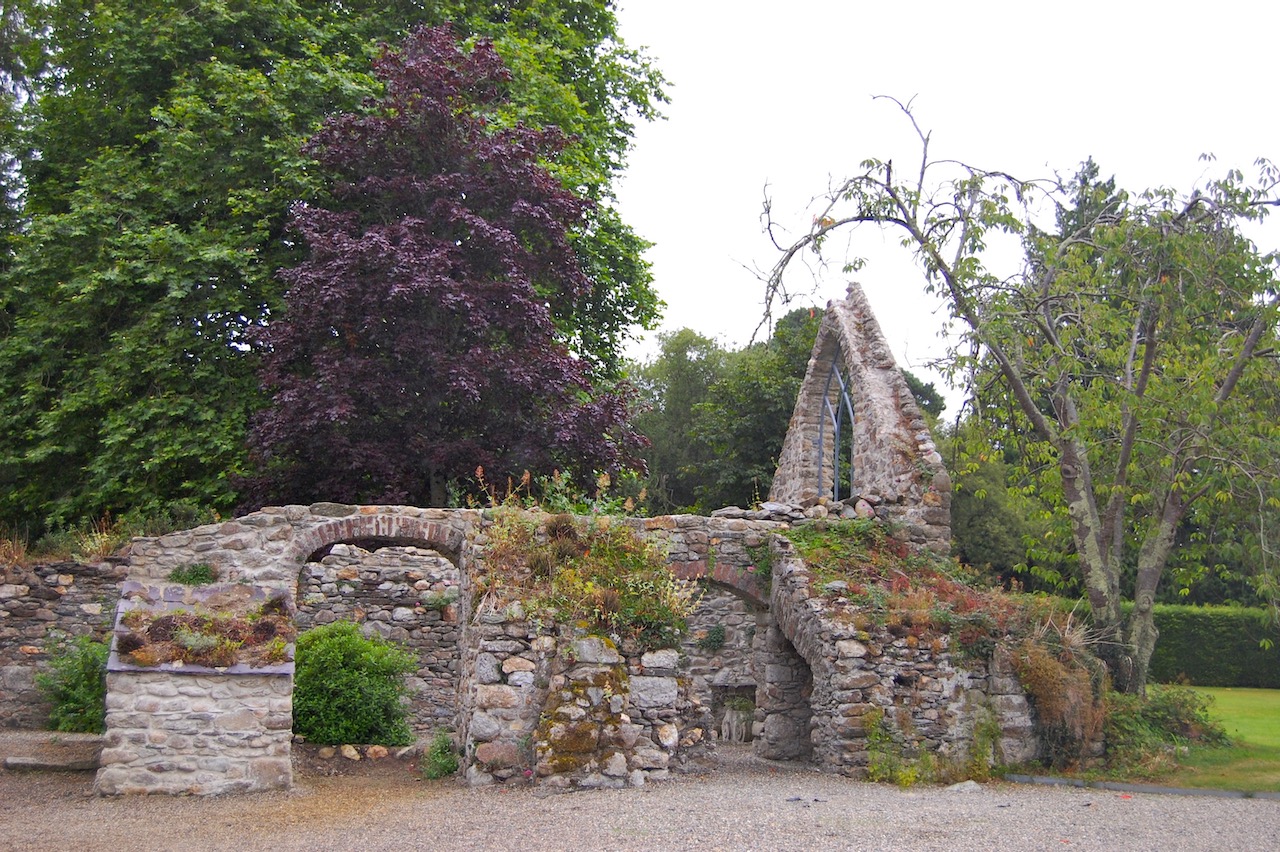

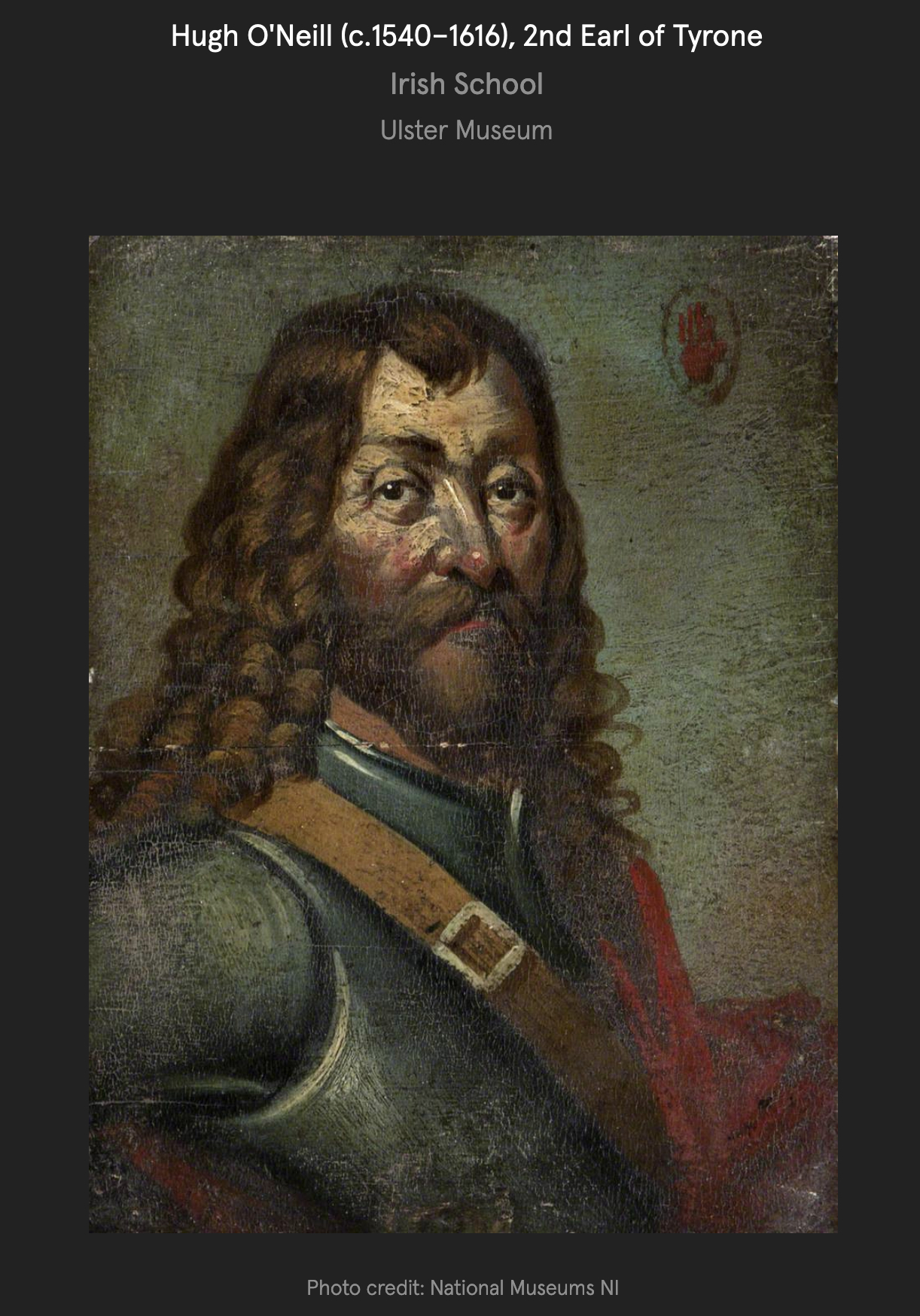
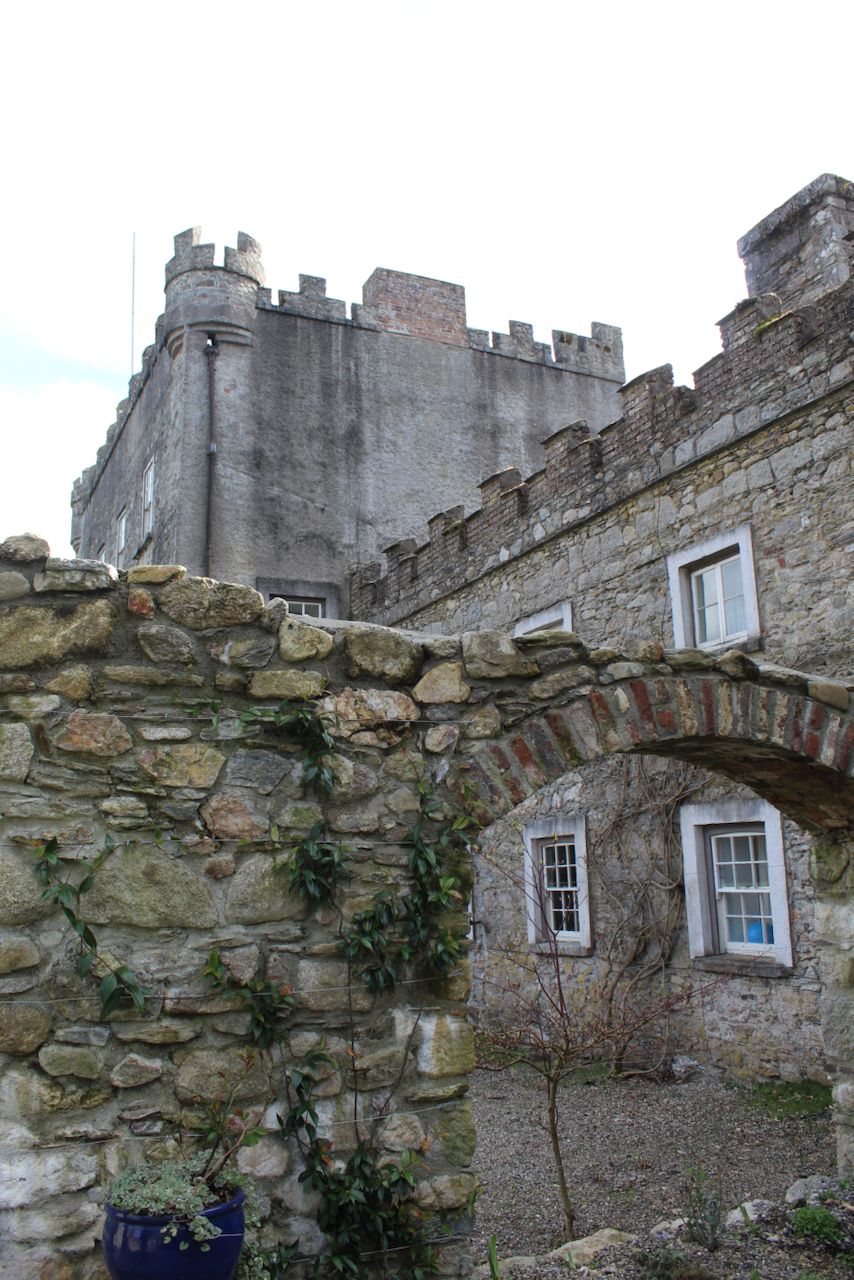
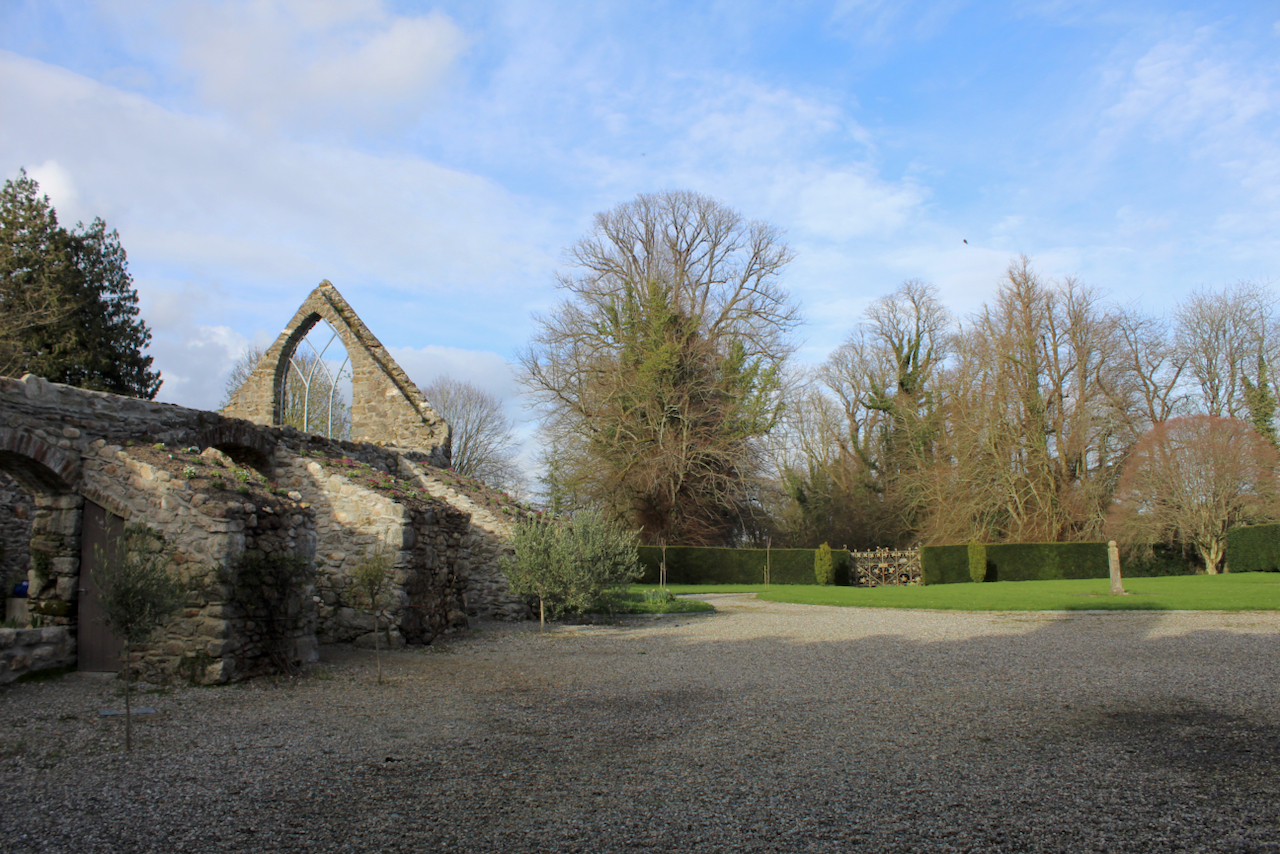
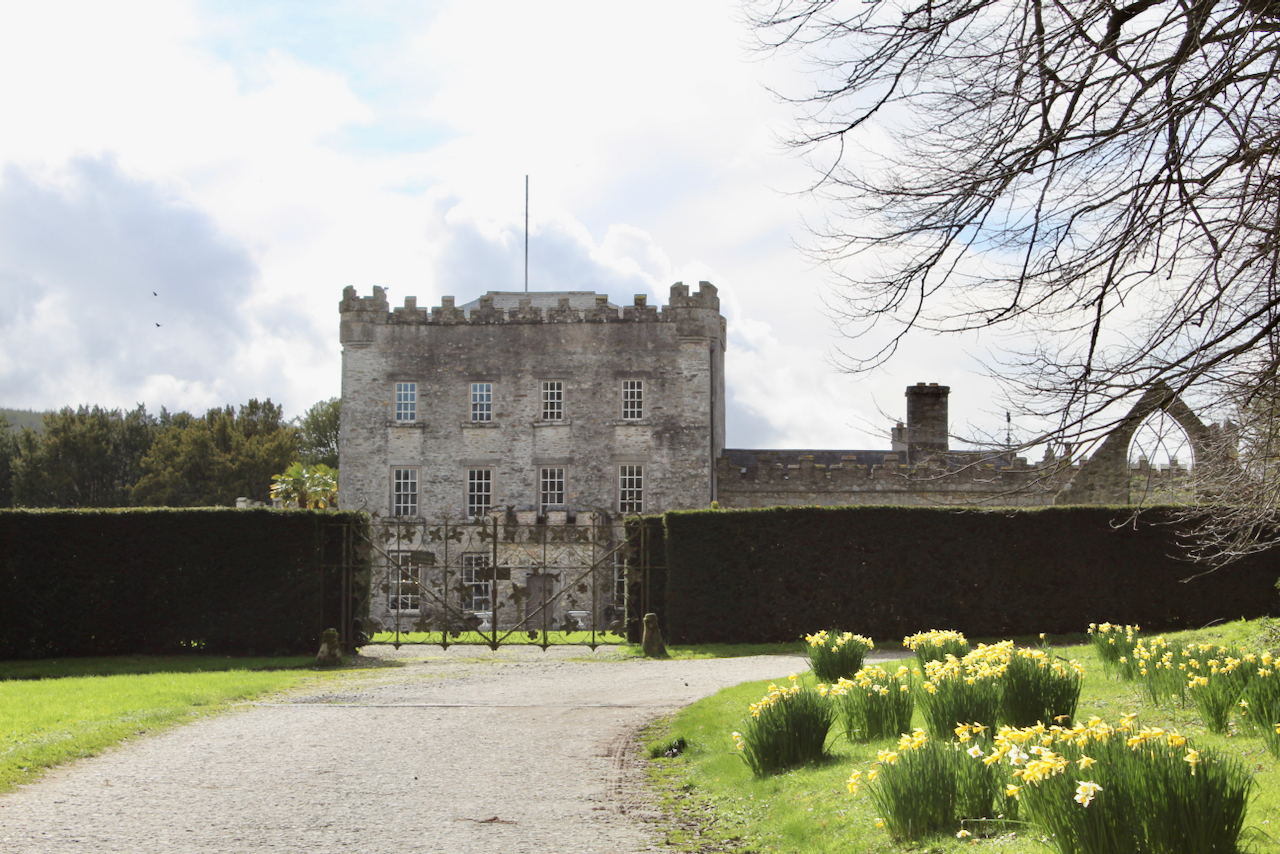

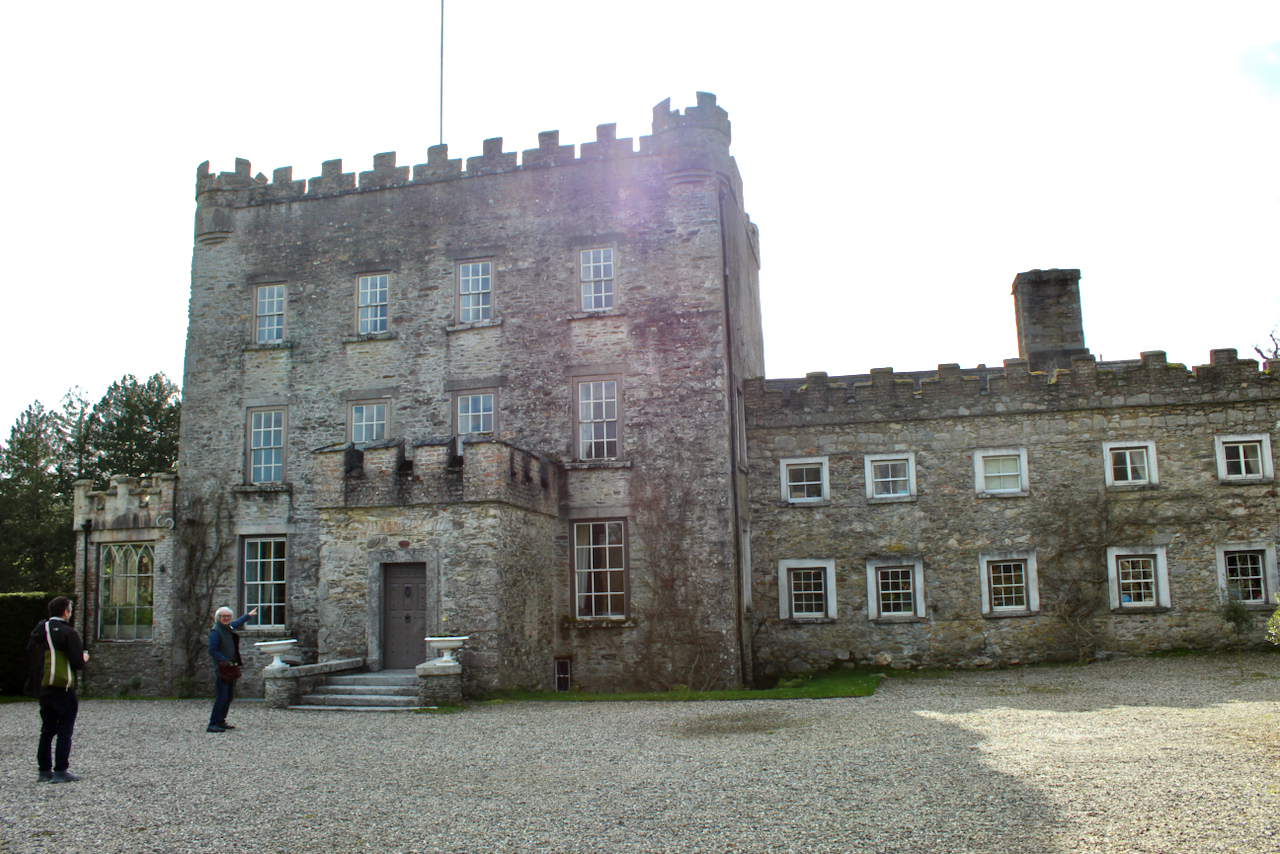
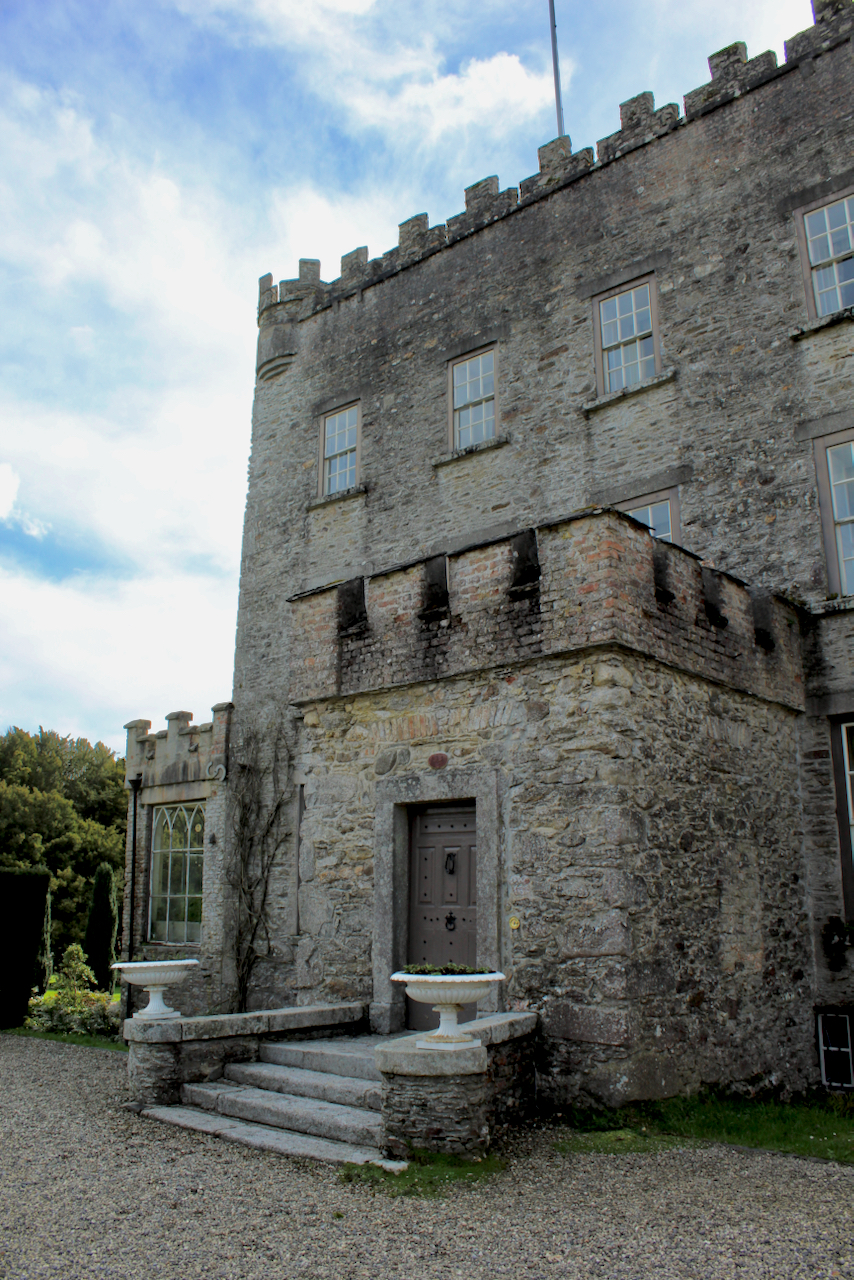


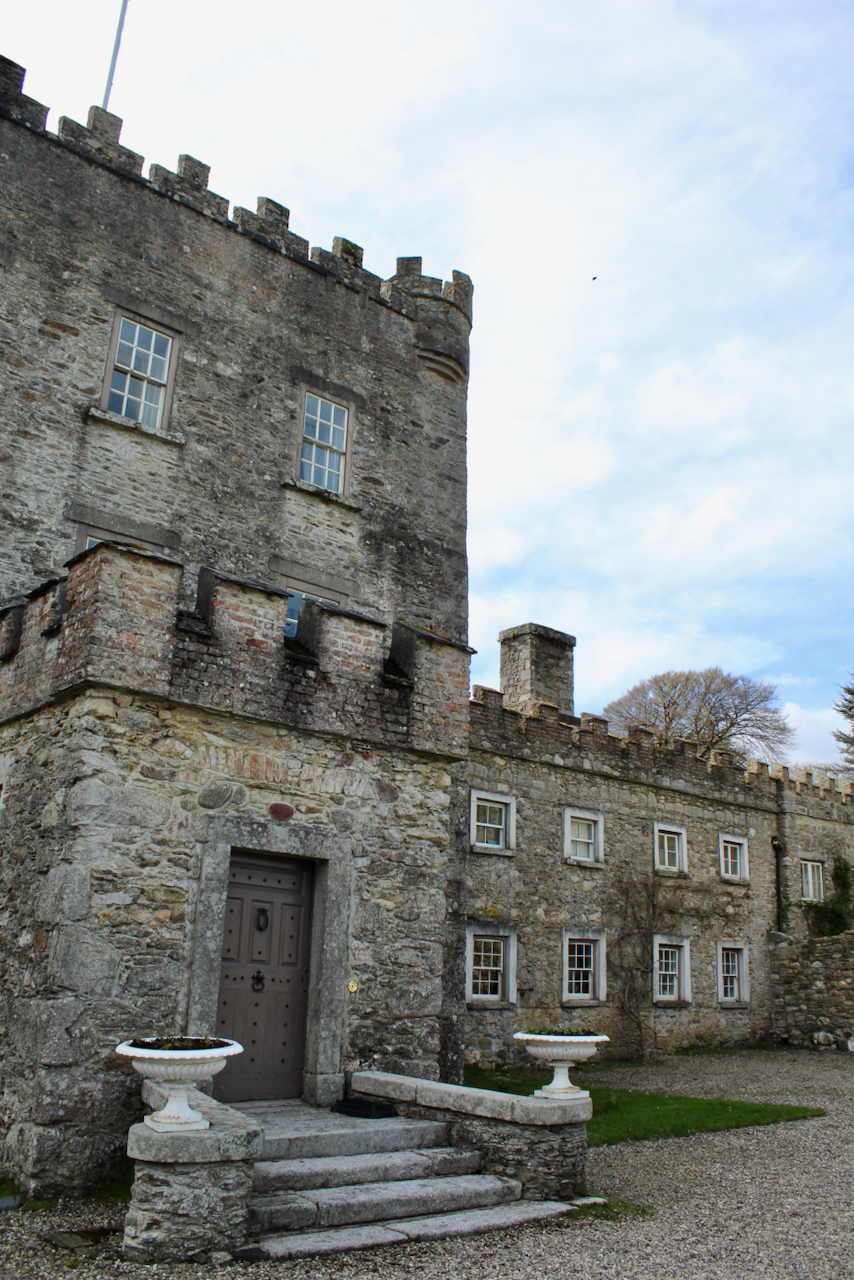
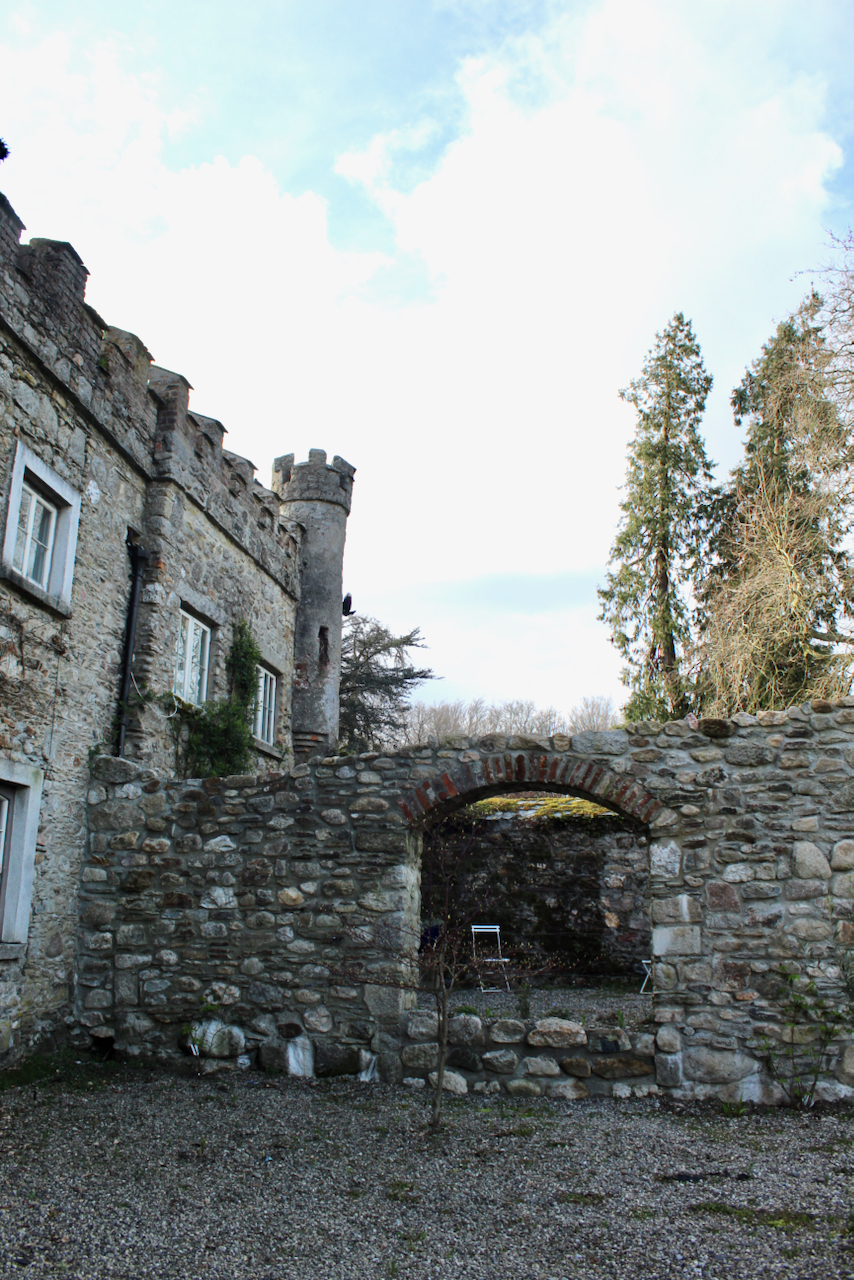
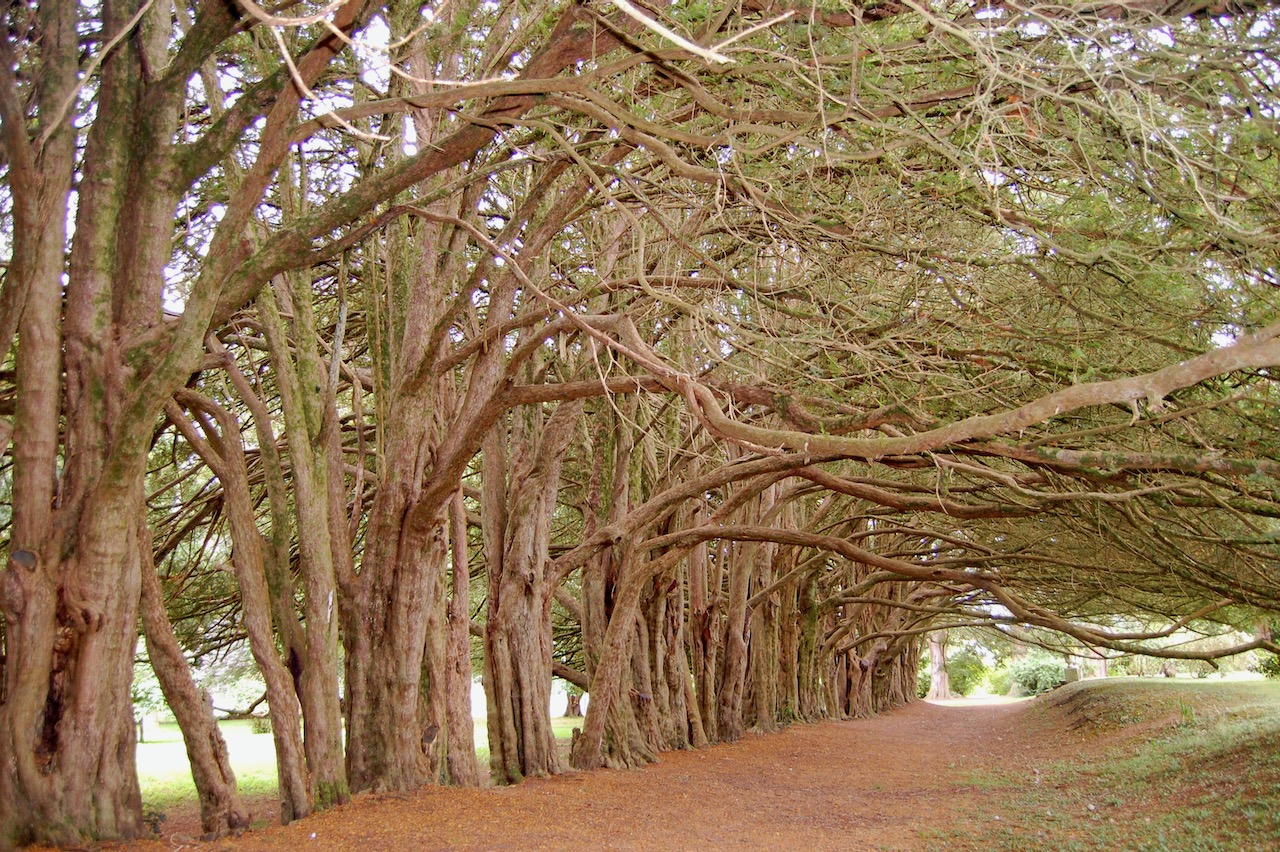
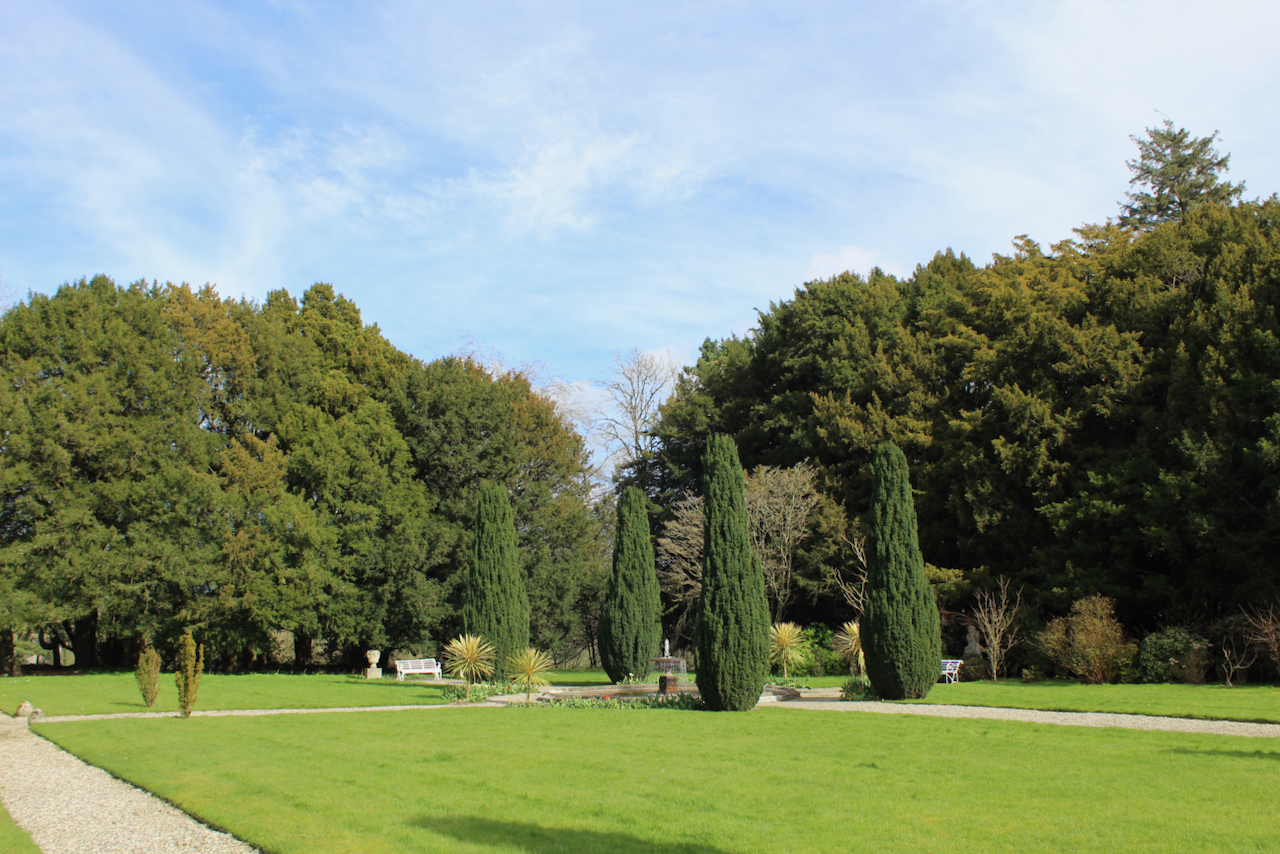
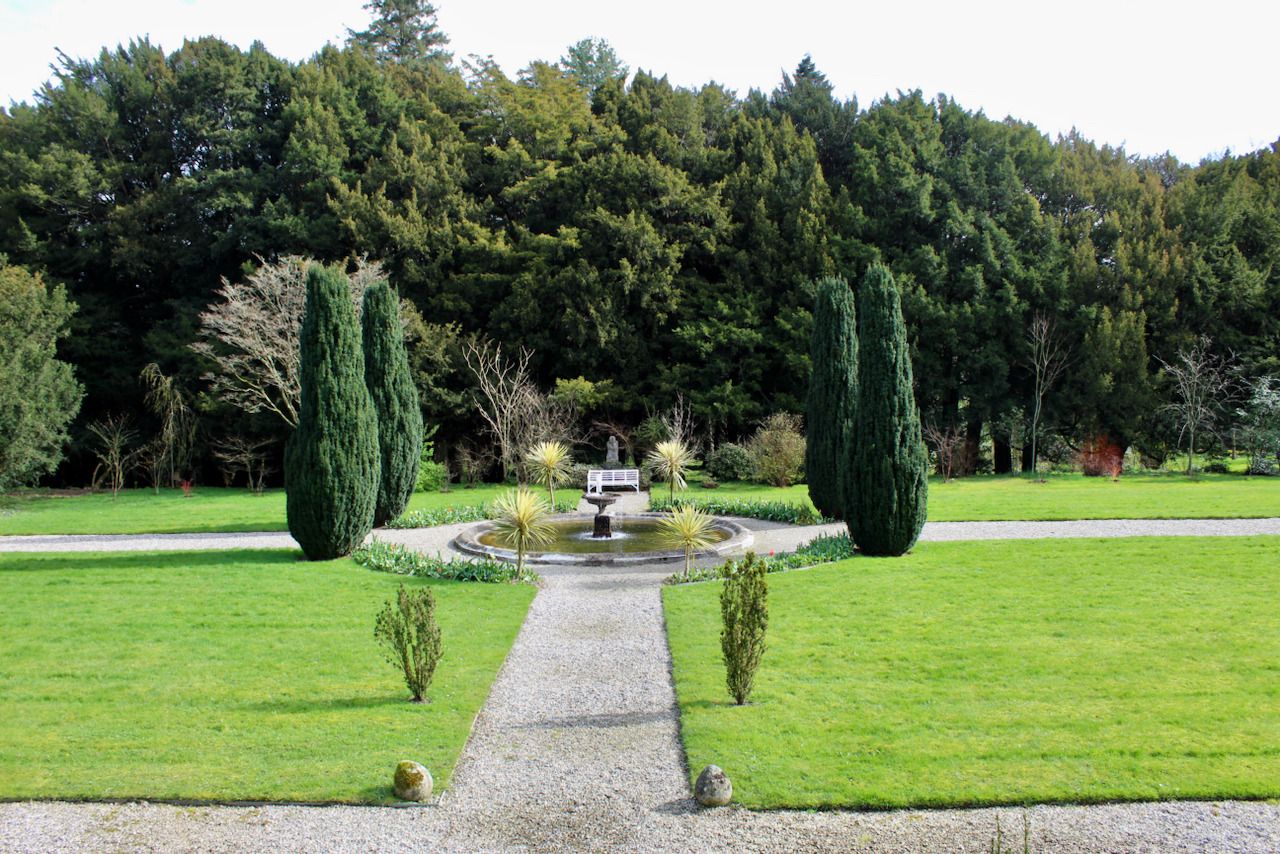

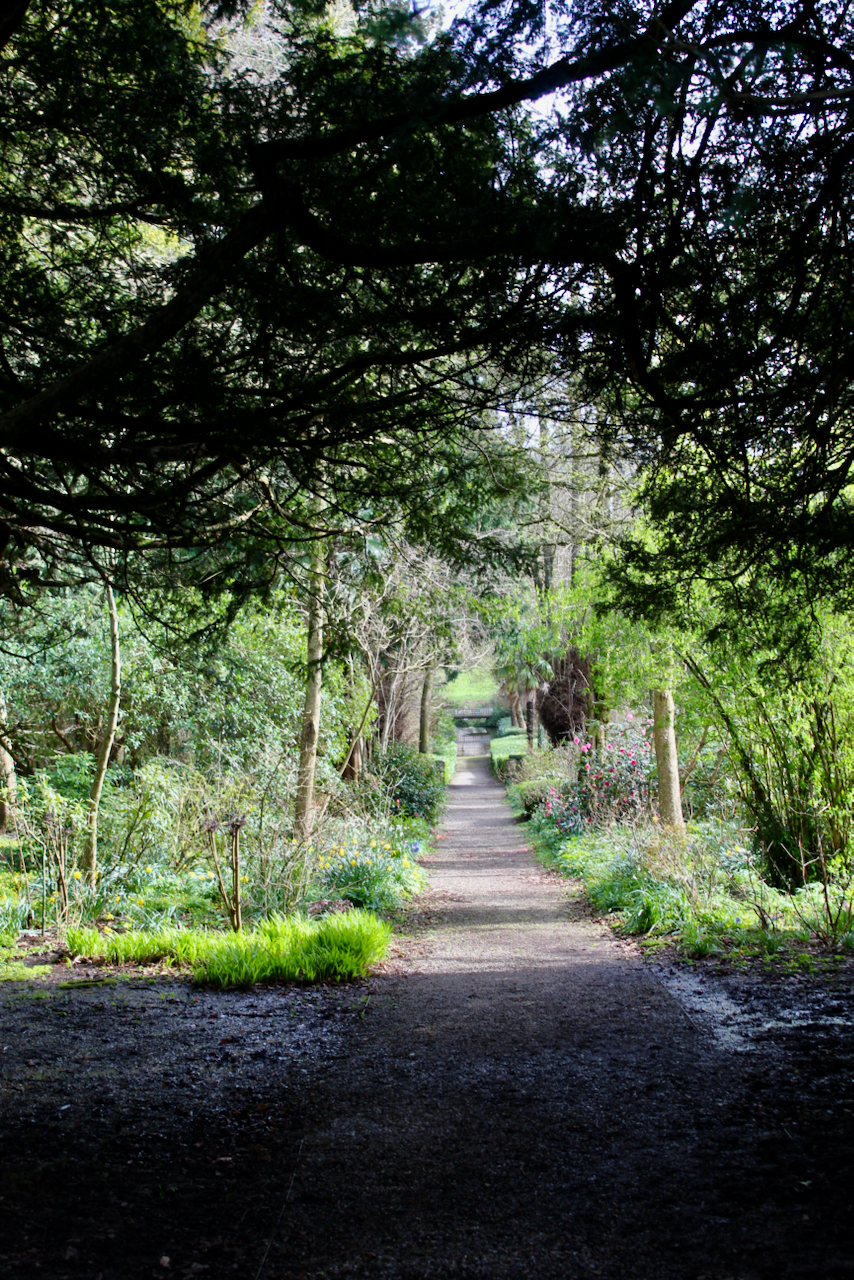
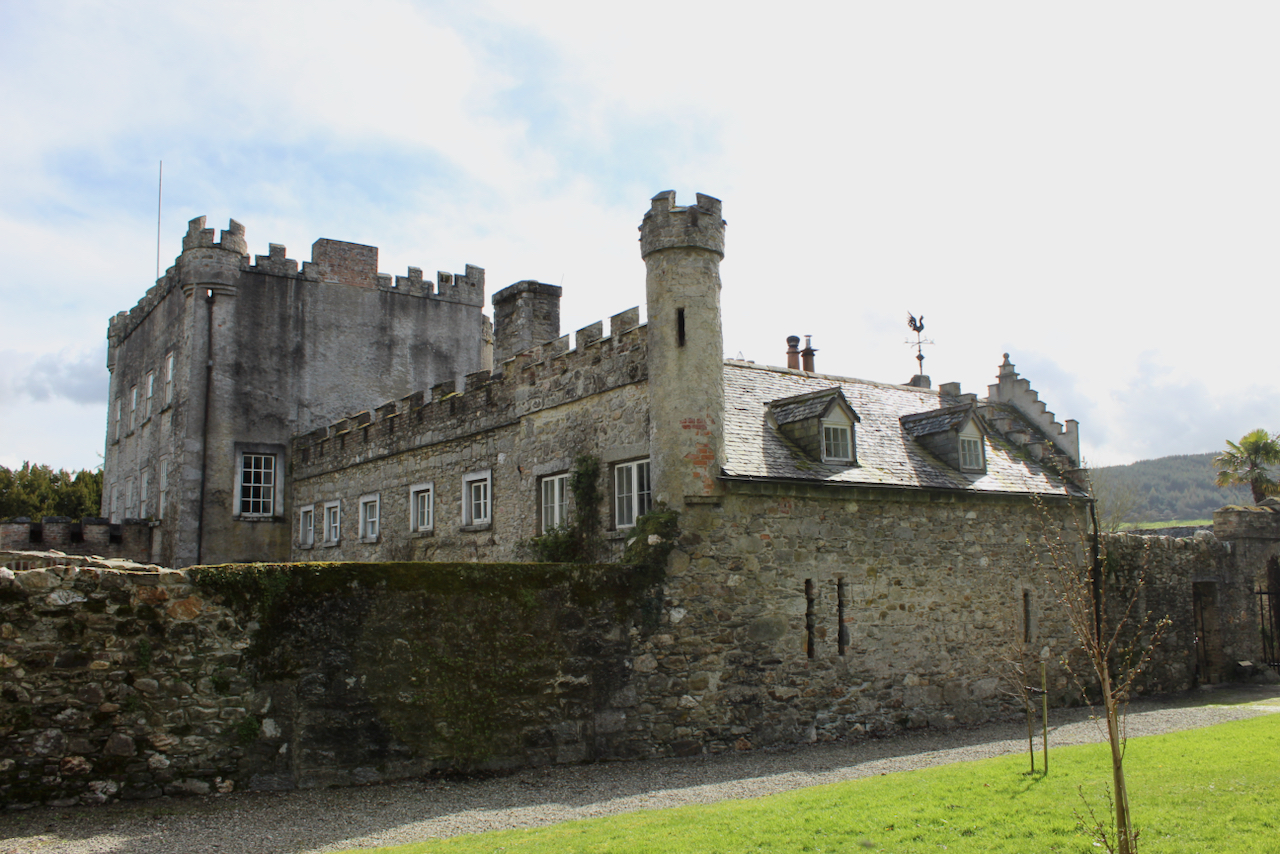

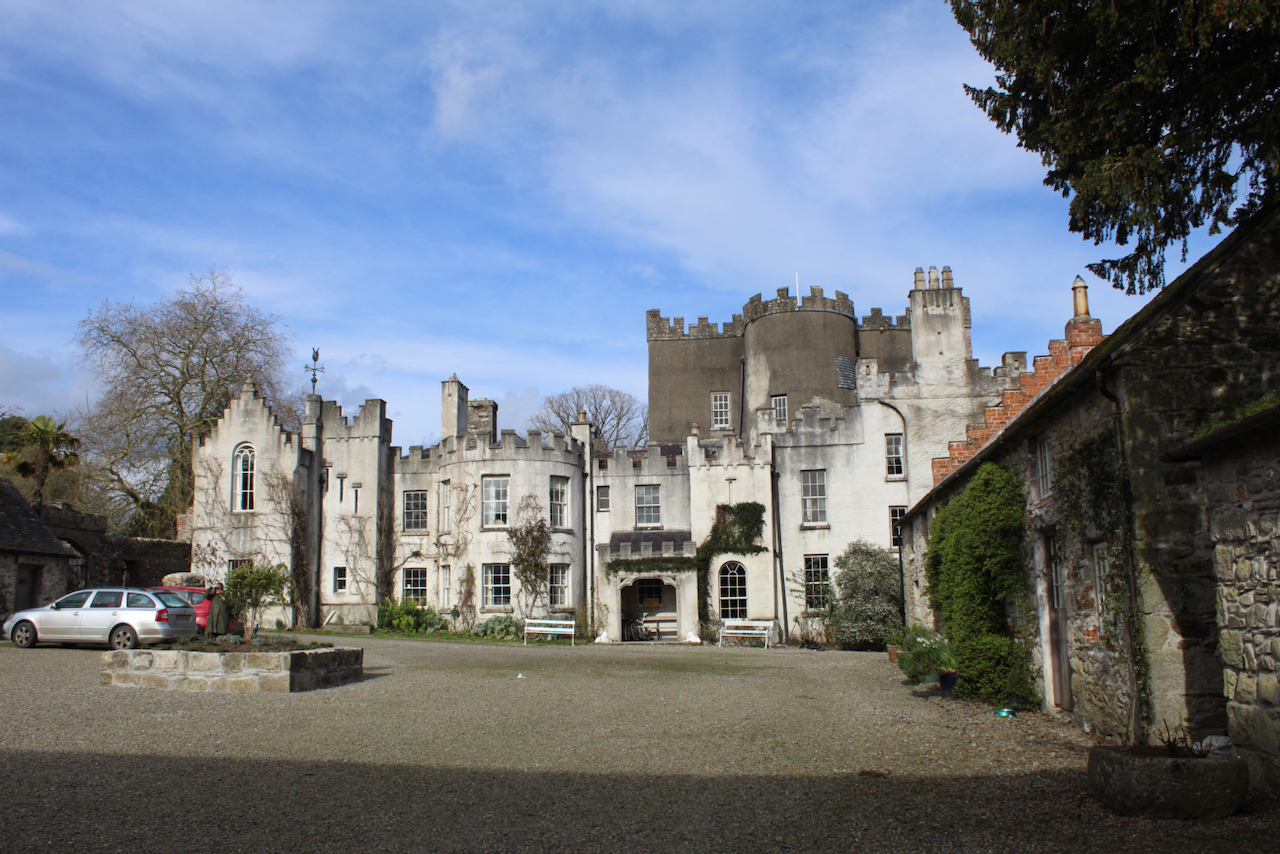


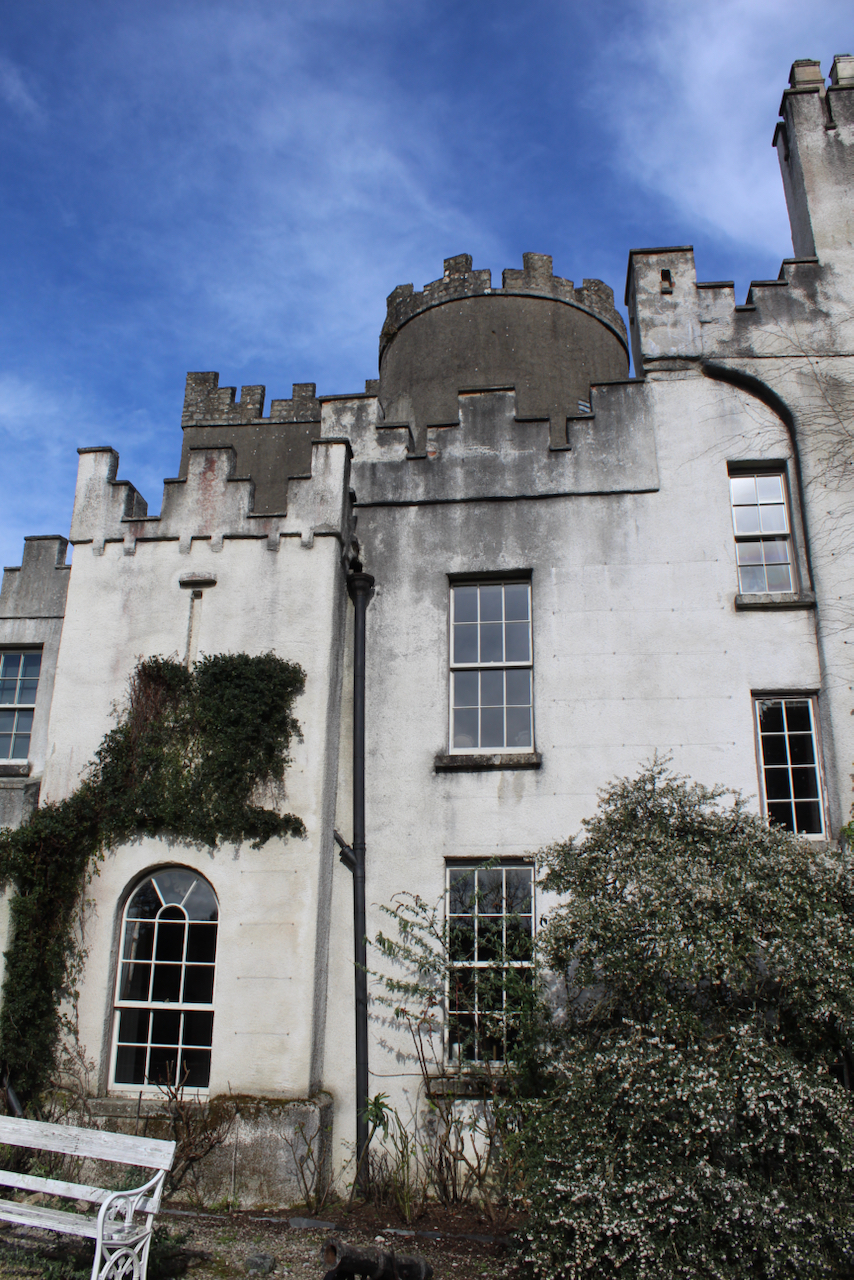
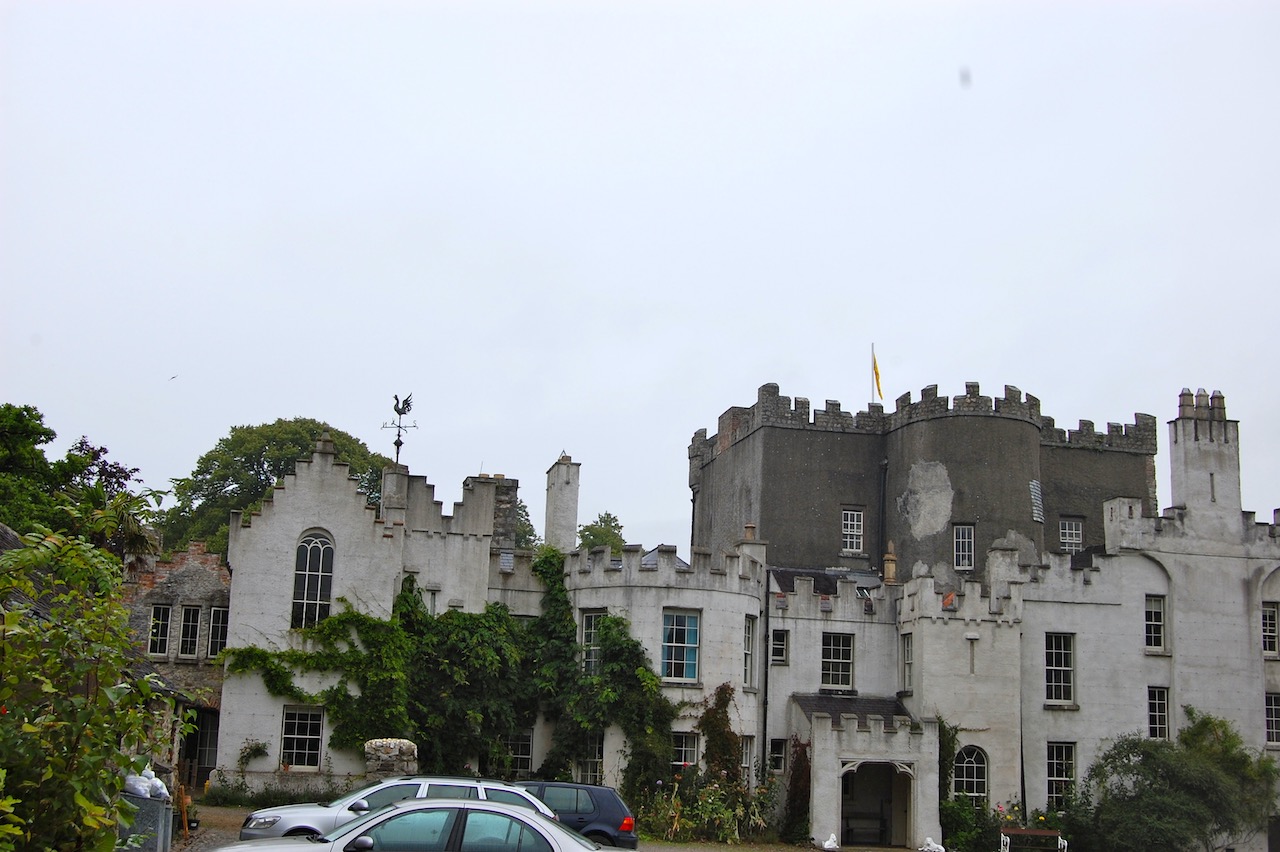
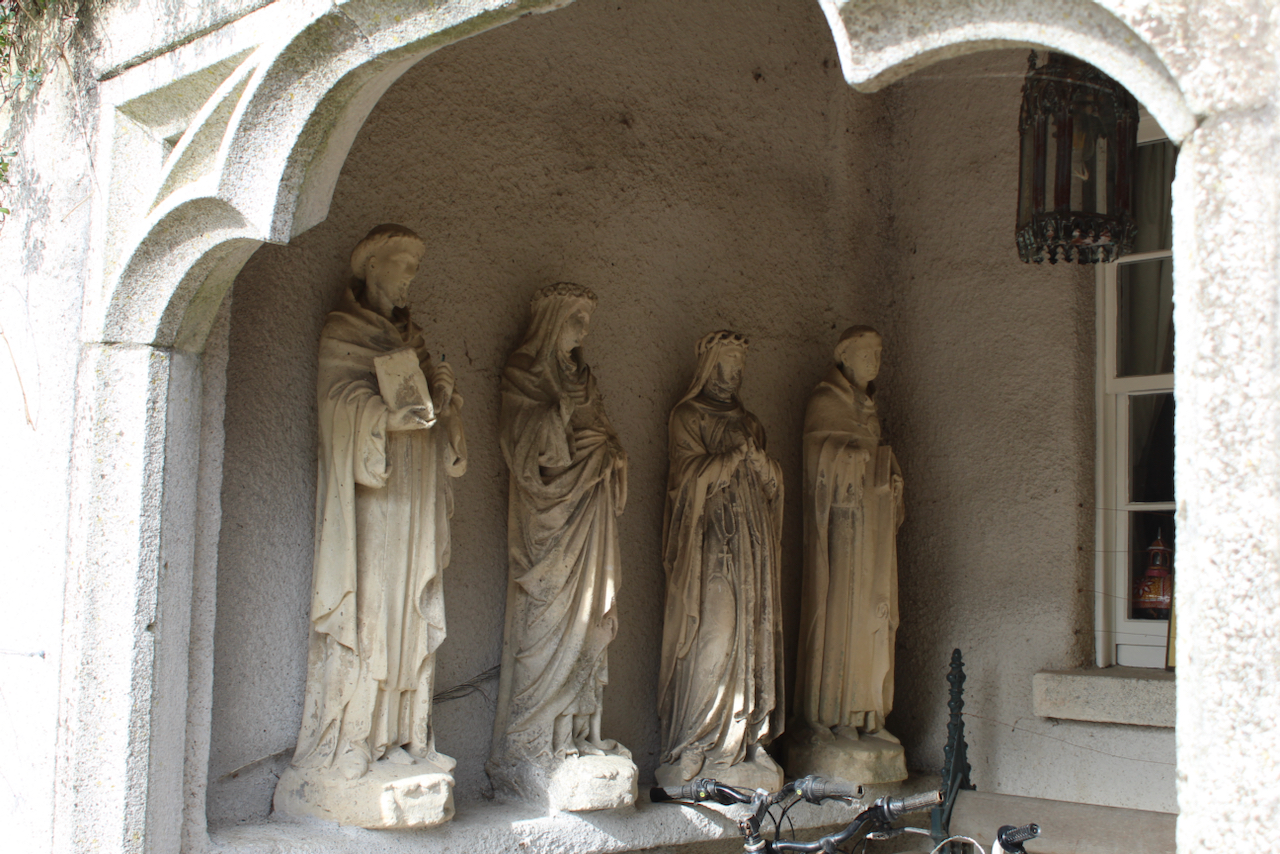
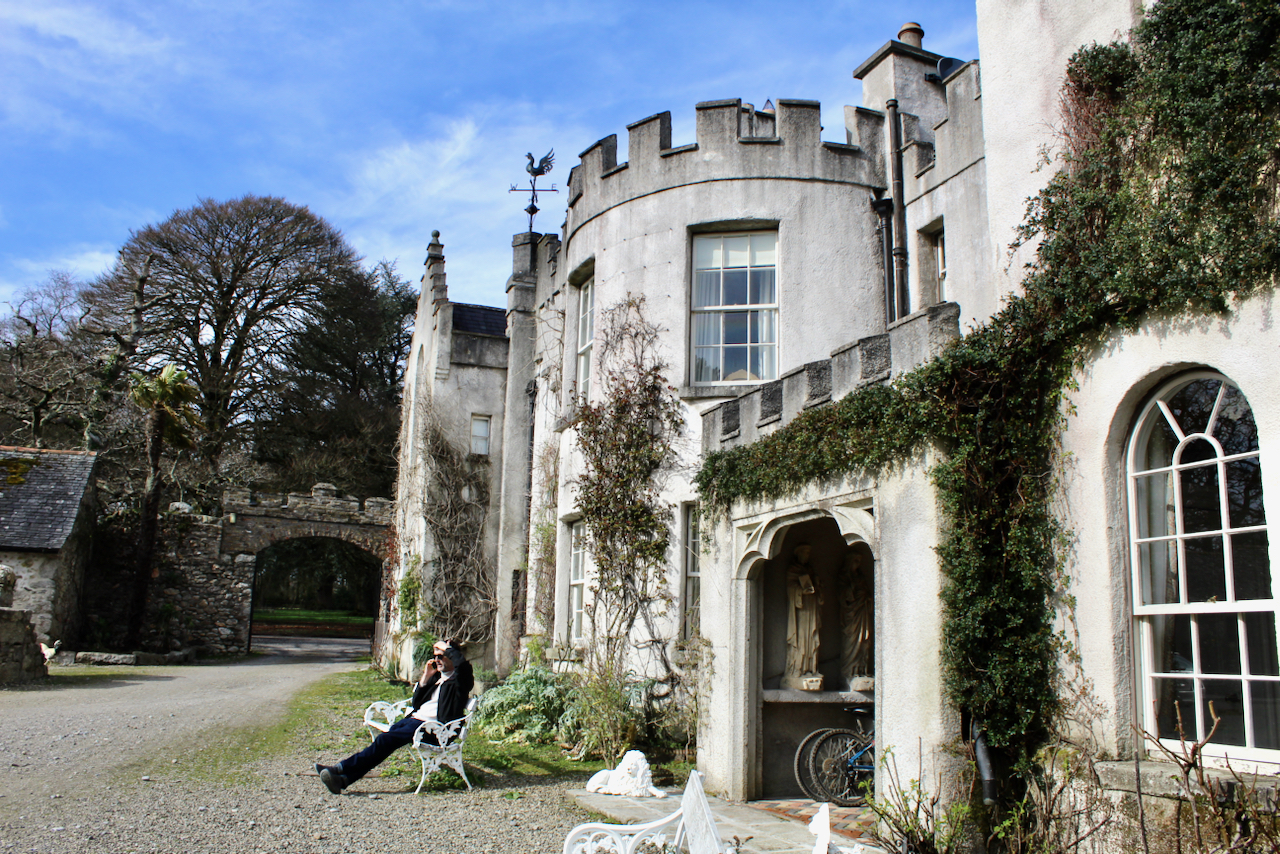
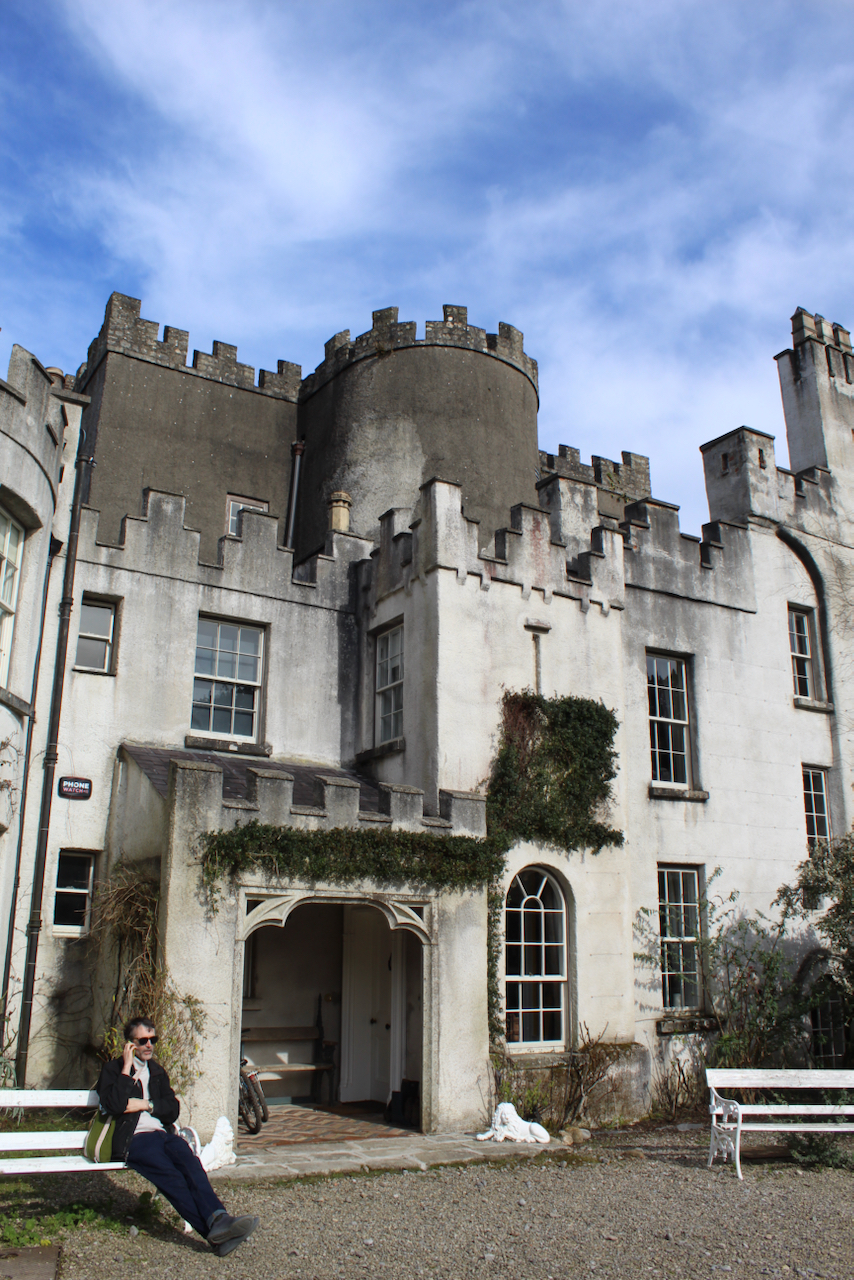
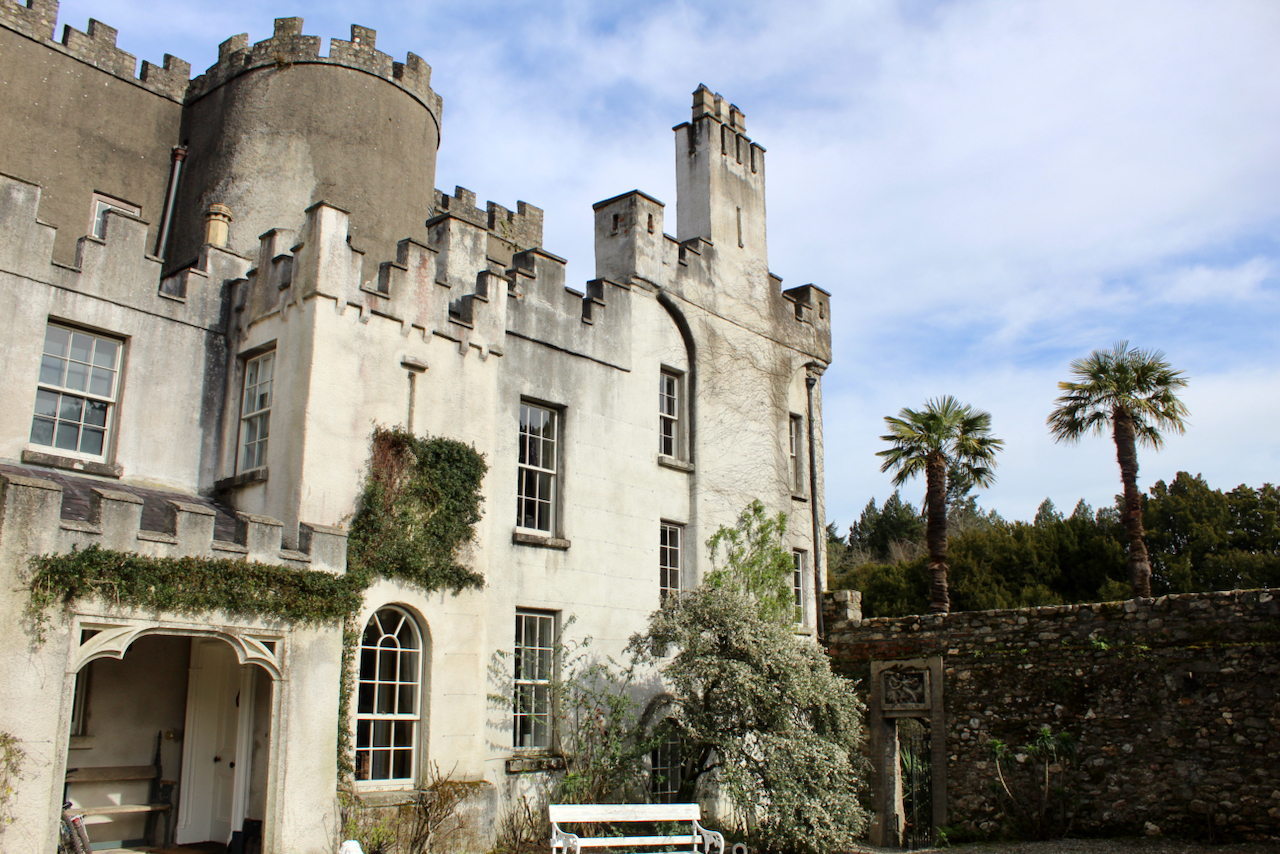
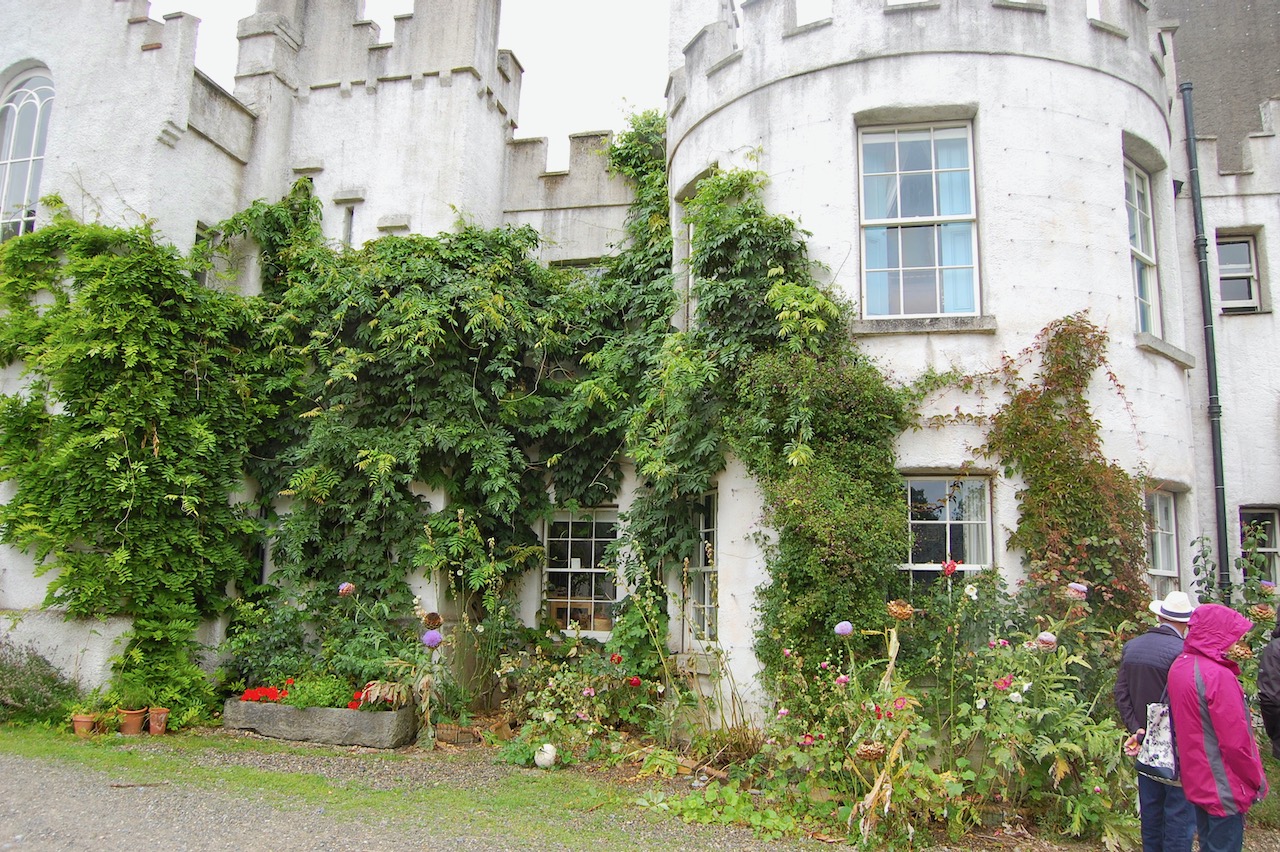
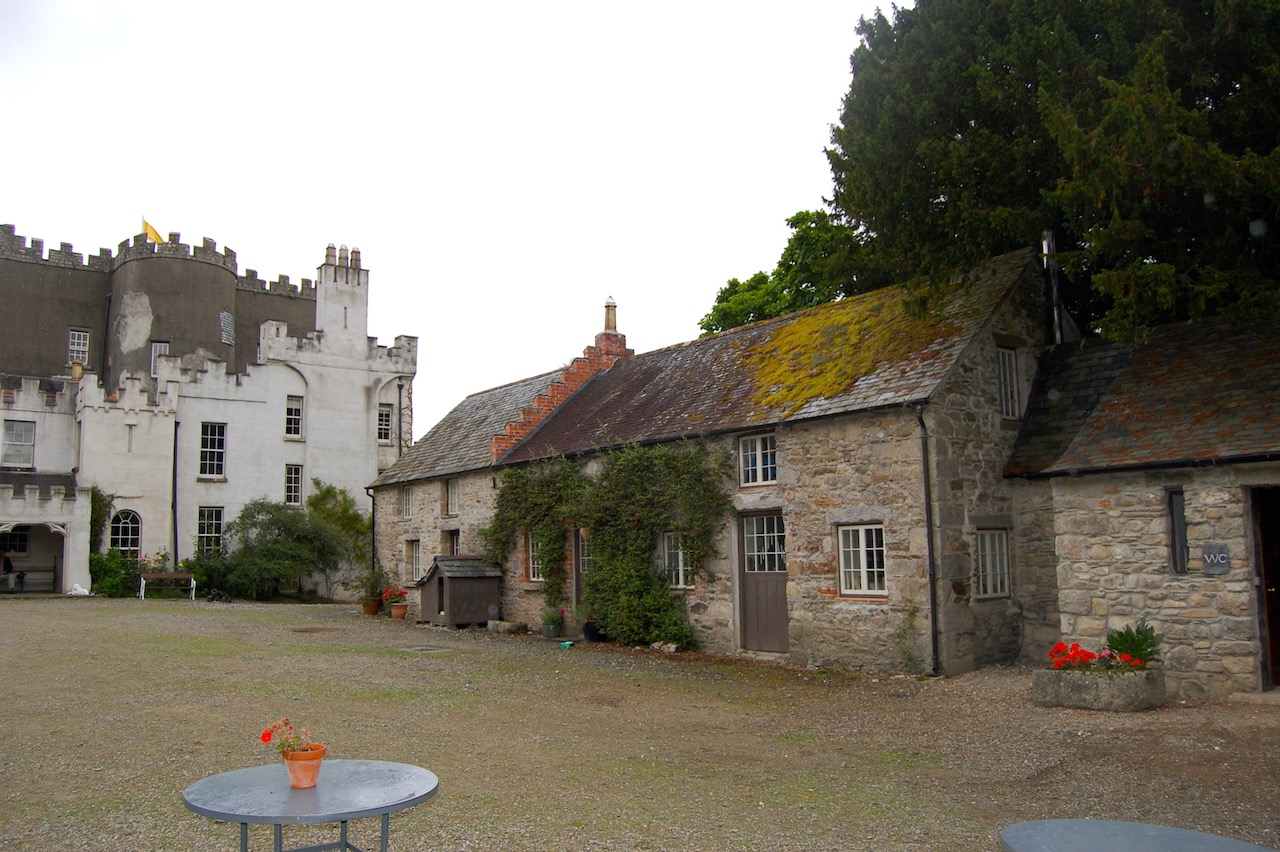
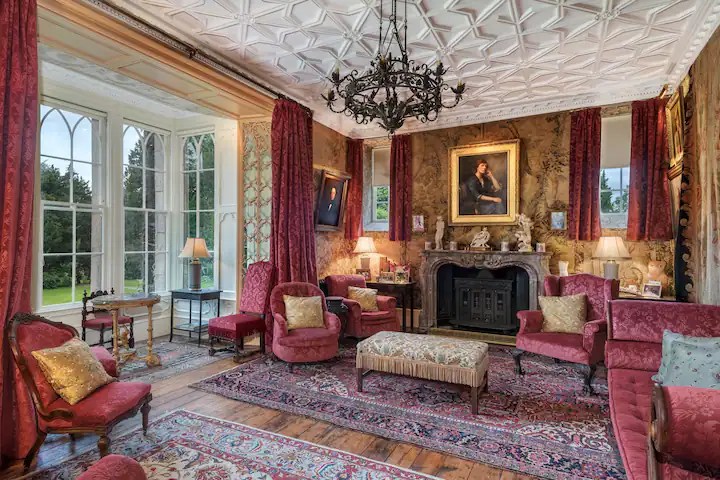

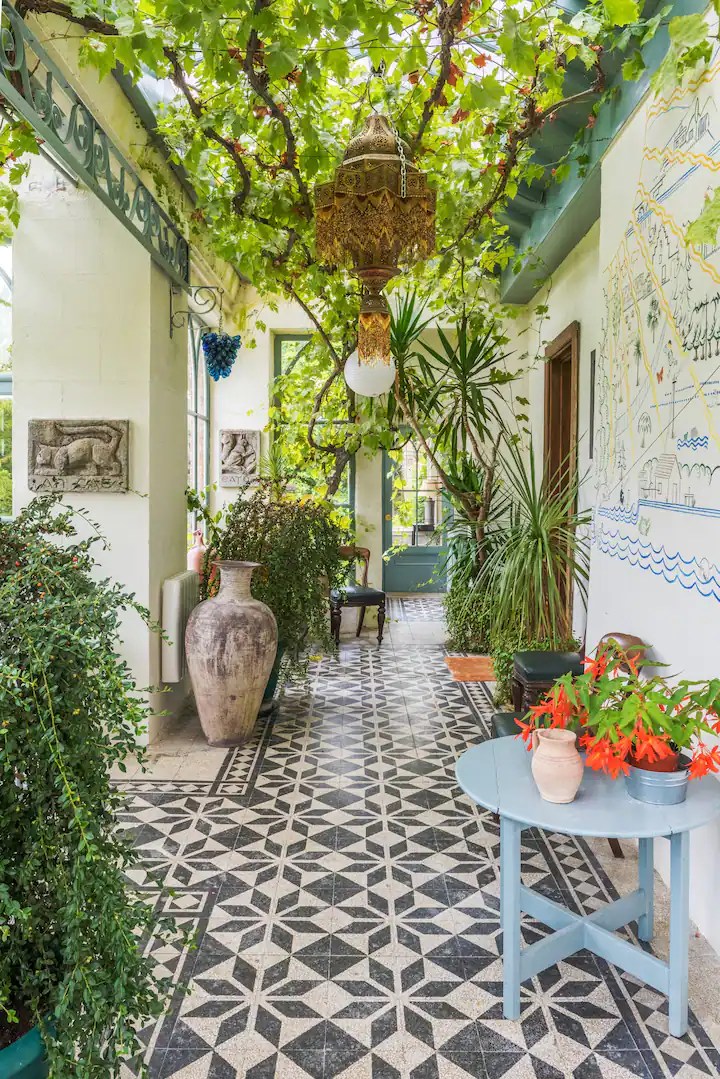
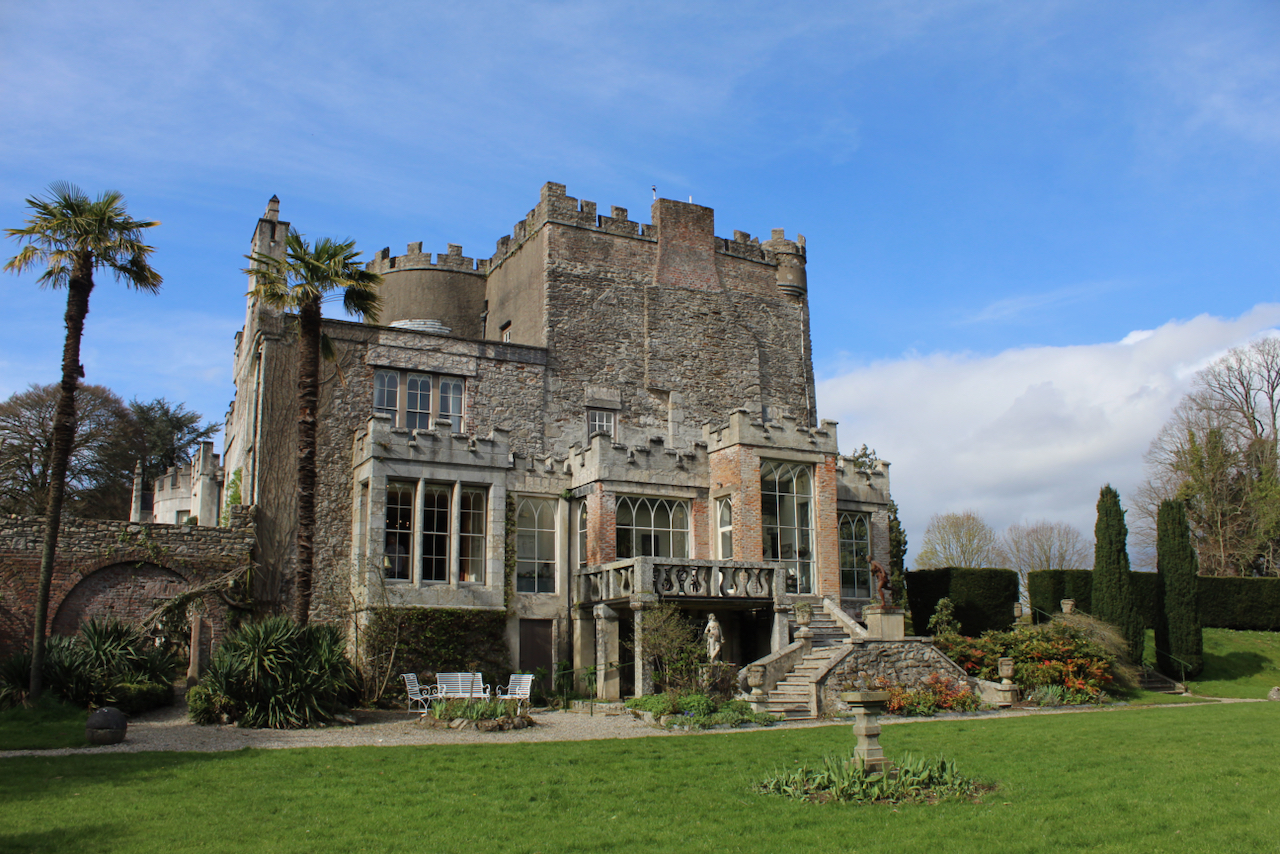
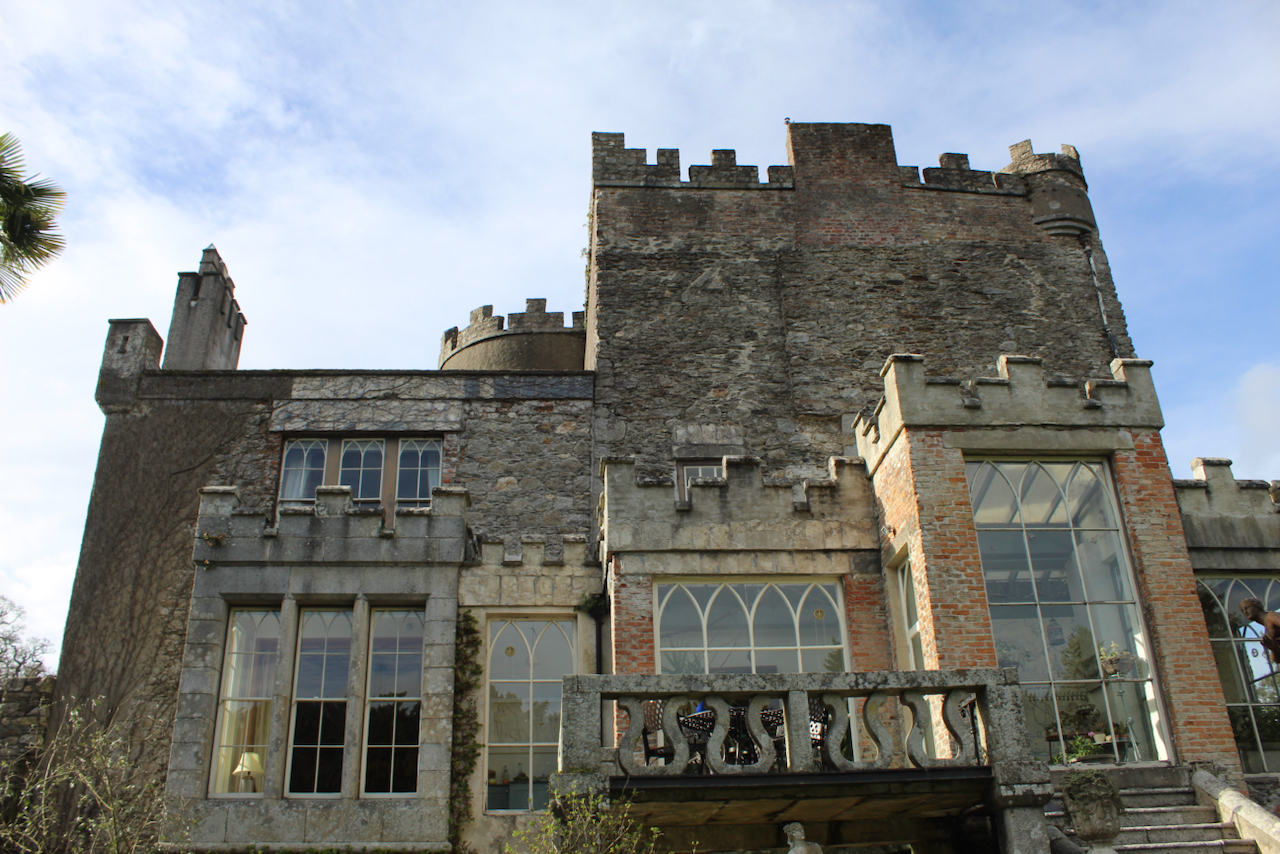

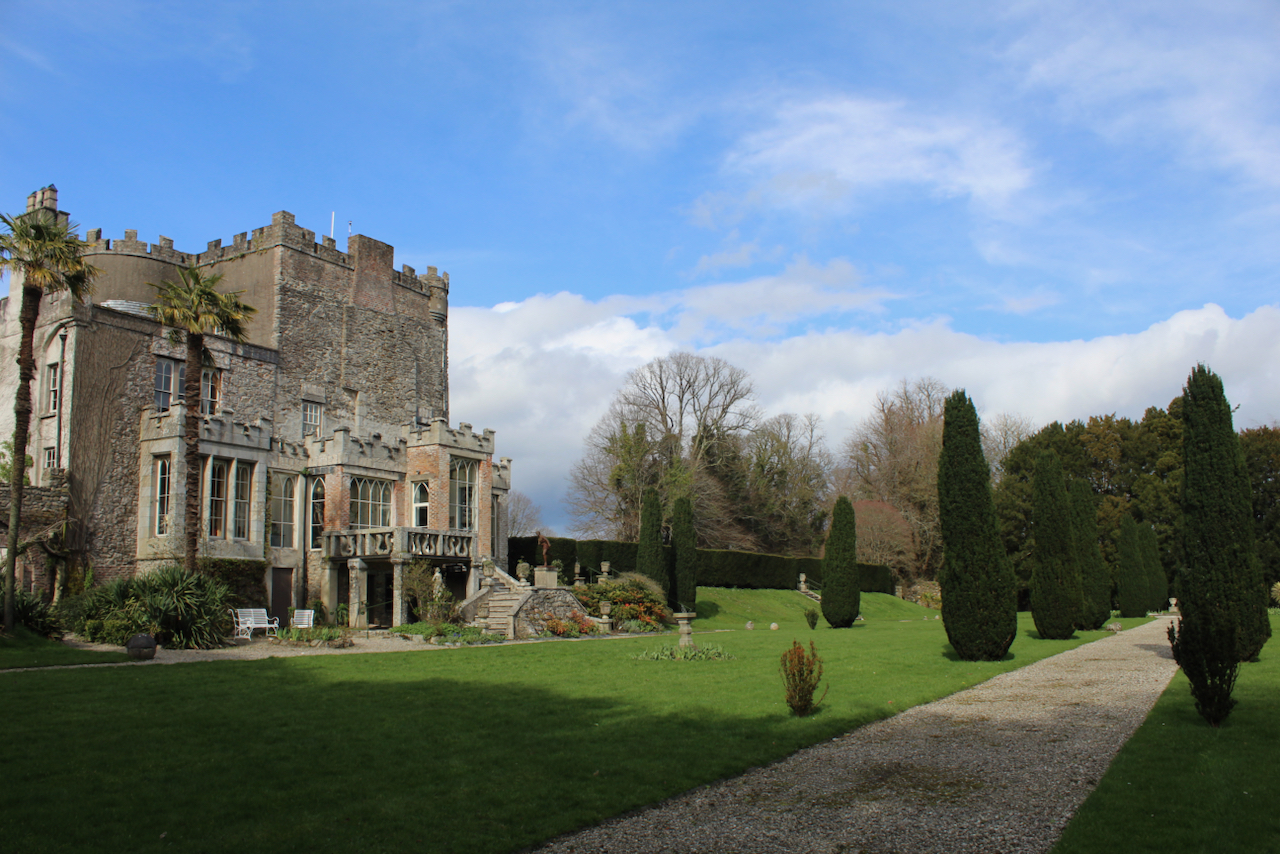
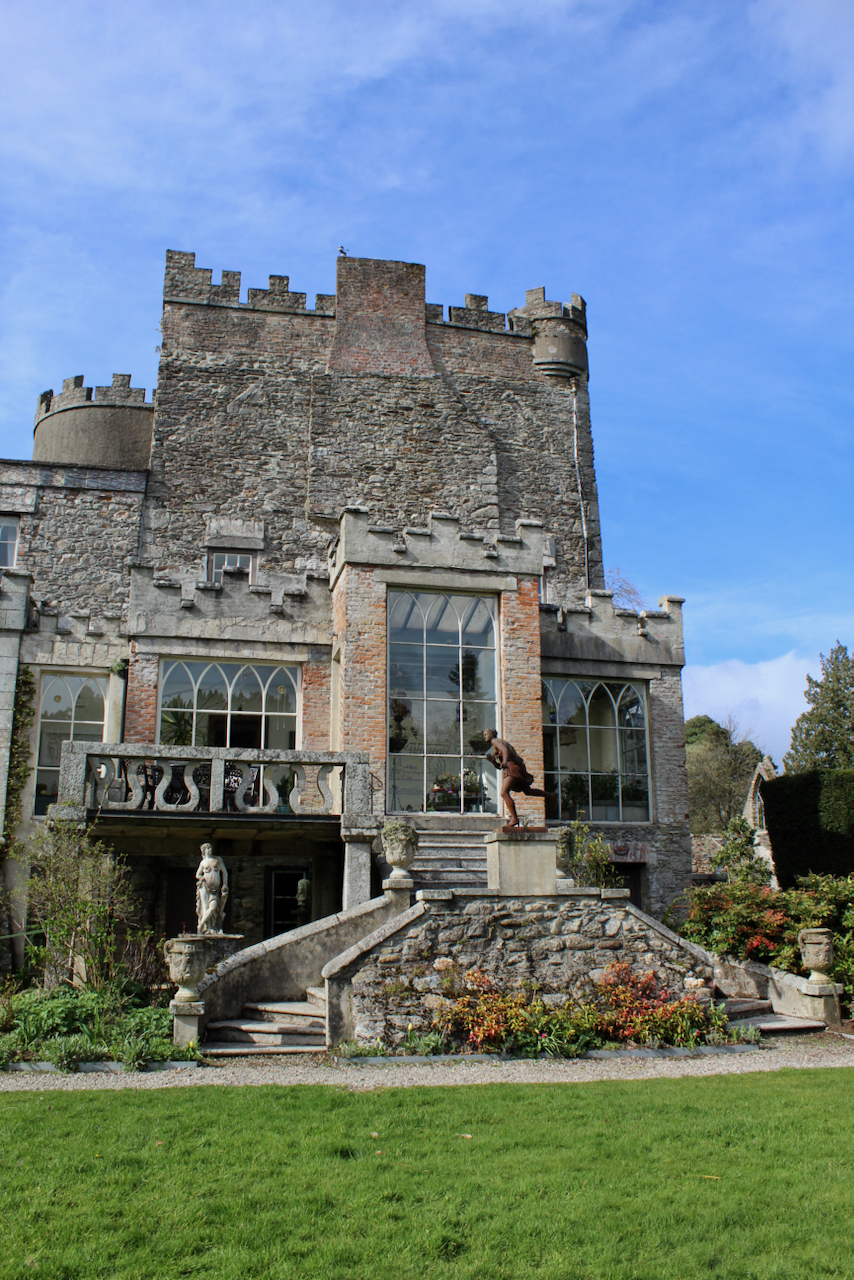

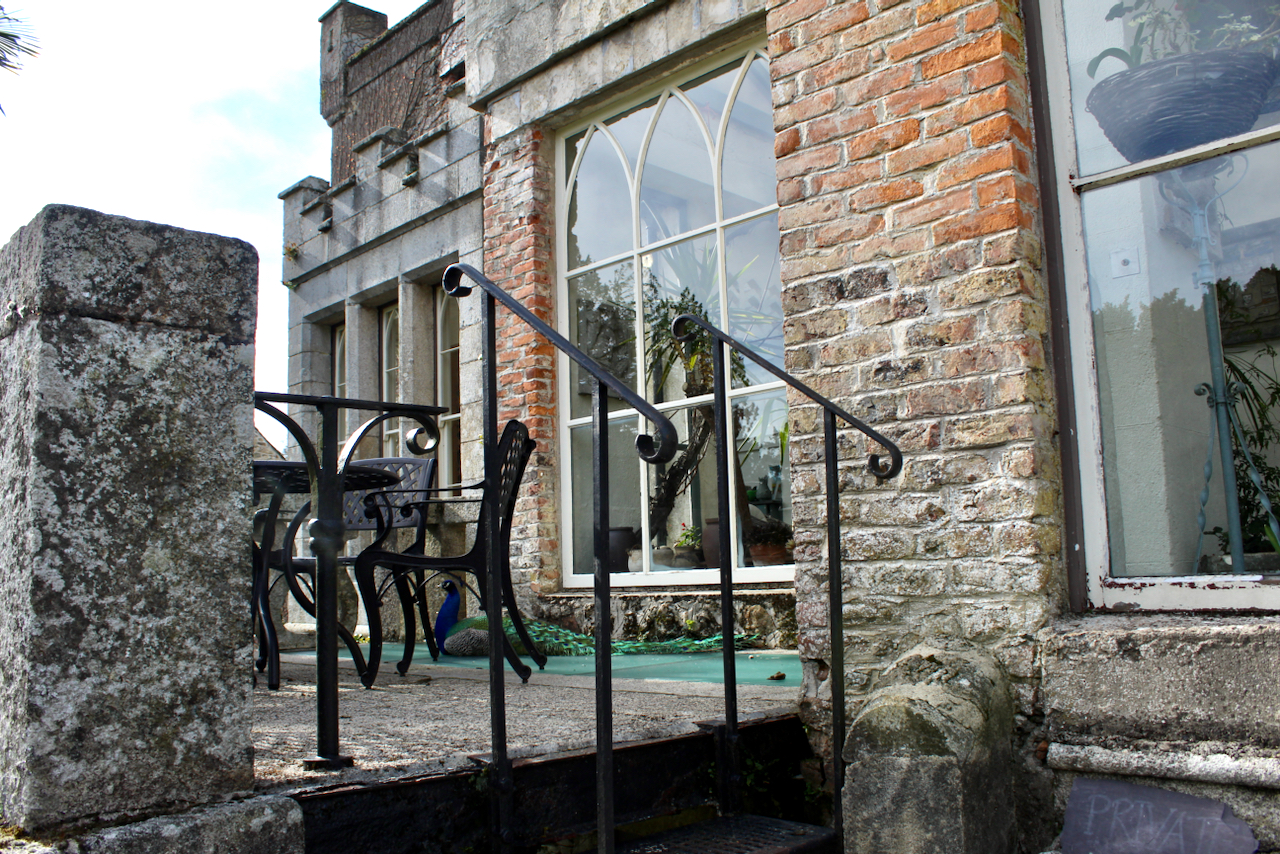


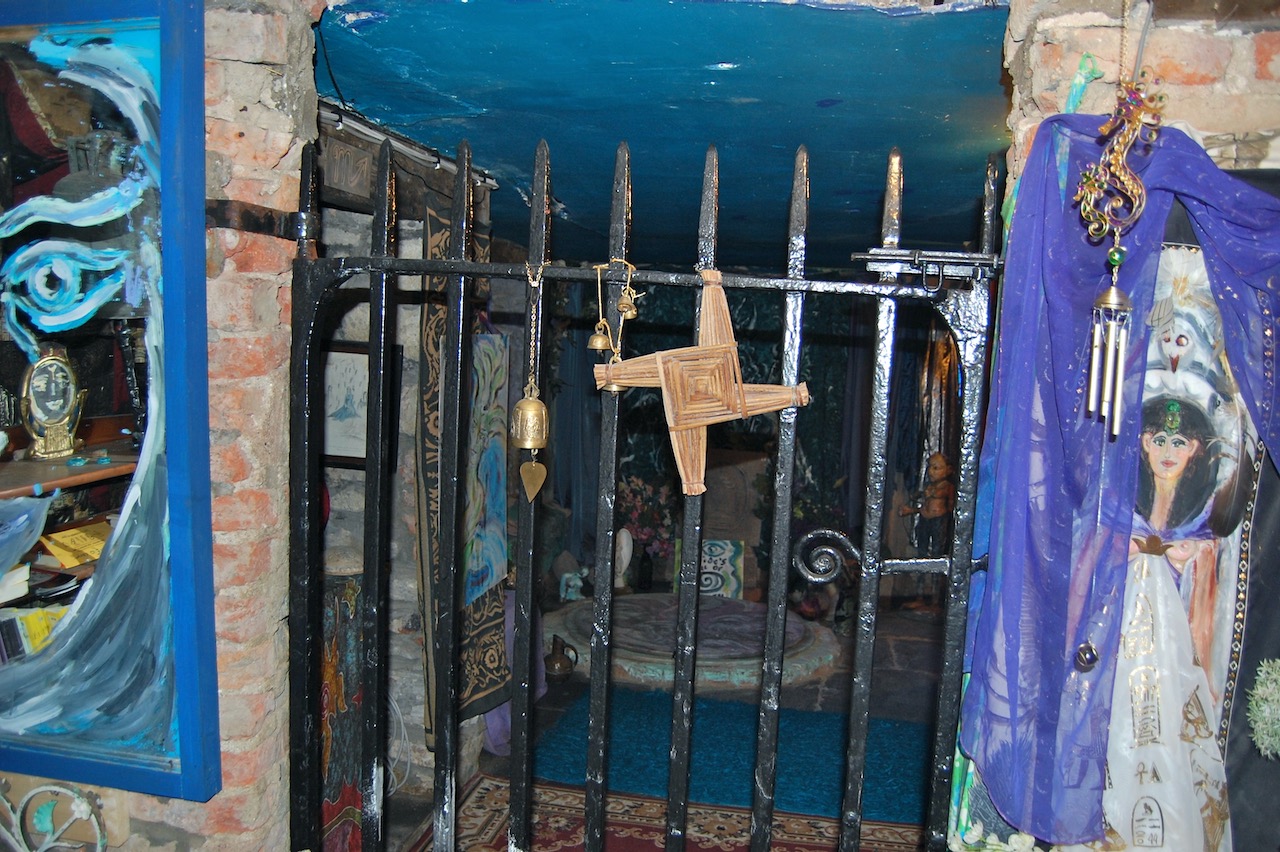
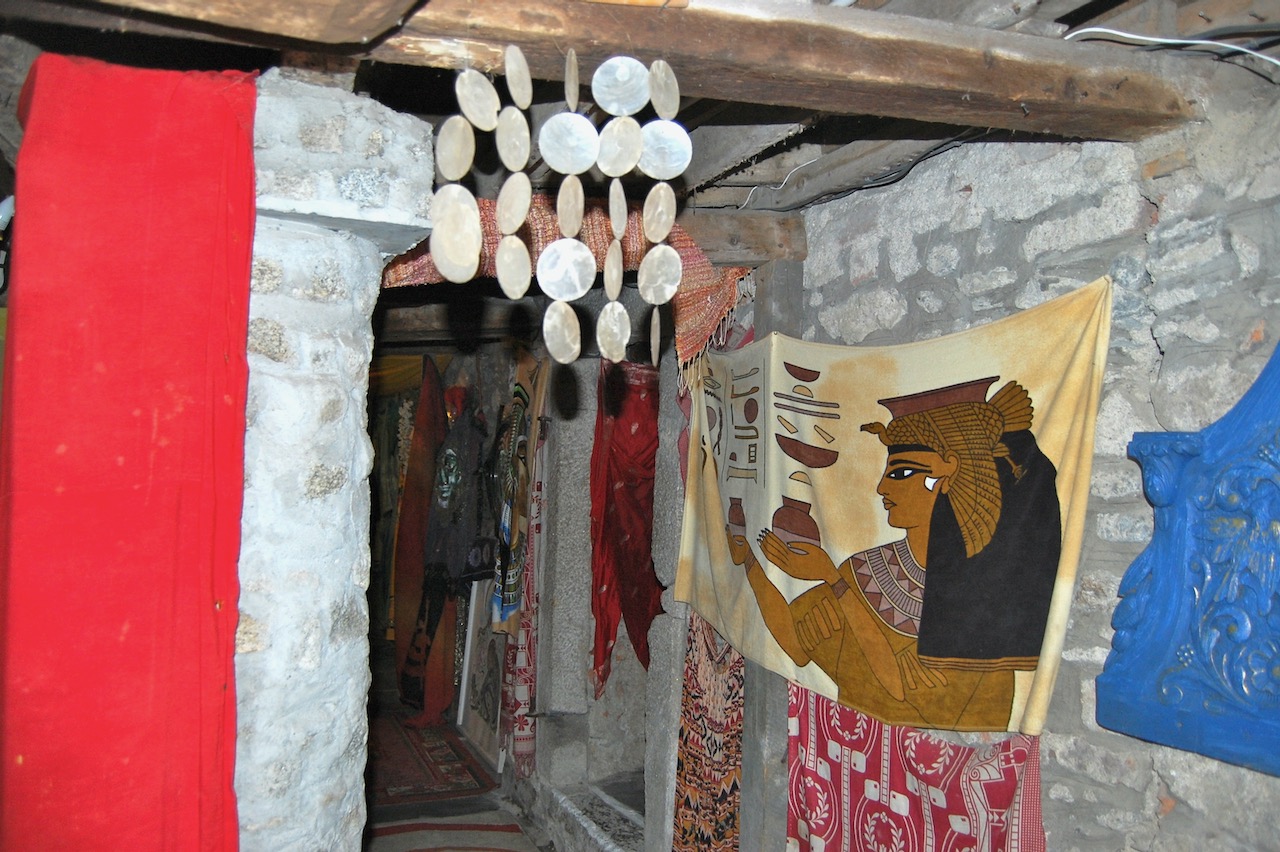
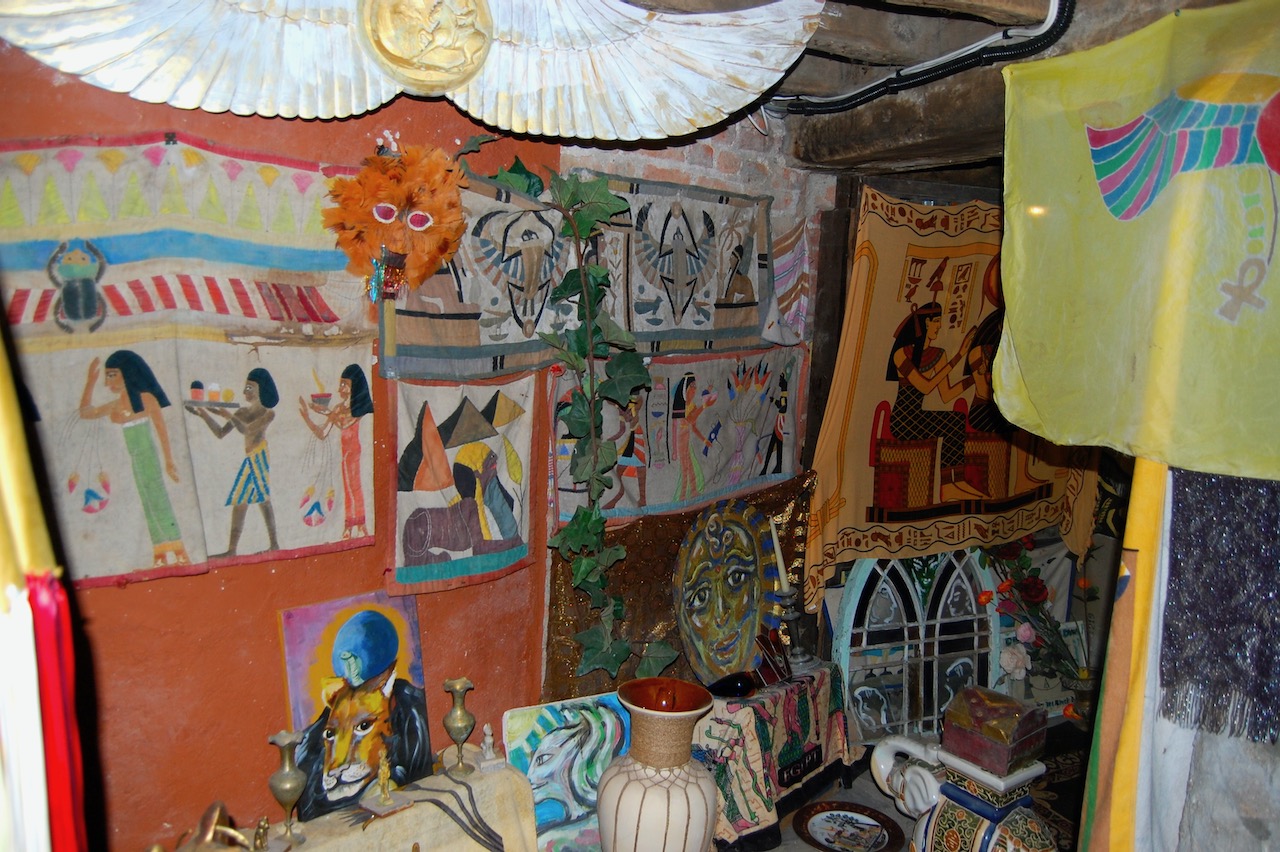
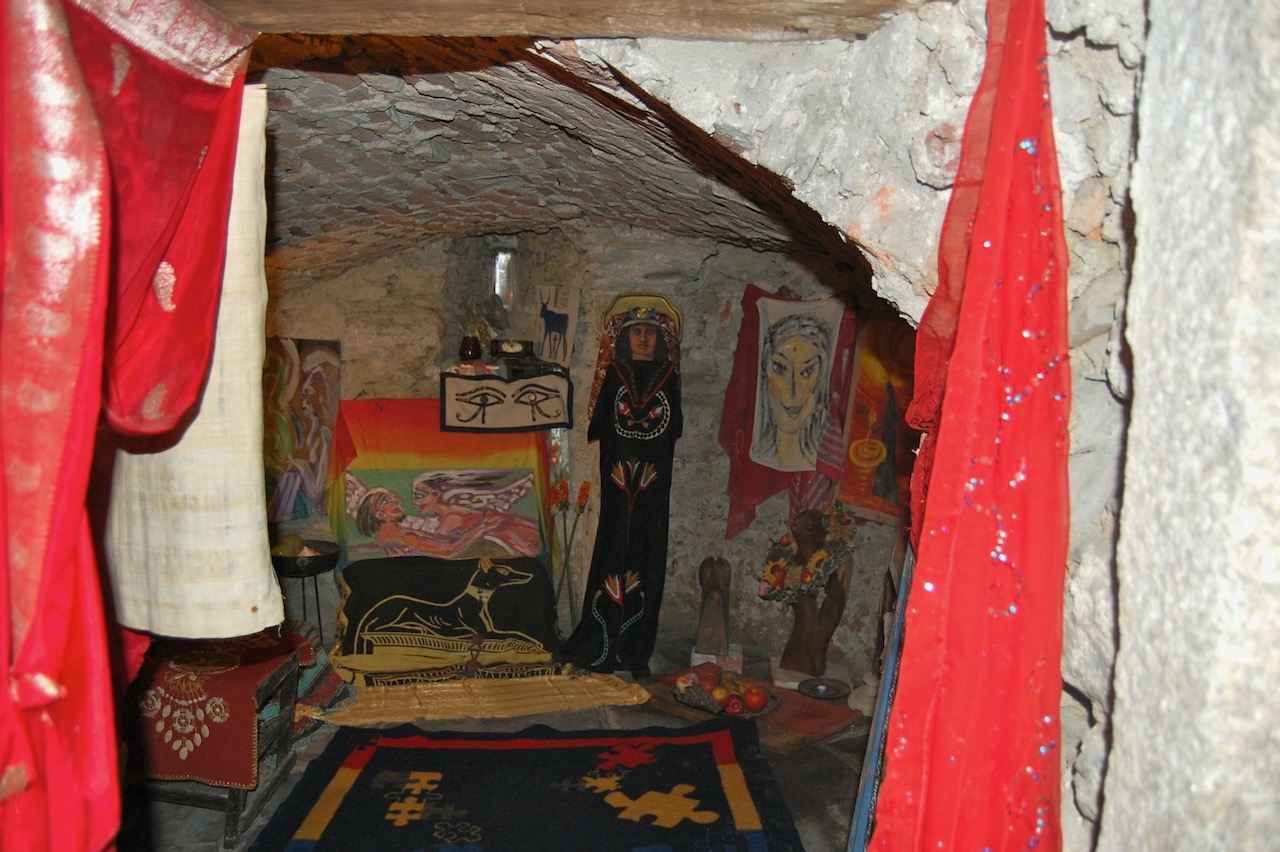
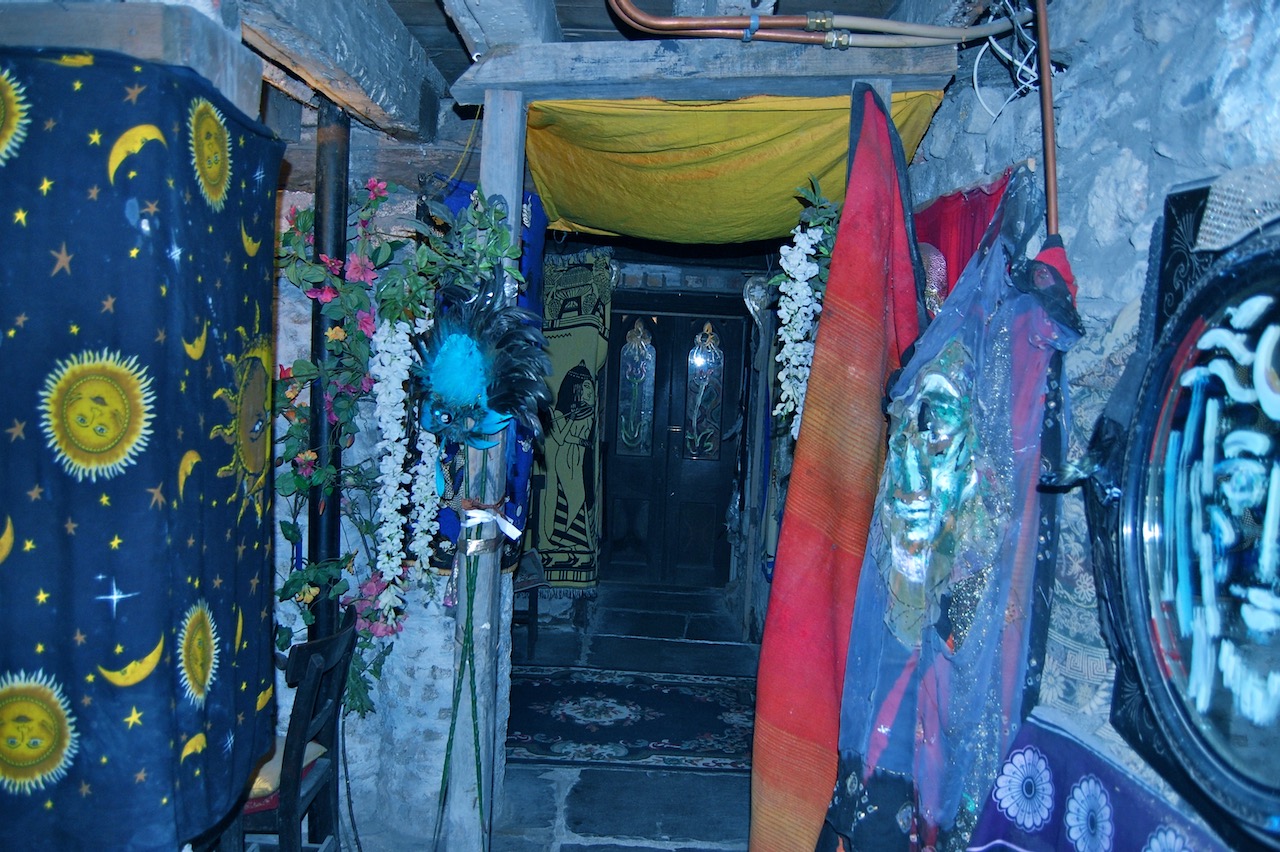
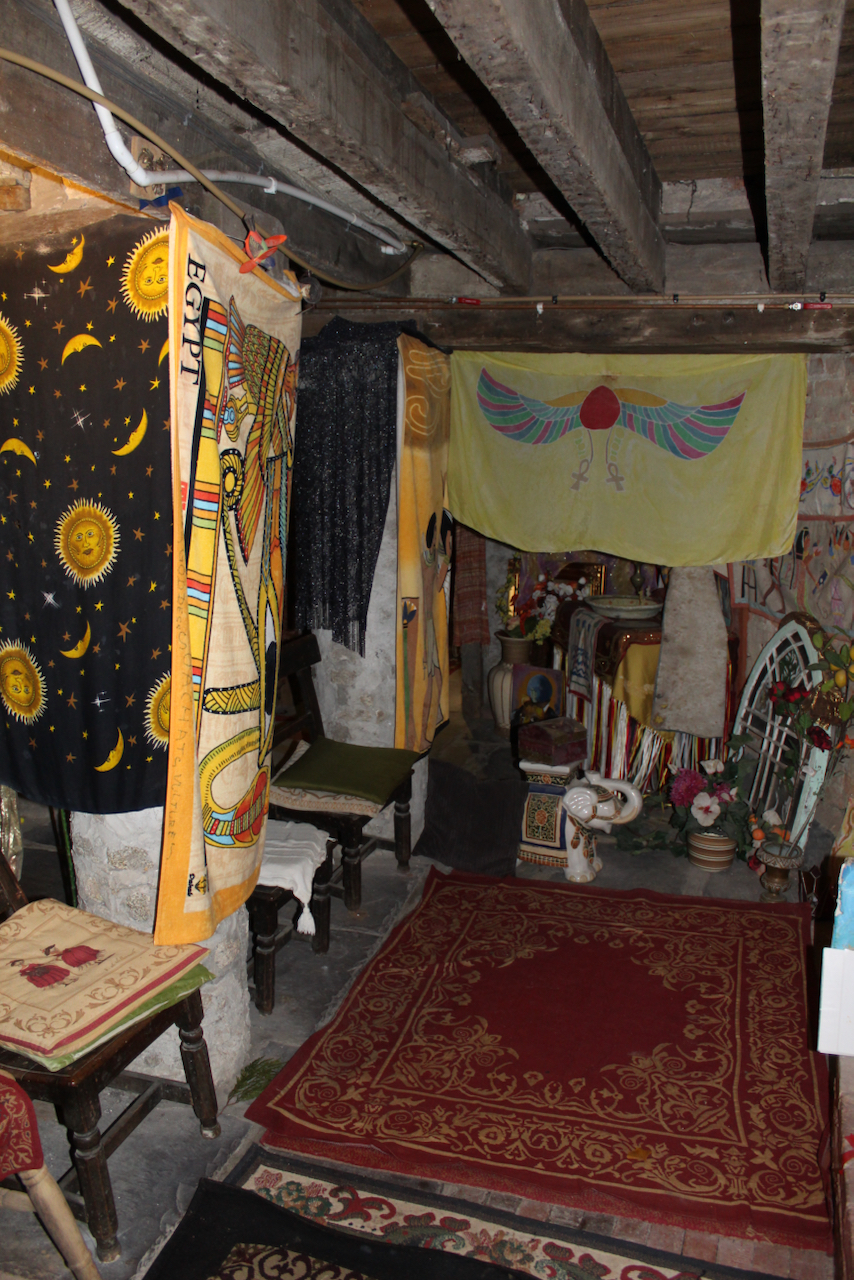
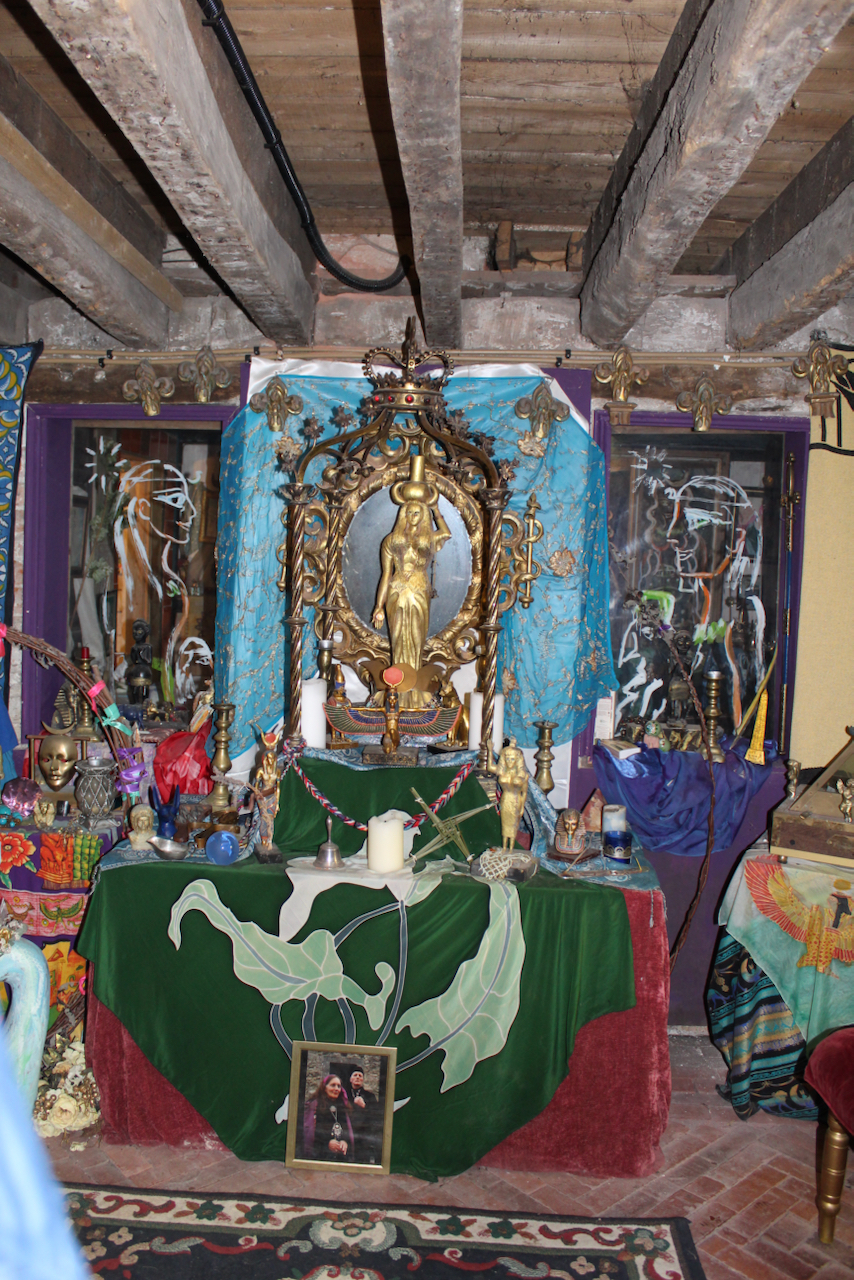


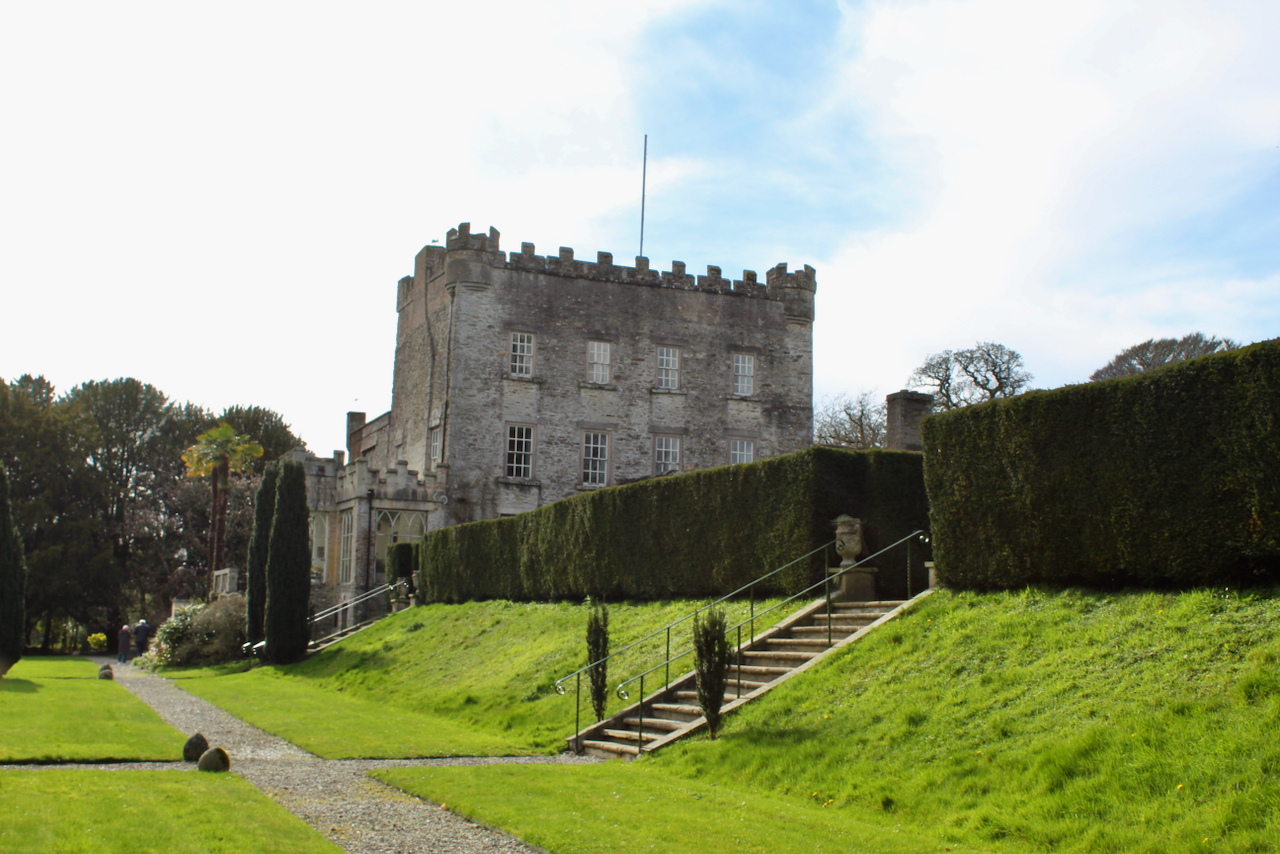
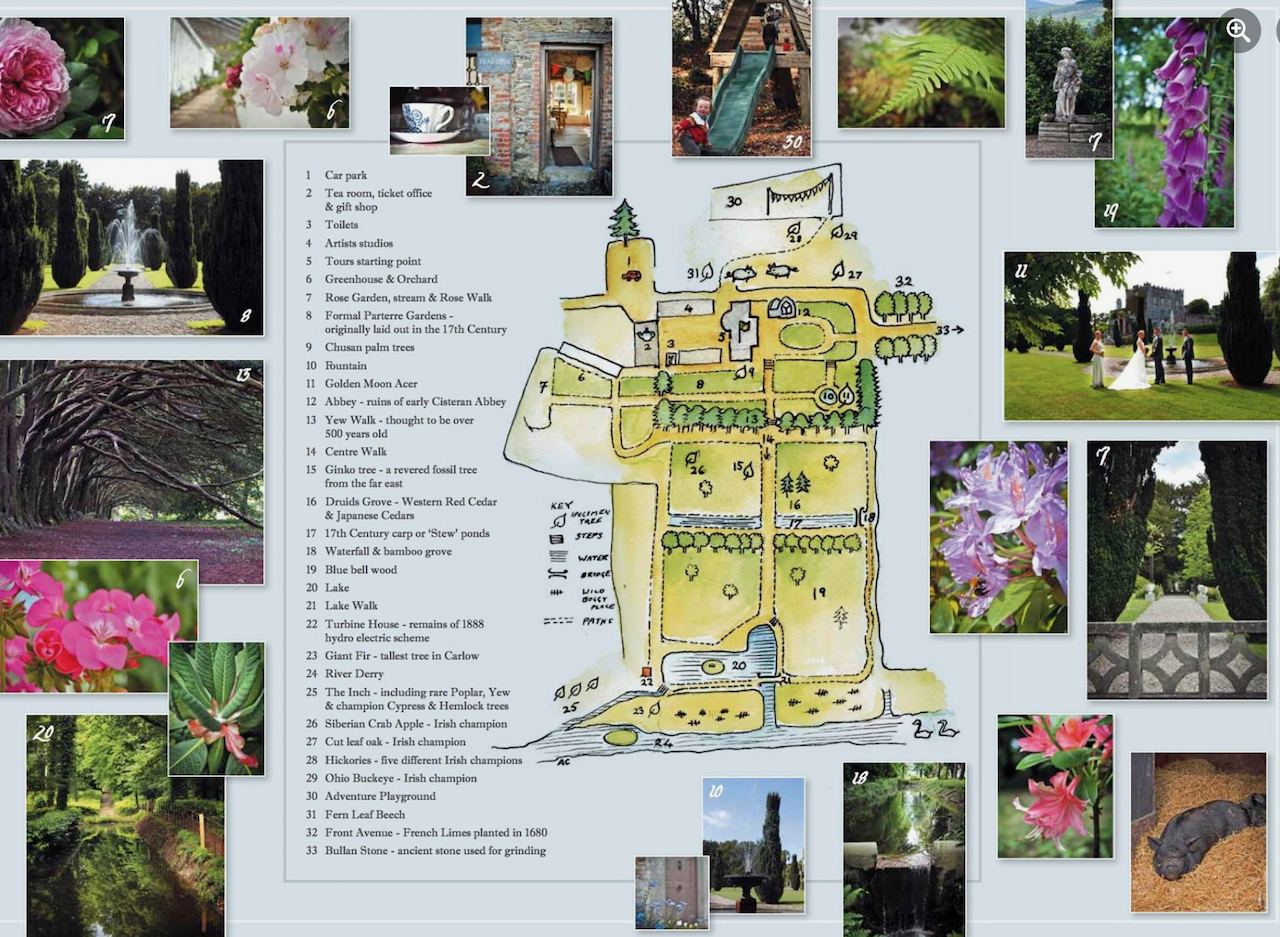


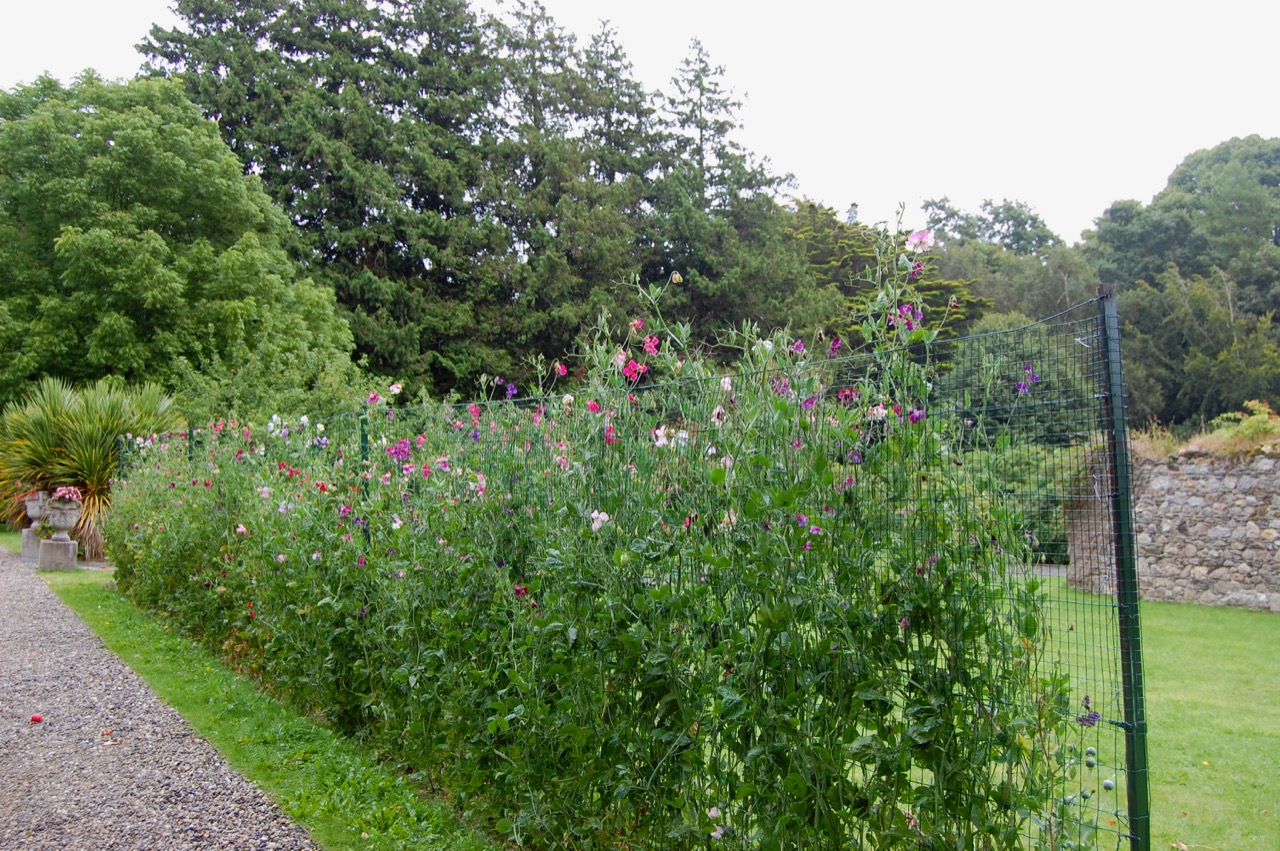
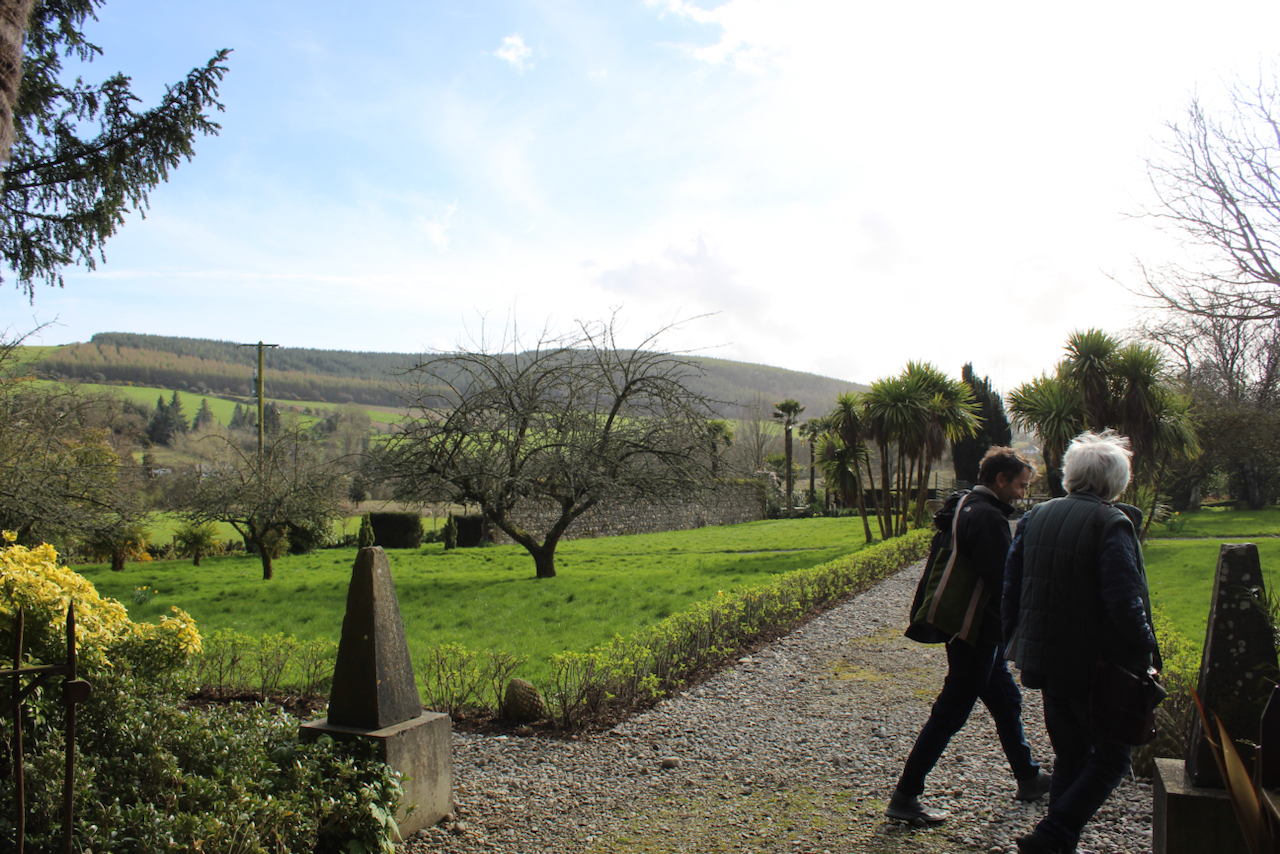
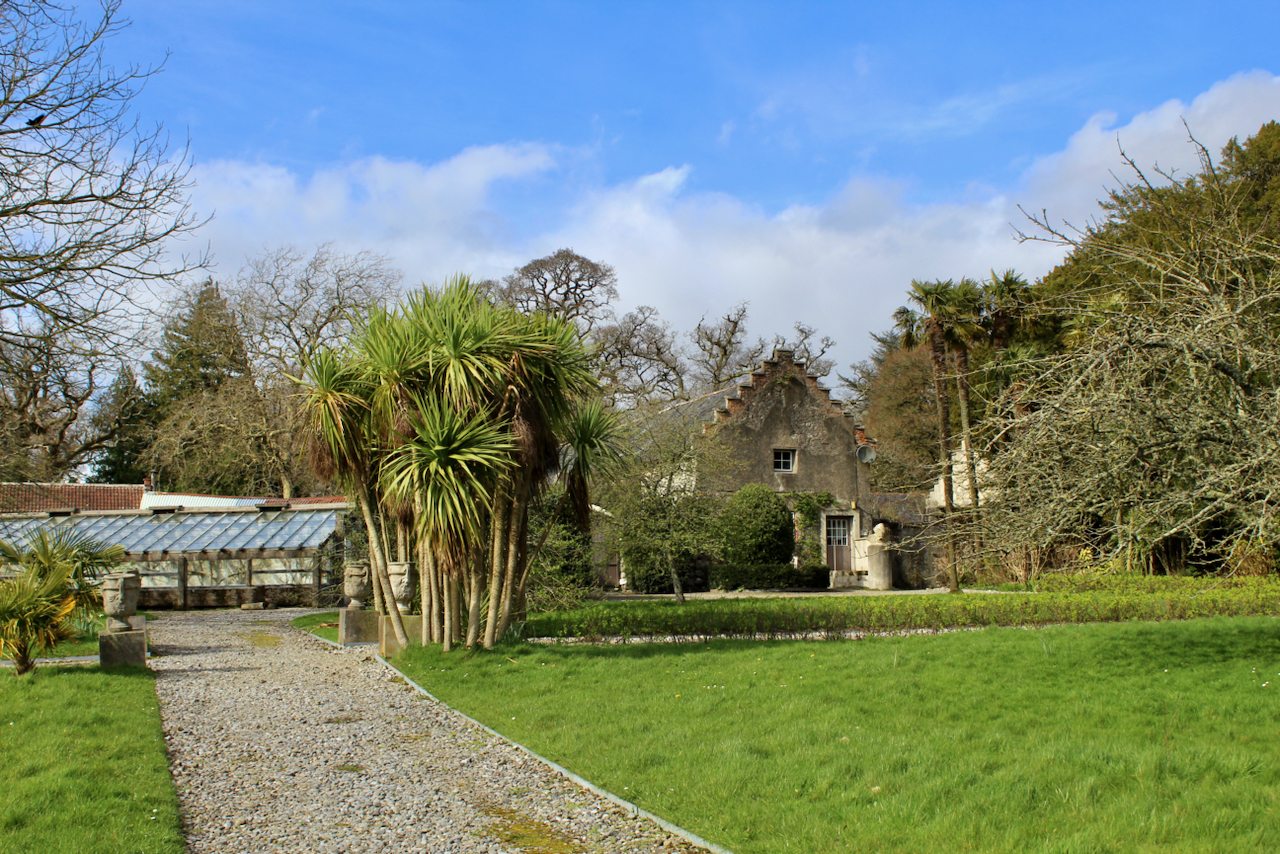
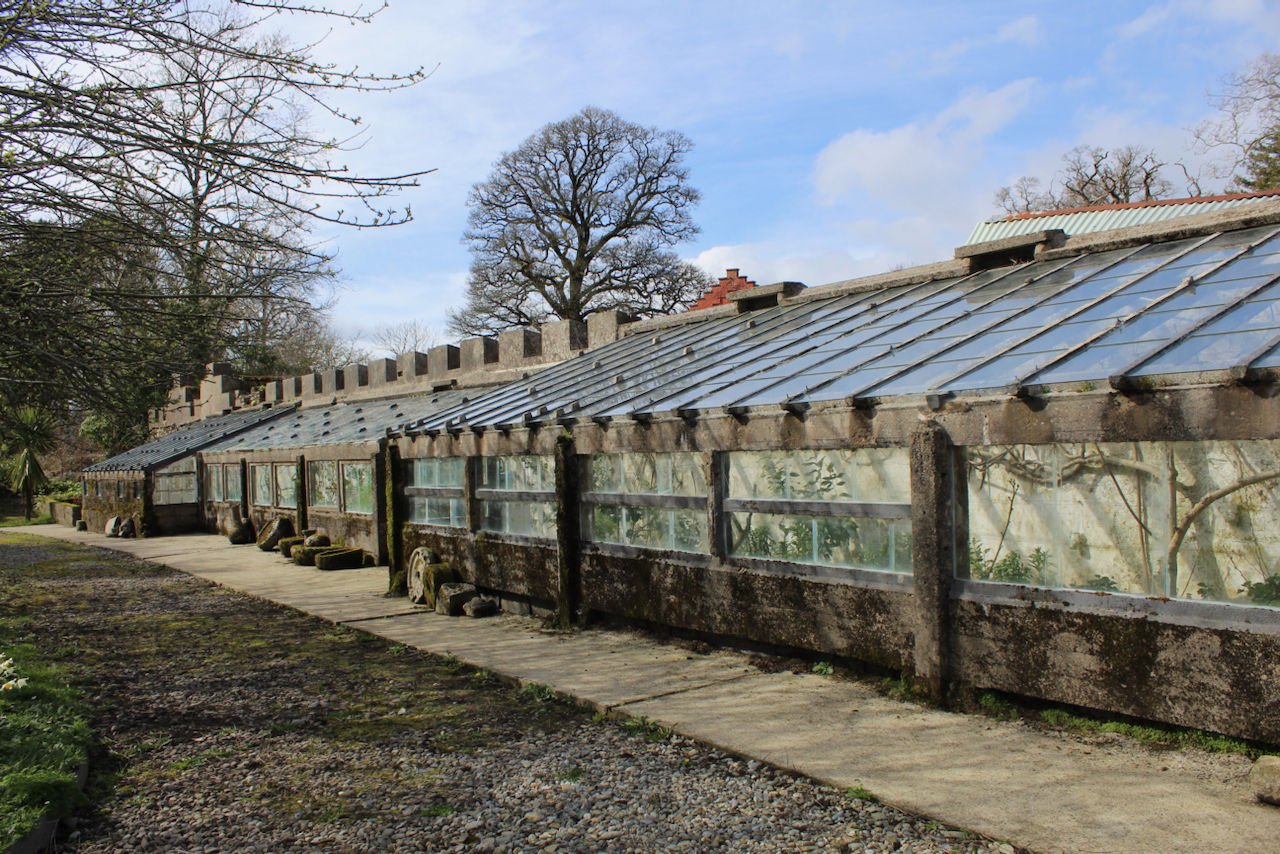
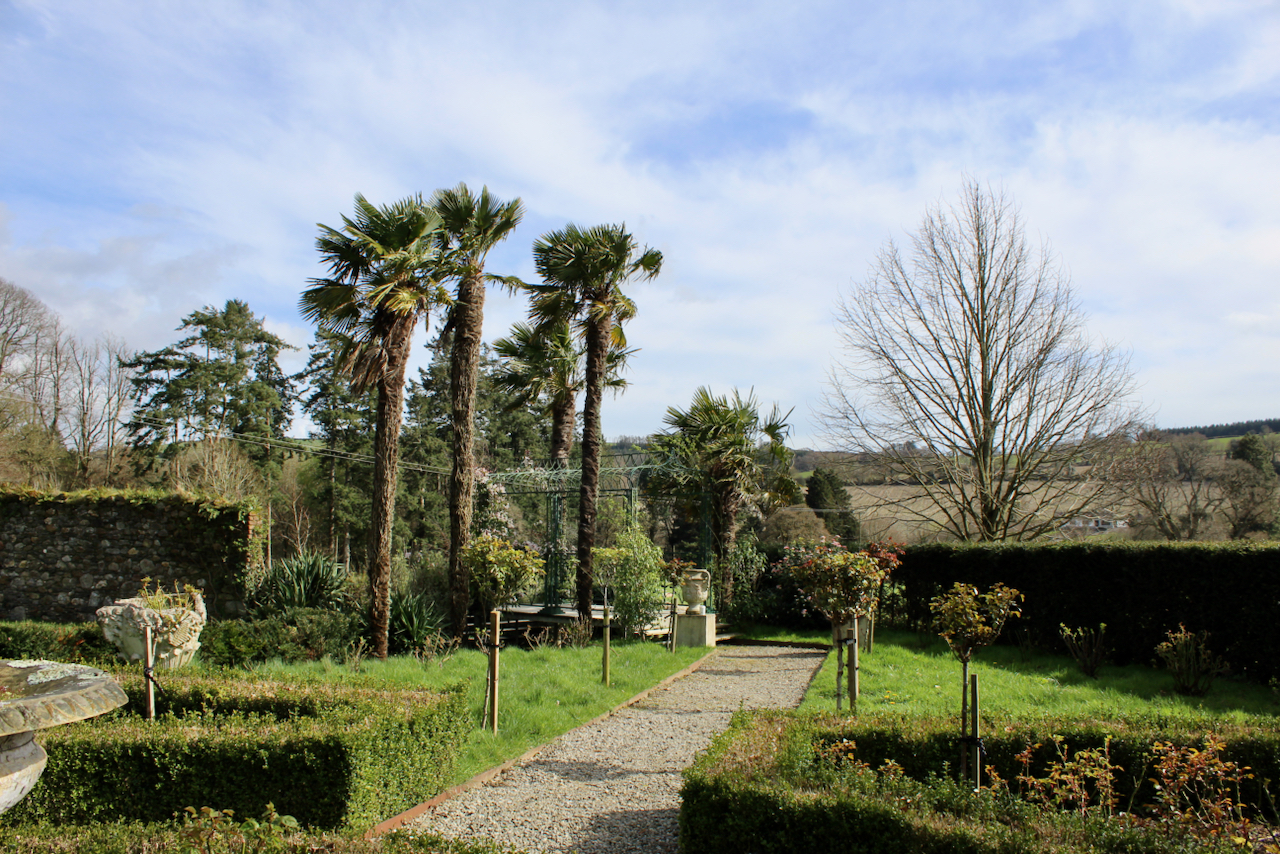
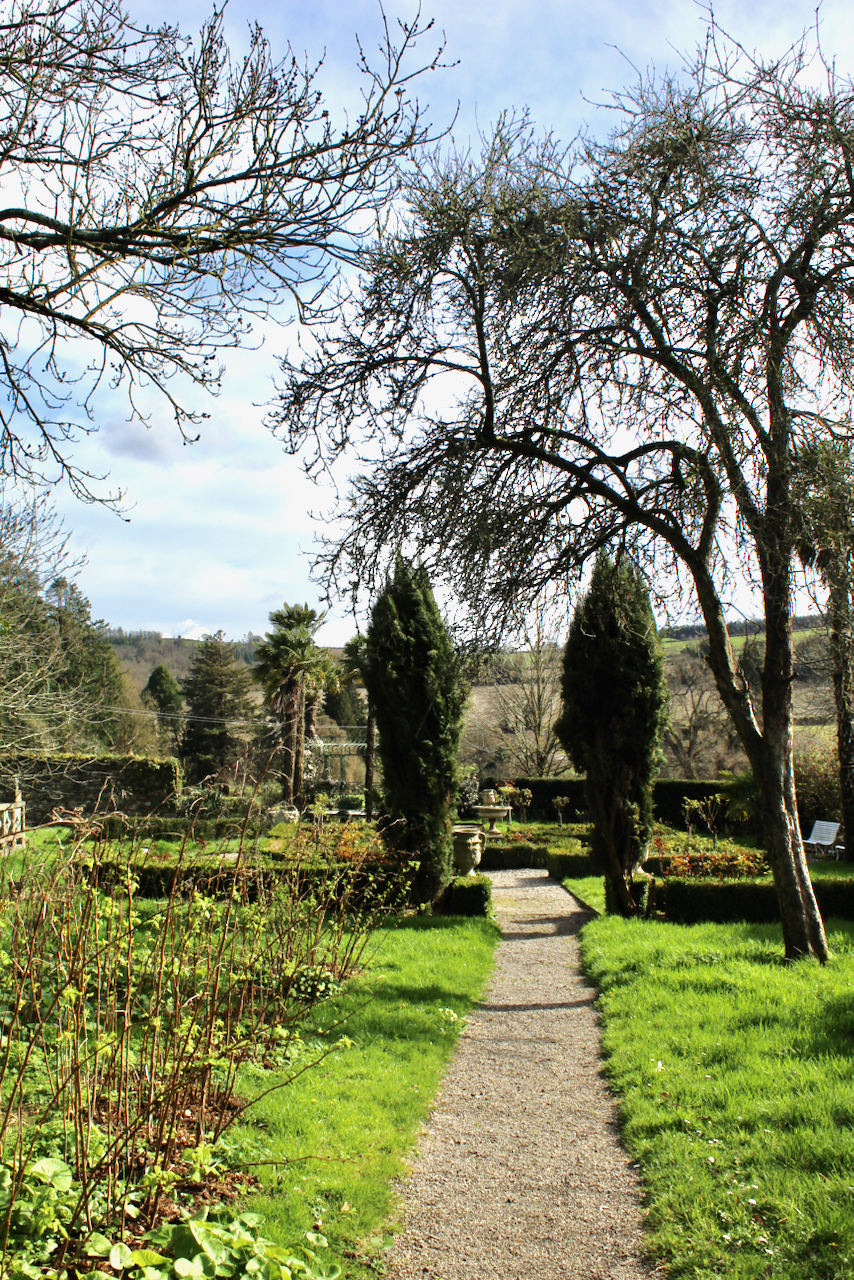
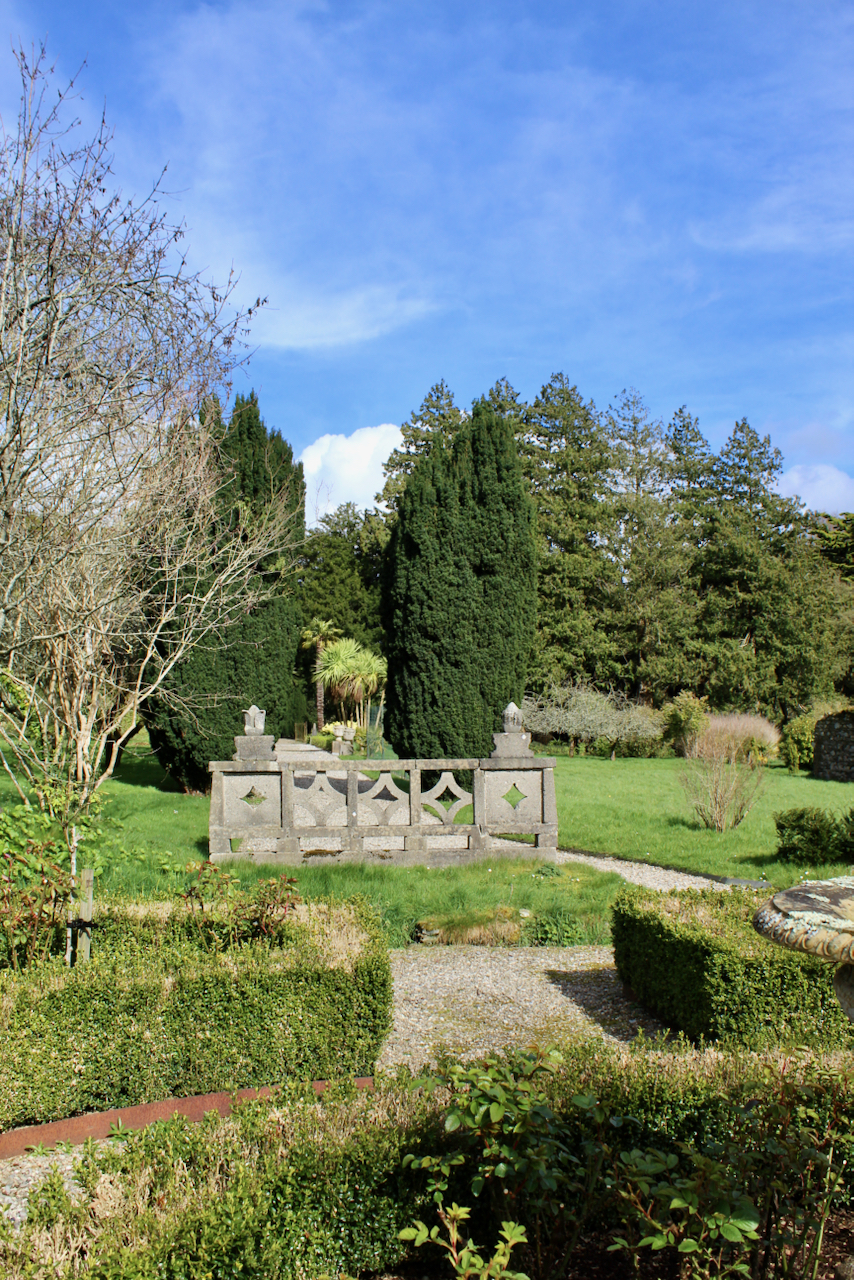

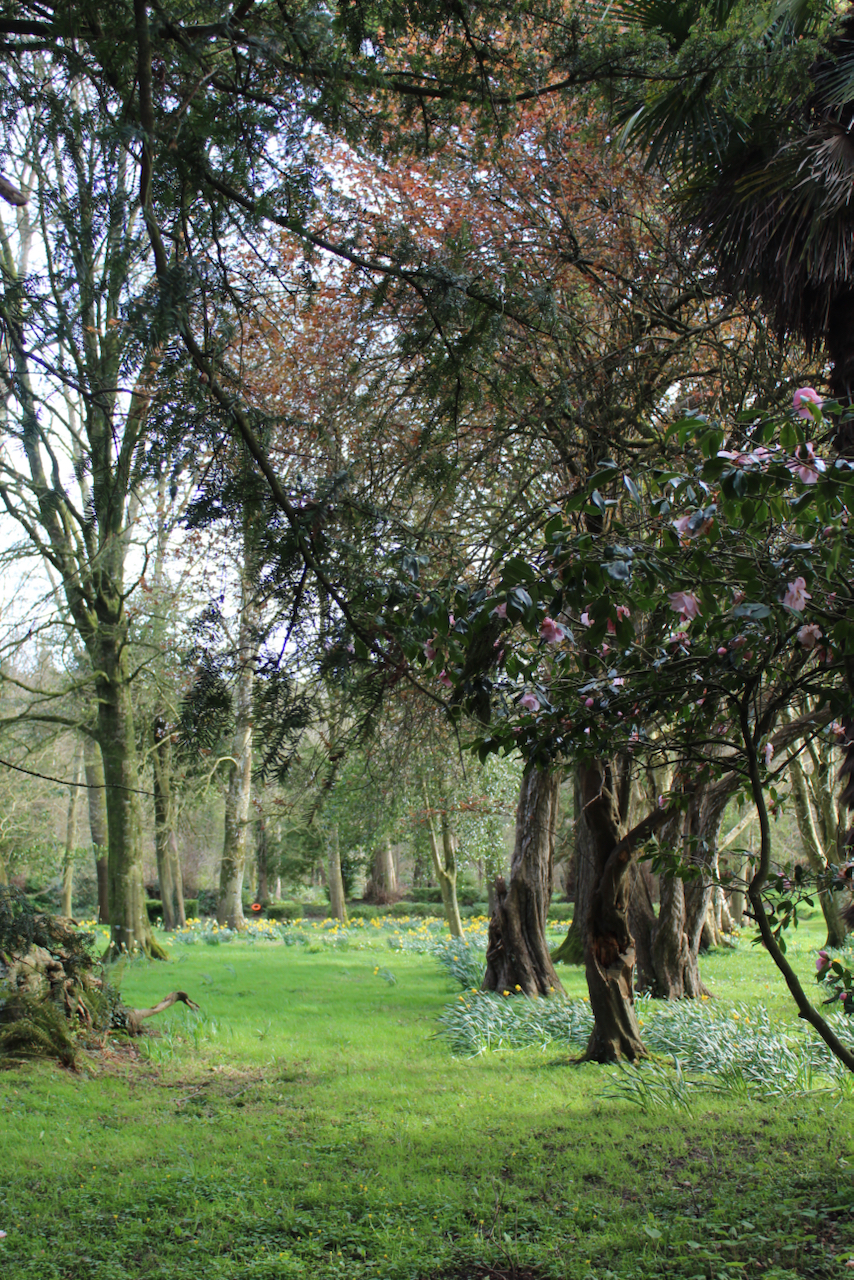

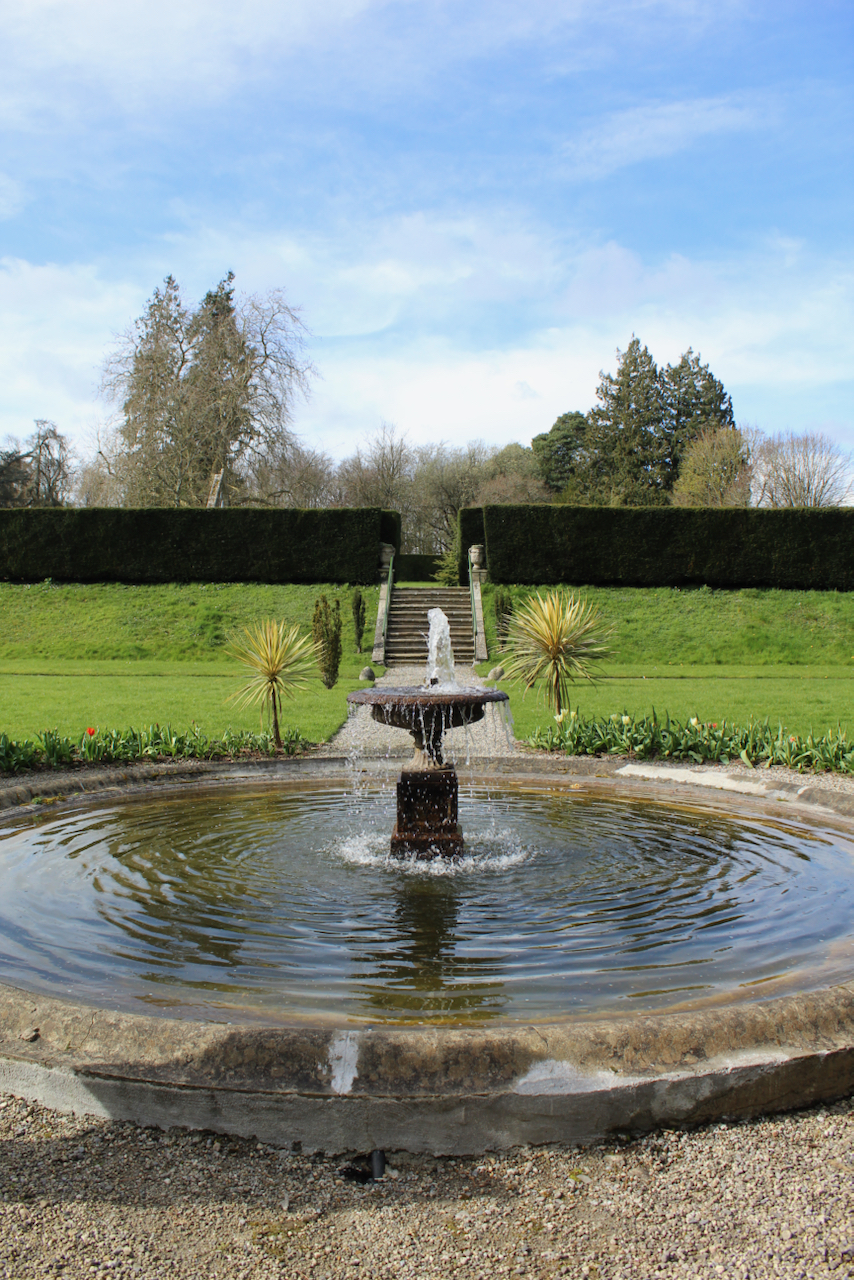
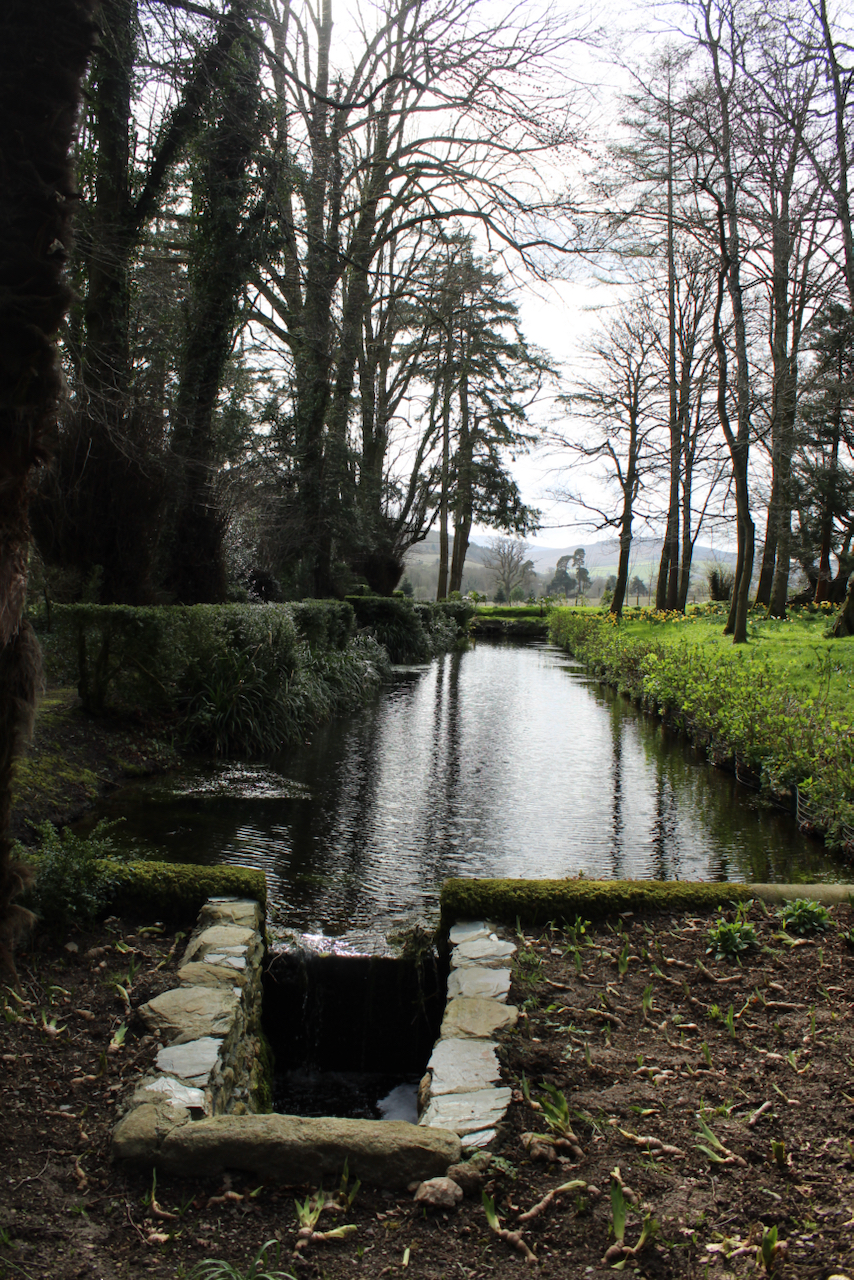
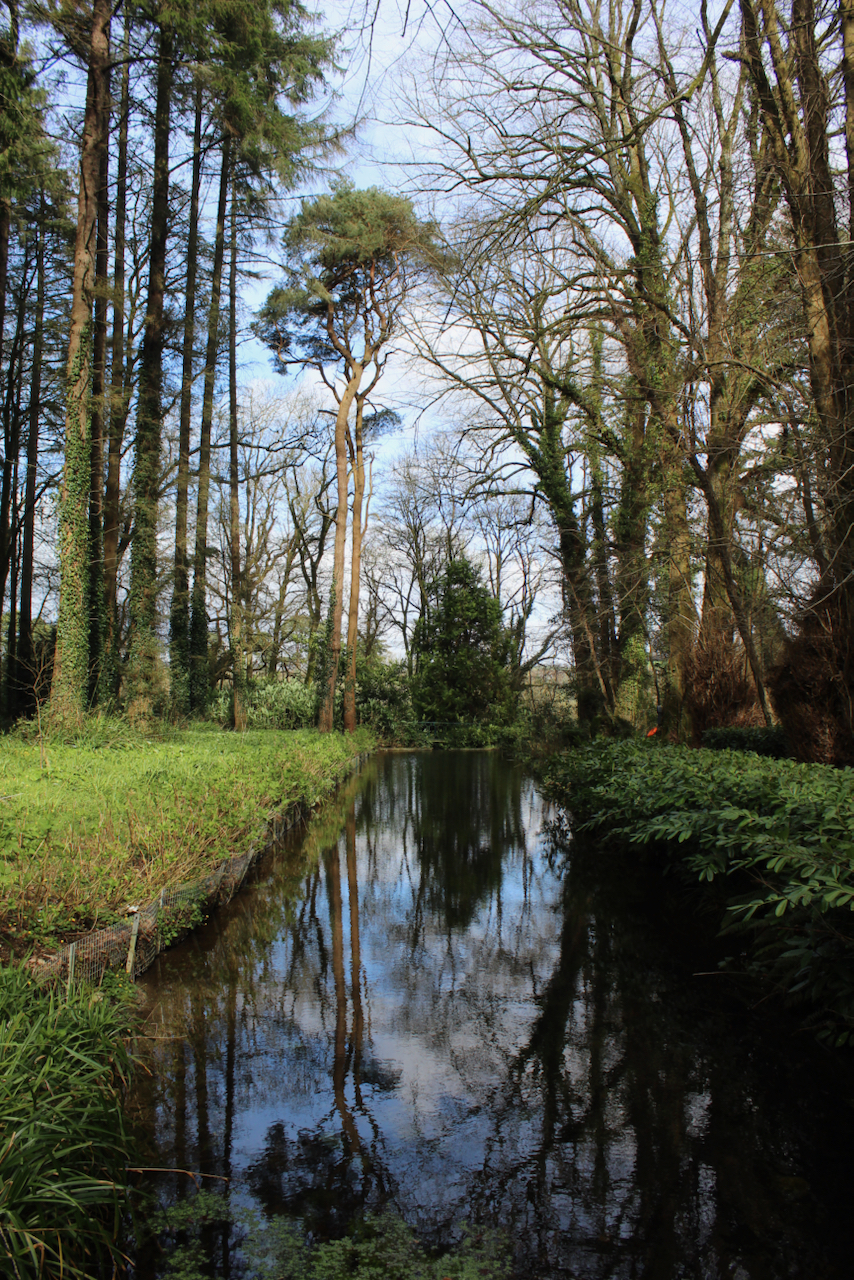
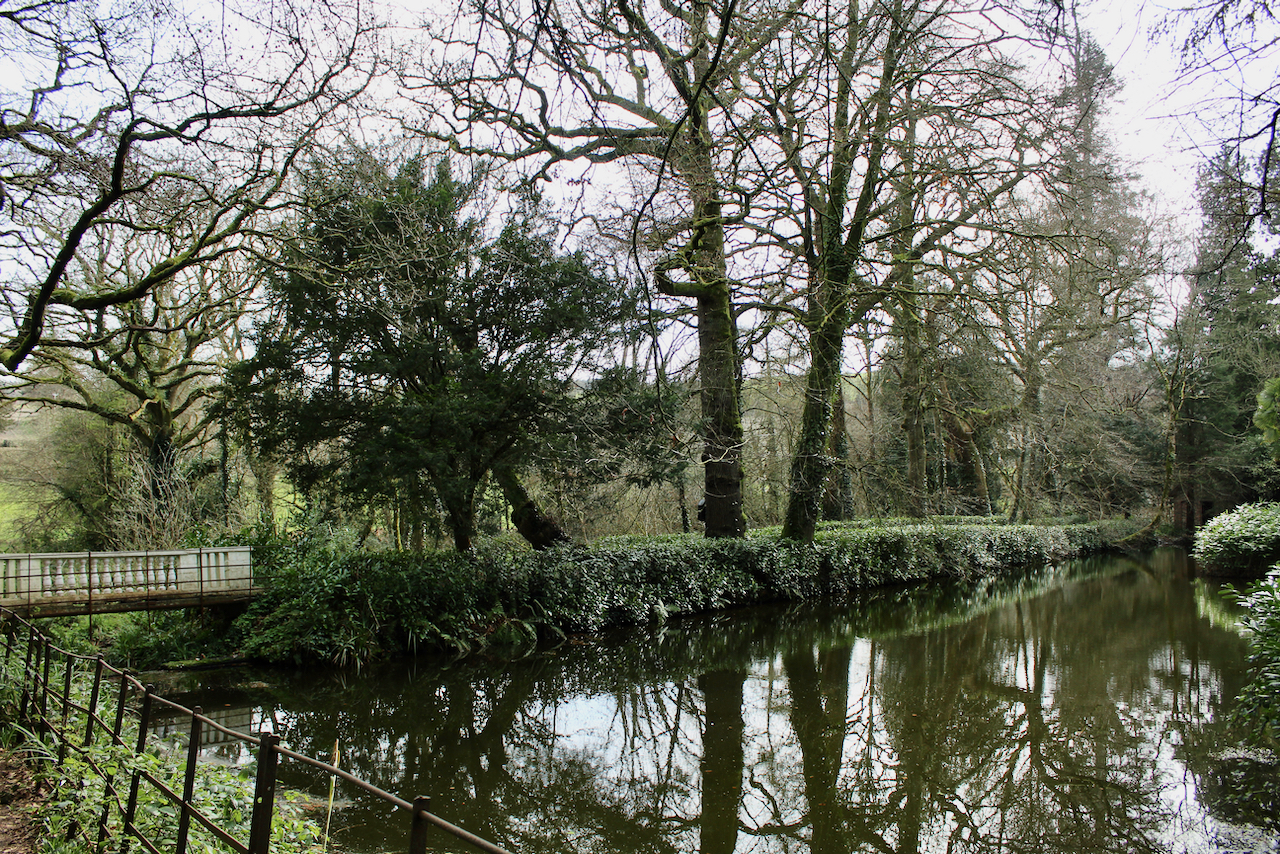
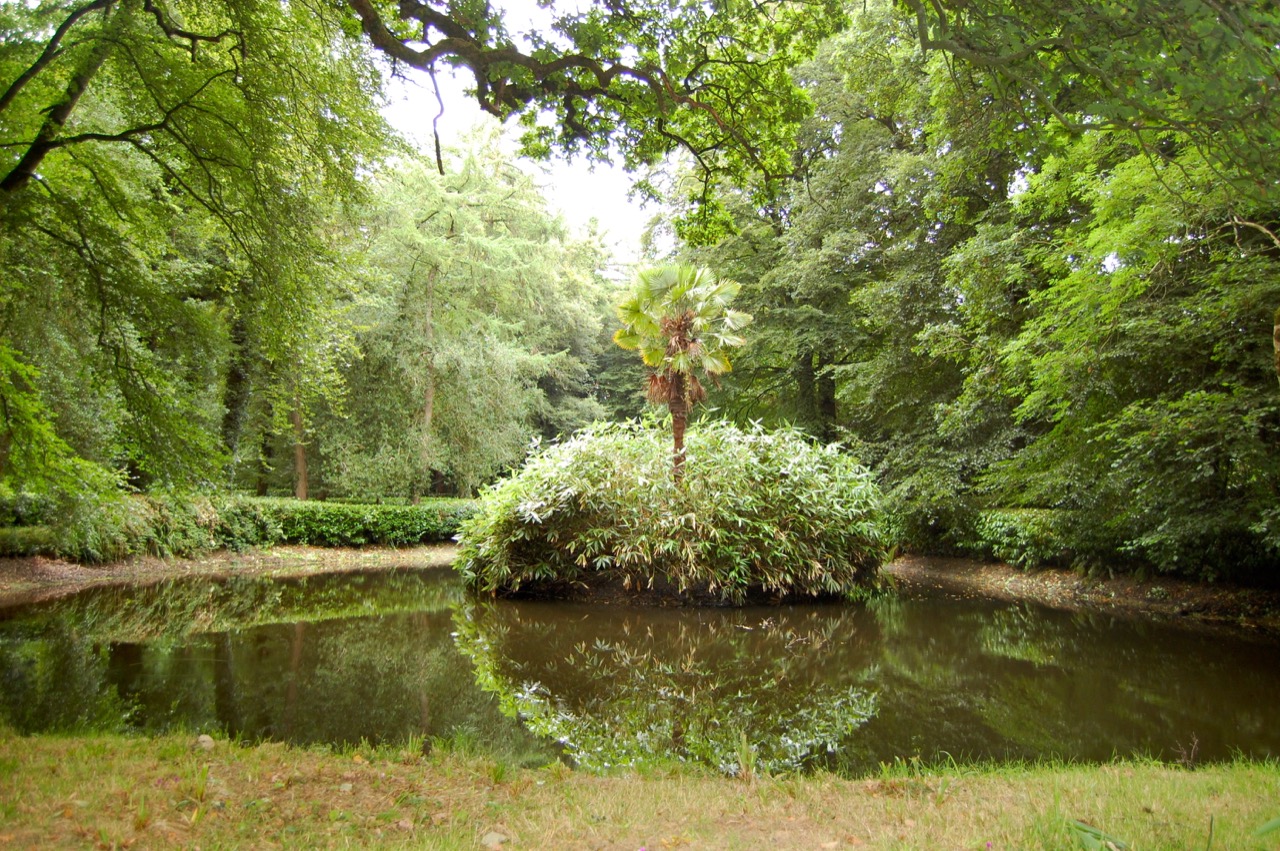
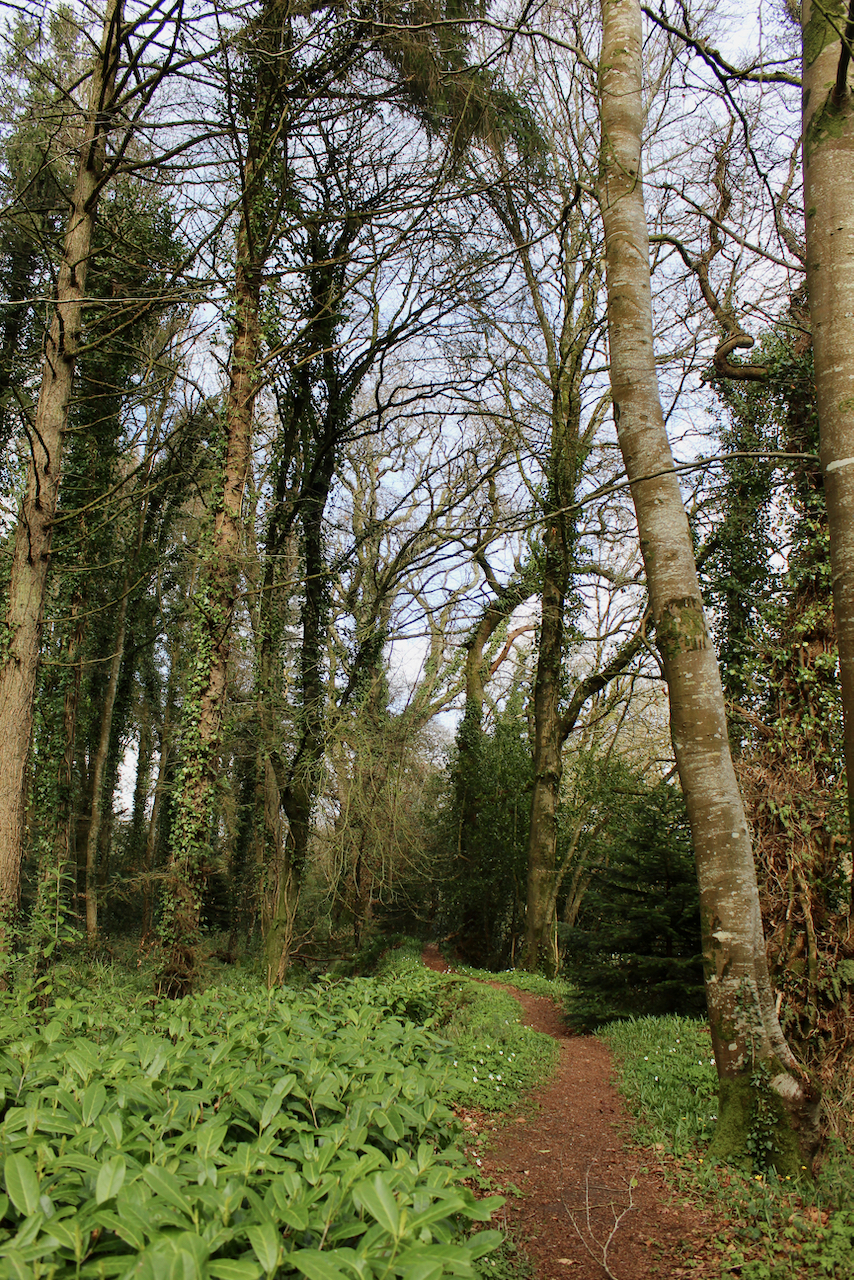

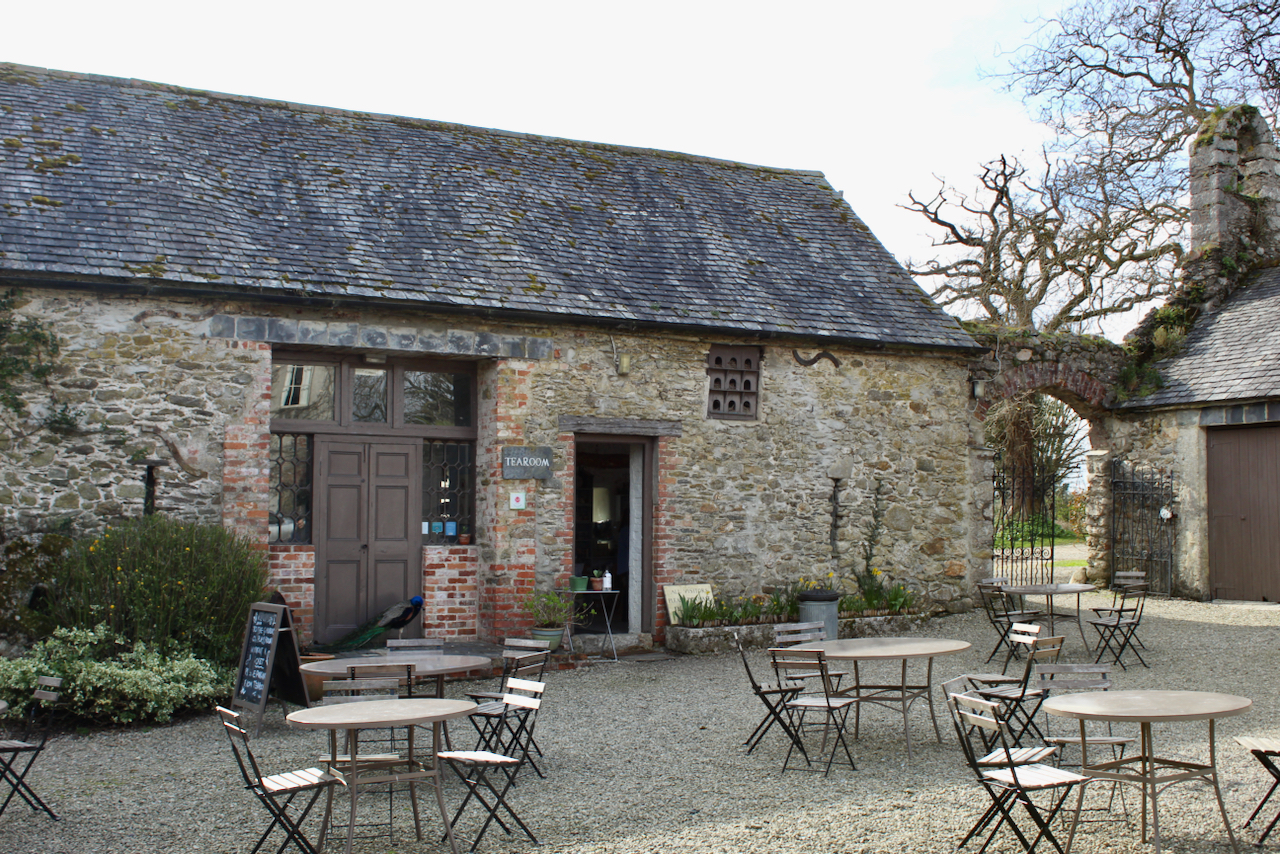
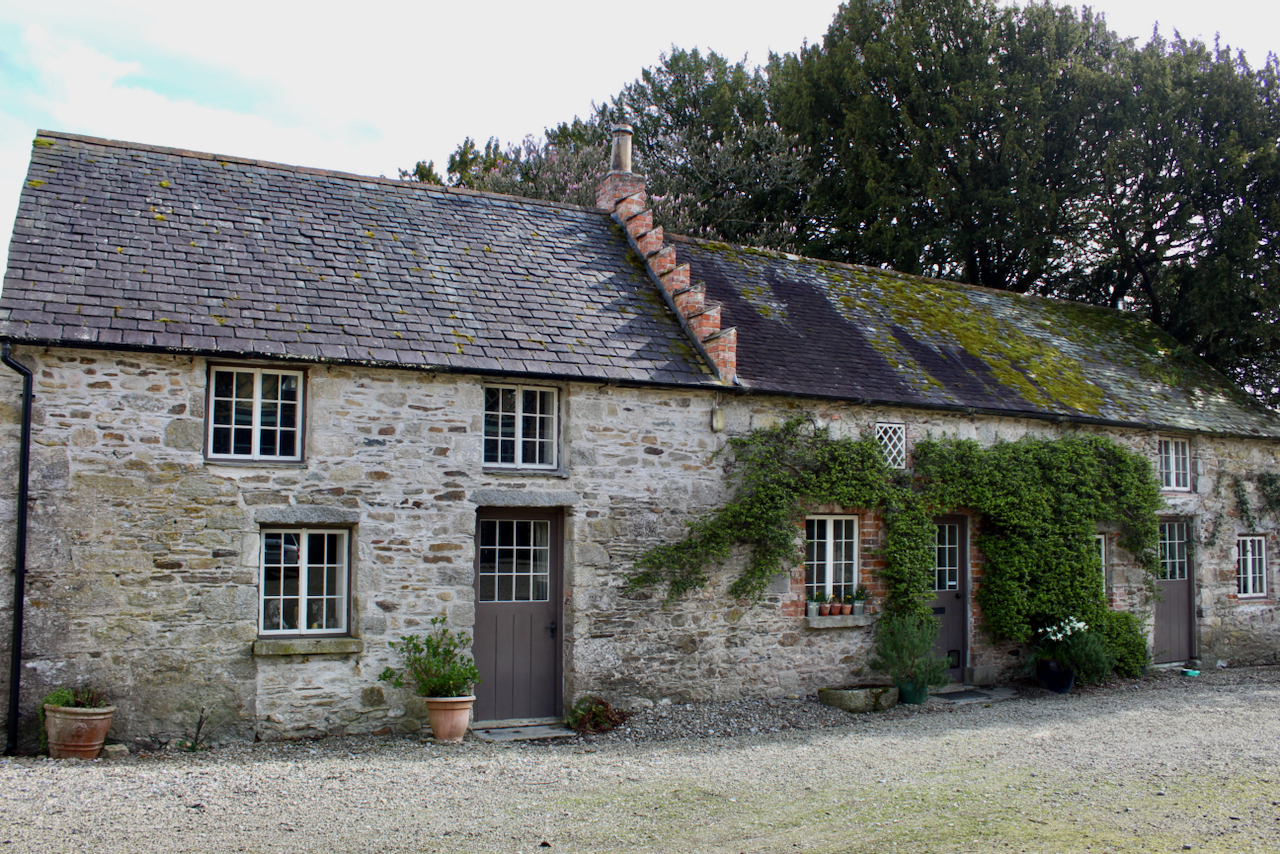
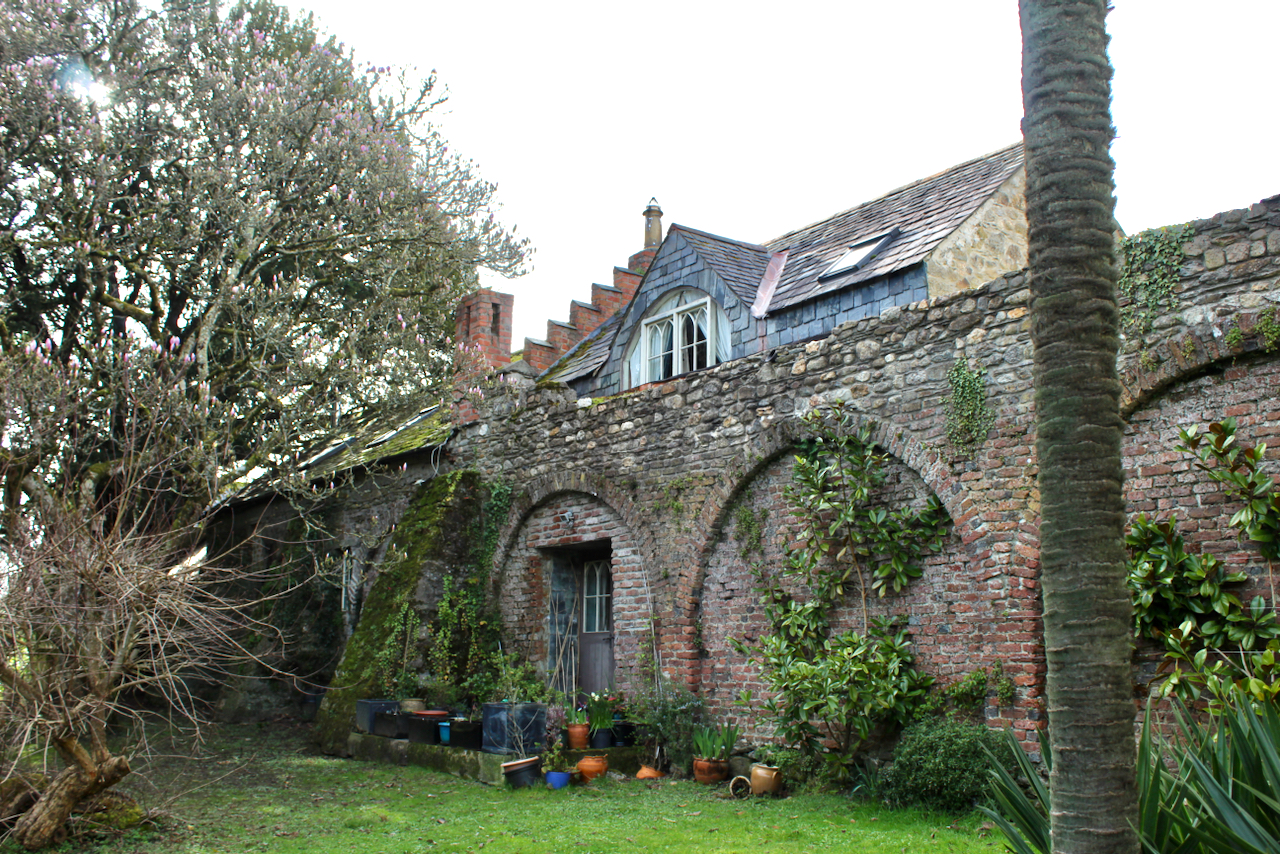
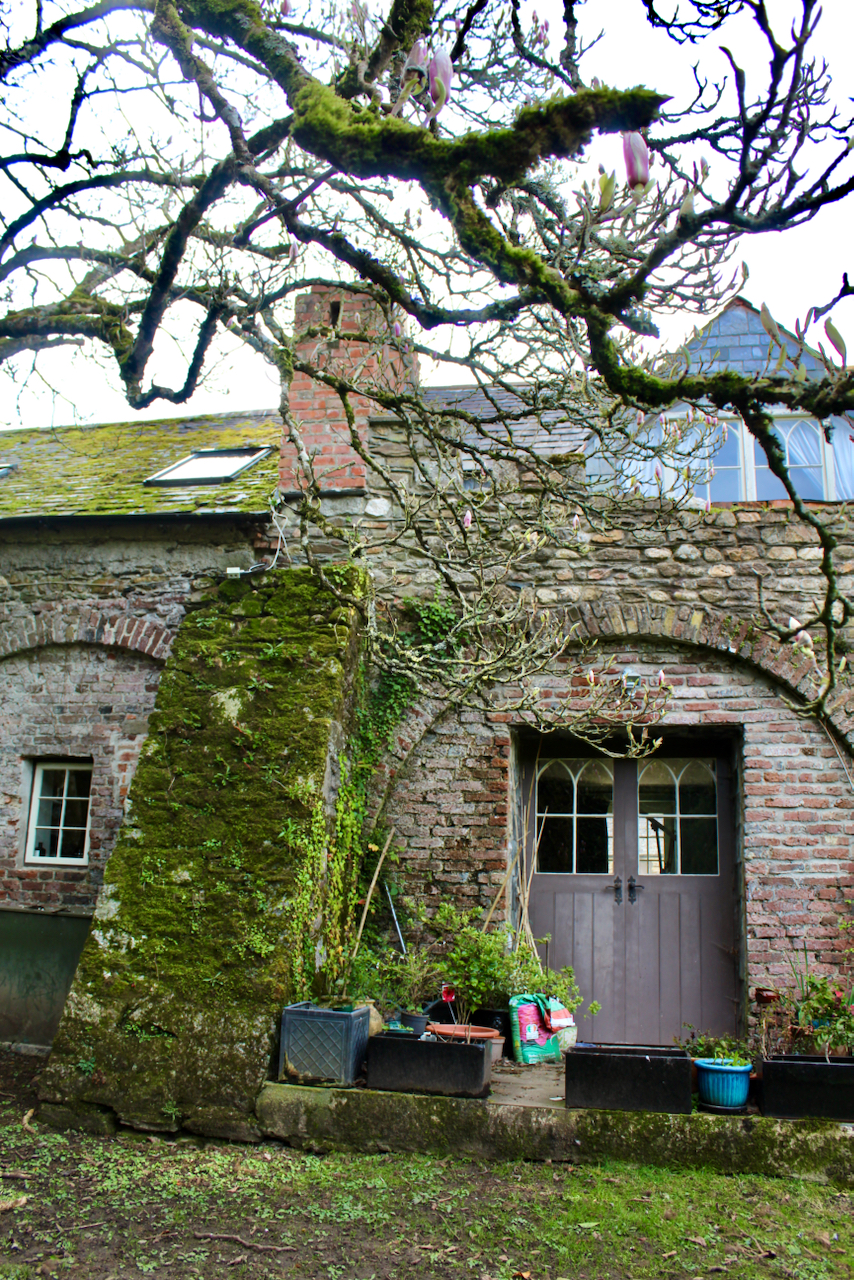
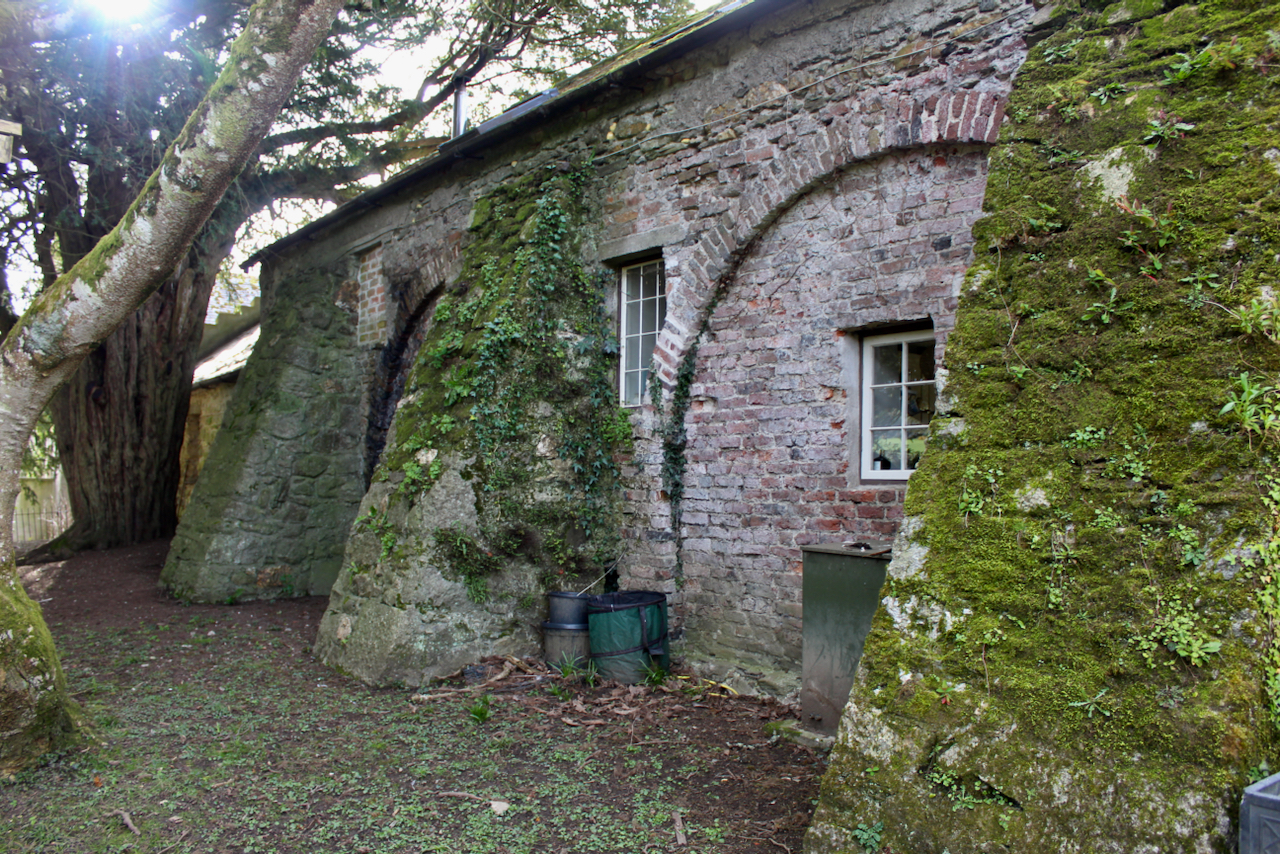
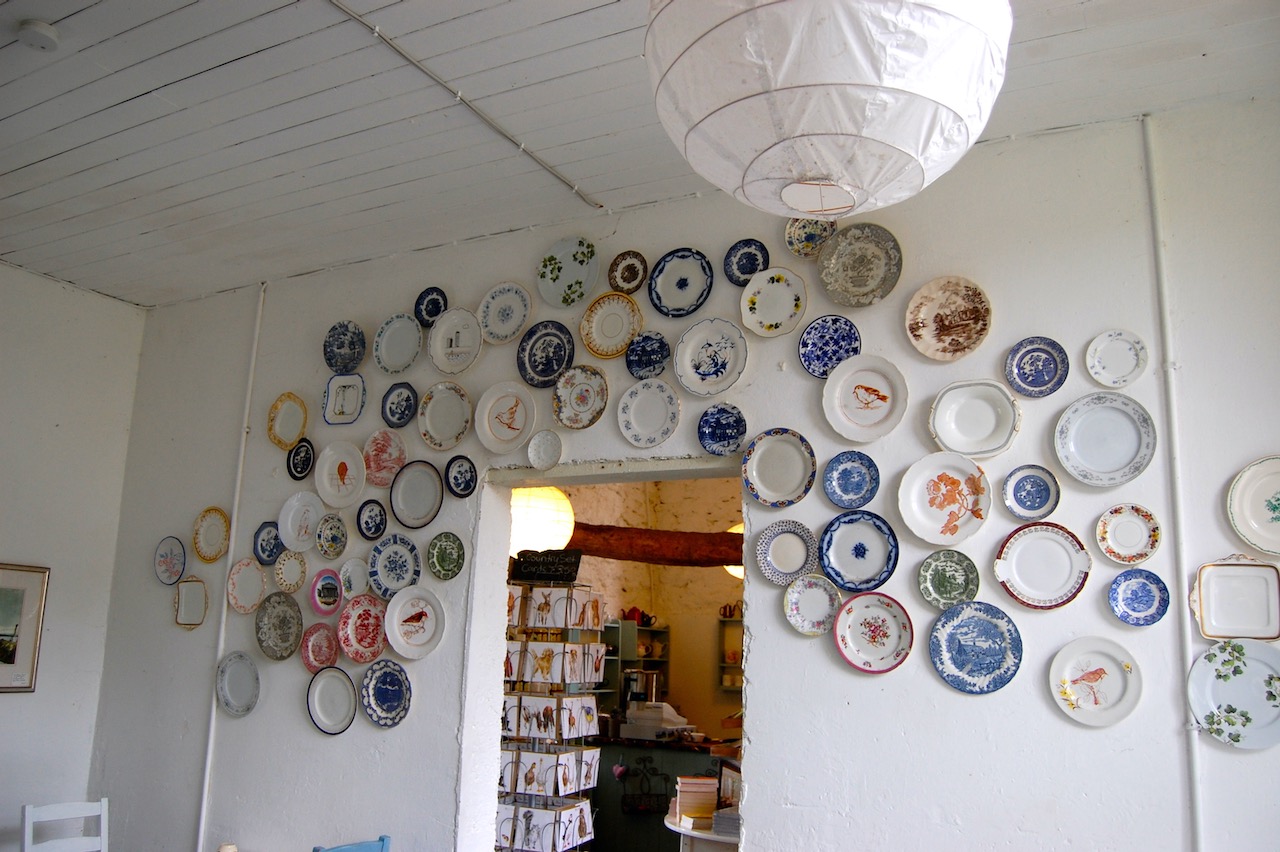
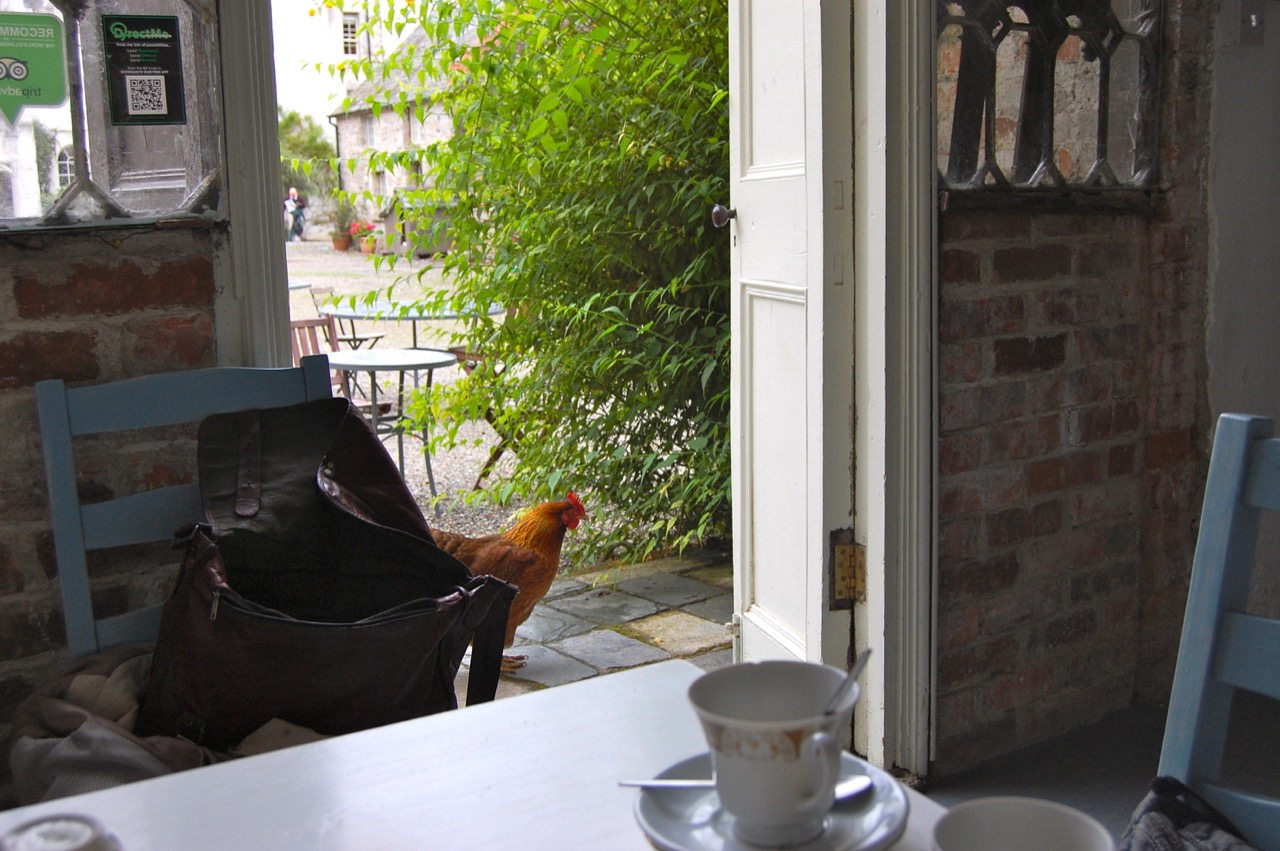
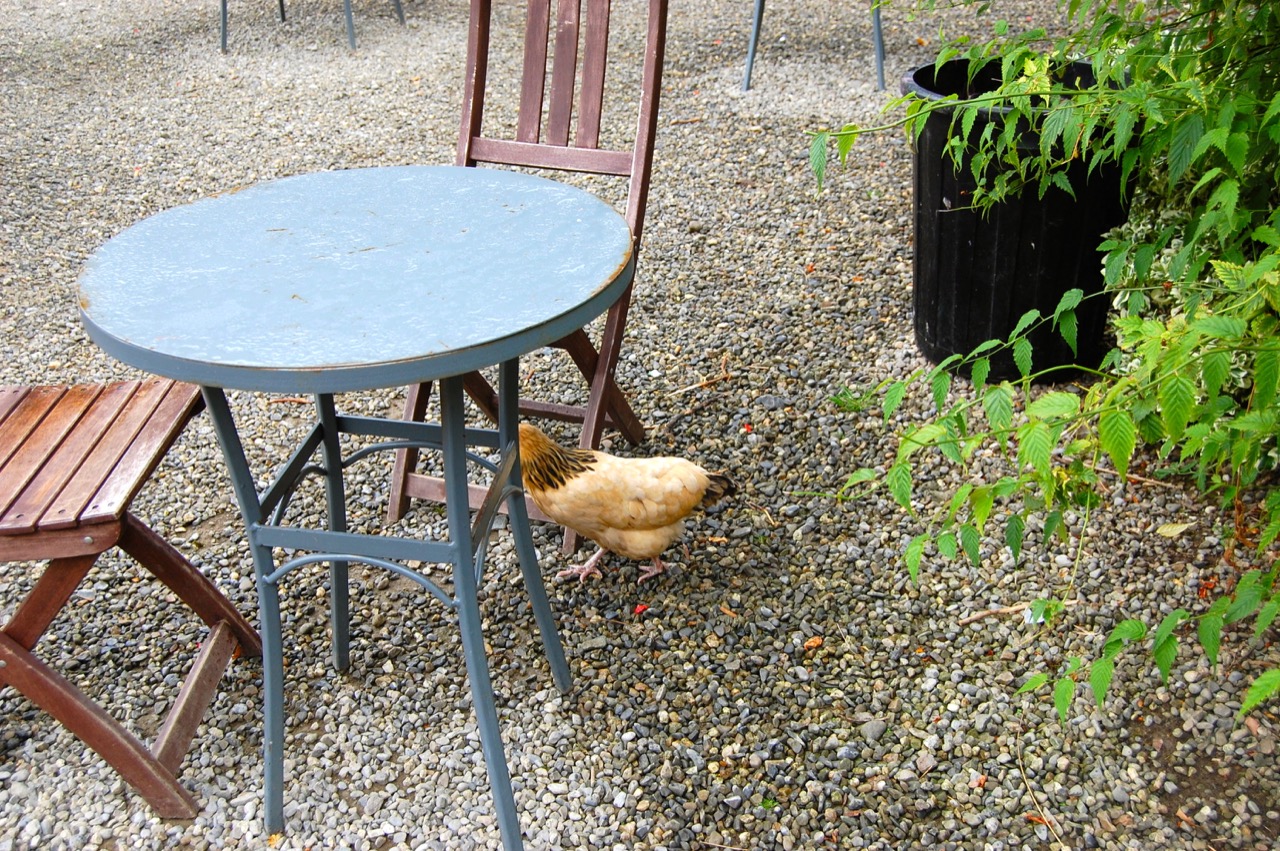
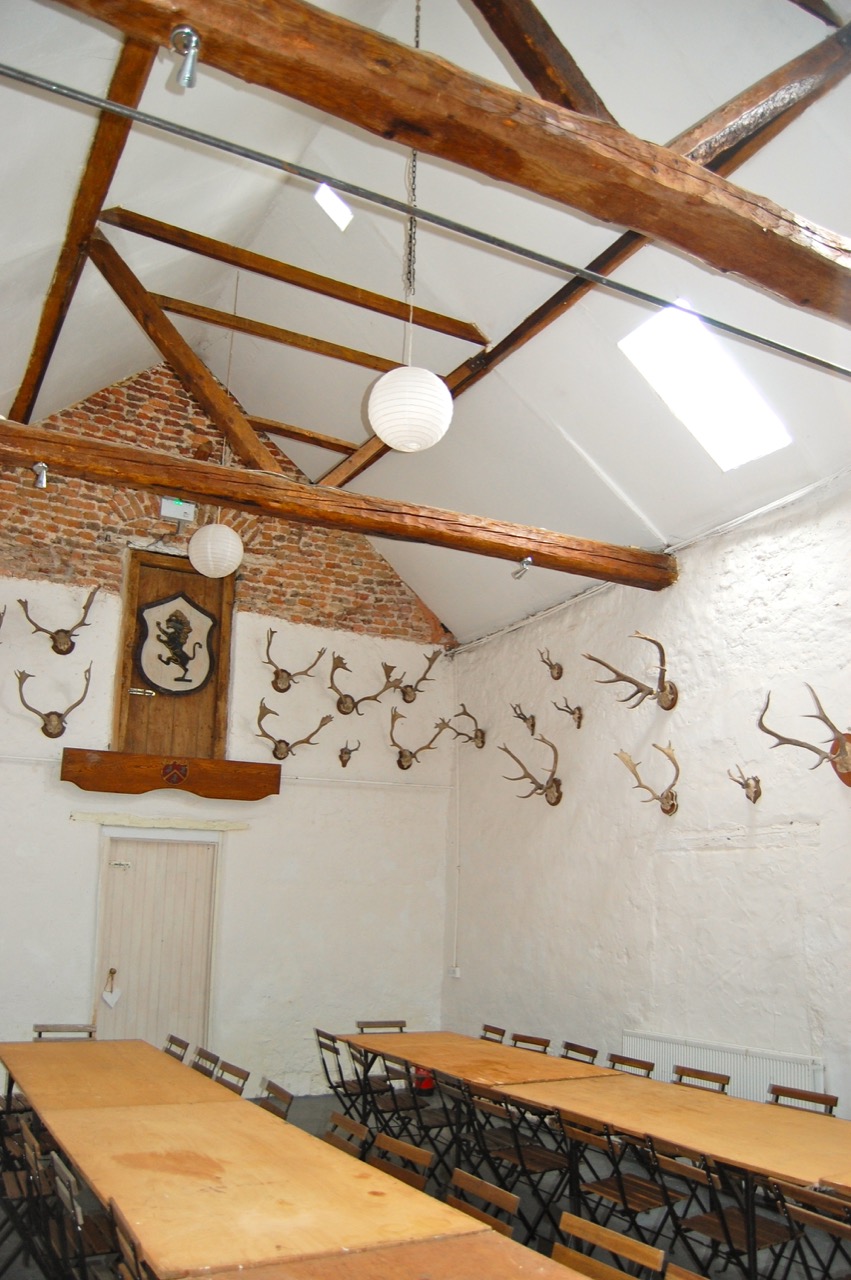
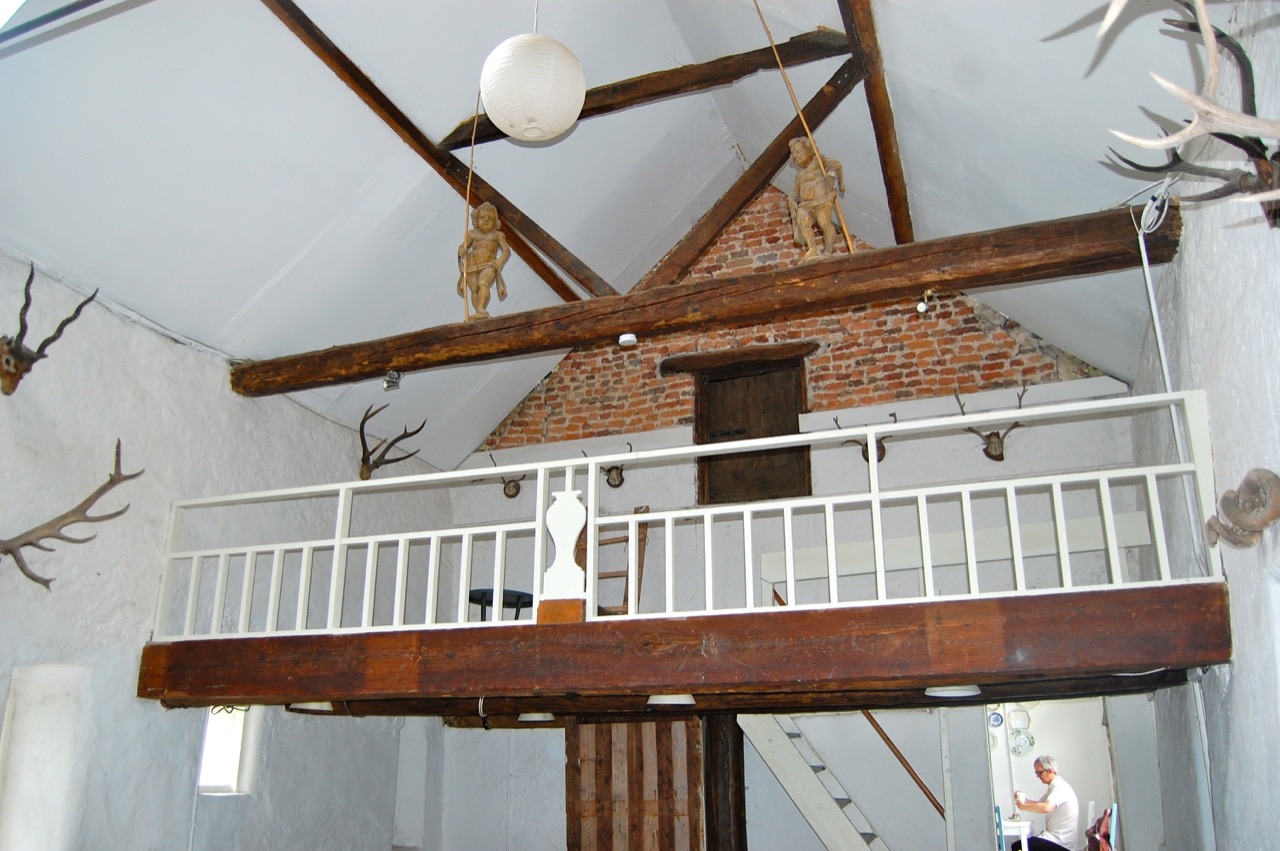


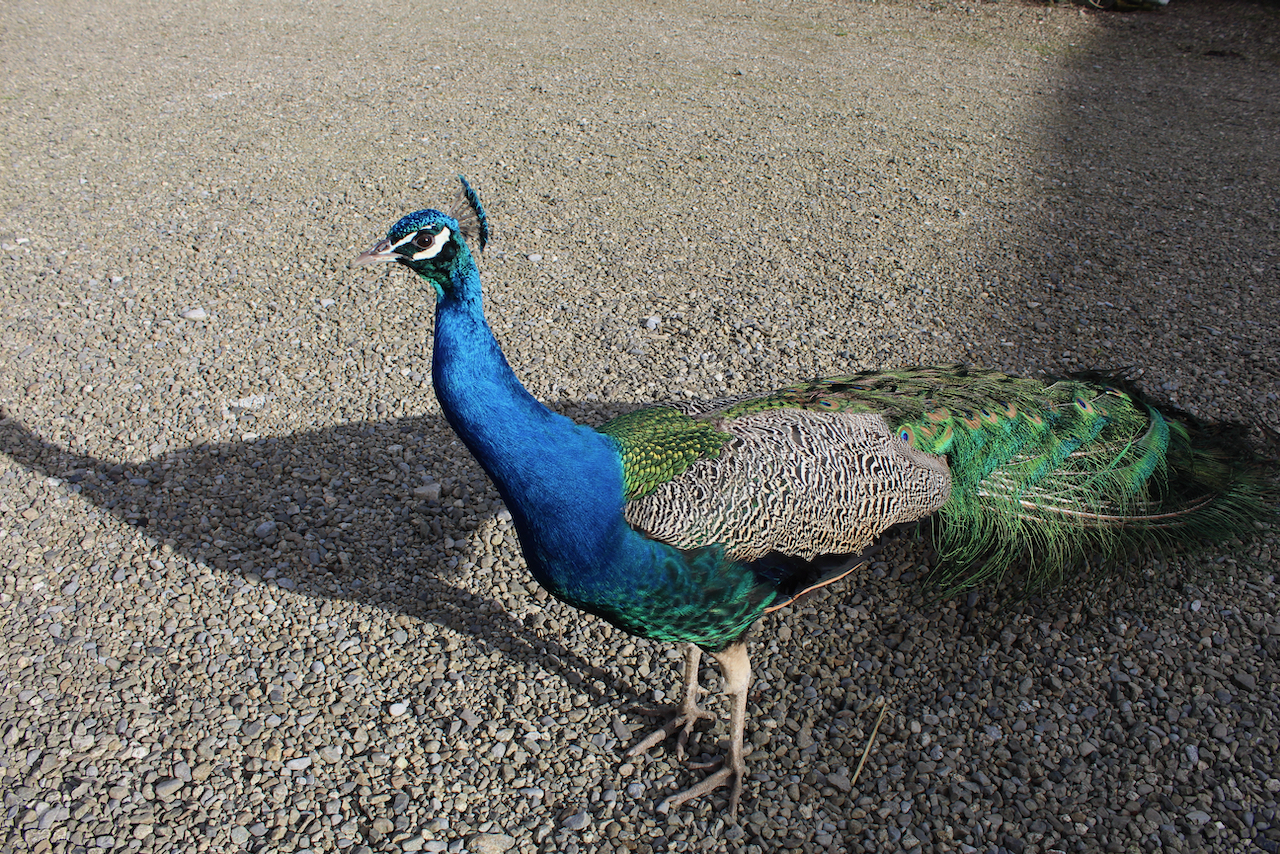


 Irish Historic Houses