Open dates in 2026: Jan 23-25, Feb 13-15, Mar 7-8, 21-22, Apr 18-19, 25-26, May 16-17, June 6-7, 20-21, 27-28, July 4-5, 11-12, 18-19, Aug 1-23, Sept 28-30, Oct 1-4, 31, Nov 1, 2pm-6pm
Fee: Free
Springfield House, photograph courtesy of Muireann Noonan.
Owners Muireann and Tony, who purchased Springfield in 2005, were kind enough to let us visit their home in January 2022, when Covid was still going strong. I was intrigued to see it as the National Inventory of Architectural Heritage dates its building to around 1750 [1]!
It was not the “big house” of an estate but is related to the nearby Mount Lucas estate, whose house, unfortunately, is there no longer.
The main entrance is closed off so one enters into the yard through some outbuildings, with a lovely old arch. This leads into a yard and the door into the kitchen area.
The house is of seven bays and two storeys, with outbuildings to the east and with the remains of a walled garden to the north. We walked through the house from the kitchen to go out the front door, which is no longer used as the front door as the old drive to the house is no longer used.
The house has a pedimented breakfront of three bays wide, containing the front door flanked by two narrow windows. The timber sash windows have stone sills. The garden front has a round-headed window that lights the staircase, and next to that, a Diocletian window.
Springfield House, photograph courtesy of Muireann Noonan.
The National Inventory tells us that this country house, situated within extensive grounds, was built for the third son of the Lucas family who lived at the nearby Mount Lucas estate. Andrew Tierney suggests the house was built or rebuilt in 1764 by Samuel Lucas of Mount Lucas (1.2km sw, demolished) for his son, Samuel. [2]
There is an entry in Burke’s Genealogical and Heraldic Dictionary of the Landed Gentry of Great Britain and Ireland about the Lucas family of Mount Lucas. Benjamin Lucas (1704-1774), a Lieutenant Colonel in the army received sometime in the seventeenth century extensive grants of land in the counties of Clare, Limerick, Tipperary and King’s County (Offaly). He was father of Nathaniel Lucas, who married Eleanor Cooke of Cookesborough, County Westmeath. They had several daughters and six sons: Samuel, who died unmarried, John, Samuel, Robert, Cooke and Richard. The second son, John, inherited Mount Lucas. The first Samuel must have died and the next, third, son, must be Samuel, who built the house for his son Samuel.
The Lucas family lived at Mount Lucas until 1922, when they moved following an attack on the house. At that time Mount Lucas had been occupied by Deborah Elizabeth Ball, daughter of Benjamin Manly Ball and the Mount Lucas heiress Elizabeth Lucas. Deborah lived in Mount Lucas along with her aunt, Eleanor Lucas. The 1922 attack was traumatic, and Deborah was stripped and tied to a tree. [3]
You can read more about Mount Lucas in the book Mount Lucas a Quiet Hamlet by Kenneth Smyth and Damien Smyth. [4]
I could not find much information about the Cookes of Cookesborough, County Westmeath, except for stories about a later Cooke of Cookesborough, the eccentric Adolphus (1792-1876) who believed in reincarnation and that his father or grandfather had come back to life as a turkey-cock, or that his father might come back as a bee which explains the beehive structure of Adolphus’s father’s tomb, built around 1835. [5] Adolphus was the illegitimate son of Robert Cooke of Cookesborough, and since Robert’s sons predeceased him, Adolphus inherited Cookesborough.
Photograph from the National Inventory of Architectural Heritage of Robert Cooke’s Mausoleum, located within the grounds of St. John the Baptist’s Church of Ireland church in the countryside to the southwest of Delvin.
Adolphus thought he himself might be reincarnated as a fox and had massive fox holes/covert built around his estate of Cookesborough, but also created a mausoleum with fireplace and library for himself for after his death in which, however, the local priest refused to bury him and he was instead interred in the beehive structure. [6]
The Springfield website, created by its current owners, tells us that the house was extensively modernised circa 1857 and all the joinery in the principal rooms date from this time, as do the chimneys and stone coping to gables. Andrew Tierney tells us that the house changed hands in 1857. [see 2] The western bays of the rear pile also appear to be an addition of this date. [7] Tony and Muireann showed us different parts of the house which led them to their conclusions. The house had been largely unaltered since the 1857 renovations until the current owners, who have undertaken considerable sensitive renovation and updating. The work included applying new lime render to the walls which were crumbling, and fixing the roof, and also the space under the house. They also lined one chimney – the other hasn’t been done yet as it is filled with a bees nest! – and renovated or replaced timber flooring and modernised and installed new bathrooms.
The house is “double pile” which means that it is two rows of rooms thick, each row consisting of two or more rooms. When someone refers to a house as a “pile” this is an architectural term! A “pile” is a row of rooms and is usually used in the term “double pile.” [7]
Muireann showed us the width of the wall via a lovely opening, which is part of what led her and Tony to believe that the rear pile was added later than the original build.
This opening can be used to pass dishes from the kitchen into the dining room. At the moment it serves as a lovely nook for books!
The website describes the house:
“The plan of the house comprises a central hall flanked by Drawing and Dining Rooms on the front, with above them the Upper Hall leading to the two principal bedrooms. To the rear is the Stair Hall, slightly off centre with a somewhat crude wreathed and ramped staircase with cut brackets and turned spindles. Flanking this there is a narrow bay which probably housed the service stair and in the corner, over the Kitchen, are two bedrooms (one very small) served by a short corridor, and in the 19th century addition, over what may have been a billiards room with a considerably higher ceiling, are again two bedrooms.”
It is such a beautifully solid house and I particularly love the large windows with their shutters, especially in the front hall and upstairs in the Upper Hall. The Upper Hall causes my heart to catch – there is something about the vastness of the space, with its lovely wooden floorboards and current emptiness, which struck a deep chord in me!
The ceilings in different rooms of the ground floor are of different heights, which also leads to the theory that the two piles were built at different times.
There is a cellar under the western part of the front pile which may originally have been a basement. Tony opened the hatch for us which is in the floor of the Drawing Room, and we climbed down into the basement. The basement only extends under the western part of the front pile.
The basement area has an earthen floor. In one area was a circle of cobblestones and we speculated as to why they were so placed – I suggested that maybe there was a well. As Tony pointed out, the house is called “spring” field.
Unfortunately I didn’t take a photograph in the kitchen but it is modern and spacious, and it extends out to a single storey enlargement with ceiling windows. It is where the original kitchen used to be. The flagstones which were originally on the floor are now outside forming a path.
Springfield House, photograph courtesy of Muireann Noonan.
There is a lean-to building outside the kitchen housing domestic offices. This area was overgrown and tumble-down when Muireann and Tony began to renovate. Muireann described discovering the “extra room”! It even has a fireplace, and has become a cosy reading room.
The back garden opens directly to the walled garden. Tony has done a lot of work to create a vegetable garden but it is not shown to best effect in cold January! They have also started an orchard.
Muireann and her family have done terrific work creating their home, and we wish them best of luck in the future!
donation
Help me to pay the entrance fee to one of the houses on this website. This site is created purely out of love for the subject and I receive no payment so any donation is appreciated!
[2] p. 305, Tierney, Andrew. The Buildings of Ireland: Central Leinster, the Counties of Kildare, Laois and Offaly. Yale University Press, New Haven and London, 2019.
[8] p. 652, Tierney, Andrew. The Buildings of Ireland: Central Leinster, the Counties of Kildare, Laois and Offaly. Yale University Press, New Haven and London, 2019.
orange: “whole house rental” i.e. those properties that are only for large group accommodations or weddings, e.g. 10 or more people.
green: gardens to visit
grey: ruins
donation
Help me to pay the entrance fee to one of the houses on this website. This site is created purely out of love for the subject and I receive no payment so any donation is appreciated!
€15.00
Waterford:
1. Ballysaggartmore Towers, County Waterford
2. Bishop’s Palace Museum, Waterford
3. Cappagh House (Old and New), Cappagh, Dungarvan, Co Waterford– section 482
4. Cappoquin House & Gardens, Cappoquin, Co. Waterford– section 482
3. Cappoquin House holiday cottages, County Waterford
4. Dromana, Co Waterford – 482, holiday cottages
5. Faithlegg House, Waterford, Co Waterford – hotel
6. Fort William, County Waterford, holiday cottages
7.Gaultier Lodge, Woodstown, Co Waterford
8. Richmond House, Cappoquin, Co Waterford – guest house
9. Salterbridge Gate Lodge, County Waterford – Irish Landmark accommodation
10. Waterford Castle, The Island, Co Waterford – hotel
11. Woodhouse, County Waterford– cottage accommodation
Whole House Rental County Waterford
1. Glenbeg House, Jacobean manor home, Glencairn, County Waterford P51 H5W0 – whole house holiday rental
2.Lismore Castle, County Waterford – castle holiday rental
Waterford:
1. Ballysaggartmore Towers, County Waterford
Ballysaggartmore Towers, Lismore, photograph by Chris Hill, 2015, for Tourism Ireland, Ireland’s Content Pool. [1]The Towers, Ballysaggartmore, Lismore, Co Waterford Courtesy of Luke Myers 2015, for Tourism Ireland, Ireland’s Content Pool. [1]
Mark Bence-Jones tells us (1988): p. 27. “(Keily, sub Ussher/IFR, Anson, sub Lichfield, E/PB) A late-Georgian house built round a courtyard, on the side of a steep hill overlooking the River Blackwater, to which a new front was subsequently added… A seat of the Keily family. Arthur Keily [1777-1862], who assumed the name of Ussher 1843, built two remarkable Gothic follies in the demesne, to the design of his gardener, J. Smith; one of them a turreted gateway, the other a castellated bridge over a stream. The house was bought at the beginning of the present century by Hon Claud Anson, who sold it 1930s. It was subsequently demolished. The follies remain, one of them being now occupied as a house.” [2]
The National Inventory describes this bridge and its towers:
“Three-arch rock-faced sandstone ashlar Gothic-style road bridge over ravine, c.1845, on a curved plan. Rock-faced sandstone ashlar walls with buttresses to piers, trefoil-headed recessed niches to flanking abutments, cut-stone stringcourse on corbels, and battlemented parapets having cut-stone coping. Three pointed arches with rock-faced sandstone ashlar voussoirs, and squared sandstone soffits. Sited in grounds shared with Ballysaggartmore House spanning ravine with grass banks to ravine…Detached five-bay single- and two-storey lodge, c.1845, to south-west comprising single-bay single-storey central block with pointed segmental-headed carriageway, single-bay single-stage turret over on a circular plan, single-bay single-storey recessed lower flanking bays, single-bay single-storey advanced end bay to right, single-bay single-storey advanced higher end bay to left, and pair of single-bay two-storey engaged towers to rear (north-east) on square plans….Rock-faced sandstone ashlar walls with cut-sandstone dressings including stepped buttresses, battlemented parapets on corbelled stringcourses having cut-stone coping, and corner pinnacles to central block on circular plans having battlemented coping. Pointed-arch window openings with paired pointed-arch lights over, no sills, and chamfered reveals. Some square-headed window openings with no sills, chamfered reveals, and hood mouldings over. Square-headed door openings with hood mouldings over….Detached five-bay single- and two-storey lodge, c.1845, to north-east comprising single-bay two-storey central block with pointed segmental-headed carriageway, single-bay single-storey flanking recessed bays, single-bay two-storey advanced end bay tower to right on a square plan, single-bay two-stage advanced higher end tower to left on a circular plan, and pair of single-bay two-stage engaged towers to rear (south-west) elevation on circular plans…Although initial indications suggest that the lodges are identical, individualistic features distinguish each piece, and contribute significantly to the architectural design quality of the composition. Well maintained, the composition retains its original form and massing, although many of the fittings have been lost as a result of dismantling works in the mid twentieth century. The construction in rock-faced sandstone produces an attractive textured visual effect, and attests to high quality stone masonry.”
Ballysaggartmore Towers, Lismore, photograph by Chris Hill, 2015, for Tourism Ireland, Ireland’s Content Pool. [1]Ballysaggartmore Towers, Lismore, photograph Courtesy Celtic Routes, 2020, for Tourism Ireland, Ireland’s Content Pool. [1]Ballysaggartmore Towers, Lismore, photograph Courtesy Celtic Routes, 2020, for Tourism Ireland, Ireland’s Content Pool. [1]Ballysaggartmore Towers, Lismore, photograph Courtesy Celtic Routes, 2020, for Tourism Ireland, Ireland’s Content Pool. [1]Ballysaggartmore Towers, Lismore, photograph by Chris Hill, 2015, for Tourism Ireland, Ireland’s Content Pool. [1]
The National Inventory describes the gateway: “Gateway, c.1845, comprising ogee-headed opening, limestone ashlar polygonal flanking piers, and pair of attached two-bay single- and two-storey flanking gate lodges diagonally-disposed to east and to west comprising single-bay single-storey linking bays with single-bay two-storey outer bays having single-bay three-stage engaged corner turrets on circular plans…Limestone ashlar polygonal piers to gateway with moulded stringcourses having battlemented coping over, and sproketed finial to apex to opening with finial. Sandstone ashlar walls to gate lodges with cut-limestone dressings including stepped buttresses, stringcourses to first floor, moulded course to first stage to turrets, and battlemented parapets on consoled stringcourses (on profiled tables to turrets) having cut-limestone coping. Ogee-headed opening to gateway with decorative cast-iron double gates. Paired square-headed window openings to gate lodges with no sills, chamfered reveals, and hood mouldings over. Square-headed door openings with chamfered reveals, and hood mouldings over. Pointed-arch door openings to turrets with inscribed surrounds. Trefoil-headed flanking window openings with raised surrounds, and quatrefoil openings over. Cross apertures to top stages to turrets with raised surrounds. All fittings now gone. Interiors now dismantled with internal walls and floors removed.
“An impressive structure in a fantastical Gothic style, successfully combining a gateway and flanking gate lodges in a wholly-integrated composition. Now disused, with most of the external and internal fittings removed, the gateway nevertheless retains most of its original form and massing. The construction of the gateway attests to high quality stone masonry and craftsmanship, particularly to the fine detailing, which enhances the architectural and design quality of the site. The gateway forms an integral component of the Ballysaggartmore House estate and, set in slightly overgrown grounds, forms an appealing feature of Romantic quality in the landscape.“
The Gate Lodge, Ballysaggartmore, Lismore, Co Waterford Courtesy of Luke Myers 2015, for Tourism Ireland, Ireland’s Content Pool. [1]Ballysaggartmore Towers, Lismore, photograph by Chris Hill, 2015, for Tourism Ireland, Ireland’s Content Pool. [1]
2. Bishop’s Palace Museum, Waterford
Bishop’s Palace, Waterford, photograph from the National Library of Ireland, flickr constant commons.
Mark Bence-Jones writes (1988):
p. 282. “The Palace of the (C of I) Bishops of Waterford; one of the largest and – externally – finest episcopal residences in Ireland. Begun 1741 by Bishop Charles Este to the design of Richard Castle. The garden front, which faces over the mall and new forms a magnificent architectural group with the tower and spire of later C18 Cathedral, by John Roberts, is of three storeys; the ground floor being treated as a basement and rusticated. The centre of the ground floor breaks forward with three arches, forming the base of the pedimented Doric centrepiece of the storey above, which incorporates three windows. In the centre of the top storey is a circular niche, flanked by two windows. On either side of the centre are three bays. Bishop Este died 1745 before the Palace was finished, which probably explains why the interior is rather disappointing. The Palace ceased to be the episcopal residence early in the present century, and from then until ca 1965 it was occupied by Bishop Foy school. It has since been sold.”
Bishop’s Palace, Waterford by Keith Fitzgerald, 2014, for Tourism Ireland, Ireland’s Content Pool. [1]
Archiseek adds: “It has now been extensively restored to showcase artefacts and art from Waterford’s Georgian and Victorian past. The two main facades are quite different: one having seven bays – the central bay having an more elaborate window treatment and a Gibbsian doorway; the other facade has eight bay with a more elaborate entrance and shallow pediment with blank niches.” [3]
The National Inventory explains about the designs of Richard Castle and John Roberts:
“An imposing Classical-style building commissioned by Bishop Miles (d. 1740) and subsequently by Bishop Charles Este (n. d.), and believed to have been initiated to plans prepared by Richard Castle (c.1690 – 1751), and completed to the designs prepared by John Roberts (1712 – 1796). The building is of great importance for its original intended use as a bishop’s palace, and for its subsequent use as a school. The construction of the building in limestone ashlar reveals high quality stone masonry, and this is particularly evident in the carved detailing, which has retained its intricacy. Well-maintained, the building presents an early aspect while replacement fittings have been installed in keeping with the original integrity of the design. The interior also incorporates important early or original schemes, including decorative plasterwork of artistic merit. Set on an elevated site, the building forms an attractive and commanding feature fronting on to The Mall (to south-east) and on to Cathedral Square (to north-west).”
Bishop’s Palace, Waterford City Courtesy Leo Byrne Photography 2015, for Tourism Ireland, Ireland’s Content Pool. [1]Bishop’s Palace, Waterford by Keith Fitzgerald, 2014, for Tourism Ireland, Ireland’s Content Pool. [1]
3. Cappagh House (Old and New), Cappagh, Dungarvan, Co WaterfordX35 RH51– section 482
Open dates in 2026: May 1-4, 8-10, 15-17, 22-24, 29-31, June 1, 5-7, 12-14, 19-21, 26-28, July 3-5, 10-12, 17-19, 24-26, 31, Aug 1-3, 7-9, 14-23, 28-30, 10am-4pm
Fee: adult/OAP/student, full tour €22, garden tour €8, child under12 years free
The website tells us: “Fairbrook House garden and museum, Kilmeaden, Co.Waterford, Ireland X91FN83 A romantic walled garden at the river Dawn laid out between ruins of the former Fairbrook Mill (since 1700). OPEN MAY – SEPTEMBER”
Mount Congreve House and Gardens, Co Waterford Courtesy Celtic Routes 2019 for Tourism Ireland (see [1])
The website tells us: “Mount Congreve House and Gardens situated in Kilmeaden, Co. Waterford, in Ireland’s Ancient East is home to one of “the great gardens of the World”. Mount Congreve House, home to six generations of Congreves, was built in 1760 by the celebrated local architect John Roberts.
“The Gardens comprise around seventy acres of intensively planted woodland, a four acre walled garden and 16 kilometres of walkways. Planted on a slight incline overlooking the River Suir, Mount Congreve’s entire collection consists of over three thousand different trees and shrubs, more than two thousand Rhododendrons, six hundred Camellias, three hundred Acer cultivars, six hundred conifers, two hundred and fifty climbers and fifteen hundred herbaceous plants plus many more tender species contained in the Georgian glasshouse.“
The house was built for John Congreve (1730-1801), who held the office of High Sheriff of County Waterford in 1755. His grandfather John was Rector of Kilmacow, County Kilkenny, and his father Ambrose (1698-1741) played a leading role in the affairs of Waterford city. When Ambrose died his widow married Dr. John Whetcombe, Bishop of Clonfert and later Archbishop of Cashel.
John Congreve (1730-1801) married Mary Ussher, daughter of Beverly Ussher, MP, who lived at Kilmeadon, County Waterford.
Mark Bence-Jones tells us of Mount Congreve (1988):
p. 213. “(Congreve/IFR) An C18 house [the National Inventory says c. 1750] consisting of three storey seven bay centre block with two storey three bay overlapping wings; joined to pavilions by screen walls with arches on the entrance front and low ranges on the garden front, where the centre block has a three bay breakfront and an ionic doorcase. The house was remodelled and embellished ca 1965-69, when a deep bow was added in the centre of the entrance front, incorporating a rather Baroque Ionic doorcase, and the pavilions were adorned with cupolas and doorcases with broken pediments. Other new features include handsome gateways flanking the garden front at either end and a fountain with a statue in one of the courtyards between the house and pavilions. The present owner has also laid out magnificent gardens along the bank of the River Suir which now extends to upwards of 100 acres; with large scale plantings of rare trees and shrubs, notably rhododendrons and magnolias. The original walled gardens contains an eighteenth century greenhouse.”
Ambrose Ussher Congreve (1767-1809) inherited the estate and married Anne Jenkins.
Ambrose and Anne’s son John (1801-1863) was their heir.
Ambrose and Anne’s daughter Jane married John Cooke of Kiltinane Castle in County Tipperary. Daughter Mary married Reverend John Thomas Medlycott who lived in Rockett’s Castle in Portlaw, County Waterford. Their son Ambrose died unmarried.
John was Deputy Lieutenant and also High Sheriff of County Waterford. He married Louisa Harriet Dillon from Clonbrock in County Galway, daughter of Luke Dillon (1780-1826) 2nd Baron Clonbrock.
Their son Ambrose (1832-1901) inherited the estate, and he also held the positions of Deputy Lieutenant and High Sheriff for County Waterford. He married a cousin, Alice Elizabeth, daughter of Robert 3rd Baron Clonbrock.
Ambrose Congreve reading a newspaper at Clonbrock House, Ahascragh, Co. Galway, National Library of Ireland Ref. CLON422.
John (1872-1957) the son of Ambrose and Alice Elizabeth joined the military and fought in World War I. He married Helena Blanche Irene, daughter of Edward Ponsonby 8th Earl of Bessborough in County Kilkenny. Their son Ambrose Christian (1907-2011) worked for Unilever and then with the firm founded by his father-in-law, Humphreys and Glasgow. He inherited Mount Congreve and developed and improved the garden. In April 2011 Mr. Congreve was in London en route to the Chelsea Flower Show, aged 104, when he died. He married but had no children. The estate was left in Trust for the Irish people.
2012 Auction Catalogue for Mount Congreve.
Mount Congreve Gardens was closed for new development works but has reopened. An article by Ann Power in the Mount Congreve blog, 22nd Sept 2021, tells us:
“The 70-acre Mount Congreve Gardens overlooking the River Suir and located around 7km from the centre of Waterford City will close on October 10th 2021. The closure is to facilitate the upcoming works on Mount Congreve House and Gardens as it will be redeveloped into a world-class tourism destination with an enhanced visitor experience which is set to open for summer 2022.
“Funding of €3,726,000 has been approved under the Rural Regeneration Development Fund with additional funding from Failte Ireland and Waterford City & County Council for the visitor attraction, which is home to one of the largest private collections of plants in the world. The redevelopment and restoration of the Estate is set to provide enhanced visitor amenities including the repair of the historic greenhouse, improved access to grounds and pathways, and provision of family-friendly facilities. Car parking & visitor centre with cafe & retail.
“The project is planned for completion in 2022 and will create a new visitor centre featuring retail, food and beverage facilities, kitchens, toilets, and a ticket desk while also opening up new areas of the estate to the public including parts of the main house which has never been accessible to the public before.“
The website tells us: “The Woodland gardens at Mount Congreve were founded on the inspiration, generosity and encouragement of Mr. Lionel N. de Rothschild. He became arguably, the greatest landscaper of the 20th Century and one of the cleverest hybridists. He died in 1942. The original gardens at Mount Congreve had comprised of a simple terraced garden with woodland of ilexes and sweet chestnuts on the slopes falling down to the river. The Gardens are held in Trust for the State.
Mount Congreve Estate Gardens, Co Waterford Courtesy Sonder Visuals 2017 for Tourism Ireland (see [3]). In April 2011 Mr. Congreve was in London en route to the Chelsea Flower Show, aged 104, when he died. His ashes were returned to Mount Congreve and placed in the temple overlooking his gardens and the River Suir below.
“The original gardens at Mount Congreve had comprised of a simple terraced garden with woodland of ilexes and sweet chestnuts on the slopes falling down to the river. Ambrose Congreve began planting parts of these in his late teens but it was not until 1955 that he began to make large clearings in the woodlands to create the necessary conditions where his new plants would thrive. With the arrival of Mr. Herman Dool in the early sixties, the two men began the process that would lead to Mount Congreve’s recognition as one of the ‘Great Gardens of the World’. Up to the very last years of his life, Mr Congreve could be found in the gardens dispensing orders and advice relating to his beloved plants.“
Mount Congreve Estate Gardens, Co Waterford Courtesy Sonder Visuals 2017 for Tourism Ireland (see [1])From “In Harmony with Nature, The Irish Country House Garden 1600-1900” in the Irish Georgian Society, July 2022, curated by Robert O’Byrne.
The Presentation Convent, photograph from National Inventory of Architectural Heritage.
Open dates in 2026: Jan 1- Dec 23, 27, 29,30, Mon-Fri, National Heritage Week Aug 15-23, closed Bank Holidays, 8.30am-5.30pm
Fee: Free
The National Inventory tells us it is a:
“Detached ten-bay two-storey over basement Gothic Revival convent, built 1848 – 1856, on a quadrangular plan about a courtyard comprising eight-bay two-storey central block with two-bay two-storey gabled advanced end bays to north and to south, ten-bay two-storey over part-raised basement wing to south having single-bay four-stage tower on a circular plan, eight-bay two-storey recessed wing to east with single-bay two-storey gabled advanced engaged flanking bays, six-bay double-height wing to north incorporating chapel with two-bay single-storey sacristy to north-east having single-bay single-storey gabled projecting porch, and three-bay single-storey wing with dormer attic to north…
“An attractive, substantial convent built on a complex plan arranged about a courtyard. Designed by Augustus Welby Northmore Pugin (1812 – 1852) in the Gothic Revival style, the convent has been well maintained, retaining its original form and character, together with many important salient features and materials. However, the gradual replacement of the original fittings to the openings with inappropriate modern articles threatens the historic character of the composition. The construction of the building reveals high quality local stone masonry, particularly to the cut-stone detailing, which has retained its original form. A fine chapel interior has been well maintained, and includes features of artistic design distinction, including delicate stained glass panels, profiled timber joinery, including an increasingly-rare rood screen indicative of high quality craftsmanship, and an open timber roof construction of some technical interest. The convent remains an important anchor site in the suburbs of Waterford City and contributes to the historic character of an area that has been substantially developed in the late twentieth century.” [7]
House, April 1-30, May 1-31, June 2-30, Tue-Sat, 1pm-5pm, National Heritage Week, Aug 15-23, 1pm-5pm
Garden April-Sept, Tue-Sat, 1pm-5pm,
Fee: adult house €14, garden only €7, OAP house & garden €12, child/student free
Places to stay, County Waterford
1. Annestown House, County Waterford – B&B
Annestown House, County Waterford, photograph from National Inventory of Architectural Heritage.Annestown House, courtesy of Savills Residential & Country Agencyand myhome.ie
We were lucky to stay at the cottages at Annestown House in May 2023! I swam in the sea every day there, in the wonderful bay. The house was advertised for sale the following month.
Annestown House, courtesy of Savills Residential & Country Agencyand myhome.ie. We stayed in the blue converted stables in back.
It was a heavenly place to stay, as the setting was so lovely, and we were able to sit out and look at the view over the sea. Rabbits emerged on the lawn regularly, and I enjoyed sitting on a bench and watching them venture out across the lawn, which used to be a tennis court and croquet lawn.
The first part of the house seems to have been built around 1770 for Henry St. George Cole. The Landed Estates database tells us that he was a Justice of the Peace and a member of the Board of Waterford Port. His death is reported in contemporary newspapers in 1819. Mark Bence-Jones tells us it was bought around 1830 by the Palliser family.
The National Inventory gives us more detail on its construction: “Detached six-bay two-storey house with dormer attic, c.1820, retaining early fenestration with single-bay two-storey gabled entrance bay, single-bay two-storey gabled end bay having single-bay two-storey canted bay window, three-bay two-storey wing to north originally separate house, c.1770, and three-bay two-storey return to west. Extended, c.1920, comprising single-bay single-storey lean-to recessed end bay to south.“
Mark Bence-Jones tells us of Annestown:
p. 5. “(Palliser, sub Galloway/IFR) Rambling three storey house at right angles to the village street of Annestown, which is in fact two houses joined together. The main front of the house faces the sea; but it has a gable end actually on the street. Low-ceilinged but spacious rooms; long drawing room divided by an arch with simple Victorian plasterwork; large library approached by a passage. Owned at beginning of 19C by Henry St. George Cole, bought ca. 1830 by the Palliser family, from whom it was inherited by the Galloways.”
Annestown House, courtesy of Savills Residential & Country Agencyand myhome.ie.
The advertisement by Savills Residential & Country Agency with myhome.ie describes the interior:
“Entering through a porch, this opens into an impressive hall, which offers access to the main reception rooms which include the dining room and drawing room which are most impressive. Located on the right wing of the house is the games room while on the left wing is the kitchen and breakfast room. A staircase in the rear hall leads up to the first floor where there is the master bedroom suite. There are 6 further bedrooms (two ensuite) and a bathroom on this level. On the second floor, there are two additional attic rooms and a shower room.…While the accommodation has been extended since its original construction, the house has been beautifully maintained with many notable period features which include hardwood floors, architraves, decorative fireplaces, sash and cash windows, cornices and ceiling roses.“
Annestown House, courtesy of Savills Residential & Country Agencyand myhome.ie. Annestown House, courtesy of Savills Residential & Country Agencyand myhome.ie.
Timothy William Ferres tells us that Reverend John Bury Palliser (1791-1864) lived here. He was Rector of Clonmel. His father was John Palliser of Derryluskan, County Tipperary and his mother Grace Barton from Grove House in County Tipperary.
The Reverend Palliser married Julia Phillida Howe. Their son and heir was Wray Bury Palliser (1831-1906). A younger brother died aged just 25 in the China War, in China.
Annestown House, courtesy of Savills Residential & Country Agencyand myhome.ie. Annestown House, courtesy of Savills Residential & Country Agencyand myhome.ie. Annestown House, courtesy of Savills Residential & Country Agencyand myhome.ie. Annestown House, courtesy of Savills Residential & Country Agencyand myhome.ie. Annestown House, courtesy of Savills Residential & Country Agencyand myhome.ie.
Wray was High Sheriff of County Waterford in 1883, Deputy Lieutenant and Justice of the Peace. He married Maria Victoria Josephine Gubbins, daughter of Joseph Gubbins of Kilfrush House in County Limerick. They had a daughter, Alice Grace Palliser who died aged only 15. The property therefore passed via a brother of Reverend John Bury Palliser, Wray Bury Palliser of Derryluskan, to his son William (1830-1882). William was in the military and married Anne Perham.
His daughter Mary Jane Sybil (1874-1940) married Major Harold Bessemer Galloway in 1908, who was from Scotland. Their son Ian Charles joined the military and lived in Tynte Park in County Wicklow and in Scotland. Their son Wray Bury Galloway (1914-1994) lived in Annestown. He married Mary Clayton Alcock from Wilton Castle in County Wexford – we have also stayed in Wilton Castle, a Section 482 property!
It remained with the Galloway family until 2008, Timothy William Ferres tells us. John and Pippa Galloway ran a restaurant in th house, and John had been restaurant manager in Waterford Castle hotel.
The converted stables and barn where we stayed at Annestown House, photograph courtesy of Savills Residential & Country Agencyand myhome.ie. The stable yard at Annestown House, County Waterford, converted into holiday accommodation, photograph from National Inventory of Architectural Heritage.I sat here on the lawn at Annestown to watch the rabbits, photograph courtesy of Savills Residential & Country Agencyand myhome.ie.
Ballyrafter House, County Waterford, photograph from myhome.ie
I’m not sure if this is still a hotel as it was advertised for sale in 2020. The Myhome website tells us: “Ballyrafter House was built circa 1830, on the commission of the Duke of Devonshire, one of the wealthiest men in England, whose Irish Seat is the nearby Lismore Castle. Initially intended for the Duke’s Steward, it soon became a hunting and fishing lodge for his guests.“
Inside Ballyrafter House, photograph from myhome.ie
3. Cappoquin House, County Waterford holiday cottages
Faithlegg House Hotel, Co Waterford, Courtesy Colin Shanahan_ Faithlegg House Hotel 2021, for Tourism Ireland. (see [1])
Mark Bence-Jones describes Faithlegg House (1988):
p. 123. (Power/IFR; Gallwey/IFR) A three storey seven bay block with a three bay pedimented breakfront, built 1783 by Cornelius Bolton, MP, whose arms, elaborately displayed, appear in the pediment. Bought 1819 by the Powers who ca 1870 added two storey two bay wings with a single-storey bow-fronted wings beyond them. At the same time the house was entirely refaced, with segmental hoods over the ground floor windows; a portico or porch with slightly rusticated square piers was added, as well as an orangery prolonging one of the single-storey wings. Good C19 neo-Classical ceilings in the principal rooms of the main block, and some C18 friezes upstairs. Sold 1936 by Mrs H.W.D. Gallwey (nee Power); now a college for boys run by the De La Salle Brothers.”
The Faithlegg website tells us that the house was probably built by John Roberts (1714-1796): “a gifted Waterford architect who designed the Waterford’s two Cathedrals, City Hall, Chamber of Commerce and Infirmary. He leased land from Cornelius Bolton at Faithlegg here he built his own house which he called Roberts Mount. He built mansions for local gentry and was probably the builder of Faithlegg House in 1783.”
The website tells us of more about the history of the house:
“Faithlegg stands at the head of Waterford Harbour, where the three sister rivers of the Barrow, Nore and Suir meet. As a consequence, it has been to the fore in the history of not just Waterford but also Ireland. For it was via the harbour and these rivers that the early settlers entered and from the hill that we stand under, the Minaun, that the harbour was monitored. Here legend tells us sleeps the giant Cainche Corcardhearg son of Fionn of the Fianna who was stationed here to keep a watch over Leinster.
“A Norman named Strongbow landed in the harbour in 1170 and this was followed by the arrival of Henry II in October 1171. Legend has it that Henry’s fleet numbered 600 ships and one of the merchants who donated to the flotilla was a Bristol merchant named Aylward. He was handsomely rewarded with the granting of 7000 acres of land centred in Faithlegg. The family lived originally in a Motte and Baily enclosure the remains of which is still to be seen. This was followed by Faithlegg Castle and the 13th century church in the grounds of the present Faithlegg church dates from their era too. The family ruled the area for 500 years until they were dispossessed in 1649 by the armies of Oliver Cromwell. The property was subsequently granted to a Cromwellian solider, Captain William Bolton.
“Over a century later in 1783 the present house was commenced by Cornelius Bolton who had inherited the Faithlegg Estate from his father in 1779. Cornelius was an MP, a progressive landlord and businessman. Luck was not on his side however and financial difficulties followed. In 1819 the Bolton family sold the house and lands to Nicholas and Margaret Mahon Power, who had married the year before. It was said that Margaret’s dowry enabled the purchase. The Powers adorned the estate with the stag’s head and cross, which was the Power family crest. It remains the emblem of Faithlegg to this day.”
Margaret, the website tells us, was the only daughter and heiress of Nicholas Mahon of Dublin. She married Nicholas Power in 1818 and the couple came to live in Faithlegg. It was not a happy marriage and, following a legal separation in 1860, she returned to live in Dublin where she died in 1866.
“The House passed to Hubert Power, the only son of Pat & Lady Olivia Power, and in 1920 upon Hubert’s death, it passed to his daughter Eily Power, in 1935 Eily and her husband sold the House to the De la Salle order of teaching brothers after which it acted as a junior novitiate until 1986.
“The last remaining gap in history is from 1980’s until 1998 when it was taken over by FBD Property and Leisure Group.“
6. Fort William, County Waterford, holiday cottages
Fort William, County Waterford, photograph from National Inventory of Architectural Heritage.
p. 126. “Gumbleton, sub Maxwell-Gumbleton/LG1952; Grosvenor, Westminster, B/PB) A two storey house of sandstone ashlar with a few slight Tudor-Revival touches, built 1836 for J. B. [John Bowen] Gumbleton to the design of James & George Richard Pain. Three bay front with three small gables and a slender turret-pinnacle at either side; doorway recessed in segmental-pointed arch Georgian glazed rectangular sash windows with hood mouldings. Tudor chimneys. Other front of seven bays; plain three bay side elevation. Large hall, drawing room with very fine Louis XI boiseries, introduced by 2nd Duke of Westminster, Fort William was his Irish home from ca 1946 to his death in 1953. Afterwards the house of Mr and Mrs Henry Drummond-Wolff, then Mr and Mrs Murray Mitchell.”
Fort William, County Waterford, photograph from National Inventory of Architectural Heritage.
The Historic Houses of Ireland gives us more detail about the house, including explaining its name:
“In the early eighteenth century the Gumbleton family, originally from Kent, purchased an estate beside the River Blackwater in County Waterford, a few miles upstream from Lismore. The younger son, William Conner Gumbleton, inherited a portion of the estate and built a house named Fort William, following the example of his cousin, Robert Conner, who had called his house in West Cork Fort Robert. The estate passed to his nephew, John Bowen Gumbleton, who commissioned a new house by James and George Richard Pain, former apprentices of John Nash with a thriving architectural practice in Cork.
“Built in 1836, in a restrained Tudor Revival style, the new house is a regular building of two stories in local sandstone with an abundance of gables, pinnacles and tall Elizabethan chimneys. The interior is largely late-Georgian and Fortwilliam is essentially a classical Georgian house with a profusion of mildly Gothic details.
“Gumbleton’s son died at sea and his daughter Frances eventually leased the house to Colonel Richard Keane, brother of Sir John from nearby Cappoquin House. The Colonel was much annoyed when his car, reputedly fitted with a well-stocked cocktail cabinet, was commandeered by the IRA so he permitted Free State troops to occupy the servants’ wing at Fortwilliam during the Civil War, which may have influenced the Republican’s decision to burn his brother’s house in 1923.
“When Colonel Keane died in a shooting accident, the estate reverted to Frances Gumbleton’s nephew, John Currey, and was sold to a Mr Dunne, who continued the tradition of letting the house. His most notable tenant was Adele Astaire, sister of the famous dancer and film star Fred Astaire, who became the wife of Lord Charles Cavendish from nearby Lismore Castle.
“In 1944 the Gumbleton family repurchased Fortwilliam but resold for £10,000 after just two years. The new owner was Hugh Grosvenor, second Duke of Westminster and one of the world’s wealthiest men. His nickname ‘Bend or’ was a corruption of the heraldic term Azure, a bend or, arms the Court of Chivalry had forced his ancestor to surrender to Lord Scroope in 1389 and still a source of irritation after six hundred years. Already thrice divorced, the duke’s name had been linked to a number of fashionable ladies, including the celebrated Parisian couturier Coco Chanel.
“Fortwilliam is in good hunting country with some fine beats on a major salmon river, which allowed the elderly duke to claim he had purchased an Irish sporting base. Its real purpose, however, was to facilitate his pursuit of Miss Nancy Sullivan, daughter of a retired general from Glanmire, near Cork, who soon became his fourth duchess.
“They made extensive alterations at Fortwilliam, installing the fine gilded Louis XV boiseries in the drawing room, removed from the ducal seat at Eaton Hall, in Cheshire, and fitting out the dining room with panelling from one of his sumptuous yachts. He died in 1953 but his widow survived for a further fifty years, outliving three of her husband’s successors at Eaton Lodge in Cheshire. Anne, Duchess of Westminster was renowned as one of the foremost National Hunt owners of the day. Her bay gelding, Arkle, won the Cheltenham Gold Cup on three successive occasions and is among the most famous steeplechasers of all time.
“Fortwilliam was briefly owned by the Drummond-Wolfe family before passing to an American, Mr. Murray Mitchell. On his widow’s death it was purchased by Ian Agnew and his wife Sara, who undertook a sensitive restoration before he too died in 2009. In 2013 the estate was purchased by David Evans-Bevan who lives at Fortwilliam today with his family, farming and running the salmon fishery.“
“Gaultier Lodge is an 18th Century Georgian Country House designed by John Roberts, which overlooks the beach at Woodstown on the south east coast of Co. Waterford in Ireland. Enjoy high quality bed and breakfast guest accommodation next to the beach and Waterford Bay. Relax and unwind in the tastefully decorated rooms and warm inviting bedrooms. Enjoy an Irish breakfast each morning.”
8. Richmond House, Cappoquin, Co Waterford – guest house
Richmond House, Cappoquin, County Waterford, photograph courtesy of National Inventory of Architectural Heritage.
“The Earl of Cork built Richmond House in 1704. Refurbished and restored each of the 9 bedrooms feature period furniture and warm, spacious comfort. All rooms are ensuite and feature views of the extensive grounds and complimentary Wi-Fi Internet access is available throughout the house. An award winning 18th century Georgian country house, Richmond House is situated in stunning mature parkland surrounded by magnificent mountains and rivers.
“Richmond House facilities include a fully licensed restaurant with local and French cuisine. French is also spoken at Richmond House. Each bedroom offers central heating, direct dial telephone, television, trouser press, complimentary Wi-Fi Internet access, tea-and coffee-making facilities and a Richmond House breakfast.”
In his book Guide to Irish Country Houses (1988) Mark Bence-Jones describes it: “a three storey late Georgian block. Five bay front with Doric porch; three bay side. Eaved roof on bracket cornice. In 1814, the residence of Michael Keane; in 1914, of Gerald Villiers-Stuart.“
9. Salterbridge Gate Lodge, County Waterford – Irish Landmark accommodation
Waterford Castle Hotel, photo by Shane O’Neill 2010 for Tourism Ireland. (see [1])
The Archiseek website tells us that Waterford Castle is: “A small Norman keep that was extended and “restored” in the late 19th century. An initial restoration took place in 1849, but it was English architect W.H. Romaine-Walker who extended it and was responsible for its current appearance today. The original keep is central to the composition with two wings added, and the keep redesigned to complete the composition.“
The National Inventory adds: “Detached nine-bay two- and three-storey over basement Gothic-style house, built 1895, on a quasi H-shaped plan incorporating fabric of earlier house, pre-1845, comprising three-bay two-storey entrance tower incorporating fabric of medieval castle, pre-1645…A substantial house of solid, muscular massing, built for Gerald Purcell-Fitzgerald (n. d.) to designs prepared by Romayne Walker (n. d.) (supervised by Albert Murrary (1849 – 1924)), incorporating at least two earlier phases of building, including a medieval castle. The construction in unrefined rubble stone produces an attractive, textured visual effect, which is mirrored in the skyline by the Irish battlements to the roof. Fine cut-stone quoins and window frames are indicative of high quality stone masonry. Successfully converted to an alternative use without adversely affecting the original character of the composition, the house retains its original form and massing together with important salient features and materials, both to the exterior and to the interior, including fine timber joinery and plasterwork to the primary reception rooms.”
Waterford Castle Hotel and Golf Resort 2021 County Waterford, from Ireland’s Content Pool. (see [1])Photograph Courtesy of Waterford Castle Hotel and Golf Resort, 2021, Ireland’s Content Pool. (see [1])Waterford Castle Hotel, photo by Shane O’Neill 2016 for Tourism Ireland. (see [1])
11. Woodhouse, County Waterford – private house, tourist accommodation in gate lodge and cottages
After our talk, we visited the house and then the walled garden. The website tell us:
“When Woodhouse changed hands in 2012 a project was undertaken to bring the walled garden back to its former glory. Today the Walled Garden and Orchard have a wide variety of fruits, vegetables, herbs and many types of flowers and, thanks to Paddy Kiely and his excellent team of skilled workmen, has developed in a place of beauty in tune with nature as it was planned when originally built.An oasis of calm and tranquility situated right in the centre of the Estate, the beautifully restored Walled Garden is a perfect venue for small intimate weddings and gatherings. Completely enclosed and surrounded by high stone walls the walled garden has flowers beds, beautiful green lawns, a raised pergola overlooking the entire garden and a soothing water feature. As well as providing a beautiful backdrop for weddings the Walled Garden is also an ideal venue for a variety of special events. Whether you are looking to toast a birthday or anniversary or hold a charity event the Walled Garden adds a special atmosphere to any occasion. For more information please get in touch1woodhouseestate@gmail.com “
Glenbeg House, County Waterford, photograph courtesy of National Inventory of Architectural Heritage.
The website tells us: “Tranquil historic estate accommodating guests in luxury. Glenbeg, a historic castle which has been sensitively restored, preserving its historic past, whilst catering to the needs and comforts of modern living.
“Glenbeg Estate is the maternal home of Sir Arthur Conan Doyle, who visited during his life time and wrote some of his early work while visiting with his family here. You and your party will have exclusive use of the property during your stay.“
2.Lismore Castle, whole house holiday rental
Photograph courtesy of The Hall and Lismore Castle website.
“Lismore Castle’s 800-year history is everywhere you look, from the stained-glass windows and thick stone walls, to the centuries-old gardens and the exceptional artworks by Old Masters and leading contemporary artists. Available for rent, this exclusive use castle in Ireland’s county Waterford is the perfect retreat for you and your guests.“
Photograph courtesy of The Hall and Lismore Castle website.Photograph courtesy of The Hall and Lismore Castle website.Photograph courtesy of The Hall and Lismore Castle website.Photograph courtesy of The Hall and Lismore Castle website.Photograph courtesy of The Hall and Lismore Castle website.Photograph courtesy of The Hall and Lismore Castle website.Photograph courtesy of The Hall and Lismore Castle website.Photograph courtesy of The Hall and Lismore Castle website.Photograph courtesy of The Hall and Lismore Castle website.Photograph courtesy of The Hall and Lismore Castle website.Photograph courtesy of The Hall and Lismore Castle website.Photograph courtesy of The Hall and Lismore Castle website.Photograph courtesy of The Hall and Lismore Castle website.Photograph courtesy of The Hall and Lismore Castle website.Photograph courtesy of The Hall and Lismore Castle website.Photograph courtesy of The Hall and Lismore Castle website.
[2] Bence-Jones, Mark. A Guide to Irish Country Houses (originally published as Burke’s Guide to Country Houses volume 1 Ireland by Burke’s Peerage Ltd. 1978); Revised edition 1988 Constable and Company Ltd, London.
orange: “whole house rental” i.e. those properties that are only for large group accommodations or weddings, e.g. 10 or more people.
green: gardens to visit
grey: ruins
donation
Help me to pay the entrance fee to one of the houses on this website. This site is created purely out of love for the subject and I receive no payment so any donation is appreciated!
€15.00
Mayo:
1. Belleek Castle and Ballina House, originally Belleek Castle, Ballina, Mayo – hotel and gives tours
Belleek Manor, or Castle, courtesy of National Inventory of Architectural Heritage.
The website tells us:
“Welcome to your authentic Castle Experience in the beautiful West of Ireland in Ballina, County Mayo. An award winning hotel & wedding venue with a gourmet restaurant, cafe and museum on site!
“Explore Belleek Castle, an iconic Irish Country Home a restaurant, wedding venue, boutique hotel and spectacular exhibition of the eclectic Marshall Doran Collection of which one of our academically trained guides will be delighted to take you on a tour.
“Belleek Castle has been a member of the prestigious Ireland’s Blue Book since 2016. Ireland’s Blue Book is a romantic collection of Irish Country House Hotels, Manor Houses, Castles and Restaurants. Located throughout the island of Ireland these charming and stylish hideaways are the perfect choice for your holiday vacation in Ireland. They are also ideal for a midweek or weekend break and those seeking a romantic getaway.
Open dates in 2026: Mar 13-26, Apr 17-25, June 12-26, July 8-24, Aug 15-23, 2pm-6pm
Fee: adult €8, OAP/child/student €3, National Heritage Week free
Brookhill House, photograph from National Inventory of Architectural Heritage. [1]
The National Inventory tells us it is a:
“Detached three-bay two-storey double-pile over part raised basement country house with attic, built 1845, on a T-shaped plan centred on single-bay full-height gabled frontispiece; three- or five-bay two-storey rear (south) elevation centred on single-bay full-height gabled “bas-relief” breakfront… “Restored”, 1990-1…Tudor-headed central door opening approached by flight of thirteen drag edged tooled cut-limestone steps between wrought iron railings, trefoil leaf-embossed timber doorcase having engaged colonette-detailed moulded rebated reveals with hood moulding on polygonal label stops framing timber panelled door. Pointed-arch flanking window openings with creeper- or ivy-covered sills, timber Y-mullions, and carved timber surrounds framing timber casement windows. Square-headed window openings in tripartite arrangement with drag edged dragged cut-limestone sills, timber cruciform mullions, and rendered flush surrounds having chamfered reveals with hood mouldings framing two-over-two timber sash windows without horns. Hipped square-headed central door opening to rear (south) elevation approached by flight of nine drag edged tooled cut-limestone steps between replacement mild steel railings, tooled cut-limestone surround having chamfered reveals with hood moulding framing glazed timber panelled double doors having sidelights below overlight. Square-headed window openings with rendered flush surrounds having chamfered reveals framing timber casement windows. Interior including (ground floor): central hall on a square plan retaining carved timber lugged surrounds to door openings framing timber panelled doors, and moulded plasterwork cornice to ceiling; and carved timber surrounds to door openings to remainder framing timber panelled doors with carved timber surrounds to window openings framing timber panelled shutters on panelled risers. Set in landscaped grounds.
Appraisal
“A country house erected to a design attributed to Frederick Darley Junior (1798-1872) of Dublin representing an important component of the domestic built heritage of the rural environs of Claremorris with the architectural value of the composition, one enveloping a “four square” house annotated as “Brook hill [of] Kirwan Esquire” by Taylor and Skinner (1778 pl. 214), confirmed by such attributes as the deliberate alignment maximising on panoramic vistas overlooking landscaped grounds; the symmetrical frontage centred on a “medieval” doorcase demonstrating good quality workmanship with the corresponding Garden Front centred on a streamlined doorcase; the diminishing in scale of the multipartite openings on each floor producing a graduated tiered visual effect with the principal “apartments” defined by polygonal bay windows; and the robust timber work embellishing the roofline. Having been well maintained, the elementary form and massing survive intact together with substantial quantities of the original fabric, both to the exterior and to the interior where contemporary joinery; Classical-style chimneypieces; and decorative plasterwork enrichments, all highlight the artistic potential of the composition. Furthermore, adjacent outbuildings (extant 1893); a lengthy walled garden (extant 1893); and an abbreviated “Triumphal Column” erected over the burial place of Joseph Lambert JP (1793-1855), all continue to contribute positively to the group and setting values of an estate having historic connections with the Lambert family including Joseph Lambert (1760-1813), one-time High Sheriff of County Mayo (fl. 1796); Alexander Clendenning Lambert JP DL (1803-92), ‘County Treasurer late of Brookhill County Mayo’ (Calendars of Wills and Administrations 1893, 432); Colonel Joseph Alexander Lambert JP DL (1855-1907), ‘late of Brookhill Claremorris County Mayo and of Bouverie Road West Folkestone Kent’ (Calendars of Wills and Administrations 1908, 297); and Brigadier Alexander Fane Lambert DL (1887-1974), later of Auld Licht Manse, Angus, Scotland; and a succession of tenants including Valentine Joseph Blake JP (1842-1912), ‘Land Agent’ (NA 1901); Major General Reginald Henry Mahon (1859-1929; NA 1911); and Katharine Tynan Hinkson (1859-1931; occupant 1916-21), poet and author of the autobiographical “The Years of the Shadow” (1919) and “The Wandering Years” (1922).“
The Landed Estates database tells us:
“Brookhill was situated on church land held by the Gonnes, who leased the house to the Kirwans in the late 1770s. Occupied by the Lambert family from the 1790s to the 1940s when it was sold to Gerald Maguire, a solicitor in Claremorris. Now the home of the Noone family.” [2]
3. Old Coastguard Station, Rosmoney, Westport, Co. Mayo– section 482
Open dates in 2026: June 29-30, July 1-31, Aug 1-30, Sept 1-8, 11am-4pm
Fee: adult €1, child/OAP/student free
Old Coastguard Station, County Mayo, photograph from National Inventory of Architectural Heritage.
The National Inventory tells us it is “A coastguard station erected to a design examined (1876) by Enoch Trevor Owen (c.1833-81), Assistant Architect to the Board of Public Works (appointed 1863), representing an important component of the later nineteenth-century maritime architectural heritage of County Mayo. Having been reasonably well maintained, the elementary form and massing survive intact together with quantities of the original fabric, both to the exterior and to the interior: the introduction of replacement fittings to the openings, however, has not had a beneficial impact on the character or integrity of the composition. Nevertheless, an adjacent boathouse (extant 1897) continues to contribute positively to the group and setting values of a neat self-contained ensemble making a pleasing visual statement in a low hillside overlooking the islet-studded Westport Bay.“
4. Partry House, Mayo – part of Museums of Mayo– sometimes open to the public
“Partry House is a charming historic house in a unique and secluded old estate by the shores of Lough Carra.
“Built in 1667 on the site of an old Castle, it is set in just 250 acres of unspoilt woodland, bog, pasture and parkland.
Farm
“The farm and gardens are run on ecologically friendly and organic principles. Wildlife abounds on this peaceful sanctuary in scenic South County Mayo.
“Now restored in keeping with its age and character, Partry House is open in part to the public during July and August.
“Partry House dates from 1667 when it was built on the remains of Cloonlagheen Castle by Arthur Lynch as a dowager house for his mother Lady Ellis, widow of Sir Roebuck Lynch [2nd Baronet, 1621-1667] of Castle Carra.
“Sir Roebuck’s lands were seized by the Cromwellians and he was compensated by lands at Castle Carra during the first half of the seventeenth century. The Castle was named after Cloonlagheen (‘the meadow of the little lake’) townland on which it stands.
“Evidence of the original castle was discovered during restoration work in 1995 when slit windows opening inwards were found at knee level on the first floor. Old castle walls can be seen incorporated into stable walls.
“Knox’s ‘History of Mayo‘ (1910) clearly states that Cloonlagheen castle was owned in 1574 by Abbé MacEnvile who was over Ballintubber Abbey. This was part of the Elizabethan survey called the ‘Divisons of Connaught’.
“The Lynchs, of the noted Galway family, occupied Partry House from 1667 until 1991; over 330 years in residence. Many of the ancestors of the present Lynch family are buried in a ring-fort graveyard on the estate, where their achievemements are noted on a large stone obelisk. Military, Exploratory and Humanitarian, their dates and names are written in stone.
“The one-time islands Moynish, Creggaun and Leamnahaye are linked to the shore by means of the Famine Walk built between the lake and a bog area. This and the fine limestone shore edging date from famine times when the Lynchs looked after their tenants providing food and work for them. Two old cast iron pots used to cook cornmeal stand in the garden.
“The obelisk commemorates George Quested Lynch MD who returned at once to Partry from Euphrates on hearing of the famine and died here of Typhus in 1848, aged only 34. The Lynchs, along with Browns of Westport House and the Moores of Moore Hall chartered the ship the ‘Martha Washington’ to bring corn meal from America for their tenants.”
5. Turlough Park, County Mayo – National Museum of Ireland Museum of Country Life
“Turlough Park was built in 1865, to replace a much older building near the entrance to the park. The name of the village and estate derives from the Irish turlach, signifying a lake that dries up in the summer period.
“Turlough Park was the home of the Fitzgerald family, to whom the estate was granted under the Cromwellian land settlements of the mid-seventeenth century.
“At its largest, the Turlough estate consisted of almost 8,500 acres requiring many indoor servants and outdoor estate workers to maintain the house and lands. In 1915, the Congested Districts Board – established to initiate economic improvements along the western seaboard – purchased and re-distributed the Fitzgerald estate.“
“A notable family member was George Robert [c. 1712-1782], son of George and later known as the ‘Fighting Fitzgerald’. Famous for his brave and reckless horsemanship, and a renowned duellist, George Robert was involved in a number of disputes and family quarrels. He was found guilty of murder and hanged in Castlebar, Co. Mayo in 1786.“
Mary née Hervey was George “Fighting Fitzgerald”s mother.Johann Zoffany Portrait of George Fitzgerald (1748-1786) with his Sons George and Charles (roughly 1764) courtesy of National Gallery of Ireland and Crawford Gallery.
“His younger brother Charles Lionel would inherit the Turlough Park estate.
“The architect Thomas Newenham Deane designed Turlough Park House. Deane was also the designer of the National Museum of Ireland – Archaeology in Dublin.
“The architectural style of the house has been referred to as ‘Victorian Gothic’. The two-storey house built of limestone rises to a high-pitched roof with dormer windows. It incorporates an open central Gothic porch bearing the house’s 1865 date stone.
“A service area adjoining the house, which once accommodated the kitchen and stable block, now incorporates visitor facilities such as the gift shop and café. In such houses, the kitchen was detached from the main house to avoid cooking smells disturbing the family and their guests and to minimise the risk of fire.“
“An imposing stained glass window above the porch incorporates the Fitzgerald family crest and bears the motto Honor Probataque Virtus (Honour, Probity & Virtue).”
“While the library was used mostly for recreation and study, the room was also where tenant farmers paid their quarterly rents to their landlord, the Fitzgerald family. The agent, seated facing the glass doors where the tenants entered, would note the payment in his rent book and issue the tenant with a receipt. It is said that the landlord sometimes sat behind the concealed door to hear what the tenants had to say without being observed.“
This room is furnished and decorated the way it may have looked around 1900. Most families occupying a house for a long time accumulate a variety of furniture from different eras and in different styles. The furniture here is from the Decorative Arts & History collections of the Museum.“
“Among the items is a Lyrachord Piano, which is the only one of its kind in the world. The left side operates like a piano and the right like a harpsichord.“
“There is also a nest of tables with harp and shamrock inlay typical of the Killarney school of furniture, as well as an embroidered armchair from Adare Manor, Co. Limerick dating from 1850.
“Becoming part of the National Museum of Ireland, Turlough Park House remained in the same family until 1991 when it was purchased by Mayo County Council. The proposal to open the house as a museum was a local initiative which led eventually to a decision made in 1995 to locate part of the National Museum of Ireland here. The Museum’s Folklife collections had been stored for a long time in Daingean, Co. Offaly, awaiting a suitable venue.“
“As the house was not suitable as a major exhibition space, a new building was purpose-built alongside it. Housing the Museum galleries, this award winning design was created by the architectural branch of the Office of Public Works. As part of the project, the Office of Public Works also restored the original ‘Big House’. The grounds and gardens were restored by Mayo County Council.“
The website tells us: “One of the few privately-owned historic houses left in Ireland, Westport House was built by the Browne family whose connections to Mayo date back to the 1500s. Their lineage relates them and the house to the trail-blazing pirate queen and chieftain, Grace O’Malley.“
“In 2017, Westport House was bought by another local and historic family, the Hughes family, who hope to ensure its survival into the future.
“Built in the 18th century, Westport House was designed by the famous architects, Richard Cassels, James Wyatt and Thomas Ivory. Westport House is located west of the Shannon and is considered to be one of Ireland’s most beautiful historic homes open to visitors – and is today often described as being one of Ireland’s National Treasures. It is situated in a superb parkland setting with lake, terraces, gardens and magnificent views overlooking Clew Bay, the Atlantic Ocean, Clare Island and Ireland’s Holy Mountain, Croagh Patrick right in the heart of the Wild Atlantic Way. It was built … by the Browne family, who are direct descendants of the famous 16th century Pirate Queen – Grace O’Malley.
“After Grace O’Malley’s death, a report stated that for forty years she was the stay of all rebellions in the West. She was chief of the O’Malley Clan and ruled the seas around Mayo. Grace O’Malley had several castles in the West of Ireland and it was on the foundations of one of these that Westport House was actually built. There is still an area of her original castle in the basement of the House (now known as The Dungeons), which is on view to visitors.
“The original house which would have been smaller, was built by Colonel John Browne [1631-1712], a Jacobite, who was at the Siege of Limerick and his wife, Maude Burke [or Bourke, (1640-1690)] in 1679-83. Maude Burke was Grace O’Malley’s great-great granddaughter. The house did not have the lake or a dam and the tide rose and fell against the walls.
“The east front of the House, as it is today, was built in 1730 by Colonel John Browne’s grandson, also John- 1st Earl of Altamont [1709-1776]. He hired the famous German architect, Richard Cassels. It is built with the finest limestone taken from the quarry south of the estate farmyard and was executed by local craftsmen. Richard Cassels also designed Carton, Haselwood, Russborough and Leinster Houses.
John Browne (1709-1776), Baron Mount Eagle, 1st Earl of Altamont, of Westport, County Mayo, after Joshua Reynold, Adams auction 18 Oct 2022.
“From the plans made in 1773, the ground floor contained:
The Waiting Room – now The Library
Front Staircase – now the Ante- library
Living Room – now The Front Hall
Back staircase – now part of the present Drawing Room
Dressing Room – now the East end of The Long Gallery.
“It was only one room deep, built round an open courtyard.
“In 1778, Peter, the 2nd Earl Of Altamont built the south wing to the Thomas Ivory plans his father had commissioned but had not carried out. Ivory’s south façade has a delicacy quite unlike Cassel’s bolder work on the East. In the 1780’s Peter’s son John Denis, 3rd Earl of Altamont (who later became the 1st Marquess of Sligo), completed the square of the House. He engaged James Wyatt to decorate his new Long Gallery and Large Dining Room (one of the great English architects who is responsible for other significant buildings in the town of Westport and further afield).“
John Denis Browne (1756-1809) 1st Marquess of Sligo Date 1806 Engraver William Whiston Barney, British, fl. c. 1805 After John Opie, English, 1761-1807, courtesy of National Gallery of Ireland.
“In 1816, Howe Peter (2nd Marquess of Sligo) began his alterations to the House. He built on the north wing for men servants and between 1819-1825, he built on the south wing. The south wing was built as a two-tiered library designed by Benjamin Wyatt. This was warmed by hot air and due to defects in the system, it was destroyed by fire almost immediately in 1826.
“In the 1830s, the central open courtyard where the Marble Staircase now sits, was covered in and Howe Peter made a new library by running a gallery round the now enclosed wall. In 1858 his son George abolished his father’s Library, moving it to where it is today and replaced it with the Marble Staircase.
“On the west side of the house, the highly effective balustraded terraces’above the lake and the landing places were put in by George Ulick (6th Marquess of Sligo). These were designed by the English architect, Romaine Walker, whose main Irish work was the remodelling of Waterford Castle.“
The website continues, telling us about the Browne Family:
“The story of the Browne Family is a microcosm for the wider and, at times, turbulent history of Ireland. Each generation has had to contend with and adapt to the prevailing social, political and religious changes encountered along the way. Despite revolution, invasion, plantation, famine and confiscation, the bond uniting Westport House and its family remained right up until 2017.
“The Browne Family originally arrived into Mayo from Sussex in the 16th century. Through marriage with daughters of native Irish landowners and by purchase, they built up a small estate near The Neale. As a Catholic family, they were fortunate that their lands were situated in Connaught thereby escaping the notorious confiscations of Cromwell. It was with John Browne III (1638-1711) with whom the connection with Westport House commenced. A successful lawyer, he married Maud Burke, daughter of Viscount Mayo and great-great granddaughter of the Pirate Queen Grace O’Malley (Granuaile 1530-1603).
“John Browne greatly increased his estate in Mayo and Galway including Cathair-na-mart (Stone-fort of the Beeves), a ruinous O’Malley fortress on the shores of Clew Bay. John’s good fortune was swept away as Ireland was plunged into chaos in the Williamite Wars. A Catholic, John supported the Jacobite cause and was appointed a Colonel in the Jacobite army. From the iron mines on his lands near Westport, he supplied the army with cannon balls and weapons. The defeat of the Jacobite army at Aughrim and Limerick in 1691 brought financial ruin in the confiscations that followed. At his death in 1711, his estate was reduced to Cathair-na-Mart and a few hundred acres.
“The Penal Laws which followed left his grandson, John IV, with little option but to conform to the prevailing religion in hope of surviving the confiscations and political upheaval. John IV gradually revived the family fortune. Young and ambitious he set about extending his estate and transforming the old O’Malley castle into modern day Westport House. In 1767, he – along with architect, William Leeson – replaced the old village of Cathair-na-Mart with a new town of Westport where he established a thriving linen industry. An excellent farmer he set about improving the fertility of his lands, which for the most part were of poor quality. He became the 1st Earl of Altamont. In 1752, his son and heir, Peter, 2nd Earl Of Altamont, married the heiress Elizabeth Kelly from Co. Galway whose estates in Jamaica further enhanced the family fortune. It is said that – as part of the dowry – her father insisted that he take the Kelly name and he became known as Peter Browne Kelly.
“John, 3rd Earl of Altamont, continued the innovative farming tradition of his grandfather. He created the lake to the West of Westport House and planted trees. He laid out the principal streets of the present town of Westport and many of the streets in Westport today are named after Browne Family members such as Peter Street, James Street, Altamont Street and John’s Row. He also established a theatre at the Octagon and built the town of Louisburgh. In 1787, he married Louisa Catherine, daughter and heiress of the famous English Admiral Earl Howe. During his lifetime, the French inspired 1798 Rebellion occurred. Aided by the arbitrary actions of Denis Browne, his younger brother, against the Irish insurgents (which earned him the reputation of “ black sheep” of the family), the Rebellion was crushed.
“In 1800, there was an Act of Union with England. The 3rd Earl voted for it and became the 1st Marquess of Sligo and an Irish representative peer. The reason the title is Sligo when the family home is in Mayo, is that in 1800 there was already an Earl of Mayo, a Viscount Galway to the south and a Lord Roscommon to the East. West was the Atlantic Ocean, so it had to be North – the land of Yeats and black cattle – Sligo.
“His only son Howe Peter, 2nd Marquess of Sligo, inherited in 1809 at the age of twenty-one. Extravagant and generous, his early life subscribed to the popular image of a “regency buck”. Friend of Byron, de Quincy and the Prince Regent, he traveled extensively throughout Europe on the “grand tour”. He excavated at Mycenae and discovered the 3,000 year old columns of the Treasury of Atreus. To bring them back to Westport, he took some seamen from a British warship and was subsequently sentenced to 4 months in Newgate prison. He married Hester, the Earl of Conricard’s daughter, with whom he had 14 children and settled down to life in Westport. He bred many famous race horses both at Westport and the Curragh. One of his horses, Waxy, won the Derby. He owned the last two of the original breed of Irish Wolfhound. In 1834, he was appointed Governor of Jamaica with the difficult task of overseeing the “apprenticeship system” a period prior to the full emancipation of the slaves. He met with great opposition from plantation owners and other vested interests. He was first to emancipate the slaves on the family’s Jamaican plantations. The first “free village” in the world, Sligoville, was subsequently named in his honour. A liberal, he was one of the few Irish Peers to vote for Catholic Emancipation. He died in 1845 as the clouds of the Great Famine descended over Mayo.
“His son, George, the 3rd Marquess, inherited a terrible legacy. The West of Ireland was worst affected by the famine. Westport House was closed and with no rents forthcoming, George borrowed where he could, spending £50,000 of his own money to alleviate the suffering of the tenants. With the guidance of his mother, Hesther Catherine, he imported cargoes of meal to Westport Quay and sub-vented the local workhouse, then the only shelter available to the destitute. He wrote tirelessly to the British Government demanding that they do more to help the famine victims. He wrote and had published a pamphlet outlining many pioneering reforms of the economic and social conditions that had led to the famine. In 1854, on being offered the Order of St. Patrick, an honour once held by his father and grandfather, disillusioned by England’s Irish policy (a reoccurring sentiment at Westport House!), the 3rd Marquess wrote “ I have no desire for the honour.” An exhibition about the Great Famine is on display in Westport House as told through Hesther Catherine’s letters to the estate’s agent in Westport, Hildebrand.
“John succeeded his brother as 4th Marquess. He had to contend with the huge changes that occurred in the ownership of land in Ireland in the late nineteenth and early twentieth century. Above all he was a “professional” farmer whose main contribution was to transform a reduced and almost bankrupt estate into a profitable one solely from agriculture. This work was continued by the 6th Marquess who added a sawmill, a salmon hatchery and planted extensively. The compulsory acquisition of the main entrance to the House for local public housing occurred in the ownership of the 8th Marquess which altered the historic relationship that had existed between the House and the town of Westport.
“In 1960, in the midst of a great depression and facing rising death duties, the 10th Marquess, Denis Edward, his wife Jose and son Jeremy (11th Marquess) decided to open Westport House and the grounds to the visiting public. It was a pioneering venture in a place and at a time that was remote and depressed. Over the succeeding decades, the 11th Marquess and his family developed the Estate into a Tourist Attraction.
The Grounds & Gardens
“The Brownes of Westport House knew the value of trees in a landscape too, as the stunning woodland in the estate’s grounds attest. Westport Demesne retains 100 acres of historic woods dating back to the 1700s.
“Back in the day, these trees provided a number of resources for the Westport House Estate. They created a shelter belt from the harsh Atlantic weather systems, they provided a fuel and timber source for heating and building materials, and they created a lush green back drop for the ‘naturalised parkland’ design landscape.
“The lords and ladies loved to interact with the landscape by promenading along a deep networks of track and trails. They would bring their visitors along these paths too, impressing them with the grandeur and beauty of the estate’s stately woodlands. Aptly enough, these design pathways and the areas of woodlands they ventured through were known as ‘the pleasure grounds’.
“An elaborate network of serpentine pathways meandered along, softly curving – following the style of landscape design that was popular during the 1800s and remains timeless to this day. The trails led the walker deep into the woodlands and surrounding landscape, where they could discover hidden design elements, such as sculptural pieces of architecture, exotic plant and tree species and new views.
“The pyramidal cone of Croagh Patrick was one of the most emphasised views in the Westport House Demesne, and a number of the historic pathways were specifically designed to yield the most captivating vistas. The woodlands even had purposely made gaps to seduce the stroller with sudden framed glimpses of the famous Reek.
Opened to the Public in 1960
“By the early 1960s, most historic homes of its nature were either burnt, knocked down or abandoned. Not so for Westport House. Jeremy – 11th Marquess of Sligo (1939 – 2014), took the estate in a whole new direction with inspiration from the “Big Houses” in the UK who had opened their doors to the interested public who were keen to see how the “other half” lived. In 1960, when Jeremy and Jennifer opened the attraction, the admission price was 2/6 for adults and 1/- for children. Admission to the grounds was 6d for both adults and children. In 1960, 2,400 visitors visited Westport House.
“Jeremy had a remarkable passion for product development and marketing. He was inspired by other houses that were becoming sustainable and viable by diversifying their offering from not only heritage but including other leisure attractions. He felt strongly that Westport House needed to appeal to a wider audience than those solely interested in antiques and architecture. Over time, he introduced a number of fun attractions. In the 1970s, the Slippery Dip (Cannon Ball run) and the Miniature Railway (Westport House Express) were added discretely on the grounds. A Camping and Caravan Park was developed – as well as Horse Drawn Caravan tours of Connemara – and Gracy’s Restaurant (situated at the Farmyard was created from what was originally a cowshed) and a shop evolved from a similar situation. There were even one armed bandits in the basement at one point in time and the giant pink rabbit called Pinkie was introduced as the estate’s mascot. The Tennis Courts, Pitch and Putt, a Flume Ride (The Pirates Plunge), Jungle World (The Pirates Den), and of course The Giant Swans on the lake were also phased in. In 2008, the Ships Galleon (The Pirate Queen) was introduced.
“It was during this time that Jeremy and Jennifer realised that in order to be able to leave the estate to their daughters, drastic action would need to be taken. Jeremy had signed a family trust aged 21 to leave the estate and title to his son. They went on to have five wonderful daughters (with no sign of a male heir). With the help of Mary Robinson QC (and later, first female president of Ireland) and Michael Egan, solicitor from Castlebar, Jeremy succeeded in bringing the Altamont Act through the senate in 1992 allowing him to leave the estate to his daughters and break the trust. He did not enact the same for the title of Marquess of Sligo and today, the 12th Marquess of Sligo, Sebastian Browne, resides in Sydney, Australia.
“In 2003, Jeremy commissioned Michael Cooper, his brother-in-law, to create a sculpture of Grace O’Malley – the original of alabaster stone is situated in the House and a bronze casting is in the garden. This was the beginning of reinstating her back where she belongs – in her home, with her family, and where the re-branding of the estate in 2009 as Westport House and Pirates Adventure Park emanated from.
“It was around this time that Sheelyn and Karen Browne – the two eldest of Jeremy’s five daughters – took the reins and added an Adventure Activity Centre, a seasonal Events Programme as well as holding the first large music festivals on the estate while Clare and Alannah ran Gracy’s Bar. Fifth sister, Lucinda, was always happy to lend a hand when home from the U.K. In 2017, the Browne family sold the house and estate to the local Hughes family who own neighbouring Hotel Westport and workwear provider, Portwest. A new chapter in the history of Westport House & Estate has begun. The Hughes family immediately started working on the grounds and gardens of the estate. The adventure park has been upgraded with a variety of new attractions and rides and there are plans to further invest in adventure. In 2021, urgent and necessary restorative works to Westport House will begin. And our new CEO’s main focus – along with the Hughes family – has been to produce a master plan for the entire estate that will ensure the sustainability and viability of the house and estate into the future.“
Places to stay, County Mayo:
1. Ashford Castle, Mayo/Galway – hotel
Ashford Castle, photograph Courtesy Aervisions 2016for Tourism Ireland, Ireland’s Content Pool (see [5]).
The website tells us: “Unrivalled service, warm Irish hospitality and five-star luxury await at Ashford Castle, part of The Red Carnation Hotel Collection. Situated in a spectacular 350-acre estate, discover sumptuous rooms and suites, splendid interiors brimming with antique furniture, fine fabrics and unique features at every turn.“
It was built originally by the Norman De Burgo family around 1228.
Ashford Castle, Cong, County Mayo, photograph by Robert French, Lawrence Photographic Collection, National Library of Ireland.Ashford Castle, photograph by Brian Morrison 2015 for Tourism Ireland, Ireland’s Content Pool (see [5]).Ashford Castle, photograph by Brian Morrison 2015 for Tourism Ireland, Ireland’s Content Pool (see [5]).
Mark Bence-Jones writes in A Guide to Irish Country Houses (1988):
p. 12. “(Browne, Oranmore and Browne, B/PB; Guinness, Bt/PB) A vast and imposing Victorian-Baronial castle of rather harsh rough-hewn grey stone in a superb postion and the head of Lough Corrib…built onto an earlier house consisting of a 2 storey 5 bay Georgian shooting-box enlarged and remodelled in French chateau style. The shooting-box and estate originally belonged to the Oranmore and Browne family; they were sold by the Encumbered Estates Court in 1855 and bought by Benjamin Lee Guinness, afterwards 1st Bt., head of Guinness’s brewery, who transformed the shooting-box into the French chateau. From the 1870s onwards, his son, Arthur, 1st and Last Lord Ardilaun, added the castle, which was designed by James Franklin Fuller and George Ashlin. He also built the tremendous castellated 6 arch bridge across the river, with outworks and an embattled gateway surmounted by a gigantic A and a Baron’s coronet, which is the main approach; from the far side of this bridge the castle looks most impressive. Its interior, however, is a disappointment, like the interiors of so many late-Victorian houses. The rooms are not particularly large, and some of them are rather low; everything is light oak, with timbered ceilings and panelling. The main hall was formed out of 2 or more rooms in the earlier house, and has a somewhat makeshift air; it is surrounded by an oak gallery with thin uprights and a staircase rises straight from one side of it. Another room has an immense carved oak mantel with caryatids and the Guinness motto. Magnificent gardens and grounds; large fountain, vista up the hillside with steps; castellated terrace by the lake. Sold ca 1930, now a hotel.” (see [3])
Ashford Castle, Cong, County Mayo, photograph by Robert French, Lawrence Photographic Collection, National Library of Ireland.Ashford Castle, Cong, County Mayo, photograph by Robert French, Lawrence Photographic Collection, National Library of Ireland.Ashford Castle, Cong, County Mayo, photograph by Robert French, Lawrence Photographic Collection, National Library of Ireland.Ashford Castle, Cong, County Mayo, photograph by Robert French, Lawrence Photographic Collection, National Library of Ireland.Ashford Castle, photograph by Brian Morrison 2015 for Tourism Ireland, Ireland’s Content Pool (see [5]).George V Dining Room, Ashford Castle, Co Mayo, Courtesy Jack Hardy 2016for Tourism Ireland, Ireland’s Content Pool (see [5]).Billiards Room, Ashford Castle,Courtesy Jack Hardy 2016for Tourism Ireland, Ireland’s Content Pool (see [5]).Afternoon tea, Ashford Castle, Co Mayo Courtesy Kelvin Gillmor 2014. (see [5])Ashford Castle, photograph by Brian Morrison 2015 for Tourism Ireland, Ireland’s Content Pool (see [5]).Ashford Castle, photograph by unknown, for Tourism Ireland, Ireland’s Content Pool (see [5]).Ashford Castle, photograph by Brian Morrison 2015 for Tourism Ireland, Ireland’s Content Pool (see [5]).
2. Belleek Castle and Ballina House, originally Belleek Castle, Ballina, Mayo –
Belleek Manor, or Castle, courtesy of National Inventory of Architectural Heritage.
The website tells us:
“Welcome to your authentic Castle Experience in the beautiful West of Ireland in Ballina, County Mayo. An award winning hotel & wedding venue with a gourmet restaurant, cafe and museum on site!
“Explore Belleek Castle, an iconic Irish Country Home a restaurant, wedding venue, boutique hotel and spectacular exhibition of the eclectic Marshall Doran Collection of which one of our academically trained guides will be delighted to take you on a tour.
“Belleek Castle has been a member of the prestigious Ireland’s Blue Book since 2016. Ireland’s Blue Book is a romantic collection of Irish Country House Hotels, Manor Houses, Castles and Restaurants. Located throughout the island of Ireland these charming and stylish hideaways are the perfect choice for your holiday vacation in Ireland. They are also ideal for a midweek or weekend break and those seeking a romantic getaway.
“The neo-gothic Country House, dating from 1831, has not lost its flavour by over modernisation…This historic Belleek Castle is informal, hassle-free and friendly, rich in decor and antiquities, with many open log fires to warm your steps back through half a millennium.”
Belleek Manor, or Castle, courtesy of National Inventory of Architectural Heritage.Belleek Manor, or Castle, courtesy of National Inventory of Architectural Heritage.
It continues in the history section:
“Belleek Castle was built between 1825 and finished in 1831 for the cost of £10,000. The building was commissioned by Sir Arthur Francis Knox-Gore for the cost of £10,000 and . The manor house was designed by the prolific architect John Benjamin Keane, and the Neo-Gothic architecture met the taste of the time, when Medieval styles became fashionable again.”
John B. Keane began his career as assistant to Richard Morrison in the early 1820s and set up his own practice by 1823, David Hicks tells us in his Irish Country Houses, A Chronicle of Change. The stone for the house was quarried from nearby quarry in Moyne. Francis Arthur Francis Knox-Gore had inherited the estate in 1818 when he was 15, and the manor was built after his marriage to Sarah Nesbit Knox from Castle Lacken, County Mayo. It is thought to have replaced an earlier structure, as the basement area of the castle today appears to be older than the floors above.
The website continues: “The house is thought to have replaced an earlier structure & is named after the original Belleek Castle, a 13th Tower House Castle situated on the banks of the River Moy. Francis lived at Belleek Castle with his wife Sarah and his 9 children until his death in 1873. According to his wishes he was buried in Belleek Demense. A striking Neo-Gothic Monument, designed by James Franklin Fuller, now marks his grave and is situated in the middle of Belleek Woods. It is said that his wife & favourite horse are both buried beside him. His eldest son Charles Knox-Gore inherited & became the 2nd Baronet. Charles died without issue in 1890 & was also buried in Belleek Demense beside the River Moy, and his dog Phizzie was buried beside him. The house was inherited by his sister Matilda who married Major General William Boyd Saunders of Torquay. Their grandson William Arthur Cecil Saunders-Knox-Gore sold the house in 1942.
“The house was later purchased by the Beckett family who intended on converting the Manor House into a stud farm but later sold the house. Mayo County Council purchased the house in the 1950s and used the Manor House as a hospital & military barracks and was later abandoned it. It was at this time that Mayo County Council considered taking the roof of the building to avoid paying rates. Fortunately Marshall Doran, a merchant navy officer and an avid collector of fossils and medieval armour, acquired the run down property in 1961, restored it and opened it as a hotel in 1970. Some of the rooms are in 19th style, whilst most of the interior design has a medieval and nautical touch. Marshall, being quite a craftsman, did a lot of the work himself, assisted by John Mullen, and supervised the restoration expertly. Today, the Castle is managed by Marshall’s son Paul Doran and Ms. Maya Nikolaeva.“
Belleek Manor, or Castle, courtesy of National Inventory of Architectural Heritage.
And about the tour of the castle:
“The Belleek Castle Tour includes an explanation of the origins of the Castle and the history of its former owners, the Knox-Gore family, the Earls of Arran. Learn about the life of Marshall Doran an adventurer, sailor & smuggler who restored Belleek Castle in the 1960’s. Visitors will see private dining rooms, decorated in opulent romantic style, as well as rooms designed by Marshal such as the Medieval Banquet Hall, the Spanish Armada Bar and the Tween Deck. The highlight of the tour is The Marshall Doran Collection, which is one of the finest collections of Jurassic fossils, Medieval Weapons and Medieval armour in Ireland. Visitors will also see the Grace O’Malley “The Pirate Queen’s” bed, the last wolf shot in Connaught and other curiosities.”
Magherameena Castle, Belleek, County Fermanagh, also designed by John Benjamin Keane, no longer standing. National Library of Ireland NLI Ref L_CAB_04725 National Library of Ireland
3. Breaffy House Resort, Castlebar, Co Mayo (formerly Breaghwy)
The website tells us: “Breaffy House Resort is located in the heart of County Mayo and is the perfect destination if you are looking for a well-deserved and relaxing break! Set on 101 acres, the resort consists of 4* Breaffy House Hotel and Self-Catering Apartments, only a 2 minute stroll between House Hotel & Apartments.”
Mark Bence-Jones writes (1988):
p. 47. “(Browne/IFR) A large Victorian Baronial mansion of rough-hewn grey stone with red sandstone around the windows; unusually long for its height. Entrance front with single-storey battlemented porch. Garden front with stepped gables, polygonal corner turret with battlements and pointed roof, and another battlemented turret set at an obtuse angle to the façade. Sold ca 1960. Now an hotel.” (see [5])
Archiseek describes it: “Dominick Andrew Browne built the present Breaffy House in 1890. The house is a Scottish baronial mansion and is victorian in style and was designed by English architect William M. Fawcett from Cambridge. The house has boldly recessed facades, a polygonal corner turret with battlements and pointed roof, a second turret set at an obtuse angle to the facade and stepped gables. The entrance front has a single story battlement porch. The building has tall slender chimneys and there are dormer windows on the roof.” (see [3])
4. Enniscoe House, Castlehill, Ballina, Co Mayo – section 482accommodation
The website tells us: “Owned and run by Adrian & Geraldine Noonan, Knockranny House Hotel & Spa is one of Ireland’s finest 4 star hotels in Westport.
“Set in secluded grounds on a hillside, this luxury hotel stands proudly overlooking the picturesque town of Westport and enjoys breathtaking views of Croagh Patrick and Clew Bay’s islands to the west and the Nephin Mountains to the north, one of the best Westport hotels locations.
“The welcoming atmosphere at Knockranny House Hotel Westport begins with the open log fires in the reception hall, and is carried throughout the property with its antique furniture, excellent spa facilities, superb cuisine and friendly service, creating a genuine sense of relaxed warmth and hospitality. Previously voted as AA Irish hotel of the year. “
Mount Falcon Estate, Co Mayo_by Mount Falcon 2020 for Tourism Ireland, Ireland’s Content Pool. (see [5])
The website tells us:
“Mount Falcon Estate is a luxury 32 bedroom 4-star deluxe hotel with 45 luxury lodges located on the west bank of the River Moy and is situated perfectly for exploring the 2500km of rugged Irish coastline called The Wild Atlantic Way. Mount Falcon hotel offers 100 acres of magical woodlands, between Foxford and Ballina, in North County Mayo, the most beautiful part of the West of Ireland. Situated in the heart of the Moy Valley (which encompasses Mayo North and Co. Sligo) this Victorian Gothic manor house (est. 1876) exudes understated elegance from a bygone era. Originally constructed as a wedding gift, Mount Falcon Estate has subsequently become known as the most romantic house in Ireland.
“Mount Falcon’s owners, the Maloney Family fell in love with the Estate and transformed it into one of the top Hotels in Ballina and Mayo. The owners have invested heavily in an ongoing restoration programme, and have ensured that the integrity and charm of the Estate have been completely retained. AA Hotel of the Year 2009/2010 & IGTOA Boutique Hotel of the Year 2011. Best Manor House Hotel in Ireland 2015, Hotel of the year 2017 Manor House Hotel, Traditional Luxury Hotel 2018 Luxury Travel Diary, Irelands Favourite Place to Stay Connaught 2018 Gold Medal Awards People Choice Winner, Top 100 Best Wedding Venues 2018 One Fab Day.“
Mark Bence-Jones writes (1988): p. 213. “(Knox/IFR) A Victorian Gothic house of rough-hewn stone, built 1876 for U.A. Knox [Utred Augustus Knox JP DL (1825-1913)], probably to the design of James Franklin Fuller. Of two storeys with a three storey bock to which a tower was added. Plate glass windows. There is a similarity between Mount Falcon and Errew Grange. Mount Falcon is now a hotel.“
The National Inventory adds:
“A country house erected for Utred Augustus Knox JP DL (1825-1913) to a design signed by James Franklin Fuller (1835-1924) of Great Brunswick Street [Pearse Street], Dublin, representing an important component of the later nineteenth-century domestic built heritage of County Mayo with the architectural value of the composition, one evoking strong comparisons with the Fuller-designed Errew House (1872-7), Errew, confirmed by such attributes as the deliberate alignment maximising on scenic vistas overlooking gently rolling grounds; the compact, albeit multi-faceted plan form; the robust rock faced surface finish offset by sheer limestone dressings not only demonstrating good quality workmanship, but also compounding a ponderous two-tone palette; the slight diminishing in scale of the openings on each floor producing a feint graduated visual effect with the principal “apartments” defined by polygonal bay windows; and the spire-topped tower embellishing a multi-gabled roofline. Having been well maintained, the elementary form and massing survive intact together with substantial quantities of the original fabric, both to the exterior and to the interior where encaustic tile work; contemporary joinery; restrained chimneypieces carrying the monogram of the proprietor (“UAK”); and decorative plasterwork enrichments, all highlight the considerable artistic potential of a country house having subsequent connections with the Aldridge family including Major John Beauclerk Aldridge RA (1900-76), previously of Glenmore: meanwhile, a discreet benchmark remains of additional interest for the connections with cartography and the preparation of maps by the Ordnance Survey (established 1824).” [7]
7. Owenmore, Garranard, Ballina, Co. Mayo –section 482 accommodation
Tourist Accommodation Facility: Open in 2026: all year except Jan, Feb, Mar 1-9, July 1-23, Dec 22-31
Since it is listed in Revenue Section 482 under Tourist Accommodation Facility, it does not have to open to the public.
Originally called Millbrook, Mark Bence-Jones tells us (1988):
p. 229. “(Orme/LGI1912; McCausland/IFR) An early C19 house of two storeys over high basement. Entrance front of 5 bays; single-storey Doric portico with a die up broad flight of steps. Entablatures on console brackets over windows of lower storey. Side elevation of one bay with a curved bow; at the other side is a two storey bowed wing of the same height and style as the main block, set back from it and joined to it by a canted bay. Eaved roof on cornice. Two drawing rooms en suite with decoration of ca 1830; ceilings with plasterwork in compartments; pediment over double-doors. Dining room ceiling with delicate plasterwork in centre surrounded by rectangular frame with similar decoration.” [3]
Timothy William Ferres tells us it was built ca 1847, and when the estate was decimated by the Land Acts, about 1926, it was sold to the Knox family. It was sold again in 1950 to Major Marcus McCausland.” [4]
It seems to have been built for William Orme (1810-76), JP. The National Inventory adds:
“the compact plan form centred on a pillared portico demonstrating good quality workmanship in a blue-grey limestone; and the very slight diminishing in scale of the openings on each floor producing a graduated visual impression with those openings showing sleek “stucco” dressings. Having been well maintained, the form and massing survive intact together with substantial quantities of the original fabric, both to the exterior and to the interior, including crown or cylinder glazing panels in hornless sash frames: meanwhile, contemporary joinery; and ‘splendid ceilings [revealing] the superb skill of the Italian masters introduced for this work’ (Irish Tourist Association Report 1942), all highlight the artistic potential of the composition.”
8. Turin Castle, Turin, Kilmaine, Co. Mayo, Ireland – whole castle rental, up to 12 guest
“Turin Castle in County Mayo is a luxury self catering venue near Ballinrobe in County Mayo Ireland. It is a unique medieval castle set against the backdrop of picturesque countryside. This exclusive and intimate venue is the perfect location for a romantic, castle wedding or family gathering. Unfortuntately It is not suitable for stag or hen parties. It is the only privately owned castle in Ireland with en-suite facilities. The castle sleeps a maximum of 12 people and is hired on a self catering basis but catering can be arranged if required. Please ask for details.
“If you are looking for a truly exceptional medieval experience, Turin Castle in County Mayo will not disappoint. The castle is ideal for a family holiday with a difference or a special intimate wedding affording total privacy.
“Turin Castle is situated in the ancient barony of Kilmaine, the castle is surrounded by 16 acres of rich walled pasture land and is an ideal choice for couples searching for an idyllic but small wedding venue. The nearest town is Ballinrobe which is 8 km away offering a good selection of pubs and eateries. The picturesque village of Cong famous for the John Ford film ” The Quiet Man” and Ashford castle are also close by. The castle is conveniently located close to excellent golf courses.“
The website includes a good description of its history:
“1238 was a most auspicious year in the long and turbulent history of County Mayo. For we are told in the annals of the four Masters that the foreigners erected Castles In Conmacnaine Cuile(Kilmaine) and Muinter Murchadha.(Robeen).
“The Foreigners were Anglo-Normans led by Richard de Burgo, son of William de Burgo. One of the most powerful Lords in England. In 1228 Richard had received the Overlordship of the whole of Connacht from the English King, Henry II, making him the “ red Earl “ the most powerful man in Ireland.
“The de Burgo dynasty survived and flourished up until Elizabethan times when the two hereditary titles of upper and lower Mac William (From William de Burgo, known as the conqueror) were finally abolished. During this time the de Burgos had become completely integrated into Gaelic society adopting Gaelic customs, laws and language becoming “ Hiberniores Hibernis ipis”. More Irish than the Irish themselves .However this was the beginning of the end of the old Gaelic order in Ireland and opened the way for the final conquest and plantation of Ireland.
“The origins and history of Turin Castle Ireland and neighbouring castles are sadly mostly lost in the mists of time. According to the chronicler O’Donovan “ In the parish of Kilmaine there are several square Castles said to have been built by the Burkes ( de Burgos) There is one in Kilmaine, one in Cregduff, one in Elistron and one in Killernan”. Turin would appear to derive from the old Irish meaning ‘small bleaching field’. Which may suggest that Turin Castle Ireland was involved in the very lucrative trade of sheep farming. There was a growing market for hides, meat and wool in continental Europe and by the mid 16th Century Kilmaine, politically and economically was the most important barony in the county. In 1574 there were 41 castles in an area of just 10 miles long by eight broad, by far the highest concentration of castles in Connacht, an indication that agriculture was on an industrial scale. The producers were the owners or tenants of the estates who would have enjoyed the protection of the upper and lower Mac William and in turn the Mac Williams would profit from the duty imposed which would probably directly affect the commodity market price in Galway. Keeping the lines of communication open was essential hence the need for a line of Castles protecting the trade route from Lough Corrib to Galway. Apart from this liberal studding of castles in Kilmaine another possible indication of the profitability and importance of this trade was the presence of a large mercenary army loyal to the Mac Williams.
“In the division of Connacht 1570-1574 one Walter Mac Remon is listed as being resident of Turin Castle Ireland.The Mac Remons was a cadet branch of the clann Seonin who were one of the chief de Burgo clans of Ireland.
“Following the death of the Mac William Sir Richard Bourke, in September of 1586. The de Burgo clans and the Mac Donnells along with the O’Malleys and the Joys(Joyces) rose up against the English oppressors in an attempt to reinstate the Mac Williamship and other lordships which the English had abolished. One of the signatories to a document presented to the council of Connaught was Walter Mac Jonyn ( Seonin) of Towrin (Turin). This document attested that the principle reason for the rebellion was the abolition of the Mac Williamship and other titles.
“In 1589 the de Burgo clans along with the O’ Flaherties,Joys and Clandonnel rose up against the English forces and plundered the baronies of Clare,Kilmaine and Clanmorris.
“Sir Murrough O’Flaherty [(1540-1626)I believe he was a son of Grace O’Malley and Donal O’Flaherty] stayed with a few men at Keltyprichnane in Kilmaine and sent the rest under his son Teige to plunder the baronies of Clare and Dunmore where they burned 16 towns and gathered 3000 head of cattle and horses. The” rebel forces” gathered at the Carre in Kilmainham and engaged the English. Edward Bermingham of MilltownCastle and former Sherrif of Mayo joined the battle after being attacked by Teig O’ Flaherty. He described the battle in a letter written from Athlone on the 31st March:-
“The soldiers not neglecting their time went against them; there was a volley of shot on both sides.They came to the push of the pike with great courage, when the said Teig O’ Flaherty was slain with eight of his company. They were then disordered and I with six horsemen of mine and eight footmen, being beside our battle as a wing ready to charge upon the breach, did charge,
When I struck their Guidion (standard bearer) under his morion (helmet) with my staff and ran him through in the face of battle. I followed another and had him down, and so did my horseman Kill 5 more at that charge. We had not six score of ground to deal with them when they recovered a main bog. Three of my horsemen and eight footmen did kill of them in the bog 16.
Her majesties attorney in that province (Mr Comerford)understanding of their disordering, issued forth when he met of them and did slay 16.Divers others in the fight did kill of them, so that I account there is slain of them 80 and upwards. The attorney and I brought the head of Teige O’Flaherty to Sir Richard yester night that was wonderful glad, for this Teige was the stoutest man in the province and could do most.”
“According to a letter written by Comerford at Turin Castle Ireland dated 29th March Comerford rode two miles to the battle field and sallied forth on the fugitives with six shot, seven footmen and four horsemen killing 24.
“Following the subjugation and pacification of the Gaelic lords and subsequent plantation of Mayo. Many of the Castles were abandoned by their new English owners preferring the comfort of Manor houses. In some cases, incorporating the existing building or cannibalising materials from it. From records we know that Turin Castle Ireland had been abandoned for at least two hundred and fifty years up until its restoration in 1997.“
11. Westbrook Country House, Castlebar, County Mayo – boutique country house holiday rental
“A New Boutique Georgian Country House, Westbrook epitomises elegance & splendour. Located between the tourist meccas’ Westport & Castlebar, Westbrook Country House is the ideal base from which to explore the stunning West of Ireland Wild Atlantic Way, cycle the Greenway, sail on Clew Bay, climb Croagh Patrick, visit Knock Shrine or the National Museum of Country Life, or catch a show in the Castlebar Theatre Royal.
“As restful or as adventurous as you prefer your break to be, Westbrook Country House is the perfect place to base yourself; with world-class home cooked breakfasts, and stylish, spacious, immaculate five star hotel-grade guest rooms & suites complimented by a relaxed, friendly family atmosphere.
“Curl up on a leather armchair in front of a roaring fire with a first edition or your favourite novel in our library, climb in under crisp white linen sheets on one of our sumptuous beds or sink into a bubbling Jacuzzi bath with your favourite music & a lovely glass of Sauvingon Blanc, our vibe is opulent and fabulous but down to earth, and homely. We pride ourselves on guest consideration that is second to none.
“Arrive as a Guest, leave as a friend. We look forward to welcoming you to Westbrook.”
[3] Bence-Jones, Mark. A Guide to Irish Country Houses (originally published as Burke’s Guide to Country Houses volume 1 Ireland by Burke’s Peerage Ltd. 1978); Revised edition 1988 Constable and Company Ltd, London.
2.Lough Bawn House, Colllinstown, County Westmeath – B&B
3. Lough Bishop House, Collinstown, County Westmeath – B&B
4. Mornington House, County Westmeath – B&B
Whole House Rental/wedding venue, County Westmeath
1. Ballinlough Castle, County Westmeath – exclusive hire
2. Bishopstown House, Rosemount, County Westmeath – whole house rental (sleeps up to 18 people)
3. Middleton Park, Mullingar, County Westmeath – whole house rental and weddings
donation
Help me to pay the entrance fee to one of the houses on this website. This site is created purely out of love for the subject and I receive no payment so any donation is appreciated!
Cruising by Athlone Castle, Co Westmeath Courtesy Fennell Photography 2015, for Tourism Ireland, Ireland’s Content Pool.
The website tells us: “Trace the footprints of the generations who shaped this place. From early settlements and warring chieftains to foreign invaders and local heroes. This site on the River Shannon is the centre of Ireland’s Hidden Heartlands.
“Over the centuries it has been the nucleus of the Anglo-Norman settlement; a stronghold of the rival local families the Dillons and the O’Kelly’s; the seat of the Court of Claims; the residence of the President of Connaught and the Jacobite stronghold during the sieges of Athlone. After the Siege of Athlone it became incorporated into the new military barrack complex. It remained a stronghold of the garrison for almost three hundred years.
“In 1922 when the Free State troops took over the Barracks from their British counterparts, they proudly flew the tricolour from a temporary flagpole much to the delight of the majority of townspeople.
“In 1967 the Old Athlone Society established a museum in the castle with a range of exhibits relating to Athlone and its environs and also to folk-life in the district. Two years later when the military left the castle it was handed over to the Office of Public Works and the central keep became a National Monument.
“In 1991 to mark the Tercentenary of the Siege of Athlone the castle became the foremost visitor attraction in Athlone. Athlone Town Council (then Athlone UDC) made a major investment in the castle creating a multi-faceted Visitor Centre as it approached its 800th Anniversary in 2010. A total of €4.3million euro was invested in the new facility by Fáilte Ireland and Athlone Town Council and was officially opened by the then Minister of State for Tourism and Sport, Michael Ring T.D. on Tuesday 26th February 2012.“
Athlone Castle, County Westmeath, photograph by Robert French, Lawrence Photographic Collection, National Library of Ireland.Athlone Castle, Athlone, Co Westmeath_Courtesy Ros Kavanagh 2014,for Tourism Ireland, Ireland’s Content Pool.
“Athlone Castle Visitor Centre is now a modern, engaging, fun and unique family attraction which harnesses most significant architectural features, such as the keep, to act as a dramatic backdrop to its diverse and fascinating story.
“It houses eight individual exhibition spaces, each depicting a different aspect of life in Athlone, the Castle and the periods both before and after the famous Siege. Fun, hands-on interactives, touchable objects and educational narratives immerse visitors in the drama, tragedy and spectacle of Athlone’s diverse and fascinating story. 3D maps, audio-visual installations, illustrations and artefacts bring the stories and characters of Athlone to life and The Great Siege of Athlone is dramatically recreated in a 360-degree cinematic experience in the Keep of the castle.“
Athlone Castle, Athlone, Co Westmeath_Courtesy Ros Kavanagh 2014,for Tourism Ireland, Ireland’s Content Pool.
“As part of Westmeath County Council’s commemoration of Ireland’s world-renowned tenor, John Count McCormack, a new exhibition dedicated to the celebrated singer was opened at Athlone Castle in October 2014.“
Archiseek tells us about Athlone Castle: “Towards the end of the 12th century the Anglo-Normans constructed a motte-and-bailey fortification here. This was superceeded by a stone structure built in 1210, on the orders of King John of England. The Castle was built by John de Gray, Bishop of Norwich. The 12-sided donjon dates from this time. The rest of the castle was largely destroyed during the Siege of Athlone and subsequently rebuilt and enlarged upon. In the early 1800s, during the Napoleonic Wars, the castle was rebuilt as a fortification to protect the river crossing, taking the form we largely see today. The machicolations of the central keep are all nineteenth century. In the interior is an early nineteenth century two-storey barrack building. The modern ramp up to the castle has a line of pistol loops. The castle was taken over by the Irish Army in 1922 and continued as a military installation until it was transferred to the Office of Public Works in 1970.” [8]
Athlone Castle, Athlone, Co Westmeath_Courtesy Sonder Visuals 2021 for Tourism Ireland, Ireland’s Content Pool.
2. Belvedere House, Gardens and Park, County Westmeath
Mark Bence-Jones writes of Belvedere in his 1988 book:
p. 39. “(Rochfort, sub Belvedere, E/DEP Rochfort/LGI1912; Marlay/LGI1912; Howard-Bury, sub Suffolk and Berkshire, E/PB; and Bury/IFR) An exquisite villa of ca 1740 by Richard Castle, on the shores of Lough Ennell; built for Robert Rochfort, Lord Bellfield, afterwards 1st Earl of Belvedere, whose seat was at Gaulston, ca 5 miles away. Of two storeys over basement, with a long front and curved end bows – it may well be the earliest bow-ended house in Ireland – but little more than one room deep.”
Castle – April 30, May 1-2, 7-9, 14-16, 21-23, 28-30, June 4-6, 11-13, 18-20, 25-27, July 2-4, 9-11, 16-18, 23-25, 30-31, Aug 1, 13-23, 27-29, Sept 3-5, 10-12, 17-19, 11am-3pm
Garden – Mar 19-22, 26-29, Apr 2-6, 9-12, 16-19, 23-26, 30, May 1-4, 7-10, 14-17, 21-24, 28-31, June 1, 4-7, 1-14, 18-21, 25-28, July 2-5, 9-12, 16-19, 23-26, 30-31, Aug 1-3, 6-9, 13-23, 27-30, Sept 3-6, 10-13, 17-20, 24-27,9am-5pm
Fee: castle fee – adult €17, child entry allowed for over 8 years €9, garden fee – adult €9, child €4, family ticket (2 adults + 2 children) €24, adult season ticket €60, family season ticket €73.50, special needs visitor with support carer €4, child 5 years or under is free
“The family run Annebrook House Hotel Mullingar opened its doors February 2007. Originally an Old Georgian residence for the local county surgeon, Dr O’Connell, the historic Annebrook House Hotel was purchased by the Dunne family in 2005. With his experience in hospitality and construction Berty Dunne set about creating a hotel as unique as the man who owns it. The Annebrook’s central location, its diverse range of accommodation from 2 bedroomed family suites to executive doubles has made it a very popular location for those coming to experience all that the midlands has to offer.
“Situated in the heart of Mullingar overlooking 10 acres of parkland, the Award Winning 4 star Annebrook House Hotel presents a modern day styling coupled with 17th century heritage. As a family run hotel the Annebrook prides itself on quality and high standards of customer service, working as part of one team to ensure all guests of their best and personal attention at all times. Annebrook House Hotel is steeped in history and enjoys the enviable advantage of being one of the most centrally located hotels in Mullingar town. This unique venue mixes old world charm with modern comfort and has established itself as one of Westmeath’s top wedding venues and was recently voted Best Wedding Venue Ireland by Irish Wedding Diary Magazine. With accommodation ranging from executive hotel rooms, family suites, luxurious champagne suites and apartments, the Annebrook has much to offer those visiting Mullingar. Offering a range of dining options from Berty’s Bar to fine dining in the award winning Old House Restaurant. The four star Annebrook House Hotel offers an excellent service to both its corporate & leisure guests. The hotel is accessible by car just 50 mins from Dublin and is only 10 minutes from the local Train Station.“
2.Lough Bawn House, Colllinstown, Co Westmeath – B&B accommodation
“A classic Georgian house in a unique setting. Lough Bawn house sits high above Lough Bane with amazing sweeping views. Nestled in a 50 acre parkland at the end of a long drive, Lough Bawn House is a haven of peace and tranquillity.
“The house and estate has been in the same family since it was built in 1820 by George Battesby, the current occupier, Verity’s, Great Great Great Grandfather. The house is being lovingly restored by Verity, having returned from England to live in the family home. Verity ran her own catering and events company in Gloucestershire for over 20 years. Her passion for cooking & entertaining shines through. Guests enjoy an extensive and varied breakfast with much of the ingredients being grown or reared by Verity herself, and delicious dinners are on offer. Breakfast is eaten in the large newly restored dining room, with wonderful views over the lough and of the parading peacocks on the rolling lawns.“
Photograph courtesy of Lough Bawn House website.Photograph courtesy of Lough Bawn House website.
“Both of the large, en-suite rooms have fine views down the length of Lough Bane and over the wooded hills while the single room and the twin/double room have sweeping views of the surrounding parklands. Guests are warmly welcomed and encouraged to relax in the homely drawing room in front of a roaring fire or to explore one of the many local historical sites, gardens, walks or cultural entertainments on offer.
Several areas of the estate have been classified as Special Areas of Conservation (SAC‘s) due to the incredibly varied and rare flora. Wild flowers can be found in abundance and a charming fern walk has been the created amongst the woodland near the house.“
3. Lough Bishop House, Collinstown, County Westmeath– B&B
“Built in the early 19th Century, Lough Bishop is a charming Country House nestling peacefully into a south-facing slope overlooking Bishop’s Lough in County Westmeath, Ireland.
“Breathtaking scenery in an unspoilt and tranquil setting, amid the rolling farmlands and lakes of Westmeath make Lough Bishop an ideal refuge from the hustle and bustle of modern life. There are family dogs in the background and animals play a large part of life at Lough Bishop House.
“Lough Bishop House is a family run business offering Country House Bed & Breakfast accommodation in a wonderful location in the middle of a working organic farm. We even have a purpose built trailer towed behind the quad bike to give guests a tour of the farm and the opportunity to get up close to the animals.
“Following extensive renovation this attractive Georgian Country Farmhouse offers its guests luxurious bed and breakfast accommodations, peaceful surroundings and fine home cooked food much of which comes from our own farm, garden and orchard.“
4. Mornington House, County Westmeath – B&B accommodation
Mornington House, photograph courtesy of their website.
“Mornington House, a historic Irish Country Manor offering luxury country house accommodation located in the heart of the Co. Westmeath countryside, just 60 miles from Ireland’s capital city of Dublin. Tranquility and warm hospitality are the essence of Mornington, home to the O’Hara’s since 1858.
“Mornington House is hidden away in the midst of a charming and dramatic landscape with rolling hills, green pasture, forests with ancient, heavy timber and sparkling lakes, deep in an unexplored corner of County Westmeath. Nearby are ancient churches, castles and abbeys, and delightful small villages to explore, away from all hustle and bustle of 21st century life, yet just 60 miles from Dublin.
“There has been a house at Mornington since the early 17th century but this was considerably enlarged in 1896 by Warwick’s grandparents. It is now a gracious family home with a reputation for delicious breakfasts which are prepared in the fine tradition of the Irish Country House and really set you up for the day ahead.
“A special place to stay for a romantic or relaxing break Mornington House’s location in the centre of Ireland just an hour’s drive from Dublin and Dublin Airport makes it ideal for either a midweek or weekend country break. Guests can walk to the lake or wander round the grounds. Excellent golf, fishing, walking and riding can be arranged. The Hill of Uisneach, the Neolithic passage tombs at Loughcrew and Newgrange and the early Christian sites at Fore and Clonmacnoise are all within easy reach, as are the gardens at Belvedere, Tullynally and Loughcrew.“
The National Inventory tells us:
“A well-detailed middle-sized country house, on complex plan, which retains its early aspect, form and much of its important early fabric. The ascending breakfronts to the entrance front of this structure adds to the overall form and its architectural impact. The facade, incorporating extensive moulded detailing and a very fine doorcase, is both visually and architecturally impressive and displays a high level of workmanship. The present entrance front (east) is built to the front of an earlier house, the form of which suggests that it might be quite early, perhaps early eighteenth-century in date. The 1896 entrance front was built to designs by W.H. Byrne (1844-1917), a noted architect of his day, best remembered for his numerous church designs. Apparently, Mornington is one of only two domestic commissions that can be attributed to this noteworthy architect, adding extra significance to this structure. The building was completed by 1898 at a cost of £2,400. Mornington House was in the ownership of the Daly Family in the early eighteenth-century and has been in the ownership of the O’Hara Family since 1858. It forms the centrepiece of an interesting, multi-period, complex with the outbuildings, the walled gardens and the fine entrance gates to the south. It represents an important element to the architectural heritage of Westmeath and occupies attractive nature grounds to the east of Multyfarnham.” [9]
Whole House accommodation, County Westmeath:
1. Ballinlough Castle, County Westmeath – exclusive hire
Ballinlough Castle, County Westmeath, photograph courtesy of Ballinlough Castle’s website.
The website tells us Ballinlough Castle is available for exclusive hire of the castle and the grounds (minimum hire 3 nights) is available for private or corporate gatherings. Focussing on relaxed and traditional country house hospitality, assisted by a local staff.
Ballinlough Castle, County Westmeath, photograph courtesy of Ballinlough Castle’s website.“Refurbishment of Ballinlough Castle, Clonmellon,”c. 1940, G&T Crampton, held by Assoc. Prof. Joseph Brady, Digital content by Dr. Joseph Brady, published by UCD Library, University College Dublin.
The website tells us of its history:
“The Nugent family at Ballinlough were originally called O’Reilly, but assumed the surname of Nugent in 1812 to inherit a legacy. They are almost unique in being a Catholic Celtic-Irish family who still live in their family castle.
“The castle was built in the early seventeenth century and the O’Reilly coat of arms over the front door carries the date 1614 along with the O’Reilly motto Fortitudine et Prudentia.
“The newer wing overlooking the lake was added by Sir Hugh O’Reilly (1741-1821) in the late eighteenth century and is most likely the work of the amateur architect Thomas Wogan Browne, also responsible for work at Malahide Castle, the home of Sir Hugh O’Reilly’s sister Margaret.
“Sir Hugh was created a baronet on 1795 and changed the family name in 1812 in order to inherit from his maternal uncle, Governor Nugent of Tortola.
“As well as the construction of this wing, the first floor room above the front door was removed to create the two-storey hall that takes up the centre of the original house. The plasterwork here contains many clusters of fruit and flowers, all different. A new staircase was added, with a balcony akin to a minstrel’s gallery, and far grander than the original staircase that still remains to the side.
“Sir Hugh’s younger brothers James and Andrew entered Austrian military service, the latter becoming Governor-General of Vienna and Chamberlain to the Emperor. His portrait hangs in the castle’s dining-room.
“The family traces directly back to Felim O’Reilly who died in 1447. Felim’s son, John O’Reilly was driven from his home at Ross Castle near Lough Sheelin and settled in Kilskeer. His grandson Hugh married Elizabeth Plunket with whom he got the estate of Ballinlough, then believed to have been called Bally-Lough-Bomoyle. It was his great-grandson James who married Barbara Nugent and about whom an amusing anecdote is told in Duffy’s Hibernian Magazine of 1860:
During the operation of the penal laws in Ireland, when it was illegal for a Roman Catholic to possess a horse of greater value than five pounds, he was riding a spirited steed of great value but being met by a Protestant neighbour who was on foot, he was ordered by him to relinquish the steed for the sum of five pounds sterling. This he did without hesitation and the law favoured neighbour mounted his steed and rode off in haughty triumph. Shortly afterwards, however, James O’Reilly sued him for the value of the saddle and stirrups of which he was illegally deprived and recovered large damages.
“The investment in the castle by James’ son, Hugh was recorded in The Irish Tourist by Atkinson 1815, which contained the following account of a visit to Ballinlough:
The castle and demesne of Ballinlough had an appearance of antiquity highly gratifying to my feelings ….. I reined in my horse within a few perches of the grand gate of Ballinlough to take a view of the castle; it stands on a little eminence above a lake which beautifies the demesne; and not only the structure of the castle, but the appearance of the trees, and even the dusky colour of the gate and walls, as you enter, contribute to give the whole scenery an appearance of antiquity, while the prospect is calculated to infuse into the heart of the beholder, a mixed sentiment of veneration and delight.
Having visited the castle of Ballinlough, the interior of which appears a good deal modernised, Sir Hugh had the politeness to show me two or three of the principal apartments; these, together with the gallery on the hall, had as splendid an appearance as anything which I had, until that time, witnessed in private buildings. The rooms are furnished in a style- I cannot pretend to estimate the value, either of the furniture or ornamental works, but some idea thereof may be formed from the expenses of a fine marble chimney-piece purchased from Italy, and which, if any solid substance can in smoothness and transparency rival such work, it is this. I took the liberty of enquiring what might have been the expense of this article and Sir Hugh informed me only five hundred pounds sterling, a sum that would establish a country tradesman in business! The collection of paintings which this gentleman shewed me must have been purchased at an immense expense also- probably at a price that would set up two: what then must be the value of the entire furniture and ornamental works?
“Sir Hugh was succeeded in the baronetcy by his eldest son James, who was succeeded by his brother Sir John, who emulated his uncle in Austria in becoming Chamberlain to the Emperor. His eldest son Sir Hugh was killed at an early age so the title then passed to his second son Charles, a racehorse trainer in England. Sir Charles was an unsuccessful gambler which resulted in most of the Ballinlough lands, several thousand acres in Westmeath and Tipperary being sold, along with most of the castle’s contents.
“Sir Charles’ only son was killed in a horseracing fall in Belgium in 1903, before the birth of his own son, Hugh a few months later. Sir Hugh inherited the title on the death of his grandfather in 1927 and, having created a number of successful businesses in England, retuned to Ballinlough and restored the castle in the late 1930s. His son Sir John (1933- 2010) continue the restoration works and the castle is now in the hands of yet another generation of the only family to occupy it.”
featured in Great Irish Houses. Forewards by Desmond FitgGerald, Desmond Guinness. IMAGE Publications, 2008.
p. 49. “We took over the running and living of the property a few years ago, and structural renovation have been our focus up till now,” says Nick Nugent, the present owner. “It has been a huge challenge, as the entire Georgian wing was leaning out to the lake and we needed to underpin it.”
“Although few of the original pieces of furniture remain, many of the portraits were saved and they provide a unique pictorial history to illustrate the house’s colourful lineage. Over the dining room door hang portraits of Count Andrew, Chamberlain to the Emperor of Austria and Governor General of Vienna when Napolean attacked in 1809, and his great nephew, Sir John Nugent, Chamberlain to the Austrian Emperor. His son, Charles, who got himself into financial trouble through gambling, is also represented, as is an interesting non-famiyportrait of the Duke of Ormond accompanied, unusually for Ireland, by a black manservant.
“Today, Nick and Alice Nugent, who live in the castle with their children, have successfully secured the physical foundations at the lakeside of the house itself and begun the process of redecorating. They were assisted in the redecoration by Kate Earle of Todhunter Earle, a prestigious company with an impressive client list including Au Bar in New York, the Berkeley Hotel in London and Sissinghurst Castle in Kent.
“Their next task, in its own good time, will be to decorate the rest of the property. Much of the plasterwork had split over the years and the Nugents have repaired the cracks and set about rendering part of the exterior with several coats of lime mortar. In the basement, exposed pipes were found to contain asbestos, which needed treatment. “At that point our impending poverty was accelerated somewhat,” observes Nick Nugent wryly.
“The Georgian windows, said to be the tallest in Ireland, have all been removed and repaired under the careful eye of Kells Windows, and, where it survives, the Georgian glass has been retained. In time, they hope to render the rest of the façade and secure the foundations for future generations.
Like many Georgian castles, the building grew in stages.
p. 50 “The ground floor contains a larg drawing room and dining room with four first floor bedrooms approached by a vaulted corridor above.”
[about the Hall] “Initially a double storey room, it is thought Sir Hugh O’Reilly added a new wing towards the end of the 18th century, taking away the first floor in the hall and creating a fine galleried space with grand staircase. …The woodwork has taken on an unusual but entirely fitting stripped pine format, giving the appearance of faded grandeur. Mouldings are individualised with every three or four feet a new set revealed. Interestingly, there is no grand fireplace as is the case in most Irish entrance halls, but this absence may be due to re-modifications over the ages.
“To the right of the entrance hall is a morning room, which is now used as a smaller sitting room, which has an interesting set of oval portraits by Hugh Douglas Hamilton, relating to the O’Reilly and Nugent families. The design of the fireplace is replicated throughout the house and an original door connects to a back room.
“Moving to the left is the library or study, and family legend has it that Oliver Cromwell docked here for a night, keeping a cow in one archway and a horse in another. The drawing room, with Gothic pendant motifs and circular angles, is cetnred by a marvellous white chimneypiece, which is an exact copy of the chimneypiece in the dining room at Curraghmore. Roman females support either upright and the frieze is particularly well crafted.
“It was Nick Nugent’s grandfather, Sir Hugh Nugent, who brought in the majority of contents in this room and the neighbouring dining room where the severely damaged plasterwork has been repaired. In fact, the upturn in Ballinlough Castle’s fortunes began with Sir Hugh who returned to Ireland after a highly successful business career – he invented the tractor cab among other things – at a period when Irish country houses were being vacated. The house was semi-derelict and had been lived in for ten years by Owen Quinn, a family steward, who in the words of Sir John, “Lived in the house on his own with no heating, no water and rats everywhere.”
“Towards the end of the 1930s the house underwent thorough restoration, and much of the current interior decoration downstairs comes from that period, which was completed in 1939. [p. 55] The firm Cramptons, who were still building in Dublin at the time, worked on the restoration and carried out the re-wiring on the premises.
“In recent years, the magnificent gardens have been restored by Sir John and Lady Nugent, with help from the European Union and the Great Gardens of Ireland Programme. The walled garden, which is divided inot four walled sections, is home to a significant collection of shrubs, roses and climbers while the herbaceous borders are being remodeled. The grass tennis court, lily pond, rose garden, herb and soft fruit garden and orchard, all continue to thrive. From the walled gardens, a white door leads to the lakeside walks with the inviting water garden and its rustic summerhouse.
“Nick Nugent and his wife Alice are now committed to carrying on the mantle and their vision is to marry a subtle contemporary feel with country house living. The rooms on the upper floors reveal the new direction. There are twelve bedrooms, many of them with new en suite bathrooms. There are quirky touches, with some of the rooms having wallpapered ceilings, best defining their unorthodox physical shapes, and practical changes too, such as turning an old single four-poster bed into a double, which add to the pervading sense of comfort and cosiness.”
“Bishopstown House is a three-storey Georgian house built in the early 1800s by the Casey family. After he passed away, the original owner, Mr. J Casey left Bishopstown to his two daughters, who then sold the house to Mr Richard Cleary in 1895.
“Mr Richard Cleary, formally from the famed lakeside Cleaboy Stud near Mullingar, planned and erected Bishopstown House and Stud. In his younger days he rode horses at Kilbeggan, Ballinarobe, Claremorris and other Irish meetings with varying degrees of success, but as a trainer he knew no bounds. In his later years he devoted his time to breeding and training, and in time he became one of Ireland’s most famous trainers, breeding some excellent horses, including the winner of the 1916 Irish Grand National, Mr James Kiernan’s All Sorts!
“Other famous horses from the Bishopstown stud include Shaun Spada and Serent Murphy who both won the Aintree Grand National in England. Another horse called Dunadry won the Lancashire Steeple Chase. Other stallion winners include Sylvio III, Lustrea and Irish Battle who frequently had their names in the limelight throughout Irish and English racecourses.
“After being left fall into a dilapidated state, the stud farm and house was purchased by Paddy and Claire Dunning, the owners of the award-winning Grouse Lodge Recording Studios and Coolatore House and members of the Georgian society. It was restored to its former glory in 2009 and is now available for rent.“
2. Middleton Park, Mullingar, County Westmeath – wedding venue and accommodation
Photograph courtesy of Middleton Park House website.
Middleton Park House featured in The Great House Revival on RTE, with presenter (and architect) Hugh Wallace. The website tells us:
“Carolyn and Michael McDonnell, together with Carolyn’s brother Henry, joined together to purchase this expansive property in Castletown Geoghegan. Built during the famine, the property was last in use as a hotel but it had deteriorated at a surprisingly fast rate over its three unoccupied years.
“Designed by renowned architect George Papworth, featuring a Turner-designed conservatory, Middleton Park House stands at a palatial 35,000sq. ft. and is steeped in history. Its sheer scale makes it an ambitious restoration.
“The trio’s aim is to create a family home, first and foremost, which can host Henry’s children at the weekends and extended family all year-round. Due to its recent commercial use, the three will need to figure out how to change industrial-style aspects to make it a welcoming home that is economical to run.
“Henry will be putting his skills as a contractor and a qualified chippy to use, and Michael will be wearing his qualified engineer’s hat to figure out an effective heating system. Carolyn will be using her love of interiors to work out the aesthetic of the house, and how to furnish a property the size of 35 semi-detached houses in Dublin.“
Photograph courtesy of Middleton Park House website.
The trio have now made the house available for accommodation and as a wedding venue.
Photograph courtesy of Middleton Park House website.
The National Inventory tells us:
“A very fine and distinguished large-scale mid-nineteenth country house, which retains its early form, character and fabric This well-proportioned house is built in an Italianate style and is elevated by the fine ashlar limestone detailing, including a well-executed Greek Ionic porch/portico and a pronounced eaves cornice. This house was (re)built for George Augustus Boyd [1817-1887] in 1850 to designs by George Papworth (1781-1855) and replaced an earlier smaller-scale house on site, the property of a J. Middleton Berry, Esq., in 1837 (Lewis). The style of this house is quite old fashioned for its construction date and has the appearance of an early-nineteenth/late-Georgian country house. The form of this elegant house is very similar to Francis Johnston’s masterpiece Ballynagall (15401212), located to the north of Mullingar and now sadly in ruins. This house remained in the Boyd-Rochfort family until 1958 and was famously offered as a prize in a raffle in 1986 by its then owner, Barney Curly. This house forms the centerpiece of an important collection of related structures along with the elegant conservatory by Richard Turner (15318024), the service wing to the north (15318020), the stable block to the north (15318022) and the main gates (15318017) and the gate lodge (15318018) to the west. This building is an important element of the built heritage of Westmeath and adds historic and architectural incident to the landscape to the south of Castletown Geoghegan.” [10]
[3] Bence-Jones, Mark. A Guide to Irish Country Houses (originally published as Burke’s Guide to Country Houses volume 1 Ireland by Burke’s Peerage Ltd. 1978); Revised edition 1988 Constable and Company Ltd, London.
[4] p. 136. O’Reilly, Sean. Irish Houses and Gardens. From the Archives of Country Life. Aurum Press Ltd, London, 1998.
9. The Lower House Rooms, Donaghmore, Dungannon, Co. Tyrone, BT70 3EZ€
10. Spice Cottages, Dungannon, County Tyrone€€
donation
Help me to pay the entrance fee to one of the houses on this website. This site is created purely out of love for the subject and I receive no payment so any donation is appreciated!
€15.00
Fermanagh:
1. Castle Archdale Countryside Centre & War Museum – demolished in 1970 but the stables remain intact.
Mark Bence-Jones writes in his A Guide to Irish Country Houses (1988):
p. 61. (Archdale/IFR) “A noble house of 1773 on the shores of Lough Erne, built by Colonel Mervyn Archdall in 1773 to replace a “Plantation castle” originally built by John Archdale 1615.
“Three storeys over a basement; a six bay entrance front with a two bay breakfront centre; and a tripartite doorway with Ionic pilasters, entablature and pediment, the latter breaking forwards on two Ionic columns to form a porch, which appears to have been a subsequent alteration.
The side elevation was of three bays, the bottom storey having Venetian windows with Gothic astragals in its outer bays. The quoins were rusticated and bold; with a solid roof parapet. Derelict since 1959 and now ruinous.” [1]
Castle Archdale, County Fermanagh, from Discover Northern Ireland website.
Built in about 1618 by Sir James Balfour, a Scottish planter, the castle was in continuous occupation until the early 19th century. Open all year.
Timothy William Ferres tells us: “CASTLE BALFOUR formed the nucleus of the town [Lisnaskea]. It stands beside the parish church, in the graveyard. The Castle was built with local stone ca 1618 by Sir James Balfour. Sandstone was used for the quoins and dressings. The main block consists of a rectangular block, 78 feet by 24 feet, with a large wing projecting to the east and west, comprising two L-shaped units. The northern block has three storeys with attics. The kitchen is vaulted, with a fireplace and oven. Corbelled turrets and gun-slits are a feature.
“During the Irish Rebellion of 1641, Castle Balfour and the village were burnt but later reoccupied. In 1689, the Castle was again badly damaged by the Jacobite armies but was repaired after the Williamite victory at Limerick. About 1780, Castle Balfour was sold to the 1st Earl of Erne, and the Balfours subsequently left County Fermanagh.
“The last person to inhabit the Castle was James Haire (1737-1833), of Nutfield, who leased the Castle from Lord Erne. James Haire and his family ceased to occupy the castle after it was destroyed by an arson-based fire in 1803 (his mother, Phoebe, was killed in the rubble caused by the fire).
“Thereafter the Castle remained ruinous, until it was placed in state care by the 6th Earl of Erne in 1960.
“Major conservation work was carried out between 1966-68 and again during the late 1990s.” [2]
“Castle Coole is one of the greatest neo-classical country houses in Ireland. Home to the Earls of Belmore, it was commissioned and built to impress by the first Earl of Belmore by Amar Lowry Corry, 1st Earl Belmore (1740-1802) and furnished largely by Somerset Lowry Corry, 2nd Earl (1774-1841).”
The castle is still in private hands but the grounds are open to the public.
Mark Bence-Jones writes in his A Guide to Irish Country Houses (1988):
p. 95. “(Crichton, Erne, E/PB) A large castellated mansion combining Baronial and Tudor-Revival elements, by the side of one of the many inlets of Upper Lough Erne, built 1829 to the design of Edward Blore. The entrance front has a gabled projection with a corbelled oriel at each end, but they are not entirely similar; while the tall, battlemented entrance tower, which incorporates a porte-cochere, is not central but to one side, against the left hand gable. The adjoining garden front is symmetrical, dominated by a very tall central tower with slender octagonal turrets, inspired by various Tudor gatehouse towers in England, but without a doorway. On either side of it is a gable and oriel. In the park are the ruins of the earlier Crom Castle, a Plantation castle of 1611, destroyed by fire in 1764.”
Enniskillen Castle by Gardiner Mitchell 2015 for Tourism Ireland, Ireland’s Content Pool (see [3]).
The website tells us: “Enniskillen Castle, situated beside the River Erne in County Fermanagh, was built almost 600 years ago by Gaelic Maguires.
“Guarding one of the few passes into Ulster, it was strategically important throughout its history. In the 17th century it became an English garrison fort and later served as part of a military barracks. This historic site houses two museums, Fermanagh County Museum and The Inniskillings Museum.“
Mark Bence-Jones writes in his A Guide to Irish Country Houses (1988):
p. 121. (Cole, Enniskillen, E/PB) A large and impressive fortress at one side of the island in the River Erne on which the town of Enniskillen is built; with walls enclosing a ward of courtyard, an inner keep and a tall and frowning water gate with two conical-roofed bartizans. Until C18 the castle stood on a small island of its own, separated from the rest of the island by a ditch of water crossed by a draw-bridge. The castle was originally built C15 by the Maguires; it was granted 1607 to Captain William Cole, who rebuilt the keep as a house for himself, and renovated all the fortifications; the water gate probably dates from his time. The Coles continued to live on and off at the castle until 1739; afterwards, they established themselves permanently at Florence Court. The castle then became barracks, and the keep was rebuilt once again. The buildings remain in good repair.”
Enniskillen Castle by Chris Hill 2018 for Tourism Ireland, Ireland’s Content Pool (see [3]).
6. Florence Court, County Fermanagh
Florence Court, formerly the home of the Cole family, Earls of Enniskillen, is surrounded by a large area of parkland, garden and woodland, with beautiful views to Benaughlin and the Cuilcagh Mountains. photo Courtesy of Tourism Northern Ireland by Brian Morrison 2008 (see [3]).
1. Belle Isle Courtyard cottages and castle accommodation, Lisbellaw, Enniskillen, County Fermanagh Northern Ireland – (self-catering)
Nestling close to the water’s edge and set within a landscape of lakes and islands of gently rolling hills and fragrantwoods, Belle Isle Castle provides self-catering or fully catered accommodation. Situated at the heart of Belle Isle Estate and dating from the early 17th century the castle has been extensively yet sensitively refurbished, ensuring that a full range of modern facilities blends seamlessly with original period grandeur. Photo for Tourism Ireland, 2008. (see [3])
“Belle Isle provides an outstanding mix of natural beauty and authentic heritage on a private 400 acre estate designated a Special Area of Conservation with a range of accommodation options including castle rental, luxury cottages and self-catering apartments. Whether you are looking to host your wedding, enjoy a private event with friends and family or just have a relaxing weekend with your pets, we have something for everyone. Enjoy a Summer Getaway to the Belle Isle Estate with one of our great special offers.
“Belle Isle has a rich history dating back to before the 15th century as the place where the Annals of Ulster were written. Belle Isle Castle was built in the early 17th century as the home to many generations of nobles and has been hosting events since as early as 1760. In 1991, the castle was fully refurbished to open its doors to more visitors. Belle Isle Estate stretches over 470-acres across Lisbellaw, County Fermanagh, Northern Ireland. It is a private estate with access to its estate grounds and trails open solely its visitors. If you are looking for the ultimate experience in luxury, Belle Isle Estate is one of the best hotels Fermanagh can offer.“
Mark Bence-Jones writes in his A Guide to Irish Country Houses (1988):
p. 38. “(Gore, Bt/PB; Porter, sub Baird/IFR) A house beautifully situated on an island in Upper Lough Erne; the seat of a distinguished C18 soldier, Sir Ralph Gore, 6th Bt, 1st and last Earl of Ross and Viscount Bellisle, who was C-in-C in Ireland 1788. Bought early in C19 by Rev. J.G. Porter.“
Ralph Gore (1725–1802), 6th Bt, Later 1st Earl of Rosse, on His Bay Hunt, attriibuted to Thomas Spencer, courtesy of National Trust.
“The present house appears to incorporate a two storey C18 range with a three sided bow at one end, to which a range of 1820-30 was added at right angles, with a staircase hall, top-lit by an octangular lantern, in the re-entrant. The house was re-modelled post 1880 in the plain English Tudor manor house style made popular by Norman Shaw and his disciples; producing a gable entrance front with mullioned windows, a projecting porch and a tall, church-like battlemented tower at the corner of th 1820-30 range. The latter range, which is the garden front facing the lough, remains unaltered apart from having Victorian plate-glass windows; at one end is the end bow of C18 range, with Georgian astragals. Inside the house, arches were opened up between the staircase hall and the rooms at either end of it, to make a much larger hall; the staircase hall was also widened at the expense of the rooms in 1820-30 range, the old wall being replaced by a massive oak beam. An oak staircase with barleysugar balusters replaced the original stairs; the walls were panelled in oak, or decorated with half-timbering. The octangular ceiling lantern, however, was left undisturbed. The drawing room, in 1820-30 range, was redecorated, having been reduced in width, and given a chimneypiece of old oak carving, possibly of more than one period and nationality. The room extending into the bow of C18 range, which is now the drawing room, was given a stone Tudor fireplace; but it still keeps its original doors with shouldered C18 architraves. In 1907 the entrance front was prolonged by a wing in Tudor style containing a long and lofty gallery, with a timbered roof, an elaborate Tudor fireplace and overmantel and a minstrels’ gallery, the balustrade of which has slender turned uprights and would appear to be late C17 or early C18 woodwork brought from elsewhere. At this end of the entrance front stands a pedimented and gable-ended office wing which would appear to date from quite early C18. After the death of N.H.A. Porter 1973, Belle Isle was inherited by his niece, Miss Olivia Baird.”
Belle Isle Estate, photo by Brian Morrison 2008 for Tourism Ireland. (see [3])
2. Castle Irvine, County Fermanagh – courtyard accommodation
“Castle Irvine, also known as Necarne Castle, lies south of the town of Irvinestown, in County Fermanagh, in Northern Ireland.
“The core of Necarne Castle is a castle which was built in the 17th century by Gerard Lowther as part of the plantation of Ulster. In 1629, the lands were leased to Christopher Irvine and the Irvines remained there until 1922.
“In the 1830’s the castle and park were rebuild and a Victorian style wing was built against its south west facade amongst other things.
“In 1925, Captain Richard Outram Hermon, from Sussex, bought the castle. In 1927 an extensive restoration of the castle and its gardens was started while Captain Hermon and his new wife went off on a world cruise. The estate was turned into a haven for shooting parties and Lord Mountbatten and Prince Bernhard of the Netherlands were once guests at Necarne Castle.
“In 1941 Necarne Castle was requisitioned by the United States Navy. It originally had 200 beds but was soon enlarged to a 500 bed institution and released to the American Army. The castle, then the 28th Station Hospital, cared for recuperating American soldiers and RAF personnel. After the war the castle was never inhabited again and fell to ruin.
“Fermanagh District Council bought the Necarne Castle estate in 1981; and in 1988 The NI Department of Agriculture leased the estate on a 25-year basis from them. In the last decades the outbuildings of the castle have been used as a student facility for the Enniskillen Agricultural College as the Necarne Castle Equine College.
“Fermangh & Omagh District Council began the search for a new operator for the estate in 2014 following the Agricultural College relocating their Equine Courses to Enniskillen.
“Gardrum Holdings Ltd agreed a lease of the estate from 2020.
“The park around Necarne Castle can freely be visited during daytime. The ruin of the castle itself is boarded up, so its interior can not be visited.”
2. Colebrooke gate lodge,Colebrooke Park, County Fermanagh– accommodation
“Colebrooke Estate in Co. Fermanagh, N.Ireland offers guests a haven of peace and privacy with over 1000 acres to play in. The 5 star Whitehill Cottage and 5 star Woodcock Corner Cottage are sensitively restored original Estate workers cottages. Rossbeg Cottage is located in a stunning part of Co. Donegal, overlooking the Atlantic Ocean. We are proud of all the properties, which offer high standards of comfort, with all the modern conveniences you would expect to find in quality accommodation.“
Henry Brooke (1770-1834), 1st Bt.of Colebrooke, Co Fermanagh.Painting with inscription verso ‘Sir Henry Brooke Bart Son of Francis Brooke, Major of 18th. of Hannah, Sister of 1st Lord Dunally. He married Harriott Butler, granddaughter of Earl Lainsborough. He rebuilt the House of Colebrooke in 1822. Died at Colebrooke, 24th March 1834, aged 63 years.’ courtesy of Adam’s auction 10 Oct 2017.
3. West Wing, Crom Castle, County Fermanagh – accommodation
Crom Castle, County Fermanagh, photograph by Robert French, (between ca. 1865-1914), Lawrence Photograph Collection, National Library of Ireland.
“A converted farm building with a spacious living area and views of the Lough Erne.
“Erne View is the largest in a row of holiday cottages on the shores of Lough Erne. The cottage boasts stunning views, an open fire and a wet room on the ground floor.
“Enjoy a coffee whilst taking in the view over to the Island of Inishfendra before heading down to the nearby jetty for a stroll along the shoreline.
“Adventurers might want to take advantage of the Lough Erne Canoe Trail which offers guided trips and canoe hire. Further afield, the pretty town of Enniskillen, with its historic castle, is just 20 miles away.“
5. Florence Court, County Fermanagh – Butler’s Apartment accommodation
“Butler’s Apartment served as living quarters for the male servants at Florence Court, the 18th-century mansion next door to the holiday home. This atmospheric first floor apartment overlooks the laundry courtyard and adjoining woodland garden. Inside, you’ll find many historical quirks such as the period fireplaces, large sash windows and wooden floorboards.“
6. Manor House Hotel (formerly Killadeas Manor and before that, Rockfield), County Fermanagh
Mark Bence-Jones writes in his A Guide to Irish Country Houses (1988):
p. 168. “(Irvine/LGI1912) A two storey Victorian Italianate house, in a splendid position on the shores of Lough Erne. Entrance front with pediment and porch in the form of a three arched loggia, flanked by a square tower with glazed belvedere and urns on its parapet. Now a hotel.”
A younger son of the Irvines of Castle Irvine [now dilapidated but you can visit the grounds], John Irvine, acquired the estate in 1660. It was known as Rockfield. The website tells us it remained as Rockfield until it was rebuilt in 1860 by Colonel John Gerard Irvine (1823-1902), who brought workmen from Italy to do the interior decoration which exists to this day.
The name of Rockfield was changed to Killadeas Manor House by Major John Irvine who succeeded to Killadeas in 1835 and died in 1860. It was his son, Colonel John Gerard Irvine, who rebuilt Killadeas, incorporated some parts of the old house into the new mansion.
The website adds that in a directory of Fermanagh, published in 1879, the author states that Rockfield was built in 1710, and greatly altered and added to in 1868 by Colonel Irvine under the direction of that able and artistic architect, Mr Armstrong of Belleek. There are some obvious similarities between the architecture of the Belleek Pottery and The Manor House not least the unusual narrow, arched windows.
During the 1939-45 war it was requisitioned by the Government and was for a time used by the American Forces. The house itself was used as an Officers’ Mess and Headquarters for the Seaplane base of Killadeas. It was a plane from this base which sighted the ‘Bismarck’ and consequently resulted in the destruction of this mighty battleship. The Manor House remained in the Irvine family until 1957 when it was acquired for a Hotel.
Ashbrooke is the Dower House for the Colebrooke Estate it has been in the Brooke family for over 200 years. Formerly the home of Viscount and Viscountess Brookeborough the house has recently been fully restored and renovated to provide luxurious accommodation.
Mark Bence-Jones writes of Colebrook Park in his A Guide to Irish Country Houses (1988):
p. 89. “(Brooke, Brookeborough, V.PB) An austere Classical house of 1825 by William Farrell; built for Sir Henry Brooke [1770-1834], 1st Bt of 2nd creation. Two storey nine bay front, with a pedimented portico of four giant Ionic columns; three storey irregular side; eaved roof. Of cut-stone, with a sprinking of red sandstone ashlars which gives the elevation a pleasant reddish tinge. Large entrance hall; double staircase in back hall. Drawing room with original white and gold damask wallpaper. Sitting room with C19 arabesques. Large dining room, which Lord Craigavon, 1st Prime Minister of Northern Ireland, christened “Golgotha” on account of the numerous deer skulls covering the walls. The home of Sir Basil Brooke, 5th Bt and 1st Viscount Brookeborough, Prime Minister of Northern Ireland 1943-63; he and the late Lady Brookeborough made an attractive sunken garden at one end of the house. The house stood empty for some years after the death of 1st Viscount, 2nd Viscount living in Ashbrooke, a smaller house on the estate. But the present Lord and Lady Brookeborough have moved back into Colebrook.”
2. Belle Isle Courtyard cottages and castle accommodation, Lisbellaw, Enniskillen, County Fermanagh Northern Ireland – see above
3. Colebrook Park, County Fermanagh– group accommodation
“Colebrooke Park in County Fermanagh, Northern Ireland is first and foremost a family home, the seat of Viscount & Viscountess Brookeborough and one of region’s most important and historic stately homes. It is exclusive, discreet and offers a taste of a unique lifestyle which guests may experience whilst staying in an Irish Stately Home. Set in a lush 1,000 acre working estate, Colebrooke Park is only 90 minutes from Belfast, 40 minutes from the West Coast of Ireland and a short distance from the tranquility of beautiful Lough Erne.
“Lady Brookeborough has skilfully recreated the style and grandeur of the past with family portraits, original Victorian wallpaper, 18th Century porcelain and fine furniture used to decorate the grand rooms. Modern additions such as en-suite bathrooms, central heating, a Business Conference Unit and Day Spa makes Colebrooke a discerning choice of venue for business away days and conferences.
“Standing on the banks of the Colebrooke River, fishing, clay pigeon shooting, archery and other outdoor activities are available for guests’ enjoyment. For those who may wish to enjoy a less energetic stay there are long riverside and shrub garden walks and there are purpose built ‘hides’ for watching the abundant wildlife in this remarkable haven. These include deer, otters, mink, buzzards, kingfishers and many others.
“The combination of historic grandeur, modern business facilities, outdoor pursuits and the renowned hospitality of the Brooke family means Colebrooke Park is a truly unique location for special events.
“Colebrooke Park is a brilliant example of how comfortable an historic Irish Stately home can become in the 21st Century; the ultimate in luxury. Above all it is a place where guests can stay in complete privacy. The estate is ideal for weddings, house party breaks, family gatherings and as a corporate venue with a difference, all in the heart of Northern Ireland’s lush countryside.Having approached the house along the sweeping avenue, guests enter through the grand entrance beneath the portico into a large hall overlooked by the impressive main staircase.
“Then guests can make their way to the Library or the Drawing Room and relax in great comfort in magnificent surroundings. In addition to these large reception rooms, there is a large billiard room. The Dining Room seats up to 30 guests at one large table and more in other formats – making it particularly well suited for corporate entertaining, private dinner parties and weddings.
“Within the house, located towards the rear, is the fully equipped Conference Suite. Accommodating up to 70, the suite provides all necessary facilities for business users including overhead projector and screen.Colebrooke Park can accommodate up to 300 guests for receptions with a great deal of flexibility and with that all important personal touch that is so often missing in large hotels. There are 12 comfortable double bedrooms with private bathrooms, all of which have been individually and tastefully decorated by Lady Brookeborough.
“The landscaped gardens, parkland and ancient woodland with 3 miles of the Colebrooke river meandering through it, form this stunning 1000 acre estate which is a haven of tranquility. There is also a dry grassed lawn at the side of the house suitable for a large marquee, demonstrations and exhibits or as a pleasant area to congregate on sunny days.“
The website also tells us of the history, quoting an article in Country Life magazine:
“A sprawling barracks* of a country house, in the heart of terrorist-torn Northern Ireland, encumbered with death duties and overdraft, is an unenviable inheritance. Particularly when, abandoned to patching, the fabric has begun to rot; the extensive stables and outbuildings are in ruins; the Victorian wallpaper is peeling from the walls of rooms empty from a house sale seven years earlier. Income from the beautiful – but agriculturally poor – 1,100 acre estate cannot conceivably support the maintenance, let alone restoration, of the house. [* Someone else’s description – not ours!]This was the situation that confronted Lord Brookeborough and his wife in 1980. The Brookes are a fairly typical Anglo-Irish ‘plantation’ family. They arrived in the 1590’s and were granted a large portion of confiscated lands at Brookeborough as reward for services during the 1641 Rebellion (the name Colebrooke derives from the 17th century marriage of Maj Thomas Brooke to Catharine Cole). Thereafter they displayed a record of competent – often enlightened – land-holding, combined with remarkable honours for military and public service (the family includes both Field Marsh Viscount Alanbrooke and a Prime Minister of Northern Ireland).
“The present house was built in 1820 by Henry Brooke (1770 – 1834), created baronet (2nd creation) in 1822, as the culmination of some three decades of frugal living aimed at restoring the fortunes of the estate after the excesses of his uncle. In common with Irish building tradition, the new house, a severe neo-Classical block, subsumed an earlier building of unknown appearance. In his ‘Specification of works’ of 1820, William Farrell – a Dublin architect who practised mainly in Ulster – wrote ‘All the old house except the present Drawing Room and Dining Parlour (the present south range) to be taken down.’ In its place, Farrell attached two ranges of red sandstone (quarried at Alterbrock on the estate and by 1835 covered with Roman cement) containing a palatial entrance hall, stone staircase, reception rooms and bedrooms. This switched the main front from south to east, leaving an untidy arrangement of windows on the south-east corner where the new two-storey building met, under the same roof, the three storeys of what remained of the old. The only ornament to this austere addition was an ashlar cornice and a free-standing giant Greek-Ionic pedimented portico, on a base of two steps, in front of the central three bays. The cost was £10,381.
“Despite the sandstone in place of Portland stone, the shallow, eaved roof and lack of balustrade, the resemblance of the main front to neighbouring Castlecoole, Wyatt’s neo-Classical masterpiece is striking. This is no accident. A drawing in the Brookeborough papers held by the Public Record Office of Northern Ireland, reveals that Farrell discarded a more modest, and in many ways more appropriate design – the central three bays broken forward with an attached Ionic porch – for a direct quote of the Castlecoole portico. In a note to Henry Brooke of May 23, 1821, he approves an increase in the dimensions of the house, apparently with the sole purpose of eclipsing those of its illustrious neighbour, commenting that these changes would make the new ensemble ‘far superior to any in Castle Cool House’.
“Other notes reveal ideas of increasing grandeur through the summer. First, the dining parlour was extended from the original measurements; then in September, the rooms to the left of the hall were altered ‘by taking down the partition wall and the floor over it to form a Room for a library of 36ft by 18ft …’ (In earlier plans and elevations the library is a modest, two-bay room between the drawing room and the dining parlour in the north range; this now became a breakfast room – currently the billiard room.) In 1823 additional offices were also agreed.
“For the next 50 years, alterations and additions continued in a steady stream – the dower house, Ashbrooke (a plaque in the stableyard is dated 1830); lodges (a plan is dated 1833); a triumphal arch gate. These became most significant with the succession of Sir Victor (1843-91), 3rd Bt, in 1864. ‘Few houses in Britain showed more distinctly their owner’s proclivities,’ wrote Oscar Stephen in Sir Victor Brooke, Sportsman and Naturalist (1894). ‘From floor to ceiling, heads of every variety were to be seen; … bison, wild boar, moufflon, Neilgherry ibex, Pyrenean bouquetin … every known variety of red deer … markor, brahsing, ovis ammon, burrel … a grand series of roe’s heads … over the chimney piece in the hall the huge horns of an Irish elk and two enormous German red deer … two of the tigers he had killed in India … the famous black panther, and, most valued of all, the monster tusk of the great elephant, whose mighty bones … lay in mighty massiveness round the foot of the billiard table.’ It was a taste in interior decoration which prompted Lord Craigavon, first Prime Minister of Northern Ireland, to christen the dining room ‘Golgotha’.
“Given that he occupied Colebrooke permanently for only seven years – thereafter paying visits only in the summer and autumn, after the delicate health of his wife prompted a move to Pau in the south of France – Sir Victor’s legacy was considerable. He introduced sika deer into the park and built the splendid ‘Conservatory with the curved projection’, mentioned in an account of October 1864 from the celebrated William Turner of Dublin. Presumably it was Sir Victor, also, who commissioned the unexecuted colour-washed designs (signed C.W.W.), for panelling the library and dining room, which have Classical and hunting themes and the Classical stained-glass window over the stone stairs.
“By the 1876 return of Landowners in Ireland, the estate was almost 28,000 acres, the third largest in the county – only slightly smaller than Crom or Florence Court. However, there was a sharp change in fortunes when all but 1,300 acres were sold under the Ashbourne and subsequent Land Acts, leaving, as with so many Irish houses, a ‘demesne’ scarcely able to support a large country house. This development, combined with the agricultural depression of the 1880s which left most of the gentry even worse off than they had been in the years following the Famine, suggests that when the 4thBt, Sir Douglas Brooke, had the ‘house and demesne’ valued in 1893 (for £22.035 6s 3d) it was with a view to selling the whole property.
“By 1910 Sir Basil Brooke (1888 – 1973), 5th Bt, (Prime Minister of Northern Ireland 1943 – 63), who from childhood had nursed a powerful affection for the house – as a pupil at Winchester he wrote of it as ‘always tugging at my heart’ – was writing of his desire ‘to get it on its legs’. By the time of his return after the war, high taxation had eaten into the depleted income of the neglected property. Farm profits were low and the long-term trend of food prices was down. However, by reclamation and innovation over the decades the estate became a model of efficient farming. Changes to the house included repainting, removing the cement render, demolishing the conservatory and creating a sunken formal garden on the south front.
“In the early 1930’s a Minister of Agriculture official described the house as ‘comfortable but with many rooms unused’. By December 1939, Sir Basil’s letters reveal the felling of trees as ‘the only way to save Colebrooke’ and clear the overdraft. All might have been well, however, had some tax planning been made before Lord Brookeborough (as he was from 1952) died in 1973. As it was there was no alternative but to sell up, leaving the house in the condition in which the present Lord Brookeborough found it in 1980.
“The question was whether a house in such a state could ever again be made to support itself, let alone remain a home. The London-based architect Paul Hyett was called in to help arrange a feasibility study and devise ways of raising capital. For a time, conversion to a golf club looked the only possibility, although it was realised that the character of the house and its setting would be unlikely to survive such a change.
“Fortunately, by 1985 Lord Brookeborough’s business idea had begun to take off. The Colebrooke estate offers one of the best driven snipe-shooting anywhere, excellent stalking of sika, fallow and red deer over 10,000 acres and pheasant shooting and fishing, all of which had the potential to be developed along the one guiding principal; that all these activities must bring paying guests into the house. As the idea developed, hope returned, especially when the Northern Ireland Tourist Board agreed to provide up to 50% of the necessary capital.
“Problems, however, were not long in surfacing. Government grants, geared to the provision of commercial accommodation, tended to insist on features hardly compatible with the preservation of the fragile character of a historic house; from en suite facilities to numbers on bedroom doors. Planning permission for such a change of use also triggered an avalanche of fire provisions. Although at times the differences between the parties seemed irreconcilable a spirit of compromise won through. Bedrooms were permitted with designated rather than en suite bathrooms with the ample recompense to visitors today of splendid airy proportions and traditional full-length, cast-iron baths with ball plugs. Fire signs were accepted. Numbers on doors were not.
“Having addressed the major structural problems, and prepared four new bedrooms and bathrooms in the south wing, in addition to the principal bedrooms in the main front, Lord Brookeborough, guided by the conviction that just three ingredients are critical to happy apres-hunting: food, comfortable beds and never ending supplies of hot water, put this equation to work. For the rest, the main difficulty was refurbishing – on a shoestring – the vast, bare reception rooms. A friend who had bought one of the original gilt drawing room looking-glasses donated it. Marble busts of Sir Victor Brooke and his wife, by a local artist, Joseph Watkins, were retrieved from a Dublin antique shop.“
Monaghan:
1. Castle Leslie, Glaslough, Co. Monaghan(hotel)–
www.castleleslie.com Tourist Accommodation Facility – since it is listed under Revenue Section 482 as Tourist Accommodation Facility, it does not have to open to the public. It may have events during Heritage Week – see the hotel website.
2. Hilton Park House, Clones, Co. MonaghanH23 C582– section 482accommodation
www.hiltonpark.ie Tourist Accommodation Facility – April 1- Sept 30 2026
since it is listed under Revenue Section 482 as Tourist Accommodation Facility, it does not have to open to the public. However, check the website as it is open to visitors on some dates.
Hilton Park, Monaghan, photograph taken 2018 for Tourism Ireland. (see [3])
Blessingbourne, County Tyrone, photograph courtesy of Tourism Northern Ireland, 2019. (see [3])
The website tells us:
“Blessingbourne Estate came into the Montgomery family by marriage to the Armar family in the early 18th century. The builder of Blessingbourne was a man of taste; Hugh De Fellenberg known as “Colonel Eclipse”, Montgomery, grandfather of Captain Peter Montgomery.
“Blessingbourne originally belonged to the Armars. The Estate came to the Montgomerys in the eighteenth century when Elizabeth Armar married Hugh Montgomery [b. 1692], of Derrygonnelly Castle in Fermanagh.
“The first Montgomery to live at Blessingbourne was another Hugh. Hugh was born in 1779 and known for some reason as “Colonel Eclipse”. His portrait, which he gave to his old school, Eton, shows him to have been very handsome. However, he was unlucky in love.
“He vowed he would never marry and built himself a bachelor retreat at Blessingbourne, a romantic thatched cottage. He also built the charming little Gate Lodge (transformed to the present day 5 star Gate Lodge)
“But his bachelorhood ended after a few years, for he married a Spanish girl and had a son. His son’s godmother was Lady Byron, who remained a close friend and was greatly attached to his sister Mary, a key figure in the development of Blessingbourne.
“It descended in the family to Peter Montgomery, Vice-Lord Lieutenant of Tyrone, who died childless, after which it passed to a cousin. The property was ultimately the inheritance of Captain Robert Lowry, a direct descendant of Colonel Eclipse, and now belongs to Colleen and Nicholas Lowry.
“The Classic Tour encompasses everything well loved about the Estate. Current estate owners Nicholas and Colleen Lowry host all Tours personally. This tour includes a walk through the Victorian gardens, with their majestic setting overlooking the beautiful Lough Fadda. As well as, a private tour of main ground floor rooms of the impressive Manor House. The Manor House was built in 1871-74 and designed by Pepy’s Cockerall a close friend of William Morris. After that, enjoy a guided stroll around the extensive Coach , Carriage and Costume Collections from yesteryear.“
Mark Bence-Jones writes in his A Guide to Irish Country Houses (1988):
p. 44. “(Montgomery/IFR) There was originally no house at Blessingbourne, an estate which came to the Montgomerys through marriage early in C18; the family seat being Derrygonnelly Castle in County Fermanagh, which was burnt later in C18 and not rebuilt. The family lived for some years at Castle Hume, which they rented; then, at the beginning of C19, a romantic thatched cottage was built by the side of the lough at Blessingbourne by Hugh Montgomery (known as Colonel Eclipse) as a bachelor retreat for himself after he had been crossed in love. His bachelorhood ended in 1821, when he married a Spanish girl; but during the next 50 years the family lived mainly abroad, so that his cottage was all they needed for their occasional visits to County Tyrone. The present Victorian Elizabethan house was built by his grandson, Hugh de Fellenberg Montgomery, between 1870 and 1874, to the design of F. Pepys Cockerell. Pepys Cockerell, son of the better-known C.R. Cockerell, as an artist as much as an architect; his patron and his patron’s wife were also people of tate; so that Blessingbourne is an unusually attractive and successful example of it style and period. The grey stone elevations are not overloaded with ornament; such as there is had restraint: caps on the chimneys, small finials on the gables, curved and scrolled pediments over some of the mullioned windows. The interior of the house is comfortable, with great character. The hall has a staircase incorporated in a screen of tapering wooden piers. Through glazed arches one looks across an inner hall to the lough and mountains. The principal rooms have chimneypieces of carved sone in a Tudor design, flanked by niches for logs: some of them being decorated with William de Morgan tiles. The dining room still keeps its original William Morris wallpaper of blue and green grapes and foliage; while there is another original Morris paper in the library. The late owner, Capt P. S. Montgomery, former President of th Northern Ireland Arts Council, stylishly redecorated much of the interior, which houses his collection of modern Irish art. Blessingbourne has passed to his nephew, Captain R.H.Lowry.”
Hill of The O’Neill and Ranfurly House Arts Visitor Centre, Tyrone, by Brian Morrison 2014, for Tourism Northern Ireland (see [3]).
The website tells us:
“The O’Neills were perhaps the greatest of the Irish clans, whose origins date back as far as the 10th century and whose lineage includes two High Kings of Ireland.
“Hugh O’Neill became leader of the clan in 1595 and as such was known as The O’Neill. A charismatic, even romantic figure, he had a long, tempestuous and complicated relationship with the English Crown, a relationship largely of convenience – for both parties. It was characterised by double-crossing by each side, building and abandoning strategic alliances. And ultimately, by all-out war.
“In this story Hugh O’Neill, Earl of Tyrone and the last inaugurated chief of the O’Neills, plays the central role. Dungannon was at the eye of an international political storm from 1594 to 1603, during which time The O’Neill would lead mighty armies, would win and lose battles, and create problems for at least four monarchs.
“And the repercussions were serious. Some might say that the consequences are still being felt today. When Hugh O’Neill was ultimately outmanoeuvred, his defeat paved the way for two connected seismic events that would forever transform his kingdom.
“The O’Neill was a military genius who repeatedly got the better of the Crown’s generals in Ulster. However, after a bitter defeat at the Battle of Kinsale, he was driven to bid farewell to the Hill of the O’Neill and the lands he ruled over.
“O’Neill’s departure for Spain, with the Earl of Tyrconnell and 90 followers, became known as the Flight of the Earls. It was a pivotal event in Irish history, effectively marking the end of the Gaelic way of life.
“With The O’Neill and his followers effectively gone into exile, the way was clear for the organised colonisation of their lands by wealthy settlers, largely from Scotland and England under King James I. This was known as the Plantation, a plan conceived to subdue, control and ‘civilise’ the wayward Irish. Instrumental in managing the process and distributing the lands was the Lord Deputy of Ireland – Arthur Chichester, who had defeated Hugh O’Neill in the Nine Years War. (Chichester would go on to become a major figure in the founding of Belfast.)
“The Plantation is the point that marks the shift in Ulster from an ancient Gaelic tradition to a new Anglo-Scottish ethos. It is in effect, the beginning of another age in the history of Ireland, Ulster, Dungannon and, of course, of the Hill.“
Killymoon Castle, County Tyrone, photograph @ChristopherHeaney for Tourism Ireland 2022, Ireland’s Content Pool. (see [3])
The website tells us:
“Killymoon castle sits in picturesque surroundings overlooking the Ballinderry River on the outskirts of Cookstown just 50 miles from Belfast by car. The castle is a grade A listed building designed by the famous John Nash who also designed the Regent Street area of London and its most famous landmark Buckingham Palace. The castle was originally built in 1600 for James Stewart, six generations of the Stewarts lived in the castle until 1852. It was described in the Irish Penny Journal of 1841 ‘as one of the most aristocratic residences in the province of Ulster’.”
“The original castle, built in 1671 by James Stewart on the substantial demesne had been granted to him under the Plantation Settlement. Stewarts ancestors had come from Scotland during the plantation to settle in Cookstown, and in 1666 James bought the land lease for the castle site from Alan Cooke – the founder of Cookstown. The castle was destroyed by fire in 1801 and in 1802, Colonel William Stewart had a new, more imposing castle built, designed by John Nash, the famous London Architect.“
James Stewart (1741-1821) of Killymoon, County Tyrone, by Pompeo Batoni, Ulster Museum, National Museum of Northern Ireland.
“Killymoon was Nash’s first castle in Ireland, and reputedly cost £80,000 to build (about £7.4 million today). It was described in the Irish Penny Journal of 1841 as “one of the most aristocratic residences in the province of Ulster”, with state apartments consisting of “a breakfast-parlour, dining room, ante-room and drawing-room, all of which are of noble proportions and their woodwork of polished oak”.
“The Killymoon estate remained the property of the Stewart family for six generations; however, their extravagant lifestyle caused the Stewart family to fall on hard times, especially during the years of the Irish famine. The estate was sold in 1852 for £100,000. In 1857, the castle had again been sold to the Cooper family; and, in 1865, Colonel Bolton, an English gentleman, purchased the castle.
“A mere ten years later, Mervyn Stuart Thomas Moutray JP, became the owner of Killymoon Castle until 1916, when Gerald Macura bought the castle and town of Cookstown for almost £100,000. By 1918, Macura was also in financial difficulties and was compelled to sell off his assets. John Coulter bought the castle and grounds in 1922 and it remains the home of the Coulter family to this day.“
Killymoon Castle, County Tyrone, photograph @ChristopherHeaney for Tourism Ireland 2022, Ireland’s Content Pool. (see [3])
“Take a tour of Killymoon Castle and step back in time. Visit Lady Molesworth’s morning room, the oval dining room whose restrained plasterwork and marble fireplace show the dignity of their Georgian origin. Ascend the magnificent cantilever style staircase and admire the fragile plasterwork like sugar spires on an inverted wedding cake .
“Colonel Stewart was only 27 when this castle was built and it must have been a truly wonderful fairy tale to bring his beautiful bride to this romantic spot.
“Fortunes and families rise and fall and this fabulous fairy dwelling which cost £80.000 to build in 1807, was gambled in a game of poker and sold for an unbelieveable sum in the 1920’s
“Group tours can be arranged by clicking the button below and filling out a request form. Private tours also available.“
Killymoon Castle, County Tyrone, photograph @ChristopherHeaney for Tourism Ireland 2022, Ireland’s Content Pool. (see [3])
Mark Bence-Jones writes in his A Guide to Irish Country Houses (1988):
p. 173. “(Stewart/LGI1912; Moutray/LGI1912) One of John Nash’s earliest castles, built ca 1803 for William Stewart, MP, incorporating part of the previous house which was burnt ca 1800. A building with a romantic silhouette in a glorious position above the Ballinderry river with a backdrop of sweeping woods and parkland. The principal front dominated by an almost central battlemented and machicolated round tower and turret; at one end, an octagonal battlemented and machicolated tower; at the other, the profile of the square tower in the adjoining front, the base of which is arched to form a porte-cochere. The latter tower has slender octagonal corner turrets, with cupolas. Pointed windows grouped together under segmental hood-mouldings, which were regarded by Nash and his contemporaries as Saxon. Good interior planning with square, circular and octagonal rooms fitted together. Hall with double staircase, lit by Gothic lantern on plaster fan-vaulted ceiling. Drawing room with plain gilt plasterwork cornice of wreath and honeysuckle design. Library in form of Gothic chapel, with stained glass windows. Sold after William Stewart’s death 1850. Subsequently the seat of the Moutray family.”
Killymoon Castle, County Tyrone, photograph @ChristopherHeaney for Tourism Ireland 2022, Ireland’s Content Pool. (see [3])Killymoon Castle, County Tyrone, photograph @ChristopherHeaney for Tourism Ireland 2022, Ireland’s Content Pool. (see [3])Killymoon Castle, County Tyrone, photograph @ChristopherHeaney for Tourism Ireland 2022, Ireland’s Content Pool. (see [3])
The house is open from Easter to mid September on Saturdays and Sundays, and during July and August it is open Thursday to Sunday. Opening hours are from 12:00 – 17:00. 3 guided tours per day at 12:30, 14:00 and 15:30.
“Lissan House is an enchanting country residence set within a 260 acre demesne of ancient woodland and forestry.
“The estate was created in the 17th century and remained the home of the Staples family for nearly 400 years. Lissan came to prominence in 2003 when its popularity helped it reach the final of the BBC Restoration programme.
“Following extensive redevelopment, the house opened its doors in spring 2012 to reveal modern interactive exhibits and original family furnishings which take you on a unique journey through the history of the estate and the family characters that have shaped it. Children will be kept entertained in the house with the teddy bear treasure hunt. The demesne also features a challenging adventure playground for children, a wooded picnic area, walled garden.“
Lissan House and estate is now run and managed by a charitable board, who help secure the future of the property for the benefit of the community.
Robert Staples (1772-1832) 8th Baronet, courtesy of National Trust Springhill.
Mark Bence-Jones writes in his A Guide to Irish Country Houses (1988):
p. 188. “(Staples, Bt/PB) A plain three storey 9 bay Georgian house with later additions. At one end, a single-storey wing with a three-sided mullioned bow. At the other, a gable-ended office range. And in the middle of the entrance front, a single-storey protuberance of unusual depth, embodying a porch and a bow-fronted porte-cochere with windows. Some time post mid-C18, a garden was laid out here by the architect, Davis Duckart; with an “artificial sheet of water with cascades, and a picturesque bridge.”
Nestled in the heart of the estate’s historic courtyard the collection of 5 award-winning self-catering apartments are ideal for family breaks, romantic breaks and groups. Guests can enjoy a relaxing country estate experience.
Guests can choose from 1 bedroom or 2 bedroom self-catering accommodation, all of which are pet friendly. Experience a home from home environment with the apartment’s warm and inviting décor. All apartments feature open plan Living, Dining and Kitchen areas. On-site laundry facilities are available.
5. Cobblers Cottage Omagh, County Tyrone(sleeps 5)
The lovingly renovated Cobblers Cottage has a cosy living/kitchen/dining area, 2 spacious bedrooms (sleeps 5) & a bathroom.
Enjoy the simplicity of this recently renovated 200 year old traditional Irish cottage in peaceful surroundings of Tyrone at the foot of the Sperrin Mountains between Omagh and Cookstown, in the area of Creggan.
Stay with us in our Castle Lodge, located in the grounds of Killymoon Castle on the banks of the Ballinderry River, offers the most tranquil of breaks. Only a short distance from Cookstown town centre and a one hour drive to the north coast, Donegal or Belfast. With Killymoon golf club and the Ballinderry River on your doorstep what better way to relax.
9. The Lower House Rooms, Donaghmore, Dungannon, Co. Tyrone, BT70 3EZ – accommodation
Located in Donaghmore in the heart of Mid-Ulster, the conversion of The Lower House into 7 rooms of accomodation has been our pride and joy. Renovated with the finest fixtures, fittings and decoration, a stay at The Lower House rooms is an experience full of character and luxury.
10. Spice Cottages, Dungannon, County Tyrone – accommodation
4 Stunning self catering family cottages situated in the Dungannon countryside, Co. Tyrone, Northern Ireland
[1] Bence-Jones, Mark. A Guide to Irish Country Houses (originally published as Burke’s Guide to Country Houses volume 1 Ireland by Burke’s Peerage Ltd. 1978); Revised edition 1988 Constable and Company Ltd, London.
orange: “whole house rental” i.e. those properties that are only for large group accommodations or weddings, e.g. 10 or more people.
green: gardens to visit
grey: ruins
Today we start with places to see in Ulster. I am publishing this list first because in my researches, I have so often met with families and properties in Northern Ireland which I had not been including in my listings. I can’t wait to start exploring Northern Ireland as well as continuing my visits to Section 482 properties.
The province of Ulster contains counties Antrim, Armagh, Cavan, Derry, Donegal, Down, Fermanagh, Monaghan and Tyrone.
Antrim – listings, and see descriptions below:
1.Antrim Castle and Clotworthy House, County Antrim
2. Belfast Castle estate , County Antrim
3. Carrickfergus Castle, County Antrim
4. Dunluce Castle (ruin), County Antrim
5. Galgorm Castle, County Antrim – now part of a golf club.
6. Glenarm Castle, County Antrim – private, can book a tour
7. Lissanoure Castle, County Antrim – private, wedding venue
8. Malone House, Belfast, County Antrim – wedding and conference venue
9. Wilmont House (park only), Sir Thomas and Lady Dixon Rose Gardens.
Places to stay. Count Antrim:
1. Ballygally Castle, Larne, County Antrim – hotel
11. Londonderry Arms Hotel, Carnlough, County Antrim
12. Magherintemple Gate Lodge, Ballycastle, County Antrim– Irish Landmark accommodation
13. Merchant Hotel, Belfast
14. Old Bushmills Barn, 15 Priestlands Road, Antrim– accommodation
15. Portbradden Cottage, Bushmills, County Antrim– National Trust accommodation
16. Strand House, Ballymena, County Antrim – National Trust accommodation
17. Tullymurry House, Banbridge, County Antrim – whole house rental up to 8 guests
Weddings/whole house rental:
1. Kilmore House, County Antrim– holiday rental and weddings
2. Magheramorne, County Antrim– holiday rental
donation
Help me to pay the entrance fee to one of the houses on this website. This site is created purely out of love for the subject and I receive no payment so any donation is appreciated!
€15.00
1. Antrim Castle gardens and Clotworthy House, County Antrim – estate and gardens open to the public, the Castle was destroyed by fire. The stable block, built in the 1840s and now known as Clotworthy House, is used as an arts centre.
Antrim Castle, County Antrim courtesy of Discover Northern Ireland.
* Closed 1 January, 12 July, 25 & 26 December.
This website tells us:
“Antrim Castle Gardens are an absolute historical gem. You will find nothing like these 400 year old gardens anywhere else in Northern Ireland. A £6m restoration project, which received generous support from Heritage Lottery Fund, has now preserved this historic site for generations to come.
“Walk into the past as you stroll around this magnificent setting, visiting beautiful features such as the Large Parterre, Her Ladyship’s Pleasure Garden and Yew Tree Pond.
“Within the heart of the Gardens is a unique visitor experience, the refurbished Clotworthy House. Visit the Garden Heritage Exhibition where you can read about the history of the Gardens and the story of the Massereene family. It provides a fantastic opportunity to come and learn about garden history how the lives of the key family members intertwine with the development of Antrim town and the surrounding areas.
“The light filled Oriel Gallery plays host to a range of stunning exhibitions throughout the year.
“Be sure to visit and sample the many culinary delights in the Garden Coffee Shop with its delicious treat menu which has something to suit everyone. Your visit won’t be complete without a visit to the Visitor Shop where there is a unique range of goods with a distinct garden focus. With Christmas just around the corner, the shop offers some interesting and quaint gift ideas so why not drop in and pick something up for a friend, a loved one or even to spoil yourself.
“With a year round programme of events and activities including talks, walks, interactive workshops, performances and exhibitions, the Gardens are just waiting to be explored.“
Antrim Castle gardens, County Antrim courtesy of Discover Northern Ireland.
“Antrim Castle Gardens is a 17th century Anglo Dutch water garden, one of only three in the British Isles. In a beautiful riverside location close to Antrim town centre they are perfect for a stroll, a coffee or the opportunity to experience a variety of exhibitions, courses and classes.
“Developed around Antrim Castle, built by Sir Hugh Clotworthy and his son, Sir John Clotworthy, between 1610 and 1662, they are a complex living museum containing over four centuries of culture and heritage that tell the stories of the people who created, lived and worked here.“
John Clotworthy (d. 1665) 1st Viscount of Massereene, courtesy of Clotworthy House.Antrim Castle (between ca. 1865-1914), County Antrim, photograph by Robert French, Lawrence Photographic Collection, National Library of Ireland.
Mark Bence-Jones writes of Antrim Castle in his A Guide to Irish Country Houses
“(Skeffington, Massereene and Ferrard, V/PB) A castle by the side of the Sixmilewater, just above where it flows into Lough Neagh, built originally 1613 by the important English settler, Sir Hugh Clotworthy, and enlarged 1662 by his son, 1st Viscount Massereene [John Clotworthy (1614-1665)]. The castle was rebuilt 1813 as a solid three storey Georgian-Gothic castellated mansion, designed by John Bowden, of Dublin, faced in Roman cement of a pleasant orange colour; the original Carolean doorway of the castle, a tremendous affair of Ionic pilasters, heraldry, festoons and a head of Charles I, being re-erected as the central feature of the entrance front, below a battlemented pediment. Apart from this, and tower-like projections at the corners, with slender round angle turrets and shallow pyramidal roofs, the elevations were plain; the entrance front being of four bays between the projections, and the long adjoining front of 11 bays. Mullioned oriels and a tall octagonal turret of ashlar were added to the long front in 1887, when the castle was further enlarged. Remarkable C17 formal garden, unique in Ulster, its only surviving counterpart being at Killruddery, Co Wicklow. Long canal, bordered with tall hedges, and other canal at right angles to it, making a “T” shape; old trees, dark masses of yew and walls of rose-coloured brick. Mount, with spiral path, originally the motte of a Norman castle. Imposing Jacobean revival outbuildings of course rubble basalt with sandstone dressings; built ca. 1840. Entrance gateway to the demesne with octagonal turrets. Antrim Castle was burnt 1922.” [1]
Antrim Castle entrance (between ca. 1865-1914), County Antrim, photograph by Robert French, Lawrence Photographic Collection, National Library of Ireland.
The 1st Viscount Massereene married Margaret Jones, daughter of Roger Jones, 1st Viscount Ranelagh. Their daughter Margaret married and her husband gained the title through her, to become John Skeffington, 2nd Viscount Massereene. The 4th Viscount, whose first name was Clotworthy, which became a family name, married Lady Catherine Chichester, eldest daughter of Arthur, 4th Earl of Donegall. Their son Clotworthy became 1st Earl of Massereene.
The 4th Earl died in 1816, and the earldom expired; but the viscountcy of Massereene and barony of Loughneagh devolved upon his only daughter and sole heiress, Harriet Skeffington, 9th Viscountess of Massereene (1789-1843) [2]. She married, in 1810, Thomas Henry Foster, 2nd Viscount Ferrard. It was for Harriet and Thomas that the castle was rebuilt in 1813. Algernon William John Clotworthy Whyte-Melville Skeffington, 12th Viscount Massereene and Ferrard, DSO, was the last of the Skeffingtons to live at Antrim Castle. Lord and Lady Massereene and their family were hosting a grand ball in Antrim Castle when it was burnt by an IRA gang on the 28th October, 1922. Following the fire, Lord Massereene went to live in the nearby dower house, Skeffington Lodge (which subsequently became the Deer Park Hotel, but is no longer a hotel). Further losses of family treasures – this time by sale, not by fire – now followed.
After the Second World War, Skeffington Lodge was abandoned; the Antrim Castle stable block was converted for use as a family residence, and was re-named Clotworthy House. Clotworthy was acquired by Antrim Borough Council, and was converted for use as an Arts Centre in 1992.
Timothy William Ferrers tells us that a fine stone bridge, the Deer Park Bridge, spans the river at a shallow point and formed a link between the demesne and the rest of the estate. He continues:
“The Anglo-Norman motte adjacent to the house was made into a garden feature, with a yew-lined spiral walk leading to the top, from which views of the grounds, the town of Antrim and the river could (and can still) be enjoyed.
“The castle and the motte were enclosed within a bawn and protected by artillery bastions, which were utilized for gardens from the 18th century.
“The formal canals, linked by a small cascade and lined with clipped lime and hornbeam hedges, are the main attraction. The main gate lodge from the town, the Barbican Gate, was possibly built in 1818 to the designs of John Bowden and has been separated from the site by the intrusion of the road. An underpass now connects the lodge entrance to the grounds.” (see [2])
Also Featured in Irish Country Houses, Portraits and Painters. David Hicks. The Collins Press, Cork, 2014.
“Belfast Castle estate is situated on the lower slopes of Cave Hill Country Park in north Belfast. It contains both parkland and mature mixed woodland and offers superb views of the city from a variety of vantage points. The estate is home to many different species of wildlife, including long-eared owls, sparrowhawks and Belfast’s rarest plant, the town hall clock.
“More information about the estate is available from Cave Hill Visitor Centre, located in Belfast Castle. You can call the centre directly on 028 9077 6925. Park features include Cave Hill Adventurous Playground, Cave Hill Visitor Centre, landscaped gardens, a Millennium herb garden, ecotrails and orienteering routes. We also offer refreshments (in Belfast Castle), scenic views, full car parking facilities and a wide variety of wildlife.“
Belfast Castle ca. 1900-1939, Eason photographic collection National Library of Ireland, flickr constant commons.Belfast Castle and Gardens, photograph by Aidan Monaghan 2015 for Tourism Ireland [3]
Mark Bence-Jones writes in his A Guide to Irish Country Houses:
“(Chichester, Donegall, M/PB; Ashley-Cooper, Shaftsbury, E/PB) The original Belfast Castle was a tall, square semi-fortified house with many gables, built at the beginning of C17 by the Lord Deputy Sir Arthur Chichester, uncle of the 1st Earl of Donegall. It stood surrounded by formal gardens and orchards going down to a branch of the River Lagan, and was the seat of the Donegalls until 1708 when it was destroyed by a fire “caused through the carelessness of a female servant,” three of six daughters of 3rd Earl perishing in the blaze. The castle was not rebuilt and the ruin was subsequently demolished; its site and that of its gardens is now occupied by Castle Place and the adjoining streets, in what is now the centre of the city. For much of C18, the Donegalls lived in England; later, they lived at Ormeau, just outside Belfast to the south-east. 3rd Marquess of Donegall [George Hamilton Chichester (1797-1883)] found Ormeau inconvenient; and so, towards the end of 1860s, he and his son-in-law and daughter, afterwards 8th Earl and Countess of Shaftesbury, built a large Scottish-Baronial castle at the opposite side of the city, in a fine position on the lower slopes of Cave Hill, overlooking the Lough; it was named Belfast Castle, after Sir Arthur Chichester’s vanished house. The architects of the new Belfast Castle were Sir Charles Lanyon and William Henry Lynn; stylistically, it would seem to be very much Lynn’s work; but it may also perhaps have been influenced by a design by William Burn, having a plan almost exactly similar to those of several of Burns’s Scottish-Baronial castles. Tall square tower, of six storeys, in the manner of Balmoral. Projecting pillared porch in “Jacobethan” style, with strapwork on columns. On the garden front, a fantastic snaking Elizabethan staircase of stone leading down to the terrace from the piano nobile was added 1894. Entrance hall in base of tower; larger hall opening at one end into staircase well with massive oak stair; arcaded first floor gallery. Now well maintained by the City of Belfast as a setting for functions.” [4]
Arthur Chichester (1739-1799) 1st Marquess of Donegall by Thomas Gainsborough, courtesy of Ulster Museum.
The Castle passed from the 3rd Marquess of Donegall to his daughter Harriet Chichester and her husband Anthony Ashley-Cooper (1831-1886), who became the 8th Earl of Shaftsbury. Their son the 9th Earl of Shaftsbury served as Lord Mayor in 1907 and Chancellor of Queen’s University the following year. The family presented the castle and estate to the City of Belfast in 1934.
Charles Lanyon (1813-1889) courtesy of Queen’s University Belfast.
Timothy William Ferres tells us that from the end of the 2nd World War until the 1970s the castle became a popular venue for wedding receptions, dances and afternoon teas. In 1978, Belfast City Council instituted a major refurbishment programme that was to continue over a period of ten years at a cost of over two million pounds.
Harriet Anne née Butler (1799-1860) Countess of Belfast, wife of George Hamilton Chichester 3rd Marquess of Donegal and daughter of Richard Butler, 1st Earl of Glengall.
The architect this time was the Hewitt and Haslam Partnership. The building was officially re-opened to the public on 11 November 1988. [see 2]
Carrickfergus Castle, County Antrim, 2014 photography by Arthur Ward for Tourism Ireland, Ireland’s Content Pool. [3]
The website tells us
“Carrickfergus Castle is a Norman castle in Northern Ireland, situated in the town of Carrickfergus in County Antrim, on the northern shore of Belfast Lough.
“Besieged in turn by the Scots, Irish, English and French, the castle played an important military role until 1928 and remains one of the best preserved medieval structures in Ireland.
“For more than 800 years, Carrickfergus Castle has been an imposing monument on the Northern Ireland landscape whether approached by land, sea or air. The castle now houses historical displays as well as cannons from the 17th to the 19th centuries.
“A visit will give you the opportunity to see how the Great Hall at the top of the Great Tower has been transformed by the new roof which has greatly improved the visitor’s experience.“
Carrickfergus Castle, County Antrim, 2014 photography by Arthur Ward for Tourism Ireland, Ireland’s Content Pool. [3]
The Department for Communities website has more information about Carrickfergus Castle. It tells us:
“Begun by John de Courcy soon after his 1177 invasion of Ulster. Besieged in turn by the Scots, Irish, English and French, the castle played an important military role until 1928 and remains one of the best preserved medieval structures in Ireland.
“Its long history includes sieges by King John in 1210 and Edward Bruce in 1315, its capture by Schomberg for William III in 1689, and capture by the French under Thurot in 1760. The castle was used by the army until 1928, and in the 1939 to 1945 war it housed air-raid shelters.“
John de Courcy (1177-1204) came to Ireland in the time of King Henry II, and Henry gave him land in Ulster. De Courcy fought the inhabitants of Downpatrick for his land and set up a castle there for himself. King Henry II was so pleased with him he created him Earl of Ulster and Lord of Connacht and in 1185 appointed him Lord Lieutenant of Ireland. [see Patrick Weston Joyce, The Wonders of Ireland, 1911, on https://www.libraryireland.com/Wonders/Sir-John-De-Courcy-1.php ]
Carrickfergus Castle, County Antrim, photograph by Robert French, (between ca. 1865-1914), Lawrence Photograph Collection, National Library of Ireland.
Dunluce Castle by Matthew Woodhouse 2015 for Tourism Ireland [see 3]
The website tells us:
“With evidence of settlement from the first millennium, the present castle ruins date mainly from the 16th and 17th centuries. It was inhabited by both the feuding MacQuillan and MacDonnell clans. Historical and archaeological exhibits are on display for public viewing.
Opening Hours: Please check before visiting as public access may be restricted.“
The website tells us: “Galgorm Castle is an historic estate dating back to Jacobean times but has evolved into one of Northern Ireland’s most vibrant destinations with diverse business, golf and recreational activities housed there. The focal point is the 17th century Jacobean castle dating back to 1607, which has been restored and along with the immaculate walled gardens is part of the Ivory Pavilion wedding and events company. The castle is also a historical reminder of the important role the Galgorm Estate played as part of Northern Ireland’s history. Away from the championship golf course there is plenty of opportunity to try the game for the first time at the Fun Golf Area with a six-hole short course and Himalayas Putting Green. The Galgorm Fairy Trail is another family option which runs out of Arthur’s Cottage at the Fun Golf Area.And if looking for great food and drink, a meal at the Castle Kitchen + Bar at the Galgorm Castle clubhouse is a must. Members and non-members are welcome.”
“Visitors can enjoy enchanted walks through the Walled Garden and Castle Trail, indulge in an amazing lunch in the Tea Room, purchase some local produce or official merchandise, or browse through a wide range of ladies & gents fashions and accessories and a selection of beautiful gifts, souvenirs and crafts in the Byre Shop and Shambles Workshop – with many ranges exclusive to Glenarm Castle.“
“Glenarm Castle is the ancestral home of the McDonnell family, Earls of Antrim. The castle is first and foremost the private family home of Viscount and Viscountess Dunluce and their family but they are delighted to welcome visitors to Glenarm Castle for guided tours on selected dates throughout the year.
“Delve deep into the history of Glenarm Castle brought to life by the family butler and house staff within the walls of the drawing room, the dining room, the ‘Blue Room’ and the Castle’s striking hall.
“Finish the day with the glorious sight of the historic Walled Garden, which dates back to the 17th century.“
Dates are limited and booking in advance is required.
The castle was built around 1603 by Randal MacDonnell [1610-1682], afterwards 1st Earl of Antrim, as a hunting lodge or secondary residence to Dunluce Castle, and became the principal seat of the family after Dunluce Castle was abandoned. The mansion house was rebuilt ca. 1750 as a 3-storey double gable-ended block, joined by curving colonnades to two storey pavilions with high roofs and cupolas. This would have been during the life of the 5th Earl of Antrim, Alexander MacDonnell (1713-1775).
George MacCartney, 1st and last Earl Macartney, lived at Lissanoure Castle, and is an ancestor of my husband, Stephen! His mother was a Winder.
George Macartney of Lissanoure.
The website tells us: “Lissanoure Castle is an award-winning venue situated on a privately owned estate. The beautiful natural landscape provides the perfect backdrop for those all important photos and memories that last a lifetime. The 18th century Coach House and the Castle Barn have been converted into spectacular venues, with a fully licensed bar.“
“Lissanoure Castle is on an island site in the heart of a privately owned estate of Peter and Emily Mackie. It was the original seat of Lord Macartney, the first British Ambassador to China.” Earl Macartney brought his cousin (1st cousin, once removed) Edward Winder with him to China, and Edward kept a diary, which is in the National Library of Ireland’s manuscript room.
Edward Winder (1775-1829) who went with his cousin George Macartney to Chinaand wrote diaries on the trip, which are in the National Library of Ireland.
The website for Lissanoure tells us: “There has been a settlement at Lissanoure since Celtic times because of its naturally defensive position. In the middle of the lake there is a crannóg (an artificial island normally dating from the Iron Age and used for defence).
“The earliest record of a castle situated at Lissanoure dates from 1300. There is some confusion about who built it, some records naming Sir Philip Savage and other records showing Richard Óg de Burgh, second Earl of Ulster (also known as The Red Earl).
“The estate passed to the O’Hara family of Crebilly in the early part of the fourteenth century. There are maps dated 1610 and published by John Speede, showing the castle (called Castle Balan) sited on the north shore of the lake.
“The estate was sold in 1733 to George Macartney, a member of the Irish Parliament, for over fifty-four years.
“It passed in due course to his only grandson, George (born 1737) later Envoy Extraordinary to Catherine the Great, Chief Secretary for Ireland, President of Fort St. George, Madras, Ambassador to China, Govenor of the Cape of Good Hope, Earl in the Irish Peerage and Baron in the British Peerage.
“The estate remained with the Macartney family until the beginning of the last century when it was acquired by the Mackie family.
“Today, it is still a traditional family estate with farming and forestry and it is owned and managed by Peter and Emily Mackie. They have continued the restoration work, started by his parents, of the castle and the gardens.“
Earl Macartney did not have children. The website tells us that The Lissanoure and Dervock estates were left to Macartney’s wife who had a life-interest. The heir was his sister’s daughter, Elizabeth Belaguier, who married the Rev. Dr Travers Hume, a Church of Ireland clergyman. However she never inherited the estates as she died before the Countess of Macartney, so Elizabeth’s eldest son, George Hume, inherited the Lissanoure and Dervock estates, with one of the conditions being that he assumed the surname Macartney.
George Hume Macartney had expressed dissatisfaction with the existing castle as it was often in need of repair, for it suffered from damp, and the family had to move out for periods. He decided to rebuild much of it whilst, at the same time rebuilding an “elegant cottage in the later English style” near the edge of the lake. He changed the Gothic mansion to a Georgian styled mansion extending the living quarters for the house into where the stables and coach houses were in the court yard. He then built on a semi-circular yard of grand dimensions for the stables and coach houses with an impressive Tudor revival archway and clock tower entrance.
Mark Bence-Jones writes in his A Guide to Irish Country Houses (1988):
“Following Lord Macartney’s death in 1806, Lissanoure was inherited by his great-nephew, George Hume, who assumed the surname of Macartney; and who began rebuilding the house from 1829 onwards, pulling down the old castle, which stood at one corner of it; putting up a Tudor archway leading into the courtyard, surmounted by an octagonal battlemented belfry and spire, very much in the manner of William Vitruvius Morrison.
“Not until 1847 did he tackle the front of the house, having in the meantime built himself ”an elegant cottage in the later English style, richly embellished” by the side of the lake. In that same year, after the front wall has been taken down, with a view to rebuilding it, there was an explosion which killed Mrs Macartney and presumably also damaged the structure of the house; for all work on it ceased and it was allowed to fall into ruin. The “elegant cottage” continued to serve as the family residence and it was later rebuilt in a more rustic style, with dormer gables and elaborate bargeboards; and an office wing a the back almost twice as large as the house itself.” [6]
The website tells us that George Hume Macartney died and the Lissanoure and Dervock estates were inherited in 1869 by his eldest son, George Travers Macartney, a former Captain in the 15th King’s Hussars. “He was well regarded by all his tenants and workers, so it came as a tremendous shock when he died of a sudden heart attack on the 29th August 1874 attack aged 44 leaving a wife and four small children. The people of Dervock erected a fountain to him beside the bridge in the centre of the village in his memory and many tributes were paid to him.
“Carthanach George Macartney, aged 5 years, inherited the estates. He was officially landlord of Lissanoure and Dervock for a total of 62 years, a record among Irish gentry.
His mother and cousins took charge in the early years but when Carthanach came to power he proved himself kind and generous.
“He saw the break-up of the estate under the Land Acts,which started in 1881, under which his tenantry eventually became owner-occupiers and he was left only with the lands immediately around his home, which he farmed. In 1936 his son George Travers Lucy Macartney aged 40 years became his successor... In 1943 The Mackie family of James Mackie & Sons of Belfast, once the world’s largest producers of textile machinery and major contributors to the war effort with the production of Bofors gun shells and the fuselage for Stirling bombers, buy the estate from the Macartney family.”
8. Malone House, Belfast, County Antrim– wedding and conference venue
“Malone House, located in Barnett Demesne in south Belfast, is an late Georgian mansion which dates from the 1820s.
T”oday, it is a popular venue for conferences, functions and weddings and is licensed to hold marriage and civil partnership ceremonies, subject to the availability of a Registrar.“
It offers a wide range of facilities, including: • Function rooms • Conference rooms • Malone Room for coffee, lunches and afternoon teas • Higgin Gallery
Malone House 2014, unknown photographer for Tourism Ireland [see 3]
The website tells us:
“Located on the site of a 17th century fort, Malone House was built in the 1820s for William Wallace Legge, a rich Belfast merchant who had inherited the surrounding land. A keen landscaper, he designed and planted most of the estate’s grounds, which remain relatively unchanged today.
“When Legge died, ownership of Malone House passed to the Harberton family, who lived on the premises from 1868 to 1920. The building’s last owner was William Barnett, who presented Malone House to the city of Belfast in 1946.
“Following its presentation to the city, Malone House was leased to the National Trust in the early 1970s. After it was nearly destroyed by a fire in 1976, the building was repaired by the council and reopened in June 1983.
“Since then, it has become a major venue for weddings, conferences, social functions and other events, while the surrounding grounds are popular with walkers and cyclists.”
9. Wilmont House (park only), Sir Thomas and Lady Dixon Rose Gardens.
Wilmont House, Sir Thomas and Lady Dixon Park, 2015, by Brian Morrison for Tourism Ireland, see [3]
“The beautiful Sir Thomas and Lady Dixon Park comprises rolling meadows, woodland, riverside fields and formal gardens. The City of Belfast International Rose Garden has made the park world famous, and contains over 20,000 blooms in the summer, divided into trial and display beds, an historical section, and a heritage garden that displays the best of the roses from local breeders. Each season thousands of visitors enjoy the rose gardens and associated events during Rose Week.
“Sir Thomas and Lady Dixon Park also contains International Camellia Trials, a walled garden, a Japanese-style garden with water features for quiet contemplation, a very popular childrens’ playground, an orienteering course and many walks.”
Anna Stewart (née Garner), of Lisburn Co. Down, Second Wife of William Stewart of Wilmont, by Nathaniel Hone, courtesy of Shepphards auctions.
Mark Bence-Jones describes Wilmont House: p. 285. “(Reade/LGI1958) A plain two storey Victorian house, built 1859. Three bay front, with balustraded porch; lower wing, ending with wing as high as main block. Adjoining front with central curved bown and one bay on either side. Camber-headed windows in upper storey of main block. Eaved roof on bracket cornice.”
Timothy William Ferres tells us:
“The original house, which stood on the site of the present-day barbecue area, dated back to 1740 and was replaced by the present red-bricked house in 1859.
“This house was designed by Thomas Jackson (1807-90), one of Belfast`s most notable Victorian architects.
“Sir Thomas and Lady Dixon purchased Wilmont demesne in 1919.
“Sir Thomas died at Harrowgate in 1950. Lady Dixon, who was appointed DBE after the 1st World War in recognition of her service to HM Forces, died in 1964. A year before her death, in 1963, Wilmont demesne was officially handed over to Belfast Corporation. The house, according to her wishes, was shortly afterwards opened as a home for the elderly; while the grounds, at her behest, were opened to the public.
“The present park, named after its benefactors, consists of 134 acres and has been the venue for the City of Belfast International Rose Trials since 1964.” (see [2])
Places to stay. Count Antrim:
1. Ballygally Castle, Larne, County Antrim – hotel
Ballygally Castle, County Antrim, photograph by Brian Morrison 2017 for Tourism Ireland [see 3]Inside the hotel was a photograph of how the castle looked before the hotel addition.
The website tells us:
“Ballygally Castle, affectionately dubbed “the jewel in the Hastings Crown”, was purchased by the Hastings Hotels Group in 1966 and over the years various extensions and renovations have transformed it to the charming hotel it is today. It received official four star status from the Northern Ireland Tourist Board in 2007 and in 2014 the hotel underwent a further major refurbishment and extension project, with the addition of ten new Coastal Deluxe bedrooms, a new larger Reception area and the stunning new Kintyre Ballroom. All developments at the Castle have been very carefully undertaken so as not to distract from the history of the original building, as the hotel’s distinctive character comes from the fact that it dates back to 1625. The Ballygally Castle is unique in that it is the only 17th Century building in Northern Ireland still being used as a residence today!“
“Built in 1625 by James Shaw and his wife Isabella Brisbane. Shaw, a native of Greenock, Scotland, came to Ireland in 1606 to seek his fortune. In 1613, he received a sub-grant of land from the Earl of Antrim. It was on this land that the castle was built. [James Shaw, a Scot, built the castle in Scottish style with a steep roof, high walls, corner turrets and dormer windows. Its walls are five feet thick and studded with ‘loopholes’, narrow vertical slits through which muskets could be fired.]
“The castle came under attack during the 1641 rising, when the Gaelic Irish rose against the English and Scots settlers. Although a nearby Irish garrison controlled the countryside around and tried to force their way in, the inhabitants held out.
“They did not all survive. John Jamieson sent his two sons and daughter out to fetch corn. One son was hung by rebels and his daughter taken prisoner.“
“In 1680 the castle was actually captured by the ‘Tories’ of Londonderry – dispossessed Irish chieftains who had lost everything following the 1641 rising. However, with a bounty on their heads, they did not stay long and soon returned to the then plentiful woods.“
“The original castle served as a place of refuge for the Protestants during the Civil Wars. During that time, it was handed down from fathers to sons and in 1799 it was passed to William Shaw, the last squire of Ballygally. In the early 1800s the Shaw family lost their wealth and the estate was sold to the Agnew family for £15,400.
“For several years it was used as a coastguard station, before the Reverend Classon Porter and his family took residence. It was then taken over by the Moore family. They then sold it to textile millionaire Mr. Cyril Lord in the early 1950s, who refurbished it as a hotel.
“After centuries of private ownership, Ballygally Castle was turned into the elegant Candlelight Inn in the 1950s by ‘Carpet King’ Cyril Lord, who became famous from the TV ads for his carpet company. Its candelabra brand was designed around distinctive light fittings, some of which can still be seen in the 1625 Room.
“Sir Billy Hastings bought Ballygally Castle in 1966. Beautifully refurbished, the hotel has preserved the castle’s unique character and many of its features.“
I was happy to see that the tower house still has its winding staircase and there are rooms which one cay stay in. We climbed the stairs to the top to a room left for visitors to view decorated as it may have looked in the past.
Mark Bence-Jones writes in his A Guide to Irish Country Houses (1988):
p. 22. “A unique example of a C17 Plantation Castle surviving intact, inhabited and unchanged, except from the insertion of sash windows. Built 1625 by James Shaw. With its high roof, its two pepperpot bartizans, and its two curvilinear dormer-gables, which do not quite match, it looks for all the world like a little C16 or early C17 tower-house in Scotland. In 1814, the residence of Rev. Thomas Alexander. Now an hotel.”
Mark Bence-Jones writes in A Guide to Irish Country Houses (1988):
p. 24. “(Traill/IFR) A C18 house originally belonging to Archibald Stewart of Ballintoy; bought by the Traill family 1789, two storey over basement; three bay front. The front was subsequently given Wyatt windows; battlemented segmental flanking walls with niches were built 1815; and a wing was added, also in early C19. At some other date, the Tuscan doorcase was moved from the centre to the front to the righ-hand bay, thereby spoiling the symmetry. Plasterwork in hall which may be contemporary with the original building of the house; plasterwork festoons, flowers and foliage elsewhere, probably later.”
See also the blog of Timothy William Ferres. [see 2]
Drum Gate Lodge, Ballylough House, Bushmills, County Antrim photograph courtesy of Landmark Trust.
The blog of Timothy William Ferres tells us that there are two gate lodges to Ballylough House: the unusual circular West Lodge of ca 1800, now known as The Drum; and the East Lodge of ca 1840, which is still occupied and has its own charming cottage garden. The West Lodge, now known as The Drum, was built at the end of a long avenue of beech trees at the western edge of the Ballylough Estate in 1800 by Archdeacon Traill, two years after he bought the estate. [see 2]
Bedroom of Drum Gate Lodge, Ballylough House, Bushmills, County Antrim photograph courtesy of Landmark Trust.
“Blackhead Lightkeepers’ Houses are ideally situated on the North Shore of Belfast Lough. This is one of three houses on the Lightkeepers’ station at Blackhead. The panoramic views from this property are stunning and fill visitors with pure delight and admiration.
“The House is a proud example of Ireland’s rich maritime heritage. If you are lucky enough to stay during a storm you will have an opportunity to experience the elements at their wildest. The House oozes character and charm and makes for an ideal location for a really special break.“
Blackhead Lightkeepers’ House 1, County Antrim, photograph courtesy of Landmark Trust.Blackhead Lightkeepers’ House 1, County Antrim, photograph courtesy of Landmark Trust.Blackhead Lightkeepers’ House 1, County Antrim, photograph courtesy of Landmark Trust.Blackhead Lightkeepers’ House 1, County Antrim, photograph courtesy of Landmark Trust.Blackhead Lightkeepers’ House 1, County Antrim, photograph courtesy of Landmark Trust.Blackhead Lightkeepers’ House 1, County Antrim, photograph courtesy of Landmark Trust.Blackhead Lightkeepers’ House 1, County Antrim, photograph courtesy of Landmark Trust.Blackhead Lightkeepers’ House, County Antrim, photograph courtesy of Landmark Trust.
5. Culloden Estate and Spa, Bangor Road, Holywood, Belfast, BT18 0EX– hotel
Culloden Estate and Spa, courtesy of Hastings Hotels, 2017, Ireland’s Content Pool (see [3]).
The website tells us Colloden was originally built as an official palace for the Bishops of Down. The Culloden Estate and Spa stands in twelve acres of secluded gardens and woodland.
Culloden estate dining courtesy of website.Culloden estate dining courtesy of website.
“Located at the heart of County Antrim, our location is easily accessed from anywhere in Northern Ireland, and further afield with Belfast International Airport only a short 10-minute drive away.
“If the walls within our iconic venue could speak, they will tell many stories of times gone by, dating back to the 1600’s when it housed the High Kings of Ireland, to its days as a Paper Mill and a Linen Mill before it took form as a hotel.
“It’s time for you to experience the history that flows through this iconic venue, rich with traditional features still on show, complimented now by its modern and contemporary décor.“
Dunadry hotel County Antrim courtesy of website.
7. Barbican, Glenarm Castle, County Antrim – Irish Landmark accommodation
Timothy William Ferres tells us: “The Barbican gate lodge is built into the estate wall at the end of an old stone bridge spanning the river Glenarm. It was commissioned in 1823 by Edmund Phelps, the second husband of Anne Catherine, Countess of Antrim suo jure, who inherited the estate when her father, the 6th Earl, died without male issue.
“The architect William Vitruvius Morrison built it using local, coursed, rubble basalt and red ashlar sandstone dressings. This gate lodge has a narrow turret staircase which leads onto a roof terrace overlooking the surrounding countryside.” [see 2]
Barbican Gatelodge, Co. Antrim photograph courtesy of Landmark Trust.
8. Kiln Wing, Old Corn Mill, Bushmills, County Antrim – Irish Landmark accommodation
The Kiln Wing, Co. Antrim, photograph courtesy of Landmark Trust.
“The Kiln Wing is a wonderfully restored 19th Century corn mill, full of character and charm and located right in the town of Bushmills.
“It has great views of the River Bush and is a stone’s throw from wonderful attractions like the Giants Causeway, Toor Head and Dunseverick Castle. Best of all, you get the chance to sleep with your head over a flowing river, allowing it to take your stress with it as it rushes out to sea.“
The Kiln Wing, Co. Antrim, photograph courtesy of Landmark Trust.The Kiln Wing, Co. Antrim, photograph courtesy of Landmark Trust.Dunluce Castle, Co. Antrim, photograph courtesy of Landmark Trust.
House Tour with a guided Nature walk. Fly Fishing course also available. Accomodation and Clamping also on site. Larchfield Estate walk, Lisburn, @ChristopherHeaney Courtesy of Tourism Northern Ireland 2022
The website tells us that Larchfield extends to 600 acres and includes peaceful forest and woodland alongside picturesque river banks. Steeped in history, Larchfield’s heritage dates back to the 1600’s with many remarkable ups and downs throughout its 350-year history.
“Larchfield’s story starts back in 1660 when the land (at that time, about 1500 acres) was bought from the O’Neills. It wasn’t until 1750 that the original part of the current house was built on the site of an old farm house. It was built by the Mussendens, who were merchants bankers in Belfast. We have an interesting connection with Mussenden Temple in County Londonderry which was built by the Earl Bishop (a cousin) in memory of Mrs. Mussenden from Larchfield who died at the age of 22, sadly before Mussenden Temple was finished.
“In 1845, the house was redesigned by Charles Lanyon, one of Belfast’s most prominent and influential architects of the Victoria Era and famous for designing Queens University and the Custom House in Belfast among many others. We know that Lanyon changed the front of the house to face south, with new driveways.
“Then in 1868/9, William Mussenden sold the house to Ogilvie B Graham, 1st of a family of hereditary directors of the York Street Flax Spinning Company. The valuation of the house was about £100 at the time and as well as adding an extra storey to the main house, Graham added the gate lodge.
“In 1873 the Victorian wing of the house was added, followed by the Fish Pond Lake in 1896. Our Fish Pond Lake, accessed exclusively by only the bride and groom when we host a wedding, is referenced both in maps from 1896 and also in Gerard Brennan’s book, A Life of One’s Own. In this book he also refers to Larchfield as the pink house. Gerard Brennan was the grandson of the Ogilvie Grahams.
“Moving to more recent times, in 1968, Mr. Leslie Mackie, father of current owner Gavin Mackie, bought the estate at auction from Col Ogilvy Graham (approx. 300 acres). Some of the best parkland trees had to be bought back from a timber merchant as they had been sold prior to auction!
“The current owners (Gavin and Sarah Mackie) were married themselves at Larchfield in 2007, and moved back to take on the estate from Gavin’s parents. The estate was opened up for weddings and events around this time and in 2010, as part of its renovation, the Stables was re-built and re-roofed for hire for ceremonies and smaller functions downstairs.
“In 2012, Rose Cottage was the first of the onsite accommodation to be restored, leading to the development of accommodation for up to 37 guests. Late 2019 saw the completion of the redevelopment of an 1800s railway style building facing the Larchfield Estate cottages. Harkening back to its history as a piggery, The Old Piggery was officially launched in 2020 as a new offering for experiences, dining, special celebrations and corporate retreats. This project was kindly supported by the Rural Development Programme.“
“The Londonderry Arms Hotel is a historic hotel situated in the picturesque Glens of Antrim in the small coastal village of Carnlough on the award winning Antrim Coast Road which forms a core part of the Causeway Coastal Route.
“Built in 1847 and once owned by Sir Winston Churchill, the hotel has been in the O’Neill family ownership for more than 70 years.
“The Londonderry Arms Hotel is a haven for local friends and guests and visitors from afar. Featuring in several films and books, it has a sense of old world charm which appeals to all.“
It was built in 1848 by Frances Anne Vane Tempest, Lady Londonderry, who had married Charles William Stewart 3rd Marquess of Londonderry. She had it built as a coaching house for visitors travelling to her house Garron Tower (now St. Killian’s College). The fine Georgian architecture has been retained and the hotel has been in the ownership of the O’Neill family for over 76 years. It is a warm welcoming place and filled with nostalgia for all the events and families and visitors it has hosted throughout the years.
Frances Anne’s daughter, also named Frances Anne (1822-1899) married John Winston Spencer Churchill, 7th Duke of Marlborough. They had a son, Randolph Henry Spencer-Churchill (1849-1895), who married Jenny Jerome from the United States. Her sister Leonie married John Leslie, 2nd Baronet, of Castle Leslie in County Monaghan. Winston Churchill was Jenny’s son.
12. Magherintemple Gate Lodge, Ballycastle, County Antrim– Irish Landmark accommodation
Magherintemple Lodge, Co. Antrim photograph courtesy of Landmark Trust.
Mark Bence-Jones writes in his A Guide to Irish Country Houses:
“(Casement/IFR) A house of ca. 1875, in Scottish baronial style. The seat of the Casement family, of which Sir Roger Casement was a cadet.” [7]
Timothy William Ferres adds that an earlier quite modest house called Churchfield was described in 1835 as being a plain two storey dwelling, the property of the Casement family from 1790.
It was considerably enlarged in 1874-75 for John Casement, adding an austere Scottish-baronial block in Ballyvoy stone with gate lodge in matching style.
Magherintemple Lodge, Co. Antrim photograph courtesy of Landmark Trust.Magherintemple Lodge, Co. Antrim photograph courtesy of Landmark Trust.
The Merchant Hotel – Front Entrance, Courtesy of Merchant Hotel, Belfast 2017, Ireland’s Content Pool (see [3]).Ulster Bank, now the Merchant Hotel, Belfast, NLI Lawrence Photographic Collection photo by Robert French.
The website tells us:
“The Merchant Hotel has long been admired for its distinctive architectural style, both in its former life as the headquarters of the Ulster Bank and now, in its current incarnation as a five-star luxury hotel.
“This formidable sandstone structure was purpose built as the headquarters of the Ulster Bank. The site was originally acquired in 1836. However, the decision to build was not taken until 1857. Bank Directors Robert Grimshaw and James Heron visited Glasgow and Edinburgh to glean as much information as possible on the best banking buildings. It was their wish that the building should appear elegant, substantial and prosperous.
“The location was deemed suitable as it was in the heart of Belfast’s mercantile and commercial centre. In fact, Waring Street derives its name from a successful local merchant William Waring.
“For the creation of the Ulster Bank headquarters, the directors felt the work should be undertaken by an innovative architect. Over sixty proposals were submitted to the bank’s committee and £100 was offered for the best design. In the end the design of a talented Glaswegian by the name of James Hamilton was selected. The building work was undertaken by Messer’s D and J Fulton, while the spectacularly ornate plasterwork in the main banking hall was carried out by Belfast man George Crowe.
“The exterior of the building is Italianate in style. Sculptures depicting Commerce, Justice and Britannia, look down benignly from the apex of the magnificent façade. Under the grand central dome of the main banking hall (now The Great Room Restaurant), fruit and foliage designs surround the walls in a magnificent frieze. Four Corinthian columns frame the room and feature plump putti (cherub-like figures) depicting science, painting, scripture and music.
“Generosity of proportions and an ornate but not ostentatious style throughout the building has ensured that it is one of the most renowned and best loved buildings in Belfast. When the designs were first shown at the 1858 London Architectural Exhibition, the literary magazine Athenaeum described them as “very commendable, earnest, massive, rich and suitable”. Writing more than a century later, founding member of the Ulster Architectural Heritage Society C.E.B. Brett said the building offered “every inducement to linger and ponder on wealth and its advantages”.
“The Ulster Bank headquarters were transformed into the five-star Merchant Hotel in 2006. The original Grade A listed building was then greatly enhanced in the summer of 2010 by the addition of a £16.5 million extension featuring a wealth of new facilities for guests.
“Thanks to local historian Raymond O’Regan for some of the historical information referenced in this section.“
Merchant Hotel, 2014, photograph by James Fennell, for Tourism Northern Ireland, Ireland’s Content Pool (see [3])Inside the Merchant Hotel, 2014, photograph by James Fennell, for Tourism Northern Ireland, Ireland’s Content Pool (see [3])Inside the Merchant Hotel, photograph by James Fennell, 2014, for Tourism Northern Ireland, Ireland’s Content Pool (see [3])Inside the Merchant Hotel, photograph by James Fennell, 2014, for Tourism Northern Ireland, Ireland’s Content Pool (see [3])
14. Old Bushmills Barn, 15 Priestlands Road, Antrim– accommodation
The history of the barn fascinates everyone. Tradition and innovation melts into these stunning grounds. Bushmills is a town with a rich history boasting the oldest distillery in the world, originating in 1608.
1700’s
Bushmills grows and The Old Rectory & its Barns are built.
The 1821 listing’s text changed to: In 1821 for a cost of £1200 (£960,000 in today’s money) the still existing church, Dunluce Parish was built. Four years later in 1825 the Rectory and the Barns were extended, a big step in the history of Bushmills, serving as a home to the church’s ministers for the next 150 years.
1821
In 1821 for a cost of £1200 (£960,000 in today’s money) the still existing church, Dunluce Parish was built. Four years later in 1825 the Rectory and the Barns was erected, starting its journey in the history of Bushmills, serving as a home to the church’s ministers for the next 150 years.
The Reverent James Morewood was the first occupant.
During these periods of ownership, the Barns are used for servants quarters and stables for horses.
1960
In 1960 flooding happened and the house and barns were abandoned and a new modern house was built for the minister at that time and future ministers to come.
1990
Young business owners Robert Mckeag and Louise Mckeag purchase the house from the church and the original restoration of this Georgian Manor begins.
1993
The original restoration of the now Old Rectory is completed. With the Barns now having a tin roof.
2018
The Old Rectory hosts the VIP guests and commentators of the American news channel NBC news for the 148th British Open, Royal Portrush.
2019
After studying International Hospitality and Tourism Management and working at The Gleneagles Hotel, Robert and Louise’s son Jasper dreams up the perfect accommodation for exploring the booming tourism spot – The North Coast of Northern Ireland.”
15. Portbradden Cottage, Bushmills, County Antrim – National Trust accommodation
“Step through the bold red stable door of this cottage to discover the quirky internal layout. Take in the sea views from the bedroom or head outside to feel the sand between your toes on the wide sandy beach. Families, history enthusiasts and walkers will love the secluded location.
“Sitting in the heart of the Antrim coast and Glens Area of Outstanding Natural Beauty, you may recognise the dramatic landscape surrounding the cottage from the Game of Thrones series. Inside, the layout downstairs is definitely unusual, but you’ll find a living room with woodburner, separate dining room, bathroom and hallway (not necessarily in that order, but that’s part of the fun). Upstairs there’s three bedrooms; a double, a twin and a single. Make the most of sunny seaside days and nights in the enclosed grassy gardens front and back, where the picnic table provides a great spot for an al-fresco family meal.
“With its secluded setting just north of the village of Cushendun, Strand House is ideal for escaping the hustle and bustle of everyday life. The village (which is now cared for by the National Trust) was built in the Cornish style in 1912 by Baron Cushendun in attempt to please his Cornish-born wife. The sheltered bay is also where you’ll find amenities like the pub, tearoom and shops. Or stay closer to home and relax on the beautiful sandy beach that curves right past the cottage. If you’re a nature lover, there are red squirrels to seek out in the forest at nearby Glenmona House.“
17. Tullymurry House, Banbridge, County Antrim – whole house rental for up to 8 guests, Irish Landmark accommodation
The website tells us: “This fabulous period home is a historic Irish country farm house. Set on wonderful gardens including an orchard, Tullymurry House is an ideal base for golf, fishing, hiking, walking, beach, and other outdoor pursuits.“
Tullymurray House, County Antrim, photograph courtesy of Landmark Trust.
Weddings/whole house rental:
1. Kilmore House, County Antrim– holiday rental and weddings
Kilmore Country House County Antrim courtesy of website.
Timothy William Ferres tells us:
“KILMORE HOUSE, Glenariff, County Antrim, comprises a large two-and-a-half-storey Edwardian block with earlier Georgian wings to its southern elevation.The house was constructed in stages, and parts of the building may date from as early as the 18th century. The current façade of the house, however, was built in 1907-8.
“The first recorded occupant of the site was Coll McDonnell, a gentleman who leased 10 acres of land in Kilmore from his kinsman, Lord Antrim, and established a dwelling there in 1706. The site passed to Coll’s son Alexander in 1742; and then to his grandson, John, in 1803 before being occupied by his great-grandson Randal in 1815.
“The McDonnells initially resided in an early-Georgian house which had been constructed in the townland ca 1706.
“The two-storey, four-bay farmhouse (at the south side of the two-and-a-half-storey Edwardian block) had been constructed by 1832.
“A thatched building (which predated the rest of the farmhouse) was presumably the McDonnell family’s previous dwelling on the site, however it cannot be confirmed with certainty whether any trace of this structure survives at the site.
“The farmhouse at Kilmore was originally known as Ballinlig.
“By the mid-19th century Ballinlig had passed to Randal McDonnell’s eldest son Alexander; following whose decease, in 1862, Ballinlig was occupied by his younger brother, Colonel John McDonnell, who remained at the site until his own death in 1905.
“McDonnell’s residence became known as “Kilmore House” by at least the turn of the 20th century. Following the death of Colonel McDonnell in 1905, Kilmore House passed to his nephew, Captain William Alexander Silvertop.
“The Silvertop family extended the house in 1907-8. The Edwardian extension was designed by Nicholas Fitzsimmons (1869-c1940), a Belfast-based architect who entered into partnership with Robert Graeme Watt and Frederick Tulloch in 1909. Fitzsimons’s original plans show that the extension consisted of the two-and-a-half-storey Edwardian block to the north side of the Georgian farmhouse.
“The plans of Kilmore House record that the interior floor-plan of the original farmhouse was altered to incorporate the kitchen, dining-room, a study and private chapel; whilst the new block consisted of a drawing-room and billiards-room (at ground floor), bedrooms and bathrooms (at first floor) and servants quarters (in the attic storey).
“Captain Silvertop served in France during the 1st World War, but following his death, in 1917, the house was sold and passed out of the McDonnell family. Kilmore House had lain vacant from 1910 until 1919, when it was purchased by Joseph Maguire, a senator in the Northern Ireland Parliament at Stormont.
“The De La Salle Order purchased Kilmore in 1958, when it was occupied by the Most Rev Dr D Mageean, RC Bishop of Down and Connor (1882-1962).The Bishop resided at Kilmore House until ca 1960, when the building was converted into a holiday home for visitors to the North Coast, administered by the Trustees of Kilmore Holiday House.“
Kilmore Country House County Antrim courtesy of website.
“Kilmore House was listed in 1980 and is now a country house hotel. Today the house is set in thirteen acres. It has fourteen bedrooms. A stained-glass window at the landing still has the McDonnell and Silvertop armorial bearings.” (see [2])
Kilmore Country House County Antrim courtesy of website.
2. Magheramorne, County Antrim– holiday rental and weddings
“The stunning Magheramorne Estate, conveniently located just 23 miles from Belfast, is one of the most exclusive venues available for private hire in Northern Ireland. From weddings, family parties, corporate meetings and events to occasion meals, this coastal estate offers a variety of unique indoor and outdoor spaces to fulfil your dreams.
“Built as a grand family home around 1880, the house has recently enjoyed sympathetic and elegant restoration in keeping with its Grade B1 listed status.
“The Allen family have made significant investments to ensure the house meets modern expectations while carefully retaining the welcoming warmth of genuine domestic comfort.
“Designed circa 1878 by Samuel P Close, it was built by James Henry for Sir James Hogg [1823-1890; On 8 February 1877 his name was legally changed to James MacNaghten McGarel-Hogg by Royal Licence] to mark his rise to the peerage of Baron Magheramorne in 1880. It replaced Ballylig House, an earlier and more modest residence originally constructed in 1817.
“Magheramorne House was then occupied by the Baron’s family until 1904 when Colonel James McCalmont took up residence.
“The estate changed hands again in 1932 as Major Harold Robinson, (of Robinson and Cleaver’s department store fame), transformed the house and grounds.
“He further extended and developed the impressive gardens by planting many of the 150 different species of woodland trees present at the estate to this day.
“These grounds are today maintained in their impressively manicured state by a skilled full-time gardener.
“Magheramorne House’s architectural and historical significance is reflected in its Grade B1 listed status. While the accommodation has been modernised since its original construction, many notable period features, both internally and externally, have been retained.
“The magnificent gardens extend over 40 acres and are a particular feature of the estate.
“They include formal landscaped gardens and an exceptional array of specimen trees that impressively enhance the naturalistic planting.
“Also tucked away in the private estate are two dramatic glens, a waterfall, ornamental walks, streams, ponds, feature bridges and a wide array of flora, fauna and indigenous wildlife to discover.
“A new chapter in the history of Magheramorne Estate was opened in 2020 following its purchase by the Allen family who are very well respected in the food and hospitality sector.
“They are currently investing all their time and energy into giving Magheramorne Estate a whole new lease of life with a sympathetic restoration and innovative plans for staging future events.“
[1] p. 6. Bence-Jones, Mark. A Guide to Irish Country Houses (originally published as Burke’s Guide to Country Houses volume 1 Ireland by Burke’s Peerage Ltd. 1978); Revised edition 1988 Constable and Company Ltd, London.
[4] p. 36, Bence-Jones, Mark. A Guide to Irish Country Houses (originally published as Burke’s Guide to Country Houses volume 1 Ireland by Burke’s Peerage Ltd. 1978); Revised edition 1988, Constable and Company Ltd, London.
[5] p. 116. Bence-Jones, Mark. A Guide to Irish Country Houses (originally published as Burke’s Guide to Country Houses volume 1 Ireland by Burke’s Peerage Ltd. 1978); Revised edition 1988 Constable and Company Ltd, London.
[6] p. 188, Bence-Jones, Mark. A Guide to Irish Country Houses (originally published as Burke’s Guide to Country Houses volume 1 Ireland by Burke’s Peerage Ltd. 1978); Revised edition 1988 Constable and Company Ltd, London.
[7] p. 198. Bence-Jones, Mark. A Guide to Irish Country Houses (originally published as Burke’s Guide to Country Houses volume 1 Ireland by Burke’s Peerage Ltd. 1978); Revised edition 1988 Constable and Company Ltd, London.
I am compiling a list of Historic Houses open for visits.
I am working on fuller descriptions with photographs of places that may not be Section 482 but may be open to the public on specific dates, and will be publishing these soon, probably by Province, as I did for the Office of Public Works properties.
Some big houses are now hotels or b&bs, and may be possible to visit, so I am including them on this list [in red]. This list is neither exhaustive nor necessarily accurate – check listing in advance to see if they are still open to the public.
Here is the Summary List – I hope it will be useful for you for trips around the country, including Northern Ireland which is a treasure trove! Let me know if you have any other recommendations!
I am listing the Section 482 properties in purple to distinguish them from other places to visit. On the map, what I call “whole house accommodation,” by which I mean for 10 or more guests, such as wedding venues, are marked in orange.
For places to stay, I have made a rough estimate of prices at time of publication:
€ = up to approximately €150 per night for two people sharing;
€€ – up to approx €250 per night for two;
€€€ – over €250 per night for two.
Antrim:
1. Antrim Castle and Clotworthy House, County Antrim – estate and gardens open to the public, the Castle was destroyed by fire. The stable block, built in the 1840s and now known as Clotworthy House, is used as an arts centre.
The website tells us Colloden was originally built as an official palace for the Bishops of Down. The Culloden Estate and Spa stands in twelve acres of secluded gardens and woodland.
“A 19th century coach house adjacent to Ballyhannon Fortress Castle. Take a step back in time, and enjoy the unique experience of this historic landmark, at our bed and breakfast. We are at the end of a private drive, so no one will be “passing by” to interfere with your peace and tranquility.”
“Rising bluntly out of the craggy landscape, Ballyportry is the finest example in Ireland of a complete medieval Gaelic Tower House. Built in the 15th century it has been beautifully restored with careful attention being paid to retaining all its original features and style, yet with the comforts of the 21st century.”
4. Dromoland Castle, Newmarket-on-Fergus, Co. Clare – hotel €€€
2. Ashton Grove, Ballingohig, Knockraha, Co. Cork – section 482
contact: Gerald McGreal Tel: 087-2400831 Open: Feb 10-13, 19-27, Mar 10- 13, May 5-8, 19-22, 26-29, June 9-12, 23-26, July 21-24, Aug 13-21, 25-28, Sept 1-4, 22-25, 8am-12 noon
Fee: adult €6, OAP/student/child €3
3. Ballymaloe House, Cloyne, County Cork
4. Ballynatray, Youghal, County Cork (also Waterford) – section 482
contact: Julie Shelswell-White Tel: 027-50047 www.bantryhouse.com Open: Apr 1-Oct 31, 10am-5pm Fee: adult €14, OAP/student €11.50, child €5, groups over 8-20, €8 and groups of 21 or more €9
Bantry House, County Cork, photograph by George Karbus, 2016 for Tourism Ireland, Ireland’s Content Pool. (see [1])
contact: Charles Colthurst Tel: 021-4385252 www.blarneycastle.ie Open: all year except Christmas Eve & Christmas Day, Jan-Feb, Nov-Dec, 9am-4pm, Mar-Oct, 9am-5pm
Fee: adult €18, OAP/student €15, child €10, family and season passes
contact: Charles Colthurst Tel 021-4385252 www.blarneycastle.ie Open: June 1-Aug 31, Mon-Sat, National Heritage Week, Aug 13-21, 10am-2pm Fee: adult €10, OAP/student €7, concession joint with castle
contact: Denis Mawe Tel: 021-4778156 www.garrettstownhouse.com Open: May 15-Sept 5, 12 noon-5pm Fee: adult €8, OAP/student/child €5, groups of 10+ adults €5 per person
22. Ilnacullin, Garanish Island, County Cork – OPW
Estate Cottage 1 – The Coach House – up to 7 people – Self Catering – from €1,200 A 3 bedroom/4 bathroom separate 1,200 square foot home with a private outdoor dining terrace. This building has been renovated from the original coach house for the main manor house – and perfect for up to 7 people.
Estate Cottage 2 – The Stone Cottage – up to 10 people – Self Catering – from €2,200 A stand-alone 1,800 square foot home with 4 bedrooms/4.5 bathrooms with its own private garden. This building was the original gardener’s cottage for the main manor house – now fully renovated that will sleep up to 10 people comfortably.
Manor House (Partial) – up to 20 people – Self Catering – from €8,800 You will enjoy private use of Two Wings of the Manor House including 8 ensuite bedrooms and a range of living rooms, dining rooms, country style kitchen and outdoor dining options (can be catered or staffed by request).
Manor House (Whole) – from 28 to 36 people – Full Catered & Staffed Only – on request There are 14 Bedrooms in the Manor House that can accommodate up to 36 adults + 3 children sharing and a whole range of living and entertainment spaces. Due to the numbers, this is only available on a fully catered and staffed basis.
Whole Estate – from 44 to 54 people – Fully Catered & Staffed Only – on request The entire Estate consisting of the Manor House, Stone Cottage and Coach House for your private and exclusive use. A total of 22 ensuite bedrooms which is fully staffed and catered. This can cater for up to 54 adults + 4 children sharing.
3. Ballinterry House, Rathcormac, Co Cork – accommodation
The website tells us: “Ballymacmoy is the estate of origin of the wild geese family, the Hennessy’s of Cognac and is still owned and inhabited by their descendants. 40 kilometres from Cork International Airport, Ballymacmoy is a 23 acre estate located at the edge of the little village of Killavullen (200 inhabitants). It is made up of grasslands and wooded areas with 3.5 miles of exclusive fishing rights along the Blackwater river, it includes a 1 acre walled garden and a unique prehistoric private cave reserved for guests.”
a. the Coach House: The two storey Coach House takes centre stage in the stable yard and has been transformed into a beautiful, luxurious 4 bedroom self catering property. Downstairs there is a very relaxing style open plan kitchen & dining area with comfortable couches which allow for great conversations even while you prepare a bite of lunch or dinner.
b. the Garden Flat is located in the stable yard and is suitable for those looking for a self-catering holiday. There are two double bedrooms on the ground floor which would ideally suit two couples or if the need arises one of the bedrooms can be changed to be a twin room.
c. The Garden House is a quaint little cottage that sits at the bottom of the walled garden next to the beautiful Ballynatray House. Set across two floors the Garden House boasts a beautiful double room complete with comfortable armchairs either side of the open fire that fills the complete upstairs area. This is an ideal adult only location where romantic notions are never very far away.
d. Renovated & situated in the stable yard the Groom’s Flat is an ideal self catering option for two people.
8. Ballyvolane, Castlelyons, Co Cork – Hidden Ireland accommodation €€€
Once one of a number of bothies stretching along this quiet country lane, Killee Cottage and its neighbour are now the only two thatched cottages remaining.
Careysville House sits on an escarpment overlooking the fishery, with stunning views of the Blackwater valley. Guests can look out of their bedroom window and see one of the most stunning stretches of salmon fishing in Ireland, not to mention watch the salmon jumping in the pools below. It was built in 1812 in the Georgian style, on the site of the old ruined Ballymacpatrick Castle.
8. Drishane House whole house rental and holiday cottages – see above
This beautiful holiday house and cottage are set on stunning Lough Ine sometimes spelt Lough Hyne – which is well known as one of the most romantic spots in West Cork.
14. Rincolisky Castle, Whitehall, co Cork – renovated, whole house. €€€ for 2, € for 5.
Built around 1619 by Sir Baptist Jones, Bellaghy Bawn is a fortified house and bawn (the defensive wall surrounding an Irish tower house). What exists today is a mix of various building styles from different periods with the main house lived in until 1987.
Springhill has a beguiling spirit that captures the heart of every visitor. Described as ‘one of the prettiest houses in Ulster’, its welcoming charm reveals a family home with portraits, furniture and decorative arts that bring to life the many generations of Lenox-Conynghams who lived here from 1680. The old laundry houses one of Springhill’s most popular attractions, the Costume Collection with some exceptionally fine 18th to 20th century pieces.
Dating back to 1830, this sympathetically restored Georgian property offers a tranquil rural setting midway between Portstewart and Portrush. Whilst retaining many of the original features and charm, the open plan extension has been adapted to suit modern living. The accommodation comprises three main reception areas, a Magnificent Family Kitchen /Living and Dining area, a cosy and tastefully decorated Snug with open fire, access to south facing Orangery and large secluded cottage gardens. Upstairs are four well proportioned bedrooms sleeping up to eight guests and a spacious first floor balcony with sea views. Minimum 3 night stay.
Postal address Woodbrook, Bray, Co. Wicklow contact: Alfred Cochrane Tel: 087-2447006 www.corkelodge.com Open: June 21-Sept 8, Tue-Sat, National Heritage Week Aug 13-21, 9am-1pm Fee: €8
Believe it or not, I did my Leaving Certificate examinations in this building!! I was extremely lucky and I loved it and the great atmosphere helped me to get the points/grades I wanted!
contact: Paul Harvey Tel: Paul 086-3694379 www.fahanmura.ie Open: May 5-15, June 13-19, July 4-12, Aug 13-25, Sept 10-24, Oct 10-14, 9am-1pm Fee: adult €5, student €2, OAP/child free
39. 81 North King Street, Smithfield, Dublin 7 – section 482
contact: James Kelly Tel: 086-8597275 Open: Apr 1-30, June 1-30, July 1-30, National Heritage Week 13-21 Aug, closed Sundays except Aug 14 & 21, Mon-Fri, 9am-4.30, Sat, 12.30pm-4.30pm
Fee: Free
40. The Odeon(formerly the Old Harcourt Street Railway Station), 57 Harcourt Street, Dublin 2 – section 482
contact: Mary Lacey Tel: 01-6727690 www.odeon.ie Open: March-December, 12 noon to midnight Fee: Free
41. The Old Glebe, Upper Main Street, Newcastle, Co. Dublin – section 482
See my write-up:
https://irishhistorichouses.com/2019/12/31/the-old-glebe-newcastle-lyons-county-dublin/ contact: Hugh F. Kerins, Martin Connelly Tel: Frank 087-2588356, and Martin 087-6686996 Open: May 3-31, June 1-30, Mon-Sat, Aug 13-22, 10am-2pm, 4 tours daily during National Heritage Week, 10am, 11am, 12 noon, 1pm, tour approx. 45 minutes Fee: adult €5, student €3, child/OAP free, no charge during National Heritage Week
42. Powerscourt Townhouse Centre, 59 South William Street, Dublin 2 – section 482
contact: Selina Guinness Tel: 01-4957483 www.selinaguinness.com Open: Jan 6-10, 14, 17, 21, 24, 28, Feb 4, 7, 11, 14, 28, Mar 7, 11, 14, 25, 28, May 3-6, 10-13, 17-22, 24-29, June 8-11, 13, 17-19, 21-23, Aug 13-21, Jan, May, June, 10am-2pm, Feb, Mar, 2.30pm-6.30pm, National Heritage Week, 2pm-6pm Fee: adult/OAP €8 student/child free, Members of An Taisce and The Irish Georgian Society €6
“The Cottage has a great history and has stood here for over 200 years looking down over the City boundaries, Dublin Bay and beyond.
This unique Irish Cottage has been tastefully restored to the highest modern standards so as to provide four star comforts within its two foot thick walls. The Cottage is a great place from which to explore.“
15. Tibradden Farm Cottages, Rathfarmham, Dublin 16 € for 4-8
Waterloo House is situated in Ballsbridge Dublin 4, just off the bustling Baggot Street and only a few minutes walk from St. Stephen’s Green, Grafton Street and many of Dublin’s key places of interest.
14. The Grammer School, College Road, Galway – section 482
contact: Terry Fahy www.yeatscollege.ie Tel: 091-533500 Open: May 7-8, 14-15, 21-22, 28-29, June 11-12, July 1-31, Aug 1-21, 9am-5pm Fee: adult/OAP/student €5, child under 12 free
contact: Michael Mullen Tel: 087-2470900 www.aranislands.ie Open: June-Sept, 9am-5pm. Fee: adult €2.50, child €1.50, family €5, group rates depending on numbers
19. Thoor Ballylee, County Galway
20.Woodville House Dovecote & Walls of Walled Garden – section 482, garden only Craughwell, Co. Galway
Margarita and Michael Donoghue Tel: 087-9069191 www.woodvillewalledgarden.com Open: Jan 28-31, Feb 4-7, 11-14, 18-21, 25-28, June 1-30, Aug 13-22, 12 noon-4pm Fee: adult €10, OAP €8, student, €6, child €3 must be accompanied by adult, family €20-2 adults and 2 children
John Daly Tel: 087-1325665 https://www.derreengarden.com/ Open: all year, 10am-6pm Fee: adult/OAP/student €8, child €3, family ticket (2 adults and all children and 2 maps) €20
contact: Patricia Orr Tel: 086-2552661 Open: May 1-18, Aug 1-22, Dec 1-20, 9.30am-1.30pm Fee: adult €5, student/child/OAP €3, (Irish Georgian Society members free)
6. Griesemount House, Ballitore, Co Kildare – section 482
contact: Katharine Bulbulia Tel: 087-2414556 www.griesemounthouse.ie Open: April 4-8, 25-29, May 3-17, June 7-10, 13-26, July 4-8, 11-15, Aug 13-21, 10am-2pm
8. Kildrought House, Celbridge Village, Co. Kildare – section 482
contact: June Stuart Tel: 01-6271206, 087-6168651 Open: Jan 15-31, Feb 1-3, May 16-31, June 1-3, Aug 11-31, 10am-2pm Fee: adult €6, OAP/student/child €3, child under 5 years free, school groups €2 per head
9. Larch Hill, Kilcock, Co. Kildare – section 482
contact: Michael De Las Casas Tel: 087-2213038 www.larchill.ie Open: May 1-20, 23-31, June 1-10, 14-17, 21-24, 28-30, Aug 13-21, 27-28, 10am- 2pm Fee: adult/OAP/student €8, child €4, concession for groups
2. Griesemount House, County Kildare, whole house rentals – see above
Kilkenny:
1. Aylwardstown, Glenmore, Co Kilkenny – section 482
contact: Nicholas & Mary Kelly Tel: 051-880464, 087-2567866 Open: Aug 1-31, Sept 1-30, 9am-5pm Fee: adult €5, OAP €3, child/student free
2. Ballysallagh House, Johnswell, Co Kilkenny – section 482
contact: Geralyn & Kieran White Tel: 087-2906621, 086-2322105 Open: Feb 1-20, May 1-31, Aug 13-21, 9am-1pm Fee: adult €7.50, OAP/student €5, child free, groups by arrangement
3. Creamery House, Castlecomer, Co Kilkenny – 482
contact: John Comerford Tel: 056-4400080 www.creameryhouse.com Open: May 14-Sept 30, Friday, Saturday, and Sundays, National Heritage Week, Aug 13-21, 12 noon-5pm
Fee: adult/OAP/student €5, child under 18 free
4. Kilfane Glen & Waterfall Garden, Thomastown, County Kilkenny – 482 – garden only
contact: Thomas Cosby Tel: 086-8519272 www.stradballyhall.ie Open: May 1-31, June 1-9, Aug 13-21, Oct 1-14, 9am-1pm Fee: adult €10, OAP/student €5, child free
contact: Kate Hayes and Colm McCarthy Tel: 087-6487556 Open: Jan 4-7, 10-14, 17-21, 24-28, 31, Aug 13-22, Sept 1-30, Mon-Fri, 5.30pm- 9.30pm, Sat-Sun, 8am-12 noon
Discover this boutique gem, a secret tucked away in the heart of Ireland. This magnificent 17th century manor is complemented by its incredible countryside surroundings, and by the four acres of meticulously-maintained garden that surround it. Within the manor you’ll find a place of character, with open fires, beautiful furniture, fresh flowers and Irish literature. The manor retains its stately, historic charm, and blends it with thoughtful renovation that incorporates modern comfort.
1. Belleek Castle and Ballina House, originally Belleek Castle, Ballina, Mayo – hotel and gives tours
2. Brookhill House, Brookhill, Claremorris, Co. Mayo – section 482
contact: Patricia and John Noone Tel: 094-9371348, 087-3690499, 086-2459832 Open: Jan 13-20, Apr 13-20, May 18-24, June 8-14, July 13-19, Aug 1-25, 2pm-6pm Fee: adult €6, OAP/child/student €3, National Heritage Week free
3. Enniscoe House & Gardens, Castlehill, Ballina, Co. Mayo – section 482
4. Old Coastguard Station, Rosmoney, Westport, Co. Mayo – section 482
contact: James Cahill Tel: 094-9025500 www.jamescahill.com/coastguardstation.html Open: July 1-Sept 9 closed Sundays, National Heritage Week Aug 13-21, 11am-4pm Fee: €1
5. Owenmore, Garranard, Ballina, Co. Mayo – section 482
contact: Randall Plunkett Tel: 046-9025169 www.dunsany.com Open: June 24-30, July 1-31, Aug 1-22, 10am-2pm Fee: adult €25, OAP/student/12-18 years €15, child under 12 years free, National Heritage Week €10, under 12 years free
contact: Charles Hamilton Tel: 086-3722701 www.hamwood.ie Open: Apr 1-Sept 25, Fri-Sun, National Heritage Week, Aug 13-21, 10am-7pm Fee: adult €10, child under 12 free
8. Kilgar Gardens, Kilgar house, Gallow, Kilcock, Co Meath W23E7FKwww.kilgargardens.com
https://irishhistorichouses.com/2019/07/19/slane-castle-county-meath/ contact: Jemma Smith Tel: 041-9884477 www.slanecastle.ie Open: Jan 16, 23, 30, Feb 6, 13, 20, 27, Mar 5-6, 12-13, 19-20, 26-27, April 2-3, 9- 10, 16-18, 23-24, 30, May 1-2, 6-8, 13-15, 20-23, June 3, 6, 10, 17, 24, July 1, 7-8, 14-15, 22, 28, 31, Aug 1, 4-5, 11-21, 25-26, 28, Sept 4,18, 25, Jan- Apr, and June 10am-4pm, May, Fri-Sat, 10am-4pm, Sunday, 12 noon 4pm, July, Thurs-Sat, 10am- 4pm, Sunday, 12 noon-4pm, Aug, Mon-Sat, 10am-4pm, Sunday, 12 noon-4pm, Sept, Sunday, 12 noon-4pm
Fee: adult €14, OAP/student €12.50, child €7.50, concession family ticket (2 adults and 2 children €39, additional adults €1, additional children €6
14. St. Mary’s Abbey, High Street, Trim, Co. Meath – section 482
contact: Peter Higgins Tel: 087-2057176 Open: Jan 24-28, 31, Feb 1-4, 28, Mar 1-4, 7-11, May 7-22, June 27-30, July 1, 4-8, Aug 13-22, Sept 27-30, 2pm-6pm
Fee: adult €5, OAP/student/child €2
15. The Former Parochial House, Slane, Co. Meath – section 482
contact: Alan Haugh Tel: 087-2566998 www.parochialhouseslane.ie Open: May 1-Sept 30, Mon-Sat, National Heritage Week, Aug 13-21, 9am-1pm Fee: adult 5, child/OAP/student €3
“Our 18th century riverside cottage has been converted into an elegant one bedroom hideaway for a couple.Set in blissful surroundings of gardens and fields at the entrance to a small Georgian house, the cottage is surrounded by ancient oak trees, beech and roses. It offers peace and tranquillity just one hour from Dublin.
A feature of the cottage is the comfy light filled sitting room with high ceiling,windows on three sides, an open fire, bundles of books and original art. The Trimblestown river, once famous for its excellent trout, runs along the bottom of its secret rose garden. Garden and nature lovers might enjoy wandering through our extensive and richly planted gardens where many unusual shrubs and trees are thriving and where cyclamen and snowdrops are massed under trees.The Girley Loop Bog walk is just a mile down the road.
The bedroom is luxurious and the kitchen and bathroom are well appointed. There is excellent electric heating throughout.“
2. Hilton Park House, Clones, Co. Monaghan – section 482
contact: Fred Madden Tel 047-56007 www.hiltonpark.ie (Tourist Accommodation Facility) Open: April- Sept House and garden tours available for groups Jan 31, Feb 1-4, 7-11, 28, Mar 1-4, 7-11, May 3-6, 8-20, June 2, 13-17, 20-24, National Heritage Week, Aug 13-21, Sept 11, 18, 25, weekdays, 9am-1pm, Sunday, 1pm-5pm Fee: adult €10, OAP/student €8, child €5
3. Mullan Village and Mill, Mullan, Emyvale, Co. Monaghan – section 482
contact: Michael Treanor Tel: 047-81135 www.mullanvillage.com Open: Aug 1-31, Sept 1-30, 2pm-6.30pm Fee: €6
contact: Kevin Finnerty Tel: 087-2587537 www.castlecootehouse.com Open: July1-31, Aug 1-31 Garden-guided tours, 2pm-6pm Home of the Percy French Festival, www.percyfrench.ie
contact: Elizabeth O’Callaghan Tel: 086-8185334 Open: April 5-28, May 3-31, Tues & Thurs, June 2-30, Tue, Thurs, Sat & Sun, Aug 13-21, Sept 1-29, Oct 4-27, Tues & Thurs, 9am-1pm
contact: Sarah Baker Tel: 085-2503344 www.cloughjordanhouse.com Open: May 2-31, June 1-30, Sept 5-30 Mon- Sat, National Heritage Week Aug 13-21, 9.30am-1.30pm
Open: May 11-31, June 1-2, 9-30, Aug 13-22, Oct 3-7, 10am-2pm Fee: adult €8, OAP/student €6, child free under 5 years, adult supervision essential, group rates available
“Birdhill House & Gardens offers the ultimate mix of homeliness and grandeur. The perfect place to reflect and re-energize. Enjoy the welcoming warmth of this mid 1700’s Georgian country house. Nestled in the Suir valley with panoramic views of Knockmealdown and Comeragh mountains.
Explore the tranquil and breathtaking beauty of the gardens. Take the time to relax on one of the many terraces. Sip a glass of wine or dine al fresco around the fire pit. If you feel like a little exercise you might stroll along the river bank, be tempted to take out the rowing boat/kayak. Or maybe enjoy an energetic game of tennis. On a chilly day sit by a roaring fire in the drawing room or gather friends and family around the kitchen table to play games. Hide away in the library for a quiet read surrounded by relaxed elegance. Retire to the delightfully decorated bedrooms and snuggle down for sweet dreams, but be warned: the morning chorus here at Birdhill House & Gardens is quite spectacular. Oh! And watch out for Millie and her daughter Hettie, the sweetest of dogs.
Birdhill House and Gardens offers guests luxury accommodation with the option to add breakfast and dinner if you wish.
The west wing of the house also can be exclusively rented where guests can enjoy the freedom of self-catering and is an ideal house for family breaks. Contact the house directly to check availability for the exclusive rental of Birdhill House & Gardens.”
“Cahir House Hotel is a Historical Town House and the leading hotel in Cahir, County Tipperary. This former manor house offers luxury hotel accommodation in Cahir and is the ideal base for your hotel break in the South East of Ireland.“
This was the home of Richard Butler (1775-1819), 10th Baron Cahir and 1st Earl of Glengall and his wife, Emilia Jefferyes of Blarney Castle, when they moved from Cahir Castle. It was they who built the Swiss Cottage.
5. Cashel Palace Hotel, Cashel, County Tipperary €€€
“Crocanoir is a home away from home tucked away down a leafy boreen. This beautifully restored house offers a truly relaxing holiday where hospitality and a traditional Irish experience is offered in abundance. It enjoys stunning views of Slievenamon mountain and there are lovely countryside walks only a stroll from the doorstep. Guests are welcome to wander the woodland paths and leave the world behind. The Old House has oodles of character and is ideal for large families or groups of friends.“
7. Dundrum House, County Tipperary – hoteland self-catering cottages €€
4. Cappagh House (Old and New), Cappagh, Dungarvan, Co Waterford – section 482
contact: Charles and Claire Chavasse Tel: 087-8290860, 086-8387420 http://www.cappaghhouse.ie Open: April, June, & August, Wednesday & Thursday, May & September Wednesday Thursday & Saturday, National Heritage Week, August 13-21, Oct 1, 9.30am-1.30pm Fee: adult/OAP/student/€5, child under 12 free
“The Earl of Cork built Richmond House in 1704. Refurbished and restored each of the 9 bedrooms feature period furniture and warm, spacious comfort. All rooms are ensuite and feature views of the extensive grounds and complimentary Wi-Fi Internet access is available throughout the house. An award winning 18th century Georgian country house, Richmond House is situated in stunning mature parkland surrounded by magnificent mountains and rivers.
Richmond House facilities include a fully licensed restaurant with local and French cuisine. French is also spoken at Richmond House. Each bedroom offers central heating, direct dial telephone, television, trouser press, complimentary Wi-Fi Internet access, tea-and coffee-making facilities and a Richmond House breakfast.”
“A classic Georgian house in a unique setting. Lough Bawn house sits high above Lough Bane with amazing sweeping views. Nestled in a 50 acre parkland at the end of a long drive, Lough Bawn House is a haven of peace and tranquillity.“
3. Mornington House, County Westmeath – accommodation
“Mornington House, a historic Irish Country Manor offering luxury country house accommodation located in the heart of the Co. Westmeath countryside, just 60 miles from Ireland’s capital city of Dublin. Tranquility and warm hospitality are the essence of Mornington, home to the O’Hara’s since 1858.“
Whole House Rental/Wedding Venue County Westmeath:
“Kilmokea is a former Georgian rectory, in a quiet, rural location where the Three Sister Rivers, the Suir, Nore and Barrow, meet before flowing out into Waterford Harbour. It’s rightly renowned for its seven acres of award-winning gardens, with a wide range of unusual sub-tropical plants and wonderful organic vegetables. Nearby is beautiful Hook Peninsula, with excellent coastal walks and magnificent Blue Flag beaches, or you can stay at home and relax in our private indoor pool or with a soothing aromatherapy treatment.
Kilmokea in County Wexford, was originally a simple late Georgian Church of Ireland rectory built in 1794 and bought by Colonel and Mrs. David Price, who planned and planted a seven acre garden between 1950 and the mid 1980s with determination and taste. The mild, frost-free climate allowed them to plant a wide range of unusual plants from all around the world, including a number of sub-tropical species. These all flourished at Kilmokea and the garden became justly famous.“
The Festina Lente non-profit Walled Victorian Gardens are one of the largest working Victorian Walled Garden in Ireland and contains many beautiful features and stunning fauna and flora.
The Ornamental Formal Garden, Pool Garden & Kitchen Garden have been restored all within the original Victorian walls from 1780’s.
9. Greenan More, Rathdrum, Co Wicklow – section 482
contact: Paul Arnold Tel: 087-2563200 www.greenanmore.ie Open: May 1-31, June 1-12, Aug 12-31, Sept 1-18, Wed- Sun, National Heritage Week Aug 13-21, 10am-3pm
contact: Anthony Ardee Tel: 01-2863405 www.killruddery.com Open: Apr 1-Oct 31, Tue-Suns and Bank Holidays. National Heritage Week 13-21, 9am-6pm, Fee: adult €8.50, garden and house tour €15.50, OAP/student €7.50, garden and house tour €13, garden and house tour €13, child €3, 4-16 years, garden and house tour €5.50
14. Knockanree Garden, Avoca, Co Wicklow – section 482, garden only
contact: Peter Campion and Valerie O’Connor Tel: 085-8782455 www.knockanreegardens.com Open: May 20-21, 23-28, 30-31, June 1-4, 6-11, 13-18, 20-25, 27-30, July 1-3, Aug 13-21, Oct 1, 3-8, 10-14, 9.30am-1.30pm Fee: adult €3, OAP/student €2
Wicklow Head Lighthouse has safeguarded the scenic Wicklow coastline since 1781. It is a peace seeker’s haven with inspiring and refreshing views of the Irish Sea. The landscape and scenery surrounding the lighthouse provide a perfect backdrop for a unique and memorable break.
The new 2022 Section 482 list has been published! It only comes out near the end of February, despite having January and February listings every year. I have updated my home page with the new dates and opening times. http://www.irishhistorichouses.com
We have a few new properties listed this year, and a few have slipped off the list. We say goodbye to Salterbridge in County Waterford, and to a few that I did not have time to visit, such as Portnason in Donegal, the station house in Leitrim, Ballybur in Kilkenny and Rockfield Ecological Estate in Westmeath. It shows us that we must take the opportunity to visit when we can, or we may miss out.
We welcome beautiful accommodation in Ballyvolane House in County Cork, and another property in the city of Cork, Fenns Quay. Near Dublin, another garden, Corke Lodge Garden in Bray, has been added, and I am excited to see that Lambay Castle is now listed as a property for tourist accommodation. This means that it does not have to be open for the required sixty days, but it should be open during Heritage Week! Mark your calendars for Heritage week this year, August 13-21st.
In Mayo, accommodation in Owenmore has been added. In Wexford, we have Kilcarbry Mill Engine House in Enniscorthy to visit. In County Wicklow, Greenan More has been added. I have a busy year ahead!
At the end of 2021 I listed the various places we visited which are not Section 482 properties. I also compiled information about the Office of Public Works sites. I find that there is not a good single listing of Historic Houses open for visits. The ones that are open to the public are run by various heritage groups, councils, etc. Thus I will am compiling county by county lists. I am working on descriptions of places that may not be on the Section 482 listing but may sometimes open to the public. As I did for the Office of Public Works properties, I will publish these by Province, unless the entries get too large, in which case I will divide them by county.
Some big houses are now hotels or b&bs, and may be possible to visit, so I am including them on this list. This list is neither exhaustive nor necessarily up-to-date: check listing in advance to see if they are still open to the public. Other listings are sometimes open during the annual Open House, so I am adding them to the list although they may not be open to the public at all this year. I hope that the accommodation listings will be useful for you to plan your holidays!
Just to finish up my entries about Office of Public Works properties: Carlow, Dublin, Kildare, Kilkenny, Laois, Longford, Louth, Meath, Offaly, Westmeath, Wexford and Wicklow are the counties that make up the Leinster region.
Carlow:
1. Altamont Gardens
Kildare:
2. Castletown House, County Kildare
3. Maynooth Castle, County Kildare
Carlow:
1. Altamont House and Gardens, Bunclody Road, Altamont, Ballon, County Carlow:
Altamont House and Gardens, photograph by Sonder Visuals, 2015, for Tourism Ireland, from Ireland’s Content Pool. [1]
“A large and beautiful estate covering 16 hectares in total, Altamont Gardens is laid out in the style of William Robinson, which strives for ‘honest simplicity’. The design situates an excellent plant collection perfectly within the natural landscape.
“For example, there are lawns and sculpted yews that slope down to a lake ringed by rare trees and rhododendrons. A fascinating walk through the Arboretum, Bog Garden and Ice Age Glen, sheltered by ancient oaks and flanked by huge stone outcrops, leads to the banks of the River Slaney. Visit in summer to experience the glorious perfume of roses and herbaceous plants in the air.
“With their sensitive balance of formal and informal, nature and artistry, Altamont Gardens have a unique – and wholly enchanting – character.” [2]
From “In Harmony with Nature, The Irish Country House Garden 1600-1900” in the Irish Georgian Society, July 2022, curated by Robert O’Byrne.Altamont, photograph by Sonder Visuals 2017 for Tourism Ireland, Ireland’s Content Pool. [see 1]
From Living Legacies: Ireland’s National Historic Properties in the care of the OPW, Government Publications, Dublin, 2018:
“Altamont House was constructed in the 1720s, incorporating parts of an earlier structure said to have been a medieval nunnery. In the 1850s, a lake was excavated in the grounds of the house, but it was when the Lecky-Watsons, a local Quaker family, acquired Altamont in 1924 that the gardens truly came into their own.
“Feilding Lecky-Watson had worked as a tea planter in Ceylon (Sri Lanka) where he nurtured his love of exotic plants, and of rhododendrons in particular. Back in Ireland, he became an expert in the species, cultivating plants for the botanical gardnes at Glasnevin, Kew and Edinburgh. So passionate was he about these plants that when his wife, Isobel, gave birth to a daughter in 1922, she was named Corona, after his favourite variety of rhododendron.” [3]
Altamont House and Gardens lake, photograph by Sonder Visuals, 2015, for Tourism Ireland, from Ireland’s Content Pool. [see 1]
Around the lake are mature conifers that were planted in the 1800s, including a giant Wellingtonia which commemorates the Battle of Waterloo. [3] Corona continued in her father’s footsteps, planing rhododendrons, magnolia and Japanese maples. Another feature is the “100 steps” hand-cut in granite, leading down to the River Slaney. There are red squirrels, otters in the lake and river, and peacocks. Before her death, Corona handed Altamont over to the Irish state to ensure its preservation.
The Temple,Altamont House and Gardens, photograph by Sonder Visuals, 2015, for Tourism Ireland, from Ireland’s Content Pool. [see 1]
Kildare:
2.Castletown House and Parklands, Celbridge, County Kildare.
Castletown House, County Kildare, Photo by Mark Wesley 2016, Tourism Ireland, from Ireland’s Content Pool. [see 1]
The Obelisk, or Conolly Folly, was reputedly built to give employment during an episode of famine. It was restored by the Irish Georgian Society in 1960.
“This majestic stone castle was founded in the early thirteenth century. It became the seat of power for the FitzGeralds, the earls of Kildare, as they emerged as one of the most powerful families in Ireland. Garret Mór, known as the Great Earl of Kildare, governed Ireland in the name of the king from 1487 to 1513.
Maynooth Castle was one of the largest and richest Geraldine dwellings. The original keep, begun around 1200, was one of the largest of its kind in Ireland. Inside, the great hall was a nerve centre of political power and culture.
Only 30 kilometres from Dublin, Maynooth Castle occupies a deceptively secluded spot in the centre of the town, with well-kept grounds and plenty of greenery. There is a captivating exhibition in the keep on the history of the castle and the family.“
Gerald Fitzgerald (1487-1534) 9th Earl of Kildare, courtesy Bodleian Library.
[3] p. 8, Living Legacies: Ireland’s National Historic Properties in the Care of the OPW. Government Publications, Dublin 2, 2018.
[4] p. xiii, Jennings, Marie-Louise and Gabrielle M. Ashford (eds.), The Letters of Katherine Conolly, 1707-1747. Irish Manuscripts Commission 2018. The editors reference TCD, MS 3974/121-125; Capel Street and environs, draft architectural conservation area (Dublin City Council) and Olwyn James, Capel Street, a study of the past, a vision of the future (Dublin, 2001), pp. 9, 13, 15-17.
[7] p. 75. Bence-Jones, Mark. A Guide to Irish Country Houses (originally published as Burke’s Guide to Country Houses volume 1 Ireland by Burke’s Peerage Ltd. 1978); Revised edition 1988 Constable and Company Ltd, London.
[8] p. 129. Great Irish Houses. Forewards by Desmond FitzGerald, Desmond Guinness. IMAGE Publications, 2008.
Continuing my posts about Office of Public Works sites, we visited several last year. The five counties of Connacht are Galway, Leitrim, Mayo, Roscommon and Sligo.
I will be writing of more Section 482 properties soon! We visited the lovely Ballysallagh House in County Kilkenny last weekend. The 2022 Section 482 list should be out this month, in February, but it is not available yet.
Galway:
1. Athenry Castle, County Galway
2. Aughnanure Castle, County Galway
3. Dun Aonghasa, County Galway
4. Ionad Culturtha an Phiarsaigh (Pearse’s Cottage), County Galway
5. Portumna Castle, County Galway
Galway:
1. Athenry Castle, County Galway:
Athenry Castle 1938, from Dublin City Library and Archives. [1]
General information: 091 844797, athenrycastle@opw.ie
“Guarding a strategic ford on the Clarinbridge River is the monumental bulk of Athenry Castle. The imposing three-storey hall-keep survives from the mid-thirteenth century. It is solidly impressive from the outside, although the interior was simply built, containing only a hall at first-floor level and dark storerooms below.
“Despite the simplicity of the layout, fine carvings bear witness to the hall’s eminence. The doorway and two of the window openings are decorated with floral motifs in the remarkable local School of the West style. The battlements, through whose tall arrow-loops the castle was defended against various attackers across the centuries, are original.
“Visitors come to Athenry Castle to soak up the authentic atmosphere of medieval power that the mighty fortress still exudes”. [2]
“The castle Keep was built in 1253 by Meiler de Bermingham [ancestor of the Lords of Athenry] and after an attack in 1316 the large town wall were added [in 1316 Richard “of the Battles” 4th Lord of Athenry defeated Felim O’Connor in the Battle of Athenry]. Not long after the completion of the walls, one of Ireland’s bloodiest battles was fought outside the town between the King of Connaught and the Normans. Until that time the area and castle were of great importance but the story changed after the battle.
“Meiler’s son raised the height of the first floor; he also embellished the entrance with a fine arched door at the south east end of the castle which was reached by a wooden staircase. During the reordering the banqueting hall was also enhanced with narrow trefoil headed windows; very rare in Irish castles.
“In the 15th century the tower was raised by two floors to include an attic and two gable ends and battlements were added. The basement only previously accessible by a trap door and ladder also benefited from having a new entrance.
“In 1596 the castle fell into the hands of the O’Donnell clan and never recovered from the great damage it sustained during the battle for its title and it wasn’t until the late 1980s that the National Monuments branch of the Office of Public Works in Ireland started work on its restoration.” [3]
I found a wonderful history on the website The Standing Stone by Dr. Thomas P. Nelligan:
“The area had been conquered by the Normans in the early 13th century and following the death of the King of Connacht, Cathal Crovderg O’Conor, the province was granted to Richard de Burgo by the King of England who invaded and area and subdued it. He, in turn, granted the area around Athenry to Peter de Bermingham. The castle was subsequently built between 1235 and 1240 by Meiler de Bermingham, Peter’s son. It is often called King John’s Castle, despite being built some 20 years after his death. Meiler was granted, in 1244, the right to hold a market at the town, and an annual 8-day fair. He is also responsible for the founding of the nearby Dominican Friary in 1241. As the Connacht region didn’t receive a large influx of Norman settlers at this time, there was resistance to the de Bermingham’s rule. In 1249, an Irish army was defeated by the de Berminghams at Athenry.
“The castle was attacked in 1316 and following this the town walls were constructed. This attack was led by the Irish Felim O’Conor, the Gaelic king of Connacht. He fought the Lord of Connacht, William Liath de Burgo, and the 4th Lord of Athenry, Richard de Bermingham. The Irish king was killed during the battle and thousands of Irish were killed owing their custom of not wearing armor and the Normans heavy use of the bow.
“The de Berminghams stopped using the castle as their primary residence in the 15th century and moved elsewhere in the town [Richard de Bermingham who died in 1580 moved to Dunmore, County Galway]. In 1574 the town was burned to the ground by the sons of the Earl of Clanricarde, Ulick and John Burke, who rebelled. The town was rebuilt in 1576 only for it to be attacked again a year later by the Burkes. Further rebuilding works were carried out in 1584, but during the Nine Years’ War the town was captured and burnt by Red Hugh O’Donnel, and the castle fell into his hands.” [4]
2. Aughnanure Castle, Oughterard, County Galway:
Aughnanure Castle, County Galway, photograph by Brian Morrison, 2014 for Tourism Ireland, Ireland’s Content Pool. [5]
General information: 091 552214, aughnanurecastle@opw.ie
“The fearsome O’Flaherty family, whose motto was ‘Fortune favours the strong’, ruled west Connacht for 300 years from this fine six-storey tower on the shores of Lough Corrib.
“In 1546 the O’Flahertys joined forces with the Mayo O’Malleys when Donal an Chogaidh O’Flaherty married Grace O’Malley, later known as Granuaile, the formidable pirate queen. The O’Malley motto, ‘Powerful by land and by sea,’ showed the awe in which that family, too, was held.
“At Aughanure today you can inspect the remains of a banqueting hall, a watch tower, an unusual double bawn and bastions and a dry harbour. Keep your eyes peeled for glimpses of the three species of bat that now live in the castle.“
Grace O’Malley, 18th century Irish school, courtesy of Fonsie Mealy auction.
It was captured in 1572 by Sir Edward Fitton, then president of Connacht, but later reclaimed by the O’Flahertys. In 1618 King James I granted the castle to Hugh O’Flaherty but shortly after it fell into the hands of the Marquis of Clanrickarde who used it as a base against Cromwell’s forces. In 1687 the castle was back in the hands of the O’Flaherty clan for a rent of 76 per annum. In 1719 Bryan O’Flaherty bought the castle with the help of a mortgage of 1,600 which he borrowed from Lord Saint George but was unable to keep up the repayments and so the castle was lost again. [6] The Commissioners of Public Works obtained the castle in 1952 before declaring it a National Monument and undertaking restoration of the parapet, chimney and roof in 1963.
Aughnanure Castle, County Galway, photograph by Robert French, Lawrence Photographic Collection, National Library of Ireland.
3. Dun Aonghasa, County Galway:
Dun Aengus, Inishmore, Aran Islands, County Galway, by Gareth McCormack, 2019 for Tourism Ireland, Ireland’s Content Pool. [see 5]
General information: 099 61008, dunaonghasa@opw.ie
“Dún Aonghasa is about 1km from the Visitor Centre and is approached over rising ground. The last section of the path is over rough, natural rock and care is needed, especially when descending. Boots or strong walking shoes are recommended. There is no fence or barrier at the edge of the cliff.
“Perilously perched on a sheer sea-cliff, Dún Aonghasa defiantly faces the Atlantic Ocean. It is the largest of the prehistoric stone forts of the Aran Islands.
“The fort consists of three massive drystone defence walls. Outside them is a chevaux-de-frise – that is, a dense band of jagged, upright stones, thousands in number. A devastatingly effective way to impede intruders, the chevaux-de-frise surrounds the entire fort from cliff to cliff.
“Dún Aonghasa is over 3,000 years old. Excavations have revealed significant evidence of prehistoric metalworking, as well as several houses and burials. The whole complex was refortified in AD 700–800.
“The visit involves a short hike over rising ground and rough, natural rock, so come prepared with boots or strong walking shoes. Be careful, too, when walking near the cliff – there is no fence or barrier at the edge of the 87-metre drop.“
4. Ionad Culturtha an Phiarsaigh (Pearse’s Cottage), County Galway:
Ionad Culturtha an Phiarsaigh (Pearse’s Cottage), County Galway, photograph by Christian McLeod, 2016 for Failte Ireland, Ireland’s Content Pool. [see 5]
general information: 091 574292, icpconamara@opw.ie
“Ionad Cultúrtha an Phiarsaigh is located in Ros Muc, in the heart of the Connemara Gaeltacht. It was here that Patrick Pearse, leader of the 1916 rebellion against British rule, built a summer cottage for himself.
“In the state-of-the-art visitor centre you can explore the things that drew Pearse to Connemara – the area’s unique landscape and the ancient Gaelic culture and language which is still alive today. You will get a warm welcome from our local guides, who are steeped in the local culture and take great pride in it.
“A short stroll across the bog will take you to the cottage itself. You will find it just as it was when Pearse left for the last time in 1915.“
Ionad Culturtha an Phiarsaigh (Pearse’s Cottage), County Galway, photograph by Stephen Duffy, 2019 for Failte Ireland, Ireland’s Content Pool. [see 5]
“Built by [Richard Bourke 1572-1635] the fourth earl of Clanricarde, Portumna Castle was the de Burgo family power base for centuries.
“The castle is a unique example of the transitional Irish architecture of the early 1600s. Its bold design combines elements of medieval and Renaissance style that complement each other perfectly.
“A major fire in 1826 left the castle a roofless shell, but the state began to bring it back from ruin in the 1960s. Restoration work continues to this day.
“The dramatic walk up to the building includes charming formal gardens, which create an enchanting sense of the original seventeenth-century setting. The walled kitchen garden is particularly memorable.
“The castle enjoys a sensational view of Lough Derg. The ground floor is open to the public and houses an exhibition that brings the story of the castle and the de Burgo family to life. It is right beside the River Shannon and Portumna Forest Park, which makes it a great choice for a delightful day out.“
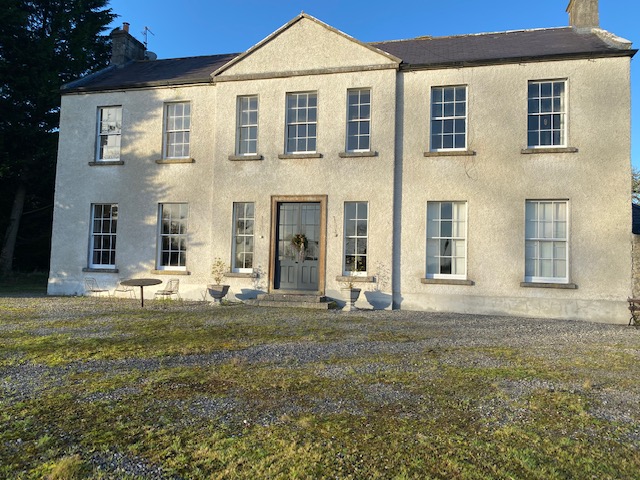
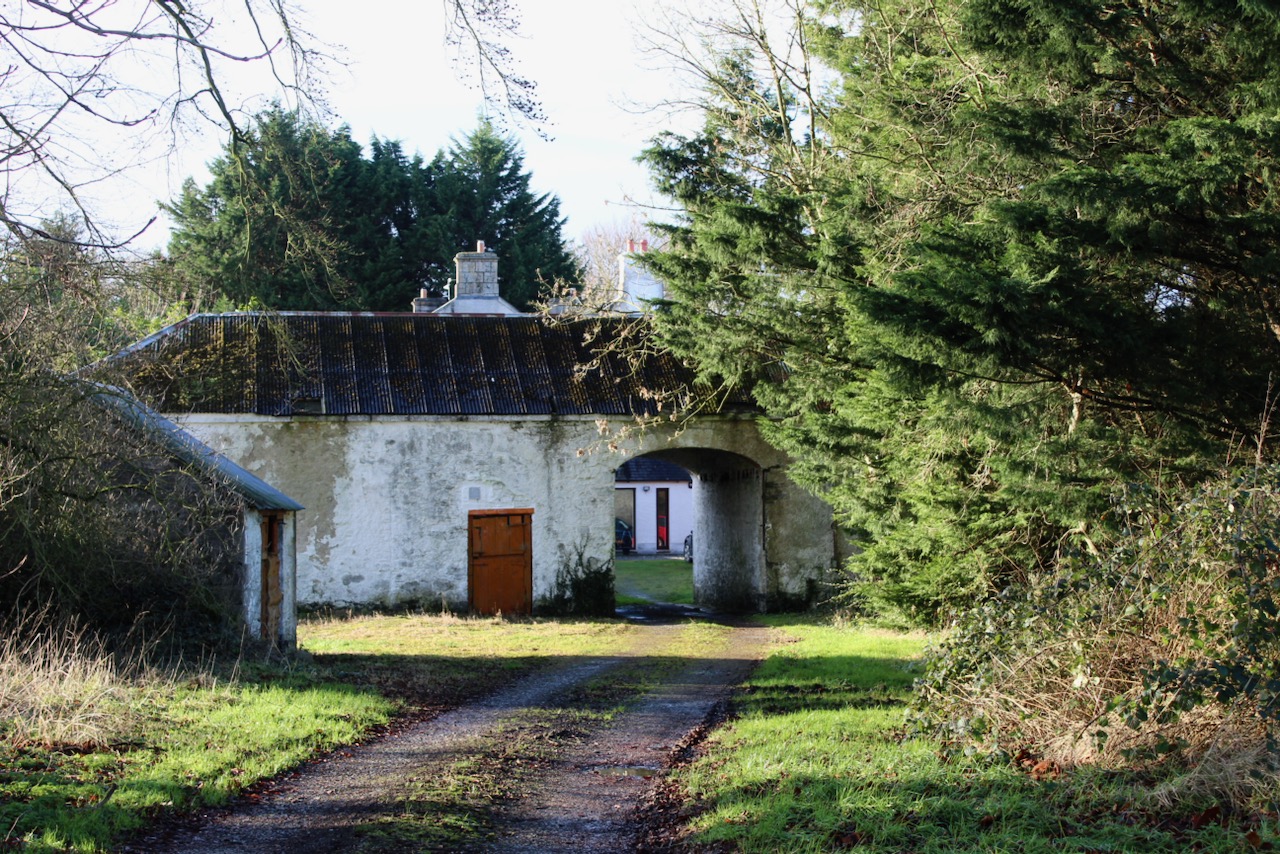
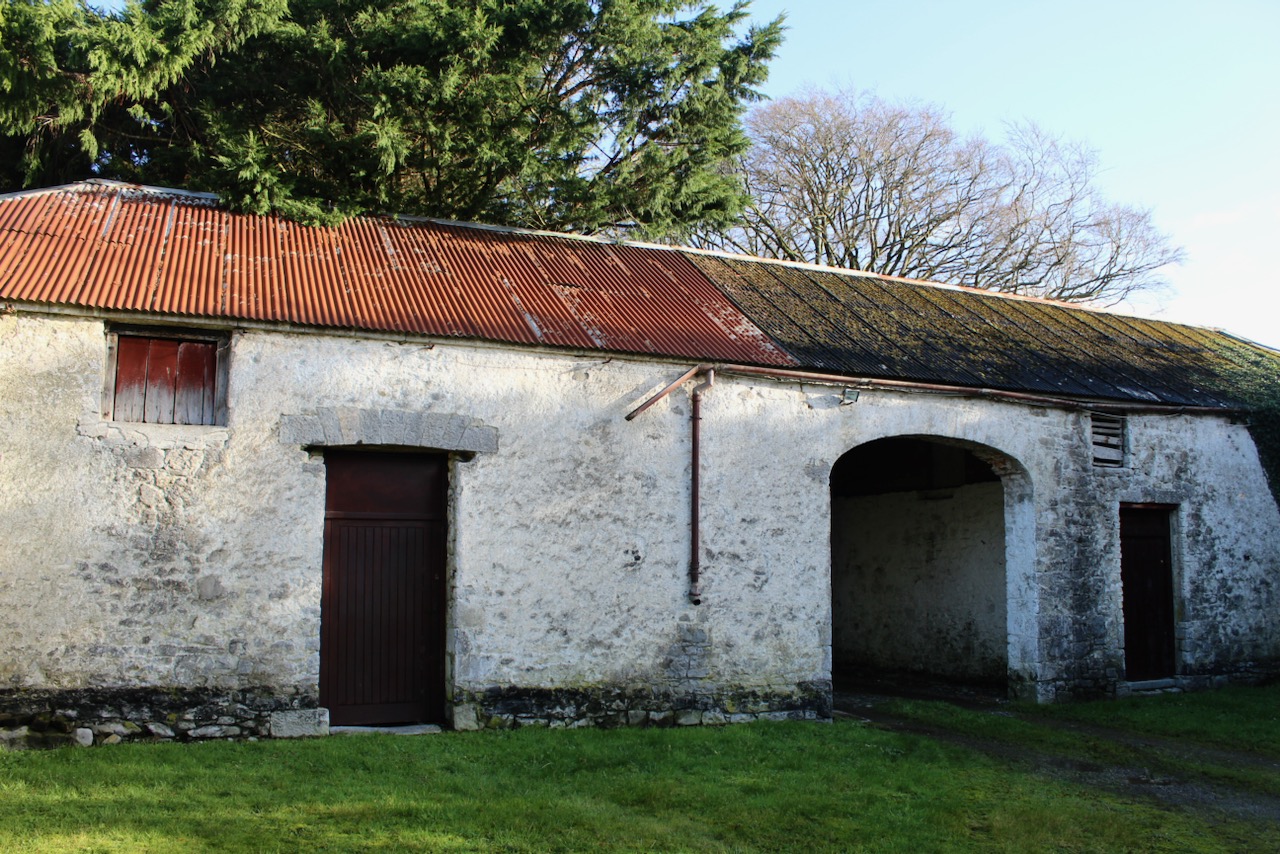
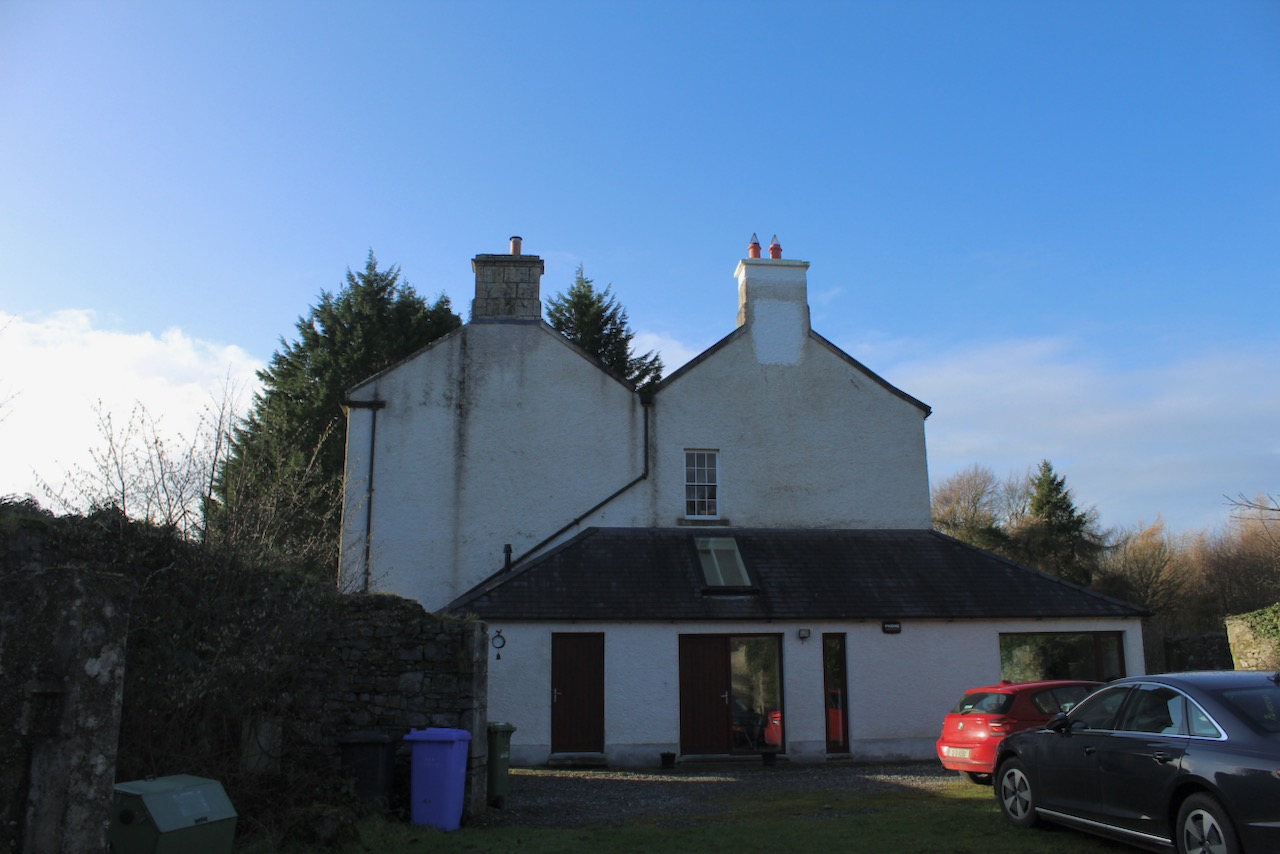
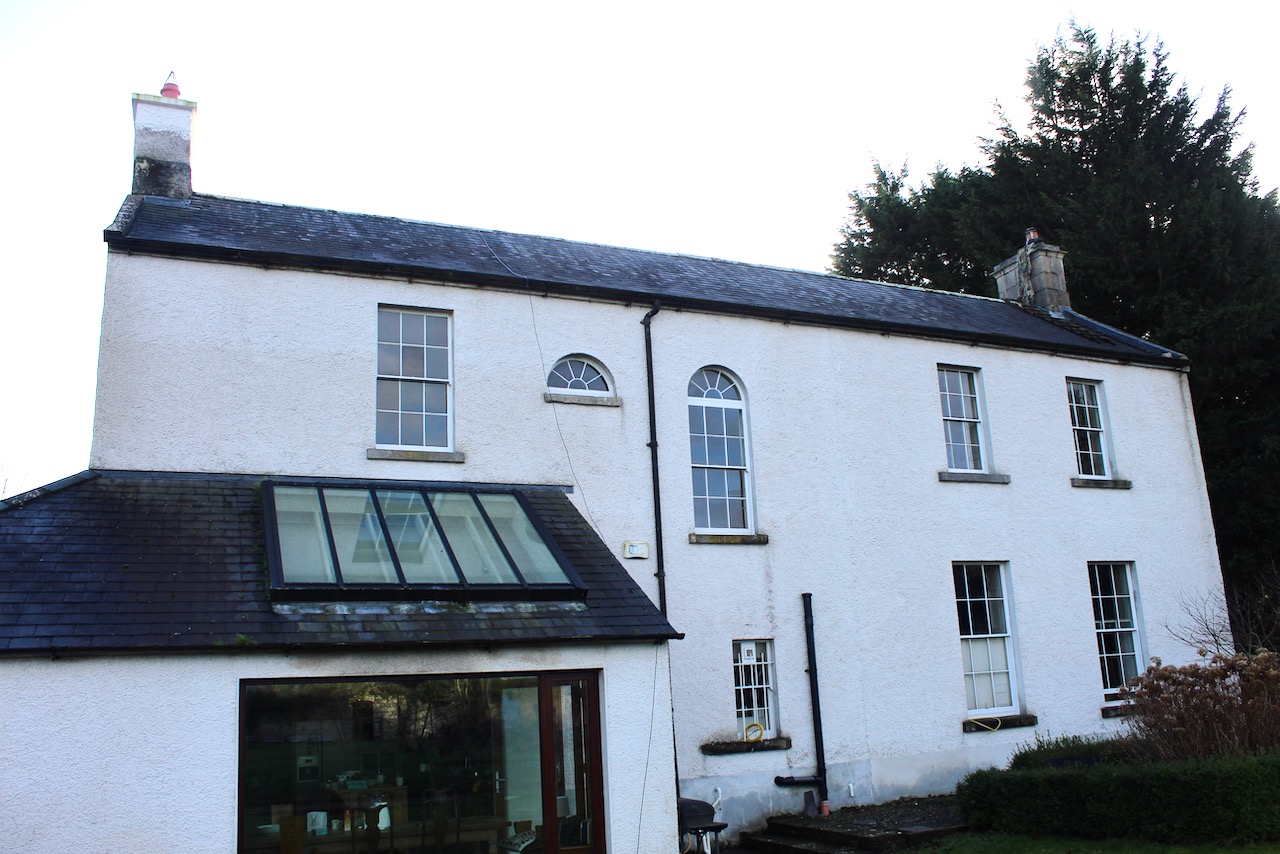

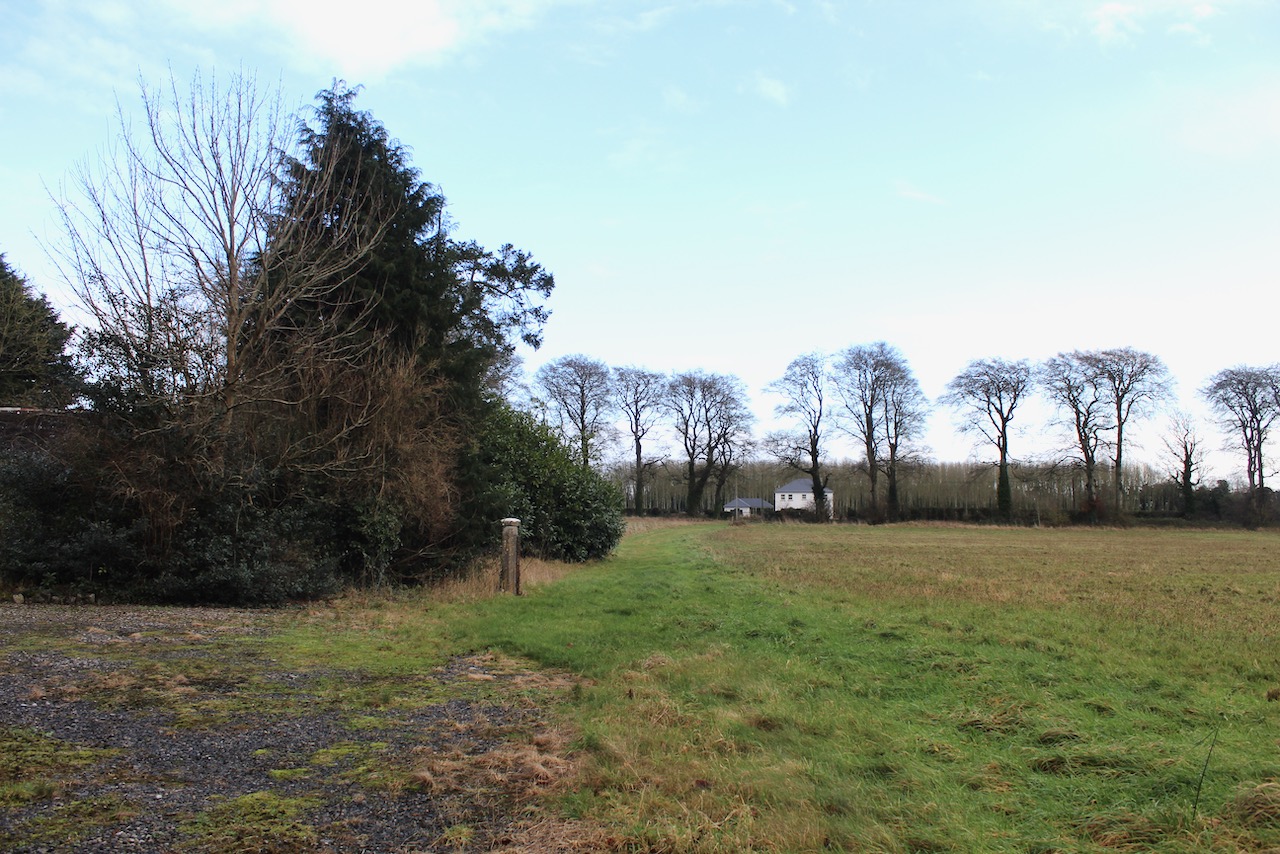
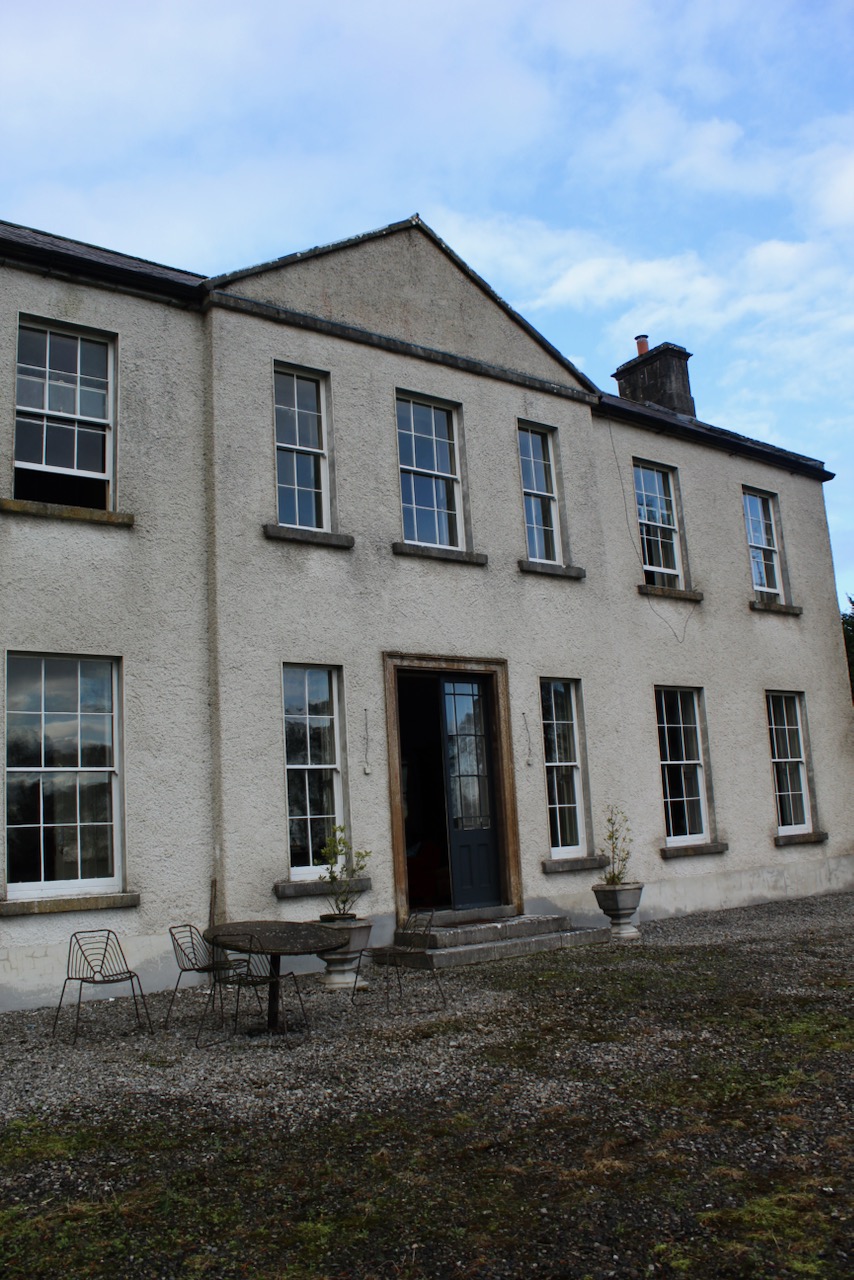
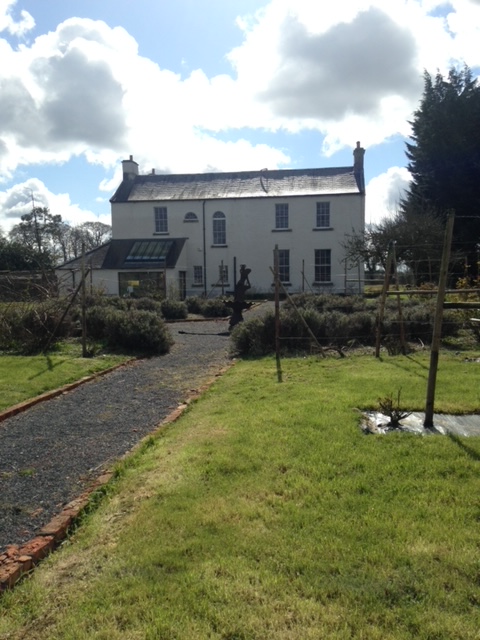
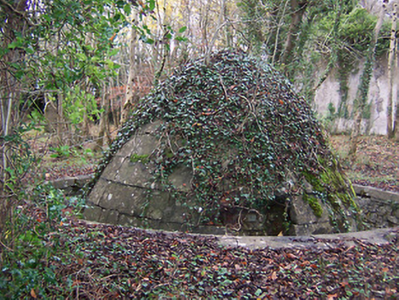
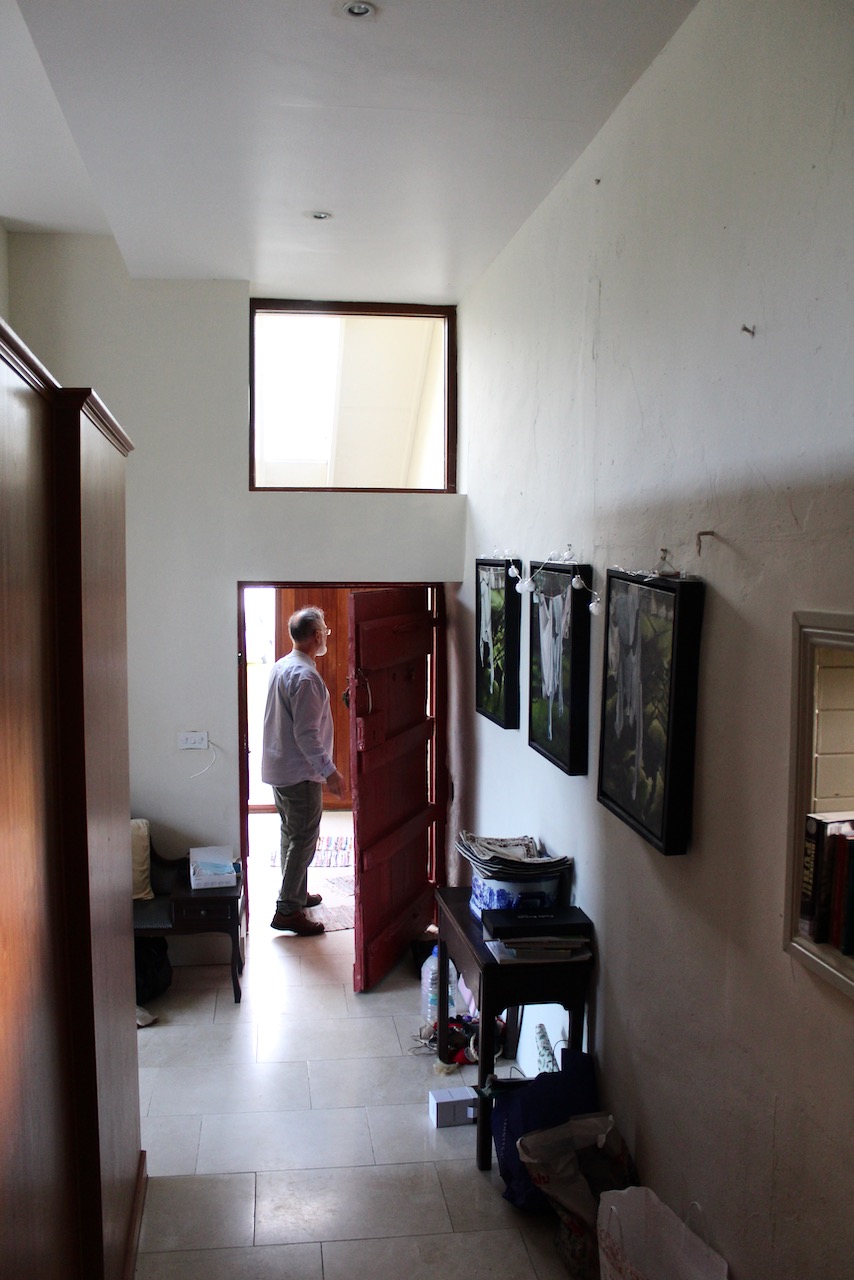
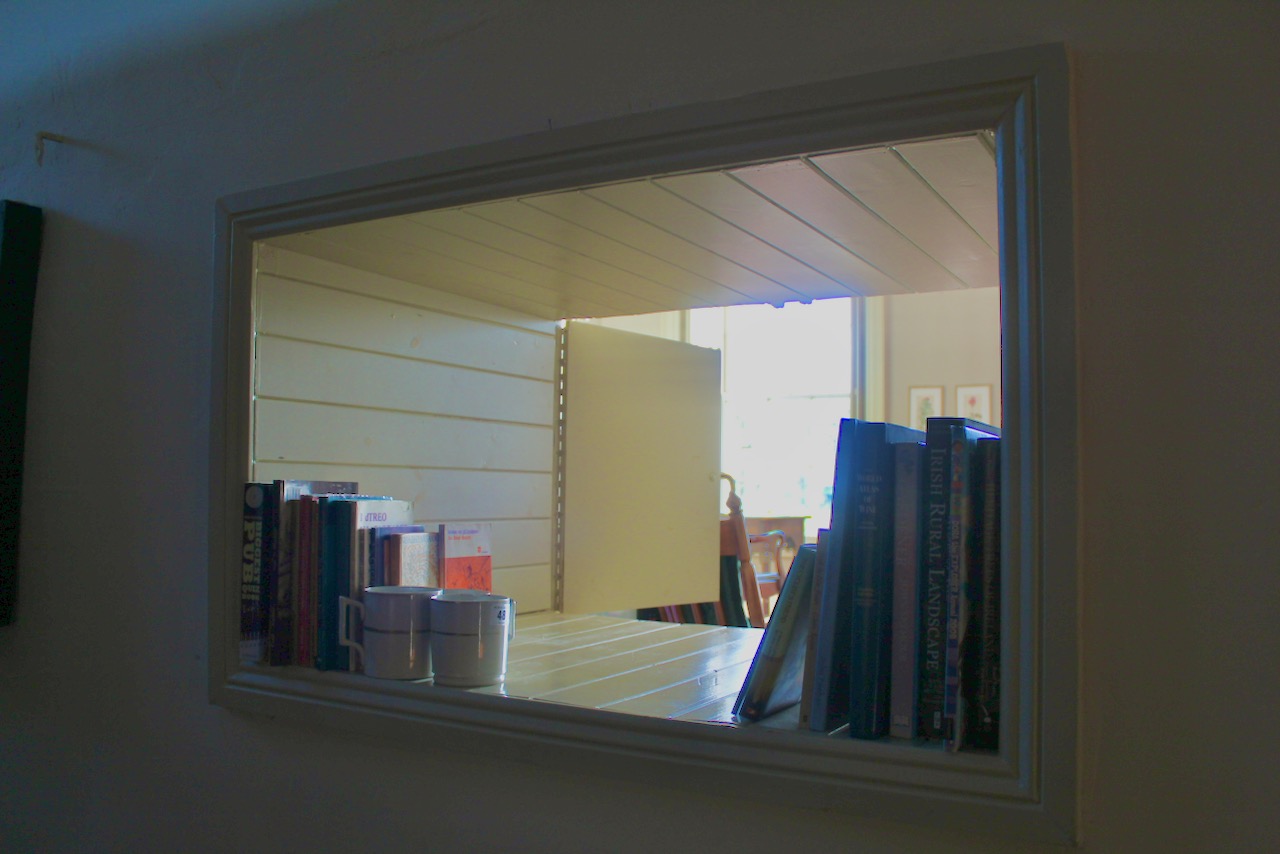
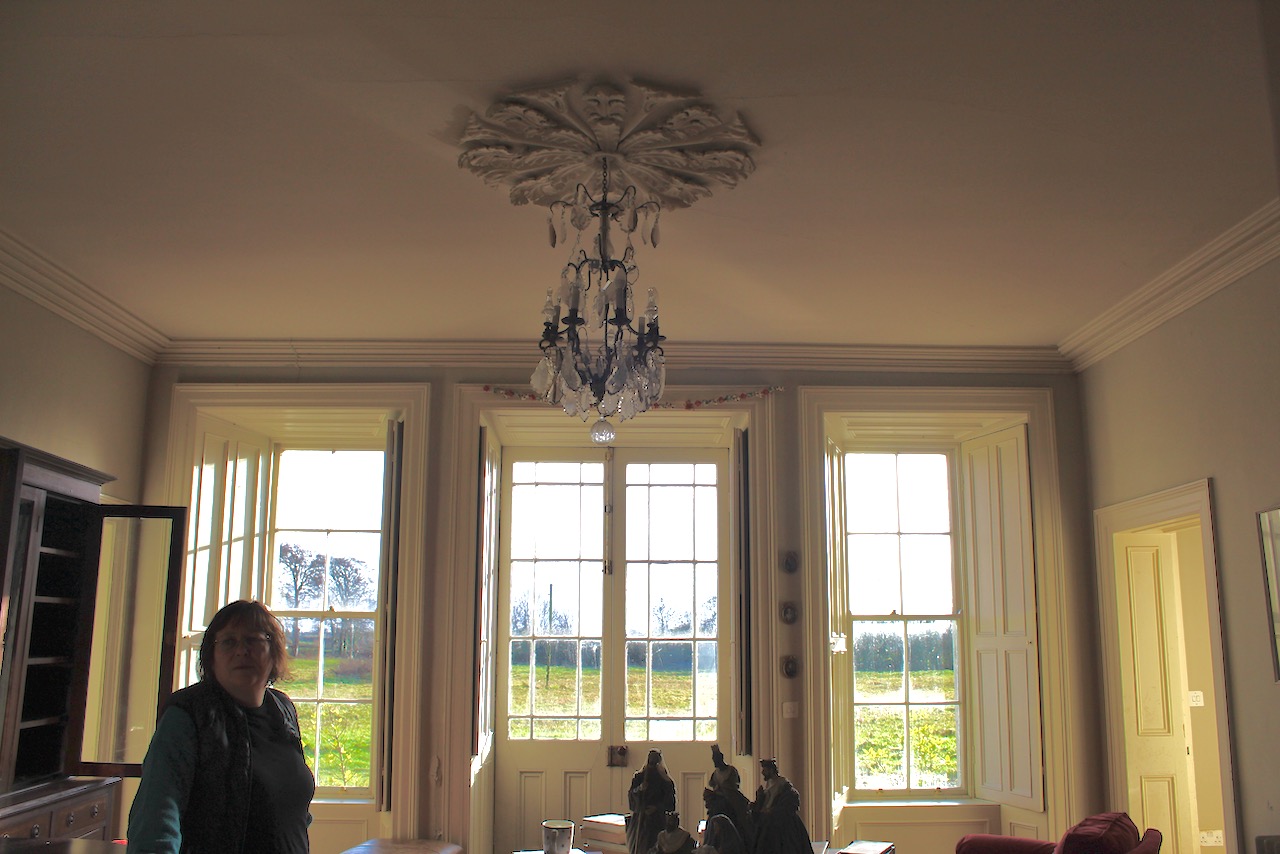
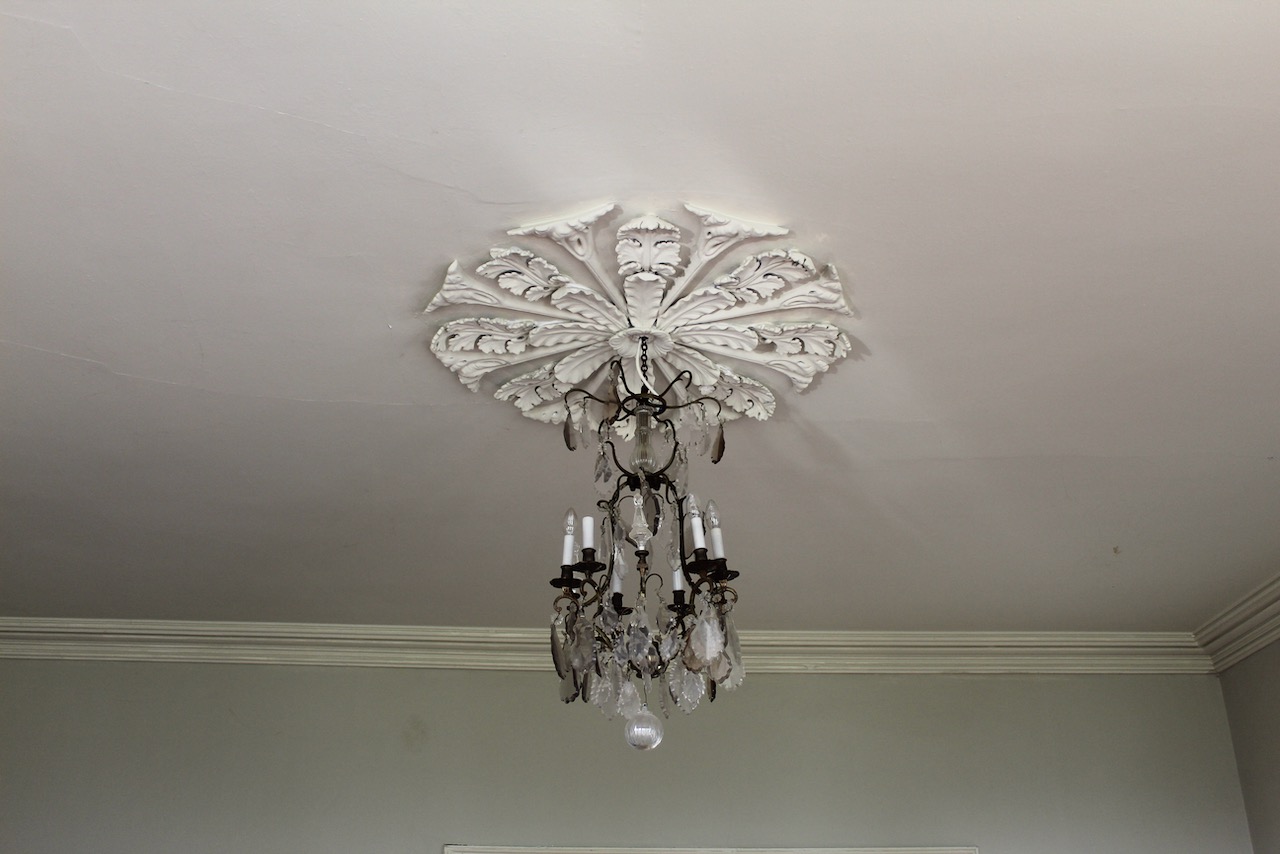
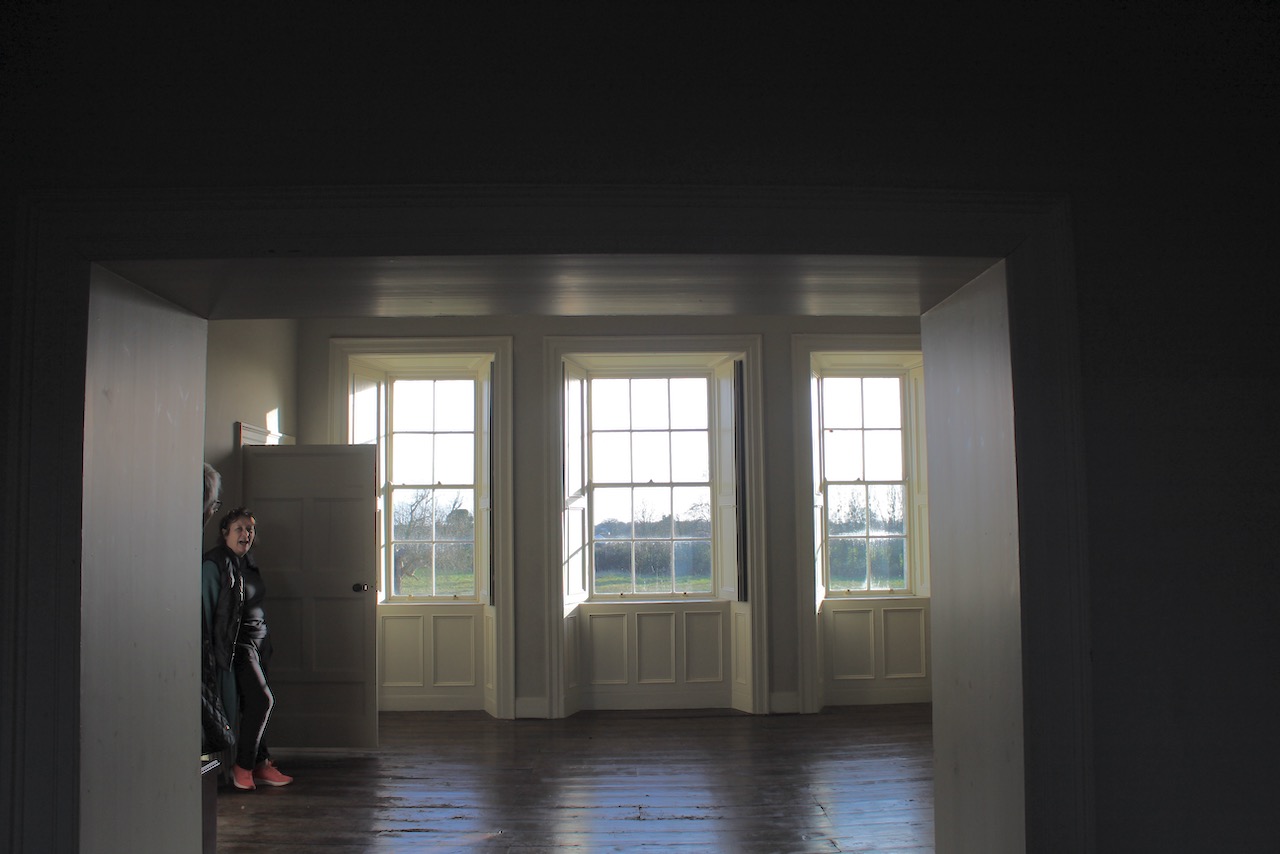
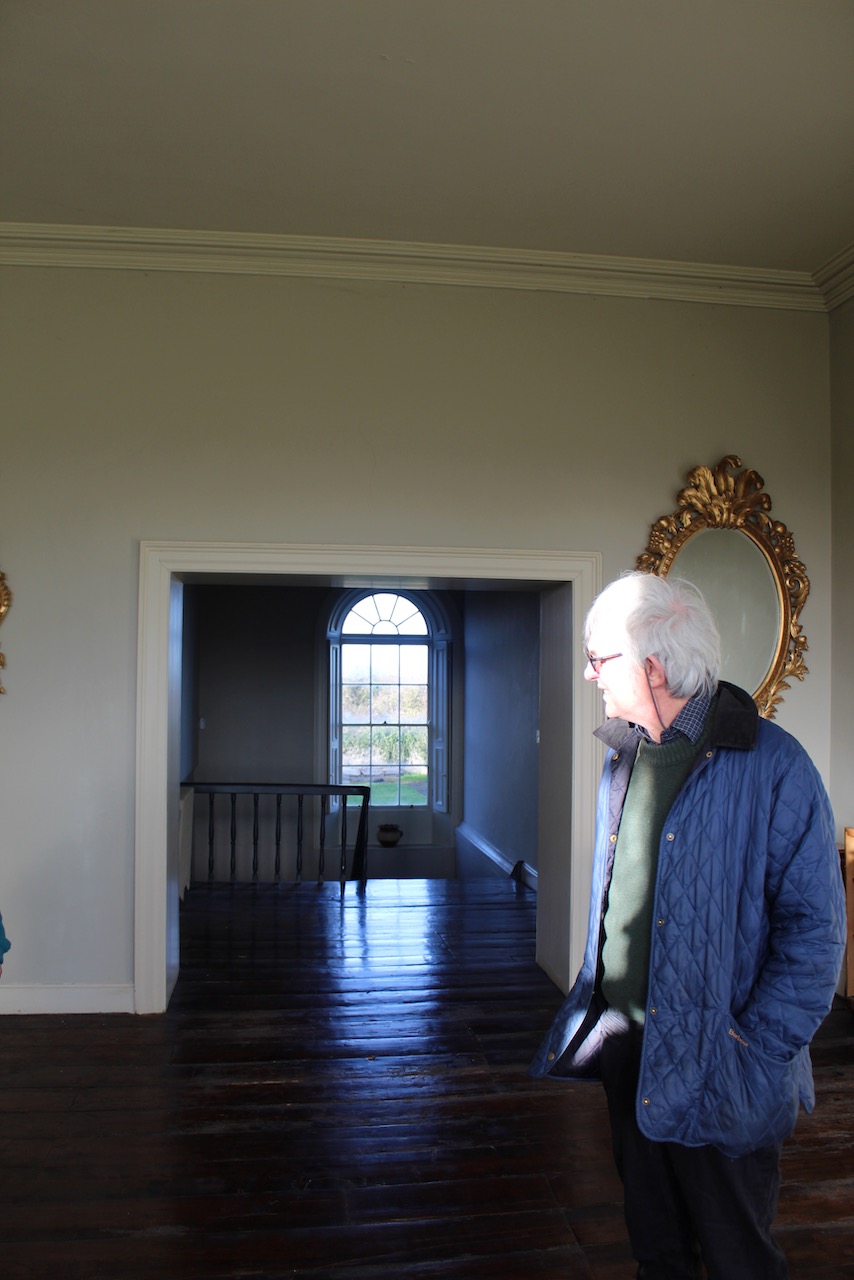
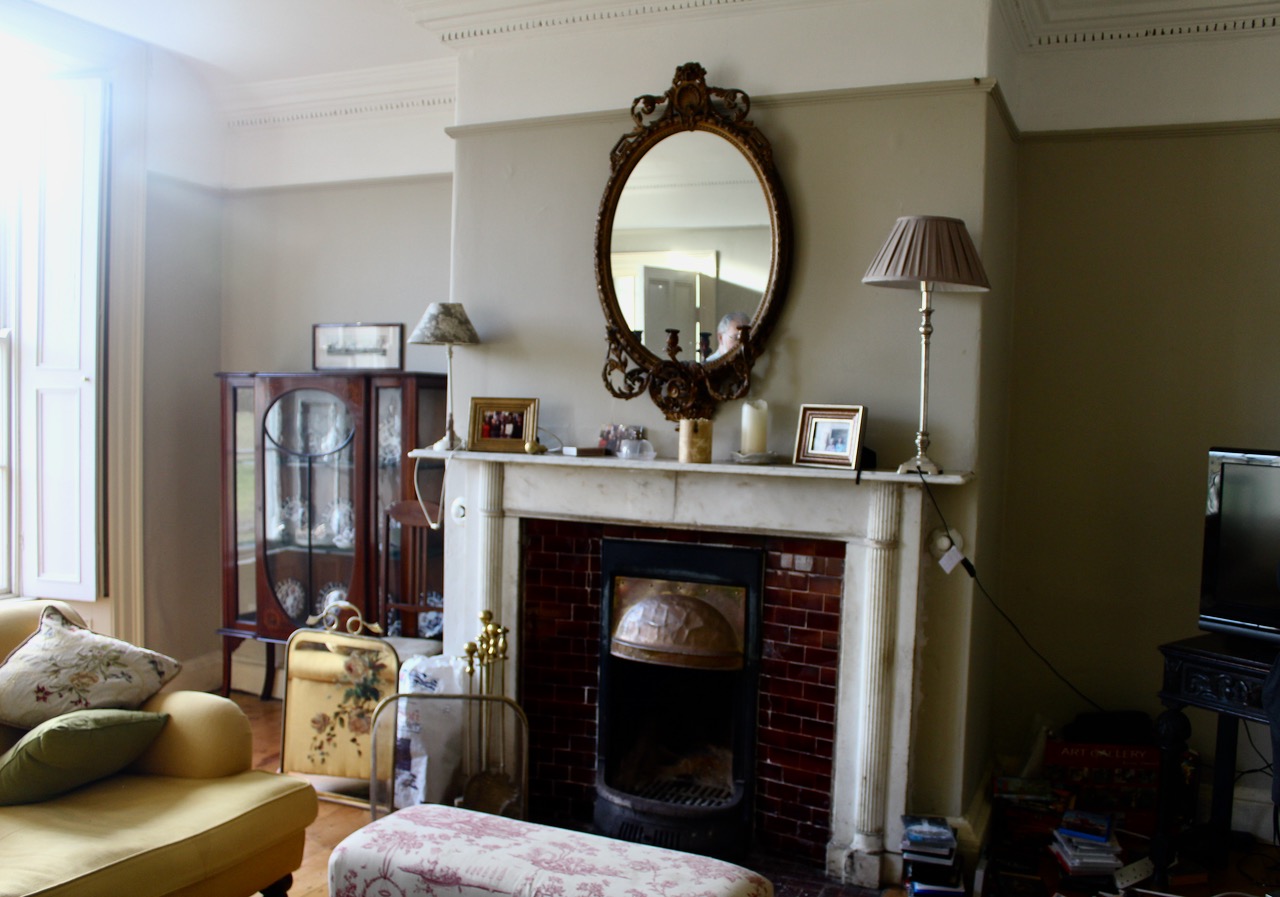
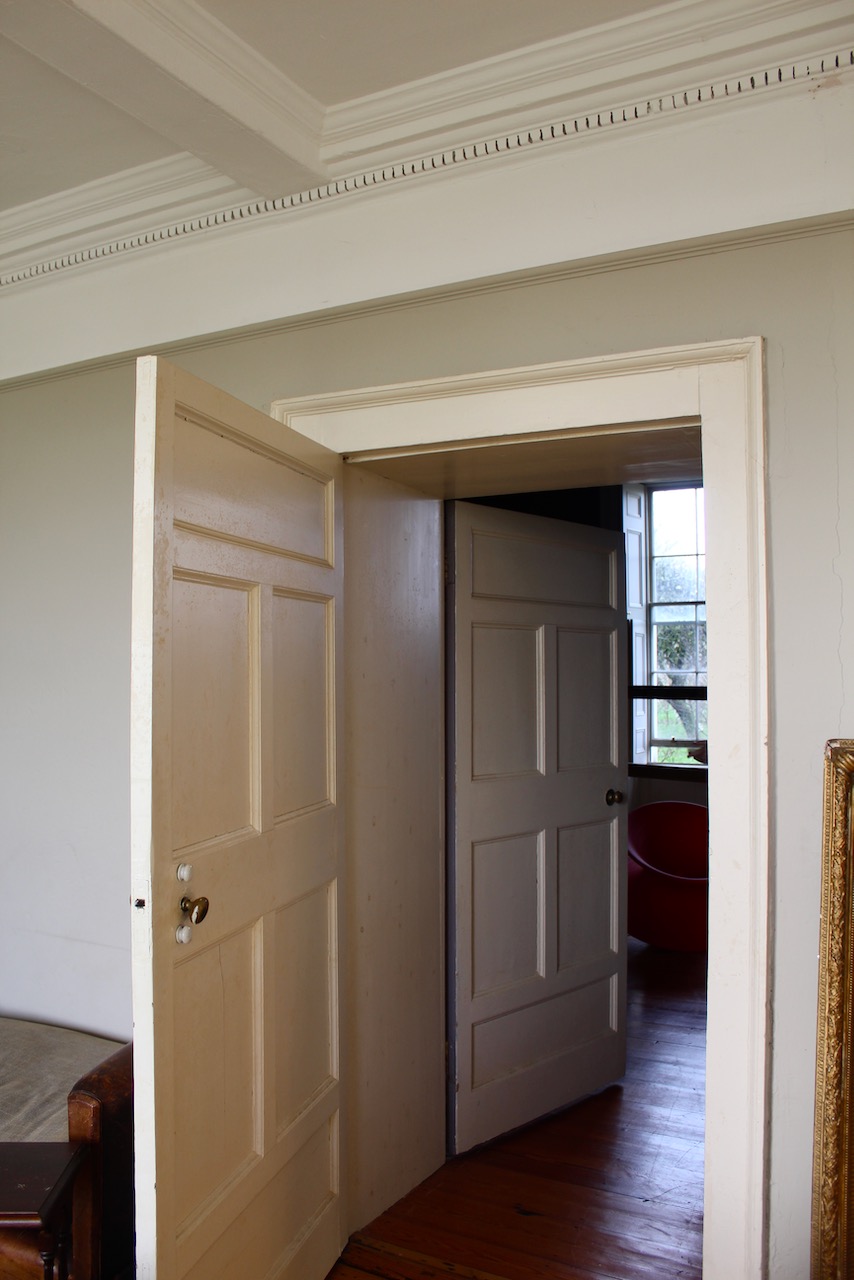
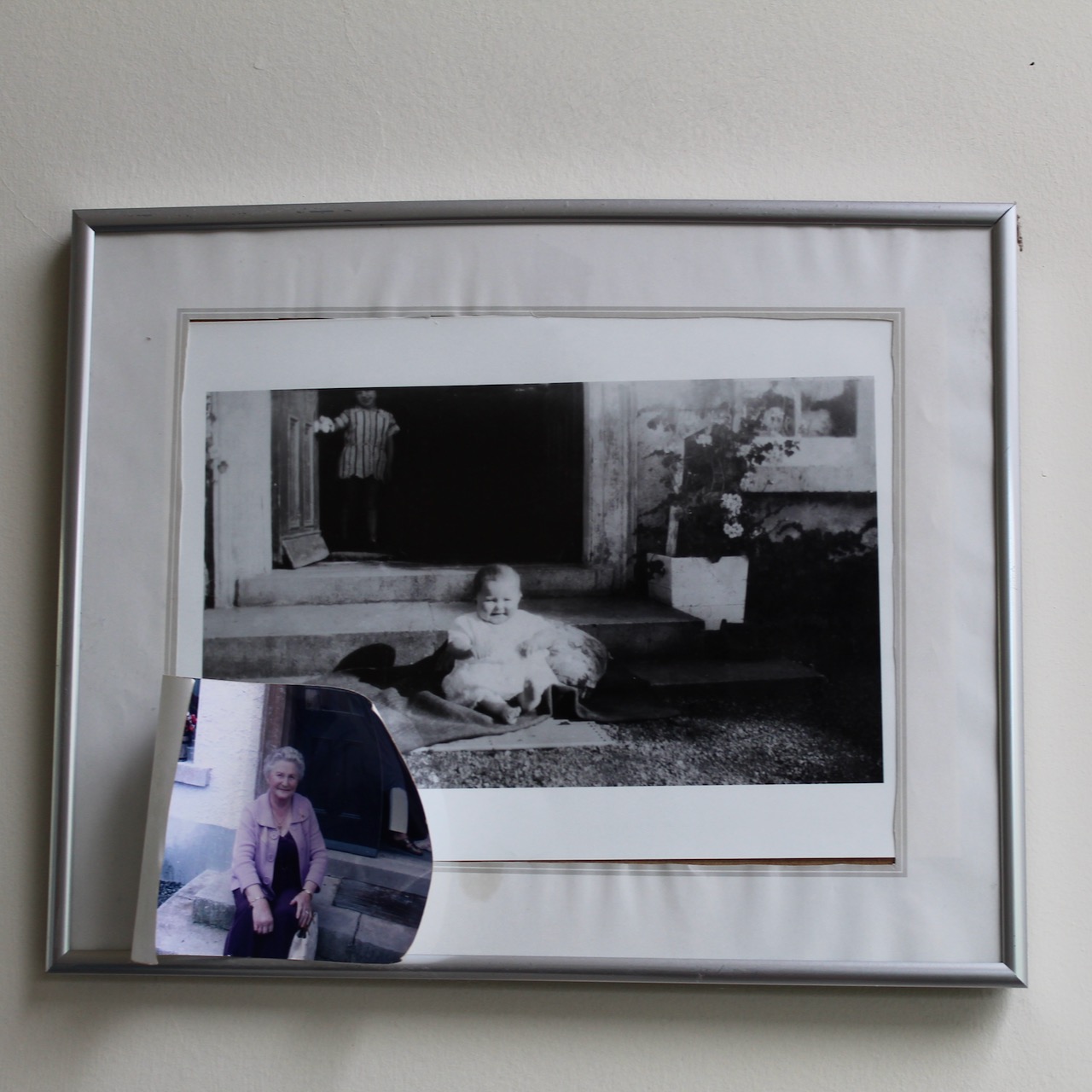
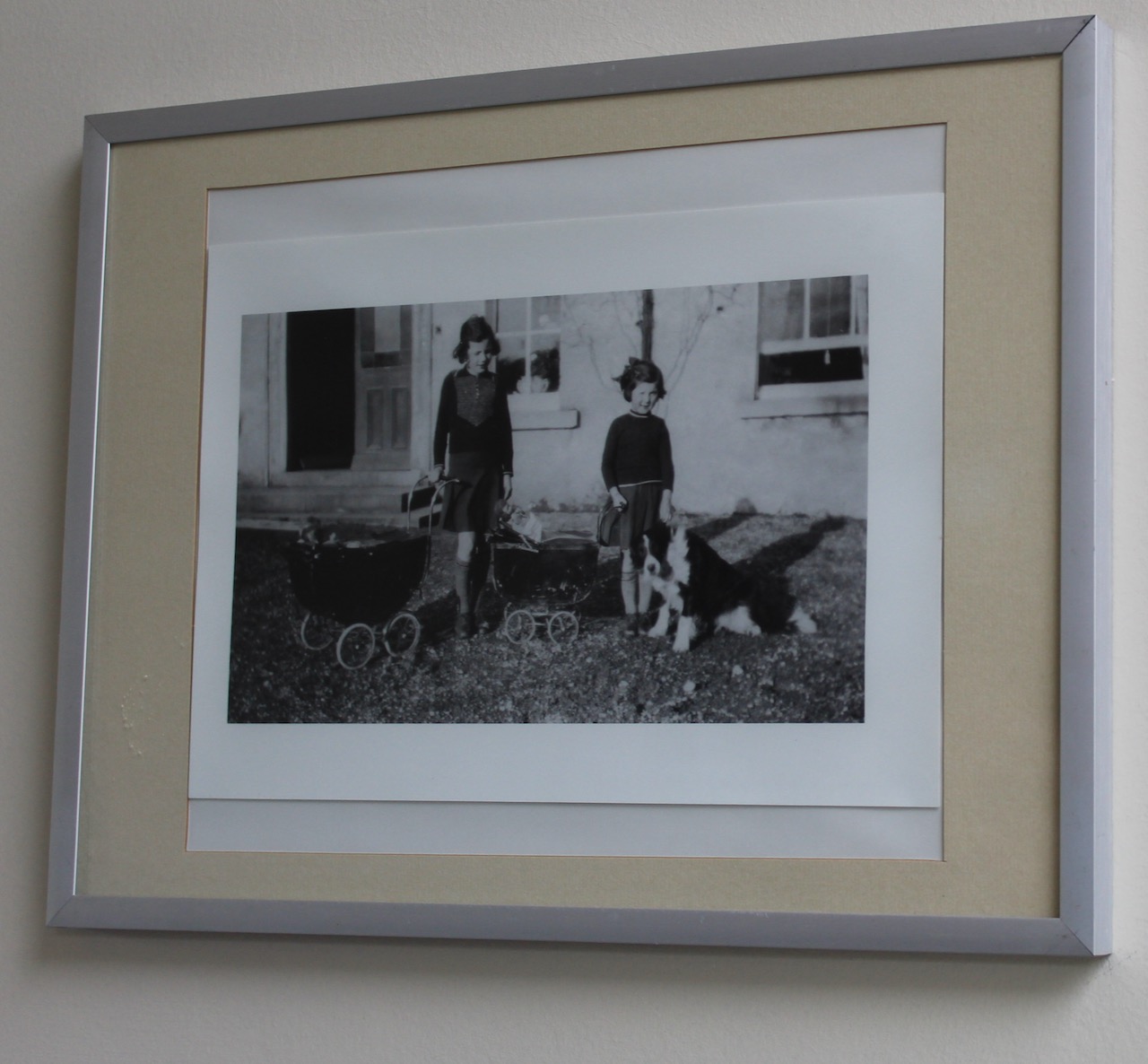
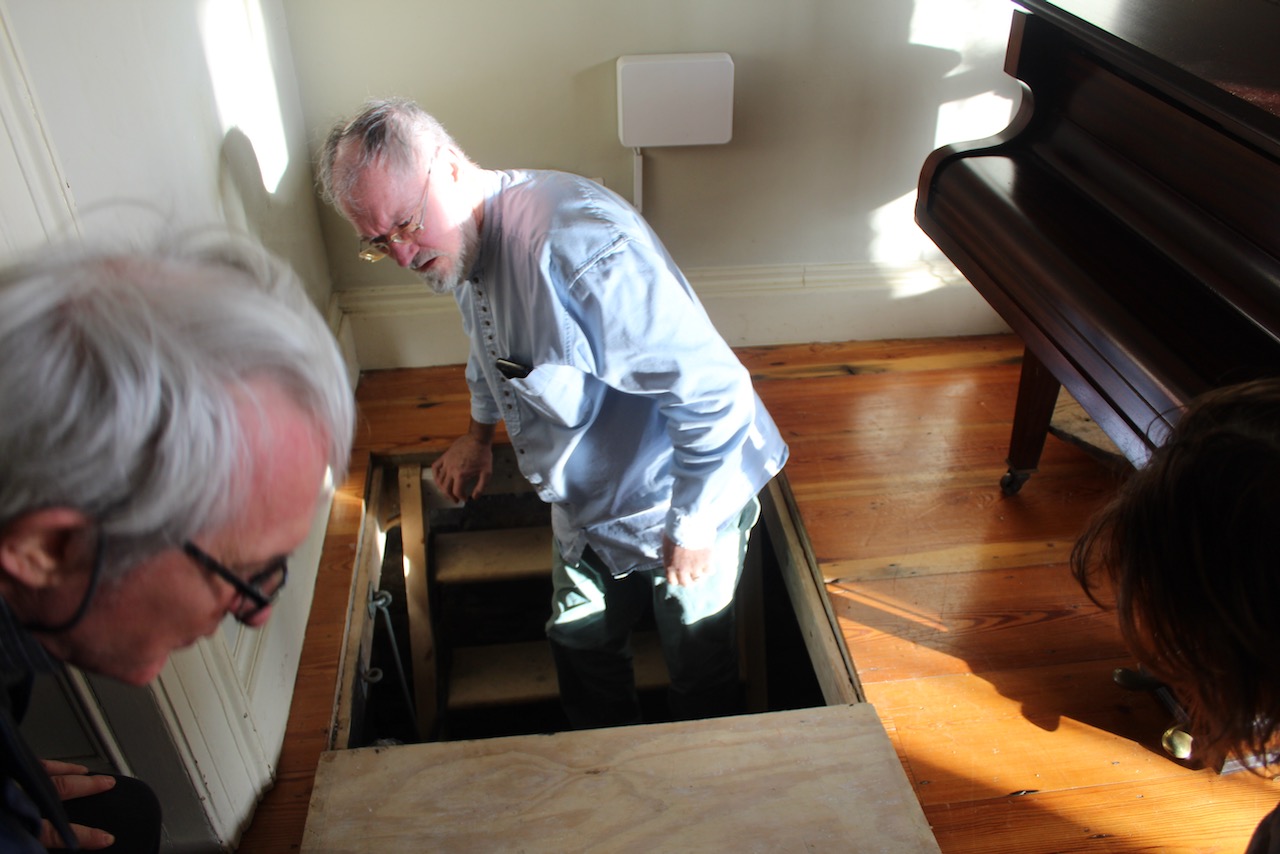
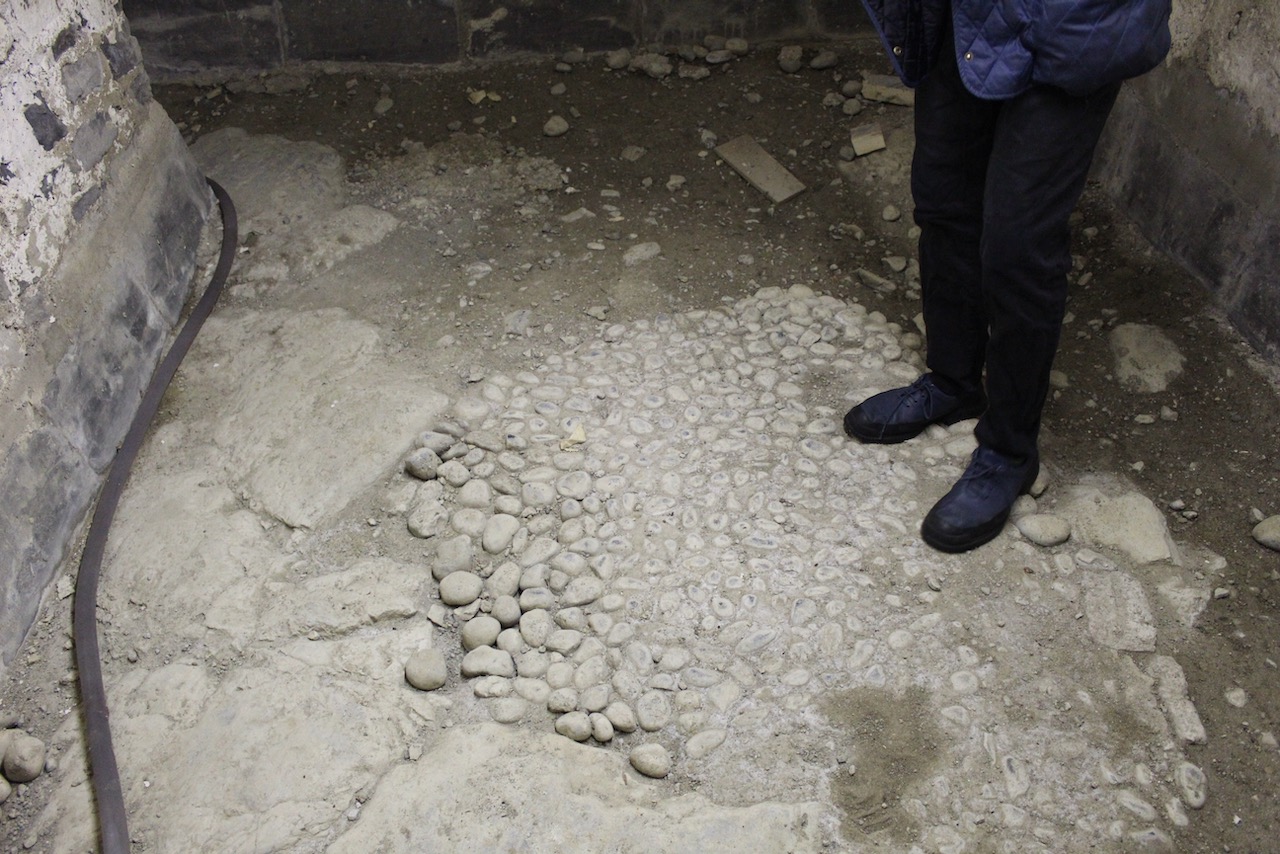
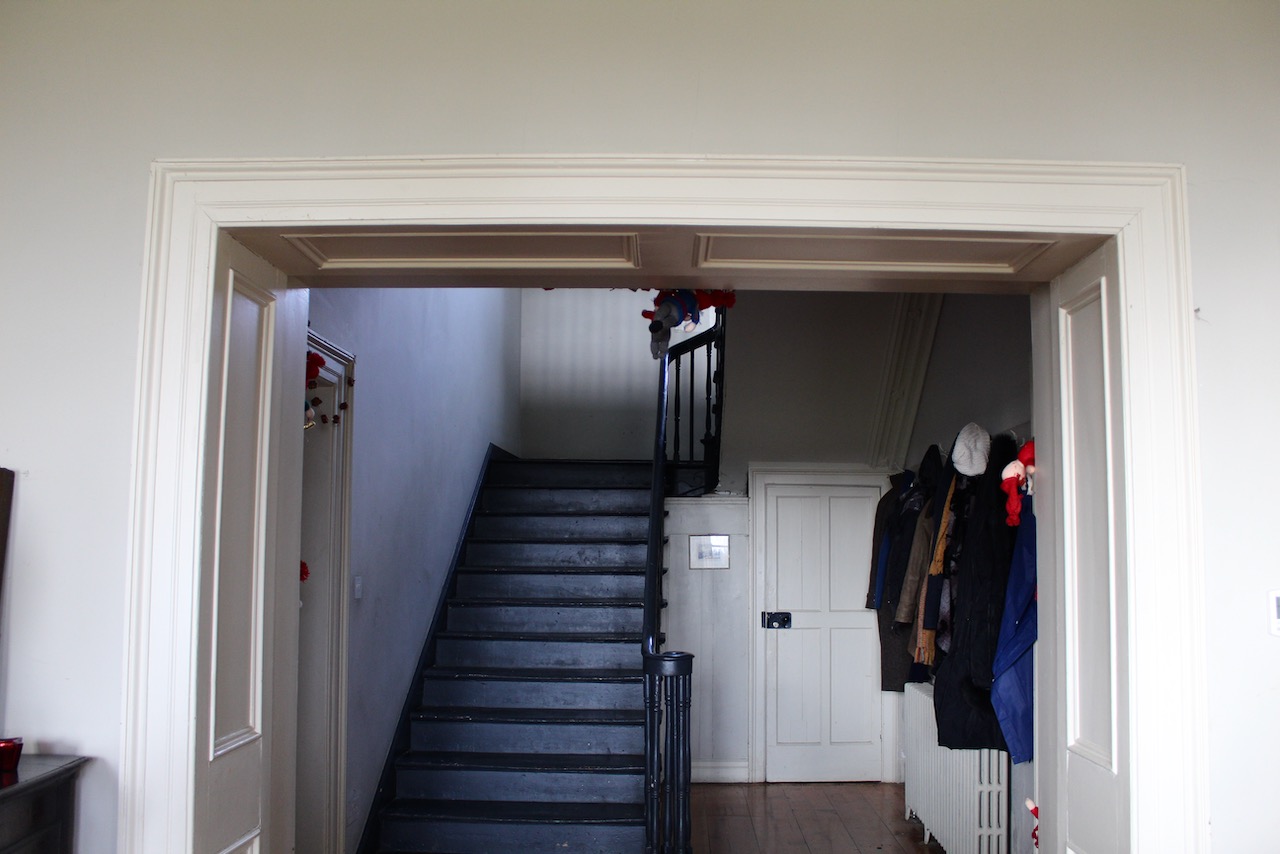
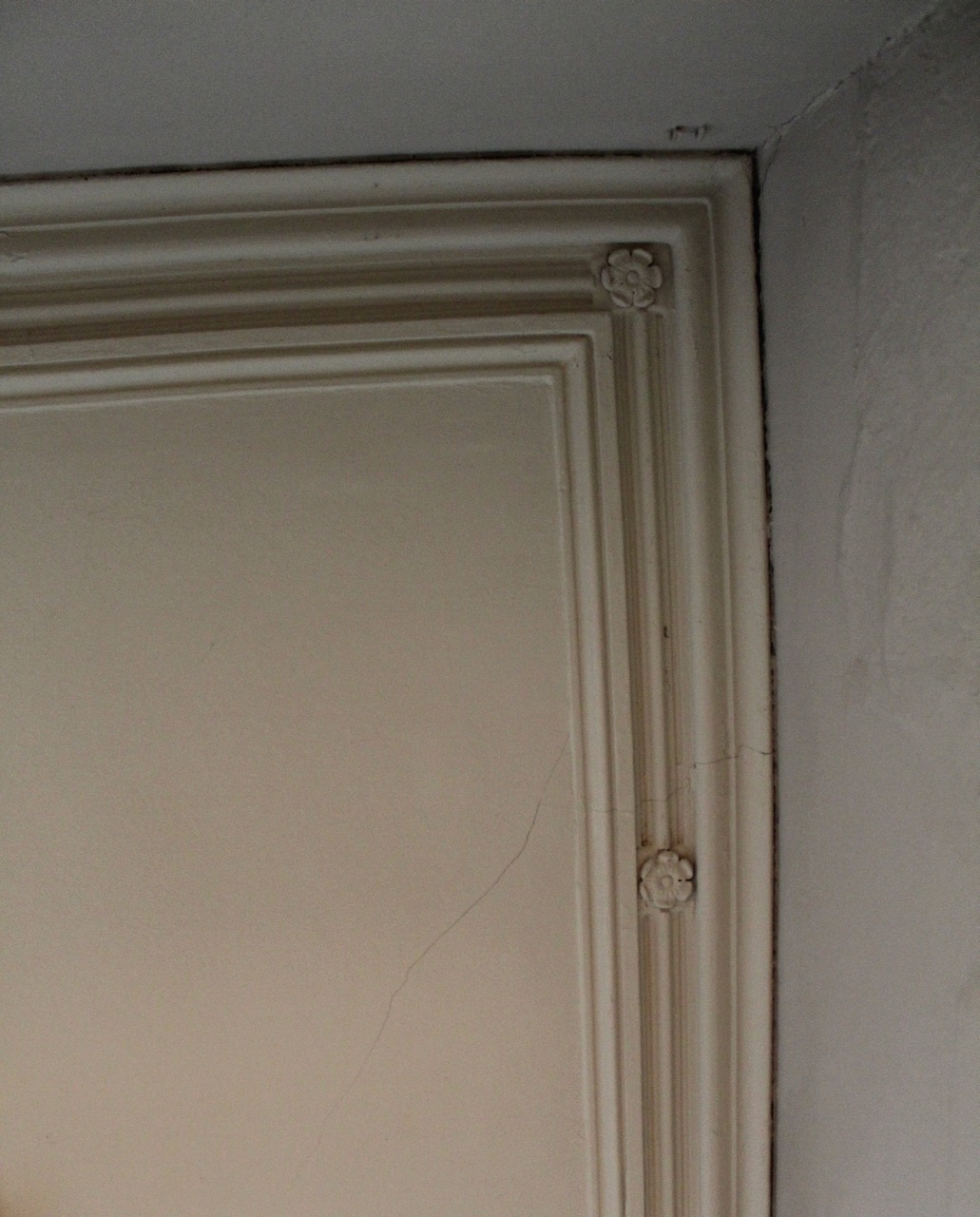
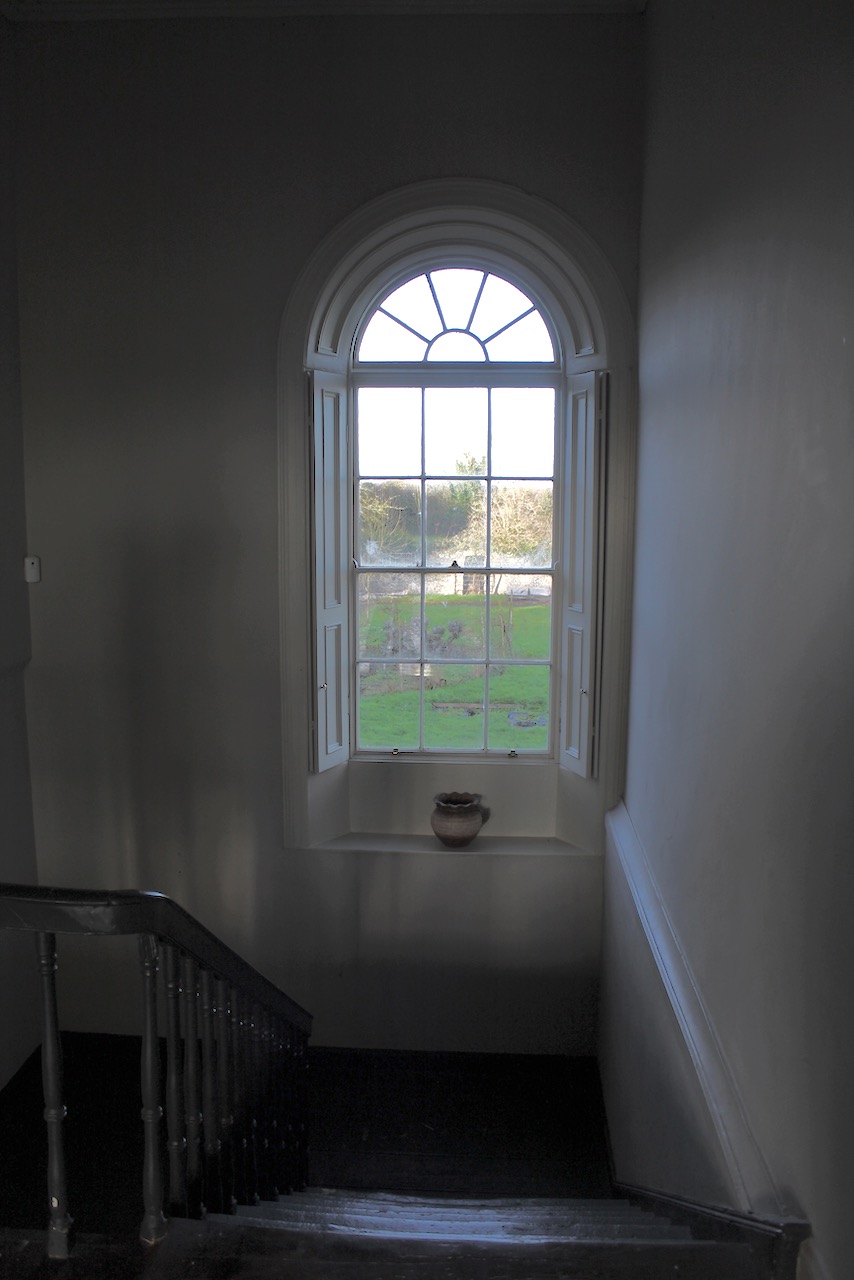
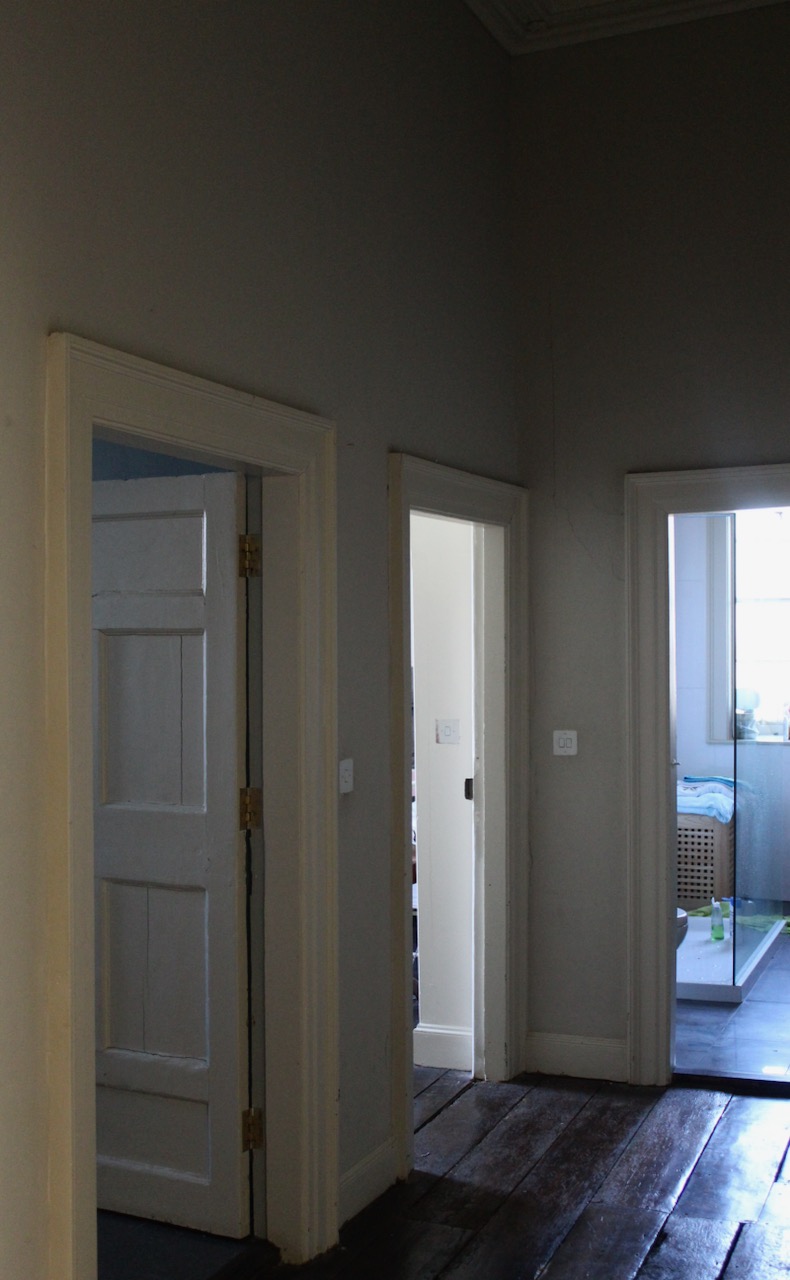
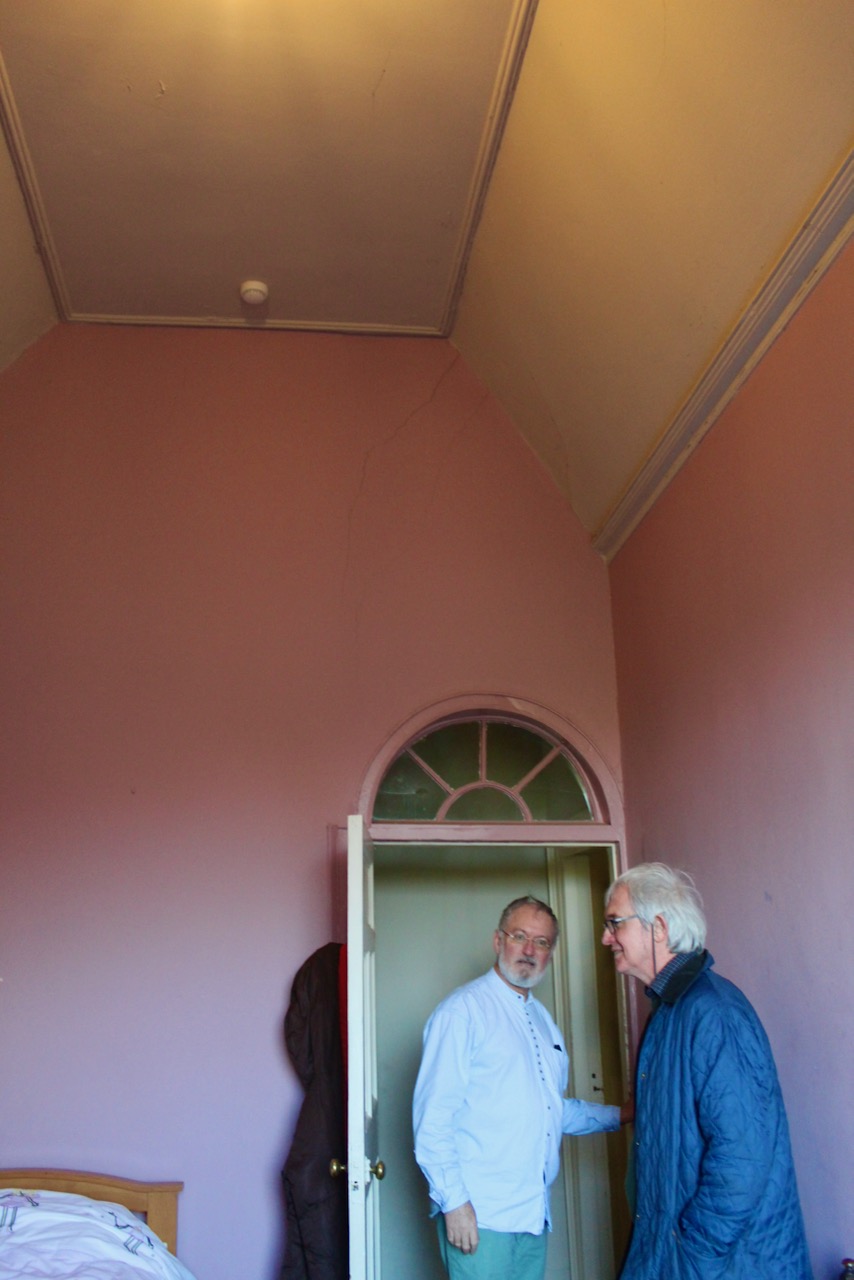
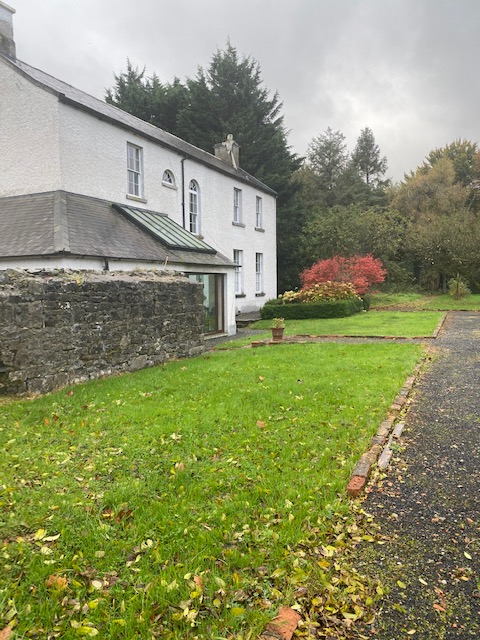
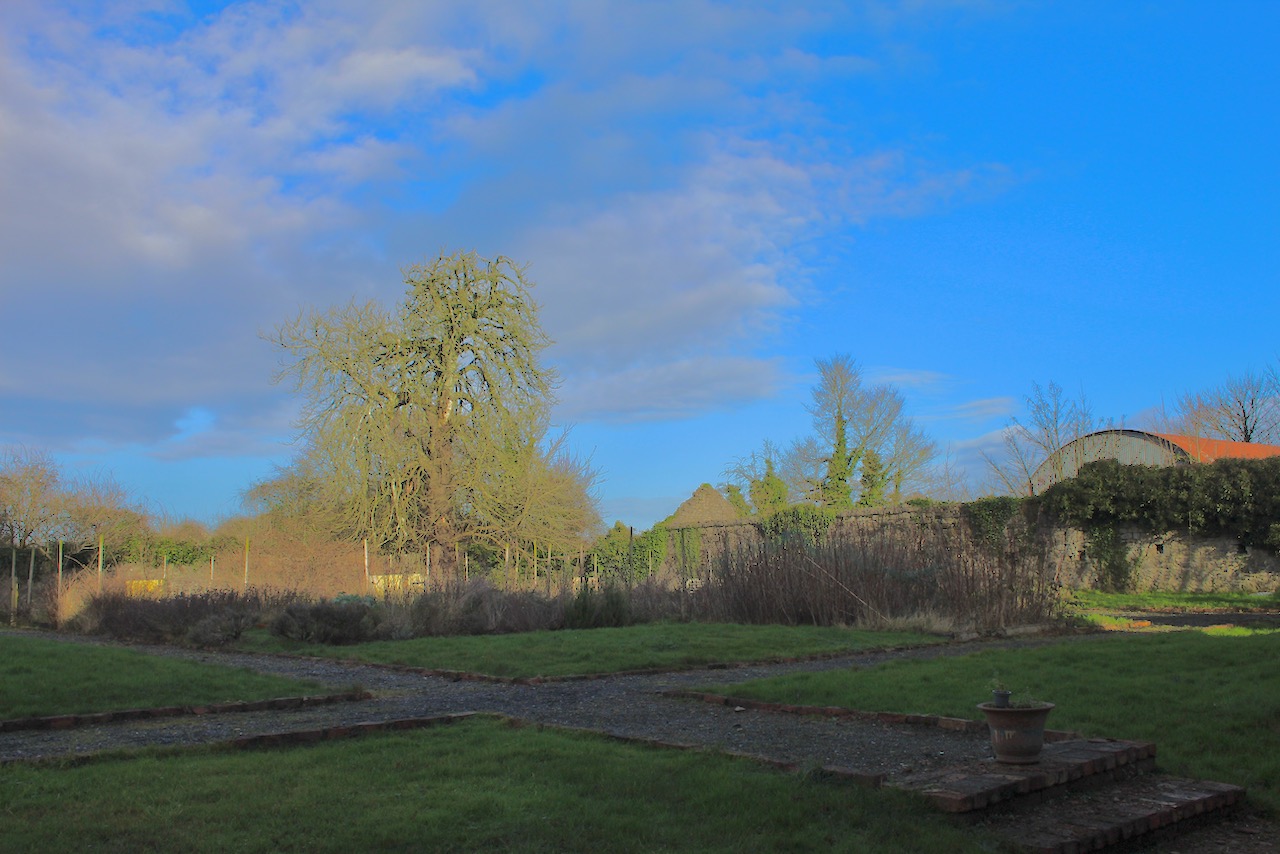
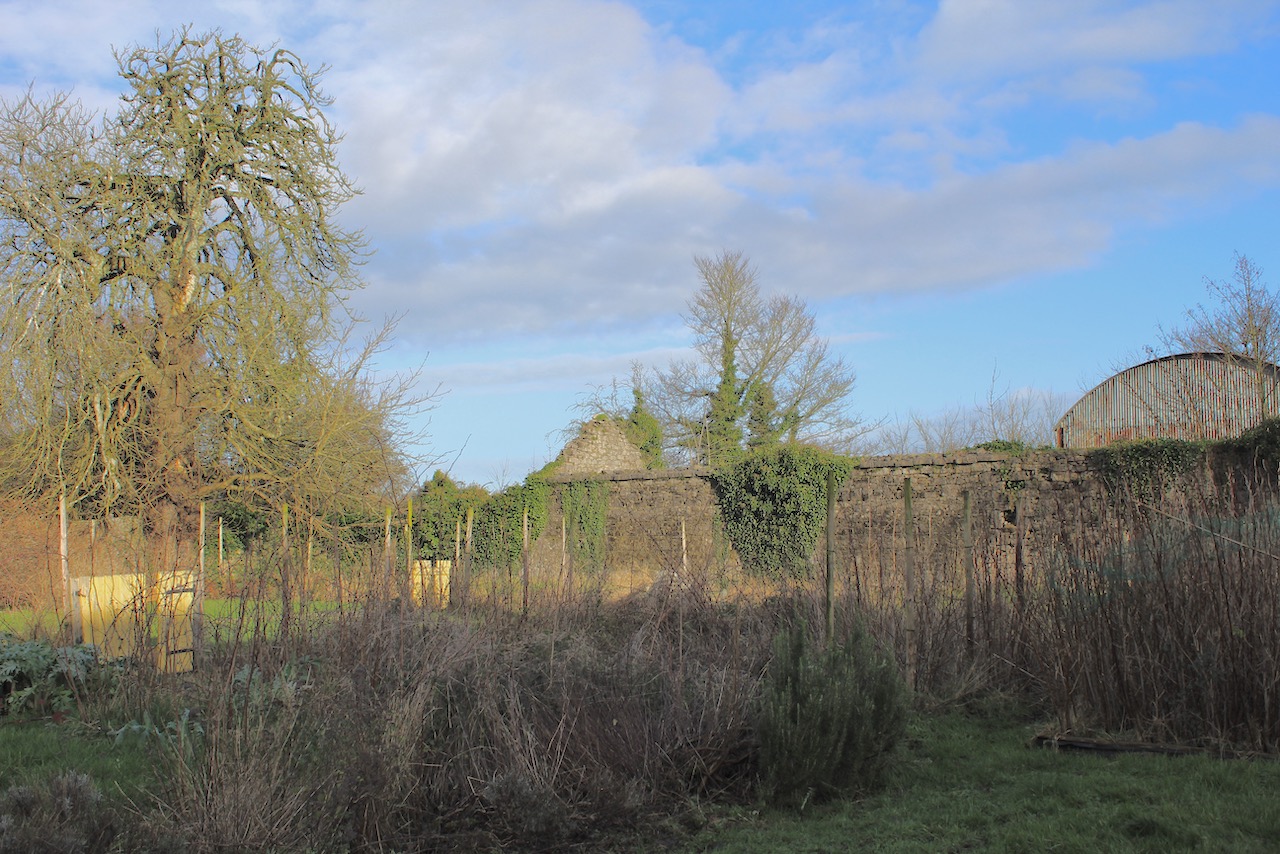
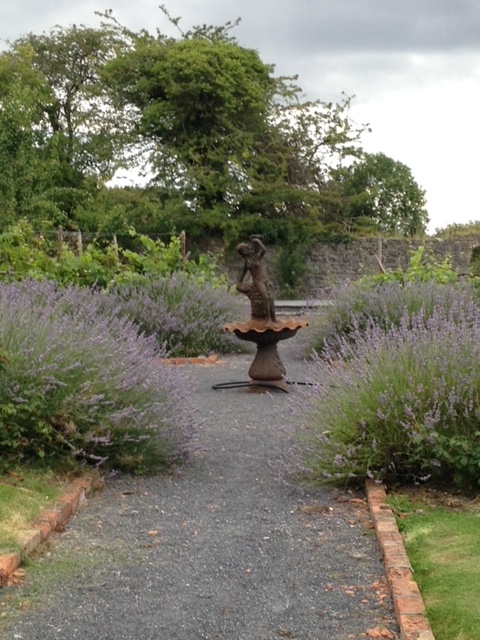
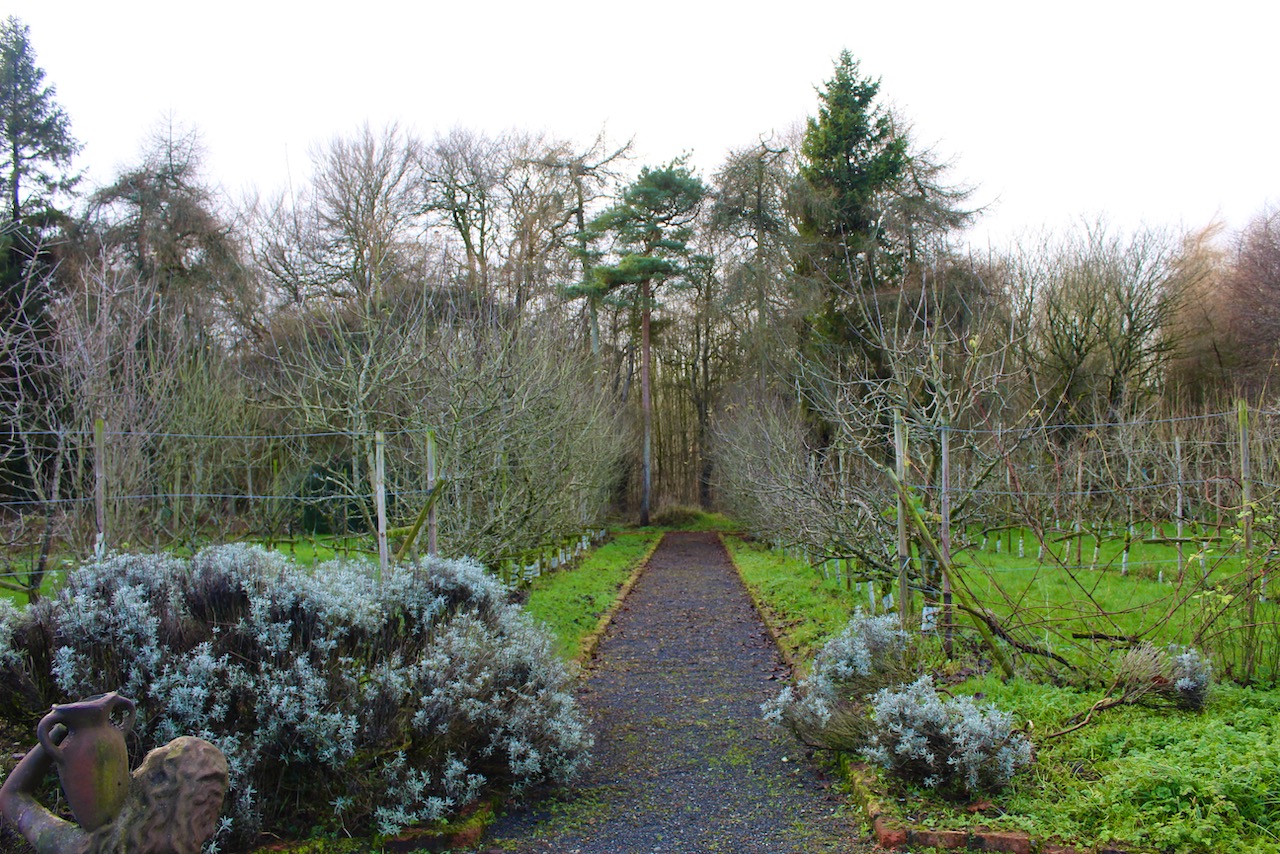
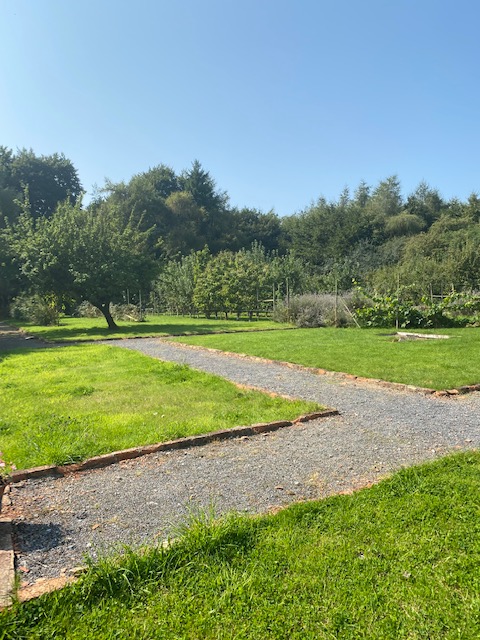

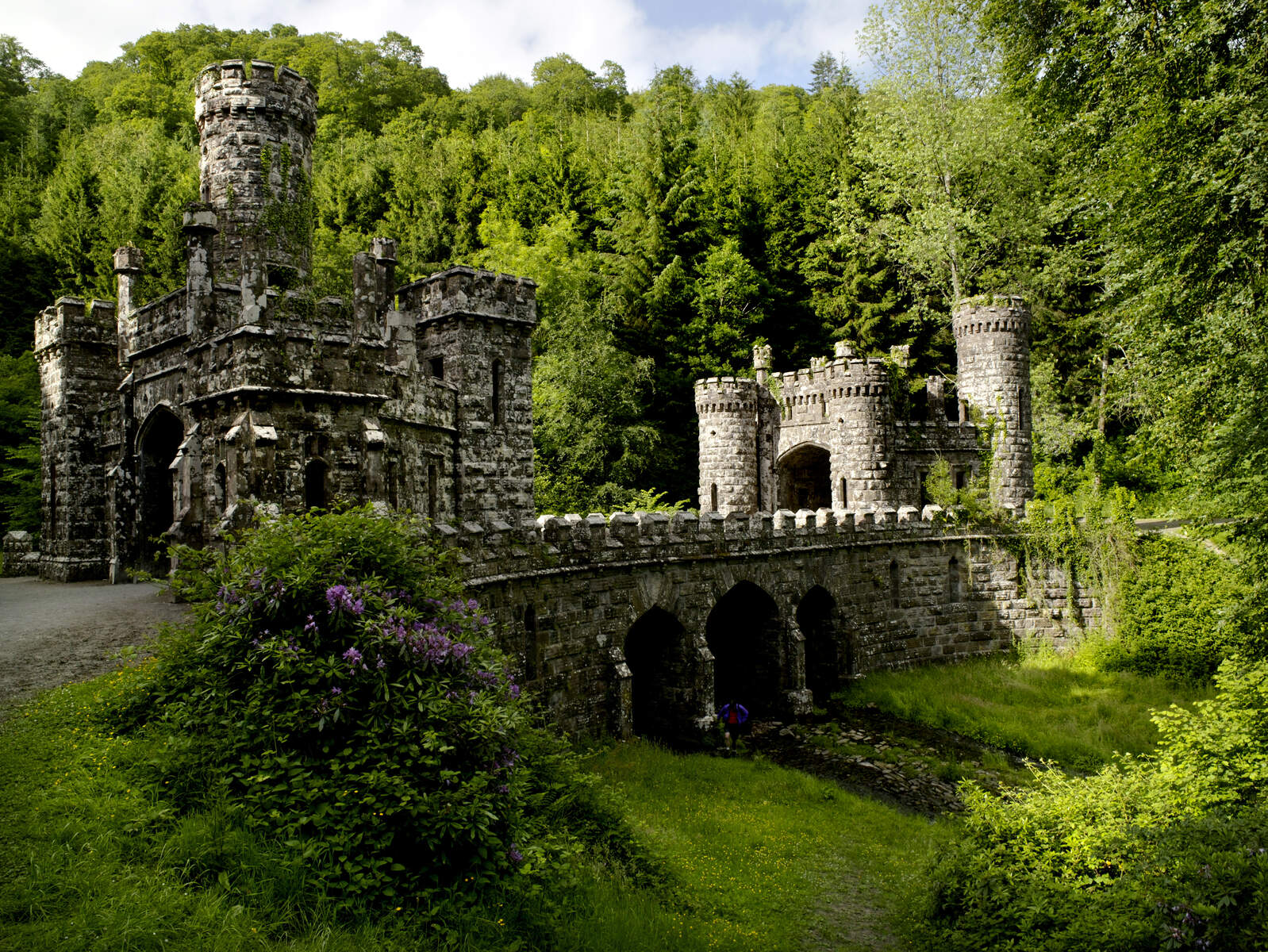
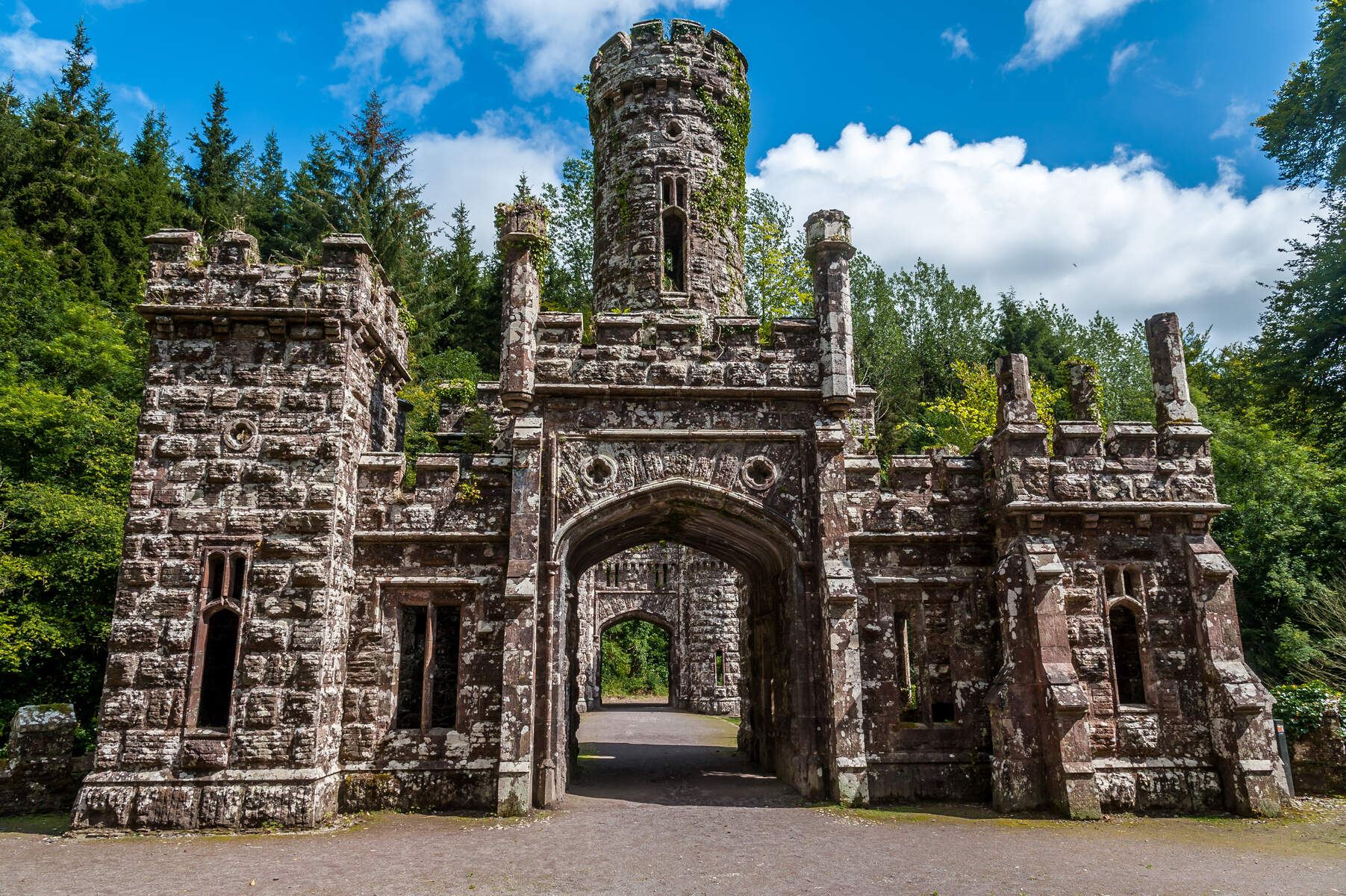
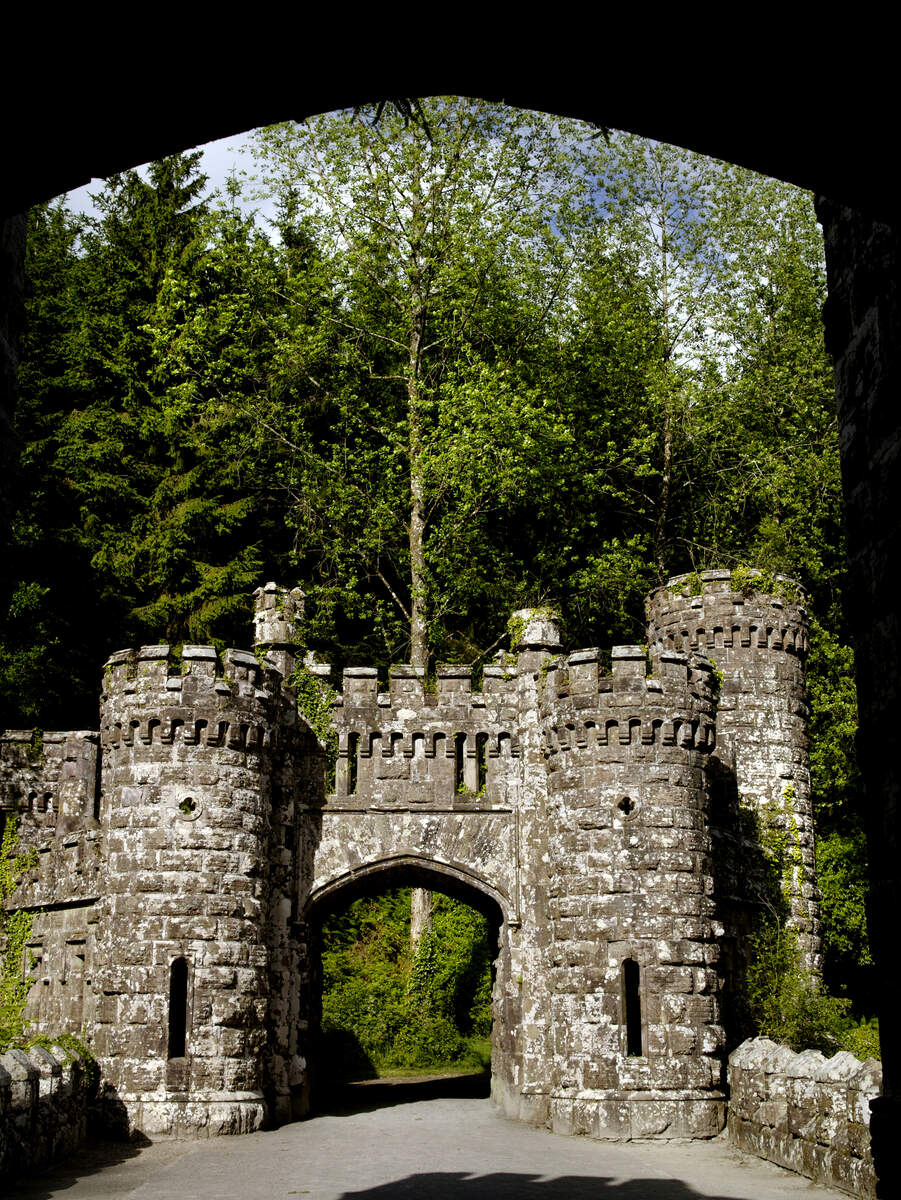
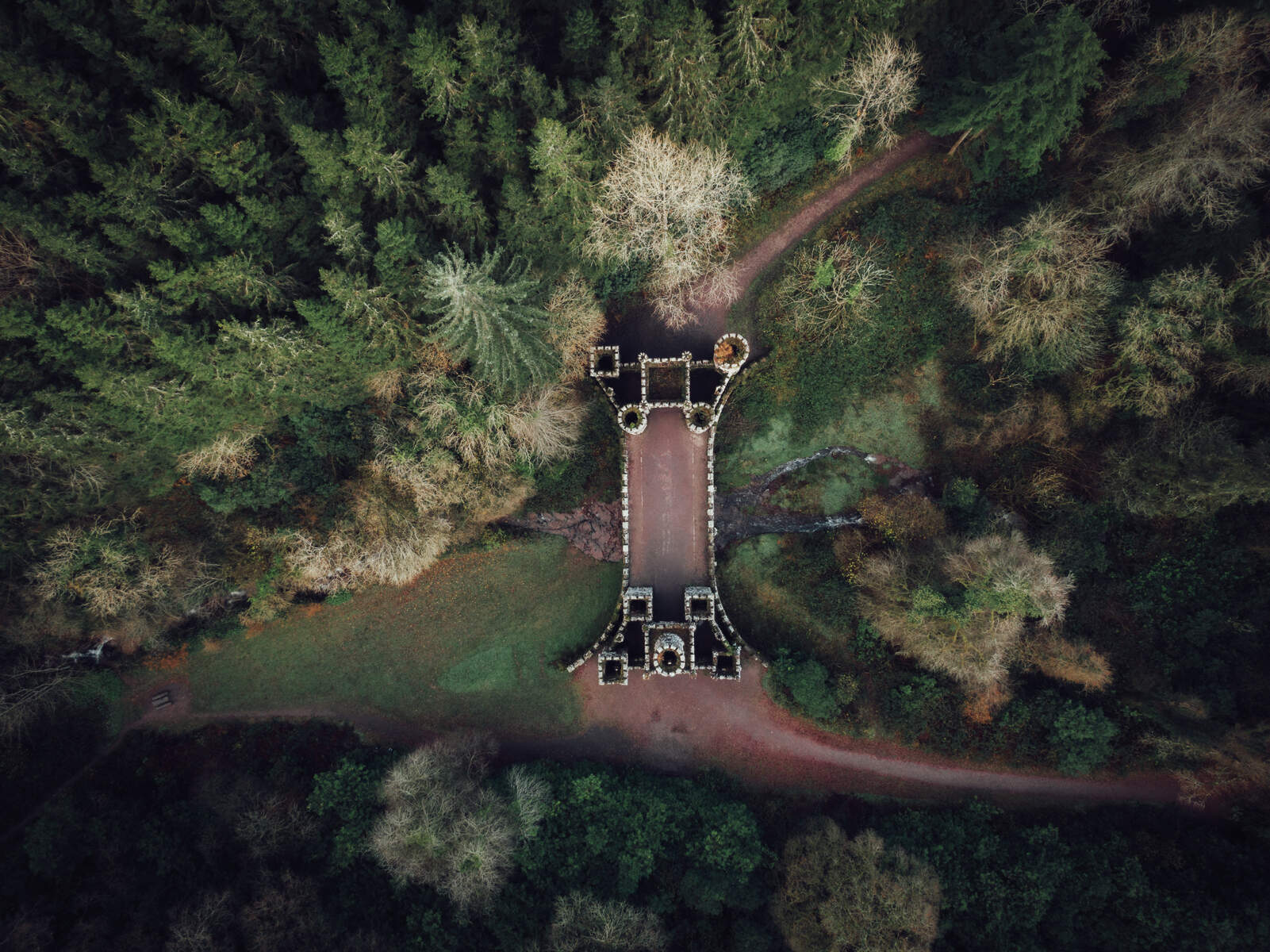
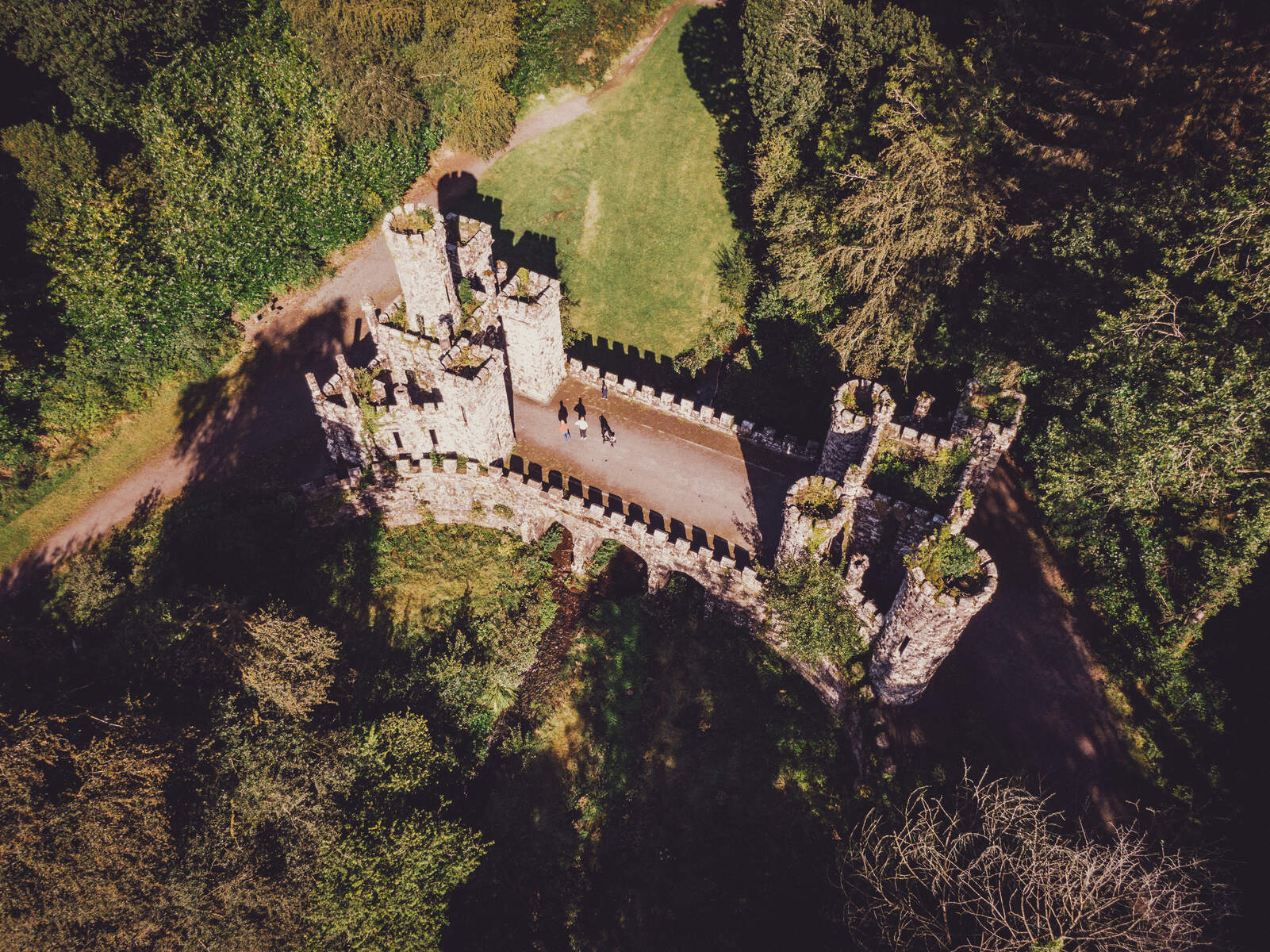


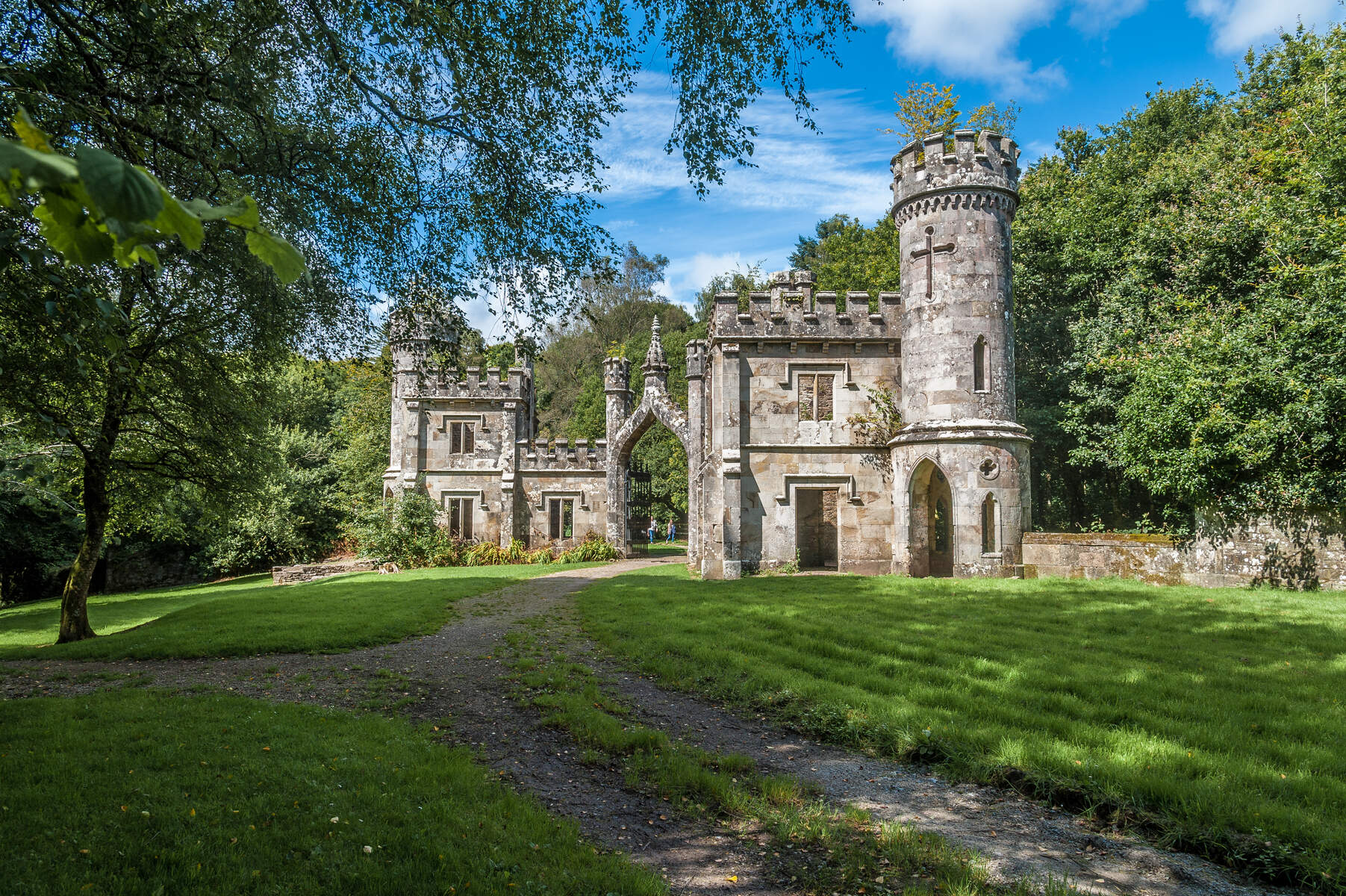

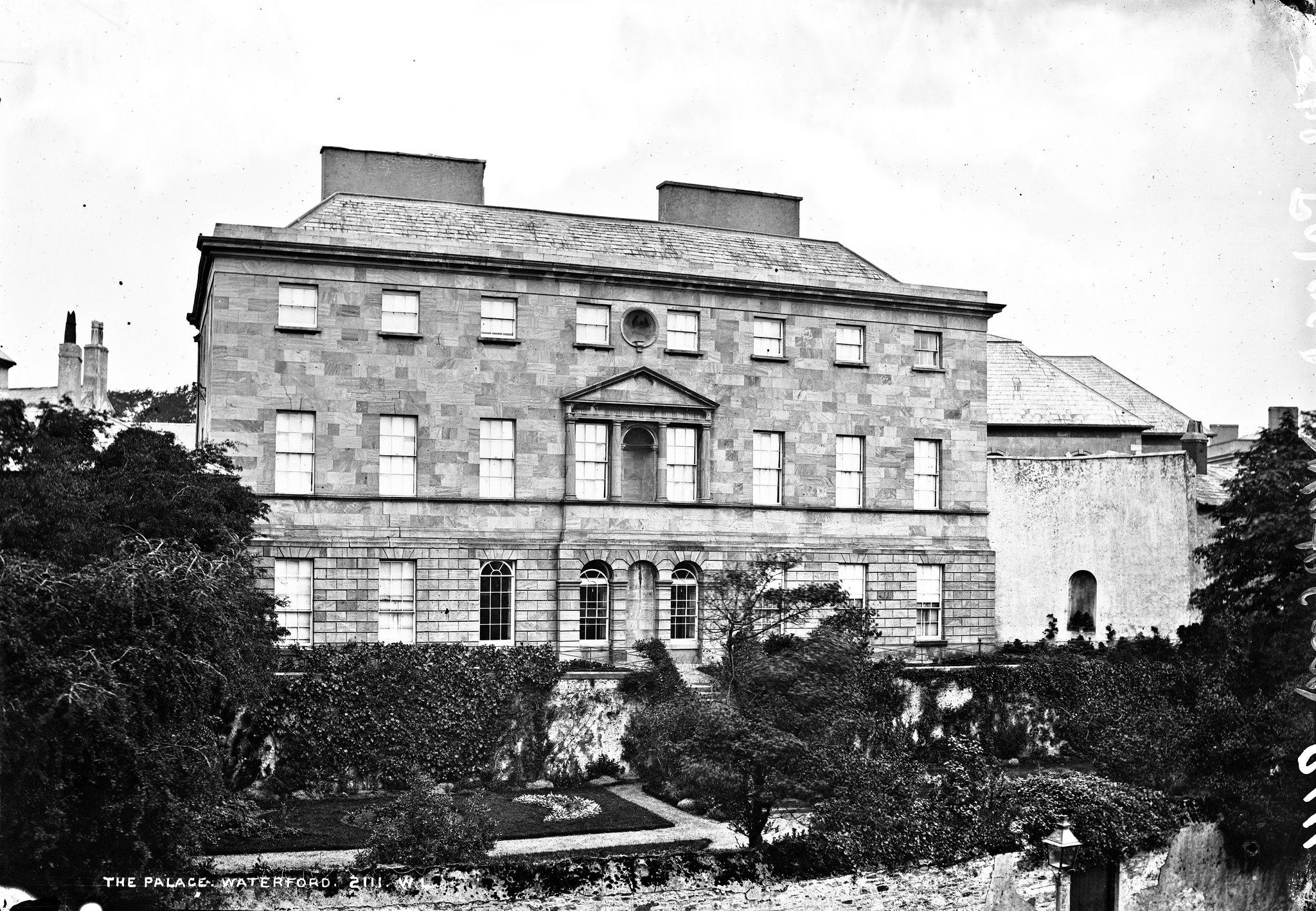

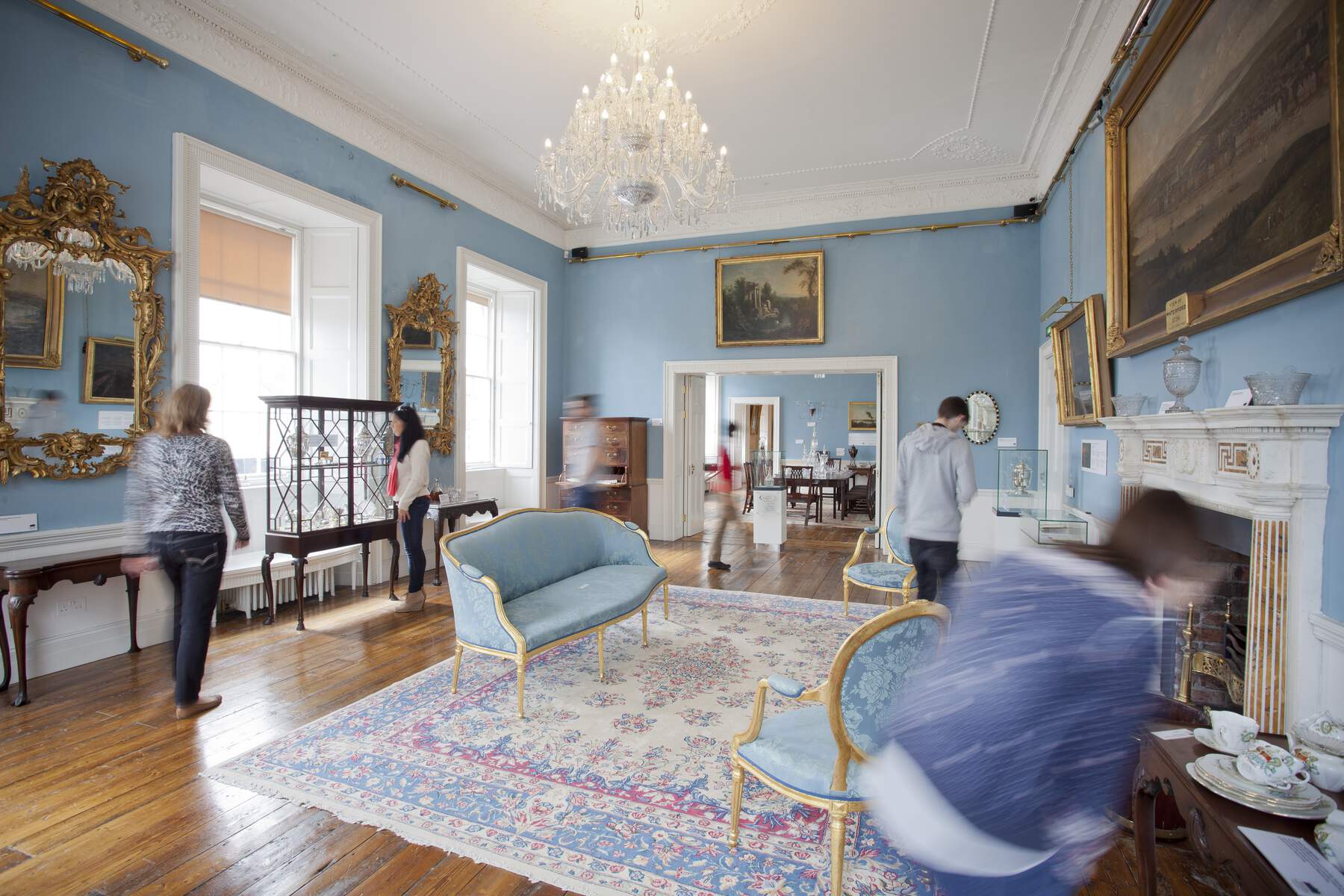


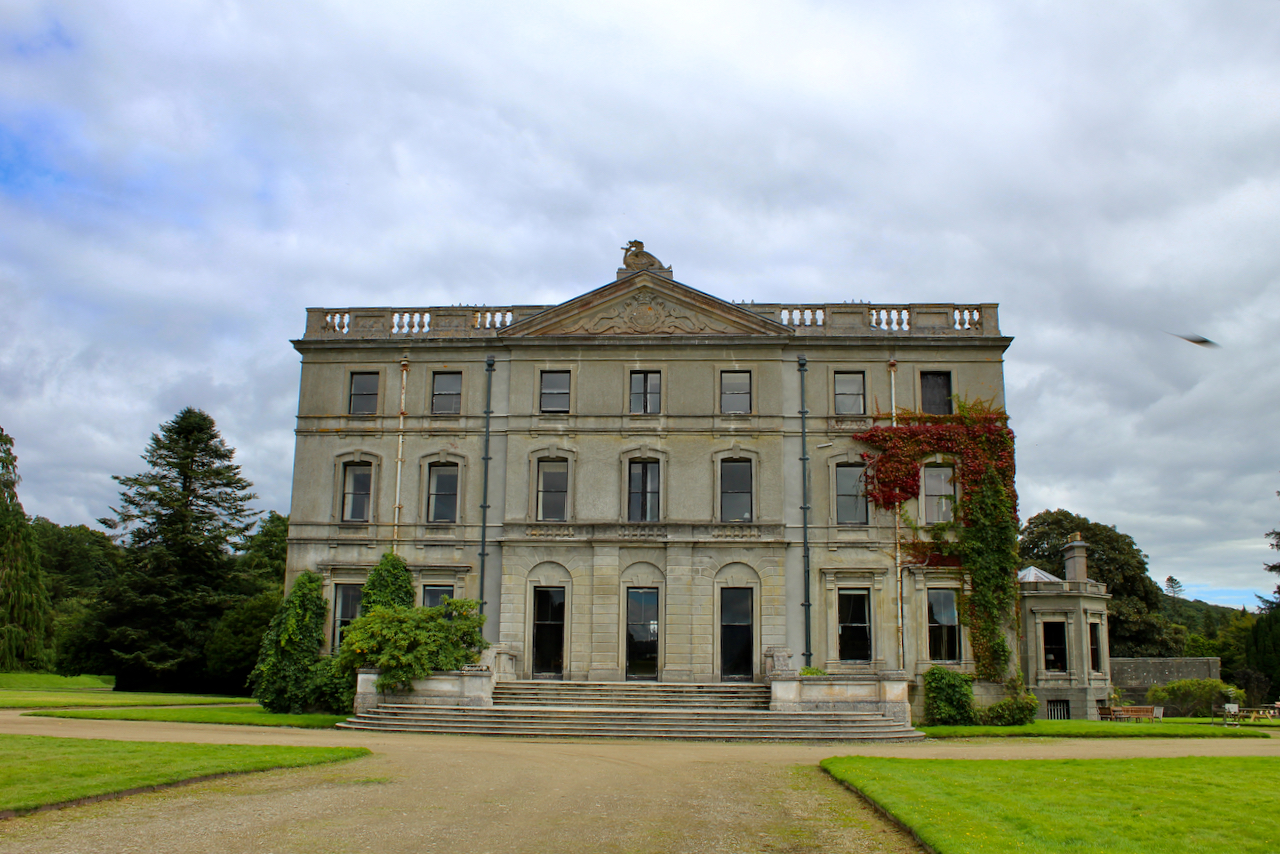

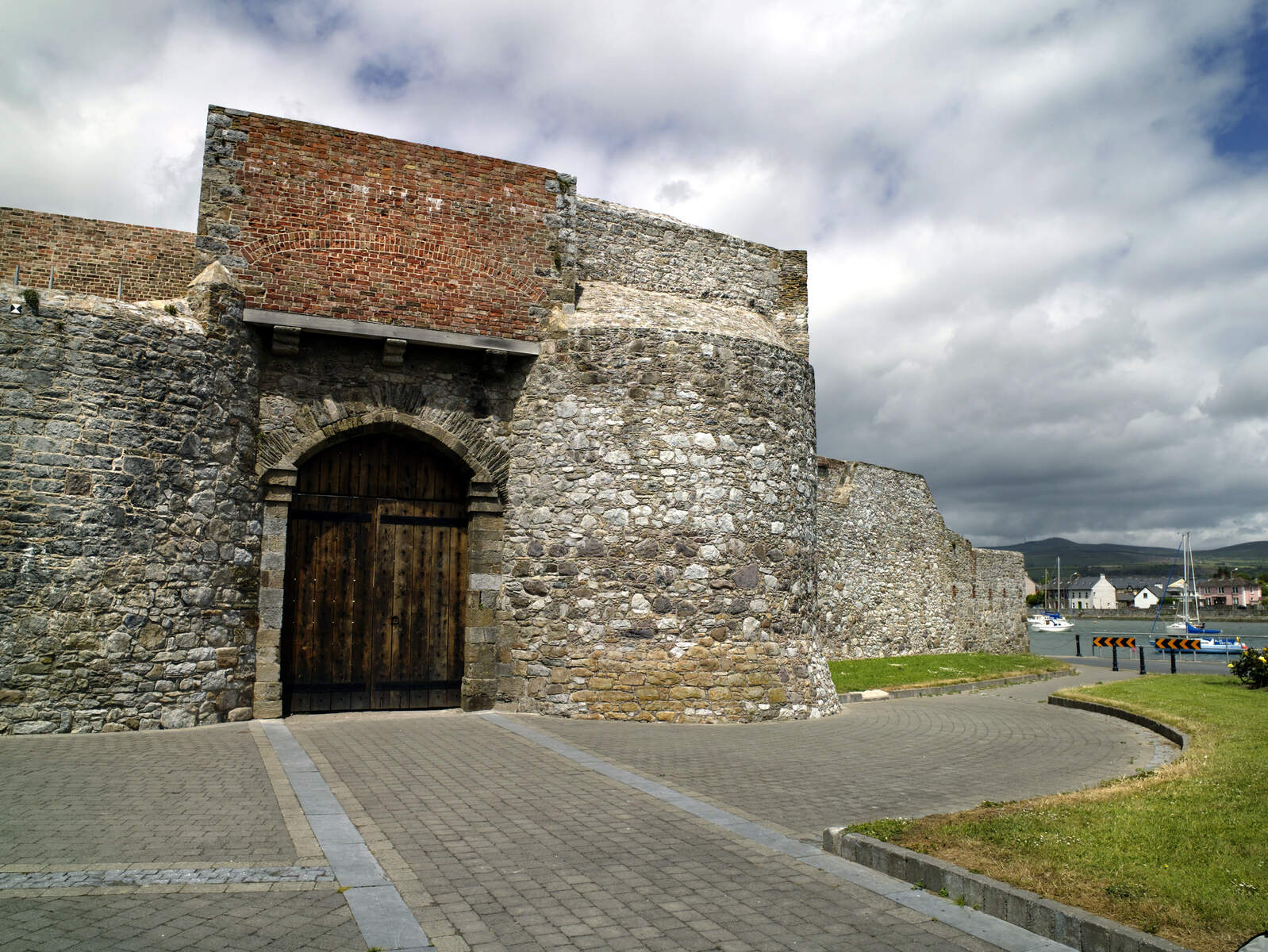
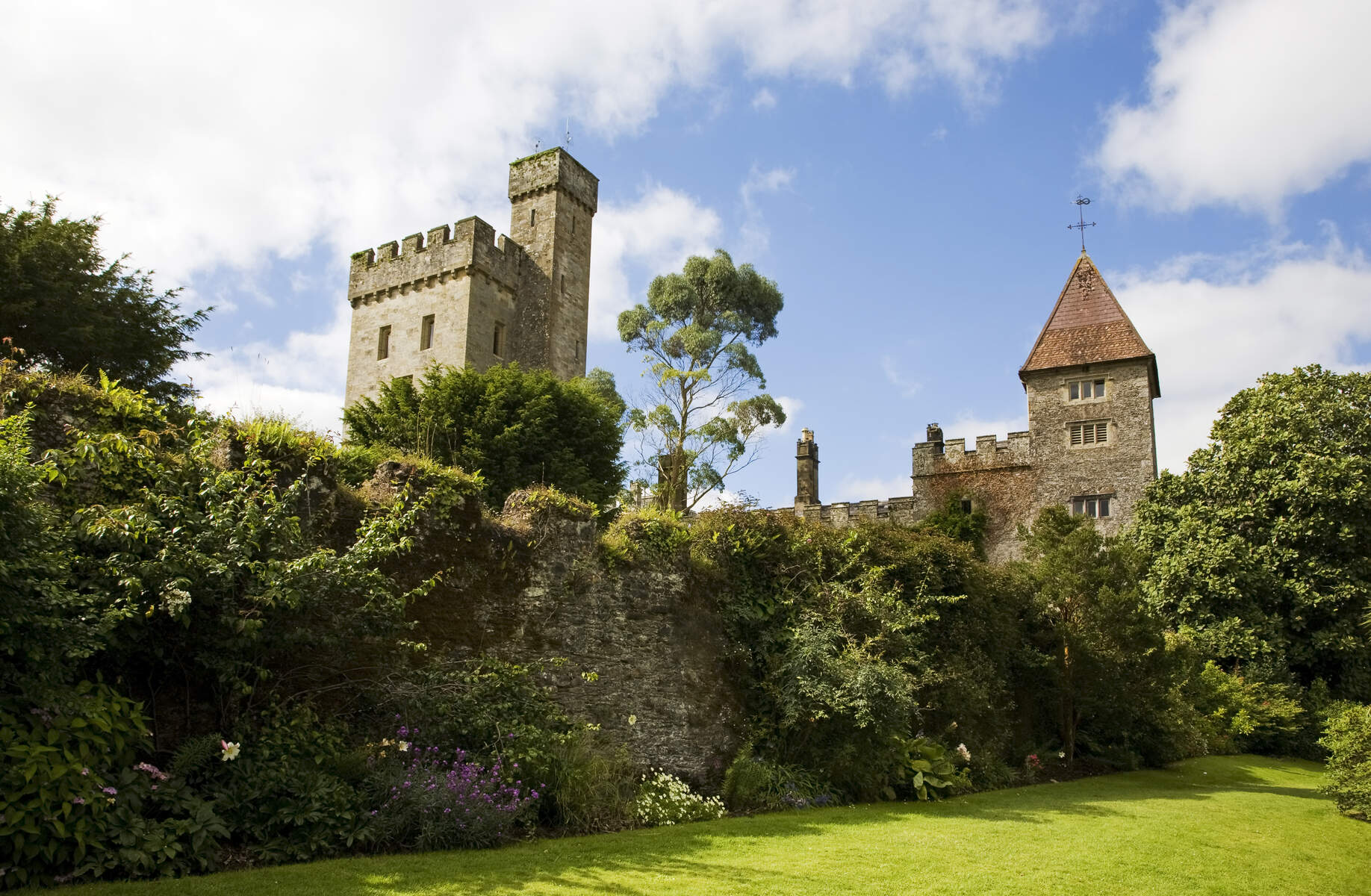


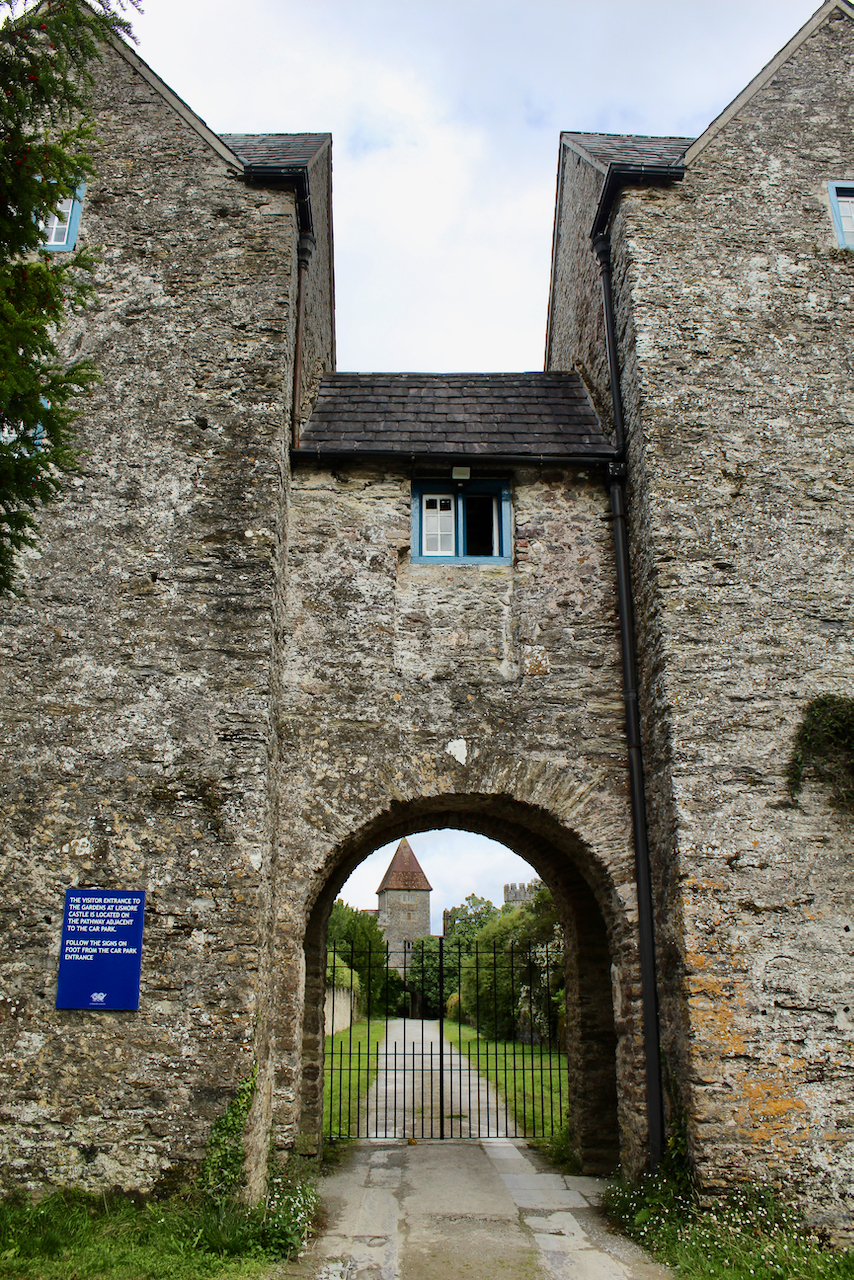
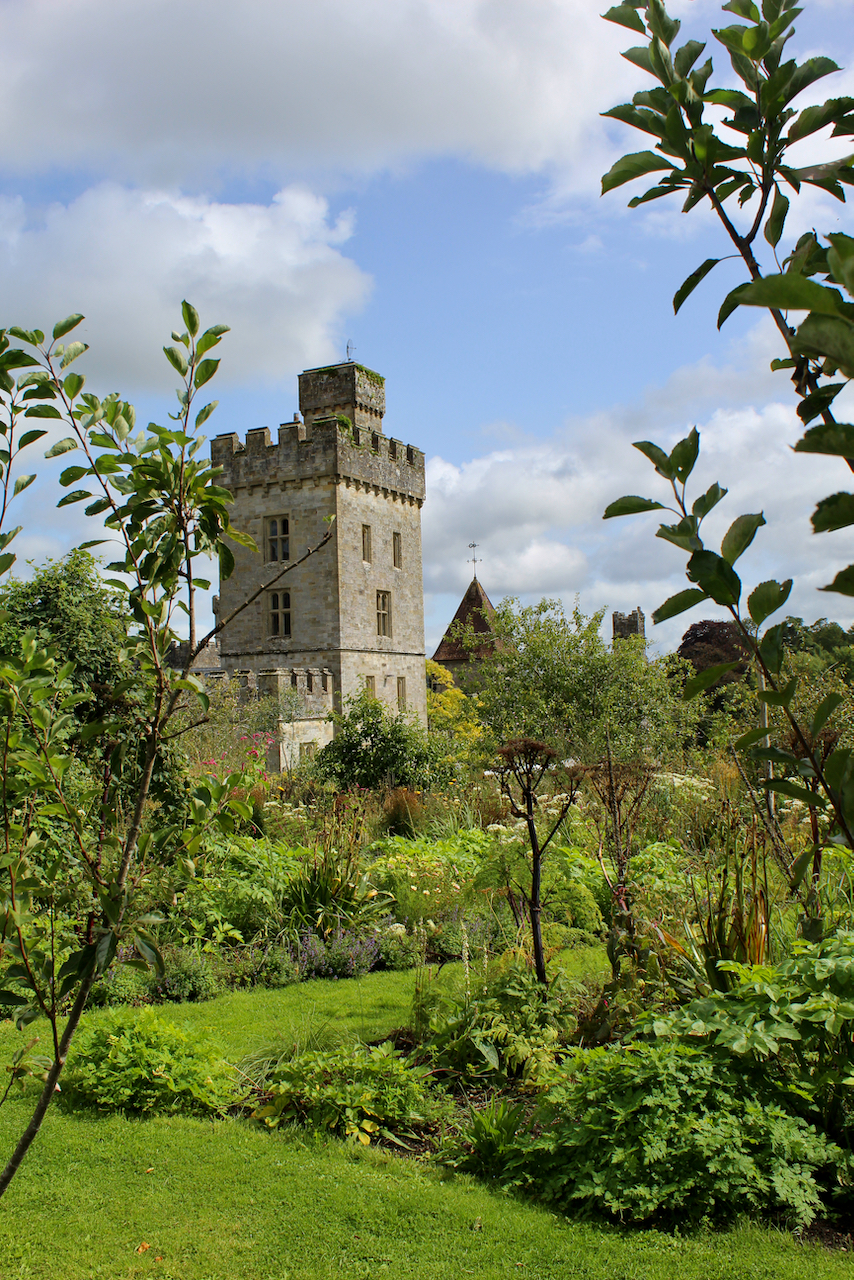
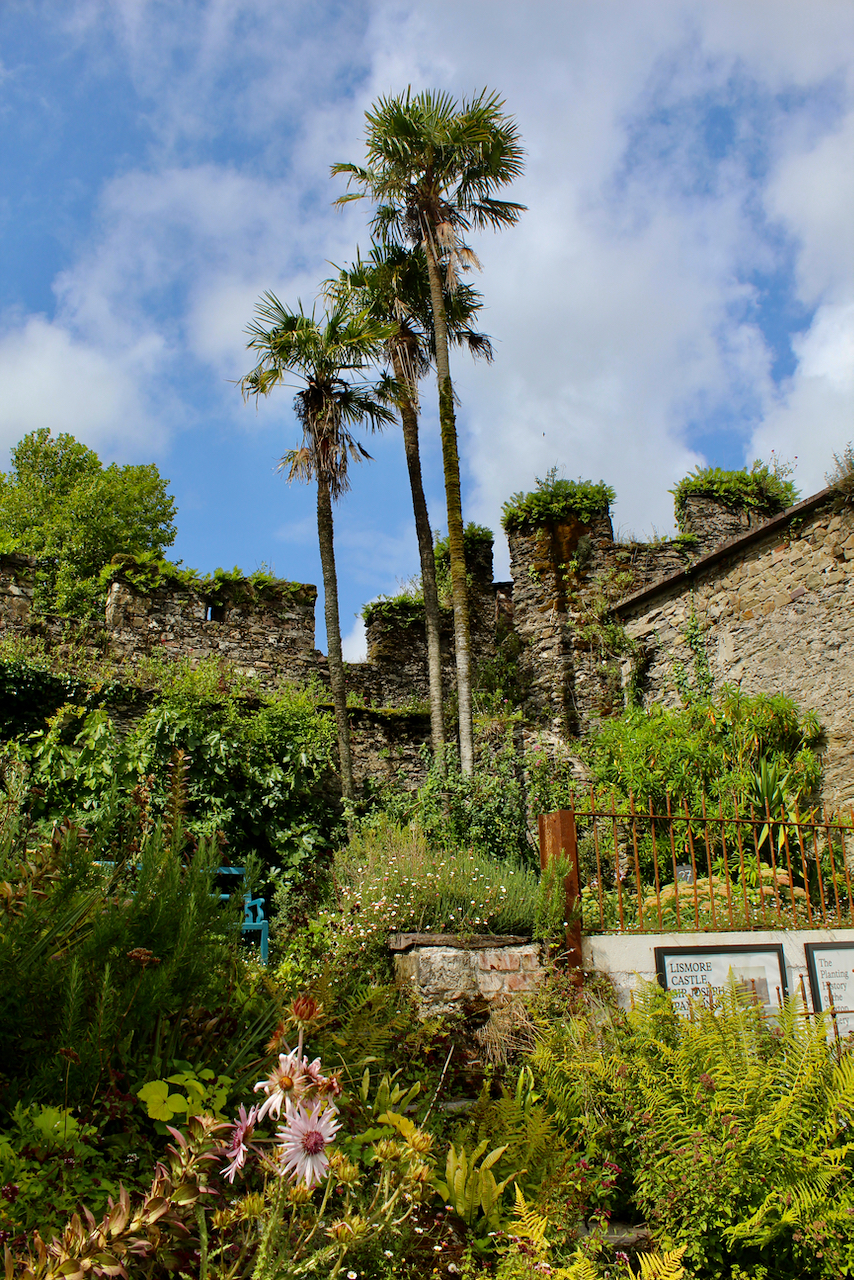


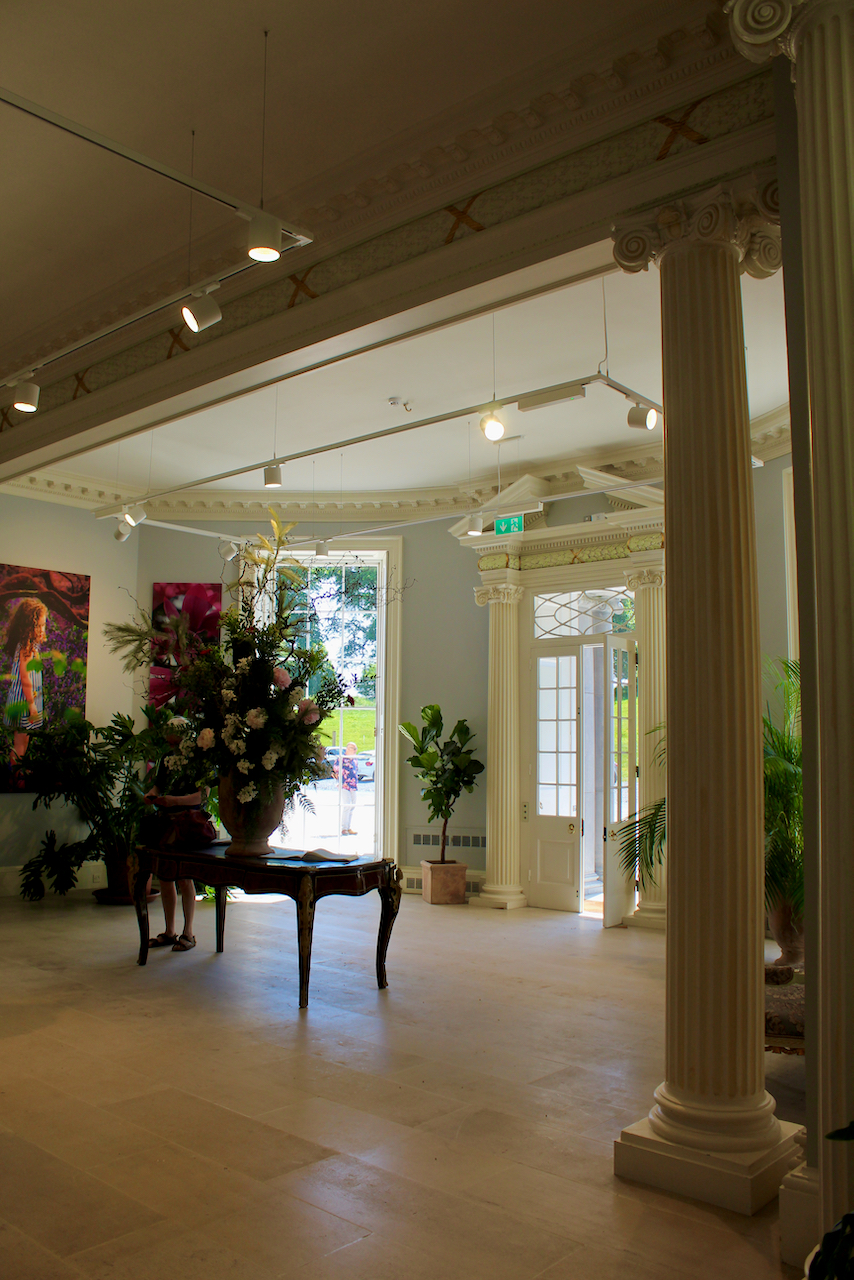
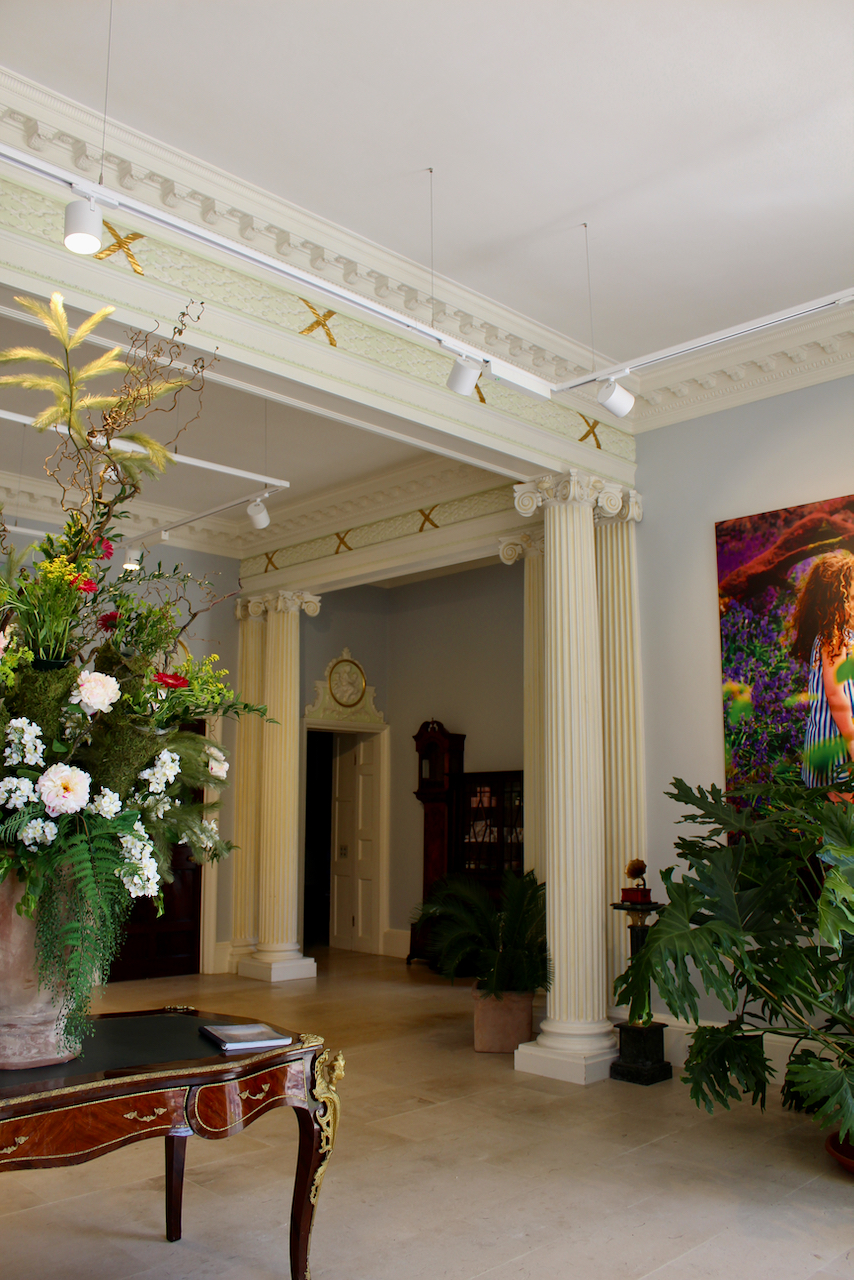
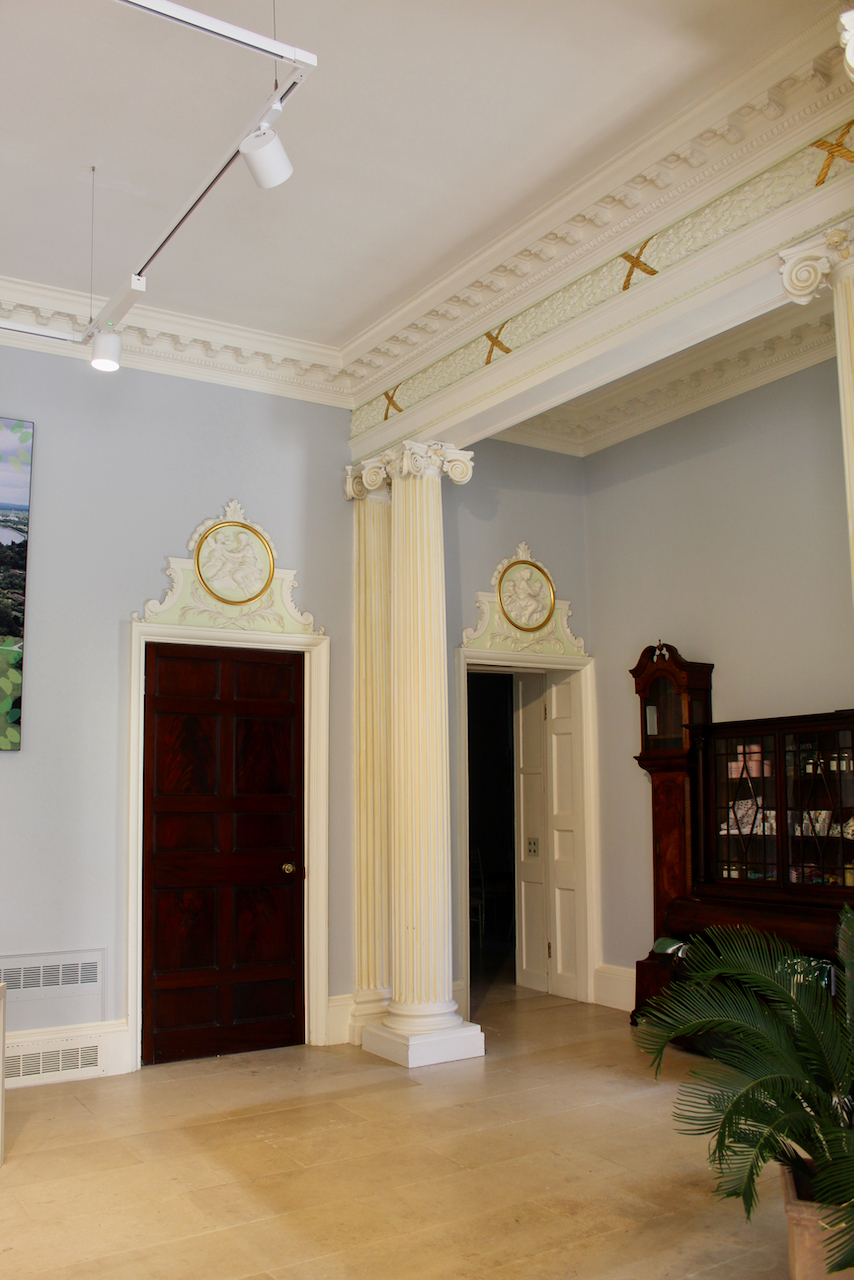
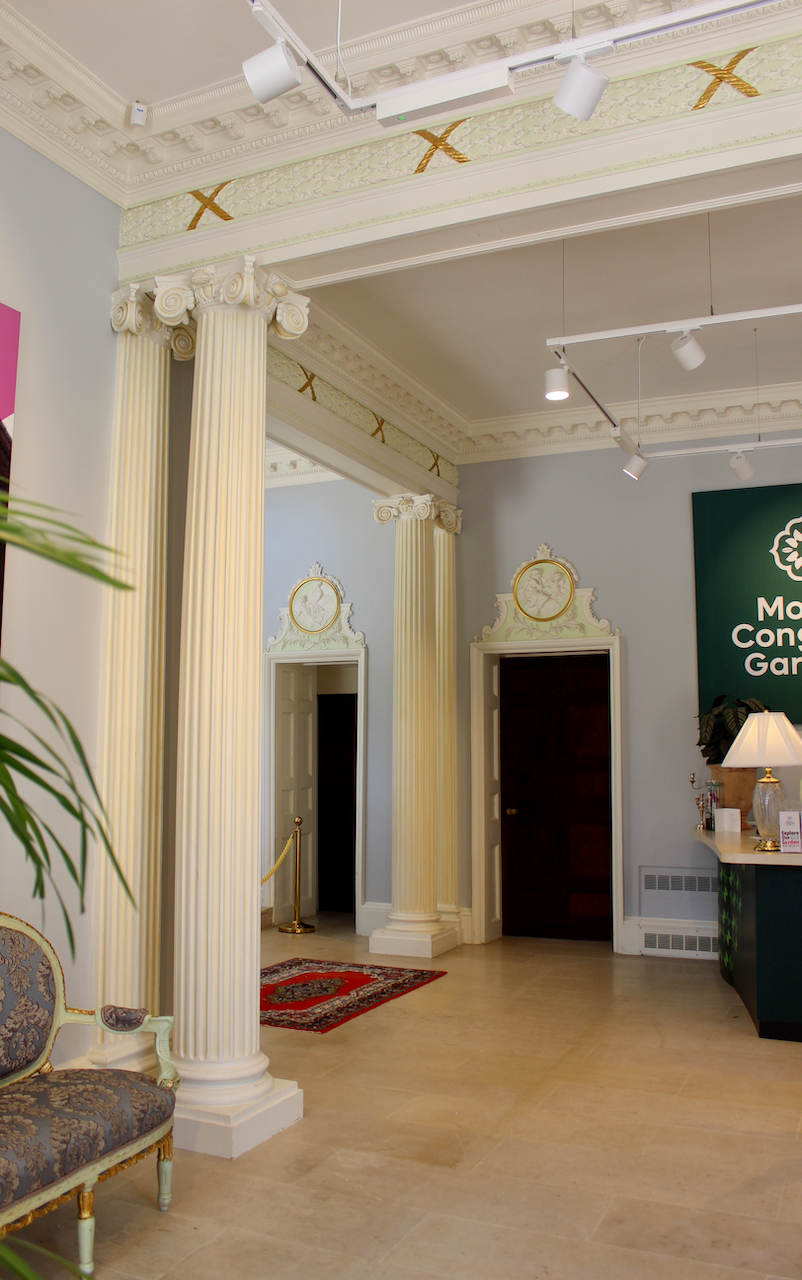
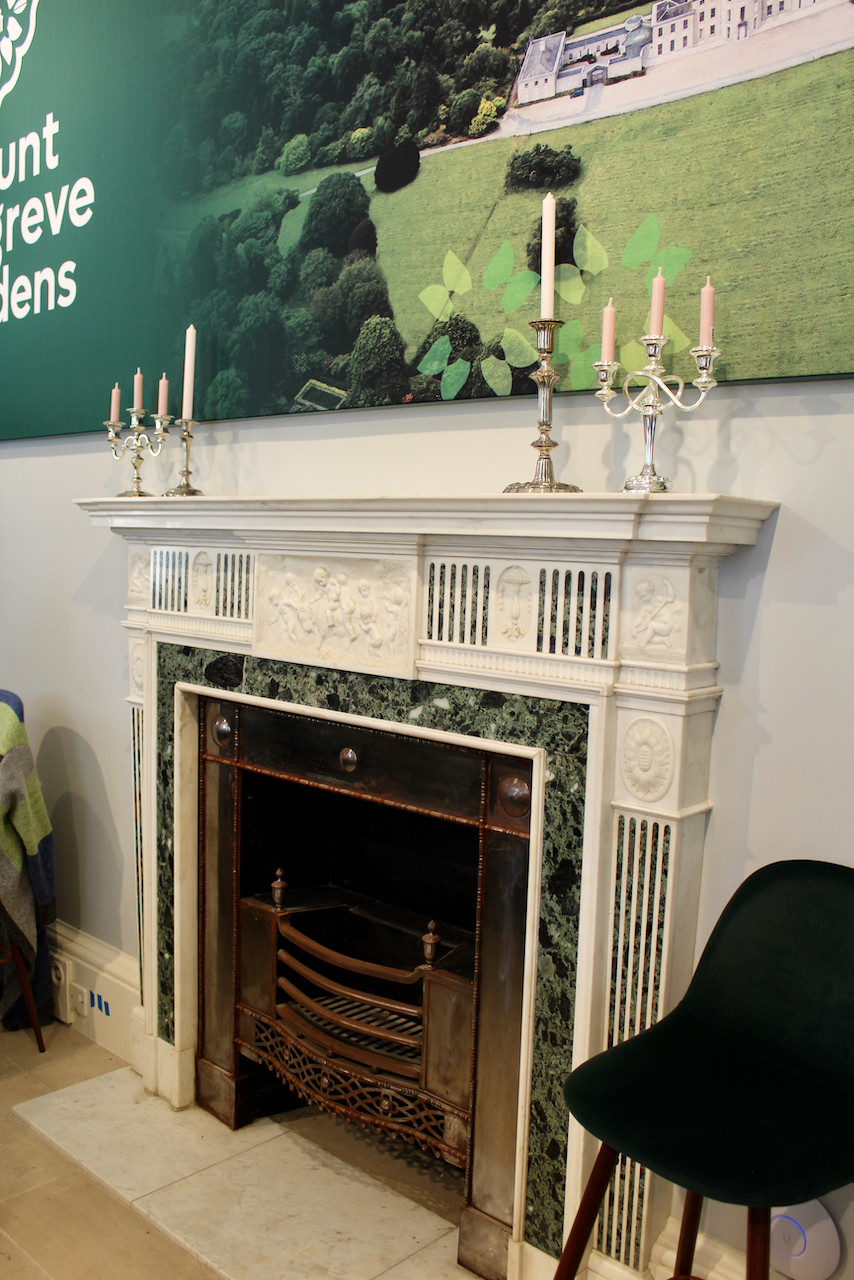

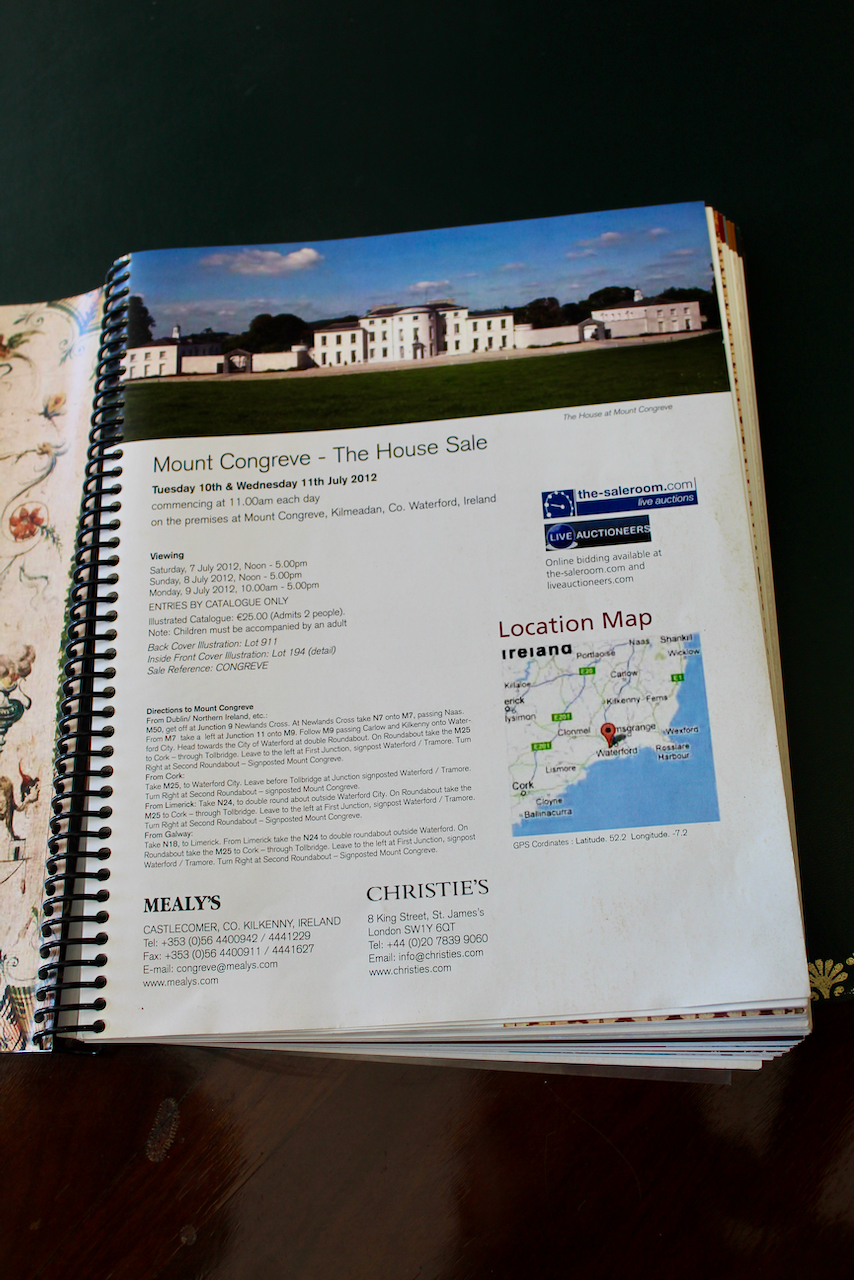


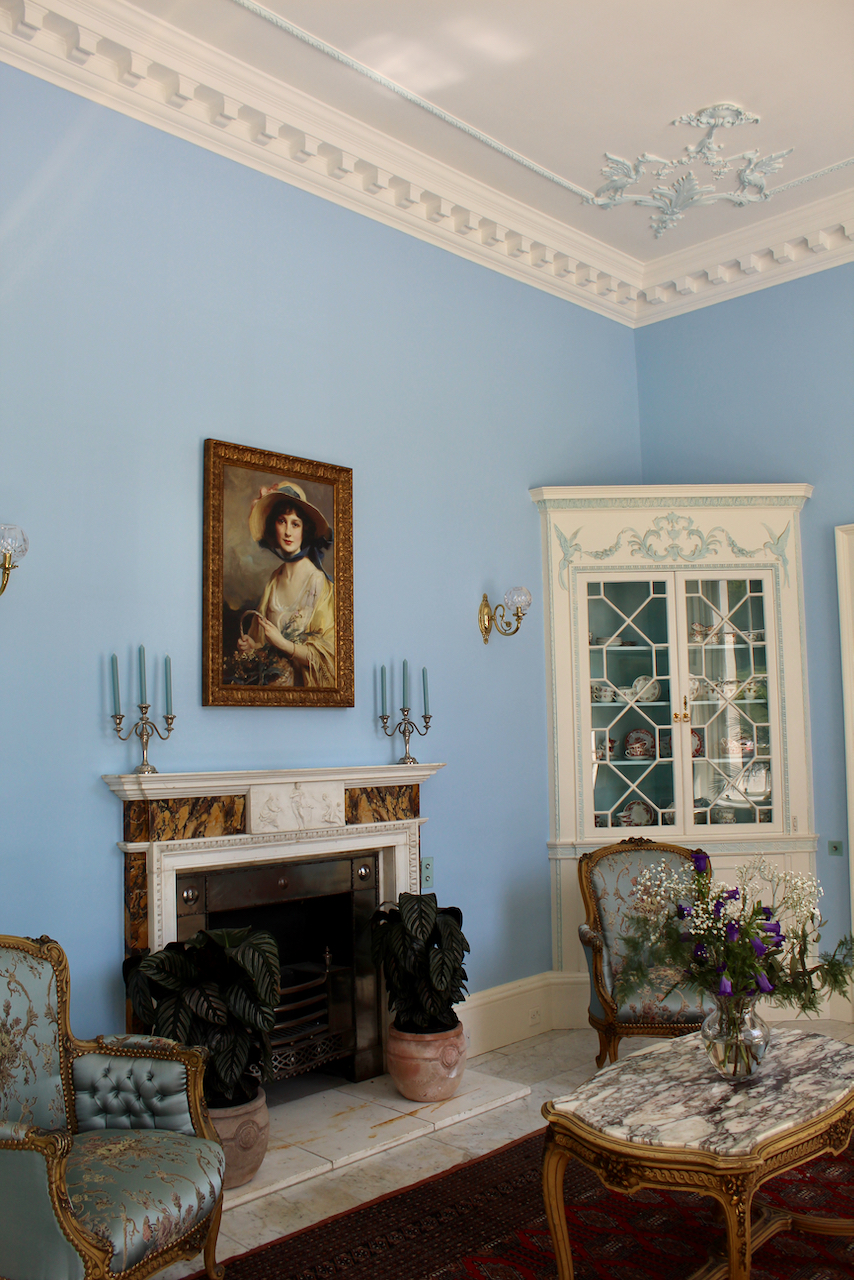
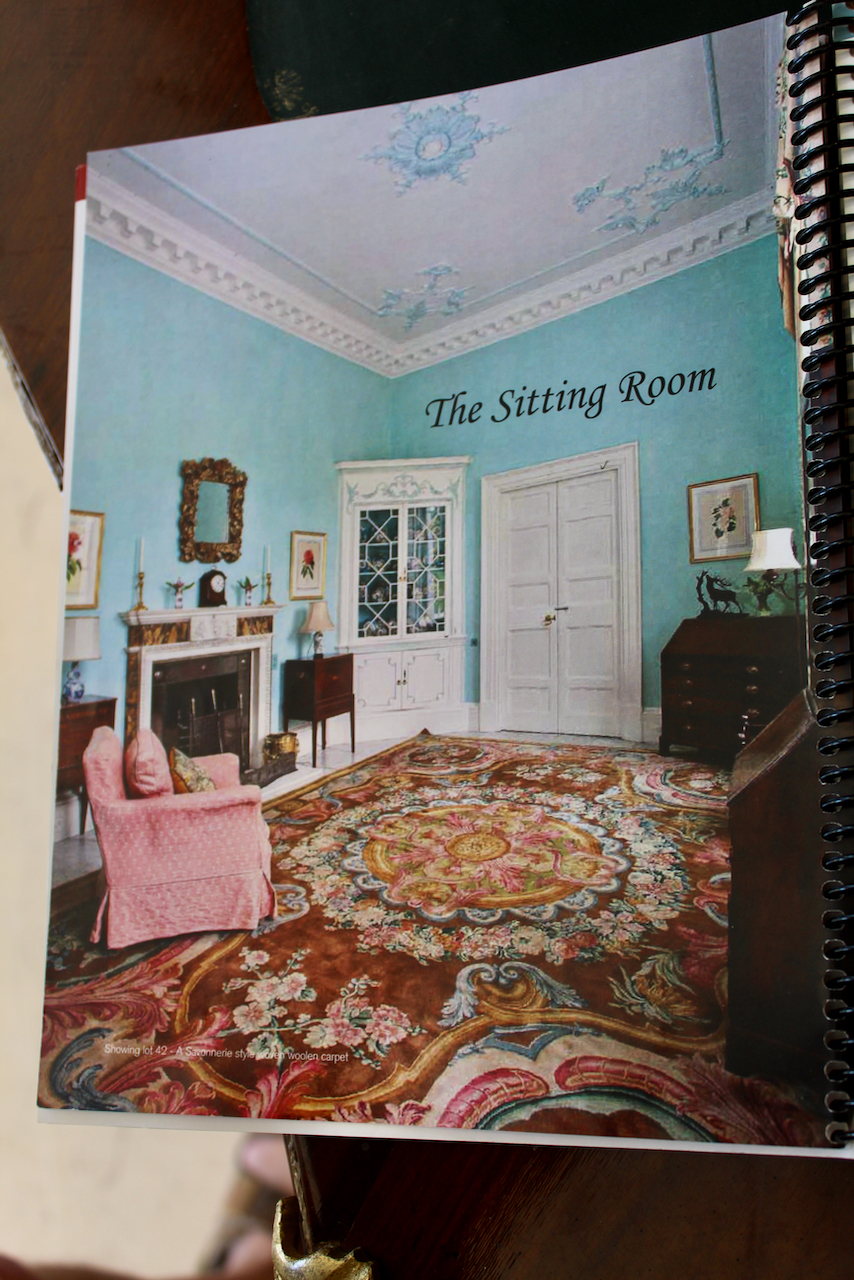
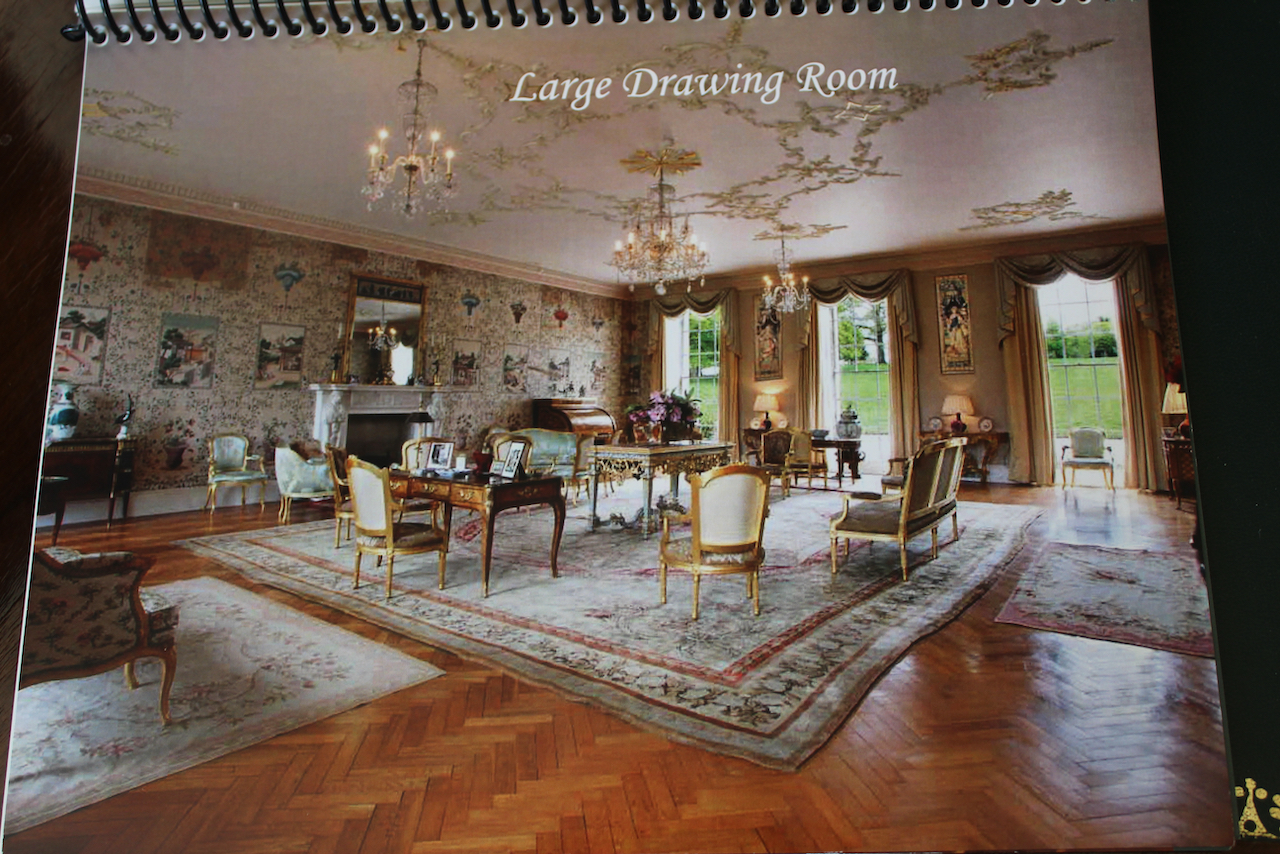
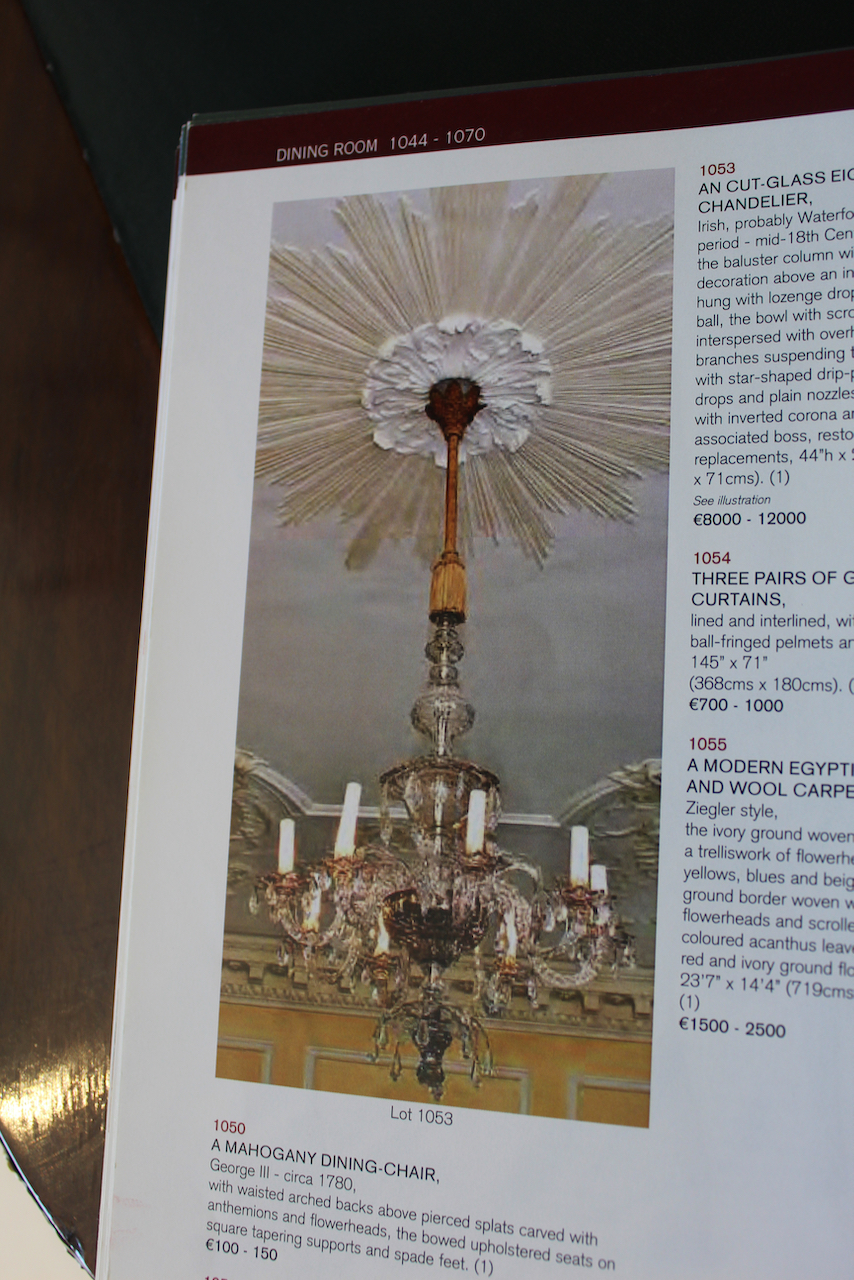


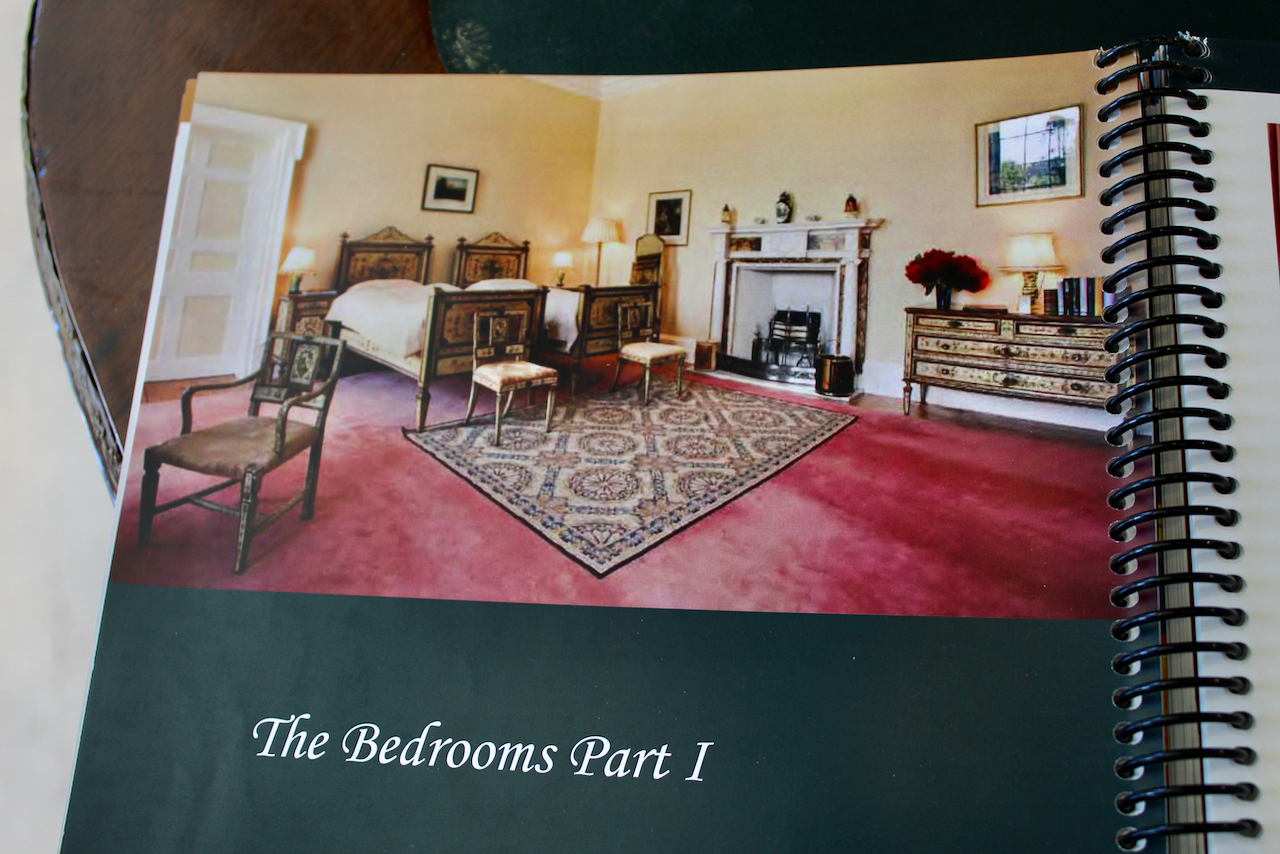
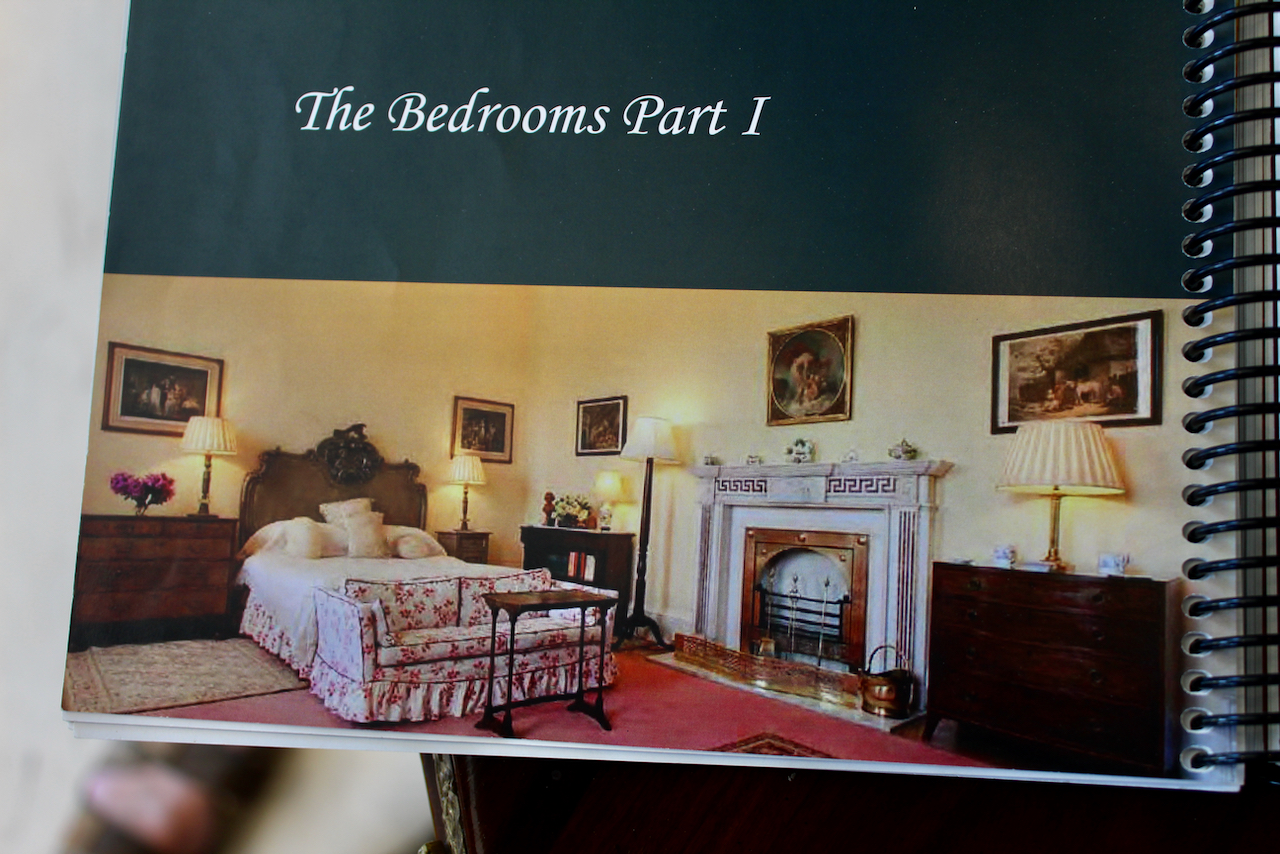

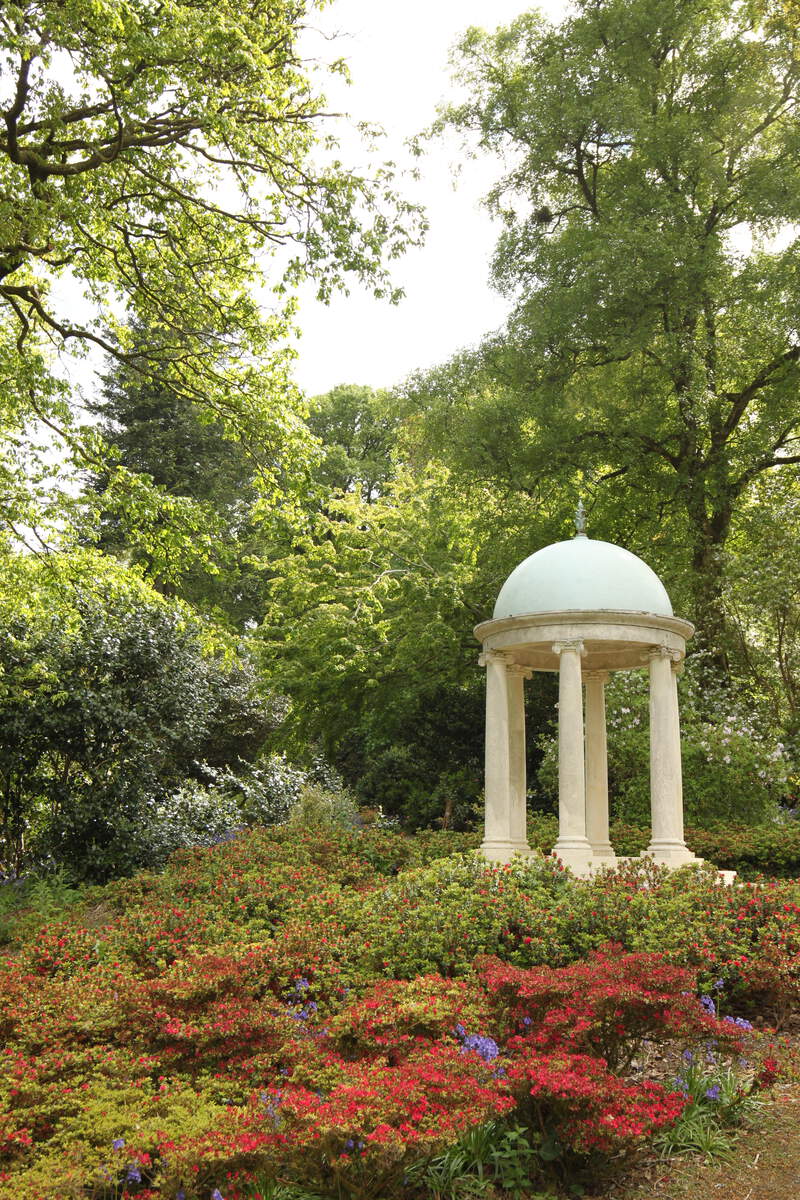
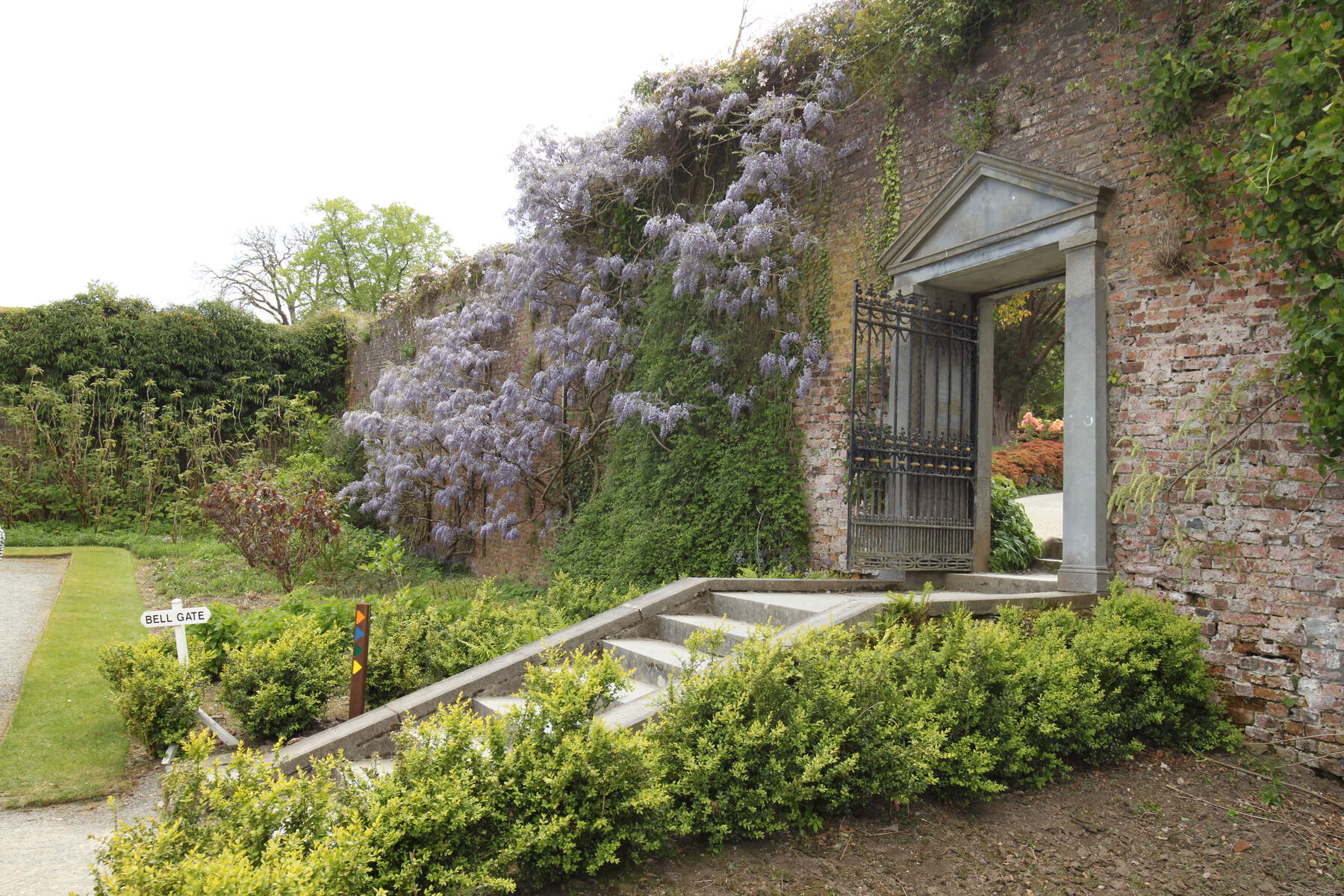
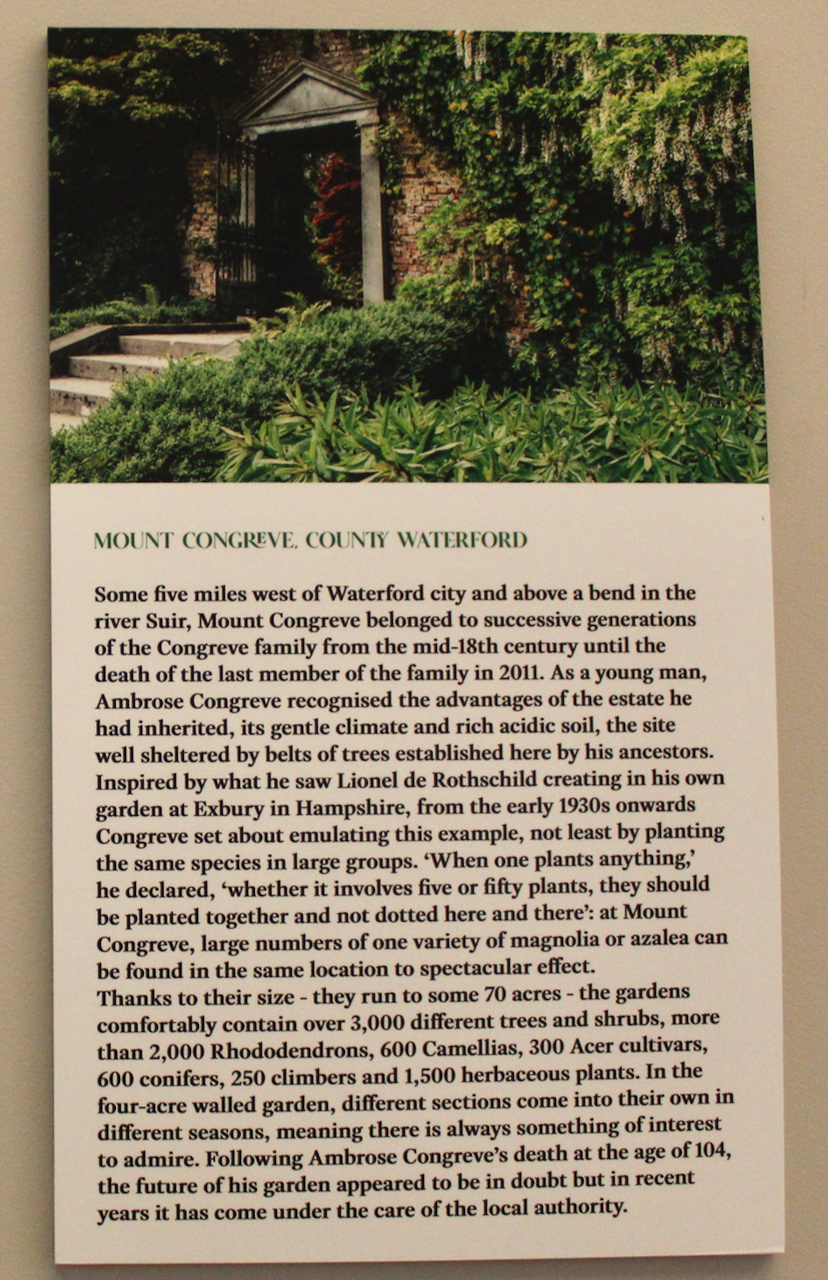
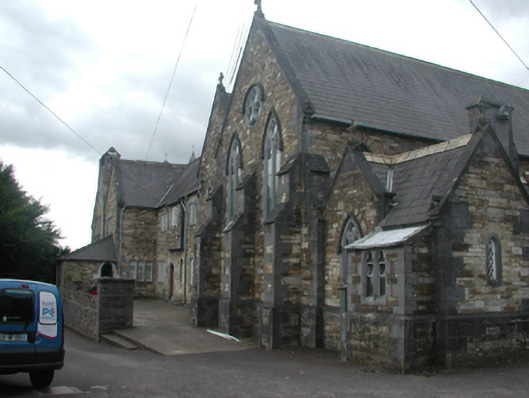
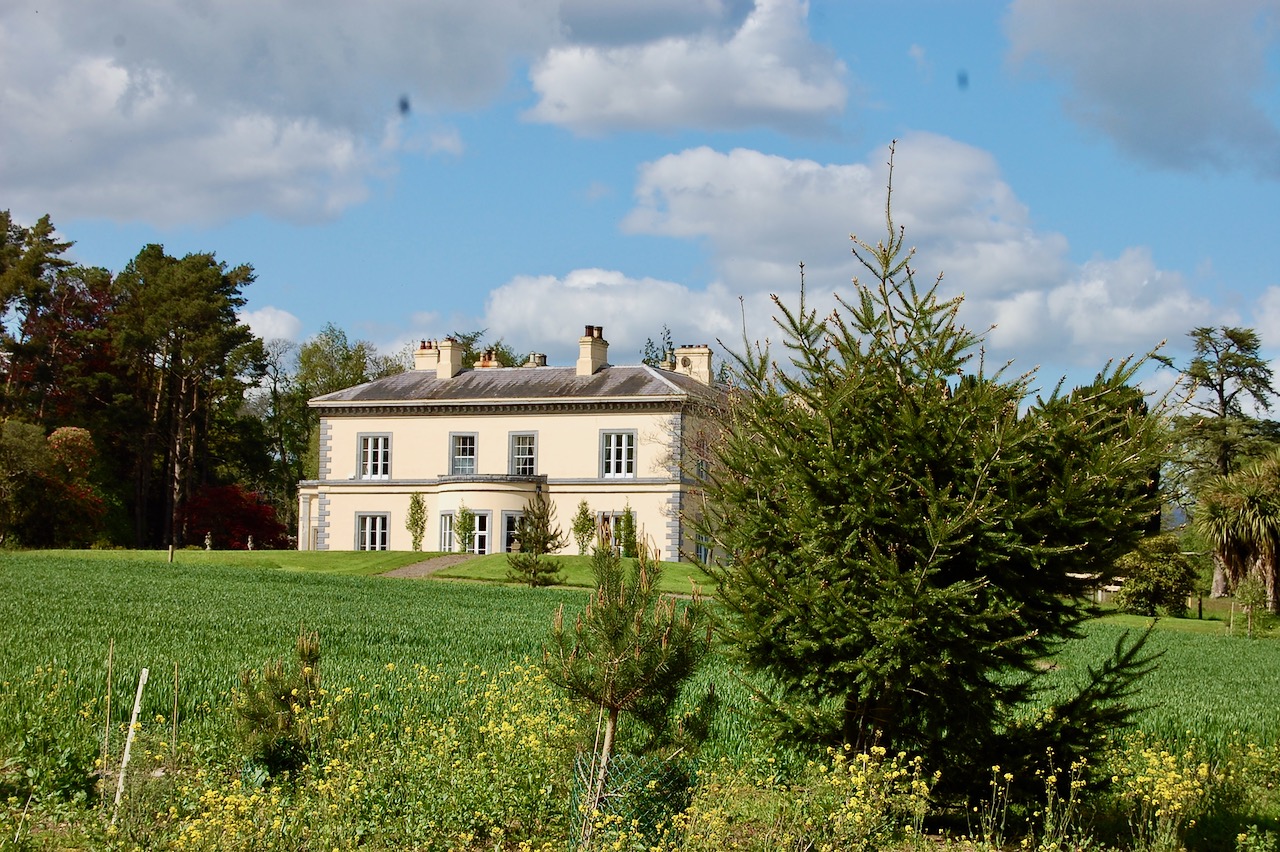
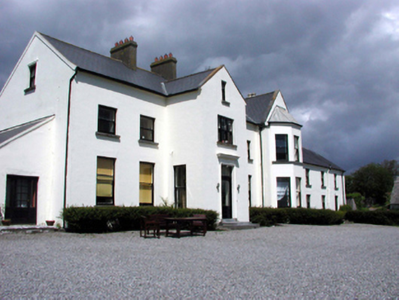
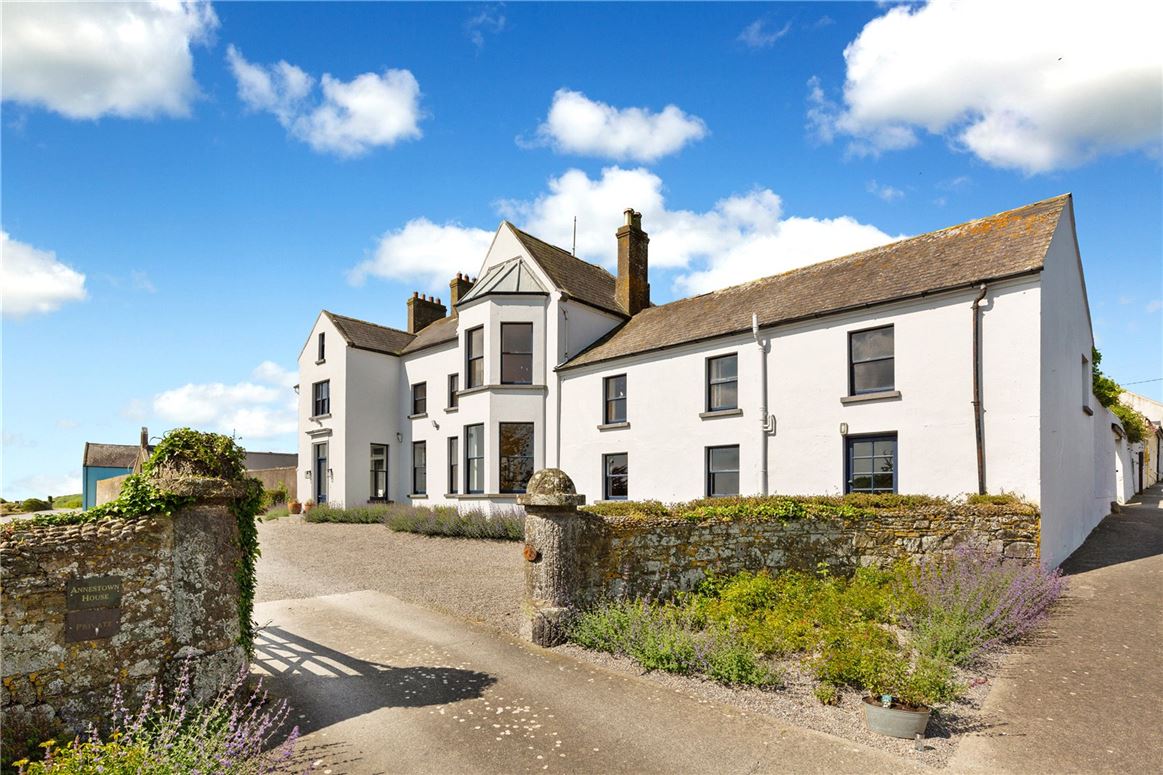

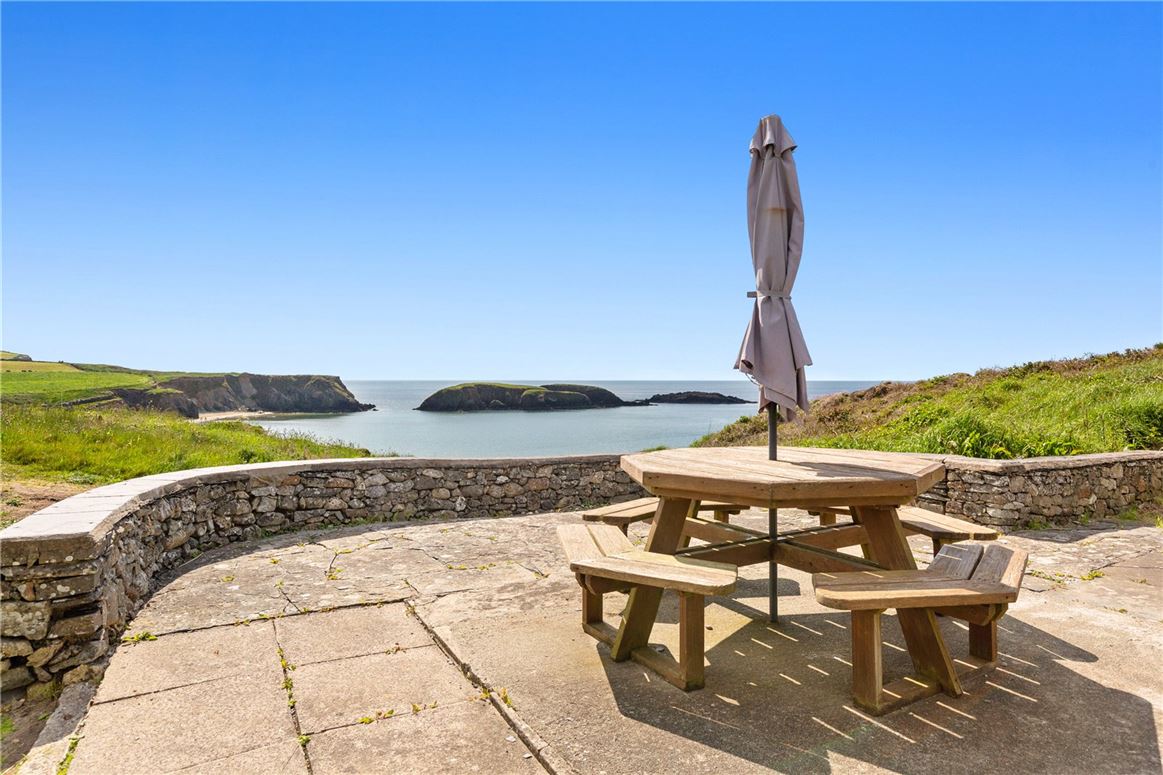

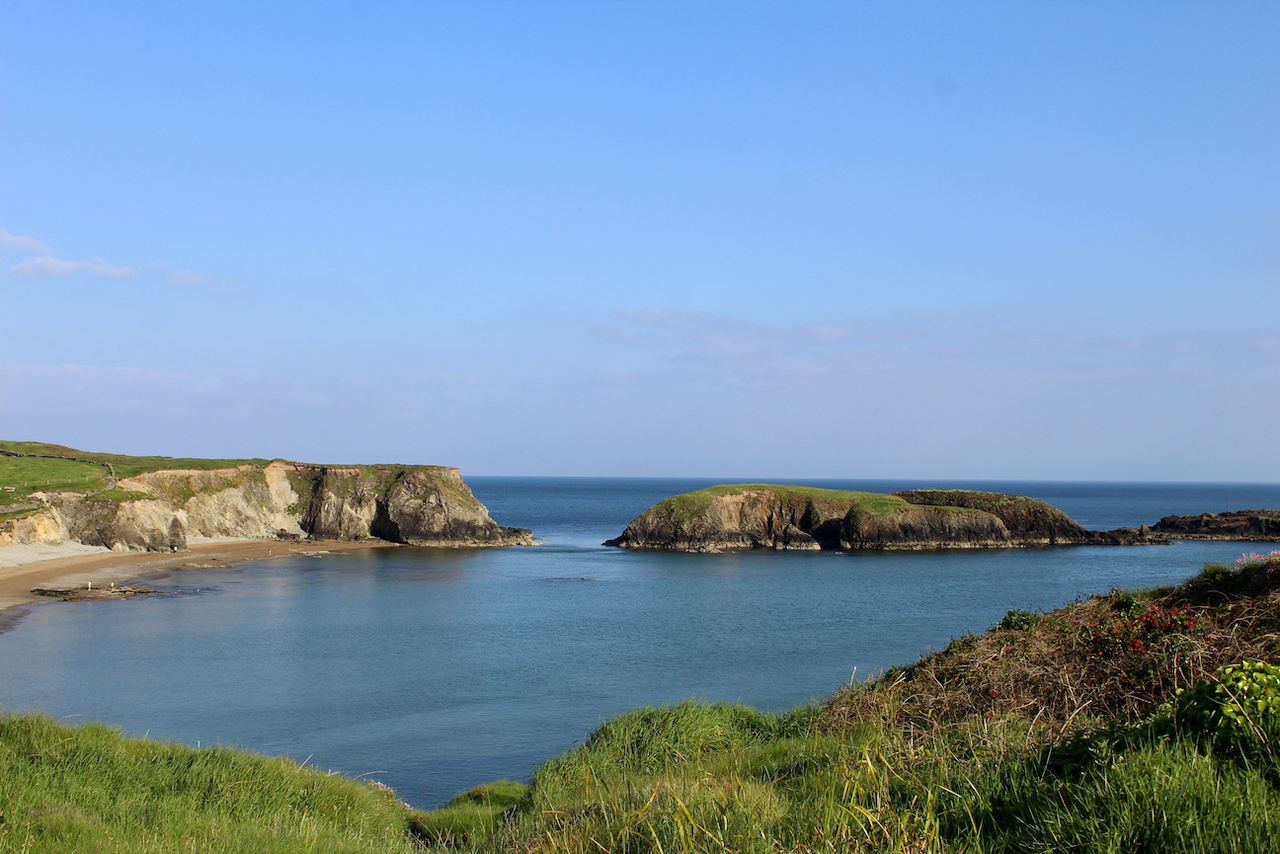
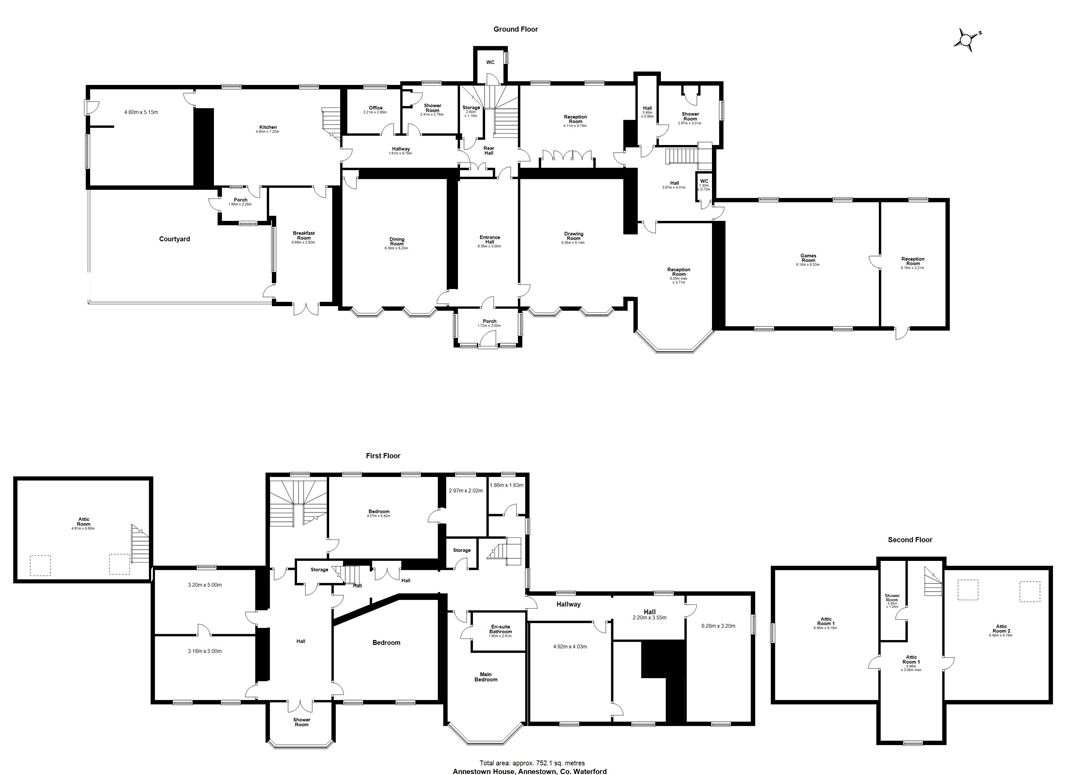
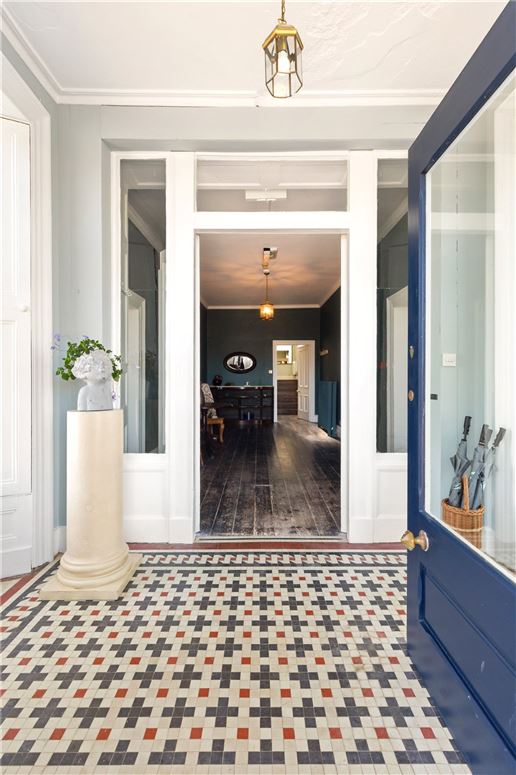
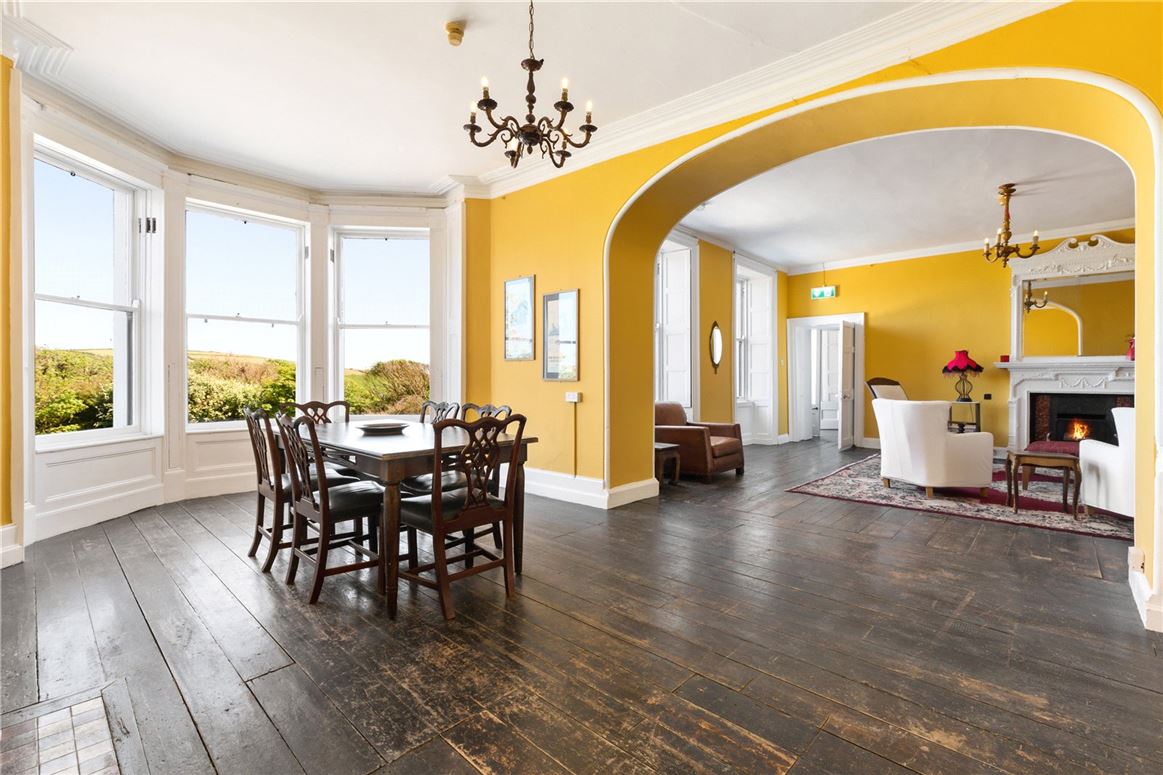
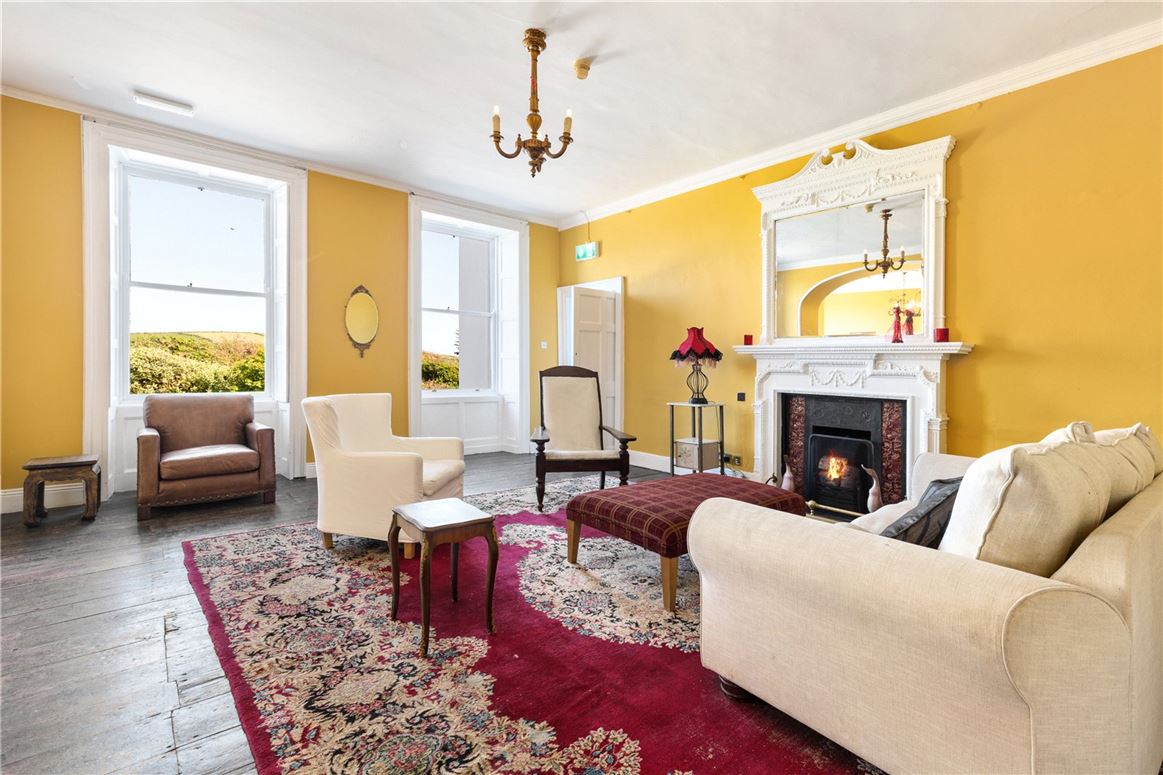
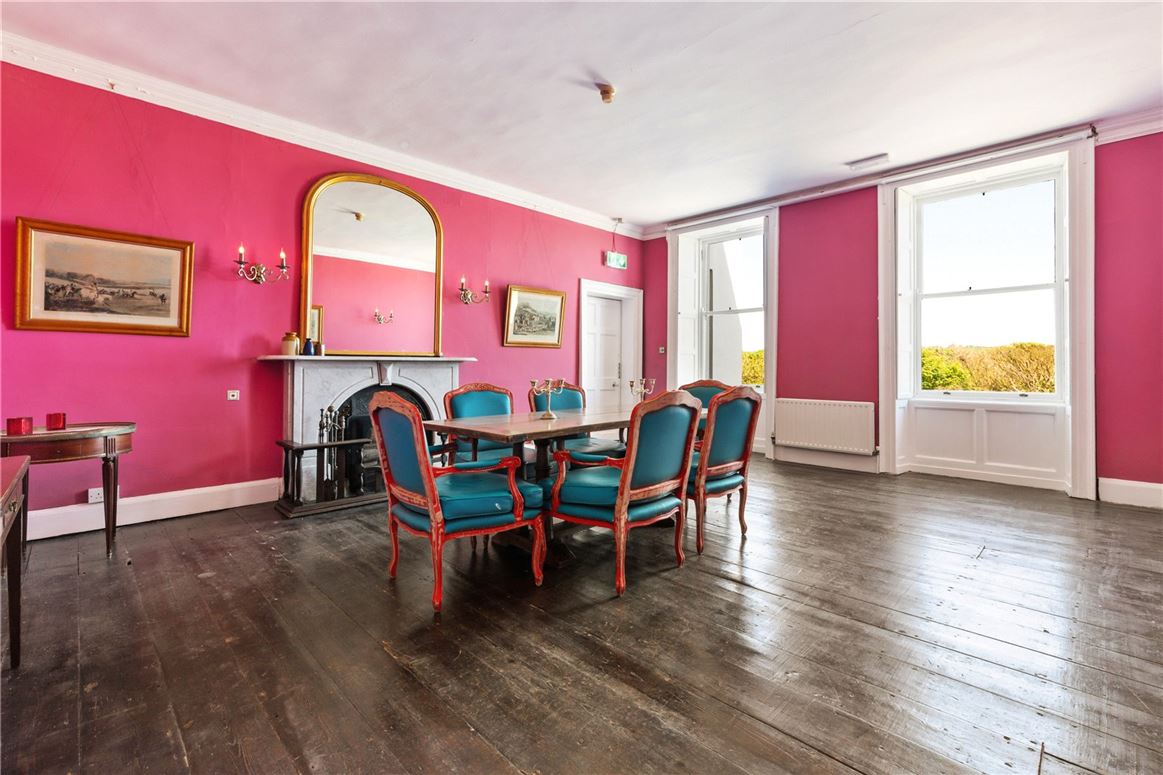
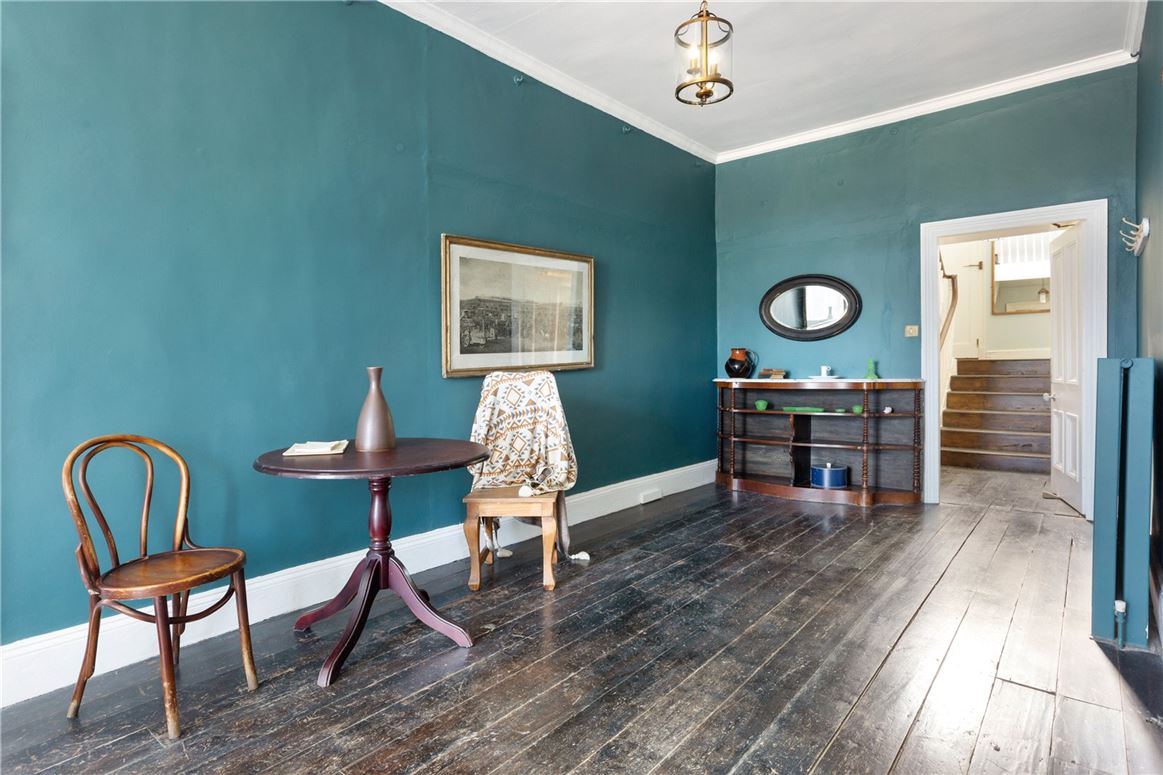
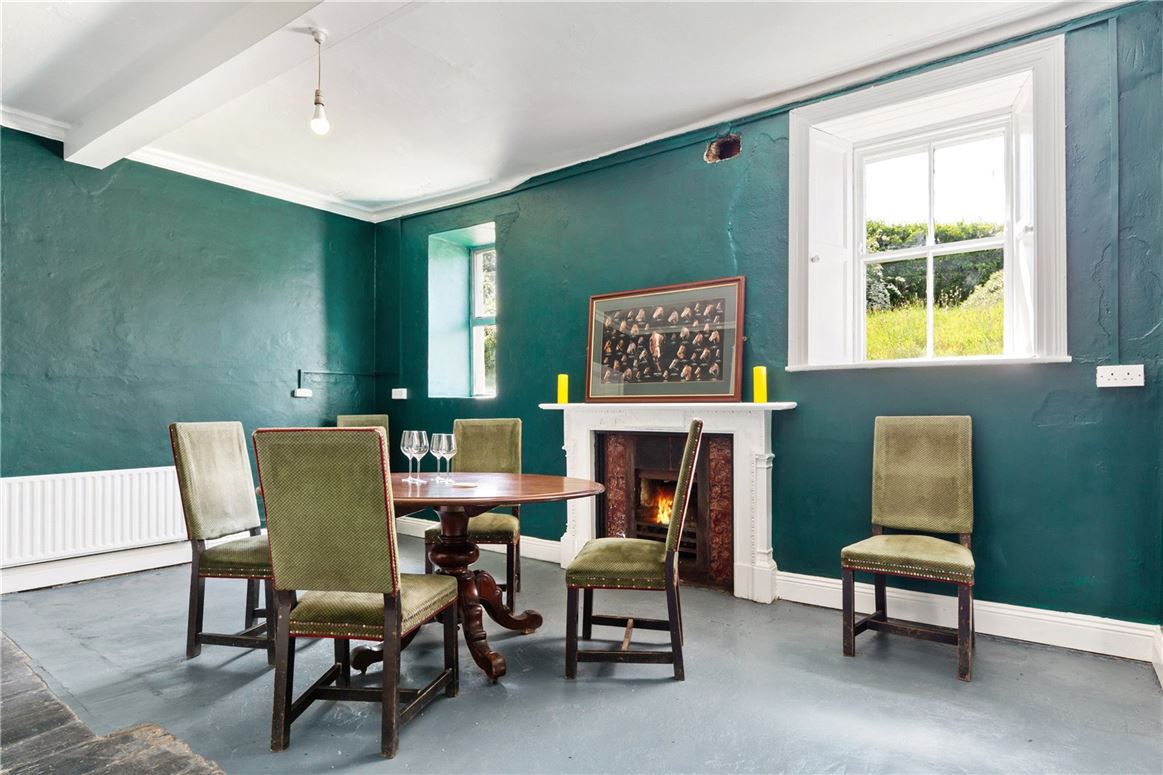
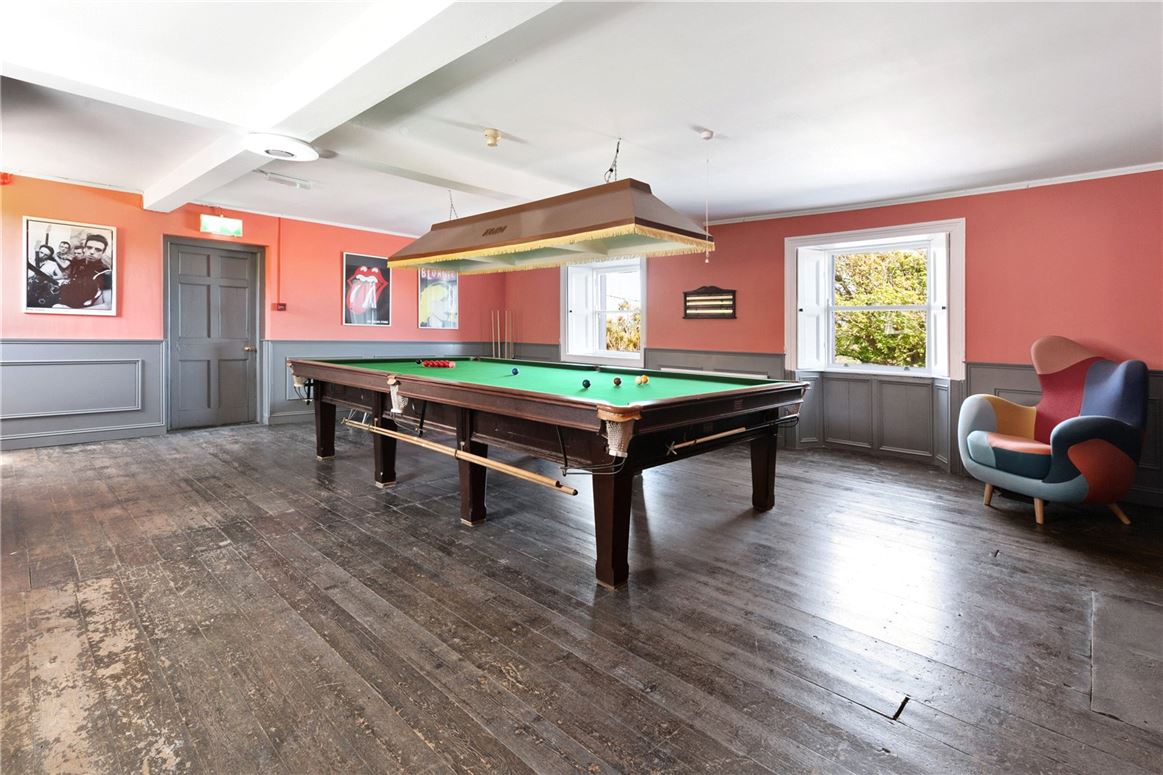

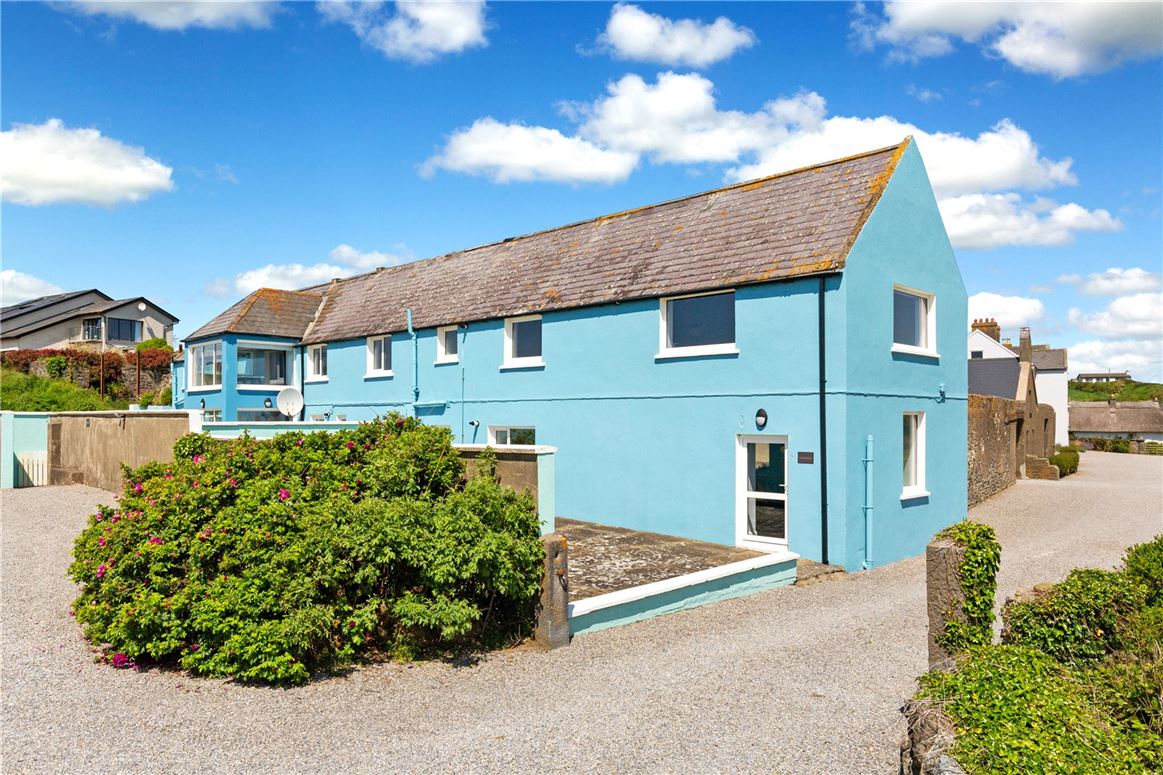
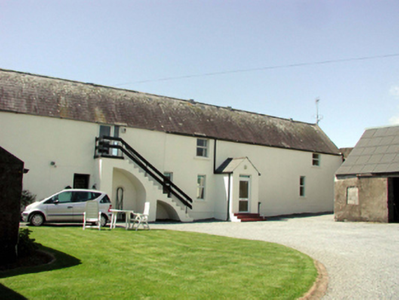

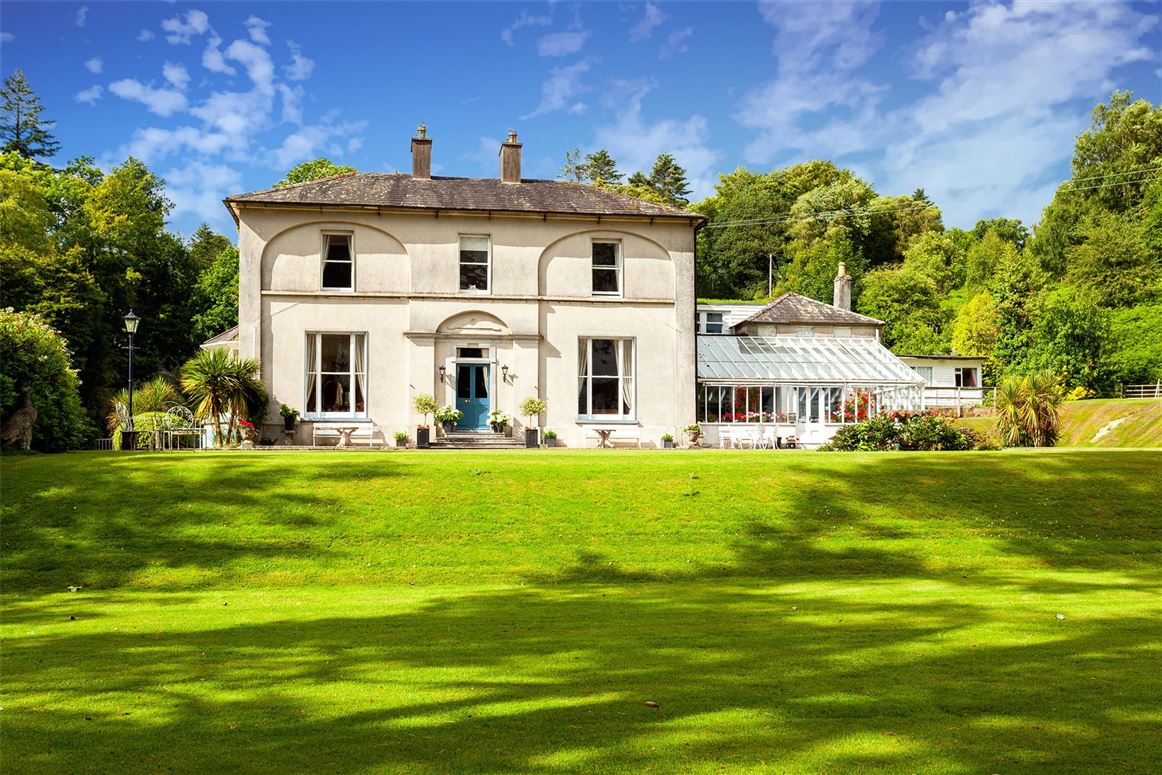
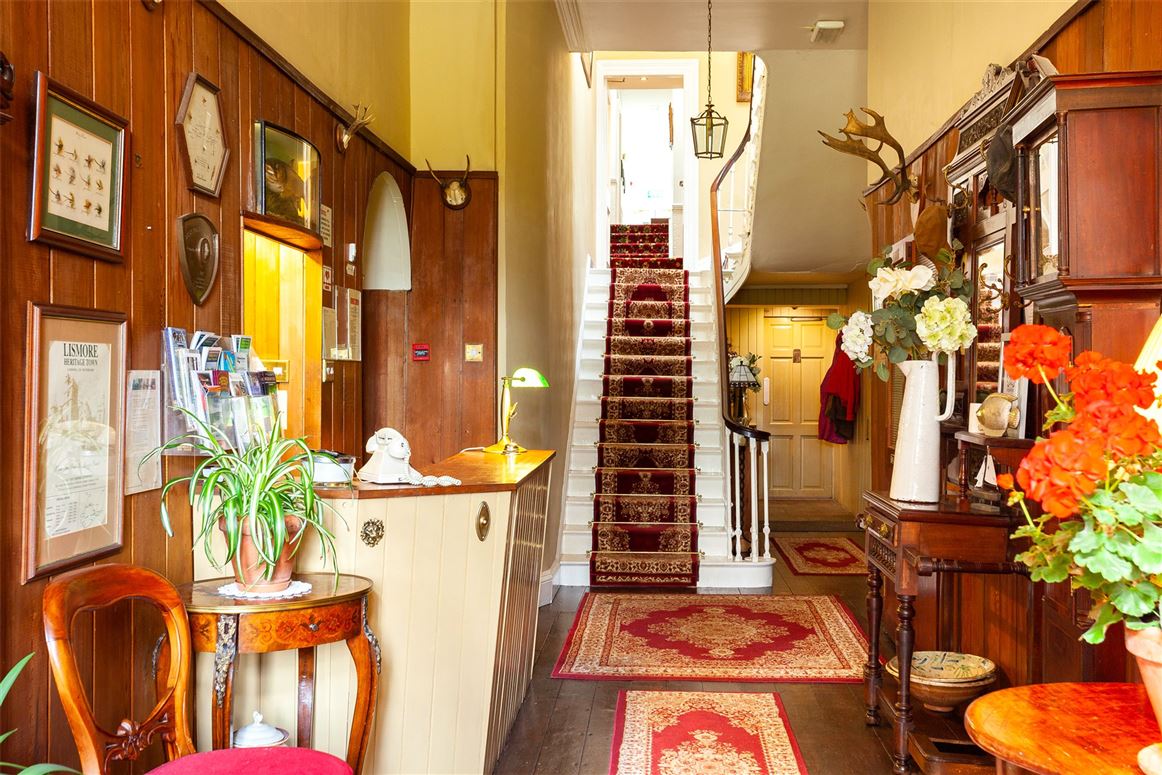
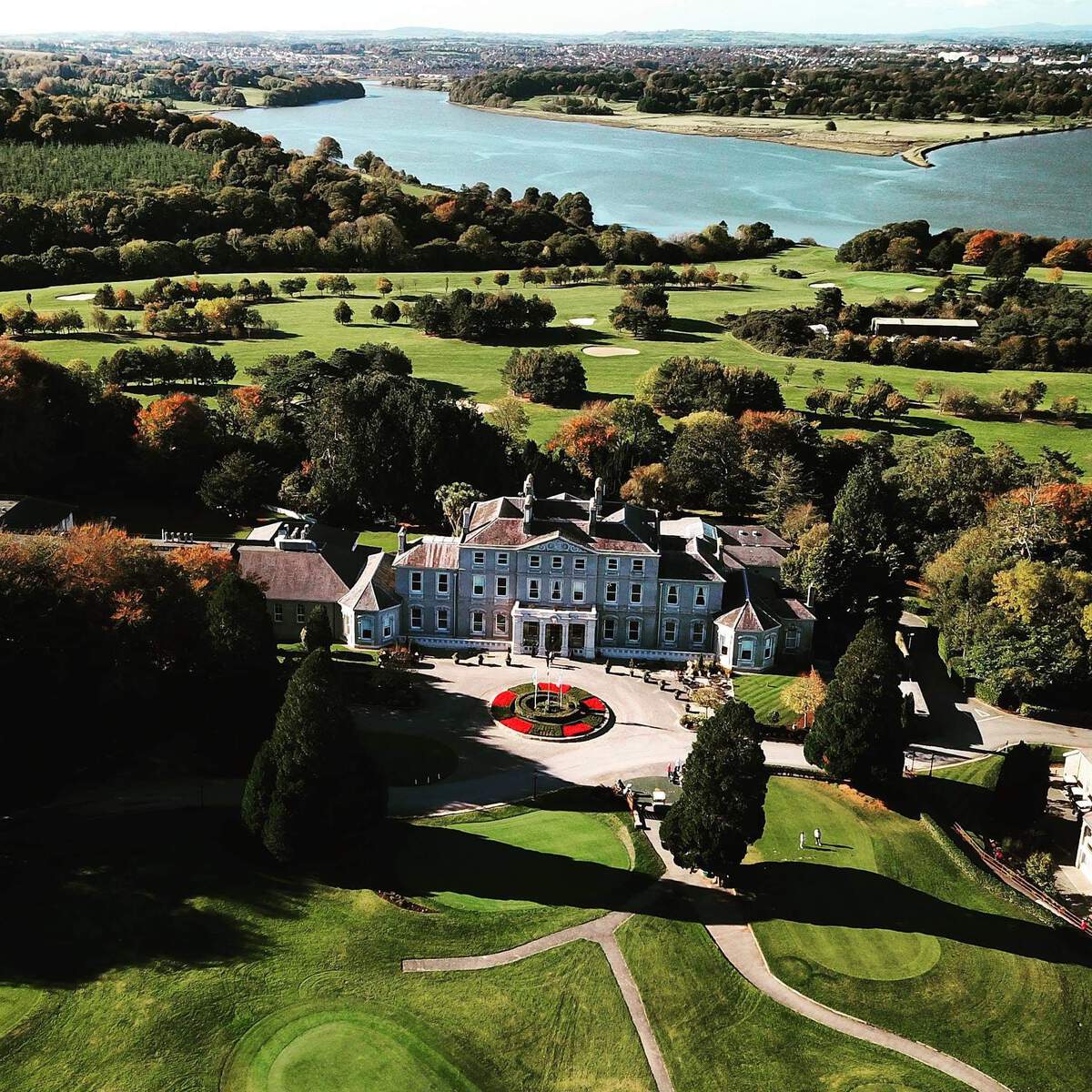

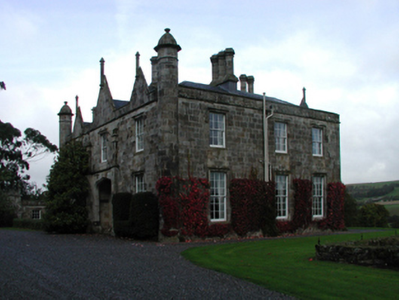

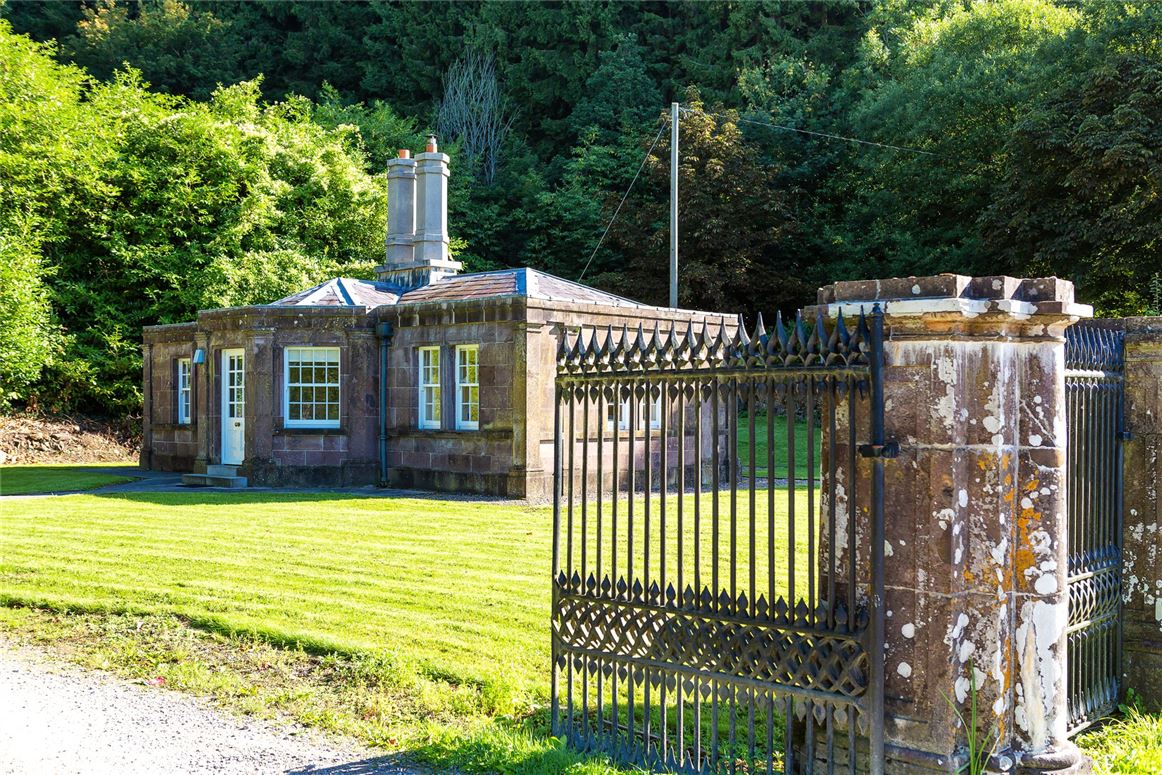

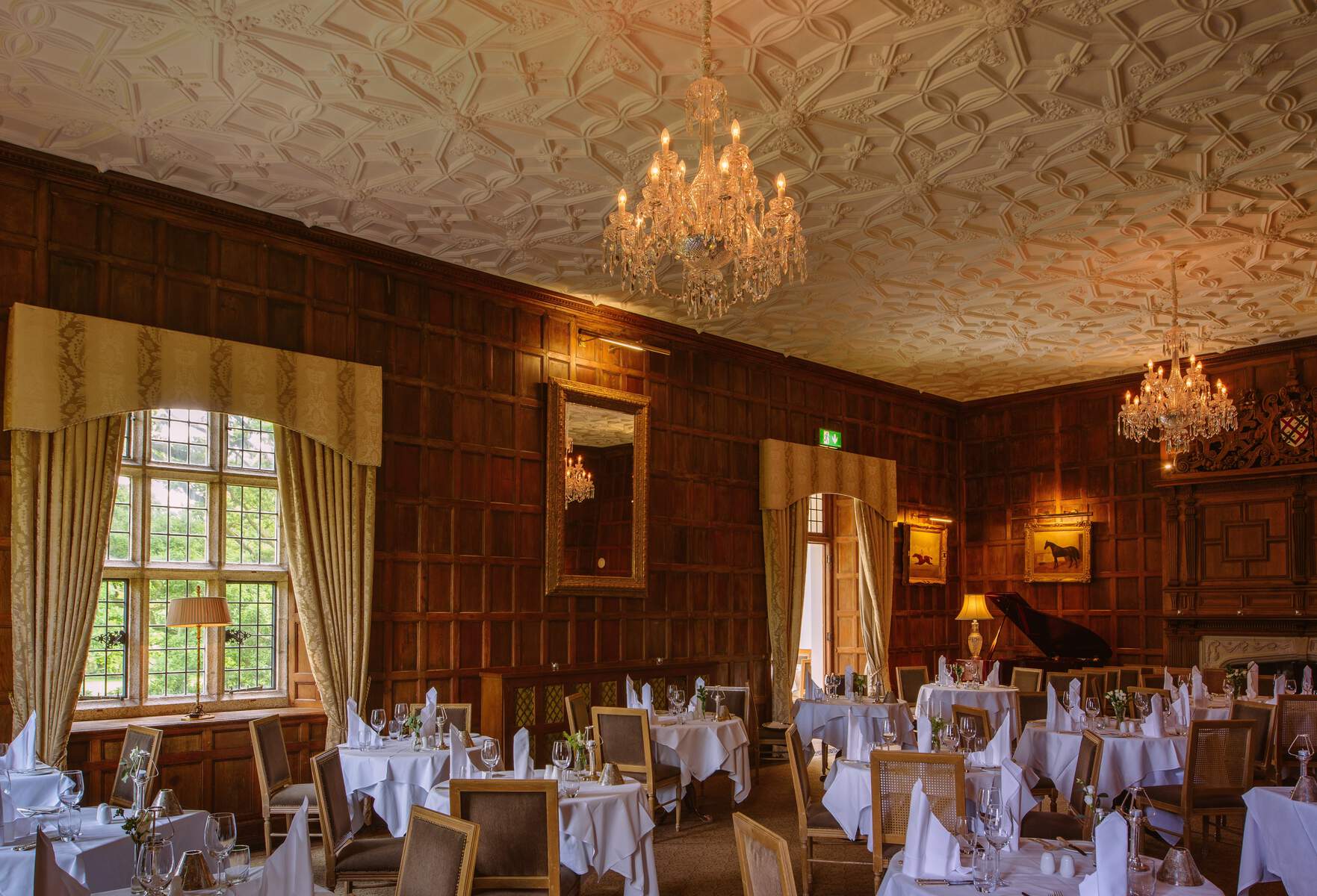

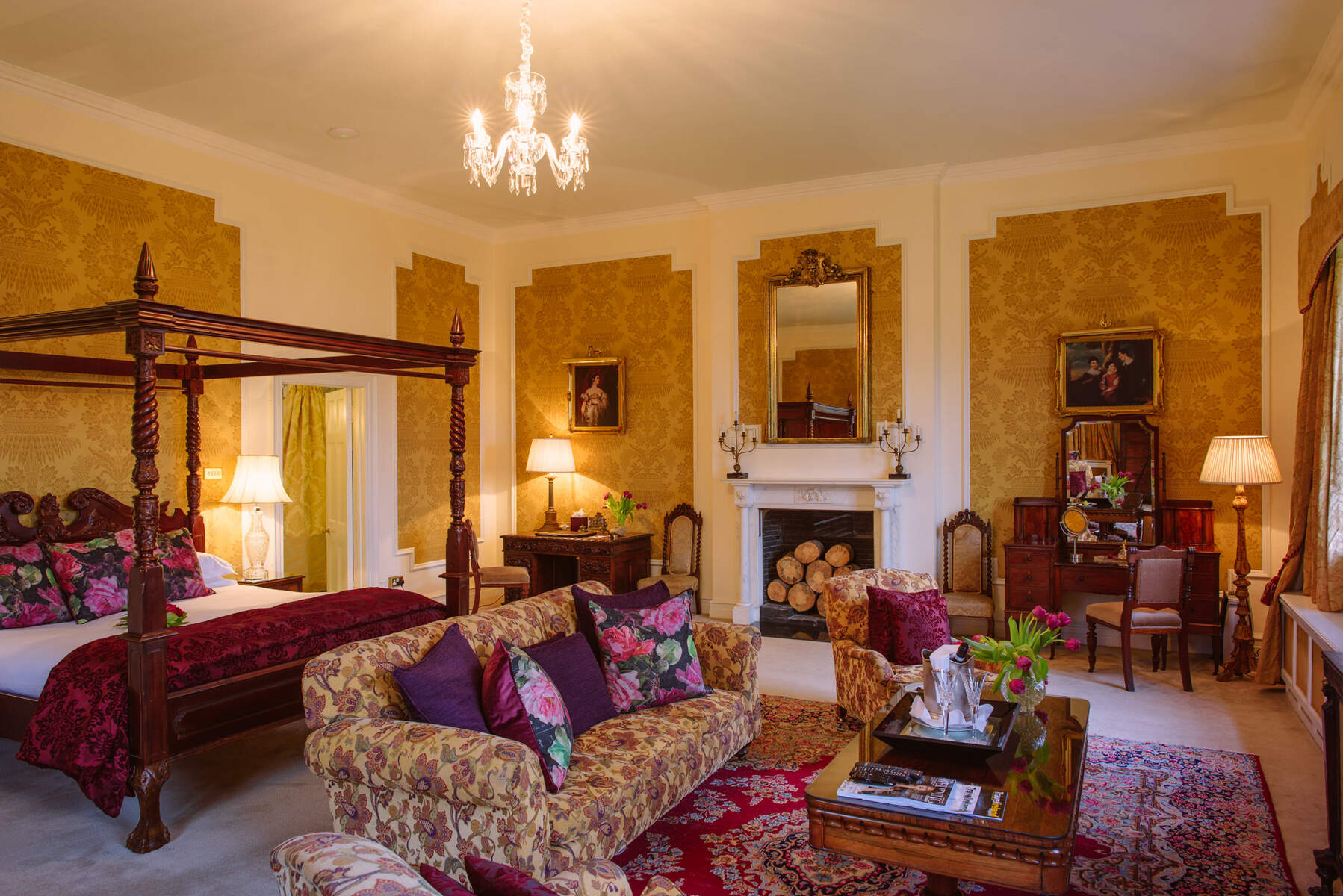
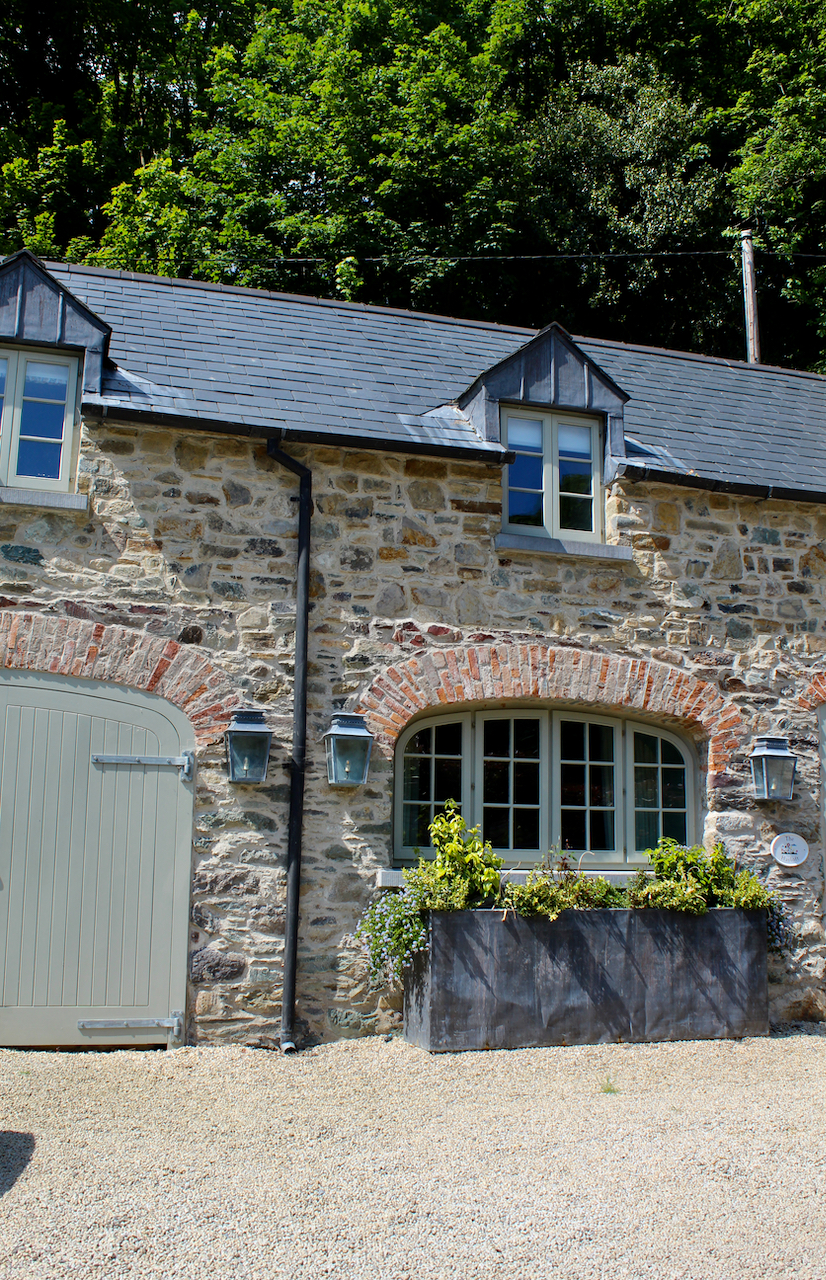
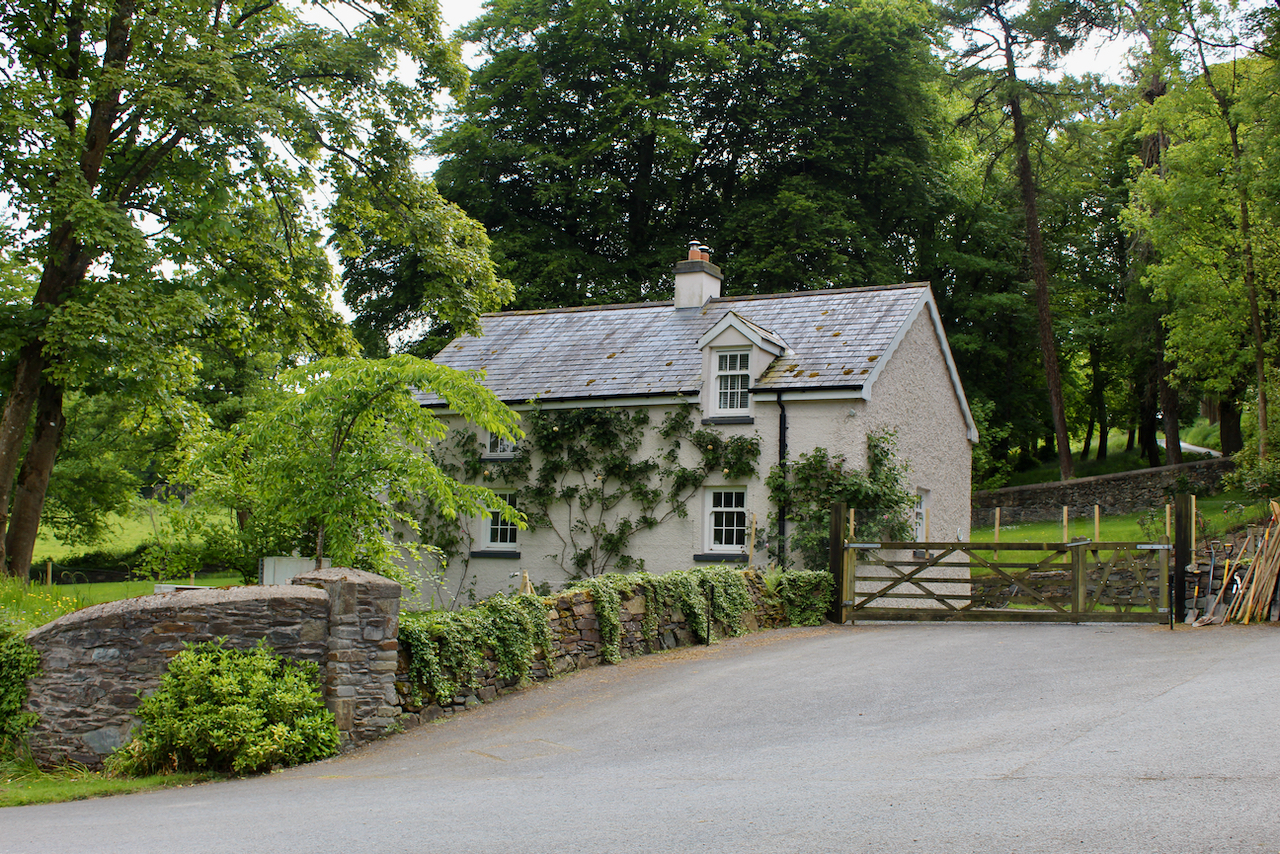
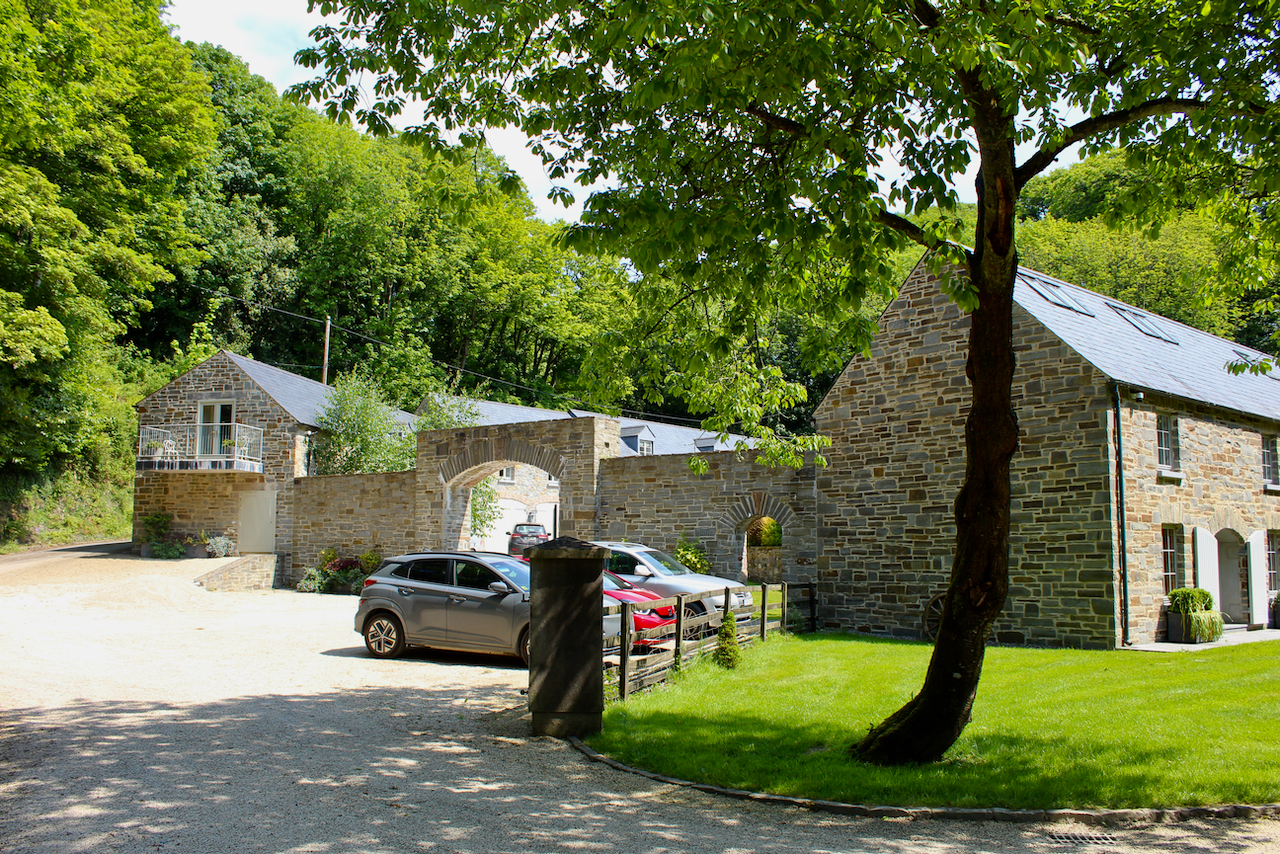

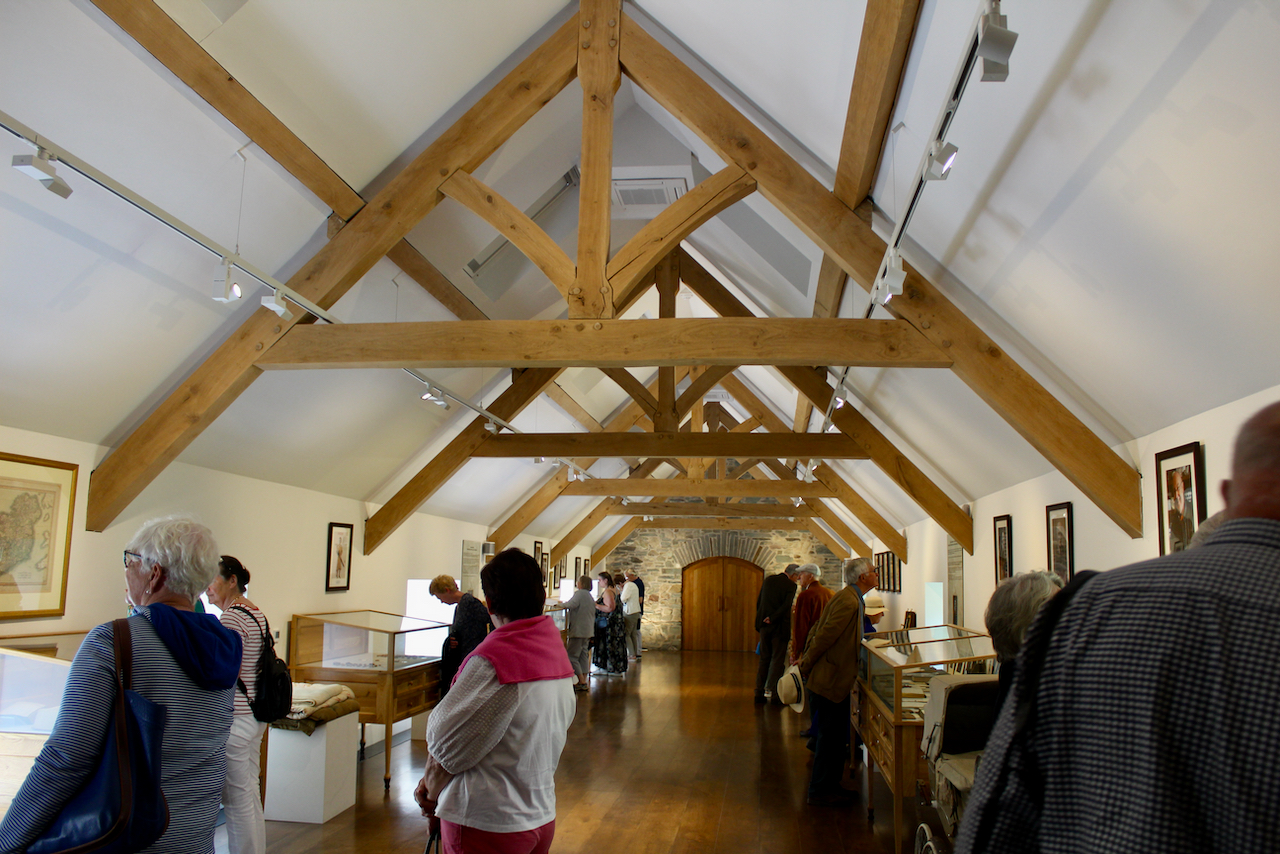
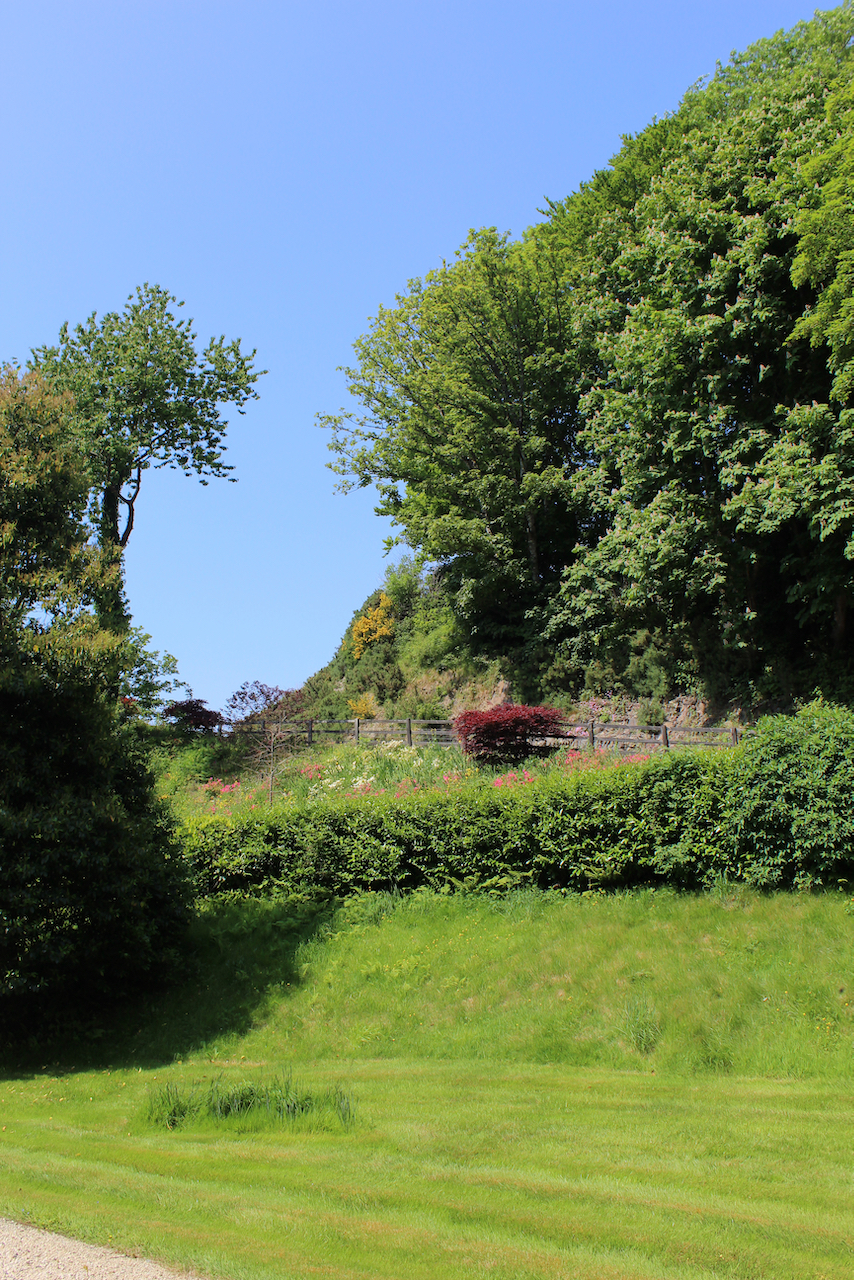
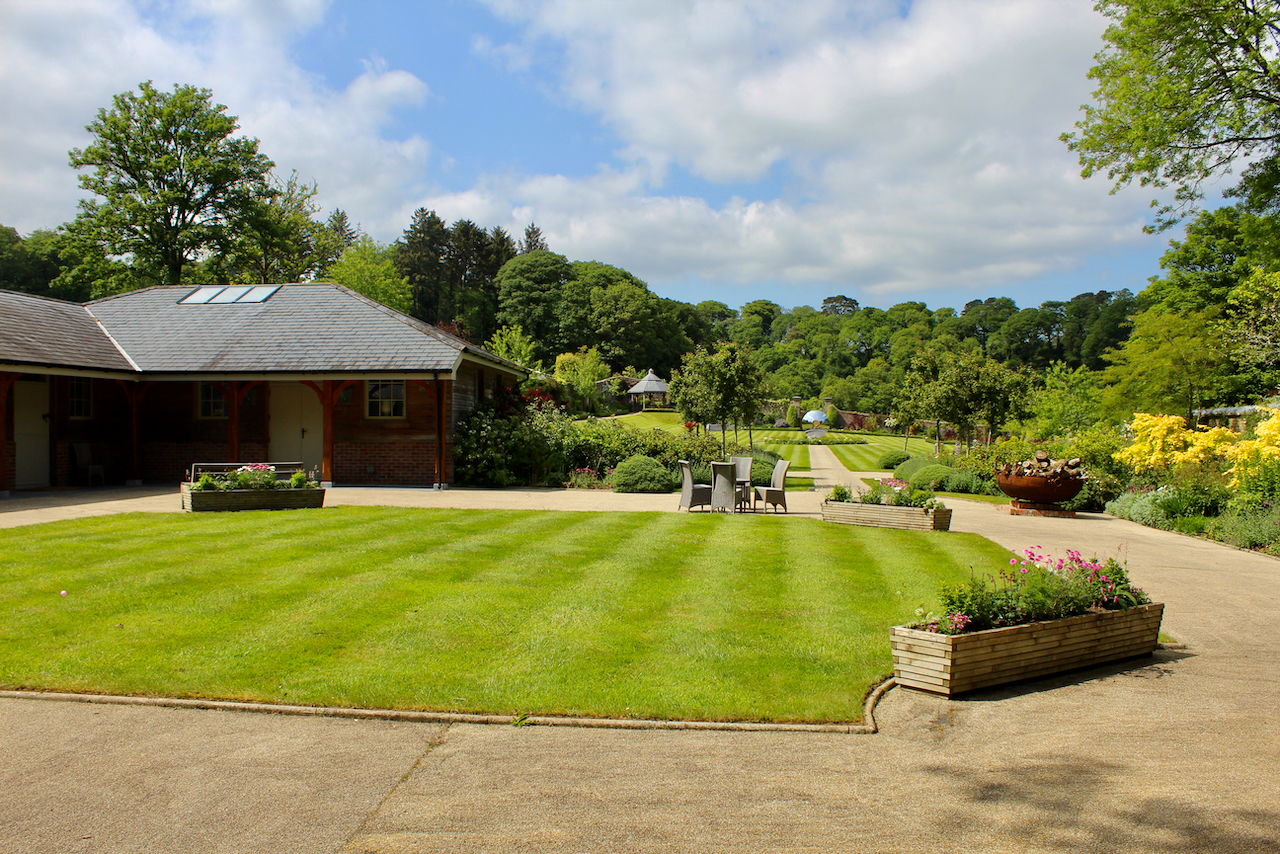

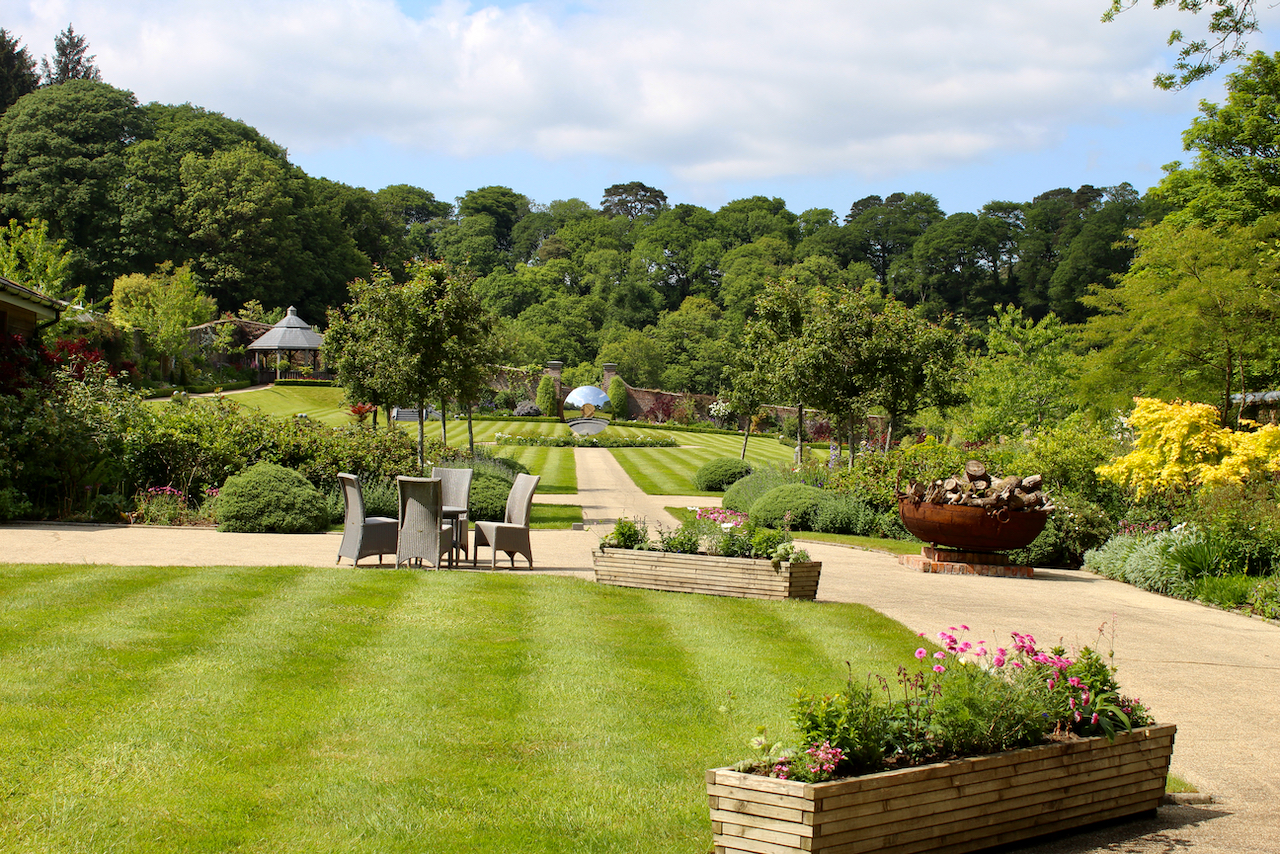


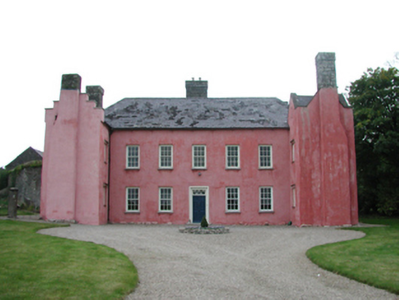

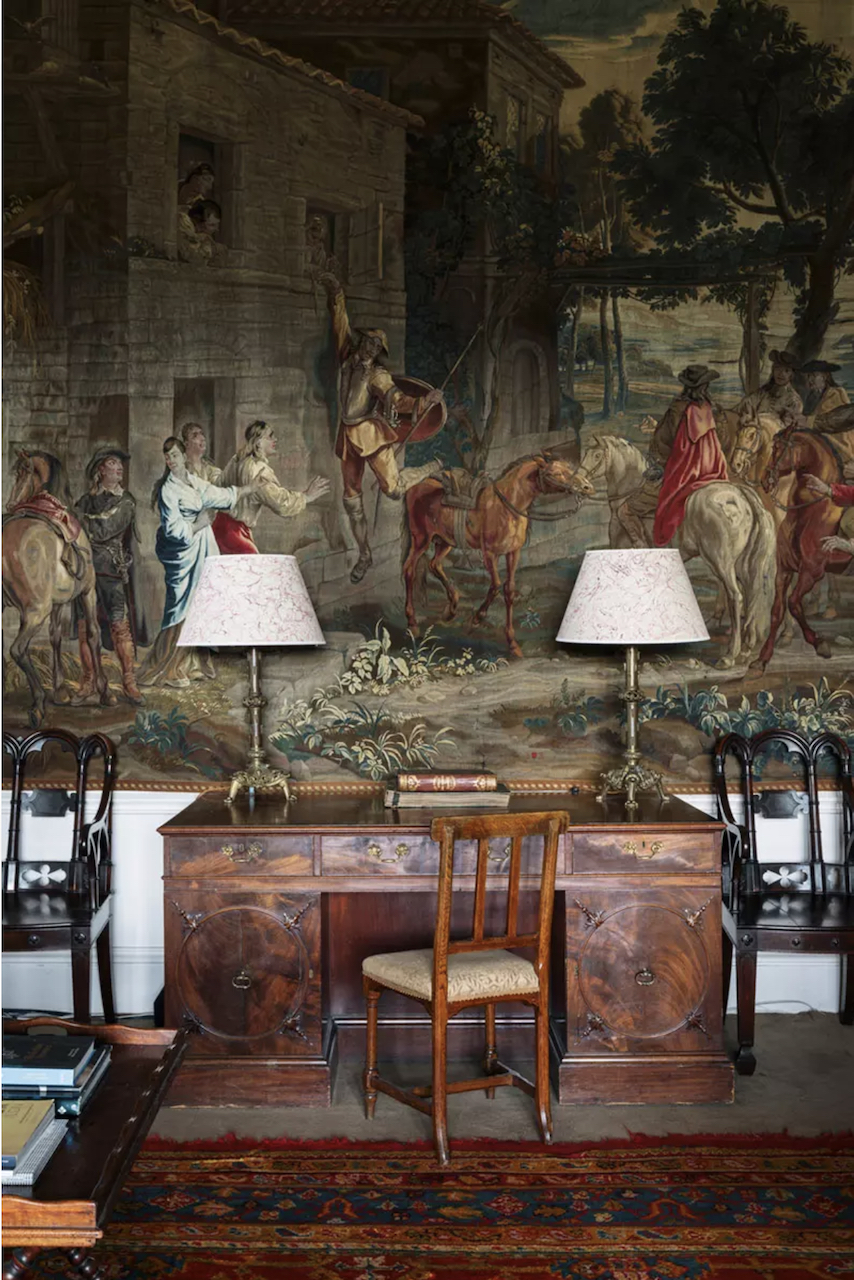
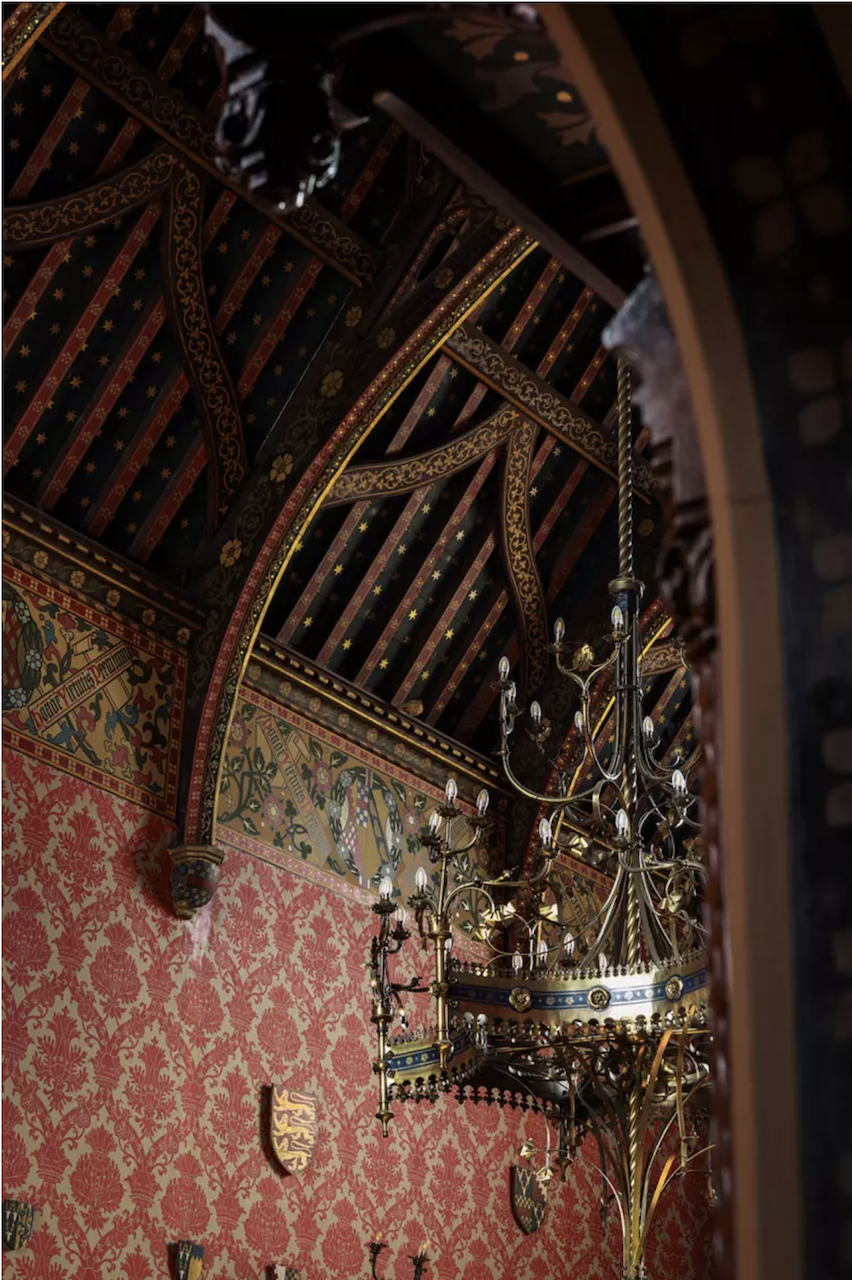
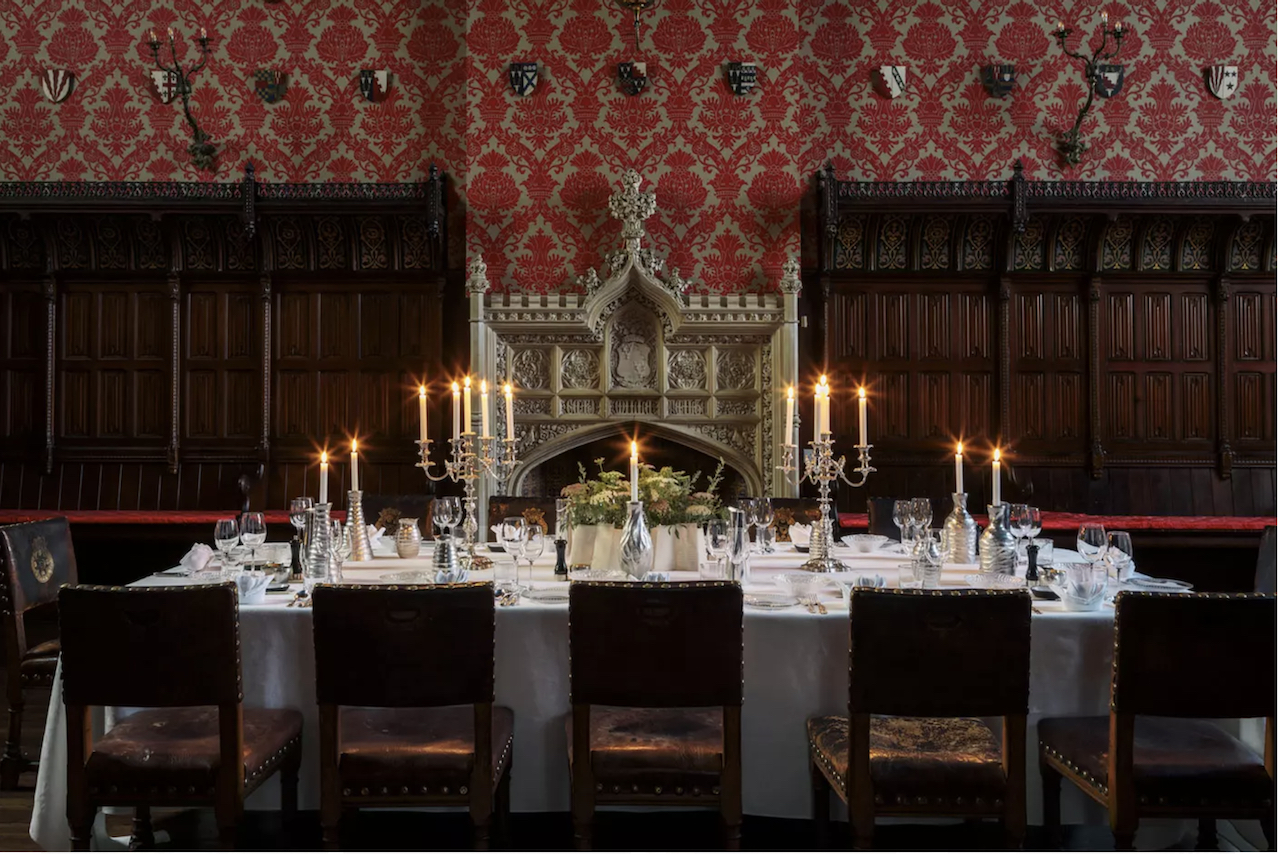
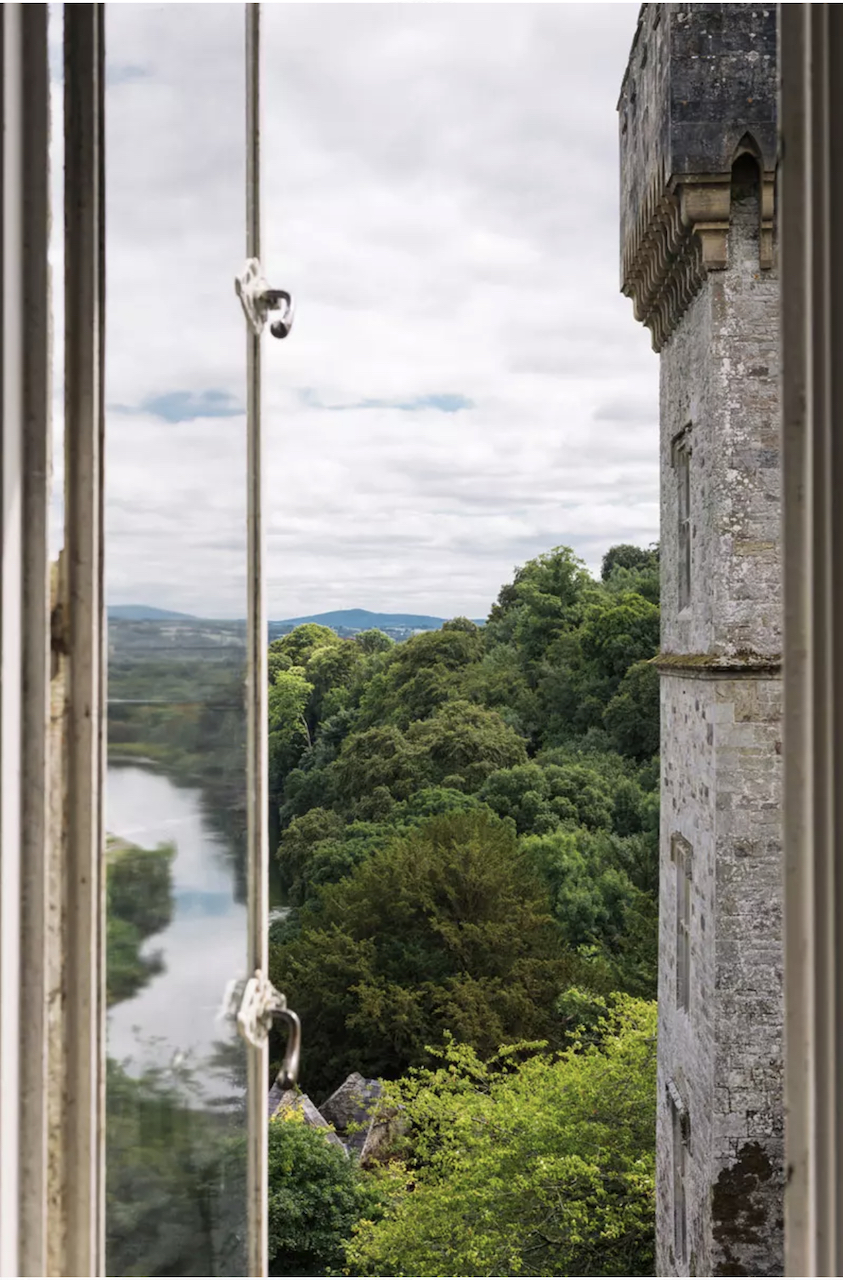
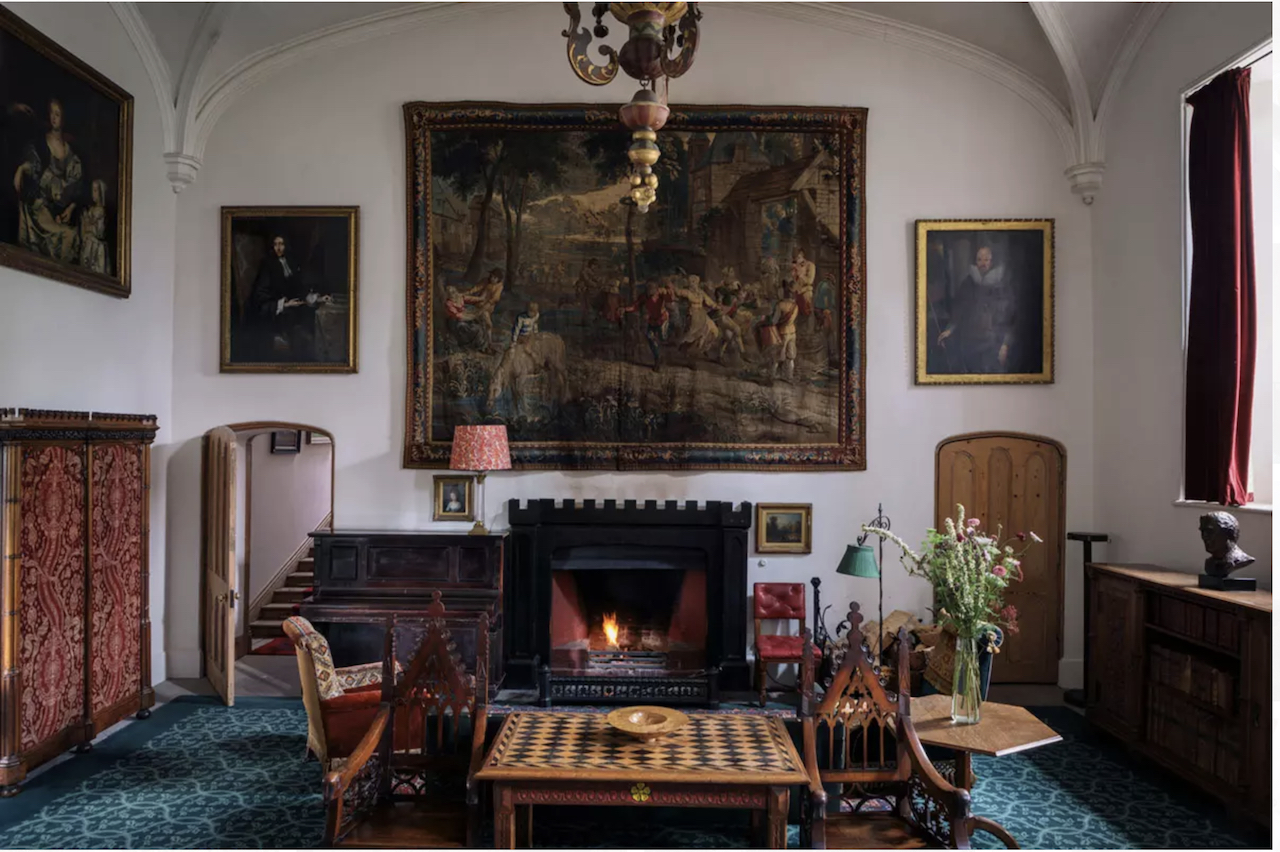

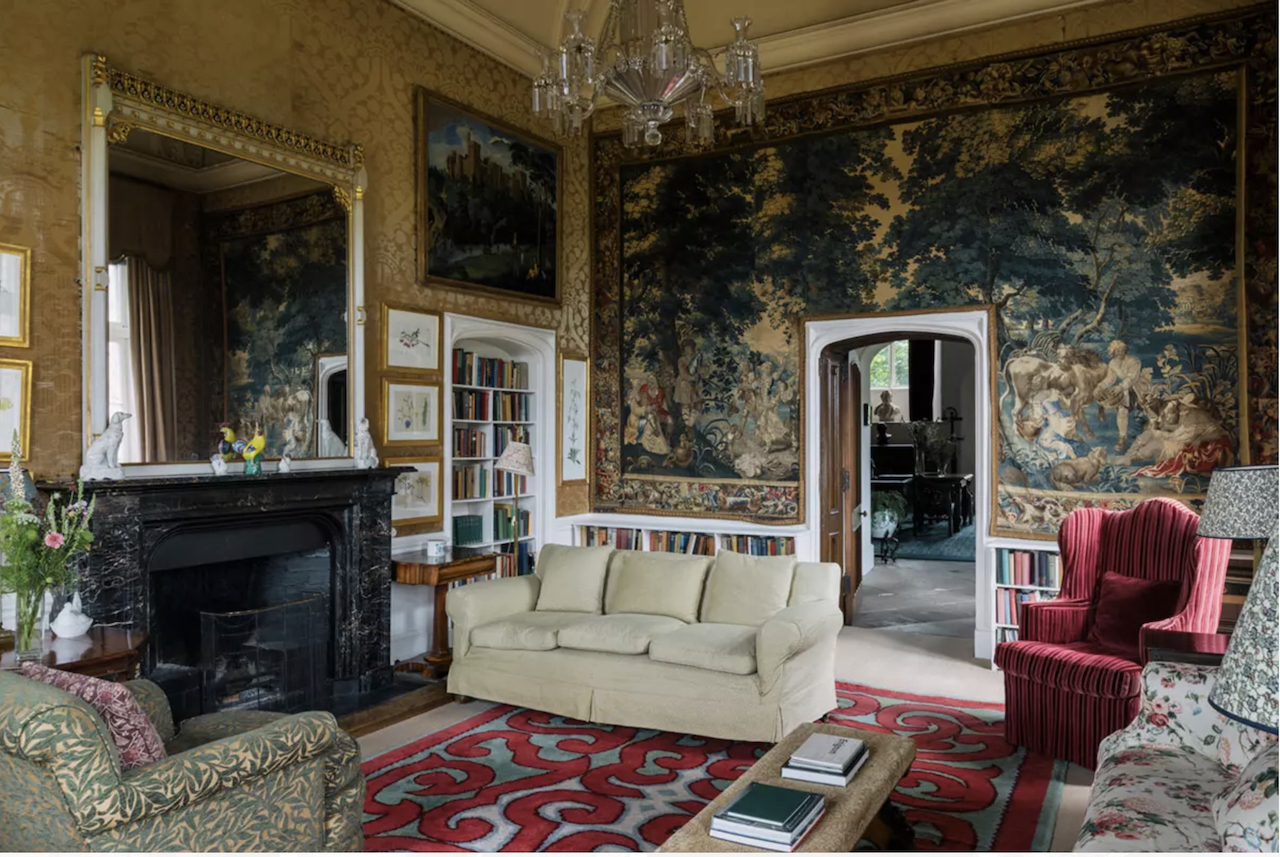
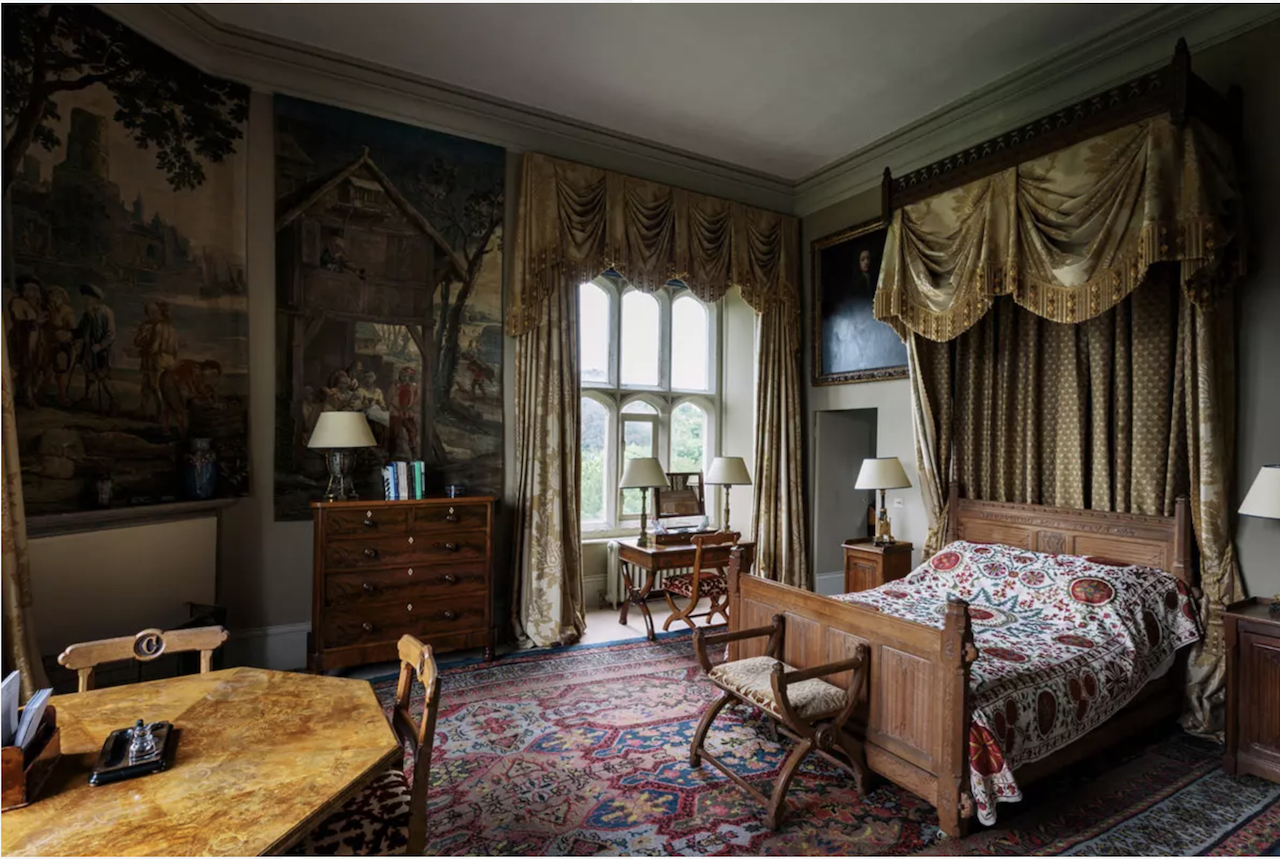
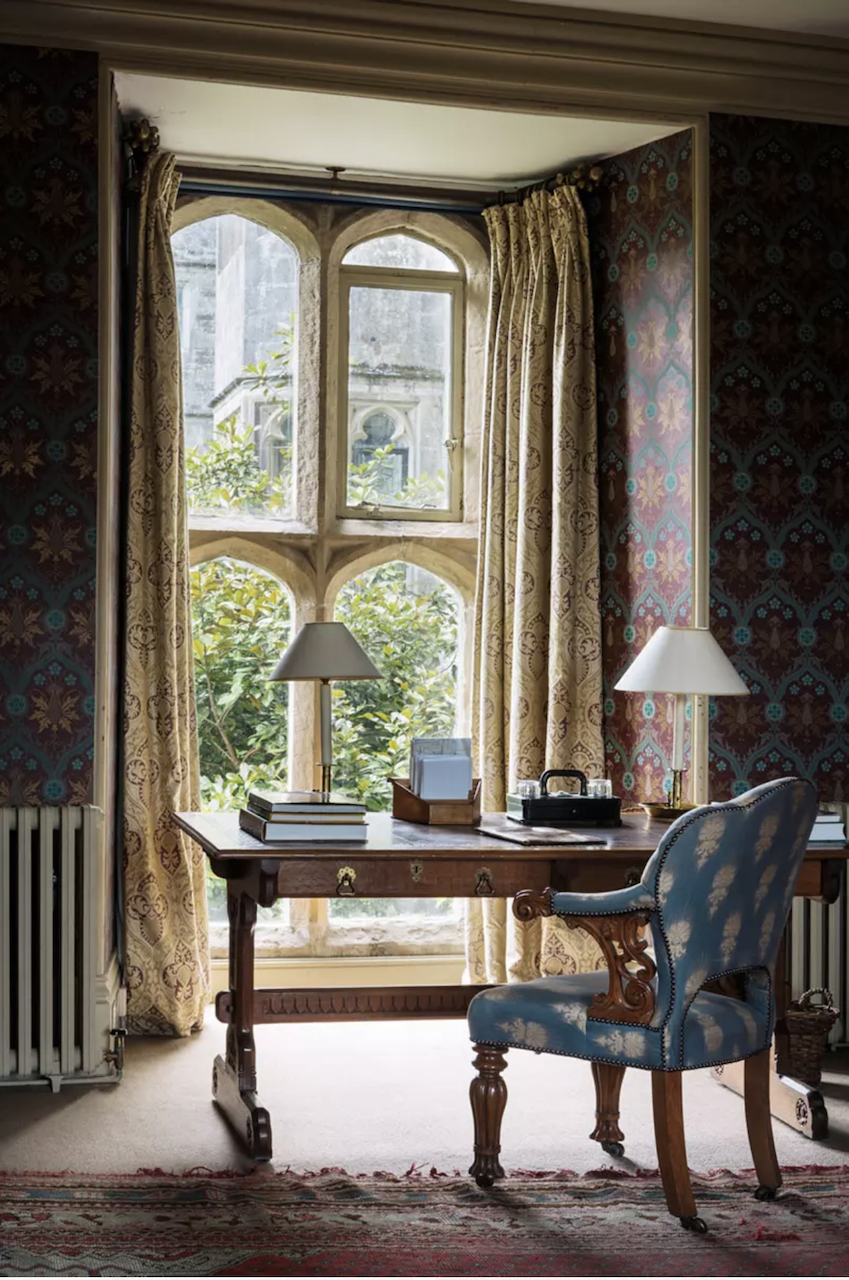

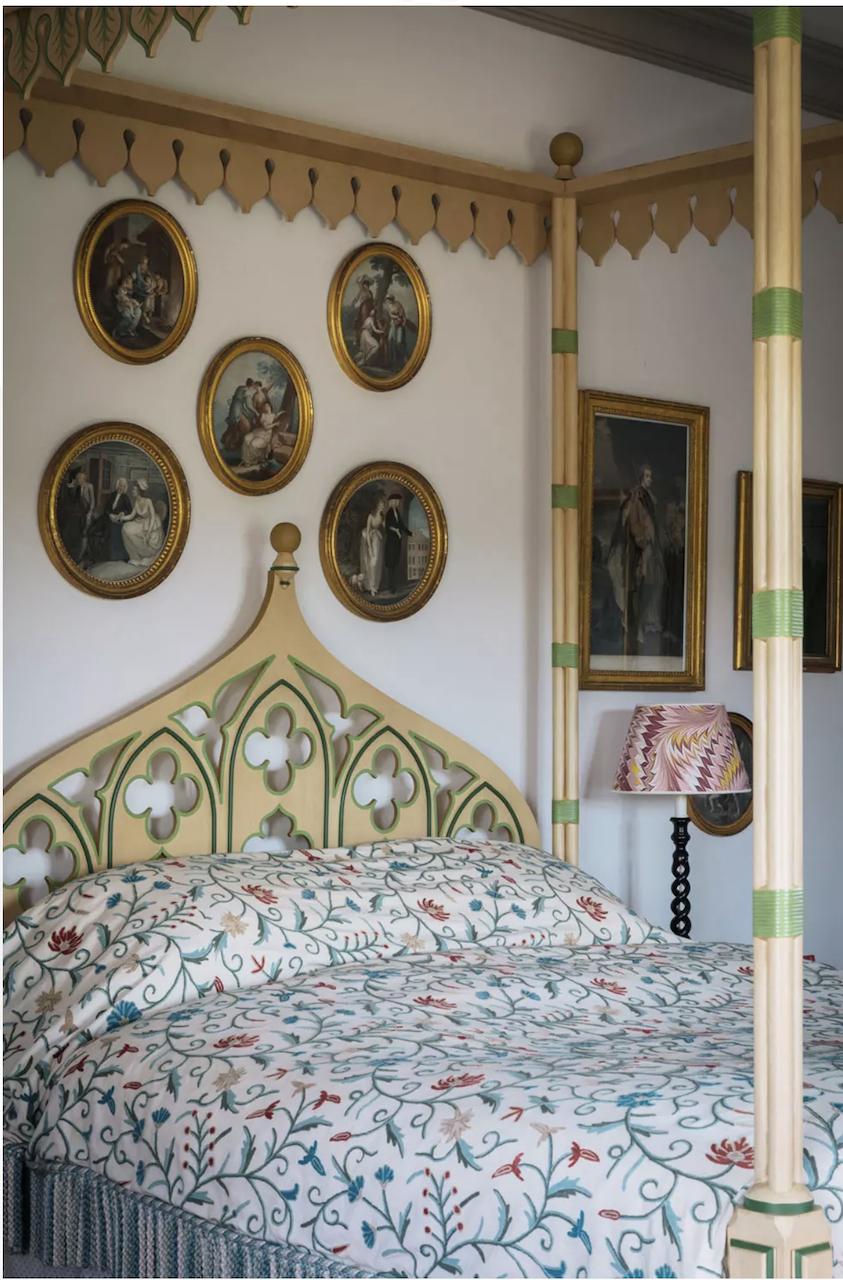


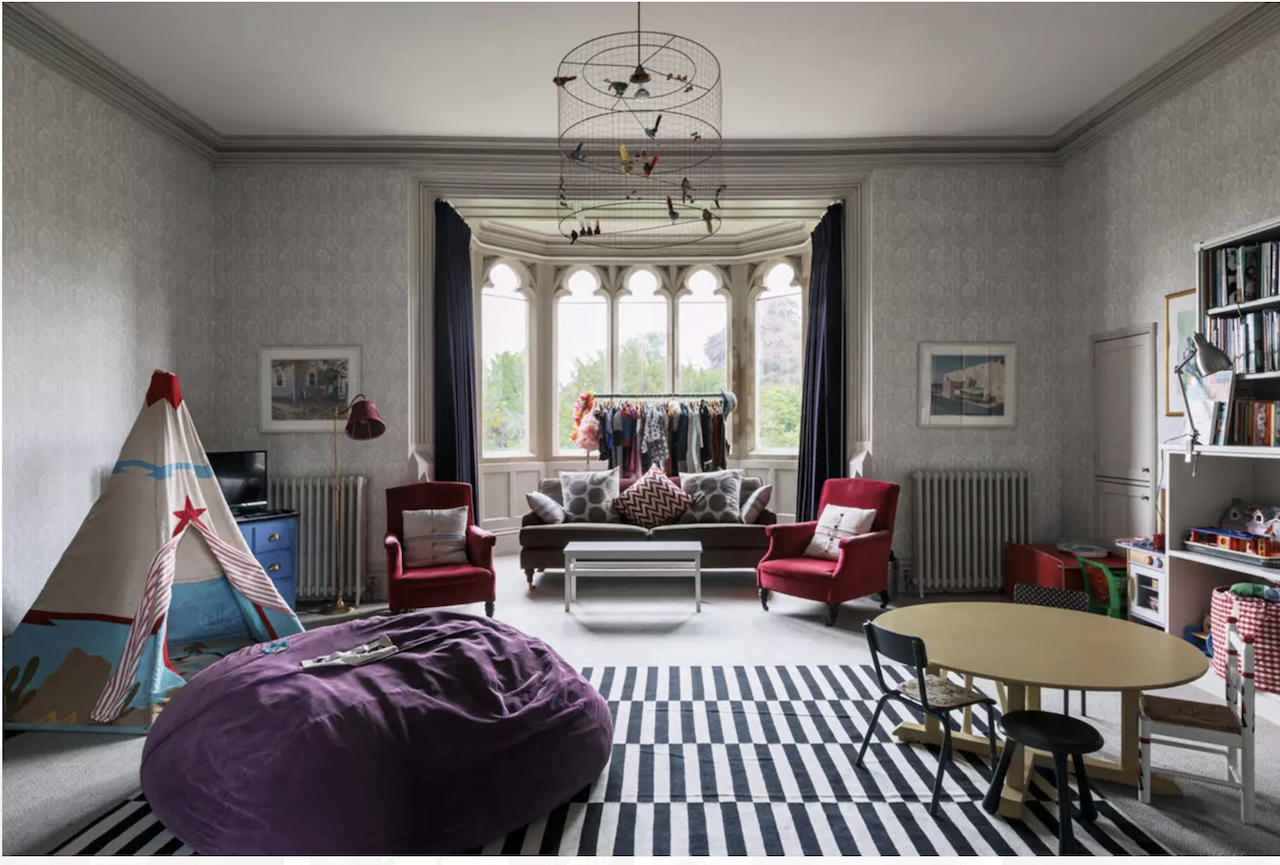

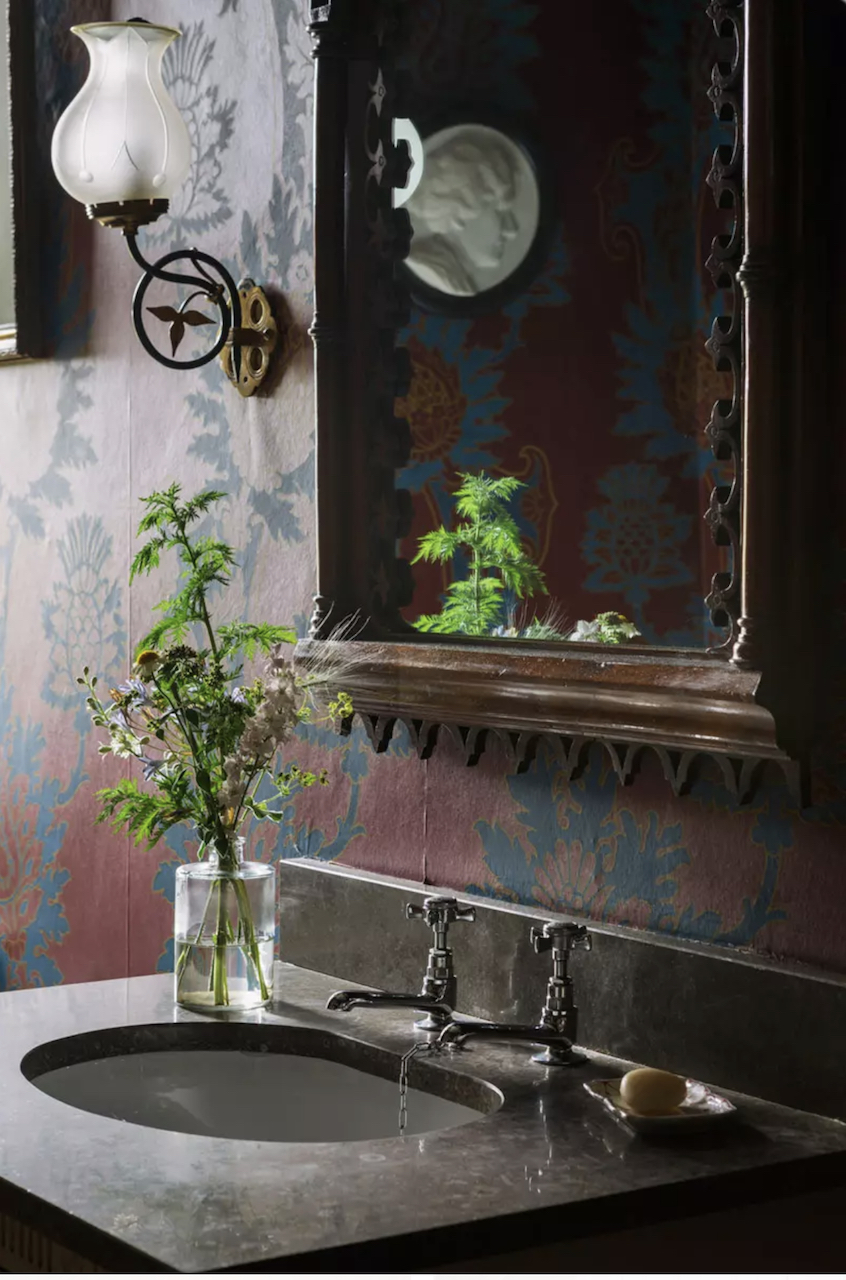
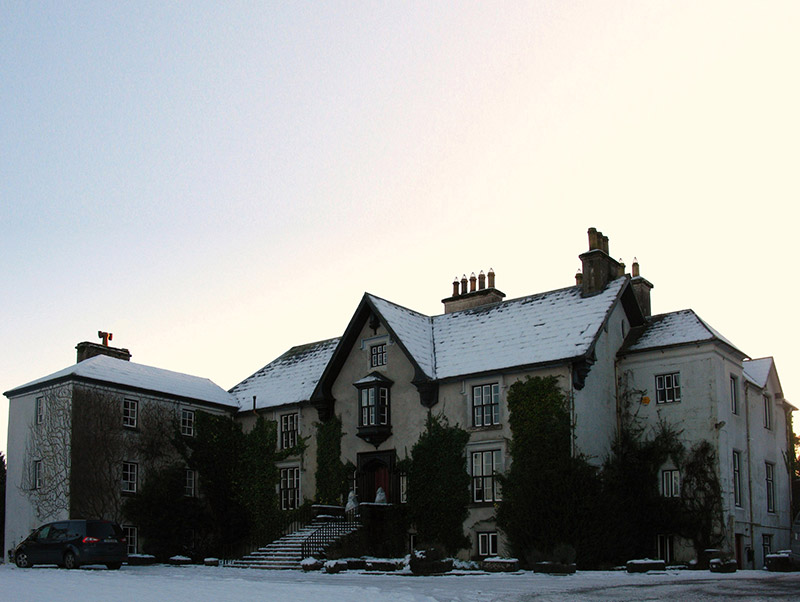
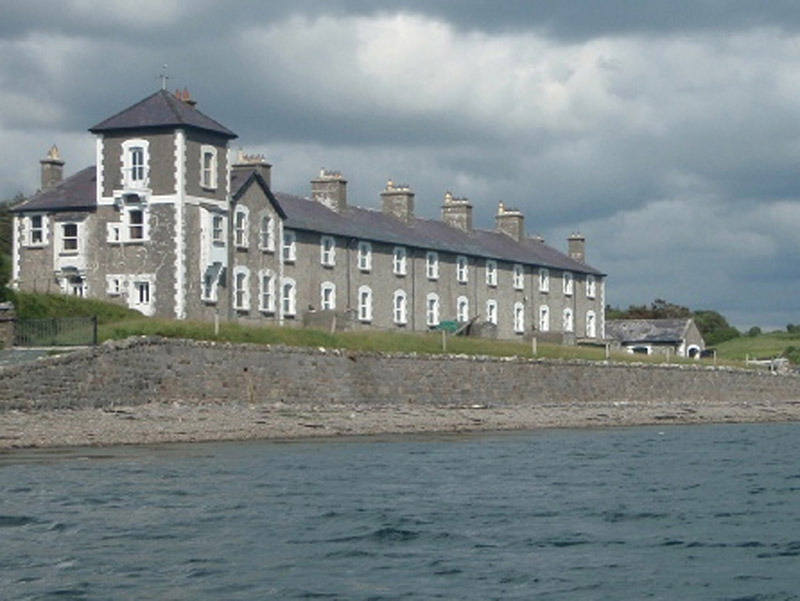
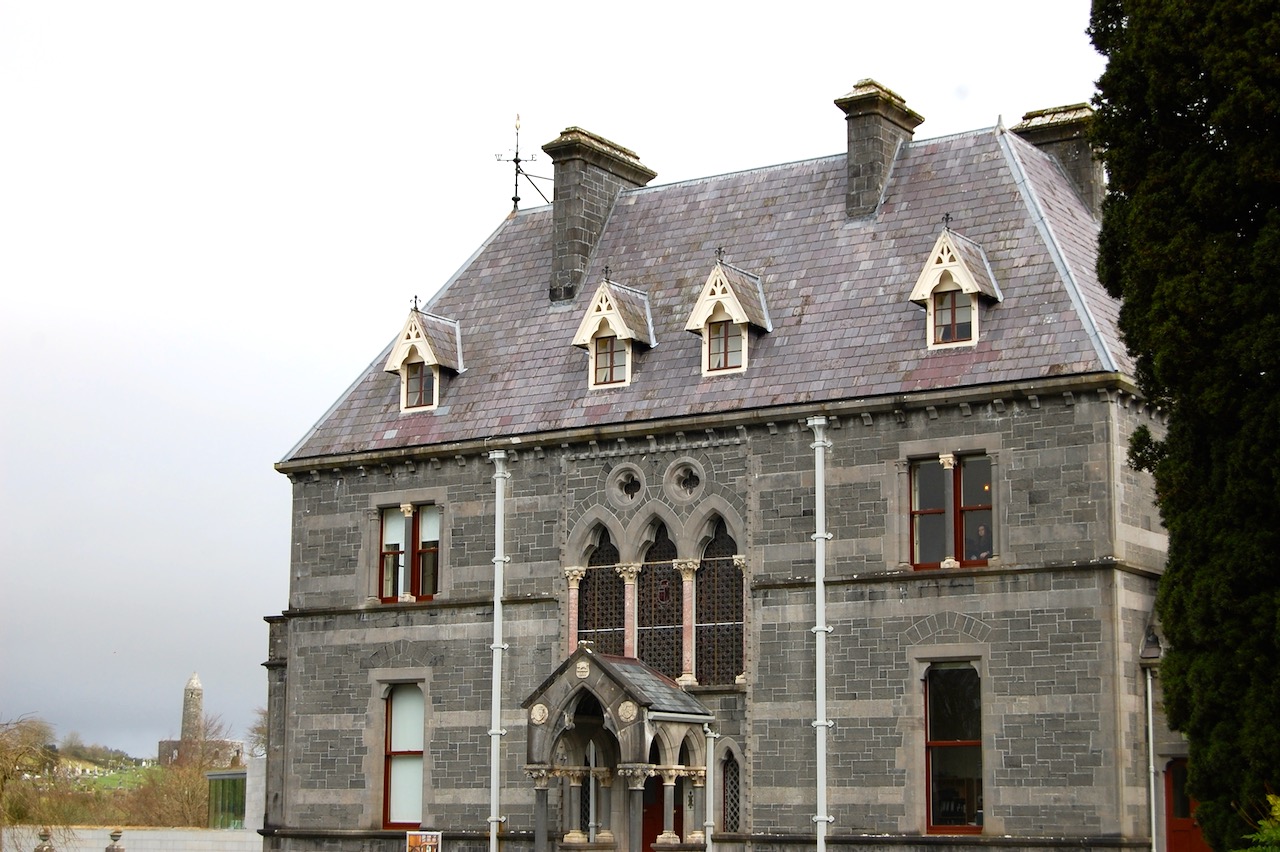

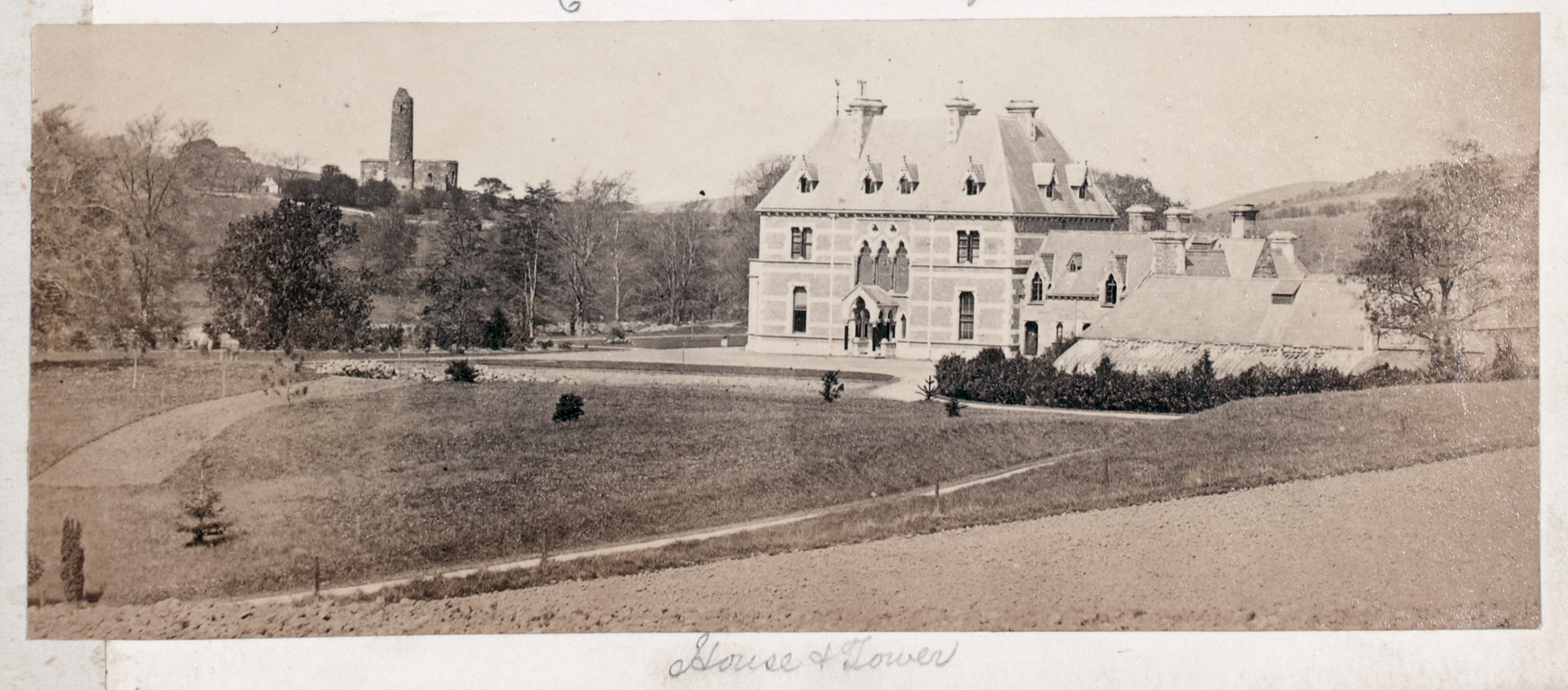
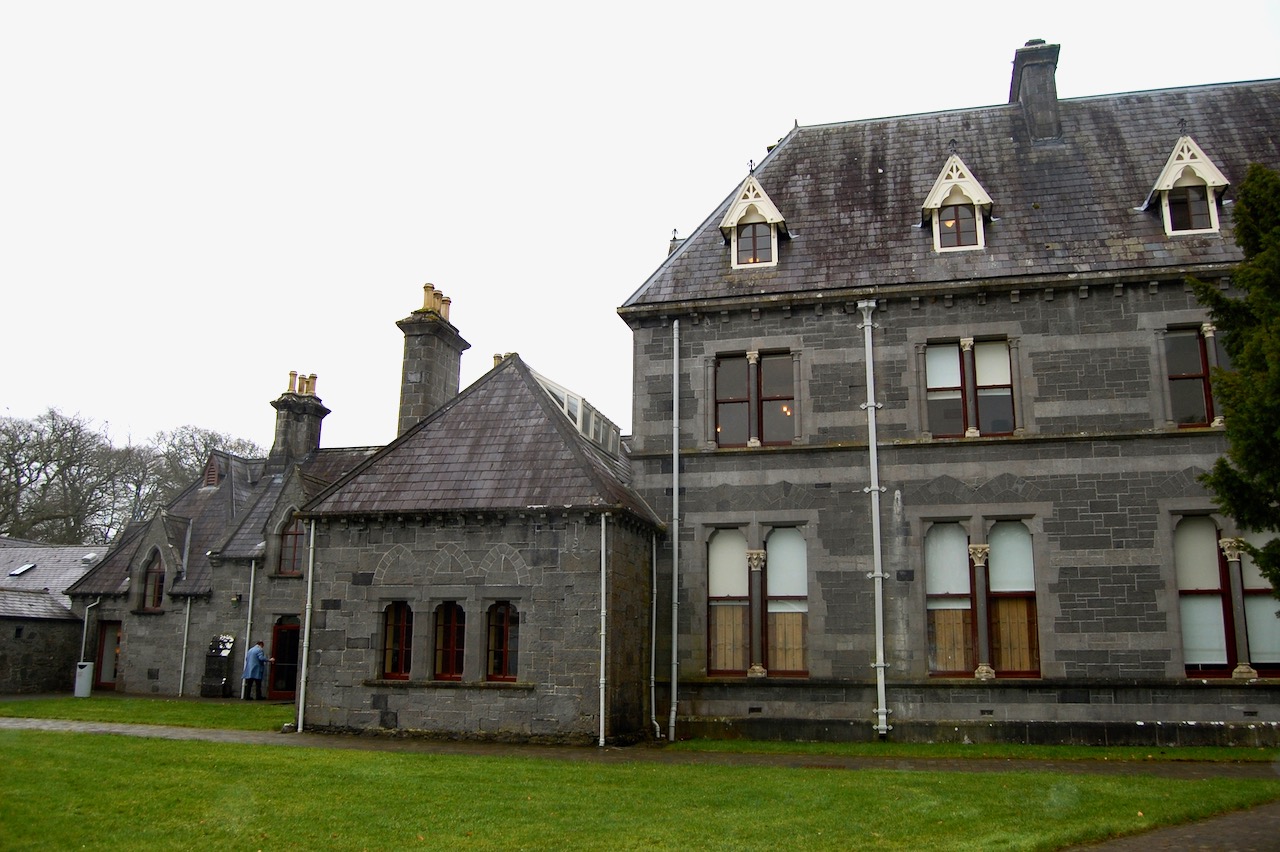
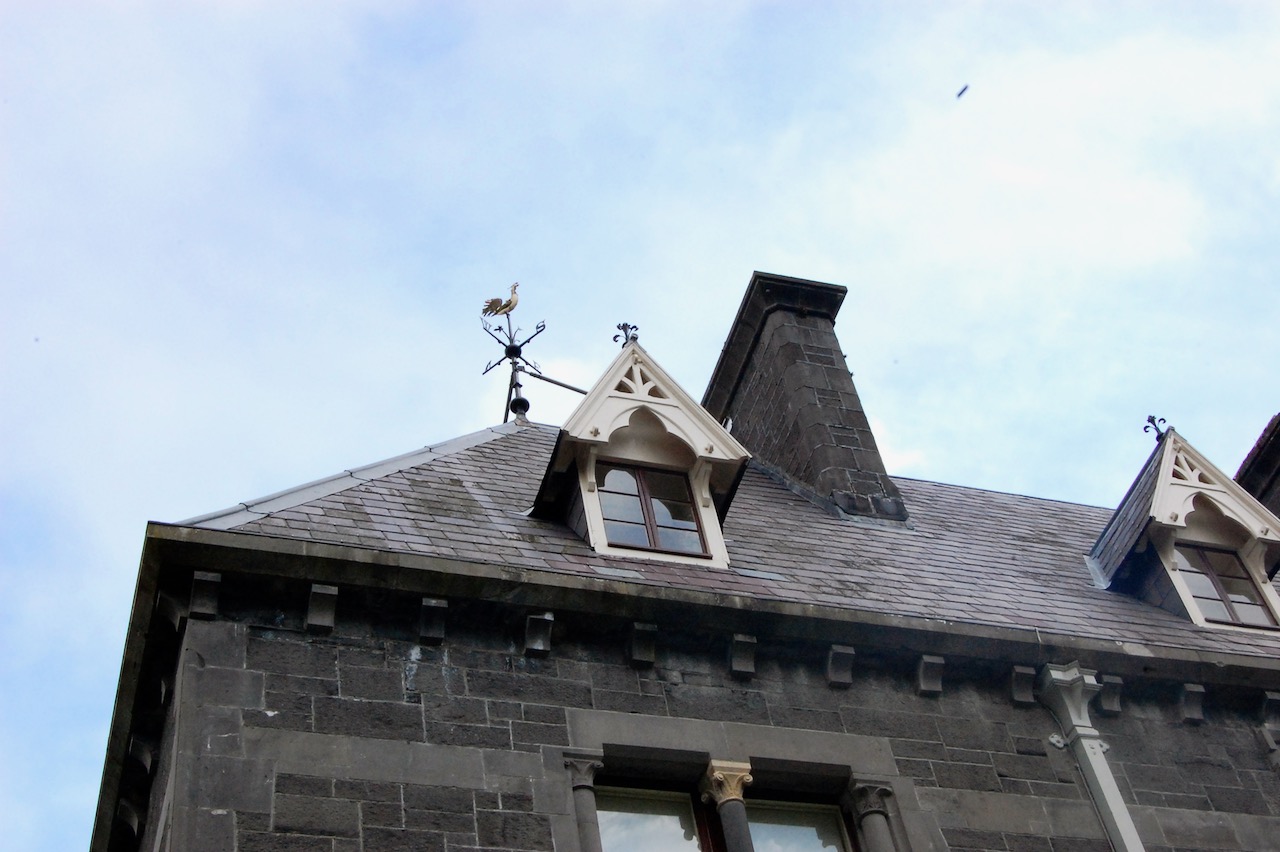

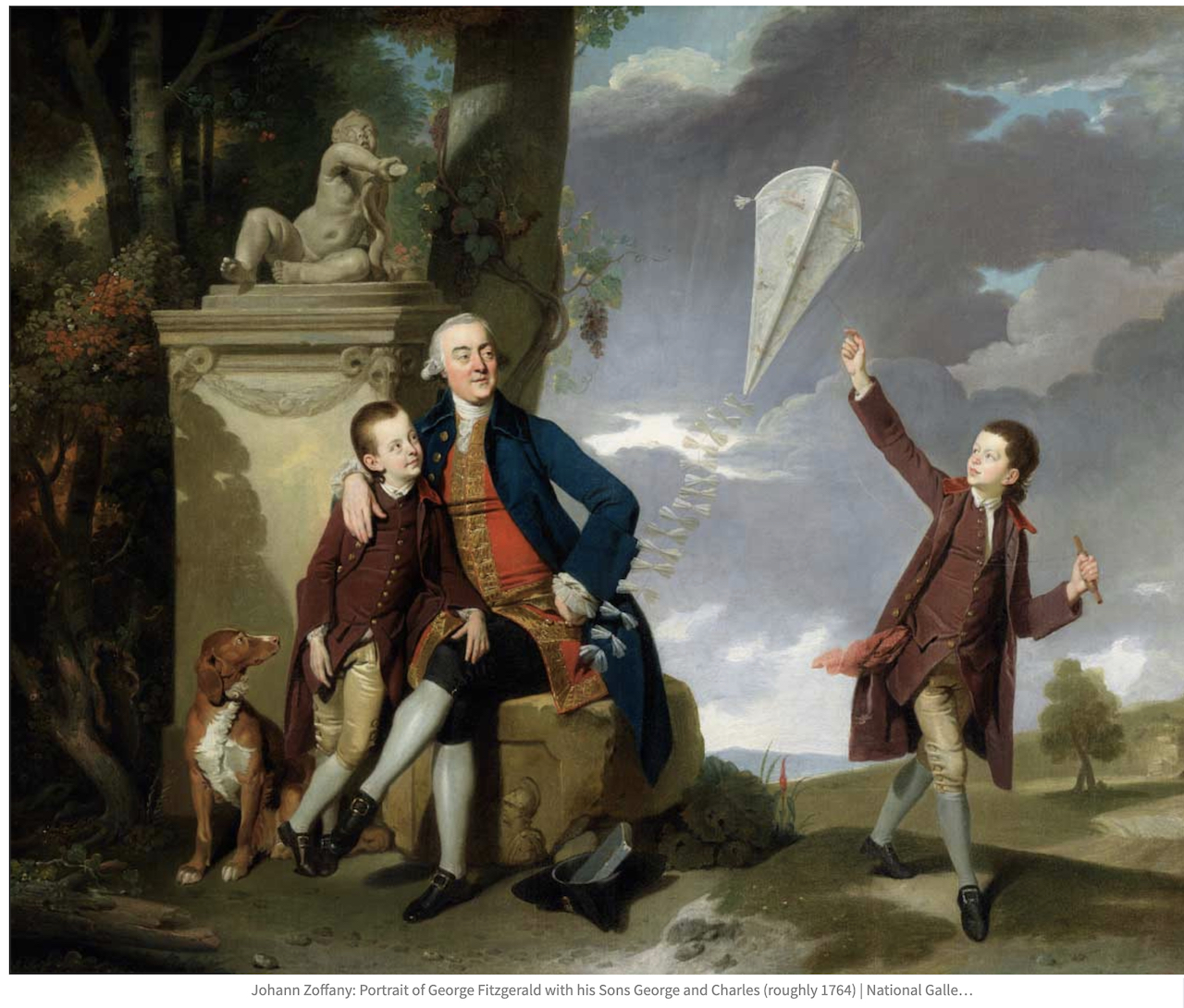
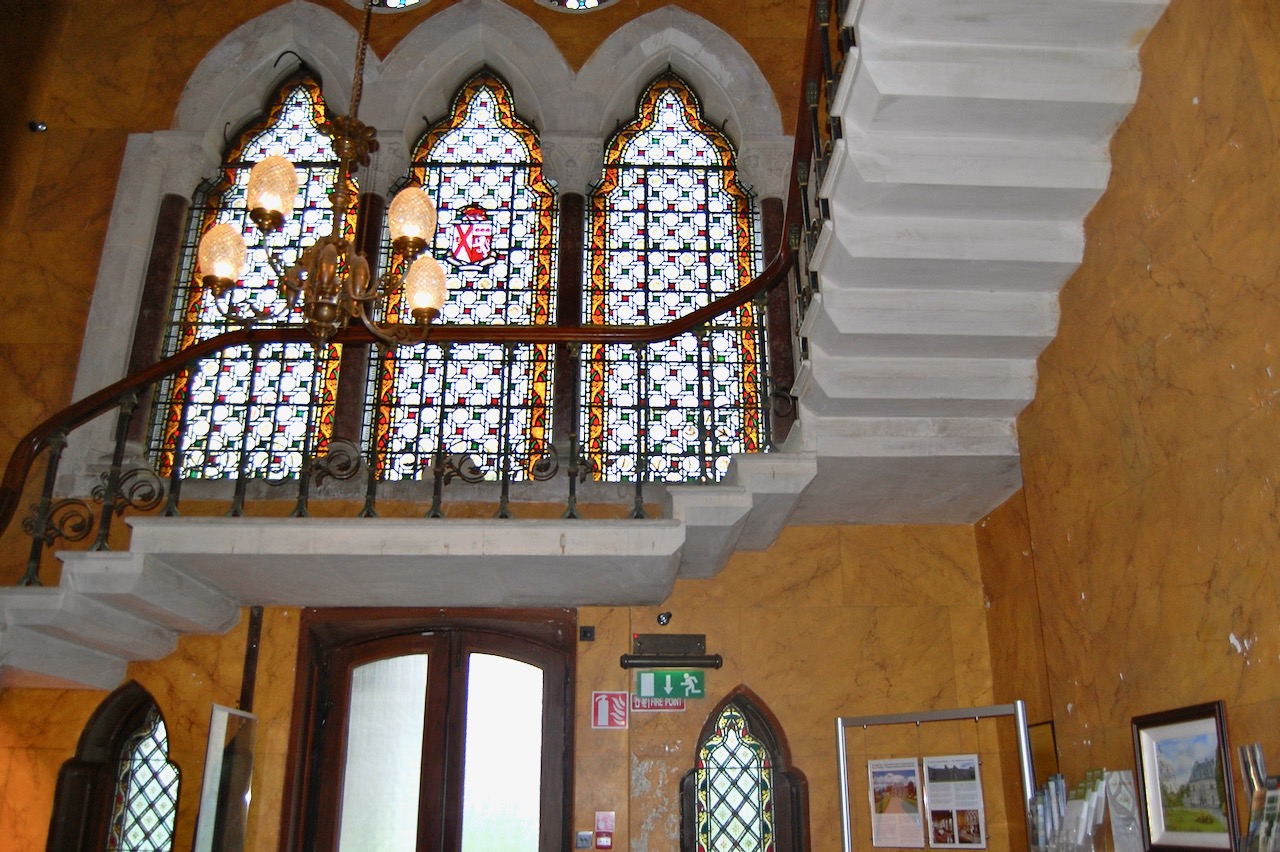
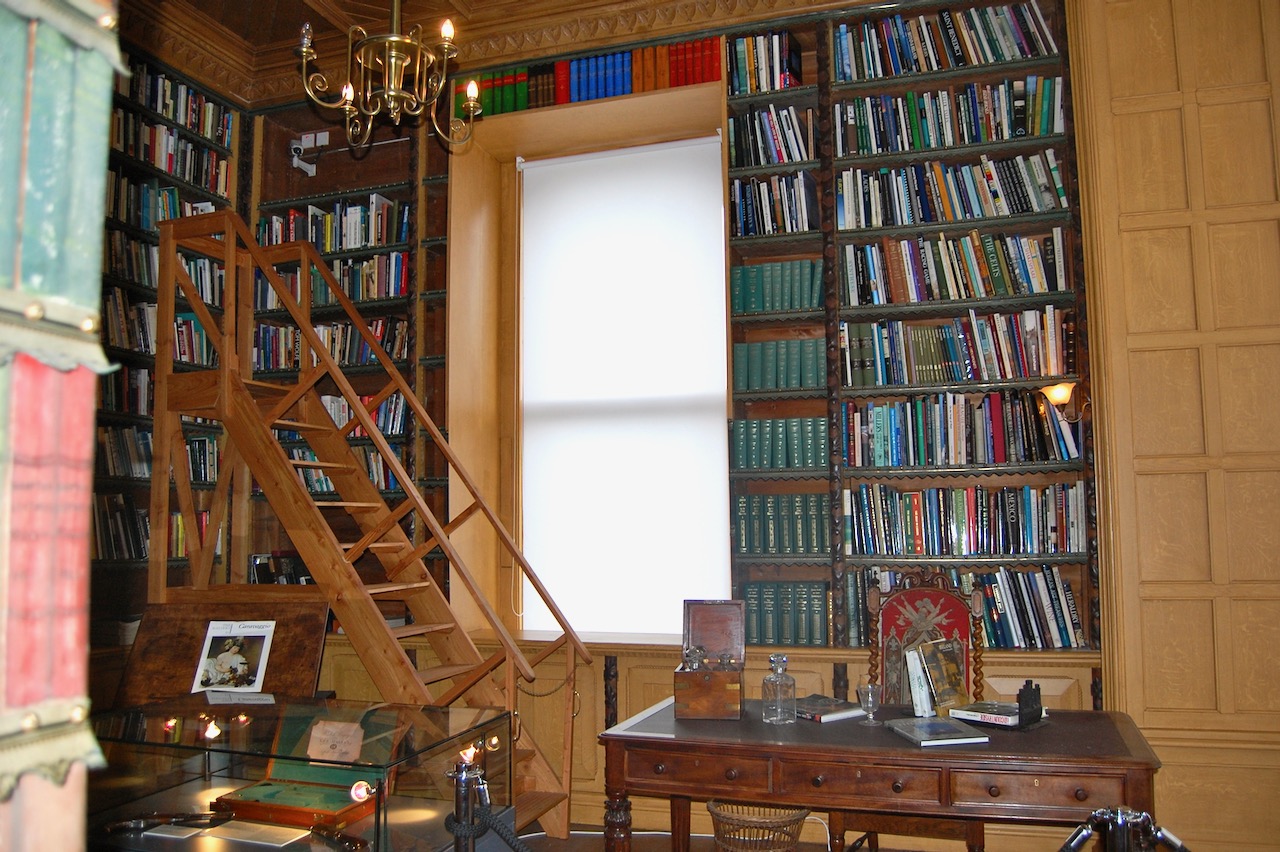
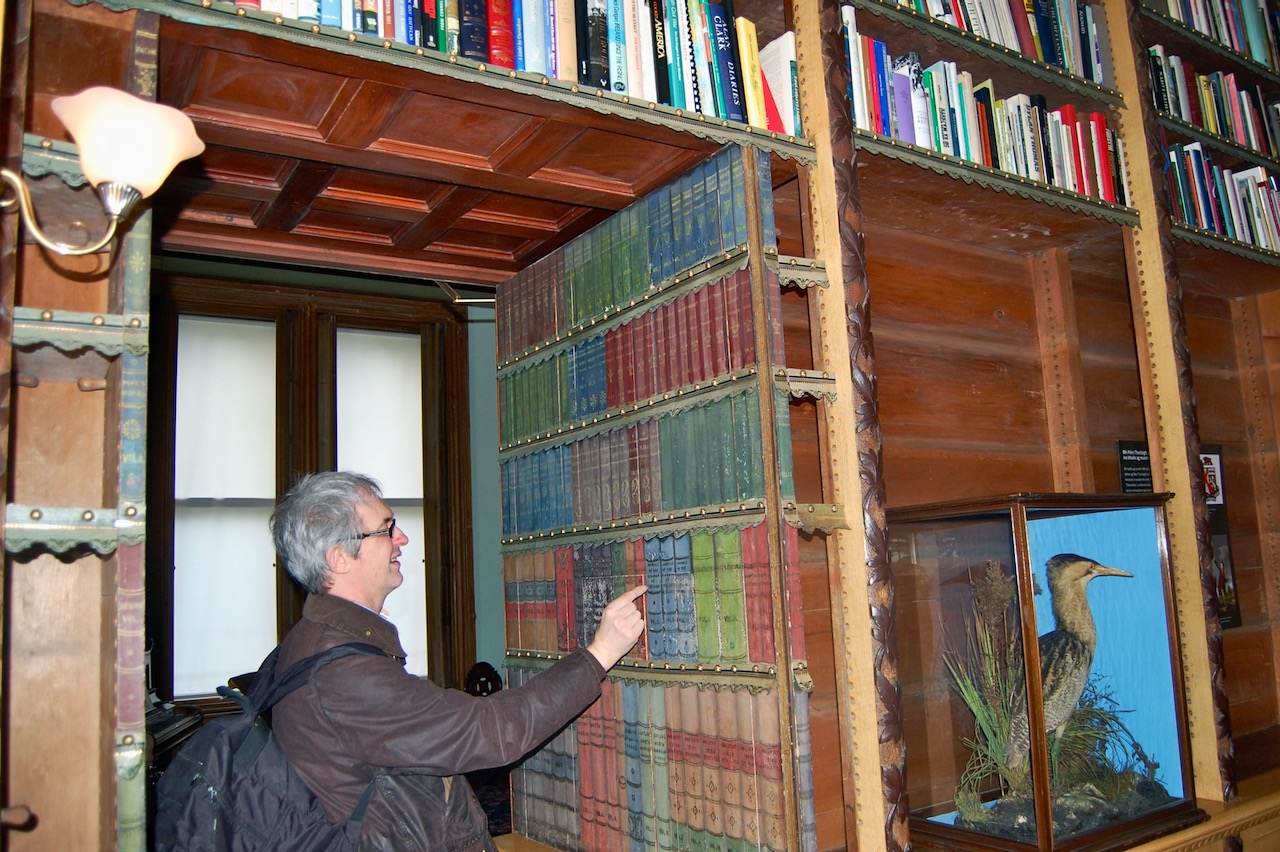
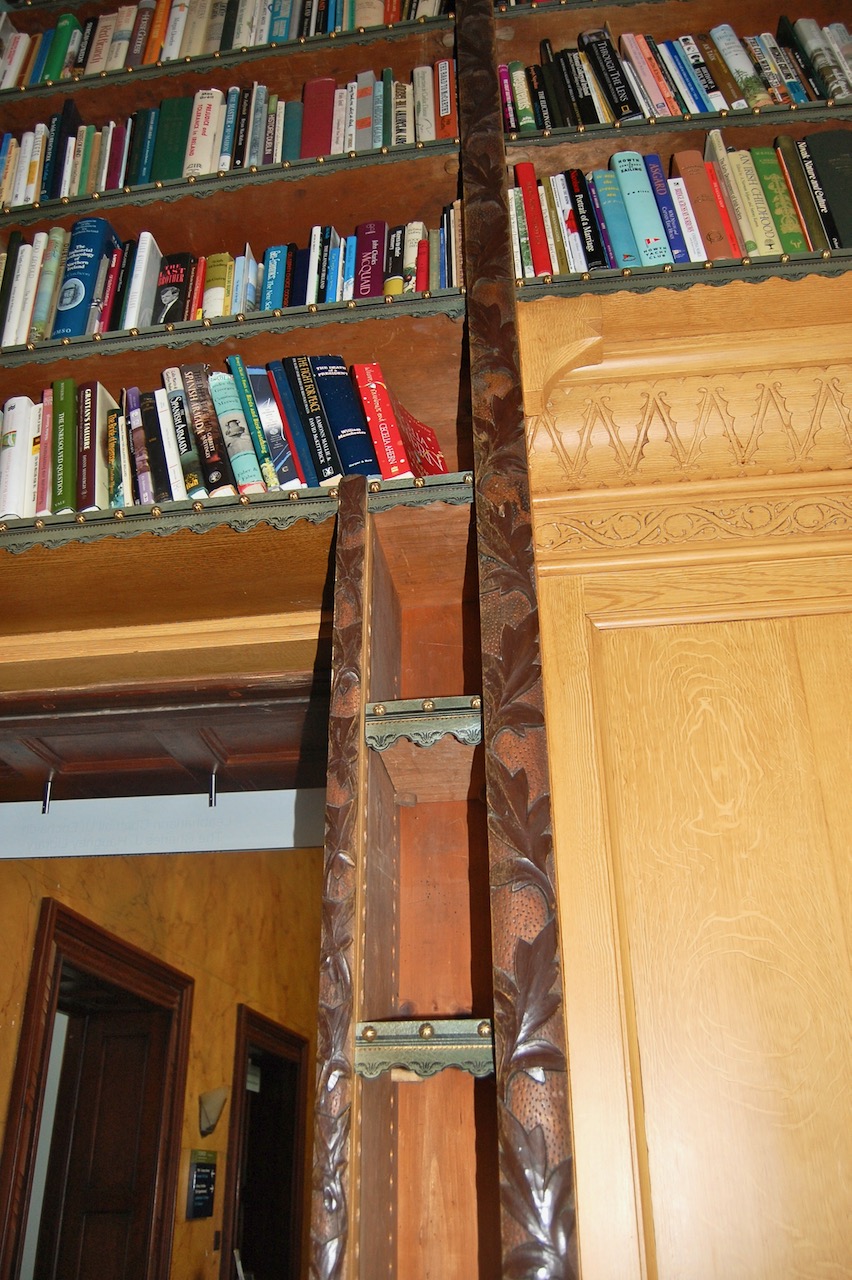
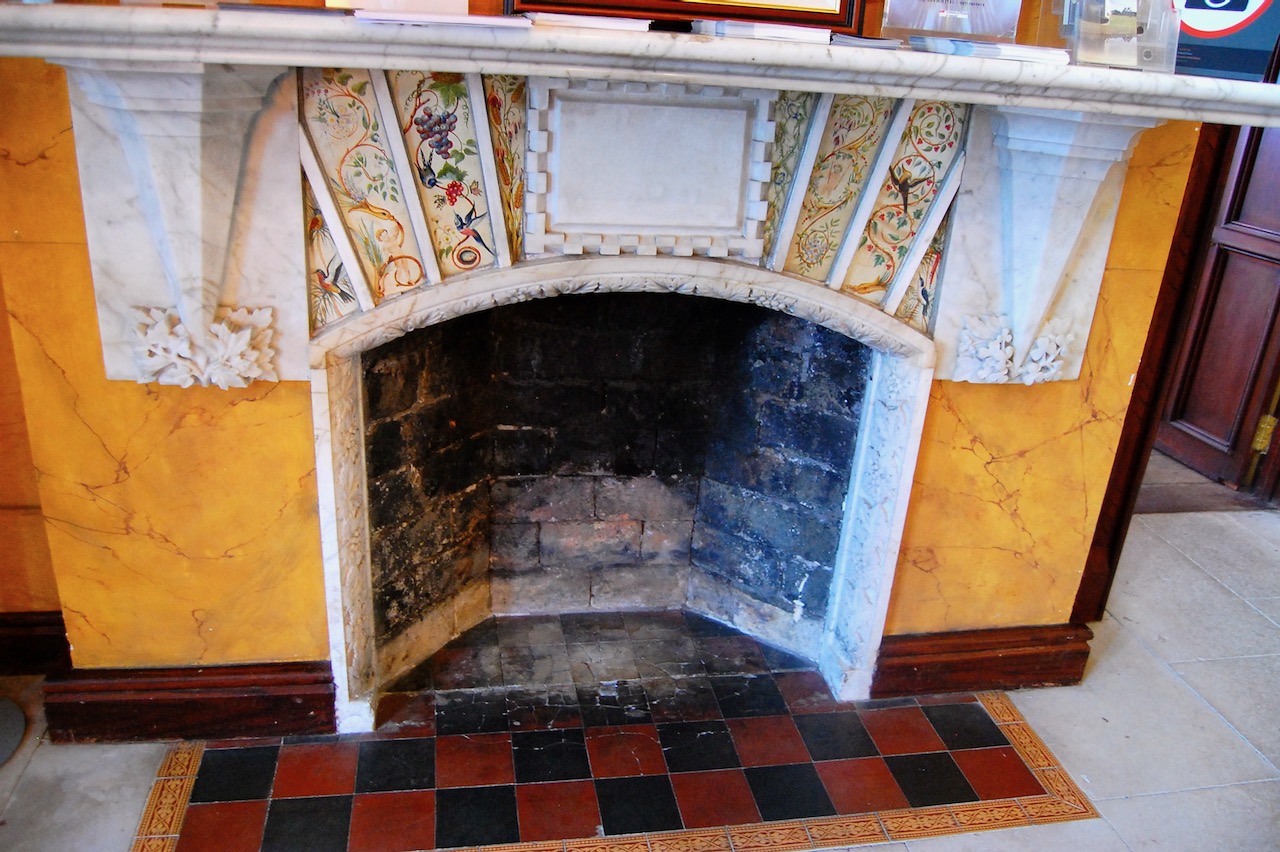
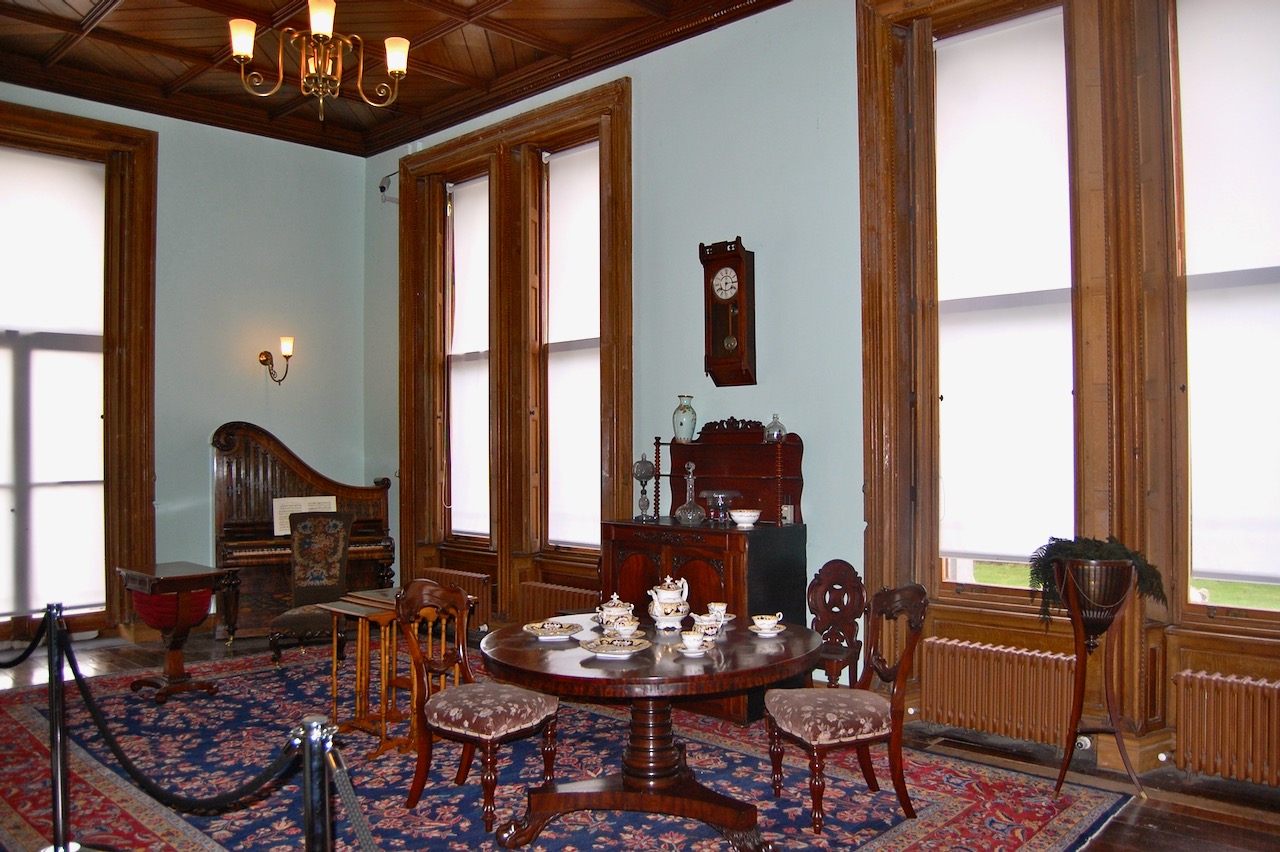
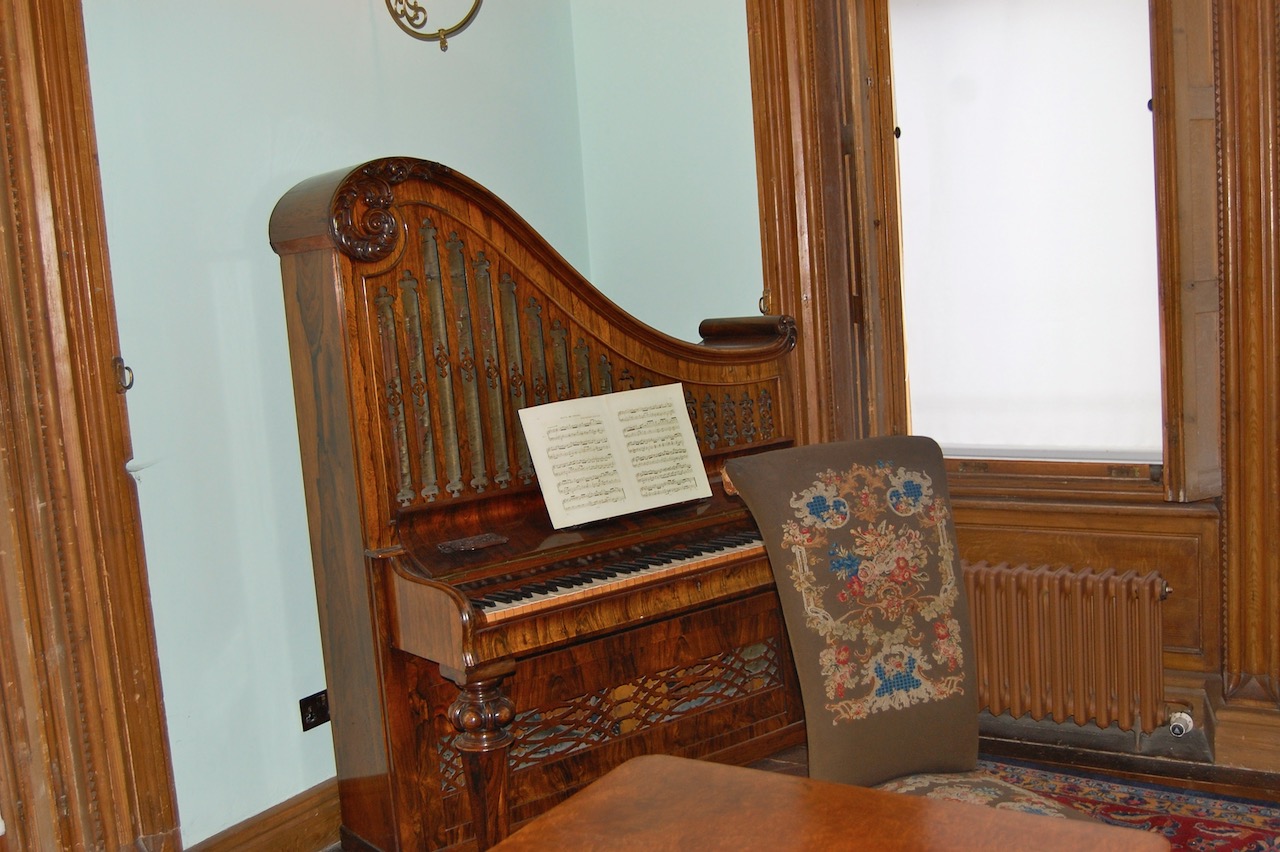


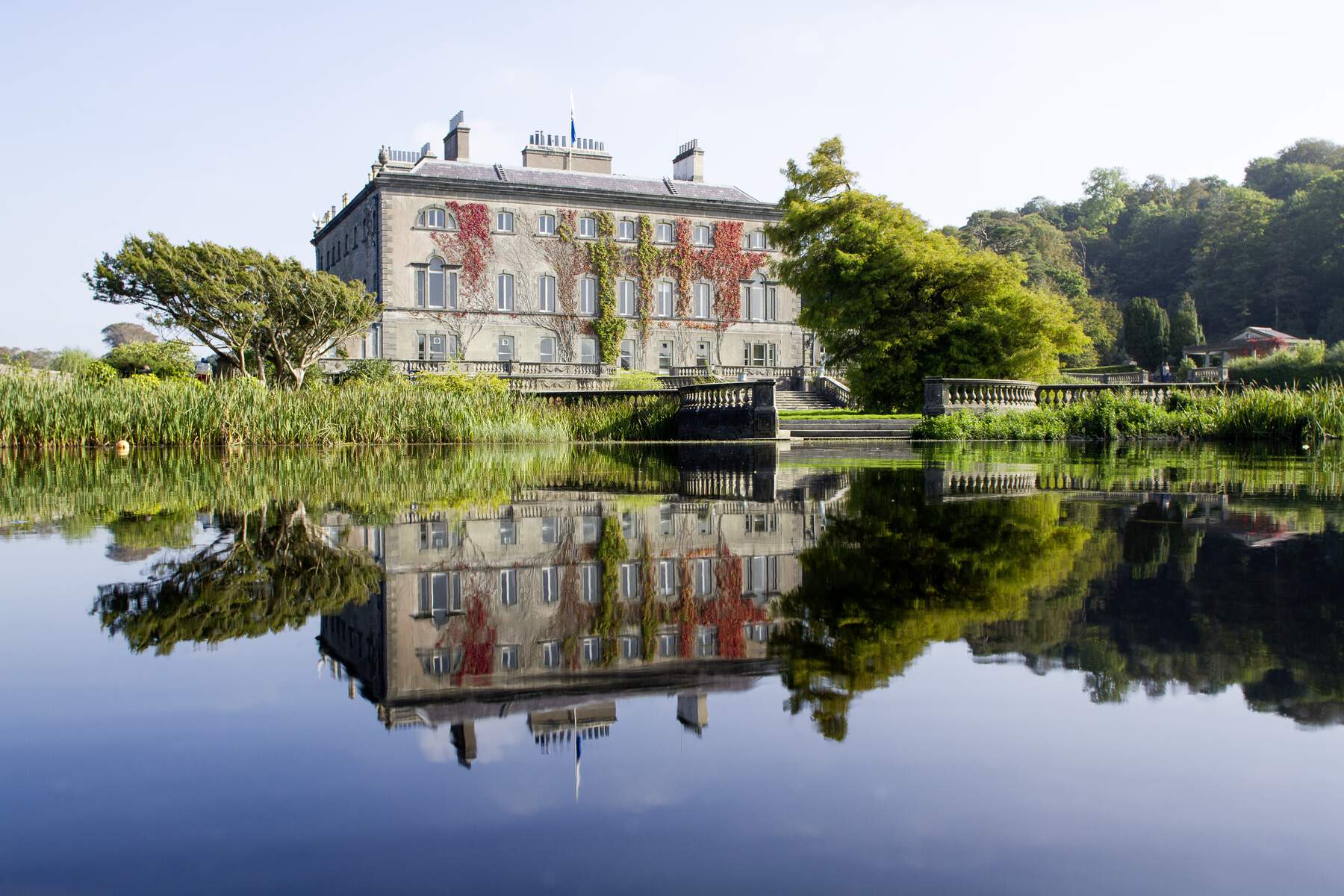
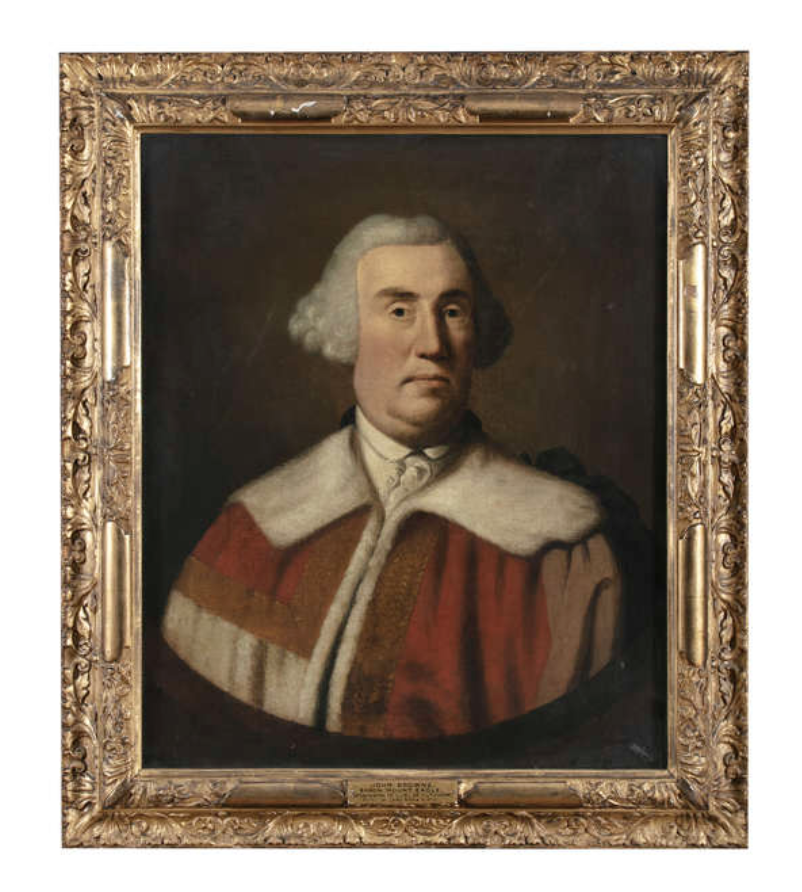
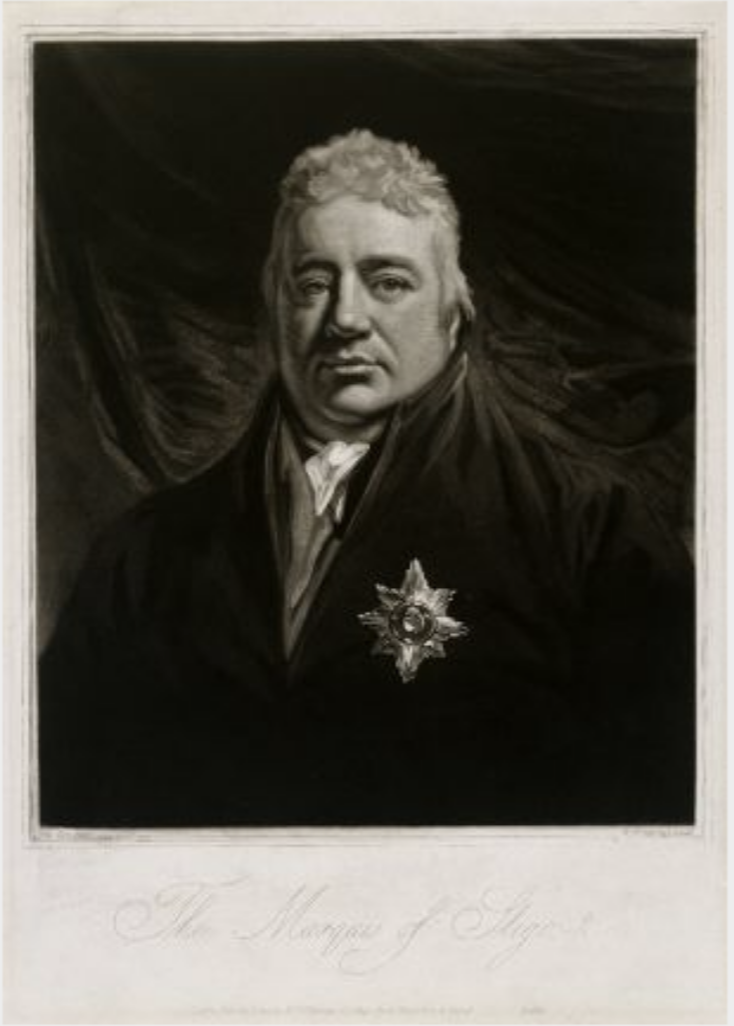
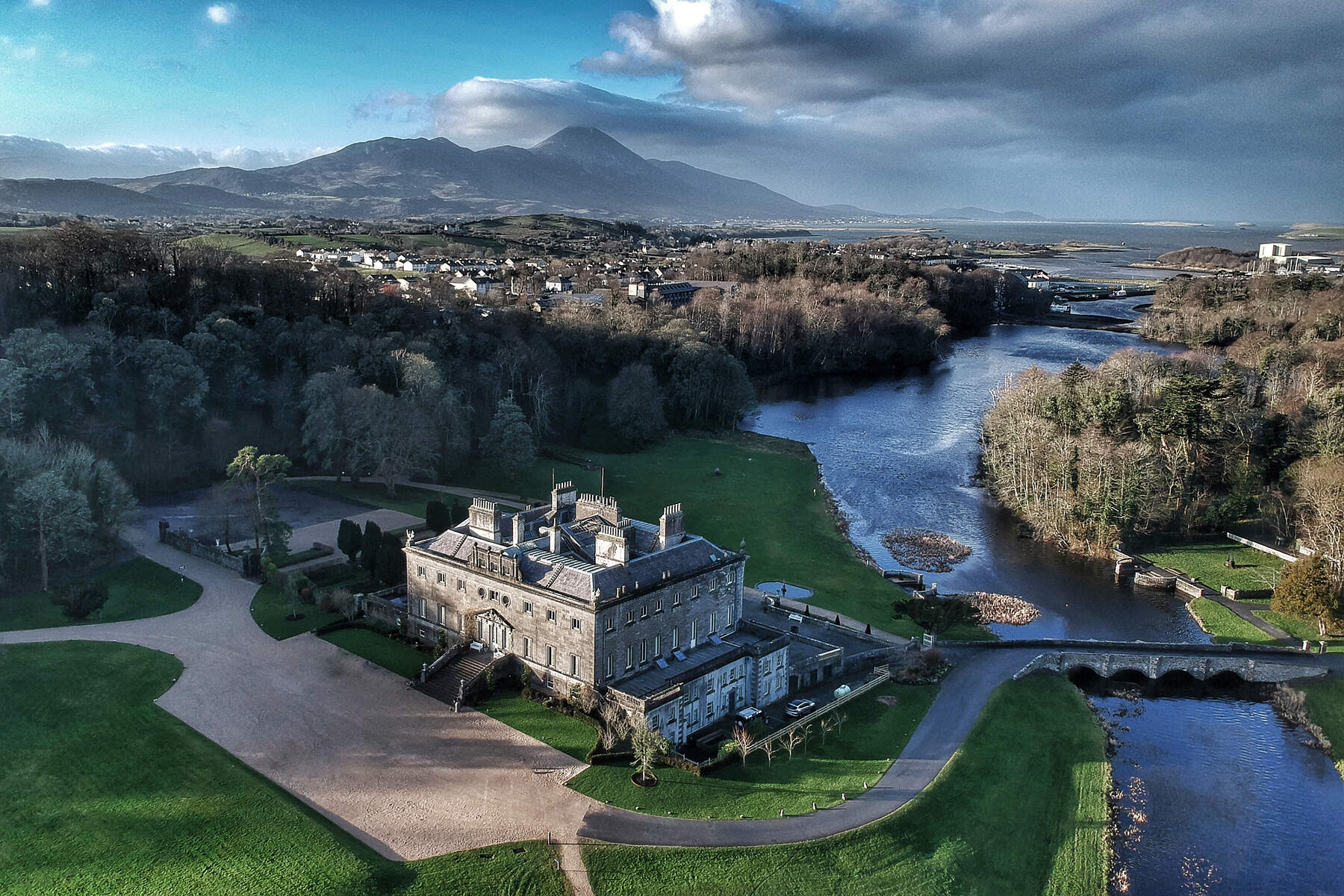

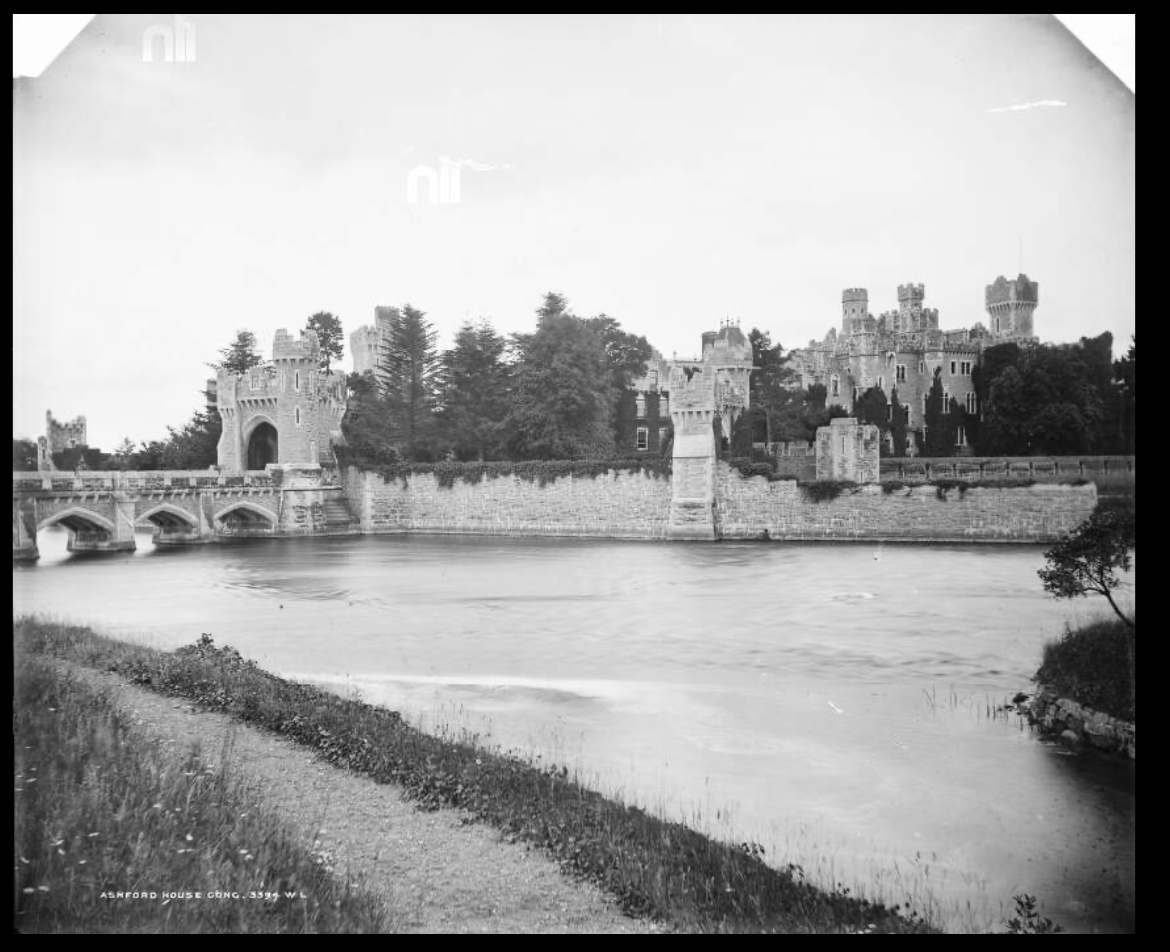
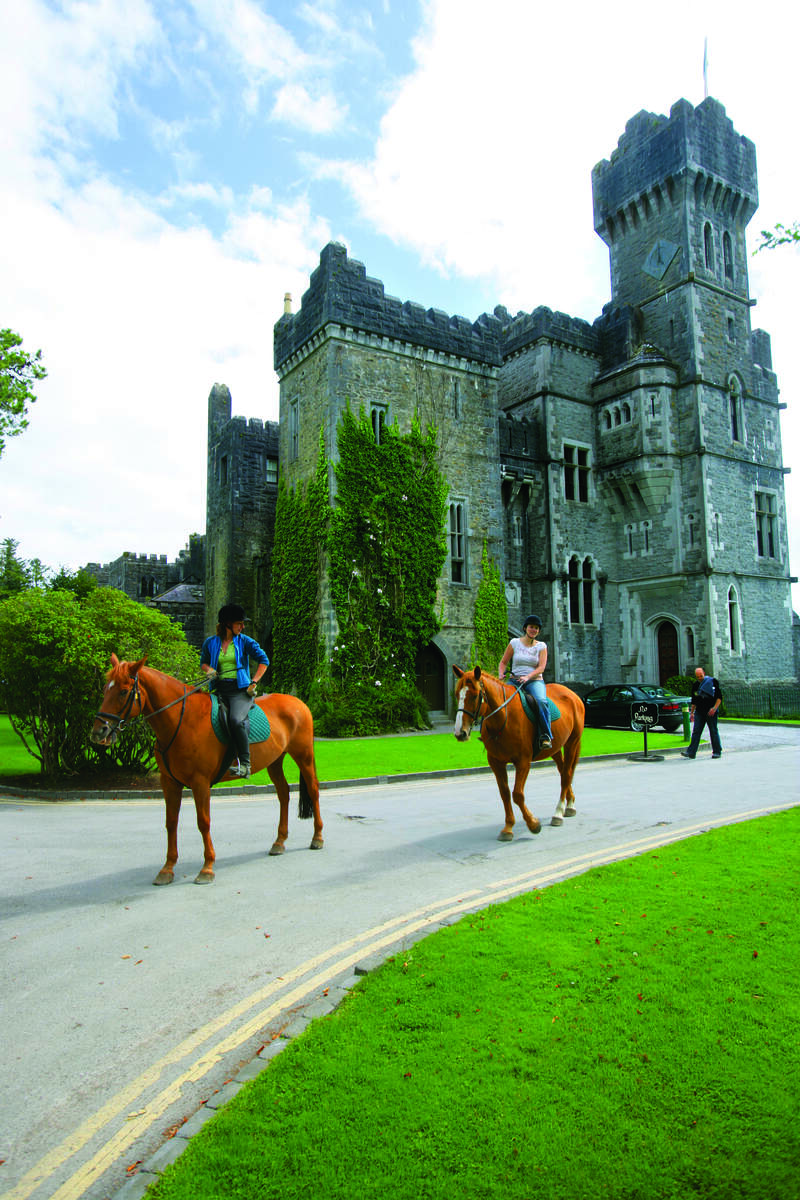
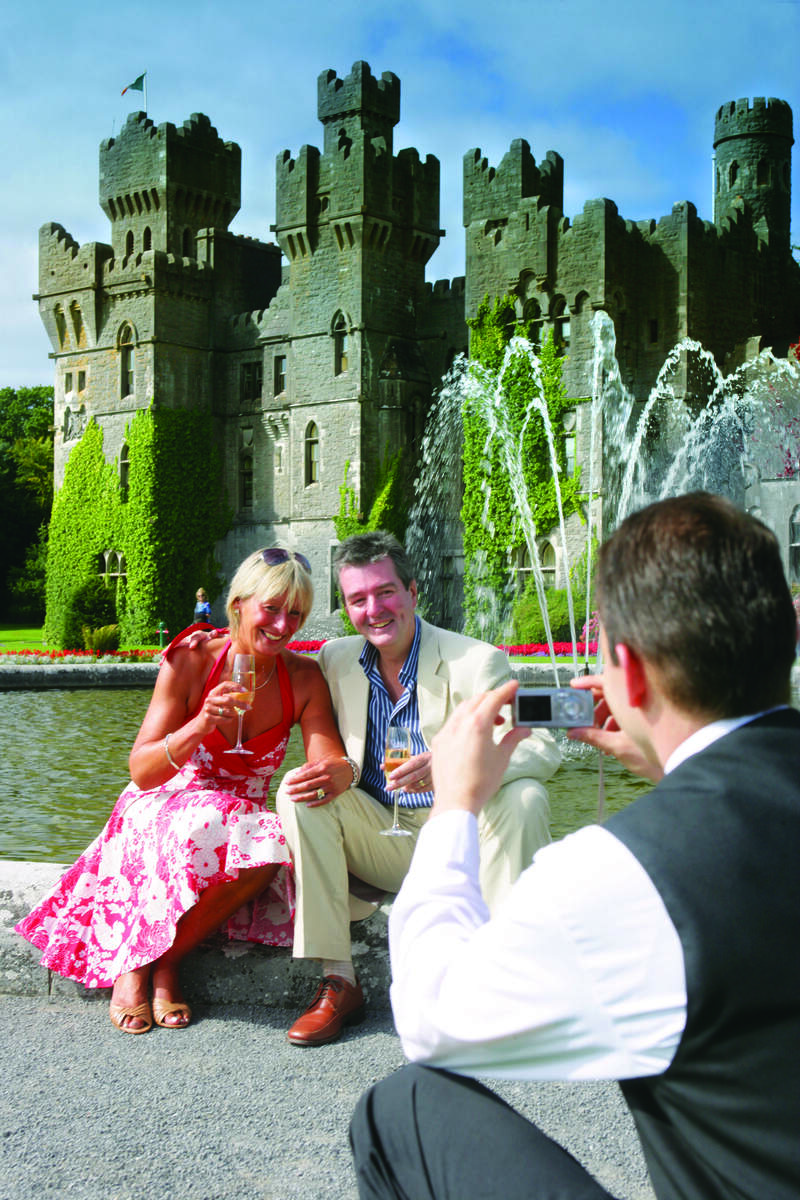
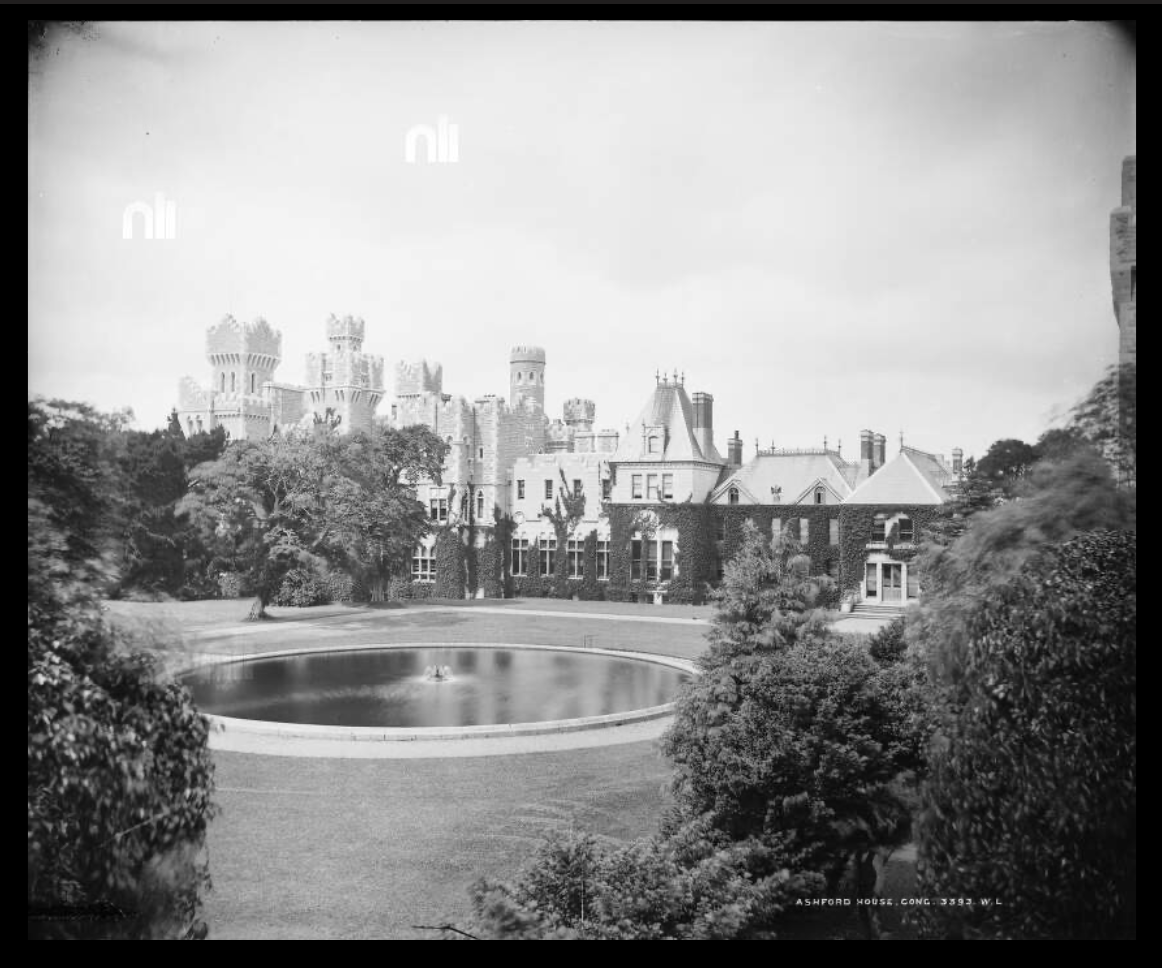
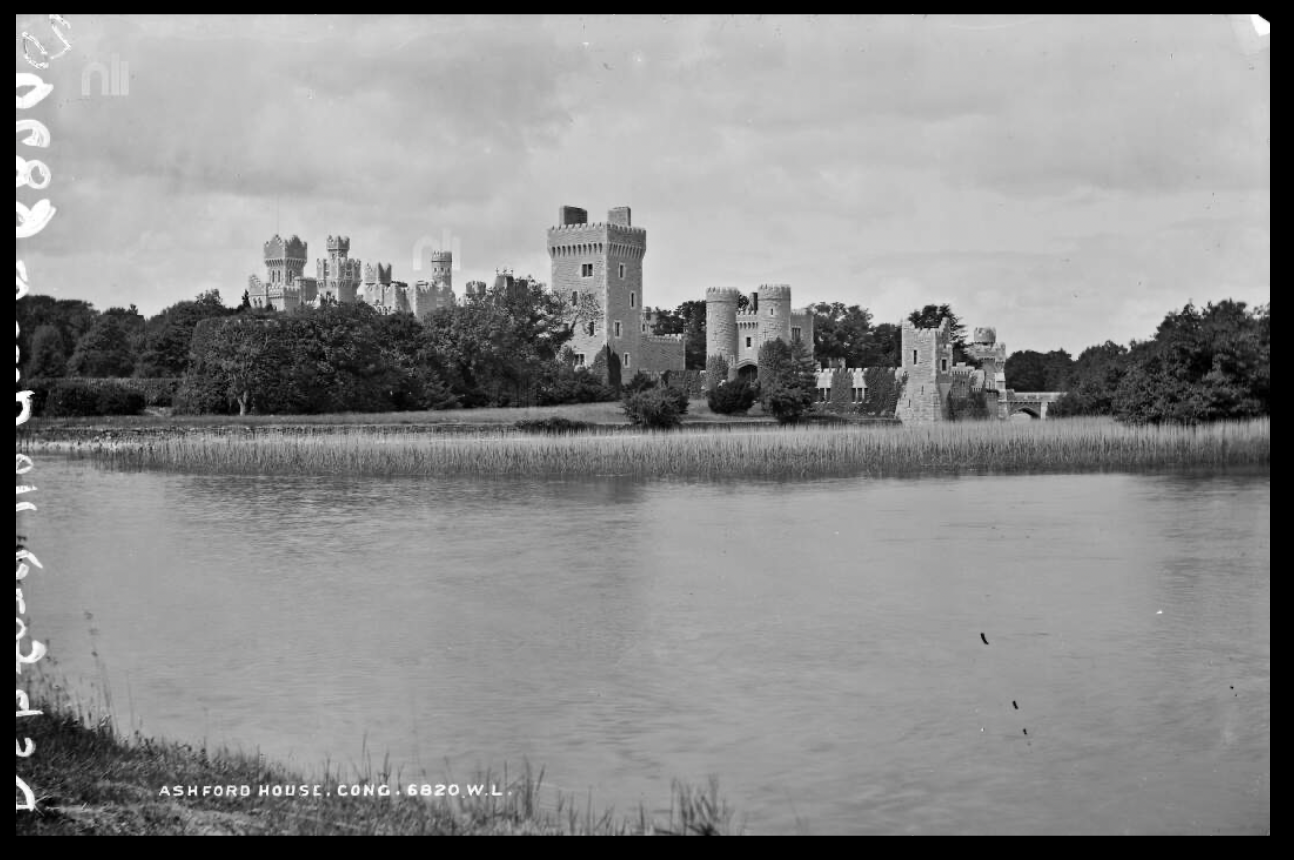
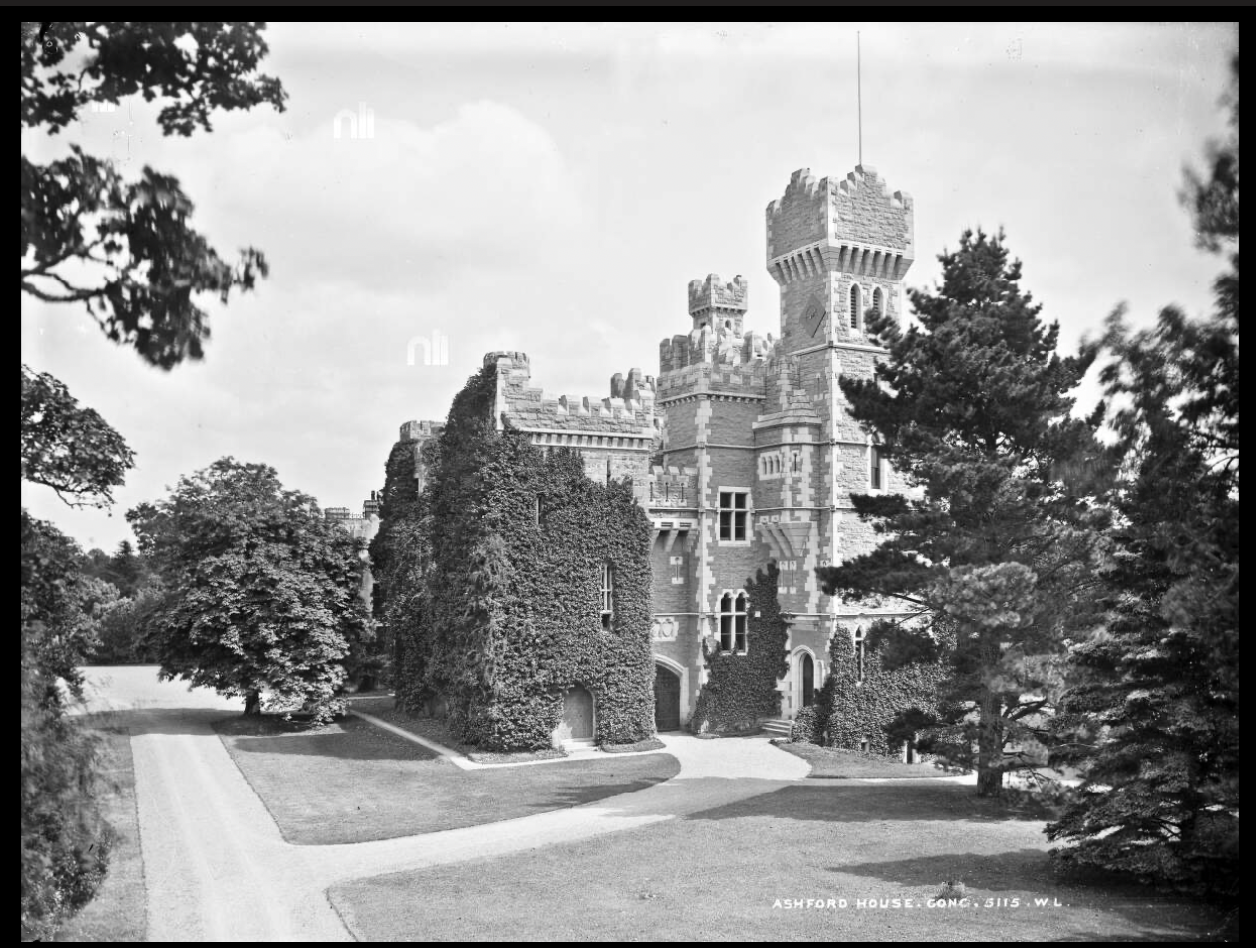
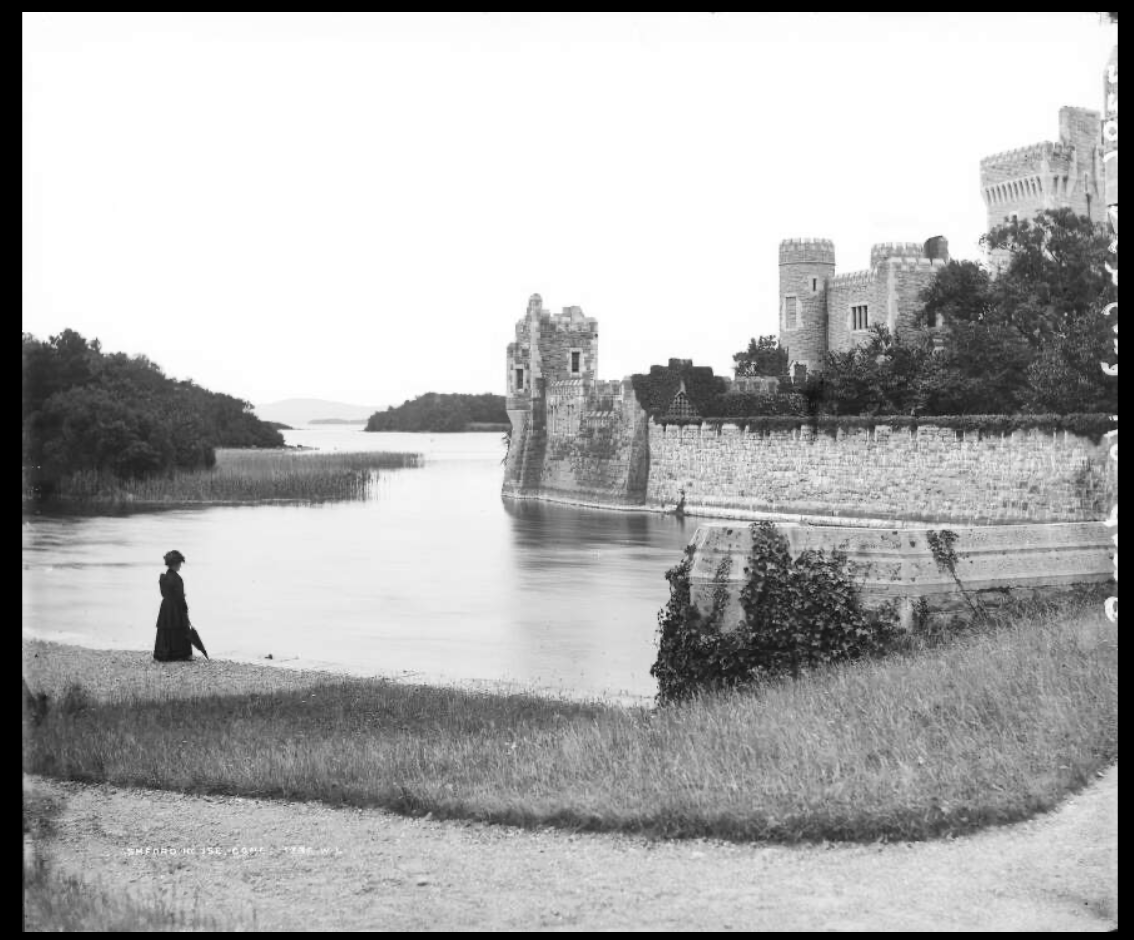

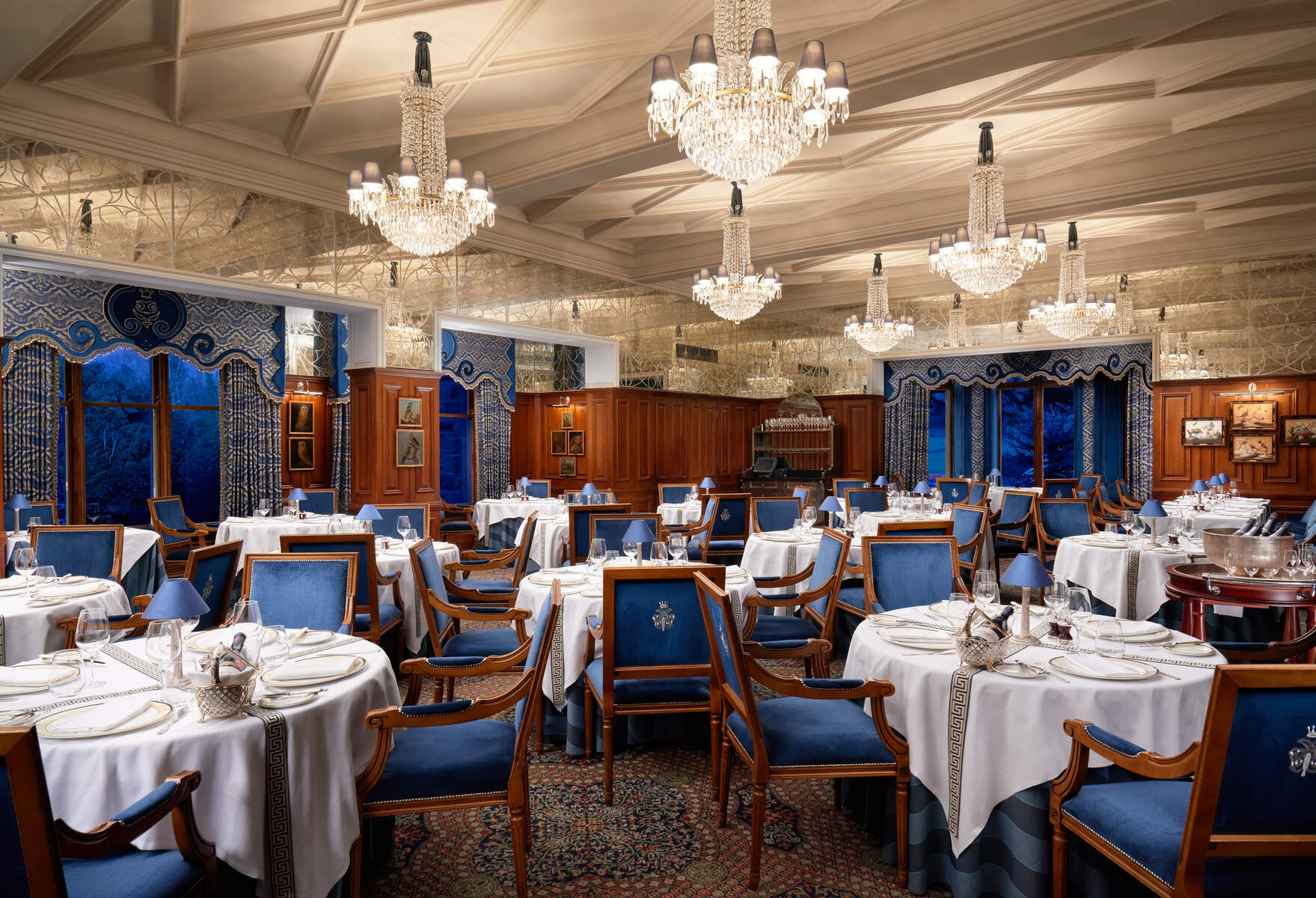

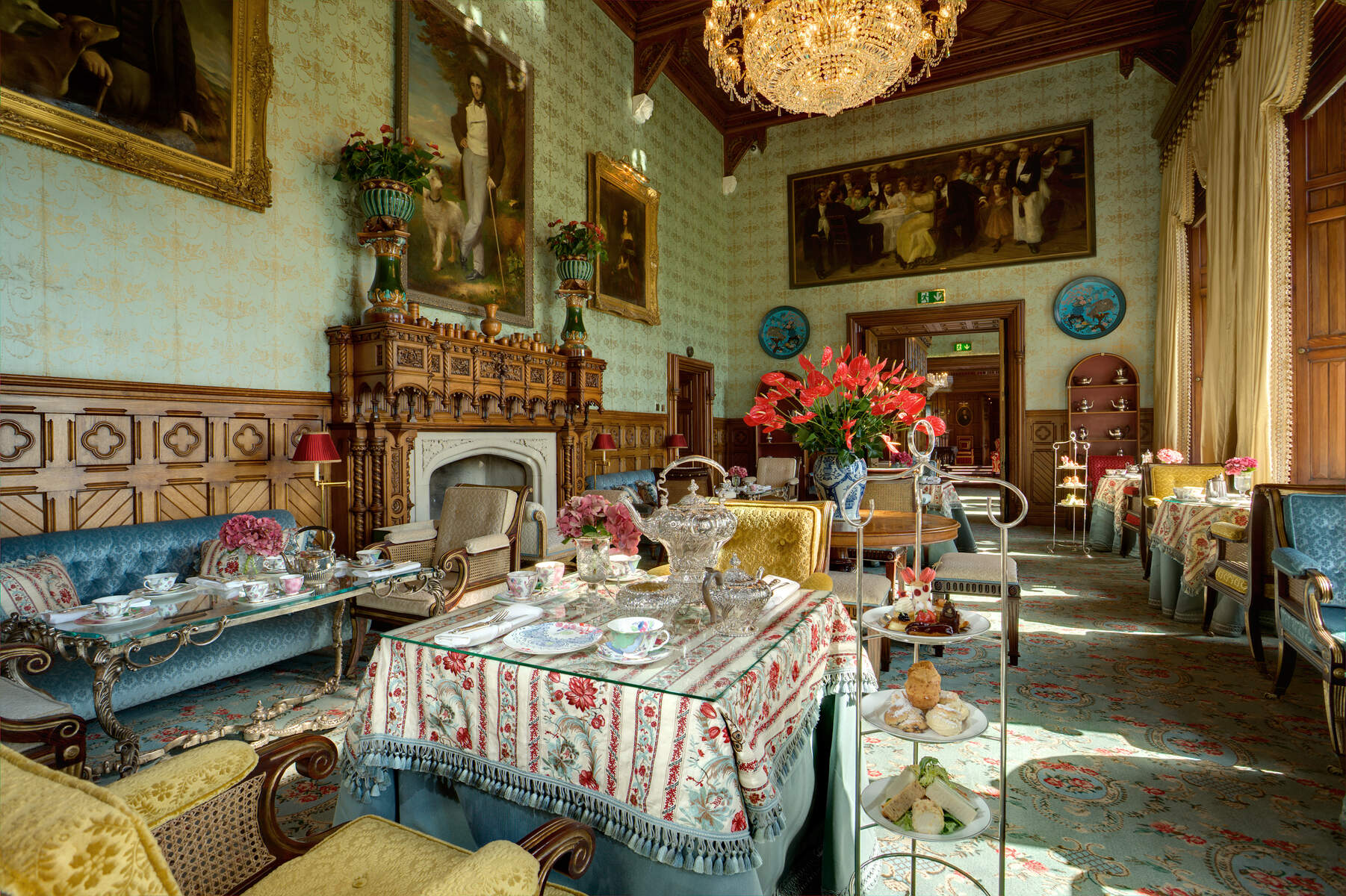




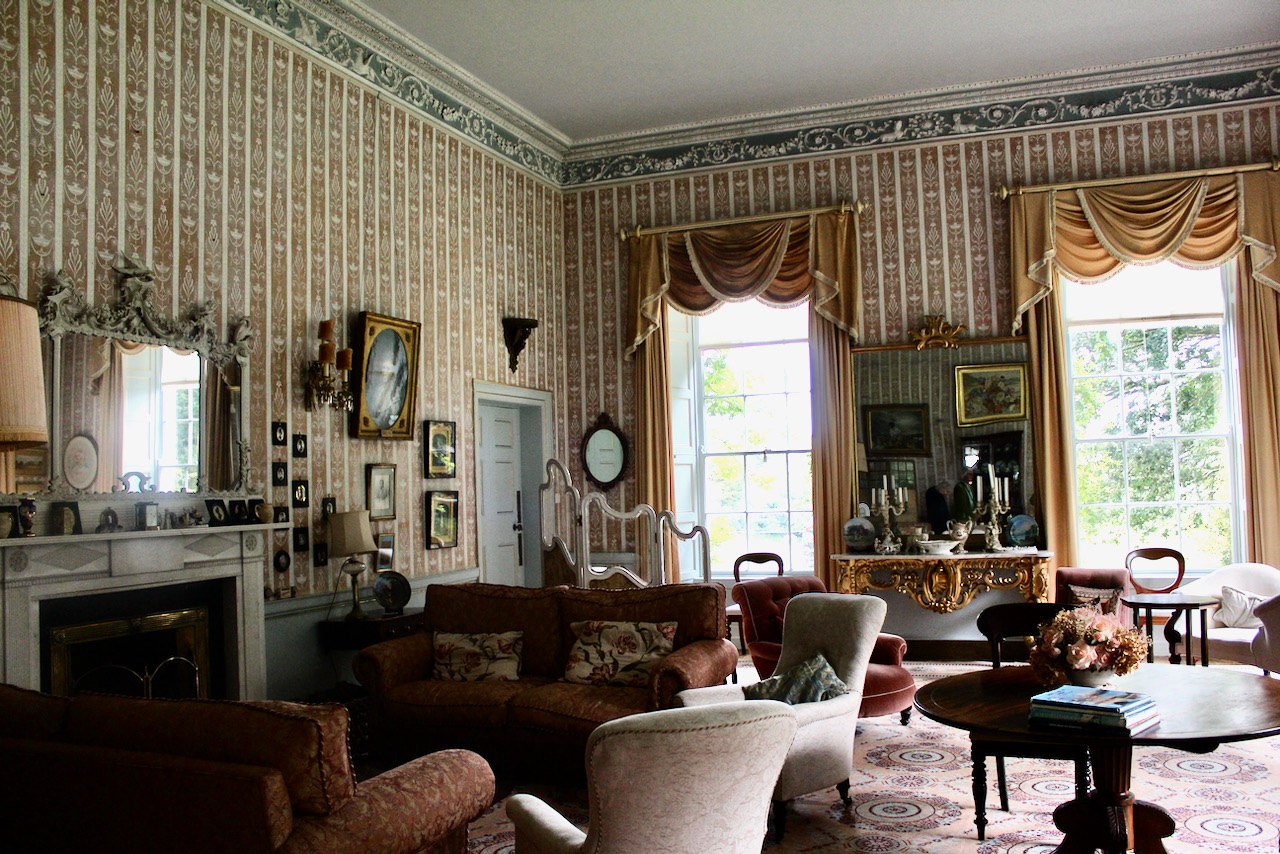
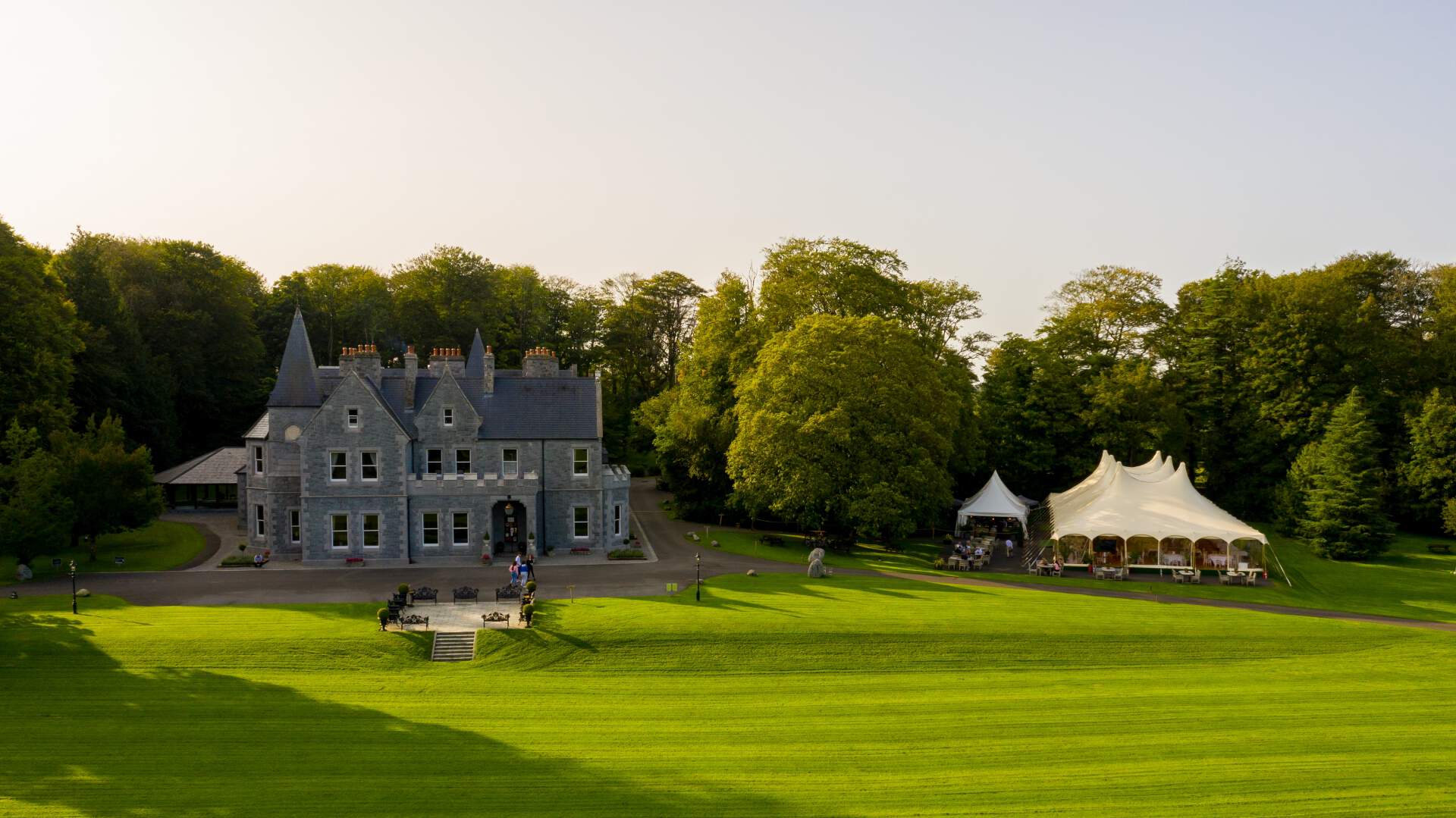
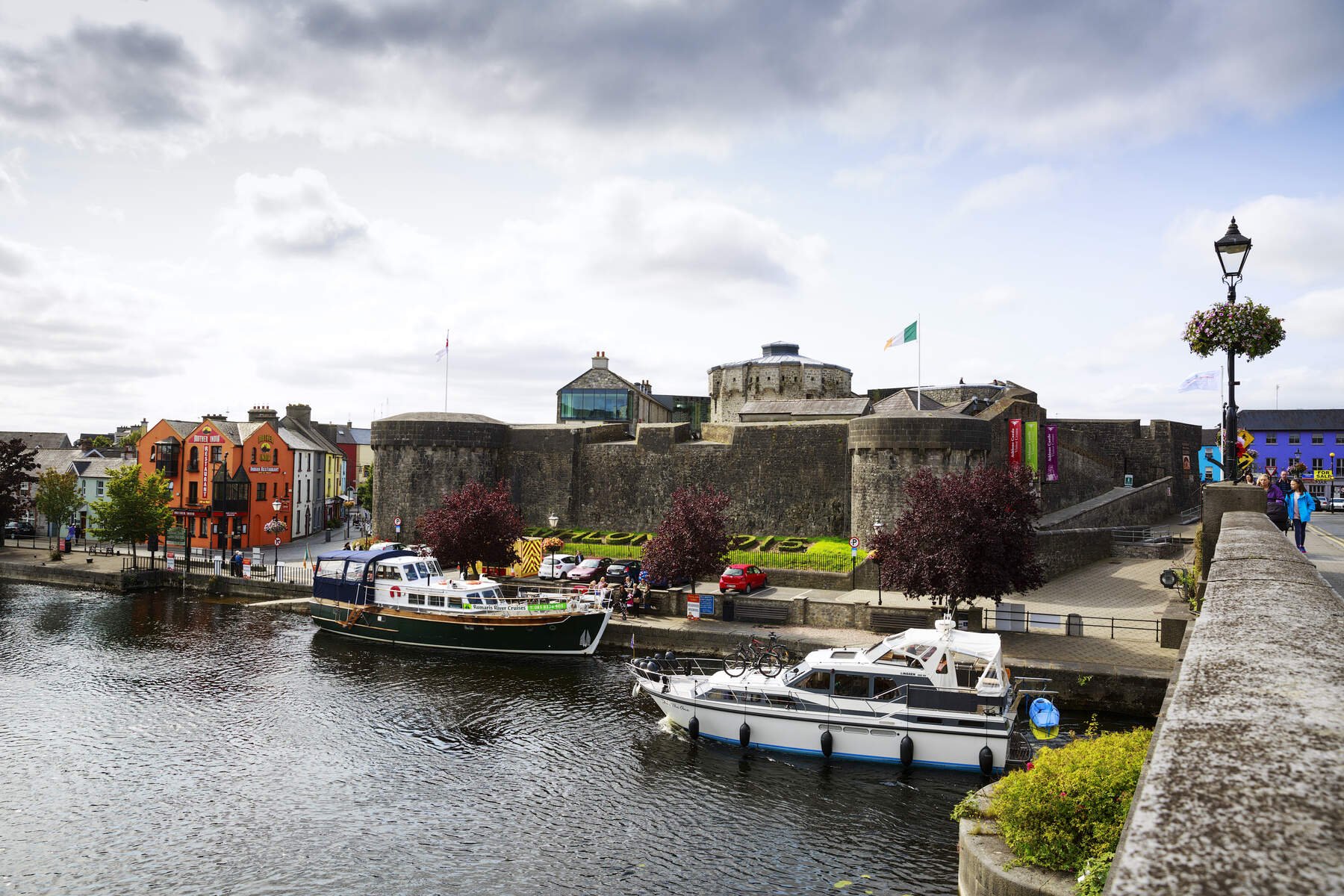
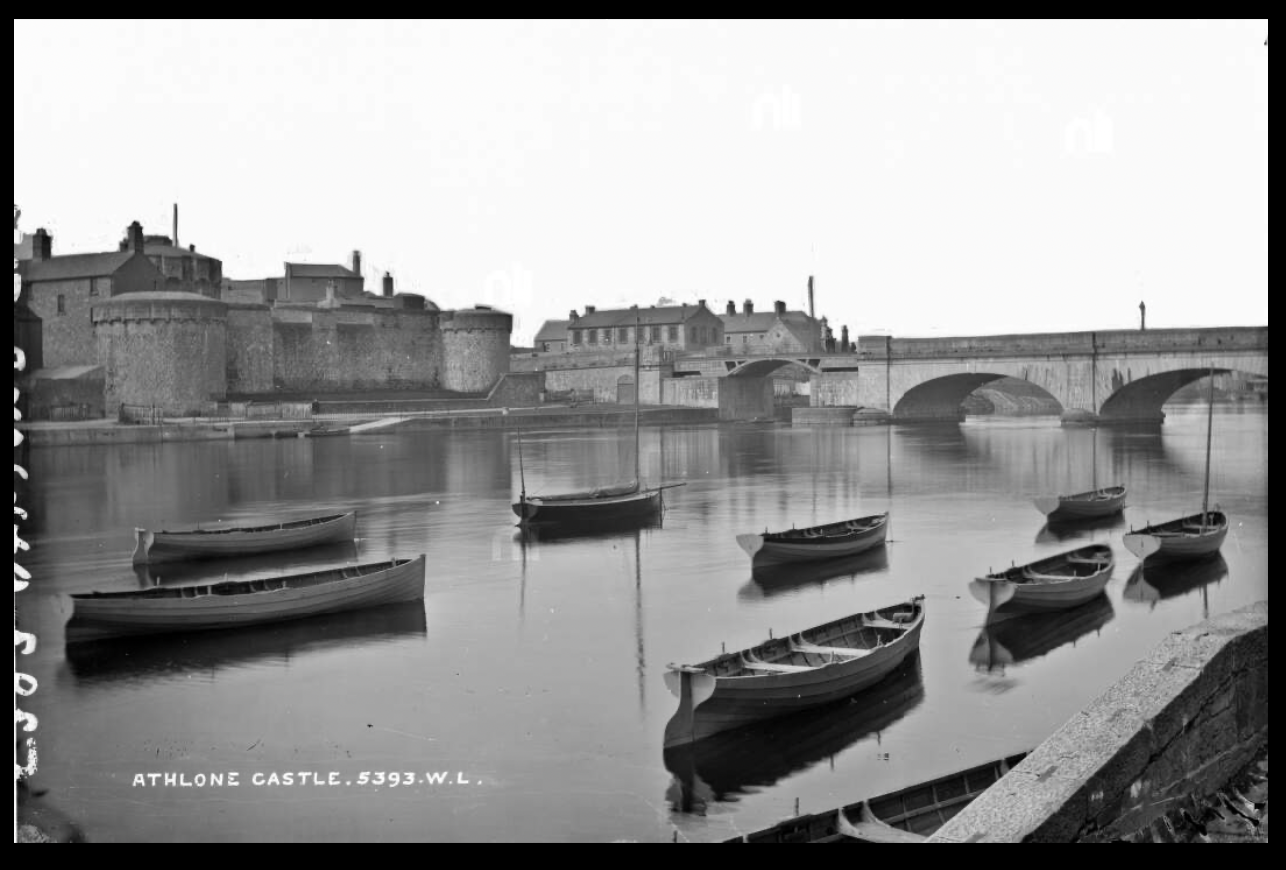

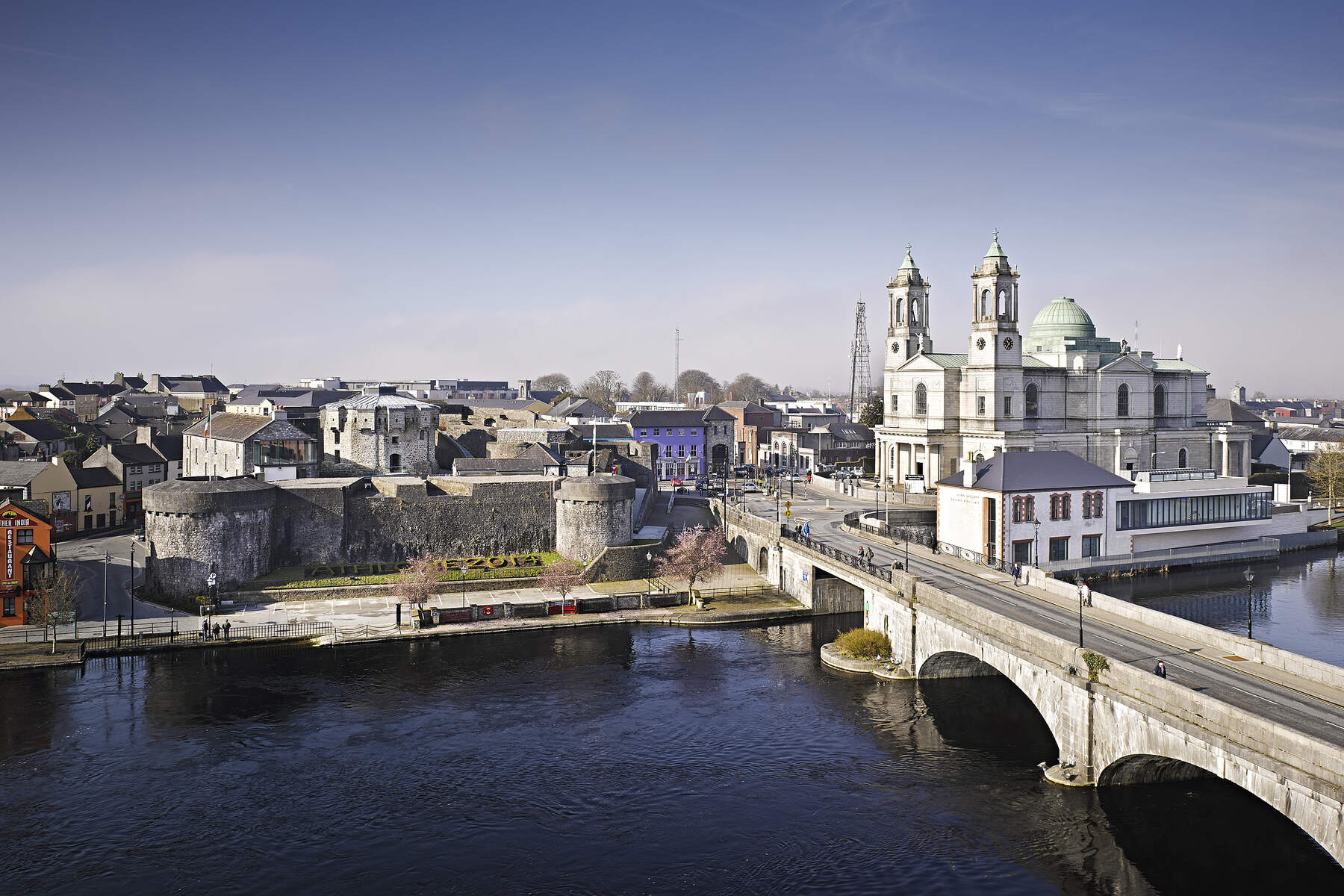
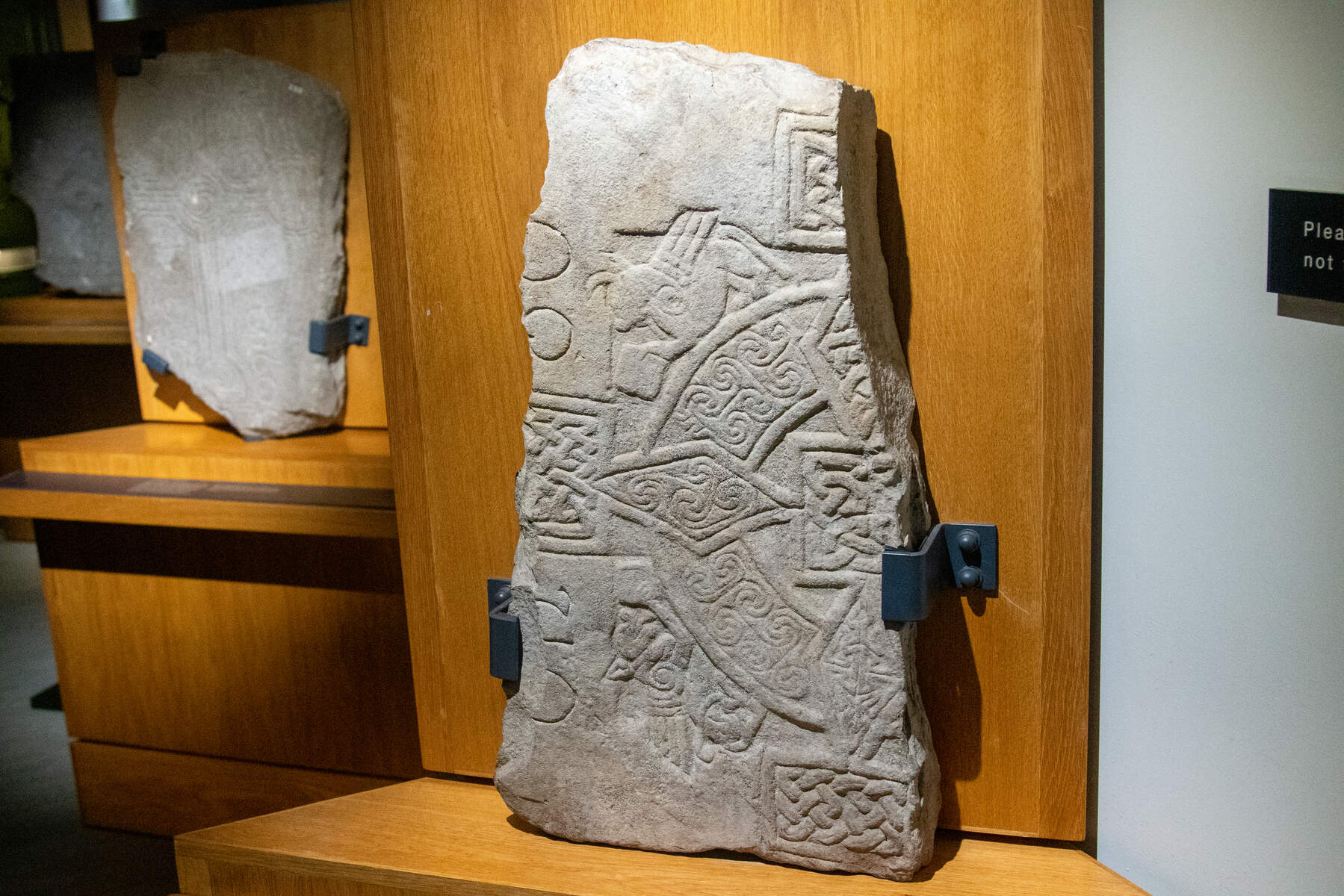
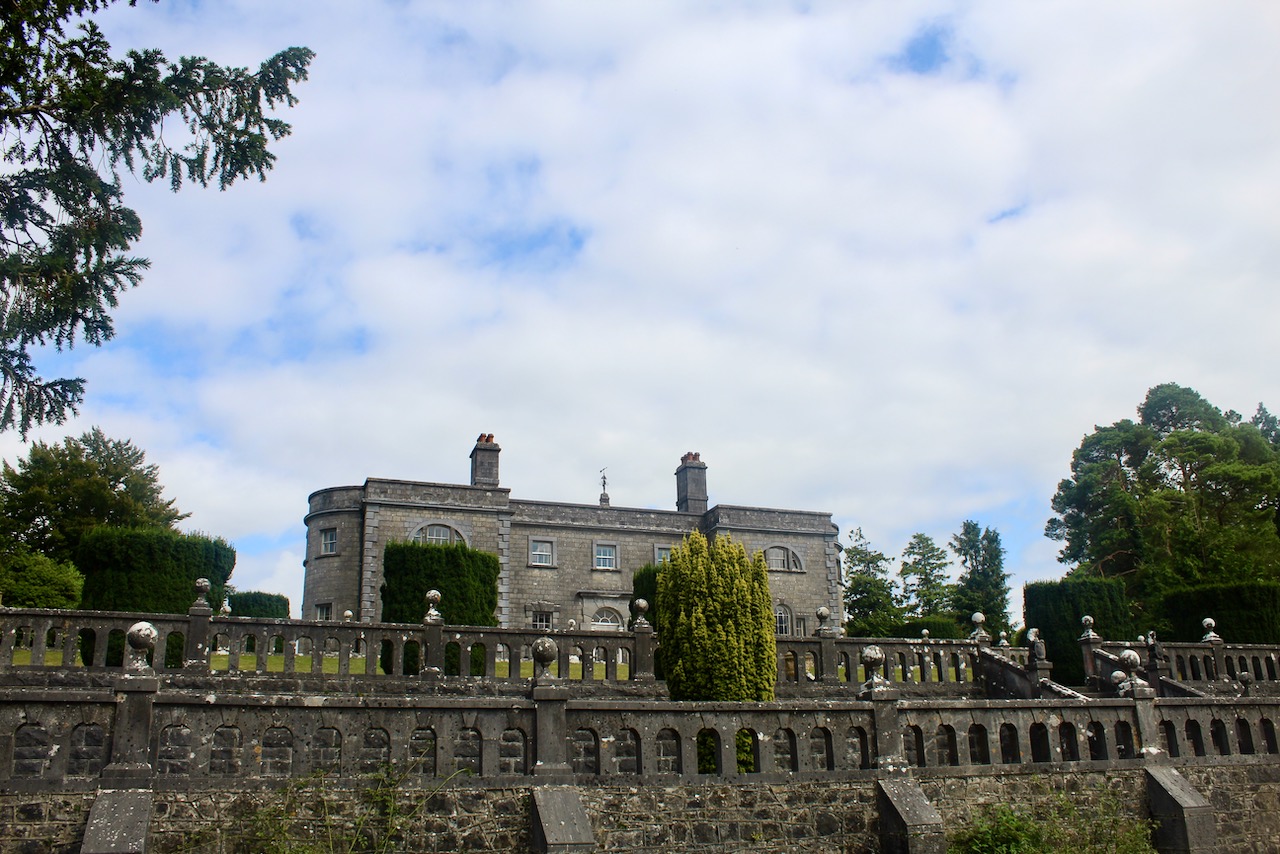
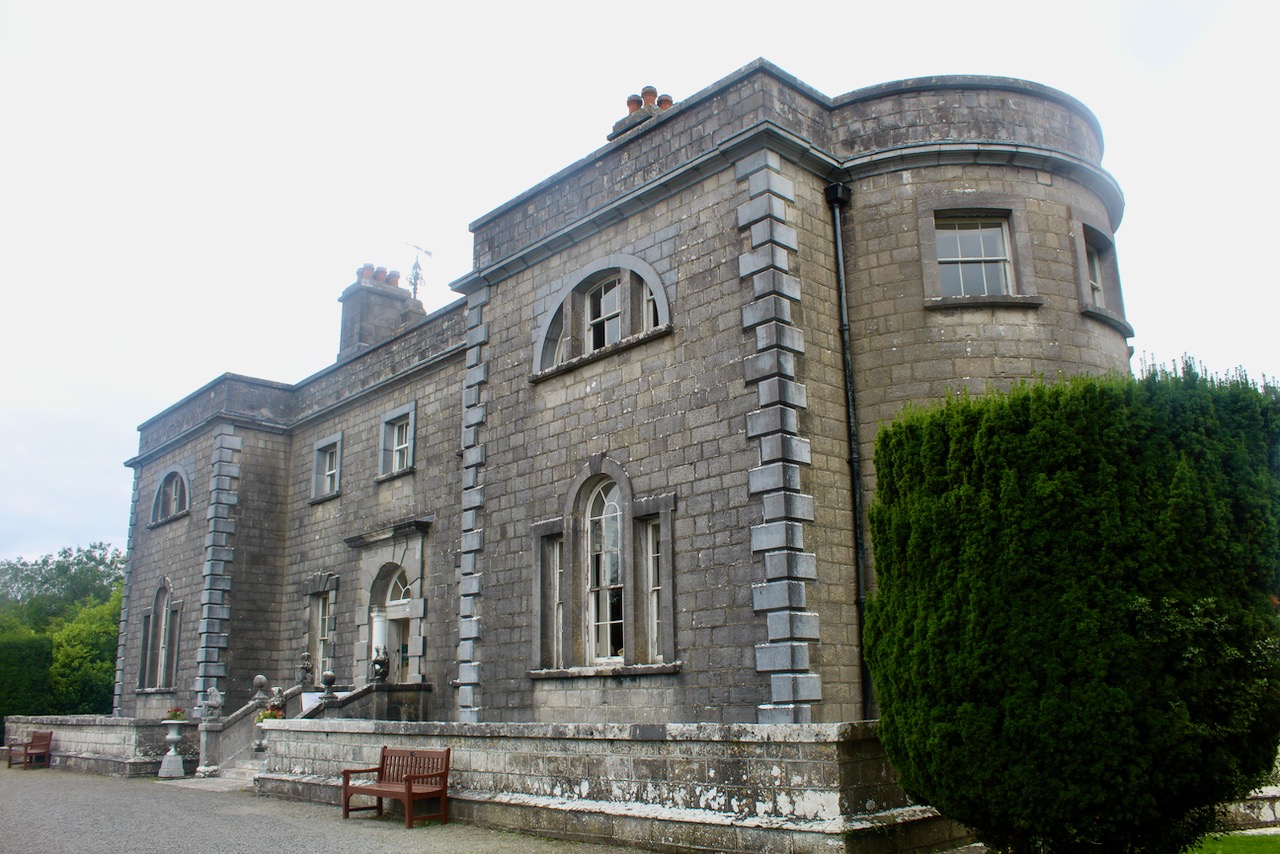


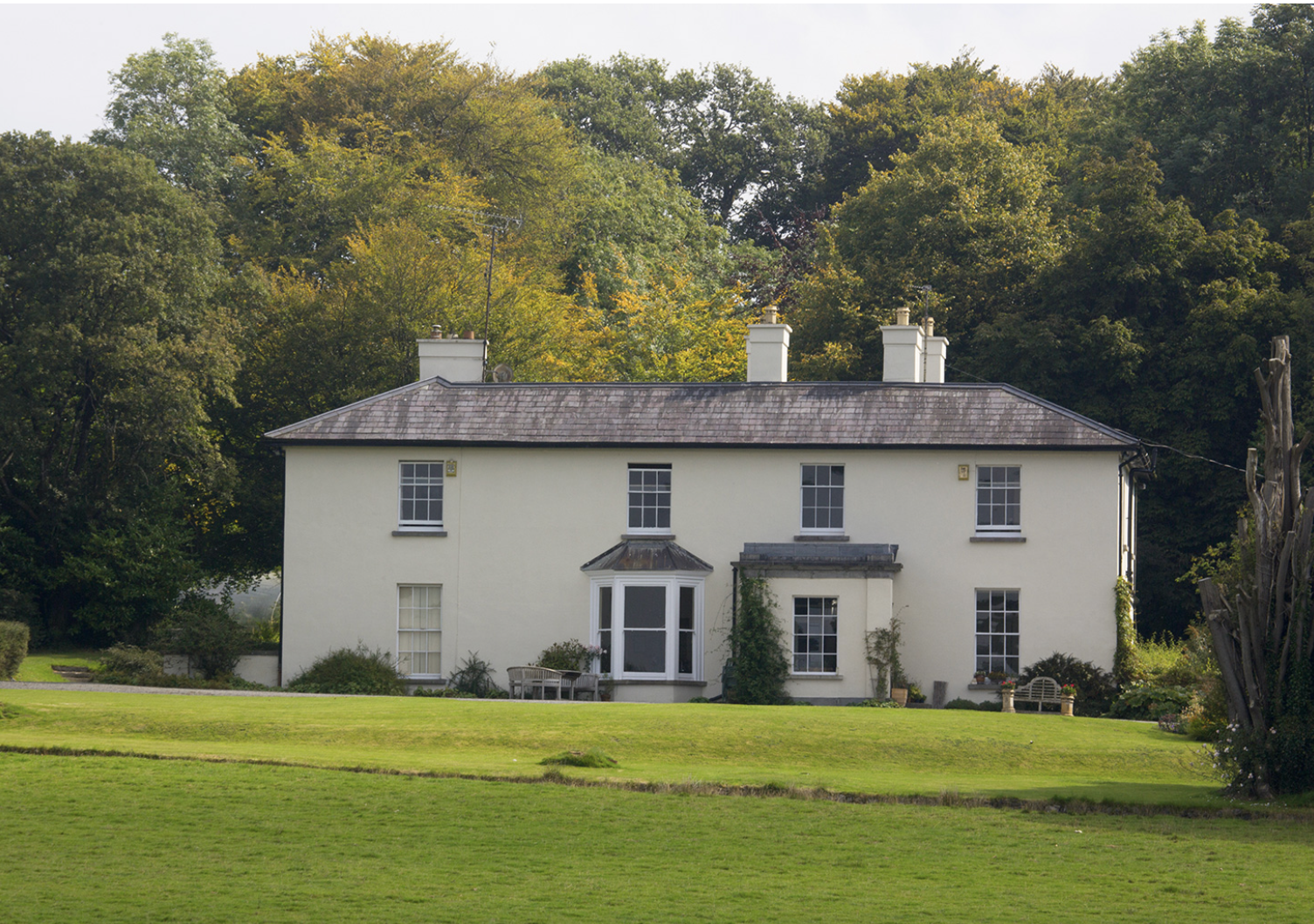
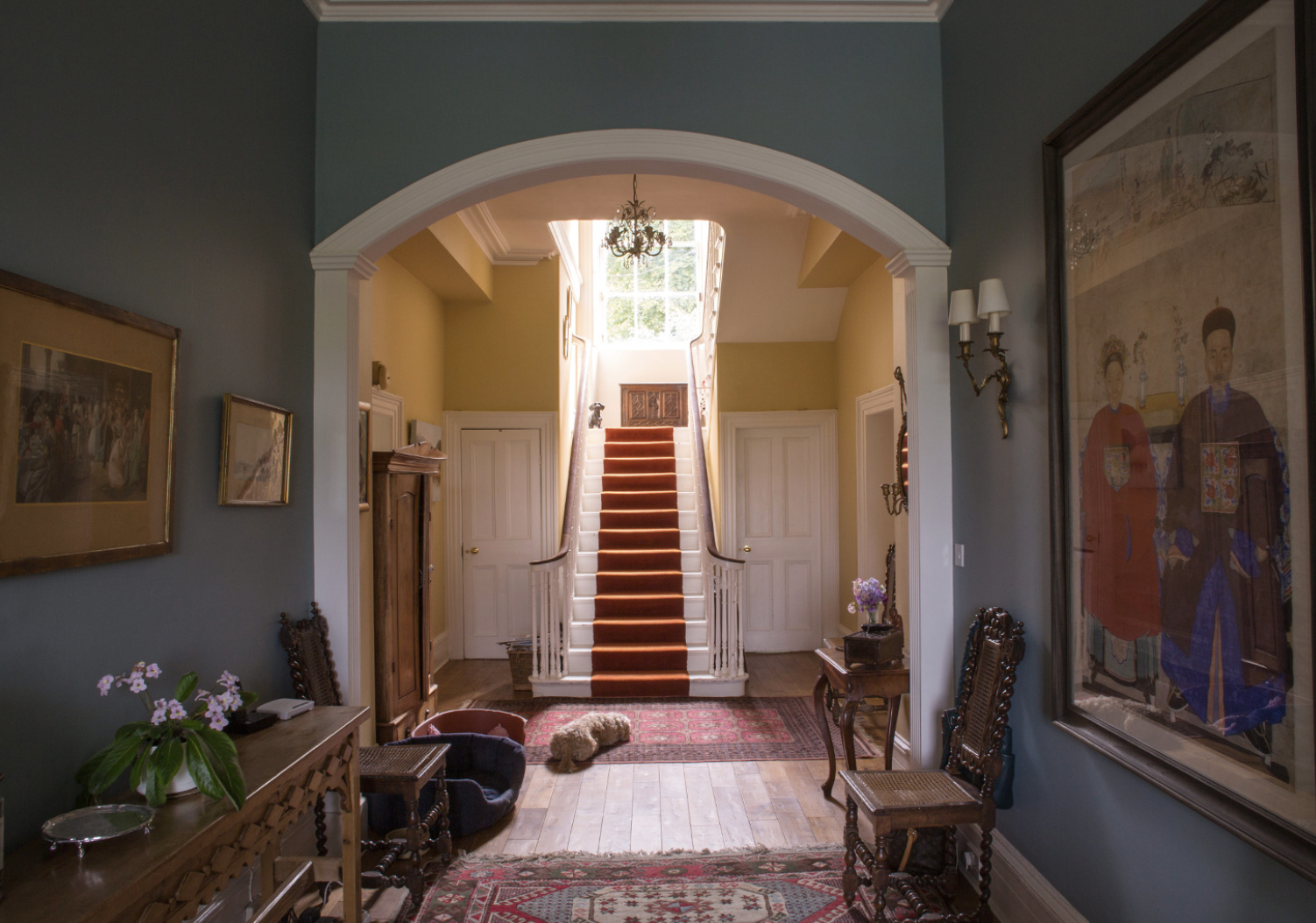

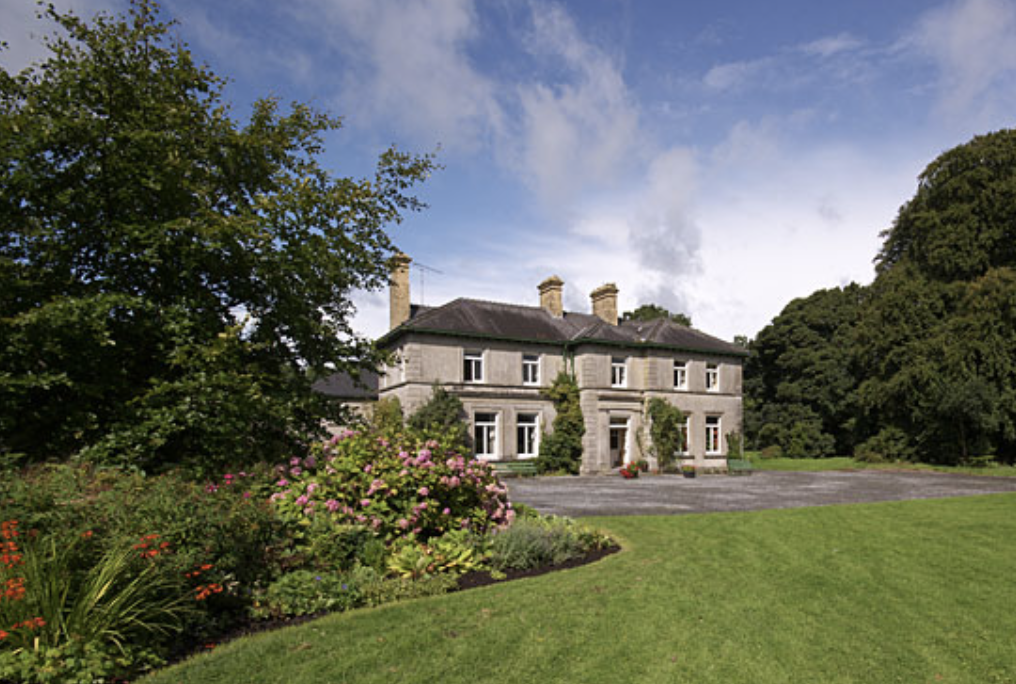
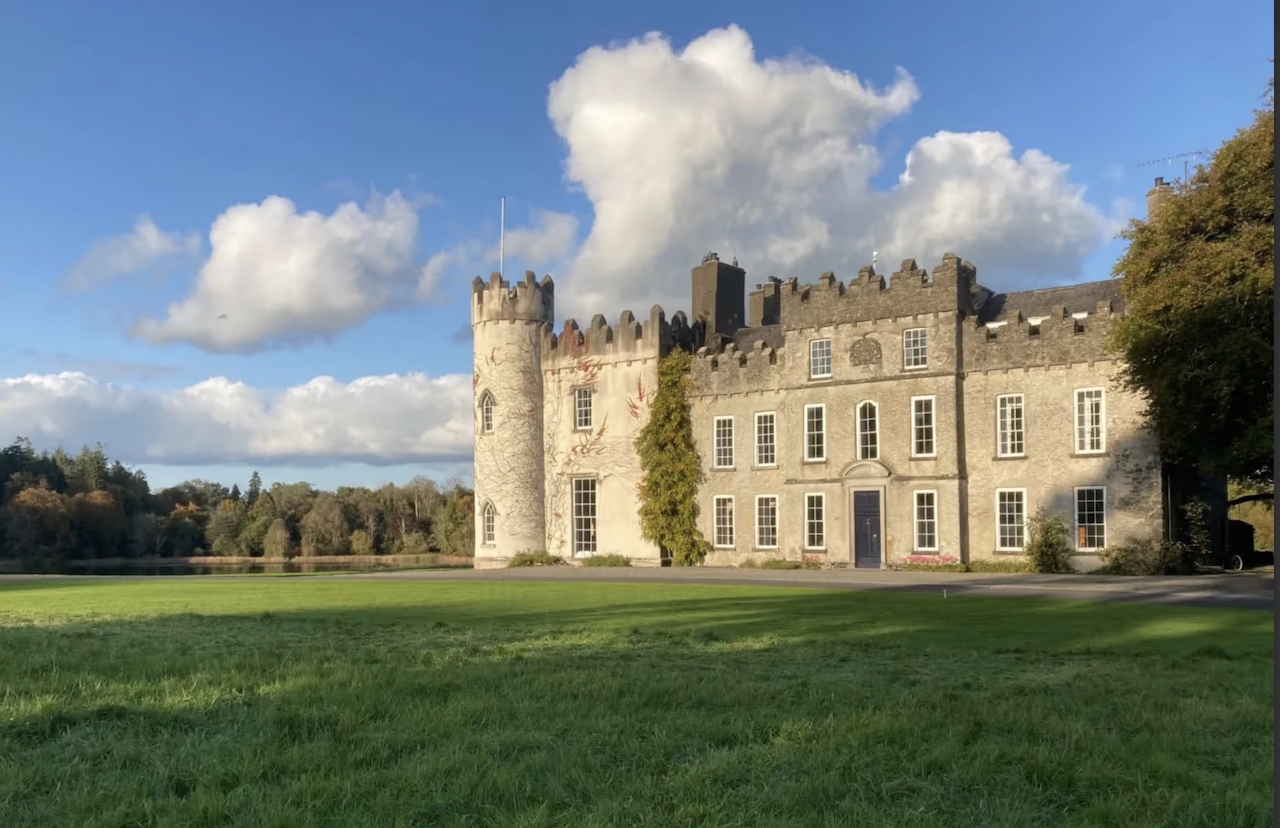
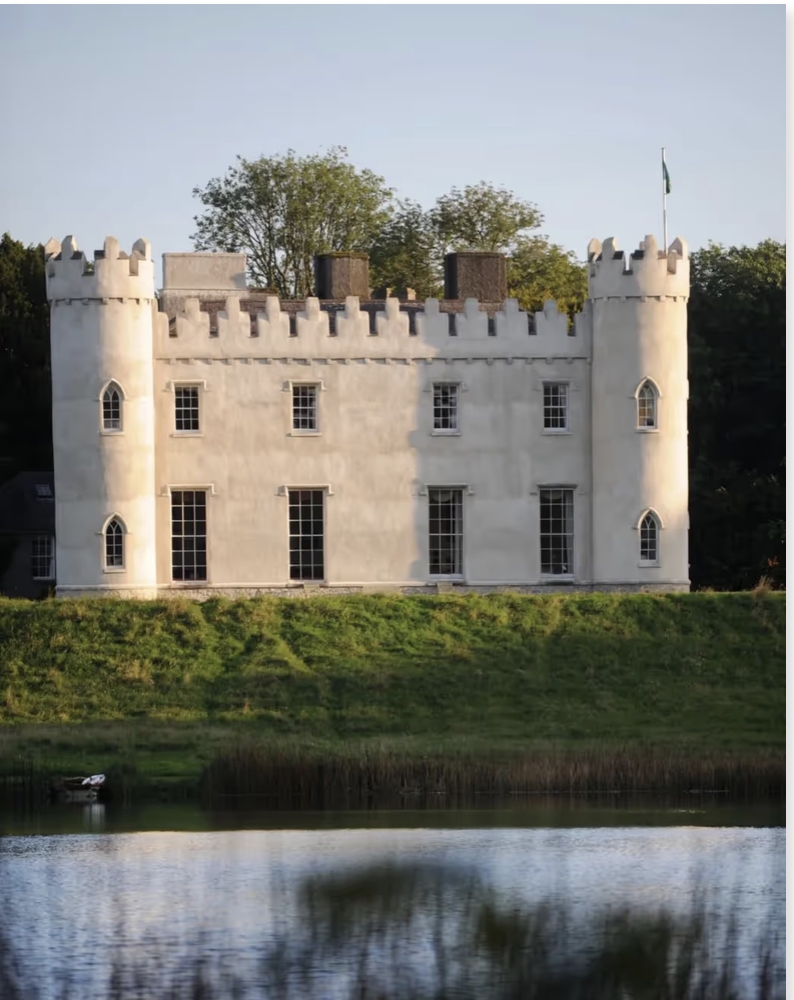
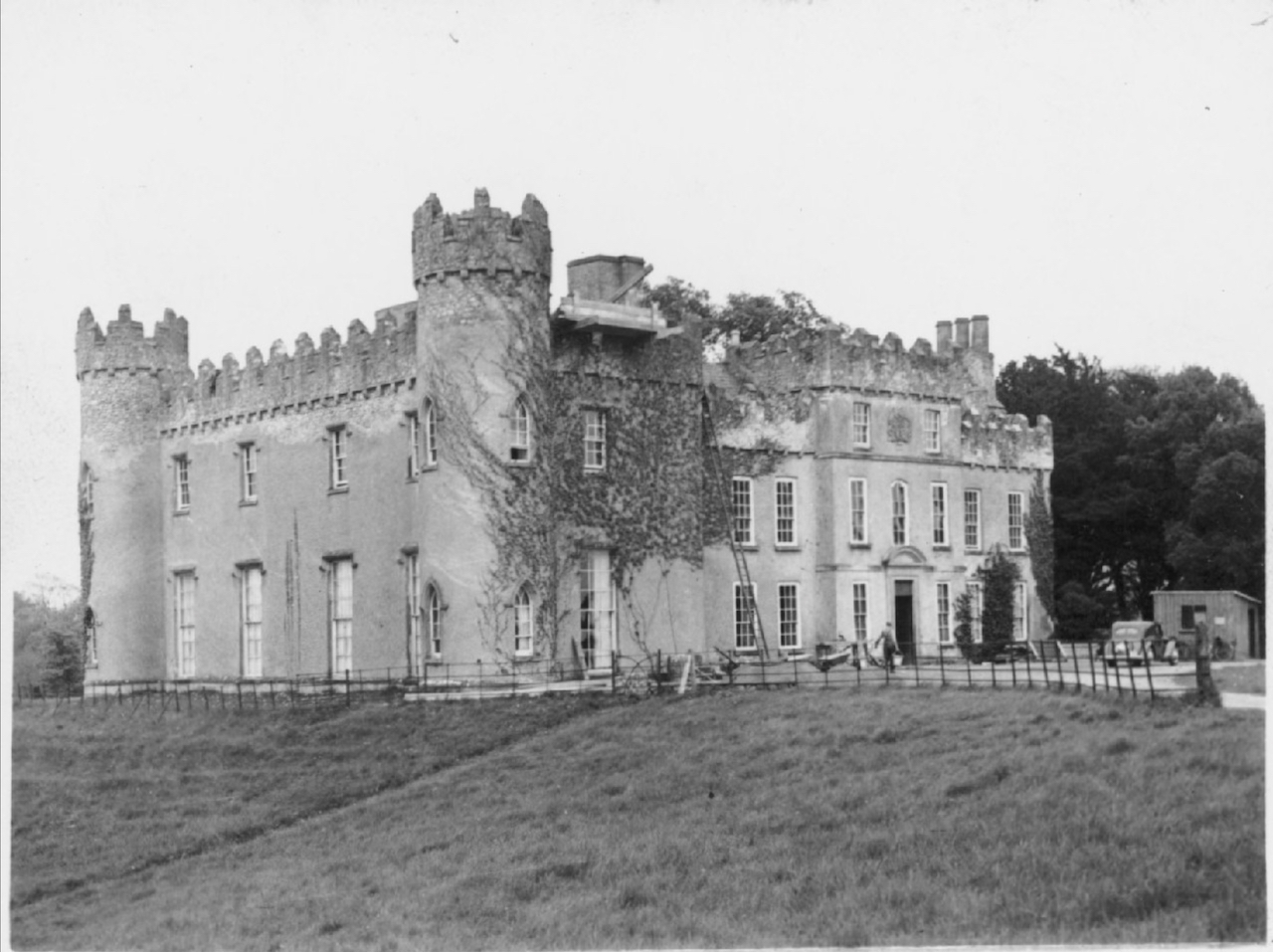
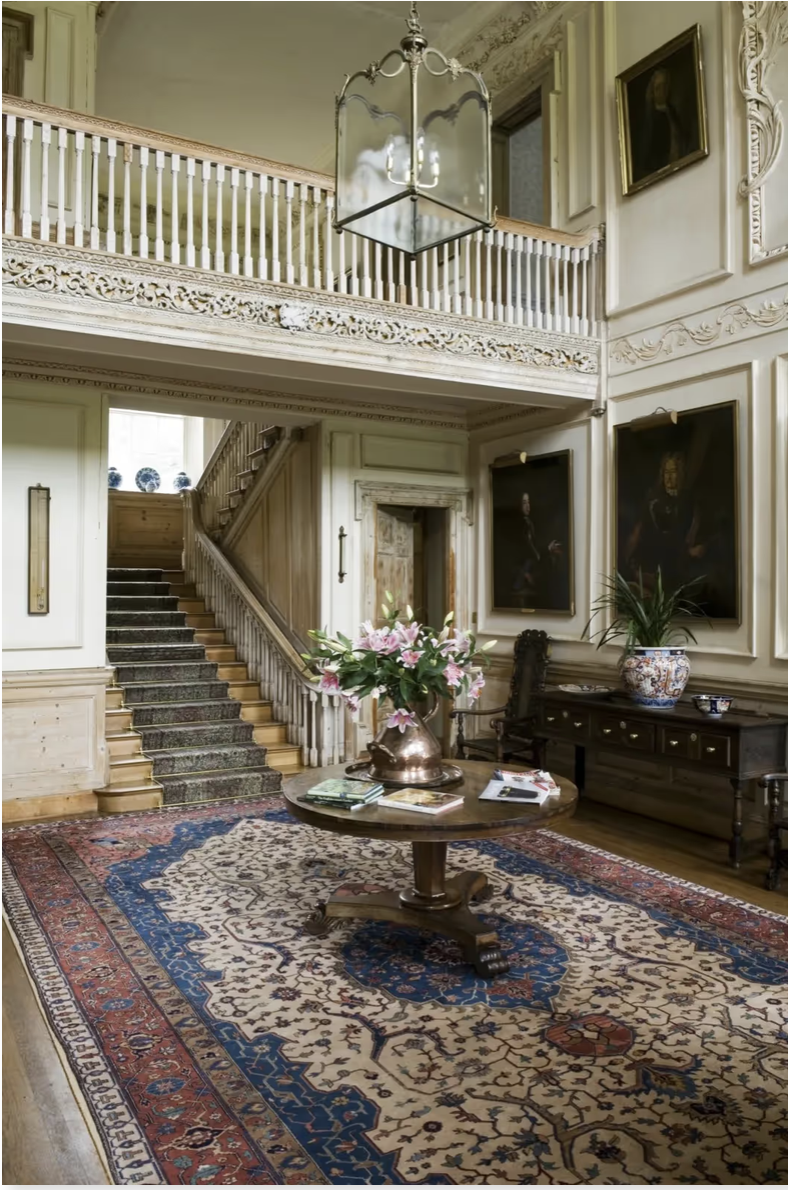
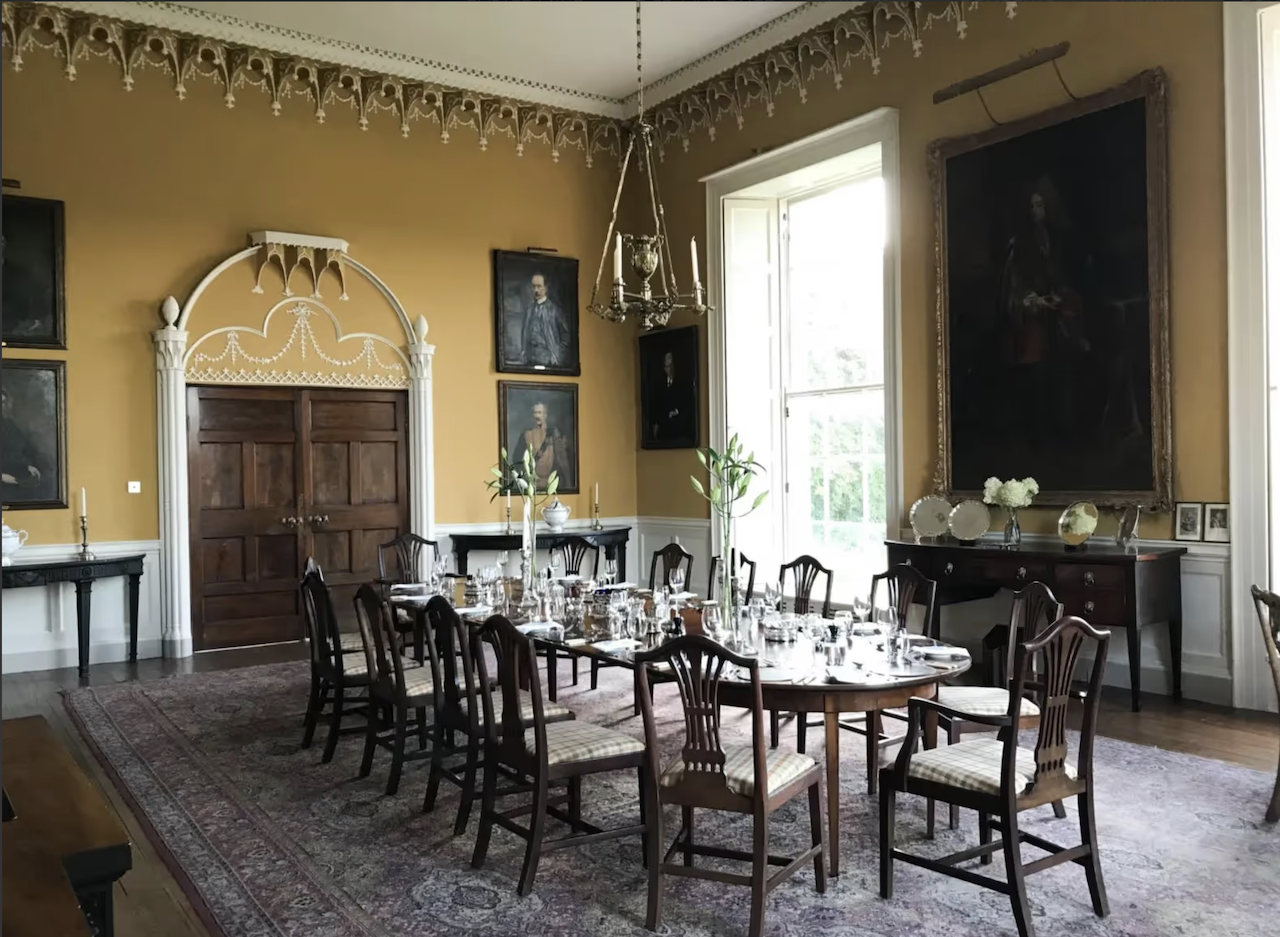
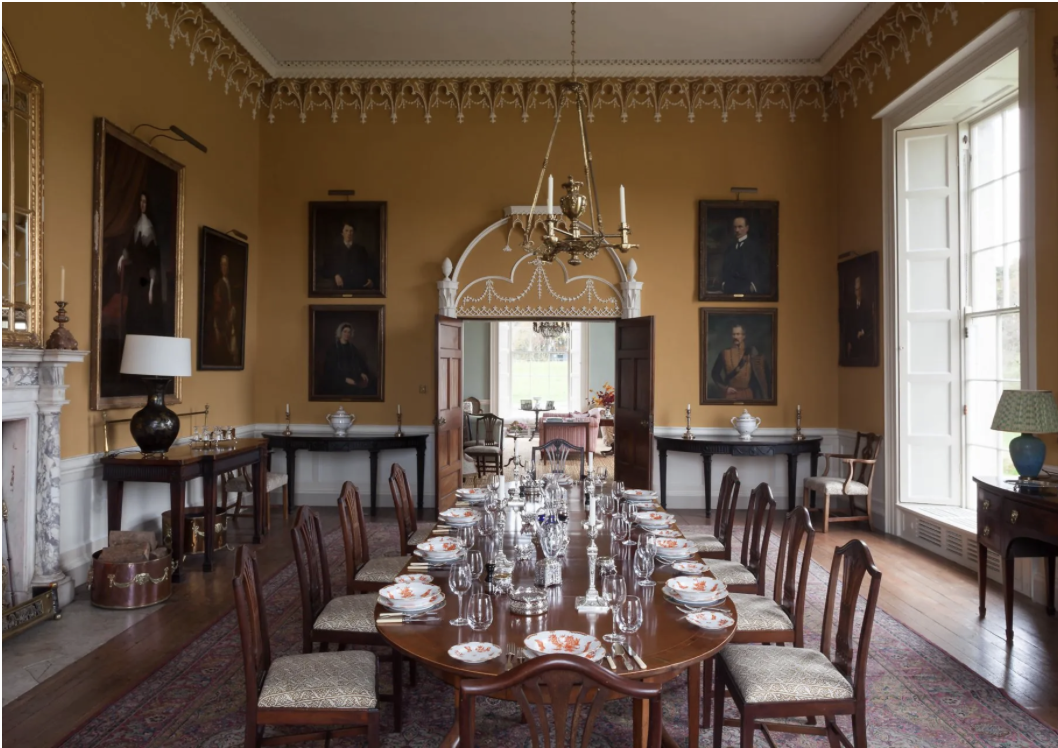
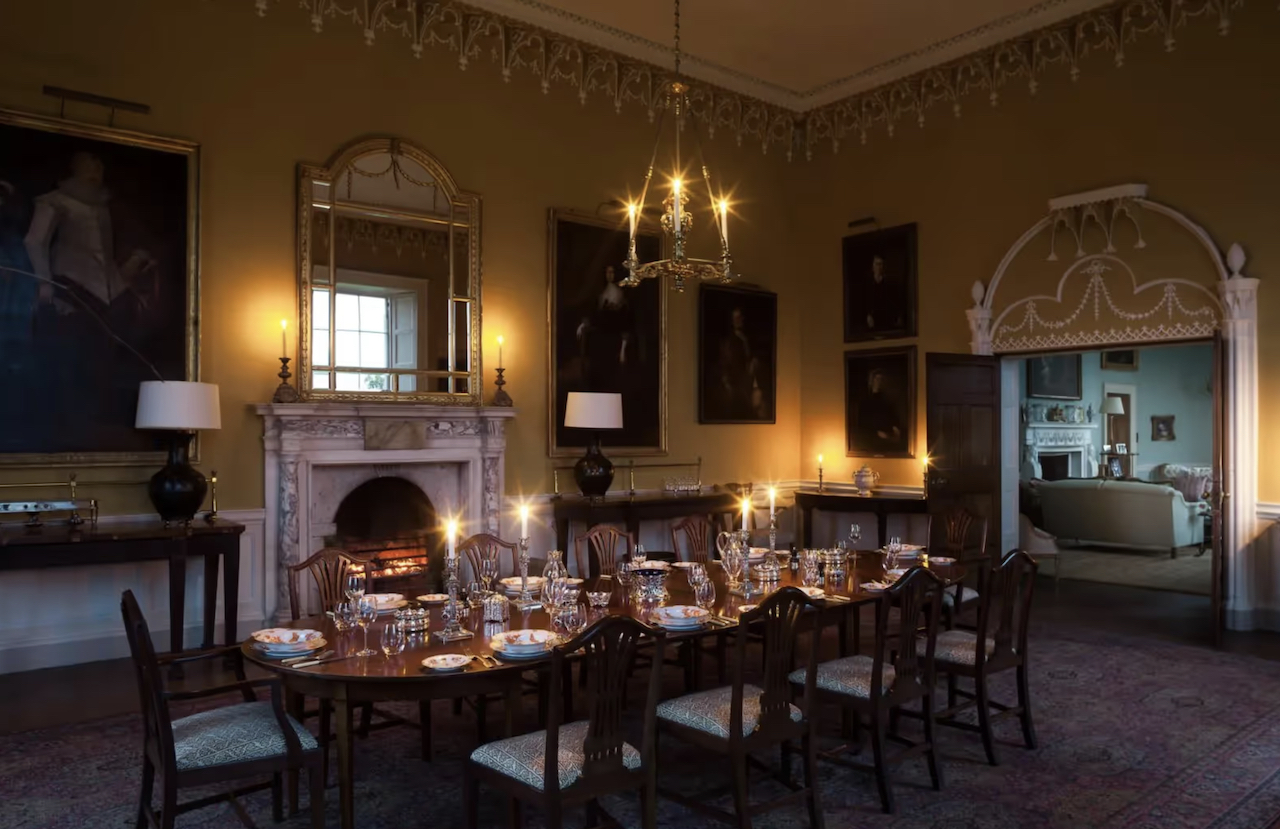
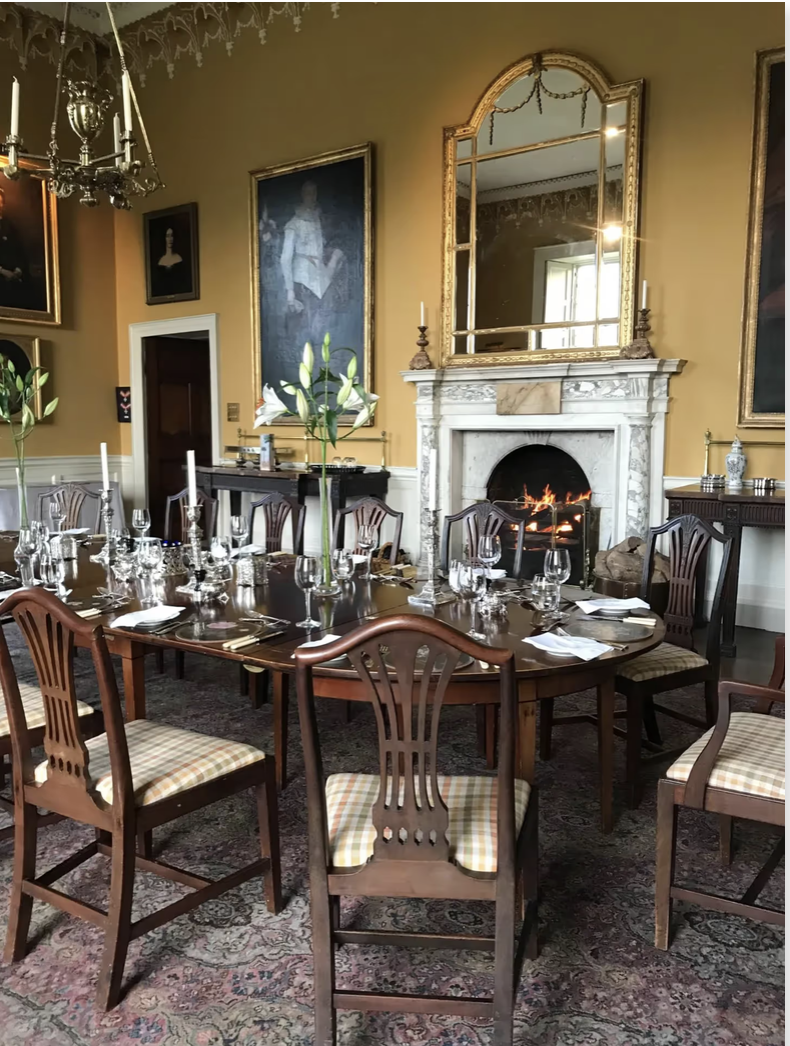
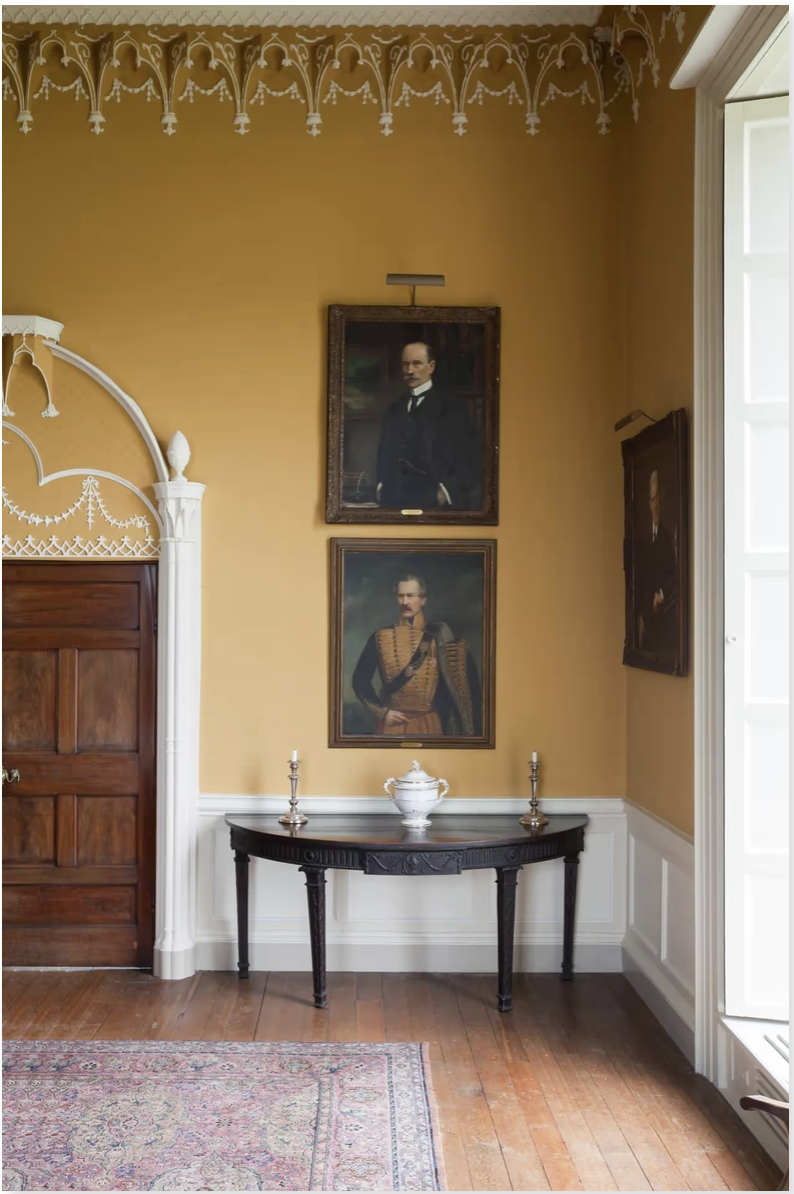
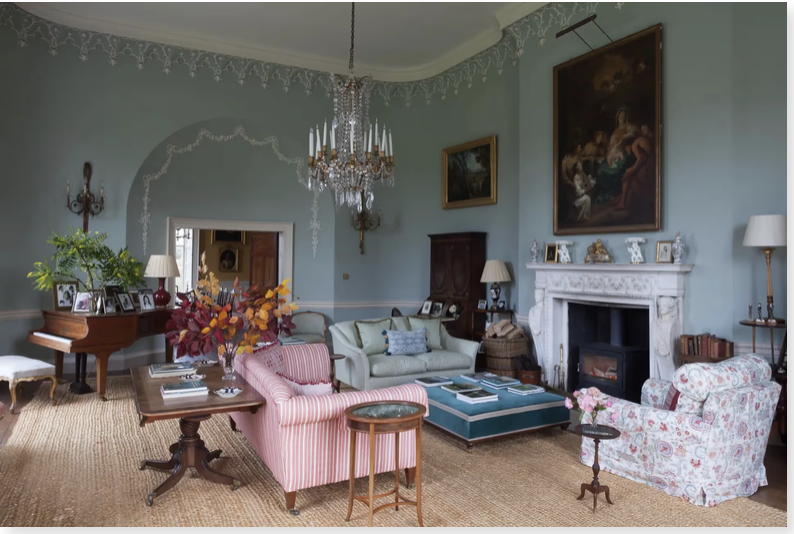
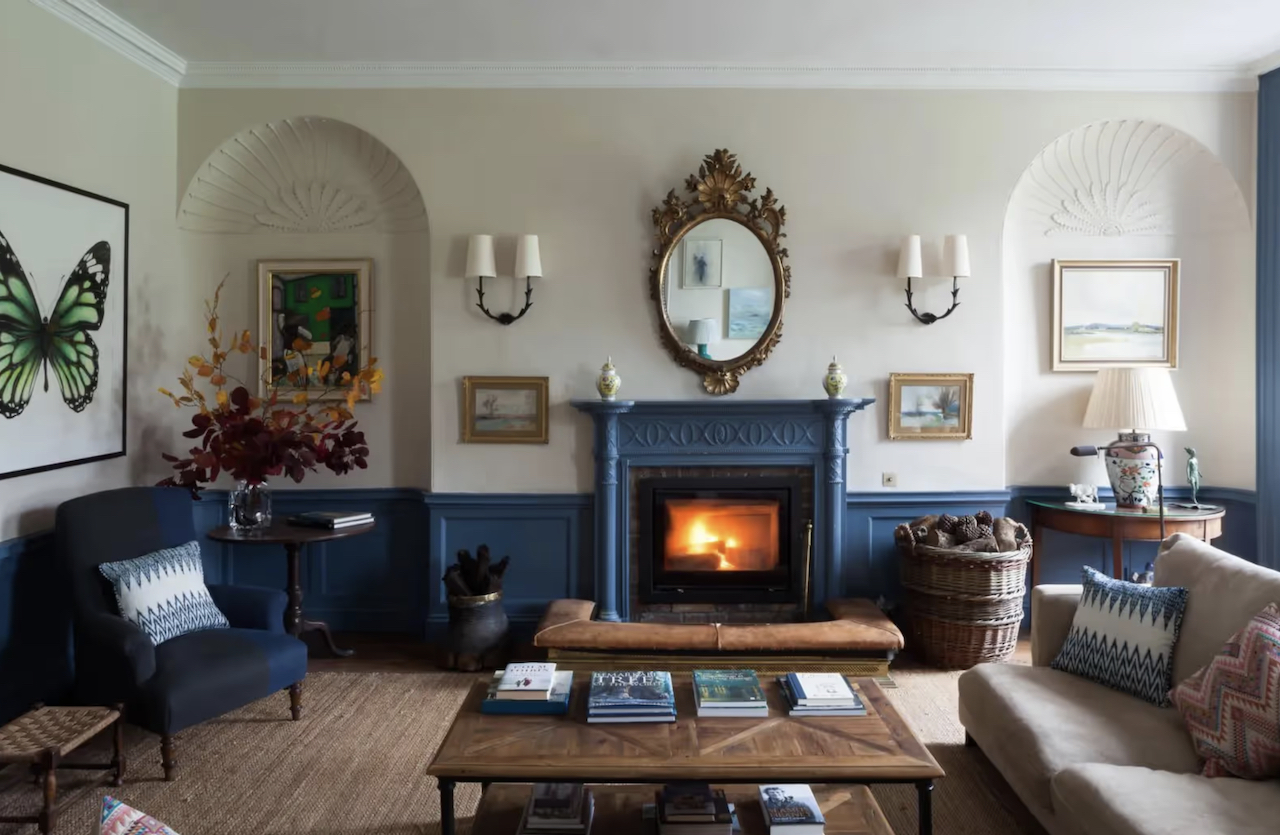
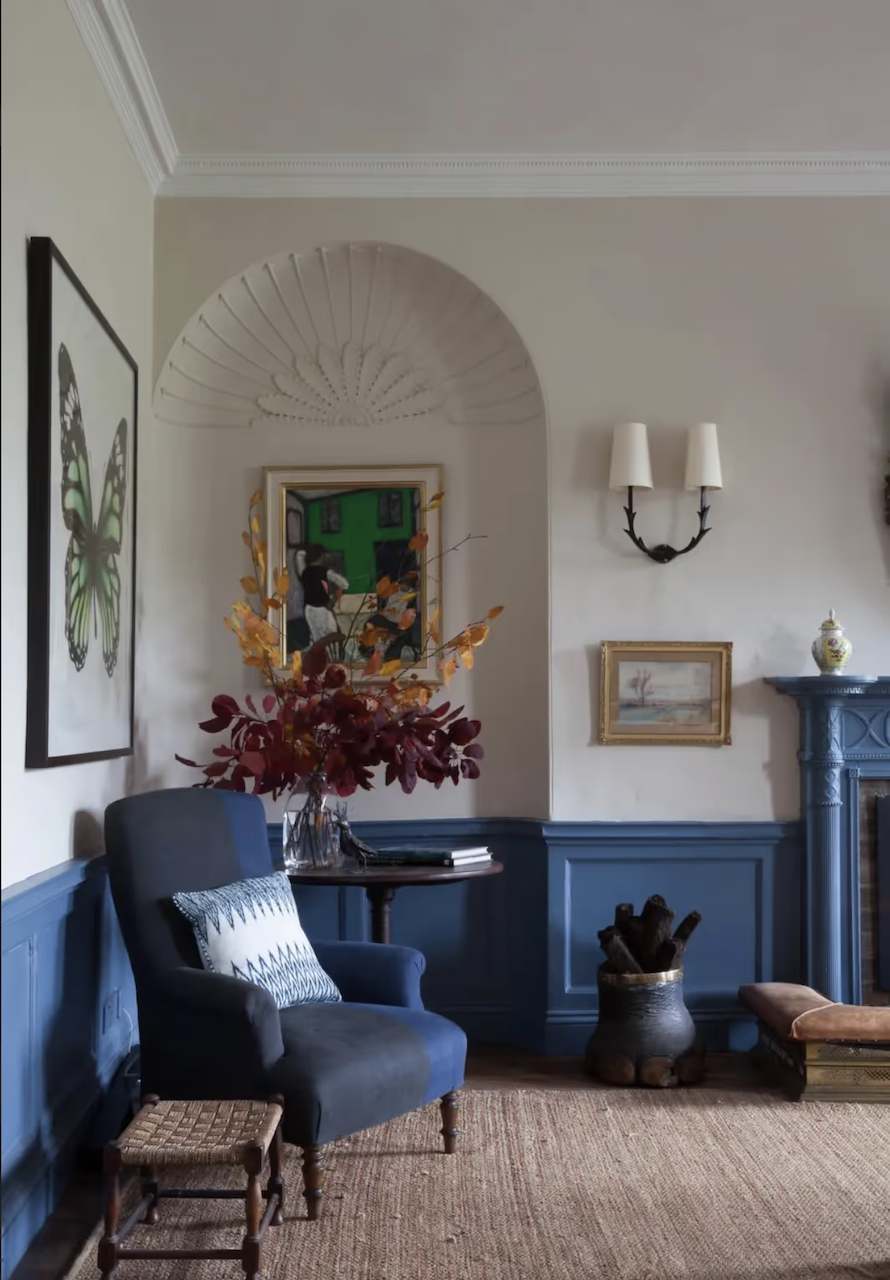
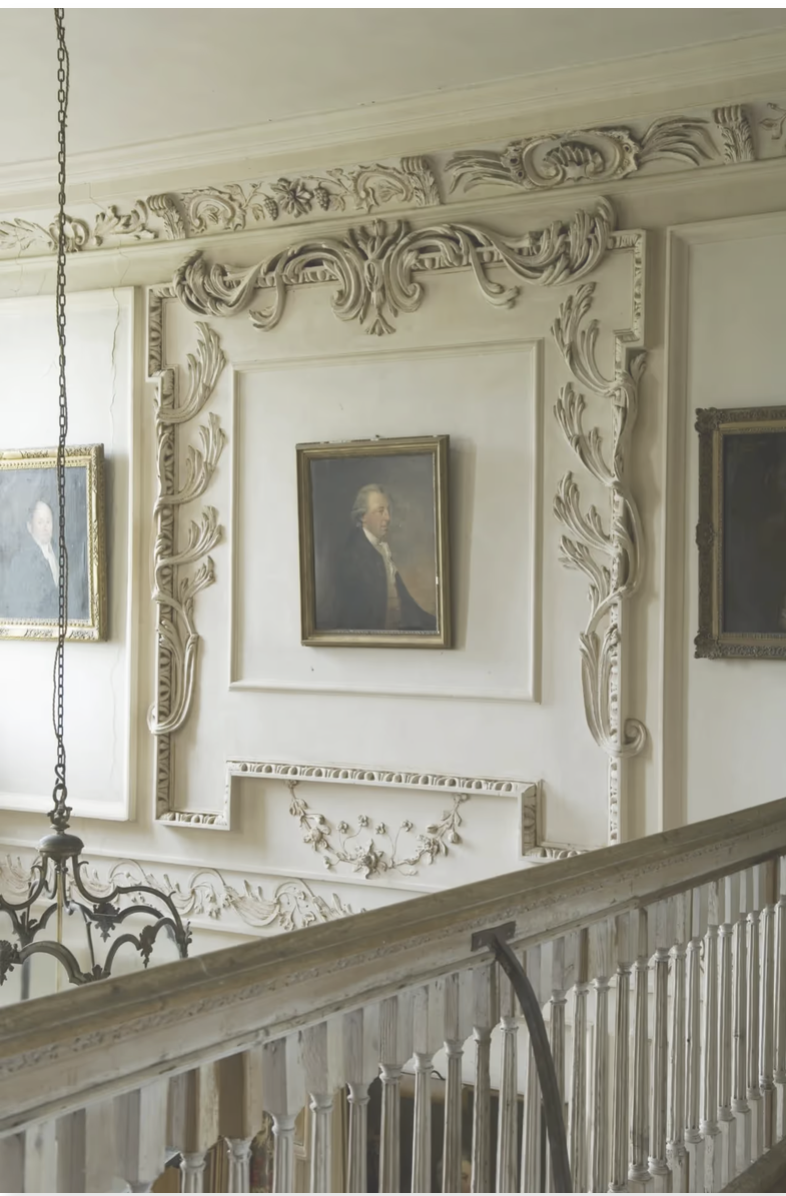
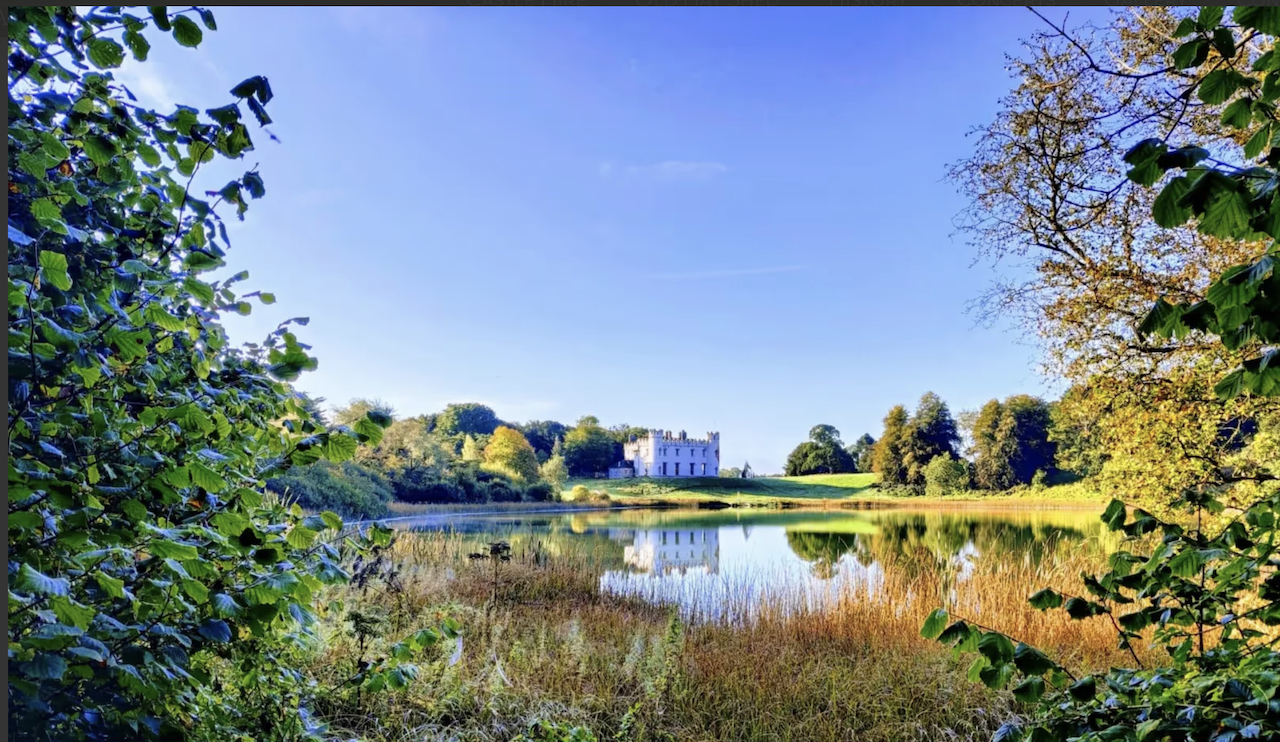


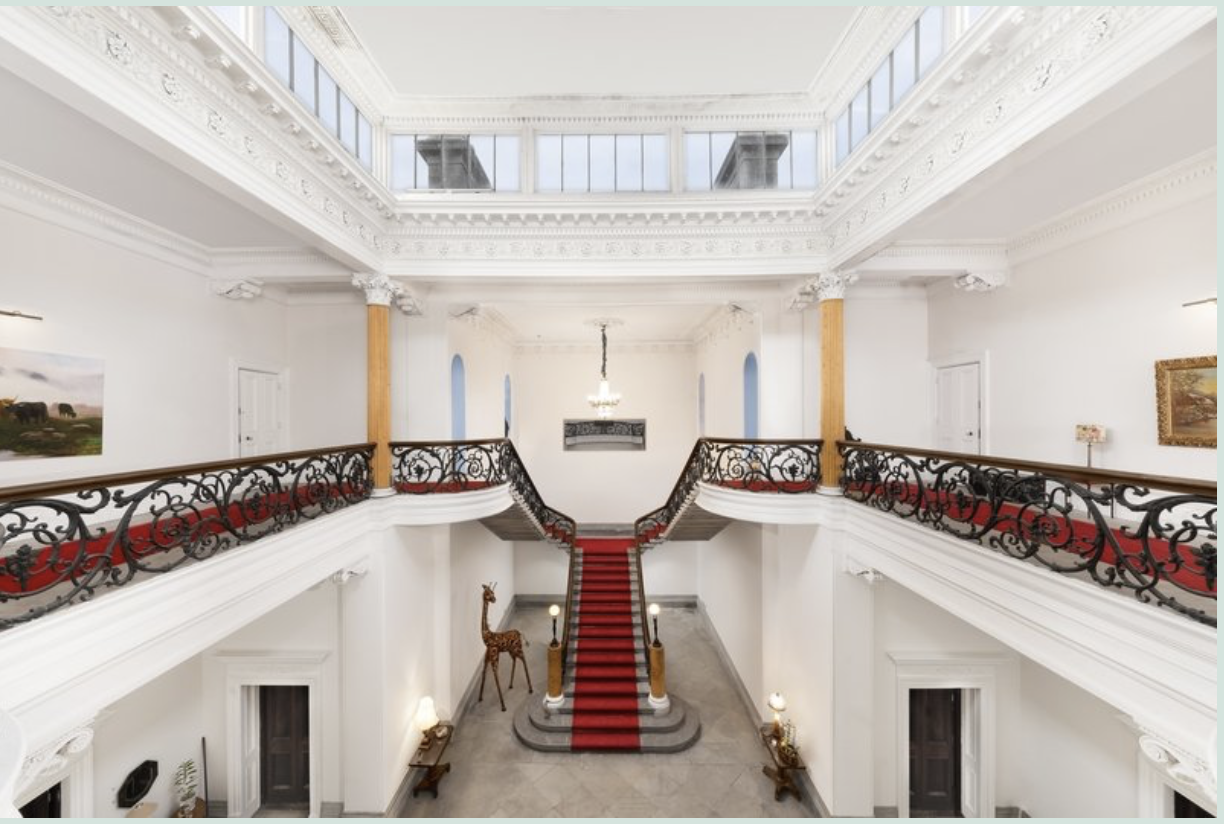


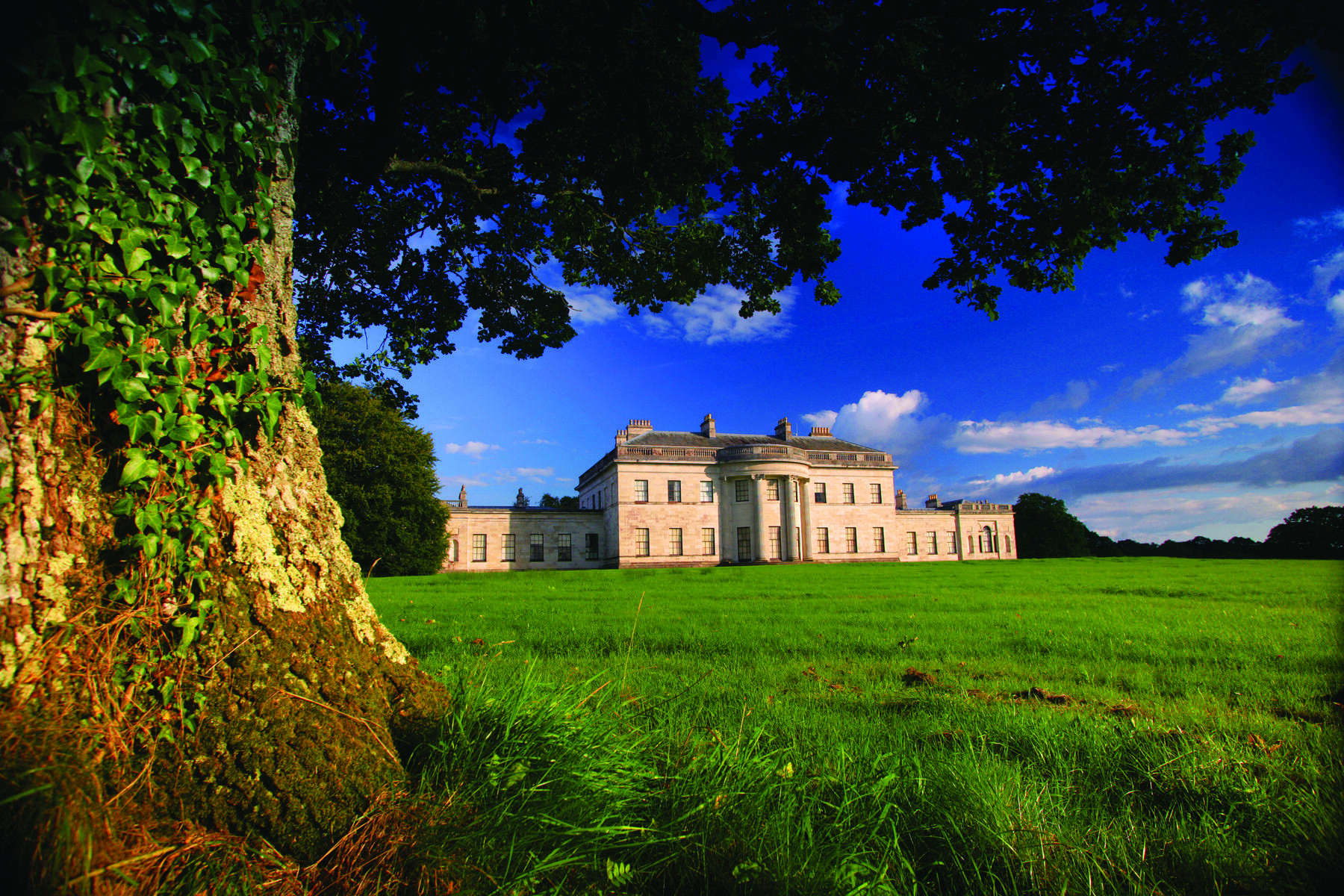

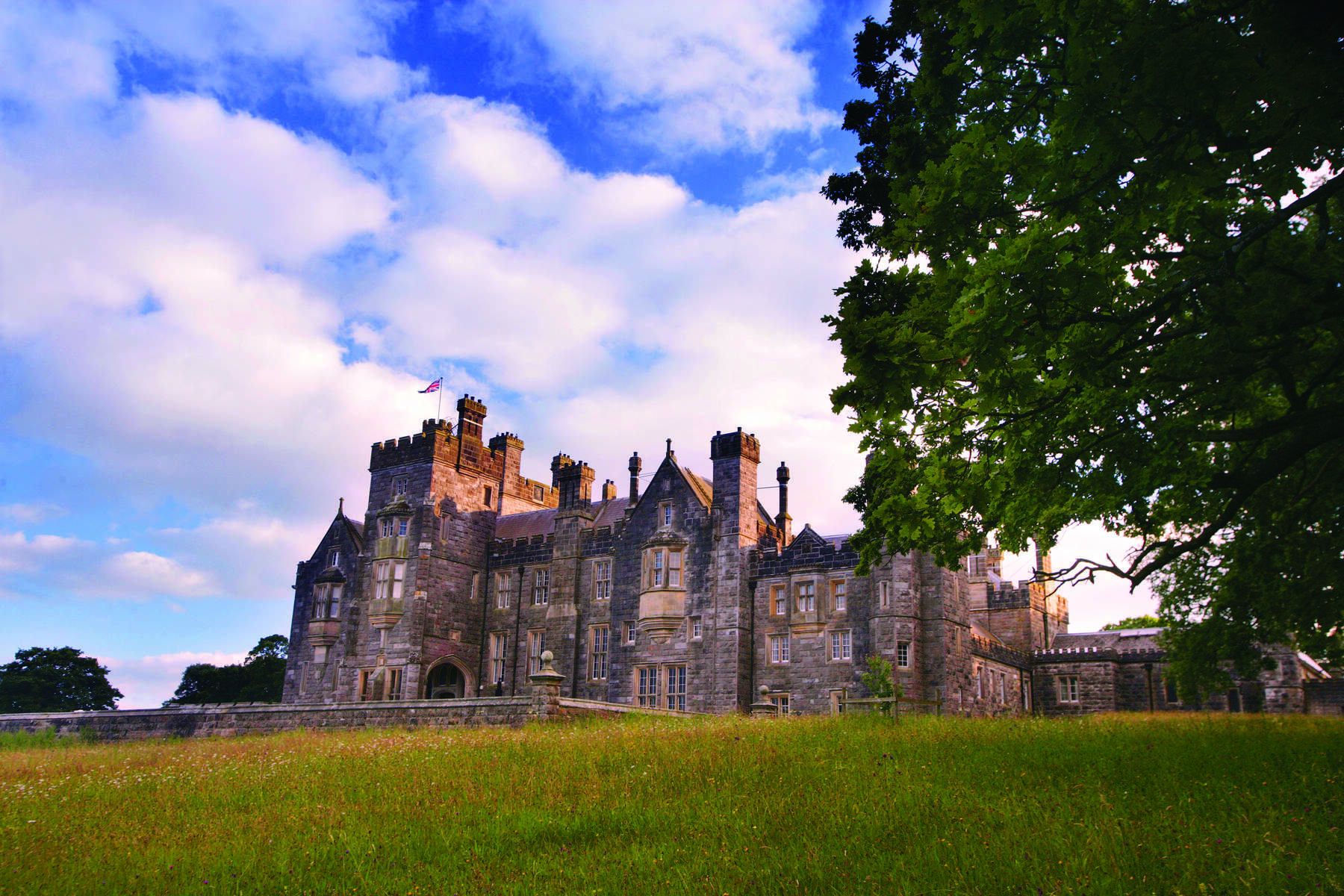
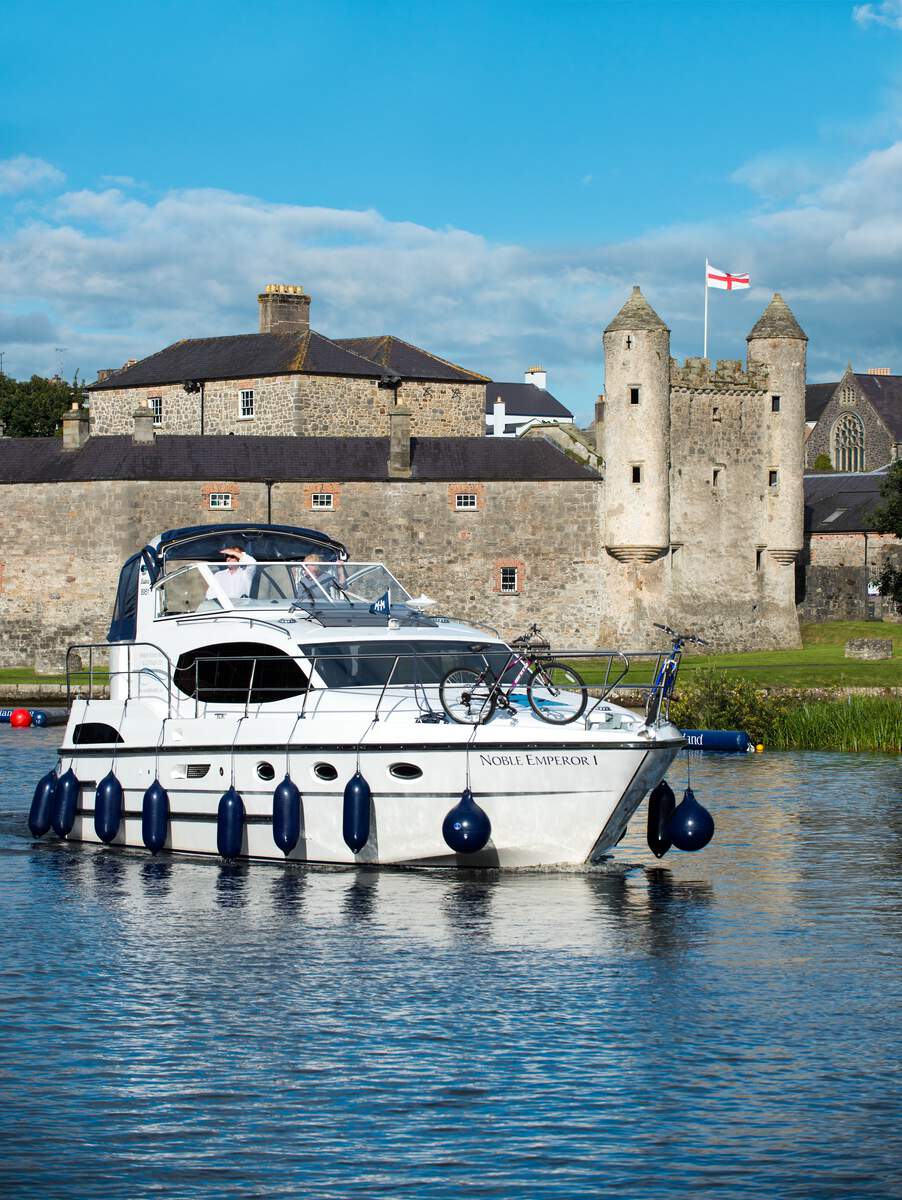


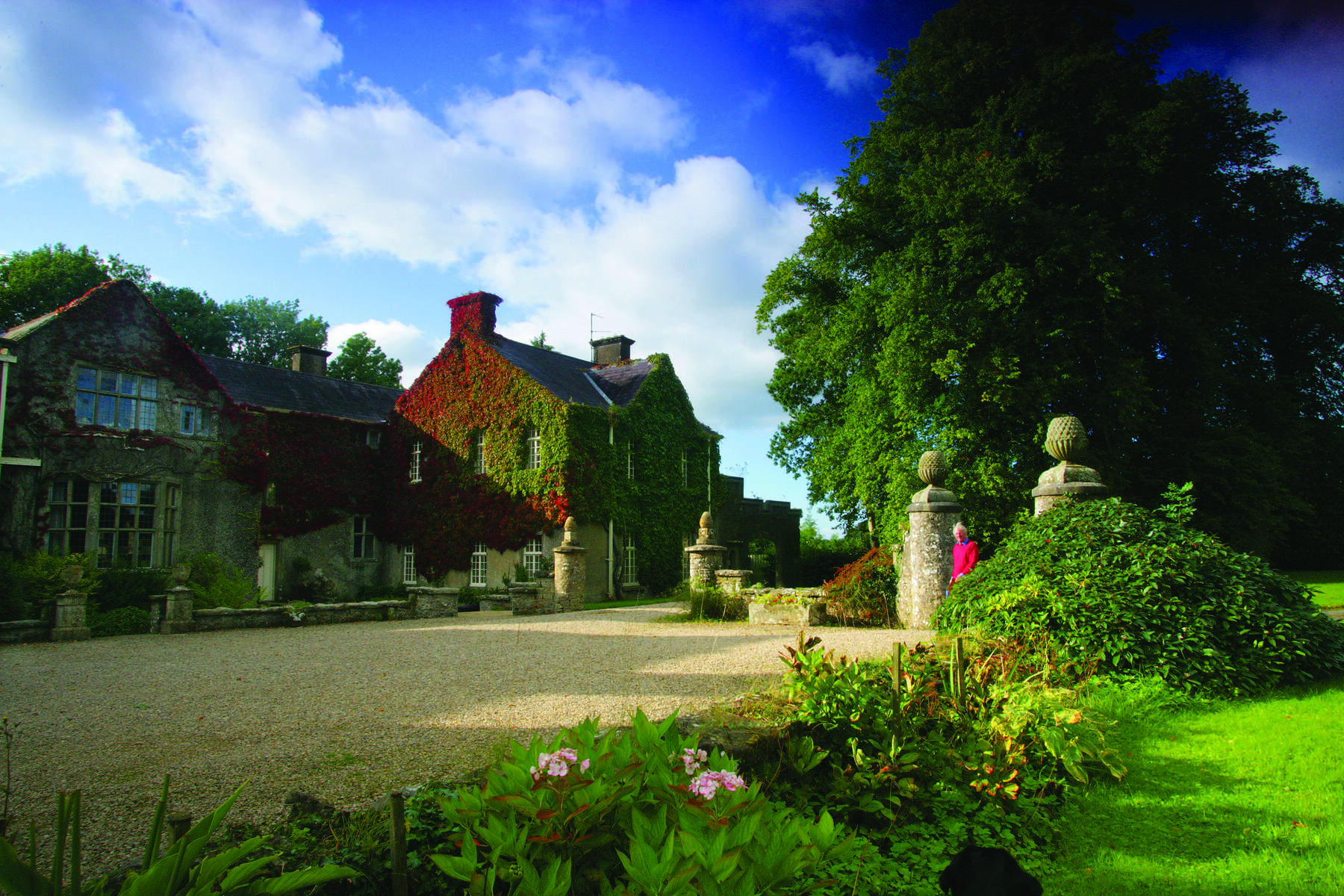
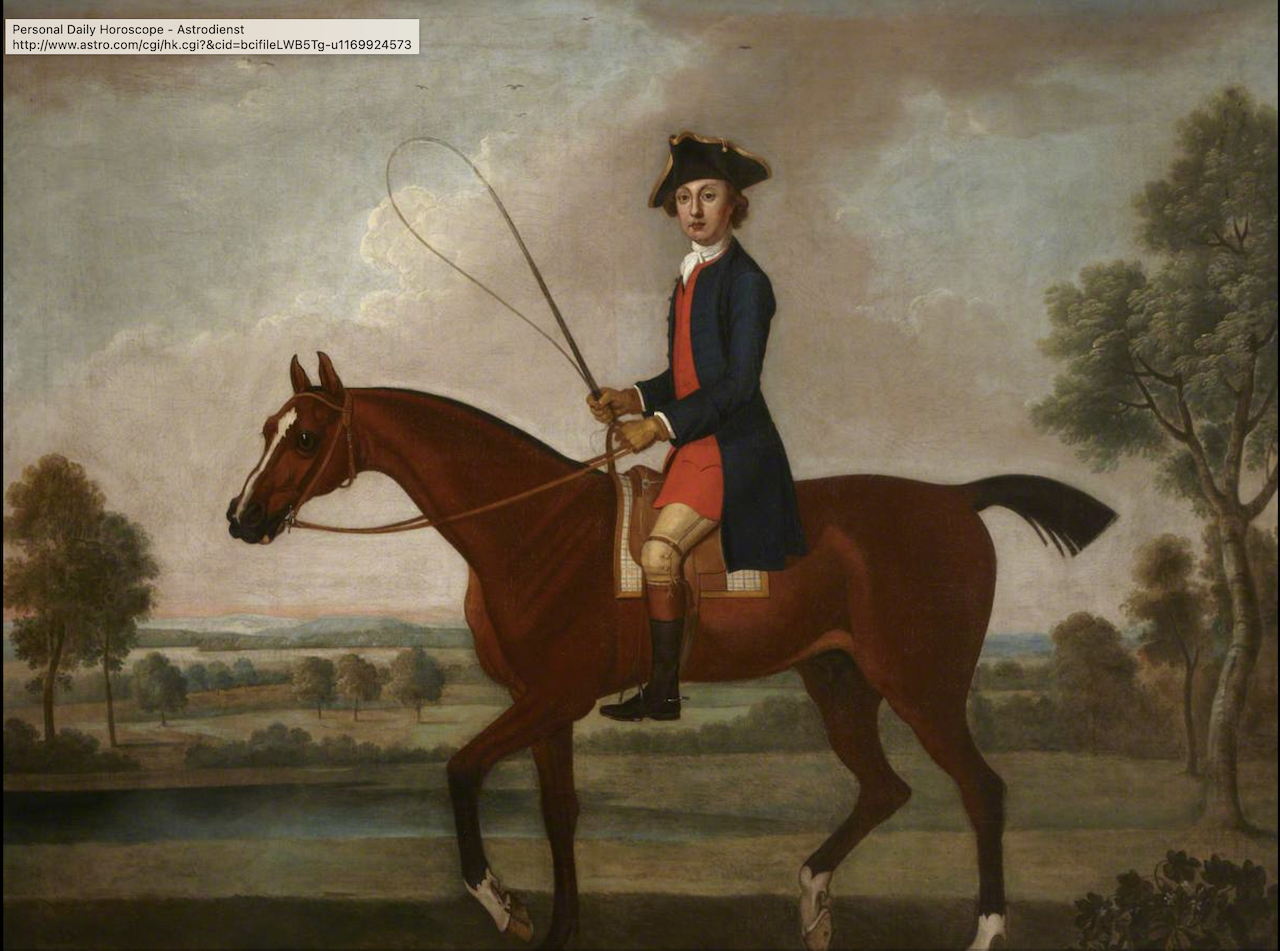
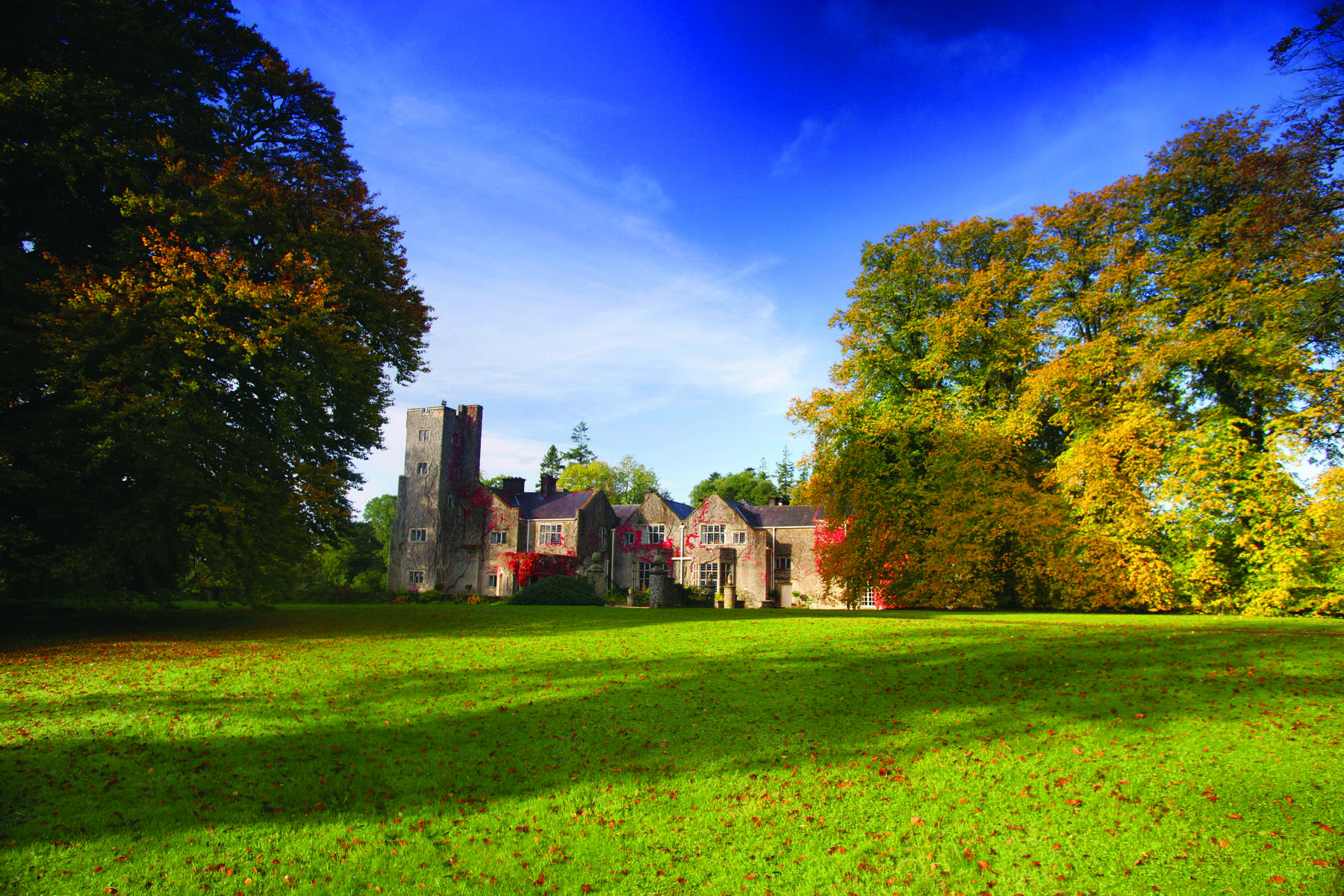
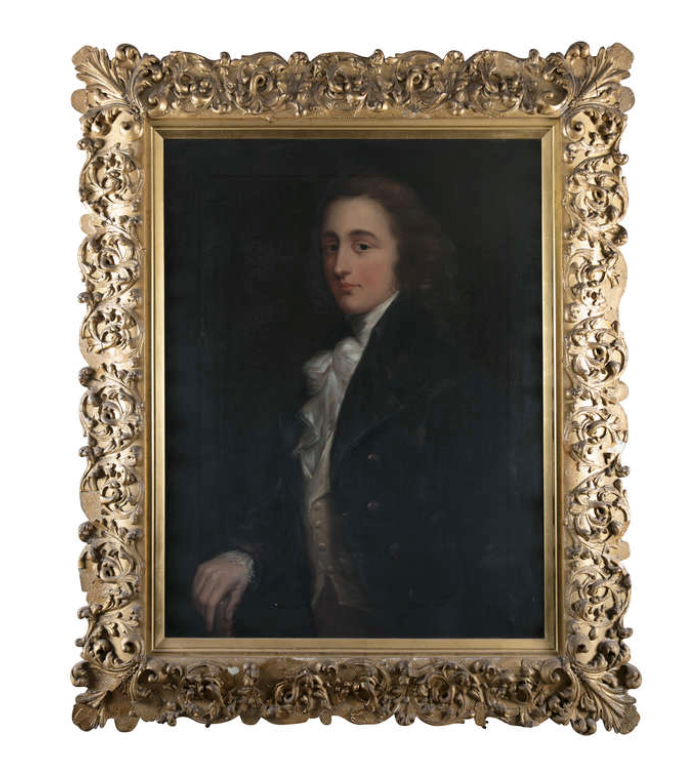

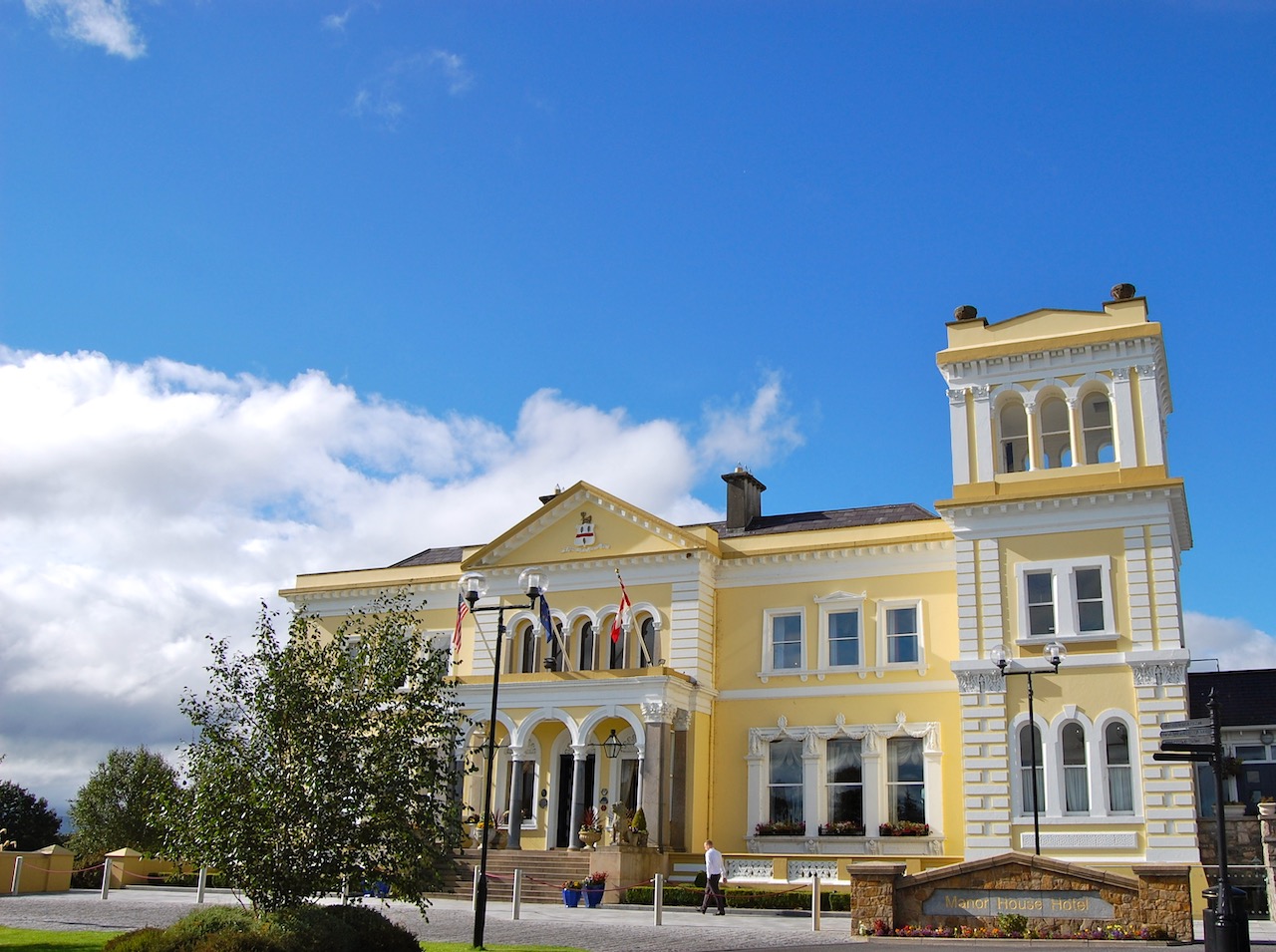

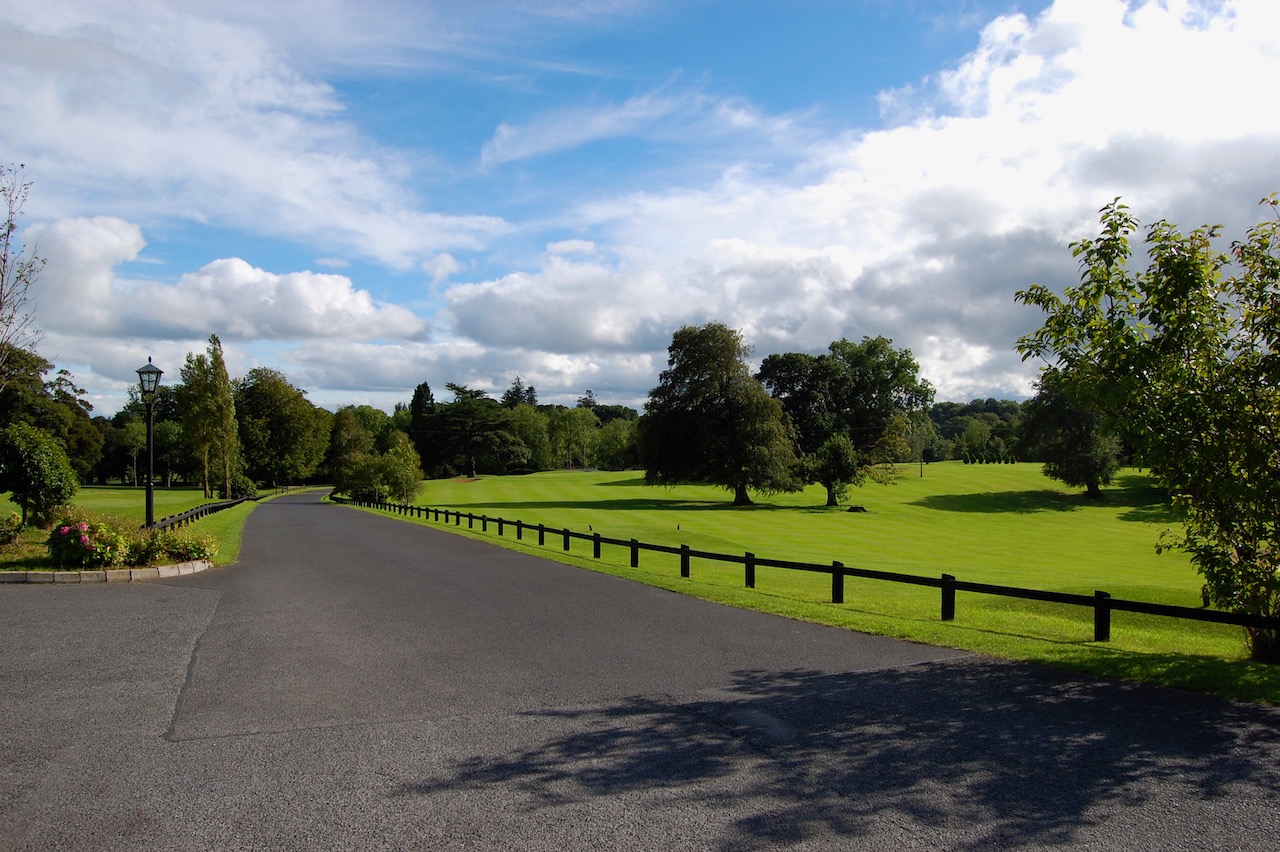
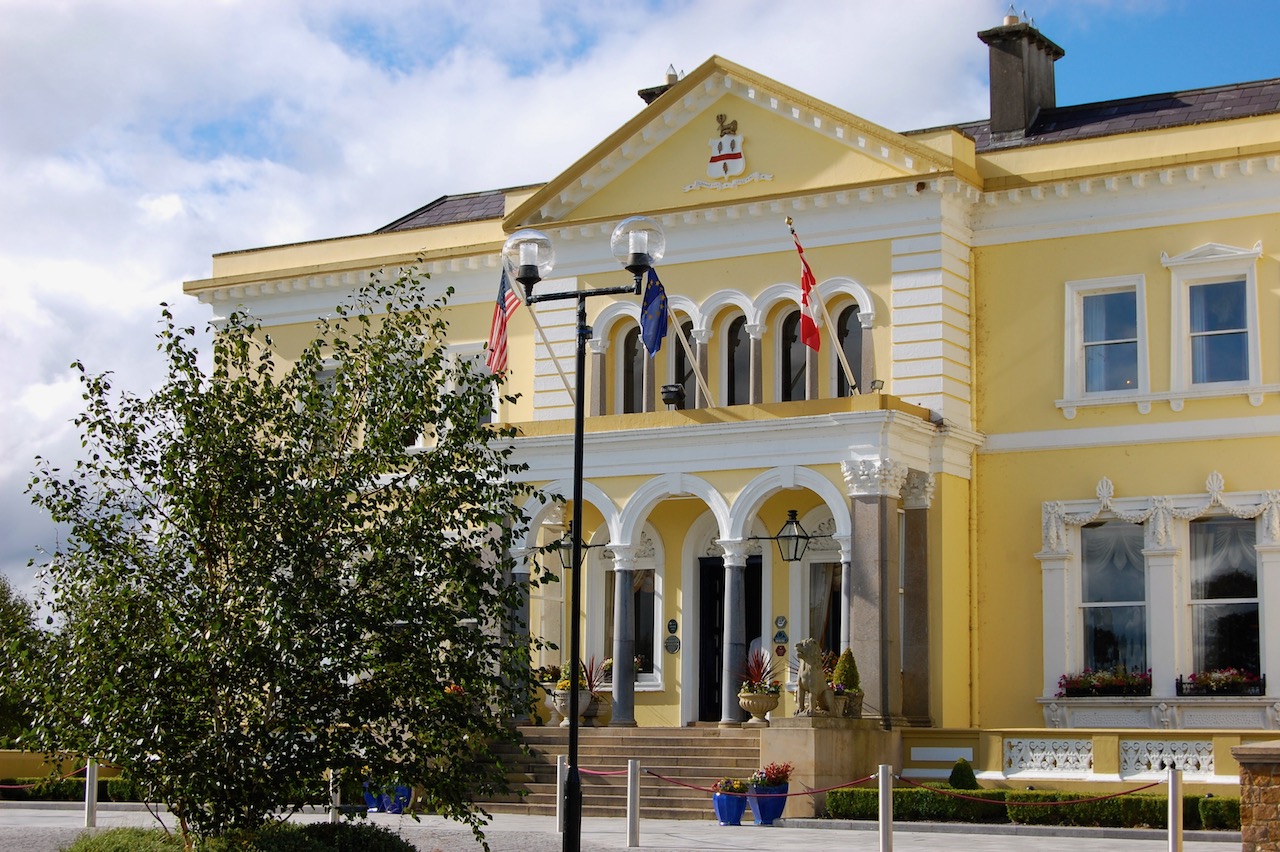


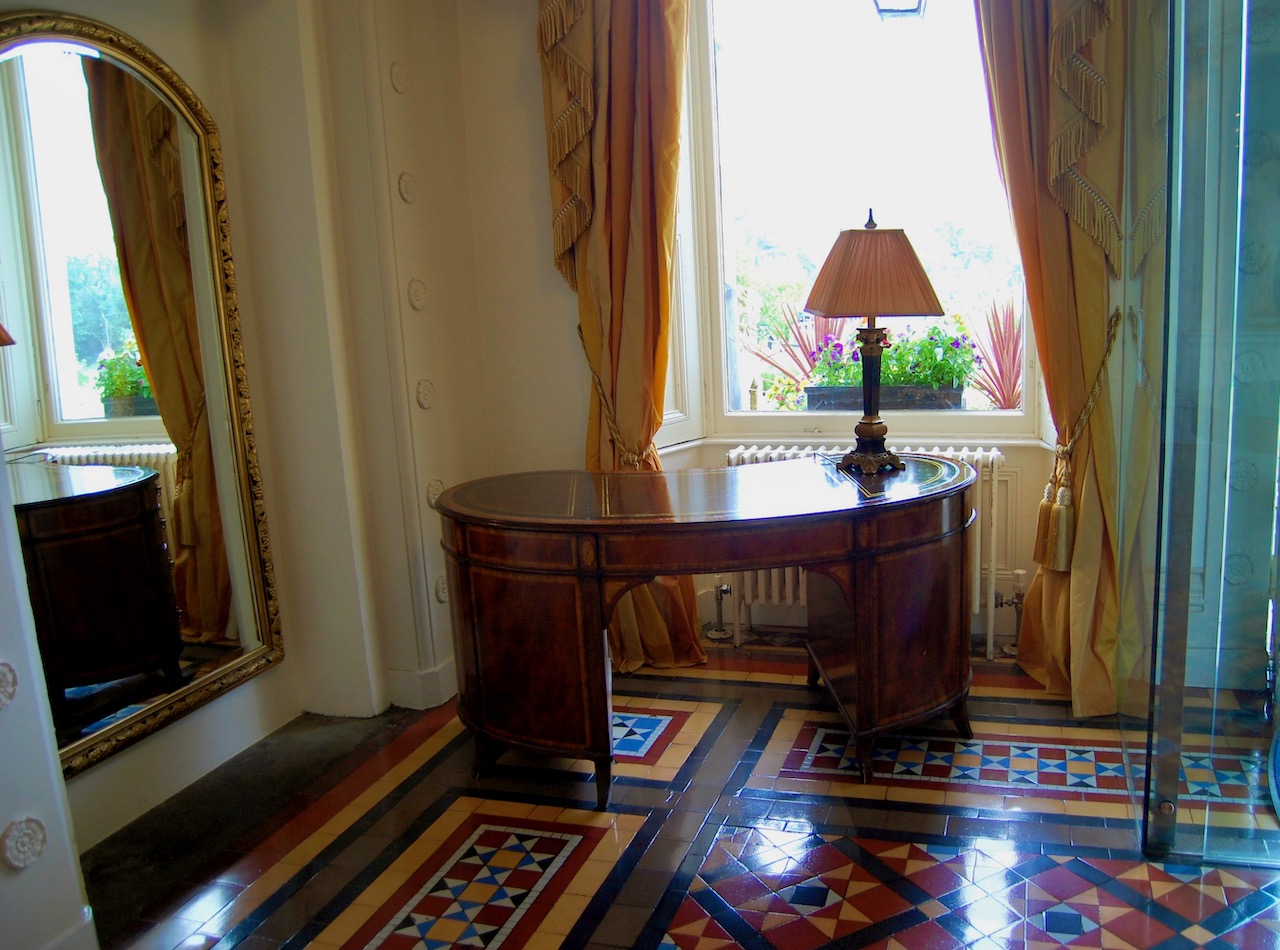
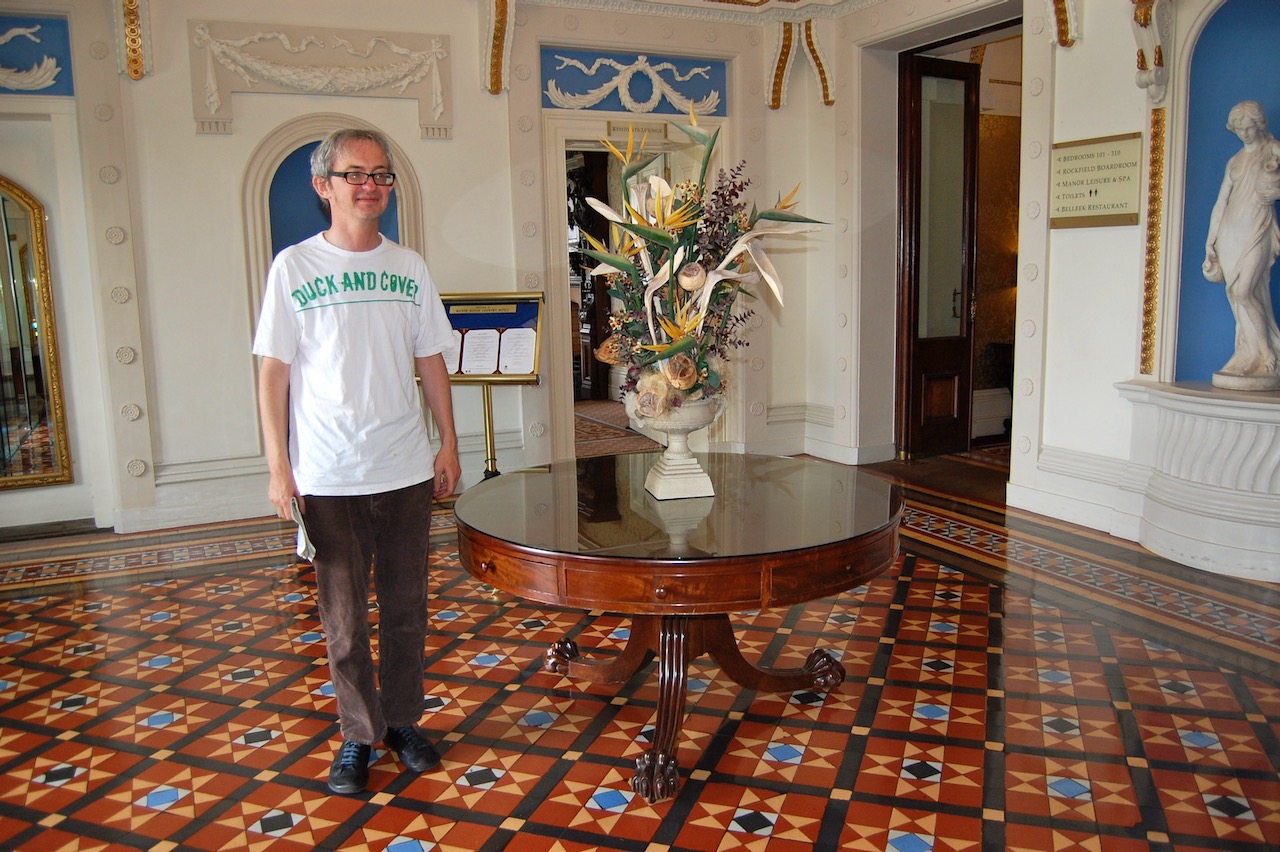
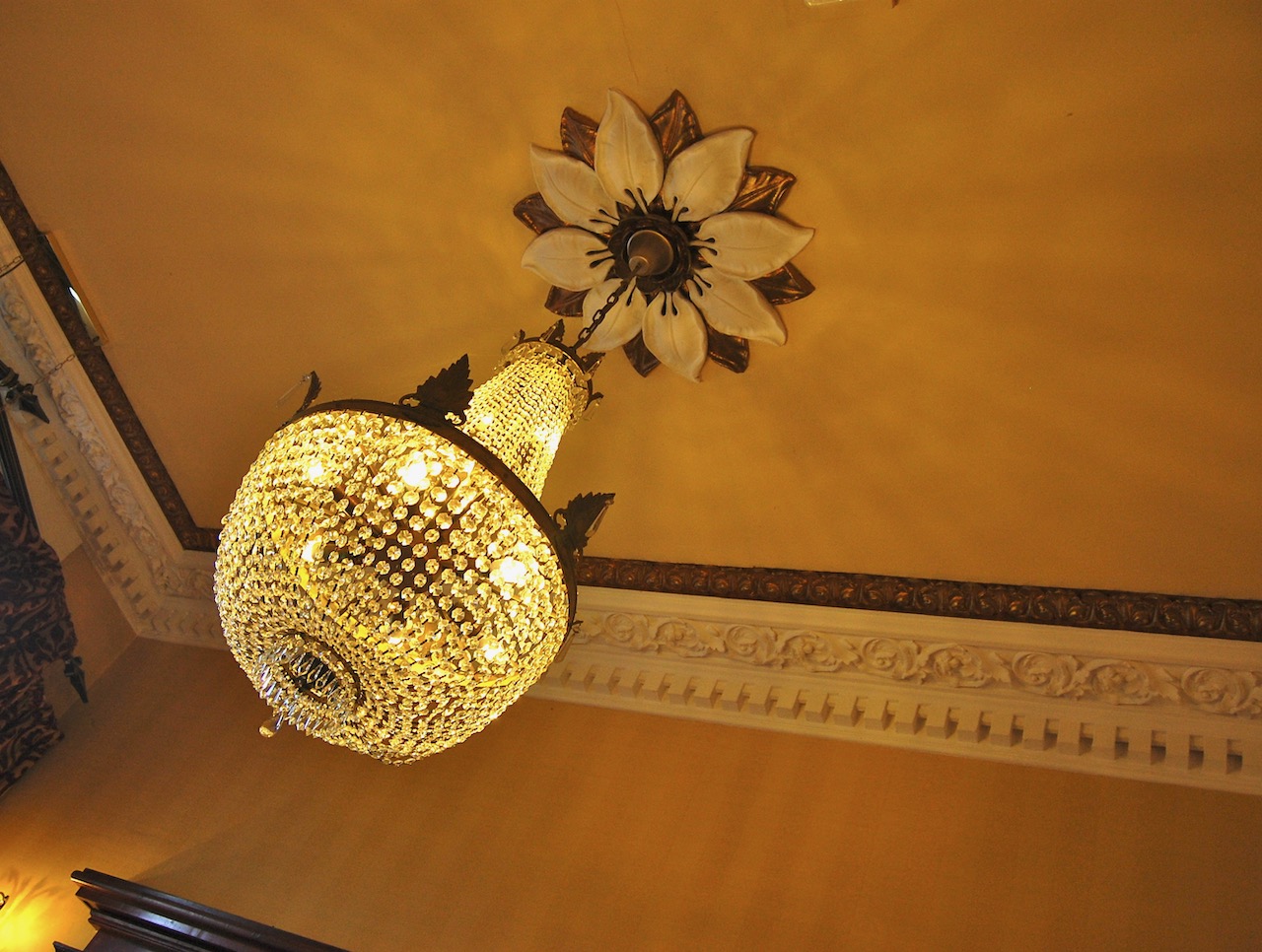
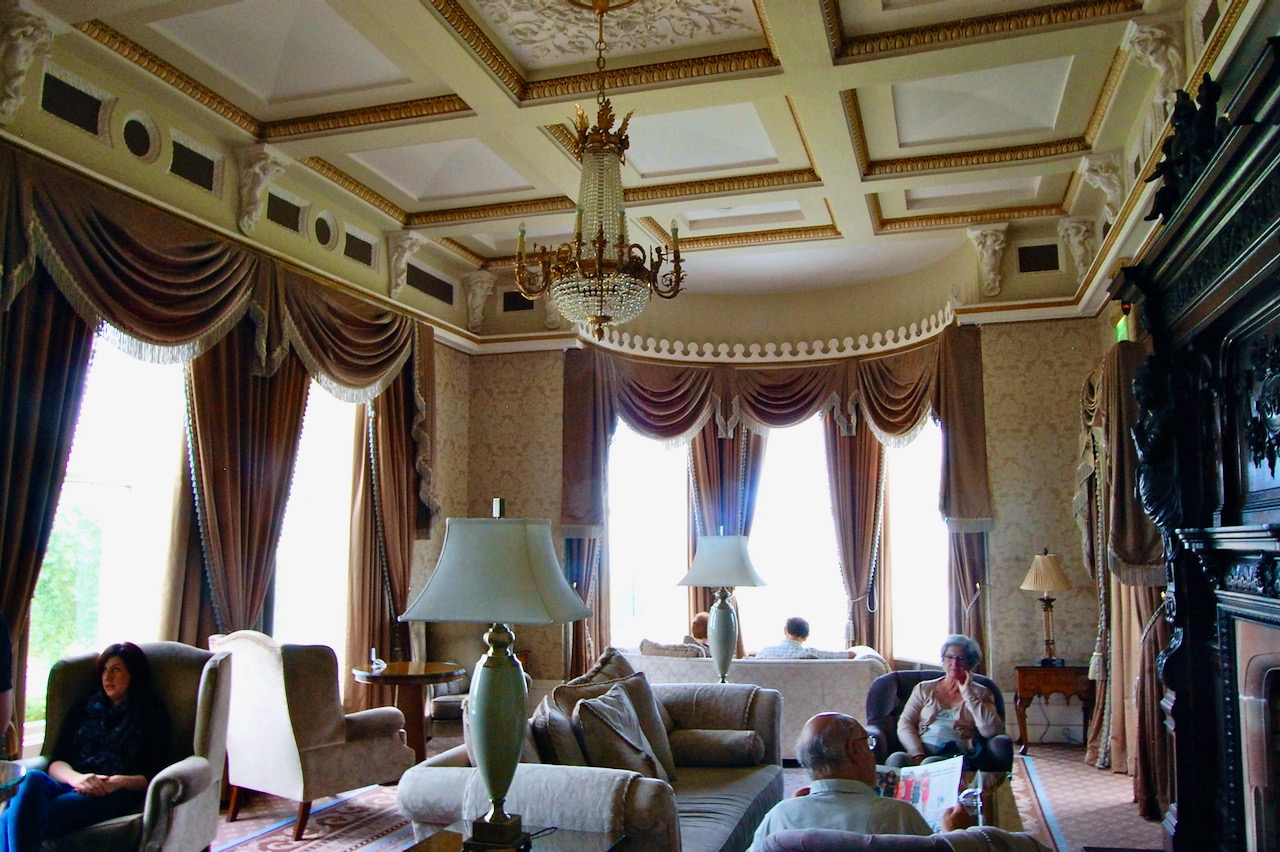
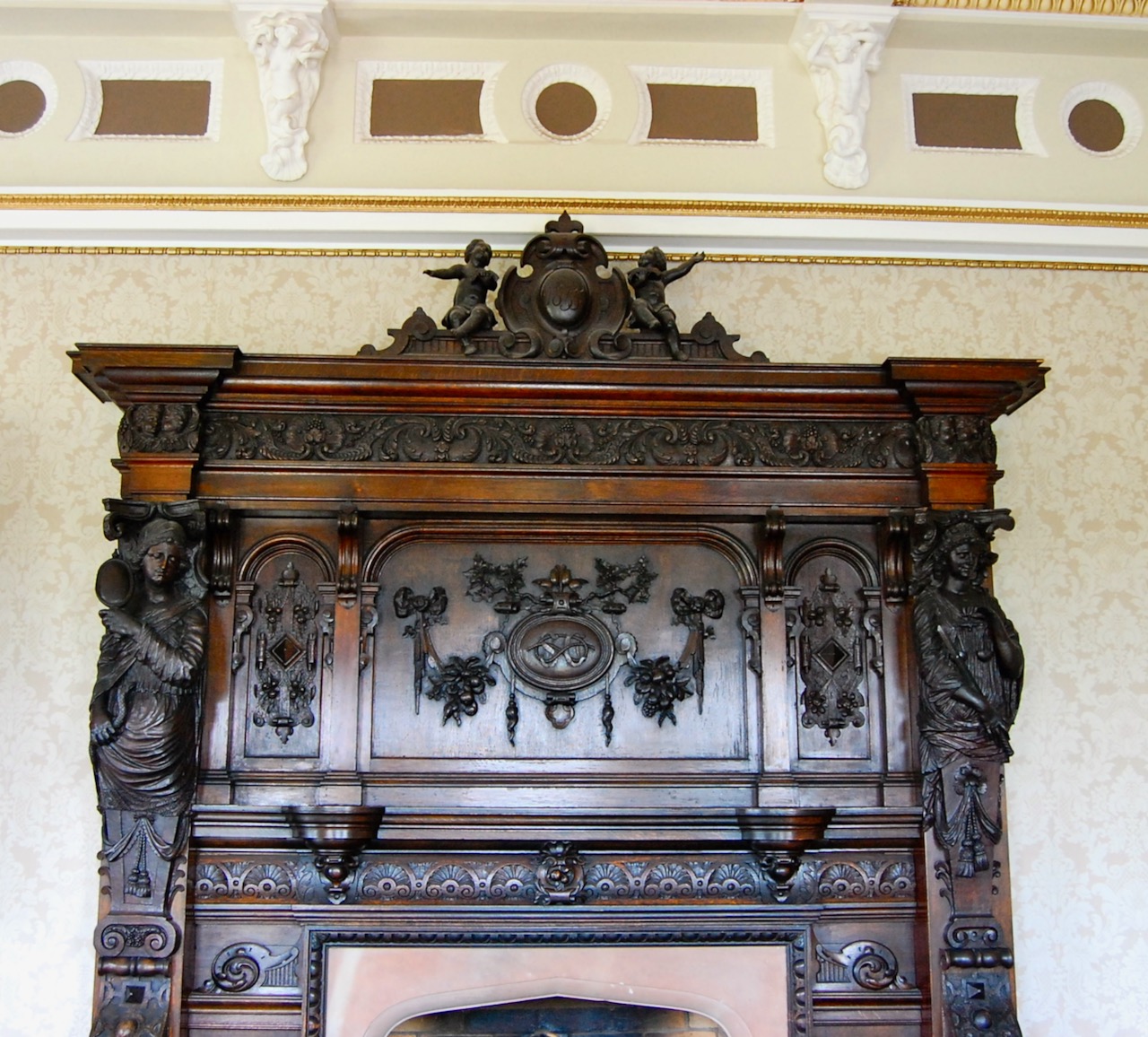
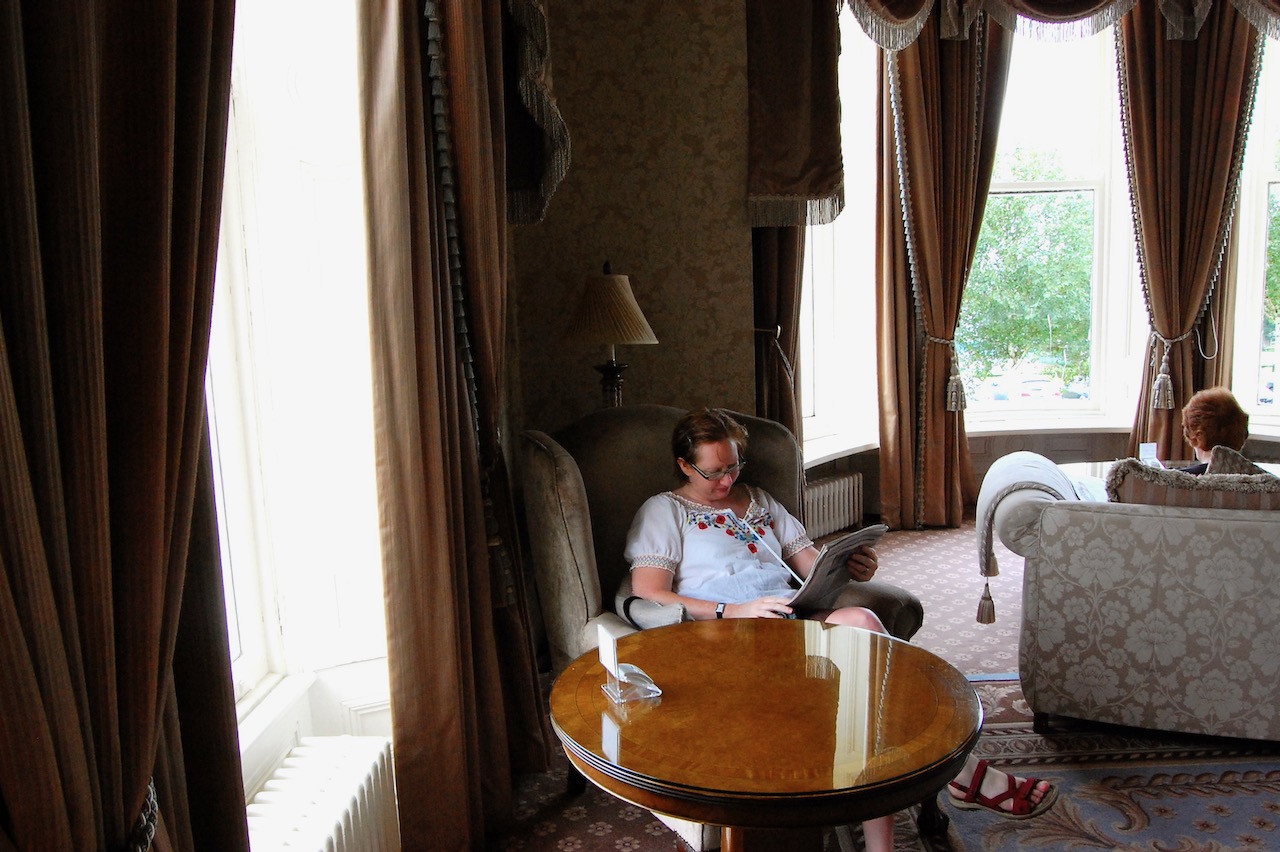

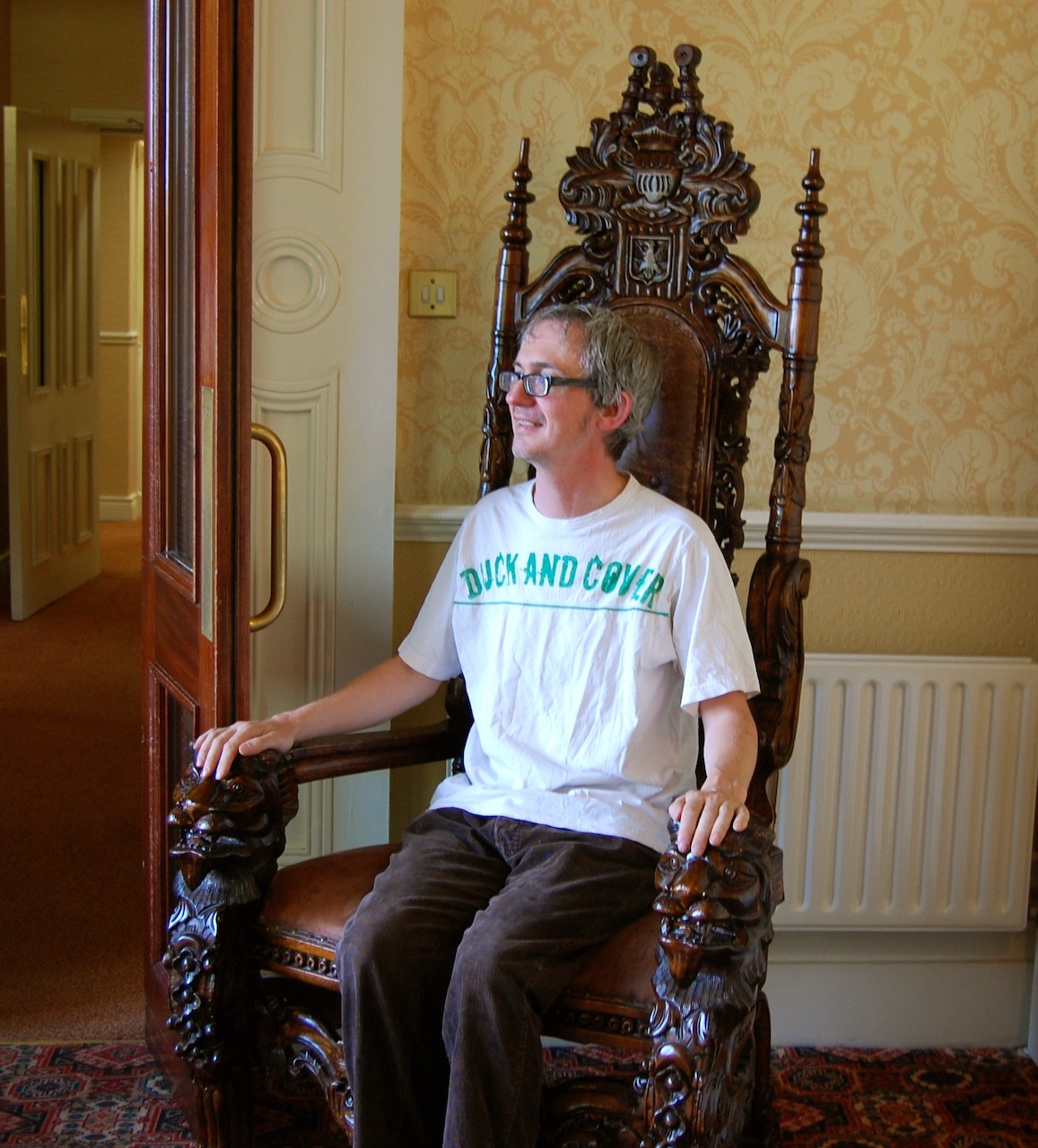


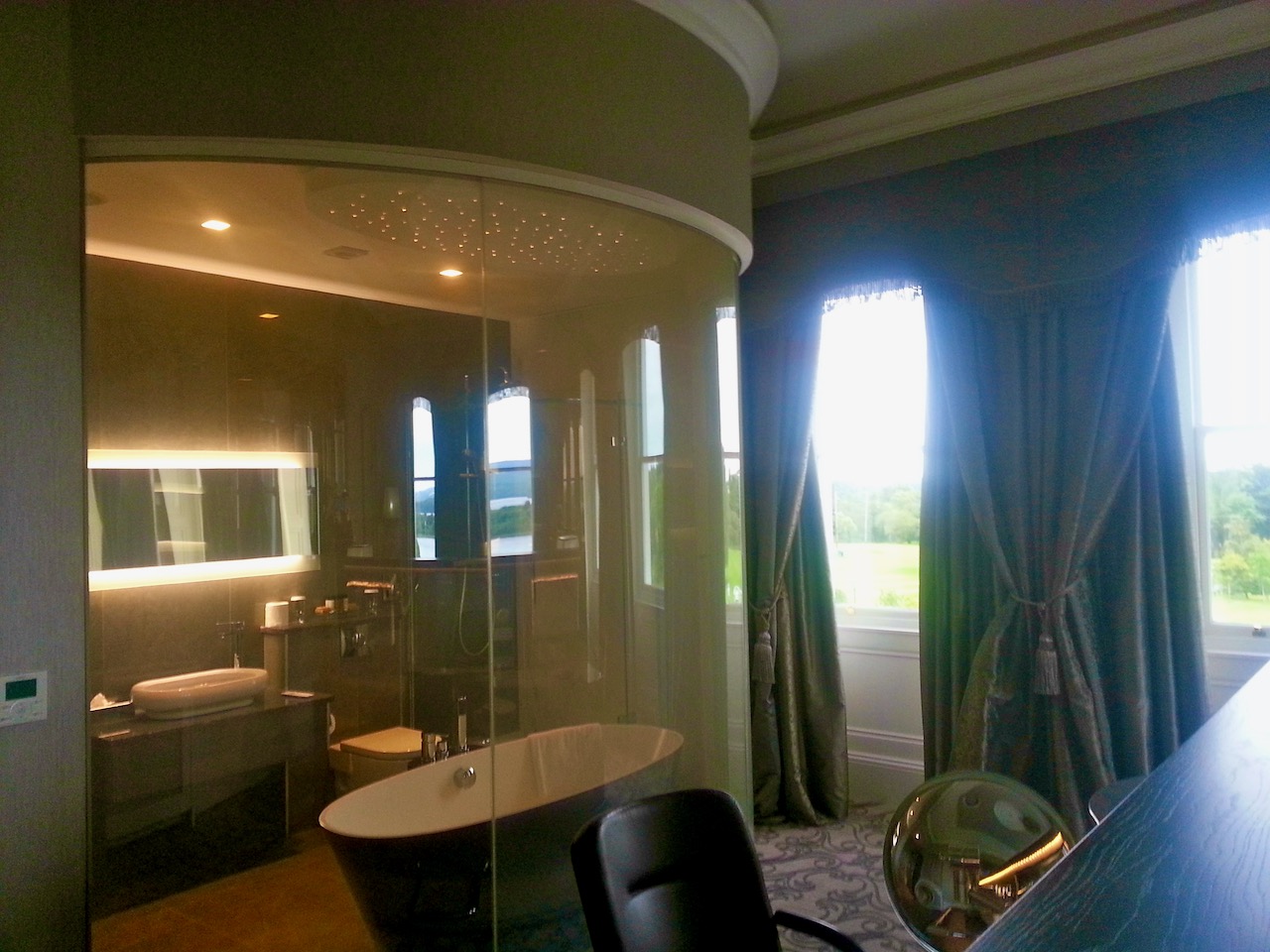


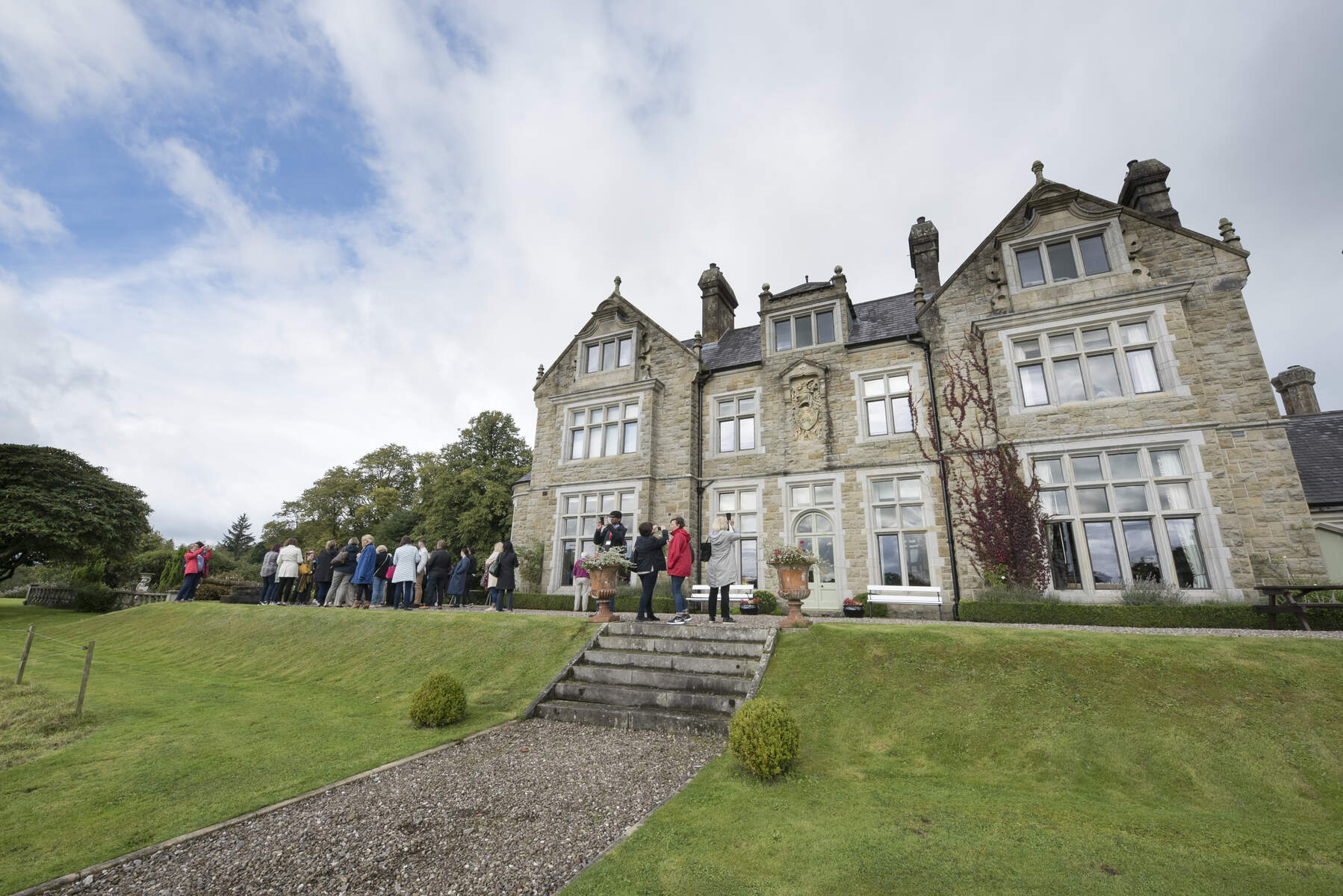

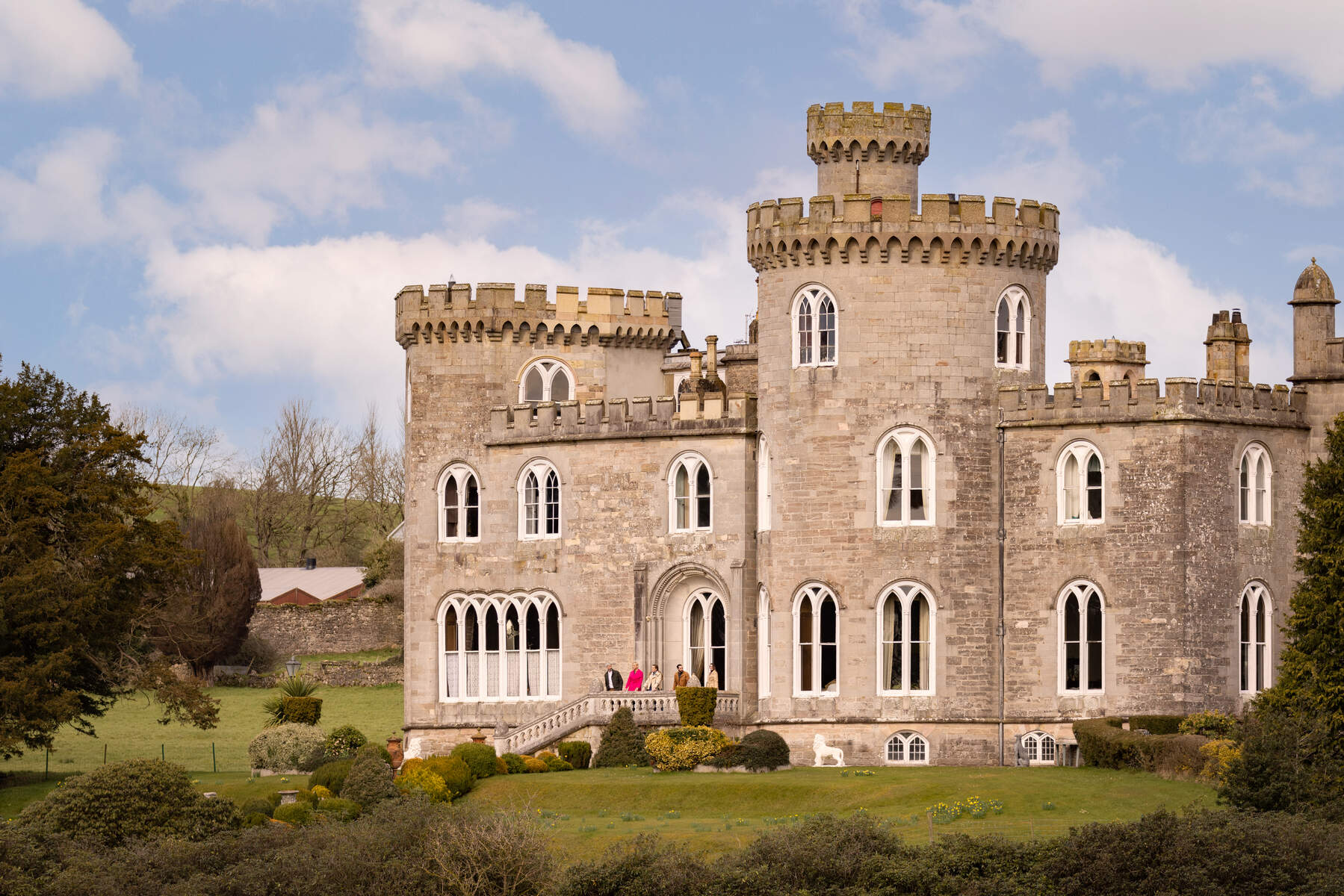
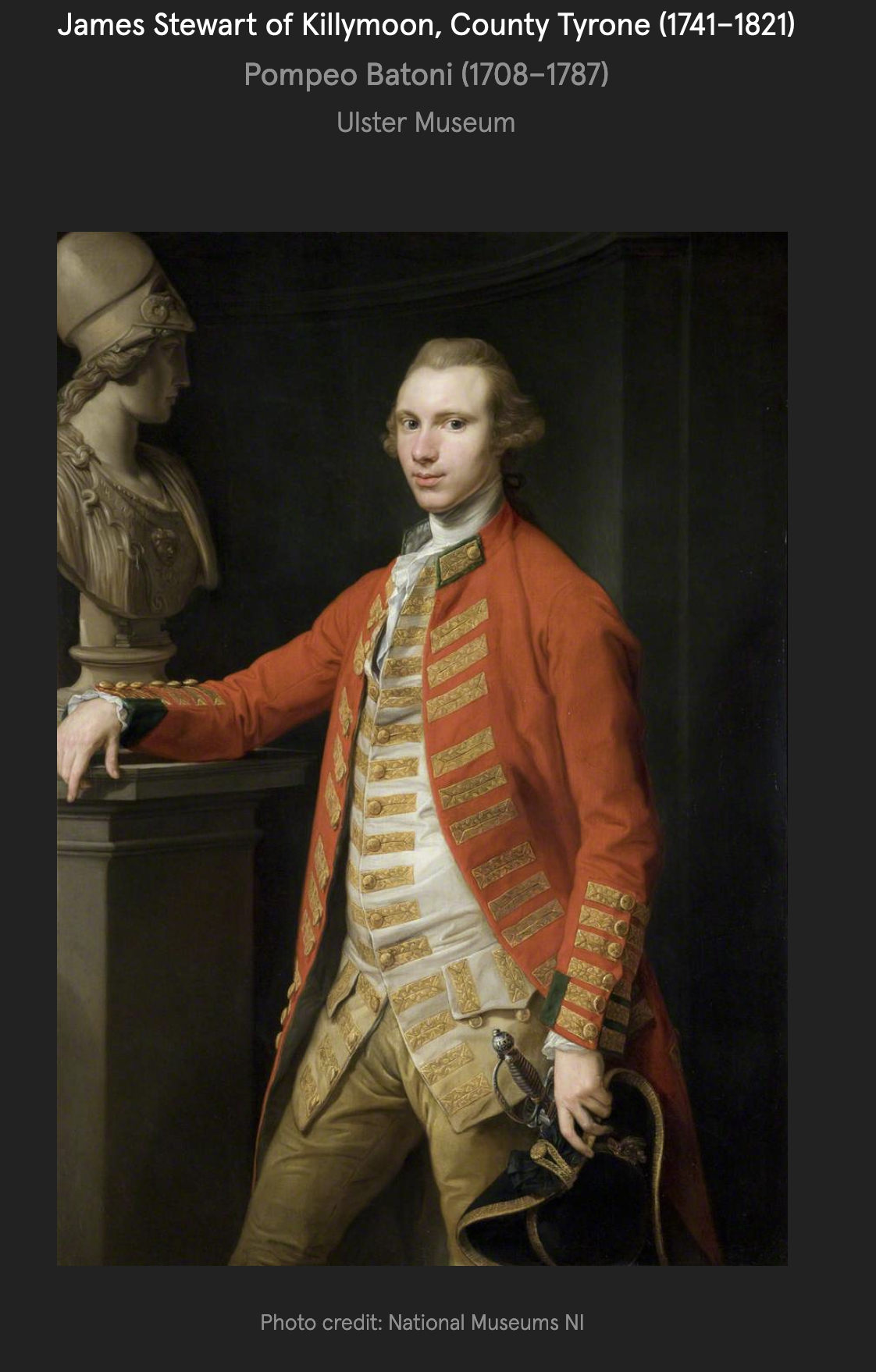

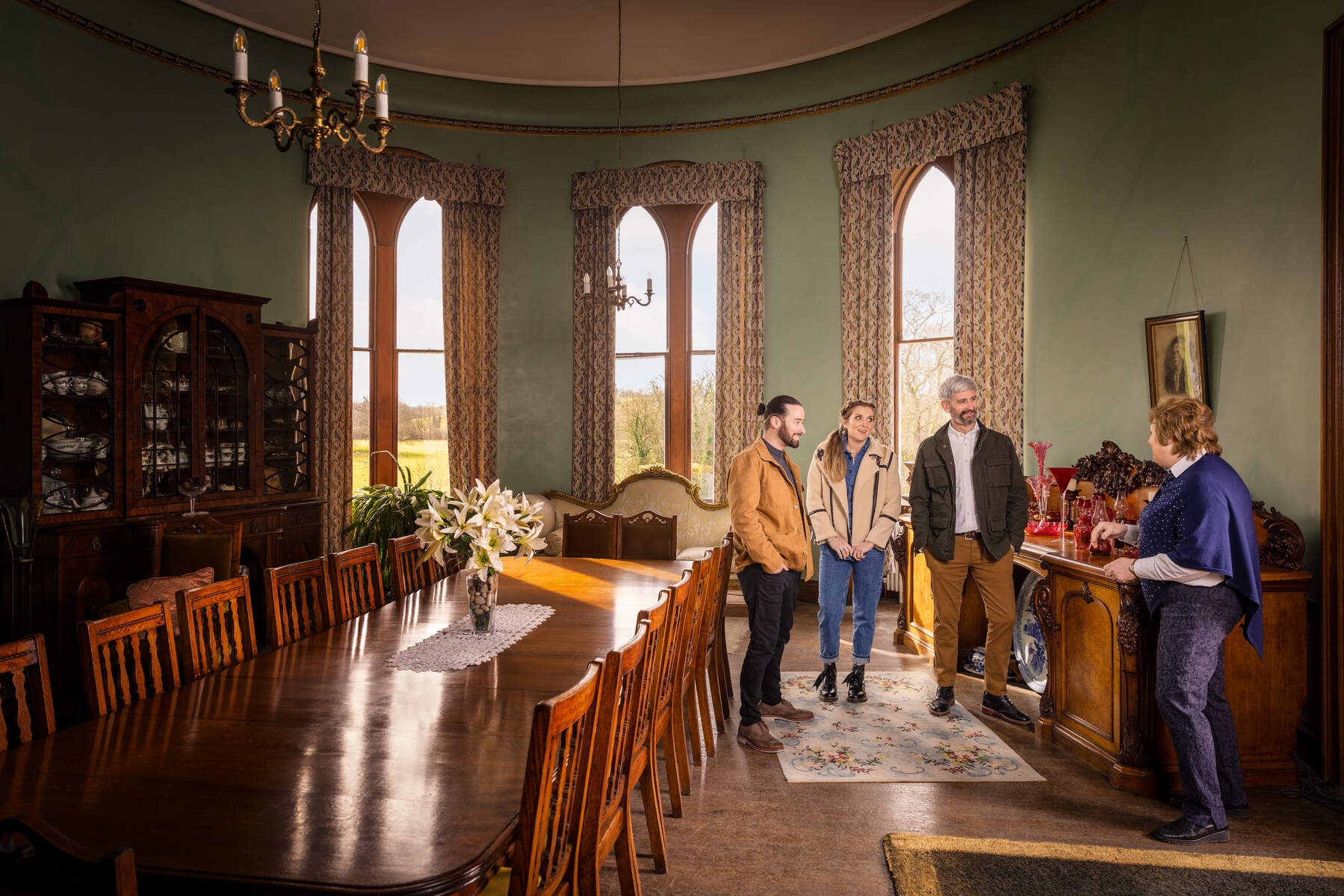

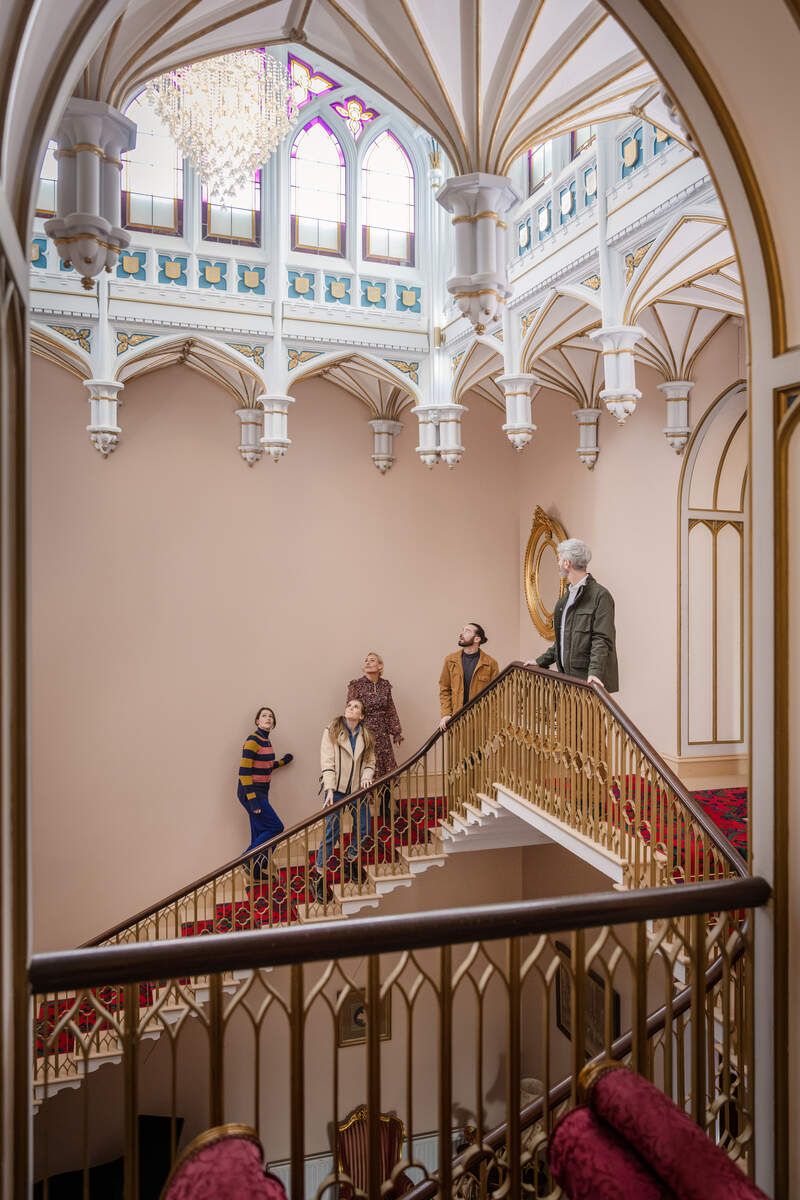


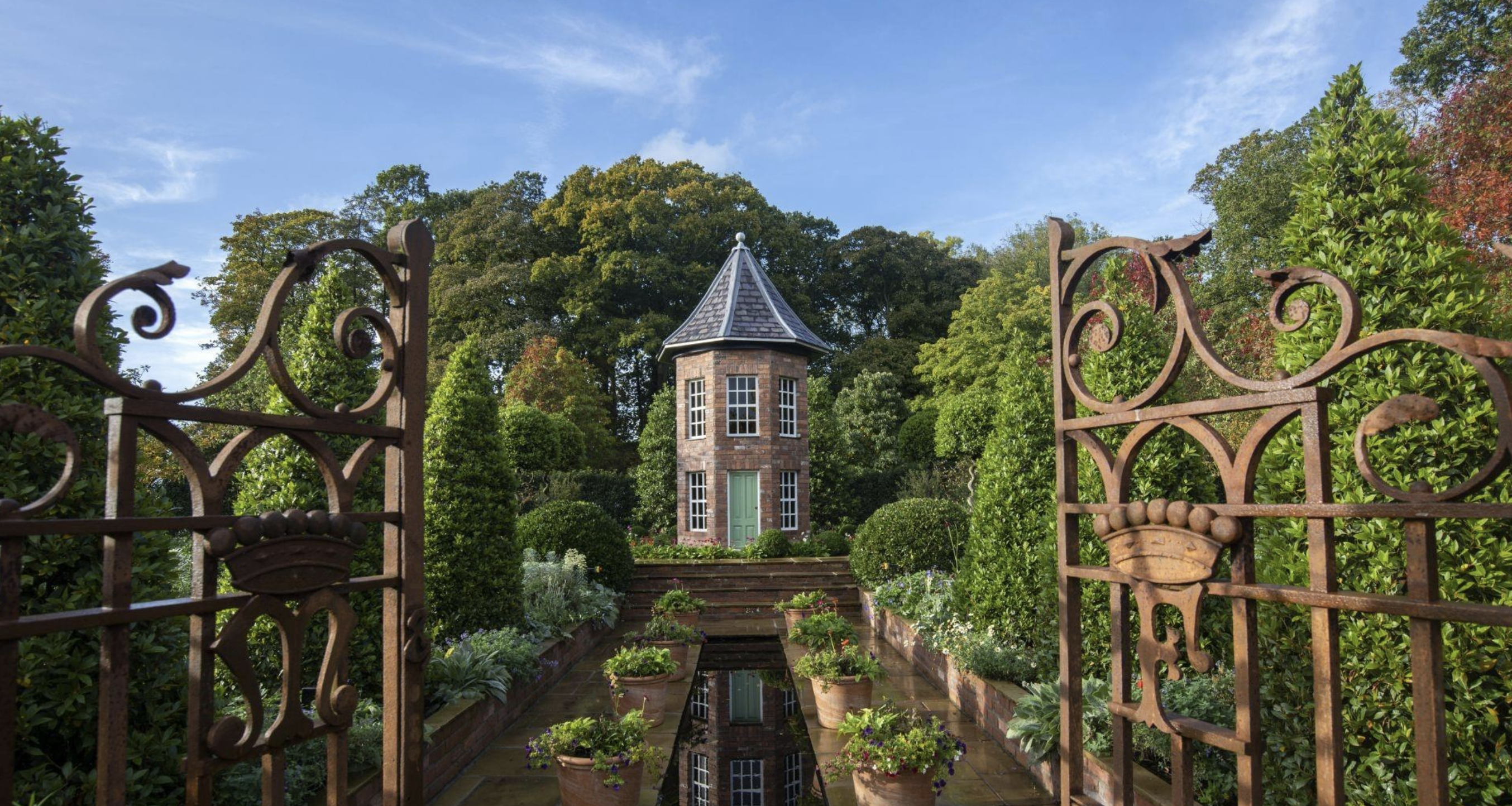
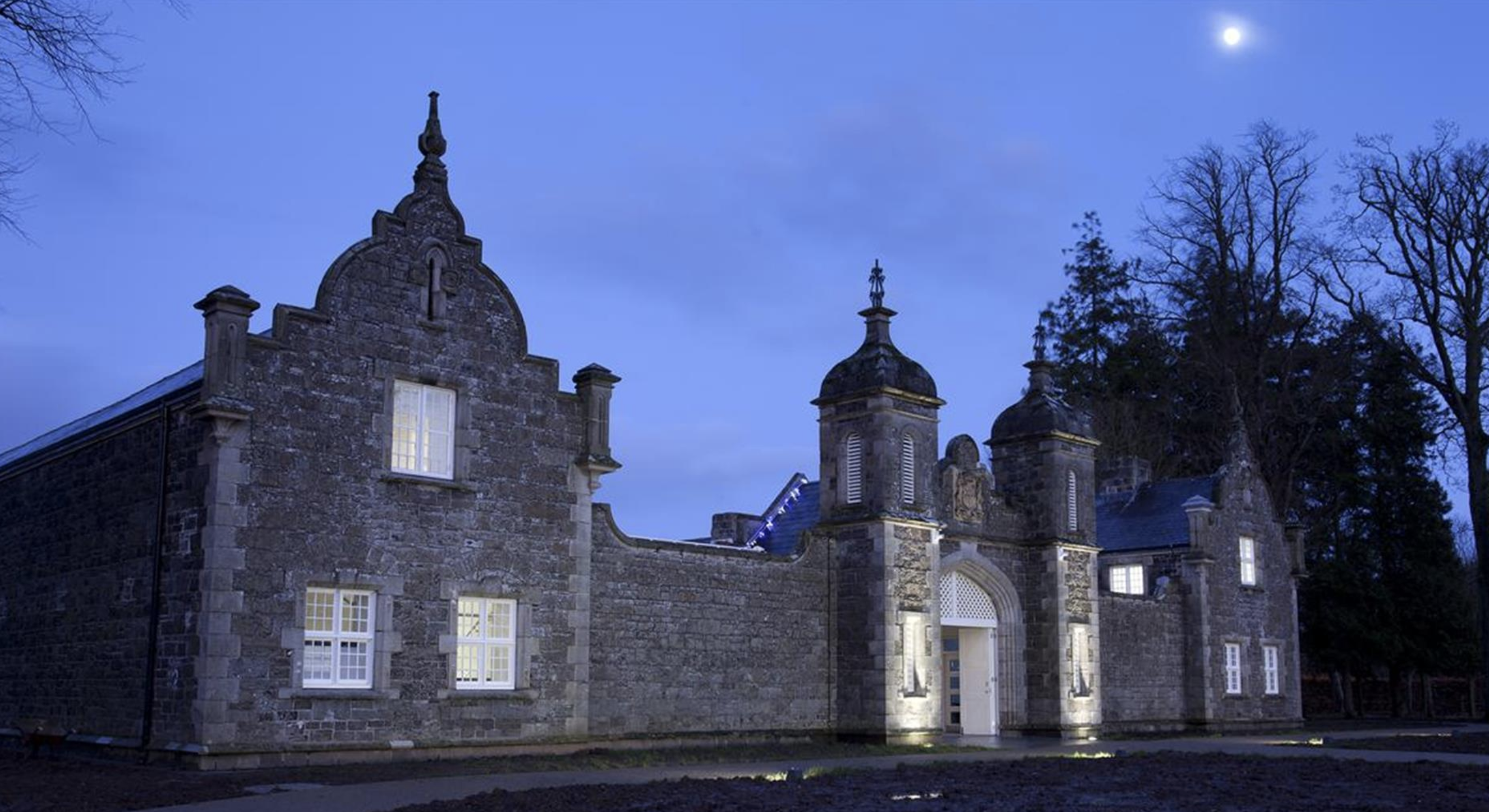

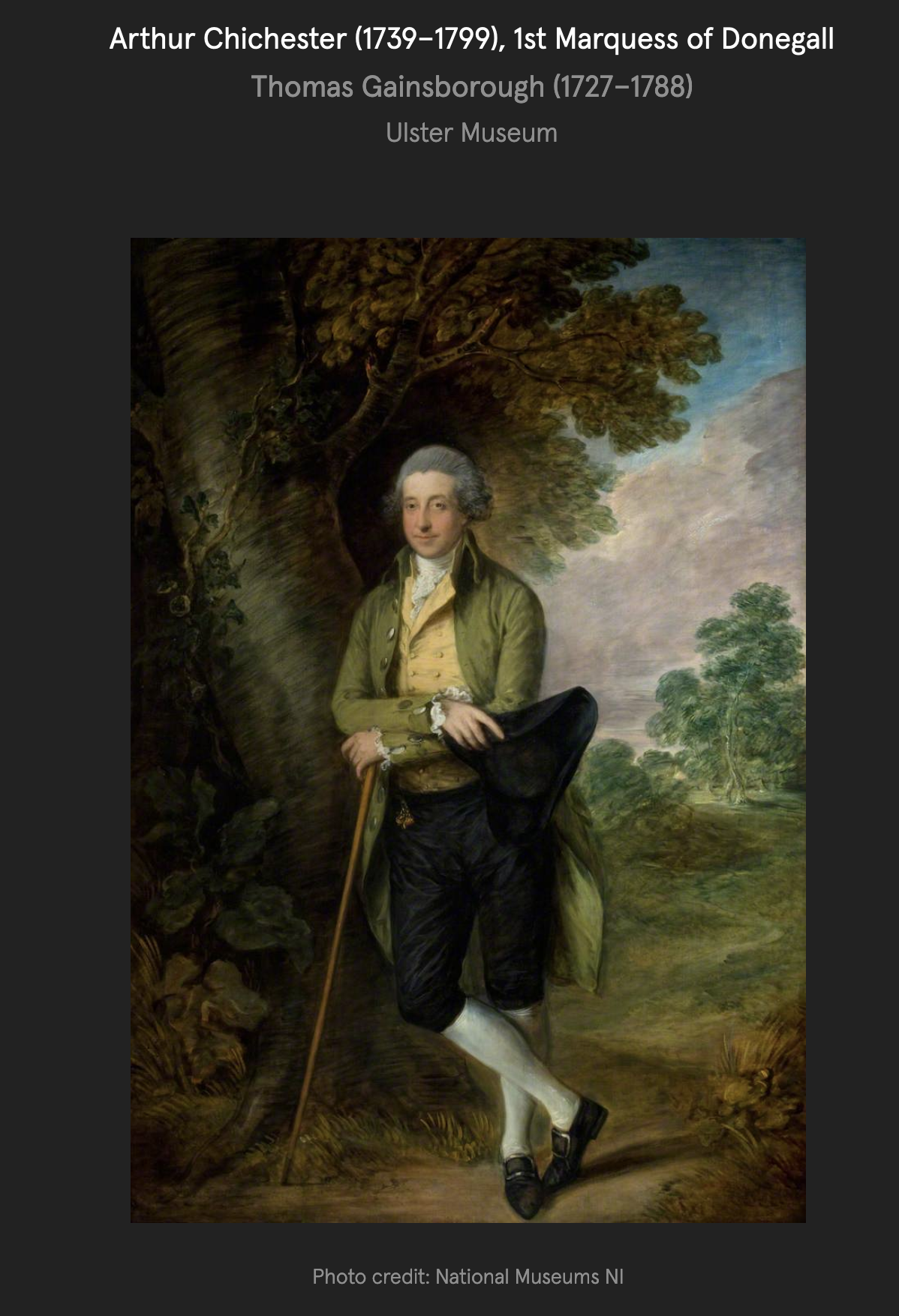
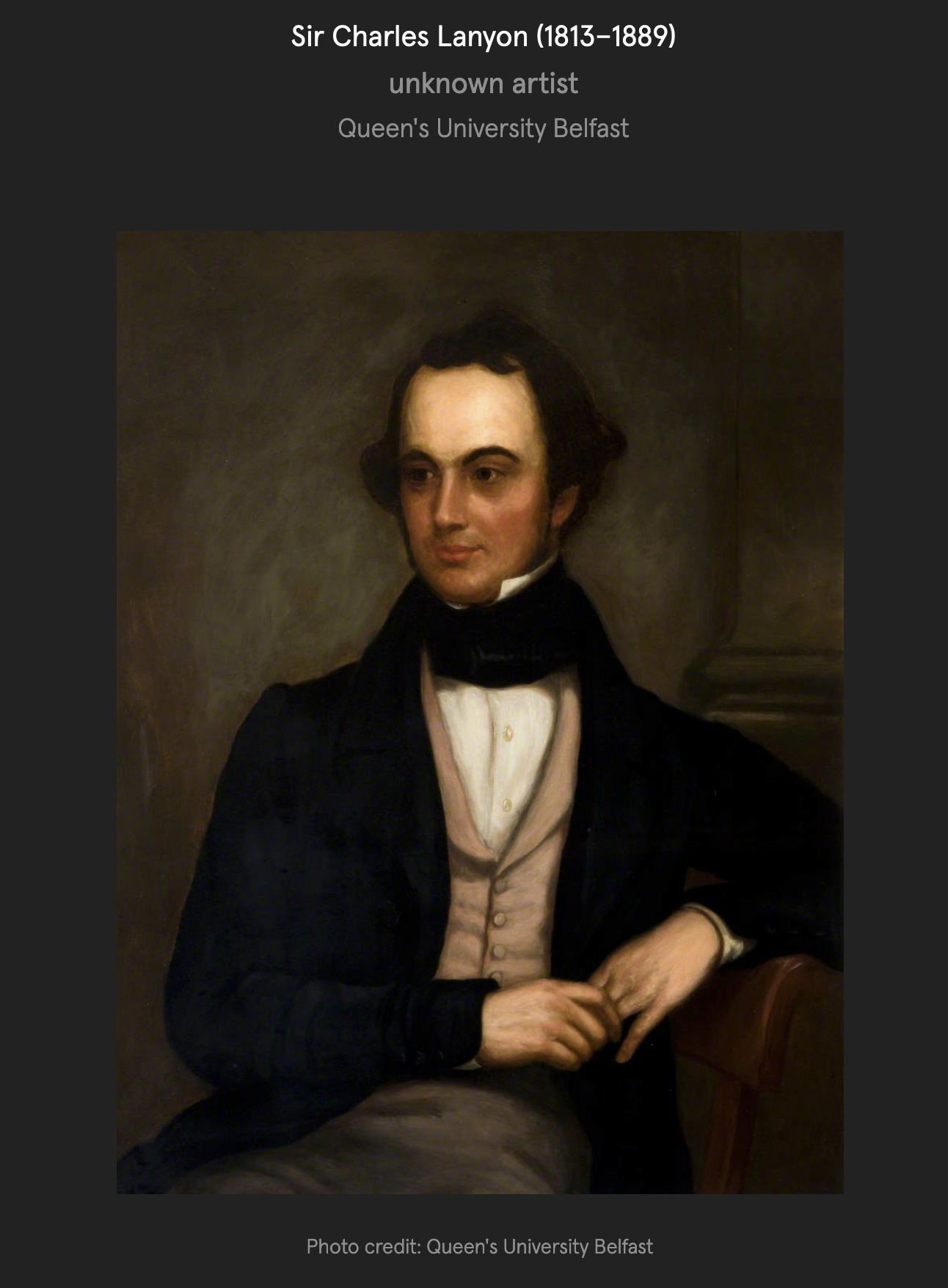
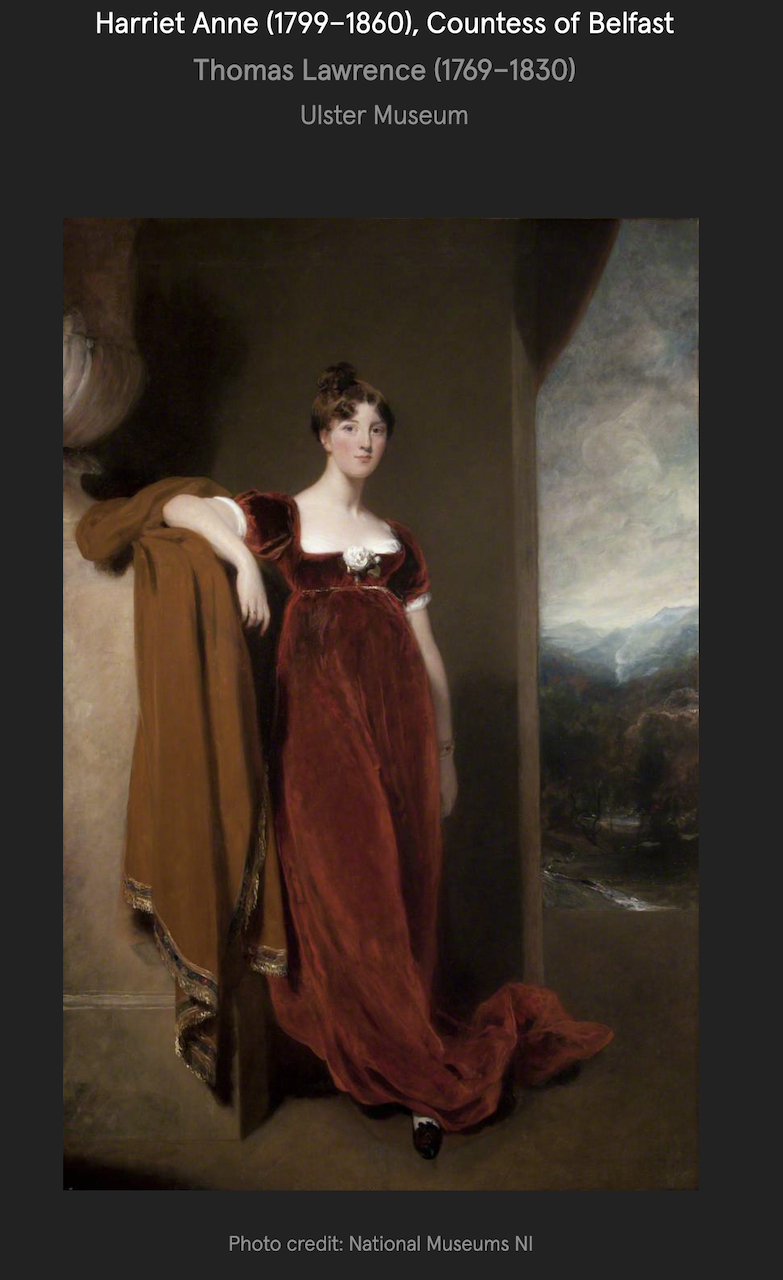
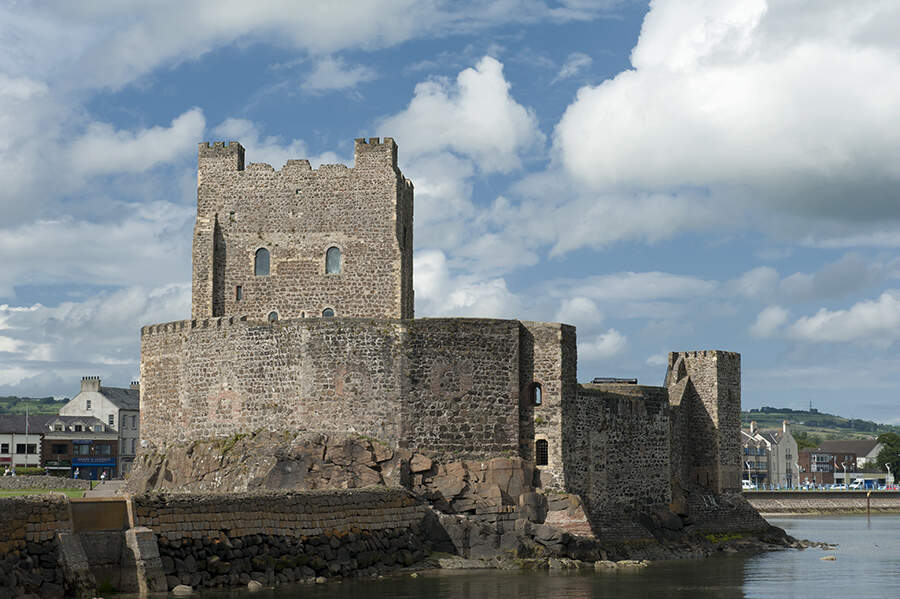

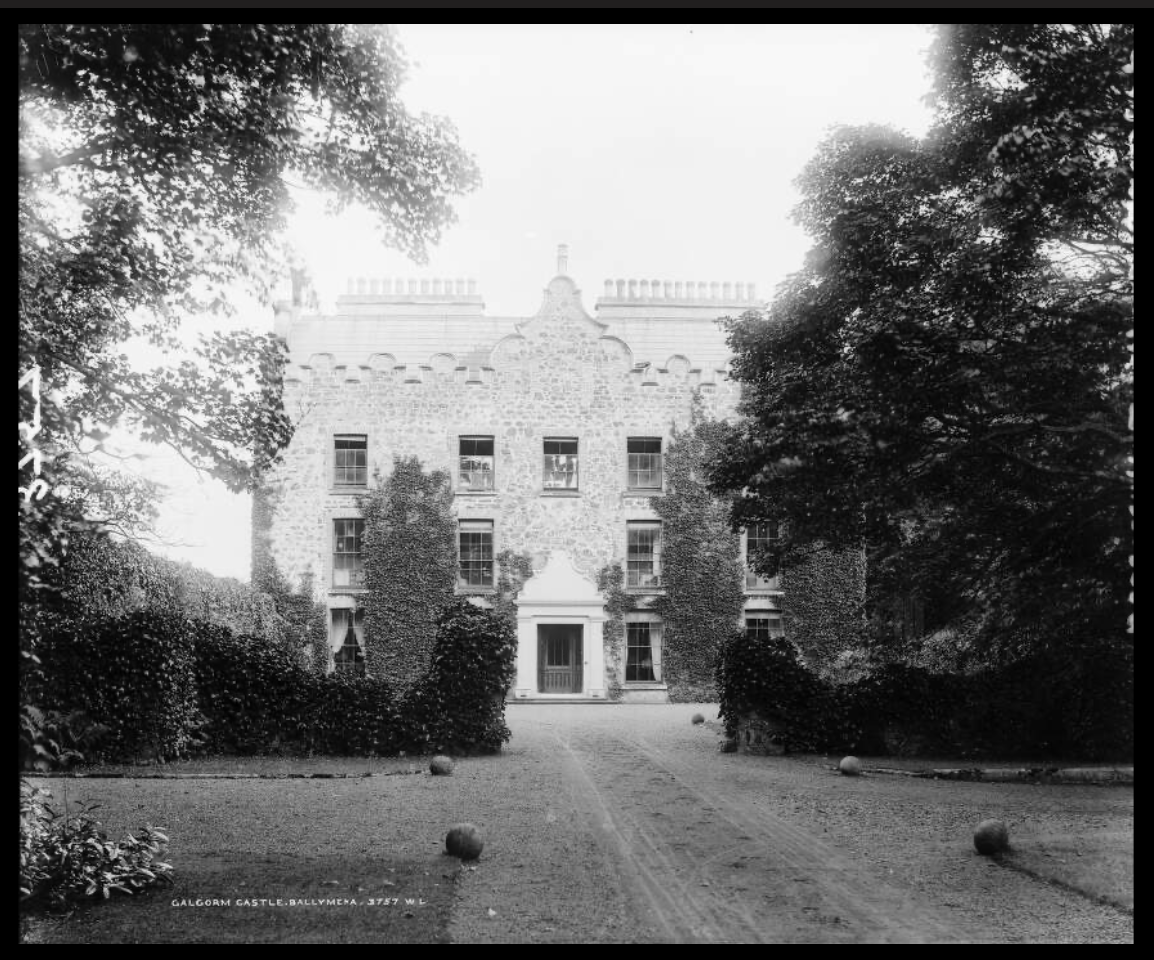
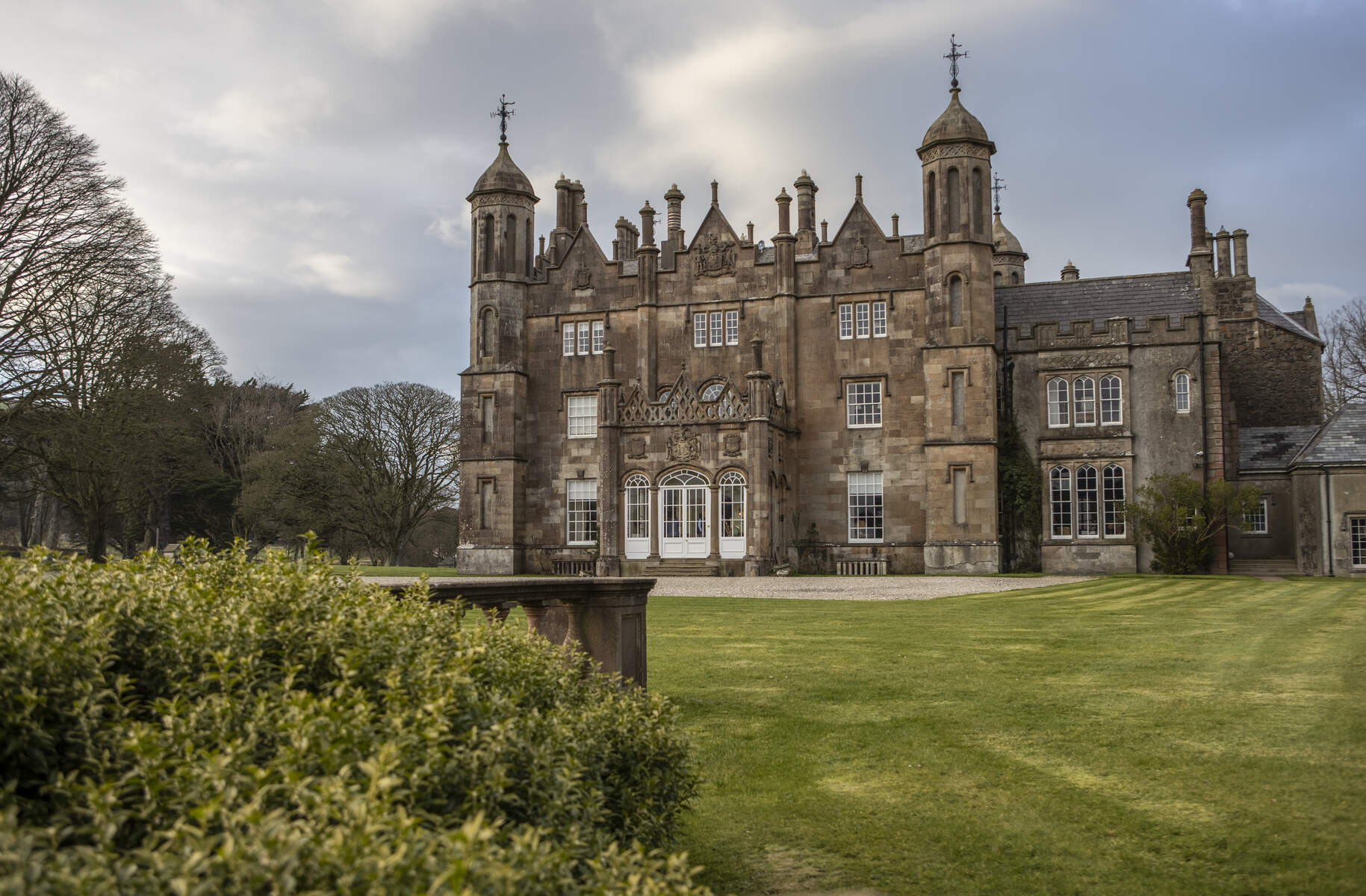


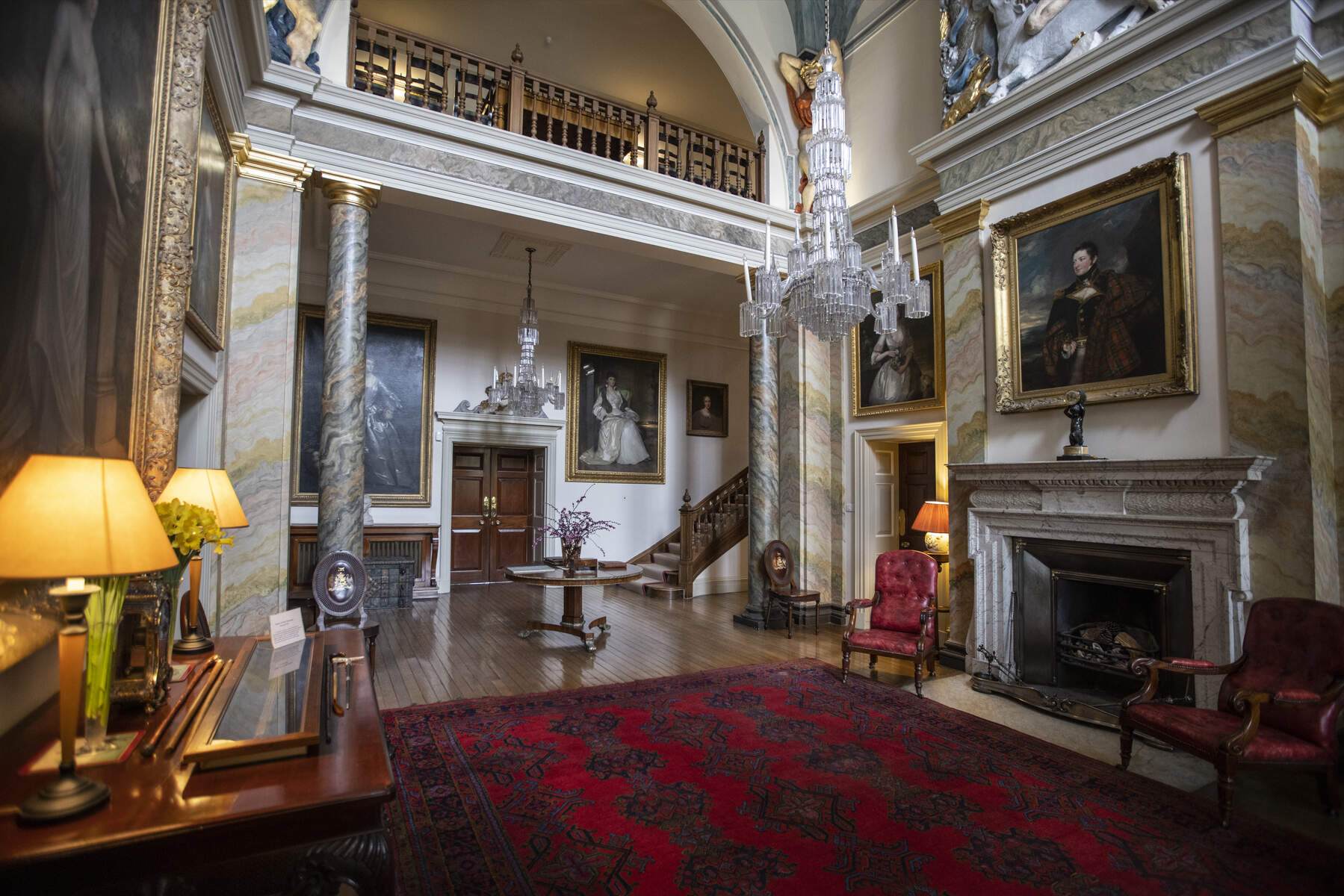

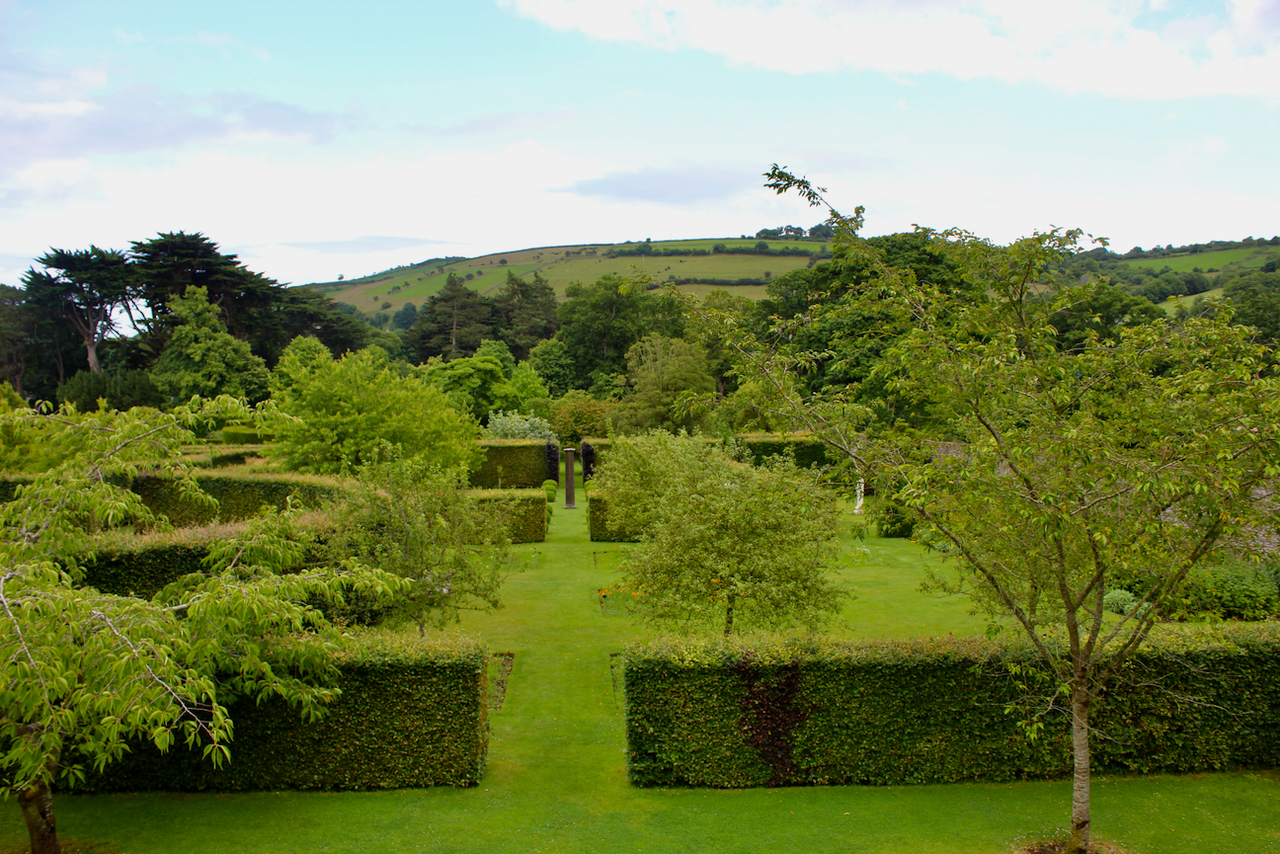
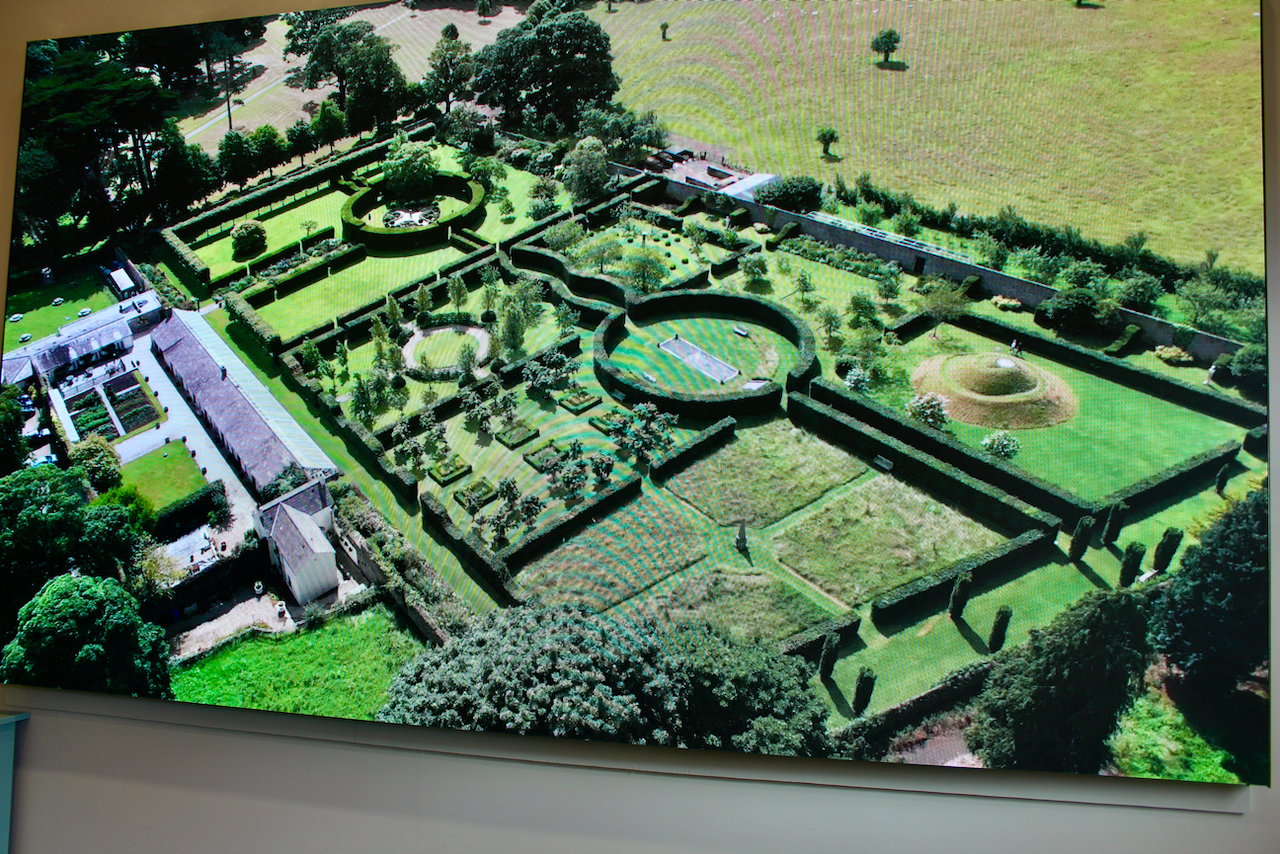
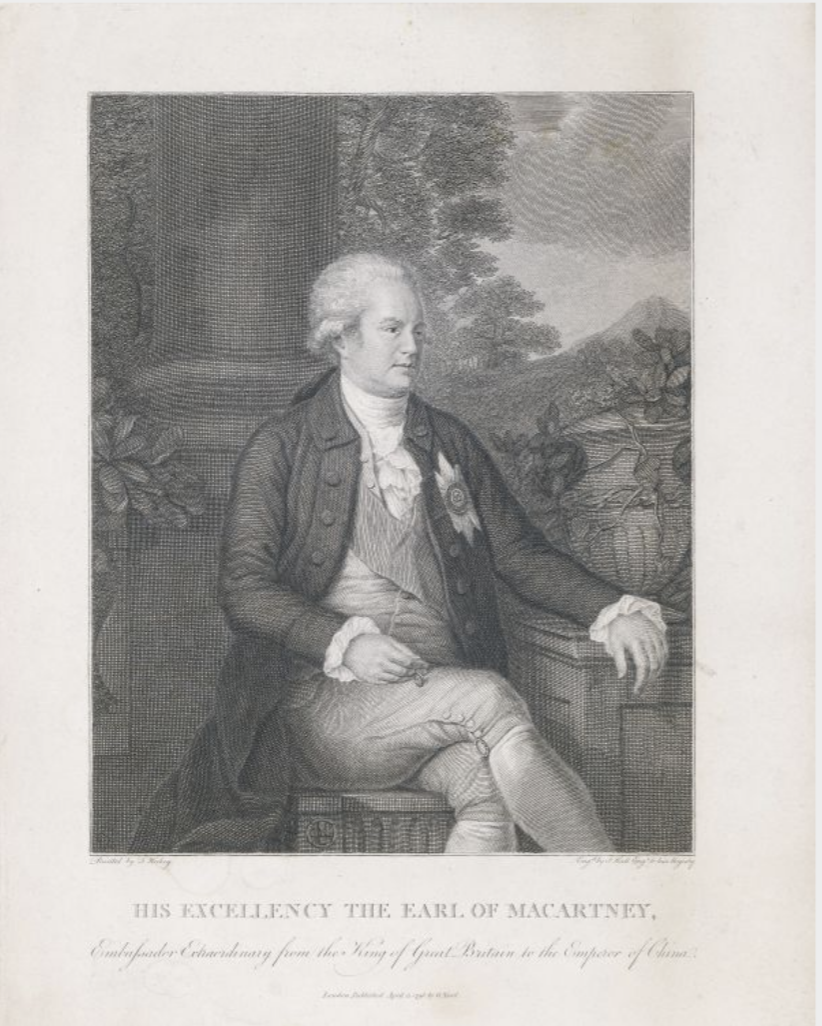
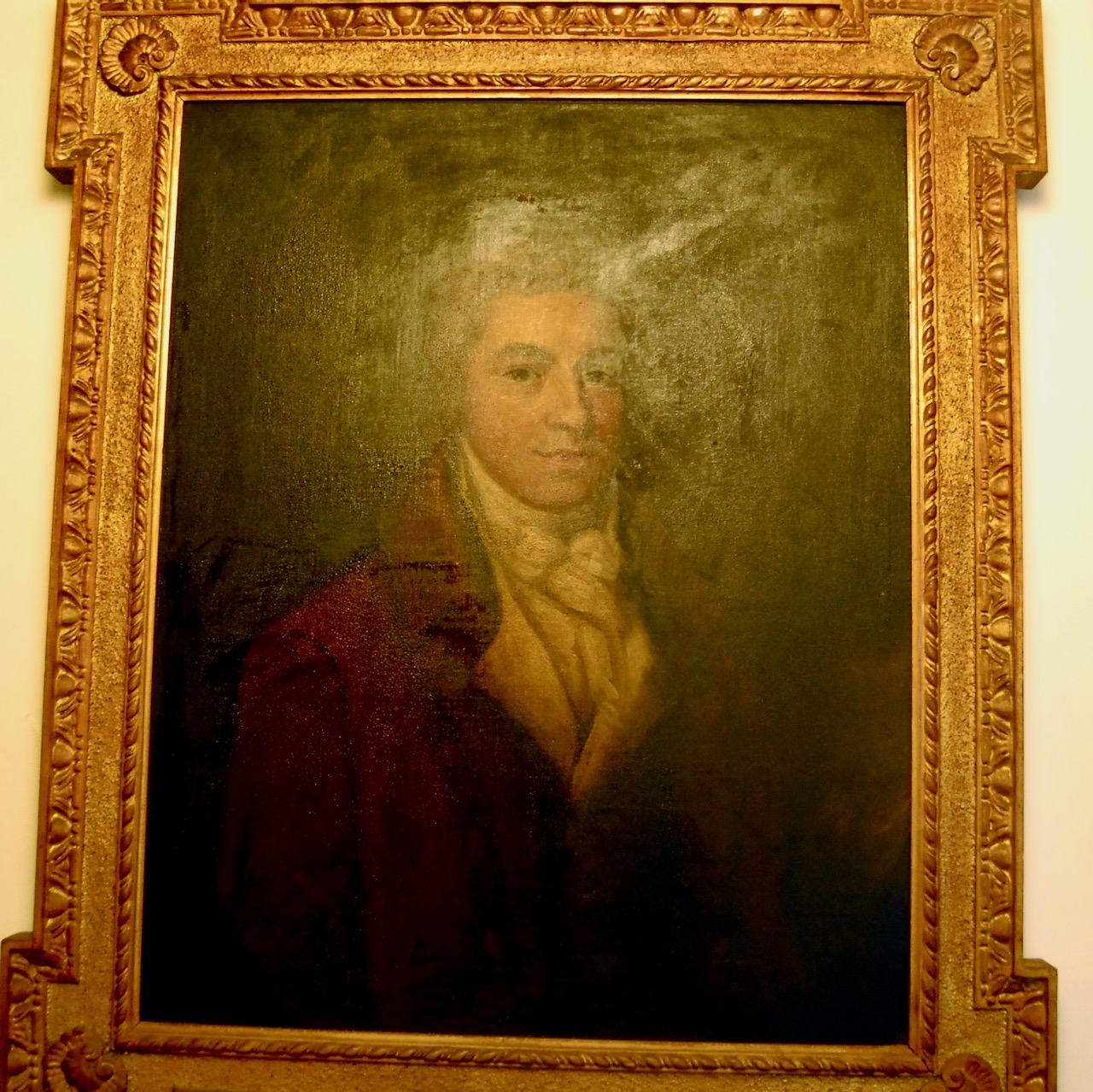

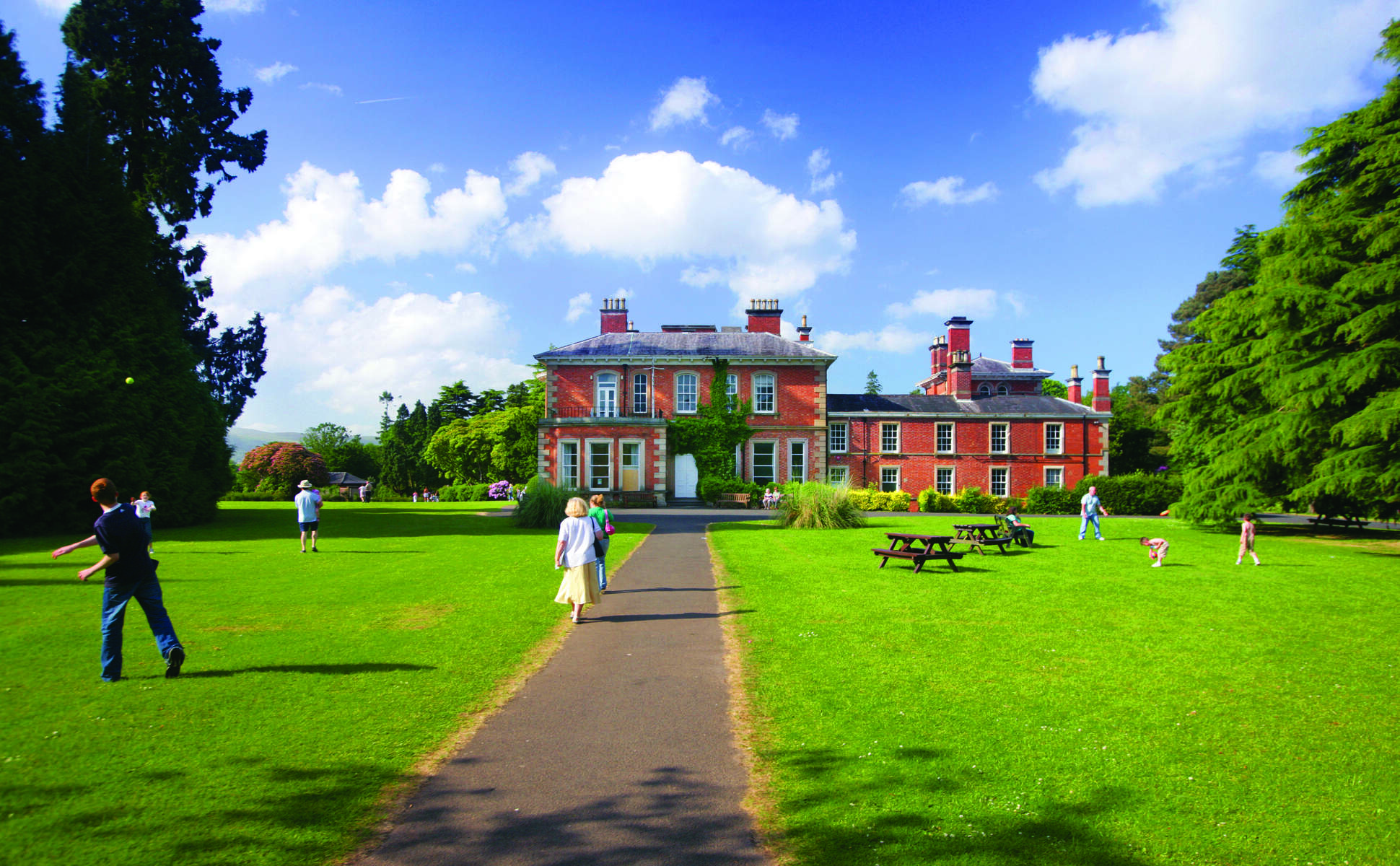
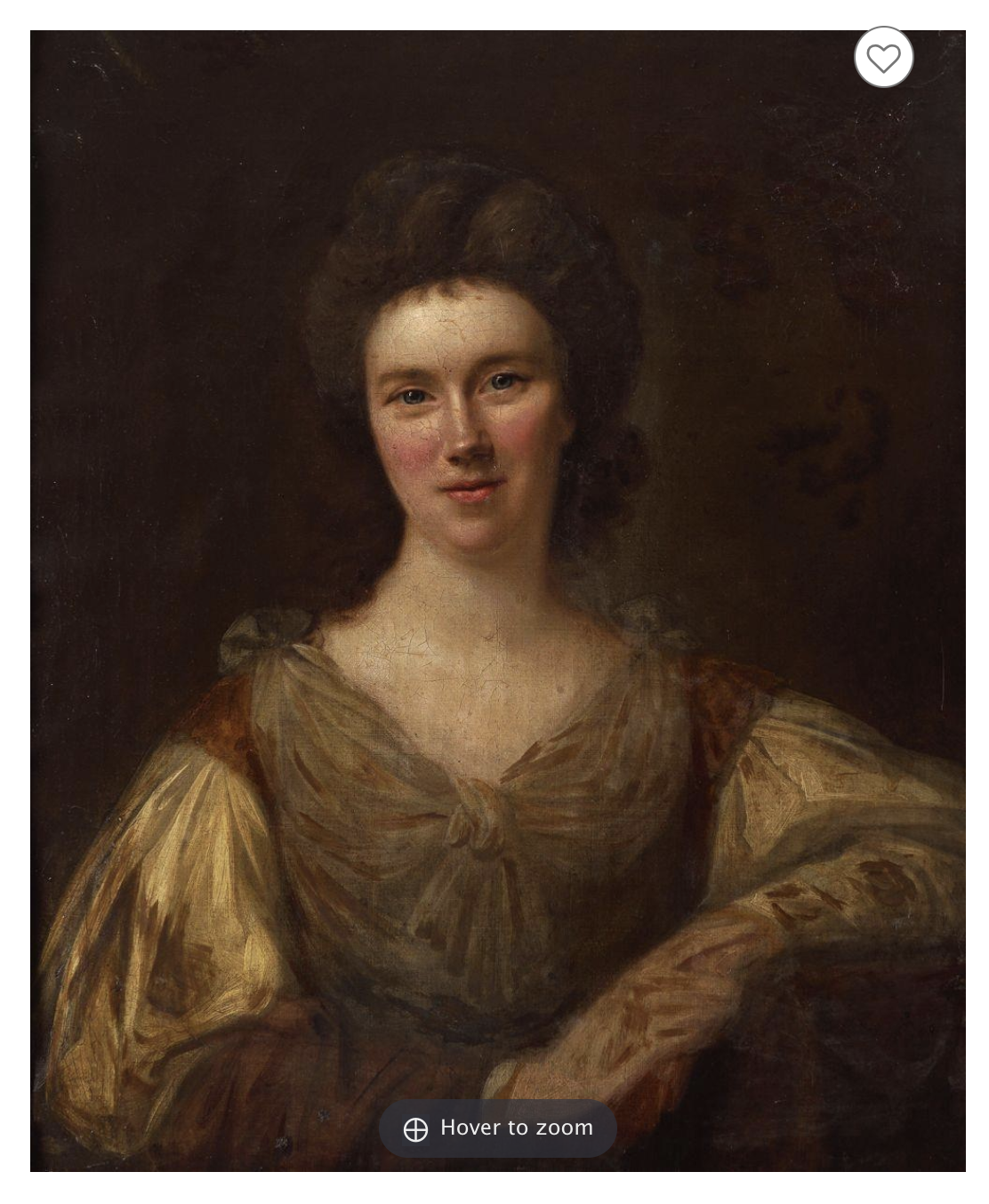
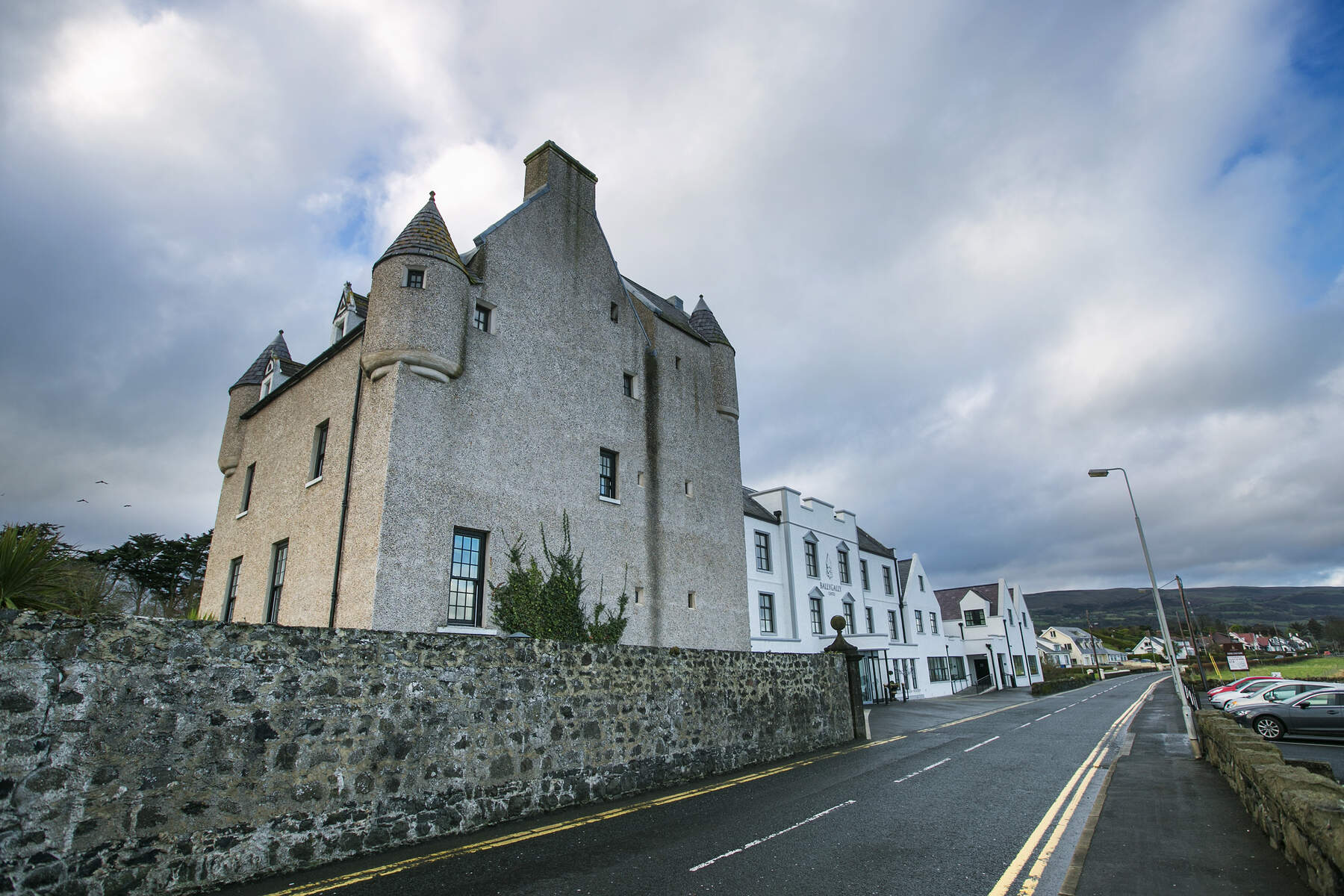
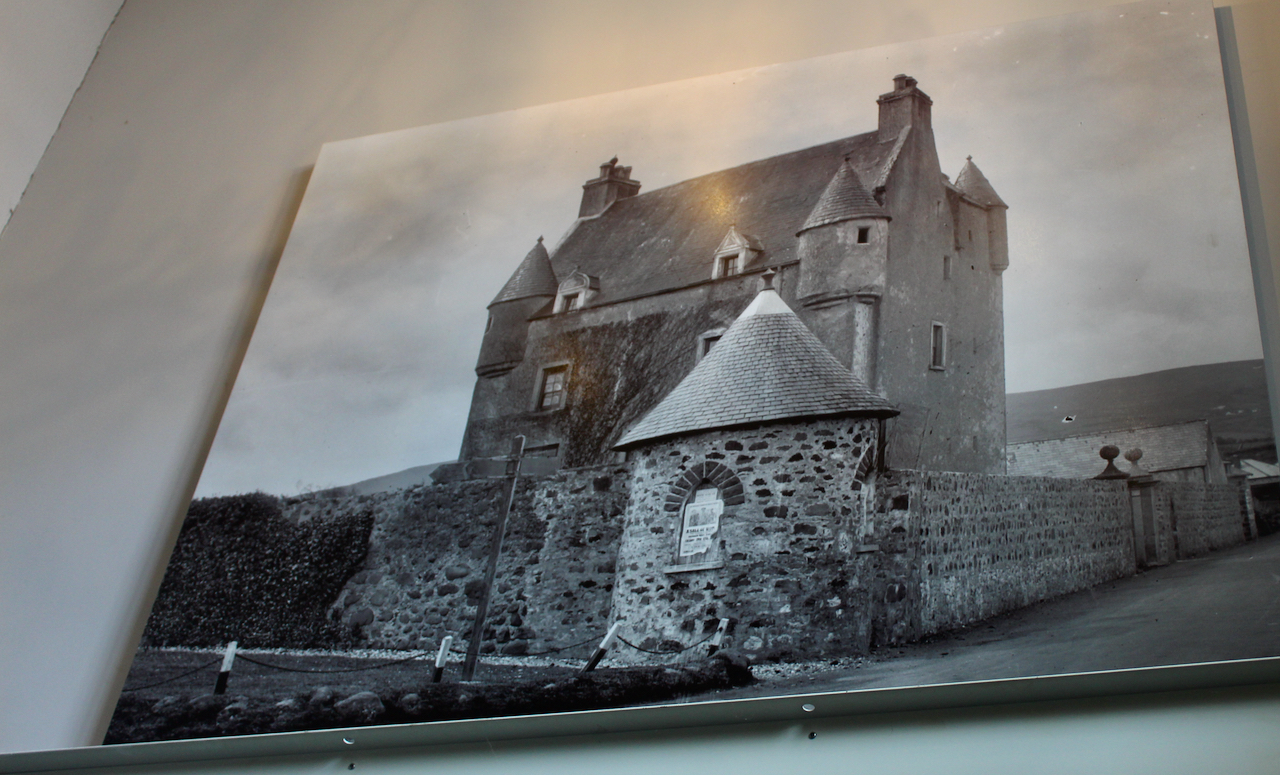

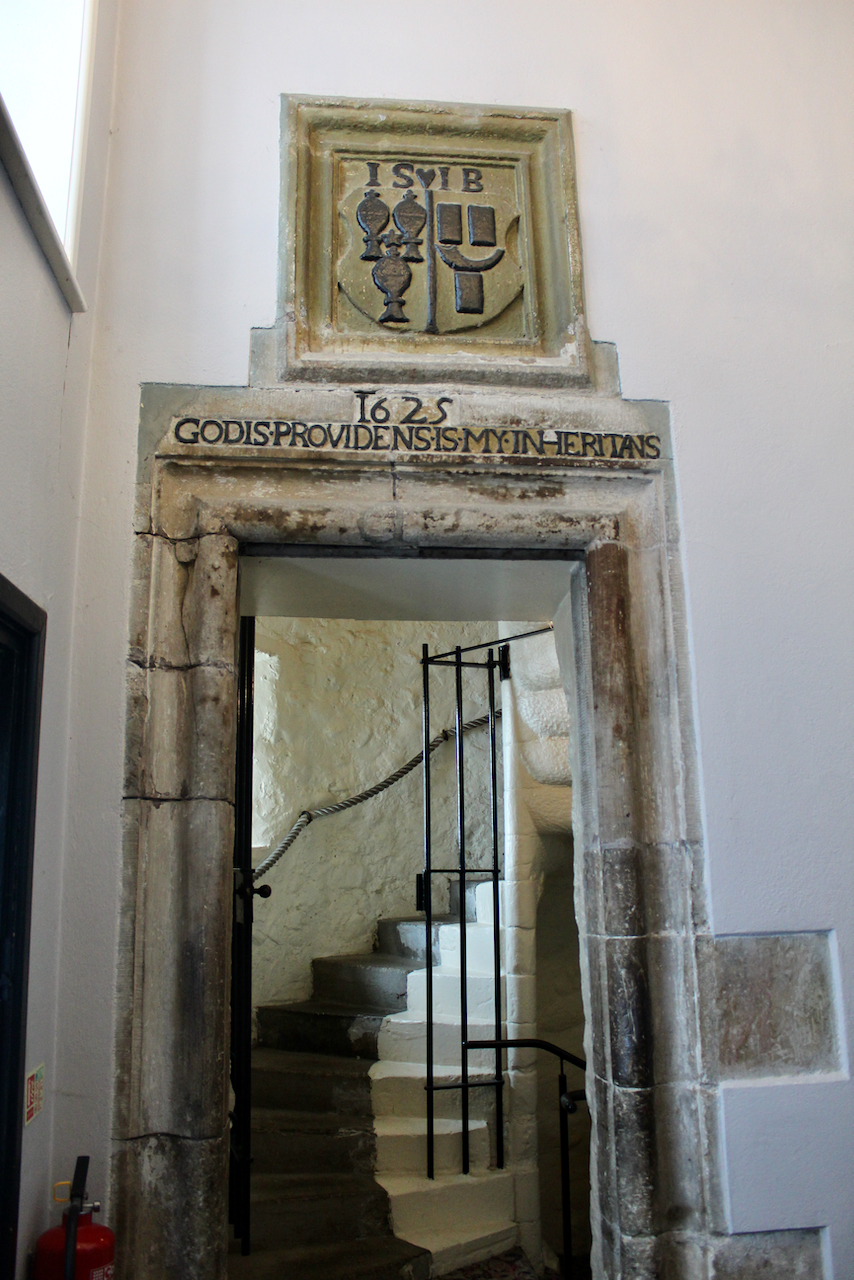
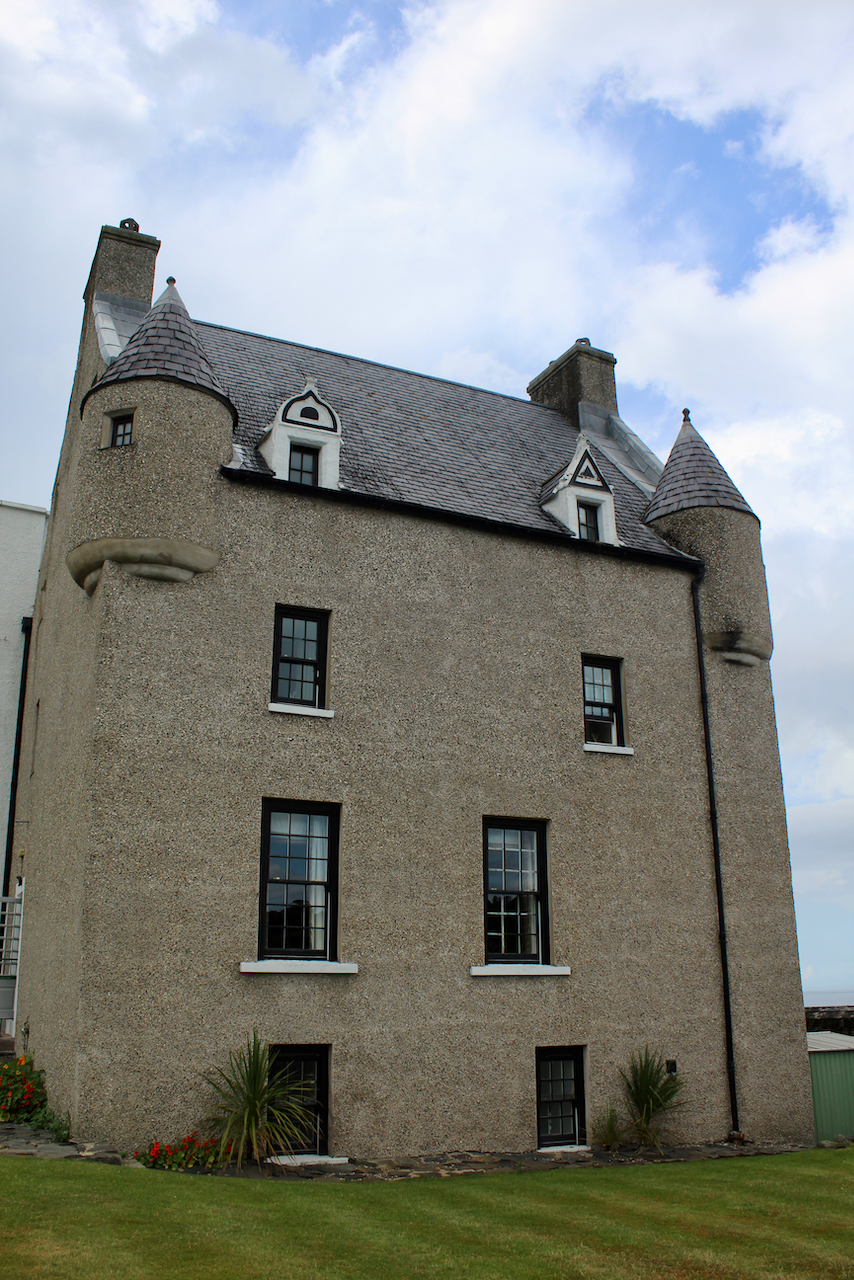
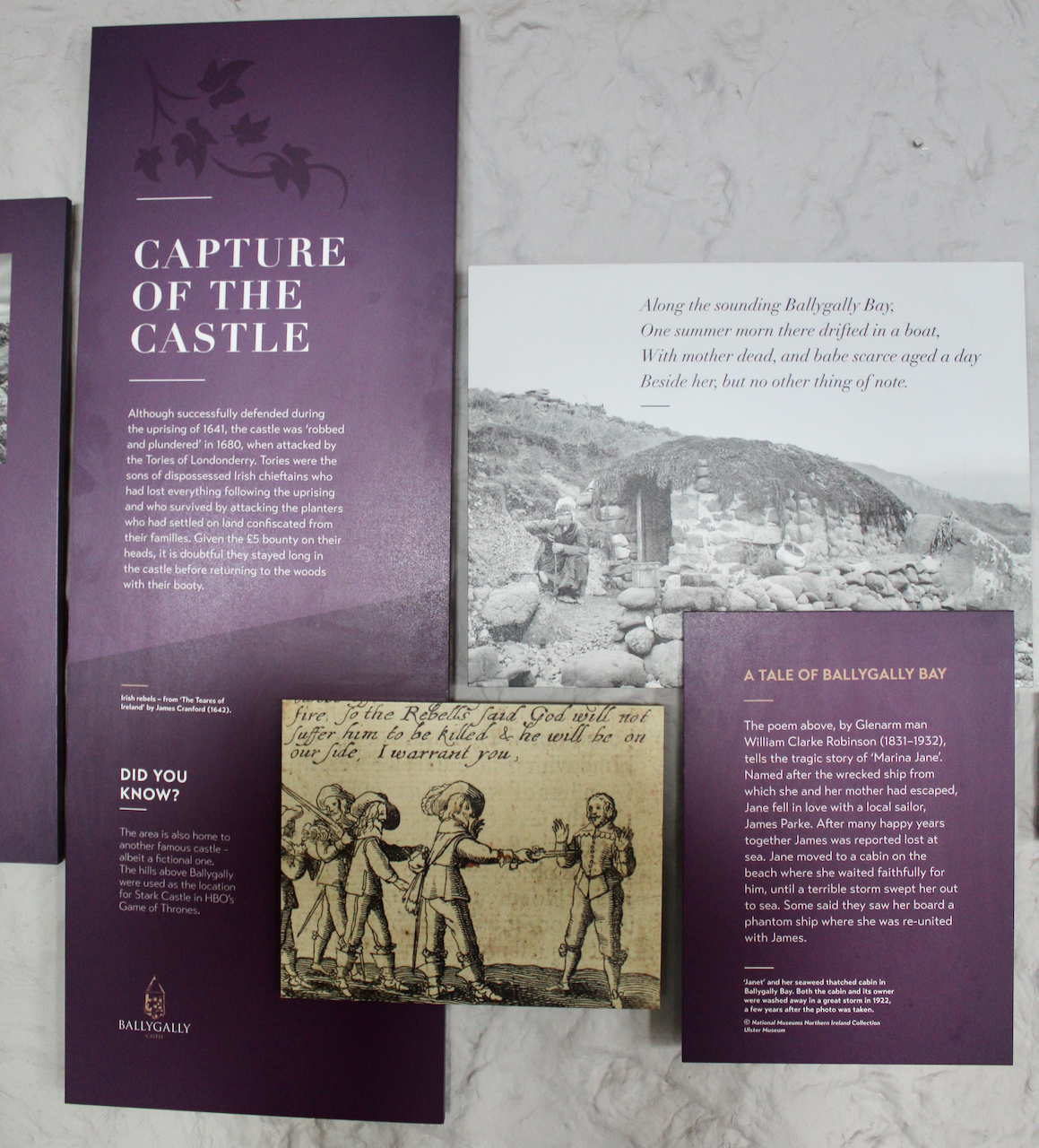

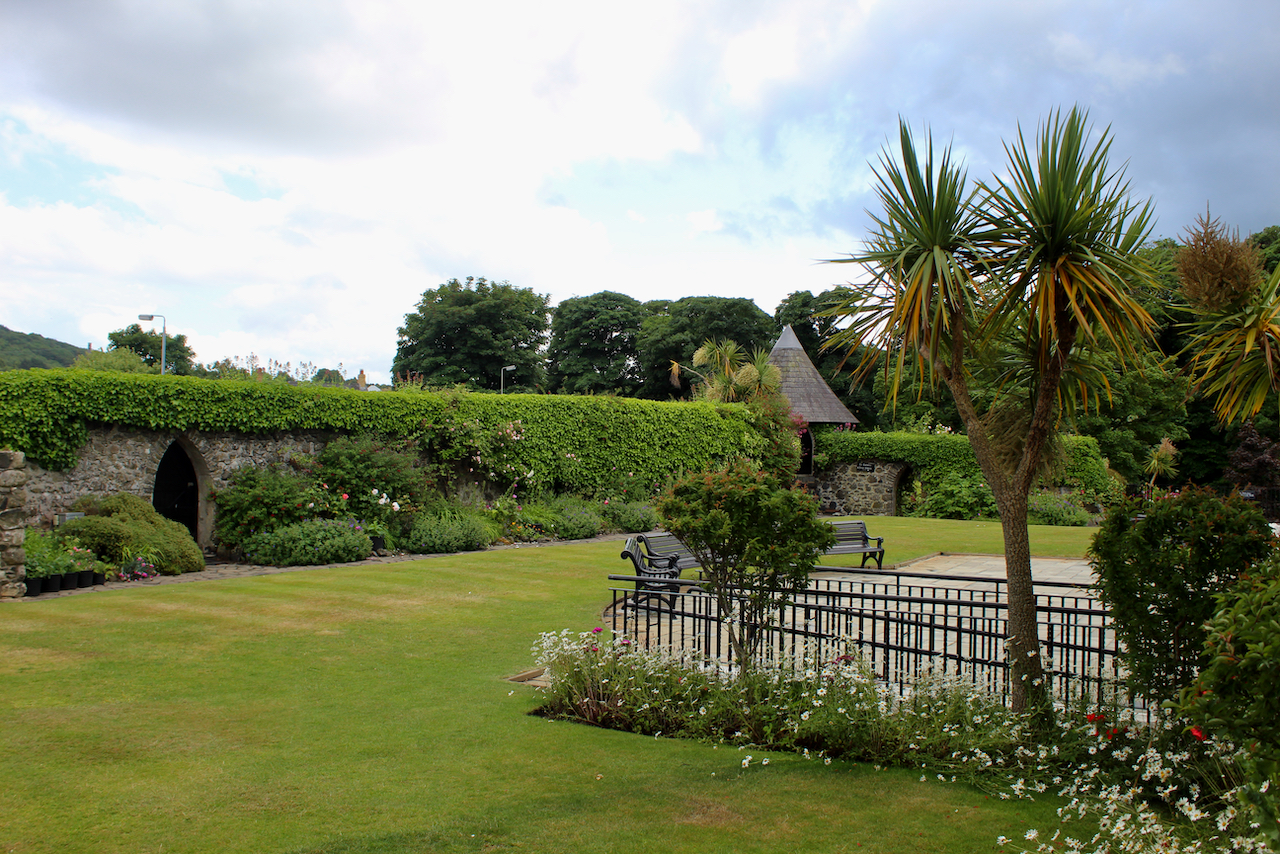

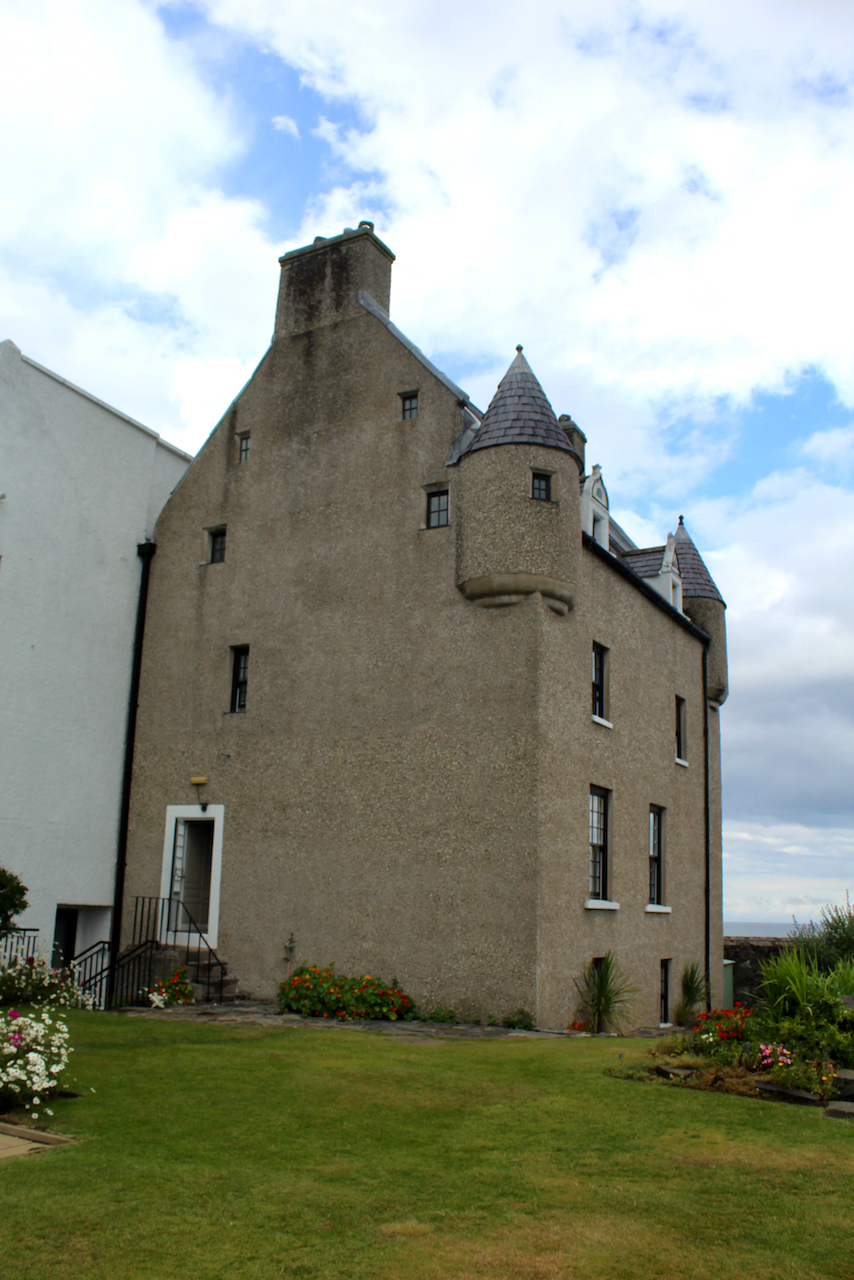

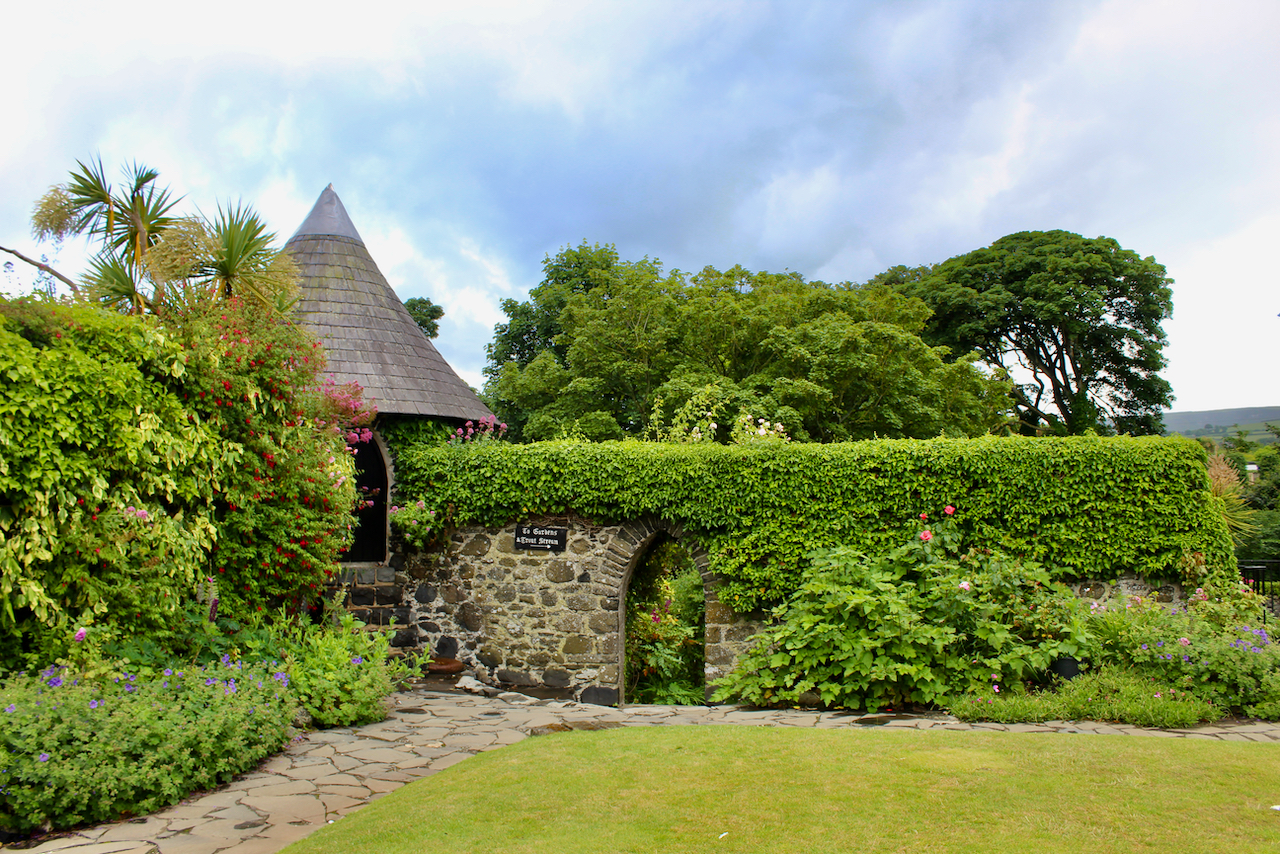
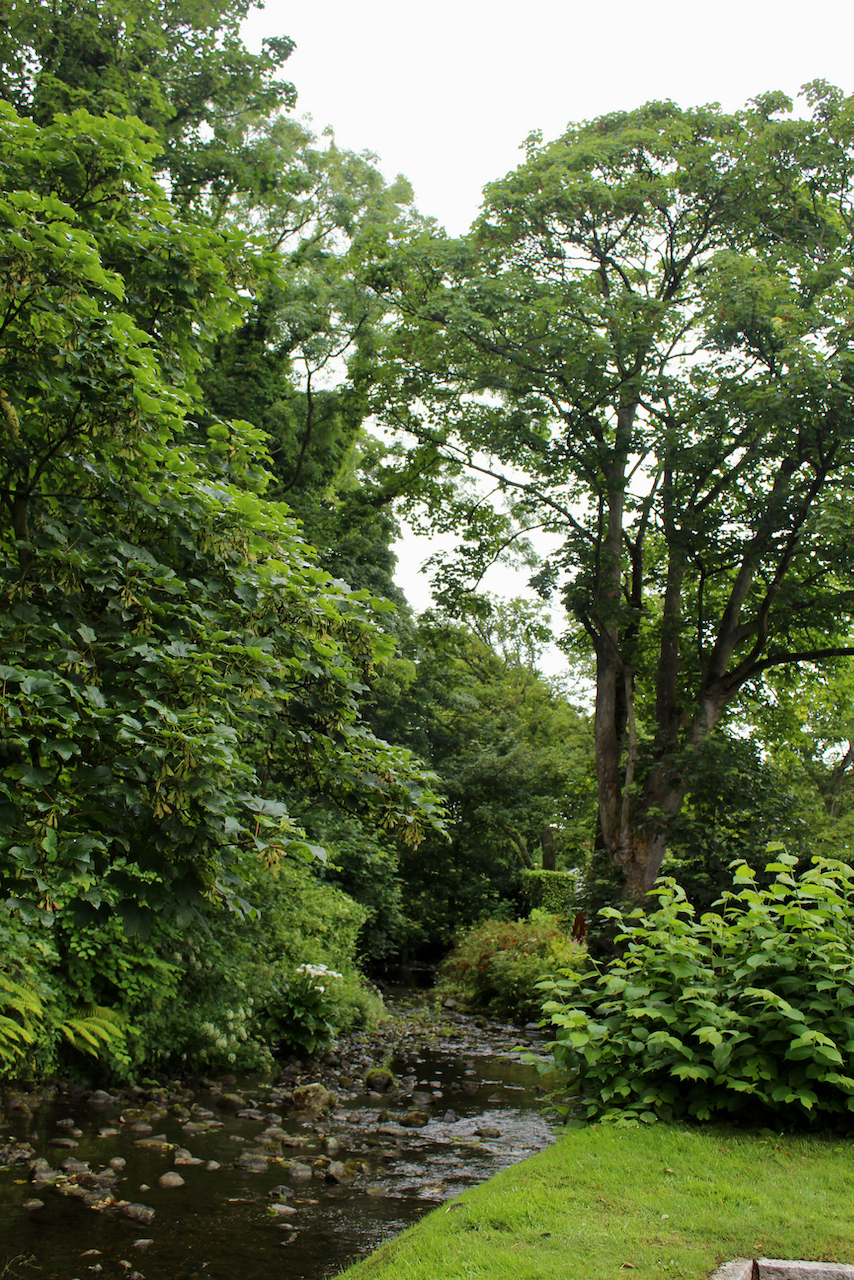
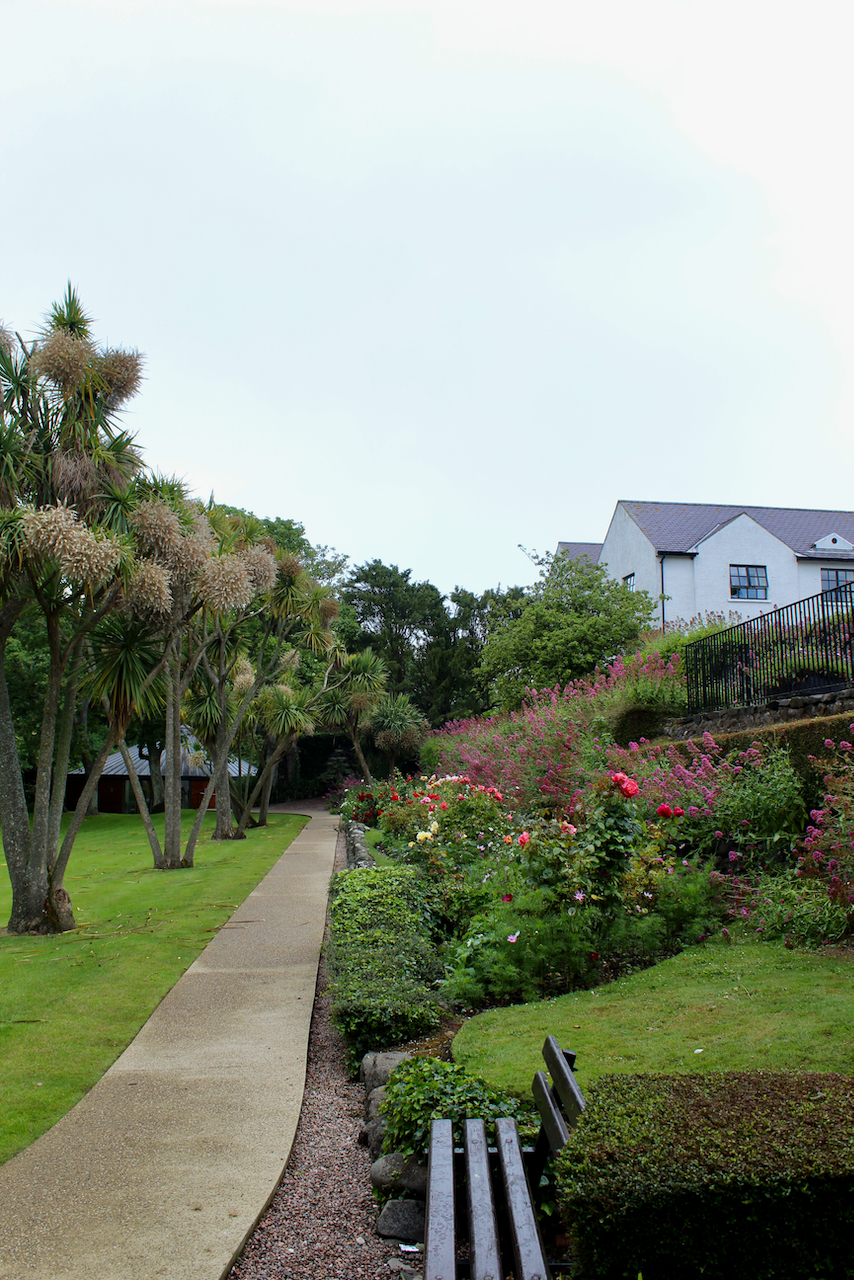


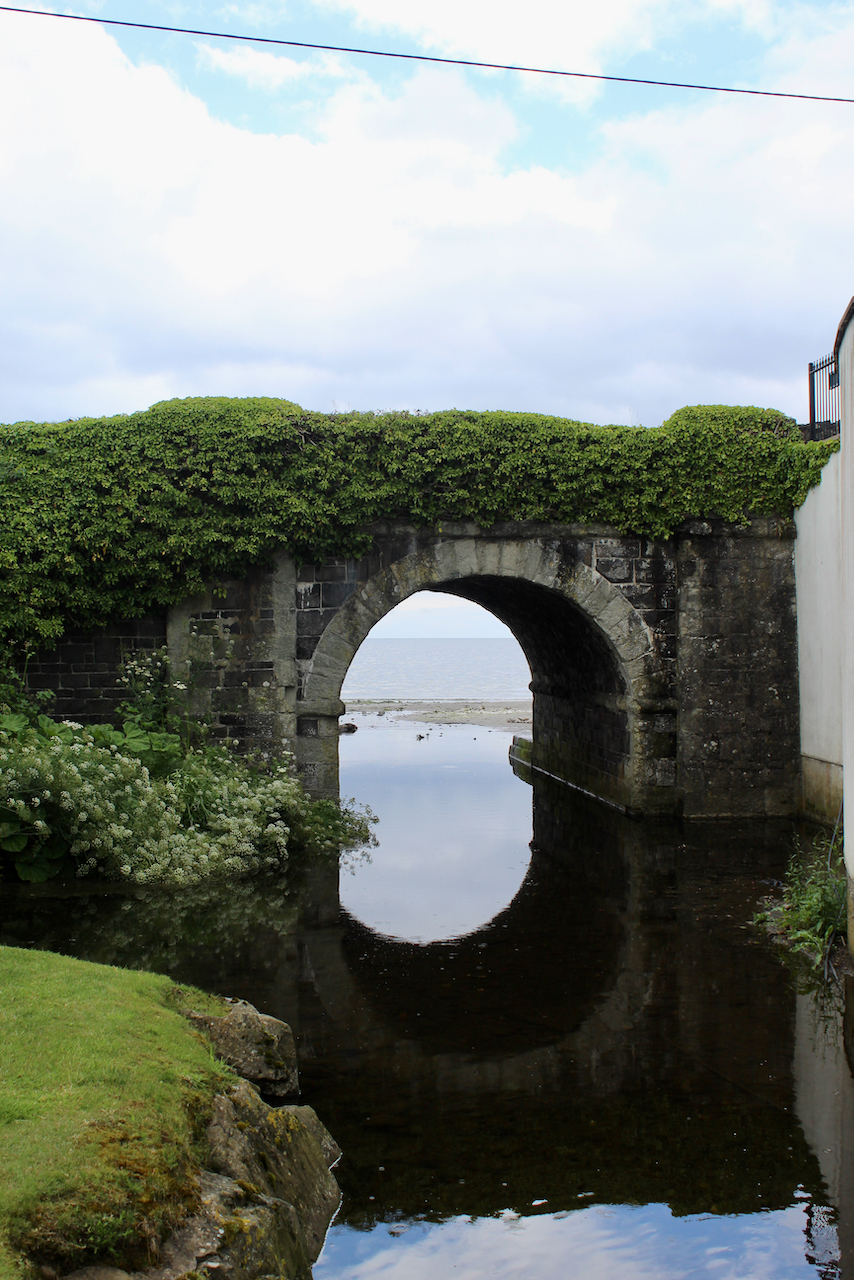
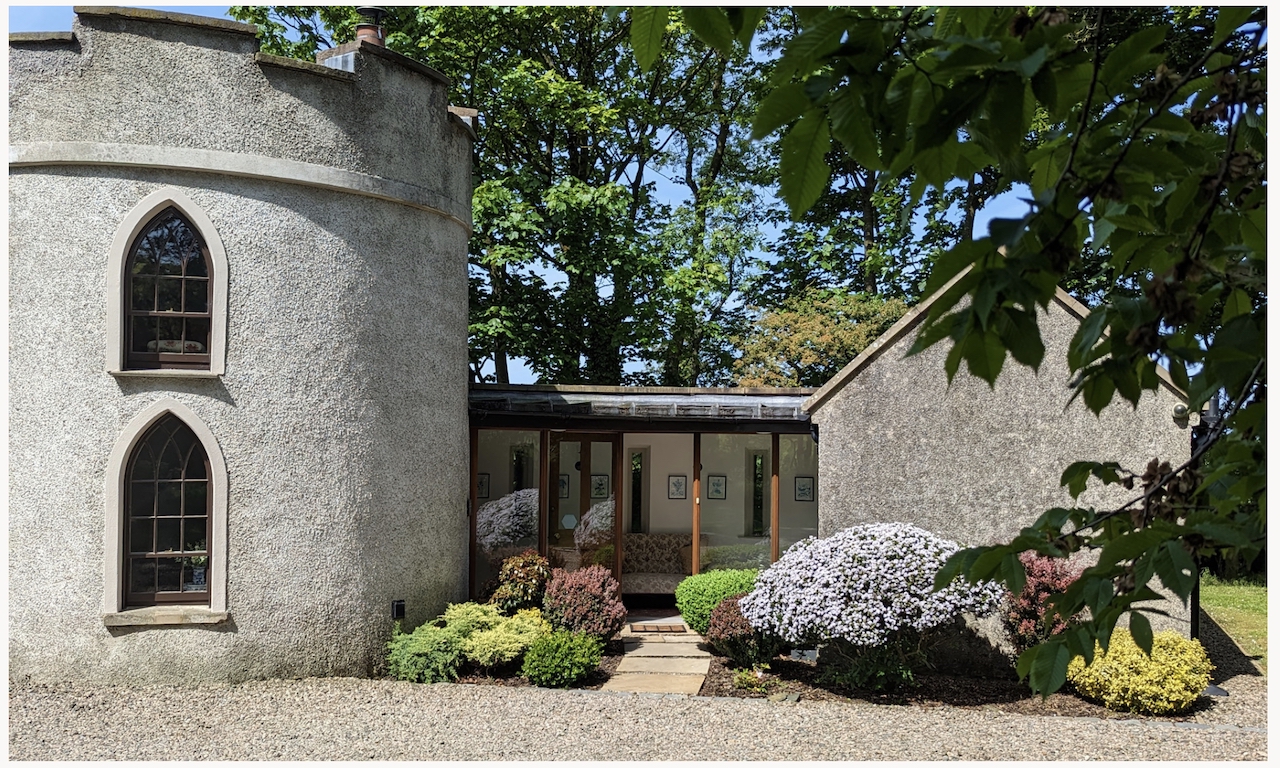
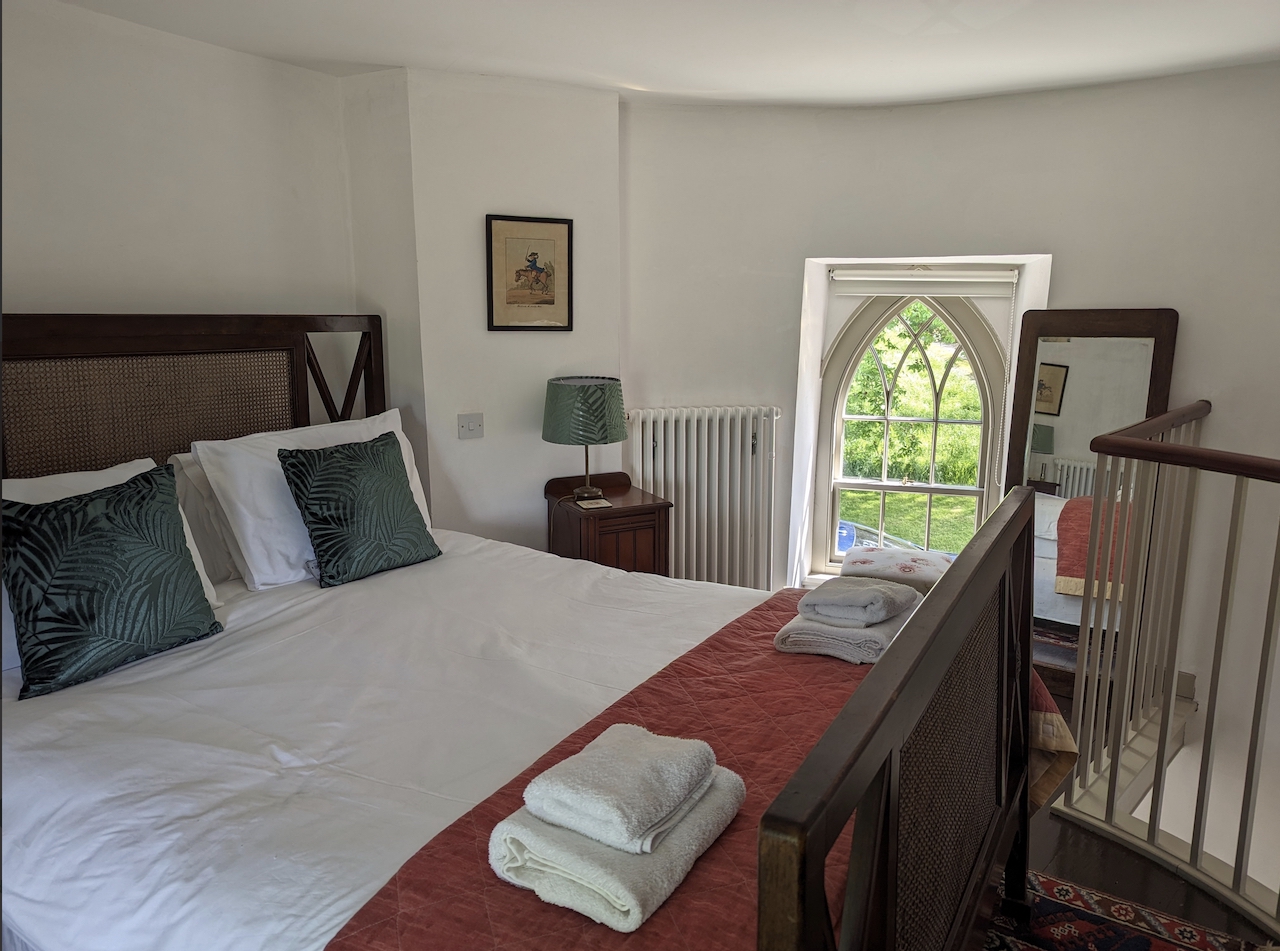
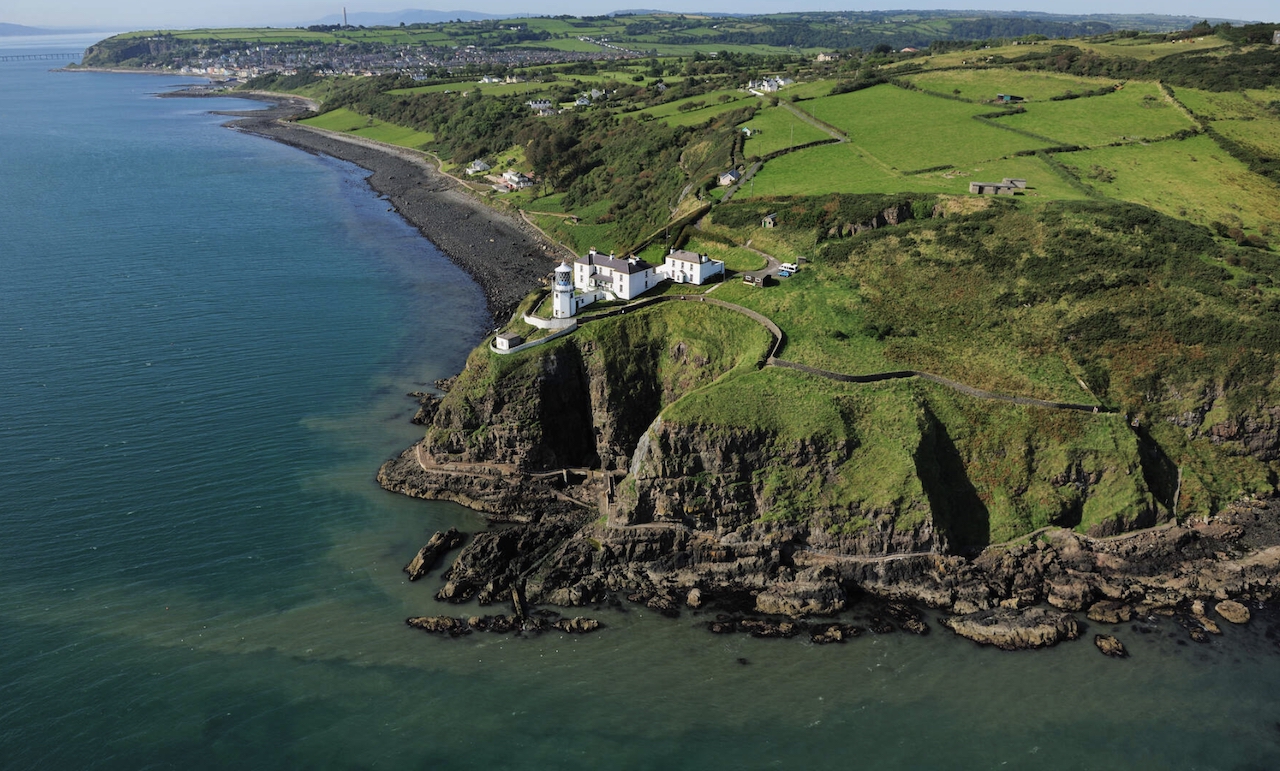
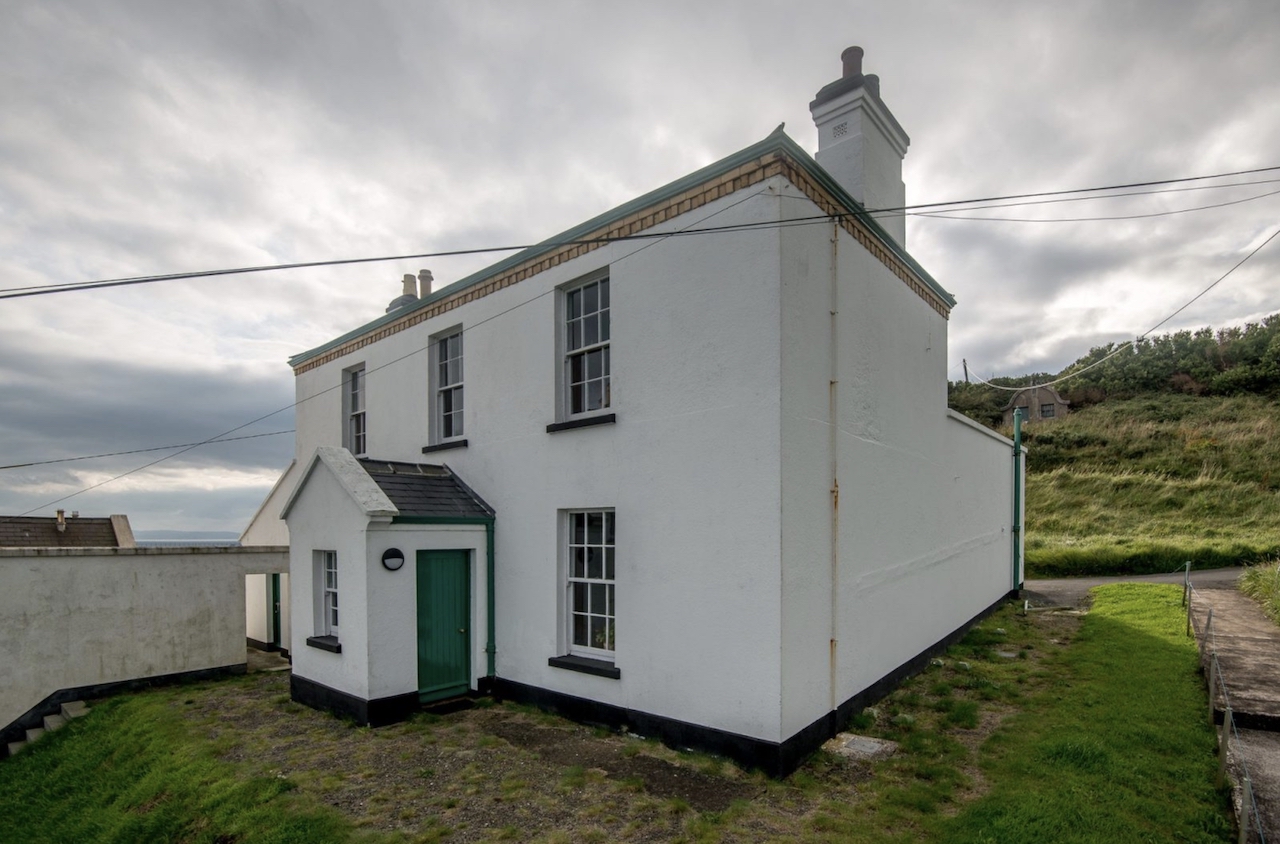
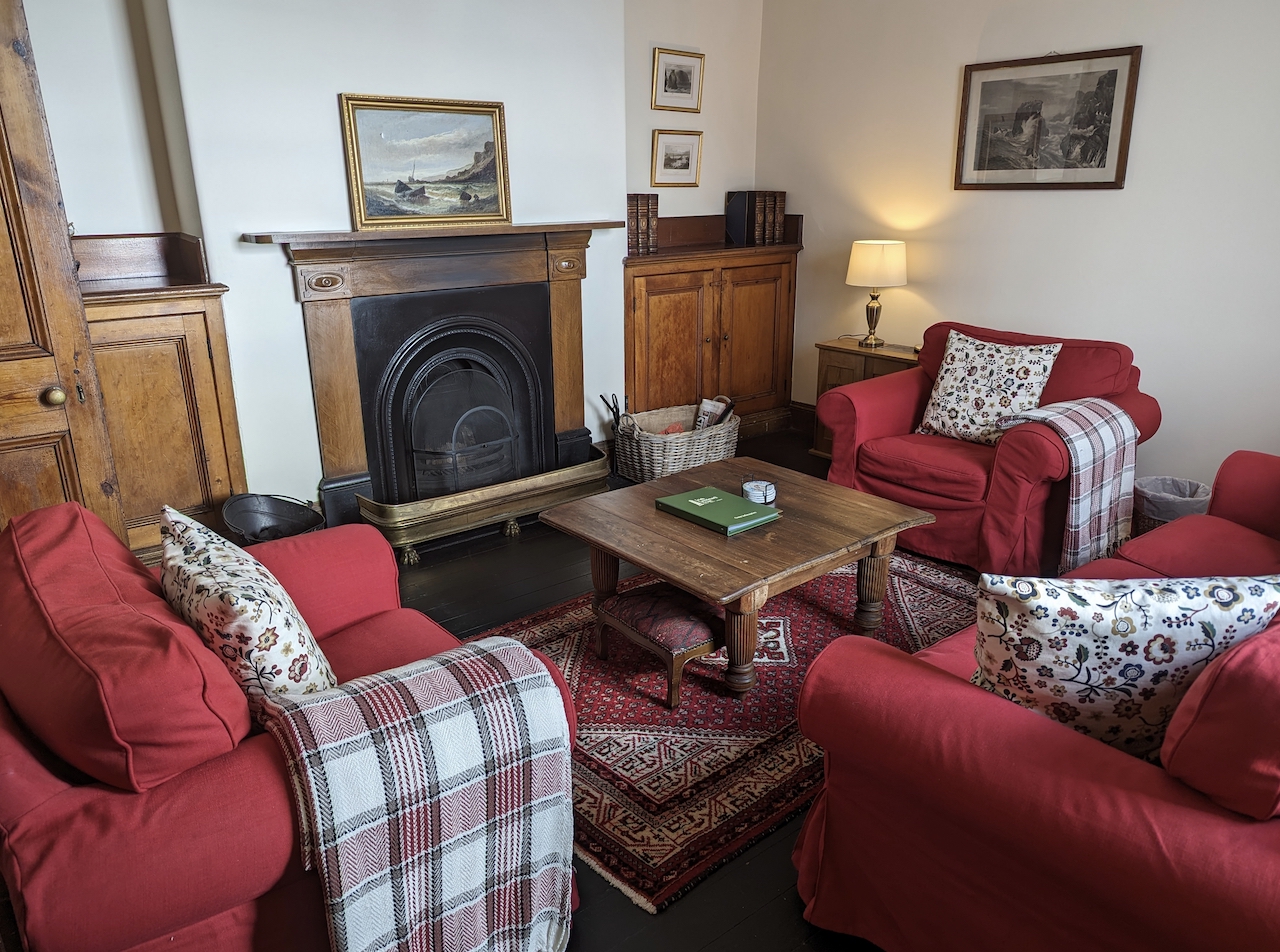
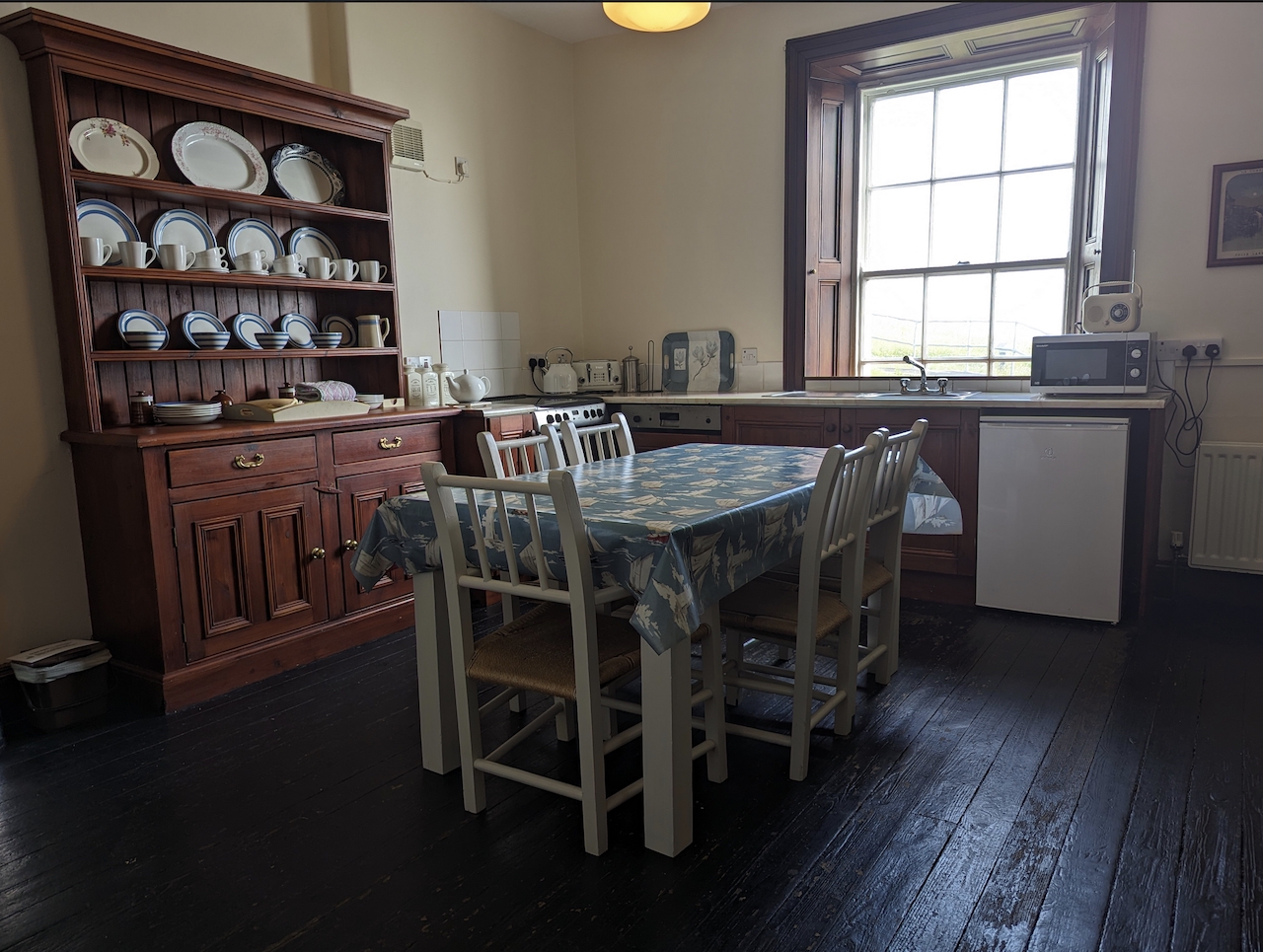
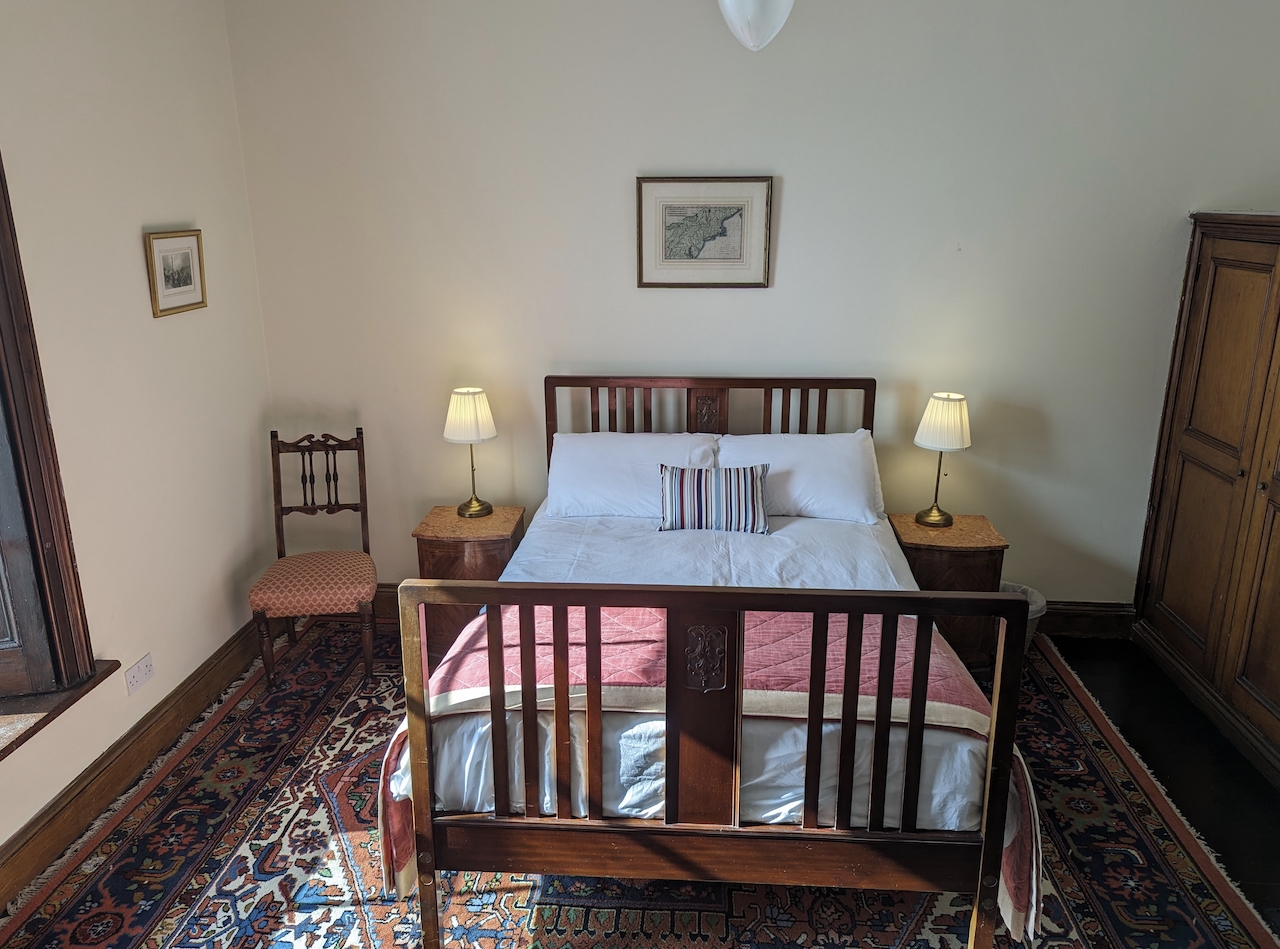
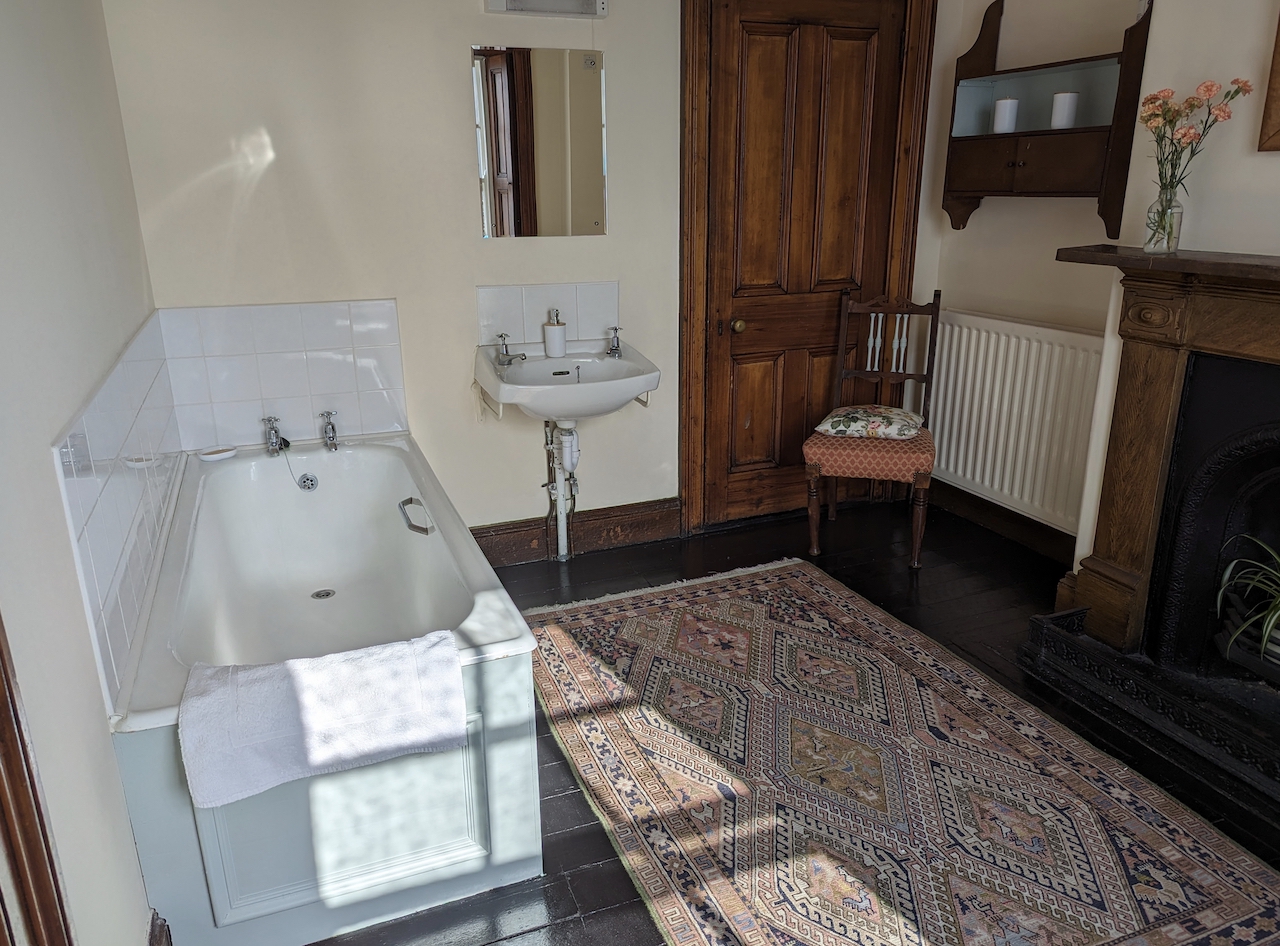
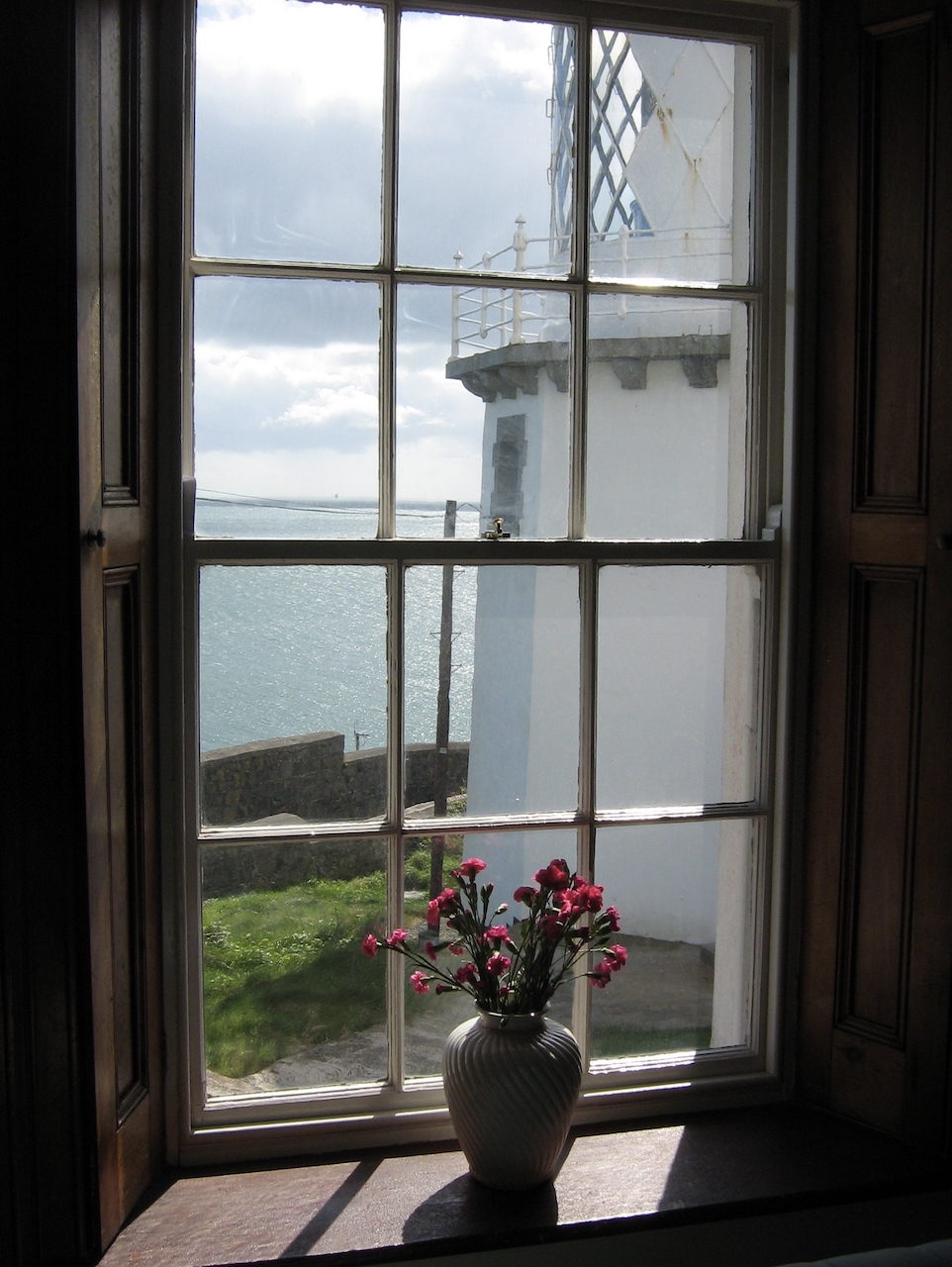
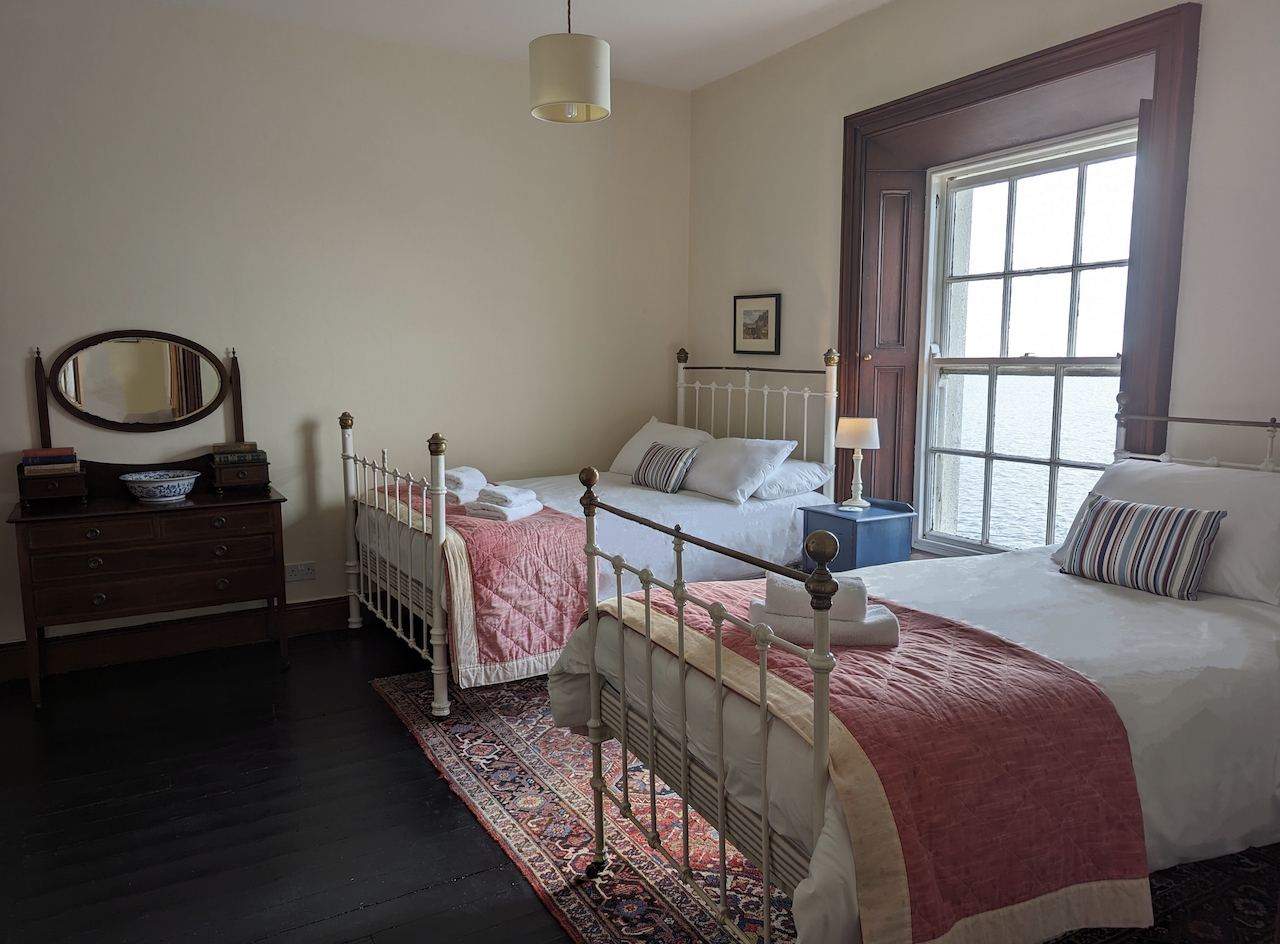
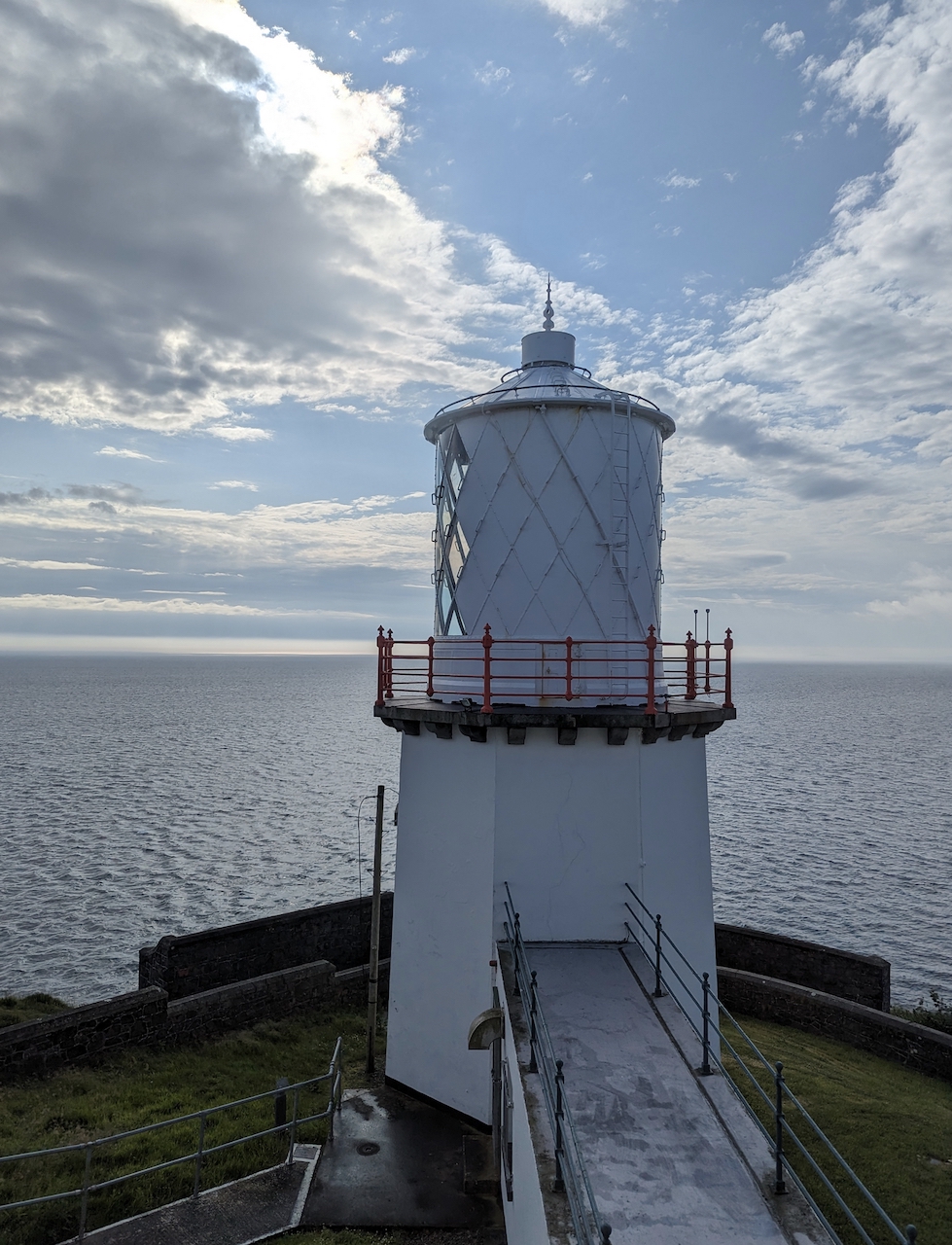
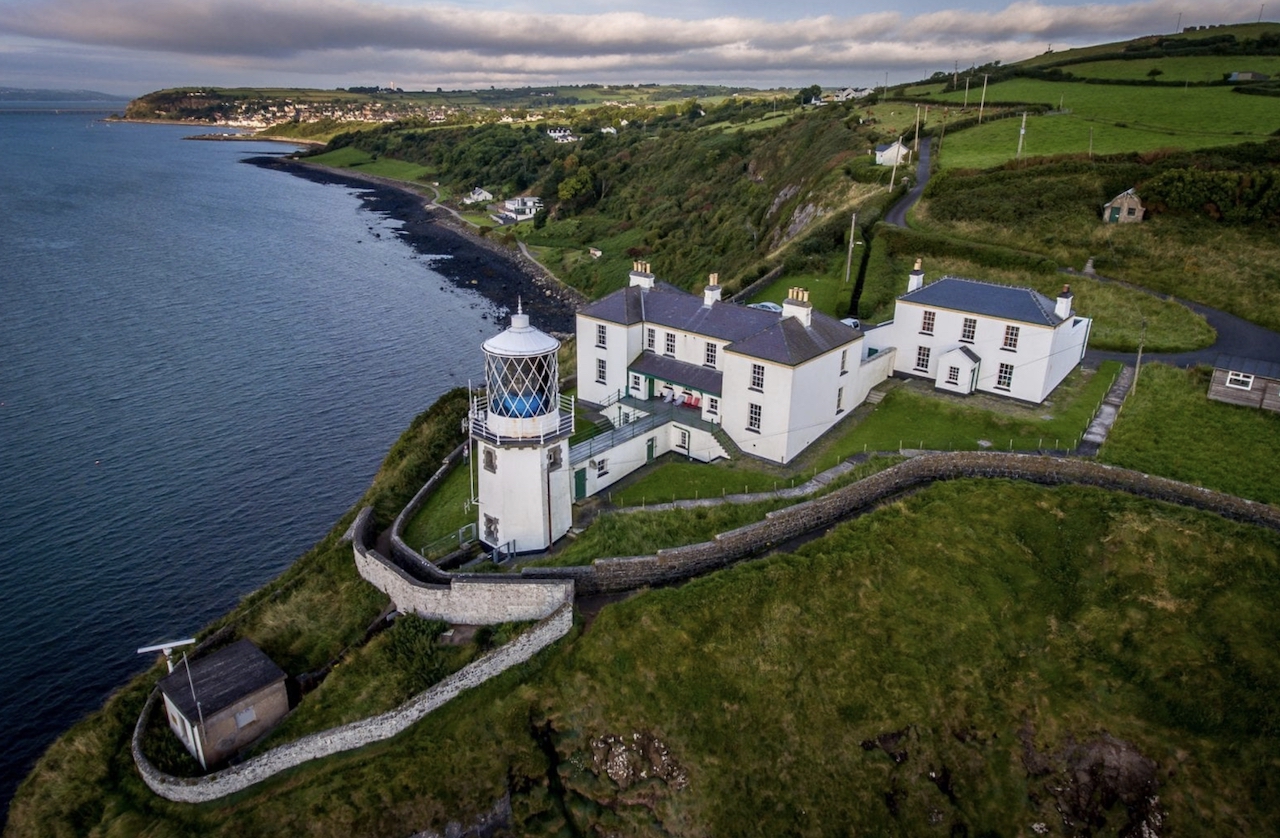
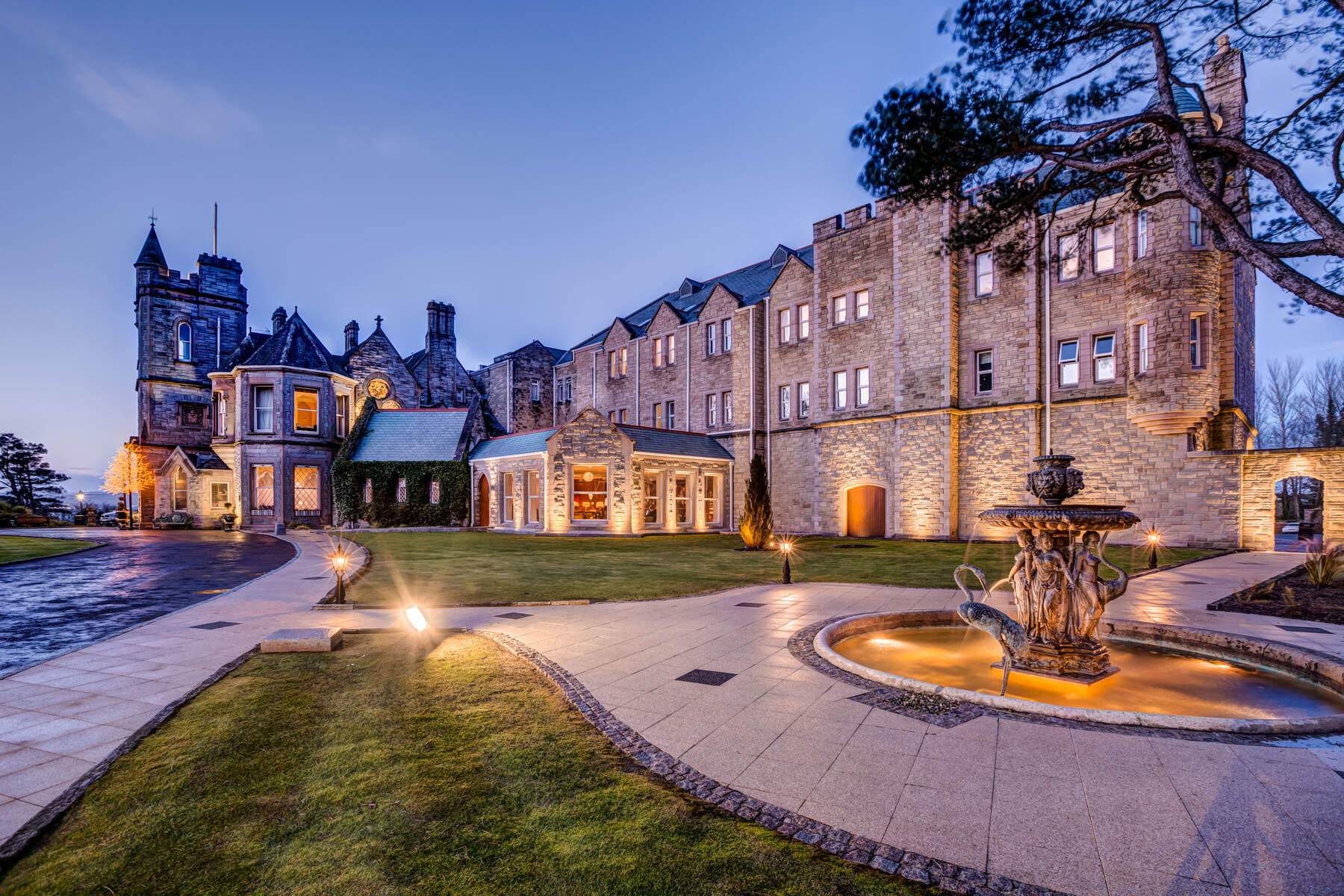
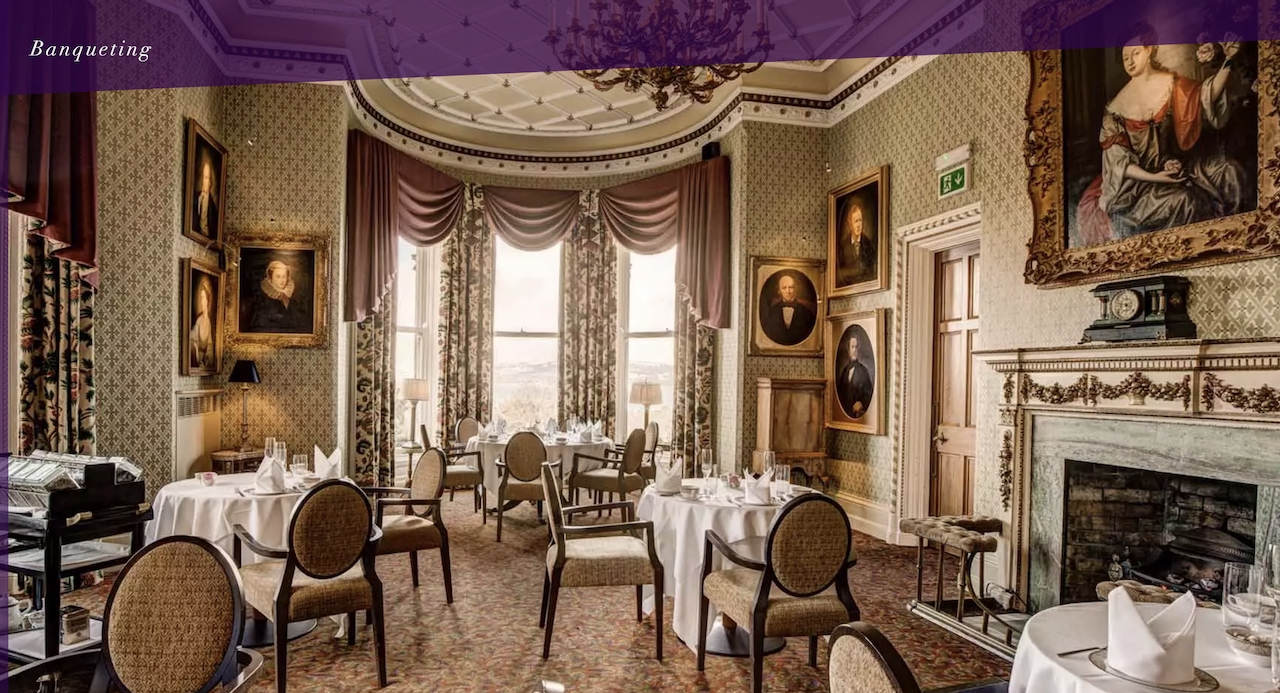
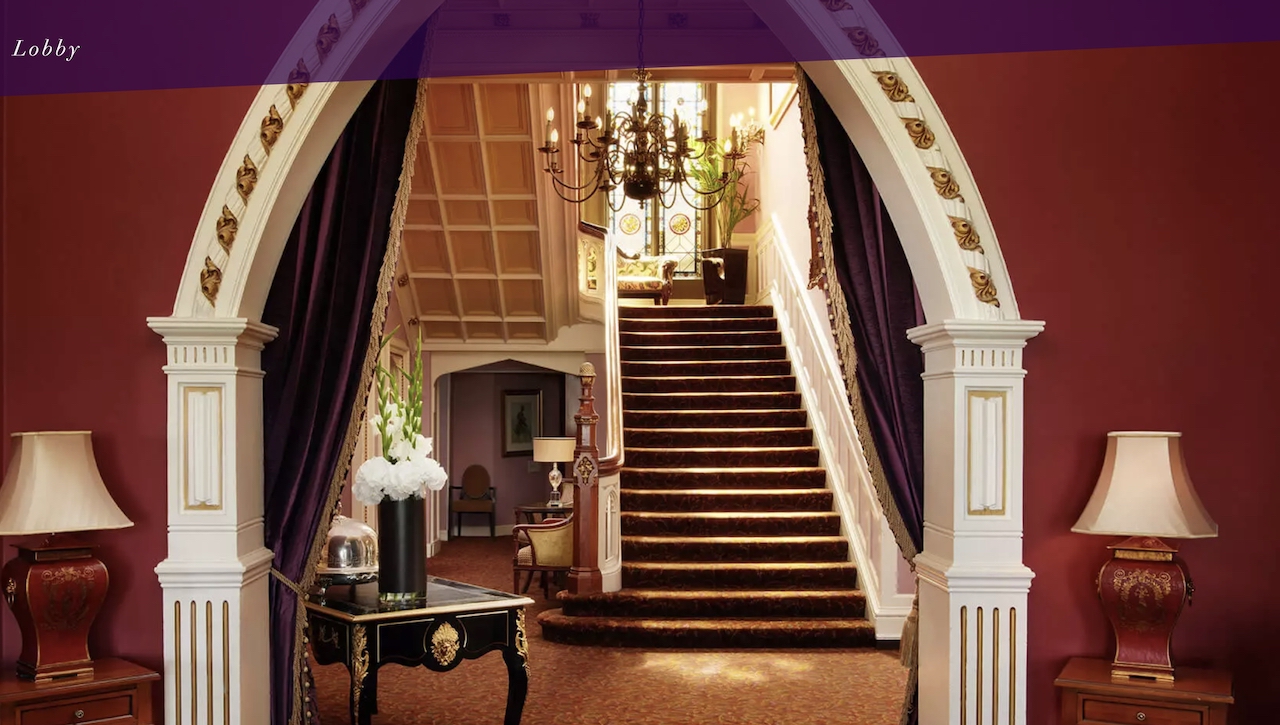
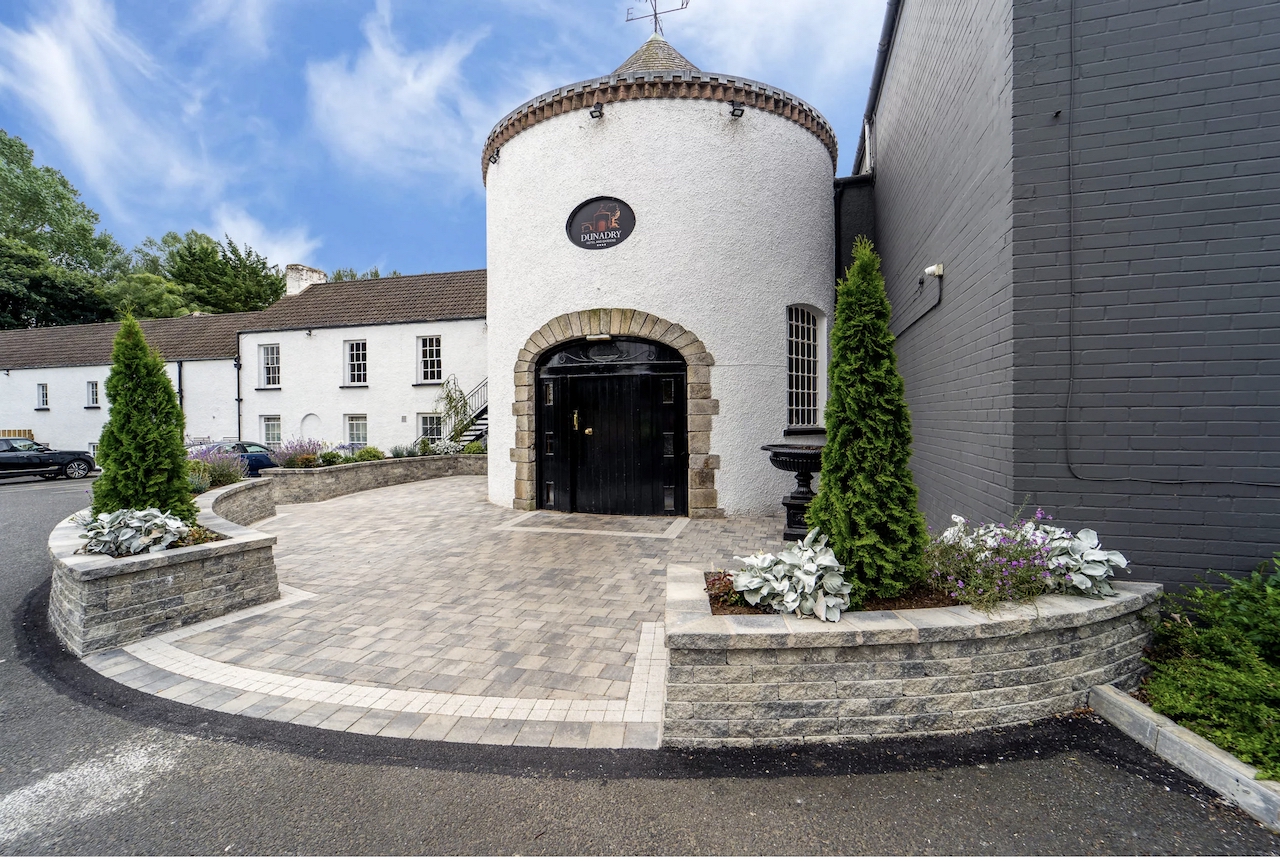
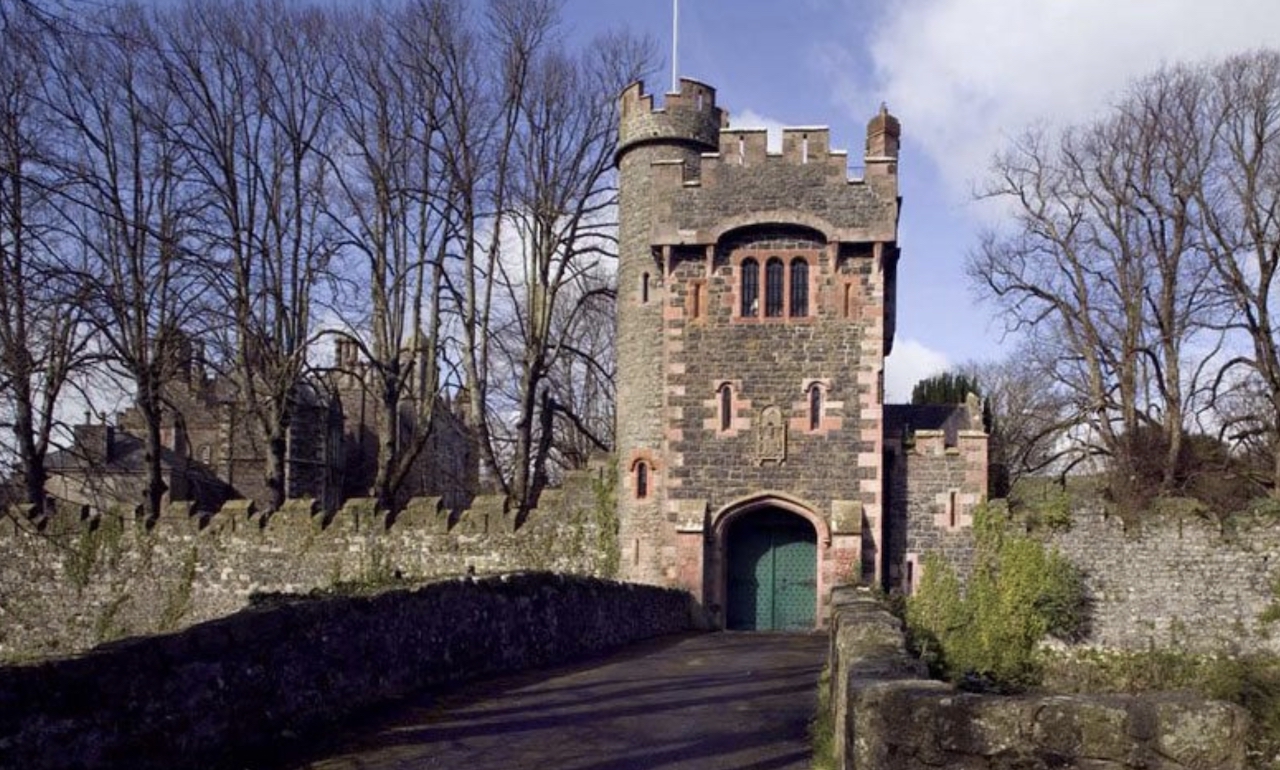
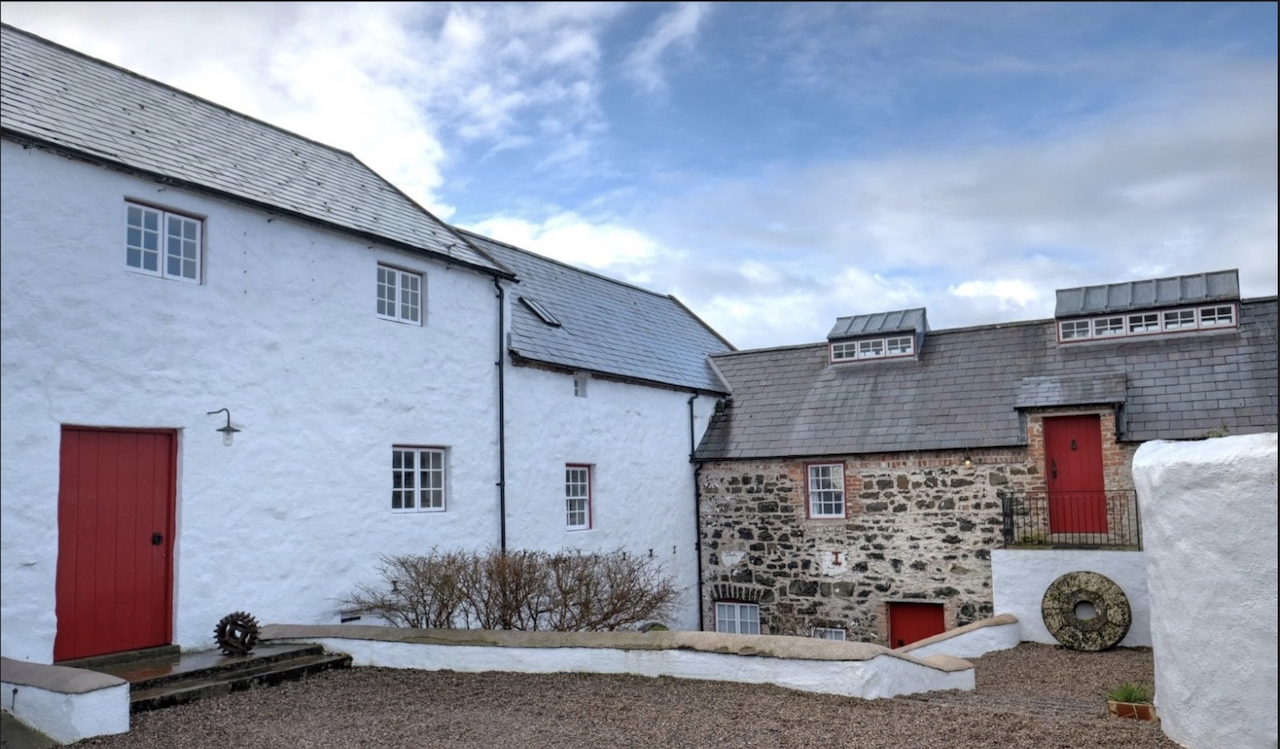
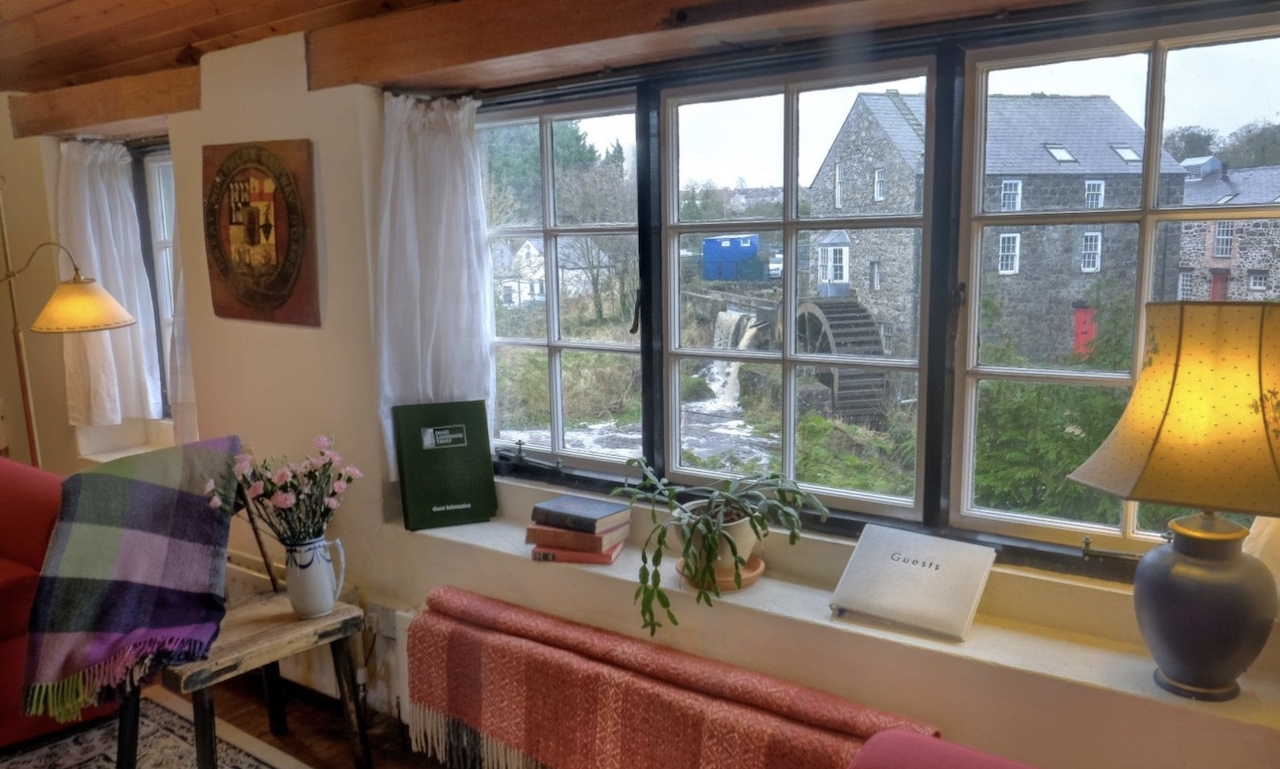
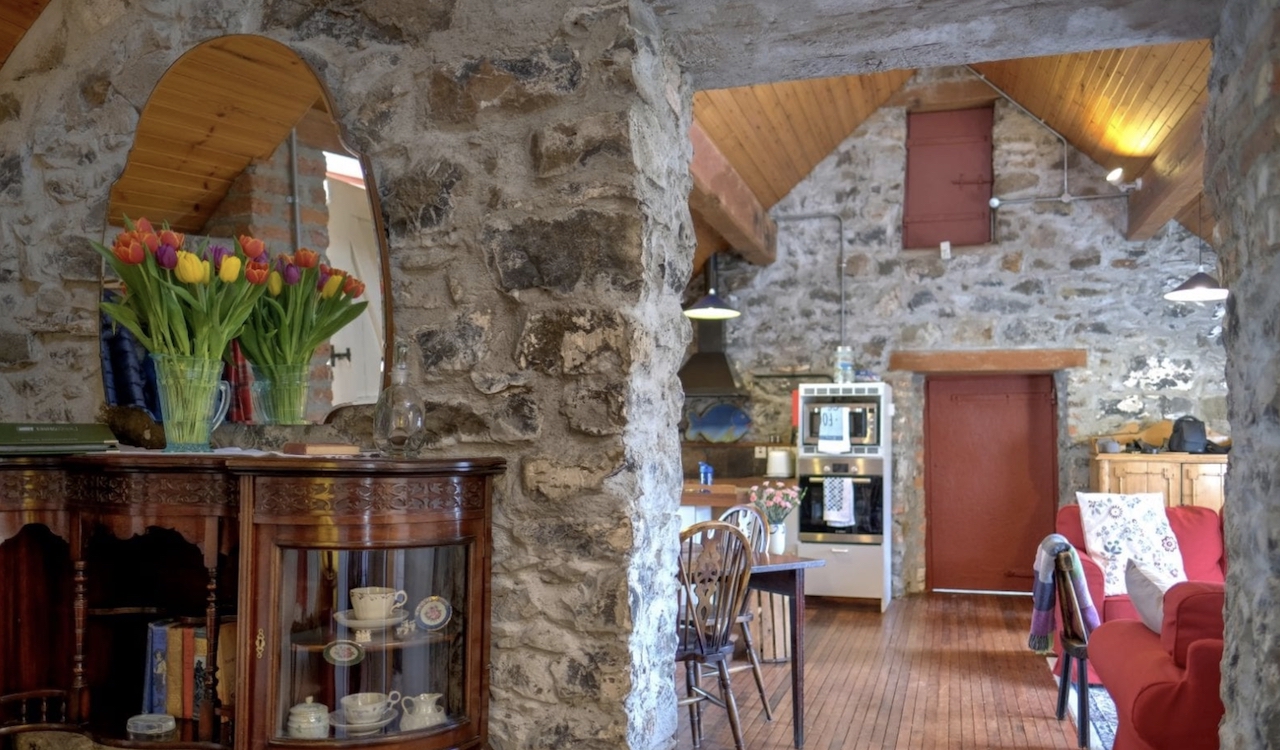
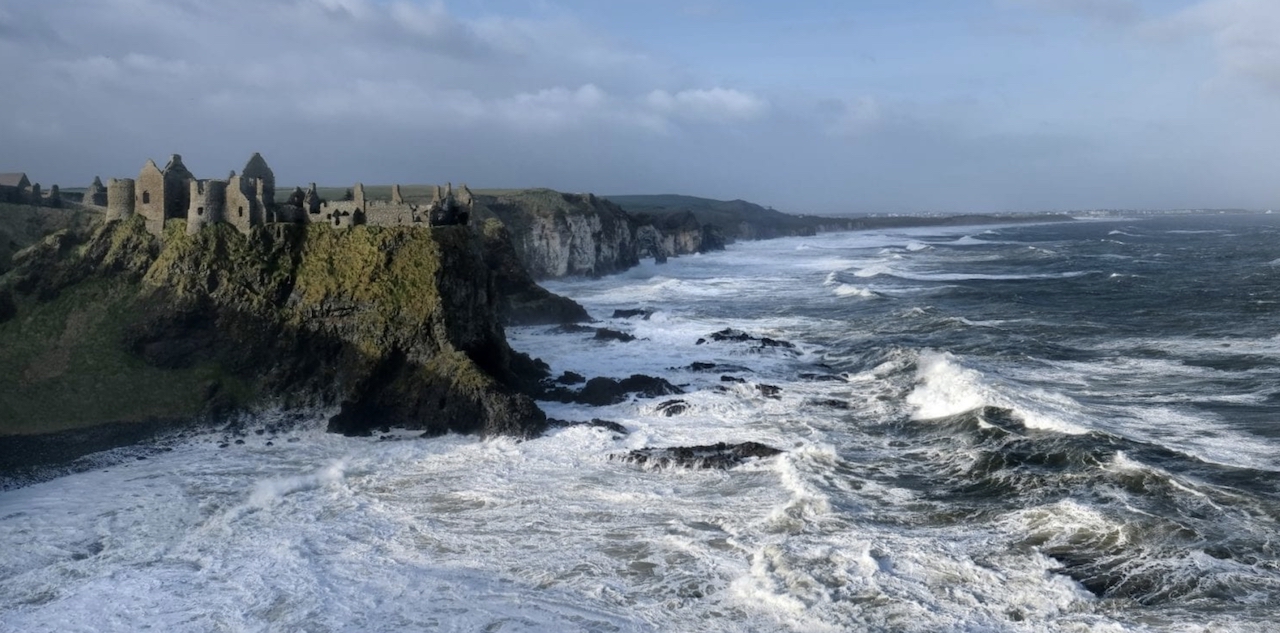

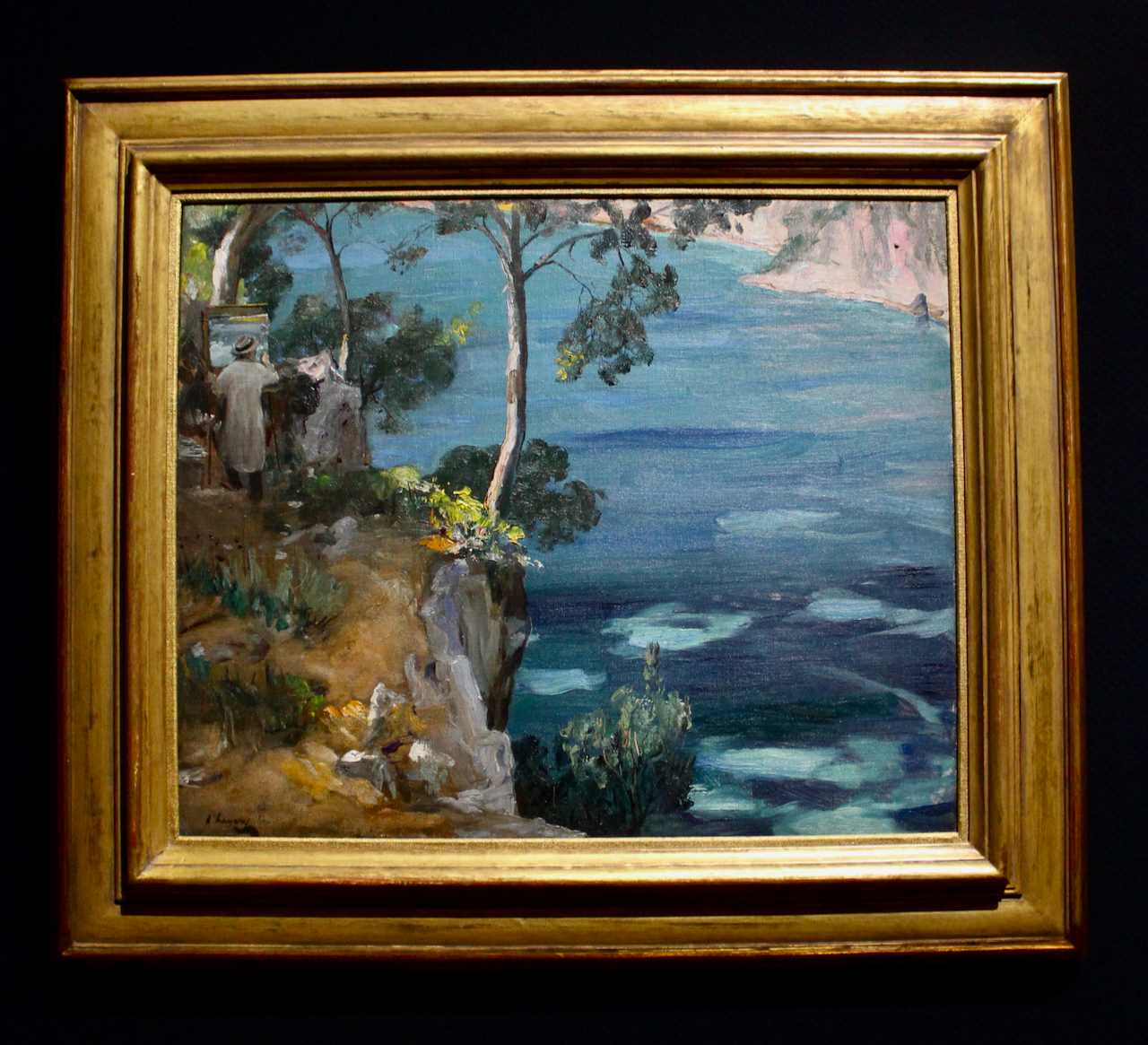
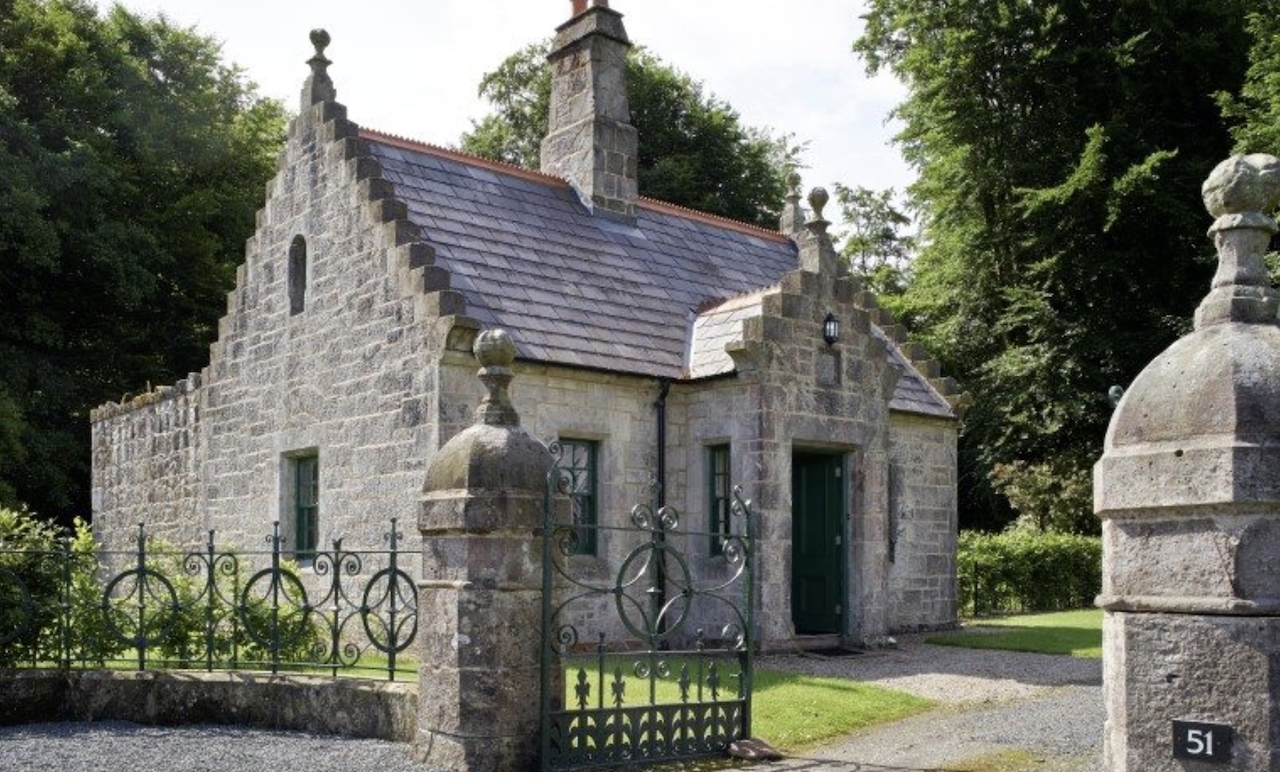
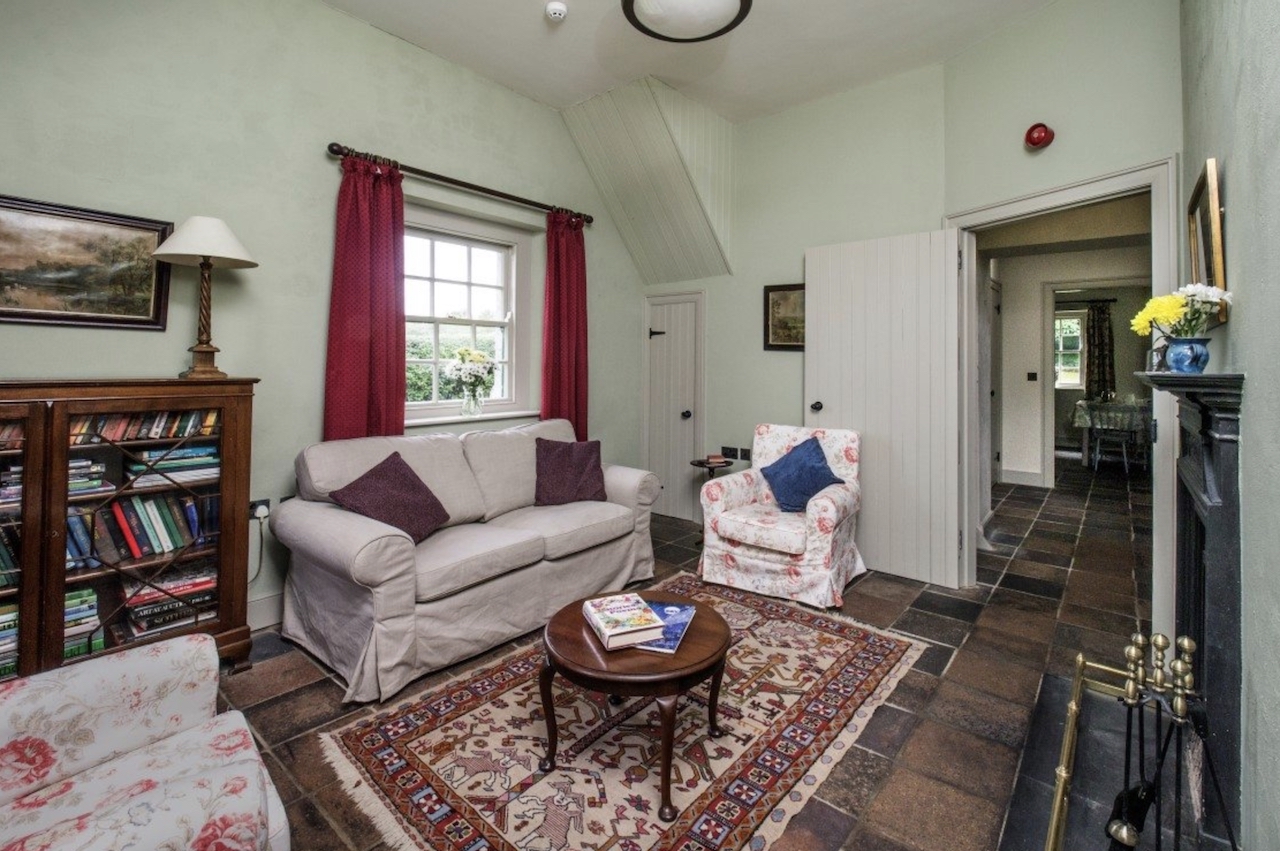
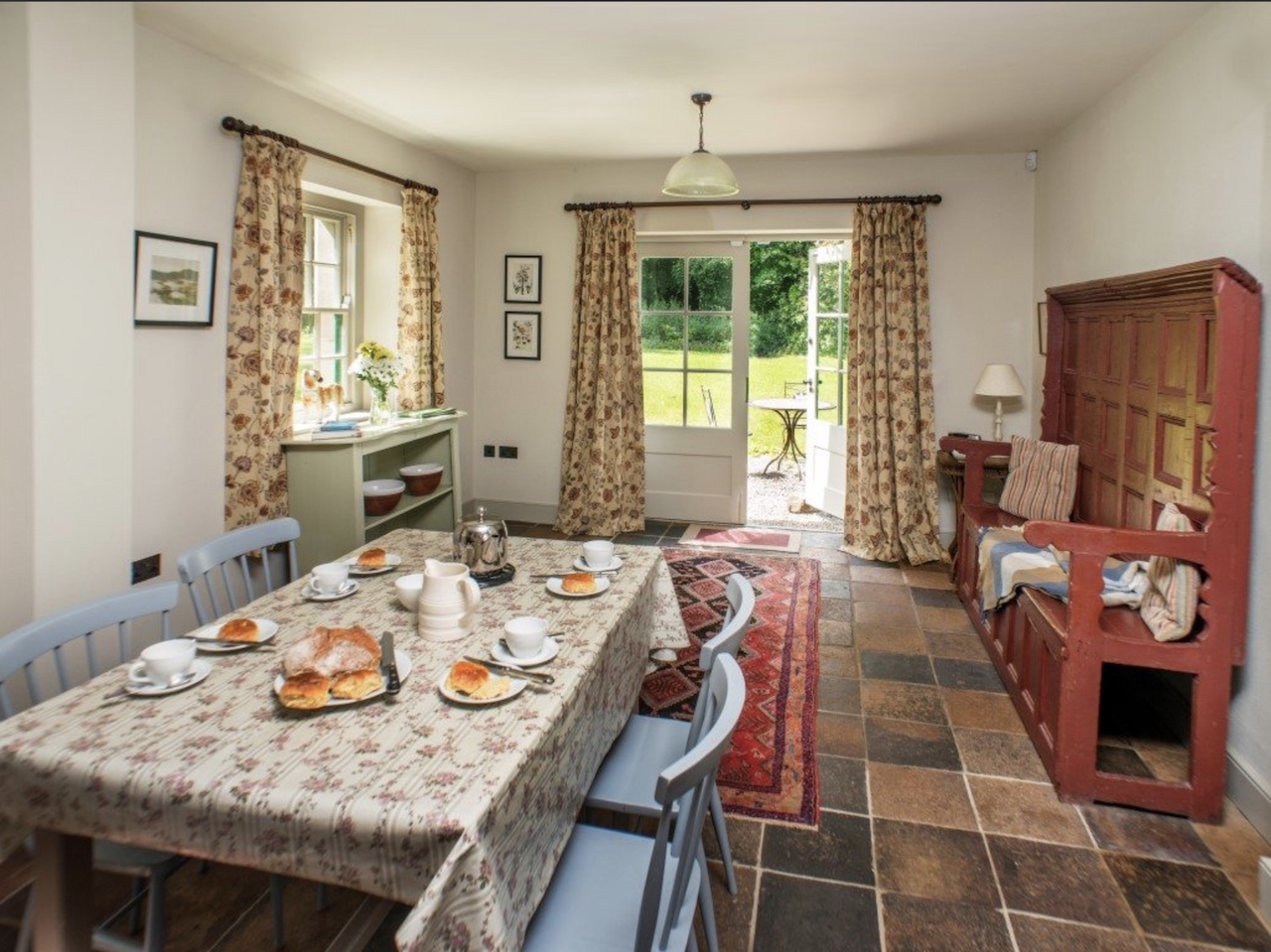
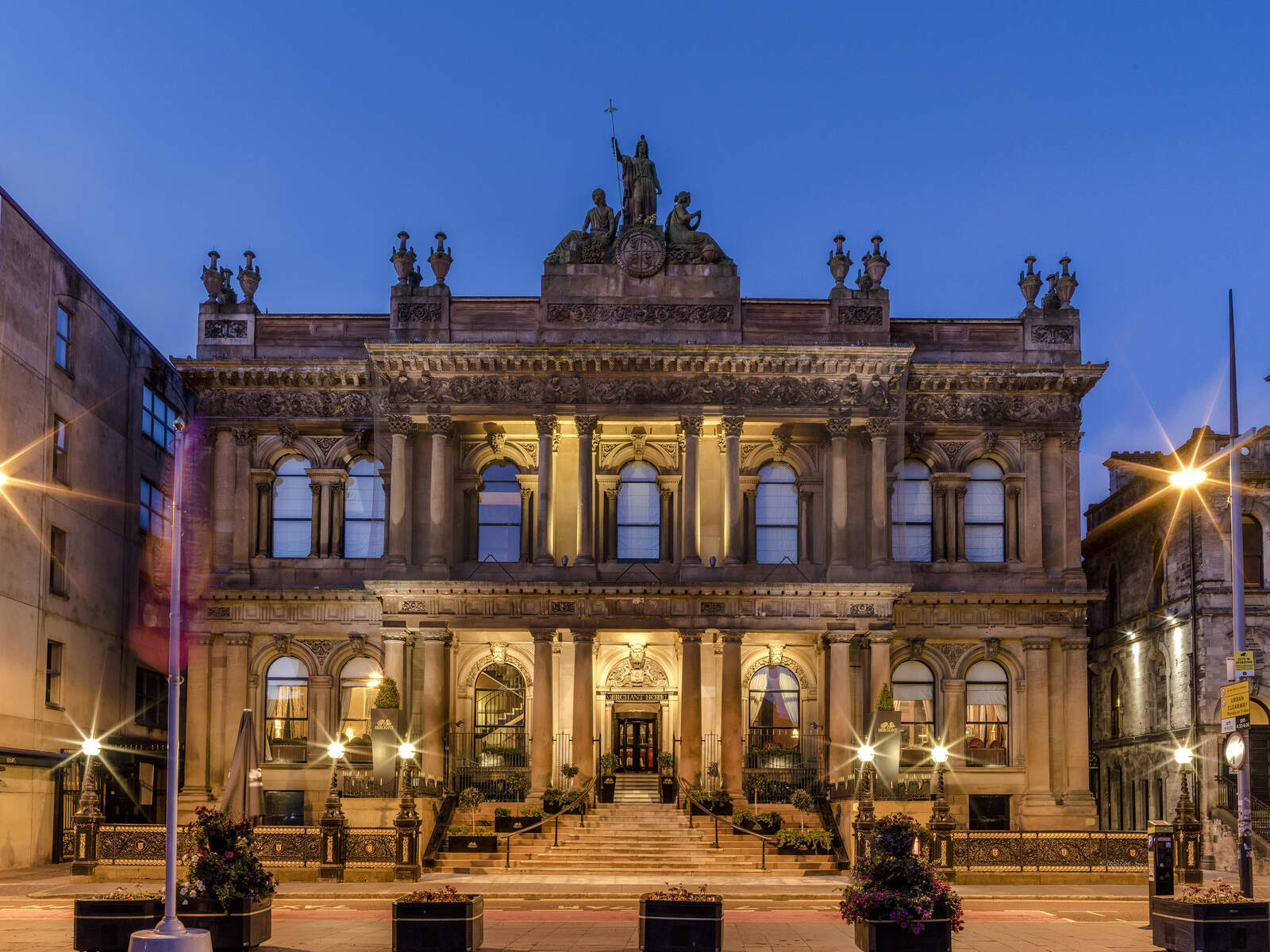


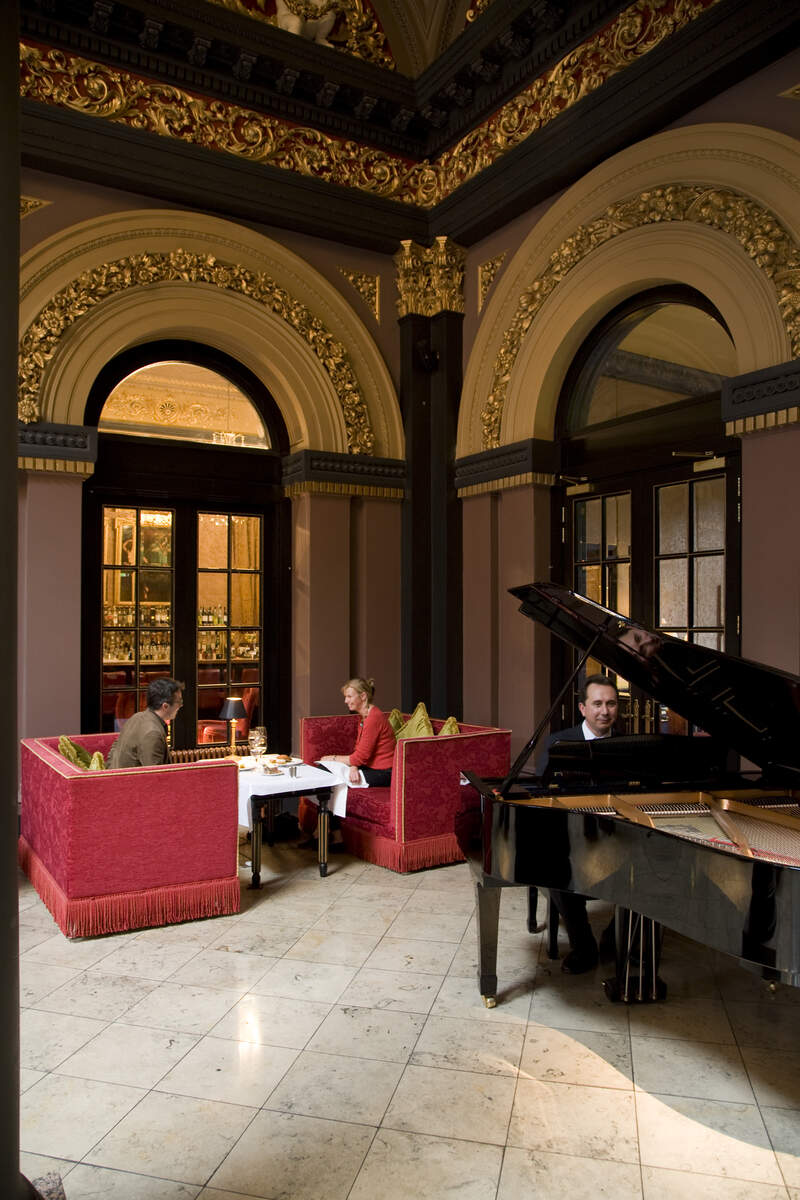


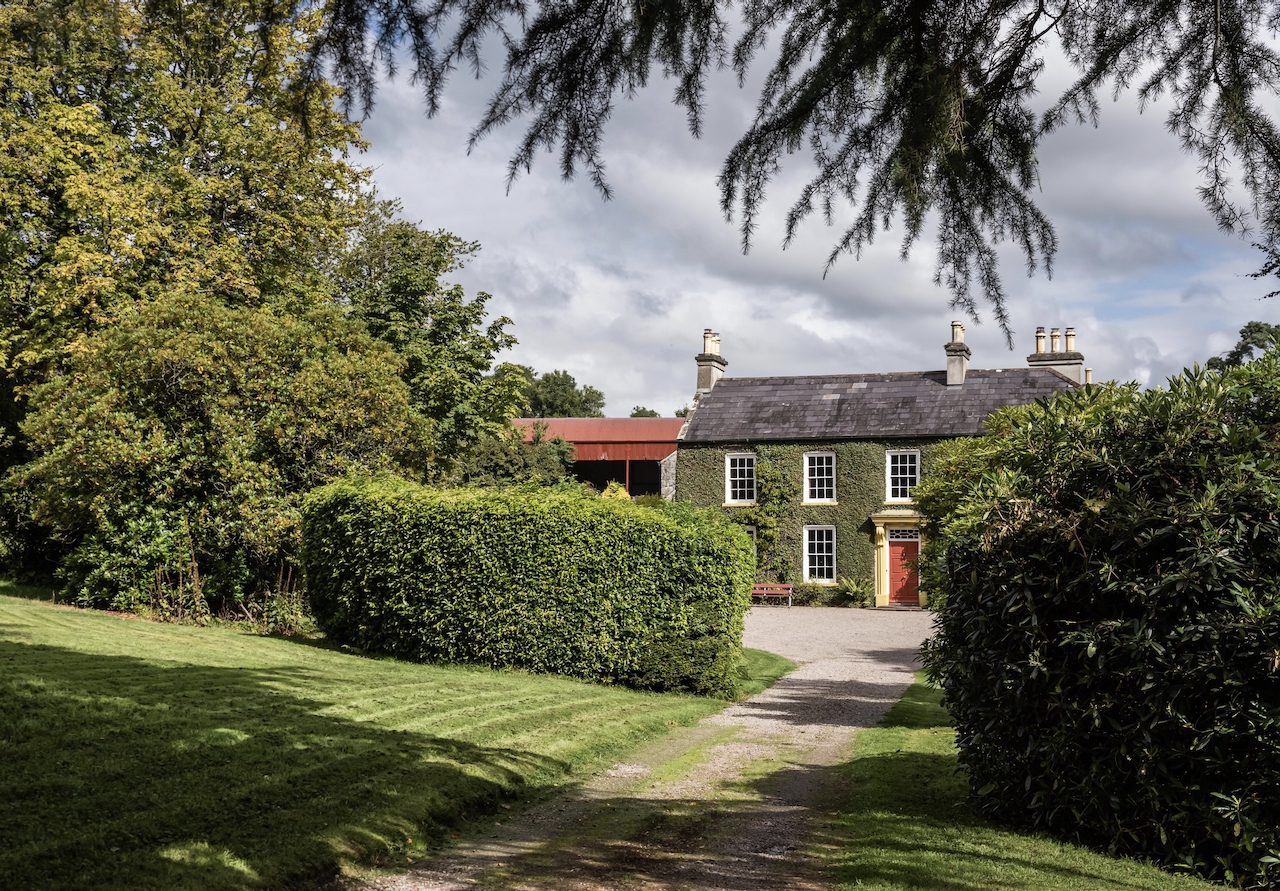
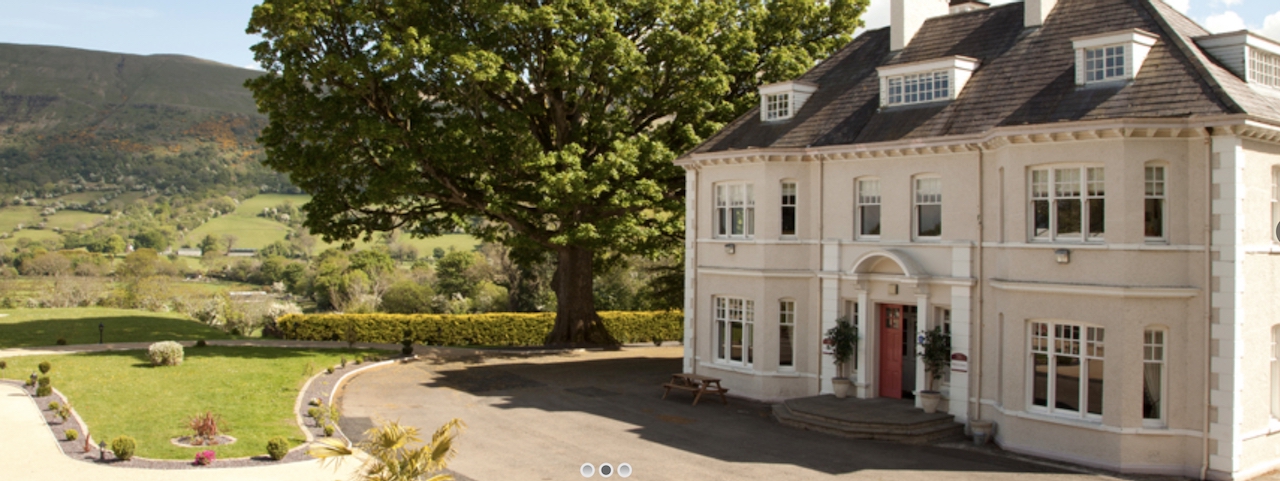

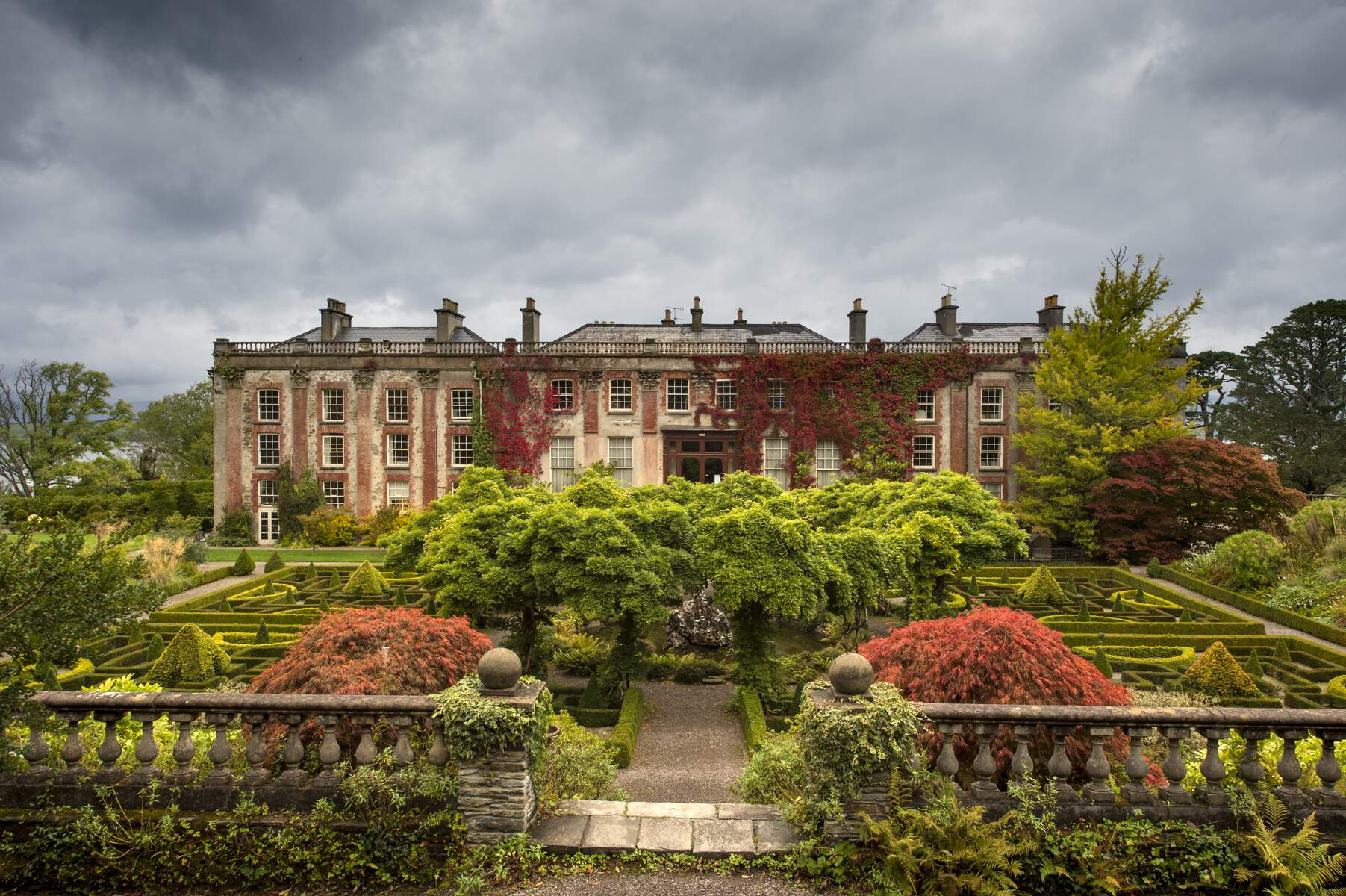


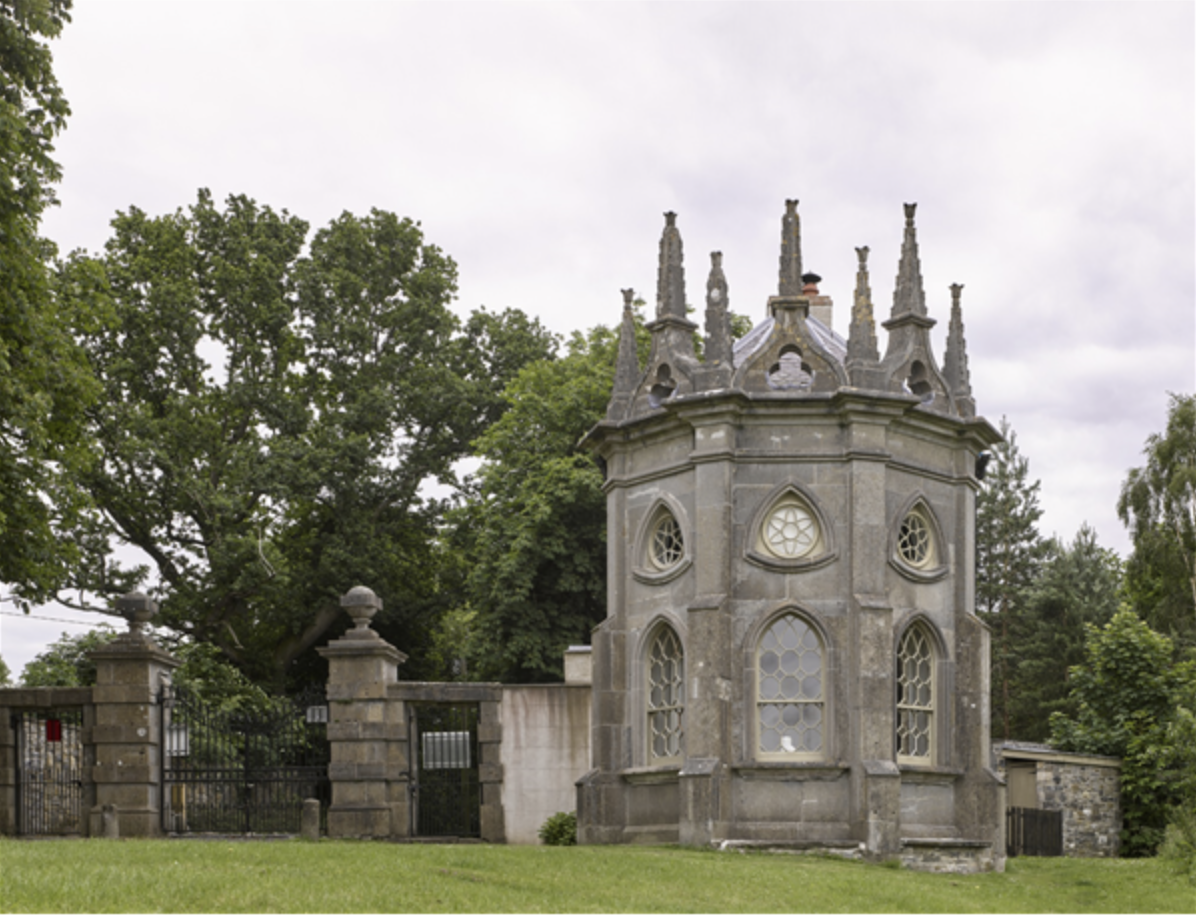
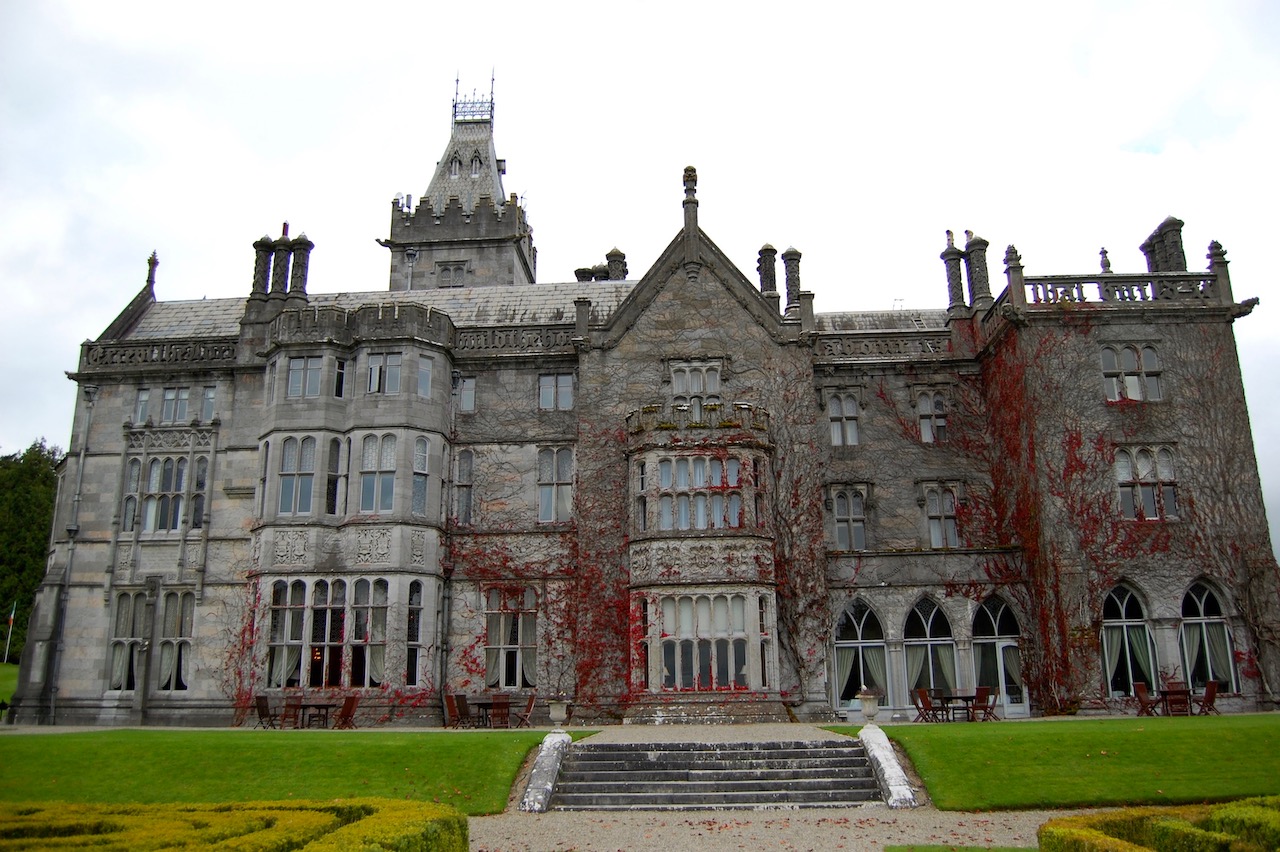
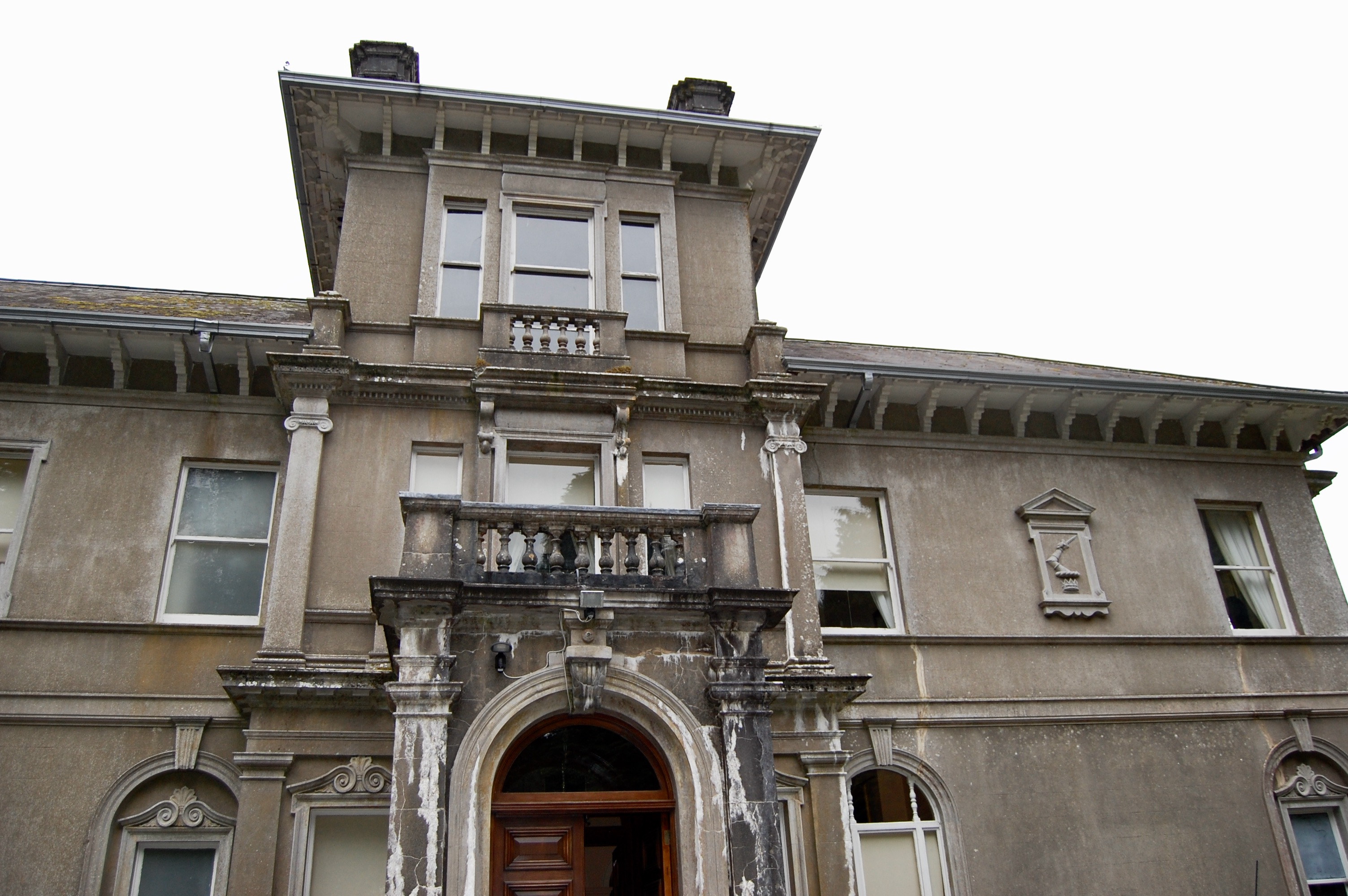
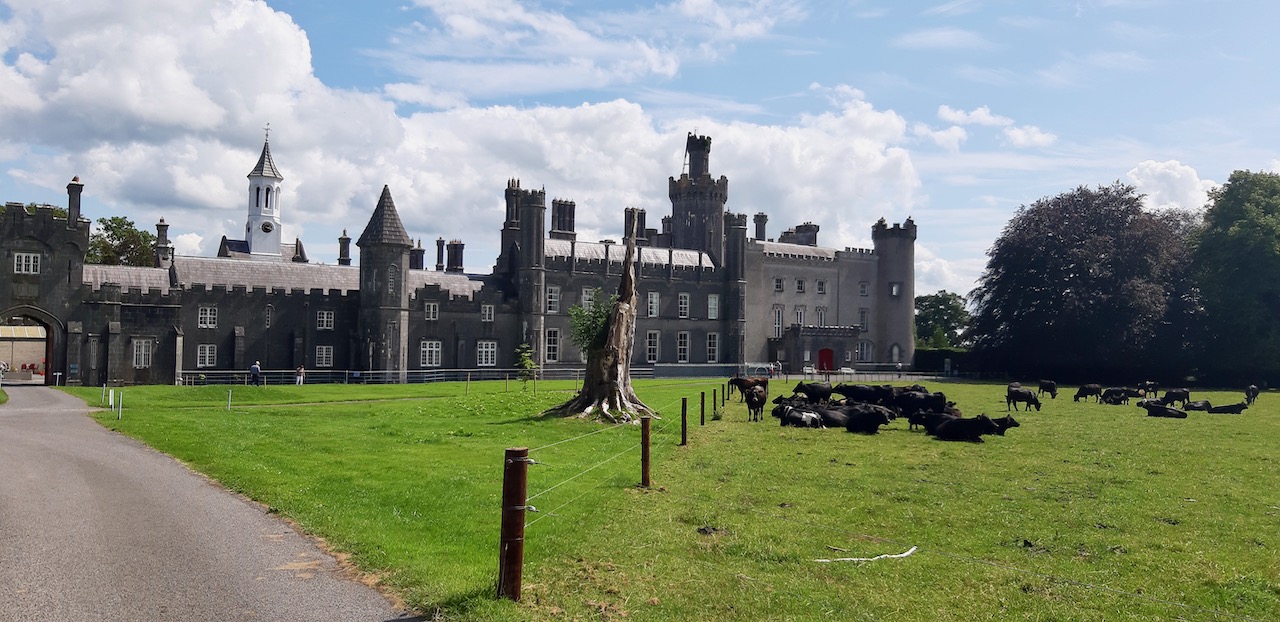

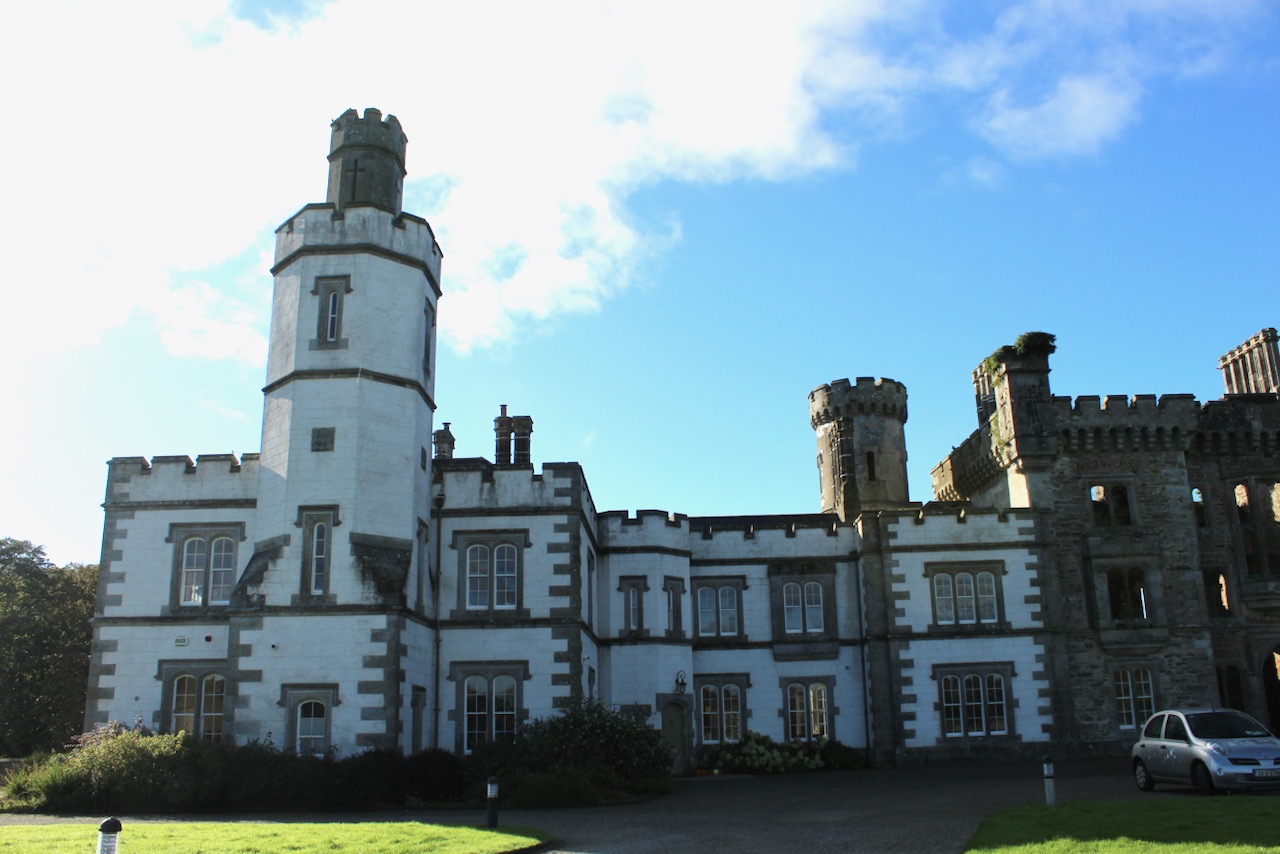
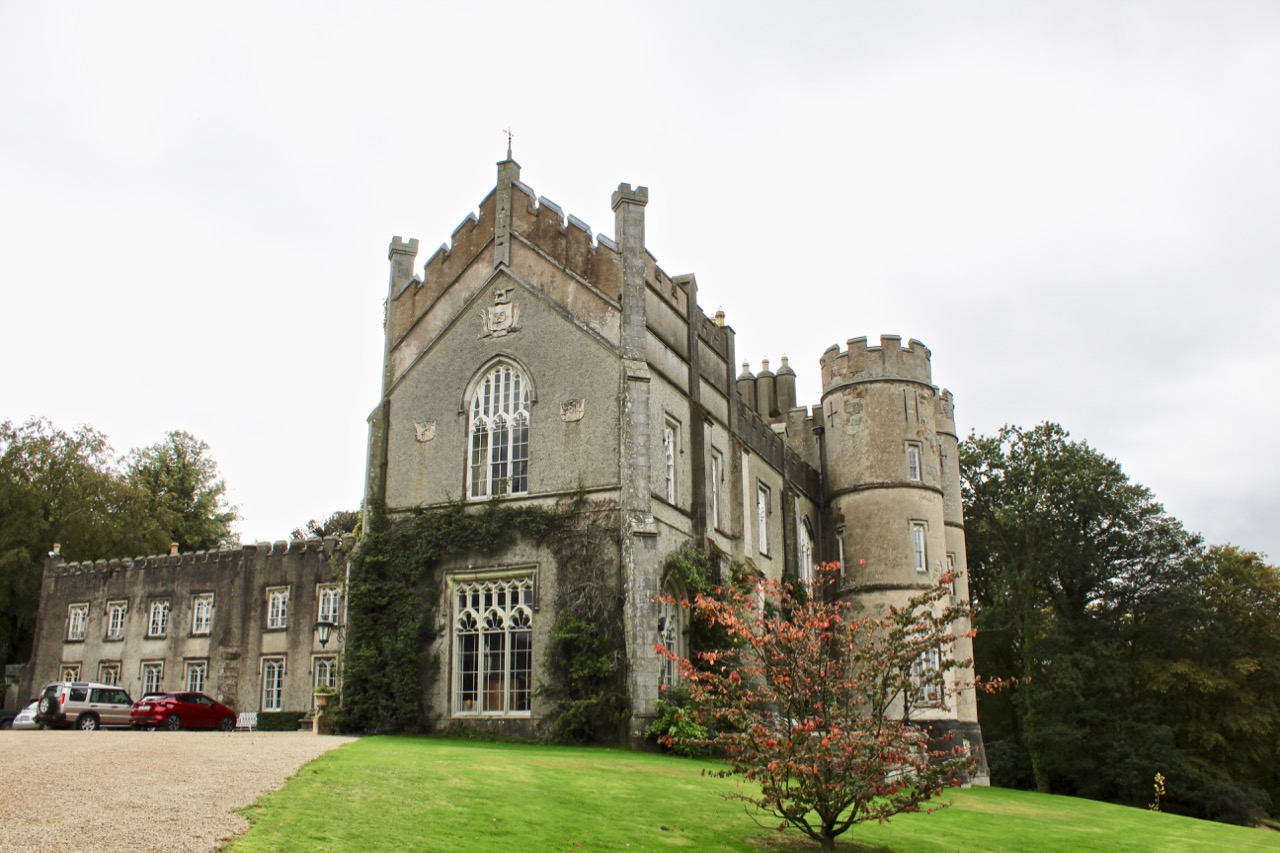
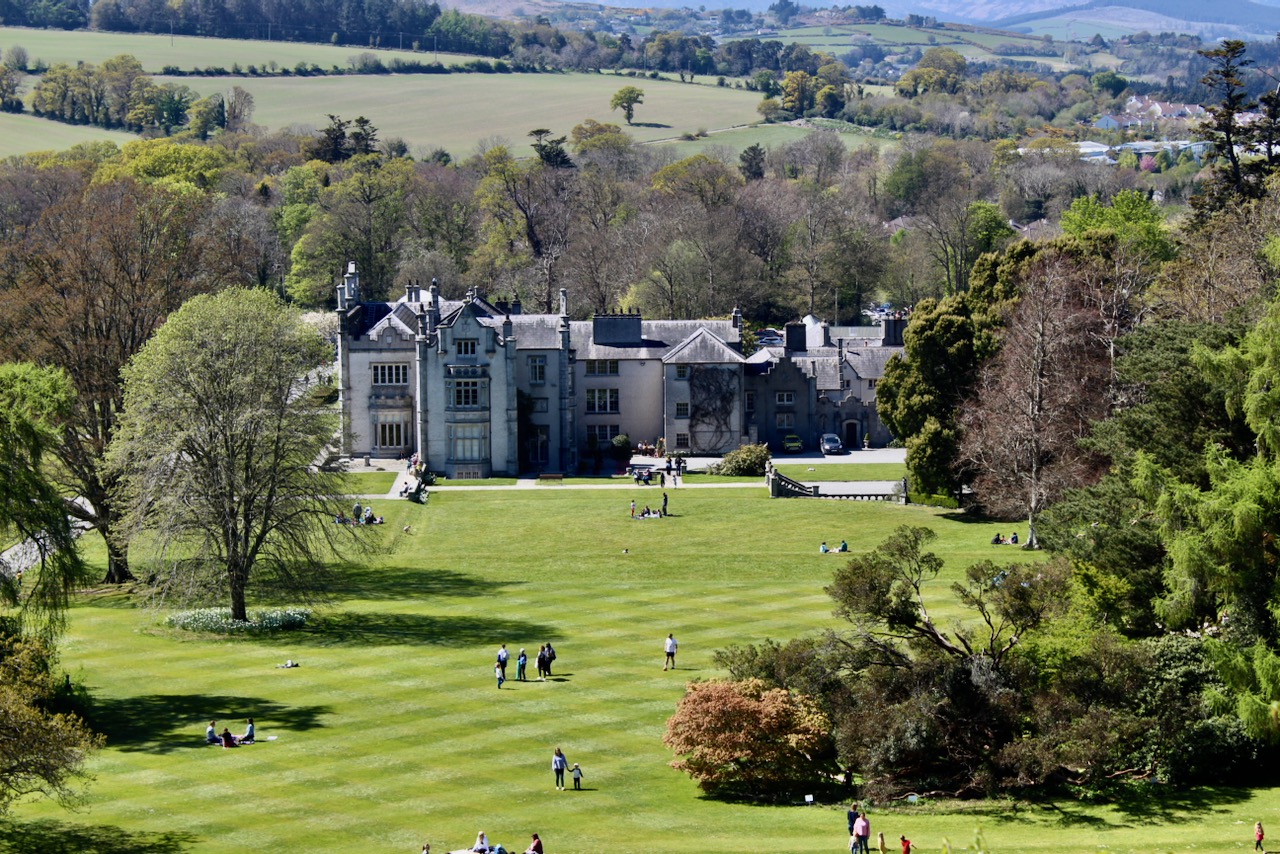
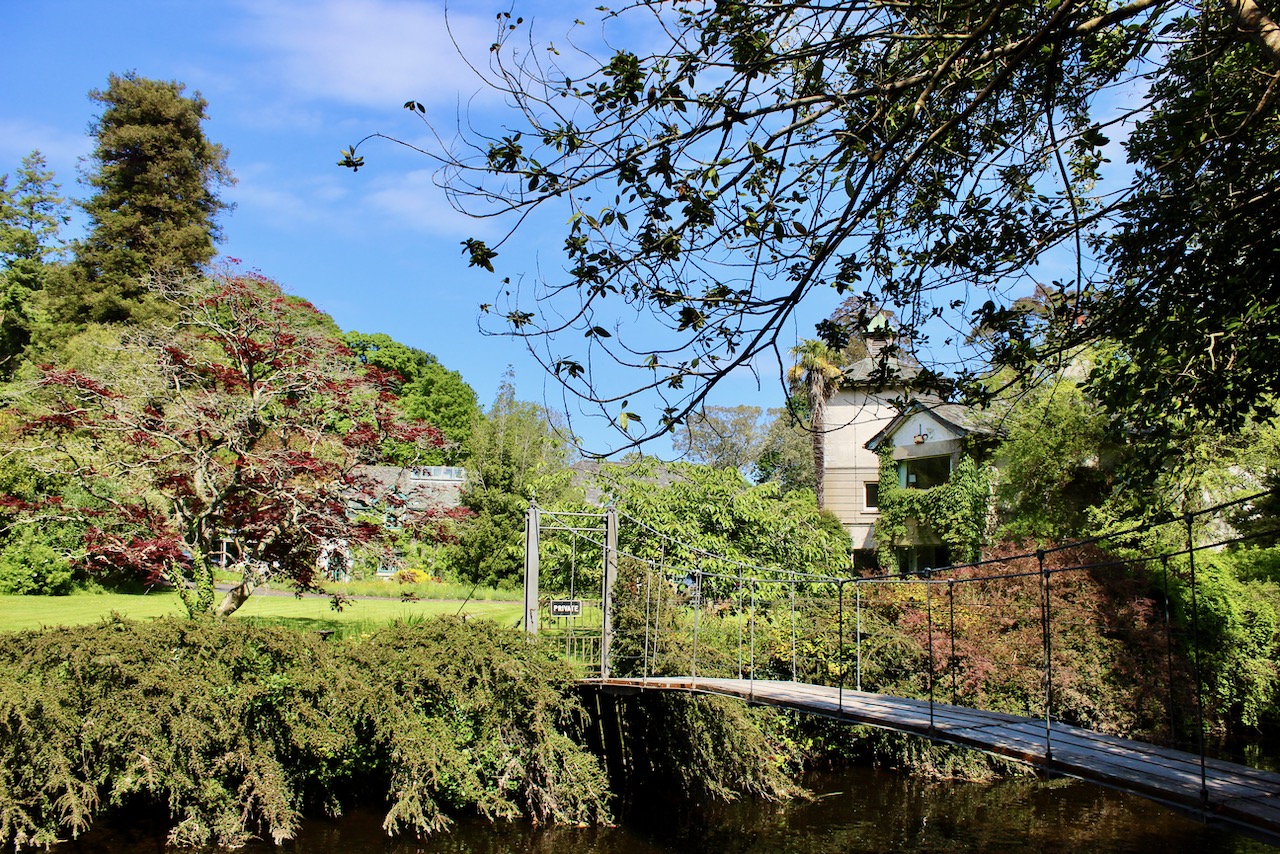
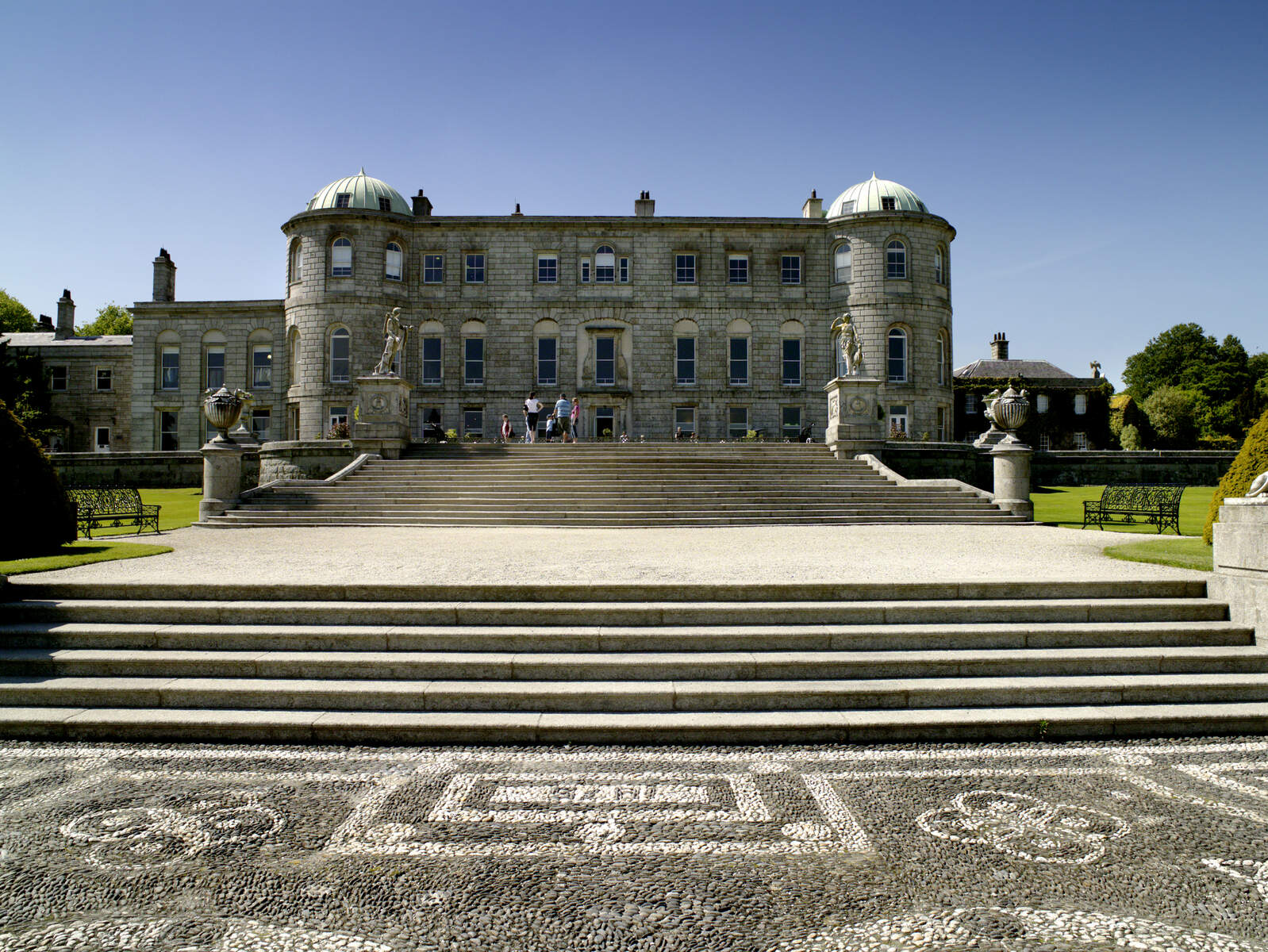
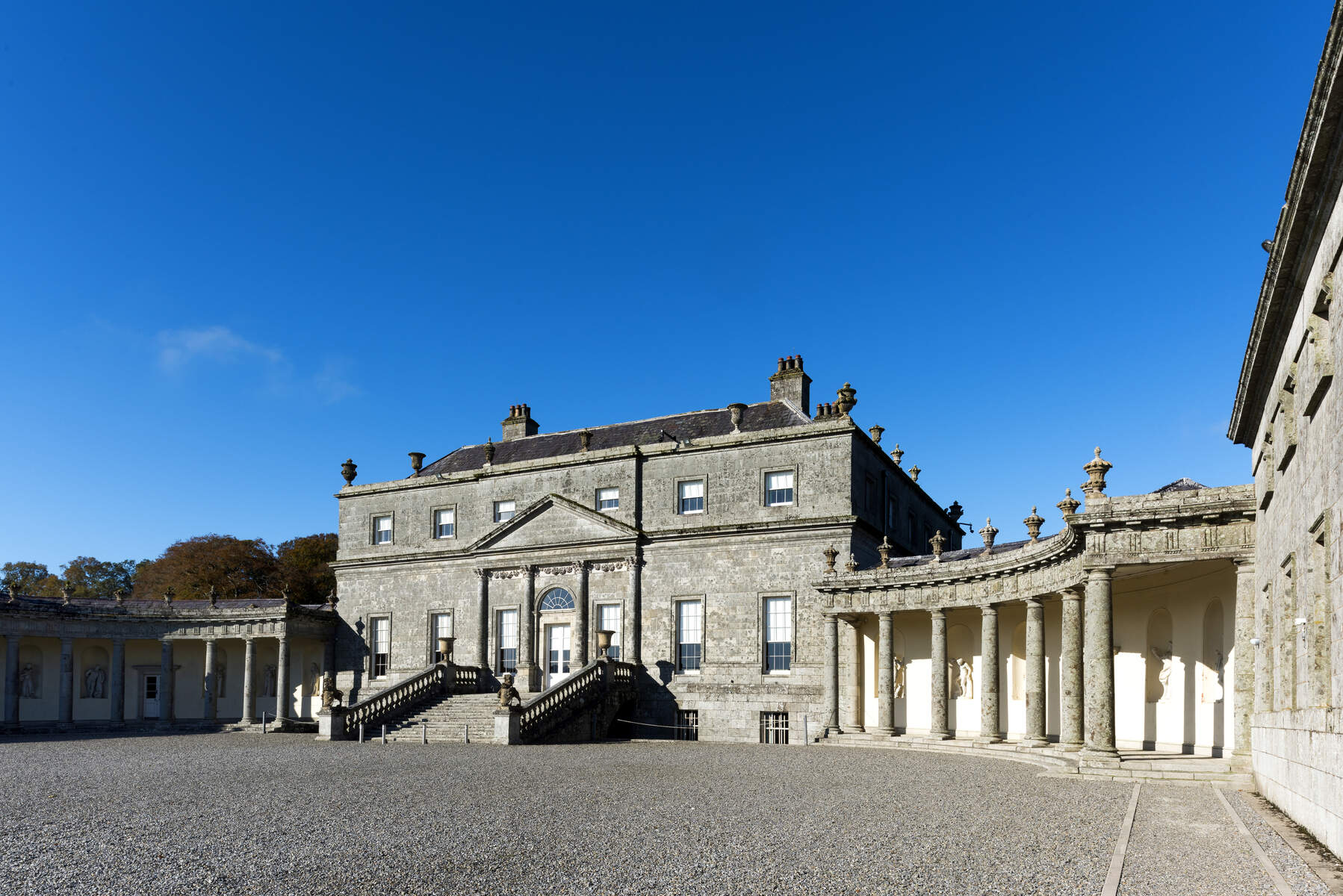


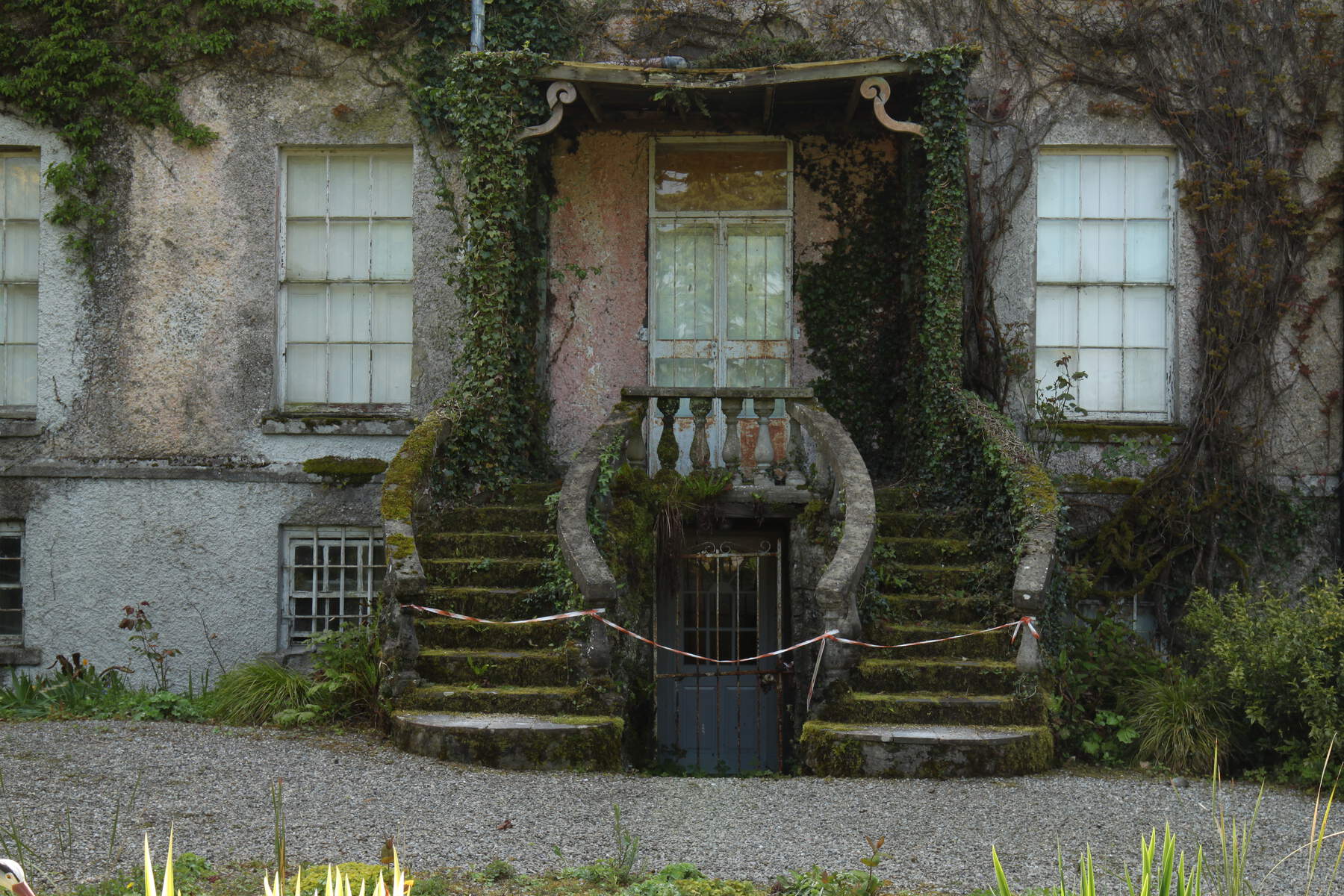
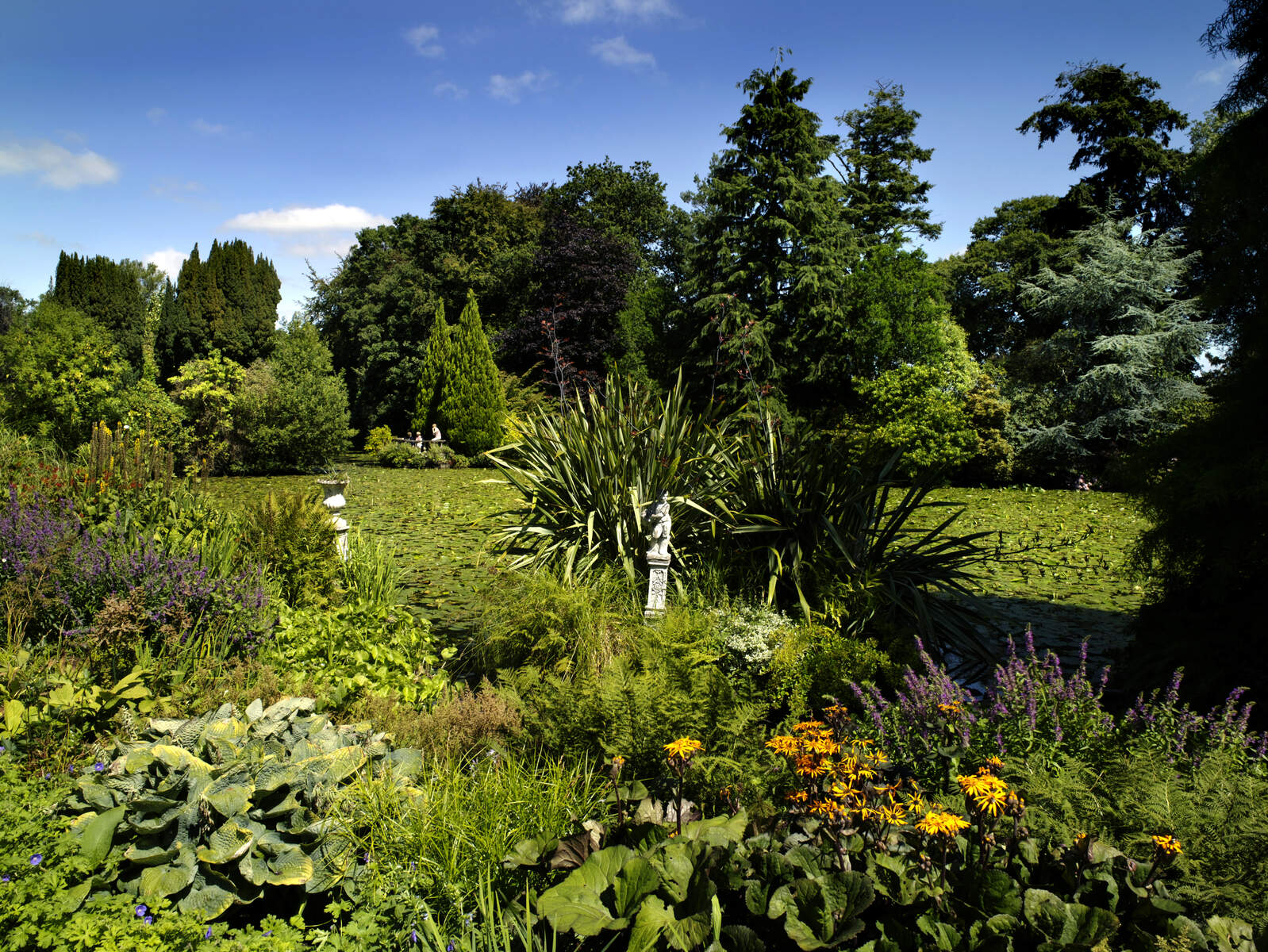

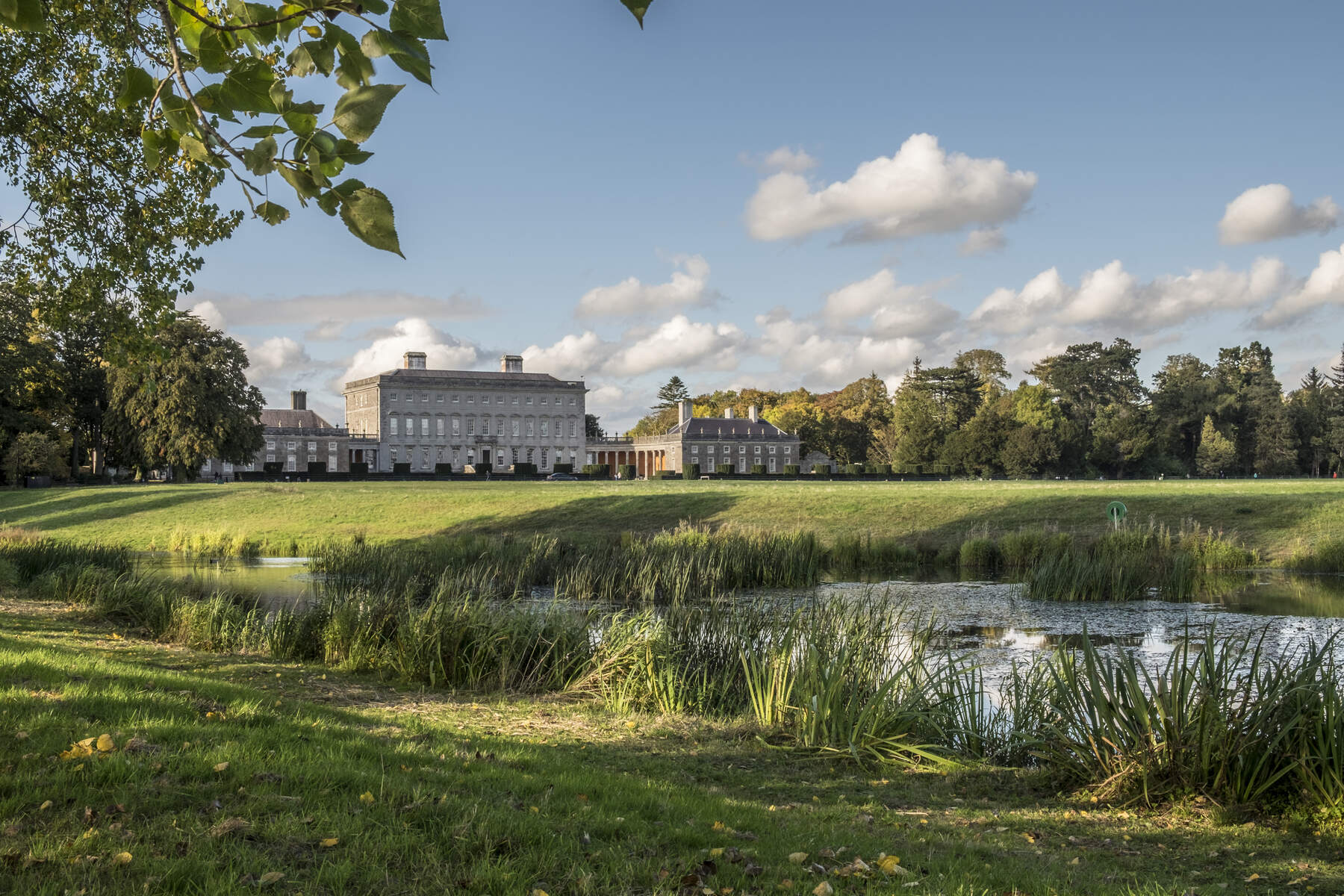
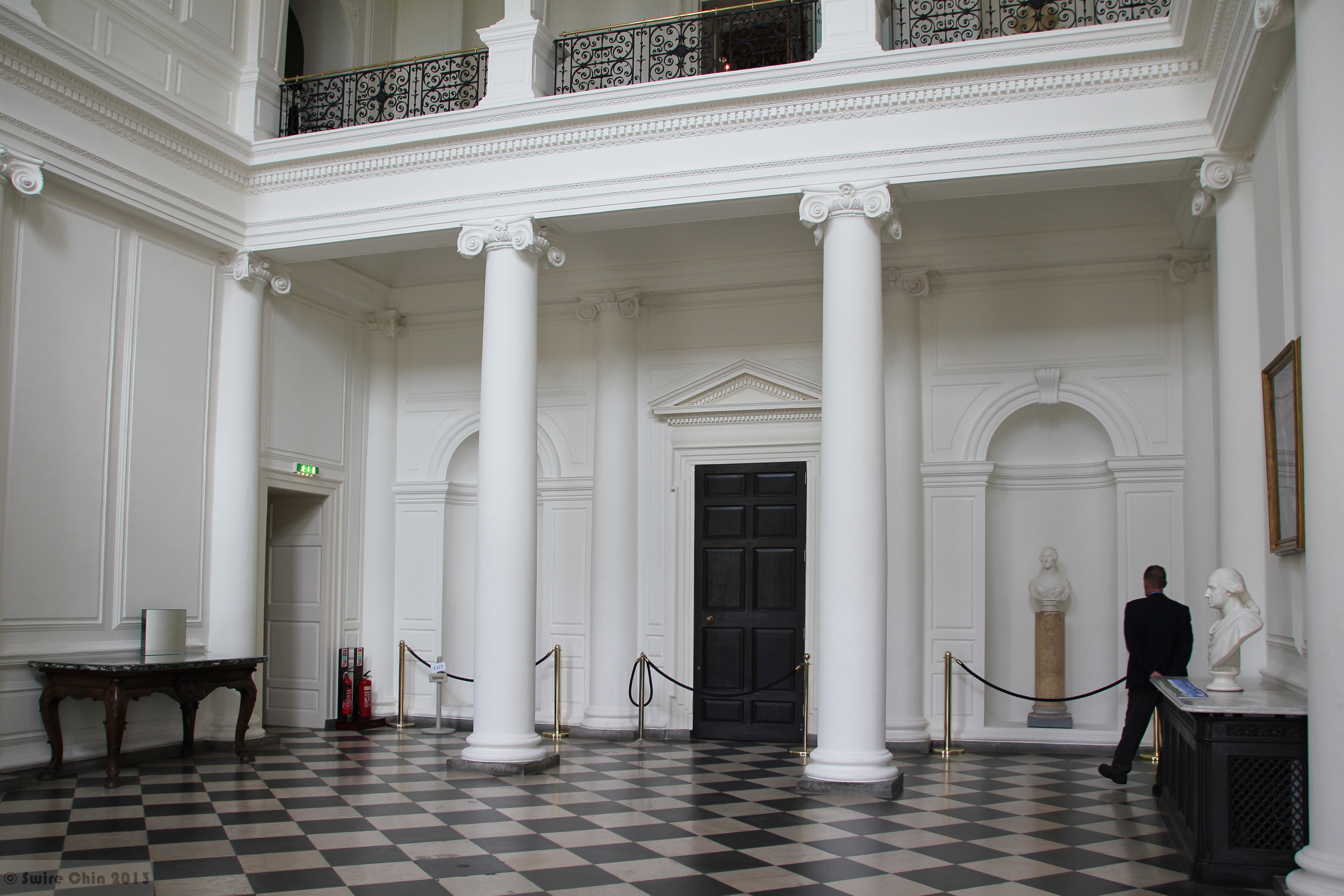
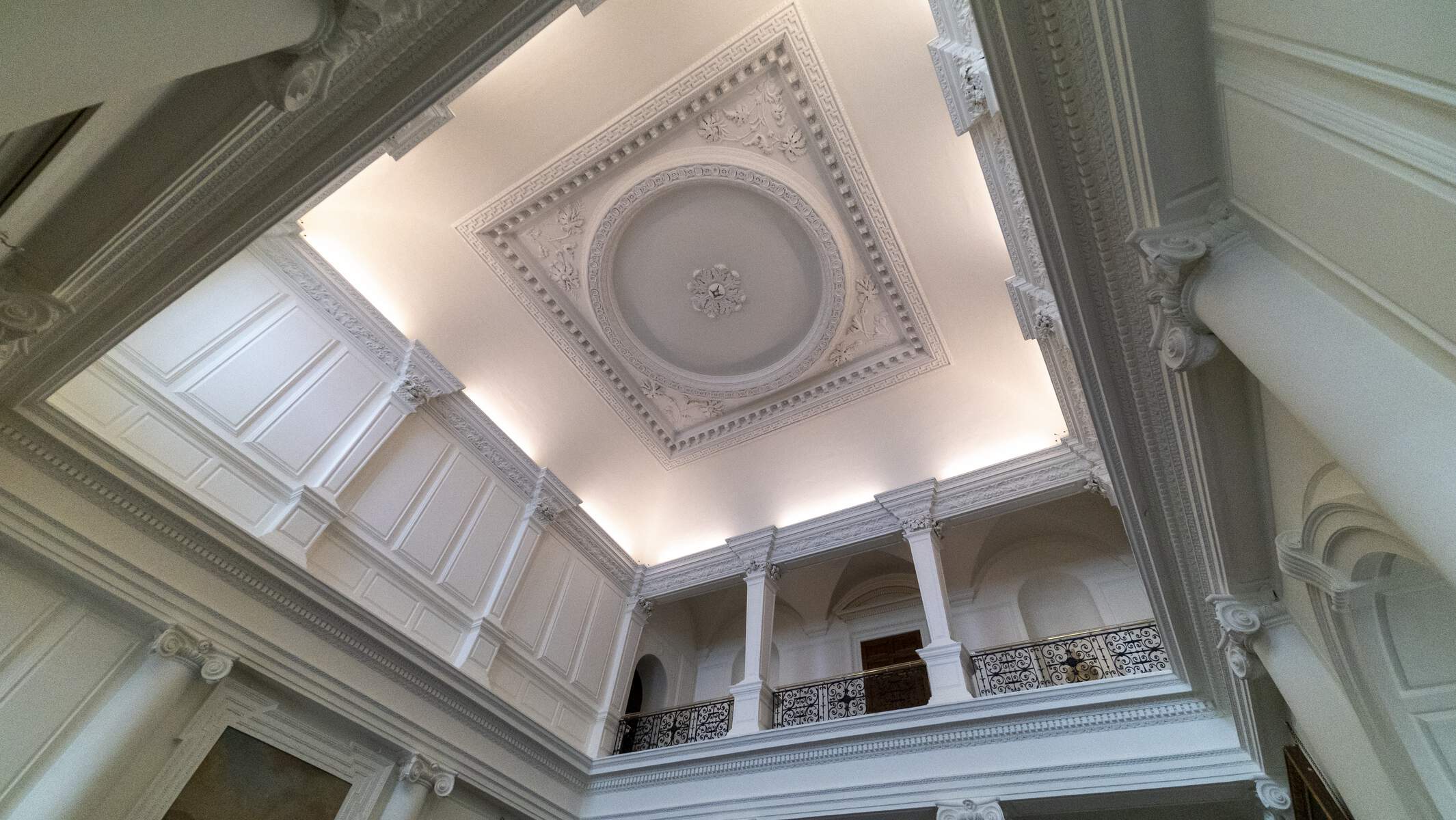
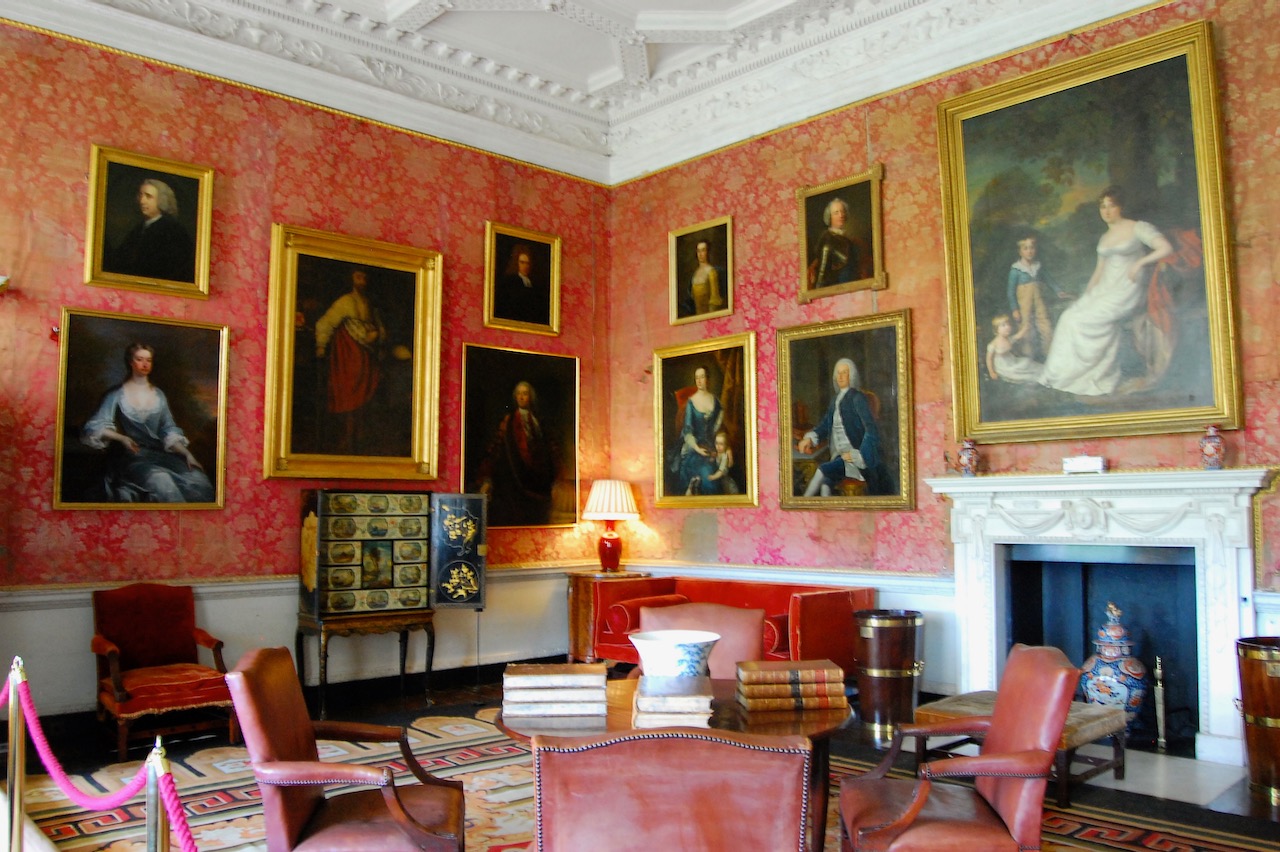
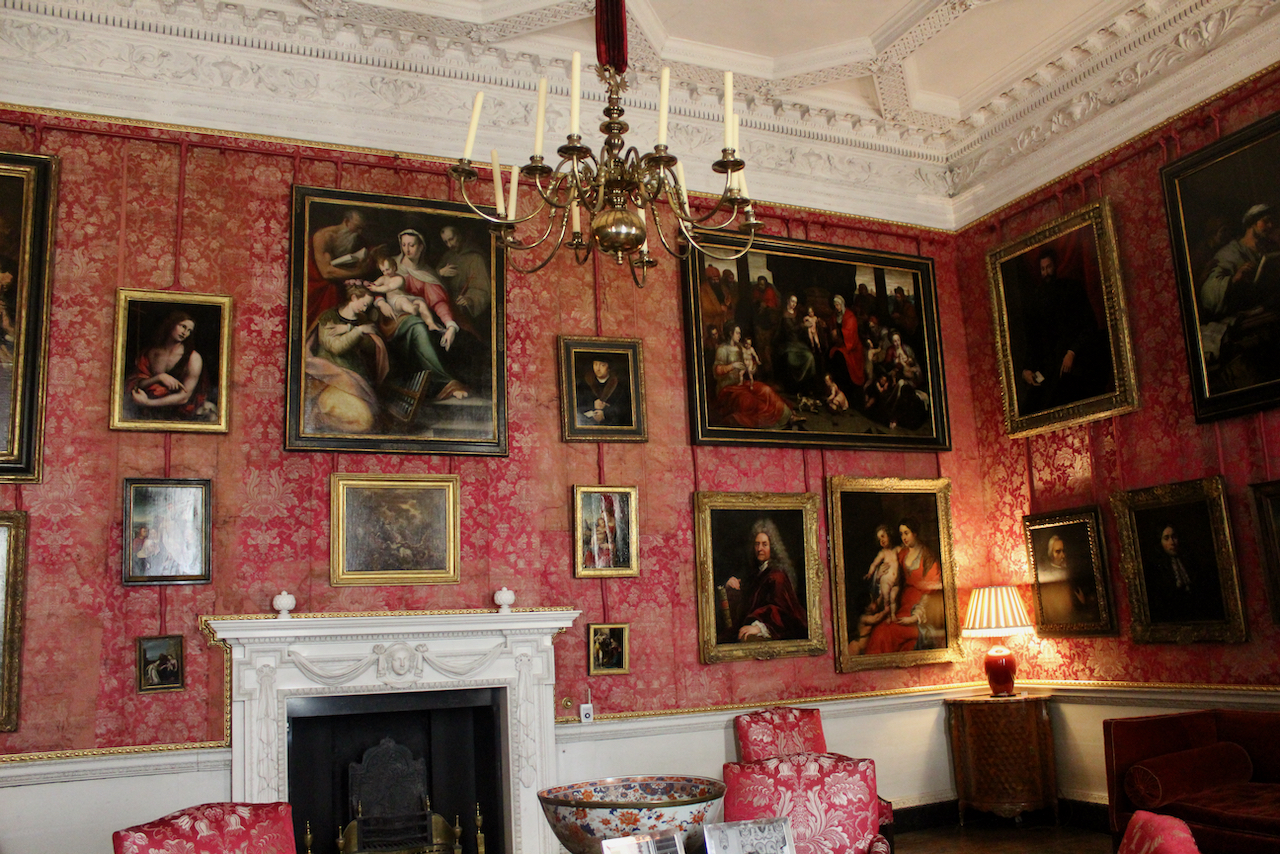
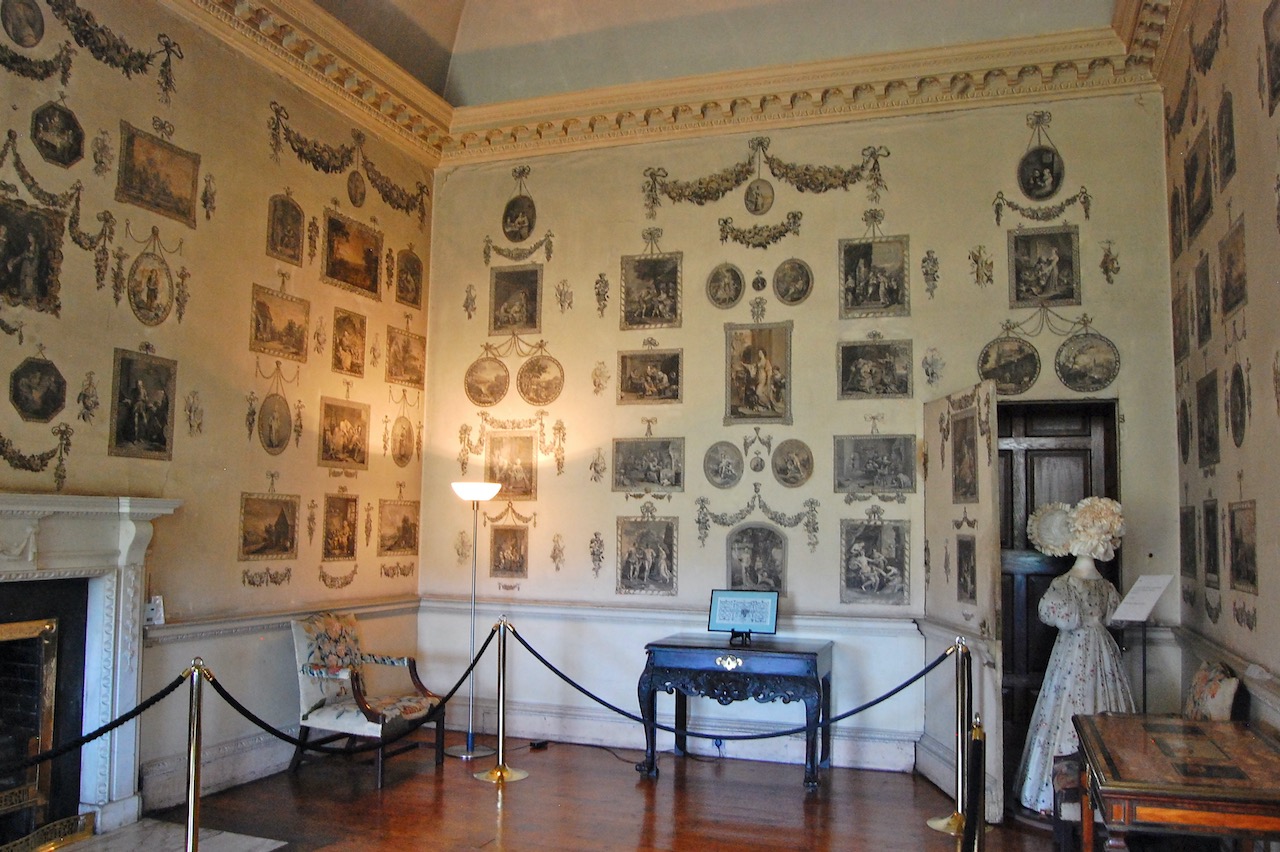

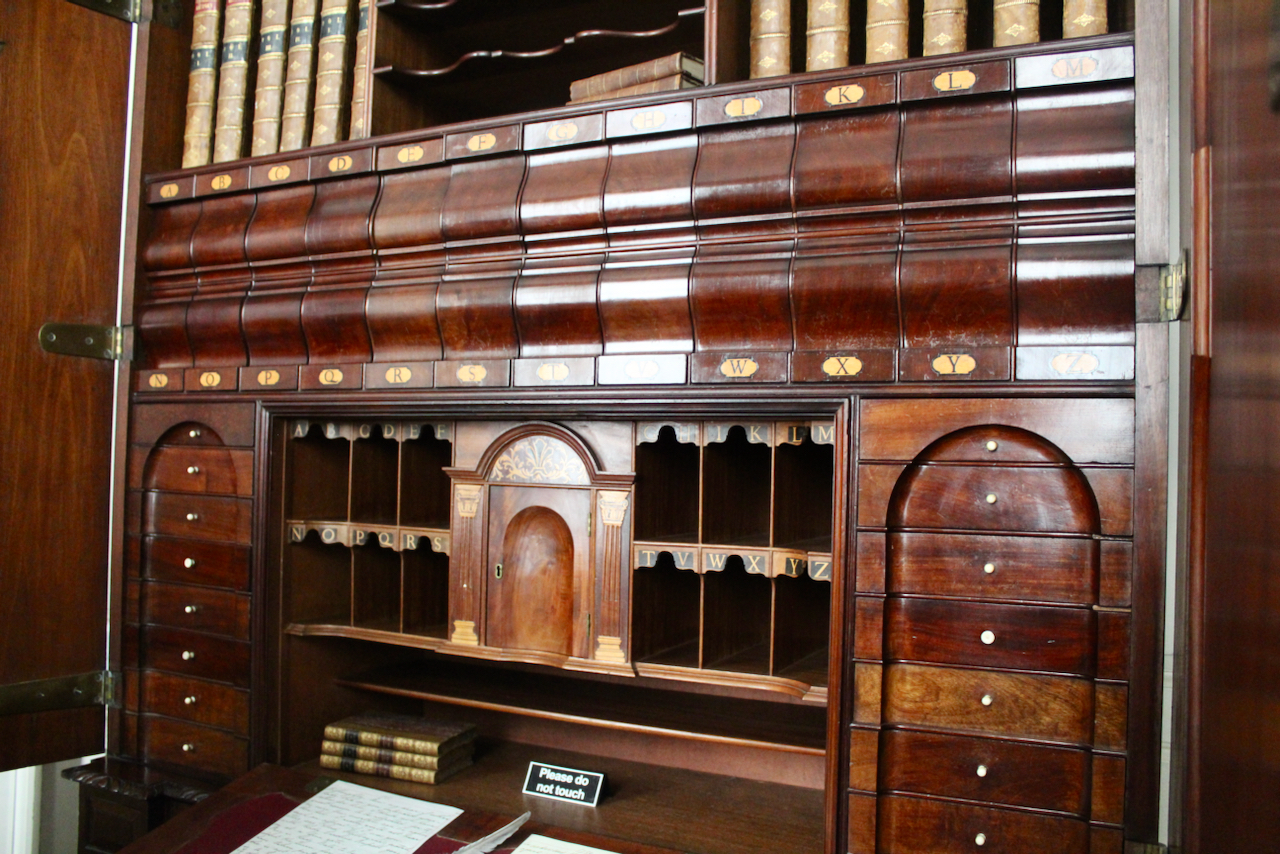
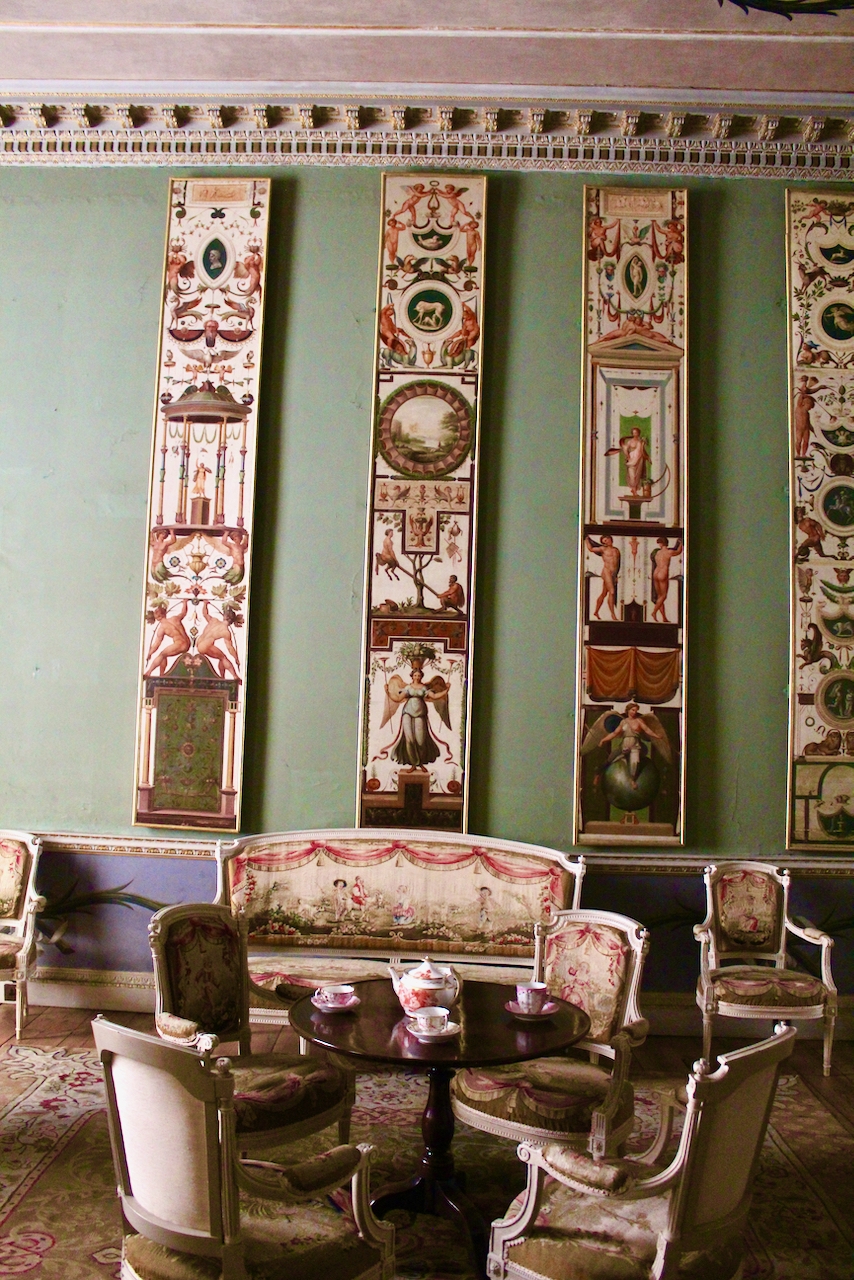


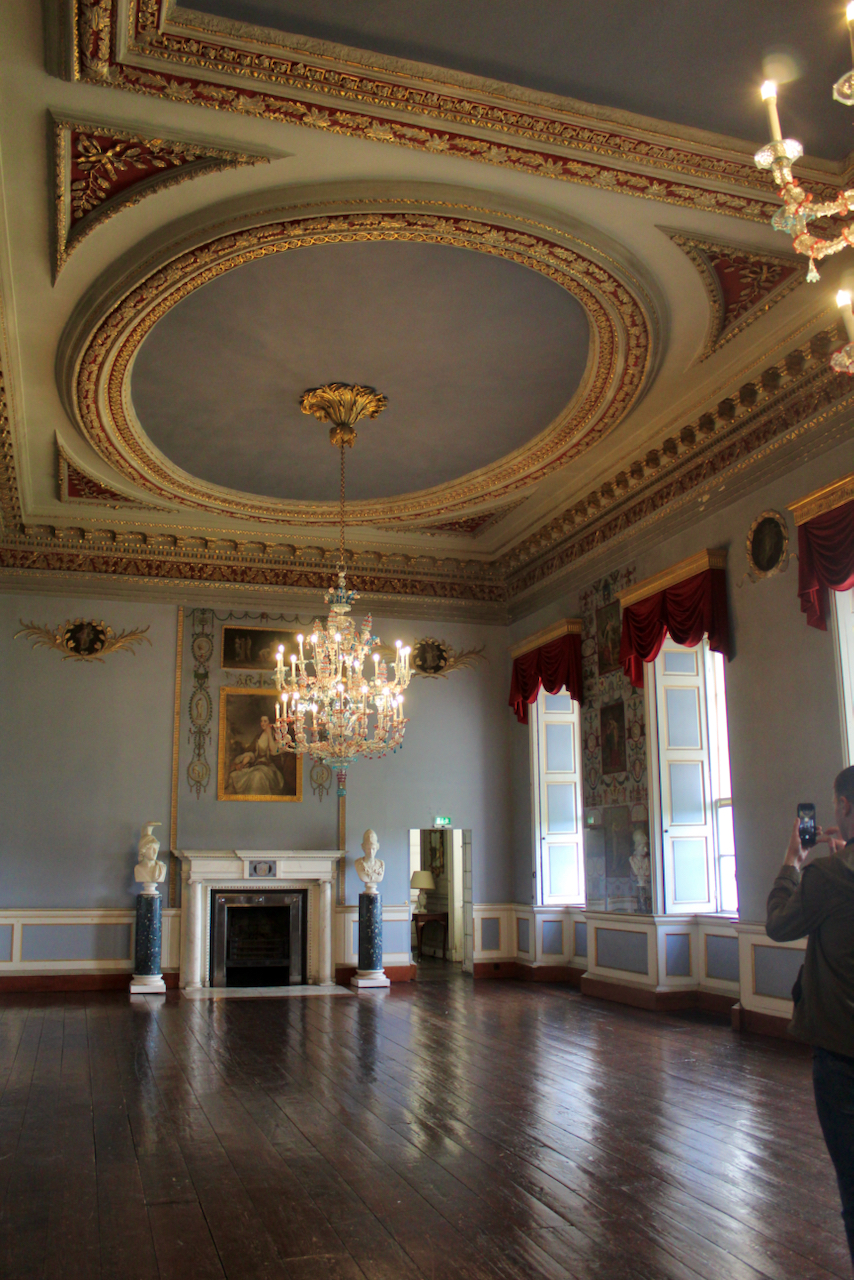
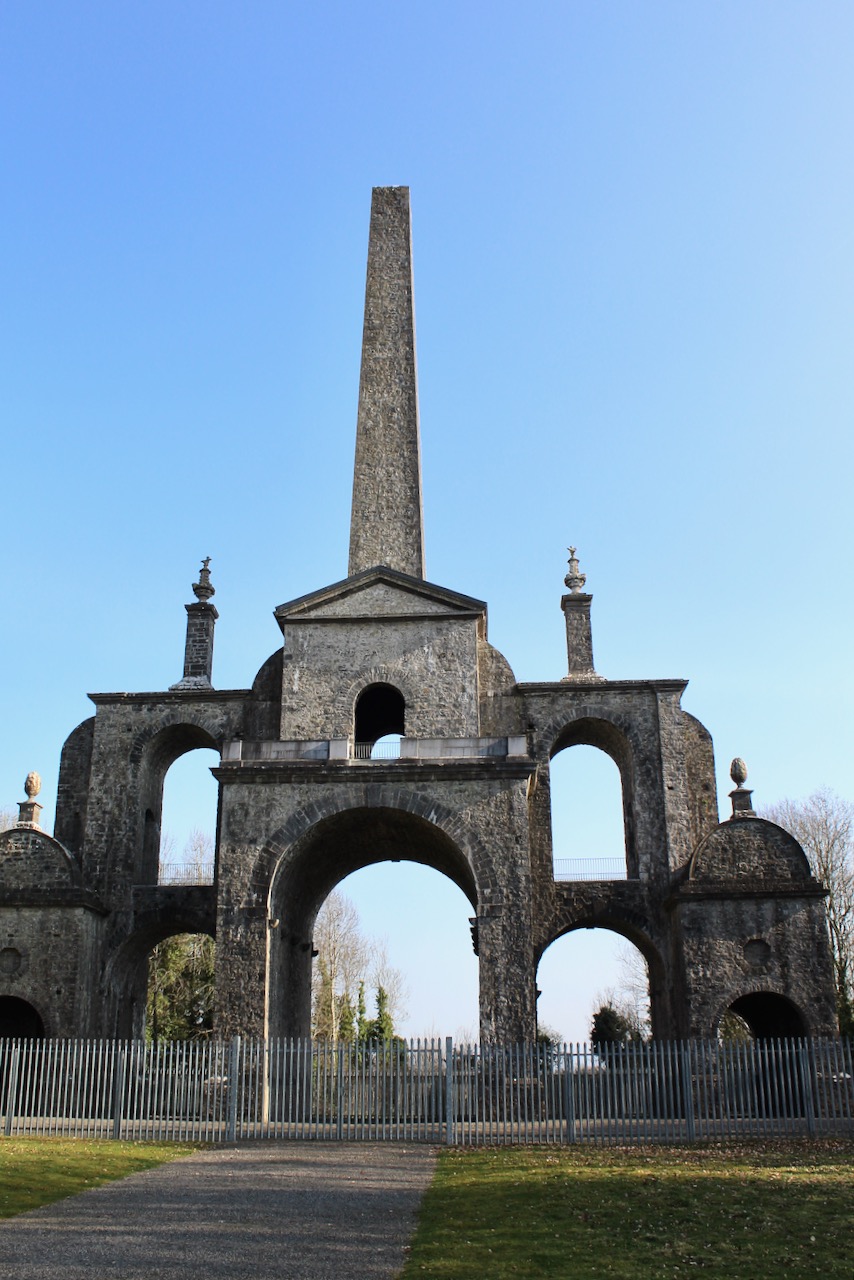

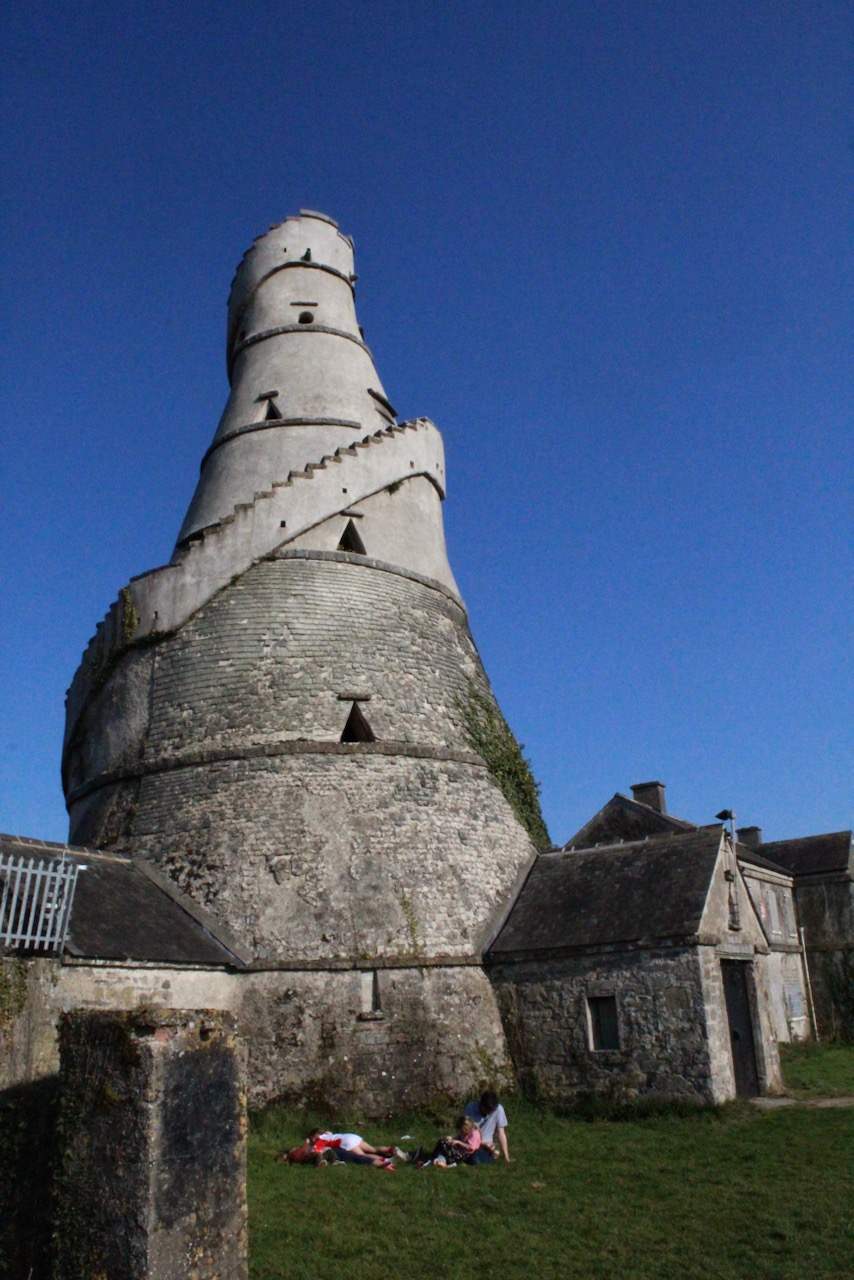
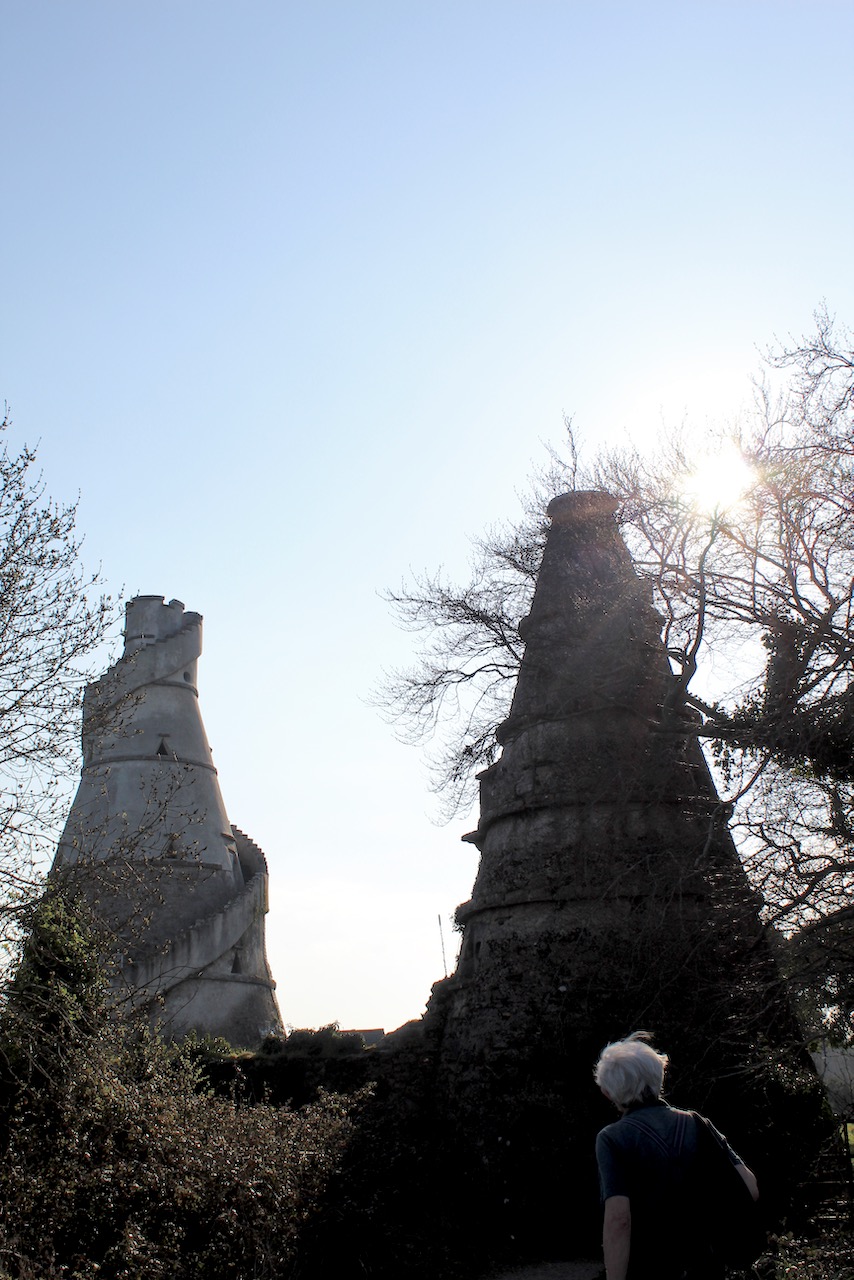
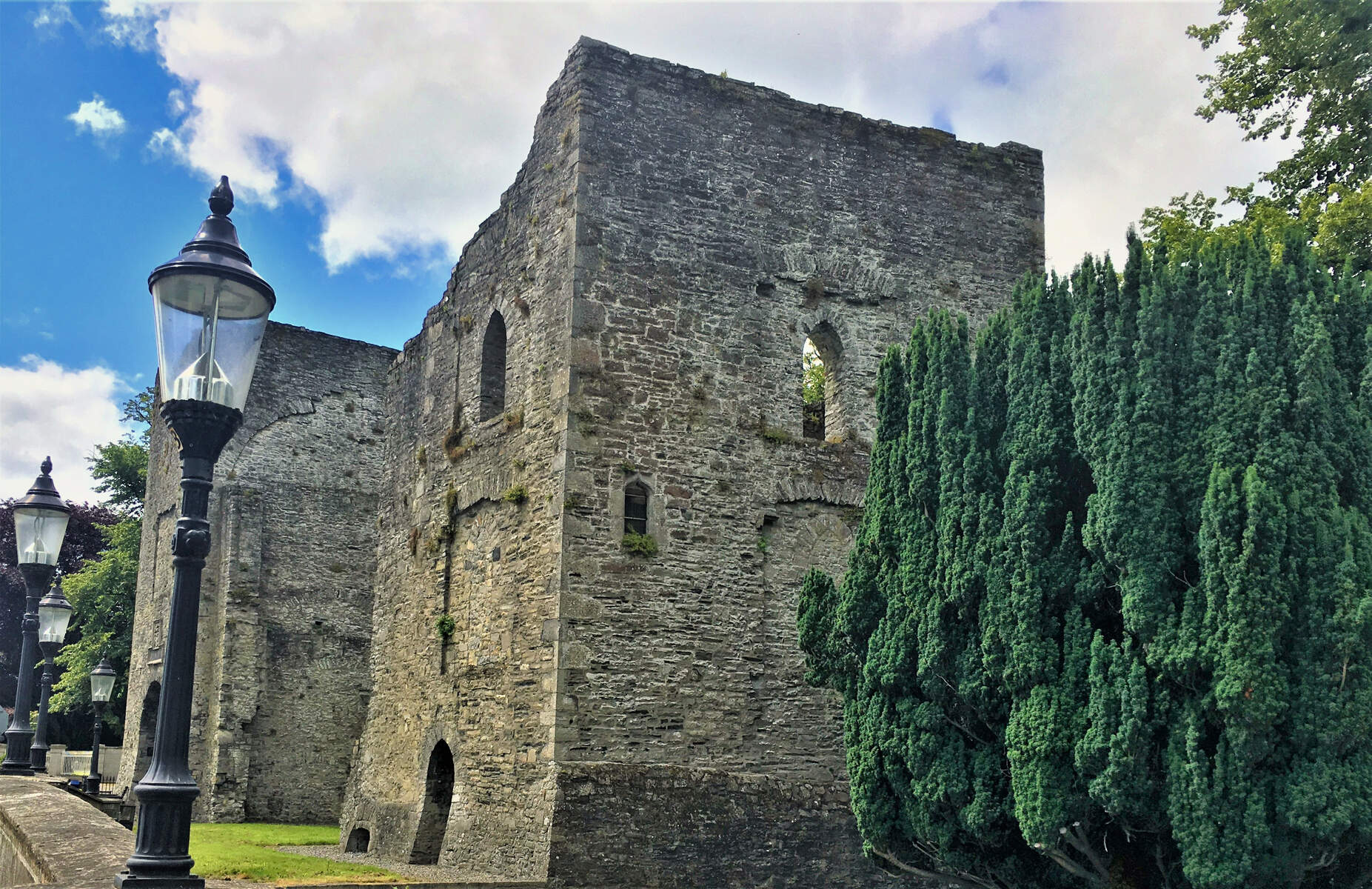

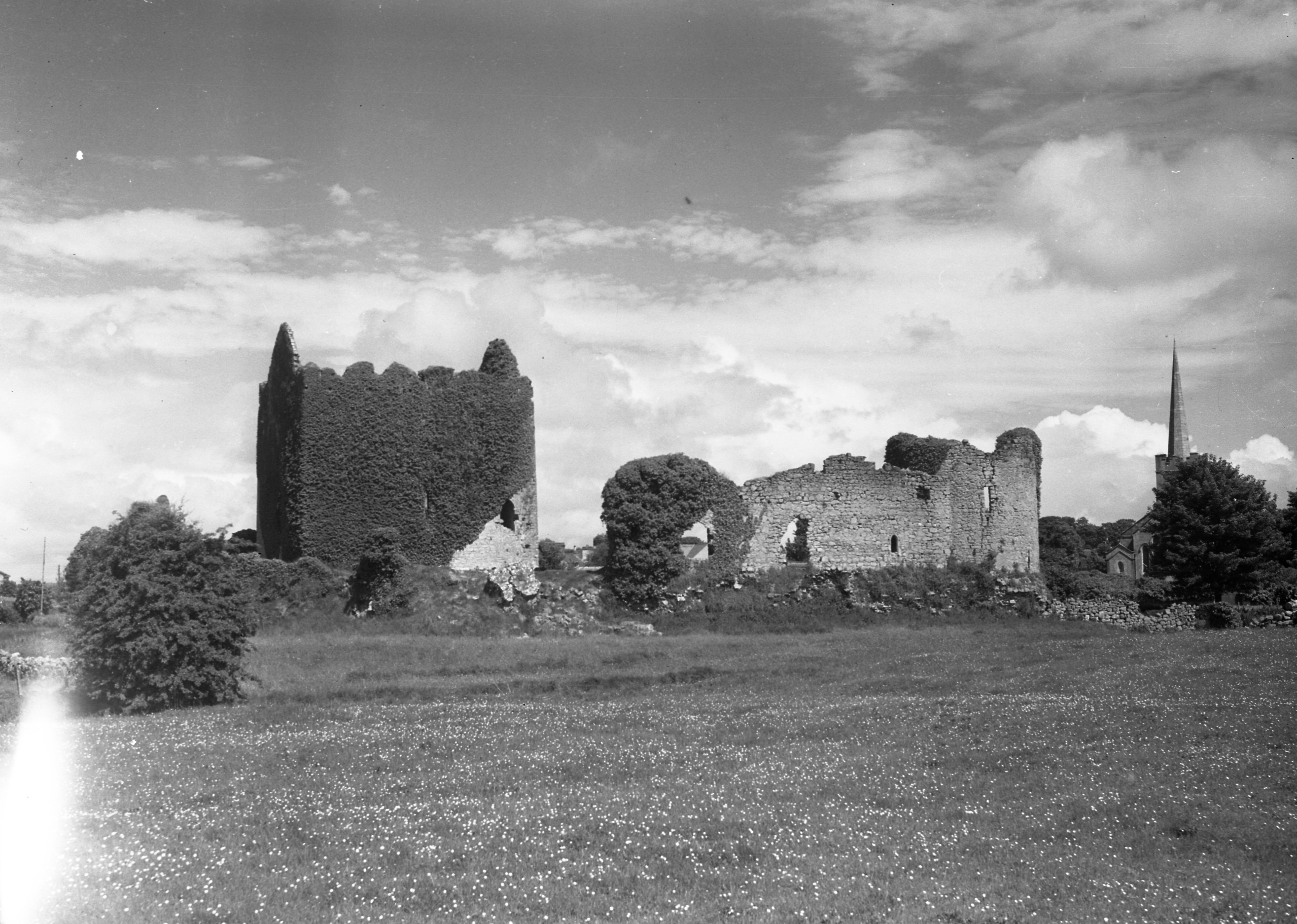
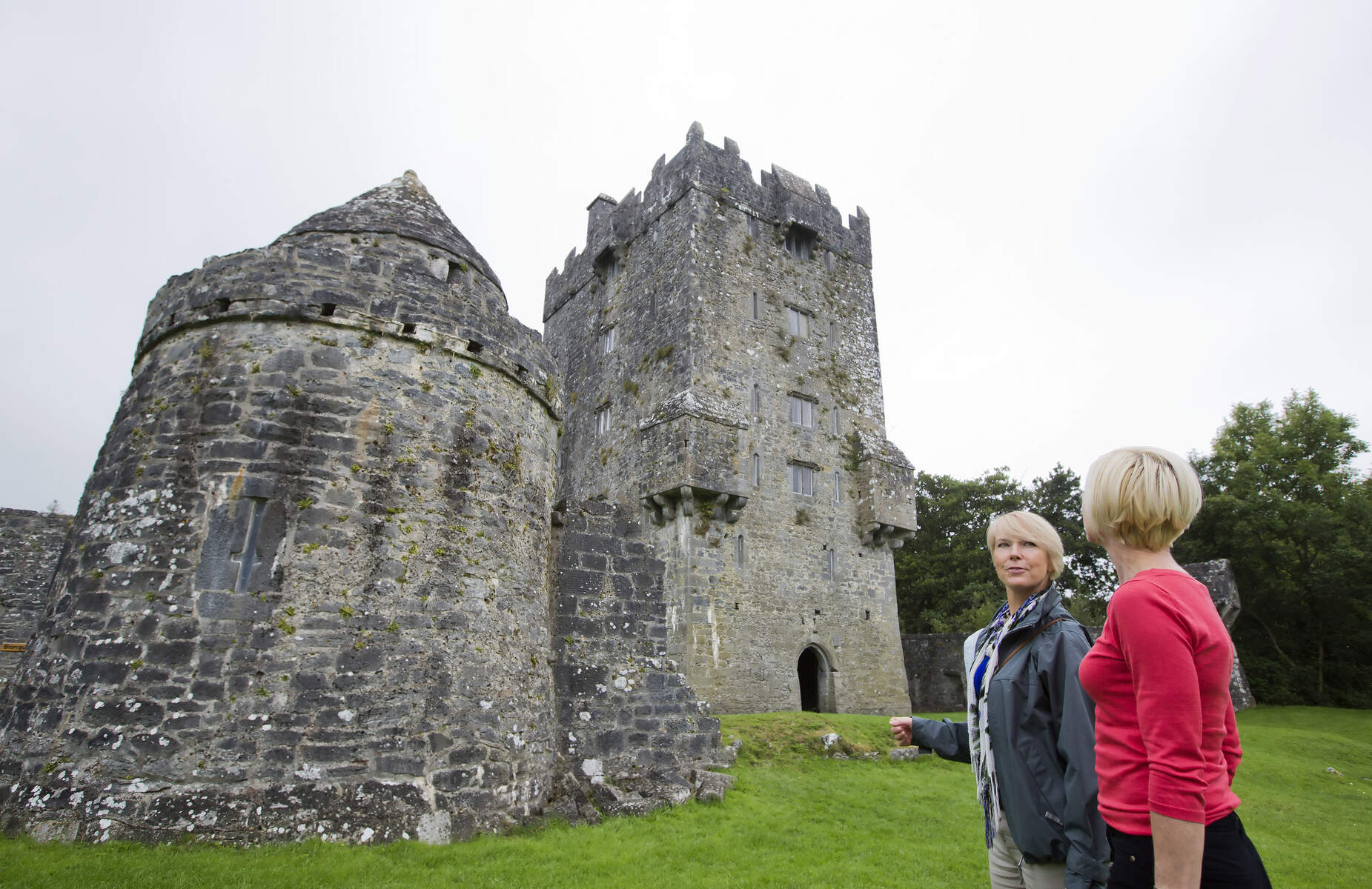

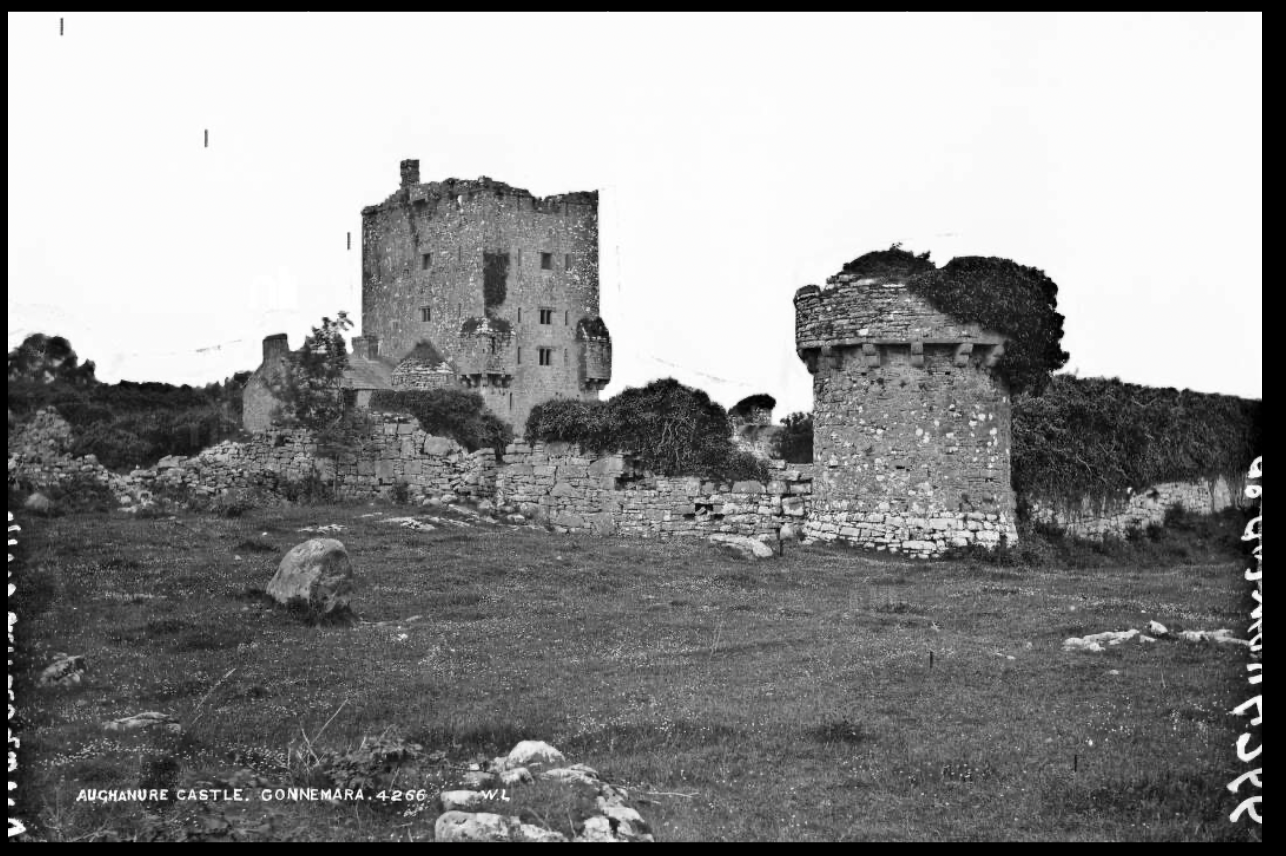
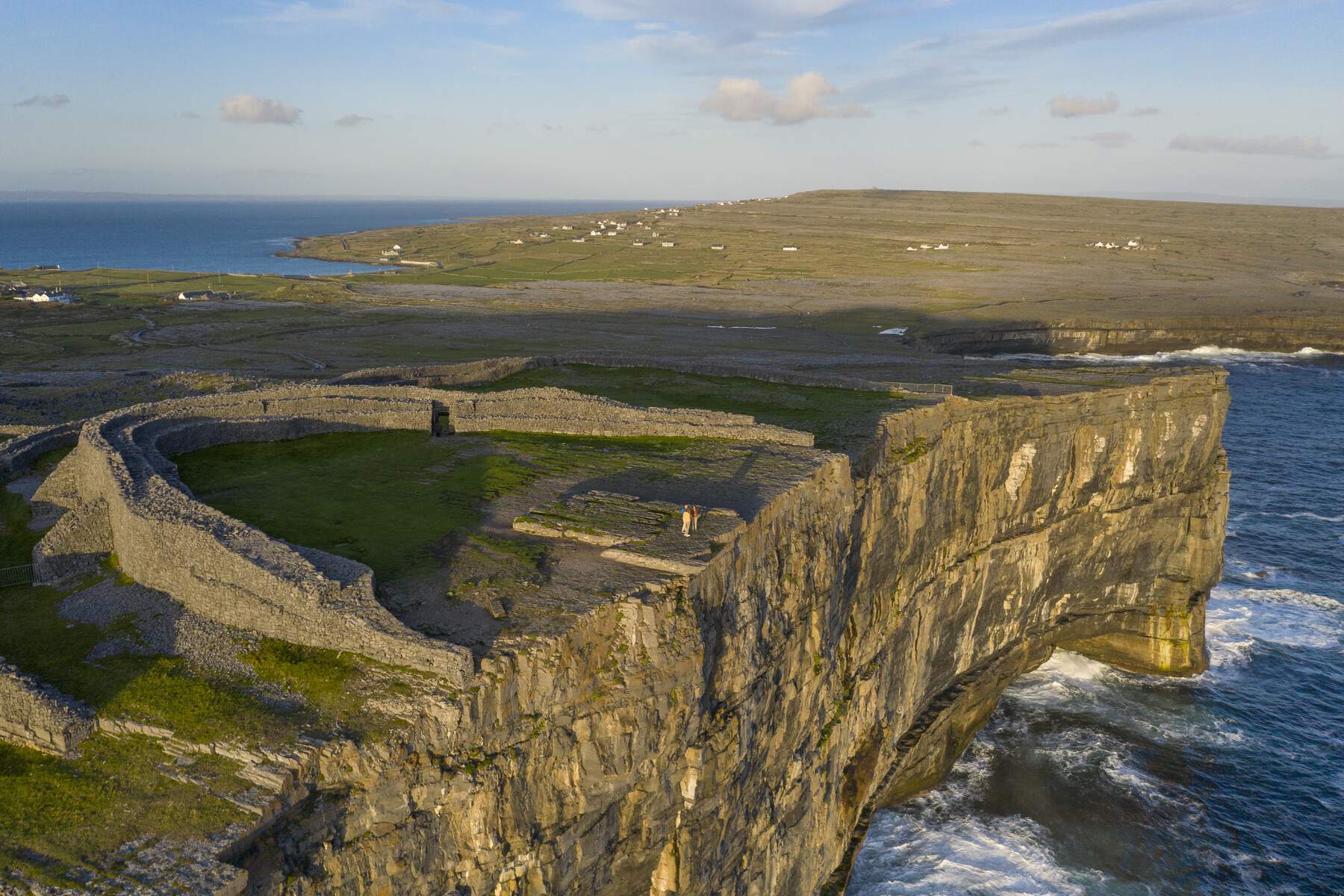
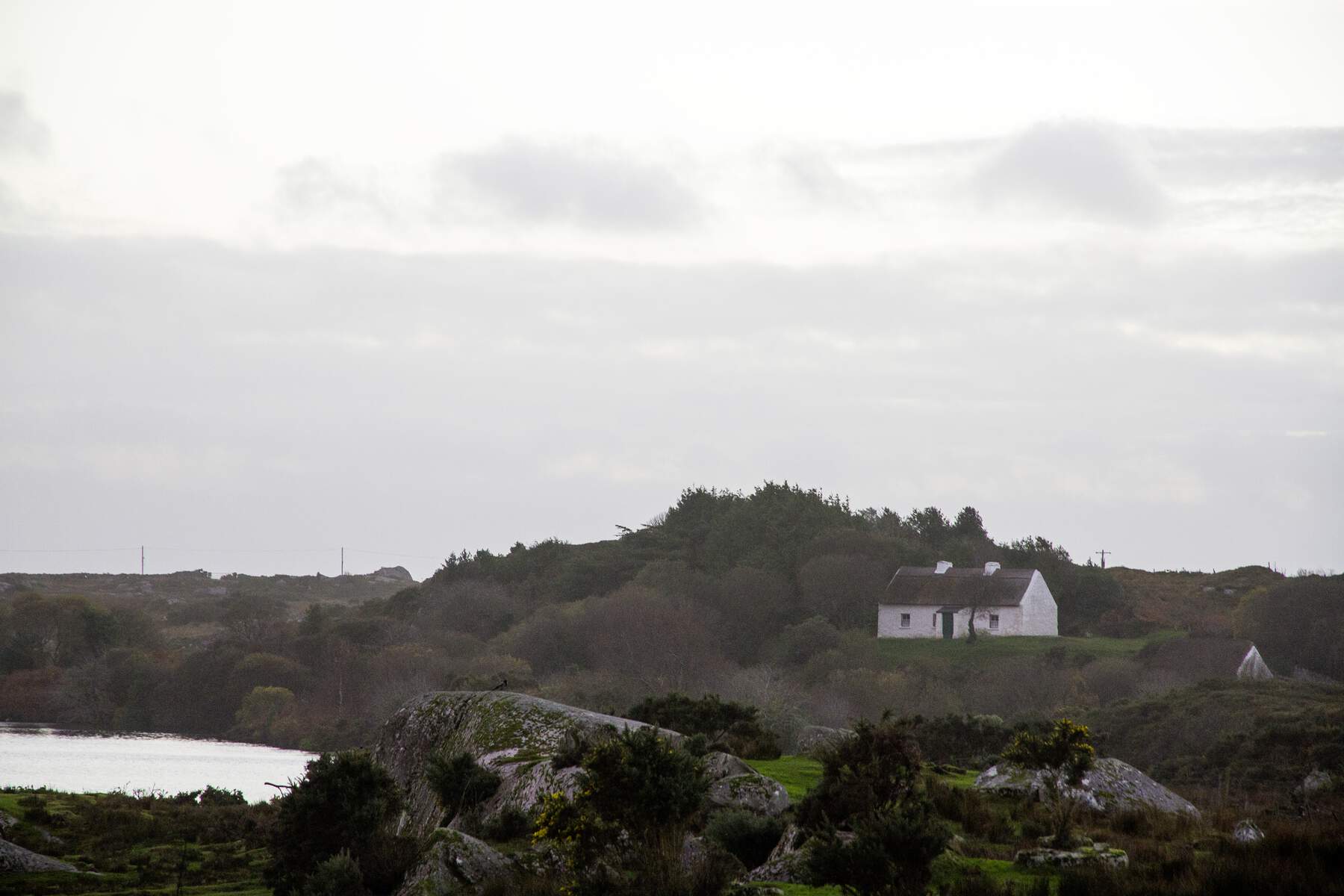


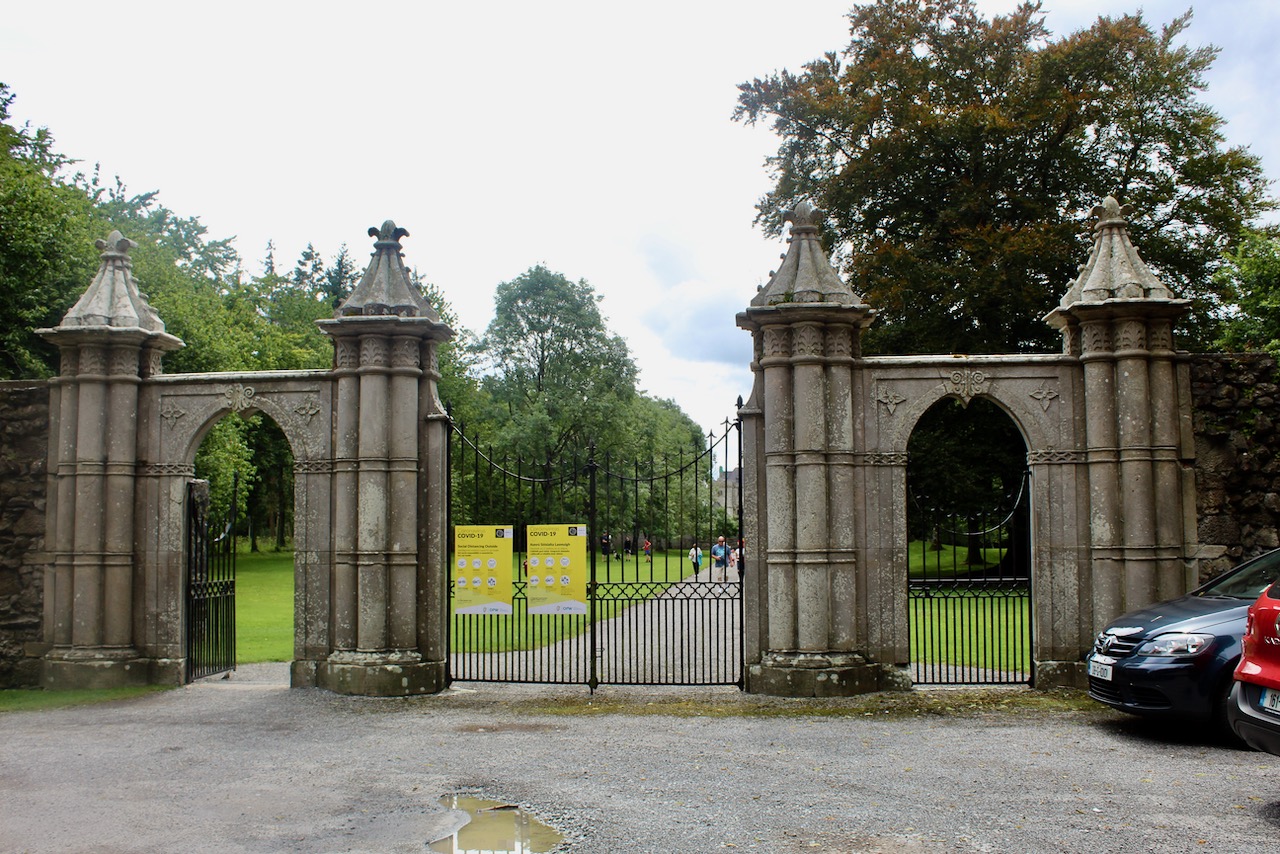

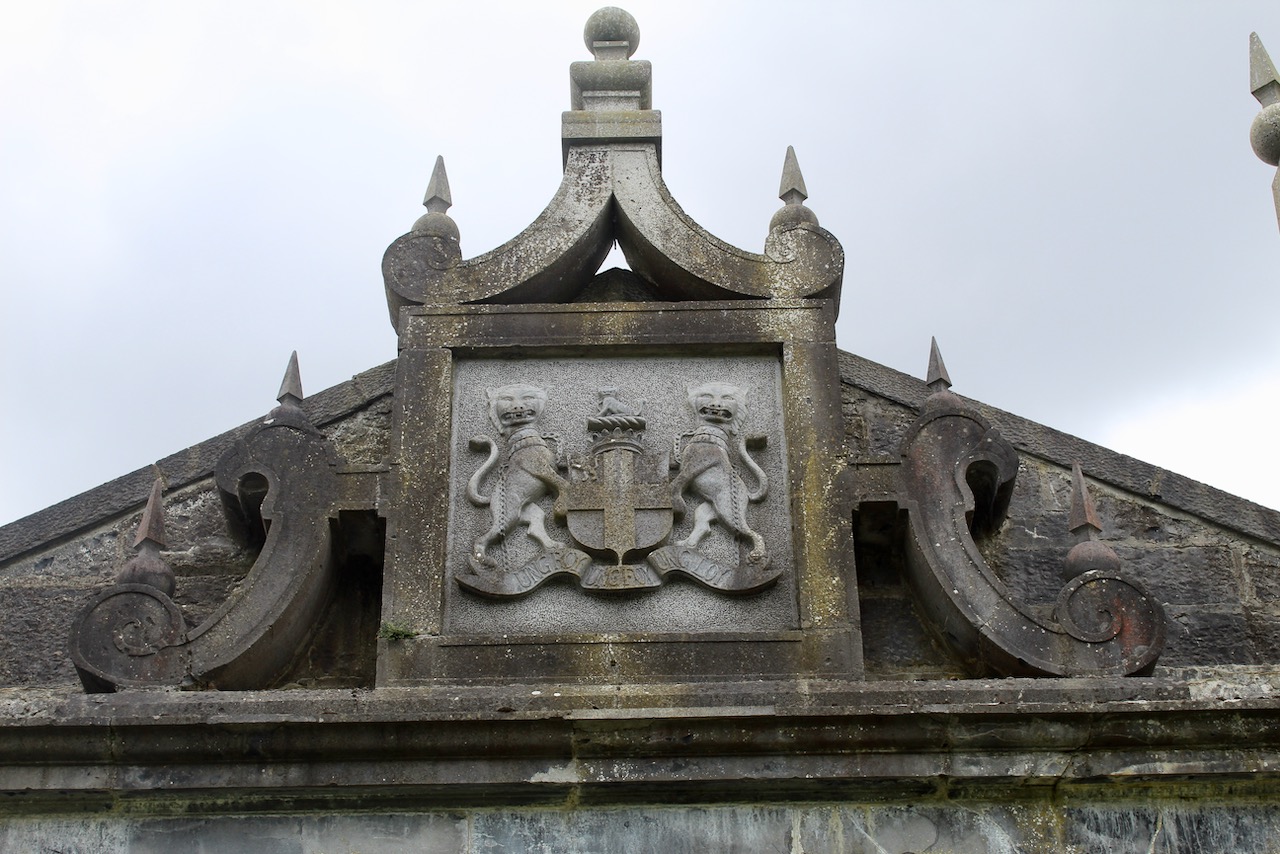
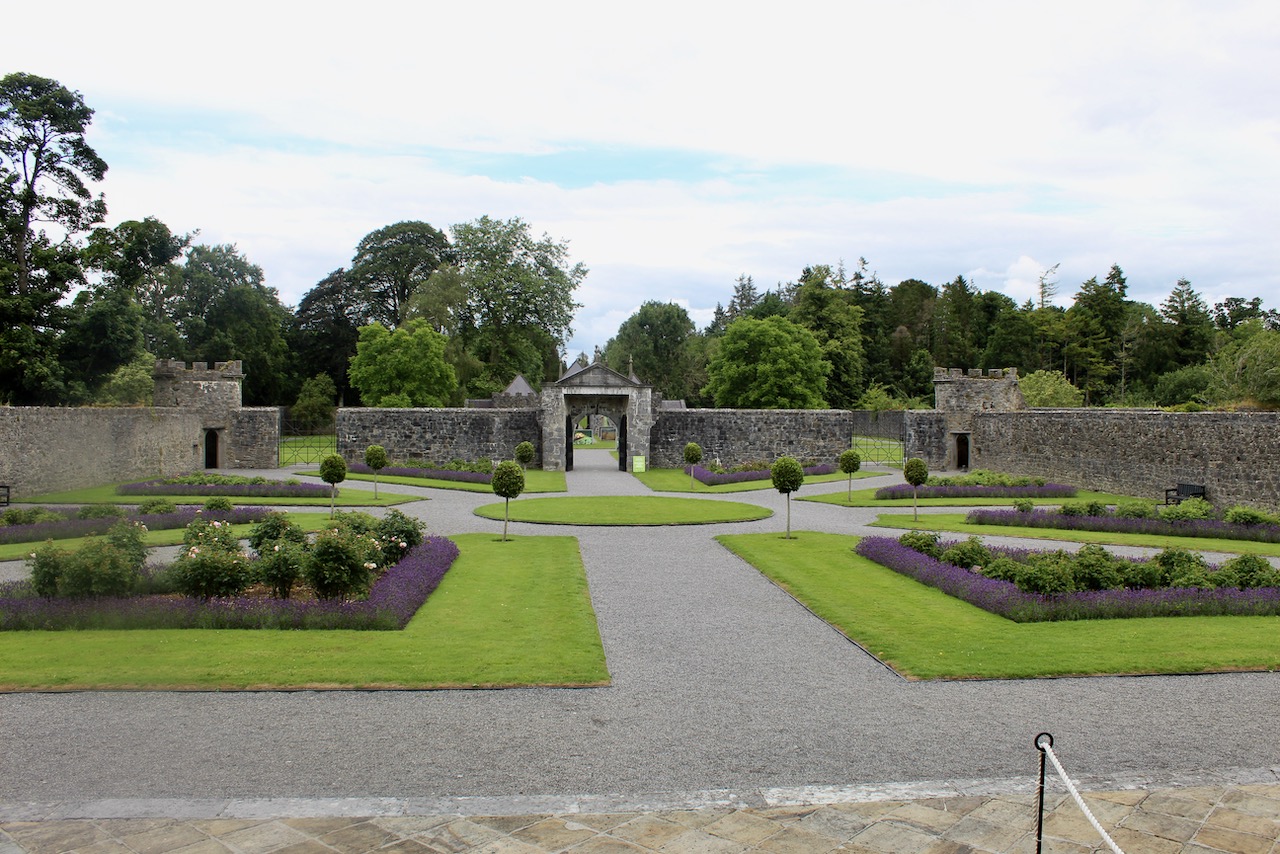
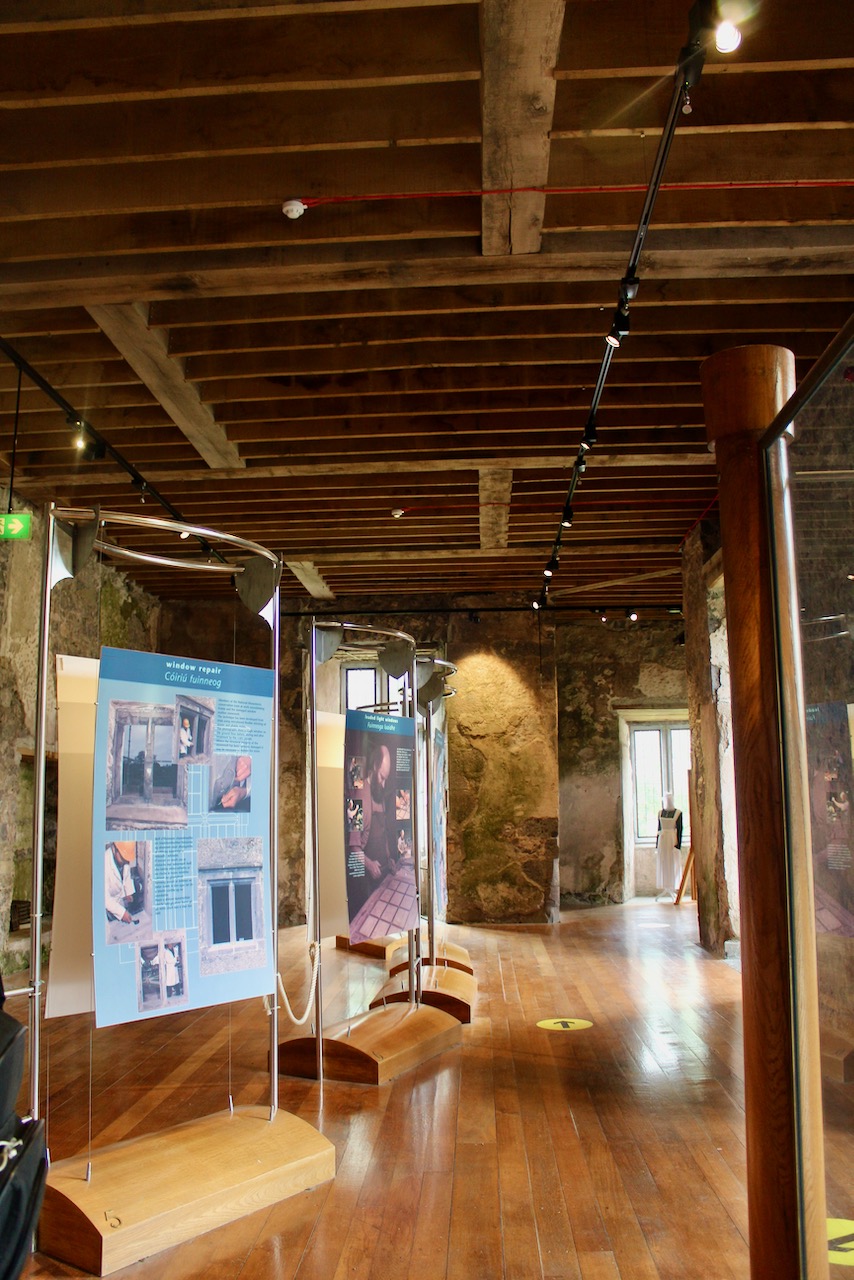
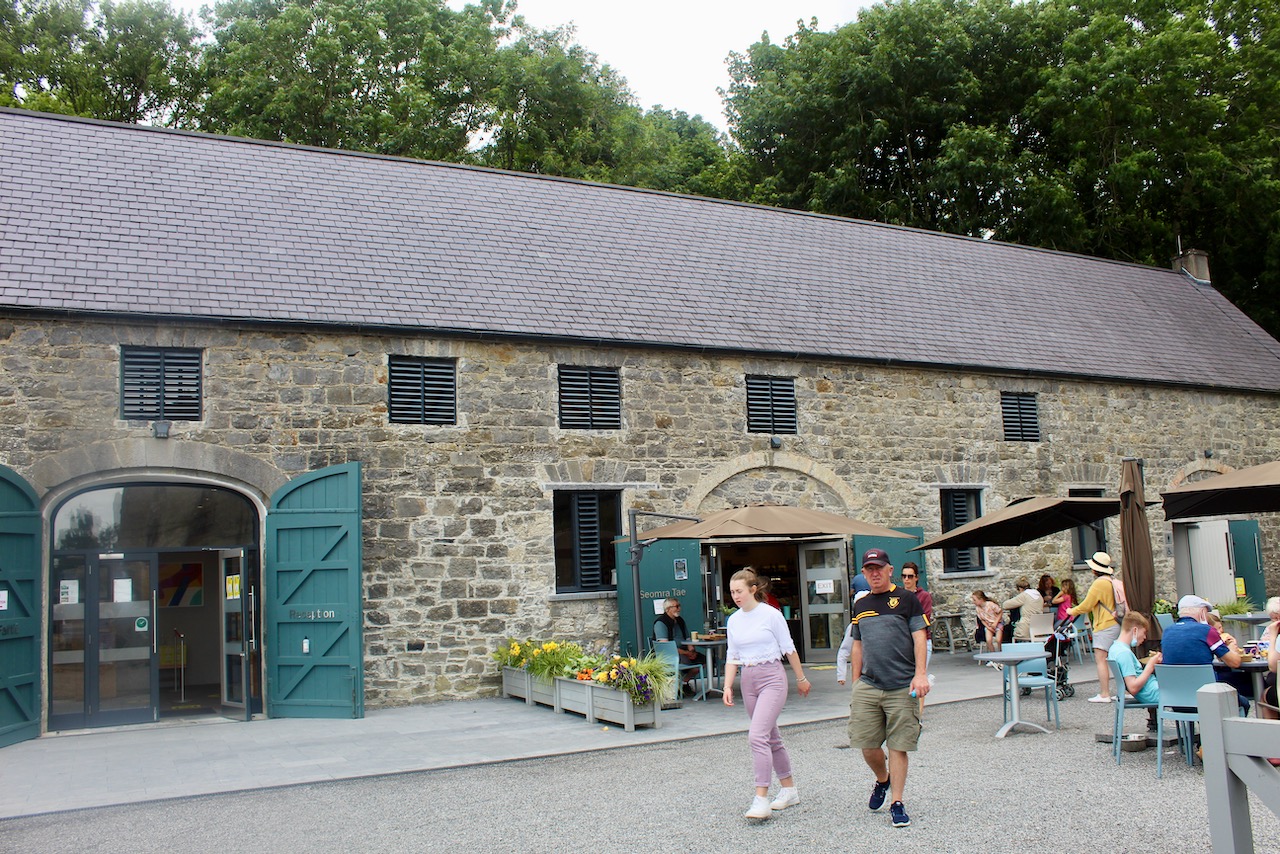

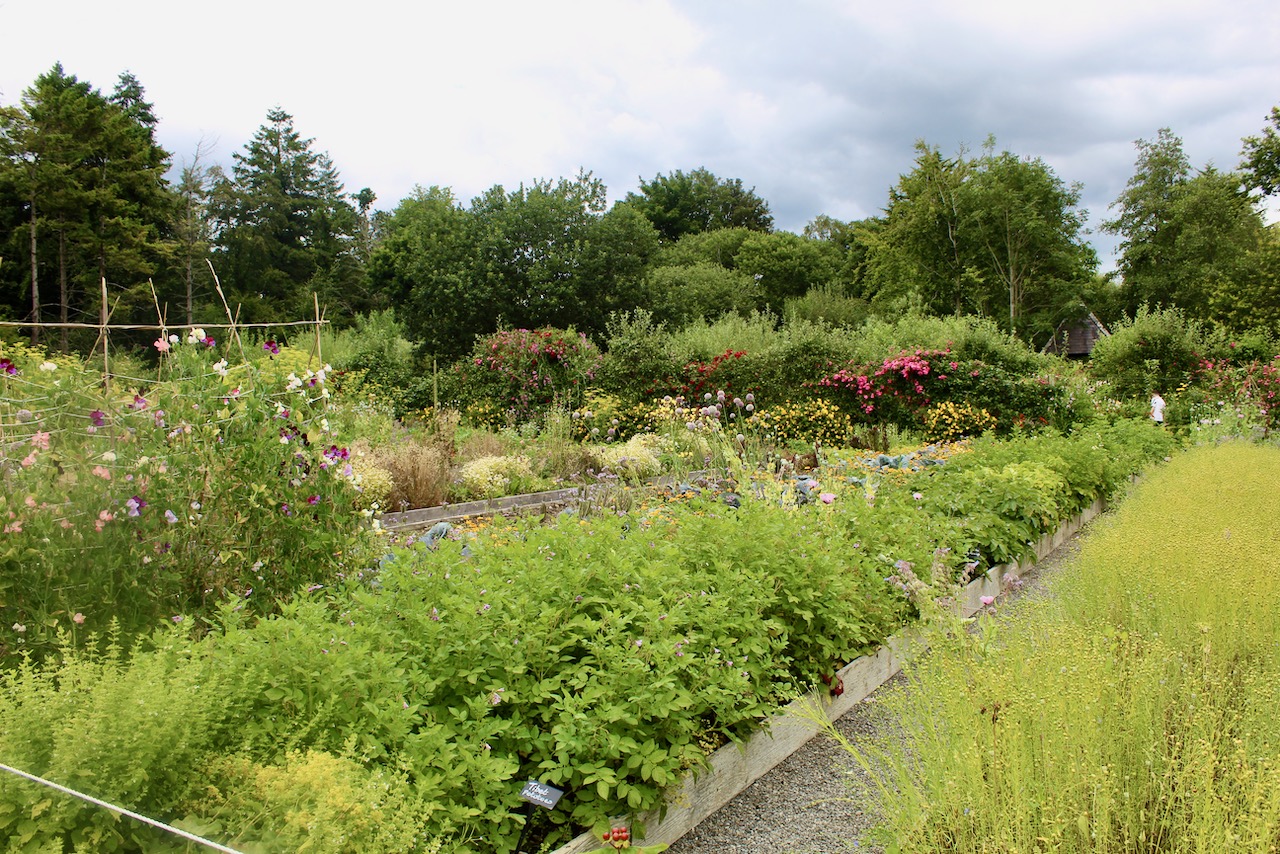
 Irish Historic Houses
