Woodbrook House, photograph courtesy of Historic Houses of Ireland website.
Today I am going to write about Woodbrook as it is provides holiday accommodation. In 2026, it is no longer on the Revenue Section 482 list.
donation
Help me to pay the entrance fee to one of the houses on this website. This site is created purely out of love for the subject and I receive no payment so any donation is appreciated!
€15.00
Then, below my entry, I have listed Section 482 properties that are open for a visit in March 2025!
Woodbrook looks like a lovely place to stay and the hosts Giles and Alexandra Fitzherbert, who have lived there since 1998, serve dinner also if requested. Giles is a former Ambassador in South America and his wife Alexandra is of Anglo-Italian-Irish-Chilean extraction, the Hidden Ireland website tells us.
Woodbrook, County Wexford, courtesy Hidden Ireland. [1]
Woodbrook house was built in the 1770s. It was built by Reverend Arthur Jacob (1717-1786), Archdeacon of Armagh, for his daughter Susan and her husband Captain William Blacker, a younger son of the family at Carrigblacker near Portadown. Arthur Jacob was Rector of Killanne in County Wexford while he was also Archdeacon of Armagh. [2]
The Historic Houses of Ireland website tells us:
“Nestling beneath the Backstairs Mountains near Enniscorthy in County Wexford, Woodbrook, which was first built in the 1770s, was occupied by a group of local rebels during the 1798 rebellion. Allegedly the leader was John Kelly, the ‘giant with the gold curling hair’ in the well known song ‘The Boy from Killanne’. It is said that Kelly made a will leaving Woodbrook to his sons but he was hanged on Wexford bridge, along with many others after the rebels defeat at Vinegar Hill. He was later given an imposing monument in nearby Killanne cemetery.” [3]
Another rebel who occupied the house in 1798 was John Henry Colclough (c.1769-98) who was also executed for his participation in the 1798 Insurrection.
The Historic Houses of Ireland site continues:
“… The house was badly knocked about by the rebels and substantially rebuilt in about 1820 as a regular three storey Regency pile with overhanging eaves, a correct Ionic porch surmounted by a balcony and three bays of unusually large Wyatt windows on each floor of the facade.” [3]
Woodbrook House, photograph courtesy of Woodbrook website.Woodbrook House, photograph courtesy of Woodbrook website.
The house has tripartite entrance doorcase with large cobweb fanlight under the portico. Mark Bence-Jones writes that the hall has a “rather Soanian vaulted ceiling.” I’m not sure what he means by this – if you can enlighten me, please do let me know! He also comments on the “very spectacular spiral flying staircase of wood, with wrought iron balustrades; a remarkable and brilliant piece of design and construction.” [4] It is called “flying” because it does not touch the walls. The steps look like stone but are timber, and each was carefully made to fit perfectly together. Robert O’Byrne tells us that the stairs bounce slightly as one walks up or down, which sounds disconcerting!
Woodbrook House, photograph courtesy of Woodbrook website.Woodbrook, County Wexford, courtesy Hidden Ireland. [1]
Woodbrook passed to the son, William Blacker (1790-1831). He married Elizabeth Anne Carew, from Castleboro House in County Wexford, now a splendid ruin.
Castleboro, County Wexford, photograph: Robert French, Lawrence Collection, NLI, Vanishing Country Houses of Ireland by The Knight of Glin, David J. Griffin and Nicholas K. Robinson, published by The Irish Architectural Archive and The Irish Georgian Society, 1988.William Blacker married Elizabeth Anne Carew, from Castleboro House in County Wexford, now a splendid ruin. The ruins of Castleboro House, County Wexford (geograph_3716684) By Mike Searle, https://commons.wikimedia.org
William and Elizabeth Anne’s son Robert Shapland Carew Blacker (1826-1913) inherited the impressive Carrickblacker house in County Armagh from his relatives, as well as inheriting Woodbrook, from an elder brother, William Jacob, who predeceased him and had no children. William Jacob Blacker served as High Sheriff of County Wexford.
Robert Shapland married, in 1858, Theodosia Charlotte Sophia, daughter of George Meara, of May Park, County Waterford. Carrickblacker house remained in the family until the estate was purchased in 1937 by Portadown Golf Club, which demolished Carrickblacker House in 1958 to make way for a new clubhouse. [5]
Woodbrook House, photograph courtesy of Woodbrook website.Woodbrook House, photograph courtesy of Woodbrook website.
The eldest son, William Robert George Blacker, died at just twenty years old. The next eldest, Edward Carew Blacker, died unmarried in 1932. He also served as High Sheriff of County Wexford. After his death, Woodbrook lay empty for some years, inherited by Edward’s brother Stewart Ward William Blacker, who also owned Carrickblacker. The Irish Historic Houses website tells us that the house was occupied by the Irish army during the Second World War.
The house has a large drawing room with a chimneypiece that is from the original house.
Woodbrook, County Wexford, courtesy Hidden Ireland. [1]Woodbrook House, photograph courtesy of Woodbrook website.
Stewart’s son Robert Stewart Blacker moved to the house in the 1950s after Carrickblacker was sold, and Woodbrook was then extensively modernised.
Woodbrook House, photograph courtesy of Woodbrook website.Woodbrook House, photograph courtesy of Woodbrook website.Woodbrook House, photograph courtesy of Woodbrook website.Woodbrook, County Wexford, courtesy Hidden Ireland. [1]Woodbrook House, photograph courtesy of Woodbrook website.There are three large guest bedrooms, all en suite.Woodbrook, County Wexford, courtesy Hidden Ireland. [1]Woodbrook House, photograph courtesy of Woodbrook website.
Also featured in The Wexford Gentry by Art Kavanagh and Rory Murphy. Published by Irish Family Names, Bunclody, Co Wexford, Ireland, 1994.
and The Irish Aesthete: Buildings of Ireland, Lost and Found. Robert O’Byrne. The Lilliput Press, Dublin, 2024.
Donation towards accommodation
I receive no funding nor aid to create and maintain this website, it is a labour of love. I travel all over Ireland to visit Section 482 properties and sometimes this entails an overnight stay. A donation would help to fund my accommodation.
[4] Mark Bence-Jones. A Guide to Irish Country Houses (originally published as Burke’s Guide to Country Houses volume 1 Ireland by Burke’s Peerage Ltd. 1978); Revised edition 1988 Constable and Company Ltd, London.
These Section 482 listings are open on certain dates in March 2025, so you might still have time for a visit! I have separated below the places that are listed as Accommodation.
Huntington Castle, Clonegal, Co. Carlow, Y21 K237
Postal address: Huntington Castle, Enniscorthy, Co. Wexford
Open: Feb 1-2, 8-9, 15-16, 22-23, Mar 1-2, 8-9, 15-16, 22-23, 29-30, Apr 5-6, 12-30, May 1-31, June 1-30, July 1-31, Aug 1-31, Sept 1-30, Oct 4-5, 11-12, 18-19, 25-31, Nov 1-2, 8-9, 15-16, 22-23, 29-30, Dec 6-7, 13-14, 20-21, 11am-5pm
Fee: house/garden, adult €13.95, garden €6.95, OAP/student, house/garden €12.50, garden €6, child, house/garden €6.50, garden €3.50, group and family discounts available
Open: Jan 3-4, 10-11, 17-18, 24-25, 31, Feb 7-8, 14-15, 21-22, 28, Mar 1, 7-8, 14, May 8-11, 15-18, 22-25, June 12-15, 19-22, 26-29, Aug 8-10, 15-24, 29-31, 2pm-6pm
Open: Feb 1-3, 7-10, 14-17, 21-24, 28, Mar 1-3, 7-10, 14-17, Apr 18-21, May 16-19, June 1-2, 6-9, 13-16, 20-23, 27-30, Aug 1-4, 8-11, 15-25, Feb-May, 12 noon-4pm, June and August, 11am-5pm, last entry 4.30pm
Fee: adult €10, OAP €9, student, €6, child €4 must be accompanied by adult, family €25 (2 adults and 2 children)
Open: Castle, May 1-3, 8-10, 15-17, 22-24, 29-31, June 5-7, 12-14, 19-21, 26-28, July 3-5, 10-12, 17-19, Aug 1-2, 7-9, 14-24, 28-30, Sept 4-6, 11-13, 18-20, 11am-3pm
Garden, Mar 27-Sept 28, Thurs-Sundays, and Bank Holidays, National Heritage Week, Aug 16-24,11am-5pm
Fee: castle adult €16.50, child entry allowed for over 8 years €8.50, garden, adult €8.50, child €4, family ticket (2 adults + 2 children) €23, adult season ticket €56, family season ticket €70, special needs visitor with support carer €4, child 5 years or under is free
Kilcarbry Mill Engine House, Sweetfarm, Enniscorthy, Co Wexford
Open: Jan 1-4, 29-31, Feb 3-5, Mar 5-7, 10-11, Apr 3-4, 11-13, May 10-12, 19-23, July 5-7, Aug 2-31, Dec 19-23, 27-30, 12 noon-4pm
Open: Jan 1-Dec 24, 27-31, house and garden, 9.30am-5.30pm, ballroom and garden rooms, 9.30am-1.30pm
Fee: Jan-Oct, adult €14, OAP, €12, student €10.50, child €5.50, family €20, Nov- Dec, adult €10.50, OAP €9.50, student €9, child €5.50, Jan- Oct, concessions-family ticket 2 adults and 3 children under 18 years €33, concession-Nov-Dec family 2 adults and 3 children under 18 €25
Russborough, The Albert Beit Foundation, Blessington, Co. Wicklow, W91 W284
orange: “whole house rental” i.e. those properties that are only for large group accommodations or weddings, e.g. 10 or more people.
green: gardens to visit
grey: ruins
donation
Help me to pay the entrance fee to one of the houses on this website. This site is created purely out of love for the subject and I receive no payment so any donation is appreciated!
€15.00
The province of Ulster contains counties Antrim, Armagh, Cavan, Derry, Donegal, Down, Fermanagh, Monaghan and Tyrone.
Down:
1. Audley’s Castle, County Down
2. Bangor Castle Park, County Down
3. Castle Ward, County Down
4. Dundrum Castle, County Down
5. Hillsborough Castle, County Down
6. Montalto Estate, County Down
7. Mount Stewart, County Down
8. Newry and Mourne Museum, Bagenal’s Castle, County Down
9. Portaferry Castle, County Down
Places to stay, County Down
1. Barr Hall Barns, Portaferry, County Down– self-catering accommodation
2. Castle Ward, County Down – accommodation in Potter’s Cottage in farmyard and Castle Ward bunkhouse
10. St John’s Point Lighthouse Sloop, Killough, County Down– Irish Landmark accommodation
11. Tullymurry House, Tullymurry road, Donaghmore, Newry, County Down – Irish Landmark accommodation
12. Tyrella, Downpatrick, County Down, BT30 8SU – accommodation
Whole house County Down
1. Ballydugan House, County Down(weddings)
2. Drenagh Estate and Gardens, County Down (weddings)
3. Tullyveery House, County Down– whole house holiday rental
donation
Help me to pay the entrance fee to one of the houses on this website. This site is created purely out of love for the subject and I receive no payment so any donation is appreciated!
€15.00
Places to visit in County Down:
1. Audley’s Castle, Castle Ward, County Down
Audley’s Castle, Castle Ward by Bernie Brown for Tourism Ireland 2014.
“The castle is named after its late 16th-century owners, the Audleys, an Anglo-Norman family who held land in the area in the 13th century, It was sold, with the surrounding estate, to the Ward family in 1646 and used in 1738 as an eye-catching focus of the long vista along Castle Ward’s artificial lake, Temple Water.
The site comprises of a number of paths to allow you to get to the Castle.“
2. Bangor Castle Park, County Down
Bangor Castle, County Down, photograph by Robert French, [between ca. 1865-1914], Lawrence Photograph Collection, National Library of Ireland.
“This impressive building was built for the Hon Robert Edward Ward [1818-1904] and his family in 1852. It is presently the headquarters of Ards and North Down Borough Council who use the mansions spectacular grand salon as the council chamber. The building is situated in the grounds of Castle Park alongside North Down Museum and is just a short walk from Bangor Castle Walled Garden.
“CS Lewis visited North Down on many occasions throughout his life and regularly returned to the area. He enjoyed the beautiful view over Belfast Lough from the grounds of Bangor Castle. As Lewis himself once said “Heaven is Oxford lifted and placed in the middle of County Down”.
Bangor Castle, County Down, photograph courtesy of Glenn Norwood, North Down Brorough Council.
Mark Bence-Jones writes in his A Guide to Irish Country Houses (1988):
p. 30. “(Ward, sub Bangor, V/PB; Bingham, Clanmorris, B/PB) An Elizabethan-Revival and Baronial mansion by William Burn, built 1847 for Robert Ward, a descendant of 1st Viscount Bangor. Mullioned windows; oriels created with strapwork; rather steep gables with finials. At one end, a battlemented tower with a pyramidal-roofed clock turret. Partly curved quoins, very characteristic of Burn. Inherited by Robert Ward’s daughter and heiress, Matilda Catherine, wife of 5th Lord Clanmorris [John George Barry Bingham, 5th Baron Clanmorris of Newbrook, County Mayo]. Featured in Peers and Plebs by Madeleine Bingham. Now owned by the town of Bangor.”
3. Castle Ward, County Down
Castle Ward, County Down, 13 August 2006 Picture by David Cordner http://www.davidcordner.com :Tourism Northern Ireland (see [1])
“The current Castle Ward is a particularly unusual building, famed for having been built with two completely different architectural styles, both inside and out.
“One half is built in the classical Palladian style, with the other half which faces out across Strangford lough built in the more elaborate Gothick style.
Castle Ward, County Down, photograph by Robert French, (between ca. 1865-1914), Lawrence Photograph Collection, National Library of Ireland.Castle Ward.Castle Ward, County Down, photograph by Robert French, (between ca. 1865-1914), Lawrence Photograph Collection, National Library of Ireland.
“The story told for the reason behind this unusual decorative scheme is that the original builder of the house, Bernard Ward, 1st Viscount Bangor, did not agree with his wife Lady Anne [Anne Bligh (1718-1789, daughter of John Blight 1st Earl of Darnley] on the décor. Bernard was more classical in taste with Lady Anne prefering the fashionable Gothick style, leading them to split the house down the middle. This story is compounded by the fact that they separated not long after the house was finished with Anne leaving Castle Ward for good. This hint of scandal has carried this story through the years, but let us consider instead that Anne and Bernard set out to build the house exactly as it is – not a marriage of compromise, but a triumph of collaboration.
Castle Ward, courtesy of National Trust.Bernard Ward, 1st Viscount Bangor.
“When Bernard and Lady Anne inherited the estate in 1759 they set about building themselves a fine new house, one which would be symbolic of their union and exist as a statement of the Ward family’s bold and forward-thinking place in the world. Castle Ward was completed in 1766 and by 1781 they had been created Viscount and Viscountess Bangor in the Peerage of Ireland.
“Lady Anne’s grandfather was the nephew of the Duchess of York – wife of King James II, and a first cousin of Queen Anne. This royal ancestry shows itself in the choice of the Gothick style. The ceiling in the Morning Room is copied from the Henry VII Chapel in Westminster Abbey where Anne’s maternal family were permitted to be buried due to their royal blood. Rather than the house becoming known as an architectural monstrosity, the couple aimed for it to be a masterpiece, striving against convention and rooting the Ward family as bold, modern thinkers with an impressive past.
“The unusual combination of styles has long been a point of joy or novelty for guests, having a ‘marmite’ appeal. On a visit to Castle Ward, writer and poet John Betjeman referred to the ceiling in the Boudoir as “like sitting under a cow’s udder”, and the comment has stuck. Others comment on the otherworldly feeling created in the exotic grandeur of the Gothick side.
“Please check the homepage for opening times of the mansion house before planning your visit, as they may change seasonally. There is no need to book your visit in advance.“
Michael Ward, Father of Bernard Ward of Castle Ward.Anne Hamilton (1692-1760), mother of Bernard Ward, 1st Viscount Bangor. She was the wife of Michael Ward (1683-1759) and daughter of James Hamilton (1640-1707) and Sophie Mordaunt (1654-1735).Anne Hamilton (1692-1760) wife of Michael Ward.Sophia Ward, a sister of Bernard Ward of Castle Ward, she married Arthur Upton (1714/5-1763) of Castle Upton, County Antrim.
The website also tells us more about owner Anne Ward:
“Castle Ward – the story of a warring couple, divided in opinion and styles leading to a house with two sides. Perhaps the story is a little more complicated – here we delve deeper into the background of Lady Anne Bligh, co-architect of Castle Ward.
“Given that Lady Anne Ward was co-creator of the dichotomous style of Castle Ward, it is surprising how few of her possessions or papers are left in the collection. Hers’ remains a hidden history. Having left Castle Ward and her husband Bernard in 1770 shortly after the completion of the house, she has become a symbol of mystery and speculation, made notorious and unusual because of her independence of mind and spirit.“Given that Lady Anne Ward was co-creator of the dichotomous style of Castle Ward, it is surprising how few of her possessions or papers are left in the collection. Hers’ remains a hidden history. Having left Castle Ward and her husband Bernard in 1770 shortly after the completion of the house, she has become a symbol of mystery and speculation, made notorious and unusual because of her independence of mind and spirit.
“The public expression of her personal tastes in the Gothick style at Castle Ward, clashed dramatically with her husband’s preferred classical style, and this has resulted in the condemnation of Lady Ann as unusual. History has found it difficult to understand the architectural choice that was reached by Lady Anne and Bernard, seeming as a legacy to their failed marriage. Whilst Bernard is remembered as the maker of the classical side of the house, symbolically representing reason, balance and order, Lady Anne in contrast represents an ‘otherness’ which she expressed in Gothick architecture – seemingly conveying her fantastical, whimsical and unconventional personality.
“The Royal blood from her maternal grandparents gave Lady Anne the hauteur and confidence to do as she pleased. Her grandfather, the Earl of Clarendon was the nephew of the Duchess of York, wife of James II, and a first cousin of Queen Anne. Queen Anne was her mother Theodosia’s Godmother, and as such Theodosia was allowed to marry in Westminster Abbey. This was something Lady Ann was keen to highlight in her choice of architecture at Castle Ward, even copying the plasterwork from the Henry VII Chapel and recreating it in the Morning Room as a reminder of her royal connections.
“The Earl of Clarendon also prompted perception of the family as “eccentric” by accounts of them acting out their role as Colonial Governor of New York dressed in articles of women’s clothing which challenged social boundaries of the period. Historians have been unable to confirm the accuracy of these accounts nor the motivations behind the Earl’s alleged presentation of gender non-conformity. Whatever the accuracy or reason, contemporaries condemned the Earl and considered it to be a sign of ‘great insanity’, however the Earl remained protected and often handsomely rewarded by their cousin Queen Anne. This connection provided crucial protection from critics.
“Elizabeth Hastings, Countess of Moira who knew the family decribed them as having ‘an hereditary malady’. Members were noted as experiencing varied mental health issues. Lady Anne was accused of having ‘a shade of derangement in her intellects’. Her brother, Lord Darnley, was convinced he was a teapot and was reluctant to engage in sexual activity lest ‘his spout would come off in the night’; Lady Anne’s son Nicholas was declared ‘a lunatic’ in 1785 but details about this are scant.
“Lady Anne’s relationship with a woman, prior to her two marriages [she was previously married to Robert Hawkins-Magill of Gill Hall, County Down], has also been the source of popular speculation and of academic debate. At 21, Lady Anne embarked on a six year relationship with Letitia Bushe, a woman considered much inferior in status and wealth, but much more experienced in the world with a great intellect and close friend of Mrs Delany. From the surviving correspondence of Letitia Bushe, it is clear that she was besotted with Lady Anne who was some fifteen years her junior, writing in 1740:
‘This Day twelvemonth was the Day I first stay’d with you, the night of which you may remember pass’d very oddly. I cannot forget how I pity’d you and how by that soft road you led me on to love you… that first Sunday at Bray, when you were dressing and I lay down on your Bed – ‘twas then I took first a notion to you’.
“Academic research has suggested that this instance of same-sex love and desire provided Lady Anne with ‘an alternative outlet for emotional needs and energies, free of the complex web of economic and social considerations that surrounded relations between men and women of the propertied classes’ at this time.
“Sadly none of Lady Anne’s correspondence to Letitia Bushe survives – in true Lady Anne style she remains an enigma, true to herself regardless of tastes or conventions, and a symbol of ‘the three-dimensional complexity of human life’.“
Mark Bence-Jones writes in his A Guide to Irish Country Houses (1988):
p.78. Castleward: “Ward, Bangor, V/PB) A grandmid-C18 house of three storeys over basement and seven bays; built 1760/73 by Bernard Ward (afterwards 1st Viscount Bangor), and his wife, Lady Anne, daughter of 1st Earl of Darnley, to replace an earlier house. Probably by an English architect; and faced in Bath stone, brought over from Bristol in Mr Ward’s own ships. It seems that the Wards could not agree on the style of their new house; he wanted it to be Classical; but she was of what Mrs Delany called “whimsical” taste and favoured the fashionable new Strawberry Hill Gothic. The result was a compromise. The entrance front was made Classical, with central feature of a pediment and four engaged Ionic columns rising through the two upper storeys, the bottom storey being rusticated and treated as a basement. The garden front, facing over Strangford Lough, was made Gothic, with a battlemented parapet, pinnacles in the centre, and pointed windows in all its three storeys and seven bays – lancet in the central breakfront, ogee on the other side. All the windows have delightful Strawberry Hill Gothic astragals. This front of Castleward, and Moore Abbey, Co Kildare, are the only two surviving examples of mid-C18 Gothic in major Irish country houses which are not old castles remodelled. The interior of Castleward is remarkable in that the rooms on the Classical side of the house are Classical and those on the Gothic side Gothic; thus the hall – now the music room – has a Doric frieze and a screen of Doric columns; whereas the saloon has a ceiling of fretting and quatrefoils, pointed doors and a Gothic chimneypiece. The dining room, with its grained plaster panelling, is Classical and the sitting room is Gothic with spectacular plaster fan vaulting. Mr Ward, however, managed to be one up on his wife in that the staircase, which is in the middle of the house, is Classical; lit by a Venetian window in one of the end bows. If we believe Lady Anne, this was not the only time when he got his own way at her expense, for, having left him, as it turned out, for good, she wrote accusing him of bullying her. In C19, a porch was added to one of the end bows of the house, making a new entrance under the staircase; so that the hall became the music room. In the grounds there is a four storey tower-house, built at the end of C16 by Nicholas Ward; also a temple modelled on Palladio’s Redentore, dating from ante 1755; it stands on a hill, overlooking an early C18 artificial lake, or canal. On the death of 6th Viscount, 1950, Castleward was handed over in part payment of death duties to the Northern Ireland Government, who gave it, with an endowment, to the National Trust. The house and garden are now open to the public, and the Trust has set up various projects in different parts of the estate.”
Edward Ward, son of Bernard, 1st Viscount Bangor.Arabella Crosbie, wife of Edward Ward (1753-1812), daughter of William, 1st Earl of Glandore.Edward Ward, 3rd Viscount Bangor, son of Edward (1753-1812), nephew of Nicholas, 2nd Viscount Bangor.Harriet Margaret Maxwell is the wife of the 3rd Viscount Bangor, and daughter of Reverend Henry Maxwell, 6th Baron Farnham of Farnham estate in County Cavan(now a hotel).Edward Ward, 4th Viscount Bangor, courtesy of National Trust.
“Hillsborough Castle has been a grand family home and is now the official home of the Secretary of State for Northern Ireland, and a royal residence. Members of the Royal Family stay at Hillsborough when visiting Northern Ireland.
“Viewed by some as a politically neutral venue, Hillsborough has played an important role in the Peace Process in Northern Ireland since the 1980s.
“In 2014, Historic Royal Palaces took over the running of Hillsborough Castle and Gardens and began an ambitious project to restore the house and gardens to its former glory.
“Hillsborough, originally the settlement of Cromlyn (meaning Crooked Glen) in mid-Down, became part of the Hill family estates in the early 1600s. Moyses Hill, the landless second son of an English West Country family, joined the army to seek his fortune in Ireland, where he supported the Earl of Essex, a military leader sent by Elizabeth I.
“At this time, the land was still in the hands of Irish chiefs of the Magennis family. But the defeat of Irish chieftain Hugh O’Neill in 1603 opened the way for men such as Moyses Hill to establish themselves as landowners in Ireland. The Hills bought some 5,000 acres of land, then gradually added to this over the next 20 years until the whole area around the present Hillsborough had passed from the Magennises to the Hills.
“Successive generations of this ambitious family began to rise, politically and socially, in Ireland. Within 50 years they were one of the most prominent landowning families in the area; their estates stretched for over 130 miles from Larne, north of Belfast to Dun Laoghaire, south of Dublin, around 115, 000 acres in total.
“Wills Hill was the first Marquess of Downshire and his diplomatic skills as a courtier cemented the family’s position in society.
Wills Hill, 1st Earl of Hillsborough, (1718-1793), later 1st Marquess of Downshire, After Hugh Douglas Hamilton, Irish, 1740-1808. Photograph courtesy of National Gallery of Ireland.
“From 1768-72 he held the post of Secretary of State for the Colonies. He had grown very powerful in government and served the royal family, for which he was awarded his title in 1789.
“Wills Hill famously hosted American founding father Benjamin Franklin, but contrary to popular myth, when they met at Hillsborough in 1771, the two men got along well together.
“Wills Hill built not only this house but also the Courthouse in The Square. He also built the terraces around The Square and other buildings in the town.
“Hillsborough is unusual for an Irish Big House as it is not a country house around which a town grew; rather it was built as a townhouse, forming one side of a neat Georgian square.
“The road to Moira once passed directly below the windows, and opposite the house were a variety of shops, houses and the Quaker Meeting House.
“The 3rd and 4th Marquesses, also commissioned a lot of work on the house, giving it the outward appearance it has today.
Hillsborough Castle & Gardens, Tourism Northern Ireland 2017 (see [1])
“When the house was being altered in the 1840s, the family decided to expand the gardens and so rebuilt the road, houses and Quaker Meeting House all further away. The old road was absorbed into the landscaping of the gardens, and the south side of the house was opened out to allow views of the ‘picturesque’ gardens.
“Successive generations of the Hill family enjoyed the house as a family home, renovating and redecorating in the latest styles and improving the gardens.
“However, by the end of the 19th century they were spending more time on their estate in England, at Easthampstead Park in Berkshire or their seaside home at Murlough House in County Down. The sixth Marquess’ uncle and guardian, Lord Arthur Hill remained at Hillsborough Castle to look after his nephew’s estate. The family first rented out Hillsborough in 1909, then sold it completely in 1925.
“It was bought by the British government, for around £24,000 (equivalent to £1.3m today) to be the residence of the Governor of Northern Ireland.
“Following Partition in 1921, Governors were appointed to represent the monarch in Northern Ireland, replacing the Lord-Lieutenant of Ireland who had previously lived at Dublin Castle. The house became known as Government House, remaining the official residence of the Governors for over 50 years.”
Mark Bence-Jones writes in his A Guide to Irish Country Houses (1988):
p. 152. “(Hill, Downshire, M/PB; Dixon, Glentoran, B/PB) A large, rambling, two storey late-Georgian mansion of a warm, golden-orange ashlar; its elevations rather long for their height. It appears to incorporate a much smaller house of ca 1760, but was mostly built later in C18, to the design of R.F. Brettingham, by Wills Hill, 1st Marquess of Downshire, a prominent member of Lord North’s Cabinet at the time of the American War. The work was not completed until 1797, four years after 1st Marquess’s death. In 1830s and 1840s, the house was enlarged and remodelled, to the design of Thomas Duff, of Newry, and William Sands. The pedimented portico of four giant Ionic columns in the middle of the long seventeen bay garden front – originally the entrance front – which is the principal exterior feature, dates from this period; as does the present appearance of the pedimented front adjoining to the left, with its asymmetrical projecting ends; as well as the treatment of the elevations of the two ranges at right angles to each other which form two sides of the entrance forecourt; one of them having a rather shallow single-storey portico of four pairs of coupled Ionic columns. The forecourt, with its magnificent mid-C18 wrought iron gates and railings, brought here 1936 from Rich Hill, Co Armagh, is on one side of the main square of the charming little town of Hillsborough, which is reminiscent of the Schlossplatz in a small German capital. Although the house backs onto a sizeable demesne, with a lake, the park is on the opposite side of the town. Its chief feature is Hillsborough Fort, a star-shaped fort built by Col Arthur Hill ca 1650. The gatehouse of the fort was rebuilt most delightfully in the Gothic taste ca 1758, perhaps to the design of Sanderson Miller himself. Hillsborough Castle became the official residence of the Governor of Northern Ireland 1925, and consequently became known as Government House; from then, until 1973, when the post of Governor was abolished, it was occupied by successive Governors (all PB); namely, 3rd Duke of Abercorn, 4th Earl Granville, 2nd Lord Wakehurst, Lord Erskine of Rerrick, and Lord Grey of Naunton; during this period, the house was frequently visited by members of the British Royal Family. In 1934 the house was seriously damaged by fire, and in the subsequent rebuilding the principal rooms were done up in a more palatial style, with elaborate plasterwork. The future of the house is now uncertain.”
“For the first time in its history, this mystical and enchanting estate, set in magnificent natural surroundings, is open to visit.
“Nestled in the picturesque County Down countryside, Montalto is a privately-owned demesne steeped in history dating back to the 1600s. It is famously the site of ‘The Battle of Ballynahinch’ which took place during the Irish rebellion in 1798. It is also home to an exotic plant collection initially created by ‘The Father of Irish Gardening’, Sir Arthur Rawdon.
“Montalto Estate aims to reconnect visitors with nature through access to a range of captivating gardens and beautiful walks and trails. The visitor experience includes: public access to the estate’s beautiful gardens along with unique and surprising garden features; historic walks and trails; and an exciting play area where children can explore, learn and wonder at their natural surroundings. A purpose built centre, designed in keeping with the look and feel of the estate, includes a welcome area featuring interpretation of the estate’s history; a stylish café offering flavoursome and beautifully presented food; and a shop that offers a mix of estate produce, local craft products and many other unique and exceptionally designed items.
“The beautiful gardens include an Alpine Garden, a Winter Garden, a Cutting Garden, a Walled Garden, a Formal Garden and the Orchard situated within a wildflower meadow. Both the Winter Garden and Alpine Garden will always be accessible whilst the other gardens will be accessible whenever possible as they are working gardens. Four champion trees are located around the lake and the pinetum and over the past three years over 30,000 trees have been planted here.
“Active families will enjoy the Woodland Trail and low wood. The impressive purpose built tree house, which was handcrafted onsite, features rope bridges, monkey bars and treetop views kids of all ages will enjoy. Mini explorers can enjoy the smaller tree house and natural play area. Everything within this area has been designed to fuel the imagination through exploration and discovery.
“For tranquil and picturesque walks you can enjoy the stunning views of The Lake Walk and The Garden Walk. Catch a glimpse of some of the wonderful wildlife that calls Montalto Estate their home or simply take in the beautiful seasonal displays and reconnect with nature.”
“Montalto, nestled beautifully in the heart of the picturesque Co. Down countryside, is a privately-owned demesne which dates back to the early 1600s.
“In pre-plantation times the estate was originally owned by Patrick McCartan. However, due to his involvement in the 1641 Rebellion, his Ballynahinch lands were confiscated, and in 1657 the townland was purchased by Sir George Rawdon [and Patrick McCartan was executed]. Circa 1765, his descendant Sir John Rawdon – First Earl of Moira [1720-1793] – built a mansion property on the estate: this is the house that we now know as Montalto House.
“Sir John’s ancestor, Sir Arthur Rawdon – The Father of Irish Gardening – had earlier amassed a large collection of exotic foreign plants at Moira Castle. Many of Sir Arthur’s plants were transferred to Montalto when his grandson Sir John moved onto the estate.
“During the Battle of Ballynahinch (part of the 1798 Rebellion), rebels occupying Montalto House are attacked by the militia. The mansion sustains some fire and artillery damage. Francis Rawdon-Hastings – 2nd Earl of Moira and Montalto resident – is a respected British military officer during the American War of Independence. He is a close friend of the Prince Regent, later King George IV. For ten years he is Governor General of India, carrying huge military and political responsibilities. He sells the Montalto Estate soon after the 1798 Rebellion and later becomes 1st Marquess of Hastings in 1816.“
John Rawdon 1st Earl of Moira married three times: first to Helena Perceval, daughter of John Perceval 1st Earl of Egmont, Co. Cork; next to Anne Hill, daughter of 1st Viscount Hillsborough, and finally to Elizabeth, daughter of Theophilus Hastings, 9th Earl of Huntingdon, England. His heir is Francis Rawdon-Hastings, 1st Marquess of Hastings.
Francis Rawdon-Hastings, 2nd Earl of Moira, courtesy of Lady Lever Art Gallery.
“In 1803 David Ker of Portavo purchased the estate. In 1910 Richard – the last of the Kers to reside at Montalto – is finally forced to sell the estate.In 1912 Arthur, [Arthur Vesey Meade] 5th Earl of Clanwilliam [County Tipperary], purchases Montalto for £20,000.
“The Earl fights in the Boer War (where he is badly wounded), and with the Guards in France in WW1. His wife Lady Muriel cares for wounded Allied officers during their convalescence at Montalto.
“In 1979 the house is purchased by the Hogg Corry Partnership. In 1988 Corry withdraws. In 1995 it is purchased by the Wilson family. Working with local architects Hobart and Heron, as well as John O’Connell – a leading conservation architect from Dublin, specialising in Georgian architecture – they setabout a programme of works to restore the house, grounds, and outbuildings to their former glory.
“The estate has been almost exclusively, a family home since Lord Moira built the first house here. Nowadays Montalto offers visitors the use of 400 acres of rolling Irish countryside, which includes wonderful trails and gardens and a chance to explore this historic demesne and reconnect with nature.“”The estate has been almost exclusively, a family home since Lord Moira built the first house here. Nowadays Montalto offers visitors the use of 400 acres of rolling Irish countryside, which includes wonderful trails and gardens and a chance to explore this historic demesne and reconnect with nature.“
Mark Bence-Jones writes in his A Guide to Irish Country Houses (1988):
p. 209. “(Rawdon, Moira, E/DEP; Ker/IFR; Meade, Clanwilliam, E/PB) A large and dignified three storey house of late-Georgian aspet; which, in fact, was built mid-C18 as a two storey house by Sir John Rawdon, 1st Earl of Moira, who probably brought the stuccodore who was working for him at Moira House in Dublin to execute the plasterwork here; for the ceiling which survives in the room known as the Lady’s Sitting Room is pre-1765 and of the very highest quality, closely resembling the work of Robert West; with birds, grapes, roses and arabesques in high relief. There is also a triple niche of plasterwork at one end of the room; though the central relief of a fox riding in a curricle drawn by a cock is much less sophisticated than the rest of the plasterwork and was probably done by a local man. 2nd Earl, afterwards 1st Marquess of Hastings, who distinguished himself as a soldier in the American War of Independence, and was subsequently Governor-General of India, sold Montalto 1802 to David Ker, who enlarged the windows of the house, in accordance with the prevailing fashion. In 1837, D.G. Ker enlarged the house by carrying out what one would imagine to be a most difficult, not to say hazardous operation; he excavated the rock under the house and round the foundations, thus forming a new lower ground floor; the structure being supported by numerous arches and pillars. It was more than just digging out a basement, as has been done at one or two other houses in Ulster; for the new ground floor is much higher than any basement would be; the operation made the house fully three storeyed. Entrance front of two bays on either side of a central three sided bow; the front also having end bows. Shallow Doric porch at foot of centre bow. Ground floor windows round-headed; those above rectangular, with plain entablatures over the windows of the original ground floor, now the piano nobile. Parapeted roof. The right hand side of the house is of ten bays, plus the end bow of the front; with a pilastered triple window immediately to the right of the bow in the piano nobile, balanced by another at the far end of the elevation. The left-hand side of the house is only of three bays and the bow, with a single triple window’ the elevation being prolonged by a two storey wing with round-headed windows. Various additions were built at the back of the house and at the sides during the course of C19; a ballroom being added by D.S. Ker, grandson of the David Ker who bought the estate. In 1837 ground floor there is an imposing entrance hall, with eight paired Doric columns, flanked by a library and a dining room. A double staircase leads up to the piano nobile, where there is a long gallery running the full width of the house, which may have been the original entrance hall. Also on the piano nobile is the sitting room with the splendid C18 plasterwork. Montalto was bought ca 1910 by 5th Earl of Clanwilliam, whose bridge refused to live at Gill Hall, the family seat a few miles to the west, because of the ghosts there. In 1952, the ballroom and a service wing at the back were demolished.”
7. Mount Stewart, County Down
Mount Stewart, County Down, by Art Ward for Tourism Northern Ireland, 2016. (see [1])
Bagenal’s Castle, County Down, Courtesy of Tourism Northern Ireland, 2010. (see [1])
The Discover Northern Ireland website tells us:
“Bagenal’s Castle is a sixteenth century fortified house and adjoining nineteenth century warehouse. It houses Newry and Mourne Museum and Newry Visitor Information Centre.
“During restoration work on the Castle many original features were uncovered including fireplaces, windows, doorways, gun loops and a bread oven. These have been interpreted for the visitor and drawings were commissioned to illustrate how the various living quarters of the castle would have functioned in the sixteenth century. Highlights include a restored Banqueting Room which is used throughout the year for seasonal and family events.“During restoration work on the Castle many original features were uncovered including fireplaces, windows, doorways, gun loops and a bread oven. These have been interpreted for the visitor and drawings were commissioned to illustrate how the various living quarters of the castle would have functioned in the sixteenth century. Highlights include a restored Banqueting Room which is used throughout the year for seasonal and family events.
“The Museum’s diverse collections include material relating to prehistory, Newry’s Cistercian foundations, Ulster’s Gaelic order and the relationship with the English Crown; the building of a merchant town and the first summit level canal in the British Isles. You can also discover the history of the ‘Gap of the North’, the historic mountain pass between Ulster and Leinster located to the south of Newry. One of the key main exhibitions, ‘A Border Town’s Experience of the 20th Century’, examines local attitudes to major political and economic events of the 20th century. There are also permanent exhibitions on farming, fishing and folklore in the Mournes and South Armagh.”
“Portaferry Castle is a 16th-century tower-house, built by the Savage family and prominently located on the slope overlooking Portaferry harbour within sight of Strangford and Audley’s Castles across the water. Simpler than the earlier ‘gatehouse’ tower house, it is square in plan with one projecting tower to the south where a turret rises an extra storey and contains the entrance and stair from ground floor to first floor.
There are three storeys and an attic, and like early tower-houses it has spiral stairs. However, like some later tower houses it lacks a stone vault as all floors were originally made of wood.
***THE CASTLE IS CURRENTLY CLOSED FOR REPAIRS AND WILL NOT OPEN THIS YEAR”
Places to stay, County Down
1. Barr Hall Barns, Portaferry, County Down– self catering
“Barr Hall Barns are 18th Century period cottages in an outstanding tranquil location with panoramic views across Strangford Lough to the Mourne Mountains.
We are based just outside the seaside village of Portaferry, at the very southern tip of the Ards Peninsula, overlooking Barr Hall Bay which is protected by the National Trust.
With idyllic walking routes right at our doorstep, come escape to an area of natural outstanding beauty and enter the truly magical setting of Barr Hall Barns.“
2. Castle Ward, County Down– cottage hliday rental
and Florida Manor Gambles Patch, Hollow View and Meadow Green.
The website tells us: “Dating back to 1676, Florida Manor, an original Irish Georgian Estate has undergone sympathetic refurbishment. Within the estates original stone perimeter wall lies 200 acres of extensive landscaped grasslands, private lakes, walkways and bridal paths.“
Mark Bence-Jones writes in his A Guide to Irish Country Houses (1988):
p. 297. “(Gordon/IFR) A C18 house consisting of a three storey principal block with a recessed centre, linked to lower wings by curved sweeps with balustrades and pilasters. Projecting enclosed porch, also balustraded and with Ionic columns. quoins. Originally the seat of the Crawfords; passed by marriage to the Gordons C18. The house became ruinous in the present century but has been restored as two dwellings.”
5. Helen’s Tower, Bangor, County Down– Irish Landmark accommodation
“A tower with pepper-pot bartizans rising from a hill at the southern end of the demesne, completed 1862 to a design by William Burn. It was built in honour of his mother, Helen, Lady Dufferin, one of three beautiful and lively sisters who were the granddaughters of Richard Brinsley Sheridan; in a room near the top of the tower, lined with delicate Gothic woodwork, the walls are adorned with poems on bronze tablets expressing the love between mother and son; including a poem written specially for Lord Dufferin by Tennyson:
The website tells us: “Kiltariff Hall is a Victorian Country House on the outskirts of the small market town of Rathfriland. Built by our great-grandfather William Fegan in 1888, the house is set at the end of a short drive and is surrounded by mature oak, sycamore and pine trees. It is run myself, Catherine and my sister Shelagh who grew up in Kiltariff when it was a working farm. We are both passionate and knowledgeable about the Mourne area and believe that providing good locally produced food is key to ensuring guests enjoy their stay.“
Narrow Water, photograph by Chris Hill 2005 for Tourism Ireland, Ireland’s Content Pool (see[1]).
The website tells us:
“Narrow Water Castle is the private home of the Hall family who have lived at Narrow Water since 1670, originally in the Old Narrow Water Keep situated on the shoreline of Carlingford Lough which is now a national monument.
As a private home the castle is not open for public admission. It does however occasionally open its doors for weddings and exclusive events.
In 1816 construction began on the new Castle by Thomas Duff, a well-known Newry architect who also designed the Cathedrals in Newry, Armagh and Dundalk. The Elizabethan revival style castle is made from local granite and built next to the existing house, Mount Hall (1680). It was completed in 1836.
The self catering apartments are located in the original hub of the castle (Mount Hall), dating back to 1680. Mount Hall joins the Elizabethan revival part of the castle to the courtyard.“
Number 2: The apartment opens into an elegant open plan, living room and dining room with open fire. We have used several antique pieces of furniture to hint of times gone by. We are happy to provide logs if our guests wish to use the fire.
There are two spacious, beautifully furnished bedrooms, one of which is en-suite.
Number 6: This 2 bedroom luxury apartment is the perfect place to escape and unwind. Both bedrooms are en-suite. There is a grand open plan living /dining area with a unique feature skylight and exposed beams. The living area is adorned with antique furniture has a wood burning stove for cosy nights by the fire. The modern kitchen is fully equipped and the dining area seats six comfortably. A quality sofa bed allows this apartment to accommodate up to six guests. This apartment is on the first floor with access via the original stone staircase dating to the 1680s
Slieve Donard hotel, Newcastle, County Down, photograph by Robert French, (between ca. 1865-1914), Lawrence Photograph Collection, National Library of Ireland.
The website tells us: “Slieve Donard was originally built by the Belfast and County Down Railway as an ‘end of the line’ luxury holiday destination. Construction started in 1896 and was completed and officially opened on 24th June 1898 at the cost of £44,000. It was one of the most majestic hotels of its time and was almost self-sufficient with its own bakery, vegetable gardens, pigs, laundry and innovatively a power plant, which also provided electricity for the railway station.
Slieve Donard hotel, Newcastle, County Down, photograph by Robert French, (between ca. 1865-1914), Lawrence Photograph Collection, National Library of Ireland.Slieve Donard hotel hall, Newcastle, County Down, photograph by Robert French, (between ca. 1865-1914), Lawrence Photograph Collection, National Library of Ireland.Slieve Donard hotel staircase, Newcastle, County Down, photograph by Robert French, (between ca. 1865-1914), Lawrence Photograph Collection, National Library of Ireland.
Slieve Donard typified the idea of Victorian grandeur and luxury with its Drawing Room, Grand Coffee Room, Reading and Writing Room, Smoking Room, Billiard Room and Hairdressing Rooms—you can’t help but conjure up scenes of great style and decadence. ‘One could even partake of seawater baths, douche, spray, needle and Turkish baths all provided by an electric pump straight from the sea.
Slieve Donard hotel drawing room, Newcastle, County Down, photograph by Robert French, (between ca. 1865-1914), Lawrence Photograph Collection, National Library of Ireland.Slieve Donard hotel, Newcastle, County Down, photograph by Robert French, (between ca. 1865-1914), Lawrence Photograph Collection, National Library of Ireland.Slieve Donard hotel dining room, Newcastle, County Down, photograph by Robert French, (between ca. 1865-1914), Lawrence Photograph Collection, National Library of Ireland.Slieve Donard hotel billiard room, Newcastle, County Down, photograph by Robert French, (between ca. 1865-1914), Lawrence Photograph Collection, National Library of Ireland.
In 2021, Adventurous Journeys (AJ) Capital Partners acquired Slieve Donard Resort and Spa, which will become the first Marine & Lawn Hotels & Resorts property in Northern Ireland and the fourth hotel in the collection.“
Slieve Donard hotel and spa, courtesy of Hastings Hotel, 2017, Ireland’s Content Pool. (see[1])
9. St John’s Point Lighthouse Sloop, Killough, County Down– Irish Landmark accommodation
St John’s Lighthouse Killough by Bernie Brown 2014 for Tourism Ireland. (see [1])
“This fabulous period home is a historic Irish country farm house. Set on wonderful gardens including an orchard, Tullymurry House is an ideal base for golf, fishing, hiking, walking, beach, and other outdoor pursuits.“
11. Tyrella, Downpatrick, County Down, BT30 8SU– B&B accommodation
“Tyrella House is a luxury B&B and wedding venue located in the heart of picturesque County Down, with its necklace of pretty fishing villages. A fine 18th century house surrounded by glorious wooded parkland with its own private beach just a short walk from the house, Tyrella offers a tranquil and relaxing getaway.
Tyrella House has been owned by the Corbett family for over 60 years, and was bought by John Corbett after the Second World War to train race horses.
His son, David Corbett began running B&B in the 1990s, which continues to this day. In 2020, the day to day running of the B&B was taken over by his son, John and his wife Hannah.“
“At Ballydugan we can provide accommodation and an oasis of relative calm for the Bride’s immediate family. Also if absolute adherence to tradition is important then we haveBallymote Country Housenearby, where we can ensure that the paths of the Bride and Groom will not cross prior to the wedding.“
2. Drenagh Estate and Gardens, County Down (wedding venue)
It tells us “Nestled in beautiful parkland and surrounded by our gardens, you will find our grand Georgian Mansion House which is perfect for weddings, family get togethers, corporate events and much more.“
The website tells us the history of the McCausland family who own the property:
“The family name McCausland goes back more than 900 years to an O’Cahan named Anselan, son of Kyan, King of Ulster. Anselan was forced to leave Ireland in about 1016 on account of his share in a ‘memorable stratagem where he and other young Irishmen dressed in women’s attire surprised and slaughtered their Danish oppressors’ (The Vikings). When Malcolm II of Scotland heard of Anselans feats he invited him to become his Master of Arms and ‘bestowed ample lands upon him in The Lennox’.
Twelve generations later, in the 1540s, his descendant Baron Alexander McAuslane returned to Ulster with his brother Andrew and settled in the Strabane area. The first McCausland to live at Drenagh (then called Fruithill) was Robert McCausland, Alexander’s grandson. Robert was bequeathed the Estates when he married the daughter of William Conolly, a wealthy self-made man and speaker of the Irish Parliament. [I don’t think this can be correct as William Conolly didn’t have a daughter]
Robert named his first son Conolly in reverence to his father-in-law; the name is still used in alternate generations to this day. A large painting of Robert and his family now hangs in the dining room at Drenagh. The first Conolly married the heiress Elizabeth Gage from Bellarena (five miles up the coast) and had a son, Conolly, who also formed another lucrative union with Theodosia Mahon from Strokestown House, Co. Roscommon [see my entry on Strokestown].
It was their son Marcus McCausland (1787-1862) who was responsible for commissioning Sir Charles Lanyon to build the present house. The former house (Fruithill) can be seen through a window painted in the portrait of Robert McCausland and his family. Marcus and his wife, Marianne, nee Tyndall from The Fort at Bristol, produced an heir Conolly Thomas(1828-1902). A delightful portrait of him dressed in his Eton cricketing clothes also hangs in the dining room at Drenagh.
Conolly Thomas’s son Maurice Marcus lived through both the best and worst of times at Drenagh as in 1902, through the Irish Land Acts; the Government compulsorily purchased 75% of the Estate. Drenagh was lucky; many Irish Estates were taken off their owners in their entirety. Some say this was no bad thing, as landlords the Irish landed gentry could be brutal in their treatment of their tenantry, indeed some were burnt out before they could be bought out.
Conolly Robert, Maurice’s son, fought in the 2nd World War and was so profoundly affected by what he experienced that he changed his Faith to Catholicism. This he did despite knowing he had signed a codicil to his fathers will barring him from inheriting should he become a Catholic. The will was contested but it was found that although the codicil applied to Conolly Robert, it did not do so to any of his direct descendants. So, on his death in 1968, his son Marcus inherited Drenagh.
Sadly four years later in 1972 Marcus was shot dead by the IRA.
Currently Marcus’s son Conolly Patrick lives at Drenagh.“
3. Tullyveery House, County Down– holiday rental and weddings
“Tullyveery House is an exclusive and intimate wedding and private events venue nestled in the rolling drumlins of County Down, convenient to Belfast. The family-owned Georgian House and Victorian courtyard area surrounded by mature private grounds and gardens provide a stunning rural backdrop overlooking the Mourne Mountains.
Tullyveery House remains a family home and working farm. The Georgian house, built between 1825 and 1828, was extended between 1867 and 1890.
Thomas Heron (1711-1776), one of the grandsons of a trio of brothers, decided in 1752 to move from his home at Killinchy and rent land and a house in Tullyveery townland, near Killyleagh.
Surviving farm survey maps made in 1760 show a dwelling and a farm of over 100 acres, the majority of which was let out to under-tenants. The family continued to expand and prosper, by growing flax and having it spun into thread in the local area, prior to carting to Belfast.
Thomas had a son, Francis (1750-1810), who was raised at Tullyveery, decided to move his household to an existing and somewhat better quality house at Ardigon townland, about a mile away, leaving Tullyveery as the ‘junior’ house. The Tullyveery freehold was subsequently bought in 1804.
Thomas’s son, James (1785-1839), inherited Tullyveery in 1816 and, as a 31 year old bachelor, then built between 1825-1828 the Georgian house that stands there today. In 1866-1867, his son, also called James, eventually demolished the remains of the single-story thatched house and used the square-cut stone masonry to face the existing courtyard buildings, now being used today to host weddings and events. A large three-story Victorian rear extension was finally added in the 1890s.
More recently, in 1973, the custodianship of Tullyveery passed to Colin Heron, from his father. Colin’s career resulted in him spending extended periods of time away from Tullyveery during which Michael, Colin’s brother, maintained the house and grounds, and operated a working farm. Colin returned to live in Tullyveery permanently in 2000. In 2012 he decided to diversify from farming. After much research and consideration, he decided to offer a private alternative to a hotel wedding and opened the home and grounds to couples for weddings and events. Colin also worked with TV’s Apprentice Nick Hewer as he travelled around Northern Ireland helping farms diversify on the BBC programme ‘The Farm Fixer’, which spurred him on to pursue this new path for Tullyveery.
In 2019 the custodianship of Tullyveery was passed down to the next generation and Charles (Colin’s nephew) is looking forward to taking Tullyveery from strength to strength. However, the vision for, and philosophy of, Tullyveery has not changed and you can be assured of the same high standards, seamless weddings and memorable parties that Tullyveery has become renowned for.
The latest project at Tullyveery has been to convert our private Orchard Garden into a space suitable for ceremonies, receptions and parties. Charles remembers sneaking into the Orchard as a child to ‘steal’ apples and to go into the fruit cage to pick fresh raspberries and gooseberries. It is fantastic to now be able to share this space with our guests while also adding a much needed covered garden area to the list of spaces available.
orange: “whole house rental” i.e. those properties that are only for large group accommodations or weddings, e.g. 10 or more people.
green: gardens to visit
grey: ruins
I’m working on write-ups at the moment so am updating this entry for County Limerick, after we visited during Heritage Week last year. We’ll be visiting Limerick again later in the year to see the Old Rectory in Rathkeale, and hopefully Odellville and Kilpeacon. Last year we stayed in Ash Hill and I highly recommend it!
Limerick:
1. Askeaton Castle, County Limerick – OPW
2. Desmond Castle, Adare, County Limerick– OPW
3. Desmond Castle, Newcastlewest, County Limerick– OPW
11. Mount Trenchard House and Garden, Foynes, Co. Limerick– section 482
12. The Old Rectory, Rathkeale, Co. Limerick– section 482
Places to stay, County Limerick:
1. Adare Manor, Limerick– hotel
2. Ash Hill Towers, Kilmallock, Co Limerick – Hidden Ireland accommodation
3. Ballyteigue House, County Limerick – self-catering whole house accommodation, rental per week
4. Deebert House, Kilmallock, County Limerick– B&B and self-catering
5. The Dunraven, Adare, Co Limerick – hotel
Whole house rental County Limerick
1. Ballyteigue House, Bruree, County Limerick– self-catering whole house accommodation, rental per week
2. Fanningstown Castle, Adare, County Limerick – sleeps 10
3. Flemingstown House, Kilmallock, Co. Limerick – whole house accommodation, up to 11 guests
4. Glin Castle, County Limerick – castle rental.
5. Springfield Castle, Drumcollogher, Co. Limerick – castle rental
2026 Diary of Irish Historic Houses (section 482 properties)
To purchase an A5 size 2026 Diary of Historic Houses (opening times and days are not listed so the calendar is for use for recording appointments and not as a reference for opening times) send your postal address to jennifer.baggot@gmail.com along with €20 via this payment button. The calendar of 84 pages includes space for writing your appointments as well as photographs of the historic houses. The price includes postage within Ireland. Postage to U.S. is a further €10 for the A5 size calendar, so I would appreciate a donation toward the postage – you can click on the donation link.
€20.00
donation
Help me to pay the entrance fee to one of the houses on this website. This site is created purely out of love for the subject and I receive no payment so any donation is appreciated!
Open dates in 2026: Jan 5-30 Mon-Fri 2.30pm-6.30pm, June 8-22 Mon-Fri 2.30-6.30pm, Aug 15-23 Mon-Sun 9am-1pm, Sept 7-22, Mon-Fri, 2.30pm-6.30pm, Sat-Sun, 9am-1pm
6. Glenquin Castle, Newcastle West, Co Limerick– open to visitors
One of the finest tower houses to survive from the 16th century, Gleann an Choim (Glen of the Shelter) is situated a few miles from Ashford at the edge of the road (open to the public during summer).
This castle was a fortified dwelling, for the protection against raids and invaders, more correctly described as a Tower House. [5]
Robert O’Byrne tells us: “Thought to stand on the site of an older building dating from the 10th century, Glenquin Castle in Killeedy was built by the O’Hallinan family (their name deriving from the Irish Ó hAilgheanáin, meaning mild or noble). When the castle was built seems unclear; both the mid-15th and mid-16th centuries are proposed. Regardless, it is typical of tower houses being constructed at the time right around the country.” [6]
7. Glenstal Abbey, County Limerick
Glenstal Abbey, Courtesy Michelle Crowley 2020 for Tourism Ireland, Ireland’s Content Pool. [7]Glenstal Abbey entrance, photograph courtesy of Glenstal facebook page.
The website tells us: “Glenstal Abbey is home to a community of Benedictine monks in County Limerick, Ireland, and is a place of prayer, work, education and hospitality. The monastery sits alongside a popular guesthouse and a boarding school for boys, housed within a 19th century Normanesque castle amidst five hundred magnificent acres of farmland, forest, lakes and streams.
“We are happy to welcome groups who wish to visit the monastery and spend some time getting to know our place, our tradition and our life.”
Glenstal Abbey, photograph courtesy of Glenstal website.
The castle was built as a home for Joseph Barrington (1764-1846), 1st Baronet of Limerick. Joseph married Mary Baggott – I wonder are we distantly related? She was the daughter of Daniel Baggot (the landed families website tells us that he was a bootseller in Limerick!). Joseph’s son Matthew (1788-1861), 2nd Baronet was also involved with having the home built.
View of a copy of the romansque cathedral door in Glenstall. Country Life 03/10/1974 [8]
The front door is flanked by figures of Henry II and Queen Eleanor, who were such a warring couple that one wonders if they were chosen in ignorance: the Queen holds a scroll on which is inscribed the Irish welcome, Cead mile failte. [9]
The Dictionary of Irish Biography tells us that in 1830 Joseph Barrington 1st Baronet built Barrington’s Quay on the north bank of the Shannon, and (with others) initiated land reclamation and the construction of embankments to allow the city of Limerick to expand along the river.
Glenstal Abbey, photograph courtesy of Glenstal facebook page.
Mark Bence-Jones writes (1988):
p. 139. “(Barrington, BT/Pb) A massive Norman-Revival castle by William Bardwell, of London, begun in 1837, though not finished till about 1880.
“The main building comprises a square, three-storey keep joined to a broad round tower by a lower range.
“The entrance front is approached through a gatehouse copied from that of Rockingham Castle, Northamptonshire. The stonework is of excellent quality and there is wealth of carving; the entrance door is flanked by the figures of Edward I and Eleanor of Castille; while the look-out tower is manned by a stone soldier. Groined entrance hall; staircase of dark oak carved with animals, foliage and Celtic motifs, hemmed in by Romanesque columns; drawing room with mirror in Norman frame. Octagonal library at the base of the round tower, lit by small windows in very deep recesses; the vaulted ceiling painted with blue and gold stars; central pier panelled in looking-glass with fireplace. Elaborately carved stone Celtic-Romanesque doorway copied from Killaloe Cathedral between two of the reception rooms. Glen with fine trees and shrubs; river and lake, many-arched bridge. Now a Benedictine Abbey and a well-known boys’ public school.”
Glenstal Abbey, photograph from National Inventory of Architectural Heritage.Glenstal Abbey, photograph from National Inventory of Architectural Heritage.
Sean O’Reilly writes: “the castle remains one of the most magnificent attempts at creating an Irish version of the medieval Anglo-Norman castle. Yet Glenstal’s castle-like form is not due to the need for defence. In a tradition going back to Georgian castles such as Glin, Co Limerick and Charleville forest, Co Offaly, the intention is to evoke some ancient time, but combined with the needs of a modern country house.” [10]
Glenstal Abbey, photograph from National Inventory of Architectural Heritage.
“(p. 172)The appearance of antiquity might also give to its patron at least the suggestion of an ancient lineage, and that in itself, in an increasingly disjointed Irish society, was not without significance. The Barringtons settled in Limerick relatively late, at the end of the seventeenth century, and furthered their fame less though marriage than through hard work, innovative industry and successful trading. Pofessional advancement was not accompanied by significant social advance, and though Joseph Barrington was a baronet, the family were in essence business people rather than aristocracy. Although there was no speedier way of securing the impression of title and history than by having one’s own castle, his son Matthew, Crown solicitor for Munster, must have recognized the discomfort of real castles, and so decided to build a more comfortable, modern version.
Glenstal Abbey, photograph from National Inventory of Architectural Heritage.
“The design passed through numerous phases even before building began. Even after construction commenced in 1838, from designs provided by the successful English architect William Bardwell, changes, indecision and economic variables all added further complications. Initially, before the selection of the design, the problem was the choice of site. Not having inherited lands on which to build, Barrington might use any site, and he decided first on property he had leased in 1818 from the increasingly encumbered Limerick estates of the Lord Carberry. Part of these included the district of Glenstal, at one time intended as a site for the house, and although Barrington later turned to various other sites, he took with him the name. Consequently, in a very characteristic Georgian incongruity, the title of this apparently ancient castle bears no relation to the land on which it sits.“
Glenstal Abbey, photograph from National Inventory of Architectural Heritage.
O’Reilly tells us “[William] Bardwell [1795-1890], little known today despite his long life – he died in 1890 aged 95 – was still less familiar when first employed by Barrington, and Glenstal remains his most important work. After training in England he advanced his studies, rather unusually for the date, in France. He gained some celebrity through competing both for the London Houses of Parliament, and for the Fitzwilliam Museum at Cambridge. It may well have been the Norman tower proposed by Bardwell as his entrance to Parliament that suggested him to his Limerick patron, though as all periods of architecture were intended to be represented in that building, any prospective client may have found something of interest.“
Glenstal Abbey, photograph from National Inventory of Architectural Heritage.
“The ultimate inspiration for Bardwell’s Glenstal lay less with the designs of the Paines or O’Hara than with the work of Thomas Hopper, notably his Gosford Castle in Armagh, of 1819. This was the first Normal revival castle in these islands, and the first in a style that Hopper would make his own. Neither Barrington nor Bardwell need have been with Gosford itself, for by the late 1830s the type was not uncommon.
“…Bardwell was in Ireland in 1840, reviewing the completed work. It then extended from the largest, southern, tower to the gatehouse in the south-east wall. However, work stopped in the following year, and began again only in 1846 or 1847. Construction paused again in 1849, to recommence in about 1853, with Bardwell finally paid off, and a Cork architect, Joshua Hargrave, appointed to complete the work with restricted funds, and to create something approaching a functioning building…“
Glenstal Abbey, photograph from National Inventory of Architectural Heritage.
“Most carving was executed by an English firm, W.T. Kelsey of Brompton, which provided fifteen cases of columns, capitals and corbels in 1844. However, the detailing of much of the carved work suggests some familiarity with Irish early Christian sources, and echoes abound of recent work at Adare Manor, itself being slowly built over many years, although using native craftsmen.“
View of the Central peri of one of the fire places in the library at Glenstall. Country Life 03/10/1974 [8]
“If much of the carved detail is evocative rather than accurate, there are also striking and significant copies of Irish early Christian design. The style was then only beginning to receive proper attention as part of Ireland’s heritage. The idea may have been inspired again by Dunraven’s Adare – Barrington is known to have had business dealings with the family – for they used such Hiberno-Romanesque designs in the doorcase of their entrance hall. At Glenstal we find superb copies, notably the doorcase connecting the dining room and drawing room. This is a magnificently carved and surprisingly accurate reconstruction of the doorway in Killaloe Cathedral, Co Clare, today recognized as one of the masterpieces of the Irish Romanesque. A lack of understanding of the importance of such work was prevalent in mid-nineteenth-century Ireland – it might be compared to the recent lack of interest in the heritage of the country house – and its introduction here was an important moment in the history of the revival of interest in Ireland’s Christian and Celtic legacy.“
“…It was part of a wider interest in Ireland’s national character that the future of this important house was put in jeopardy. The tragic accidental shooting of the daughter of the 5th Baronet, Charles Barrington, by the IRA in an ambush on the Black and Tans in May 1921, led to the family’s departure and, eventually, the sale of the estate in 1925.“
Glenstal Abbey entrance, photograph courtesy of Glenstal facebook page.
Timothy William Ferres quotes “The Origins and Early Days of Glenstal” by Mark Tierney OSB, in Martin Browne OSB and Colmán O Clabaigh (eds), The Irish Benedictines: a history (Dublin, 2005):
“When eventually, in 1925, the time came to leave, Sir Charles made a magnificent gesture. He wrote to the Irish Free State government, offering Glenstal as a gift to the Irish nation, specifically suggesting that it might be a suitable residence for the Governor-General.
“Mr W T. Cosgrave, the President of the Executive Council of the Irish Free State, and Mr Tim Healy, the Governor-General, visited Glenstal in July 1925, and ‘were astonished at its magnificence, which far exceeded our expectations’. However, financial restraints forced them to turn down the offer. Mr Cosgrave wrote to Sir Charles, stating that ‘our present economic position would not warrant the Ministry in applying to the Dail to vote the necessary funds for the upkeep of Glenstal’. “
Glenstal Abbey, photograph courtesy of Glenstal website.Glenstal Abbey, photograph courtesy of Glenstal website.Glenstal Abbey, photograph courtesy of Glenstal website.
Open dates in 2026: May 2-30, June 1-30, Mon-Sat, Aug 15-23, 10am-2pm
Fee: adult/child/OAP/student €8
Kilpeacon, County Limerick, photograph from National Inventory of Architectural Heritage.
Mark Bence-Jones writes in his A Guide to Irish Country Houses (1988):
“[Gavin, sub Westropp/IFR] An early C19 villa undoubtedly by Sir Richard Morrison, though it is undocumented; having a strong likeness to Morrison’s “show” villa, Bearforest, Co Cork; while its plan is, in Mr. McPartland’s words, “an ingenious contraction of that of Castlegar,” one of his larger houses in the villa manner, 2 storey; 3 bay front; central breakfront; curved balustraded porch with Ionic columns; Wyatt windows under semi-circular relieving arches on either side in lower storey. Eaved roof. 5 bay side elevation. Oval entrance hall. Small but impressively high central staircase hall lit by lantern and surrounded by arches lighting a barrel-vaulted bedroom corridor. The seat of the Gavin family.“
The landed estates database tells us:
“Lewis writes that the manor was granted to William King in the reign of James I and that “the late proprietor” had erected a handsome mansion which was now the “property and residence of Cripps Villiers”. In his will dated 1704 William King refers to his niece Mary Villiers. The Ordnance Survey Field Name Book states that Kilpeacon House was the property of Edward Villiers, Dublin, and was occupied by Miss Deborah Cripps. Built in 1820 it was a large, commodious building of 2 stories. It was the residence of Edward C. Villiers at the time of Griffith’s Valuation, held in fee and valued at £60. Bought by Major George Gavin in the early 1850s from the Villiers and the residence of his son Montiford W. Gavin in the early 20th century. The Irish Tourist Association surveyor writes in 1942 that this house was completed in 1799. The owner was Mrs O’Kelly, her husband having purchased the house in 1927 from the Gavins. This house is still extant and occupied.” [11]
Maintained by Shannon Heritage. Archiseek tells us: “King John’s Castle, on the south side of Thomond Bridge head, built in 1210 “to dominate the bridge and watch towards Thomond”, is one of the finest specimens of fortified Norman architecture in Ireland.
“The castle is roughly square on plan and its 60 meter frontage along the river is flanked by two massive round towers, each over 15m. in diameter with walls 3 metres thick. The castle gate entrance – a tall, narrow gateway between two tall, round towers is quite imposing. There is another massive round tower at the north east corner of the fortification, but the east wall and the square tower defending the south-east corner of the castle, and on which cannons were mounted, is long demolished.
“There was a military barracks erected within the walls in 1751, some of which still remains. Houses were also erected in the castle yard at a very much later date. These have now been removed and a modern visitor centre built on the walls.
The walls and towers still remaining of the castle are in reasonably good state of preservation. The domestic buildings of the courtyard do not survive, except for remnants of a 13th century hall and the site of what could be the castle chapel.” [12]
“The castle was built around 1197 under the orders of King John following the invasion of the Anglo-Normans. It was built on the site of an original Viking settlement believed to date back to 922 AD.” [13]
The information board tells us that built between 1210-1212 along part of the line of the 12th century ringwork, the gatehouse was the first of its kind to be constructed in Ireland, with boldly projecting towers placed on either side of the gate. It followed the latest trend in European castle building, moving from rectangular to round towers, as curved walls offered better protection from attack, particularly from mining. Mining is when one digs a series of holes or “mines” under the walls in order to weaken the walls – hence comes our term “to undermine.” The two towers of the gatehouse are “D” shaped in plan, with three floors of circular chambers within and a parapet on top.
By flanking the gate, the two towers allowed the castle’s entrance to be defended in depth, from a number of well-positioned arrow loops in the chambers. The defenses also included a portcullis and a murder hole. The castle was also supplied via the river, where there is a more modest watergate in the west curtain wall.
“In 1642 the castle was occupied by people escaping the confederate wars and was badly damaged in the Siege of Limerick. The confederate leader Garret Barry had no artillery so dug under the foundations of the castle’s walls, causing them to collapse. There was also considerable damage caused during the Williamite sieges in the 1690s and so the castle has been repaired and restored on a number of occasions.” [13]
It is a good place here to review the Siege of Limerick. Near the castle is the Treaty Stone: apparently the Treaty of Limerick, which was signed by, amongst others, John Baggot, was signed on this stone, which was later memorialised on a plinth. A series of plaques on the ground around the stone tells us the story of the Siege of Limerick:
“The War of Two Kings. James II, a Catholic, was king of England. Parliament, unhappy with the power that James II had given to the Catholics, invite William and Mary to take over the throne. William of Orange was married to Mary the Protestant daughter of James. William arrives in England. James, fearing for his life, flees to France and gets support from his cousin Louis XIV, William’s enemy. James lands at Kinsale.“
“William and Mary are crowned King and Queen of England. A French army of 7000 men arrive in Ireland to help James regain his crown.
“King William arrives in Carrickfergus with a large army, aiming to take Dublin. Battle of the Boyne. James’ army had 25,000 poorly equipped Irish and French soldiers. William had 36,000 experienced soldiers from all over Europe. King William is victorious.”
Names of Williamite regiments.Names of Williamite foot batallions, which included French Huguenotes fleeing France.There was even a Danish battalion on William’s side.Information board in King John’s Castle.
King William sent General Schomberg first, who landed in Carrickfergus on 14th June 1690 with 300 troops.
The plaques continue the story: “July 2nd 1690 James flees to France. By the 2nd July, most of the army had gathered in Limerick with Tyrconnell [Richard Talbot (1630-1691), 1st Duke of Tyrconnell] in charge.Limerick, an important port, was the second largest city in the country, with 1000 inhabitants. The Irish military in Limerick had few weapons. A small force of French cavalry were with the Irish cavalry on the Clare side of the Shannon. Their leader was Patrick Sarsfield, Earl of Lucan [1620-1693].”
Patrick Sarsfield Earl of Lucan d.1693 attributed to Hyacinthe Rigaud, French, 1659-1743.The Jacobite Batallions. Dragoons travelled on horseback but dismounted in battle to use firearms wheras Cavalry fought on horseback.Information board in King John’s Castle.
“First Siege of Limerick. King William’s army began to set up camp while they waited for their heavy guns and ammunition to arrive from Dublin. Aug 10th 1690, In a daring overnight raid Sarsfield attacked the siege train at Ballyneely.King William continued his siege but massive resistance from the Jacobite army and the people of Limerick, plus bad weather, forced him to call off the siege.“
Godert de Ginkel (1630-1703), 1st Earl of Athlone, with the Taking of Athlone, County Westmeath by Godfrey Kneller, German, 1646-1723.
“King William returned to England leaving Baron de Ginkel in charge. Cork and Kinsale surrendered to William’s army. Sarsfield rejects Ginkel’s offer of peace. More French help arrives in Limerick as well as a new French leader, the Marquis St. Ruth. Avoiding Limerick, Ginkel attacked Athlone, which guarded the main route into Connaght. 30th June 1691, Athlone surrendered. St. Ruth withdrew to Aughrim. 12th July 1691 The Battle of Aughrim. The bloodiest battle ever fought on Irish soil. The Jacobites were heading for victory when St. Ruth was killed by a cannonball. Without leadership the resistance collapsed and by nightfall, the Williamites had won, with heavy losses on both sides. Most of the Jacobites withdrew to Limerick.“
There is a John Baggot who fought in the Battle of Aughrim, and lost an eye. He later went to France with the Wild Geese, and served in the court of James II and “James III” (his followers called him James III although he was not the recognised king).
“The city walls had been strengthened since the previous year. Tyrconnell died in mid-August and the promised help from Louis XIV had not yet arrived. The Second Siege of Limerick. Ginkel and the Williamites reached Limerick and took up positions on the Irishtown side. They bombarded the city daily with cannon. They managed to break down a large section of the walls at English town, but could not get into the city. With a large English fleet on the Shannon, the city was cut off and almost completely surrounded. Sept 22nd 1691 Ginkel’s army attacked the Jacobites who were defending Thomond Bridge. The drawbridge was ordered to be raised too soon and about 600 Irish were killed or drowned. This had a profound effect on the morale of the garrison. A council of war was held and the Jacobites decided to call a truce. Leaders from both sides saw that they could gain more by ending the fighting and the discussions were conducted with great courtesy. The Treaty was finally signed on October 3rd 1691, reputedly on the Treaty Stone.“
“Article Civil and Military, agreed on the 3rd day of October 1691, between the Right Honourable Sir Charles Porter, Knight, and Thomas Coningsby, Esq, Lords Justices of Ireland, and his Excellency the Baron de Ginkel, Lieutenant General, and the Commander in Chief of the English army, of the one part and Sarsfield and his followers on the other.The treaty had civil and military sections. The Civil articles promised freedom to practice their religion to Catholics, but in the years after 1691, harsh laws were passed against Catholics known as the Penal Laws.
“The broken treaty embittered relations between the English and Irish for two centuries.
“The military parts of the Treaty allowed the Irish Jacobites to join the French army. Most of the Irish (about 14,000 approx.) went to France with Sarsfield. Some of their wives and children also travelled to France. These exiles were known as the Wild Geese. The Wild Geese became part of the French army, which included Irish regimens until the French Revolution. Wine Geese: some of the Wild Geese got into the wine trade, where their names live on today, names such as Michael Lynch, who fought in the battle of the Boyne, Phelan, Barton, and Richard Hennessy of Hennessy cognac.“
John Baggot’s sons (sons of Eleanor Gould), John and Ignatius, became soldiers and one fought for France and one fought for Spain.
“In 1791 the British Army built military barracks suitable for up to 400 soldiers at the castle and remained there until 1922. In 1935 the Limerick Corporation removed some of the castle walls in order to erect 22 houses in the courtyard. These houses were subsequently demolished in 1989 when the castle was restored and opened to the public.” [13]
Open dates in 2026: May 1-31, June 1-30, Aug 15-23, 10am-2pm
Fee: adult €8, student/OAP/child €4
The National Inventory tells us it is a detached five-bay two-storey over basement house, built c. 1780, with later two-storey extension to rear (south). It continues: “Odell Ville is typical of the small country houses of rural Ireland, often associated with the gentleman farmers of the eighteenth century. The retention of historic fabric such as sliding sash windows, fine tooled limestone details and modest door with its stepped approach all contribute positively to the building’s character. It was once the house of T. A. O’Dell, Esq. Athough of a modest design, the overall massing of the house makes a strong and positive impact on the surrounding countryside. The associated gate lodge adds further context and character to the site.” [14]
11. Mount Trenchard House and Garden, Foynes, Co. Limerick – section 482
Open in 2026: Mar 2-6, 9-13, 16-20, 23-27, 9am – 2pm, May 3, 10, 17, 24, 10am – 5pm, Aug 15-24, 1pm – 5pm, Sept 1 – 30, excluding Saturdays, 1 pm-5pm,
Fee: adult €10, OAP/student/child €5, family €30 Concession: groups of 10 €70
“Originally a two storey 7 bay early C18 house with a 3 bay pedimented breakfront and a high-pitched roof on a bracket cornice; probably built ca 1720-1730 by Valentine Quin [1691-1744], grandfather of the first Earl of Dunraven [Valentine Richard Quin (1752-1824)].”
17th Century School Portrait of Lord Dunraven, Adams auction 19 Oct 2021. I’m wondering how it could be 17th century if the first Lord Dunraven was Valentine Quin (1752-1824).
David Hicks tells us in his Irish Country Houses, A Chronicle of Change that Valentine Quin converted to Protestantism to retain the Quinn lands. In the 1780s his son Windham remodelled the Georgian house in a neoclassical manner and made many improvements including the addition of another storey.
Windham Quinn of Adare, County Limerick by Stephen Slaughter, courtesy of Yale Centre for British Art.
His son Valentine Richard Quin inherited but due to debt, moved to England to live a more frugal lifestyle. He was created 1st Baronet Quin, of Adare, Co. Limerick in 1781, and 1st Baron Adare, of Adare in 1800 for voting for the Act of Union, and finally 1st Earl of Dunraven and Mount-Earl in 1822, Dunravan being chosen in honour of his daughter-in-law Caroline Wyndham and her home Dunraven Castle in Wales. His son Windham Henry (1782-1850), 2nd Earl, returned to the heavily indebted Irish estate in 1801 and managed to reduce debts by leasing land. He was elected MP for Limerick in 1806. He was a supporter of the Union but also an advocate of Catholic emancipation. In 1810 he married Caroline Wyndham, heiress to large estates in Wales, and as a result of her large inheritance, the Quin family name was changed to Wyndham-Quin. The Quin and Wyndham heraldic shields decorate the entrance to the manor. An inscription in Gothic lettering on the south front of the manor reads “This goodly house was erected by Windham Henry Earl of Dunraven and Caroline his Countess without borrowing, selling or leaving a debt.”
Bence-Jones continues: “From 1832 onwards the 2nd Earl, whose wife was the wealthy heiress of the Wyndhams of Dunraven, Glamorganshire, and who was prevented by gout from shooting and fishing, began rebuilding the house in the Tudor Revival style as a way of occupying himself; continued to live in the old house while the new buildings went up gradually behind it only moving out of it about ten years later when it was engulfed by the new work and demolished.
“To a certain extent Lord and Lady Dunraven acted as their own architects, helped by a master mason named James Conolly; and making as much use as they could of local craftsmen, notably a talented carver. At the same time, however, they employed a professional architect, James Pain; and in 1846, when the house was 3/4 built, they commissioned A.W. Pugin to design some of the interior features of the great hall. Finally, between 1850 and 1862, after the death of the second Earl, his son, the 3rd Earl [Edwin Richard Wyndham-Quin (1812-1871)], a distinguished Irish archaeologist, completed the house by building the principal garden front, to the design of P.C. [Philip Charles] Hardwick. The house, as completed, is a picturesque and impressive grey stone pile, composed of various elements that are rather loosely tied together; some of them close copies of Tudor originals in England, thus the turreted entrance tower, which stands rather incongruously at one corner of the front instead of in the middle, is a copy of the entrance to the Cloister Court at Eton.“
Bence-Jones continues: “The detail, however, is of excellent quality; and the whole great building is full of interest, and abounds in those historical allusions which so appealed to early-Victorians of the stamp of the second Earl, his wife and son. As might be expected, Hardwick’s front is more architecturally correct than the earlier parts of the house, but less inspired; a rather heavy three storey asymmetrical composition of oriels and mullioned windows, relieved by a Gothic cloister at one end and dominated by an Irish-battlemented tower with a truncated pyramidal roof, surmounted by High-Victorian decorative iron cresting.“
“The structure is a series of visual allusions to famous Irish and English homes that the Dunravens admired. It is replete with curious eccentricities such as the turreted entrance tower at one corner rather than in the centre, 52 chimneys to commemorate each week of the year, 75 fireplaces and 365 leaded glass windows. The lettered text carved into the front of the south parapet reads: “Except the Lord build the house, the labour is but lost that built it.” The elaborate decoration is a miracle of stonework – arches, gargoyles, chimneys and bay windows. The interior spaces are designed on a grand scale. One of the most renowned interior spaces is the Minstrel’s Gallery: 132 foot long, 26-1/2 foot high expanse inspired by the Hall of Mirrors in Versailles and lined on either side with 17th Century Flemish Choir Stalls.
“Other architects to have collaborated with the Earl include Lewis [Nockalls] Cottingham, Philip Charles Hardwick, and possibly A.W.N Pugin who designed a staircase and ceiling.” [17]
Mark Bence-Jones continues: “The entrance hall has doorways of grey marble carved in the Irish Romanesque style; the ceiling is timbered, the doors are covered in golden Spanish leather. The great hall beyond, for which Pugin provided designs, is a room of vast size and height, divided down the middle by a screen of giant Gothic arches of stone, and with similar arches in front of the staircase, so that there are Gothic vistas in all directions. A carved oak minstrels’ gallery runs along one side; originally there was also an organ-loft. From the landing of the stairs, a vaulted passage constitutes the next stage in the romantic and devious approach to the grandest room in the house, the long gallery, which was built before the great hall, in 1830s; it is 132 feet long and 26 feet high with a timbered roof; along the walls are carved C17 Flemish choir stalls and there is a great deal of other woodcarving, including C15 carved panelling in the door.
“The other principal reception rooms are in Hardwick’s garden front; they have ceilings of Tudor Revival plasterwork and elaborately carved marble chimneypieces; that in the drawingroom having been designed by Pugin.“
Sean O’Reilly writes in his book Irish Houses and Gardens. From the Archives of Country Life.
“Nowhere is the creativity of Adare more apparent than in the Great Hall and its associated spaces. Enclosed by screens of giant and more modest arches, round and pointed, surrounded by corridors, staircases and steps flying in an apparently conflicting succession of directions, and with galleries breaking through walls, not to mention the ubiquitous antlers of the Irish elk, the great hall was one of the most picturesque interiors of its day. Lady Dunraven described the room as being ‘peculiarly adapted to every purpose for which it may be required,’ observing that ‘it has been frequently used with equal appropriateness as a dining room, concert-room, ballroom, for private theatricals, tableaux vivants and other amusements.’ ” [18]
In 1834 the Dunravens visited Antwerp and purchased the woodcarvings to adorn the gallery. In 1835 they purchased a highly carved and decorative choir stall from St. Paul’s church in Antwerp. Local woodcarvers in Limerick then made an exact copy of the seventeenth century original in order to form a pair.
O’Reilly writes: “If the hall is the most complex space, the most dramatic is the gallery, a huge timber-roofed space rising through two storeys and stretching nearly forty-five metres. With its architectural details, pictures and furnishings, the idea, as Cornforth so well expressed it, was to ‘create 250 years of history overnight.’ The family history from the twelfth century is traced in Willement’s stained glass and portraits – both family heirlooms and acquisitions – which carry the story through in more intimate, if also more vague terms. Seventeenth century Flemish stalls, purchased by the Dunravens during their Continental tour of 1834-36, add to the ambiguous combination of old and new.” [18]
O’Reilly adds: “It was Pugin’s successor, the English architect P.C. Hardwick, who developed the next and final major phase of work at Adare. This involved the laying out of the surrounding terraces, and the completion of the southern range, that which looks across to the river and occupies the site of the original classical house. Although Hardwick’s work embodies the professional finish of the later nineteenth century, it possesses none of the amateur exuberance of the earlier work. Yet his patron, the 3rd Earl, was to establish himself as one of the foremost authorities of Irish antiquities. He was a friend of the celebrated Irish antiquary George Petrie, and collated the material for the posthumously published Notes on Irish Antiquities, one of the most significant antiquarian publications of the century.” [18]
The principal reception rooms in Hardwick’s garden front have ceilings of Tudor Revival plasterwork and elaborately carved marble chimneypieces, that in the drawing room was designed by Pugin. The drawing room, library and other reception rooms in the garden front only came into use for the coming of age of the future fourth Earl of Dunraven in 1862. The third Earl married Augusta Charlotte Gould, whose grandmother was Mary Quin, daughter of Valentine Quinn who built the first house at Adare. Augusta’s sister Caroline married Robert Gore-Booth, 4th Baronet of Lissadell, County Sligo, a section 482 property.
Photograph courtesy of Glin castle website: A portrait of Windham Thomas Wyndham-Quinthe 4th Earl of Dunraven hangs above the marble mantelpiece in the library. His daughter Rachel Charlotte married the 27th Knight of Glin.
The 4th Earl had no sons and he was succeeded by his cousin, Windham Henry Wyndham-Quin (1857-1952), grandson of the 2nd Earl of Dunraven. He lived at Adare for twenty-six years, until his death in 1952. He was married to Eva Constance Aline Bourke, daughter of the 6th Earl of Mayo. It was their son, Richard Southwell Windham Robert Wyndham-Quin, 6th Earl of Dunraven and Mount-Earl, who made the difficult decision to sell Adare Manor due to difficult economic climate of the 1980s in Ireland. It took a while to find a suitable buyer. Unable to bear the expense of maintaining Adare Manor, the 7th Earl sold it and its contents in 1984.
Mark Bence-Jones adds: “The house stands close to the River Maigue surrounded by a splendid desmesne in which there is a Desmond castle, and a ruined medieval Franciscan friary; one of three monastic buildings at Adare, the other two having been restored as the Catholic and Protestant churches.”
Among the trees southwest of the Manor House are Ogham Stones, which were brought to Adare Manor from Kerry by Edwin, the 3rd Earl of Dunraven. Ogham Stones date from the early 5th Century to the middle of the 7th Century. They are mainly Christian in context and are usually associated with old churches or early Christian burial sites. Ogham inscriptions are in an early form of Irish, frequently followed by Latin inscriptions and often read from the bottom upwards.
The website tells us: “Ash Hill is a large, comfortable Georgian estate, boasting many fine stucco ceilings and cornices throughout the house. For guests wishing to stay at Ash Hill, we have three beautifully appointed en-suite bedrooms, all of which can accommodate one or more cots…Open to the public from January 15th through December 15th. Historical tours with afternoon tea are easily arranged and make for an enjoyable afternoon. We also host small workshops of all kinds, upon request…For discerning guests, Ash Hill can be rented, fully staffed, in its entirety [comfortably sleeps 10 people]. Minimum rental 7 days.”
“Ballyteigue House accommodation Limerick can accommodate nine people comfortably and there is a Courtyard Cottage which can accommodate an extra 6 people.
“The House available for holiday lettings consists of 5 Bedrooms, 4 double or twin, and a single room. All rooms have their own bathroom.
“Bruree is where President De Valera spent the early part of his life and went to school.“
4. Deebert House, Kilmallock, County Limerick– B&B and self-catering
The website tells us: “The Dunraven is a stylish, luxury, family-run hotel situated in the heart of Adare, a picturesque and world renowned village in Co. Limerick. This Four Star Luxury Hotel is one of the oldest establishments in Ireland and dates back to the Eighteenth Century.”
Fanningstown Castle, County Limerick, photograph courtesy of Fanningstown Castle website.
The website tells us about the history of the castle:
“Fanningstown Castle is situated in the fertile valley of the river Maigue, in Co. Limerick. It lies in the barony of Coshma (Coshmagh) which, meaning ‘Foot of the Plain’ or ‘Bank of the Maigue,’ describes this location. The area of the barony coincides with the territory of the Celtic people, the Ui Cairbre Aobhdha.
“In the late twelfth and early thirteenth century the invading Anglo-Normans identified the strategic importance of the Maigue, and gradually established a series of fortresses along its western shore, some a rebuilding of existing forts. An early castle was built at Newtown near the mouth of the river, another near the ford at Croom by 1215 when it was granted to Maurice Fitzgerald, an old fort at Adare was walled, and by 1280 there was a castle on raised ground near a bridging point on the river at Castleroberts.“
Photograph courtesy of Fanningstown Castle website.
“There was a castle at Fanningstown by 1285. Situated a few miles from the bank of the river behind Castleroberts Fanningstown seems to have been part of a second line of defence. It is difficult to date the remaining castle ruins which consist of a small, almost square chamber without upper floors or roof, and a round staircase tower which, pierced with arrow-slit windows, rises about three floors, but from which the staircase and roof have been removed.
“There is the remains of a bartizan (a turret corbelled out from the wall on cut stone corbels, used for defence) on the west corner. This castle was incorporated into one corner of a battlemented bawn wall which enclosed a large courtyard.
“It is possible that the other three corners were given towers or the external appearance of towers. There is one of the latter on the NE corner, surmounted by double battlements which are typical of Irish medieval castellated architecture. It could be a nineteenth-century addition, like the one on the NE corner which was incorporated into the new house, of which more later.“
Photograph courtesy of Fanningstown Castle website.
“The difficulty in dating Irish castles for which there is little documentary record derives from the fact that architectural features are unreliable as a source. Medieval castellated styles tended to be simple and conservative, stone work varied little over the centuries, attacks often left the structures badly damaged or ruined. However, the small size of Fanningstown Castle suggests that this is the ground plan of an unimportant, probably primarily defensive structure. In possession of the Norman Maurice family by 1285, along with the castle at Adare, Fanningstown castle and the cantred of which it was a part, and into which English and Welsh settlers may well have been introduced, were an integral part of the Norman feudal system.
“A seventeenth-century description of Fanningstown draws attention to a single plowland, a thatched house, and an orchard. These could have sustained a steward charged with the upkeep of the castle. They might well have lain safely within the bawn walls, though it is not impossible that the present extensive walled orchard adjacent to the bawn could have had a seventeenth-century or earlier origin.
Photograph courtesy of Fanningstown Castle website.
“While Fanningstown lingered as a defensive outpost Adare Castle expanded, acquiring a massive stone keep, separate hall, stables, kitchen, dungeon, portcullis, all of which are being currently restored. Croom Castle too grew, becoming the principal seat of the Earl of Kildare. The castle, renovated in the nineteenth century is still inhabited.
“Unfortunately Fanningstown does not surface in the historical record until the late sixteenth century. By this time the English, conscious that their power was slipping from them in Ireland, were determined to reassert themselves. One strategy was the appointing of a new breed of ambitious administrator such as Sir Warham St. Leger, who became Lord Justice in 1569.
“With the granting of the tithes of Ballyfenninge to him in 1567 Fanningstown had fallen into the English orbit. This was important for the Fitzgerald earldom of Desmond, which controlled large swathes of Munster, including many of the old Norman fortresses, were opposing English efforts at centralisation.
“In 1569 this resolved itself into rebellion, which lasted until James Fitzmaurice Fitzgerald submitted in 1573 before going into exile. When he returned with fresh soldiers in 1579 a new phase in the rebellion started. It was to Fanningstown that Sir William Pelham, now Lord Justice, camped with a large force, summoned the Earl of Desmond to meet him.“
Photograph courtesy of Fanningstown Castle website.
“When Desmond failed to make the rendezvous Pelham charged him with treason and instituted a scorched earth policy which reduced Munster to a famine that lived long in the folk memory. Gradually Pelham captured the castles that had supported Desmond; Limerick, Croom, Kilmallock, Lough Gur, and finally Askeaton.
“The Rebellion was finally crushed in 1583 with the killing of the Earl of Desmond. Fanningstown was granted to the succeeding Lord Justice, Sir H. Wallop, in 1592.
“In the mid-seventeenth century English efforts to bring Ireland to heel were spear-headed by Oliver Cromwell’s ferocious and successful military campaign. Planning to reward his soldiers with Irish land Cromwell ordered that a survey of who held what was made. It was completed in 1656 and called the Civil Survey. This reveals that Fanningstown had slipped from English control and was now in the possession of Edmund Fanning, a member of an old Anglo-Norman family that had remained Catholic and was vehemently opposed to Cromwell.“
Photograph courtesy of Fanningstown Castle website.
“In Limerick City where Cromwell’s general, Henry Ireton, had led a six-month siege, another member of the family, Dominick Fanning, an alderman, had led the resistance. By October 1651 Ireton had prevailed and Dominick Fanning was one of the twenty who were to loose ‘lives and property.’ He had escaped but returned to the city to retrieve some money. As his wife refused to receive him he hid in his ancestor’s tomb in St Francis Abbey for three days and nights. Emerging to warm himself at a guard’s fire he was identified by a former servant who denounced him to Ireton’s soldiers.“In Limerick City where Cromwell’s general, Henry Ireton, had led a six-month siege, another member of the family, Dominick Fanning, an alderman, had led the resistance. By October 1651 Ireton had prevailed and Dominick Fanning was one of the twenty who were to lose ‘lives and property.’ He had escaped but returned to the city to retrieve some money. As his wife refused to receive him he hid in his ancestor’s tomb in St. Francis Abbey for three days and nights. Emerging to warm himself at a guard’s fire he was identified by a former servant who denounced him to Ireton’s soldiers.
“One of the few remaining medieval houses in Limerick is Fanning’s Castle, on Mary Street, a late medieval stone tower house, once five storeys high, with a turret staircase, ogee windows and battlements. This former residence of Dominick Fanning was one of the houses that lined the main street of English Town and so impressed foreign visitors. It is eloquent of the prominent position of a family that was supplying bailiffs and mayors for the city from the mid-fifteenth century until Cromwell’s victory, when a new group of English Protestant families became dominant.
“Anna Fanning, who died in 1634, is the only Fanning remembered in St. Mary’s Cathedral in the city; a stone slab on the floor of the chapel of St. Nicholas and St. Catherine bears her name.“
Photograph courtesy of Fanningstown Castle website.
“The eighteenth century was a period of relative peace in Ireland. This was reflected in the architecture. Defence, finally, was no longer an issue. The old defensive structures could be demolished or skilfully amalgamated into the new classical style where light and space were a priority.
“At Fanningstown part of the bawn wall was taken down and a new house erected. The castle was left to one side as a ruin. Nothing of this new house now remains. It was, however, still in existence when the Ordnance Survey cartographers visited in 1840, and from their map it is possible to see that the new house faced the old courtyard with a long impressive façade and a bow-fronted entrance. The orchard was to the rear. An eighteenth-century cut stone opening can be seen in the eastern wall. Fanningstown was now entered by a road from the east which ran off the Patrickswell-Croom Road, marked by a gate lodge which still stands.
“This house seems to have been uninhabited by 1850. By then the townland of Fanningstown was largely owned by Hamilton Jackson. Most of this was rented to tenants, but he held over 280 acres in fee which included a number of ‘offices’ but no house, suggesting that the house was in ruins.“
Photograph courtesy of Fanningstown Castle website.
“Other landowners in the neighbourhood were investing in their properties. Two Limerick historians, Fitzgerald and McGregor, present a picture of neat, well-kept houses and demesnes in 1826. Croom Castle stands out. John Croker had ‘fitted it up and furnished [it] in the castellated style, with great taste and judgement. The gardens, shrubberies, and gravel walks are kept in the neatest order, and from the house is a very fine view up the River Maigue which winds along in a majestic stream, and of a handsome Chinese bridge …’
“Adare too, where a classical mansion had been built in the eighteenth century, was acquiring a Gothic character. This project, started in 1832, was the preoccupation of successive Earls of Dunraven who employed a talented local stone mason, James Connolly, and various well-known architects who specialised in the Gothic Revival. James Pain, A.W. Pugin, P.C. Hardwick. The result was a splendid mix of historicism and fantasy in which Irish double-stepped battlements rubbed shoulders with English towers and Romanesque doorways.“
Photograph courtesy of Fanningstown Castle website.
“Elsewhere in Co. Limerick the Gothic style was also being vigorously pursued. At Castle Matrix near Rathkeale the Southwell family modernised a fifteenth-century keep in 1837, while at Castle Oliver the Misses Oliver-Gascoigne built a Gothic fantasy to give employment after the Famine in c 1850. At nearby Dromore in Pallaskenry, Lord Limerick commissioned E.W. Godwin in 1867 to design a castle based on a survey of old Irish castles.
“So it is perhaps not surprising that (sometime between 1850 and 1865) Hamilton Jackson or his successor, David Vandeleur Roche [1833-1908, 2nd Baronet Roche, of Carass, Co. Limerick], who acquired the property in 1860, should consider unearthing the Gothic potential at Fanningstown. He employed a Cork architect, P. Nagle, and together they decided to demolish the eighteenth-century house, reconstruct the bawn walls, build a house along the entire east wall of the courtyard facing outwards and make a new entrance from Adare Road to the west.“
Photograph courtesy of Fanningstown Castle website.
“At the corner opposite the old castle Nagle designed a three-storey tower serviced by a staircase (which may have been taken from the old tower) in a round tower which was a direct echo of the thirteenth-century building.
“Between these two towers he erected a gateway with monumental double battlements and the battered (outward sloping) walls of the towers.
“He reproduced a bartizan on the square tower (it forms a delightful cupboard in one of the bedrooms), introduced battlements to all the walls giving them the appearance of machicolations by projecting them on cut stone corbels (in medieval castles this would have formed a parapet through which missiles could be dropped on the enemy), and gave the ground floor windows and door on the entrance facade ogee windows.“He reproduced a bartizan on the square tower (it forms a delightful cupboard in one of the bedrooms), introduced battlements to all the walls giving them the appearance of machicolations by projecting them on cut stone corbels (in medieval castles this would have formed a parapet through which missiles could be dropped on the enemy), and gave the ground floor windows and door on the entrance facade ogee windows.“
Photograph courtesy of Fanningstown Castle website.
“The other windows were rectangular casements which, a nineteenth-century watercolour indicates, once had window frames of pointed arches. The old tower was made into a dove cot; the pigeon holes can still be seen. The result is a restrained nineteenth-century version of the medieval castle in which the integrity of the bawn and castle has been retained. This was an unusual solution, and gives this modest-sized castle a pleasing integrity.
“Inside Nagle designed ogee arches above the window recesses in the thick walls, vaulted ceilings on the ground floor and Gothic fireplaces were acquired for the rooms. Despite some additions Fanningstown Castle retains much of the character of this nineteenth-century building in which the medieval past so easily seems to break through.“
Photograph courtesy of Fanningstown Castle website.
“In 1890 the castle came into the possession of J.F. Bannatyne, whose family owned a successful milling business in Limerick. They had built a state-the-art mill at Limerick docks in 1874 which still stands and is known as Bannatyne Mills. The 1901 census indicates that Bannatyne did not live in Fanningstown. Instead, the castle and adjoining buildings were inhabited by five different families who mainly serviced the dogs and horses kept for hunting.
“In 1936 the estate was acquired by the Normoyle family, who are still in residence. They are currently working on the restoration of the nineteenth-century castle.”
3. Flemingstown House, Kilmallock, Co. Limerick, Ireland – whole house accommodation, up to 11 guests
You can see lovely photographs of the castle, inside and out, on the website.
Glin Castle, photograph courtesy of Glin Castle website.The picture of Colonel John FitzGerald (1765-1803) the 23rd Knight of Glin, the builder of the house, wearing the uniform of his volunteer regiment the Royal Glin Artillery. In his portrait, which hangs over the Portland stone chimneypiece, he is proudly pointing at his cannon.
The website tells us: “The castle comprises 5 exquisite reception rooms filled with a unique collection of Irish 18th century furniture. The entrance hall with a screen of Corinthian pillars has a superb Neo-classical plaster ceiling and the enfilade of reception rooms are filled with a unique collection of Irish 18th century mahogany furniture. Family portraits and Irish pictures line the walls, and the library bookcase has a secret door leading to the hall and the very rare flying staircase.“
Glin Castle, photograph courtesy of Glin Castle website.The ceiling in the entrance hall is by the same stuccadore as the ceiling in Ash Hill.A portrait of John FitzGerald, 20th Knight of Glin, by Heroman van der Mijn, photograph courtesy of Glin castle website.Photograph courtesy of Glin castle website.The portrait is Margaretta Maria Gwyn, wife of the 23rd Knight, I believe.
“Upstairs there are 15+ individually decorated bedrooms, each with its own private bathroom. Colourful rugs and chaise longues stand at the end of comforting plump beds. Pictures and blue and white porcelain adorn the walls. The bedrooms at the back of the castle overlook the garden, while those at the front have a view of the river.“
Photograph courtesy of Glin castle website.
The website tells us of the history:
“The FitzGeralds first settled here in the 1200’s at nearby Shanid Castle following the Norman invasion of Ireland. Their war cry was Shanid Abu! (Shanid forever in Gaelic). In the early 14th century the Earl of Desmond, head of the Geraldines, made hereditary Knights of 3 illegitimate sons he had sired with the wives of various Irish chieftains, creating them the White Knight, the Green Knight of Kerry and the Black Knight of Glin. For seven centuries they defended their lands against the troops of Elizabeth I, and during the Cromwellian plantation and Penal laws.
“Coming into the hall with its Corinthian columns and elaborate plaster ceiling in the neo classical style, one can see straight ahead among a series of family portraits, some already mentioned, the picture of Colonel John FitzGerald [(1765-1803)the 23rd Knight of Glin], the builder of the house, wearing the uniform of his volunteer regiment the Royal Glin Artillery. In his portrait, which hangs over the Portland stone chimneypiece, he is proudly pointing at his cannon. In May 1779 Colonel John’s father, Thomas FitzGerald, whose portrait in a blue coat is on the left of the dining room door, wrote to Edmund Sexton Pery the Speaker of the Irish House of Commons to warn him that a French naval invasion was expected off the coast. There were rumours that the American privateer Paul Jones had sailed up the Shannon to Tarbert after he had defeated an English ship in Belfast Lough in the summer of 1779. France and Spain had declared war on England and were supporting the American colonists in the War of Independence. Panic spread among the gentry and nobility of Ireland in case the country should be left unprotected in the face of an invasion, and the Irish Volunteer Regiments were raised between 1778 and 1783-40,000 men having been enrolled by 1779 and 100,000 by 1782. Inspired by the success of the Americans and with the strength of the Volunteers behind them, Henry Grattan and his Patriot Party demanded legislative independence for Ireland from Britain following their achievement of the abolition of trade restrictions in 1778. These stirring optimistic times were the background to the building of Glin.”
Photograph courtesy of Glin castle website.
The website continues: “The new prosperity of the country was reflected in a great deal of public and private building and the accompanying extensive landscaping and tree planting showed the pride of Ireland’s ruling classes in their newly won but brief national independence-an independence which was shaken by the French Revolution and finally shattered by the Rebellion of 1798 and the ensuing Union with England in 1800. Colonel John supported this Union, though his faith in King and Country had faltered under the influence of his United Irishman brother, Gerald during the 1798 Rebellion, when his kinsman Lord Edward FitzGerald is said to have stayed at Glin. Colonel John had no political influence as all the local boroughs were in the hands of the new English settler families. This meant that unlike so many of them he did not spend money on a large Dublin house and thereby concentrated on cutting a greater dash at home.“
Photograph courtesy of Glin castle website.
“Unfortunately, we have no direct information about who designed the house or the identity of the craftsmen who styled the superb woodwork such as the mahogany library bookcase with its concealed secret door, the inlaid stair-rail, the flying staircase, or the intricate plaster ceilings. This is because many of the family papers were burned by the so-called ‘Cracked Knight’ in the 1860s. Tradition tells us that the stone for the house was brought across the hills from a quarry in nearby Athea on horse-drawn sleds by a ‘strongman’ contractor called Sheehy. This is the only name connected with the building of the house that has come down to us.“
Photograph courtesy of Glin castle website.Photograph courtesy of Glin castle website.Photograph courtesy of Glin castle website.
“It seems likely that Colonel John started his house sometime in the 1780s as he obviously used the same masons and carpenters as were used for two houses adjoining each other in Henry Street, Limerick, one built for the Bishop of Limerick, later Lord Glentworth, and the other for his elder brother the Speaker of the Irish House of Commons, Viscount Pery. These Limerick houses were finished by 1784 and it would seem not unlikely that they are the work of a good local carpenter/builder. Colonel John may well have been his own architect working with the excellent craftsmen that Limerick could obviously produce. The neo-classical plasterwork of the hall is possibly an exception as it is close to the work of two Dublin stuccadores, Charles Thorpe or Michael Stapleton. The motifs on the frieze reminds us of the Volunteer enthusiasm of the house for the military trophies, shields sprouting shamrocks and the full bosomed Irish harp which are to be seen on the hall ceiling all underline Colonel John’s patriotism. The French horn and the music book also reminds us that this hall doubled up as a ballroom; the music undoubtedly being played by the musicians from the artillery band. Colonel John loved music and had been taught the flute by a Gaelic music and dancing master, Seań Bán Aerach Ó Flanagán. The house stands on the banks of the widest part of the river Shannon and the snub nosed dolphins and tridents in· the corners of the main hall ceiling symbolise water, while flower-laden cornucopiae and ears of wheat represent the fruitful grasslands that surround the newly built mansion. Oval plaques with their Pompeian red background portray Roman soldiers depicting war and other figures characterise peace and justice. All this symbolism reminds us of contemporary events in the sea girt island of Ireland. This magnificent ceiling retains much of its original 18th century colouring.“
Photograph courtesy of Glin castle website.
“In 1789 Colonel John married his beautiful English wife, the daughter of a rich west country squire, and her coat-of-arms are impaled with his on the hall ceiling. Her portrait hangs above her husbands to the right of the drawing room door in the hall. Her coat-of-arms on the ceiling suggests that the house was still being decorated in 1789 although the money must have been beginning to run out, because work was stopped short on the third floor, and walls remained scored for plaster and pine doors are unpainted to this day. Financial problems must have marred their brief decade together at Glin as in 1791 the Dublin La Touche Bank called in their debts going back as far as 1736 and took a case to Parliament. In June 1801 a private Act of Parliament in Westminster was passed to force part of the Glin estate to be sold in order to pay off the many ‘incumbrances’ which had accrued through the 18th century. This document mentions that Colonel John had expended ‘Six thousand pounds and upward in building a mansion house and offices and making plantations and other valuable and lasting improvements…’. Comparing costs with other roughly contemporary buildings shows us that the cut stone Custom House in Limerick cost £8,000 in 1779 and Mornington House, one of Dublin’s largest houses, was sold for the same sum in 1791, so £6,000 ‘and upwards’ was a substantial sum in those days. Colonel John’s wife Margaretta Maria Fraunceis died at one of her father’s properties, Combe Florey in Somerset a few months after the Act was passed. In 1802, 5,000 acres of Glin were sold, and Colonel John himself died in 1803 leaving an only son, and heir aged 12. In June 1803 the local newspaper the Limerick Chronicle advertised sales of the household furniture, the library, ‘a superb service of India china’, but no pictures or silver. The hall chairs and amorial sideboard in the hall survived because of their family associations but carriages, farm stock, and ‘the fast-sailing sloop The Farmer, her cabin neatly fitted up’ followed. The FitzGeralds of Glin were almost bankrupt.“
Photograph courtesy of Glin castle website.
“It was only because of the long minority of John Fraunceis FitzGerald [(1791-1854), the 24th Knight] the son and heir, and the fact that there were no younger children to provide for, which saw the estate on to 1812 when he attained his majority. Educated at Winchester and Cambridge he regained the family fortunes by successful gambling and though he married an English clergyman’s daughter with no great dowry, he built the various Gothic lodges and added the battlements and sugar icing detail to the old Glin House making it into the ‘cardboard castle’ that it is today. This would have been typical of the romantic notions of the 1820s and he obviously thought that the holder of such an ancient title should be living in a castle like his medieval ancestors.“
Photograph courtesy of Glin castle website.Glin Castle, County Limerick, photograph from National Inventory of Architectural Heritage.
“The top floor was never completed and other than further planting, little else was done to Glin for over a hundred years as money was scarce during the Victorian period. Over 5,000 acres were sold by 1837 and for the rest of the century the estate consisted of 5,836 acres and the town of Glin. The rent roll came to between £3,000 and £3,800 a year but with mortgages, windows jointures, and other family charges there was in 1858 a surplus of only £777 16s. 5d. brought in from the estate. Not included in this would have been the income from the salmon weirs on the Shannon. Lack of money may have been a blessing in disguise for there were few Victorian improvements at Glin though the Dublin firm of Sibthorpe redecorated the staircase ceiling and added Celtic revival monograms in two roundels and carried out some stencil work in the library and smoking room. This work would have been done in the 1860s probably at the same time that the Protestant church at the gate was being rebuilt.“
From “In Harmony with Nature, The Irish Country House Garden 1600-1900” in the Irish Georgian Society, July 2022, curated by Robert O’Byrne.John Fraunceis Fitzgerald (1803-1854), “Knight of the Women,” the 24th Knight, photograph courtesy of the castle website.Photograph courtesy of the Glin castle website.Photograph courtesy of the Glin castle website.Photograph courtesy of the Glin castle website.Photograph courtesy of the Glin castle website.Photograph courtesy of the Glin castle website.Photograph courtesy of the Glin castle website.Photograph courtesy of the Glin castle website.
5. Springfield Castle, Drumcollogher, Co. Limerick – castle rental
Springfield Castle, photograph courtesy of the castle’s website.
The website tells us: “Springfield Castle is situated in the heart of County Limerick on a magical 200 acre wooded estate and is approached along a magnificent three quarter mile long avenue, lined with ancient lime trees. Enjoy an exclusive relaxing stay in a one of a kind castle.“
Springfield Castle, photograph courtesy of the castle’s website.
“Accommodation for up to 25 people in a unique Irish castle we are the perfect place for your vacation, family gathering or boutique wedding in Ireland. It is the ideal place to stay in an Irish castle, Springfield is centrally located allowing you to explore many of Ireland’s fantastic gems including the Wild Atlantic Way. It is a one of a kind place where you can unwind and relax.
“Springfield castle is owned By Robert Fitzmaurice Deane the 9th Baron of Muskerry. Robert and his wife Rita are regular visitors. Robert has funded the ongoing restoration in Springfield since 2006, most recently of the garden cottage where he and Rita stay when visiting Ireland.“
Springfield Castle, photograph courtesy of the castle’s website.
Mark Bence-Jones writes (1988):
p. 263. “(Petty-Fitzmaurice, sub Lansdowne, M/PB; Deane, Muskerry, B/PB) A three storey C18 house adjoining a large C16 tower house of the FitzGeralds, later bought by the Fitzmaurices, whose heiress married Sir Robert Deane, 6th Bt, afterwards 1st Lord Muskerry, 1775. …A two storey C19 Gothic wing with pinnacle buttresses was added at one end of C18 block, extending along one side of the old castle bawn, a smaller tower at another and outbuildings along two of the remaining sides to form a courtyard. 20C entrance gates and lodge in the New Zealand Maori style. C18 house was burnt 1923 and new house was afterwards made out of C19 Gothic wing, which was extended in the same style.”
Springfield Castle, photograph courtesy of the castle’s website.
The National Inventory tells us it is a “Gothic Revival style country house with courtyard complex, commenced c. 1740, comprising attached eight-bay two-storey country house, rebuilt c. 1925, having single-bay three-stage entrance tower. Earlier two-bay three-storey wing to side (east) having single-bay three-stage gate tower with integral camber-headed carriage arch. Tooled limestone octagonal corner turrets with pinnacles to front (south) elevation of wing gate tower, rendered octagonal turrets and pinnacles to side (west) elevation of main block. Two-bay two-storey double-pile over basement block to rear (north) incorporating possibly earlier three-stage tower to north-west. Additional lean-to stairwell block to side (west) elevation of extension block.“
“This impressive country house is situated in a picturesque location with extensive panoramic views of the surrounding countryside. The house and courtyard complex are the ancestral home of Lord and Lady Muskerry and occupies the site of an old bawn associated with the sixteenth-century tower house. The first record of a castle at Springfield is dated to 1280, when the Norman Fitzgeralds arrived. A visible mark to the tower house represents part of the roof line of an earlier eighteenth-century mansion that was built by John Fitzmaurice, a grandson of the 20th Lord of Kerry. Sir Robert Deane [1745-1818] married Ann Fitzmaurice in 1780, the sole heiress of Springfield and was a year later awarded the title Baron Muskerry. This mansion was burnt in 1921 by the IRA who were afraid that the occupying Black and Tans were going to convert the buildings into a garrison.“
Filling in the family tree, Robert Deane, 1st Baron Muskerry was the son of Robert Deane, 5th Baronet of Muskerry. He and Ann Fitzmaurice had a son who 2nd Baron but he died childless so his brother Mathew Fitzmaurice Deane (1795-1868) became 3rd Baron. His son Robert Tilson FitzMaurice Deane predeceased his father, so the title passed to his son, Hamilton Matthew Tilson FitzMaurice Deane-Morgan (1854-1929), who became the 4th Baron Muskerry. His mother was Elizabeth Geraldine Grogan-Morgan, from Johnstown Castle in County Wexford (see my entry in Places to visit and stay in County Wexford), and his father added Morgan to the Deane surname.
The 4th Baron married Flora Georgian Skeffington, daughter of Chichester Thomas Skeffington whose father was Thomas Henry Skeffington (d. 1843), 2nd Viscount Ferrard. He was born Thomas Henry Foster, son of John Foster, 1st Baron Oriel of Ferrard. He married Harriet Skeffington (d. 1831), who succeeded as 9th Viscountess Massereene, Co. Antrim, and Thomas Henry Foster changed his surname to Skeffington.
Hamiilton and Flora’s eldest son predeceased his father, and the title passed to their second son, who rebuilt the house.
“The current house was rebuilt by ‘Bob’ Muskerry, the 5th Baron [1854-1952] and follows the Gothic Revival style of the nineteenth century, with characteristic pinnacled turrets to the house and main entrance. The castellated entrance towers with tooled stone forming the main fabric of the turrets and a grand entrance door greatly enliven the façade of the building. The fine Gothic Revival style gate tower provides a glorious entrance to the substantial courtyard. A large variety of outbuildings display great skill and craftsmanship with well executed rubble stone walls and numerous carriage arches helping to maintain the historic character of the site. A curious mechanised clock controlling a mechanical calendar, lunar calendar and a bell constructed by the current owner’s great grand uncle is a mechanical masterpiece of great technical interest. Coupled with the archaeological monuments, this complex has a significant architectural value at a national level.“
The website tells us about the history:
“Steeped in history, it is the ancestral home of Lord and Lady Muskerry, whose motto Forti et fideli nihil dificile which means “nothing is difficult to the strong and faithful” underlies over 700 years of family history.
“The earliest castle at Gort na Tiobrad, the Irish name for Springfield Castle, is reputed to date from 1280 when one of the Fitzgeralds, a junior member of the Earl of Desmond’s family, married a lady of the O Coilleains, who were the Gaelic Lords of Claonghlais. He took the title Lord of Claonghlais and subsequently built a castle at Springfield. The Tower house and build circa 1480. This was the beginning of a long association of the Fitzgeralds with the area. They were patrons to Irish poets and musicians.As you enter the impressive gateway to Springfield Castle a plaque on the wall commemorates Daithi O’Bruadair, a classical Irish poet of the seventeenth century who lived at the castle with his patrons, the Fitzgerald family, recording their lives (and general events). He described Springfield Castle as “a mansion abounding in poetry, prizes and people”
“The Fitzgeralds soon became, as the saying goes “more Irish than the Irish themselves” and had an oft-times difficult relationship with the British monarchy. In 1691 they had their lands confiscated for the third and last time and Sir John Fitzgerald went to France with Sir Patrick Sarsfield to continue fighting the English there, never to return to Ireland. A younger son of the 20th Lord of Kerry, William Fitzmaurice [1670-1710], (cousins to the Fitzgeralds) then bought Springfield castle. His son, John, built a very large 3 story early Georgian mansion attached to the existing buildings. The Fitzmaurices occupied Springfield Castle until Sir Robert Deane married Ann Fitzmaurice, the sole heiress, in 1780… The 9th Baron, Robert Fitzmaurice Deane, lives and works in South Africa at present, and started restoring the castle in 2006. Robert’s sister Betty, her husband Jonathan and their children Karen and Daniel run Springfield Castle and look forward to meeting you.“
[2] Bence-Jones, Mark. A Guide to Irish Country Houses (originally published as Burke’s Guide to Country Houses volume 1 Ireland by Burke’s Peerage Ltd. 1978); Revised edition 1988 Constable and Company Ltd, London.
www.borrishouse.com Open dates in 2026: Open: Apr 1, 2, 7-12, 14-26, 28-30, May 5-10, 19-24, June 12-14, 16-18, 23-25, 30, Aug 5, 12-23, 25, 26, Sept 1, 2, 8, 9, 22, 23, 29 12pm-4pm Fee: adult €12, OAP/student €10, child under 12 free
Borris House, Carlow, photograph by Suzanne Clarke, 2016 for Tourism Ireland, Ireland’s Content Pool.
donation
Help me to pay the entrance fee to one of the houses on this website. This site is created purely out of love for the subject and I receive no payment so any donation is appreciated!
I had been particularly looking forward to visiting Borris House. It feels like I have a personal link to it, because my great great grandmother’s name is Harriet Cavanagh, from Carlow, and Borris House is the home of the family of Kavanaghs of Carlow, and the most famous resident of the house, Arthur MacMurrough Kavanagh, was the son of a Harriet Kavanagh! Unfortunately I don’t think there’s a connection.
We were able to park right outside on the main street of Borris, across from the entrance. My fond familial feelings immediately faded when faced with the grandeur of the entrance to Borris House. I shrank into a awestruck tourist and meekly followed instructions at the Gate Lodge to make my way across the sweep of grass to the front entrance of the huge castle of a house.
Unlike other section 482 houses – with the few exceptions such as Birr Castle and Tullynally – Borris House has a very professional set-up to welcome visitors as one goes through the gate lodge. The website does not convey this, as it emphasises the house’s potential as a wedding venue, but the property is in fact fully set up for daily guided tours, and has a small gift shop in the gate lodge, through which one enters to the demesne. Borris House is still a family home and is inhabited by descendants of the original owners.
Originally a castle would have been located here on the River Barrow to guard the area. From the house one can see Mount Leinster and the Blackstairs Mountains.
The current owner Morgan Kavanagh can trace his ancestry back to the notorious Dermot MacMurrough (Diarmait mac Murchadha in Irish), who “invited the British in to Ireland” or rather, asked for help in protecting his Kingship. The MacMurroughs, or Murchadhas, were Celtic kings of Leinster. “MacMurrough” was the title of an elected Lord. Dermot pledged an oath of allegiance to King Henry II of Britain. The Norman “Strongbow,” or Richard de Clare, 2nd Earl of Pembroke, came to Ireland to fight alongside Dermot MacMurrough against Dermot’s enemies. As a reward, Dermot MacMurrough offered Strongbow the hand of his daughter Aoife. This was less a love match than a chance to become the next King of Leinster. Succeeding generations of MacMurrough family controlled the area, maintaining their Gaelic traditions.
The Marriage of Aoife and Strongbow, Richard de Clare 2nd Earl of Pembroke at Waterford in 1170, by Daniel Maclise, in National Gallery of Ireland. Conceived for the decoration of the Palace of Westminster, a note tells us, the painting is an ambiguous representation of the victorious Normans and the vanquished Irish. Strongbow places his foot upon a fallen Celtic cross, King Dermot looks on in alarm, and an elderly musician slumps of his harp.
Timothy William Ferres tells us that in 1171, the name Kavanagh was given to Donell, son of Dermot MacMorrough. [1*]
In the late 14th century, Art mac Murchadha (d. around 1417) was one of the Irish kings who was offered a knighthood by King Richard II of England. In the 1500s, King Henry VIII sought to reduce the power of the Irish kings and to have them swear loyalty to him. In 1550 Charles MacMurrough Kavanagh (the Anglicised version of the name ‘Cahir MacArt’ MacMurrough Kavanagh) “submitted himself, and publicly renounced the title and dignity of MacMorrough, as borne by his ancestors.” [2] (note the various spellings of MacMorrough/MacMurrough). The head of the family was still however referred to as “the MacMorrough.”
We gathered with a few others to wait outside the front of the house for our tour guide on a gloriously sunny day in July 2019. Some of the others seemed to be staying at the house. For weddings there is accommodation in the house and also five Victorian cottages. We did not get to see these in the tour but you can see them on the website. Unfortunately our tour guide was not a member of the family but she was knowledgeable about the house and its history.
The current house was built originally as a three storey square house in 1731, incorporating part of a fifteenth century castle. We can gather that this was the date of completion of the house from a carved date stone.
According to the Borris House website, the 1731 house was built for Morgan Kavanagh, a descendant of Charles MacMurrough Kavanagh. However, I have the date of 1720 as the death for Morgan Kavanagh. Irish Aesthete Robert O’Byrne writes that the 1731 house was built by Brian Kavanagh. [3] Morgan Kavanagh has a son named Brian (d. 1741), so it could be the case that the house was commissioned by Morgan and completed by his son.
The house was damaged in the 1798 Rebellion and rebuilt and altered by Richard and William Vitruvius Morrison around 1813 into what one sees today. According to Edmund Joyce in his book Borris House, Co. Carlow, and elite regency patronage, it was Walter Kavanagh, grandson of the aforementioned Brian (d. 1741) who commissioned the work, which was taken over by brother Thomas (1767-1837) when Walter died in 1818. [4]. The Morrisons gave it a Tudor exterior although as Mark Bence-Jones points out in his Guide to Irish Country Houses, the interiors by the Morrisons are mostly Classical.
The Morrisons kept the original square three storey building symmetrical. Edmund Joyce references McCullough, Irish Building Traditions, writing that “The Anglo-Irish landlords at the beginning of the 19th century who wanted to establish a strong family history with positive Irish associations were beginning to use the castle form – which had long been a status of power both in Ireland and further afield – to embed the notion of a long and powerful lineage into the mindset of the audience.”
In keeping with this castle ideal, the Morrisons added battlemented parapets with finials, the crenellated arcaded porch on the entrance, as well as four square corner turrets to the house, topped with cupolas (which are no longer there). The porch has slightly pointed arches, and is unusual with its bricklike rustication, and elongated mini towers on top with tawny detailing in between, reflected in the roof parapet.
They also created rather fantastical Tudor Gothic curvilinear hood mouldings over the windows, some “ogee” shaped (convex and concave curves; found in Gothic and Gothic-Revival architecture) [5].
These mouldings drop down from the top of the windows to finish with sculptured of heads of kings and queens. These are not representations of anyone in particular, the guide told us, but are idealised sculptures representing royalty to remind one of the Celtic kingship of the Kavanaghs.
As well as illustrating their heritage in architecture, Walter Kavanagh (d. 1718) commissioned an illustrated book of the family pedigree, titled “The pedigree of the ancient illustrious noble and princely house of Kavanagh in ancient times monarchs of Ireland and at the period of the invasion by Henry the second, kings of Leinster,” which traces the family tree back to 1670 BC! The connections to the prominent families of Butlers, Fitzjohns, De Mariscos and FitzGeralds are highlighted, which are also illustrated in the stained glass window in the main stairwell at Borris.
The guide pointed to the many configurations of windows on the front facade of the house. They were made different deliberately, she told us, to create the illusion that the different types of windows are from different periods, even though they are not! This was to reflect the fact that various parts of the building were built at different times.
The crest of the family on the front of the house on the portico features a crescent moon for peace, sheaf of wheat for plenty and a lion passant for royalty. The motto is written in Irish, to show the Celtic heredity of the Kavanaghs, and means “peace and plenty.”
Charles MacMurrough Kavanagh married Cecilia, daughter of Gerald Fitzgerald, 9th Earl of Kildare. Charles’s son Brian (c. 1526-1576) converted to Protestantism and sent his children to be educated in England. One of them, Sir Morgan Kavanagh, acquired the estate of Borris when he was granted the forfeited estates of the O’Ryans of Idrone in County Carlow.
When Protestants were attacked in 1641 by a Catholic rebellion, when Morgan’s son Brian (1595-1662) was “The MacMorrough,” the MacMurrough Kavanaghs were spared due to their ancient Irish lineage. Later, when Cromwell rampaged through Ireland, they were spared since they were Protestant, so they had the best of both worlds during those turbulent times.
Brian Kavanagh (1595-1662) married twice. His first wife was Elinor, daughter of Thomas Colclough of Tintern Abbey in County Wexford. His second wife was Elinor Blancheville of Blanchevillestown in County Kilkenny.
The tour guide took us first towards the chapel. She explained the structure of the house as we trooped across the lawn. She pointed out the partially demolished stretch between the square part of the house and the chapel. All that remains of this demolished section is a wall. The octagonal towerlike structures built into the wall were chimneys and the demolished part was the kitchen.
The square tower that joins the house to the demolished kitchen contained the nursery. The wing was demolished to reduce the amount of rates to be paid. The house was reoriented during rebuilding, the guide told us, and a walled garden was built with a gap between the walls which could be filled with coal and heated! I love learning of novel mechanisms in homes and gardens, techniques which are no longer used but which may be useful to resurrect as we try to develop more sustainable ways of living (not that we’d want to go back to using coal).
It is worth outlining some of the genealogy of this ancient family, as they intermarried with many prominent families of their day. Morgan Kavanagh (1668-1720) who probably commissioned the building of the 1730s house married Frances Esmonde, daughter of Laurence Esmonde (1634-1688) 2nd Baronet of Ballynastragh, County Wexford, who lived at Huntington Castle (another section 482 property I visited). After her death, he married Margaret Morres of Castle Morres in County Kilkenny.
Morgan and Frances née Esmonde’s son Brian (1699-1741) married Mary Butler, daughter of Thomas Butler (d. 1738) of Kilcash. Their son Thomas (1727-1790) married another Butler, Susanna, daughter of the 16th Earl of Ormonde.
It was the following generation, another Thomas (1767-1837), who is relevant to our visit to the chapel.
This Thomas (1767-1837) was originally a Catholic. He married yet another Butler, Elizabeth, daughter of the 17th Earl of Ormonde, in 1799. At some time he converted to Protestantism. It must have been before 1798 because in that year he represented Kilkenny City in Parliament and at that time only members of the Established Church could serve in Parliament.
As I mentioned, the house was badly damaged in 1798, when the United Irishmen rose up in an attempt to create an independent Ireland. Although the Kavanaghs are of Irish descent and are not a Norman or English family, this did not save them from the 1798 raids. The house was not badly damaged in a siege but outbuildings were. The invaders were looking for weapons inside the house, the guide told us. Robert O’Byrne the Irish Aesthete writes tells us: “Walter MacMurrough Kavanagh wrote to his brother-in-law that although a turf and coal house were set on fire and efforts made to bring ‘fire up to the front door under cover of a car on which were raised feather beds and mattresses’ [their efforts] were unsuccessful.” [6]
Edmund Joyce describes the raid in his book on Borris House (pg. 21-22):
“The rebels who had marched overnight from Vinegar Hill in Wexford…arrived at Borris House on the morning of 12 June. They were met by a strong opposing group of Donegal militia, who had taken up their quarters in the house. It seems that the MacMurrough Kavanaghs had expected such unrest and in anticipation had the lower windows…lately built up with strong masonry work. Despite the energetic battle, those defending the house appear to have been indefatigable, and the rebels, ‘whose cannons were too small to have any effect on the castle…’ the mob retreated back to their camps in Wexford.”
The estate was 30,000 acres at one point, but the Land Acts reduced it in the 1930s to 750 acres, which the present owner farms organically. The outbuildings which were built originally to house the workings of the house – abbatoir, blacksmith, dairy etc, were burnt in one of the sieges and so all the outbuildings now to be seen, the guide told us, were built in the nineteenth century.
Walter Kavanagh (1766-1813), brother of Thomas (1767-1837) (M.P.) and Morgan Kavanagh (who married Alicia Grace of Gracefield, Queens County). Courtesy Fonsie Mealy March 2019.
Thomas’s second wife, Harriet Le Poer Trench, daughter of the 2nd Earl of Clancarty, was of staunch Scottish Protestant persuasion [7]. When he converted, the chapel had to be reconsecrated as a Protestant chapel. According to legend, Lady Harriet had a statue of the Virgin Mary removed from the chapel and asked the workmen to get rid of it. The workmen, staunch Catholics, buried the statue in the garden. People believed that for this act, Lady Harriet was cursed, and it was said that one day her family would be “led by a cripple.”
The story probably came about because Harriet’s third son, Arthur, was born without arms or legs. As she had given birth to two older sons, and he had another half-brother, Walter, son of Thomas’s first wife, it seemed unlikely that Arthur would be the heir. However, the three older brothers all died before Arthur and Arthur did indeed become the heir to Borris House.
Arthur MacMorrough Kavanagh, M.P., (1831-1839), Politician and Sportsman Date after 1889 Engraver Morris & Co. Photograph courtesy of the National Gallery of Ireland.
The plasterwork in the chapel, which is called the Chapel of St. Molin, is by Michael Stapleton.
In Jimmy O’Toole’s book The Carlow Gentry: What will the neighbours say! (published by Jimmy O’Toole, Carlow, Ireland, 1993. Printed by Leinster Leader Ltd, Naas, Kildare), he tells us of a rather miraculous finding of a Bible giving evidence of Thomas’s early Catholicism:
p. 130. “In the early 1950s, Borris House needed an electrical rewire. It was the kind of job in this rambling mansion that would take tradesmen into all sorts of unused nooks and crannies, attics untouched since the last electricians were there, and of course, there was the necessary task, dreaded by owners, the lifting of floor boards…What the electricians turned up from underneath the floor boards in the library of borris House was an 18C missal, which had been carefully wrapped and placed there by the Catholic Thomas Kavanagh either when he conformed to the Established Church, or when he married for the second time in 1825. The missal was a gift from his mother, the former Lady Suzanna Butler, bearing the hopeful inscription that he would remain faithful to the Catholic religion practised for centuries by his forebears, who could trace their ancestry back to early Christian times.”
Jimmy O’Toole also tells us that Borris House stands on 9th century dungeons!
While we sat in the chapel, our guide told us about the amazing Arthur MacMurrough Kavanagh. When her husband Walter died, Harriet and her children went travelling. They travelled broadly, and she painted, and collected objects which she brought back to Ireland, including a collection of artefacts from Egypt now in the National Museum of Ireland. When Arthur was 17 years old his mother sent him travelling again, to get him away from his high jinks with the local girls. Arthur kept diaries, which are available for perusal in the National Library. I must have a look! I have a special interest in diaries, since I have been keeping my own since I was twelve years old. Some of Arthur’s adventures include being captured and being cruelly put on display by a tribe. He also fell ill and found himself being nursed back to health in a harem – little did the Sultan or head of the harem realise that Arthur was perfectly capable of impregnating the ladies!
Arthur’s brother and tutor died on their travels and Arthur found himself alone in India. He joined the East India Company as a dispatch rider – he was an excellent horseman, as he could be strapped in to a special saddle, which we saw inside the house, now mounted on a children’s riding horse! I was also thrilled to see his wheelchair, in the Dining Room, which is now converted into a dining chair.
Arthur MacMurrough’s saddle in mounted on the rocking horse. Photograph by Paul Barker, 2011, for Country Life.
When Arthur came home as heir, he found his mother had set up a school of lacemaking, now called Borris Lace, to help the local women to earn money during the difficult Famine years. The lace became famous and was sold to Russian and English royalty. The rest of the estate, however, was in poor shape. Arthur set about making it profitable, bringing the railway to Borris, building a nearby viaduct, which cost €20,000 to build. He also built cottages in the town, winning a design medal from the Royal Dublin Society, and he set up a sawmill, from which tenants were given free timber to roof their houses. He set up limekilns for building material, and also experimented (unsuccessfully) with “water gas” to power the crane used to built the viaduct. His mother built a fever house, dower house and a Protestant school, and Arthur’s sisters built a Catholic school. There is a little schoolhouse (with bell) behind the chapel.
Arthur seems to have had a great sense of humour. On one of his visits to Abbeyleix, he remarked to Lady De Vesci, “It’s an extraordinary thing – I haven’t been here for five years but the stationmaster recognised me.”
Arthur married Mary Frances Forde-Leathley and fathered six children. He became an MP for Carlow and Kilkenny, and sat in the House of Commons in England, which he reached by sailing as far as London, where he was then carried in to the houses of Parliament.
He lost when he ran again for Parliament in 1880, beaten by the Home Rule candidates. He returned from London after his defeat and saw bonfires, which were often lit by his tenants to celebrate his return. However, this time, horrifically, he saw his effigy being burned on the bonfires by tenants celebrating the triumph of the Home Rule candidates. He must have been devastated, as he had worked so hard for his tenants and treated them generously. For more about him, see the Irish Aesthete’s entry about him. [8]
Jimmy O’Toole’s book gives a detailed description of politics at the time of Arthur’s defeat and explains why the tenants behaved in such a brutal way. Elections grew heated and dangerous in the days of the Land League and of Charles Stewart Parnell, when tenants hoped to own their own land. In the 1841 election, tenants of the Kavanaghs were forced to vote for the Tory candidate against Daniel O’Connell Jr., despite a visit from Daniel O’Connell Sr, “The Liberator” who fought for Catholic emancipation.
The land agent for the Kavanaghs, Charles Doyne, threatened the tenants with eviction if they did not vote for his favoured candidate. In response to threats of eviction, members of the Land League forced tenants to support their cause by publicly shaming anyone who dared to oppose them. People were locked into buildings to prevent them from voting, or on the other hand, were locked in to protect them from attacks which took place if they planned to support the Tory candidate. Not all Irish Catholics supported the Land League. Labourers realised that landlords provided employment which would be lost if the land was divided for small farmers.
It was Arthur’s grandfather, Thomas (b. 1727), who undertook much of the renovation work at Borris in the 1800s, with money brought into the family by his wife, Susanna Butler. [9] Under her influence, Italian workmen were employed and ceilings were decorated and Scagliola pillars installed. After hearing the stories about amazing Arthur, we returned across the lawn to enter the main house.
The front hall is square but is decorated with a circular ceiling of rich plasterwork, “treated as a rotunda with segmental pointed arches and scagliola columns; eagles in high relief in the spandrels of the arches and festoons above,” as Mark Bence-Jones describes in his inimitable style [see 5, p. 45]. We were not allowed to take photographs but the Irish Aesthete’s site has terrific photographs [see 3]. The eagles represent strength and power. There are also the sheafs of wheat, crescent moons and lion heads, symbols from the family crest. Another common motif in the house is a Grecian key pattern.
Photograph by Paul Barker, 2011, from Country Life picture library.Borris House front hall, photograph from Borris House instagram, @karinalee.studioBorris House front hall, photograph from Borris House instagram, @karinalee.studioPhotograph by Paul Barker, 2011, from Country Life picture library.
The craftwork and furnishings of the house are all built by Irish craftsmen, including mahogany doors. There is a clever vent in the wall that brings hot air from the kitchens to heat the room.
We next went into the music room which has a beautiful domed oval ceiling with intricate plasterwork. It includes the oak leaf for strength and longevity.
The drawing room has another pretty Stapleton ceiling, more feminine, as this was a Ladies’ room. It has lovely pale blue walls, and was originally the front entrance to the house. When it was made into a circular room the leftover bits of the original rectangular room form small triangular spaces, which were used as a room for preparing the tea, a small library with a bookcase, and a bathroom. The curved mahogany doors were also made by Irish craftsmen in Dublin, Mack, Williams and Gibton.
The dining room has more scagliola columns at one end, framing the serving sideboard, commissioned specially by Morrison for Borris House. It was sold in the 1950s but bought back by later owners. [10] The room has more rich plasterwork by Michael Stapleton: a Celtic design on the ceiling, and ox skulls represent the feasting of Chieftains. With the aid of portraits in the dining room, the guide told us more stories about the family. It was sad to hear how Arthur had to put an end to the tradition of the locals standing outside the dining room windows, and gentry inside, to observe the diners. He did not like to be seen eating, as he had to be fed.
The grand dining room, photograph courtesy of Borris House instagram.
We saw the portrait of Lady Susanna’s husband, whom her sister Charlotte Eleanor dubbed “Fat Thomas.” Eleanor formed a relationship with Sarah Ponsonby, and they ran away from their families to be together. As a result, Eleanor was taken to stay with her sister’s family in Borris House, and she must have felt imprisoned by her sister’s husband, hence the insulting moniker. Eleanor managed to escape and to make her way to Woodstock, the house in County Kilkenny where Sarah was staying. Finally their families capitulated and accepted their plans to live together. They set up house in Wales, in Llangollen, and were known as The Ladies of Llangollen They were visited by many famous people, including Anna Seward, William Wordsworth, Sir Walter Scott, Charles and Erasmus Darwin, Sir Arthur Wellesley and Josiah Wedgewood.
The Ladies of Llangollen, Sarah Ponsonby and Charlotte Eleanor Butler, by Richard James Lane, printed by Jérémie Graf, after Lady Mary Leighton (née Parker) courtesy of National Portrait Gallery NPG D32504.
Mark Bence-Jones describes an upstairs library with ceiling of alternate barrel and rib vaults, above a frieze of wreaths that is a hallmark of the Morrisons, which unfortunately we did not get to see. We didn’t get to go upstairs but we saw the grand Bath stone cantilevered staircase. The room was originally an open courtyard.
We then went out to the Ballroom, which was originally built by Arthur as a billiard room, with a gun room at one end and a planned upper level of five bedrooms. The building was not finished as planned as Arthur died. It is now used for weddings and entertainment.
In 1958 the house faced ruin when Joane Kavanagh’s husband Lieutenant Colonel Archibald Macalpine-Downie died, and she decided to move to a smaller house. However, her son, Andrew Macalpine-Downie, returned to Borris after a career as a jockey in England. with his wife Tina Murray. He assumed the name Kavanagh, and set himself the task of preventing the house from becoming a ruin. [11]
[2] p. 33, MacDonnell, Randal. The Lost Houses of Ireland. A chronicle of great houses and the families who lived in them. Weidenfeld and Nicolson. London, 2002.
The Borris website claims that the 1731 house was built for Morgan Kavanagh, but the Irish Aesthete Robert O’Byrne writes that the 1731 house was built by Brian Kavanagh, incorporating part of the fifteenth century castle. I have the date of 1720 as the death for Morgan Kavanagh and he has a son, Brian, so it could be the case that the house was commissioned by Morgan and completed by his son Brian.
[4] Joyce, Edmond. Borris House, Co. Carlow, and elite regency patronage. Four Courts Press, Dublin, 2013.
and Mark Bence-Jones. A Guide to Irish Country Houses [originally published as Burke’s Guide to Country Houses volume 1 Ireland by Burke’s Peerage Ltd. 1978]; Revised edition 1988 Constable and Company Ltd, London.
This entry also has lovely pictures of the inside of Borris House and more details about the history of the house and family.
[7] p. 130. O’Toole, Jimmy. The Carlow Gentry: What will the neighbours say! Published by Jimmy O’Toole, Carlow, Ireland, 1993. Printed by Leinster Leader Ltd, Naas, Kildare.
[9] for more on the Butlers see John Kirwan’s book, The Chief Butlers of Ireland and the House of Ormond, An Illustrated Genealogical Guide, published by Irish Academic Press, Newbridge, County Kildare, 2018. Stephen and I went to see John Kirwan give a fascinating talk on his book at the Irish Georgian Society’s Assembly House in Dublin.
[10] p. 115. Fitzgerald, Desmond et al. Great Irish Houses. Published by IMAGE Publications Ltd, Dublin, 2008.
[11] p. 134. O’Toole, Jimmy. The Carlow Gentry: What will the neighbours say! Published by Jimmy O’Toole, Carlow, Ireland, 1993. Printed by Leinster Leader Ltd, Naas, Kildare.
On Saturday 4th May last year (2019), after visiting Salterbridge, we crossed the Blackwater over an impressive bridge, to visit Tourin House, the house of the other Musgrave brother. As I mentioned in my entry for Salterbridge, Richard Musgrave of Wortley, Yorkshire, settled in Ireland. He had two sons. The elder, Richard, acquired land from the Earl of Cork and built Salterbridge House in about 1750. The younger, Christopher, settled in Tourin. The website states that Richard Musgrave purchased Tourin in 1780 – he was Christopher’s son.
The house we visited is not the house which Christopher lived in. That house still exists, and is known as Tourin Castle and it is part of the estate. This is a tower house that dates from 1450, according to the National Inventory of Architectural History. [2] Before the Musgraves, the land was owned by the Roches, and then the Nettles. The Roches lived in the towerbuilding (the Landed Estates database mentions a “Sir John Roch of Tourin”). They added a later house built at right angles on to the fortress in the 1600’s, where people who worked on the estate later lived, and today it is still occupied by people who work on the estate! The tower itself is unoccupied, and uninhabitable, I believe. John Nettles, originally from Hereford, settled in county Waterford in the mid 17th century. He was granted land in counties Cork and Waterford by patent dated 1666. The Nettles lived at Tourin and Mahallagh, county Waterford and at Beare Forest and Nettleville, county Cork. [3] John Nettles was High Sheriff of County Waterford in 1670. His heir, also named John Nettles, became a Major in the army and was also High Sheriff of County Waterford (1690-1). His son and heir, John Nettles of Tourin, Mahallagh (or Mahillagh) and Beare Forest, Co Cork, passed the properties to his son, John Ryves Nettles, who sold Tourin and Beare Foreste in around 1780. [4]
Tourin Castle is part of the farmyard complex, which we visited after the house.
History of the Musgraves
According to the website of Timothy Ferres [5], Christopher Musgrave, the younger son of Richard Musgrave originally of Yorkshire who moved to Ireland, settled at Tourin and married Susannah, daughter of James Usher, of Ballintaylor. He was succeeded at his decease by his eldest son, Richard Musgrave (1746-1818), who was created a Baronet in 1782. He was Collector of Excise in the port of Dublin, MP for Lismore and sheriff of County Waterford, in 1778. As a political writer, he collected large amounts of information and evidence relating to the 1798 uprising, and published his findings in 1801 as Memoirs of the different rebellions in Ireland from the arrival of the English, with particular detail of that which broke out the 23rd of May, 1798; the history of the conspiracy which preceded it, and the characters of the principal actors in it. Although the work was detailed, Musgrave’s conclusions were sectarian and polemical. [6] He was fiercely anti-Catholic.
He married Deborah, daughter of Sir Henry Cavendish (2nd Baronet Cavendish, of Doveridge, Co. Derby, who was also an MP in the Irish parliament for Lismore), but had no children, so the title devolved to his brother, Christopher Frederick Musgrave (1738-1826), 2nd Baronet, who married, in 1781, Jane, daughter of John Beere, of Ballyboy, County Tipperary. His son by Jane, Richard (1790-1859) was the heir.
The heir, Richard, 3rd Baronet, married Frances, daughter of the Most Rev. William Newcome Lord Archbishop of Armagh. It was Richard the 3rd Baronet who built the new house, Tourin House, in 1840. He also served as a Member of Parliament for County Waterford. His son Richard 4th Baronet, then his son Richard 5th Baronet, inherited. The 5th Baronet had no sons, so his elder daughter, Joan Moira Maud Jameson (née Musgrave) inherited the Tourin estate and her descendants live at Tourin today.
William Newcome (1729–1800), Archbishop of Armagh.The 3rd Baronet Musgrave married his daughter, Frances.Sir Richard John Musgrave, 5th Baronet of Tourin (10 December 1850-1930), and High Sheriff of County Waterford in 1880 – pictured at his home in Cappoquin, Co. Waterford, Saturday, 18 February 1911. Photograph courtesy of National Library of Ireland, NLI Ref. P_WP_2264
Tourin House
According to the website:
Tourin House is an Italianate style villa with classical proportions, Tourin House was finished in 1841. Tourin is a lived in House where one of the family welcomes groups and will give tours of the House and Garden.
The Musgraves moved from Tourin Castle to their new house built on higher ground. Mark Bence-Jones describes the new house as a square two storey house with an eaved roof on an unusually deep and elaborately moulded bracket cornice, which is echoed by a wide string-course. The entrance front, as you can see in my photograph, has three bays between two end bays, each of which has a one storey projection with a door and pilasters. The four bay garden front has triple windows in both storeys of outer bays, and a single-storey curved bow in the centre (see my photograph below). [7]
“when the Musgraves gave up living in the old tower house and its additions at Tourin, County Waterford, they moved into a new residence on higher ground. Dating from the early 1840s the house’s rendered exterior, its design sometimes attributed to local architect Abraham Denny, is relieved by wonderfully crisp limestone used for window and door cases, quoins, pilasters, cornice and stringcourse.” [8]
The eldest daughter (Joan Maura Maud) of the fifth Baronet Musgrave inherited Tourin and married Thomas Ormsby Jameson (of the Jameson whiskey family) in 1920. Their son Shane Jameson inherited, and married Didi Wiborg, a Norwegian. Their three daughters then inherited, and now own, the estate.
Ancestor of the current owners of Tourin: John Jameson (1740-1823) who founded the Jameson Distillery at Bow Street, Smithfield. Painting by Henry Raeburn, around 1820, in the National Gallery of Ireland.John Jameson by Stephen Catterson Smith courtesy Christies 2006.
We were privileged to meet two of the sisters: Kristin and Tara. The third, Andrea, an artist, was giving an art class. We were greeted at the door, after we rang the bell, by Rose. She used to live in the gatehouse, and works in the gardens. She gave us an introduction to the house and took our photo in the front hall, and showed us photos of the house as it was before some additions, done, I think, by the current residents’ mother, Didi, who also chose the paint colours for the walls, which are maintained, and planted many of the trees in the garden.
In the sitting room we came across one of the sisters, Tara. She was vacuuming. They were in the process of trying to fix one of the curtains, as a fixture had come loose from the wall. To rehang the curtain, the entire pelmet must be taken down – it gives one an idea of how much effort is required to maintain a heritage house. We had a lovely chat about the area. We explained that it’s our first time in the area, and she gave us several recommendations, including Foley’s on the Mall in Lismore, where we consequently decided to go for dinner!
I was disappointed not to be shown the upstairs of Tourin House. The owners were so kind, however. We met Kristin in the hall and she told us of an art exhibition they’d had in the house, where several artists, including her sister Andrea, had two years to produce a piece in the garden, which were then exhibited in the house. The next exhibition of the group will be in Birr Castle.
We then headed out to the gardens, and to the enormous walled garden. The gardens were laid out at the beginning of the 20th century by Richard Musgrave, with the help of his friend, the Cork brewer Richard Beamish [5]. We were accompanied by an affectionate Red Setter. We learned later that one of the sisters breeds and shows Irish setters, and we met more in their kennels. They are lovely natured dogs.
“A long formal Broad Walk leads from the House to the pleasure grounds and beyond there to the walled garden, which belonged originally to the tower house. Successive generations of the Musgrave and Jameson family (Joan Jameson married Tommy Ormsby Jameson in 1920) have left their mark on the garden. The present owners’ mother, Norwegian born Didi Jameson, was a keen plants woman and the fine collection of trees and shrubs that she planted has now reached maturity.
“The Broad Walk leads to the more informal path of the pleasure garden past a colourful array of plants, shrubs and a rock garden to the walled garden, which has supplied the family with fruit and vegetables for generations. Today the Walled Garden is a mix of ornamental and productive planting and is at its best and most colourful in midsummer.
“The gardens at Tourin cover over 15 acres including the main garden, walled garden, and extended broad-leaved woodland walks, which lead to the banks of the Blackwater river and Tourin Quay.“
After the copse of bluebells, we ran into Kirsten out gardening. The sisters maintain the garden, which is often open to the public. She recommended that we walk to the river. We headed back out but her directions were not exact, and we took three wrong paths before heading back onto one we had already traversed! We met a woman walking her dog and she confirmed that we were on the correct path. She was the mother of the man who now lives in the old house next to the tower.
We had been only metres from the river already but had trekked left rather than going over a small hillock to the river! Corrected, we found the Quay of the Blackwater, and indeed it was worth it!
Help me to fund my creation and update of this website. It is created purely out of love for the subject and I receive no payment so any donation is appreciated! For this entry I paid for petrol and nearby accommodation.
[7] Mark Bence-Jones. A Guide to Irish Country Houses (originally published as Burke’s Guide to Country Houses volume 1 Ireland by Burke’s Peerage Ltd. 1978); Revised edition 1988 Constable and Company Ltd, London.


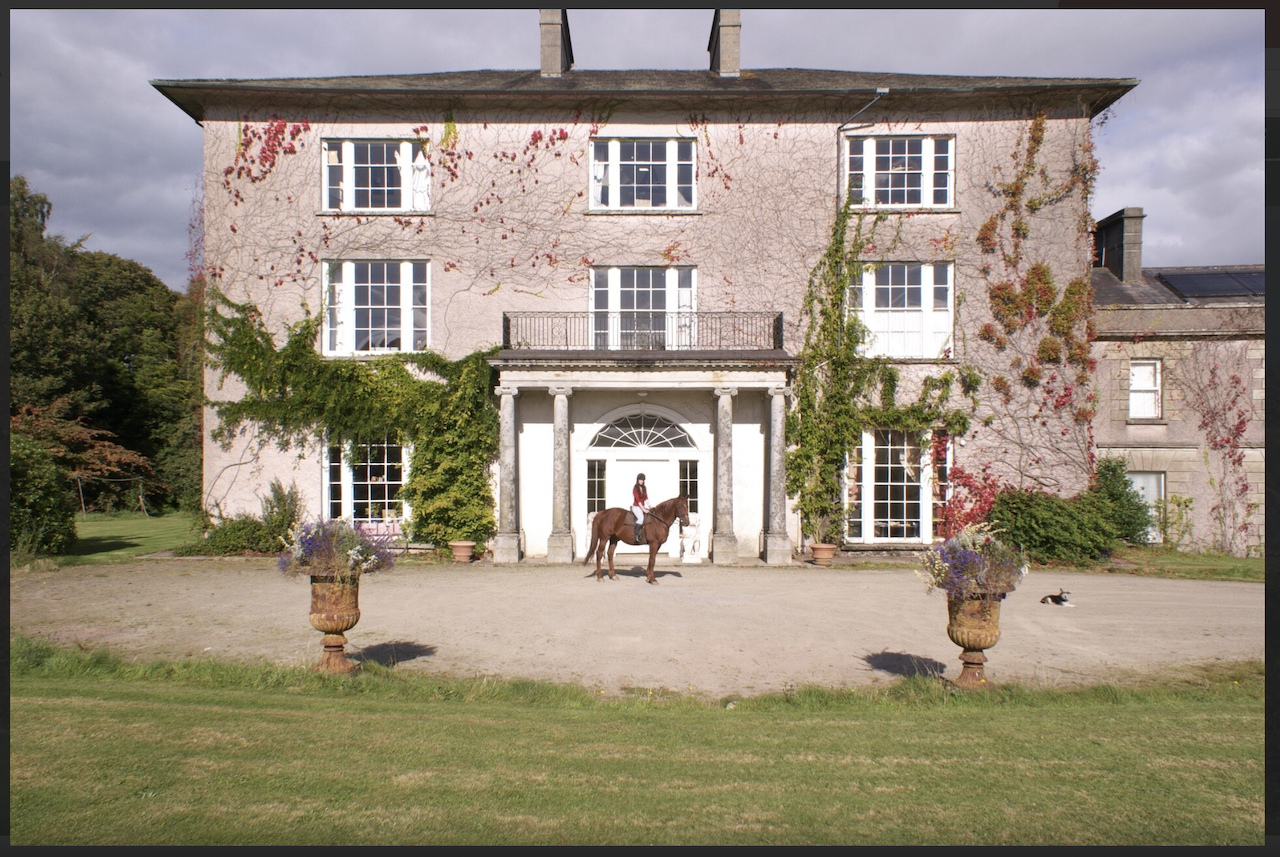

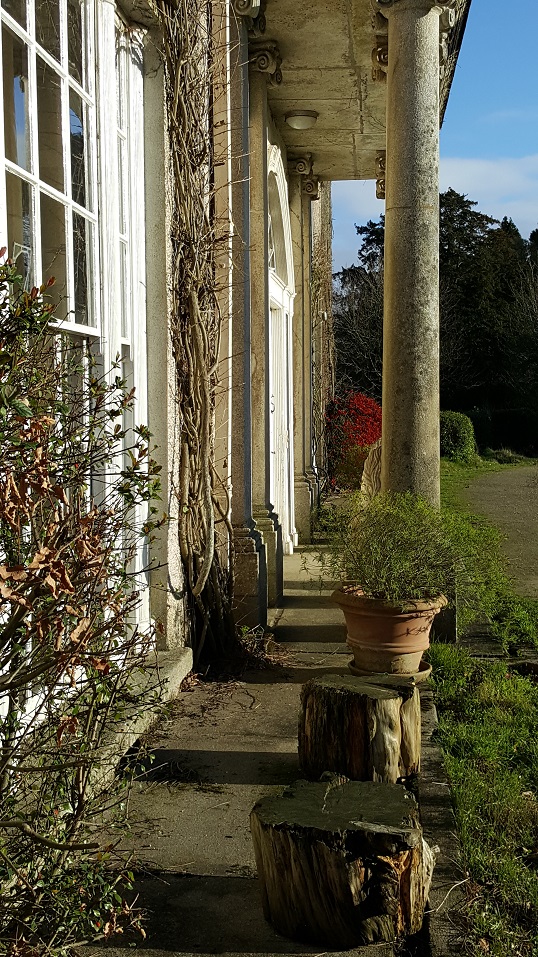

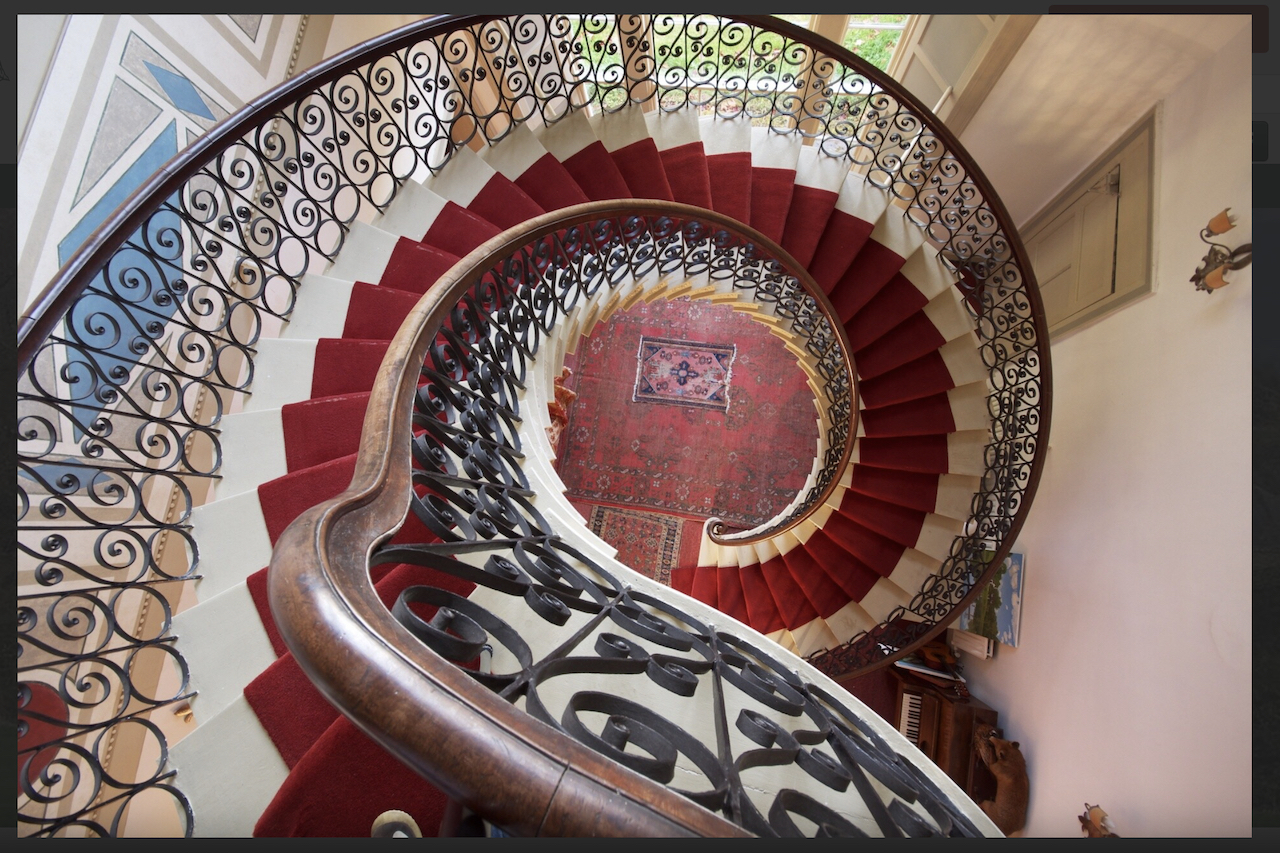


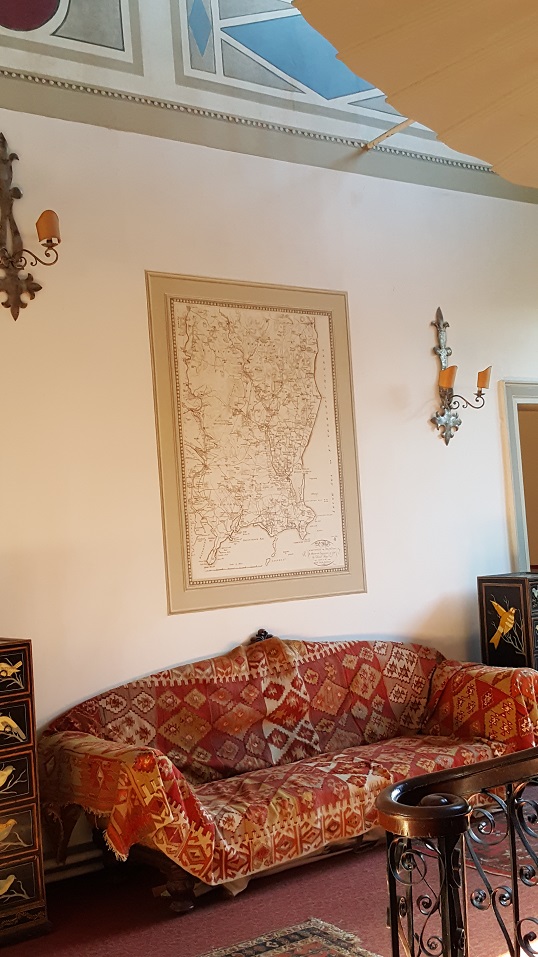
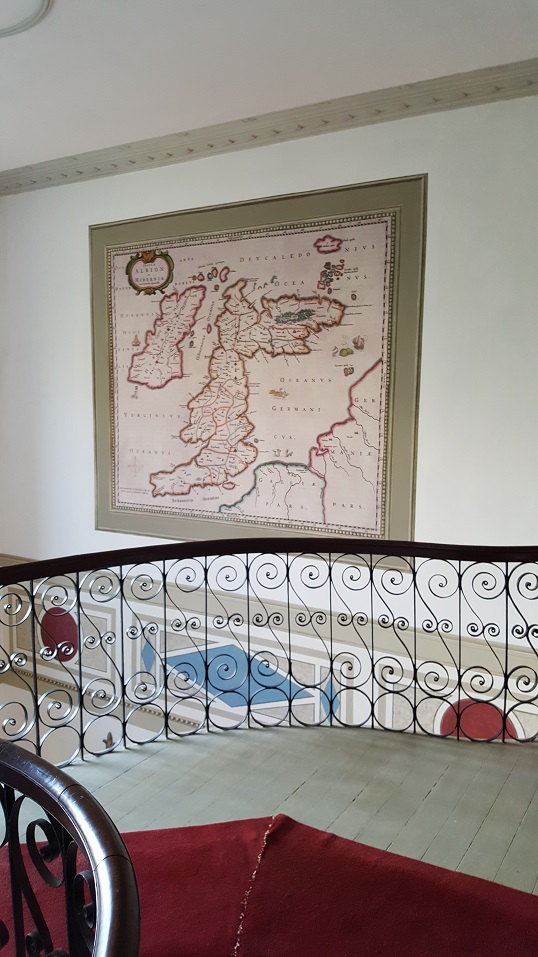
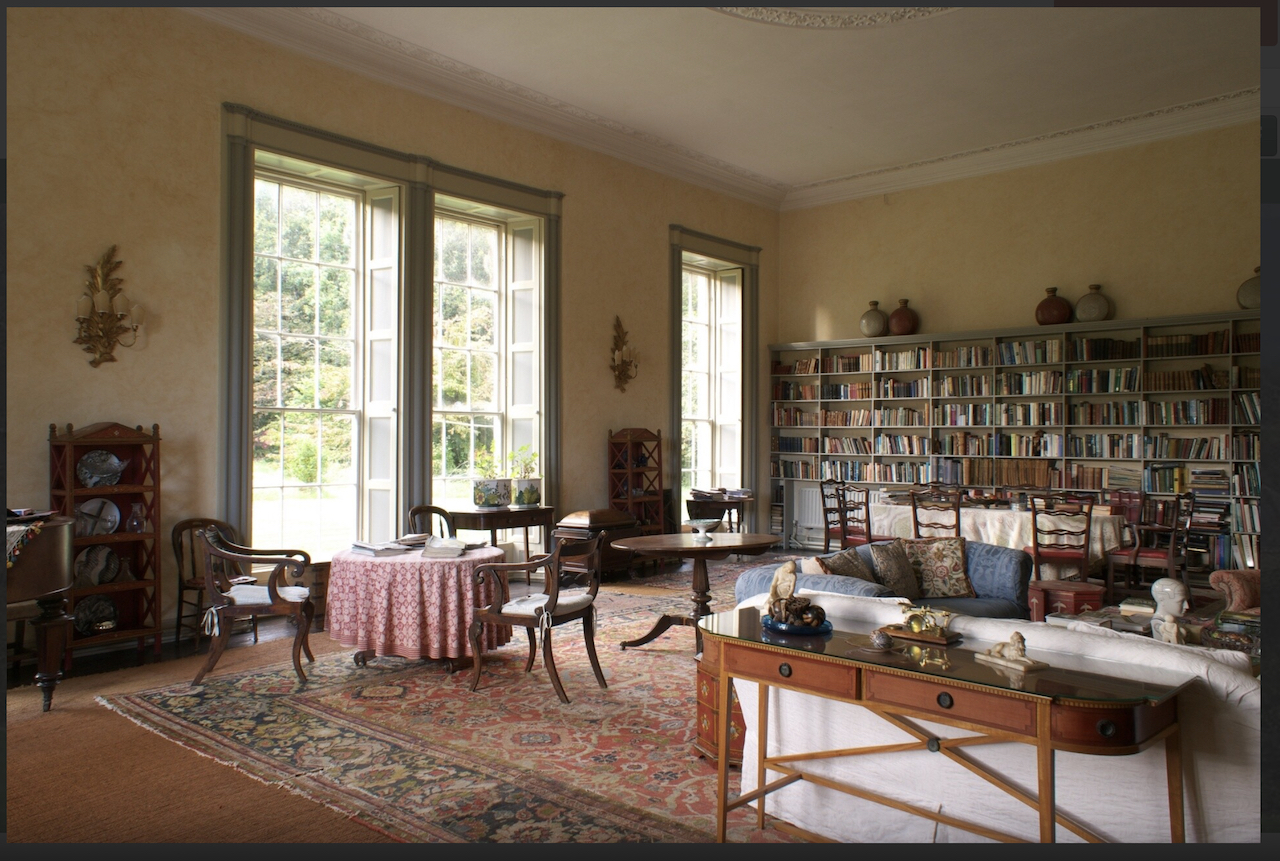
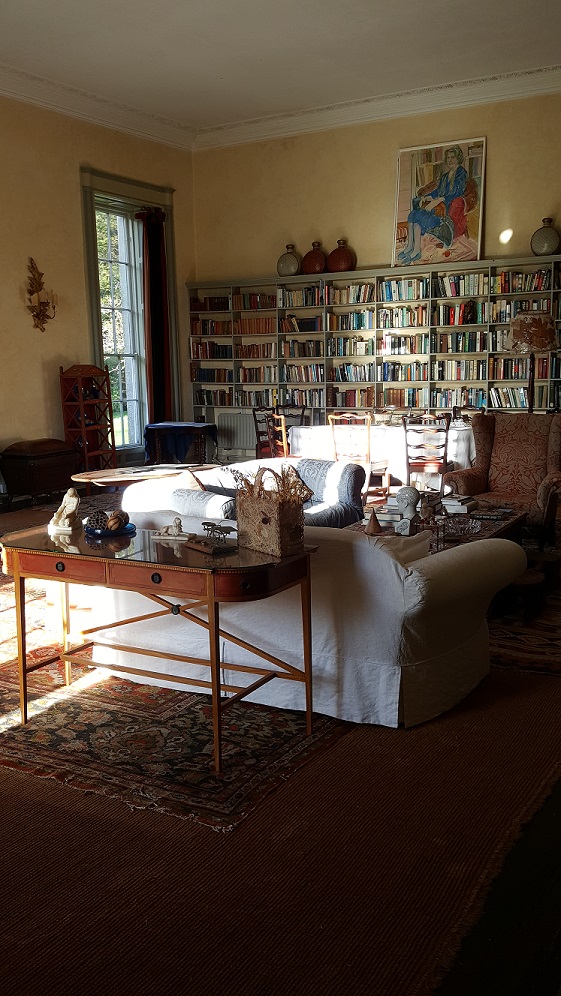
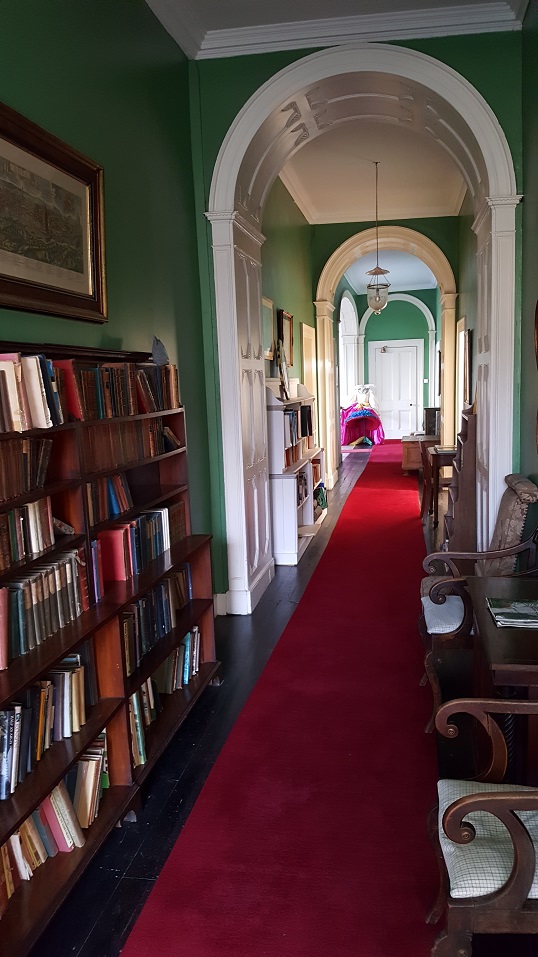
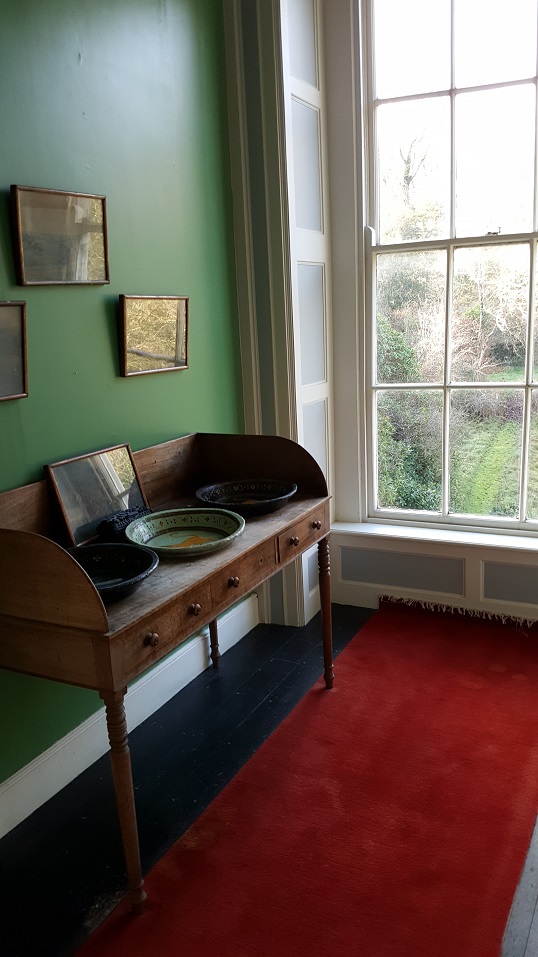
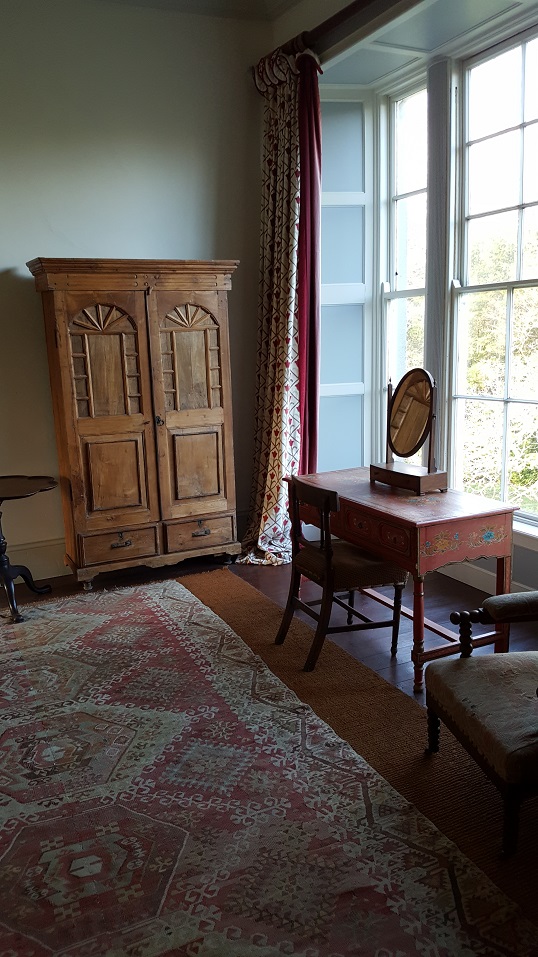
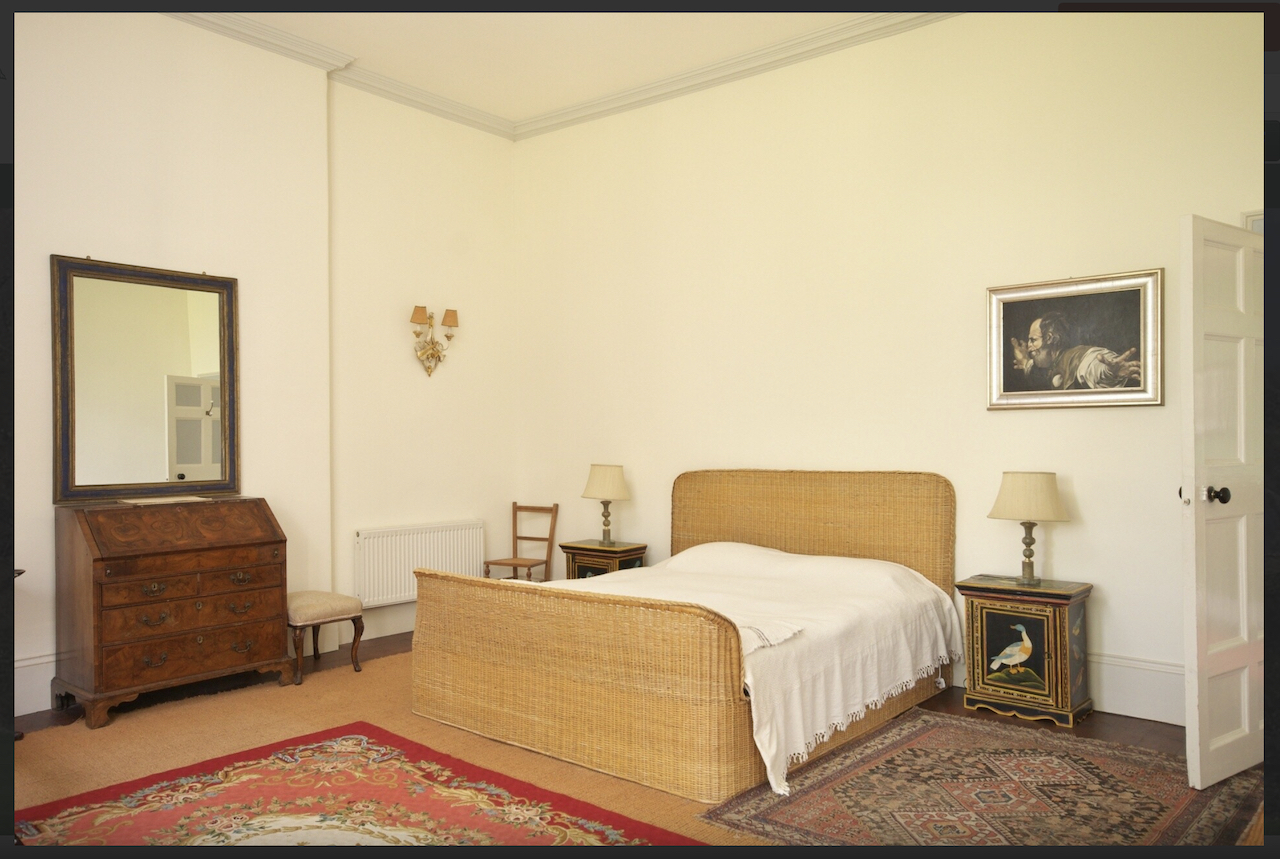
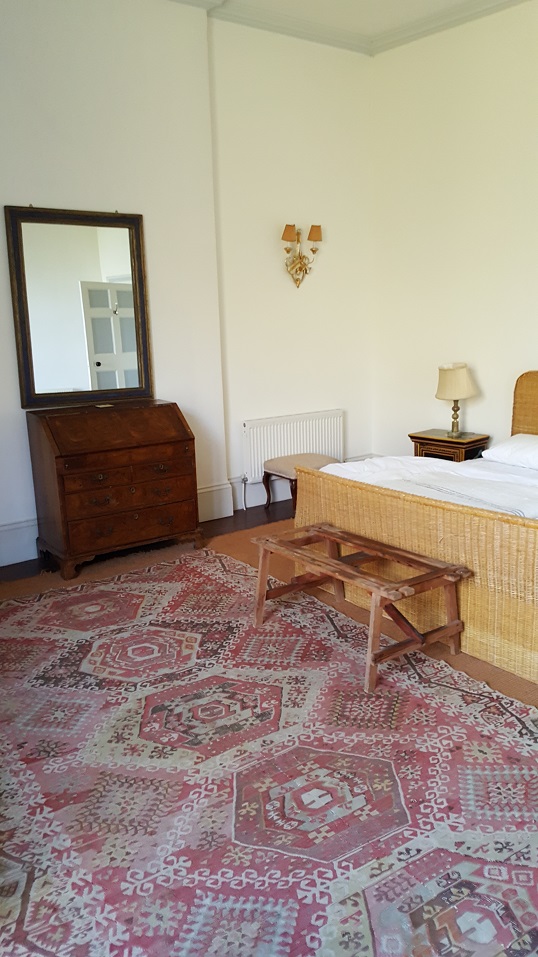
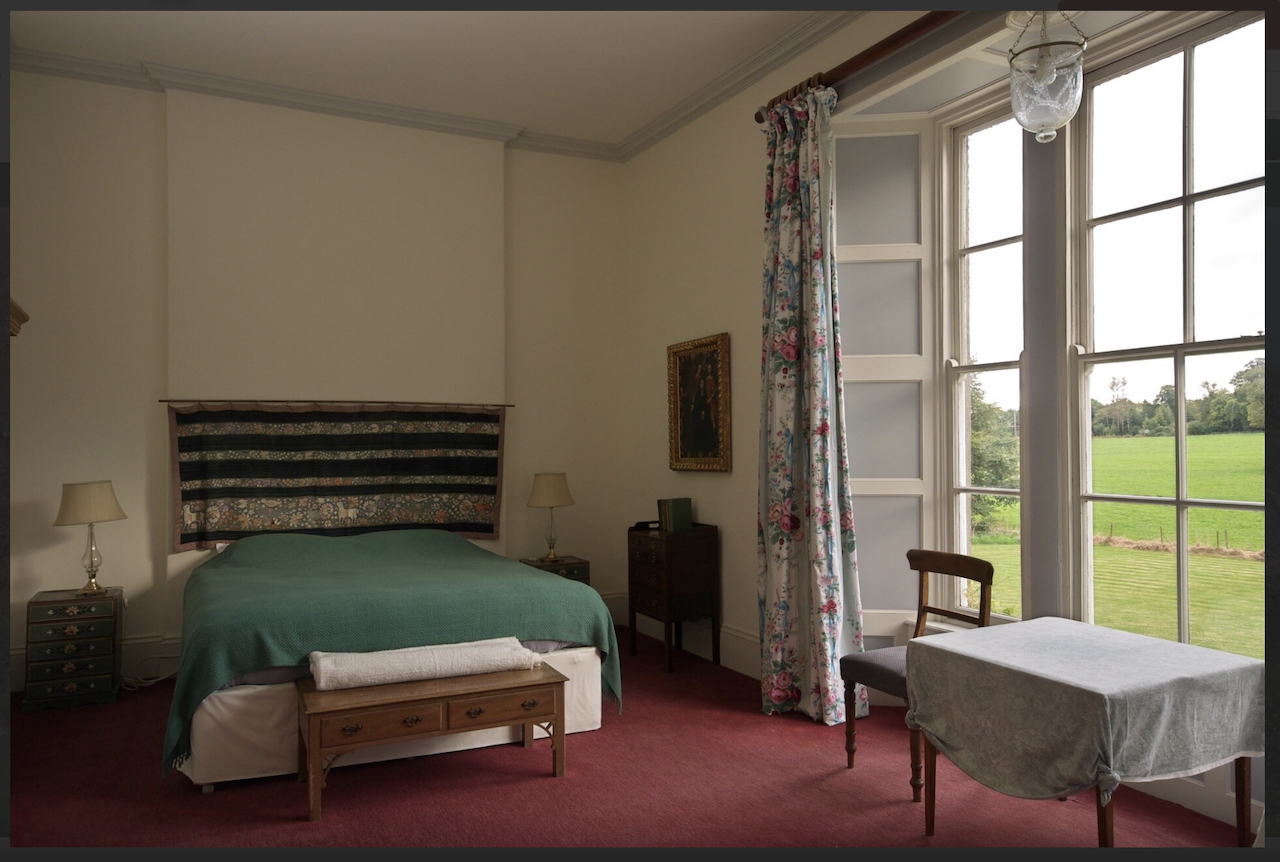
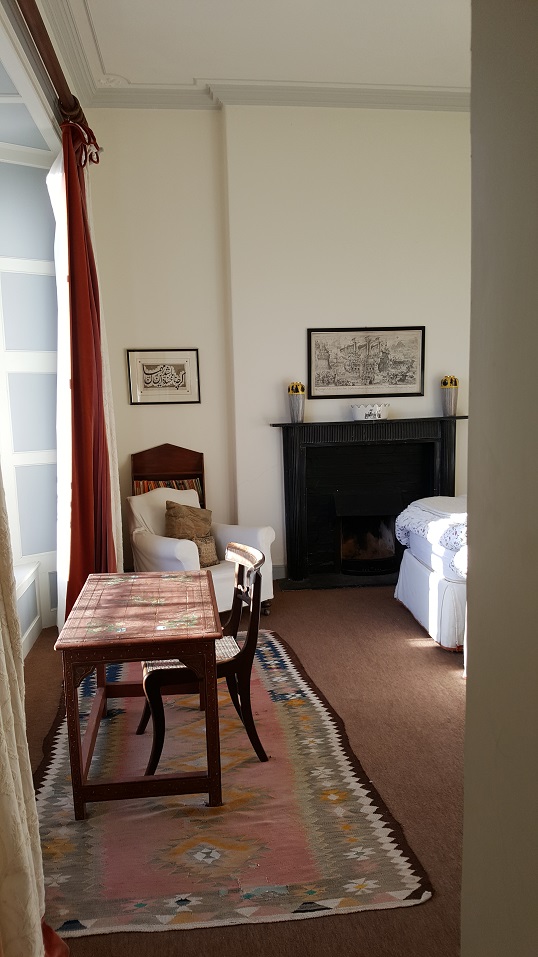
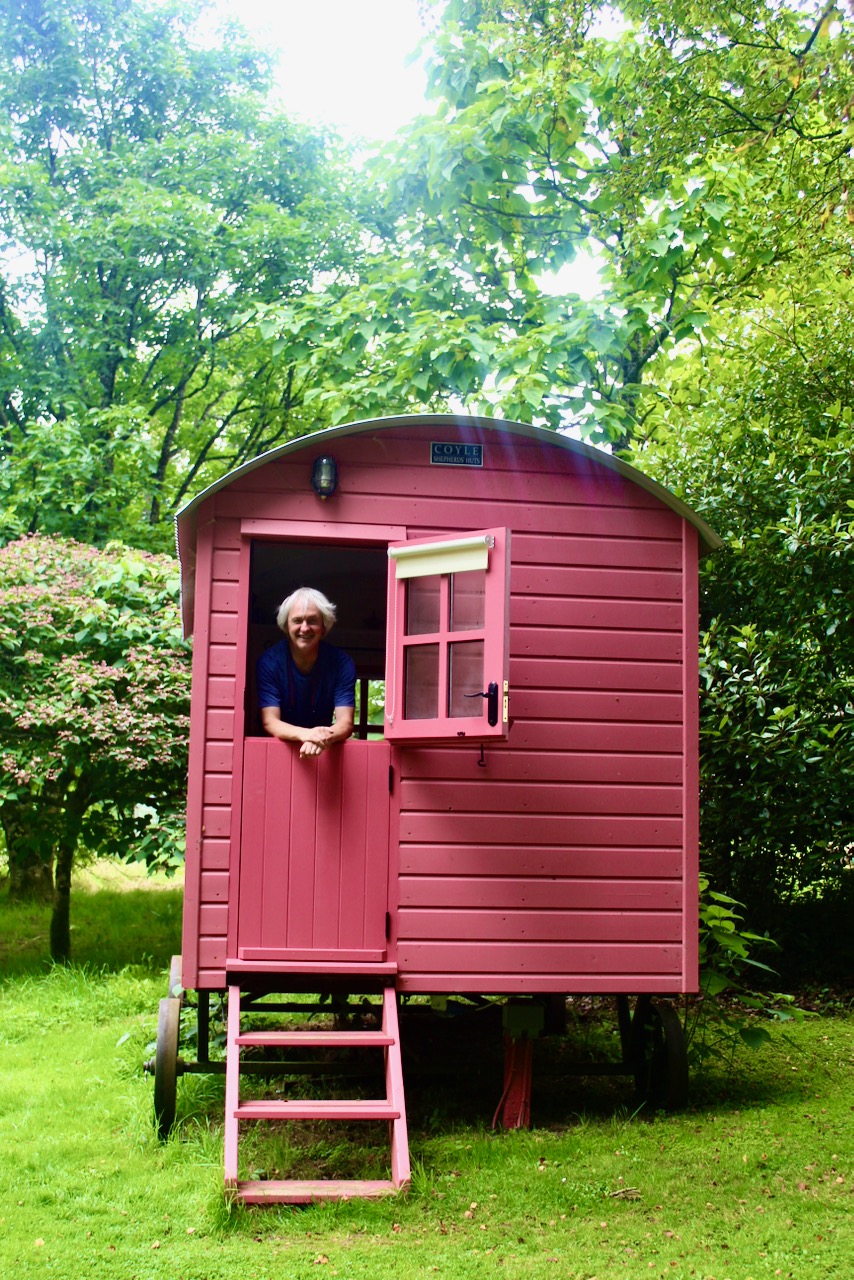

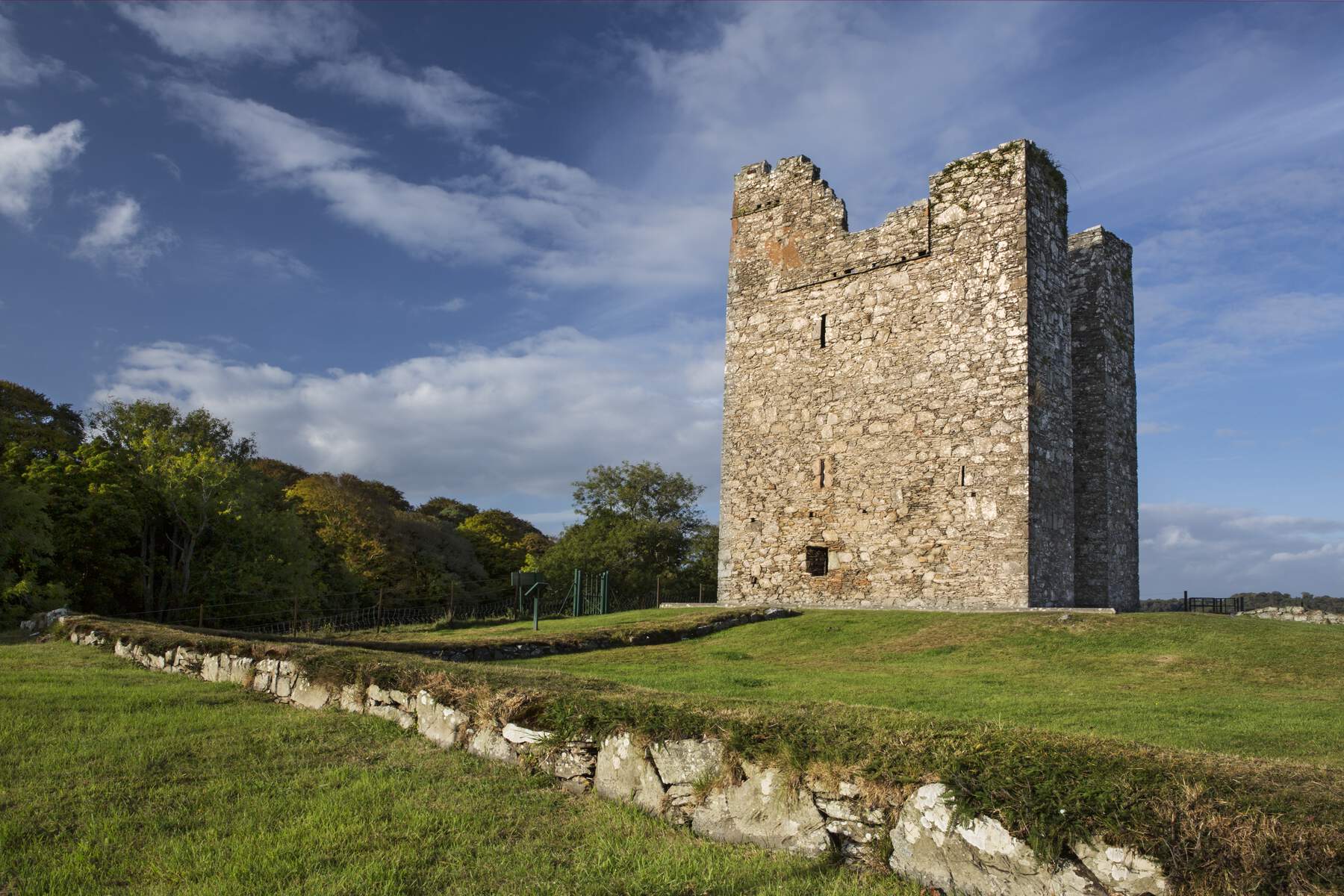
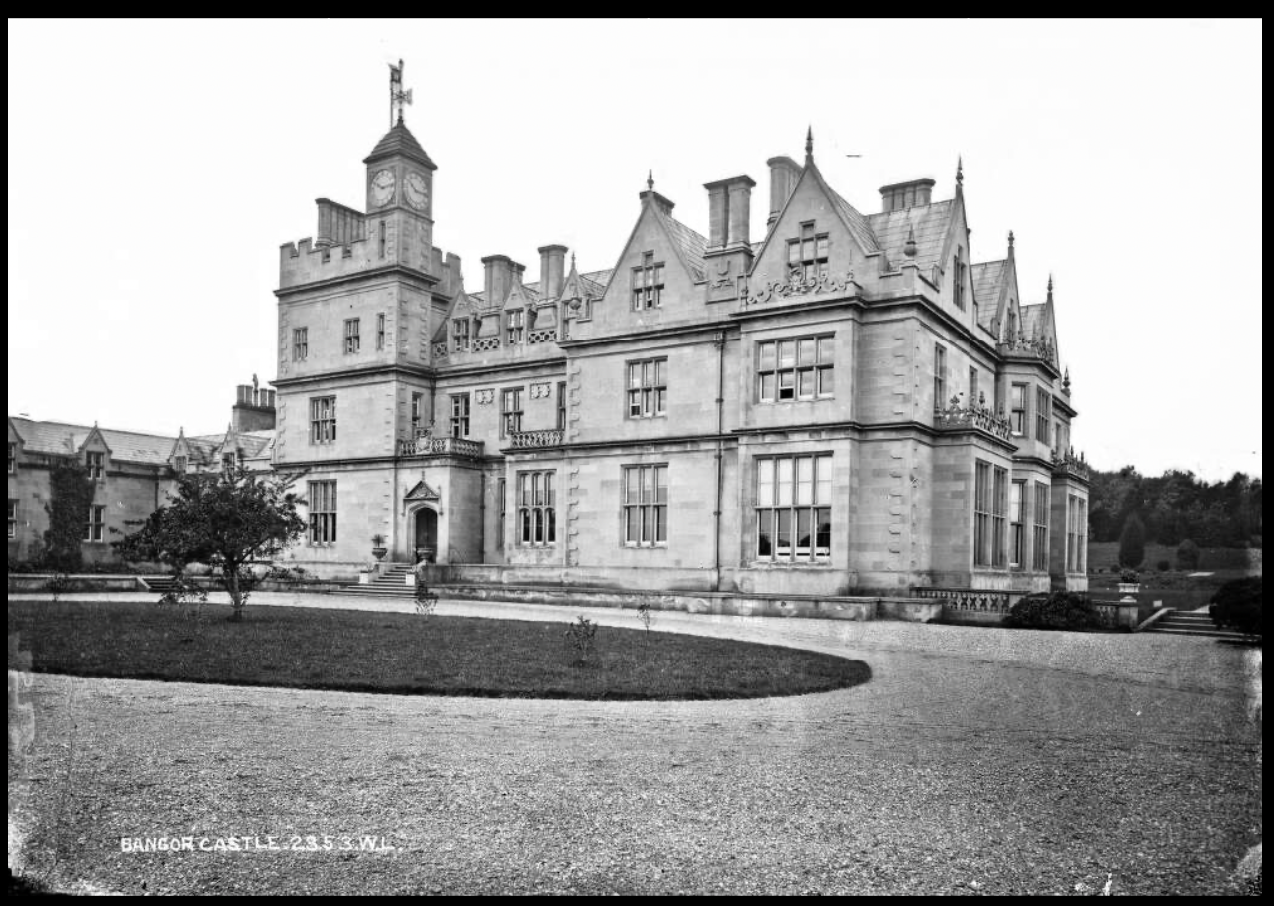
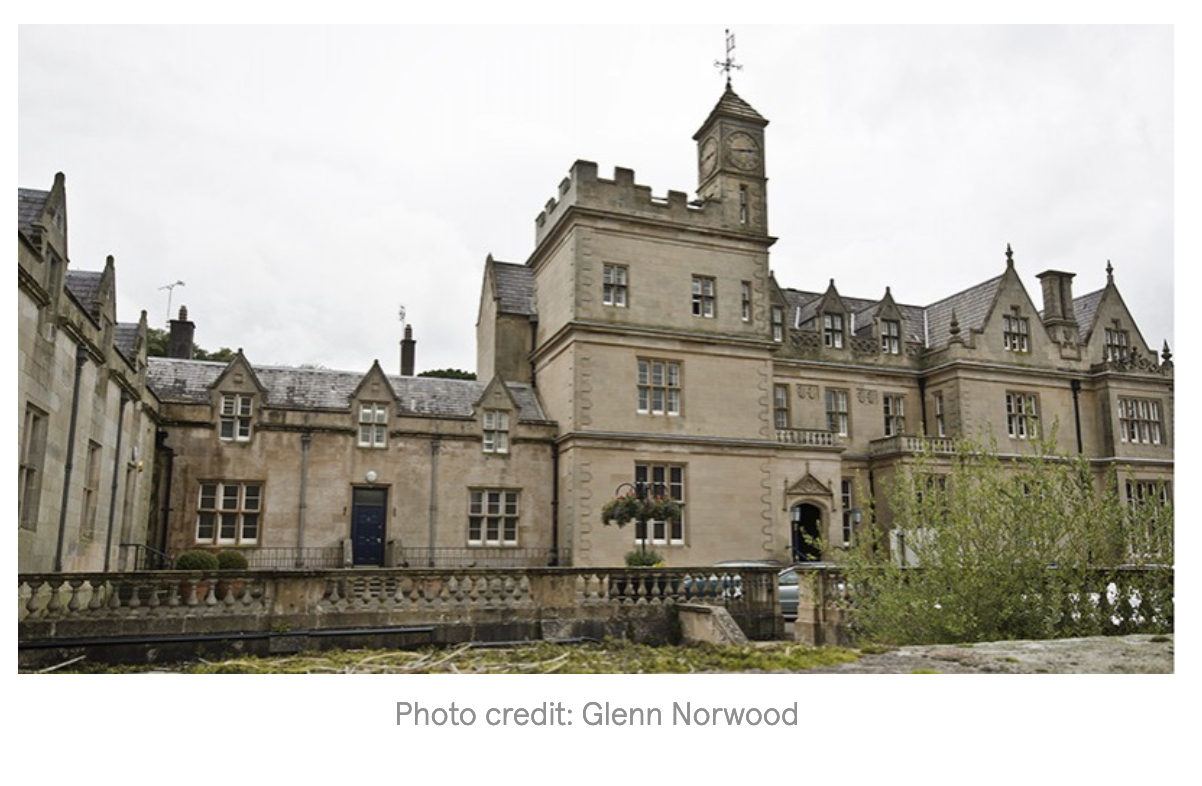
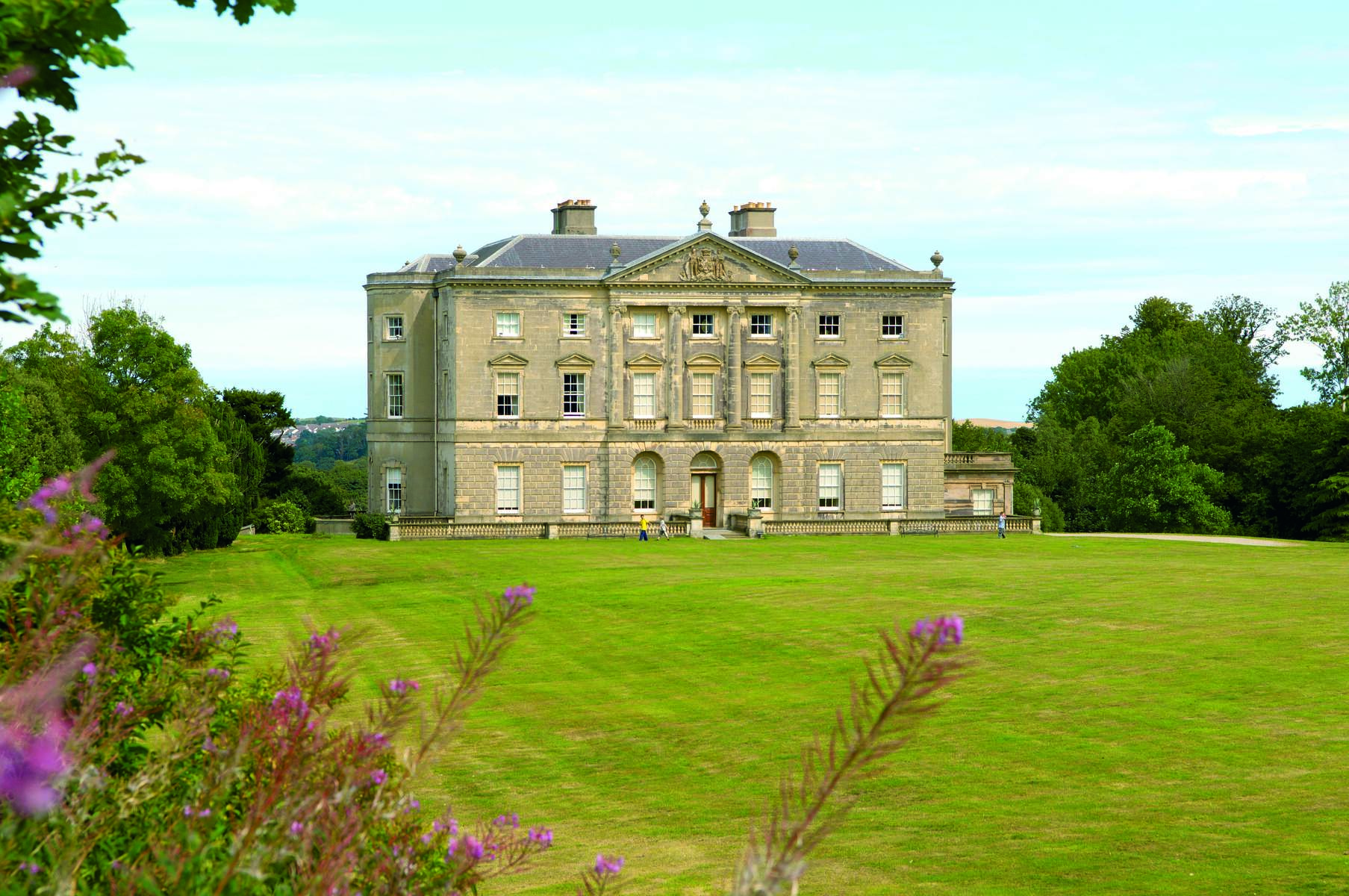
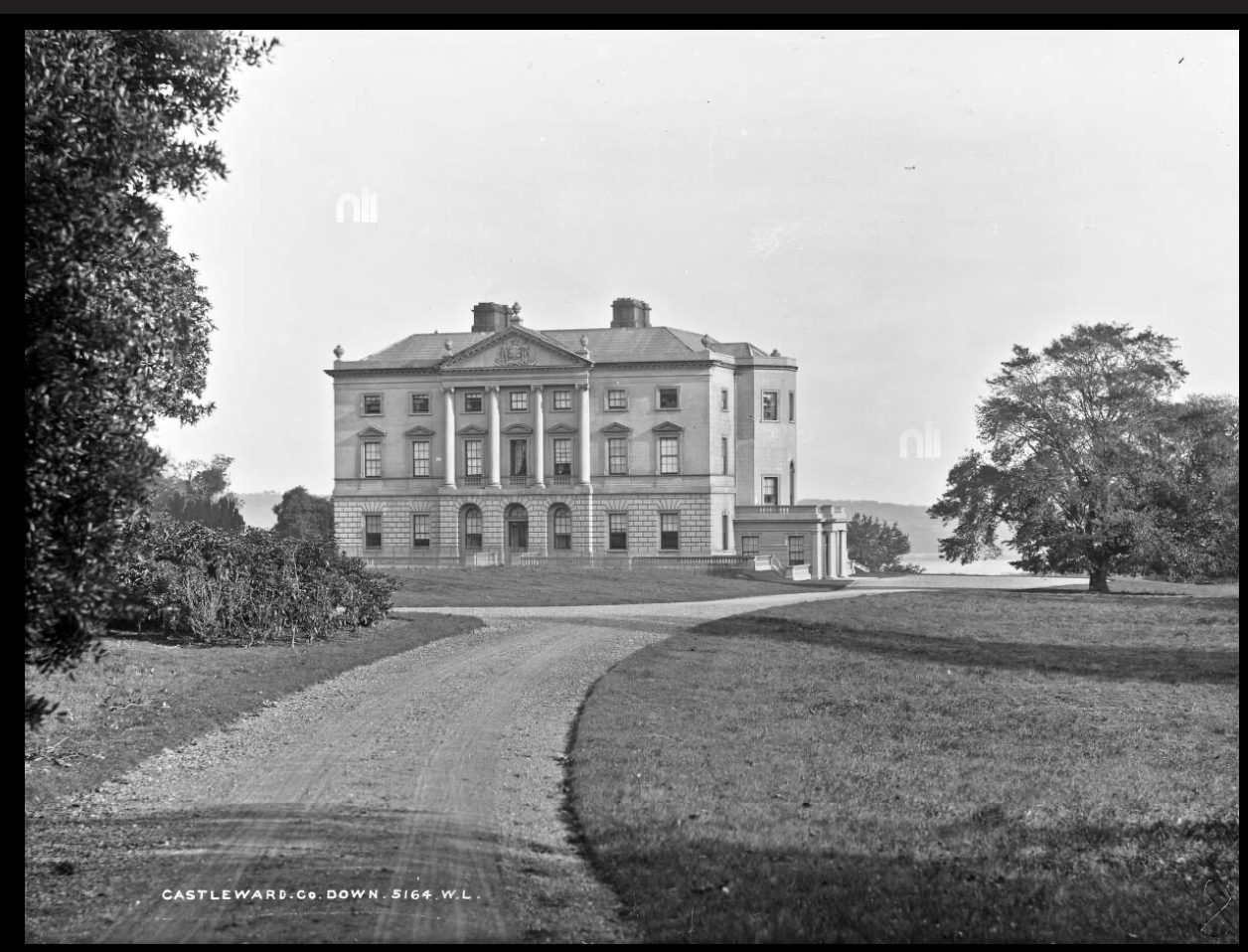
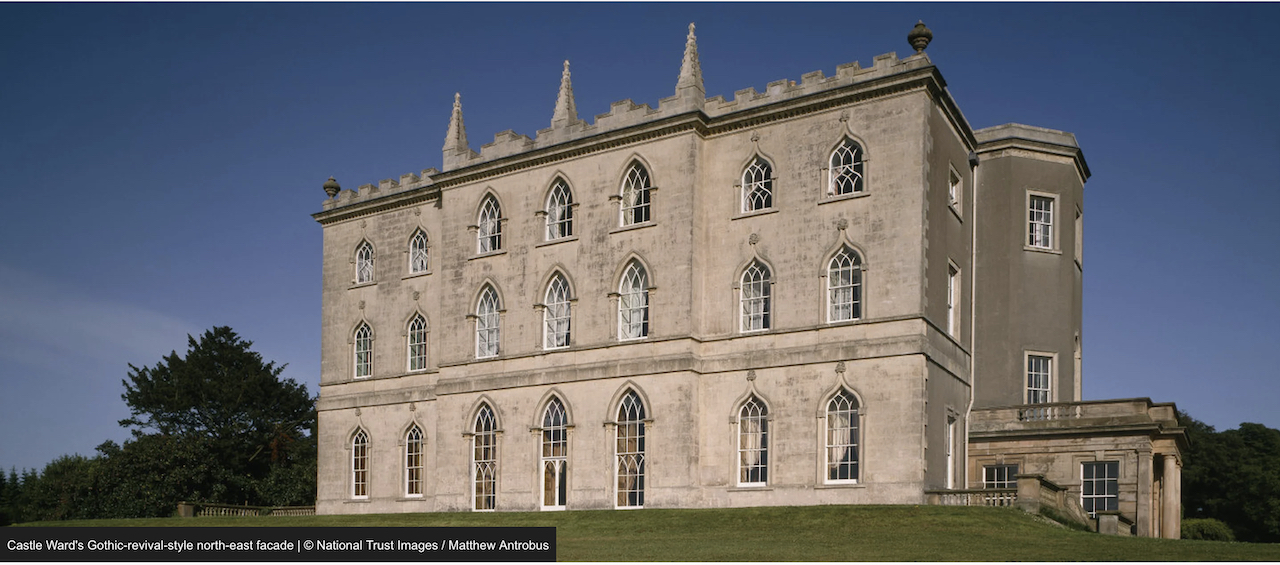
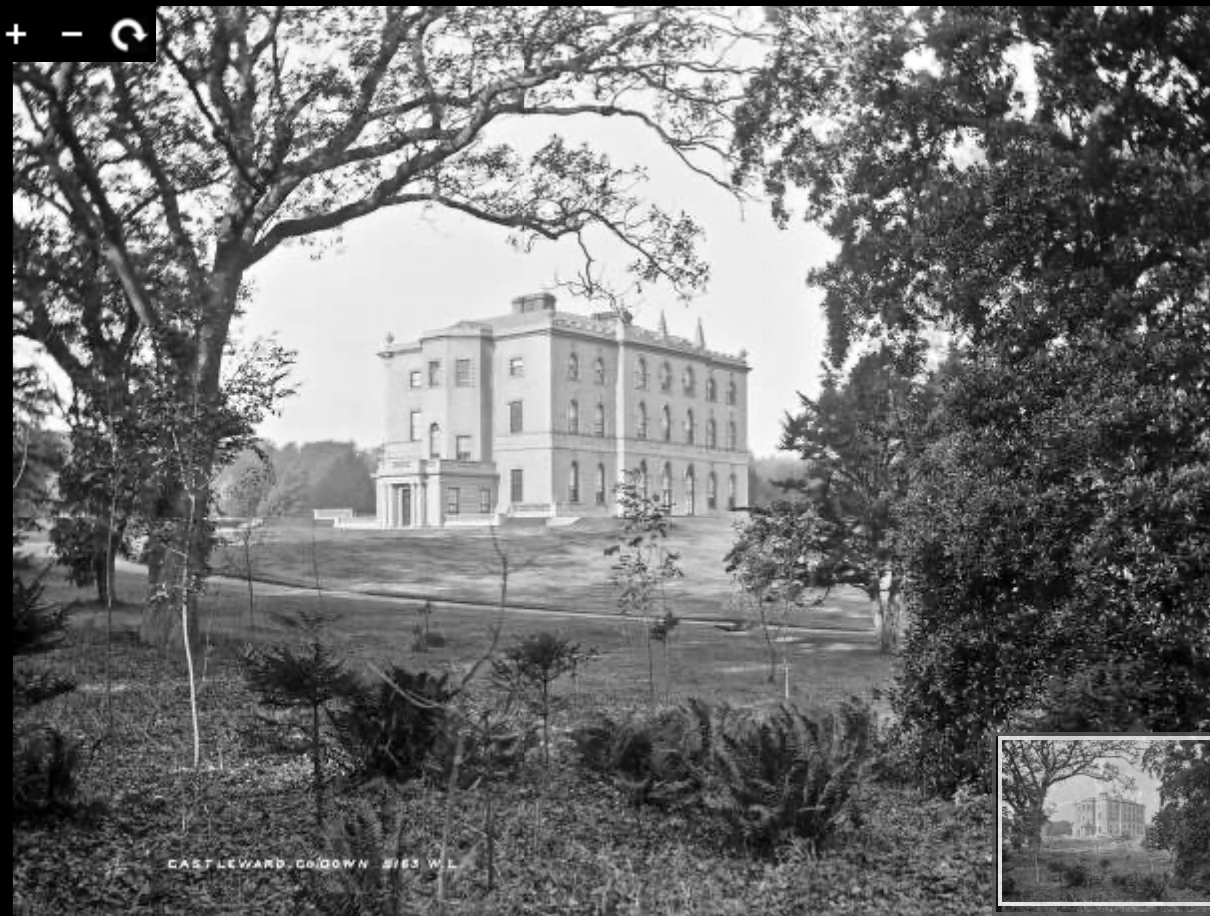
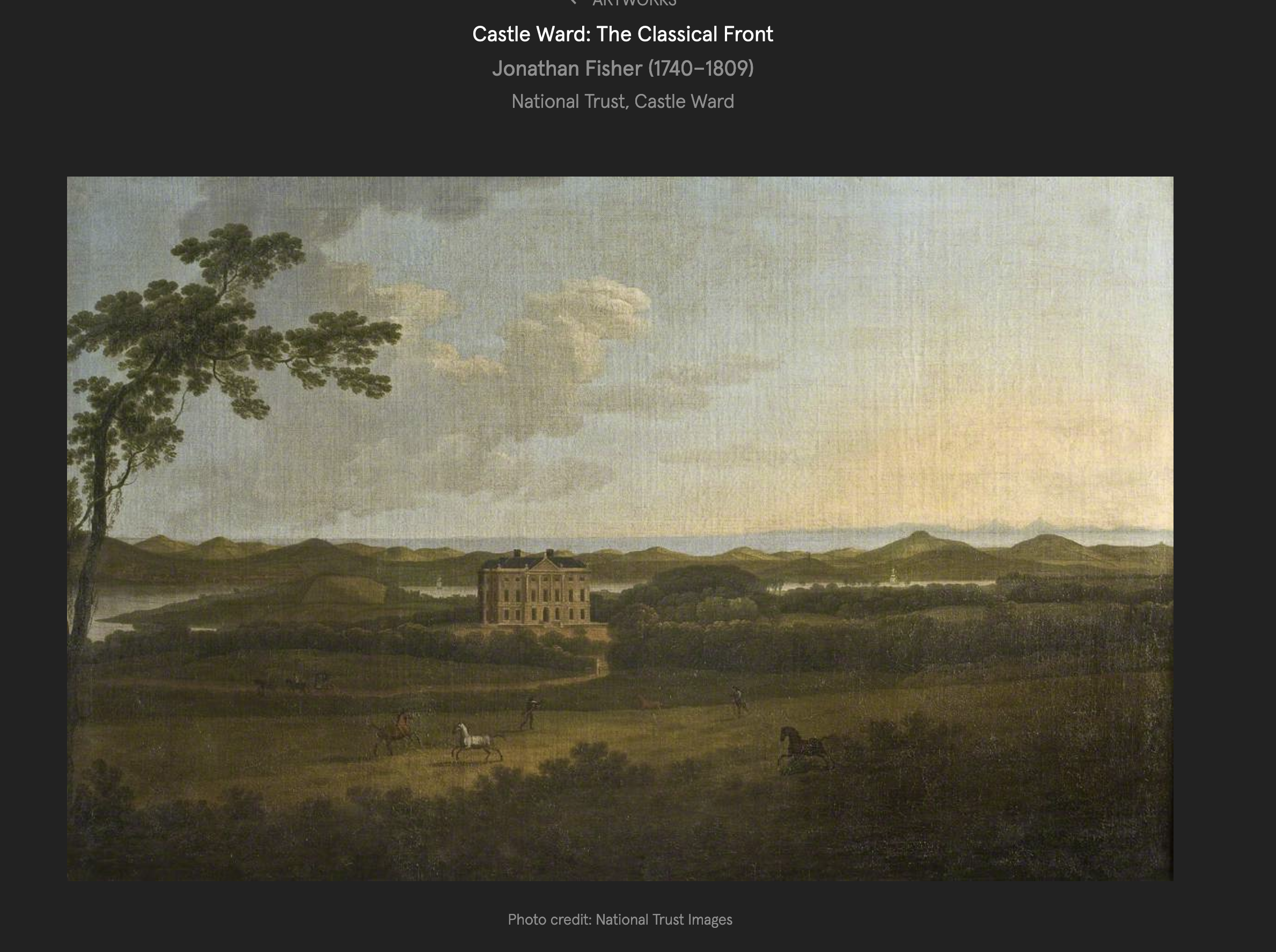
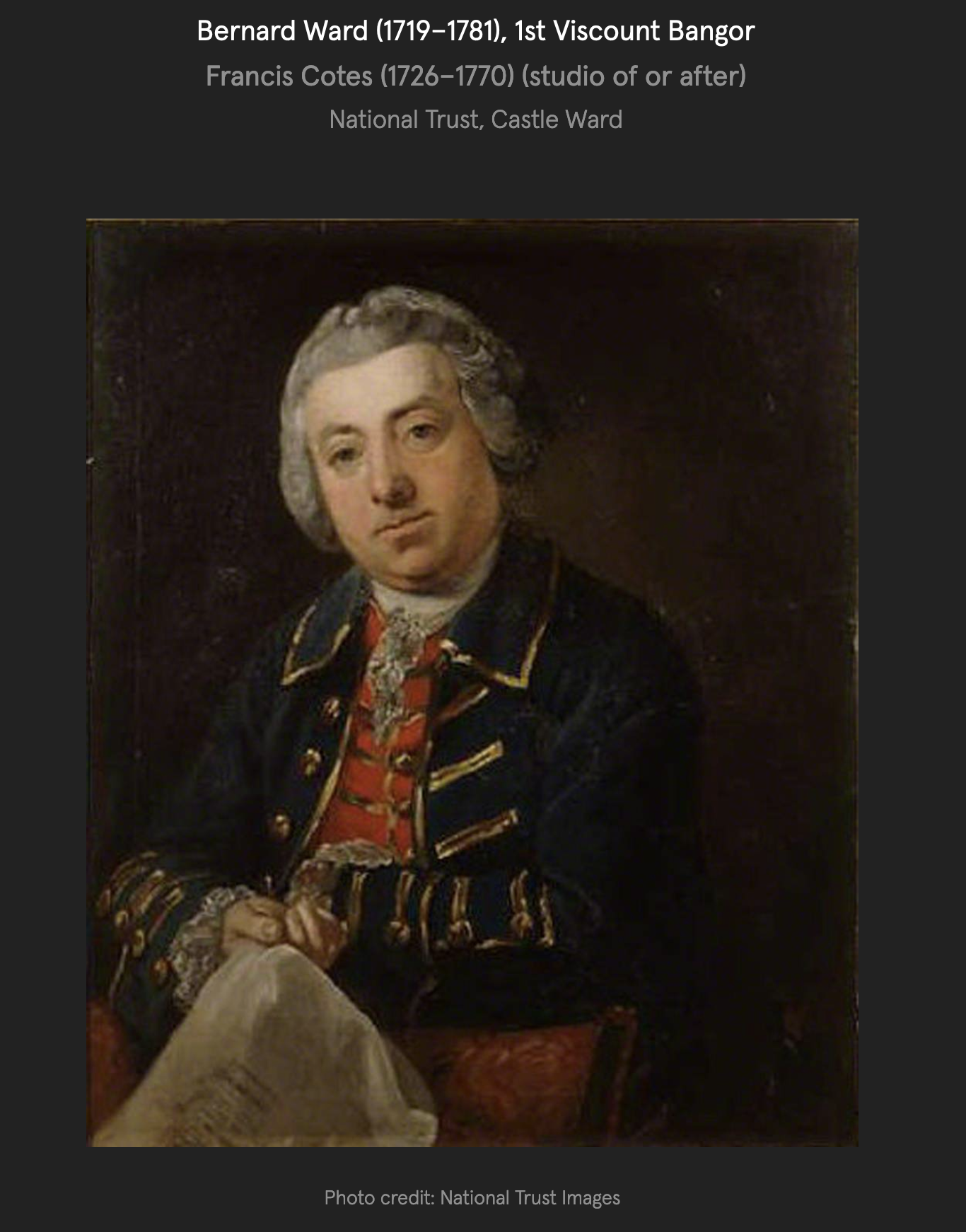
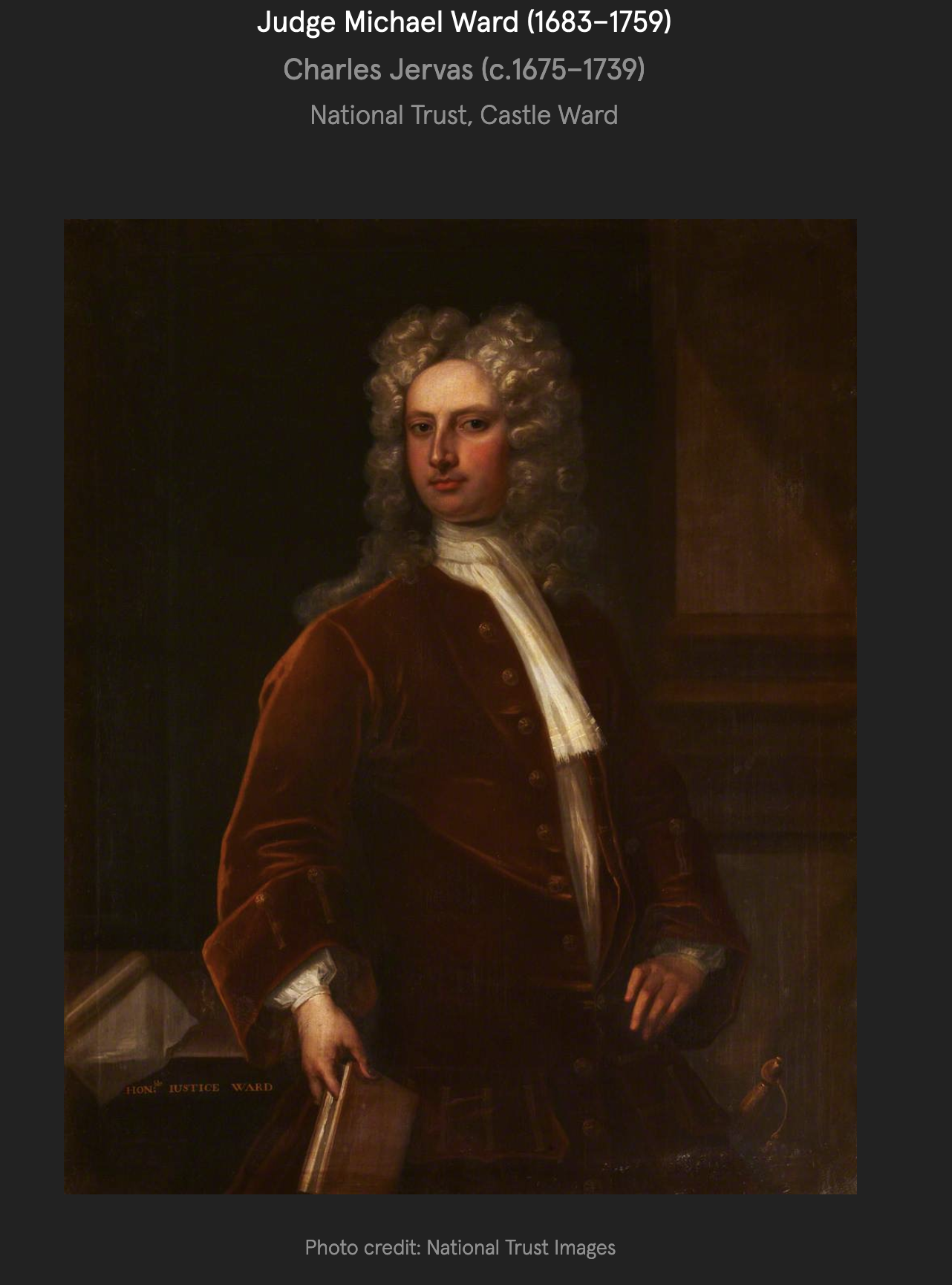

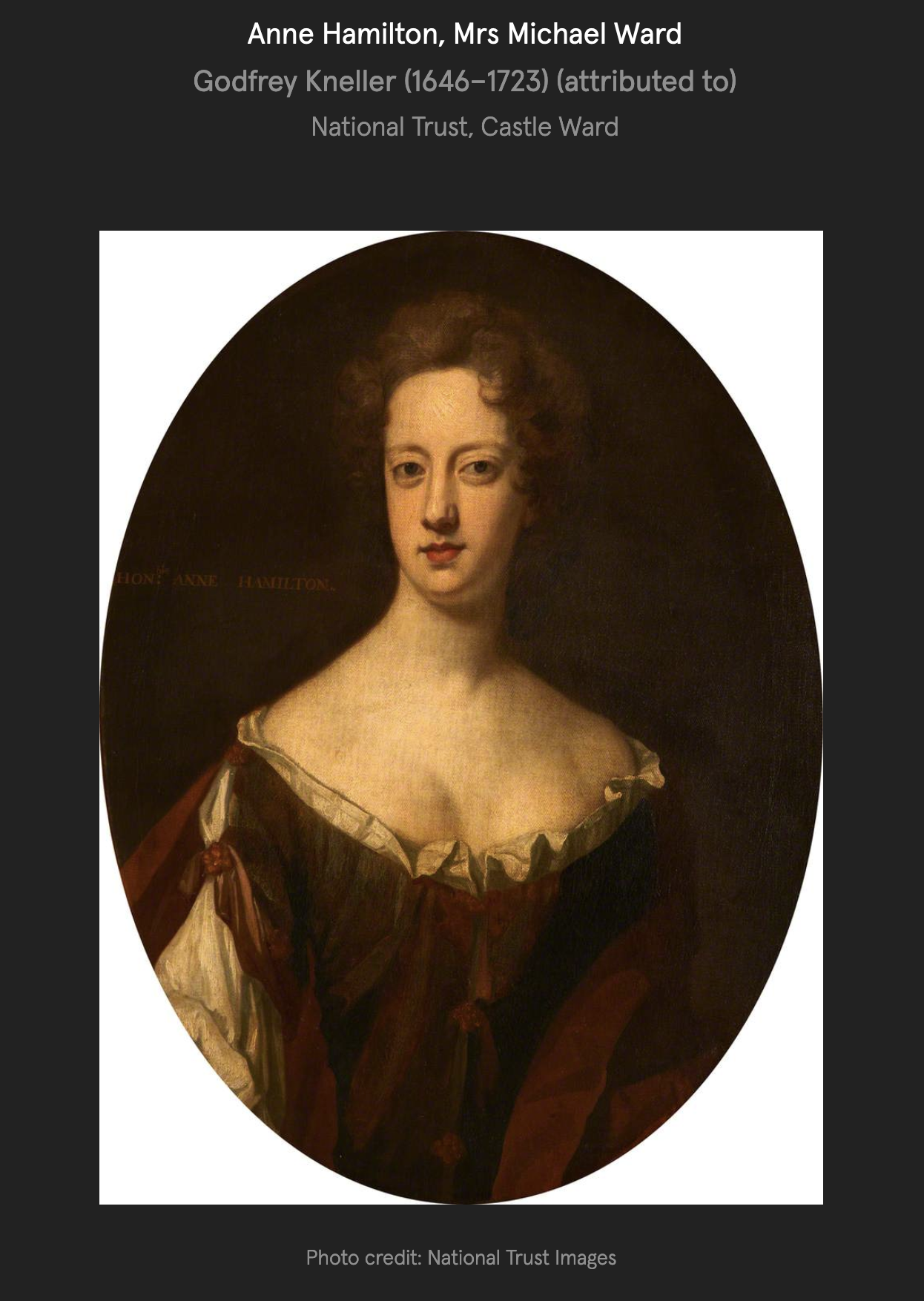
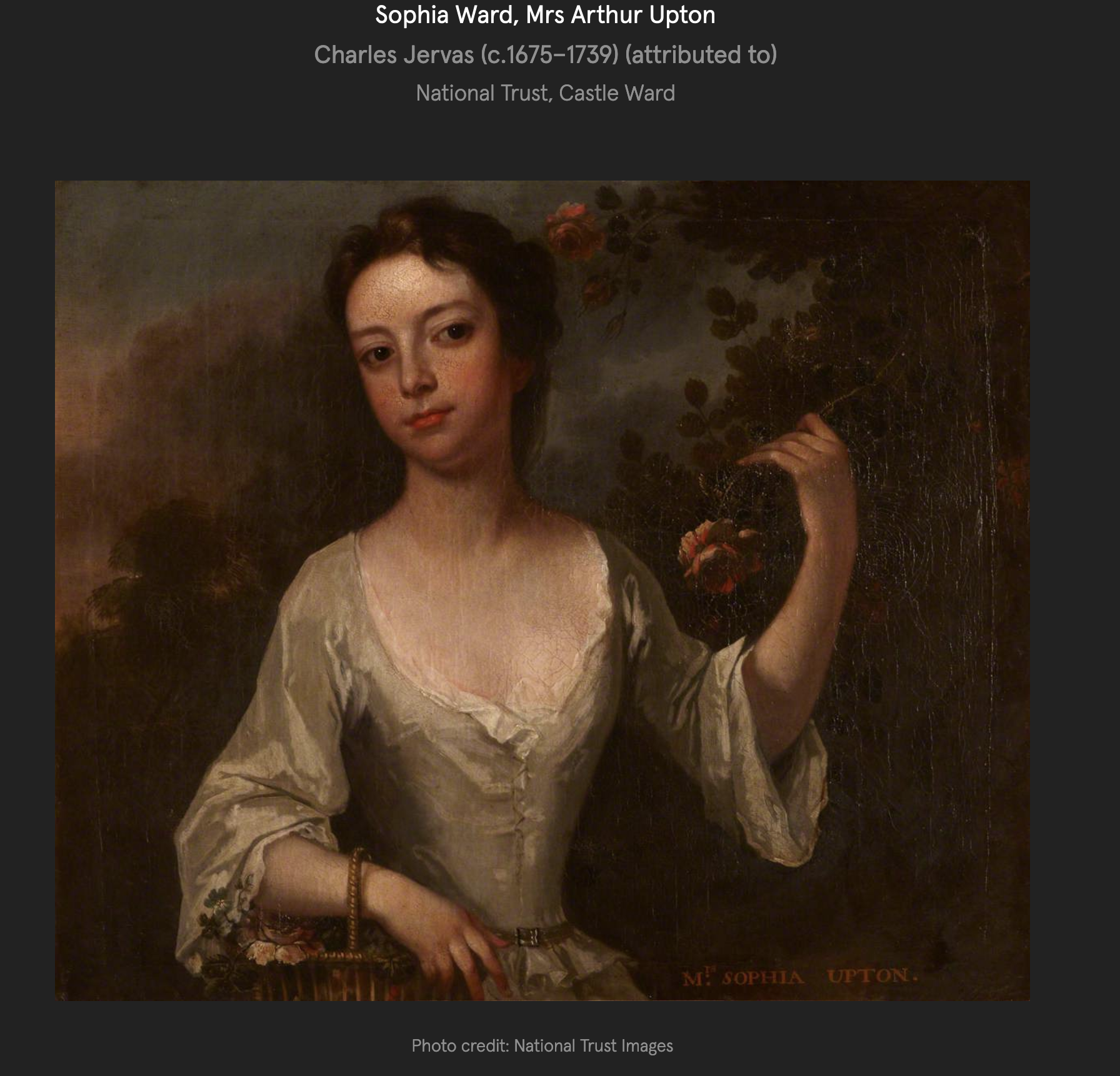
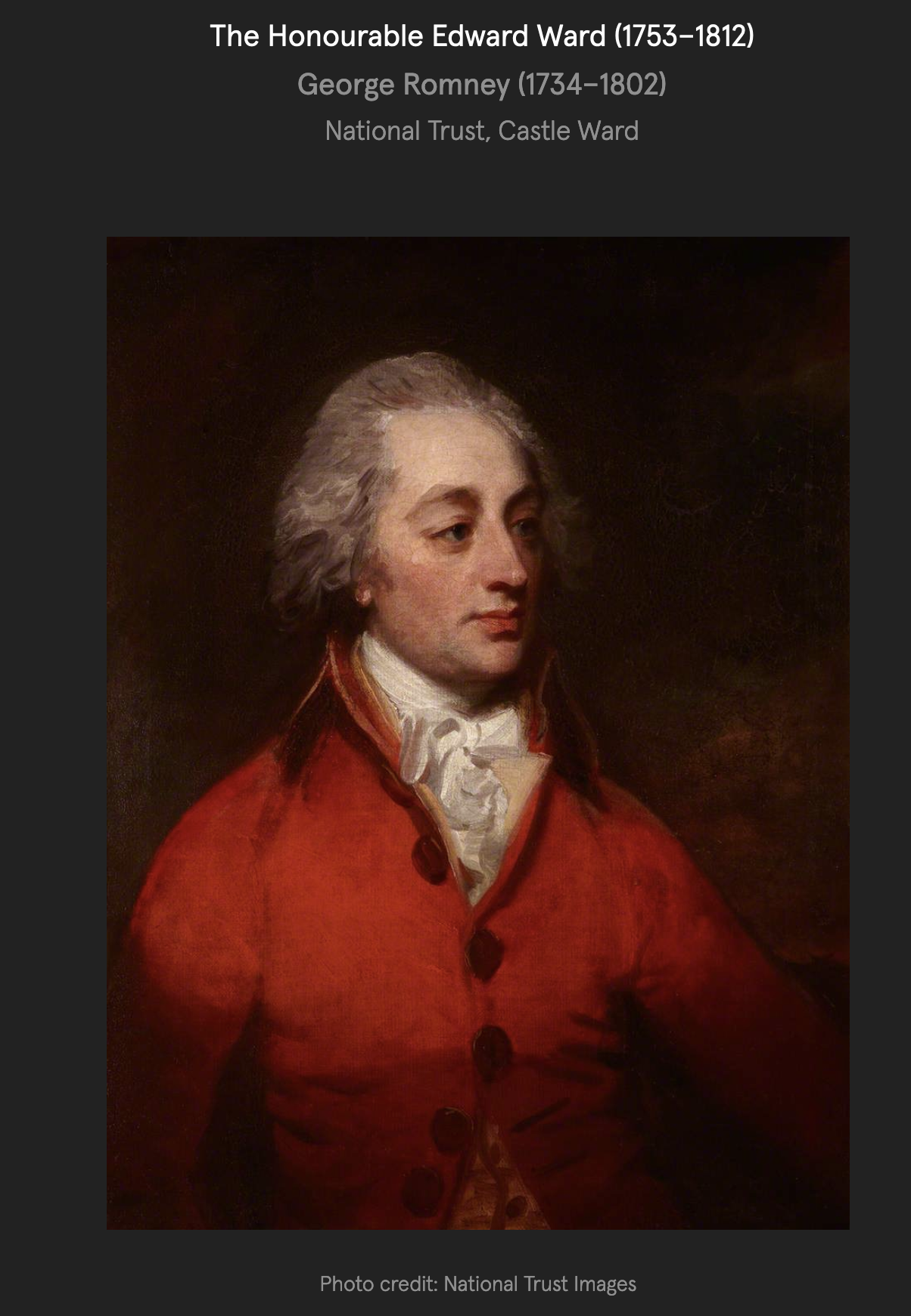
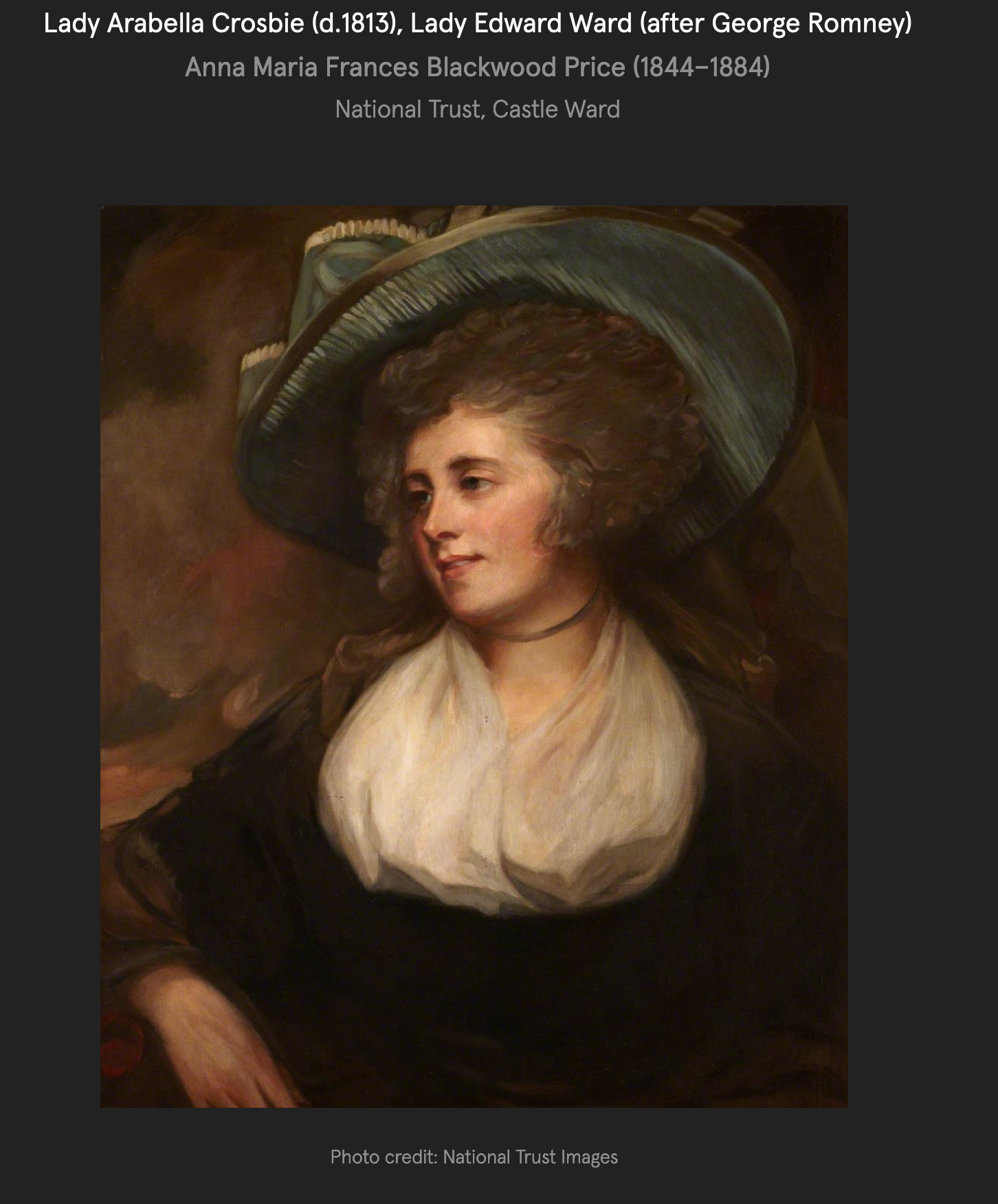

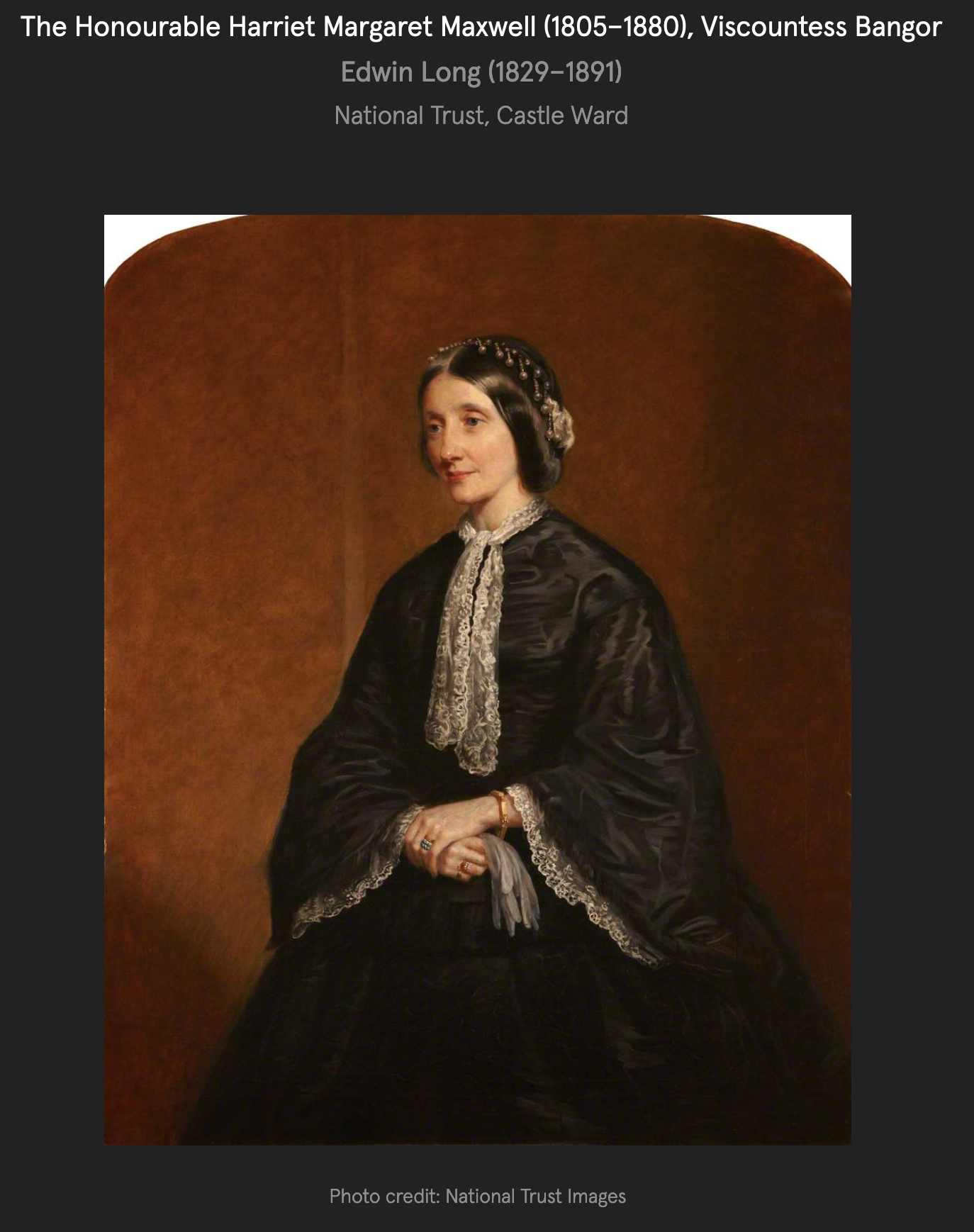
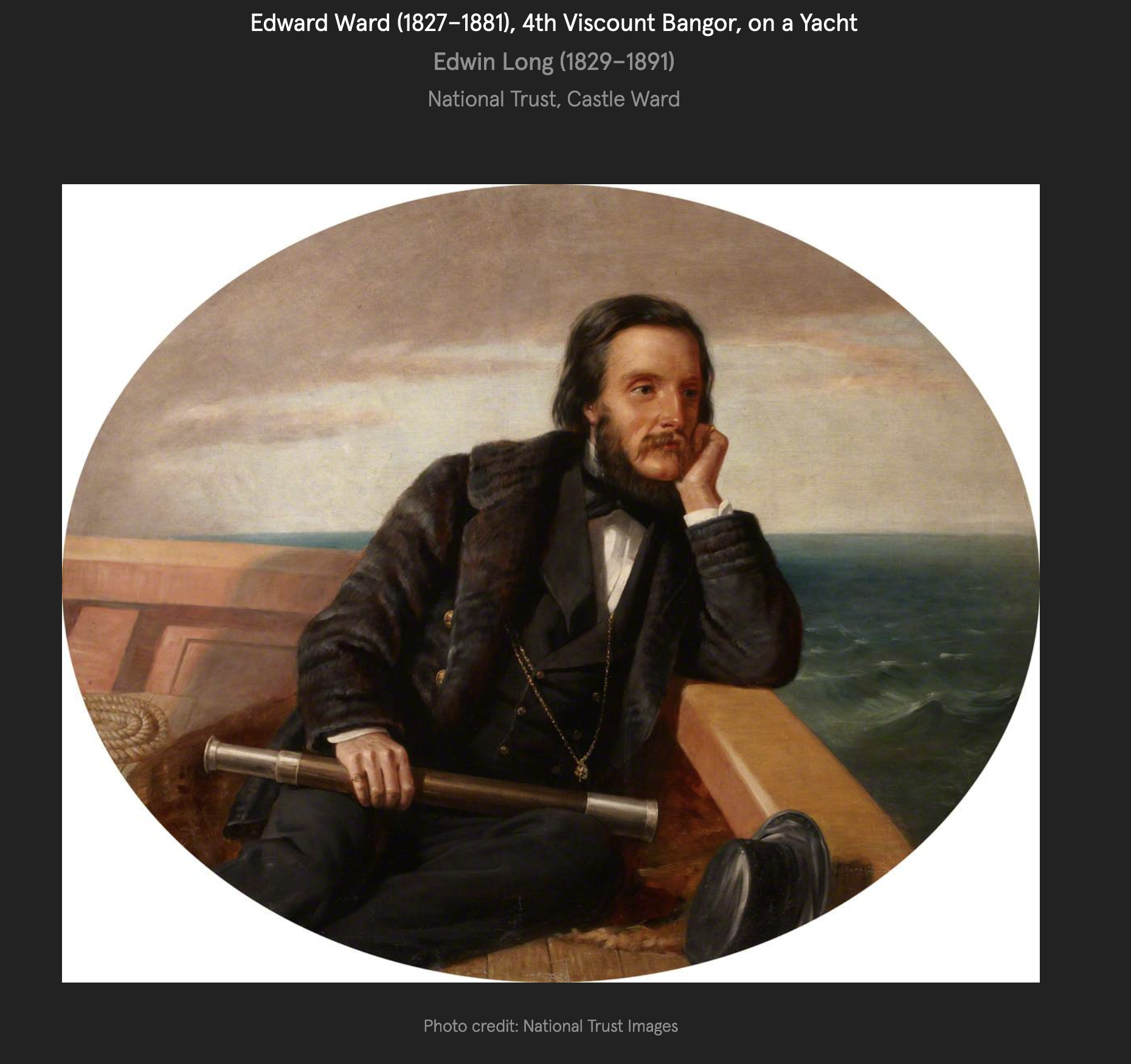
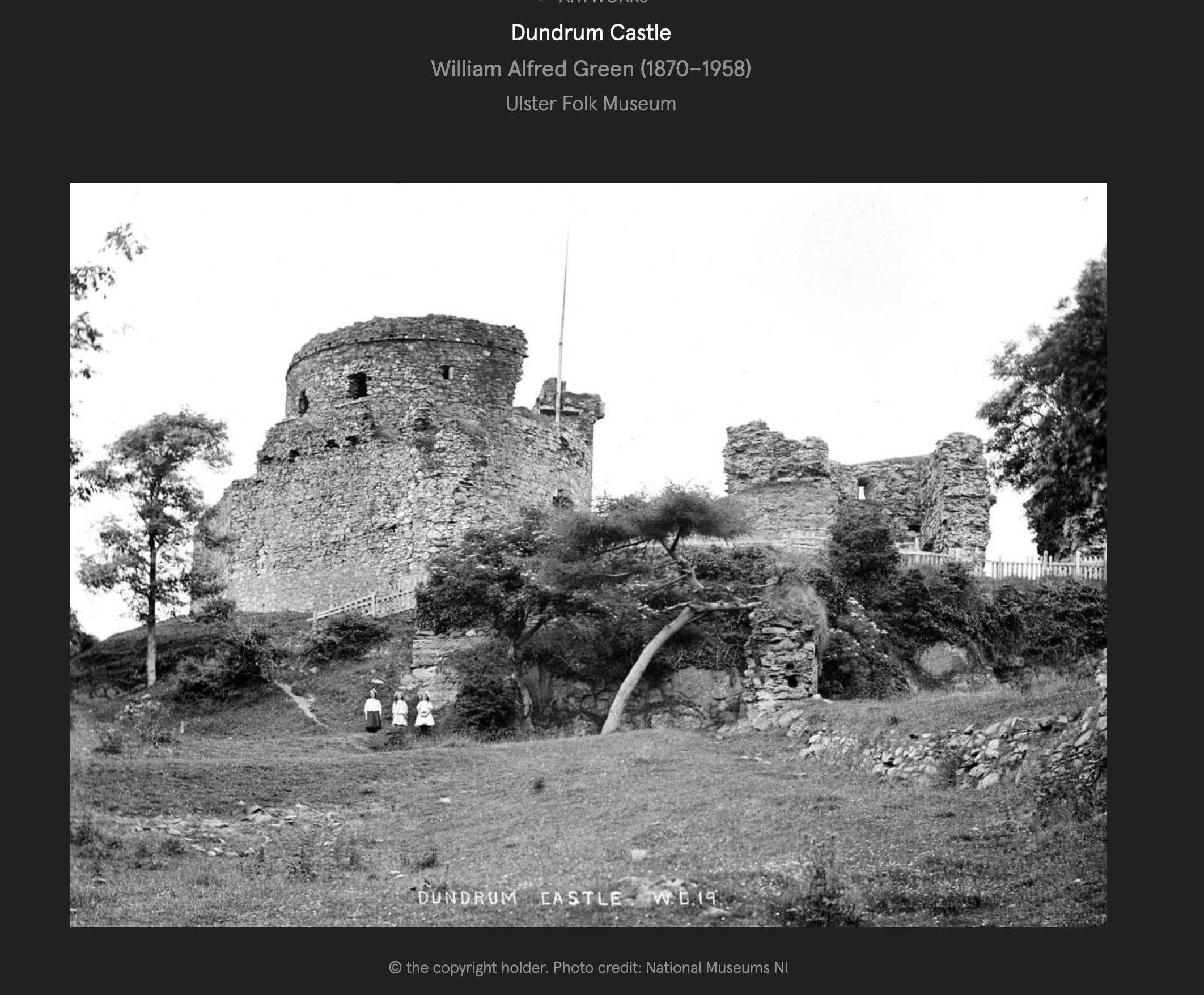
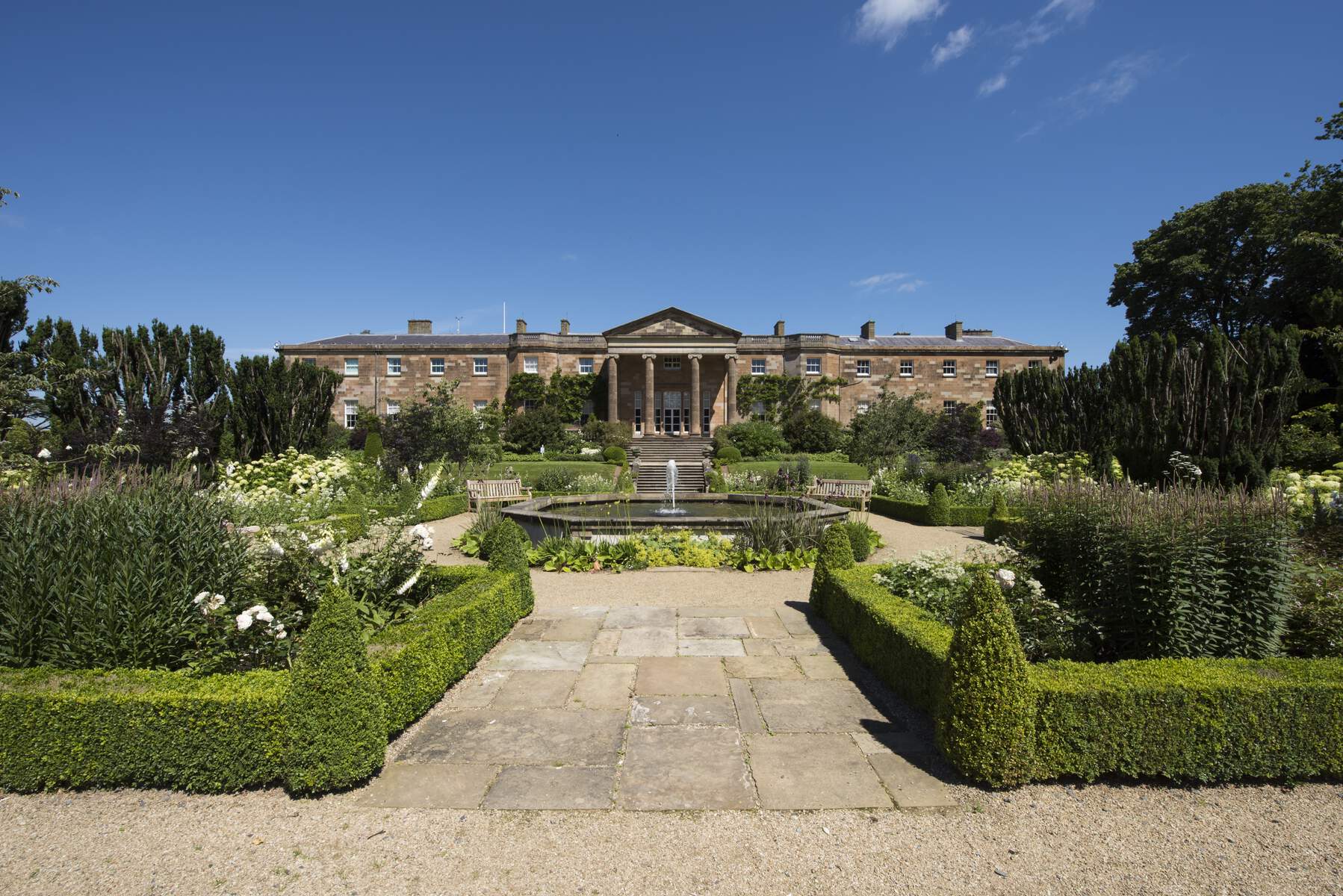

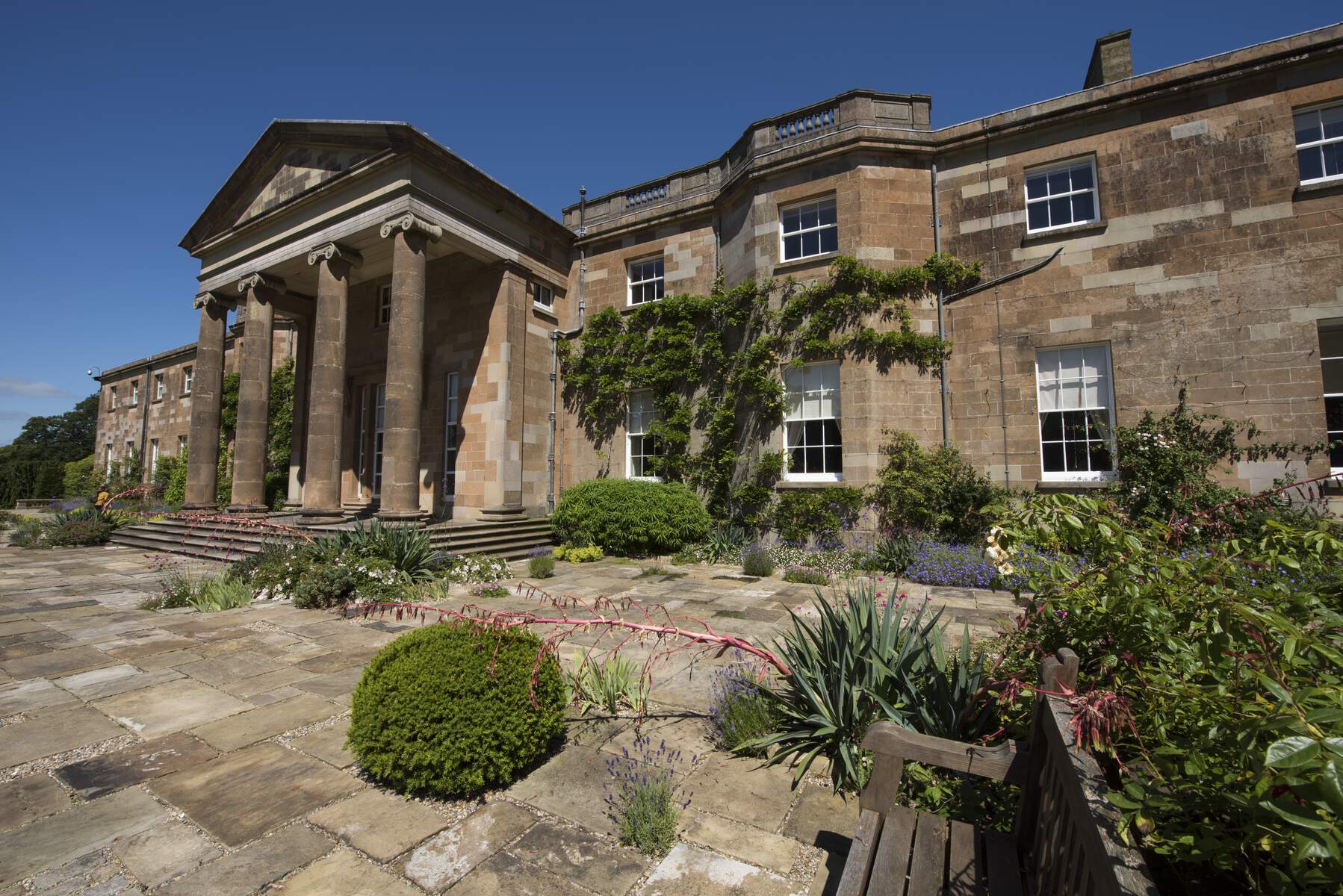
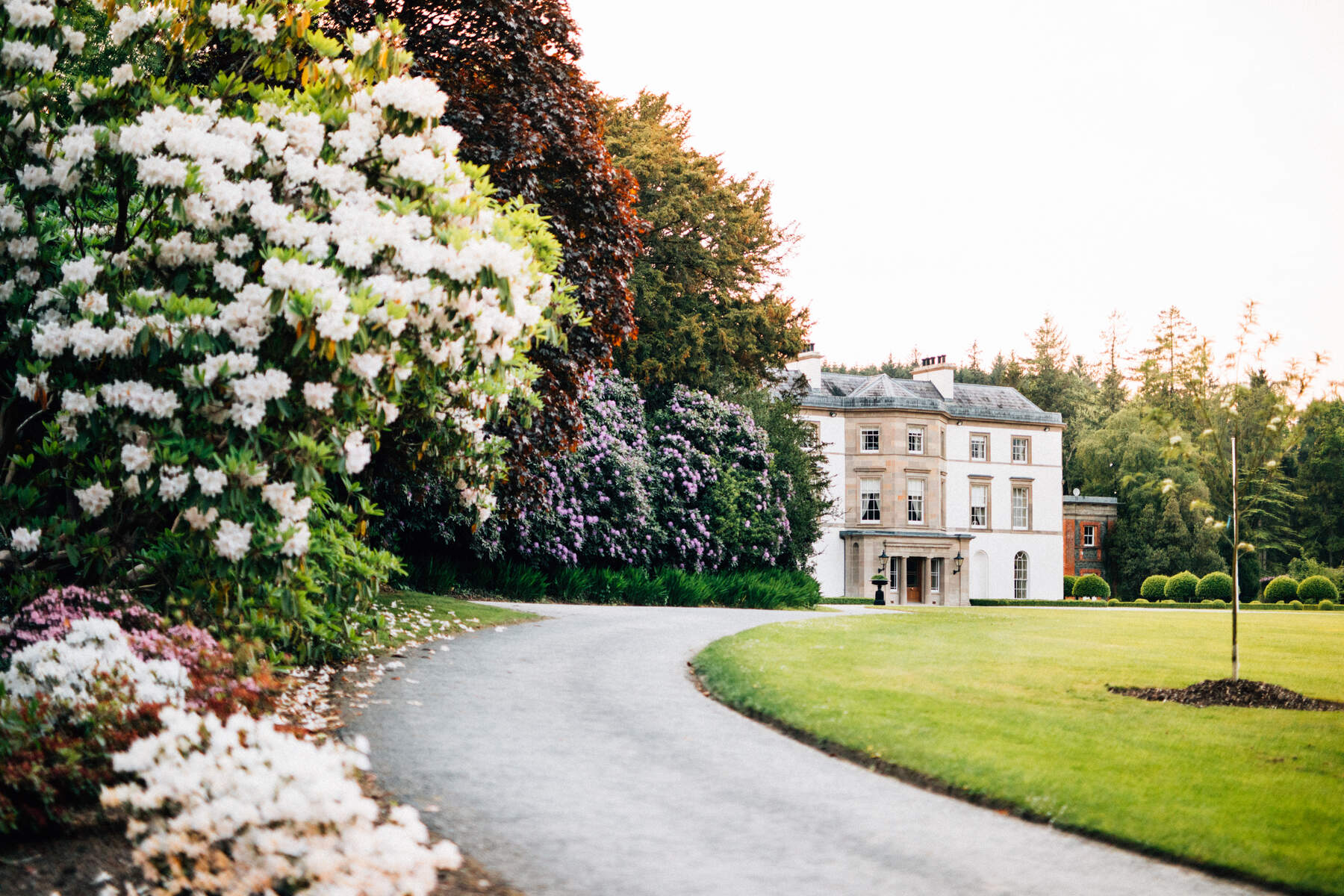
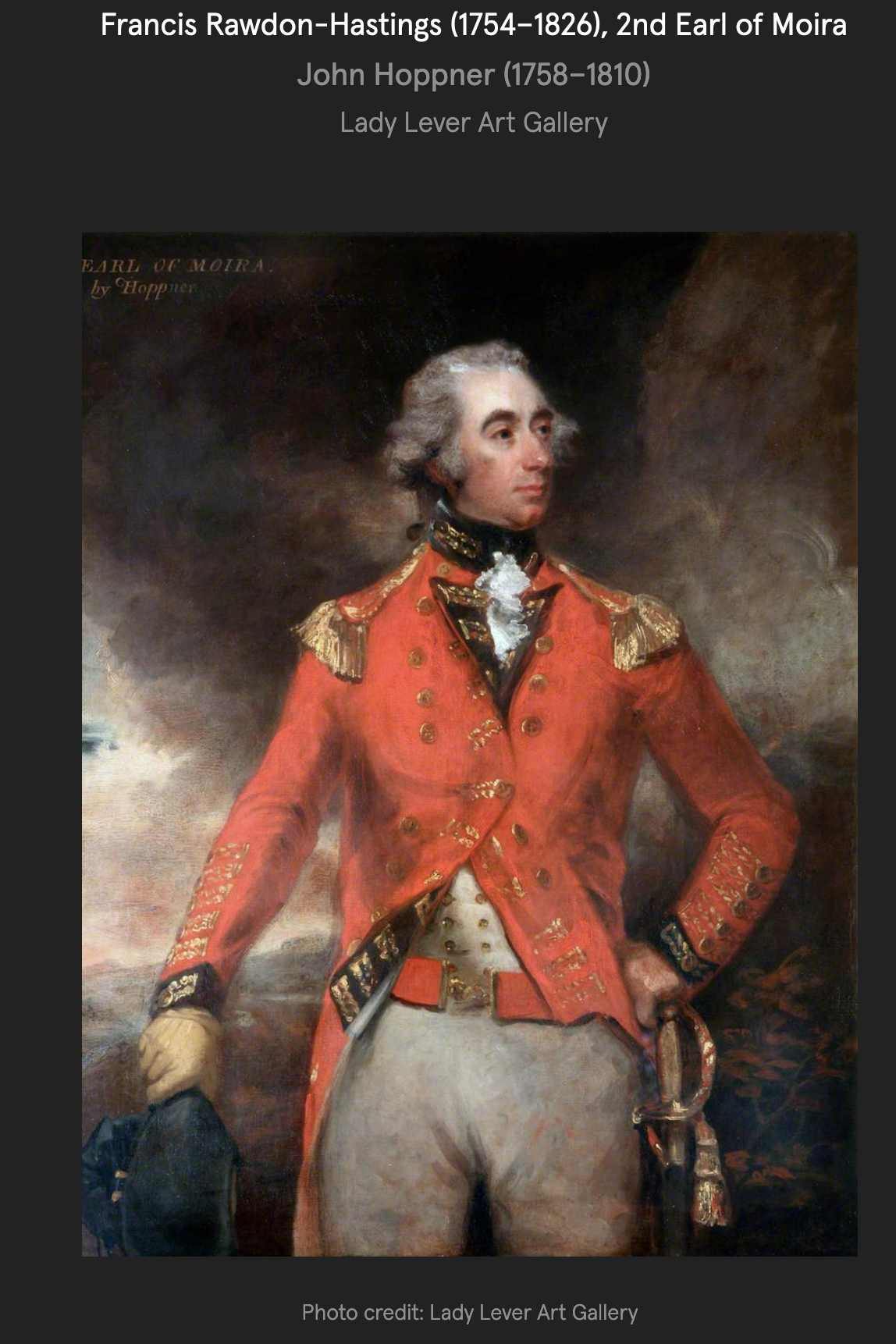
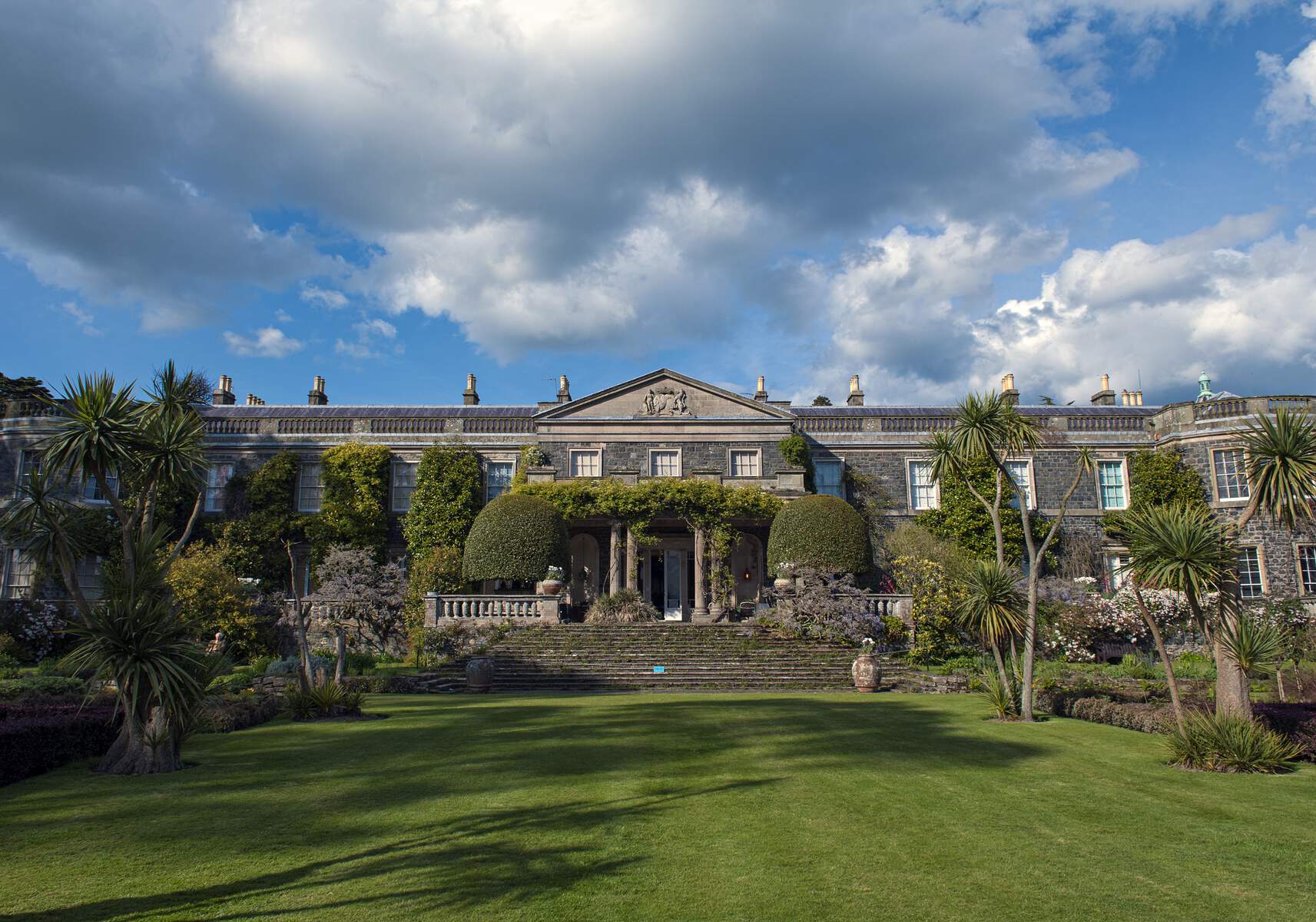
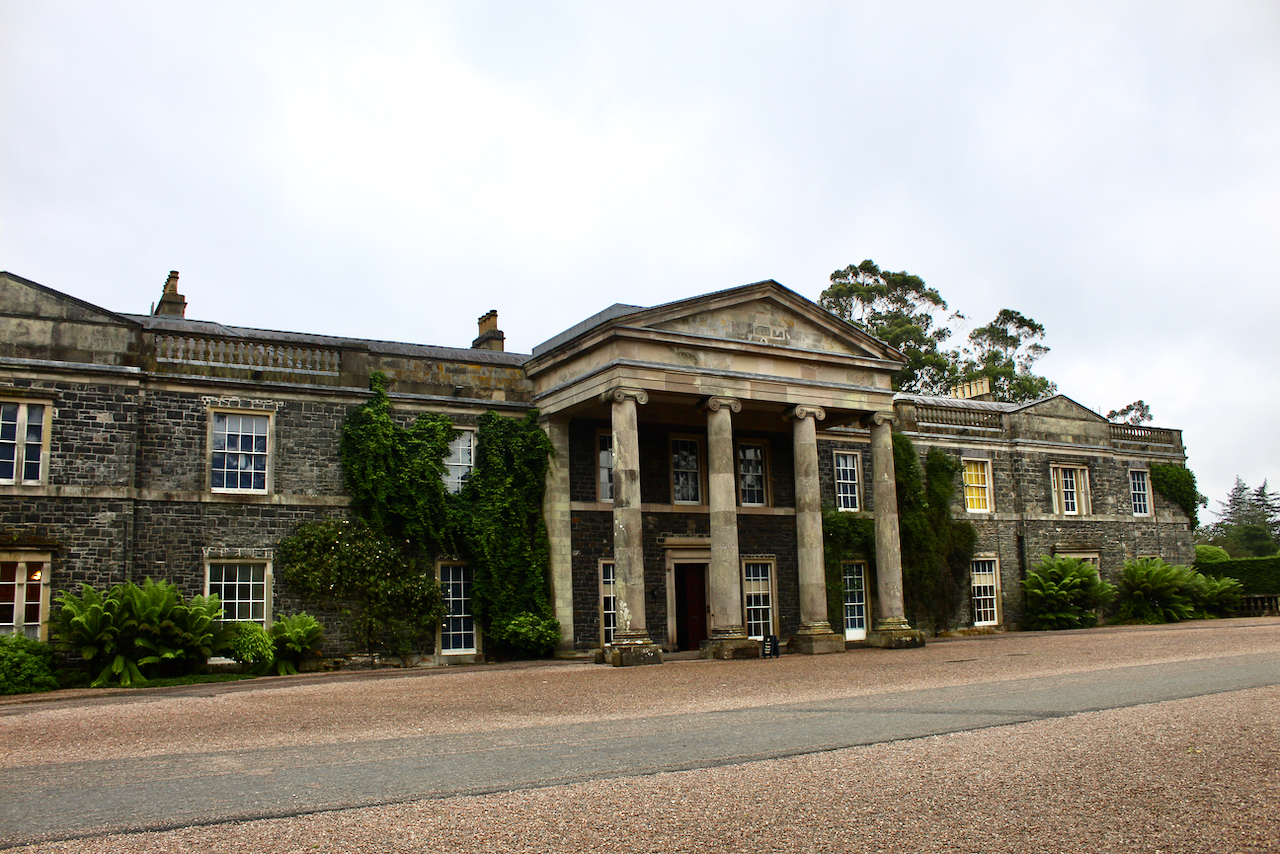
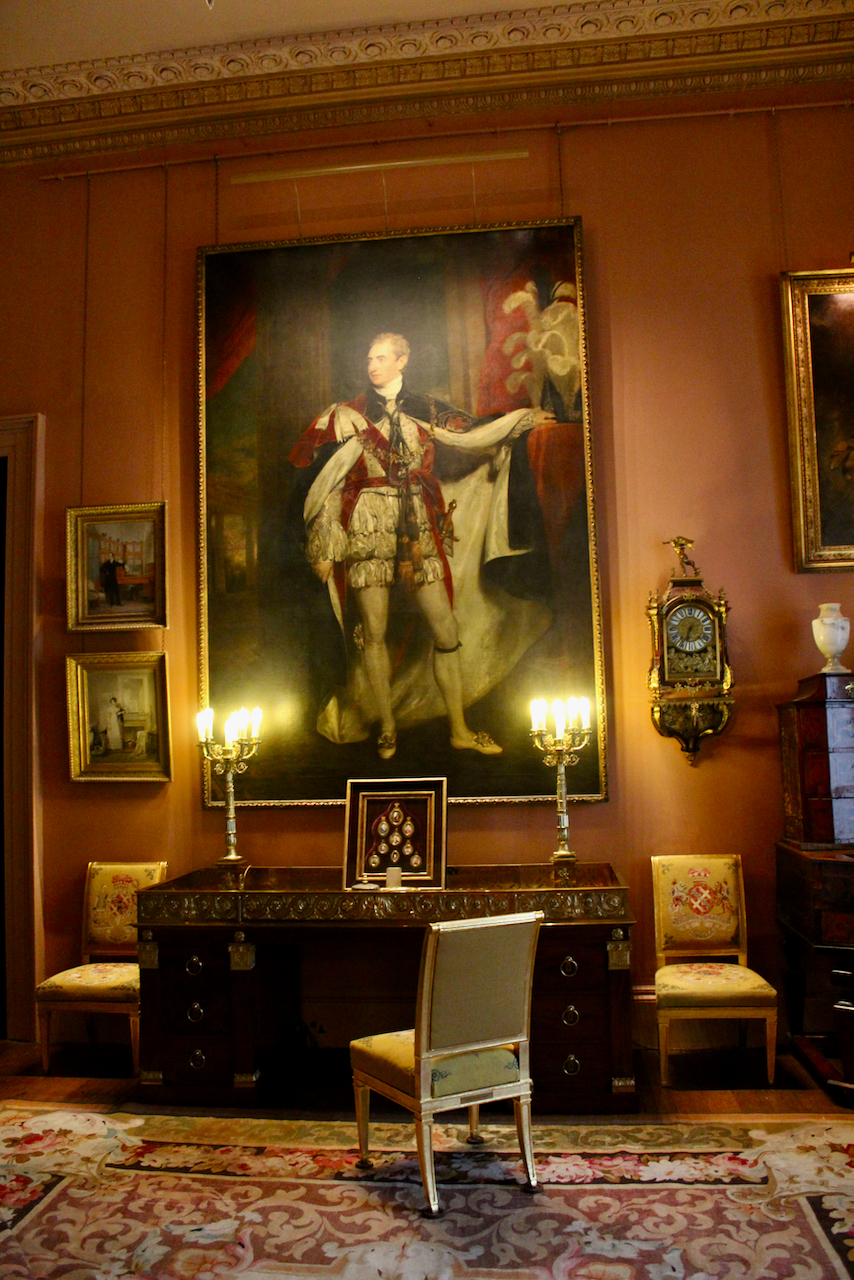

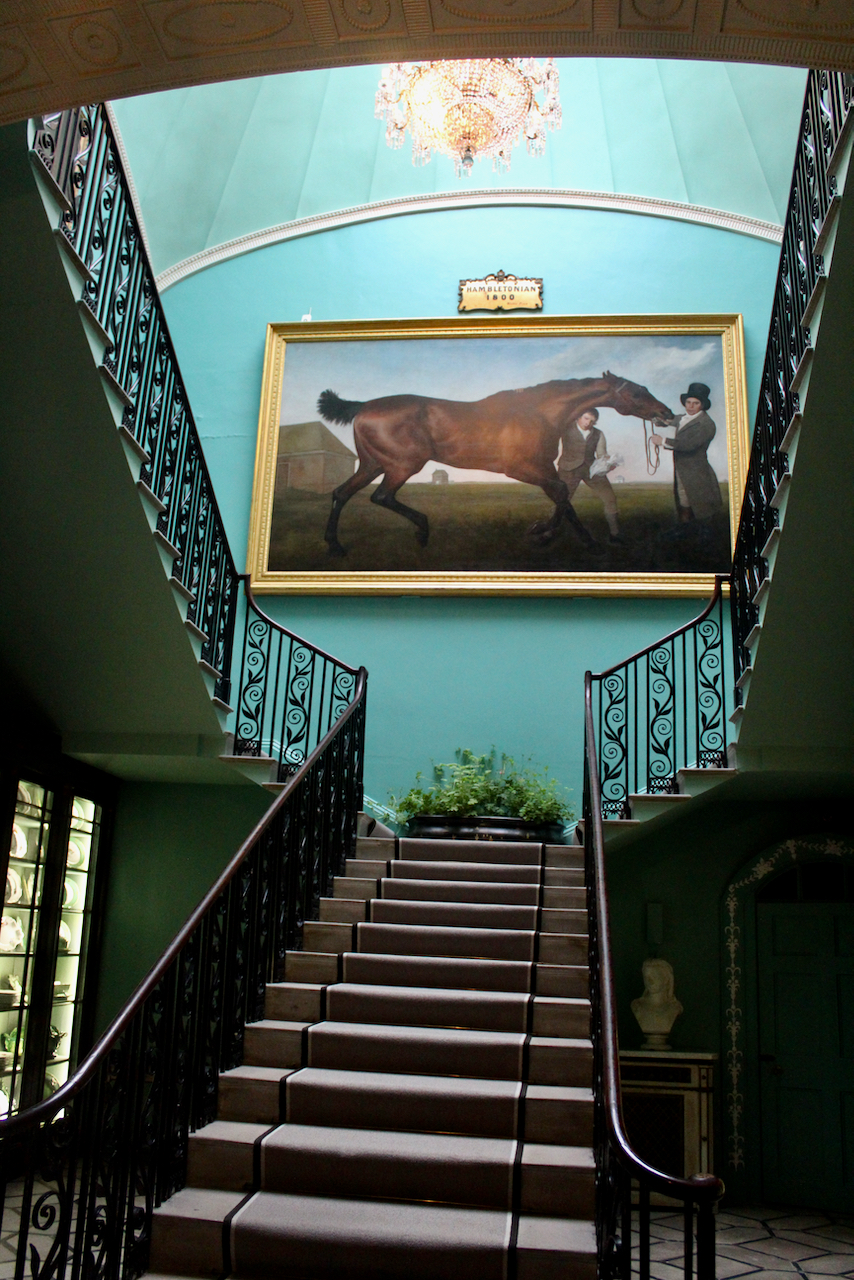
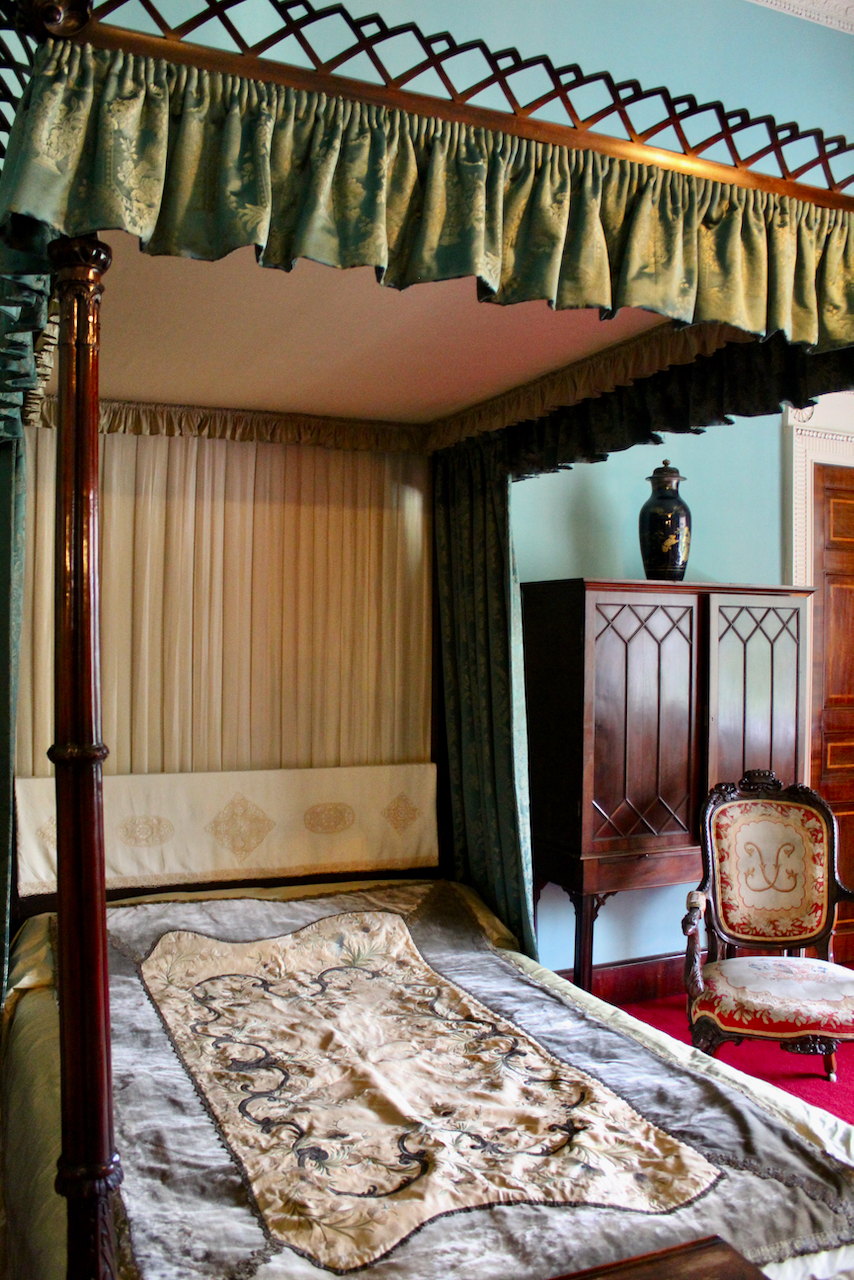
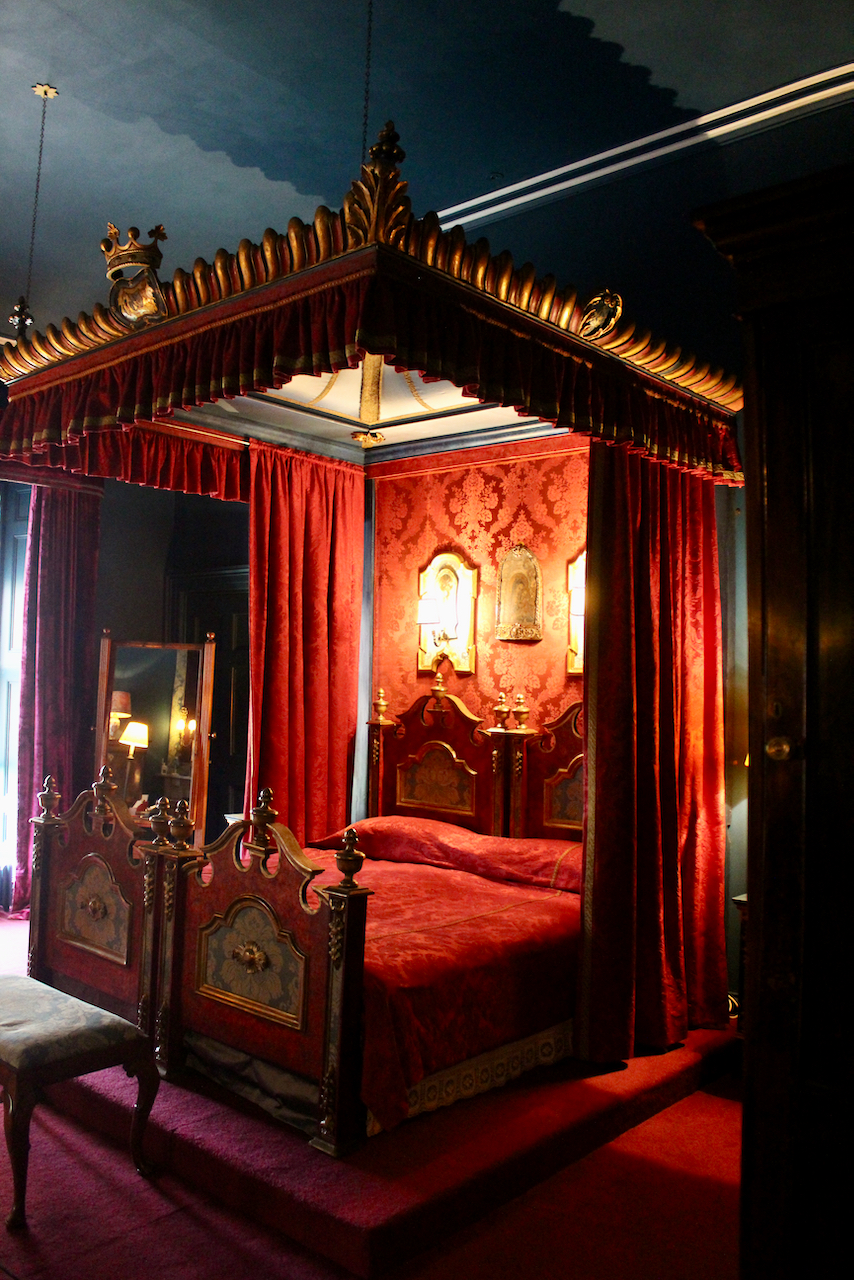
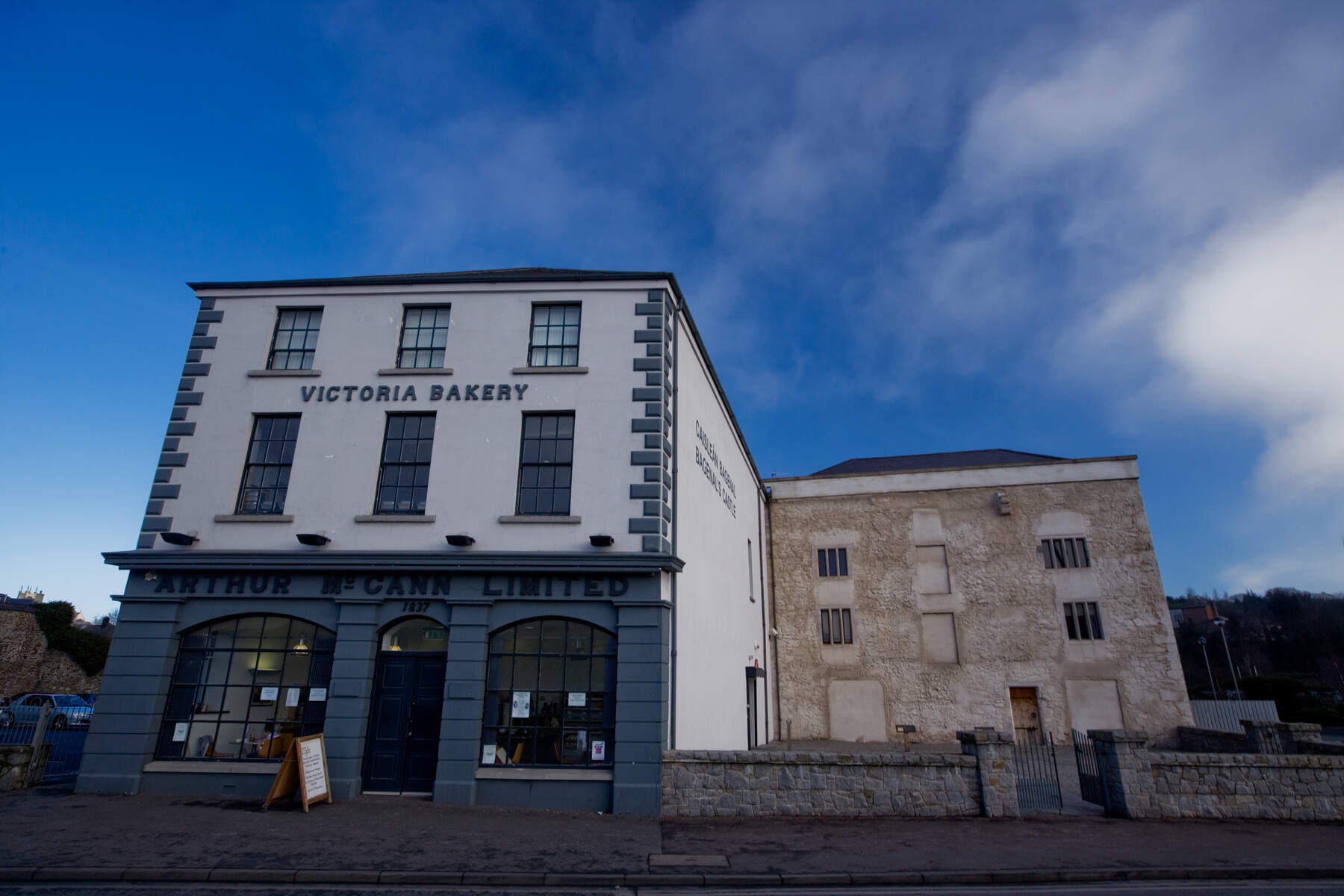

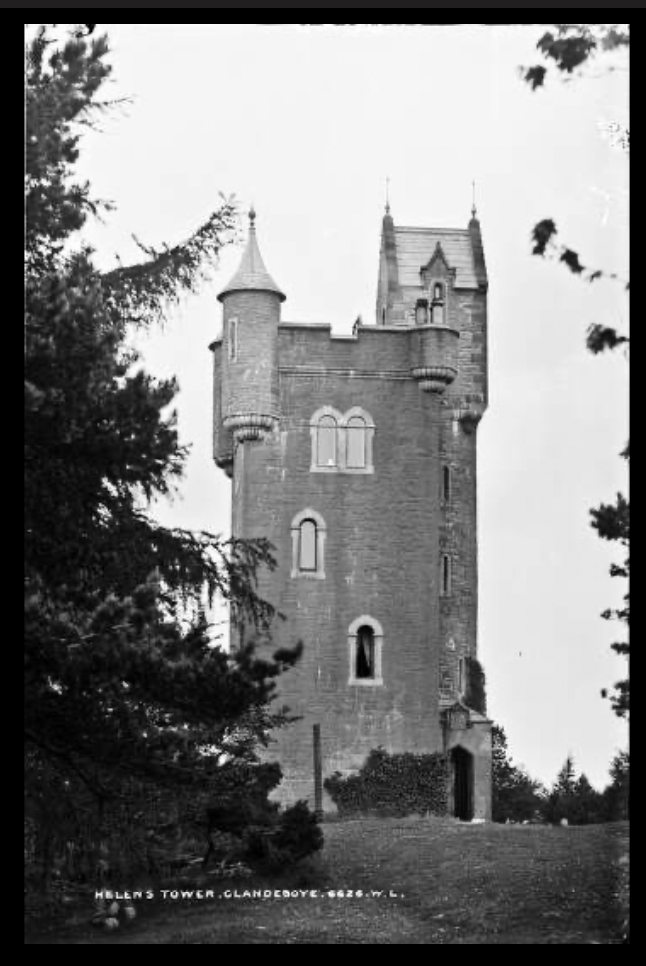

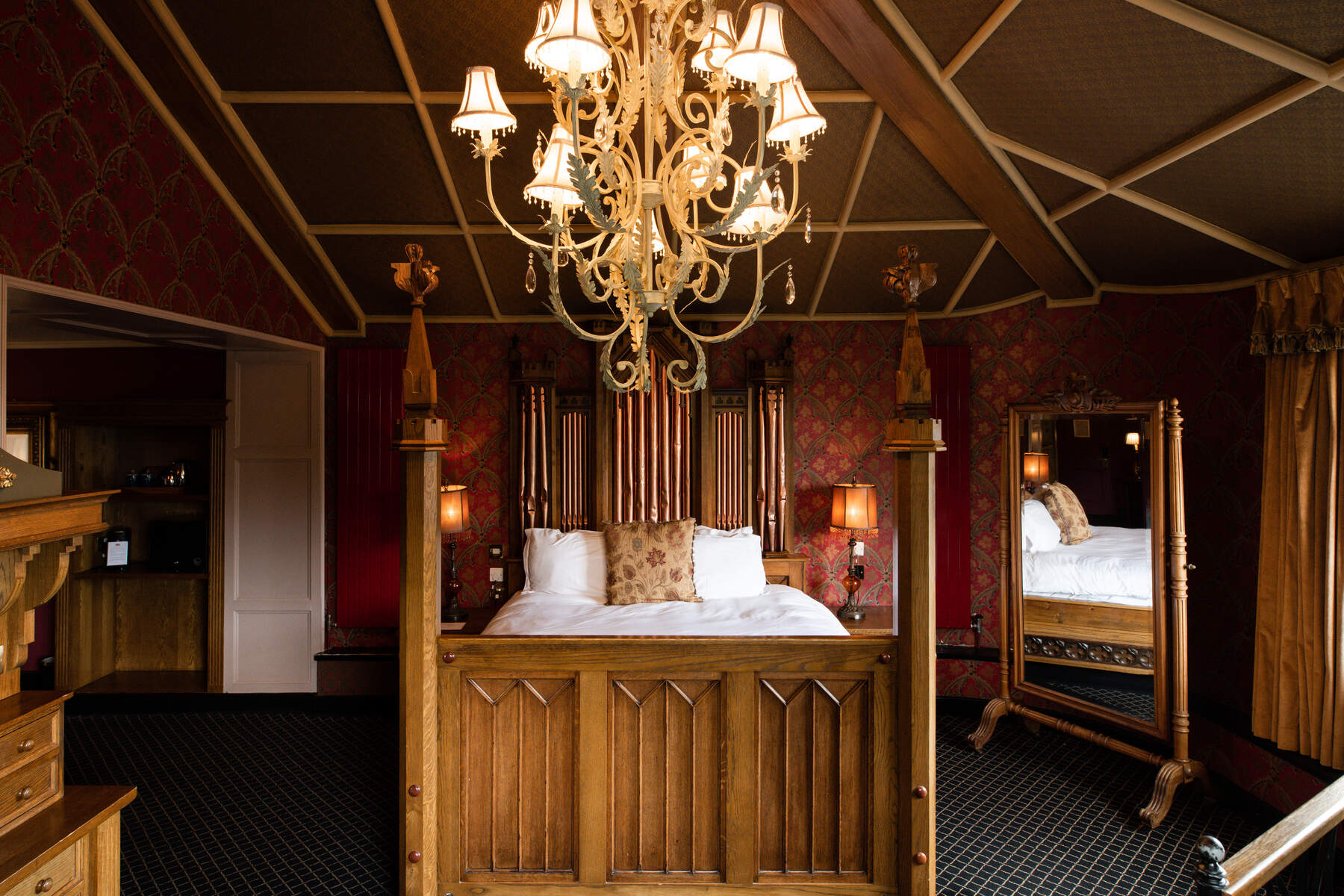
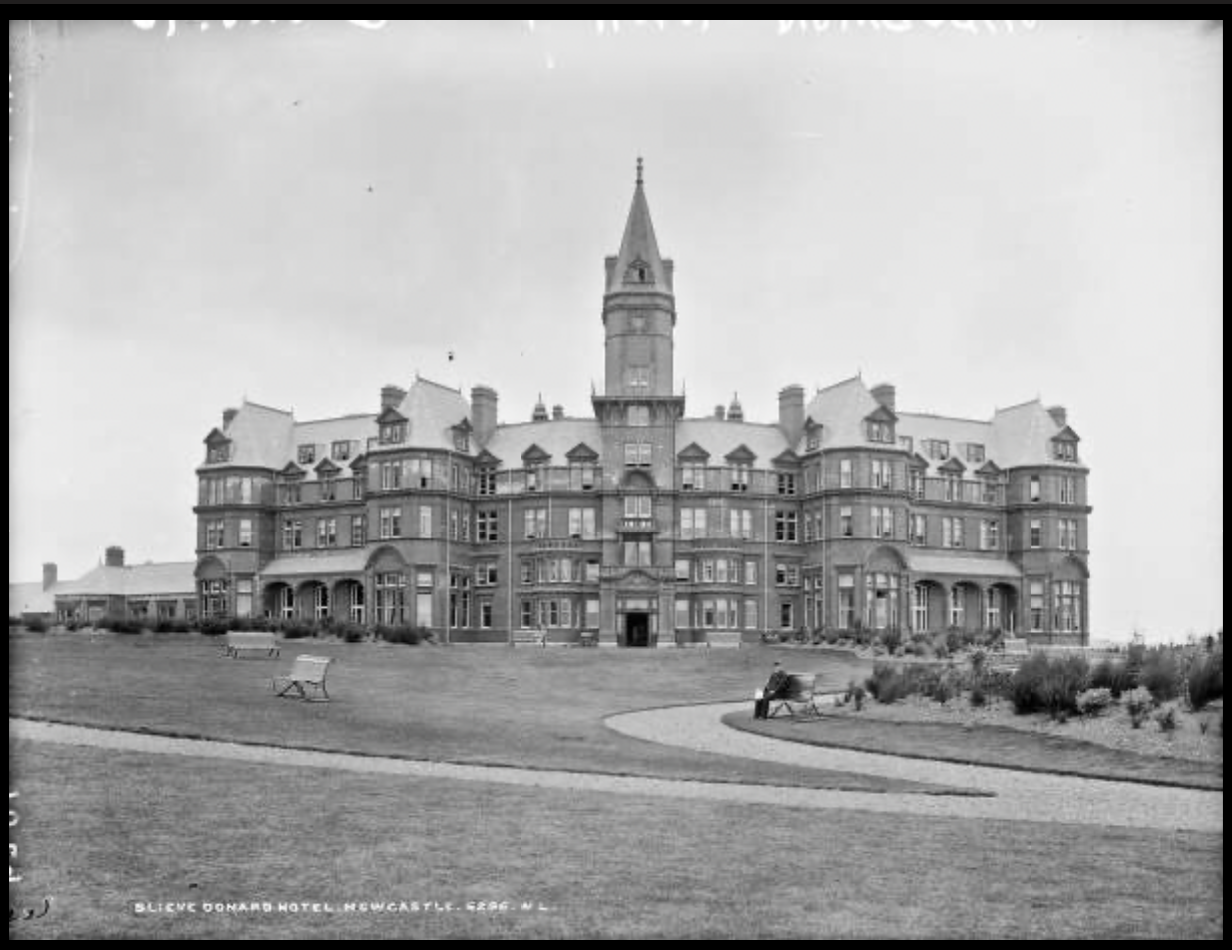
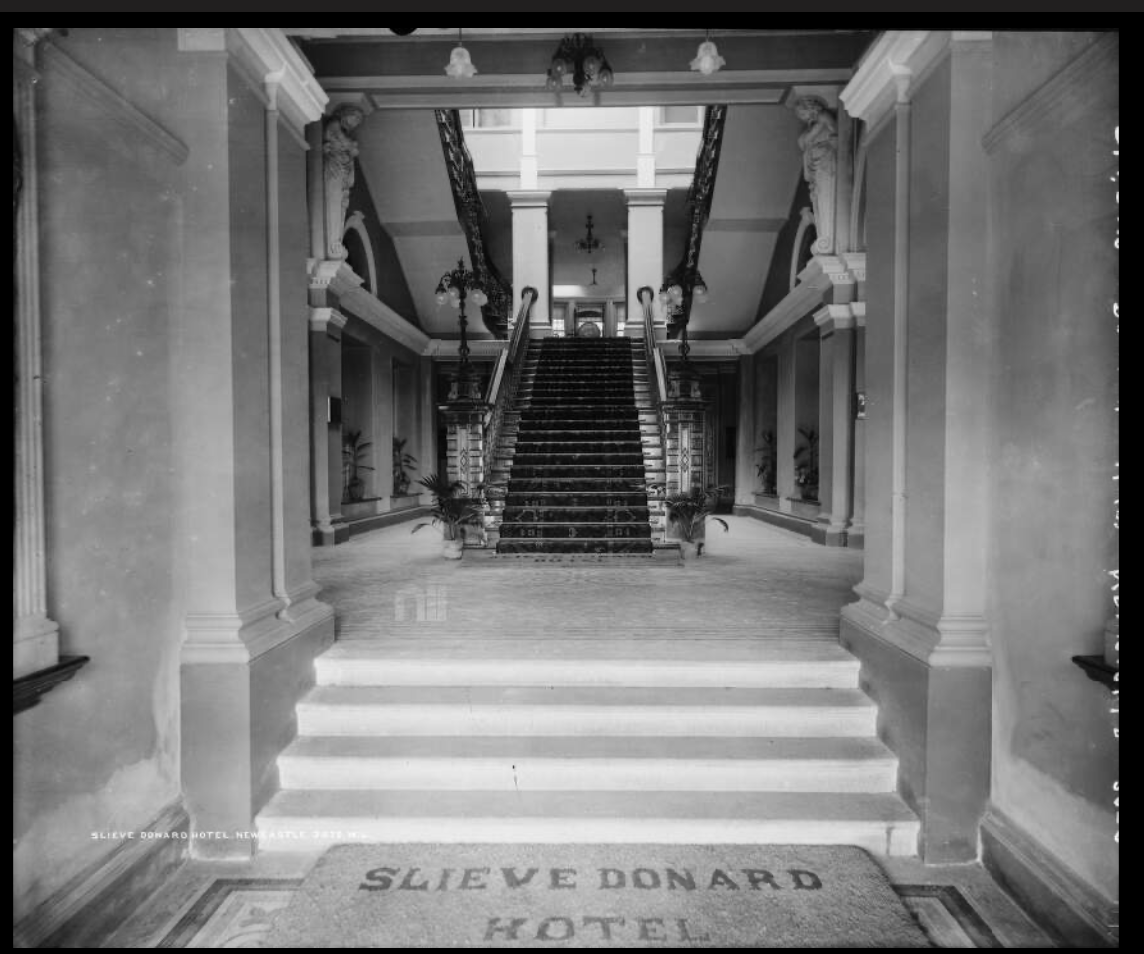
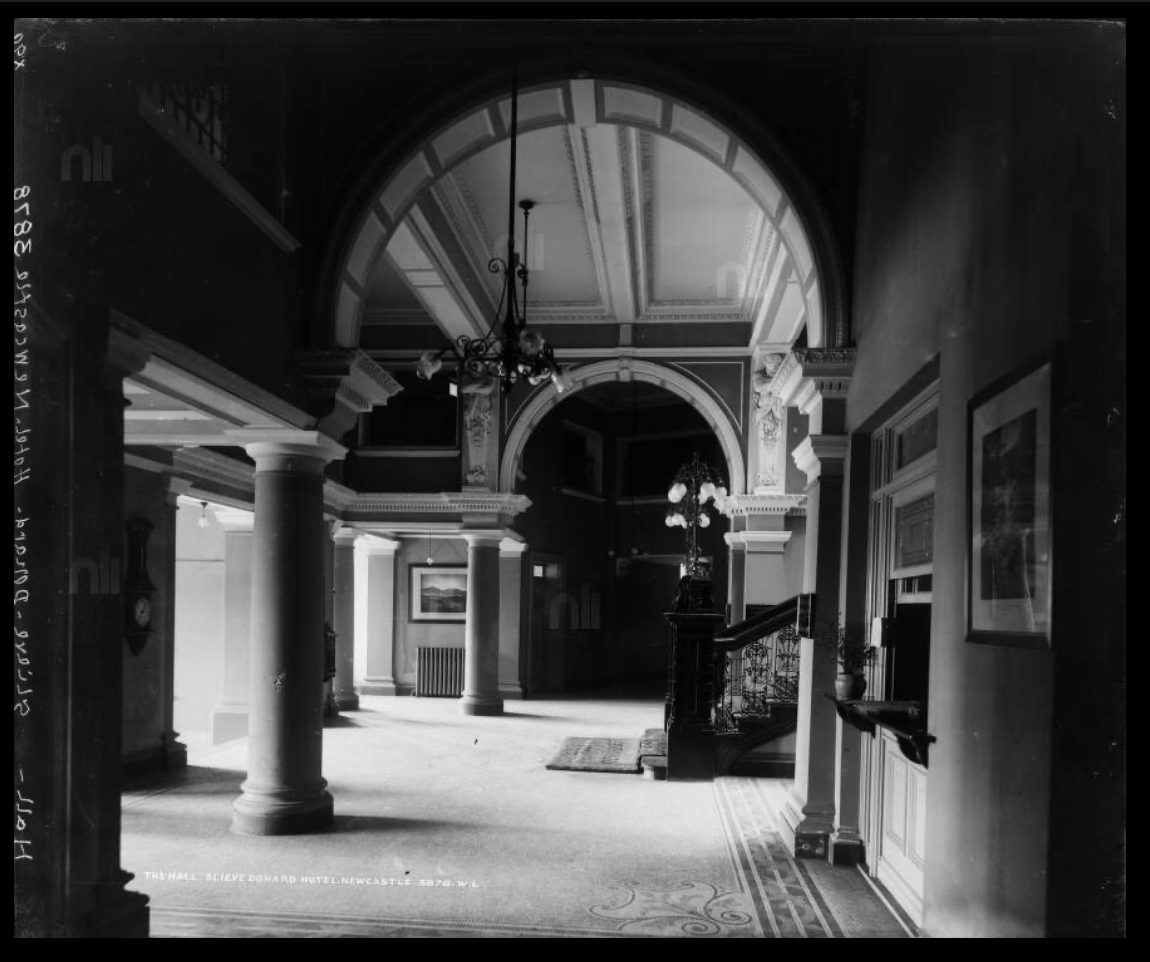
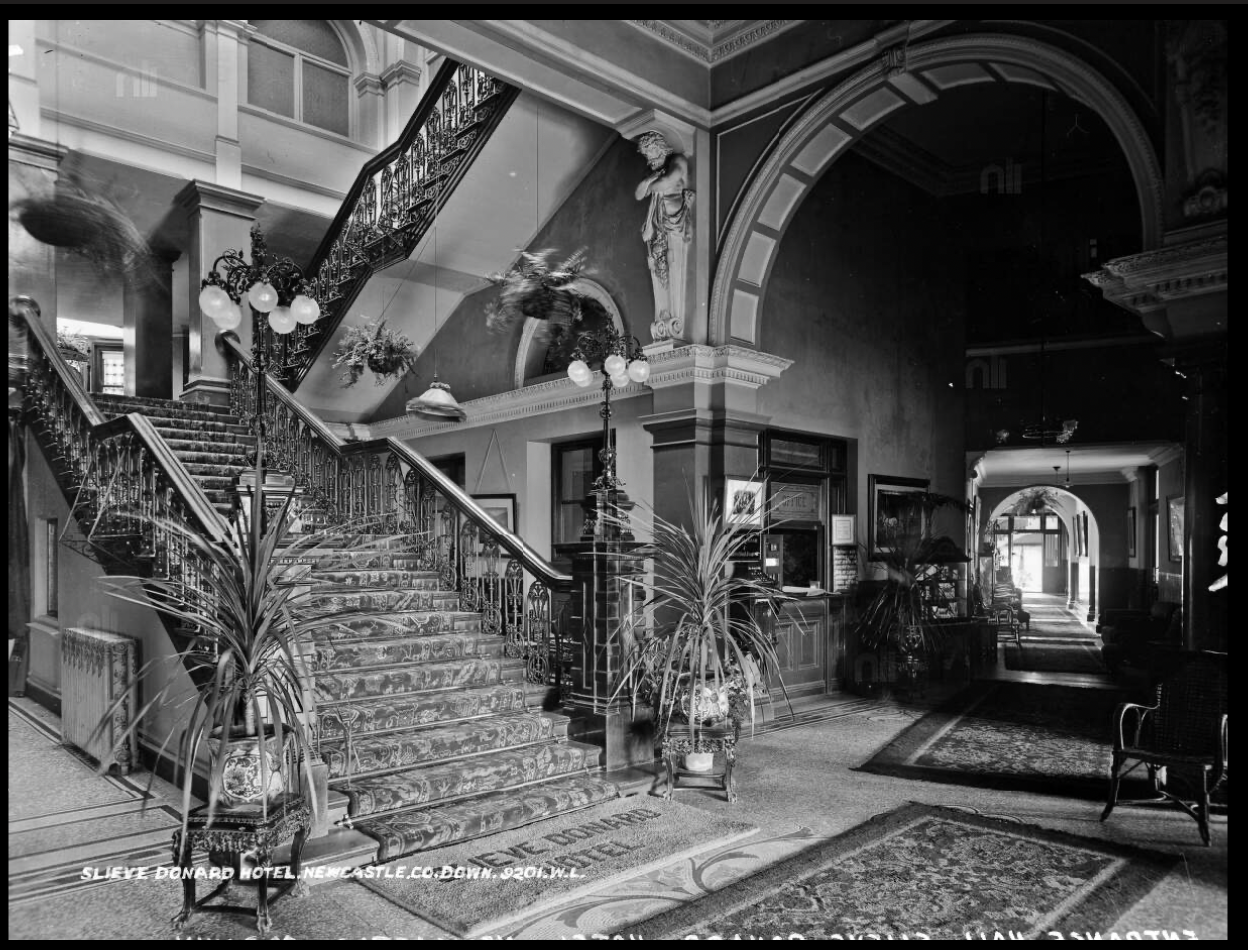
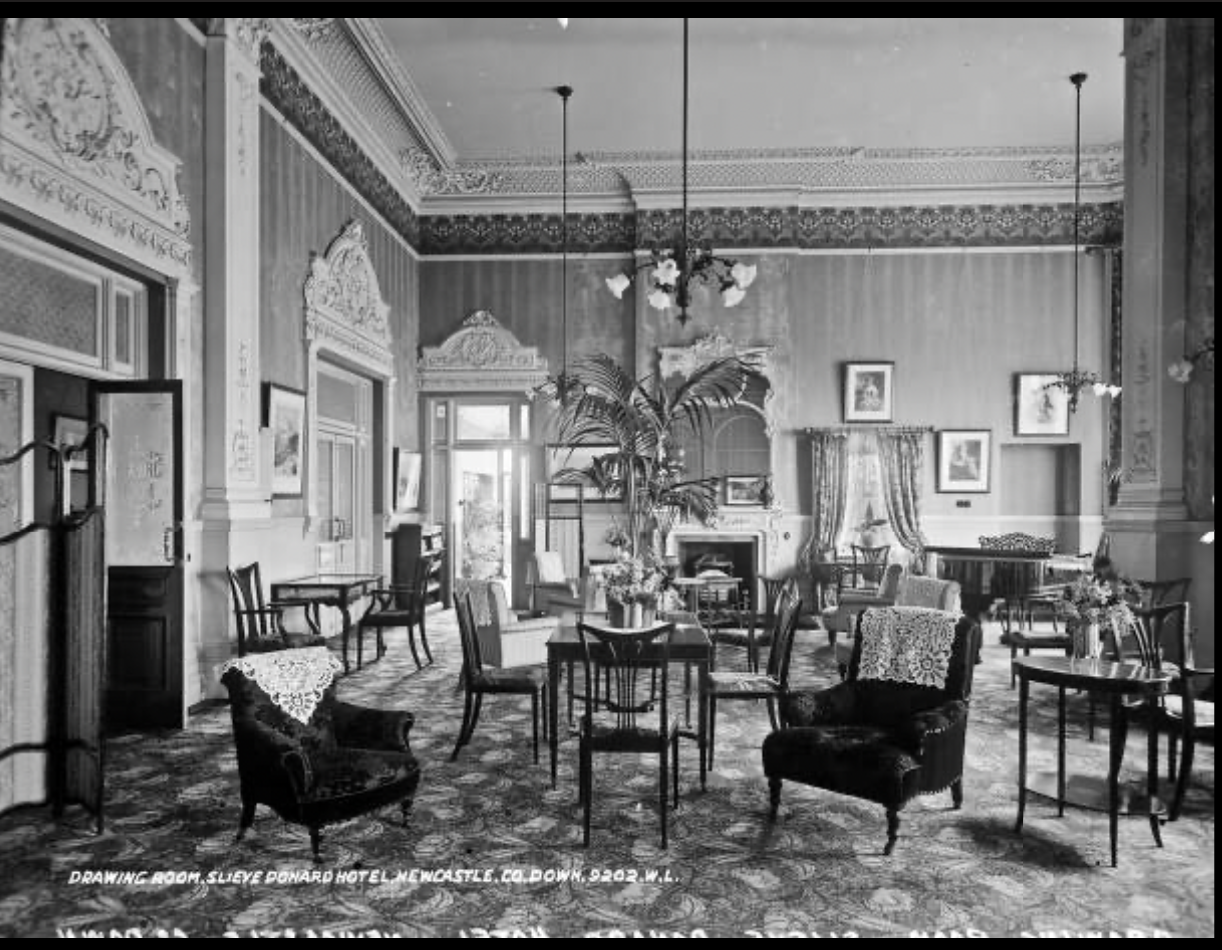
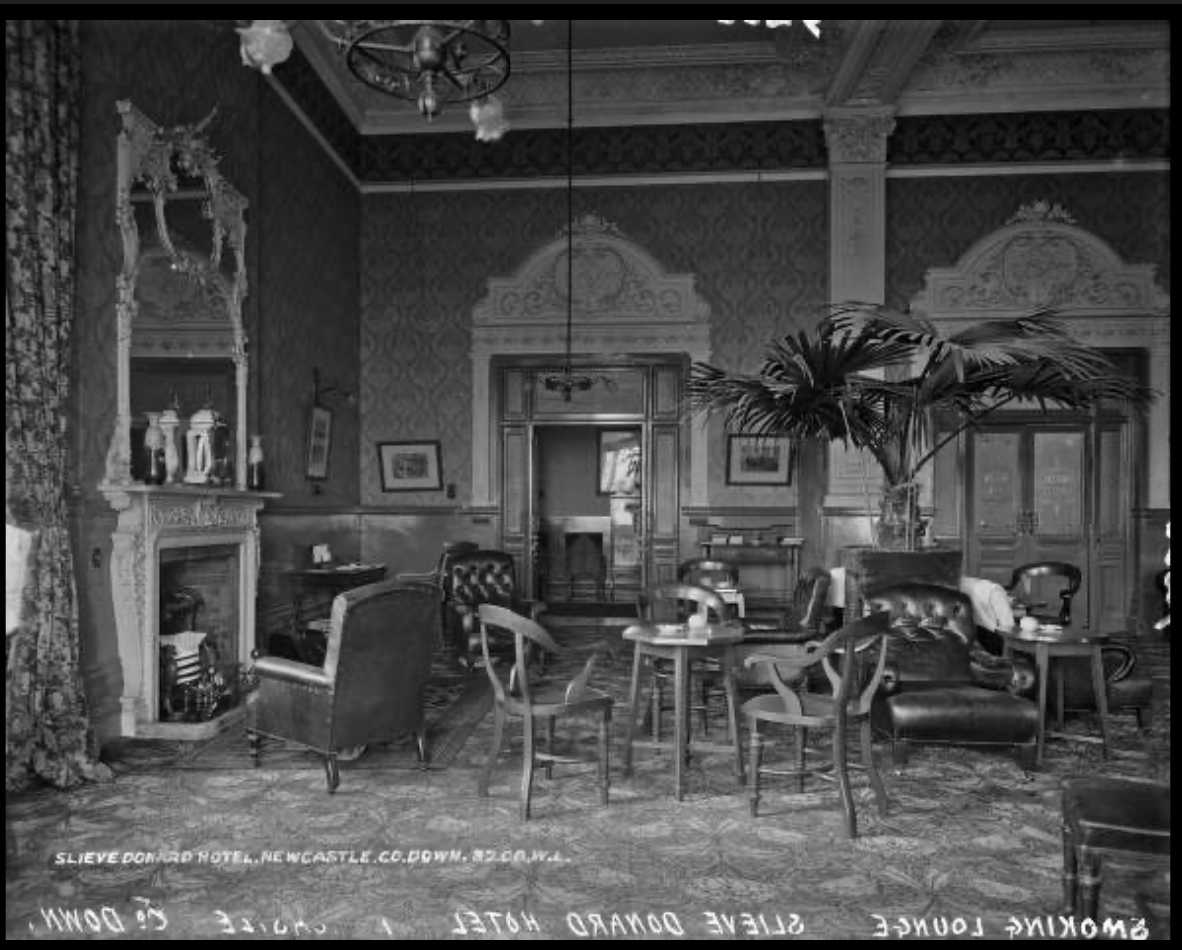
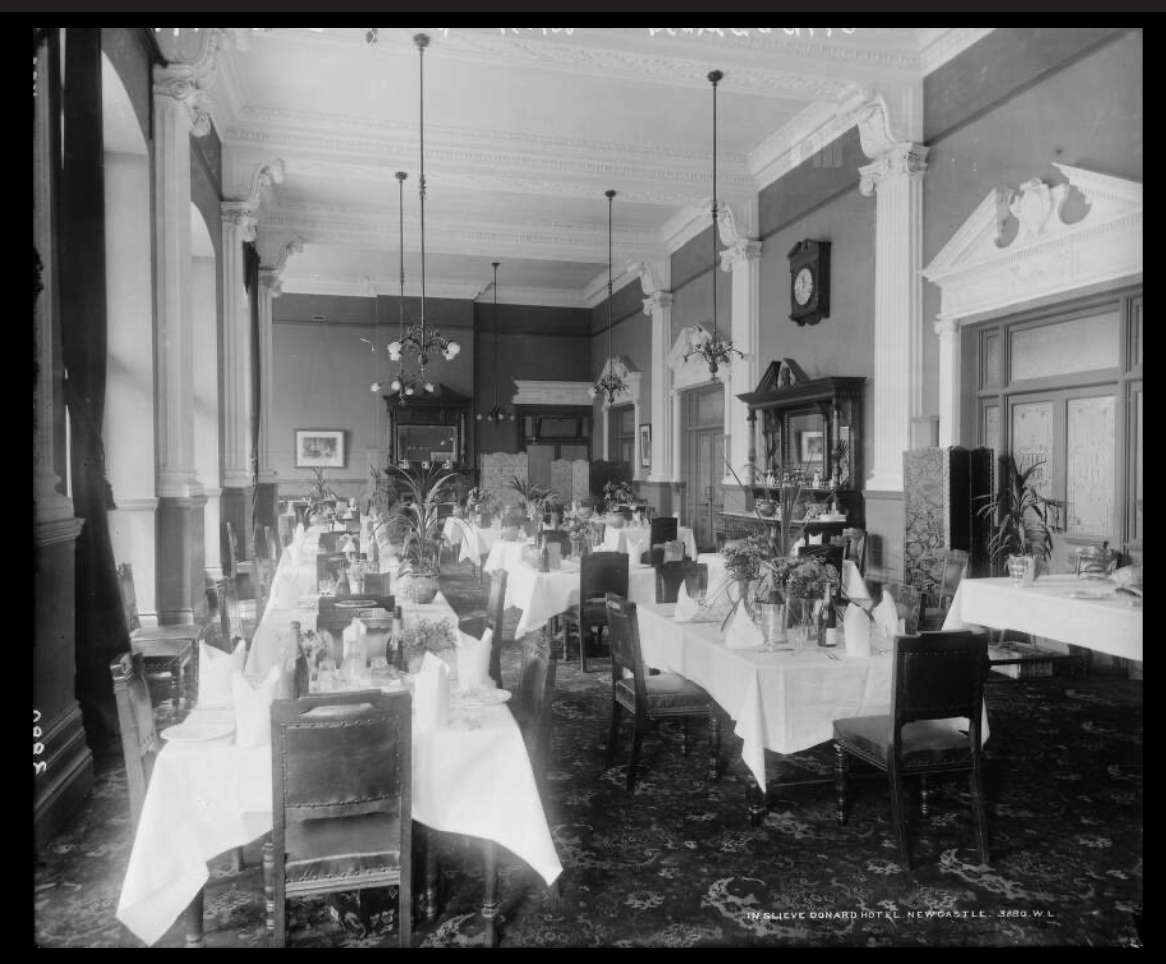
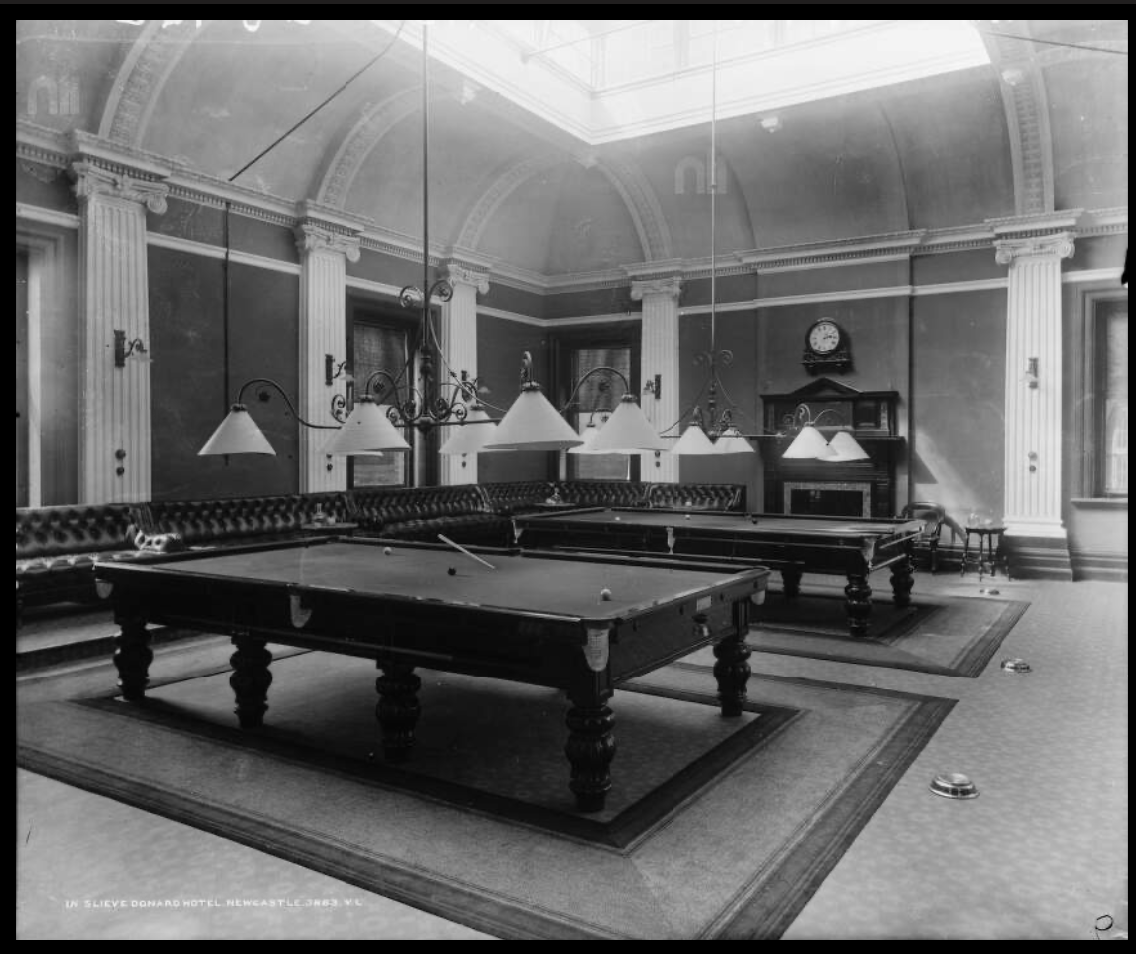
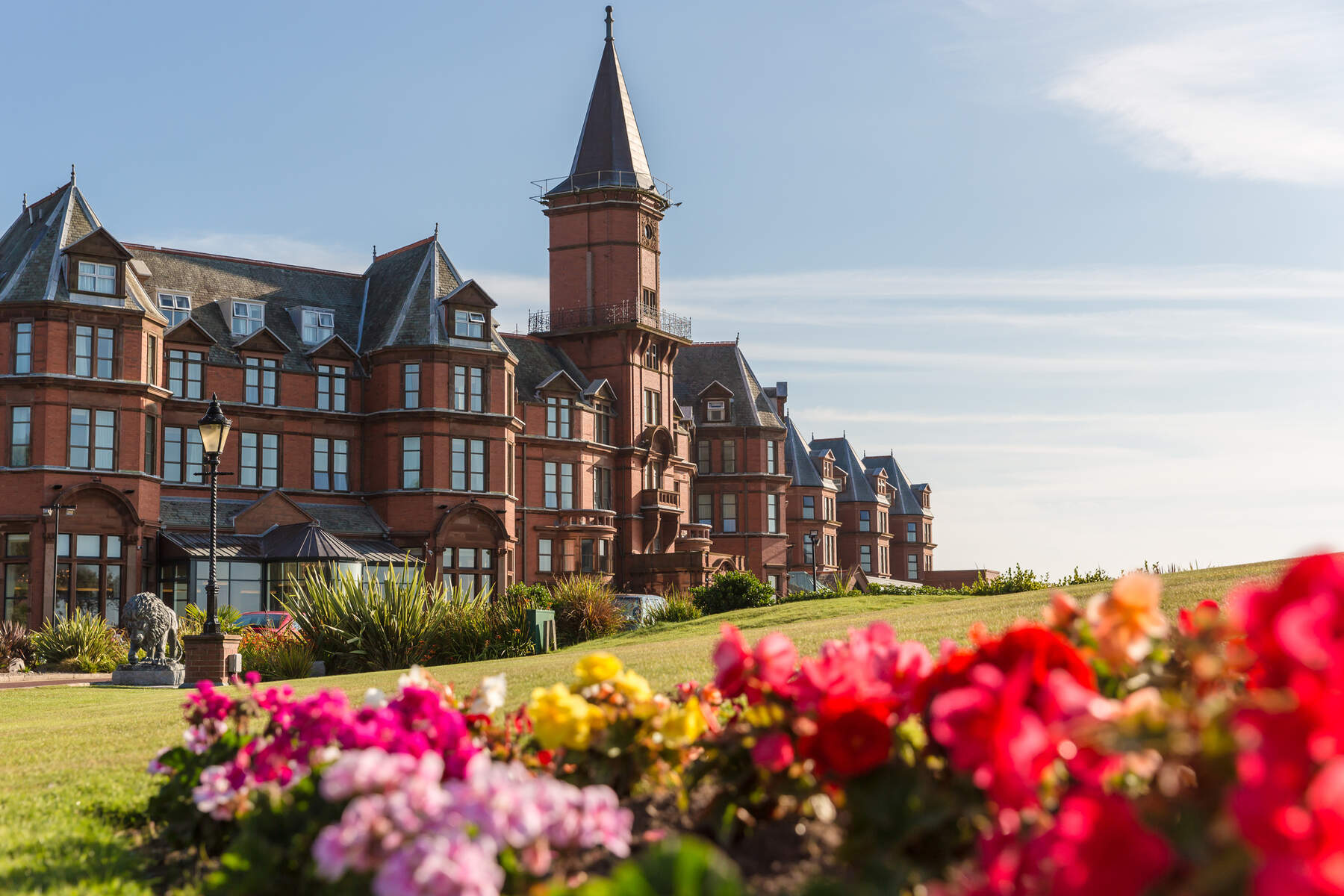
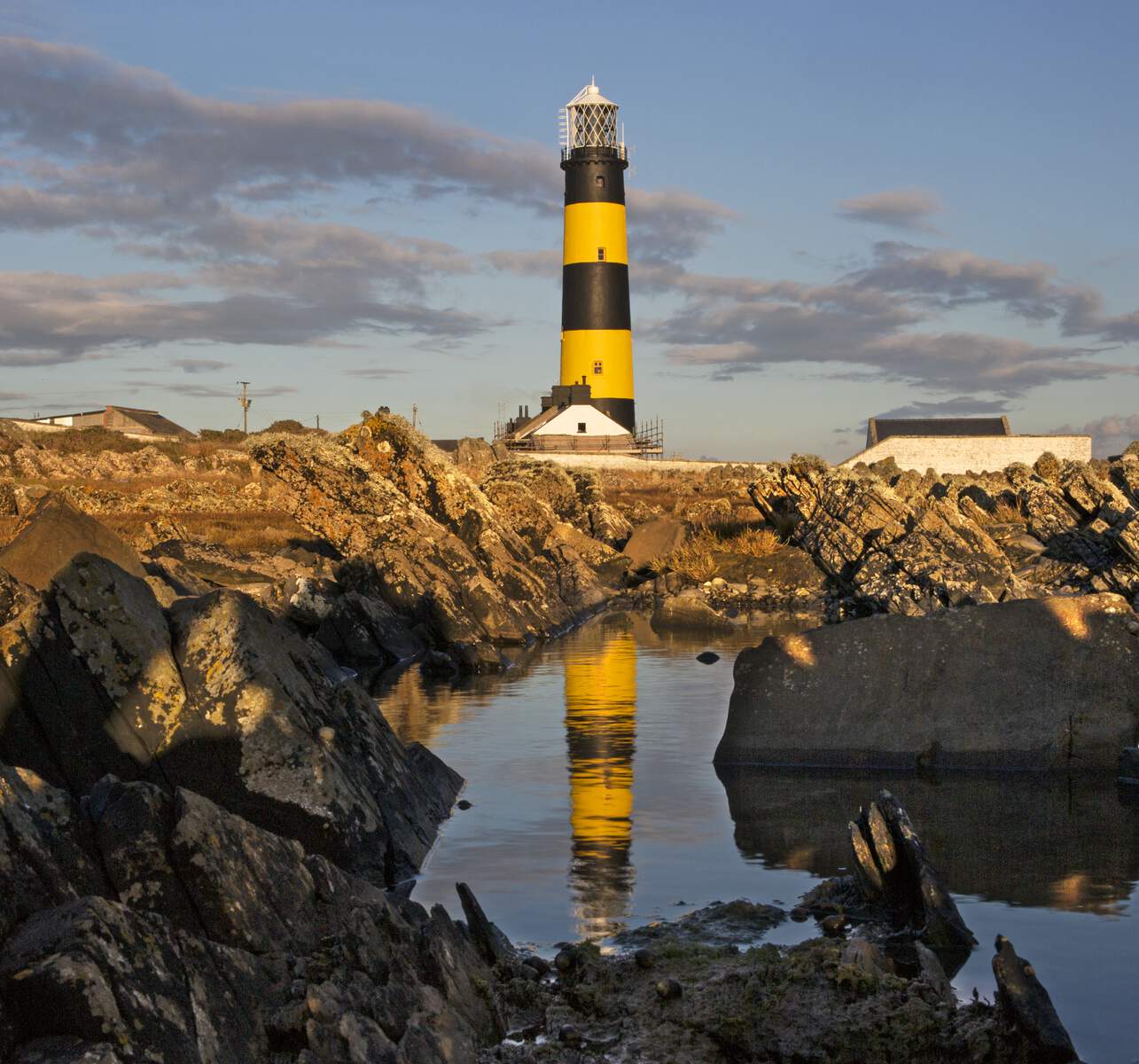
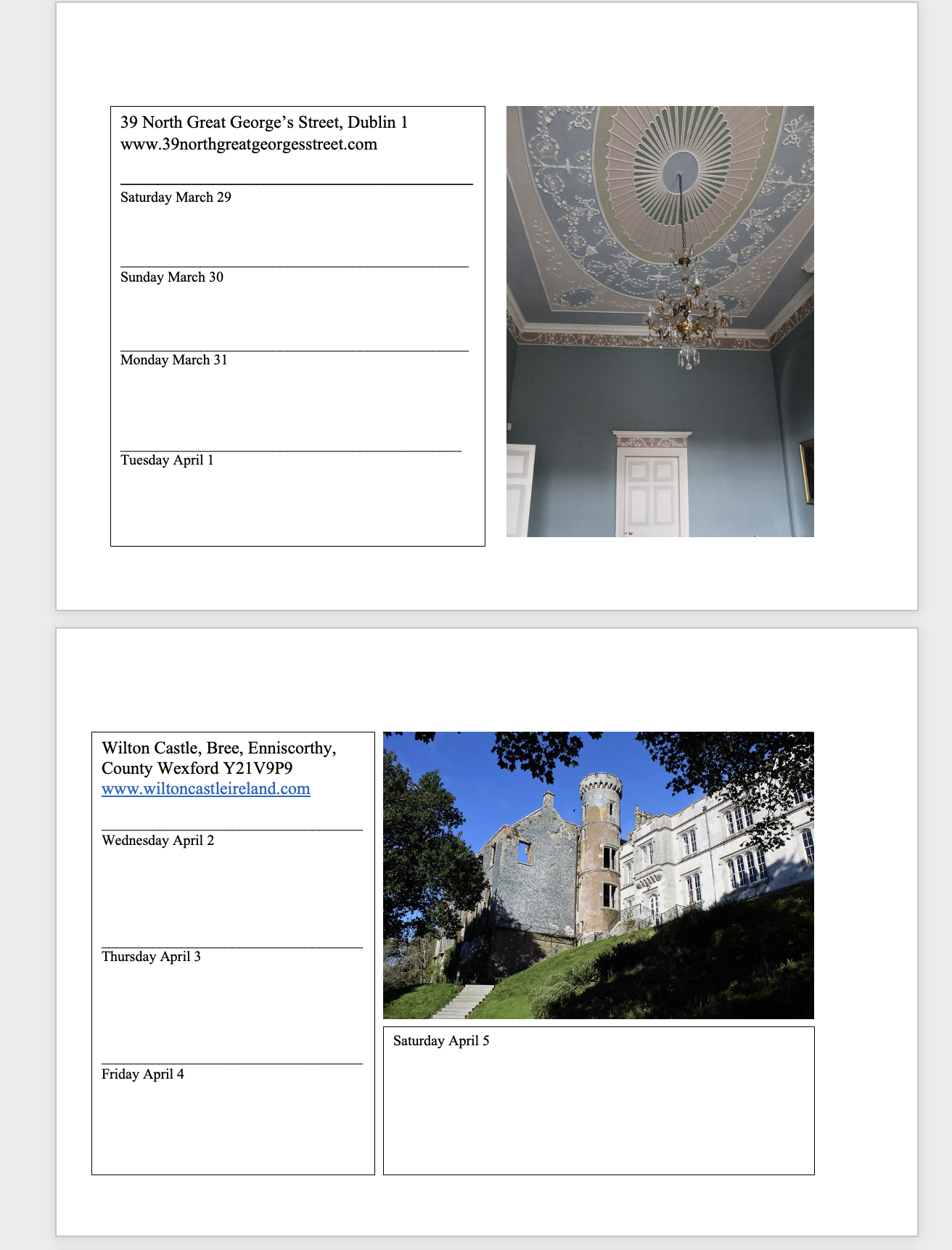

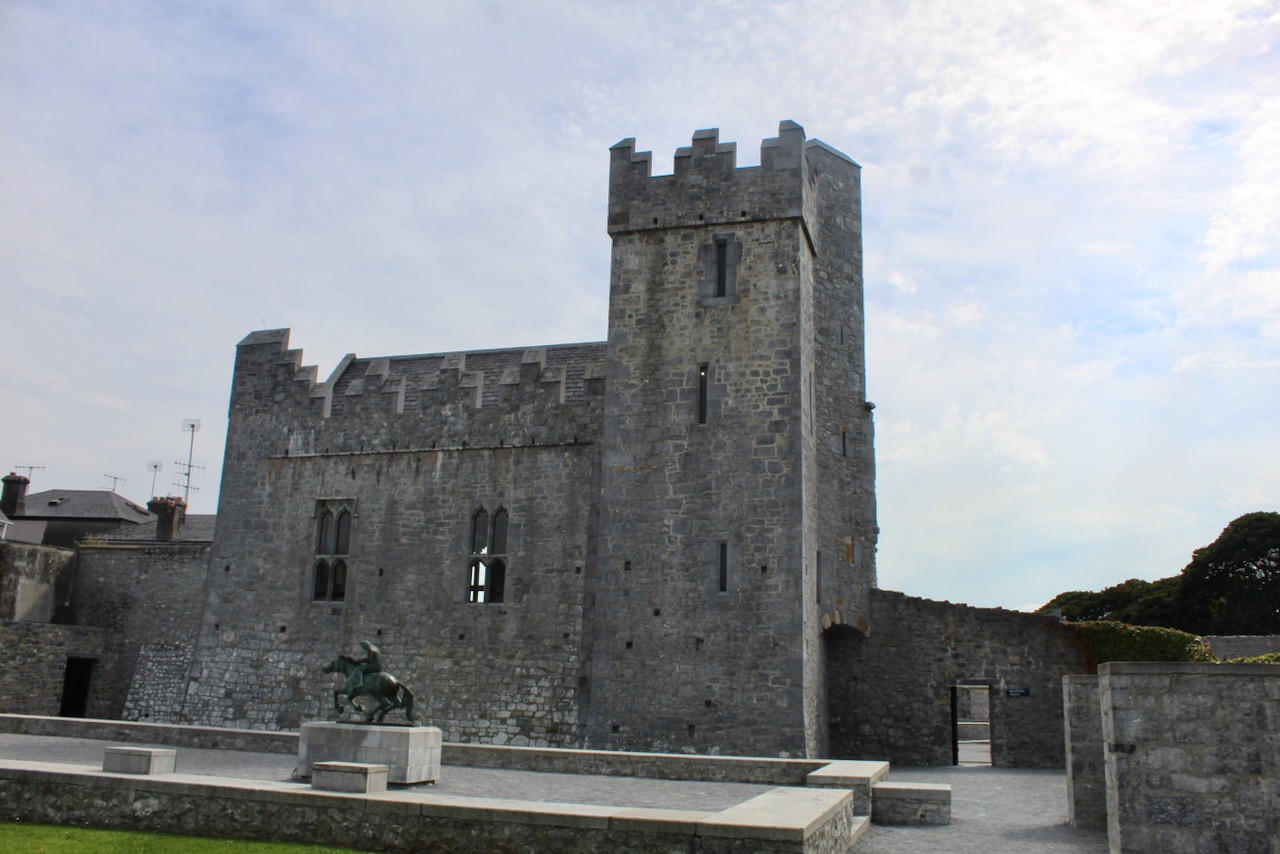
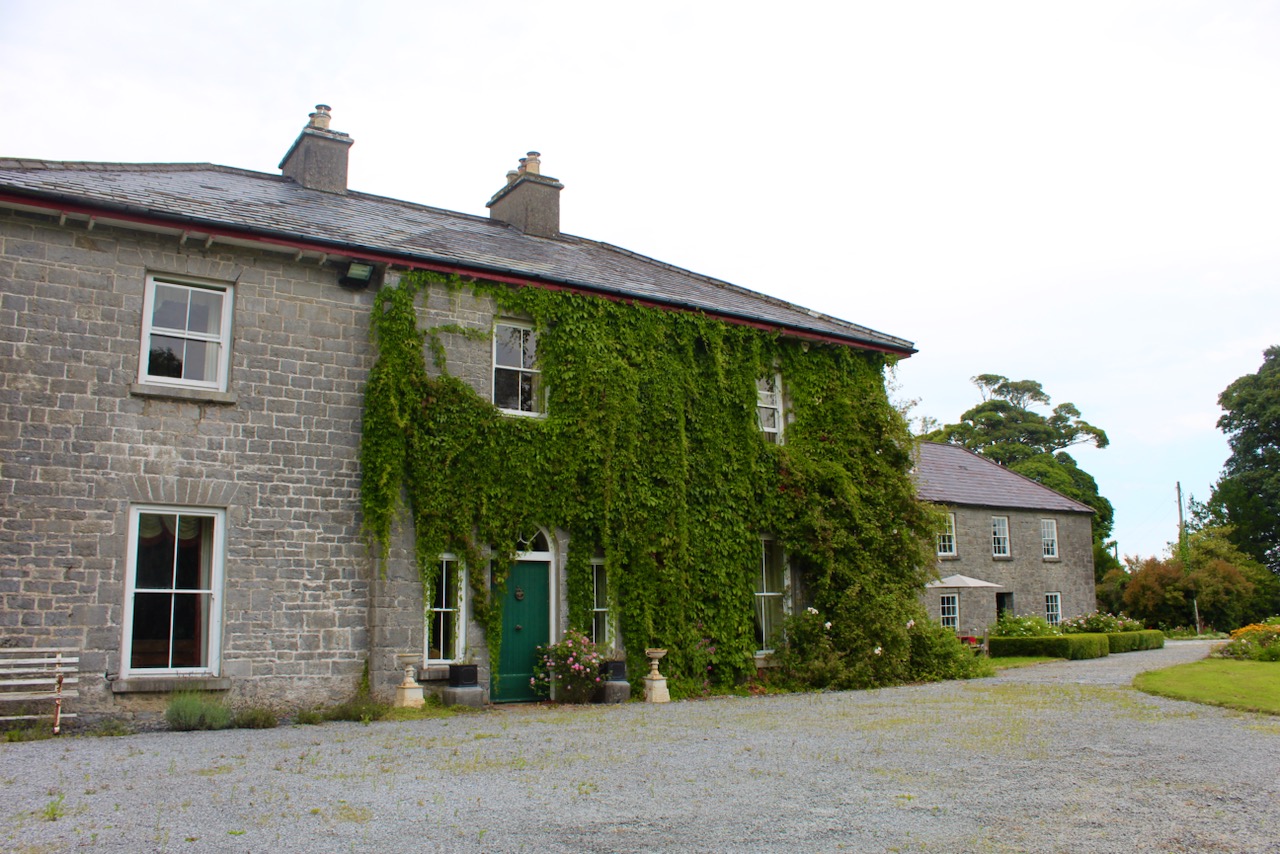
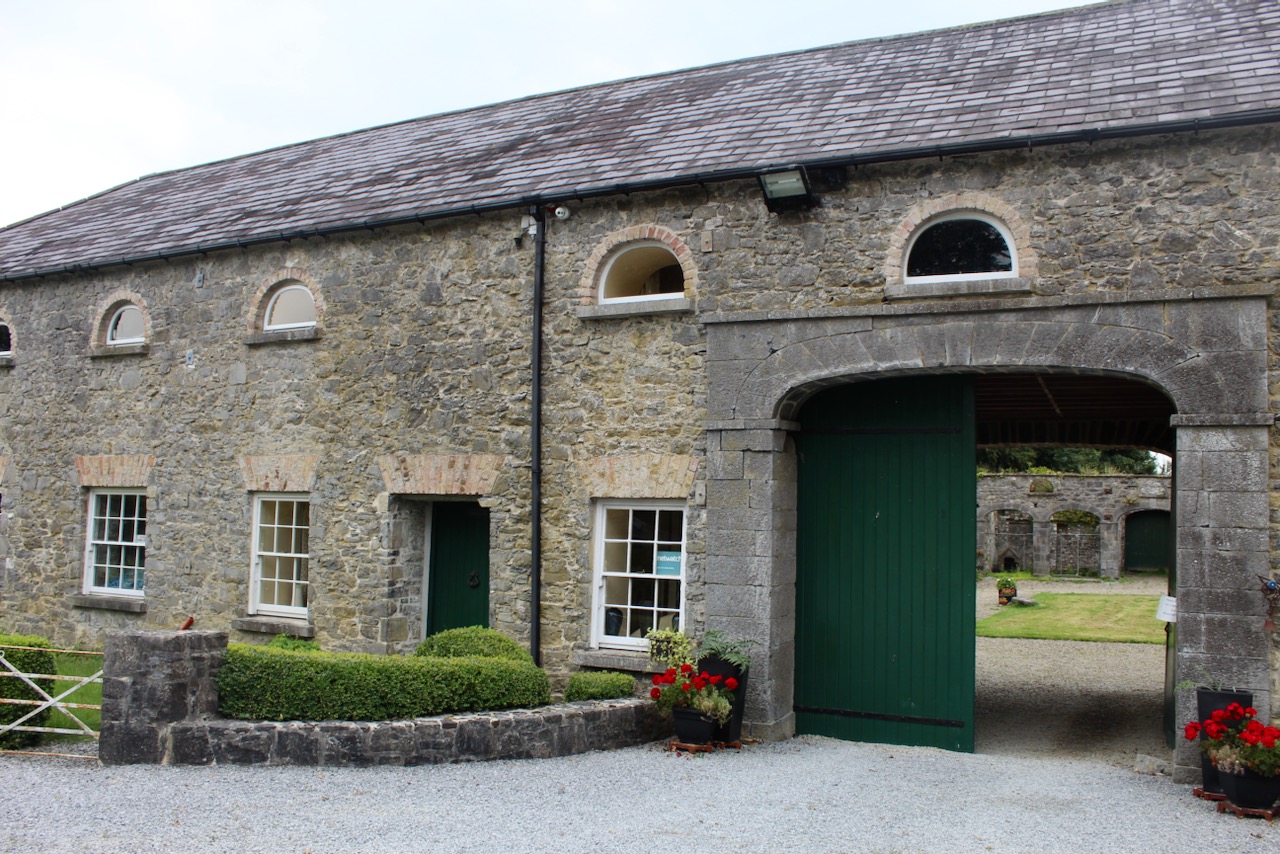
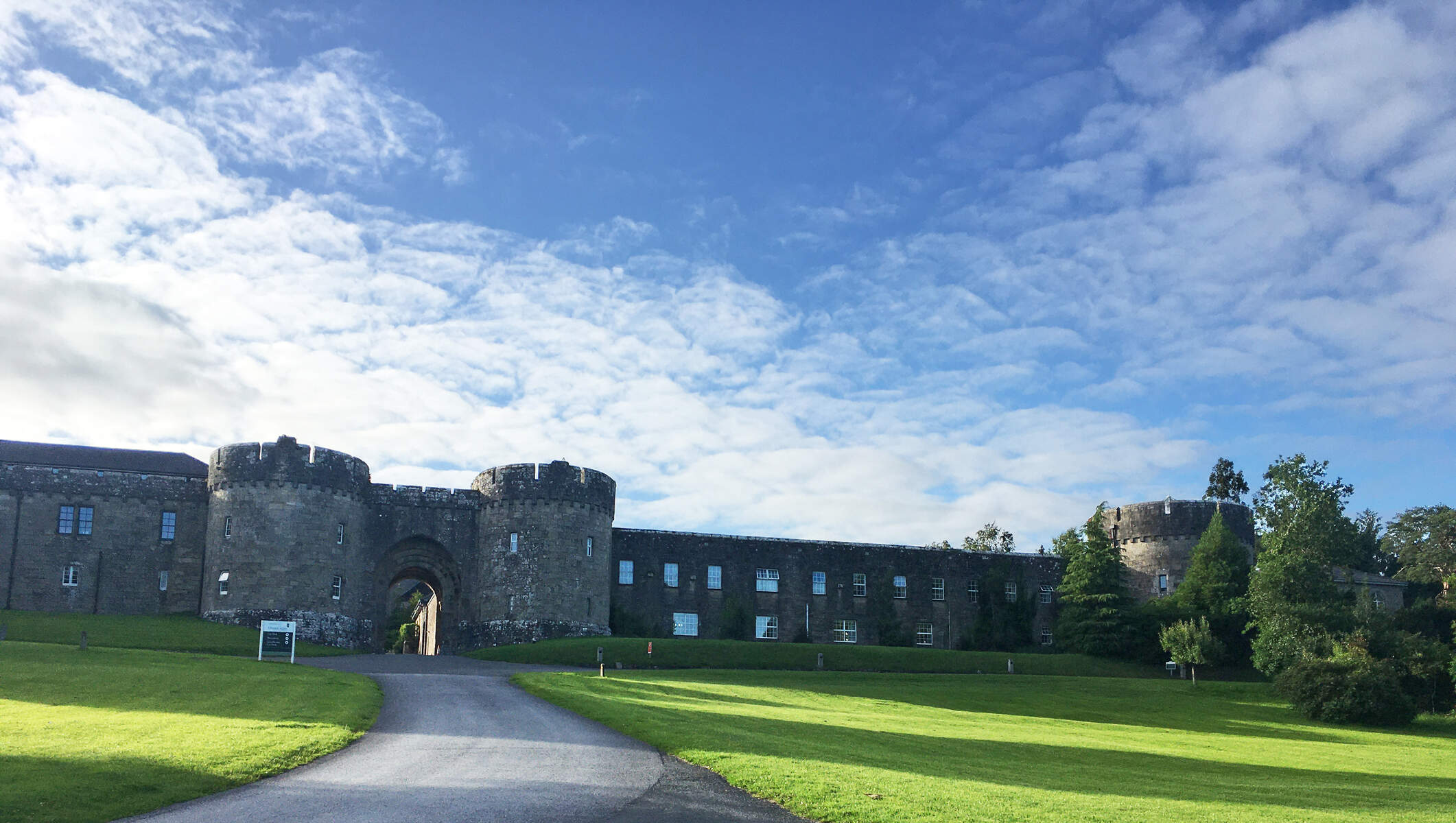

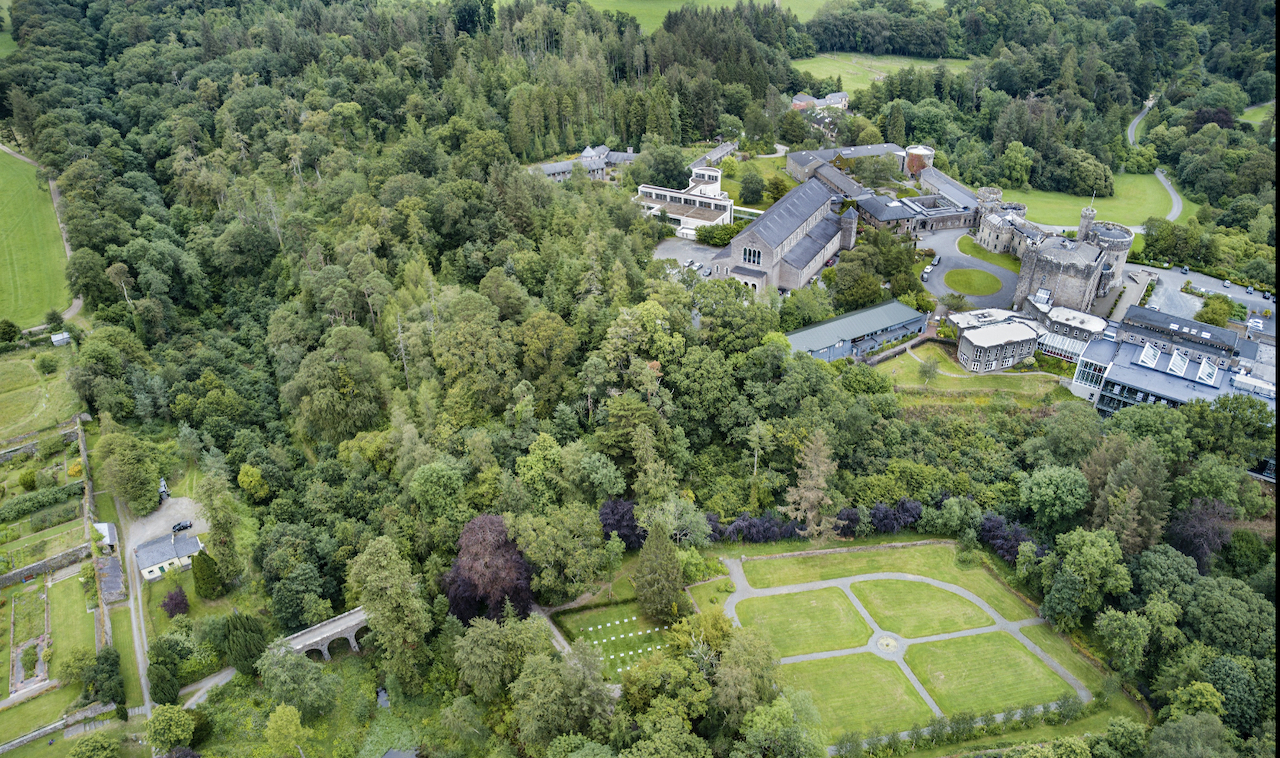

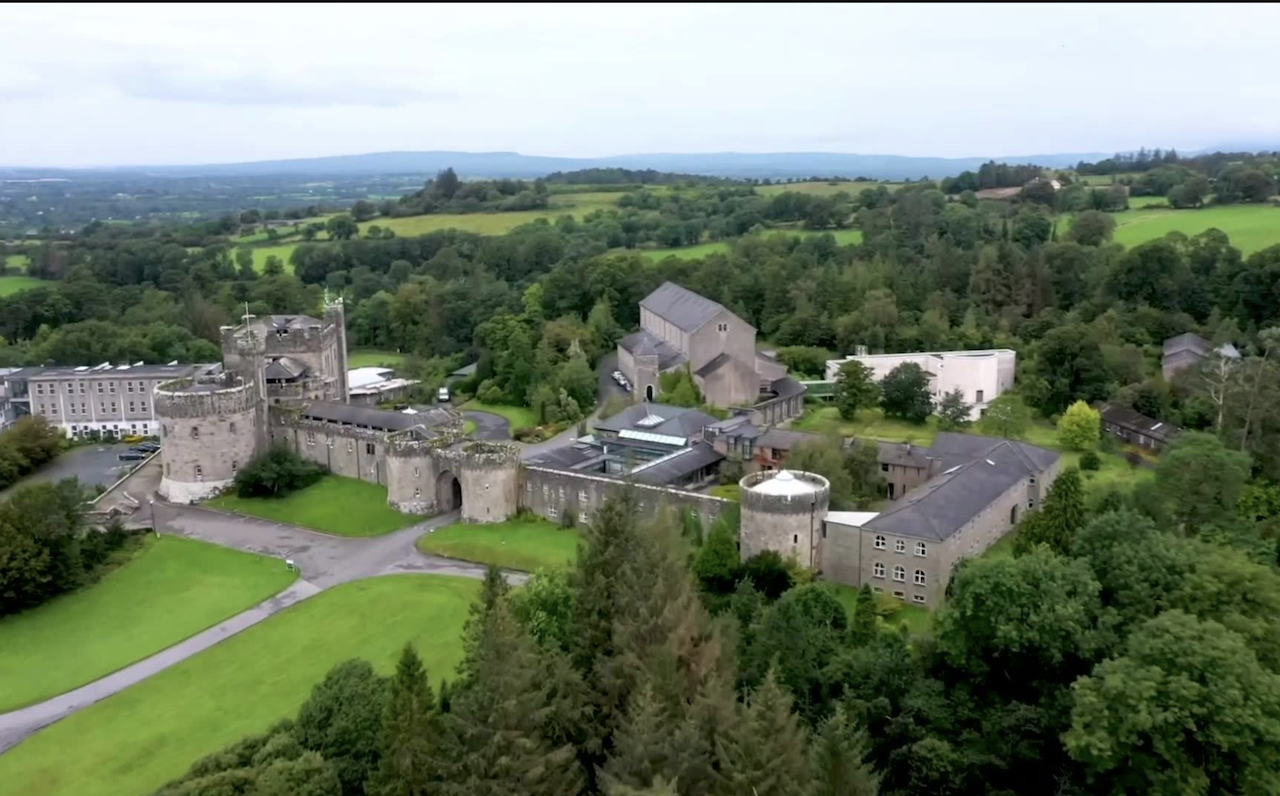

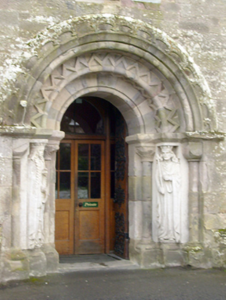

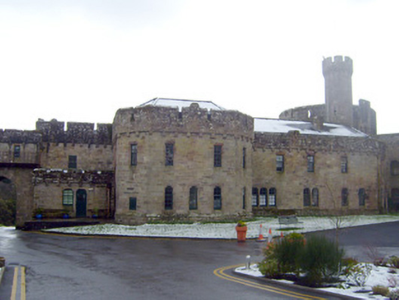
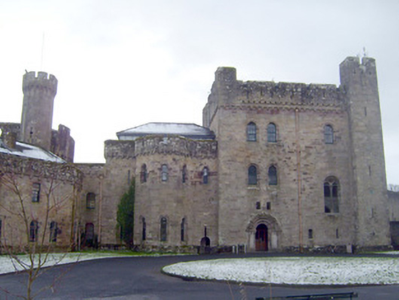

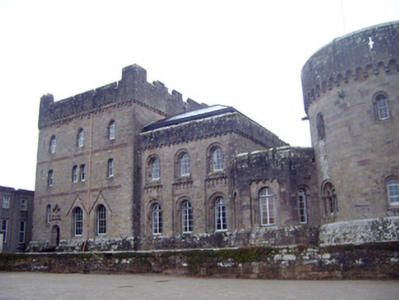
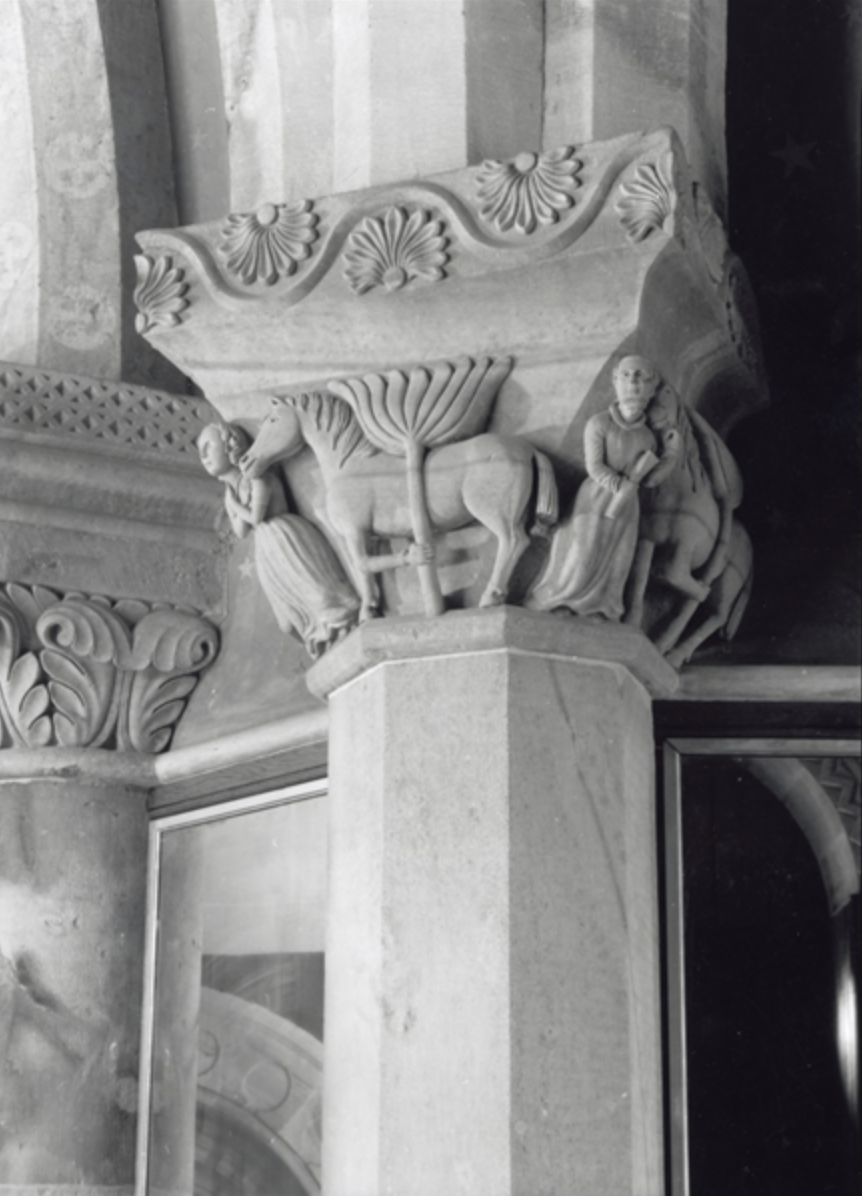
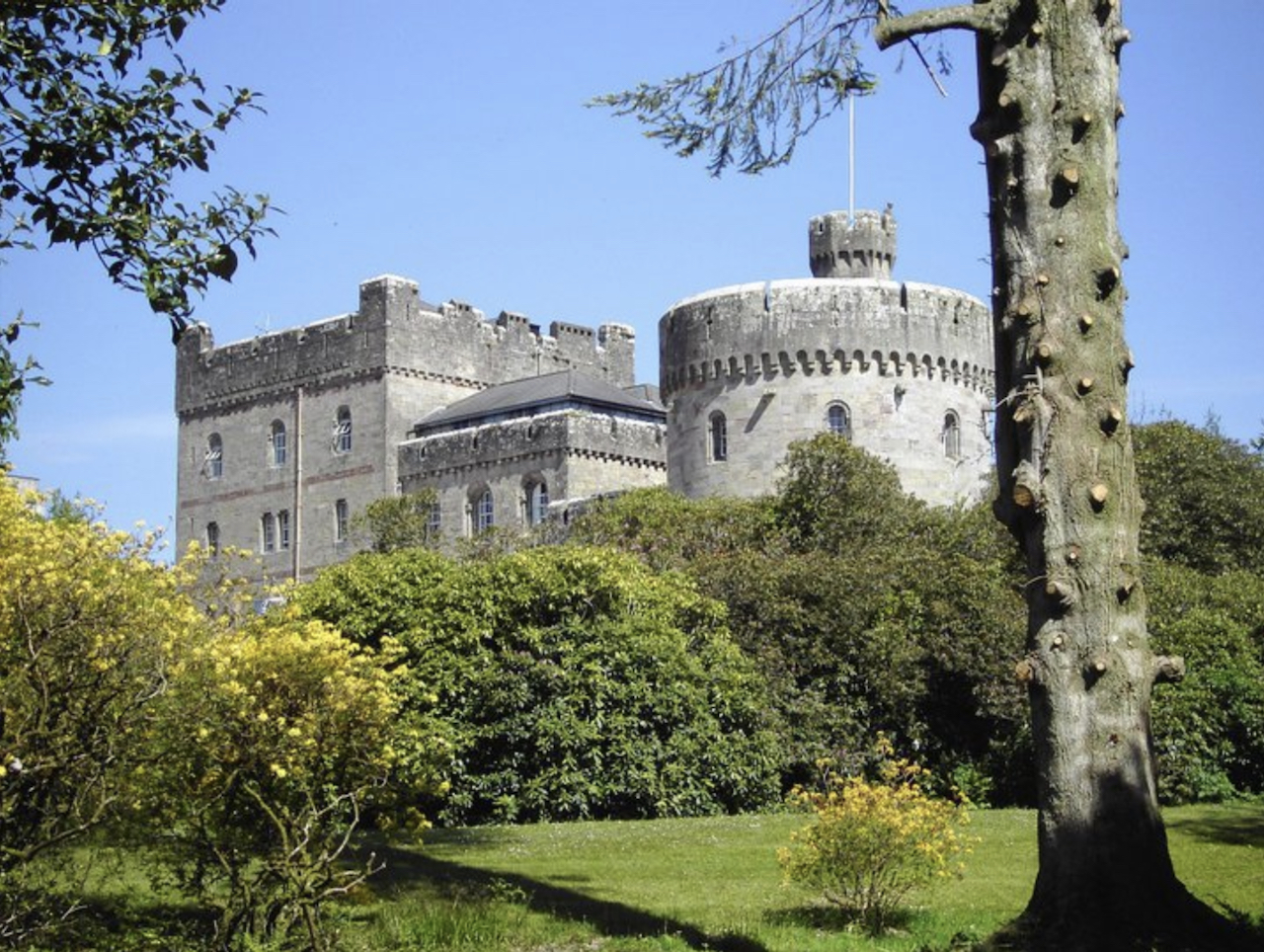
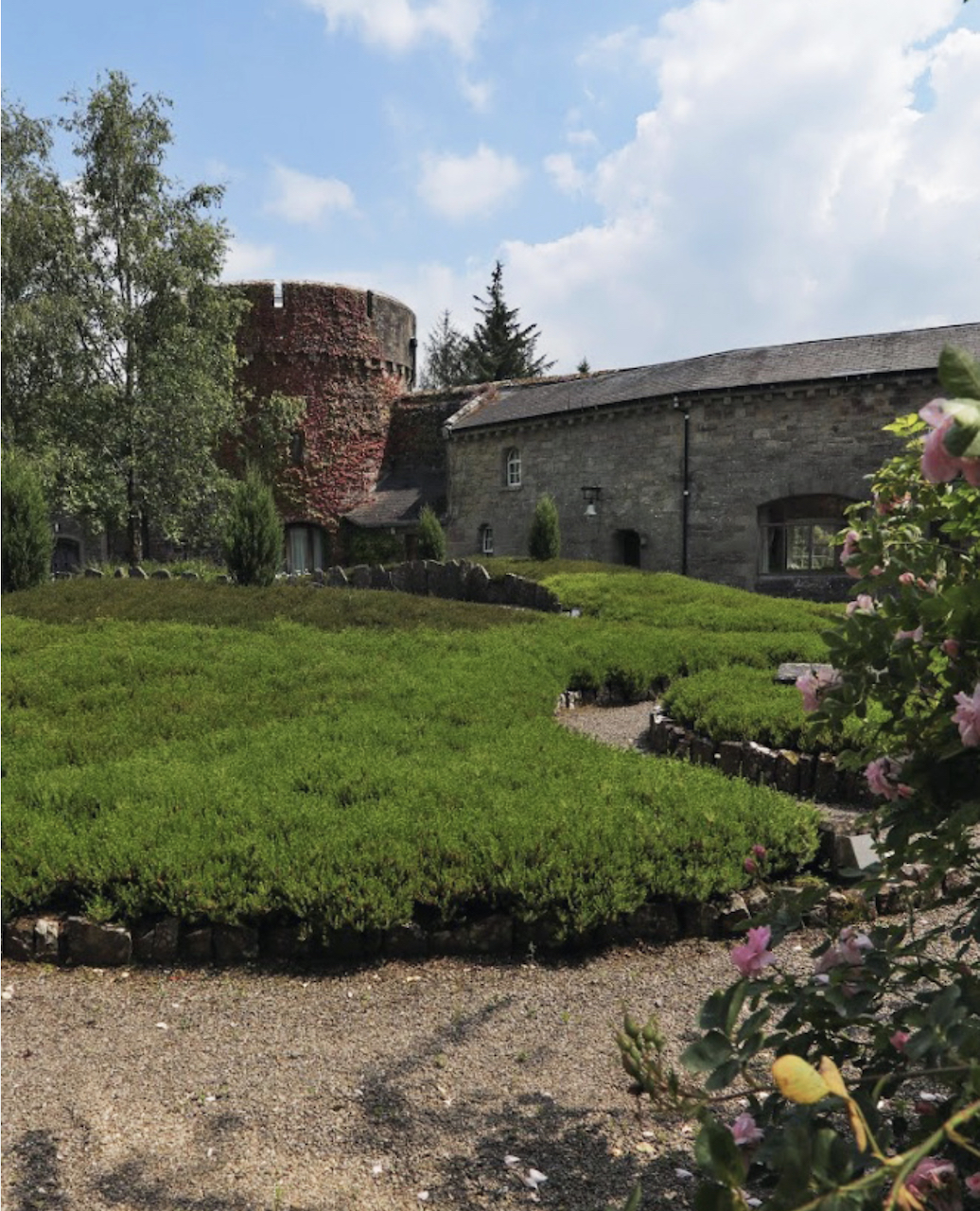


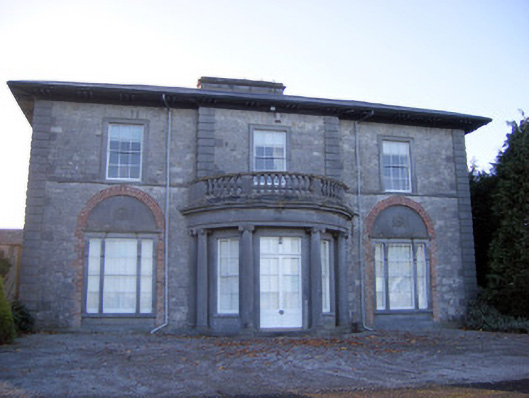
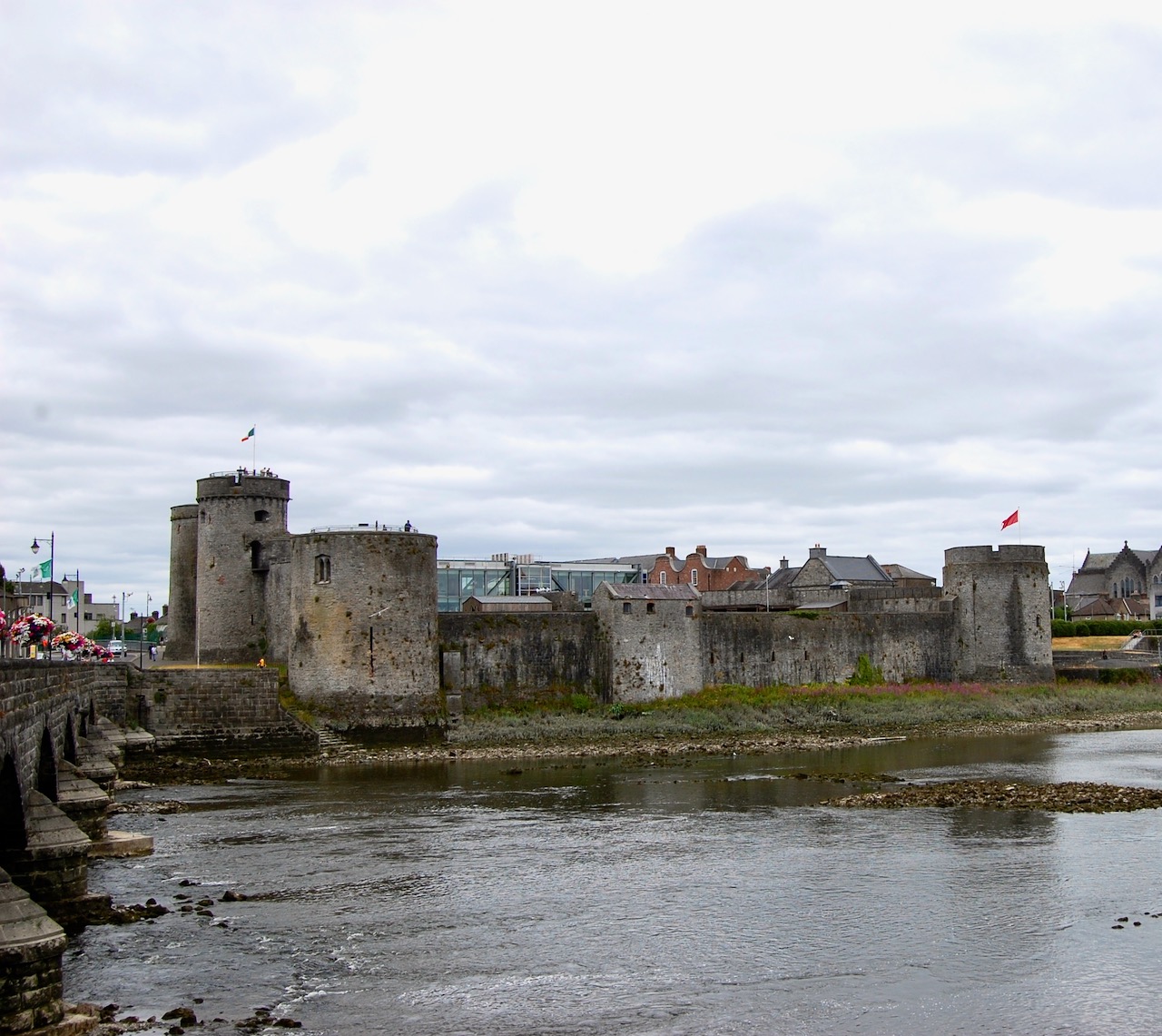
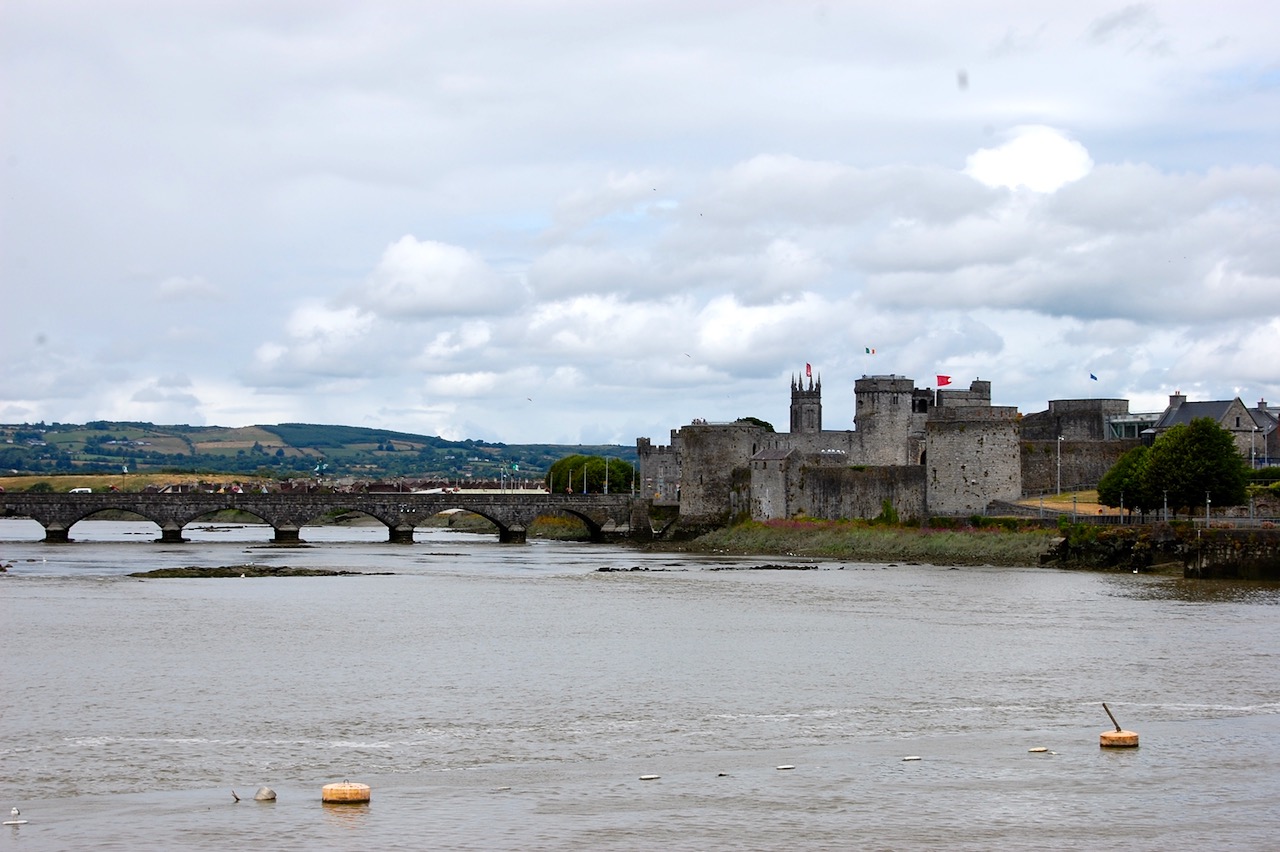

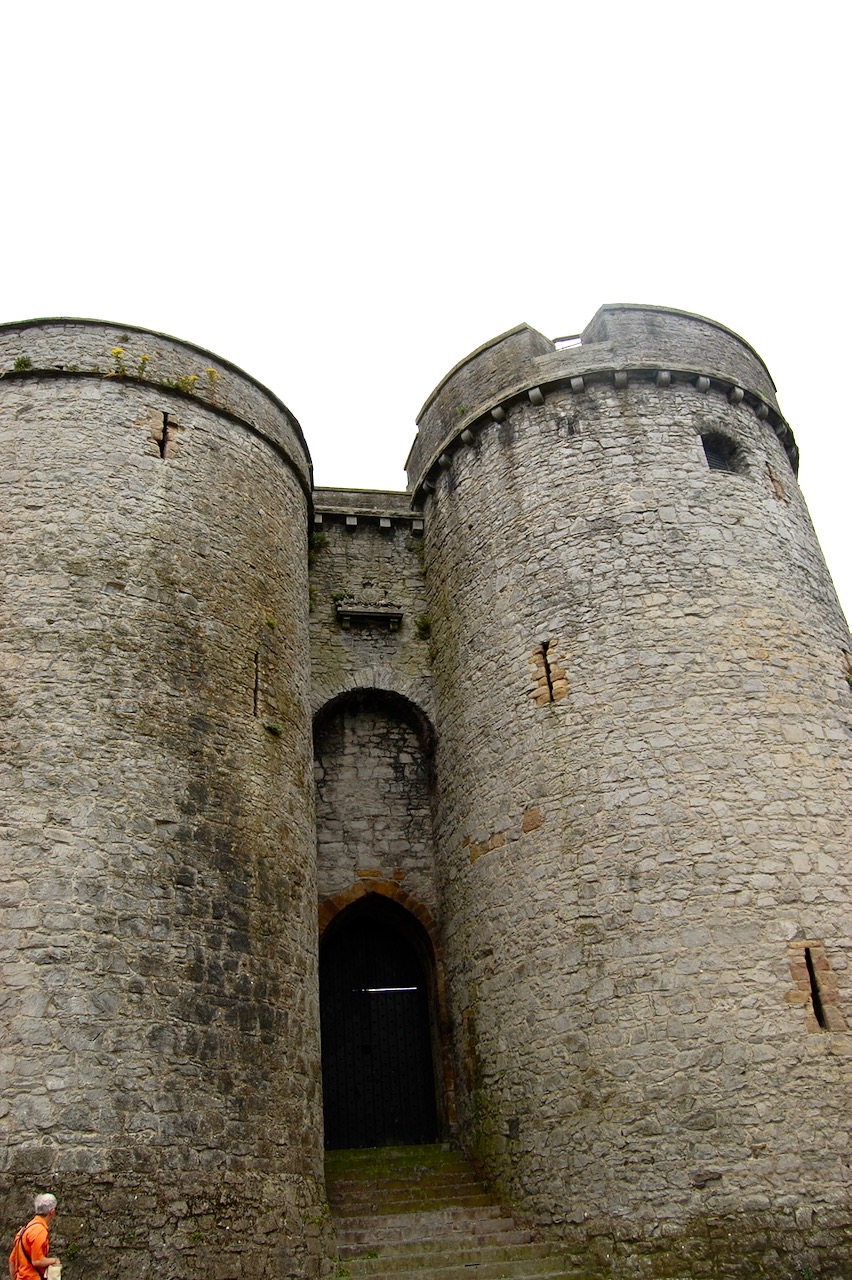


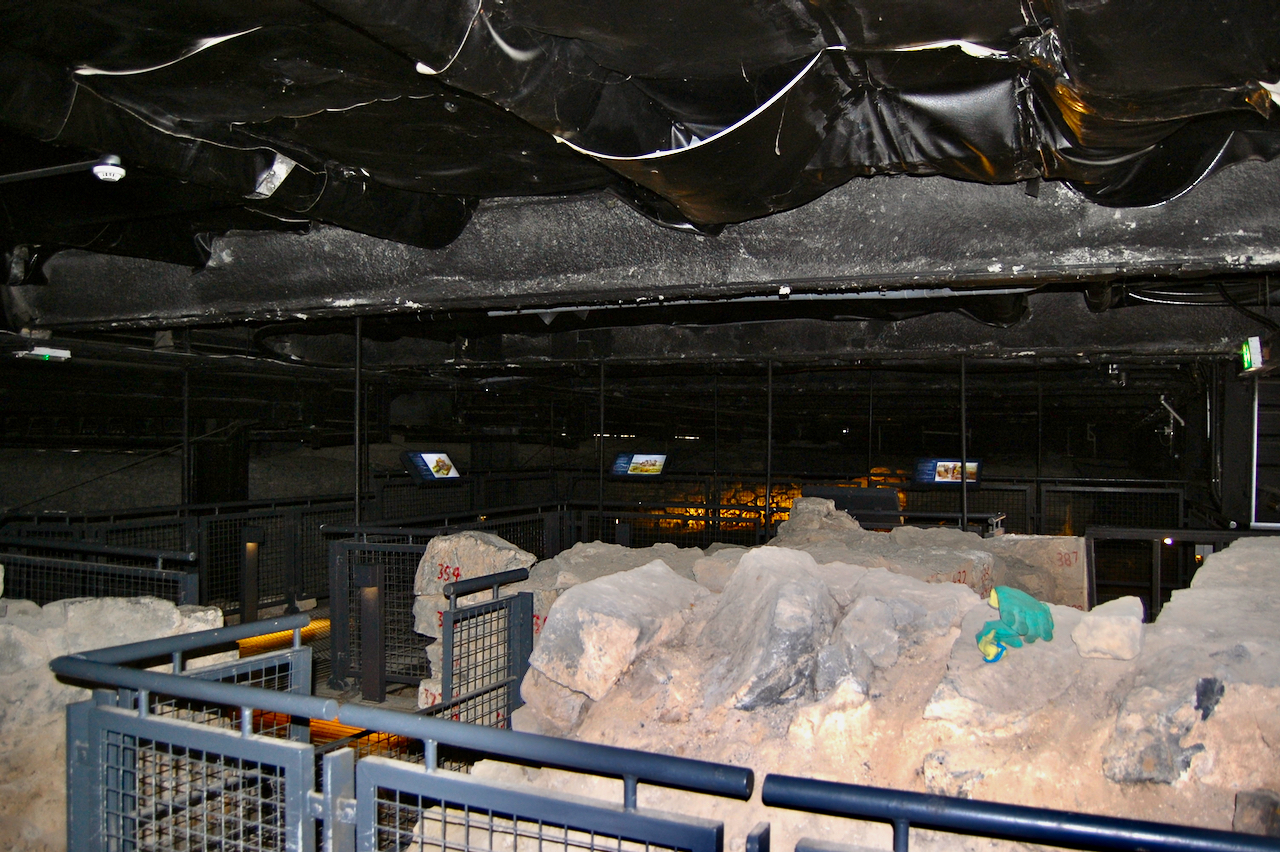
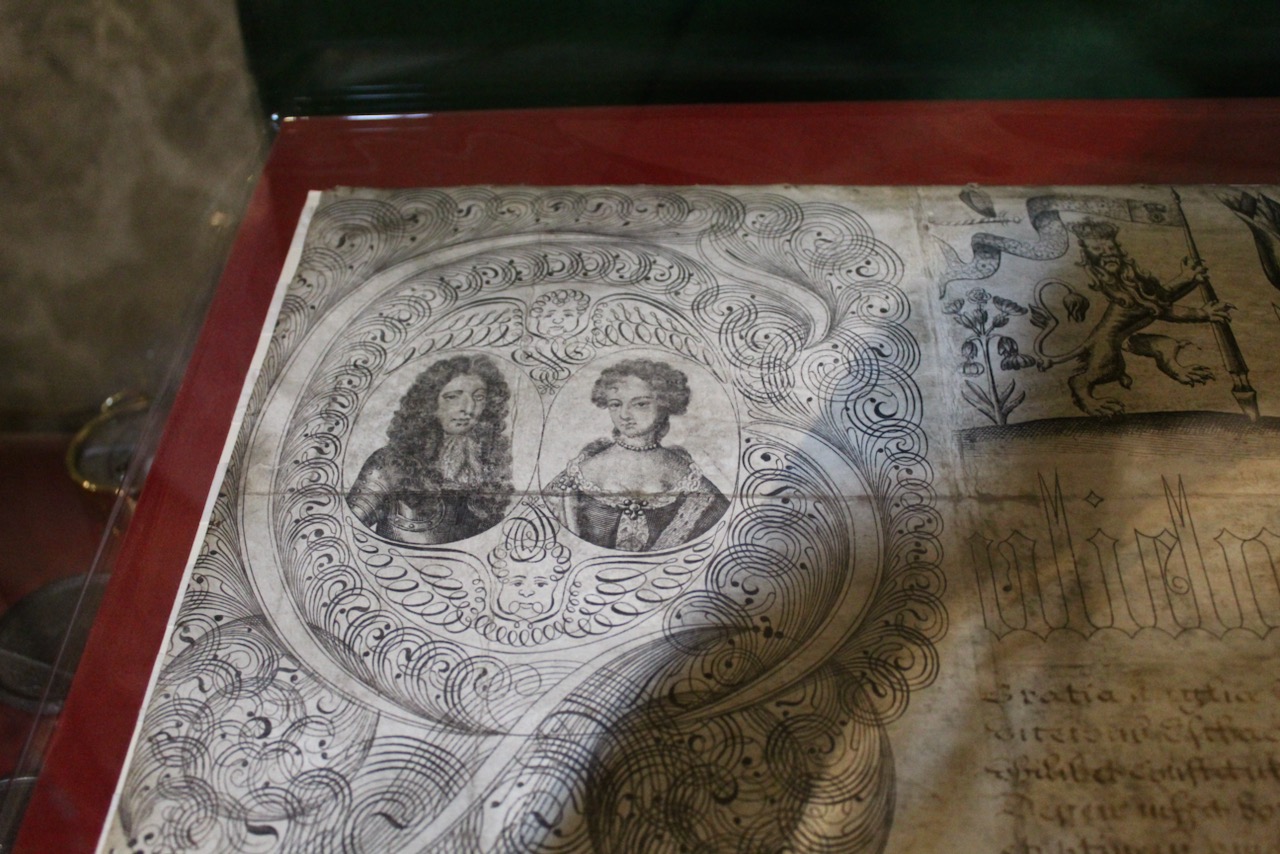

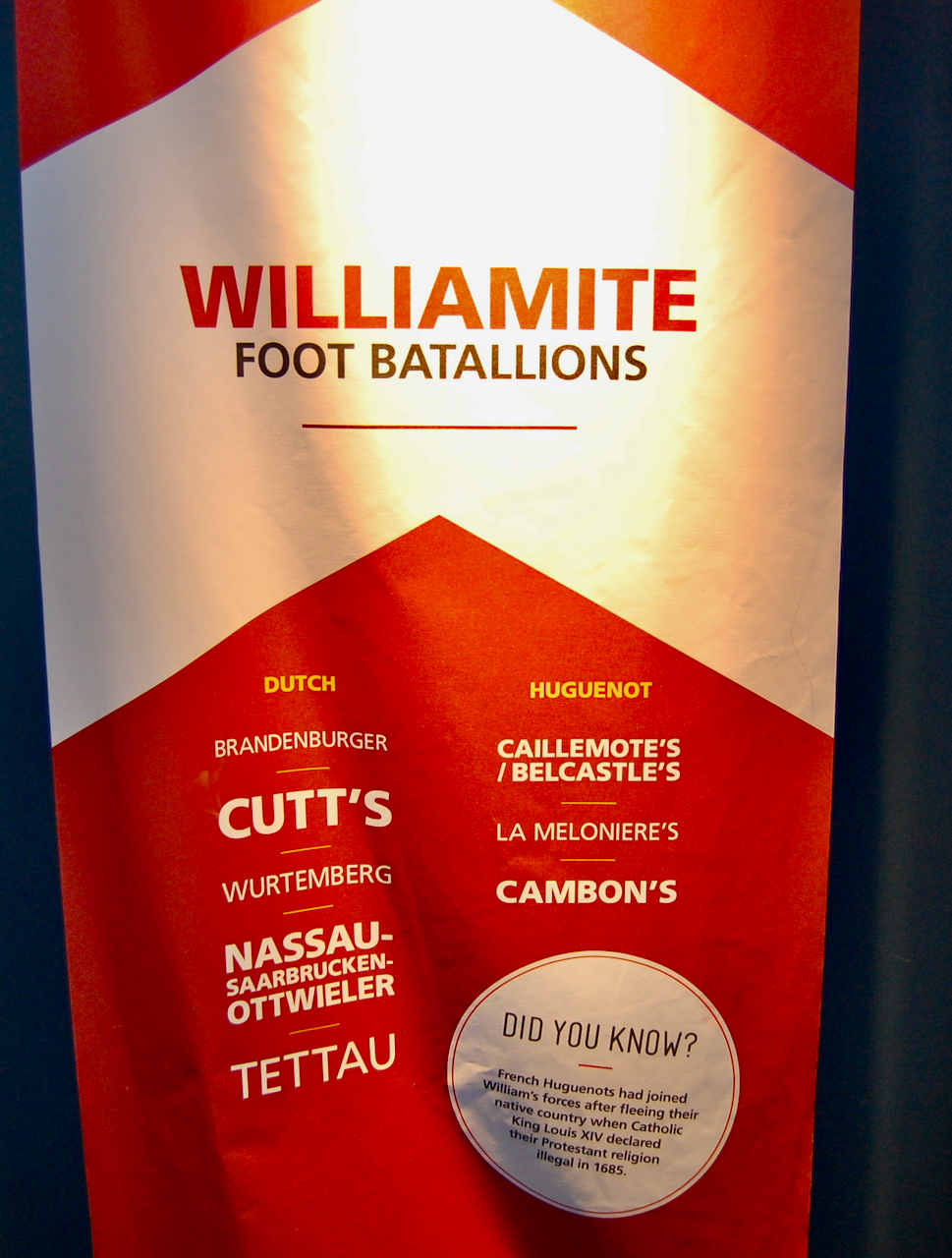

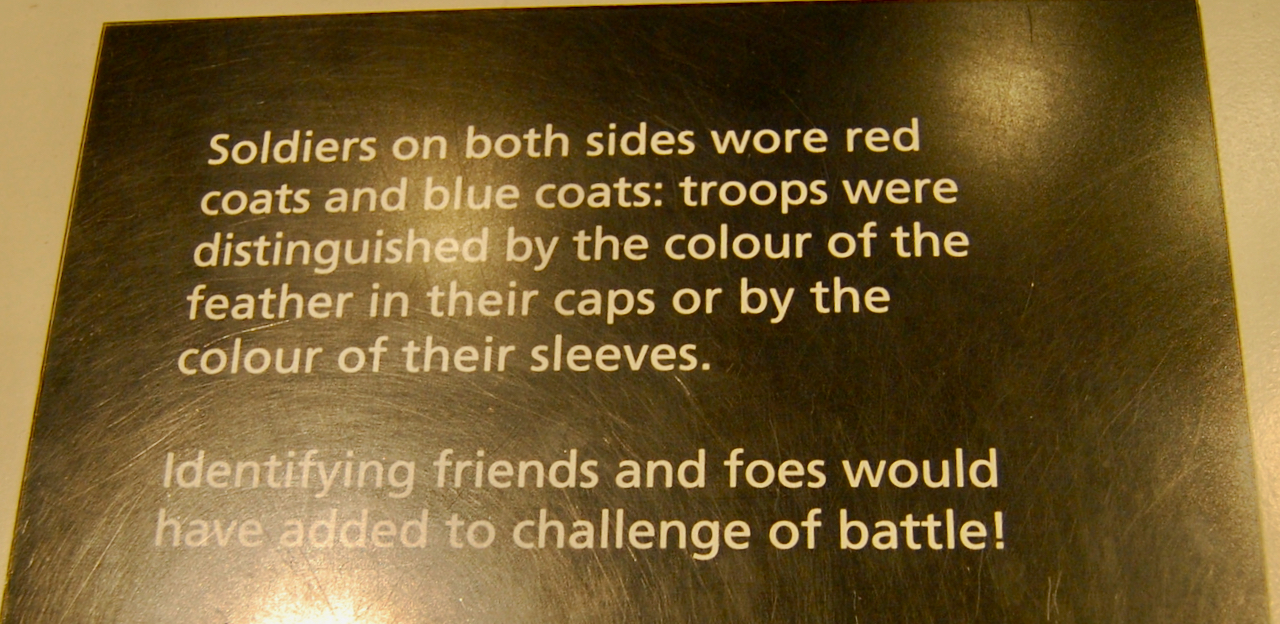

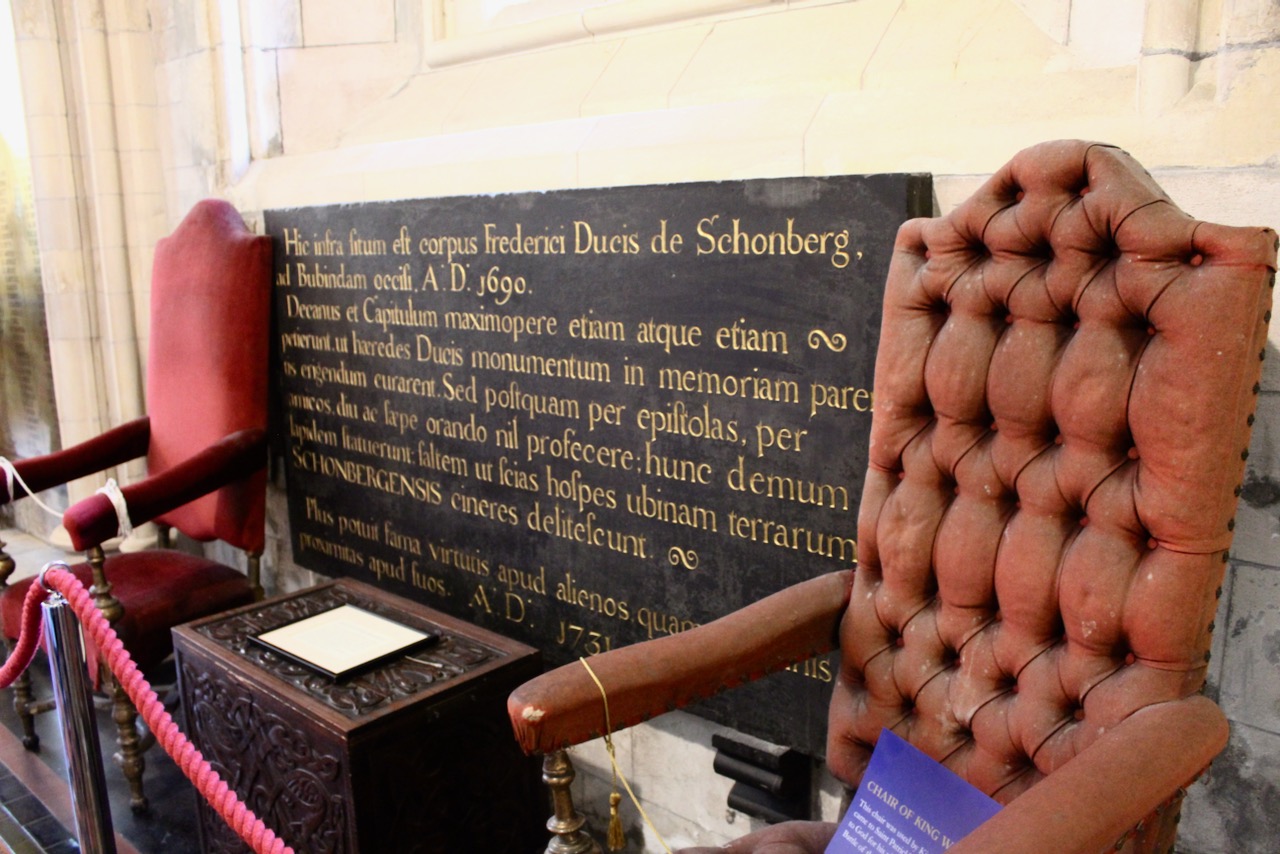
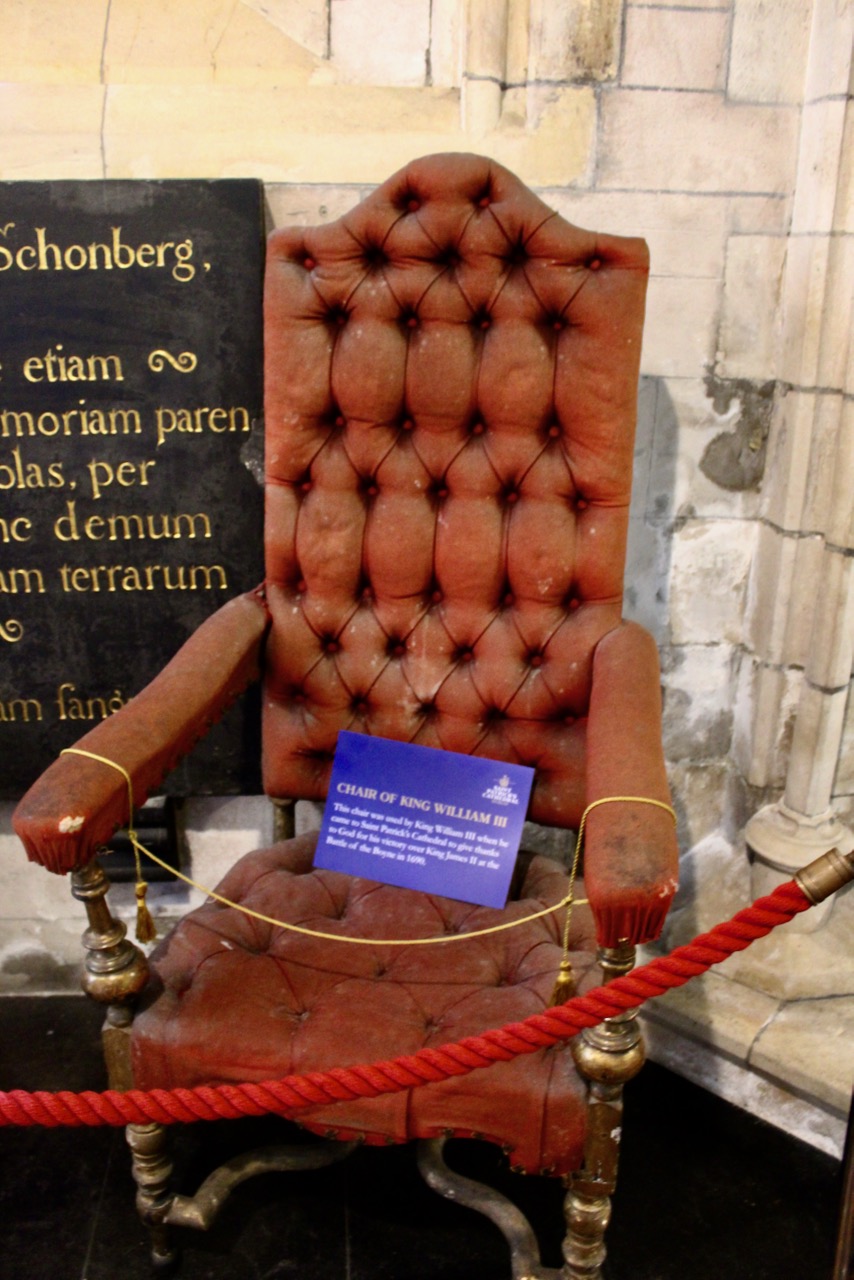
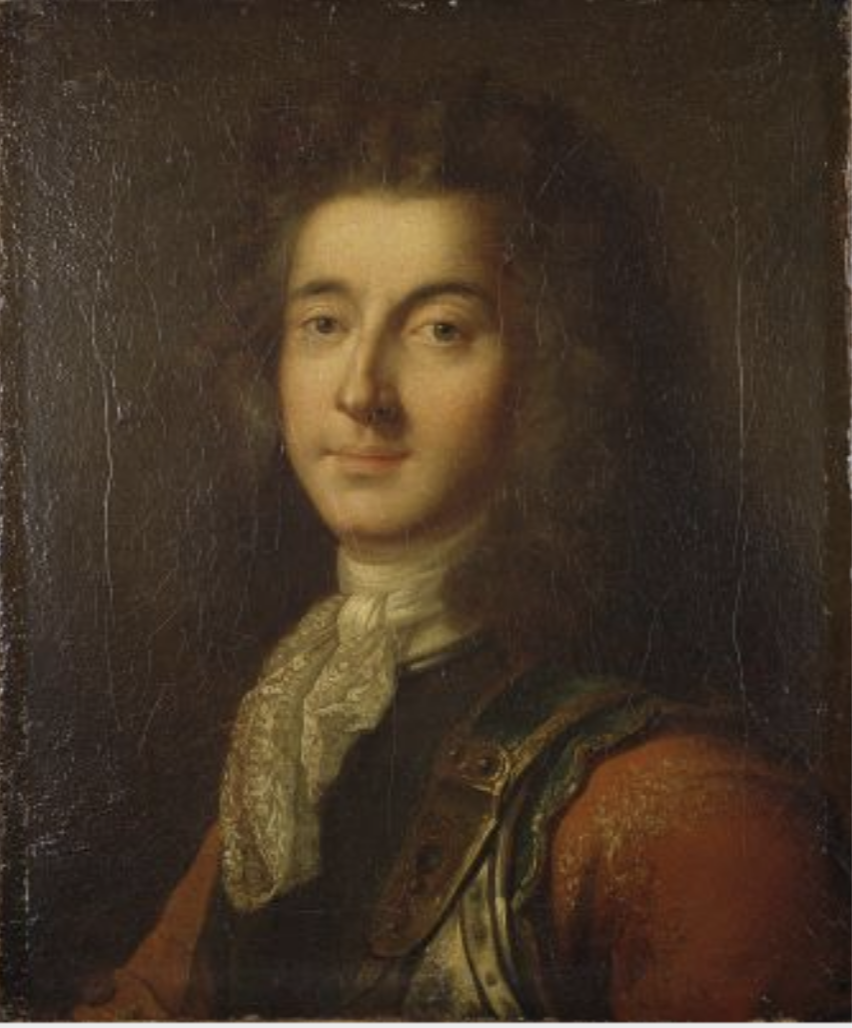
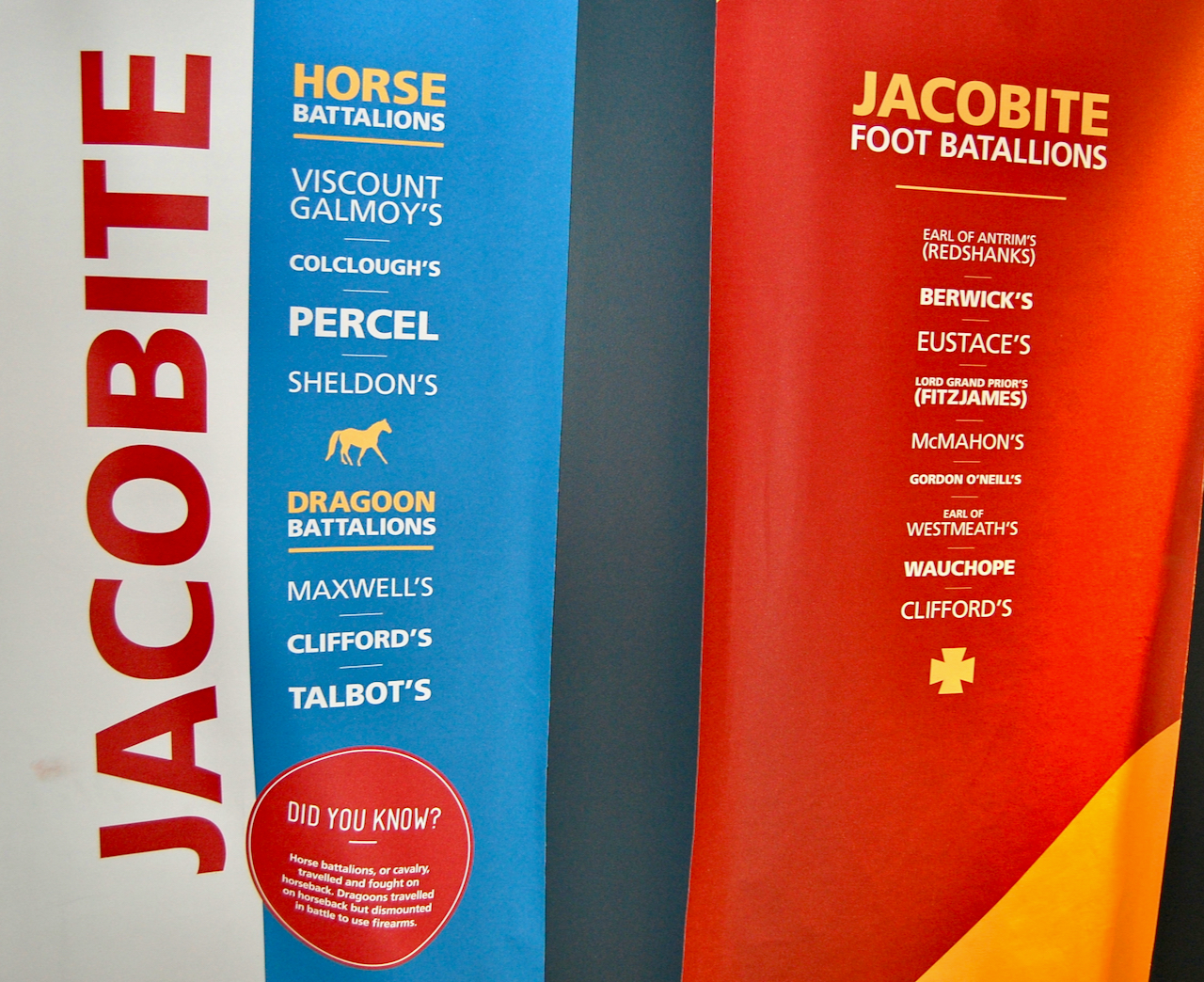

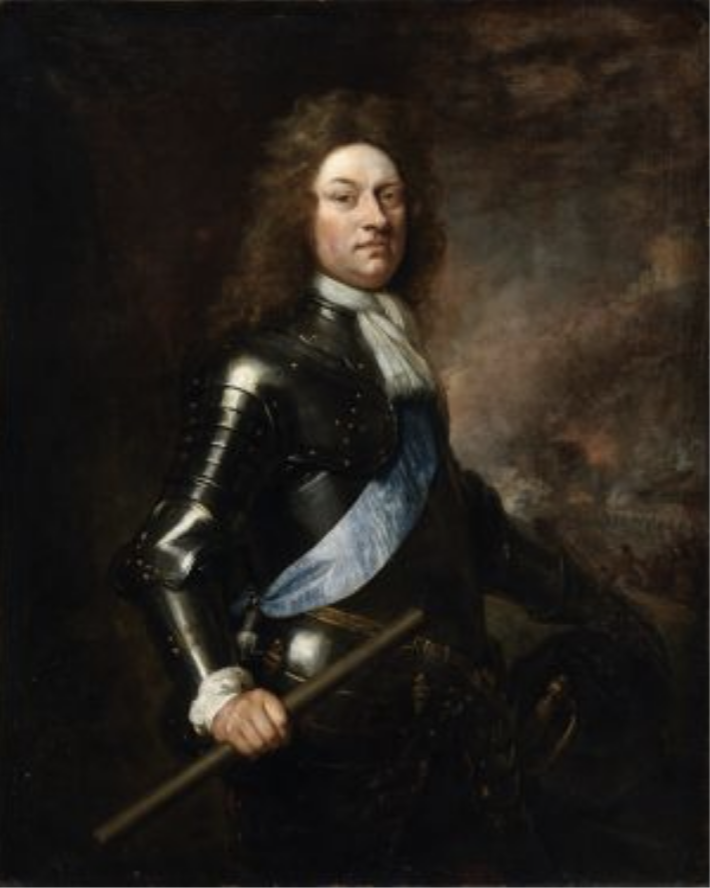
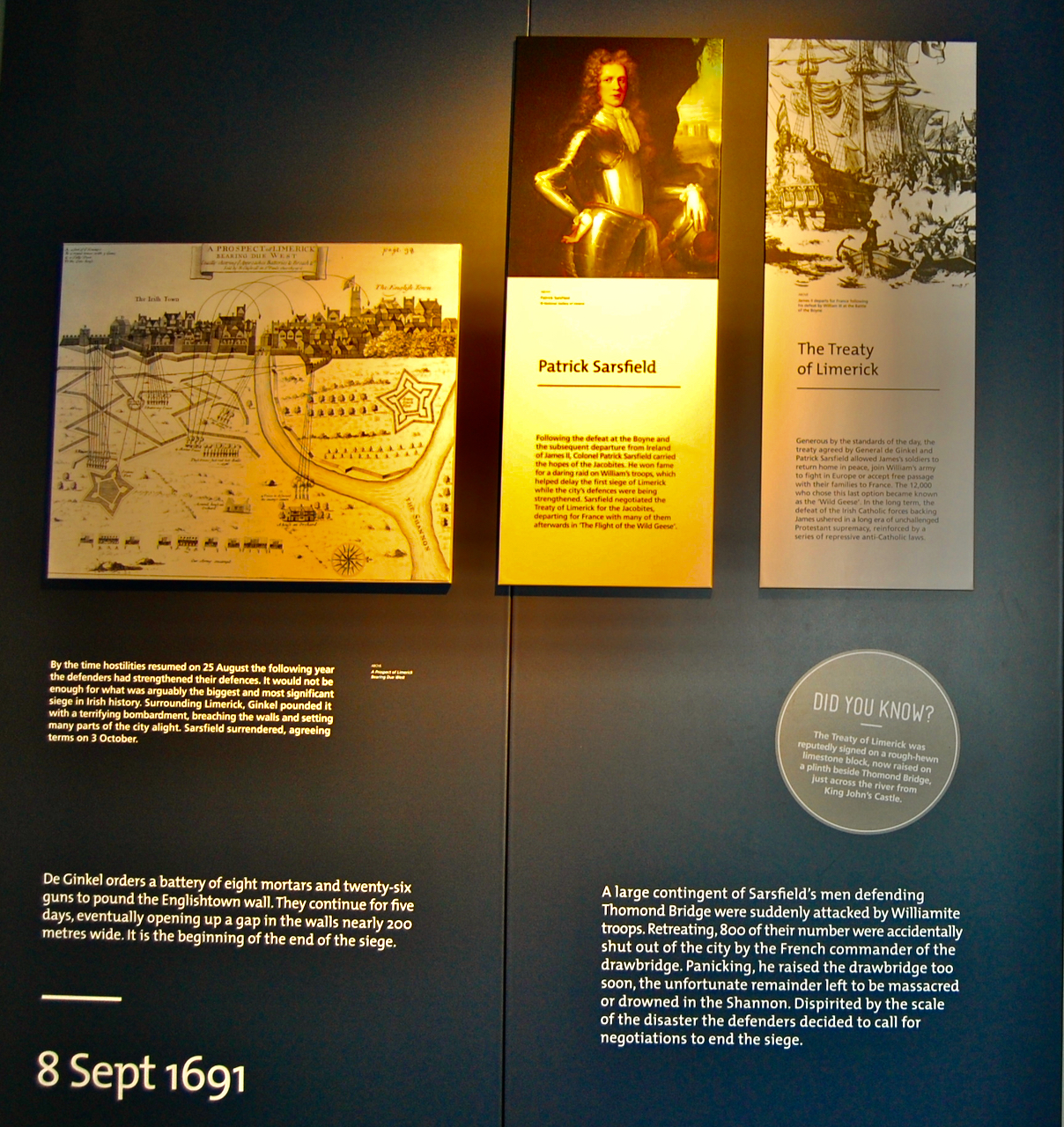

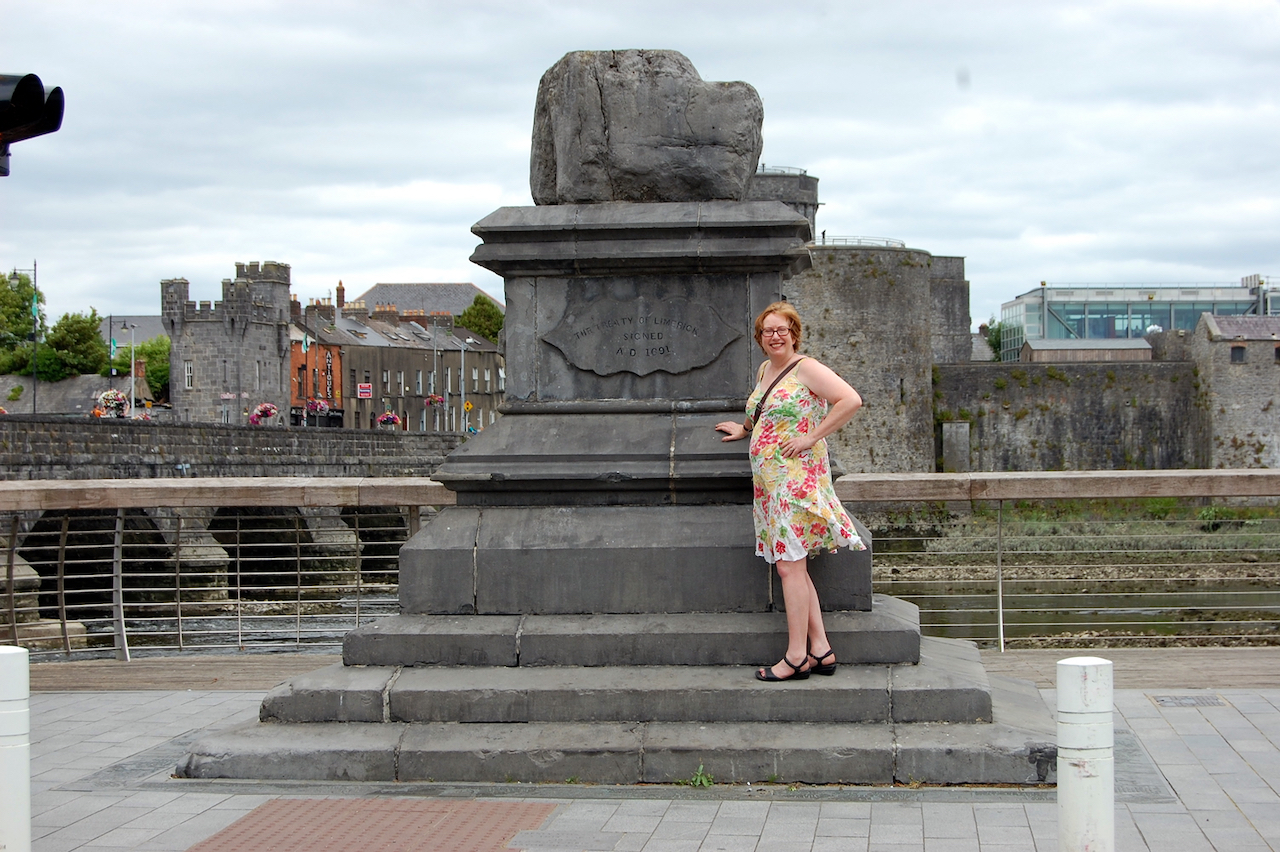
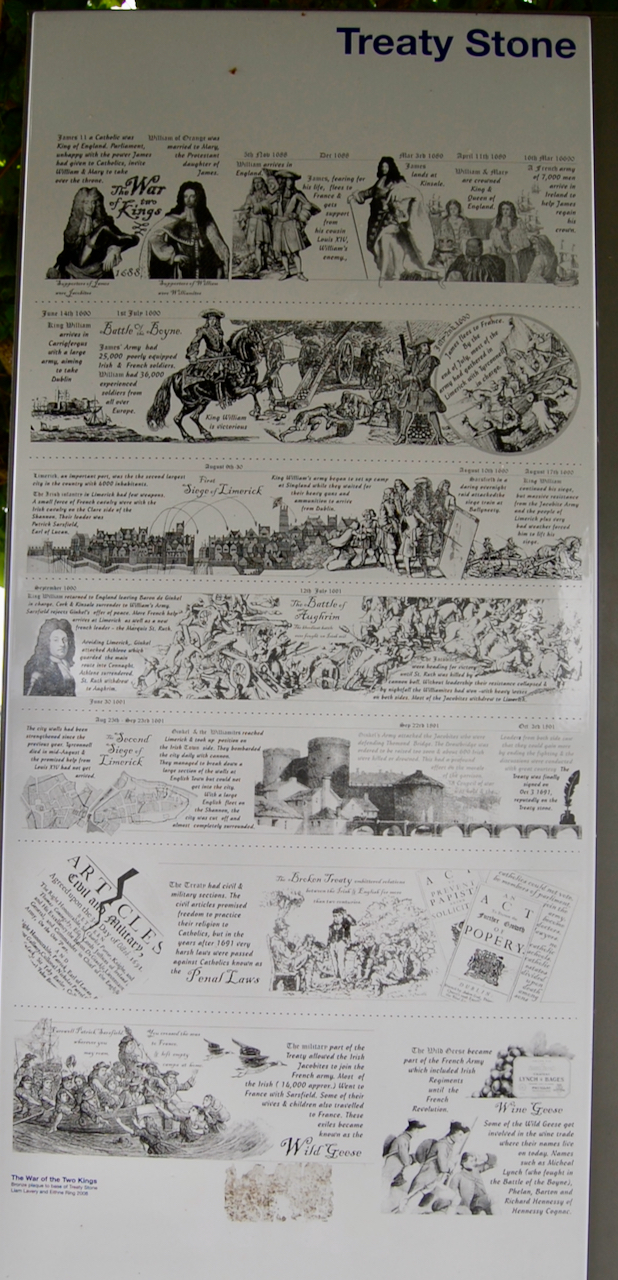
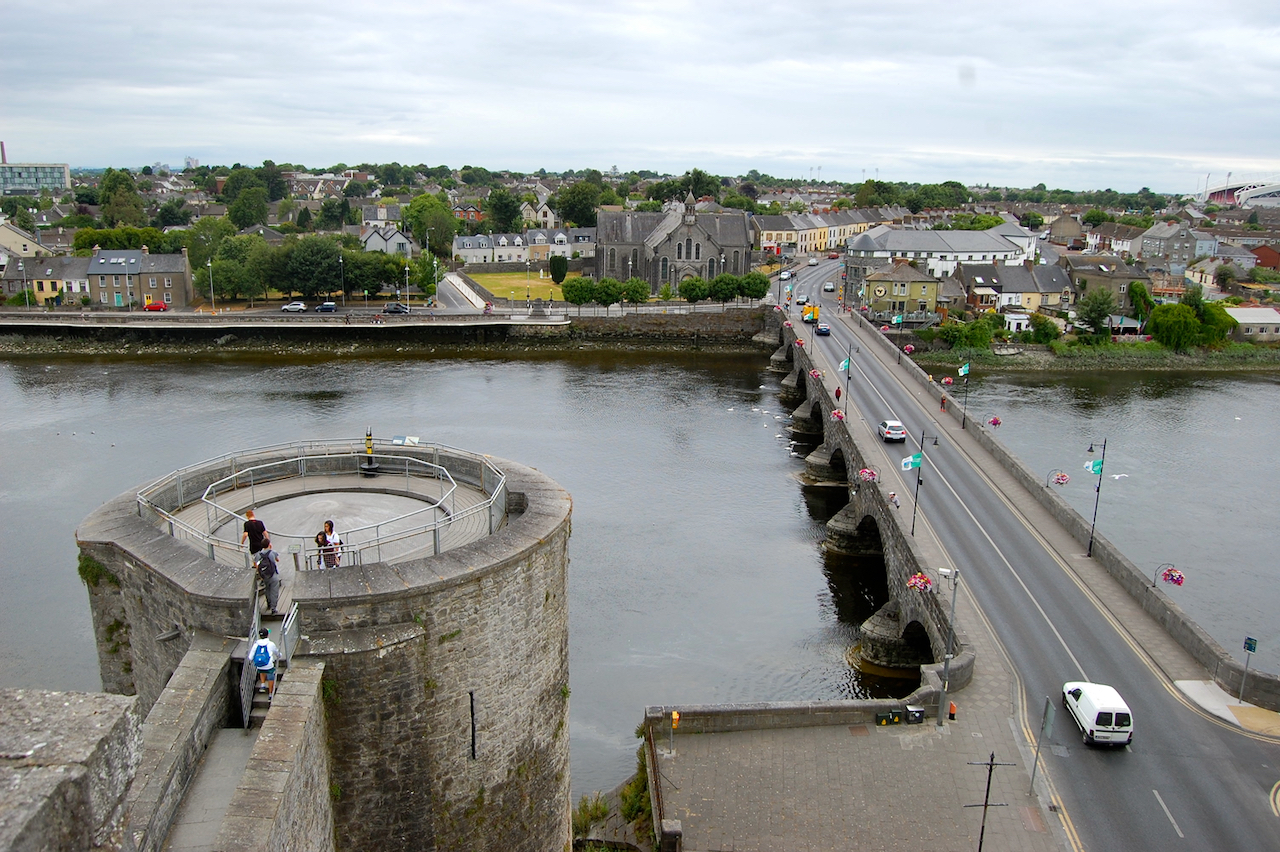
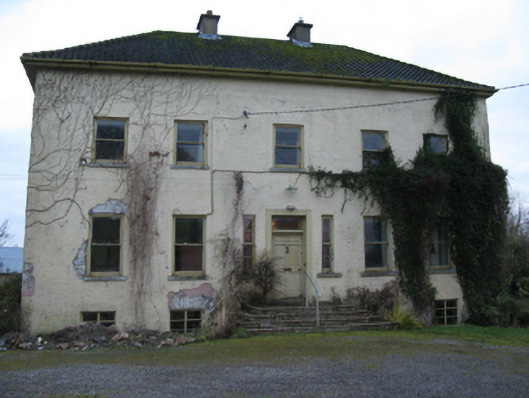

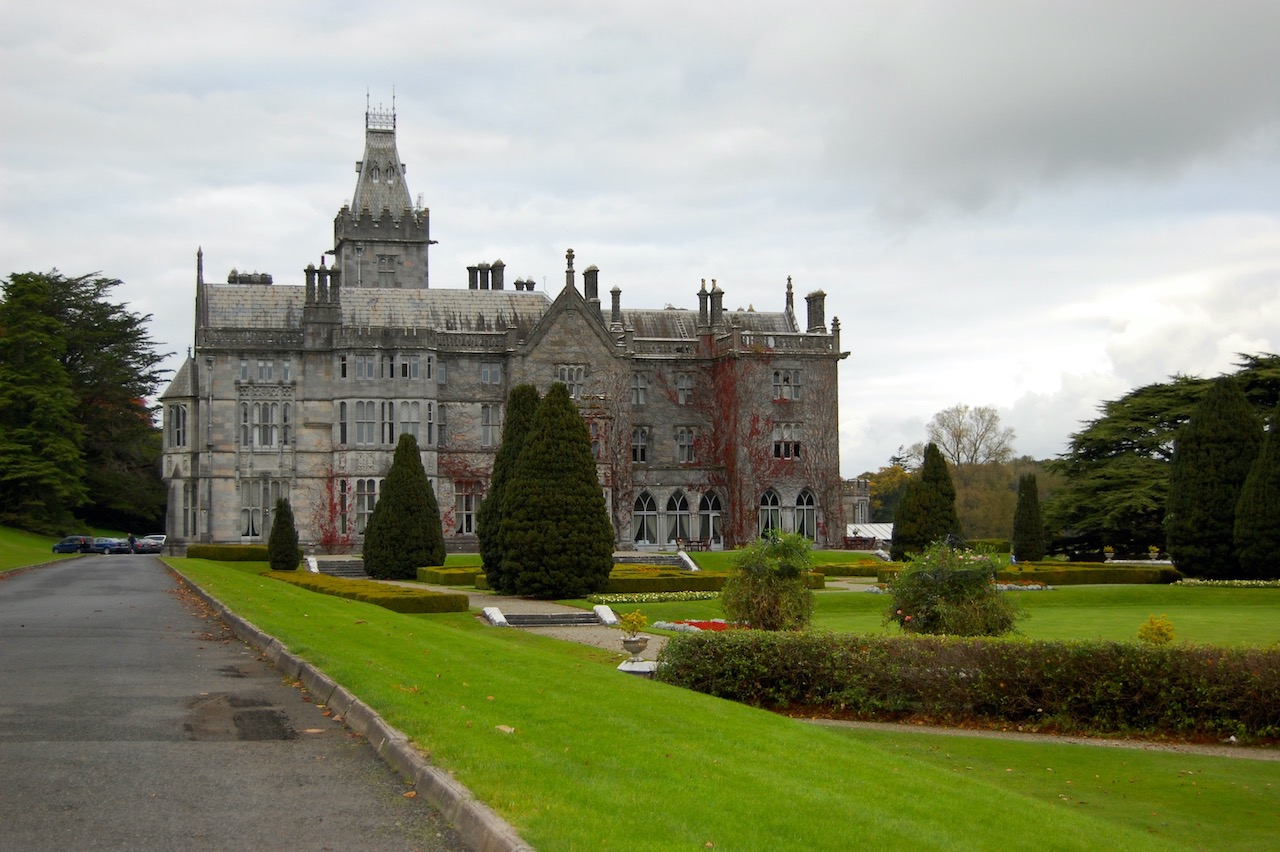

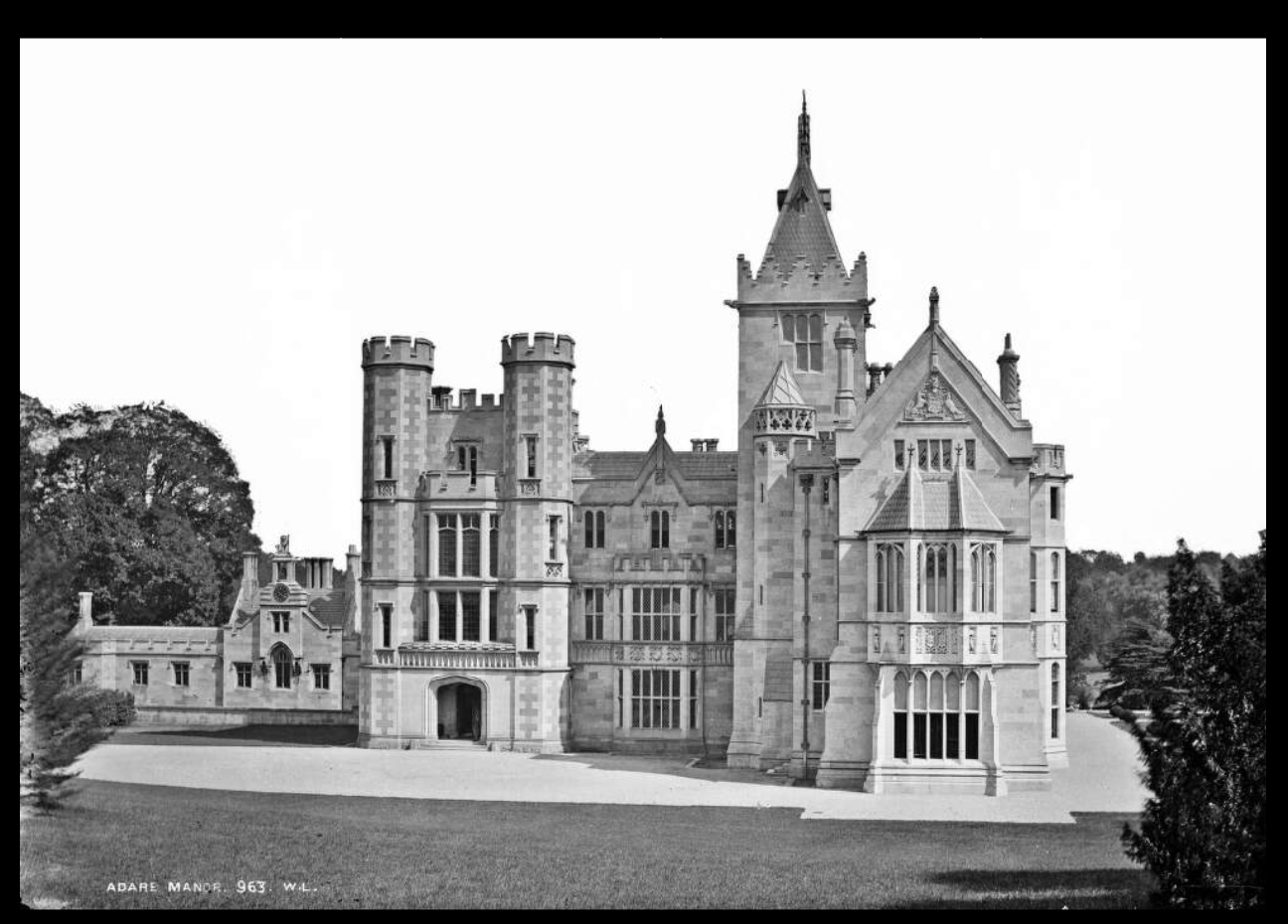
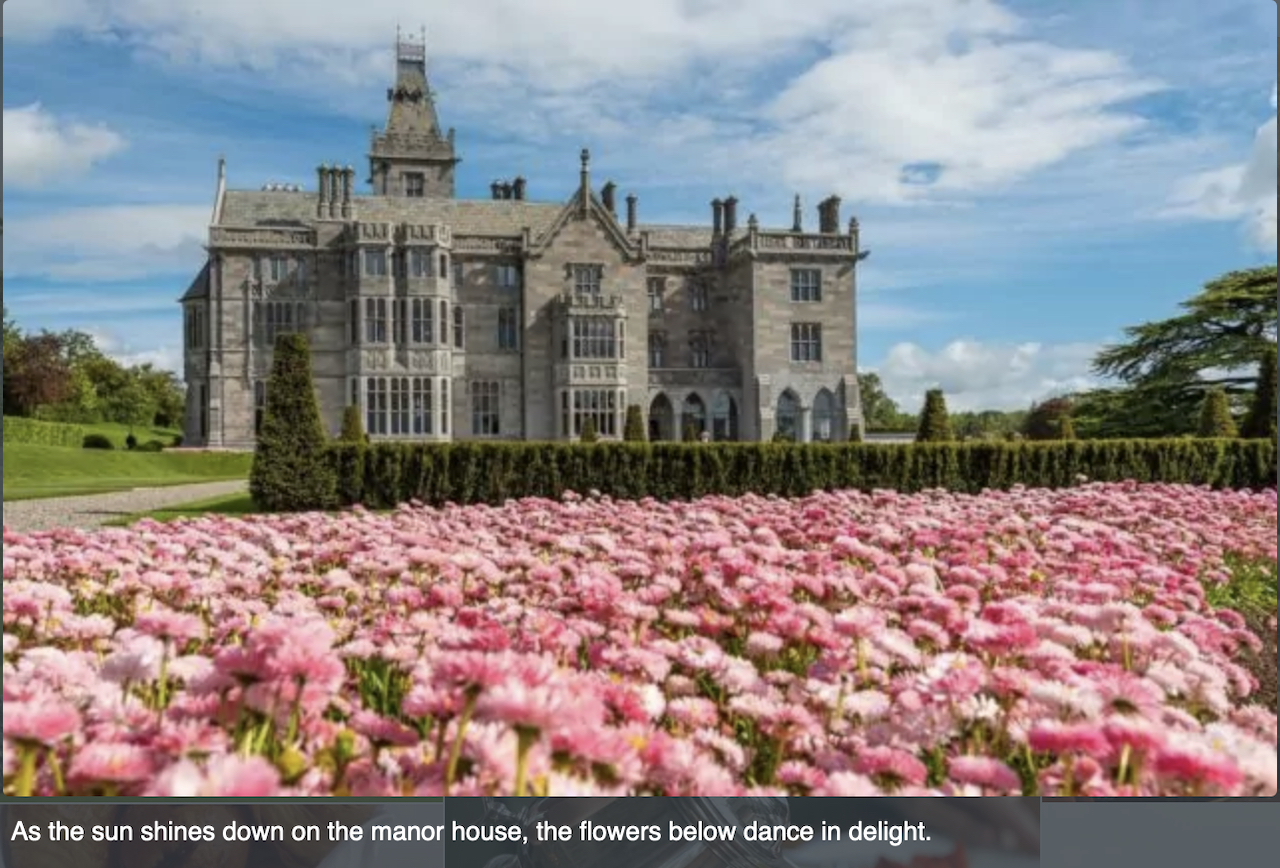


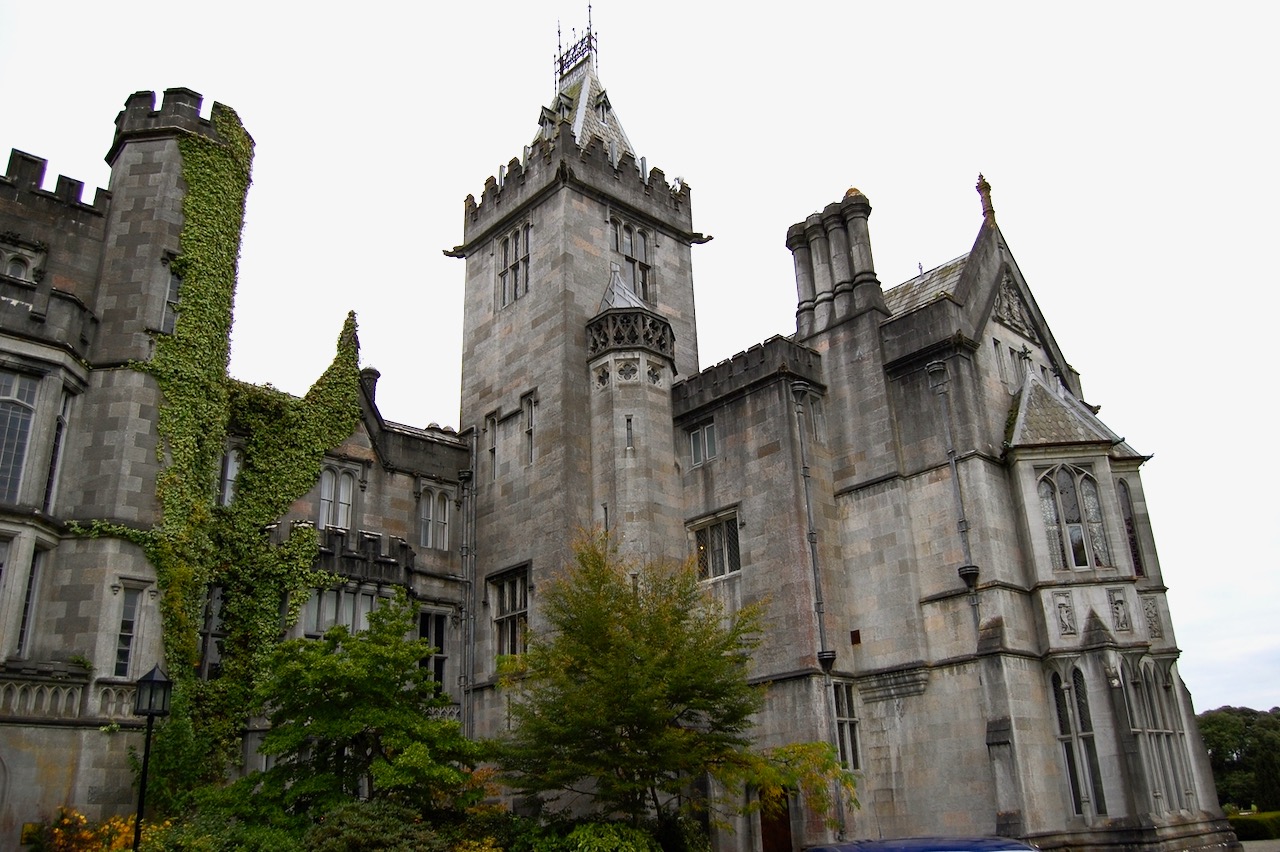
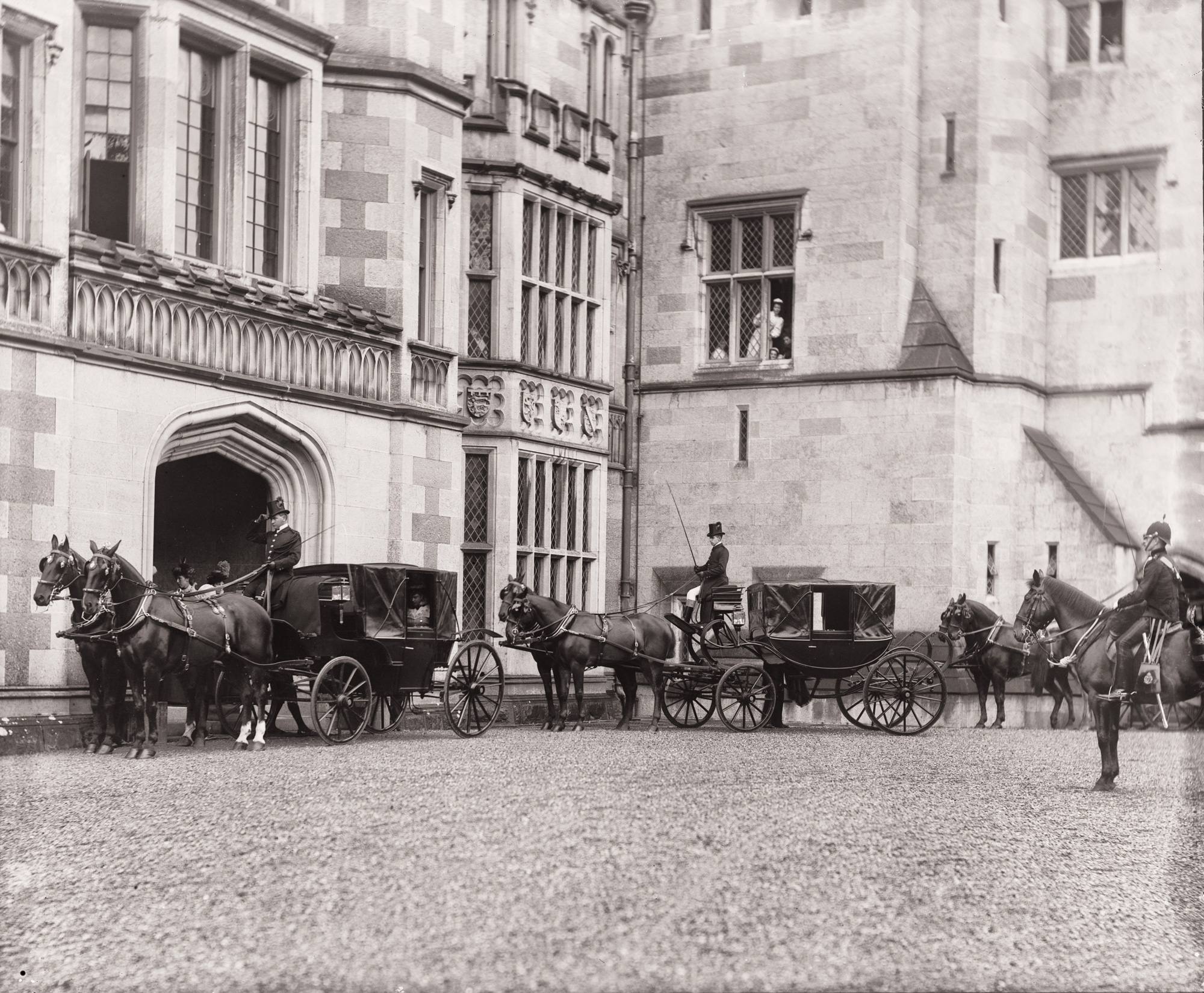
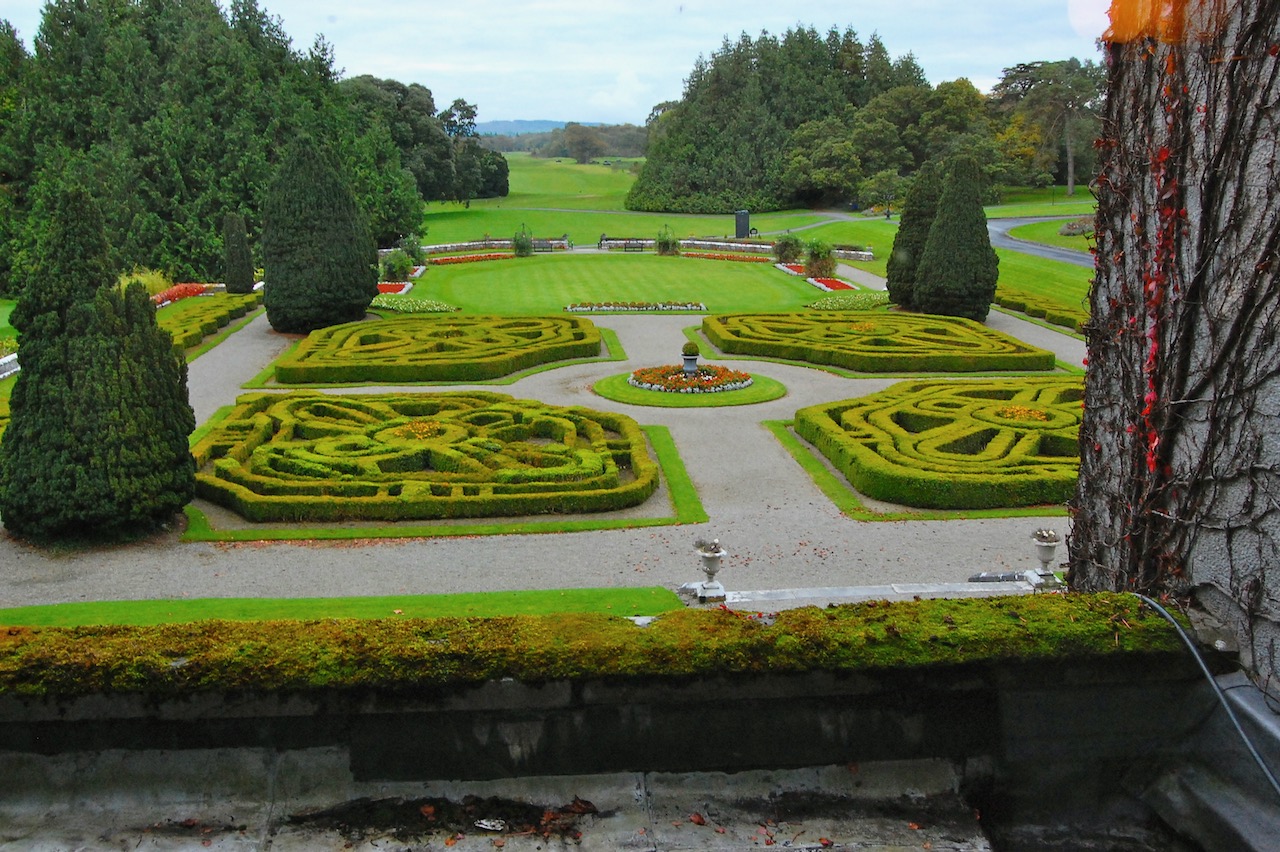

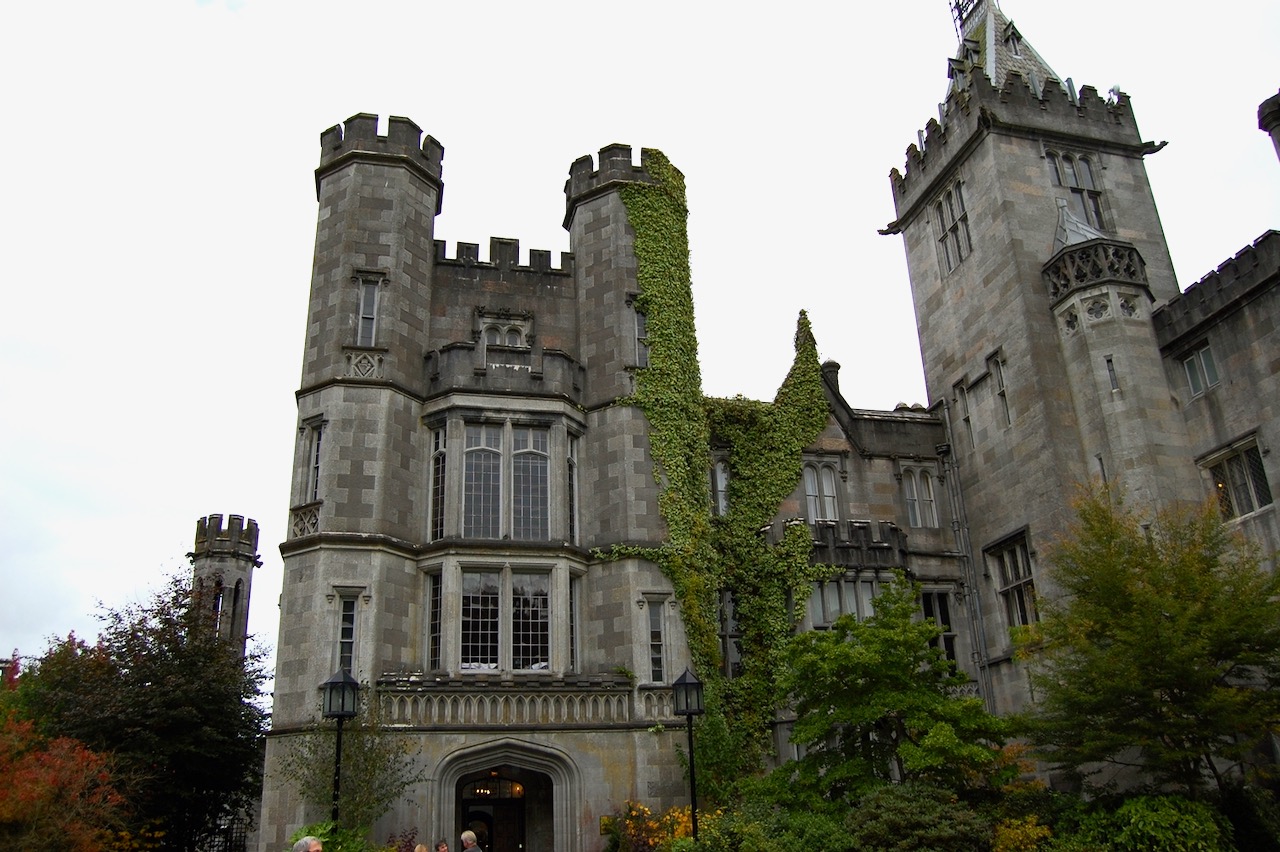
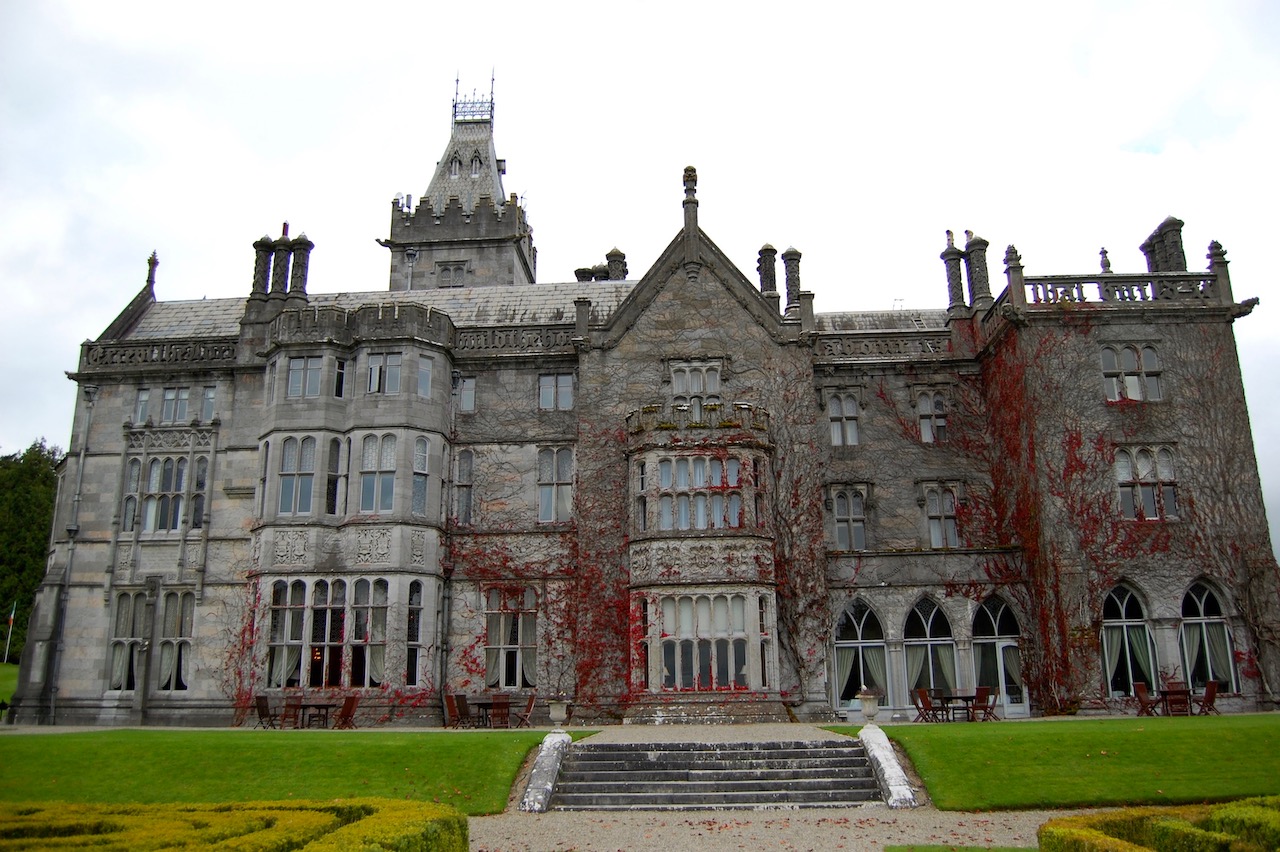
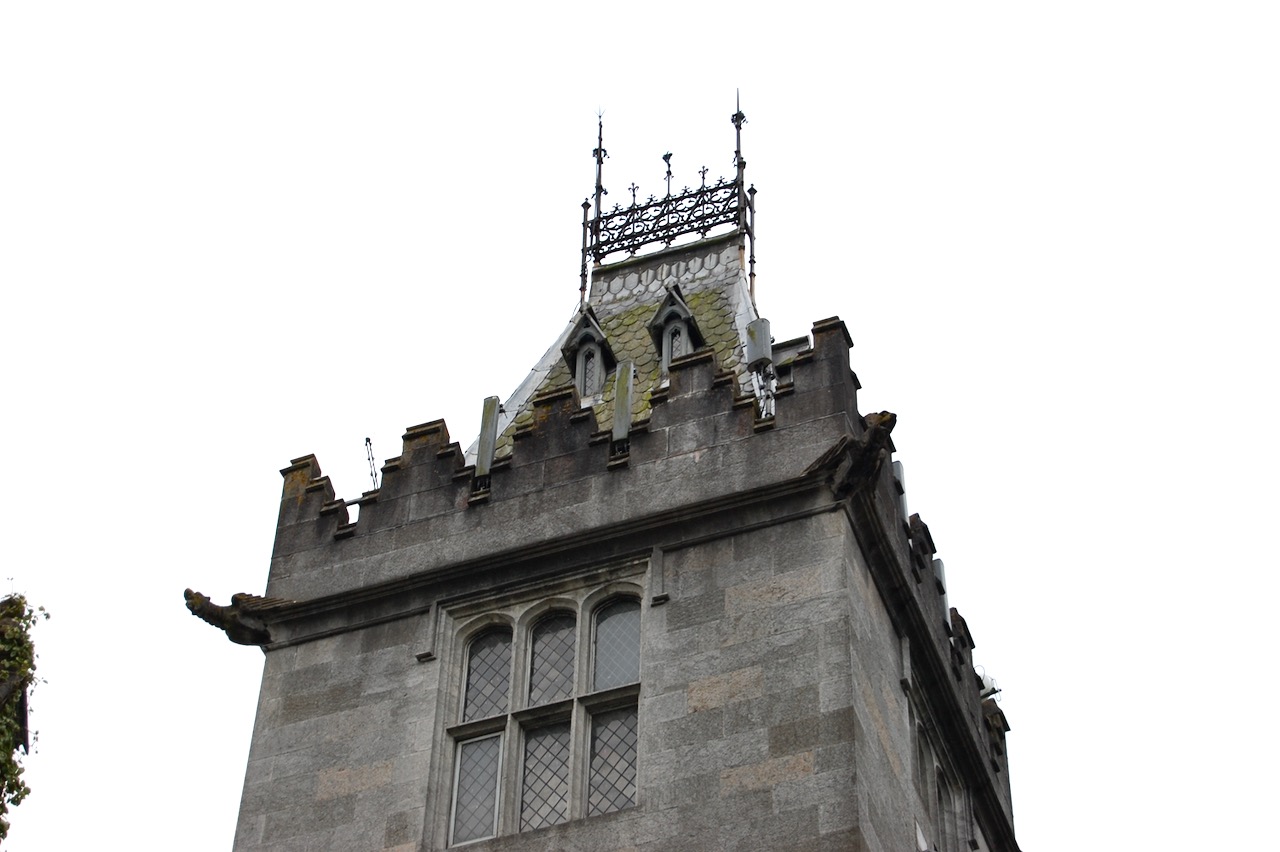
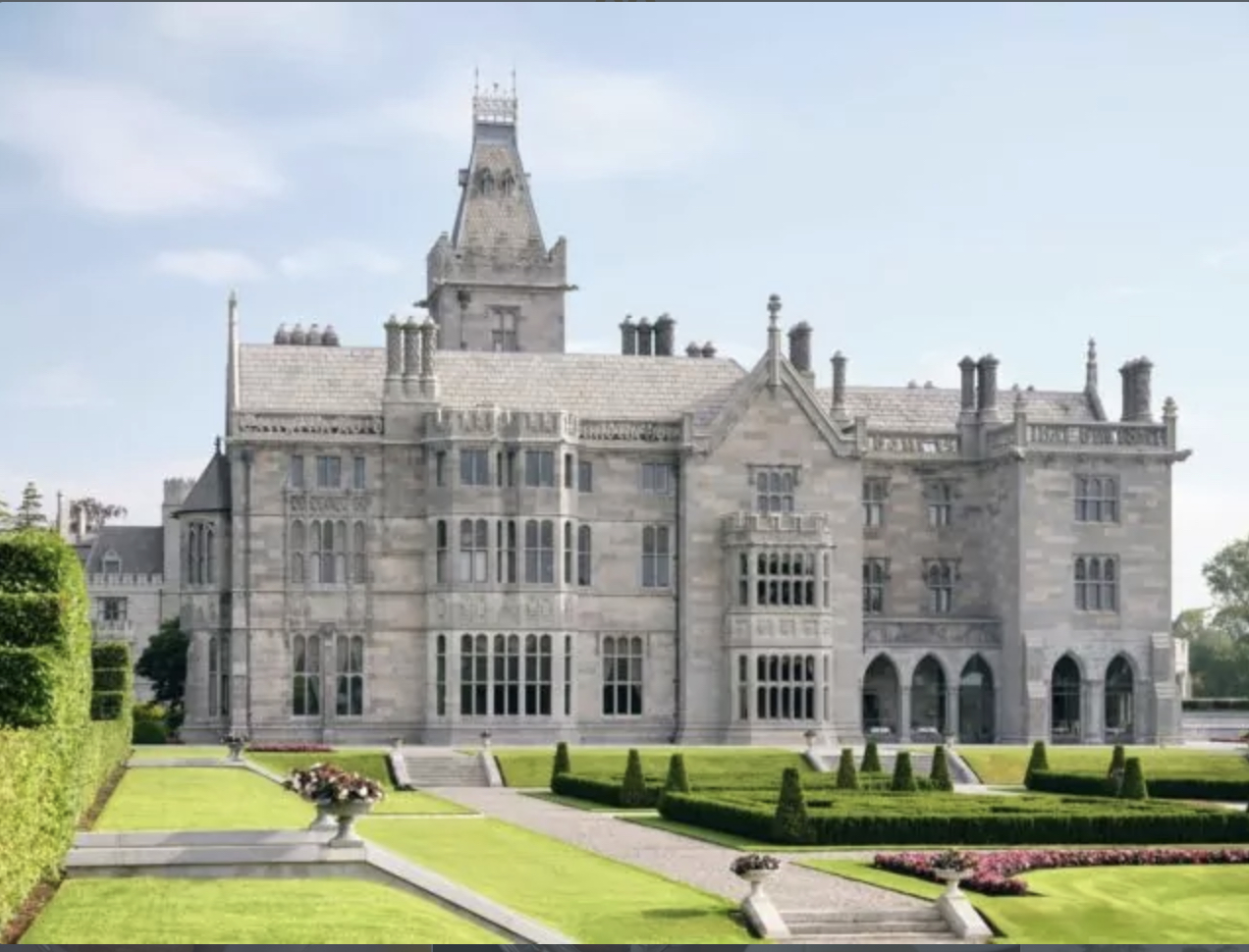


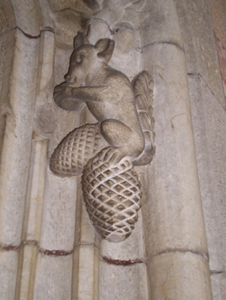

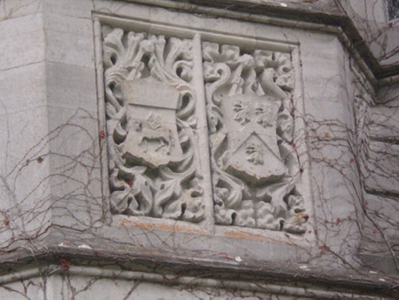
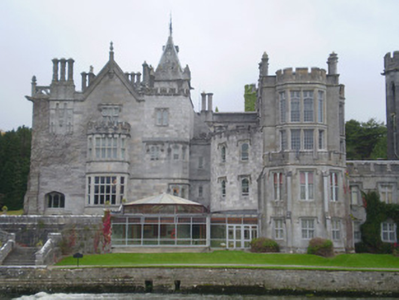
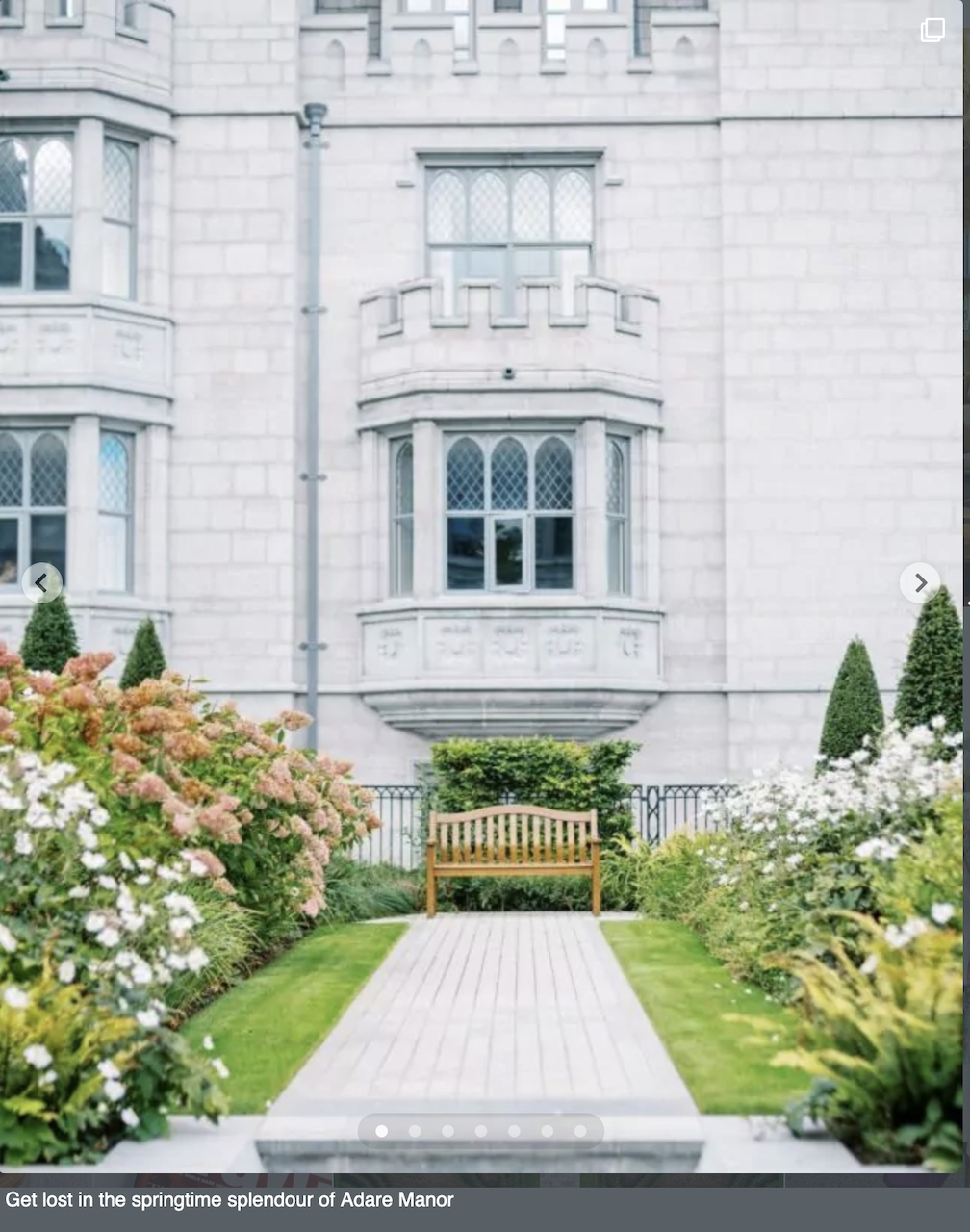


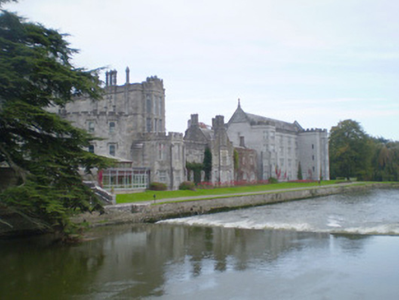


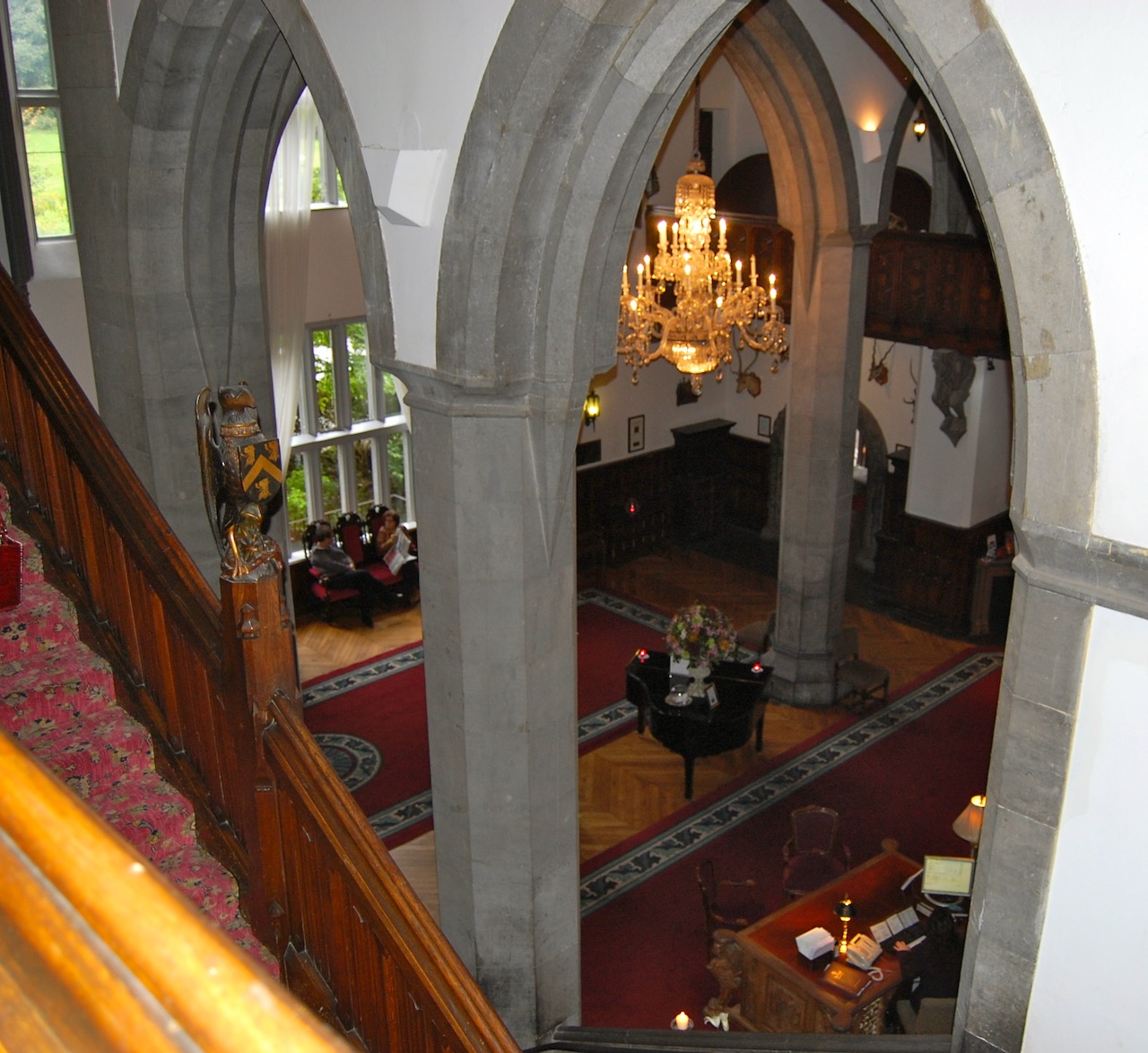


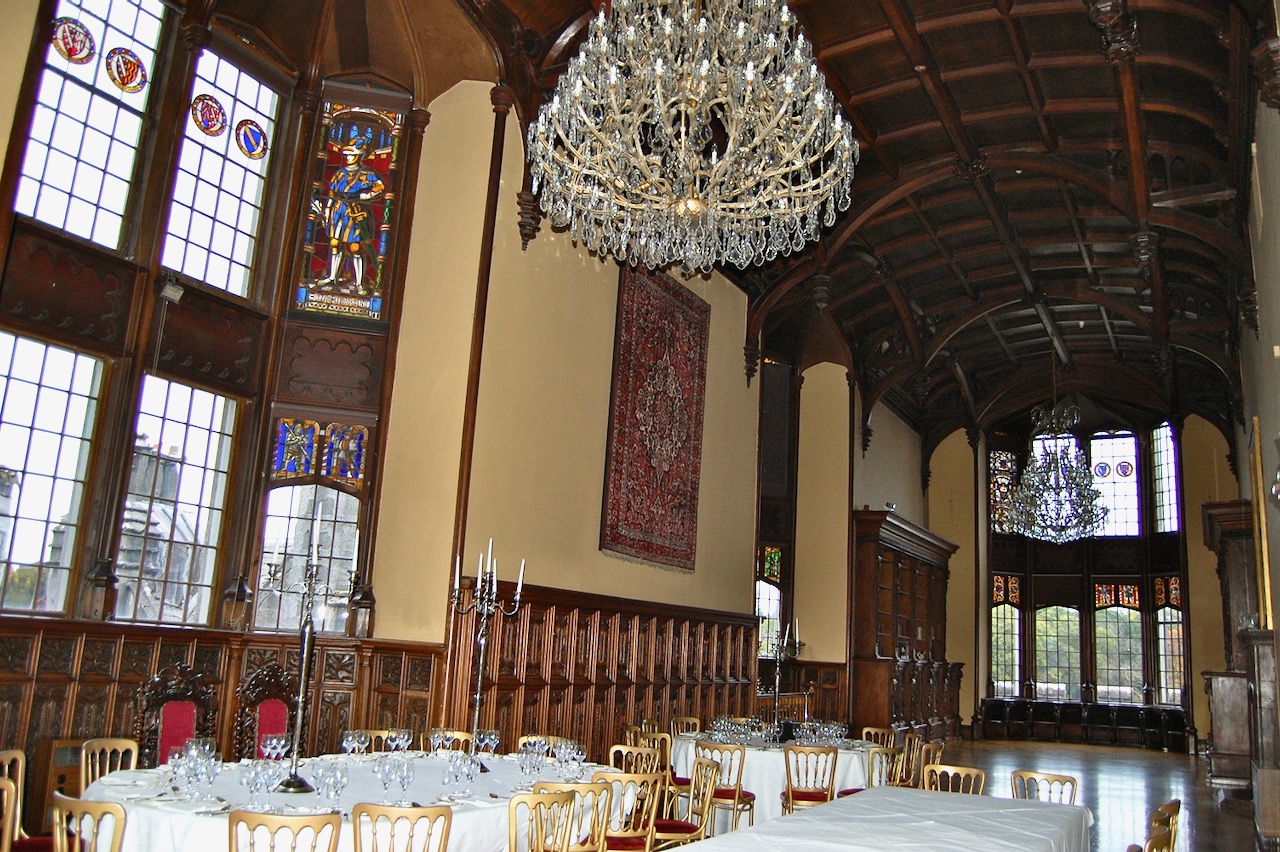
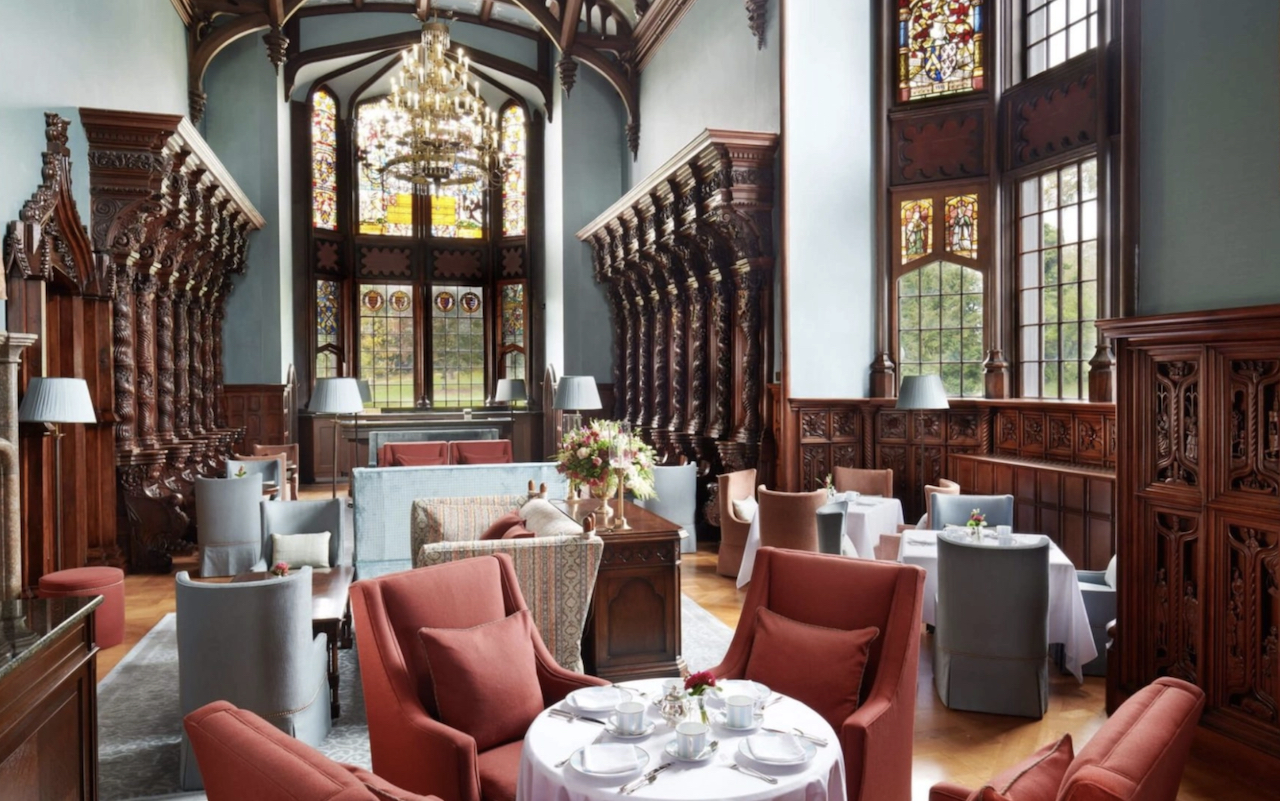

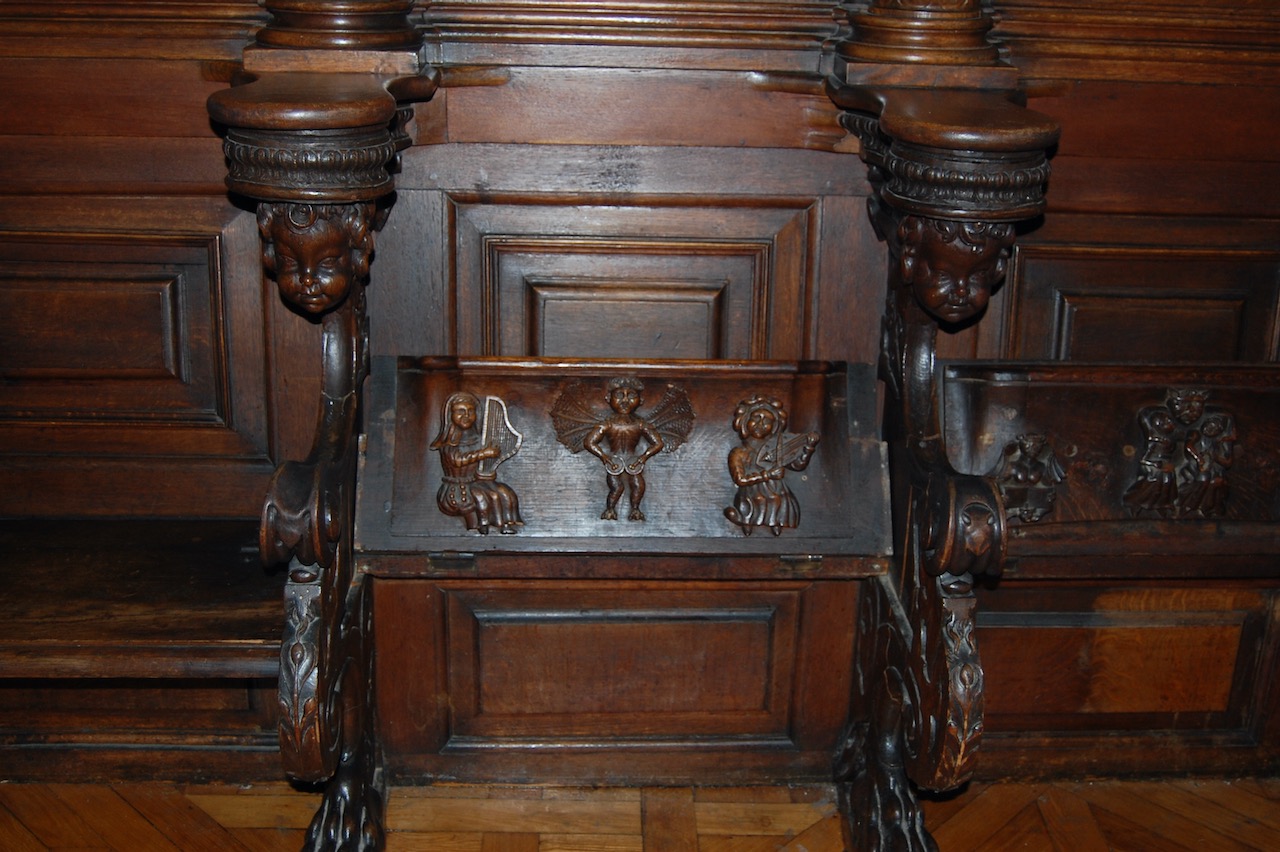
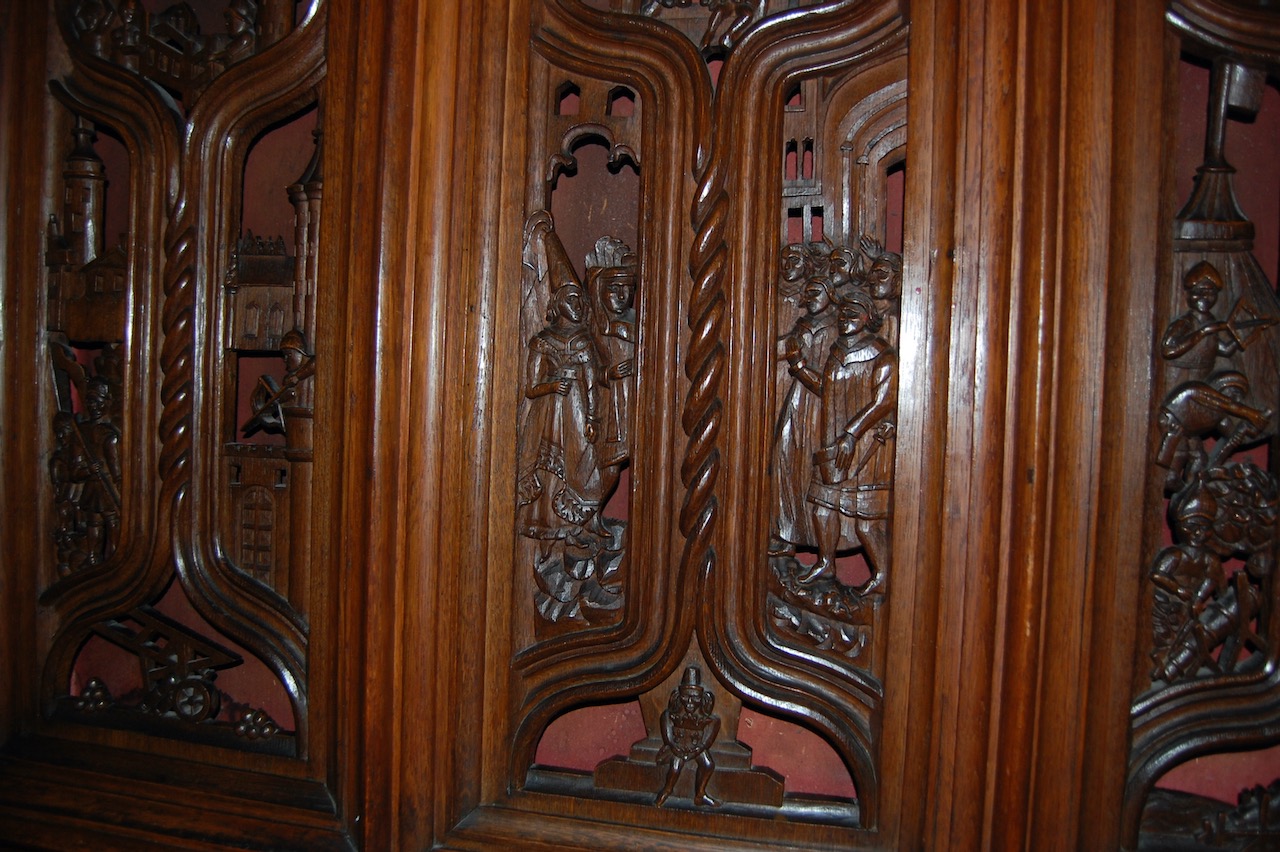
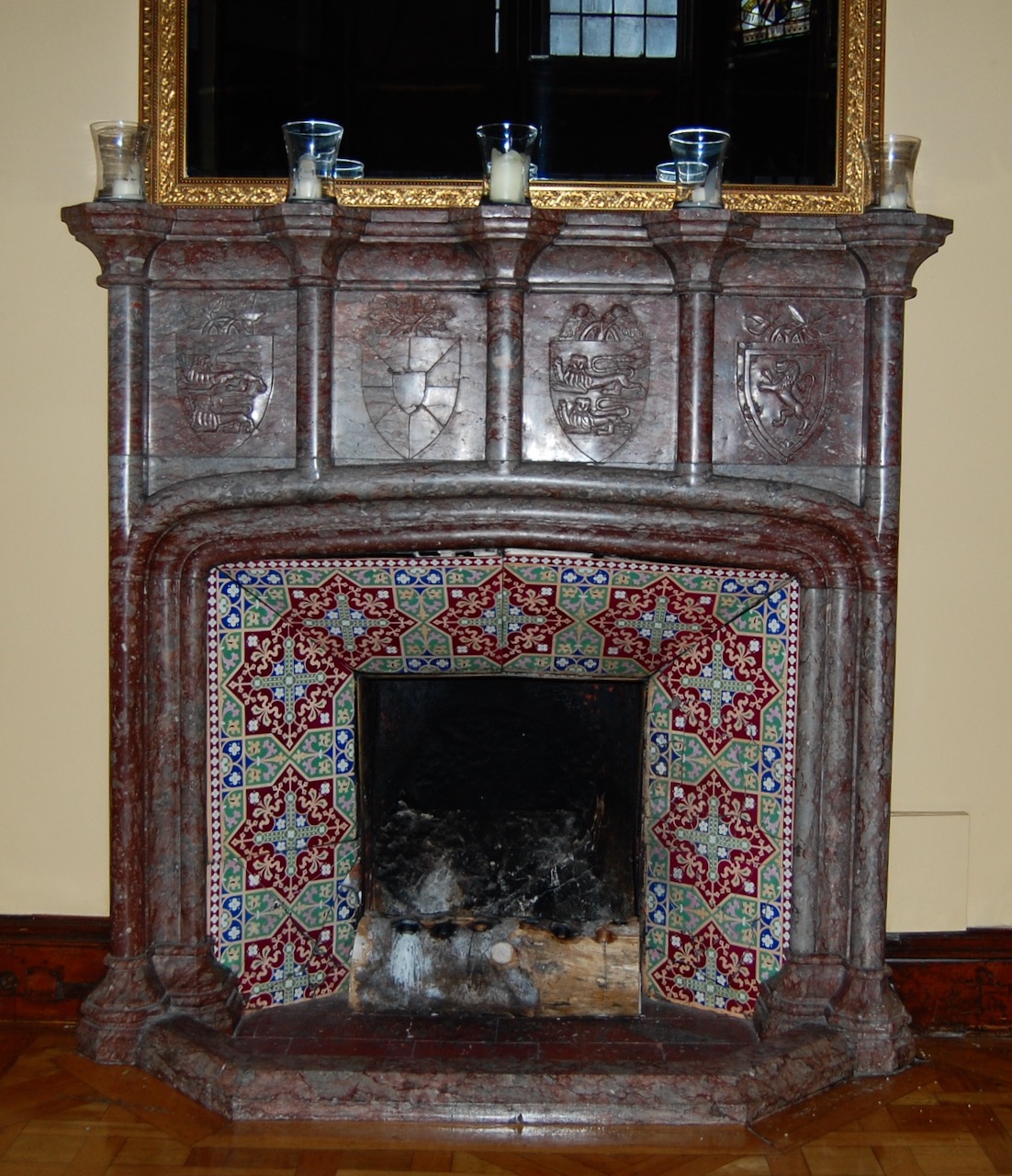

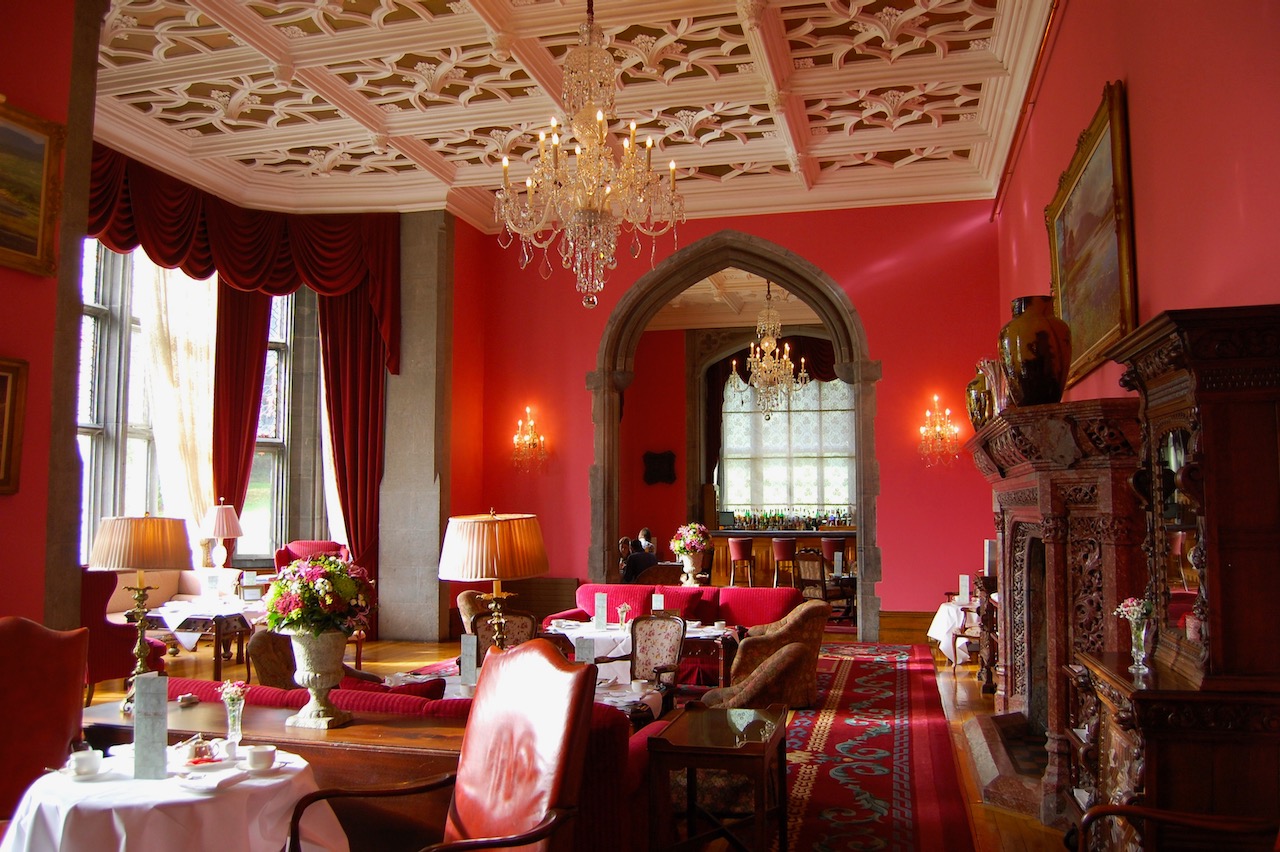
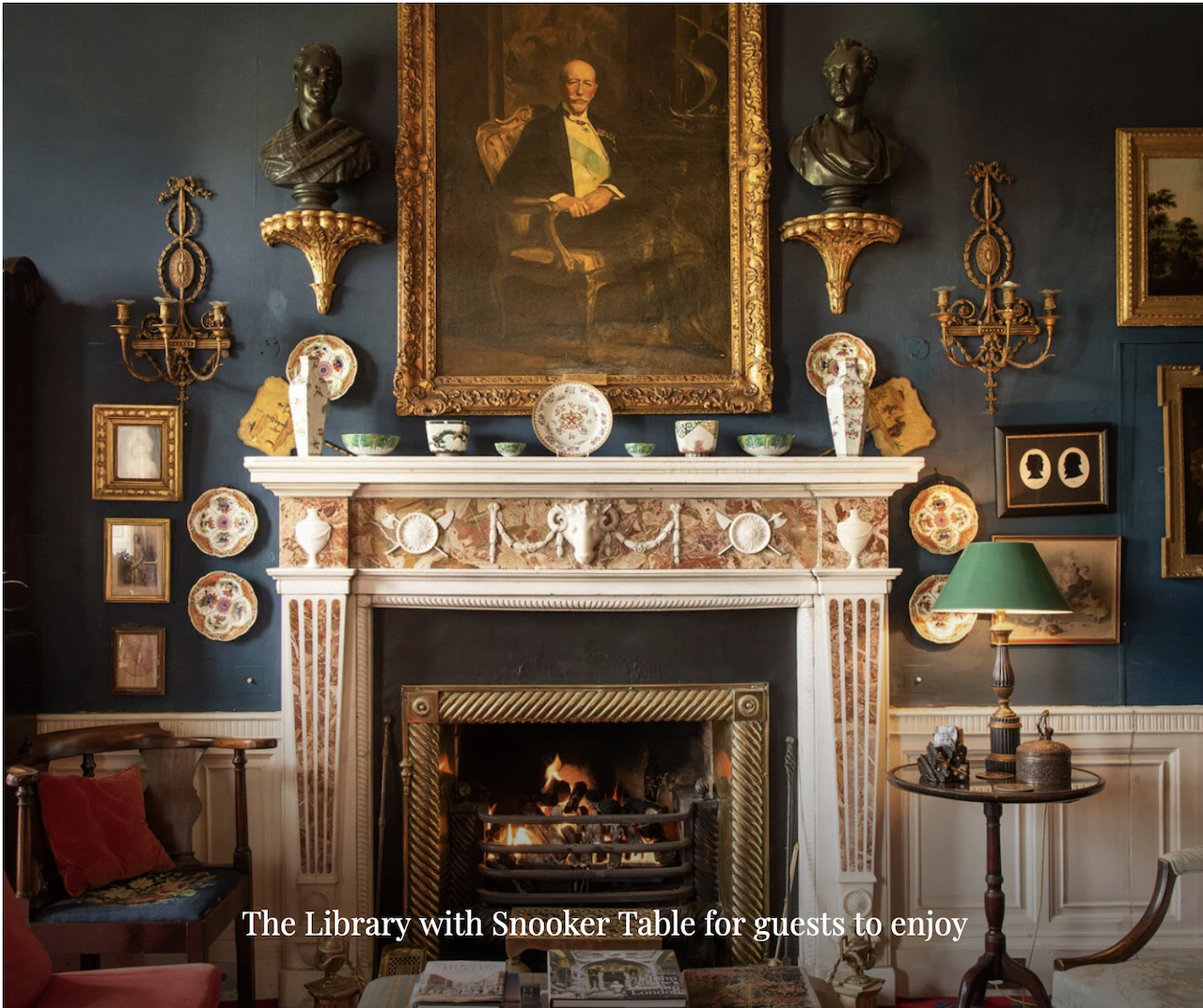
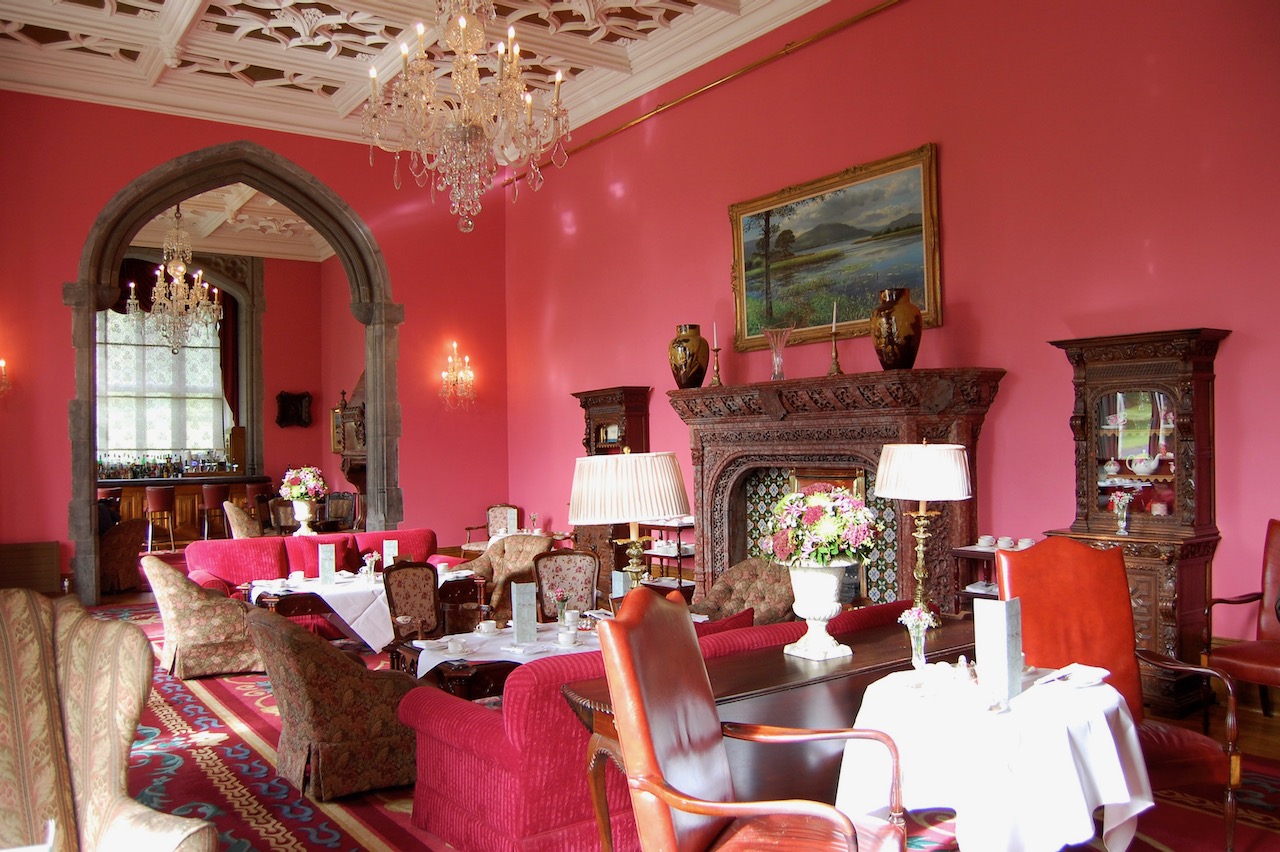


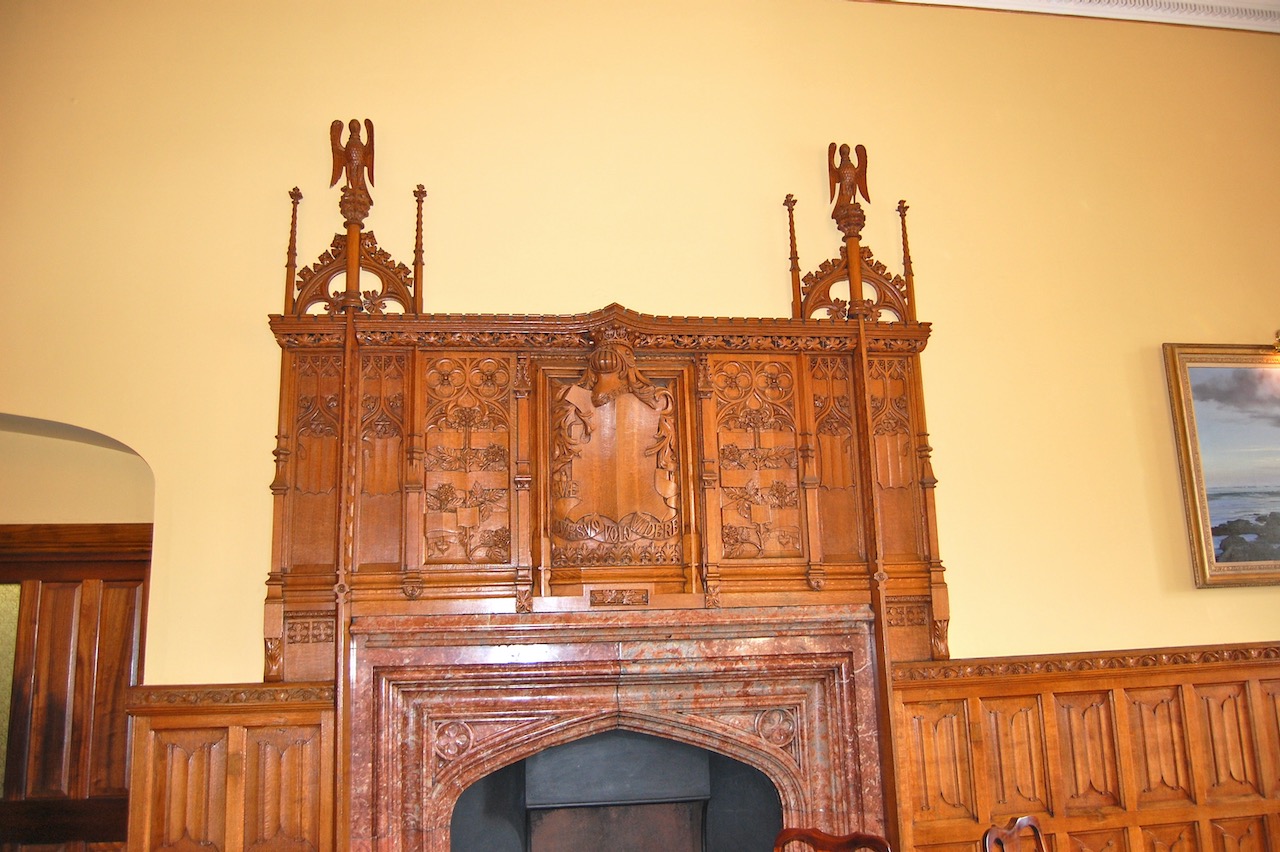


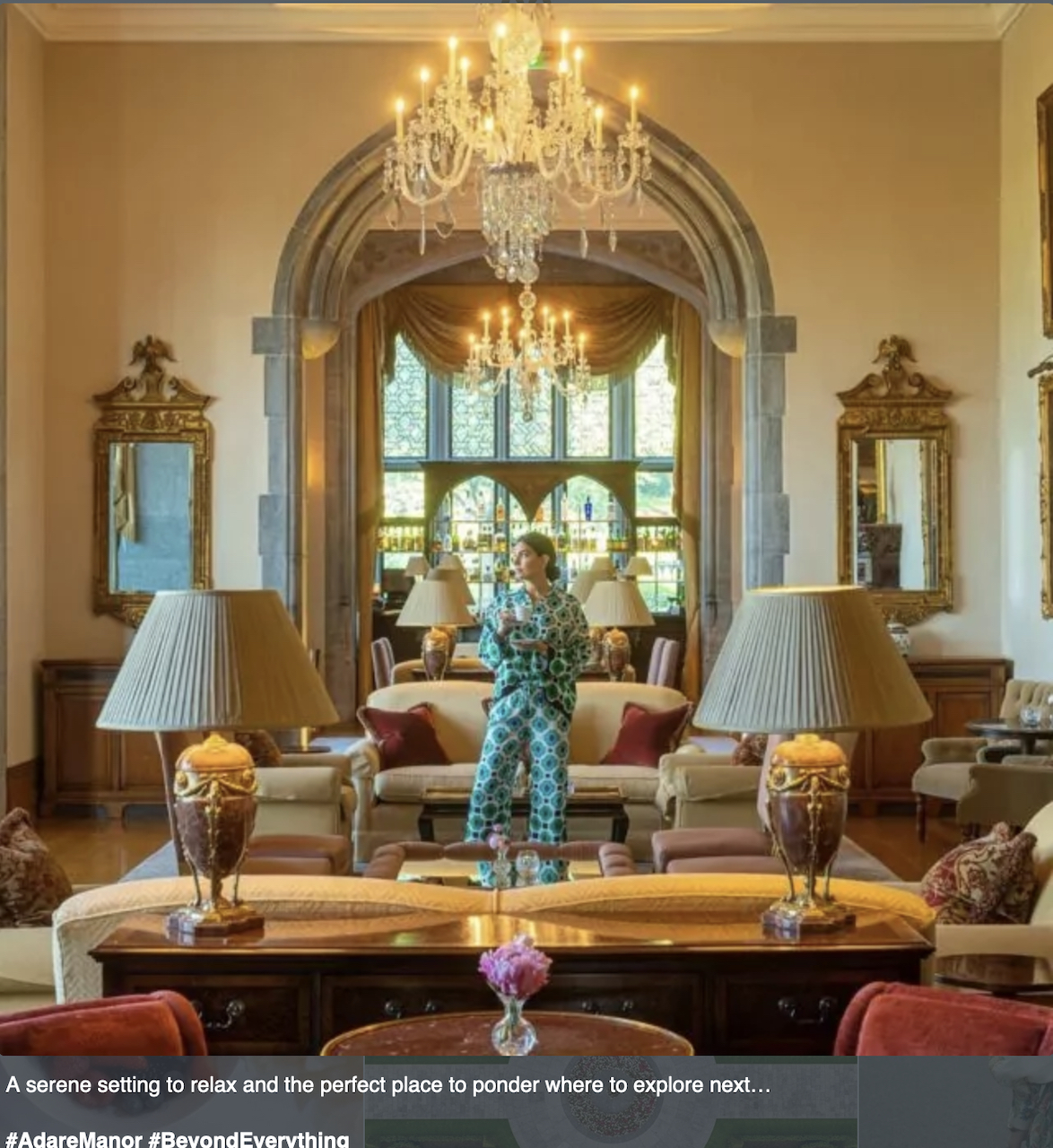
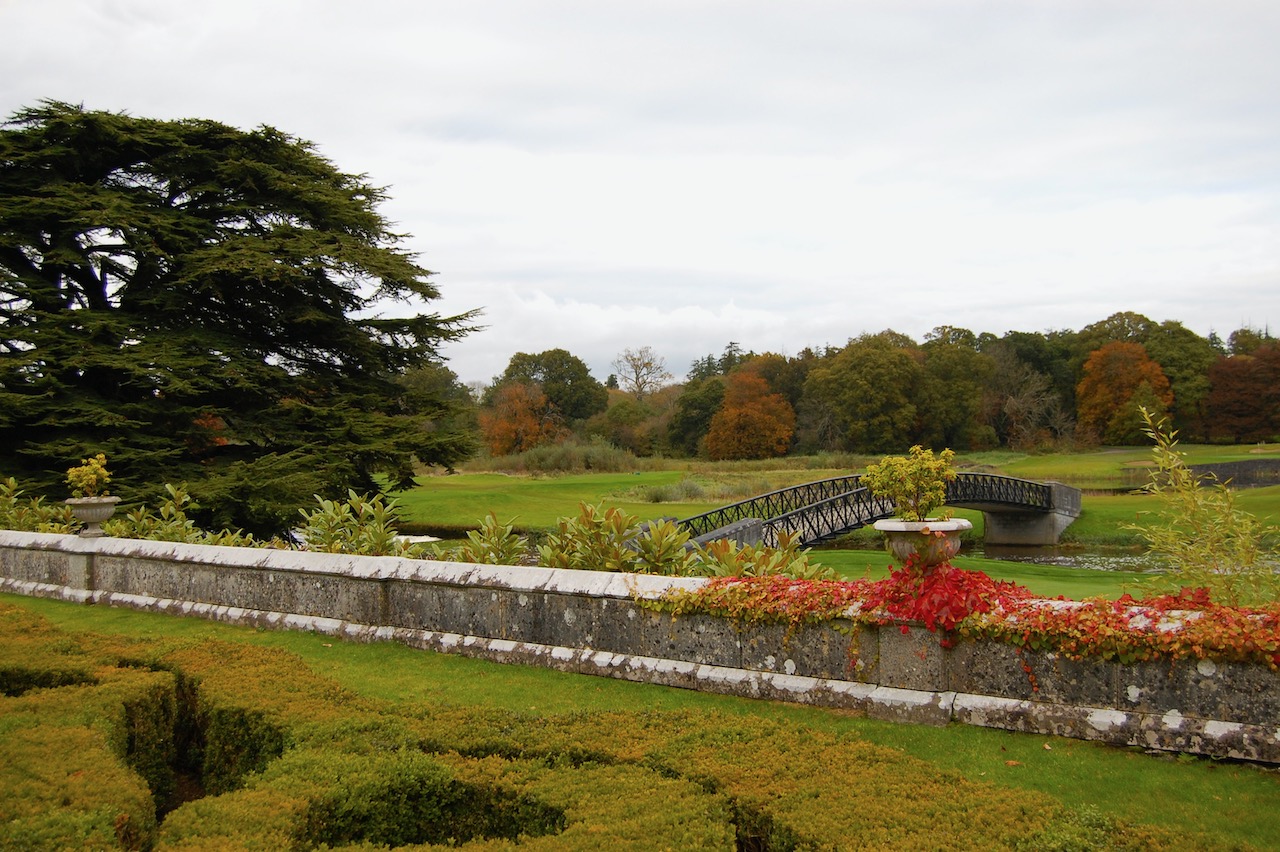

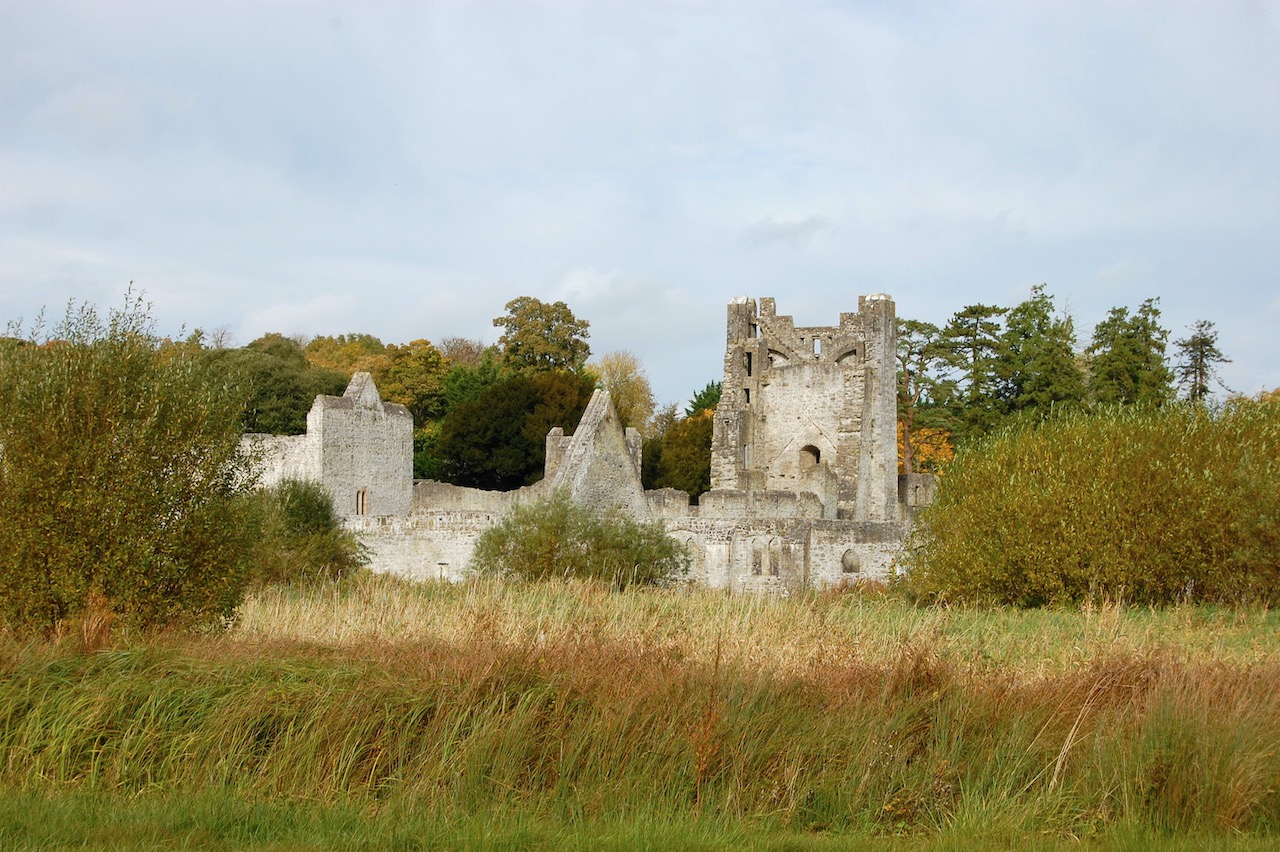

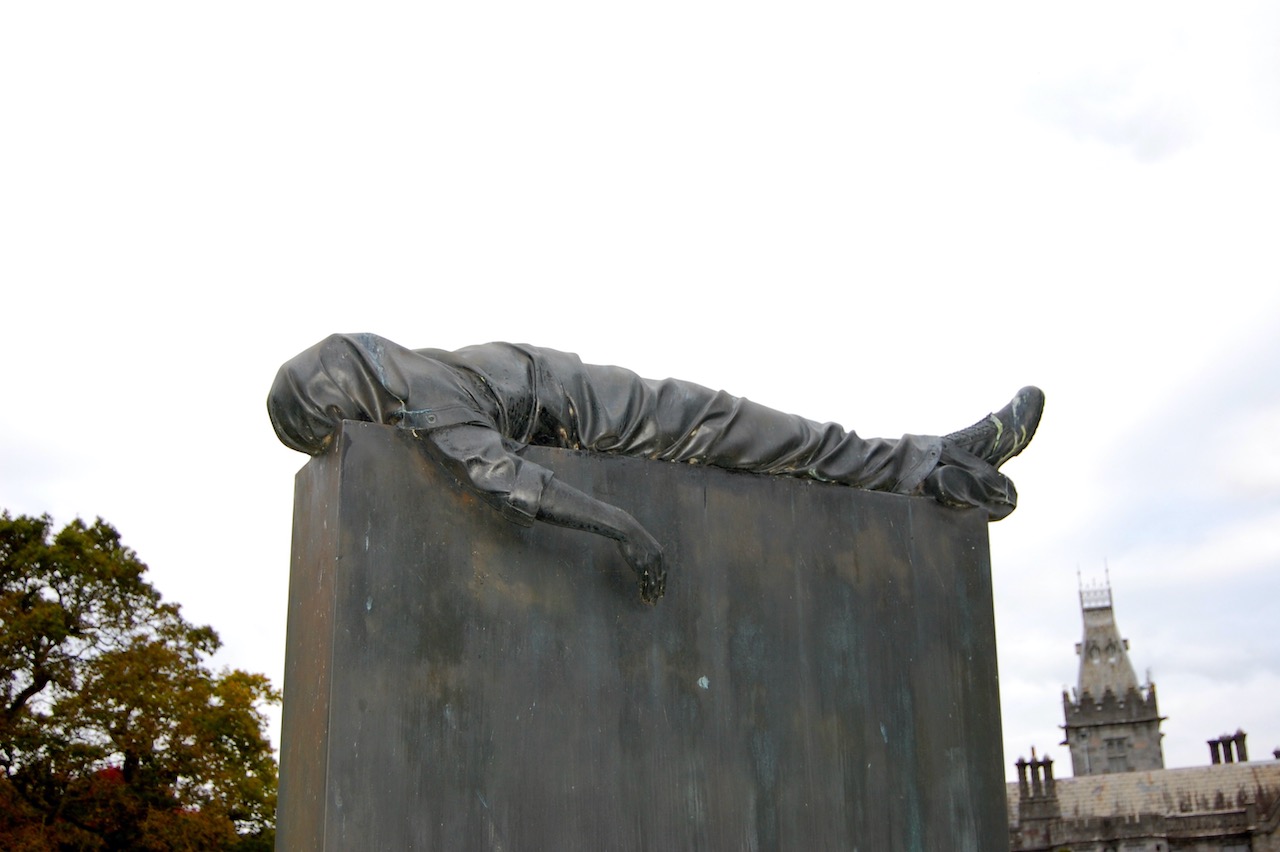
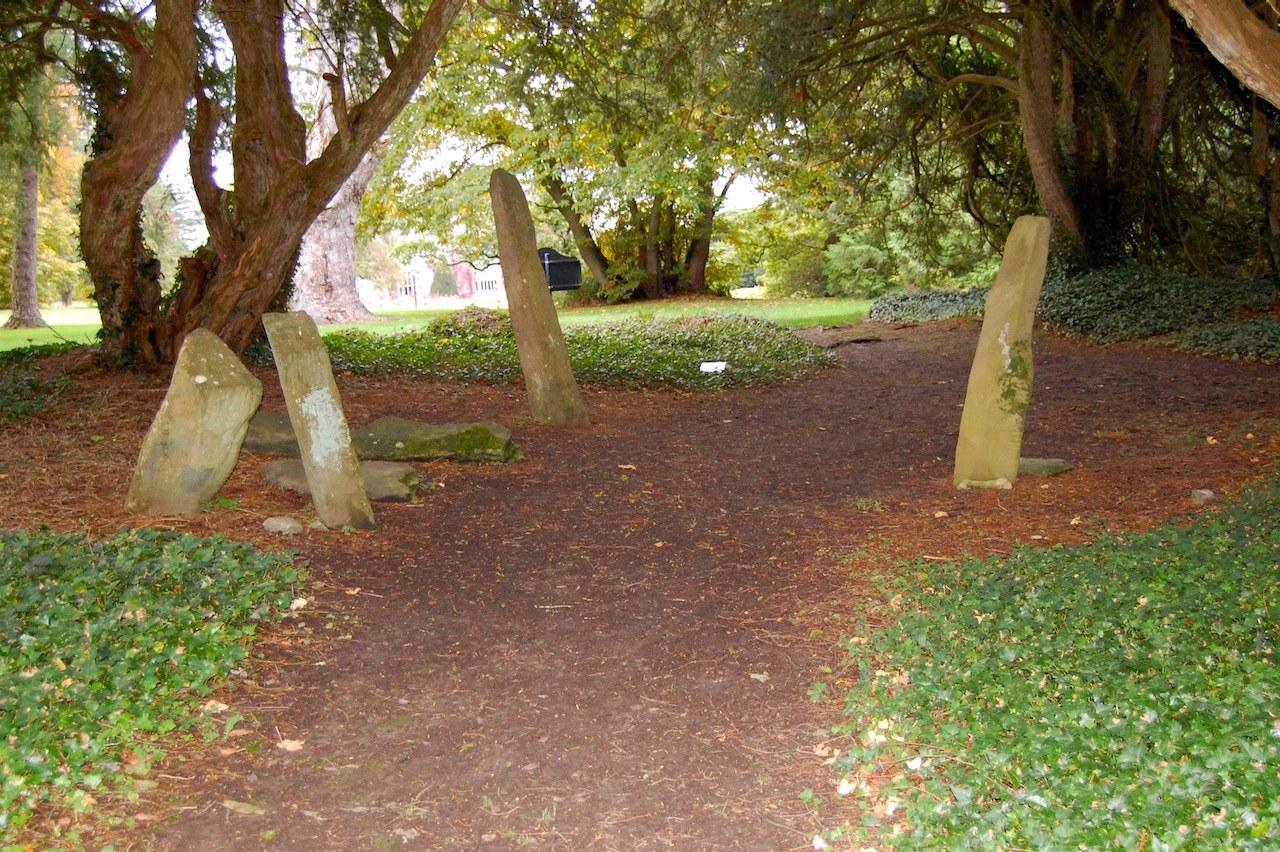
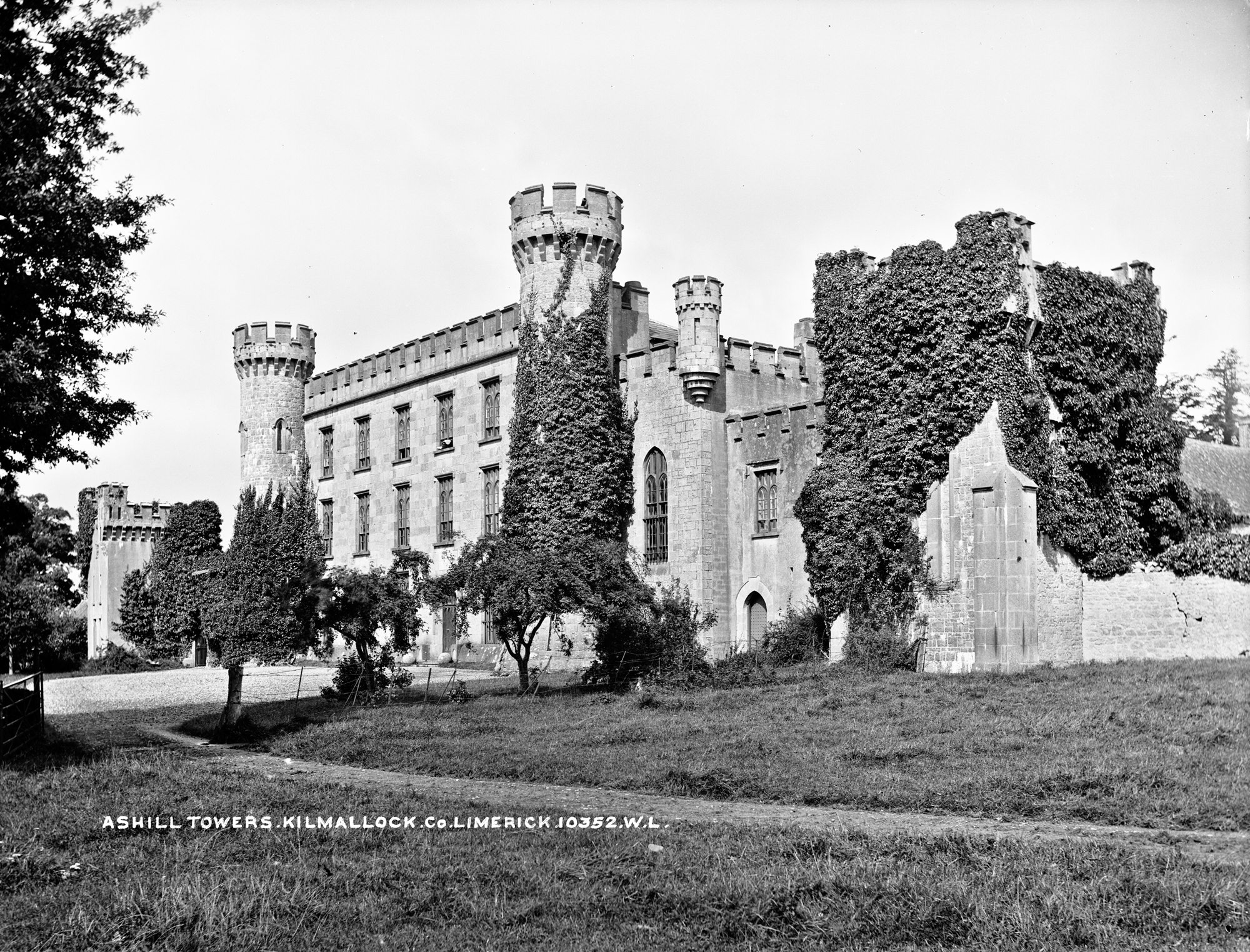
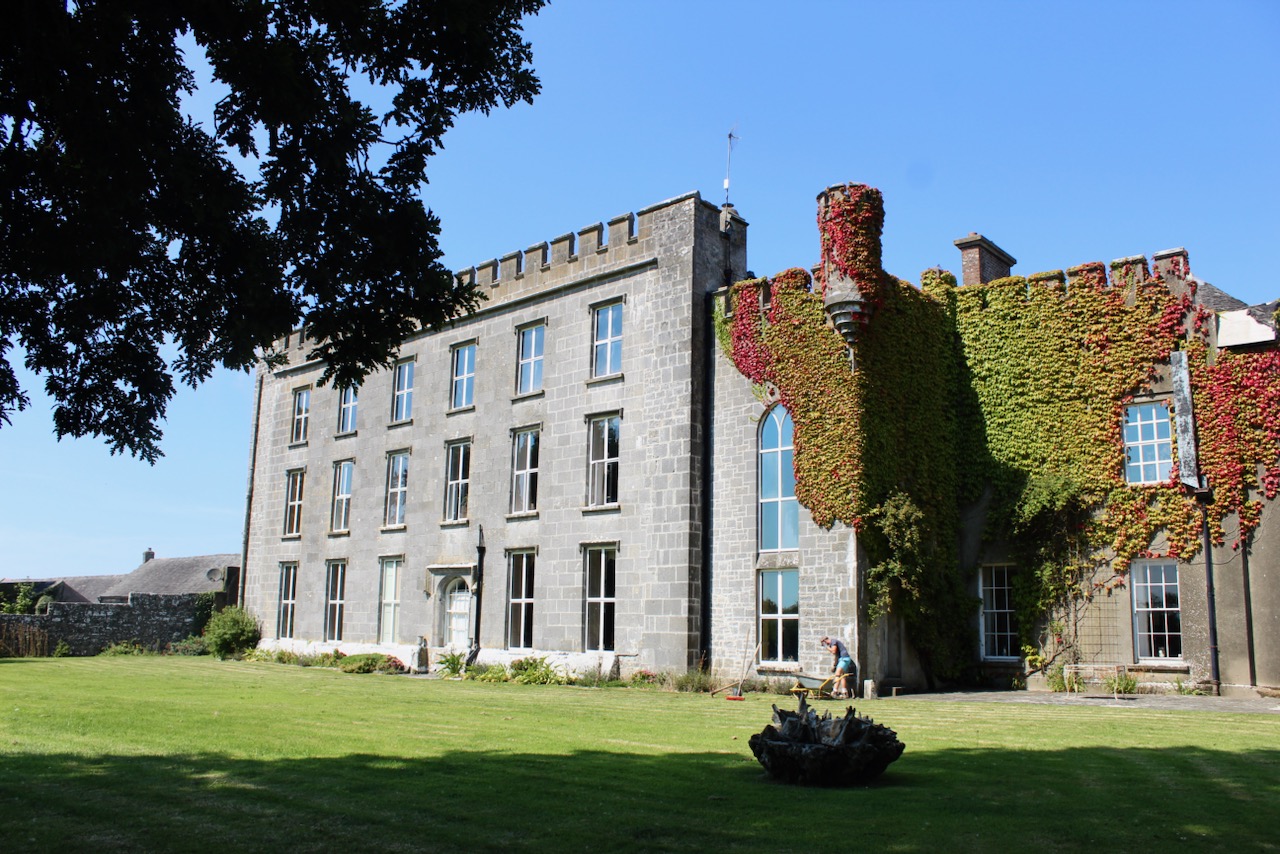
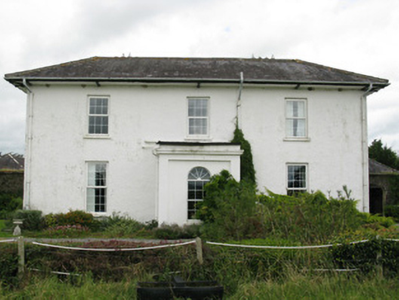
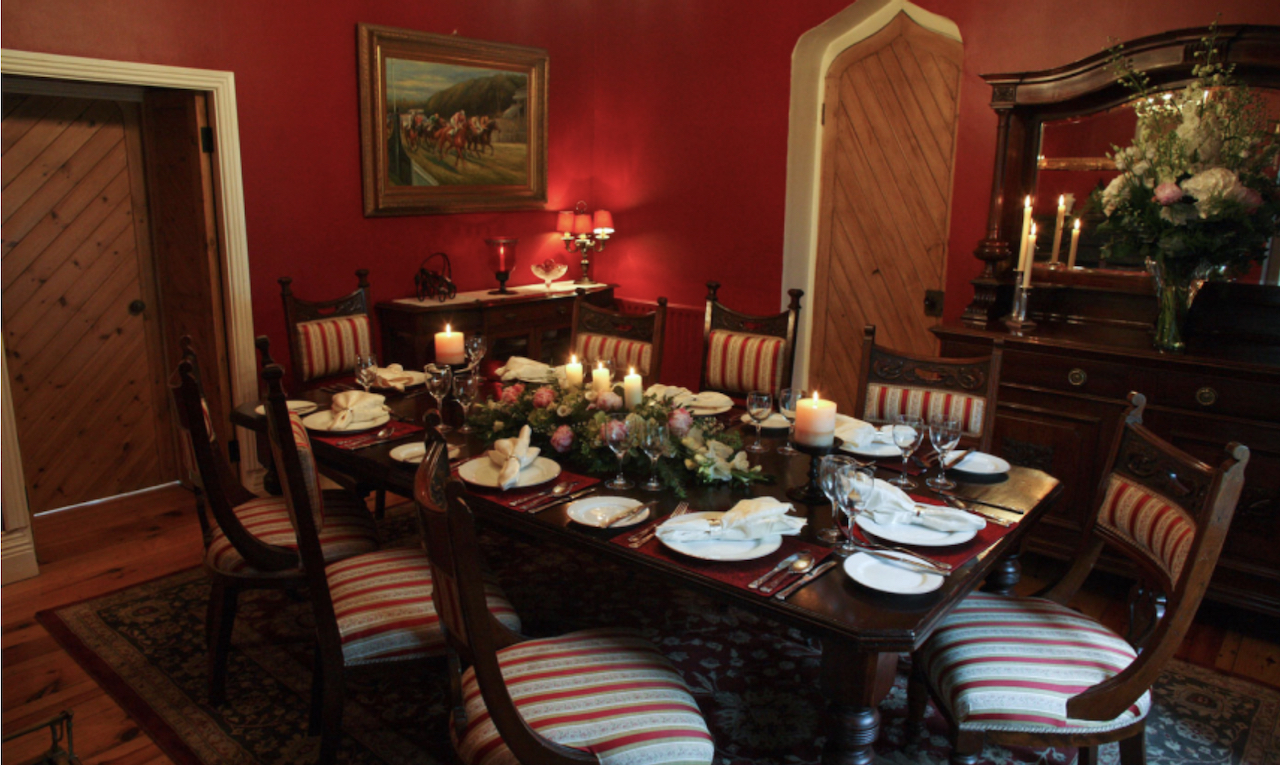
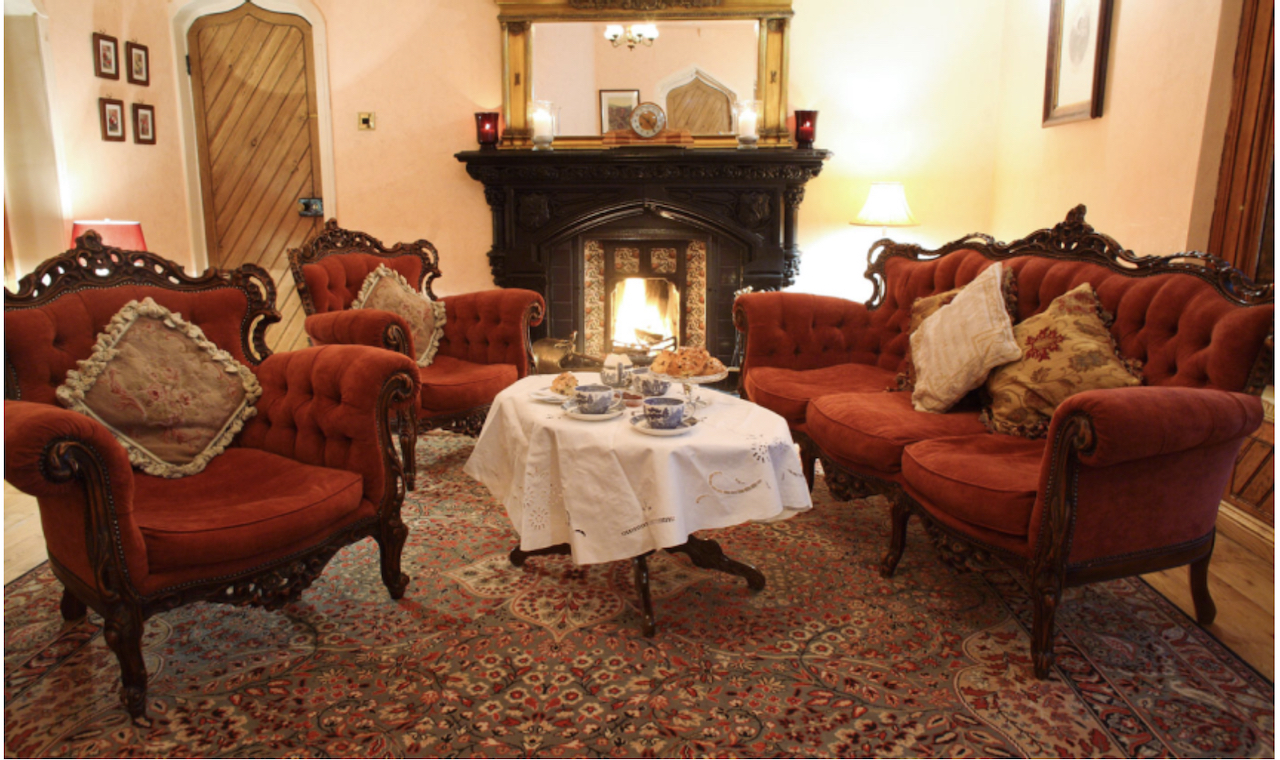

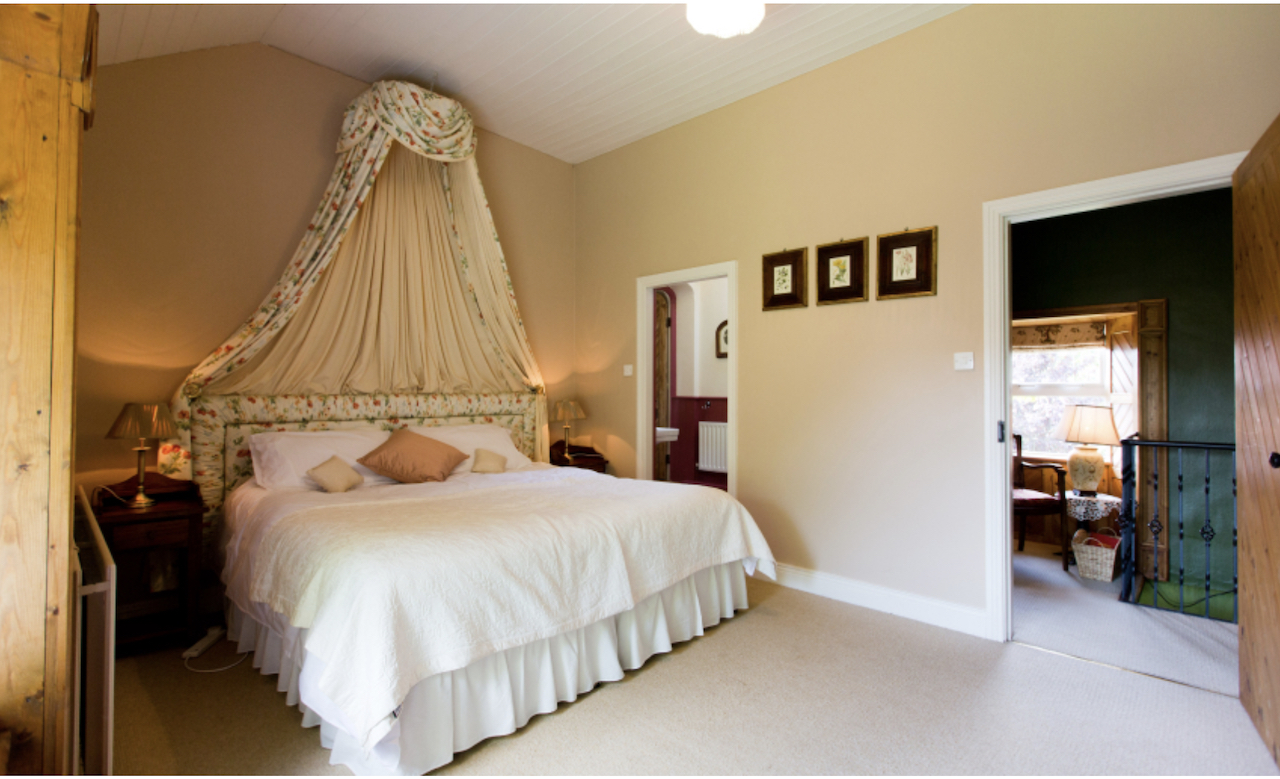
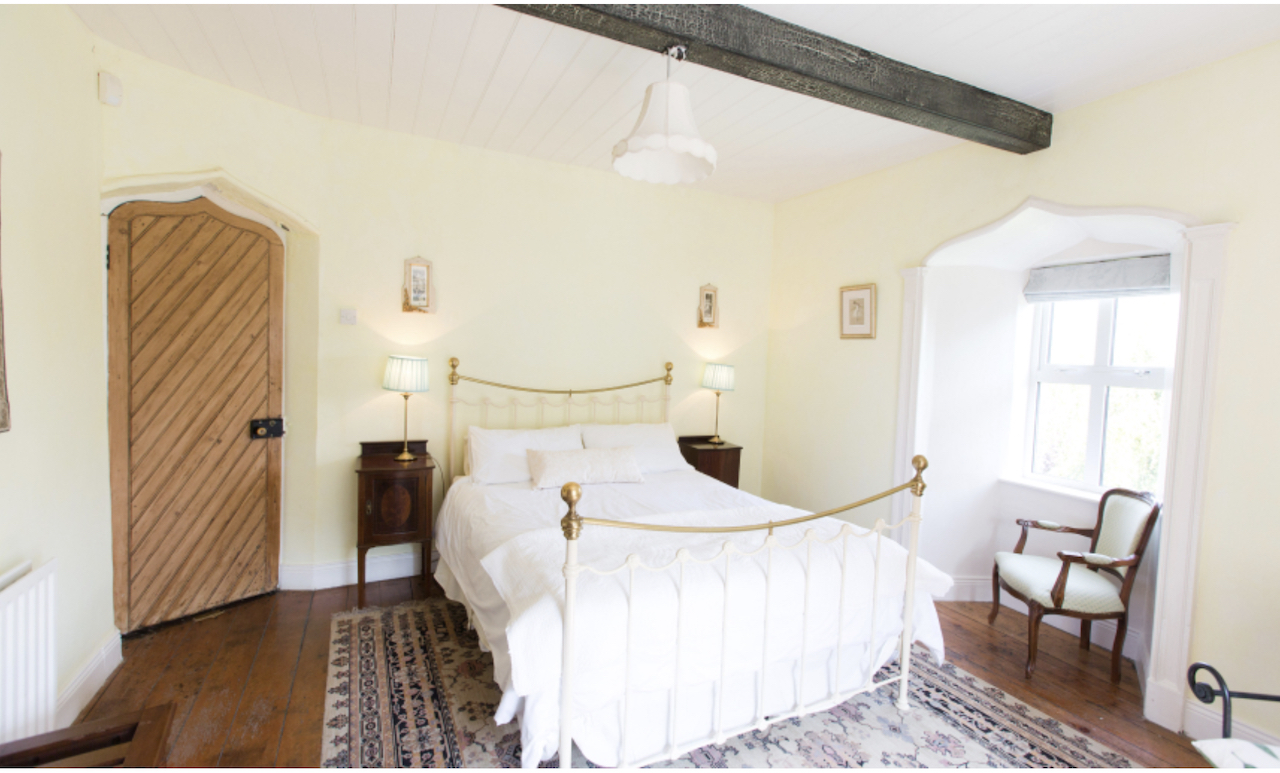

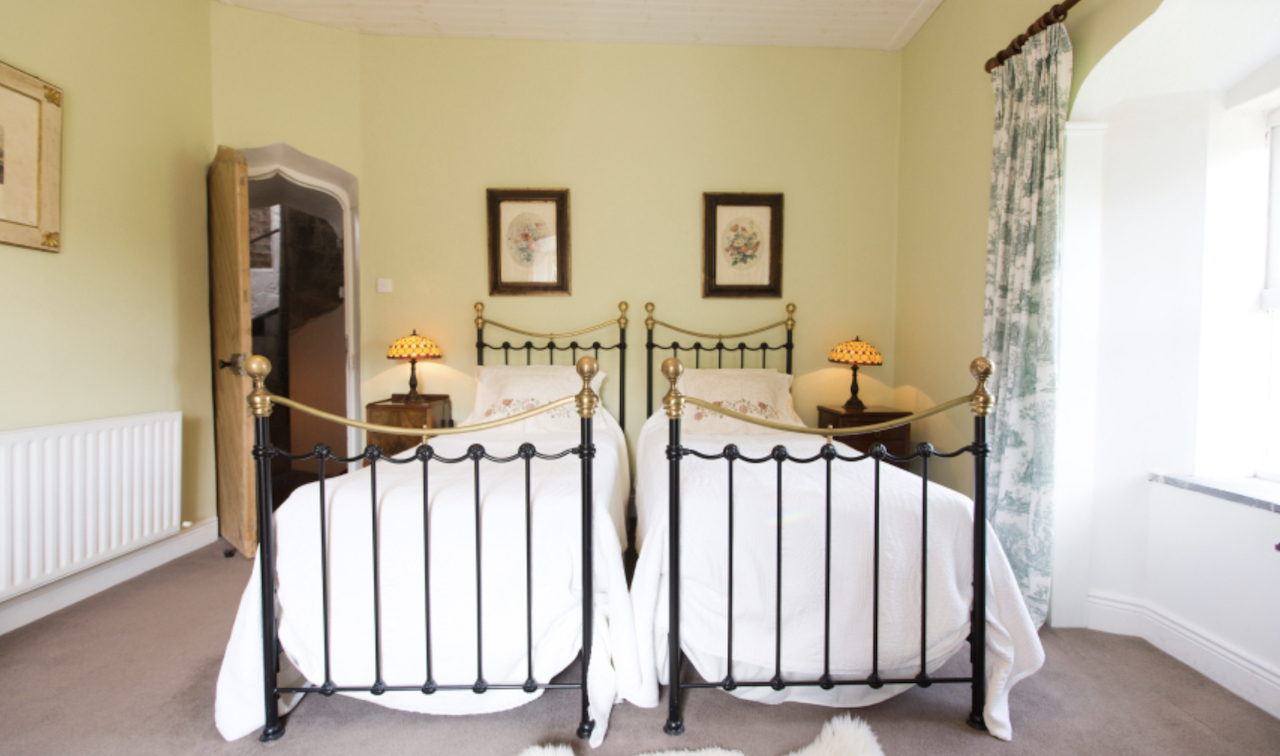
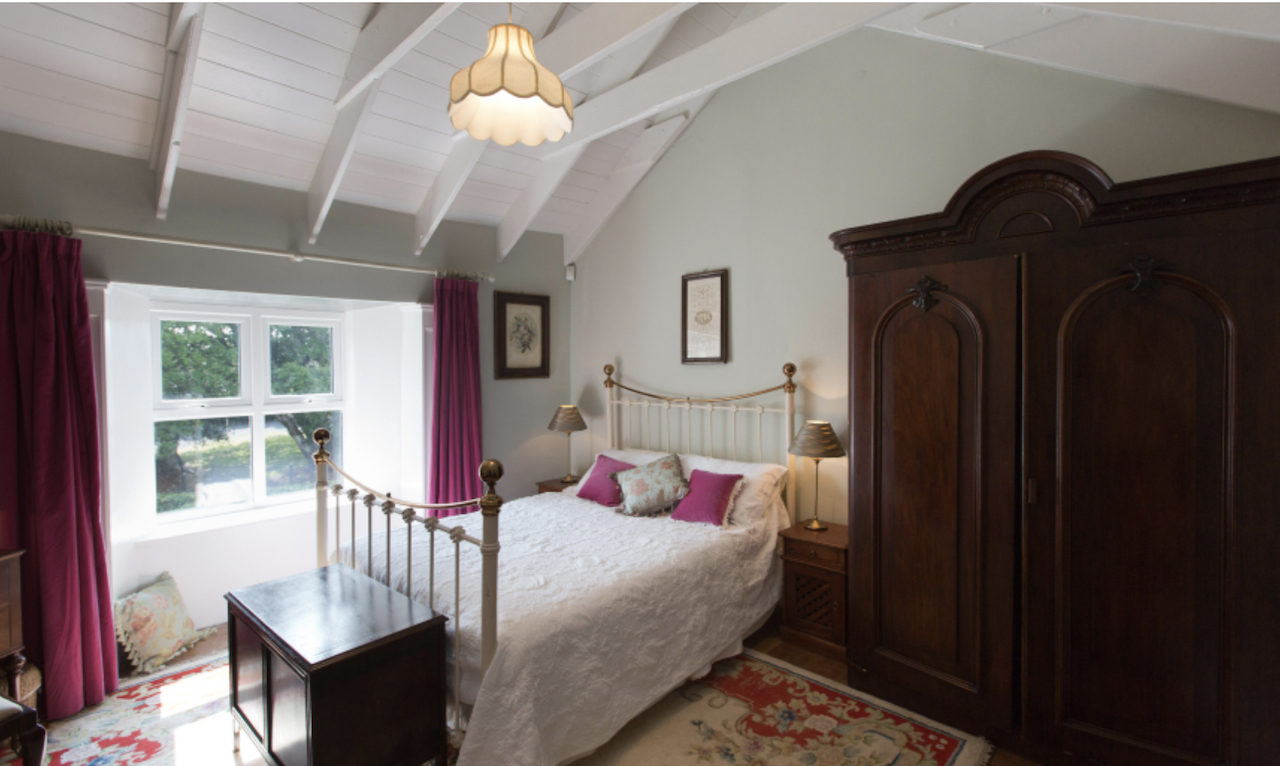
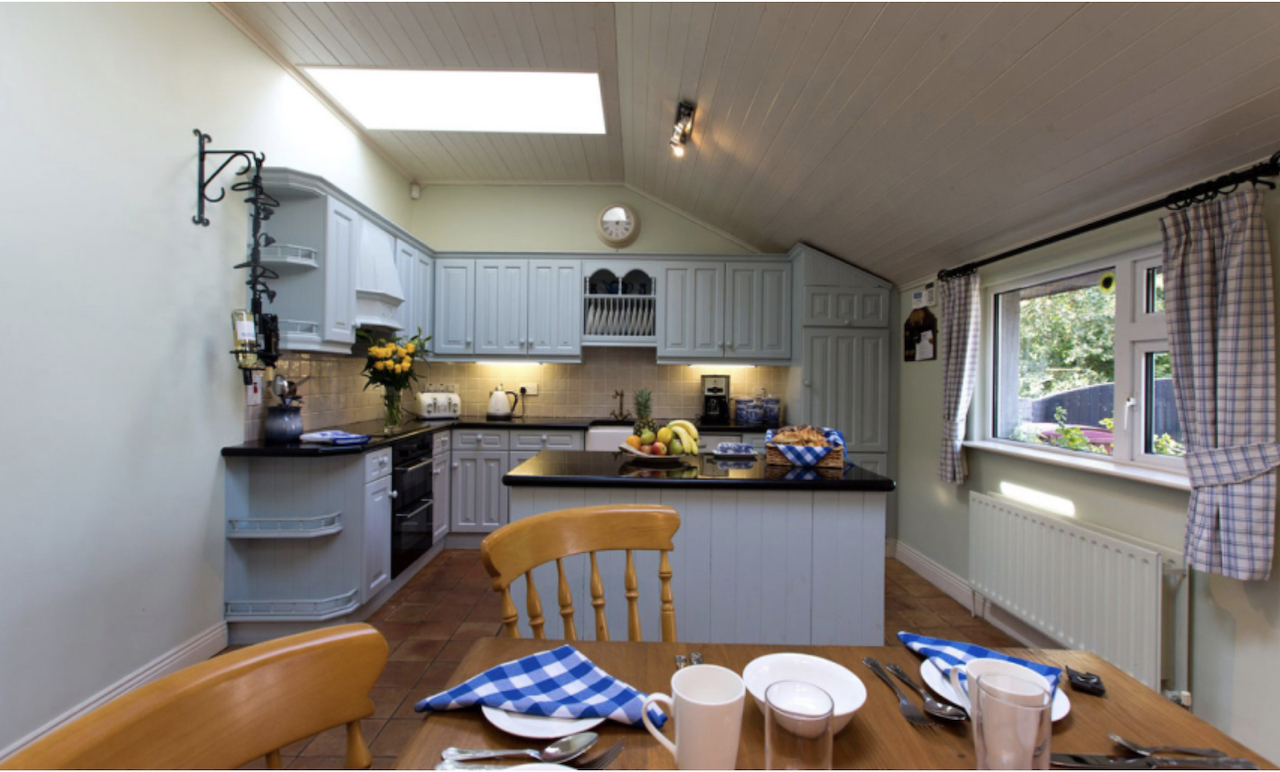

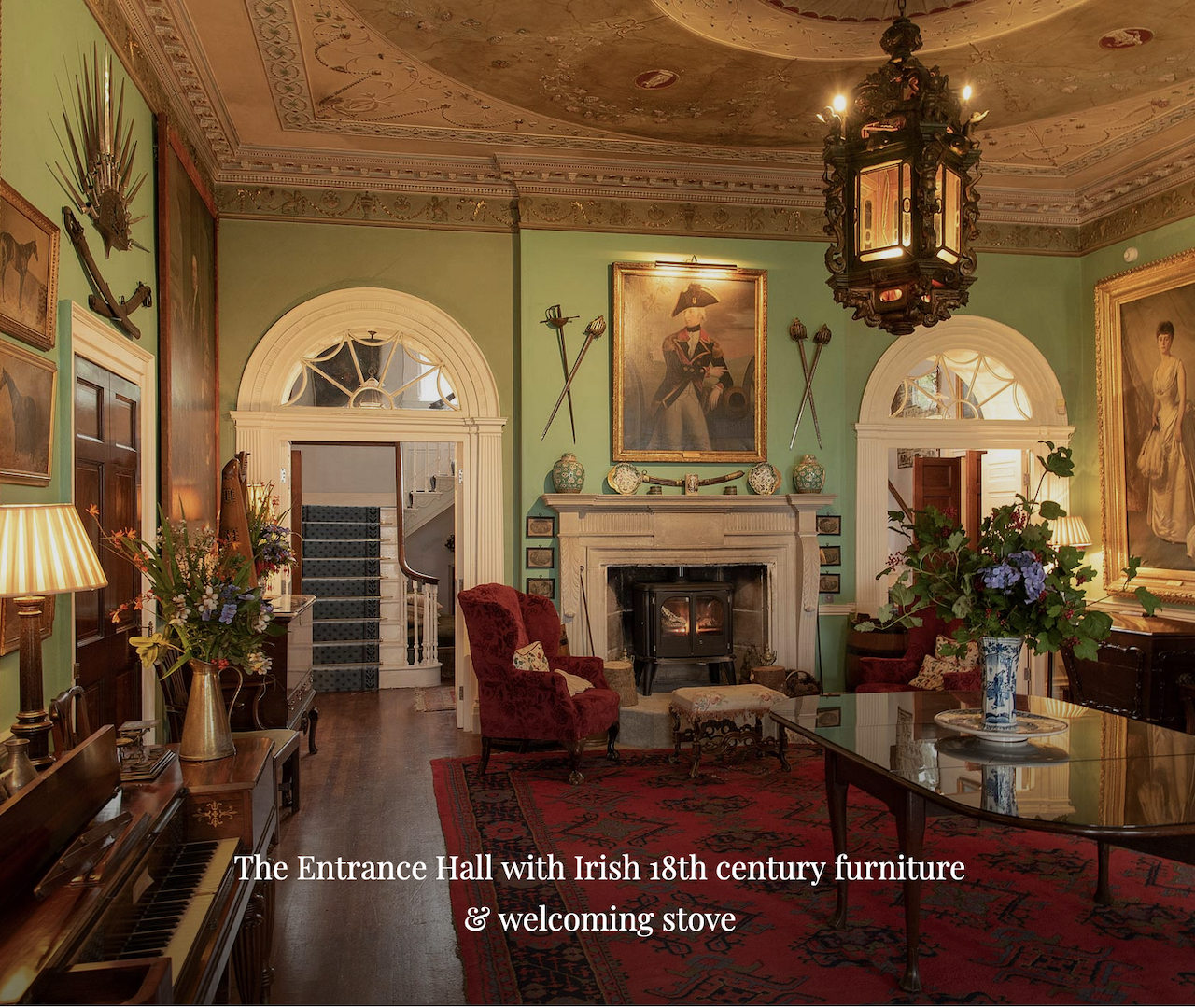


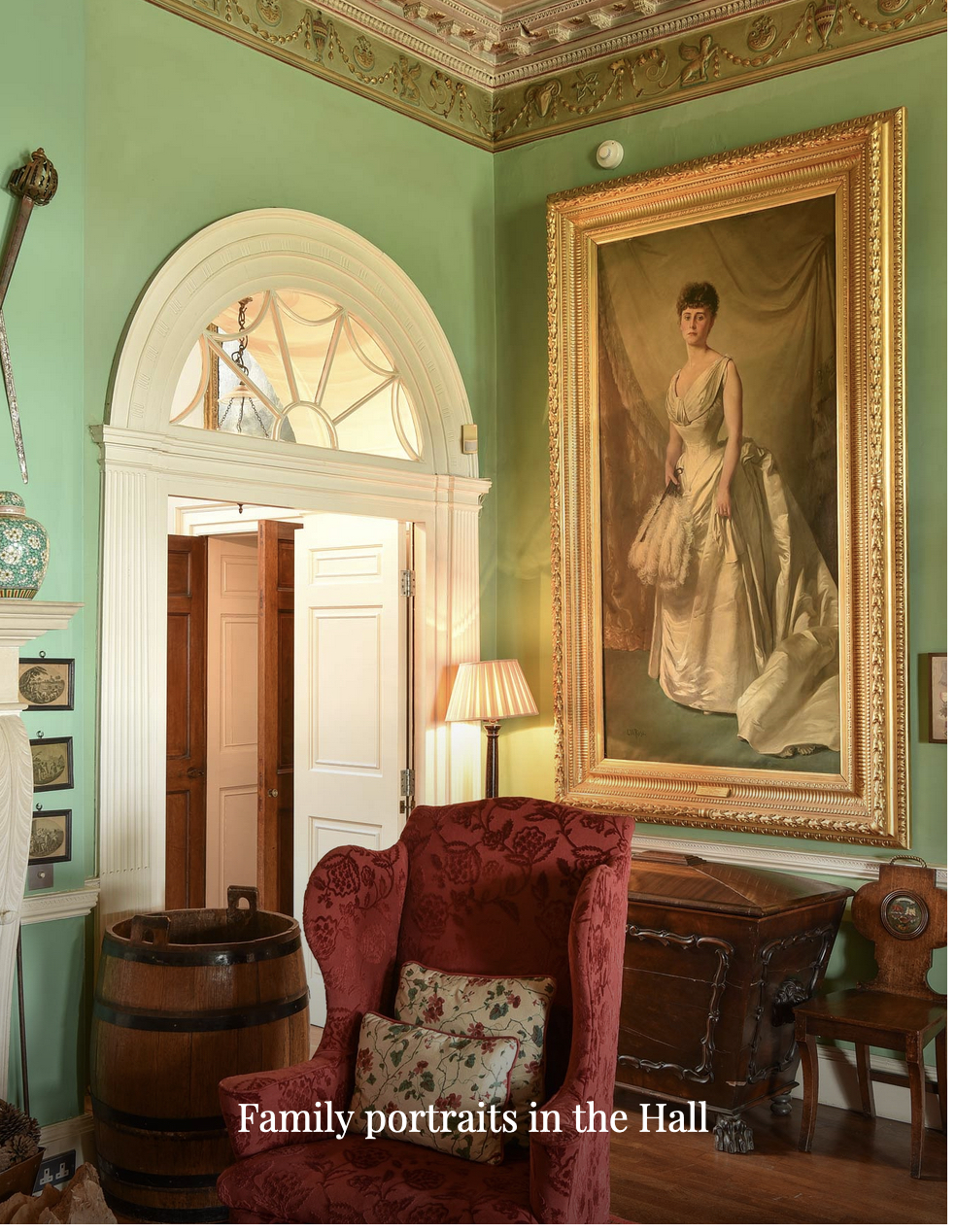
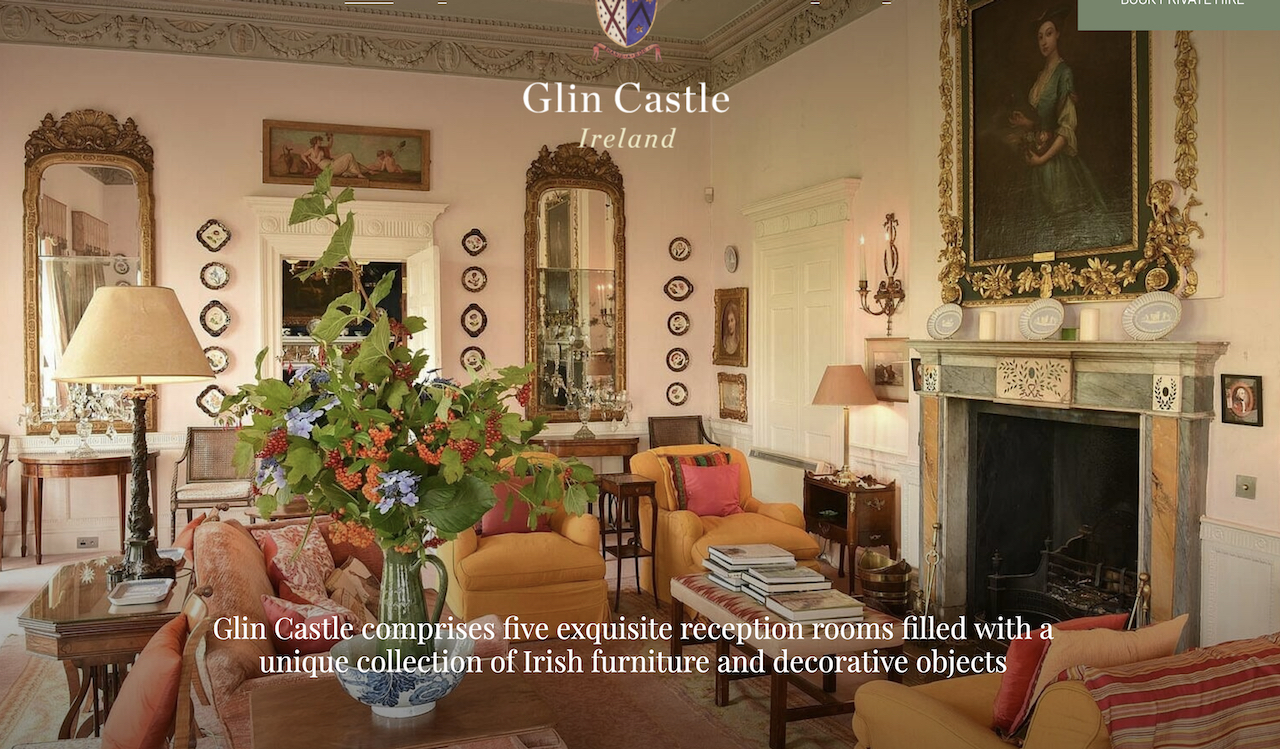
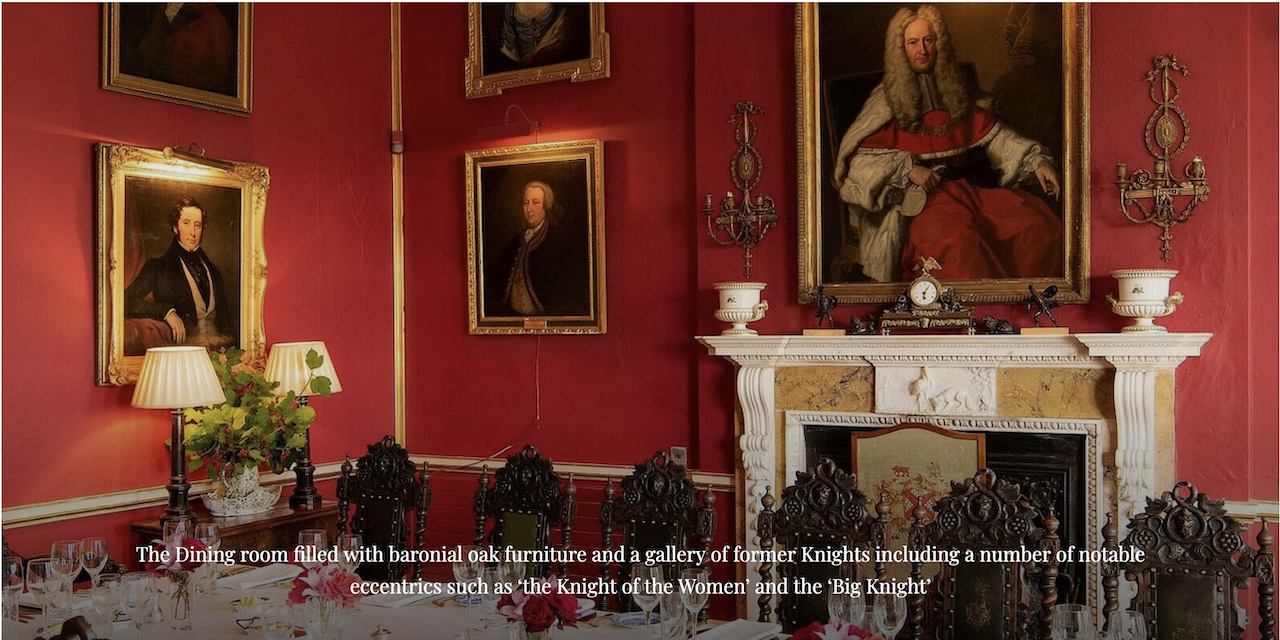

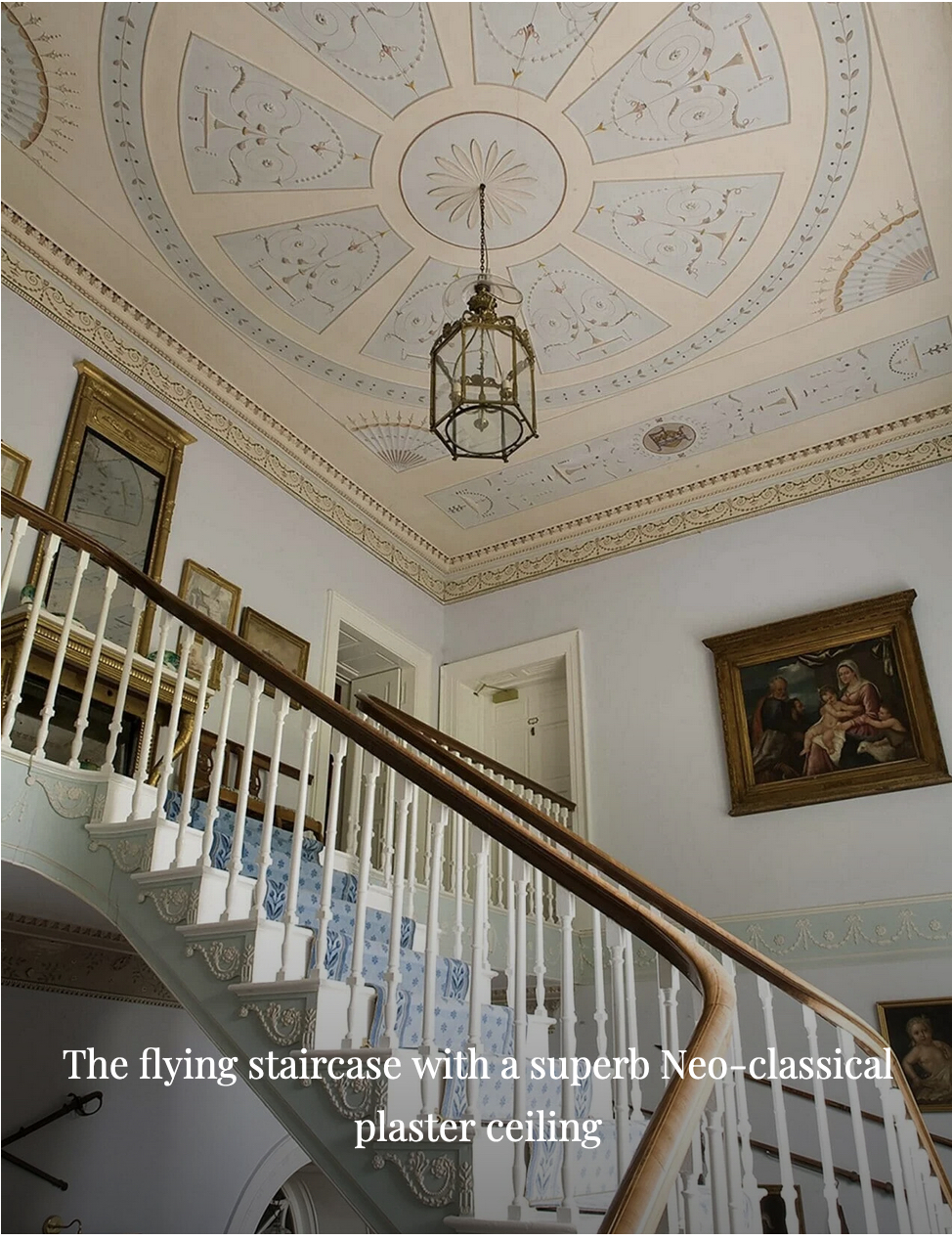

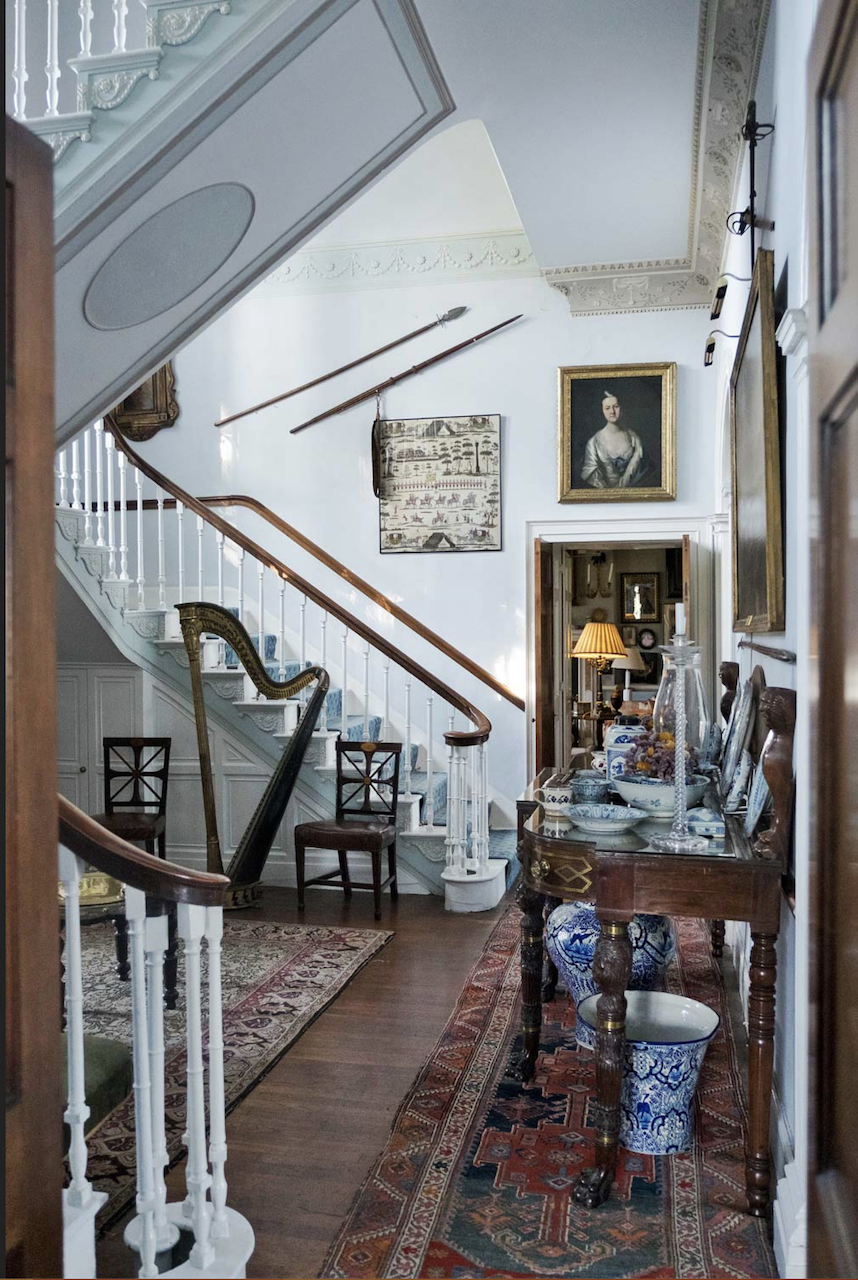
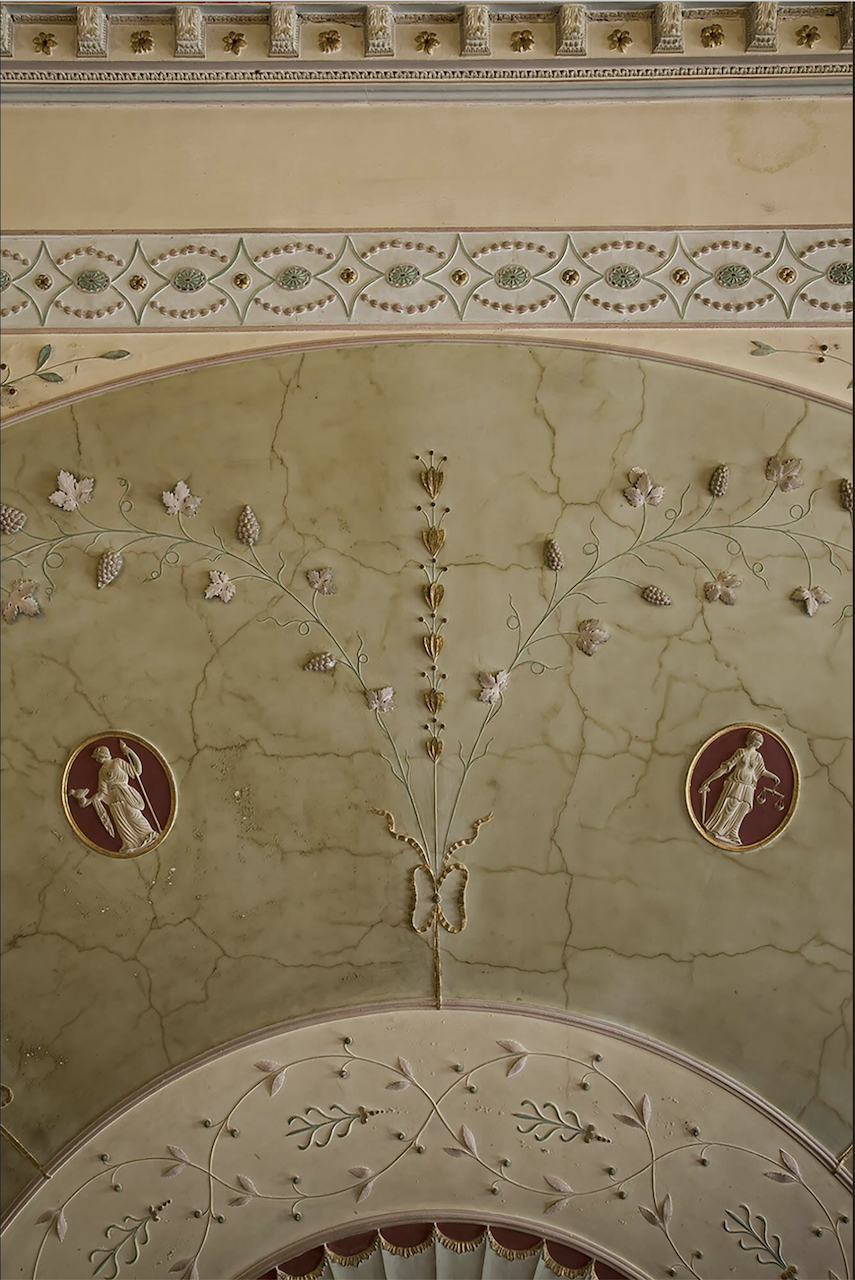

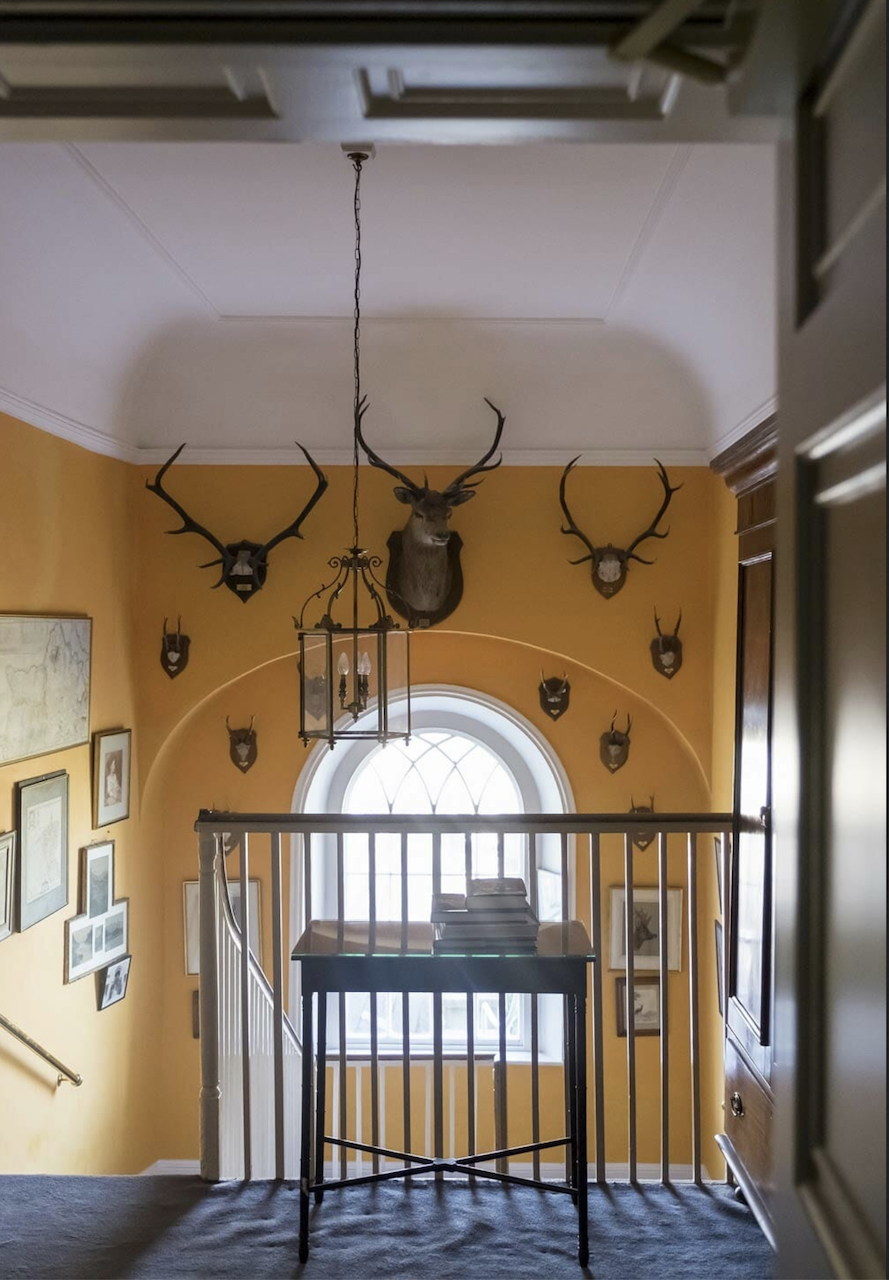
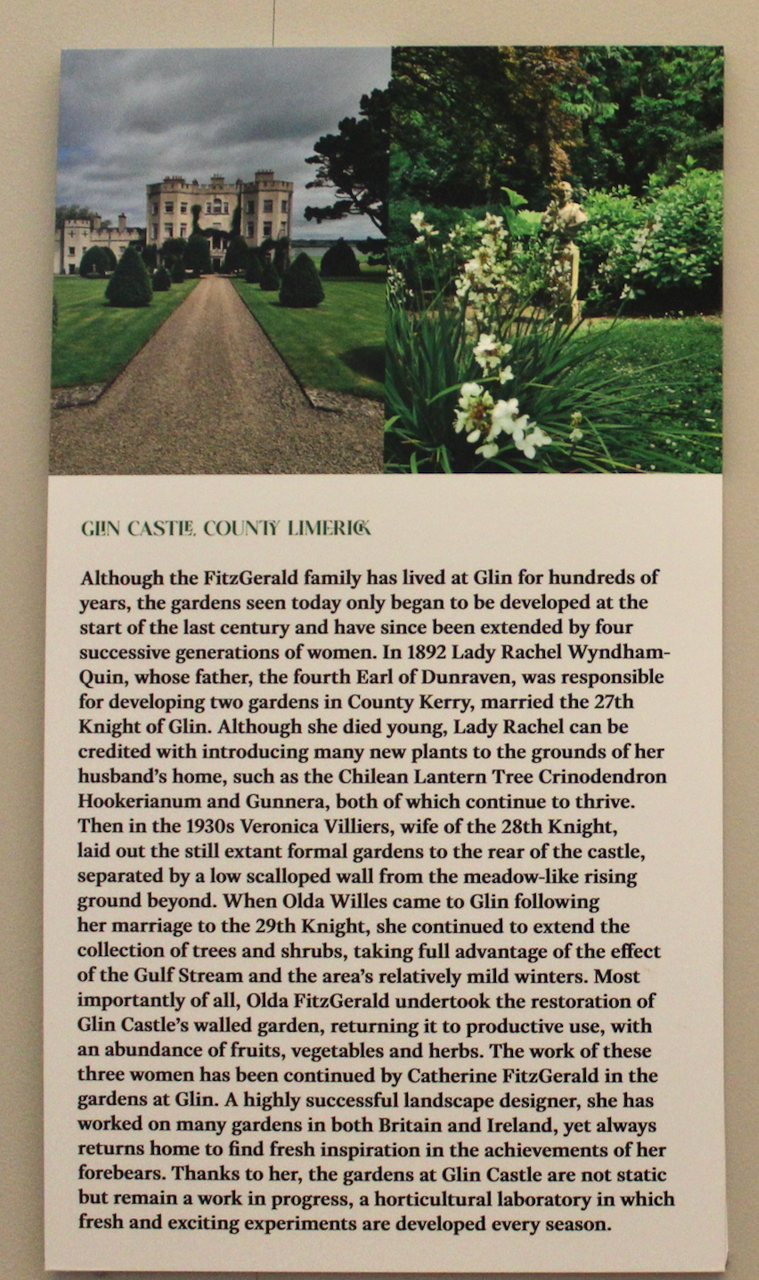

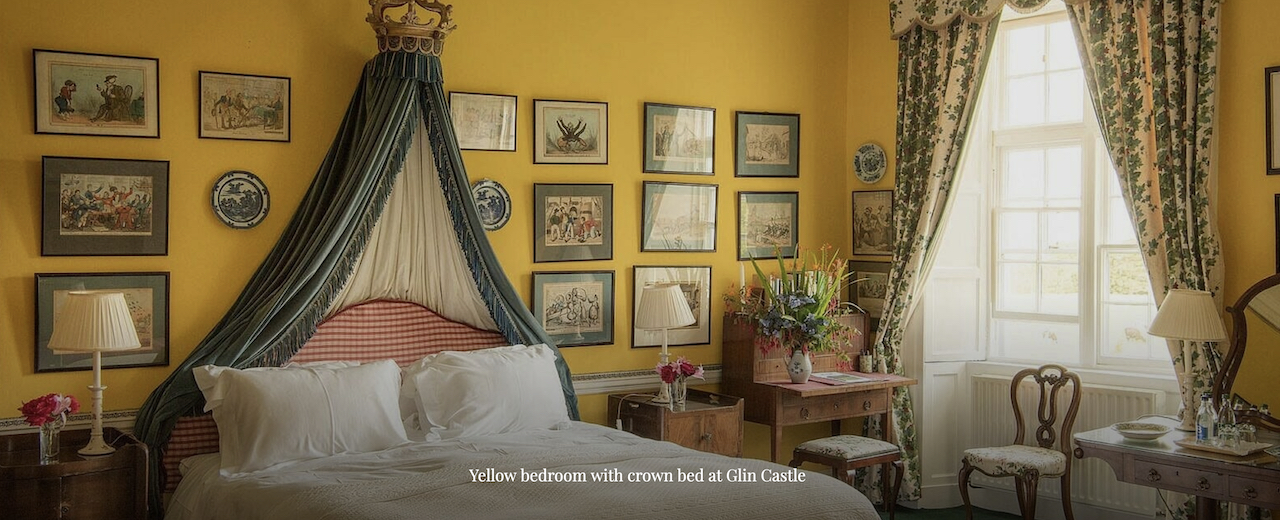

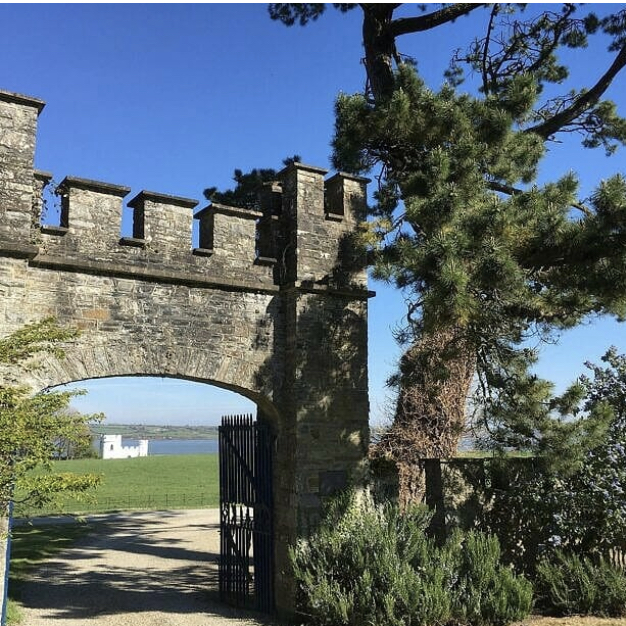
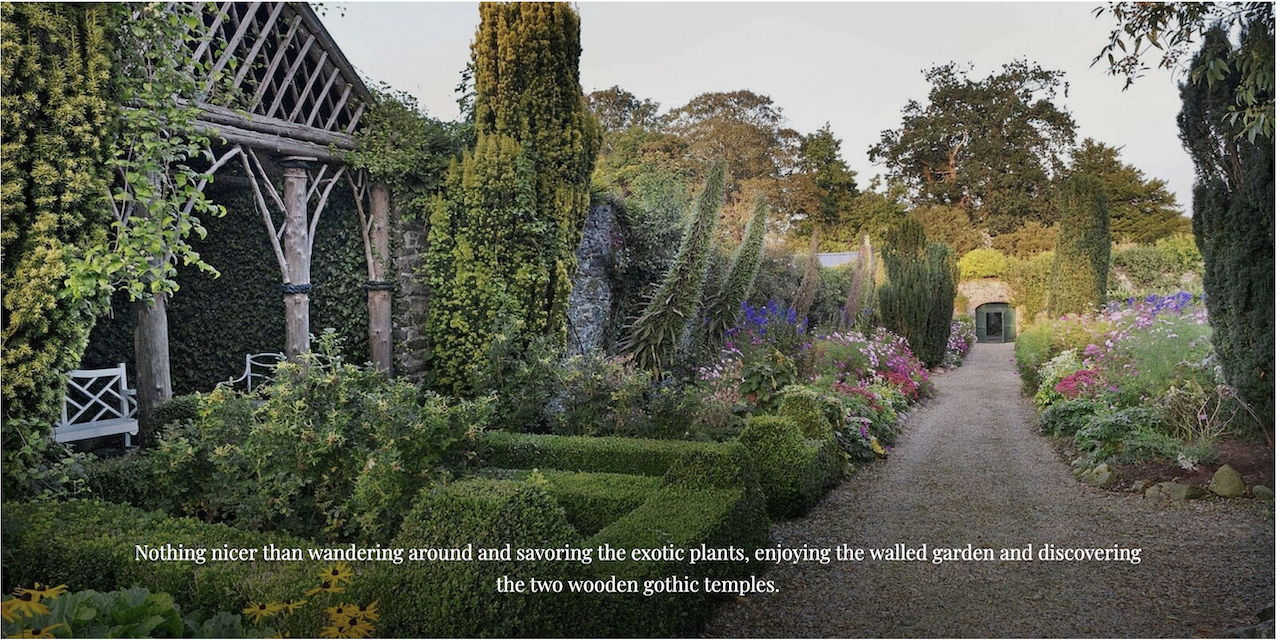

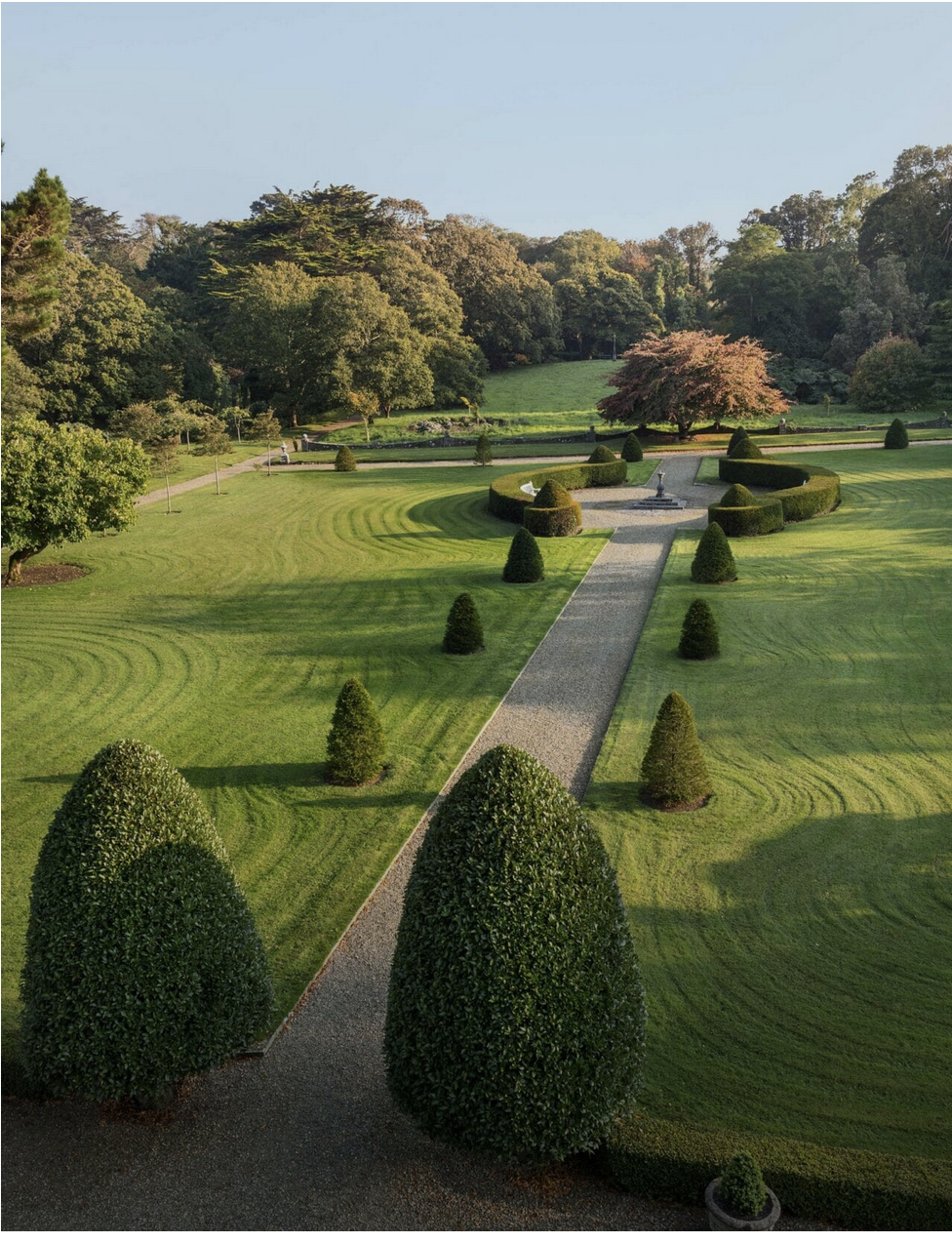


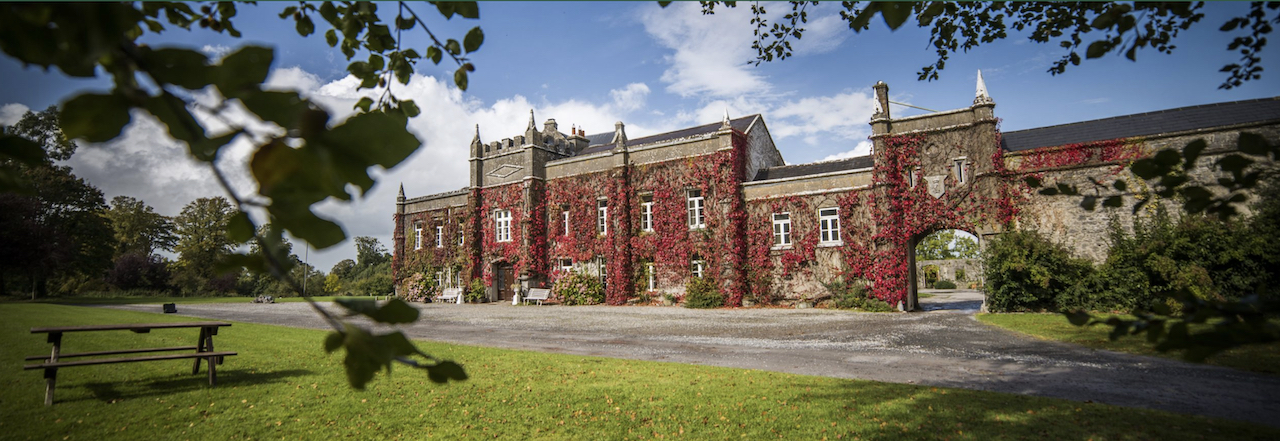

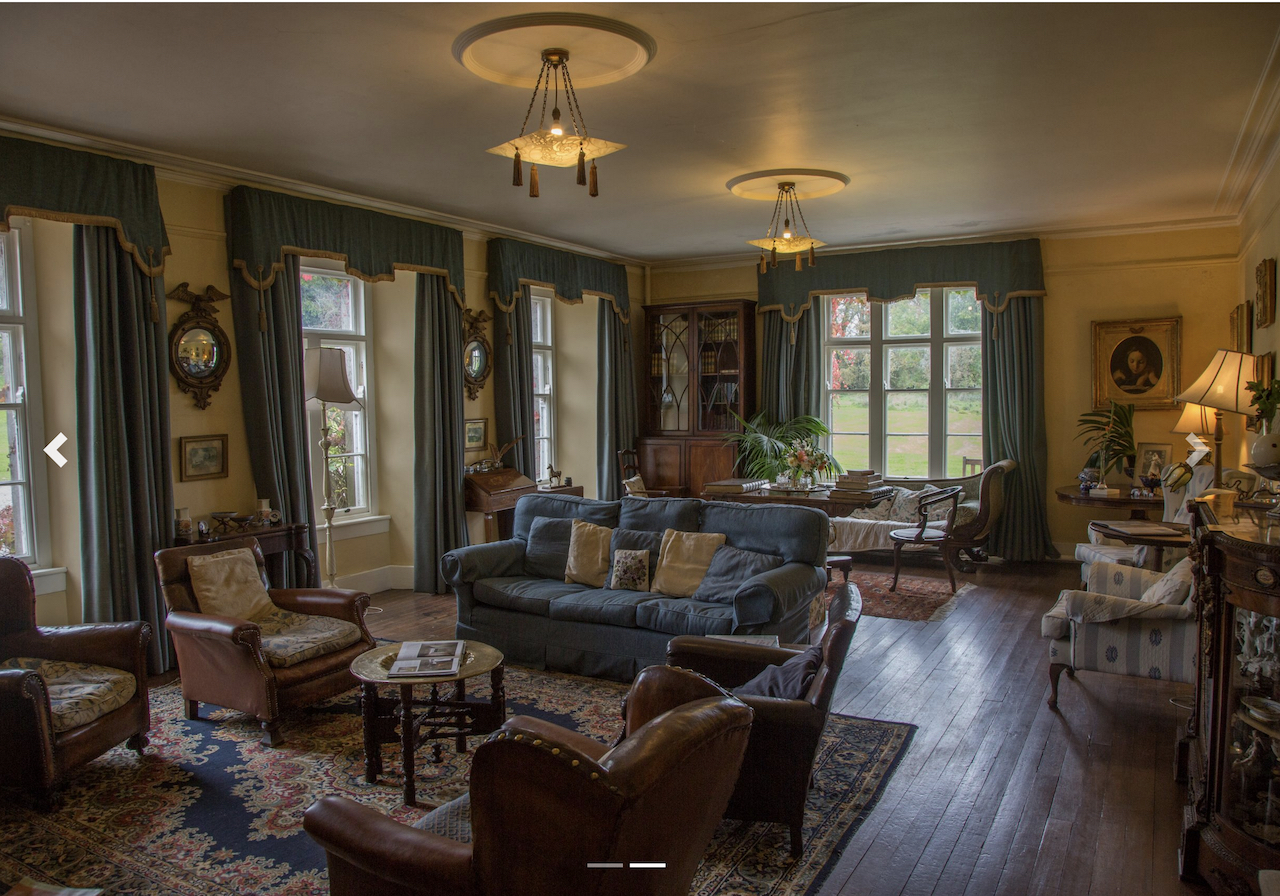
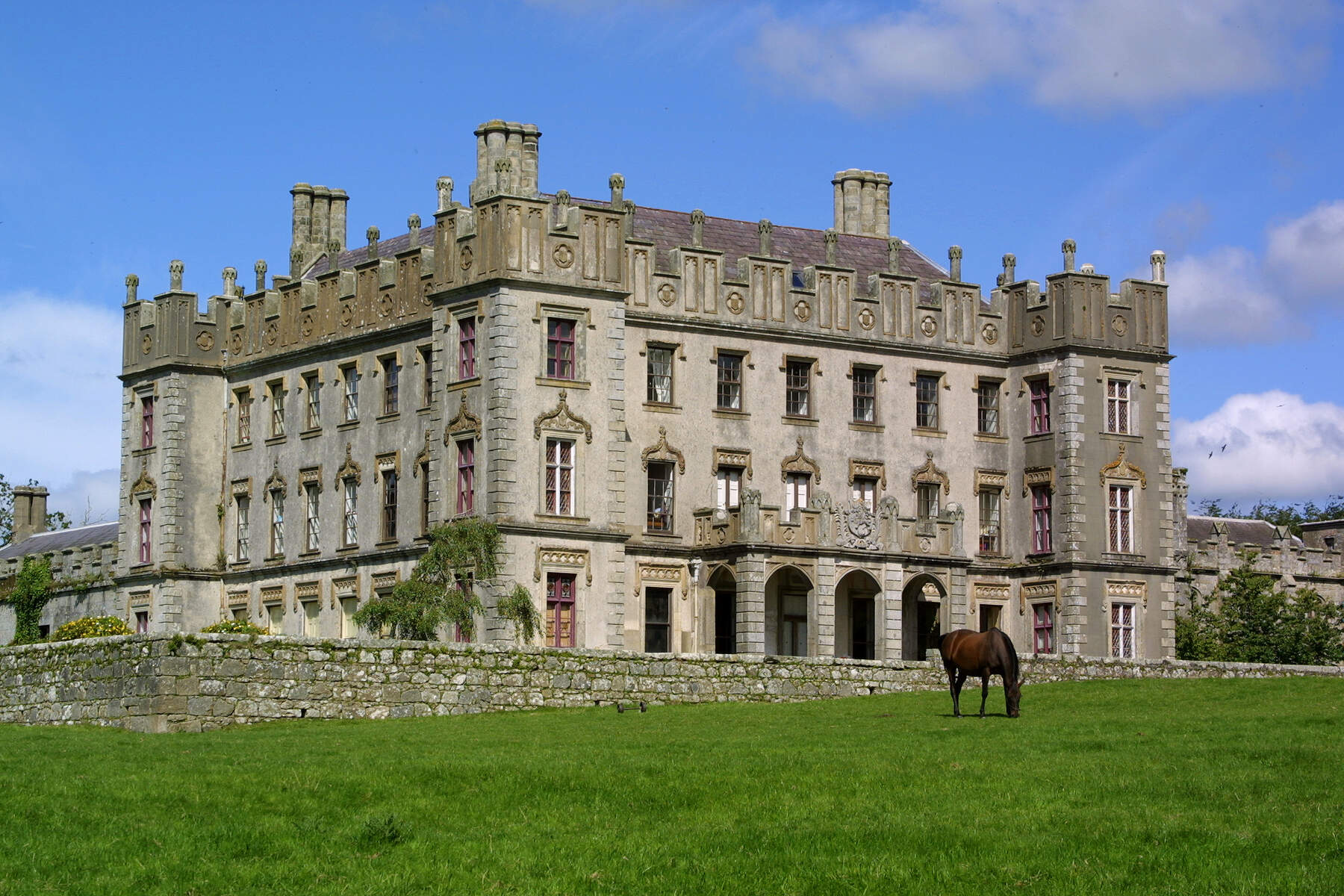


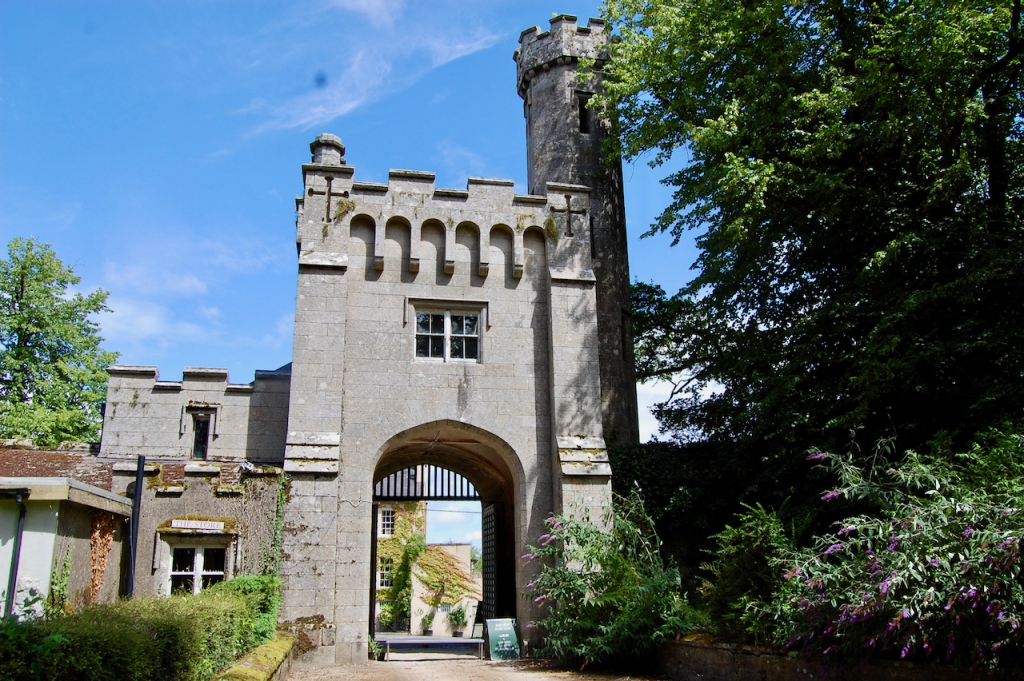

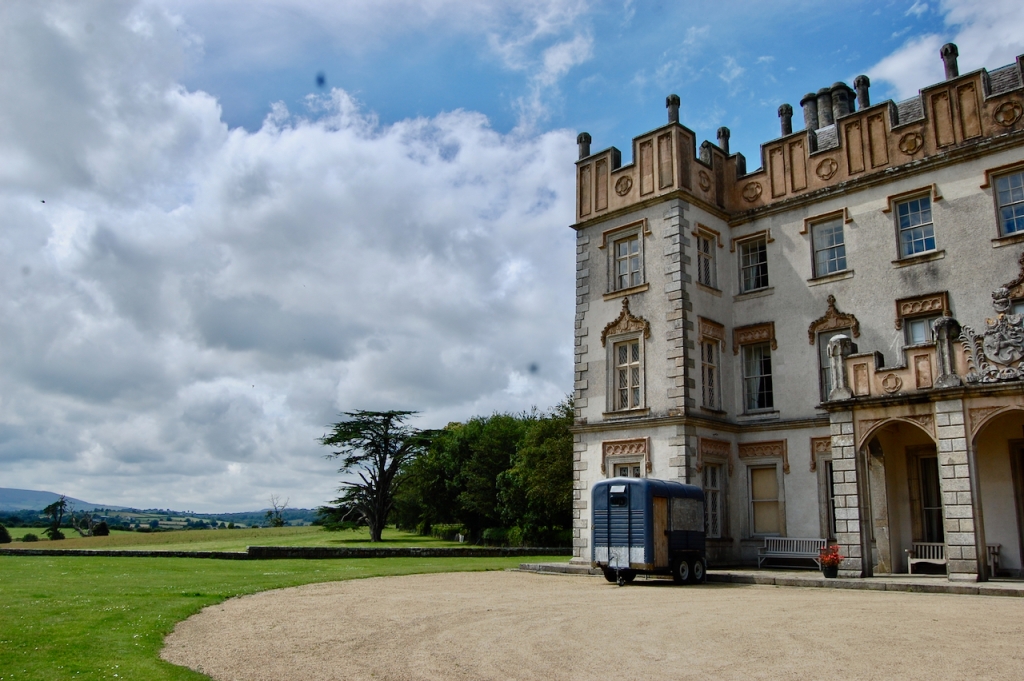
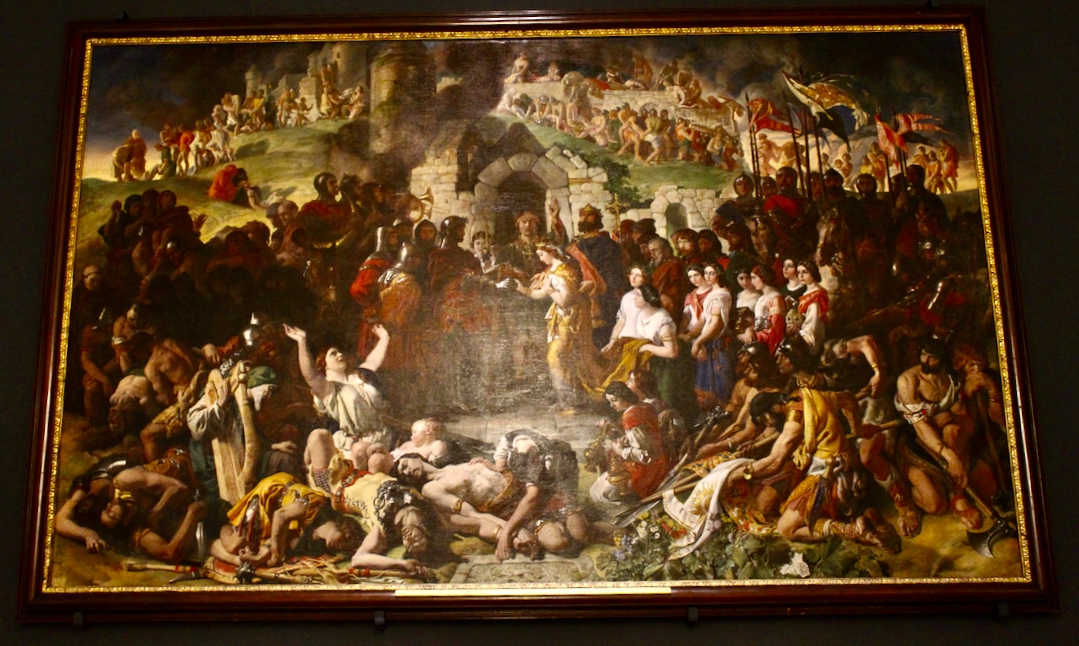
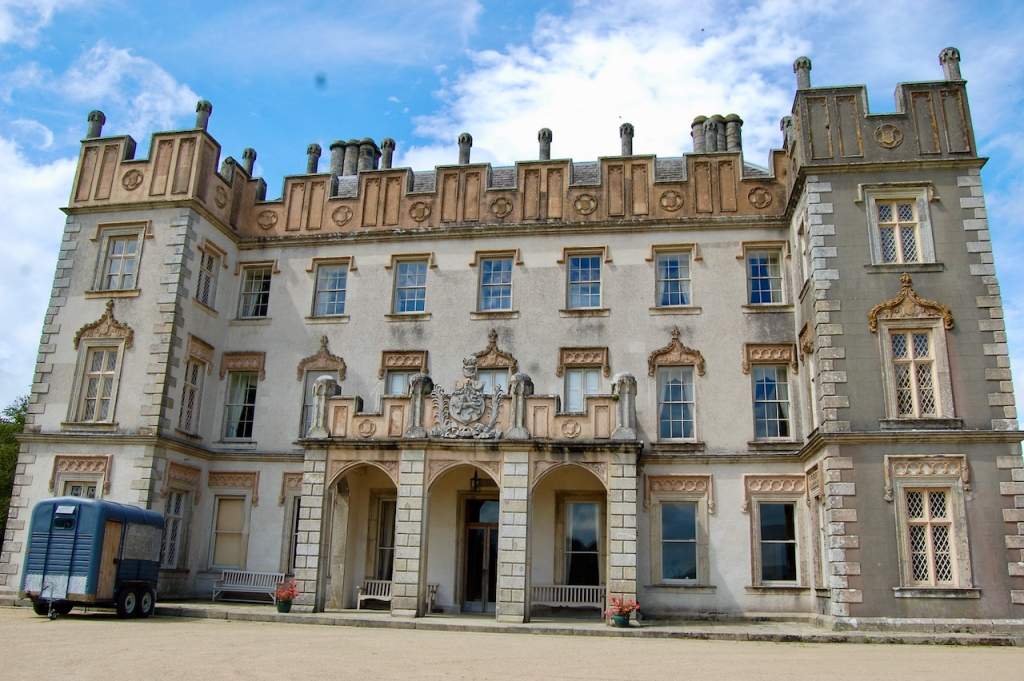

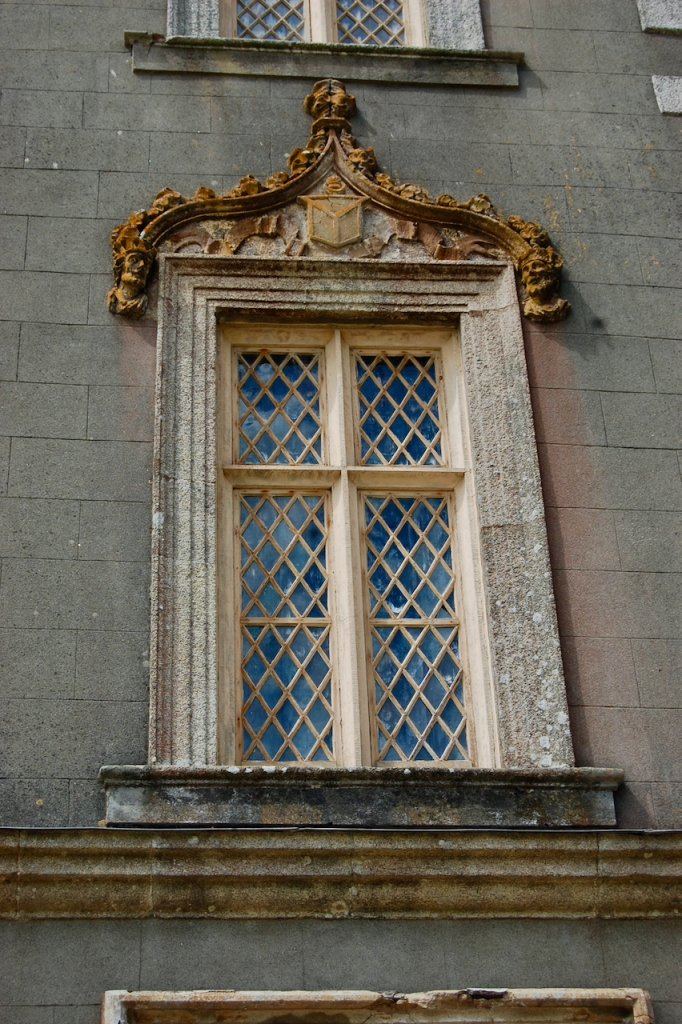
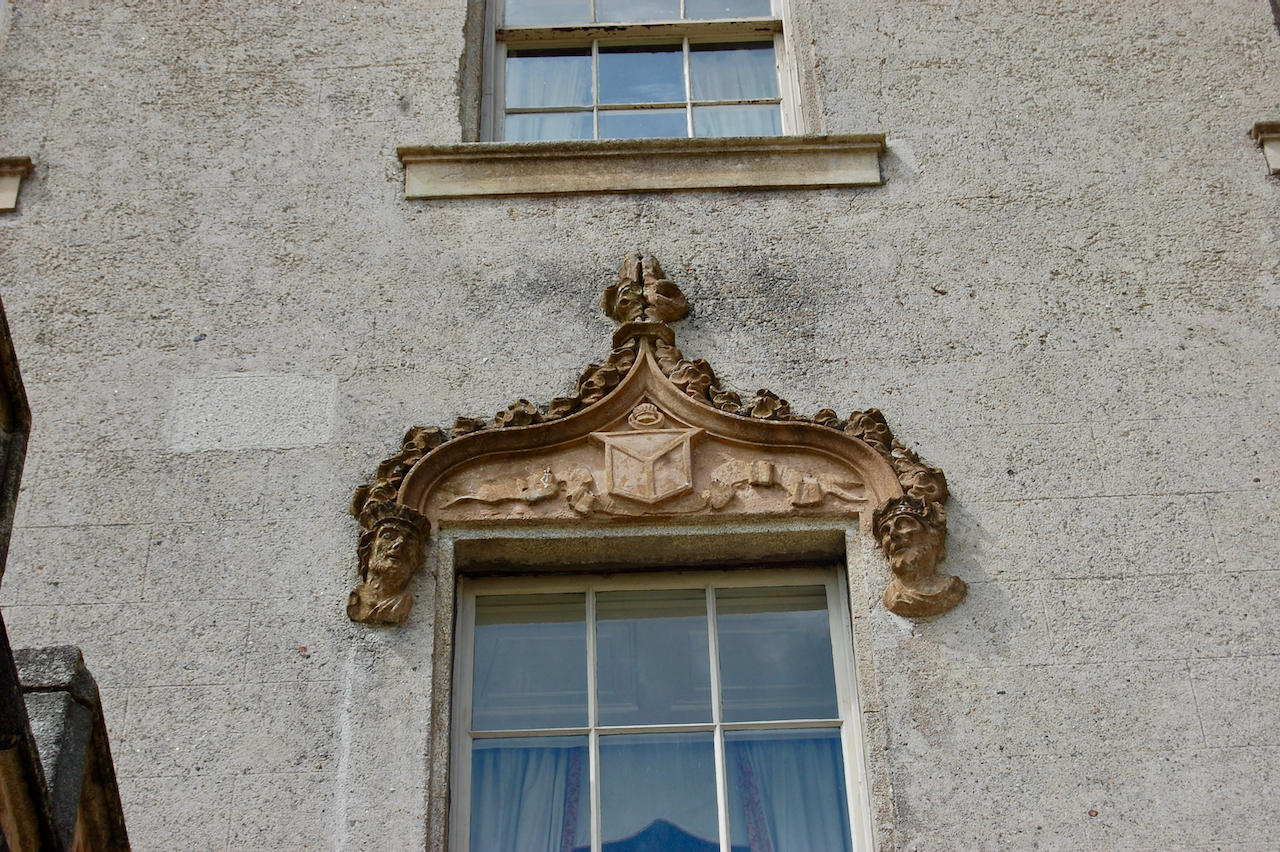
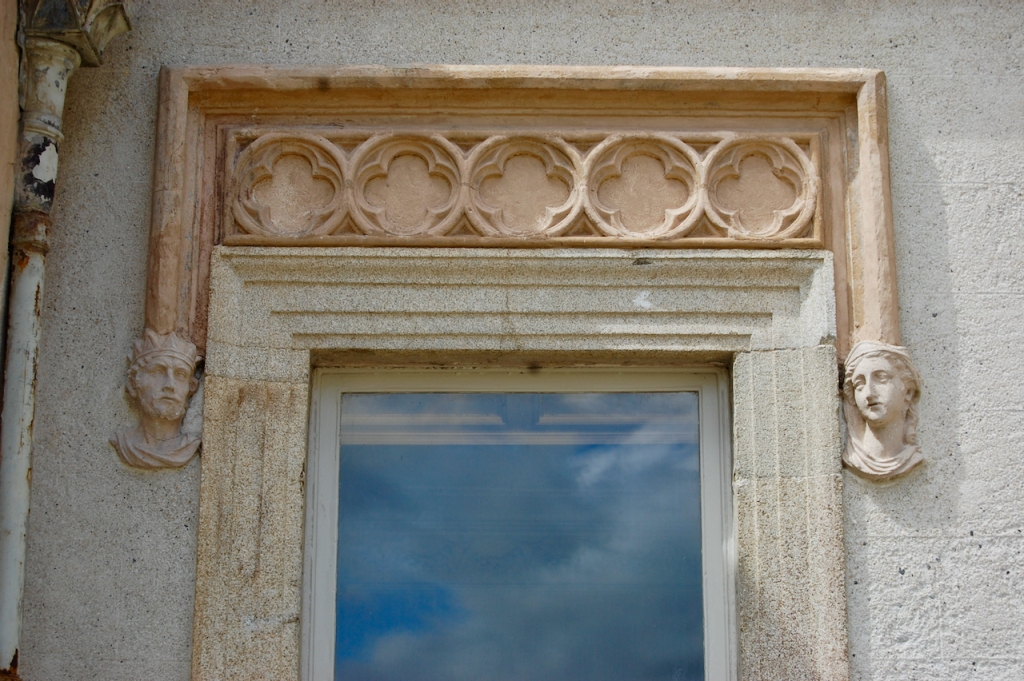
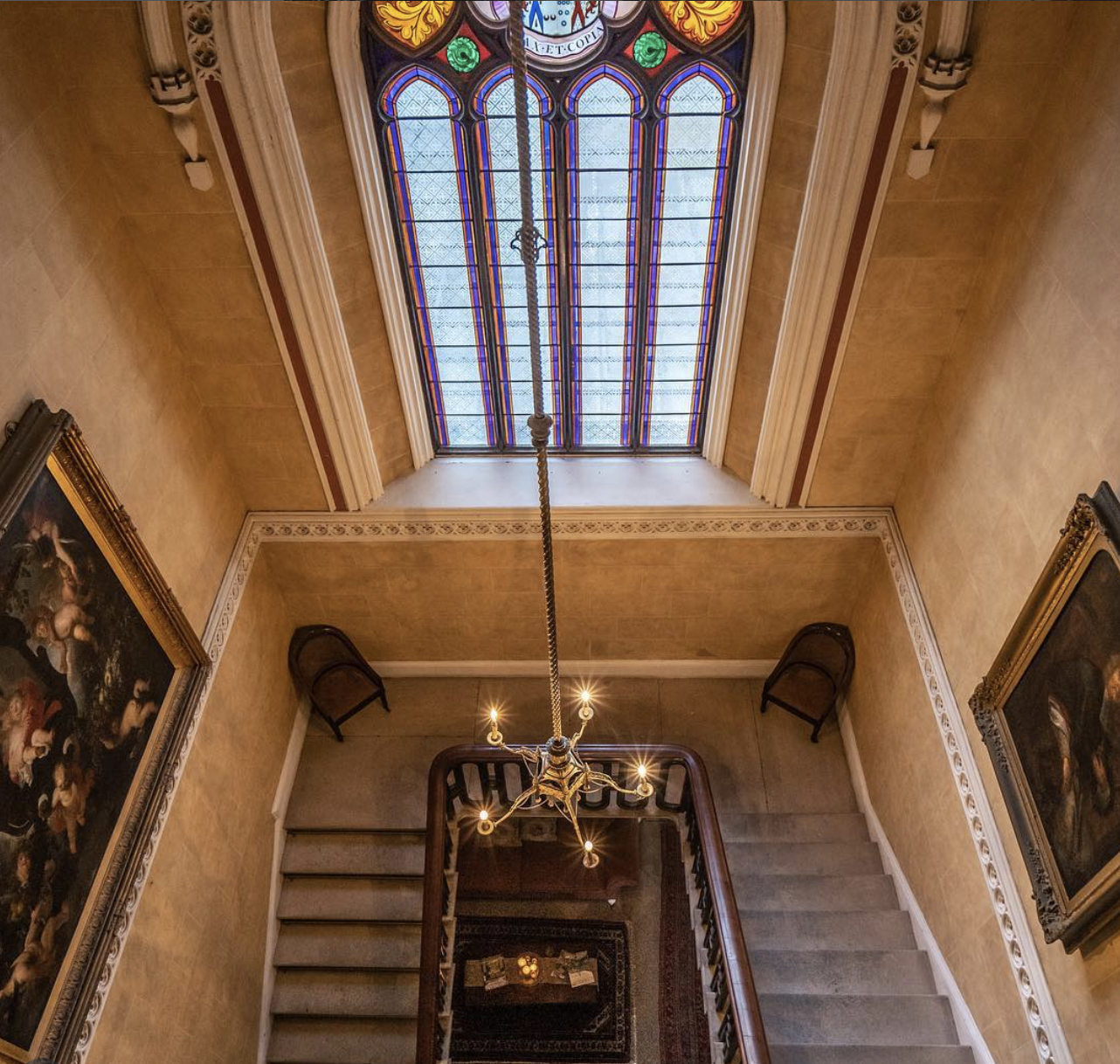
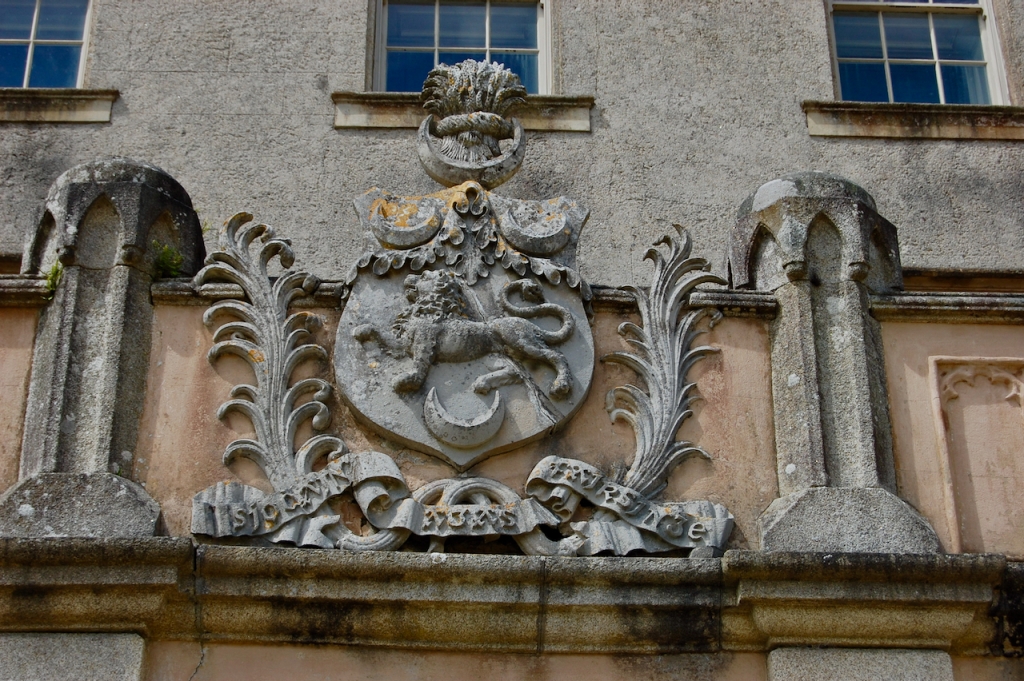
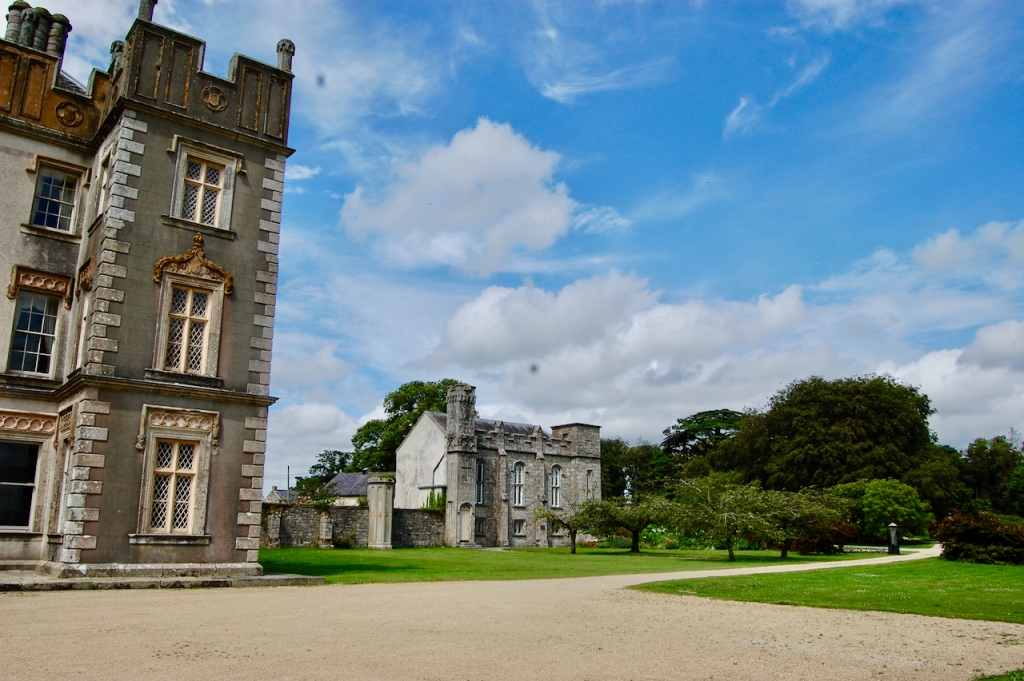
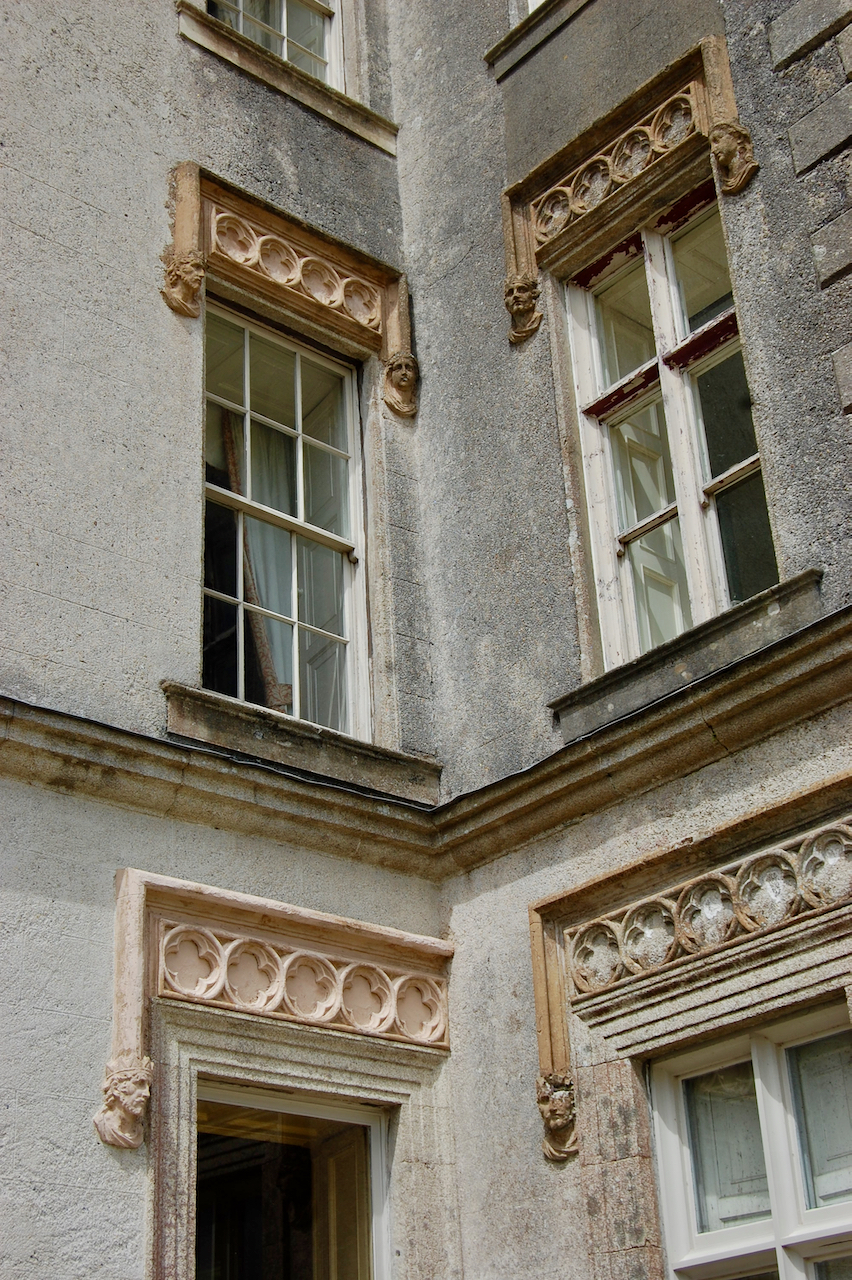

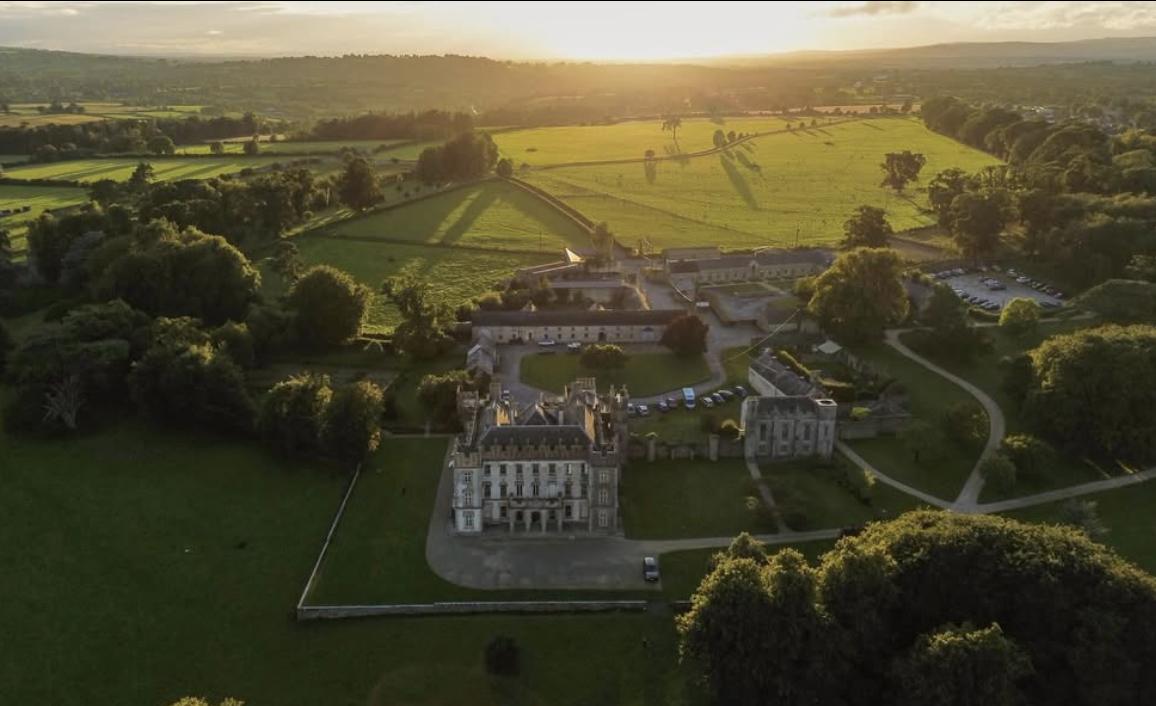
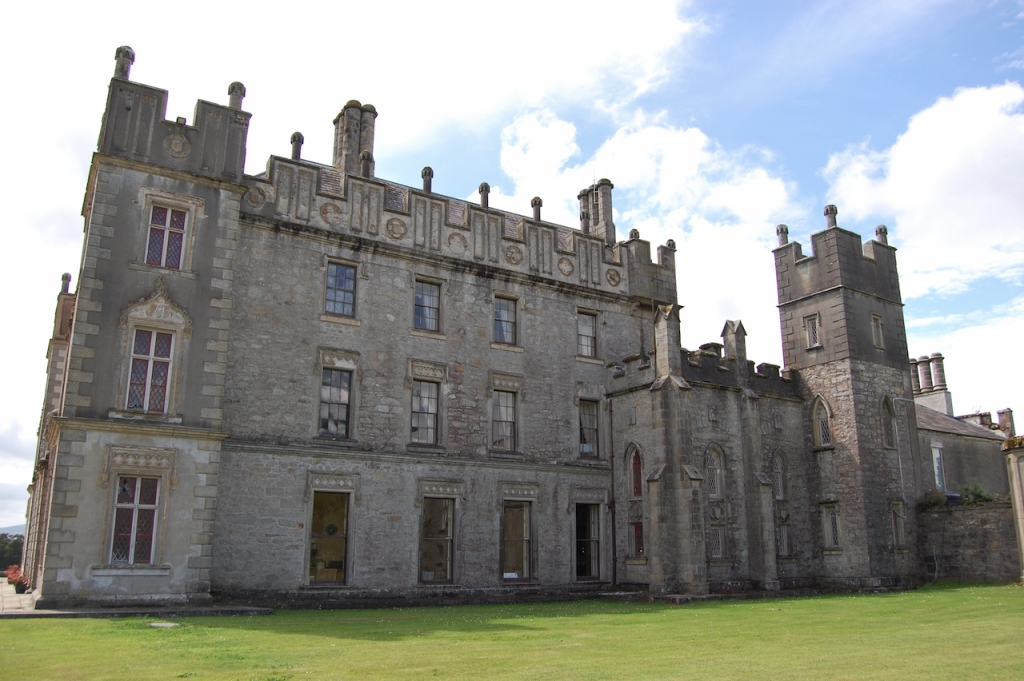
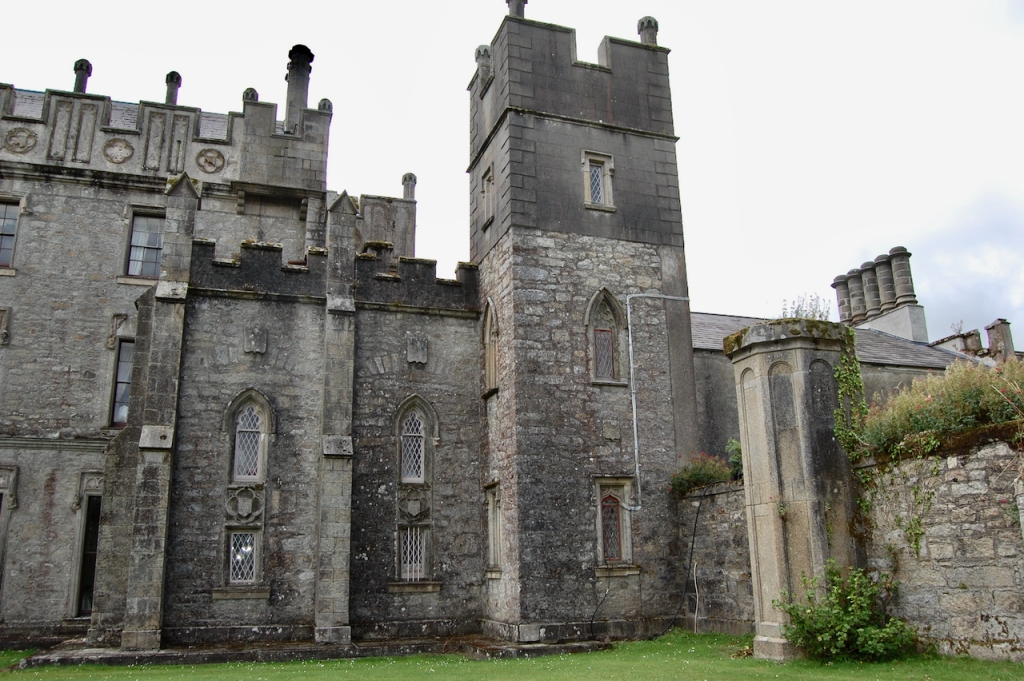
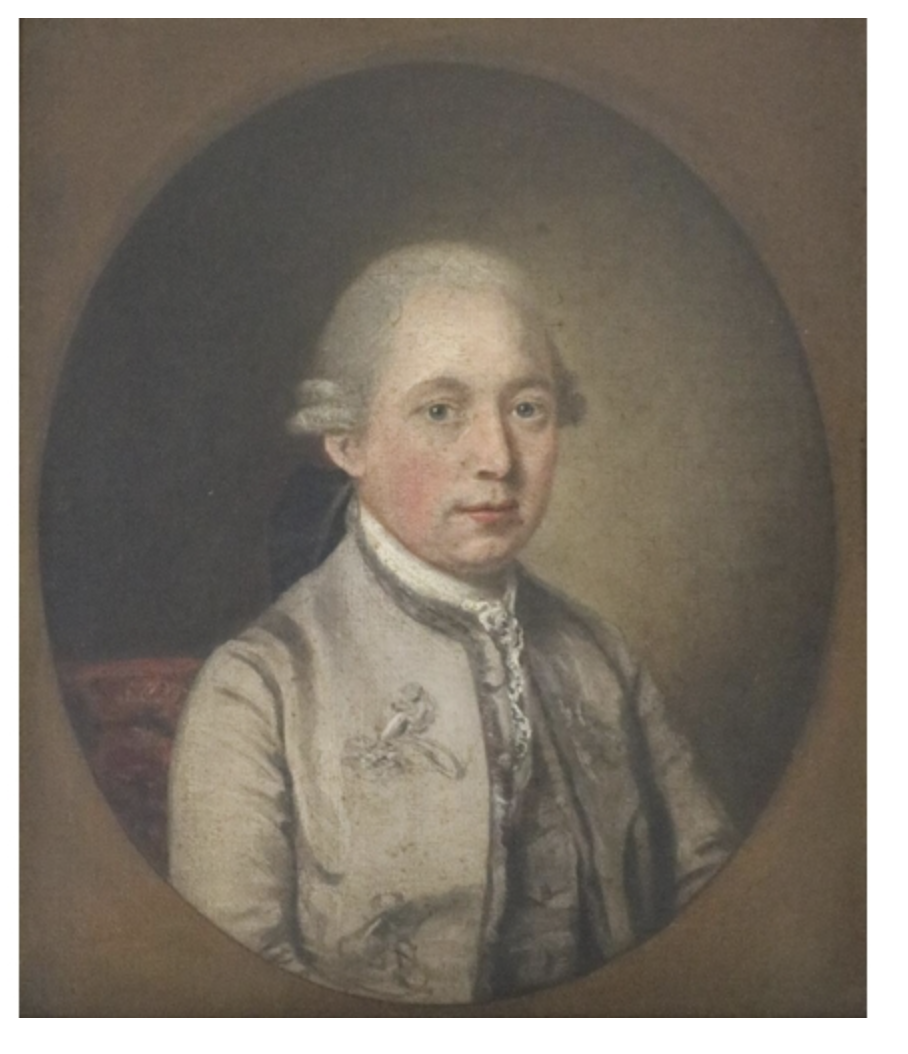
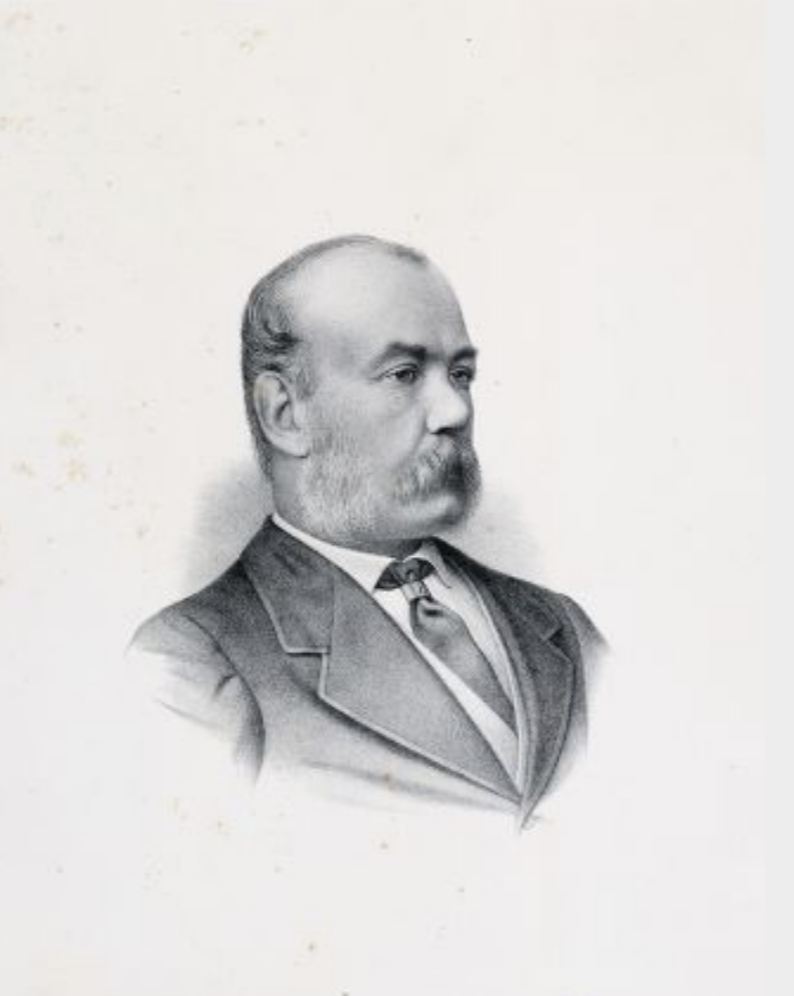
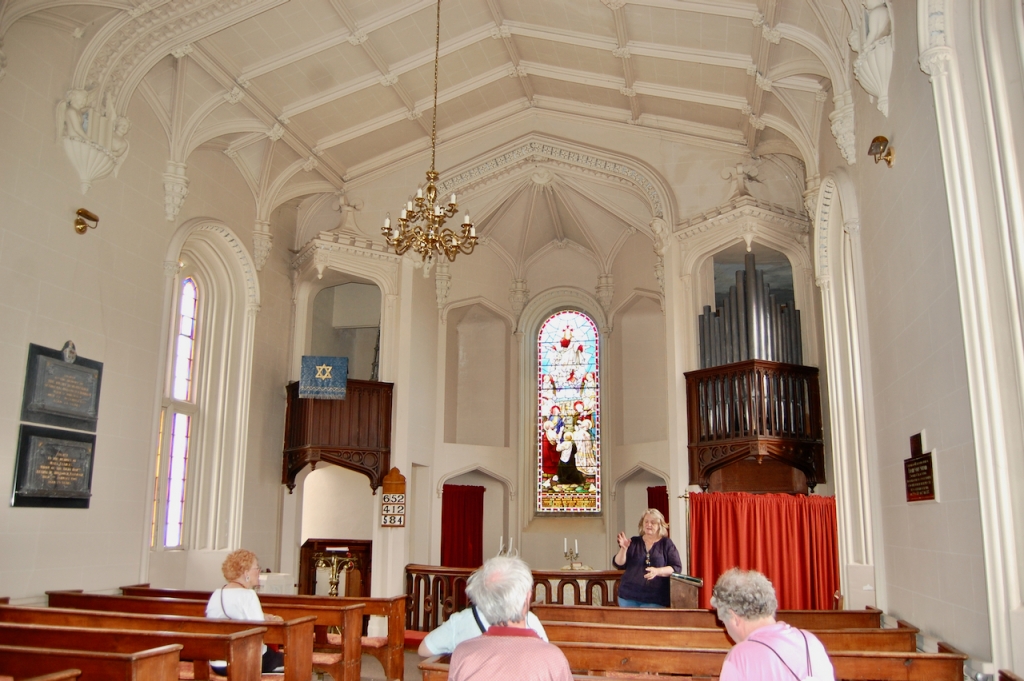


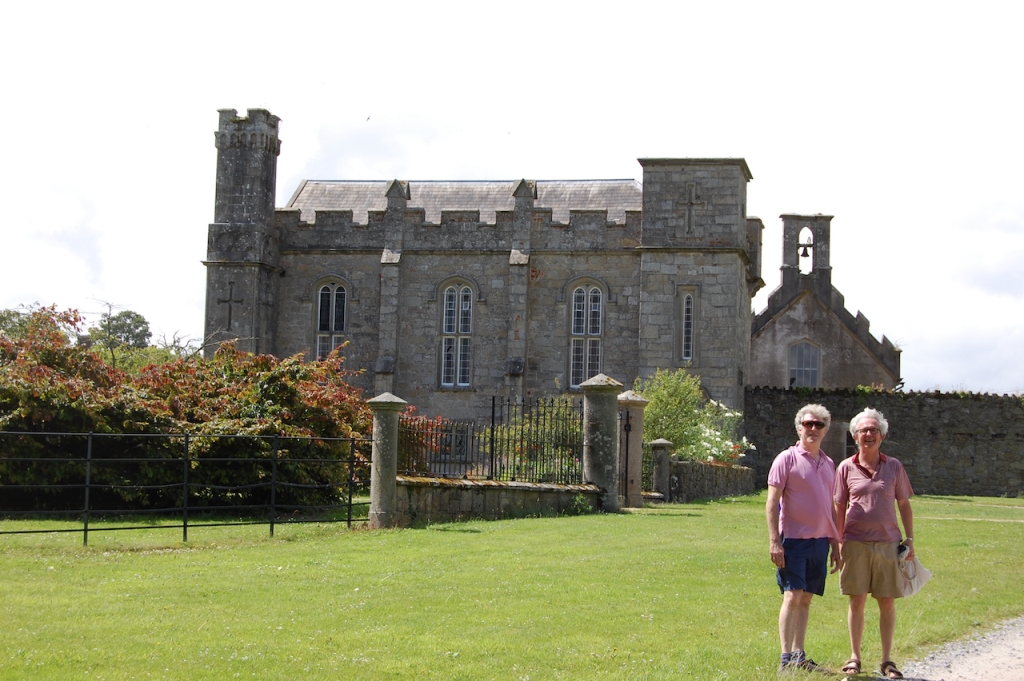

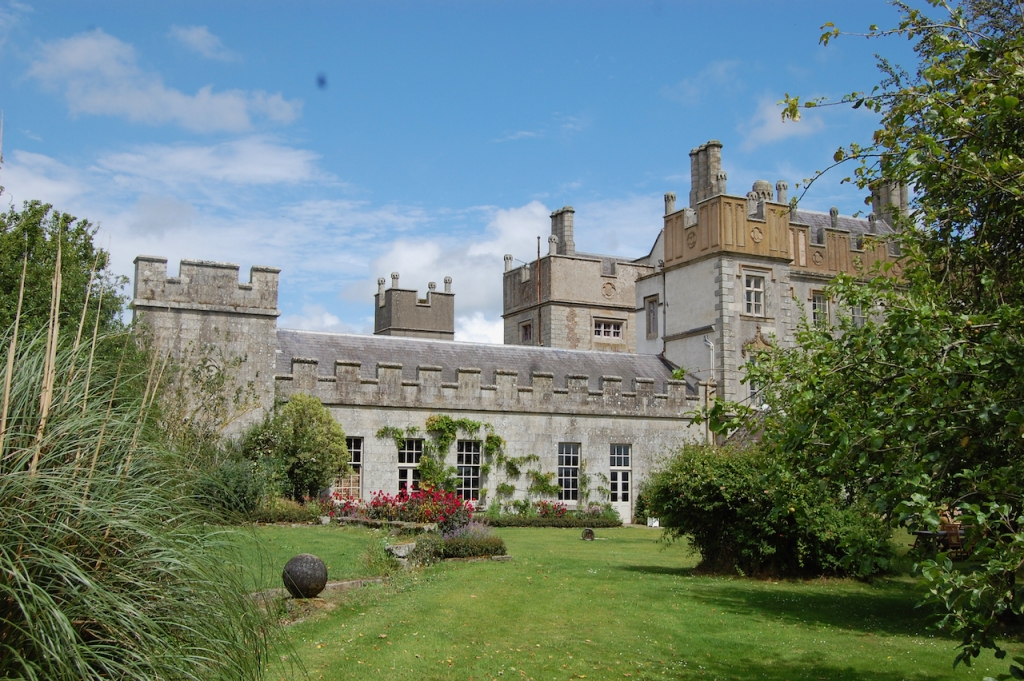
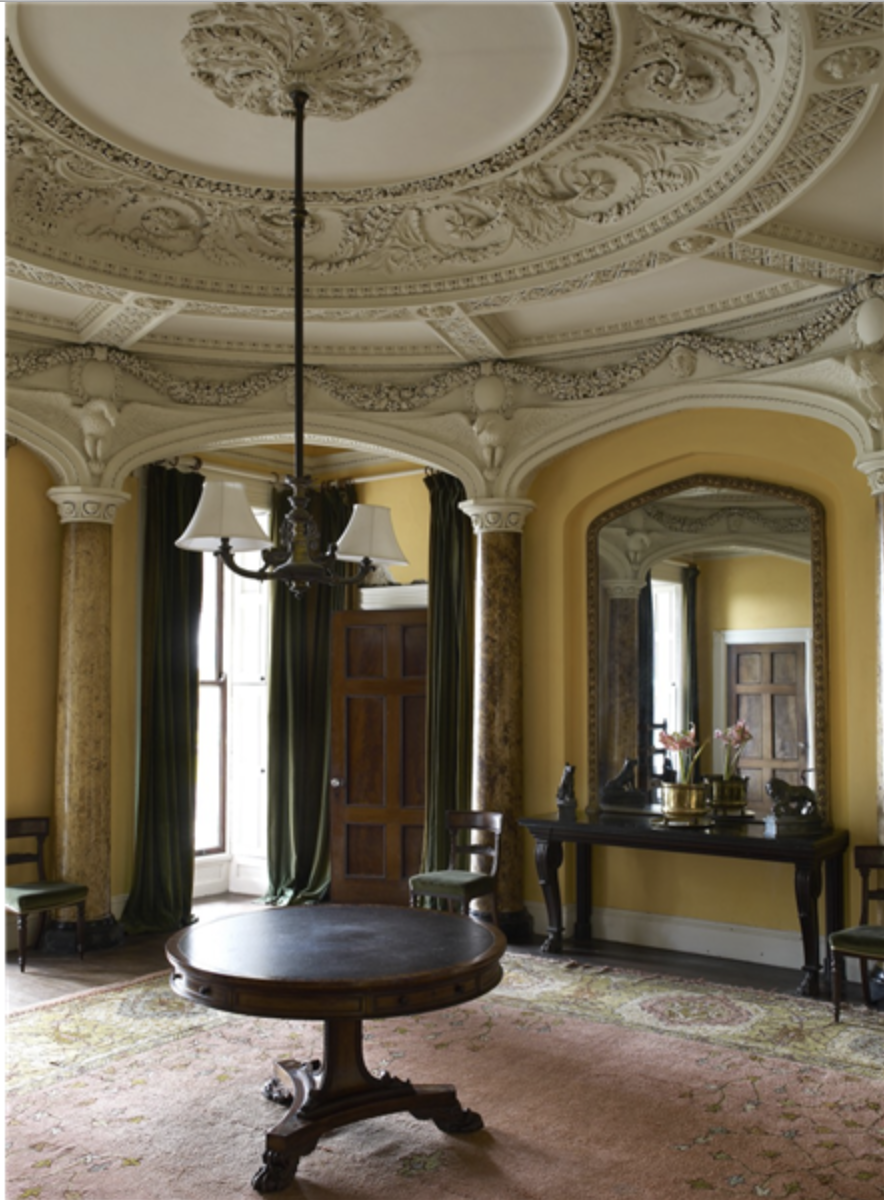
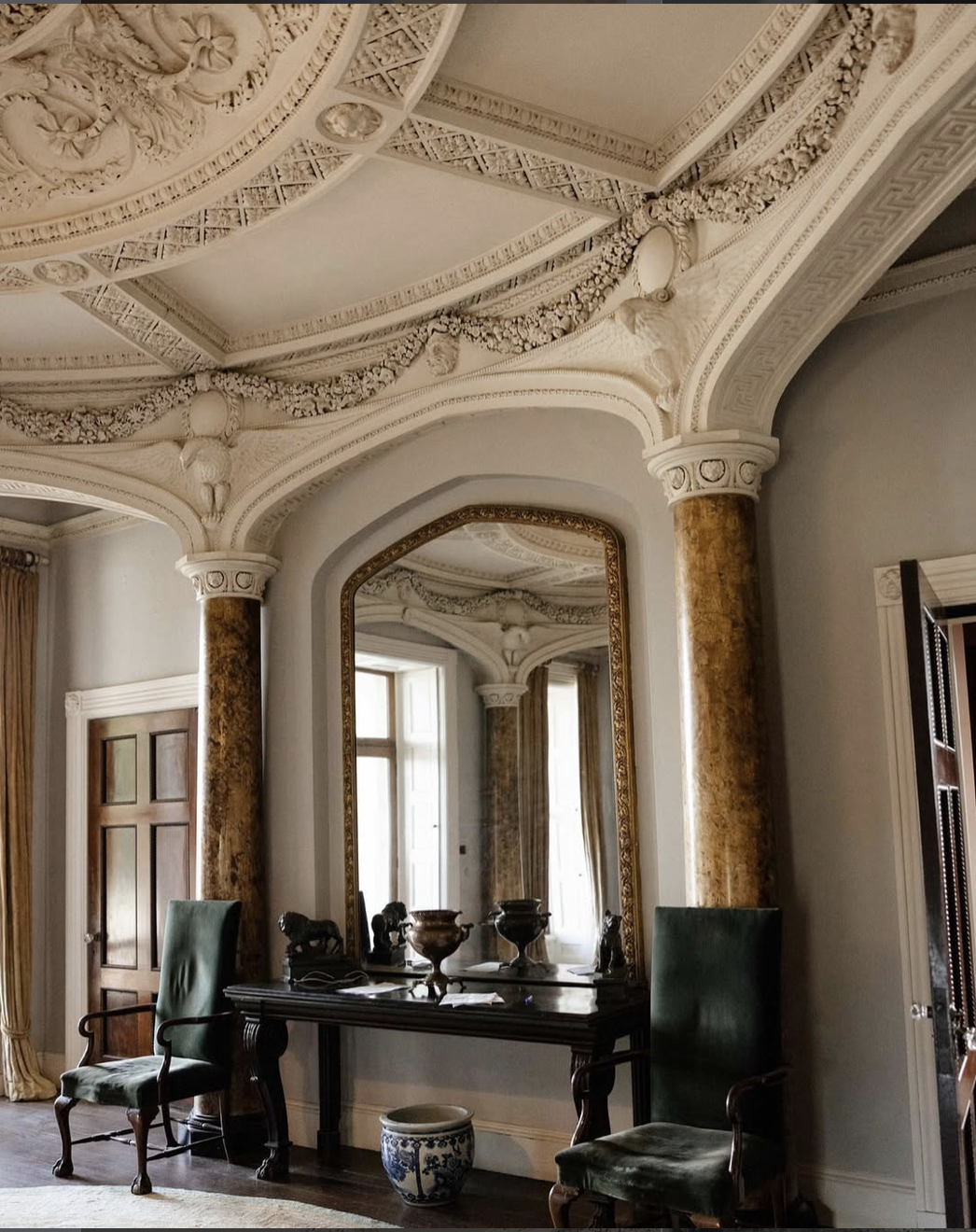
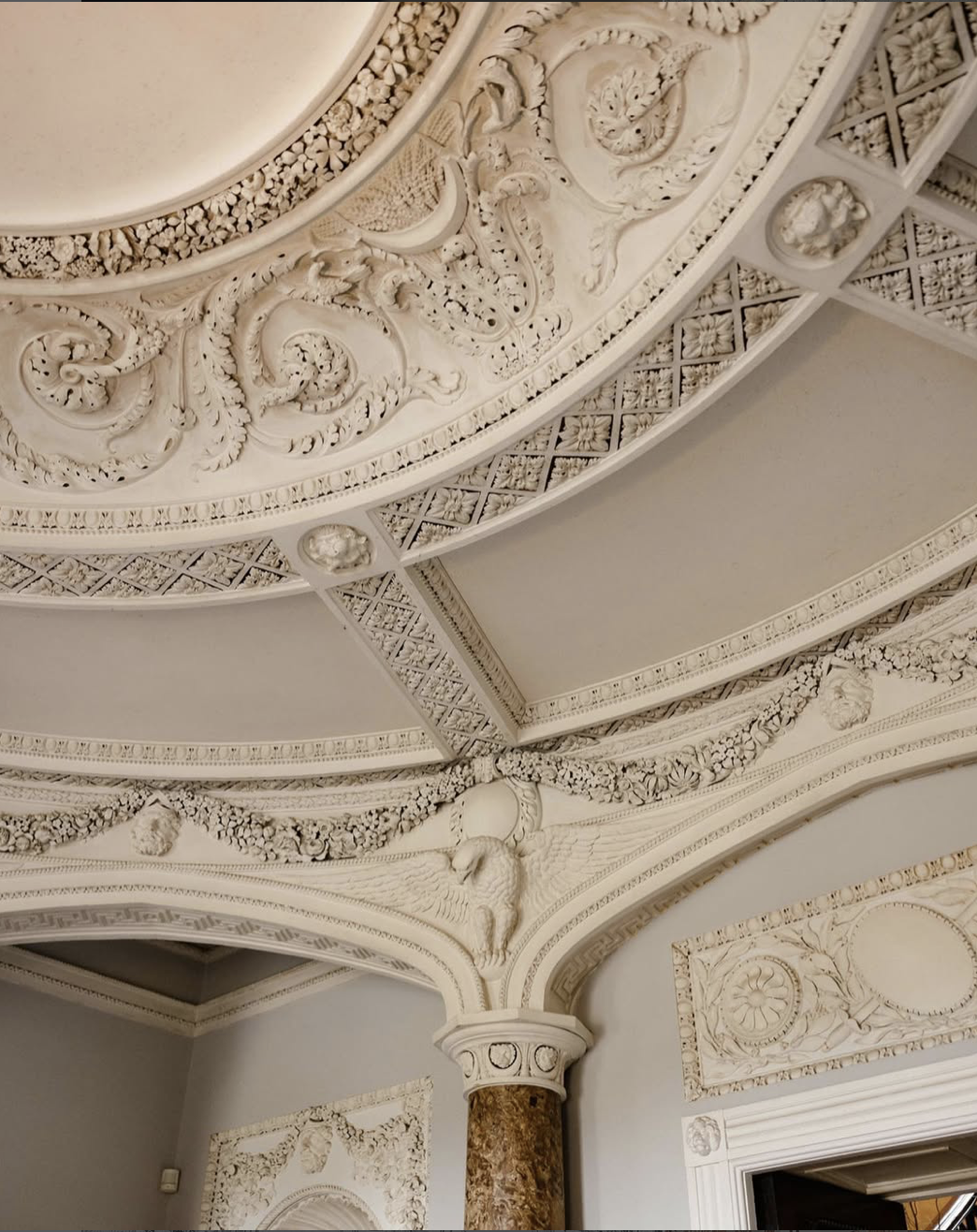
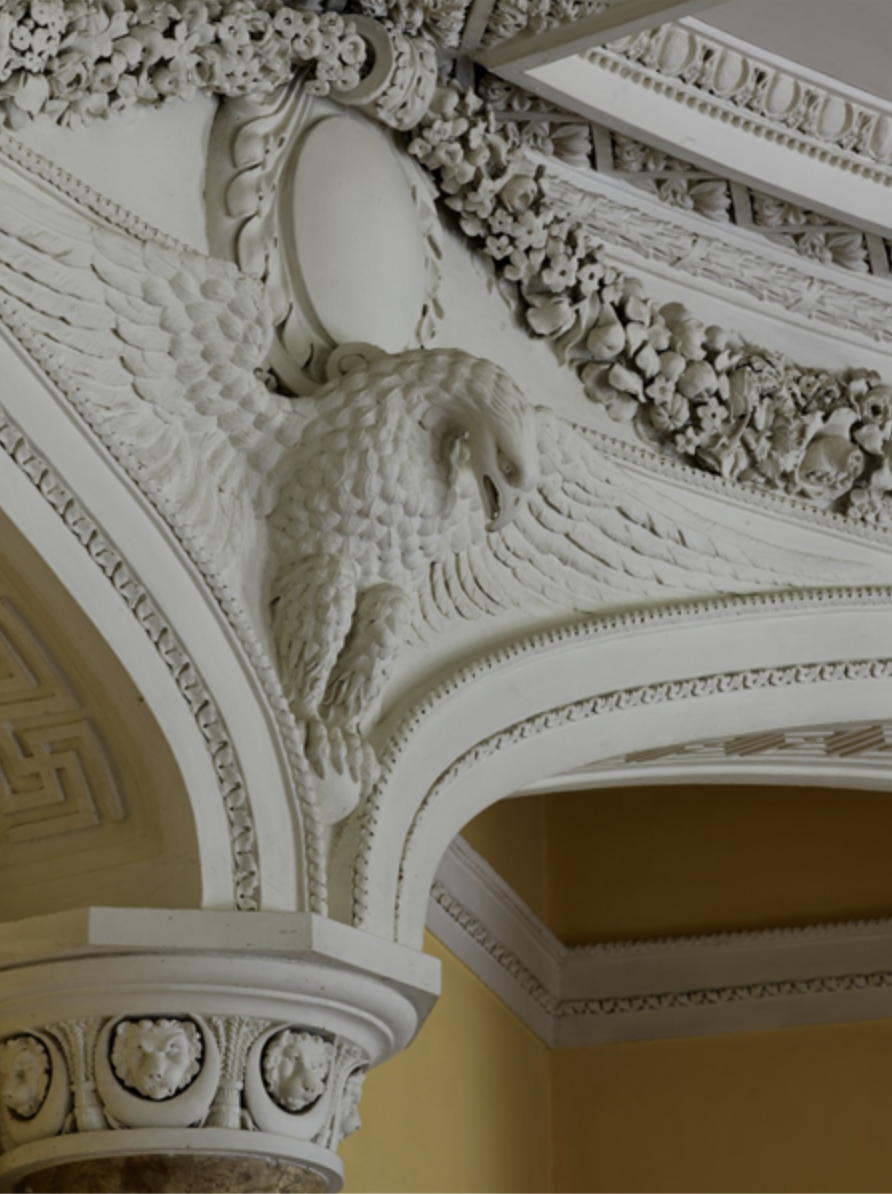
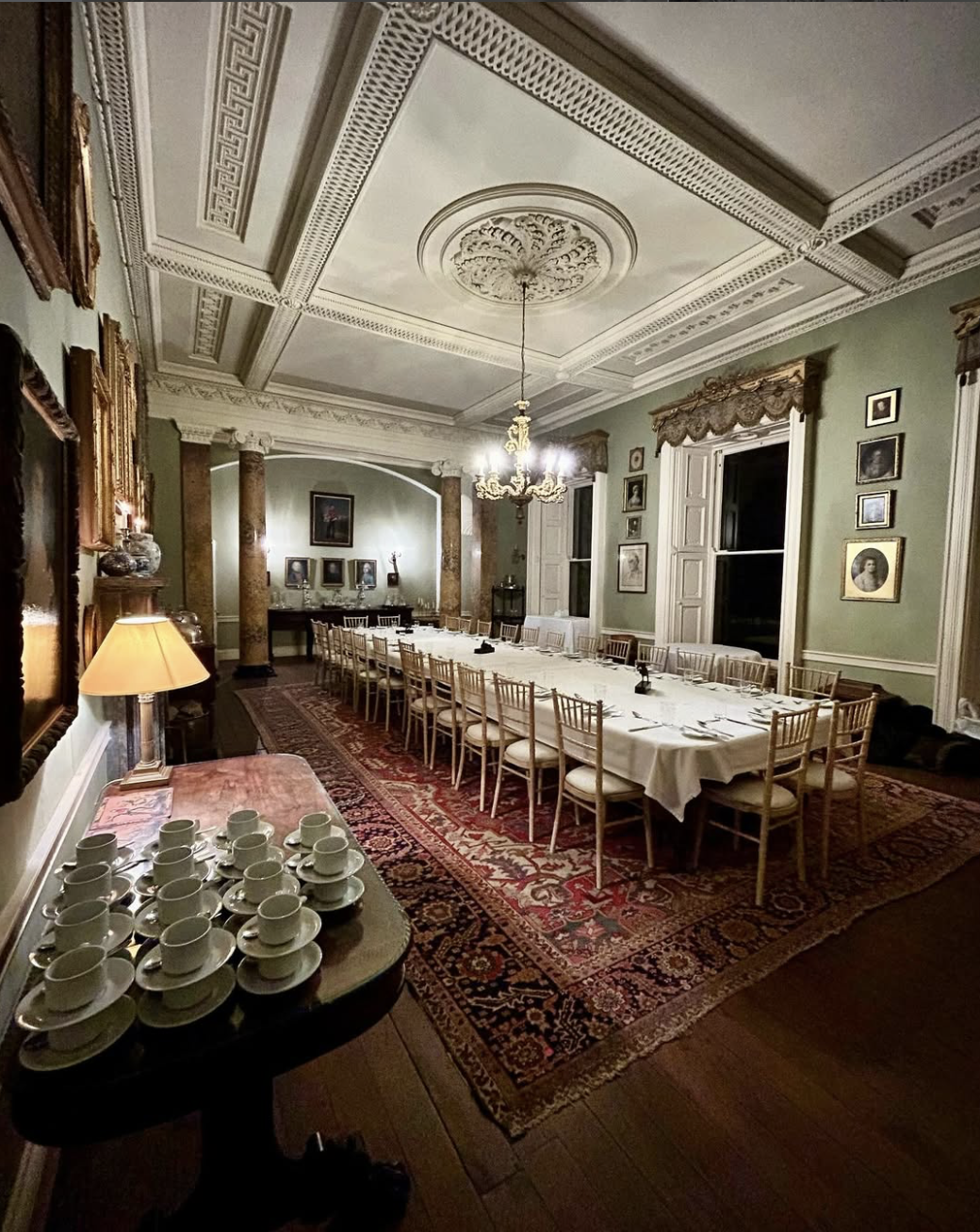

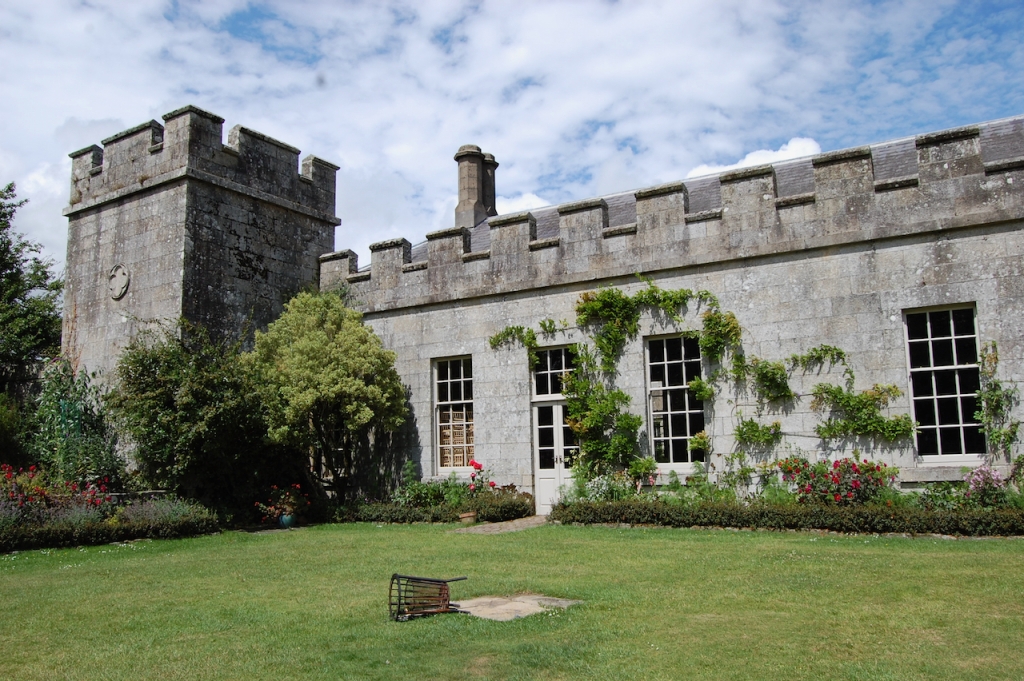
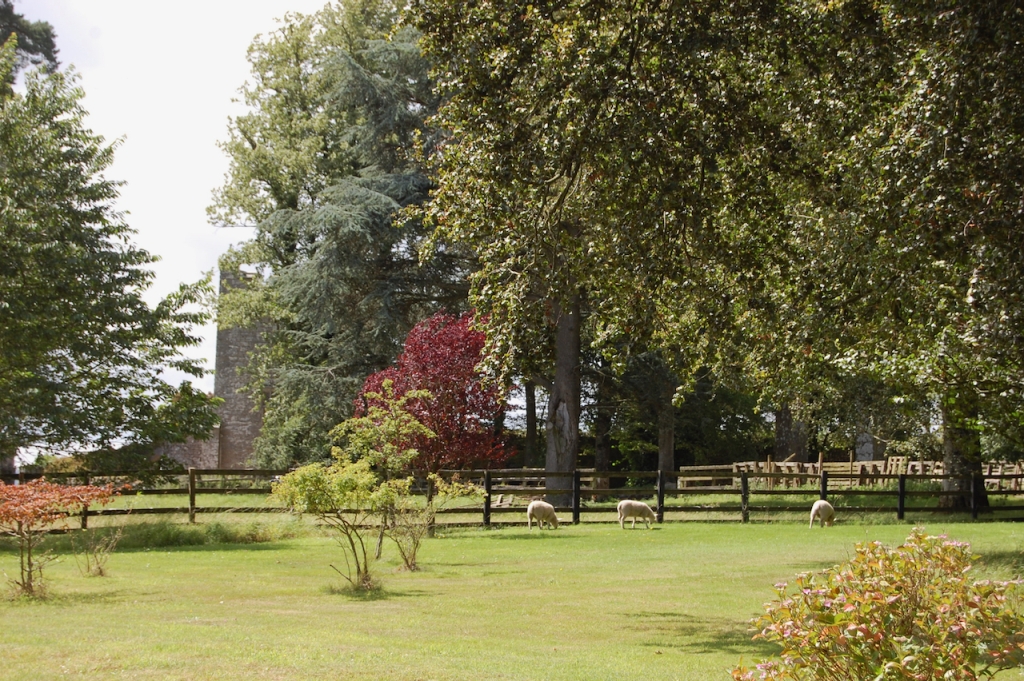

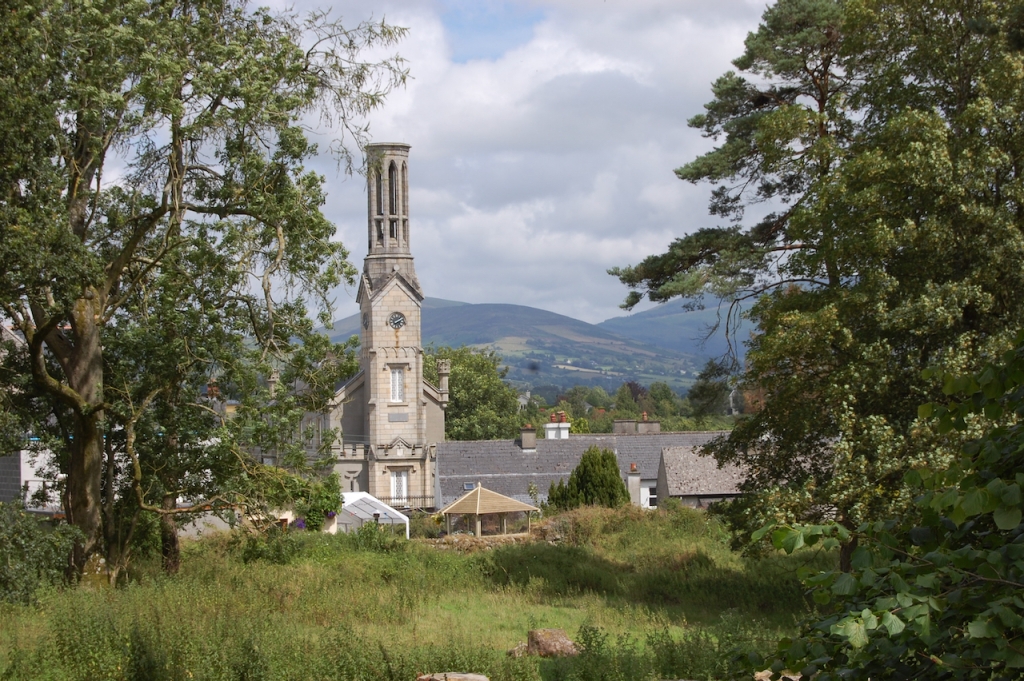


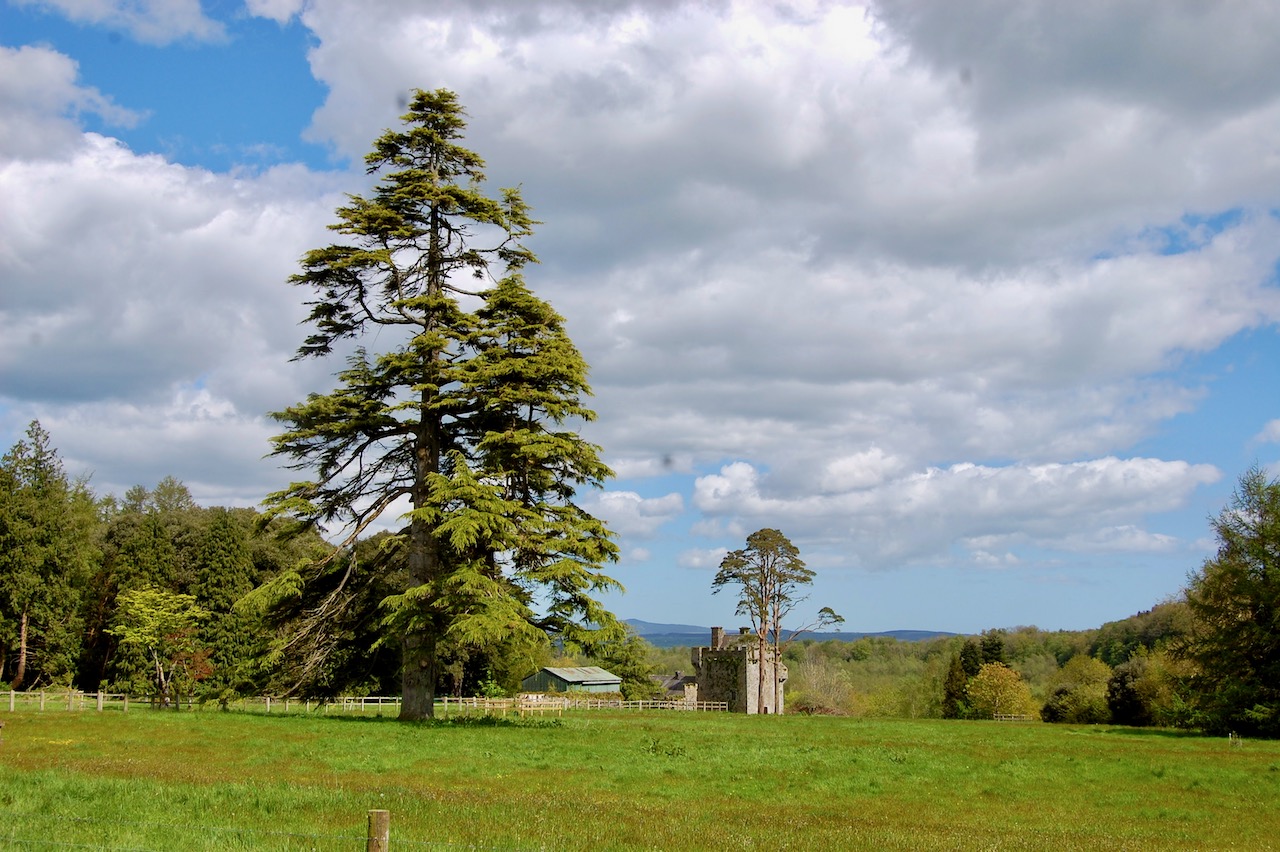

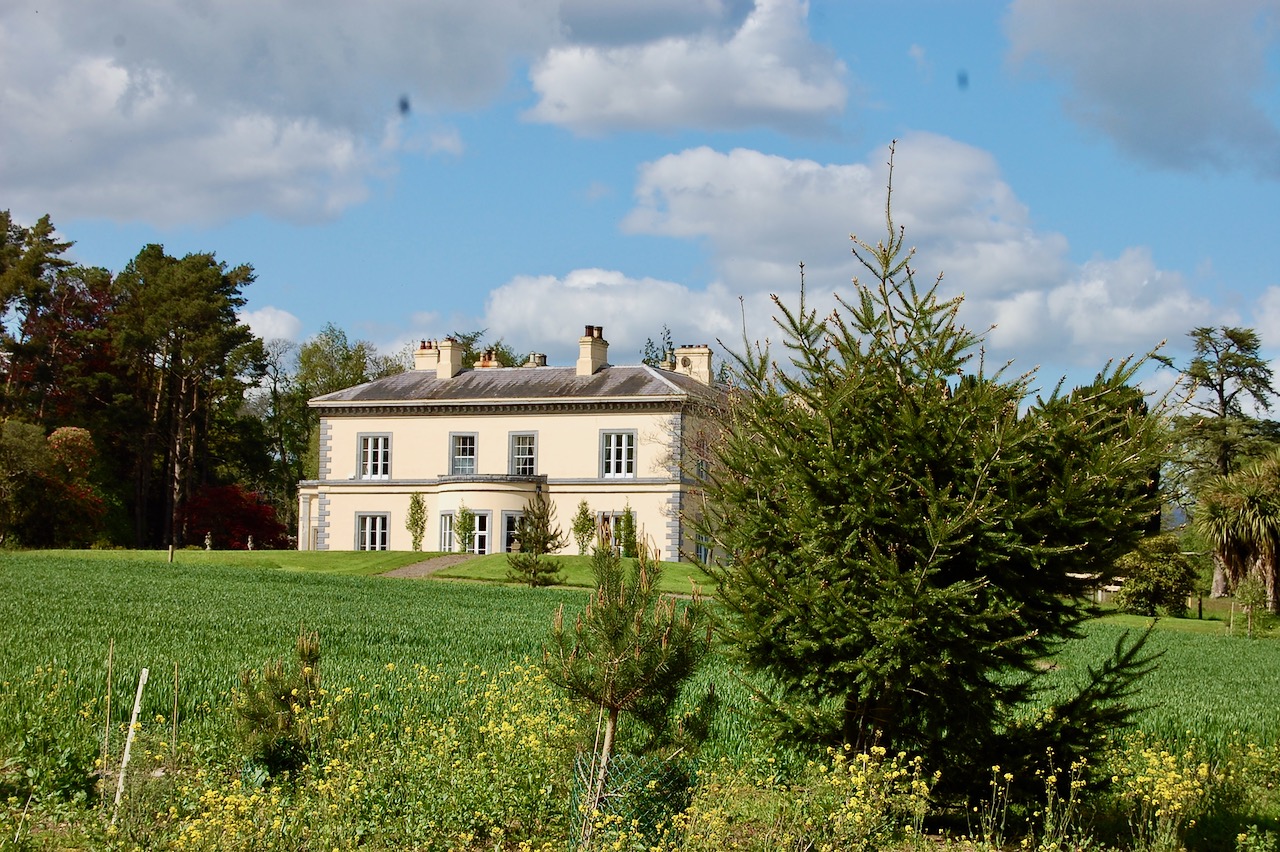
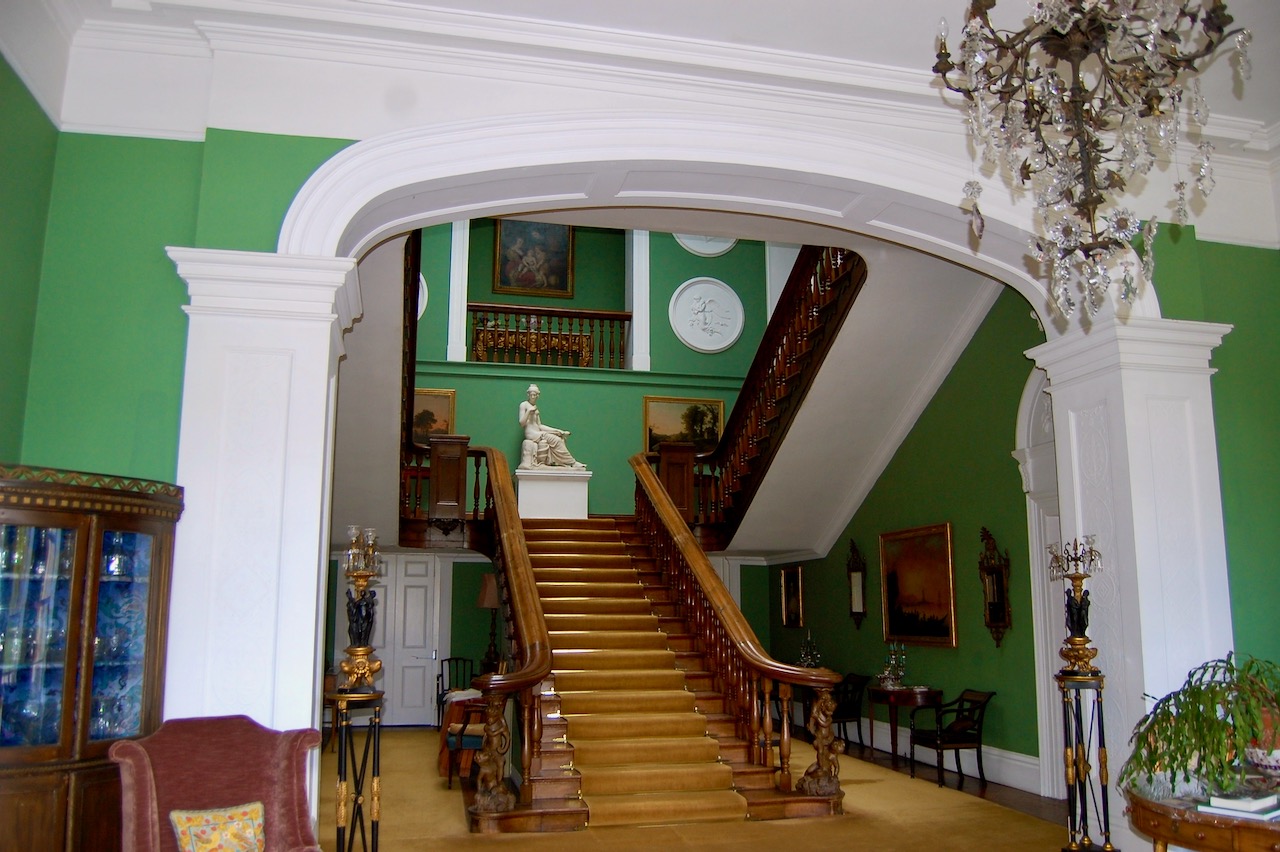




 Irish Historic Houses