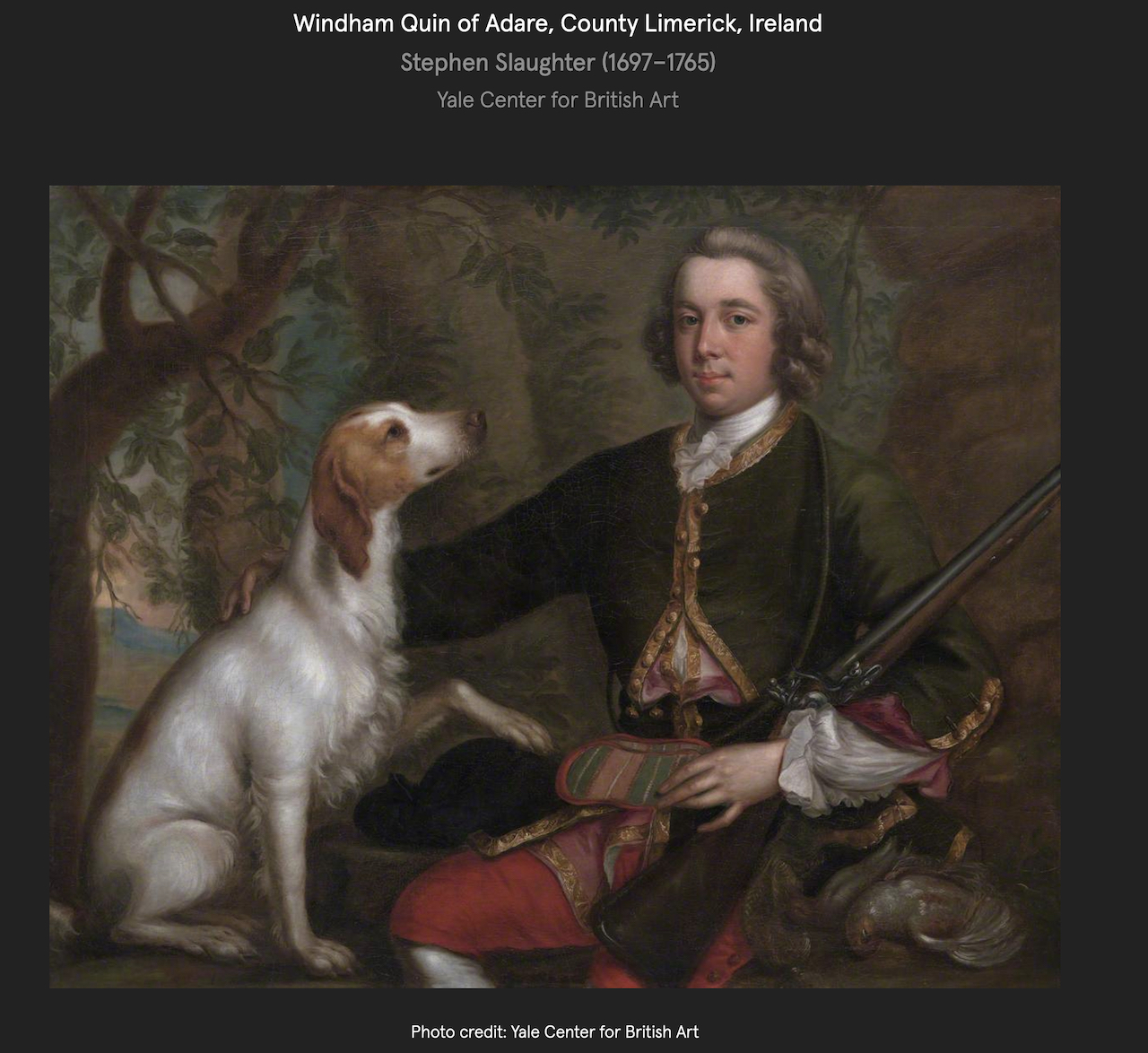
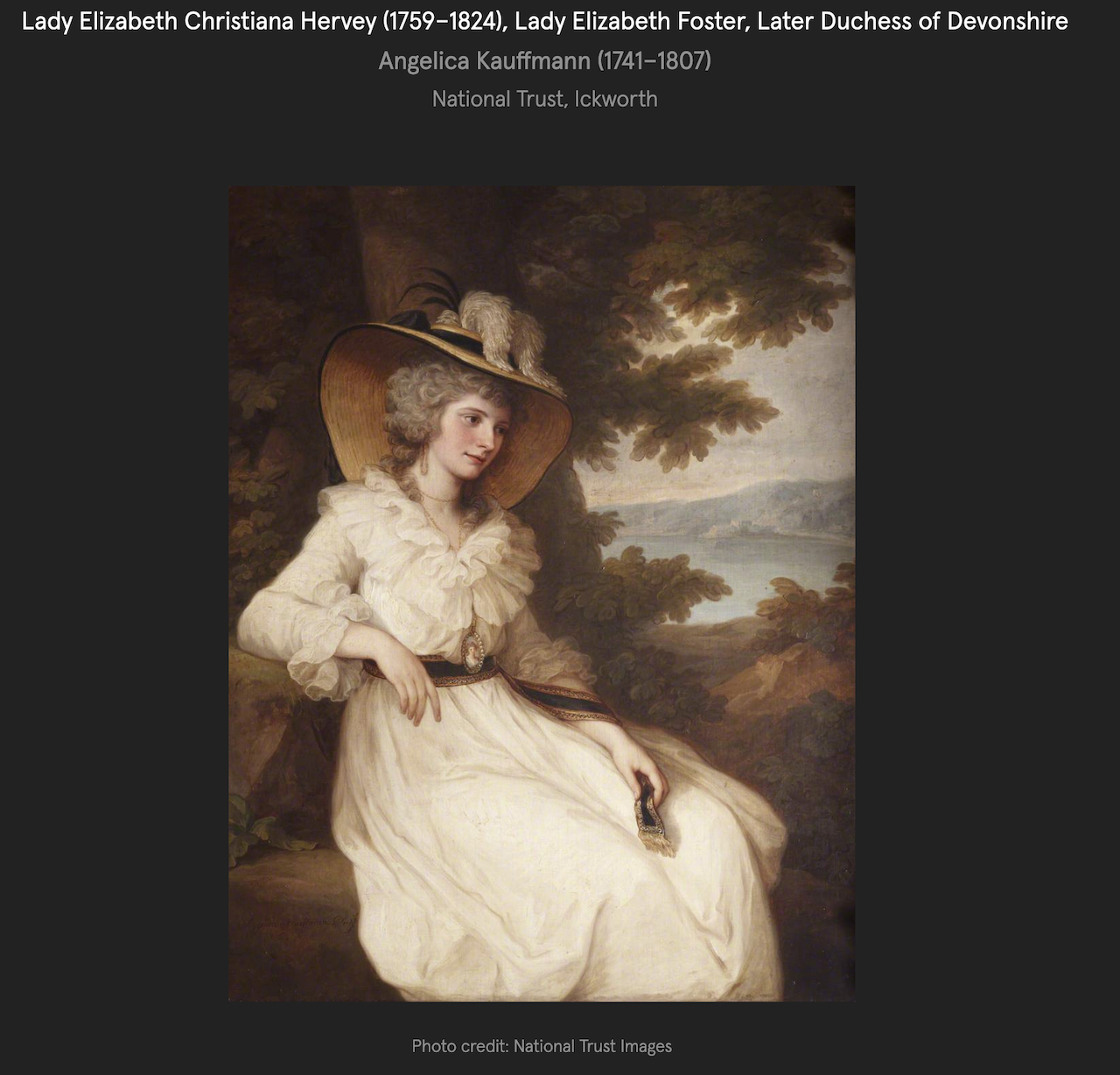
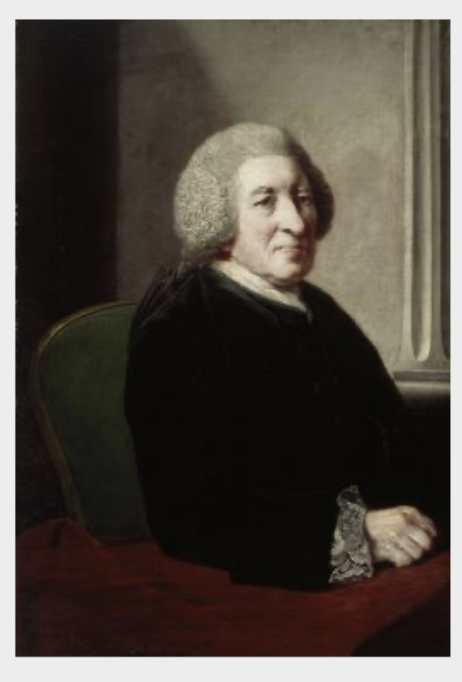
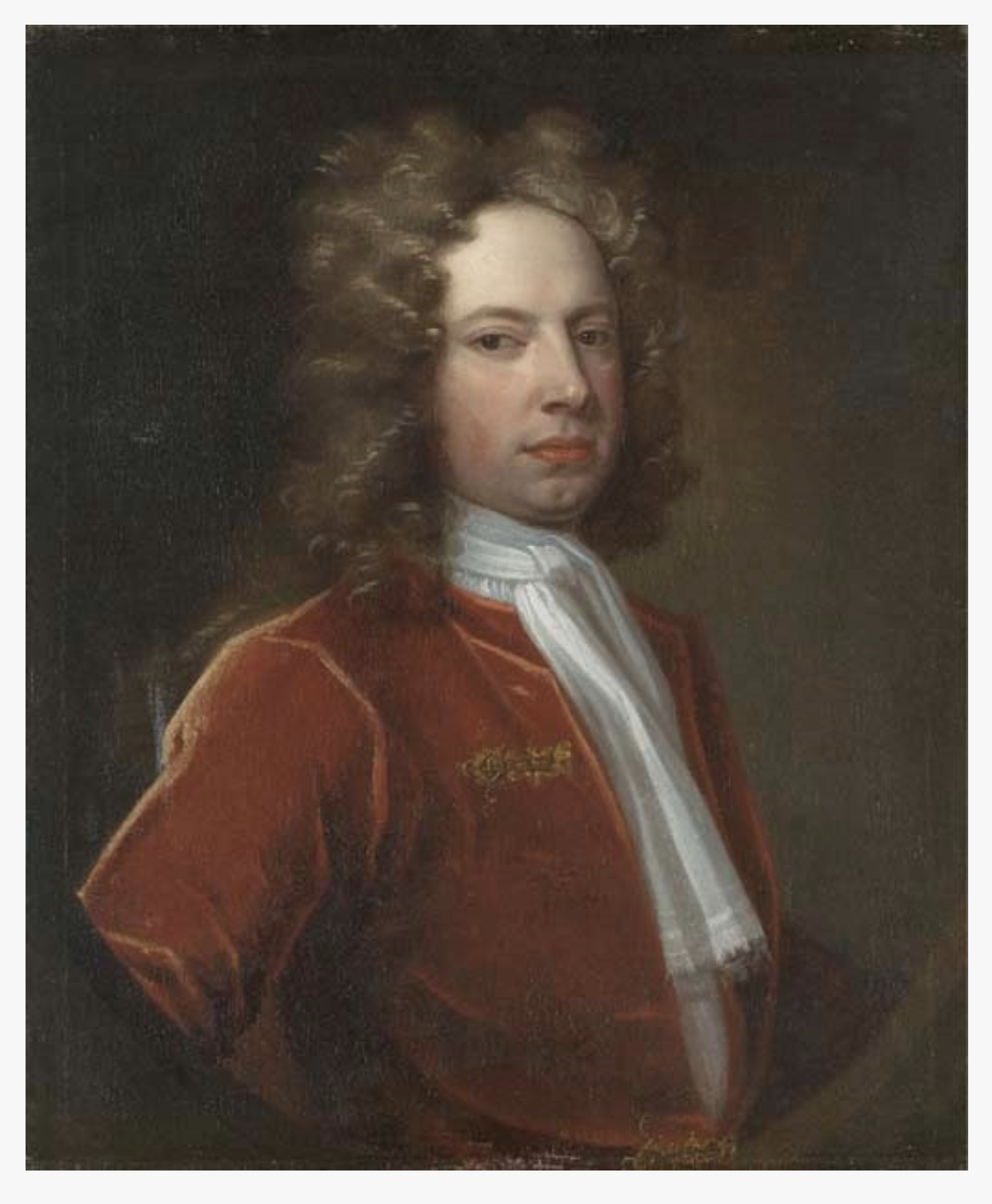
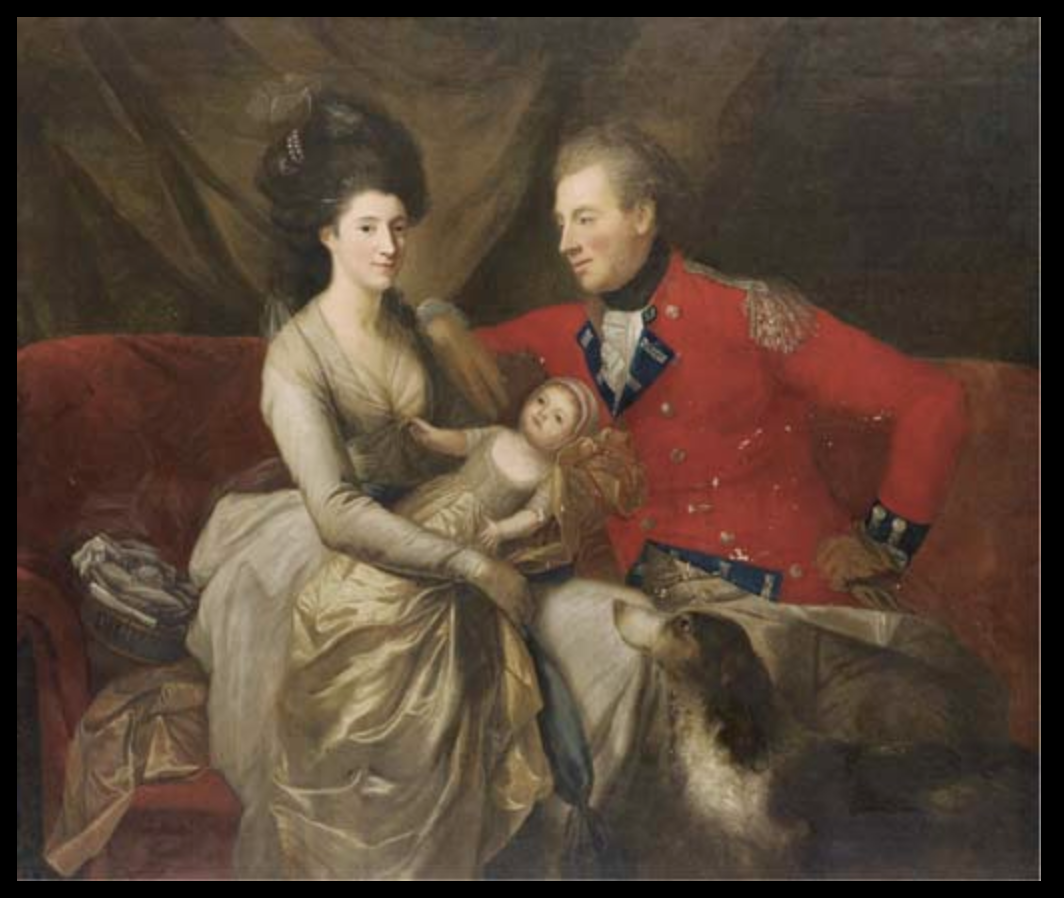
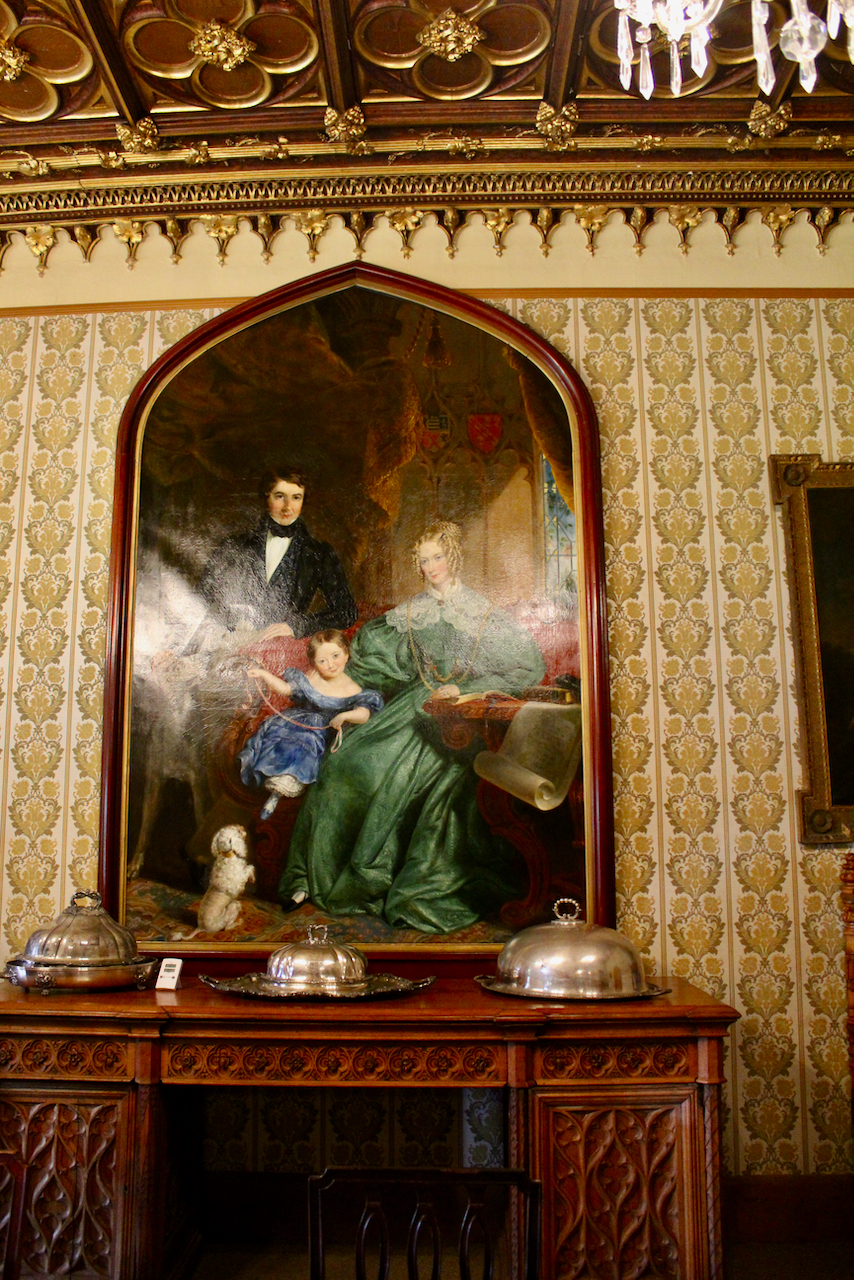
Windham Quin (1717-1789) of Adare, County Limerick by Stephen Slaughter, courtesy of Yale Center for British Art.Elizabeth Christina Foster née Hervey (1759-1824) later Duchess of Devonshire by Angelica Kauffmann courtesy of National Trust Ickworth. She was the daughter of Frederick Augustus Hervey 4th Earl of Bristol, Bishop of Derry who built Downhill, Co Derry. She married John Thomas Foster MP (1747-1796) and later, William Boyle Cavendish 5th Duke of Devonshire. Last, she married Valentine Richard Quin 1st Earl of Dunraven and Mount Earl.
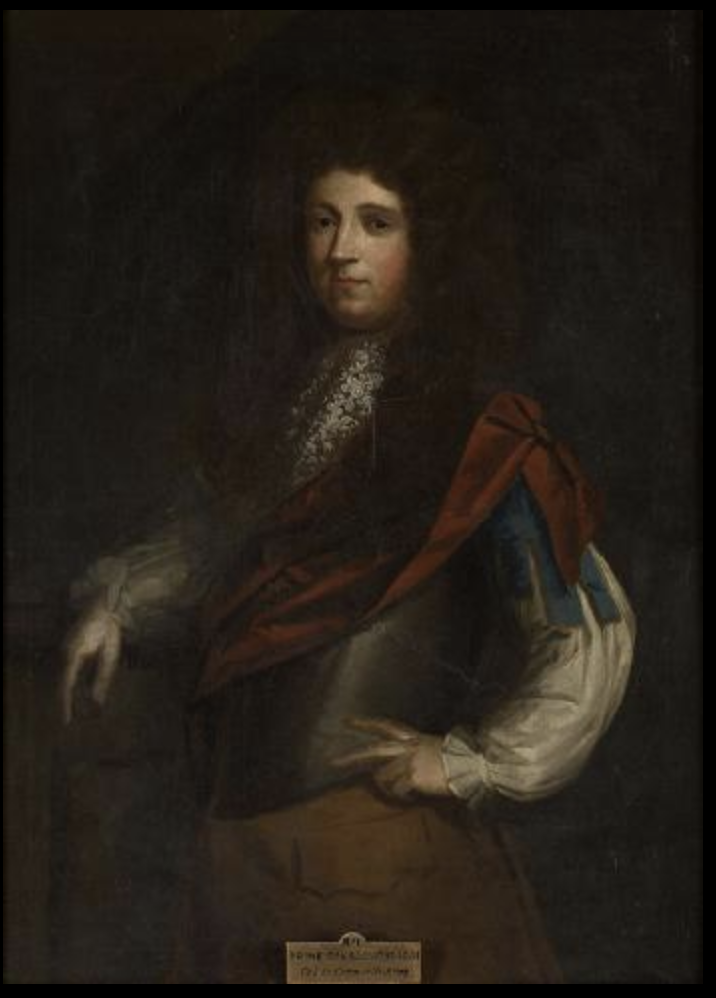
James Rochfort (“Prime Iron”) and Thomasine Pigott had several children including Charles who married Marbella, daughter of Theophilus Jones and Alice Ussher, and Robert (1652-1727), who became Speaker of the Irish House of Commons and Chief Baron of the Irish Exchequer. He married Hannah Hancock (d. 1733) of Twyford, County Westmeath.
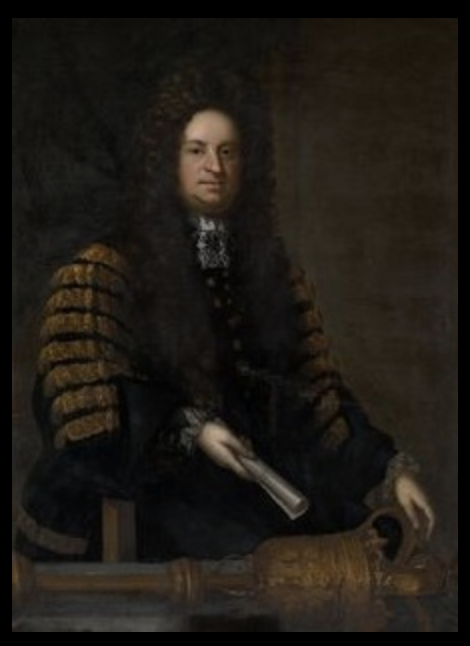
Robert Rochfort (1652-1727) as Speaker of the Irish House of Commons by an unknown artist, Photograph of a painting owned by Michael O’Reilly.
Robert Rochfort (1652-1727) and Hannah née Hancock had sons George Rochfort (1682-1730), later of Gaulstown, Co. Westmeath and John (1690-1771). George married Elizabeth, daughter of Henry Hamilton-Moore, 3rd Earl of Drogheda. John married, first, Deborah Staunton (d. 1737) then Emilia (d. 1770), daughter of John Eyre (1659-1709) of Eyre Court.
George Rochfort (1682-1730), of Gaulstown, Co. Westmeath, M.P. for Co. Westmeath by Charles Jervas courtesy of Christies Auction 2002
George and Elizabeth née Moore had lots of children. The heir was Robert (1708-1774) who was later created 1st Earl of Belvedere.
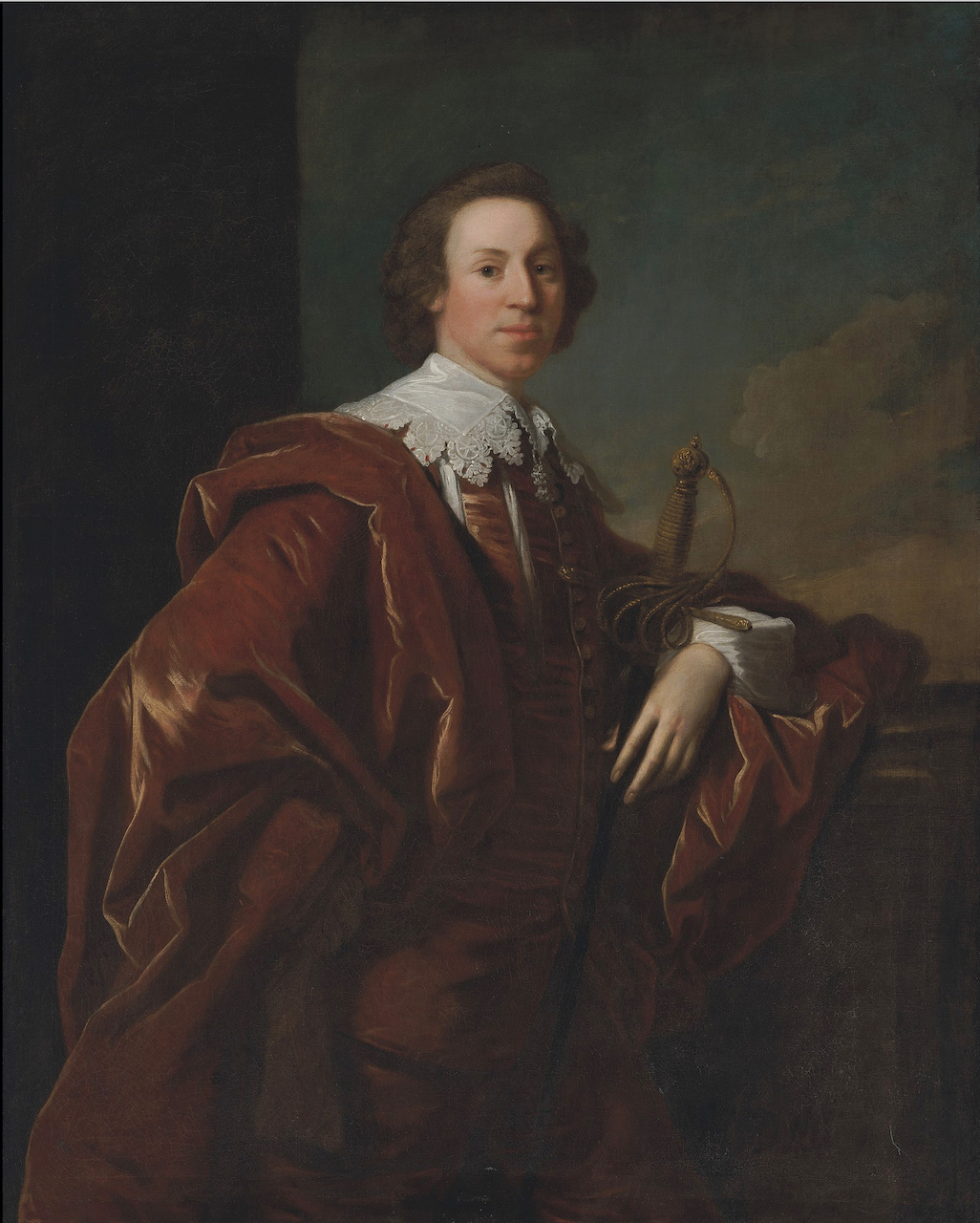
Robert Rochfort, 1st Earl of Belvedere (1708-1774), three-quarter-length, in van Dyck costume, by Robert Hunter It is possible that the present portrait was executed posthumously.
Other children included Mary (1705-1729) who married Henry Tuite, 6th Baronet. Alice (1710-1738) married Thomas Loftus (1701-1768). Thomasine, born 1716, married Gustavus Lambart of Beauparc, County Meath (a section 482 property, see my entry). Anne married Henry Lyons, High Sheriff for King’s County. William (1719-1772) married Henrietta Ramsay. Arthur married Sarah Singleton and became MP for County Westmeath. George (1713-1794) married Alice, daughter of Gustavus Hume, 3rd Baronet.
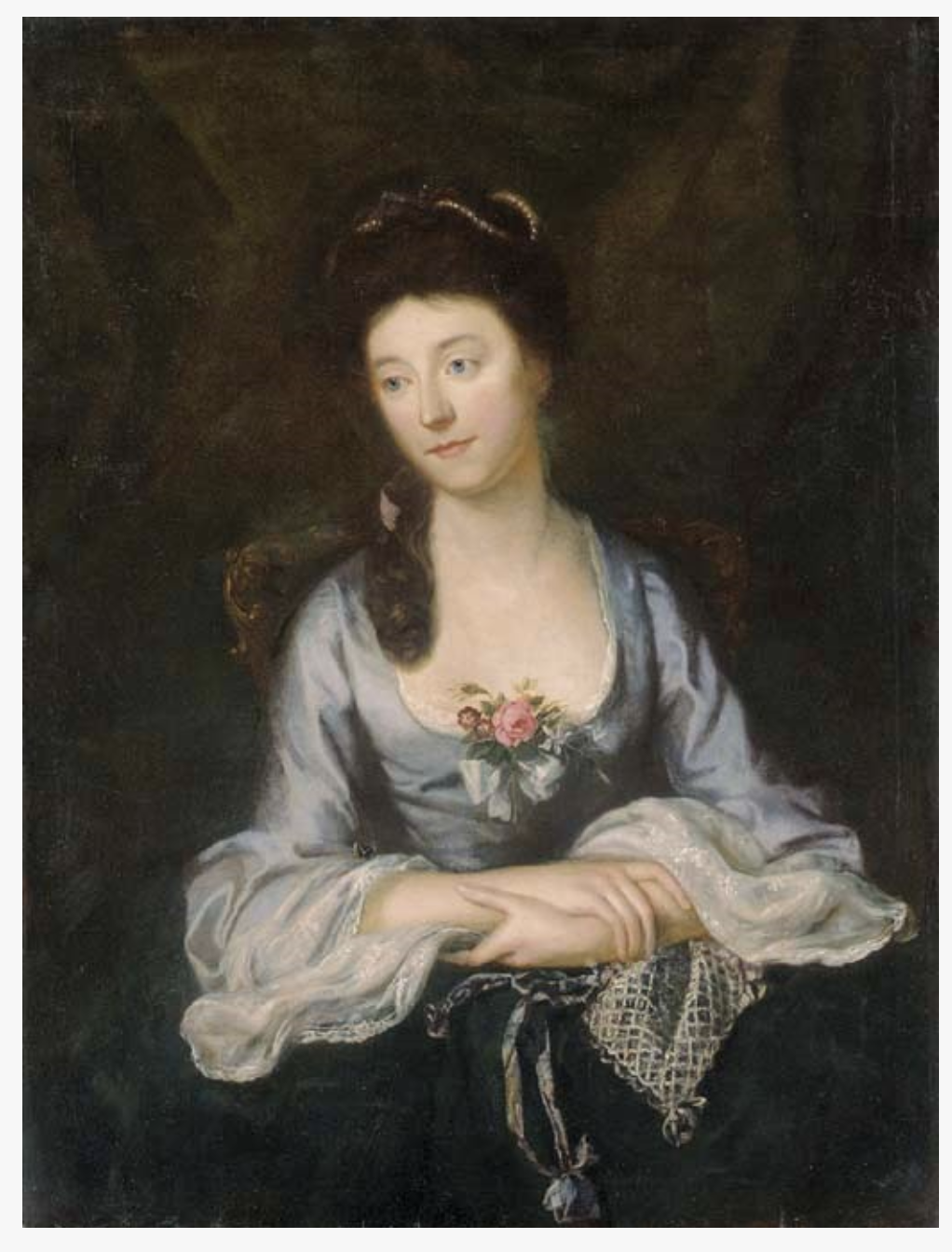
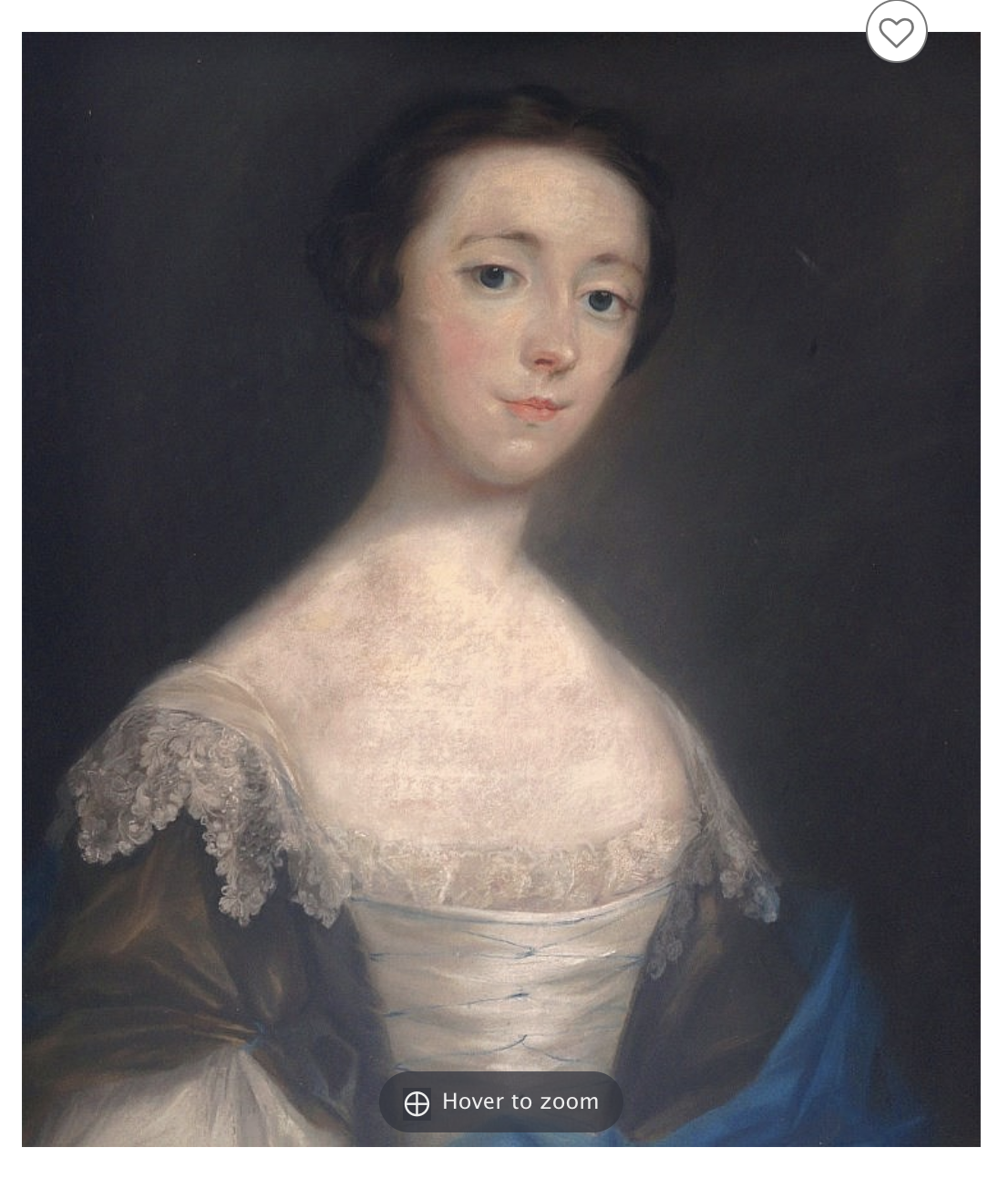
Jane Butler née Rochfort Countess of Lanesborough (1737-1828) Attributed to Thomas Pope Stevens courtesy Christies Irish Sale 2002. She was the daughter of Robert Rochfort, 1st Earl of Belvedere and married Brinsley Butler, 2nd Earl of Lanesborough.Sarah Rochfort (nee Singleton) was the daughter of The Rev. Rowland Singleton (1696-1741) of Drogheda, later Vicar of Termonfeckin, County Louth, wife of Arthur Rochfort (1711-1774) of Bellfield House Co Westmeath, sold at Shepphards.
The first Earl of Belvedere is infamous for locking up his wife, Mary Molesworth, daughter of the 3rd Viscount of Swords (see my entry about Belvedere, County Westmeath). Their daughter Jane (d. 1828) married Brinsley Butler, 2nd Earl of Lanesborough. Robert 1st Earl’s son George (1738-1813) succeeded as 2nd Earl of Belvedere.
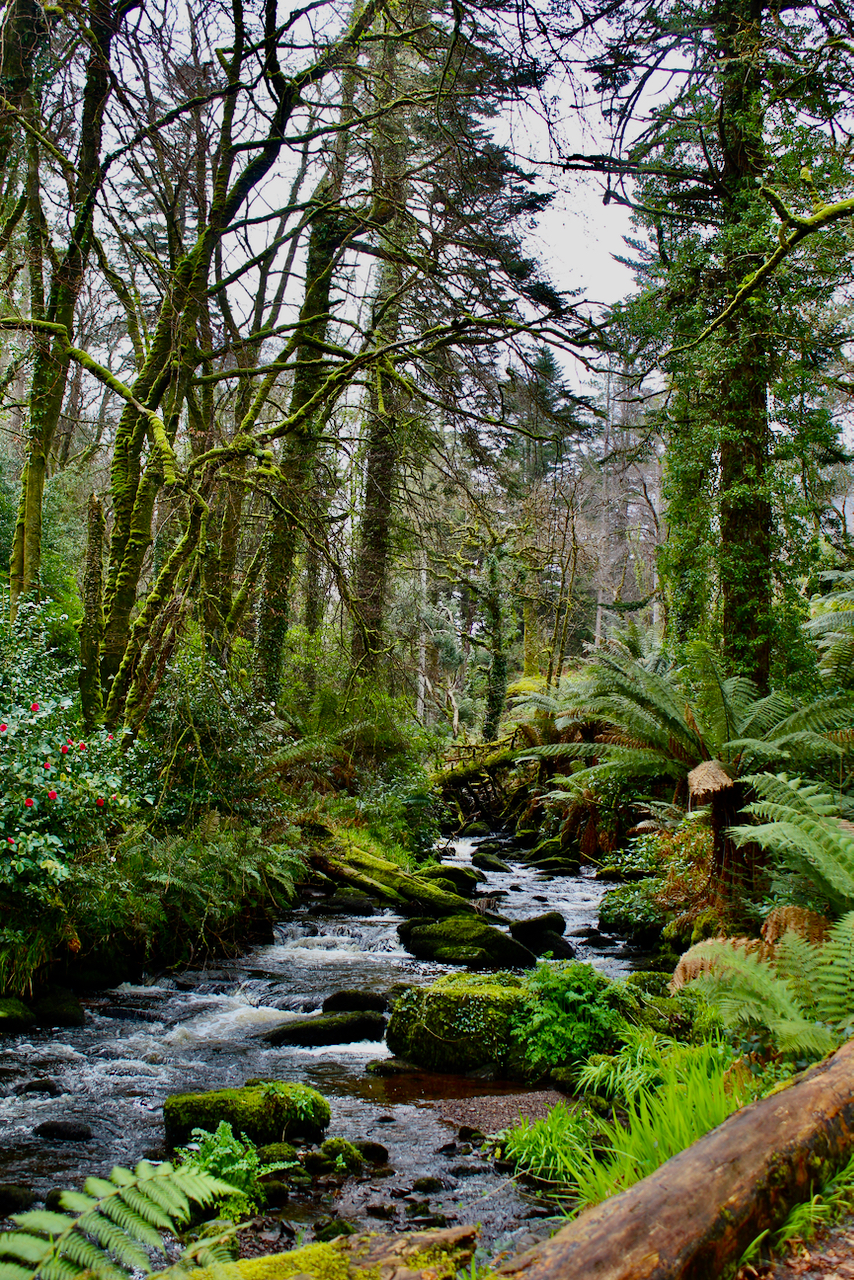
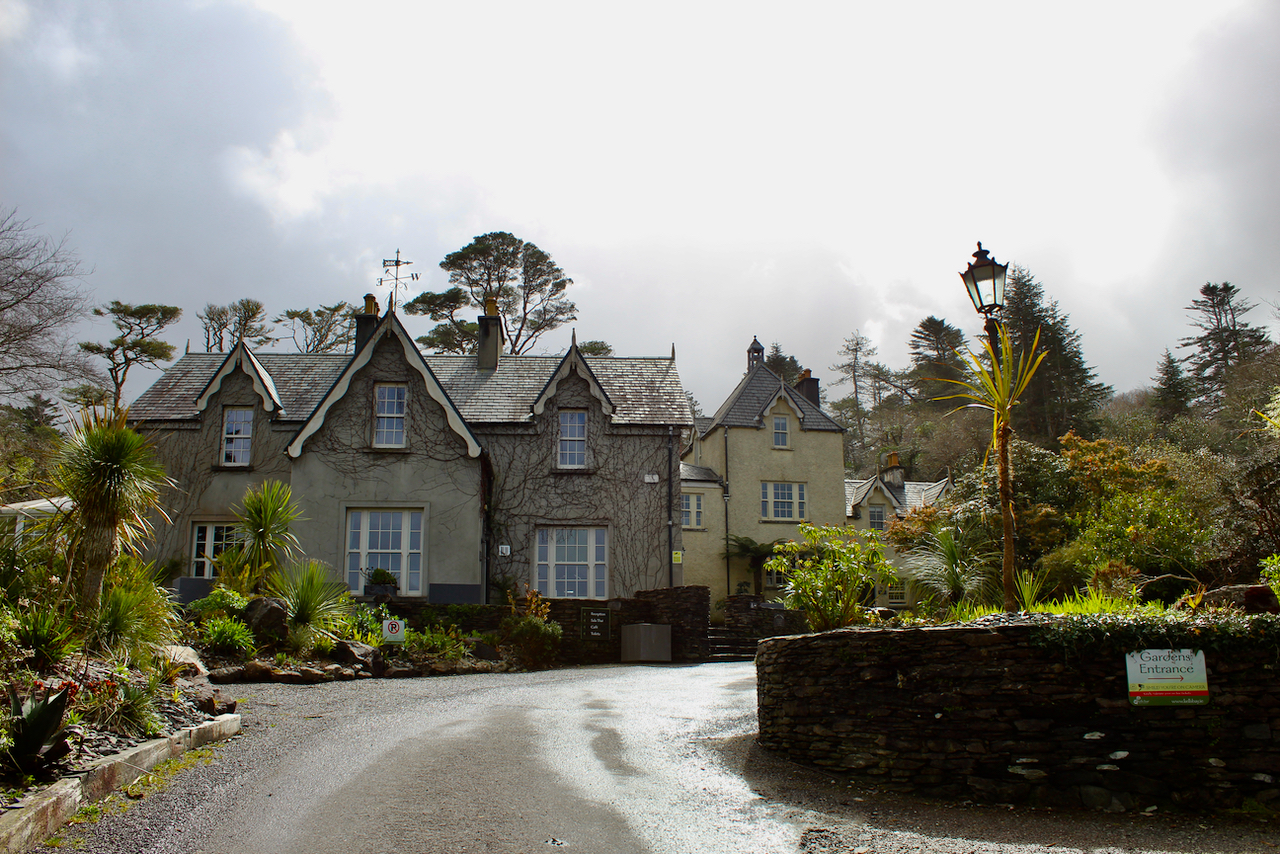
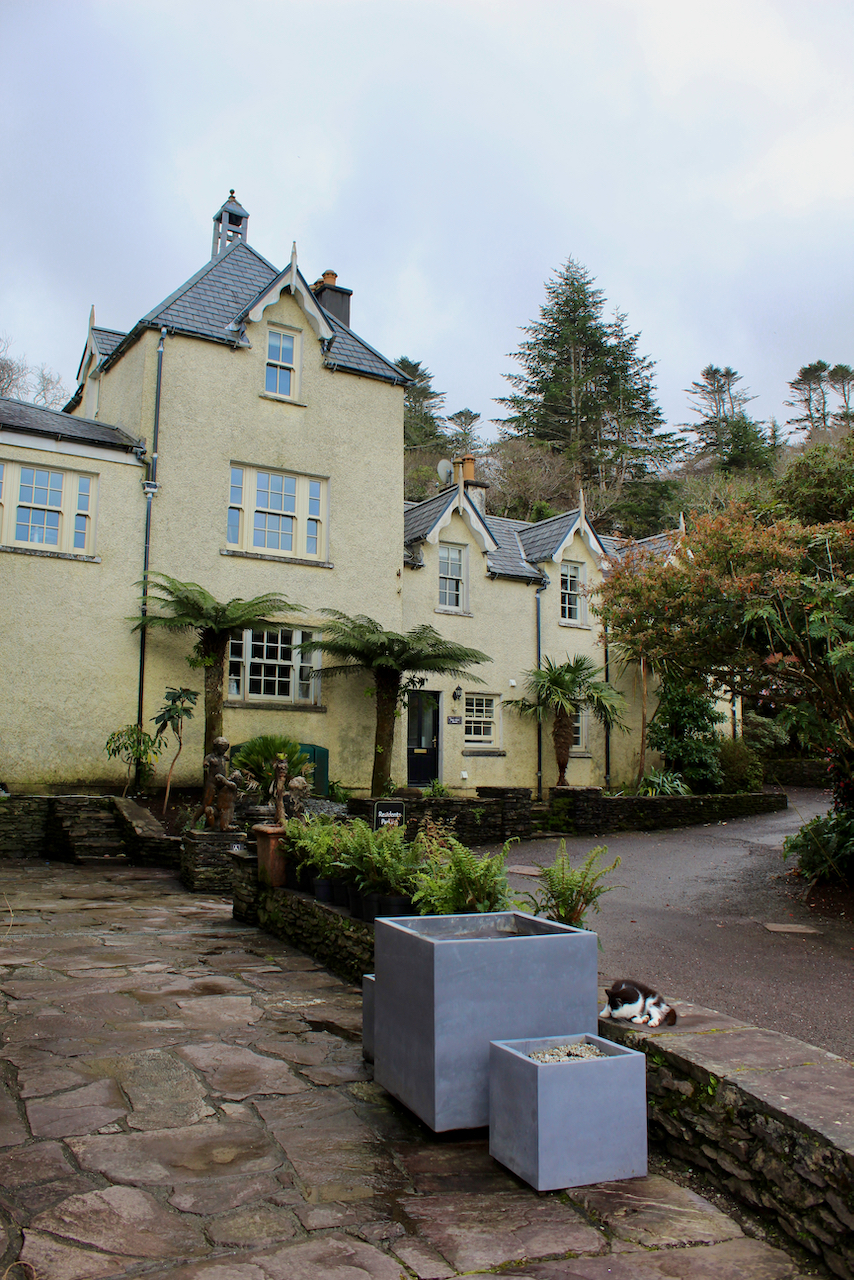
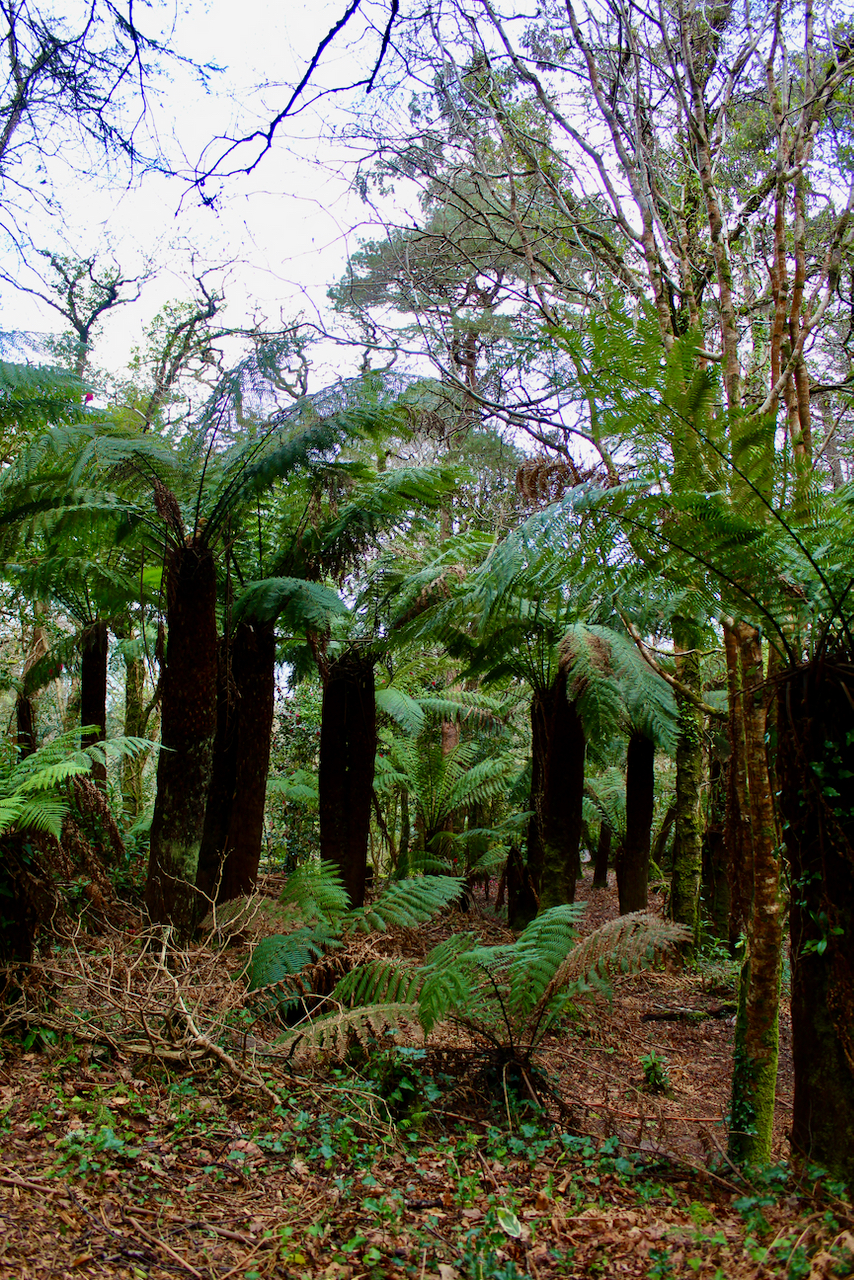
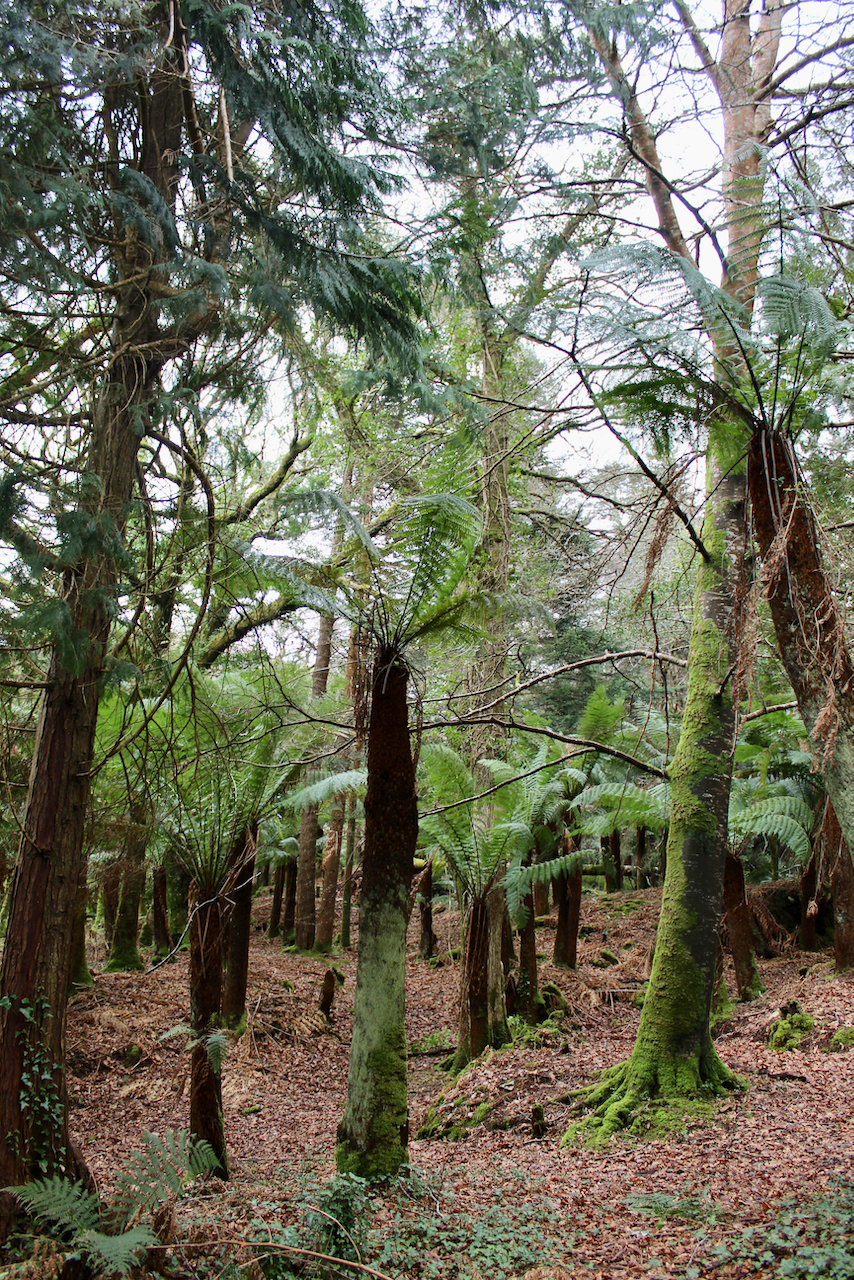
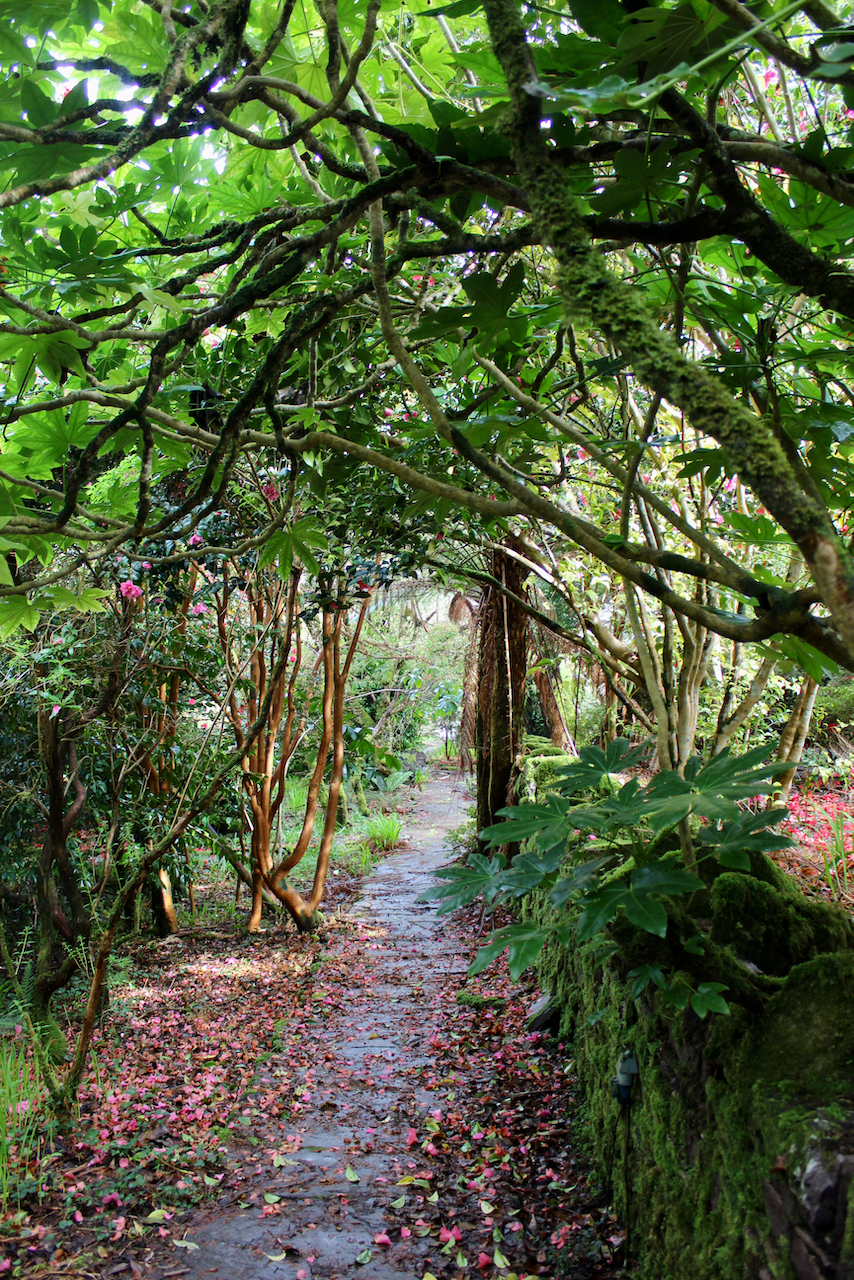
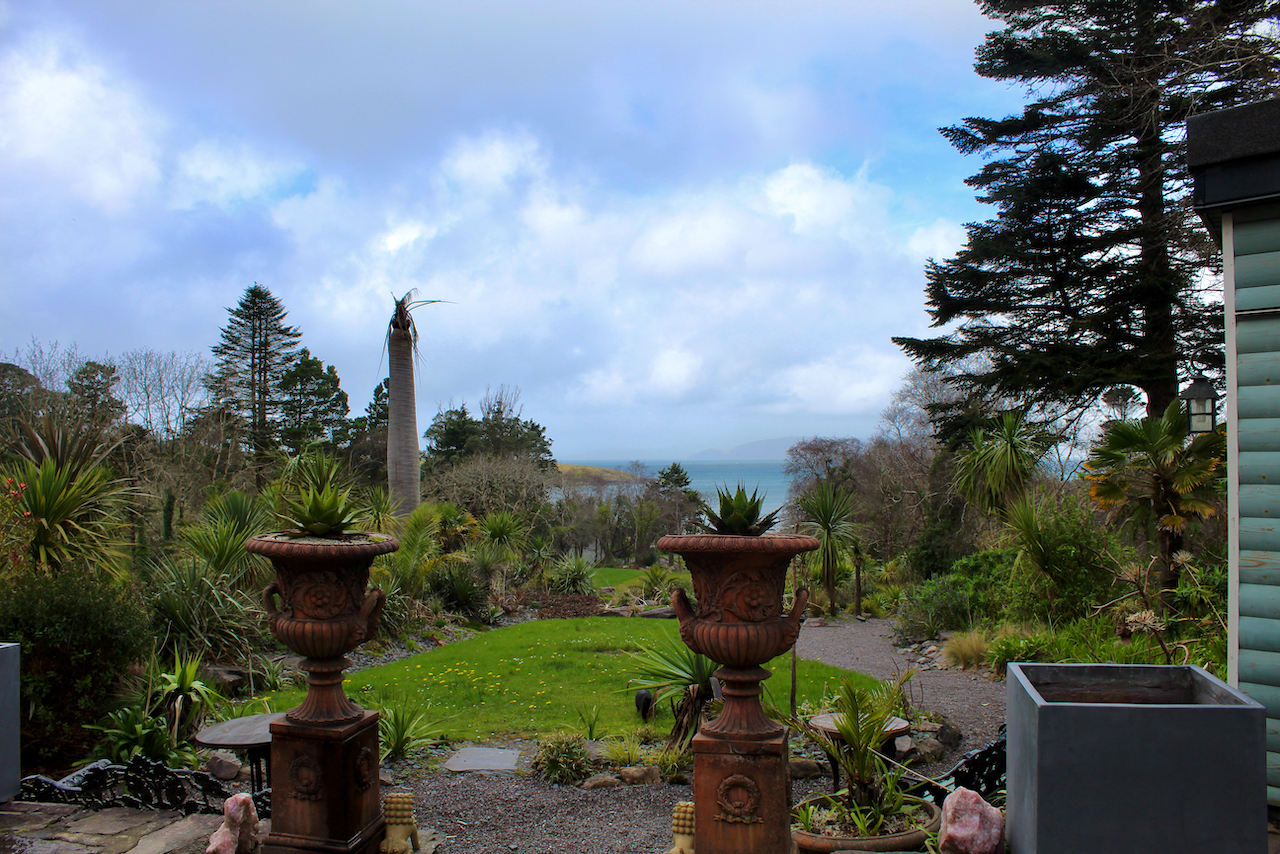
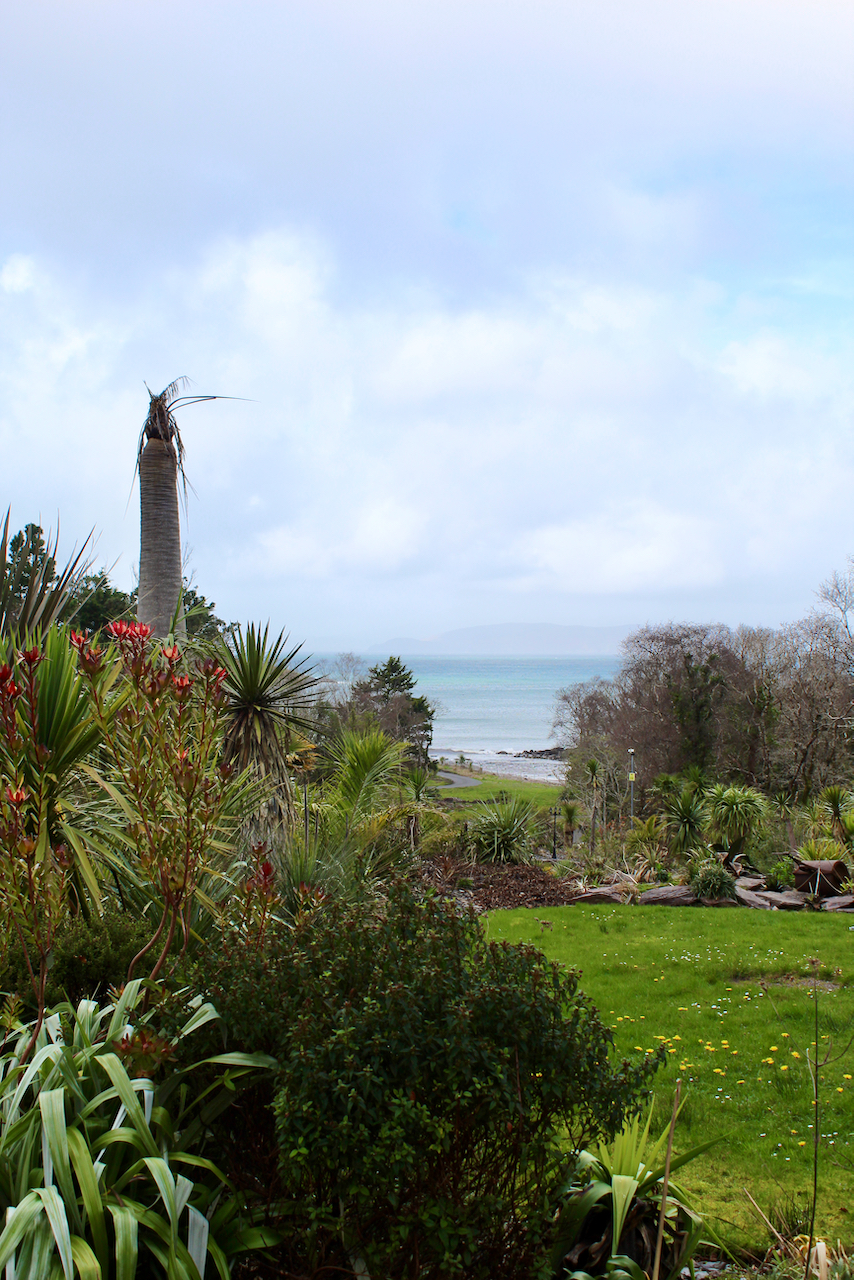
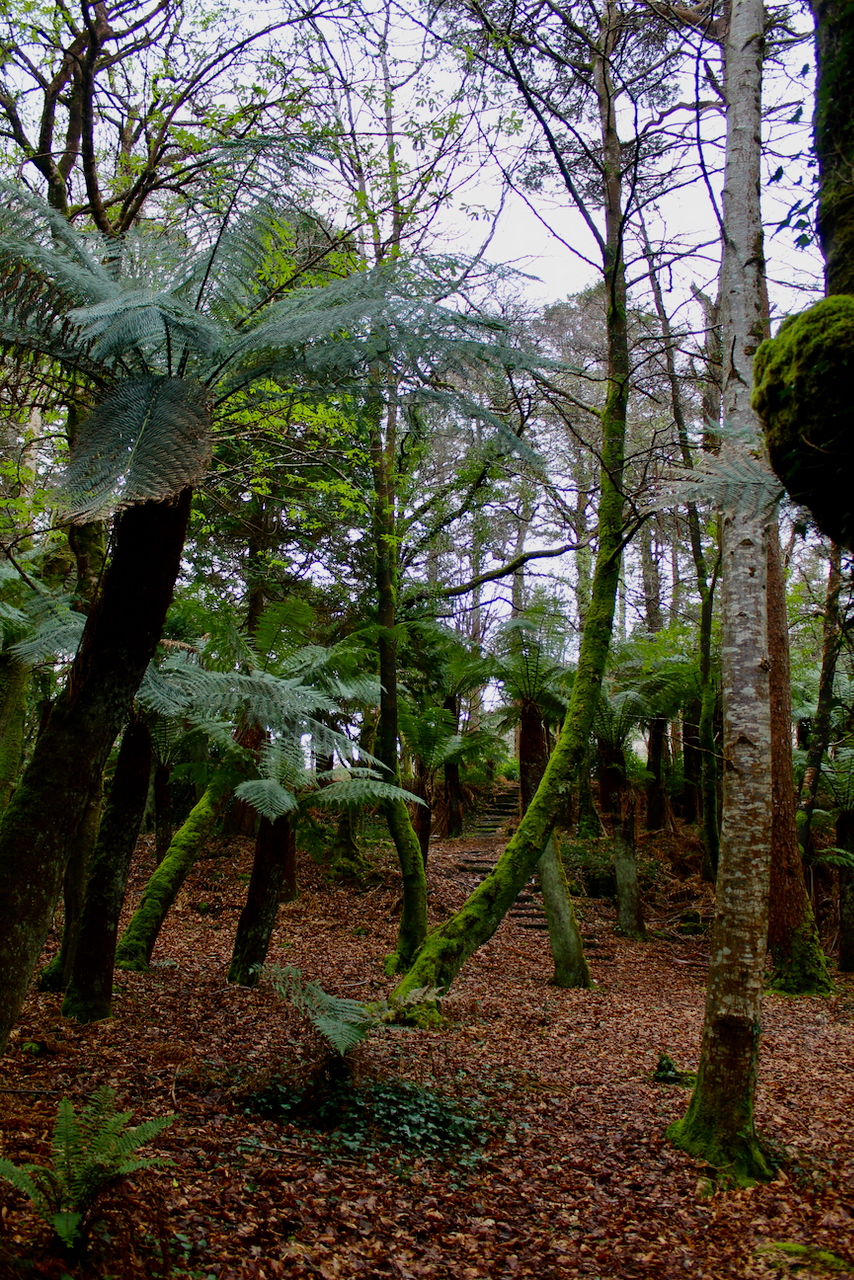
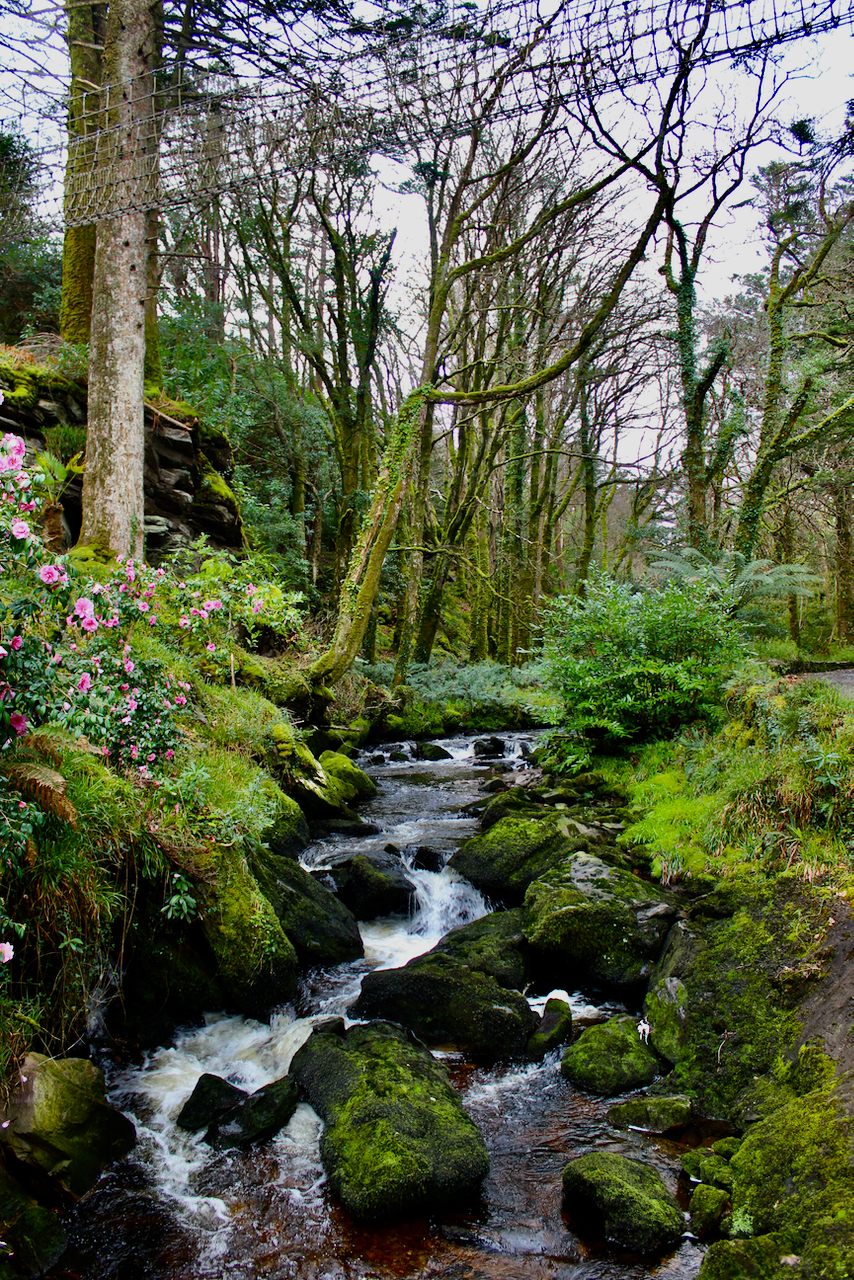
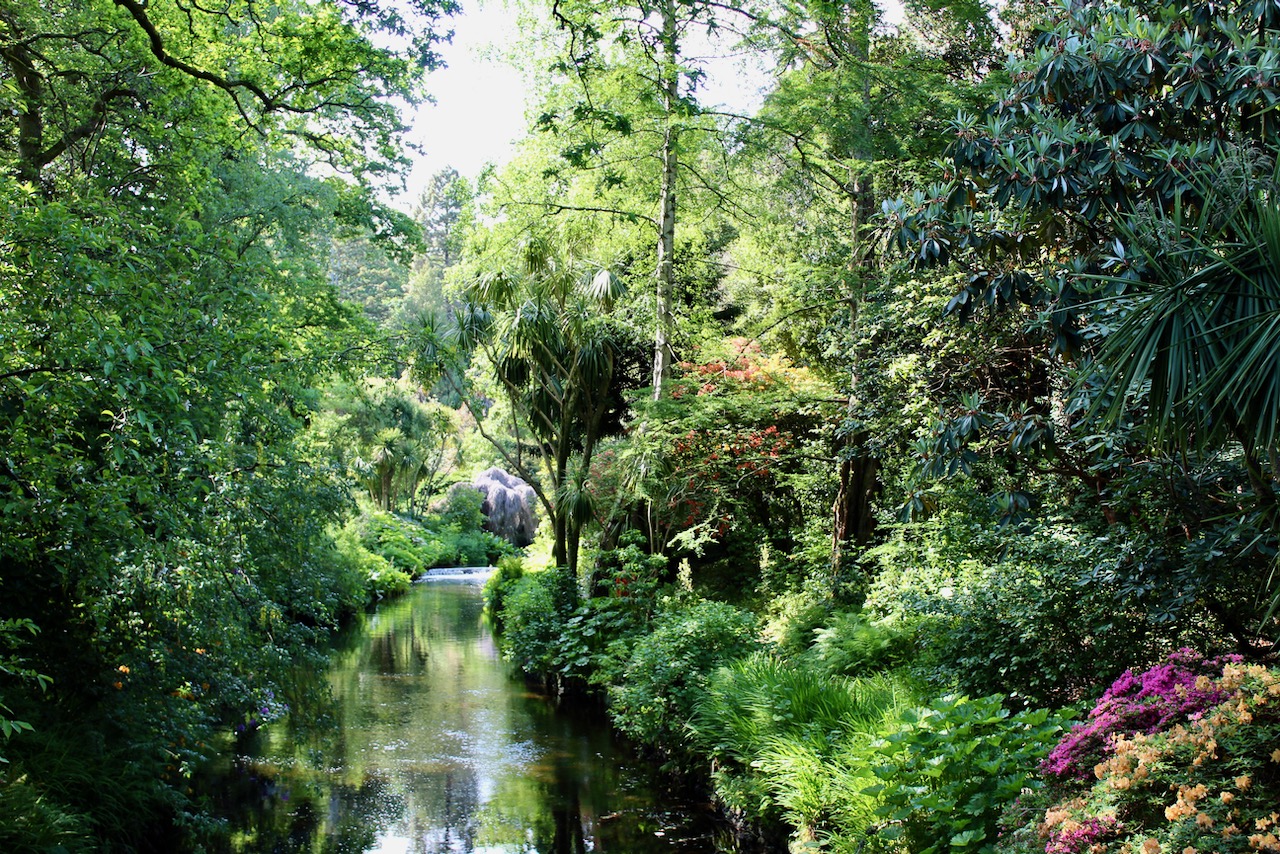
We visited Kells Bay Garden when we were in Kerry in March 2023. Like Derreen Garden, it has an abundance of tree-ferns, and avails of the microclimate created by the Gulf Stream.
You can stay at Kells Bay also, see the website. We just visited the gardens.
The website has a history of the property, written by Helen Haugh. The property was owned by the Blennerhassett family for four generations, whom we came across while staying in Ballyseede Castle (see my entry). The website tells us that in 1584 Ballyseede Castle and 3000 acres of confiscated land at Tralee were granted on perpetual lease to Robert Blennerhassett (1564-1654) and that the token rent for the estate was set at one red rose to be presented each year on Midsummer’s day.
Before the Blennerhassetts, the land was owned by William Petty (1737-1805) 1st Marquess of Lansdowne. He invested in planting forests and building roads in the area. Between 1805 and 1816 Lord Lansdowne planted more than one and half million trees. The trees were predominantly ash, elm, larch, beech and chestnut (Everett, 2001).
In 1819 Rowland Blennerhassett (1780-1854) is recorded as owning land at Cappamore on the Ivergah peninsula, purchased from the Marquess of Lansdowne, on which he built a ‘small hunting lodge.’ (Tithe Applotment Books, 1828). The plot at Cappamore is identified as Hollymount Cottage, probably named after indigenous holly trees near the house.
Rowland Blennerhassett was a descendant of Robert (1564-1654) of Ballycarty Castle and Ballyseede. Robert’s son who was also named Robert (d. 1702) married Avice Conway from Castle Conway, County Kerry. Generations of later Blennerhassetts lived in Castle Conway.
Robert and Avice’s son Henry (1663-abt. 1730) lived at Castle Conway. His son Robert married Frances Yeilding, daughter of Richard of Belview, County Limerick, and Rowland was their son. In 1809 Rowland was created 1st Baronet of Blennerville, County Kerry. He married a cousin, Millicent Agnes Yeilding.
Oral history interviews relate how the Blennerhassetts provided soup to tenants throughout the famine. The large famine bowl on the terrace in front of the house corroborates this story.
The website tells us that Richard Francis Blennerhassett (1819–1883) lived at Hollymount Cottage in Kells Bay. He was the grandson of Rowland, 1st Baronet, son of Rowland’s son, another Rowland (1780-1854). This Rowland married Letitia Hurly of County Kerry.
Richard Francis married Honoria Ponsonby in 1849, daughter of William Carrique Ponsonby of Crotto. Richard and Honoria occupied Hollymount Cottage and they had one son, Rowland Ponsonby Blennerhassett (1850-1913).
A Victorian craze for ferns from 1830, reaching its peak between 1850 and 1890 (Whittingham, 2012), influenced the garden at Kells. Collecting ferns at home and abroad was a hugely popular pursuit and it is likely that the tree fern Dicksonia antarctica was introduced to Kells Garden at the turn of the century. The tree fern colony is now well established, naturalised and self-seeding. The website tells us that Tree ferns were originally attributed to the French plant hunter de Labillardière (1755–1834) and then renamed in honour of James Dickson (1738-1822) a prominent Scottish nurseryman.
The Wild Garden by Irishman William Robinson, 1870, challenged the prevailing Victorian preference for formal landscaping and expansive carpet bedding by advocating for natural gardens in which hardy perennials and self-seeding annual plants would provide a sustainable and self-perpetuating display of plants and flowers.
Helen Haugh tells us that the county of Kerry accommodates several estates with notable gardens, which provide a backdrop to the establishment of Kells Bay and the prominence of naturalised trees from the southern hemisphere.
Glanleam lies 10 miles to the west of Kells Bay and is a large coastal estate established by Peter Fitzgerald (1808-1880) 19th Knight of Kerry. Glanleam is reported to be Ireland’s first subtropical garden and private letters kept at the estate document plant exchanges between Glanleam and other garden owners. The estate also hosts a large area of naturalised tree ferns.
On the southern peninsula of Iveragh, the Rossdohan estate was established by Samuel Heard (1835-1921). In 1862 Heard married the daughter of William Bradley from New South Wales and when he established the garden at Rossdohan he became famous for importing Australasian trees and shrubs, Helen Haugh tells us, and was visited by William Robinson.
The Garinish estate was established by Windham Thomas Wyndham-Quin (1841-1926) 4th Earl of Dunraven and was another subtropical garden, also visited by William Robinson. It hosts a long avenue of Dicksonia antarctica that were acquired from Rossdohan in 1923. Finally, there’s also Derreen Gardens, see my entry.
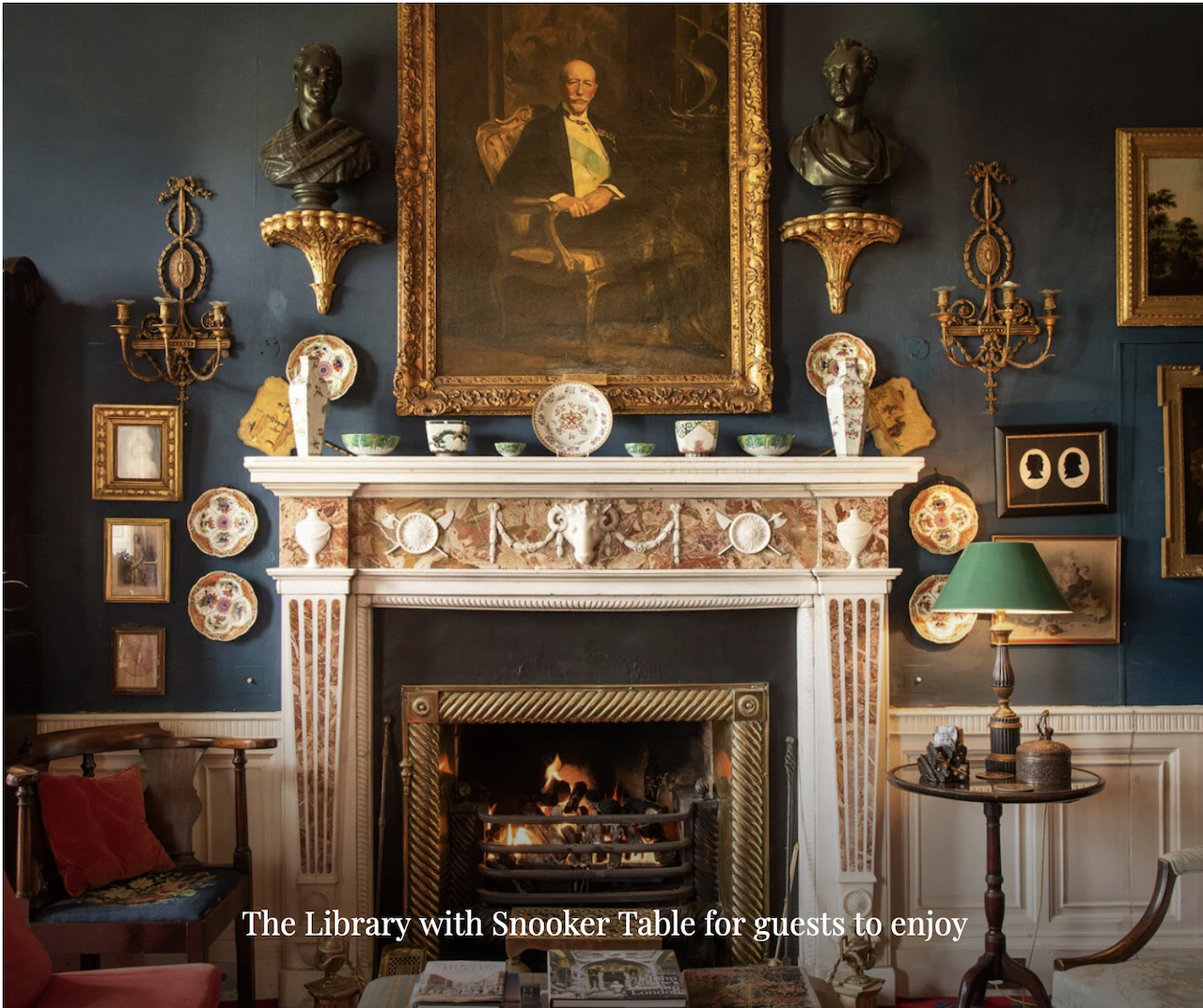
Photograph courtesy of Glin castle website: A portrait of Windham Thomas Wyndham-Quin the 4th Earl of Dunraven hangs above the marble mantelpiece in the library. His daughter Rachel Charlotte married the 27th Knight of Glin.
The website tells us that oral history interviews refer to how the exposed coastal location necessitated planting of a shelter belt prior to creating the garden. The shelter belt trees, Abies grandis, date from about 1870. The map from 1895 indicates Hollymount Cottage, woodland planting, and pathways through the garden. In addition to owning Hollymount Cottage estate, Richard Blennerhassett is recorded as landlord for a large number of plots, houses and farms in the area.
Young Rowland was only four years old when his father died in 1854. Rowland married Mary Beatrice Armstrong, daughter of Walter of London, in 1876. He was M.P. for Kerry between 1872 and 1885, and a Justice of the Peace.
The website tells us that Rowland extended the original Hollymount Cottage and renamed it Kells. He and his wife also kept a house at Hans Place, Chelsea, near to the Chelsea Physic Garden. Rowland Ponsonby Blennerhassett is responsible for making additions to the garden which still stand today. He established the Ladies Walled Garden adjacent to the front of the house for his wife Lady Mary and planted the Primeval Forest (O Cuirc, 2014), a collection of tree-ferns brought from Australia. He laid out the pathways through the gardens (O’Brien, 2014). The map from 1897 shows the cottage and layout of the estate, and photographs from the turn of the century capture the garden and tree ferns.
Rowland and Mary Beatrice had a son, Richard Francis Ponsonby Blennerhassett (1879-1938). He married Sylvia Myers and had a daughter Diana Mary, who married Richard John Moreton Goold-Adams. During this time, Haugh tells us, the Bowler family lived at Kells House as gardener, caretaker and labourers. The estate traded as Kerry Estates and sold fruit, vegetables, and dairy produce to local hotels and retailers. The estate also had a saw mill for processing wood from Kells and neighbouring estates.
The estate was sold to Roland and Nora Preece in 1953, then to Iain McCowan in 1973, then to Friedrich and Marianne Vogel from Germany in 1979. Haugh tells us that the Vogels already owned a house nearby and knew the area. The family purchased Kells and established a nursery trading as Kells Garden Centre Ltd which was managed by Mary O’Sullivan. The estate was maintained privately until family circumstances and the early death of their son Friedhelm led to the disposal of the estate. The head gardener was John Bowler and his son, Michael Bowler, succeeded him. In 2006 the estate was purchased by William Alexander, a fern enthusiast.
Just to finish up my entries about Office of Public Works properties: Carlow, Dublin, Kildare, Kilkenny, Laois, Longford, Louth, Meath, Offaly, Westmeath, Wexford and Wicklow are the counties that make up the Leinster region.
Carlow:
1. Altamont Gardens
Kildare:
2. Castletown House, County Kildare
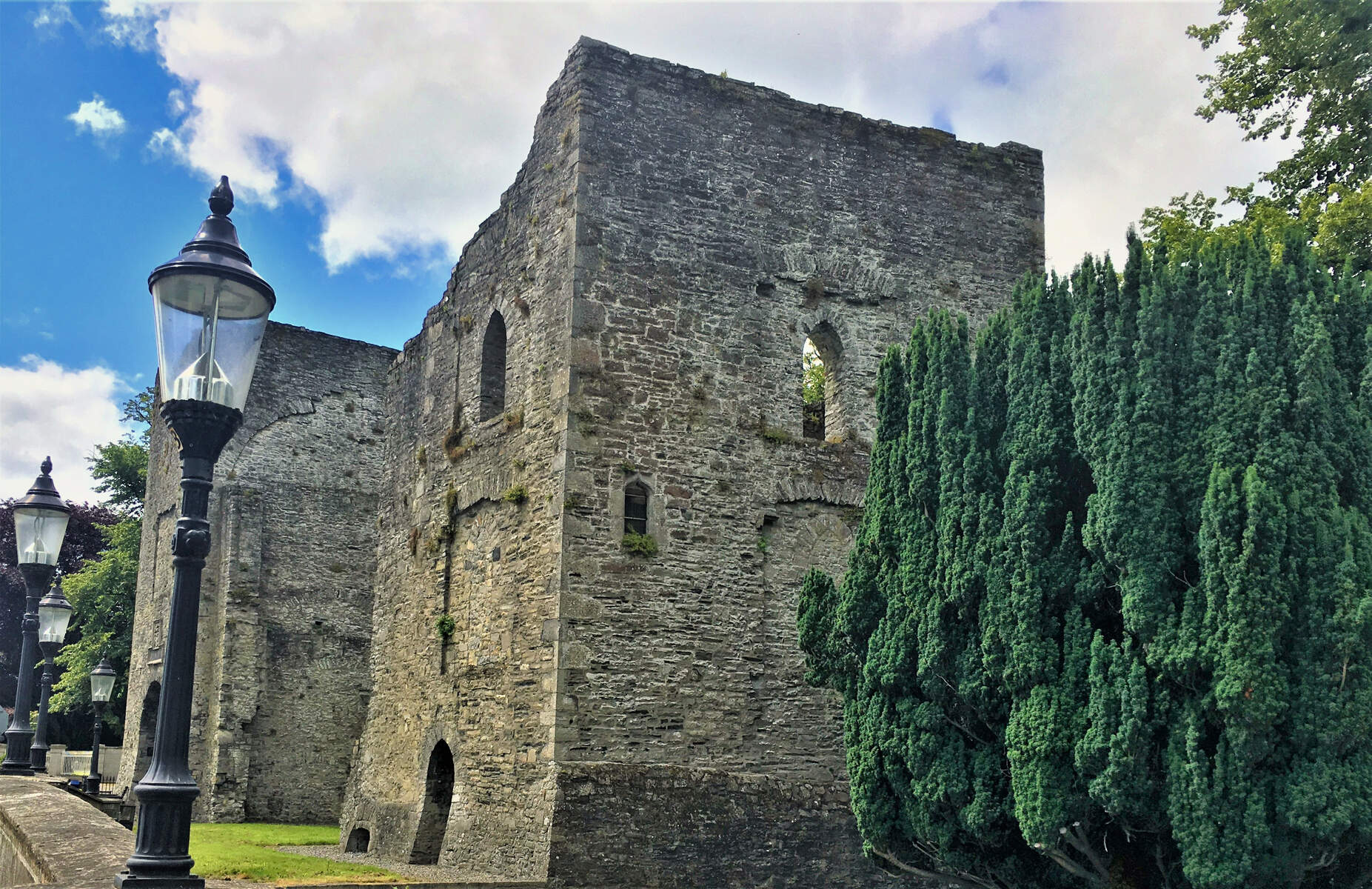
3. Maynooth Castle, County Kildare
Carlow:
1. Altamont House and Gardens, Bunclody Road, Altamont, Ballon, County Carlow:
Altamont House and Gardens, photograph by Sonder Visuals, 2015, for Tourism Ireland, from Ireland’s Content Pool. [1]
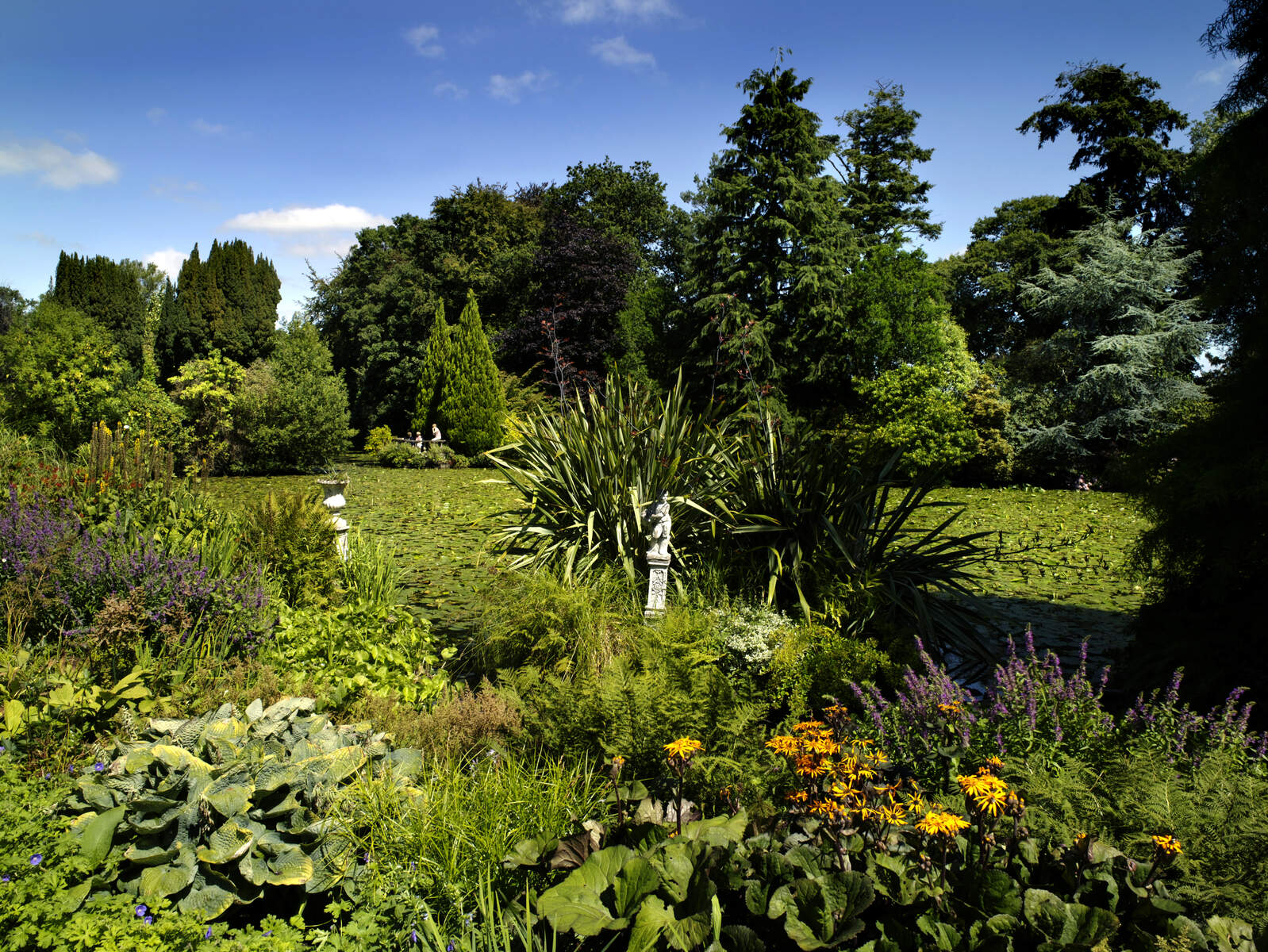
“A large and beautiful estate covering 16 hectares in total, Altamont Gardens is laid out in the style of William Robinson, which strives for ‘honest simplicity’. The design situates an excellent plant collection perfectly within the natural landscape.
“For example, there are lawns and sculpted yews that slope down to a lake ringed by rare trees and rhododendrons. A fascinating walk through the Arboretum, Bog Garden and Ice Age Glen, sheltered by ancient oaks and flanked by huge stone outcrops, leads to the banks of the River Slaney. Visit in summer to experience the glorious perfume of roses and herbaceous plants in the air.
“With their sensitive balance of formal and informal, nature and artistry, Altamont Gardens have a unique – and wholly enchanting – character.” [2]
From “In Harmony with Nature, The Irish Country House Garden 1600-1900” in the Irish Georgian Society, July 2022, curated by Robert O’Byrne.Altamont, photograph by Sonder Visuals 2017 for Tourism Ireland, Ireland’s Content Pool. [see 1]
From Living Legacies: Ireland’s National Historic Properties in the care of the OPW, Government Publications, Dublin, 2018:
“Altamont House was constructed in the 1720s, incorporating parts of an earlier structure said to have been a medieval nunnery. In the 1850s, a lake was excavated in the grounds of the house, but it was when the Lecky-Watsons, a local Quaker family, acquired Altamont in 1924 that the gardens truly came into their own.
“Feilding Lecky-Watson had worked as a tea planter in Ceylon (Sri Lanka) where he nurtured his love of exotic plants, and of rhododendrons in particular. Back in Ireland, he became an expert in the species, cultivating plants for the botanical gardnes at Glasnevin, Kew and Edinburgh. So passionate was he about these plants that when his wife, Isobel, gave birth to a daughter in 1922, she was named Corona, after his favourite variety of rhododendron.” [3]
Altamont House and Gardens lake, photograph by Sonder Visuals, 2015, for Tourism Ireland, from Ireland’s Content Pool. [see 1]
Around the lake are mature conifers that were planted in the 1800s, including a giant Wellingtonia which commemorates the Battle of Waterloo. [3] Corona continued in her father’s footsteps, planing rhododendrons, magnolia and Japanese maples. Another feature is the “100 steps” hand-cut in granite, leading down to the River Slaney. There are red squirrels, otters in the lake and river, and peacocks. Before her death, Corona handed Altamont over to the Irish state to ensure its preservation.
The Temple,Altamont House and Gardens, photograph by Sonder Visuals, 2015, for Tourism Ireland, from Ireland’s Content Pool. [see 1]
Kildare:
2.Castletown House and Parklands, Celbridge, County Kildare.
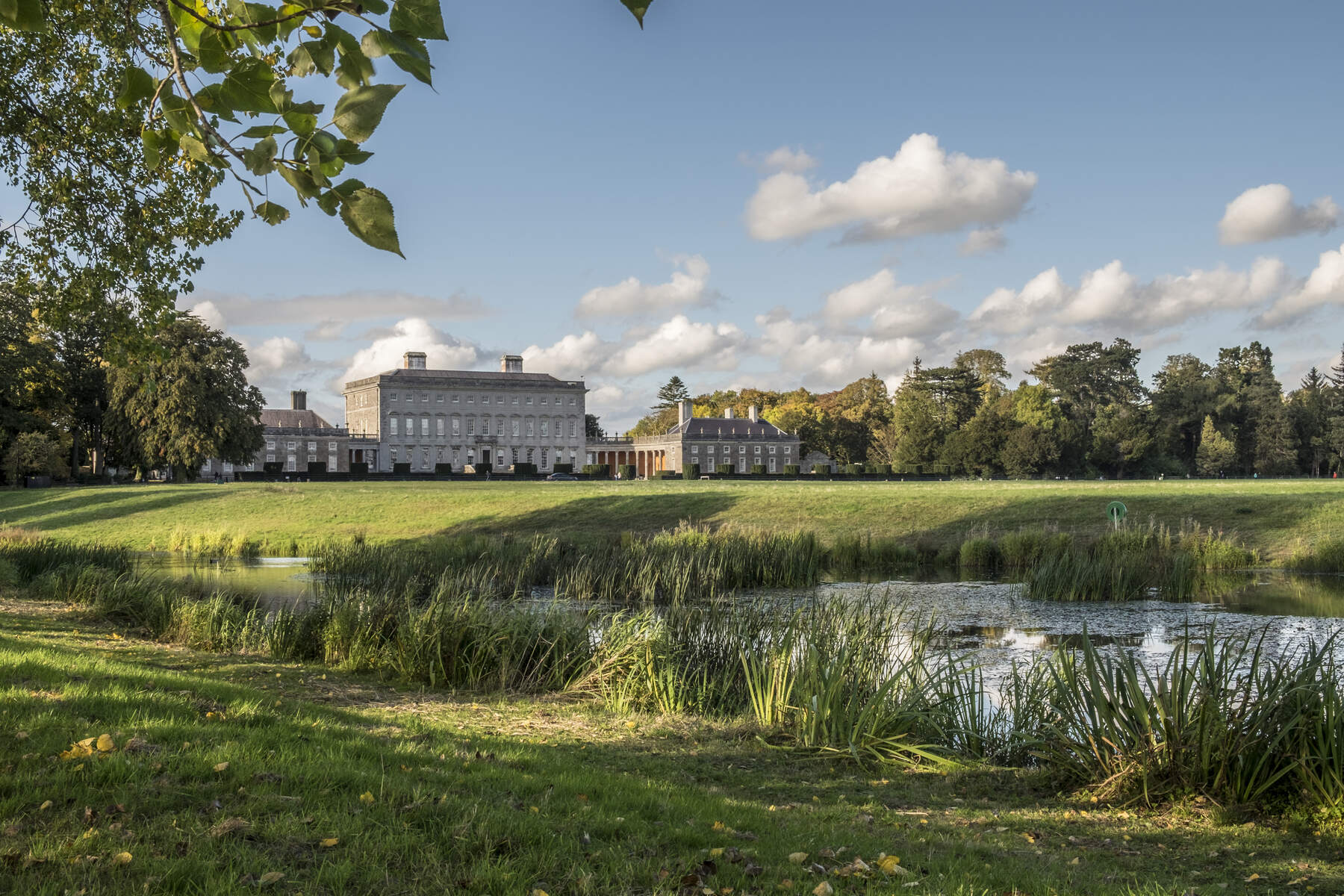
Castletown House, County Kildare, Photo by Mark Wesley 2016, Tourism Ireland, from Ireland’s Content Pool. [see 1]
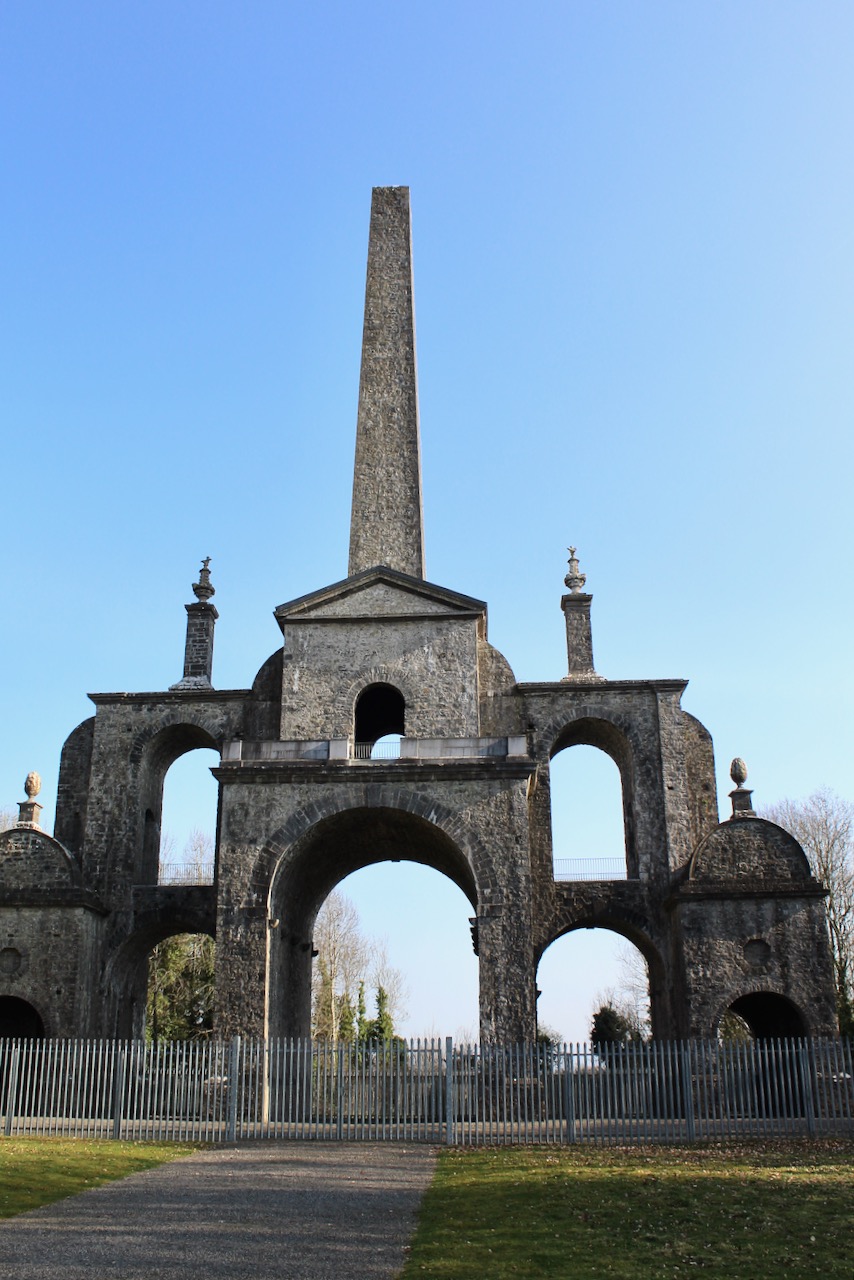
The Obelisk, or Conolly Folly, was reputedly built to give employment during an episode of famine. It was restored by the Irish Georgian Society in 1960.
“This majestic stone castle was founded in the early thirteenth century. It became the seat of power for the FitzGeralds, the earls of Kildare, as they emerged as one of the most powerful families in Ireland. Garret Mór, known as the Great Earl of Kildare, governed Ireland in the name of the king from 1487 to 1513.
Maynooth Castle was one of the largest and richest Geraldine dwellings. The original keep, begun around 1200, was one of the largest of its kind in Ireland. Inside, the great hall was a nerve centre of political power and culture.
Only 30 kilometres from Dublin, Maynooth Castle occupies a deceptively secluded spot in the centre of the town, with well-kept grounds and plenty of greenery. There is a captivating exhibition in the keep on the history of the castle and the family.“
Gerald Fitzgerald (1487-1534) 9th Earl of Kildare, courtesy Bodleian Library.
[3] p. 8, Living Legacies: Ireland’s National Historic Properties in the Care of the OPW. Government Publications, Dublin 2, 2018.
[4] p. xiii, Jennings, Marie-Louise and Gabrielle M. Ashford (eds.), The Letters of Katherine Conolly, 1707-1747. Irish Manuscripts Commission 2018. The editors reference TCD, MS 3974/121-125; Capel Street and environs, draft architectural conservation area (Dublin City Council) and Olwyn James, Capel Street, a study of the past, a vision of the future (Dublin, 2001), pp. 9, 13, 15-17.
[7] p. 75. Bence-Jones, Mark. A Guide to Irish Country Houses (originally published as Burke’s Guide to Country Houses volume 1 Ireland by Burke’s Peerage Ltd. 1978); Revised edition 1988 Constable and Company Ltd, London.
[8] p. 129. Great Irish Houses. Forewards by Desmond FitzGerald, Desmond Guinness. IMAGE Publications, 2008.
Munster’s counties are Clare, Cork, Kerry, Limerick, Tipperary and Waterford.
I have noticed that an inordinate amount of OPW sites are closed ever since Covid restrictions, if not even before that (as in Emo, which seems to be perpetually closed).
Cork:
1. Annes Grove, County Cork
2. Barryscourt Castle, County Cork – currently closed (June 2022)
3. Charles Fort, County Cork
4. Desmond Castle, Kinsale, County Cork
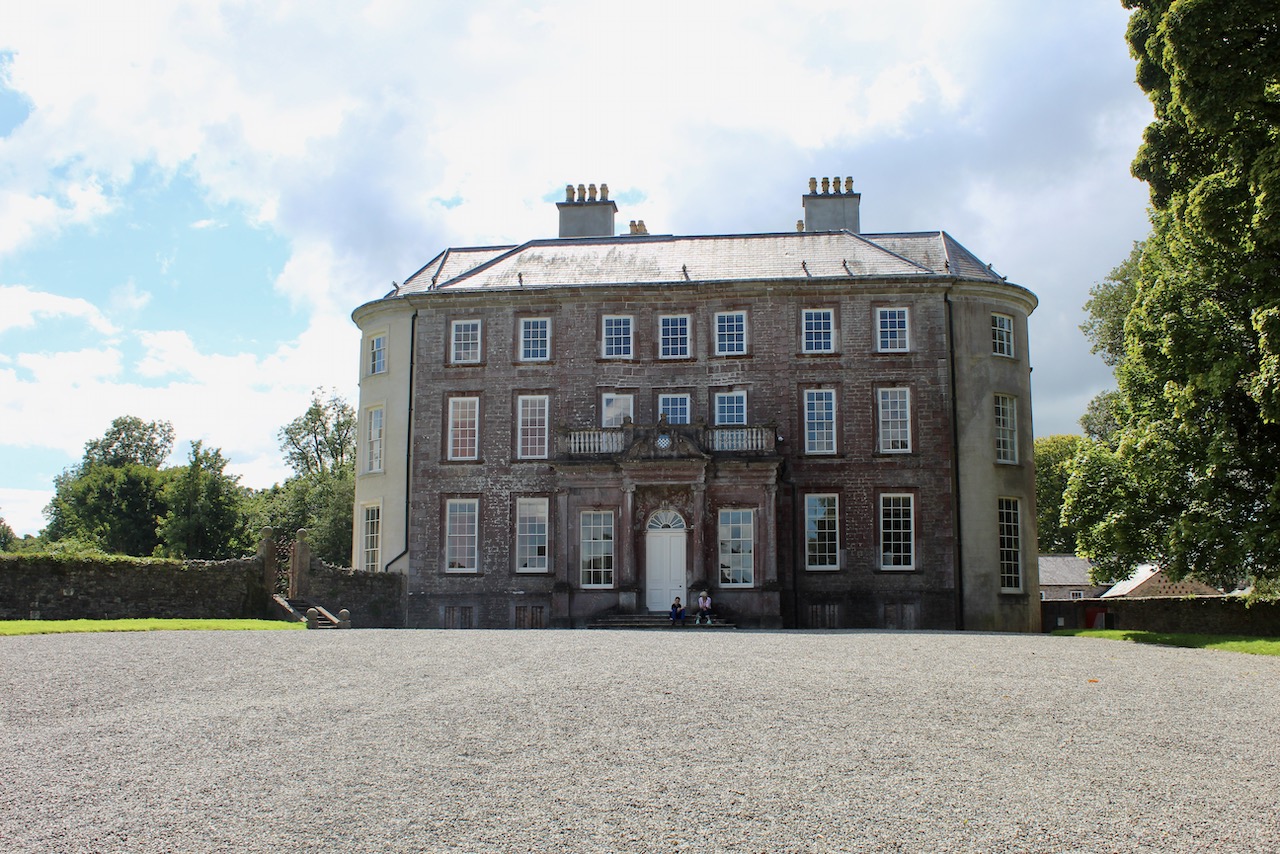
5. Doneraile Court, County Cork
6. Fota House Arboretum and Gardens, County Cork (Fota House itself is maintained by the Heritage Trust)
7. Ilnacullin, Garanish Island, County Cork
donation
Help me to pay the entrance fee to one of the houses on this website. This site is created purely out of love for the subject and I receive no payment so any donation is appreciated!
€15.00
Cork:
1. Annes Grove, Castletownroche, County Cork:
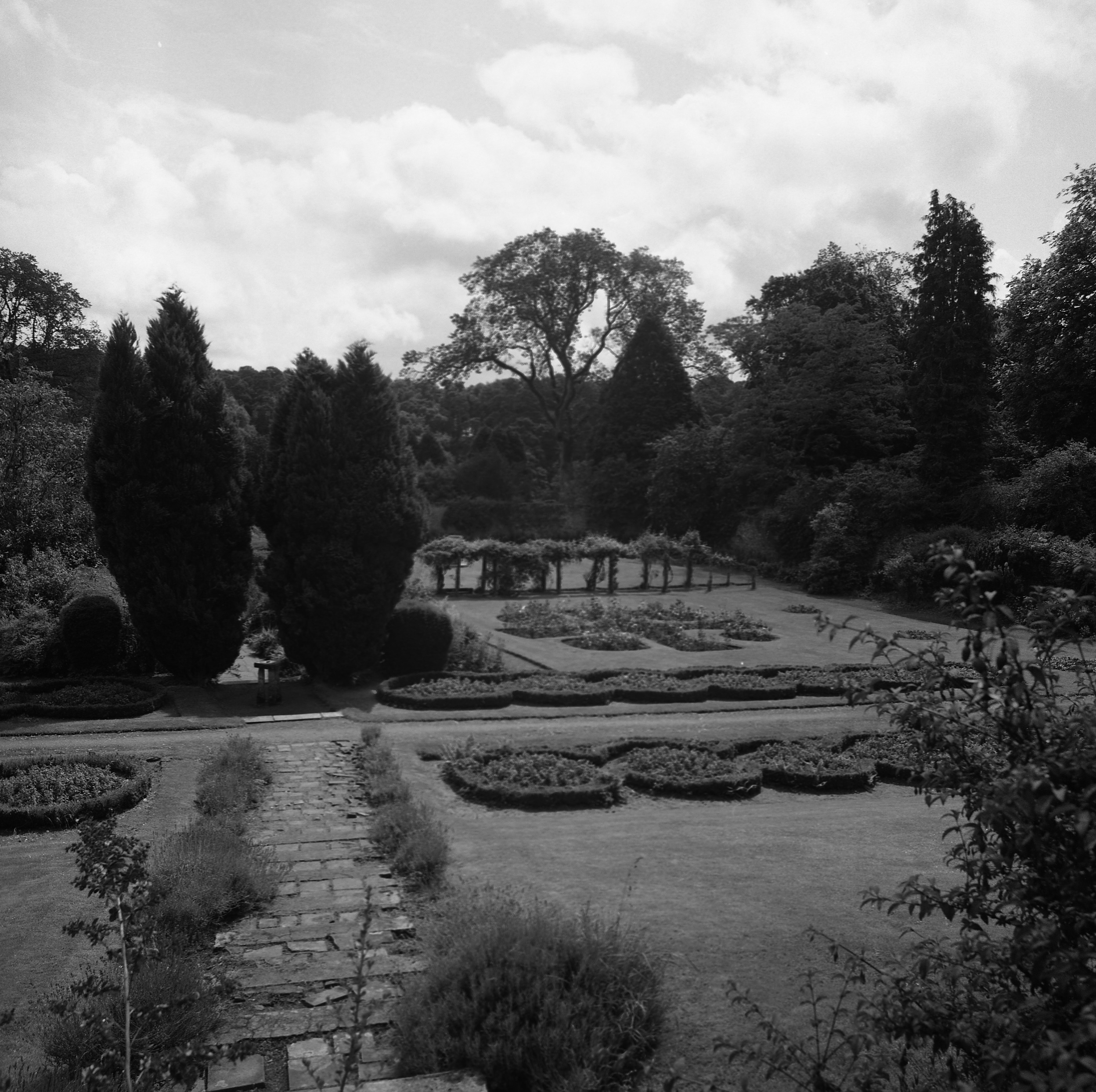
Annes Grove, County Cork, 1981 from Dublin City Library and Archives. [1]
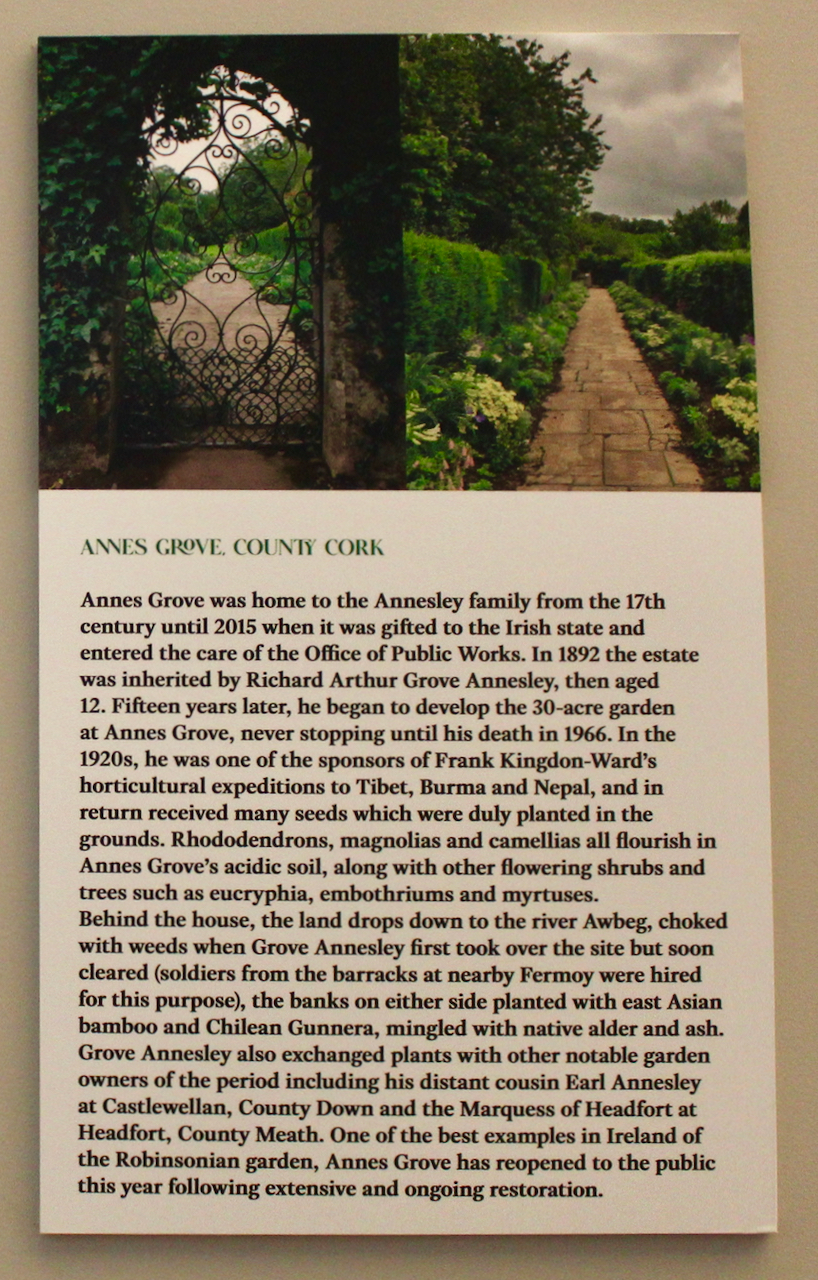
This is due to be open soon by the OPW. It does not have a website yet. In December 2015 Annes Grove House and Garden were donated to the state by the Annesley family.
“Nestled into an eighteenth century ornamental glen, adjacent to the River Awbeg, the demesne of Annes Grove in north County Cork is the setting for the most exquisite Robinsonian-style gardens in Ireland….
The Gardens at Annes Grove were largely the creation of Richard Grove Annesley in the first half of the twentieth century.” [2]
Annes Grove, County Cork, 1981 from Dublin City Library and Archives. [see 1]
The estate was previously known as Ballyhimmock, and it was acquired by William Grove around 1626.
In 1792 it was inherited by Arthur Grove Annesley (1774-1849) from an aunt by marriage, heiress to the Grove family, after which it was renamed by merging the two family names. [3] Arthur Grove Annesley’s uncle Francis Charles Annesley, 1st Earl Annesley of Castlewellan, County Down, married Mary Grove who inherited the estate from her father.
At the centre of the garden is a restored Gothic style summerhouse. The main house is of Queen Anne design, from the 18th century. Pergolas, a lily pond, Victorian stone fernery, a woodland walk and river garden, a rockery and wild water garden create an atmospheric setting.
From “In Harmony with Nature, The Irish Country House Garden 1600-1900” in the Irish Georgian Society, July 2022, curated by Robert O’Byrne.
2. Barryscourt Castle, County Cork:
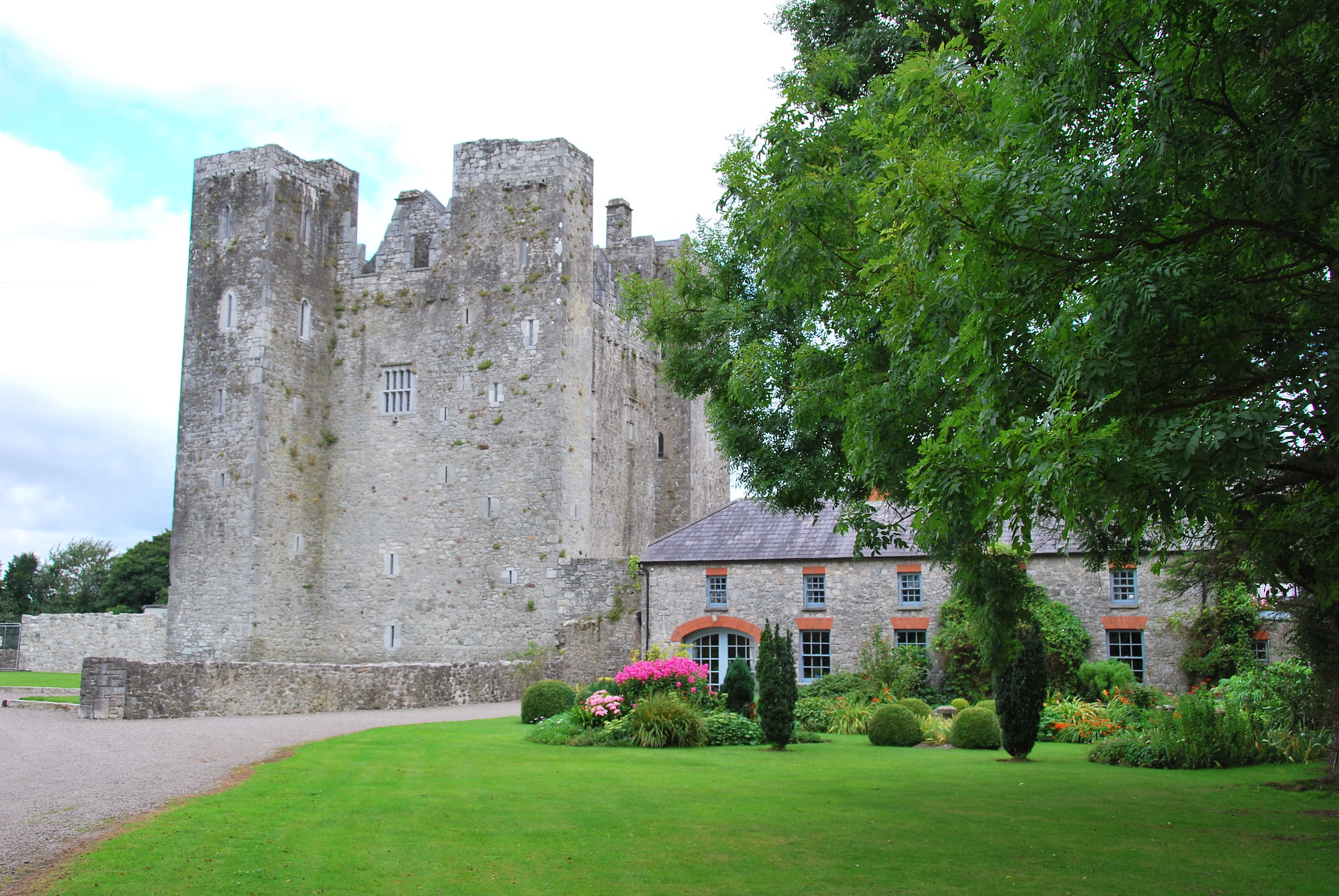
Barryscourt Castle by Julia Delio, flickr constant commons, August 2009.
“Barryscourt Castle was the seat of the great Anglo-Norman Barry family and is one of the finest examples of a restored Irish Tower House. Dating from between 1392 and 1420, the Castle has an outer bawn wall and largely intact corner towers. The ground floor of the Tower House contains a dungeon into which prisoners were dropped via the ‘drop-hole’ located on the second floor.
“The Barrys supported the Fitzgeralds of Desmond during the Irish rebellions of the late sixteenth century. To prevent it being captured by Sir Walter Raleigh and his army, the Barrys [David Barry, 5th Viscount Barry (1550-1617)] partially destroyed the Castle.
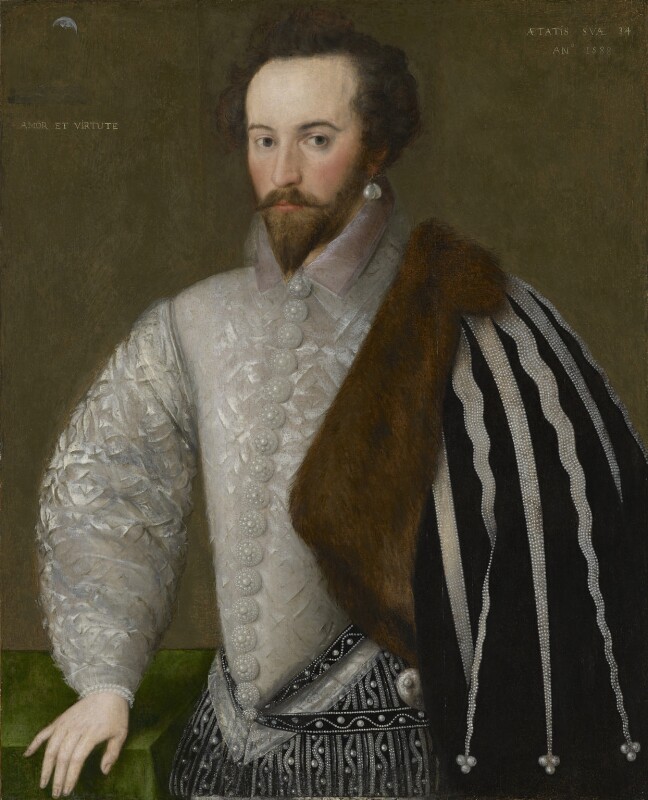
Walter Raleigh (1552-1618) by Unknown English artist 1588, National Portrait Gallery of London ref. 7.
“During the Irish Confederate War of the seventeenth century Barryscourt Castle was once again successfully attacked. Cannon balls lodged in the wall above the Castle entrance bear witness to this conflict. The last head of the Barry family was Lord David Barry.
“Barryscourt Castle has been extensively restored. The Main Hall and Great Hall have been completed and fittings and furnishings reinstated. Within the Castle grounds, the herb and knot garden and the charming orchard have been restored to their original sixteenth century design.“
After David Barry’s death in 1617 the family made Castlelyons their principal seat (now a ruin). The castle was restored by the OPW and the Barryscourt Trust between 1987-1993, with reproduction furniture made by Victor Chinnery. [4]
An article in the Irish Examiner by Padraig Hoare published 22nd May 2021 tells us that the site is closed and will be for some time:
“A reopening date must be established for one of East Cork’s most historic landmarks after languishing in the midst of safety works for five years.
“That is according to Cork East TD Séan Sherlock, who said Barryscourt Castle in Carrigtwohill has to be a priority for the Government body in charge of the facility, the Office of Public Works (OPW).
“History enthusiasts and families alike were disappointed in the summer of 2020, when it emerged that Barryscourt Castle would remain closed for another 18 months.
“The latest update from the OPW given in response to a parliamentary question from Mr Sherlock suggests it may be even longer than the date anticipated a year ago.
“The Department of Public Expenditure said restrictions associated with the Covid-19 pandemic “has disrupted the good progress” of works being done to make the facility safe.
“It is not possible at this time to give a precise date for reopening to the public,” the department said.“
3. Charles Fort, Summer Cove, Kinsale, County Cork:
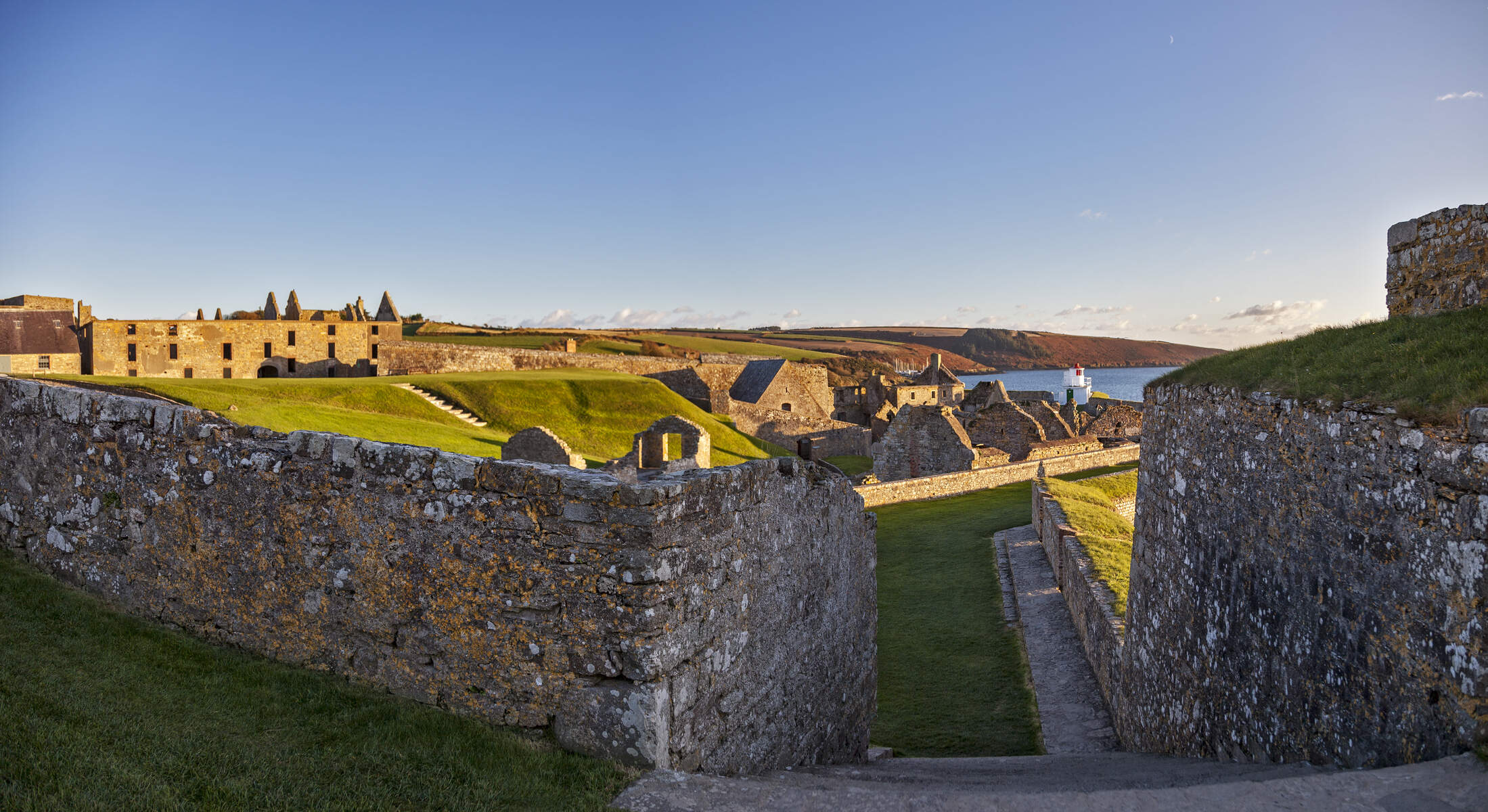
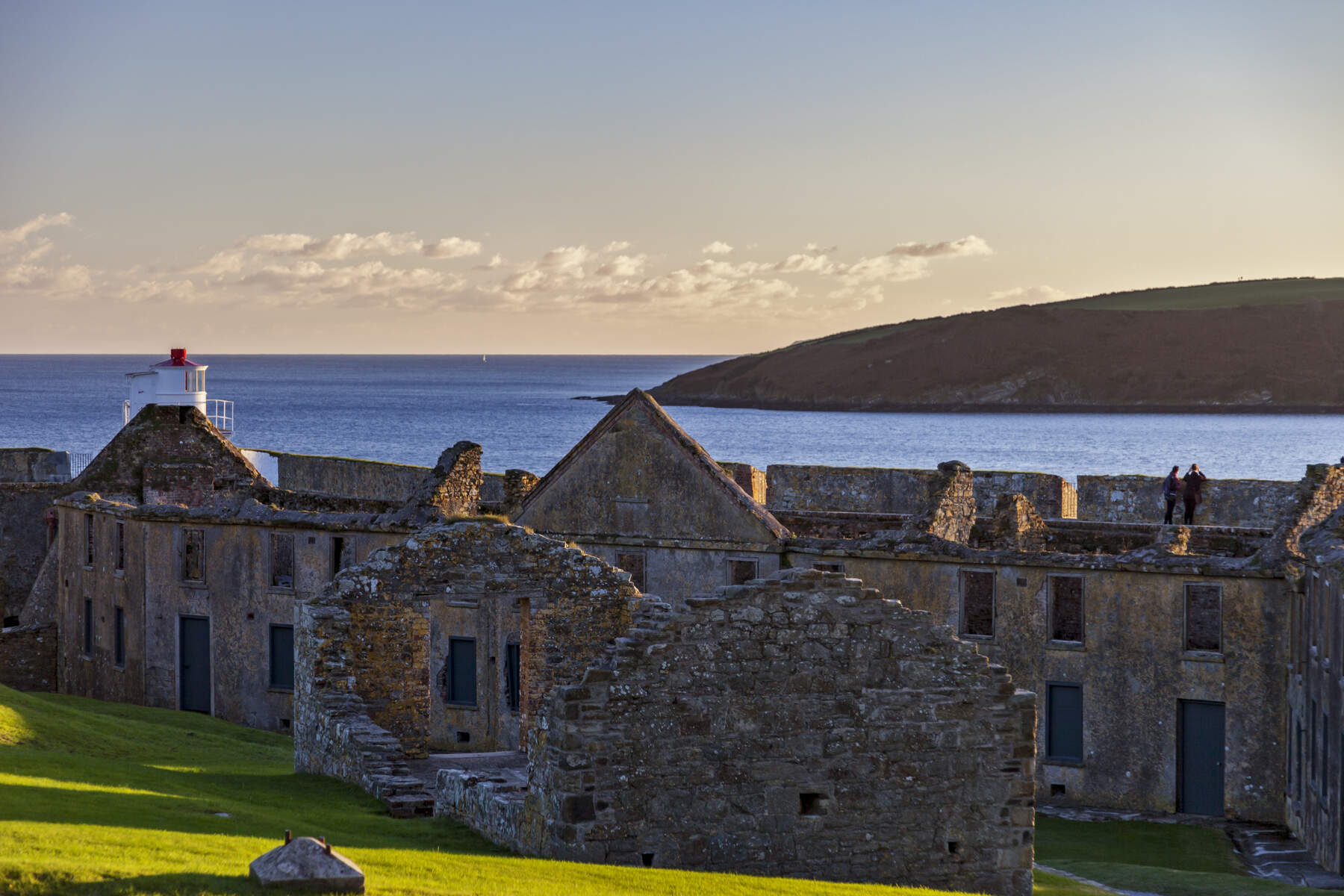
The Soldiers Quarters, the Hospital ward, the Lighthouse (by Robert Reading) and Magazine of the 17th Century Charles Fort, Kinsale, Co. Cork, Munster, Ireland. Photograph from Ireland’s Content Pool, photograph by Cahir Davitt, 2016, for Failte Ireland. [5]
General Enquiries: 021 477 2263, charlesfort@opw.ie
“As one of the country’s largest military installations, Charles Fort has been part of some of the most momentous events of Irish history. During the Williamite Wars, for example, it withstood a 13-day siege before it fell. Later, in the Civil War of the early 1920s, anti-Treaty forces on the retreat burned it out.
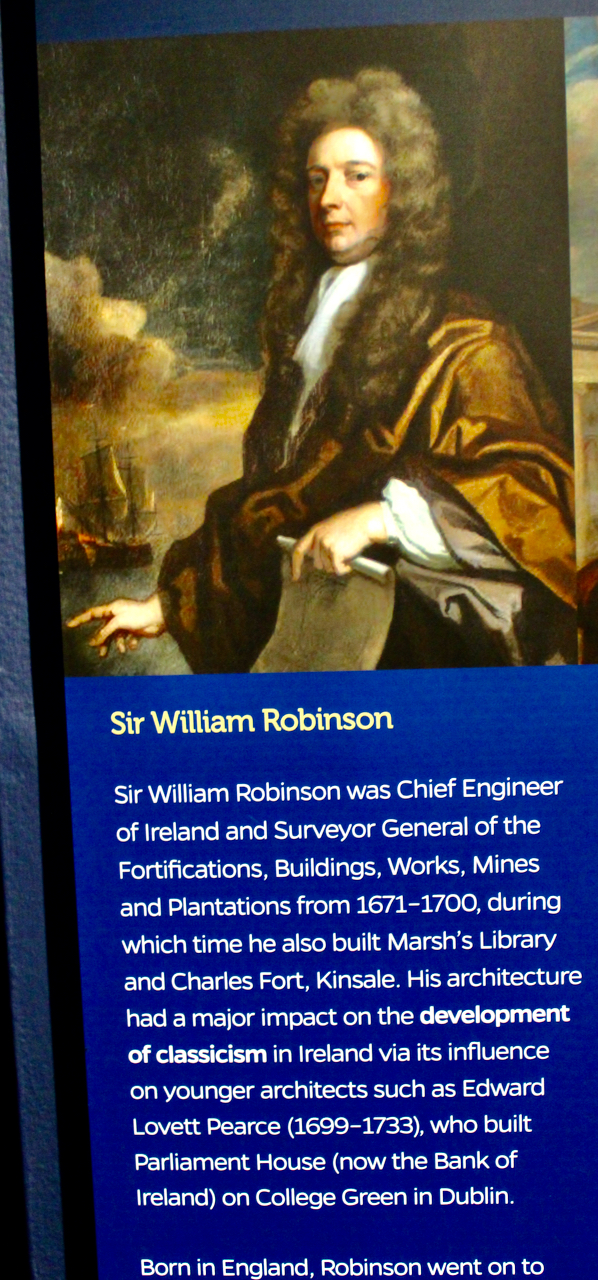
“Charles Fort is a massive star-shaped structure of the late seventeenth century, well preserved despite its history. William Robinson, architect of the Royal Hospital in Kilmainham, Dublin, is credited with designing it. Its dimensions are awe-inspiring – some of the outer defences are 16 metres high.
“The view from the ramparts looking out over Kinsale Harbour is spectacular.“
The Soldiers Quarters, and Magazine of the 17th Century Charles Fort, Kinsale, Co. Cork, Munster, Ireland.Photograph from Ireland’s Content Pool, photograph by Cahir Davitt, 2016, for Failte Ireland. [see 5]The seaward Devils Bastion and lighthouse of the 17th Century Charles Fort, with Kinsale boatyard in the background, Kinsale, Co. Cork, Munster, Ireland; Photograph from Ireland’s Content Pool, photograph by Cahir Davitt, 2016, for Failte Ireland. [see 5]
4. Desmond Castle (also known as the French Prison), Kinsale, County Cork:
Desmond Castle Kinsale 1941, photograph from Dublin City Library archives. [see 1]
General Enquiries: 021 477 4855, desmondcastle@opw.ie
“Desmond Castle in Kinsale dates from around 1500. It is a classic urban tower house, consisting of a three-storey keep with storehouses to the rear.
“Maurice Bacach Fitzgerald, the earl of Desmond, originally built the castle as the customs house for the town. [I think this must be the 9th Earl of Desmond – JWB] It served as a prison in the seventeenth and eighteenth centuries. Because it usually held French inmates, as well as Spaniards, Portuguese, Dutch and Americans, it became known locally as the French Prison and carries that name to this day. The building was co-opted as an ordnance store during the momentous Battle of Kinsale (1601) and served as a workhouse during the Great Famine.
“Desmond Castle certainly had a colourful history and this continued into the twentieth century. In the early 1900s it was used as a venue to host local Gaelic League meetings. Finally, in the 1930s, a thriving undertaking business operated from within the National Monument.“
The National Inventory of Architectural Heritage tells us:
“Freestanding three-bay three-storey tower house, commenced c.1500, abutting earthen terrace to rear. Attached cell blocks and exercise yards to rear (north-west) and platform to side (north-east). Historically used as magazine (1600-1601), as prison for foreign prisoners (1601-1790) and as borough jail (1791-1846). Restored in 1938 currently in use as museum.“
“Fota House was designed by 19th century architects Richard and William Morrison. From the beautifully proportioned rooms with exquisite plasterwork, to the preserved service wing and kitchens, Fota House offers visitors an intimate look at how life was lived in the past, for the cooks, butlers, footmen and maids who supported the lavish lifestyle of the gentry. Our painting collection is considered to be one of the finest collections of landscape painting outside the National Gallery of Ireland and includes works by William Ashford PRHA, Robert Carver, Jonathan Fisher and Thomas Roberts.” [9]
The arboretum and gardens on Fota Island, just 16 kilometres from Cork city centre, are an essential destination for any one of a horticultural bent.
The arboretum extends over 11 hectares and contains one of the finest collections of rare, tender trees and shrubs grown outdoors in Europe. The unique conditions at Fota – its warm soil and sheltered location – enable many excellent examples of exotics from the southern hemisphere to flourish.
The gardens include such stunning features as the ornamental pond, formal pleasure gardens, orangery and sun temple. James Hugh Smith-Barry laid them out in the first half of the nineteenth century. Fota House, the Smith-Barrys’ ancestral home, still stands. The house, arboretum and gardens share the island with a hotel and golf resort and a wildlife park. [10]
7. Ilnacullin, Garanish Island, Glengarriff, Bantry, County Cork:
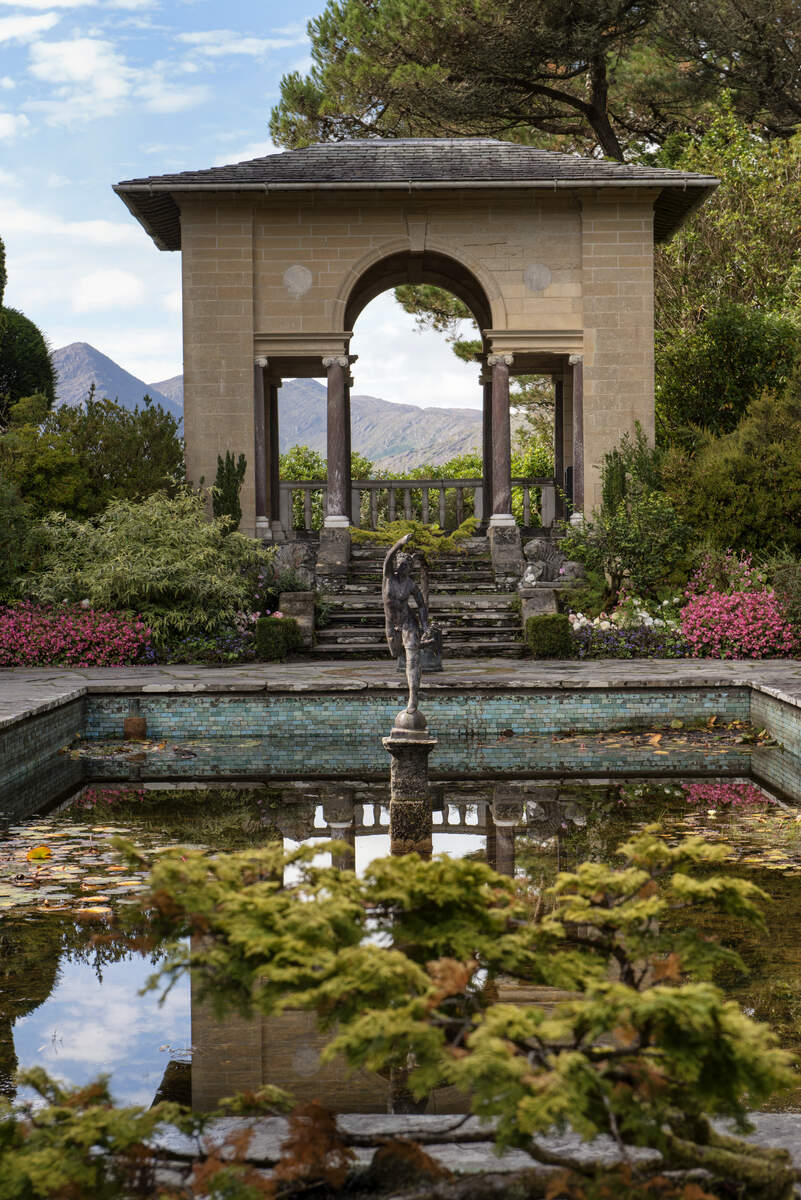
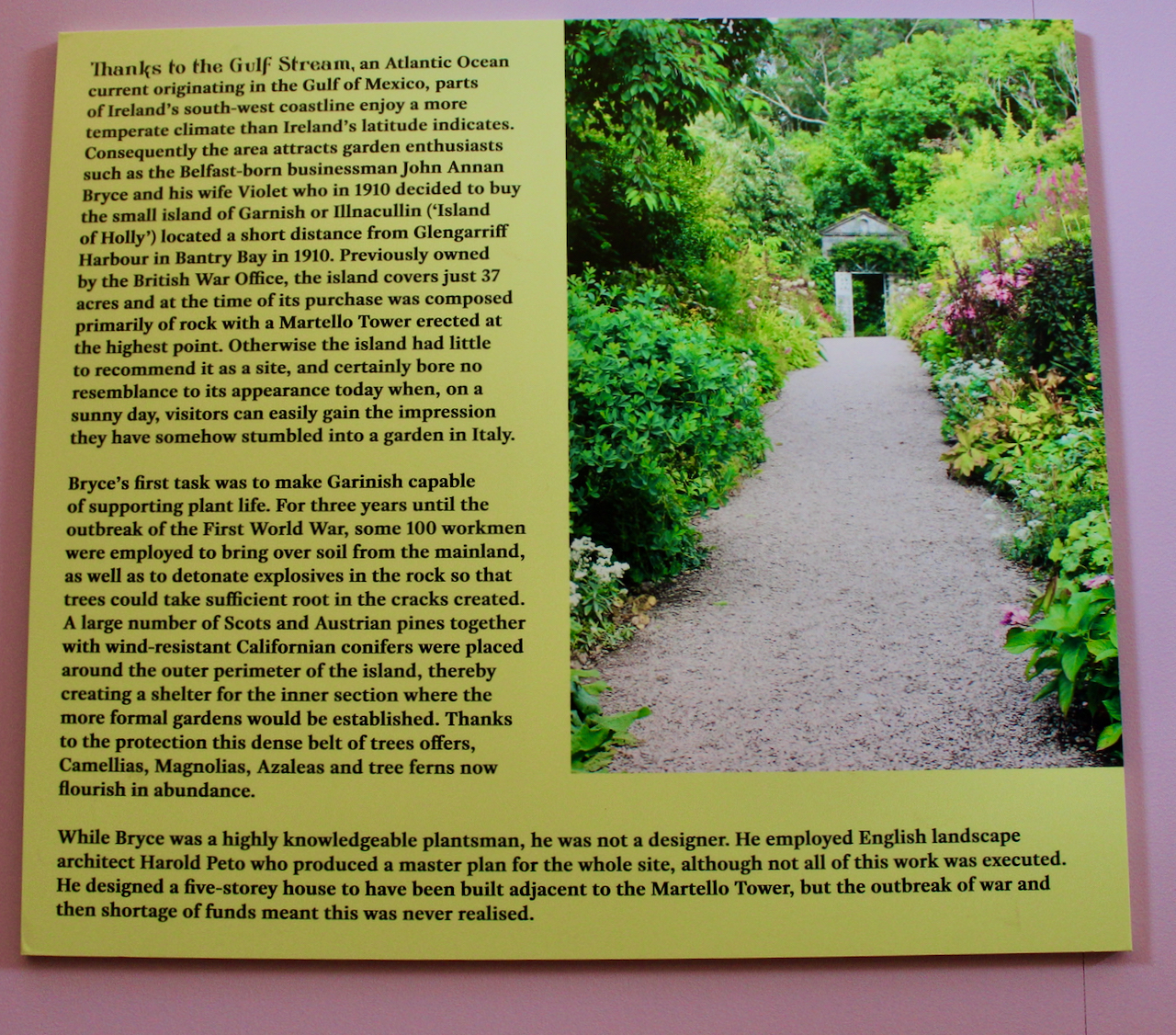
Italian garden, Garnish Island, Glengarriff, Beara, Co. Cork, Photograph by Chris Hill 2014, Ireland’s Content Pool. [see 5]
general enquiries: (027) 63040
garanishisland@opw.ie
Ilnacullin is an island in the coastal harbour at Glengariff in Bantry Bay. It has an almost sub-tropical climate with mild winters and high levels of rainfall and humidity. These conditions favour the growth of exotic plants. The gardens were set out in the Arts and Crafts style and contain Italianate pavilions and follies, framed against a backdrop of beautiful views.
“Ilnacullin is an island garden of diminutive size and rare beauty. Nestled in the sheltered coastal harbour at Glengarriff in Bantry Bay, the gardens display a wealth of unique horticultural and architectural gems. Bryce House is a fitting memorial to the visionary creators of this unique place.
“The gardens of Ilnacullin owe their existence to the early twentieth-century creative partnership of John Annan and Violet Bryce, the island’s owners, and Harold Peto, an architect and garden designer. The area enjoys a mild and humid micro-climate that makes for spectacular and flourishing plant life all year round.
“Small ferry boats and 60-seater waterbuses take visitors to Ilnacullin regularly. The short crossing usually includes an extra treat – a visit to the nearby seal colony and an opportunity to glimpse majestic sea eagles.“
The Island was bequeathed to the Irish people by the Bryce’s son, Roland, in 1953 and is cared for by the OPW. Bryce House contains material from the Bryces’s lives, including John Annan Bryce’s collection of Burmese statues, Chinese ceramics, Japanese woodblock prints, metal works and rare exotic objects. There are also Old Master drawings by Salvator Rosa, Mauro Antonio Tesi and Giambattista Tiepolo. Over the years the Bryces hosted prominent cultural figures such as George (AE) Russell, George Bernard Shaw and Agatha Christie. [11] You can see a tour of the house and gardens on the website.
From “In Harmony with Nature, The Irish Country House Garden 1600-1900” in the Irish Georgian Society, July 2022, curated by Robert O’Byrne.From “In Harmony with Nature, The Irish Country House Garden 1600-1900” in the Irish Georgian Society, July 2022, curated by Robert O’Byrne.
[7] p. 377. Keohane, Frank. Buildings of Ireland: Cork City and County, Yale University Press, New Haven and London, 2020.
Another work Keohane identifies as being by Benjamin Crawley is Castle Bernard, now a ruin in County Cork:
Castle Bernard, County Cork, photograph from National Inventory of Architectural Heritage.
[8] p. 105. Mark Bence-Jones. A Guide to Irish Country Houses (originally published as Burke’s Guide to Country Houses volume 1 Ireland by Burke’s Peerage Ltd. 1978); Revised edition 1988 Constable and Company Ltd, London.
Open in 2026: all year, except Christmas Day and St. Stephen’s Day, Jan-Mar, Nov-Dec, 10am-5pm, Apr-Oct, 10am-5.30pm
Fee: adult €10, student/OAP €8, child over 4 years €5, under 4 years free
donation
Help me to pay the entrance fee to one of the houses on this website. This site is created purely out of love for the subject and I receive no payment so any donation is appreciated!
Facilities: Avoca Cafe, Food Hall, Shopping Courtyard, Toilets, Parking, Wheelchair access (limited). No dogs and no picnics.
Guided Tours: €60.00 (Advance booking required).
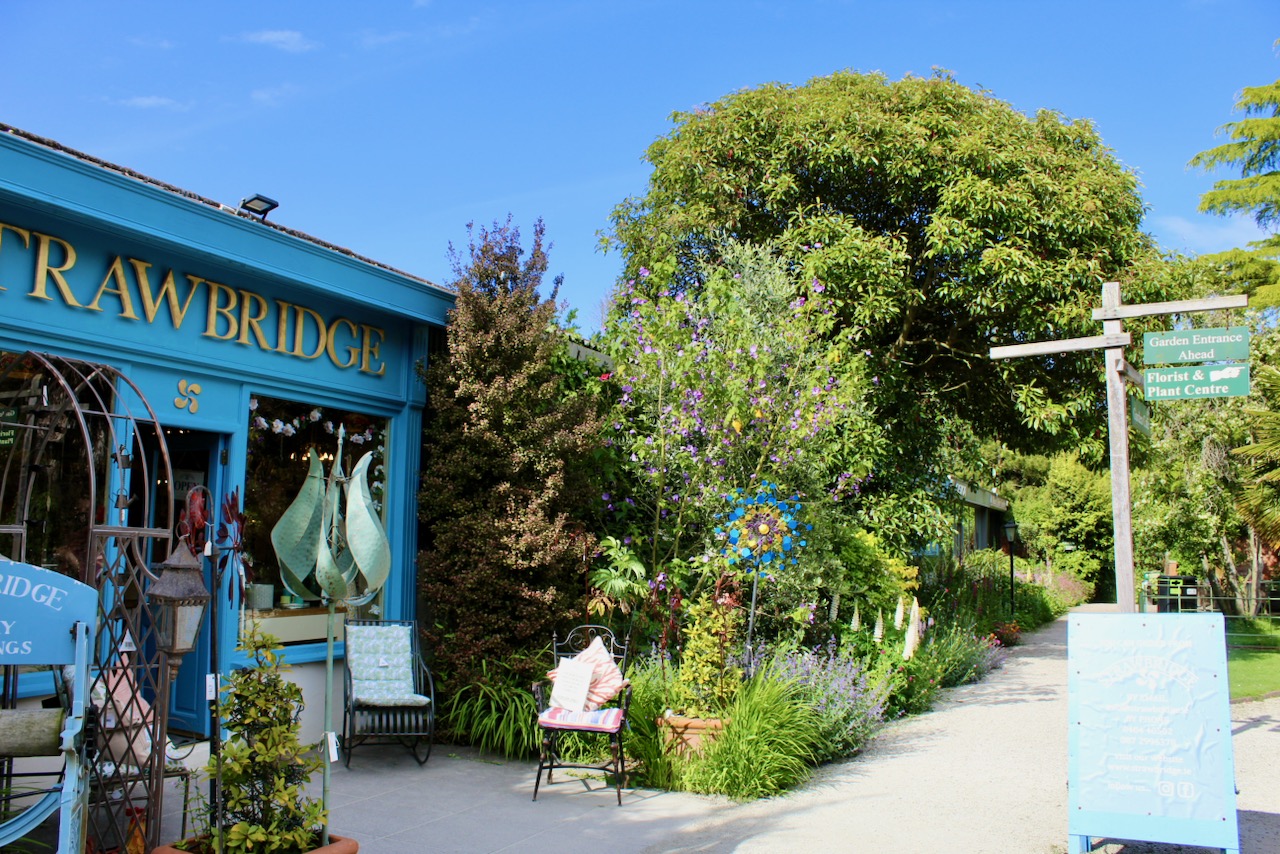
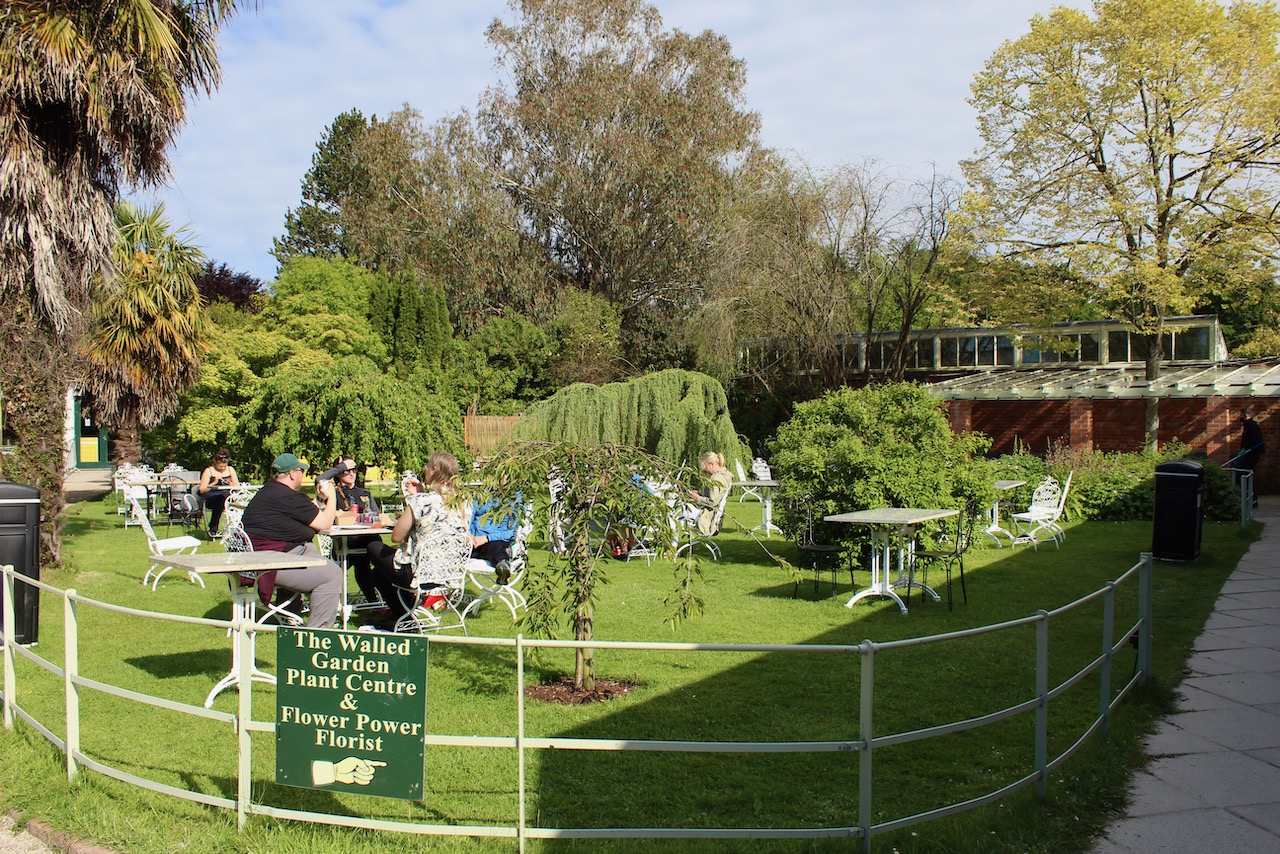
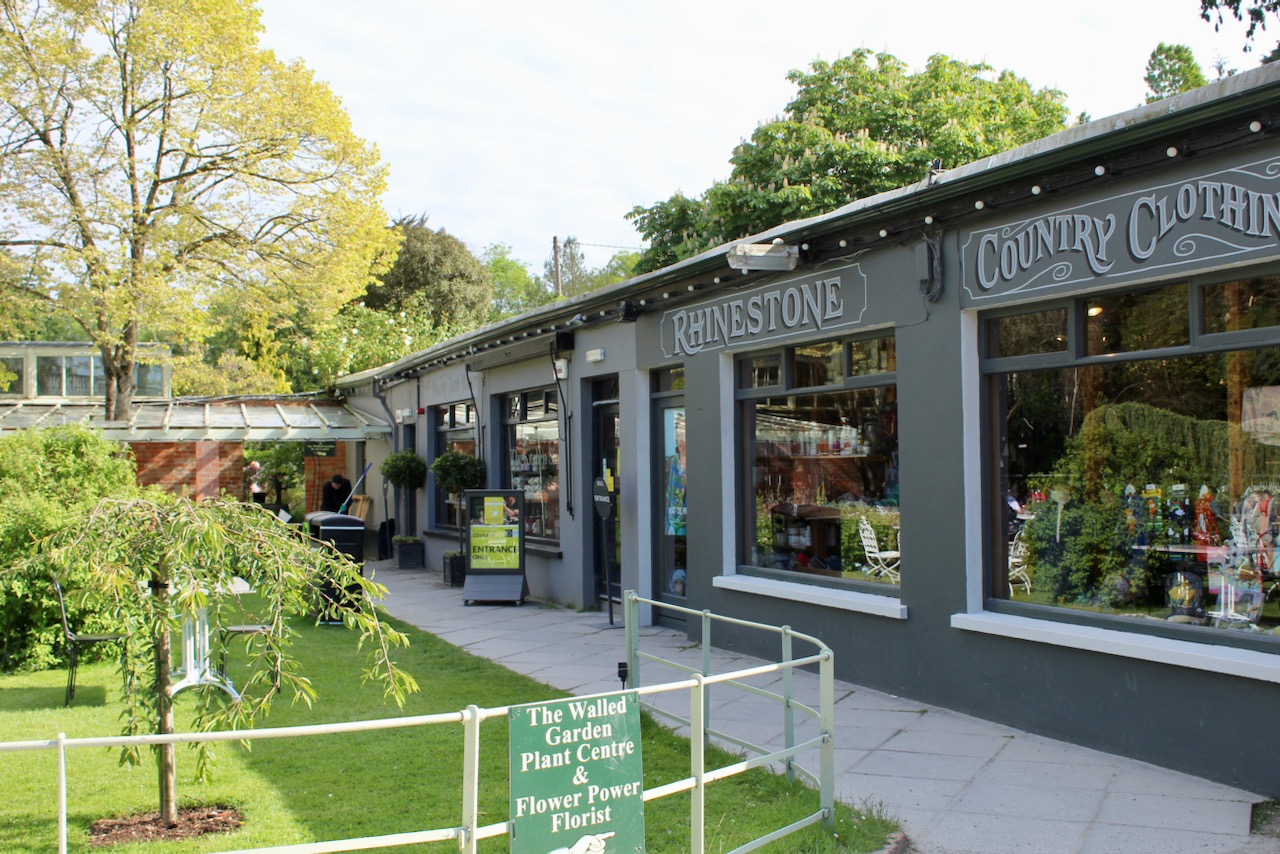
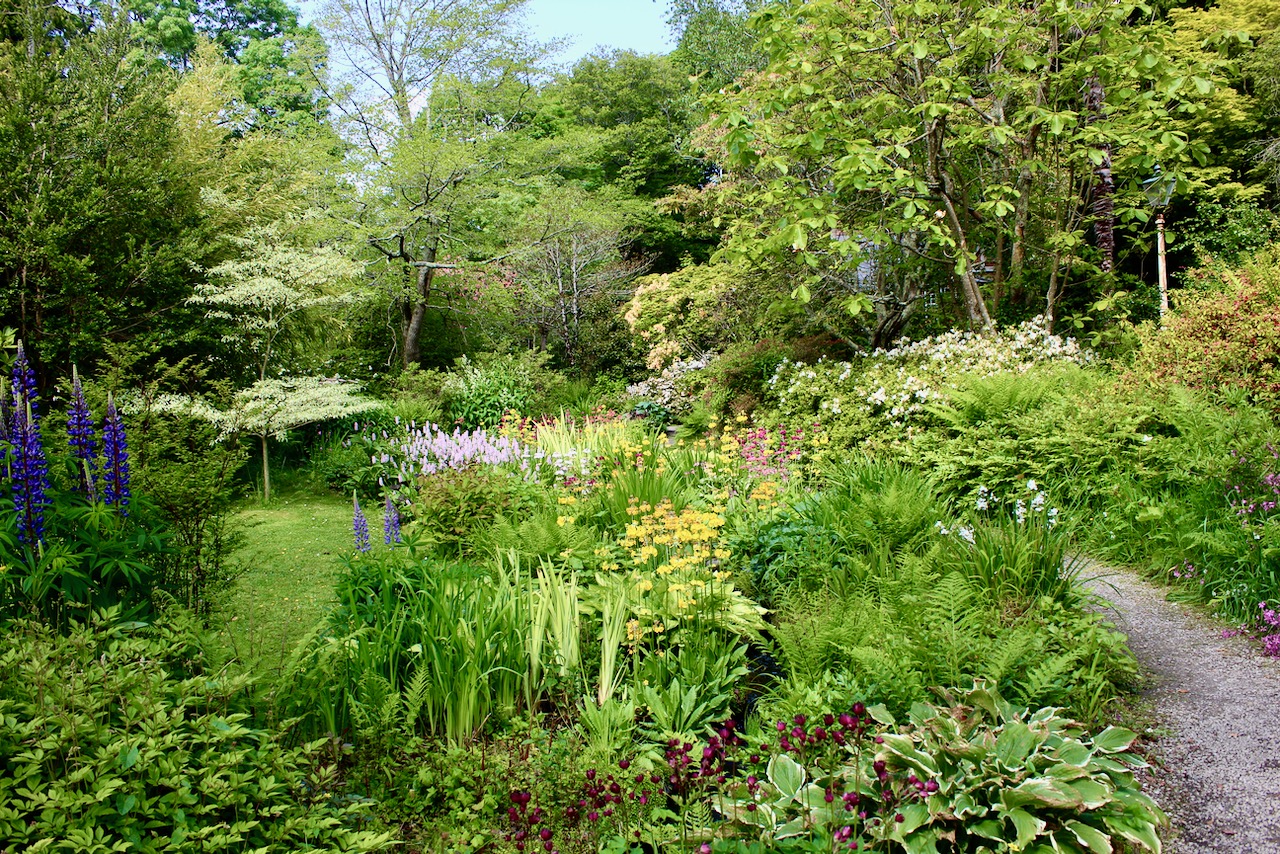
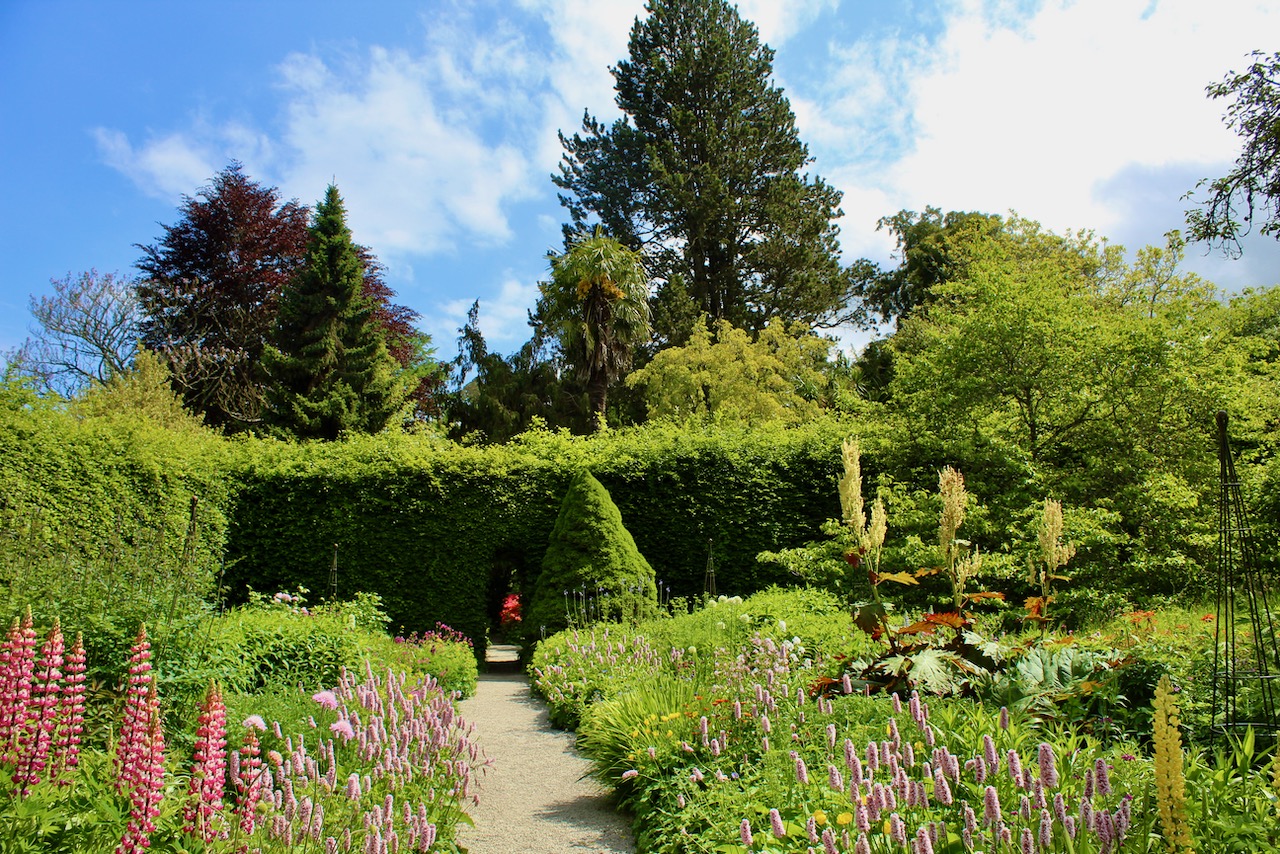
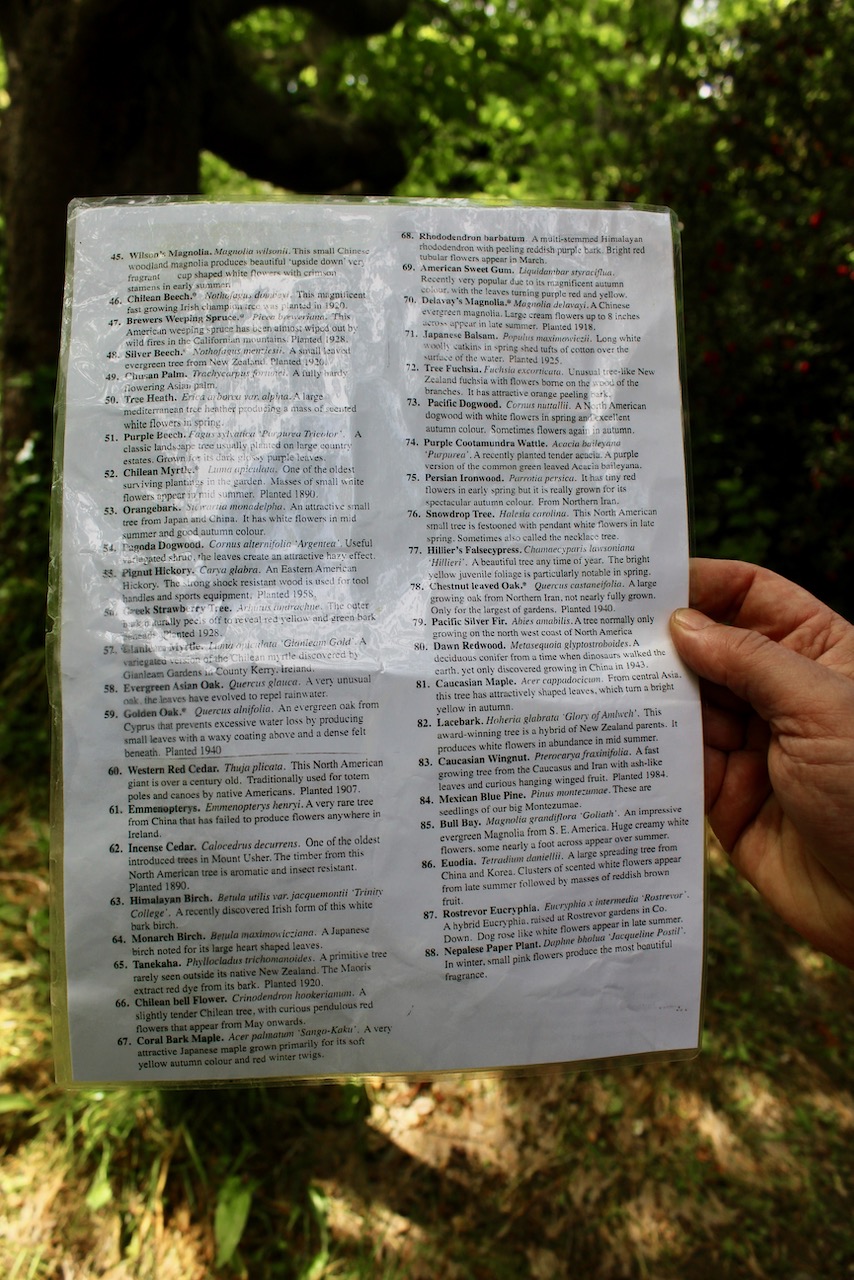
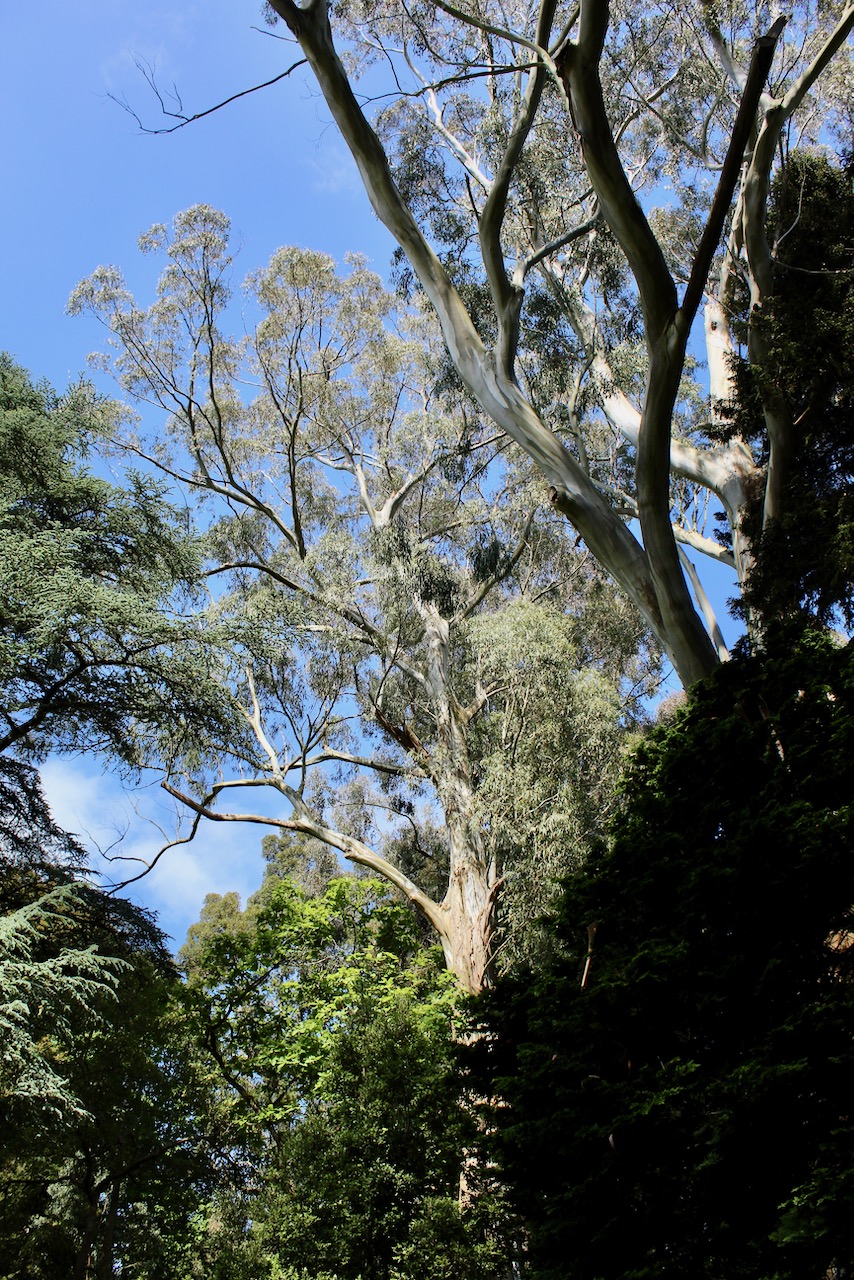
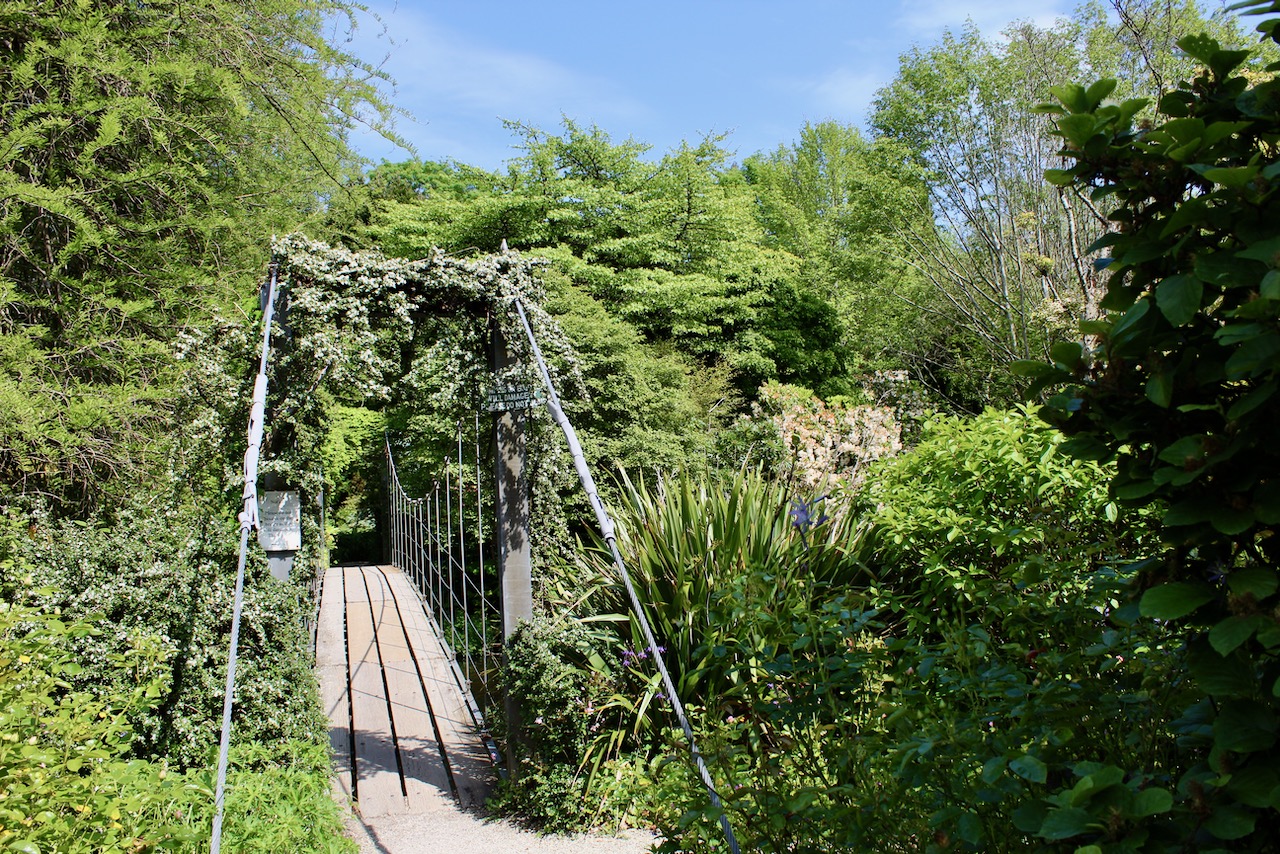
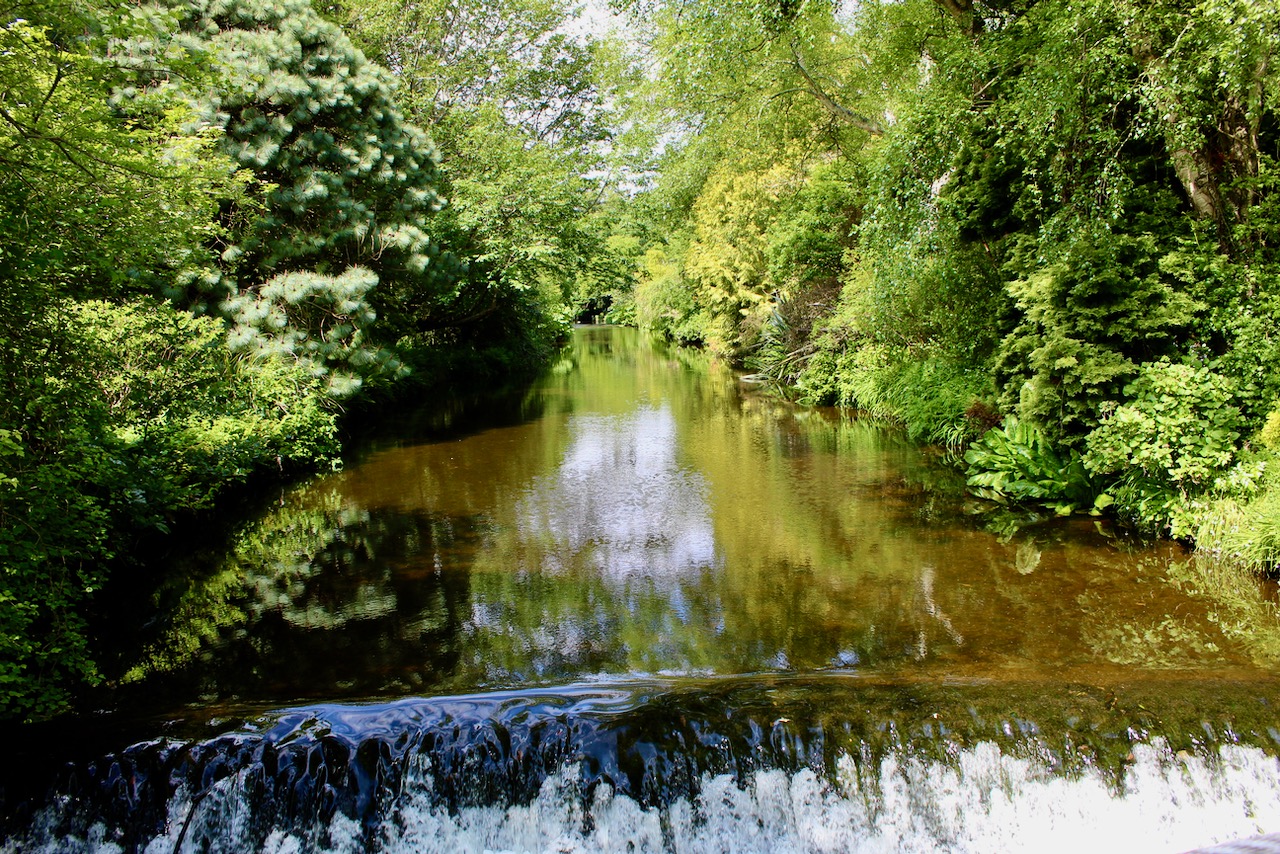
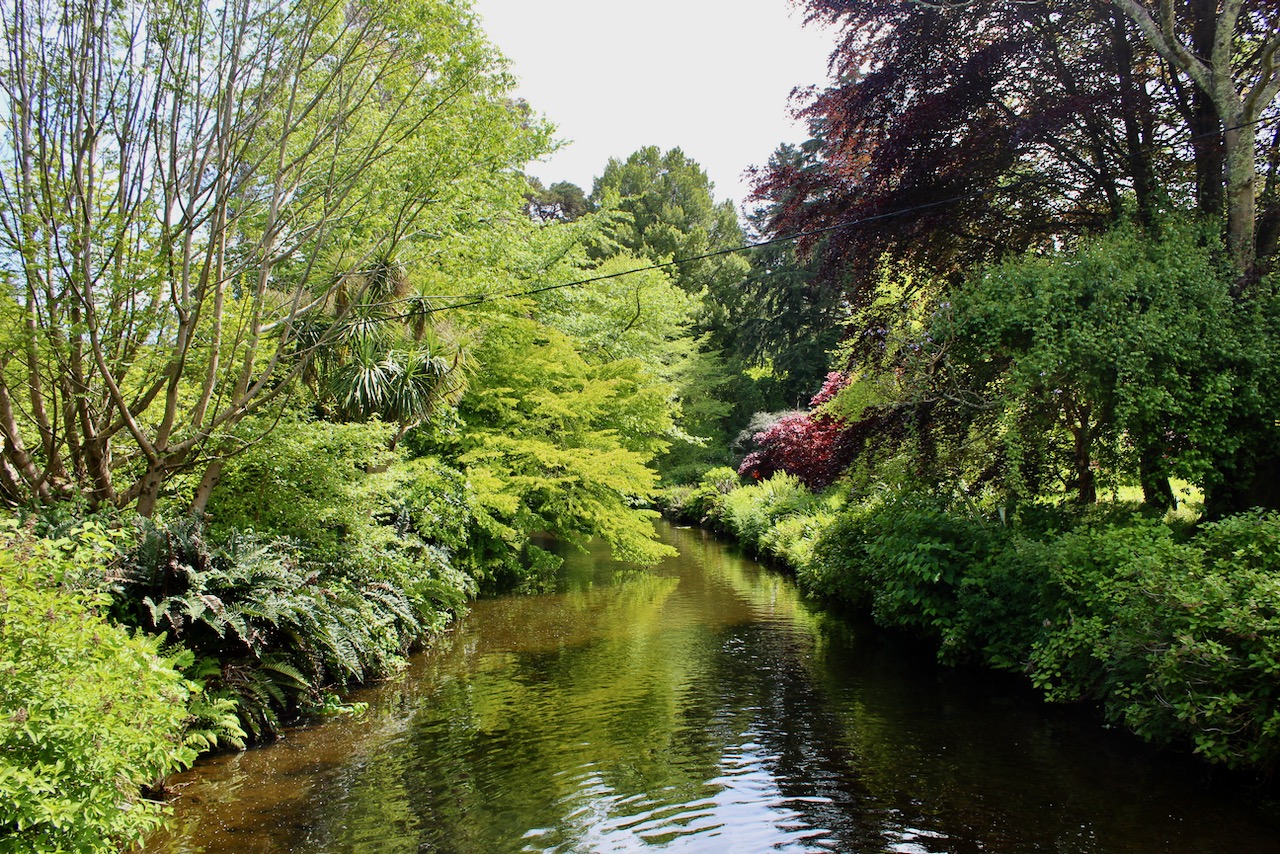
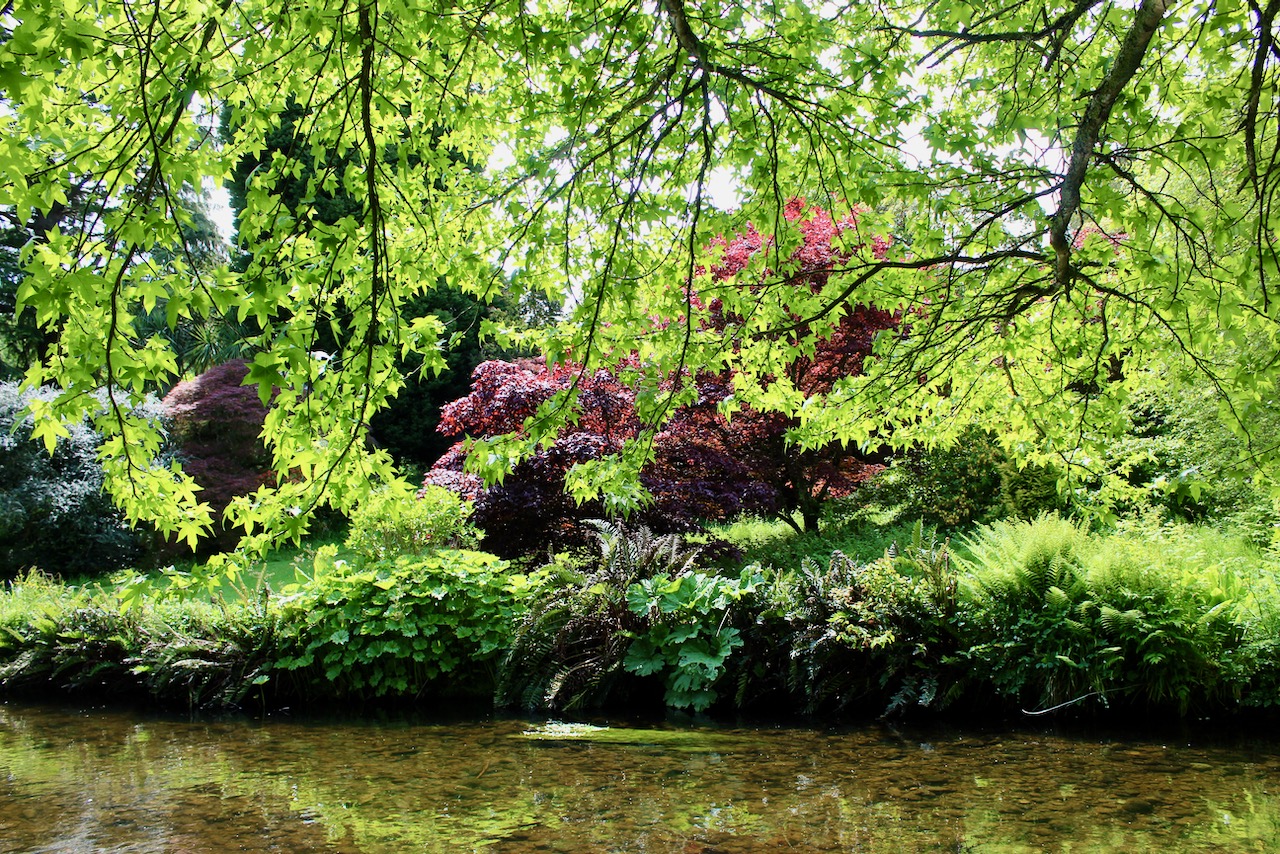
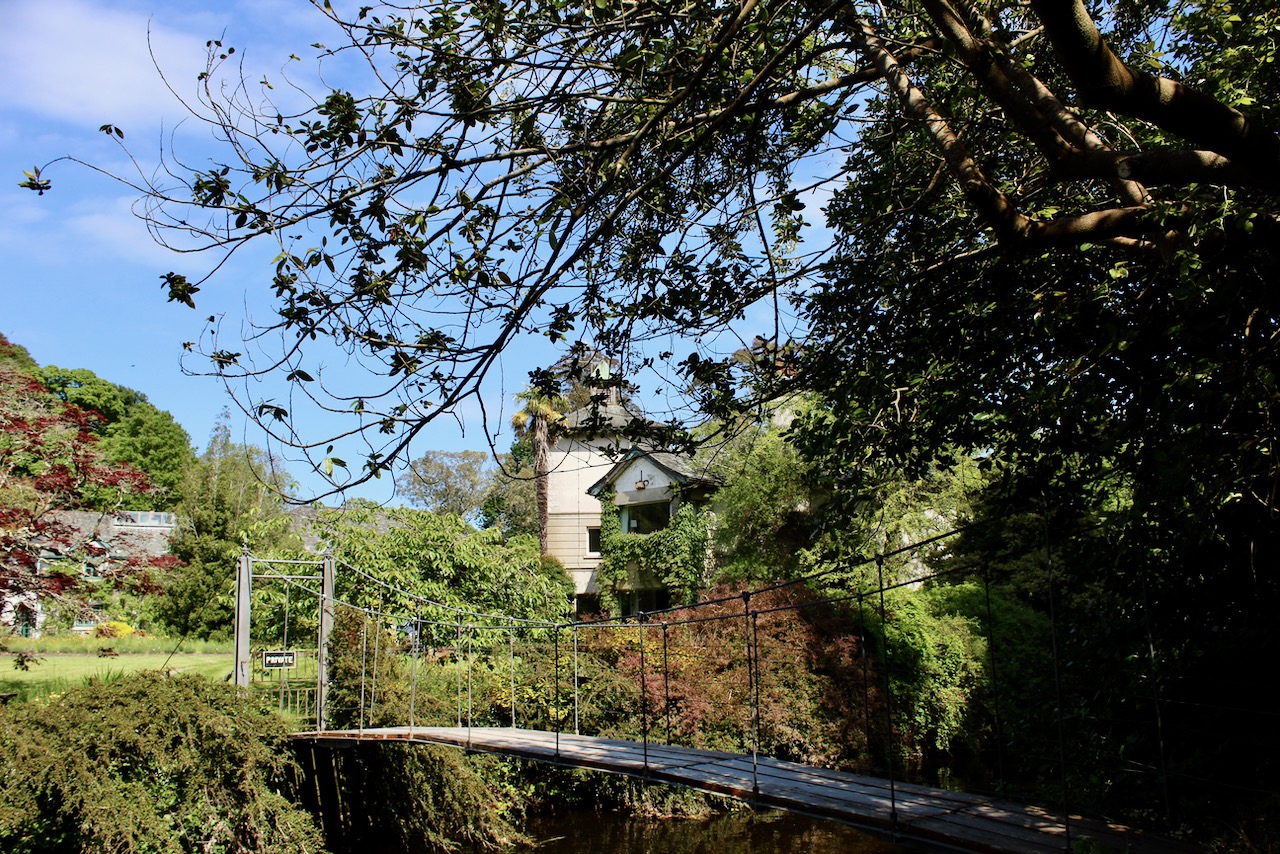
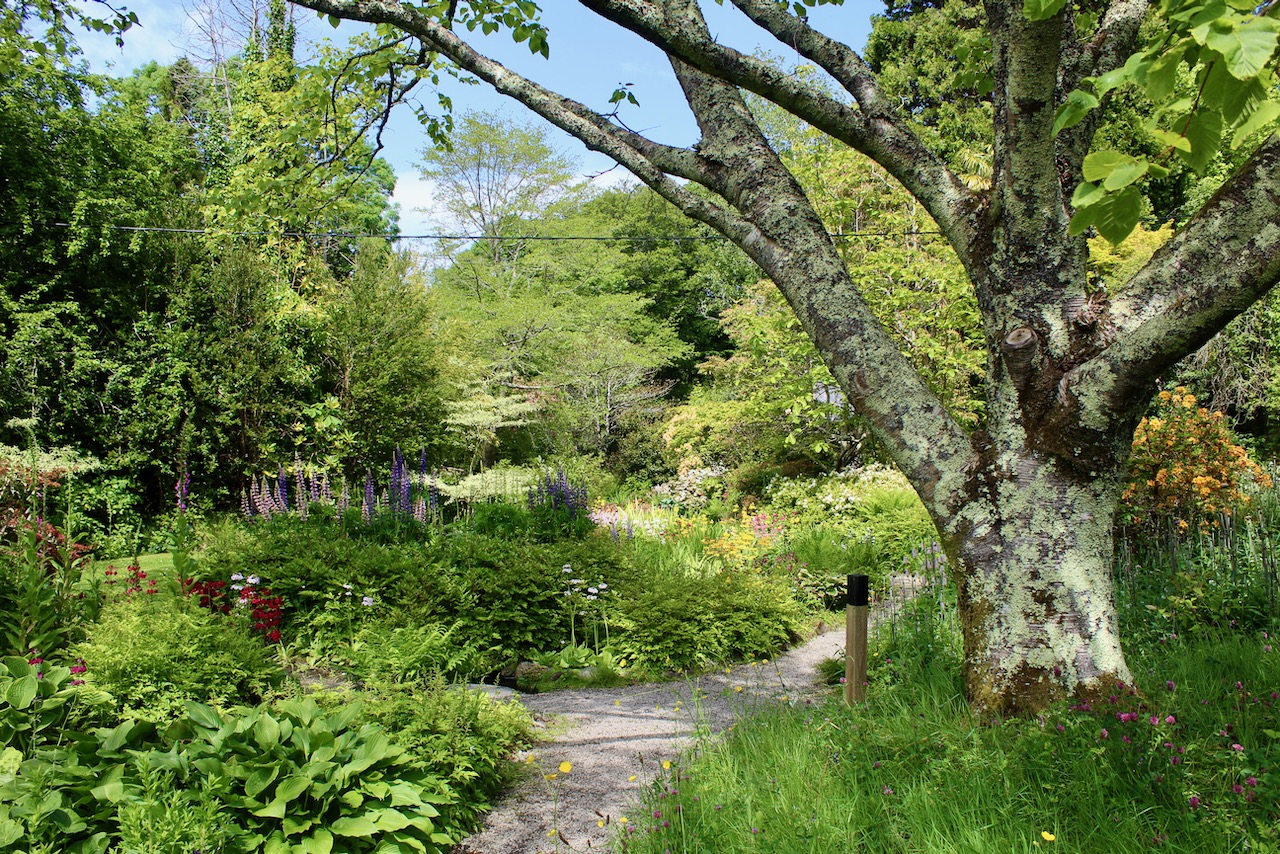
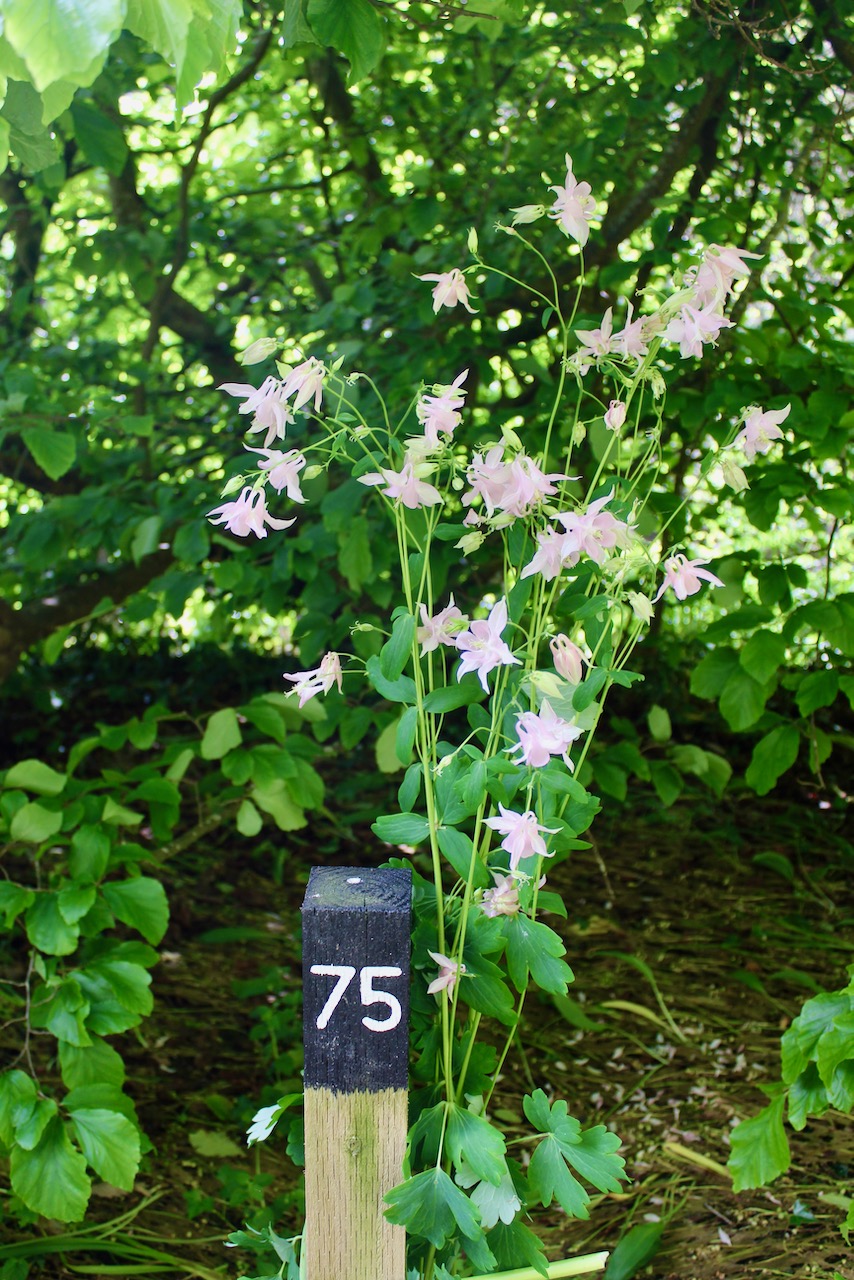
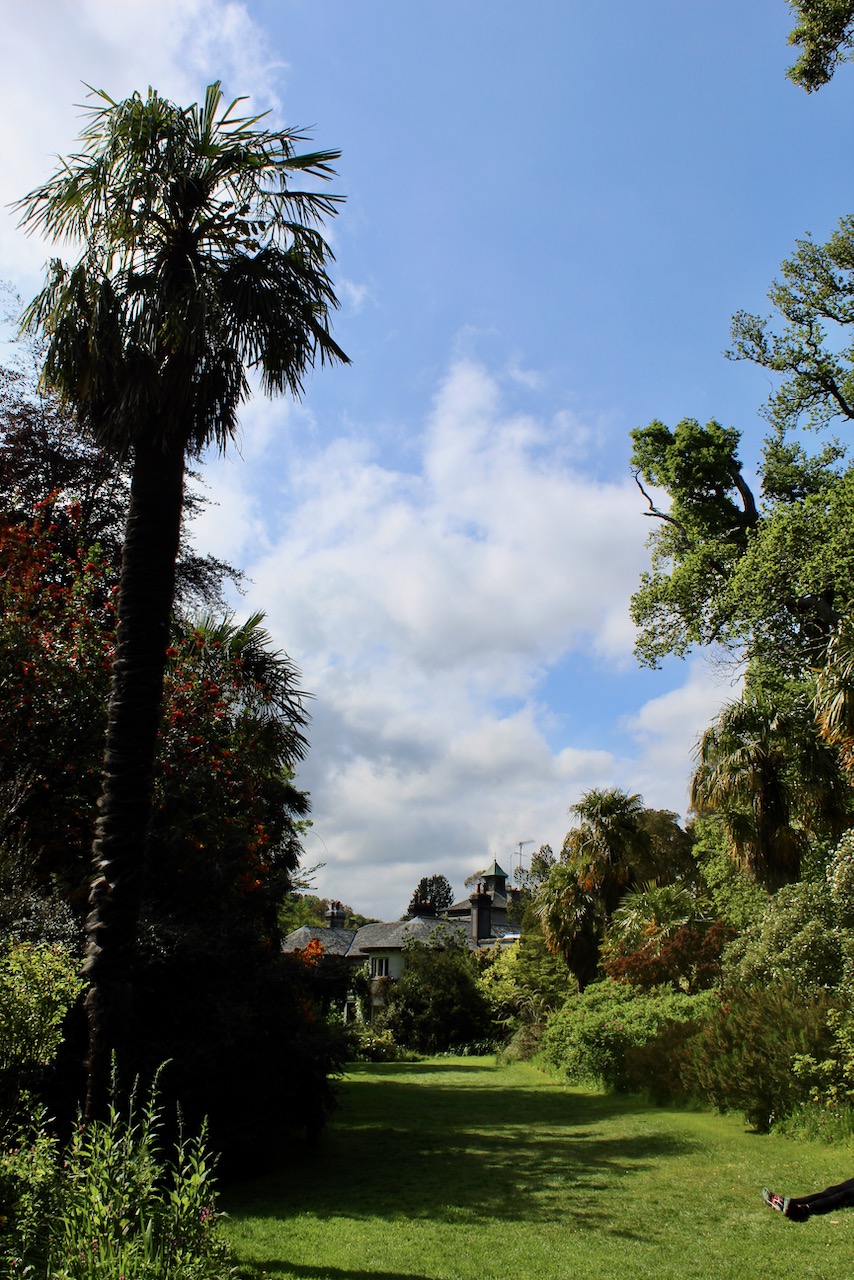
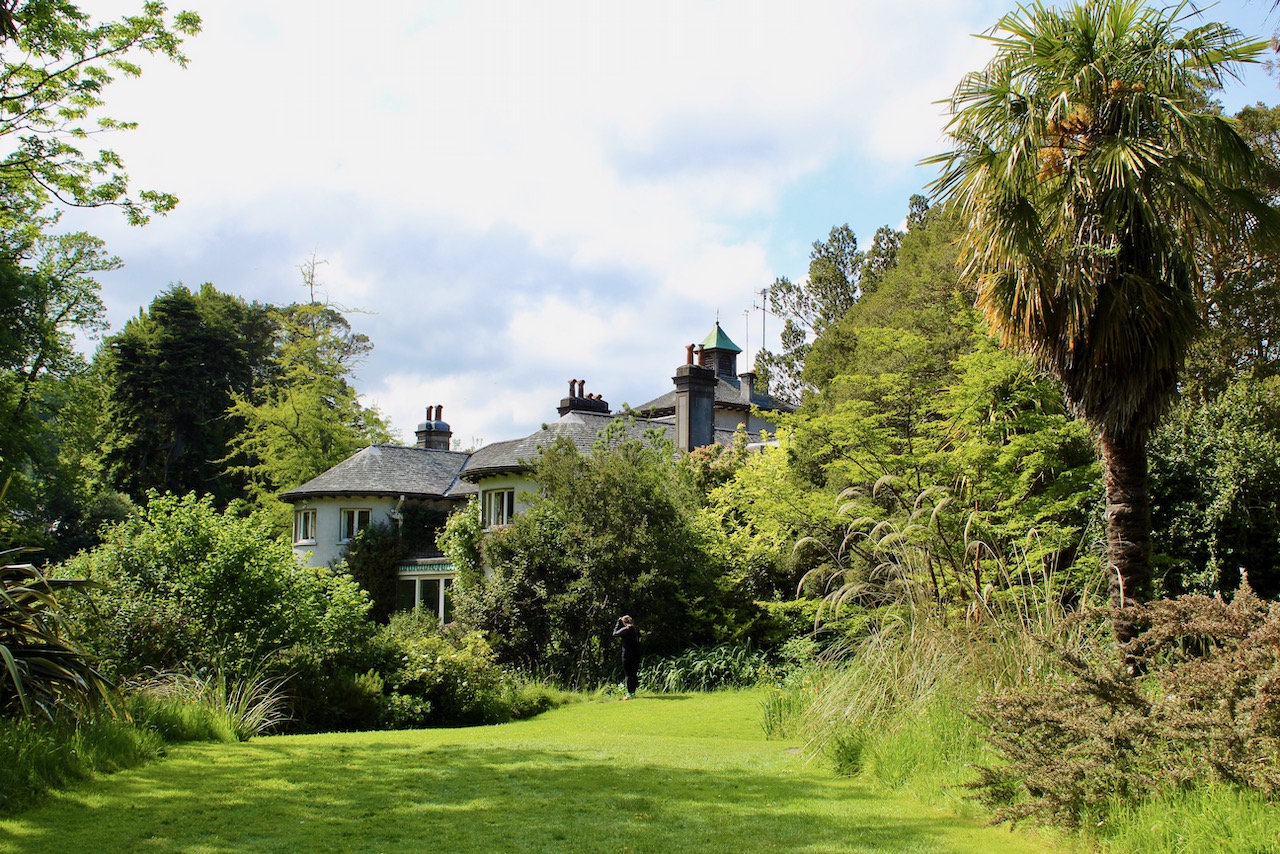
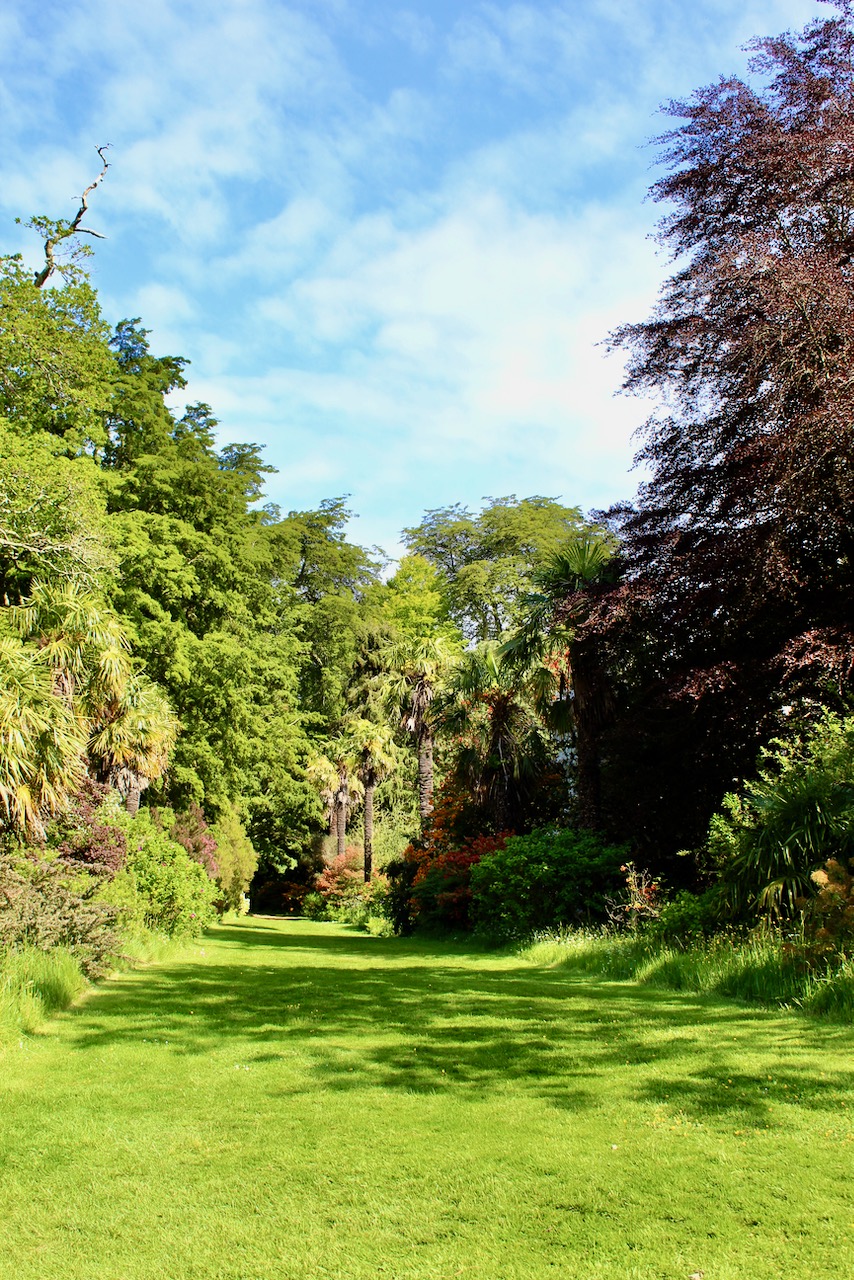
Before we were allowed to visit Section 482 houses, due to Covid 19 restrictions, we were allowed to visit gardens. Accompanied by our friends Owenroe, Deirdre, Dario and Niamh, Stephen and I headed to Wicklow one sunny Sunday in May. We had wonderful weather for the day, as you can see from my photographs. Before entering the gardens, there are some shops and a cafe.
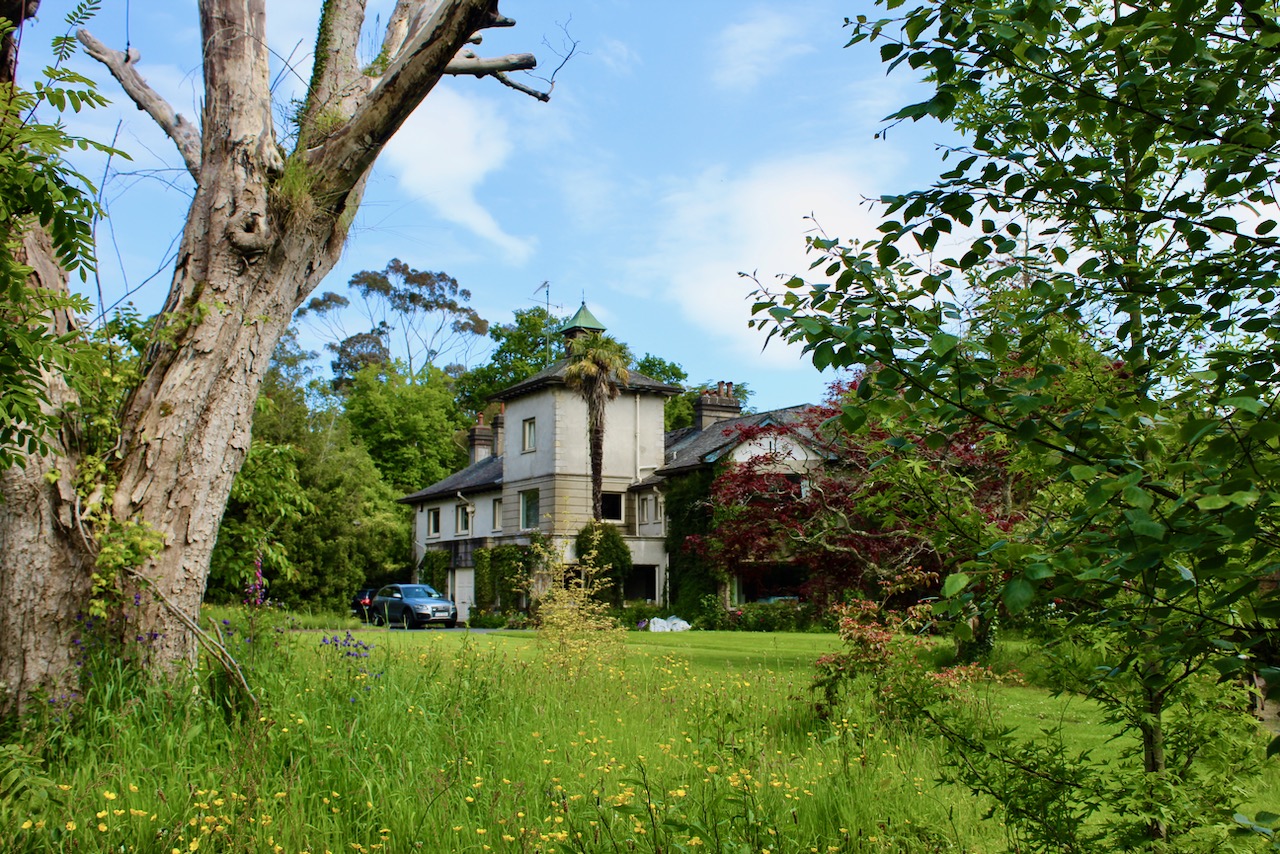
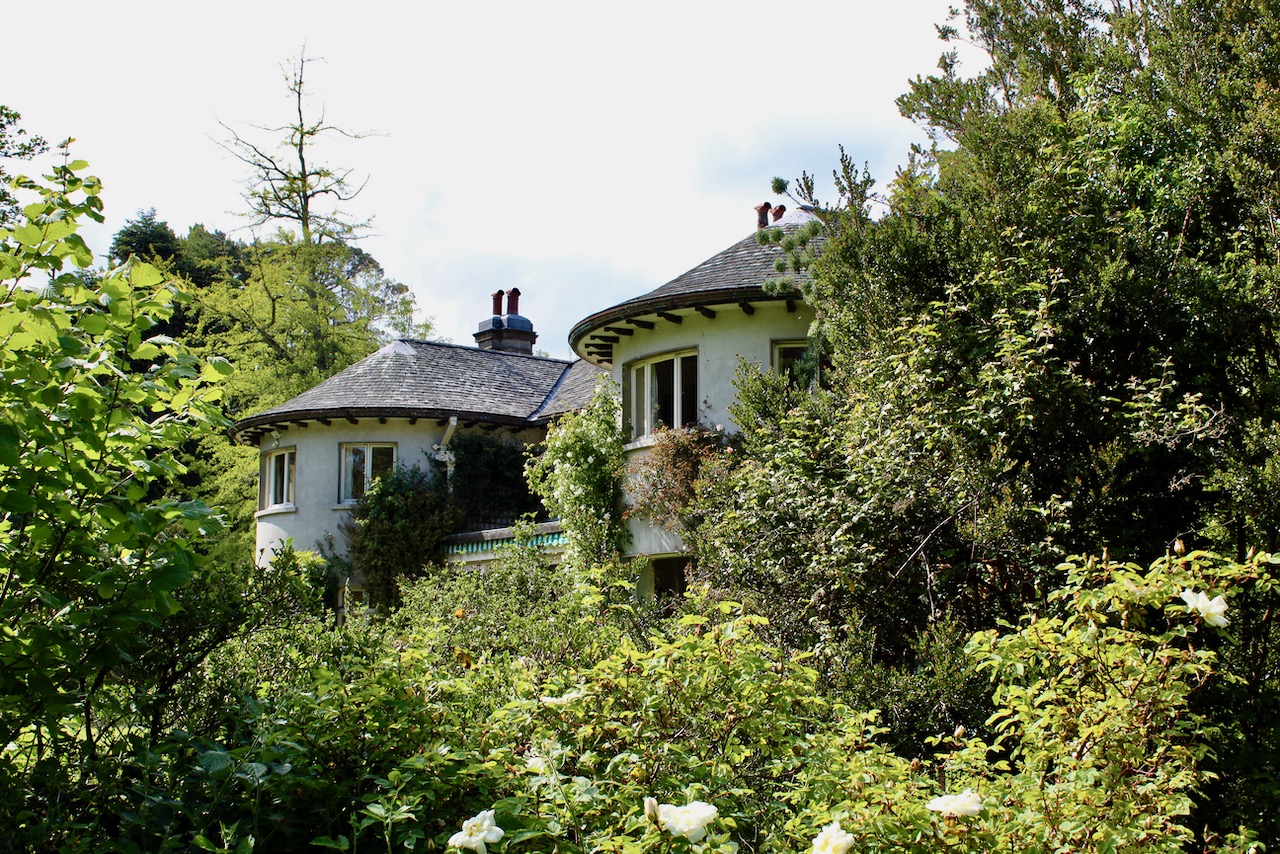
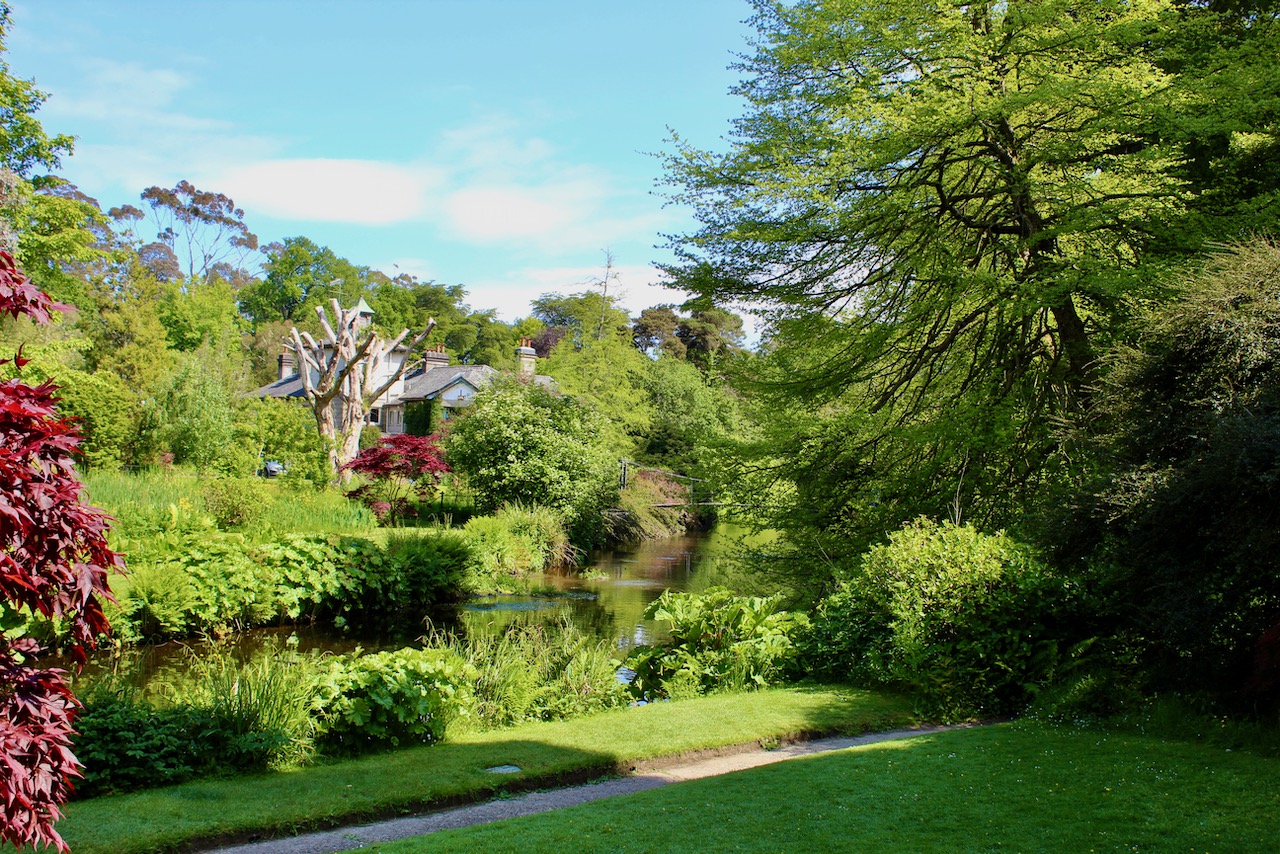
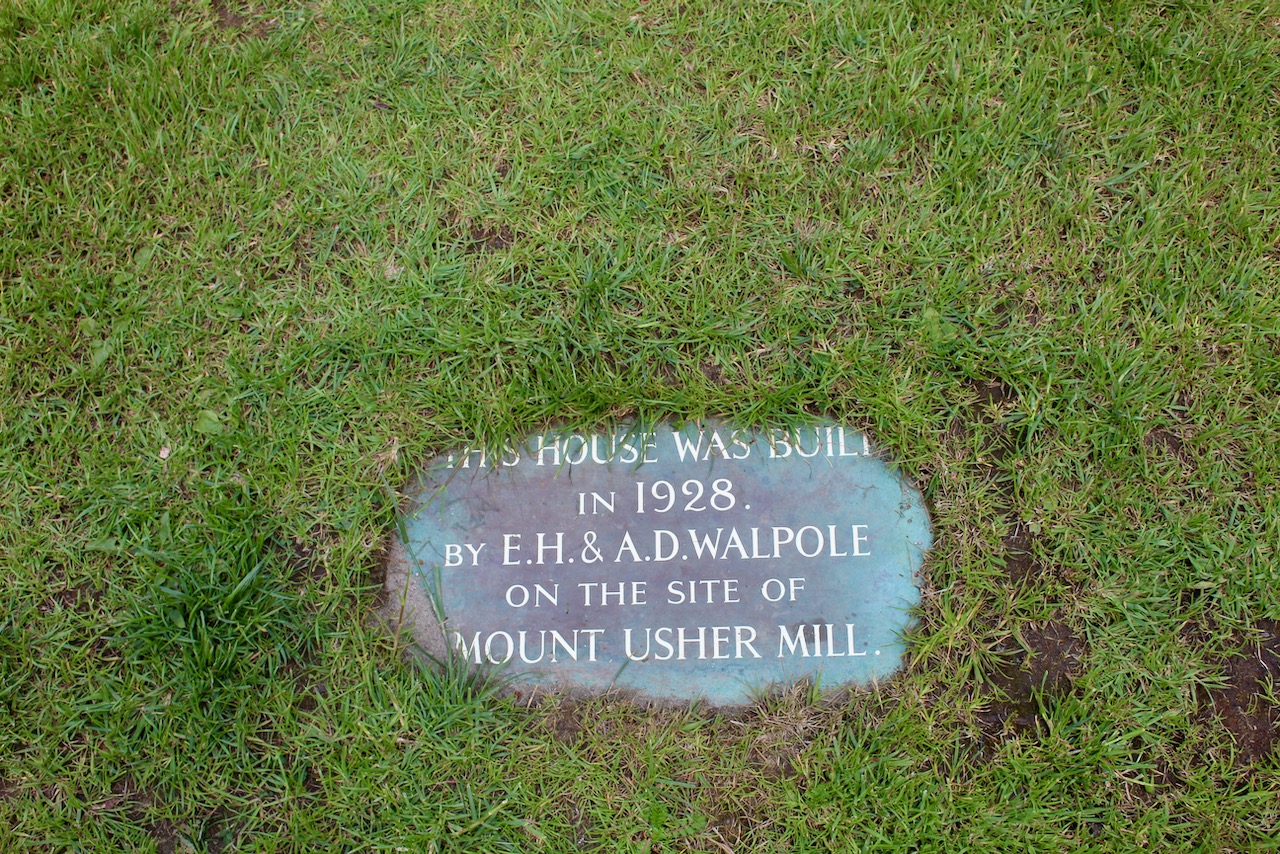
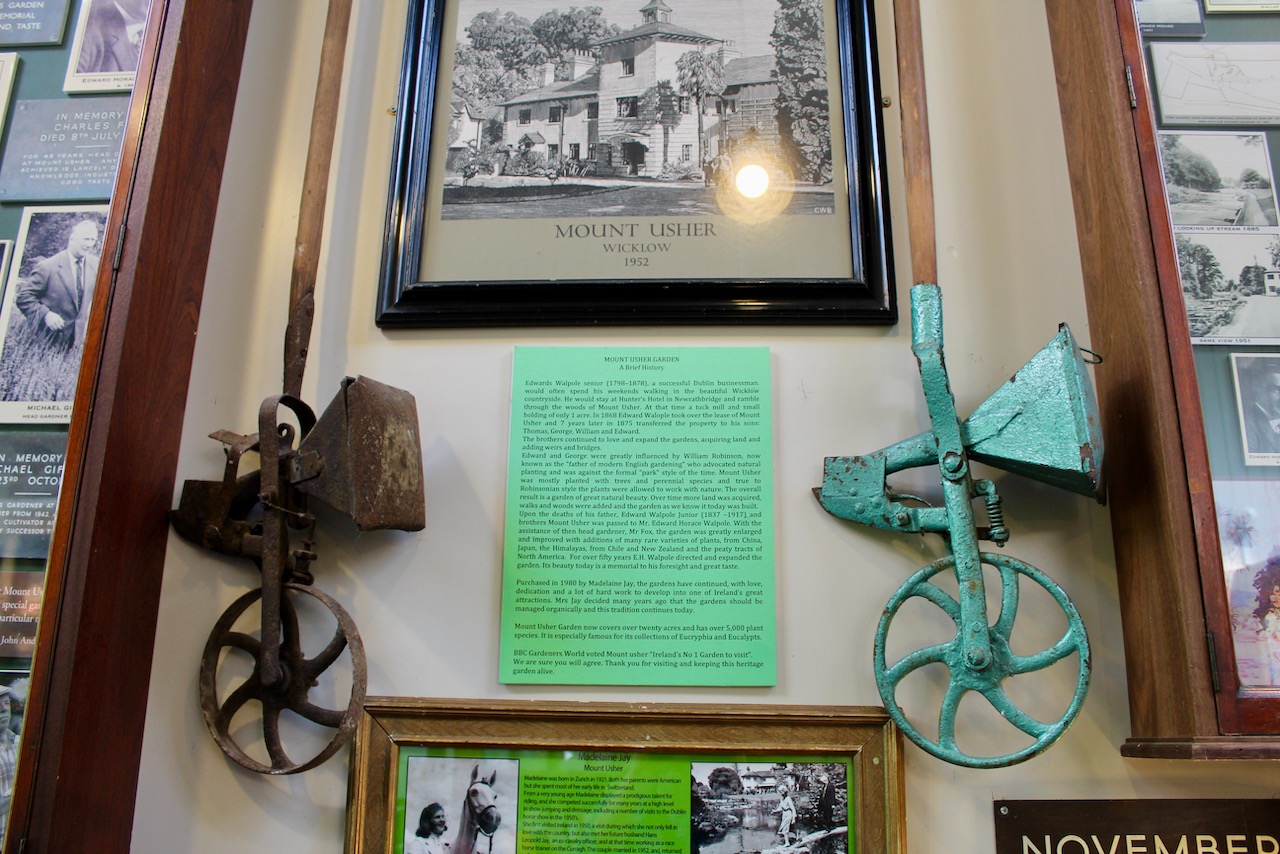
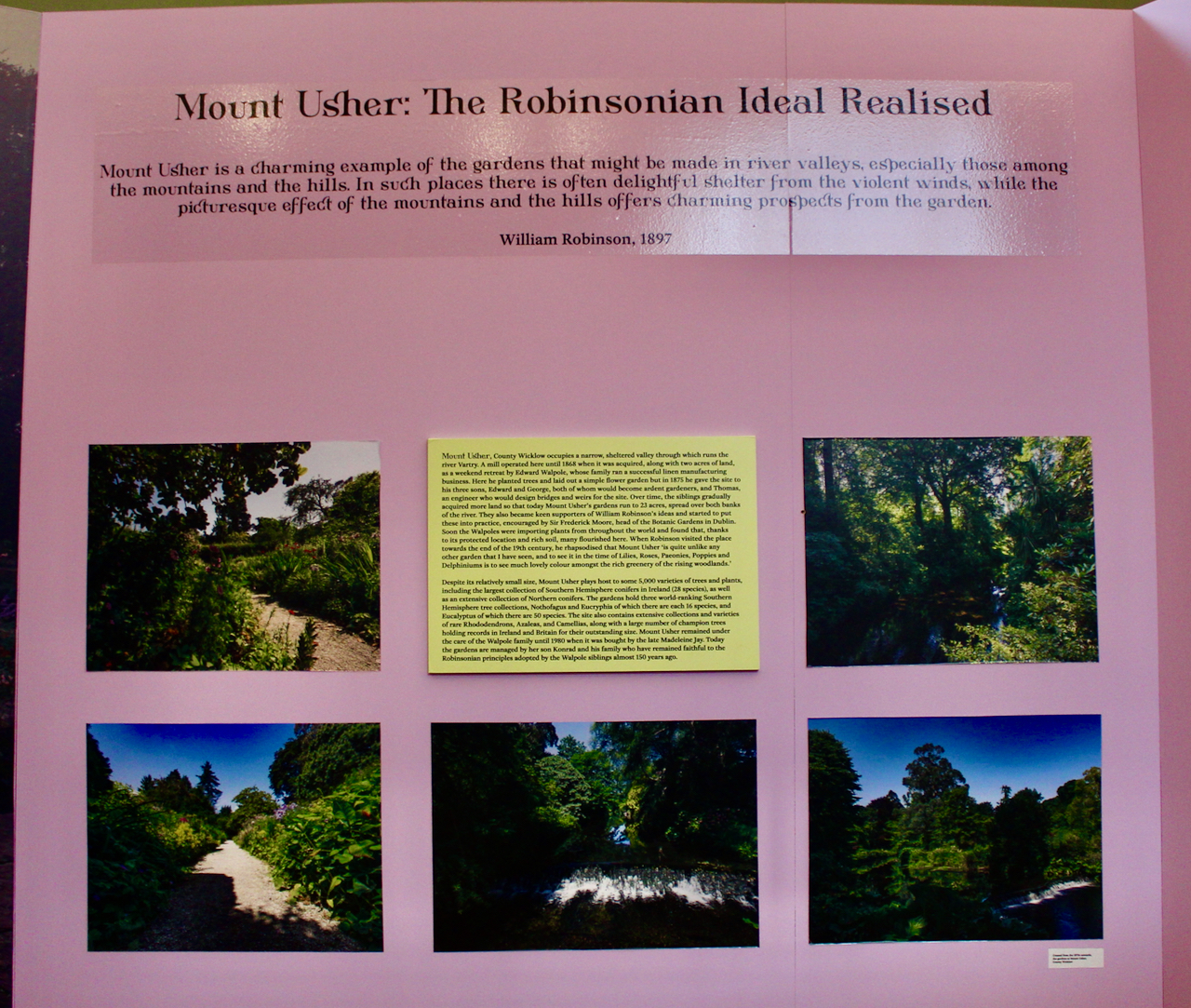
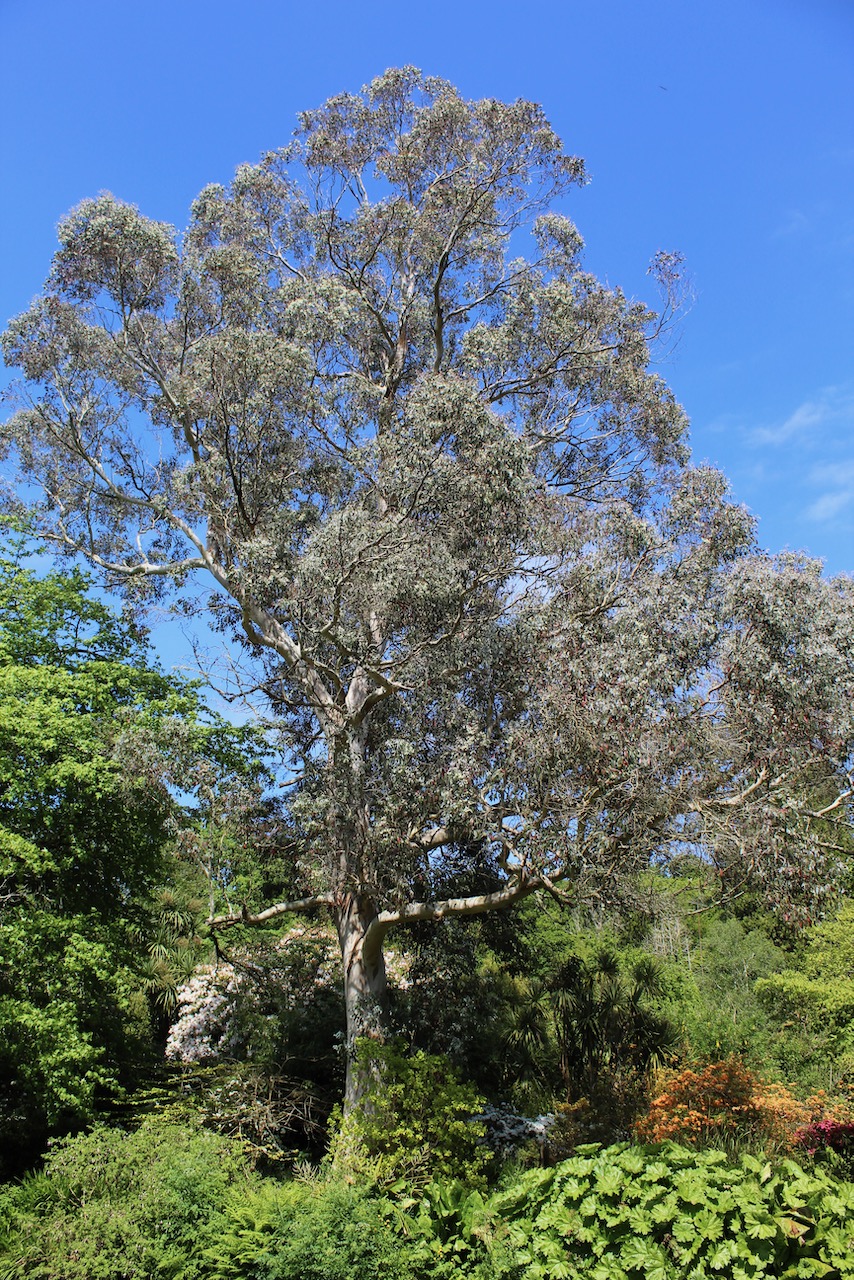
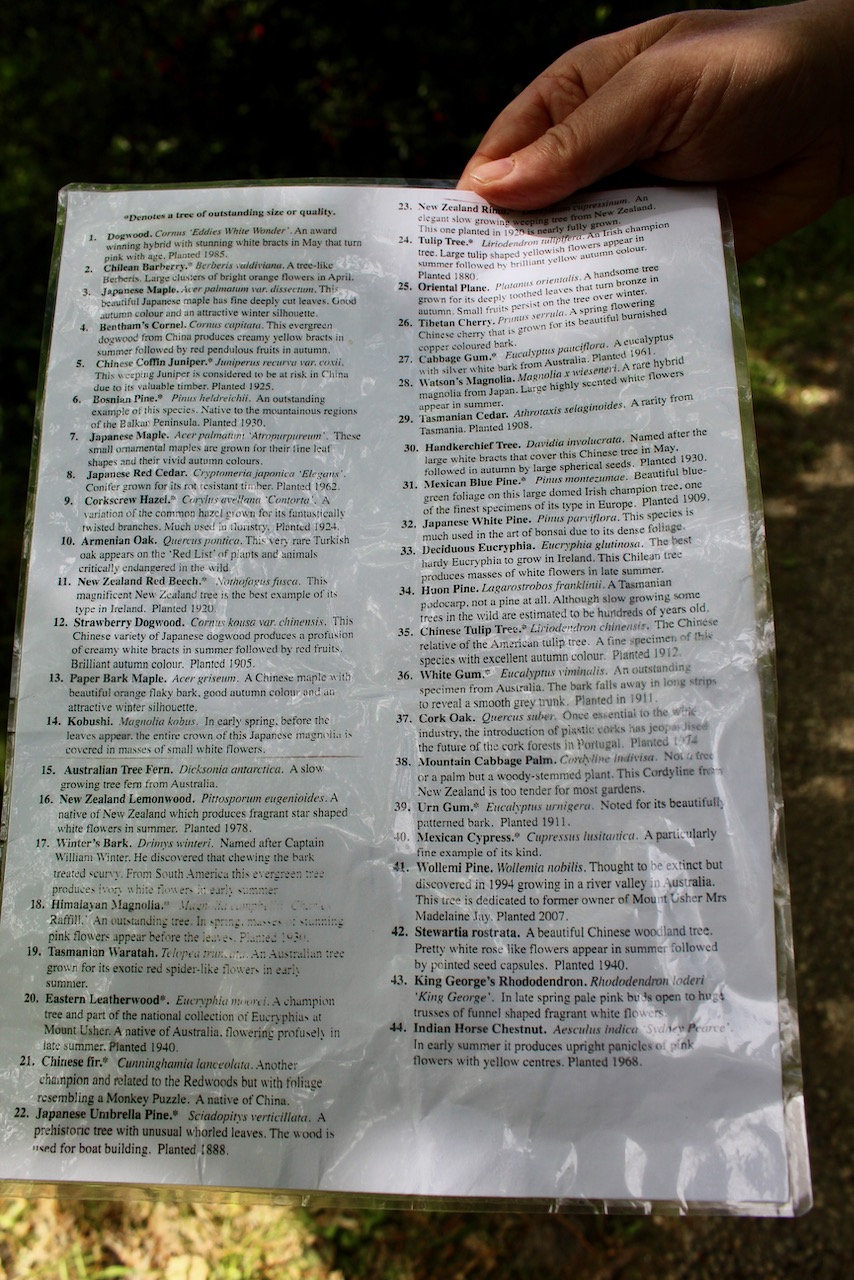
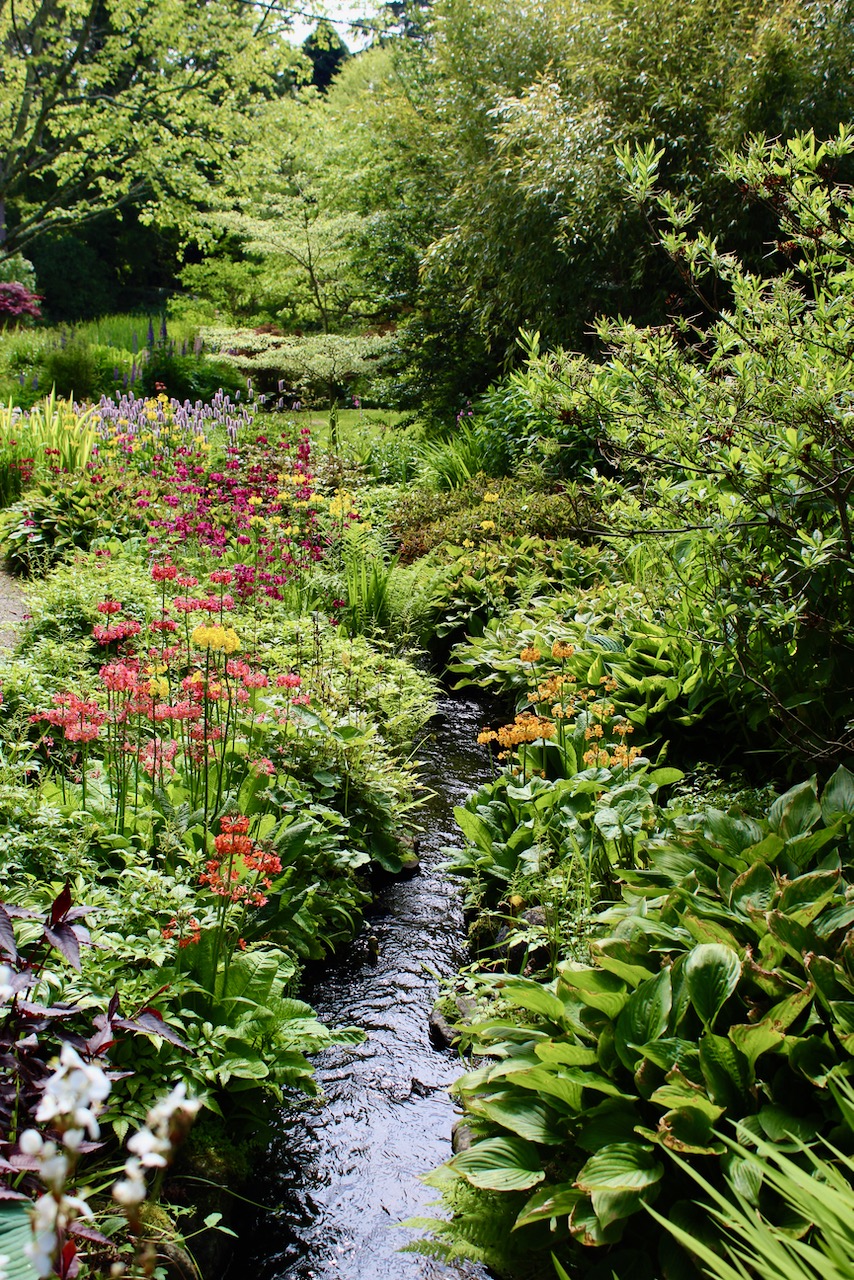
Mount Usher is open all year to visitors. There is a house, but that is not part of the Section 482 listing, unfortunately! It looks idyllic, set in its lush gardens. Mark Bence-Jones calls it a “simple double bow-fronted house,” [1] and the National Inventory tells us it was built in 1922, and that there is a long two-storey house built in the 1990s to the rear of the house. [2] The gardens cover 23 acres, along the Vartry River.
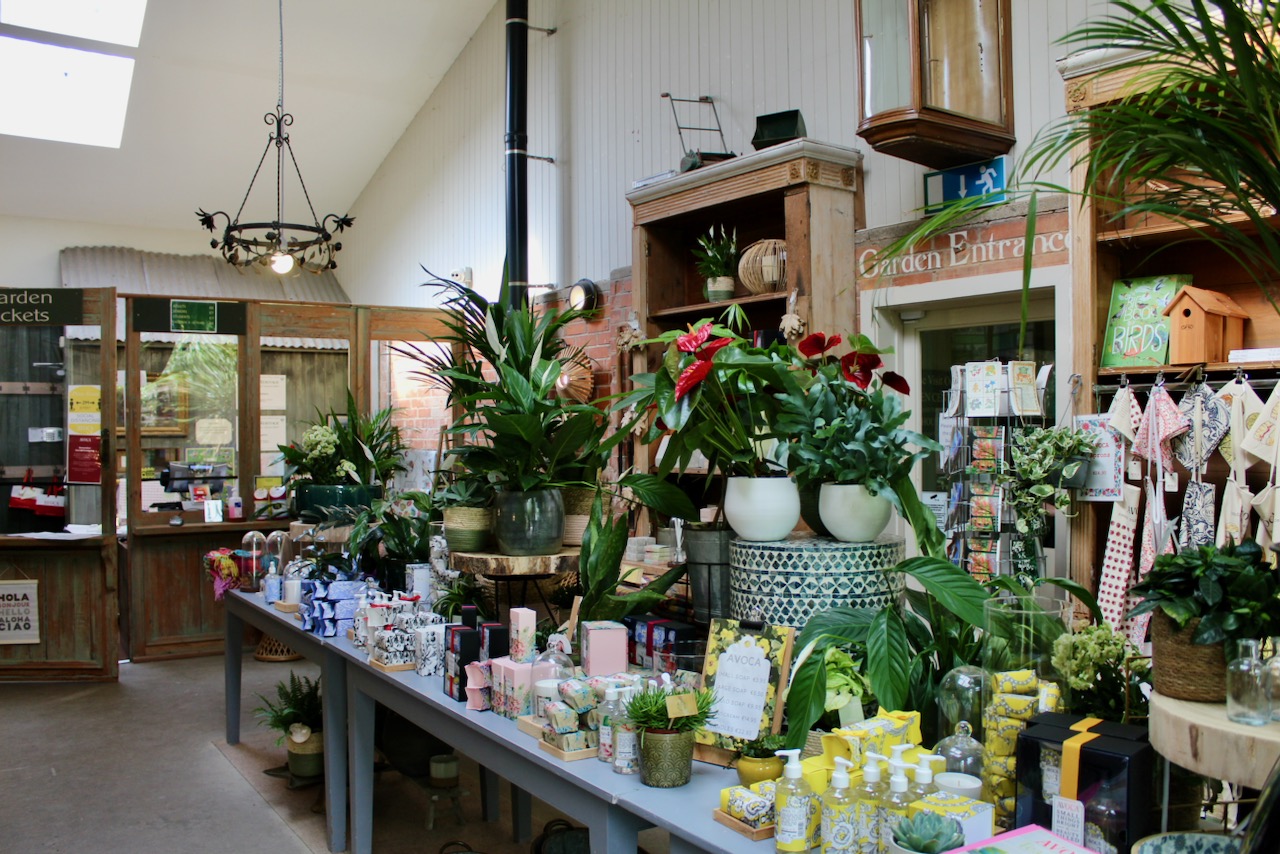
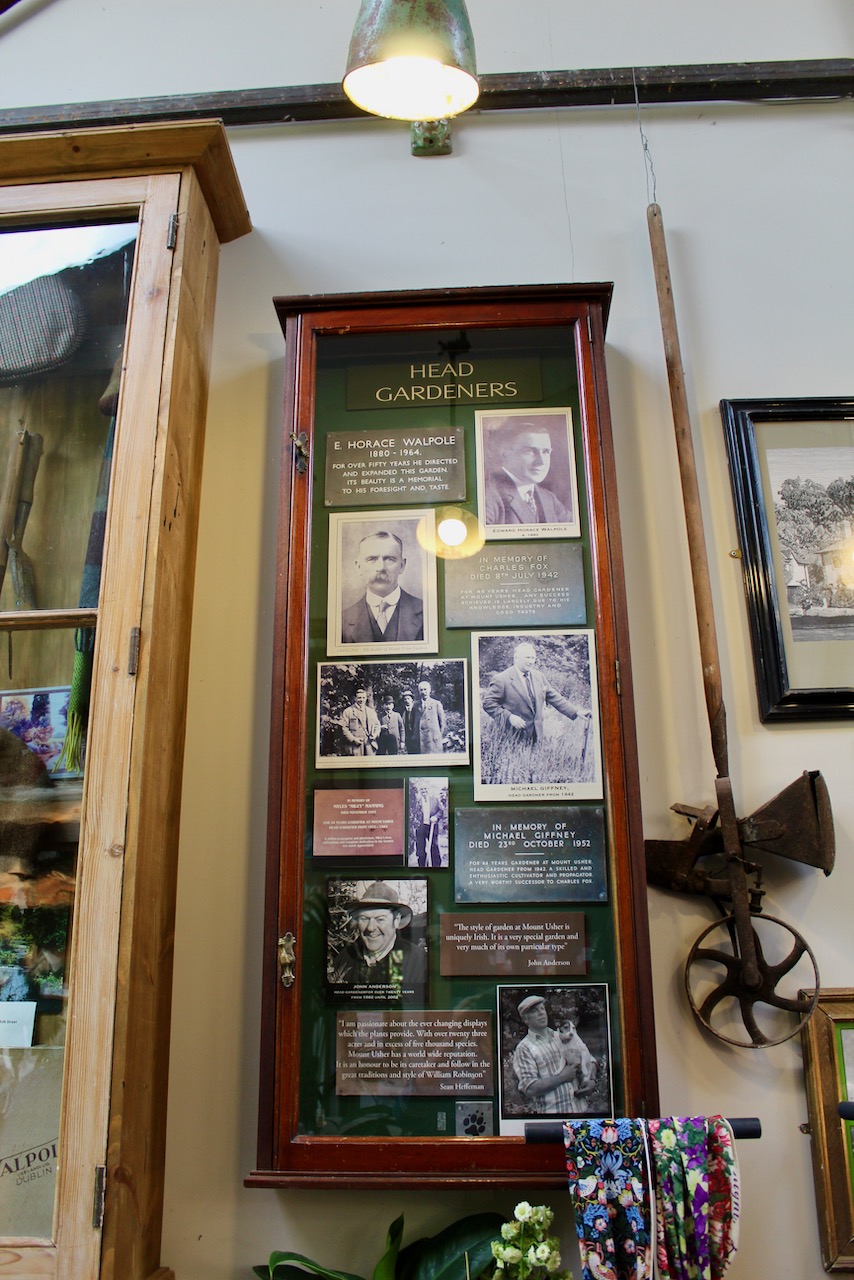
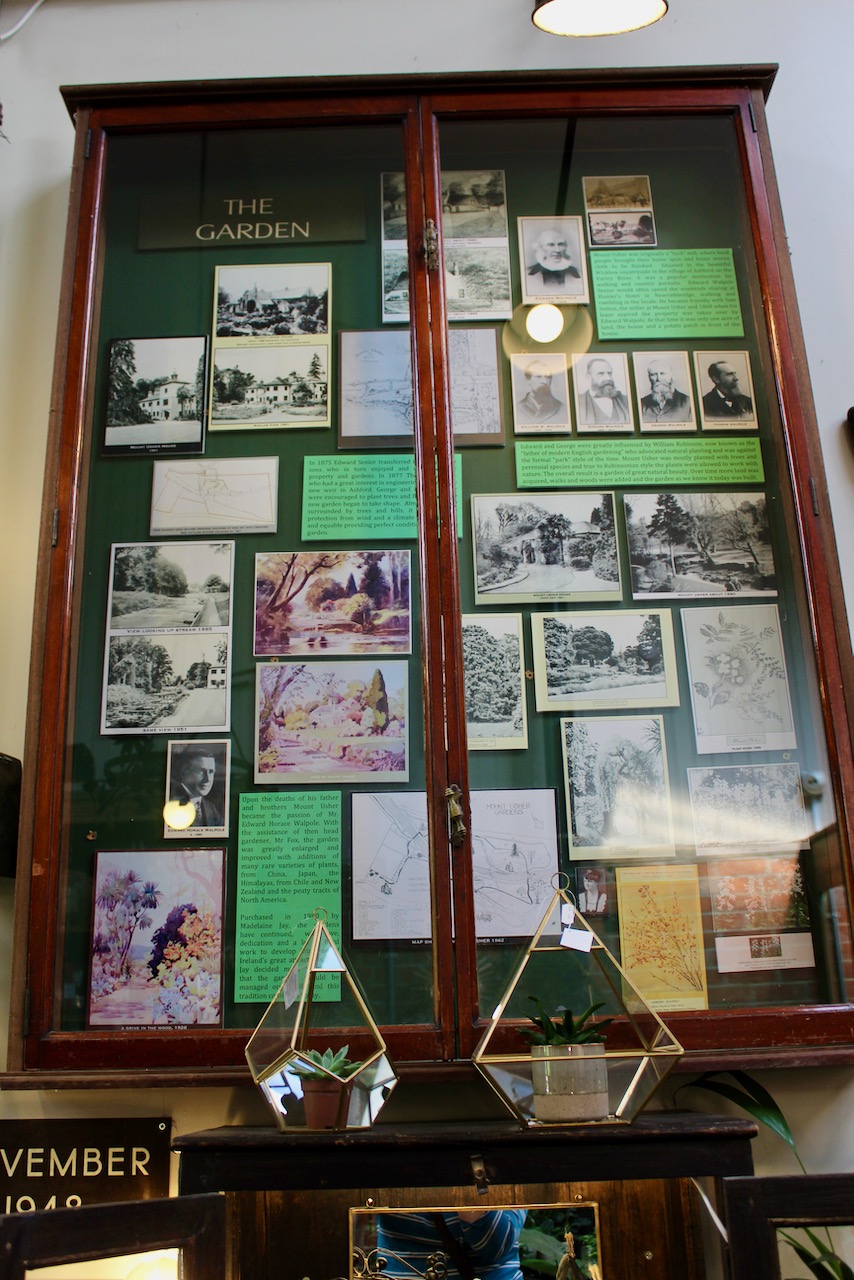
One enters through the gift shop, a branch of Avoca. Inside, there is a small museum which tells the story of the gardens and its creators. Everything looked so beautiful that we could not resist picking up a hand cream for Stephen’s mother.
The area was named after the Ussher family. John Ussher (1646-1745) is mentioned in The Peerage website as living in Mount Ussher, County Wicklow. His father William Ussher is listed as living in Portrane, Dublin and “Castle of Grange, County Wicklow.” John’s son Christopher, born around 1690, was Secretary of the Linen Board – the later occupants of Mount Ussher, or Mount Usher, as it is now spelled, the Walpoles, were also in the Linen trade. Christopher Ussher inherited land in Galway which he passed to his heirs, and in Ussher Memoirs, compiled by Reverend William Ball Wright in 1889, there is no further mention of Mount Ussher. [3]
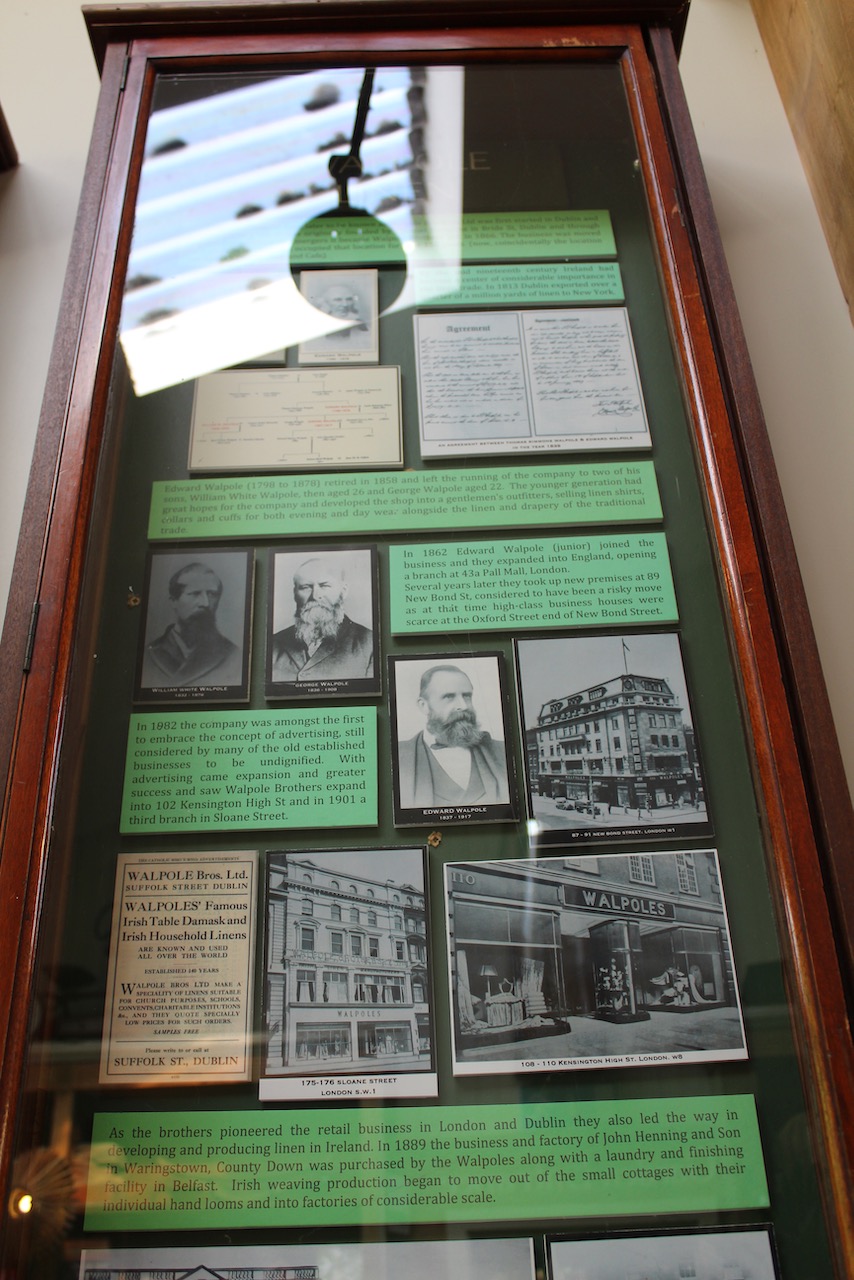
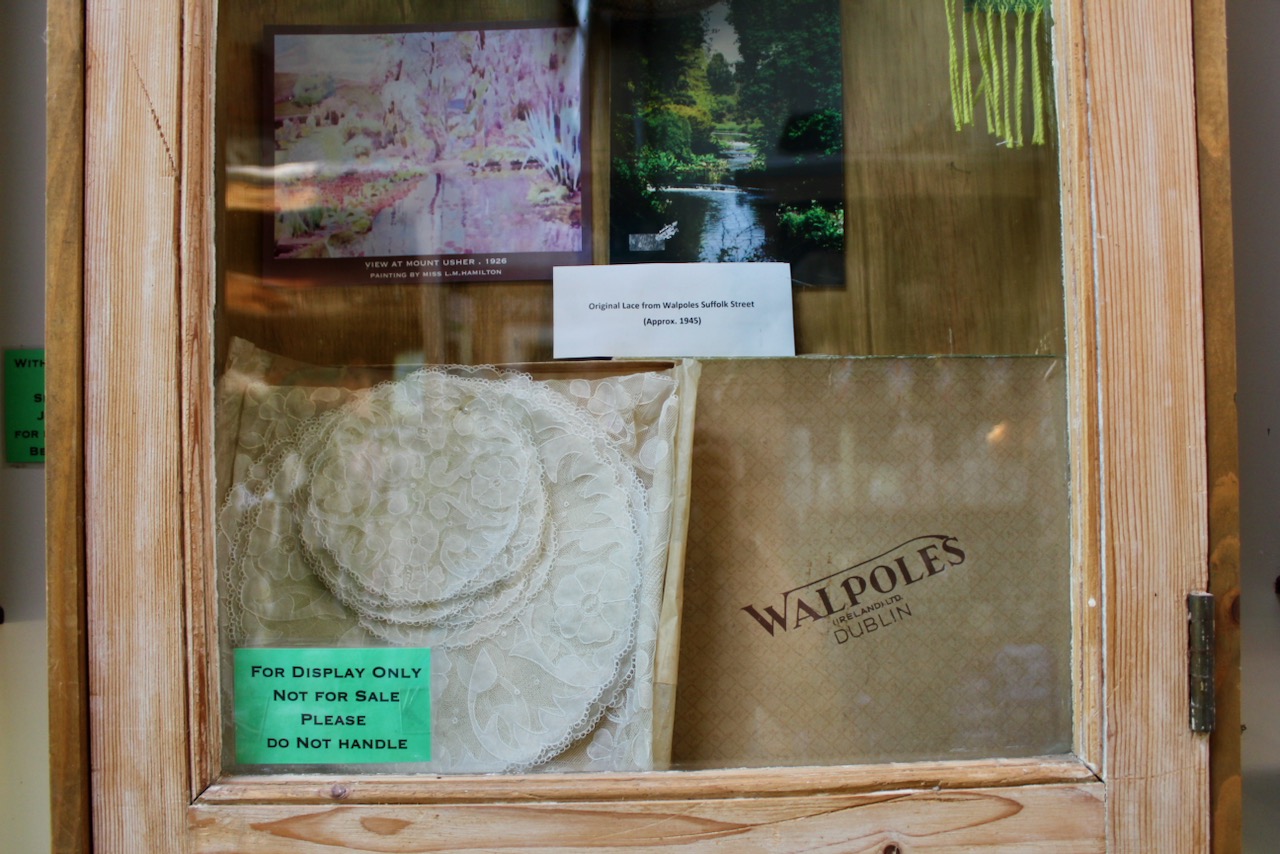
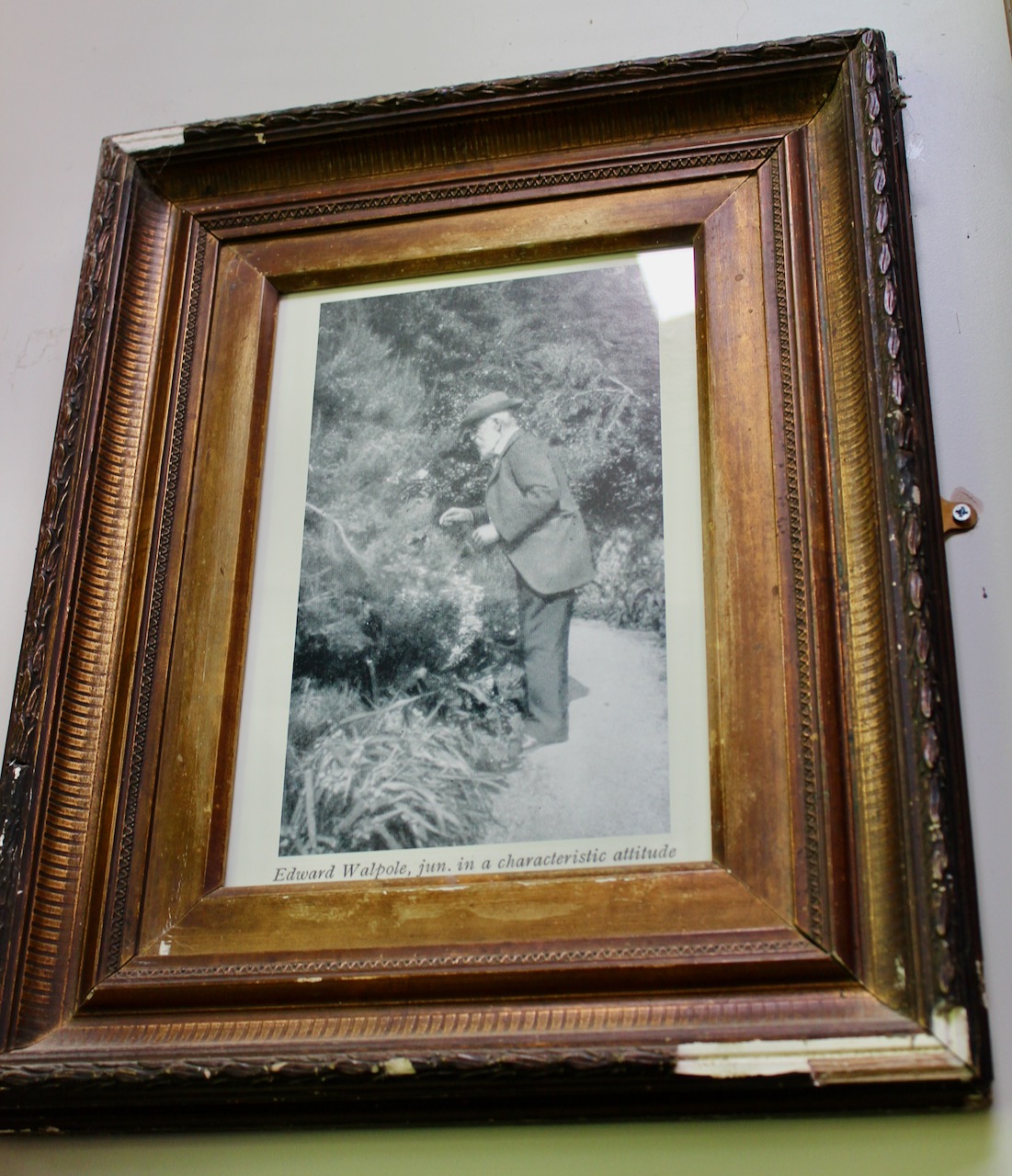
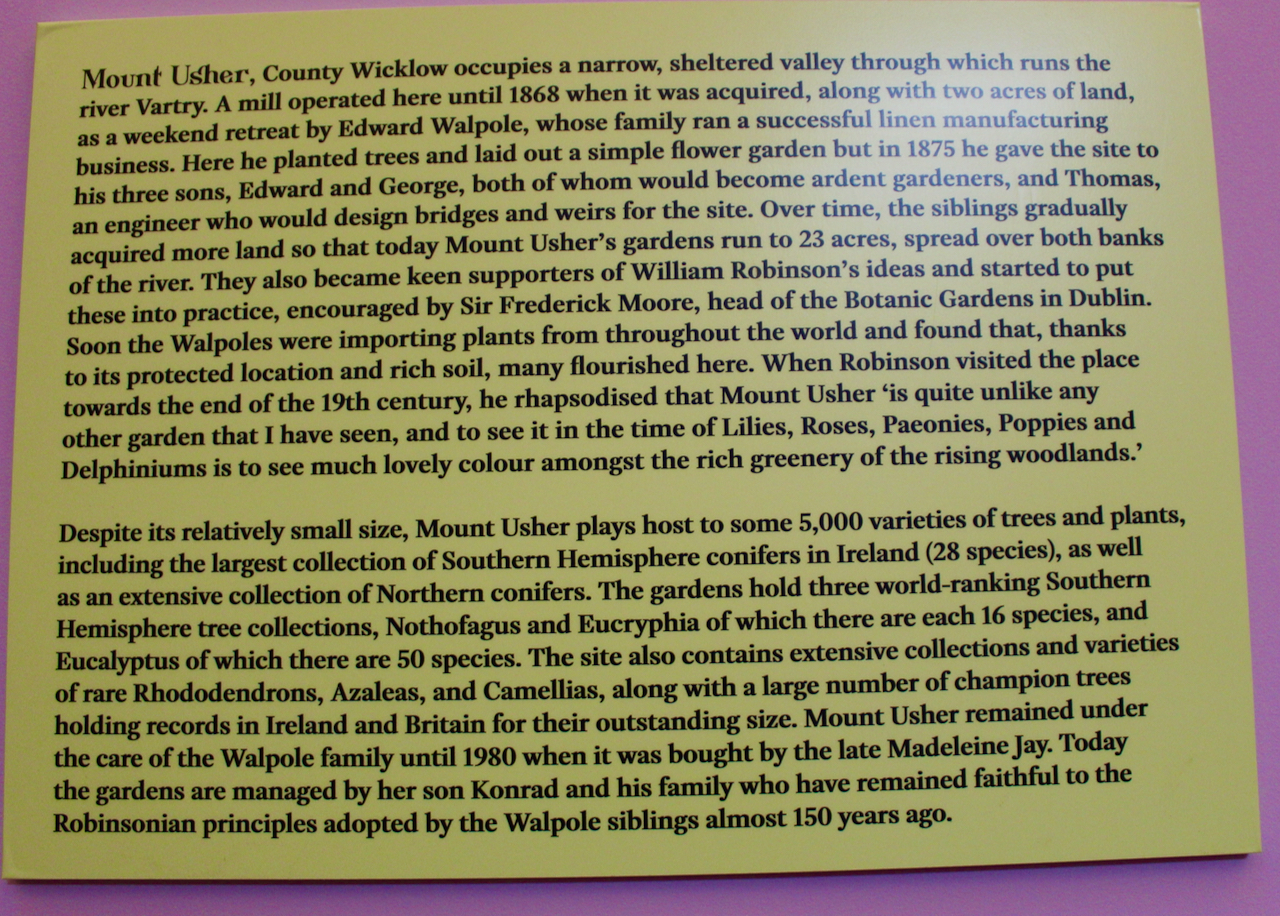
The museum tells us that Edward Walpole (1798-1878), a successful Dublin businessman, enjoyed walking in Wicklow, and he stayed in a hotel on weekends to indulge his passion. The Walpole family was involved in linen manufacturing. Thomas Simmons started a linen business in Bride Street in Dublin in 1766, and through mergers and a marriage it grew into Walpole Brothers Limited by 1866. Coincidentally, in 1816 the business moved to Suffolk Street in Dublin and occupied what is now Avoca Shop and Cafe on that street.
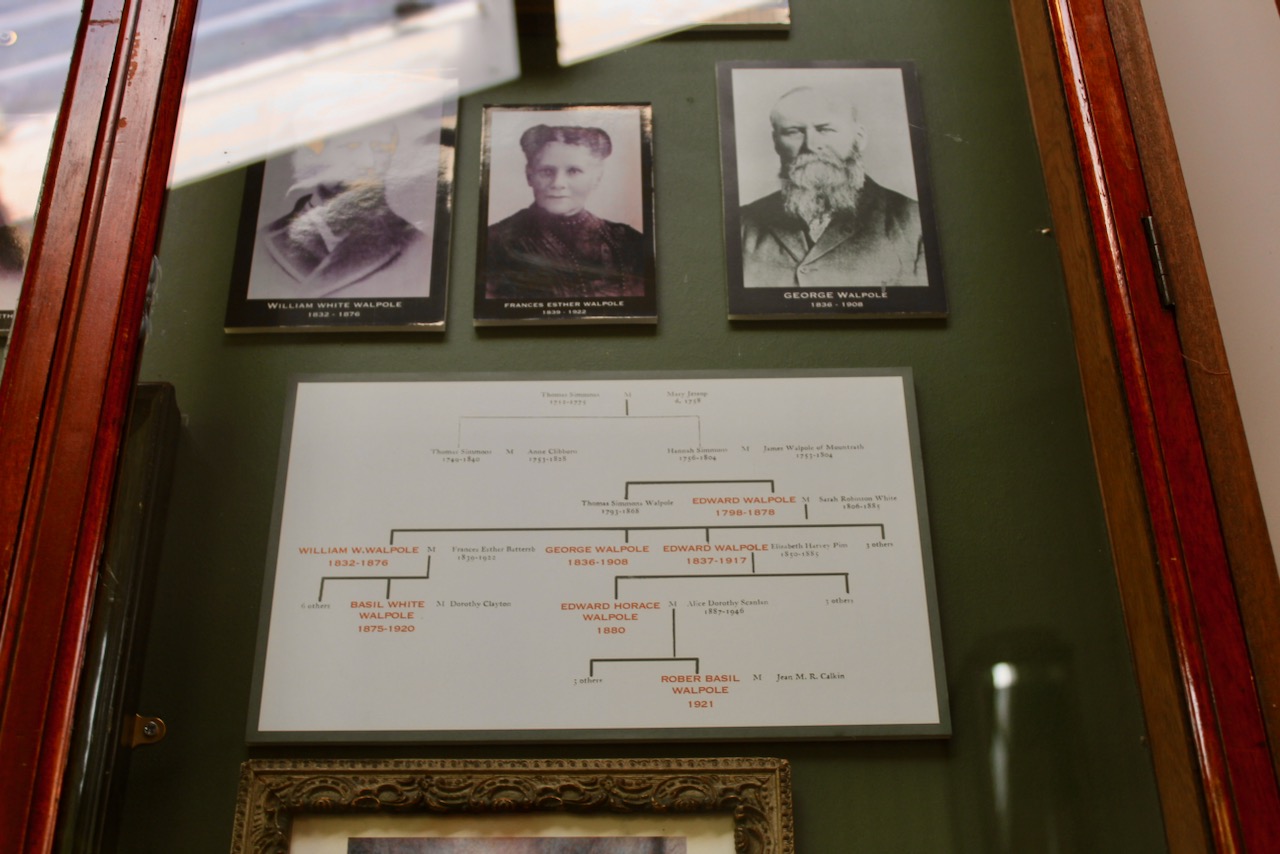
Mount Usher had originally been a “tuck mill” where local people brought their home spun and woven cloth to be finished. This may be how Edward Walpole came across this location. He took over the lease of Mount Usher in 1868 and began to develop his garden, with the help of his sons. Seven years later, in 1875, he transferred the land to his sons: Thomas, George, William White and Edward. William White and George also continued in the Linen business, and developed their shop into a Gentlemen’s Outfitters. Their younger brother Edward joined the business and expanded to London.
The Walpoles were Quakers. They came originally from the settlement in Mountrath, County Laois – the National Library of Ireland contains documents relating to the Walpoles and their business [4]. The Quakers in Ireland website tells us why Quakers were successful in business:
Why were Friends successful in this way? Modern business has become so competitive, and the profit motive so pervasive, that it is hard to imagine the strong influence their religious convictions exerted on them. They simply believed it was right to offer a good product for a fixed, and reasonable, price. They believed in honesty and integrity in all their dealings. A simple life-style, and not over-extending themselves financially, allowed them to build up their resources. Strict rules governing business methods for members meant that they were increasingly trusted with money, and some became bankers. Various laws, including those related to swearing oaths, prevented Friends from attending university and joining the professions for a couple of centuries, so they put their energies into business instead. Friends were good employers, and this led to a loyal workforce.
Also, and importantly, the structure of The Society of Friends from its earliest days, with a system of representatives from Meetings regularly visiting other Meetings, often in other parts of the country, created a network of relationships between like minded individuals and families. It was natural, therefore, that they would hear about, support, participate in and emulate each other’s ventures. [5]
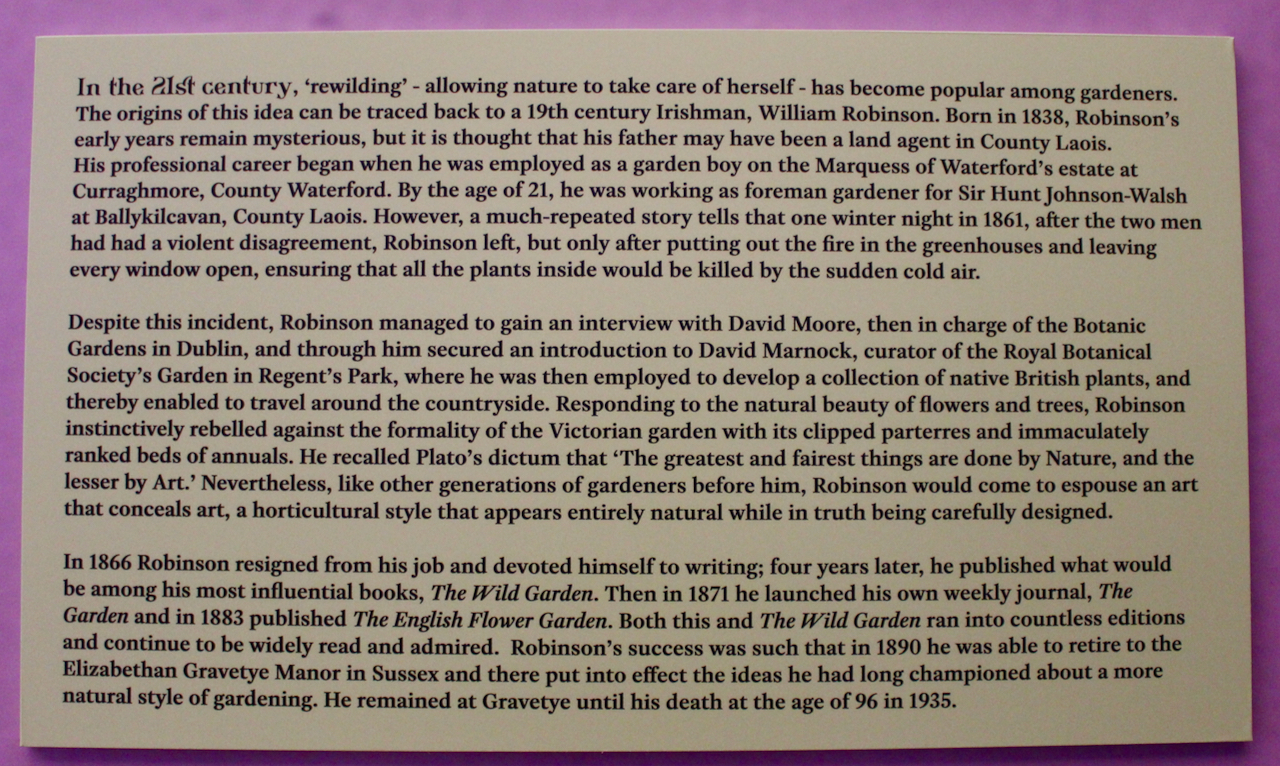
The brothers acquired more land to add to their garden, and Thomas, an engineer, added weirs and bridges. Edward and George were influenced by William Robinson, who has been called “the father of English gardening.”
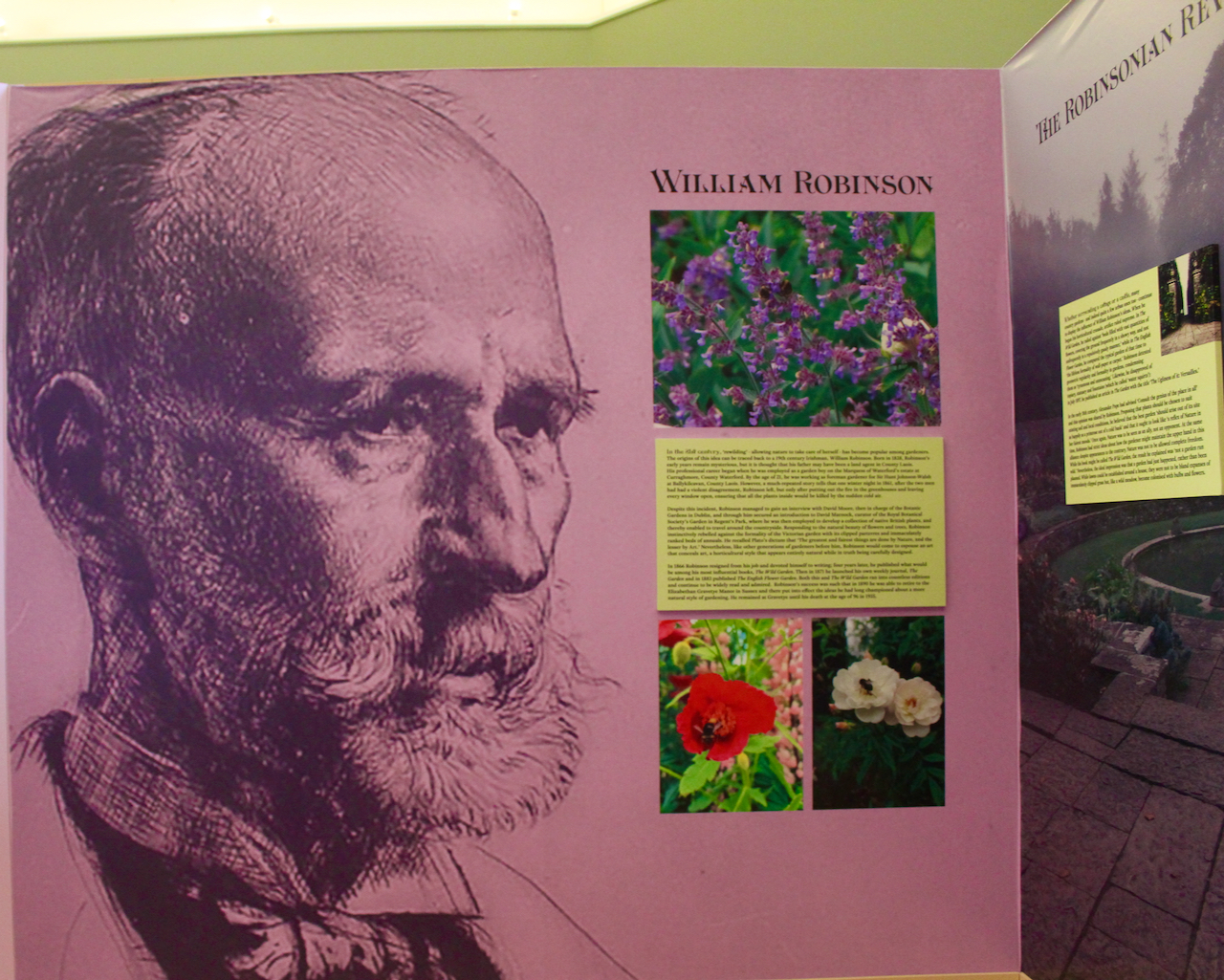
William Robinson (1838-1935) was born in Ireland. His first job was in Curraghmore, County Waterford. He progressed to become the foreman gardener in Ballykilcavan, County Laois, employed by Sir Hunt Johnson-Walsh. In 1862 Robinson found employment at the Royal Botanic Society’s garden at Regent’s Park in England. He resigned four years later in order to further his knowledge of gardening, and to write. He travelled in France and later more widely in Europe and the United States, and published books on horticulture. His most important work is The English Flower Garden (1883). [6] The Robinsonian style of gardening is to work with nature, as opposed to imposing order.
Walks and woods were added to the property as more land was acquired. The family also owned a house called Windsor Lodge in Monkstown in Dublin. Mount Usher passed to Edward Horace Walpole, the son of Edward Walpole (1837-1917) and Elizabeth Harvey Pim [perhaps his parents were fans of the writer, Horace, or Horatio, Walpole (1717-1797), who most famously wrote the Gothic novel The Castle of Otranto and who also embraced the Gothic style in his home, Strawberry Hill in southwest London – or perhaps they were related]. For over fifty years, Edward Horace enlarged and improved the garden, with the help of his head gardener, Charles Fox. Rare varieties of plants from China, Japan, the Himalayas, Chile, New Zealand and North America were added.
Edward Horace Walpole married Alice Dorothy Scanlan from Nottingham in 1912 in the Friends Meeting House (Quaker) in Nottingham. [7] His son Robert Basil Walpole sold Mount Usher.
In 1980 Madelaine Jay purchased the property, and she continued the garden following organic methods. The garden now covers twenty acres and has over 5000 plant species. It is now leased to Avoca.
What a great discovery it is to find this amazing garden! I can’t wait to return.
In the meantime, we have been able to begin to visit houses again listed for the Revenue 482. We visited another Quaker home, that of the Fennells of Burtown, County Kildare. More on that soon!
[1] Mark Bence-Jones. A Guide to Irish Country Houses (originally published as Burke’s Guide to Country Houses volume 1 Ireland by Burke’s Peerage Ltd. 1978); Revised edition 1988, Constable and Company Ltd, London.
























 Irish Historic Houses


